Home Articles posted by George O'Brien (Page 17)
Features
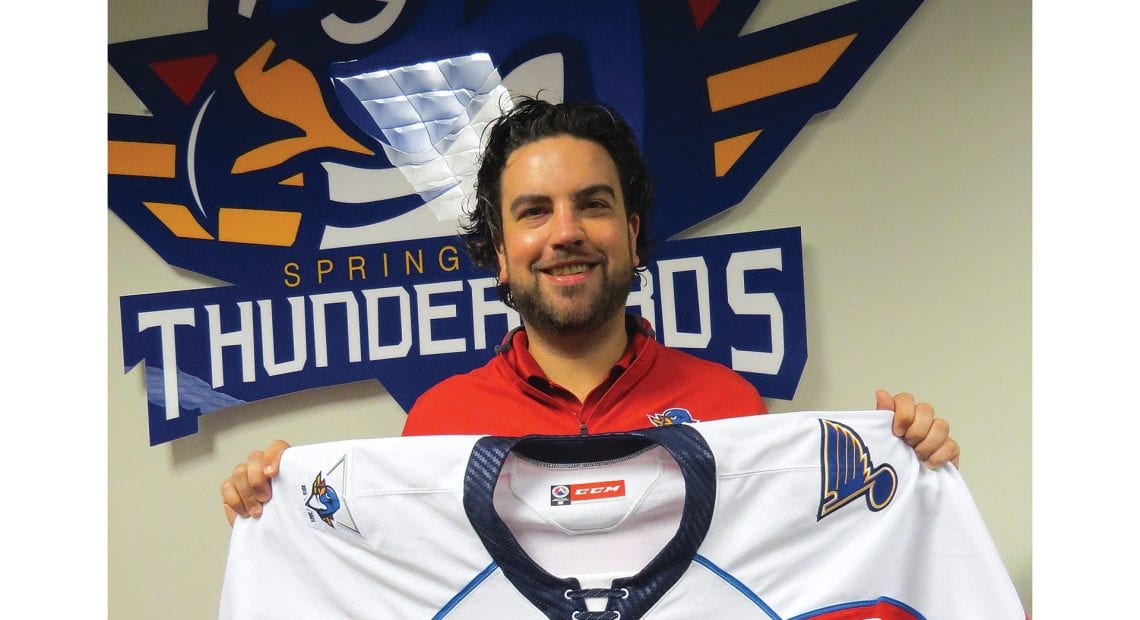
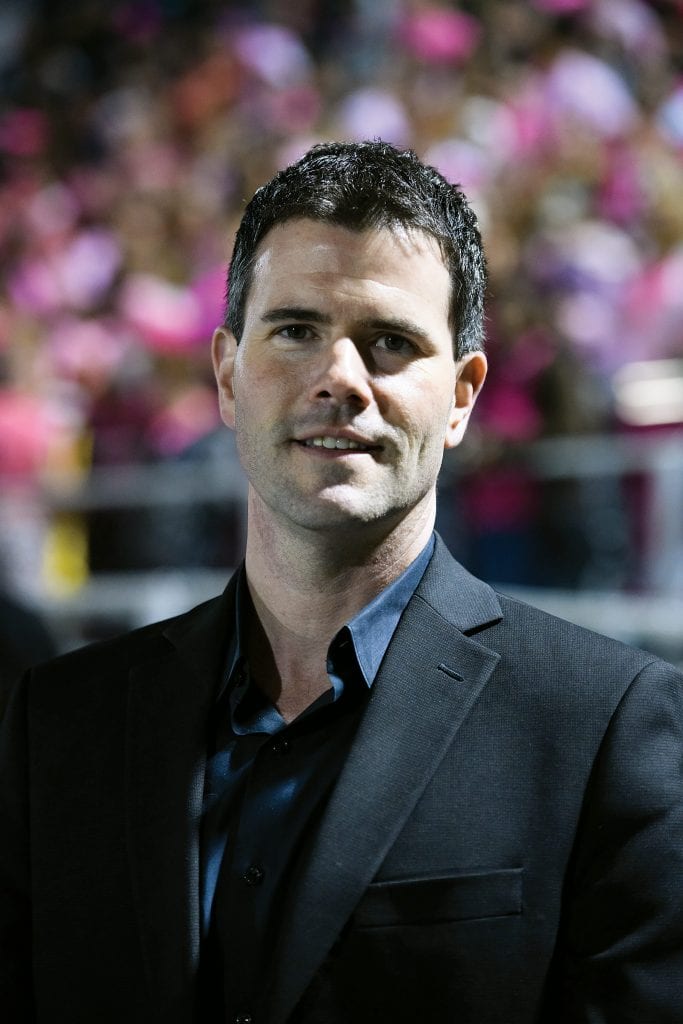
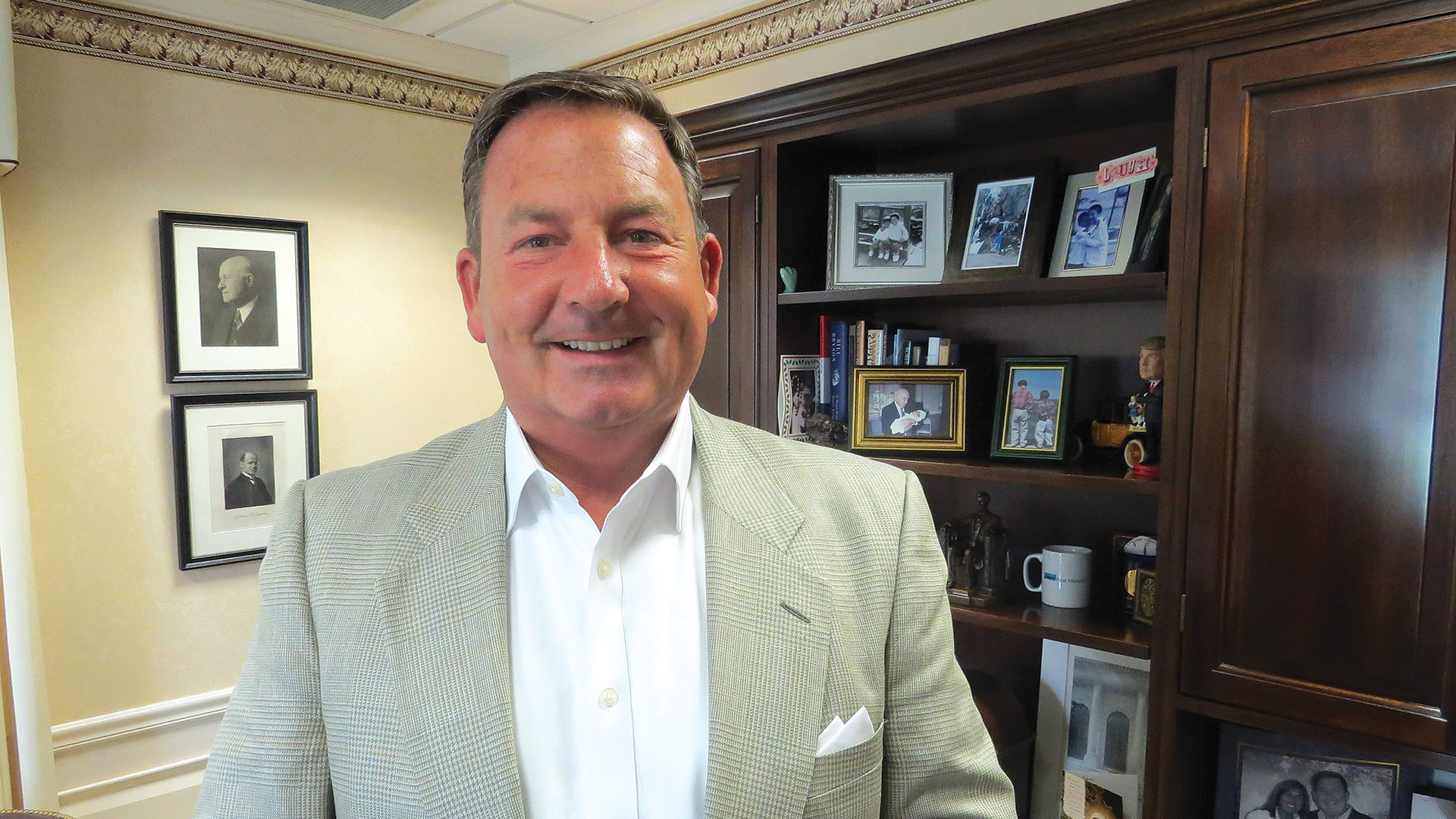
Nate Costa expects a great deal of pent-up demand

Nate Costa expects a great deal of pent-up demand for professional hockey in the region.

“Baby steps.”

That’s what Nate Costa, president of the American Hockey League’s Springfield Thunderbirds, says the team is taking as it looks to return to the ice — and its place as a huge part of Springfield’s economic engine — this fall.

Such steps include selling season tickets, trying to secure some attractive dates from the league from home games, doing some preliminary planning of promotions, and putting together a new staff after most members of the old one — furloughed at the height of COVID-19 — found employment elsewhere. Most, but not all, of these assignments would be part of a normal late April for the team — but this is certainly not a normal April, nor a normal year.

Indeed, while 28 of the 31 teams in the AHL have been playing out an abbreviated 2021 season, the T-Birds are one of three franchises, all independently owned (the Milwaukee Admirals and the Charlotte Checkers are the other two) that have chosen to suspend play for the year and wait for 2021-22.

Costa doesn’t have any regrets about the decision not to play this winter and spring, saying the call was certainly the correct one from a business perspective — “at the end of the day, we made the right decision for the long-term solvency of the franchise; it was something we had to do” — and noting that his energies are completely focused on the 2021-22 season.

And as he talks about that upcoming season, he does so with a great deal of confidence about everything from pent-up demand for his product to what this new team he’s assembled can do between now and the time when the puck finally drops again in Springfield — October, by most estimates.

And that confidence emanates from the fact that he’s done this before.

Indeed, when a group of owners acquired a franchise in Portland, Maine and moved it to Springfield in 2016, Costa, then general manager, had to condense roughly a year’s worth of work into just a few months. It won’t be quite like that in 2021, but there are many similarities between the team’s start and what would have to be called a restart this year.

“We’re going to have to go back and redo this thing from scratch,” he explained. “And one thing I look at from a positive perspective is that I have the playbook; we did it that first year in a really short amount of time. We bought that franchise in June, and we had to play in October — we have that shotgun experience in our back pocket.”

Which brings us back to those baby steps. The team is taking many of them as it works to emerge from what will ultimately be more than 18 months of quiet at the MassMutual Center.

“We’re going through a normal renewal period with season-ticket holders — we’re folding those letters as we speak and just trying to get back to a little bit of normalcy,” he explained. “But it’s hard … we’re hopeful that, by October, we’ll be in a much better place. But you just don’t know; things change daily.”

Overall, he believes that, despite a year-long absence, the team is in a good place from a business perspective. Support from season-ticket holders and sponsors has been strong, he noted, and, from all indications, there will be a huge amount of pent-up demand for all the Thunderbirds bring to their fan base.

Meanwhile, with American International College going to the collegiate hockey tournament and UMass Amherst taking the home a national championship, there will likely be an even greater appetite for hockey locally, Costa told BusinessWest.

“I think people are excited about getting back to the arena, and I think that, when we have the chance to open the doors again, people are going to come, and they’re going to support us like they’ve never supported us before,” he said. “That’s what we’re hearing from people; we haven’t had a ton of outbound activity over the past few months, but recently we’ve finally been able to do some outreach, and there’s excitement.

“We’ve had some meetings with corporate partners, too, and there’s some support there as well — we’ve closed a few deals recently,” he went on. “We’re trying to be as proactive as possible … we’ve garnered a lot of support locally, and people are hopeful that we’ll be back to where we need to be.”


—George O’Brien

Features
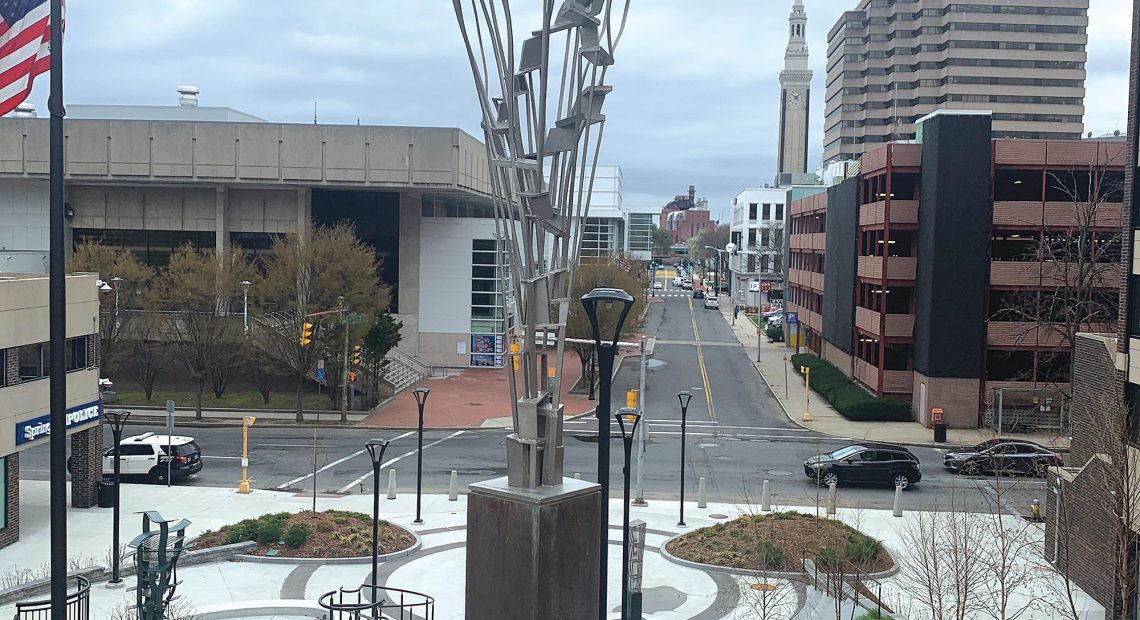
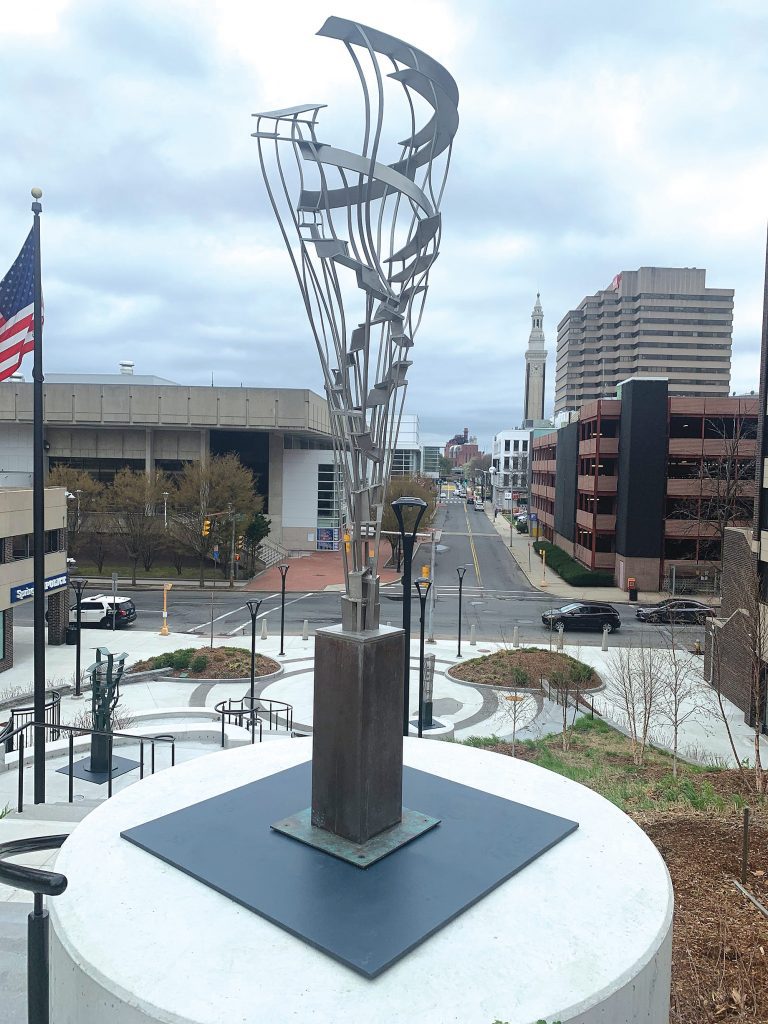
Several sculptures created by Don Glummer now grace Pynchon Plaza

Several sculptures created by Don Gummer now grace Pynchon Plaza, and many more will soon be on display at the Quadrangle.

Kay Simpson calls it “a sculpture takeover.”

That’s how she chose to describe a new exhibit, featuring New York City-based artist Don Gummer, that will take place within the galleries of the Springfield Museums, outside on its grounds, and also within the recently renovated Pynchon Plaza.

“He’ll have three works on display in Yertle the Turtle Garden; another four, and these are large sculptures, on the Quadrangle green; one near the Blake House; an exhibition in the D’Amour Museum of Fine Arts; and several more in Pynchon Plaza,” said Simpson, president and CEO of the Springfield Museums as she referenced “Constructing Poetry: Sculptural Work by Don Gummer,” which will be on display from May 1 to Sept. 12, with many pieces in place already.

She described the works with a number of adjectives, including vertical, dynamic, and soaring, the last of which is one she hopes to also use in conjunction with the Quadrangle itself later this year.

Indeed, the Gummer exhibit will be one of the cornerstones of what will certainly be a very important year for the Museums, which, like all cultural and tourism-related attractions, took a huge financial hit due to COVID-19, with Simpson projecting that revenues for the fiscal year that will end June 30 will be off by roughly 50% from the year prior.

Other upcoming exhibits include:

• “Wild Kratts: Creature Power!” opening May 29, an immersive, interactive exhibit where kids explore four animal habitats and the creatures within them, building STEM skills as they play;

• “Horn Man: The Life and Musical Legacy of Charles Neville,” from June 19 to Nov. 28 in the Wood Museum of Springfield History; and

• “Ai Weiwei: Tradition and Dissent,” an exhibit featuring selections from three decades of work created by the internationally renowned artist and social activist. It will run from July 17 through Jan. 2, 2022.

Simpson is expecting these and other exhibits and programs, combined with large amounts of pent-up demand for culture — and simply getting out — to inspire a huge bounce-back year for the Quadrangle.

This optimism is fueled by the country’s aggressive vaccination efforts and statistics at her disposal from the Greater Springfield Convention & Visitors Bureau noting that 84% of Americans have travel plans for the next six months — the highest number since the start of the pandemic — and a good number of them will be focusing on day trips, which is what Springfield’s Quadrangle, a five-museum gem, specializes in.

“We attract people from all across the country and also international travelers coming to our museums,” she said, “but the biggest percentage of travelers are coming from the New England region.”

Simpson told BusinessWest that evidence abounds that people are looking to get back out and do the things they simply couldn’t do, or were certainly apprehensive about doing, during the pandemic. And that includes a trip, or several, to the Museums, which were closed for four long months last year before reopening to 25% capacity last summer.

The capacity limit was recently raised to 50%, and Simpson said numbers of visitors to the Quadrangle have been rising steadily over the past several months, pointing toward what she expects will be a very solid last three quarters of 2021 — and beyond.

“Once the capacity was increased to 50%, we’ve had more and more people come to the Museums,” she noted. “I think there is a real appetite for people to come out again, and I think our summer is going to be very strong, and summer will be a really good indication for us of how the rest of the year will unfold; it typically is. If we have a strong summer, we usually have a very good year.”

The Museums will not be able to conduct some of the popular family programs that have traditionally been strong draws during the summer months, due to restrictions on large numbers of people together in tight spaces, but those at the Quadrangle will make full use of its outdoor spaces and exhibits at all five museums.

That includes the the Amazing World of Dr. Seuss Museum, which, several years after its opening, continues to bring people from across the region and the country, and also from around the world, to Springfield.

“Dr. Seuss remains a huge draw — our highest attendance since we reopened in the summer was a ‘beep and greet’ we did on the weekend that followed Dr. Seuss’ birthday in March,” Simpson said. “We had 700 ticketed admissions; that’s about half of what we would typically get for a Dr. Seuss birthday party celebration, but it was a beep-and-greet — people were in their cars. That just shows the incredible drawing power he has.”


—George O’Brien

Features Special Coverage

Courting Possibilities

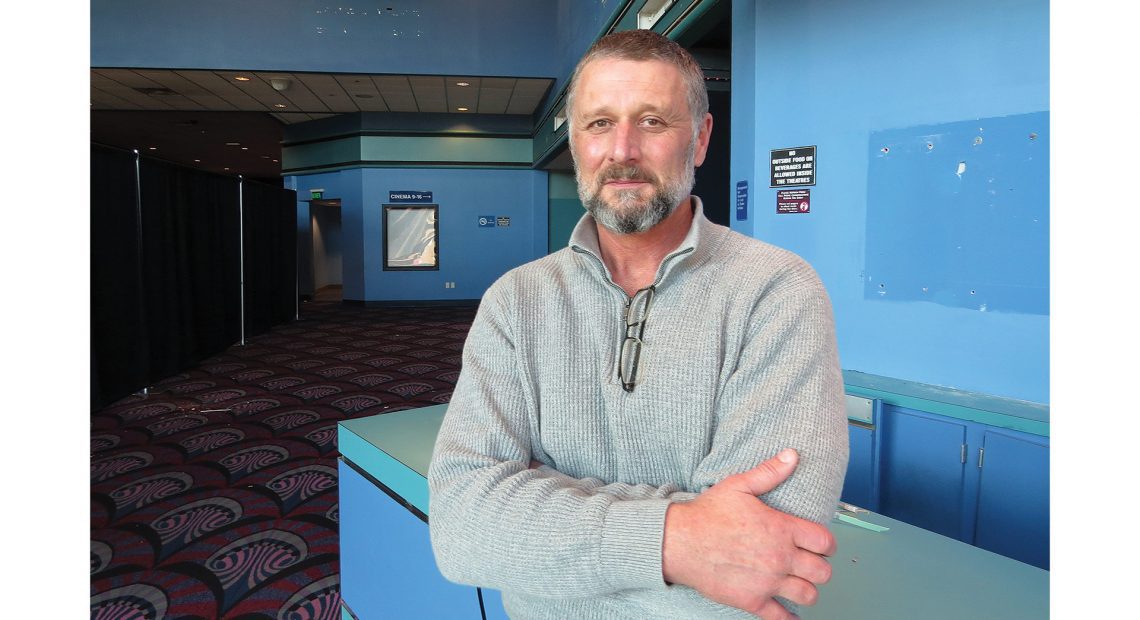
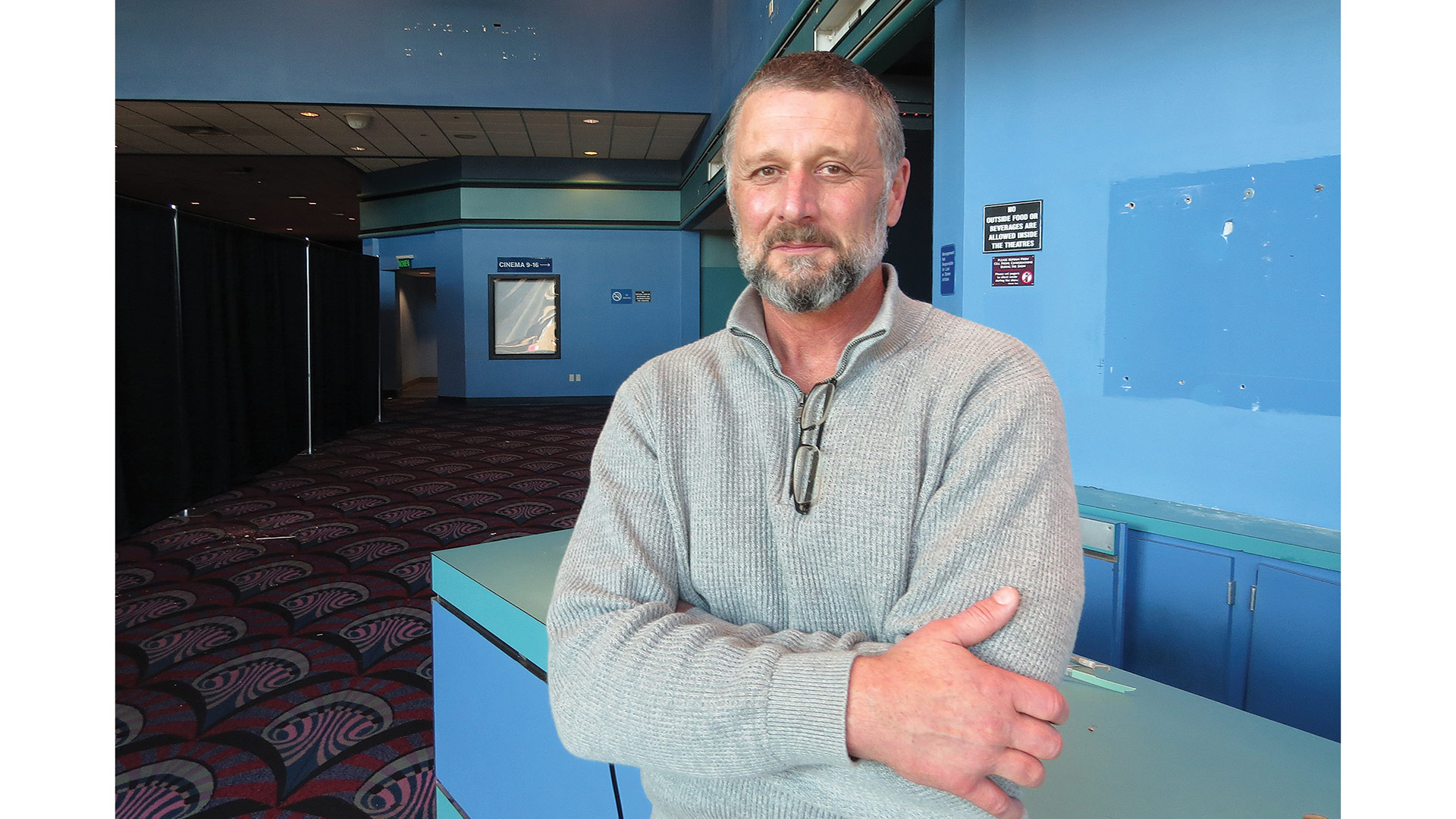
Dave Thompson stands in the lobby of the former Cinemark Theaters

Dave Thompson stands in the lobby of the former Cinemark Theaters at the mall, many of which will now be used for jury trials and other court facilities.

Since the collapse of retail began in earnest a decade or more ago, the future of the Eastfield Mall in Springfield has always been shrouded by question marks. They certainly remain today, but some recent COVID-related events — creation of a vaccination site and moving of jury trials to theaters in the malls — have certainly changed the landscape at the facility on Boston Road, while providing more proof of just what’s possible there: almost anything.

By George O’Brien

The latest map of the property at the Eastfield Mall in Springfield tells an intriguing story about just how that property is emerging — and will continue to evolve in the months and years to come.

Indeed, now positioned in the center of the huge space that connotes where several cinemas once operated is the logo for the Commonwealth of Massachusetts Court System, which will soon conduct jury trials in several of those theaters. Meanwhile, in the massive, 125,000-square-foot space that was a Macy’s store, there’s a logo for the Curative COVID-19 vaccine site now operating there, as well as the logo for Diem Cannabis, which hopes to soon operate a cultivation, manufacturing, and distribution facility at that site. And in the former Sears site, now owned by Eastern Retail Properties, there is the promise of additional retail development, the scope and nature of which is not yet known.

“It’s been extremely challenging to keeps the lights on, if you will.”

These logos and the operations behind them show how the mall’s owners have been aggressively, and imaginatively, seeking and often finding new uses for huge retail spaces at a time when retail is retrenching — to put it mildly. They also show how the mall has benefited from good luck and some unanticipated twists and turns — many of them COVID-related, at a time when COVID has made retail a very challenging proposition. Still.

“It’s been extremely challenging to keeps the lights on, if you will,” said Dave Thompson, property manager at the mall. “But we’re a pretty creative bunch here, so we’ve been able to do that; in fact, we have a waiting list for in-line tenant spaces — we’re 100% full.”

Overall, the mall is in the midst of a massive, 10-year (at least) redevelopment plan that will dramatically alter the look and feel of the landmark — yes, it can be called that — that opened in the mid-’60s to considerable fanfare. The rebranded property, to be called Eastfield Commons, will include a mix of commercial and residential spaces — roughly 450,000 to 500,000 square feet of the former, and 276 units of the latter.

The pace of progress on this redevelopment has definitely been slowed by COVID, said Chuck Breidenbach, managing director of the Retail Properties Group for Mountain Development, which owns most of the Eastfield Mall site, noting that many in the development community have taken a breather of sorts during the pandemic, especially those involved with retail.

“Everyone just dug in their heels when it came to thinking about the future,” he explained. “It’s been a tough development climate, especially with retail because so many retailers were closing — for good or with a certain number of stores. Or they were trying to downsize their footprints. A lot of that was going on before COVID hit, but COVID really accelerated that process exponentially.”

The situation has improved slightly, nationally and locally, but the retail picture remains cloudy in many respects. In the meantime, though, the mall is taking full advantage of the opportunities that have presented themselves. Together, they have provided foot traffic, some revenue, and also some insight into what’s possible at this site, meaning … well, just about anything that makes sense, a broad concept, to be sure.

For this issue, BusinessWest takes an in-depth look at what’s happening at the mall — and what could happen in the years to come at a complex with an intriguing past and a future dominated by vast potential — and a large number of question marks.


Space Exploration

Just after the COVID vaccine site opened, Thompson told BusinessWest, he would plant himself in the many common areas at the mall and pick up on the conversations being had, many of them involving people waiting in line to get a vaccine or wandering around the mall after receiving one.

What he heard verified what he already knew — that people who hadn’t been to the mall in years, or decades, had pretty much lost track of what was happening there; they may have taken in some headlines, but they didn’t know the full story.

“We’d hear people say … ‘I didn’t know there were still stores in the Eastfield Mall,” he said, adding that these comments were deflating in some ways — the mall still maintains a broad mix of 80 local and national retail outlets ranging from Old Navy to Hannoush Jewelers to Milan Menswear — but somewhat encouraging, at least from the perspective that people are learning, becoming more aware, and coming back to the mall for shopping visits.

“We’ve seen a good upward swing in foot traffic,” he explained. “I think we have a lot of return patrons who have gotten vaccinated and now realize there are stores here, so they’re coming back.”

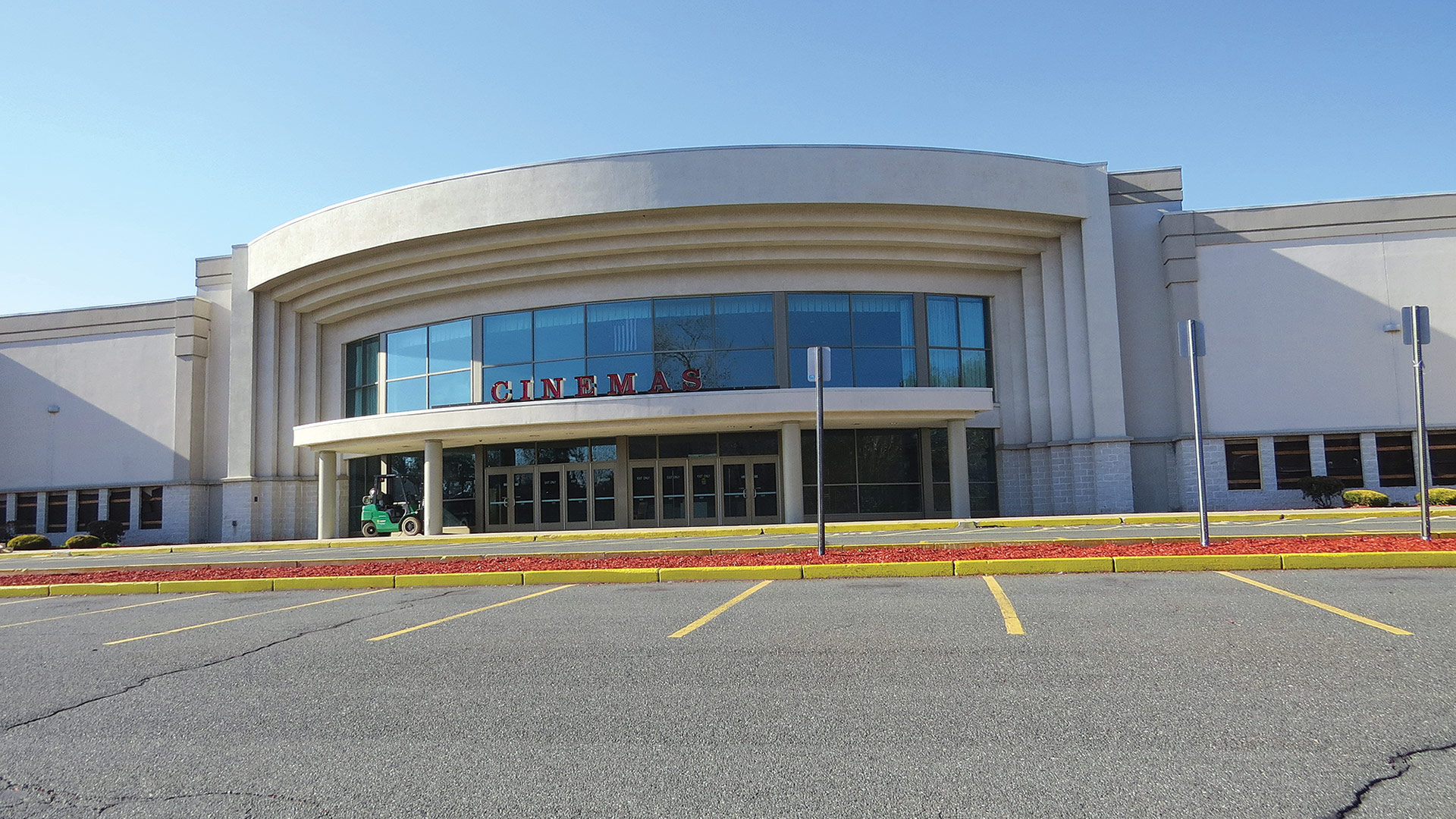
The conversion of theaters into courtrooms

The conversion of theaters into courtrooms is one of several positive and unexpected developments at Eastfield Mall.

That’s just one of a number of developments that have come about, somewhat unexpectedly, and that bode well for the mall, for both the present and the future. The COVID vaccine facility is bringing large numbers of people to the site every day and, as noted, giving them a chance to update themselves on all things Eastfield Mall. The courts moving into the old theaters, meanwhile, will bring in much-needed revenue from a site that was abandoned and trashed by theater operators Cinemark and in need of major renovations if it was to be leased out again.

Meanwhile, the Diem Cannabis operation, now winding its way through the licensing process, will fill a building that has been mostly vacant for some time now, bringing new energy and vibrancy to what has been a tired retail site.

As noted earlier, some of this has been good luck, circumstance, and having the right space at the right time, while much of it has also been hard work and creativity.

“Everyone just dug in their heels when it came to thinking about the future. It’s been a tough development climate, especially with retail because so many retailers were closing — for good or with a certain number of stores. Or they were trying to downsize their footprints. A lot of that was going on before COVID hit, but COVID really accelerated that process exponentially.”

Indeed, Thompson says he isn’t exactly sure how the state found the Eastfield Mall and started pursuing it as a vaccination site. “I don’t know, and sometimes it’s better if you don’t ask a lot of questions,” he said with a laugh, adding that he took the phone call roughly three months ago (he doesn’t remember from whom) that set things in motion.

Recalling that conversation and those that followed, he said the state was impressed by the ample amounts of parking and a location that, while not ideal, is close to Mass Pike exit 7 and easily accessible to a number of communities, including Springfield, Ludlow, Wilbraham, Longmeadow, and East Longmeadow.

The state isn’t paying rent for use of the property — something Thompson certainly laments — but it has brought exposure and a boost for many of the retailers as some getting vaccines have stopped to shop or get a bite to eat.

And this new life, as temporary as it is likely to be, represents just one of a number of positive steps forward at the mall. The relocation of court trials to several of the old movie theaters is another. That was another call that seemed to come from out of the blue — and a desire to move along many of the trials that have been delayed by COVID.

The state will use three of the 16 theaters for courtrooms and several of the others for other purposes, said Thompson, adding that the initial lease is for a year, but the hope is that the state, as it looks for permanent solutions to a host of problems at the Roderick Ireland Courthouse downtown, will give serious consideration to the mall and its theaters.

“Talking with the individuals that have been here from the state, they believe that if the powers that be decide to land here on a more permanent basis, that would be fine,” he told BusinessWest. “They love the way it’s set up.”


What’s in Store?

As for some of those other spaces … a long-term lease with Friendly Ice Cream, headquartered just down the street, to use the former JCPenney location as warehouse space, recently expired, said Thompson, adding that there have already been discussions with many parties about using that space for the same purpose, which represents one of the more logical future uses for that site.

Breidenbach concurred. “We’d like to find another retailer, but if not, we’d would certainly be open to office, residential, or medical uses,” he said, adding that JCPenney moved out nearly a decade ago, and there have been a number of short-term tenants in the interim. “We’re looking for a long-term tenant, but the trouble now is trying to find retail tenants that will take on 125,000 square feet; right now, they are few and far between.”

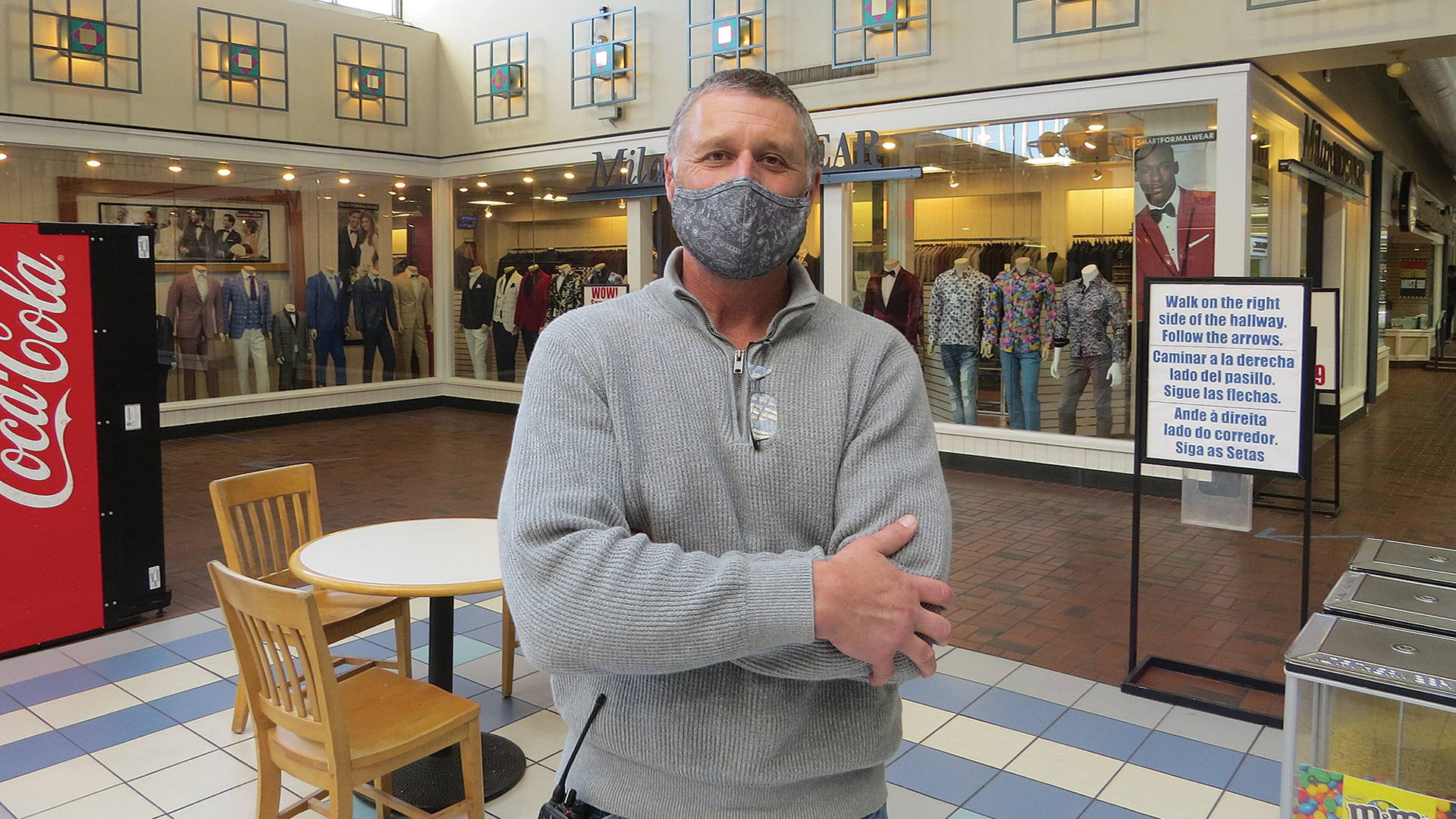
Dave Thompson

Dave Thompson says the COVID-19 vaccination site has brought additional foot traffic to the mall.

While dealing with the short-term and immediate answers to the many questions hovering over the mall, the main focus is on the long term, said Briedenbach, adding that the facility will obviously become mixed-use in nature, with that mix still being a work in progress.

The goal is to create a facility where individuals can live, work, shop, eat, and attain needed services, he noted, adding that the pieces to this puzzle will come together over a number of years, depending on the appetite of the development community.

The east side of the property, which runs along Kent Road, is being eyed for residential development, he said, adding that a recent zone change of that area from residential B to residential C should help these efforts. As noted, 276 units are being eyed for land on the east side of the property, with 23 buildings of 12 units each. Meanwhile, that JCPenney site could be retrofitted for senior housing, student housing, or related types of uses, he noted.

As for other components of the live/work/shop puzzle, Breidenbach said the Diem Cannabis project could provide several of those qualities, including jobs and some retail that would bring more foot traffic to the site, possibly inspiring still more retail. The hope, and also the expectation, is that, as pieces to the puzzle come together, the broad Eastfield site will become more of a destination — for many different constituencies.

“We’re looking for a long-term tenant, but the trouble now is trying to find retail tenants that will take on 125,000 square feet; right now, they are few and far between.”

For inspiration when it comes to what’s possible, this region can look to another Mountain Development project, this one at the Eastern Hills Mall in Buffalo, N.Y., a similar initiative that is further along in the development process, said Breidenbach, adding that a local developer has been secured, and plans are now in the design stage and headed for the environmental-review process.

“That site is much larger — it’s 100 acres — and we’re looking at retail, restaurants, entertainment, hotel, office … you name it,” he said. “There are a lot of things that can be done there.”

And at Eastfield as well, he said, adding that the project is moving forward step by step, with the next one being to secure a development partner for the residential aspect of the project. After that, and once that part of the project comes off the drawing board, he expects other pieces to the puzzle to fall into place.

“This is going to be a 10-year project, and right now, we’re just taking it one piece at a time,” he said. “We’re going to go one step at a time and do what’s right for the mall and the community.”


Bottom Line

These days, there are far fewer lines for people to get their COVID shots. Indeed, Curative has improved the process, and now, people can arrive just before their scheduled injection.

This doesn’t leave as many opportunities for Thompson to gather intel, if you will, from those now finding their way to the mall. But in his mind, he’s already gathered enough. He knows there is still much work to do when it comes to telling the mall’s story — and an equal amount of work when it comes to filling in the canvas with regard to the long-term future of this landmark.

Thus far, through some good fortune and creative thinking, the picture is starting to fill in, and the full extent of the opportunities that exist is coming increasingly into focus.


George O’Brien can be reached at [email protected]

Sports & Leisure

Buy the Buy

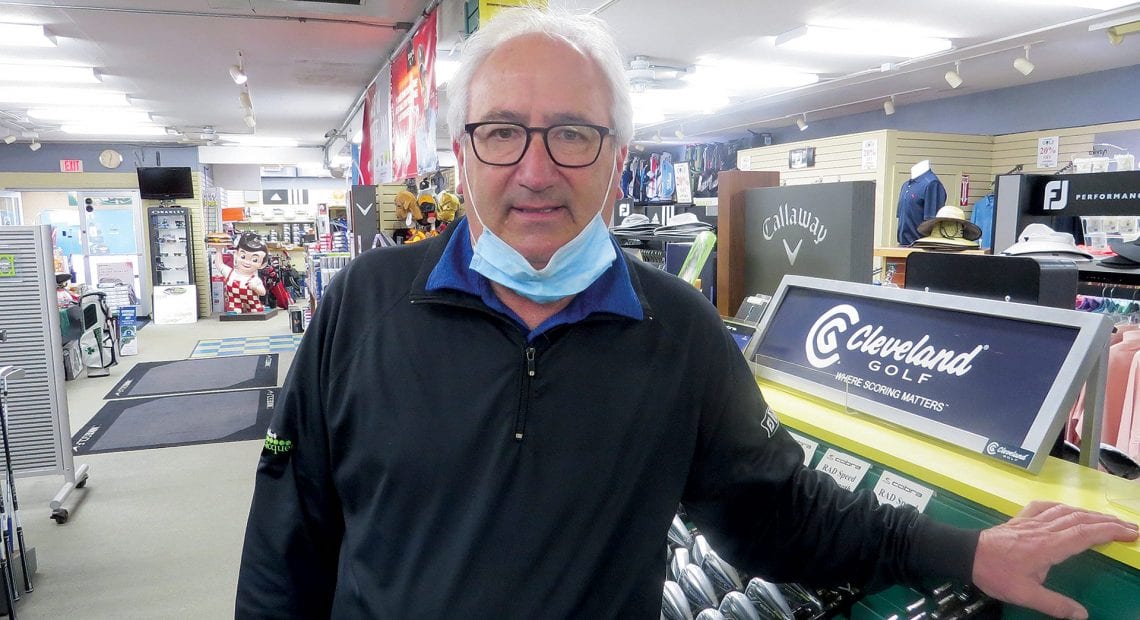
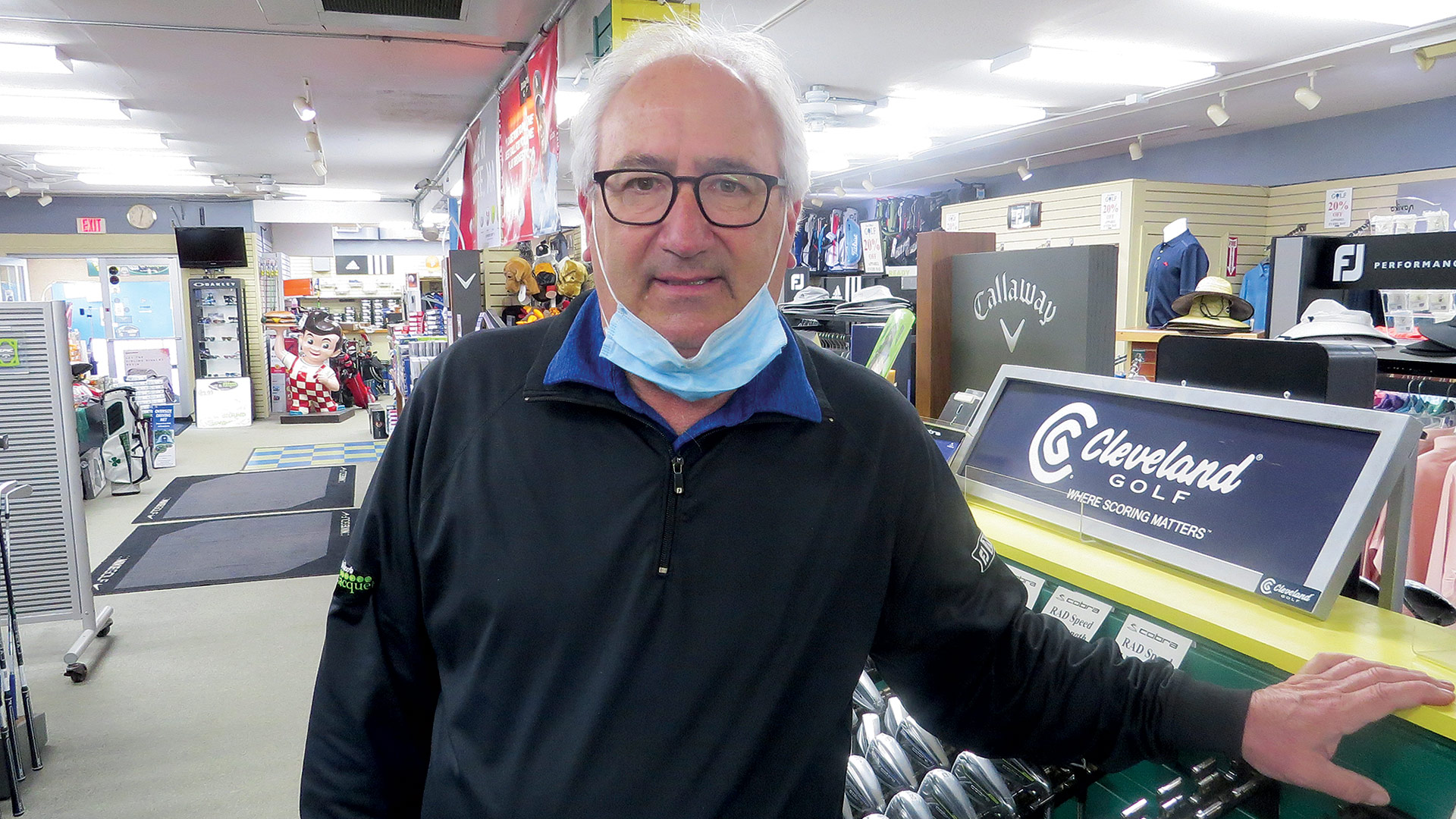
Dave DiRico

Dave DiRico says many people who discovered or rediscovered golf in 2020 are coming back to buy new equipment in 2021.

Dave DiRico says his shop is usually busy in late March and early April as golfers gear up for a new season.

This year, the look and feel have been different, and for many reasons. Golf got an unexpected and much-deserved boost last year when it became one of the few organized sports people could take part in. And it’s received another boost from the fact that Americans have been saving money as perhaps never before, and many of them have also been receiving stimulus checks from the government.

Add it all up, and March and April have been even busier than normal, said DiRico, owner of Dave DiRico’s Golf & Racquet, adding that, for now, he doesn’t see many signs of slowing down.

“We’re seeing it at all levels, all age groups, starting with the seniors,” he said. “They didn’t travel as much over the past year. They haven’t gone out to dinner; they didn’t go on their spring golf trip to Florida. And we’re seeing more of those people buying clubs — and that’s generally not our soft spot.”

That soft spot would be younger professionals and junior golfers, he went on, adding that these people are buying clubs, too, often with the help of the government.

Meanwhile, large numbers of people took up the game last year, or found it again after drifting away from it for whatever reason. Many of these people bought used equipment last year — so much that inventories dwindled significantly — and this year, they’re coming back for new clubs.

“Most of them are deciding to continue to play — they enjoyed it,” DiRico said. “And they’re trading in their used equipment for new stuff — because they intend to stay with it.”

The surge in play and its impact on the retail side of the game is reflected in the numbers. In the third quarter of 2020, for example, retail sales of golf equipment exceeded $1 billion for the first time ever for that period, according to Golf Datatech, an industry research firm. Meanwhile, Callaway Golf Co., which manufactures golf balls in Chicopee, reported a 20% surge in sales in the fourth quarter of 2020.

The problem some players are encountering, though, is limited inventories of new equipment. Indeed, the golf manufacturers, like those who make cars and countless other products, are experiencing supply-chain issues and difficulties getting the materials they need. This has led to sometimes lengthy waits for ordered clubs to be delivered.

“There’s such an increased demand with new golfers across the country that they’re all running out of equipment,” he explained. “They can only manufacture so much, and the demand is far more then they projected. Some companies can’t get shafts, others can’t get grips — you can’t make a golf club unless you have all the components.

“We have a few companies that are great — they’ve managed to stay ahead of this, and they’re doing very well,” he went on. “But then, we have some other companies … you have to wait 15 weeks to get a set of irons.”

Doing some quick math, DiRico said this will translate into delivery sometime in June, far longer than golfers anxious to get their hands on new irons or a new driver want to wait.

But, overall, this would have to be considered a good problem to have — if such things actually exist in business.

Only a few years ago, the golf industry was in a sharp decline, with membership down at most clubs, tee times readily available at public facilities, and racks full of new equipment for which there wasn’t strong demand. Things have changed in a hurry, and DiRico and others hope most of these trends — not the current supply-and-demand issues, certainly — have some permanence to them.


—George O’Brien

Sports & Leisure

A Simple Mission

Just over a year ago this time, Jesse Menachem and his staff at the Massachusetts Golf Assoc. (MGA) were fighting — and fighting hard — to convince the state simply to let golf-course owners maintain their property.

Despite some intense lobbying by his group, Gov. Charlie Baker made golf courses part of his broad shutdown of non-essential businesses in March 2020, and for weeks, the industry lingered in a sort of limbo, not knowing when, if, and under what circumstances courses would be allowed to reopen.

When they did, in mid-May, a number of limiting restrictions kept play at modest levels. But then … the lid came off, and the industry found itself in an enviable position. Indeed, golf was one of the few activities people could take part in during the pandemic, and people started taking it up — or taking it up again, as the case may be, a development that benefited public and private courses alike.

“I’ve heard from clubs that recorded anywhere from a 20% to 50% increase in rounds, which is incredible, because capacity was limited due to the longer intervals between tee times, as mandated by the state,” said Menachem, president of the MGA. “You couldn’t find tee times on weekends at many facilities; with people working from home, working remotely, not traveling, not having family activities like Little League and soccer, golf became number one in a lot of people’s minds, and the game really benefited.”

Jesse Menachem

Jesse Menachem

“If we can sustain or retain at least 25% to 33% of those who participated last year … that’s a goal; that’s a start. More would be great, but we have to be realistic.”

Now, as the 2021 season gets set to begin in earnest (some courses have already been open for several weeks), the golf industry has a simple, yet also complex, mission that Menachem summed up directly and succinctly: “make it sticky.”

By that, he meant those managing the state’s courses have to take advantage of this huge opportunity they’ve been granted and compel those who took to golf last year, because there were few attractive options, stay with the game now that other options exist.

“That’s our job; that’s what we’re up against — we have to make sure it’s sticky, and that’s something we have not been very good at,” he explained. “If we can sustain or retain at least 25% to 33% of those who participated last year … that’s a goal; that’s a start. More would be great, but we have to be realistic.”

Indeed, as they go about this mission, courses will have advantages and selling points they didn’t have last year, said Menachem, especially when it comes to their 19th holes, many of which were closed in 2020, while those that were open faced a mountain of restrictions on what they could serve, when, and how. They have also learned some lessons from last year, including how those longer intervals between tee times improved pace of play, reduced logjams on the course, and improved the overall player experience.

But golf will also be facing far more competition in 2021 when it comes to the time, attention, and spending dollars of those who found the game a year ago. Indeed, as restrictions are eased, individuals and families can return to restaurants, museums, the cottage at the beach, and more.

For course owners and managers, the emphasis must be on providing a solid experience, one that prompts a return visit — or several. This has always been the emphasis, he said, but now even moreso, with courses being presented with what would have to be a considered a unique opportunity.

“It’s really our obligation to make sure that experience is favorable,” Menachem told BusinessWest. “For those who are being reintroduced, or introduced for the first time, we’ve got to invite them back; we have to make them feel comfortable and cater to what their desires are. We have to do everything within our power to make sure that golfer on site has the best experience possible and keep them coming back.”


—George O’Brien

Cover Story

Lessons Learned from COVID

It’s been said time and again that, for businesses large and small, the pandemic provided a number of learning opportunities. Companies learned new ways to do things — mostly out of necessity — while also learning that the ‘old’ way may not be the best way. Meanwhile, the pandemic provided opportunities that didn’t exist before — especially when it comes to hiring — and accelerated the pace of needed change. All that means the landscape has been altered for the long term.

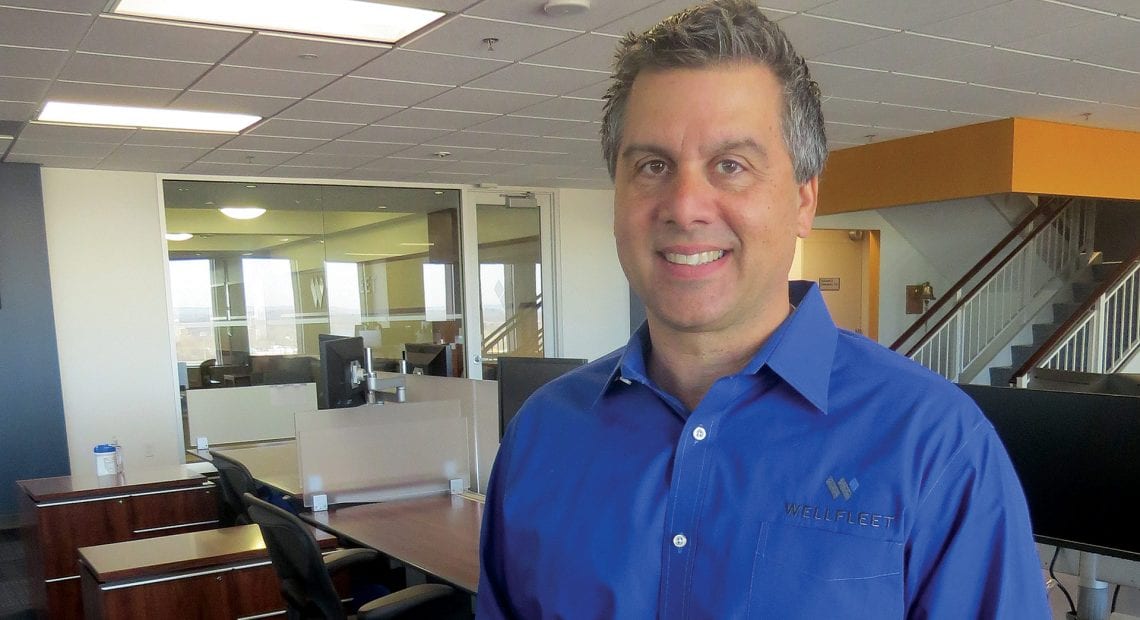
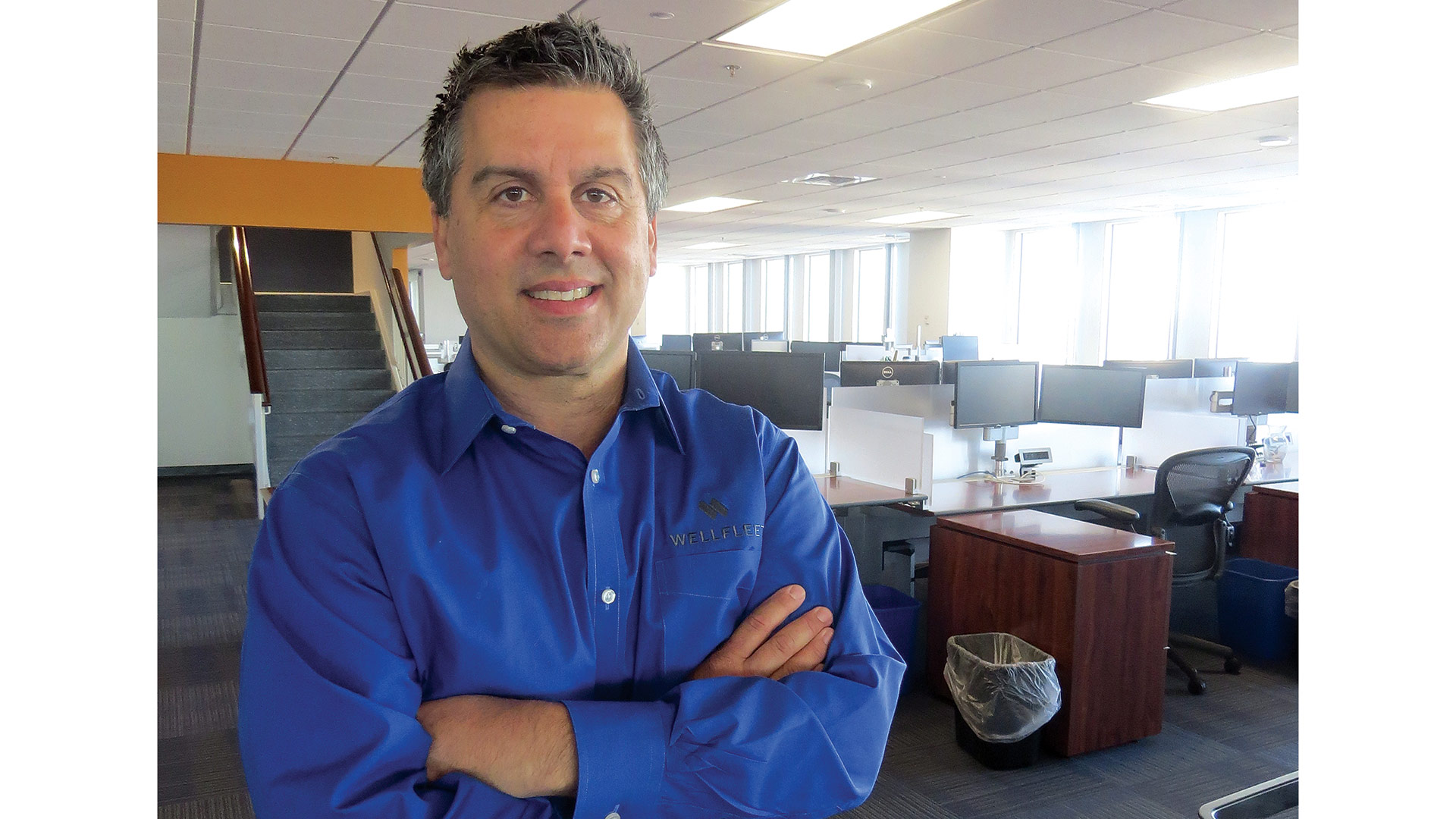
Drew DiGiorgio, president and CEO of Wellfleet

Drew DiGiorgio, president and CEO of Wellfleet, in the company’s mostly unoccupied space in Tower Square.

They’re called ‘insurance bibles.’

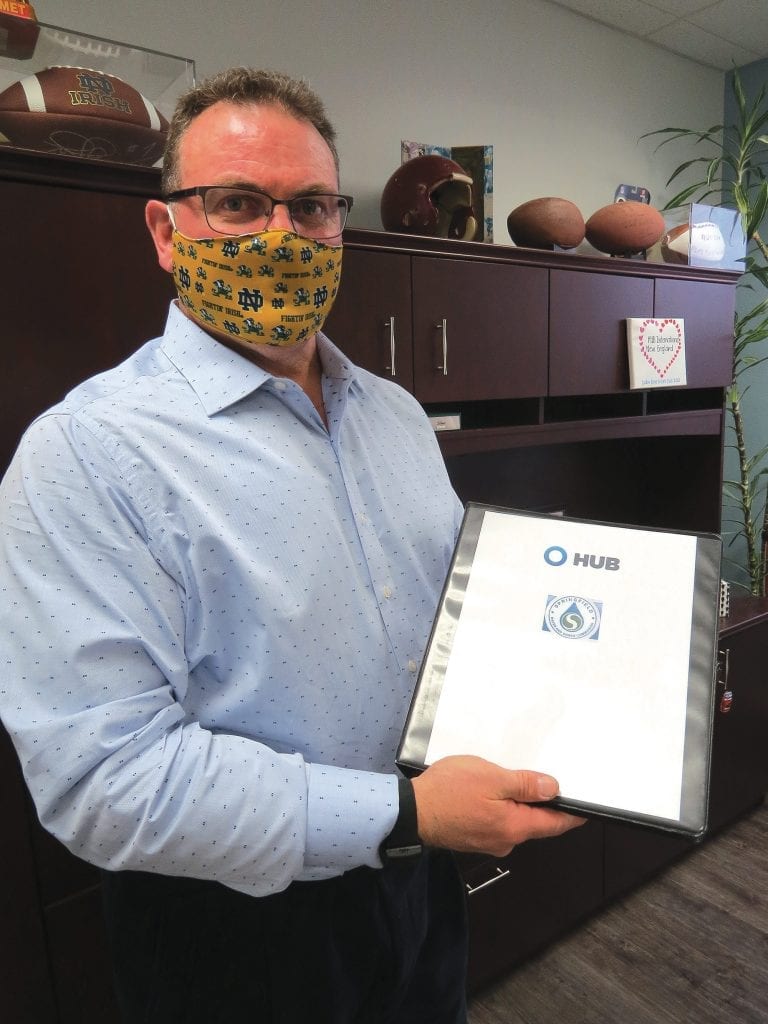
That’s the name those at HUB Insurance have attached to the large binders — some of them containing 700 pages or more, in the case of large commercial accounts — that tell clients everything, as in everything, about what’s in their policy, what’s covered, what isn’t, and on and on.

As he held one up, Timm Marini, president of HUB International New England LLC, noted that, prior to the COVID-19 pandemic, bibles only came in the printed variety. Now, if a client wants one — and some of them don’t — a digital file is sent, in part because a client can’t pick one up, and HUB can’t drop one off.

And, by and large, things will stay this way, said Marini, noting that COVID has shown those at the company that they don’t need to kill trees and use up expensive toner to provide a client with their insurance bible.

“Now, you can do it all electronically,” he explained. “And you probably could before COVID, but COVID made us do it more.”

This is just one of the many things companies large and small have learned during the pandemic, lessons that will carry over to the time when COVID is referred to in the past tense. Others involve everything from not having to scan documents for tax preparers to not necessarily limiting a candidate search to those living in the 413, to not having people travel to a conference on the other side of the state if they can instead take it in via Zoom.

“It’s a mix, but many certainly want to come back. They’re lonely … they actually want to work in more of a community setting.”

In a word, the pandemic has shown area businesses and nonprofits that they have more options than maybe they thought they had, when it comes to how and where people work and just how things are done.

For this issue and its focus on the modern office, we talked with a number of business owners and managers about what’s been learned over the past 12 months or so and how COVID has actually made companies more efficient and enabled them to reduce costs in some areas. The observations were telling.

“The audit side of our practice generally required teams of people here to go visit on site at other locations,” said Sarah Rose Stack, Marketing & Recruitment manager at the Holyoke-based CPA firm Meyers Brothers Kalicka. “Because of COVID, we learned we could do these remotely, which is something we’ve never done; this was a first-time experience not just for us, but for people in our industry. We’ve learned that it’s fine, it is efficient, and with some businesses, we’ll keep doing it this way moving forward.”

Timm Marini holds up an ‘insurance bible’

Timm Marini holds up an ‘insurance bible’ — the printed variety. Those at HUB have had to send digital documents during the pandemic, and that trend will continue into the future.

For Springfield-based Wellfleet, now with offices in Tower Square, the pandemic has provided ample evidence that employees in many positions can work effectively and remotely, and this enables the company to expand its horizons when it comes to hiring.

“You can expand your pool when it comes to workforce; we can hire someone not from the Springfield area and have them be successful with the tools that we’ve developed,” said Drew DiGiorgio, the company’s CEO, adding that the company has already hired some people from other parts of the country. Meanwhile, it is working on plans to have other employees work a hybrid schedule, with some days in the office and others remotely.

Chuck Leach, president and CEO of Lee Bank, said that, prior to COVID, HR Director Susie Brown and IT Director Drew Weibel were already hard on work on plans to position the bank to be more flexible with its workforce in terms of where and how it worked. The pandemic served to accelerate that process.

“Even though we’re Lee Bank, a lot of our employees come in from other markets,” he noted, adding that these lengthy commutes prompted talk and then creation of plans for remote work and hybrid schedules. “We were already thinking about it, and COVID forced us to be more deliberate in our approach and our policies and procedures.”

But even with these options in place and far more flexibility with work schedules than ever before, the bank is tilting strongly toward having people work on site — with some exceptions — and it’s also seeing most of its employees want to come back, which is another thing companies are learning as they work their way through COVID.

“It’s a mix, but many certainly want to come back,” Weibel said. “They’re lonely … they actually want to work in more of a community setting. They want to come back, but some find it easier to work at home until the school situation is worked out and their children are back in the classroom.”

Stack agreed. “When the shutdown first happened, everyone was excited to work from home, so a lot of people exercised that option, and some people have found they’re more efficient from home, cutting out that commute,” she said. “But while some still work from home, the majority of people, like 97% of the people at MBK, choose to come into the office every day because they don’t want to work from home.”

Work in Progress

DiGiorgio said it’s somewhat frustrating to walk around his company’s offices in Tower Square.

More than 200 employees moved into the well-appointed space covering three full floors in the late summer of 2019, only to see pretty much everyone pack up and go home to work in mid-March.

“We love it — we wish we could be in it more,” he said with a laugh. “It’s great space — open-floor design, all the things you probably don’t want with COVID. It will be great to get back to it.”

Indeed, that’s a lot of fairly expensive (for this market) downtown Springfield real estate that is not being used. But DiGiorgio doesn’t dwell on matters that are out of his control.

Instead, he’s more focused on what the future will look like — and applying all the lessons learned during the pandemic.

As for that real estate … he said this is a growing company that took three floors with the intention of perhaps soon absorbing a fourth. Need for that additional space is less likely now, he acknowledged, but the company will still need the space it’s now leasing because he fully expects most of his employees to be back in that space.

But not all will have to come back, he went on, and some, as he noted, will never have to sit at a desk there.

“We have, over the past year, hired people in Florida, Tennessee, Atlanta, Minneapolis, Upstate New York … we have a pretty remote workforce,” he said, adding that some of these hires took place before COVID because the tools were in place, but the pandemic has highlighted how effective people can be working remotely, and thus, as he said, broadened and deepened the talent pool.

“We have a billing person who’s in Tennessee. I feel more comfortable now that she can hire people in Tennessee or wherever she needs to; they may not need to be in Springfield, which is what our initial thought was. COVID has opened up our thinking to where we hire people.”

Marini agreed. “We have employees in Wisconsin who work for New England,” he explained. “We have people who decided to move to Florida and still work for New England. We had a little of that before COVID, but what we realized was that, with our ability to get our automation up and running, our digital offerings, that really expanded our talent pool; there have been some relocations during COVID and some new hires during COVID that are not Western Mass.-based. And we have some people in Western Mass. who work for some of our Eastern Mass. locations and even one in New York.”

COVID has reinforced this premise, as it has many others, while accelerating some trends and pretty much forcing companies to do some things they never considered before.

Like those virtual audits at Meyers Brothers Kalicka.

Stack said the firm’s teams have undertaken a number of them, while, in other cases, it has adopted a hybrid approach for some audits, going to the client site for some of the work while handing the rest remotely. Thanks in large part to COVID, there are now several options for handling such work, she said, adding that other lessons have been learned and other new ways of doing things revealed.

“On the tax side of our practice, we used to have clients in the building all day, every day, from February 1 through tax day, and now, maybe three people a day drop off their boxes of papers; the vast majority of people just e-mail us their material,” she explained. “They’re happy with it, it’s efficient, and it saves us a step. Instead of having to take tons and tons of paperwork and scan it into our digital system, it’s already coming to us in that format.

“We used to have to hire a scanner for tax season — a whole person whose job was to take all this paper that people would drop off and scan it,” she went on. “We didn’t have to hire a scanner this season, and that was definitely a positive change.”

Will Dávila, executive director and CEO of the Children’s Study Home in Springfield, said the pandemic has led to positive change in many forms at his agency and most all businesses and nonprofits. He echoed others when he said that COVID has served to heighten the awareness of how technology can be used to improve efficiency and save time, such as when traveling to conferences or meetings in other cities.

Will Dávila, executive director of the Children’s Study Home

Will Dávila, executive director of the Children’s Study Home, says his agency has learned a number of lessons during the pandemic, many of them involving better use of technology.

“We now have more of a comfort level with working remotely and working via Zoom,” he said, adding that this technology existed long before COVID, but few businesses took full advantage of it. “The lesson for us, and I’m not sure we have it completely figured out yet — it will likely take us some time — is that we can do more with technology than we thought we could before. I’ve been in places where we would talk about technology and teleconferencing and telehealth, and people would balk at it. And now, we’ve been forced to take another look, and we’ve embraced it.”

Looking ahead, he said that, while most people look forward to the day when they can gather and attend conferences and meetings in person, they know there are options — there’s that word again — and they won’t be hesitant to take full advantage of them if the circumstances permit.

Caution Signs

As he walked with BusinessWest through HUB’s headquarters facility on Shaker Road in East Longmeadow, Marini pointed to a number of unoccupied workstations, some of them marked off with the yellow ‘caution’ tape usually associated with crime scenes and construction sites. Such tape can be seen throughout the suite of offices, he said, noting that the space — which was occupied by just over 50 employees prior to the pandemic — has hosted around seven a day on average, with a high of 14, by his count.

Sectioning off such areas became part of life during COVID, he noted, adding that there are myriad ways the pandemic changed the landscape for the company. Overall, there’s been a huge shift; a place once teeming with employees and visiting customers now sees very few of either.

And that has brought challenges — and some opportunities, mostly in the form of learning how to do things remotely and without reams of paper. As he talked about these opportunities, Marini gave a nod — sort of, anyway — to an organization his business works closely with, obviously: the Registry of Motor Vehicles.

“Even the Registry of Motor Vehicles here in the Commonwealth of Massachusetts has become more digitized, more automated, and more flexible, and that’s something I never thought I’d see after 33 or 34 years of doing this,” he told BusinessWest, adding that, in some ways, his company has been inspired by the RMV, as it automates and digitizes many processes that once involved paper and in-person sessions.

As for the challenges, they came in waves, Marini explained, from equipping everyone to work at home, which was expensive and difficult logistically, to helping employees cope with everything from feelings of isolation to simply filling their days with work, even though they were home.

CHuck Leach

Chuck Leach

“Even though we’re Lee Bank, a lot of our employees come in from other markets. We were already thinking about it, and COVID forced us to be more deliberate in our approach and our policies and procedures.”

“We were too accessible when we were home, so there were no breaks for our people,” he explained. “We started having big conversations and hiring professionals to come in to coach us to make sure we took breaks and that there was separation between home and work.”

What will things look like several months from now, especially if the pandemic continues to ease? Marini isn’t exactly sure, but he acknowledged that he spends a lot of time thinking about it and working with corporate to prepare for that day.

He does know that more business will be handled virtually in the future, and there will be little, if any, need for those printed insurance bibles.

As for employees, like others we spoke with, he expected that they will come back, because the company wants them back, but also because they want to be back in that office setting.

Such sentiments were echoed by many of those we spoke with. They noted that it seem logical that, after getting a taste of working at home, many employees would prefer that option, but what employers are generally seeing is the opposite reaction.

“People are sick of remote everything,” said Stack, noting that Meyers Brothers Kalicka has a younger team within the audit department that could do its work from home, but instead it has reserved the firm’s huge boardroom for the past six weeks so the members can work together, but safely and well spread out.

“They have music playing on Spotify every time you walk in there,” she said. “They just want to be in the same space — they think they’re more efficient that way, and they can ask questions of each other faster and stay on track better because they’re all together. It’s not something we told them they had to do; they’ve chosen to do it.”

Dávila agreed, although he noted that he has some employees who are quite happy working at home, and are “working on it” when it comes to returning to the office. By that, he meant he’s offering some flexibility on this matter and not rushing anyone back who doesn’t want to rush back.

“I think it’s partly generational — people who have been in the field for 15 or 20 years or more and are used to those in-person interactions, they’re used to having that time by the water cooler when they’re getting a cup of coffee. I consider those valuable interactions that help with morale,” he told BusinessWest. “But we also have younger staff who are very comfortable with technology and embrace the idea of working remotely.”

But, ultimately, they will come back, probably by the end of the calendar year. “I don’t want to say absolutely not,” he said when asked about hybrid arrangements that offer a mix of remote and in-office work. “But my preference is that we get people back to a schedule where they can see each other and interact.”

Lee Bank’s Susie Brown agreed. “When it comes to Lee Bank, I think everyone enjoys being together,” she said. “We don’t have a lot of people who are unwilling to come back; those that are unwilling are those that have other challenges at home with their children.”

Bottom Line

COVID is far from over, and there are certainly more lessons to be learned as companies large and small continue to cope with an unprecedented challenge.

But it’s already evident that this battle has prompted changes that will live on long after the pandemic is in the rear-view mirror. As they were forced to do things differently, companies learned that, in many cases, these different ways are better than the old ways.

Like the insurance bible. Clients, at least some of them, will still need one. But they won’t need to thumb through 700 pages of printed material to find an answer.

COVID has changed all that — and it keeps on changing the landscape.

George O’Brien can be reached at [email protected]

Coronavirus Features Special Coverage

The Shape of Things to Come

With the arrival of spring, stimulus checks, and vaccinations for growing numbers of residents, continued recovery from the steep economic decline of 2020 is in the forecast. But like the weather, economic rebounds are difficult to predict. With this recovery, there is still widespread speculation as to what shape it will take — U, V, W, K, even the Nike ‘swoosh.’ Myriad factors will ultimately determine that shape, from the ongoing threat of inflation to uncertainty about when and to what extent people will gather again, to questions about just how willing Americans are going to be when it comes to spending some of the money added to their bank accounts over the 12 months that ended in January.

$4 trillion!

That’s the amount Americans added to their bank accounts over the past 12 months or so, a savings rate perhaps never before seen in this country, which has hasn’t been known for that trait.

It came about because of all the things that people couldn’t spend money on, or didn’t see the need to spend on — everything from summer camp to vacation cruises; celebratory meals out at restaurants to new dress clothes; Red Sox tickets to visits to their favorite museum. Granted, there was some spending going on, especially when it came to things like pools, new flooring, and new deck furniture for the home — or a new home itself, be it a vacation home or a bigger primary residence.

“I am pretty optimistic that people are just to their wit’s end with being isolated; they really want to get out, do things, and buy things. They just want to live a normal life again.”

But, for the most part, Americans were saving in 2020.

And now that there is light at the end of the tunnel, and it seems like people will be able to spend some of the money they saved, the speculation involves just how willing they will be to go back in the water, if you will, and do some of the things they had to forgo for a year.

That’s just one of many factors that will ultimately decide the shape of the recovery we’re now in, and how quickly the nation will get back to something approaching normal.

As several of the stories in this issue reveal, the world, or at least this part of it, is returning to a sense of normal. Hotels are booking rooms again, airports are busy (or at least busier), Tanglewood and Jacob’s Pillow will have seasons in 2021 — albeit different kinds of seasons — and, overall, the state has entered into what Gov. Charlie Baker calls stage 4 of his recovery plan. This final stage will allow indoor and outdoor stadiums to run at 12% capacity, the state’s travel order to be downgraded to an advisory that recommends people entering Massachusetts quarantine for 10 days, public gatherings to be limited to 100 people indoors and 150 people outdoors, and exhibition and convention halls to operate if they can follow gathering limits.

It’s a big step forward, but much will depend on how willing people will be to gather in these places, and how confident they will be to travel. Meanwhile, there’s all that money that people saved and the latest round of stimulus checks now finding their way into people’s bank accounts. Will people spend them, and what will they spend them on?

And what if there is a spending frenzy and economists’ fears of inflation, potentially the runaway variety, become realized?

These are just some of the questions hanging over the job market and this overall recovery, which will, at the very least, be unlike anything else the country has experienced. Indeed, it has bounced back from recessions, tech bubbles, a 9/11 downturn, wars, and more. But it hasn’t seen anything quite like this — a pandemic-fueled economic crisis that wiped out millions of jobs, followed by, and accompanied by, federal stimulus on an unprecedented level.

Mark Melnik

Mark Melnik

“Just because we hear, ‘get back in the water, everybody,’ it doesn’t necessarily mean that folks will. I think there’s reason to be bullish about the Massachusetts economy in the second half of 2021 and the early part of 2022 because of the pent-up demand. But so many of these issues are going directly to the comfort level that people are going to have psychologically.”

“I’m a little less cautiously optimistic than some, but I am pretty optimistic that people are just to their wit’s end with being isolated; they really want to get out, do things, and buy things,” said Bob Nakosteen, professor of Economics at the Isenberg School of Management at UMass Amherst. “They just want to live a normal life again.”

Mark Melnik, director of Economic and Public Policy Research at the UMass Donahue Institute, concurred, but offered some caveats.

“There’s a psychological element to the economy,” he told BusinessWest. “Just because we hear, ‘get back in the water, everybody,’ it doesn’t necessarily mean that folks will. I think there’s reason to be bullish about the Massachusetts economy in the second half of 2021 and the early part of 2022 because of the pent-up demand. But so many of these issues are going directly to the comfort level that people are going to have psychologically.”


History Lessons

As they have many times over the past year, experts pointed to Worlds War II as the only recent point in history that can in any way compare with the ongoing pandemic, and noted that the comparisons hold when it comes to what happened when it was all over.

“During the war, people couldn’t buy a car, and there was a great deal of rationing,” said Nokosteen, adding that, as a result, people were saving. And while there was a lull right after the war ended, during which some feared the country would actually sink back into the Great Depression that officially ended with the war, people soon started spending — big time.

“Everyone wanted to spend money,” he told BusinessWest. “And they had some money — people started cashing in the war bonds they bought, and soldiers came home to the G.I. Bill. There were a lot of things that spurred the economy on, and it came back quickly after that initial slump.”

Experts are predicting something along those lines for 2021 and 2022, but there are a number of variables that could determine the ultimate shape of this recovery.

“In many ways, this recession has been the most unequal we’ve ever seen. And it has really exacerbated existing social inequalities, both in Massachusetts and nationally. People who were vulnerable to begin with are just made more vulnerable.”

“Looking at what’s taken place after the real substantial decrease in the first half of 2020, which was historic in terms of just how fast the economy contracted, and with the third round of stimulus hitting people’s bank accounts, we seem to have avoided some of the worst-case scenarios, which would have been a U-shaped recession, where we dragged along the bottom for a long time before we took off, or a very sharp, V-shaped recovery, which also would have been bad because of worries about inflation,” said Karl Petrik, a professor of Economics at Western New England University. “We managed to have missed both of those, and I’ve almost come to the opinion that we have a check-mark-like recovery.”

Elaborating, he said the country did see a recovery starting in the second half of 2020, and the second economic-stimulus package in January helped continue that momentum. The third stimulus package, coupled with pent-up demand and the ability to do things one couldn’t do in 2020 (spring break in Miami was one good example), should enable the economy to keep chugging, he went on, with the rosiest of forecasts calling for 6.5% growth, with the least rosy being around 4%.

“Both of which would be very good,” he told BusinessWest, adding that the expectation is that there will be a return to the ‘trend’ growth rate, which, after the Great Recession, was about 2.5%.

“One of the worries when you’re coming out of recession is that you know you’re going to go back to your trend growth rate — that’s why it’s the trend,” he explained. “You just don’t want to go back too soon because it just prolongs the pain in terms of the economy having the ability to recover; that’s what we saw after the Great Recession. We never saw the real takeoff, just a slow, steady, gradual growth rate up to 2019.”

Such fears probably fueled anxiety about going too small with recovery packages, Petrick noted, adding that he believes the $1.9 trillion bill that ultimately passed is certainly big enough.

Karl Petrick

Karl Petrick

“One of the worries when you’re coming out of recession is that you know you’re going to go back to your trend growth rate — that’s why it’s the trend. You just don’t want to go back too soon.”

But questions abound about how this recovery will play out and who will benefit most. With that, Melnik talked about the growing sentiment that the recovery has been, and will continue to be, K-shaped in nature, with lines going both up and down, depending on which income bracket you’re in.

“We’ve definitely seen a bifurcation in terms of educational attainment in industry, wages, and who’s been able to work and who’s been more likely to be unemployed, and long-term unemployed,” he explained. “Those people who tend to have limited educational attainment who were working in face-to-face industries, service-type sectors, including food service, restaurants, and hospitality, and other services like barber shops, dry cleaners, nail salons, and auto-repair places … those kinds of industries have been hurt dramatically, and they really haven’t recovered many of the lost jobs.

“In many ways, this recession has been the most unequal we’ve ever seen,” he went on. “And it has really exacerbated existing social inequalities, both in Massachusetts and nationally. People who were vulnerable to begin with are just made more vulnerable.”

Looking ahead and to what course the recovery will take, Nakosteen and others said so much depends on how comfortable people will be to go back to what life was like pre-pandemic, if you will.

“How are people going to feel going out in public when the public isn’t wearing masks?” he asked, adding quickly that he doesn’t know the answer. But whatever that answer is, it will go a long way toward determining how quickly and how profoundly the country, and this region, are able to rebound.

“It isn’t just vaccinations and dealing with these new variants,” he went on. “A lot of what will determine if there’s pent-up demand and how it’s released is truly behavioral. There’s no economic reason for there not to be a sharp rebound; I think it’s behavioral, it’s epidemiological, it’s medical.”


What’s in Store?

As for spending … area retailers are obviously looking for the lid to come off, although in some cases, the lid wasn’t on very hard to begin with.

Dave DiRico, owner of the golf shop in West Springfield that bears his name, said that, after a very quiet early spring last year, there was a surge in spending on golf equipment and apparel as many people picked up the game, or picked it up again, because it was one of the few things people could actually do.

It’s early in the new year, but that trend is continuing, he told BusinessWest, adding that the store has been packed with players loading up for the coming year.

“We’ve been really, really busy, even for this time of year,” he said. “A lot of people have money to spend, and … they’re spending it. We’re seeing a lot of people coming in telling us they’re spending their stimulus money, and that’s a good thing. That’s what it’s for, when you get right down to it — stimulating the economy.”

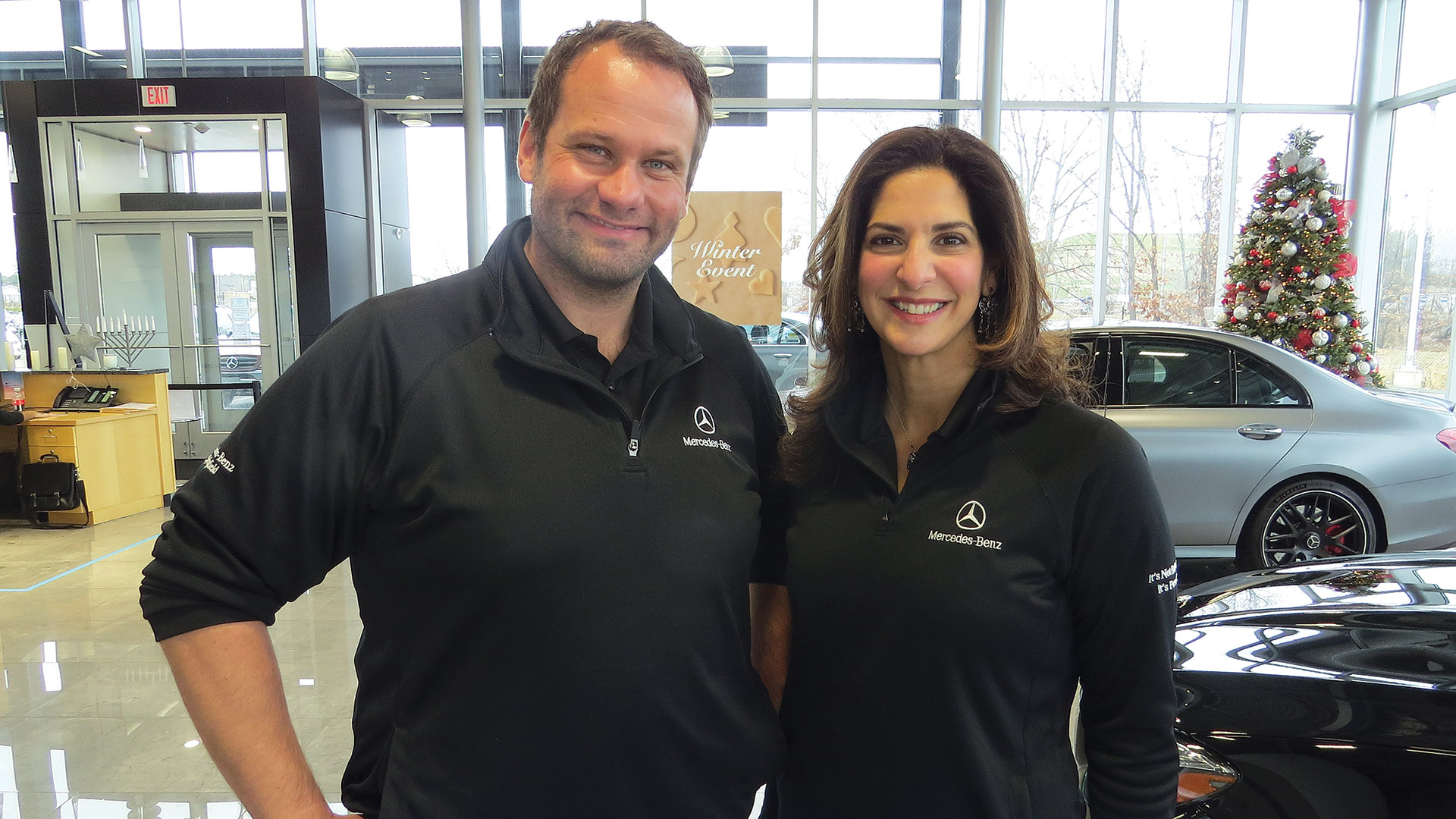
Peter Wirth, co-owner of Mercedes-Benz of Springfield, expressed similar sentiments, noting that, after sales ground to a halt right after the lockdown of last March, they picked back up as stimulus checks came in, carmakers started offering almost unprecedented incentives, and consumer confidence picked up.

Granted, lack of inventory, fueled by supply-chain issues, slowed the pace of progress somewhat, but many consumers simply ordered vehicles and waited — sometimes for months — for them to arrive at the dealership.

“The main things for us is consumer confidence,” he noted. “If the consumer has confidence in the economy as a whole and in their own situation, where they don’t feel like they’re going to lose their job next week, that’s when they’re going to spend money. And that affects us just like it impacts any other business. And I think more and more consumers feel we’re going to come out of the woods on this year, this summer, whenever it is.”

The picture is improving when it comes to inventory issues, said Wirth, who expects the numbers of new cars on the lot to continue rising through the year. Meanwhile, manufacturers are keeping their foot on the accelerator when it comes to incentives. Overall, he expects 2021 to be another solid year — one comparable to those just before the pandemic in terms of overall sales and service volume.

“We feel pretty about this year,” he said. “One news story can certainly change that, but the outlook for now is good, and that line about a rising tide lifting all boats is true, and we hope that this rising tide will help those businesses in hospitality and other sectors that have suffered so much.”

One sector certainly looking for a different kind of 2021 is the clothing industry, specifically businesses focused on dress clothes. Many workers simply didn’t have to buy any in 2020, as they working at home or still toiling in the office, often with more casual dress codes to match those of people working from their kitchen table.

“As a business owner, 2020 was my most challenging year, bar none; I was faced with more struggles and complications and challenges and problems to solve and situations to fix than I’ve ever faced before,” said William Brideau, owner of Jackson Connor, located in Thornes Market in Northampton, adding that the store has managed to keep going through persistence — and a PPP grant. But the challenges have continued into 2021.

Indeed, the first quarter of this year has in many ways been his most difficult, he said, due to a gap between infusions of stimulus, when it became more difficult to pay the bills. As more support comes in, he’s feeling optimistic about 2021, but he needs people to start investing in new threads — and not just shirts that can be seen during Zoom meetings.

William Brideau believes many people are ready to get dressed up

William Brideau believes many people are ready to get dressed up, which bodes well for his store, Jackson & Connor, which suffered through a rough 2020.

“A lot of people aren’t going for pants or more formal things below the waist,” he noted. “A lot of shirts, sweaters, and sport coats — and things have certainly veered more casual.”

But he has observed a pendulum swing of sorts, with more customers coming in recently looking for suits and ties.

“One of our really good customers came in recently and said, ‘I’ve had it — I’ve been in sweatpants for months, and I’m sick of it. I need a sportcoat, I need a shirt and tie, I need trousers. I want to look like I used to look; I miss that,’” said Brideau, adding that he believes many more people harbor similar sentiments.


Bottom Line

Over the past 12 months, people have come to miss a lot of the things they once enjoyed. The extent to which they’ve ‘had it’ with these matters — everything from the clothes on their back to the restaurants they haven’t been frequenting — will ultimately determine not just the composite shape of the recovery, but how, and for whom, things bounce back.

As Melnik noted, just because the ‘go back in the water’ advisories are out doesn’t mean people will heed them. And if they don’t, more of that $4 trillion will stay in bank accounts. And that might ultimately push back the date when we can really say the pandemic is behind us.


George O’Brien can be reached at [email protected]

Tourism & Hospitality

Big Steps Forward

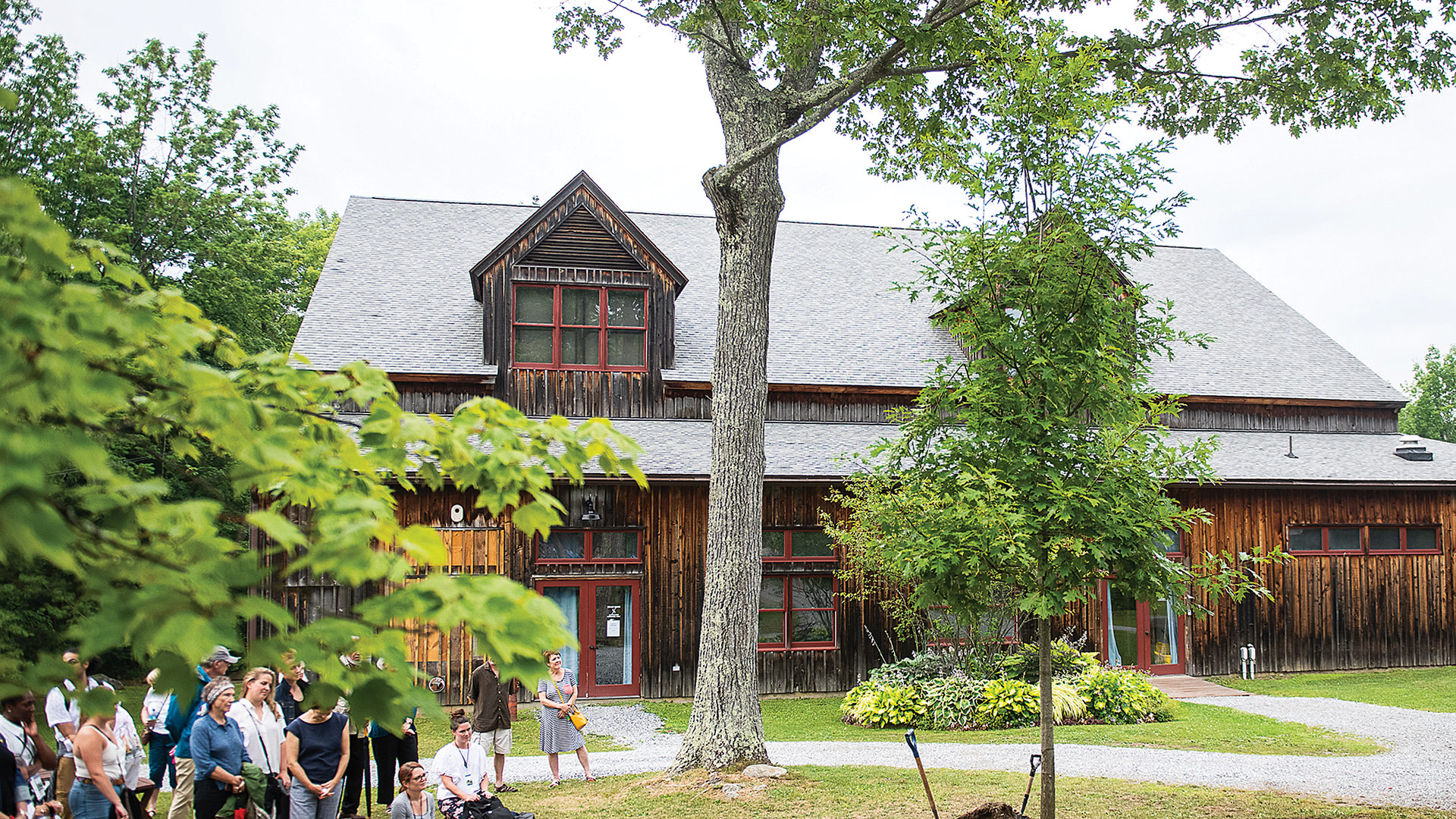
The productions at Jacob’s Pillow

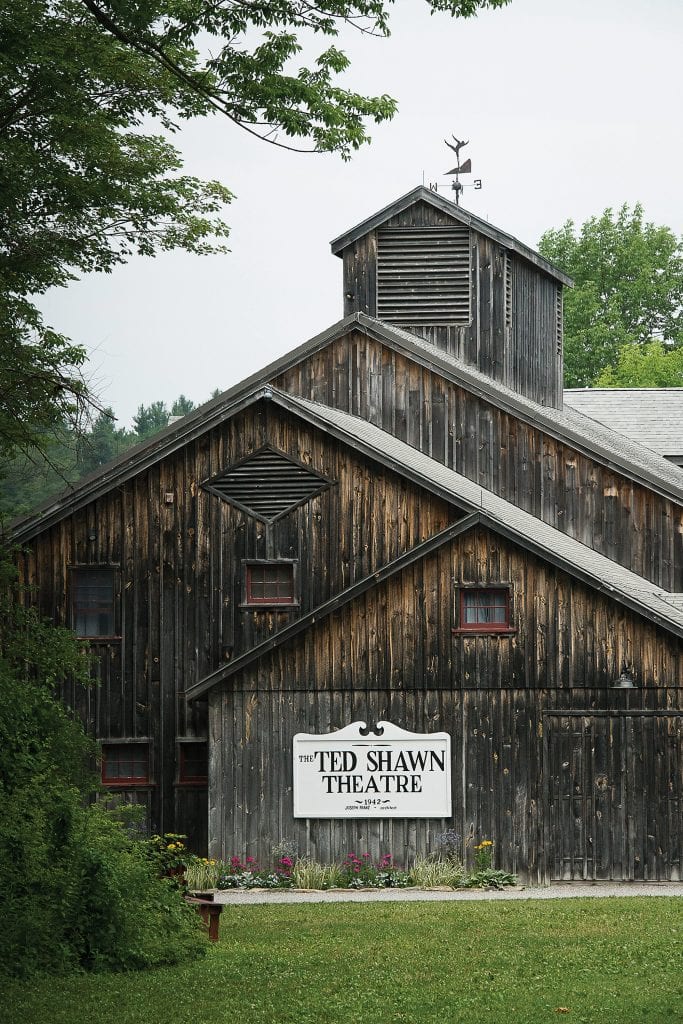
The productions at Jacob’s Pillow for the 2021 season will all be outdoors, many at the Inside/Out stage, seen here.

For Jacob’s Pillow in Becket, the nation’s largest and longest running dance festival, 2020 was a lost year in almost every respect.

That’s almost, and we’ll get to that silver lining, if it can be called that, shortly. First, all those losses.

Jacob’s Pillow lost an entire season of live performances and all the revenue that comes with it, forcing a 50% reduction in the budget, layoffs, and other cutbacks. It also lost some momentum when it comes to fundraising, especially for a much-needed renovation of its main stage, the Ted Shawn Theatre, or the ‘Shawn,’ as it’s known. Then, in November, the company lost its smaller, more intimate performance space, the Doris Duke Theatre, or the ‘Duke,’ to a fast-moving fire, the cause of which has still not been determined.

But from the ashes, figuratively but also quite literally, Jacob’s Pillow has plans to roar back in 2021, said Pam Tatge, executive and artistic director. It will be a different kind of year, one with performances in outdoor settings only and to limited audiences, but one in which the company plans to lay a solid foundation for its 90th birthday in 2022, and for the decades to come.

Indeed, ambitious plans are in place to modernize the Ted Shawn Theatre, add air conditioning and new ventilation, and enlarge and improve the stage. Meanwhile, plans are expected to emerge for a new Duke, one that will be conceptualized and designed with input gathered from audiences and artists alike.

“We’ve embarked on a research study to really understand what audiences and artists loved about the Doris Duke Theatre, what they want to retain, and also what artists need for works being made in the 21st century,” Tatge noted. “We’re building a space, hopefully, for the next 90 years.”

While doing that, Jacob’s Pillow will also put on a season of live performances, the pieces of which are still coming together. It will run from June 30 to Aug. 29 and, for logistical reasons and lingering restrictions on travel, feature mostly performers based within driving distance of the 220-acre campus.

Audiences will be smaller and spaced apart for safety reasons, severely limiting in-person attendance. Which brings us to what would be considered the one bright spot for 2020, a schedule of 38 performances from years past — with new pre- and post-performance talks — presented virtually and to huge, global audiences, a development that made it possible for people who could never before get to Becket to take in a performance at the ‘Pillow.’

“We realized an audience for our virtual festival that had thousands more people than we could ever accommodate on the Pillow campus,” Tatge explained. “And 80% of those people were new to us — they had not been on our list before, and that was a great revelation; people know of Jacob’s Pillow, but they haven’t been able to make their way here. So in terms of accessibility and reaching people of different economic means and physical abilities, this was an amazing way to have the magic and joy that we experience on campus at the Pillow shared far more widely.”

For the 2021 season, most performances will again have virtual access internationally, a step to broaden audiences that Tatge called a “a big experiment.”

“We’ll want to see if the audience engagement is as great — it’s summertime, and things are opening again, so we’re going to see,” she said. “But I know a virtual platform has been in Jacob’s Pillow’s mission delivery, and it will continue to be a way that we deliver our mission into the future.”


Staging a Comeback

Tatge was at her residence in Connecticut when she got the phone call early in the afternoon on Nov. 16, delivering the terrible news that the Duke was on fire. She raced north as fast as she could and arrived in Becket just as the last remaining portions of the wooden structure were being consumed by the flames.

The loss of the beloved theater that hosted smaller productions seemed to provide a surreal ending to a terrible year that was all too real, and all too painful.

Looking back on it, Tatge said the Pillow, like every other live performing-arts venue, was severely tested by all the pandemic bought with it.

“With the cancellation of the season, we lost all of our earned-income potential — 40% of our budget is ticket income,” she explained. “We had to lay off 35% of our staff. Ultimately, we ended the year OK because we received a PPP grant. Without that grant, we would not have made it through as successfully.”

For 2021, there will be a new, very tight budget, hopes for a second round of PPP, and some high fundraising goals, Tatge went on, adding that there are many unknowns and considerable challenges ahead even as the proverbial light at the end of the tunnel when it comes to the pandemic draws closer.

Ted Shawn Theatre

At right, the Ted Shawn Theatre, which will undergo an $8 million renovation this year. At left, the Doris Duke Theatre, which was gutted by fire in November. Input is being sought on a replacement, and an architect is likely to be chosen later this year.

“Because our performances are going to be shorter, we won’t have the earned-income potential to bridge the gap between expenses and revenues,” she explained. “So we really need a subsidy, and we really need our community’s support to invest in putting artists back to work — who must get back to work if our field is going to survive this — and bring audiences back together.”

Overall, though, there is considerable optimism moving forward, and Tatge said that, for her, it’s fueled by the tremendous response she’s seen from the community, a broad term she uses to describe constituencies ranging from performers to patrons who take in their work.

“What has been impressive to me is the range of people who have contributed to Jacob’s Pillow so far, from artists themselves, who don’t have much but want to share something with Jacob’s Pillow, to alumni, to our board members and our members,” she said. “Jacob’s Pillow members are a devoted bunch, and they have stepped up, and we’re going to need that to continue until we get to 2022.”

“Our first priority is to bring people back together safely, so we have rigorous protocols that are in place — for audiences, performers, and staff.”

Optimism also abounds concerning the 2021 season of performances, which, as Tatge noted, will take place outdoors — at the Inside/Out stage and other settings around the sprawling campus.

“Our first priority is to bring people back together safely, so we have rigorous protocols that are in place — for audiences, performers, and staff,” she explained, adding that these protocols are being developed in conjunction with — and will be shared by — other performing-arts institutions in the Berkshires, such as Barrington Stage, Tanglewood, and other venues.

This collaboration is in many ways unprecedented, but also quite necessary, she went on, if the the tourism-dependent Berkshires region is to battle back from an incredibly difficult 2020.

The schedule calls for all activities — performances, workshops, and pre-performance talks — to take place outdoors or under a tent, said Tatge, adding that, in addition to the Inside/Out stage, the Pillow boasts a number of other ‘natural stages’ around the campus that will enable visiting companies to stretch their collective imaginations.

“There are so many parts of our campus that we’re going to be inviting audiences to discover,” she told BusinessWest. “And artists are crafting works particularly for our site, and that’s exciting.”

These performances will also be filmed, as most have been over the years, and presented virtually — an opportunity, as she noted earlier, to greatly expand audiences.

While the shows will go on in 2021, the Pillow is also looking to make huge strides with efforts to modernize and renovate the Shawn, opened during the 1940s, and replace the Duke.

The former, an $8 million project, has been in the works for several years, she said, adding that the pandemic has only reinforced the need for air-conditioning and improved ventilation. And this simple reality helped convince the board of directors that, despite the difficult and uncertain times, the Pillow needs to push ahead with a capital campaign conceived to raise the remaining $2 million needed for the project.

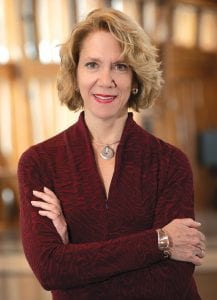
Pam Tatge says the ‘Pillow’ has put a horrendous 2020 behind it, but stern challenges remain for this Berkshires institution.

“We quickly realized that the Ted Shawn Theatre will not be viable as a theater in a post-COVID world without a ventilation system and air conditioning,” Tatge said. “It’s not a viable space at present, and we made the decision to take the Shawn offline this summer so we could move ahead with the renovation, which actually began in January, with pre-planning.”

Ultimately, the plan is to have the renovated theater ready for that 90th-anniversary year in 2022.

As for the 30-year-old Duke, that research study she mentioned has been completed, with the next steps in the process being to research architects and ultimately select one, determine the full scope of the project, and pinpoint just how much money will have to be raised beyond what is covered by insurance.


The Next Act

Moving forward, Tatge is focused on 2021, obviously, and bouncing back in a big way from a dismal 2020.

But she’s also focused on the future — not just the 90th-anniversary celebrations that will dominate 2022, but the years and decades to come.

The Pillow is a National Historic Landmark and a tradition in Western Mass., and the ultimate mission for staff and board members is to make sure it can serve future generations.

The pandemic severely tested the mettle of this institution, in every conceivable manner. But it has been made stronger by that test and, hopefully, even more resilient.

In short, the Pillow is ready to take big steps forward in 2021 — on stage and in every way.


George O’Brien can be reached at [email protected]

Cover Story

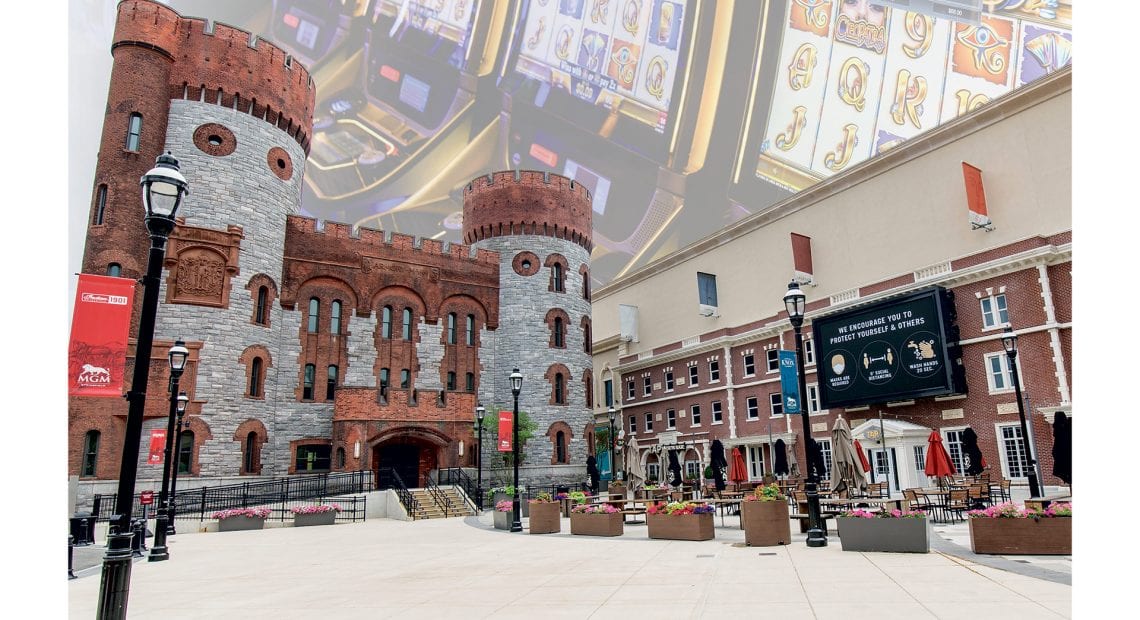
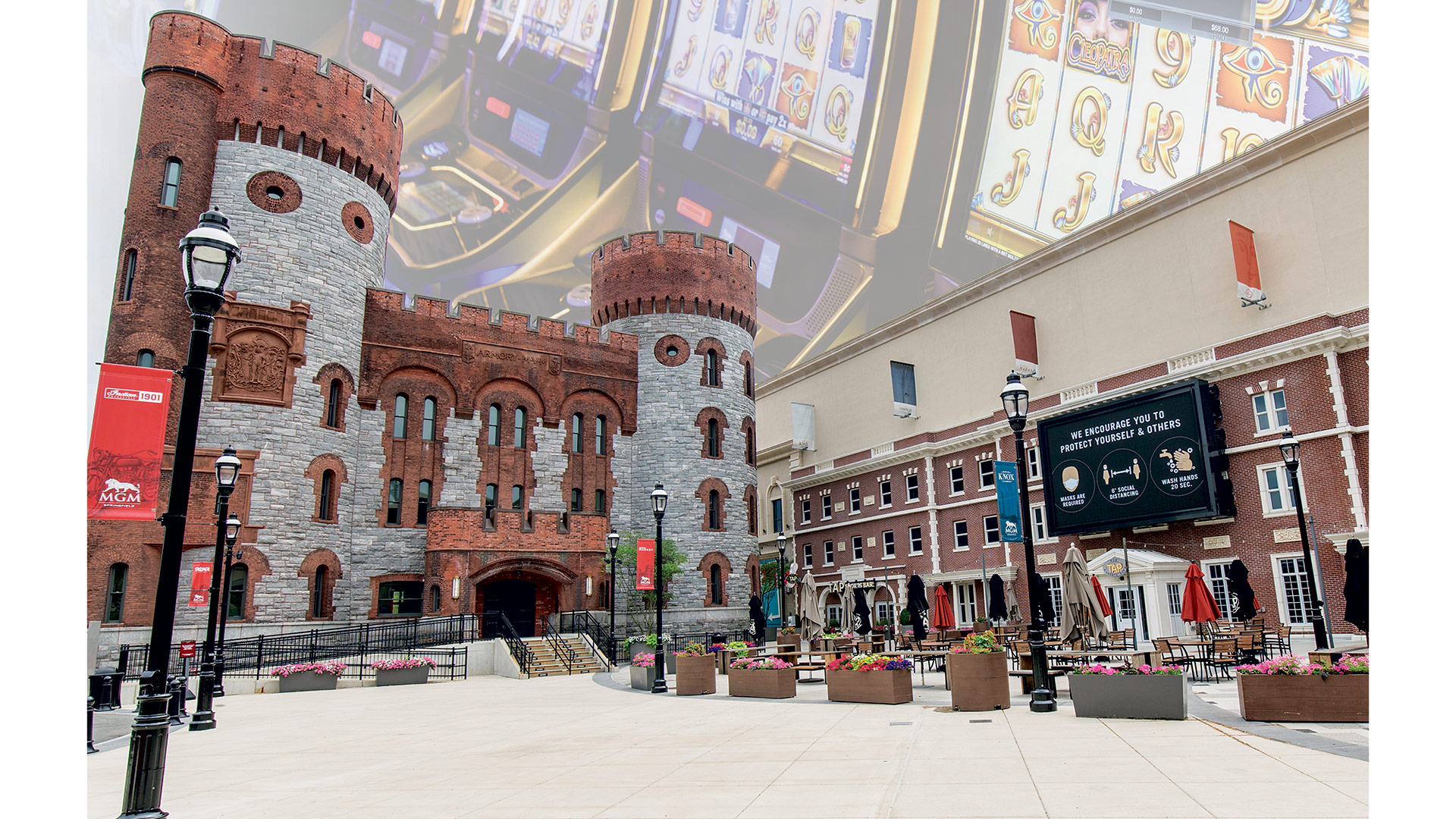
But MGM Springfield Leader Optimistic About the Next Chapter

Chris Kelley had just arrived in Springfield and was still getting acclimated to the region when the COVID-19 pandemic arrived almost exactly a year ago.

Then, he had to get acclimated to something else — something no one in the casino industry had ever seen or been forced to endure before.

“These facilities just weren’t meant to be closed,” said Kelley, president of MGM Resorts’ Northeast Group, which includes MGM Springfield. But they were, of course — for four long, brutal months, before finally reopening in July, but only at one-third capacity and with a number of restrictions in place. Later, the state’s casinos had to reduce hours and close at 10 p.m. as a late-year surge in cases moved the goalposts again.

Now, some restrictions are being eased, and later this month, the state will enter what is known as step 1 of phase 4, prompting Kelley to glance toward the future with optimism in his voice. But in all ways, and by all accounts, the ‘ramping-up’ period for MGM Springfield — the one we all heard so much about in the months before COVID dramatically changed the landscape — has been turned on its ear.

“People are just really excited to be part of bringing downtown West Springfield back.”

In some ways, it will be like starting over for this operation, which recently reopened its hotel for weekends and also its sports bar, and is waiting with what can only be called bated breath to see if and to what degree patrons will return to the blackjack tables, slot machines, bars, and, eventually (but no one really knows when) large-scale events like concerts, shows, and fundraising galas.

In a wide-ranging interview, Kelley, who has remained mostly quiet, from a press perspective, since arriving in this region, talked with BusinessWest about the past year, but mostly about what comes next for this highly visible, nearly $1 billion business that opened to great expectations 32 months ago.

That look back was understandably painful, although he said the past year has certainly been a somewhat beneficial learning experience on many levels (more on that later) and a time when changes coming to the industry were greatly accelerated.

As for the future … it is obviously clouded by question marks that involve everything from how much pent-up demand there will be for everything a casino has to offer, to the fate of sports gambling in the Bay State.

Chris Kelley says, it feels like starting over

In some ways, Chris Kelley says, it feels like starting over at MGM Springfield.

Kelley is optimistic about both.

He said Las Vegas has recently returned to its 24/7 character and something rapidly approaching conditions that existed pre-COVID — and the early indications are certainly positive.

“With vaccine distribution ramping up around the country, there’s good reason for cautious optimism as we look at our ability to gather in larger numbers, and for our industry, in the broader sense, to see improvement as opposed what it was experiencing only a few months ago. As we look at the calendar year 2021, I think we see significant opportunities for improvement, especially as we move into the second half of the year.”

As for sports betting, he said several bills are in various stages of talk and progression through the Legislature, and he’s optimistic that the state will ultimately pass one, especially with other states already doing so, with revenue flowing to them as a result. More important than simply approving a bill, though, is passing legislation that will enable the state to effectively compete and ultimately become an industry leader in this realm. Such a bill might bring $50 million in additional tax revenues to the state annually, he projected.

“We’re looking for Massachusetts to be able to compete with all of the surrounding states that have or soon will have sports betting,” he said, noting that Connecticut will soon be in that category. “A level playing field for MGM and the other casinos in the state is very important, as is giving our customers an amenity, and an experience, that they’ve been asking for now for years.”


Doubling Down

Reflecting on the past year, what it was like, and even what he’s learned as a manager, Kelley started by flashing back to what were the darkest of days — when the casino was closed and there was no indication of when it might open again.

“It’s a very uncomfortable experience to walk through these facilities when they’re dark and there’s no activity and action — the sights and sounds that ultimately drew us all into this industry,” he told BusinessWest, noting, again, that once a casino cuts the proverbial grand-opening ribbon, its doors are never locked.

The fact that they had to be locked was just the first in a string of unprecedented steps that defined the next several months, from the shuttering of the hotel and restaurants to the cancellation of scores of events that were on the books, to ultimately laying off two-thirds of the employees working at the casino before the pandemic arrived.

Overall, Kelley said, this has been a humbling experience in some ways — a challenging time, to be sure, but also a learning experience and an opportunity to accelerate, out of necessity, some changes that were coming to the industry anyway.

“No business model for any company will be exactly the same, post-COVID,” he explained. “We have innovated along the way, adopting best practices, and many of those will remain, to the benefit of the guests,” he told BusinessWest. “Digital innovations are an area I would point to; MGM Resorts and MGM Springfield were already headed toward many digital innovations pre-COVID, but the pandemic really accelerated the implementation of those efforts — things like digital menus, the use of QR codes, mobile check-in, and digital keys; those things will remain, and those are a positive part of the guest experience today and moving forward.”

Elaborating on what was learned and how the casino and its staff responded to the rapidly changing landscape, Kelley said some valuable experience was gained that should benefit his team moving forward, especially when it comes to — here’s that word again — pivoting.

“We want to make it more walkable, more friendly, and more inviting so we can complement the business investment that’s happening there.”

“When the pandemic hit, it was a huge learning experience for everyone in this industry,” he said. “We all had to create new ways of operating and coping with restrictions that we had never experienced before. We put an emphasis on internal communications and external communications with our guests, and we found ways to stay in contact with our teams virtually. And through this process, we’ve been working hand-in-hand with our state and local officials and our community partners to weather this experience with the strength and support of each other. That ability to come together as a community during times like this is the silver lining to a very difficult period.

“As a team, we recently discussed the importance of leadership agility,” he went on, “because we have had to learn how to be very nimble and adjust to ever-changing conditions, which I believe will ultimately benefit the business in coming out of all this.”

Barriers at the gaming tables and social-distancing reminders have been facts of life

Barriers at the gaming tables and social-distancing reminders have been facts of life during the pandemic at MGM Springfield.

In recent months, business — and gross gaming revenues — have steadily improved, said Kelley, and this has been while the hotel and some restaurants have been closed. Looking forward, he expects this trend to continue and for there to be a good amount of pent-up demand for casino-style entertainment.

“It remains to be seen what the reaction of our communities will be to a vaccinated population, but we’re optimistic that we’ll see the return of guests to our property,” he said. “We had seen resiliency even during this time.”

The hotel reopened on a limited basis the first weekend in March, he went on, with the goal being to gauge guest demand and comfort levels and then adjust the business model accordingly. He said initial bookings have been positive, and he expects improvement to come gradually.

As for events in the casino’s various venues — gatherings have brought people and energy to the downtown area and business to a number of hospitality-related ventures — Kelley said it is too early to know when this aspect can resume.

“Ultimately, that will be up to the state to determine,” he noted. “What we can do is make sure that we’re as prepared as possible for that day; we do discuss those things frequently, and we’re actively engaged in planning for the return of those amenities.”


Plenty of Wild Cards

Speaking of being prepared … this is exactly what the casino is striving to do when it comes to another key focal point moving forward — sports betting.

New Hampshire became the 16th state to legalize such betting (there are now 22) in July 2019, and officially went live in late December that year. Meanwhile, Connecticut has taken huge steps in this direction, although some complicated negotiations remain between the many parties involved when it comes to where venues will be located, how many there will be, and who will operate them.

As for the Bay State, Kelley counts himself among those who believe it’s a question of when — not if — sports betting gets the green light, and he obviously considers that step pivotal if the state’s casinos are going to going to tap the full potential of what has long been considered an attractive market.

But he stressed repeatedly that his focus is not simply on working with state legislators to pass a bill, but to create a playing field on which the state’s casino can effectively compete. And this is the consistent message he and others with MGM have been delivering to state officials.

“We’re encouraged by the number of sports-betting bills that have already been introduced, and each of the bills that has been drafted has been tailored to the unique interests of the sponsor,” he explained. “So we’ve been focused on advising lawmakers on what our experience has shown us.”

Elaborating, he said this experience has shown that the lower the tax rates are on sports-gambling revenues, the better one’s odds are of effectively competing against what he called the “illegal markets,” and also against the growing number of neighboring states already in or soon to get in this game.

“We want to create a competitive operating model, and so a tax rate that is on the lower side is helpful in creating the best payouts for the guests, and also helpful in competing against the illegal markets, and it’s helpful in competing against border states,” he went on. “And we believe that, ultimately, it creates the best guest experience as well.”

He said the casino has a plan in place and has the ability to move “very quickly” when state legislators decide to pull the trigger.

“We’ve spent a lot of time looking at the property and where a sports book makes sense, and also at how to create an experience that would really be a market leader and that will benefit the community at the same time,” he explained, adding that there is a good deal of experience in this realm within the MGM corporation that he and his team can benefit from. “We’ll have many resources to draw upon, and we’re excited about that.”

Reflecting again on those dark times that coincided with his arrival in Springfield, Kelley said those memories linger, even as many can see that proverbial light at the end of the tunnel. And they make him appreciate a return to something ‘normal’ even more.

“To see us moving back in the direction of offering those positive moments, those positive milestones, those positive experiences for our guests, is extraordinarily gratifying, and part of what I love about this business,” he said, adding, again, that while question marks still dominate the landscape, he remains optimistic about not only turning back the clock to pre-COVID levels of revenue and progress, but setting the bar higher.

Ultimately, this story is still in the early chapters, he told BusinessWest, and the ones to come will hold plenty of intrigue.


George O’Brien can be reached at [email protected]

Community Spotlight

Community Spotlight

Tyler Saremi

Tyler Saremi sees potential in West Springfield’s downtown, and is taking steps to inject some economic vibrancy.

When Tyler Saremi looks at what is considered downtown West Springfield — the Elm Street/Park Street area — he doesn’t see Northampton or West Hartford.

But he can easily imagine a day when that section of this city that still calls itself a town can attain something approaching a level of vibrancy and an eclectic mix of businesses, especially those in the hospitality sector, that define those communities.

And he’s doing his best to bring that day closer. Indeed, the multi-faceted business run by his family that he serves as vice president, Saremi LLP, acquired 95 Elm St. — known to most as the United Bank building because it was the main tenant for many years — with the goal of … well, turning back the clock in many respects.

The century-old building has, over the decades, been home to cafés, restaurants, a grocery store, banks, and other types of retail, said Saremi, adding that it has always been a destination, and the broad goal with this project is to make it one again. Thus, it has been rebranded as Town Common.

Already, Tandem Bagel, the Hadley-based company with locations there and also in Easthampton and Northampton, will soon occupy space where bank-teller windows have stood on the first floor; the target date for opening is July. Meanwhile, at the other end of the first floor, Saremi pointed to the place where intends to put a restaurant. He said two other leases have been signed, and several more are pending.

“People are just really excited to be part of bringing downtown West Springfield back,” he said. “Our main intention is a café and a restaurant on the first floor; whether we have to open a restaurant ourselves or partner with someone, we don’t care. That’s part of our commitment to West Springfield — it needs a café, and it needs a restaurant, and that’s what we’re going to do.”

“It’s going to be a tough year, but there are reasons for optimism — we see things opening back up.”

The redevelopment of 95 Elm St. is just one of the intriguing stories unfolding in West Springfield, a community that is, like many others, trying to rebound from a pandemic that has taken a huge toll on hospitality-related businesses. And West Side, as it’s called, has many of them, said Mayor Will Reichelt, who counted 20 hotels and motels and a number of restaurants in his community.

But the biggest business in that sector, obviously, is the Big E, which is responsible for filling many those hotels, motels, and restaurants, not just during the 17 days of the annual fair, but almost year-round, as that venue hosts a number of shows centered on everything from horses to toy railroads; dogs to guns and knives.

The Big E has been mostly empty and silent since the pandemic arrived a year ago, and while the outlook for 2021 is more promising, there remains a huge number of unknows, especially with regard to the fair, a situation that Big E President and CEO Gene Cassidy summed up this way:

“It’s like you’re navigating your way down a dark alleyway; you don’t know what’s in front of you — if there’s suddenly going to be a crack in the pavement or if you’re going to walk into a dumpster,” he said, using that phrase to indicate how difficult it is to plan when the rules keep changing, often without much, if any, notice. “Our goal, simply, is to plan to produce a product that people are going to enjoy.”

Cassidy is quite confident there will be a Big E this September — he just doesn’t how many people will be allowed to attend. He doesn’t think it will be full capacity, as in 100,000 people on a weekend day, as in fairs past. Instead, he’s expecting some percentage of that number, which won’t be ideal, but certainly better than last year.

And while most of his energy and attention is still focused on this year’s fair, he said he’s spending a good amount of time lobbying officials to understand the importance of fairs and live events in general, and to help ensure the long-term survival of such institutions, something he believes is now imperiled.

Overall, though, he’s optimistic about the rest of 2021.

Gene Cassidy says a sparsely attended Big E is better than none at all

Gene Cassidy says a sparsely attended Big E is better than none at all, and he’s moving forward with planning after having to cancel the 2020 fair.

“It’s going to be a tough year, but there are reasons for optimism — we see things opening back up,” he said, noting that various expert projections of herd immunity by fall or even sooner are encouraging, even as innumerable challenges and question marks loom.

For this, the latest installment in its Community Spotlight series, BusinessWest takes a hard look at West Side and its efforts to become even more of a destination, even as its business community continues to battle COVID-19 and all the challenges it has brought.


Road to Progress

Reichelt, now wrapping up his second term in office, with plans to seek a third, said he can’t find too many silver linings from the pandemic and all the havoc it caused in 2020.

But he can find at least one — acceleration of the process to replace the Morgan-Sullivan Bridge, which connects his city with Agawam. The bridge project, which commenced two years ago, has to pause during the 17-day run of the Big E, he explained, adding that work actually comes to a halt for three weeks or more because of logistical concerns.

Obviously, that didn’t happen in 2020, he went on, adding that a project that was due to be completed this summer will now be done by spring.

“The work is way ahead of schedule,” he said. “Without the Big E, they probably gained a month of working time, and that will certainly help out on the back end.”

The broad mission moving forward is to get more people to travel over that bridge and other thoroughfares into West Side, said Reichelt, adding that the city has always considered itself at the crossroads of this region — I-91 and the turnpike connect there, and Route 5 runs through it as well. This location has long been a huge asset, one that paved the way, if you will, for major retailers and car dealers alike to populate Riverdale Street and Memorial Avenue. It has also brought visitors to the community not only for the Big E and shows on its grounds, but for myriad other tourism- and business-related functions, from leaf peeping to the semiannual EASTEC trade show.

The ongoing goal is to continually take advantage of this asset, build on the foundation that’s been laid, and try to spread the vibrancy to other areas of the city.

Which brings us back to Elm Street, Town Common, and the huge ‘Under New Management’ banner now adorning it.

As he gave BusinessWest a tour, Saremi pointed out the spot where Tandem Bagel would go, then did the same with the restaurant. Venturing to the second floor, much of which is now occupied by Saremi LLP, he showed where a number of smaller spaces, individual offices, and even co-working space might be carved out.

“We want to make it more walkable, more friendly, and more inviting so we can complement the business investment that’s happening there.”

Later, he pointed out one of the huge windows to the traffic — specifically, the juncture of Route 20 and Elm Street.

“This intersection has so much traffic … we need to get people to stop here in downtown West Side, get out, walk around, go to some shops, get something to eat — that’s how I see it,” he noted, adding that there are already some attractions there, including the Celery Stalk restaurant, a legendary luncheon stop; as well as bNapoli restaurant and the Majestic Theater. The broad goal is to build on that critical mass, he said, noting that clusters of eateries and entertainment venues have been the formula for success in Northampton, West Hartford, and other communities.

Reichelt concurred, and told BusinessWest the city is always striving to build on its already-impressive portfolio of retail- and hospitality-related businesses — and also fill in some spots that are less vibrant than others.

Mayor Will Reichelt

Mayor Will Reichelt says initiatives like a new economic recovery director and a series of infrastructure plans will help keep West Springfield on the right track.

As an example, he pointed to Riverdale Street, which actually has two distinct sections, if you will. There’s the one south of I-91, which is thriving and always has, said the mayor, who worked at the Donut Dip on that throughfare in his youth and thus speaks from experience. Then there’s the stretch north of the highway, which, while still vibrant by most measures, has some vacancies and, in general, is underperforming.

Reichelt said the city will look to help address this situation, and other business and economic-development issues in the city, through the hiring, at least on a temporary basis, of what’s being called an ‘economic recovery director.’

“The goal with this new position is to build better business relationships in the community, help with business retention, and focus on some of the underutilized areas, like the north-of-91 section of Riverdale,” he explained.

Already, there are signs of progress, he said, noting the reopened White Hut, the expansion of Calabrese Market on Park Street, and the sale of the former Hofbrahaus property to the owner of the Hangar Pub and Grill and growing ‘Wings Over’ stable of restaurants, among other positive developments.

“The common citizen wants their life to return to normal,” he said. “So I think people will come out … they will come back to fair.”

Meanwhile, a number of infrastructure plans now in place are designed to improve traffic flow and, ultimately, promote more vibrancy in the city. First up is Park Street, he said, adding that it is being repaved and steps are being taken to taken to make the commons more accessible and safer to use. Those plans include what the mayor called a mile-long loop or walking and biking trail around the green space.

Elm Street will follow, he went on, adding that this will be a multi-faceted initiative designed to beautify the area, add more parking, redesign the intersection of Elm Street and Route 20, and allow people to make more and better use of the green space there.

“We want to make it more walkable, more friendly, and more inviting so we can complement the business investment that’s happening there,” he told BusinessWest, adding that this project is in the design phase and should commence in 2022. Likewise, a huge, $25 million project to improve traffic flow on Memorial Avenue will take place that same year.


Fair Assessment

Sitting in the large conference room in the Big E’s administration building, Cassidy reflected on what has been an ultra-challenging 12 months for this regional institution — and what lies ahead, to the extent that he could, obviously.

He said every aspect of this enterprise — from the annual fall fair to the year-round shows that draw visitors from across the Northeast, to the restaurant on the grounds, Storrowton Tavern — have been deeply impacted by the pandemic.

And the hurt is still being felt. The shows slated for weekends in January and February were all canceled, he said, with some, including the huge Western Mass. Home & Garden Show, moved back on the calendar, in this case to August.

The Big E has received some support — nearly $1 million in the first round of PPP, with an application in for the second round of funding. There have been some cutbacks — the workforce has been trimmed from 30 full-time employees to 25 — and those who are left have found themselves with … let’s call them broadened job descriptions.

“Those of us who are still here have had to do jobs we’ve never had to before,” he noted, adding that such tasks include everything from directing traffic for the few events that have been staged to making sure the buildings on the grounds are secure. “Everyone has had to pitch in.”

West Springfield at a glance

Year Incorporated: 1774
Population: 28,529
Area: 17.5 square miles
County: Hampden
Residential Tax Rate: $16.90
Commercial Tax Rate: $32.49
Median Household Income: $40,266
Median Family Income: $50,282
Type of Government: Mayor, City Council
Largest Employers: Eversource Energy, Harris Corp., Home Depot, Interim Health Care, Mercy Home Care
* Latest information available

As for the last three quarters of 2021, Cassidy said there are certainly some signs of optimism with his industry. For example, the Canadian government recently gave the green light for the popular Calgary Stampede to take place in June. Meanwhile, the Pasco County Fair in Florida was recently staged, albeit with a number of restrictions and safety precautions in place.

Cassidy took it in while on a trip to Tampa for ‘Florida Week’ and a number of trade association meetings that were staged in-person, which is significant in and of itself, he noted, adding that the main topic of conversation, obviously, was how to stage events safely.

“Interestingly, at the Pasco County Fair, we were there on a Tuesday night, it was chilly, but the fair manager indicated that attendance actually exceeded what it was last year, and he attributed that to the fact that people want to get out,” he recalled. “They want to resume ‘normal,’ and that’s in a state where businesses have been open and Main Street is open.”

But while he can look ahead and try to plan, there are too many question marks to do the latter with any amount of efficacy. These question marks surround everything from what the attendance restrictions will be to whether — and under what conditions — the state buildings can open, to whether individuals and families will be willing to come back out and be part of a mass gathering on the midway or one of the concert venues.

The major consideration is what will be permitted for attendance, said Cassidy, adding that it’s a simple but troubling fact that the costs of operating the fair will be roughly the same whether it’s at full capacity, 50%, or some other number. But the bottom line is that a smaller fair, attendance-wise, is certainly preferable to no fair at all.

“It costs the same to produce the fair for 1.6 million people as it does to produce the fair for one,” he said. “Our staff is preparing a conventional Big E and will try to deliver the product we’re known for.”

Cassidy believes that, as he saw in Florida, there will a significant amount of pent-up demand and that people will want to return to the fairgrounds.

“The common citizen wants their life to return to normal,” he said. “So I think people will come out … they will come back to fair.”

Reichelt agreed, and said the return of the fair this fall, even a smaller fair, will help the region’s economy and, specifically, many of those hospitality-related businesses that have been deeply impacted by the pandemic.

“Having it happen will be good, not only for the Big E, but for the region to bring back that sense of normalcy,” he noted. “And it will be helpful for businesses in the area as they start to recover from all this.”


George O’Brien can be reached at [email protected]

Employment

Putting Experience to Work

Colleen Holmes says client employment, inclusion, and empowerment have been challenged by the pandemic.

Colleen Holmes says client employment, inclusion, and empowerment have been challenged by the pandemic.

Colleen Holmes calls it a ‘full-circle moment.’

That’s how she chose to describe her decision to assume the role of president and CEO of Viability, the Springfield-based nonprofit with a broad mission that boils to providing services — and creating opportunities — for those with disabilities. Those opportunities come in a number of forms, and we’ll get to that shortly.

But first, that ‘full circle’ reference. Holmes used it to note that she spent a full decade at one of the legacy agencies, in this case Human Resources Unlimited (HRU), that became Viability in 2107 (Community Enterprises was the other) before moving on to a new role leading as president and CEO of the 18 Degrees agency.

So she’s back where she was. Well, sort of, but not really. Viability is a much bigger agency than HRU was — it boasts $36 million in annual revenues, 420 employees, and 37 sites in four states — and so much has changed in the interim, much it before COVID-19. And the pandemic has simply added another layer — or several layers, when you get right down to it — of challenge and intrigue.

“Coronavirus has in no way taken away from the need for the services we provide. And in many ways, it has made it even more important to provide those services; that has been job one for me, and for all of us here.”

“Coronavirus has in no way taken away from the need for the services we provide,” Holmes explained. “And in many ways, it has made it even more important to provide those services; that has been job one for me, and for all of us here.”

In that respect, much hasn’t changed, and she has, indeed, come full circle, especially when it comes to agency’s mission, which boils down to enriching the lives of the people served by the agency and continuously reinforcing the belief that every individual, no matter their ability, can be a valuable contributor to the community — and the workforce.

It carries out this mission through a number of programs and services, including:

• Clubhouses, which provide members with a supportive environment to increase their vocational, educational, and social skills;

• Partnering with more than 600 employers to provide members with a variety of supported employment opportunities;

• Community living programs that provide that provide care management, direct care, and referral services to individuals with disabilities, enabling them to live in the community with dignity;

• Day supports and various recreational programs that provide individuals with a broad range of community activities; and

• Transitional services that provide members with upfront job-readiness skills, placement assistance, and ongoing supports.

The common denominator in each of these areas, said Holmes, is dedicated staff that not only make the programs happen, but make the individual goal set by and for each member attainable.

“This work doesn’t happen without our staff — and I don’t mean that simply from the standpoint of hands being on deck,” she said. “A lot of the way in which progress is made with individuals is through trusted relationships that are built that give people a safe space to try things, to grow, to progress, to fail and come back and try again another day. Those trusted relationships are pivotal, and our staff’s ability to offer that is everything.”

But COVID has certainly impacted many of these initiatives, said Holmes, adding that the agency has collectively overcome a number of challenges to keep employment, inclusion, access, and empowerment for people with disabilities in the forefront, despite the pandemic. Moving forward, lessons learned from the pandemic will be applied to the future of these programs and services and how they are provided.

“What worries me is that some of these people are losing ground that they worked so hard to gain — people who were working, people who were gaining life skills, people who were gaining in their levels of independence, people who were ready for their next step in employment. There are a number of folks who have lost ground.”

And there will be some important ground to be made up, she said, adding that, in some cases, COVID stunted the progress being made by some members who were forced inside and into a form of isolation that is not part of this agency’s MO.

“What worries me is that some of these people are losing ground that they worked so hard to gain — people who were working, people who were gaining life skills, people who were gaining in their levels of independence, people who were ready for their next step in employment,” she noted. “There are a number of folks who have lost ground.”

Overall, however, many members, and the agency as a whole, have been able to carry on and move forward through this pandemic, she went on, adding that many members work in essential positions, and they take pride in being essential.

For this issue and its focus on employment, BusinessWest talked at length with Holmes about her new assignment, but especially about how the pandemic has only magnified the need for the various services this agency provides, and how Viability has gone about responding to this changed landscape.


Work in Progress

Holmes said she certainly wasn’t looking for a new challenge when Don Kozera, the long-time CEO of HRU, her former boss (she served the agency as special projects coordinator), and, most recently, the interim president and CEO of Viability following the unexpected passing of Dick Venn (who stepped into that role after having the same titles at Community Enterprises), asked to talk with her about possibly becoming a candidate for this role.

Suffice it to say he did a good sales job, although it wasn’t necessarily a quick or easy sell.

“He said he thought I would be a good fit for this position and asked if I might consider it,” Holmes recalled. “And I said, ‘I don’t know … I’ll go talk to people; I’m always happy to do that.’”

She did talk to people, and came away intrigued by the possibilities.

“What I saw in this was an opportunity to sort of test my skills and challenge myself in a larger organization; this one is probably two and half times the size of the organization I was leading,” she explained. “Also, and this is probably most compelling, coming to Viability was an opportunity to advance work that matters to me in a different and larger arena.

“Our focus is on employment, training, empowerment, and inclusion with people who have disabilities and other challenges and disadvantages,” she went on, “and that speaks very much to me, in the combination of capacity building and social-justice change.”

Fast-forwarding a little, she did enter what became a nationwide search for a permanent president and CEO, and prevailed through a series of interviews conducted virtually, which she described as a new and different experience — at least as the interviewee.

She arrived in November to a full plate of challenges, including continuation of the daunting process of combining HRU and Community Enterprises into the larger entity that exists today, work that was in some ways slowed, and complicated, by both the passing of Venn and then the arrival of COVID.

“As I came on board, the organization that I am coming to know was ready to be on the other side of that transition,” she told BusinessWest. “And it would have been on the other side sooner had it not been interrupted by the grief and loss of Dick Venn, and had it not been for a pandemic.”

Elaborating, she said that what has been delayed has been the process of “breaking down the silos” within the organization. “You have a much larger organization in every way you can name — there’s more staff, many more programs and services, and in more geographic areas — and one that was continuing to grow, not just as a result of the merger but because it’s part of the mission, vision, and value of the organization. It’s about silos, systems work, and some of the basic functional things, like IT.”

A big part of the process of leading the organization to that proverbial ‘other side’ is to do a lot of “listening, watching, and learning,” she noted.

“You don’t walk into an organization like this one and think you know what you need to know,” she explained. “And I can say I’ve walked into an organization of people who are very welcoming, very helpful, who have lots to share, and who are deeply committed to the mission. Our people show up because they believe in the work that they’re doing and the people they’re working with.”


The Job at Hand

Supporting and nurturing this staff is just one of the many priorities for Holmes moving forward — and is, in itself, a challenge.

“One of my larger concerns, and it’s one that’s certainly shared, is the fact that human-service salaries are woefully inadequate to the jobs people do,” she explained. “Joining in advocacy efforts at the state level for eliminating the disparity in pay between community-based providers and state employees who do substantially the same work is important. But it’s also important for us as an organization to prioritize our staff to the extent that the limitations of our largely state-funded dollars allow us to do. Continuing services and supporting our staff are real priorities.”

Another priority, of course, will be transitioning, if that’s the right word, to a post-COVID world. Many staff members have been working remotely, she noted, and there are questions moving forward about how and where work will be carried out and even how much office space the agency may actually need in the short and long term.

And there are many factors to consider in making those decisions, she said.

“It comes down to how we most effectively support the services and the staff members that are delivering the services,” she explained. “There might be a natural tendency to say, ‘OK, there are certain positions that can be carried out remotely, so let’s just put all of them out and save that space.’ But it’s more complicated than that; human-services work is very collaborative. It’s teamwork, but more deeply than that, there is an environment of support that’s hard to come by when you’re not in contact with people, when people don’t see you walk through the hall and see you being a little more tired, a little more stressed than normal. In the kind of work we do, we need to pay attention to that.”

Meanwhile, there are those lessons learned and the new ways of doing things that came about out of necessity — and ingenuity.

“There was a brief period when staff needed to switch to providing services remotely, and … by golly, they did it,” Holmes told BusinessWest. “You get creative, and I’m sure we all have; you learn how to do some things differently, and you discover that the paradigm of how services are provided is turned on its head.

“That’s a new skill set we’ll carry forward, but it by no means replaces in-person services,” she went on, adding that, moving forward, the agency will look toward using the new skills and new technology, including virtual reality, to carry out its mission.

She noted that Viability is using virtual reality to acclimate and train clients and members for job placements. “We started during the pandemic, and we’re very much in the testing and piloting stage,” she explained, adding that early results are very positive. “If you have folks who have autism or others who for various reasons are highly sensitive to changes in environment or to noises, or just to new experiences … to be able to take a work environment and load it into a virtual-reality system so that people can safely explore and navigate that workspace without actually being there is very advantageous. It can lead to much smoother transitions.”

As for the employment programs, the ones that put thousands of individuals in jobs across this region and beyond, COVID prompted some businesses to close and many others to slow down, said Holmes, adding that obvious question marks remain about when and to what extent business, and jobs, will pick up again.

“It is a concern as to how long the economic rebound takes, and if there continues to be a shortage of positions,” she said. “As is so often the case, people who are marginalized are pushed out first, so that is a concern. But there are a number of employers we partner with who, through experience, will tell you the value of working with us, and that, when it comes to our members, their attendance is superior, and the quality of their work is at least on par.”


Past Is Prologue

Holmes has talked with many such employers over the years, so she understands those sentiments. She has, as she said at the top, come full circle when it comes to her career in human services.

But in most all respects, she is not coming back to where she was years ago. The landscape has changed in myriad ways and, thanks to COVID, it continues to change, each month and almost each week.

This is a different test, a sterner test, one she fully embraces. As she said, she’s excited about the opportunities — for herself, but especially for those benefiting from Viability’s programs and services.


George O’Brien can be reached at [email protected]

Cover Story COVID-19

What We’ve Learned, What’s Changed, What’s Changed Forever

One year ago, the world, or at least our little corner of it, stopped. Completely.

Well, almost completely. Better to say that it paused — big time. The COVID-19 pandemic had arrived in the 413 and elsewhere, and life as we knew it had given way to something else. Something much different. Something the likes of which we had never seen or dealt with before.

The cover of the March 16, 2020 issue of BusinessWest captured it perfectly. Above a set of empty conference-room chairs was the headline “Life in Limbo.”

Almost exactly a year later … the chairs in the conference room are, for the most part, still empty. In some cases, they haven’t moved or been sat in since last March. They sit, waiting for people, and normalcy — whatever the heck that is — to return.

The fact is, we don’t know what ‘normal’ will be moving forward. In many respects, we don’t know exactly how COVID will reshape the landscape and the workplace, higher education, and the medical center down the street. We don’t know how it will impact the delicate work/life balance moving forward, and we don’t exactly know how it will permanently change how we work, network, gather, and interact with others.

But we can certainly talk about, and for the one-year anniversary of COVID (nothing to celebrate, that’s for sure), we did. BusinessWest gathered leaders with six area businesses and institutions to talk about the many ways COVID has changed our work and our lives, how it is impacting the workplace (and will for years to come), and even how it is has made them all different and, in their view, better managers.


They’re calling it the ‘Zen room.’

That’s an apt name for an area being set aside at Mercy Medical Center at which employees can decompress and, hopefully, remove some of the stress from their lives, at least for a while.

“We want to offer space that’s extremely tranquil — it will have massage chairs and soothing color schemes,” said Deborah Bitsoli, the hospital’s president, noting that it should be ready for use soon. “It will literally be Zen-like; it’s a best practice, and it can actually be brought across different industries.”

This Zen room wasn’t created because of the pandemic, necessarily, but rather because of the way it helped crystalize the large amounts of stress people are under even in normal times, and how they need rooms like this. And it is just one example of how the pandemic has brought about change in the workplace and change in society in general.

Other examples include that same hospital offering what it calls ‘resiliency training’; a local bank interviewing — and strongly considering — a job candidate living in Florida who has no intention of moving here; and employers spending considerable time and energy on the questions involving whether employees come back to the office, when, how, and under what circumstances.

These are some of things we learned during a lengthy virtual roundtable involving six area business leaders: Bitsoli; Mary-Beth Cooper, president of Springfield College; Robert Johnson, president of Western New England University; Jennifer Rymarski, a partner with the regional law firm Morrison Mahoney; Tom Senecal, president and CEO of PeoplesBank; and Paul Stelzer, president of Holyoke-based Appleton Corp., a property-management firm that has many elder-care facilities in its portfolio.

This was a Q&A, but also a lively discussion, with the dialogue focused on not only what’s happening today, but what will happen moving forward because of what we’ve experienced, what we’ve learned, and what we’ve changed over the tumultuous and very difficult past 12 months. Here’s a somewhat condensed version of how it went.


BusinessWest: The phrase we’re hearing over and over and over again is that there is light at the end of the tunnel when it comes this pandemic and all that has come with it. Are you seeing that light, and, well, how much tunnel do we still have to go through? What are you seeing in your business?


Bitsoli: These are challenging and unprecedented times, and at Mercy, we’ve really tried to adapt to a new norm. We have many new processes and structures that, as someone who has dedicated their life to healthcare since the age of 16, I never thought I’d see. We’ve also opened our doors to give vaccines to the public based on the Department of Health criteria; to see tears in people’s eyes as they get a vaccine is something I’ll cherish for many, many years.

We’ve balancing the needs of the community and keeping people safe, but we’re also looking to the future and how we can more provide enhanced services to the community. We’re trying to balance the present and the future.


Cooper: This is our third semester in the pandemic, and we’re adapting. We are back on campus, we’re fully residential, and we had our first athletic contest recently — the men’s gymnastics team played Cal. So, yes, we are seeing some light at the end of the tunnel. When we thought about the pandemic and what we needed to do, we had to pivot, just like healthcare; we didn’t imagine going online as quickly as we did, but we made it happen. The biggest takeaway for me thus far, and moving forward, has been the resiliency our faculty and students, in particular, have demonstrated.


Johnson: We’re in good shape for the shape we’re in, and like others, we do see a light at the end of the tunnel. As for what’s changed for our organization, we’re future-focused; we’re looking at how we want to come out of this. We’ve been planning for the next five years at Western New England since last September. We have not taken the bunker mentality of waiting for the storm to pass and then figure out what we want to do. We’ve created a vision; we want to be a ‘new traditional university,’ a phrase we’ve coined here and that we’ll define in the upcoming weeks and months to come, and imagine the possibilities.

That’s because higher education, like healthcare, has been turned upside-down; we’re reimagining ourselves, and we think the best is yet to come. It’s tough, though … we’re in a very tough environment.


Rymarski: We all have our own struggles, and the law is not immune to it. The biggest impact has been access to the courts and how the courts have adjusted — a lot of litigation is driven by the court schedule, and having the courts shut down for a period of time has had an impact. Also, we’ve gotten a lot of calls on the employment aspects of this pandemic — small businesses, and all businesses, for that matter, are struggling to deal with smaller staffs, how a PPP loan impacts them, what they’re going to do under the Family First or CARES Act, how they’re going to get employees back, and how they implement policies and procedures across the board that are going to be fair but also abide by all of the regulations.


Senecal: When this whole thing started right around March 9 — I remember that date vividly — I think I stopped breathing sometime in the middle of March, and I was resuscitated sometime in June, because it looked really bad from my perspective. June came around, summer came along, and things started to look a lot better. Then fall came around, and as cases picked up, that started to have an economic impact on a lot of our customers.

To put things in perspective, we had probably $300 million in loan balances involving customers in that first month asking, ‘can we not pay you?’ And we responded like most community banks and said, ‘yes, no problem; let’s revisit in 90 days.’ I think we’re down to $70 million, which allows me to start breathing again, and most of that $70 million is in the hospitality industry — transportation, restaurants — which is still struggling. I’m not sure where the light is at the end of the tunnel for those industries, because they’re hanging by a thread, and I’m not sure how they’re going to come back. From our banking perspective, we’re operating in a different world; we had to pivot, we had to send 180 people home, and that’s hard to do in retail banking. And if any of you have done your banking, I apologize for us — and I know our competitors are the same way — that the drive-ups are ridiculously backed up. Overall, things are going OK, but it doesn’t feel very good.

Tom Senecal

Tom Senecal

“I’ve flip-flopped on this throughout the year, but, yeah, we’re coming back. The social-interaction part of this is lost with people working at home; you can’t create a corporate culture from a remote location.”


Stelzer: At Appleton, we’ve morphed from emergency-response protocols in March to highly organized COVID-19 protocols in our elderly/senior/multi-family apartment communities and in our commercial portfolio that we manage, which is about 2 million square feet. In short, we’re operating at high levels; we’re able to do that even with a chunk of the workforce being remote. All of our employees have had to learn a new COVID language and new COVID protocols amid all the important tasks they already do.

Overall, there’s a lot of good news coming out, but how we’re doing is still a daily question; while the vaccine rollout is encouraging, it’s still going to take some time. But, yes, there is light at the end of the tunnel.


BusinessWest: During the pandemic, people have worked remotely, and successfully. As we all look toward the day when something approaching normal returns, how will, or should, companies approach work and the question of bringing people back to the office?


Senecal: We have 350 employees, and about half of them are working from home. I’ve flip-flopped on this throughout the year, but, yeah, we’re coming back. The social-interaction part of this is lost with people working at home; you can’t create a corporate culture from a remote location. Beyond that, there’s the human connection — staying home is not good for mental health. But I’m for some sort of balance; if your job allows it, you can work from home — we’ve proven that. I do think the outcome of this is that there will be a balance. From a workforce perspective, we’ve had a hard time recruiting people for some key positions, and we’ve re-evaluated to say, ‘no, you don’t have to be in the office.’ We’re interviewing someone today who lives in Florida who may be able to work from home for us; we’ve never, ever considered that before, and we are.


Cooper: When it comes to students … there were some questions pre-pandemic about the value of higher education. And I would say to you that our students are saying loud and clear that they want to be in person, face to face, they want to play sports, they want to interact with mentors like faculty members and staff members. We’re studying this … we’re looking at what the future will look like and how we bring people back safely. Some people never wanted to work at home, and now some of those same people want to stay where they are. That’s a risk to our business model; we need to have the interaction between students and mentors that shape them moving forward to be strong employees in the fields we have represented on this panel. The synergy of having people together, the opportunity to come up with ideas and piggyback on them together, and just the joy of being in the workplace, it’s difficult to get all of that on a call or on Zoom.

Mary-Beth Cooper

Mary-Beth Cooper

“The synergy of having people together, the opportunity to come up with ideas and piggyback on them together, and just the joy of being in the workplace, it’s difficult to get all of that on a call or on Zoom .”

Johnson: One of the things I’ve been big on over the past decade is preparing students for the future of work and making sure they had the essential skills that could not be replicated by robots. This pandemic has put us in a place where we, as employers, with our employees, have to do the same thing. I don’t think it’s an either/or when it comes to Zoom or face to face. The question is, ‘how do we use that technology to complement our ability be more efficient in the workplace?’ On college and university campuses, we need to be face to face and on the ground, but I can now give my employees some flexibility; it’s not 8 to 5. If they have a soccer game or child care doesn’t show up that day, we’ve shown that that we can get work done with people working from home. As managers, we have to teach people how to work with their teams and their staffs to give them that work-life balance. Overall, I think the pandemic has merely accelerated what was inevitable anyhow.


Rymarski: I agree with the others when they say that synergy, flow, and the social and cultural aspects are missing when people don’t come to the office. I think about the new employees who came on board just before the pandemic, and not having them in the office and having them shadowing someone every single day for a week or two to learn what needs to be done. I think that has impacted them. At the same time, this pandemic has, indeed, accelerated a process that was inevitable. I think the challenge is handling all this; we’ve basically condensed down what we need to do to a very short time, and employers are struggling to manage the expectations of every person.


BusinessWest: From what’s been said so far, it seems that the pandemic has brought the issue of work/life balance into the forefront as perhaps never before. Talk about if and how this crisis has provided more impetus for employers to help their employees with this challenge and cope in general.


Cooper: The need to be compassionate and caring for your employees has never been higher. These employees are dealing with losses — children that they haven’t seen, aging parents that they can’t see … the human toll is very high.


Johnson: I would agree with that wholeheartedly. We talk about work/life balance, and we’ve been talking about it for a long time. One of the things we’ve learned is that, before, managers would have said, ‘you can’t have that work/life balance; you have to be here all the time when you’re supposed to be here.’ But when we had to flip on a dime and make this thing work, it’s amazing how resilient we really are. The human toll that this is taking on people is huge, and we have to give our employees some time to breathe when this is all said and done. I know eight people who have died since last March. When I said that on a Zoom call, people started tearing up, because they’ve had those same kinds of experiences and no way to grieve. Part of this equation is that we have to figure out in our organization what that grieving process looks like, and what is the path forward.


Stelzer: What I think is really important going forward in the work/life balance issue is not only their own personal situations, but how do you get people to understand that they don’t need to work 14 hours a day at home? A lot of people dove into their work because they could. I’ve talked with a lot of tenant companies, service providers, attorneys, CPAs, whatever, and they’re all working longer hours than they ever were before. This is something we have to keep on the radar moving forward; if you’re going to remain in a quasi-remote-work environment, how do you find balance and work 9 to 5? (Or 9 to 7 — no one really works 9 to 5.) How do you shut it off?

Jennifer Rymarski

Jennifer Rymarski

“I think about the new employees who came on board just before the pandemic, and not having them in the office and having them shadowing someone every single day for a week or two to learn what needs to be done. I think that has impacted them.”

Bitsoli: The one thing that we all have in common is that our workforce is our most precious asset; it’s what makes us able to do the things we do. And these people are hurting right now. Last Friday, I came in early in the morning and was rounding in the ICU; there was a nurse who had just lost a COVID patient. She was relatively young, and she was weeping. We need to allow people to grieve in these unprecedented times because we haven’t seen this in our lifetime. People need the ability to express themselves. On the mental side, we need to allow them to talk, and we need to listen. And we need to support our management team and train them on how to do that.

The other thing that’s very unique about this is that many people have aging parents who are in nursing homes, and there’s social isolation — they can’t visit their parents. So not only do they have child-care issues, they are so concerned about their aging parents, and yet they can’t get in to to see them. But beyond the mental, there’s also the physical, and that’s why we’re opening the Zen room, where people can go for 15 minutes and just decompress.


BusinessWest: You’re probably all very tired of hearing that phrase ‘new normal’ by now. But please try to project what the new normal will be in your industry and in business in general.


Johnson: The new normal in higher education is that we have to rethink and reimagine our business model so that we are financially viable while also meeting the needs of our students. Also, before, we used to be able to operate with 80% or 90% of certainty and 10% or 20% of ambiguity. The new normal is … we’re going to be in a world of ambiguity where it’s more like 50-50 for years to come. The new normal for us also in our industry will be, how do we address and deal with the mental-health challenges of our current students, our future students, and our employees?

And let me really focus on future students — students who will be enrolling in our institution two or three years from now will have spent their freshman and sophomore years [of high school] basically learning remotely, and that B+ or A- in Calculus in their junior and senior year won’t be the same B+ or A- it was four or five years ago. So students will be coming to us with academic deficits, emotional deficits, anxiety deficits, and we’re going to have to think about how to retool and restructure ourselves to meet their needs on our campuses. And we all have to be focused on the future of work in terms of educating this next generation of students for jobs that don’t exist, utilizing technologies that haven’t been created, to solve problems that haven’t been identified.

Robert Johnson

Robert Johnson

“The human toll that this is taking on people is huge, and we have to give our employees some time to breathe when this is all said and done.”

Cooper: Moving forward, we have to focus on the 4 Vs of higher education, and any not-for-profit, caring organization. Value — you need courageous leaders who are thinking not only about work-life balance, but the human element. Virtual — we’re going to have a hybrid mix. We’ve seen that in all the trends, and that’s good; there’s demand for it, some students really like it, and some faculty like it. Virtuous — we’re going to need to continue to be people-centered. For us to move forward, the colleges and the universities that will survive are the ones that are student-centered, that continue to be students at the forefront. And we have to go Viral — we have to find a way to tell our story, whether it’s through discussions like this, through social media, or through our students and faculty.

From my perspective, it’s all about leadership, virtual presence, telling the story, and staying close to your mission.


Senecal: The new norm in the banking business? I don’t want to get too granular, but the future of our business is very different. There are a little under 5,000 banks in this country — I project that in five to seven years, there will be fewer than 2,500 banks. It will be a digital world. I think you’ll see far fewer branches — you’ll see more and more branches closing.

And from a workforce-development perspective, technology is going to be a huge piece of what we do, and certainly on the mental-health side, I see employers having to be more flexible and understanding with their workforce. PeoplesBank has done that very well over the years; we’re just going to have to adapt a lot more quickly. Workforce skills are going to have to adapt tremendously for all our industries; we’re moving toward a more technology-driven world. It’s already changed for us — we’ve seen a huge change in the last nine months. Our numbers in the digital perspective and how people utilize their banking services has shifted 20% to 30% utilization that is totally digital. If you weren’t there before the crisis, you’re going to fall behind from an industry perspective. My perspective is that things are going to change; things are going to be very different than they are now.

Deborah Bitsoli

Deborah Bitsoli

“The one thing that we all have in common is that our workforce is our most precious asset; it’s what makes us able to do the things we do. And these people are hurting right now.”

Stelzer: ‘New normal’ is an interesting phrase, but there’s nothing normal about this. As we stabilize, as more vaccine gets out, I agree with the panel — resiliency is huge. In our industry, specifically our senior/elderly portfolio, you’re going to see a lot more ‘healthy housing’ initiatives, as we’re calling them, which is a combination of telehealth for seniors and more on-site clinics for seniors. You’re going to see a whole difference in the way legacy elderly/senior property providers handle their air flow, their air circulation, and keep any inflection to a low level.

Also, on the digital side … think about how we stood the country up on the backs of broadband — it’s nothing short of amazing in all of our industries, from higher ed to telehealth to property management and banking. And we couldn’t have done that 20 years ago. My one concern there is the digital divide. What happens next with broadband becomes a very important discussion; there’s already discussion in the State House about making broadband a normal utility and not a private service.


Bitsoli: On the healthcare front, we need to continue to have a laser focus on the resiliency and well-being of our colleagues and our employees — they’re the most valuable asset that any of us has. And as this virus evolves, as there are variants, and as there are future viruses, there is a daily drive here around clinical excellence and patient safety and quality where we may have to continue to adapt that clinical model.

I never thought I’d see the day when 100% of the patients are being swabbed for a virus … so, for me, looking at the clinical excellence and keeping the public safe with high-quality care, and how this virus evolves, we’re going to have to be able to adapt to whatever the future holds for us to keep the community safe.”


BusinessWest: Much has been made about how to manage, and manage effectively, in a time of crisis. How has the crisis tested you? What have you learned about yourself, as a person and a manager? And has this made you a better manager?


Cooper: Let me say, my patience has been tested, certainly, since last March, and I’m working hard at meeting people where they’re at and listening and trying to slow down. And I’m also trying to be a good role model — not having Zooms on Sunday and carving out time for family. To lead during this turbulent time, you have to be self-aware, and you have to take care of yourself. Whether it’s morning exercise or carving out parameters for when you will or will not be available — people are looking for you to role-model that.

Paul Stelzer

Paul Stelzer

“People recognize fake really quick, so you’ve got to be genuine, you’ve got to be honest with them, you’ve got to tell them how it is.”

Stelzer: The key word for me is empathy. All of us have had to really dig deep for the non-traditional ways of providing support — all kinds of support — to our people and managing and being empathetic to the extent that you can and still run your business. It’s critically important — people recognize fake really quick, so you’ve got to be genuine, you’ve got to be honest with them, you’ve got to tell them how it is. And I agree with Mary-Beth — you have to take care of yourself. We’ve all walked the halls of our houses and condos from 2 in the morning to 4 in the morning trying to figure out the next move. We’ve all been there.


Senecal: I agree with Paul; empathy is a great word to describe the difference between managing now and managing pre-COVID. We’re all living this horror, so to speak, and realizing that we all have different issues in our lives, between family members getting sick, or trying to work at home with kids at home trying to do schoolwork, with technology issues … pre-pandemic, we glossed over these things. During the pandemic, this home life is hugely important in people’s lives. I’ve come to listen more, but empathy is the word that comes to light; I’m trying to understand how to manage people.


Johnson: I would add another word in there, and that’s humanity. I’ve come to realize the importance of helping us all understand that we’re part of something bigger than ourselves. Mary-Beth spoke earlier about how, among the college and university presidents, it has been the most collaborative environment that she’s ever seen; I’ve been in the Commonwealth for 11 years, and I’ve never seen anything like this, either. As CEOs, we tend to think that we’re at the center of the universe, but we’re not; we’re only as good as the people around us. And I understand what Mary-Beth means when she talks about patience. I generally don’t have much of an impacting gene, but it has developed since March of last year in ways I couldn’t have imagined.


Bitsoli: I’ve recognized just how precious life is, and I’m really stopping and forcing myself to be in the moment, to listen and engage, and slow down. But just as important is demonstrating that to my management team so that I’m also walking the talk in terms of saying to them, ‘life is precious; let’s have a better way of approaching our work life and recognize that life is very, very short and we have to respect and really take care of each other as colleagues.’


Rymarski: Patience, empathy, and flexibility are all words that come to mind. But also fairness. From the legal perspective, one of things that’s important as employers and managers is that we want to have a fair playing field, or as fair a playing field as we can. What you may have to do for one might be different than what you have to do for another, but there needs to some semblance of not only empathy, but also fairness and some structure to keep the organization together so that employees don’t become disgruntled with one another.


Bitsoli: Not only has this made me a better manager, it has made me a better person, and I think others on this panel would agree. I think I learned a lot about myself and about society, and, again, about the value of life. As a society, there are quite a few of us who have reflected in this way, and we’re better people overall.


Business of Aging

Building Momentum

Pat and Craig Sweitzer

While their workload is like a typical year, Pat and Craig Sweitzer say, the way facilities are designed in the age of COVID-19 is not.

Ryan Pelletier says that, while it was “scary at times,” he believes life has returned to something approaching normal — although ‘normal’ is certainly a relative term — when it comes to construction within the broad and all-important healthcare sector in Western Mass.

And he should know. He’s project manager for Houle Construction in Ludlow, a family-run operation (his father, Tim, is president) that does the bulk of its work within the healthcare sector, including projects for most area hospitals and a number of private practices as well.

He told BusinessWest that things were busy just after COVID-19 arrived in the 413 almost exactly a year ago, as a number of hospitals and other providers needed some retrofitting of sorts and other types of work to do battle with the pandemic, but then, things got quiet in a hurry and stayed that way for a while, before starting to revert to something akin to pre-pandemic conditions.

“We were very busy for a few weeks, and then … it just died,” said Pelletier, referring to the early months of the pandemic, and noting that hospitals and private practices simply didn’t want more people on site than absolutely needed to be there. “But in the last several months, things have started to come back. There’s a comfort level now — the hospitals and private practices are getting back to business as usual, or as usual as they can.”

But that word ‘scary’ was used in reference to much more than the number of projects in the pipeline. Indeed, it also referred to everything from the daunting task of keeping employees — and everyone else on a job site — safe to the cost and availability of materials.

And he was not alone in that assessment, especially when it comes to the price hikes.

“We’ve seen steel and lumber costs rise exponentially — they’ve almost doubled within the past year.”

“We’ve seen steel and lumber costs rise exponentially — they’ve almost doubled within the past year,” said Dan Bradbury, director of Sales and Marketing for South Hadley-based Associated Builders, which works within a number of sectors, including healthcare. He noted that these rising costs could, and probably will, impact everything from decisions on whether projects move forward in the near term to what kind of construction takes place — new or renovation of existing space (more on all that later).

As for now and the immediate future, those we spoke with said that, after going mostly and then almost completely silent in the weeks after COVID hit, the phones are starting to ring again with greater regularity — in general, and within the healthcare sector in particular.

Pat and Craig Sweitzer, co-owners of Monson-based Swietzer Construction, which specializes in healthcare construction and especially dental offices, said they have a number of projects in progress and on the books, including three new dental offices, a medical building with a dental office as part of the lineup, two new medical spas (including one in East Longmeadow, adjacent to an Ascent Dental office they built), a cannabis dispensary, and work at Adaptas Solutions in Palmer, which is now making parts for COVID testing.

Ryan Pelletier stands in the atrium at Mercy Medical Center

Ryan Pelletier stands in the atrium at Mercy Medical Center, one of the many projects within the healthcare sector undertaken by the company in recent months.

Noting how he needs to be at a number of different sites on a weekly of not daily basis, Craig Sweitzer joked, “I need to buy an airplane.”

Those sentiments express just how much the market has rebounded — if that’s even the right word — and how the outlook has brightened since the darkest days of the pandemic.

Bradbury agreed. “Especially in this new year, 2021, there’s been a more positive outlook, and we’re starting to have the phone ring more and see more potential jobs in the pipeline for this year and for next,” he said, adding that this sentiment applies, again, to construction in general and healthcare construction more specifically.

But there are still many question marks about just what the future will bring, and for this issue, we talked with these experts about what can and likely will happen, both short- and long-term.


Concrete Examples

Rewinding the tape on the past 12 months of COVID, those we spoke with echoed the sentiments of business owners and managers in every sector when they said the changing landscape brought with it both challenges and opportunities, and certainly more of the former.

Indeed, some construction projects in the healthcare sector were put on the shelf because of the way the pandemic impacted the client in question financially. Meanwhile, and especially in the beginning, it brought about some new work, as Pelletier explained.

“When COVID first hit, the hospitals were scrambling to get prepared for potential overflow — spikes and surges — and they wanted us to help them with that, whether it was installing plexiglass shields or building out existing spaces in their facilities to house incoming patients,” he explained. “We had to work around the clock, and it was a little nerve-wracking at first because no one was quite sure what COVID was and how dangerous it was — and they were asking us to send our guys out there not knowing exactly what they were getting into, and the crews had mixed feelings.”

Again, opportunities and challenges.

The challenges came in waves and in different forms, from meeting the many new regulations and protocols regarding when and how work can be done to handling new and different employee needs — from more sick time, if needed, to PPE, to working in settings that were often the front lines of the COVID crisis.

The opportunities have come in various forms as well, and sometimes unexpectedly. That was certainly with the case with Adaptas Solutions.

“They’ve kept us quite busy through all this because they’ve been ramping up and needed construction facilities to accommodate the work they were doing,” said Pat Sweitzer, adding that the company has some projects ongoing there.

“When COVID first hit, the hospitals were scrambling to get prepared for potential overflow — spikes and surges — and they wanted us to help them with that.”

Meanwhile, the airplane the company doesn’t have yet would also be going to several other projects across the region, the sum of which adds up to what Pat described as a fairly typical year, volume-wise.

What isn’t as typical is the nature of the work being undertaken, said Craig, noting that COVID has changed the way facilities are designed and operated, with additional emphasis on HVAC and, more specifically, air movement and air quality.

“Dental offices are ground zero — these are individuals working in a patient’s mouth, which is the means for transmitting COVID,” he explained. “These doctors and their hygienists are at ground zero as far as risk is concerned, so we’ve paying a lot of attention to our design/build criteria.

“And the lion’s share of that goes back to HVAC, so we’ve redesigned our standard operatory,” he went on, adding that, with these redesigns, instead of air being drawn up from the patient’s mouth past the doctor, it is drawn down to the floor, into the ductwork and away from the doctor’s face.

The company is also installing UVC systems, which kill COVID; additional air changers; larger, tighter air filters; and, increasingly, washers and dryers so staff can wash their clothes during the day.

“We’ve really been refining how we lay these design/build projects out,” Pat said, noting that the modern dental office now resembles a hospital operating room in many respects.

Looking ahead, those we spoke with said COVID will likely continue to impact the healthcare construction scene, even if the pandemic eases, as most project that it will.

Indeed, there is general uncertainty about when or even if the rising prices on materials will start to ease, and this uncertainty could play a role in whether some projects move forward or not.

Berkshire Facial Surgery facility in East Longmeadow.

Among the many healthcare sector projects undertaken by Associated Builders in recent months was the construction of this Berkshire Facial Surgery facility in East Longmeadow.

Bradbury told BusinessWest there is inclination among some in healthcare (and in other sectors, obviously) to try to wait these increases out with the hope that prices will start coming down.

“But there is no guarantee that prices will come down,” he said. “One thing I always tell people is that, while they think they can wait out the increases in materials costs, there are never any guarantees that they will, so we encourage people to move forward with projects — if it fits their timeline and their budget, because there are no guarantees.”

Meanwhile, COVID will likely impact the healthcare construction market in another way, said those we spoke with, specifically the lasting impact it seems destined to have on the real-estate market. Even when COVID eases, they said, it seems almost certain that some companies will settle into smaller spaces as more people work at home, bringing more commercial real estate onto the market, which will, in turn, impact new construction.

“Renovating existing space is almost always less expensive than building new, especially when you consider those amazing price increases we’re seeing,” Bradbury said. “A lot of our business is new construction, and we’re contending with a lot of empty office space; long-term, there will be more available office space to lease on the market, which, across some industries, will tamp down new construction, but it will bring an opportunity for more build-out and renovation of existing space.”


Bottom Line

Looking back, and ahead, those we spoke with said a sense of normal — or a new normal (there’s that phrase again) — is returning to the healthcare construction scene.

But there are many question marks still looming over the scene and a number of variables that could impact how much work and what kinds of projects move into the pipeline.

There has been a great deal of pivoting over the past year — for the construction firms and their clients as well — and there is certainly more to come.

But for now, momentum is building in a number of ways.

Community Spotlight

Community Spotlight


Aaron Vega

Aaron Vega says Holyoke lost considerable momentum to the pandemic, but it has a solid foundation on which to mount its recovery.

When he made up his mind roughly a year ago not to seek re-election to the state House seat he had held for four terms, Aaron Vega had an informal list of things he would like to do next when it came to his career.

Working in Holyoke City Hall certainly wasn’t one of them. But … things changed, in many ways, and in a profound way.

For starters, the COVID-19 pandemic limited some of the other options he was thinking about professionally, especially those in higher education, economic development, and workforce development. More importantly, though, Marcos Marrero, the long-time director of Planning and Economic Development in Holyoke, decided that he, too, wanted a change. And as he went about looking for someone to fill his rather large shoes, he started talking to Vega, someone who obviously knew the city, was heavily invested in its future, and was looking for work.

“Working for the city wasn’t really on my shortlist — and not in a negative way,” said Vega, the former Holyoke city councilor who started his five-year appointment just a few weeks ago. “Marcos reached out to me and asked if I’d be interested in taking the position; it came out of the clear blue sky. I was honored that he saw me as someone who could take the reins and keep going.”

He takes the helm in economic development when Holyoke, like most communities, and especially the urban centers, are looking to regain momentum lost due to the pandemic.

And, in the case of the Paper City, it’s a large amount of momentum.

Indeed, over the past several years, Holyoke had made great strides in a number of areas — downtown revitalization, with its cultural economy, with entrepreneurship and new business development, and, most recently, with cultivation (pun intended) of a new and potential-laden industry sector: cannabis. Indeed, with Mayor Alex Morse — who will not be seeking re-election in November and has been offered the the job of town manager of Provincetown — putting out the red carpet for the cannabis sector and the city blessed with millions of square feet of vacant mill space that is in some ways ideal for cannabis growing and other aspects of this business, Holyoke has become a destination for companies looking for a home.

The pandemic has certainly slowed the pace of progress in most of these areas, though. It has certainly impacted the cultural economy, most notably with the news that Gateway City Arts, the multi-purpose arts venue, has closed, and its owners are looking for a buyer. But signs of lost momentum are everywhere. The Cubit Building, once a symbol of downtown revitalization, is still humming on its residential floors, but the Holyoke Community College MGM Culinary Arts Center has been all but shut down by the pandemic. Meanwhile, there are still a number of vacancies on High Street and other downtown throughfares. And the Holyoke St. Patrick’s Day Parade, a significant economic engine for Holyoke and the region as a whole, has been canceled for the second year in a row.

“A lot of the groundwork is sort of done, and in some ways, this office how has to be more proactive and outward-facing — how can we go out to private industry and market Holyoke better? We need to go door-knocking and tell people, ‘think about Holyoke as a place to set up shop.’”

“That’s been a huge financial hit to the restaurants and many other kinds of businesses,” Vega said of the parade. “The trickle-down impact is severe.”

Even the cannabis sector has been slowed a little by the pandemic, but in most all respects, it remains a powerful force in Holyoke, with more than 30 ventures currently at some stage of progression and perhaps 300 new jobs coming to the city with the slated opening in the next few months of Florida-based Truelieve’s facility on Canal Street.

The company, which has more than 2 million square feet of cultivation facilities and more than 70 dispensaries across several states, will operate a multi-faceted, vertically integrated operation that will include cultivation, production, and office operations in a 145,000-square-foot facility formerly occupied by Conklin Office.

“We understand scale, we understand supply chain, and we’re going to be bringing that experience to Massachusetts as we build out our cultivation here,” said Lynn Ricci, director of Investor Relations and Corporate Communications for the company, adding that the company expects to begin operations by the third quarter this year and employ between 250 and 300 people from the Holyoke area when fully operational.

For this, the latest in its Community Spotlight series, BusinessWest turns its lens on Holyoke, an historic city that has bounced back from its decline in the ’60s and ’70s, and must now, in some ways, bounce back again.


Growth Opportunities

Vega is certainly no stranger to the large office he now occupies on the third floor of the City Hall annex building.

When he was a state representative, he would meet with Marrero there every month so he could keep pace with what was happening in the city where he grew up, spent most of his childhood life, and still lives.

Gateway City Arts is just one of many Holyoke businesses

Gateway City Arts is just one of many Holyoke businesses in the arts and hospitality sectors to be devastated by the pandemic.

“We had a standing meeting with him in this office to keep up to date on all the projects that were going on, particularly around cannabis, because I was on the Committee on Cannabis Policy,” he explained. “So I was familiar with most of what was going on in this office, and I knew everyone in this office.”

Today, he’s having those same meetings with Patricia Duffy, his former legislative aide who successfully ran for his House seat last year.

“We just met a few days ago,” he said with a laugh. “We have a standing monthly meeting. It’s interesting being on the other side of the table — I spent the last eight years fighting for funding for all these programs, and now I’m actually utilizing them, and that’s kind of fun.”

Offering a similar update of sorts for BusinessWest, Vega focused on the momentum that has been lost in the city and the need to turn the clock back, in some respects, and put Holyoke back on the intriguing path it was on before March 2020.

“If you look at Gateway City Arts … the pandemic just took the wind out of them, it took the momentum away; it’s like someone slammed the door in their face.”

Before getting to that, though, he was asked to elaborate on the circumstances that brought him to his current post.

“I wanted to focus more,” he said simply when asked why he wanted to move from his House seat. “One of the great things about being a state rep is all the different topics and issues that come across your desk. But, that said, you don’t really get to focus on anything; the best description of my job as state rep was that I was in a permanent liberal-arts education — and there were certain topics that I just wasn’t passionate about.”

He is certainly passionate about Holyoke, and his goal now is built on what had been achieved in the years before the pandemic.

“What Alex and Marcos did was change the conversation about Holyoke, they changed the direction of a lot of the development, and they helped usher in a plan — the urban-renewal plan,” he explained. “A lot of the groundwork is sort of done, and in some ways, this office how has to be more proactive and outward-facing — how can we go out to private industry and market Holyoke better? We need to go door-knocking and tell people, ‘think about Holyoke as a place to set up shop.’”

The story the city can tell is a good one, although, as noted, it was better before the pandemic.

“Things were happening in this city; the momentum was happening,” Vega said. “It took a while to build that momentum, and hopefully we can get it back soon.”

The loss of Gateway City Arts, however, is a serious setback for the community.

“It was firing on all cylinders,” he said, referring to everything from its event venue to its popular restaurant. “And it’s ironic because we’re six or seven months away from having 200 to 400 more people working in downtown Holyoke in the cannabis industry — people who will be looking for a place to go eat or have a beer or listen to music after work. The irony is that we don’t have that right now.

“The biggest hit has been with momentum,” he went on. “Our restaurants took a hit, just like Northampton and Springfield; the housing developments, especially if they were dealing with state incentives, have been pushed out — everything’s taking longer now.”

Overall, Vega said, the pandemic has made it difficult for some small businesses to survive, and it’s made it more difficult for all of them to operate as they would like.

“If you look at Gateway City Arts … the pandemic just took the wind out of them, it took the momentum away; it’s like someone slammed the door in their face,” he said, adding quickly that there is interest in some of the components of that business, and, likewise, the phone is starting to ring, and more interest is being shown in Holyoke within the development community.

“There’s a couple of key projects where, if we can get them online, we can regain some of that momentum,” he told BusinessWest, noting that one such project is a large housing initiative downtown, a 92-unit project being undertaken by WinnDevelopment at the former Farr Alpaca mills that has been slowed by the always-complicated process of applying for and receiving historic tax credits.

Truelieve’s massive facility on Canal Street

Truelieve’s massive facility on Canal Street is ramping up for opening, and is projected to employ between 250 and 300 people when fully operational.

Meanwhile, some projects that were “percolating,” as Vega put it, before the pandemic and back-burnered to one extent or another are perhaps poised to be revisited and moved off the drawing board. These include some indoor agriculture that is not cannabis-related.

“The biggest price-point stuff that they’re talking about right now is lettuce and herbs,” he noted, “because there’s a quick-growing cycle; you can turn lettuce around in 30 days. So many restaurants want locally grown, hormone-free lettuce … there’s real potential there, and they can grow other vegetables, too. The price point is not as good as cannabis, but we’ve been talking about urban farming for a while, and we’re trying to create opportunities.”


On a Roll

Speaking of cannabis, while the pandemic has slowed some aspects of that sector, the industry is poised for additional growth, especially in the Paper City. The next important chapter looks to be written by Truelieve, which just received its occupancy permit. But there are many companies with plans in various stages of development.

Indeed, Vega said, there are two growing facilities now online and three dispensaries, but, overall, there are 40 host agreements and 40 provisional licenses at the state level.

As for Truelieve, its story touches on many of the opportunities and challenges that Holyoke and its old mills present, said Ricci, who started by noting that the company was mostly in Florida before last year, when it started expanding aggressively into other states, including a cultivation facility in Pennsylvania (added through acquisition) and dispensaries in Connecticut and other states.

“We really see 2021 as a big year for national expansion and being a true multi-state operator,” she explained, adding that, when looking for places in which to broaden the portfolio with new facilities, Truelieve focuses on cities and towns with large minority populations, communities that clearly need the jobs and everything else these ventures bring to the fore.

“Investing in a majority minority community was important to us,” she said. And upon concluding that the Bay State would be a good market to enter, Holyoke soon came onto its radar.

Holyoke at a glance

Year Incorporated: 1850
Population: 40,135
Area: 22.8 square miles
County: Hampden
Residential Tax Rate: $19.04
Commercial Tax Rate: $39.74
Median Household Income: $33,030
Family Household Income: $36,262
Type of government: Mayor, City Council
Largest Employers: Holyoke Medical Center; Holyoke Community College; ISO New England; Hazen Paper
* Latest information available

“We wanted to make sure, going in, that we were revitalizing and adding to the community and providing jobs; those kinds of things are important to us as a core value of the company,” she noted. “When we found this location in Holyoke, an area that had certainly seen better times, we thought, ‘we could invest here and provide the jobs.’”

As for the site in Holyoke, renovating the historic mill has been “a huge undertaking,” Ricci said, adding that the company entered into a sale/lease-back arrangement in order to secure the nearly $40 million required for this project (cannabis operations cannot obtain traditional bank financing, because the product is illegal on a federal level).

The actual buildout was an involved process that began more than a year ago and was slowed by state mandates that shut down many types of construction during the early months of the pandemic.

“The property is beautiful in its own way — there’s big, wide staircases and beautiful brickwork, but … it needed a lot of work,” she told BusinessWest. “It has been a challenge, and not just to set up different rooms, but to make sure everything was set up properly.”

Staffing is the next challenge to be overcome, Ricci said, adding that final inspections of the facility are expected sometime this quarter, with growing due to begin, as noted, in the second quarter.

Other facilities are in various stages of the pipeline, said Vega, who told BusinessWest that, while the city is welcoming all types of cannabis businesses, the larger cultivation facilities hold the most promise for jobs and overall impact on the city and the region, and he can envision the day when perhaps eight to 12 such ventures are operating in the city.

And, like his predecessor, he sees opportunities not merely for the growing and selling of cannabis, but also encouraging businesses that can provide needed products to those ventures.

“A lot of the products used by these businesses are made in Texas and Florida, the simple things like the planters — we should be making those here in Holyoke,” he noted. “I equate it to the ‘green’ industries. It’s great seeing solar fields — we have some in Holyoke — but we should be building solar panels in Western Mass., not just installing them.”


Bottom Line

Making progress in that area is just one of the ways Holyoke will be looking to regain the considerable amount of momentum it lost to the pandemic.

The city that had come so far in the past decade has the foundation that Vega mentioned in place. It has the building blocks, and it has a cannabis industry hungry for the open spaces, low energy prices, and other amenities that this city can provide.

The pandemic certainly slowed the pace of progress, but Vega and other officials are confident that the Paper City can soon regain its stride.


George O’Brien can be reached at [email protected]

Class of 2021

She Has in Many Ways Become the Face of Manufacturing Locally

Leah Martin Photography

Kristin Carlson calls it the ‘Boston Marathon bomber story.’

Because … it’s about Dzhokhar Tsarnaev, one of the two brothers who perpetrated those heinous crimes almost eight years ago now. More to the point, though, it’s about the role her company played in eventually apprehending him.

Indeed, Tsarnaev was found hiding in a boat in a backyard in Watertown, and he was discovered through the use of a thermal-imaging camera in a police helicopter flying over the area. Carlson’s company, Westfield-based Peerless Precision, makes several components for that camera, including one for the cryogenic cooling system that ensures that the camera doesn’t overheat during use.

As she held one up for BusinessWest to see, she said just showing people the part isn’t nearly as impactful as trying to explain what it’s used for — or, in this case, how it can play a significant role in writing history.

That’s why she tells the Boston Marathon bomber story often, although she admits that its days might soon be numbered. That’s because she usually tells it to young people in the hopes that they might be intrigued enough by it to perhaps pursue a career in precision manufacturing. And by young, she means high-school age, and preferably middle-school age. And those in that latter category are now, or soon will be, too young to really remember the 2013 bombing and its aftermath.

“I want to make sure that kids, and adults who are looking for another career option, are aware of what we do in Western Mass., and they know about the viability of a career in manufacturing and what it has to offer.”

But Carlson has other stories — perhaps not as dramatic or crystalizing. All of them are designed to show what precision manufacturing is all about, and also how companies in this area provide parts for helicopters, fighter jets and bombers, the Space Shuttle, medical devices, automobiles, submarines, and so much more. She often borrows the line used often by Rick Sullivan, now the president and CEO of the Western Mass. Economic Development Council but formerly mayor of Westfield, who would say that, if you saw a plane flying over the city, there’s a good chance that tens of thousands of dollars worth of its parts were made in the city.

Other stories talk about how someone manufacturing these parts can make a very good living and have a job with real security — yes, even in the wake of a global pandemic. And she tells them often, too.

Kristin Carlson holds up one of the parts her company

Kristin Carlson holds up one of the parts her company, Peerless Precision, makes for thermal-imaging cameras, like the one used to locate one of the Boston Marathon bombers.

And then there’s her story — a 38-year-old woman now managing this precision manufacturer. We’ll get to that one in a minute. These stories help explain why Carlson has been named a Difference Maker for 2021. Indeed, while she has helped grow the company since she took over for her father, Larry Maier, as he battled and eventually succumbed to cancer, she has made an even bigger mark — on a regional and now national stage — in the ongoing effort to educate people about what gets made here and also about careers in manufacturing, thus addressing ongoing issues involving workforce and a skills gap.

“I want to make sure that kids, and adults who are looking for another career option, are aware of what we do in Western Mass.,” she said, “and they know about the viability of a career in manufacturing and what it has to offer.”

In a field where complaints about these issues have been going on for decades involving generations of shop owners and managers, she has distinguished herself by going beyond complaining. Well beyond. In fact, in many ways, she has become the face of manufacturing in Western Mass. — a much different face than has ever been associated with this sector locally.

“Instead of sitting idly by and talking and complaining, I wanted to do something about it,” said Carlson, who was recently appointed to the state’s Workforce Training Advisory Board and also sits on the National Tooling and Machining Association’s AMPED (Advanced Manufacturing Practices and Educational Development) Board.

And while there’s still much work to be done, she has, indeed, done something about it, and that’s why she’s a Difference Maker for 2021.


Making Her Mark

Despite everything you’ve read already in this piece about manufacturing, what a good career it is, and how Carlson has thrived in it, she readily admits she had to be talked into coming back to this this region and Peerless Precision after her father got sick.

And it took a lot of talk.

She was living in San Diego at the time, working for a fire-alarm contractor, handling everything from inside sales to building websites to being the runner to go to City Hall and get the fire-alarm building permits for new construction.

In 2009, her father was diagnosed with colon cancer. “At the time, he asked me … if something ever happened, would I come home from California and help my mom either decide to keep the company or sell it,” she recalled. “My dad always wanted me to be doing what I’m doing now, and I was pretty much in a place at that point in my life where I needed to decide what my path was going to be on my own; I didn’t want someone else to define that for me.

“Because he was stubborn and I’m just as stubborn as he was, I fought what he wanted tooth and nail until it came time for me to make that decision,” she went on. “So when he asked me if I would come home if something happened, I said ‘yes.’”

Kristin Carlson, seen here with Peerless Precision machinist Kaitlyn Fricke

Kristin Carlson, seen here with Peerless Precision machinist Kaitlyn Fricke, says progress has been made to inspire women to enter the manufacturing field, but more work must be done.

Something did happen. After undergoing surgery and chemotherapy and eventually earning a clean bill of health, her father’s cancer not only returned but spread to other parts of his body. And Carlson kept her promise to her dad, even if he didn’t remember her making that promise.

That was in 2012. Since that time, Carlson has verified the faith her father had her, establishing herself not only at the company — transitions such as these are rarely seamless — but also in the industry, and especially in the broad realm of helping to educate people (and especially young people) about precision manufacturing as a career path.

Such efforts have been going on for decades, and Carlson notes that, in many respects, she is simply carrying on the work of her father, who was extremely active with workforce initiatives in this sector. Indeed, the two of them share what could only be called a passion for such work.

Much of her work involves debunking myths, or at least long-standing beliefs. There are many of them, and they range from those concerning the death of manufacturing in this region (it’s not what it was 30 or 40 years ago, to be sure, but it’s not dead) to the presumption that women can’t or shouldn’t get into this field, to the opinion that one has to go to college to succeed in life.

“I was pretty much in a place at that point in my life where I needed to decide what my path was going to be on my own; I didn’t want someone else to define that for me.”

Carlson, who went to college because she was told she needed to, is working on all these fronts simultaneously. She confronts the problem with statistics, with stories — like the one about the Boston Marathon bomber — and sometimes just by showing up in a room.

Indeed, as a woman not just in this industry, but one leading a company and sitting on regional and national boards, she has become an effective role model, or ‘exhibit A,’ if you will, when it comes to everything she talks about. As in everything.

“For a kid whose father had bought a machine shop and was pushed to go to college when I’m better at hands-on things … I wish I had been given different options,” she told BusinessWest. “My parents told me that I couldn’t make anything of myself if I didn’t have a college degree; that’s not a good message, but it’s also the message that was being pushed across the board back then — and still, today.”

Like her father, Larry Maier, before her, Kristin Carlson has made workforce development a passion and a big part of her life and work.

While the pandemic is keeping people from touring the facilities at Peerless Precision in person, there are still virtual visits, where young people can meet not only Carlson, but her pit bull, Bruno. They can also see six women on the manufacturing floor (years ago, they would only have seen them in the front office or shipping and receiving). And they can see parts like the one that goes into the thermal-imaging camera that captured Dzhokhar Tsarnaev in that boat.

“My parents told me that I couldn’t make anything of myself if I didn’t have a college degree; that’s not a good message, but it’s also the message that was being pushed across the board back then — and still, today.”

And they can hear Carlson talk about other things made in this region — from toys at LEGO and Cartamundi to ketchup bottles at Meredith Springfield to coolers at Pelican Products. Overall, it’s a powerful message, she said, but one that needs to be reinforced and told to new audiences every year, several times a year, if possible. That’s because those old myths, those old perceptions, die hard.


Parts of the Whole

Before ever telling the Boston Marathon bomber story, Carlson wanted to make sure she had her facts straight.

“When I saw our customer’s logo on that camera shot, I called him right away and said, ‘do you think there’s a possibility that that part in the camera that found the bomber is from our shop?’ — and he said ‘absolutely,’” she recalled, adding that additional research verified what she suspected.

She’s told the story many times since, because it conveys what many people don’t know, but should — that the precision-machining sector in this region is making a difference in the lives of people across the country.

Likewise, Carlson is making a difference as well, carrying on the work of her father in so many ways, and, as noted, becoming the face — or at least one important, perhaps unexpected face — in a sector with a rich history and, thanks to her efforts, perhaps an equally rich future.


George O’Brien can be reached at [email protected]

Class of 2021

This Nonprofit Ensures That Entrepreneurs Won’t Have to Go It Alone

Tessa Murphy-Romboletti, executive director of EforAll Holyoke.  (Leah Martin Photography)

“If your dreams don’t scare you … they are not big enough.”

That’s the quote, attributed to Ellen Johnson Sirleaf, Liberian president, economist, and Nobel Peace Prize winner, that is stenciled onto one of the walls at EforAll Holyoke’s headquarters on High Street, in the heart of the city’s downtown.

Tessa Murphy-Romboletti, executive director of this nonprofit since its inception, chose it for many reasons, but mostly because it resonates with her and also because it accurately sums up entrepreneurship in general, as well as the work that goes on in that facility.

In short, she said, dreams of running a business should scare someone, because there is nothing — as in nothing — easy about getting a venture off the ground … and keeping it airborne.

“Entrepreneurship is so terrifying,” she said. “And when our entrepreneurs come to us, they often don’t have the support of friends or families or big networks telling them to go for these dreams. That’s why we’re here — to tell them that they’re not alone … and that you have to be a little crazy to be an entrepreneur.”

Helping turn dreams into reality is essentially what EforAll is all about. This is a statewide nonprofit with offices in a number of cities with large minority populations and high unemployment rates — like Holyoke. Its MO is to blend education in the many facets of business with mentorship to help entrepreneurs navigate the whitewater they will encounter while getting a venture off the ground, to the next level, or even through a global pandemic (more on that last one later).

It will be many years, perhaps, before a city or a region can accurately gauge the impact of an agency focused on inspiring entrepreneurship and guiding entrepreneurs, but Murphy-Romboletti believes EforAll is already making a difference, especially with the minority population.

“The difference we make is very tangible for people who are seeking new sources of income for their families and themselves, and when you’re an entrepreneur who’s just getting started, it’s really hard to navigate where to go, who to talk to.”

“The difference we make is very tangible for people who are seeking new sources of income for their families and themselves, and when you’re an entrepreneur who’s just getting started, it’s really hard to navigate where to go, who to talk to,” she told BusinessWest. “The model that we use, providing really close mentorship, makes such a difference — you don’t have to go through the process alone.”

Her sentiments are backed up by some of those who have found their way to EforAll and been part of one of its many accelerator cohorts. People like Sandra Rubio.

Years ago, she started baking cakes for family members because she wasn’t happy with the quality and price of what she found in area stores. Soon, she was making cakes and other items for friends, neighbors, and even total strangers who had been exposed to her work. And her success promoted her to launch Totally Baked 413, which will soon open a location in the Holyoke Transit Center on Maple Street.

Sandra Rubio credits EforAll and its director, Tessa Murphy-Romboletti

Sandra Rubio credits EforAll and its director, Tessa Murphy-Romboletti, with helping her get her venture, Totally Baked 413, off the ground.

She credits EforAll with helping her make the leap from part-time activity to full-time enterprise — but not leap until she was ready and not make too big a leap too soon. She also credits her mentors and Murphy-Romboletti with getting her through those times when she was tempted to let the dream die.

“There were times when I just wanted to give up, say ‘forget it,’ and go back to work,” she recalled. “But then, I would meet with my mentors, meet with my class, and it got me right back on track — it gave me the push I needed to press on.”

And people like Jailyne Torres, who launched Shyguns, a creative clothing brand and seller of vintage clothing. She said she took part in the Spanish-speaking accelerator, called EsparaTodos, and credited EforAll with helping her gain consistency and take a concept she conceived when she was only 16 years old and make it into a business.

“I always had the idea, the concept, but I never really knew how to make it actually make it a brand,” she said. “But EsparaTodos helped me with all that.”

Such comments explain why EforAll, while still small and emerging, if you will, like the businesses it mentors, is already a Difference Maker in the community it serves.


Dream Weavers

As she talked with BusinessWest at EforAll’s facility, Murphy Romboletti said being there elicited a number of different emotions.

Indeed, while she said it always feels good to be in that space, COVID-19 has made the visits far more infrequent, and it has brought what is often an eerie quiet to a place that was always full of people and energy. The co-working space is now unused for safety reasons, and there are far fewer meetings and activities taking place there, with most programs carried out virtually. All this is made more frustrating by the fact that it took more than a year of hard work to secure the space and get it ready for its opening in the fall of 2019, only to have the world change and the space go mostly dark just a few months later.

“For those first couple of weeks when I would come back, it was like, ‘oh, man, this is tortuous — this is a hard pill to swallow,’” she noted before quickly taking the conversation in a different, more poignant direction. “The irony is that’s exactly what so many of my entrepreneurs were feeling; a lot of them, especially those in the cohort that we graduated that March, were just coming into the world as new entrepreneurs, and the world said, ‘hold on … we’ve got some other plans.’

“So, during the pandemic, we kind of became therapists for a while, listening to people’s concerns and what they needed help with, and trying to connect them with all the resources that were out there,” she went on. “But at the end of the day, there was so much that was out of our control; we tried to be as supportive as we could and continue to provide a community for them so they could survive this.”

COVID has changed some things, certainly, but when you get right down to it, EforAll Holyoke has always been about providing a community and helping entrepreneurs not only survive, but thrive.

Jailyne Torres says EforAll has been instrumental

Jailyne Torres says EforAll has been instrumental in helping her take Shyguns to the next level.

Launched five years ago as SPARK, the agency quickly became an important part of the region’s growing entrepreneurship ecosystem. In 2018, it affiliated with EforAll, short for Entrepreneurship for All, a network that now boasts eight offices across the state, including the most recent, in the Berkshires.

Like many of the other offices, the one in Holyoke now conducts accelerator programs in both English and Spanish (EsparaTodos), and graduates four cohorts of entrepreneurs each year, two in the spring and two in the fall.

Like most accelerators, these XX-week programs are designed to educate participants on the many aspects of starting and operating a business — everything from writing and updating a business plan to working with the media — while also connecting them with mentors who can impart their wisdom and first-hand experiences.

When asked what it’s like, Rubio said simply, “intense.” By that, she was referring to everything from the classwork to the back and forth with her mentors. And that intensity helped her persevere through the challenges of getting a plan in place, finding and readying the site for her bakery and café, and getting the doors open.

“So, during the pandemic, we kind of became therapists for a while, listening to people’s concerns and what they needed help with, and trying to connect them with all the resources that were out there. But at the end of the day, there was so much that was out of our control; we tried to be as supportive as we could and continue to provide a community for them so they could survive this.”

“Every time I was close to saying, ‘I’m done,’ they would say, ‘you’re on the right track; keep going,’” she recalled. “And we would keep going.”

Likewise, Carlos Rosario kept going with his venture, Rosario Asphalt, which specializes in residential driveways and repairs.

Rosario, speaking in English that is, like his bottom line, improving consistently from year to year, said EforAll has helped him make the big leap from working for someone else to working for himself.

He told BusinessWest that those at EforAll helped connect him with sources of capital, including banks and Common Capital, to secure loans that have enabled him to buy the equipment needed to handle more — and larger — jobs, including a trailer and a truck. And he’s hired his first employee, a truck driver.

“If it wasn’t for EforAll, I wouldn’t be where I am today,” he said, adding that the agency and the mentors assigned to him have helped with all facets of running a business, but especially with making those all-important connections to professionals, capital, and potential clients.

Torres agreed. She said EforAll has helped her with aspects of her business that people don’t think about when they’re focused on an idea and maybe a brand. Things like data entry, pricing, marketing, and “allowing transformation to happen.”

“When I started the project, it was based on the creative clothing part,” she explained. “And then, I was able to add second-hand clothing, and not limit what the future might bring.”

That’s certainly another colorful and poignant way of summing up what EforAll does for those who participate in its programs.


Scare Tactics

Here’s the full quote attributed to Ellen Johnson Sirleaf: “The size of your dreams must always exceed your current capacity to achieve them. If your dreams don’t scare you, they are not big enough.”

Most people have the capacity to dream as big as Johnson Sirleaf believes they should. But not everyone has what it takes to make those dreams become reality. Those who have entrepreneurial ambitions and spirit are among those who can.

But even such driven individuals can’t go it alone. EforAll exists to make sure they don’t have to. And that’s why it’s a true Difference Maker in Holyoke — and beyond.


George O’Brien can be reached at [email protected]

Class of 2021

This Journalist, Educator, and Mentor Inspires Others with Her Unstoppable Energy

Leah Martin Photography

Karen Fisk, director of Marketing and Communication for the Springfield Museums, calls Janine Fondon a “connector.”

And that’s just one of many words that can be used to describe the founder of UnityFirst.com, a national distributor of diversity-related e-news to corporations and diverse communities. Indeed, she is also an educator — she’s currently chair of the Undergraduate Communications Department at Bay Path University and has been an adjunct professor at many area colleges and universities — as well as a journalist, public speaker, colleague, and mentor.

But ‘connector’ probably works best, and it most effectively sums up what she does in the Western Mass. community — and beyond.

“As a team player, she connects people in various institutions who could work together for positive change,” Fisk, who worked with Fondon to help bring the exhibit Voices of Resilience (more on that later) to the Museums, wrote in her nomination of Fondon as a Difference Maker. “As the Leader of UnityFirst, she connects the public with black-led, owned, and operated businesses and institutions. As a teacher, she connects young people to ideas that empower them … she helps nurture the seeds that grow into remarkable projects that make a difference.”

Through all this work connecting people, Fondon, who relishes this role, told BusinessWest that she strives to make the region a better place through the sharing of knowledge, ideas, goals, and dreams for the future.

“As a team player, she connects people in various institutions who could work together for positive change. As the Leader of UnityFirst, she connects the public with black-led, owned, and operated businesses and institutions. As a teacher, she connects young people to ideas that empower them … she helps nurture the seeds that grow into remarkable projects that make a difference.”

During her time at Colgate University, a liberal-arts college in Upstate New York, Fondon recalled that she was encouraged to “raise your voice, be part of the world, and make a difference.” She did so there — she became part of a gospel choir, for example — and has done so throughout her life.

Part of her MO, if you will, is to inspire others by telling the stories of those who came before, those who blazed a trail, and those who, well, made of difference in the community and the world. This is especially true when it comes to women, and women of color. Many of these stories haven’t been told, or told as much as they need to be, she said, adding that telling them was the broad goal behind Voices of Resilience, which is still on display at the D’Amour Museum of Fine Arts at the Quadrangle.

It features more than 70 stories of women — activists and businesswomen, mostly — ranging from Gwen Ifill, the longtime host of Washington Week (and Springfield native) who passed away a few years ago, to Lejuana Hood, who founded Springfield’s Pan African Museum, to Miriam Kirkaldy, Fondon’s grandmother, who came to Ellis Island in 1917 and forged a new life for herself.

“I decided to pull together some stories — some rooted in Springfield, others rooted around Springfield — and these are stories that needed to be told because we can learn from them,” Fondon explained, using her grandmother as an example.

“She came via Ellis Island from Jamaica, and she came the year before the 1918 pandemic,” she explained. “You think about the fortitude she displayed and her experience; I grew up with her experience, and I said, ‘we can learn from that experience.”

The exhibit also formed the backdrop for the fourth annual On the Move event in 2020. Organized by Fondon, this gathering, which will be staged virtually this year due to the pandemic, encourages conversation and networking among women, and it has become a well-attended tradition.

It’s also another example of how Fondon has devoted her time, energy, and imagination to finding new and different ways to bring people together, share ideas, and work individually and collectively to move the needle when it comes to diversity, inclusion, women breaking down barriers, and so much more.

In short, it’s just another case of how she connects and serves this region as a true Difference Maker.


Loud and Clear

If you look closely, as in very closely, you might be able to pick out Fondon in one of the pictures of real students from New York’s fabled High School of Music & Art at the end of the 1980 movie Fame.

She was in the choir, and the shot of that group was among many of the last class of that school before it merged with the School of Performing Arts and moved to Lincoln Center.

“I wouldn’t even call it a cameo,” said Fondon, who noted that she had some talent, but not enough to join the likes of famous alums such as Billy Dee Williams, Christopher Guest, Susan Strasberg, Hal Linden, or Steven Bochco and make it as a performer or producer.

But she left the school with an even deeper appreciation for the arts than what she already had, and it has remained with her throughout her life. And you might say she’s achieved a different kind of fame after first graduating from Colgate University, where she majored in sociology and anthropology and studied in London, Paris, and Barbados, among other places.

The exhibit Voices of Resilience

The exhibit Voices of Resilience is just one of many ways Janine Fondon has helped educate others and inspire them to find their own voices.

After leaving Colgate, she pursued work in the media, working first at CBS as a news intern and handling research for 60 Minutes, among other shows, then ABC in the Public Relations department, where she was encouraged to continue her education, and did so, earning her master’s degree at New York University.

Fondon worked in New York for some time before moving to an ABC affiliate in Washington, D.C. and eventually relocating to Massachusetts, where she has worked in a number of fields. She worked at Digital Equipment Corp., for example, and later at Bank of Boston, in its Corporate Communications department.

After starting a family, she desired more flexibility in her schedule and started freelance writing and then teaching on an adjunct level, with the former becoming the basis for UnityFirst.com, an information portal that shares topics related to diversity, equity, and inclusion with more than 4,000 members of the national press, including top mainstream business publications, television, radio, and internet sources.

Recent pieces on the site include headlines like these:

• “Barbara Bush Foundation Celebrates Black History Month with the Release of New Anti-racist and Anti-bias Teaching Resources”;

• “Barefoot Celebrates and Supports Black Female Business Owners with the Return of #WeStandforHer Campaign”; and

• “Canada’s Black Loyalists Honored on Royal Canadian Mint’s New Silver Coin Celebrating Black History.”

“We go to thousands of people in a variety of formats, from our direct e-mails, the website, and collaborations that we have with others across the country,” she explained. “We’re just here engaging and sharing information.

“And we have one of the most loyal readership bases I can imagine — people have been with us for 20 years and continue to read with interest,” she went on. “People are engaged in our news, and it continues to grow every day. And I’m really proud that we have a really young base that’s coming in and engaging. That, to me, is the hallmark — sharing information, having people engage, learning, and using that information.”

This past year was certainly an important one for UnityFirst, she said, given all the racial turmoil in the country and new dialogue about equity and inclusion.

“I started to do some writing and speaking beyond our own circle,” she told BusinessWest. “And that engaged a lot of people as well. And I want to do more of that because engaging with others and beginning new dialogues … that brings about change.”

While she continues to byline new stories each week and teach at Baypath, she continues to look for new and different ways to use her voice, inspire others to use theirs, and further inspire an entire region by recalling some voices of the past.

“And we have one of the most loyal readership bases I can imagine — people have been with us for 20 years and continue to read with interest. People are engaged in our news, and it continues to grow every day.”

Such is the case with On the Move, which will again be staged on March 8, this time virtually. Fondon doesn’t like the word ‘conference’ to describe it, though, preferring ‘forum’ instead.

“We have a conversation, and sometimes there are breakouts that we do,” she said, adding that the setting has changed through the years — it has been staged at Bay Path, CityStage, and the Springfield Museums, for example — but the mission remains the same: to engage, educate, and inspire. “This year, we’re going to look at where we are and where we’re going.”

Looking ahead, and anticipating what might come next in a career that has taken her to different parts of the country and a host of different career opportunities, Fondon said she intends to keep doing what’s she always done — and maybe find even more ways to do it.

“There’s so much work yet be done,” she explained. “As long as we can keep sharing information that helps us make better decisions and get to a better place, there is room for all that I have to do.”


Hear and Now

Returning to that nomination of Fondon, Fisk wrote that “she listens, she encourages, she shares ideas, she shares remarkable, unstoppable energy. Most important, she cares, deeply cares, and she hopes, and then she takes action.”

And, above all, she connects. Indeed, all her life, Fondon has been doing what she was encouraged to do while in high school and college — find her voice. And not only find it, but use it.

She’s used it to educate and empower people. And with this knowledge and power, others can hopefully do what she has long been doing acting as a Difference Maker in the community and, in truth, everywhere one’s voice can be heard.


George O’Brien can be reached at [email protected]

Class of 2021

When It Comes to Land Preservation, He’s Been a Trailblazer

Leah Martin Photography

Pete Westover says his appreciation of, and passion for, outdoor spaces traces back to a family vacation trip to, among other places, Rocky Mountain National Park in Colorado, or Rocky, as it’s called, when he was 12.

The park, which spans the Continental Divide, is famous for its grand vistas, high alpine meadows, and dramatic walking trails, some of them at elevations of 10,000 feet or more. And, suffice to say, the park made quite an impression on the young middle-school student.

“There’s bighorn sheep and mountain goats and all kinds of great wildlife and flora,” he noted, adding that he’s been back several times since. “The road goes well over 11,000 feet, so you’re up there among the peaks.”

It was this trip that pretty much convinced Westover he wanted to spend his working life outdoors. And if he needed any more convincing, he got it while working in a hospital just after high school, at a time when he was still thinking about going to medical school and following in the footsteps of his father, who became a doctor.

“I realized, there’s no way I want to spend my time in time in a hospital or a clinic,” he told BusinessWest, adding that he instead pursued a master’s degree in forest ecology at the Yale School of Forestry and Environmental Studies.

“Pete has dedicated his entire career to conserving land and creating trails — the Valley’s forests and farms simply would not be as intact as they are today if Pete Westover hadn’t been a prime champion for their protection.”

Thus, as they might say in what has become his line of work, he took a different trail than the one he originally envisioned. Actually, those who know him would say he’s blazed his own trail — in every aspect of that phrase.

It has led to an intriguing and highly rewarding career that has included everything from work on a helicopter forest-fire crew in Northern California when he was in college to a 30-year stint as conservation director for the town of Amherst, to his current role as founder and partner of Conservation Works, a conservation firm involved with open space and agricultural land protection; ecological and land-stewardship assistance to land trusts, towns, colleges, and other entities; and other services.

Described as a “legend” by one of those who nominated him for the Difference Maker award, Dianne Fuller Doherty, retired executive director of the Massachusetts Small Business Development Center Network’s Western Mass. office (and a Difference Maker herself in 2020), Westover has earned a number of accolades over the years.

These include the Valley Eco Award for Distinguished Service to Our Environment, in his case for ‘lifetime dedication and achievement’; the Governor’s Award for Open Space Protection; the Pioneer Valley Planning Commission’s Regional Service Award; the Massachusetts Assoc. of Conservation Commissions’ Environmental Service Award; and even the Millicent A. Kaufman Distinguished Service Award as Amherst Area Citizen of the Year.

Pete Westover, center, with fellow Conservation Works partners Chris Curtis and Elizabeth Wroblicka

Pete Westover, center, with fellow Conservation Works partners Chris Curtis and Elizabeth Wroblicka in Springfield’s Forest Park, where the company is currently working on several projects.

And now, he can add Difference Maker to that list, a title that certainly befits an individual who has preserved thousands of acres of land, created hundreds of miles of trails, and even helped innumerable parks and other open spaces identify and hopefully eradicate invasive species.

“Pete has dedicated his entire career to conserving land and creating trails — the Valley’s forests and farms simply would not be as intact as they are today if Pete Westover hadn’t been a prime champion for their protection,” wrote Kristin DeBoer, executive director of the Kestrel Land Trust, a partner and client of Conservation Works on many of its projects, in her nomination of Westover. “The number of conservation areas and protected farms that Pete has been involved with are too many to name.”

While justifiably proud of what’s been accomplished in these realms over the past several decades, Westover stressed repeatedly that this work has never been a one-man show. Instead, it’s always been accomplished through partnerships and teamwork, especially when it comes to Conservation Works.

“This is such a great valley to work in,” he told BusinessWest. “There are so many dedicated people in our field; we’re just lucky to be in a place where there are so many forward-looking people.”

Westover is certainly one of them, and his work (that’s a broad term, to be sure) to not only protect and preserve land, but educate others and serve as a role model, has earned him a place among the Difference Makers class of 2021.


Changing the Landscape — Or Not

It’s called the Robert Frost Trail, and it’s actually one of several trails in the Northeast named after the poet, who lived and taught in this region for many years.

This one stretches 47 miles through the eastern Connecticut River Valley, from the Connecticut River in South Hadley to Ruggles Pond in Wendell State Forest. Blazed with orange triangles, the trail winds through both Hampshire and Franklin counties, and includes a number of scenic features, including the Holyoke Range, Mount Orient, Puffer’s Pond, and Mount Toby.

And while there are literally thousands of projects in Westover’s portfolio from five decades of work in this realm, this one would have to be considered his signature work, first undertaken while he was conservation director in Amherst, but a lifelong project in many respects.

Indeed, those at Conservation Works are working with Kestrel on an ongoing project to improve the trail. But the Robert Frost Trail is just one of countless initiatives to which Westover has contributed his time, energy, and considerable talents over the years. You might say he’s changed the landscape in Western Mass., but it would be even more accurate to say his work has been focused on not changing the landscape, and preserving farmland and other spaces as they are.

And even that wouldn’t be entirely accurate. Indeed, Westover said, through his decades of work, he hasn’t been focused on halting or even controlling development, but instead on creating a balance.

“When I worked with the town of Amherst, our philosophy was, ‘we’re not trying to prevent development; we’re trying to keep up with it,’” he explained, adding that this mindset persists to this day. “For every time you see a new subdivision go up, it makes sense to address the other side of the coin and make sure there are protected lands that people can have for various purposes.

“When you see real-estate ads that say ‘near conservation area,’ or ‘next to the Robert Frost Trail’ … that’s important to the well-being of a town or the region to have that balance,” he went on, adding that it has essentially been his life’s work to create it.

Top, Conversation Works partner Dick O’Brien supervises volunteers at Lathrop Community in Northampton in bridge building on the Lathrop Trail off Cooke Avenue. Above, several of the company’s partners: from left, Fred Morrison, Dick O’Brien, Molly Hale, Chris Curtis, and Laurie Sanders.

Tracing his career working outdoors, Westover said he started at an environmental-education center in Kentucky, where he worked for three years. Later, after returning to Yale for a few more classes, he came to Amherst as its conservation director, a role he kept from 1974 to 2004. In 2005, he would partner with Peter Blunt, former executive director of the Connecticut River Watershed Council (now the Connecticut River Conservancy) to create Conservation Works. Blunt passed away in 2010, but a team of professionals carries on his work and his legacy, and has broadened the company’s mission and taken its work to the four corners of New England and well beyond.

But over the years, Westover has worn many other hats as well. He’s been an adjunct professor of Natural Science, principally at Hampshire College, where he has taught, among other courses, “Conservation Land Protection and Management,” “The Ecology and Politics of New England Natural Areas,” “Ecology and Culture of Costa Rica,” “Geography, Ecology, and Indigenous Americans in the Pacific Northwest, 1800 to Present,” and, most recently, “Land Conservation, Indigenous Land Rights, and Traditional Ecological Knowledge.”

He’s also penned books, including Managing Conservation Land: The Stewardship of Conservation Areas, Wildlife Sanctuaries, and Other Open Spaces in Massachusetts, and served on boards ranging from the Conservation Law Foundation of New England to the Whately Open Space Committee.

“When I worked with the town of Amherst, our philosophy was, ‘we’re not trying to prevent development; we’re trying to keep up with it. For every time you see a new subdivision go up, it makes sense to address the other side of the coin and make sure there are protected lands that people can have for various purposes.”

But while he spends some time behind the keyboard, in the lecture hall, or in the boardroom, mostly he’s where he always wants to be — outdoors — especially as he works with his partners at Conservation Works on projects across New England and beyond.

The group, which now includes seven partners, handles everything from conservation of open space and farmland to the development and maintenance of trails; from invasive-plant-management plans to what are known as municipal vulnerability-preparedness plans that address climate change and the dangers it presents to communities.

And, as Westover noted, teamwork is the watchword for this company.

“One of the things that attracted me to Conservation Works is that all of the professionals have very unique skills, and we all complement one another,” said Elizabeth Wroblicka, a lawyer and former director of Wildlife Lands for the Massachusetts Division of Fisheries and Wildlife. “Land conservation is multi-faceted, from the acquisition to the long-term ownership to the stewardship, and with the wildlife biologists we have, the trail constructors, boundary markings … I do the contracts, but we all have a piece that we excel in.”

Chris Curtis, who came to Conservation Works after a lengthy career with the Pioneer Valley Planning Commission as chief planner and now focuses extensively on climate-change issues, agreed. He noted that, in addition to land preservation, trail-building and improvement, and other initiatives, the group is doing more work in the emerging realm of climate resiliency — out of necessity.

“We’ve been working with the town of Deerfield for four years,” he said, citing just one example of this work. “We’ve helped it win grants for more than $1.2 million worth of work that includes a municipal vulnerability-preparedness plan, flood-evacuation plans, a land-conservation plan for the Deerfield River floodplain area, and education programs, including a townwide climate forum that was attended by 200 to 300 people.”

Such efforts to address climate change are an example of how the group’s mission continues to expand and evolve, and how Westover’s broad impact on this region, its open spaces, and its endangered spaces grows ever deeper.


Seeing the Forest for the Trees

Reflecting back on that trip to Rocky, Westover said that, in many ways, it changed not only his perspective, but his life.

It helped convince him that he not only wanted to work outdoors, but wanted to protect the outdoors and create spaces that could be enjoyed by this generation and those to come. As noted, he’s both changed the landscape and helped ensure that it won’t be changed.

He’s not comfortable with being called a legend, but Difference Maker works, and it certainly fits someone whose footprints can be seen all across the region — literally and figuratively.


George O’Brien can be reached at [email protected]

Education Special Coverage

Portrait of a Graduate


The program is called ‘Portrait of a Graduate,’ and that name pretty much says it all.

But maybe an adjective is in order to get the complete picture, pun intended.

Indeed, what the Springfield Public Schools are focused on now is creating a portrait of a successful high-school graduate, through an initiative designed to gain feedback from a host of constituencies regarding the skills — as in all the skills — that young people will need to not only earn a high-school diploma, but thrive in an ever-changing, technology-driven economy.

And this portrait will become a valuable blueprint of sorts as school administrators go about creating a new strategic plan for the city’s public schools, said Superintendent Dan Warwick, who stressed repeatedly that Portrait of a Graduate is very much a community-driven process that will define success for Springfield students, including the values, knowledge, skills, and work habits they will need to thrive as learners, workers, and leaders.

Among those providing input are members of the business community, said Trisha Canavan, president of United Personnel and current president of Springfield Business Leaders for Education, adding that their commentary will be critical to creating that portrait and then inspiring needed changes to programming and curriculum.

Made possible by a grant from the Barr Foundation, this Portrait of a Graduate initiative is part of a broad movement across the country to involve the community in shaping a school system’s strategic plan and specific programming and curriculum for helping to ensure student success.

The list of communities that have embarked on such programs grows each year, and now includes Lowell, Shrewsbury, and other cities and towns in Massachusetts, as well as Hartford, Conn., Fairfax County, Va., and many others, said Warwick.

In most of those communities, Portrait of a Graduate is used as part of a strategic plan for a specific school system, said Paul Foster, chief information officer for Springfield Public Schools. Here, though, it will help guide development of a new strategic plan, which is an important distinction.

Dan Warwick

Dan Warwick

“Clearly, this has become a best practice — communities need to take a look at what everyone thinks our graduates should look like, not only the academic skills, but all the other skills as well.”

“Most communities make it one of the activities as part of creating a plan,” he explained. “It’s not as common to create that vision first and then build the plan based on the vision. I think it’s important that we not make decisions on how to change schools until we have that clarity of vision that a portrait provides.”

Warwick agreed. “Clearly, this has become a best practice — communities need to take a look at what everyone thinks our graduates should look like, not only the academic skills, but all the other skills as well.

“Other iterations of our strategic plans were mostly academic-focused, which is what you would expect for a school system to put forward in a strategic plan,” he went on. “But this piece is designed to take a wider look and really get the community to rally around what they want our graduates to look like and what attributes they’ll need, and then we’ll build the actual strategic plan from that profile.”

By most accounts, he noted, it has succeeded in its goal of garnering community interest in helping to create this portrait.

“I think it excited people,” Warwick told BusinessWest. “The community involvement has been tremendous — the breadth of the input from every sector of the community has been significant, and this new concept has helped us with that.”

The acknowledgment that needed skills for success in the 21st-century workplace extends well beyond academics is made clear in the six ‘pillars’ of the portrait — learn, work, thrive, lead, persist, and communicate, said Azell Cavaan, chief Communications officer for Springfield Public Schools, adding that the school system has received more than 1,400 responses to a survey regarding a draft portrait that reflects how these pillars will be addressed moving forward.

All those we spoke with noted that there are few real surprises in the feedback that has been received, and the skills and attributes identified as needed are included in most school systems’ strategic plans. However, it is important to have these sentiments reinforced, and equally important to gain input from a broad, diverse audience, one that reflects the community in question.

“We’ve had hundreds of meetings in every segment of the community, and folks have really stayed with this,” Warwick said, adding that the city has been able to maintain momentum for the initiative even in the middle of pandemic, a clear indicator of its importance to the future of the city and the region.

Paul Foster

Paul Foster

“Instead of traditional educators looking at this problem, we have a wider breadth of involvement from the community at large and the business community.”

For this issue and its focus on education, BusinessWest takes an in-depth look at the Portrait of a Graduate initiative, its goals, and why Springfield school officials believe it will pay dividends in their ongoing efforts to ensure that students not only graduate, but can succeed after they do.


Course of Action

Foster told BusinessWest that Portrait of a Graduate, or POG for short, is becoming an increasingly popular response to what has a national issue, or concern — helping students succeed beyond the classroom.

He said the movement, if it can be called that, started several years ago in the private-school arena, and was quickly embraced by public schools as well. The basic concept is to ask a question — what skills and attributes will students need to succeed years and decades down the road? — and ask a lot of different of people that question. It sounds logical, but it in many ways represents a new way of thinking about this issue, Warwick said.

“Instead of traditional educators looking at this problem, we have a wider breadth of involvement from the community at large and the business community,” he explained. “We’re getting a lot of input on the skills and attributes that people are looking for that, for traditional educators like myself, wouldn’t have been the first things we would be thinking about.”

What are these attributes and skills? The list includes financial literacy, problem solving, and perseverance — being able to stick with something until the problem is solved, said Foster, adding that what has been most important in this process has been not only hearing such comments, but hearing them over and over, and from different constituencies.

“What I thought was surprising, and important, was how aligned what we heard was,” he told BusinessWest. “We went from conversation to conversation and heard the same things over and over again. For example, we heard ‘financial literacy’ at every conversation. There wasn’t a group that we spoke with that didn’t say that was important.

“It was the same with things like problem solving,” he went on. “It wasn’t surprising that we heard those things; I think it was surprising that we were hearing the same things from every group; we were talking to business leaders, we were talking to parents, and we were talking to teachers, and they were identifying the same things, which is good.”

Canavan agreed, and said one of the broad goals of the initiative is to create a sense of ownership within the community when it comes to the city’s schools, or a stronger sense of ownership, as the case may be.

“Getting the collective wisdom of the community is important,” she said, “because I’m hopeful that one of the things that will come out of this is our community embracing that notion that this is our responsibility — that it’s not just the responsibility of the schools or just the responsibility of the parents — it’s our responsibility.”

The process of gathering feedback from these constituencies began in the fall of 2019, and the seeds were planted for the initiative maybe six months before that, said Foster, adding that the school department has been hosting what it calls ‘community conversations,’ a phrase chosen over ‘focus groups,’ which comes with some preconceived notions, not all of them good.

These conversations, organized by various stakeholders, have been going on continuously, he went on, adding that they have involved the business community, the refugee community, parents, educators, students, alumni, the faith community, and other constituencies. One was comprised of area business owners who are also alumni of Springfield Public Schools.

Traditionally, these groups, when involved in such conversations, focus on what needs to be done differently in the schools. For this exercise, they didn’t start there, but rather with two questions: ‘what are your hopes and dreams for children growing up in Springfield?’ and ‘what are the knowledge and skills that young people growing up in Springfield will need to realize those dreams?’

The feedback was intriguing, and in some cases powerful, said those we spoke with, especially when it came to students, what their dreams are, and what they need to make them reality.

This is reflected in those six aforementioned pillars and how the assembled feedback has shaped the working portrait with regard to how the school system must address each one.

Under ‘persist,’ for example, it notes that the Springfield Public Schools and the Springfield community will prepare students to:

• Remain focused on goals, using coping strategies and flexibility to overcome obstacles;

• Speak up for themselves and the issues that are important to them;

• Engage in self-reflection to build on strengths and weaknesses;

• Evaluate choices and outcomes when making decisions; and

• Give, receive, and respond to constructive feedback.

Under ‘communicate,’ the bullet points include ‘write and speak with clarity, evidence, and purpose’; and ‘know how to listen to others, ask questions, and seek to understand.’ And under ‘lead’ are these points, among others: ‘be curious, creative, open-minded, and flexible in new situations’; ‘advocate for themselves and for others’; and ‘seek opportunities to understand and serve the community.’

Now that the portrait is essentially complete, said Foster, those leading this initiative are pivoting from writing that document to writing a strategic plan, one that will attempt to prioritize what has been learned over the past year or so and create a blueprint for action and change moving forward. The aggressive timeline has the plan being completed in August, in time to implement changes for the next school year.

“We ended this with a recognition that there are some small ways and some big ways that we need to think differently and change schools,” he explained. “Schooling in the United States has been done in a relatively similar way for a very long time, and some pretty significant things need to change; some of those are going to be one-year changes, and others are going to be five-year changes.”


Drawing Conclusions

Moving forward, those we spoke with they expect the POG initiative to help introduce new performance measures and ways of evaluating whether students are ready to not simply receive a diploma, but succeed in what has always been the broader goal — success in the workplace and in life.

“You can have someone has mastered English and mastered math who is not ready for the workforce,” Foster said. “So part of the strategic plan will be introducing new performance measures that are not a replacement of but an addition to the ones we have today; we’re thinking about how you evaluate student performance differently.”

Where this thinking takes the school system is a question still to be answered. But the process begins with a portrait of a graduate, and in Springfield, this is still a work in progress and an important step forward.


George O’Brien can be reached at [email protected]

Education

Balance Sheet

Dawn Forbes DiStefano

Dawn Forbes DiStefano

For Dawn Forbes DiStefano, it was the quintessential all-or-nothing proposition.

As the search for a successor to Joan Kagan, Square One’s long-time president and CEO, commenced last summer, Forbes DiStefano knew what few outside the organization — and probably few inside it, as well — knew: if she did not prevail in the nationwide search, she would no longer be working for the Springfield-based provider of childcare and other services for children and families.

That’s because the position she held at the time — executive vice president — was to be eliminated as the agency continued on a course of restructuring its top management.

But Forbes DiStefano, one of roughly 60 candidates to apply for the post, certainly had a leg up on the others — in large part because she was in that position. But also because she and Kagan had entered into what she described as a ‘shared management’ situation, one that familiarized her with all aspects of this operation and fully prepared her for the role she was seeking.

“I don’t think it was a shock that I was able to answer questions with more detail and probably more insight than other candidates, because I worked here,” she told BusinessWest. “But I worked really hard over the past 30 years to position myself to apply for a position like this.”

By that, she was referring to a lengthy career in the nonprofit realm, most of it at the YWCA of Western Massachusetts, but the past five at Square One, where she has displayed what she and others consider perhaps her best strength — an ability to combine a passion for the agency’s mission with a strong business sense and attention to the bottom line needed to make sure a nonprofit can survive and carry out that mission.

It’s a mindset that embodies a quote she attributes to Sr. Mary Caritas, the long-time president of what is now Mercy Medical Center, and uses often: “no margin, no mission.”

Her outlook on nonprofit management, and her take on her own management style and the need for that balance between business and mission, are further summed up as follows:

“My management style is direct, it’s collaborative, it’s mission-focused, with an acknowledgement that we’re running a business. And to a certain extent, as a nonprofit, that’s a tax status — it’s not a way to do business.”

Forbes DiStefano, who took the helm in late December, leads the agency at a time of perhaps unprecedented challenge — most of it brought on by COVID-19, although it was a difficult time for nonprofits even before the pandemic reached Western Mass. While coping with the pandemic and its day-to-day decision making, execution, and ongoing efforts to create an environment “not in crisis,” she is also planning for the long term and life after COVID.

“My management style is direct, it’s collaborative, it’s mission-focused, with an acknowledgement that we’re running a business. And to a certain extent, as a nonprofit, that’s a tax status — it’s not a way to do business.”

She admitting to disliking the word ‘normal,’ at least in the way many are using it now, and told BusinessWest she isn’t sure what ‘normal’ will mean moving forward. She will help create at definition, at Square One, anyway, while also continuing to build on the legacy and broad portfolio of programs she’s inherited.

“When Joan arrived, we were the expert in early education and care, and we remain the expert in early education and care,” she explained. “She knew that she wanted to focus on families and a holistic, family approach; she knew that children would thrive and families would stabilize and become self-sufficient if we were serving whole families. We have the foundation, and we want to keep building on it.”

For this issue and its focus on education, BusinessWest talked at length with Forbes DiStefano about her new role, her long career in nonprofit management, and how she intends to apply all she has learned to effectively write the next chapter in this agency’s long history.


School of Thought

In many ways, Forbes DiStefano said, her career has come full circle. Well, sort of.

Indeed, she went to Boston College and then UMass Amherst with the goal of becoming an elementary-school teacher, although she never really made it into the classroom as an instructor, as we’ll see in a minute.

But she is now leading an agency specializing in early-childhood education, but not devoted to that exclusively, as it was decades ago.

Dawn Forbes DiStefano

Dawn Forbes DiStefano wants to build on Square One’s foundation of serving whole families, not just children.

Flashing back to her college years, or just after she graduated in 1993, to be more precise, Forbes DiStefano said she encountered a challenging job market and had trouble breaking into the profession locally. She recalled a conversation she had with the superintendent in Southwick, who happened to be her high-school principal in West Springfield, about her struggles.

“He told me that it might have been worthwhile for me to do my student teaching here in Western Mass. instead of in Boston — we hire local.”

After spending some time at home thinking about what to do with her life and career, she decided to take what she could find, and this was a job at the YWCA of Greater Springfield as a receptionist. She didn’t take it expecting to stay more than 23 years, but that’s what happened, because, well, “I found my home … I found my calling,” she explained. “I was just smitten by being surrounded by women and girls whose mission — and passion — was to make life better for women and girls.”

Despite this enthusiasm, boredom quickly settled in. However, she would soon take on a new and rewarding role, somewhat by accident.

“We would get piles of mail every day with grant applications, RFPs, and proposals, and told the executive director at the time, Mary Reardon Johnson, ‘we should be applying for some of these grants; we’re doing amazing work here,’” Forbes DiStefano recalled. “She sort of flippantly said, ‘I don’t care what you do, just don’t lie too much; practice, do whatever you want to do, stay busy.’”

She did all of that and started responding to grant applications, and in short order, she started to get some approvals. And this eventually led to a role as grants manager, and then as director of Resource Development, playing a lead role in a capital campaign and raising funds for a number of building projects and new-program creation.

“It was an exciting time to be a part of the YWCA,” she said, adding that, while her teaching degree came in handy in many ways, she never did enter the classroom.

In late 2015, with a change of leadership at that agency, she decided it was time to seek a new challenge, and to get some advice on what the next chapter could and should be, she invited Kagan out for coffee.

“With 100% of our families experiencing something, whether it’s poverty, hunger, or homelessness, we know that the majority of our children have experienced some level of trauma at some point in their life.”

In that conservation, she told Kagan she liked grant writing and knew there were opportunities for people with that unique and coveted skill. But she said she couldn’t write grants for just anyone or anything.

“I told her that the magic of grant writing comes because it’s something I care deeply about,” she recalled. “I told her I wanted her help because I had been offered a few opportunities, but wasn’t sure I could make it with those agencies.”

She wasn’t expecting to be given a job offer, especially because the agency had recently hired Kris Allard as vice president of Development and Communications, and wasn’t — at least initially. But she credits Kagan with sensing, and then seizing, an opportunity to strengthen Square One by bringing her on as a full-time grants officer.

But her role would soon involve much more than that.

Indeed, she would take a deep dive into the agency’s financial status, which at that time was “very unique and somewhat worrisome,” as she put it, and would eventually take on a broader role as chief Finance and Grants officer.

Over the next several years, she and Kagan would guide the agency through some difficult but necessary steps to stabilize the agency financially. These included closing Square One’s early-childhood education center in Holyoke in early 2017 — the agency still has a presence in that city with other services — and also a consolidation of services focused on infants and toddlers, with a greater emphasis on preschool.

“It was a very methodical and financially driven decision-making process,” she recalled. “And this is where Joan and I started finding a balance between the two of us. Joan is a social worker; she understands people and the strengths people bring to an organization, and she is phenomenal at program development. I think what I brought to her is an equal understanding of people and certainly the same amount of passion for children, but I really came to it with a fiscal mindset that we need to get this business financially viable.”

Through a hard focus on maximizing enrollment, creating efficiencies, and reducing expenses (often, again, as a result of difficult decisions), the agency, which was seeing annual deficits of $1.5 million or more only a few years ago, was at the break-even point for fiscal 2019.

“We have seen a massive improvement in our financial stability,” she said. “And we did that while keeping children and families at the core of what we do.”


Successful Succession

Forbes DiStefano told BusinessWest that she credits Kagan with taking a number of steps to successful transition to Square One to new leadership, work she believes will create a seamless passage of the baton.

“Joan reorganized Square One back in the fall of 2019,” she explained. “One of the senior-level administrators was leaving, and she [Kagan] took the opportunity not to announce her retirement, but certainly organize and structure the agency so it would be ready for when she was ready to announce.”

As part of that organizing and structuring, Kagan created an executive vice president’s role for Forbes DiStefano, one she said would enable her to make a desired transition away from the finance side of the operation and into a shared leadership role.

“From the fall of 2019 to the summer of 2020, we enjoyed that relationship,” Forbes DiStefano explained. “Joan was very mindful, very practical, and extremely generous in that space; I think some leaders want to be in a shared-leadership position, but then, when it really comes to fruition, they don’t want to be. Joan really lived it.”

As noted, there was a nationwide search for a successor, something the agency’s board, Kagan, and Forbes DiStefano all thought was necessary. In the end, she said her 30 years of experience with nonprofits, her five years in Square One in roles that exposed her to all aspects of its operation, and especially that time in that shared-leadership role, positioned her to excel in that search.

Moving forward, she intends to use all that experience and learning, both on the job and in the classroom — over the years she has added a bachelor’s degree in nonprofit management and a master’s degree in nonprofit management and finance — to guide Square One through the next chapter in its long history.

While doing so, she must first contend with the pandemic, which has tested the agency in myriad ways. Overall, she said it has been Square One’s goal to create a calm, safe place in the midst of the pandemic, and in most all ways, it has been successful in that mission.

“We’re making decisions minute by minute about the health and safety of everyone at Square One,” she said. “What we have done very well is read, digest, interpret, and then operationalize all the CDC and DPH guidelines for health and safety. We don’t want you to be in crisis when you’re here at Square One. We understand that there’s a crisis going on our world, but our job, every single day from 7:30 to 5:30, is to create a stable, warm, non-crisis, non-traumatic environment for children to be able to learn and thrive.”

Meanwhile, Forbes DiStefano said she, Allard, and other members of the leadership team are focused on “expanding what we do well.”

That broad phrase includes early-childhood education, obviously, but also other services, including those focused on the mental health of children, needs that have only grown during the pandemic.

“With 100% of our families experiencing something, whether it’s poverty, hunger, or homelessness, we know that the majority of our children have experienced some level of trauma at some point in their life,” she explained, noting that Square One has, in recent years, expanded what would be considered traditional mental-health services — referrals to therapists — with an early-childhood mental-services center called Cornerstone.

Launched as a pilot program, the center has grown in size, scope, and services.

“It’s designed to be both a physical and a social/emotional space — you can’t help but feel calm when you walk in,” she explained. “And I think it’s the most outstanding achievement we’ve made at Square One in the last five years.

“What we’ve created is a space where children can come with their peers,” she went on, adding that, instead of one-on-one therapy, there are group activities, such as games and book reading. “Everyone is experiencing some level of healing; it’s children helping each other learn how to cope, have healthy reactions, and reduce the triggers. And teachers are learning as well; they’re watching the therapist engage with the children.”


Bottom Line

Moving forward, Forbes DiStefano said it’s her goal — and now her job — to build on the solid foundation that’s been built at the agency and continually look for new ways to carry out the overriding mission: to improve quality of life for children and families. And there are many aspects to that work.

“It’s my job to welcome everyone to the table, make sure that our services are working seamlessly, and then find opportunities to bring new partners, new donors, new investors, and new ways of thinking to build on the good work that exists here,” she said.

That’s all part of managing Square One with that mindset, and with that balance, she described earlier.

As she said, ‘nonprofit’ is a tax status; it’s not a way to do business.


George O’Brien can be reached at [email protected]

Cover Story Top Entrepreneur

Golden Opportunities Maintains a Torrid Pace of Growth, Diversification
From left, Golden Years principals Brian Santaniello, Mary Flahive-Dickson, and Cesar Ruiz Jr.

From left, Golden Years principals Brian Santaniello, Mary Flahive-Dickson, and Cesar Ruiz Jr.

Cesar Ruiz Jr. describes the business plan for Golden Years Homecare Services as “a living, breathing document.”

That intriguing phrase was chosen to convey many things all at once — especially movement, flexibility, seemingly constant change, and a certain ambitious tone.

Indeed, while every business plan is fluid and most are written in pencil — figuratively speaking, anyway — this one has been altered countless times since it was first drafted more than eight years ago, and the new lines on the page reflect why Ruiz, the company’s president, and the entire leadership team at this East Longmeadow-based venture have been named Top Entrepreneur for 2020 by BusinessWest.

Indeed, since being launched in 2016, this company, which started with home-care services, has expanded in every way imaginable. That includes its geographic footprint — it has moved well beyond its Greater Springfield roots and into Central Mass. and Northern Conn., with a new satellite office in downtown Boston set to open later this year. It also includes services; sensing opportunities, the company has expanded into behavioral health and will soon open a staffing component as well. And with a planned acquisition that Ruiz said is now “on the 2-yard line” — which means he can’t talk about it in any real detail, as much as he would like to — Golden Years will expand the portfolio to skilled care in the home.

There’s also been seemingly constant expansion of the facilities in East Longmeadow, with a buildout now in progress for the staffing and behavioral-health pieces of this ever-changing puzzle. And, looking ahead, plans are taking shape to franchise some of the services, expand into many more states, and perhaps take the company public to raise the capital to fuel all this expansion.

“The exciting thing is that we’ve only scratched the surface.”

Like an artist’s canvas, Golden Years is taking shape — and changing shape — quickly and dramatically, with those holding the brushes not exactly sure what the picture will look like when they’re done — or what ‘done’ will mean.

“We’re beginning our fifth year of operation, and it’s said that when you hit that fifth year, that’s when you really lay down that foundation,” said Ruiz. “We have grown by leaps and bounds in terms of our census, not only with our clients, but also with our caregivers; overall, we’re an organization that’s now managing more than 1,000 people, including administrative, caregiver staff, and clients.

“And the exciting thing,” he went on, “is that we’ve only scratched the surface.”

Not even a global pandemic has been able to slow this company down.

The sign on the property in East Longmeadow’s center announced the arrival of the Golden Years Behavioral Health Group, one of many indicators of growth at this company.

The sign on the property in East Longmeadow’s center announced the arrival of the Golden Years Behavioral Health Group, one of many indicators of growth at this company.

OK, it did slow it down a little. Last spring, as the virus invaded the region, some of the company’s home-care clients became understandably concerned about bringing people into the home and canceled or suspended services, and some caregivers decided they no longer wanted to be in that line of work, said Mary Flahive-Dickson, the company’s chief operating officer and a 30-year healthcare veteran, adding that the virus also slowed the pace of expansion into the Central Mass. market.

But, ultimately, opinions concerning homecare during this pandemic changed, she said, adding that many came to view that option as being far more attractive than a nursing home or other types of long-term-care facility, places that saw outbreaks of the pandemic and, in some cases, large numbers of deaths.

This change in attitude is reflected in the growing numbers of clients in the Greater Springfield area, she said, adding that the census is now approaching and perhaps over the 500 mark, representing roughly 20% growth over the past year — again, in the middle of a pandemic.

“Having been in home care for more than two decades, and in healthcare for more than three, the home is far less of a risk, with the pandemic protocols that are going on now, than a facility,” she said, adding there is growing sentiment within the healthcare profession that this trend, or movement, if it can be called either, could have a degree of permanence, especially at a time when some are warning that COVID-19 will certainly not be the last deadly virus to threaten the world’s population.

Meanwhile, the pandemic and its impact on the overall mental health of area residents certainly played a role in propelling the company into the behavioral-health realm, said Ruiz.
Cesar Ruiz Jr. projects that Golden Years could again double in size

Cesar Ruiz Jr. projects that Golden Years could again double in size over the next five years as the venture expands into new markets and new service areas.

That division of the company, if you will, was launched roughly a year ago, but the pandemic has certainly elevated the level of need and validated the decision to again rewrite that business plan and move into this field.

“Even though there’s a lot of agencies in the behavioral-health realm, we still felt there was an opportunity for us,” said Ruiz, noting that this division provides an array of services, including alcohol- and drug-addiction services and counseling to frontline workers such as police and firefighters.

For this issue, BusinessWest talked with the principals of Golden Years about how far this company has come in five short years, and just what Ruiz meant when he said they had barely scratched the surface.


Shining Examples

“We don’t look at ourselves as competitors — that’s a word that we don’t use here. We’re creators — we create our niche. And we do that by telling our story and emphasizing our services.”

That’s what Ruiz told BusinessWest when we talked with him roughly 14 months ago. That was his answer to a question concerning the home-care market in the Greater Boston region (and this one, as well), the many players already on that field, if you will, and his thoughts on why he thought there was room for one more.

His reply speaks to the confident operating tone at this venture, and offers, all by itself, some insight into why the company’s principals have been chosen for the prestigious Top Entrepreneur award, launched in 1996, and join an elite group of honorees (see chart, page 19) that includes college and hospital presidents, tech-startup founders, and many others.

“Over dinner, we realized that we had the same thoughts of creating a company that would satisfy a recognized need. We thought we could do better; we knew we could do better.”

Indeed, at Golden Years, they do look for niches, they really enjoy telling their story (we’ll get to it in a minute), and they put the emphasis on services. And, as Ruiz said, they don’t view themselves as merely another competitor in whatever field they happen to be entering, but as creators … of opportunities and, yes, niches.

That was true in homecare and in staffing, and it’s also true in behavioral healthcare, as Tracy Mineo, executive vice president of Golden Years Behavioral Health Services, explained when she was asked essentially the same question Ruiz was asked — about the playing field and why Golden Years saw opportunity within it.

“There are a lot of fine agencies operating in this region,” she said, noting that she worked for many years at one of them — Behavioral Health Network. “But even the bigger agencies … there is only so much that they can handle, especially during this time of COVID, when people are isolating; the agencies can only take on so many clients.

“So I think there’s more than enough room for these services,” she went on, adding, again, in the same fashion that Ruiz and others talk about the home-care side, that it is not merely about which services are being provided, but how.

And this brings us back to the Golden Years story. There are several, but this one is about Ruiz and his grandmother, who became the real inspiration for this venture. She needed home care in Florida more than 15 years ago, and Ruiz recalled for BusinessWest not only how poor that care was (he said family members generally provided the care for her), but also his resolve to create something much better.

That something better would eventually become Golden Years. That’s eventually. The timing and the setting were not exactly right for a new venture back then, he recalled, adding quickly that, after he relocated to this region, and especially after his father died in late 2016, he picked up the dream where he had left off.

Partnering with Lisa and Vincent Santaniello, who had similar experiences with caring for loved ones in the home, he launched Golden Years in early 2017.

“Over dinner, we realized that we had the same thoughts of creating a company that would satisfy a recognized need,” he explained. “We thought we could do better; we knew we could do better.”

Lisa Santaniello, executive vice president of Golden Years Homecare Services, agreed, noting that, from her first-hand knowledge, she understands the importance of home-care services to those suffering from a chronic condition, a devastating injury, a debilitating illness, or even loneliness, and that such individuals would certainly benefit from companion services.
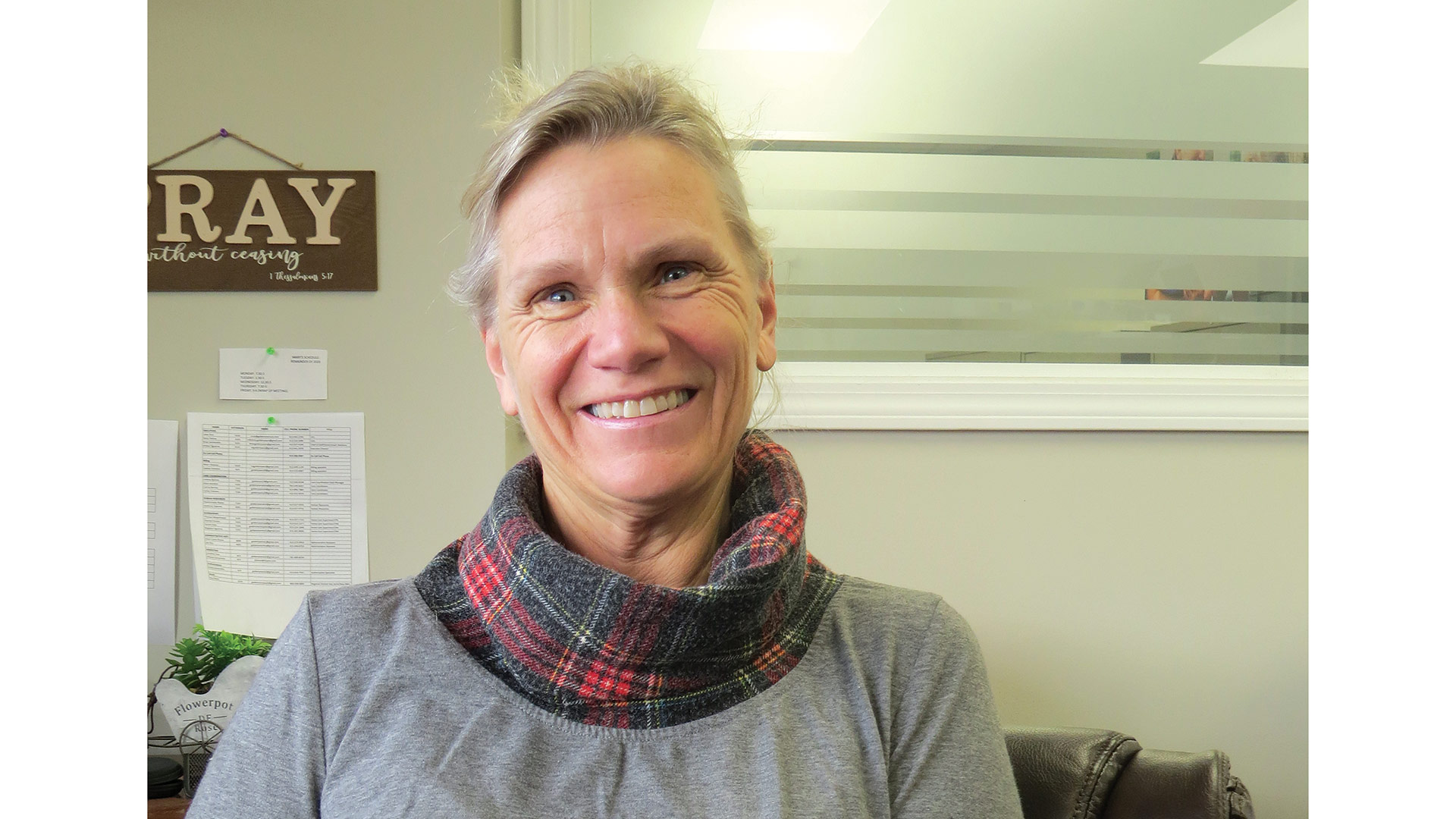
Mary Flahive-Dickson says the pandemic initially forced many to cancel or suspend home-care services.

Mary Flahive-Dickson says the pandemic initially forced many to cancel or suspend home-care services. But as time went on, many came to see the home as a safer alternative to nursing homes and other facilities.

“When chronic care is needed or a medical crisis occurs, I am very aware the entire extended family is affected along with the patient,” she told BusinessWest. “Lives are turned upside-down; schedules are disrupted. Sometimes, needed care is short-term; the patient will recover, and normalcy will be restored. Other times, health conditions are far more long-lasting, and improvement does not occur.

“My own mother suffered from a debilitating and chronic disease. She had the benefit of a large, extended family who could assist in coordinating care and provide the services she needed,” Santaniello went on. “Many people aren’t that fortunate; that’s where Golden Years comes in. We provide necessary home-care services to the patient, while also providing respite for their weary caretakers.”

Business was slow to start — Ruiz recalls that it was weeks after opening before the phone really started ringing — but it picked up quickly.

Flahive-Dickson, a long-time healthcare consultant and educator focusing on healthcare management, joined the company in 2019 to essentially take the home-care component to the next stage — or stages. These include expansion within this market and also into other regions, starting with Central Mass. She said her role has evolved over time and now includes elements of operations, development, and strategic planning.

Her comments about why she joined the venture speak volumes about the ambitious mindset that prevails and the entrepreneurial nature of the company.

“I saw a wonderful vision and a throwback to the way care was provided,” she explained. “My dad was a physician in the Springfield area, and his care was real and positive and forward-thinking care, and I felt that same feeling when I first came here.”


Showing Their Metal

While the home-care operation has become a regional success story, to be sure, there have been some growing pains, and the pandemic certainly created a number of challenges.

As for the growing pains, they involve everything from finding adequate numbers of caregivers — a challenge for every player in this business — to breaking into established markets with large numbers of competitors, like Worcester and Boston, and, to a lesser extent, Northern Connecticut.

Finding adequate numbers of caregivers has been a constant challenge, said all those we spoke with, but an array of factors, from what had been historically low unemployment rates to the pandemic-induced anxiety about going into others’ homes, to the company’s torrid pace of growth, has only exacerbated the problem.

And the company has responded in what can only be called an entrepreneurial way, with creation of its own education program and a collaborative initiative with the city of Springfield to help train young, homeless individuals and bring them into this profession.

Meanwhile, the pandemic has created more hurdles, said Ruiz, listing everything from those initial fears about bringing people into the home — he estimates that between 60 and 80 clients suspended service for some period of time last spring — to what to do with caregivers sidelined by those suspensions of services (they kept them on the payroll); from the need to secure PPE for staff and train them in how to use it, to paying what became exorbitantly high prices for that PPE.
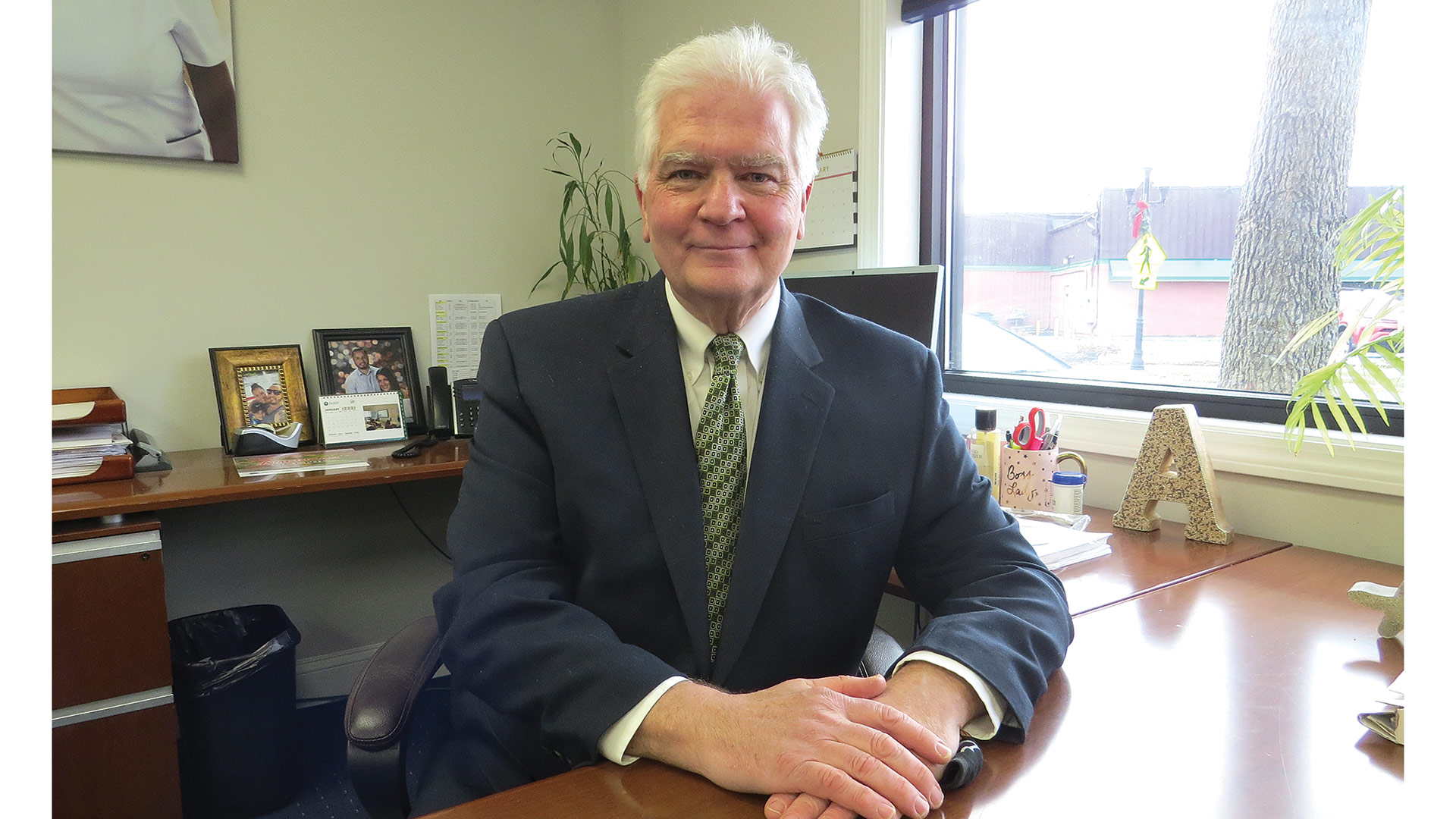
Brian Santaniello, chief of staff at Golden Years

Brian Santaniello, chief of staff at Golden Years, says the pandemic, and its broad, negative impact on mental health, validated the company’s expansion into behavioral-health services.

“We were experiencing the same problem everyone else was encountering — where to buy it,” he recalled. “And if we could find it … it was a terrible experience; things that we were paying 30 cents for were now costing us $1.25 or $1.50. The N-95s that were costing us 95 cents or a dollar … we were now paying $4.50 to $6 per mask.”

Flahive-Dickson agreed, and said procuring the needed supplies became a “24-hour mission” that involved all those at the company. But elements of that experience were rewarding, and even uplifting, she went on, citing volunteer efforts to not only make masks for some of the home-care providers, but also donate supplies to other institutions that were having issues, as well as gift bags to seniors and veterans.

But despite the pandemic, and in some ways because of it, the company has been able to maintain its strong pace of growth.

As Flahive-Dickson noted, attitudes about bringing people into the home — at least when viewed through the lens of a nursing home or similar facility being the most logical alternative — have certainly changed.

“We were getting calls all the time — the phone was ringing off the hook,” she said. “People were taking their loved ones out of facilities and saying, ‘now I need help.’

“There are many reasons why the home is now a safer haven than a facility, with the most obvious being that, if you’re having someone being taken care in the home, you have less than a handful of people taking care of that person,” she went on. “It’s the same person or the same team, and they are fully equipped with PPE. And they see only that one person, rather than going from room to room to room.”

These changing perceptions, along with a contract with the Commonwealth Care Alliance, one if its largest providers, and a growing relationship with the Veterans Administration, should help the company as it now moves forward with its expansion into Central Mass. — it now has a small number of clients in the Worcester area and a satellite office in Marlboro — and also into Boston, with another satellite office to open soon on Cambridge Street, said Brian Santaniello, the company’s chief of staff and a stakeholder.

“One of our primary goals for 2021 is to expand in those markets,” he said, adding that the company has a toehold in Worcester and Northern Connecticut, and is still in the infancy stages of its push into Boston, but expects the market share to grow steadily in all three regions over the next few years.


Forward Thinking

Moving forward, Golden Years is advancing plans to provide home care in multiple states, and that’s just one component of a larger expansion strategy.

Indeed, Ruiz and his team are preparing to unveil a staffing component, and it has already launched its behavioral-health division, one that was, as noted, partly inspired by the pandemic and the dramatically rising need for behavioral- and mental-health services, and likewise driven by recognized need for such services among the home-care clientele.

Indeed, Ruiz estimated that at least 15% to 20% of the company’s 500 clients are receiving some type of counseling service. With their entrepreneurial mindset, the company’s leaders began asking the question, ‘are these services that we can and should provide ourselves?’

The answer that came back was a resounding ‘yes,’ he went on. “We didn’t want to leave anything on the table; this was an opportunity for us to provide these kinds of services to our existing clients.”

Previous Top Entrepreneurs

2019: Cinda Jones, president of W.D. Cowls Inc.
2018: Antonacci Family, owners of USA Hauling, GreatHorse, and Sonny’s Place
2017: Owners and managers of the Springfield Thunderbirds
2016: Paul Kozub, founder and president of V-One Vodka
2015: The D’Amour Family, founders of Big Y
2014: Delcie Bean, president of Paragus Strategic IT
2013: Tim Van Epps, president and CEO of Sandri LLC
2012: Rick Crews and Jim Brennan, franchisees of Doctors Express
2011: Heriberto Flores, director of the New England Farm Workers’ Council and Partners for Community
2010: Bob Bolduc, founder and CEO of Pride
• 2009: Holyoke Gas & Electric
• 2008: Arlene Kelly and Kim Sanborn, founders of Human Resource Solutions and Convergent Solutions Inc.
• 2007: John Maybury, president of Maybury Material Handling
• 2006: Rocco, Jim, and Jayson Falcone, principals of Rocky’s Hardware Stores and Falcone Retail Properties
• 2005: James (Jeb) Balise, president of Balise Motor Sales
2004: Craig Melin, then-president and CEO of Cooley Dickinson Hospital
• 2003: Tony Dolphin, president of Springboard Technologies
• 2002: Timm Tobin, then-president of Tobin Systems Inc.
• 2001: Dan Kelley, then-president of Equal Access Partners
• 2000: Jim Ross, Doug Brown, and Richard DiGeronimo, then-principals of Concourse Communications
• 1999: Andrew Scibelli, then-president of Springfield Technical Community College
• 1998: Eric Suher, president of E.S. Sports
• 1997: Peter Rosskothen and Larry Perreault, then-co-owners of the Log Cabin Banquet and Meeting House
• 1996: David Epstein, president and co-founder of JavaNet and the JavaNet Café

Santaniello agreed. “This pandemic is having a tremendous negative impact on mental health and drug addiction, and we see the need,” he said. “And we’re going to meet that need.”

The company hired Mineo and also Deborah Rodrigues, now the clinical director, and gave them equity stakes in the venture.

Mineo, as noted earlier, said there is clearly unmet need in the region that this new division will meet. And the division is starting with outpatient services, including addiction, mental-health, and behavioral-health services for those 18 and over, with priority populations being seniors, pregnant and postpartum women, IV drug users, and first responders, a constituency that has been traditionally been underserved, in her view.

“We had identified that there are so many services going on in the community, including our local police departments, but no one is really providing services for our first responders,” she explained. “This includes the police officers, the EMTs, the fire departments that are right on the front line.

“With this pandemic, the civil unrest that’s going on, and everything else … all this is traumatizing and retraumatizing people on a daily basis,” she went on. “This is an unmet need in the community.”

As for that acquisition that was on the 2-yard line and that the team couldn’t talk much about, Flahive-Dickson, who likened it to a VNA, said it will broaden the client portfolio by 150 or so, add to the staff, obviously, and broaden the roster of services provided in the home.

“It’s home healthcare, not home care,” she explained, adding that this will be an important addition to the portfolio, one that provides both synergies and growth opportunities.

Looking further out, Ruiz, when asked where he expects this company to be in five years, said he expects to continue the current pace and effectively double in size. He also expects to be in many more states and possibly have franchises of the Golden Years operation — or operations, to be more exact.

That expansion will come in a number of forms, he went on, listing both organic growth and additional acquisitions, with the latter becoming more feasible, and practical, as many smaller ventures, many of them operated by Baby Boomers approaching retirement, face succession issues and other challenges.

“On the home-care front, some of the individuals that have started now want to step back,” he explained. “And because of our vision, we have a larger appetite.”

Meanwhile, Ruiz and other company leaders are in the exploratory phases of perhaps franchising the concept and even going public, to provide the capital for such steps.

“Franchising is part of our thought process; it’s part of our business plan,” he noted. “And there’s also a public initiative. Those conversations have been ongoing, and now, in 2021, they will escalate, because those things take time to structure.”

Elaborating, he said the company has hired a CPA firm and a legal team with those plans in mind and with the goal of being ready when the time and opportunity are right to move quickly and decisively.

And, in many important ways, that has been the MO from the very start.


Good as Gold

When asked to sum up what has enabled Golden Years to get off to such a fast and dramatic start, Ruiz said it comes down to two words: culture and teamwork.

The culture rests in an attitude Ruiz has instilled, one where he treats each client as if the individual was his mother or father — a culture that has resonated with Flahive-Dickson, Mineo, and others who have joined the company.

“We’ve communicated that throughout the system — we’ve built it in,” he explained. “And I think that makes a big difference. We’re hands-on, and every caregiver knows, every admin, every director here knows, how passionate I am and how serious I am; this is the collaboration of a team.”

It’s also the byproduct of an ambitious, ever-changing business plan, one that really is a living, breathing document.


George O’Brien can be reached at [email protected]

Banking and Financial Services Special Coverage

They’re Still Goal-oriented

Dan Moriarty, left, and Mike Rouette.

Dan Moriarty, left, and Mike Rouette.

Michael Rouette says he keeps a copy of the 36-year-old news story in his office. He’ll take it out and read it on occasion, and will proudly show it others, usually without much prompting.

“Moriarty-Rouette Team Buys Ticket to Finals” is the headline over that item in the Palmer Journal Register from November 1984, which goes on to note how goals by Rouette, then a junior, and Dan Moriarty, a freshman, along with a “tenacious defense,” propelled the Monson High School soccer team to a 2-1 win over Monument Mountain, giving the Mustangs, as that headline noted, a ticket to the regional finals in Chicopee a few days later.

Today, the Moriarty-Rouette team is still focused on goals, but now as president and executive vice president and chief operating officer (a new position), respectively, at Monson Savings Bank. They are the leaders writing the next chapter in the bank’s history after the retirement of long-term president Steve Lowell.

As the two talked with BusinessWest earlier this month, just weeks before Moriarty was to add the title CEO to his business card (Lowell is still acting in that capacity until mid-February), they talked often about their time on various fields together — they were both three-sport stars — and made frequent use of sports terms and phrases.

Indeed, when talking about the transition in leadership at the top and work to make it seamless, Moriarty said he will try to act as a good referee would — “you don’t know he’s on the field during the game.” And the two of them made early and very frequent references to the importance of teamwork at this (and any) institution.

Meanwhile, when it comes to the pandemic and this transition in leadership, both said there is no playbook for a such a challenging passing of the baton, so they will essentially write their own.

“We’re driven, we’re motivated, but we’re humble enough to know that teamwork gets you further than individual performance.”

“As far as meeting with customers and being out in the community more, Mike and I haven’t had the opportunity to really do that, for safety reasons,” Moriarty said. “And that makes things more difficult, but we’re adjusting and preparing for that day when this is over.”

As for that article, both men say it conveys more than coincidence that two high-school soccer teammates, now in their 50s, are leading the bank headquartered in the town where they grew up. Much more. They say it conveys other ‘C’ words, including commitment to the community and continuity.

“That article reminds me of who we are and where we’re from, and not to ever forget that,” Rouette said. “But it also speaks to how we’ve grown as individuals, as friends, as co-workers, as partners, and as leaders. That article symbolizes how our lives have changed but really haven’t changed, and how success can be built on people who have the same vision, the same mindset, and the same family values.”

Moriarty concurred. “We’ve known each other for so long, but the values are the same, even though we’re a long way from the soccer field. “We’re driven, we’re motivated, but we’re humble enough to know that teamwork gets you further than individual performance; we try to bring that culture to the bank and to our employees, and we try to lead by example. But we also understand that each individual in the bank is a contributor, and we want them to be part of the team and the success of the bank. We did that before we became leaders of the bank, and we’re just going to continue that and build on that culture of teamwork.”

The two take on their new roles at an intriguing time for the bank — and all banks. The pandemic has created both challenges and opportunities — certainly more of the former than the latter, and made some aspects of being a bank leader more difficult. Meanwhile, there is immense competition in a region described by most in the industry as ‘overbanked.’

Monson Savings’ newest branch, on North Main Street in East Longmeadow

Monson Savings’ newest branch, on North Main Street in East Longmeadow, was opened at the height of the pandemic last year, but it is nonetheless off to a solid start.

Both Moriarity and Rouette said that Monson Savings, now with more than $508 million in assets, has been on a steady growth trajectory and they are committed to moving the bank toward further expansion, geographically and otherwise.


They’re on the Ball

As noted earlier, Moriarty and Rouette were both three-sport athletes. While most noted for their exploits on their soccer field — both would go to play in college; Moriarty at Providence College and Rouette at Old Dominion — they were also teammates in baseball and basketball.

And as they recalled those days, they often leaned on some self-deprecating humor to make their points.

Indeed, when discussing their time as starting guards (and captains) on the hardwood, they made it clear they were not exactly go-to options when the Mustangs were looking for points.

“I was the point guard, and I couldn’t shoot,” said Moriarty, as he looked at Rouette, who nodded energetically, but said his front-court mate was ultimately the better alternative.

“I was pretty fast … I could steal the ball, but I could only dribble left-handed,” Rouette recalled. “I would have a breakaway, and our coach, Bill Devine, would essentially tell me to stop, hand the ball to Moriarty, and let him shoot it, because it would be like throwing a brick against the backboard when I let it go. I couldn’t put the ball in the ocean.”

Despite those references, the two were much-heralded for their exploits on various fields, and for their work together, even if it was only for two years.

Indeed, while Moriarty continued to make headlines at Monson High in the mid-’80s, Rouette was playing soccer at Old Dominion, majoring in Economics, and, when home from school in the summer and winter, working as a teller at Monson Savings Bank. During those short stints, he impressed those at the bank enough to get a job offer of sorts — specifically an invitation to become part of the lending team when he graduated.

“When I was a junior at Old Dominion, I already knew where I was heading,” he said, adding that he did join the bank and has been there ever since.

Moriarty, who would take a far more circuitous route to his hometown bank, has memories of seeing Rouette heading for a work in a suit while he was toiling for the town’s Highway Department while he was home from college for the summer. “It’s 95 degrees out, Michael’s going to work in a tie, and I’m thinking, ‘I want to work in air conditioning.’”

He would, first at Coopers & Lybrand in Hartford, and later at Aetna, HealthSouth, and then Unicare.

“But the attraction to Monson Savings was always in the back of my mind,” he recalled, adding that, during some conversations with Rouette, he brought up the possibility of joining the bank, and eventually did so in 1998 as an accounting manager.

The two have risen in the ranks over the years, with Rouette rising to senior vice president and chief lending officer, and Moriarty eventually climbing to senior vice president and chief financial officer in 2011.

When Lowell announced his intentions to retire not quite a year ago, both men sought to succeed him as president and CEO. Those titles would eventually go to Moriarty, but the two essentially form a new leadership team, one that brings complementary strengths and shared values.

Moriarty noted that, through his career at the bank, he’s been focused on the finance side of the equation, while Rouette has concentrated on lending and customer relationships, and, in his new role, will add retail to his list of responsibilities.

“Mike is very customer-focused, while I have somewhat different responsibilities — strategy, human resources, finance, marketing, compliance, and technology,” said Moriarty. “I think the bank is positioned to use our strengths in a proper way.”


Net Results

All this prompts more flashbacks, and the inevitable analogies, to 1984 and that soccer semifinal against Monument Mountain, where Moriarty notched the first goal of the game, and Rouette, then the all-time scoring leader for the Mustangs, recorded the game clincher.

As for the finals game … that did not go as well — a loss to an undefeated Wahconah team that still stings three and half decades later. (Moriarty wasn’t able to play in that contest due to a broken ankle he suffered in the semifinal.)

But while they do like to look back, Moriarty and Rouette are obviously far more focused on the present and the future.

As for the former, that means everything from coping with the many aspects of COVID-19 to growing the bank’s latest branch, on North Main Street in East Longmeadow, which opened last summer, in the middle of the pandemic.

That timing wasn’t perfect — many branch lobbies were still closed — but the new facility is off to a solid start.

“We had a good core group of customers in Longmeadow and East Longmeadow,” Moriarty said. “We transitioned them internally to the East Longmeadow branch, so we had a good start, and we’re looking to have that branch in a good position in a shorter period than you normally would in a new market.”

As for the pandemic itself, it’s been a time for the bank to play to its strengths — yes, that’s still another sports phrase — and use its focus on customer service to not only take care of (and retain) existing customers, but also gain some new ones. This has been the case on all fronts, but especially with the commercial lending portfolio and the bank’s strong track record handling applications for Paycheck Protection Plan (PPP) loans.

“We basically got out in front of it,” said Rouette as he explained the bank’s basic strategy with the PPP program and its commercial customers in general. “We knew that that they [customers] couldn’t be chasing us. We had a great team effort to reach out to all our business customers; we said, ‘we know there’s an issue, we know PPP is coming down the road, and when the spigot opens, we’ll be there for you.’ And we did it.

“People needed to hear your voice,” he went on, adding that every commercial customer was called in an effort to gauge their needs and concerns and update them on the status of their application. “And that calmed people, that they weren’t on voice mail or weren’t able to get through.”

This high level of customer service enabled the bank to handle PPP loans for non-customers, gains that both Moriarty and Rouette chalked up to word-of-mouth referrals that should have some long-term benefits for the institution as a new round of the program begins later this month.

Dan Moriarty, left, and Mike Rouette both found a common denominator

Dan Moriarty, left, and Mike Rouette both found a common denominator between their soccer squad from the ‘80s and the staff at Monson Savings — the importance of solid teamwork.

Looking back, and ahead, Moriarty said he was mentored by his two immediate predecessors, Lowell and Roland Desrochers, and he understands what has made the bank successful — especially its employees and community-bank look, feel, and operating values — and has no intention of altering the game plan.

“The vision for the bank is to continue to be the community bank that these communities need,” he told BusinessWest. “From a business side, commercial customers as well as retail customers, we want to stay competitive in our delivery systems — digital, mobile … we can have people bank with us from Monson to the Cape and into Connecticut. We want to be relevant in the communities we serve for not just today, but for years to come.

“The culture will remain the same,” he went on. “And we’re just going to leverage the talent we have inside the bank.”

Meanwhile, both men intend to continue their active involvement in the community, which mirrors the work of Lowell, Desrochers, and others that came before them. This work comes in many forms, with Moriarty devoting time and energy to several groups, including the East of the River Chamber of Commerce (he’s a board member), the Baystate Health Community Benefits Advisory Council, the Community Foundation of Western Massachusetts, the Brightside Golf Classic, and Monson High School, where he’s the assistant varsity soccer coach.

As for Rouette, he is similarly involved, but focuses most of his time on the YMCA of Greater Springfield, with which the bank has long enjoyed close ties. “Everyone has a passion, and that’s mine,” he said, adding that he’s been a long-time board member and supporter on many levels.


Bottom Line

Summoning still another sports analogy of sorts, Moriarty said it is customary, at least with good teams, to look ahead, not back, when a season ends.

“Because it’s January, we say, ‘last season’s over … we finished December, we did well, but now it’s 0-0, and we’ve got a new season ahead of us,’” he noted, adding that, given the many variables confronting banks — and all businesses, for that matter — it’s impossible to know how this new season will go.

What these two do know is that Monson Savings Bank will, as noted, continue to play to its strengths, honed over many years and under leaders that these two have learned from.

In short, there’s a winning formula at the bank, and their only real plans for the future are to continue using it.


George O’Brien can be reached at [email protected]

 

Features Special Coverage

Marking a Milestone

Over the years, Paul Mina says, the name over the door and on the stationery has changed many times — previous incarnations include Community Chest, Red Feather, and United Fund — but the basic mission of the United Way of Pioneer Valley (UWPV) certainly hasn’t.

“The names have changed, the faces have changed, but the work is the same,” said Mina, who serves as administrator of both the United Way of Pioneer Valley and the United Way of Tri County in Framingham in an arrangement that speaks to the many fiscal challenges the organization has confronted in recent years and the need to consolidate and achieve economies of scale. “And that is, very simply, to improve the quality of life for people living in the Pioneer Valley area.”

As he talked with BusinessWest about this mission, on the occasion of the agency’s centennial (the actual birthday is Jan. 10), Mina was looking through some old news clippings, brochures, and assorted memorabilia that had been gathered to help with various efforts to mark this milestone. Together, these pieces help tell the story, he said, adding that the United Way has certainly evolved, as its name has, over the years.

But, as he noted, the underlying mission hasn’t.

“I look for a golden thread throughout the narrative,” he said as he thumbed through a large scrapbook and collections of news stories and promotional material. “And through all of that narrative, all of that archival material … the golden thread that links 1921 to 2021 is helping to improve people’s lives; that’s the endgame.

Paul Mina

Paul Mina

“The names have changed, the faces have changed, but the work is the same.”

“And it’s very significant to note that it was never about giving a handout — it was always about giving a helping hand — and to do it with as much dignity and respect as possible,” he continued. “Whether it’s 1921 or 2021, there are still people who need a helping hand so they can move from dependence to independence and self-sufficiency. That has been the goal, it is the goal, and it will always be the goal.”


It is somewhat fitting, said Mina, that the agency’s milestone celebration comes in the midst of a crisis — the COVID-19 pandemic — because, while the United Way of Pioneer Valley has been there to serve those in need every month of every year since January 1921, it has always come forward and stepped up at especially challenging times to meet greater and often different needs.

With that, Mina offered some history lessons. During World War II, for example, the agency, historically linked very closely with the Red Cross, worked to provide a number of services to returning veterans, and in the case of the local chapter, there was a specific focus on helping to reunite families broken apart by the war, and then help them assimilate to a very changed landscape.

“There was a lot of upheaval back home,” he said. “The men were off fighting overseas, the women were in factory jobs … there was a very different kind of assimilation. When a lot of these men came home, their wives, who were basically homemakers prior to them leaving, many of them had good jobs and careers in factories. This wasn’t something that any of them were used to seeing.

“When the men came back, there was a great amount of adjustment that had to take place,” he went on. “The women had to go back to their previous domestic role because the men had to get their jobs back to go back to work. There was a lot of assimilating, and that’s when philanthropy really took off because, now that women had been outside the home, they were involved in many, many things they hadn’t been involved in before, charity being one of them.”


That’s just one example, he said, noting that the agency has stepped up during other periods of turbulence, change, and need, providing help with everything from administering the polio vaccine in the 1950s to supplying food to the many who needed it during the Great Depression.

Bringing things right up to the present, Mina noted that, in recent years, the agency has added new services and new ways to help those in need, with everything from prescription savings to financial-literacy efforts to a Mass 211 hotline and its companion suicide-prevention ‘call-to-talk’ line.

And during this pandemic, UWPV, which serves Hampden County, Granby, and South Hadley, has continued that pattern of stepping up.

Indeed, it created a COVID-19 relief fund that including the awarding of grants to roughly 40 organizations, bringing a truckload of 5,000 hot meals to the Food Bank of Western Massachusetts, delivering another truckload of food-relief boxes (20 pounds per box) to the Holyoke Boys & Girls Club for distribution throughout the city, an initiative called Project Toybox that brought 15,000 new toys to affiliated agencies across the region for distribution to young people, and even a drive-up Halloween event at the TD Banknorth building in downtown Springfield, which served to fill a void left by formal and informal bans on trick-or-treating (more on some of these later).

For this issue, BusinessWest talked with Mina about the many things being celebrated as this agency celebrates this milestone, and how the work being carried out during the pandemic is in many ways simply the latest chapter in a century-old story of meeting needs within the community.


Past Is Prologue

To emphasize his repeated points about how things have changed over the past century or so — and how they haven’t — Mina pulled a clipping from the pile he had collected, an advertisement of sorts for something called the ‘Charity Chest,’ and pointed to the date, 1918, and then the headline over the piece:

“Charity is not a pocket for the shiftless to dip into,” it read, with the subhead “Far from it. Charity is a long ways from being a lazy man’s paradise.”

Mina noted that this was a reference to how many looked upon those seeking help in those days. He also noted that the language regarding charitable efforts has long since changed, with those involved no longer making any references to the ‘shiftless’ or the ‘lazy,’ for obvious reasons.

But the rest of the ad could almost run today, he said, noting phrases like these with regard to charity: “Its prime function is to relieve distress. Always has been and always will be. Yet, while giving relief in deserving cases, it does far more than that.” And also: “Its main object is to prevent the cause, thereby vitally affecting you and me and everybody. Distress does not always mean poverty. It may mean misfortune, sickness, or the suffering of innocents from wrongdoing of others. All of these charity tries to prevent.”

Again, some of the language has obviously changed over the years, but those sentiments expressed back at the height of World War I are those that still define the United Way today. As Mina noted, it’s not a handout, but a helping hand, and it has been this way through a host of name changes, affiliations, and partnerships.

Tracing the history of all those names the agency has used, Mina said the organization got its start as the Springfield Community Chest. Later, it became the Springfield Community Chest Red Feather Drive (he still has a red feather mounted in a large frame), with the feather being a symbol of charitable giving for more than 150 years. In fact, he noted, the Red Cross and the Red Feather ran an annual appeal together, before the two organizations separated.

Later, the organization was known under the names United Appeal and United Fund, before United Way came into use in the late 1960s.

Regardless of the name on the door, the organization has been carrying out the same essential mission, said Mina, adding that the agency’s programmatic niche, if that’s the proper phrase for it, can be summed up with three simple words: basic human needs.

Elaborating, he said these include food, clothing, shelter, and programs for children and seniors. “These are the things we focus on for a reason, because these are the things that resonate with people. These are the things, whether people are black, white, no matter what ethnicity or color, people in need are in need. Period. That’s the way it’s always been here, and I’m proud to say that it continues to be that way.”

To put the mission and its importance in perspective, Mina rewound the tape on a phone call he received only a half-hour before he talked with BusinessWest from a woman now living in New Mexico after relocating from this region.

“We helped her and her family when they were very much in need about 10 years ago,” he said. “And she called me to say, ‘I don’t know if you remember me or not … but I’m so and so, and I moved from the Pioneer Valley down to New Mexico, and a friend of mine who still lives there needs a helping hand right now — she’s got it very tough, she’s unemployed. I told her that I would call you because I was treated so well by the United Way back then that I wanted her to know that there was someone they could call that would treat them with dignity and respect and do the best they can for you. They’re not going to promise you the moon, but they’ll do the best to help you.’

“That’s a nice compliment she paid us there,” he went on, “because that’s the goal; that’s the whole goal.”


Where There’s a Will …

Carrying out these goals has never been anything approaching easy, but in recent years, it has become much more difficult, for a number of reasons.

For starters, the way individuals undertake charitable giving has changed, with many now choosing to give directly to specific groups, rather than to larger umbrella agencies like the United Way that funnel money to other nonprofits, said Mina. Meanwhile, the business landscape has changed dramatically through mergers and consolidations, especially in the financial-services sector, and with many small, family businesses simply disappearing from the landscape.

Also, some major corporations have created their own charitable foundations or giving arms, as was the case with MassMutual in Springfield, which had long been one of the primary supporters of the United Way of Pioneer Valley, he said, noting that all these factors have contributed to making the organization itself much smaller — as well as the level of donations it makes annually. Indeed, while this was a $5 million United Way years ago, in terms of total donations, it is now closer to $2 million.

It was these challenges that prompted the UWPV board to explore a number of options when it came to creating efficiencies and reducing the cost of doing business, for lack of a better phrase, while still carrying out its mission. One of those options was a partnership with the United Way of Tri County whereby that agency would share an administrator and also handle backroom operations — bookkeeping, marketing, and others — for this region’s United Way for a percentage of the funds raised during its annual campaign.

The partnership, which came after several years of unsettledness at the UWPV, one that included two CEOs and two interim CEOs between 2016 and 2018, has brought what the board desired most — stability and continued autonomy.

Those qualities have been needed during a pandemic that has further tested the agency, forcing staff to work remotely for a lengthy stretch because its services were not deemed essential, and further impacting its ability to raise money because of the way it has impacted businesses and families alike.

Indeed, this 100th year for the UWPV has been very different, and also very challenging. Need within the communities has obviously increased, but raising funds to meet those needs has been made much more difficult during the pandemic, especially when it comes to the United Way’s time-honored, preferred method of soliciting donations — via payroll deduction.

“Many of the [annual] campaigns are going to be hurting this year because companies are not going back to work in the time frame we need them to,” Mina said earlier this year. “You can’t ask for people to make contributions through payroll deduction if they’re working, and it’s very hard to ask people for support when they themselves are hurting for the first time maybe in many years.

“We’ve found that a very significant number of people in the hospitality industry, restaurants, and food and beverage operations are only a shadow of what they once were,” he went on. “And some of them are never going to recover; a lot of support isn’t there.”

Yet, amid these challenges, the UWPV has found new and different ways to meet its mission during this difficult year, and new and different ways to remind people of the importance of its basic mission.

Through efforts ranging from the food-distribution efforts to the Halloween gathering, the agency was able to meet growing need within the community and address the many ways in which the pandemic impacted day-to-day living and overall quality of life.

Mina was especially proud of Project Toybox.

“It was a wonderful thing,” he said of that initiative. “A lot of the kids that live in the urban area don’t have a backyard, they couldn’t go to the park, they weren’t allowed to congregate … so we figured this was a great opportunity to give them something they could do indoors.”

All this came on top of the annual Stuff the Bus program, which, as that name suggests, fills a school bus each August with age-appropriate backpacks with all the school supplies kids need.

This year, the agency filled 2,600 such backpacks, but in this era of COVID, the exercise was quite bit a different than it has been in previous years.

“It was difficult to come by this stuff because it’s usually donated by the public,” said Mina. “People come to Six Flags, and they get a free roller-coaster ride when they bring items for the backbacks. There’s also a huge collection point at the Holyoke Mall. All those things were not allowed this year.”

So the agency relied instead on a large donation from the MassMutual Foundation as well as some money from the COVID-19 Relief Fund to purchase the needed items at a discounted price.

Overall, these various efforts have been a continuation of that golden thread Mina mentioned earlier, a concerted effort to enable individual donors to collectively make a huge difference in the lives of countless people.

“It’s about empowering the masses to do things that they can’t do alone,” said Mina in summing it all up. “That’s why payroll deduction, which has been the hallmark of the United Way since its inception, is so important. It allows people who don’t have money in the bank, who aren’t necessarily individuals of high net worth, to be able to take a little money out of their paycheck every week, so, at the end of the year, they might have a $52 donation. That $52 donation, added together with the other folks at their company who do the same thing and give a dollar a week, ends up being an enormous amount of money. But they could never do that on their own if they had to give a lump sum.”


Finding a Way

Looking to the future, though, payroll deduction is becoming a less-effective way to raise money, for those reasons mentioned earlier, he said. Meanwhile, instead of channeling funds to other agencies, the United Way will be looking to provide more direct services to the residents of this region.

“We just finished a needs assessment, and 90% of the respondents were donors, and of those 90%, 82% thought that the model we had of funding agencies to do good work, to be a middleman of sorts, was not a model that is modern; it’s not a model that they’re willing to continue to support at the levels that they have in the past.

“They want to know that their contribution is directly impacting things,” he went on. “So we looked at the areas that these donors were identifying as gaps, and we put that together with some intelligence work we did on our own, plus what other agencies were telling us, and we identified three huge gaps that we’re going to fill: food insecurity, continuation and expansion of the call-to-talk and Mass 211 lines, and youth-development programs.

“These are our core areas,” he explained. “The survey only reinforced what we already knew — that our niche is basic human needs and helping people improve their quality of life.”

Looking ahead to 2021, Mina said it will be a milestone year for the United Way, and the occasion will be marked in a number of ways.

But for many of the region’s residents, there won’t be much to celebrate. Indeed, while 2020 was the roughest year in memory for many, the coming months are projected to be in some ways even worse as those basic human needs he mentioned continue to mount, healthcare issues multiply because of the many effects of the pandemic, and resources become more scarce.

“There’s going to be a major shortfall in resources in the next year because COVID is having devastating effects on our economy as well as our health,” he said. “But we’ll figure out a way to deal with it; we’ll figure out a way to continue doing our job. We’ve faced tough times before — we’ve faced World War I, World War II, the Korean conflict, Vietnam, the ’60s … we’ve been there through all these things, and we’ll be there through this, too.”

Figuring out a way and doing its job. This is what the United Way of Pioneer Valley has been doing for a century now. And as its second century starts, this track record of success is certainly worth celebrating.


George O’Brien can be reached at [email protected]

Economic Outlook

The Big Picture

Bob Nakosteen has an old saying hanging in a frame in his office at the Isenberg School of Management at UMass Amherst — the one he hasn’t been in but once since last March.

It reads: “You Can See the Future by Looking at the Past.”

Nakosteen, a professor of Economics at Isenberg, said he’s lived by those words, especially at this time of year, when he’s asked to try to forecast what might come over the next 12 months.

Only this time, that saying doesn’t hold. Indeed, while people tend to throw that word ‘unprecedented’ into the mix early, often, and sometimes when it doesn’t actually apply, one could certainly use it with regard to COVID-19, the economy, and any efforts to look into the crystal ball and make some projections.

“In virtually every situation I’ve been in before, you can pick out an historical situation that came close and give some perspective on what might happen next,” he said. “Now, you can’t at all. Even 1919 and the last global pandemic was different; there was lingering demand from World War I, and a lot of global agriculture had been shut down. That really bolstered United States agriculture; we were still predominantly an agricultural country. There were some circumstances that we can’t duplicate now.”

So if people can’t look to the past to project what will happen in 2021, how can they handle that assignment?

“Not very easily,” said Nakosteen, who noted there are always question marks going into a new year. This year, they come by the bushel bag, and cover everything from vaccines — how effective they’ll be and when they’ll be widely available — to overall consumer confidence, always a huge issue in determining which way the arrow will point; from the election of a new president to what’s happening in other countries, especially with regard to the pandemic; from the employment scene (specifically, how many of those millions of lost jobs will actually come back) to whether, and to what degree, Congress keeps printing money and dispensing it to those in distress.

Bob Nakosteen

Bob Nakosteen

With these vaccines coming online, once people get them, and they have confidence that other people have done the same thing, then you’ll likely see a pretty robust recovery, starting slowly and then accelerating. But, then again, we’re in completely uncharted territory.”

Add it all up, and there is simply too much uncertainty to make any real projections, said Nakosteen, adding that, while the country may well avoid another recession, or the dreaded ‘double-dip recession,’ as it’s called, the eventual shape of the recovery — which has been the subject of endless conjecture, with possibilities ranging from a V to a U to something like a Nike swoosh — is still be to determined. Obviously.

“What we could have is a W-shaped recovery,” said Nakosteen, offering another possibility, noting that, in this scenario, the economy would move back down again, hopefully not as bad as it did when it cratered last March, but eventually climb back up.

“With these vaccines coming online, once people get them, and they have confidence that other people have done the same thing, then you’ll likely see a pretty robust recovery, starting slowly and then accelerating,” he told BusinessWest, adding that the bounce-back might also take the more dramatic Nike swoosh shape. “But, then again, we’re in completely uncharted territory.”

When asked about the factors that will dictate the eventual shape of the recovery, Nakosteen said there are almost too many to count. They include:

• How much more stimulus money will be injected into the economy. Like most, Nakosteen said the recent $900 billion package approved by Congress will help, but it won’t be enough. When asked if the federal government could keep on printing money, in essence, he said he didn’t see why it couldn’t. “One of the things that happens during an economic crisis is that the government will provide temporary support until the economy heals itself. This is not permanent; this is temporary, and it’s a bridge to the future. And right now, we need a bridge.”

• The election of a new president. “That generally seems to perk things up — there’s generally a first-administration bounce — but in these unprecedented times, who knows?”

• To what extent new habits might become permanent. These include everything from not dining out or traveling to doing most shopping online, to working remotely. “I would like to get back to going out more, but my guess is that my life has changed, and we’ll never really go back to the way it was before the pandemic.”

• How many of the jobs that have been lost are regained. Employment is always a key to any recovery, and there is conjecture that many jobs will be lost permanently due in part to those changes in behavior; and

• Whether this region can somehow benefit from these changes in behavior and attitude. Some have suggested that, now that people can successfully work remotely, they may choose to do so in a setting like Western Mass., which provides space and a lower cost of living than Boston or other major cities.

While making hard projections is difficult, Nakosteen said he could offer what he considers to be a best-case scenario:

“By early summer, enough of the country is vaccinated and enough of the state is vaccinated, and, almost as importantly, people have confidence in the vaccine and the percentage of the population that’s been vaccinated, and then you see people start to re-engage. The industries that have been hurt have all been face-to-face industries — accommodations, retail, other services, the arts, and recreation. These face-to-face services start to bounce back quickly because people have a great hunger to get back out. If things go well, you’re going to see them get back out in the summer, and that’s when you’ll start to see the beginning of a serious rebound.”

Again, that’s the best-case scenario.

The worst case? An insufficient percentage of the population receives the vaccine, supply-chain issues “gum things out,” news of new strains of the virus spreads fear, people lose confidence in a recovery, and things drag on into the fall and perhaps longer, he said, adding, again, that myriad factors will determine which scenario — possibly one in between those two — becomes reality.

Summing things up, Nakosteen noted that, in some respects, we know what’s coming next — the administering of vaccines to millions of people over the next several months. What we don’t know is how all that is going to play out.

As he said, normally you can look to the past to see the future. But not in this case.


Economic Outlook

Education

Jamie Birge was searching for a piece of wood to knock on.

Massachusetts College of Liberal Arts (MCLA), which he serves as president, had essentially made it through a very different fall semester with only a handful of positive cases of COVID-19. He considers this a victory for his institution, and a clear indication that the many protocols put in place were effective.

“For the full semester, our positive rate was 10 times lower than the Commonwealth’s positive rate, and each week we outperformed our host city [North Adams], the county, and the Commonwealth,” he explained. “We were actively hunting the virus through our testing protocol, and through our tracing protocol, we made sure there was no spread. I think we had six cases, and in each of those cases, none of them spread on campus, because we were able to identify the virus through testing, we were able to either quarantine or isolate individuals, and we went to remote learning after Thanksgiving, which turned out to the best time to do that because there was an uptick in positive cases in Berkshire County, and our students were already off campus learning remotely. From a numbers perspective, we did extraordinarily well.”

The semester was a success on many levels, he went on, but for the students living on campus in singles or in off-campus housing, it certainly wasn’t the “typical residential college experience,” he noted, adding that those on campus were all in single rooms, and access was limited between residence halls. “You couldn’t go visit other people.”

Jamie Birge

Jamie Birge

“Even in the era of online and remote learning, students still want to be on campus; they want that traditional experience.”

Focusing on the future, Birge is obviously looking forward to the day when the school can again offer that full experience. He’s not sure when that will happen — certainly not before next fall and perhaps not even then — but there are signs of encouragement, he said, referring to everything from the introduction of vaccines to the projections for enrollment for next September.

“The latest I’ve seen for the 2021 cycle is that we’re within 3% of the pre-pandemic numbers, so we’re feeling good about that,” he said, noting that, by this time of the year, many students have already committed to where they will be attending school in the fall, although the next four or five weeks are critical. “I think that’s a soft figure, and, overall, we think this is going to be a multi-year emergence to return to where we had been. But I’m encouraged by the fact that we’re only off 3%.”

He said that number seems to be consistent with what the other eight state schools are reporting, although there is some variation. And time will tell if those numbers hold up as the vaccines are rolled out and their effectiveness is gauged.

Meanwhile, beyond the all-important process of rebuilding enrollment, colleges and universities will face other challenges, said Yves Salomon-Fernández, president of Greenfield Community College (GCC), especially the need to “adjust, adapt, and evolve,” as she put it, to effectively prepare students for what will be a changed landscape when it comes to the workforce and how work is done.

“For next year, we have to very intentional about our learning because the world we’ll be returning to, post-COVID — and with the vaccines, which will be a game-changer — is going to different from the one we had become accustomed to before COVID,” she explained. “We know that there are a number of jobs that won’t be returning.”

Elaborating, she said GCC will lean heavily on a panel it created called the Future of Work Advisory Committee, comprised of area business leaders across several sectors, including healthcare, hospitality, financial services, manufacturing, and others.

“They help us keep a pulse on what’s changing, what they anticipate, and what the outlook is, so we can align our new academic programs, and also adjust our existing programs to meet their demands,” she noted. “Also, it will be critically important for us to get a sense of what the workplace will look like and the skills that employers will be looking for.”

In this respect, she said colleges and universities, at least those with an eye on the long term, will be taking lessons from evolved companies that looked at the marketplace and how it was changing and began to adjust accordingly.

“These companies started asking themselves, ‘what are the market needs today that we can adapt to and meet — and what will be the unmet needs in the future, and how can we best position ourselves to meet them?’” she explained, adding that colleges have to do the same.

As for enrollment, the lifeblood of any college or university, area schools have been battling not only the pandemic, but demographics in the form of smaller high-school graduating classes. The two forces collided with considerable force this past September, with enrollment down as much as 20% at some area schools (that was the number at MCLA) and 15% at most of the institutions, with many high-school graduates taking a gap year and many already in college simply taking a break.

The question hanging over the industry involves that matter of pent-up demand and whether there will be good amount of it when the product is a college education.

Yves Salomon-Fernández

Yves Salomon-Fernández

“For next year, we have to very intentional about our learning because the world we’ll be returning to, post-COVID — and with the vaccines, which will be a game-changer — is going to different from the one we had become accustomed to before COVID.”

Birge believes there will be such demand, although, as he said, it might be the fall of 2022 or 2023 before pre-pandemic levels return.

“From the information we collect from students, the students want to return to campus,” he told BusinessWest. “Even in the era of online and remote learning, students still want to be on campus; they want that traditional experience.”

Noting that enrollment at community colleges usually rises during times of recession and high unemployment, Salomon-Fernández noted that this past fall semester was an exception to that rule, both because of large amounts of assistance to those who became jobless and the inability to attend in-person classes. She believes the vaccines, and the eventual end to those stimulus benefits, will change that equation.

“I think enrollment will start picking up in the fall of 2021,” she said. “In the long term, we can’t keep borrowing against ourselves — the national debt is the highest it’s been since the Great Depression. This is not sustainable, and we expect that, as the vaccine becomes available, the government subsidies will decline, and people will have ample incentive to get back to work — and they’ll need the skills to enter, continue in, and thrive in the job market.”

Looking ahead to the spring, Birge said MCLA will operate very much as it did in the fall, but with even more testing due to the colder weather at the start. Spring break will be eliminated, and an extra day will be tacked on to President’s Day weekend.

Like he said, the spring will be a lot like last fall. It will be different, though, if the vaccines work as the experts project they will, because the finish line, when it comes to the pandemic, will be much closer.

“Everyone is down right now when it comes to enrollment,” Birge said. “But we’re feeling a little bit of encouragement that it’s better than we thought it was going to be, although it’s certainly not what we want it to be.”


—George O’Brien

Economic Outlook

Banking

Donna Boulanger says she doesn’t how the landscape might change in 2021. What she does know is that it changed quite a bit in 2020.

That goes for everything from attitudes regarding online and mobile banking to sentiments on remote working, to thoughts on where people might prefer to live. Overall, she noted, these past 10 months have been a time to rethink how we do things and where we do them. And many of these changes may well be permanent, which will go a long way toward determining what 2021 — and the years that follow — will be like.

“A lot depends on the rollout of the vaccine and the effectiveness of the vaccine,” she said. “There is some pent-up demand, and it’s just a question of how quickly we return to a new normal, because are we ever going to go back to what was normal? Probably not,” said Boulanger, president and CEO of North Brookfield Savings Bank, which has eight branches and serves customers in both Western and Central Mass.

Donna Boulanger

“There is some pent-up demand, and it’s just a question of how quickly we return to a new normal, because are we ever going to go back to what was normal? Probably not.”

“And how much have consumers’ habits changed?” she went on. “Are they going to go back to retail stores? Are they going to go back to restaurants? Will they go back to traveling? They are so many factors in play, and that makes predicting what will happen in 2021 very difficult. There are a lot of moving parts.”

Looking back on 2020, she said it was a period of adjustment — for the bank and many of its customers. Like all financial institutions, North Brookfield Savings Bank had to pivot, as she termed it, when it came to everything from staffing branches — teams would rotate in for two-week periods — to providing much-needed lessons in online and mobile banking to the bank’s generally older customer base.

Overall, Boulanger said, many businesses and consumers adjusted well to the pandemic, and state and federal support played a large role in this.

“In the Western Mass. and Central Mass. area, the loan portfolios held up very well; delinquencies, and I know this is hard to believe, are at record lows,” she explained. “Whether it is the increased unemployment or stimulus checks, our customers have weathered this storm fairly well. But there are certainly pockets, in Massachusetts and across the country, where people are not faring so well.

“We have a lot of customers who have fully recovered,” she went on, meaning they’ve returned to pre-pandemic revenue patterns. “These are generally manufacturers or specialty businesses; they’re not in hospitality, they’re not in retail. The people still being impacted are those in personal service, whether you’re a nail salon, a barbershop, a gym, or daycare facility.”

The bank took what she called a “proactive approach,” calling each and every business customer to see if help was needed, and in what form. Meanwhile, it was active with the Paycheck Protection Program, handling applications not only for customers, but businesses well outside its general service area.

Looking ahead, like others we spoke with, she noted that winter is a slow time for many business sectors, and the next few months could well be tough sledding for many ventures. And beyond those few months, question marks loom about consumer behavior and just how much pent-up demand there will be for some products and services.

But some shifts are already taking place, she said, adding that there are visible signs that attitudes are changing, about everything from where people want to live to how and where they will work.

“There is an outward movement from cities — we see it in our market,” she told BusinessWest. “When I talk to our local Realtors, we see people moving into Central and Western Mass. They’re coming from New York, they’re coming from New Jersey. Is that going to continue? No one knows, but it’s happening now.

“Palmer, Belchertown, Ware … we’re seeing people move there from outside Massachusetts, and I don’t think you would have seen that before,” she went on. “There’s demand for open space because people are going to continue to be able to work remotely. And because people aren’t going to restaurants as much, they don’t need to be in the big city; you’re not going to walk to the local restaurant or the local business.”

The question moving forward is how much permanence can be attached to these changes in attitude and behavior.

“Are these going to be long-term changes, or will people, when they feel safer, return to the cities because of the amenities?” she said in conclusion. “That’s the struggle for all the big cities.”

And that’s just one of the questions, one of those moving parts, that make predicting the future, even the next few years, so difficult.


—George O’Brien

Economic Outlook

Accounting

‘Uneasiness.’

That was the word Julie Quink summoned, after considerable thought, to describe the sentiment of most small-business owners as the calendar turns to 2021.

And it seems like an appropriate choice.

Indeed, regardless of how a business fared in 2020 — and some of her clients actually held up pretty well — Quink, managing partner at the West Springfield-based accounting firm Burkhart Pizzanelli, said most simply don’t know what to expect for the year again. Thus, they are uneasy and likely to be cautious and conservative in the months to come, which will likely play a role in how quickly and profoundly this region bounces back from all the body blows it took over the past 10 months or so.

Julie Quink

Julie Quink

“I have clients that are doing swimmingly well — they’re in the right industries that are flourishing in this environment — and I have others, third-generation businesses, that are closing; we’re helping them wind down.”

Many of these businesses are also uneasy because they were able to “limp along,” as she put it, thanks to support from the CARES Act, especially in the form of forgivable Paycheck Protection Program (PPP) loans that provided a much-needed cushion from sometimes dramatic drops in revenue.

Starting this past fall, when many businesses effectively spent down their PPP, they’ve been getting a look at operating without a net underneath them, if it can be called that, and for many, it’s a scary proposition.

“That’s why I think we’re going to see the true impact of this crisis over the next 12 months or so, especially as the pandemic continues,” said Quink, adding quickly that, another round of PPP was included in the recently passed stimulus package, little is known about how much help will be available, when, and to whom. And even for those businesses that get another round of help, 2021 is likely to be a struggle, she went on, again because of all that uneasiness.

Quink, like most of those in the accounting and tax field, has a good read on the economy and the factors driving it because her portfolio of clients is diverse and represents virtually every sector. Slicing through the phone calls, the questions asked, and the answers provided, she said some businesses have actually done well during this pandemic (she has a few commercial cleaners, for example), others are holding their own, and still others are really struggling.

“There is such a mixed bag with our clients,” she said, adding that this diversity of performance reflects what’s happening across the region. “I have clients that are doing swimmingly well — they’re in the right industries that are flourishing in this environment — and I have others, third-generation businesses, that are closing; we’re helping them wind down.”

She related the story of a second-generation business, a wholesaler that services the airline industry, among many others. Revenues are down roughly 50% from a year ago, not because there are fewer customers, but because most of the existing customers are ordering far less as their needs have diminished.

“We had a conversation today about how to plan, and I said, ‘you should tighten your belt because I think this is going to be a rough ride this year,’” she recalled, adding that she has given this same advice to many of her clients.

Getting back to that sentiment of uneasiness, Quick said there are many things to be uneasy about, from the ongoing pandemic to a presidential election that, while officially over, has been tumultuous in every way, to the deep uncertainty about the year ahead.

“People are waiting — they’re waiting for things to be final,” she said, using that phrase to describe everything from the stimulus package to the pandemic itself. “And I don’t think the election helped anything; all the events surrounding the election have made people uneasy.”

Still another factor contributing to this state concerns changes that have come to how business is being done, and questions about when, or even if, things will go back to normal.

“I have some clients who are international and can’t fly and can’t participate internationally in person,” she explained. “So they’ve had to refocus on how they do business now, and they don’t really know what the future will bring.”

As for her own profession, 2020 was certainly a different year, one with a tax season that never seemed to end. But it was a good year for most, because clients needed more assistance, or ‘touches,’ as she called them, with PPP and other matters.

And 2021 is certainly shaping up as more of the same, with another round of PPP looming, more questions concerning how to plan for the months and quarters ahead, and more of that uneasiness that will certainly play a large role in determining what kind of year this will be.


—George O’Brien

Economic Outlook

Restaurants

Andy Yee was still slogging — his word, and he would use it more than a few times — through the holiday season when he talked with BusinessWest for this Outlook section. But he was already thinking about the next one and what it might be like.

And his thoughts were colored with optimism.

“I think there is going to be a lot of pent-up demand,” he said, referring to that day when the clouds eventually lift and people feel confident returning to restaurants and especially indoor dining. “People have been cooped up a long time. I know people who haven’t been out, and have barely left their houses, since March. When this is over, people are going to be ready to get out and go on the town.”

While he feels confident in that assessment, and even offered a timeline of sorts — projecting some improvement by spring as vaccines are rolled out, much more by summer, and perhaps something approximating normal by Q4, or certainly next holiday season — what he doesn’t know is how many restaurateurs currently doing business in the region be along for that ride, whenever it does come.

Andy Yee

Andy Yee

“People have been cooped up a long time. I know people who haven’t been out, and have barely left their houses, since March. When this is over, people are going to be ready to get out and go on the town.”

Indeed, several have already been forced to shut their doors, he said, and others will be challenged to survive what will likely be another several months of slogging, even with the promise of additional help coming in the form of support from the state.

“January and February are traditionally leaner months — people have that holiday hangover, although I’m not sure what that will be like this year,” he noted. “It’s going to be hard for some people to hang on. There will be some casualties; there will be more closures.”

There have been several already, due directly to COVID-19 or perhaps the pandemic accelerating the timeline for retirement, said Yee, adding quickly that the number of additional losses to the landscape will be determined by a number of factors, from how quickly and effectively vaccines reach the general population to the level of confidence people have with going back out again, even with a vaccine, to the overall experience level and savvy of the restaurateurs in question.

“This really will be survival of the fittest,” he told BusinessWest, adding that his definition of ‘fittest’ is those with the experience and will to maneuver through this whitewater. “There are some people who have been doing this a long time, and this is a tough business; these are the ones who will probably buckle down and adjust to leaner times.”

Summing up 2020 and speaking for everyone in his sector, Yee said it’s been a long, long, long haul.

Indeed it has, a nine-month stretch of restrictions that have varied in their severity, but have been generally punitive to restaurateurs, limiting how, where, and when they can serve diners. Some have fared reasonably well with takeout, outdoor dining, and reduced indoor seating, he noted, but none are doing anything approaching what they were doing a year ago, revenue-wise.

And many have decided they can’t continue to slug it out, he said, noting closures up and down the Pioneer Valley and also in the Berkshires. As bad as it’s been, it’s been far worse in major cities with much higher commercial lease rates, he told BusinessWest, adding that Boston has been devasted, and perhaps 35% of all the restaurants in New York will chose for good due to the pandemic.

Despite the devastation, the pandemic did provide some positive learning experiences, especially when it came to outdoor dining, something few restaurants had tried, but now were all but forced to undertake. It’s something that may become a permanent fixture.

“It has been a good learning experience for us,” he said, citing the Student Prince in Springfield as perhaps the best example from within the Bean Group of an establishment that invested heavily in outdoor dining and saw some success. “We are going to try to emulate that and duplicate that next year.”

Looking ahead, he does have confidence that the vaccines are cause for optimism, and also that, when this pandemic is over, people will go back to their old habits of dining out — a question that many have been asking over the past several months as the discussion turns to how the pandemic may change societal norms for the long term.

“I agree with people who say we can see the finish line with COVID,” he told BusinessWest. “My feeling is that, by March, things will start to loosen up a little; by the summertime we’ll be back to some kind of new normal, whatever that means; and in the fourth quarter we’ll roar back with people going out and celebrating.”

Meanwhile, for the entrepreneurial — and he certainly falls into that category — there will be opportunities within this sector as the pandemic draws on and more establishments grow weary of the fight.

Yee said he’s already received a number of calls from individuals looking to sell, and he expects those calls to keep coming.

In that respect, 2021 might see many more changes to the landscape in this important sector.


—George O’Brien

Autos Special Coverage

Driving Forces


Rob Pion was walking outside at his family’s Buick/GMC dealership on Memorial Avenue in Chicopee, and used the view to put things in perspective for this industry as a trying, but not altogether terrible, year comes to an end.

“That’s basically the new-car inventory,” he said, pointing to a long single line of cars along the front of the property, noting that he was exaggerating, but only slightly.

Indeed, inventory remains an issue for almost all dealers in this region as manufacturers struggle to catch up after weeks, if not months, of shutdown at the factories. And matters are worse for GM dealers, said Pion, the third-generation principal of this venture, because of the lengthy strike at that corporation in 2019.

But aside from supplies of new cars — and things are getting slightly better on that front as well, as we’ll hear — the picture is brightening somewhat for auto dealers, and a sense of normal is returning, at least in some respects.

Or a new normal, if you will.

Indeed, Pion said the pandemic has effectively served to speed up the pace of change within the auto industry when it comes to doing things remotely and moving away from those traditional visits to the dealership to look at models, kick the tires, and even drop off the car for service.

Rob Pion

Rob Pion says inventory remains an issue at his dealership, and it will likely remain that way into the new year.

“There are experts out there saying that we moved forward 10 years in three months when it comes to internet purchasing, out-of-state deliveries, and people doing 98% of the deal over the phone or the internet,” he told BusinessWest. “And that sounds about right.”

Carla Cosenzi, president of TommyCar Auto Group, which operates four dealerships (Volkswagen, Nissan, Hyundai, and Volvo), agreed. She said the pandemic has certainly made online buying, as well as vehicle pickup and dropoff for needed service, more popular, and these trends will have staying power, especially as the number of COVID-19 cases rises again.

And while it was a somewhat tumultuous year, especially when it came to inventories of both new and used cars (and the prices of the latter), it wasn’t really a bad year for many dealerships — and certainly not as bad as things as things looked in March and April, when some dealerships actually closed and all others were seeing business come to something approaching a standstill.

“We’re actually on track for what our plan was 2020, even with what happened in March, April, and May,” said Peter Wirth, co-owner with his wife, Michelle, of Mercedes-Benz of Springfield, quickly noting a few caveats to that assessment. “Some things moved around a little — more used cars and fewer used cars based on supplies — but overall, as I said, we’re on track for where we wanted to be as a dealership.”

Cosenzi concurred. “Given the circumstances and what happened, we feel really good about how we finished in 2020,” she said. “When you look back to how everyone was feeling in March, we feel really appreciative of how we finished the year.”

‘Normal’ also applies, to some extent, to end-of-year, holiday-season sales, said those we spoke with, adding quickly that smaller inventories will certainly limit how many cars, trucks, and SUVs will be sold, including to businesses looking for tax incentives — although demand is certainly there.

But those end-of-year sales, such as Mercedes’ annual Winter Event, are happening, and they are bringing customers to the ‘dealership,’ literally or figuratively.

“It’s like a cherished piece of normalcy,” said Wirth. “People see that the Winter Event is happening, that the deals are out there. I feel like both our customers and our team are enjoying the fact that there’s a normal, busy holiday-selling season — so far, at least.”

He made that statement toward the middle of December, and that tone reflects a degree of uncertainty that still prevails in this industry and most all others as well.

Peter and Michelle Wirth

Peter and Michelle Wirth say their Mercedes-Benz dealership managed to hit most of the set goals for 2020 despite the pandemic.

Indeed, while it’s easy to reflect on 2020, projecting what will happen in 2021 is much more difficult, said those we spoke with. Generally, there is optimism — or guarded optimism, which is the popular phrase at this time of year, and this time in history especially — but still some concern.

Overall, those we spoke with said trends and sentiments that took hold in 2020 — from less reliance on public transportation and services like Uber and Lyft (fueled by pandemic fears) to people gaining more comfort from (while also putting more resources into) their vehicles — should continue in 2021, and that bodes well for the year ahead.

But, as this year clearly showed, things can change — and in the time it takes for one of these new models to go from 0 to 60.


Changing Gears

Looking back on 2020, the dealers we spoke with said it was a trying year in many respects, and, overall, a time of adjustment — for both those selling cars and buying them — because of the pandemic.

Many of those adjustments involved the purchase or leasing process, with much of it, as noted, moving online. But the pandemic also forced most car manufacturers to shut down for weeks or months, eventually leading to those half-full (if that) lots at the dealership that became one of the enduring, and very visible, symbols of the pandemic.

Thus, instead of going to the lot and picking out what they wanted, as they had become accustomed to doing for years, many more customers had to factory-order their vehicle and wait, usually several weeks, for it to arrive. This meant extending leases in some cases, said Wirth, adding that the factory-ordering process took longer, in general. Overall, he noted, customers and his dealership adjusted, and there wasn’t a significant loss of business.

“Given the circumstances and what happened, we feel really good about how we finished in 2020. When you look back to how everyone was feeling in March, we feel really appreciative of how we finished the year.”

That’s because demand was consistently high, for a number of reasons, starting with some pandemic-fueled reliance on the family cars — yes, even as people were driving less, and considerably less in some cases — and a greater desire to take care of that car or trade up, something made more feasible and attractive by everything from incentives from the manufacturers to stimulus checks from the federal government, to the fact that people weren’t spending money on vacations or many other things.

Indeed, Michelle Wirth said 2020 was a year of greater appreciation for the car, and a time when many chose to focus on, and put money in, their homes, their cars, or both.

“There was a point in time during all this when your vehicle was probably the only recommended mode of transportation available to you,” she explained. “And if you chose, for whatever reason, not to have a car for a long time, suddenly, you felt you needed one.

“And if you had one, and it wasn’t as safe or new or nice as you might like, you did something about that,” she went on. “It was the same with home improvement — people were looking around and saying, ‘I didn’t spend much time here before. Now I do; I need to do something.’ The same with their car.”

Cosenzi agreed. “We saw many people reallocating their household budget,” she said. “We saw the majority of the people who shop our brands put their money in their houses and their vehicles, and also feel more like they had to rely on their vehicles, now more than ever.”

Elaborating, she said — and others did as well — that this sentiment applies to both service (taking better care of the car currently in the driveway) and buying or leasing something new or newer, more reliable, and in some cases lighter on the monthly budget.

Indeed, some manufacturers have been offering unprecedented incentives — Cosenzi noted that at least one brand is offering no interest for 84 months — and many of those still employed and with stimulus checks in hand soon eyed new or used cars as rock-solid investments.

“People were saying, ‘I can upgrade my car and get a lower interest rate; I can have a newer car that’s under warranty; I can pay less in interest in the long run and maybe lower my payment,’” she explained. “There are a lot of people who weren’t working or nervous about not working, that were taking advantage of the stimulus and really took that to make decisions about how to allocate their income.”

The problem is that supplies haven’t been able to keep up with demand — for most of this year and on most lots, anyway.


Keep On Truckin’

Which brings us all the way to back to Rob Pion pointing at that single line of new cars at his dealership. He said inventories have been consistently low and are due to remain that way. And when vehicles do arrive on the lot, they’re either already spoken for or not on the lot for long, especially when it comes to trucks, the pride of the GM line.

“We’re preselling vehicles at an unprecedented rate — the vehicles are sold before they hit my lot,” he explained. “Typically, people just want to come in and see them: ‘give me a call when it gets here.’ Now, they’re ‘here’s my deposit, call me when I can pick it up.’

“I don’t have any pickup truck inventory,” he went on. “So any businesses looking to make those year-end purchases for tax writeoffs … that’s just not happening this year because there’s little or no availability for them when it comes to that type of vehicle.”

Still, overall, dealers are reporting that the parking lots are more full than they have been.

Peter Wirth said supplies have been steadily improving at Mercedes-Benz, and in the meantime, between the stock at the Chicopee location and a sister dealership in New York, most customers have been able to find what they’re looking for or factory-order it.

Cosenzi, meanwhile, said inventory levels have “balanced out” at her dealerships, and there are now adequate supplies for what she hopes will be a solid end-of-year run.

As for what has been a crazy year for the used-car market, where at times vehicles were difficult if not impossible to find and prices skyrocketed, some normalcy is returning to that realm as well.

“As quickly as it went up, the market is perhaps just as quickly coming back down,” said Pion, adding that, overall, it’s been ultra-challenging for dealers to not only get used cars but cope with the fluctuations in that market — from when the bottom dropped out back in the spring to when prices soared during the summer, to the state of relative uncertainty that exists now.

Peter Wirth agreed that it’s been a bumpy road when it comes to used cars — for a time, he had one employee who did nothing else but try to find vehicles to buy — but said some stability has returned.

“We have roughly 75 used cars in stock,” he noted. “It took us a while to catch up on inventory, just because sales were really good on pre-owned cars all year, so while we kept buying more cars, we sold them right away. It’s taken us until now to find more cars so we replenish supplies. And it’s not just about buying cars — you want be selective and find the right cars.”

Looking ahead … well, while people can do that, it’s difficult given how many unknowns dominate the conversation, regarding everything from pandemic spikes to vaccines to new- and used-car inventories.

“The vaccine is a positive, people not wanting to depend on public transportation or ride-sharing is a positive, and the incentives and low interest rates are positives,” Cosenzi said. “But we can’t be in denial that there is still a virus out there and people are being more cautious than ever before.”

But while question marks remain for the year ahead, the consensus is that 2020 was, overall, not as bad as it could have been, and that a sense of normal — if perhaps a new normal — has returned.


George O’Brien can be reached at [email protected]
Coronavirus

Root Causes

Dr. Ronald Goldsher

Dr. Ronald Goldsher says COVID has brought a host of new challenges for his practice, but also some rewards in the form of being able to help patients in need.

In many ways, Dr. Ronald Goldsher says, dentists and periodontists were better-prepared for COVID-19 than many others in healthcare, and certainly most business owners not in that sector.

“In some respects, dentists are way ahead of the curve because of what happened years ago with the AIDS epidemic,” said Goldsher, owner of Pioneer Valley Periodontics, which operates offices in Northampton and Greenfield. “At that time, there were a lot of mandated changes in infection control, so we’re used to sterilizing everything, using barriers on equipment, wearing masks, and disinfecting surfaces between patients; we may have ramped things up a bit [since COVID], but we were used to doing all that.”

But being better prepared certainly didn’t mean Goldsher and others in this profession were fully prepared for all that COVID-19 would throw at them — from the trepidation of patients to seek needed care to the equipment that would have to be purchased (from PPE to special air filters) to keep staff and patients safe; from confusion regarding what procedures could be carried out (and when) to the sharp reduction in overall business volume.

Add it all up, and it’s been ultra-challenging and even unnerving, said Goldsher, before adding quickly that it has also been rewarding at times. Indeed, to be open and able to provide needed services to those in need, especially those with emergencies, has been gratifying, he told BusinessWest.

“Every day, I have patients thanking me for being open and doing what I’m doing,” he said. “Some people tell me stories about how they have food delivered outside their home, their mail goes into plastic bags and they wait several days until they open it, they don’t exchange any money and they don’t leave their house — but they come to their dental appointment because it’s been eight months, and they used to come every two or three months to get their teeth cleaned, and they haven’t had a cleaning in a year. They’re so happy we’re open and providing this service, and, in their words, we’re taking risks to see patients. That’s brings a lot of lot of joy to my practice and my staff.”

Playing back the tape from a trying 2020, Goldsher said he was skiing in Colorado in late February as the news about the virus started to intensify. By the time he returned in early March, things were still normal, but soon began to change in a profound way — for both his business ventures; he and his sons also operate the entertainment venue Hawks & Reed in downtown Greenfield.

“In some respects, dentists are way ahead of the curve because of what happened years ago with the AIDS epidemic.”

Hawks & Reed had to close down, as all indoor performance venues did, and the periodontal office did as well, starting March 13.

“We shut down for what we thought would be two weeks, and two weeks turned out to be almost three months,” he explained, adding that the green light to reopen came in late May, only to have that date come and then be moved back another week, forcing the practice to reschedule a number of appointments and inconvenience several patients — and staff as well.

“There was a lot of confusing information, even when were ready to reopen Pioneer Valley Periodontics; the timelines that were given us by the governor were convoluted and confusing,” he said, noting that these adjectives also describe the information coming out about which procedures fell into the category of ‘essential’ — those that could be undertaken at that time — and which ones didn’t.

But gaining clarification on such matters was just one of the struggles, he went on.

“We were available on an emergency basis, but that comes with a lot of other issues,” he explained. “Like having staff that can come in in an emergency — they can’t be there all the time — and preparing the office for those emergencies.”

As noted earlier, Goldsher said dental practices in general were in some ways better-prepared for this pandemic because of safety measures that have been in place for some time. And his practice was even better-prepared than that in some respects because of the way he had stockpiled PPE over the years.

“I had thousands of surgical gowns that I collected over the years from doing implants,” he explained. “They come in a pack — there would be four or five in a package; we’d use two, and there would be two or three left over. The staff would always say, ‘let’s just throw these away,’ and I would say, ‘put them in a bag.’ We had garbage bags filled with gowns, so we were able to donate several thousand of them to Baystate Franklin Medical Center.”

Still, the pandemic has tested this practice in myriad ways, he went on, speaking for all those in healthcare when he mentioned everything from maintaining adequate staffing to coping with sharply reduced patient volumes, to simply dealing with all the unknowns, not to mention the emotional trauma of seeing patients in the middle of a pandemic.

“Despite all those precautions we were taking, it was still a little unnerving, and it took a couple of weeks for people to settle down because the psychological impact of the virus was there; you can’t see it, but it’s there,” he noted, adding that the spouse of one patient treated by the staff developed COVID-19 and eventually died.

As the calendar turns to 2021, the practice is coping with patient volumes far below what would be considered normal, said Goldsher, mostly due to a fear factor that has always been prevalent, but has kicked into an even higher gear amid the recent spike in cases.

“Patients will cancel at the very last minute depending on the news of the day,” he told BusinessWest, adding that overall revenues are down probably 35% or more for the year, this on top of all those additional expenses. “And from the top levels on down, there has been a lot of confusing information that’s been disseminated.”

He’s not sure when something approaching normal will return, but he does know that challenges remain and it will be some time before there is significant improvement for those in the field.

As he said, being better-prepared certainly helped, but it didn’t fully prepare anyone for what this unforgettable year has brought.


George O’Brien can be reached at [email protected]
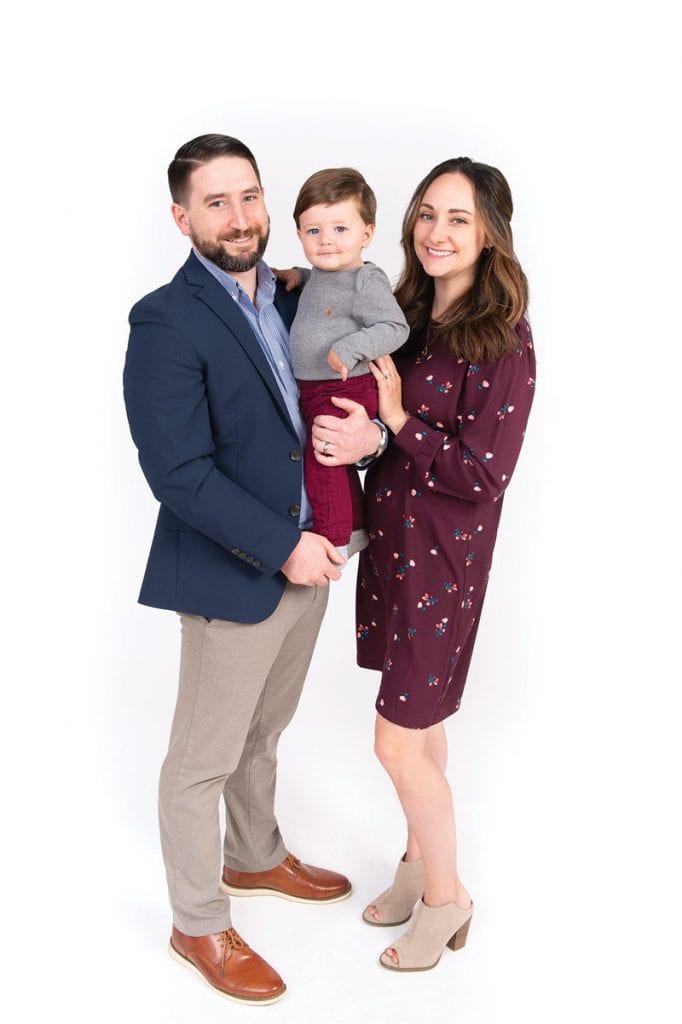
Coronavirus

The Latest Word

Chris (left) and Greg Derosiers

Chris (left) and Greg Derosiers say Hadley Printing is back to something approximating normal, and employees have actually logged some overtime.


Chris Derosiers was searching for a way to describe what things were like last spring, at the height of what’s now being called the first COVID-19 surge.

And he found an analogy that probably works for just about every small-business owner in this region.

“It’s like being on the highway … you’re going to 65, 70 miles an hour and cruising along nicely, but with three-quarters of your trip still in front of you,” he said, effectively summing up how things were going during Q1 at Hadley Printing, the family-owned venture he serves as president. “And then … it’s like hitting a wall of traffic, and you don’t know how long that wall of traffic is. And six or seven months later, we’re just finally getting to the other side of that traffic jam.”

By that, he meant the company has been experiencing gradual improvement over the past several months, and is approaching something approximating normal: business that is off perhaps 10% from last year. Recently, and for the first time since the pandemic started, the workflow was such that team members were actually able to earn some overtime, a much-celebrated milestone because of what they believe it indicates.

What isn’t known is whether the company will hit another wall of traffic, or when, said Chris’s brother, Greg, the company’s vice president, adding quickly that this puts Hadley Printing in the same position as just about every company during the pandemic — an unsettling place, to be sure.

“What we don’t know is whether this ‘back to normal’ will stay that way, or whether there will be another cycle where people pull back a little bit,” he told BusinessWest, adding that the best this company, or any company, can do is find ways to cope and persevere until times improve.

Flashing back to mid-March, a painful exercise for most every business owner in the region, the brothers Derosiers recounted how their venture hit that proverbial traffic jam.

“When this thing broke back in March, we were doing just great; everything was rocking and rolling, and we had a ton of work in here,” said Greg, adding that things changed abruptly and profoundly. “Every time we picked up the phone or answered an e-mail in the second half of March, it was ‘cancel this,’ or ‘please put this on hold.’ Literally, everything was just getting stopped in its tracks.”

Elaborating, the two said that print jobs of all kinds and sizes were being shelved, and for various reasons. Cost was one of them, obviously, but in the case of the 2020-21 schedule for the Springfield Symphony Orchestra, for example, it was a case of need — or lack thereof. Organizers had no idea when they could next stage live concerts, so there was no need for a schedule. And in the case of annual appeals launched by colleges and nonprofits (and there are traditionally many of those throughout the year), those leading area institutions decided the peak of a pandemic was certainly not the time to be waging such a campaign.

“Every time we picked up the phone or answered an e-mail in the second half of March, it was ‘cancel this,’ or ‘please put this on hold.’ Literally, everything was just getting stopped in its tracks.”

Add it all up, and the phone kept ringing, and each time it did, the person at the other end was canceling an order.

“And Chris and I looked at each other and went, ‘whoa.’ We didn’t know whether to look left or right; we didn’t know what was going on,” he went on, adding that, by late April, relief, in the form of PPP and other measures, had been rolled out with the intention of helping companies like Hadley — and the businesses that form their customer base — through what was projected to be eight to 10 weeks of very rough water.

“We all know now that it wasn’t an eight- to 10-week problem,” Greg continued, adding that one of the biggest challenges for this company was not knowing if printing would be deemed essential — status that was eventually earned.

“A lot of the printers rallied together to fight and make the case that printing was essential,” Greg said. “When the governor initially sent out the guidelines on this, the lines were a little blurred; it didn’t say in black and white whether commercial printing was essential.

“The few orders we did get were communication and mailing pieces focused on how to deal with COVID,” including man from hospitals and other healthcare providers, he went on. “Chris actually sent a letter to Governor Baker explaining why printing wasn’t an essential business.”

From the start, the priorities, the two said, were to be conservative with spending and watch every dime, and do everything they could to hang onto to talented, hard-to-replace printing professionals.

“The difficulty that we have in the manufacturing world is that we have some pretty highly trained people who are very good at what they do,” Greg explained. “Finding these people is very difficult, so we don’t want to let our workforce go. And so, for us, the last resort was to lay people off or furlough them; we hung on for as long as we could before we made any decisions like that.”

Fortunately, the company has historically been conservative fiscally, he went on, and had the ability to put money aside and weather a storm of this consequence, although it certainly hasn’t been easy.

“That part has been a blessing, but we need to make that back up,” he went on, adding that the company, which turned some type of corner in September, believes its improved situation is part of a broader pattern within the business community — and society in general — to find ways to cope with the pandemic and not merely cancel or put things off, as was happening in the second and third quarters.

As for 2021, Greg said no one really knows what to expect. He does believe that, because of what businesses went through in 2020, and because they don’t know when ‘normal’ will return, many will remain conservative in their approach — right down to print jobs.

“It’s like walking on a sidewalk on an icy day,” he explained. “You’re going to be careful where you walk and what you do, as opposed to proceeding as usual. I think 2021 will be that way — like walking on ice.”


George O’Brien can be reached at [email protected]

Coronavirus

COVID Tails

Chris Pratt, right, and Tracy Faulstick

Chris Pratt, right, and Tracy Faulstick have had to pivot and create new revenue streams, because COVID-19 has left fewer dogs home alone.

“Because no one wants to be left home alone.”

That’s the marketing tagline for a venture called Wagging Tails Pet Resort, and until the middle of last March, it effectively summed up what this company was all about and why it was so successful; dog owners wholeheartedly agreed with that sentiment.

That was true for the boarding side of this operation, obviously, but the day-care component as well, said owner Chris Pratt, who told BusinessWest that many professionals had come to understand the value of leaving a dog in a day-care facility — for companionship and also, in the case of larger, athletic breeds, to work off some off their considerable energy before their master gets home at the end of the day.

But starting in March, most dogs didn’t have to be left home alone. Their owners were working remotely for the most part, if they were still working at all. Meanwhile, very few people were traveling anywhere.

Almost overnight, business for the day care, boarding, and other components of the multi-faceted Wagging Tails operation plummeted, said Pratt, noting that the COVID-19 pandemic could not have come at a worse time for her — not that it’s come at a good time for anyone.

“Going into March, we were overbooked in Hadley … by March 15, we had one dog left, who actually went home with me at night. I called the owner and said, ‘your dog is the only one here; do you mind if I take him home?’ They said, ‘no, please do.’”

That’s because business had been so good at her resort on Russell Street in Hadley that she moved aggressively and opened a second location on Florence Road in Easthampton — the Heritage Farm — last February to handle what had become an overflow.

Just a few weeks later, though, there was no overflow. She said she kept operating both locations as long as she could, but when Thanksgiving came and the numbers of boarding and day-care dogs were just a fraction of what they were a year ago — and not able to generate enough revenue to pay the staff — Pratt was forced to shut down the Hadley operation, with the intent of reopening when things get better.

“We’re combining our resources to get through the winter,” she explained. “And we’ve been very fortunate that a number of customers have decided to make the 15-minute journey across the bridge to bring their dogs here to the farm.”

That farm, all 30 acres of it, like the Hadley setting, is described by Pratt as a one-stop shop for dogs and their owners, offering everything from boarding to grooming; from day care to retail sales of food and other pet supplies; from walking to training. But because there’s less of all that, there’s now even more that people could do during one stop — or a few.

Indeed, Pratt is making the most of the indoor and outdoor spaces at the farm, and now offering new services ranging from horse boarding to riding lessons, to animals (such as several goats that arrived recently) that children and families can visit with.

“There’s a lot of things going on here that families can take part in,” said Tracey Faulstick, a business consultant working with Pratt to revise the Wagging Tails business plan. “There’s farm animals … there’s a lot that families can participate in in terms of training, horse lessons, and more. There’s an entire community here that’s dedicated to taking care of animals and people in a very safe environment.”

Creation of this community is a classic case of pivoting, making do, and trying to earn a living and keep people employed until things get better — a business survival plan, if you will. It’s also another case — among a great many in this region — of a company doing very well and expanding its operations … until the word COVID became part of our lives.

Indeed, as dogs barked parked consistently — and loudly — in the boarding area, Pratt recounted how and why she amended her business plan more than a year ago and put some ambitious expansion plans on the table.

“Hadley was full at the time … we had a waiting list,” she noted, adding that, essentially, all aspects of the business were booming, from the grooming to the training to the boarding and day care. But COVID-19 changed things in a hurry.

“Going into March, we were overbooked in Hadley … by March 15, we had one dog left, who actually went home with me at night,” she recalled. “I called the owner and said, ‘your dog is the only one here; do you mind if I take him home?’ They said, ‘no, please do.’”

But that was just the start. Indeed, restrictions imposed by the governor essentially shut down the grooming and training operations, two reliable revenue sources, for two months. Meanwhile, as noted, few people were traveling anywhere, for work or pleasure, putting a deep dent in the boarding side of the venture.

Some aspects of this business have returned to one extent or another — grooming and training, for example — and the day-care side has bounced back somewhat, as some dog owners realize the value of that service, even if they are home working all day. Pratt is hoping more people get that message.

“Dogs still need to socialize,” she explained. “Even if people are home working and with their dogs, they should still bring them to day care occasionally, to keep them socialized and keep them from getting separation anxiety; it’s better for the dogs. We were seeing, with people who hadn’t been here for weeks, that when they brought the dog back to day care, the dog was so happy, so excited, and so energetic that they lost most of their socialization skills — so we had to reteach them.”

This reteaching is just part of the COVID story at Wagging Tails, an intriguing saga that, like many in this region, involves imagination, perseverance, and entrepreneurial spirit, all of which are needed to get to other side of this pandemic.


George O’Brien can be reached at [email protected]

Coronavirus

Things Are Heating Up

For Sheila Coon and her husband, Dan, the pandemic has been a time to expand

For Sheila Coon and her husband, Dan, the pandemic has been a time to expand, not retrench, and set new and ambitious goals for the future.

For many small-business owners, 2020 has been a year to hunker down. To focus on survival. To put plans for expansion on hold and devote time and energy to simply getting to next month, or even next week.

Not so for Sheila and Dan Coon, owners of Hot Oven Cookies.

For them, 2020 has been a year to take their brand to places, and a level, it had never been before, and to foster plans to take it further still in the years to come. It’s been a time to establish themselves downtown and uptown, as they like to say (we’ll explain later), and expand not only the footprint, but also the product lines, including cookie dough by the pint — ‘dough to go,’ as they call it.

There has been some good fortune, or serendipity, if you will, along the way, and some strong evidence that cookies have become a comfort food in the midst of this global pandemic — there’s even talk of a possible cookie shortage for the holidays. But mostly, this has been about entrepreneurial spirit and seizing opportunities when they have come about — traits that have defined this venture from the start.

About a year or so ago, none of what has transpired since seemed likely or even possible. In fact, as Sheila recalls, the husband-and-wife team were thinking about packing it in and turning the oven off for good.

Indeed, by late 2019, the company, then located at 1597 Main St. in Springfield, had endured several months of turmoil with its landlord over conditions that had made it increasingly difficult to do business — no heat in the winter, no air conditioning in the summer, for example. By mid-November, matters had come to a head, and the company had essentially ceased activity in that location, operating for a time out of its Cookie Cart (a food truck of sorts) until its pipes froze in the winter.

The two partners eventually went back to their storefront at the behest of customers, but when they did, it was late February, just before the pandemic arrived and a wave of restrictions on small businesses like this one went into effect.

“My husband and I were thinking, ‘we should probably close and collect unemployment, because this is going to be bad,’” she recalled, adding that, instead of shutting down, they decided to hang in — mostly due to the strong loyalty displayed by long-time customers.

That decision to persevere became just the first of many watershed moments over the past nine months or so. The company has since opened two new locations — one in Sixteen Acres at the Bicentennial Plaza (that’s the ‘uptown’ location) and then another (a replacement for the old site) further south on Main Street in Springfield, in a location formerly, and briefly, occupied by a Delaney’s Market. Both opened just last month.

Sheila knew about the downtown location and had her eye on it — sort of. She had long thought it out of her reach price-wise, but then, there was some of that serendipity.

“My husband and I were thinking, ‘we should probably close and collect unemployment, because this is going to be bad.’”

“I remember saying to someone, ‘if I could open up where Delaney’s was, I would do it in a heartbeat,’” she told BusinessWest. “It was wishful thinking, but two days later I got a phone call, and someone said, ‘hey, we have the keys, would you like to go see it?’

“We came to see it a few days after we opened Allen Street, and we thought, ‘this is beyond our reach,’” she continued. “But our brand reputation preceded us, and the landlord was extremely willing to work with us because he wanted us here. And here we are.”

In addition to those two locations, the company still operates the Cookie Cart, which has been parked at a number of area colleges, businesses, and even private residences for birthday parties and anniversaries, and also has a kiosk at Bradley International Airport, which has been idled by the pandemic — the one aspect of the venture to be slowed by COVID-19.

As BusinessWest talked with Sheila at the downtown location on a Thursday afternoon a few weeks before Christmas, customers steadily filed into the store. At one point, the line became long enough that she hit pause to go help her employee behind the counter.

It has been like this pretty much since the location opened, she said, adding that the Hot Oven brand — featuring more than 100 flavors, including staples like Dark Chocolate + Seal Salt Chip, Boozy Cake Batter Sugar, and Coquito Snookerdoodle — has always been popular and sought out by those in this market and others residing well outside it.

And the pandemic has made it even more popular, she believes, theorizing that the cookies provide a measure of comfort, a measure of normal, at a time when people are craving both.

Indeed, when asked how the downtown was doing since opening, she started with “wow,” paused for a second, and put it in perspective.

“My husband and I had a logistical meeting before we opened both the shops,” she recalled. “And the conversation went something like this: ‘we’re moving two blocks over to a new location and new customer base, and we’re moving uptown to another location; it’s going to take a while for people to catch on that we’re here.’

“Nope … that hasn’t been the case,” she went on. “Business down here for us has been double or triple what we’re doing two blocks over. And uptown is a beast of a shop — we sell out every day.”

Looking ahead, Sheila said the company is looking forward to the day when the kiosk at Bradley can open and become a strong source of revenue that can finance future expansion — perhaps into Worcester, Boston, and other cities. And there has long been talk of franchising this brand and taking it well beyond its Western Mass. roots.

For the immediate future, though, the two have their hands full with the two new locations and the brisk business they are witnessing.

There have not been too many business-expansion stories during this pandemic, but this is certainly one of them.

Call it a feel-good story if you like, but this is also, and especially, a taste-good story. And a very intriguing one at that.


George O’Brien can be reached at [email protected]

Cover Story

Selling the Region

Rick Sullivan was talking about the pandemic … and about how it just might present some opportunities for this region to prompt companies currently located in expensive office buildings in pricey urban centers to at least look this way.

And he paused to reference an article he had just read that morning about how those in the Aloha State were thinking pretty much the same thing.

“Hawaii seeks to be seen as a remote workplace with a view,” he said, referencing the headline he had just read. “They’re making the same pitch we are — it’s a great place to work remotely … with a view. It’s the same concept — we have great outdoor recreational opportunities, we have the mountains, the skiing, the rafting, and the biking.”

Sullivan, president and CEO of the Western Massachusetts Economic Development Council, quickly acknowledged that Western Mass. is not Hawaii. But to one degree or another, it can, as he noted, offer at least some of the same things — like those nice views. And a sticker price — for commercial real estate and many other things — far, far below not only Boston, Cambridge, and New York, but many other regions of the country as well.

There is a certain quality of life that has always been here but has taken on perhaps greater importance in the midst of a pandemic as people — and some businesses as well — are starting to think about whether they want or need to be in an urban setting.

These factors may be enough to turn some heads, said Sullivan and others we spoke with, all of whom noted that, as the pandemic approaches the 10-month mark, the emphasis is shifting locally — from talk about how there may be an opportunity to seize, to action when it comes to seizing such an opportunity and getting those heads to turn.

Nancy Creed, president of the Springfield Regional Chamber, is taking action in the form of online tools, through which interested businesses, agencies, and individuals can obtain needed information about the region and even explore options within the commercial real-estate market for a new home.

“We’ve invested in a whole suite of tools, one of which has seven or eight tools that basically walk a business through everything from why the Springfield region is a good place to start a business or expand a business, all the way through where your competitors are, where your customers are, and where your workers are,” she said of a product called Localintel. “And then it continues with information about where to find real estate that fits your purpose; it heatmaps everything for you.”

Meanwhile, Sullivan said the EDC, which has received an uptick in the number of incoming calls from businesses and site selectors looking to learn more about the region, has made efforts to promote the area and take advantage of pandemic-related trends and movements as one of its strategic priorities for the coming year.

Western Mass. can position itself as an effective place to work

Rick Sullivan says that, like Hawaii, Western Mass. can position itself as an effective place to work — with a view.

“Part of our strategic plan is to increase the marketing for such efforts and make that pitch,” he explained. “We’re going to work through what that looks like, but we are certainly not equipped to do a multi-million-dollar marketing campaign. I do think we can raise our profile and make that pitch.”

But while there is opportunity in the midst of this pandemic, challenges exist as well.

Evan Plotkin, president of NAI Plotkin and a long-time promoter of Springfield and especially its downtown area, said there are some lingering perceptions about the city and region — regarding everything from workforce to housing stock to public safety — that have to be overcome. Also, there remains considerable work to do when it comes to simply getting the word out about Western Mass. and all that it has to offer.

Meanwhile, as for trying to convince companies and state agencies to move here — something Plotkin has been doing aggressively for some time now — he said there are cost and logistical concerns that remain stumbling blocks.

“When I talk to people about this, I see a lot of heads nod in agreement — they see why this region makes sense on many levels,” he said. “The pushback comes with people not wanting to uproot themselves and make that move. We have to be able to overcome that.”

For this issue, BusinessWest takes an in-depth look at how the pandemic may change the landscape in some positive ways, and also what has to happen for the region’s fortunes to improve.


Moving Sentinents

Plotkin told BusinessWest that, whenever he meets attorneys or other professionals from Boston or New York — and that’s often — he invariably makes a point of asking them where they’re based and how much they’re paying to do business there.

He then offers a pitch for this region, letting the individual across the table know that things are less expensive and — in some ways, at least — better here.

“I’ll say, ‘you know what … you can probably do a lot better here,’” he said. “I’ll tell them, ‘if you have a big office, maybe you can keep an office in Boston and move your back-room operations here.’”

Moving forward, the assignment for the region, said those we spoke with, is to take these pitches, these efforts to sell the region, to a higher plane — now more than ever, because of what the pandemic has shown people.

In short, Sullivan noted, it has demonstrated that people can work remotely, and effectively, and that companies don’t necessarily need to lease as much space as they’re leasing now, or lease it in high-traffic (although not at this particular moment in time), high-rent areas.

It has also shown professionals, and especially young people, that they don’t necessarily have to live in one of those urban areas — like Boston, Seattle, or San Francisco — to get the kind of rewarding, high-paying jobs they’re all looking for.

“Because of the pandemic, quality of life has become something that people can really consider when they’re determining their work/life balance — you don’t need to be in the expensive big cities to be able to have the kinds of jobs people are looking for,” he explained. “You can really focus on your work/life balance, and you can really focus on your quality of life, and that’s where Western Massachusetts really shines. You can be working remotely, you can be telecommuting, and you can have that quality of life, that cost of living, that we have in Western Mass. that’s very attractive.”

As that story about Hawaii makes clear, Western Mass. is certainly not alone in this thinking. Indeed, there will be plenty of competition. But in this region, there is, by most all accounts, more recognition of possible opportunities and more of a combined enthusiasm for seizing it.

“I think there’s more of a critical mass,” Creed noted in reference to the collective efforts she’s seeing. “Before, it was this organization or this person; now, everyone is seeing it, and I’m hearing that more real-estate brokers are actively seeking businesses to come here.

1350 Main St

Evan Plotkin wants to convert three floors within 1350 Main St. to space where people can both live and work, an example of how the region may be able to benefit from the changes brought about by the pandemic.

“And I’m hearing it from business owners as well,” she went on. “They’re saying, ‘why do I need to have downtown space in the larger markets?’ So I think there is opportunity.”

But there have always been opportunities for this region when it comes to effectively selling its quality of life and lower cost of living. The $64,000 question at the moment is whether COVID will become a type of X-factor and drive interest in an area that has traditionally drawn that kind of head-nodding that Plotkin talked about, but certainly not as much action as most would like.

And the answer to that question is certainly unknown at this point. But it’s clear that there is now growing interest in at least trying to sell the region in a more aggressive way.

Measures like Localintel, a step recommended in the Future Cities study released in 2016, are a part of such efforts, said Creed, noting that the platform is currently being tested and should be on the chamber’s website soon.

The chamber is partnering with the city, which will also be able to put Localintel on its website, she went on, adding that the chamber will be adding another tool specifically for startups, partnering with Valley Venture Mentors in that initiative.

“It walks you through all the steps you need to go through to start your business,” she explained. “And then, you go to the next suite of tools, which will walk you through the customers, the competition, and more.”


In Good Company

Beyond simple lessons in geography regarding where companies can be located, the pandemic has provided some other lessons as well, said Sullivan, especially those related to supply chain and what can happen when overseas links in that chain are broken.

Indeed, a number of major manufacturers, as well as local anchor businesses such as hospitals, colleges, Big Y, and others, have expressed interest in making their supply chains more reliable, he told BusinessWest, adding that these sentiments would indicate that there are opportunities for this region to build on its already-strong manufacturing sector.

“We’ve seen, partially because of the pandemic, that supply chain, when it’s overseas and all split up, is much less reliable,” he explained. “That’s an opportunity for us because manufacturing is one of our strengths in this region.

“This is just one of the ways that we can come out of this pandemic in a stronger position than when we went into it,” he went on. “We need to be able to move forward where there are opportunities that we’ve identified.”

And the growing number of phone calls to the EDC, and the nature of those calls, would seem to indicate some potential opportunities, Sullivan went on, adding that there have been calls from companies looking for more of a campus-like setting; from manufacturers looking to move operations onshore; from call centers looking for smaller, more affordable facilities; and even from modular-home builders intrigued by the region’s accessibility and highway infrastructure.

Such calls lead to the inevitable questions about whether the region has the ability to actually move forward in the fashion he suggests. Does it have the housing inventory? Does it have an adequate workforce? Does it have communities that would attract businesses and individuals? Does it have the vibrancy and amenities needed to attract young people?

Plotkin has been answering some of these very questions as he vies to make the property he co-owns, 1350 Main St., home to what’s being called a remote-work hub that would enable people to live and work in the same building, a concept that has become more intriguing as the pandemic has lingered.

As he talked with BusinessWest, Plotkin was preparing to meet with those looking to site such facilities — he believes he has made it to the next round in the process — and state his case. He said he’s got a solid one, when considering both his building and the three full floors he’s proposing for a remote-work hub and this region, but as he was preparing his response to the RFP, he realized that, while the region has a lot to sell, it has to work harder at selling it.

“It’s all about salesmanship and about trying to overcome some of the negativity and the obstacles,” he explained. “It’s trying to overcome a perception that doesn’t reflect what we really have here.”

And one of the more critical perceptions, or misperceptions, in his view, at least, involves workforce and fears that this region cannot support certain types of industries or specific businesses.

Nancy Creed

Nancy Creed

“I think there’s more of a critical mass. Before, it was this organization or this person; now, everyone is seeing it, and I’m hearing that more real-estate brokers are actively seeking businesses to come here.”

“There’s a fear that workers wouldn’t want to live in Springfield,” he explained, “and also the fear that their chances of finding the talent they need in Springfield and the surrounding region would be harder; that’s the biggest impediment I’m seeing.”

Meanwhile, the pandemic certainly hasn’t helped matters, he said, adding that, before it arrived, the city was enjoying some momentum. But many of its major attractions, from its hockey team to its symphony orchestra to its $1 billion casino, are shut down or operating much differently than before the pandemic.

Taking the long view, though, he said these institutions will return, and they will be part of an attractive package the region can market, a package that seems to make more sense with each passing day living and working during a pandemic.


Bottom Line

Time will obviously tell whether Western Mass., Hawaii, or anywhere else will benefit greatly from the lessons learned from COVID-19 and the trends emerging from this unique time in history.

What is apparent at the moment is that this region seems committed to at least trying to seize what appears to be a clear opportunity to benefit from attitudes about where companies can and should be located, and how they can and should be conducting business.

“Let’s just say I’m keeping my fingers crossed,” Creed said.

So is everyone else.


George O’Brien can be reached at [email protected]


Education Special Coverage

The Sternest of Tests

By George O’Brien


Yves Salomon-Fernández says the region’s community colleges were facing some pretty severe headwinds before the COVID-19 pandemic reached Western Mass. in March.

Indeed, these institutions, like all colleges and universities, have been seriously impacted by demographic trends — specifically, a decade or more of consistently smaller high-school graduating classes, said Salomon-Fernández, president of Greenfield Community College (GCC).

But they’ve also been adversely impacted by what was the nation’s longest economic expansion and historically low unemployment rates, in a continuation of a trend that has become quite familiar to those in the community-college realm — when times are good, enrollment suffers, she noted; when times are bad, like during the Great Recession, people go back to school and enrollment climbs.

Yves Salomon-Fernández

Yves Salomon-Fernández says the pandemic has in some ways accelerated the pace of change when it comes to jobs and the workforce, and community colleges will need to help individuals thrive in this altered landscape.

But while the pandemic has created some of the worst times this region has seen in the past 90 years or so and put thousands on the unemployment rolls, that development hasn’t benefited the community colleges in the manner it has in the past, said Salomon-Fernández and others we spoke with. There are a number of reasons for that, many of which have to do with the ongoing health crisis itself.

Listing some, Christina Royal, president of Holyoke Community College (HCC) and one of BusinessWest’s Women of Impact for 2020, said many individuals and families are simply coping with too many issues right now — from balancing life and work to trying to find employment, to simply putting food on the table — to consider adding a college education to the mix.

Beyond that, one of the real strengths of community colleges is their personal style of learning in the classroom, something taken away by the pandemic, and something that is keeping many students on the sidelines, Royal continued.

“We have a lot of students who prefer in-person learning,” she explained, noting that, in what would be normal times, roughly 20% of courses offered by the school are taught remotely; now, that number is closer to 95% or even 98%, and it will be that way at least through next spring. “So some students feel frustrated that the pandemic is continuing; what they thought would be a one-semester impact is now much more than that.”

But maybe the biggest reason this crisis has hit the community colleges harder than other institutions of higher learning is that this has not been an equal-opportunity pandemic, said John Cook, president of Springfield Technical Community College (STCC), noting that it has impacted those in urban areas, those in lower-income brackets, and those in the minority community more severely than other constituencies. And these individuals, which were already struggling in many ways before the pandemic, form the base of the student populations at all of the state’s community colleges.

“For us and for the other community colleges, this is a conversation about equity,” he told BusinessWest. “We are a college that has a majority of students of color, and we’re seeing steep enrollment declines. It’s right in line with the way the pandemic has disproportionately impacted the African-American community and the Hispanic community.”

Christina Royal

Christina Royal says enrollment at community colleges has been dropping consistently since 2012, a pattern exacerbated by the pandemic.

Add all this up, and the region’s community colleges have had a very trying time since the spring. There have been cutbacks — STCC has had to cut several programs, for example, everything from automotive technology to landscape architecture (more on that later) — and workforce reductions by attrition at each school. And no one is really sure when the picture might at least start to brighten, which may be the biggest challenge of all.

“I’m encouraged, like the world, by vaccines, but just like everything with this pandemic, there is a great deal of uncertainty as to when anything is going to take place,” Cook said. “So it’s really hard to forecast for next fall and beyond.”

But in some ways, this has been a proud moment for the schools, if that’s the right term, as they have focused their attention on the students who are enrolled and their growing needs during the pandemic — for everything from Chromebooks to hotspots so students can have internet access, to food and even desks so students can study remotely.

“From 2012 until now, we’ve lost about 40% of our enrollment. This is staggering for any industry, any sector, and it tells a certain story about community colleges.”

Meanwhile, the schools are doing what they always do — looking to the future and seeing how the pandemic will impact the employment landscape with an eye toward preparing students for what will be a changing job market.

“The economy is changing, and jobs are changing, and we were already beginning to see these shifts before the pandemic,” said Salomon-Fernández. “When you read reports from the World Economic Forum, you see predictions that, over the next several years, many of the jobs that exist now will disappear. We knew there was a change coming in the future of work, and what we’re seeing now is that the pandemic is affecting how we work — and what the work is.”

For this issue and its focus on education, BusinessWest takes an in-depth look at how the pandemic has impacted the region’s community colleges, and how they’re responding to these even stronger headwinds.


Difficult Course

Cook told BusinessWest that the presidents of the state’s 15 community colleges meet weekly.

They’ve always done this, he said, but the meetings are different now. For starters, they’re by Zoom, obviously, and the tone is decidedly different as the schools collectively deal with challenges on an unprecedented scale.

Unprecedented, because the schools have never faced a perfect storm like this one.

“There’s a solidarity there, for sure — you’re with a group of peers and colleagues contending with similarly difficult circumstances,” he said with some understatement in his voice. “We do a lot of listening and sharing — of strategic actions; navigation of federal, state, and local regulations; and best practices. We’re all coping with the same challenges.”

And there are many of them, starting with enrollment. As noted earlier, several forces have been pulling the numbers down for the bulk of the past decade, including the smaller high-school graduating classes and the economy — and the impact has been significant.

Indeed, overall enrollment at STCC had fallen by 30% between 2012 (when there were 7,000 students on campus) and the fall of 2019, said Cook, and it took another 15% hit this fall.

“From 2012 until now, we’ve lost about 40% of our enrollment,” he noted. “This is staggering for any industry, any sector, and it tells a certain story about community colleges.”

John Cook

John Cook says the pandemic has disproportionately impacted urban areas and communities of color — constituencies served by community colleges.

The story is similar at most all of the other community colleges. Royal said enrollment has been declining at a rate of roughly 5% a year since 2012, or the peak, if you will, when it comes to enrollment growth in the wake of the Great Recession, and the pandemic has certainly compounded the problem. At HCC, enrollment is down 13.7% (roughly 600 students) from the fall of 2019, while the number of full-time equivalents is down 17%. And they are projected to decline further for the spring (enrollment is traditionally lower in the spring than the fall), she noted, as her school and other community colleges have announced that all learning next semester will be remote.

At GCC, the school hasn’t been hit as hard when it comes to enrollment, perhaps an 8% decline, said Salomon-Fernández, but the numbers are still down, and the long-term projections show they will continue trending downward for perhaps the balance of the decade, something GCC and other schools have been trying to plan for.

These enrollment declines obviously take a toll on these schools financially, said those we spoke with, a toll that has been greatly acerbated by the pandemic; Cook equated the 15% drop in enrollment from last year to $3 million in lost revenues. State and federal assistance from the CARES Act and other relief efforts have helped, he said, but there are restrictions on those monies, and, overall, they certainly don’t offset the steep losses.

Meanwhile, other headwinds are blowing, he said. At STCC, for example, the school has a number of issues with its buildings, some of which are more than 150 years old, with costs totaling several million dollars.

In response, the institutions have been using every tool in the toolbox to cope with the declines in revenue, including inducements to retire, not filling positions when people do retire or leave, reducing part-time personnel (and then full-time workers) if needed, creating efficiencies when possible, and cutting down on expenses wherever possible, including travel, utilities, and more.

In some cases, schools have had to go further and cut programs, as at STCC, which has eliminated several programs, including automotive, cosmetology, civil engineering, and dental assisting, which together enrolled roughly 120 students. These cuts came down to simple mathematics, said Cook, adding that, while some programs were popular and certainly needed within the community, like automotive, they are losing propositions, budget-wise.

“As much as we try to encourage them to stick with their plan and help them, through myriad services, to persist, the numbers seem to indicate that they need to take a break. And that’s disproportionately unique to community colleges — we don’t see the same level of enrollment decline at state universities, at UMass, or at undergraduate private institutions.”

“By and large, with every program we offer, the tuition and fees do not cover the costs; no program really breaks even, especially anything that has a lab or a technical or clinical element to it; those are all losing endeavors,” he explained. “Which means there’s even more pressure when enrollment falls.”


Steep Grade

And, as noted, enrollment is projected to keep falling for the foreseeable future, and for all of the reasons, many of them pandemic-related, mentioned above — from individuals not able to attend college for financial or other reasons to people not wanting to learn remotely, which is all that community colleges can offer right now, except for some lab programs. And these trends are piling up atop those falling birth rates and smaller high-school classes.

Overall, it’s far more than enough to offset any gains that might come from the economy declining and the jobless rate soaring, said Royal, noting that this downturn is unlike those that came before because of the pandemic and the wave of uncertainty that has accompanied it.

“When we think about the conditions that tend to drive more students to higher education during a recession, in normal times, there is more predictability when it comes to economic cycles,” she explained. “We know that during a recession, jobs are limited, and you use the time to focus on your education; the market is going to turn, and when it does, you’ll have more credentials and certificates to be competitive for a job.

“When you think of the conditions we’re in now, there’s still so much uncertainty that people are feeling nervous about starting a new program when they just don’t have a sense for where the world is going to end up,” she went on. “They’re thinking, ‘what is the world going to look like, and how do we even navigate this?’”

With many schools forced to offer only remote learning, Salomon-Fernández noted, there was some speculation that students, perhaps with some prodding from their parents, might opt to learn remotely at a community college rather than a far more expensive four-year institution of higher learning. But thus far, such a movement has not materialized, she said, adding that some students are opting out altogether and taking at least a semester or year off rather than enroll remotely at any institution.

What is materializing is a situation where those in the minority communities and the lower end of the income scale — frontline workers, in many instances — are being disproportionately impacted by the pandemic. And this is the constituency that fills many of the seats — another term that takes on new meaning during the pandemic — at this region’s community colleges.

“If you look at Holyoke, Springfield, Chicopee, and Westfield — those are our top feeder communities,” Royal said. “These are the communities that are getting impacted by the pandemic in a significant way; we know the pandemic is disproportionately impacting communities of color and low-income communities.”

She and the others we spoke with said the pandemic is putting many people out of work or reducing their hours, affecting everything from housing to food insecurity. Meanwhile, for others, the pandemic has them in a situation where balancing work and life has become more challenging and complicated, leaving fewer hours in the day and less time and opportunity for things like attaining the associate degree that might open some doors career-wise.

“There are so many uncertainties right now that have many people saying, ‘I don’t know if I can handle another thing right now — so I’m just going to wait and see if we can stabilize some of these other factors, especially some consistency with K-12 education and a better understanding of where the jobs are and who’s hiring,’” Royal said.

Cook concurred. “A lot of what we see in our enrollment decline is students not going anywhere — they’re sitting on the sidelines,” he said. “They’re not seeking another option because, frankly, we’re the most affordable and most accessible option in Springfield. They’re literally staying home — taking care of children who are similarly home, or taking care of family members, or addressing working concerns. That’s what we see, and that’s part of the larger story around racial concerns, equity, and structural racism, and this is how it lands at a place like STCC.

“As much as we try to encourage them to stick with their plan and help them, through myriad services, to persist, the numbers seem to indicate that they need to take a break,” he went on. “And that’s disproportionately unique to community colleges — we don’t see the same level of enrollment decline at state universities, at UMass, or at undergraduate private institutions.”


Learning Curves

While coping with falling enrollment, the community colleges are facing additional challenges when it comes to serving those who are enrolled, said those we spoke with, noting, again, the disproportionate impact on those in lower-income brackets.

One of the biggest challenges many students face is getting internet access, said Salomon-Fernández, noting that this was already a challenge for some in rural Franklin County before the pandemic; now, it’s even more of an issue.

Royal agreed, noting that many students made use of HCC’s wi-fi and computer labs before the pandemic because they didn’t have it at home or had limited, low-band service.

The schools have responded by giving out laptops and Chromebooks on loan, as well as mobile hotspots to help with wi-fi connectivity.

“We’ve had hundreds of students access technology to help them with remote learning,” said Royal, adding that, through the school’s Student Emergency Fund, help has been provided for everything from rent payments to auto insurance to food, with more than $90,000 distributed to more than 230 students.

But the help goes beyond money, she said, adding that, at the school’s Thrive Center, students can get assistance with filling out applications for unemployment, get connected to mental-health services, find digital-literacy programs, and receive support from the school’s food pantry, in addition to those internet hot spots.

Looking ahead, though, the colleges face a much larger and even more important challenge as they try to anticipate changes to the job market, some of them being shaped by and accelerated by the pandemic, and adjust their programs accordingly.

“We’re trying to understand and anticipate how the job market will change. We expect some jobs to be gone and not come back, and as a community college, we’re preparing ourselves to support the most vulnerable people whose jobs will cease to exist.”

“We’re trying to understand and anticipate how the job market will change,” said Salomon-Fernández. “We expect some jobs to be gone and not come back, and as a community college, we’re preparing ourselves to support the most vulnerable people whose jobs will cease to exist.

“We’re already working with our Workforce Investment Board and with our chamber of commerce and other employment partners to help them think through training, both right now and for what’s coming down the pike,” she added. “It’s a matter of being agile in our thinking, of being responsive in terms of what new academic programs and new workforce-development programs might be needed, and making sure they are informed by industry and that we are ready to serve when people are ready to re-engage in this work.”

‘Ready to serve’ is a phrase that defines the purpose and the mission of the region’s community colleges. Carrying out that mission has become more difficult during the pandemic and the many changes it has brought, but the schools are persevering.

This has been the sternest of tests for them, but they are determined to pass it themselves, and enable all those they serve to do the same.


George O’Brien can be reached at [email protected]

Women in Businesss

Courting History

Danielle Williams

Danielle Williams, seen outside the courthouse in Northampton, says her time as an assistant clerk magistrate has helped prepare her for service on the bench.

Danielle Williams was asked about the style, or approach, that she would bring to the bench as a District Court judge.

She paused for a minute to think, and then recalled a conversation she had with a colleague recently — one that revealed just how she intends to address each matter that reaches her.

“Each case that comes before you represents people, it represents families, and it represents communities,” she said. “Cases are not just papers, they’re not just documents … and you have to address each case with that in mind.”

She told BusinessWest that this human factor, the people represented in the words typed on those pages, was driven home during her years spent as an assistant clerk magistrate in the Commonwealth of Massachusetts Trial Court, a position with a wide job description (more on that later), and one that opened her eyes to not only court procedure, but also the many issues facing those living and working in this region — and her own skill sets and abilities.

Williams said she didn’t take the clerk magistrate’s job with the goal, or intention, of becoming the first African-American woman to be sworn in as a District Court judge in Western Mass., but she was eventually convinced by many of those she was working with that this was the logical next step — and that she was ready.

Williams brings what might be called an eclectic résumé to her latest position, one that includes experience in the Hampden County District Attorney’s office … and experience writing and producing comic books.

“Each case that comes before you represents people, it represents families, and it represents communities. Cases are not just papers, they’re not just documents … and you have to address each case with that in mind.”

Indeed, as she told BusinessWest when she was named one of its 40 Under Forty honorees in 2015, Williams, while practicing law with the Northampton-based firm Fierst, Kane, and Bloomberg LLP, specializing in, among other things, intellectual-property law, she was also writing stories about unlikely superheroes known as the Mighty Magical Majestics.

While Williams still has somewhat of a passion for science fiction and graphic novels, she has spent the past several years focused entirely on the law and, more specifically, the courts.

After a short stint working in the Office of the Attorney General in Springfield, she joined the Trial Court as an assistant clerk magistrate in the spring of 2016, a role she’d been drawn to since very early in her career.

“I really admired how they [magistrates] really controlled the courtroom and set the tone for giving people access and making sure they felt comfortable in the courtroom,” she noted. “They dealt with all the components of the courtroom, whether it was probation, members of the public, the lawyers, the other court officers. There was the administrative aspect and also the substantive aspect, where they presided over small claims and criminal show-cause hearings, and I decided that’s really what I wanted to do.

“When I got that job, I was thrilled, and I loved it,” she went on. “I really anticipated staying there.”

But it wasn’t long before people started asking her what was next when it came to her career. The obvious answer was the bench, and while she listened to those who said she was ready to take that step forward, including Judge William Boyle, whom she considers her first mentor, she was at first reluctant, thinking she wasn’t ready to take that step forward.

“I think we’re always our toughest critics,” she said. “We want to be at our very best before we move on to the next level; you want to make sure you’re ready for the responsibility, have the education and knowledge, all that.

“Judge Boyle said, ‘why don’t you think about it?’” she went on. “I said, ‘but I’m not ready, judge; I haven’t even thought about it.’ And he said, ‘well, you should think about it.’ That meant a lot to me that someone who has seen me grow through my legal career thought this was something I should consider.”

Eventually, she gained the confidence to apply, and while her first bid for the bench was not successful, she applied again, and this this time, in a decidedly different interview process in the midst of a pandemic, she succeeded in impressing various interviewers and the Governor’s Council, the body that confirms nominations made by the governor.

She said her four years as assistant clerk magistrate certainly has prepared her for this next stage of her career.

“As an assistant clerk, you come to know who you are, especially if you’re sitting in the Springfield District Court,” she explained. “I know my temperament, I know the different agendas that happen in the courtroom — and having a different agenda is not a bad thing. The district attorney’s office represents the Commonwealth, the defense attorney represents their client, and I am a neutral party in the courtroom. Understanding those things, and having experience in managing all those different agendas in the courtroom, has been invaluable.

“Also,” she went on, “to sit in those sessions with the judges in motion hearings and trials, and listen and try to anticipate how I would respond to those issues, has been a tremendous platform for me, and a way to be prepared for the role of associate justice.”

If the interviewing and selection process was different because of COVID-19, so, too, was the swearing-in ceremony.

Usually a formal affair attended by hundreds of colleagues, friends, and family, this swearing-in was conducted from her dining room with just a few people in attendance.

“I had planned to have it in the atrium on the Springfield District Court, where I could hopefully social distance and have the public, friends, and colleagues in attendance,” she said. “But, given the circumstances, it seemed safer just to have a small swearing-in for now.”

As for where she’ll be next week, or the week after … she doesn’t know yet. While appointed out of Westfield, she could be in one of several other courts across the region, from Chicopee to Palmer to Orange, depending on where there is need.

What she does know is that, whichever court she’s in, she’ll bring in that mindset she mentioned at the top — that court cases are not documents or pieces of paper; they represent people, families, and communities.

It was the ability to communicate this philosophy, if you will, that helped her win this coveted — and historic — appointment, and it’s the one that will guide her for the next 26 years or so.


George O’Brien can be reached at [email protected]

Cover Story

A Turnaround Story

Nick Morin, founder of Iron Duke Brewing

Nick Morin, founder of Iron Duke Brewing, in the old stockhouse at Ludlow Mills that will remain home to his venture.

Nick Morin says he and his team are looking forward to the day when they can devote all their time and energy to just brewing beer and working on the business plan.

They’re getting closer all the time.

Indeed, after several years of court battles involving their lease at the Ludlow Mills complex and another legal fight Morin is trying to avoid involving Duke University and the name currently over the brewery — Iron Duke — there appears to be light at the end of the tunnel.

“We’re looking forward to taking all that money we were spending on lawyers and putting it back into the business and creating an experience here that’s unlike anything else in Western Mass.”

And it is certainly a welcome sight.
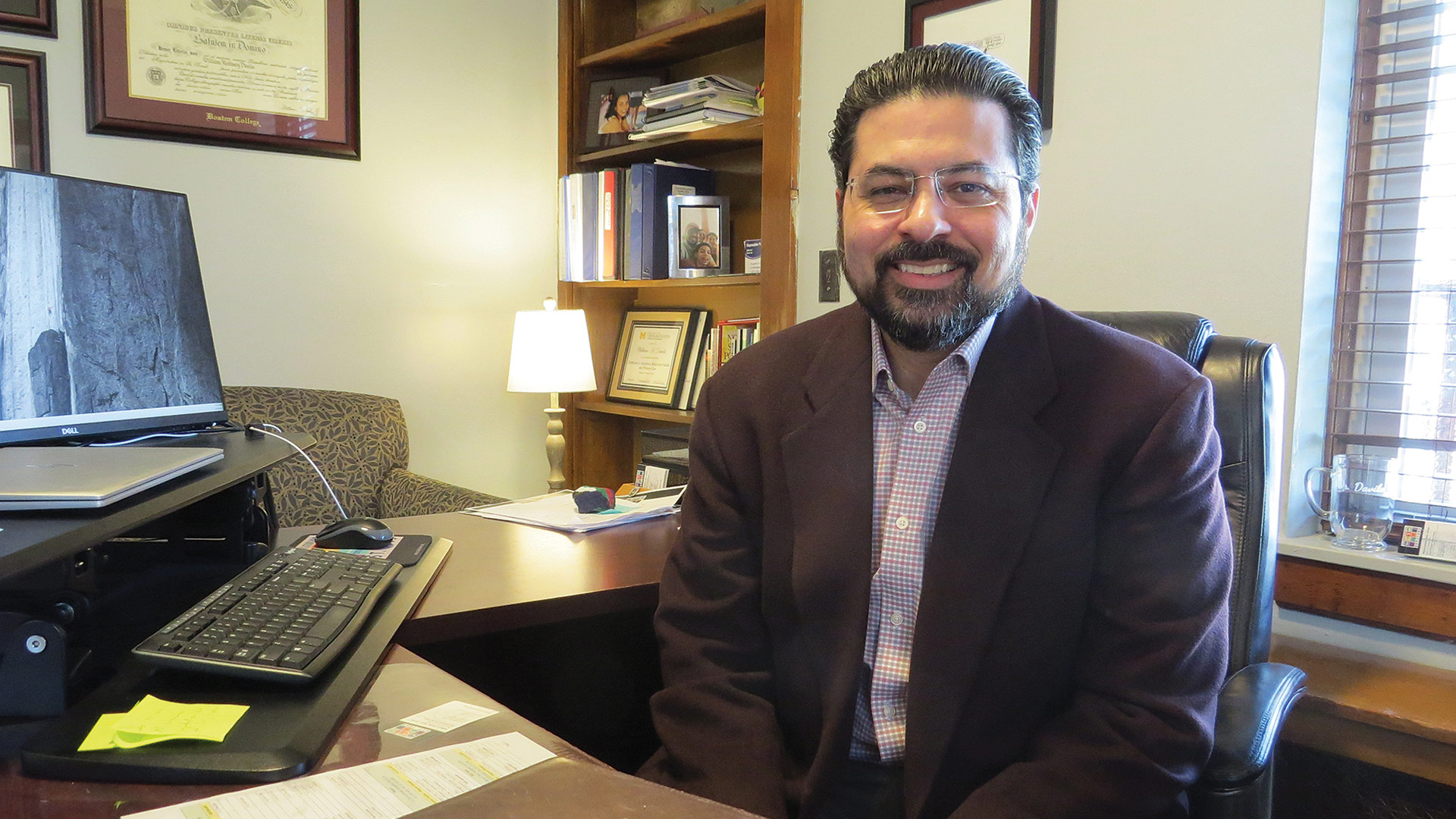
“We’re looking forward to being less legal-focused and doing all the fun things for our business here and out in the world that we’ve been wanting to do for years,” he told BusinessWest. “We’re looking forward to taking all that money we were spending on lawyers and putting it back into the business and creating an experience here that’s unlike anything else in Western Mass.”

It’s been more than eight years since Morin, a mechanical engineer by trade who made brewing beer his hobby and then decided to make it his vocation, started walking along the banks of the Chicopee River with his wife after relocating to Ludlow and remarking how the mostly vacant Ludlow Mills would be the ideal place to start and then grow his business.

The Iron Duke name

The Iron Duke name will have to change soon in an effort to avoid another legal battle — this one with Duke University — but the bootprint, and the mailing address, won’t.

He’s now there, expansion plans are on the table and on his computer, and the brewery is positioned to be a permanent, and important, part of the landscape. But getting to this point didn’t exactly go according to plan.

Not even close.

Instead, as mentioned, what seemed like a good story on every level turned dark in many ways as Iron Duke and landlord Westmass Area Development Corp. first had a disagreement over terms in the lease, and then fought for 18 months in court over just what the language in the contract meant.

When a judge eventually ruled that Iron Duke could finish out its lease, which expired earlier this month, what that did was eventually buy everyone some time and allow them to write what two years ago would have seemed like a very unlikely story.

Long story shorter, the two sides came to an agreement whereby Iron Duke would not only stay, but be a vital cog in the ongoing efforts by those at Westmass to make the mills not simply a home for small businesses — and residents as well — but a destination of sorts.

How did this stunning turnaround happen? Morin sums it up this way.

“We found that, although the lawyers served their purpose, just having a person-to-person conversation and understanding where each party was coming from was huge; we found some common ground,” he explained. “It was a kind of a Hail Mary, and it was a tough negotiation because there was a lot of bad blood between the two organizations at that point. But we actually had more in common with our visions than we thought.”

Jeff Daley, who was named executive director of Westmass roughly a year ago and picked up these negotiations from Bryan Nicholas, who served as interim director after the sudden passing of Eric Nelson in the spring of 2019, agreed.

“There were some bitter feelings, but Nick and I quickly agreed to operate without rear-view mirrors,” Daley explained. “We put the seatbelts on, moved forward rapidly to get them in there long term, and have an understanding that we’re going to work together to get the best for the tenant and the landlord.”

As he talked with BusinessWest, Morin grabbed his laptop and clicked his way to an architect’s images of a two-story, permanent structure that will reside where a tented beer garden, erected last summer, now sits. He expects work to start soon and be completed by next spring or summer.

As for Duke University, Morin is in the final stages of changing the company’s name to avoid another expensive court fight, this one with a university with very deep pockets and the willingness to protect its brand — that word ‘Duke’ — from any and all infringement (more on that later).

About the only thing standing in the way of Iron Duke now is COVID-19. And while it poses a series of challenges and has reduced draft sales of the company’s products by roughly 70% because bars and restaurants are not open or have cut hours way back, Morin believes the company can ride out that storm as well.

For this issue, BusinessWest takes a look back at what has been a rough ride for Iron Duke — and ahead to what promises to be, as they say in this business, a smoother pour.


Ale’s Well That’s Ends Well

As he talked with BusinessWest at the bar in Iron Duke’s taproom on a quiet Wednesday, Morin, a safe six feet away, referenced the one place at that end, officially outlined with blue tape, at which one could sit because of social-distancing measures forced by COVID-19.

“That space over there is too close to those tables,” he said, gesturing with his hand to another portion of the bar. “And this space here is too close to people sitting over there; it’s a no-fly zone. This is only place you can sit at. It can be a little lonely, I guess, but people still like it.”

The fact that this conversation was taking place where it was — and that there were lines of blue tape all over the bar — could be considered remarkable. And maybe 18 months ago, it would have been, well, pretty much unthinkable.

Back then, it seemed as if what started as a good marriage was going to end up in a messy, very public divorce, with Iron Duke brewing beer in Wilbraham, and Westmass looking to fill a vacancy and move on from what had become a public-relations problem.

And then … things changed.

As we retell the story of how we got here, and where we go from here, we need to go back a little further, to those walks Morin had with his wife along the river.

“My wife and I started a family about a half-mile from here,” he noted. “We used to walk our dog back here and talk about — as most in Ludlow did at the time — how it was a shame that this whole property was in the shape it was. When we put together our business plan, it just made sense to grow it here, in the town where we lived and close to our house.”

Iron Duke Brewing has added a food truck

Iron Duke Brewing has added a food truck and tented beer garden at its Ludlow location, and soon will commence work on a permanent, two-tiered beer garden that will overlook the Chicopee River.

He initiated talks with the previous owner of the sprawling complex in late 2012, and discussions accelerated after Westmass acquired the property, because with that purchase came ambitious talk of redeveloping the mills into a multi-purpose destination that would include residential, business, healthcare, and other uses.

“We wanted to be part of it because we had big plans for our small business,” said Morin, adding that what would eventually become a highly scrutinized and much-debated seven-year lease agreement was inked in late 2013.

What followed was a year and a half of construction in one of the many so-called stockhouses on the property, the century-old, high-ceilinged, 6,000-square-foot facilities in which raw materials — jute plants — were hung and dried for production in the mill complex.

The brewery officially opened on Thanksgiving Eve in 2014.

“We hit the ground running — that first year is a bit of a blur,” he recalled, noting that he quit his job that month as a mechanical engineer and made brewing his vocation — and his passion. The company steadily grew, drawing customers to its taproom in the mill and also putting its various products in cans and bottles, which were available at bars, restaurants, and some package stores.

Things were going pretty much according to the script laid out in the business plan until 2015, when the company started hitting some speed bumps, as Morin called them.

They came in for the form of differences of opinion regarding just what the lease allowed at the premises.

“We found ourselves being backed into a corner regarding our business and a disagreement over what we could do here and what we were doing here at our Ludlow location,” said Morin. “That’s how lawyers got involved — the interpretation of the lease itself.”

Elaborating, he said it all came down to one paragraph and its two sentences regarding the use of the premises and consumption of beer on and off the property. Cutting to the chase, he said Westmass held the view that such consumption would be limited — or at least more limited than what Iron Duke had in mind and needed for its venture to succeed.

“It was a kind of a Hail Mary, and it was a tough negotiation because there was a lot of bad blood between the two organizations at that point. But we actually had more in common with our visions than we thought.”

“That escalated from a conversation to litigation once the lawyers got involved,” he went on, adding that the court fight lasted from January 2016 to the summer of 2017. Westmass wanted Iron Duke evicted from the property, a fate that would have effectively scuttled the business, Morin said.

“We had already leveraged everything we had to open here in Ludlow the first time around,” he told BusinessWest. “We’re self-financed; myself and my family, we put everything we had into this. To build a brewery once was everything we had — to build it twice was something we couldn’t afford.

“We were only left with closing or fighting this thing out to save our business, so that’s what we did — we fought for a good chunk of time,” he went on, adding that the protracted and very expensive legal fight pushed Iron Duke to the very brink financially, and it only survived because of the strong and constant support from its customers.


Lager Than Life

That fight ended with a judge ruling that Iron Duke could essentially ride out its lease operating as it was, Morin recalled, adding that, not long after that decision, he bought property in Wilbraham with the intention of moving the company there when the lease expired — right around now, actually.

Instead, the company is staying put in Ludlow. After the passing of Nelson in the spring of 2019, discussions ensued with his immediate successor, Nicholas, who was with Westmass when Iron Duke originally signed its lease in 2013 and played a role in those negotiations. And those talks continued with Daley.

They weren’t easy negotiations, Morin said, noting that there was still considerable baggage to contend with. But, as noted above, both sides concluded they had more to gain by coming together on another lease than they did by parting ways and letting the next chapters of this story develop in Wilbraham.

“We came to common ground realizing that we’re better off with each other than we are apart,” Daley said. “It’s a great relationship now, and I think it’s going to be an even better relationship going forward; I’m excited for their future, and I’m glad they stayed at the Ludlow Mills.”

Morin agreed. From the beginning, he noted, the company wanted to be an integral part of the growth and development of the Ludlow Mills complex, and this mission, if it can be called that, had been somehow lost in the midst of the protracted legal battle.

“We always had envisioned ourselves as a showcase of what they could do with the old property here, and a lot of that, through the litigation and the filtering of what we do through other parties, just got lost,” he explained. “And once we had the opportunity to show them the plans that we had — we were going to spend millions of dollars in Wilbraham to build a showcase facility — both sides started asking, ‘why not just stay where we are?’”

So now, the company is just about at the point where it always wanted to be — focused entirely on business and its expansion plans.

“We always had envisioned ourselves as a showcase of what they could do with the old property here, and a lot of that, through the litigation and the filtering of what we do through other parties, just got lost.”

There is still the matter of Duke University and its demands that the brewery change its name. Morin has decided that, even though he has a good amount invested in ‘Iron Duke’ — literally and figuratively — this is not a fight he’s willing to wage at this time.

“It’s a common thing among these universities that they protect their mark,” he said with some resignation in his voice. “So there’s not a lot of negotiation on that front.”

So instead, he will rebrand. He’s working with a firm to come up with new name, and expects to announce it within the next several weeks. While offering no other hints, he did say the word ‘Duke’ could not be part of the equation, but he expects to be able to work the company’s very recognizable bootprint logo into what comes next.

Meanwhile, since the start of this year, the company has essentially doubled its space within its stockhouse by taking down a wall and expanding into square footage that had been unused since the mid-’90s — something it has long desired to do but couldn’t because of the litigation.

Ongoing changes at the site

Ongoing changes at the site will essentially transform it from a tasting room to more of a full-service brewpub and restaurant.

It also erected the tented beer garden and added a food truck, said Morin, noting that construction of the permanent, two-tiered beer garden, which will overlook the river, is set to commence this coming winter.

“There will be a nice concrete patio, along with the food truck we purchased in June,” he noted. “All this will enable us to essentially transform from just a tasting room to more of a full-service brewpub and restaurant.”

COVID-19 has certainly thrown the brewery some curve balls — the business was closed to on-premise business during the shutdown last March and relied entirely on distribution, delivery, and curbside purchases of its canned products until July — but Morin believes that, after all the hard fights this company has been through, it can handle a pandemic as well.

“We’ve found that, because we’ve been through so much in the past six years, we’re able to handle these larger problems pretty effectively,” he said. “We’ve got a nice, hard callus around us, and we’re pretty flexible about our business.”


What’s on Tap?

At the height of the legal battle that ensued between Iron Duke and Westmass, the brewer put out a product called Eviction Notice IPA (India Pale Ale).

It became an immediate hit and one of its best sellers — in part because it was a quality ale with good flavor, but also because drinking it became a way to show support for the company in its quest to stay where it always wanted to be.

“We bring it back every now and then because it is a crowd favorite, but it’s not as bitter of a beer as it once was,” he explained. “It’s a fun beer to tell our story, but we always try to finish off the story on a positive note, rather than a negative one.”

Only 18 months ago, few would have thought this story could possibly sound a positive note, but things changed quickly and profoundly — and both sides seem poised to benefit from this collective change of heart.


George O’Brien can be reached at [email protected]

COVID-19 Features

Let There Be Light

Judy Matt says the Spirit of Springfield (SOS) exists for one reason — to entertain residents across the region and create some memories.

It hasn’t been able to do any of that to this point in 2020, obviously, and Matt, the long-time executive director of the nonprofit agency, has been frustrated and disappointed by this reality. Annual events such as the pancake breakfast (long heralded as the world’s largest), the Fourth of July fireworks, and the Big Balloon Parade have been wiped off the calendar due to the COVID-19 pandemic, and there remains uncertainty about whether any of those can be staged in 2021.

Meanwhile, at the SOS, with little revenue coming in other than a Paycheck Protection Program (PPP) loan and the proceeds from the annual golf tournament, the staff — and that includes Matt — have been on unemployment for at least some of this year, although she has continued to come to the office every day.

But there will be one bright spot as a very trying year — for both the region and the SOS — comes to a close, as the necessary approvals (and many of them were required) have been received to stage Bright Nights in Forest Park from Nov. 25 to Jan. 6.

Things won’t be exactly the same — there will be new restrictions on everything from the hours of operation (the front gate will have to be shut at 8:45 p.m.) to how tickets are paid for (no cash, for example) — and the the gift shop in the park will be closed, although a facility will open downtown in the Springfield Visitors Center. And no one will be allowed to get out of their cars under any circumstances.

“Everyone has indicated to us that they think it’s going to be the best one we’ve had.”

But just being able to have Bright Nights will provide a huge boost for the region and the Spirit of Springfield, Matt said. “The region needs Bright Nights, now more than ever. It’s been a long, trying year for everyone.”

Bright Nights will go on in 2020

There will be some new restrictions on hours, method of payment, and other matters, Judy Matt says, but Bright Nights will go on in 2020, a bright spot in an otherwise dark year.

But while the region needs Bright Nights, so too does the Spirit of Springfield, which relies on the income from this signature event to help carry out its mission and present those other annual gatherings listed earlier.

So Matt and others will be keeping their fingers crossed on the weather — past history has shown that a few snowstorms can wreak havoc on the bottom line — while trying to make the most of the opportunity it has been given to stage Bright Nights in the middle of a pandemic.

And early indications are that, despite some restrictions on the hours and other factors, this could be one of the best seasons in the 26-year history of the Bright Nights, given what kind of year it’s been and the need for some kind of relief valve, especially as the holiday season approaches.

“Everyone has indicated to us that they think it’s going to be the best one we’ve had,” she told BusinessWest, adding that, while it might well achieve that status, this year’s Bright Nights will be challenged by the restrictions imposed upon it by city and state officials, especially the shortened hours of operation.

“We are theoretically losing 39 hours during which we could have been selling tickets — in the past, we had a lot of nights where we were open ’til 11,” she said, adding that, with vehicles going through at the rate of 300 per hour, those lost hours will hurt.

The city has allowed Bright Nights to stay open an additional three days, she went on, adding that, while this will help, the volume of traffic through the displays decreases markedly after Jan. 1.

“I can keep talking about what we can’t do and what we won’t have,” she said. “But we’re just very grateful to be able to do this; it’s important that this region has Bright Nights this year.”

As for what comes after Bright Nights … Matt said there are certainly question marks about whether the SOS will be able to get back into the entertainment business full-time next year, but she and her staff have to plan as if that is going to be the case.

But if the current conditions continue well into next year, the agency will be facing some hard questions. In addition to the events being wiped off the slate, COVID-19 also prohibited the agency from staging its annual Bright Nights Ball, which traditionally nets the SOS $50,000 to $60,000 for operating expenses.

Without that revenue, the agency needs a very solid year for Bright Nights and probably other forms of help, such as that small PPP loan it received last spring, which enabled a few of the staff members to remain on the payroll.

“We’re trying to figure it all out,” she told BusinessWest. “We’re hoping we have a good year for Bright Nights; if we have a good Bright Nights, that will take us into March or April. After that … we’ll have to see what happens.”

While the long-term picture is clouded by question marks, the immediate future is bright — or at least brighter — now that the agency has been given the green light to continue what has become a holiday tradition, not just for those in this region, but for those who travel to it to enjoy what has been recognized among the top holiday lighting displays in the country.

The pandemic has turned out the lights on a great many institutions and activities this year, but not these lights.

It won’t be exactly the same — nothing is in the middle of a pandemic — but this impressive show will go on.


—George O’Brien

Coronavirus Features Special Coverage

Tightening the Safety Net


Andrew Morehouse stands in the warehouse at the Food Bank’s complex in Hatfield.

Andrew Morehouse stands in the warehouse at the Food Bank’s complex in Hatfield.

As Andrew Morehouse conducted his tour of the facilities at the Food Bank of Western Massachusetts, the sights and sounds helped tell the story that is emerging at this agency — and within this region — at a critical time.

The first thing to notice was the copious amounts of food of all kinds — from sweet potatoes in huge bins to hundreds of cases of canned tuna — now stored at the complex in Hatfield and in other locations as well, destined for local meal sites and food pantries. Indeed, the Food Bank is “over capacity,” as Morehouse, its executive director, put it, because of the soaring numbers of people who are now facing food insecurity in the wake of the pandemic, and the way government agencies, businesses, and individuals have responded to those numbers.

This capacity issue was clearly in evidence, with pallets of food stacked not only on the shelves and the floor space of the warehouse, but in the hallways leading to it as well.

“The warehouse is jam-packed; we’re storing food off site, and we’re moving it faster,” he explained. “We’ve brought on additional staff, we’ve purchased another van, we’re about to purchase another truck so we can move food as quickly as possible. The pandemic has put us over the top in a big way, so we’re looking at options for expansion.”

As for the sounds … well, the Food Bank was mostly quiet at the hour of this visit — late morning, approaching noon — but the few workers on the floor were talking about what they witnessed in the parking lot of Central High School in Springfield, where a drive-thru food-distribution site, supported in part by the Food Bank, has been established. The staffers were talking about long lines of vehicles, and how this has become a constant, or a new norm, with this initiative.

“The warehouse is jam-packed; we’re storing food off site, and we’re moving it faster. We’ve brought on additional staff, we’ve purchased another van, we’re about to purchase another truck so we can move food as quickly as possible. The pandemic has put us over the top in a big way, so we’re looking at options for expansion.”

Meanwhile, fewer people are working at the Hatfield facility, with many more working remotely because of the pandemic, and a host of safety protocols in place to keep those who do come in — and the public in general — safe.

In many ways, the Food Bank — and the hundreds of sites it serves — has become one of the enduring symbols of this pandemic locally. Indeed, just as the bread lines of the mid-1930s became an indelible image that came to represent the Great Depression, the long lines of motorists picking up food — it can no longer be distributed indoors — have come to symbolize this pandemic.

And as fall continues and winter approaches, need is only expected to grow, said Morehouse, who cited projections from Feeding America showing that, by year’s end, an estimated one in six residents in Western Mass. (perhaps 127,000 people) will be experiencing food insecurity, as opposed to one in 10 before the pandemic began, and one in four children. That would be a 40% increase in the number of people overall, and a more than 60% increase in the number of children.

In many ways, such numbers help tell this story. During the fiscal year that just ended Sept. 30, the Food Bank distributed 14.8 million pounds, or the equivalent of 12 million meals — a 23% increase over the previous year, compared to an average 6% increase year over year. Meanwhile, over the past seven months, the increase has been roughly 30% (from 7.3 million pounds to 9.5 million), much higher than the annual increase, obviously, because of the direct impact of the pandemic, and the highest seven-month spike in the agency’s 38-year history.

Behind the numbers, though, is the inspiring story of how the region and its business community have responded to the crisis, said Morehouse, adding that this response was quick and profound, and it is ongoing.

Sweet potatoes from local farms

Sweet potatoes from local farms are among the many items jamming the shelves and floor space at the Food Bank, which is over capacity due to spiking need.

The biggest question concerns what comes next, and it’s one that’s hard to answer, he noted, adding that many factors will go into determining where these numbers go in the weeks and months to come.

For this issue, BusinessWest talked at length with Morehouse about the mounting problem of food insecurity in the wake of the pandemic and how his agency has responded. Overall, he said this response “is how the safety net is supposed to work.”

Elaborating, he noted that the Food Bank has been able to meet soaring need because federal and state agencies have stepped up and put more food into the system, but also because the region has stepped up as well.


Food for Thought

As he talked about what has transpired since March, when the pandemic arrived in Western Mass., Morehouse said it’s been a period of adjustment — for area residents, for his agency, and even for area farms.

For many, the pandemic left them unemployed or in a position where they were earning less — although generous unemployment benefits certainly helped large numbers of people impacted by the downturn in the economy. But those unemployment benefits also had the unintended consequence of leaving individuals ineligible for SNAP (Supplemental Nutritional Assistance Program) benefits, creating a different kind of problem.

For the Food Bank, the first several weeks of the pandemic were chaotic, he said, as the agency mounted a response to what was happening — but had to do so in the middle of a health crisis.

“There was a lot of uncertainty about how to protect oneself from COVID-19, and suddenly, so many people lost their jobs or were furloughed,” he explained. “There was an outpouring of concern, of wanting to help, from people who don’t know that an emergency food network exists. So we were fielding calls from community groups from all across Western Massachusetts, saying, ‘we want to bring food to the Food Bank,’ or ‘how can we support you?’

“And it took a while for us to connect people to the pantries and meal sites in their communities as a way to support households that were at risk of hunger, because that’s who we work with,” he went on. “We don’t receive individuals who are in need of food assistance at our warehouse, and we don’t deliver food to households; we work through the existing network of about 165 independent pantries and meal sites, plus our own distribution programs to 51 senior centers every month, and on our mobile food bank, which has 26 distribution sites across all four counties on a biweekly or monthly basis.”

When asked how the Food Bank responded to that 30% spike over the past seven months, Morehouse replied with a quick “it wasn’t easy,” before elaborating.

Pallets of food destined for area meal sites and pantries

Pallets of food destined for area meal sites and pantries spills out into the hallways at the Food Bank, clear evidence of soaring need in the region.

“It took us a while to catch up, I’ll be honest,” he told BusinessWest, noting that there were a number of challenges to overcome, starting with disruption to what he called the “supply chain,” meaning donations of food to the agency from individuals and also, and especially, area supermarkets.

“There was a run on those supermarkets, so it was a significant hit,” he recalled, adding that roughly half the food distributed by the agency comes from the private food industry in the form of dry goods, produce, and close to 1 million pounds of meats frozen on the sell-by date.

Beyond this disruption to the supply chain, the Food Bank was impacted by shortages of staff and a loss of many of its distribution sites; several of them closed, including all brown-bag sites for elders and many mobile locations.

Slowly, over time, those sites reopened, while also changing how food was distributed, he noted, adding that as, the spring progressed, the Food Bank adapted to what became a new normal, both in terms of how it operated and with the numbers of people now facing food insecurity.

Indeed, over the period from March to August, the latest information available, the average number of individuals served each month grew to 107,000, Morehouse said, adding that 20,000 of those, or 19%, are people who have never come to a pantry or meal site.

And that percentage of new visitors was much higher, perhaps 40%, in the early weeks of the pandemic, when the layoffs and furloughs started climbing, and before those generous unemployment benefits kicked in. The numbers then leveled off for a time, but they started climbing again, he went on, adding that, when the new six-month numbers come out, the total people being served should far surpass that 107,000 figure.


Numbers to Chew On

Behind the numbers is the story of how this rising demand has been met with the help of a number of contributing sources — that safety net Morehouse described earlier.

These include the federal government, state agencies, area businesses, and philanthropic efforts like Jeff Bezos’ $100 million gift to Feeding America’s COVID-19 Response Fund.

“The federal government has stepped up — we’ve received considerably more federal food,” he explained, referring specifically to CARES Act appropriations that enable such agencies to buy more food. “And there was an outpouring of support from individuals, businesses, and regional and state foundations, as well as from Feeding America, the national network of food banks.”

The agency has also received more than $400,000, with another $123,000 coming, from the Massachusetts COVID Relief Fund, he went on, adding that a number of individual businesses, including Big Y and the Antonocci Family Foundation, have made sizable donations as well.

Part of the federal government’s response has come in the form of Farmers to Families Food Boxes, a new program through which the USDA’s Agricultural Marketing Service is partnering with national, regional, and local distributors, whose workforces have been significantly impacted by the closure of restaurants, hotels, and other food-service businesses, to purchase up to $4.5 billion in fresh produce, dairy, and meat products from American producers of all sizes.

Mapleline Farm in Hadley is one of several local farms in the region that have adjusted with the pandemic, now supplying the Food Bank with milk in family-sized packaging.

This program supplies boxes of fresh fruits and vegetables, dairy products, and meat products, which distributors package into family-sized boxes, then transport them to food banks, community and faith-based organizations, and other nonprofits serving Americans in need.

The program has benefited several area farms, said Morehouse, noting that those supplying the boxes are purchasing products from many area farmers who were severely impacted by their inability to sell to restaurants, colleges, and universities closed by the pandemic.

“It took a while for some of these farms to adapt, but many of them have,” he said, citing, as one example, Mapleline Farm in Hadley, a dairy farm whose name and logo were on countless boxes of quart containers of milk in the Food Bank’s warehouse.

As for the future, Morehouse said the contributions that have poured in from individuals and businesses have left the organization in a solid position financially for this current fiscal year, one in which overall need is expected to continue growing, while the economy is projected to continue struggling.

Meanwhile, question marks remain about the ongoing level of support from state and federal governments, as well as from individual contributors, he said, citing the potential for donor fatigue as the pandemic wears on.

“The state is operating on a month-to-month budget, so we’re not even sure if we’re going to be level-funded for a program that we’ve come to rely on for 30% of our food since 1992,” he told BusinessWest. “And the federal government has not passed another stimulus package, so we’re anticipating a decline in federal support.

“We have a jigsaw puzzle of public and private emergency food resources that rely of federal and state funding and private charitable support,” he went on. “We rely on all those sources of support to get the food we need and the resources we need to keep operations afloat.”

One of the important pieces of that puzzle is Monte’s March, the fundraising walk from Springfield to Greenfield that was launched by radio personality Monte Belmonte to benefit the Food Bank. Belmonte has seen the ranks of people joining him on his late-November trek grow steadily over the years, as well as the amount raised for the agency, but that first trend won’t continue this year, as the pandemic is forcing organizers to encourage individuals to support the march remotely — although the top-performing teams when it comes to generating donations will be able to march.

But, given the urgent need for support, they are hoping the second trend will continue. The goal for this year has been raised from the $333,000 mark set last year — each dollar donated buys three meals, so the goal was to fund 1 million meals — to $365,000, or $1,000 a day, or 4,000 meals a day (one dollar now buys four meals, due to greater efficiency).


Hard to Digest

Looking at the projections from Feeding America for the next several months, the ones predicting that one in six area residents will be food-insecure, Morehouse had his doubts initially about whether things would really get that bad here.

But now, he’s thinking they may be realistic — painfully realistic, to be more precise — especially when one ponders the unanswerable questions concerning when the pandemic will subside and to what degree the federal government will keep on printing money.

One thing Morehouse does know is that the Food Bank will continue to pivot and respond proactively to the ongoing crisis — right down to finding more warehouse space.


George O’Brien can be reached at [email protected]

Features Special Coverage

A ‘Family Business’

Tom Hebert says his novels are a way of paying back the Marine Corps for all it has given him.

Tom Hebert says his novels are a way of paying back the Marine Corps for all it has given him.

The story sounds like some of the fiction that Tom Hebert now devotes much of his non-working time to writing.

But it’s not.

Flashing back to when he was in high school, Hebert said he and his father, William, were having a talk about what he might do with his life, career-wise. The elder Hebert had just used his last match to light a cigarette, and after doing so, he noticed the ad on the back of the matchbook: ‘Become a CPA.’

“He handed me the matchbook cover, and I said, ‘OK, I’ll look into it,’ said Hebert, who would earn a degree in accounting at American International College. Eventually, he would join what was then one of the ‘Big 8’ accounting firms, Lybrand, Ross Bros. & Montgomery, and subsequently work in a number of other settings in Connecticut and Massachusetts, including Cambridge Credit Counseling, which he currently serves as chief financial officer.

“Discipline and leadership … that’s what I took away from the Marines. It shows in the respect I have for people, including the people who work for me — treating them well, treating them with respect.”

But while the saga of how he wound up in financial services is intriguing and makes for good reading, Herbert’s story is largely about what else he’s done with his life, starting with his time in the Marine Corps, which included a stint in Vietnam in 1970, as that conflict was beginning to wind down in many ways (much more on that later).

More recently, a second career has emerged: writing fiction, specifically about Marines. His first book, The Remains of the Corps, Volume I: Ivy & the Crossing, which he authored under the pseudonym Will Remain (with Remain being an anagram of Marine), came out early this year.

Covering the period from 1899 to 1917, several months before the U.S. entered World War I, it tells the story of Kenneth Remain (Will’s grandfather, who was born in Worcester and educated at Harvard), and the love triangle he enters along with Harvard classmate Lawrence Blakeslee and the “beautiful KatyKay Mulcahy.” The reader is also introduced to the 57 enlisted men of the fictional Fourth Platoon of the 87th Company of the true-to-life Third Battalion of the Sixth Marine Regiment.

“These gentlemen would have used a very large vocabulary, and I had to develop my vocabulary tremendously to have it fit for these two gentlemen .”

“When Kenneth takes KatyKay away from Lawrence, it creates problems between the two families that last for decades,” Hebert said, describing the plotline for the first book and those that will follow. “There’s this interaction between the two families that will last right up ’til the Vietnam War.”

The book is selling fairly well, but Hebert admits to not yet reaching the ‘break-even’ point that all self-publishers aspire to. Originally in hardcover, there’s now a paperback version of Remains of the Corps, as well as an e-book, and an audiobook will soon follow.

A second book is in progress, one that will take the story into the battlefields of France in World War I, with subsequent volumes covering the 1920s and ’30s. Eventually, his fictional characters will fight in World War II, which his father did, having taken part in the epic battle on Iwo Jima.

His father’s service — and his own — helped inspire the books, said Hebert, who told BusinessWest his writing is a way to give back to the Marine Corps, which he said gave him so much.

When asked what, specifically, he said the Corps gave him discipline, something he’s called on in all facets of his intriguing life, as well as some moments he won’t forget.

“Discipline and leadership … that’s what I took away from the Marines,” he explained. “It shows in the respect I have for people, including the people who work for me — treating them well, treating them with respect.”

Thus, Hebert’s saga represents the perfect Veteran’s Day story for this business publication: it’s a tale of military service and a family’s devotion to the Marine Corps, but also one about business — the one Hebert joined with some help from that matchbook cover, as well as the one he’s in now — and the challenging world of publishing.


The Write Stuff

“That’s the final straw!” Kenneth Remain said angrily, as he sat down heavily at a table in Jimmy’s Lunch. The melting snow on the brim of his boater and the shoulders of his benny testified to the fact that a sockdologer of a storm had clobbered Boston, an affront to the spring solstice of two days hence; though waning, the storm had not breathed its last.

Those are the first lines of The Remains of the Corps, Volume I: Ivy & the Crossing, and they provide not only a glimpse of Hebert’s mostly self-taught writing style, but also the immense amount of research that goes into writing a book set more than a century ago.

Tom Hebert says his second novel is almost fully researched and one-quarter written

Tom Hebert says his second novel is almost fully researched and one-quarter written. He plans six volumes in all to tell the story of the Remains.

Indeed, before he could pen a story set in 1917, Hebert said he needed to know the vocabulary of 1917 — specifically the vocabulary used by people attending Harvard, hence words like ‘boater,’ a type of straw hat; ‘benny,’ a greatcoat; and ‘sockdologer,’ a synonym for any word connoting ‘whopper’ or ‘defining.’

“People talked much more formally back then — they used the king’s English,” he explained. “These gentlemen would have used a very large vocabulary, and I had to develop my vocabulary tremendously to have it fit for these two gentlemen.

“Any time my wife and I were out at bookstores and flea markets, I would pick up books on vocabulary, idioms, and more,” he went on. “And as part of my training, I went through those books and selected words, phrases, thoughts, and philosophies, and I would say, ‘I could use this in one of my books.’”

Several years of research and work learning how to write fiction went into The Remains of the Corps, Volume 1, said Herbert, noting, again, that his decision to dive into what he expects will become a six-book set was inspired by the service of his own family and a firm desire to give something back to the Corps.

With that, we’ll do what fiction writers often do: we’ll flash back — first to 1945, when William Hebert was ending his lengthy tour of duty with the Marines. He enlisted just after Pearl Harbor and served throughout the war — and even after it ended, as part of the peacekeeping force in Japan. Upon returning home, he built a house in Chicopee and went to work as a pressman for Springfield Newspapers, retiring at age 62.

“I work partly because I enjoy working — I thoroughly enjoy my position here. But also because it enables me to fund the things that I want to do in life — one of which is writing.”

Hebert said his father, like many who fought in World War II, didn’t talk much about his service. “But he was always singing the Marine Corps hymn when I was a boy,” Tom recalled, adding that, while his father never pushed him to join the service or that specific branch, he found himself signing up.

That was in May 1968, just a few months after the Tet Offensive, when the Vietnam War was in some ways at its height. Hebert had just earned that accounting degree at AIC, and attended Office Training School for 10 weeks, and then another five months at a specialty school for officers.

His military occupational specialty was to be a tank officer, so he then went to Camp Pendleton in California for two months. Around that same time, he got married and was told he could spend another 18 months in California.

Tom Hebert began his service in Vietnam a few months after the Tet Offensive

Tom Hebert began his service in Vietnam a few months after the Tet Offensive in 1968, when the conflict was at its height.

But there was a quick change in plans, as he and several other tank officers were told there was an urgent need for their services in Vietnam.

“When we arrived at First Marine Division and met with the personnel officer, he said, ‘I don’t know why they sent you all here — I have three times as many tank officers as I need,’” he recalled. “That’s typical of the military, and my father had warned me about the bureaucratic aspects of being in the service.”

With his background in accounting, Hebert was eventually sent to the Central Service Agency, essentially a supply position — and wasn’t too happy with that assignment.
“After being there a short time, I went to the personnel officer and said, ‘I can’t do this — my father was in the Marines, he served at Iwo Jima … this is not why I joined,” he recalled. “He kicked me out of his office and said, ‘you’ll go where you’re told.’”
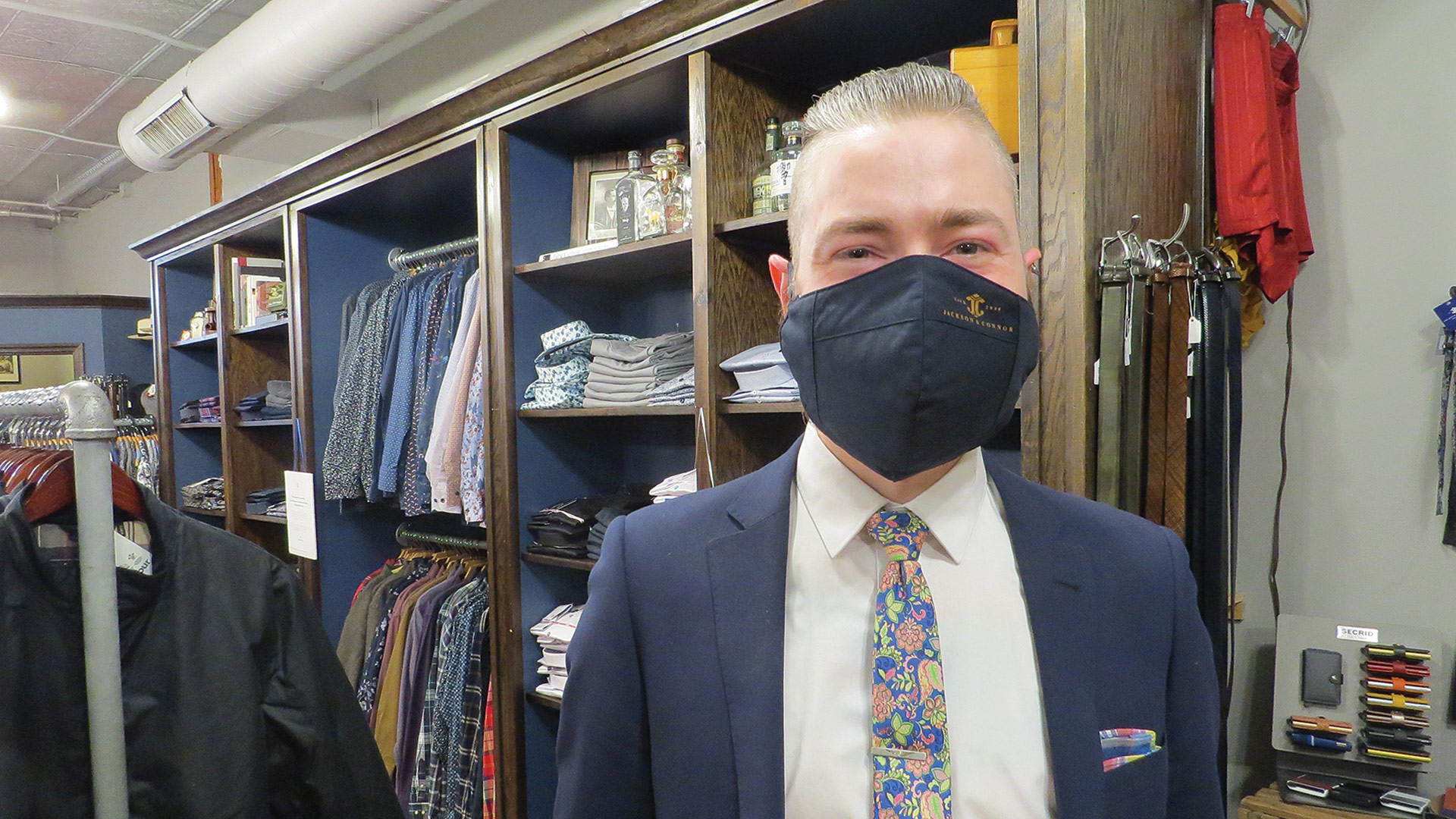
So he spent a year in Da Nang as — in the language of that time — an REMF, which stands for rear echelon mother… well, you can fill in the rest. Or, as they also said, ‘in the rear with the gear.’
Still, that time gave him a deep appreciation of the Corps and some valuable life lessons about leadership and teamwork.

When he came back home, he had a case of what was and still is known as ‘survivor guilt,’ which prompted him to publish a Vietnam War newsletter and also sell books through what was known as the Vietnam Book Store, a mostly mail-order operation.


Turning the Page

Longing to do more, Hebert eventually settled on the idea of writing about fictional Marines, but with art imitating life in many ways, especially when it comes to the Marine Corps being a generational phenomenon, or what Hebert calls a “family business.” It was that way for his family, and for the one he’s writing about as well, in stories told by the youngest generation.

That would be Will Remain, whose background is similar to Hebert’s, but with some important differences. Remain graduated from Harvard, not AIC, and upon graduation enlisted in the Marines and attended Officer Candidates School and Basic School in Quantico, Va. Instead of serving in the rear with the gear, he fought at Khe Sanh in 1967 and the Battle of Hue City during the Tet Offensive of 1968.

Hebert said he was inspired in many ways by the war novel Once an Eagle, written by Anton Meyer. A New York Times bestseller, it has been a favorite of American military men and women since it was penned in 1968, he noted.

“That book just fascinated me,” he told BusinessWest. “It was about the Army, and it covered several decades of one officer’s time. That book really inspired me to write.” Indeed, Hebert’s first forays into writing were non-fiction works about Meyer and his books.

He then embarked on the first installment of his novel, which wound up taking him a decade or so to write and prepare for publication. It includes dozens of illustrations by Tara Kaz that help bring the individual stories to life.

As for those stories, or the elements of his novels, he said the process of weaving them together is very much like that of putting together a jigsaw puzzle — which happens to be another of his hobbies; he said he’s put together more than 75 of them, with his favorite (unsurprisingly) being an image of the Iwo Jima Memorial in Washington.

“I have tons and tons of research material, and it’s all in pieces,” he went on, adding that, as he read books on history and vocabulary, for example, he would tear out the pages and keep them for future reference. “I take all those pieces — and we’re talking about an incredible amount of information — and put it together in a book.”

His second book is 95% researched and about 25% written, he said, adding that this segment details the battles in France during World War I. Book three, meanwhile, covers the period between the wars, and book four will likely take place on a fictional island in the Pacific during World War II.

Hebert writes when he’s not working, which means nights and weekends, and at age 73, he intends to keep on working — for several reasons.

“I work partly because I enjoy working — I thoroughly enjoy my position here,” he explained. “But also because it enables me to fund the things that I want to do in life — one of which is writing.”

As noted, his first book is off to a decent start, with about 300 copies sold and a far less expensive paperback now available. He’s optimistic, and excited, about the audiobook version, which will be read by noted narrator Grover Gardner, who, coincidentally (or not), has also read Once an Eagle.

“My hope, with the audiobook being read by someone so well-known, is that this will bring some attention to it and sell more books in print — that’s my goal, anyway,” he said, adding that this is far more an enjoyable hobby than a money-making enterprise. “I work to write.”


The Last Word

Hebert’s life has taken a number of twists and turns since his father glanced down at that matchbook cover and eventually handed it to him.

As noted at the top, some of it, including that episode, does sound like fiction, which is appropriate, said Hebert, because life really does imitate art in many ways.

His art certainly does. It’s a collection of tales about people. But it’s also about a business — a family business.

That’s what the Marine Corps became for him — and for those in the Remain family — and it’s a success story on a number of levels.


George O’Brien can be reached at [email protected]