Home Articles posted by Joseph Bednar (Page 17)
Law

Passion for Practice

Last week, Western New England University School of Law graduated its latest class, all of them surely thinking about the road ahead — specifically, the bar exam and the planned first stops on their career paths. But they’re also reflecting on long-term goals and the experiences and mindsets that have shaped those ambitions, in a field of law as broad and diverse as it is challenging. BusinessWest spoke with four of them to put a face — several, actually — on the WNEU Law class of 2019.

Stand Up and Represent

Sometimes, a work experience is more than that, because it sparks a passion. For Kate Malone, she found that passion interning for the Committee for Public Counsel Services (CPCS), a public-defense organization, in Northampton.

“I really admired the attorneys I worked with and the people who put such effort and compassion into what they do every day, regardless of the client,” she said. “I really like being in that role — even when the facts are against me, I like being able to stand up and represent somebody.”

An interest in work that serves the public interest wasn’t new for Malone, but she had been searching for the right role.

“I initially wanted to find some way to use my degree working in the community, and I started doing work in the immigration clinics,” she said, noting that, during her first summer away from WNEU, she traveled to Guatemala to learn Spanish in an immersion program, then came back and split time between school and the public-defense work.

“I’ve always found a way to relate to people I serve and trying to find ways to give them not only a great defense, but the best opportunities going forward.”

There was a time when Malone had envisioned herself across the aisle, in a prosecutor’s role, especially during her undergraduate years at Smith College, when she interned in the Victim/Witness Unit of the Northwestern District Attorney’s office. “I knew that I wanted to be a trial lawyer after spending my summer in court with the victim witness advocates,” she said, adding, however, that her work with CPCS led her in a different direction. She did credit the DA’s office, however, with lending her the sensitivity she finds necessary for her work as a public defender.

“I developed a passion for public defense after observing the challenges people accused of crime often face that I did not fully appreciate before,” she went on. “The issues that my clients experience — namely, poverty, substance-use issues, and mental-health disorders — often contribute to them cycling in and out of court.”

As for her immediate plans, Malone will continue working for CPCS — and helping to fill what she sees as a desperate need for public defenders. “I’m happy to be joining CPCS to help fill that gap, and also helping serve the people in the community I grew up in,” she noted.
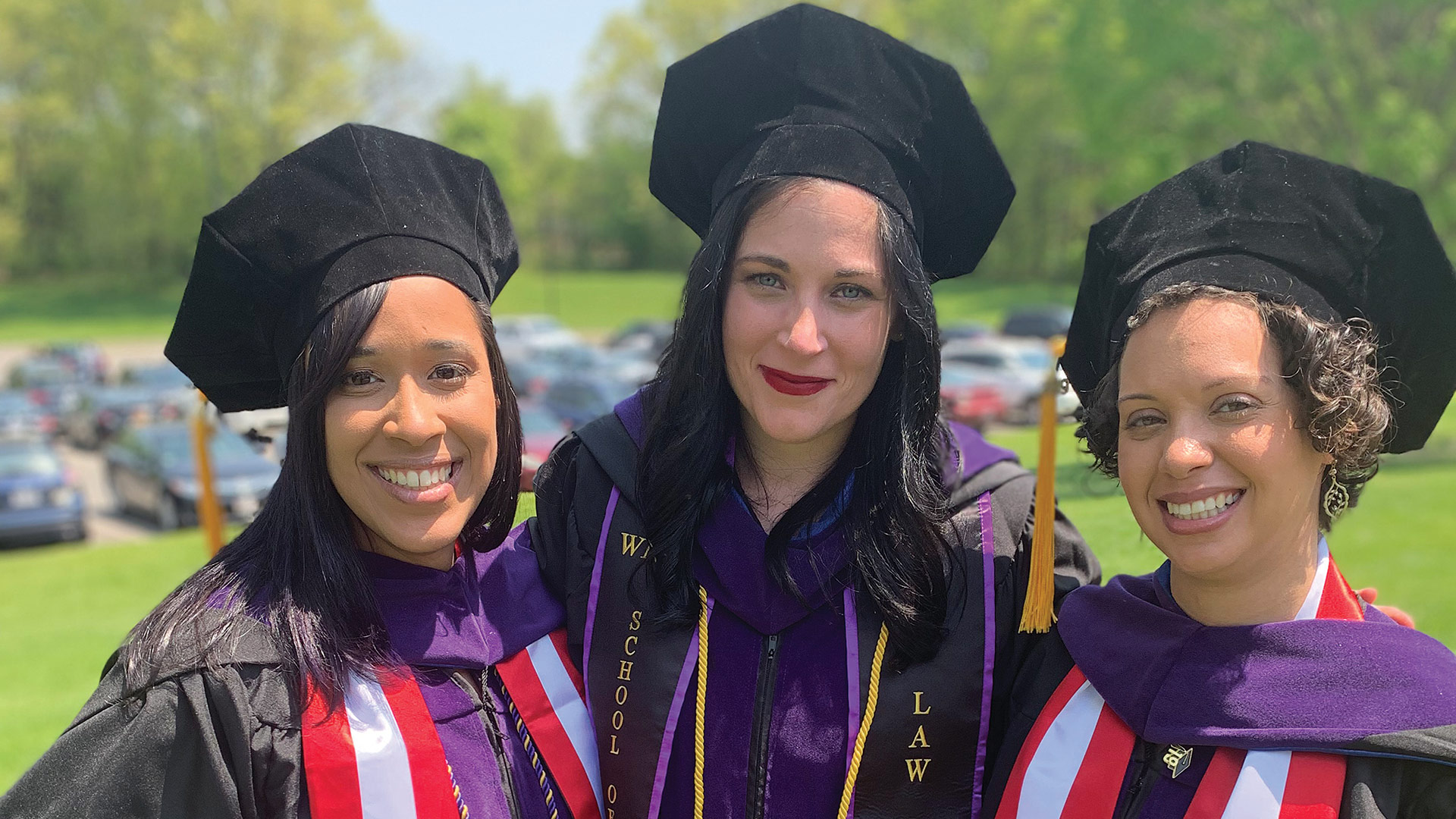
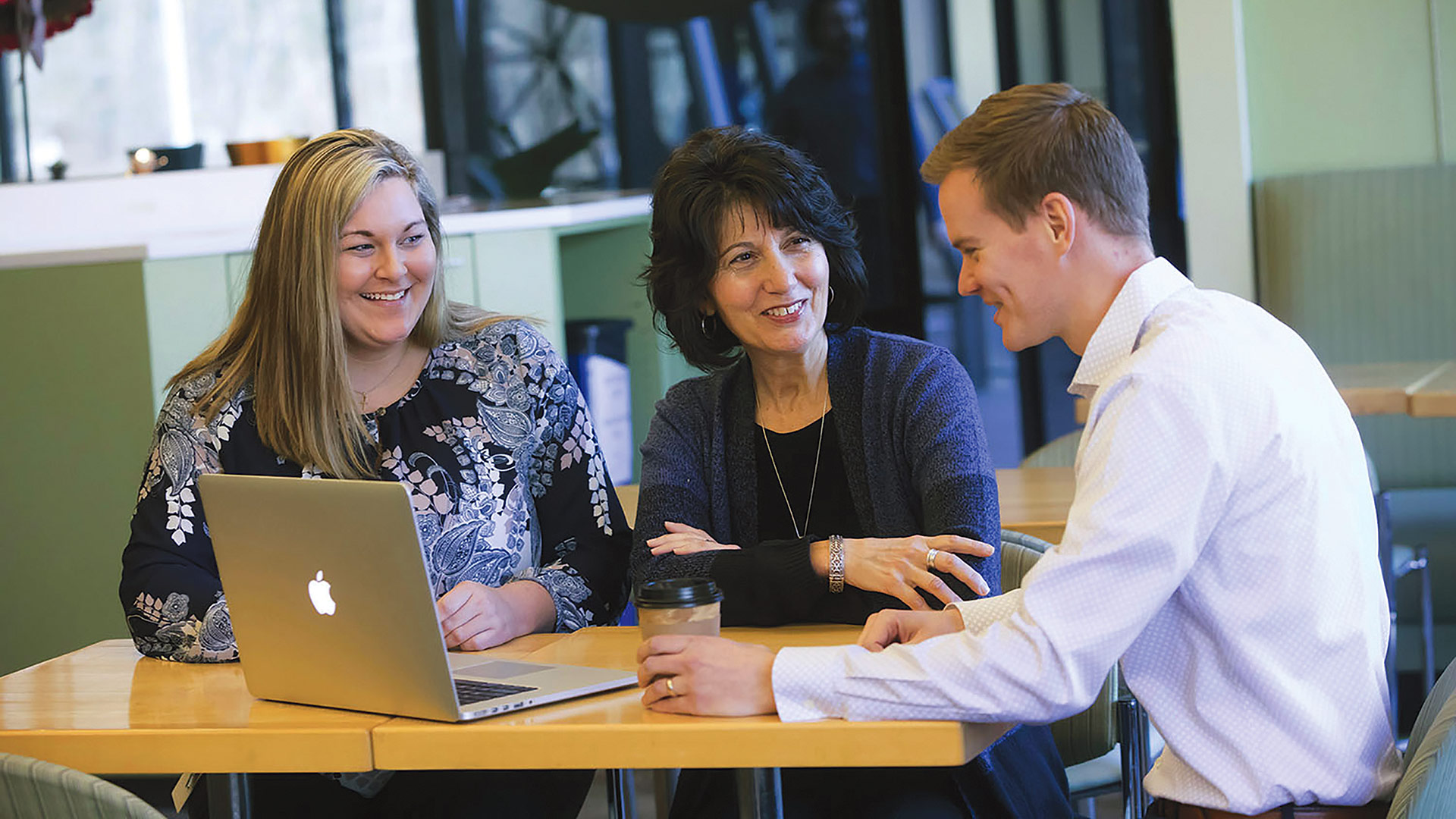
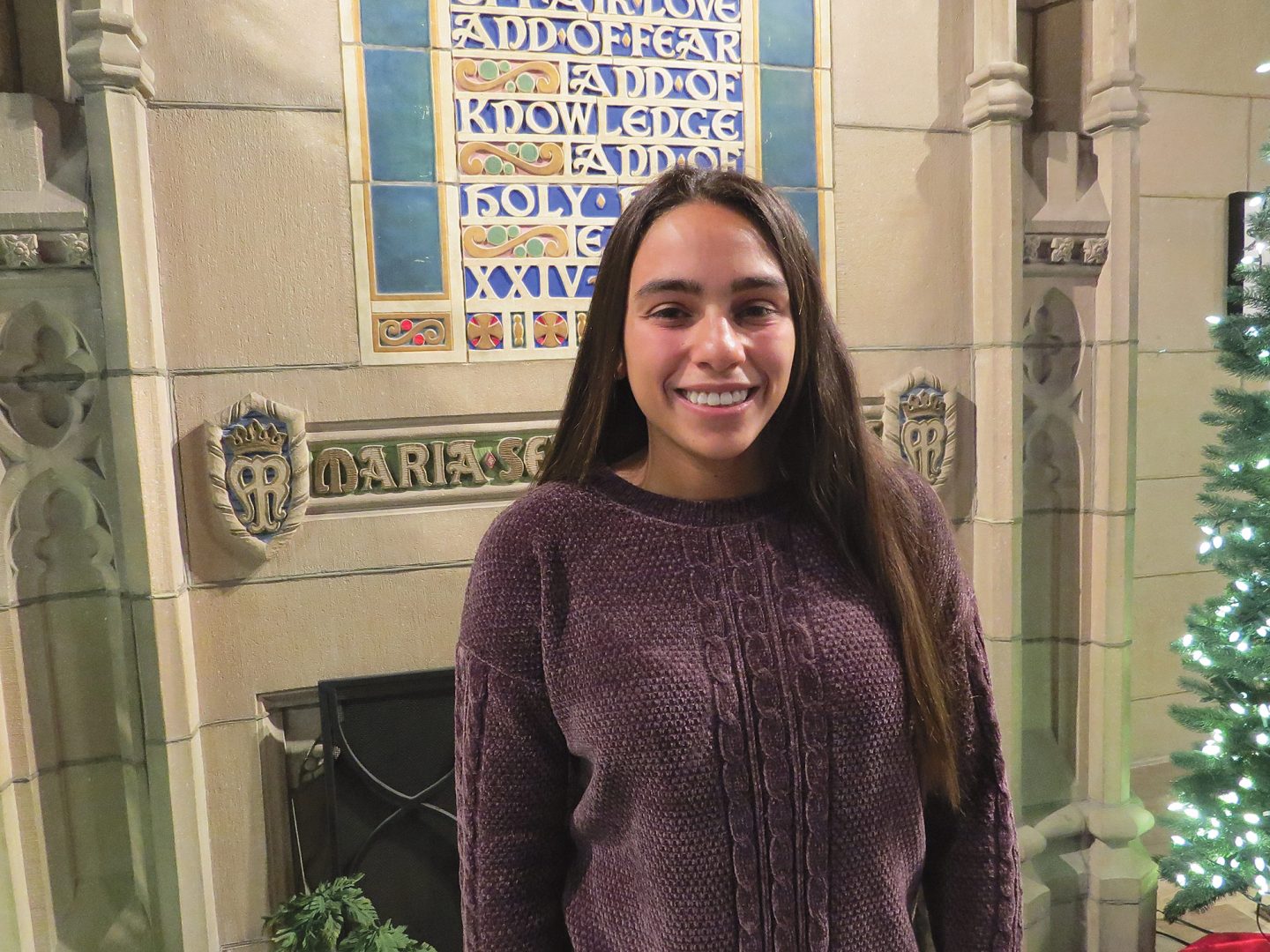
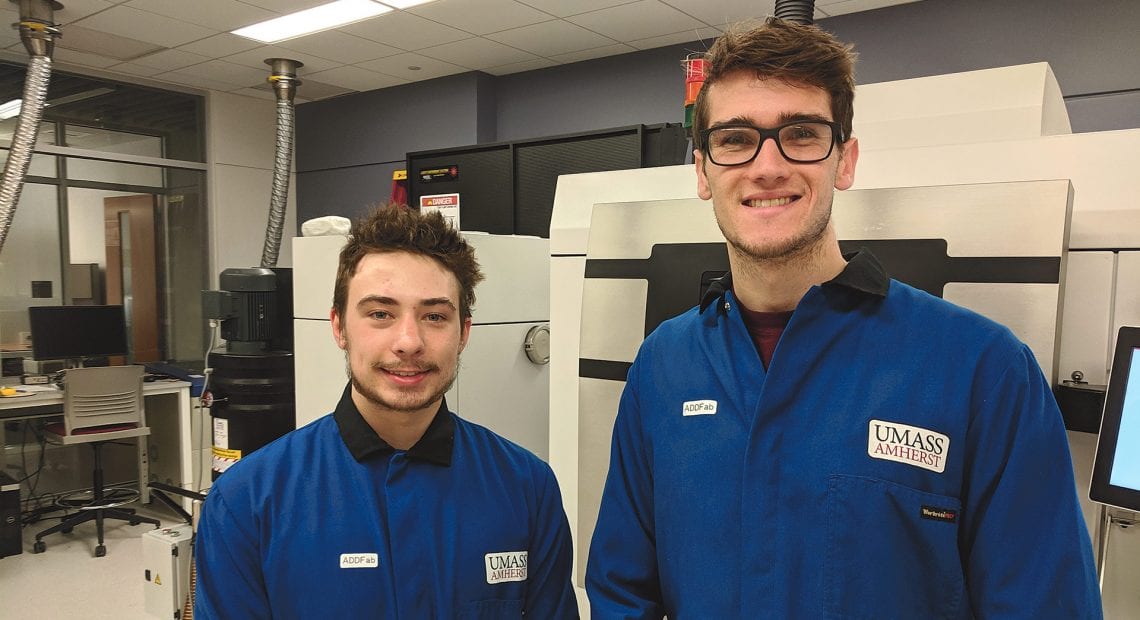
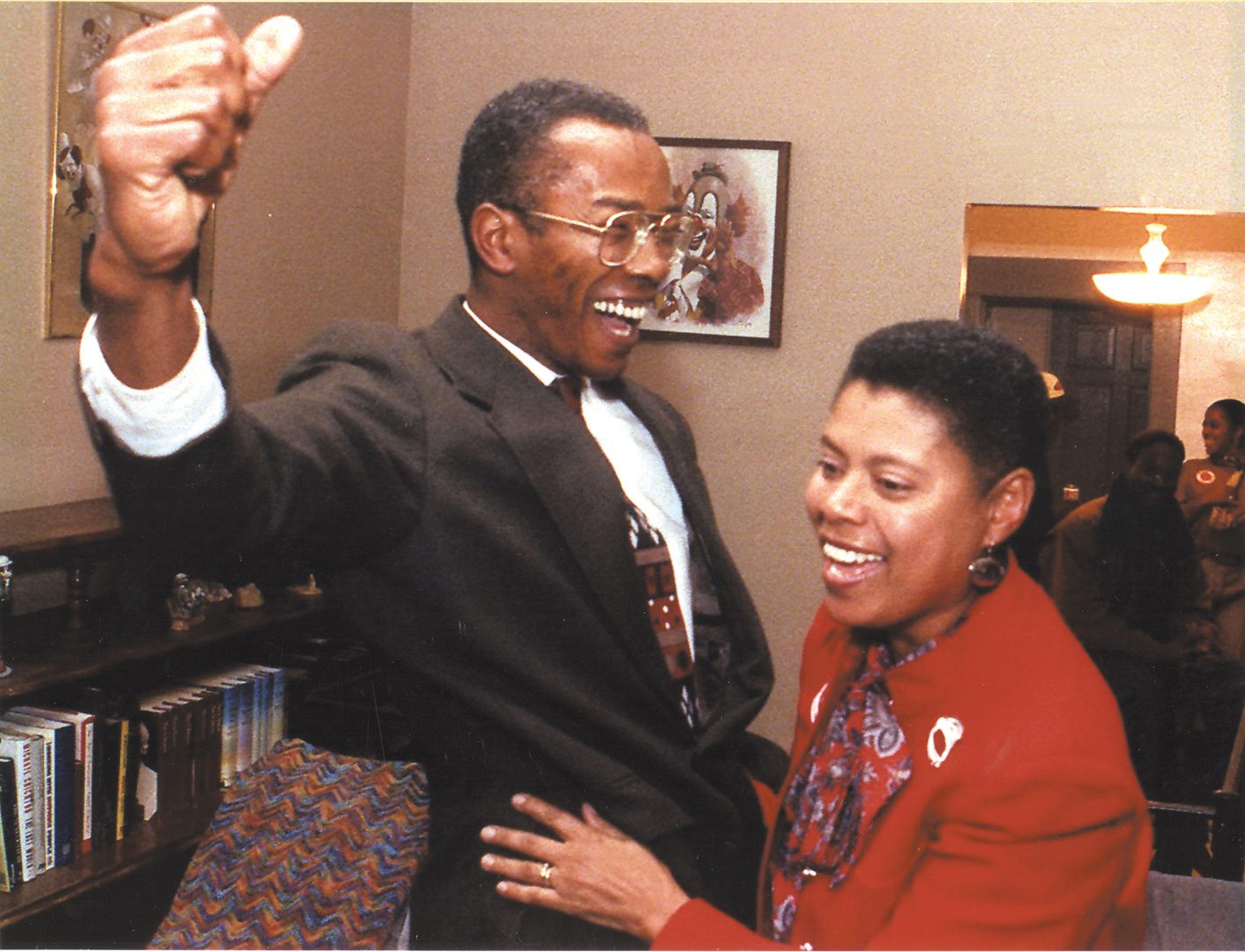
Kate Malone — pictured, at center

Kate Malone — pictured, at center, with fellow grads Veronice Santana and Claribel Morales — says an internship sparked a passion for public defense, specifically standing up for often-marginalized people.

“I’ve always found a way to relate to people I serve and trying to find ways to give them not only a great defense, but the best opportunities going forward,” she went on. “The way their cases get resolved matters — it has an impact I’d never even considered before law school.”

Taxing — but Fascinating

Emily Eash entered law school with an interest following in the footsteps of her aunt, who operates an estate-planning practice. But she soon stumbled across a different passion — although ‘passion’ might not be the first word most people would use to desribe it.

That field is tax law.

“When I took my first tax course — it wasn’t required, but I was curious — I was hooked, and I wanted to take all the tax courses they had to offer,” Eash said.

She found out she was good at it, too, placing second in the Young Lawyers Tax Challenge, a national annual competition, held in New Orleans this past January. “I was already interested in tax law, and that cemented that I was fairly decent at what I do.”

“Tax is always a puzzle; there are moving parts and different ways you can create a plan or figure out the puzzle to best suit a client’s needs and wants.”

It helps that she considers the wonkier aspects of the discipline, well, kind of fun.

“Tax is always a puzzle; there are moving parts and different ways you can create a plan or figure out the puzzle to best suit a client’s needs and wants. To get the best outcomes, it takes a lot of moving pieces and interacting with the client to help them achieve their goals.”

Eash isn’t sure where her first landing spot will be — she’s still interviewing for jobs, and would like to land in a small to medium-sized firm to start out — but she’s been impressed by the sheer range of opportunities, both in the tax-law discipline and across the legal realm in general.

“Some of my friends knew exactly what they wanted to do and stayed on that track,” she said. “Others, like me, were thinking they’d do something else and found a different branch off the main tree.”

One thing many young lawyers have in common is a desire to help people, and they don’t wait until they’re out of school to do it.

“I’ve done a clinic with the Housing Court in Springfield, and that’s been very gratifying, helping people access the system. Well, it’s not so much helping them, but giving them the tools they need to access the system and have a fair outcome,” Eash said. “That’s been really nice — I’ve been in the Housing Court for seven months, and it’s been a very fulfilling experience, with a lot of courtroom time and client triage.”

Emily Eash

Emily Eash was surprised at how much she enjoyed her first tax-law course — then turned it into a potential career.

From that perspective, the entire field of law may be seen as a series of puzzles to solve — not just intellectual exercises, but challenges with real stakes, and an opportunity to make a difference.

Broad Outlook

Zac Broughton is a bit of Renaissance man when it comes to the law. At least, he’d like to be.

“I think my favorite part about law is that I don’t have to stay with one thing for the rest of my life,” he said. “As law continues to evolve over time — with new technology, new situations, new philosophical debates to participate in — my desire is to be part of that conversation in whatever area of the law I’m working in.”

Broughton, who will be clerking at Connecticut Appellate Court later this year, honed his multi-faceted approach as editor in chief of the Western New England Law Review.

“I loved working through different areas of the law, but also helping other people find their voice to help advance one area of the law or another — and inspiring my staff and reminding them that we’re stewards of the law, and they should help advance it any way they can. What’s the next legal challenge we can help the legal world solve with the piece we were publishing?”

Broughton has dreams of running for public office someday — or at least being involved in the political scene — but he also wants to work in the public sector with underprivileged populations, particularly individuals with disabilities. That’s a passion that started in his undergraduate years at UMass Amherst — specifically, in the Pi Kappa Phi fraternity, which runs an organization called the Ability Experience, whose purpose is to raise money for people with disabilities.
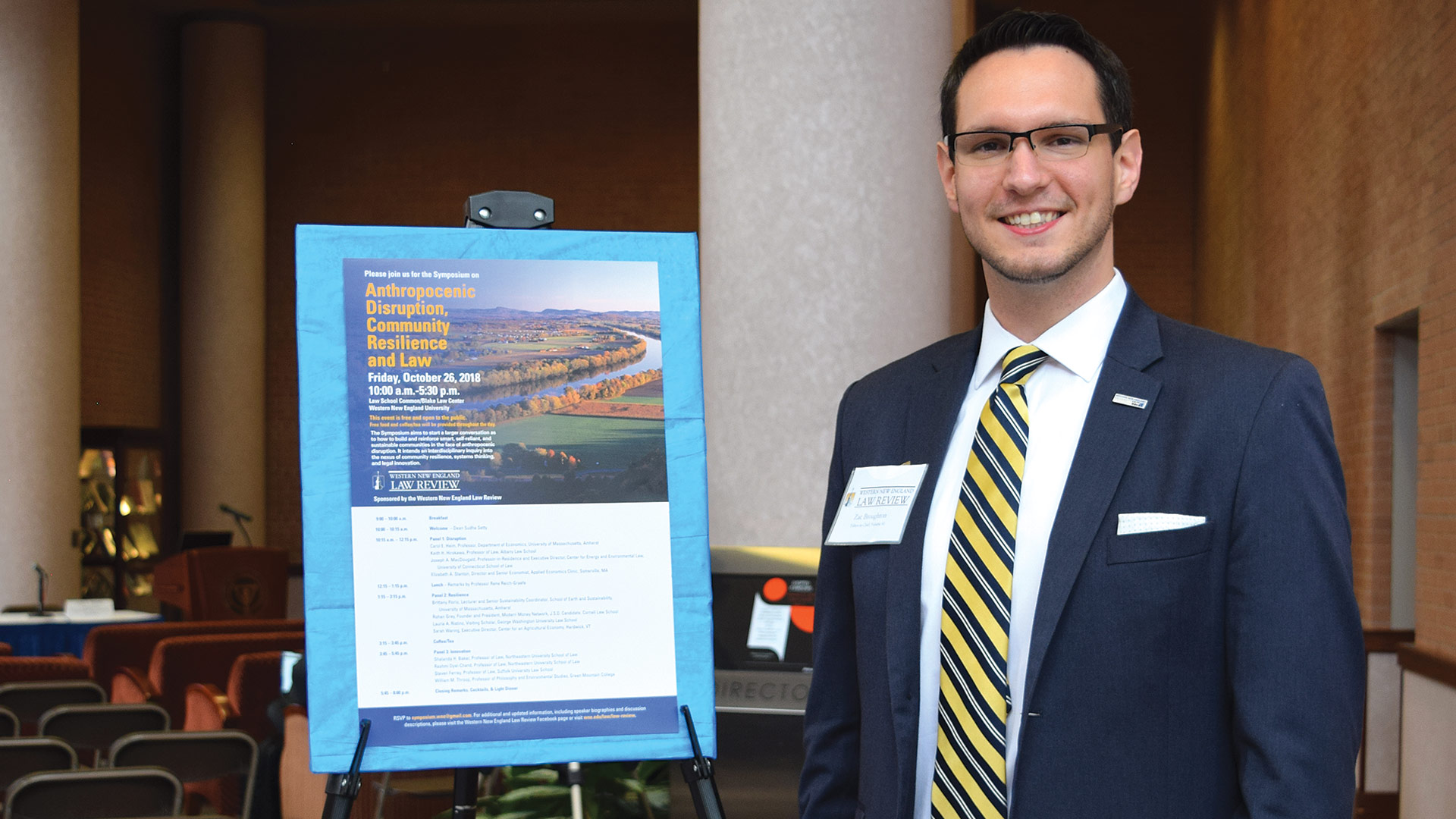
Zac Broughton

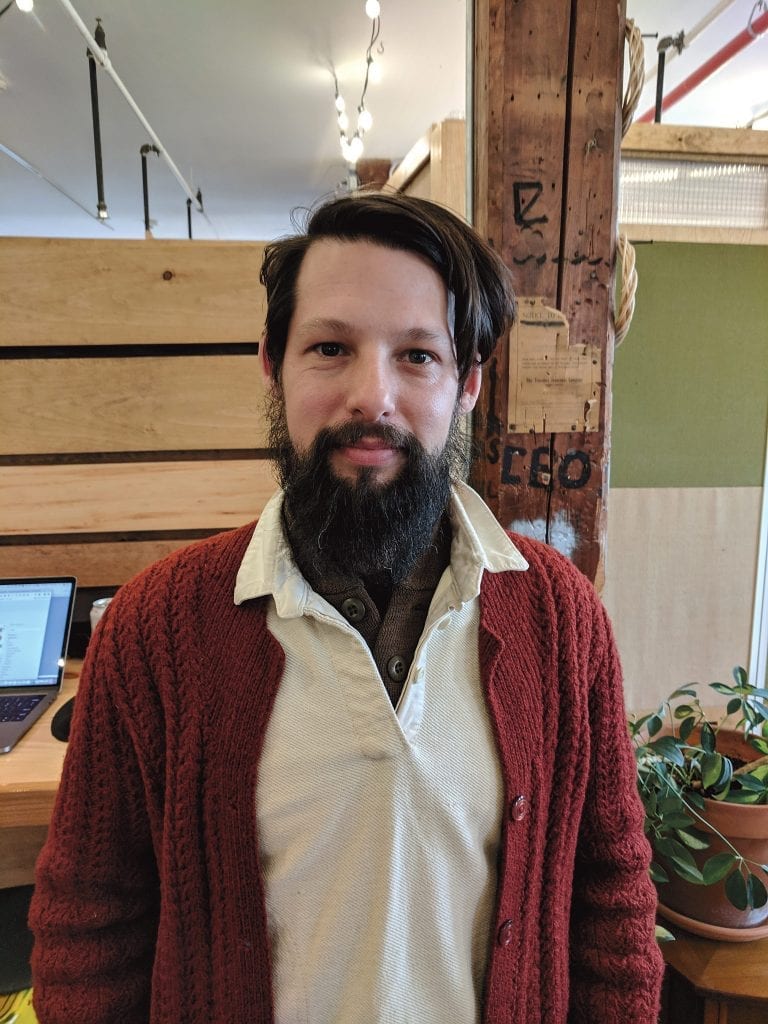
Zac Broughton says he’s excited to explore myriad areas of the law — and perhaps run for political office — during his career.

That’s a lot of goals, but there’s nothing wrong with exploring myriad paths in the law, he said. “To say I’ve settled on one area of the law right now is not true. But that means every day, I go to work excited and interested in what comes next.”

Broughton understands that a law degree doesn’t have to mean working in what people might consider traditional legal settings. For instance, at UMass, he earned a master’s degree in higher education administration, and can envision himself someday working in the higher-ed field.

“Today, there’s a host of outside things impacting how higher education operates in law, such as funding Title IX; it’s an incredible time to be working on a college campus and seeing how that intersects with the law.”

In short, it’s good to have options.

“I still want to run for office; I want to work in government,” he said. “It’s all interesting to me.”

A Passion on Hold

Sara Idris was on the cusp of middle school when 9/11 changed the complexion of the country, in many ways for the worse.

“Soon after that, the Patriot Act came out, and I was hearing about these people imprisoned at Guantanamo Bay without cause,” she recalled. I wrote a lot of research papers on that, and it became my passion to go to law school and get justice for people who can’t get justice for themselves.”

As a student of Pakistani descent, she was sometimes harassed in school in the coming years, but the perpetrators were never disciplined, which further solidified her resolve to be an advocate for victims of persecution — or worse.

“I knew the injustice done to me wasn’t on the level done to people all over the world, and I saw a future for myself in human-rights law.”

She’s not sure when that future will arrive, however. As she works to finish her education — she has one class left to finish and will take the bar exam in February — she continues to work as a form filing specialist at a local intellectual-property law firm.
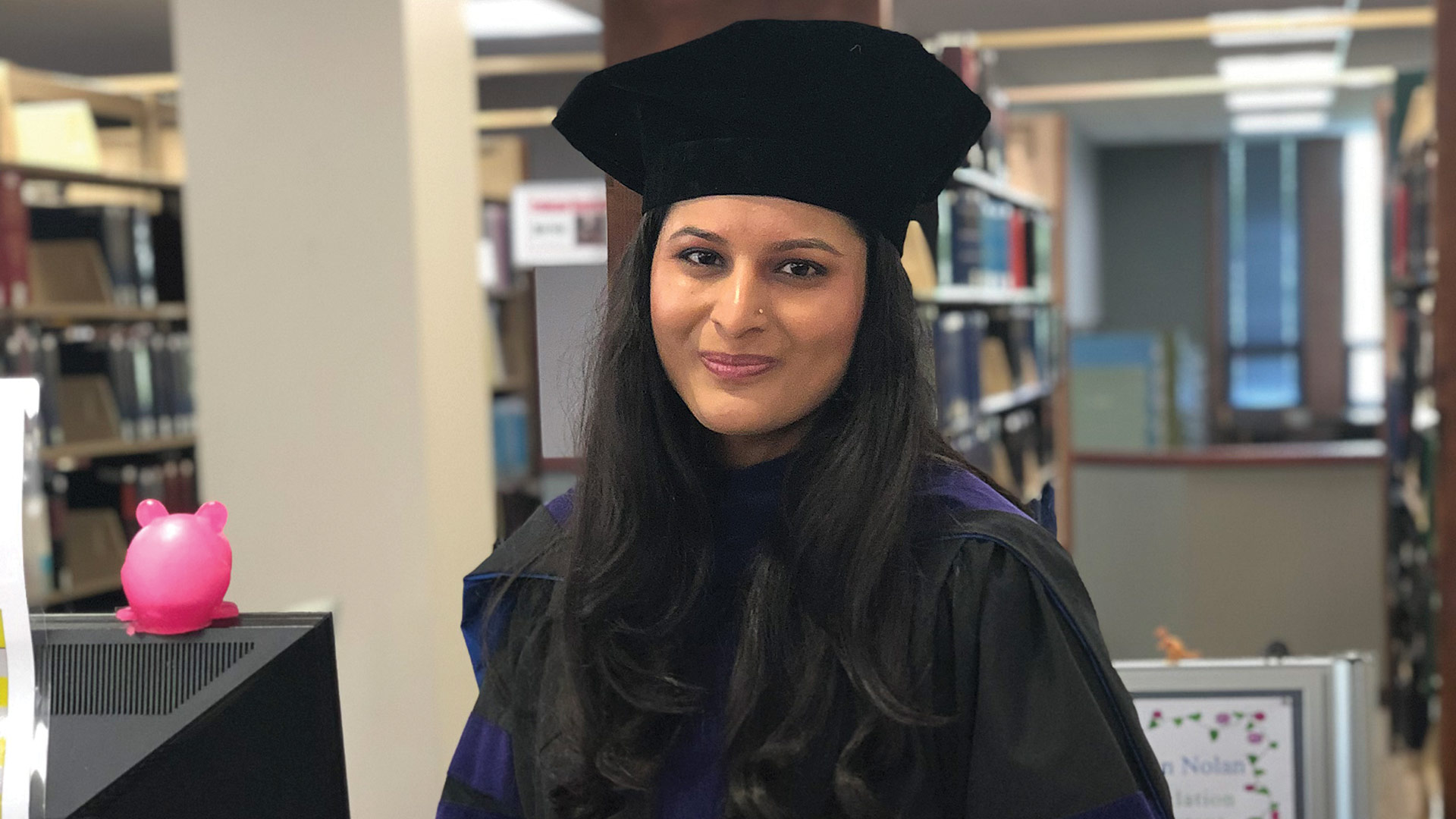
Sara Idris

Sara Idris says it can be difficult to match one’s passions to financial realities coming out of law school, but she intends to reach her goal of advocating for victims of social injustice.

“I really enjoy this, and I can see myself working here long-term,” she said. “I have a passion for public interest, but given the amount of loans I have, I don’t know if I can risk working in public interest for the next 10 years at a salary that’s probably lower than I’m making now.”

But Idris and her fiancé have a career plan that involves methodically paying off those loans and perhaps navigating her law career toward the issues she’s most passionate about.

She also realizes that a juris doctor degree doesn’t necessarily mean taking the title of lawyer at all. In fact, many law-school students enroll in order to use the JD to move up in the worlds of education, business, finance, nonprofit management, journalism — the possibilities are endless.

“I spoke with my supervisor here, and she talked to me about how other people have moved up in different departments not working as lawyers, but utilizing the skills they’ve learned in other ways.”

That’s one value of the degree, she went on. “While I want to practice law, I don’t necessarily have to.”

Still, it’s not hard to imagine Idris, down the road, standing up, as she put it, for people struggling to defend themselves against all manner of injustice, and could use a passionate advocate.

Joseph Bednar can be reached at [email protected]
Women in Businesss

Women Supporting Women

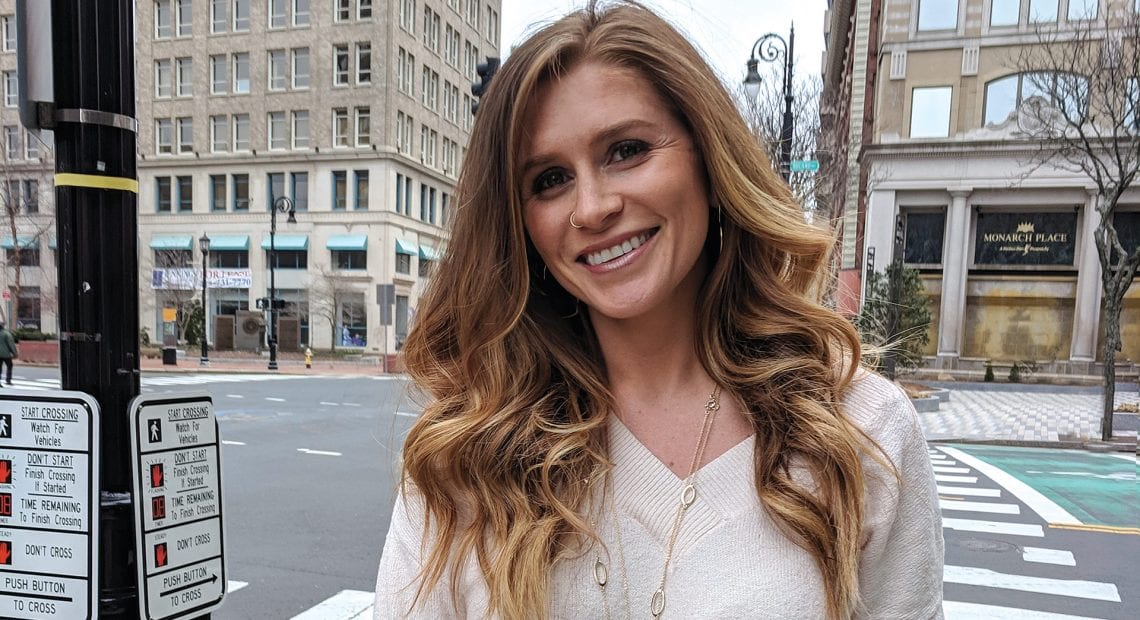
Meghan Rothschild

Meghan Rothschild

When Meghan Rothschild launched Chikmedia as a two-woman operation five years ago, she was determined to build a successful marketing firm that focused heavily, if not exclusively, on women and brought a fierce attitude and a sense of fun into the work. Five years later, as the head of a small team with an ever-growing clientele, she says those philosophies haven’t changed — nor has the need for a company that reminds women of the power they wield when they lift each other up.

Marketing has come a long way in the 21st century, Meghan Rothschild says, in ways many companies struggle to understand.

Take social media.

“When we first started, social media wasn’t what it is today — it was something that businesses absolutely used, but it wasn’t this intricate skill set you have to educate yourself about in order to be up to date on the latest trends. That’s been one of the biggest advances,” said Rothschild, whose marketing firm, Chikmedia, recently celebrated its fifth anniversary.

“We’ve learned how to use social media from a business perspective in a really successful way,” she went on. “Our social-media management is much more comprehensive, and includes graphic design and creating custom content, and using the live features and story features on all the platforms. That’s evolved quite a bit. But other things about this business are the same, like writing press releases and helping people have grand openings at their businesses.”

“You have all these places that have ample budgets, or have a staff person dedicated to marketing. We like to work with the companies that don’t have that. Marketing is such an important part of business ownership that people forget about.”

Chikmedia is unique in other ways, though. For one, Rothschild — who gives herself the title “chief badass” — says she started the business to put an emphasis on female-run organizations and women business owners with an “edgy, fierce, and authentic” approach.

At its inception, Chikmedia focused mostly on social media, graphic design, and public relations. However, the firm has expanded its services outward, with branded events (more on that later) and a series of educational workshops that aid businesses with social media, personal branding, PR 101, and crisis management, to name a few topics.

While not all clients are female-run companies, the average client, Rothschild explained, is a woman who owns a small to medium-sized business who isn’t sitting on a six-figure marketing budget and, therefore, needs to be creative with her efforts.

“We sort of thrive in that space, finding unique and creative ways to engage audiences that aren’t going to cost you $100,000,” she said. “You have all these places that have ample budgets, or have a staff person dedicated to marketing. We like to work with the companies that don’t have that. Marketing is such an important part of business ownership that people forget about.”

Among its newer clients are the region’s new Futures Collegiate Baseball League team, the Westfield Starfires. Chikmedia also worked with Square One, a Springfield nonprofit that provides a range of early-education and support services, in launching a new service line that expands childcare to all hours of the day. The company has also partnered with Dunkin’ Donuts in sponsoring several events.

In short, it’s a varied clientele, which means a lot of education going both ways.

It all feeds into a “fierce” attitude she further describes as “bold, empowering, having confidence, and positioning clients in a way that they are the experts on their subject matter.”

In fact, Rothschild said, empowering women is at the core of everything she does, having been harassed and encountered inappropriate treatment many times in the corporate world — and not only by men.

Educational workshops

Educational workshops have become a staple of Chikmedia’s services — and a way to put more autonomy in clients’ hands.

“It’s one thing to walk into an environment and not be supported by your male peers, but to encounter that from your female peers is really something. It’s frustrating,” she said. “I said, ‘this is going to stop with me. I’m going to start a company whose mission and sole purpose is women lifting each other up instead of tearing each other down.’

“As a culture,” she went on, “it’s really easy for us to give each other a hard time and drag each other down and be super competitive, but we want to be the complete opposite of that — women supporting women.”

Choosing a Path

Rothschild had been in marketing for eight years — with stints as marketing and promotions manager at Six Flags, development and marketing manager at the Food Bank of Western Massachusetts, and director of marketing and communications at Wilbraham and Monson Academy — when she teamed up in 2014 with Emily Gaylord, who brought a strong design skillset to the partnership they called Chikmedia.

With about two dozen clients coming aboard in the first few months, including Bueno y Sano, UMass Dining, Papa John’s, ArchitectureEL, Energia Fitness, SkinCatering, and Lioness magazine, they were, frankly, overwhelmed with the early response and realized they had something that was more than a “side hustle,” as Rothschild put it.

Gaylord eventually left the company to pour more of her time and passion into the Center for EcoTechnology, where she works as Communications and Engagement director. Meanwhile, Rothschild was balancing ownership of Chikmedia with a full-time gig at IMPACT Melanoma. A survivor of the disease who had built a national platform for skin-safety advocacy, she was working for IMPACT as Marketing and Public Relations manager when he realized she had to make a choice.

“I spent about four years at IMPACT, and last year, the success of Chikmedia was getting to the point where it wasn’t sustainable — I couldn’t do both. And I felt like Chikmedia was the right path.” Today, she still serves as a spokesperson for IMPACT, which is among Chikmedia’s clients.

As the company has grown its client base, Rothschild said, so has its emphasis on education and training, both one on one with clients and in the community.

“We’ll do a training for anyone. We did one-hour training for a client on Constant Contact; she was new to the software, so she brought me in, and I walked her through,” she recalled. “If you have someone in your office that’s supposed to be managing Instagram and they don’t know how to use it, instead of giving them a month or two months to learn all the intricacies of it, bring us in for an hour, and we’ll educate them on what to do. That way, we’re putting the power back into corporate hands. A lot of people would love for us to manage their social media, but it’s not the most cost-efficient thing as opposed to us coming in and training your staff how to do it.”

“I’m going to start a company whose mission and sole purpose is women lifting each other up instead of tearing each other down.”

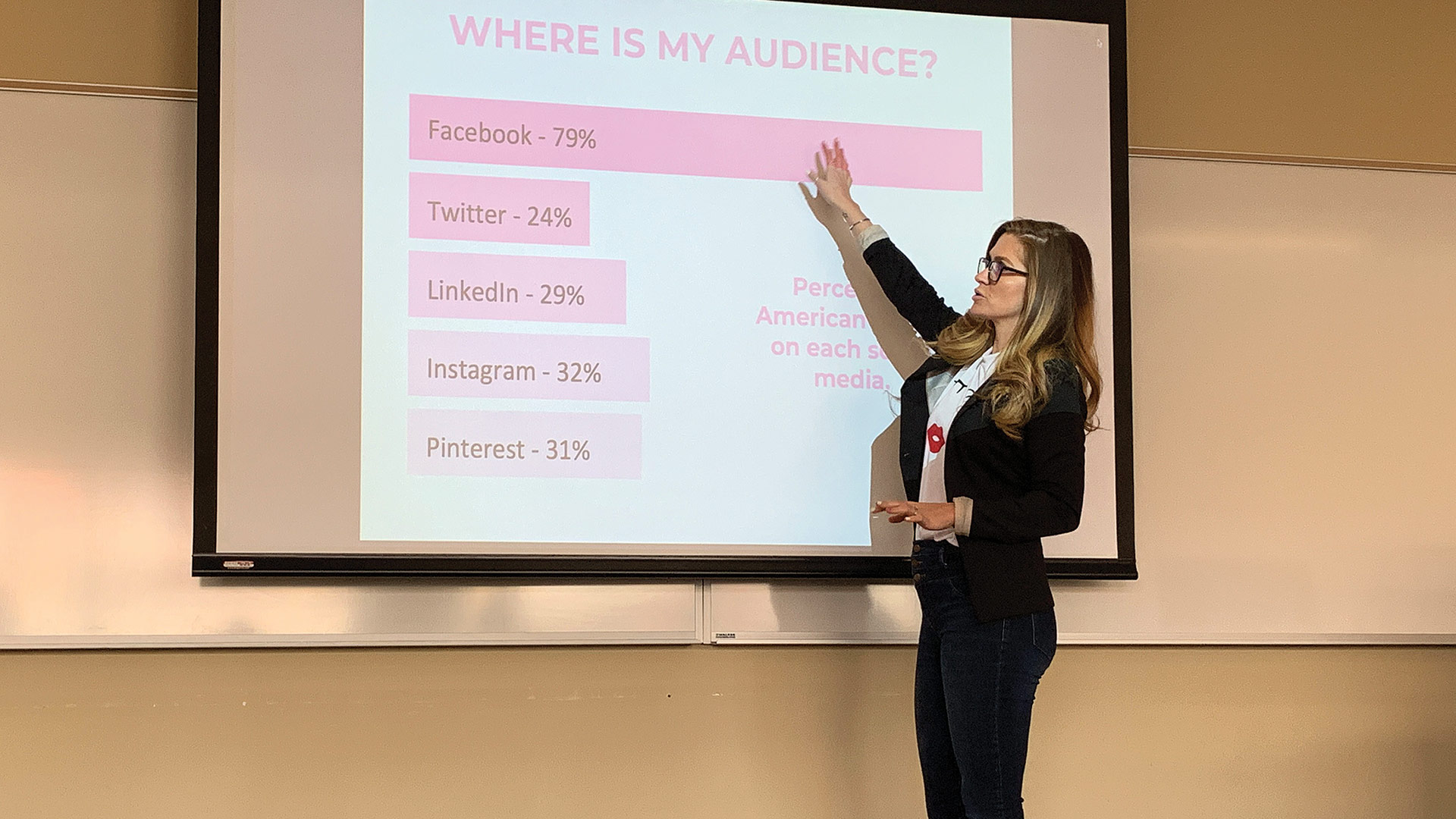
She also teaches personal branding and social media at Springfield College, calling education a “side passion” alongside marketing and helping firms grow. Often, she takes what she’s done in those classes and packages the material into condensed workshops for clients and other audiences, like a three-part series she recently conducted on navigating one’s personal brand — what it is and why it’s important.

“It’s super relevant,” she said. “Think about social media. Even though universities are starting to adapt, starting to insert it into the curriculum, it’s definitely not a standard part of the curriculum. So I’m helping to fill that void until everyone catches up.”

While teaching, though, she’s often learning — specifically, about each client and industry she takes on.

“Our specialty is learning the industry, and we’re working with everything from financial investment firms to UMass Dining, Dunkin’ Donuts, local spas like SkinCatering and Beauty Batlles, nonprofit organizations, event-planning companies … we’re sort of a mix. I always say to clients, if we don’t know something about this subject matter, we’re going to learn it.”

She tries to be honest with each potential client, too. “I’ve had people come to me and say, ‘this is what I need,’ and I’ve said, ‘I don’t think we’re the right fit for you; I think you should go to XYZ.’ Or, ‘I don’t think you’re ready for marketing yet; I think you should see a business advisor first.’ We’re not going to put a square peg in a round hole. We want the right fit.”

Fun with a Purpose

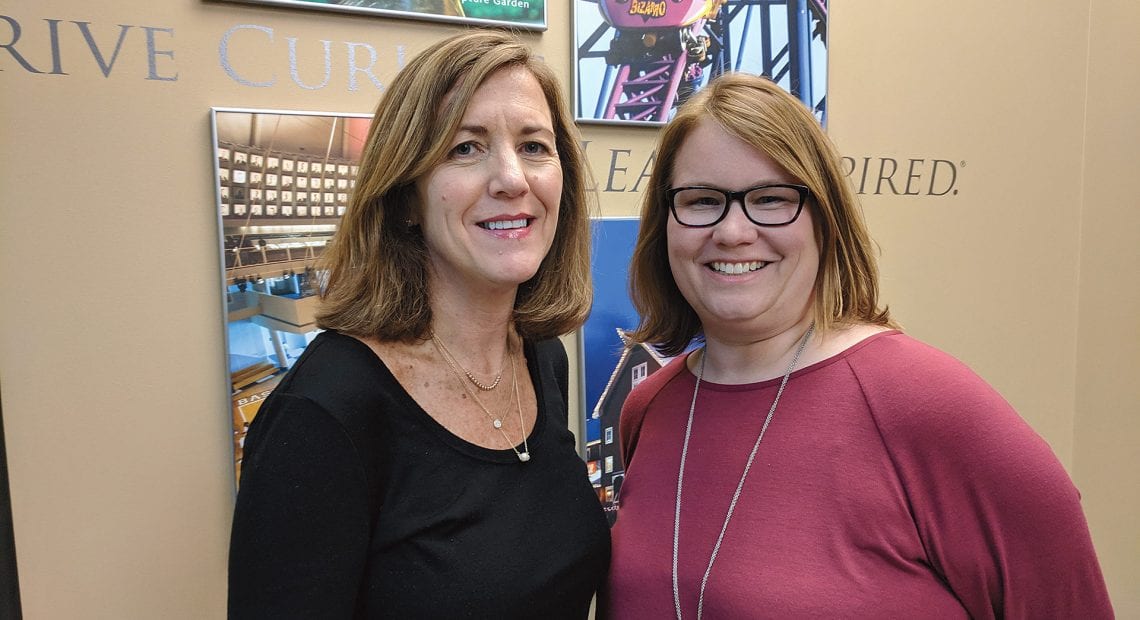
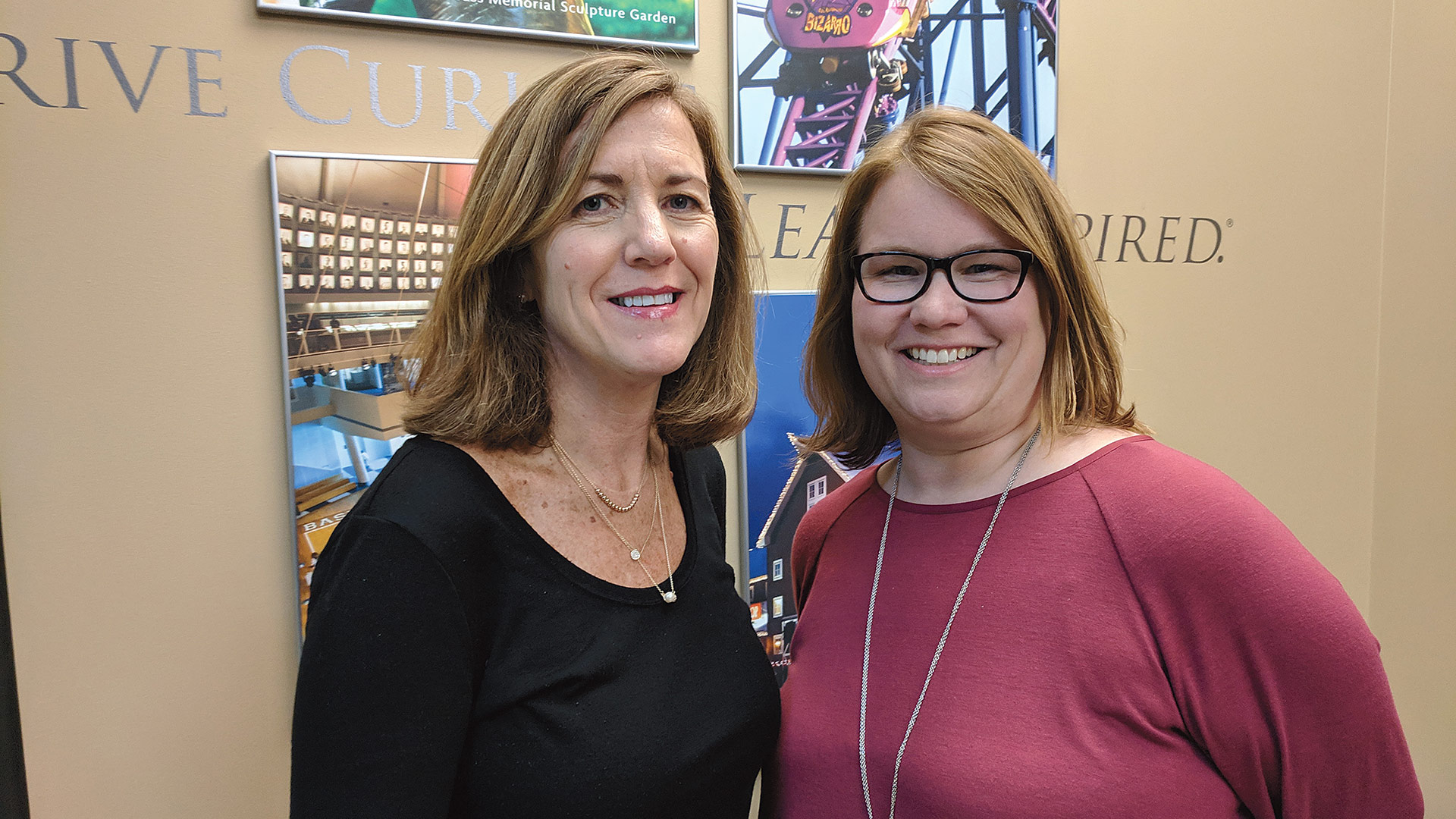
In all those efforts, she’s also passionate about keeping the emphasis on making marketing and branding fun. When BusinessWest sat down with Rothschild and Gaylord five years ago, after the launch of Chikmedia, they said if they’re another stressor in a client’s day, they’re not doing their job right. Today, as the sole business owner, Rothschild has not abandoned that philosophy.

“I can be hard to stay true to that because, as an entrepreneur, you’re trying to stay afloat and get all the work done. But I made a promise to myself when I made this a full-time job I was going to continue that path and have fun in everything I do. You spend the majority of your waking hours at work; you’d better enjoy what you do and be passionate about it.”

Ashley Kohl, owner of Ohana School of Performing Arts

Ashley Kohl, owner of Ohana School of Performing Arts, was one of many women business owners show-cased at Chiks’ Night Out.

Part of that sense of fun comes out during the firm’s branded events, such as Chiks’ Night Out event, which took place in Springfield in March to promote the spring line of Addy Elizabeth, a chic clothing boutique.

“All the focus is on women entrepreneurs, so all the models and sponsors are women entrepreneurs. We’re not calling them models, but women business owners. When they walk on runway, we describe their outfit — and their business. So women are learning what women on the runway have to offer them in terms of services.”

Then there’s a bus tour called Chiks’ Day Out, a sort of shopping trip where every stop is a female business.

“That’s how our events are positioned,” Rothschild said. “We want leave them tingling, saying, ‘oh my God, there’s such a need for this — for women to connect in a fun way.’ It creates a sense of community.”

Chikmedia promotes connections through its strong social-media presence as well, on platforms like Facebook and Instagram, as well as its own blog — not to mention its line of branded merchandise, like T-shirts emblazoned with phrases like ‘Boss Chik.’

“I see women wearing our T-shirts, hats, and sunglasses, and I’m not sure if there’s another local firm that has that kind of presence,” she told BusinessWest. “I really am proud of that, how we’ve been able to leverage our own brand to help our clients.”

Besides its core team of four in Western Mass., Rothschild has an intern in Providence, a part-time accountant, and contractors spread out over its service areas, which extend beyond this region into Boston, Cape Cod, Rhode Island, and Charlotte, N.C. In today’s high-tech world, she said, there’s plenty a company can do remotely for clients, although she needs to be in front of them for certain tasks, like running events and producing video content for social media.

And there’s plenty of room for the firm to grow, she noted, adding that its success in its first five years has been a gratifying challenge — in every sense of both words.

“I’d be lying if I didn’t I say I enjoy being my own boss,” she said. “Of course, as an entrepreneur, you say, ‘I’m going to manage my own schedule and take vacations,’ and the reality is you never take vacations. Even when you go on vacation, you’re on the phone. When you’re a business owner, you’re the business. It’s my burden to bear; its not someone else’s. It’s not someone telling me to do something; it’s me being accountable to myself.”

Still, she added, “I love marketing and PR, I love social media, I love writing. Having control of my own company makes me happy, and my team makes me happy — they’re smart, awesome people. I genuinely love what I do.”

Joseph Bednar can be reached at [email protected]
Education

Building a Pipeline

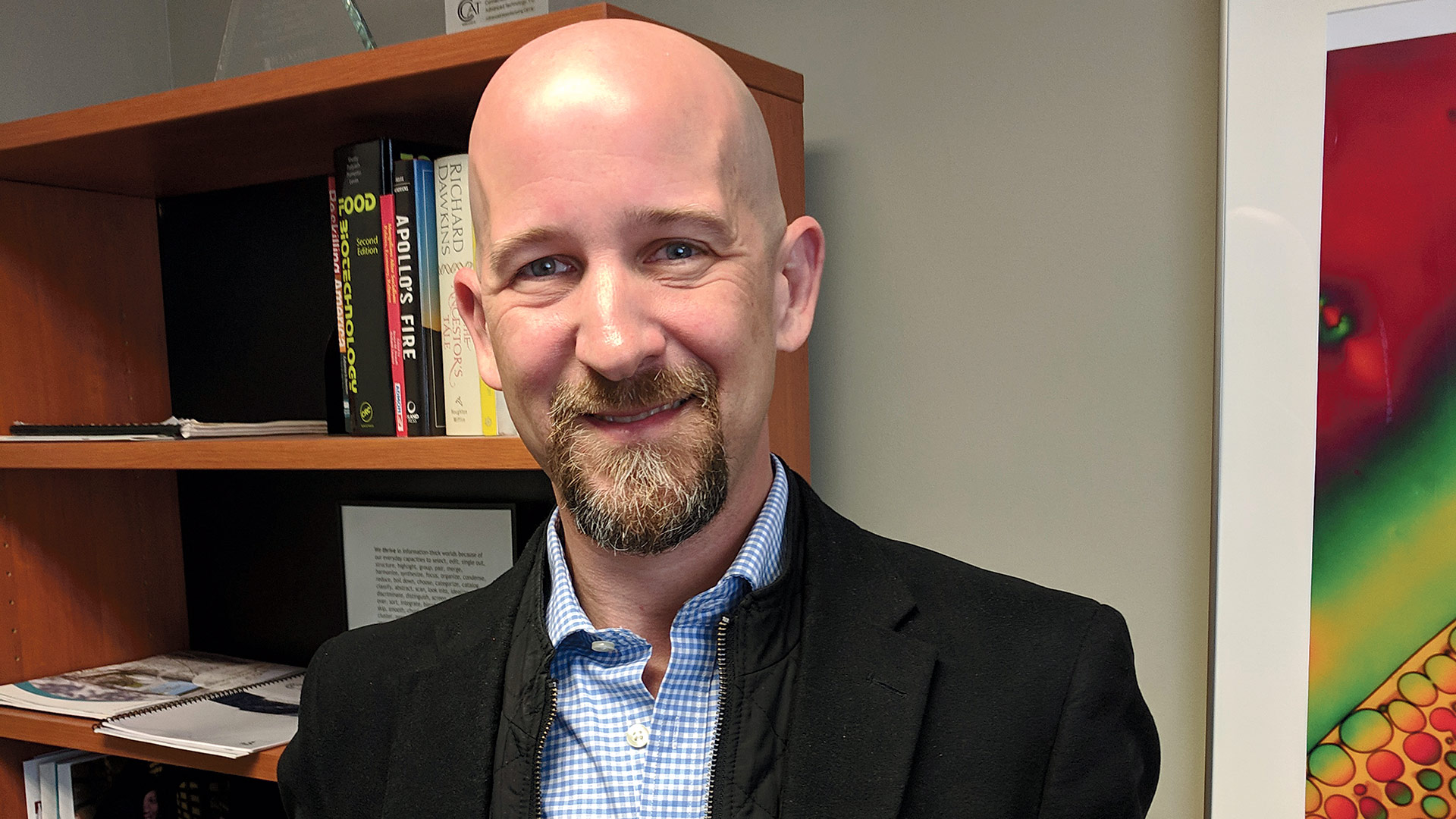
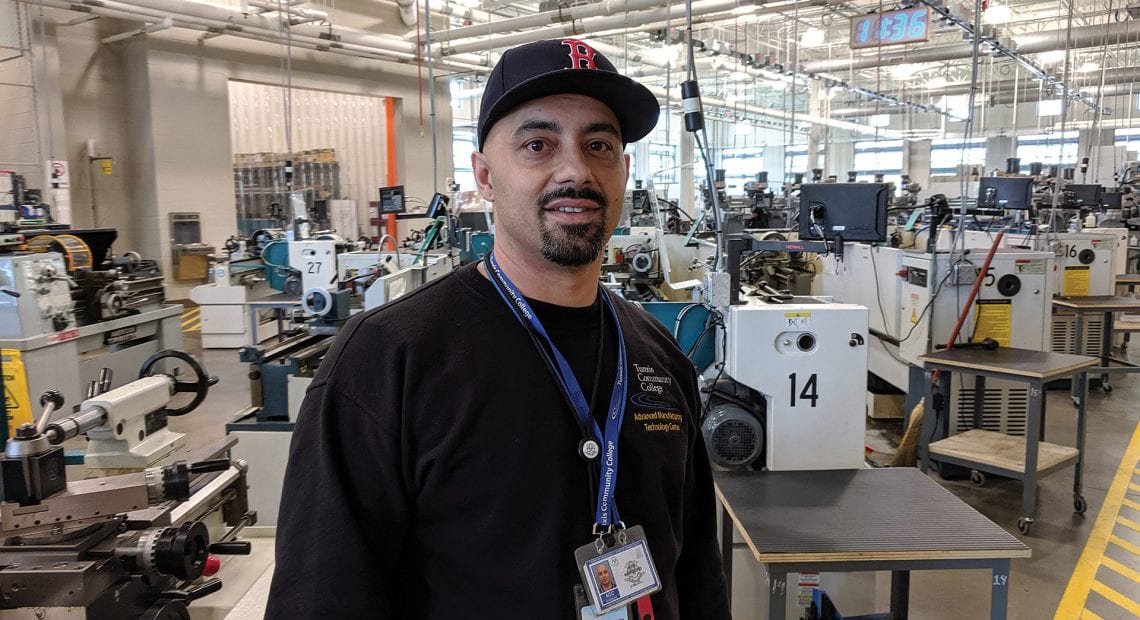
Joe Marcelino with some of the 90 devices on the machining floor of the center’s 2017 expansion

Joe Marcelino with some of the 90 devices on the machining floor of the center’s 2017 expansion.

With much of the manufacturing workforce starting to age out and a dearth of young people entering the field, companies have been struggling for some time to find the skilled employees they need to grow. One successful model changing the equation is the Advanced Manufacturing Technology Center at Asnuntuck Community College, which is placing students with a one-year certificate to work in good-paying careers — while meeting area companies’ critical talent needs. It is, in short, a true win-win.

When Joe Marcelino spoke to a group of Hartford Public High School students recently, he came armed with some numbers — and a common-sense pitch.

Among the numbers was the starting salary for students who earn a one-year certificate at Asnuntuck Community College’s Advanced Manufacturing Technology Center (AMTC): typically, in the $45,000 to $50,000 range, and sometimes higher.

The pitch involved the country’s student debt crisis.

“I stressed to them that the opportunity coming through our program is priceless because a lot of the manufacturers actually pay for their continued education,” said Marcelino, an instructor at the center. “So not only do you come out of our program with a decent income, but you have the opportunity to go to school at night without debt — and student debt really follows you.”

The main pitch, of course, is the job itself, and how the center has partnered with manufacturers — in both Connecticut and Massachusetts — to create work opportunities for both young people and career changers, and address what has been a persistent lack of qualified employees these companies need to grow.

“We can almost promise you a job coming out of our program,” Marcelino said, “while if you get a four-year degree in, say, English, you might not have a job coming out — but you’ll have all that debt.”

The Advanced Manufacturing Technology Center at ACC has been around for 20 years, but it received a major overhaul two years ago with the opening of a 27,000-square-foot addition, more than doubling its space. It includes an 11,000-square-foot machining lab with 90 computerized numeric control (CNC) and manual machines, an additive-manufacturing lab equipped for both plastic and metal 3D printing, a metrology lab featuring computerized measuring machines, and state-of-the-art computer labs — and a whole lot more.

“I stressed to them that the opportunity coming through our program is priceless because a lot of the manufacturers actually pay for their continued education.”

But the center’s most impressive offering may be those partnerships with area manufacturers, who have guided ACC in crafting the certificate program as a way to get skilled workers in their doors.

“With manufacturing booming in Connecticut again and all over the world, demand for skilled labor right now is really high,” Marcelino said during a recent tour of the facility with BusinessWest. “When I was in high school 25 years ago, a lot of the counselors and teachers were deterring us from getting into the trades. That’s partly why there’s such a shortage now in the industry.

“A lot of contracts are being signed by some of our largest manufacturers, like Pratt & Whitney, Sikorsky, and Electric Boat,” he went on, “but because of what was happening 25 years ago, there’s a shortage now because a lot of people are leaving the industry and there’s nobody qualified to fill these positions.”

Normally, advanced manufacturers are looking for people with three to five years of experience. But ACC students are interning during their second semester and being hired for jobs immediately after, at good salaries. The reason is that the curriculum is customized according to industry needs.

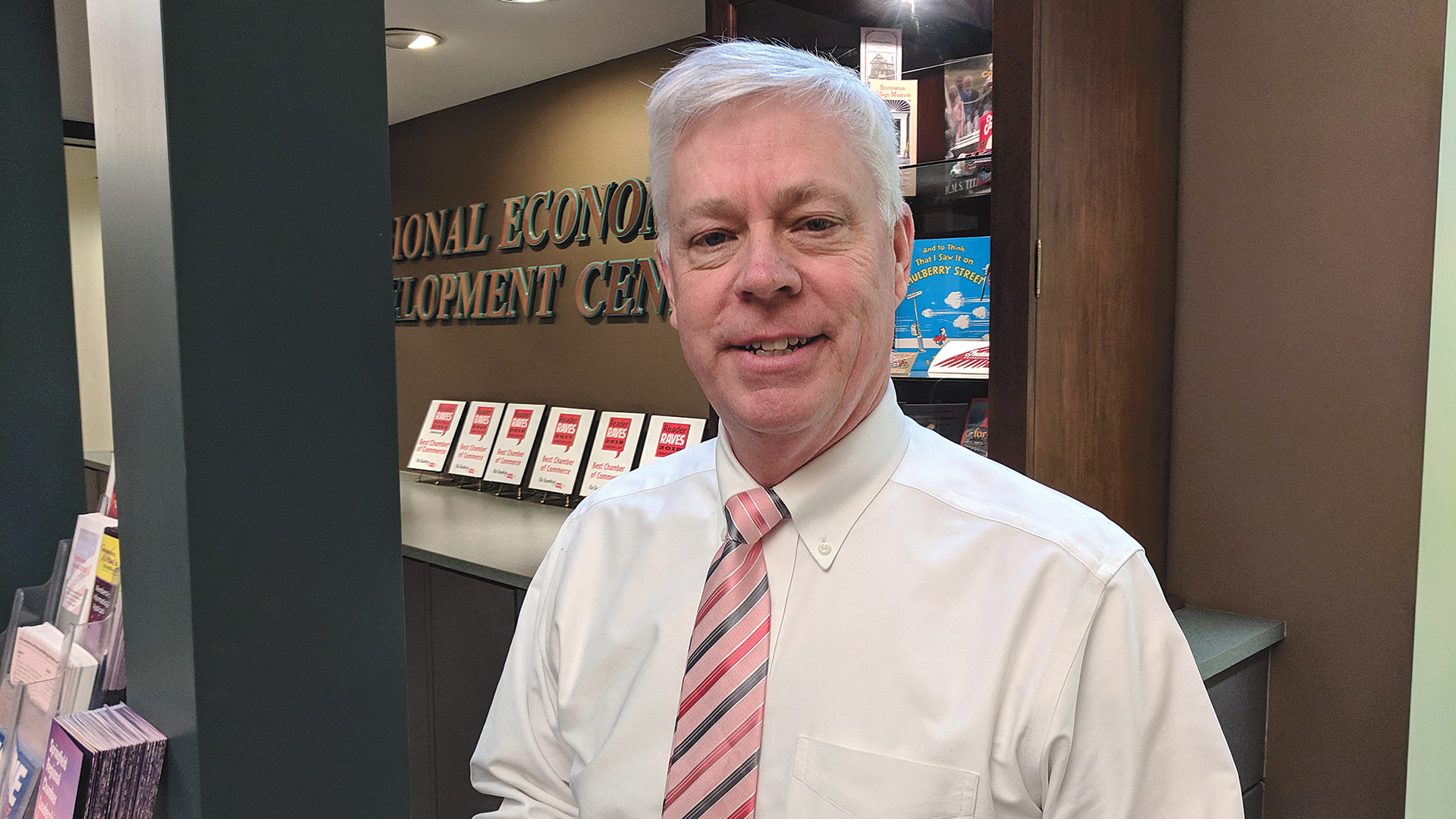
Mary Bidwell

Mary Bidwell said the national conversation is changing around student debt and careers — like many in manufacturing — that don’t require massive loads of it.

And that foundation, he explained, is something companies can build on, hiring certificate holders, further training them up, and often providing additional education opportunities along with that full-time paycheck.

“A lot of the companies we partner with pay tuition reimbursement, so it’s a real win-win,” said Mary Bidwell, interim dean of the AMTC. “You can get a certificate, start working, and chip away at a degree.”

That makes sense at a time when exploding college debt has become a worrisome economic drain, and a national story.

“The conversations are changing,” she said. “You don’t need all that debt. You can do this and still get that engineering degree later; a great engineer still needs the hands-on training in how a part is made and what the machines can do. In fact, engineers come here to take classes.”

And that certificate doesn’t even need to result in a job on a manufacturing floor, she added, noting that some have used the training, and continued education, as a springboard into manufacturing sales, teaching, and management, to name a few pathways. “We give them a good, rounded foundation where they can get a career and then grow from there.”

A Different Floor

While perceptions are changing about today’s manufacturing floor, Bidwell said, there’s still some work to be done to get young people — and their parents, who grew up with different ideas — interested.

“A lot of parents, when they think of manufacturing, think of a dark, dingy, dirty environment, so when they hear their kids want to go into that, they say, ‘no, don’t do that.’ They haven’t seen manufacturing as it is today. It’s very clean and technology-driven. And from where you start to where you can advance is unbelievable.”

That’s the message ACC is sharing not only with parents, but with guidance counselors and teachers, some of whom are invited in during the summer to see the facility and learn about career opportunities. “It’s about educating the people who educate the students,” she explained.

Those efforts are working. While student ages can range from 18 to 65, the average age at the center during the Great Recession, when many more people were looking to switch careers, was around 45. Today, it’s 28.

The center’s mechatronics lab

The center’s mechatronics lab gives students experience in the growing world of robotics.

“We give them a great foundation to build upon,” Bidwell said, “and the pathway is there to do whatever they like.”

That foundation begins with a hands-on approach to learning the machinery and techniques — from 3D printers, lathes, and surface grinders to welding and robotics labs, Marcelino said. And it’s a healthy mix of manual and CNC machines.

“The companies tell us the students still need to know the old-school skills; they need that foundation in order to make the transition into the CNC world, which are machines you write a program for in a computer, and then set up the machine to run the part for you. You need to know both ways.

“There’s no such thing as close enough in this industry,” he added. “The parts have to be made right. Precision is precision. I like to call this a work-ready program because our job is to get them the skills to get them a job.”

Those skills include — actually, the center emphasizes — ‘soft skills,’ especially punctuality.

“We’re really high on attendance and punctuality because that’s what the employers say is the biggest issue they have,” he said. “The other big issue we’ve been encountering is cell phones. Cell phones are a big distraction. We don’t allow them in class or in the shop. Some employees don’t even want them in the building, so we implement that here.”

Those second-semester internship opportunities — two days a week, with the other three days spent back at Asnuntuck — are based partly on grades, but mostly on attendance.

“The employer gets to feel out the student, and the student gets to feel out the company, and they’re getting a real training in what they’ll be doing,” Marcelino said. “Ninety percent of the time, that ends in a job offer. So we’re doing a lot of the training for the companies, and that’s what the companies are looking for. When they hire off the streets, the employees don’t always get it.”

Even in a healthy economy, the AMTC still attracts a good number of mid-life career changers who see opportunities they don’t have in their current jobs. Meanwhile, high-school students can take classes at ACC to gain manufacturing credits before they enroll, and a second-chance program gives incarcerated individuals hands-on experience to secure employment once they’re eligible for parole.

It all adds up to a manufacturing resource — and, thus, an economic driver — that has attracted plenty of public funding from the state and from Aerospace Components Manufacturers, a regional nonprofit network of aerospace companies that has long supported the center’s mission, most recently with a $170,632 donation on May 15. The investment arrives, Marcelino said, because the results of the program are evident.

“Students aren’t going to learn everything, but they’re going to have that foundation they need to make an impact right away in the industry,” he explained. “They’re getting the basic skills. There are programs out there that specialize in this or specialize in that. But in our program, we’re giving them a little bit of everything.”

Demand Continues

From what he hears from companies that partner with ACC’s Advanced Manufacturing Technology Center, Marcelino doesn’t expect any dip in opportunity for students — young and old — who want to explore the modern manufacturing world.

“We can’t keep up with the demand employers have, which is a good problem to have,” he told BusinessWest. “We just need to keep getting the word out about the opportunities in manufacturing. People think, ‘manufacturing, oh, it’s dirty, oily, stinky,’ but times have changed. Technology has changed. And as technology changes, more doors open. The medical industry for machining is booming right now.”

That said, it’s not an easy job, although, for the right candidate, it is a rewarding one.

“They have to want to be here. It’s not for everybody, and you’ll get out of it what you put in,” he said. “I’m a firm believer that the program works, but you have to want it. But the ones that do, they take off. It’s phenomenal what they do.”

Joseph Bednar can be reached at [email protected]
Banking and Financial Services

Adding It Up

It’s no secret that too many Americans make poor borrowing decisions, fail to save for retirement, even lack basic budgeting skills. That financial-literacy deficit begins early, say local bank and credit-union officials, which is why area institutions offer programs and classes to help people — both teenagers and adults — forge better strategies for making their money work for them, not drag them down.

So much, Lena Buteau says, comes down to tiny decisions that add up.

Take that morning coffee. If someone spends $2.69 at Dunkin’ Donuts every morning, that comes out to well over $900 a year. Spend $7 or $8 on lunch five times a week instead of packing a lunch at home, and you’re looking at around $2,000 a year.

“When you think you can’t afford something, look at your daily expenses,” said Buteau, vice president of Retail Administration at Monson Savings Bank, while explaining the importance of MSB’s financial-literacy programs, many of which target students, but which are needed by many adults, too.

For instance, people of all ages often struggle to understand the long-term impact of buying on credit, she noted, using the example of someone who buys a $650 laptop at Best Buy but takes a $150-off deal to put it on a store credit card at 25% interest, then pays only the minimum every month. At that rate, that laptop would be paid off in seven years — eventually costing more than double its original price tag.

“When you explain this, the kids are shocked at the numbers,” she said. “It really touches home.”

Because so many habits and philosophies are forged early, Buteau said, “we go in and teach students about saving, lending, credit scams, how to keep your money safe, and much more.”

And it’s not just schools, she added. “We want to go to church groups, Boy and Girl Scout troops, anybody that will give us an hour of time for a financial-literacy class.”

“No disrespect to the schools, but they’re not preparing kids for real life — how your credit score affects your insurance and buying a car, how to handle a checkbook.”

Michael Ostrowski, president and CEO of Arrha Credit Union, said his institution has an internal focus on financial literacy.

“No disrespect to the schools, but they’re not preparing kids for real life — how your credit score affects your insurance and buying a car, how to handle a checkbook. People don’t go into banks anymore; they do stuff online, and you can get ripped off if you don’t know what you’re doing.”

For that reason, Arrha has worked with high schools in the past on financial-literacy programs and is currently planning another program for local students.

“When we were kids, we had home-ec class, and they used to explain how to do a checkbook. They don’t do that anymore, and I don’t know why,” Ostrowski said, before offering one possible reason. “With all the regulations schools are under, for MCAS and other things, they’ve bailed on programs like this, but they’re absolutely critical for kids’ development and future life.”

Jon Reske, vice president of Marketing at UMassFive College Federal Credit Union, pointed out that financial literacy, and education in general, has long been part of the credit-union culture.

“Why? Because, unfortunately, your parents and my parents probably never taught us anything about personal finance, especially if things weren’t going well in the household,” he told BusinessWest. We take the opposite approach — we say your kid should be involved in understanding how the budget works in your house.

Jon Reske says even good budgeters can be tripped up by a bad loan — with long-term consequences.

Jon Reske says even good budgeters can be tripped up by a bad loan — with long-term consequences.

“We also do workshops on a regular basis — everything from homebuying 101 to how to create a budget to understanding credit,” he added, noting that the latter is especially critical, as the average American, between the ages of 21 and 65, will borrow about $1.5 million, and bad decisions can compound quickly and have a long-term impact. “You can be the greatest budgeter in the world and be smart about your pennies, but if you make bad borrowing decisions, you can be overwhelmed by debt.”

Monson Savings also conducts workshops for adults, such as first-time homebuyers, and offers a Credit Builders loan program, which is an effective way to, as the name suggests, build credit without going into unmanageable debt. The customer borrows a certain amount from the bank, which is deposited into a savings account and cannot be accessed until the loan is repaid. Not only does the borrower build positive credit through on-time payments, but at the end, the balance, plus interest, is available for a down payment on a car or home, a cushion for emergencies — anything, really.

In short, area institutions understand the deficits that exist when it comes to financial literacy and how that impacts the decision-making process — and how bad decisions can turn into years of heartache. And they’re doing something about it.

A Matter of Confidence

A new national survey by Junior Achievement USA and Citizens Bank shows that more than 30% of teens do not believe they will be financially independent of their parents by the age of 30. Sixty percent believe they will own a home by that age, 44% believe they will begin saving for retirement, and 43% think they will have paid off their student loans.

“With a strong economy, you would think teens would be more optimistic. It just demonstrates the importance of working with young people to help them better understand financial concepts and gain confidence in their ability to manage their financial futures.”

“These survey findings show a disconcerting lack of confidence among teens when it comes to achieving financial goals,” said Jack Kosakowski, president and CEO of Junior Achievement USA. “With a strong economy, you would think teens would be more optimistic. It just demonstrates the importance of working with young people to help them better understand financial concepts and gain confidence in their ability to manage their financial futures.”

Financial literacy has long been a cornerstone of Junior Achievement, but there’s no shortage of educational programs available at credit unions and banks.

“Money is very emotional. It’s one of the hardest things to talk about, even with your spouse,” Reske said. “And it’s hard to be objective. That’s why it’s nice when people come to our workshops and say, ‘I’m not emotional now; I’m looking at the objective side of it. I wish I’d taken this before getting that loan.’”

While money issues can seem overwhelming at times, he added, financial-literacy tools are much more accessible than they were 10 years ago if people know where to look. He also outlined a number of concepts people attending UMassFive’s workshops might learn. For example:

• If you’re able to pay bills weekly, as they arrive, do it. It reduces the risk of missing a deadline and winding up with a late fee, which is easy to do when you pay the whole pile of bills once a month.

• Start building an emergency fund. According to a U.S. News & World Report study, two-thirds of Americans would struggle — and often do — to come up with $1,000 for an emergency, like an urgent car repair or medical procedure.

“So what happens? You put it on a credit card, and now you’re paying 21% interest, and soon $1,000 turns into $1,200,” Reske noted. “And an emergency fund can keep you from missing a rent payment or not getting something fixed on your car, which could lead to a bigger repair in three to six months.”

• Check out your credit report on an annual basis, if only to make sure everything is correct. “If the activity on your credit report is inaccurate, you’re getting an inaccurate score, and most rates you get are based on your score.”

• Put every credit card on a minimum automatic payment so you don’t miss any payments — and then pay more principal when the bill arrives in the mail. Also, it’s not a bad idea to dedicate one credit card to online purchases only, to more easily identify instances of identity theft.

• Finally, it’s never too early to start saving for retirement. According to Forbes, 33% of adults have zero saved for retirement.

“Social Security will pay a portion of your expenses, but not all,” Reske said. “Time is more valuable than money because of compounding interest. If you start planning at 50 or 55, you just don’t have enough time; you’ve wasted 20 years. And if you have a 401(k) at work with an employer match and you’re not on it, you’re being foolish.”

Budget Battles

UMassFive also conducts a workshop for high-school seniors in which they choose a career, get a salary, and then go from station to station filling out a budget in different categories, from housing, transportation, and food to luxury items and student loans — and trying to stay within that budget.

“Kids say, ‘I never knew how expensive things are,’” Reske said. “People wonder why a 40-year-old can’t come up with $1,000 for an emergency; it’s because they weren’t taught that the key is to get in front of problems as early as possible” with smart budgeting followed by spending discipline.

Monson Savings runs a similar program in local schools. “One thing I build in there is student debt. If you want to spend $30,000 a year on college and go for a $30,000-per-year job, you’re not going to be able to pay that back,” Buteau said, stressing the importance of making smart decisions about college — if college is even the best option.

In fact, she said, many kids today are so focused on college — because it’s what their schools push — that they may not be aware of careers in the trades that offer robust salaries and no long-term debt.

One thing is for sure: whether in high school, college, early adulthood, or beyond, there’s no bad time to learn more effective strategies for handling money, budgets, and credit — in other words, to become more literate.

“If you’re sick, you go to the doctor,” Buteau said. “If your car is broken down, you go to a mechanic. If your pipes are broken, you call a plumber. But if you have trouble budgeting or financing, no one thinks to go to the bank for advice or a class. And it’s free.”

And when it comes to finances, there’s nothing wrong with free.

Joseph Bednar can be reached at [email protected]

Features

Driving Forces

Peter Picknelly says Peter Pan is taking steps

Peter Picknelly says Peter Pan is taking steps that make the company more agile, a necessary trait in a changing bus business.

Peter Picknelly says the higher prices that consumers are experiencing at the gas pump are a fairly recent phenomenon, with the surge coming over the past few months or so.

But in the bus business, such changes to the landscape can, and usually do, have a quick and profound impact. And Easter weekend provided ample evidence of this.

“Business was up 18% over the same period a year ago — we were really busy over Easter weekend,” said Picknelly. “When gas prices go up, we see an increase in ridership, and they’ve been going up.

“It’s almost instantaneous — when fuel prices go up, it hurts our customers, and they look for alternatives,” he went on. “Meanwhile, holidays are generally a pretty good barometer of how business is going overall, and we saw that Easter weekend.”

Elaborating, he said that fluctuating gas prices — they come down as often as they go up — are just one of the reasons why agility is perhaps the best quality a bus company can possess these days, and also why Springfield-based Peter Pan is currently taking a number of steps to become even more agile.

“It’s almost instantaneous — when fuel prices go up, it hurts our customers, and they look for alternatives.”

Indeed, the company is expanding its fleet — five new buses were recently delivered, and 10 more are on order, far more than the number replaced in what would be considered a typical year — and also adding new routes, hiring more drivers, and utilizing technology (a revamped website and a new app) to make it easier to know where all those buses are going and to buy seats on them.

Meanwhile, Peter Pan will soon have its own ticket counter at the Port Authority Bus Terminal in Manhattan, a long-awaited, very expensive, and logistically complicated undertaking that Picknelly said will give the company invaluable visibility in the city where it does its highest volume of business.

All these steps, as noted, are designed to make the company more agile and better able to thrive in an always-changing marketplace, but one where bus travel is seemingly as popular as ever, and perhaps even more so as younger generations eschew the automobile and look to other — generally simple and inexpensive — ways to get from here to there.

Peter Pan is currently in an expansion mode, adding new buses, drivers, and routes.

Peter Pan is currently in an expansion mode, adding new buses, drivers, and routes.

“What the buses specialize in is high-frequency service at very reasonable fares — and that’s what people are looking for,” said Picknelly, who described Peter Pan as “once again the fastest-growing bus line in America,” meaning it has held that distinction once, if not a few times, and he believes it does again, especially as he watches many competitors scale back.

For this issue, BusinessWest talked at length with Picknelly about why he feels he can make that claim and the specific steps that back up that boast.

Route Causes

Picknelly told BusinessWest that as part of the process of ordering those new coaches he mentioned — each with a price tag of roughly $550,000 — he a few other team members (his wife, Melissa Picknelly, vice president, and Marketing Director Danielle Veronesi, to be specific) spent a considerable amount of time recently trying out some options for the seats in those vehicles.

Decades ago, there probably wouldn’t have been a need for such an exercise — a seat was a seat. But that was then. These days, as with seemingly everything else you can buy, there are options, and lots of them.

“The average ride on our buses is three and a half hours, and we’re looking to make it as comfortable as possible,” he explained. “There’s a lot to look at with these seats — how the seatbelt clicks, how they adjust, how comfortable they are … the one I think we’re going to go with is actually an inch and a half lower than others, which we think will provide for a better ride.”

That attention to detail with seats speaks volumes about the overall mindset driving the company — pun intended. It’s a customer-based approach that is spawning a number of new initiatives, starting with the new buses and why they’ve been ordered.

Picknelly said the coaches the company buys, like workhorse planes bought by the airlines, can be in service for decades. But eventually they need to be replaced, and in a typical year the company will cycle out a least a few.
But this year’s order placed with Motor Coach Industries (MCI) is especially large and includes not only replacement buses, but ones needed to cover new routes and expected heavier traffic on some existing routes.

In that first category are new routes on Cape Cod and between New York, Philadelphia, and Washington, D.C.

On the Cape, the company, which in the past only brought riders as far as Hyannis, now services just about every community between there and Provincetown, said Picknelly, an aggressive expansion effort that began at the start of this year.

“We’re expecting that to be huge,” he said, adding that bus service can and should be viewed as an alternative to trying to drive to those communities, especially in the summer. “We’re running express service and we’re connecting in from Logan Airport, downtown Boston, and New York City — those are our biggest destinations to Cape Cod.”

Elaborating, he said the company currently runs eight buses a day between Boston and Hyannis, and will expand that number to 12 in the summer. Meanwhile, it currently runs two a day between Hyannis and Provincetown, and will at least double that with the summer schedule.

Further down the coast, the company recently (meaning just last week) expanded service between three of the biggest cities it serves — New York, Baltimore, and Washington — to essentially provide more options for customers.

“We currently serve Philly to New York, Baltimore to New York, and D.C. to New York,” he said, prior to the expansion of the schedule. “We’re now going be serving Philadelphia to Baltimore and Philadelphia to D.C.; we’re expanding our route to connect those cities together.”

The reason for such expansion is obvious — demand, he went on, adding that the company will start with seven buses a day to each city, but those numbers could rise.

And there could be still more additions to the schedule after the Encore Boston Harbor casino opens its doors next month, said Picknelly, adding that the company is in discussions with ownership about running buses from the casino to South Station and other connecting points, shuttles, and other work.

As he talked about all this growth and the potential for more to come, Picknelly said technology has played a big part in it. As one example, he cited a revamped website that went live just before Easter, one that not only heightens awareness of routes and schedules, but greatly simplifies the process of buying a ticket online.

And the buying public is moving increasingly in that direction, he said, noting that today, 80% of tickets are purchased online, a number that moves higher with each passing year, although there are still many who still walk up and buy at the counter — especially in New York, which explains the company’s huge investment at the Port Authority.

This heavy volume of online sales brings benefits for the customers, obviously, but also for Peter Pan, said Picknelly, adding that they take a lot of the guesswork out of scheduling and staffing buses.

“In the olden days, for lack of a better term, we would have a consistent schedule, seven days a week the same schedule,” he explained. “Now, because people buy tickets in advance — it’s a reservation and it’s a guaranteed seat — we know exactly how many people are going to be on the bus, and we modify our schedules accordingly.

“In many cases, our schedules are different on Tuesdays and Wednesdays than they are on Thursdays, and very different from what they are on Fridays, Saturdays, or Mondays,” he went on. “We adjust our schedule product based on consumer demand on a daily basis; before it was guesswork and ‘set it and kind of forget it.’ Now, we have staff looking at the numbers and the trends, and we adjust every day.”

Elaborating, he said that, if the 2 o’clock bus to Philadelphia is filling up, the company may well add a 2:30 run. And with a new app the company is rolling out in a few days, a customer can, among other things, change his or reservation from the 2 to the 2:30, if they know well in advance that they’re going to be running a little late.

The app will also make buying tickets even easier, because it will log previous purchases, recognize trends, and enable the consumer to rebook a schedule with one click, said Picknelly, adding that many of these developments are unique within the industry.

Also unique will be the ability to buy what Picknelly called ‘commuter tickets,’ 10 tickets at once, for example, at a discount price that consumers can load onto their phone and use whenever they want.

“No one else is doing that in our industry,” he said, using that phrase to refer to many of the recent innovations. “And these are things that we think are game changers.”

The Ride Stuff

Returning to the subject of online buying and the benefits it brings, Picknelly said the company can make adjustments for weather, holidays, special events, and, yes, soaring gas prices.

“If we know there’s a snowstorm coming, we can cut schedules and combine them,” he explained. “We’re able to forecast much better and adjust our product based on consumer demand. We’re much more agile than we used to be, and the consumer benefits from that.”

There’s that word again, and it’s a word you didn’t hear much when it came to transportation in general and bus companies in particular. But you do now, and Peter Pan keeps finding new ways to be agile and benefit from that important quality.

That’s a big reason why Picknelly believes that, once again, this is the fastest-growing bus company in the country.

George O’Brien can be reached at [email protected]
Community Spotlight

Community Spotlight

A rendering of the rail station expansion and renovation, scheduled to be completed this summer.

A Knowledge Corridor study before the Amtrak Vermonter line opened four years ago projected 28 riders per day at the Northampton station. In fact, the average is 59 for the two trains per day — a southbound run that arrives at 2 p.m. and a northbound train at 4 p.m., noted Masterson, the city’s Economic Development director.

“And that’s inconvenient service, in the middle of the afternoon,” added Mayor David Narkewicz. “If they made it convenient — get on in the morning, go to Manhattan, and come back the same day — it would be interesting to see the numbers. Even now, on the weekend, there’s a line around the parking lot, with students and other folks trying to use the service.”

The proposed broadening of the Vermonter service, which would bring two morning trains to Northampton and two more late in the day, will be supported by the expansion of the rail platform at the station. The project to lengthen it and bring it up to ADA code is expected to be completed this summer.

That’s been complemented by a series of major projects on the Pleasant Street corridor, from a $2.9 million infrastructure upgrade, making the street safer and more navigable for motorists, bicyclists, and pedestrians, to the completion of the roundabout at Pleasant and Conz streets and a number of residential and mixed-use developments along the thoroughfare.

Currently, Valley Community Development Corp. is building a $20 million, mixed-use project called the Lumberyard, which will feature 55 residential units, 3,100 square feet of retail space, and 2,200 square feet of office space.

Mayor David Narkewicz cuts the ribbon

Mayor David Narkewicz cuts the ribbon at the opening of Conway School of Landscape Design last fall.

“We’ve seen lots of development on Pleasant around the rail,” Narkewicz said, and with good reason. “Millennials and younger people want to live in a place where they don’t have to own a car — they want Uber, car share, bike share, access to rail, access to good bus service. And businesses and housing developers see that and are interested in locating here.

“The whole entrance to the city has been upgraded and improved,” he went on, “and in a way, it helps grow the downtown and creates another corridor for Northampton.”

It’s just one example, Masterson added, of the ways public and private investment spur each other, pumping new life into a city already known for its vibrant economic and cultural life.

It Takes a Village

Take, for instance, the impressive volume of work that continues in the Village Hill neighborhood, including a new, $4.1 million headquarters for ServiceNet and the $1 million renovation of a long-vacant Northampton State Hospital building that now houses the Conway School of Landscape Design.

“They used to be in Conway,” the mayor noted, “but they basically decided that students that want to go to a landscape school want to be in a more urban environment, so it’s a perfect fit, and we’re excited they’ve moved to Northampton.”

Meanwhile, the $6.5 million Columns at Rockwell Place transformed another long-dormant hospital structure into a 25-unit residence, with 12 units currently sold, five leased, and eight available. Behind that is Christopher Heights, an assisted-living facility that opened in 2016, and Village Hill Cohousing broke ground last fall.

“So you have this whole diversity of senior living, independent living, and you’ve got some commercial redevelopments, which is very exciting,” Narkewicz said. “And the campus itself has walking trails, open space, community gardens, and it’s only a 10-minute walk from downtown. So, from a sustainability standpoint, it fits the model of not wanting people building subdivisions way out on the edge of town that require roads, services, and more car trips. There’s even a bike-share station there, so you can hop on a bike and go downtown.”

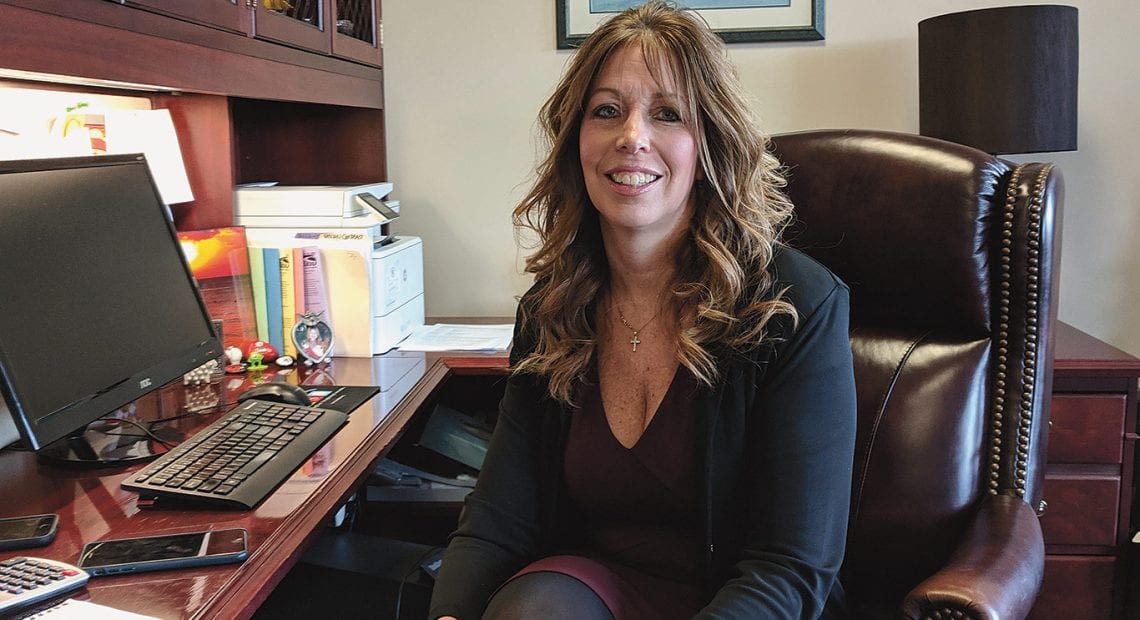
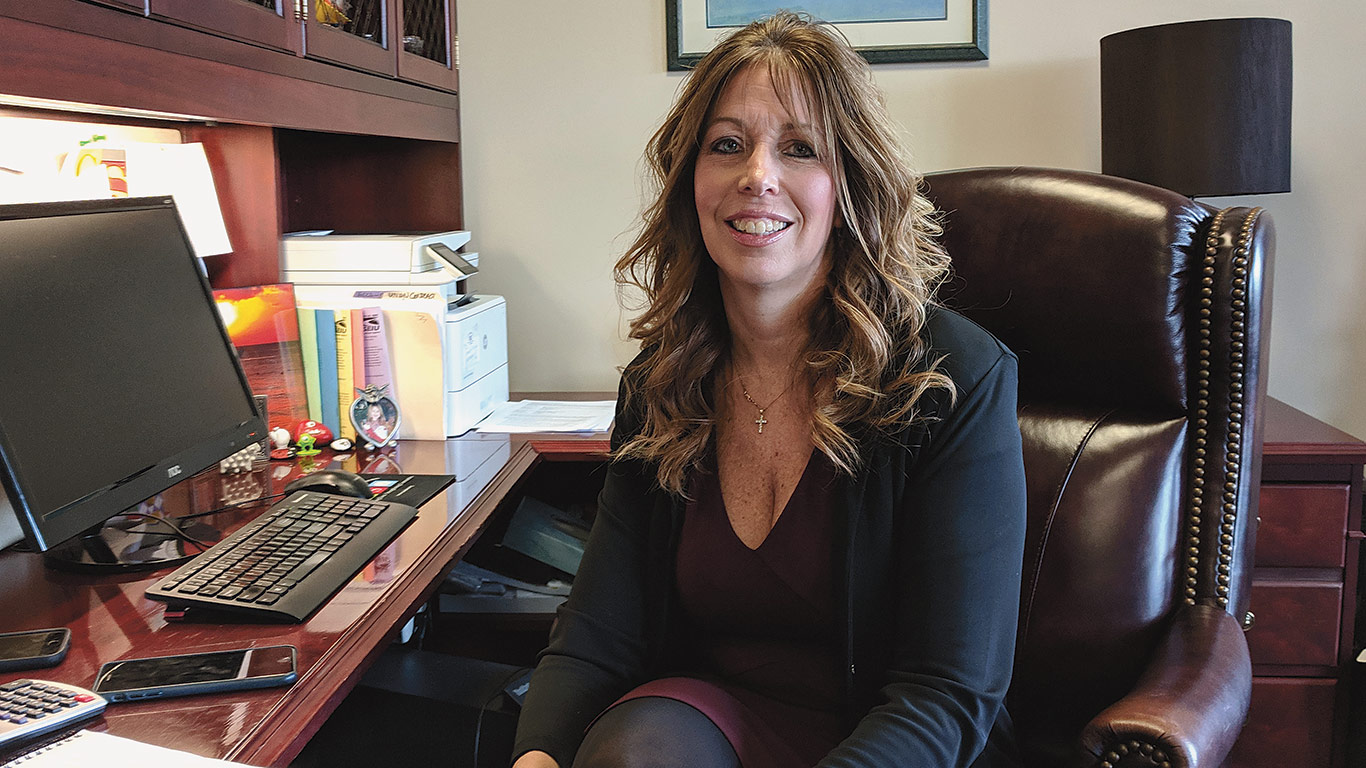
In addition to the usual ebb and flow of small businesses, the Atwood Drive Business Park is fully open just off 1-91 exit 18, boasting a 60,000-square-foot building for the Family Probate Court and other judicial tenants, and two 40,000-square-foot buildings with a host of healthcare tenants, including Cooley Dickinson Health Care and Clinical & Support Options.

The $6.5 million Columns at Rockwell Place

The $6.5 million Columns at Rockwell Place transformed a long-dormant building into a 25-unit residence, one of many recent developments at Village Hill.

Meanwhile, the venerable Autumn Inn on Elm Street was sold last year for $2.25 million to Saltaire Properties, which specializes in breathing new life into outdated hotels. At 60% occupancy, the 32-room inn — which has been renamed the Ellery — would generate annual guest spending of $500,000 and room revenues of $1.1 million, in addition to $34,000 in property taxes and $66,000 in hotel taxes to the city.

And, of course, the cannabis trade continues to be an economic driver. Masterson noted that the city’s 0.75% meals tax brought in $171,000 from November 2017 through January 2018, representing taxes on $22 million revenue. Over the same three months a year later, following the launch of adult-use cannabis sales at New England Treatment Access (NETA), the figure was $187,000, a 9.3% increase that reflected $24 million in revenue.

“One can fairly assume that people who came to NETA also spent some money in the city, and a number of store owners recently said they had seen an uptick in business, so we’ll see if that continues.”

The mayor has been quick to temper people’s long-term expectations because, for most of that recent three-month period, NETA was one of only two recreational marijuana retailers in the state. Since then, INSA in Northampton began selling, and other communities, like Amherst and Chicopee, are expecting businesses to open soon.

“It’ll be interesting to see how the market shakes out once there are more available — and Connecticut and New York are moving quickly to legalize, too,” he said. “We definitely see a lot of Connecticut and New York plates.”

What he hasn’t seen is an uptick in crime or other negative impacts. NETA has been diligent in paying police officers to help manage traffic and renting parking from surrounding businesses and property owners to manage the rush, which was especially significant early on.

That bodes well for other cannabis businesses that have approached Northampton, not only on the retail side, but also manufacturers making food products, a testing lab, and a major cultivation facility to be located at a former gravel pit in Florence.

“For whatever reason, Northampton is viewed as a good place for the cannabis industry,” Narkewicz said. “We’ve been very open and welcoming, our zoning is straightforward and not discriminatory toward cannabis, and we did not put any caps on the number of retailers we would allow here, like many communities have.

“I think people feel Northampton has a kind of built-in visitorship and vibrancy and is a regional destination,” he went on, “so I think they feel like cannabis will incorporate well into the rest of the retail and cultural market here in Northampton.”

Show Time

Speaking of culture, Northampton continues to thrive on that front, thanks to successful developments like CLICK Workspace, which has melded co-working with a robust arts calendar at its Market Street location since 2016, and the purchase of 33 Hawley St. by the Northampton Arts Trust, which is spending $6.8 million to convert it into a multi-dimensional arts, cultural, and education center.

“That’s one reason tech entrepreneurs want to be downtown,” the mayor said. “They want to be in a place that has culture.”

Meanwhile, annual visitorship to the Academy of Music, Three County Fairgrounds, the Paradise City Arts Festival, Smith College Museum of Art, WEBS, Thornes Marketplace, the city’s hotels, and its major one-day downtown events totals nearly 1.24 million annually.

Northampton at a glance

Year Incorporated: 1883
Population: 28,483
Area: 35.8 square miles
County: Hampshire
Residential tax rate: $17.29
Commercial tax rate: $17.29
Median Household Income: $56,999
Median Family Income: $80,179
Type of government: Mayor, City Council
Largest Employers: Cooley Dickinson Hospital; ServiceNet Inc.; Smith College; L-3 KEO
* Latest information available

Northampton has seen a number of generational business transactions in recent years, as entrepreneurs who were part of the city’s original renaissance 30 to 40 years ago are retiring and passing their enterprises to family. The downtown also sees continual lateral moves, and vacancies fill quickly.

“We are still viewed as a very vibrant destination downtown where people want to locate their business,” Narkewicz said. “And they’re local businesses. We do have a few national chains, but mostly locally owned businesses.”

They’re drawn by the city’s low single tax rate — $17.29, which falls well below the commercial rate in nearby communities — but also by a culture of local loyalty, he added.

“People here support local businesses. Our neighbors are running these businesses, and the people who work in them are our neighbors, too, and when you spend money in these stores, it has a multiplier effect in the community.”

He said editorial writers have occasionally written the city’s obituary over the years, or at least wondered when the decline will occur, but when he attends conferences with other mayors and municipal officials, the feeling he gets is that everyone wants to be like Northampton.

“We’re proud of what we have here, but we don’t take it for granted, and we don’t rest on our laurels,” he told BusinessWest. “We continue to do what we can to promote local businesses and make strategic investments that will help our local economy grow and thrive, and provide jobs and revenues the city needs to provide the services we want to provide.”

It’s a cycle that keeps chugging along, like the morning trains that could start pulling into Northampton’s station later this summer.

Joseph Bednar can be reached at [email protected]

Business of Aging

Back in the Swing

Jared Bean

Jared Bean says he’s giving people the injury-prevention education he didn’t receive as a young athlete.

Jared Bean grew up in Hampshire County and played youth sports in Easthampton. He recalls learning about how to improve his performance and conditioning — but not how to avoid getting hurt.

“I didn’t have that education, and neither did my coaches, and I ended up with injuries,” he told BusinessWest. “Now, I want to prevent that and give some more resources to this area.”

He does that as program coordinator and certified strength and conditioning specialist at the Cooley Dickinson Wellness and Sports Performance Center in West Hatfield.

Bean, who is credentialed through the National Strength and Conditioning Assoc. (NSCA), recognized early in his career how important it was for clients to achieve pain-free movement.

“I worked in the community for a while and found my way into what I call a corrective-based training system. I came across people, both athletes and non-athletes, who had discomfort or pain in a joint while moving, so I got into the process of helping alleviate that.”

“We wanted to have a place where we can focus on keeping our community healthy, and maybe prevent a visit to the doctor or the surgeon or rehab.”

On one hand, the center — the only one of its kind in Western Mass. — helps patients in Cooley Dickinson’s rehabilitation programs by serving as a connector between post-injury rehab and real-world activity. Trainers have on-site access to Cooley Dickinson’s orthopedic providers and rehabilitation therapists to collaborate on program development, striving to create a seamless transition from rehab therapy to resumed athletic training or other activity.

Andrea Noel-Doubleday, assistant director of Rehabilitation Services, noted that Cooley Dickinson supports two trainers in Northampton High School and Smith Vocational and Agricultural High School, maintains seven rehabilitation locations, and launched a walk-in orthopedic-injury clinic last year.

“We felt like, wow, we’re really supporting athletes and people in the community from the time they get injured on the field to finding their way to a doctor to finding their way to rehab, and this seemed like the next logical step,” she told BusinessWest.

“After rehab, where’s the best place to go to get that continuing work to get back to top performance?” she continued. “Then we thought, who better to do it than us? Jared knows the surgeons, he knows the therapists, he knows what we’ve been doing, so it’s a seamless recovery. That’s really what we were going for.”

But, because of its emphasis on injury prevention, it’s also a place where non-patients are welcome to work out, as they would be at any gym, while also learning proper technique. The center’s classes and programs emphasize injury prevention for athletes of all ages, as well as optimizing performance for serious athletes.

“We really wanted to offer wellness programs, and that’s why we called it the Wellness and Sports Performance Center,” Noel-Doubleday said. “We wanted to have a place where we can focus on keeping our community healthy, and maybe prevent a visit to the doctor or the surgeon or rehab. I think that’s a need in the community.”

Broad Spectrum

Bean, who earned a degree in applied exercise science at Springfield College, saw friends go into athletic strength and conditioning, often working solely with athletes on one team.

“I always had an interest in trying to help a bigger variety of people,” he went on. “I’ve seen older couples that came to me because they wanted to move well enough to hang out with their grandchildren. I had a gentleman who lost a lot of neuromuscular control through disease and wanted to go to Greece for two weeks — that was the sole reason he came to see me.”

Other clients include a 63-year-old power lifter and a ju jitsu fighter in her late 30s who just signed her first professional contract. “Definitely, being here, I’m going to see a lot of variety.”

Noel-Doubleday agreed. “It depends on what the person’s goal is. Sometimes they just want to lift their grandchild up, and sometimes they want to go out and try kayaking, and their shoulder’s been bothering them. They do a little PT, and I say the next step is to see the strength and conditioning specialist. Once I’ve gotten you to feel better and move well, he’s going to really tweak it and move you to the next level. It really is the next step, and more people are looking for that.”

Andrea Noel-Doubleday

Andrea Noel-Doubleday says CDH wanted a place that focuses on keeping the community healthy.

She noted one patient who had some cervical issues, but from a physical-therapy standpoint, there wasn’t much more she could do. “He said, ‘I’d like to start lifting weights, but I don’t want to get hurt.’” So the Wellness and Sports Performance Center was ideal for that — because improper technique is common to all athletic endeavors.

“A lot of times, it’s really just faulty movement,” Bean said. “That creates imbalances in the musculature, which creates discomfort and irritation. Unless it’s addressed, it’s just going to be continued discomfort, and might progress into a larger injury.”

And when someone’s technique is poor, Noel-Doubleday said, they have to be retaught. The center will film clients engaging in certain movements — jumping, for example — and the playback clearly demonstrates what’s wrong.

“When you see it, it makes sense. I can tell someone all day they’re not landing properly, but when they visualize it, especially in slow motion, they’re like, ‘oh.’”

Jumping, in fact, is something the trainers focus on, as it’s a common mechanism for non-contact ACL injuries.

“No one wants those. That’s one of those injuries that’s really devastating to an athlete. That could be the end of their career,” she said. “And there’s no reason we should have them, ever. It’s about weakness and neuromuscular control. And we know what we need to do to prevent it. So we need to really teach that.”

That education should start young, she said, which is why the center offers an injury-prevention class for athletes ages 11-14. Attendees learn positional awareness and how to move safely throughout space, and, by increasing their balance and stability, they learn how to safety build strength, endurance, speed, and agility.

“We want to prevent those non-contact ACL injuries before they happen. We know why they happen and how to prevent it, and we want to offer people a place to learn that,” she explained. “But we also offer advanced performance for the older athletes — the high-school varsity and college player who really wants to take it to the next level, and is asking, ‘how do I condition better and build strength so I don’t get injured?’ We wanted to offer a place where it’s safe to do that.”

Other classes include adult fitness, a blend of strength, endurance, cardiovascular development, and other components of physical activity; a class designed to help those who have undergone ACL reconstruction or other hip or knee surgeries return to their sport safely by focusing on restoring strength, endurance, and mobility; and a total joint class, for individuals who have undergone total joint replacement and want to maintain joint health and function through structured training.

A Vision for the Valley

Noel-Doubleday said the center has so far seen a healthy blend of CDH rehab patients and people coming from outside the system. In either case, they benefit from the expertise available to Bean, as the center is housed in the same building as Cooley Dickinson’s Orthopedic & Sports Medicine practice, the walk-in injury clinic, and the physical- and occupational-therapy suite.

“We have rehab specialists across the hall and orthopedic surgeons and sports medicine physicians downstairs,” she said. “If he needs to touch base with somebody, he’s got a whole group of resources at his fingertips.”

As it is not a physical-therapy facility, per se, the Wellness and Sports Performance Center does not take insurance, she noted. However, clients may submit their receipts to their health-insurance company to try to get reimbursed for fitness classes and services.

“It’s exciting for our organization to embrace this vision. Nobody else is doing this,” she told BusinessWest. “We’re in the business of recovering from injury, but we’re shifting the focus to say, ‘let’s not get injured in the first place.’ We want to get our rehab patients to where they want to be, but I would love to prevent non-contact ACL injuries. I would love to not see them in the Valley at all. If we can be a part of that, to me, that’s really exciting.”

Joseph Bednar can be reached at [email protected]

Berkshire County

Creating Impact

An aerial shot of the sprawling, 26-building campus of MASS MoCA.

An aerial shot of the sprawling, 26-building campus of MASS MoCA.

Anyone who hasn’t been to the Massachusetts Museum of Contemporary Art in the past decade might be surprised at how different it is from its early days. From a near-doubling of art space to a growing array of long-term exhibits to a robust music, theater, and festival business, MASS MoCA has become a true driver of Berkshire County’s creative economy — and that’s by design.

Jodi Joseph understands the challenges of drawing visitors to a museum in — well, it’s not the middle of nowhere, exactly, but it’s also a far cry from Boston or Manhattan.

“We have 13,000 residents in town. We bring over 200,000 people to the galleries every year. That’s a hard thing to do,” said Joseph, director of Communications at the Massachusetts Museum of Contemporary Art, or MASS MoCA, in North Adams.

But it’s an important thing, she added — not just for the museum, but for the entire region’s creative economy.

“People from 75 miles or more from here know this is a place to see art. Within 75 miles, more people know us as a place to see music and performing arts,” she told BusinessWest during a recent visit. “We are finding more ways to draw connections between the performing and visual arts — to let those visual-arts people know we have this dynamic performing-arts program year-round, and get our performing-arts audience into the galleries to see everything here.”

That’s because more time spent here means more money spent in the northwestern corner of the state.

“Overnight visitors spend six times as much money as day visitors,” Joseph went on. “Part of our economic-development agenda is getting people to understand there’s so much to do at MASS MoCA, and we’re just one of several institutions up here. So if you want to come see us and the Clark [in nearby Williamstown], you’re going to have to spend a night, maybe two nights, to get it all in. Every admission here is good for two days. So stay awhile — there’s so much to see.”

Jodi Joseph, director of Communications at the museum.

Jodi Joseph, director of Communications at the museum.

Much more, in fact, than when the museum opened 20 years ago, or even 10 years ago, for that matter. Growth has been a constant in MASS MoCA’s second decade, with the addition of a robust performing-arts and festival business and a massive expansion of floor space to accommodate something unheard of in the early years: permanent exhibits.

Much credit for the former goes to the Chicago-based rock band Wilco, which, a decade ago, became enamored of Western Mass. and saw it as a place to establish a residency and work on side projects. They couldn’t make a connection with Tanglewood work, but when they visited MASS MoCA, they knew they had something. In 2010, the museum launched Wilco’s first-ever Solid Sound festival, a celebration of music and art now held every other summer.

“Thus began MASS MoCA’s foray into a pretty serious concert-festival business,” Joseph said. “It opened the idea of MASS MoCA, this campus, being a destination for music. It was such an exceptional marriage — the fanbase their music attracts was our target audience. There are many other bands we could say that about, but certainly Wilco is in the top 10.”

Today, MASS MoCA presents more than 75 performances year-round, including contemporary dance, alternative cabaret, world-music dance parties, indie rock, outdoor silent films with live music, documentaries, avant-garde theater, and an annual bluegrass festival known as Fresh Grass.

But the museum’s calling card is still modern art — in particular, large-scale, immersive ‘installation art’ that would be difficult to house in conventional museums. The unconventional works form an intriguing counterpoint to the century-old, high-ceilinged mill buildings that house them, which have retained their raw, industrial character over the years, with plenty of exposed brick, ductwork, and concrete floors.

Joseph said visitors appreciate the palpable sense of history they offer — even as MASS MoCA hurtles into its third decade of challenging the status quo.

Maker Space

The 16 acres of the MASS MoCA’s campus — 26 buildings occupying nearly one-third of the city’s downtown business district — form an elaborate system of interlocking courtyards and passageways, bridges and viaducts; a floor-to-ceiling window in one building overlooks the confluence of two branches of the Hoosic River.

By the late 1700s and early 1800s, businesses at or near the site included shoe manufacturers, a brickyard, a sawmill, cabinetmakers, hat manufacturers, machine shops for the construction of mill machines, marble works, wagon and sleigh makers, and an ironworks.

“Overnight visitors spend six times as much money as day visitors. Part of our economic-development agenda is getting people to understand there’s so much to do at MASS MoCA, and we’re just one of several institutions up here.”

In 1860, O. Arnold and Co. installed the latest equipment for printing cloth; large government contracts to supply fabric for the Union Army swelled business, and over the next four decades, Arnold Print Works became the largest employer in North Adams. By the end of the 1890s, 25 of the 26 buildings in the present-day MASS MoCA complex had been constructed, and by 1905, Arnold Print Works was one of the leading producers of printed textiles in the world, employing some 3,200 people.

In 1942, after a period of decline for Arnold, Sprague Electric Co. bought the site, converting the textile mill into an electronics plant, where physicists, chemists, electrical engineers, and technicians were called upon by the U.S. government during World War II to design and manufacture crucial components of some of its most advanced high-tech weapons systems, including the atomic bomb. After the war, Sprague’s products were used in the launch systems for Gemini moon missions, and by 1966 Sprague employed 4,137 workers. But, again, sales eventually declined, and in 1985, the company closed its North Adams operations.

“This campus has always made things,” Joseph said. “Now, what we make is art — performing arts as well as visual art.”

Indeed, when North Adams leaders began discussing a new use for the campus, the Williams College Museum of Art was seeking space to exhibit large works of contemporary art that would not fit in conventional museum galleries — and the idea of creating a contemporary arts center in North Adams began to take shape. With funding from both public and private sources, MASS MoCA opened in 1999.

Banners promote current, temporary exhibits

Banners promote current, temporary exhibits, but MASS MoCA has developed an array of long-term exhibits by prominent artists as well.

The ‘maker’ spirit of the complex extends to putting up the installations, many of which are not as simple as hanging a painting. The museum typically doesn’t hide the process, which can take several weeks, but instead embraces it.

“Because of the way our galleries are situated, we can’t help but put ourselves on view when installing an artist,” Joseph explained. “You might walk through and observe someone charging through the gallery with a forklift. This time of year, we’re moving from one gallery to the next, installing new art, and all that activity is usually on view to the public, in addition to everything that’s already installed in the galleries.”

She said the complex, for most of its history, has been home to a constant flow of humanity and industry, and the act of creation is as important — and worthy of viewing — as the static display of art.

“Even if you’re not a contemporary-art person, there’s so much to see in the architecture,” she told BusinessWest. “The buildings themselves are art. The fact that we fill them with art and ideas, and made these buildings accessible to the public, is a joyful experience. My grandparents worked here. My mom worked here. That’s real. I love coming to work every day and being in this site where I know my family history looms large.”

Even the performing-arts elements of the museum embrace the process as much as the outcome. For instance, in 2012, rock icon David Byrne teamed up with director Alex Timbers to create a theatrical piece called Here Lies Love — and, rather than perform it only as a finished product, presented it to audiences as a work in progress.

Similarly, just this year, actor Jon Hamm, director Danielle Agami, and Wilco’s Glenn Kotche led a team that developed a piece called Fishing, also performing it as an evolving work to audiences who were then invited to talk about what worked and what didn’t for them.

“It’s a phenomenal exchange — audiences love it,” Joseph said. “In this culture-drenched region, people get really excited about the creative process. Even if you are not the creator, you get to be involved.”

Permanence in Change

The process of developing and expanding an artistic idea has also taken shape on a macro level over the past decade on the MASS MoCA grounds. In 2008, the museum opened its first long-term exhibition, a three-story space housing about 100 works by famed large-scale wall artist Sol Lewitt — a display the Los Angeles Times once called “America’s Sistine Chapel.”

In 2013, the campus opened a previously unused building for a long-term exhibit by painter and sculptor Anselm Kiefer. And in 2017, the museum activated more buildings, almost doubling the previous gallery space from 135,000 square feet to 250,000, and installing permanent works by neoconceptual artist Jenny Holzer, multi-media artist Laurie Anderson (who makes use of virtual reality in her gallery), and James Turrell, whose interactive works make intriguing use of light and space, just to name a few.

The museum installed this floor-to-ceiling window

The museum installed this floor-to-ceiling window to give visitors a view of North Adams and, in particular, the point where two branches of the Hoosic River join up.

“Part of the joy of going to a museum is seeing the permanent collection,” Joseph said. “You might return time and again and see new exhibitions, but you can also visit old works in the collection like they are old friends to you. We never had that at MASS MoCA because we only had rotating exhibitions.

“But in 2008,” she went on, “people started to think about MASS MoCA not just as a pilgrimage site for Sol Lewitt fans, but also as a place where visitors could return and find something new at the galleries, but also have this body of work, this artist’s life work, where they were suddenly becoming experts. MASS MoCA members probably know more about Sol Lewitt than many Sol Lewitt scholars.”

The museum has expanded its community connections as well, such as an educational program that brings in 2,500 students from local public schools several times a year. Partner schools develop a curriculum of class projects based on what the students see at MASS MoCA. An invitational program for promising teenagers actually displays their artwork on the museum walls and provides grants to their teachers to stock their classrooms. One area teacher used the grant to purchase a kiln so students can create pottery.

“For these kids, she added, “seeing their art on the walls beside Sol Lewitt kind of raises the stakes for them.”

Another program, called the Studios at MASS MoCA, has hosted more than 500 artists and writers for residencies up to 10 weeks. Hosted by the museum’s Assets for Artists program, selected artists receive private studio space on campus, in addition to housing, free access to the museum’s galleries throughout the residency, optional financial and business coaching from Assets for Artists staff, and a daily group meal.

As part of its examination of the regional creative economy, the Berkshire Blueprint 2.0, a county-wide economic-development plan, recommended expanding the Studios program throughout Berkshire County, she noted. “I’m not sure how that would work, but it’s a great concept.”

And an exciting one, as MASS MoCA has long been a draw to this small city near the New York and Vermont lines — and from that destination status comes myriad ripple effects.

“We were founded with a two-headed mission,” Joseph said. “One was to present the best art of our time, and the second was to be an economic catalyst.”

It does that by leveraging all this activity — not just the performance and display of art, but its very creation — to develop new markets for artists, spur job creation, strengthen community identity, and even boost property values, all of which Joseph has witnessed and hopes to see continue.

“We’re in one of the most robust real-estate moments in North Adams in my adult life,” she said. “We’re happy to contribute to it — even if it’s one by one.”

Joseph Bednar can be reached at [email protected]
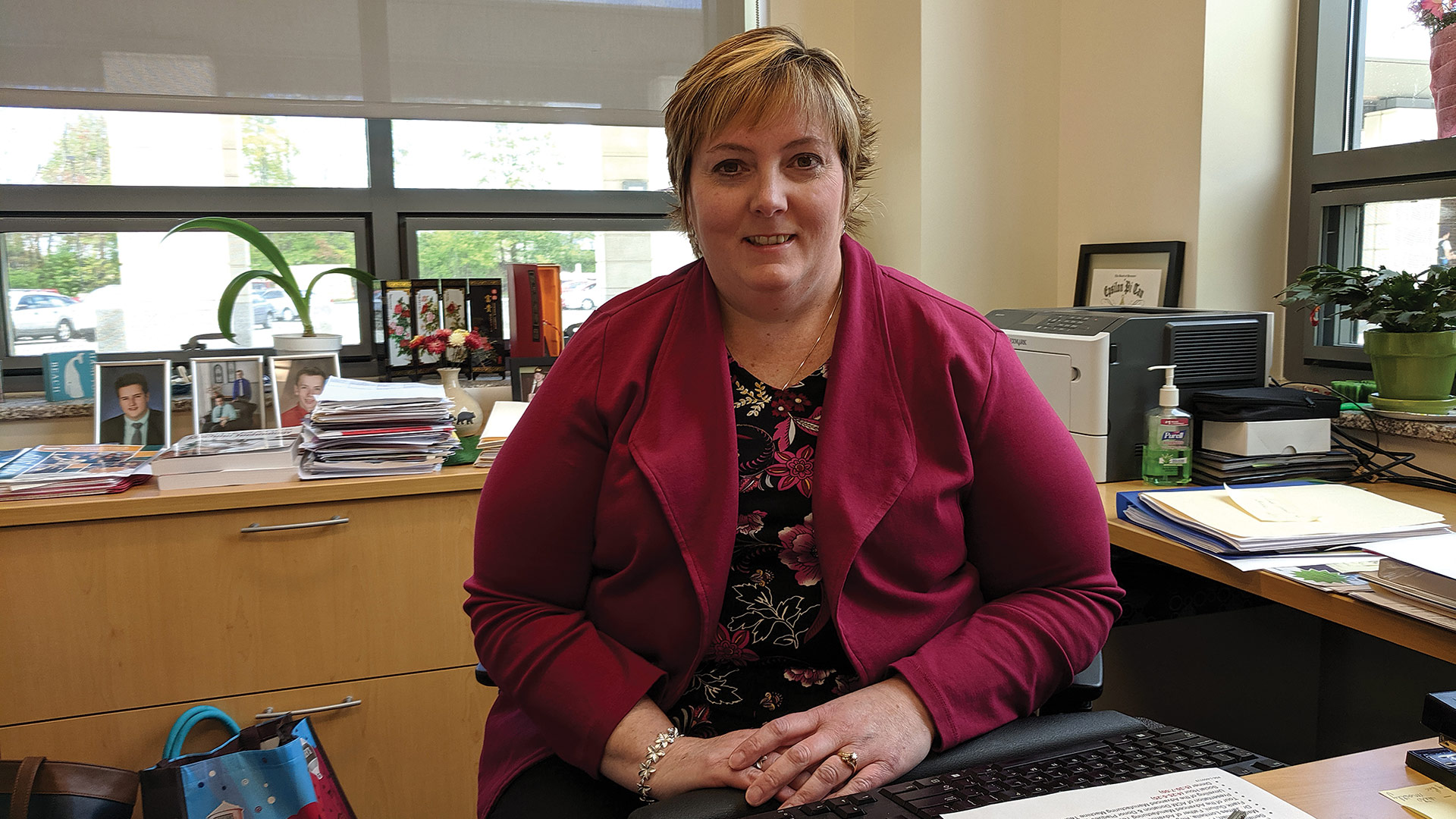
Berkshire County

Designs on the Future

Jonathan Butler, left, and Benjamin Lamb

Jonathan Butler, left, and Benjamin Lamb discuss the plan at a recent public forum.

Jonathan Butler knows what happens to a lot of reports, and he’s determined to avoid that fate.

“This wasn’t intended to be just a two-year study that ends up as a report that sits on a shelf,” he said, referring to Berkshire Blueprint 2.0, an 80-page action plan of sorts for the Berkshire County economy. “It very much means to be a new look at our economy, a new baseline for where we are that identifies challenges we have in different areas and action steps needed to move forward.”

The project, the successor to the original Berkshire Blueprint released in 2007, was overseen by 1Berkshire, the regional economic-development agency Butler serves as president and CEO.

The report’s most notable feature is how it breaks down the economy into five ‘clusters’ — advanced manufacturing, the creative economy, food and agriculture, healthcare, and hospitality and tourism — and then lays out the challenges facing each cluster, who some of the main stakeholders are, and a series of ‘action steps’ aimed at spurring economic growth.

“We’ve made a process that’s accountable to itself and the stakeholders,” Butler told BusinessWest. “We have a small-business economy in the Berkshires, with a lot of business sectors, and approaching it from this vantage point is a helpful way to establish more creative problem solving and open up doors to more scalability for our economy.”

He admitted there are far more than five key clusters in the region’s economy, specifically citing education, financial services, and e-commerce as three others that may be woven into future iterations of the blueprint. But 1Berkshire had to start somewhere, and chose clusters that import wealth — in other words, bring money into the region from outside — and have shown growth over the past decade with the potential to scale up further.

“It’s all about getting different businesses outside of their silos to create more collaboration, more interactivity — to create an environment where things can take off organically.”

‘Scalability’ is a word that comes up repeatedly with Butler, who unveiled the plan at a recent, well-attended public forum alongside Benjamin Lamb, 1Berkshire’s economic development director.

“We’ve lived through the dialogue of a declining economy and job loss, and the narrative for many years has been to bring more jobs into the region,” he explained. “But we’ve pivoted away from that. We don’t need more jobs in the region; we need scalability for existing jobs and a better hiring pipeline. There’s a disconnect between the available workforce and the skill set and type of workforce businesses need.”

“There’s also a strong sense of momentum and progress that wasn’t here 15 years ago. That’s something to be excited about, and something we want to see evolve in the coming years.”

For evidence, Butler said there’s typically 1,300 to 2,000 jobs posted in the region at any given time, and they span the spectrum of the workforce, from entry-level to mid-career, management, and upper management. Many of the blueprint’s action steps take direct aim at identifying, connecting, and training potential workers for lucrative careers.

“A lot of employers here do a great job innovating in their sector, in their market, and are in a position where they can be scaling up, growing, expanding into new products and expanding product lines — but they’re not confident they can take the leap and scale the company because they’re not finding the workforce they need to fill those jobs.”

The Nitty Gritty

As an example of how the report dives into the five sectors, let’s consider the creative economy, which comprises segments like visual arts, performing arts, literary arts, design, film and media, and museums and cultural institutions.

The blueprint notes that the sector has seen 9.5% job growth since 2010, and the concentration of employers in this realm is 62% higher in the Berkshires than it is nationally, spurred by rapid growth in the northern part of the county.

Assets include a diversity of business establishments, institutional support by the likes of the Berkshire Taconic Community Foundation (BTCF) and Massachusetts College of Liberal Arts, and existing collaborative relationships across the county. Challenges, the report notes, include further engaging local residents, overcoming perceptions to demonstrate the economic importance of the arts, sustaining organizational support, and providing housing and transportation for seasonal employment.

With these factors in mind, the blueprint’s recommended action steps include convening the region’s major cultural institutions in dialogue, developing an intensive business-resources-awareness campaign, providing support to the BTCF and the Creative Commonwealth Initiative, reconvening the Creative Resources Conference, creating a partnership between the Berkshire Innovation Center and the creative community, and expanding the Assets for Artists program, a MASS MoCA initiative that provides professional-development opportunties — and housing — to emerging artists.

Collectively, that’s a mouthful, and it’s only the barest summary of just one of the five sectors. (The full report, and an executive summary, are available at 1berkshire.com.) But it suggests the copious work that must follow if the blueprint is to avoid becoming just another binder collecting dust.

“There are real challenges, and we have to work in collaboration to overcome them,” Butler said. “But there’s also a strong sense of momentum and progress that wasn’t here 15 years ago. That’s something to be excited about, and something we want to see evolve in the coming years.”

While much of the Berkshire Blueprint focuses on the five central clusters, the report also identifies several cross-cutting issues that impact the region at large, including all clusters.

For example, consistent access to high-speed broadband internet has long been a challenge in Berkshire County. Recently, actions on the state level have helped bring communities up to an equitable standard of broadband access and internet speed, but further advocacy and work are still needed, especially for residential access.

In addition, New England’s energy costs are significantly higher than they are in other regions of the country. With the retiring of regional power plants, lack of new plant construction, high cost of fuel distribution, and a limited pipeline infrastructure, the Berkshires face significantly higher energy costs compared to other areas of the country and the Commonwealth.

In the realm of transportation, gaps in public-transit services, inadequate evening bus service, a lack of coordination of private and public transportation assets, and challenges of getting to and from employment reliably are among the region’s nagging challenges.

Finally, population loss has been a persistent issue for decades in the region. 1Berkshire’s Berkshire Initiative for Growth began to lay groundwork for recruiting and retaining individuals to the region to curb this trend. While portions of the report were implemented, a number of components were laid out as the responsibility of other members of the regional business community to integrate.

“Population loss has been a mature conversation in the Berkshires,” Butler said. “The reality is, we’ll probably see another decline of some sort in the 2020 census, which would continue a half-century trend. But I’m optimistic that a lot of work done over the past five or six years will eventually shift that. We’re seeing more and more young families come to the Berkshires for a variety of reasons: quality of life, work-life balance, and the fact that our economy is quite big and diverse for such a small region.”

Then and Now

The blueprint authors were quick to note that the decades-long national decline of traditional manufacturing has had a negative effect on Berkshire County, and that the departures of long-time major employers such as General Electric and Sprague Electric devastated the local economy.

“For too long, the narrative has been that our best days were behind us, confined to faded newsprint and wistful memory,” they note. However, “that narrative is out of date. For several years, Berkshire County leadership has felt a sense of cautious optimism that the tide is turning. New buildings, businesses, and partnerships are springing up everywhere. With the knowledge that Berkshire County has seen $1 billion in investment over the last three years, the writing is on the wall: the days of doom and gloom are over. The new Berkshire narrative is about growth and opportunity in a diversified regional economy, and there is room for everybody at the table.”

That’s optimistic talk for sure, and Butler believes it, noting that he and his wife are in their late 30s, want to stay in the region for a long time, and believe it’s a good place to be.

“When we made the move home to the Berkshires in our late 20s, we saw a lot of potential,” he told BusinessWest — along with plenty of challenges. “But the narrative then and what we see happening in the future are different — and that’s become a more mainstream idea now.”

An idea that, with any luck, will do much more than sit on a shelf.

Joseph Bednar can be reached at [email protected]
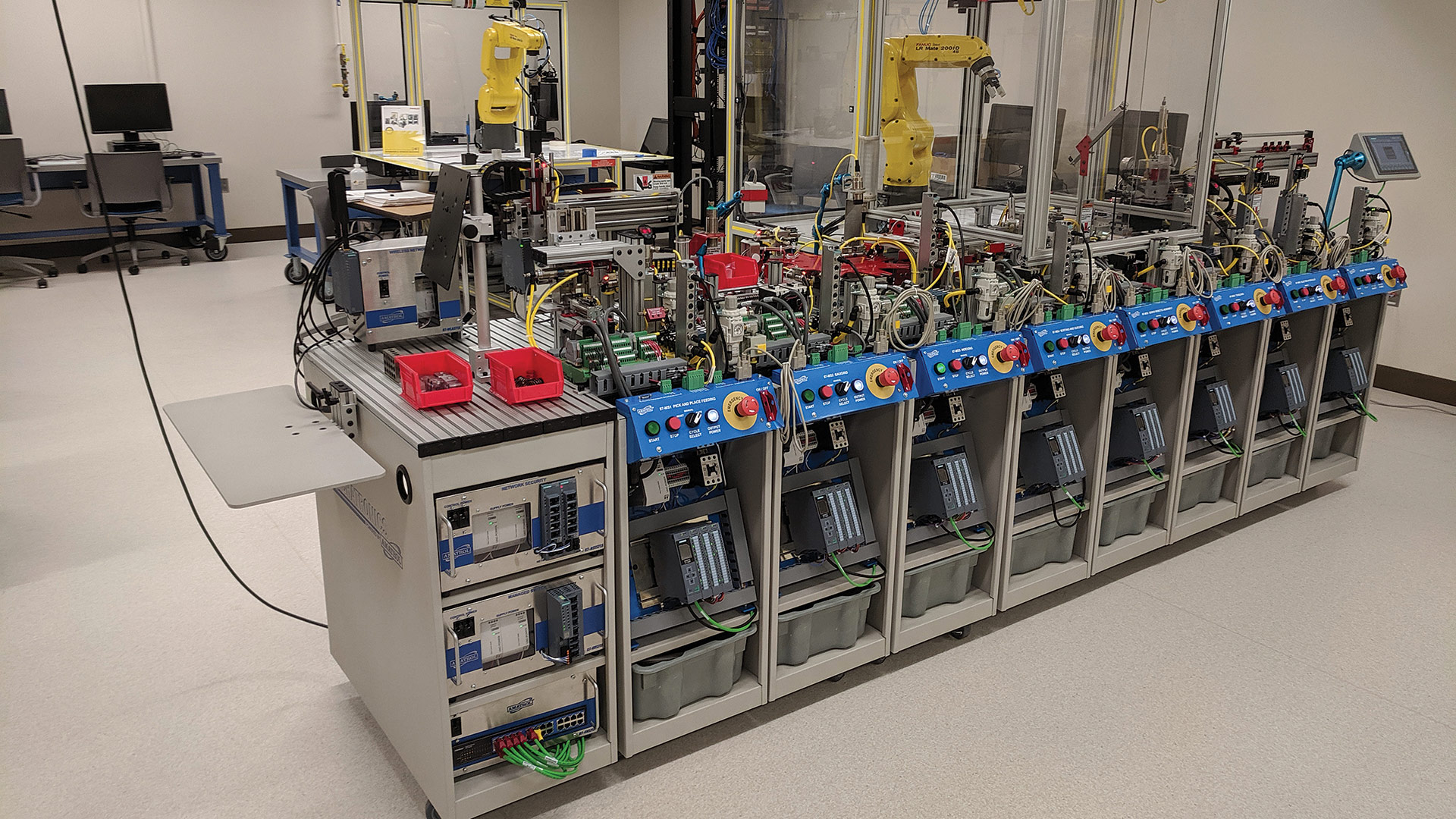
Features

Hopes Are High

After recreational marijuana use became legal in Massachusetts in 2016, the expectation was that retail stores would pop up quickly within a couple of years. That hasn’t happened, as the state — and host communities — have taken a deliberately measured approach to permitting. But with early returns strong from a few shops, and towns reporting solid tax benefits and no real community disruption, the pace of openings should begin to increase — and so will the economic benefits of this new industry.

If Western Mass. was full of people who thought the sky was falling when recreational marijuana was legalized, well, Mark Zatyrka thinks fewer of them are saying the same thing now.

“I knew it would change. But I feel like it’s changed at a more rapid pace than I would have expected,” he said of public perceptions about the new access to cannabis products in the Bay State. “When we held our public meetings, we had a few folks who thought we were going to destroy the world and everything would come crashing down once we opened. But the opposite has been true.”

Take the location of INSA, the cannabis dispensary he owns in Easthampton, which has sold marijuana for medical purposes since February 2018, but began selling for recreational, or adult, use in December. Tucked beside Eastworks at the rear of the Keystone Mills building on Pleasant Street, he said some may have worried about INSA’s proximity to a nearby park where people hike.

“But, really, we bring more people to the area, we have cameras all over the place, it’s well-lit, so it’s actually a safer place to be,” Zatyrka said. “If the perception was that customers are hoodlums who come in, go out back, and get high and do crime, well, look around — we serve almost every demographic you can imagine, from seniors to millennials, rich and poor, and they’re not violent criminals. They’re not here to cause trouble. Yeah, the perception has changed pretty rapidly.”

Perceptions — pro and con — of this new industry have undoubtedly shaped a permitting process, on both the state and local levels, that has moved more slowly than first expected when recreational use became legal in 2016. The state’s first adult-use retail shops were expected to be open last July, but instead, the first two opened in November, and the pace of new shops since then has been leisurely at best.

But they’re coming. And the ones that are open are changing those worst-case perceptions.

Mark  Zatyrka says INSA has attracted a diverse array of customers

Mark Zatyrka says INSA has attracted a diverse array of customers since starting recreational sales in December.

Take New England Treatment Access (NETA) in Northampton, the Bay State’s first retailer of cannabis products for recreational use.

“For us, it’s been a positive experience,” Northampton Mayor David Narcewicz told BusinessWest. “We’re starting to see some of the economic benefits in terms of taxes, and I know our local businesses have been creative in embracing the new industry. Businesses back in November were offering specials to people who came into town and showed a receipt for shopping at NETA. If anything, I think the business community has been receptive.”

He noted that Northampton’s voters were among the most enthusiastic in their support of legal cannabis, both during the 2012 statewide vote to legalize medicinal marijuana, then for adult use in 2016. As mayor, he said, his approach has been to respect the community’s voice.

“So we’ve been very open and proactive; we created zoning regulations that essentially treat this new industry like any other business, and we did not impose caps on the number of retailers like many communities did.

“We also had the experience of having one of the first medical dispensaries in the state,” he added, speaking of NETA’s original business plan. “We had a track record of seeing how they had operated and had the chance to see what the potential impacts were. They’ve been a good member of our business community; they worked with us to make sure their opening went smoothly, and have been working with surrounding businesses to make sure there’s no disruption.”

Stories like this are why, despite the slow rollout of pot shops so far — and state tax revenue well under early projections — proponents are confident that the trends toward greater public acceptance of this industry, and tax revenues to match, will soon accelerate.

“As an industry, we’ve done a good job to ensure that things are done correctly, and the state’s done a good job putting measures in place to help ensure it is a safe industry and people are getting a safe product and it’s dispensed in a safe way,” Zatyrka said. “The state did a lot of things right, which is why we’re seeing a successful rollout. I know some people wish it moved quicker, but I understand why it didn’t. There are thousands of applications, a lot of inspections, a lot to oversee. It takes time. It’s a new industry for everybody.”

Green Growth

As part of its new marijuana laws, Massachusetts imposes a 17% tax — a 6.25% sales tax plus a 10.75% excise tax — on cannabis businesses, while cites and towns take another 3%, plus whatever else they may choose to impose as part of their host-community agreements.

In Northampton’s case, that’s an additional 3%, called a ‘community-impact fee.’ The city received two checks recently: $449,825 from the Department of Revenue representing the 3% tax rate for recreational marijuana sales in November, December, and January, and $287,506 from NETA itself, reflecting the 3% community-impact fee on recreational sales for December and January.

“When we held our public meetings, we had a few folks who thought we were going to destroy the world and everything would come crashing down once we opened. But the opposite has been true.”

Other towns are seeing their coffers benefit as well. Theory Wellness opened in Great Barrington in December, paying $90,000 in taxes to the town in its first month.

“They opened to long lines, which should level off as they get more competition,” Ed Abrahams, vice chair of the town’s Select Board, told BusinessWest last month. “This is new for all of us, but so far, there have been logistically few problems.”

Southern Berkshire County communities that embrace the cannabis trade are sure to benefit from the continued illegality of the drug in both Connecticut and New York, though leaders in both states have been talking about whether that should remain the case. Brandon Pollock, CEO of Theory Wellness, told the New York Post last week that about 15,000 New Yorkers have made purchases there since its Jan. 11 opening.

“I’d say we get dozens, if not hundreds, a day from the greater New York City area,” he noted. “We get people coming up in Zipcars, people carpooling, people who say they hardly ever drive at all — but will drive to purchase cannabis.”

That sort of consumer response is intriguing to towns that see this industry as a new economic driver.

“Some cities have been great to work with, some a little more difficult to work with,” Zatyrka said. “Easthampton is very progressive city, and early on it was very obvious they wanted us here.”

That’s important from a competition perspective, he said, because the application process is already time-consuming, and communities that want to make it even more difficult to move through permitting and craft a host-community agreement can tie up a project for years, while other shops in more amenable towns are opening and picking up crucial market share and customer loyalty.

“Easthampton was great,” he went on. “Everyone wants to find a solution instead of putting up roadblocks. They want us to be successful, to get their name on the map, and they saw the benefits early on.”

He’s seeing a gradual shift, too, in where proposed projects will be located, noting that, when INSA started cultivating marijuana for medical use, most such outfits were setting up in old mill buildings or industrial parks. “Now it’s not so restrictive — people can open up on Main Street, and wind up in locations that are made for retail use, for people to come visit.”

That’s certainly the goal in Northampton, which is looking at myriad applications from cannabis manufacturers, cultivators, testing labs, and retail establishments, Narcewicz noted. It welcomes them because it sees value in how NETA, which isn’t even located downtown, has impacted business.

“NETA has created good-paying jobs in the community, and it’s an important way to expand our tax base and grow our local economy,” he said. “We have a local economy focused on retail, dining, entertainment, and a very vibrant cultural economy. And I think this complements it.”

There have been traffic and parking challenges, he added, “but if you talk to most retailers, downtowns having too many visitors is never a bad thing. We’re kind of equipped to handle a lot of visitors. And NETA has been very responsive in terms of renting additional parking from neighboring businesses, which helps them as well by providing an income stream. So far, it’s been a very positive experience, and there’s no reason to believe that’s going to change.”

Making a Name

BRIGADE has certainly benefited from this new industry. The Hadley-based brand-services company has worked with INSA extensively, including the creation of the designs for all its products and marketing.

“Everyone calls cannabis the wild west, and it is from a branding and design perspective, too,” said Kirsten Modestow, BRIGADE’s owner and executive creative director. “The rules for a whole category are being written overnight. That’s challenging, but it’s also some of the most exciting stuff we’ve ever worked on.”

With some cannabis businesses coming out with 100 or more products, it presents a unique branding challenge, she added, because the goal is not only to create a memorable look, but to help customers, many of whom have little experience with marijuana, navigate the products.

“One of the upsides of this industry is the impact it’s having on our communities, and it’s providing a lot of new opportunities and jobs,” she said. “It’s providing a lot of work for people, even tapping into farmers and other people who have services to offer and know what they’re doing.”

The education aspect Modestow touched on is one that continues in the store, Zatyrka said. The sales associates — he prefers that title to the flip industry term ‘budtenders’ — are the same ones who have worked with medical patients for a long time, and they have the training to dig deep into the science behind the products, so they can effectively explain them.

“We understand it’s a product that needs to be consumed safely, and we take that seriously,” he said. “We don’t want to be liable for someone who doesn’t know what they’re doing and eats an entire chocolate bar and has to go to the ER. We do all in our power to prevent that from happening.”

The coming months and years will see more education (and more tax revenues) as pot-shop openings pick up the pace — including Evergreen Strategies, LLC, which recently inked a host-community agreement with Belchertown to bring a facility to that town as early as this fall.

The Boston Globe recently cited industry analysts who say Massachusetts has a much slower local approval process and a more complex system to navigate than other states, and the state Cannabis Control Commission has placed a premium on an adult-use regulatory structure that supports public health and public safety. The measured pace ensures that stores pass inspections, sell lab-tested products, hire vetted workers, and track their products.

“It’s a growing industry, and will continue to grow,” said Zatyrka, who plans to open an adult-use dispensary in Springfield and has a cultivating and manufacturing license in Pennsylvania as well. Meanwhile, INSA is doubling its cultivation — located directly above the Easthampton store — and is looking to triple it in the future. “We’re still a few years out before we can meet the demands of the state. So it’s going to be hard work until then to keep up our supply with demand.”

The work is rewarding, though, especially for someone who treated his chronic pain for more than 15 years with oxycontin, oxycodone, morphine, and methadone, and suffered side effects that drastically outweighed the benefits.

“Thanks to cannabis, I was able to stop taking them,” Zatyrka said. “Cannabis helped with the withdrawals, and now I only use cannabis to treat my chronic pain, and it works 100 times better than all the opioids. I know firsthand the power of cannabis versus painkillers.”

He tells that story not because it’s unique, but because it’s representative of many people he comes across, with stories about how cannabis has helped them with seizures, Crohn’s disease, arthritis, and multiple sclerosis. And if legal adult use is helping to tear down the last bits of stigma around cannabis, he’s all for it.

“It’s incredibly gratifying to hear the stories and how grateful people are,” he said. “They’re able to get benefits from cannabis, and don’t have to hide it like they once did.”

Joseph Bednar can be reached at [email protected]m

Employment

More Than a Job

President Tricia Canavan

President Tricia Canavan

At its core, the mission of a staffing agency is to connect employers with job seekers — a task United Personnel has tackled with success for 35 years. But creating those matches doesn’t occur in a vacuum. Rather, building a healthy workforce is a region-wide effort that makes demands of employers, colleges, training programs, K-to-12 schools, and lawmakers. United Personnel President Tricia Canavan recognizes this big picture — and her firm’s role in closing the gaps.

Tricia Canavan’s job is to help people get jobs, and to help companies find those people. It’s that simple — only, it’s not.

“Workforce development and education are things I’m really passionate about and involved in in a variety of ways,” she told BusinessWest. “We’ve heard about the skills gap and the disconnect between people who are not working or are underemployed, and employers who are saying they can’t expand because they don’t have the staff they need, and they have to turn work away because there’s not enough employees. There’s a real disconnect. So, what are the strategies we can use to be able to bridge that gap?”

As president of United Personnel, Canavan connects job seekers to regular paychecks every day. But the challenge of doing so runs far deeper than many might assume. In fact, for many, it starts well before kindergarten.

“I think we need to be really comprehensive and innovative in how we look at workforce develoment and education, even K to 12. They call it cradle to career — you want to start kids with a really good background to enter kindergarten.”

Consider, she said, that only 7% of Springfield children are considered kindergarten-ready when they enter school, and if they don’t hit reading proficiency by third grade, it sets them on a never-ending pattern of playing catchup.

“It’s said that, from kindergarten to third grade, you’re learning to read, and from third grade on, you’re reading to learn,” Canavan said. “So if your reading-comprehension skills are not where they need to be, it’s a very tough thing to make that up. The gaps start young, and they persist, and continue through high school.”

Beyond high school, in fact, contributing to what are commonly known in the employment world as skills gaps. Which brings her back to her daily role, one she tackles with a decidedly big-picture view.

“I think the disconnect and the skills gap we see is not only a challenge and a missed opportunity for local residents, but it also is an economic-development concern,” she said. “Ultimately, employers need the skilled workforce to be able to grow, and if we, over the long term, or even the medium term, are not able to produce better results at a time when Massachusetts population is pretty flat, we’re going to have a problem. It’s critical that we’re engaging as many of those residents as can work and want to work, and making sure they have the skills they need to be successful for themselves and their families, too.”

In today’s reasonably healthy economy, Canavan said, good jobs exist. She knows, because she’s got a large roster of clients that want to fill them.

“If we cannot access candidates that have the skill sets that employers need, we will not be viable as an organization. So we have some serious skin in this game,” she went on. “But I also see it as a social-justice issue. If we can do better in these fields of education and workforce development, if we can connect people with the opportunties that exist in ways they had not been connected before, that can be a game changer.”

“I think the disconnect and the skills gap we see is not only a challenge and a missed opportunity for local residents, but it also is an economic-development concern.”

For this issue’s focus on employment, BusinessWest sat down with Canavan to talk about the ways her 35-year-old firm continues to close the gaps between job creators and job seekers, and the myriad ways that task is complicated by a lifetime of factors.

Steady Growth

Jay Canavan, Tricia’s father, transitioned from a career as president of Springfield Museums to launch United Personnel in 1984; his wife, Mary Ellen Scott, joined him about six months later, eventually serving as the company’s long-time president until eight years ago, when Tricia took the reins.

Jay and Mary Ellen opened their first office in Hartford, specializing in professional, administrative, and finance services. A few years later, they opened a second office in Springfield, focusing on support to the light industrial sector. Today, the firm also boasts offices in Northampton, Pittsfield, Chelmsford, and New Haven.

Meanwhile, its roster of specialties has grown to include manufacturing, hospitality, information technology, nonprofits, medical offices, and even a dental-services division, which has proven to be a significant growth area.

“Then we continue to focus on some core competencies,” she noted. “We do a lot of vendor-on-premises account management, where we provide turnkey human-resources support for our clients.”

One example is Yankee Candle, a business whose staffing level fluctuates through the ebbs and flows of the retail seasons. “Back in the day, people would hire and lay off, hire and lay off, Now, using a vendor-on-premises model, we partner with their human resources and production teams, and we manage seasonal staffing for them in a turnkey way. We have management on site 24/7, so their human resources and production teams can focus on their core business, and we supplement those activities.”

Cavanan said she enjoys working in partnership with clients because it allows United to become a part of their business and operational strategy and provide real value.

“Because we deal with such a wide variety of clients, we’re often able to take best practices and lessons learned and apply them to new clients. It’s almost like a knowledge-sharing service that we offer. And we’ve been really pleased with the results of some of that expertise we’ve been able to implement.”

Whether it’s helping clients with continuous improvement, staff-retention strategies, or joint recruiting events, she said United does its best work when it’s able to take on that level of partnership.

“If clients are open to this, we’re able to take an advisory and consulting role where we share with them, ‘here are some things we’re seeing in the marketplace.’ Oftentimes, it’s even current employment law,” Canavan said, noting that, just last week, United showed a client that one of its incentive programs was no longer legal due to changes in the law.

“We’re really proud of being able to serve as subject-matter experts in terms of recruitment, but also often in terms of human-resources compliance,” she went on. “We’re not attorneys, but because of the nature of what we do, we frequently have a very good finger on the pulse of what’s happening in compliance and employment law.”

Those various human-resources services are often crucial to smaller clients that may not have an in-house HR team or, at best, have one person handling everything from benefits and compliance to performance management and recruitment.

“To recruit well and comprehensively in a very tight labor market is extremely time-consuming,” she said. “Not only are we doing it all day, every day, but we have the infrastructure to find not only candidates that are actively seeking employment, but also candidates who might be open to considering a new job. And being able to partner with small and medium-sized customers allows us to bring them support with services they likely don’t have time to do. We’re really proud of that aspect of our work.”

Work Your Way Up

But Canavan is also proud of the big-picture view United takes of the region’s jobs landscape, citing efforts like the Working Cities grant that aims to better align workforce-development efforts and produce positive results for both job seekers and employers. “The economy is good, so let’s use this time to focus on training those who need it.”

Many well-paying careers, she noted, are in reach without a college education for those who are willing to access training, start small, and work their way up — in advanced manufacturing, for instance. The MassHire career centers offer training programs in that realm, but the classes aren’t always full. “How do we do a better job helping people build awareness of those opportunities, connecting them to those opportunities, and supporting them through it?”

United Personnel has been headquartered in Springfield

For most of its history, United Personnel has been headquartered in Springfield — currently on Bridge Street — but its reach expands far beyond this region.

There are institutional barriers as well, such as the so-called ‘cliff effect’ that throws up financial disincentives to people on public benefits who want to work. She said a bill currently making its way through the state Legislature would address that scenario through a pilot program that would help low-income Springfield residents access jobs while reducing the need for public benefits.

On an individual level, part of United Personnel’s mission is to dismantle as many roadblocks to employment as it can, Canavan explained. For example, employers typically prefer to hire someone with at least six months of recent, steady work without gaps. But, realizing there are reasons those gaps exist, United offers myriad short-term jobs to help people build a portfolio and references and prove they can handle something more permanent.

“It’s not that hard to be successful. It’s being on time, paying attention, staying off your phone. And, if you’re successful, you’ll find lots of opportunities for career pathways.”

“We’re really proud of being able to serve as subject-matter experts in terms of recruitment, but also often in terms of human-resources compliance. We’re not attorneys, but … we frequently have a very good finger on the pulse of what’s happening in compliance and employment law.”

She understands that some job seekers, especially younger ones, often struggle with those ‘soft skills.’

“It may be a lack of awareness, or not being super engaged in the work they’re doing. Entry-level jobs can frequently be boring or repetitive — it may not be the most exciting day you’ve ever had in your life,” she went on, noting that one of her first jobs out of college was a temp role in Chicago, doing numeric data entry all day. “It was terrible. But we’ve all had those jobs.”

The idea is to use every opportunity — whether a temp job or a training program — as a chance to move up to something better. And when job seekers do just that, it’s especially gratifying.

“It’s not our success, it’s their success. We just helped them get a foot in the door,” she said. “A lot of people don’t realize the opportunities that come from working with a staffing firm. We can be your advocate. We can help you. Lots of jobs are available — start small, and you can work your way up.”

Community Focus

United Personnel has certainly worked its way up over the past 35 years, not just in helping people find jobs and helping clients run their businesses more efficiently, but through a culture of community support. Team members are encouraged to volunteer and serve on boards, while the company itself offers financial support to numerous organizations in areas like workforce development and education, women’s leadership, community vitality, and arts and culture. One program is an endowed scholarship at the Community Foundation of Western Massachusetts for first-generation college students from area gateway cities.

“We’re interested in leveraging what we do and whatever financial resources we have available to us,” Canavan told BusinessWest. “We consider it a privilege to be able to do that. We don’t just want to be here to do business; we want to be a part of the community. We are all very cognizant of the fact that we are successful because of our community.”

That said, she noted that legislative mandates from Boston continue to burden employers and make it more difficult than ever to do business in Massachusetts. Which makes it even more important for her to make clients’ lives a little easier.

“We feel honored to be able to do this work with our customers and candidates that come to us. When a client is happy with what we’ve done, or a candidate comes to us with a table-sized box of chocolates to say ‘thank you,’ that’s rewarding. It’s a privilege to help people find work and help companies find that talented staff they need to drive the success of their organization.”

Joseph Bednar can be reached at [email protected]

Community Spotlight

Community Spotlight

Charlie Blanchard says Palmer continues to make progress

Charlie Blanchard says Palmer continues to make progress in its commerce centers and with green-energy projects.

Palmer’s leaders see the town as a destination — and hope the myriad players investigating east-west passenger rail service in Massachusetts view it the same way.

That’s why the Palmer Town Council recently established a citizens’ advisory committee and contracted with the UMass Center for Economic Development to study — and prepare a report on — the merits of an east-west passenger rail stop in Palmer, to be submitted to the state advisory committee currently looking into the feasibility of expanded east-west passenger service.

Those efforts included a recent meeting with community members to brainstorm about the pros and cons of the entire concept of east-west rail and Palmer’s place on any proposed line.

“Originally, the discussion was to have a relatively high-speed east-west route between, say, Boston and Springfield, or Boston, Worcester, Springfield,” said Charlie Blanchard, Palmer’s town manager. “If you add a stop in Palmer, what does it do to the timing? In fact, the timing doesn’t change that much. But the big benefit would be more ridership coming in or getting off the train, which would be a big deal.”

In a recent letter to state Sen. Anne Gobi, who attended the community meeting, Blanchard pointed out that Palmer is roughly central to Springfield and Worcester, and also at the center of a market that extends north to Amherst — and to institutions like UMass Amherst and Amherst College — and south to Storrs and the University of Connecticut. In short, it’s a point of connection in many directions that would benefit from expanded rail service.

Palmer at a glance

Year Incorporated: 1775
Population: 13,050 (2015)
Area: 32 square miles
County: Hampden
Tax Rate, residential and commercial: Palmer, $22.14; Three Rivers, $22.90; Bondsville, $22.97; Thorndike, $23.78
Median Household Income: $41,443
Median Family Income: $49,358
Type of government: Town Manager; Town Council
Largest Employers: Baystate Wing Hospital; Sanderson MacLeod Inc., Camp Ramah of New England; Big Y
* Latest information available

Furthermore, the absence of a stop in what’s nicknamed the Town of Seven Railroads would mean commuters from the Quaboag region who want to travel by train to Boston would have to drive roughly 40 minutes per day to use Springfield’s Union Station or slightly more to access Worcester. Participants at the meeting believed Palmer-area residents would be loath to do either, limiting total ridership at a time when the state would be clamoring to maximize it.

In addition, “a train stop in Palmer would be a major stimulus in helping to provide quality housing for commuters at an affordable price. With the ability to commute by train, this would open up a very affordable housing market,” Blanchard wrote in his letter, adding that a stop would also stimulate the economy of a set of communities that have yet to capture the growth found to the east, while boosting Palmer’s own downtown revitalization and encouraging hospitality companies to build more lodging there.

In short, it would inject energy into a town that, while it has plenty to tout in recent years, could always use more.

Projects and Progress

Baystate Wing Hospital’s $17.2 million project to expand its Emergency Department was perhaps the town’s biggest development last year. Aimed at better supporting the current annual patient volume of 24,000 visits, the 17,800-square-foot space includes separate ambulance and public entryways and features 20 patient rooms, including trauma, behavioral health, and other dedicated specialty-care areas.

“That opened in September, and was quite a big expansion,” Blanchard said.

Meanwhile, Palmer joined the ranks of the many Western Mass. communities to welcome the burgeoning cannabis industry in Massachusetts (see story, page 6), approving its first medical-marijuana facility on Chamber Road, including a 25,000-square-foot greenhouse and 3,200 square feet of retail space. Altitude Organic Corp. will move its headquarters from Colorado to a property on Thorndike Street in Palmer as part of the development, and expects to have plants growing in an indoor facility by October.

“It really is interesting to see the public acceptance of this new type of business,” Blanchard added, noting that the town’s laws allow for three retail cannabis locations in its commercial business district. “We’re looking forward to having them and seeing how successful they can be.”

In the Three Rivers section of town, progress continues at 2032 Main St., where the South Middlesex Opportunity Council is renovating the top floor to apartments and the bottom to retail — a mixed-use plan expected to infuse new residents into the neighborhood while attracting more shoppers.

“They ran into some structural issues — it was a bigger project than they thought — but activity continues,” Blanchard said. “It was completely gutted, and they had to do some reinforcing, but now it’s back on track.”

Property and business owners in Three Rivers have been engaging in a grass-roots revitalization effort for years, which includes changing the perception of the area and filling vacant storefronts. At the same time, the consortium known as On the Right TRACK (Three Rivers Arts Community Knowledge) has been working for some time to build a cultural and creative economy in the village.

On the culinary front in town, Stables Restaurant of Hadley recently opened a new restaurant at Burgundy Brook, on Route 181 on the north side of town. “When you go by there, you see a lot of cars and a lot of activity,” Blanchard noted.

Finally, the new rail spur installed at Sherwood Lumber Yard, in the town’s industrial park — a project that has been in the works since 2013, and funded through an Industrial Rail Access Program grant — allows the business to bring in materials by train, spurring significant expansion of the operation and helping the entire industrial park by unloading without clogging up other traffic.

“Now that the rail spur is completed, there’s more activity up there,” Blanchard said. “It also helped increase the rail capacity for the rest of the businesses there.”

Powering an Economy

Palmer also continues to embrace green-energy projects. In addition to 10 large-scale solar projects — producing 29.3 megawatts of electricity every year — and the installationin early 2018 of car-charging stations at Town Hall and the public library, the town has been working with Thorndike Energy and the Microgrid Institute to explore the benefits of a microgrid system that would access the hydropower and solar power generated at Thorndike Mills for emergency power.

“Thorndike Energy has hyropower over there, and generates electricity through hydropower,” Blanchard said. “They’re going to be adding some solar to it as well. You take those two renewable sources of electricity, and you add battery or other types of standby storage, so that you can store some of this power generated through a renewable source, and have it available in the event of an emergency.”

Project objectives include improved resiliency of electrical services for critical community facilities, expanded storage capacity to better integrate local renewable energy, and supporting National Grid goals in terms of modernization, storage, and renewables. Then, of course, there’s the benefit of job growth and retention.

“Obviously, anything located at Thorndike Mills would benefit from it,” Blanchard said. “The benefit to overall economic growth would be to attract new businesses to Thorndike Mills, which right now is pretty underutilized. It would enhance their marketability to show they have this renewable stored energy there.”

It’s just one way in which Palmer is generating energy from an economic-development standpoint, and raising its profile as a destination and a connecting point to the rest of Central Mass. — a role it will continue to embrace regardless of the eventual fate of any east-west rail line.

Joseph Bednar can be reached at [email protected]

Architecture Construction

Designs on Growth

As one local architect noted, we’re far enough away from the last recession to start worrying about the next one — and recessions tend to hit this sector particularly hard. Still, despite mixed signals in the long-term economic picture nationally, work remains steady locally, with municipalities, colleges, and businesses of all kinds continuing to invest in capital projects. Even if storm clouds do appear down the road, the 2019 outlook in architecture seems bright.

Curtis Edgin put it in simple terms when asked how 2019 is shaping up in the architecture sector.

“We’re busy; I can’t complain,” he told BusinessWest. Those five words sum up a strong outlook in an industry that tends to be a leading indicator for the economy as a whole — when things slow down, construction, finance, and other areas tend to follow — and is currently trending up, or at least holding steady.

“We’re far from the last recession — maybe far enough to worry about the next one,” said Edgin, a principal with Caolo & Bieniek Associates (CBA) in Chicopee. “But I don’t see that coming yet, looking at our workload.”

The American Institute of Architects (AIA) reports a similar outlook, with architecture firm billings nationally strengthening to a level not seen in the previous 12 months. Indicators of work in the pipeline, including inquiries into new projects and the value of new design contracts, also improved in January.

“The government shutdown affected architecture firms but doesn’t appear to have created a slowdown in the profession,” AIA Chief Economist Kermit Baker noted. “While AIA did hear from a few firms that were experiencing significant cash-flow issues due to the shutdown, the data suggests that the majority of firms had no long-term impact.”

Broken down by region, the Northeast is performing better than the West, but slightly trailing the South (which continues to rebuild from a rough 2018 hurricane season) and the Midwest. Nationally, billings softened slightly in February from the January pace, but remain strong in the big-picture sense, Baker said. “Overall, business conditions at architecture firms across the country have remained generally healthy.”

Curtis Edgin says specializing in a range of diverse niches is a plus for any firm

Curtis Edgin says specializing in a range of diverse niches is a plus for any firm, serving as a buffer against a downturn in any one area.

Jonathan Salvon, a principal with Kuhn Riddle Architects in Amherst, reports strong business as well, especially in the education realm, traditionally a strength for the firm, with projects for UMass and a historic-renovation conversion project for Elms College.

“Then there’s a mix of multi-family housing and commercial projects,” he told BusinessWest. “We’ve got a new office building for Way Finders going up on the old Peter Pan site in Springfield, which is our biggest commercial project at the moment. And there’s a 36-unit, multi-family housing project going up on University Drive in Amherst.”

Caolo & Bieniek, known for its wide range of public projects, from schools to fire and police stations, has expanded its base of private projects since merging with Reinhardt Associates in 2017.

“It’s been kind of a good synergy. We’ve blended our strengths and their strengths,” Edgin said, noting that one example is the recently completed Baystate Health & Wellness Center on the Longmeadow-East Longmeadow line, as Reinhardt has a solid history in medical office buildings.

“E-commerce has been growing at about three times the rate of traditional brick-and-mortar sales. The slowdown in housing hasn’t helped, as new residential development often spurs new retail construction activity. Instead, larger shares of investment in these facilities is going to the renovation of existing buildings.”

Other recent CBA projects recently started or well underway include a senior center in West Boylston, a police station in Williamstown, a public-safety complex in Lenox, a renovation of Chicopee’s public-safety facility, a pre-K to grade-8 school in Easthampton, and some work with UMass Amherst, Westfield State University, and other colleges.

“There’s a good mix of private and public, and we seem to be doing a fair amount of work with human-services agencies,” Edgin added, noting that the firm just did a project for Guidewire in Chicopee, and Sunshine Village in the city has also been a consistent client. “We seem to have a bit going in that sector right now. We’re busy, and it’s a good mix all around.”

Strong Pace, but Red Flags

The AIA suggests that growth in architecture should continue at least through 2020, but a number of emerging red flags suggest a cautious outlook.

Spending on non-residential buildings nationally is projected to grow by 4.4% this year, paced by healthy gains in the industrial and institutional building sectors, it notes. For 2020, growth is projected to slow to 2.4%, with essentially no increase in spending on commercial facilities, but gains in the 3% range in the industrial and institutional categories.

“Still,” Baker said, “there is growing concern inside and outside of the industry that a broader economic downturn may be materializing over the next 12 to 24 months.”

Nationally, growth in gross domestic product is estimated to be close to 3% in 2019, while the job market continues to be healthy, with more than 2.6 million net new payroll jobs added in 2018, an improvement over 2017’s figure of just under 2.2 million. In fact, the national unemployment rate was below 4% for most of 2018. Consumer-sentiment levels remained strong, and the nation’s factories also were busy, with industrial output achieving its strongest growth in almost a decade.

Jonathan Salvon says one of his firm’s three ‘legs,’ residential work, has been impacted by a slowdown in single-family construction

Jonathan Salvon says one of his firm’s three ‘legs,’ residential work, has been impacted by a slowdown in single-family construction over the past decade, but a rising portfolio of multi-family projects has picked up the slack.

However, there are several signals that point to an emerging slowdown in the broader economy, and therefore in the construction sector, Baker noted. These include declines in leading economic indicators, weakness in some key sectors of the economy, and softness in the markets of major U.S. trading partners. “These signals may be temporary responses to negative short-term conditions, but historically they have preceded a more widespread downturn.”

Meanwhile, since dropping sharply during the Great Recession, housing starts have had a very slow recovery, the AIA notes, and Salvon can attest to that reality locally. But Kuhn Riddle has adjusted in other ways.

“We’ve always been a stool with three legs,” he said. “One-third is work for various colleges, charter schools, prep schools, secondary schools, and even some day cares — we run the whole gamut in education. The second third is residential work; in the past, before the 2009 recession, that was often single-family residences. That market has never really come back, at least for us. But we’ve been lucky to develop a new market in multi-family projects.”

The third leg is a variety of commercial projects, including office buildings, restaurants, and bank renovations, to name a few, Salvon said.

“Hopefully we all stay busy. But we do know it goes in cycles; we’ve been through plenty of slower times and a lot of boom times. But we’ve been very blessed. We’re pretty busy and hope to stay that way.”

Nationally, Baker sees design work on the commercial front as a bit of a mixed bag at the moment.

“Business investments often reflect what corporate leaders feel is the growth potential for their companies. Investment nationally in new plants and equipment saw healthy growth in 2017 and through the first half of 2018, but slowed significantly beginning in the third quarter of last year,” he noted. “Given the recent trends in business-confidence scores, investment is unlikely to accelerate anytime soon. Business confidence fell sharply through 2018, with the fourth quarter showing the lowest levels in six years.”

In the Bay State, the picture is equally muddy. The Business Confidence Index issued monthly by Associated Industries of Massachusetts (AIM) reported a gain in February after dropping in January to its lowest level in more than two years.

“Employers remain generally optimistic about a state economy that continues to run at full-employment levels and a U.S. economy that is projected to grow by 2.2% this year,” said Raymond Torto, Chair of AIM’s Board of Economic Advisors and a lecturer at the Harvard Graduate School of Design. “At the same time, the erosion of confidence among Massachusetts manufacturers during the past 12 months raises some concern about the long-term sustainability of the recovery.”

On a sector-by-sector basis, Baker reported, design work for retail facilities continues to suffer from the growth on online shopping.

“E-commerce has been growing at about three times the rate of traditional brick-and-mortar sales. The slowdown in housing hasn’t helped, as new residential development often spurs new retail construction activity,” he noted. “Instead, larger shares of investment in these facilities is going to the renovation of existing buildings.”

On the other hand, office projects represent the strongest commercial sector in construction right now, with 5% growth projected for this year and 1% in 2020. “This sector has benefited from strong job growth and the apparent bottoming out of the years-long decline in office space per employee,” Baker said. “Much of the increase has come from the booming technology sector, so the outlook is dependent on continued growth in this industry sector.”

Meanwhile, eds and meds — or education and healthcare, two pillars of the Western Mass. economy — represent very healthy sectors nationally for architects and general contractors. AIA projects 5.5% in the education sector this year and an additional 4% in 2020, and 4% growth in healthcare in 2019 followed by 3.6% in 2020. 

“We’re pretty diversified and active in a lot of different environments,” Edgin said. “It’s not just schools, not just police stations, not just fire stations, but a little bit of everything.” He cited the recent renovation of Polish National Credit Union’s Front Street branch in Chicopee, as well as a new Arrha Credit Union branch in West Springfield and a project with the Boys and Girls Club of West Springfield. “A lot of things take a while, so it’s that advance planning that keeps you busy a year or two from now.”

Leading Indicator

Baker reported that business conditions at U.S. architecture firms in 2018, as measured by AIA’s Architecture Billings Index (ABI), were essentially unchanged from 2017.

“Since the ABI has been shown to lead construction spending by an average of nine to 12 months, this would suggest that the growth in spending on non-residential buildings in 2019 should be close to the growth rate of 2018,” he noted. “Additionally, new design contracts coming into architecture firms grew at a healthy pace in 2018, underscoring the robust level of backlogs currently enjoyed by most firms.”

Meanwhile, Dodge Data & Analytics recently released its 2019 Dodge Construction Outlook, which predicted that total U.S. construction starts for 2019 will be $808 billion, staying essentially even with the $807 billion estimated for 2018.

“There are, of course, mounting headwinds affecting construction, namely rising interest rates and higher material costs, but for now these have been balanced by the stronger growth for the U.S. economy, some easing of bank lending standards, still-healthy market fundamentals for commercial real estate, and greater state financing for school construction and enhanced federal funding for public works,” said Robert Murray, chief economist for Dodge Data & Analytics.

Locally, both architects and builders are maintaining the same sort of cautious optimism, at least in the short term.

“Right now, it’s strong,” Edgin said. “We’ve increased our staffing.”

Finding talented staff remains a challenge, he said, because strong growth among architecture firms in general means stiff competition, and Greater Springfield isn’t always a top destination for young professionals in the field compared to, say, Boston or New York, where pay scales are higher (but, of course, so is the cost of living).

Salvon understands that reality as well, but said Kuhn Riddle has benefited from its location in downtown Amherst, where it has easy access to the UMass architecture program. “We’ve been a little spoiled — we’ve been privileged to get some employees out of that program over the last decade or so, and we’ve tried to make a nice work environment, so people been staying here.”

All things considered, he told BusinessWest, the outlook seems strong in architecture locally, and others agree.

“We’ve been able to build some good staff and a good team, so we’re happy about that,” Edgin said. “Hopefully we all stay busy. But we do know it goes in cycles; we’ve been through plenty of slower times and a lot of boom times. But we’ve been very blessed. We’re pretty busy and hope to stay that way.”

Joseph Bednar can be reached at [email protected]

Technology

Pipeline to Progress

When the Massachusetts Clean Energy Center released a study last fall examining potential locations for water-technology demonstration centers in Massachusetts — thus raising the Bay State’s profile and potential in the increasingly critical field of water supply, treatment, and sustainability — UMass Amherst was a natural choice, because it’s been making connections between water research and industry for some time. A host of key stakeholders believe it can become even more so in the decades to come.

Talk to experts in the broad realm of water technology innovation, and it doesn’t take long for Israel to come up, at least in terms of government investment.

It’s not exactly by choice.

“There are countries facing severe water issues right now,” said Loren Walker, director of the Office of Research Development at UMass Amherst. “Israel is the world leader in terms of state-led efforts to purify water — because they have to. They have a real water-constraint situation there.”

But several entities in the Bay State — from the university to the Massachusetts Clean Energy Center (MassCEC) to a host of industry players, both established companies and startups — are intrigued by the potential to make Massachusetts an international leader in water innovation as well. And they’ve got plenty of progress to build on already.

“It’s obviously a big area — there’s a water crisis around the country, around the world, and it will be more critical as the years go on, so there’s a need to innovate ways to treat water, both wastewater and surface water,” Walker told BusinessWest.

“It’s an active area of university research, an active area of industrial research,” he went on, “but there’s a gap between the kind of research the universities do — federally funded, more basic or fundamental — and technologies being developed by industry that they can ultimately commercialize and sell. There’s a gap between that fundamental research and the later applied research where you’re prototyping, scaling up, and seeing what technologies really work — and that’s where you need a pilot site. You need a way to go from fundamental laboratory research to commercial-scale research.”

UMass could be that site, he said.

Loren Walker

Loren Walker says the Amherst Wastewater Treatment plant provides UMass researchers and partnering companies a flow of wastewater on which to test new technologies.

Last fall, MassCEC released a comprehensive study that evaluates the technical and financial feasibility of three potential water-technology demonstration centers across Massachusetts, including one at UMass Amherst. Such centers, proponents say, could offer a test bed to pilot new water technologies and position Massachusetts as a global leader in the water-innovation and energy-efficiency sector, providing significant business and employment opportunities.

Rick Sullivan, president of the Western Mass. Economic Development Council, said one of the EDC’s goals is to help identify and develop sectors where Massachusetts could become a center of excellence. Back when he served as secretary of Energy and Environmental Affairs under then-Gov. Deval Patrick, he and the governor traveled to several locations, including Israel, to learn about water innovation, recognizing this was an issue of growing international concern.

“Water is just a really big issue, and becoming more important every day,” Sullivan said. “So we started asking, ‘can Massachusetts actually play in this water cluster?’ The short answer is, yes we can — because it’s already a multi-billion-dollar business in the Commonwealth.”

“It’s obviously a big area — there’s a water crisis around the country, around the world, and it will be more critical as the years go on.”

That figure includes everything from delivery systems to public-works projects; from filtering, purifying, and clarifying water to security of freshwater sources like the Quabbin Reservoir, he noted. “So it’s a bigger field than I think a lot of people realize.”

UMass Amherst has long been involved in water research. Then, in 2016, a $4.1 million grant from the U.S. Environmental Protection Agency — on the heels of a state earmark of $1.5 million from the state Department of Environmental Protection for water innovation — helped launch one of only two national research centers (the other is in Boulder, Colo.) focused on testing and demonstrating cutting-edge technologies for drinking-water systems.

All things considered, Sullivan said, UMass Amherst is an ideal spot to develop a demonstration center. A conference last October, called “Innovations and Opportunities in Water Technologies,” brought together the business and startup community, area municipal leaders who spoke about challenges to current water and wastewater systems, and UMass experts who detailed some of the cutting-edge work already being done on campus.

“At the end of the day, all of those panels and all the discussion and information kind of led back to reinforcing the idea that this is a really smart investment for the Commonwealth,” Sullivan said, noting that the investment to create the three centers was approved as part of the state’s 2014 environmental bond bill, but has not yet been appropriated in the state budget.

“When you talk to the companies that are in the innovation sector, one of the biggest needs they have is to be able to take their product and demonstrate that it works in real life — and to be able to do that not just in a lab, but out there in the real world,” he continued. “UMass has the ability to provide that infrastructure with some investment from the Commonwealth.”

In the Flow

The MassCEC study analyzed the technical and financial feasibility of three potential water-technology demonstration centers around the state: the so-called Wastewater Pilot Plant at UMass Amherst, the Massachusetts Alternative Septic System Test Center in Barnstable, and the Massachusetts Water Resources Authority’s Deer Island Treatment Plant in Boston Harbor.

Establishing this network could create jobs, lower energy costs, and optimize municipal operations in addition to supporting water-technology research, the study noted. A test-bed network could serve existing Massachusetts-based water technology companies, help attract new companies to the Commonwealth, advance new solutions to both local and global water challenges, and provide a strong foundation for innovation.

Key to UMass Amherst’s feasibility as a demonstration center is the fact that it already acts as a pilot site for industry — albeit on a limited basis — because of its access to flowing streams of municipal wastewater at the Amherst Wastewater Treatment Plant, located next to the university’s Water Energy Technology (WET) Center.

“You need flowing streams of municipal wastewater and surface water; you need to have access to this to test your filtration membrane or electrochemical treatment technologies, whatever they may be,” Walker said.

“Those facilities are few and far between,” he added. “But we happen to have one of just a couple facilities in the country that have some of the key attributes necessary to do some of this pilot testing — access to flowing wastewater and flowing surface-water streams, proximity to a research university, and access to stakeholders and end users.”

The issue, he said, is size and scale.

Rick Sullivan says Massachusetts can be a major player in the water cluster and, in many ways, already is.

Rick Sullivan says Massachusetts can be a major player in the water cluster and, in many ways, already is.

“We have the fundamental key attributes needed to make this kind of pilot facility, but we’re limited,” he went on. “We have bays now and already have companies using the facility to do their own research and scale up. It’s already an active space for research and development collaborations — but it gets filled up very quickly, so we would love to expand it, see even more companies come in and use this space, both established companies as well as new startups.”

The center was established in the 1970s and ran as a research pilot site for decades, but fell into disrepair in the late 1990s, he explained. Since its grant-funded renovation in 2016 as a research and collaboration space, it has hosted numerous industrial collaborators. “But it’s limited how many projects can happen in parallel. So there’s a case to be made for investing in infrastructure improvements, expansion, and modernization, do more projects in parallel.”

As an example of the kind of research being done there, Walker brought up ultrafiltration membranes — nanoscale membranes that can remove contaminants when water is forced through. One problem is that the membranes tend to get fouled up by materials in the water and eventually don’t work so well, and have to be replaced regularly, which is costly.

But Jessica Schiffman, an associate professor of Chemical Engineering at UMass Amherst, recently received a National Science Foundation grant to study the use of naturally occurring biopolymers that can be used as a nanofiber’s mat to prevent fouling in these ultrafiltration membranes, he explained. “Then you have a membrane that lasts longer and is more valuable, more efficient, and processes water more effectively.”

Then there are startups like Aclarity, whose CEO, Julie Bliss Mullen, presented at the fall conference. Her company specializes in electrochemical advanced oxidation, which is essentially using electricity to decontaminate water.

“Our faculty and students are looking for real-world problems to tackle. We’re on the research side of the equation, but the real world informs what gets done here.”

“Then there are companies developing their own technologies we don’t even know about,” Walker said. “When they get to the stage where they’ve tested it at the lab scale and they know it works at that scale, they still can’t sell it; they can’t turn it into a technology and market it to anyone until they’ve tested it at the municipal scale, and that’s where a facility like the WET Center comes in.

“We already know there’s interest here, and we have more interest than we can serve presently,” he went on. “And we’re hoping we can find ways to expand and renovate the facility so we can meet that interest.”

It’s not just companies that benefit, he added. “Our faculty and students are looking for real-world problems to tackle. We’re on the research side of the equation, but the real world informs what gets done here. So it’s a very fruitful partnership, to have our basic researchers working with companies, and companies hopefully getting some value out of the investigations we can lead, and we get a lot of value from the questions they ask, which informs the research we do here at the university.”

Current Events

One end result of all this innovation and connection, Sullivan said, is a real economic-development boost in a field that promises to become more critical over the next several decades.

“Companies these days are looking for direct ties to the university for two reasons: one, the students are graduating and they need the talent, and they also want to tie back to the research and development that’s occurring with the grad students and professors and other staff, so they can stay on the cutting edge,” he told BusinessWest.

The test-bed potential, to have a site big enough to accommodate real-life testing for more companies, only enhances that potential, he added, noting that it’s only one way UMass is leading the way in connecting scientific research with real economic development, with the core facilities at the Institute for Applied Life Sciences being another.

“It’s such a resource and economic opportunity for the region,” he said of the university as a whole, “and I think a lot of people don’t understand and appreciate the potential it has and the importance it has.”

Walker was quick to add that the state and region have been taking the water-technology issue seriously for some time. For example, the New England Water Innovation Network is a nonprofit trade group that examines the water cluster in Massachusetts — companies developing water-purification technologies, university researchers at UMass and other universities, and industry — and connects those dots to help foster collaboration and innovation that will develop technologies, attract companies interested in developing these technologies, and hopefully create more jobs and an economic boost, all while attacking a major global problem.

“So there’s a need, and it’s likely only going to grow,” he said. “UMass Amherst is going to help develop some of the solutions to solve that problem and, hopefully, in the process of doing so, create some economic opportunity for Massachusetts and Western Mass. in particular.”

While UMass is ahead of the curve, Walker noted, this isn’t an unknown area for innovation potential, and other states, like Georgia, are currently looking to develop similar pilot-scale and commercial-scale projects.

“Right now we’re in a good place. We have a lot of interest, and we have a lot of expertise here, but I think that, going forward, we’ll see a lot more competition from other states and other regions that want to get in on this game. But to be successful, you have to have combination of physical infrastructure, stakeholder relations, and, critically, the expertise. That means having experts at the university level, which we have in spades here.”

David Reckhow is one of the more prominent of that group. The director of the Water Innovation Network for Sustainable Small Systems at UMass Amherst, he has traveled to Israel, Singapore, and other places to learn about global water needs and the innovation occurring worldwide to meet those needs.

“They talk about water being the next oil,” Reckhow told BusinessWest in December 2014. “We’re running out of quality water. There’s plenty of water on the planet, but most of it is not usable; the water in the ocean is not usable, or, at least, it’s very expensive to use. So, as we move forward, there’s going to be more conflict over existing high-quality water sources. We have seen it in the Middle East for a long time, but it’s going to be more widespread. It’s an issue of national security around the world.”

The intervening years have only made it more of one. And UMass Amherst has the potential, Walker said, to be a national center for water innovation that will benefit the region, but also attract players from across the U.S., both industry and academic collaborators.

“I do think it’s new enough of a cluster that it’s just starting to get some real recognition of its importance,” Sullivan said. “I think there’s a real opportunity for Western Mass., and UMass in particular, to play a role here.”

Joseph Bednar can be reached at [email protected]
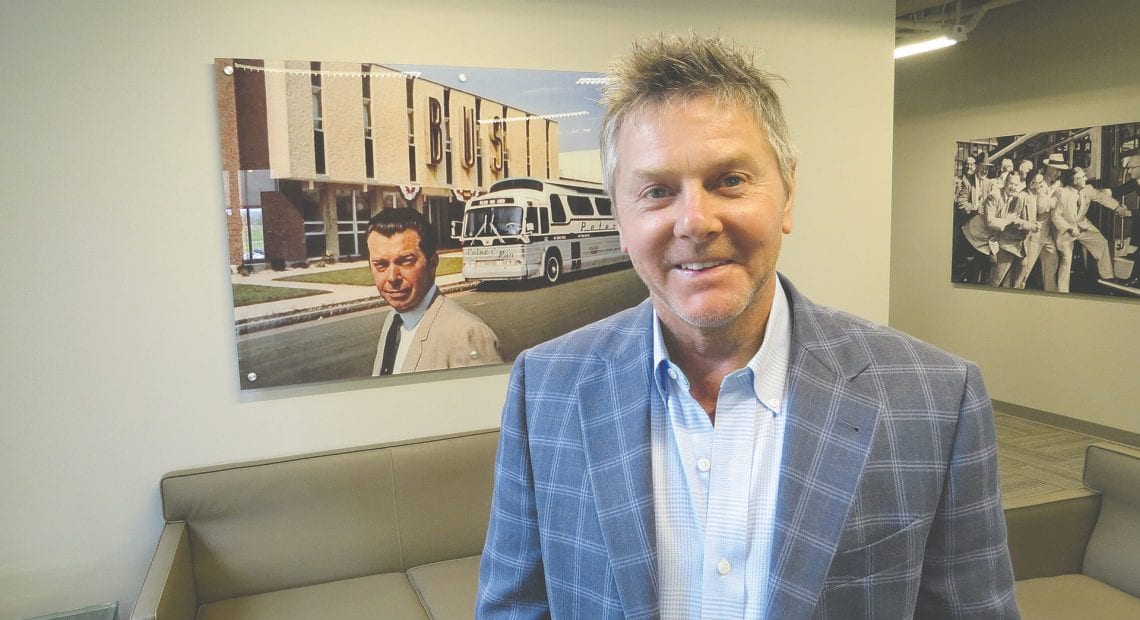
Community Spotlight

Community Spotlight

Jennifer Tabakin

Jennifer Tabakin says initiatives like high-speed broadband, environmental sustainability, and the arts all contribute to quality of life and help attract young people to town.

Jennifer Tabakin is a believer in using public investment to spur private investment. After six years as Great Barrington’s town manager — she’s stepping down in June — she has seen plenty of evidence to back up that philosophy.

“We’ve talked a lot about the investments we’ve made in Bridge Street, which is one of our side streets off Main Street,” she told BusinessWest. “Over the years, the public money put into it has been significant, and we’ve been able to see private development come along in response to it.”

Projects like Powerhouse Square, a mixed-use development on Bridge Street. “It’s literally steps from Main Street — exactly where new development should be,” said Town Planner Chris Rembold.

On the ground floor is Berkshire Co-op Market, a grocery store that’s moving from a different location and doubling its size. The development also includes space for smaller retail outlets and 20 new residential apartments on the second and third levels. In fact, that’s just a sample of a recent housing boom in town; in the past year alone, 228 new housing units were either built or permitted.

“We’ve been able to get far more downtown than I ever expected, ranging from affordable units to downtown condos. That meets the needs people have for a more walkable lifestyle” — one where residences are in close proximity to shopping, restaurants, and cultural amenities, Tabakin said.

One example of the latter is Saint James Place, which opened in 2017 as a home to small and mid-sized Berkshire County arts groups in need of performance, rehearsal, and office space. Created out of the historic St. James Episcopal Church on Main Street, several of its office spaces for lease have been filled by arts-related groups such the Berkshire Playwrights Lab, Flying Cloud, and the Berkshire Opera.

“It’s kind of a hub of supporting businesses and people. Not only are there traditional performing arts, but a dance studio, literary arts, and visual arts — and new media like computer design and software design.”

Saint James Place is now a thriving cultural venue, and we’re thrilled to have them here,” Tabakin said.

In October, in recognition of its vibrant arts life, the downtown was designated one of the state’s cultural districts by the Massachusetts Cultural Council.

“It’s a geographic area with not only plenty of cultural venues and things to do — like the Mahaiwe Performing Arts Center and Saint James Place as performing-arts venues — but it’s kind of a hub of supporting businesses and people,” Rembold said. “Not only are there traditional performing arts, but a dance studio, literary arts, and visual arts — and new media like computer design and software design.”

The cultural-district designation, he added, is a recognition of the vitality of the arts and culture in downtown Great Barrington, but it also serves a practical purpose. Cultural districts can access a stream of services including tax credits, economic incentives, planning assistance, grants, historic-preservation help, signs, and tourism promotion. Among the town’s plans is a shared cultural events calendar, which will help the various venues better coordinate their booking schedules, making it easier for visitors to know what’s happening when they spend a weekend or more here.

“It’s kind of an organizational effort, a marketing effort for the downtown,” Rembold said, adding that there’s much to market: the Mahaiwe and Saint James Place alone offer some 200 nights of entertainment a year. “And if something’s not going on there, you can go see a movie or a poetry reading or a Friday night film at the library. If you’re bored in Great Barrington, that’s your own fault.”

Getting with the Times

Another recent boon for downtown is the installation of fiber service. “It’s a strategy to make sure our downtown has the highest-speed broadband and can be competitive with our neighbors in the area, so people can locate here and take advantage of that higher speed,” Tabakin said.

“We have a private company covering all the development cost and infrastructure cost to bring fiber to downtown, and we’ll eventually start moving out to the rest of the community,” said Ed Abrahams, vice chair of the Select Board.

Great Barrington at a Glance

Year Incorporated: 1761
Population: 7,104
Area: 45.8 square miles
County: Berkshire
Residential Tax Rate: $14.98
Commercial Tax Rate: $14.98
Median Household Income: $95,490
Median Family Income: $103,135
Type of Government: Open Town Meeting
Largest Employers: Fairview Hospital; Kutscher’s Sports Academy; Prairie Whale
* Latest information available

Meanwhile, the town continues to make environmental sustainability common practice, moving all municipal, school, and community buildings to green energy sources and reducing use of single-use plastic products.

“For the past four years, we’ve supported eight large solar projects with a combined value of $16 million,” Tabakin added, while many town residents have gone solar as well.

All these factors — culture, high-speed broadband, sustainability — aim to position Great Barrington as a thoroughly modern community, even as it retains much of its quintessential old New England character, thus attracting more young families. Like other towns in rural Berkshire and Franklin counties, Great Barrington has seen the average age of its residents rise in recent years; the community has always been a popular spot for retirees, and there are a number of New Yorkers with summer homes in town.

But by bolstering ingredients like attractive (and affordable) housing, a vibrant downtown, a burgeoning cultural community, and outdoor activities (Ski Butternut is a prominent attraction), Great Barrington’s leaders are looking clearly at the future, which means attracting young people and especially young families.

Of course, those families will need to find find jobs here, and Great Barrington boasts strengths in a number of sectors, including education (Simons Rock of Bard College is located in town), healthcare (Fairview Hospital), technology (perhaps a dozen IT companies call the town home), the arts and tourism, the nonprofit community, and restaurants (the town is home to around 80 of them).

“We have challenges like other places, and we have to deal with the limited resources of a small town, but we have a very committed group here, and I have no doubt that will continue.”

“The challenge for the Select Board, and all of us, for that matter, is to maintain the vibrancy we have and support for our local retailers and existing businesses, and also be open to new businesses — to keep that appropriate balance and make sure we have diversity in the local economy,” Tabakin said. “That’s something we speak about a lot.”

One area of the economy that’s growing — literally — is the cannabis sector, which is something BusinessWest has mentioned in almost every Community Spotlight over the past six months. Great Barrington is no exception, with Theory Wellness opening the first retail marijuana store in Berkshire County in January, with others to follow. In the first month, the shop netted $2 million in sales and $90,000 in taxes paid to the town.

“They opened to long lines, which should level off as they get more competition,” said Abrahams, who quickly added that any cannabis business in Great Barrington should do well, due to the town’s proximity to Connecticut and New York, states where the drug is not legal. “This is new for all of us, but so far, there have been logistically few problems, and police report no increase in people driving under the influence.”

Continuing Commitment

As Tabakin looks back on her six years in office, she’s especially gratified at a Town Hall full of energetic and committed people, and a lot of new faces — during her tenure, 26 people were either promoted or started a career there.

“Several years ago, we were warned we had a number of people approaching retirement age,” Abrahams added, “and it’s been a really smooth transition replacing them with newer people.”

Having a well-run town, Tabakin said, speaks to a commitment to quality of life, one that’s evident in Great Barrington’s vibrant retail district, cultural attractions, quality schools, and more, she said.

“Many times, government gets a bad rap, but I don’t feel that’s the case in Great Barrington,” she told BusinessWest. “We have challenges like other places, and we have to deal with the limited resources of a small town, but we have a very committed group here, and I have no doubt that will continue.”

Joseph Bednar can be reached at [email protected]
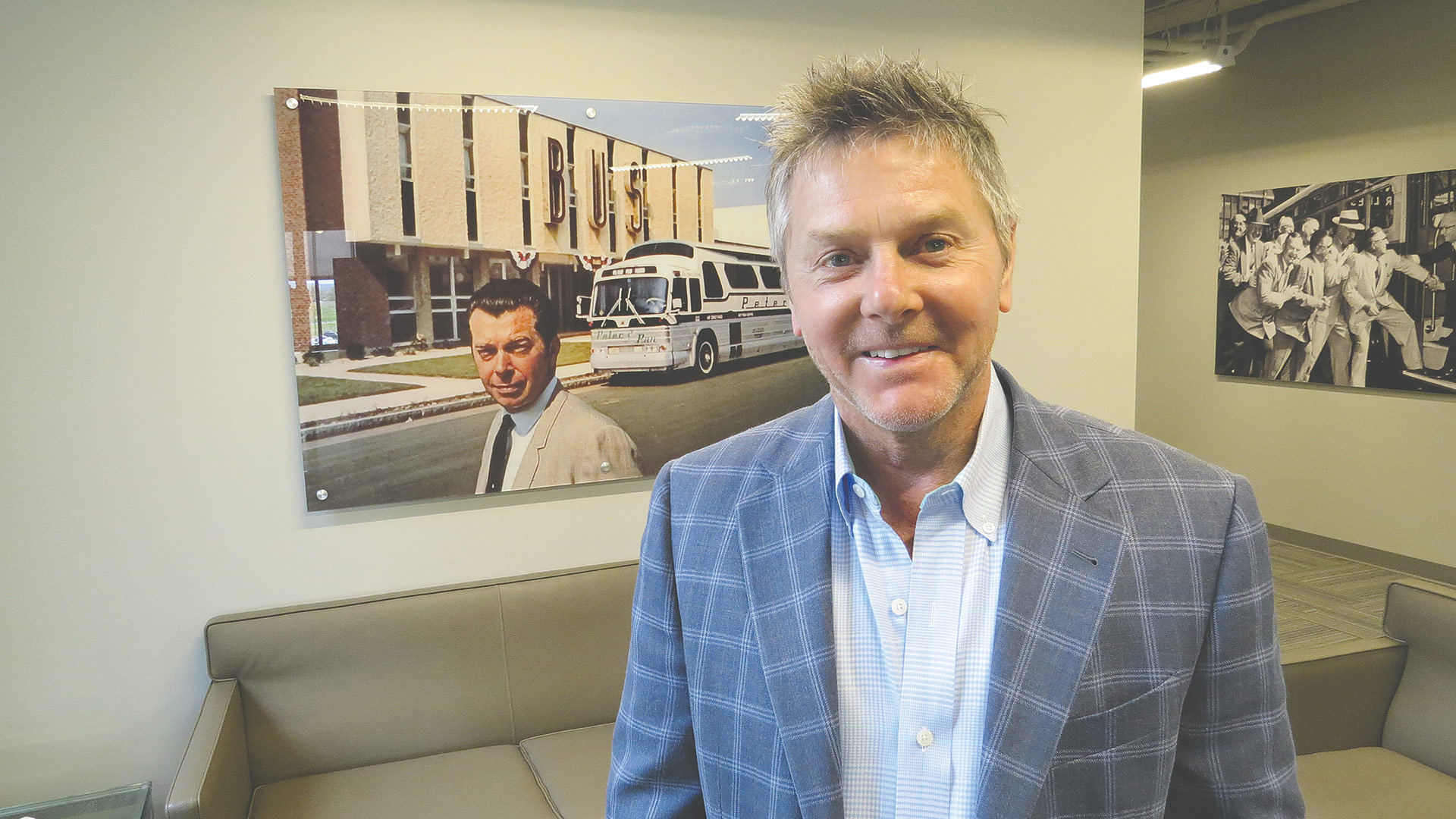
Construction

From Bedside to Job Site

Dorothy Ostrowski says she’s never been happier than she is at the helm of a venerable construction firm.

After more than a decade in nursing, Dorothy Ostrowski says she’s never been happier than she is at the helm of a venerable construction firm.

Dorothy Ostrowski has never settled for having just one ball in the air.

Like the time, a few years ago, when she was building a house with her husband, Mike, while pregnant with their second child, completing a dual master’s degree, and starting a new nursing job.

“Somehow, I don’t know how everything fits on my plate, but it all does,” she told BusinessWest. “One of the biggest things I believe is that anyone’s capable of anything. It’s really how bad do you want it, and how much does it impact you, your life, and your family?”

“One of the biggest things I believe is that anyone’s capable of anything. It’s really how bad do you want it, and how much does it impact you, your life, and your family?”

She had to ask all those questions, plus a few more, when the opportunity arose last April to purchase Adams & Ruxton Construction, a 110-year-old West Springfield company, from its then-owner, family friend Andy Touchette.

With Mike busy running his own company, Amp Electric, it was a decision that rested fully with Dorothy, who had worked in nursing for well over a decade but was intrigued by putting the MBA she earned in 2015 to good use.

He said, ‘what do you think? Do you think you can run it?’” she recalled. “And I was like, ‘you know what? It’s time to do something for me. It’s time to do something for our family. It’s time to do something where I know I have a passion and I can be a good leader.’ So I immediately contacted Andy and said we’re interested.”

Mike had long admired Adams & Ruxton and the work Touchette did there. “I knew it wasn’t a dud. It was all about if the numbers worked and whether or not we could afford it — and whether or not she wanted to run it. That’s how it came to be.”

Once the deal and a transition plan was in place, Dorothy spent the next six months working with Touchette, unpaid, learning every aspect of the business, from contracts and estimating to equipment and planning — “every nut and bolt,” as she put it.

Mike Ostrowski knew enough about his friend’s company

Mike Ostrowski knew enough about his friend’s company — and his wife’s skillset — to know this would be a good fit.

With a diverse range of work, from excavation to commercial buildings, the firm’s recent clients include Chicopee Electric Light, Bank of America, the Diocese of Springfield, Callaway, and Coldwell Banker, among others. The company is also currently being evaluated for woman-owned and veteran-owned certifications, which would open up more doors, especially in the realm of state and federal contracts.

It’s a new adventure for sure, one far different than her career stops to this point would have predicted. For this issue’s focus on construction and architecture, BusinessWest talked with Ostrowski about the many twists in her path, from the roads outside Afghanistan’s capital to emergency departments at area hospitals, to her new task, building a new career — both literally and figuratively.

Joining the Force

Growing up, Ostrowski’s plans were much different than her eventual path into nursing. Specifically, she wanted to be a police officer, eventually studying criminal justice at Holyoke Community College.

Before that, though, at age 17, she signed up with the Army National Guard. A friend had recently joined the service, so she spoke with the same recruiter, who explained the opportunities available in a military police role.

“It was one of those turning points in life, like, ‘what am I going to do with the rest of my life?’” she recalled. After attending boot camp the summer after her junior year, she left for Fort McClellan in Alabama the following year, after her high-school graduation, for what would become a seven-year stint, with stops in Italy, Honduras, Panama, and — most memorably — a nine-month tour in Afghanistan, two years after the 2001 U.S. invasion.

“Wherever I’ve been, we’ve always talked about us opening a business — maybe a daycare for special-needs children or something else. I’ve always had that desire to do more and be more.”

“We did a lot of security stuff in Kabul; we were there to support the rebuilding of the Afghan national army,” she explained. Partway through, she became a chase driver for Gen. Karl Eikenberry, tasked with ‘defensive driving’ to protect the general and others from gunfire and IEDs.

“I’ve had dinner at President [Hamid] Karzai’s palace,” she recalled. “We traveled by Chinooks and Blackhawks with Apache escorts through the mountains, met with warlords, and rode in armored-up Chevy Suburbans with thick, bulletproof glass.”

But her future wouldn’t be in police work — civilian or military. Instead, while taking classes at HCC, she crossed paths with some people who got her interested in medical assisting. After earning her certification in that field and working for a podiatrist, she landed in the Emergency Department of Baystate Medical Center. It was an eye-opening experience.

“That was my first taste of the chaotic world of emergency-room nursing, and I loved it,” she said. “I don’t think you ever get stagnant in that kind of environment. You never know what’s going to come around the corner next, and if you become complacent somewhere, you start to miss things and start to make mistakes. It’s the ever-changing part of it and the constant knowledge. No two patients have the same cookie-cutter symptoms or diagnosis. It’s that constant education that keeps you on your toes.”

She performed well in that environment, and colleagues began suggesting she attend nursing school, which she did, earning an associate degree in nursing at Springfield Technical Community College with help from G.I. Bill benefits, and soon found herself in a new-graduate residency at Baystate.

“But I always wanted more,” she said. “I stayed there long enough to get experience, then I did travel nursing. I saw a lot of different places and different ways procedures are done.”

Ostrowski eventually returned to Western Mass., where she dated, then married Mike, and earned her bachelor’s degree in nursing at Elms College. She took ER jobs at Baystate and Mercy Medical Center, but soon decided she wanted to shift into a less hectic type of job that allowed her more time with family. So she accepted a job with Sound Physicians, a medical process-improvement company, and went back to Elms for a dual master’s degree in nursing and business administration.

“Throughout these transitions, I always wanted more,” she said. “I wanted to be more in a leadership position.”

She found that by buying Adams & Ruxton.

“Wherever I’ve been, we’ve always talked about us opening a business — maybe a daycare for special-needs children or something else,” she said. “I’ve always had that desire to do more and be more.”

After Sound Physicians, she worked at St. Francis Medical Center in Hartford as a process-improvement nurse, and had moved to a role as nurse manager at Connecticut Children’s Hospital when the opportunity arose to buy the construction company.

“I’ve never not been happy as a nurse, and I think I would have potentially stayed in nursing longer had I stayed at the bedside,” she explained. “But I had moved into more of that management piece of nursing, and I constantly struggled with being a nurse’s nurse versus the business of healthcare. It was a difficult internal turmoil to be in, when you know what you want to do through your nurses and patients, but your constraints are based on finances.”

Furthermore, the job was keeping her busy 60 hours a week or more, and she felt she wasn’t home nearly enough to be with her family, especially her older son. “He was struggling to read as a first-grader, and I could have counted on my two hands how many times I was home in time to be able to read to him.”

Time to Change

Something had to give. And her husband could see it, too.

“Between the unhappiness of where she was and having a friend of ours running this [construction] business the past 10 years and how well he’s done, that put it into perspective — ‘hey, it’s just another type of business,’” Mike said. “We’re buying a fully established business that’s completely up and running. All you have to do is go in and replicate what’s going on. You don’t have to build it from the ground up — you can make your changes, you can improve it and grow the business, but in the beginning, all you have to do is replicate it and keep it going.”

“Knowing where to get the answers and knowing to tell someone you don’t know the answer — you get more respect from that than from anything.”

The transition period was important, Dorothy said.

“Andy said he had gotten multiple offers from people he thought would potentially be able to take this business on, but they weren’t the right fit,” she noted. “There’s a certain quality that Adams & Ruxton provides. You have to be the right kind of person who’s going to be there for your clients and your prospective clients. And Andy really wanted to make this a warm handoff. So, the last six months, he made sure he introduced me to all his key clients, and he’s come back in a consultative way; if there’s someone I didn’t meet during those six months, he goes out and meets them with me so they know they’re in the same hands they were before.”

She said the most gratifying aspect of her career move was the fact that Adams & Ruxton’s employees, many of whom have been there more than 20 years, stayed on board when she arrived — and have been a rich resource.

“There’s a constant conversation — if I don’t know something in the construction realm, I have the support system and the knowledge within these walls to ask the questions. I know finances, and I understand how to run the business. I may not know everything there is to know about general contracting, but I know when to say I don’t know, and I know when to ask the questions. I have a great support team.”

Mike agreed. “Knowing where to get the answers and knowing to tell someone you don’t know the answer — you get more respect from that than from anything,” he said.

Both are pleased that business — both at the firm and in the industry as a whole — is healthy right now, Dorothy said. “Our construction rampup this year has started much earlier this year than previous years, so I have no worries about the busy-ness or sustainability.”

It’s a peace she said she began to forge during the period she worked directly with Touchette.

“Over those first six months, there were times I’d never been more sure of something in my career, even as a nurse, and I’ve never been happier than I am now,” she told BusinessWest. “I probably have more stress because I directly impact the livelihoods of the people who work for me, but I’m happier. I enjoy coming to work every day. I enjoy learning new things every day.”

Ostrowski thinks back to other times of transition during her life — like when she missed her graduation from Elms in 2010 because she was delivering her first child — and sees one whirlwind after another, but that suits her just fine.

“I’ve never backed down from a challenge, and I think this is probably the coolest challenge I can embrace, and I will make this successful because I’ve got a great team around me,” she said. “I’m lucky to be where I am right now.”

Joseph Bednar can be reached at [email protected]

Home Improvement

Total Transformations

With the economy chugging along, home-improvement businesses report solid activity over the past few years, with the prospect of more to come. Locally, perhaps partly because of a relatively mild December and January, companies logged more customer calls during a time of year when homeowners traditionally want to hibernate. Now, on the cusp of spring, they’re ready to hit the ground running.

If there’s one thing R.J. Chapdelaine is grateful for, it’s changing tastes in home design.

Take, for example, the current trend — one that has been building over the past decade or two — of open floor plans.

“People seem to want to open up the kitchen to family room space, open the kitchen to dining room, and create that open floor plan. That, I think, is what we see the most, taking someone’s compartmentalized house and opening it up,” said Chapdelaine, owner of Joseph Chapdelaine & Sons in East Longmeadow.

“You see the center-hall Colonial with a dining room, living room, and kitchen, and we go in and open up the walls,” he continued. “I say, thank God my grandfather and my father built them the way they did. Now I can go in and open them up. It’s job security. And you watch — someday down the road, it’ll go back.”

Whatever the trends and the homeowner’s personal tastes, the home-improvement industry has been riding a wave for some time now.

According to the Home Improvement Research Institute (HIRI), the market for home-improvement products and materials grew by 6.3% in 2018 after a 7.3% jump in 2017. Breaking it down further, the professional market increased by 9.9% last year, while the consumer market saw a sales increase of 4.7%. That trend is expected to slow slightly over the next three years, but still increase by an annual average of 4.2% through 2022.

“What I’ve seen is a very strong push for kitchens and baths, additions, and remodels,” Chapdelaine said. “That seems to be our strongest portion of the business right now. The new homes have slowed for us considerably, but the kitchen, bath, and addition calls have been very strong, straight through the winter.”

“The new homes have slowed for us considerably, but the kitchen, bath, and addition calls have been very strong, straight through the winter.”

That’s somewhat surprising because normally calls slow through December, January, and February, he added. “Over the years, we’ve come to the conclusion that people really don’t want us in their house around the holidays. But this year, it’s been incredibly strong right through the winter months, which is great. As we gear up for spring, there’s a lot of work on the board. Usually we would be expecting the phone to ring now in anticipation of a good spring start, but it’s been ringing throughout the winter.”

Frank Nataloni, co-owner of Kitchens & Baths by Curio in Springfield, has also seen a busier-than-usual winter, perhaps because the snowfall has not been too onerous.

“We’re a year-round operation, but it really depends on the type of winter we have,” he said. “If we have a mild winter, what happens is demand ends up being spread out, and we see a bit more people through the winter. When the weather is really bad, nobody goes outside. Either way, spring is always the strongest time from a sales standpoint.”

According to the Project and Sentiment Tracking Survey conducted by HIRI toward the end of 2018, which queries adults across the U.S. about their planned home-improvement projects, outdoor living spaces will feature the most activity in the next three months. More than one-quarter of homeowners surveyed indicated they will take on lawn and garden and/or landscaping projects during this time.

R.J. Chapdelaine

R.J. Chapdelaine says the region’s older housing stock and demographic changes have contributed to a strong remodeling business in recent years.

Taking all types of projects into consideration, inside and out, the Northeast and South lead the way, with about two-thirds of homeowners in both regions saying they plan home-improvement projects this spring.

Meanwhile, whether homeowners shoulder the work themselves is relatively dependent on the project type. On average, a little more than half of all projects are of the DIY variety — and of those, many involve outdoor living spaces, with 82.6% of homeowners tackling landscaping projects.

“I have to say, people feel confident, and they’re willing to spend money on their house,” Chapdelaine said. “It seems as though people are upbeat, and we’re reaping the phone calls and the benefits of that consumer confidence.”

Trending Topics

HIRI reports that, nationally, the home-improvement products market continues to outperform many other sectors of the economy. At the organization’s 2018 Industry Insights Conference last fall, experts in the sector shared what they felt were some prevailing trends heading into 2019. Among them:

• DIYers are more likely to be Millennials, which may have to do with that generation’s connection to devices. “DIYers spend more than 60 hours per week on TV and digital devices, including computers and smartphones,” Peter Katsingris, senior vice president of insights at Neilsen, told conference attendees, according to Forbes. “The technology and the choices it provides make DIY a realistic option for people.”

• More than one-third of homeowners who completed a home-improvement project in the past year regret not spending more on the project.

• The rental housing market is on the rise. A wave of growth has increased the number and share of rental households in the U.S., especially higher-end rentals in urban areas. This reality could lead to greater interest in portable and free-standing home-improvement products tenants can take with them when they move, as opposed to permanent fixtures.

• With home wellness on the rise, the lighting industry has been coming up with intriguing options. A technology known as circadian rhythm lighting is one rising trend, producing indoor illumination that more closely matches natural light in its warmth and, paired with home automation, can shift through the day with the sun to ease the impact of artificial light on the human body.

• Finally, remodeling activity isn’t slowing down anytime soon, due in part to an aging housing stock. With home prices increasing and new construction harder to find in some areas of the country, people are staying put and remodeling. “With the existing house stock averaging 38 years old, much of the inventory is in need of updating,” Mark Boud, senior vice president and chief economist at Hanley Wood/Metrostudy, told the conference.

That aging stock is an especially relevant reality in Western Mass., but so is another trend boosting the remodeling market: an increasing desire among Baby Boomers to age in place.

This recent remodeling project by Kitchens by Curio

This recent remodeling project by Kitchens by Curio reflects some current trends in kitchens, particularly its color palette dominated by white and grey.

“We’re seeing more aging in place, and we’re seeing that as a reason people are making changes,” said Lori Loughlin, manager of Frank Webb Home in Springfield. “They’re doing what they can to make sure they stay in their homes as long as possible because they feel like it’s a better option.”

In some cases, that means installing mobility and safety equipment, but in others, it means building in-law suites, or even moving to — by either building or remodeling — a smaller house.

“We’re getting phone calls now for people looking to to downsize,” Chapdelaine said. “I think the Baby Boomers are going to be looking for that smaller house and aging in place.”

Style Points

As for interior styles, those haven’t shifted much over the past couple of years. Painted cabinetry finishes and color palettes dominated by white and grey are still popular in kitchens and bathrooms, Nataloni told BusinessWest. “I just did a process of cherry wood with a black finish rubbed off, and the cherry comes through the black. It’s spectacular, actually.”

Styles change, he noted, but they don’t change abruptly. “White is very popular, grey is popular, but we are starting to see other colors, hints of yellow and green, coming in. I’ll be doing a yellow kitchen — not school-bus yellow, a very pale yellow, but a very warm color.”

“We’re seeing more aging in place, and we’re seeing that as a reason people are making changes. They’re doing what they can to make sure they stay in their homes as long as possible because they feel like it’s a better option.”

Chapdelaine reported similar, gradual movement toward color, but mainly pastels and muted colors, not too much that would be characterized as bold. “We’re still seeing a lot of white cabinetry and floors stained a number of different colors. With surfaces, we’re still running strong in quartz — some granites, but mainly quartz.”

The most important trend, of course, is that the home-improvement business as a whole remains strong.

“We’re seeing everything from full bathroom jobs to kitchens with the walls removed, right up to additions, which are ranging from family rooms to master suites,” he said. “We’re seeing more whole-house updates — painting, hardwood floors, that kind of work — and we’re also seeing whole-house remodels, which is very similar to building a house. You’re gutting the house down to the bare studs, going through and doing a new bathroom, new kitchen, new flooring, new drywall, which is kind of nice.”

He expects spring to bring its usual rush of customer inquiries as the weather continues to improve, but said people looking to get into the queue for the spring should really be calling in February and March.

Nataloni agrees, and says he appreciates the fact that, with the economy performing fairly well, homeowners are investing more money in their living space, whether they plan to stay there for a long time or improve the house’s dated look in preparation to sell it.

“We have a lot of older housing stock around here,” he said. “Wherever you go, you see someone working on their house.”

Joseph Bednar can be reached at [email protected]

Insurance

Shelter from the Storm

In the insurance world, an umbrella policy is exactly what it sounds like, sitting atop home, auto, and business insurance coverage and providing excess protection against liability risks. What is less clear, area insurance experts say, is why more people don’t avail themselves of this relatively inexpensive vehicle. After all, life’s storms can strike at any time, and when they do, no one wants to be totally exposed.

Even the best intentions can’t always fend off an expensive lawsuit, said John Dowd, president and CEO of the Dowd Agencies in Holyoke. Take a field trip, for example.

“If you or your spouse has volunteered to chaperone your kid’s school field trip to an amusement park, you both can be held legally responsible for anything that goes wrong on the trip,” he explained. “If a child under your care is injured during the excursion, that child’s parents might try to sue you for damages.”

Which could wind up being a trickier situation than simply loading that child into one’s own car and crashing it — because the driver’s auto-insurance policy covers bodily injury. But what about situations like that field trip — what policy covers that?

It’s just one example, Dowd said, of why an umbrella policy is a good idea for most people. “A personal umbrella policy can provide coverage for such potential incidents, allowing you to chaperone a trip without worrying about potential financial risks.”

An umbrella policy — sometimes referred to as ‘family insurance,’ he noted — essentially sits atop existing auto and homeowners policies to deliver an additional layer of protection, especially against catastrophic liability loss.

“I would like to see anybody who has any net worth — say, more than $100,000, which would include most homeowners these days — to have a personal umbrella,” said Mark Lussier, who co-owns Lussier Insurance in West Springfield.

“The idea behind a personal umbrella is, you want to cover your net worth. When I get a phone call from someone who says, ‘I have this umbrella, but I don’t really need it,’ I say, ‘if somebody were to sue you for everything you were worth, is what you have on your home or auto policy enough?’”

Dowd noted that the coverage from a personal umbrella policy is wide-reaching, providing protection for scenarios not covered by a typical home or auto policy. For instance, if a family member rents a snowmobile on vacation and is involved in an accident, the umbrella policy may help pay for the cost of repairs and medical bills of the injured parties.

Perhaps the most compelling aspect of an umbrella policy, Lussier said, is its cost — maybe $250 or $300 per year for $1 million in coverage, with additional coverage available beyond that, typically in increments of $1 million. “I have a couple of clients who’ve got $5 million umbrellas because their net worth justifies the extra cost.”

“The idea behind a personal umbrella is, you want to cover your net worth. When I get a phone call from someone who says, ‘I have this umbrella, but I don’t really need it,’ I say, ‘if somebody were to sue you for everything you were worth, is what you have on your home or auto policy enough?’”

That’s on top of legal defense fees, which insurers cover as part of any policy. “So, if the unimaginable happens and you’re called by Mark E. Salomone, you have peace of mind knowing your insurance is going to defend you as well as pay anything you’re legally responsible for.”

Mark Lussier

Mark Lussier says the inexpensive cost of a personal umbrella policy, coupled with the many scenarios it covers, present a strong argument for buying one.

In addition, the umbrella is worldwide coverage. “So you can be vacationing in Europe, and if someone is injured because of something you’re responsible for, your umbrella is going to respond,” Lussier said.

Bill Trudeau, president of the Insurance Center of New England in Agawam, said he draws a simple diagram to explain the umbrella concept to customers, with policies like home and auto represented by rectangles, and the umbrella hovering over all of them.

“You can imagine a multi-fatality accident, where the claims might easily surpass $1 million. If an accident is deemed your fault, you may run out of insurance,” he explained. “But if you’ve bought a $2 million umbrella to go on top of a $1 million policy, now you have $3 million in protection in that instance. It’s a policy for excess liability claims — product liability, premises liability, bodily injury, property damage, all kinds of claims. It’s one policy, and you can decide how much protection you want to buy.”

Surprising Circumstances

Lussier stressed that umbrella coverage isn’t technically coverage the policy holder doesn’t already have. “You can’t get umbrella unless you have the underlying policy.”

While some may ask why not just increase coverage on existing home and auto policies, he pointed to the broad nature of umbrella protection, and, again, its cost.

“Many times, to buy more coverage under the basic policy begins to beg the issue of why you shouldn’t have the umbrella. I can have a $1 million umbrella for three cars and two houses for $250 a year. So it’s cheap.”

In Massachusetts, Dowd explained, most umbrella policies provide coverage for the policy holder and their immediate family members living in the same household, with some exceptions. And he listed a few scenarios where that wide net may come in handy.

For example, “if a dog attacks a guest in your home, you may be responsible for any medical bills,” he explained. Even a small bite could end up costing thousands of dollars, and, while some homeowners insurance policies provide liability coverage for dog bites, they typically restrict what breeds are covered. “If your policy excludes your dog’s breed, umbrella insurance may help cover any financial responsibility you have for the incident.”

As another example, if a recently licensed teenager causes a multi-vehicle auto accident, the resulting financial liability could be expensive. “While a single-car accident likely won’t exhaust your auto-insurance policy, a multi-car accident might exceed the coverage,” he said. “Personal umbrella insurance can cover expenses beyond those covered in your auto policy.”

One hindrance to purchasing umbrella coverage, Lussier noted, is that the holder must first increase his or her automobile bodily-injury coverage to $250,000 — and that floor can rise to $500,000 for older drivers. “In some cases, especially with multiple cars, that can be unaffordable. People say, ‘I can’t allocate that risk transfer; I’d rather retain the risk myself and take my chances.’ And that’s really what insurance is all about — it’s a transfer of risk.”

Then there’s something called ‘personal-injury coverage,’ Lussier said, which is different from bodily injury, instead referring to libel, slander, false arrest, and defamation of character. And this has become a minefield in the age of social media.

“Many times, to buy more coverage under the basic policy begins to beg the issue of why you shouldn’t have the umbrella. I can have a $1 million umbrella for three cars and two houses for $250 a year. So it’s cheap.”

“Some people, especially teens, don’t fully comprehend the power of social media,” Dowd said. “If your child makes a disparaging remark or unsubstantiated claim about someone on social media, that person might try to sue for libel.”

An umbrella policy may provide coverage for such situations, with most policies extending coverage to online statements. “Aside from just physical damage, umbrella protection can provide financial assistance if you’re being sued for libel or slander.”

Lussier agreed that this is a significant issue in an era when everyone is quick with a camera, and when images, videos, and statements online can live forever.

“Depending on your means, you can find yourself liable for substantial sums,” he told BusinessWest. “Nowadays, something said innocuously or without much thought can be a big deal. It goes viral, and the next thing you know, you’re saying, ‘I didn’t really mean it the way it was taken, but if I’d have known it would go that far, I would’ve kept my mouth shut.’ And if you put it in writing, you can make it even worse.”

Cost of Doing Business

Clearly, personal umbrella policies cover a wide net of possibilities. But it can be tricky when they cross over into the business realm. Lussier cited the example of a photographer who closes his studio and moves his enterprise into his house. “Now his house is a business exposure, and an umbrella excludes business exposures.”

That’s where a business umbrella comes in, working in much the same way a personal umbrella does, but covering liability risks related to a business.

Bill Trudeau

Bill Trudeau says growing businesses should continually reassess what level of coverage they need from an umbrella policy.

“If you have a relationship with your broker, they’re likely to offer you umbrella liability,” Trudeau said of business owners. “If you’re doing a review of your insurance, it’s something almost any competent broker brings up. As your business grows, it would be part of the basics of insurance coverage.”

The nature of the business would impact the risk exposure and, hence, the level of coverage needed, he noted. While a $1 million umbrella might be fine for a storefront shoe store or florist, a business owner with a fleet of heavy trucks would likely need more.

“We’re hoping not to scare people, but we want them to make realistic choices,” he said. “And a lot of times, those choices are informed by some requirement from the place you’re doing business with, like a contractor taking on bigger jobs, like a casino or office tower or hotel chain. The risk managers for those entities tend to have a requirement for higher limits of liability. So, like it or not, if you want to play in that area and do business with these kinds of clients, you probably have to buy an umbrella of some sort.”

Fame is a factor, too, Lussier said — and often results in higher rates per million of coverage, because famous people are seen as bigger targets for lawsuits.

“If you’re a high-profile person, like a news anchor, you won’t get an inexpensive umbrella, because of the higher exposure,” he explained. “If we’re selling you cheap insurance, we’re basically gambling that you’re never going to use it. That’s really what insurance is all about. The most people participate for the least amount of risk, so we can then price it accordingly.”

In addition, the level of coverage should reflect not only one’s net worth, but future earning potential as well. A doctor who just graduated from medical school and plans a career in brain surgery might have little more than debt to show right now, but a lawsuit could put significant future earnings at risk.

In the end, Trudeau said, umbrella coverage can bring peace of mind in myriad scenarios.

“If something’s gone wrong in your business — someone went through a stop sign, something terrible happened, some member of the public is injured badly, and your company is sued for $5 million — you can take some comfort: ‘I bought insurance, and I’m able to pay what people wanted to negotiate without having to declare bankruptcy.’ It’s still awful, but you have that small comfort, as opposed to sitting there wondering what to do.”

Joseph Bednar can be reached at [email protected]

Community Spotlight

Community Spotlight

Diana Schindler

Diana Schindler says it’s key for Deerfield to balance the town’s rural character with needed economic growth.

Deerfield boasts numerous draws for businesses looking to relocate, Diana Schindler says, from its reasonable property-tax rate to its proximity to Interstate 91, Route 116, and Routes 5 and 10.

But there’s also been some pushback against some of those businesses, which reared its head when residents recently spoke out against a proposed Dollar General store in town. The Planning Board listened and turned down the project, said Schindler, Deerfield’s interim town administrator.

“There’s been a feeling in the community that they want that at arm’s length — that big-box retail development, drive-thrus, things they don’t feel are part of the culture of old Deerfield. It’s meaningful to them,” Schindler told BusinessWest.

“On the flip side, it creates more of a burden on the residential tax base,” she went on, noting that more than 80% of the town’s tax base is residential. “There’s a cost to the citizens in their tax rate and the sustainability of that tax rate. Deerfield has always readily paid for the level of service its citizenry wants and expects, but at the expense of not doing some major projects.”

For instance, the town is looking at a $1 million cost to replace a tank at the South Deerfield Wastewater Treatment Plant, which is only the tip of the iceberg when it comes to needed work at the facility over the next decade or two. Then there are plans to expand the Tilton Library and develop a shared senior center with surrounding communities.

“Seniors are asking for that. But all this adds up to millions of dollars, and you have the pressure of limiting development — or, rather, wanting development that will fit into the culture, which does limit it to some capacity,” Schindler said. “Less than 20% of the tax base is commercial/industrial, which is not a lot considering the viability of the property we have along 5/10 and a couple other areas. It’s going to become a question for the citizenry — is it sustainable?”

She’s one of many in Deerfield who believe economic development — in whatever form residents may want — is critical to the future of a town known for its tourist draws, including Yankee Candle’s flagship store, Mount Sugarloaf, Historic Deerfield, and Magic Wings, but needs to diversify and broaden its commercial portfolio.

“At first, they wanted to hide it, put it on the outskirts of town, but now they want it close to downtown. And that’s where it should be — take it out of the shadows, take it away from the edge of town where people can just pop in and leave. Bring them in and use it for economic development.”

“The ideal would be to get everybody together and integrate it all. We’re spread out geographically, and there’s a dichotomy between Old Deerfield and South Deerfield. We’re working toward making sure the town is the town, and everybody recognizes that if the town does well and comes together, then all of the components, all of our events, could do better.”

A veteran of the Franklin Regional Council of Governments and the Hampshire Council of Governments, Schindler has some regional government experience, and she believes there’s value in taking a regional view of economic development. But she’s more concerned with Deerfield’s residents, agencies, and organizations working together to forge a common vision for community development.

“If we could come together,” she said, “especially as we come to our 350th-anniversary celebration, we could build energy off of each other.”

Forging a Path

That celebration rolls around in 2023, which should be enough time, Schindler said, to see some real development progress in town, particularly in the Elm Street corridor, the main commercial area in South Deerfield.

Town leaders know that to attract new businesses — in hospitality and other sectors as well — they need to make the downtown area more inviting and pedestrian-friendly, and they’re eyeing a host of potential improvements in the Elm Street center, which may include work on sidewalks, lights, and storefronts.

For a year before taking on her current role last month — one she is interested in pursuing on a permanent basis — Schindler was a special projects consultant in town, and one of the big projects she embraced right away was Complete Streets, mostly geared toward the South Deerfield center.

South Deerfield center

Town leaders see plenty of potential in the South Deerfield center corridor.

“We’re in the process of putting that plan together. We want to create more walkability, more accessibility, and that includes for folks in wheelchairs, people with children, people of all abilities,” she said. “We’re also looking at ways to make South Deerfield’s center more aesthetically pleasing — light it, put in streetscapes, put in wayfinding, finish the municipal parking lot we have down there; all that is being discussed as part of the plan. We want it to stay a viable downtown.”

The area is not particularly expansive, she pointed out, spanning just a few blocks, but in some ways, that presents a more enticing opportunity, by ensuring that development and improvement efforts are tightly focused. There’s some land-use complexity as well, as the Massachusetts Department of Transportation owns a small part of the corridor, and the state owns Conway Street, home to Town Hall.

“But that’s an opportunity,” she said, “because the state is also excited about Complete Streets, and we could see a wonderful economic center down here, which I’m sure the state would support in a variety of different ways.”

The downtown has seen some business change recently, with longtime restaurant Jerry’s Place closing last year, and a café called Leo’s Table setting up shop in the location, with proprietor Jennifer Howard specializing in made-from-scratch breakfast and lunch fare. The building itself — which is also home to Ciesluk’s Market, Giving Circle Thrift Shop, the Tavern, and a Subway sandwich location, as well as 19 apartments on the second floor, has new owners, Jason Kicza and Justin Killeen, who plan to touch up the property this spring.

“I would consider that the anchor building on that side,” Schindler said, “and it’s doing great.”

Cumberland Farms’ move from South Deerfield’s center to the main road — specifically, the corner of Elm Street and Routes 5 and 10 — may not have been as great for the downtown’s prospects.

Deerfield at a Glance

Year Incorporated: 1677
Population: 5,400
Area: 33.4 square miles
County: Franklin
Residential and commercial Tax Rate: $16.34 (Deerfield), $18.14 (South Deerfield)
Median Household Income: $74,853
Median Family Income: $83,859
Type of Government: Open Town Meeting
Largest Employers: Yankee Candle Co., Pelican Products Inc.
* Latest information available

“They have a bigger business down on the corner, but it’s not necessarily a draw into the center; now people can just pop into Cumby’s for gas and keep going,” she said. “So we are looking at ways to basically create more stability in the center of South Deerfield by doing a variety of things. Obviously, part of that is keeping businesses and attracting more businesses.”

These days, the corridor can be oddly empty at certain times of the day, she noted, but well-trafficked during morning and evening rush hours. The goal, she told BusinessWest, is to turn it into a pedestrian-friendly center at all hours, rather than a thruway.

The Complete Streets plan will be a big part of that. By the time the 350th rolls around, she’d like to see significant physical and infrastructure improvements to make the downtown more of a destination. “The sidewalks will look different, maybe more green space, and hopefully we’ll see more people down there.”

High Times

Like many area communities, Deerfield has embraced the burgeoning cannabis industry in Massachusetts, recently approving two site plans, one for a cultivation facility at Pioneer Gardens on Mill Village Road, and the other for a dispensary run by Harvest Inc. on State Road.

“The culture has changed,” Schindler said, noting that, when communities were first exploring the economic possibilities of marijuana businesses, many Deerfield residents — most of them older — were staunchly opposed. But that opposition has died down to a large degree in many towns, to the point where communities might begin to locate such businesses in more central areas.

“At first, they wanted to hide it, put it on the outskirts of town, but now they want it close to downtown. And that’s where it should be — take it out of the shadows, take it away from the edge of town where people can just pop in and leave. Bring them in and use it for economic development.”

Meanwhile, Schindler and other Deerfield leaders will continue to think outside the box — even if big boxes aren’t in the cards — by examining where pockets of land already devoted to commercial and industrial businesses might have some infill potential, and continue to take pressure off the residential tax base.

“The thing I think is so tremendous about Deerfield is the huge opportunity it offers,” she said. “It’s wide open, and it’s got resources — financial resources, natural resources, culture, art, access to main roads. I get excited about it.”

Joseph Bednar can be reached at [email protected]
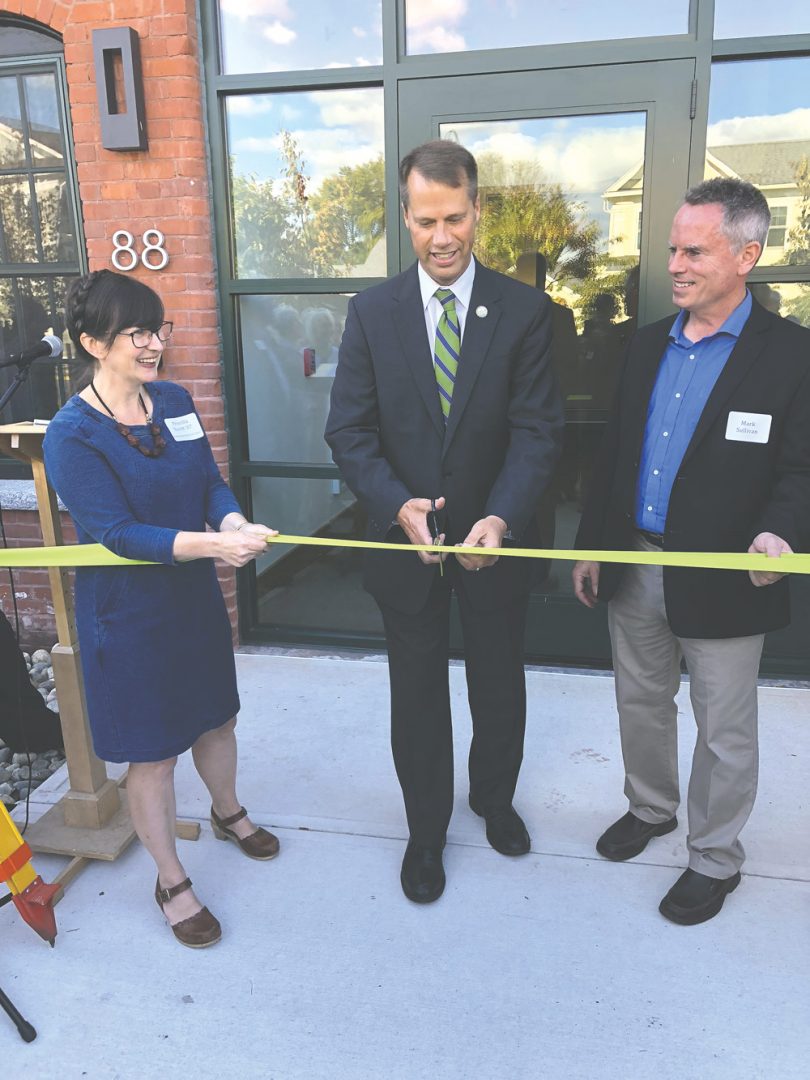
Home Improvement

Foundation to Roof

The Western Massachusetts Home & Garden Show may last only four days each March, but Lori Loughlin says vendors reap the benefits all year long.

“The exposure at the show is tremendous,” said Loughlin, manager of Frank Webb Home in Springfield. “It pays for itself within the first week after the show closes. In May, June, July, people are coming in saying, ‘I was at the home show, and I saw this showerhead.’ They come back six months after and want to buy something they saw there. It’s nice.”

Loughlin, who serves as the event’s deputy chair for 2019, said her company, the showroom division of F.W. Webb, offers such a wide variety of products and services that it’s a no-brainer to participate in the show, which, in its 65th year, will feature more than 350 vendors displaying at more than 700 booths.

“You’ll find landscaping, appliances, hot tubs, bathrooms … you can go from foundation to roof and everything in between,” she said.

The Home & Garden Show, slated for March 28-31, is produced by the Home Builders & Remodelers Assoc. of Western Massachusetts (HBRAWM), whose 500-strong membership reflects the variety on the show floor, with roughly 90 categories on display from builders, remodelers, kitchen and bath specialists, landscapers, painters, roofers, financial institutions, pool companies, and more.

“We can give you a snapshot of what’s out there, of what’s new,” said Andy Crane, HBRAWM president. “The key word is local. Almost every business in there is local; these are the people who managed to stay in business through the ups and downs of the economy, and they’re there to show their wares.”

“The key word is local. Almost every business in there is local; these are the people who managed to stay in business through the ups and downs of the economy, and they’re there to show their wares.”

Crane said 2019 has been one of the show’s better years, with fewer than a dozen booths left to sell two weeks before the event was set to begin. In short, it remains the association’s signature showcase.

“People are going to see companies and meet owners that they probably wouldn’t be exposed to by word of mouth,” Loughlin said. “I can’t believe how many companies are involved in this home show. It’s huge. And we get such a rebound on this.”

While recognizing the show’s potential to connect businesses with homeowners, she said the cross-promotion that goes on is just as valuable as the visitors who walk through the door.

Andy Crane

Andy Crane says the 2019 Home & Garden Show is shaping up to be one of the strongest, if vendor commitments are any indication.

“The networking between companies has been great for our company,” she told BusinessWest. “We tie in with the tile people and kitchen-design people, who send people here to find sinks. It’s nice to create relationships with other vendors.”

Something for Everyone

The home show started as a way to generate revenue to support the association, but it also provides member companies with a chance to market to an audience — and a big one, with around 20,000 visitors over the four days in a typical year — that might not otherwise see their name. Conversely, it gives attendees, many of whom simply come to the show for fun, a host of concrete (or hardwood, or tile, or whatever) ideas for home improvement.

The exhibitors run the gamut from inspection services to security and alarm systems; Internet and communications to moving and storage; duct cleaning to pianos and organs. Meanwhile, show attendees fall into one of several categories, the association notes, including:

• People planning to buy or build a new home, who may visit with builders, real-estate agents, financial institutions, and sellers of component products, such as hardwood flooring, tile, and appliances;

• People planning to remodel or renovate, who may want to check in with all of the above, plus vendors of replacement components such as windows and doors, as well as appliances, wall treatments, and home furnishings;

• Yard and garden enthusiasts, who tend to be interested in lawn and landscaping services; wall, walk, and edging components and materials; and trees, shrubs, flowers, and seeds;

• Lifestyle-conscious individuals, who like to check out trendy, high-tech, or time-saving products; home furnishings; and products focused on self-improvement, fitness, and health;

• Committed renters, who have no plans to own a house, but may be interested in space-conservation and space-utilization products, as well as home furnishings;

• Impulse buyers, who flock to vendors of home décor, arts and crafts, cooking and baking products, jewelry, and personal goods; and

• Those who attend the show purely for fun, who may arrive without an agenda but often develop ideas for future purchases and home products. “More than any other group,” according to the association, “these people are the ones who have come to rely upon our show on an annual basis and who perhaps have the greatest impact upon our vendors.”

Indeed, Crane told BusinessWest, “it’s not just about coming to the show and spending money with the vendors, even though we hope that’s the case. It really is a social event. That’s the mindset — it’s a nice evening out, and people walk out of the show with ideas of their home.”

Once again, visitors will see the LIXIL Beauty in Motion 49-foot mobile showroom in the Young Building, showcasing an array of American Standard, DXV, and Grohe kitchen and bath products.

“We have a mobile showcase with active and working plumbing fixtures, the newest and greatest features in plumbing, from toilets to water-saving showerheads,” Crane noted.

Also in the Young Building, chefs from across the Pioneer Valley will create some of the signature dishes they serve at their restaurants. Visitors can see how they prepare some of their favorite dishes and perhaps ask how to tailor those dishes to fit their own family’s taste. This popular area, hosted by WMAS Radio, will also include cooking seminars every day of the show.

“It’s not just about coming to the show and spending money with the vendors, even though we hope that’s the case. It really is a social event.”

The Young Building will also be home to several kids’ and family activities, from the Melha Shriners clowns to Thousand Cranes Studio, which will be on hand to show off the creative talent of their students, as well as conduct hands-on activities with show attendees. Other attractions will include live butterflies from Magic Wings Butterfly Conservatory & Gardens, taking pictures on one of the go-karts from Pioneer Valley Indoor Karting, science experiments at the Rolling Acres Outdoor & Science Summer Camp, a Springfield Thunderbirds booth, face painting, and Looney Tunes characters from Six Flags New England. On Saturday and Sunday, the West Springfield Police Department will be on hand to fingerprint children and offer safety tips, and the Chesterfield Fire Department will give out hats and coloring books.

“There are a lot of different things to do, so you don’t have to come only for a siding or roofing job,” Crane said. “You can go have a nice, inexpensive time in a warm, dry facility.”

Business and Pleasure

In addition to Loughlin, Gisele Gilpatrick of Pro-Tech Waterproofing in Chicopee will serve as Home Show chair, while other committee members include Lisa Grenier of Market Mentors, Joe Mole’ of C.J. Carpentry, Josh Nolan of Fuel Services, Tom Silva of Triple S Construction, and Brian Zippin of Contractors Home Appliances. All are ramping up for what most in the home-improvement world say looks to be a strong year (see related story, page 24).

“This year, as every other year, the home show is a spring kickoff to the building season,” Crane said. “It’s the perfect time of year when people are thinking about projects both inside and outside the house. The show gets their minds moving a little bit.”

Again, though, he stressed that show organizers also want people to have fun.

“Take your wife out to dinner and swing by the home show, or call your brother or your neighbor. You can get out of the house and look at 700-something booths with different products — maybe something you’ve dreamed about.”

This year’s show hours are Thursday and Friday, March 28-29, 1-9 p.m.; Saturday, March 30, 10 a.m. to 9 p.m.; and Sunday, March 31, 10 a.m. to 5 p.m. General admission is $10 for adults, and children under 12 are admitted free. Discount coupons are available at www.westernmasshomeshow.com. Veterans and active military with ID receive free admission on Thursday only.

Joseph Bednar can be reached at [email protected]
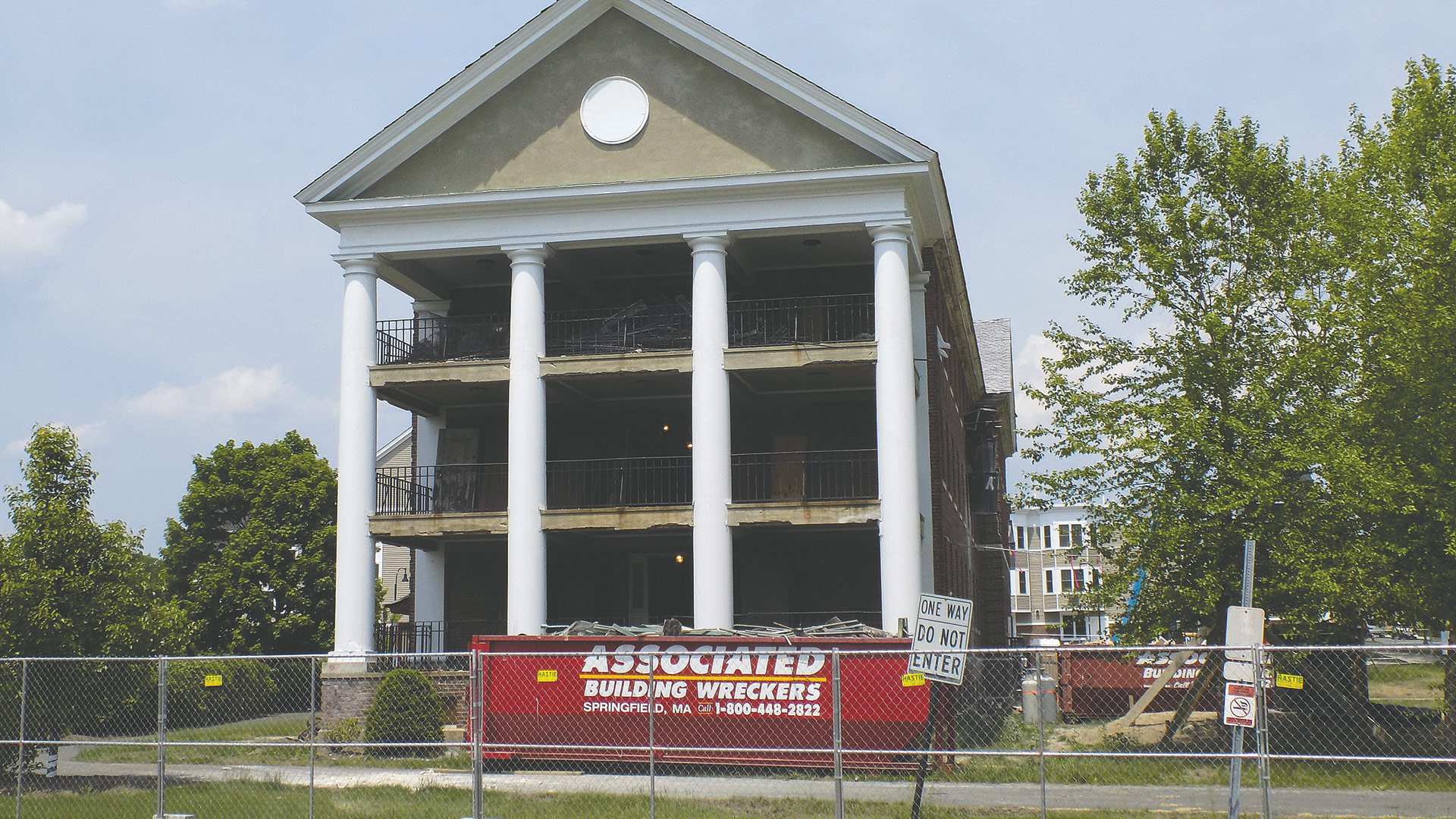
Modern Office

Loosening Up

For decades, dress codes in business environments were simple — suits or jackets, ties, dresses, nylons. But there’s been a shift in recent years, at companies both large and small, toward a more casual dress policy that projects professionalism through slightly more casual wear, a trend often summed up in the phrase ‘dress appropriately.’ The result, proponents say, are more comfortable — and, hence, happier — workers, which is something any company wants.

It was only supposed to be a summer-long experiment, Christine Phillips said.

“Up until the summer of 2016, it was pretty much shirts, suits, and ties for men, and dresses, jackets, and nylons for women,” said Phillips, first vice president of Human Resources at PeoplesBank, of her company’s dress code. “The expectation was a very professional dress environment. But in some of our employee surveys, the concept of a more casual dress code kept coming up.”

There was some precedent, even in the traditionally buttoned-up world of finance; that was the year JPMorgan Chase made waves on Wall Street by making ‘business casual’ its official dress code. Other large corporations have done the same, following the lead of Silicon Valley and the tech sector, which have long been known for more casual dress.

“When people feel more comfortable in their work environment, when they can reflect their personality more, they feel good about themselves and feel good about their workplace. It’s been extremely well-received by all our associates.”

So, PeoplesBank leaders decided on a half-measure — loosening the policy for one summer.

“We took it down a notch — guys didn’t have to wear ties, women didn’t have to wear nylons. We relaxed on some of the more professional aspects — instead of a jacket and tie, just a dress shirt was fine; even a golf shirt was OK. For women, it could be more summer dresses, or open-toed shoes. In a way, we listened to what employees were asking us to consider and decided to use the summer as a test to see how things went.”

The result? “It went really well. People were excited about the fact that they could take the dress code down a little.”

That wasn’t too surprising, Phillips said. Loosening dress codes has been a hot topic for a long time at HR roundtables she’s attended, and other banks have waded into that water. At the start of 2017, PeoplesBank made it permanent as well, writing a less formal dress code — the bank calls it ‘professional casual’ — into policy year-round.

“We approached this as a workplace benefit,” she told BusinessWest. “When people feel more comfortable in their work environment, when they can reflect their personality more, they feel good about themselves and feel good about their workplace. It’s been extremely well-received by all our associates.”

MassMutual arrived at the point slightly earlier. After years of publishing a policy of specific do’s and don’ts, in the spring of 2015, the corporation boiled its dress code down to two words that have often been used in today’s work world: ‘dress appropriately.’

“This was an effort to reflect the more collaborative, innovative, and open culture that was building at the company, as well as simply trusting our employees and providing them with more empowerment and accountability,” said Susan Cicco, MassMutual’s head of Human Resources & Employee Experience.

Christine Phillips (second from left) with fellow PeoplesBank employees

Christine Phillips (second from left) with fellow PeoplesBank employees Anthony Polo, Joseph Zazzaro, and Joseph Fimognari, all dressed in ‘professional casual’ attire.

“What someone wears is very personal, and we want all of our employees to be comfortable and to bring their whole selves to work,” she explained. “We also want employees to have the flexibility to express their own individuality while trusting them to exercise good judgment.”

While the way employees are expected to dress often depends on what they’re doing that day — a client meeting for instance, might require a more formal look than an afternoon behind a desk — both companies are simply reflecting a broader move in the work world away from suits, ties, and dresses. The reasons are myriad, but they all come back to employee satisfaction, and how that affects the entire workplace culture in a positive way.

Decisions, Decisions

Once an employer shakes free of the idea that looking good always means formal dress, it can be freeing to simply trust that workers will make the right decisions with what they wear, Cicco said.

“It’s about placing more trust and accountability in our employees to manage their personal brand and reputation, and in our managers to set expectations and provide guidance for what’s considered appropriate,” she told BusinessWest. “It’s made a notable difference — life just feels a little bit easier.”

Still, for professionals accustomed to formal dress, the new guidelines can complicate matters, too, said Will Brideau, owner of menswear store Jackson & Connor in Northampton.

“What someone wears is very personal, and we want all of our employees to be comfortable and to bring their whole selves to work. We also want employees to have the flexibility to express their own individuality while trusting them to exercise good judgment.”

“We’ve seen people coming in saying, ‘I don’t have to wear a tie to work anymore; the office is really dressing down lately. They’re saying I don’t need a sport coat, just a nice button-down shirt, just dress appropriately for clients. How do I put an outfit together?’” he explained. “To a large extent, a suit and tie is a uniform, but now there’s a lot more flexibility, where they need to put together a semi-casual outfit — a business-appropriate outfit that feels good and looks good.”

While matching dress pants or a suit with a dress shirt might have come easy, he went on, exploring a wider range of “middle-of-the-road pants” — not too dressy, but not too casual — can be trickier for some.

“People are playing around and have a lot more options, and that absolutely requires more from us in terms of directing people to find outfits that will really split the difference and present them as being professional, but not overdone,” he said. “It’s interesting for us watching all of that change, seeing people shift into a more casual workplace style, based on who they’re interacting with on a daily basis.”

Frankly, Brideau went on, he enjoys the challenge of helping customers craft outfits by pulling together separate items — a shirt, dress pants, maybe a vest — they may struggle to assemble themselves after years in suits and ties.

Will Brideau

Will Brideau says he enjoys helping men who are used to suits and ties assemble more casual outfits for work.

“We’re doing more piecing together of separate items to make a creative presentation, which is fun for us. We love doing that stuff,” he said. “And it gives guys more range for creativity and to be playful with the things they’re wearing.”

Still, playful has its limits, Phillips said.

“One thing that was important to us — and we talked about this before we did it — was that, in dealing with our customers, our communities, even each other, there’s an expectation of how we should look, and we have to maintain that. It doesn’t mean we have to stay in suits and ties, but we still have to respect the institution maintain a level of professionalism, even though it’s a little more casual.”

For example, “if we have a community event that requires us to dress up, or a client meeting or business meeting that requires us to dress up, that’s written into the policy. And it absolutely has not been an issue.”

There are a few garments that are still off-limits at the bank, however, from tight-fitting clothing to jeans and T-shirt.

“Jeans are not in our future,” she said. “That’s not something we feel is aligned with our brand, with how we present ourselves. But we feel the professional casual is totally aligned with our brand.”

Culture Shift

Cicco noted that MassMutual’s dress code is just one of a number of ways the company continues to evolve its overall culture.  Other areas of focus include a stronger commitment to diversity and inclusion, modernizing its benefits and leave policies, having a continuous improvement and learning mindset, and realizing small things are big things. The dress code falls firmly into that latter category.

From left, Peoples-Bank’s Caitlyn Powers, Linda Parlengas, and Aaron Sundberg

From left, Peoples-Bank’s Caitlyn Powers, Linda Parlengas, and Aaron Sundberg enjoy the company’s less-formal dress code.

“When this new policy was introduced, our guidance to employees was simply to consider their daily schedule, who they were meeting with, and what was appropriate. That’s it,” she explained. “We also generally suggest to our employees that, if there’s any doubt, don’t wear it. This has worked out really well. As you walk the halls of MassMutual on a typical day, you can feel the more relaxed atmosphere.”

Oddly enough, Brideau said, he’s still selling plenty of suits and ties; in fact, neckties were his number-three seller by category in 2018, up from number four in 2017. He has an idea why: there will always be a need for formal wear, even if it’s on the decline in the workplace.

“We’re selling more neckties, more bowties, more dress pants,” he said. “I think, perhaps, because they’re not as necessary for work, when you need them, you really need them. More people are saying, ‘I never wear suits for work, and now I have to go to a wedding, or a memorial service comes up suddenly, and it gives them an opportunity to get a suit. You never need a suit until you need a suit.”

Increasingly, companies are saying they don’t need suits, or dresses, or any staples of the traditional, formal dress codes of decades past. Phillips says that’s a positive thing.

“I would encourage companies, if they’re thinking about doing this, to have good communication with their associates about it. We said, ‘we hear you, we know this is a benefit to you, and if we’re able to offer this to you, we have expectations how you’ll respect the policy and follow it.’ And now, it’s so rare we have concerns about the dress code.”

While some may point to loosening dress codes as a Millennial-driven trend, she added, workers of all generations seem to appreciate it.

“People who have grown up in banking, and all they’ve known is a professional look, they’re excited the bank could accommodate a look of professionalism but not require them to wear a suit and tie every day,” she said. “They’re able to project professionalism in a slightly more casual dress code.

“People were so excited we were doing it for the summer — that was just a ‘wow’ moment — then when we announced we could move to a year-round policy of professional casual, that really excited people,” she went on. “It also sends a message of trust; instead of saying, ‘it’s always been this way,’ we listened, and we felt this was something we can accommodate in our work environment.”

Joseph Bednar can be reached at [email protected]
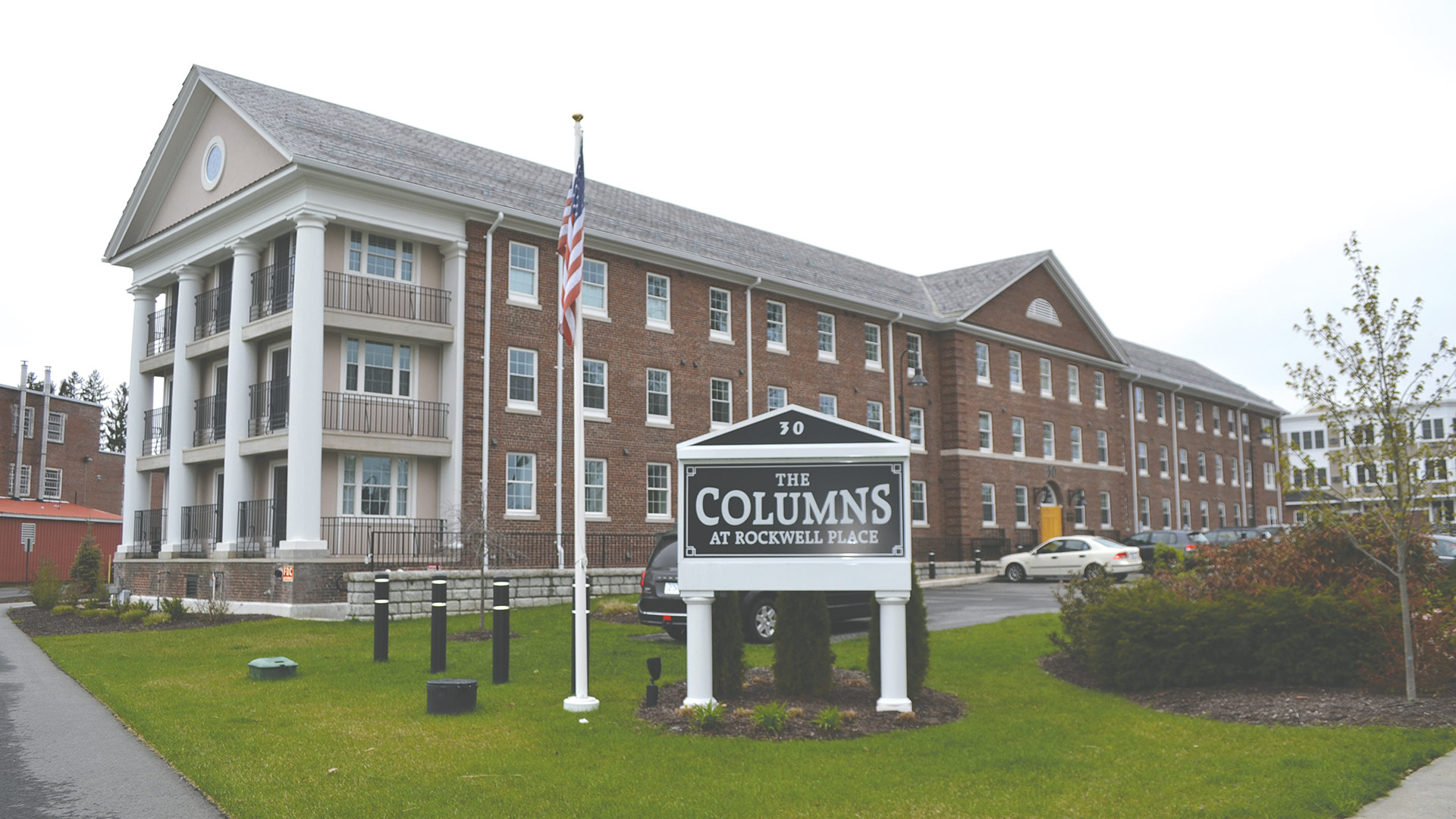
Health Care

Under Pressure

A changing healthcare landscape has doctors feeling stressed, unsatisfied, and burned out like never before — and that could have dire effects on patient care. That’s why the industry is focused on diagnosing the problem and prescribing remedies.

Every day, patients rely on doctors to tackle their chronic health and wellness issues and make them feel better.

But what if it’s the doctors feeling miserable? Or stressed-out, anxious, and overwhelmed? Unfortunately, that’s happening constantly.

Burnout among physicians has become so pervasive that a new paper recently published by the Harvard T.H. Chan School of Public Health, the Harvard Global Health Institute, the Mass. Medical Society, and the Mass. Health and Hospital Assoc. deems the situation no less than a public health crisis.

“A Crisis in Health Care: A Call to Action on Physician Burnout,” as the document is titled, includes a number of strategies aimed at curbing the prevalence of burnout among physicians and other care providers, including improvements to the efficiency of electronic health records (EHRs), proactive mental-health treatment and support for caregivers experiencing burnout, and the appointment of an executive-level chief wellness officer at every major healthcare organization (much more on all of these later).

But the report also details just how extensive the problem is, and why it should be a concern for patients. In a 2018 survey conducted by Merritt-Hawkins, 78% of physicians said they experience some symptoms of professional burnout — loosely described in the survey as feelings of emotional exhaustion, depersonalization, and/or diminished sense of personal accomplishment.

Physicians experiencing burnout are more likely than their peers to reduce their work hours or exit their profession. And that’s concerning in itself; the U.S. Department of Health and Human Services predicts a coming nationwide shortage of nearly 90,000 physicians, many driven out of practice due to burnout.

“The issue of burnout is something we take incredibly seriously because physician well-being is linked to providing quality care and favorable outcomes for our patients,” said Dr. Alain Chaoui, a practicing family physician and president of the Massachusetts Medical Society. “We need our healthcare institutions to recognize burnout at the highest level, and to take active steps to survey physicians for burnout and then identify and implement solutions. We need to take better care of our doctors and all caregivers so that they can continue to take the best care of us.”

Dr. Alain Chaoui

Dr. Alain Chaoui

 “We need to take better care of our doctors and all caregivers so that they can continue to take the best care of us.”

While some have pointed to the passage of the Affordable Care Act (ACA) in 2010 — the most significant recent change in the American healthcare landscape — as a stressor, the roots of the crisis date further back, the report notes. For example, EHRs, mandated as part of the 2009 Reinvestment and Recovery Act, have dramatically changed the way doctors allot time to their jobs. And the 1999 publication of the Institute of Medicine’s “To Err is Human” report, highlighting the prevalence of medical errors, directed new attention to the need for quality improvement, physician reporting, and accountability — and brought heightened pressure.

In the past, the report notes, some have proposed ‘self-care strategies’ — such as mindfulness or yoga — as a response to burnout and presented some evidence of limited success with such approaches. However, physicians typically don’t have time to fit such coping strategies into their routine. They also don’t really address root problems.

“Such an approach inaccurately suggests that the experience and consequences of burnout are the responsibility of individual physicians,” it continues. “This is akin to asking drivers to avoid car accidents without investing in repairing and improving hazardous roads. Simply asking physicians to work harder to manage their own burnout will not work.”

Digital Dilemma

As the report noted, a broad consensus has formed that a major contributor to physician burnout is dissatisfaction and frustration with EHRs, which have become ubiquitous in recent years. While the goal of transitioning to electronic records has been to improve quality of care and patient communication, the results have been mixed at best.

“The growth in poorly designed digital health records and quality metrics has required that physicians spend more and more time on tasks that don’t directly benefit patients, contributing to a growing epidemic of physician burnout,” said Dr. Ashish Jha, a VA physician and Harvard faculty member. “There is simply no way to achieve the goal of improving healthcare while those on the front lines — our physicians — are experiencing an epidemic of burnout due to the conflicting demands of their work. We need to identify and share innovative best practices to support doctors in fulfilling their mission to care for patients.”

As Dr. Atul Gawande, a Massachusetts surgeon, writer, researcher, and CEO of the nonprofit healthcare venture formed by Amazon, Berkshire Hathaway, and JP Morgan Chase, recently described it, “a system that promised to increase physicians’ mastery over their work has, instead, increased their work’s mastery over them.”

That’s because the patient encounter is now dominated by the demands of the EHR, undermining the crucial face-to-face interaction that has long been at the core of a satisfying doctor-patient encounter, the report notes, adding that, “for many physicians, EHRs impose a frustrating and non-intuitive workflow that makes excessive cognitive demands and detracts from, rather than reinforces, the goals of good patient care.”

Dr. Ashish Jha

Dr. Ashish Jha

 “The growth in poorly designed digital health records and quality metrics has required that physicians spend more and more time on tasks that don’t directly benefit patients.”

In addition, the quantity of mandatory documentation imposed by EHRs — due to regulatory and payer requirements — means physicians typically spend two hours doing computer work for every hour spent face to face with a patient, including numerous hours after work. And they’re frustrated by spending so much time on administrative tasks they feel have little to do with actual patient care.

One promising solution, according to the report, would be to encourage software developers to develop a range of apps that can operate with most, if not all, certified EHR systems.

Improved EHR usability is, in fact, required by law. The 21st Century Cures Act of 2016 mandates the use of open health care APIs (application programming interfaces), which standardize programming interactions, allowing third parties to develop apps that can work with any EHR. This would allow physicians, clinics, and hospitals to customize their workflow and interfaces according to their needs and preferences, promoting rapid innovation and improvements in design.

Another promising but less-developed approach to reducing the HER burden on physicians, the report notes, is the development of artificial intelligence (AI) technologies to support clinical documentation and quality measurements.

Mind Matters

The report spends plenty of time on mental health, and for good reason.

“It is clear that one can’t have a high-performing healthcare system if physicians working within it are not well,” it notes. “Therefore, the true impact of burnout is the impact it will have on the health and well-being of the American public.”

To that end, it calls on hospitals and other healthcare organizations to improve access to, and expand, health services for physicians, including mental-health services — while reaching out to doctors and encouraging them to take advantage of such services in order to prevent and manage the symptoms of burnout.

That’s easier said than done, of course, as a stigma still exists around seeking help for mental-health issues.

“Physician institutions — including physician associations, hospitals, and licensing bodies — should take deliberate steps to facilitate appropriate treatment and support without stigma or unnecessary constraints on physicians’ ability to practice,” the report argues.

Last year, the Federation of State Medical Boards (FSMB) adopted a policy reconsidering ‘probing questions’ about a physician’s mental health, addiction, or substance use on applications for medical licensure or renewal, as the existence of such questions may discourage physicians from seeking treatment. “To the extent that such questions are included,” the report says, “those questions should focus on the presence or absence of current impairments that impact physician practice and competence, in the same manner as questions about physical health.”

The FSMB is also calling for state medical boards to offer ‘safe-haven’ non-reporting to applicants for licensure who are receiving appropriate treatment for mental health or substance use. Such non-reporting would be based on monitoring and good standing with the recommendations of the state physician health program (PHP).

Speaking of which, Physician Health Services Inc. (PHS) — a charitable subsidiary of the Massachusetts Medical Society that serves as the PHP for Massachusetts physicians — intends to reach out in a broader way to physicians and hospitals to encourage doctors dealing with burnout and behavioral-health issues to seek appropriate and confidential care.

“Many PHPs in other states have expanded their outreach,” the report notes. “Hospitals and other healthcare institutions should complement and support this effort by acknowledging physicians’ concerns with seeking mental healthcare and clearly identifying avenues and opportunities to receive confidential care, particularly for residents and trainees, who are at a vulnerable stage of their careers.

Finally, the report calls for the appointment of executive-level chief wellness officers (CWOs) at all healthcare organizations. “CWOs must be tasked with studying and assessing physician burnout at their institutions, and with consulting physicians to design, implement, and continually improve interventions to reduce burnout.”

“Patients do not like being cared for by physicians who are experiencing symptoms of burnout, which is significantly correlated with reduced patient satisfaction in the primary-care context. Evidence further suggests that burnout is associated with increasing medical errors.”

The key responsibilities of the chief wellness officer, in addition to acting as an advocate and organizational focal point, may include studying the scope and severity of burnout across the institution; reporting findings on wellness and physician satisfaction as part of institutional quality-improvement goals; presenting findings, trends, and strategies to CEOs and boards of directors; and exploring technological and staffing interventions like scribes, voice-recognition technology, workflow improvements, and EHR customization to reduce the administrative burden on doctors, just to name a few.

CWOs could benefit physicians not just in hospitals, the report continues, but across health systems, and in affiliated practices. “Departments, units, and practices can survey for burnout, begin to identify their areas of focus and barriers to success, and collectively develop solutions. The CWO can help lead this process and provide best practices and other supports.”

Lives in the Balance

In the end, physician burnout is a problem with many triggers, which is why the authors of “A Crisis in Health Care” encourage a multi-pronged approach to counter it. But it’s also an issue with many potential consequences, not just for doctors and their employers.

“Patients do not like being cared for by physicians who are experiencing symptoms of burnout, which is significantly correlated with reduced patient satisfaction in the primary-care context,” the report notes. “Evidence further suggests that burnout is associated with increasing medical errors.”

Dr. Steven Defossez, a practicing radiologist and vice president for Clinical Integration at the Massachusetts Health and Hospital Assoc., said hospitals in the Commonwealth place a high priority on the safety and well-being of patients, so combating burnout will continue to be an area of focus.

“In particular, we recognize the need to further empower healthcare providers and support their emotional, physical, social, and intellectual health,” he said. “This report and its recommendations offer an important advance toward ensuring that physicians are able to bring their best selves to their life-saving work.”

Joseph Bednar can be reached at [email protected]
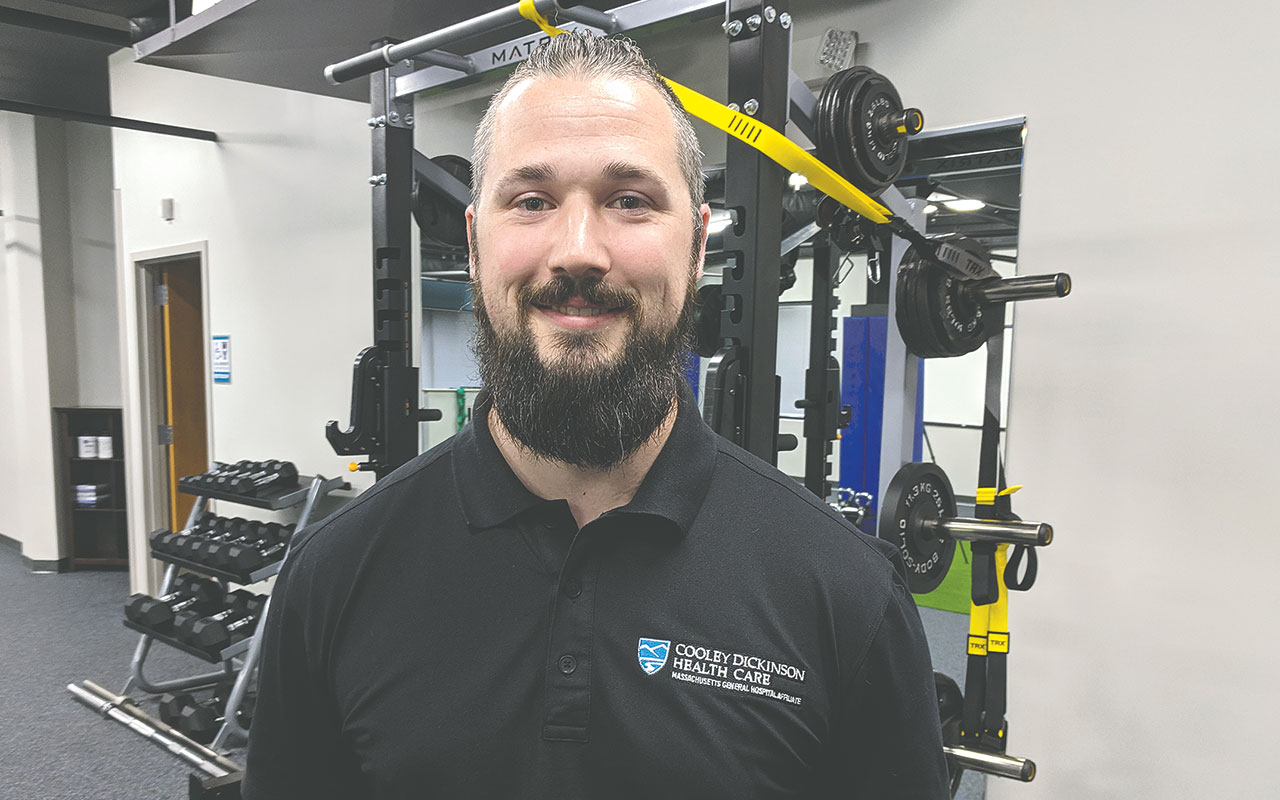
Tourism & Hospitality

Rolling Out the Welcome Mat

Mary Kay Wydra (left) and Alicia Szenda

Mary Kay Wydra (left) and Alicia Szenda say the GSCVB works closely with area hotels as part of efforts to draw conventions and other events to Greater Springfield.

There’s more than one way to look at a number. That’s especially true when it comes to hotel occupancy rates.

Take Greater Springfield’s occupancy rates through the last six months of 2018. At almost 67%, they’re 5% higher than they were over the same period in 2017.

That’s good news on its own, but especially positive when considering the capacity added over the past 18 months, from Holiday Inn Express on State Street in Springfield to Fairfield Inn & Suites in Holyoke; from Tru by Hilton in Chicopee to, of course, the hotel at MGM Springfield, the resort casino which is perhaps the region’s top tourism development in decades.

“We’ve definitely seen growth,” said Wydra, president of the Greater Springfield Convention & Visitors Bureau (GSCVB), adding that the average daily room rate also rose by $3 over that time frame.

“The fact that we added inventory and we’re still able to grow rate and grow occupancy is a really good thing,” she noted. “In analyzing that, a lot of it is the MGM factor, and it’s conservative because MGM didn’t open until the end of August. We don’t even have a full year’s picture of them being fully operational, but in just those four months, it’s helped.

“And by charging a higher rate for their rooms,” she added, “it allows everyone else in the marketplace to go up a little bit, which from our perspective is really good because, before they got here, we weren’t moving that needle.”

“The fact that we added inventory and we’re still able to grow rate and grow occupancy is a really good thing. In analyzing that, a lot of it is the MGM factor, and it’s conservative because MGM didn’t open until the end of August. We don’t even have a full year’s picture of them being fully operational, but in just those four months, it’s helped.”

But MGM is just one factor in drawing visitors to the region and increasing demand for hotel rooms. In fact, the relationship between hotels, tourist attractions, convention business, leisure travel, and a host of economic benefits that follow in wake of all that is the result of a coordinated dance between the various players — a dance that has continues to pick up the tempo.

Go for the Juggler

Greater Springfield still runs slightly below the national average in hotel occupancy rate — 63.6%, to be exact, compared to 66.2% nationally. And it doesn’t compare to a city like Boston, which hovers around 79% occupancy.

“Remember, hotels serve the leisure traveler, conventions, bus tours, corporate travel, and also having businesses surrounding you. Boston has growth from the companies being built. It’s not all tourism. It’s business travel as well,” Wydra said. “There’s clearly corporate travel in our area too, probably not to the extent that a major city like Boston has. We’re more focused on other things: the conventions, the leisure, the bus tours, sports.”

The GSCVB has, indeed, seen an uptick in conventions in recent years, and believes MGM is just one more perk to draw in convention groups looking for a vibrant scene, which Western Mass. offers, especially during the summer.

The new Tru by Hilton in Chicopee

The new Tru by Hilton in Chicopee is one of several hotels that have recently opened in the region.

“You’ll see that with some of the national conventions we work with,” said Alicia Szenda, director of Sales for the GSVCB. “We’ve hosted the National Square Dance Convention, the International Jugglers Association … those events take place in the summer, and people participate in them not for their job, but for their leisure activities, their hobbies, so they look forward to that week every summer, and that’s their family vacation.

“So they’re here,” she went on, “and they’re participating in educational seminars and shows and the dancing or whatever it is, but they’re also going to Six Flags, they’re going to Yankee Candle, they’re going to the museums, and doing some sightseeing while they’re here. A lot of the conventions we work with build that social component into their event schedules, so people get to experience the area they’re in. So the more attractions we have, the more variety of hotels, the more attractive we are to different groups.”

And a dynamic hotel scene is, indeed, a key element, which is Wydra is happy to see new names on the scene and planned renovations as well, such as Tower Square Hotel’s plan to return the Marriott name to its complex.

“I think one of the good things about new properties coming into the market is it keeps everybody in a position of having to keep up,” she said. “You’ve got to be reinvesting in your property and making changes; it’s survival of the fittest.”

As part of her role in recruiting conventions to the region and guiding them through the process (more on that later), Szenda also works directly with hotels, asking them to quote rates and block off a certain inventory of rooms, sometimes three years out.

“What the hotels give back depends on where they’re located, what other business they have, and whether they want to roll the dice and let other hotels get the group business,” Wydra said. “They might say, ‘I don’t want that. I’m going to roll the dice and see if I get the leisure visitor.’ They can charge leisure travelers a higher rate — because Alicia’s going to beat them up and say, ‘I want the best rate I can get for my group.’”

Besides attractive hotel rates, the GSCVB might find local ties to entice a convention group, Wydra said, giving the hypothetical example of bringing in a convention of railroad hobby enthusiasts and trying to set up a tour of the CRRC rail-car manufacturing plant in Springfield. “We try to tie in local business with the groups that we have.”

Holding Hands

But there’s far more to the equation, Szenda noted.

“Some groups come to me and say, ‘this is everything I need.’ But a lot of groups I work with don’t have that. It might be their turn to host, and they’ve never planned a national convention before. I sit with them and go through everything they need. Then I send those leads out to our members. Depending on what they need for space, the lead could go to Eastern States, or the Mullins Center, or the MassMutual Center, all three.”

Then she gets to work finding the aforementioned local connections, setting up reasonably priced hotel options, and assembling tourism information about the region.

“Really, it’s the destination a lot of times that’s going to sell that piece of business,” Szenda said, “because you’re trying to convince that one person to bring thousands of people here. They have to make sure each person has something to do that interests them. And, once we win that piece of business, we continue to hold their hand through the process.”

“I think one of the good things about new properties coming into the market is it keeps everybody in a position of having to keep up.”

Part of that is a hospitality program that many similar-sized cities don’t offer, she said, which includes everything from airport pickups and hotel greeters to downtown maps and goodie bags.

“A lot of the business we get is repeat business because we’ve done a good job from the very beginning — meeting them, listening to what they need, giving them what they need, and holding their hand until the event occurs,” Wydra said. “And while the event occurs, we don’t disappear. Even with groups we’ve hosted for years, we never want to rest on our laurels and say, ‘well, we’ve got them.’ It’s a very competitive business, so we want them to know how much we appreciate they’ve selected Western Mass.”

And it’s not just repeat business from that convention group at stake, she added. Oftentimes family members tag along, extending the trip with some family time.

“You never know which of those participants might want to come back,” Szenda said. “They might belong to another association and want to bring a group here or come back with the family. A lot of people to do that.”

It’s always interesting to see what impresses event planners, Wydra said. Once, Springfield was competing with a city in New Hampshire, and when the group heard that welcome signs would be hung downtown, it was a game changer. The planner had previously walked the streets of unfamiliar downtowns, getting permission as she went to tape up handmade signs.

“She didn’t want to do that; she had a day job,” Wydra said. “The minute we take that out of their hands, make it easy, the results are often good for us.

“We work hard to get the groups, so at the very least we want to keep them,” she went on. “We want repeat business. Alicia loves when someone signs a multi-year contract, and we can count on them for years to come.”

What’s in a Name?

If Tower Square does bring back the Marriott name — and makes the upgrades required to do so — that will be another note of progress for the region’s expanding hotel scene, Wydra said.

“Brands are important,” she noted. “I think a brand kind of promises something, if the property does it right. People know what they’re going to get. They know they’re going to get a certain style room, they’re going to get a free breakfast, affinity programs, whatever it is they want.”

Greater Springfield is a brand of sorts, too, even though it can be a tough sell during the winter, which is why events like the recent AHL All-Star weekend are so desirable, driving room nights during a challenging time of the year for the hospitality industry.

But there’s still plenty of room for hotels to flourish, Szenda said, as evidenced by the challenge of cobbling together enough rooms when multiple conventions and event planners want to swoop in during the same weekend — typically between spring and fall.

“During the summer months, we do quite well on weekends, with Six Flags and other activities,” Wydra said. “It’s always midweek that we’re trying to find business, and especially in the winter.”

But a rising tourism brand, buoyed most recently by MGM Springfield — and increased convention volume, much of which promises to become repeat business — is certainly changing the demand picture for the better.

Joseph Bednar can be reached at [email protected]
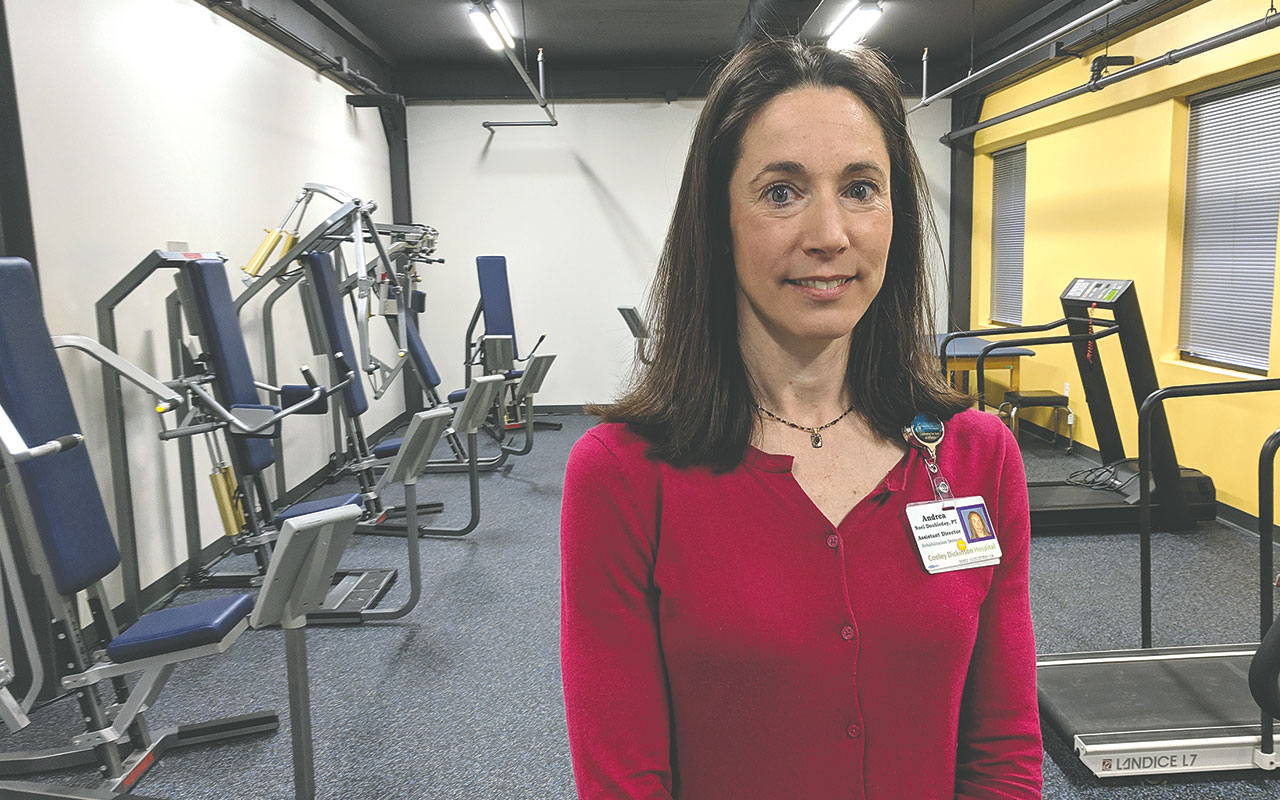
Banking and Financial Services

Merging Banks

Matthew Sosik

Matthew Sosik

Matthew Sosik, president and CEO of bankHometown, and Robert Morton, President and CEO of Millbury Savings Bank, recently announced that the banks have signed an agreement to merge operations under the bankHometown name.

The combined bank will have approximately $1 billion in assets and 15 branch offices located throughout Central Mass. and Northeastern Connecticut.

“We’re excited to welcome Millbury Savings Bank’s customers, employees, and communities to the bankHometown family,” Sosik said. “This merger will expand our presence into the Worcester and Millbury markets and will add a team of talented bankers to bankHometown.”

Morton agreed. “Merging with bankHometown allows us to provide our customers with increased lending capacity, an extended branch and ATM network, and an expanded offering of products and services,” he said. “At the same time, and even more importantly, our customers will see the same familiar faces every day.”

There will be no staff reductions or branch closures resulting from the merger. The impact to customers is expected to be minimal as both banks share the same core processor.

“Banks under our Hometown Financial Group umbrella benefit from access to highly skilled executives and support teams.”

After the closing, Morton will lead the combined bank as its president and CEO. In addition, Morton and five members of the Millbury Savings Bank board of trustees will join the bankHometown board of directors.

bankHometown is a wholly owned subsidiary of Hometown Financial Group. Morton and one other Millbury Savings Bank board member will join the Hometown Financial Group board of directors. bankHometown will remain headquartered in Oxford. As part of the Hometown Financial Group family of banks, which includes bankESB, bankHometown, and Pilgrim Bank, the combined bank will benefit from the shared resources of a larger institution while operating independently in its own market area.

“We have a proven track record of success with our operating model,” Sosik said. “Banks under our Hometown Financial Group umbrella benefit from access to highly skilled executives and support teams. This allows the bankers at each of our subsidiary banks to focus their efforts on growing market share and providing best-in-class banking products, services, and solutions to customers.”

Following the merger with Millbury Savings Bank, Hometown Financial Group will have approximately $3 billion in consolidated assets and 32 branch offices operating across Massachusetts and Northeastern Connecticut. Following the merger, Sosik will continue in his role as president and CEO of both bankESB and Hometown Financial Group.

The merger agreement has been unanimously approved by the boards of bankHometown and Millbury Savings Bank. The transaction is expected to close in the fourth quarter of 2019, subject to the receipt of required regulatory approvals and other customary closing conditions. Customer deposits will continue to be fully insured through the Federal Deposit Insurance Corp. (FDIC) and the Share Insurance Fund (SIF).

The merger with Millbury Savings Bank will mark the third transaction that will close in 2019 for Hometown Financial Group. On Jan. 31, the company closed on its acquisition of Pilgrim Bancshares Inc. This was followed by the announcement on Feb. 6 of the merger of Abington Bank and Pilgrim Bank. The closing of that transaction is expected in the second quarter of 2019 and will result in the formation of a $600 million bank with six branches operating in the Eastern Mass. region.

Health Care

Progressive Course

Laura Hanratty

Laura Hanratty says the number of BCBA students has probably doubled since 2012, a clear sign of growing need for such trained individuals.

In many cases, Alyssa Clark says, progress — in whatever way it is measured — comes slowly.

But in most all cases, it does come, and when it does, it quickly reminds her why she chose this career path — not that she ever really forgets.

Clark was talking about her work as a board-certified behavior analyst, or BCBA, as those with the requisite credentials are called. She works in a few area elementary schools with students in grades K-4. Some are on the autism spectrum, but all of them are defined with an industry term of sorts: social/emotional, which means they have behavioral issues, usually brought on by trauma in their backgrounds — poverty, divorce, or being in foster care, for example.

“Sometimes, progress is slow in coming, but even the little things you see … kids might have that one good day after several bad ones,” she told BusinessWest. “And to be able to see that and know that you could make a difference in that kid’s life and help them…”

She didn’t actually finish the sentence, because she didn’t have to. The satisfaction that comes with such work is clearly apparent. And it is one of many reasons why applied behavior analysis (ABA) is becoming an increasingly popular career path within the broad spectrum of healthcare, and also why programs such as the master’s in ABA program at Elms College in Chicopee, which Clark graduated from recently, were created and continue to see growth in enrollment.

“Every kid that we work with should go through an analysis to determine why problem behaviors are occurring, and then treatment based on that analysis helps address those behavioral concerns.”

But the biggest factor is growing need within the community, said Laura Hanratty, assistant professor and director of both the ABA and ASD (autism spectrum disorders) programs at Elms.

“It’s definitely a growing field,” she said, noting that, when she sat for the certification exam in 2012, there were roughly 10,000 BCBAs in this country; now, there are perhaps twice that number.

Why? The ever-growing number of people diagnosed with autism is a big factor, she said, adding that there are many theories surrounding this surge, but the prevailing one is that there is simply more awareness of the condition and, therefore, more early diagnosis.

But the nature of applied behavior analysis, and the tremendous rewards, as Clark described, are also a factor in the growing popularity of this profession.

When asked to elaborate, Hanratty said there is a good deal of science, some of it rigid in nature, in this field. But there are also large amounts of creativity, and this blend of ingredients appeals to many people looking to enter the broad realm of healthcare.

“What we try to teach our students to do is become a scientist practitioner,” she went on, adding that there is much that goes into that phrase. “Every kid that we work with should go through an analysis to determine why problem behaviors are occurring, and then treatment based on that analysis helps address those behavioral concerns.

“We know that attention and rewards help increase behaviors,” she went on. “So what our students do is take that science side, but then then get really creative and personalize with our kids.”

This ability to be creative is what appeals to Rachel Reyes, currently enrolled in the Elms master’s degree program and working part-time with young people through a company called Positive Behavior Supports Corp. (PBS). She has one client, a 4-year-old with autism she sees three times a week.

“I’m working one-on-one with a child a lot, and that’s what I love most about this work,” she said, adding that she aspires to become a BCBA. “I get to see them grow, I get to see their progress, and I get to know them; I build a relationship with them first so they they’ll trust me.”

For this issue and its focus on healthcare, BusinessWest takes an in-depth look at the ABA offering at Elms. In the course of doing so, we’ll explain why the program, and the careers it can lead to, have attracted people like Clark, Reyes, and many others.

Down to a Science

When asked how she got onto the path to becoming a BCBA, Clark said a single course on applied behavior analysis she was taking during her undergraduate work at the Elms opened her eyes and changed her career focus.

Alyssa Clark

Alyssa Clark, seen here at the Applied Behavior Analysis International Conference in San Diego earlier this year, says there are many rewards from her work as a BCBA.

“I was in the speech language pathology program,” she recalled. “They mentioned applied behavior analysis; that one class really stuck with me. I knew I always wanted to work with this population of kids, whether it was kids on the autism spectrum or kids with disabilities. So I looked into it more and I saw the behavior side of things, and I loved it.”

Reyes tells a somewhat similar story. She was doing undergraduate work at Westfield State University, studying special education. She had come to the conclusion that she didn’t want to teach and took an introductory course in ABA.

“Prior to creation of this program, there was a master’s in autism spectrum disorders, which was also behavior-analytics-focused, but a little more broad. What we found is that most people who are coming into the program are really interested in the behavior-analysis side, so that’s where most of our students are now.”

“The professor was great — when she would teach, everything was amazing,” she recalled. “I thought about things some more, went to her office, and asked if there were any graduate programs in the field, because I realized that this is what I wanted to do. She told me about Elms.”

Hanratty said many of the students now in the ABA program arrive via a somewhat similar experience, and this helps explain the creation of the master’s program, which accepted its first cohort in 2017.

“Prior to creation of this program, there was a master’s in autism spectrum disorders, which was also behavior-analytics-focused, but a little more broad,” she explained. “What we found is that most people who are coming into the program are really interested in the behavior-analysis side, so that’s where most of our students are now.”

Rachel Reyes, a student in the Elms ABA program

Rachel Reyes, a student in the Elms ABA program, says she enjoys working one-on-one with children.

Students enter the program with a wide diversity of backgrounds, she went on, adding that there are many with a psychology or communications sciences background, who took their undergraduate focus on speech disorders and shifted it to behavioral analysis.

But there are others with backgrounds in education, sociology, social work, and other fields.

“We also get some students who earned their bachelor’s degree in … whatever, and then found a passion for working with kids with autism,” she went on, adding that enrollment in the master’s program fluctuates, but it averages about 17. The smaller size of the cohorts — and the classes themselves — appeal to many students because of the one-to-one support from faculty members.

As she mentioned earlier, ABA is a blend of science and creativity that addresses a range of recognized behavioral issues in people of all ages.

“ABA is based on basic science principles,” Hanratty explained. “We take the basic principles of behavior and apply them to promote changes in behavior among children with autism or behavior concerns. Our students get to take that science and apply it.”

Practitioners use reinforcement — giving some kind or reward or positive contingency — for appropriate behaviors, as well as strategies for reducing inappropriate behaviors.

When asked for an example, she cited a research project she worked on with several of her students, including Clark. Together, they gave a presentation on their work at the Applied Behavior Analysis International Conference in San Diego earlier this year, and also at the Berkshire Conference for Behavioral Analysis.

The project involved one young person exhibiting problem behaviors, said Hanratty. “We did an analysis and found that kids were engaging in severe problem behavior usually to gain some control over their environment — they want to take a break from adult-led activities and just have time to do their preferred activities.

“We taught the kids to ask for control, and then we would reward that, with them being able to have ‘their-way’ time,” she went on. “We gradually started saying, ‘you can’t have your way right now; it’s adult time, and you need to do X,Y, and Z.”

Eventually, the students would come to understand that they can’t always have ‘their-way’ time when they asked for it, and would acquiesce to adult-led activities without immediate reward or reinforcement.

Such progress was noteworthy, because these were students who were engaging in severe problem behaviors, said Hanratty, adding that they would (note the past tense), when asked to do an instruction, aggress toward adults and engage in self-injurious behaviors.

“We were making really impactful outcomes for families,” she told BusinessWest. “It was very rewarding work.”

And just one example of how to blend science and creativity, she went on, adding those attracted to this work now have a number of attractive career options.

These include work in school systems and specifically in special-education classrooms, but also, and increasingly, in the home, working with both children and their families. Others open their own private practices or conduct research. With a doctorate, which some go on to attain, they can teach in the field.

Meanwhile, many students, like Reyes, are finding work in the field, or, in this case, the home, as they’re earning their master’s degree.

“I’d love to stay in the home; I love the home setting,” she said, adding that she enjoys working with not only the child, but the family as a whole.

Bottom Line

Such sentiments, such passion for this demanding yet rewarding work, help explain the growth of the ABA field and programs like the one at Elms.

As Hanratty and her students noted repeatedly, applied behavior analysis is indeed an intriguing blend of science and creativity, a rare mix that is gaining the attention of people from diverse backgrounds and putting them onto the path of becoming a BCBA.

And also opening doors to a wide mix of fulfilling careers.

Health Care

Healthy Development

Baystate Health & Wellness Center in Longmeadow held a grand-opening and ribbon-cutting ceremony on Feb. 25. The $11 million, 54,000-square-foot medical office building offers primary and specialty care, as well as services like Baystate Reference Laboratories and Baystate Radiology and Imaging.

State legislators present Baystate leaders, including President and CEO Mark Keroack (center), citations on the grand-opening occasion

State Sen. Eric Lesser and Keroack share a moment before the event

State Sen. Eric Lesser and Keroack share a moment before the event

The ribbon-cutting ceremony

The ribbon-cutting ceremony

Dr. Elizabeth Boyle chats with state Rep. Angelo Puppolo

Dr. Elizabeth Boyle chats with state Rep. Angelo Puppolo

The back entrance to the new facility at 21 Dwight Road

Features

Stepping Up to the Plate

Team owners Donnie Moorhouse (left) and Chris Thompson

Team owners Donnie Moorhouse (left) and Chris Thompson

When the Futures Collegiate Baseball League’s newest team steps onto the field in Westfield this spring, it will mark not just the beginning of a 56-game slate extending well into the summer, but also a continuation of a century-plus of robust baseball history in the Whip City — as well as perhaps the most high-profile startup yet from two team owners who are no strangers to either sports management or entrepreneurship.

Chris Thompson said he and his business partner, Donnie Moorhouse, had been kicking around the idea of buying a baseball team for years. So, when an opportunity finally arose, they didn’t hesitate to make their pitch.

It started with a cold call, Thompson said, to Christopher Hall, the commissioner of the Futures Collegiate Baseball League of New England, back in July. The FCBL was looking to expand, and the 90-minute conversation touched on the business backgrounds of Thompson and Moorhouse, and why Western Mass. — and Westfield in particular — might be fertile ground to grow a league that already boasted four teams in the Bay State.

That long talk led to a four-hour meeting in Worcester the following week, and interest on both sides intensified from there.

“Donnie and I started touring the different ballparks around the Futures League and meeting with ownership groups from Pittsfield to Worcester to Nashua, learning why they got involved,” Thompson recalled. “What we really found out is these franchises are run like minor-league operations, and that’s our background.”

Now, they’re bringing their experience — both in sports management and with entrepreneurship in general — to the new Futures League franchise, which will begin play at the end of May, hosting 28 home games in Westfield.

The pair will unveil the team’s name and logo — which reflect a key aspect of the city’s history — this Wednesday, Feb. 20, at 6 p.m. at Shortstop Bar & Grill. Players will be available to sign autographs meet the public, while attendees will enjoy free appetizers and access to the batting cages.

The team will play in Billy Bullens Field, a Westfield city-owned facility that’s similar in size to other Futures League parks, like Campanelli Field in Brockton or Waconah Park in Pittsfield, Moorhouse said. Still, “Bullens Field, in comparison, would be considered quaint. It’s kind of the Fenway Park of the league. But we’re doing some renovations, and we think it has a nostalgic, Americana kind of feel that appeals to people these days.”

He added that the league is conservative in the way it expands, looking to match strong ownership groups to locations where baseball has strong roots. “These are people who know what they’re doing.”

“The history of baseball in Westfield goes back to the very beginnings of the history of baseball in this country. When the first organized games were happening around the country, they were happening here, too, on the town green.”

He believes he and Thompson do, too. And that’s why they decided to step up to the plate.

Slice of History

While baseball has thrived in Western Mass. — most notably, the Holyoke Blue Sox are defending champions of the New England Collegiate Baseball League two years running, and one of the top 10 attendance draws in the country among summer collegiate leagues — Moorhouse says Westfield is a particularly attractive home for a team.

“The history of baseball in Westfield goes back to the very beginnings of the history of baseball in this country. When the first organized games were happening around the country, they were happening here, too, on the town green,” Moorhouse explained.

He noted that Westfield State University has a well-established Division III team, and the city hosted the Babe Ruth World Series in 2016, and will again this summer. Meanwhile, Westfield High School has a strong track record in the sport — 19 of its alumni are playing college ball this spring.

“Some of those kids are going to be on our roster, which is part of our motivation to showcase some local kids who have the ability to perform at a higher level,” he went on. “So I think, even moreso than other places around Western Mass., Westfield has a reputation as being a baseball town.”

The pair have built a business reputation together as well. Six years ago, Moorhouse launched Mosquito Shield, a commercial and residential mosquito- and tick-control operation. After Thompson came on board, the pair bought a holiday- and event-lighting franchise together. Last summer, they opened Eleventh Avenue Productions, a public-relations consultancy.

More to the point of sports ownership, Thompson spent 18 years in the sports-marketing arena, working for an agency in Boston, at the American Hockey League headquarters, and for two AHL hockey franchises in Springfield, first the Falcons and then the Thunderbirds.

The two of them have discussed investing in a sports franchise for years, Moorhouse said. “It’s one of those things that you talk about over a beer, and when the opportunity arose, we jumped at it. When Chris came up to this office last summer, we said, ‘let’s do it, let’s pull the trigger.’”

“They look at this as an economic driver, where families are coming out, and after the game they might go out for an ice cream, or they might go out to dinner … We’ll be getting people from Western Mass. to come to Westfield.”

He said he felt confident they could succeed with a baseball team. “I worked with Chris with the Falcons for two years in corporate sponsorships, and learned an awful lot about game-night operations and the inner workings of a minor-league sports franchise, so it was a great apprenticeship for sure. Chris has been doing it for close to 20 years. To work with him, recognizing the skill set we both have, it didn’t take very long for us, once we were working together, to say it would be great to have some skin in the game — to have an ownership stake in a sports franchise and operate it the way we see fit. And this is our opportunity to do that.”

With the pair firmly in “startup mode,” as he called it, there has been some scrambling.

“We’ve put the cart before the horse on several occasions. We were reaching out to potential players before we actually had the franchise, negotiating the lease before we had the franchise … so if you want to talk about keeping a lot of balls in the air, we were juggling.”

Moorhouse hired his son, Evan, who is director of Hockey Operations at the University of Vermont, as the new franchise’s director of baseball operations, essentially a GM position.

“He played college baseball for four years at Westfield State and has a lot of contacts, not only through baseball but through the hockey world,” he said. “He’s reached out to colleges and put together a pretty competitive roster on paper. We’ve got kids from Kansas State, Eastern Kentucky, UConn, Quinnipiac, Stonehill, Holy Cross, and five kids from Westfield.”

Futures Returns

Founded in 2011, the Futures League has been in growth mode ever since, drawing a league-record 1,514 fans per game in 2018 — the third-highest among all summer collegiate leagues. The league’s other squads hail from Pittsfield, Worcester, Brockton, and Lynn, as well as Bristol, Conn. and Nashua, N.H.

“We’re very fortunate to add such an experienced ownership group with great local ties to the Westfield community,” said Hall, the FCBL commissioner, in a recent press release. “Chris and Donnie have the passion and love for the game of baseball, but also the drive to make the Westfield team a winner not only on the field but in the community.”

Moorhouse said the feedback from the community has been positive. “The city has been very encouraging, the guidance has been fantastic, and, in general, we’ve been having conversations with people who are very excited about the business opportunities and the economic-development opportunities. We have a long history of baseball in Westfield, so I would say there’s a lot of excitement about it.”

Thompson noted that the opportunity might not have been possible without Mayor Brian Sullivan supporting — and the City Council approving — $1.8 million to renovate Bullens Field prior to the 2016 Babe Ruth World Series.

“They made facility improvements that allowed them to lure Babe Ruth to Westfield, and because of those improvements, the Futures League has approved that field as somewhere they’re comfortable with college athletes playing.”

He added that City Advancement Officer Joe Mitchell has been instrumental in helping the pair navigate the approval process at City Hall.

“They look at this as an economic driver, where families are coming out, and after the game they might go out for an ice cream, or they might go out to dinner, so that’s going to help local restaurants. We’ll be getting people from Western Mass. to come to Westfield.”

Meanwhile, the league is a draw for talent for several reasons. “Coaches like the Futures League for the amount of games they play, and they also are impressed with the facilities that the teams play in. We’ve started to build relationships with college coaches around the country in order to build our roster.”

The games are also heavily scouted, Thompson added, noting that 30 of its players were drafted last June by Major League Baseball organizations.

The league also appeals to players at colleges throughout the Northeast who don’t get as many at-bats as athletes do in, say, Florida or California, where the climate allows the season to start sooner, Moorhouse noted.

“Getting that repetition, getting those at-bats, playing live baseball in the summer at a very competitive level, benefits their skill development. In the Northeast, the college season is very short, and the first weekend in May is the playoffs. This is an opportunity to continue playing baseball at a very high level throughout the summer.”

Extending a Legacy

Thompson said the support in the initial stages has been overwhelming, in a good way. “People want to see us do well, from local organizations to business owners that want to get involved. People are really excited about what we’re bringing to Westfield and to Western Mass. as a whole.”

In other words, people are opening their doors to this opportunity — literally as well as figuratively. Evan Moorhouse is in charge of locating host families to take in players, one of many important details the Westfield franchise needs to nail down in order to make the inaugural season a success. But his father has been following baseball in the city for many years, and knows the interest is there.

“Some July nights, 300 people are out watching a Babe Ruth game,” Donnie said. “The American Legion comes down — they know all the players, know their stats. It’s a great vibe. It’s like Friday Night Lights, only it’s any given night of the week. It’s just a really cool slice of Americana happening on Smith Avenue. We’re excited to add to that legacy, hopefully, enhance it a bit, and also showcase what is arguably one of the best baseball leagues in the country in our hometown.”

Joseph Bednar can be reached at [email protected]
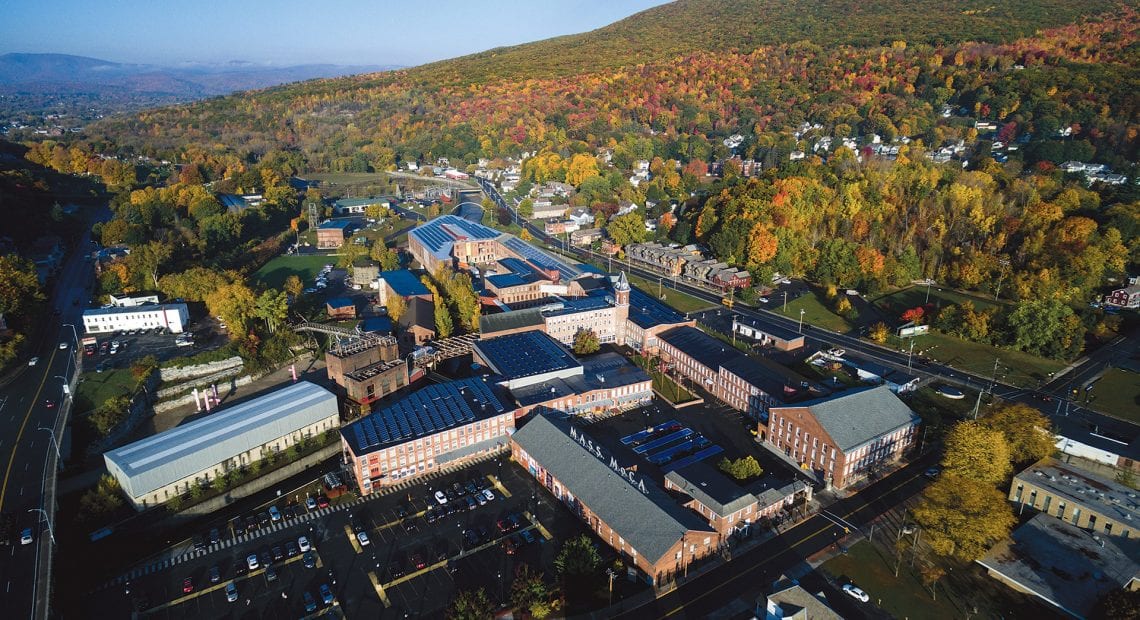
Manufacturing

Layer by Layer

ADDFab Director Dave Follette with samples of 3D-printed objects.

ADDFab Director Dave Follette with samples of 3D-printed objects.

The Advanced Digital Design & Fabrication Lab, or ADDFab for short — one of 31 ‘core facilities’ in the Institute for Applied Life Sciences at UMass Amherst — is creating something significant in the manufacturing world, and not just the products it forms from metal and polymer powders. No, it’s also building connections between young talent and companies that will increasingly need it as 3D printing becomes more mainstream. And it does so with a focus — no, an insistence — on hands-on learning.

It’s hard to learn about 3D printing, Dave Follette said, if you don’t have access to a 3D printer.

ADDFab has five. And it likes to share them. In fact, that’s its mission.

“We have all these high-end machines, and it’s hard to get access to these in the real world,” said Follette, director of ADDFab, which stands for Advanced Digital Design & Fabrication Lab, one of 31 ‘core facilities’ in the Institute for Applied Life Sciences at UMass Amherst. “Who’s going to let you touch their quarter-million-dollar machine and learn the ins and outs of it — how do you set it up? What happens if it fails? What do I do?”

ADDFab, like the other core facilities, seeks to eliminate skills gaps between students and the work world with hands-on opportunities to use some truly cutting-edge and, yes, expensive equipment.

“Here, the student interns aren’t just going on the computer and doing some research. They come to the lab, suit up, play with some parts, take them out of the printer, clean it — they get real experience actually touching the machines.”

ADDFab takes a similar tack with local businesses seeking to learn more about 3D printing, Follette added.

“The workshops we do are less sitting in a classroom talking about 3D printing and more, ‘let’s do some 3D printing.’”

“The workshops we do are less sitting in a classroom talking about 3D printing and more, ‘let’s do some 3D printing.’ You actually come in, design a part on the software, print the part, and go home with something you created. You see the process. That’s what’s valuable about being on site. You can go on the Internet and watch YouTube videos, but something about doing it yourself gives you an understanding of how it works and why it works, and what works and what doesn’t. That’s what we’re trying to teach.”

Sundar Krishnamurty, ADDFab’s co-director, explained that the facility has three distinct but interwoven goals.

“We’re a research university, so we want our researchers to develop new knowledge, and we hope this will be a medium for that,” he told BusinessWest. “Second, there’s a lot of experiential learning for our students. Third, we have good engagement with our industries, especially small and medium-sized companies in the area.”

The equipment itself is impressive — two metal printers and three polymer printers, each using different raw materials and different technologies to produce an endless array of products. The facility supports UMass itself in several ways, as students and faculty can be trained to use the equipment to conduct their own research on additive manufacturing, while ADDFab also provides printing services and engineering support for faculty in all academic departments.

But it’s the outreach to industry that may be most intriguing element, not just through those aforementioned workshops, which are intended to broaden understanding of how 3D printing will affect the manufacturing industry and to provide hands-on skills, but through a state-funded voucher program that gives businesses with fewer than 50 employees a 50% subsidy to access the core facilities, and 75% to businesses with fewer than 10.

“You can do $100,000 of work for $25,000,” Follette said. “For a new technology, it makes it easy to get your feet wet and test it out. A lot of companies we’re working with haven’t used 3D printing before and are figuring out how it fits into their business.”

Krishnamurty agreed. “We really want to be partnering with local industries in helping us identify the gaps and where we can provide leadership, expertise, and resources to help them achieve their goals.”

What happens when students are well-trained on cutting-edge 3D-printing technology, and when area manufacturers learn more about its potential, is clear, they both noted: Positive workforce development that helps businesses grow while keeping talent in Western Mass.

Student Stories

Jeremy Hall, now a senior at UMass, has been interning at ADDFab, and said the opportunities are positive on a number of levels, including setting students up for interesting careers in a fast-growing, but still largely undertapped, field.

“It’s an up-and-coming field, and a lot of jobs are opening up in it because a lot of companies see the benefit of it,” Hall told BusinessWest. “Look at rapid prototyping — instead of making a mistake and spending five figures on a mold only to discover that part’s not usable, you can do several iterations and save a lot of money doing so.”

Jack Ford (left) and Jeremy Hall are two of the current student interns at ADDFab.

Jack Ford (left) and Jeremy Hall are two of the current student interns at ADDFab.

He thinks he’s putting himself in good position for the workforce by learning the various processes by actually doing them. His initial career interests were in research and design and rapid prototyping, but the more he’s delved into additive manufacturing, the more interested he has become in material properties, and exploring what other raw materials can used to create stronger products. “The application is here; it’s just, how much can you improve it from here?”

“Look at rapid prototyping — instead of making a mistake and spending five figures on a mold only to discover that part’s not usable, you can do several iterations and save a lot of money doing so.”

Another intern, Jack Ford, is a sophomore whose interest in 3D printing began when he used similar — but not nearly as advanced — technology to create a tool in a high-school drafting class.

“It was interesting to see that whole process, and it grew my interest in the manufacturing aspects of it,” he noted. “And look at how 3D printing has grown over the years — it’s crazy to see where it is now. The laser technology is incredible, how it’s so precise and manages to get such a fine level of detail despite seeming like such a strange process. We put the powder down, bam, there’s a layer. It blows my mind.”

There’s an energy-absorbing lattice piece on a table at ADDFab inscribed with the name of its creator, Adam Rice, who recently became one of the facility’s success stories, and an example of how it seeks to connect talent with need.

“In my 10 weeks here, I’ve worked one-on-one with companies, toured facilities, and even given a presentation at FLIR Systems,” Rice explained last year, in an interview snippet used in an ADDFab promotional brochure. “It’s been building my confidence. I’ve had no real engineering experience before this, and this is my first time really applying it and seeing how people do this as a career.”

After graduating in December, he now has a career of his own, at Lytron, a designer and manufacturer of thermal-management and liquid-cooling products based in Woburn.

“They use a metal printer exactly the same as ours and needed someone with additive-manufacturing experience to help them run their printer,” Follette said. “The VP of Engineering contacted me and asked, ‘do you have any students who know additive?’ I said, ‘yes.’ He came by and met the students, and we had a good fit.”

The brochure Rice appears in promotes the UMass Summer Undergraduate Core Internship Program, which allows students from the STEM fields to access hands-on training and experience in the core facilities, including ADDFab, over the summer.

“We’ve been doing learning by trying,” he said. “It’s been really cool to get to do more hands-on engineering.”

And even cooler to spin it into a well-paying job.

Into the Future

Meanwhile, area companies — including, of late, Peerless Precision, Volo Aero, FTL Labs, Cofab Design, and MultiSensor Scientific — continue to take advantage of ADDFab’s resources, often through the voucher program, either to make 3D products or learn more about how to incorporate the technology. Responding to a commonly raised concern, Krishnamurty stressed that all intellectual property stays with the companies.

Sundar Krishnamurty says ADDFab wants to partner with local industries

Sundar Krishnamurty says ADDFab wants to partner with local industries to identify and fill workforce and training gaps.

“A lot of times, people see UMass and think, ‘how do I work with them? They’re big, and I’m not,’ Follette said. “But the message we want to put out is that we’re doing 3D printing, and we’re here to help industries. There are many ways to get involved, whether you just have an idea on a napkin or you have computer files and want to print them on our advanced printer.”

Indeed, he noted, ADDFab’s large-scale 3D printers are performing industrial-grade production of “real parts you can use for real things. A lot of engineering companies we’re working with are doing prototyping of parts, design iterations — they want to print something and feel it, then make another change and another change, and it’s great they can turn this around fast and get a part that’s usable also at a great price.”

Using ADDFab is ideal for small runs, he added. “If you need five today, that’s fine. If you need 20 tomorrow, fine. If you need five more the next day, that’s fine, too.”

“A lot of times, people see UMass and think, ‘how do I work with them? They’re big, and I’m not. But the message we want to put out is that we’re doing 3D printing, and we’re here to help industries.”

And if the facility can perform such services while training the next generation of engineers and boosting workforce development for the region’s manufacturing sector, Krishnamurty said, well, that’s a clear win-win-win.

“These are truly one-of-a-kind facilities,” he said, speaking not just of ADDFab, but all the core facilities at UMass Amherst. “I think the future is endless.”

Joseph Bednar can be reached at [email protected]
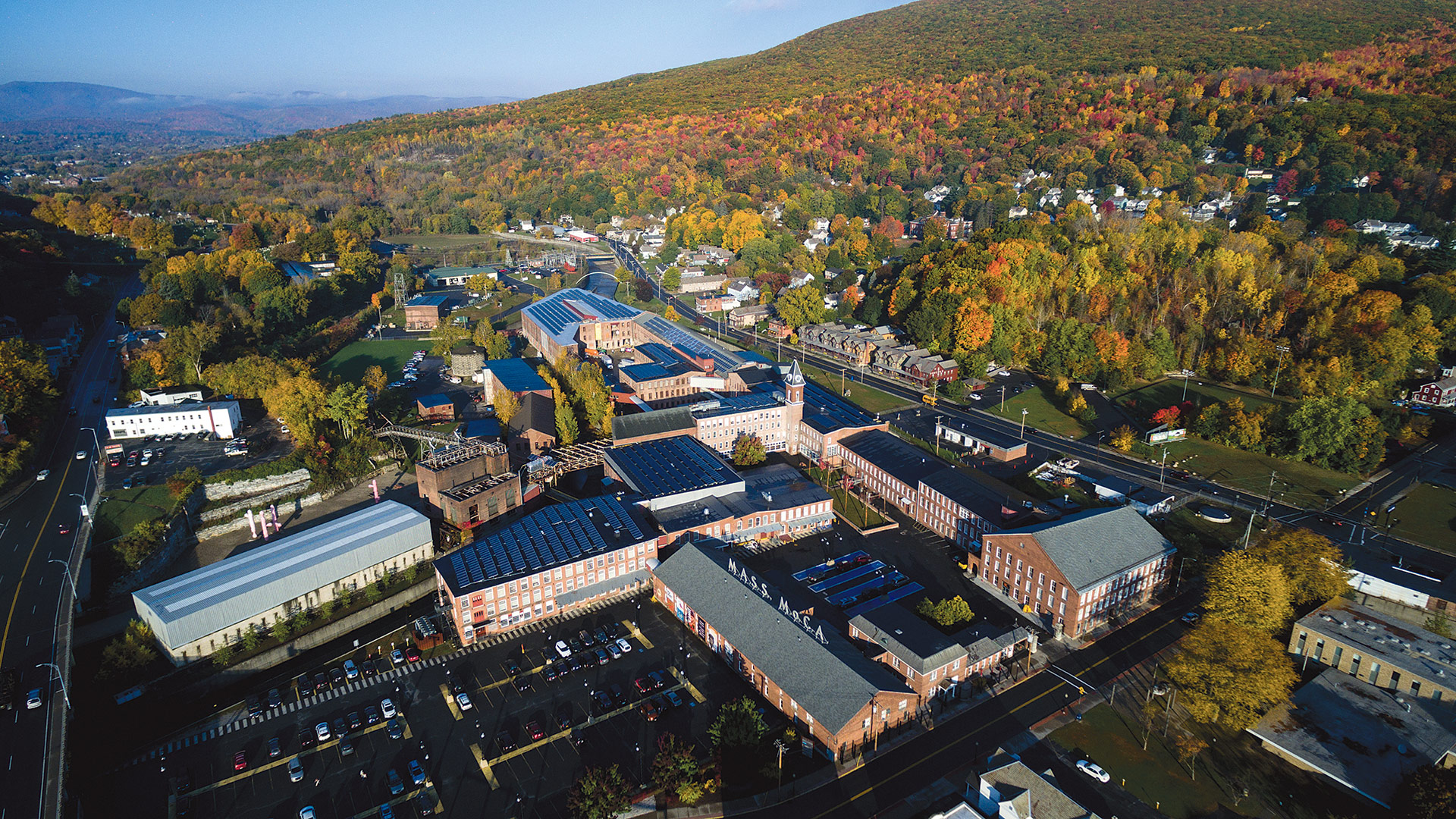
Franklin County

Come as You Are

Jeremy Goldsher

Jeremy Goldsher says Greenspace CoWork melds modern amenities with a distinctly Greenfield vibe.

Co-working spaces — hives of business where members share office space — have taken root in many Western Mass. communities over the past several years, for a number of reasons, from the efficiency of sharing resources to opportunities to network and be inspired by other professionals. In the past year and a half, two have cropped up a block apart in downtown Greenfield, with different types of clientele but the same goal: to help enterprises develop and grow, and have fun doing it.

The way people work has changed dramatically since the last century, Jeremy Goldsher says — and so has where people work.

“There are so many intelligent people doing incredible things here, and they don’t feel like they have to go to Boston or New York or Hartford or wherever to flourish,” said Goldsher, who launched Greenspace CoWork about 18 months ago with business partner Jeff Sauser. “No, you don’t have to do that anymore. You can do it from locations all over the place.”

But why not just work from home, as so many companies encourage their employees to do? To Goldsher — and others who believe in the value of co-working spaces — it’s about culture, energy, and especially connection.

“In the great rush to connect people with technology, we’ve forgotten one of the most important things that connects people, and that’s human interaction,” he told BusinessWest. “I think we get a lot of really brilliant people who move out here to get away from the cities and raise families, but there’s not a lot of opportunities to interact, congregate, and meet their neighbors.”

That’s why more people are taking advantage of the co-work model. In some cases, he said, they’ve moved to Greenfield specifically because co-working was an option.

“In the great rush to connect people with technology, we’ve forgotten one of the most important things that connects people, and that’s human interaction.”

“We offer the same amenities you’d get in New York or Boston. But you can do it in a rural setting where you can leave work, go down to the river, swim, come back, jump back on your computer, and Skype with someone in Dubai. We have people here whose companies are spread out all over the country or all over the world, yet they can congregate in the kitchenette, talk over coffee, talk about each other’s kids, and maybe grab a beer after work. It’s just wonderful to see these people enrich their own lives.”

A block away in downtown Greenfield, Pat King, executive director of Another Castle, told BusinessWest that he and Paul Hake, CEO of HitPoint Studios, opened their co-working space, which caters to video-game developers and designers, a little over a year ago after the pair recognized its potential.

Pat King says Another Castle

Pat King says Another Castle helps bring together the region’s large and far-flung game-design community through a number of programs.

King worked with Hake for many years, both with HitPoint and its precedessor, Paul Hake Productions, before striking out on his own about four years ago. During that time, he started a group called Pioneer Valley Game Developers, a networking community that now boasts about 300 members, many of whom gather for monthly meetups and events.

King started talking with Hake about the potential of a co-working space specifically geared for this crowd, especially considering that many are small and solo outfits that could benefit from the networking and shared resources Another Castle offers.

“About two years ago, I realized we have such a vibrant community, and a close community that’s really active and wants to get to know each other, so it made sense to look for a space,” King explained. “We’d looked at other models in other cities that have done similar co-working spaces for video-game developers. We had enough people that expressed interest, and thankfully Paul was also interested in moving to a new location and wanted to go in with me on a co-working space for game developers.”

Michael Crigler found, in Greenspace CoWork, an ideal spot for his digital marketing agency, Bueno Social.

Michael Crigler found, in Greenspace CoWork, an ideal spot for his digital marketing agency, Bueno Social.

With just four members now — HitPoint is the anchor tenant, with about 12 employees — Another Castle has plenty of room to grow, despite the specific challenges of this niche-specific model (more on that later). But King, like Goldsher, is excited about the way the co-working environment encourages professionals to come together in the heart of Greenfield, rather than working alone.

Back to Life

Four years ago, Goldsher’s family bought the four-story building on the corner of Main Street and Court Square out of bankruptcy and rebranded it the Hawks & Reed building, after a former clothing store on Main Street. They have since brought new life — and many more events — to the arts and music space on the first floor, while Goldsher and Sauser worked to develop Greenspace CoWork on the upper floors.

The two met at a Franklin County Community Development Corp. event and were soon talking about the co-work concept, which Goldsher had seen flourishing while living in New York City.

“I was seeing co-working really starting to take off there, and it was something I wanted to see here. This is the wave of the future in workspaces for my generation, to address the modern needs of workers wherever they are,” said Goldsher, noting that the space has been designed with a Franklin County aesthetic in mind, with original wood floors, reclaimed materials, and greenery. “We didn’t want to throw a bunch of stuff into a space and say ‘done.’ It’s not overproduced, and it reflects Greenfield.”

His biggest challenge right now is building out more space in a building that could eventually house about 150 workers — although, like all co-work spaces, they’re typically not there all at once. About 30 individuals and companies call Greenspace home right now. Open 24/7, the facility has two secured entrances, and one of its conference rooms has access directly from the street without having to walk through the rest of the co-working space, which appeals to lawyers who meet with clients there.

Michael Crigler, who heads up digital marketing agency Bueno Social, is one of the original Greenspace clients, and is currently working with Goldsher to create a new logo and branding and redo its website.

“We had our own office down the street,” Crigler said. “It was nice, but my business partner and I were on the road a lot, meeting new clients, and we have a pretty big remote workforce; employees can work from anywhere. When just one or two people were in that big office, it felt empty, and didn’t feel like there was a lot going on, and we wanted to be more part of a community, where we can collaborate with people.”

When he heard about Greenspace, he was immediately intrigued.

“That week, I was like, ‘we’re going to get rid of our office and move in here.’ So far, our employees love it,” he noted. “I’ve never felt a sense of ease like I feel working here. Jeremy’s vision, and the way he’s built out the space, are warm and inviting, and the people it attracts are very cool. I’m really excited about the next few years in Greenfield.”

“About two years ago, I realized we have such a vibrant community, and a close community that’s really active and wants to get to know each other, so it made sense to look for a space.”

Members are attracted to co-working for a number of reasons, Goldsher said, among them lower prices than traditional office rent, flexible leases, and shared resources ranging from a printer, projector, conference rooms, and wi-fi to a kitchen with free tea and coffee.

Members range from stay-at-home fathers who show up in the wee hours to get some work done in a professional setting to Australis Aquaculture, an international fish-farming operation headquartered in Vietnam. When its fish farm in Turners Falls was shuttered and the farming operations consolidated overseas, the company needed a place to house eight employees who focus on sales and distribution to large food retailers in the U.S.

“I think it’s a great concept,” said Jackie Galvis, an administrative, financial, and human-resources assistant with Australis. “And it’s cool because this is a historic building.”

Goldsher said it was beyond his expectations to have a company of that size as a member, but at the same time, it makes sense.

“They were downsizing their space but wanted to upgrade in the amenities and the culture,” he noted. “We’re just lucky to have people from the community believe in what we’re building here and invest in our dream. You hear these stories about the synergy that happens in a co-working space, but it’s actually happening.”

Game On

It’s happening at Another Castle as well, though perhaps at a different pace. Besides the 10 HitPoint staffers who work there, Vermont Digital Arts utilizes the space, while the rest of the current members include a 3D artist, a software engineer, and an electrical engineer.

Greenspace CoWork’s private, soundproof phone booths

Greenspace CoWork’s private, soundproof phone booths were designed and built in house.

“It’s a slightly different beast than a general co-working space,” King said, noting that only about half the game developers and designers in the region are making money in this field, making it difficult to afford even the reasonable rates co-work spaces charge.

“I’ve seen numerous success stories of people who have been able to get work through the community, either from HitPoint or word of mouth,” he noted. “So people are definitely interested, but it can be a challenge making pricing work because it’s a hobbyist community. People want to support the space but can’t necessarily join.”

That’s why he and Hake are exploring the possibility of adding incubator space at even lower cost, to attract more startups who might benefit from the synergies, guidance, and networking opportunities available, as well as the 24/7 access and shared resources — not just the wi-fi, conference rooms, and flexible membership plans common to most co-working spaces, but a wide array of cutting-edge computer hardware to be used for testing, playing, or just for being productive.

And the events, too. Another Castle often serves as a community space for events like last month’s Global Game Jam, which drew about 50 participants who designed games for a frenzied 48 hours, producing 15 games by the end of the weekend.

“That was amazing to see a packed space, all people working on different projects,” King said. “We also host monthly educational events and a few workshops here, and we’ve led a couple at GCC and other institutions.”

Greenspace CoWork hosts community meetings as well, Goldsher said, just another way he hopes the venture connects professionals to the city and region around them.

“We want our members to be able to accomplish what they would in a corporate setting, but we also want them to go out into the community and enjoy all the resources and the natural beauty here,” he told BusinessWest, noting that he dreamed of something resembling a co-working environment when he was a kid, even though he had no idea they actually existed, or what they were called.

“This is just a child bringing his dream to life,” he said. “I’ve created a comfortable space that’s open 24/7, and anyone is welcome to join.”

Joseph Bednar can be reached at [email protected]
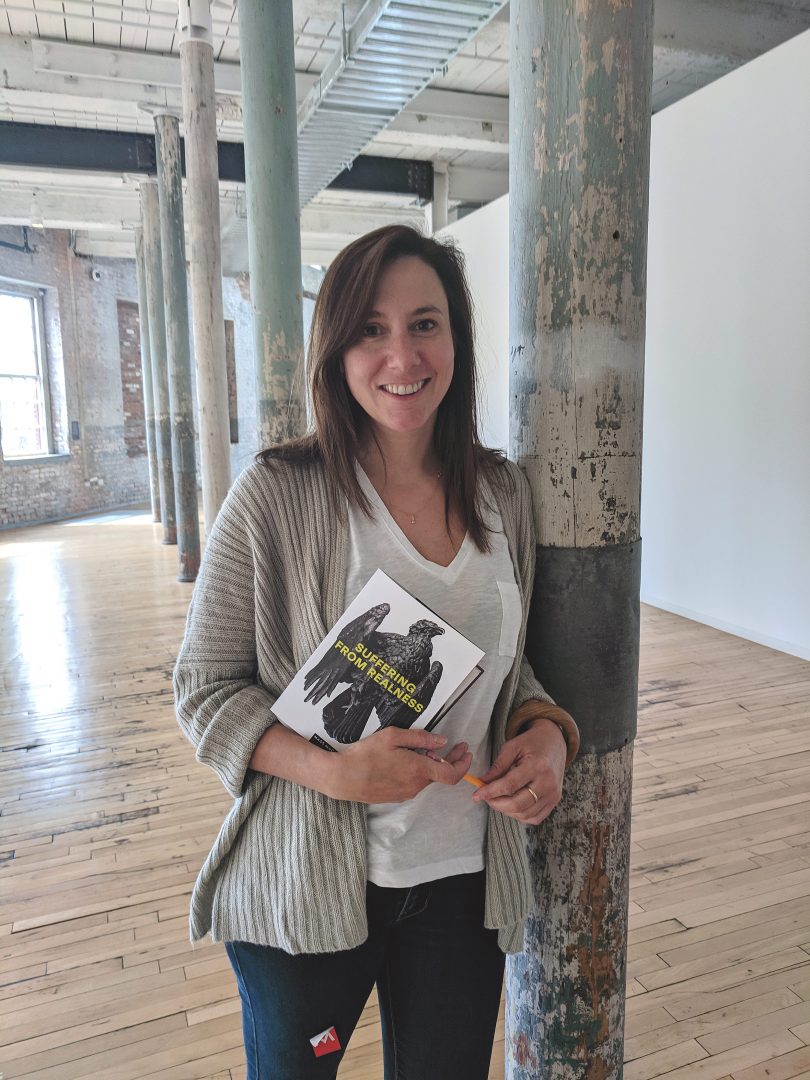
Franklin County

Connecting Past and Present

Philip Zea says Historic Deerfield paints an often-surprising picture

Philip Zea says Historic Deerfield paints an often-surprising picture of a large swath of the region’s cultural history.

It’s a grand reopening more than 200 years in the making.

Specifically, it’s a house in Deerfield, built in 1795, that operated as a tavern for roughly a decade.

“We know a lot about it, and because most Americans today travel, we thought it would be great to show the public how people back then lived, not when they were at home, but when they were out and about,” said Philip Zea, president of Historic Deerfield, the living-history museum that comprises more than 50 buildings on or near sleepy Old Main Street.

“Believe it or not, our tranquil street here, north and south, back in the day, was the equivalent of Interstate 91,” Zea went on, adding that Old Albany Road connected with the 18th-century equivalent of the Mass Pike, making Deerfield a sort of crossroads of New England, frequented not only by locals, but by travelers.

Refurbishing that tavern — it will open later this year — is the latest capital project undertaken at Historic Deerfield to expand the scope of the history the museum aims to convey across its 110 acres, he told BusinessWest. “We want to tell that story, what the country was like when it was on the move — not today, but in the 1790s and a little bit later.”

Upstairs from the tavern is a big assembly room that quickly became the largest public space in town, so the tavern keeper drew income from renting that space, for court proceedings, auctions, and balls. Deerfield Academy was founded in that room in 1797.

Zea can share countless historical details like that one in this complex that includes 28 houses built in the 1700s and another 14 that predate 1850. “The skyline is intact, if you will.”

“When people feel the need to know more about the past, we need to be more inventive about how we share it.”

So is business at Historic Deerfield, which opened to the public 71 years ago and has continued to evolve its programs and exhibitions to keep visitors returning and, crucially, keep attracting new generations at a time when it’s not always easy to turn young people on to history.

Knock, Knock

That ‘71 years’ may be an official statistic, as Historic Deerfield was indeed begun in 1947, and its first museum house, the Ashley House (built in 1733), opened its doors to visitors in 1948.

Yet, the street was a sort of unofficial museum well before that. The local library has correspondence, from the 1830s, from two Mount Holyoke College students who wanted to head north and visit Deerfield’s houses, which even then were old. One homeowner charged them a dime to come in and see the house. “That’s the business of history,” Zea laughed.

And it’s often significant history, he went on. During the early Colonial wars, Deerfield was the northwestern point of English settlements in the region, so while people lived and farmed there, it was also a military outpost. Around the time of the American Revolution, the town was an organizational point for troops moving north and west. The week before Benedict Arnold and Ethan Allen took Fort Ticonderoga in 1775, Arnold was in Deerfield, buying beef for the army. “That’s real history,” Zea said. “It happened right here.”

For decades, families, school groups, and others have trekked to Deerfield for both its palpable history and its reflection of a quintessential new England village, Zea said. “If someone visits New England, they might go to Fenway Park, or get a lobster in Maine, but if they want a feel for what it was really like long ago, they’ll come here.”

That’s true of Old Sturbridge Village as well, but he doesn’t believe Historic Deerfield is really in competition with that complex, because often visitors want to check out both sites. We’re quite different. They’re interpreting 1830s New England life; it’s all about process and how people made their livings. Rather than focusing on a specific time, we’re one-stop shopping if you want to look at history from the 1770s, or even earlier, to today. If you want to be in a place and feel the expanse of history, this is the place you want to come.”

To keep visitors returning, the museum — which boasts 61 full-time and 115 part-time employees — needs to make it relevant, and that’s not always easy.

“The apex of this kind of museum in America was back around the Bicentennial. That’s when the biggest crowds went to places like this. That was about patriotism, about the roots of the country, the roots of American democracy,” he explained.

“That’s still important,” he went on, “but when people feel the need to know more about the past, we need to be more inventive about how we share it. It’s not always political history; it’s not always military history. What we do here is more about the history of culture in the Connecticut River Valley and the roots of small-town America in a place like Deerfield.”

Even the colors of the houses tell a story. Today, paint colors cost pretty much the same, but back in the 1700s, blue pigment was derived from cobalt, which was expensive. “So, if you could paint your whole house blue, it was like parking a fancy car in the driveway.”

Maintaining the condition of the museum houses and other structures — and expanding the activities within them — accounts for some of Historic Deerfield’s $7.7 million annual budget, bolstered partly by a $49 million endowment and the 1,317-member Friends of Historic Deerfield, which supports the museum through annual gifts from individual and corporate donors.

“We’re finding ways to move forward on the programmatic front, as well as historic preservation,” Zea noted. “One of our problems is, we’ve got a pretty good-sized physical plant, a lot of which is old, by the nature of the place, so historic preservation is important for us; it’s part of our mission and part of our responsibility that requires a fair amount of cash to keep going.”

The other key is to expand the audience because, obviously, the more people who come, the better — both for the museum and the region at large.

“Deerfield’s a little different from other museums in that, while we charge admission to our buildings, it’s a gateless museum. You can come to Old Deerfield, walk around, have a great time, and I don’t get into your wallet,” said Zea, who used to work at Colonial Williamsburg in Virginia, which operates under a similar structure on a larger scale. “But visitors, even visitors we really can’t count, are important not only to us, but to the regional economy, because we draw a lot of people to Franklin County.”

Lens to History

To keep drawing them, Historic Deerfield continues to expand both its programs and the physical space in which to present them. In the latter case, the organization recently purchased the home of 19th-century artist James Wells, built during the 1760s and known as Elmstead, to expand public programming and storage.

As for those programs, one ongoing lecture series, “Native Voices: Rediscovering American Histories,” which began with a well-attended event in January and continuing on Feb. 24 and March 24, aims to reframe the experience and perspectives of indigenous peoples into broader American narratives.

Then, on April 13 — the day that kicks off daily operations after the weekends-only winter schedule — Historic Deerfield will host its annual Patriots’ Day festivities, featuring a military re-enactment group from Connecticut and discussions about the impact of the Revolution on the people of Deerfield.

All of it, said Laurie Nivison, the museum’s director of Marketing, is intended to make history relevant to those who want to learn about it.

“With today’s audience, it’s telling the story and encouraging people to think about how it relates to their life and how their life might connect to one of the families who lived in the houses here,” she told BusinessWest. “When we bring people to come [give presentations] here, we want them to make that connection as well.”

Those connections can be powerful, Zea said, and visitors interact with the history in different ways. “Part of what a place like this peddles is nostalgia — what was it like then, or imagining how they did this and that. So, a big part of our constituency doesn’t want anything to change because that’s the nature of nostalgia.

“But then, there’s an equal part of our constituency that wants to learn more, learn different things, look at Deerfield in different ways,” he went on. “And there are so many ways to do that here because, while Historic Deerfield is a great institution, Old Deerfield is a great place in history. And we’re a sort of lens to that.”

Joseph Bednar can be reached at [email protected]

Law

Firm Resolve

Managing Partner Kenneth Albano

Managing Partner Kenneth Albano

As Bacon Wilson approaches its 125th anniversary next year, it can look back on plenty of history and change — with perhaps the past couple of decades representing the most dramatic evolutions in law. Through it all, the practice has remained remarkably steady, boasting numerous long-time attorneys and a measured growth strategy that has led Bacon Wilson to its position as the region’s largest law firm — one with its focus squarely on the future.

Just before he sat down with BusinessWest, Kenneth Albano was looking through an old file at Bacon Wilson, dating from 1993. Two things struck him about the letterhead.

One was the number of lawyers — just 16, compared to 42 today. The other striking thing was how many of those 16 are still practicing at Bacon Wilson today.

“Every lawyer except a few is still here,” said the firm’s managing partner, noting that he’s been at Bacon Wilson for 31 years, while the other two partners who spoke with BusinessWest for this story, Hyman Darling (38 years) and Donna Wexler (a relatively brief 17 years), have also built quite a bit of history with the firm.

“It says a lot about the fabric of the firm, that people stay here as long as they do.”

It says a lot about the fabric of the firm, that people stay here as long as they do,” Albano went on. “We have lawyers like Mike Katz and Paul Rothschild, who have been here 40-plus years and are still working hard every day.

“When we interview for associates, they always bring that to the top of the discussion, because it’s important for people to feel stability,” he noted. “With Millennials these days, it’s tough to get a straight answer as far as commitment, but we try to impress upon them that this can be your work family and your home for years to come. That’s what we bring to the table, and it’s been successful over the years.”

That stability has no doubt contributed to the firm’s growth, but so have a series of strategic mergers, which have led to Bacon Wilson establishing offices over the years in Northampton, Amherst, Westfield, and Hadley in addition to Springfield, where it has maintained a State Street address for almost 125 years.

“These are not offices where you call a phone number get a receptionist covering all the shared space,” Albano said. “These are standalone facilities with partners, associates, paralegals, and receptionists.”

At a time when it’s more difficult to find young talent (more on that later), the key has been smart expansion — not hiring just to hire or merging just to merge, he added. And those mergers have essentially been achieved through relationship building.

“We don’t buy practices,” he said. “So if you were looking to retire, you wouldn’t come to me and say, ‘I want X amount of dollars for my practice,’ because it’s a lose-lose situation for us. The win-win is, ‘sure, let’s talk, come be part of the Bacon Wilson family for three or four years, allow your clients to meld into our practice groups, and allow our lawyers to get to know your clients, and have a slow exit strategy.’ That’s how it’s worked in the past.”

Last year, Massachusetts Lawyers Weekly ranked Bacon Wilson as the 42nd-largest law firm in Massachusetts, but it’s the largest in Western Mass. — and well-positioned, Albano said, to continue to tackle what has become an increasingly complex and demanding legal landscape.

Time to Change

Long-timers like Albano, Darling, and Wexler have seen their share of changes in the legal world, too.

“When I first came here, if somebody came in for an estate plan, it was a will,” said Darling, who has built a reputation as a premier authority in the region on estate planning. “Now, it’s a will, health proxy, power of attorney, homestead declaration, maybe a trust … we talk about things like end-of-life decisions and organ donors and cremation and anatomical gifts. Pet trusts, gun trusts. It’s evolved into things that none of us ever learned in law school.”

Donna Wexler and Hyman Darling

Donna Wexler and Hyman Darling have seen plenty of changes in their fields of real estate and elder care/estate planning, respectively.

That’s why he has gone from working with one shared secretary to leading a team of six estate-planning attorneys and 20 total staff, with responsibilities ranging from asset-protection planning and pet trusts to having his picture taken with a big check for the Massachusetts Lottery wall in Braintree when a winner decides to establish an anonymous trust.

“There’s special-needs planning that we didn’t do before,” he went on. “There was nothing called elder law when I came to the practice. And 10,000 people turn 60 every day — and we have a lot of them in Massachusetts.”

Technology has changed the way lawyers work as well, said Wexler, who specializes in real estate.

“When I started practicing, I would fill out forms in pen and the secretary would type them, then there were years when I typed them, then it evolved into the banks actually preparing them and e-mailing them. Now we’ve got cloud-based things,” she said, adding that increased government regulation, especially since the financial crisis in 2008, has led to new complexities to her work. “There’s more we need to know about what the regulations are and what we’re required to do.”

Then there’s the culture of constant communication — and the resulting rise in client expectations — that has shrunk timelines on projects in industries like construction, printing, and, yes, law. Albano recalled the days when he’d come back from lunch and hope to see a phone message on one those classic pink slips of paper waiting for him. Now, he returns to a couple dozen e-mails.

“There’s an expectation of immediate response, and it’s changed the pace of the practice tremendously,” Wexler said, to which Darling noted he’s had clients call asking to set up a will before they flew off on vacation. Tomorrow.

They all recognize, however, that those constant e-mails and calls represent something important: individuals who need help, and often at a difficult time in their life.

“I always tell people, if I get a call from someone I haven’t heard from in a while, they’re not calling to say, ‘how are you doing? Have a great day.’ They have a problem.”

“There’s an expectation of immediate response, and it’s changed the pace of the practice tremendously.”

As all three mentioned, those problems continue to evolve. Cannabis law in Massachusetts, for example, has unfurled an entire new world of issues that cross several practice areas. For instance, Albano represents a few municipalities seeking guidance on what kinds of restrictions they can place on marijuana businesses. Wexler has handled transactions for clients looking to purchase land for growing, while some of Darling’s clients have sought to invest in these facilities.

In fact, the sheer scope of Bacon Wilson’s expertise is a plus for clients, Albano said. “We don’t do high-end criminal work or security work. Everything else, we do. And we cross-sell each other to clients. The clients appreciate that.”

Wexler added that the attorneys tend to collaborate for the sake of clients, whether it’s seeking advice from a different department on a case or hearing a potential client’s request for services and recommending colleague with more specialized knowledge.

“When you hire Ken, you’re not just hiring him, you’re hiring 40 lawyers,” Darling said. “The firm is your lawyer. They’re all available.”

Well Suited

Albano said the three-legged stool holding up Bacon Wilson has always been litigation, real estate, and estate planning. “That’s always been with us. But when this firm was founded back in 1895, it was a commercial law firm, and we’ve maintained that commercial group from day one, representing so many Western Mass. banks. We survived all the mergers and all the new banks coming in. The key to our success is maintaining relationships. Relationships are so big in this market.”

So is staying educated and up to date on quickly evolving trends in a practice area.

For instance, even before the #metoo movement — but certainly in the wake of it — employment lawyers have seen a steep rise in harassment and discrimination cases, as well as thorny handbook issues to help clients sort out.

“We’ve had specialists come in here and give seminars on preventing those types of harassment claims,” he noted. “You have to stay up on it.”

In turn, Bacon Wilson’s attorneys are active in the community, writing articles (for publications such as BusinessWest) and conducting workshops on hot issues. That’s in addition to the many ways the firm’s lawyers support their favorite charities and volunteer on their boards.

“Everybody gives back,” Darling said. “We don’t have to ask them; they just realize it’s important.”

Wexler agreed. “When we bring new associates in, the ones I work with seem very excited. And most of them come in with a passion for one organization or another, and we encourage them to take the time to give to that organization. It’s catchy. And it’s exciting to be a part of that.”

That said, it can be a challenge to attract young talent to the firm in a competitive marketplace in an era when law-school enrollment is significantly down from where it was 20 years ago. But Bacon Wilson has developed a relationship with Western New England University School of Law, interviewing students for clerk positions and often hiring them full-time later on, while building similar pipelines with institutions like Bay Path University to find paralegals.

“The tough part is getting young lawyers to stay in Springfield, as opposed to Boston or New York,” Darling said. “But we’ve done a good job. The quality of life here is pretty good. They can make a living and have a house they can afford and be able to pay their school debt.”

Not to mention working at a firm that continues to rack up accolades each year — including “Best Law Firm” in the Valley Advocate Readers’ Poll every year since 2012, “Best Law Firm” in the Daily Hampshire Gazette Readers’ Choice poll every year since 2014, plenty of attorney citations in Best Lawyers in America, the 2018 Firm Impact Award from the Hampden County Bar Assoc. for pro bono work, and a raft of others — and, as Albano noted, a stable, venerable firm to call home for many years to come.

“We’ve grown in bits and pieces over the years,” said Albano, who would like to see the firm grow to more than 50 attorneys during his tenure. “It’s been a great run so far. We’ve had some hiccups along the way, as with any business, especially when the economy was bad. But the reason we’ve grown as well as we have is because the people who work here really enjoy coming to work.”

Joe Bednar can be reached at [email protected]
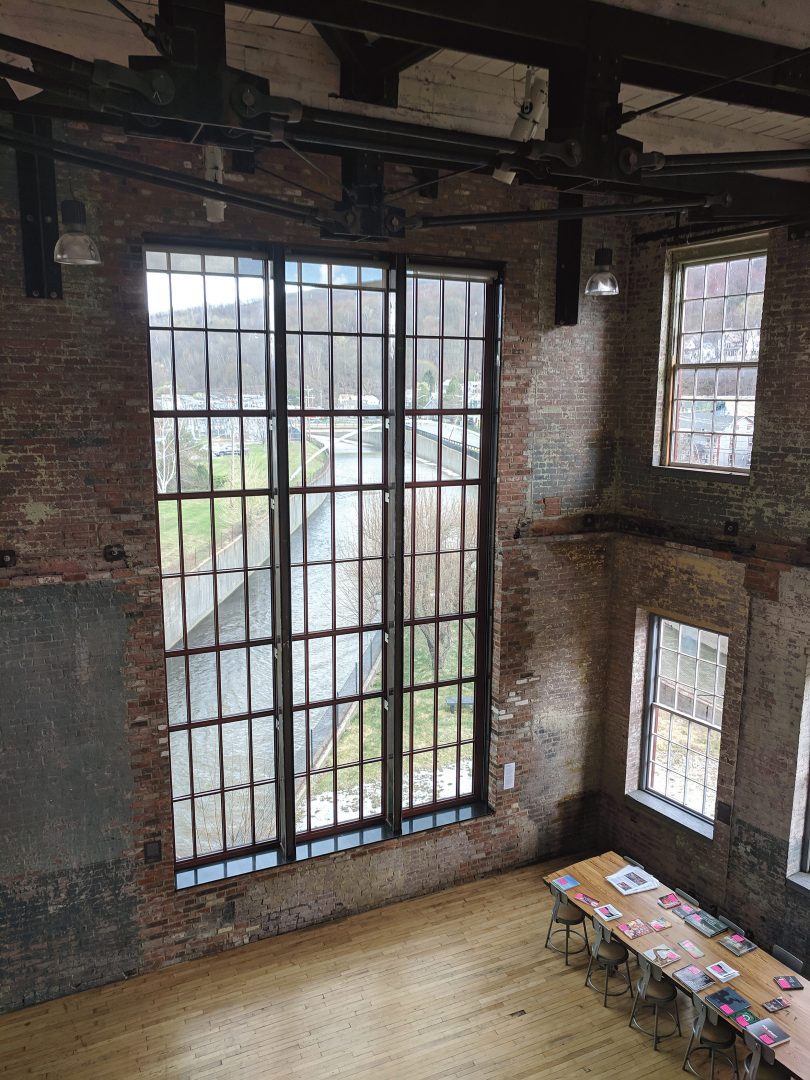
Features

Cruising Altitude

Two Roads Tap Room

Two Roads Tap Room is among several food and drink options Bradley has either added recently or plans to open in the coming year.

It’s no secret that the air-travel industry is a competitive one. But Kevin Dillon said it’s doubly so for the airports themselves.

“We’re competing with many regional airports for passengers, but we’re also competing with every airport in the country for limited assets — meaning aircraft,” he told BusinessWest. “Airlines will put aircraft where they get the best return. So we have to provide the best customer service possible, along with keeping operating costs low for airlines. Airports that can do both will be very successful.”

By any standard, Bradley International Airport has been exactly that in recent years, said Dillon, executive director of the Connecticut Airport Authority (CAA), which has managed the airport in Windsor Locks since 2013 — during which time it has enjoyed six straight years of passenger growth.

Part of that momentum stems from giving passengers what they need, and that’s more flight destinations. Recently announced non-stop additions include service to Denver, Raleigh-Durham, and Orlando on Frontier Airlines; to Pittsburgh on Via Airlines, and to St. Louis on Southwest Airlines.

Kevin Dillon

Kevin Dillon

“We continue to be very heavily focused on airline route development, and we continue to push for additional non-stop routes,” Dillon said, adding that the top goal these days is to boost West Coast service, particularly to Seattle, which would allow easy, one-stop access to Asia from Bradley.

“We already have service into Los Angeles and San Francisco, but Seattle would complement those very nicely,” he explained, adding that the CAA is also focused on Phoenix, Austin, Milwaukee, Nashville, and Jacksonville. “As it stands today, we feel we have a very healthy non-stop menu, but we want to expand that.”

Internationally, the daily Aer Lingus flight to Dublin introduced in 2016 has becoming increasingly popular with area business and leisure flyers, and the airline recently committed to another four years at Bradley.

“That service has been a success, especially during the spring and summer months, when business travel to Europe is supplemented by more leisure travel to Ireland,” he added. “We’ll be exploring additional trans-Atlantic service, but we also want to be very careful to make sure we’re fully supporting the Aer Lingus service.”

“Airlines will put aircraft where they get the best return. So we have to provide the best customer service possible, along with keeping operating costs low for airlines. Airports that can do both will be very successful.”

So, Bradley continues to give flyers what they need in terms of destinations. But just as important is giving them what they want. That’s where customer service comes in — and it’s a much more involved game than it was a few decades ago.

Comfort Zone

When Dillon entered the air-travel world in 1975, he said, operating airports was viewed exclusively as a government function, and airports were largely utilitarian in design. Now, it’s a very competitive business that’s laser-focused on pleasing its customers.

Bradley is doing so in a number of ways, including new eateries, such as recent additions Phillips Seafood and Two Roads Tap Room. “We’re looking to add additional concessions in 2019 — particularly in the concourse that houses United and American. Folks can look forward to some new brands coming in 2019; we’re negotiating the deals right now.

“That nicely complements some improvements made in other areas of the airport,” he went on. “Two Roads and Phillips are doing very well, and so is our club, the Escape Lounge. Black Bear restaurant closed down, and it’s going to be redone and refreshed. A lot of good things are coming to the terminal building.”

On that list is a planned $5 million renovation of all public restrooms in the complex, he added. “Everything we do here in the terminal building, all the improvements we make at Bradley, are with an eye toward improved customer service, whether it’s new concessions or something as routine as adding a new elevator. We’re constantly looking to make someone’s journey through the terminal building better.”

Meanwhile, the CAA recently announced that Travelers Aid International has begun serving Bradley’s passengers with a guest-service volunteer program. Forty-five volunteers currently staff the service — which operates out of the Information Center on the lower level of Terminal A, the baggage-claim level — while Travelers Aid continues to recruit more of them.

Travelers Aid currently operates similar guest-service volunteer programs at four other airports: New York JFK, Newark Liberty, Washington Dulles, and Washington Reagan. In addition, it operates the information booth at Washington Union Station. At these five locations, more than 750 Travelers Aid volunteers assisted more than 4.2 million passengers in 2017.

These service-focused improvements have all contributed to Bradley’s continued rise up the annual Condé Nast Traveler poll. The publication’s most recent Readers’ Choice Awards recognized Bradley as the third-best airport in the U.S. Travelers gave the airport high marks for “convenient on-site parking, plentiful charging stations and free wi-fi, decent restaurant options, and an overall relaxed atmosphere.”

airport terminals must be attractive and packed with convenient amenities

Kevin Dillon says airport terminals must be attractive and packed with convenient amenities in order to draw business in a competitive market.10

Selling Convenience

Dillon hopes they have similar praise for Bradley’s planned, $210 million ground transportation center, which is the final stages of design and financing. Construction may begin as soon as this year.

When it’s open, passengers will be able to fly into Bradley and connect to the transportation center via a walkway from the terminal. All the rental-car companies serving Bradley will be located there, as well as 830 spaces of public parking.

“We have rental cars scattered all around airport,” Dillon said. “Being able to walk right into the new center to get a car is, by itself, a great customer-service improvement.”

“We continue to be very heavily focused on airline route development, and we continue to push for additional non-stop routes.”

The transportation facility will also serve as a transit hub for the various bus services into and out of Bradley, as a connecting point to the rail line that now connects New Haven with Springfield. “We feel this is a real opportunity to connect the airport to that rail service,” he added. “We want to have a location within this transportation center where we can process rail and bus passengers.”

Meanwhile, the CAA expects to complete the new airport entrance roadway this summer, he noted.

“That was a safety improvement as well as a capacity improvement, as we look to grow the airport. We want to be sure people can easily access ground transportation, and make sure that driving into airport is just as convenient as the terminal building.”

When the CAA took over operations at Bradley in 2013, it was handling roughly 5.5 million passengers a year. Now, that figure is more than 6.5 million. But Dillon doesn’t think the airport is close to its potential.

“How big can Bradley Airport get? I do think we can be a 10 million passenger airport,” he told BusinessWest — but only if it continues to drive improvements in what passengers need, and also what they want.

“We know, at the end of the day, that what we’re selling is convenience,” he said. “When you compare Bradley with Logan or the New York airports, what differentiates us is that people look at Bradley as the most convenient option.”

Joseph Bednar can be reached at [email protected]

Community Spotlight

Community Spotlight

By Joseph Bednar

Mayor Linda Tyer

Mayor Linda Tyer says Pittsfield’s leaders remain focused on the needs of its individual neighborhoods in order to generate economic development.

As part of her annual state-of-the-city address recently, Pittsfield Mayor Linda Tyer praised the arrival of Wayfair — the fastest-growing e-commerce home-décor company in the world — on a number of levels.

Perhaps most importantly, by opening a sales and service center, the company has created 300 new jobs in Pittsfield. Wayfair is also a locally grown success story, founded by Pittsfield High School graduate Niraj Shah. And, Tyer said, Wayfair’s presence signals to other major employers that they can be successful in this city of about 45,000 people in the heart of Berkshire County.

But Wayfair’s arrival speaks to a broader success story as well — that of a city-wide development strategy that’s bearing fruit.

“Wayfair choosing Pittsfield wasn’t happenstance,” she said. “Rather, the foundation was set with the alignment of the city’s economic-development strategy. The city joined forces with the Pittsfield Economic Development Authority and the Pittsfield Economic Revitalization Corporation. Together, we created the ‘red-carpet team,’ the Mayor’s Economic Development Council, and a new position of Business Development manager.”

In their discussions with companies looking to set up shop in Pittsfield, Tyer noted, those entities are touting not only the economic benefits of doing business here, but quality of life. And people are listening.

“We prepared our presentation assuming that Wayfair will want to know what incentives we might be able to offer them,” she explained. “As the first session got underway, Wayfair’s representatives said they’re not yet interested in the financial incentives. They’d rather learn about Pittsfield’s lifestyle, our schools, our neighborhoods. They wanted to make sure that our community culture aligned with Wayfair’s culture.”

Pittsfield at a Glance

Year Incorporated: 1761
Population: 44,737
Area: 42.5 square miles
County: Berkshire
Residential Tax Rate: $19.42
Commercial Tax Rate: $39.94
Median Household Income: $35,655
Median family Income: $46,228
Type of Government: Mayor, City Council
Largest Employers: Berkshire Health Systems; General Dynamics; Petricca Industries Inc.; SABIC Innovative Plastics; Berkshire Bank
* Latest information available

The city’s red-carpet team, made up of city and state officials whose purpose is to develop strategies and explore incentives to support business expansion or startups, has been deployed in myriad cases to help companies move and expand in Pittsfield. Another resource Tyer is excited about is the Berkshire Innovation Center, which broke ground in September at the William Stanley Business Park.

This 20,000-square-foot facility that will support and advance the work of small and medium companies in the life sciences, advanced manufacturing, and technology, featuring cutting-edge equipment available to advanced manufacturers for research and development of new products. In partnership with Berkshire Community College, the center will be a place of teaching and learning, creating a pipeline of trained employees that area companies desperately need.

Neighborhoods on the Rise

Meanwhile, Tyer touted a downtown district generating energy through its mix of eateries, boutiques, and urban apartments, not mention a renovation of the historic Beacon Cinema on North Street by new owner Phoenix Theatres, which refreshed the interior, enhanced the seats, and added more showtimes.

“Downtown is Pittsfield’s front porch,” Tyer said. “We must remain watchful, always, to ensure a spirited, vibrant experience for all who live in and visit our city.”

She added that it’s time for the city to build on the successes of the North Street revitalization and focus more attention on the historic Tyler Street artery.

“My grandmother, who just turned 95, grew up on Tyler Street,” the mayor said. “She has fond memories of sitting on the front porch, getting an ice cream, and walking to North Street with her sisters to buy fabric at Newbury’s. Tyler Street can be that again, but with a modern twist.”

Anchored by Berkshire Medical Center, General Dynamics, and the William Stanley Business Park, the neighborhood is ripe for a renaissance, she argued. One development toward that goal is the conversion of the former St. Mary the Morningstar Church to 29 units of market-rate housing, a project that drew on $125,000 in state finding for infrastructure improvements around the building.

In addition, the Baker-Polito administration awarded a $30,000 grant last May to support small businesses in the neighborhood. The funding, Tyer explained, will be applied to Pittsfield’s Storefront Enhancement Program. “This is vital financial assistance for businesses to make façade improvements to boost visibility, attractiveness, and ensure accessibility.”

Work also began last summer on the Tyler Street Streetscape Design Project, which aims to create a curated throughway that addresses the needs of pedestrians and bicycles, improves lighting and landscaping, identifies dedicated bus stops, preserves on-street parking, and elevates public spaces. The completed design work is expected to be unveiled early this year.

Going forward, the city will continue to seek ways to take advantage of private investment in North Street and Tyler Street, both designated as Opportunity Zones, Tyer said. “Alliances with local and state representatives, financial institutions, and developers will spur capital investment and job creation.”

On the public-safety front, the mayor focused on several incidents in the Westside area of town, citing a meeting with neighborhood residents who expressed their fears and shared their ideas on ways to enhance the work of the police department, while they in turn tried to understand police protocols.

One idea — to establish a Police Department community outreach office in Westside — is becoming a reality, she added, thanks to space being offered by Central Berkshire Habitat for Humanity in its building on Columbus Avenue.

Meanwhile, a series of high-visibility patrol operations were conducted in November and December. The operation, led by the Police Department’s uniformed patrol and anti-crime unit, brought in reinforcements from the Berkshire County Sheriff’s Office, Massachusetts State Police, and the state Alcohol Beverages Control Commission, which, in total, netted 32 arrests, including the seizure of approximately 340 grams of cocaine with an estimated value of $34,000 and a variety of illicit pills.

“While we tackle the complex issue of crime, our Police Department has established a strong philosophy of community policing,” Tyer added, noting that officers have hosted free movie events, back-to-school meet and greets, and other community activities. “All of these interactions create trusting relationships that will endure with our kids, their families, and our police officers.”

Collaborative Efforts

Still, making the community a more desirable one — again, a factor in attracting new business — doesn’t end with public safety. To that end, an LED street-light conversion will be complete by the spring, replacing some 5,300 streetlights in all, with the dual goal of brighter streets and lower utility bills. Meanwhile, the Westside Riverway Park, a new outdoor space along the west branch of the Housatonic River, extends from Wahconah Park to Clapp Park.

“Paying attention to what’s happening within our neighborhoods continues to be a primary focus. And our efforts are paying dividends,” Tyer said, noting that a surging housing market has increased home values in the city. Still, she added, vigilance against blight and decay in neighborhoods remains a priority for her administration.

“We have cataloged about 100 problem properties,” she noted. “The city’s code-enforcement team tries to identify and exercise all viable options. Our objective is always to preserve as much as possible. Sometimes, demolition is the only option. We continuously balance the cost of demotion against the very real gains that come with keeping our city appealing.”

Finally, 2018 was the first year of Community Preservation projects, the mayor noted. Drawing from a 1% surcharge on property values, the endeavor resulted in a $580,000 appropriation of funds for investing in historic resources, open space, and recreation. Eleven projects were funded, including the preservation of the Melville Art and Artifacts collection in the Berkshire Athenaeum, the Arrowhead stone wall, restoration of the Springside House, siting and design for pickleball courts, the turf field at Berkshire Community College, and infield restoration at the Pellerin baseball field.

Meanwhile, she said, local partners continue to support improvements in public spaces. This past year, the pavilion at Durant Park went up thanks to a gift from Greylock Federal Credit Union. A Berkshire Bank contribution facilitated the renovation of the basketball court at Lakewood Park, while the Buddy Pellerin Foundation and the Rotary Club are making significant investments in Clapp Park.

The progress Pittsfield has made on these fronts and others are, of course, a collective effort by myriad agencies, businesses, and individuals, Tyer noted. But she wants her administration to set the tone for growth.

“We cultivate an organizational culture that encompasses shared responsibility, proactive long-term planning, dynamic communication and professional development,” she said. “My philosophy around this is simple: when we make decisions that affect the people that we serve, these principles must be in the forefront of our minds.”

Joseph Bednar can be reached at [email protected]
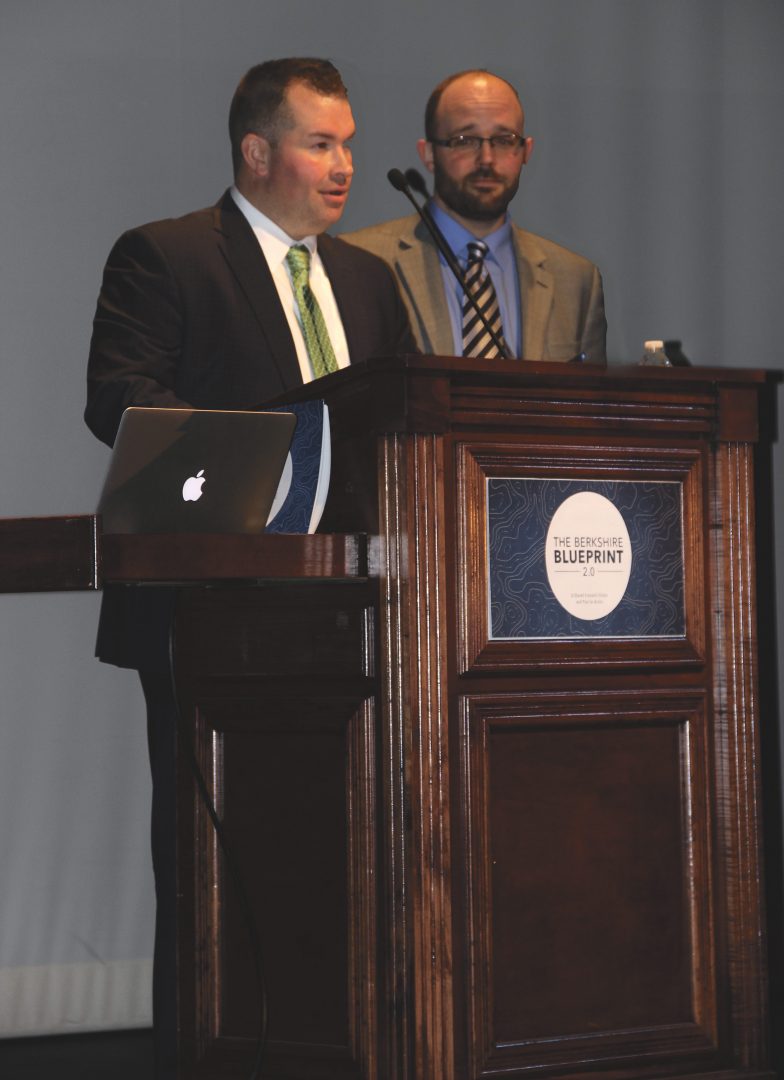
Class of 2019 Difference Makers

They’ve Shared a Lifetime Working for Social Change

Frederick Hurst clearly recalls where he was the April afternoon in 1968 when Martin Luther King Jr. was shot and killed. It was a job interview — a job he decided not to take.

That day, he said, changed the course of his life, and that of his wife, Marjorie. The trajectory of those lives has been a winding one, with many stops along the way, but one common thread — a constant focus on making a difference, in myriad ways.

For the past 15 years, the most visible vehicle for that change has been An African American Point of View, the ‘newsmagazine,’ as Rick calls it, that blends community news with often-unsparing commentary, every word of it edited by Marjorie. We’ll let his note in a recent issue explain the dynamic.

“We didn’t start this paper without knowing what we want to accomplish. We knew where we wanted to go in terms of content and impact. And we still feel we provide a point of view that is not provided anywhere else.”

“Like any journalist, I have an editor who pushes back at me. She pisses me off sometimes, but I often acquiesce. I’m not easy. She often recoils at stuff that truly expresses what I mean to say even though it might upset some folks. I am most responsive when she can show me a milder way to say the same thing and less responsive when she suggests a change simply because, without it, someone will get mad. I write it as I see it. And sometimes, I want to make someone mad because it is a legitimate part of my message and it tells the story best.”

“We didn’t start this paper without knowing what we want to accomplish,” Rick told BusinessWest. “We knew where we wanted to go in terms of content and impact. And we still feel we provide a point of view that is not provided anywhere else.”

It’s a perspective that remains badly needed, he added.

“The African-American point of view is so diluted in every medium you can find around here. I don’t think that has been malicious; I just think folks generally don’t understand what that means, even though they do the best they can,” he continued. “Sometimes I write to educate, sometimes I write to provoke, and sometimes I write to just express my opinion.”

Pointing out ways that political, educational, and economic infrastructures present barriers to success for the black community is nothing new to the Hursts.

Marjorie and Rick Hurst are gratified that their son Justin and daughter-in-law Denise

Marjorie and Rick Hurst are gratified that their son Justin and daughter-in-law Denise — who serve on Springfield’s City Council and School Committee, respectively — have followed their example of civic involvement.

“These things need to be discussed without equivocation,” Rick continued. “And most people I know — good people — are equivocal. They’ve been raised to be equivocal, and approach things like race with such delicacy that the story doesn’t get out there. One way we can make a solid impact as a newspaper is to deal with these race issues unequivocally. And I think we’re having an impact. Sometimes my good friends get mad at me — but it doesn’t bother me. I learned, if you have another point of view, write it, and we’ll print it.”

Marjorie noted that the newspaper had long been on the couple’s five-year plan — for way more than five years, actually — before they actually launched it in 2003.

“It was always part of what we were going to do,” she said. “He always had something to say, always had thoughts, always had ideas and a need to express them.”

And a need for an editor — even when they were dating as teenagers and engaged as college students.

“I’d send her love letters, and she’d send them back with corrections in red,” he laughed. “And she’s still doing that with anything else I write.”

A Life Together

In fact, the Hursts have known each other from their days as Buckingham Junior High School students in Springfield. Marjorie went to the High School of Commerce, Rick to Technical High School, and they had been dating for five years when they decided to tie the knot as undergrads at Howard University in Washington, D.C. in 1967.

“I was planning to go into speech therapy and audiology,” she recalled. “I had started out in journalism, but decided not to do that. It felt too intrusive to ask people all these questions.”

King’s death when the couple were seniors at Howard palpably altered both their career paths. An economics major with his eye on law school, Rick was sitting at a table with executives from D.C.-based Riggs National Bank, who were making him an offer to manage their trust department — and offering to pay his way through law school — when he heard King had been shot.

“People came running in, screaming and hollering — everyone was all upset,” he recalled. “It changed everything. I listened and was very cool, but I knew I wasn’t going to work for a bank, and we made a decision to come back to Springfield.”

“Most people I know — good people — are equivocal. They’ve been raised to be equivocal, and approach things like race with such delicacy that the story doesn’t get out there.”

With a new sense of mission, Rick got involved in poverty and unemployment programs, and they both taught school. He was recruited by Digital Equipment Corp. to run its planning department in Springfield and did well there for several years, but grew frustrated by the steady flow of white employees being promoted ahead of him. They both attended a graduate program at UMass, after which time an intriguing opportunity arose in Chicago.

It was an experimental, relatively new school on the west side of the city — a rough area to say the least — called Daniel Hale Williams University. Rick became facilities manager in 1975, while Marjorie worked as registrar.

“We sold our house, packed up our furniture, and moved to Oak Park,” he recalled. “The school had campuses all over the west side and south side, into the projects. We struggled to make that thing survive — but it didn’t survive. We had cashed in everything, and we were out in the middle of the country, when the school went bankrupt. Both of us were out of a job, and Marge was pregnant with our third child, Justin.”

That was the low point in their early part of their marriage, but again, they were energized by a planned return to Springfield. This time, they turned to law, Rick’s original goal as an undergrad at Howard. He enrolled at DePaul University School of Law — also working part-time while Marjorie worked full-time — and then both returned to Springfield, where she enrolled in Western New England College School of Law.

Rick Hurst says he writes to both educate and provoke

Rick Hurst says he writes to both educate and provoke — because sometimes people need a little provocation.

She opened a law office with a friend, while then-Gov. Mike Dukakis appointed Rick a commissioner at the Mass. Commission on Discrimination, overseeing 171 communities in the western half of the state for the next nine years.

“It was a very powerful commission then,” he said, explaining that MCAD had a judicial unit and a civil-rights unit. The latter, which no longer exists, allowed commissioners to essentially police every municipality and require them to develop diversity programs for employment, housing, and contract compliance — and authority to bring charges if they didn’t comply.

Holyoke and Springfield were both recalcitrant when it came to instituting such programs, he noted, and Holyoke has been more progressive over the years than Springfield, which Hurst feels remains somewhat stuck in old-school politics when it comes to systemic change.

“It was a great time in my life. We saw some positive changes,” he said. “And when I left, I went with my love” — specifically, to join her in the law firm that would eventually be known as Hurst and Hurst, P.C.

“It was an interesting time,” Marge said regarding those early years. “We just started off young and involved, and we continued to be involved. We got involved in civil rights. We were part of high-school walkouts over the lack of minority teachers and a black-focused curriculum. We set up an alternative school. We’ve always been extremely active and dedicated to moving the ball forward in whatever way we could. But we’ve always worked closely together and been supportive of each other, and there’s always been the feeling we’re equal partners.”

Hot Off the Presses

By the turn of the century, they both agreed their newspaper idea couldn’t stay on the five-year plan forever. So, in 2003, they took the plunge — with a little extra motivation from a black newspaper based in Framingham that was sniffing around Springfield. “That sped us up,” Rick said. “We knew we had a better product.”

The paper was originally published quarterly, then bimonthly in its second year, then monthly in its third, which it remains to this day. When the Great Recession hit, the paper struggled somewhat — advertisers began pulling back, loath to spend money during those difficult years — but Af-Am Point of View survived and eventually thrived, rebranding as a newsmagazine and pouring resources into producing more — and more diverse — content, while also developing an online presence.

“I’d send her love letters, and she’d send them back with corrections in red. And she’s still doing that with anything else I write.”

“We entered the market as African-American emphasis paper, but we always knew we’d expand and broaden it out,” Rick said. “We felt the paper would never grow in reader interest without a diversity of writers, to make it interesting to everybody.”

The Hursts celebrate Marjorie’s election to the Springfield School Committee

The Hursts celebrate Marjorie’s election to the Springfield School Committee — she was the top vote getter — in this 1997 photo from the Union-News.

Indeed, those writers represent diverse races, genders, and ages, too — in fact, a recent issue featured an essay by the Hursts’ 12-year-old grandson, Tristin.

Through it all, Rick has never been one to pull punches, whether speaking broadly about systemic racism in the U.S. or calling out local leaders on political matters.

“I’m more the warrior type than Marge,” he said. “Not in a wild and crazy way — I’m more measured than that. But I fight for change. I understand what change means. All my adult life, I’ve been fighting for political change, broader cultural change in the way people think. And the paper has made a difference. I think we’ve impacted the way people see black people and the way black people see themselves. I know we’re not there yet, but nothing makes me feel better than to know we have started something in that direction that’s meaningful.”

The Hursts have a long political history in the city, including Rick’s unsuccessful effort in the mayoral race of 1969, and City Council bids after that. Meanwhile, Marjorie served 12 years on the Springfield School Committee. Their youngest son, Justin, has followed suit over the past few years, most recently being named president of the City Council, while his wife, Denise, serves on the School Committee.

That legacy is gratifying for Marjorie, who had her kids knocking on doors from an early age supporting local candidates for office. “They had a history of being active and involved in politics.”

“They were very much involved,” Rick added. “We were sophisticated — we could break wards down, break streets down; we understood the value of door to door, face to face. They grew up with that in their heads, and the work was natural to them. But they take it to a new level with technology.”

That civic investment by the next generation is a source of pride, he added.

“That’s what I live for. I want to see my kids get involved in the body politic, and not just them. A whole lot of other minorities, black, Hispanic — and women, too — should get involved so Springfield is run like it should be run.”

Marjorie calls Rick conservative when it comes to his feelings about family structure, but he considers their family proof that a two-parent home — with two educated parents, no less — gives kids a great advantage in life. Their daughter and oldest child, Tiffani, is an assistant to the public defender in Delaware County, Pennsylvania, following years as a federal appellate attorney in Las Vegas. Their first son, Frederick Jr., has a CPA background and works for the public school system locally.

“I made a promise to myself, years before I met Marge, that I’d meet a good woman who’d want to marry me, and I’d stay with her for the rest of my days,” Rick said. “I’ve always preached it to my kids — take your time, find a good woman you’re compatible with, and commit to stay with her for the rest of your life and raise your kids right.”

He explained that Marjorie represented something aspirational to him, whose wisdom he has long relied on.

“I’m more the warrior type than Marge. Not in a wild and crazy way — I’m more measured than that. But I fight for change. I understand what change means. All my adult life, I’ve been fighting for political change, broader cultural change in the way people think.”

“I’m a kid from the hood; I really am — fisticuffs and gambling and all that,” he said. “When I made a decision to go to college, I had all that baggage. And at every critical point in my life, I can point to Marge being there as incredible support. Whether I would have made it anyway, I don’t know. But, my God, most people who came up with me … I’ve got more dead than alive, and many of them died decades ago.”

Even at Howard, he vascillated in his goals and considered dropping out to join his brother in the Army. “But she helped me struggle through, and I finished college. If I ever write my story, it’ll be a story about Marge.”

The Next Chapter

But Rick has written a book already: A History of Blind Industries and Services of Maryland, the century-spanning account of a program in Maryland dedicated to putting blind people to work — a success story that reflects his own philosophy about how government programs should support, but never replace, organic economic development in a community.

“You’ve got to introduce an economic-development element into every program you put on the table, or they’re all going to fail,” he said “These people figured out how you do it, how to integrate government money into private operations and grow the private sector much bigger than the original government investment.”

In some ways, the Hursts’ life together has been a microcosm of that kind of growth, constantly planting seeds — from a newspaper influencing public opinion to the development of black-centric curriculum in the public schools, to the raising up of future generations who will continue making a difference.

“Justin and Denise surround themselves with people of all races; they’re comfortable with everyone,” Marge said of the two Hurst family members with the most public profile these days. “That gives you hope for the future — how seamlessly they move into the fabric of the city, into all areas of the city. It makes you feel good that you might have contributed to an element of change in the city. So we’re extremely proud to be here at this point in time and still be contributing through the newspaper.”

Not that the work is ever truly done, Rick was quick to add, arguing that Springfield will never grow to political maturity until it fully shakes off its history of crony politics and embraces more diversity and openness to change. “I know it sounds idealistic, but change never came about through people who weren’t idealistic. The only way you change that stuff is to keep picking at it.”

He admires a quote by Thomas Jefferson — a man, it must be said, with his own racial complexities — who once noted that, if he had to choose between a government without newspapers or newspapers without government, he would not hesitate to choose the latter.

“That’s the power of the media,” Rick said. “Jefferson knew what he was talking about. If we didn’t have the press today, we’d be well on our way to a dictatorship. I’ve come to understand the power of the press.

“We’ve had an impact in that respect,” he went on. “The Hursts never set out to be prominent. We set out to make a difference, and we have made a difference. And that impact will continue long after we’re gone.”

Joseph Bednar can be reached at [email protected]

Meetings & Conventions

Horse Sense

President and CEO Gene Cassidy

President and CEO Gene Cassidy.

When people think of the Eastern States Exposition, they often think immediately of the Big E, the 17-day fair that dominates the tourism landscape at the start of each fall. But Eastern States is much more than that, as reflected by its diverse array of events, both large and small, and the resulting economic impact on the region — not to mention its important mission of keeping its agricultural heritage alive for future generations.

Fifty-two years ago, notes Greg Chiecko, a local camping group set up shop at the Eastern States Exposition — and have come back every year since.

“That was our first non-fair event. They took the building for the whole month — it took that long to set up, do their show, and move out.”

How things have changed, said Chiecko, director of Sales. The Big E, the 17-day fair that has taken place each fall for more than a century, remains the ESE’s most famous calling card. But outside the fair, the grounds hosts more than 100 events annually, some small-scale, some much larger, like the camping and outdoor show that now crams hundreds of vehicles into three large buildings each February.

One of the many horse shows at the ESE.

One of the many horse shows at the ESE.

“The dynamics have changed substantially over the past 50 years,” Chiecko said. “They’ve been doing it so long, it’s amazing. They still take a little while to move in, but they do it with such accuracy, and they literally move out of all the buildings in a day.”

A quick look at the coming month’s schedule demonstrates the range of groups that present events here. February alone offers the Amherst Railway Society’s Railroad Hobby Show, the aforementioned Springfield RV Camping and Outdoor Show, the Springfield Sportsmen’s Show, and two dog shows. March brings the Old Deerfield Spring Sampler Craft Fair, Mark’s Northeast Motorsports Expo, the Antique & Modern Firearms Show, the Maple Harvest Day & Pancake Breakfast, the AMMO Fight League, a Massachusetts 4-H Blue Ribbon Calf Sale, and the large Western Mass. Home and Garden Show — not to mention two more dog shows.

“We call ourselves the flexible facility in the heart of New England, and we truly are,” said Chiecko, who will leave the ESE next month to become president and CEO of the Outdoor Amusement Business Assoc. “And every show is different. The Big E and the Fiber Festival are the only events we produce. We’re a landlord the rest of the year. Some of these are volunteer groups, some are professional promoters, some are associations … it runs the gamut. They produce the shows, and we offer services, like ticket takers, ticket sellers, security, and more. They can use our services or use their own.”

Greg Chiecko calls the ESE “the flexible facility in the heart of New England.”

Greg Chiecko calls the ESE “the flexible facility in the heart of New England.”

Gene Cassidy, president and CEO of the Eastern States Exposition, noted that the facility also offers services like advertising, sign manufacturing, banking, and other amenities that many venues don’t have in their portfolio. The result of this flexibility and roster of services results in a high retention rate, with groups that return year after year. In addition, he noted, “some staff people have been here for 40 years. So there’s a lot of institutional memory.”

The ESE’s consumer shows — home shows, gun shows, camp shows, sport shows, and the like — tend to be among its most popular offerings, Chiecko said. “We’re also the dog-show capital of the Northeast. In 2017, we had 36,000 AKC-registered dogs on our property, just from the AKC shows, not counting other groups. Dog shows are a big deal. And we love dog shows because they come on holidays: Easter, Thanksgiving weekend, Fourth of July weekend, times of the year when it would be difficult to fill our spaces.”

“In 2017, we had 36,000 AKC-registered dogs on our property, just from the AKC shows, not counting other groups. Dog shows are a big deal.”

EASTEC, the largest manufacturing event east of the Mississippi, returns to the fairgrounds this May for its biannual visit. “Exhibitors love it, and the area restaurants and hotels do great,” Chiecko said, adding that local trade shows, from the likes of J. Polep Distribution Services and Performance Food Group, also regularly host events. Meanwhile, clients book parties and weddings at Storrowton Tavern and the Carriage House, which managed by a private firm but owned by the ESE.

That’s far from an exhaustive list, but it does lend credence to Chiecko’s “flexible facility” motto.

“I’ve been here 24 years, and I’ve never heard a “can we do it?” inquiry that I’ve had to say ‘no’ to,” he said. “The facility is so flexible, and our crew is so flexible, we can do anything.”

Animal Attraction

Despite the myriad events the ESE presents each year, its heritage remains firmly rooted in animals and agriculture.

“We do 13 horse shows outside the three we do for the fair,” Chiecko said. “We do a sheep show, youth cattle shows, and we have a big poultry show coming up next month. And this past year, we had the National Rabbit Association. We had 18,000 rabbits here.”

“The joke,” Cassidy quickly added, “was that 18,000 rabbits came, and 36,000 left.”

The attendance level varies among these events, Chiecko noted. “A lot of the horse shows tend to watch themselves rather than anything else. But the rabbit show attracted a huge population from the general public.”

The annual Western Mass. Home and Garden show

The annual Western Mass. Home and Garden show brings attendees face to face with hundreds of local businesses.

However, when it comes to most animal events, Cassidy said, “I wish there were more people engaged. It’s our job to promote the breed or species, put it out there for the public to consume, and they’re free events. The fact is, if the Big E had more days or we had more acreage, more of those shows would take place during the course of the fair so we could get as many people from the public exposed to that. But we do our best to try to promote interest in it; we believe it’s important for agriculture. It’s mission-driven; we’re not making any money on that. That’s all stuff we promote and invest heavily in.”

Still, “the more shows we can put in during the fair, the more it helps us fund our agriculture program, most of which happens outside of the fair, in the other 49 weeks of the year,” he went on. “We make it available to the public so they can have the exposure. It’s tough in this day and age, when the youth in the general population are so disassociated from agriculture, and we deal with the hardcore animal activists, the people who have serious agendas against consumption of animals, and they influence public policy to the detriment of the greater good of society.”

That has affected the national 4-H program, which gets federal funding and is being influenced by people outside of agriculture, which results in regulation making it harder for children to be involved. Meanwhile, Future Farmers of America, a private nonprofit not under federal control, is going strong, Cassidy explained, noting that, no matter the vehicle, it’s important to keep engaging young people in agriculture and animal rearing. “Those are the kids that going to feed the world in the next generation.”

It’s one of the reasons why the Big E, which continues to set attendance records, is so critical, in that it helps fund the other 49 weeks of events while driving interest in animal shows; people are more likely to check out such shows once they’ve bought a ticket and are at the fairgrounds.

“At one time, we had four or five antique shows here. The Internet has almost eliminated antique shows because people can shop from the comfort of their own living room.”

“The fair is just a fundraiser. It’s like your church bazaar, except we just happen to run 17 days and are one of the biggest in the world,” Cassidy said. “It’s a fundraiser for us to drive stewardship into our mission. I wish more people were as excited about that mission as we are. I look down the road a generation, and we’ve got a lot of work to do.”

On the other hand, Chiecko said, the consumer shows are still strong because people enjoy events that reflect their hobbies and interests. But even there, the Internet has impacted certain shows.

“At one time, we had four or five antique shows here. The Internet has almost eliminated antique shows because people can shop from the comfort of their own living room, which is really too bad, because the quality of what people get isn’t nearly the same. It’s the same with craft shows. That’s the nature of the business cycle — we’re no different than a brick-and-mortar store dealing with Amazon.”

Living the Mission

Cassidy emphasized more than once during BusinessWest’s visit that the Eastern States Exposition makes a priority of its agricultural mission. “Not everyone relates to that mission. But if we can’t support agriculture, we can’t support everything else we support – and we support a lot.”

He’s not just talking about planned events. The fairgrounds has been a staging center for emergency situations as well. Northeast Utilities set up camp and fed its crews there during the famous October 2011 snowstorm. A few months before that, the ESE’s dorms housed hundreds of people suddenly made homeless by the tornado that struck the region. “We’ve hosted large RV rallies here,” Chiecko said. “If a cattle guy breaks down on 91, they might come here.”

So there’s a community impact in addition to the economic impact to the region — more than a half-billion dollars a year, he noted, with only part of that generated by the 17-day Big E. “Year-round operations play a big role.”

He believes its impact will only grow now that MGM Springfield has opened across the river.

“I think we have a good partnership,” he said, one that extends beyond parking cars for MGM during its first week of operation last summer. “They bring large conventions to town, which utilize rooms and banquet spaces downtown — well, we have 355,000 square feet of exhibit space. We’re hoping to see more city-wide conventions. It’s a tight-knit community here.”

Dog shows have become a surprisingly robust source of bookings for the ESE.

Dog shows have become a surprisingly robust source of bookings for the ESE.

For convention goers and people who attend events at Eastern States, MGM is another activity to take in while visiting Springfield, he added, while people who come to Springfield mainly for the casino might also take in an event at the fairgrounds — and everyone benefits.

“Because of the advertising campaign MGM launched, it put Springfield on the map in a bigger way, and I think our fair benefited from that,” Cassidy said of last year’s record attendance at the Big E, which took place a few weeks after MGM opened. “My hope is that, with the synergies we’ve developed in partnership with MGM, we can help bring more commerce to the city of Springfield in the form of non-fair events: trade shows, professional shows, manufacturing shows.”

With that in mind, he keeps plugging away at that year-round mission — because, simply put, the Eastern States Exposition is more than a center for events of all kinds. It’s a critical piece of the region’s tourism and economic picture.

“If this place ever went away, the impact on our economy would be devastating,” he said.

Which is why he doesn’t intend to let the ESE go to the dogs — well, except on those weekends when it does.

Joseph Bednar can be reached at [email protected]

Women in Businesss

Culture of Care

Karin Jeffers, CEO of Clinical & Support Options

Karin Jeffers, CEO of Clinical & Support Options

Karin Jeffers, the long-time CEO of Clinical & Support Options, knew she had a challenge on her hands when she took the reins at the struggling behavioral-health and social-services agency. But she’s never been one to shy away from a challenge, and has steadily grown the organization into the broad-based, community-focused force it is today. She’s done so by embracing constant change, a culture of learning, and a sensitivity to the unique experiences of each client who walks through the door.

As the daughter of teachers, helping and supporting people was in Karin Jeffers’ blood. How she eventually applied that idea, however, wasn’t exactly a straight line.

“I went to school at Springfield College for physical therapy and thought I had my life figured out,” she told BusinessWest. “That’s what I was going to do. But then I took an abnormal psychology class, and I was just fascinated. It was way more interesting than anything I was doing otherwise.”
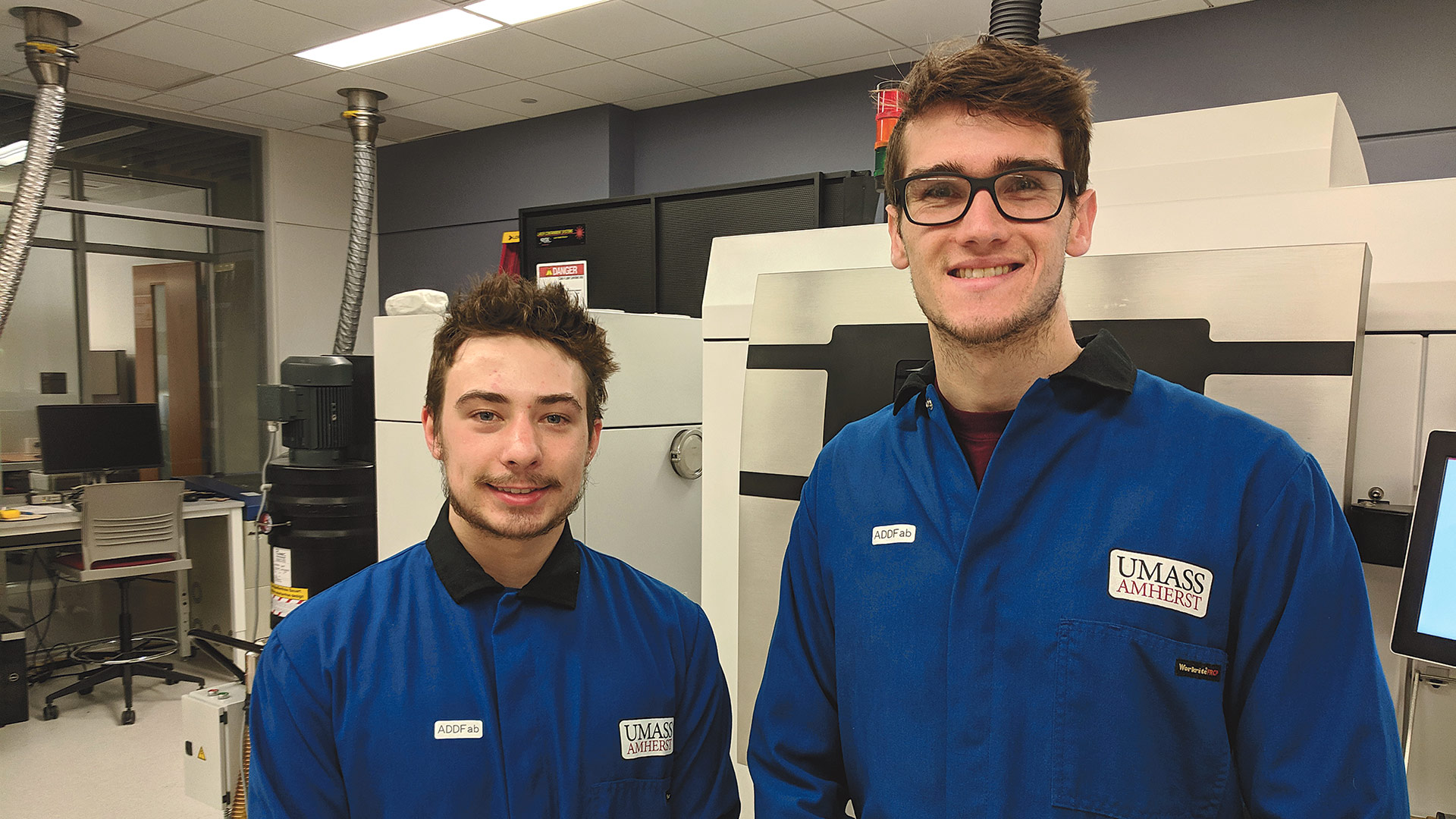
After doing a bit of research and learning how mental-health professionals impact people’s lives, she was sold, and switched her major to counseling and psychology.

“That was probably three and a half years through the PT program,” she recalled. “That was a fun phone call home to my dad.”
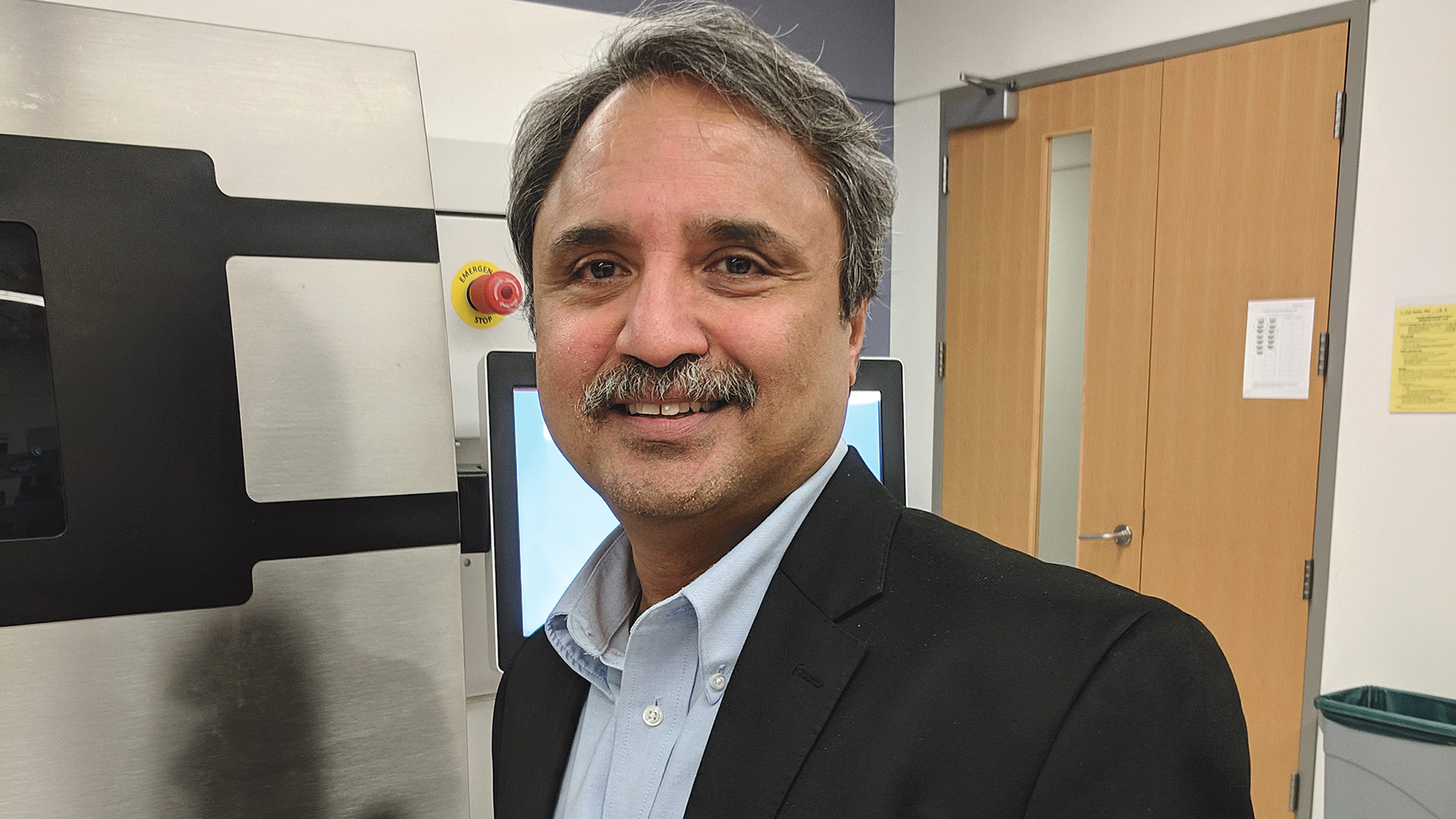
Her career path has validated that decision in spades, however. After earning her master’s degree in psychology, Jeffers took a job with the Massachusetts Society for the Prevention of Cruelty to Children and, over the next 13 years, rose through the ranks there, from home family therapist to coordinator to clinical director to regional director.
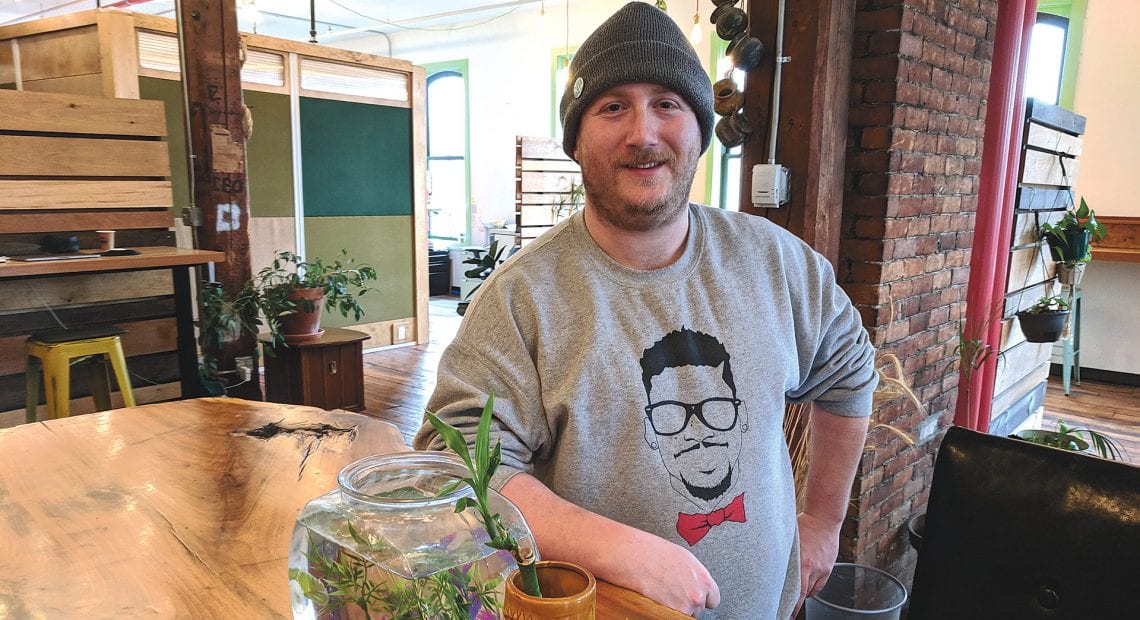
“It can be challenging when working with children and families, but what I found immensely rewarding — and this holds to this day — is the resilience of kids and families and their desire for a better life.”

“It was a great organization; it really exposed me to a lot of the ways you can help people and make a change in an individual, a family, and a community.”

It was telling — and another validation of her shift away from physical therapy — that she found the work rewarding, even though the issues she dealt with on a daily basis could be sobering, to say the least.

“It can be challenging when working with children and families, but what I found immensely rewarding — and this holds to this day — is the resilience of kids and families and their desire for a better life,” she said. “That really drives me through what can sound like horrible stories, whether it’s abuse or trauma or whatever people have been through.

“You rarely meet somebody who wants to be in a bad place,” she went on. “You meet people who want to do better, but they may not have the tools or the resources or the supports to get where they need to be; the hope is that you can help people get closer to healing and recovery.”

Meanwhile, Clinical & Support Options was an agency founded as a child and family organization that had crept away from that mission somewhat over the years, Jeffers said. She arrived there in 2005 to become CEO of what was then a $4 million nonprofit behavioral-health enterprise with about 90 employees and just a handful of sites, mostly in Franklin County.

“I’ve always loved challenges, and at the time that I came to CSO, it was a much smaller agency,” she said. “They had been through several CEOs in the prior few years. They had a really good core mission and core group of people, but needed some leadership, so it was an opportunity for me to make my mark on a new agency and see if we could build something that would make a difference.”

That she has. Thirteen years into her leadership tenure at CSO, it has become a $40 million organization with more than 700 employees spread across five counties, with 15 office locations, and serving some 17,000 people annually.

“We really have the full spectrum of services, from crisis intervention to family support to prevention services to support and recovery services,” Jeffers said. “Our latest merger was with Friends of the Homeless, so now we’re able to add housing and shelter to it. The way we’ve been able to integrate and really blend all those services together, we can truly say that, if you need support or help, just come here, and we’ll help you figure out where to get it, as opposed to you having to know which number to call and where to go and what to ask for. We work very hard at that kind of integration and service.”

She has spearheaded that kind of growth and integration through a specific set of values and a nimble leadership style that embraces change, and encourages her team to do the same. And she’s certainly not done.

Dramatic Turnaround

The Clinical & Support Options that Jeffers joined in 2005 was saddled with what she called a bad financial picture, but a good core team that wanted to provide strong services — and needed strong leadership to do so.

“I’m a big believer in strategic planning and actually following that plan and executing it,” she explained. “Some of the growth has happened through partnerships or mergers or takeovers of other offices. We’ve actually had other behavioral-health agencies close down offices, then reach out to us at CSO to assume operation. So we were able to grow by picking up those services where they were needed and expand on them, really use it as a launch point to do even more.”

Some growth was driven by changes at the state and federal levels. The 2009 Children’s Behavioral Health Initiative, which aimed to expand and integrate children’s mental-health services in Massachusetts into a comprehensive, community-based system of care, wound up building up CSO’s roster of contracts. Meanwhile, it was one of only three agencies nationwide to win a federal grant from the Department of Justice to link victims of crime to mental-health and trauma services. Other grants followed, and the agency continued to grow.

“It’s been exciting; we’ve been able to find our niche,” Jeffers said. “There are larger agencies than us and smaller agencies than us, but we’ve really been able to find our niche in certain things and do them well, while also offering a broad range of services to the community, so people can access what they need when they need it.”

Part of meeting those needs is a strategic direction toward what she calls a “trauma-informed” culture, which is essentially a system-wide change, launched about five years ago, that emphasizes sensitivity to possible trauma in every person who comes to CSO.

“A lot of people think of trauma-informed care as just a modality, trauma treatment, and we really look at it as a much broader philosophy, which is that trauma affects way more people than you think,” she explained. “You never know who has been traumatized, so how you treat people and what culture you set and having a place where you respect choices and empowerment and safety — that’s different than just providing trauma treatment.”

To that end, CSO has embarked on a long-term culture shift that not only includes best practices in treatment, but also examines what the offices look like, how policies are received, and how people are treated.

“The end result has been an ongoing philosophy of embedding trauma-informed care and resilience throughout everything we do,” she went on. “We trained everybody, from clinicians to the janitorial staff to administrative staff and secretaries, right across the board, so that everybody had the same filter and philosophy and support in doing their jobs.”

She even enlisted people to walk through the various CSO offices, like secret shoppers, and report back on their experience. The feedback included everything from pictures on walls that might be triggering to how they were treated when they came to the front window, and that feedback was then used to initiate change.

“You never know who has been traumatized, so how you treat people and what culture you set and having a place where you respect choices and empowerment and safety — that’s different than just providing trauma treatment.”

As one example, the waiting room in the Springfield office used to have hallways on either side, and staff constantly walked through. But Jeffers heard that felt really intrusive, and bothered clients who were finally asking for help, but were being ignored by professionals in the office. So the waiting room was moved to a larger, quieter spot, where the first providers clients saw were there to help them, not walk past.

“We look at our staff from the client lens,” she said. “It really is about a culture shift, and that is ongoing. There really isn’t a start and an end. Well, there’s a start, but then it’s an ever-evolving process, and our goal is quality improvement.”

Knowledge Is Power

That training in trauma-informed care is just one reflection of an organization — and its leader — that value continual learning. In fact, CSO provides more than 500 hours of free training for staff per year, which makes it easier to promote from within; more than 48% of the management team (70 out of 145) have come up through the ranks.

“It is very much a learning culture. We do a tremendous amount of internal staff training, but we also do external training,” Jeffers said, noting CSO has trained more than 1,000 individuals in mental-health first aid (both youth and adult versions) and more than 1,100 community members in principles of trauma-informed care (TIC). That’s on top of training 820 employees in the TIC curriculum over the past four years.

“We’ve provided training to other agencies, police, schools, colleges, and community groups on trauma-informed care and the impact of trauma in the communities,” she explained. “For the lay person, a lot of the focus is on how to recognize what your role can be in helping somebody get to a better place. Stigma is still real; people are afraid of mental health, and they don’t know how to react to situations. So we’re really trying to break down that stigma and empower people and teach them what their role can be, whether it’s your family or neighbor or someone in line at the grocery store having a tough time.”

That community impact — not just in external trainings, but in the day-to-day improvement in people’s lives — is one of the things that keeps Jeffers motivated as new threats emerge, such as the opioid crisis that has become so prevalent in recent years.

“The state of Massachusetts is heading in some really exciting directions with their investments in behavioral health, so to be a part of that is really exciting,” she told BusinessWest. “We will continue to be good at what we do and then see what else we can do. We certainly don’t want to grow just to grow. We want to grow to meet the needs of our community, and I think there’s still a lot of work to be done.”

“People who work here know we’ve got to change and adapt,” she went on. “It’s not about doing the same old same old, but how do we constantly strive for better quality and better outcomes? That’s something that drives me, and it’s exciting to be a part of it.”

As a prominent female leader in healthcare, Jeffers is especially proud of the percentage of women in leadership positions at CSO, including 60% of the executive leadership team (six of 10), 73% of the senior leadership team (27 of 37), and 84% of the overall, agency-wide management team (122 of 145).

Still, at the end of the day — and some days are tougher than others — it’s all about meeting needs and creating change in the community.

“There are definitely challenges,” she said. “Challenges on the funding front, keeping up with demands, and creating a good place to work are tough. But it’s exciting to know we can impact the number of people we impact.”

Joseph Bednar can be reached at [email protected]

Construction

Home Free

Partners Stephen Ross (left) and Bob Walker

Partners Stephen Ross (left) and Bob Walker

Construct Associates has built a reputation for home renovation and restoration in Western Mass. over the past few decades, which is fortunate these days, since business is surging in that area. The reasons are myriad — among them, plenty of old housing stock in the Pioneer Valley, a generally strong economy, and the continued aging of America and the desire among the senior set to remain in their homes and age in place. It all adds up to opportunity, and Construct is making the most of it.

Stephen Ross says residential renovation is looking up — in more ways than one.

“We’re doing a lot of aging-in-place stuff — personal elevators, residential elevators, additions,” he told BusinessWest. “I like to say that an elevator costs probably 10 months worth of a decent retirement community. There, you’re not going to get that money back. But with an elevator, it’s equity toward your house.”

Ross and Bob Walker, the partners at Construct Associates in Northampton, say aging in place is a major trend in residential construction and renovation these days, with the Baby Boom generation continuing to swell the ranks of the over-65 age group, many of them loath to give up independent living.

“I saw a poll recently where 88% of people want to remain in their home, and a lot of them are trying to do just that,” Ross said, noting again that elevators, accessible showers, and other additions pay for themselves if they make the difference between staying there and moving to a retirement community. “I’ve got two of those in the works now. One is an in-law suite, where they’re making it accessible for the in-laws, and the other is a professional couple that wants to be able to utilize their whole house.”

Meanwhile, Walker is wrapping up a first-floor master suite in Northampton with an aging-in-place concept. “It’s an older home right in the middle of town, but all the bedrooms are upstairs. A couple years ago, they did a big kitchen remodel, and now they want a bedroom and bath and laundry on the first floor, where they can get to all of it. We’re putting in a curbless shower, in case of limited mobility.”

“We did a pretty serious job search back in the fall, but we we got a lot of people we felt weren’t qualified for the quality work we do. Sometimes you do get good people come in who are older guys. The labor pool is aging, and it would be nice to see a lot more young people coming into the field.”

Not only do older people want to age in place, Ross said, but the Five College area tends to have consistent rotation of housing stock, and new owners want to come in and put their mark on their new house. And many newcomers to the region arrive from pricier markets, so they’re getting relative bargains and have money left over for remodeling.

“We’re a high-end firm,” Walker added. “We’ll do the whole gamut of work, but our real money is in high-end residential remodeling. At this point, we really are working off our reputation, our referral base. I’m doing a major house remodel in Longmeadow now — four bathrooms, going through the house and upgrading. I have another major job like that, a big Victorian in town here with a high-end kitchen, a big master bath, upgrading mechanical systems, making it as energy-efficient as possible.”

New home building remains a quieter market, Ross added, so Construct is in the right place these days. “Kitchens and bathrooms are our bread and butter, and it always seems like weve got one or two, if not four or six, going on in the background.”

Innovative Idea

Walker and three other partners — Hobie Iselin, Bob Reckman, and Chris Dawson — launched Construct Associates in 1984 with a bright idea — and good timing.

The idea was to create a construction company based on the model of a law office, where the owners share space, marketing, and accounting, but are responsible for managing their own projects.

This residential addition in Northampton

This residential addition in Northampton features an elevator, an amenity that has become more popular in recent years.

The good timing had to do with the company’s home city of Northampton, which was growing quickly and had recently begun to capture the imagination of developers. Construct had a hand in shaping the commercial rebirth of the city, building or renovating the Northampton Brewery, the Hotel Northampton, the Calvin Theater, two Bart’s Ice Cream Shops, Bruegger’s Bagel Bakery, Pinch Pottery, Pleasant Street Video, Silverscape Designs, and other properties.

Other partners have come and gone over the years; today, Walker shares ownership with Ross, who first joined the company as a carpenter in 1988 and became a partner in 2006.

The workload has changed over the years; Construct Associates does far more residential work — mainly home-renovation projects — than it used to. But it still does some light commercial work, notably the recent renovation of New England Treatment Access, the marijuana dispensary a block away from its Northampton headquarters.

The firm’s design and construction capabilities cover everything from antique designs to modern styles, the partners note, but they specialize in older buildings, providing innovative designs and construction for kitchen and bathroom remodeling, renovations, and additions, as well as new construction projects.

“We do all our carpentry. We don’t sub out any carpentry because we have our in-house guys,” Walker said.

While the volume of work has been strong lately, he noted, the staffing issues that plague many contractors may be the only thing holding back further growth.

“We lost a few guys last year, and we’re trying to replace them. We did a pretty serious job search back in the fall, but we we got a lot of people we felt weren’t qualified for the quality work we do. Sometimes you do get good people come in who are older guys. The labor pool is aging, and it would be nice to see a lot more young people coming into the field.”

He said he hired a carpenter last year who recently graduated from Smith Vocational and Agricultural High School — one of only three students in the carpentry program at the time. That’s not surprising, as a decades-long emphasis on pushing kids into college has contributed to talent shortages in what are generally well-paying careers in the construction trades.

“The most interesting thing I see in vocational schools is the percentage that are going to college,” Ross said. “Back when we were kids, if you went to vocational school, that meant you were going into a vocation. I’m personally shocked at the kids going on to higher education.”

Walker agreed. “It’s interesting. You can make a really good wage doing this rather than try to come into the job market with some computer skill that every guy and his brother has.”

Smooth Sailing

Other than finding talent, the construction-industry landscape is looking strong in 2019, Walker said.

“One of my lumber-yard reps asked how we were doing because he was really surprised that, right after the first of the year, things are still hopping. He sees it because he supplies a lot of builders. Generally, you get to this time in January, and things kind of slow up, but they’re moving quite well.”

Part of that has been the mild winter — though at press time, shortly after this interview, a major snowstorm was expected to sweep through the Northeast.

“There are jobs where I might have pushed a little harder to get concrete in the ground had I known we would have had this mild weather,” Ross said, “but you had that first [November] snowfall that made you think winter was coming, and then it didn’t.”

He’s expecting a solid spring surge this year, though, once people get their tax refunds and the weather starts to get truly warm.

“One of my lumber-yard reps asked how we were doing because he was really surprised that, right after the first of the year, things are still hopping. He sees it because he supplies a lot of builders. Generally, you get to this time in January, and things kind of slow up, but they’re moving quite well.”

“People are funny,” he said. “They’ll call you in the spring when it starts warming up and want to do something right then, but in reality, some of them should be talking to us right now and planning ahead.”

At the start of 2019, though, the calls have been coming in, partly due to the lack of snow.

“With the weather being mild,” Ross said, “some of them are a little more anxious to get some projects started, when normally they would be hunkered down because they don’t want people tramping sand and salt into their house, and opening and closing doors. So we have more calls than we usually do this time of year, but winter will have to come sooner or later. It’ll be interesting to see what happens then.”

The desire to age in place, however, or simply to turn an old house into something fresh and modern, aren’t ideas subject to the season, and on that front, Construct Associates continues to make its mark on Northampton and the region.

Joseph Bednar can be reached at [email protected]

Education

Reservoir of Talent

Ware High School graduates

Ware High School graduates, from left, Felicity Dineen, Jordan Trzpit, Valentina Towne, Joe Gagnon, Morgan Orszulak, and Seth Bourdeau with Michael Moran (right), president of Baystate Health’s Eastern Region, which helped fund tuition and textbooks for the students’ EMT training at Holyoke Community College’s satellite in Ware.


Seth Bordeau had no plans to become a paramedic, but a chance elective at Ware High School last year — “Introduction to Fire Science,” taught by Ware Fire Department Deputy Chief Edward Wloch — led him down an unexpected path.

“I was less than enthusiastic, but slightly interested in the fire-science class,” Bordeau said. “But after every class, I found myself more and more excited for the next. The subject of emergency services was fascinating, and as the year-long course was coming to an end and graduation grew closer, I knew I’d miss this class the most. I also knew that I wanted to pursue this career.”

Fortunately, the elective led to an opportunity to take an EMT class at the Holyoke Community College satellite located at the Education to Employment (E2E) site on Main Street in Ware. He and fellow Ware High students who finished the high-school elective are now contemplating a career in fire science and emergency medicine. Baystate Wing Hospital Corp., one of the E2E’s local business partners, provided a matching grant that covered half the tuition and textbooks for the EMT course for each of the students.

“When we took a step back and took a broader look, we realized there was a hole in the region — there really weren’t any institutions of higher learning past high school, very little if any public transportation, and a lack of resources for people looking for jobs and employers looking for qualified workers.”

“I signed up for the EMT course almost immediately and didn’t think twice about my decision,” said Bordeau. “The EMT course ran from June to August, the whole summer, and looking back, I wouldn’t have wanted the summer to be any different. I have completed the practical exam and passed, and I am now onto taking my written exam. Once that is completed, I’ve been offered a position as an EMT for the town of West Brookfield. I hope to further my career by looking into paramedic school.”

This career pipeline between Ware High School and HCC’s satellite in Ware is just one example of how E2E — initially forged as a partnership between the Quaboag Valley Community Development Corp. (QVCDC) and HCC — is building connections between higher education, local businesses, economic-development leaders, and the community to meet workforce needs, said Jeff Hayden, vice president of Business and Community Services at HCC.

“From an academic point of view, they’re really looking to provide hands-on training activities for students who maybe aren’t sure what they want to do, or aren’t as book-motivated as some students might be. The hands-on training is giving them experience in an actual occupation,” said Hayden, noting that Ware High School added a criminal-justice elective to its roster of project-based, career-focused learning in 2018, and will introduce a certified nursing assistant (CNA) course in the fall of 2019.

Those efforts are just the tip of the iceberg when it comes to E2E programming, which features a range of resources for employers looking for talent and individuals seeking jobs (and the skills needed to procure them), and even a transportation service, the Quaboag Connector, that helps people access these services across these lightly populated towns in West-Central Mass.

“E2E is really a unique and innovative facility to help meet the needs of folks in our rural, former mill-town communities,” said Sheila Cuddy, executive director of the QVCDC. Several years ago, she explained, her organization was looking at strategic planning in the 15 communities it serves.

Jeff Hayden said HCC meets a need in Ware and surrounding towns

Jeff Hayden said HCC meets a need in Ware and surrounding towns for students who might be burdened by a long commute to the nearest college campus.

“We had been meeting with educators and small-business people and larger employers about the disconnect in our unemployment rates in this region, which tend to be 1% to 2% above the state average,” Cuddy told BusinessWest. “At the same time, we had employers who had difficulty hiring qualified workers. When we took a step back and took a broader look, we realized there was a hole in the region — there really weren’t any institutions of higher learning past high school, very little if any public transportation, and a lack of resources for people looking for jobs and employers looking for qualified workers.”

After HCC came on board as the QVCDC’s higher-ed partner in E2E, Country Bank stepped up with class-A office space in downtown Ware it no longer needed, and a mix of business funders (including Monson Savings Bank), grants, and tax credits began to take shape. “Since then, it has mushroomed,” Cuddy said.

For this issue’s focus on education, BusinessWest takes a look at how Education to Employment has brought new levels of collaboration and creativity to bear on the persistent problem of matching job seekers with jobs — often jobs, as in Bordeau’s case, they had no idea they’d want.

Key Connections

In one sense, Hayden noted, the E2E center was created to provide a place where individuals could connect with the college, because a 45-minute commute could be an obstacle — in both time and money — to enrolling in college. “So if you had a place where you could get information, resources, and a study place, with technology there, that might be advantageous.”

Indeed, the roughly 3,000-square-foot center located at 79 Main St. in Ware includes two classrooms, as well as private study areas and office space. Computer workstations are available for community members interested in enrolling in credit classes at HCC as online students. Meanwhile, the center has offered non-credit classes in hospitality and culinary arts, manufacturing, and health careers. Staffers are also on hand to help people with résumé writing, job-interview and application advice, and soft skills that all employers seek.

“They might need help with a résumé, or they might need additional classes, either for college credit or workforce-training classes to get certification for a new job. Or there might be questions about how to apply for financial aid,” Cuddy said.

“We have several computers and robust broadband service,” she added. “It really has become what we envisioned it to be — an education-to-employment center. We’ve had several ServSafe classes to help people step into the hospitality industry, which also helps local restaurants. We did some training with the Mass. Gaming Commission to prepare for casino jobs. We’ve also done manufacturing training with MassHire folks from the Franklin-Hampshire region.”

In addition, local employers have come to E2E looking for skilled workers, and sometimes matches are made through job fairs, she said. “We also have a local veterans’ group that meets there once a month. It really has become a vibrant and vital community resource and a respectful place for people to come to learn.”

Hayden agreed, citing efforts like a business-led program aimed at instilling workforce training and soft skills in the 16-to-24 age group. “They’ve also done programs at the QVCDC where they help people save money to start businesses. They do computer classes, literacy classes, financial-literacy classes, and we’ve done some of that stuff as well out there. It has become very active.”

It’s all supplemented by the Quaboag Connector, a mini-bus system that brings people back and forth between Palmer, Ware, and the other Quaboag communities for jobs, classes, and other things, Hayden noted. “That’s been extremely effective. Oftentimes, we think of the poverty in the urban core of Springfield, Holyoke, and Chicopee, and we don’t necessarily think of the rural or suburban poor, especially in the communities out east, where the challenges of transportation, day care, and elder care are the same as in urban communities. Getting to work on time is a challenge without buses and vans to make it work.”

Baystate Health’s Eastern Region, which includes Baystate Wing Hospital and Baystate Mary Lane, is one of the Quaboag Connector’s partners, providing $90,000 in funding to the transportation initiative.

“The consequences of the lack of transportation and unemployment elevate the importance to invest in these local initiatives. Both provide good options for our young people,” said Mike Moran, Baystate’s Eastern Region president. “Baystate Health is strongly committed to the many communities in our region and will continue to work with our community partners to focus and grow programs and initiatives that promote wellness, education, and workforce development.” 

Natural Fit

Surveying the growing roster of programs run through E2E, Hayden said the partnerships forged among higher education, the business community, and other groups, all of whom are seeking similar outcomes when it comes to building a vibrant workforce, have come together naturally and organically.

E2E offices

Country Bank donated space on Main Street in Ware to the QVCDC for the E2E offices.

“It doesn’t feel forced at all; it feels like people really want to work together to make something happen,” he told BusinessWest. “The challenge is always financial resources. None of us singly have enough resources to make it work, and even jointly, it would be difficult to make some of these initiatives work, but we’ve all been working together to find those resources.”

The needs remain significant, Cuddy added.

“We have a number of manufacturers, small and large, based in our region that are facing the challenge of a workforce that’s aging out. I know a company with more than 100 employees, and within five years, 50% of those employees will be approaching retirement age. I know everyone is having difficulty finding people who are certified to be CNAs, especially as the population ages, and other healthcare careers are having the same issues — the aging of the existing workforce and training newer folks needed to take up these careers.”

That’s why Education to Employment makes sense, and is needed, she went on.

“These community partnerships really speak to Western Mass., whether it be out of necessity or creativity or a general spirit of neighborliness. Especially in the smaller communities, there’s a recognition that all of us working together accomplish a whole lot more than we could individually.”

Joseph Bednar can be reached at [email protected]

Construction

National Outlook

According to the 2019 Dodge Construction Outlook released by Dodge Data & Analytics, a leader in construction-industry forecasting and business planning, total U.S. construction starts for 2019 will be $808 billion, staying essentially even with the $807 billion recorded in 2018.


“Over the past three years, the expansion for the U.S. construction industry has shown deceleration in its rate of growth, a pattern that typically takes place as an expansion matures,” said Robert Murray, chief economist for Dodge Data & Analytics. “After advancing 11% to 14% each year from 2012 through 2015, total construction starts climbed 7% in both 2016 and 2017, and a 3% increase is estimated for 2018. There are, of course, mounting headwinds affecting construction, namely rising interest rates and higher material costs, but for now these have been balanced by the stronger growth for the U.S. economy, some easing of bank lending standards, still-healthy market fundamentals for commercial real estate, and greater state financing for school construction and enhanced federal funding for public works.”

One important question going into 2019 is whether deceleration is followed by a period of high-level stability or a period of decline, he noted. For 2019, it’s expected that growth for the U.S. economy won’t be quite as strong as what happened in 2018, as the benefits of tax cuts begin to wane. Short-term interest rates will rise, as the Federal Reserve continues to move monetary policy towards a more neutral stance. Long-term interest rates will also rise, reflecting higher inflationary expectations by the financial markets. At the same time, any erosion in market fundamentals for commercial real estate will stay modest. In addition, the greater funding from state and local bond measures passed in recent years will still be present, and it’s likely that federal spending for construction programs will increase.

“In this environment, it’s forecast that growth for construction starts will decelerate further, but not yet make the transition to the point where the overall volume of activity declines” Murray noted. “For 2019, total construction starts are forecast to hold basically steady at $808 billion. By major sector in dollar terms, residential building will be down 2%, non-residential building will match its 2018 amount, and non-building construction will increase 3%.”

The pattern of construction starts by more specific segments includes the following:

• Single-family housing will be unchanged in dollar terms, alongside a modest 3% drop in housing starts to 815,000. There will be a slight decline in homebuyer demand as the result of higher mortgage rates, diminished affordability, and reduced tax advantages for home ownership as the result of tax reform.

• Multi-family housing will slide 6% in dollars and 8% in units to 465,000. Market fundamentals such as occupancies and rent growth had shown modest erosion prior to 2018, which then paused in 2018 due to the stronger U.S. economy. However, that erosion in market fundamentals is expected to resume in 2019.

• Commercial building will retreat 3%, following 2% gains in 2017 and 2018, as well as the substantial percentage increases that took place earlier. While 2018 market fundamentals for offices and warehouses were healthy, this year, vacancy rates are expected to rise as the economy slows, slightly dampening construction. Hotel construction will ease back from recent strength, and store construction will experience further weakness.

“There are, of course, mounting headwinds affecting construction, namely rising interest rates and higher material costs, but for now these have been balanced by the stronger growth for the U.S. economy, some easing of bank lending standards, still-healthy market fundamentals for commercial real estate, and greater state financing for school construction and enhanced federal funding for public works.”

• Institutional building will advance 3%, picking up the pace slightly from its 1% gain in 2018, which itself followed an 18% hike in 2017. Educational facilities should see continued growth in 2019, supported by funding coming from numerous school-construction bond measures. Healthcare projects will make a partial rebound after pulling back in 2018. Airport terminal and amusement-related projects are expected to stay close to the elevated levels of construction starts reported in 2017 and 2018.

• Manufacturing plant construction will rise 2% following a 18% jump in 2018. The recent pickup in petrochemical plant projects should continue, and cuts in the corporate tax rate from tax reform should encourage firms to invest more in new plant capacity.

• Public-works construction will increase 4%, reflecting growth by most of the project types. The omnibus federal appropriations bill passed last March provided greater funding for transportation projects that will carry over into 2019, and environmental-related projects are getting a lift from recently passed legislation.

• Electric utilities and gas plants will drop 3%, continuing to retreat after the exceptional amount reported back in 2015. New generating capacity continues to come online, dampening capacity utilization rates for power generation.

Dodge Data & Analytics is North America’s leading provider of analytics and software-based workflow-integration solutions for the construction industry. 

Technology

Blasting Off

A team from Feeding Hills gets ready to put their robot to the test.

A team from Feeding Hills gets ready to put their robot to the test.

Seeing a group of middle-schoolers design, build, and program robots that perform specific, detailed tasks on cue is an impressive sight. But the impact of the FIRST LEGO League, which boasts teams in numerous schools throughout Western Mass., goes far beyond engineering training. It’s also teaching young people communication skills, teamwork, and confidence — all key traits to take into whatever career they choose, whether in the STEM fields or not.

As the robotic rover methodically navigated a landscape of obstacles, it relied on its programming to perform any number of tasks, from extracting core samples to angling a solar array to crossing a crater. If the programming — honed over months of diligent trial and error — failed, so did the robot.

That’s OK, though — this wasn’t a billion-dollar piece of outer-space equipment at stake, but a robot built from LEGO Mindstorm parts, and performing tasks on a colorful, space-themed table. And these weren’t astronauts or NASA engineers performing experiments, but area elementary and middle-school students showing off their prowess at the recent FIRST LEGO League Into Orbit Challenge at Western New England University.

Three dozen teams of students from Agawam, Brookfield, Chicopee, Greenfield, Holyoke, Longmeadow, Northampton, South Hadley, Springfield, West Springfield, Westhampton, and Wilbraham took part in the competition, reflecting a surge in growth for school-based robotics programs.

“It’s more than just the robots. Yes, the engineering is important — the math and the physics behind it — but more important than that is the teamwork, the critical-thinking skills, and the communication skills the kids develop.”

After competing head to head with each other, seven of those teams advanced to a statewide competition in Worcester a week later, and from there, the top teams moved on to championship events this spring.

“It’s all about taking your classroom lessons — the math, the science — and applying them in a real-world situation,” said Dana Henry, a senior mentor for the regional FIRST (For Inspiration and Recognition of Science and Technology) program, who first connected students with robotics in Agawam 18 years ago.

“It’s more than just the robots,” he told BusinessWest. “Yes, the engineering is important — the math and the physics behind it — but more important than that is the teamwork, the critical-thinking skills, and the communication skills the kids develop.”

The FIRST LEGO League challenges kids to think like scientists and engineers. During this year’s space-themed season, teams choose real-world problems to solve and then build, test, and program an autonomous robot using LEGO Mindstorms technology to solve a set of missions.

Last months’s event, the Agawam Qualifier, is in its 11th year, moving to WNEU this season after outgrowing its previous space at Agawam Junior High School, Henry noted.

Dana Henry says FIRST LEGO League competitors are applying classroom lessons to real-world problems, and gaining a raft of skills while doing so.

Dana Henry says FIRST LEGO League competitors are applying classroom lessons to real-world problems, and gaining a raft of skills while doing so.

“We have four programs in Agawam, and we help other teams, at other school systems in the area, get up and running,” Henry said of his role with FIRST. “Western New England came in with the facility and some resources, and they are working with a couple of local teams themselves. It’s been a pretty great ride so far.”

Suleyman Demirhan, a science teacher at Hampden Charter School of Science in Chicopee who oversees that school’s robotics club, explained that the faculty coach’s role is to teach students the basics of building and programming the robot — and researching issues as they arise — but it’s important for students to learn how to accomplish their goals with minimal hand-holding.

“They learn a specific topic for their project, and how to design a robot and program it. The coach is there just to guide them, to provide the right materials and supplies for learning the robotics, and then we get to see their progress. We’re teaching them how to solve problems. It’s a learning process,” Demirhan said.

“Actually, they teach each other and learn from one another,” he went on. “I see it like working at a company, like being an engineer, but at the same time being a middle-schooler. They’re learning to solve all these engineering problems, and then they learn how to solve the programming problems.”

Values Added

The FIRST LEGO League, launched 20 years ago by inventor Dean Kamen and LEGO Group owner Kjeld Kirk Kristiansen, now boasts 320,000 participants and 40,000 teams in 98 countries.

At the cornerstone of the program are a set of core values, through which participants learn that friendly competition and mutual gain are not separate goals, and that helping one another is the foundation of teamwork.

According to the league website, those core values include discovery (exploring new skills and ideas), innovation (using creativity and persistence to solve problems), impact (applying what we learn to improve our world), inclusion (respecting each other and embracing our differences), teamwork (understanding that we are stronger when we work together), and fun (enjoying and celebrating what we do).

The student-designed robots are all different, taking myriad approaches to tackling similar challenges.

So the goal is more than learning robotics, engineering, and programming. But even the tasks themselves extend far beyond the robots. Each year, teams are mandated to research a real-world problem such as food safety, recycling, energy, etc., and then develop a solution.

As part of this year’s Into Orbit theme, teams considered the challenges humans must overcome to travel around the solar system — such as extreme temperatures; lack of air, water, and food; waste disposal and recycling; loneliness and isolation; and the need for exercise — and research and present a project, not unlike at a science fair, that aims to solve one of those problems.

“With this year’s theme, they designed a project that helps astronauts in space travel improve their physical conditions and mental health, or it could be anything that supports astronauts,” Demirhan said, noting that his school’s two teams took on the problems of growing food in space and designing an effective trash compactor.

The competition itself centers around the LEGO robots designed and built by the students, he went on. “Each challenge needs to be solved by a robot which is running autonomously. So the students program the robots and make specific attachments that work with different challenges. They don’t only design these attachments, but design and write the programs.”

If the programming is off by the slightest margin, the robot will miss its target on the table — and miss out on critical points needed to post a high score and advance.

“With each one of these challenges, they encounter difficult areas with the programming,” Demirhan went on. “Some programs might work in a specific environment and might not work in a different environment, and they’re trying to write the best program that can work in many different conditions. For example, light could be a factor — robots have light sensors, and the amount of light in the practice room could be different than in competition. So the student needs to solve this challenge and write a really good, efficient program that can run in both these environments.”

For students inclined to this type of work, Henry said, it’s a fun way to learn to apply STEM (science, technology, engineering, and math) concepts while developing critical-thinking and team-building skills, and even soft skills like how to talk to the judges about their robots in an engaging way — yes, they’re judged on that, too.

“Not only do they have to build a robot to compete on the table, but they’re also being judged on a project, and they have to adhere to all the core values throughout the FIRST program,” he added. “It’s about communication skills and critical-thinking skills. It’s much more than just robots.”

Time to Shine

Through the FIRST LEGO League, Kamen and Kristiansen always intended for young people to discover the fun in science and technology but also develop in a positive way as people. Henry said he has seen exactly that.

“We had one kid that came through the program who was very shy, ate his lunch in the corner all by himself at his junior high school, but he came into high school and absolutely bloomed. He got into college, and now he’s an engineer with NASA. I’m telling you, if he doesn’t go to Mars, he’s going to be one of the engineers that gets us there.”

Other students in the program have gone on to non-science fields, like teaching, music, and the culinary arts, he continued, but the lessons they learned about solving problems and working with others are applicable to any field.

For those who do aspire to a career in engineering or robotics, however, the FIRST program does offer a leg up, Demirhan said, both in the college-application process — schools consider this valuable experience — and gaining career skills at an earlier age than most future engineers do.

“They’re all doing real-world engineering. Once they go to an engineering school, they’re seeing problems like these and learning how to solve them. So this is really a tiny engineering program that has massive applications. We’re teaching real-world problems and coming up with good solutions to them.”

In short, students are creating ideas, solving problems, and overcoming obstacles, all while gaining confidence in their abilities to positively use technology. To Henry, that’s an appealing mix.

“The STEM part is important, absolutely, but it’s more than just that,” he said. “I can’t stress that enough. We’ve seen kids blossom in so many ways.”

Joseph Bednar can be reached at [email protected]