Home Sections Archive by category Banking and Financial Services (Page 5)

Banking and Financial Services

Banking and Financial Services Sections

Focus on the Fundamentals

team members

John Howland, far right, with team members (from left) Mark Grumoli, commercial loan officer, Denise Coyle, chief operating officer, and Tom Meshako, treasurer and chief financial officer.

Blocking and tackling.

Those are the fundamentals of winning football at any level, or so most coaches would say. But John Howland uses that phrase often as he talks about banking.

He uses it, as those on the gridiron do, in reference to maintaining a keen focus on the basics, the things one has to do right in order to achieve success. And in the case of financial institutions, that list includes some things that most would consider obvious — everything from good customer service to attractive products and services; from having competitive rates on those products to giving back within the community.

But there are also many items that fall into the category of ‘fundamentals’ that are perhaps less obvious, said Howland, president and CEO of Greenfield Savings Bank, a position he took roughly 16 months ago.

In that category would fall such things as imaginative new products, such as GSB’s ‘express business loan,’ a name that pretty much says it all (more on that later), as well as efforts to stay on the cutting edge of technology. Also fitting that description is the bank’s recent hosting of a meeting of the Franklin County Young Professionals Assoc. and other efforts to help foster leadership, as well as a somewhat related philosophy, said Denise Coyne, GSB’s executive vice president and COO, one centered on the notion that taking care of employees is as important as taking care of customers.

Then, there was the recent Asparagus Festival in Hadley, the town famous for its production of that vegetable. GSB was a sponsor of that event, said Howland, noting this alone constitutes blocking and tackling by supporting a local tradition and helping it continue. But the bank went further, renting additional space beyond that traditionally given to sponsors and awarding some of it to commercial customers who could benefit from the exposure and foot traffic.

“They were able to show their goods and gain awareness,” said Coyne. “It was a great opportunity for them, and for us as well, to show we’re working with businesses like that.

“We continue to do the blocking and tackling of banking — looking at updating technology, continually refining the offerings we have for our customers, and facilitating and expediting the interaction between the customer and the bank,” he added in an effort to sum things up. “We’re committed to organic growth through customer demand — it’s as simple as that.”

But there’s nothing inherently simple about executing all of that, and for this issue and its focus on banking and financial services, BusinessWest talked with several leaders at GSB about how it’s accomplished by a focus on fundamentals — and the expansion of that term as it applies to banking.

Sticking with the Game Plan

As he talked about his first 16 months at the helm and the bank’s broad strategic plan moving forward, Howland interspersed those thoughts with observations — and commentary — about the bank’s hometown of Greenfield.

Where once its economy was in many ways dominated by large manufacturers that employed hundreds who filled the downtown’s restaurants and lunch counters, it is now characterized by smaller businesses, many of them in an emerging ‘green’ energy sector as well as the centuries-old and still-stable agricultural sector.

“Going back 40 or 50 years, there might have been 30 or 40 fairly good-sized companies headquartered here,” he explained. “Most of those have consolidated and been rolled up into large, national organizations.

“What we see now is the next generation coming through,” he went on. “And this is in many areas — food service, manufacturing, green energy. We now have a large number of small companies that make product here and ship it elsewhere; we’ve created a new economy.”

In many respects, GSB is well-suited to meeting the needs of this changing business landscape, he said, adding that very large manufacturers would likely do business with a considerably larger institution. Meanwhile, the bank’s lending sweet spot and small-business focus positions it to serve these emerging ventures.

“We have an opportunity to fuel some of this growth,” he explained. “We can be the institution that can lend to these people when they need a piece of equipment or buy a piece of land. We can be there to assist them.”

That’s just one of many reasons why Howland and his team are optimistic about the prospects for the future — when it comes to the community and the bank. Both are at intriguing junctures in their history.

When he talked with BusinessWest soon after his arrival early last year, Howland, who came to Greenfield from First Bank of Greenwich, described the institution, and the cities and towns it served, with terms like ‘stability,’ ‘continuity,’ and ‘community-centered flavor,’ and what he’s seen and heard since has only reinforced those sentiments.

“This is a wonderful area, not just Greenfield but all of Franklin County,” he said, noting that he and his family have relocated there. “It’s an incredibly close-knit community, and one of the things I really like about this area is that multiple generations can live together; I’ve lived in areas where we have more transient populations where people come and people go. But in this part of the state, it’s not unusual to see parents and children living next door to each other. And that makes for a very special community.”

Later in that discussion with BusinessWest early last year, Howland said the bank was well-positioned for continued stability and growth because of its firm roots in the community, expanding commercial-loan portfolio, and presence in a region that was not as heavily banked — or ‘overbanked,’ as many would say — as other areas in Western Mass.

And, again, his experiences to date have only added figurative exclamation points to all of the above.

For these reasons, Howland said GSB doesn’t have to become preoccupied with gaining size and scale — as so many other institutions across the region have, as witnessed by the spate of mergers and acquisitions and rash of new branch openings — and remains focused on growing organically.

“Growth through acquisition is not really our strategy,” he continued. “We would consider an acquisition if we felt that it made sense, but we really are focused on enhancing our position within the markets that we serve and complementing the services we provide to our customers to expand our relationships with them.”

Gaining Ground

Overall, GSB is focused mostly on maintaining the status quo and growing market share across the spectrum of product lines — through more of that blocking and tackling.

“Our strategy is pretty straightforward, and there’s no magic to it, really; it’s about providing the best service we can provide for customers, and attracting both loans and deposits,” he explained. “There are no silver bullets, and no rabbits you can pull out of a hat.”

But there is plenty of room for innovation and creativity, he went on, pointing to products like the express business loan. Through the program, said Mark Grumoli, senior vice president and commercial loan officer, businesses can get up to $100,000, sometimes in 24 or 48 hours.

Products like this one have enabled the bank to maintain strong market share in Franklin County but also move well beyond ‘dabbling’ in neighboring Hampshire County and especially Northampton, a term he said he would apply a decade ago.

“Over the past eight years, much of the loan growth, especially on the commercial side, has come in Hampshire County,” he said, adding that this has been achieved through a combination of awareness, direct presence (new branches in Amherst and Northampton), and a relationship-driven focus.

There’s also — and this is quite timely — ‘Buy in July,’ a program the bank has staged for a quarter-century now that encourages homebuyers to step up during what is a traditionally the busiest time for that market through incentives such as a 25-year, biweekly product that is fairly unique.

“It’s programs like this that really help the mortgage department,” said Coyne, adding that, for the past 14 years, the bank has been the top residential lender in Franklin County and has registered 38% growth in that realm within neighboring Hampshire County. “It’s because of programs like this that really help borrowers out.”

But this business of blocking and tackling goes beyond products and services, said those we spoke with, a philosophy that brings Howland back to that meeting of the young professionals and, more importantly, a commitment that goes beyond making the lobby available for a meeting.

“We believe that this group is very important to the future of Franklin County,” he explained. “A lot of the outlying areas in the state, those outside the urban areas, are suffering from an aging population; in Amherst, the fastest-growing segment of the population is 80- to 90-year-olds.

“So we’re trying to support, in any we can, the environment for younger people in Franklin County,” he went on. “And we’re doing the same in Hampshire County. This is the kind of basic stuff a community bank needs to do. I’m not expecting any transactions out of this; it’s about building community and making the community stronger.”

Scoring Points

As he continued to talk about continuity and a desire to continue doing what the bank has always done, Howland pointed to the name over the door and on the stationery as perhaps the most visible example.

Indeed, at a time when almost every other institution has dropped the word ‘savings’ for one reason or another, GSB has no plans to follow suit.

“We were Greenfield Savings Bank then, and we’re Greenfield Savings Bank now,” he said, adding that this consistency has a lot to do with history, tradition, pride, and mission.

But also, it’s not really something that needs to be done to propel the bank forward and generate growth.

That assignment comes down to blocking and tackling — and the bank has no intention of losing its focus on those fundamentals.

George O’Brien can be reached at [email protected]

Banking and Financial Services Sections

Proposed Rule Changes the Playing Field in Many Ways

By Charlie Epstein

CHARLIE EPSTEIN

Charlie Epstein

After a five-month comment period, four days of public hearings, more than 3,000 comment letters, some 300,000 petitions, more than 100 meetings with industry stakeholders, and nearly a year to the day that the Department of Labor (DOL) unveiled its ‘conflict of interest’ proposed rule, we ‘the people’ have a new fiduciary regulation.

The new rule is meant to move the needle when it comes to advice offered to the largest pool of retirement savings in America today — nearly $12 trillion in retirement assets and $7 trillion in IRA assets.

Depending on who you talk to and which side of the investment-advice-fiduciary industry you are in, this more than 1,060 pages of regulation by the DOL represents the best of times, the worst of times, or, more likely, something in between.

So, what’s in this final regulation — and what do you, as a consumer with an IRA or business owner offering a 401(k) plan to employees, need to know?

The ‘New’ Fiduciary

First of all, any individual (think of your current advisor, broker, or consultant) receiving compensation for making investment recommendations that are individualized or specifically directed to a particular plan sponsor running a retirement plan, plan participant, or IRA owner for consideration in making a retirement decision is now a fiduciary.

Prior to this rule, the majority of broker-dealers and wire houses refused to allow their brokers to be fiduciaries when providing advice to a retirement plan. The fact of the matter, is, in reality, in spite of what these organizations may have said about their brokers, it was the actions of their brokers that actually ‘deemed’ them to be fiduciaries, regardless of what their parent companies, legal departments, and executives may have said.

Someone is a fiduciary by their actions, not by who they say they are. This new rule was the path forward for the DOL to insure that any advisor, regardless of what they may say they are, will now be a fiduciary and will need to behave with the highest standard of care, prudence, diligence, and loyalty to 401(k) plan participants and IRA holders (more on this to follow).

Beginning in April 2017, if an advisor provides recommendations regarding any and all retirement accounts, such as 401(k), 403(b), IRA, etc., they will be a fiduciary under ERISA.

Being a fiduciary under the final regulation means an advisor must provide impartial advice in the clients’ best interest and cannot accept any payments creating conflicts of interest — this would be compensation that varies based on the recommendations — unless the advisor qualifies for an exemption to what would otherwise be considered a prohibited transaction (the BIC exemption).

Being a Fiduciary

Anyone who is a fiduciary must adhere to the following requirements:

• They must have a duty of loyalty to the person or persons they serve — think 401(k) plan participants or IRA holders;

• They must have a duty of prudence, acting with a standard of care, skill, prudence, and diligence and to act in the same way that someone ‘familiar with such matters would act’;

• They must disclose all the services being provided;

• They must disclose the fees and expenses for offering such services;

• They must make sure those fees are ‘reasonable’; and

• They must disclose and avoid any conflicts of interest.

Fiduciary Compensation

As already mentioned, anyone acting as a fiduciary can only receive ‘levelized compensation.’

For many advisors providing advice to the 401(k) and IRA industry, this will represent a significant change in not only how they offer their services, but how they will be compensated going forward. Many 401(k) plan providers pay both direct and indirect compensation to both brokers and the broker/dealers they work for. This indirect compensation may be paid as 12b-1 compensation from the mutual funds inside a 401(k) or IRA. It may be in the form of indirect compensation brokers receive from the companies they work for in the form of incentive compensation arrangements, trips, even seminar training and dinners. All of this ‘indirect compensation’ will be prohibited under the new standard of care.

Benefits to the IRA Consumer and Plan Sponsors of 401(k) Plans

Going forward, it will be much easier for consumers in IRAs and businesses that sponsor 401(k) plans to understand the services their advisor provides and the compensation they receive for those services. While the new rule does not require that a fiduciary to a 401(k) plan have a contract, this author believes it would be in the best interest of all parties that the advisor/consultant to a 401(k) plan have a service agreement (contract) that details the specific fiduciary and non-fiduciary services they will provide to the plan, the ‘level fee’ they will charge, and an industry fee-benchmarking report that demonstrates the ‘reasonableness’ of the fees being charged. In this fashion, the plan sponsor fiduciary will have a prudent and documented due-diligence process from their advisor to justify their services and fees.

The BIC

For advisors interested in preserving (or establishing) a variable compensation model, the DOL has paved a path, though one fraught with a number of complicated and potentially expensive disclosures. Known as the ‘best interest contract exemption’ (BIC), this exemption requires a commitment by the firm and the advisor to:

• Provide advice in the best interest of the client;

• Charge only reasonable compensation;

• Avoid misleading statements about fees and conflicts of interest;

• Adopt policies and procedures designed to ensure that advisors provide best interest advice; and

• Prohibit financial incentives for advisors to act contrary to the client’s best interest.

The Treasury Department and the DOL made it clear that advisors can continue to sell commission-based products (think variable annuities and indexed annuities) and that these products have a place in an individual’s financial plan, provided the advisor demonstrates they are in the client’s best interest and not the advisor’s. The DOL’s concern for many years has been that these are complicated products that most individuals do not understand and therefore may have been sold not in their best interest.

In addition, many in both the DOL and Treasury have long been concerned that, since these products are more expensive than non-guaranteed products (think low-cost index funds), and typically pay variable compensation to agents and brokers, it is harder to discern whose best interest they are being sold for.

The BIC exemption will allow advisors to offer these valuable products where they are and can be demonstrated to be in the best interest of the client. As Tom Perez, Labor secretary, stated during the announcement of the new fiduciary standard, not everyone should drive a Yugo.

Price alone, in the absence of value, is not and should never be the deciding factor for every consumer. The new regulation contains language that emphasizes that fees alone are not the only factor when making investment decisions.

Takeaways

1. A two-year phase-in of the new regulations. First, beginning on April 1, 2017, all advisors to any new 401(k) plan or IRA arrangements will be fiduciaries, and may only receive level compensation, unless they plan to qualify under the BIC exemption.

Second, beginning on April 2, 2018, all existing client-advisor IRA relationships will need to provide new disclosure to the investor.

All of this will require a massive undertaking by a significant segment of the investment industry in increased disclosure, compliance, and government oversight. Look for fees and expenses to the consumer to rise for the small consumer and shrink for the larger 401(k) and IRA accounts.

2. Exodus from the 401(k) business. It is the opinion of this author that 50,000 to 100,000 advisors and firms will exit the 401(k) business in the next two to five years due to increased compliance and litigation.

State Farm already has announced it will exit the 401(k) business and its advisors will not be allowed to sell 401(k) plans.

3. Increased fee litigation. There have already been numerous cases against 401(k) service providers for ‘excessive fees’ that have settled in the $30 million to $100 million range. One case has gone to the Supreme Court (see Tibble vs. Edision). Look for the number of cases to increase, and the size of the 401(k) plans that will be sued to decrease from $100 million plans down to mom-and-pop $1 million plans, as the legal community lines up to be the ‘enforcer’ of this new fiduciary enforceable standard of care. The reality is, the DOL does not have the legal power in the Constitution to enforce the regulation it writes; only the U.S. Treasury can.

The U.S. Treasury has already acknowledged it does not have enough auditors to investigate and enforce this new regulation. The DOL, knowingly and willingly, wrote this rule, all 1,060 pages, with the intent that the legal community would be the enforcer of the regulation.

In addition, five industry groups have already filed lawsuits to block the DOL’s fiduciary rule for the negative impact against consumer choice and government overreach. Look for these cases to accelerate over time.

For a lively and entertaining view of the ongoing fiduciary debate that will certainly continue for years to come, I encourage you to visit YouTube’s “Last week Tonight, John Oliver Retirement Plans” (HBO) and my “America’s 401(k) Coach Rips John Oliver over Retirement Plan Slam!”

Charlie Epstein is the author of two industry leading books — Paychecks for Life, How to Turn Your 401(k) Into a Paycheck Manufacturing Company, and Save America Save, the Secrets of a Successful Retirement Plan. He is the president of Epstein Financial Services, a fiduciary and registered investment advisory firm; [email protected]

Banking and Financial Services Sections

The Relationship Between Lender and Company Is a Key Factor

By Steve J. Schwartz, Esq. and David K. Webber, Esq.

Steve Schwartz

Steve Schwartz

David Webber

David Webber

In the May 13, 2013 issue of BusinessWest; we penned an article titled “A Primer on the ESOP.” This is an extension of that article that specifically focuses on financing an ESOP, or employee stock- ownership plan, and informs the reader of the lender’s concerns in making a loan as part of the structure of a leveraged ESOP.

In the prior article, we described an ESOP as follows: an ESOP is a qualified defined-contribution retirement plan established under §§ 401(a), 409, and 4975 of the Internal Revenue Code. Unlike other qualified plans, an ESOP is designed primarily to invest in shares of a closely held corporation, referred to in the code as ‘employer securities.’ The sponsor company may transfer the shares of common stock as a qualified contribution, or the ESOP may purchase shares from shareholders or the sponsor company. In a ‘leveraged’ ESOP, the company takes out a bank loan to fund the purchase, then lends the funds to the ESOP to finance the purchase of shares. A 100% sale of shares to an ESOP may require a series of smaller transfers because 100% bank financing is unlikely.

The selling shareholder may receive cash as partial or complete consideration for the shares. In the alternative, or in addition to cash, the selling shareholder may self-finance a portion by accepting a note as partial payment. As the note is paid off in installments, the plan trustee transfers shares to each of the employees’ accounts, eventually vesting all the stock in employee accounts in accordance with the terms of the plan.

The lender has its usual concerns in making the loan, which will eventually be used to purchase shares by the ESOP. The considerations do not vary much between financing an ordinary loan and financing an ESOP. The lender’s customary due diligence is utilized to assess the credit worthiness of a borrower. If the company is a customer of the lender, it will normally have a relationship with the current management.

If the ESOP is part of an exit plan and there will be a change of control, the lender will be concerned with the capacity of the new management team to manage the business. It is important that the new management team be involved in dealing with the lender in obtaining the loan. In the event there is not a change of control, it will also consider this issue for the future in case there is a change of control due to death or disability or part of a future plan to vest control in new management. Hopefully, the lender will have experience in dealing with an ESOP transaction.

It is important for the company to prepare a financial plan for the period of the loan so that its needs for financing are included in its request for financing. It is also important that working capital and other financial requirements are included in the request. The company’s request should consider any contingencies.

The lender will analyze the company’s financial circumstances, including the security for its loan and the ability of the company to make the loan payments. The lender will also consider the company’s other financing requests.

As part of the ESOP planning process, the company shall be required to engage an independent appraiser to determine the value of the shares to be sold as part of the ESOP.  The lender will review the appraisal carefully in its approval process. It will provide the lender with an independent view of the company and its prospects.

The terms of the loan should be keyed to the ability of the company to generate profits. However, there are limitations on the term. An ESOP is a retirement plan and must comply with applicable laws; the internal note and pledge agreement from the ESOP to the company will be subject to federal government scrutiny. A term that is too long, or an interest rate greater than market rate, is suspect because it could unduly favor the selling stockholder over the employees.

Shares are released to the employees’ individual accounts on the payment of the loan. A longer term would affect the release of shares to the ESOP participants: the longer the term, the slower the release of shares. The term and interest rate of the note should therefore be reasonably short (fewer than 10 years) in order to mitigate excess scrutiny from the IRS and Department of Labor.

The loan normally will be secured by all the assets of the company. It is not unusual for the lender to request the personal guaranty from the stockholders. Also, it may be necessary for the proceeds of the sale to be pledged as additional security for the loan. The lender may agree to reduce the additional collateral as the loan is repaid.

If the company has existing loans or new loans with the lender, there will be cross-collateralization, cross-default, and cross-guarantee agreements. If any loan is in default, the default will apply to all the other loans. In the event a stockholder is owed money by the company, the lender may require that the stockholder subordinate the obligation to the lender and restrict the payment terms of the obligation to protect the company’s cash flow. The lender may require life insurance on the management team to be assigned to the lender as additional collateral for the loan.

As with any loan, there will be annual reporting requirements, financial covenants, and other performance metrics. The terms should be clearly set out in the commitment letter. The lender may have other requirements such as insurance, landlord’s consent, mortgagee’s consent, and collateral control agreements if some of the assets are not on the premises of the company.

The loan from the company will be documented by a separate note and security agreement to be signed and delivered simultaneously with the loan to the lender. In addition, there will be a stock-purchase agreement between the ESOP and the seller(s) of the shares.

The lender will require that the proceeds of the ESOP loan must be used solely to purchase shares in the company.  The ESOP will be able to repay the note from company contributions to the ESOP or from dividends paid to the ESOP from the company.

In summary, the relationship between the lender and company is a significant factor in the establishment of the ESOP, financing the purchase of company shares and the future of the business.  Even if a lender is initially skeptical, the lender can become an invaluable part of the business-succession team once the plan has its blessing.

We want to thank Vicky Crouse and Frank Crinella of TD Bank, N.A. and L. Alexandra Hogan, Esq. of Shatz, Schwartz and Fentin, P.C. for their assistance in preparing this article.

Attorney Steven J. Schwartz, of Shatz, Schwartz and Fentin, P.C., concentrates his practice in the areas of family business planning, mergers and acquisitions, corporate law, and estate planning; (413) 737-1131; [email protected]. Attorney David K. Webber, of Shatz, Schwartz and Fentin, P.C., concentrates his practice in the areas of closely held business, corporate law, real estate, trusts and estates, and bankruptcy; (413) 737-1131; [email protected].

Banking and Financial Services Cover Story Sections

Dollars and Sense

Westfield Bank President and CEO Jim Hagan

Westfield Bank President and CEO Jim Hagan

Westfield Bank and Chicopee Savings Bank will come together in the first merger of locally based institutions in more than two decades. The $2.1 billion entity will have a solid foundation on both sides of the Connecticut River, said Westfield Bank President and CEO Jim Hagan, and the capital with which to undertake further territorial expansion.

He couldn’t pinpoint exactly when they started, but Westfield Bank President and CEO Jim Hagan said the talks he’s had with his counterpart at Chicopee Savings Bank, Bill Wagner — about this marketplace, the changes taking place in it, and a possible merger of their institutions — are not exactly a recent development.

Well, that’s true of those first few subjects of conversation, anyway.

“Bill and I had a number of discussions about this market, what was happening in it, bank consolidations, and the importance of size and scale in the industry,” said Hagan, who took the helm at Westfield in 2005, adding that these talks took a different tone and moved to a much higher level of intensity last fall.

That’s when both men were working together on what could be called the financial institutions’ component of the capital campaign to raise funds for the Sr. Caritas Cancer Center at Mercy Medical Center, and thus seeing much more of each other.

Summing up those discussions in general terms, Hagan said the two presidents agreed that there were many shortcomings — and, yes, risks — to remaining at their respective sizes (roughly $1.4 billion in assets at WB and $650,000 at CSB) given the many changes in the region’s banking community and the growing dominance of larger players.

He and Wagner eventually concluded that a merger of their banks not only made sense, but easily made the most sense of the many options that had presented themselves in recent years.

“We were both well-capitalized institutions, and we both felt strongly that we wanted to have what we considered to be a strong, independent bank headquartered in Western Massachusetts, one that would be locally owned and locally managed,” Hagan explained. “And, together, we felt we had a great opportunity to do just that.”

It took several more months to hammer out the details, but those discussions last fall certainly laid the groundwork for the announcement made early last month — that the two institutions would merge and thus become the second-largest locally managed bank in Hampden County, a $2.1 billion entity (to operate under the name Westfield Bank) with 21 locations in Western Mass. and Northern Conn.

As he elaborated on why this was the most sensible route for the banks, Hagan said this would be a merger of two local institutions with long histories in the region — and with footprints that featured hardly any overlap. (The only community where both banks have a branch is West Springfield, and those facilities are separated by several miles, not several blocks or even yards, as is often the case in a region almost always characterized by the term ‘overbanked.’)

These historical and geographical considerations will translate into fewer redundancies and therefore fewer reductions in workforce when the banks come together later this year, said Hagan, as well as less encroachment in this market by the larger regional banks that had shown interest in acquiring CSB.

Meanwhile, the two institutions have similar philosophies, nearly identical operating systems, and even a common marketing approach — one with the accent on a highly personalized brand of service, said Kevin O’Connor, senior vice president of Retail Banking, Retail Lending, and Marketing for Westfield Bank.

All of this should lead to a smooth transition and greater customer retention when the dust eventually settles, said Hagan, as well as a financial institution that will play a much more significant role in the local economy than the banks could individually.

For this issue and its focus on Banking & Financial Services, BusinessWest looks at this latest merger to reshape the local banking community and what the emerging $2.1 billion institution will bring to the proverbial table.

Points of Interest

As he returned to the subject of when and how this merger started to come together, Hagan said it was born from the knowledge — possessed by everyone conducting banking in this market — that size really does matter.

Elaborating, he said that size, or ‘scale,’ the other term used to convey the same points, amounts to far more than bragging rights or a significantly larger limit on commercial loans (although that certainly is an important factor, as will be discussed in a bit).

WestfieldBankLogoChicopeeSavingsLogoInstead, size is easily the most effective means with which to effectively cope with razor-thin margins and significantly deeper layers of regulation that resulted from the financial crisis — caused in good part by a lack of regulation of financial institutions — of nearly a decade ago.

“Size and scale creates efficiencies in terms of your operating costs,” he explained. “And having that 21-branch network creates efficiencies with products, services, and the delivery network.”

Elaborating, Hagan noted that, while there are few redundancies to result from this merger when it comes to physical locations, there will certainly be some redundancies — which can be reduced or eliminated — that involve operations and the staffing of same.

Meanwhile, the merger will enable the larger institution to spread the costs resulting from greater regulation over a wider footprint, he went on, adding that, in simple terms, the costs for the new, larger Westfield Bank will be significantly less than what the two current institutions are paying together at present.

This phenomenon goes a long way toward explaining much of the recent movement within the market, and why a number of brands have disappeared from the landscape.

Along with these mergers have come some growing pains during the process of transforming two banks into one, Hagan acknowledged, adding quickly that he expects this merger to go rather smoothly because the banks operate on different platforms of the same system and there will be few of what would be called ‘institutional changes.’

Kevin O’Connor

Kevin O’Connor says Westfield Bank and Chicopee Savings Bank have similar cultures and operating systems, which should make for a smooth transition.

“What we found is that the culture of Chicopee Savings Bank is very similar to the culture of Westfield Bank,” he explained. “So we expect that the integration of the systems, the people, and the philosophies will go very smoothly.”

But efficiencies constitute only one of the benefits of size, he went on, adding that the merger with CSB takes the Westfield Bank name to places it has never been (physically, anyway), starting with Chicopee, the second-largest city in Western Mass. and one with a huge business community.

Chicopee also has branches in Ludlow, South Hadley, and Ware, locations that will greatly increase Westfield Bank’s presence on the east side of the Connecticut River, which is limited (if that’s the right term) at present to locations in Springfield, East Longmeadow, and Enfield, Conn.

And while the bank has historically done business with residents and businesses in virtually all communities in Western Mass. and Northern Conn., including those on the east side of the river, having one’s name on buildings in more of those cities and towns is a tremendous benefit, Hagan explained.

“A greater percentage of the businesses we lend to — the machine shops, the universities, healthcare institutions — are on that [east] side of the river,” he explained. “And we think we can increase our loan portfolio, our deposits, and more based on the success we’ve already had with a limited presence in those communities.”

Taking Note

In practical terms, the merger will significantly increase the emerging bank’s lending capacity, said O’Connor, noting that the current limit at WB is $22 million, and for CSB it’s $16 million. The larger Westfield Bank will have a $35 million limit. This will enable it to write more loans and generate more deals without the need to collaborate with other institutions, he explained.

“There would less need to do participations with other banks,” he said of the higher limit. “And it broadens the view of what Westfield Bank can do for people in sectors like manufacturing, healthcare, and others that we do well in, even though we can do a lot now.”

Beyond this greater lending capacity, the merger will enable Westfield Bank to greatly accelerate that process of territorial expansion that has been ongoing for several years now, said Hagan.

Significant milestones include a move into downtown Springfield (Tower Square) in 2000, a move that has paid significant dividends, said Hagan, noting more than $65 million in deposits at that location, as well as the East Longmeadow branch, opened in 1997.

These steps were followed by penetration into the Northern Conn. market with branches in Granby, just a few miles from a location in Southwick, in 2013, and the one in Enfield, opened a year later.

Both moves were common-sense expansions of what is truly a network, he said, adding that both Connecticut branches, and especially the one in Enfield, have done extremely well despite the fact that they have the name of a small Western Mass. city over the door.

When this merger is completed, that name should resonate even more, said Hagan, who anticipates further territorial expansion in the years to come.

When asked where it might take place, he was understandably vague, but did offer some insight, hinting that the institution will likely look south to Connecticut, east toward Quabbin and perhaps Worcester County, and within the city of Springfield for potential opportunities. And the merger greatly increases the list of possibilities.

“With the combined capital we’d have, we’d be able to look at additional acquisitions in different marketplaces where we may have an interest in expanding,” he explained. “We like the Northern Connecticut marketplace, we would look at Central Mass., and I’d like to expand in Springfield; there are many possibilities.

“But first and foremost,” he went on, “we want to make sure this merger is successful.”

Bottom Line

As he talked about Chicopee, the pending loss of the community’s name from the institution that has had a huge presence in its downtown since 1854, and how well the new name would play in that proud community, Hagan acknowledged that all this will constitute a significant change that might take a while for some to digest and accept.

Then again, he told BusinessWest, the reaction he’s seen thus far in that city has been overwhelmingly — but not, in his mind, at least, surprisingly — positive.

“That’s because this is the first in-market merger in more than 25 years, and because we’re a local institution, and because of our reputation of being community leaders and community supporters,” he said by way of explaining his theory.  “It’s gone  very well.”

And he expects things to continue to go well, for all those reasons listed above, but mostly because of what they all verify — that this is the option that makes the most sense for both institutions.

George O’Brien can be reached at [email protected]

 

Banking and Financial Services Sections

Making Their Time Count

Kara Stevens says she likes to keep busy.

That’s good, because attaining that state certainly hasn’t been an issue lately — and it probably won’t be for probably the next 20 or 30 years.

Indeed, as she talked with BusinessWest, Stevens was mentally putting some finishing touches on the final exam she’ll give students in one of the undergraduate accounting classes she teaches at Bay Path University, which she serves as director of Accounting Programs and associate professor. She was also preparing lesson plans for the graduate class she teaches (those students are on a different schedule and won’t see their course work wrap up for another few months).

https://www.mscpaonline.org/news_and_resources/news/964/view

Kara Stevens

Melyssa Brown

Melyssa Brown

Meanwhile, she’s been hard at work on her own studies — she’s pursuing a doctorate in accounting, with the main focus of her research being financial-literacy programs and how to make them more effective. She has a strong base of knowledge with which to start, having worked with Junior Achievement (JA) on that endeavor for some time, and joining the agency’s board last year.

Then there’s her work with the Mass. Society of CPAs — she was named to that board earlier this year, and has been actively involved with its Western Mass. chapter. And she’s the mother of a 4-year-old daughter, and is expecting another child later this year.

As mentioned earlier, it’s a good thing she likes to be busy. And that full slate, crowded as it is with a combination of professional achievements, work in the community, personal and professional development initiatives, and more clearly resonated with the judges selecting the MSCPA’s Women to Watch in the so-called ‘Leaders Category.’

As did Melyssa Brown’s application, which is equally studded with achievements and community work that would make it clear that she also makes full and effective use of the 24 hours in each day.

Indeed, Brown currently serves as senior manager of the Audit and Accounting Department at Holyoke-based Meyers Brothers Kalicka, and recently began serving as a so-called accounting mentor to area startups involved in programming created by Valley Venture Mentors. In that capacity, she’s providing key financial advice — and words of wisdom on many other aspects of running a business — to entrepreneurs at critical stages in the development of their companies.

“Often, I’m helping people at VVM with questions about finance because that’s what I specialize in,” she said about her role as a mentor at the monthly sessions. “But you can help people in all kinds of ways, and it’s been great — I learn as much as they do.”

Brown is also a key contributor to Girls Inc., a Holyoke-based nonprofit that focuses on empowering young girls across the region. An alumna of that organization, her involvement has grown steadily over the years, serving on the executive, finance, and strategic planning committees, and also as treasurer, vice president of the board (her current role), and, perhaps most importantly, as a role model for the girls in the program.

For this issue and its focus on Banking & Financial Services, BusinessWest profiles these two women to watch — who have much in common, right down to their status as BusinessWest 40 Under Forty winners (Brown in 2013, Stevens with the recently named class of 2016) — as a way to shine a spotlight on the emerging talent in this important sector of the local economy.

Contributions That Add Up

At its core, Brown told BusinessWest, Girls Inc. wants those who participate in its programs to be strong, smart, and bold. She believes she possesses all three qualities, and gives the organization ample credit in that regard.

“That’s what they teach, and that really encompasses it all — mind, body, and spirit,” she explained, crediting the organization with helping her develop perhaps the most important trait needed to succeed in business today: confidence.

And now, she’s trying to help the next generation of young women do the same, through a variety of programs, and her participation with the organization is just one of the many professional and community-oriented activities that fills her calendar.

As is the case with Stevens, Brown’s story begins in college (in this case Elms), which she entered not knowing exactly what she wanted to do with her career other than “something in business.” A strong aptitude for math and accounting helped sharpen her focus and put her on a path toward becoming a CPA.

She started at Downey, Sweeny, Fitzgerald & Co. in Springfield, and eventually came to Meyers Brothers Kalicka in 2004, where she soon became the youngest senior manager in the 65-year history of the company.

She said there are many aspects to her work in auditing, and noted that comes down to working with people more than working with numbers. She came back repeatedly to the notion of herself as adviser and problem solver.

“Clients will often run into something and call us and say, ‘how do I handle this?’ or ‘what do I do with this?’” she said, adding that she enjoys helping clients through what can often be a difficult process.

In many ways, that notion of working with others to solve problems also applies to her work with VVM and Girls Inc.

At VVM, she said, entrepreneurs come to the group with imaginative ideas and usually need guidance and direction about how to convert those ideas into successful ventures.

“They have a passion for something, but often don’t know how to turn it into a business — or a viable business,” she said, adding that her work is rewarding on a number of levels.

“I learn so much from it; you surround yourself with other smart people — it’s inspiring,” she told BusinessWest. “It’s a learning experience for me as much as it is for them.”

As for Girls Inc., which is the only board she sits on, Brown says she has a passion for its multi-faceted mission, especially programs aimed at steering women toward careers in the STEM (science, technology, engineering, and math) careers. Actually, she noted, an ‘a’ has in many cases been added to the acronym, which stands for ‘art.’

One program she helped conceptualize is known as Eureka!, which buses cohorts of girls to UMass Amherst for four weeks in the summer, where they receive training in STEM fields from professors at the university.

Teaching Moments

As she talked about the final exam she was readying for her undergraduate students, those taking an intermediate course in accounting, Stevens said it would obviously go heavy on technical material.

“Debits and credits … technical stuff like that,” she explained. “It’s tough; it’s cumulative, so there’s lots to remember. It’s a lot like the financial-accounting part of the CPA exam, which I like to say is a mile long and inch thick, meaning there’s lots and lots and lots of information that adds up.”

It was just that kind of material for which Stevens showed an aptitude — and an affinity — at Springfield Technical Community College a decade and a half ago. She developed so much of each that her indecisiveness about what to major in was over.

Fast-forwarding a little, she majored in accounting at UMass and eventually went to work at Wolf & Co. But her career took a rather unexpected turn when she started doing some adjunct teaching at West State University.

She discovered she enjoyed teaching accounting at least as much as doing it herself, and joined the faculty at Bay Path on a full-time basis. Not long after doing so, she blueprinted the school’s master’s-degree program in accounting, one of many it has added over the past several years.

And while she enjoys her work in the classroom and is proud of how the school’s accounting programs have grown, she’s perhaps most excited about her work in the community, much of which falls into that category of financial literacy, an important focus of JA.

And she’s been able to blend the various aspects of her professional life by getting many of her students at Bay Path involved in the critical work of helping young people understand money and how to better manage it — for a lifetime.

“My students will visit (Springfield’s) Central High, where they’re teaching the first-year students, the freshmen, about financial literacy,” she said, adding that the experience benefits those on both sides of the equation.

She’s become so involved, and so fascinated, by these efforts to promote and create financial literacy — and make them ever-more effective — that she made this the focus of her doctoral work; she’s in year two of a five-year program she actually hopes to complete in four.

“The effort to make this community more financially literate is a real passion of mine,” she told BusinessWest. “Through Junior Achievement and the research I’m doing, I’m trying to help create ways to increase what we’re doing. We need more volunteers —people on the professional level — to be out there educating young people.

“Studies have shown that these efforts help the community as a whole,” she went on. “If you teach the high-school students to be more financially literate, they’re going into their homes and potentially teaching the parents.”

She said one of her specific points of focus moving forward, from a research perspective, is women.

“Research is showing that, overall, girls in high school are just not as confident in being financially literate,” she explained. “But after these programs, we’re seeing a big increase, compared with the males, when it comes to being more comfortable with these topics. Hopefully, the end result will be that, in their adulthood, they’re making smarter financial decisions.”

Beyond the Numbers

Staying busy. That’s just one of the many things Brown and Stevens have in common.

They’re making their time count — in every sense of that word — in ways that are benefiting their employers, their own careers, and, most importantly, the Western Mass. community.

And that’s why they’re not just busy — they’re women to watch. Closely.

George O’Brien can be reached at [email protected]

Banking and Financial Services Sections

Record Retention 101

By Patricia Murphy

Patricia Murphy

Patricia Murphy

All entities produce a variety of records. Maintaining these records is more than a matter of filing away a few important documents. A well-thought-out record-retention plan can benefit your company operationally, protect against litigation, and help ensure compliance with state and federal laws and regulations.

Over the past decade, the amount of electronic information has grown exponentially, and organizations are producing far more content than ever before. A significant amount of electronic data is produced and shared through various forms of unstructured data (e-mails, texts, social media). The ability to easily share information, while efficient, puts multiple copies of important documents in multiple locations. Many organizations don’t have systems in place to deal with this unstructured data, yet are liable for this content.

An effective records-management program will provide employees with the knowledge and tools needed to ensure paper and electronic files are properly managed. Establishing and following a record-retention schedule will go a long way to ensure your company keeps the vital records it needs (and doesn’t).

Tax Records

Although the actual tax returns should be kept permanently (including the cancelled checks from tax payments), the supporting documentation from previous years should be kept until the chance of an audit passes. The IRS generally has three years to examine your return, though the limit increases to six years if the agency believes you underreported income by more than 25%. No limit exists if you failed to file or filed a fraudulent return.

Special attention should be given to records connected to assets (i.e. residences, real estate, equipment, stock, etc.), which need to be kept longer. The tax consequences of a transaction this year, such as a sale of property, may depend upon events that happened years ago. Keep records relating to the property until the above period of limitations expires for the year in which you dispose of the property.

For example, to determine tax consequences of the sale of real estate, you must know your basis (the original cost plus later capital improvements). If you received property in a non-taxable exchange (like-kind exchange), your basis in the new property is the same as the basis of the property you gave up, increased by any additional money paid to acquire the new property.

You must keep the records on the old property, as well as on the new property. If stock is sold, you would need to maintain records of your basis of the stock, which includes your initial investment plus any reinvested dividends.

Accounting Systems

Audit reports and financial statements from accountants, trial balances, general ledgers, journal entries, cash books, charts of accounts, check registers, subsidiary ledgers, and investment sales and purchases should be kept permanently. Other records, such as payable and receivable ledgers, bank reconciliations, bank statements, and cash and charge slips should be retained for seven years.

For certain assets, typically you want to keep all of the statements, invoices, and purchase documents that substantiate cost for six years after the asset is sold. Depreciation schedules and asset-inventory records should be kept permanently.

Corporate Records

Small businesses that have a corporate structure also need to retain certain corporate records. All information for annual reports, articles of incorporation, stock ownership and transfers, bylaws, capital stock certificates, dividend register, cancelled dividend checks, and business licenses and permits should be retained permanently.

Employee Records

Small businesses that employ individuals other than the owner or partners should keep the employee records while the person is still employed with the company. The personnel files can then be disposed of after seven years, beginning after the date of termination. Payroll records should be kept as follows:

• W-2 forms, payroll-tax returns, and retirement-plan agreements — permanently;

• Worker’s compensation benefits, employee withholding exemption certificates, payroll records (after termination) — 10 years;

• Payroll checks, time reports, attendance records, medical/dental benefits, commission reports, accident reports — seven years;

• Employee benefit plans — six years; and

• Contractor information upon completion of contract, and tip substantiation — three years.

Insurance

Occurrence-based policies (which cover claims reported years after the policy expires, as long as the event occurred during the policy period) are essentially active forever and should be kept indefinitely. Property policies/claims-made policies (which cover claims reported only within the policy period) should be kept for six years. Workers’ compensation policies should be kept indefinitely, as claims could take years to develop. Life-insurance policies should be kept permanently.

Legal

Documents such as bills of sales, permits, licenses, contracts, deeds and titles, mortgages, and stock and bond records should be kept permanently, while canceled leases and notes receivable can be kept for 10 years after cancellation.

Document imaging (scanning) allows technology to convert paper documents to electronic images. Document imaging can provide major benefits, including reducing storage space, reducing paper purchased, improved employee productivity, and quick overall access to information.

With the threat of identity theft, it is a good practice to shred all the records you no longer need, especially those with personal information. Shredders are inexpensive in destroying small amounts of information; however, a personal shredding service should be considered with a large volume of shredding.

The suggested retention periods shown above are not offered as a final authority, but as a guide to which to compare your needs. If you have any questions or unusual circumstances, or wish to delve more into industry-specific practices, be sure to consult your CPA, attorney, or other industry professional before destroying any important legal, business, or financial paperwork.

If you have questions regarding electronic files, consider speaking with an IT professional in addition to those resources listed above.

Patricia Murphy is a senior associate at the Holyoke-based public accounting firm Meyers Brothers Kalicka, P.C.; (413) 322-3540; [email protected]

Banking and Financial Services Sections

Not Business as Usual

PeoplesBank’s new Northampton branch

PeoplesBank’s new Northampton branch models some of the latest innovations, from ‘green’ construction to two-way video in the drive-up lanes to iPad stations.

When innovations like online and mobile banking began to emerge, banking leaders pondered how they would impact the role of brick-and-mortar branches. Specifically, would customers simply have no need to stop by? The answer to that question, at least so far, has been a resounding no. However, that doesn’t mean branches should stop evolving, say area bank executives who have seen their institutions alter customer interaction in ways both big and small, aiming to provide a more high-tech, yet still highly personalized, experience.

When customers engage the drive-up tellers at PeoplesBank in Northampton, they’re communicating via a video screen. That in itself may not be innovative, but the bank is intrigued by what it could eventually lead to.

“We still have drive-up like a traditional bank, but we have two-way video,” said Stacy Sutton, senior vice president, retail administration. “It’s almost a stepping stone for a future technology — a remote teller. This would be the first step in that process. The customer is getting the personal touch by seeing a teller, but the teller is not necessarily there — they could be back at corporate headquarters in Holyoke, but serving customers here.”

Matthew Bannister, the bank’s vice president, corporate responsibility, compared the idea to how the NFL runs instant replay from one location in New York, with referees from multiple cities around the country communicating with that site.

“It would allow us to have longer branch hours and, from a staffing point of view, more tellers without having to spread them around the area,” he noted.

That’s just one way the bank is looking to the future, discussing concepts and testing out ideas in its customer innovation lab, ideas that may someday be instituted in the branches.

“Technology is always changing, and we’ve got to stay at the forefront of that,” Sutton said. “Of course, not everything we throw against the wall is going to stick or be the best thing for customers or the bank.”

In recent years, questions have arisen in the banking industry about the need for new branches, given the emergence of online and mobile services for customers. But the way PeoplesBank and others see it, branches may be evolving in how they’re designed and what the customer experience is like, but they’re not going away.

“Every customer survey we do says that branches are important to the customer,” Sutton said. “They feel that the brick-and-mortar presence is important. And we do find that they like to come in and see people, have that conversation. That’s why we’re making these offices more inviting places they’ll want to come and stay.”

For example, newer PeoplesBank branches have eliminated teller lines in favor of smaller teller ‘pods’ for a more personal touch. In addition, a quick look around the Northampton branch on King Street — the bank’s newest — reveals refreshment and coffee stands and iPad stations for customers to use, drawing on the facility’s Wi-Fi.

Berkshire Bank

Berkshire Bank has adopted many modern branch-design elements, including teller pods to eliminate counters and lines.

Berkshire Bank has incorporated similar changes in its new branches, said Tami Gunsch, executive vice president, retail banking.

“We’ve enhanced our branch design over the past five years; the new design includes smaller square footage, which allows for a more-personalized experience, greater site-selection opportunities, and overall lower operating costs,” she noted, adding that kiosk-like pods allow customers and tellers to interact quickly without the physical barrier of a teller line. Also like at PeoplesBank, Berkshire customers take advantage of in-branch cafés for coffee and refreshments.

“We have seen the needs of our customers change, with the desire to bank when and where it is convenient for them,” Gunsch noted, explaining why it’s important to make branches more inviting spaces. “Customers want to take advantage of multiple channels to do their banking inclusive of online, mobile, ATM, and branch visits. Meeting their needs is an important component in driving the relationship.”

Checks and Balance

When Connecticut-based Farmington Bank moved into the Western Mass. market, it incorporated some of the same trends adopted by PeoplesBank and Berkshire Bank, including open floor plans and replacing counters and lines with personal bankers serving customers at pods. Its first two offices in the region opened in the fall in West Springfield and East Longmeadow.


Click HERE to view a PDF listing of Banks in Western Mass.


Ken Burns, executive vice president at Farmington, said it was important to get the branch design right because physical locations are critical to a bank’s growth, particularly one new to a region.

“We find that well over 80% of our customers believe branch location in proximity to their house or their work is important for them,” he told BusinessWest. “It’s well-documented that it is very difficult to compete and grow through a geographic area and get new accounts — unless you’re a national competitor with a huge marketing budget — without some sort of physical location, some physical proximity to where your customers are. A lot of statistics drive that; it’s not just a guess.”

That said, Sutton noted, the customer experience is changing as the industry moves to online banking, mobile banking, mobile check deposit, Apply Pay, and other innovations, and those factors are influencing branch design — for example, with the iPad stations.

“We wanted to do something different, and we did a lot of research and looked at a lot of national companies; Apple was one of them,” she said. “We went to the West Coast to see what they’re doing; we took ideas from everyone and have tried to incorporate them into PeoplesBank. We want to be innovative, to introduce new technology to customers, make it inviting to them; we want them to come visit PeoplesBank.”

One shift that has more to do with training than technology is the concept of ‘universal bankers,’ who are able to help customers with a range of tasks, from deposits to loan applications, as opposed to the traditional model, which separates those roles.

“Any one of the employees can help with anything; it doesn’t matter who the customer sees here,” Sutton said, noting that the new Northampton branch is modeling the idea, and other concepts, that will eventually move to other locations. “We hope to take elements of this building and incorporate them in other buildings, such as teller pods, two-way video, anything we see coming down the pike in the future. That is the plan.”

Berkshire Bank has begun to adopt the universal-banker model as well, Gunsch said, emphasizing the need for 21st-century branches to be both high-tech and high-touch.

“The new branch design has evolved to leverage new technology to enhance the customer’s experience in conjunction with our shift to staffing our branches with more universal-banker roles who can address any needs a customer may have, versus needing to deal with multiple team members,” she noted. “This maximizes teamwork through an efficient floor plan.”

Another shift in branch design is actually one being incorporated in myriad types of business — going ‘green’ to maximize energy efficiency and minimize environmental impact. In recent years, PeoplesBank has opened three offices certified by the national LEED (Leadership in Energy and Environmental Design) program.

Indoor and outdoor LEED elements at the King Street location include large windows allowing plenty of natural light, an energy-efficient HVAC system, carpeting and paint products that emit low levels of VOCs (volatile organic compounds), drought-resistant plantings, a rain garden directing water runoff back into the ground as opposed to drainage systems, and, car-charging stations free to anyone.

In addition, the bank built on an existing site instead of clearing trees from a new property, recycled 98% of all materials from demolishing the existing building, and brought in new building materials from within 500 miles. Other banks in the region have also targeted existing sites for new branches, such as Farmington Bank, which revitalized a landmark building in West Springfield once occupied by the West Springfield Trust Co.

Stacy Sutton

Stacy Sutton says PeoplesBank’s customer innovation lab is always discussing ways to improve the customer experience.

For Peoples, the LEED efforts are part of its well-known environmentally conscious culture. “That’s a core value of PeoplesBank — to be sustainable and eco-friendly,” Sutton said. “It’s great for staff and customers who come into the building.”

She expects other banks to make similar efforts as time goes on, if only because building codes are moving toward green design as a baseline.

“We’ve had positive response to doing these offices,” she added. “I’m sure we’ll continue to ramp up, and we’ll see other people incorporate aspects of this type of building going forward.”

Earning and Learning

Finally, Sutton noted, some branch-design elements are aimed simply at making a bank a community meeting place of sorts. Moveable furniture in the Northampton branch allows the staff to conduct customer-education seminars on anything from first-time homebuying to financial strategies to, yes, environmental topics.

Similarly, Berkshire Bank has incorporated community rooms in many branch locations, available to be used for anything from PTA meetings to birthday parties to Little League sign-ups. “The community room is equipped with Wi-Fi, a large presentation monitor, a conference phone, and the newest gaming systems, all at no cost to the group,” Gunsch said. “This has been a differentiator in our local markets.”

It’s all part of efforts to get people into the branches, she noted.

“Customers have shifted away from being solely reliant on the branch to conducting their banking online. However, the majority of customers still visit a branch location at least monthly,” she told BusinessWest. “Person-to-person interaction remains important to the customer and the financial institution. We believe the branch still matters; we just needed to redefine the branch experience.”

Joseph Bednar can be reached at [email protected]

Banking and Financial Services Sections

New Rules of the Road

By BOB CUMMINGS

Although many provisions of the Affordable Care Act (ACA) have already been implemented, a few major ones are still to come. None are as far-reaching as the proposed ‘Cadillac tax’ on employer-sponsored health benefits.

Originally scheduled to take effect in 2018, the Cadillac-tax implementation was recently pushed off to 2020. If implemented, the IRS will impose a 40%, non-deductible excise tax on certain employer-sponsored health benefits that exceed a dollar threshold of $10,200 for an individual and $25,500 for a family. Health-insurance companies and self-insured plan sponsors will have to pay the tax on excess dollar amounts for benefits provided above this threshold. After 2020, the limits are to be adjusted for future changes in the consumer price index.

The thresholds will be increased in certain situations if the majority of covered employees are engaged in specified high-risk professions such as law enforcement and construction, and for group demographics including age and gender. For pre-65 retirees and individuals in high-risk professions, the threshold amounts are currently $11,850 for individual coverage and $30,950 for family coverage.

The Obama administration has stated that the purpose of the tax is to reduce the tax-preferred treatment of employer-provided healthcare benefits and raise revenue to help finance the expansion of subsidized health coverage under the ACA. Most experts believe that, contrary to what the name might imply, the Cadillac tax is going to directly impact the majority of employer-sponsored plans.

Many union plans and municipal plans could be impacted right out of the gate, and employers in high-healthcare-cost states like Massachusetts are going to be hit hard if the law goes into effect in its current form. If you thought your healthcare benefit plans were just a Chevy or a Buick, you are in for a big surprise.

As written, the tax is 40% of the cost of health coverage that exceeds these predetermined threshold amounts. Cost of coverage includes the total contributions paid by both the employer and employees, but not cost-sharing amounts such as deductibles, co-insurance, and co-pays when care is received.

Unfortunately, it’s not just the premiums for the employer health plans that are counted toward these thresholds, either. Currently, the Cadillac tax would also include contributions under certain pre-tax, account-based plans such as flexible spending accounts and health-savings accounts or health-reimbursement arrangements, as well as most wellness programs.

The calculation includes any contributions made by the employer or employees pre-tax. Employers are going to be responsible for calculating the total dollar value of benefits for each employee on a month-by-month basis and apportioning this among the benefits providers.

Cadillac-tax payments are not deductible for federal tax purposes. Consider what this might mean for an employer offering a health plan with a flexible spending account (FSA) or health-savings account (HSA) with the average total cost of coverage at $12,000 per year for self-only coverage. A $12,000 individual plan would pay an excise tax of $720 per covered employee: $12,000 – $10,200 = $1,800 above the $10,200 threshold; $1,800 x 40% = $720.

The tax on family coverage could be even higher. A $32,000 value of benefits provided to employees with family coverage would pay an excise tax of $1,800 per covered employee: $32,000 – $27,500 = $4,500 above the $27,500 threshold; $4,500 x 40% = $1,800.

On Feb. 23, 2015, the Internal Revenue Service issued a notice covering a number of issues concerning the Cadillac tax and requested comments on possible approaches that could ultimately be incorporated into proposed regulations. No new regulations have been issued to date.

How are employers responding to these looming changes? Many have yet to digest the impact, but the biggest trend is the migration to high-deductible health plans (HDHPS), and health-savings accounts. Recent statistics show that 60% of employers are contemplating or already have moved to implement new high-deductible health plans with companion HSAs. These HDHP plans have upfront deductibles of at least $1,300 single and $2,600 family and out-of-pocket cost sharing of up to $6,550 for a single and $13,100 for a family in 2016. As compared to traditional health-benefits plans, HDHP plans typically have dramatically lower premiums, as much as 40% lower.

Employees covered under a qualified HDHP plan can contribute (as can the employer) to an HSA either through pre-tax payroll or a direct, tax-deductible contribution to an individually owned tax-preferred accumulation account that can be used to pay for any qualified out-of-pocket health expenses during one’s lifetime with tax free dollars.

While downgrading health benefits to higher upfront deductibles is not the most popular solution for all employees, if paired with a health-savings account including some employer contributions into the HSA, it could be more palatable. This next-generation ‘consumer-directed healthcare’ is forcing consumers to assume more risk and responsibility in how they spend money on healthcare decisions.

While there is a growing movement in Congress and among business groups to repeal or significantly amend the Cadillac tax before it takes effect, we can be certain that no action will be taken until well after the 2016 election. However, given the broad-based impact, this is a topic that will likely stay high on the radar for Congress and our next president.

Bob Cummings is president of Northampton-based American Benefits Group; (413) 727-7211.

Banking and Financial Services Sections

FAQs About EMVs

By SIENNA KOSSMAN

The nationwide shift to EMV is well underway.

EMV — which stands for Europay, MasterCard, and Visa — is a global standard for cards equipped with computer chips and the technology used to authenticate chip-card transactions. In the wake of numerous large-scale data breaches and increasing rates of counterfeit card fraud, U.S. card issuers are migrating to this new technology to protect consumers and reduce the costs of fraud.

“These new and improved cards are being deployed to improve payment security, making it more difficult for fraudsters to successfully counterfeit cards,” said Julie Conroy, research director for retail banking at Aite Group, a financial industry research company. “It’s an important step forward.”

For merchants and financial institutions, the switch to EMV means adding new in-store technology and internal processing systems and complying with new liability rules. For consumers, it means activating new cards and learning new payment processes. Most of all, it means greater protection against fraud.

ThinkstockPhotosCreditCardChipHere are some frequently asked questions to help explain the changes.

Why Are EMV Cards a More Secure Option?

That small, metallic square you see on new cards is a computer chip, and it’s what sets apart the new generation of cards.

The magnetic stripes on traditional credit and debit cards store contain unchanging data. Whoever accesses that data gains the sensitive card and cardholder information necessary to make purchases. That makes traditional cards prime targets for counterfeiters, who convert stolen card data to cash.

“If someone copies a magnetic stripe, they can easily replicate that data over and over again because it doesn’t change,” said Dave Witts, president of U.S. payment systems for Creditcall, a payment gateway and EMV software developer.

Unlike magnetic-stripe cards, every time an EMV card is used for payment, the card chip creates a unique transaction code that cannot be used again. If a hacker stole the chip information from one specific point of sale, typical card duplication would never work “because the stolen transaction number created in that instance wouldn’t be usable again and the card would just get denied,” Witts explained.

EMV technology will not prevent data breaches from occurring, but it will make it much harder for criminals to successfully profit from what they steal. Experts hope it will help significantly reduce fraud in the U.S., which has doubled in the past seven years as criminals have shied away from countries that already have transitioned to EMV cards, Conroy said. “The introduction of dynamic data is what makes EMV cards so effective at bringing down counterfeit card rates in other countries.”

How Do I Use an EMV Card?

Just like magnetic-stripe cards, EMV cards are processed for payment in two steps: card reading and transaction verification. However, with EMV cards, you no longer have to master a quick, fluid card swipe in the right direction. Chip cards are read in a different way.

“Instead of going to a register and swiping your card, you are going to do what is called ‘card dipping’ instead, which means inserting your card into a terminal slot and waiting for it to process,” Conroy said.

When an EMV card is dipped, data flows between the card chip and the issuing financial institution to verify the card’s legitimacy and create the unique transaction data. This process isn’t as quick as a magnetic-stripe swipe.

“It will take a tiny bit longer for that transmission of data to happen,” Witts says. “If a person just sticks the card in and pulls it out, the transaction will likely be denied. A little bit of patience will be involved.”

Some EMV cards can also support contactless card reading, also known as near-field communication (NFC). Instead of dipping or swiping, NFC-equipped cards are tapped against a terminal scanner that can pick up the card data from the embedded computer chip.

Will I Still Have to Sign or Enter a PIN?

Yes and no. You will have to do one of those verification methods, but it depends on the verification method tied to your EMV card, not if your card is debit or credit.

Chip-and-PIN cards operate just like the checking-account debit card you have been using for years. Entering a PIN connects the payment terminal to the payment processor for real-time transaction verification and approval. However, many payment processors are not equipped with the technology needed to handle EMV chip-and-PIN credit transactions. So it is not likely you will have to memorize new PINs anytime soon, according to Conroy.

“There aren’t going to be many issuers requiring a PIN,” she said. “A vast majority will be issuing chip-and-signature cards, which aren’t all that different from how credit cards work now.”

As with a magnetic-stripe credit card, you sign on the point-of-sale terminal to take responsibility for the payment when making a chip-and-signature card transaction.

U.S. chip-and-PIN cards will be transitioned in slowly, according to Ferenczi. “The card production demand today is really based on chip-and-signature cards. It will probably take two to three years to fully convert to chip-and-PIN.”

Despite a slow transition overall, those who get chip-and-PIN cards will be able to use them right away. “If a terminal doesn’t have the ability to accept a PIN, it will then step down to accepting a signature,” said Randy Vanderhoof, executive director of the Smart Card Alliance. “There will always be a secondary option.”

If Fraud Occurs, Who Is Liable for the Costs?

Today, if an in-store transaction is conducted using a counterfeit, stolen, or otherwise compromised card, consumer losses from that transaction fall back on the payment processor or issuing bank, depending on the card’s terms and conditions.

Following an Oct. 1, 2015 deadline created by major U.S. credit card issuers MasterCard, Visa, Discover, and American Express, the liability for card-present fraud shifted to whichever party is the least EMV-compliant in a fraudulent transaction.

Consider the example of a financial institution that issues a chip card used at a merchant that has not changed its system to accept chip technology. This allows a counterfeit card to be successfully used. “The cost of the fraud will fall back on the merchant,” Ferenczi said.

The change is intended to help bring the entire payment industry on board with EMV by encouraging compliance to avoid liability costs.

Today, any parties not EMV-ready could face much higher costs in the event of a large data breach. Automated fuel dispensers will have until 2017 to make the shift to EMV. Until then, they will follow existing fraud liability rulings.

Is the Transition to EMV Technology Complete?

Not exactly. Although the deadline was strong encouragement for all payment-processing parties to become EMV-compliant as soon as possible, not everyone has made the transition yet.

“It’s going to take a little time to adapt,” said Doug Johnson, vice president of risk management policy for the American Bankers Assoc.

EMV debit cards in particular are rolling out at a slower pace. While 90% of financial institutions began issuing EMV debit cards in 2015, only 25% of U.S. debit cards (about 71 million cards) were expected to be chip-equipped by the end of 2015. The percentage of EMV debit cards in consumers’ hands is expected to reach 73% by the end of 2016 and 96% by the end of 2017.

So far, the large majority of chip cards going into the hands of cardholders are coming from larger issuers like Bank of America and Chase, according to the Federal Reserve Bank of Chicago. The cost of this EMV transition is causing smaller banks to convert their cards more slowly.

EMV debit cards may be issued at an even slower pace as banks have to prep their software to accept those new cards as well, according to Ferenczi.

“Different companies will have different rollout strategies,” Johnson said. Some will base their actions on card expiration dates; others will work to get chip cards into consumers’ hands as soon as possible.

Can I Use My Card at a Retailer That Doesn’t Support EMV Yet?

Yes. The first round of EMV cards — many of which are in consumers’ hands — will be equipped with both chip and magnetic-stripe functions so consumer spending is not disrupted and merchants can adjust. If you find yourself at a point-of-sale terminal and are not sure whether to dip or swipe your card, have no fear. The terminal will walk you through the process.

“For example, if you enter a card into the chip reader slot but the reader isn’t activated yet, it will come up with an error and you’ll be prompted to swipe the card in order to use it,” Vanderhoof said.

And vice-versa. “If a consumer tries to swipe a chip card instead of inserting it, an error will appear, and they will be prompted to insert the card for chip processing instead,” Vanderhoof said.

If chip-card readers are not in place at a merchant at all, your EMV card can be read with a swipe, just like a traditional magnetic-stripe card. “You can still conduct transactions, you just lose that extra level of chip security,” Johnson said.

Many large retailers, such as Walmart, Target and Costco, have upgraded their POS terminals and are activating them for chip-card acceptance, but smaller businesses may be lagging when it comes to upgrading their payment technology.

Will I Be Able to Use My EMV Card Outside the U.S.?

Yes and no. The U.S. is the last major market still using the magnetic-stripe card system. Many European countries moved to EMV technology years ago to combat high fraud rates. That shift has left many U.S. consumers who have magnetic-stripe cards looking for other forms of payment when they travel.

Since many foreign merchants are wary of magnetic-stripe cards, consumers who hold some type of chip card may run into fewer issues than those without one, according to Ferenczi.

However, chip-and-PIN cards are the norm in most other countries that support EMV technology. So consumers with chip-and-signature cards may find some merchants who are unwilling or unable to process their card, even though it does have an embedded chip.

Still, despite any difficulties in the transition, Ferenczi says the change is a step in the right direction.

“Nobody likes to think that his or her card is being secretly used for other purposes,” he says. “So I think regardless, there is a level of comfort knowing that it will be far more difficult to counterfeit EMV cards.”

Sienna Kossman is a staff reporter for CreditCards.com. Copyright 2016, CreditCards.com, all rights reserved, reprinted with permission.

Banking and Financial Services Sections

Continuing the Momentum

Glenn Welch

Glenn Welch says the community-focused culture at Freedom Credit Union is similar to what he experienced in his previous president’s role at Hampden Bank.

Under 12 years of Barry Crosby’s leadership, Freedom Credit Union dramatically expanded its assets, employee base, membership, lending reach — pretty much all the metrics by which a financial institution is measured. So former Hampden Bank President Glenn Welch, recently chosen to succeed the retiring Crosby, is taking the reins at a time of significant momentum for Freedom. He says the institution will continue to seek out growth opportunities, while maintaining its emphasis on commercial lending and community involvement.

Glenn Welch’s move from Berkshire Bank to Freedom Credit Union wasn’t very far geographically — just a half-mile north on Main Street in Springfield — and, to hear him tell it, perhaps even less of a move culture-wise.

“One of the things I heard before coming here — from at least four people who used to work at Hampden Bank was that Freedom reminded them very much of Hampden with its community orientation,” said Welch, a 17-year veteran of Springfield-based Hampden Bank and its president from 2013 until its acquisition by Berkshire Bank last year.

“You can’t just take people’s money and make loans these days,” he added. “If you’re a community institution, you have to be involved and doing things in the community. That’s how you generate goodwill and increase your customer base.”

After the Berkshire merger, Welch stayed on for several months as executive vice president. But after Freedom Credit Union President Barry Crosby announced his retirement last June and Freedom hired a Boston-based recruiting firm to find the institution’s next president, Welch was among the names chosen as possibilities.

“It was a long process, and we were very thorough,” said Lawrence Bouley, who chairs Freedom’s board of directors. “We brought other candidates forward as well, but found Glenn best fits with our organization, with the commercial background he has, as well as being a local banking leader; he knows the area and knows its people.”

Welch, who spoke with BusinessWest on Jan. 4, his first day on the job at Freedom, agreed that the match is a good one. “Fortunately, I was the one they chose,” he said. “Freedom Credit Union is a very community-minded organization, the same as Hampden Bank was. Plus, they’ve had a real push forward into business lending.”

Specifically, its designation as a low-income credit union allows it to avoid the cap on commercial lending — 12.5% of assets — that most credit unions must adhere to. This, and an aggressive commercial-loan push in recent years, has seen the institution recognized as a top SBA lender in the region, a shift that mirrors Hampden Bank’s commercial-loan growth during Welch’s days at the reins there. “With a real focus on commercial loans here,” he said, “it seemed like a good fit on both sides.”

Specifically, Crosby added, in the past five and a half years, Freedom has gone from no commercial loans to more than $36 million. “It has been slow, steady growth. We’ve grown the department from one individual to five positions.”

That reflects the overall growth of the credit union during Crosby’s tenure. When he came on board in 2003, the bank had one office and 38 employees; today, it boasts 11 locations and 135 employees. Meanwhile, membership has grown in the past 10 years from roughly 16,000 to more than 27,000.

Steady Growth

That growth came both organically and through a series of strategic acquisitions. The credit union’s second branch, in Northampton, came about through a merger with Franklin Hampshire Building Trades Credit Union in May 2004, followed by the opening of a Chicopee branch that November. The following year, a merger with Four Rivers Federal Credit Union brought Freedom offices to South Deerfield and Turners Falls.

Two more branches — in Greenfield and Feeding Hills — opened in 2009, and expansion to Easthampton followed in 2010. A year later, a second Springfield branch opened in Sixteen Acres, and 2012 saw the tenth site open in Ludlow. The most recent office is located in Putnam Academy in Springfield, and is staffed in part by high-school students, many of whom, once they graduate and move on to college, return to work there over winter break. Currently, 12 Freedom employees are Putnam students or graduates.

“With the continued consolidation in the industry,” Welch said, “Freedom having branches up and down I-91 provides a lot of opportunity across the Valley for local decision making.”


Go HERE to download a PDF chart of area credit unions


The broader resources that come with being a larger institution also make it easier to introduce retail and commercial products, Crosby added, from the Freedom@Home online banking platform to a program known as CUPs, or Credit Union Partners, which offers local businesses and organizations a no-cost benefit package for their employees and retirees, including special promotions for checking and savings accounts and several types of loans.

Freedom has placed much importance on financial education as well, educating area youth at schools and colleges from Springfield to Greenfield through its youth-banking and financial-literacy programs.

For each elementary school in the youth-banking program, employees visit schools to accept deposits, review monthly statements, and explain the fundamentals of saving. Meanwhile, high-school students learn about topics like the importance of maintaining good credit and the process of getting a car loan. Freedom also participates in area Credit for Life financial-literacy fairs — a collaborative effort with other institutions — that teach teens about budgeting and making life decisions with their finances.

The credit union has also conducted new-homebuyer seminars through the Puerto Rican Cultural Center and the New North Citizens Council. Welch again pointed out similarities with Hampden Bank’s activities during his tenure, which included Credit for Life and new-homeowner seminars, among other financial-education efforts.

Deep Roots

Freedom Credit Union was chartered in 1922 as the Western Mass. Telephone Workers Credit Union.  From a small office in the telephone company building on Worthington Street in Springfield, the institution grew until it had to find a new, larger home on Main Street.

As a result of telephone-company downsizing and reorganization, the credit union eventually expanded to include select employee groups. But growth was incremental until January 2001, when the institution applied for a community charter, and membership eligibility was expanded to include anyone who lives or works in Hampden, Hampshire, Franklin, or Berkshire county. In January 2004, just after Crosby took over as president, the membership voted to change the name to Freedom Credit Union.

Barry Crosby, left, and Lawrence Bouley

Barry Crosby, left, and Lawrence Bouley agree that Glenn Welch’s experience, community ties, and commercial-lending acumen make him a good fit to lead Freedom.

“When I took over as president 12 years ago, we were still the Western Mass. Telephone Workers Credit Union, but we changed the name to reflect the broader community, and we are now known up and down the Pioneer Valley,” Crosby said.

Indeed, deposits in Franklin County grew from $10 million to $66 million in that time, and from $17 million to $75 million in Hampshire County. Today, Freedom is a $522 million institution.

“We’ve more than doubled our assets and membership in that time,” he went on, emphasizing the importance of a physical presence in communities, even in an age when online banking is extremely popular. “In my opinion, you need brick and mortar in key locations in the market you want to be in. You cannot just do everything online. Even Millennials need to see bricks and mortar to recognize your name.”

He cited the example of Realtors Federal Credit Union, which launched in Maryland as an online-only enterprise. “It didn’t succeed. They thought they’d run that place with 20 people nationwide, but you can’t replace bricks and mortar in key locations.”

Welch agreed. “When the Internet became popular, some people at Hampden thought we didn’t have to build any more branches. But we doubled our branches to 10. People want to come into a bank and recognize the person behind the counter and know the branch manager. Finance is very personal for people. When you don’t have a high level of touch, it just doesn’t work.”

Efforts to broaden that ‘touch’ at Freedom include financial education targeted at the region’s expansive Hispanic population — Springfield is 38% Hispanic, and Holyoke 48%, and the numbers are larger in the school systems — with efforts like Spanish-language financial-literacy articles in regional Latino publications as well as targeted messaging on TV and radio.

Future Look

Welch, who earned his bachelor’s degree in finance at Western New England University and his MBA from UMass Amherst, held a number of positions at Hampden Bank before becoming president there, including chief operating officer, executive vice president, and senior vice president of business banking. Before that, he served as vice president of the Middle Market Banking Group at Fleet Bank.

His deep roots in the region are also reflected by his civic volunteerism in the Pioneer Valley, including serving on the boards of HAPHousing, the Assoc. for Community Living, the Business School Advisory Board at Western New England University, DevelopSpringfield, and Springfield Business Leaders for Education.

He arrives at a growing credit union that continues to expand its services and recently put its staff through additional training to help them better identify member needs and match them with available products and services — an effort to create more members for life.

“We’ve built a great base for the future,” Crosby said. “We have strong capital, we’re regulatory-compliant, and we see great opportunities over the next few years.”

For his part, Welch said Freedom will continue to examine potential expansion of its geographic footprint while broading its commercial-lending reach and cross-selling services to its existing membership base.

“We see a lot of opportunity here,” he told BusinessWest — and a likelihood of continuing more than a decade of strong momentum.

Joseph Bednar can be reached at  [email protected]

Banking and Financial Services Sections

Taking a Hike

When she announced last month that the Federal Reserve would raise its key interest rate by 0.25% — the first rate hike in nearly a decade — Fed Chair Janet Yellen stressed that the move reflected a number of positive trends for the U.S. economy.

“This action marks the end of an extraordinary seven-year period during which the federal funds rate was held near zero to support the recovery of the economy from the worst financial crisis and recession since the Great Depression,” she noted. “It also recognizes the considerable progress that has been made toward restoring jobs, raising incomes, and easing the economic hardship of millions of Americans.”

She admitted that further improvement in the labor market remains but with the economy performing well and expected to continue to do so, a modest increase in the federal funds rate target is appropriate.

But how does that move affect area banks and their customers?

The short answer is, not much — at least not in the short term.

James Sherbo

James Sherbo

“The banking industry anticipated the Fed’s intention to raise rates. So the increase is already baked into the numbers, and I don’t think this announcement will have any effect,” James Sherbo, senior vice president, consumer lending at PeoplesBank, told BusinessWest.

“We’ve been expecting this for a long time,” he added. “We set mortgage interest rates, for example, by looking at the financial markets and bond interest rates. Neither of those have changed very much. We also price ourselves to be competitive in the market.”

The rate increase is a net positive for banks, which have been forced by seven years of low rates to make do with smaller margins between the interest rate they offer depositors and the rates they charge individuals and businesses for loans. And consumers will be affected depending on the types of debt they have.

“It is a very small move. It will be reflected in some changes in borrowing rates,” Yellen said. “Loans that are linked to longer-term interest rates are unlikely to move very much. For example, some corporate loans are linked to the prime rate, which is likely to move up with the fed funds rate, and those interest rates will adjust. There are some consumer borrowing rates, I think credit card rates, that are linked to short-term rates, that might move up slightly. But, remember, we have very low rates, and we have made a very small move.”

Generating Interest

Tami Gunsch

Tami Gunsch

With the first Fed increase in more than years, there are a few ways consumers may see an impact in their financial lives, said Tami Gunsch, executive vice president, retail banking with Berkshire Bank. “The interest rates you pay and earn and the availability of credit are linked to the projections and judgments of Federal Reserve Board.”

The most immediate impact of the Fed rate hike will be on credit-card consumers because those rates are variable and will rise quickly in response to the Fed’s action. Before the move, the average rate on credit-card balances was 11.07%, according to James Chessen, chief economist of the American Bankers Assoc., but they are set to rise in parallel with the 0.25% Fed hike.

Greg McBride, senior vice president and chief financial analyst at bankrate.com, notes that the rate hike will also mean fewer credit-card promotions offering a 0% introductory-period rate. “But it’s not going to happen overnight. As rates go up, the rates on the offers you see will go up. Or, the promotional time period in which the offer is good will shrink.”

As for consumers thinking about buying a home or car, long-term fixed rates won’t change much in the next few months, analysts say, but they will begin climbing late this year and into 2017.

“Rates are pretty low, and they’re not going to change much” in the short term, Dean Croushore, a University of Richmond professor and former Fed economist, told CNN recently.

Historical context is important here, he added. The average interest rate on a 30-year fixed-rate mortgage right now is 3.9% and expected to gradually increase. But the average mortgage rate was about 6.3% 10 years ago, and 7.2% 20 years ago. In other words, it’s still a good time to borrow, and will remain so even when interest rates creep up.

However, borrowers in adjustable-rate loans might want to speak with their lender about the benefits of refinancing into a fixed-rate loan before too long, McBride said.

“Be wary of variable-rate debts such as home equity lines of credit (HELOCs) or even some private student loans that carry variable rates,” he advised. “Pay those down now or look to refinance into a fixed rate. Some lenders will even let you fix the interest rate on the outstanding portion of your home-equity line to protect against a rising rate environment. And if you have an adjustable-rate mortgage that could adjust upward, now is a great time to unload it and refinance into a fixed rate. Otherwise, a series of interest rate hikes could produce some nasty payment increases a year or two down the road.”

In short, Gunsch told BusinessWest, “consumers may anticipate changes in the interest rate they are paying on outstanding credit-card balances on a monthly basis. On the home-mortgage side, consumers may see an impact on monthly payments if they are in variable or adjustable-rate loan product. If a consumer has a fixed-rate mortgage product, their rate will remain the same with no monthly impact.”

Little Impact on Savings

While those rates rise, however, depositors won’t see much improvement in the interest rates they earn on savings. While America’s largest banks have already said they will start charging more interest for loans, they also intend to sit on the additional income. For instance, a JPMorgan Chase spokesman told CNN, “we won’t automatically change deposit rates because they aren’t tied directly to the prime [rate]. We’ll continue to monitor the market to make sure we stay competitive.”

McBride agreed. “We are not going to see an improvement right off the bat,” he said. “A lot of banks are sitting on a pile of deposits, and their margins have really been squeezed by low rates. So the incentives for banks is to pass on higher rates on loans but not deposits so they can breathe some life into that margin.”

Still, the Fed’s action, by most accounts, portends additional increases over the next two years, which will eventually push up interest rates in savings.

Gunsch said depositors will indeed eventually benefit. “From a savings perspective, consumers will most likely experience an increase in the earnings they see on the funds they are saving each month in interest-bearing accounts such as savings and money market or certificates of deposit.”


Go HERE to download a PDF chart of the region’s Banks


Despite the mixed impact on consumers, Yellen reiterated that the Fed’s decision reflects its confidence in the U.S. economy, and that is an overall positive.

“We believe we have seen substantial improvement in labor-market conditions, and while things may be uneven across regions of the country and different industrial sectors, we see an economy that is on a path of sustainable improvement,” she said. “So, in thinking about their labor-market prospects and their financial prospects going forward, I hope they will take this decision as one that signals [the Fed’s] confidence that conditions will continue to strengthen and job market prospects will be good.”

Meanwhile, Gunsch said, consumers just need to pay attention to what’s happening so the changes don’t take them by surprise.

“Now is a time for consumers to review their finances,” she said, “and look for opportunities to save more and manage their monthly expenditures wisely.”

Joseph Bednar can be reached at [email protected]

Banking and Financial Services Sections

Delayed Reaction

By BOB CUMMINGS

Bob Cummings

Bob Cummings

For many employers, their first challenge with the Affordable Care Act (ACA) may be compliance with the new reporting requirements.

Under the ACA, the Internal Revenue Code added IRS Section 6056, which requires ‘applicable large employers’ to file information returns with the IRS and provide statements to their full-time employees about the health-insurance coverage that the employer offered. Under the terms of the ACA, an applicable large employer generally means an employer that had 50 or more full-time employees (including full-time equivalent employees) in the preceding calendar year.

Last month, the IRS released IRS Notice 2016-4, which delays Sections 6055 and 6056 reporting for the 2015 reporting year. Forms 1095-B and 1095-C must now be distributed to employees by March 31, as opposed to the original due date of Feb. 1. If filing by paper, forms 1094-B, 1095-B, 1094-C, and 1095-C must be filed with the IRS by May 31 (changed from Feb. 29). If filing electronically, the forms are due to the IRS by June 30 (changed from March 31). The extended deadlines apply to all filers automatically. In summary, the deadline for distributing forms to employees has been extended two months, while the filing deadline with the IRS has been extended three months.

The original due dates were aligned so that individual taxpayers could use the information contained in the forms to file their individual tax returns. Specifically, the information is needed by individuals to help determine whether they were eligible for the premium tax credit or subject to the individual mandate. The IRS has granted this automatic extension due to the fact that insurers, self-insuring employers, and other providers of minimum essential coverage need additional time to adapt and implement systems and procedures to comply with the reporting requirement.

As a result of this delay, if individuals have not received the information by the time they file their individual tax return, they may rely upon other information received from employers or coverage providers when filing their returns. They need not amend their returns once they receive the forms, but they should keep them with their tax records.

The IRS reinforced that an employer should make a good-faith effort with reporting. If an employer does not comply with the extended deadlines, the employer could be subject to penalties. Applicable large employers must report whether an individual is covered by minimum essential health benefits coverage, and that an offer such was made to each full-time employee.

Applicable large employers will need to file IRS Form 1094-C, Transmittal of Employer-provided Health Insurance Offer and Coverage Information Returns, and IRS Form 1095-C, Employer-provided Health Insurance Offer and Coverage, to report the information required. These 1095-C forms are to be provided by Jan. 31 for the calendar year 2015 coverage periods. (The final versions of these forms will not available until February.)

What qualifies as an offer of ‘minimum essential health benefits coverage?’ Well, the IRS says it is an offer that satisfies all of the following criteria:

1. An offer of minimum essential coverage that provides minimum value and includes 10 minimum essential healthcare services: outpatient services, emergency services, hospitalization, maternity/newborn care, mental-health and substance-abuse services, prescription drugs, rehabilitation (for injuries, disabilities, or chronic conditions), lab services, preventive/wellness programs and chronic-disease management, and pediatric services;

2. The employee’s cost for employee-only coverage for each month does not exceed 9.5% of the mainland single federal poverty line divided by 12; and

3. An offer of minimum essential coverage is also made to the employee’s spouse and dependents (if any).

These new employer-health-benefits reporting forms and instructions look complicated even to benefits professionals, and they will require gathering quite a bit of information. For example, Form 1095-C is a form an employer is supposed to use to give employees the health-benefits information they need to fill out their own tax forms and insurance coverage applications, and to give the Internal Revenue Service, the Employee Benefits Security Administration, and the U.S. Department of Health and Human Services the information they need to detect individual taxpayers’ violations of the Patient Protection and Affordable Care Act (PPACA) rules.

An employer is also supposed to send the IRS a 1094-C summary form, or report, on the information provided in the 1095-C forms, along with copies of the 1095-Cs.

The IRS and other agencies are supposed to use the 1094-Cs, together with the 1095-Cs, to detect any problems with employer compliance with the PPACA employer mandate rules described in Internal Revenue Code Section 4980(H).

This is a major new compliance burden for employers, and the IRS and other federal agencies will most likely show some compassion initially for employers who are making a good-faith effort to comply with the rules.

Most benefits-compliance professionals believe the IRS will begin a major enforcement initiative by this May, because as many as 50,000 employer-benefit plans may be audited over the first two years for compliance. Employers should do everything possible to avoid compliance traps that could trigger an audit.

Among the compliance challenges is the requirement that employers must track full-time-equivalent employees. Basically an employer must track all of their part-time employees, even if those employees may likely not get the 1095-C forms. If a part-time employee becomes full-time at any point in the year, even for only a short period, then the employer has to provide the 1095-C form for that individual.

One of the major challenges confronting employers who will have to comply is the fact that so many are still relying on a paper-based benefits-administration system. It will be virtually impossible to do the tracking and the reporting without an automated benefits-administration system. This really spells the end of paper-based benefits administration for employers subject to these new tracking and reporting requirements.  Employers will have to adopt an online benefits-administration technology platform in order to perform both the tracking and reporting requirements under Section 6056.

The good news is that there are a number of outstanding benefits-technology solutions available for employers today. Forward-thinking benefits professionals are rapidly incorporating and delivering technology platforms across their client base.

The benefits business today is also a technology business. From ACA reporting to employee communications; benefits enrollment and administration to HRIS functionality like paid-time-off tracking or onboarding, an extensive array of software and employee services can be provided on one fully integrated platform. This means, as an employer’s benefits needs evolve, benefits professionals can provide added functionality, configurability, sophistication, and services.

Are you ready to navigate the new world of healthcare compliance and reporting? Ask your benefits consultant if they are ready to advise and assist you.

Bob Cummings is CEO and managing principal of Northampton-based American Benefits Group; (413) 727-7211.

Banking and Financial Services Sections

A 40-year Plan


ESB President and CEO Matt Sosik

ESB President and CEO Matt Sosik

When asked to describe the current strategic plan for Easthampton Savings Bank (ESB), Matt Sosik, the institution’s president and CEO, said it’s fairly simple, really.

“I want this bank to be here 30 or 40 years from now, and we’re a little myopic about that,” he told BusinessWest. “We’re focused on making sure that this a community asset decades from now.”

“We’ll be gone — maybe we’ll be pushing up daisies, who knows?” he went on, referring to himself and Tom Brown, ESB’s executive vice president Retail Banking who’s already logged 30 years with the institution, and was sitting beside him. “We want this bank to be here; it has a necessary place in the long-term future of the communities we serve.”

Such talk might have seemed melodramatic decades ago, or even a few years ago, he acknowledged, but the times have changed, and mere survival is no longer the foregone conclusion it once was, as evidenced by the number of institutions that are now referred to only in the past tense, said Sosik, who arrived at the bank roughly 15 months ago after a lengthy stint as CEO at Oxford, Mass.-based Hometown Bank.

Indeed, the cost of business is soaring, and margins, dramatically impacted by plummeting interest rates, are razor thin. In this environment, size certainly matters — not in terms of bragging rights, but simply the ability to function properly, and profitably, in a changed landscape.

“We’re never going to measure ourselves by our asset size — we’re going to measure ourselves by how successful we are,” said Sosik as he described a general operating philosophy that was in place long before he arrived at ESB. “But in banking, community banking especially, size continues to a be an incredibly important metric; efficiencies are borne by spreading them over a broader base of assets. Period.”

That’s why most banks have embarked on territorial expansion efforts in recent years, which have taken them to corners of the Bay State far removed from their home bases, and into other states, especially Connecticut, as well. Such efforts have also led to an explosion in new branches, and significant over-banking in communities such as East Longmeadow, Amherst, Northampton, and others.

But in addition to seeking size, banks have also become driven in their quest to become more efficient and create economies of scale. This has been achieved largely through mergers and acquisitions, an ongoing trend that has changed the banking and business landscapes in many ways.

ESB has been part of these trends, said Sosik, as witnessed by its acquisition earlier this year of Citizens National Bank in Putnam, Conn., a move that, as mentioned earlier, gives the institution a broader geographic footprint while also growing its asset base.

But the bank is also being creative in its growth-and-survival strategy, as evidenced by the announcement in late September that ESB and Hometown will form a strategic partnership through the merger of the institution’s holding companies, a transaction that will yield a $1.7 billion entity, and thus the size needed to remain competitive in today’s changing financial services landscape.

However, this somewhat unique union — creation of the so-called multi-bank holding company is becoming more common but is still rare for this market — enables both institutions to operate independently, maintain their names, identities, and operating systems, and thus avoid some of the headaches that accompany typical mergers.

Another benefit of the holding-company-merger model is that it can expanded, said Sosik, adding that other institutions can become part of this larger entity. And he’ll entertain such entreaties, as long as they constitute good fits.

For this issue and its focus on banking and financial services, BusinessWest takes an in-depth look at ESB’s strategy for adding several decades to its 145-year track record of service to the community.

Generating Interest

As he talked with BusinessWest about the merger of holding companies, how it came about, and the many advantages to such a growth vehicle, Sosik said that banks such as ESB may still have a proverbial five-year plan — although most documents have a shorter duration because of the fast pace of change in this industry.

But the overall outlook must be for a much different timeframe, he said, adding that community banks must take a long view — as in 30 or 40 years — and create strategies that will ensure the current name is still over the door after that much time has past.

The strategic plan at ESB is not necessarily focused on acquisitions, said Sosik, adding that rather, it is framed by what he called “well-defined metrics that we wanted to obtain” that are monitored on a regular basis (more on them later).

“But at the end of that business plan, we talked about an acquisition strategy that we thought we could put into practice,” he went on. “And it gets back to that notion that size is a path to efficiency, and for us, if we can drive our overhead ratio, which is simply our non-interest expenses as a ratio of average assets, to 2%, we feel we can be successful over a very long term.

“For us, this is about scale, it’s about efficiency,” he continued, “and it’s about producing a business plan that can stand the test of time.”

Tom Brown

Tom Brown says traditional organic growth will not be enough to enable ESB to create the size it needs to compete in a changing financial services landscape.

As he talked about how this strategic plan has unfolded to date, Sosik said that ESB, like most banks facing similar challenges, is constantly looking for opportunities to achieve that aforementioned scale and efficiency, but in ways that certainly make sense for the institution.

One such opportunity was the recently finalized merger with Putnam, Conn.-based Citizens National, another mutual bank, an acquisition that, when completed, provided the institution with $1.3 billion in assets (Citizens was a $333 million bank when the deal was announced) and a brand network of 15 full-service offices.

“That might not have made a lot of sense to some of our competitors, but it made a great deal of sense to us,” he said, referring specifically to the geographic distance between the two banks’ headquarters. “It stood on its own financially … it made good financial sense, it was creative to our bottom line, and it was a great return on investment.”

The acquisition represented a distinct departure from the way the bank operated through its first 144 years of existence, said Brown, adding quickly that it was a change brought about by necessity.

“We got to this point through normal branching over time — kinder, gentler economic times to be sure,” he told BusinessWest, referring to the past 30 or 40 years in particular. “We had a lot of organic growth, but we can’t continue to grow in that way; I see this strategy as an opportunity for us to ensure that we can carry out our mission of mutuality well into the future.

“We have 200 families that rely on us for their livelihood,” he went on, referring to the bank’s current workforce. “We take that responsibility very seriously.”

Sosik agreed, adding that traditional organic growth is not going to get the job done in the current banking environment, one that seems destined to become increasingly challenging with time.

“To get the scale we think is necessary, you can no longer rely on a de-novo branching strategy,” he explained. “There’s a bank on every corner, there’s a branch on every corner … there’s no way to achieve real growth in that environment. And that’s why you look at acquisitions as a way to geographically diversify and continue to grow that base of assets that provides that needed efficiency.”

By All Accounts

It was this search for effective, practical, and, yes, imaginative, acquisition strategies, that led ESB to pursue talks with Hometown, an institution that Sosik was obviously quite familiar with.

Those talks picked up in intensity several months ago, he said, adding that when finalized — the merger has been approved by both banks’ boards but is awaiting regulatory approval — this deal will yield a bank that will approach $2 billion in assets and $14 million in annual earnings at the outset.

“It will be a powerful, financial, community-driven machine,” he said, adding that it will cover nearly all of the territory between and including the Pioneer Valley and northern Worcester County.

Under the terms of the deal, Hometown Community Bancorp will merge into ESB Bancorp, and Sosik will serve as the merged company’s CEO, while Michael Hewitt, president and CEO of Hometown Bank, will serve as its president. Both Sosik and Hewitt will continue as CEOs of their respective banks. The merged parent holding company is also planning to change its name to Hometown Financial Group to better reflect its strategic positioning as a multi-bank holding company.

Efficiencies will be created through the simple elimination of redundancies, said Brown, adding that the new entity will need only one department for human resources, compliance, auditing, purchasing, technology, marketing, and others, where now there are two.

That doesn’t necessarily mean there will be immediate and dramatic reductions in force, he went on, adding that there will be a sharing of resources undertaken slowly and methodically, with staff consolidation attained mostly through attrition.

But while these efficiencies are being created, there are decidedly fewer of the serious headaches and inconveniences to customers that have resulted from most of the recent mergers, in which one bank is essentially absorbed into the other, Brown went on.

“If you’re focused on community, employees, and customers — if that’s the focus of your mission — then you shouldn’t be able to screw up a merger,” he told BusinessWest, adding that ESB and Hometown are committed to those fundamentals.

As he explained how it all works, Sosik grabbed his copy of the press release announcing the deal and drew a simple schematic on the back. The top half showed two mutual holding companies (MHCs) with a single line to the banks they control. The bottom half had one MHC, representing a multi-bank holding company, with two lines connected to boxes marked ‘ESB’and ‘HB.’

“There’s room for more lines here,” said Sosik, indicating that further expansion of the new holding company is possible, if the fit, or fits, are good ones.

“We’re basically recreating the mission of the MHC to become a multi-bank holding company,” he noted. “And we believe that we can be attractive to other like-minded mutuals who are thinking the same things we’re thinking about size, efficiency, and long-term viability, and are worried about those things. We think we can bring them into a multi-bank holding company that is philosophically attractive to them.

“We’re not in any rush to do that, though,” he went on, while deciding not to speculate on what institutions may fall into that category, other than to say the desired partners would obviously be small- to mid-sized mutual banks.

“We’re taking about institutions that, like us, want to be serving their respective communities 30 or 40 years from now,” he went on, “but don’t have a way of ensuring that on their own. If together, we can put some certainty to that, then we may have something that will work.”

The Feeling’s Mutual

As he talked about his institution and its strategic plan, Sosik speculated that at some other community banks, the thought process may be about how to navigate the next five years or that they simply can’t plan past 10 years because they don’t know what the future will bring.

At ESB, the thinking is different, more proactive, he went on, adding that the focus is on three or four decades from now, when someone else is occupying his office and downtown Easthampton looks much different.

And it’s about shaping the future much more than it is about dreading what it might bring.

George O’Brien can be reached at [email protected]

Banking and Financial Services Sections

Guidance on Grant Guidance

By DONNA ROUNDY, CPA

Donna Roundy, CPA

Donna Roundy, CPA

Not-for-profit organizations (NPOs) make up a sizable percentage of the economy in Western Mass. A number of these organizations rely, to some degree, on financial funding from the federal government for program support for the specific clients they serve and the general public.

It is important that leadership of these organizations be aware of a significant change in the grant guidance meant to usher in grant reform, improve consistency, and focus on performance. I recently facilitated informational sessions with local not-for-profit leaders to review this guidance and identify changes that may affect their organizations. This article will cover those topics that were most significant or asked about.

The Federal Office of Management and Budget (“OMB”) oversees the various federal agencies. OMB issued guidance on various aspects of awarding, financial and program management, monitoring, and auditing federal assistance. This guidance brings together seven different grant administration circulars and cost circulars for states, local governments, institutions of higher education, and non-profit organizations into one source. This guidance is being called Uniform Guidance (UG) or the Super Circular, and is applicable to organizations that receive federal funding that is effective for new federal awards received after Dec. 26, 2014, as well as for incremental funding increases for awards granted prior to that date.

The biggest take-away is the sub-recipient and contractor monitoring as well as internal-control review that organizations will have to perform to be compliant with these new requirements. Procurement methods and policies must be updated to conform to proscribed requirements. Organizations will be required to have conflict-of-interest policies and must disclose in writing any potential conflict of interest to the federal agency or pass-through entity. There is no stated materiality in relation to this potential conflict of interest.

A few points of interest came to light in reading through this guidance:

• The definition of ‘equipment’ compares the cost of the tangible personal property to the entity’s capitalization threshold, or $5,000, which signals that the federal government considers a $5,000 capitalization threshold reasonable; an organization will want to consider perhaps increasing their threshold;

• The guidance makes reference to electronic record keeping and reporting, and states that supplies, by definition, includes computing devices.

• The term “must” signifies a task or procedures that non-federal entities are required to perform. The term “should” signifies a  recommended best practice.

• NPOs looking to pass through a portion of the federal funding and program performance goals to another entity will need to perform a risk assessment of the sub-recipient, monitor the required activities and outcomes, and perform mandatory over-sight requirement.

• In the past, awards or grants with the federal government have not always included a budget line item for management and general. This reform requires that each grant or contract awarded will include an indirect cost rate approved for the non-federal entity or a 10% deminimus indirect cost rate.

• Organizations having federal awards must have document-procurement policies that include five approved procurement methods, and must maintain records of the history of procurements. That documentation will include, among other things, the rationale for the contractor selection and rejection. Competition in procurement was also a big emphasis;

• Conflict-of-interest standards must be maintained covering employees who deal with procurement contracts. If conflicts are identified they must be reported, in writing, to the federal awarding agenc;.

• A significant emphasis is placed on recipients of federal awards to establish and maintain effective internal controls based on the guidance in “Standards for Internal Control in the Federal Government” a.k.a. the “Green Book” and the standards issued by the Committee of Sponsoring Organizations of the Tread Way Commission (COSO), as both are examples of best practices;

• Because internal-control literature in recent years has been based on the recommendations found in COSO, it’s likely that a non-profit entity’s internal control system has a foundation in COSO. As monitoring is a key factor in internal control, routinely assessing risk and reviewing processes is good practice;

• As one reads through this easy-to-read and extremely thorough administrative and cost guidance, it’s a clear take-away that the requirements are based on best practices and are an effort by the federal government to get more effective use, monitoring, and performance results for the billions of dollars expended annually;

• An audit of an organization with federal funding is called a Single Audit, and has testing and documentation requirements that exceed those for a commercial audit. Effective for fiscal years ended Dec. 31, 2015, the government has increased the threshold for an organization required to have a Single Audit from $500,000 to $750,000. This will only relieve approximately 5,000 organizations nation-wide from this stringent testing and will still provide audit coverage of over 99% of federal expenditures; and

• Federal agencies have not provided implementation guidance to their award recipients. The Uniform Guidance places additional requirements on states that pass through federal funds to provide clear information on the CFDA and amount of federal funding to NFP organizations.

As the guidance is put into practice, there are sure to be practical implementation questions that arise. Be sure to contact your organization’s CPA or financial professional with any questions you may have.

Donna Roundy, CPA is a senior manager specializing in not-for-profit organizations with the Holyoke-based public accounting firm Meyers Brothers Kalicka, P.C. (413) 322-3534; [email protected].

Banking and Financial Services Sections

Measure Entitles Businesses to Reimbursement

By MICHAEL A. FENTON, Esq.

Michael A. Fenton

Michael A. Fenton

Does your business import products from a foreign country? If so, you may be eligible for reimbursement of some or all of the import duties you paid over the last three years. In some cases this can equate to hundreds of thousands of dollars in refunds.

Swift action is required because the deadline to apply for reimbursement is Dec. 28. What follows is some detailed advice on what to do.

Through a trade program known as the Gen-eralized System of Preferences (GSP), the U.S. promotes economic growth in the developing world by providing preferential duty-free entry for up to 4,800 products from 129 designated beneficiary countries and territories. The GSP was instituted on Jan. 1, 1976, by the Trade Act of 1974 and has continued in various forms since its enactment.

As with other legislation, Congress often allows the GSP authority to lapse before it is renewed. This causes duties on imports that are normally covered by the GSP to be charged at the applicable port of entry. Said duties are held in escrow pending renewal of the GSP. Once the GSP is re-authorized, duties held in escrow can be retrieved by importers who paid them on GSP products during the period in which the GSP lapsed.

However, if any item’s GSP status changes, thereby losing eligibility for duty-free treatment, the duties held in escrow will not be refunded to the importer.

Most recently, the GSP expired on July 31, 2013, causing companies all the U.S. to be charged tariffs on imports that previously entered the United States without such fees. The lapse of the GSP continued until June 29, 2015 when President Obama signed into law a bill (H.R. 1295) which reauthorized the GSP retroactively to July 31, 2013. This enables importers of GSP-eligible products to seek reimbursement for tariffs paid during the lapse in GSP coverage. The GSP reauthorization provided retroactive benefits only for goods from a country that is a beneficiary of the GSP program as of July 29, 2015. As such, this would exclude countries such as Bangladesh and Russia that lost eligibility between July 31, 2013 and July 29, 2015.

If your business imported products from a foreign country between July 31, 2012 and June 29, 2015 effective legal counsel can help you determine your reimbursement eligibility and navigate the process of seeking a refund.

Importers who filed their entries electronically, used the appropriate special program indicator for GSP, and paid duty on GSP-eligible goods, will receive an automatic refund. However, many entries were made without using the special program indicator for GSP refunds. Unfortunately, many local importers use couriers that did not properly claim eligible GSP products at the time of entry. Many couriers did not claim products as having GSP status at the time of entry because the GSP legislation was expired. Because the products were not claimed at GSP at the time of entry, a formal request must be made of US Customs and Border Protection for a refund of the tariffs.

A refund request for duties deposited must be received by U.S. Customs and Border Protection no later than Dec. 28. There are very specific requirements for processing these requests and our office has experience in handling these claims. Typically, the only documentation needed to determine eligibility and process any applicable refunds can be found on a statement of the transaction from your courier (e.g. FedEx, UPS, etc.)

These tariff refunds represent thousands of dollars to many area business, but swift action is required to receive the reimbursements. If you have questions about GSP reauthorization and whether your company is entitled to a refund contact qualified legal counsel immediately.

Attorney Michael A. Fenton, of Shatz, Schwartz and Fentin, P.C., concentrates his practice in the areas of business planning, commercial real estate, estate planning and elder law; [email protected]; (413) 737-1131.

Banking and Financial Services Sections

How to Retire with Confidence

By VINCENT PETRANGELO

Vincent Petrangelo

Vincent Petrangelo

When you envision your retirement future, what do you see? Some conjure an image of rest and relaxation, traveling the world, or spending more time with loved ones. For others, it could be volunteering or continuing to work at what you love.

But whatever your vision may be, it takes patience and planning — and viewing your retirement savings not as a lump sum, but as a monthly income stream — to smoothly transition into the next phase of your life.

What follows are some practical thoughts on how to achieve such a transition.

Defining Expectations

Because Americans are living longer, planning for a long, healthy, and active retirement takes on even greater importance. That means thinking very long-term, since you could be retired for 30 years or more. So as you’re thinking about retirement, you’ll need to understand what you want and need and how to save for those goals so that your money will last as long as you need it to.

When retirement rendezvous are keeping you and your loved ones busy, the last thing you’ll want to worry about is outliving your money.

A 2015 study conducted by the Employee Benefit Research Institute revealed that almost a quarter of soon-to-be retirees worry about doing just that. Only 22% of workers are “very confident” they’ll have enough money for a comfortable retirement, while 24% are “not at all confident.” Getting guidance and advice from a financial professional who understands retirement can go a long way to building up confidence in your financial future.

Getting Started

One of the best — and easiest — ways to begin saving is to take full advantage of any retirement plan matching contributions your employer may offer. While the specifics vary, many companies will match whatever you contribute to the retirement plan (up to a certain percentage of your income). Similar opportunities could be available to you through corporate profit-sharing plans, employee-stock-purchase plans (ESPPs), and employee-stock-ownership plans (ESOPs).

Even better? Automate those savings. Most financial institutions allow transfers from your checking or savings into your retirement account, allowing you to contribute before you see your take home pay. You’ll also be able to take advantage of the long-term benefits of dollar-cost averaging, which can reduce your risk of investing a large amount in a single investment at the wrong time.

By putting in even a small amount every month, you can make a huge difference in your retirement readiness down the road. For instance, contributing $100 every month to an investment that yields an annual interest rate of 6% translates into more than $46,000 saved over 20 years, and almost $197,000 over a 40-year career. And when you’re ready, you can work with a knowledgeable financial professional to establish a sustainable withdrawal strategy that allows you to tap into this source in a disciplined way over time, so you can create a steady stream of income when you’re no longer receiving a paycheck.

This is a hypothetical example for illustration purposes only and does not represent an actual investment. Investing involves risk, and you may incur a profit or loss regardless of strategy selected.

Playing Catch-up

If you find yourself off track, consider these strategies to help accelerate your retirement readiness.

• Save More. Cut back anywhere you can and use that money to boost your contributions to your 401(k) and other retirement accounts. Maximize your contributions as soon as you can in order to take advantage of any employer match and to give the investments more time to potentially grow.

• Maximize Tax Efficiencies. Those 50 years of age or older have the opportunity to contribute a greater tax-free amount to their retirement accounts. For instance, this year’s 401(k), 403(b) and Profit Sharing Plan catch-up contributions can be up to $6,000. It pays to investigate all your options and take advantage of the ones that fit your specific situation.

• Retire Later. You may not like this option, but giving your investments more time to grow can lead to a bigger payoff in the long run. Working full-time may not always be an option, but by working longer you can delay drawing from your assets and can help maximize Social Security benefits if you wait to collect until full retirement age.

• Adjust Your Plan. Revisit your goals — particularly needs and wants — with a trusted financial advisor to ensure you can cover essential expenses throughout your life. Determining how much you need for the retirement you envision, what you need to get there, how to invest your money, how to account for inflation, what your healthcare costs are likely to be … these are matters your advisor understands and deals with daily. By following their professional advice, you may find your situation is brighter than you think.

Remember, there are a lot of moving parts here — projected investment returns, inflation, changes to tax and healthcare provisions, etc. — so there’s no such thing as ‘set it and forget it.’ It pays to get a little help. Bear in mind that a number of seemingly small changes can add up to meaningful numbers, especially when you add in the effect of compounding investment returns over a period of years.

The most important thing you can do to improve your retirement future is to start saving now. It’s never too early or too late. There are strategies that can help no matter what stage of life you’re in.

Balancing your financial reality with the lifestyle you want to create takes some finesse, but it’s worth the effort so you can create an income stream designed to cover your basic needs and wants when you’re no longer working full time. What you put in today and in the days to come will help you secure the retirement you’ve always envisioned — and enjoy it every step of the way.

 
Vincent Petrangelo is a wealth management specialist, carrying the AIF® Accredited Investment Fiduciary designation and a partner of deViller Petangelo Wealth Management of Raymond James in Springfield. He also serves as the local branch manager of the Raymond James office; (413) 372-6600. 

Banking and Financial Services Sections

A More Cooperative Merger

CEO Michael Tucker

Greenfield Cooperative Bank President and CEO Michael Tucker

For the CEO of Greenfield Cooperative Bank, the recent merger with Northampton Cooperative Bank — joining two institutions with a combined 236 years of history — made sense on a number of levels, from their similar cultures to the prospect of greater lending clout, to different but compatible branch footprints that eliminated the need for layoffs. The goal, he said, was to make the merger as seamless for customers as possible, while putting a broader range of services within their reach.

For 36 years in the banking industry, Michael Tucker has weathered plenty of changes, so the recent merger of Greenfield Cooperative Bank — where he has served as president and CEO since 2002 — and Northampton Cooperative Bank was far from a first.

“I’ve been through four of these, and I’ve been on both sides,” he said, referring to being the larger or smaller bank in mergers and acquisitions. “My first one was 30 years ago, when the old Nonotuck Savings Bank merged with SIS. They made sure Nonotuck looked like SIS on day one, and they lost half their customers within a year.”

It’s a lesson he hasn’t forgotten, which is why customers at the two recently merged co-op banks — announced 15 months ago and made official on April 1 — were met with a much more seamless transition. “Here, our goal was to make it transparent for customers. We aren’t closing offices or laying anyone off.”

The overall entity — which now boasts about $525 million in deposits, more than $60 million in capital, 10 branches, and 98 employees — is officially called Greenfield Cooperative Bank, taking the name of the larger institution.

But, while the six Franklin County branches that have been operating under the Greenfield name — two in Greenfield and one each in Northfield, Sunderland, Shelburne Falls, and Turners Falls — will continue to do so, the four Hampshire County branches, two each in Northampton and Amherst, will continue to operate under the Northampton Cooperative Bank name their customers are used to, as a division of Greenfield Co-op.


Click HERE to download a PDF listing of Banks in Western Mass.


“We committed to using the Northampton Co-op name in Hampshire County, for existing branches and any that might open in the future,” Tucker said, noting that no physical expansion plans are on the drawing board yet, as bank leaders want to first make sure the current branches are running smoothly.

“Why give up all that history, all that goodwill, for either brand?” he continued, noting that Greenfield Co-op dates back to 1905, and Northampton Co-op to 1889. “Early on, people said, ‘let’s come up with a new name for the combined bank.’ I’ve seen that done elsewhere, and people just ask, ‘now, what bank was that?’”

William Stapleton, formerly president and CEO of Northampton Co-op, now serves as CEO of Greenfield Bancorp, MHC, and chairman of the combined bank, with Tucker remaining as president of the holding company and president and CEO of the combined bank. Both of them cited expanded customer access, improved economies of scale, and more efficient operations as reasons for the deal.

“A $100 million bank would have trouble surviving today, because of the expenses,” Tucker said, referring specifically to increased regulatory and compliance costs for banks in today’s environment. “My commitment when I came here was to stay mutual and make sure I handed this bank off to the next generation healthier than when I found it. I think this merger helps us to ensure that. Now we spread those expenses over a bigger base.”

Check Mates

That’s not to say Greenfield Cooperative wasn’t already growing, having increased its deposits by an average of 5% to 6% annually in Tucker’s 13-year tenure, effectively doubling that figure from $175 million to $350 million.

“When we looked at where we might grow next, we were looking at Hampshire County,” he told BusinessWest, adding, however, that a merger with a similar organization made more sense than building more Greenfield Co-op branches there. As it turned out, he found a sympathetic ear in Stapleton.

“We had a lot in common with Northampton Cooperative Bank,” Tucker went on. “Bill and I had been talking off and on for a number of years. That happens a lot in the industry.”

With the approval of each bank’s 11-member board, the merger underwent the normal regulatory processes and became official on April 1, just over five months ago. As for the directors, the banks simply merged them into one 22-member board, which will be whittled down through impending retirements to something more manageable. Board meetings are typically held in Deerfield, between the bank’s two namesake cities.

“There will always be a few bumps, but it’s been pretty smooth,” Tucker said of the merger, noting that the two institutions already used the same Connecticut-based financial-technology service, COCC, and there was no duplication of account numbers, allowing Northampton Co-op customers to keep their checks and debit cards. Those customers also have access to new financial services and low-cost Mass Save energy loans through Greenfield Co-op, as well as programs like IDSafeChoice, an identify-theft protection service Greenfield partnered with a decade ago.

Meanwhile, the merged institution is finding efficiencies and cost savings in pending retirements. “I had three senior officers scheduled to retire this year. After our merger, I only had to replace one; for the other two, we used people in Northampton.”

Greenfield Co-op

Greenfield Co-op has been headquartered in the same location since the 1940s, while both it and Northampton Co-op boast histories spanning well over a century.

At the same time, Tucker said, “a lot of our customers are happy they can do business in the Northampton-Amherst neck of the woods. We’ve added commercial-lending capabilities down there; they really didn’t do commercial loans, but we hired two new lenders to service the area, and stationed one of our investment-services guys, from Florence, in Northampton.”

Moving from $39 million in capital to more than $60 million after the merge also allows Greenfield Co-op to offer larger loans, including SBA loans. “Our lending house limit was 10% of capital, so that goes from $3.9 million up to $6 million. Sometimes customers outgrow you; it’s nice keeping pace with our customers.”

Employees have already taken advantage of new career opportunities as well, with some already moving to branches closer to where they live. “It gives a broader career path for some people,” Tucker said. “I think that will continue as we grow.”

Career Moves

Tucker spent 20 years at SIS before moving to Easthampton Savings Bank in 1999 as senior operating officer and in-house counsel, spending three and a half years there before Greenfield came calling.

A lawyer by trade, he never planned on advancing that far in the banking world when he started out as an SIS teller in 1979 while attending law school at night. “I was planning to be there four years, then go on to my own practice, but the CEO of SIS back then was a lawyer who had started doing real-estate closings back in the ’50s. He encouraged me, and I ended up staying; by the late ’80s, I got my master’s in banking law.”

The dual expertise served him well as he rose to higher positions, and he has never lost his passion for learning more about his industry — especially at a time when online and mobile banking platforms have changed the way banks interact with their customers.

“There will always be a place for brick-and-mortar customers who want to be able to talk to a person,” he said. “That’s the local edge; otherwise, you might as well bank with Capital One out of Ohio. But, at the same time, some customers never come into the bank. I remember when teller lines were out the door to cash Social Security checks, but that’s all direct deposit now. There are still lines, but it’s to socialize and update their passbook and see the tellers, who are also their friends. You don’t have to come into the bank anymore, so branches are smaller now.”

Although he foresees working about seven more years before retirement, the rapid changes in banking — both regulatory and technological — help drive Tucker’s involvement with organizations like the Mass. Bankers Assoc., which he chaired until last year, and the Federal Reserve Bank in Boston, where he currently serves on the board of directors. “Part of that, for me, is continuing to learn, staying active in the industry. And it’s an industry, I think, where we do a lot of good for people — and it’s fun.”

He says he’s acutely aware of the roles community banks play in the business fabric of Western Mass., from philanthropy and civic involvement to loan support for families and businesses.

“We are lucky to have this many healthy community banks in the region,” he told BusinessWest. “It’s competition for us, with literally a branch on every corner. But if I’m a local customer, and I think of the dollars contributed, the volunteerism … that’s something irreplaceable, it really is.”

For example, the bank recently donated money to both Baystate Franklin Medical Center in Greenfield and Cooley Dickinson Hospital in Northampton, gifts that, Tucker noted, aren’t totally altruistic, in the sense that healthy individuals comprise healthy, vibrant, attractive communities. “We want people to buy homes here, start businesses, send their kids to school — all the things that make a community a community.”

Sounding Board

As Greenfield Cooperative Bank seeks to grow in its expanded footprint, Tucker continues to seek input from customers on how to improve their experience.

“My door is open, unless I’m in a meeting, and customers come in all day and make comments, good and bad, but mostly good,” he said, adding that he regularly visits each branch to chat with staff and customers. “If this was Bank of America, it would be physically impossible for the CEO to do that.”

He recognizes that not every interaction with a bank is positive — the rare foreclosure being one example. “But we don’t want to own homes; we want to keep people in their homes. We help finance homes, finance businesses, help pay for college or a new car or home improvements, help people plan for retirement or plan for their kids’ college — all pretty fun things.

“We get to interact with people on a lot of positive things,” Tucker concluded. “That’s part of the reason I fell in love with the industry. I didn’t think I’d like it as much as I do.”

Joseph Bednar can be reached at [email protected]

Banking and Financial Services Sections

Advice — on the House

By CAROLYN BOURGOIN, CPA

Carolyn Bourgoin

Carolyn Bourgoin

Many of us find ourselves working from home, either out of necessity or by choice. Both self-employed taxpayers and employees can qualify for a home office deduction for the business use of their residence as long as they have met a set of strict conditions.

Employees in particular will have a more difficult time passing all the tests necessary to qualify, because they have the additional requirement of proving that the home office is for the convenience of their employer.

In order to qualify, a taxpayer must use the home office space on a regular and exclusive basis as one of the following:

• A principal place of business;
• A place for meeting or dealing with clients, patients, or customers in the normal course of business; or
• In connection with the taxpayer’s trade or business, if the home office space is a separate structure from the residence, such as a detached garage.

Regular and Exclusive Use

The regular-use and exclusive-use requirements of a home office are separately examined to determine if the conditions are satisfied.

An IRS publication states that regular use is satisfied when a specific area is used for business on a continuing basis. Though a space may be used exclusively for home office use, the occasional or incidental use of the space is not sufficient to qualify.

In Christensen v. Comr, an international marketing manager was not allowed to deduct his home office expenses because he could not substantiate the frequency of meetings with clients. It is therefore important that a taxpayer be able to show continuity of use of the home office space through some credible means, such as a written log.

In order to meet the exclusive-use requirement, the home office space must be a portion of a dwelling unit that is used solely for carrying on the taxpayer’s trade or business. There is no requirement that the identifiable space be a separate room or a permanently partitioned area of a room.

However, where only a portion of a room is used and there is personal-use furniture in the room, the taxpayer will have a more difficult time establishing exclusive use. Even minimal personal use of the business portion of a residence may result in the home office failing to meet the exclusive-use test.

There are two exceptions to the exclusive-use rules, one of which relates to the storage of inventory if the home is the sole location of the trade or business, and the other to certain daycare facilities.

Where a taxpayer uses a home office for two different business uses, each business must qualify under the home office rules, or the related deductions will be disallowed.

Principal-place-of-business Test

As mentioned earlier, the regular and exclusive use of the space must be in connection with one of three categories of business use, the first of which is the principal-place-of-business standard.

When the home office is used on a regular and exclusive basis as the principal place of business of the taxpayer, then the related home office expenses will be deductible (subject to a gross income limitation). The principal-place-of-business test mainly benefits self-employed individuals who work out of their homes as well as employees whose employers do not provide them with office space.

Determining the principal place of business is often a highly contested matter when a business is conducted at more than one location. With the exception of administrative or managerial duties performed at a home office (discussed below), a home office found to be a secondary place of business will not afford the taxpayer a home office deduction.

The courts have taken into account two main considerations in determining the primary location of a business when a taxpayer works both at home and at another location. One consideration is the relative importance of the business activities of the taxpayer at each location, and the second is the time spent at each location.

For instance, an insurance salesman uses a home office to prepare for meetings with potential clients.  He meets with clients at their locations and closes his deals there. In this situation, the more important business activities of the taxpayer take place in the meetings at the client’s place of business. The home office is not the principal place of business.

A home office may also qualify as a principal place of business if it is used exclusively and regularly for administrative or managerial activities of a taxpayer’s trade or business where the taxpayer has no other fixed location of conducting substantial administrative activities. Legislative history shows that, when a self-employed taxpayer has an option to use an administrative office away from home but chooses to use office space at home to perform the administrative duties, the taxpayer can still qualify for the home office deduction.

In contrast, if the taxpayer is an employee as opposed to self-employed, failure to use available office space offered by his or her employer will be factored into whether an employee’s home office meets the convenience of the employer requirement. It is therefore more difficult for an employee to get a home office deduction where it is used for administrative activities.

Separate-structure Test and Separate-meeting-place Test

If a taxpayer’s home office use does not meet the principal-place-of-business test, the space can still qualify for the home office deduction where it is used regularly and exclusively to meet and deal with clients or patients or if it is a separate structure from the residence and used regularly and exclusively in the taxpayer’s trade or business.

In order to use the meeting-place test, the office space must be used to physically meet with clients, and the use of the space has to be integral to the employer’s business. With respect to the separate-structure test, there is no requirement that the taxpayer meet with patients or clients. An artist’s studio, greenhouse, or carpenter’s workshop could qualify. As with the principal-business test, an employee must show the use is for the convenience of his employer to meet either the separate-structure test or the client-meeting-place test.

Other Considerations

Anyone who is considering the home office deduction needs to assess whether the potential deduction is worth the record keeping (i.e. regular and exclusive use support) and the risk of an audit. An employee who qualifies will not receive a tax benefit unless the home office deduction, along with other miscellaneous itemized deductions, exceed the 2% floor of the employee’s adjusted gross income.

The amount of the home office deduction is also subject to limitations that are based on the income attributable to the taxpayer’s use of the home office. Additionally, if the residence holding the home office is later sold at a gain that would otherwise have been excluded from income tax under the principal residence exclusion ($250,000/$500,000), a portion of the profit equal to the amount of depreciation claimed on the home office will be taxable.

There are benefits to having a home office, but be sure to evaluate its use carefully when considering claiming this deduction. As always, be sure to speak with your tax professional if you have any questions.


Carolyn Bourgoin, CPA is a senior manager with Holyoke-based public accounting firm Meyers Brothers Kalicka, P.C.; (413) 322-3483; [email protected]

Banking and Financial Services Sections

Breaking News

By TOM CROGAN

Divorce patterns have changed considerably in recent years. A recent New York Times article stated that the divorce rate is no longer rising. That trend, the report noted, is the result of people getting married later in life and also the feminist movement; as women entered the workforce, marriage began to evolve into its “modern-day form based on love and shared passions, and often two incomes and shared housekeeping duties.”

If you’re going through a divorce, though, the last thing on your mind is how the divorce will impact your next tax return. This article focuses on the income-tax issues of alimony, child support, and property settlements in most largely unplanned divorces.

Alimony (IRC Section 71)

Alimony is a payment to or for a spouse or former spouse under a divorce or separation instrument. It does not include voluntary payments that are not made under a divorce or separation agreement.

Alimony is deductible by the payer and included in the income of the recipient. IRC Section 71 defines alimony as the transfer of cash made under a divorce or separation instrument. The payments must meet the following criteria:

• The payments must be in cash and must be received pursuant to a divorce or written separation instrument;
• The spouses must reside in separate households;
• The payer’s liability must not continue after the payee’s death;
• The payer and payee must file separate tax returns;
• The divorce or separation instrument must not designate non-alimony treatment; and
• The divorce or separation instrument does not indicate that such payment is not includable in the recipient’s income and not deductible by the payer.

Not all payments under a divorce or separation agreement are alimony. Alimony does not include child support, non-cash property settlements, or payments to keep up the payer’s property.

Child Support

Generally, a payment is for child support when a divorce decree specifically designates all or part of a payment as being for child support. Child-support payments are not deductible by the payer and are not taxable to the recipient.

A payment will be treated specifically designated as child support to the extent the payment is reduced either on the happening of a contingency relating to your child, such as the attainment of a certain age, marriage of the child, death, leaving school, or becoming employed.

A related issue to child support is deciding which parent receives the dependency exemption for the child. Assuming all of the dependency exemption requirements are met, the parents can decide for themselves. Often the divorce decree will dictate which parent takes the dependency deduction.

Property Distributions (IRC Sec 1041)

For divorcing couples, the distribution of property is often the most important aspect in a divorce. This is especially difficult if there are significant assets such as houses, retirement plans, a closely held business, or rental property. You need to understand which assets will fit your financial goals best.

You also need to understand the liquidity of the asset, cost basis, and income-tax implications associated with the sale of the asset.

IRC Section 1041 provides favorable treatment to divorcing spouses when it comes to distributing property. Under Sec. 1041, property transferred between divorcing spouses is generally treated as a gift. Cost basis and holding period carry over, and the transfer most often avoids treatment as a taxable event.

Other Tax-planning Opportunities

Dependents: You can continue to claim your child as your dependent if the divorce decree names you as the custodial parent. If the divorce decree is silent on the fact, the parent whom the child lived with for a longer period of time during the year can claim the child as a dependent.

It’s still possible for the non-custodial parent to claim the dependency exemption if the custodial parent signs a waiver not to claim the child as a dependent for that particular year.

The parent who claimed the child as the dependent is the one who is entitled to claim the child tax credit, American Opportunity credit, or Lifetime Learning credit. If you can’t claim the dependency exemption, you can’t claim the credits even if you paid the college expenses.

You can claim the child-care credit for work-related expenses you incur for the care of your child, under age 13, if you have custody, even if your ex-spouse claims the child as a dependent.

Retirement Accounts: If you cash out a 401(k) account to give the money to your spouse, the amount is taxable to you as a distribution. You can avoid this trap by having the transfer treated under a qualified domestic relations order (QDRO). This allows you to give the money to your spouse and relieves you of the tax burden of having it treated as a taxable distribution. QDROs are very complex, and great care and consideration should be given to any QDRO created in a divorce.

An IRA that is transferred is treated differently. As long as the transfer is spelled out in the divorce settlement, the transfer is not treated as a taxable distribution. Instead it is treated as a rollover and not subject to the 10% penalty.

Home Sales: In general, the tax law allows a $250,000 capital-gain exclusion if you are single or married filing separately, and a $500,000 exclusion if you are married and owned the home and lived there for two of the past five years and the home is your primary residence.

For sales after the divorce, if the two-year and five-year ownership and use test is met, you are limited to the $250,000 capital-gain exclusion.


Tom Crogan is a manager at South Hadley-based Pieciak & Company, P.C. and has been involved in performing business valuations, litigation support, and consulting with small business to help them solve their tax and accounting issues.

Banking and Financial Services Sections
David Hobert Brings Local Focus to People’s United Bank
David Hobert

David Hobert says the bank can’t be all things to all people, but adds value in insurance, wealth management, and other products.

David Hobert has deep roots in Western Mass. and a broad palette of banking experience. His new role allows him to put both to good use.

“I started as a teller for Westbank on Main Street in Holyoke in 1983,” he said, recounting the start of a career that took him to some of the region’s largest institutions over the past 30 years — currently as regional president of People’s United Bank, a position he accepted in February.

“I wanted to come back to my roots a little bit,” the long-time Longmeadow resident told BusinessWest, noting that his previous role was as executive director for Santander Bank’s global-banking business. “I missed the connection to the community, and the travel was quite extensive, and I felt I was ready to get off the airplane and get back in the car for the short drive to Springfield.”

In fact, from 2009 through last year, Hobert focused on Fortune 100 telecommunications, media, and technology companies for Santander. “I spent more than five years building that business, but one of the things I really missed was my roots and working in the community. But I stayed in touch with some of the local leaders in banking, seeking an opportunity to eventually manage a regional bank. Then this opportunity came up in January, and here I am.”

In that role, Hobert replaces the recently retired Tim Crimmins, who launched the Bank of Western Massachusetts in 1987 — just before the onset of a crippling recession — and grew it into a regional commercial-lending power, one that was acquired by Chittenden Bank in 1995 and then again by People’s United Bank in 2008. Today, it’s part of a $36 billion institution with more than 400 branches in Massachusetts, Connecticut, New York, Vermont, New Hampshire, and Maine.

That’s regional clout the old Bank of Western Massachusetts couldn’t match, but Hobert’s challenge is marrying that lending power with a strong community focus.

“I’m managing the commercial-banking business, working closely with our retail business to grow our market share, and working with the community through our foundation and sponsorships,” he said by way of explaining his day-to-day job. “The main thing, really, is just making sure that our clients, many of whom we’ve had for a long time, continue to get the best service and are offered the best product variety possible.”

For this issue’s focus on banking and financial services, BusinessWest sat down with Hobert in his downtown Springfield office to talk about how he plans to do that, and why he’s bullish on the future of the region he has long called home.

The Road Home

After five years in a number of roles at Westbank in the 1980s, Hobert moved to Citytrust Bank in Bridgeport, Conn., managing its workout business for Hartford, New Haven, Norwalk, and Stamford for three years. Then, in 1991, the graduate of Western New England College had the opportunity to move back to this region when he was hired by BayBank in a similar role.

He eventually started handling new loan business for BayBank and Bank of Boston; when those institutions merged, he was appointed team leader in Springfield and, when Sovereign Bank later bought the vested assets of Bank of Boston and Fleet Bank, Hobert became head of corporate banking for the Western Mass. region, before moving on to Santander in 2009 and, eventually, to his new role at People’s United.

He assumes regional leadership with a bank that reported a 12% earnings increase in its first quarter of 2015 compared to a year ago. “We’ve reported five consecutive years of operating-earnings growth — and in a very difficult time, when we’re coming out of a recession,” he said. “So that, in and of itself, is evidence that the business model continues to work, and work well.”

The bank’s client base is business banking and middle-market companies, most of which borrow anywhere from $100,000 to $10 million, although a few clients are larger. But Hobert stressed that the bank has always kept the lending window open to small businesses, a philosophy shared by Crimmins when he launched his enterprise in 1987 with partner Frank Fitzgerald, and by Chittenden Bank, which later purchased it.

“If you look back through the history of Chittenden, when the bank started in Bridgeport, they served middle-class people, while other banks were serving middle-market commercial customers,” Hobert explained. “So, from day one, right through the Chittenden acquisition and to date, our main business has been small business, middle-market business, and the consumer.”

To that end, customer service has always been paramount, he said. “Obviously, it’s a competitive market from a pricing standpoint; that’s no secret — and I believe the market is overbanked. So the way you maintain and grow your client base is by having consistent, excellent service and offering added-value products.”

Those include treasury management and the People’s United Insurance Co., which offers property, casualty, and workers’ compensation products.

“And then we have a strong wealth-management division with a long, proven track record, that focuses on both individual and institutional investment management. That’s an area where we’ve had some recent success and growth. Our wealth management, I think, is as good an offering as any bank in our footprint.

“Again,” Hobert said, “it all comes back to the people and the product. We don’t want to be all things to all people, but where we can add value, that’s where we want to focus our time, playing an advisory role for our clients.”

Street Level

It would be easy for a large bank to lose its focus on individual communities, but Hobert said People’s United’s CEO, Jack Barnes, emphasizes a street-level focus from the top down.

“The values we want to bring are, we want to offer empathy and expertise to our customers, we want to be a good corporate citizen in the community, and we want to understand the knowhow and growth potential of our employees,” Hobert said. “If we do those three things right, we can continue what was started 170-plus years ago in Bridgeport. Those are principles the bank has operated by for some time, and I believe they’re simple to follow, and, if you do them well, clients will stay with you.”

That community focus extends to the bank’s commitment to philanthropy, he went on. “Community development, youth development, and affordable housing are the three areas we focus on through our community foundation; then, separate from that are all the sponsorships we support. We provided more than $700,000 in support last year through a combination of the community foundation and sponsorships in Western Massachusetts, and we’ll continue to do that.”

In fact, the bank strives to support nonprofits in its business dealings as well. “I’d say that, in Massachusetts, we’re definitely one of the leaders in terms of nonprofit lending, which includes all the colleges and healthcare,” Hobert said. “They’re a large part of the community — important assets in the community — and they have the same needs as a for-profit business when it comes to capital.”

The fact that business borrowing is on the upswing among both for-profit and nonprofit companies is encouraging to Hobert, who credits factors like the flat organizational structure favored by Barnes and the bank’s geographically focused regional lending teams with growing and retaining business. And while People’s United has expanded through acquisition in the past, Hobert sees plenty of opportunities to grow within the bank’s current footprint — however overbanked it may be.

“Right now, we’re focused on organic growth,” he said, “but if the right acquisition surfaces in our targeted markets, we would consider that.”

For now, he’s happy to be the regional face of People’s United, especially at a time when the region is showing signs of economic life.

“Locally, I’m positive about what’s going on in our region,” Hobert said, noting developments such as Changchun Railway Vehicles’ investment in the city and vacancy rates in the downtown towers as low as they’ve been in years. “I think the biggest impediments companies face right now if the workforce. The demand is there for our local customers, but we need to work through our workforce-development programs to develop the skill sets in the region to fill these positions. But overall, I am upbeat on where things are going.”

As Tim Crimmins used to say, the lending window is open.

Joseph Bednar can be reached at [email protected]

Banking and Financial Services Sections
130 Years Later, PeoplesBank Still Reflects the Character of Its First President

Doug Bowen

Doug Bowen says PeoplesBank shares many of its values with its first president, William Skinner.

William Skinner, Holyoke’s most noted industrialist and philanthropist, was known as an innovator, someone who cared about his employees, and a business owner who was deeply involved in his community. Roughly 130 years after he became the first president of what was then Peoples Savings Bank, the institution still reflects Skinner’s values.

Sarah Skinner Kilborne says that, as a child, she heard little about her great-great-grandfather, William Skinner, founder of the Skinner & Sons Silk Manufacturing Co. and Holyoke’s most noted industrialist and philanthropist.

Actually, she heard far more about the company, which had been sold before she was born, than she did about the man, which created first her curiosity and later a fascination concerning his life and times.

Indeed, she never knew about Skinner’s youth in London, where he grew up in abject poverty and vowed to escape from that life. (Actually, no one knew about those years, because Skinner rarely, if ever, talked about them to anyone). And she also heard very little about perhaps the most important chapter in his life — how he rebounded remarkably from a catastrophic flood in 1874 that destroyed his mill in Skinnerville (near Williamsburg) and built anew in Holyoke.

Intrigued by what she came to know about that latter episode, Kilborne became determined to find out more. Years of intense research resulted in her book American Phoenix, published in 2012, which chronicles how Skinner turned that disaster into destiny.

Sarah Skinner Kilborne

Sarah Skinner Kilborne says she was at first curious about her great-great-grandfather, and then fascinated by his life and times.

“I never heard much about William Skinner the man,” she told BusinessWest. “I knew who he was, I knew he was the founder of the family company, I knew he was my great-great-grandfather. But I knew little about him.”

In the course of researching and writing her book, Kilborne said she learned a great deal, about not just what he did, but how and why. Among other things, she said, he was:

• An innovator. “He took advantage of the most modern machinery, kept an eye on the market, looked for opportunities, saw the big picture, and always looked ahead,” she said;
• A philanthropist who was involved with, among other things, the creation of Holyoke Hospital, the Holyoke Public Library, and the city’s YMCA;
• A business owner who cared deeply about his employees. “If he saw a hard-working employee really struggling and just not able to get ahead, he might step in and pay off all of that man’s debts to help him get a fresh start”; and
• As implied earlier, someone who didn’t glance back. “He was an immigrant who had suffered a terrible childhood, and he’d done everything he could to escape it,” Kilborne said. “He didn’t look back to the past; he cared about the future.”

And those are the very same qualities that still define PeoplesBank, which Skinner served as its first president when it was known as Peoples Savings Bank, said Doug Bowen, who now has that same title and has been with the institution for 40 of its 130 years.

As the bank celebrates its milestone anniversary this year, it is not marking that number or another figure ($2 billion in assets, which the institution just passed), as much as it is highlighting those traits it still has in common with Skinner, he explained.

“If William Skinner were to look at the bank today, he would see that, in some ways, nothing has changed, and in another way, everything has changed,” said Bowen, now in his 10th year at the helm of the Holyoke-based institution.

Certainly, the figures on the ledger sheet have changed. The bank, which opened on St. Patrick’s Day in 1885 and tallied two accounts totaling $65 that day, had $74,000 in deposits its first year of operation, and now has more than $1.5 billion. The number of branches has grown as well; there are now 17.

But the bank is still known for those qualities Skinner instilled in it, including philanthropy — it’s owned a spot on the Boston Business Journal’s list of the state’s largest corporate charitable donors for several years now; innovation, which comes in many forms, from the considerably ‘green’ quality of its recently opened branches to the so-called ‘customer innovation lab’ now taking shape on the fifth floor of the bank’s headquarters building; and as a thoughtful employer — the bank has earned status on the Boston Globe’s list of the best places to work in the Commonwealth the past two years.

“We’re still a mutual bank — our charter is basically the same as it was in 1885,” said Bowen. “And our pillars, our values of innovation, community support, the environment, and employee engagement … there are a lot of parallels and lot of crossovers between where we are today and where we were 130 years ago.”

For this issue and its focus on banking and financial services, BusinessWest details how PeoplesBank can draw some straight lines between the values of its industrious first president and the way the institution conducts business today.


Fabric of the Community

Kilborne said the flood of 1874, caused by the breach of a poorly designed and hastily constructed reservoir dam, was one of the worst industrial disasters of the 19th century and in the history of this region — 139 people were killed by the wall of water crashing down the Pioneer Valley, and the disaster ultimately led to the passage of landmark dam-safety laws.

Still, few in this region know much, if anything, about the catastrophe.

“That was a story that seemed to be lost,” she said, adding that some of her research for American Phoenix benefited greatly from In the Shadow of the Dam, a book about the disaster written by Elizabeth Sharpe and published in 2007.

Lost also were many of the details of how Skinner, whose mill was completed destroyed by the flood — “there was nothing of it left to photograph,” said Kilborne — would go on to build one of the largest silk-manufacturing companies in the world in a then-evolving Holyoke, a unique city specifically designed for industry.

“William Skinner’s story takes the flood’s story to another level,” she said. “This is a personal story in the midst of the flood, and it really addresses this issue of how you rebuild your life after you lose everything.

“I was so taken with his story, and I personally wanted to know how he did it,” she went on. “I was gripped by this sense of loss that he sustained and that everyone else in the Valley sustained at the time of the flood, and how it was that William Skinner’s saga turned into a legendary success story; what set him apart?”

To make a compelling story short, what set him apart were those aforementioned attributes, she said, listing perseverance, innovation, philanthropy, and a burning desire to forge a far better life for his family than the one he endured in the Spitalfields section of East London.

Kilborne mentions the creation of Peoples Savings Bank and Skinner’s appointment as its first president in her book, but doesn’t go into any great detail about the institution or his tour of duty with it.

But she speculated that the values that dominated other aspects of his life and career were undoubtedly evident there as well.

“As the president of the bank, he would have been very community-oriented and conscious of the burden of debt; when he helped found Holyoke Hospital, he was proud of the fact that the hospital was delivered free of debt to the community,” she explained. “When he moved to Holyoke, his reputation was that of being a great financier and manager; within two years, the city wanted him to run for mayor.

“As a banker and as a businessman, he was known to be a man of wise conservatism,” she went on. “But he was also willing to take risks, because he knew the value of investing, he knew the value of innovation, he knew the value of looking to the future. He knew you couldn’t stay stuck in the past and do the same thing over and over again, because if you do, you’re going to be left behind.”

Roughly 114 years after Skinner relinquished the helm at the bank, those same attitudes, if you will, permeate the bank’s operating philosophy, said Bowen, referring specifically to Skinner’s focus on innovation and looking toward to the future and the opportunities and challenges it will bring.

This is reflected in some of the accolades the bank — and Bowen himself — have received in recent years. That list includes everything from placement on the ‘largest corporate charitable donors’ and ‘top places to work’ compilations to recognition for Bowen as one of the Boston Globe’s Top 100 Innovators in 2011, and as one of BusinessWest’s first Difference Makers for essentially creating the environment in which all of the above could happen.

Material Evidence

Before elaborating on how PeoplesBank operates now as it did 130 years ago, Bowen noted that it does so in a banking environment that has changed dramatically since 1885 and is, in many ways, more challenging.

Now, as then, the playing field is crowded with competitors, although the composition of the field is different, with many national and regional players. Meanwhile, due to plummeting interest rates, margins are now razor-thin, making it difficult for banks of all sizes to be profitable.

The customer innovation center now under construction at PeoplesBank

The customer innovation center now under construction at PeoplesBank is one of the many ways in which the bank reflects William Skinner’s innovative character.

In this environment, institutions are looking for any edge they can get and are united in their quest to increase volume and attain greater market share to compensate for those slimmer margins. Locally, most have banks have done this through acquisition and territorial expansion, and PeoplesBank is no exception (at least with the latter), having executed an aggressive pattern of expansion, including the opening of three branches in Springfield and others in Westfield, West Springfield, and Northampton.

This widening of the footprint (along with inflation, of course) helps explain why it took the bank 120 years to reach $1 billion in assets and only a decade to double that total.

But there’s more to the growth equation than physical expansion, said Bowen, adding that today’s institutions, especially community banks like PeoplesBank, can gain an edge with more personalized service than that delivered by the regional and super-regional players. They can also do so by using technology to improve that service.

And this brings Bowen back, once again, to William Skinner, who embraced those ideals.

“When he built in Holyoke, he bought the latest and most innovative machinery that there was for silk making,” Bowen explained. “Skinner silk became the standard for the American silk and satin industry, and a lot of it was because of his investment in those innovative machines.”

In many ways, PeoplesBank is following that example, he went on, citing everything from design of the bank’s LEED-certified branches to the development of apps for smart phones.

“One of the things that was interesting about the buildings Skinner built was that they had monitor roofs, which had a row of ventilating windows above it that could be opened, which pulled all the hot air up and through the building, something that was unique at that time,” Bowen explained. “Also, the skylights let good light into the manufacturing area, and according to the book, his factories were considered the healthiest in the Northeast, and this mirrors some of the things we’re doing.”

As an example, he mentioned branches like the one recently constructed in Northampton, which focuses on providing natural light and fresh air to make the work environment more conducive to productivity and employee satisfaction.

As another example, Bowen cited the customer innovation lab taking shape at the bank’s headquarters building, a step taken to address the incredible pace of technological advances and the ways in which they can be harnessed to better serve customers.

The bank recorded more than 2 million online banking sessions in 2014, more than double the number only three years ago, said Bowen, adding that this pace of growth will only accelerate in the years to come as customers demand even greater convenience. The lab was formed, by and large, to create such convenience.

“The lab is all about tomorrow and addressing those customer demands for convenience in the future,” he said. “We’re using technology to accelerate innovation and enhance the customer experience.

“The lab won’t have any beakers or Bunsen burners, but it will have space where people can brainstorm about that customer experience and places where we can have focus groups and more broadly speak to the different delivery channels,” he went on. “We want to focus on all the different ways you can deliver products, services, and information to our customers.”

The bank already has what are known as ‘tech titans,’ he said, individuals who will analyze new technology, such as the Apple watch, for example, and evaluate what that technology could potentially mean for customers. The new innovation lab will take such efforts to a higher level, with the focus squarely on the customer.

“We’re constantly, constantly, constantly trying to look at things through the customers’ eyes,” he explained. “We’re trying to create as good an experience, and as seamless an experience, as we can.”

Meanwhile, the bank is also working to apply that phrase ‘good experience’ to employees as well. And placement on the ‘best places to work’ list three years in a row — the only firm in this region to make that compilation — is evidence that it is succeeding in that mission.

“This is based an anonymous survey of employees and gauges what they think of you — we’re not sending in all the nice things we do; it’s strictly the employees,” he said of the process of determining who makes the list. “And when you consider all the businesses in Boston that we’re up against, it’s quite an honor.

“We’re a bank — we don’t have beer on tap or a ping-pong table,” he continued, referring to some of the amenities offered by IT companies. “We can make it fun to work here, but there are constraints we are under.”

Back to the Future

Bowen told BusinessWest that the bank has little, if anything, planned to mark its 130th anniversary.

“We’re more focused on the future and on the things that will make a difference for the community and our employees right now,” he said, adding that, in this respect, the bank is once again emulating its first president and his values.

Skinner’s outlook and his manner of doing business are perhaps best captured by these comments from his great-great-granddaughter.

“He was very broad-minded; he was capable of seeing the large relations of things,” she said. “He had a very expansive way of looking at the world, probably because he grew up in England and moved to America. He saw things globally, and he saw things in a very large frame. He looked at the whole picture, while doing everything he could to build on the present.”

Bowen didn’t say as much, but he strongly implied that continuing to conduct business as Skinner would is certainly the best way the bank can celebrate its milestone.


George O’Brien can be reached at [email protected]

Banking and Financial Services Sections
GSB’s New President Is Focused on Next 150 Years

John Howland

John Howland

John Howland says he recently had the opportunity to get in a photo with his three immediate predecessors as president of Greenfield Savings Bank — the recently retired Rebecca (Becky) Caplice, Joe Poirier, and Ed Tombs.

When asked what the occasion was, Howland, who took the helm roughly seven weeks ago, shrugged and said there really wasn’t one.

“They’re all around, they all live here — Ed is living in the same house he’s lived in for 40-something years … it doesn’t take much to get them together,” he told BusinessWest, adding that this fact reflects the stability, continuity, and community-centered flavor of this institution.

These qualities certainly helped pique his interest early last fall when an executive search firm called to gauge his interest in succeeding Caplice.

“This is an amazing institution, and positions like this — well, let’s just say it’s the kind of job you don’t leave,” Howland said, adding that by ‘this’ he meant positions leading institutions with long histories, stability, and a future that will look very much like the past and present — with some needed refinements to keep up with the times.

“They asked me when I was being interviewed if this was going to be a stepping stone to the next position,” he went on, adding, without any hesitancy in his voice, that he fully expects this to be the last line on his résumé. “I told them I’d love to be here for the rest of my career. I find it difficult to conceive of something materially better than what I have here.”

Of course, there soon will be another occasion to bring the former presidents — and many others — together. This will be the bank’s 150th anniversary, due to be celebrated some time in 2019.

The exact date of the festivities isn’t known, and hard planning is yet to commence, although discussions are certainly underway for what will be a momentous occasion in Greenfield.

Meanwhile, Howland considers it his unofficial job description to see to it that this institution can and will be around for another 150 years.

Fulfilling that mission is a simple yet critical function of doing what the bank has always done — meeting the many needs of the community it serves, and not attempting to be something it isn’t, or shouldn’t be.

Howland told BusinessWest that this strategy extends to the name over the door and the pocket of the shirt he was wearing.

Indeed, GSB is one of the banks left in this region that has kept the ‘S’ as part of its brand — many consider it somewhat anachronistic and not entirely reflective an institution’s full range of services — and he has no plans to lose it.

“I don’t have any interest in changing that,” he said with a dose of defiance, if it can be called that, in his voice. “I’m not embarrassed by that name … I’m about tradition in this organization, we’re all about tradition, we’re proud of being 150 years old in the same town with the same name, and I don’t see any reason to change it.”

For this issue and its focus on banking and financial services, BusinessWest talked at length with Howland about his new assignment and his outlook on the future.

Interest Bearing

Howland majored in physics in college, but soon determined that this wasn’t his calling and went into finance instead. He went to work for Merrill Lynch in New York City, working specifically with banks, especially small, community institutions, on investment-banking services.

But he soon decided he wanted to work for one of those institutions, not provide them with services.

“I consistently saw that people that ran banks like this seemed to derive significant personal and professional satisfaction from their positions,” he told BusinessWest. “Going back to the 1980s, I knew that this is what I wanted to do.”

So, in 2005, he accepted a position as executive vice president of the Bank of Southern Connecticut in New Haven.

The bank had some fairly significant regulatory issues at the time, said Howland, and he was hired to help clean up that mess. There was a father and son team ahead of him on the leadership ladder, but when the father retired and the son decided he wanted to do something else, Howland became president in 2008 and orchestrated a successful turnaround.

GreenfieldSavingsLogoThe bank was sold in 2010, and Howland interviewed for and then accepted a position as president of the First Bank of Greenwich, where a similar scenario unfolded.

“Greenwich was in very difficult shape with the regulators — it was under what was known as a consent order, which I tell people is the outer marker for failure at an institution,” he explained, adding that he was able to right the ship there and put the bank on solid ground.

He said he’d fielded a few calls from recruiters assessing his interest in other jobs, but wasn’t driven to pursue anything aggressively until the GSB presidency came onto his radar screen.

The job was appealing because, unlike his past two stops, this bank wasn’t troubled, it wasn’t destined to be sold to a larger institution, and it was, in many ways, part of the bedrock of Greenfield.

“Having come from two companies that were in a lot of trouble, this is an appealing change,” he explained. “There’s a reason this company is so strong — it has great people in the right positions.”

Moving forward, Howland says his basic strategy is not to fix anything that isn’t broken — and that covers just about all facets of this operation — and thus continue dealing from a position of strength.

Greenfield is a dominant player in the Franklin County market, he said, adding that the primary competition comes from Greenfield Co-operative Bank, which recently merged with Northampton Cooperative Bank, and several larger regionals and super-regionals.

GSB has a presence in Northampton and Amherst, where there is considerably more competition from mutual banks, he went on, but has a good franchise — “we have, for the most part, very well-positioned locations in the various markets that we serve, with seven branches and solid market share.”

Other branches are in Shelburne Falls, Turners Falls, South Deerfield, and Conway, he went on, adding that he sees little need to put more push pins on a map, even if many banks seem to be in a frenzy to add locations.

“Our decision to open in Northampton and Amherst was really more an accommodation to those customers who commute back and forth to those locations — people who live here and work there and vice versa,” he explained. “We’d have to look closely at things, but there’s no obvious expansion that would be an easy one and make sense to our franchise at this point.”

Change Agent

Still, one of the items on Howland’s to-do list is a long-range strategic plan, an undertaking that usually accompanies a change in leadership, and one that will commence shortly.

One of the focal points of that plan will be developing strategies — and there are few obvious ones other than increasing market share — for becoming more profitable in an ever-more-challenging operating environment for banks of all sizes. The biggest challenge at the moment involves historically low interest rates and the manner in which they are making margins razor-thin.

“The biggest risk that we face right now is interest-rate risk and what happens if rates change drastically,” he said. “We use one of the leading firms in the country to assist us with that endeavor, and we feel we’re well-positioned for changes in interest rates that will mitigate the impact on our bottom line as best as can be expected.

“It’s challenging that every time you get together and have a meeting with a professional to talk about the future of interest rates, it’s going to be two quarters out before the fed starts easing,” he went on.

“This makes it challenging for banks; it’s a tough, tough time for us, and in many ways, it’s like a person on a fixed budget,” he continued. “You have a pile of money, and 10 years ago you were making 5% on your money, and now you’re making 25 basis points — you lost 90% of your income. That’s the easiest way to look at what’s happened to banks and why their profitability has gone down so much.”

This tight squeeze on profits certainly helps explain the recent surge in mergers and acquisitions, said Howland, adding that acquiring banks, through efficiency efforts and economies of scale, can eventually bolster their bottom lines.

But GSB doesn’t see any critical need to expand at this juncture or go public, he noted, adding that it has plenty of capital and can better serve its customers by maintaining the status quo.

“I don’t see how going public is consistent with the notion of sticking around for another 150 years — it takes control away from the community and puts it in someone else’s hands, and we don’t want to do that,” he told BusinessWest. “The mission of this organization is not to expand and drive the bottom line; it’s to serve the community. How does raising capital help with that? If we start down that road, we’ll never be here for another 150 years.”

Photo Finish

Returning to that photo op with his immediate predecessors, Howland said there were a number of stories exchanged at that gathering, as well as a great deal of pride in the history and continuity of the institution.

This is something he certainly doesn’t take lightly.

Indeed, keeping GSB around for another century and a half isn’t a goal as much as it is a responsibility, one he takes very seriously.

Being around for that milestone was one of the motivations for taking this job, he said, adding quickly that the real reason was not to mark history, but to write more of it.


George O’Brien can be reached at [email protected]

Banking and Financial Services Sections
Merchants Bank to Acquire NUVO Bank & Trust Co.

M. Dale Janes says customers won’t feel any impact when NUVO Bank & Trust becomes a subsidiary of Merchants Bank later this year — no negative impacts, anyway.

“From our point of view, this is an outstanding marriage, for us and Merchants,” Janes said of the agreement announced last week, in which Merchants plans to acquire Springfield-based NUVO for about $21.8 million in stock and cash, representing $7.15 per share.

“We’re a good bank; we’re growing, and we’re doing well,” said Janes, NUVO’s CEO, who will become regional president under the deal. “But Merchants has a wider array of products for businesses and consumers, like a trust division with investment-management options.

NUVObankLOGO“But, most importantly, we’re a small-business, mid-market lender, and this allows us to bring more capital and more loans to the community, and approach larger businesses,” he told BusinessWest. “Our legal lending limit is $3 million, and our in-house limit is $2.5 million. Their comfort level is around $20 million. That’s a big, big difference for us. They’re a great-performing bank, and they’re really good folks who understand community banking, and they want to be in Springfield and Western Mass.”

NUVO, which launched eight years ago, focuses on providing business loans, deposits, and cash-management services to small and medium-sized businesses and individuals in Western Mass. On Dec. 31, 2014, NUVO reported approximately $153 million in assets, $139 million in loans, and $134 million in deposits. Merchants had approximately $1.7 billion in total assets as of Dec. 31, 2014.

“Merchants is a 166-year-old community bank, and NUVO is not quite that old,” Geoffrey Hesslink, Merchants’ president and CEO, told BusinessWest, with more than a bit of understatement. “But it’s a very similar business. It’s a commercially oriented business, and we were impressed with their track record, impressed with their management team, and what they’ve done over the past eight years, while going through a tough economic cycle.”

When leaders of Vermont-headquartered Merchants and NUVO’s leaders, including Janes and President and Chief Loan Officer Jeffrey Sattler, sat down to discuss a possible partnership, “it occurred to us that, by joining forces, we could make NUVO, this great bank, even better, and grow it even faster in its core commercial business, but also add some ancillary business,” Hesslink continued. “It was really a cultural fit, and the management expertise was a major attractor for us — and, of course, the Springfield market has a breadth and depth that appeals to us.”

Michael Tuttle, president and CEO of Merchants Bancshares, added that the market has witnessed a great deal of change recently, but he too is impressed with the NUVO team and the growth opportunity presented by the bank’s market. “We plan to invest in and grow the NUVO team and business. While operational areas will be combined, the value created in this merger will be more attributable to revenue growth than expense reduction.”

The agreement has been approved by both institutions’ boards of directors. The closing is anticipated to occur during the fourth quarter of 2015, subject to approval by NUVO shareholders, receipt of required regulatory approvals, and other customary closing conditions.

NUVO’s chairman, Donald Chase, is expected to join the board of directors of Merchants Bank. In addition, Merchants has entered into employment agreements with Janes and Sattler. NUVO will remain a distinct brand and operate as a division of Merchants Bank.

“There is tremendous opportunity in our market, and we believe that we can best capitalize on it by leveraging the liquidity, expanded lending limits, lower-cost deposit base, and broader product range of a strong partner like Merchants,” Chase said. “Additionally, Merchants’ publicly traded stock and dividends will be attractive to our shareholders. We have admired Merchants for some time, and getting to know their team better has reinforced the fact that we share common values and a similar operating philosophy.”

While Janes becomes regional president, Sattler will be managing director and remain the bank’s chief lender in the Greater Springfield market. “But neither of us is concerned about titles,” Janes told BusinessWest. “All we’re concerned about is being able to continue to grow at a better pace, and we’re excited about that.

“There aren’t any negatives for customers,” he reiterated. “The lending team is staying in place, the leadership team is staying, and almost all the employees will be here. This is not a slash-and-burn acquisition; this is about growth.”

— Joseph Bednar

Banking and Financial Services Sections
Berkshire Bank Acquisition of Hampden Bank Becomes Official

Mike Daly

Mike Daly says the affiliation of Berkshire Bank and Hampden Bank is a marriage of similar cultures.

Berkshire Bank’s acquisition of Hampden Bank, which closed in April, will position the Pittsfield-based institution as the fifth-largest bank in the region in deposit market share. But Michael Daly said it’s more than a growth opportunity; it’s a marriage of cultures.

“We’re careful in selecting partners; we don’t acquire just to do acquisitions,” said Daly, Berkshire Bank’s president and CEO. “We have a set of core competencies here, and we look to develop relationships with companies that have the same core competencies and beliefs. We want to determine whether or not we can, as partners, make a bigger impact with what we do.”

Earlier this year, Berkshire Hills Bancorp and Hampden Bancorp signed a definitive merger agreement under which Berkshire acquires Hampden in an all-stock transaction valued at approximately $109 million. The deal, which recently received all necessary regulatory approvals, increases Berkshire’s total assets to $7.1 billion, including the $706 million in acquired Hampden assets.

Daly said the in-market merger will create efficiencies while expanding Berkshire’s market share, particularly in the Springfield area. “It’s always easier when you partner with someone in a market where you already operate, where you already know the lay of the land and have some commonality with the customer base and commercial lenders; those things are always very important,” Daly told BusinessWest, adding that the merger complements the bank’s recent expansion initiatives in Central Massachusetts and Hartford.

“Our acquisition growth is a result, not a cause,” he added. “When we do well organizationally in communities where we have a presence, and the bank continues to do well, we become a viable partner with other companies all around New England and New York who are looking for a cultural fit like the one we provide. We continue to operate on a day-to-day basis and do the best we can in our communities, and when an opportunity to partner with somebody arises and the cultural fit is good, we’ll act on that.”

Making Change

Berkshire’s acquisition of Springfield-based Hampden Bank means that, for the first time in generations, no bank will be headquartered in the City of Homes. But Berkshire leaders say customers and the community will both benefit from the merger.

Specifically, Hampden operates 10 branches in the Greater Springfield area and reported $508 million in net loans and $490 million in deposits as of Sept. 30, 2014. Berkshire operates 11 branches with $627 million in deposits in the same market area. Three branches — 977 Boston Road, Springfield; Tower Square, Springfield; and 475 Longmeadow St., Longmeadow — will close due to overlapping footprints.

“We have increased our branch count in the area to 18, and that starts to become the type of density that you need in order to serve an area. Increasing the number of branches is important,” Daly said. “Yes, we will have some overlapping branches, and three branches will close. But taking care of employees is one of the most important, if not the most important, thing for us. So we’ve actually been able to ensure that 100% of the people in those branches will have jobs in the company.”

When the merger was announced last fall, Hampden had 126 employees, and Sean Gray, Berkshire Bank’s vice president of retail sales, told BusinessWest that the organization’s priority was to make sure they all kept their jobs or similar positions, citing the bank’s acquisition of Legacy Bancorp in 2010, when it was able to do the same with the vast majority of that institution’s employees.

“People like to find fault with a bigger company,” Daly said. “But that’s one of the benefits of a bigger company — we have a lot of opportunities.”

Meanwhile, he hopes Hampden customers see very little impact on their day-to-day interactions with the bank, both now and when new signage and branding starts to emerge next month.

“Hopefully, as we’ve seen in other successful partnerships, there will be a positive impact on customers. They will see little change in who they deal with; they’ll still see the same faces in the branches they visit,” he noted, adding that they will enjoy what amounts to their current set of services “on steroids.”

“We’ll be able to bring a significantly more diverse and broader product set than the one they had when dealing with Hampden, in areas like insurance, wealth management, mortgage products, and consumer loan programs,” he said. “The only impact on customers ought to be a positive one.”

Allie O’Rourke, Berkshire’s vice president of investor relations, told BusinessWest that conversions to expanded product offerings are ongoing. “We’re working to introduce new products and service offerings, and enhance the customer experience, even though most of the branding won’t happen until June.”

BerkshireBankLOGODaly added that, while Hampden has done a “great job” in the commercial-lending arena, larger loans have sometimes proven difficult. “This gives them an opportunity to play in a bigger space.”

Specifically, he added, “as we talk about our commercial presence in the area, we’re now the number-one SBA lender in Western Massachusetts. We continue to push that hard and provide opportunities in the Springfield area, where small-business lending is so critical.”

Helping small businesses grow, he went on, is important to a city on the rebound — and he believes Springfield is certainly that. “A lot of people don’t believe Springfield can come back to where it was at one point. I’m not one of those people. I believe it can, and I want to be a part of what’s happening. There are issues in the Springfield area, but if everyone pulls in the same direction, Springfield could become an economic hub again.”

Size and Scope

While recognizing the value of community banks in Western Mass., Daly also makes an argument for banks with size and reach — and believes Berkshire can be both.

“The industry will continue to see consolidation because smaller banks have a more difficult time dealing with the additional costs that have come to bear in order to stay in business,” he said, noting that regulatory oversight, and the resources necessary to meet new reporting mandates, have both grown significantly since the financial crisis of 2008.

But he also emphasized Berkshire’s civic role, noting that Berkshire, like Hampden, boasts a culture of community involvement through both donations — $269,852 since 2013 — and employee volunteerism. Ray Smith, Berkshire’s assistant vice president of marketing, said “decisions about which local organizations to support, through grants and sponsorships, will be made by local committtees.”

In addition, “Berkshire Bank pays its employees for two full days of volunteer work in the community,” O’Rourke said, a figure that totaled 50,000 volunteer hours last year alone. “Hampden Bank employees will have that now.”

It’s one more example, Daly said, of how the two organizations match in terms of values and culture.

“They are a company that cares very deeply about its employees, cares very deeply about the communities that they’re in. They do everything they can to provide a high level of customer service. Those things are attractive to us — they are things that we also concentrate on. They are right up our alley.

“People ask us whether our shareholders believe the deals we do are good deals,” Daly went on. “I always say, if we deal with companies that share the values we do, companies that make a commitment to the community, our shareholders always benefit. This is one of those deals, and we’re excited about it.”


Joseph Bednar can be reached at [email protected]

Banking and Financial Services Sections
Westfield Bank Continues to Grow After Connecticut Expansion

Westfield Bank President and CEO James Hagan

Westfield Bank President and CEO James Hagan

Westfield Bank recorded an especially strong year in 2014, thanks partly to the success of two new branches in Connecticut. At a time when more banks are looking across state lines for growth opportunities, Westfield’s president says the moves made sense because the bank’s name was already well-known in the border towns of Granby and Enfield. However, as the bank continues to expand and add services — like a new wealth-management division — its leaders don’t want to lose the community involvement for which it’s well-known.

Kevin O’Connor says it’s just a dotted line separating Massachusetts and Connecticut — a line Westfield Bank has crossed with considerable success.

“Part of our strategic plan is to look at expansion and strategic opportunities,” said O’Connor, the bank’s senior vice president of Retail Banking, Consumer Lending, and Marketing. “Certainly Connecticut represents natural growth for us.”

Specifically, the bank opened new offices in Granby, Conn. in 2013 and Enfield late in 2014. “That’s very new for us, to go into the Northern Connecticut marketplace,” said James Hagan, the bank’s president and CEO. “We’ve never had a presence there, but we thought it would be a nice opportunity for us to expand, especially in our commercial-loan portfolio.”

While it doesn’t tell the whole story, the success of those two branches has contributed to a $17.1 million increase, or 2.1%, in total deposits during 2014, and especially an $87.3 million jump, or 13.7%, in total loans over the same period.

It helps, Hagan said, that Connecticut customers have long been aware of the Westfield Bank name, thanks to its presence in Agawam, Feeding Hills, and Southwick.

“There has been some shakeup in the marketplace through mergers and acquisitions, and our name has played very well there,” he told BusinessWest. “We weren’t unknown. We had some name recognition. And it has gone better than we’d budgeted or anticipated. We’re very pleased with the Northern Connecticut marketplace, and we’re ahead of our plans in both branches.”

Banking lines have increasingly been falling, with several recent cross-border mergers and expansions in recent months, from United Bank joining with Rockville Bank to Connecticut-based Farmington Bank setting up shop in the Pioneer Valley. O’Connor said these moves often make sense, especially with many people living in one state and working in another.

“I think it makes life easier for them to have us on both sides of the border,” he said. “You see the dotted line of the state border, but really, it’s nothing more than moving from one town to the next.”

To boost business, Hagan said the bank keeps the two new branches open seven days a week, building off a successful model at its East Main Street branch in Westfield, and made a point of hiring bankers from the Northern Connecticut marketplace to run the new offices.

“The Connecticut people have brought a base of business with them, which has been tremendously helpful. They have professional contacts, personal contacts, and as they move from one institution to another, they’re able to bring their customer base with them.”

O’Connor agreed. “We have a lot of nice connections in the community, and we’re reaching out to those communities to make sure we understand and address their needs.”


Providing Solutions

Growth for Westfield Bank has not been limited to branch expansion, however.

“We’ve continually looked at our products and services to make sure we’re well-matched against national banks and regional banks,” O’Connor said. “So, while having a community-bank model, staying true to our culture, we want to offer products and services people are looking for, that resonate well in the community. Over the last few years, electronic banking services have been a good example of how we’ve stayed matched with other banks.”

O’Connor also heads up Westfield Bank’s new Wealth Management division, for which it has partnered with Charter Oak Insurance and Financial, an affiliate of MassMutual.

“We started that in February of last year,” he said. “We spent a lot of time looking for the right partner before partnering with Charter Oak.

“We had not offered those services before” he added. “A lot of times, customers were looking for those solutions — insurance, investments — and we wanted the best match for those services. That continues to grow month over month.”

Hagan said bank leadership is pleased with the alliance, and said a full range of wealth-management services for individuals and businesses was long overdue.

“We want to be that full-solutions provider,” O’Connor added. “If we can’t do something ourselves, we’ll form an alliance or partnership with somebody, so we can bring our services full-circle.”

Kevin O’Connor

Kevin O’Connor says Connecticut represents natural growth for the bank, considering its well-established presence along the state line.

As for electronic and mobile banking, “we’re trying to stay ahead of the curve in our communities and make sure our customers have the conveniences they need,” he said, noting that adoption of the bank’s mobile app was very strong. “We rolled out mobile deposit a few weeks ago, and we’re really happy with that. Also, as we redo the ATMs, instead of old envelope ATMs, we’re going to image ATMs. Again, it’s easier for the customer, easier for us.”

Despite the uptick in online and mobile banking, he added, bricks-and-mortar activity hasn’t declined, partly because of the new branches. “We’re gaining so many customers while we’re seeing more customers going electronic, so we’re hitting on all barrels in that regard.”

Seeing opportunities in the commercial-lending arena, Westfield Bank is also seeing its move to Tower Square in Springfield paying off.

“One reason why we moved our mid-market and core commercial lenders there was to be closer to spheres of influence — to be downtown, in a center for accounting firms, law firms. Our small-business leneders are still here [in Westfield], but for larger relationships, we wanted a central location, and to be closer to our Connecticut ventures as well.”

Added O’Connor, “that was an extension of our plan to better align ourselves with Springfield and the 91 corridor, without losing our roots.”

Hagan pointed to that 13.7% growth in loan volume between December 2013 and December 2014 as evidence that the strategy is working.

“That’s very strong; actually, anything in the high single digits is an excellent year, and we were able to approach the 14% figure.”

Part of that growth must be attributed to a strengthening economy, he noted, but he also credits the bank’s aggressive follow-up efforts to obtain new business.

“We have a constant calling effort,” he said. “We’ve always had a philosophy here at the bank that we’ll continue to call on various accounts, because sometimes it takes two, three, even four years to move one account to this bank. If we were somebody’s close second choice, they would always say, ‘gee, if anything happens, if my bank sells out or my loan officer leaves, I’ll come to you guys.’ That’s part of it — and there has been some disruption in the marketplace. Our calling effort is something we pride ourselves on.”

Community Ties

Westfield Bank also prides itself on its community-support efforts, O’Connor said. “Jim has been such a leader in commitment to communities, to charitable giving — and that legacy plays out across the region.”

One example is the bank’s recent $150,000 donation to the Sr. Caritas Cancer Center being expanded at Mercy Medical Center in Springfield.

“That was eye-opening,” Hagan said. “Kevin and I took a tour there, and we learned that 45% of the population in Western Mass. will use this facility, 45% will use Baystate, and the remaining 10% will go to Boston or Hartford or elsewhere. We thought that was an important statistic.

“When we grant out funds from our Future Fund,” he continued, “we want to support as many people in as many communities as we can. It’s a central location for folks battling cancer, so we thought it was a worthy donation, and absolutely something we wanted to get involved with. We look for organizations that can service the most people within their particular area, whether it’s Western Mass., Northern Conn., or wherever our branches are. We want to serve all those areas with our dollars.”

O’Connor said making choices about which causes to support gets tougher every year, simply because of the growing number of requests.

“We have large things like Sr. Caritas Cancer Center or the Westfield Senior Center, which we committed to last year, but we also try to be very attentive to the small needs; you have to try to balance the large requests with the smaller ones.”

The reason, Hagan noted, is that “you may make a $2,000 donation to someone, and it’s every bit as important as a $10,000 donation to someone else, because it’s about their survival and their ability to service the needs of their clients. We’ve always supported programs that our employee base is involved with — backed them with funding from the Future Fund, supported golf tournaments, wine tastings, many of those events. We want to get involved.”

O’Connor noted that the bank also encourages volunteerism by giving every employee a full paid day each year to use for volunteer efforts. “Many employees go well beyond by volunteering at events; it’s not just financial contributions.”

One key question now is which communities Westfield Bank will set its eyes on next. Whatever the case, O’Connor said, the institution will continue to focus on smart, measured steps.

“As big as we might get, Jim always emphasizes what made us who we are — that connection to our communities. It’s important that we represent our communities well,” he told BusinessWest. “At the same time, a couple of years ago, Jim charged each senior officer to continually look for improvements and efficiencies. So we’re growing very carefully, with smart growth, efficient growth.”

On both sides of the dotted line.

Joseph Bednar can be reached at [email protected]

Banking and Financial Services Sections
Falling Prices Typically Correspond with an Improving Economy

Tim Suffish

Tim Suffish says gold prices tend to rise when there’s fear in the market — but fear is typically unhealthy for the economy.

The gold rush, at least for the time being, is over.

“Not to put too strong a spin on it, but in our view, gold in most times is seen as an alternative, something you go to almost by default. For example, gold often does well when there’s a lot of fear in the market,” said Tim Suffish, senior vice president of equity markets for St. Germain Investment Management in Springfield.

“In, quote-unquote, ‘normal’ times, you invest in stocks, invest in bonds. You’re looking for growth, and bonds tend to perform well in that environment. When you’re scared of something — inflation, or the Eurozone is going to blow up, or geopolitical saber rattling — any time there’s fear in the market, gold will tend to perk up as an asset.”

With the economy — and especially the stock market — humming along compared to the dark days after the financial collapse of 2008, that squeezes out gold, a reality reflected in its falling value. At its recent peak, late in 2011, gold was selling for almost $1,900 per ounce, but has hovered around $1,200 in recent weeks, as the economy adds jobs and the Federal Reserve expected to begin increasing short-term interest rates, which could soften the demand for non-interest-bearing assets like gold.

That softening was clear through last year, as gold-coin sales by the U.S. Mint declined by 36% from 2013. Simply put, an improviong economy is bad for gold.

“People are always asking me, ‘is gold a good investment?’ My answer is always the same: ‘it had better not be,’” wrote Louis Woodhill, an economist who writes a column for Forbes.

“Periods in which investors could profit by buying and holding gold have been terrible for workers and for the economy as a whole,” he noted, adding that buying gold is less of an investment than a trade, a zero-sum game where whatever one ‘investor’ gains, another loses. “From the point of view of the real economy, gold is not an investment at all. Real investment makes everyone better off. Trades produce winners and losers.”

As a firm that deals in long-term investments, Suffish told BusinessWest, “gold is something we don’t really invest in. For the most part, it’s something we don’t really believe in.”

That’s not to say it’s inherently bad. “It’s seen as alternative currency. When there’s not a lot of trust in the U.S. dollar or mainstream currencies, gold is seen as the ultimate alternative currency. That’s a good thing; you can’t print more gold, just like they’re not making any more Florida real estate.”

But in a strengthening economy, he added, investors should look elsewhere.

Long-term Loser

Economist Brian Lund, in a column for dailyfinance.com, cites research by economics professor Jeremy Siegel that tracks the long-term performance of various asset classes in terms of purchasing power, adjusted for inflation. Basically, he determines what a $1 investment in 1802 would have been worth in 2006.

Stocks far outpaced the other vehicles, returning $755,163. Bonds and T-bills returned $1,803 and $301, respectively, on the initial dollar investment. Gold didn’t even double in value, coming in at $1.95.

True, this doesn’t reflect the recent peak in 2011, but the underlying point is that gold is a poor long-term investment.

“In addition to its miserable historical performance,” Lund added, “gold also has many other failings as an investment, not least of which are the cumbersome and inefficient options available to own it.”

For example, he said, shipping costs of buying gold in bullion form cuts into profits, and so does storing it. “Keeping it at home exposes it to the risk of theft, fire, or natural disaster. Taking it to the bank requires the rental of a safe deposit box, the cost of which will eat into your profit as well. Firms will store your physical gold on site, but they charge for the service, and the idea of having your yellow treasure held by someone somewhere else, commingled with that of others, is not very appealing.”

Suffish agreed. “If you can invest in a nice, blue-chip U.S. company, like Johnson & Johnson or Procter & Gamble, that pays good dividends, they literally pay you as a shareholder,” he said. “When you invest in gold, you have to pay to own it — to insure it, to store it. Similar to real estate, it has costs associated with it.”

Still, he added, “when there’s strong inflation, gold should do well.” Unfortunately for gold investors, that’s not the case right now.

“The good news is that there is no inflation,” economist and journalist Larry Kudlow noted late last year. “That’s largely because those excess reserves at the Fed have not circulated through the economy.”

But mostly, Suffish said, it’s a lack of fear in the economy — which most would consider a good thing — driving the downward momentum of gold.

“When looking for alternatives in the portfolio, gold sometimes gets a small piece of the pie. But gold has not done well for the past couple of years; it’s down a third from its peak in 2011,” he noted. “At the same time, the measures of fear in the market have come way down, the measures of inflation have come way down, and especially in the past six months, the dollar has done very, very well.

“Our economy, even though it’s not hitting on all cylinders, is better than alternative economies out there right now,” Suffish went on. “We have an environment of low fear, low inflation, and a strong dollar — and the combination of those three is very bad for gold historically.”

Finance journalist Marcie Geffner made a similar observation at bankrate.com.

“Gold’s rise in the past has been driven by fear of the unknown and the unthinkable,” she wrote recently. “The unknown was whether the U.S. dollar would weaken. The unthinkable was whether the world’s major economies would suffer another near-catastrophic financial crisis.”

Hedging Their Bets

Still, the meteoric rise of gold prices in the late 2000s made it attractive as a short-term investment, or at least a hedge, she noted, but not much else. “Gold might be a glittering temptation for investors looking to fatten their investment returns with a relatively safe commodity. But it’s far from foolproof.”

Suffish noted that, before its recent rise, “it was dead money for a long time, but that was really true of all commodities; they were dormant from the ’80s through the early 2000s. Then commodities really perked up.”

That had to do with the rise of exchange-traded funds, or ETFs, in the 1990s. “Through ETFs, you could invest in gold, oil, and natural gas, and a lot of commodities had a good run for a period of years during that time,” Suffish said. “In the 2000s, gold went from well under $100 all the way to $1,800. Over that time, it gave you some good returns. But in general, [commodities] have not been great long-term growers in portfolios.”

As for the near future of gold, “there are lots of analysts that are trying to forecast where gold prices will go next,” Woodhill wrote. “This kind of prediction is fundamentally impossible, because future gold-price movements will be caused by events that have not yet happened.”

But if their direction continues to reflect the opposite of the economy in general, falling gold prices might not be such a bad thing.


Joseph Bednar can be reached at [email protected]

Banking and Financial Services Sections
Often, ‘What’ May Be More Important Than ‘for How Long?’

By KRISTINA DRZAL-HOUGHTON, CPA MST

Kristina Drzal-Houghton

Kristina Drzal-Houghton

With the start of a new tax year, taxes become the focus of many businesses. As administrators gather their financial information to provide to their accountants, questions regarding records retention begin to fly. More often than not, administrators ask, “how long do I keep these?” or “when should we destroy our records?”

However, one area of concern that can often be overlooked is determining what records to keep in order to substantiate expenses. In this case, the ‘what’ may be more important than the ‘how long,’ should an IRS audit occur.

Every item of expense taken as a business deduction must be supported by documentary evidence. Documentary evidence consists of receipts, paid bills, or similar evidence sufficient to support an expenditure.  Ordinarily, documentary evidence will be considered adequate to support an expenditure if it includes sufficient information to establish the amount, date, place, and essential character of the expenditure. These documents can be retained electronically and need not be the original bills.

Documentary evidence includes electronic charge expense receipts provided by a credit-card company. In many cases, a credit-card statement or charge record is sufficient documentary evidence of an expense. For example, the nature of an expense paid to a car-rental company is ordinarily clear on its face.

If the nature of the expense isn’t clear on the face of the receipt, a credit-card receipt isn’t sufficient unless it contains an itemized breakdown. The requirement of a detailed breakdown would be required for payments to online or retail stores. The IRS will also detail examine phone and other utility bills to confirm the service location.  Auditors will often request the backup policy information for insurance payments so they can confirm the business purpose. Additionally, payments to service vendors should indicate where the services were rendered.

Reimbursing employees’ business expenses can often be an area where there are documentation challenges, especially where the employee is also a shareholder. It is important to obtain the proper documentations from all employees. I have seen practices assessed taxes when former shareholders are no longer with the practice and will not supply backup documents. When substantiating expenses, the initial documentation obtained is key.

For any payment to be deductible, there must be a business connection. An arrangement meets the business-connection requirement if it provides reimbursements only for business expenses that are allowable as deductions and that are paid or incurred by the employee in connection with the performance of services as an employee. The reimbursement to the employee may include amounts charged directly or indirectly to the practice through credit-card systems or another direct method.  

The documentation requirement is met if the arrangement requires each business expense to be substantiated to the practice within a reasonable period of time. An arrangement that reimburses travel, entertainment, or other deductible business expenses meets this requirement if information sufficient to satisfy the requirement is submitted to the practice.

The IRS will disallow any expense for travel away from home, including meals, lodging, and entertainment, unless the taxpayer substantiates by adequate records for each expenditure.

For example, when substantiating expenses for travel away from home, the IRS requires, in addition to documentary substantiation for each expense, that the time, place. and business purpose of the travel be proven. Furthermore, when substantiating entertainment expenses, you must prove the time, place, and business purpose of the entertainment, and the business relationship of the persons entertained.

Documentary evidence of lodging must show separate amounts for charges such as lodging, meals, and telephone calls. Thus, a hotel receipt will support an expenditure for business travel if it shows the name, location, date, and separate amounts charged for lodging, meals, telephone.

An electronic credit-card receipt meets this documentary evidence requirement if the receipt has an aggregate charge itemizing each expense, such as a final bill from a hotel listing separately the costs for meals, lodging, and telephone calls. But neither an electronic credit-card receipt nor a regular credit-card statement or charge record alone is acceptable evidence of a lodging expense if the statement doesn’t segregate lodging from other expenses that may not be deducted, such as non-deductible meal and entertainment expenses or personal expenses (e.g., spa charges or gift purchases).

Unreimbursed business expenses paid by a shareholder-employee on behalf of a corporation are employee business expenses subject to the 2%-of-AGI floor. However, when a shareholder-employee is a controlling stockholder, the IRS often asserts that the shareholder cannot deduct the expenses at all because they relate to corporate business rather than to duties as an employee. Therefore, practices should consider having a policy requiring the reimbursement of corporate expenses paid by shareholders. The corporation can then deduct the expense when paid, while the shareholder can treat the reimbursement as a repayment of the advanced funds.

Now may be the perfect time to draft or update your accounting policies and procedures document. Many associations can provide model documents, but you should still consult your accountant or tax advisor before finalizing your document.


Kristina Drzal-Houghton, CPA MST is the partner in charge of Taxation at Holyoke-based Meyers Brothers Kalicka, P.C.; (413) 536-8510.

Banking and Financial Services Sections
Farmington Bank Makes Its Move into Massachusetts

John Patrick Jr., president and CEO of Farmington Bank

John Patrick Jr., president and CEO of Farmington Bank

John Patrick Jr. says Connecticut-based Farmington Bank’s foray into the Western Mass. market, starting with a commercial-lending office and two anticipated branches, wasn’t exactly planned.

By that, he meant this decision to cross the border — which is becoming far less of a boundary seemingly with each passing year or quarter (more on that later) — was definitely not a line item on a detailed strategic plan penned years or even months ago.

Rather, it was “an opportunity seized,” said Patrick, the institution’s president and CEO, who has presided over a number of well-planned and executed initiatives, including everything from taking the now-$2.5 billion bank public in 2011 to an elaborate territorial expansion effort marked by 10 new branches over the past three and a half years.

Elaborating, he said the merger of equals between United Bank and Connecticut-based Rockville Bank eventually left Farmington with an opportunity to hire a number of seasoned commercial lenders who know the Western Mass. market and have served customers here for years, if not decades, and establish what amounts to a foothold — specifically a small commercial-lending office on Memorial Drive in West Springfield.

“I’d be a fool if I said I knew everything that was going on in Springfield, and that we could manage that market from this area,” he told BusinessWest, referring to Greater Hartford. “That’s why it was important for us, when the opportunity came, to hire the team that we did. We hired a team that lives in Western Massachusetts, grew up there, and has worked for a long time there.”

The bank intends to move forward from its beachhead with branches in West Springfield and East Longmeadow, said Patrick, adding that these locations were carefully chosen — the former for its central location and proximity to major highways, and the latter because of the community’s rapid growth rate, proximity to other high-income towns, and location next to the Connecticut border.

While acknowledging that these specific communities, and the region as a whole, is likely overbanked, Patrick believes there is certainly room for another player, especially one with Farmington’s size — at $2.5 billion, it’s large enough to handle most deals but small enough to be more personal than the regionals and super-regionals — and track record for customer service.

Summing it up, he employed three words that he would return to often — people, technology, and franchise — and said the bank’s recent organic growth has come about directly from investments in each of them.

And he firmly believes that the name of the small Connecticut town (population roughly 25,000) will not be a hindrance to gaining market share in Western Mass., where some brands have been in existence for more than a century.

“Look at TD Bank — most people don’t even know that stands for Toronto Dominion and that this is a Canadian bank,” he said, using that $220 billion institution to get his point across. “It’s not the name on the bank that matters; it’s the people behind it, and we’ve got great people.”

For this issue and its focus on banking and financial services, BusinessWest examines Farmington’s foray across the border while explaining Patrick’s confidence that the move will be another positive step forward for the institution.

FarmingtonBankLogoBlueGreenHoriz

Branching Out

Patrick said Farmington Bank can trace its roots back to 1851. For most of its existence, its footprint was Farmington — an affluent suburb of Hartford that is home to Otis Elevator and Carrier Corp., among other major businesses — and surrounding communities.

Patrick joined the institution as president and CEO in the summer of 2008, just as the nation’s economy was heading into freefall and the financial-services industry was entering a period of profound change and challenge.

“I joined the company the day after Bear-Stearns collapsed,” he said, referring to the Wall Street investment bank whose demise and government-backed sale to JPMorgan Chase triggered several months of turmoil and bailouts for the banking sector and the start of a new era for institutions of all sizes.

“During that time, we were in the beginning throes of a very significant financial crisis,” he told BusinessWest. “We recognized, as an organization, that the world had changed, not because of anything we had done, or that community banks had done with regard to subprime lending and those types of things. But things had changed dramatically; liquidity in the markets dried up, and it was a very challenging time.

“I thought that, in order for banks to be relevant in the marketplace, or at least in the marketplace that we were playing in, size mattered,” he went on, “and that it was important for us to have a growth strategy, and the board thought the same thing.”

Elaborating, he said it became clear that the bank, then with roughly $950 million in assets, needed to diversify its customer base and expand geographically beyond those roots in Farmington.

As part of that strategy, the bank went public in 2011, raising roughly $180 million in capital, which it has used for what Patrick called smart, controlled growth aimed at making the bank “an economic driver” in the communities it served.

“We recognized that, if we were going to make these investments we needed to make, especially in technology, you need capital — it’s the key to success, especially on the regulatory side of things” he said, while explaining the move to go public. “But we also wanted to make sure we were raising capital for the right reasons — to take that capital and invest it back into loans and the marketplace, which we did.

“We’re not growing just for the sake of growing,” he went on. “The core of our business of lending has to be good assets because, at the end of the day, that’s one thing that can really crater a bank.”

Overall, Patrick said Farmington’s growth strategy will be the same in Western Mass. that it has been in Connecticut, meaning that the goal is to not merely to have a presence in a community or market, but to be that economic engine he described.

“We want to be a good community player — we’re not up there to take; we’re up there to be a partner in the marketplace,” he explained. “I’ve reached out to several leaders and asked how we can do that. I’ve said, ‘tell us how we can help and be a significant partner with you in the market. How can we make a difference in that market?’”

Points of Interest

As he talked about Farmington’s foray into the Western Mass. market, Patrick said it is similar in almost all ways to the bank’s expansion efforts in the Nutmeg State.

Over the past several years, the bank has essentially extended its reach on both sides of the Connecticut River, with 22 branches that reach about 20 miles south from its original base in and around Farmington, he explained. The bank’s latest gambit will effectively do the same, except the direction is north and across a state line that has been all but erased over the past decade or so as institutions on both sides of the border have ceased viewing the state line as a stopsign.

“There’s a border 20 miles to the north of where our headquarters are here,” he explained. “If I go 20 miles to the south, I’m still in Connecticut, and it’s just another geographic and economic region of our state that is contiguous to where we are in Hartford County. There’s no reason in my mind why I can’t think of Western Massachusetts as the same kind of thing.

“To go to West Springfield and Western Massachusetts, I don’t look at that as necessarily another state type of thing,” he went on. “I look at it as being contiguous to our market; that market is very similar to ours.”

That said, Patrick acknowledged that Western Mass. has its own personality, for lack of a better term, and its own business community, and serving it effectively requires knowledge of the market and its players.

And this brings him back to that notion of seizing a unique opportunity— specifically, the hiring of local commercial lenders and other banking professionals well-versed in this market and also with deep portfolios of clients they’ve served, and could potentially serve in the future as representatives of Farmington Bank.

The new additions include Mike Moriarty, senior vice president of Commercial Lending, Joe Kulig, vice president of Commercial Lending, Joe Young, vice president of Commercial lending, Catherine Turowski, vice president of Cash-management Services, Candace Pereira, assistant vice president and commercial loan officer, and all previously with United.

“The professionals we have on board with us have been imbedded in the community and the marketplace and have a tremendous reputation in that marketplace,” he explained. “And their ability to help their customers day to day, provide value-added service for those customers and businesses, and understand where they are today and what their objectives are for the future … those are things that will enable us to be successful.

“They don’t need me telling them who to call, how to do business up there, or those types of things,” he continued. “What I do is reach out to the community to get an understanding of where and how we can be a good community partner and be an economic driver in those marketplaces, in the same way that we’ve been doing it down here.”

And as he surveys the scene in Western Mass., Patrick believes the timing is good for a move into this region.

He noted that, while the planned $800 million casino to be built by MGM in Springfield’s South End and has garnered most of the attention and the press in recent months, there are other encouraging developments across the region.

“There are a lot of positive things happening in Western Massachusetts,” he said. “Set aside the casino piece; there are still a lot of things that are happening there relative to business expansion. It might not be double-digit growth, but there are still positive things taking place.”

The phrase ‘good timing’ also relates to the state of the Western Mass. banking community, said Patrick, noting that recent spate of mergers and acquisitions, including the announced acquisition of Hampden Bank by Berkshire Bank, should create opportunities, especially for smaller community banks.

“Obviously there is some disruption in the market up there, and that’s OK if we are the beneficiary of that disruption — that works,” he said. “Also, we have four new team members who have been entrenched in lending with some of the same borrowers for 10 or 15 years in that marketplace. And, in many cases, borrowers and businesses follow their lenders, as long as the organization they’re working for gives them the tools to succeed.”

Patrick said locations for the first two branches are still being scouted and should be finalized later this month. He said these initial branches will provide solid opportunities to introduce the bank, exemplify its commitment to the market, and begin the process of gaining market share.

“You don’t just throw some people in an office and say, ‘we’re open for business.’ If we’re really committed to the community and committed to the marketplace, we’re going to make other strategic investments,” he said. “We’re going to invest in a physical plant and start out with two hub branch offices, in West Springfield and East Longmeadow, and then grow around those as the marketplace dictates where the growth opportunities can be.”

Patrick said it’s difficult to project if, how, and where Farmington Bank will expand within the Western Mass. market in the years to come. For now, his focus is on the present and building a firm foundation for growth.

“We need to earn our stripes, and we need to prove ourselves; that’s the first order of business,” he told BusinessWest, adding that the institution has been quite successful at doing that within its broader footprint in Connecticut, and he believes that same pattern can be duplicated north of the border.

Although, as he said, it’s not really a border, or boundary, any longer.


George O’Brien can be reached at [email protected]

Banking and Financial Services Sections
ESB’s Acquisition of Citizens National Will Create Needed Efficiencies

Matt Sosik

Matt Sosik says ESB’s acquisition of Citizens National Bank is a response to the challenging conditions within the financial-services sector.

“The status quo will eat you alive — if you allow it to.”

That was the blunt, yet very effective, short answer offered by Matthew Sosik when asked why Easthampton Savings Bank (ESB) took advantage of what he called a rare and unique opportunity to acquire Putnam, Conn.-based Citizens National Bank last month for $51.3 million.

His much longer answer not only addressed the question but summed up what has become an ever-more-challenging operating climate for banks in this region, while also explaining a surge in mergers and acquisitions within the industry, one that he expects will continue in the new year.

“What you’re seeing in the industry right now is simply a response to a confluence of a number of things,” he told BusinessWest. “First, we’ve been in a prolonged low-interest-rate environment, and the margins in the industry have been shrinking for some time now; this is a really hard time, generally speaking, to produce profitability in this business.

“Then you overlay that on a regulatory-compliance environment that is very expensive,” he went on, “and it’s not just those costs. It’s the cost of doing business today; banks are facing the same rising expenses as other industries — healthcare insurance, attaining and retaining top-level performers … there are a lot of increasing costs in this business. Put it altogether, and you’ve got an industry that’s in flux, and also in a never-ending search for efficiencies.”

That search has led to a number of recent mergers, acquisitions, and territorial expansion efforts, including the merger of equals between United Bank and Rockville Bank completed last spring, the announced acquisition of Hampden Bank by Berkshire Bank, a deal expected to be finalized in the second quarter of this year, and the expansion of Connecticut-based Farmington Bank into the Western Mass. market with planned branches in East Longmeadow and West Springfield (see related story, page 23).

And it led ESB to explore and then seize the opportunity to acquire Citizens National, a roughly $330 million bank that essentially put itself up for sale to the highest bidder last summer.

Sosik said he doesn’t know how many suitors there were for Citizens National (that information has been kept confidential), but he believes there were quite a few. ESB eventually prevailed, and its triumph will enable it to expand its presence into Connecticut with five branches, in Putnam, Woodstock, North Grosvenordale, Brooklyn, and Danielson.

More importantly, said Sosik, the gambit will enable ESB to gain needed size and additional regional market share — it will be roughly 33% larger when the deal closes several months from now — without greatly increasing costs.

In short, the deal gives ESB a greater chance to achieve that elusive profitability Sosik mentioned.

“We see this as an opportunity to do a couple of things,” he explained. “First, create an efficient, combined organization — we’re trying to broaden our asset base and keep our expenses controlled; that will produce efficiencies — and also, this is a means to geographic diversification.”

Most importantly, it gives ESB a much-needed opportunity for growth when standing pat is simply not an attractive option, he went on.

“I don’t think you can sit idle in this industry, in the same way that you can’t in any other business,” he explained. “Because every year, our costs go up 4% to 5% or more, and if you’re not growing at that same pace, you’re going backwards. For us, this is an attempt to keep that status-quo wolf from the door.”

For this issue and its focus on banking and financial services, BusinessWest takes a look at how and why this acquisition came about, and what it means for ESB moving forward.

Checks and Balances

Given ESB’s aversion to the status quo, Sosik said, the institution has long been examining potential opportunities for expansion and growth, both organically and through acquisition.

But organic growth is a considerable challenge in what all those in the industry consider a no-growth region — one that has also seen some new players enter the fray, with more on the way, such as Farmington.

And acquisition opportunities are few and far between for a bank of ESB’s size — it only recently surpassed $1 billion in assets — and geographic playing field, where many players, both publicly owned and mutually held, are considerably larger, or smaller, but still too big to acquire.

So when Citizens National hired a firm to execute a sale last summer, a rare opportunity presented itself.

“We’re always looking at opportunities to continue to grow and prosper, but this particular opportunity was definitely rare and somewhat unique in that we were able to acquire a stock bank of a size that we could afford,” he explained. “We can’t go out and buy a $600 million, $700 million, or $800 million bank, because of simple mathematics; our capital ratio just doesn’t support it.

“So this was a rare opportunity for us, and we treated it as such — we took this very seriously,” he went on. “It really represented a rare combination when you consider the size of the bank and the geographic location; it all made sense.”

Efficiencies will be created as a result of the acquisition, he said, because the institution that will emerge, with roughly $1.4 million in assets, can eliminate redundancies with regard to staff and operations.

“We’re going to look at how we’re going to do each of the functions we need to do,” he explained, “and you can simply do those more efficiently over a wider asset base. You’re going to clearly have operational efficiencies when you consolidate two departments into one in each of the operational areas of the bank.”

Sosik said ESB’s plan is to keep the Citizens National name on the five Connecticut branches because that institution is a known commodity and respected brand in that region, and also because that name will almost certainly resonate more in the Nutmeg State than the name of a small Hampshire County city that most people in Connecticut have never heard of.

“We’re going to try to take advantage of the franchise value they have in that market area — they’re a very well-known and well-respected organization, and we don’t want to lose their identity,” he said, adding that regulatory approval would be needed to keep the name on those branches.

Looking ahead, Sosik said the acquisition of Citizens National will enable Easthampton Savings to build on some momentum generated in 2014, despite those difficult conditions he described earlier.

“This past year turned out to be better than our best-case scenarios,” he said, referring to measures such as assets, deposits, and loan growth. “And that’s because we just grinded it out, doing all the little things you need to do to succeed in this environment.”

The move will also enable the bank to be more competitive at a time, and in a region, where many players are taking similar steps, with further activity possible, if not probable, in the near future, simply because those challenging conditions are not expected to change for the better, at least anytime soon.

“The perfect storm is not likely to abate,” he said. “Given that, the pressures are going to exist on our income statements, and we’re going to continue to have revenue issues on the margin side, and we’re going to continue to have expense pressures. And when you put all that together, you’re going to see certain banks struggle.

“The trend is here for a while — you’re going to see more consolidation in that marketplace,” he went on, adding that such consolidation will improve the overall health of the industry, while also creating opportunities for the remaining community banks in the market because of their smaller size and ability to serve customers in a more personalized fashion.

Bottom-line Improvement

Sosik said he’s not sure if additional acquisitions like this one are in ESB’s future.

That uncertainly stems in large part from the rare nature of such opportunities and an inability to predict just when and how they might come about.

Overall, the bank is not seeking out such opportunities as much as it is reacting to them when they do arise, he told BusinessWest, adding that this approach will continue, because it must, out of necessity.

As he said, the status quo will eat you alive — if you let it.

George O’Brien can be reached at [email protected]

Banking and Financial Services Cover Story Sections
Banks Navigate a Rapidly Changing Chess Board

BankLandscapeDPartIn assessing the many ways banking in Massachusetts has changed, Dan Forte summons two numbers: 338 and 175.

The first, said Forte, president of the Mass. Bankers Assoc., is the number of banks with offices in the Bay State in 1990. The second number is the same tally at the end of 2013.

“That’s a 48% drop, which, annualized, is a 2% drop per year,” Forte said. “There have been some periods where the consolidation was slower, while in some periods, it has been a little faster. We’re coming out of an economic trough, albeit slowly, and as the economy gets stronger, you’ll see mergers pick up over the next few years.”

Indeed, after a few relatively — but never totally — quiet years on the bank-merger front, 2014 has brought a rush of movement, most recently Berkshire Bank bringing Hampden Bank under its banner (see sidebar, page 19).

“It’s a combination of things,” Forte said, noting that the region’s most recent big moves — Berkshire’s in-market acquisition of Hampden, the interstate ‘merger of equals’ between United Bank and Rockville Bank a year ago, and Connecticut-based Farmington Bank’s plan to expand into Massachusetts — are very different from each other.

“The community banks are going to remain strong, but, like every other industry, there’s going to be a lot of change, and this is part of the change,” he said. “It’s really nothing new.”

Or, as Brian Corridan put it, “we have a lot of very good banks here in Western Massachusetts. But the world is changing, and the checker game in banking has become a chess game.”

Corridan, a local expert on the financial-services industry and president of Corridan & Co. in Chicopee, emphasized that not only are mergers and consolidations par for the course these days, they’re not the biggest story.

Hampden Bank

Berkshire Bank leaders are discussing whether to retain, consolidate, or close Hampden Bank branches that overlap Berkshire branch footprints — including Hampden’s headquarters in downtown Springfield.

“The reality goes far beyond the larger banks in our area merging with the smaller banks. We are now banked internationally right here in our Valley,” Corridan said, citing Citizens Bank, an affiliate of the Royal Bank of Scotland; TD Bank, part of Toronto-Dominion Bank in Canada; and the most recent entry, Spain-based Santander, which acquired Sovereign Bank in 2009.

“Look around — people have accounts at Citizens, TD Bank, and Santander. We’re not just talking about regional banks anymore, but foreign banks. They see the value of retail banking in our area,” Corridan said. “And it’s just the tip of the iceberg; there’s a lot of consolidation to come as banks look for economies of scale.”

That’s one of the reasons offered by Sean Gray, Berkshire Bank’s executive vice president of retail sales, in explaining why his institution is “doubling down on Springfield,” where Hampden Bank is headquartered, and where Berkshire already has a significant presence.

“Ultimately, there are economies of scale that come with larger size,” he said. “We believe we have to be big enough to do all the things larger institutions can do, but we feel we need to keep our roots in local decision making, and stay active in foundations and volunteerism and all the things you want a community bank to do at the end of the day.”

When it comes to making moves on this massive chessboard, how does a bank become more efficient, more profitable, and offer expanded services and a broader range of loans, while also maintaining the community involvement and high-touch environment long valued by retail customers in Western Mass.? For this issue’s focus on banking and financial services, BusinessWest examines how creating this balance has become, for banks large and small, the name of the game.

In the Red Tape

Ironically, much of the recent movement among banks to grow larger, quickly, has come as a result of new regulations in the wake of the 2008 financial collapse — a crisis in which the largest banks shouldered much more blame than smaller community banks.

“Since Obama came to town, it’s been a regulatory jungle, and the departments within individual banks experiencing the highest growth rate are the compliance departments,” Corridan said. “In response to more complicated regulations, the federal government is demanding more reports, and that rocks your bottom line. If you have to put $400,000 to $500,000 into your compliance department, that may upset the balance of whether you had a profitable balance or you’re in the red.”

Forte agreed, citing the way ‘call reports’ — the condition reports banks issue to regulators at the end of each quarter — have become much more onerous.

“The costs of doing business are clearly increasing,” he told BusinessWest. “As of 2012, there were 1,995 items in a call report. In 1990, there were 569 items. And the regulations coming out of Dodd-Frank are going to increase them even further; they’re looking now at increasing the number of reporting requirements by 63 elements. Every item takes time and costs money, and the risk of not completing these forms correctly is significant.”

Therefore, he said, banks aren’t just expanding their brand when they merge; they’re spreading these regulatory costs over a larger footprint.

For William Crawford IV, CEO of Rockville Bank, the decision to merge United with Rockville was about investing smartly in an aggressive growth plan.

“Getting to $5 billion in assets, getting to that scale, was very important,” he said. “We’re seeing a lot of small banks seek out strategic partners, much as we saw with Hampden, simply because the economics of being a very small community bank — say, under $1 billion — is very difficult when you look at the interest-rate environment out there. It makes it very difficult to lend money, and, unfortunately, we may be in this environment for an extended period of time.”

Still, he emphasized the importance of maintaining community ties, particularly in the realm of long-established charitable and volunteer efforts.

“Both companies, United and Rockville, have significant foundations that will continue to invest here as we always have,” he said. “And because of our increased size and scale, we have more resources to do those things. So, from a community perspective, two companies coming together is definitely a plus.”

While customers might occasionally feel disoriented by changes in bank ownership, Forte noted that banks have been contracting nationally at a 3% annualized rate, putting Massachusetts behind the U.S. pace. Some of that has to do with the fact that 70% of the banks in Massachusetts are mutual banks, which are limited in how they can merge.

“It requires the right alignment of planets — the board, management, succession timing, etc.,” he said. “Clearly, the trend from this year is a little faster than three years ago, which is not surprising, given all that’s been going on economically.”

The loosening of state laws across the U.S. governing interstate banking, starting around 30 years ago, created a much more nurturing environment for mergers, leading to the remarkable contraction in Massachusetts-based banks since 1990, Forte said.

“State lines are fairly arbitrary; you’re looking more at economies. That’s why interstate banking is so critical; it gave banks large and small the ability to expand geographically, regardless of state boundaries.”

Cache and Carry

Forte emphasized, however, the vigilance with which merging banks protect their reputation as local institutions.

“Community banks are a vibrant sector of the economy, and they help their local communities,” he said. “Their biggest strength is being high-touch. If they can maintain the high-touch aspect and be quick followers of technology and keep costs down going forward, they will continue to confound the pundits who have long predicted their demise.

“I believe there will continue to be a strong community-bank sector of the industry, and we’re not going to become like Canada, with six large banks and 100 credit unions that serve as the local banks,” he added. “We have vibrant community banks here in Massachusetts.”

That said, Corridan noted, “we’re down two publicly traded banks in the Pioneer Valley — Chicopee and Westfield. Look back 25 years, when we had BankBoston, Shawmut, Bank of New England, Baybank … we had smaller banks, and dozens of them.”

With their gradual fade, he predicted that the next 10 to 15 years will see a rapid ascent in credit-union membership. “If you want to bank locally, you’ll see credit unions get stronger, because they’re going to be the local banking entity.”

Springfield resident Morriss Partee, creator of EverythingCU.com, an online source for credit-union information and advocacy, hopes that’s the case, but admitted progress toward that goal has been gradual at best.

“Consolidation in banking has been going on for a very, very long time, and people always say the credit unions stand to benefit from that, and they certainly have to some extent,” Partee said. “At the same time, it’s surprising that they haven’t benefited even more than they have.

“The option of banking locally is just not that important to a lot of people,” he continued. “Of course, it’s important, but a lot of people don’t think deeply about their bank relationship. They say, ‘OK, I have checking; I have a big bank with lots of ATMs around; I can be functional in society.’”

Partee says there’s still plenty of untapped potential for credit unions, but they have to convince people it’s easy to switch over. EverythingCU.com has long offered a ‘switch kit’ to make that task easier and, in recent years, help people do it online. “People hear about credit unions from their friends or see representatives at a trade show and say, ‘OK, your credit union sounds great, but it’s not worth the hassle of moving.’”

Partee, who has been a vocal opponent of a Springfield casino, puts large national and international banks in the same category — businesses, he says, that want to benefit from Springfield but who, at the topmost levels, don’t care about detrimental effects on the community because they don’t live here.

“When lending decisions are made locally, that’s going to help the local community,” he said. “There are still local community banks that are staying local, and a lot of people feel just as passionately about their local community bank as they do about their credit union. With the largest banks — the internationals, especially — it seems like doing business with them is not necessarily helping the local economy; they’re not as responsive to entrepreneurs or people who don’t fit into neat little boxes they can check off in their system.”

Pittsfield-based Berkshire Bank, for its part, has been careful to characterize its acquisition of Hampden as a way of doubling its commitment to Greater Springfield, not uprooting a locally headquartered bank with a 162-year presence.

“We are keeping local leadership and local decision making right here,” Gray said, noting that Hampden Bank President Glenn Welch will remain the combined bank’s regional president for the Pioneer Valley. “We are the largest bank headquartered in Western Mass., and when we look at our overall investment in the region, Springfield has to be a part of that. We are very committed to Glenn and his leadership and his commitment to this region.”

Checking the Landscape

Partly because of the economies of scale produced by the merger, Gray said the combined institution would grow more quickly than the two would have separately. The fate of individual branches, some of which now have overlapping footprints, is still being discussed, though Berkshire is determined, he added, to keep as many current Hampden employees in place as possible.

That brings up a common concern in the industry — overbranching. Strikingly, while the number of banks in the Bay State has been cut in half over the past 25 years, the number of total branches has risen by 12%. “You’ve got a lot more branching,” Forte said, “as well as more services that provide easier access to customers, like remote deposit capture, online banking, and mobile banking.”

Considering these trends, and the fact that real-estate is the second-highest cost for banks after personnel, one would expect banks to start closing branches, rather than open more, he noted. But that hasn’t happened yet.

“New England is overbanked in terms of the number of branches per household,” Crawford said. “And it’s higher than it needs to be. Look at the transaction levels, and look at how frequently people conduct business inside a branch, versus using a mobile device for bill pay, or even a call center. The reality is, there are probably too many bank branches right now, and that structure can’t be supported by the way customers do their banking these days.”

Perhaps that’s the next phase of what has become an intriguing and unpredictable game.

“Think of how much change banks have gone through, and imagine what they will look like in three years, seven years, or 10 years,” Crawford told BusinessWest. “We need to have leadership that can figure out what’s working and work with vendors to get there — and do it in a way that’s attractive to customers and cost-competitive with much larger players. That’s the challenge.”

Berkshire Hills Acquisition of Hampden Bank Creates $7B Institution

Berkshire Hills Bancorp’s recent acquisition of Hampden Bancorp — bringing Hampden Bank under the Berkshire Bank banner — means that, for the first time in generations, no bank will be headquartered in Springfield. But Berkshire leaders say customers and the community will both benefit from the merger.

“This in-market partnership will create a strong platform for serving our combined customers, while producing attractive returns for both our existing shareholders and the new shareholders from Hampden joining us in this transaction,” said Michael Daly, president and CEO of Pittsfield-based Berkshire Bank. “This merger complements our expansion initiatives in Central Massachusetts and Hartford, a combined market area that is the second-largest in New England.”

Berkshire Hills Bancorp and Hampden Bancorp have signed a definitive merger agreement under which Berkshire will acquire Hampden and its subsidiary, Hampden Bank, in an all-stock transaction valued at approximately $109 million. Berkshire’s total assets will increase to $7.1 billion, including the $706 million in acquired Hampden assets.

Sean Gray, Berkshire’s executive vice president of retail banking, said the move “deepens our investment and commitment to the marketplace. We’re already in Springfield and the surrounding communities, so this gives us better economies of scale in that marketplace, which allows is to do more, and we’re excited about that opportunity.”

The in-market merger is expected to create efficiencies, strategic growth, and market-share benefits for the consolidated operations of the two banks in the Springfield area. Hampden operates 10 branches in the Greater Springfield area and reported $508 million in net loans and $490 million in deposits as of Sept. 30, 2014. Berkshire operates 11 branches with $627 million in deposits in the same market area.

“We will move into the top-five position in deposit market share,” Daly said, “and plan to use this opportunity to further capitalize on our strong product set and culture of customer engagement.”

Gray echoed the concept of culture. “I think we started with like values. We believe that a community bank has a responsibility to the community, and I think Hampden Bank thinks about it the same way. There’s a mutual respect there,” he said, adding that “our CEO has a great relationship with their CEO, and they both felt that the time was right.”

He also noted that Berkshire, like Hampden, has a culture of community involvement through donations — $269,852 since 2013 — and employee volunteerism.

Glenn Welch, president and CEO of Hampden Bank — who will become Berkshire’s regional president for the Pioneer Valley — said he is “delighted to be joining the Berkshire franchise. Our two banks share rich histories, consistent core values, and a strong commitment to customers and communities. I’m proud of our 162 years of serving customers in our markets and believe the combination created by our two companies will benefit our clients, communities, and shareholders.”

Under the terms of the merger agreement, each outstanding share of Hampden common stock will be exchanged for 0.81 shares of Berkshire Hills common stock. The merger is valued at $20.53 per share of Hampden common stock based on the $25.35 average closing price of Berkshire’s stock for the five-day period ending Nov. 3, 2014. The $20.53 per-share value represents 133% of Hampden’s $15.49 tangible book value per share and a 6.0% premium to core deposits based on financial information as of Sept. 30, 2014.

Gray conceded that the merger could lead to closings where Berkshire and Hampden have an overlapping branch presence, but nothing has been decided yet.

“Right now, we’re in the evaluation process,” he said. As for employees, “obviously, there will be some redundancy in jobs. But Hampden has 126 employees, and Berkshire right now has 102 openings. Will each of those employees map directly to these openings? We don’t know yet, but we do have a track record here.”

Specifically, he referred to Berkshire’s acquisition of Legacy Bancorp in 2010. “We were able to retain a good majority of those jobs. We put a lot of emphasis on that part of the evaluation process.”

Meanwhile, “from a customer perspective, they will have more branches,” Gray said. “We’ll be looking at what makes sense moving forward, but at the end of the day, the customers of this region will have enhanced services and more total branches.”


Joseph Bednar can be reached at [email protected]

Banking and Financial Services Sections
Pioneer Valley Credit Union Takes a Service-focused Approach

By KEVIN FLANDERS

Anabela Pereira Grenier

In her 30 years with PVCU, Anabela Pereira Grenier has seen assets rise from $2 million to $52 million.

Once a fledgling establishment operating out of a single post office room in 1923, Pioneer Valley Credit Union now runs five branches and offers a wide array of services and programs to its members.

Celebrating her 30th year with the institution, President and CEO Anabela Pereira Grenier has witnessed most of this growth just during her tenure. Since she started with PVCU, the credit union has increased its assets from $2 million to $52 million, in addition to expanding from 900 members to 7,500. It wasn’t always easy — especially during the recent recession — but PVCU has weathered the storm, she said, and emerged even stronger.

“We are the oldest operating postal credit union in the nation,” Pereira Grenier said of PVCU, which began as an institution exclusively for postal workers nearly a century ago. “It took a while, but once membership grew, we really took off.”

In 2008, right after the financial-industry collapse, PVCU officials decided to reach out to major Western Mass. employer groups in an attempt to stabilize business through a turbulent period. The decision not only provided an infusion of short-term momentum, but ultimately helped the member-owned credit union steer a course toward sustained success.

Baystate Health added PVCU as its credit union in 2008, followed by Westover Air Reserve Base. Later, Westfield’s Savage Arms and other prominent employers came on board, and the credit union now serves several other large companies and organizations, as well as federal employees in Springfield.

“We have increased our staff by more than 50% to keep up with the demand of the programs we offer,” said Trecia Marchand, vice president of marketing and business development. “Everyone is excited about the growth we have experienced. People know they can trust us when they see that these large employers have entrusted us with their most valuable assets — their employees.”

Creating Solutions

For Pereira Grenier and her team, the impetus behind every decision is member satisfaction. She said her staff understands the constraints of a challenging economy and strives to make it as easy as possible for members to navigate their finances, which has led to the creation of several innovative approaches.

For example, the CU on the Go Mobile Branch Solution was launched to enable members to use PVCU’s financial services at their workplaces. The project has been successful, she said, especially for people whose schedules don’t allow them to visit the credit union during normal business hours.

“When people see that their credit union is there to help them and provide services, they really appreciate it,” added Marchand, who has been with PVCU for eight years. “Employers don’t have to pay to offer this employee benefit. We bring the services to them — it’s a win-win situation for everyone.”

To ensure that members understand their options, PVCU has also developed a training system that elevates loan officers to certified financial life coaches. The certification process takes about one year, during which time loan officers learn how to familiarize members with financial practices and explain complex procedures in coherent, easily understandable presentations.

A session between a member and a financial life coach, Pereira Grenier said, is usually a one-on-one meeting tailored toward the member’s individual needs. From teaching people about their credit scores to analyzing how their budgets can be improved, the goal of every life coach is to help people save money and gain knowledge.

Additionally, the credit union offers financial-literacy courses for larger audiences, usually a few times yearly. PVCU is also amenable to visiting employers upon request for large group presentations.

“We are very dedicated to financial literacy,” Pereira Grenier told BusinessWest, “and have invested a lot of time and money into training our financial life coaches.”

Solid Services

In a competitive industry, Pereira Grenier said, PVCU has tried to set itself apart through consistent, ever-expanding member services. For individuals looking to improve their homes’ energy efficiency, PVCU has partnered with the Mass Save Heat Loan program to offer 0% loans. And for members who step through the doors with a loan application, it’s possible for them to come out with a check in a half-hour or less.

To accomplish that goal, the PVCU staff processes everything in-house, with no outsourcing or external complications, improving efficiency and keeping members coming back for additional programs.

“When others are trying to take money away from people, we are offering services that put money back into their pockets,” Marchand said, noting that the credit union’s investor-rewards checking program pays eight times more than the national average for interest-bearing accounts of its kind.

Moreover, the credit union pays money on debit transactions and also provides members an opportunity to donate their cash-back rewards to charity. The institution has partnered with Baystate Health Foundation, the Children’s Study Home, and the Soldiers Home in Holyoke as charitable partners for this program. For members interested in participating, they can choose which charity they will benefit with their rewards. In addition, PVCU is engaged in a number of other charitable and community-outreach efforts, including an annual essay contest for seventh- and eighth-graders and college scholarships for high-school seniors.

PVCU also offers online banking, express banking, mobile banking, online information about financial coaching, and myriad other services and programs. It’s all about keeping up with technology and utilizing it in advantageous ways, Pereira Grenier says.

Speaking of technology, the credit union’s marketing team continues to employ everything from social media to radio ads to promote PVCU’s services. The staff also works closely with human-resources departments of member companies to keep their employees apprised of upcoming events and opportunities. Whether someone is buying a used car, applying for a student loan, purchasing a home, or simply trying to learn how best to manage money, the staff is always available to help members create a plan to achieve sustainable financial security.

Total Team Effort

Originally chartered to “promote thrift among its members and to make loans to its members for provident purposes,” PVCU previously operated on Dwight and Main streets in Springfield before eventually shifting to its main office to 246 Brookdale Dr. in 1991. But continued staff growth has necessitated major restructuring and rearranging within the building, which the leadership team agrees is a great problem to have, especially at a time when many businesses have needed to make cuts to services.

Pereira Grenier remembers how spacious the main office was back in 1991, when PVCU had only a handful of employees working in the building. But with major staff increases over the last 20 years, the building has undergone a makeover to ensure that the office remains comfortable and welcoming to both employees and members. The basement, once used solely for record retention, now houses offices for the HR, marketing, and operations departments, as well as the credit union’s call center. Loan officers and service representatives, meanwhile, occupy the main floor for ease of member accessibility.

“We feel it is important to have our loan officers right there on the main floor where they are easy for members to reach,” Marchand said. The credit union strives for a similar environment at its other locations: at Baystate Medical Center and at 1883 Main St. in Springfield; at Westover Air Reserve Base in Chicopee; and at Savage Arms in Westfield. PVCU also operates a number of ATM locations in Springfield, Chicopee, and Holyoke.

“In the three years I have been here, the morale is at an all-time high,” said Human Resources Coordinator Jennie McPherson. “We have gone from a transaction culture to a consultative culture, and everyone is excited about what we are doing for our members. We all work well together as a team, and it’s a very inclusive environment. When we do off-site team-building exercises, staff members are happy to attend.”

McPherson and Marchand agree that PVCU’s success starts from the top, with the leadership Pereira Grenier has provided for three decades, and especially since taking over as president and CEO in 1998. They say employees have been inspired by how hard she works and her commitment to achieving success.

“She is a leader who really believes in what she’s doing every day, and the team comes together because of that,” Marchand said.

Guided by an 11-member board of directors that sets policy, governed by its members, and led by a dedicated staff, she added, PVCU is poised to continue its success into 2015. Invested in far more than its bottom line, Pereira Grenier and her team understand that, in this business, everything starts and finishes with member satisfaction.

Banking and Financial Services Sections
Know the Rules to Understand If You Qualify for Deduction

Today, technology allows us the opportunity to work from just about anywhere. One benefit is the ability to work from home. This has brought the home-office deduction into play for some taxpayers — or so they think. Taxpayers assume that, since they work from home, they will qualify for the deduction. This may not be the case, as we will see in this article.

Sean Wandrei

Sean Wandrei

Tax law states that the deduction is permitted for expenses associated with that portion of the home that is exclusively used on a regular basis either (1) as the principal place of business for any trade or business of the taxpayer; (2) as a place of business that is used by patients, clients, or customers in meeting or dealing with the taxpayer in a normal course of his or her trade or business; or (3) in the case of a separate structure that is not attached to the home, in connection with the taxpayer’s trade or business. As long as one of the above requirements is met, the taxpayer can take the deduction.

A principal place of business is a location that a taxpayer uses for the administrative or management activities of the taxpayer’s trade or business if there is no other fixed location where the taxpayer conducts substantial administrative or management activities.

‘Exclusively used on a regular basis’ can be a difficult hurdle to overcome. A taxpayer must use the space exclusively for business all the time and not just during business hours. This means that the kids cannot go into the ‘office’ to watch TV or do their homework. It also means that the business owner who does his or her billing on the kitchen table does not have a space that is exclusively used in business.

The most likely scenario is that a self-employed business owner has an office in his or her home that they use for business. The billing, scheduling, administrative work, etc. is done in this room since the taxpayer has no other location to do these types of activities. The office is not used by anyone else in the household during off hours.

A note on employees: if you are an employee who works from home and has a home office, you can take the deduction as long as you are working from home for the convenience of the employer. Most employees work from home for their own convenience.

If it has been determined that there is a home office, what expenses are deductible, and how is the deduction calculated? Relevant expenses are categorized as direct and indirect. Direct expenses benefit the office portion of the home directly (e.g. painting the office) and are deducted in full. Indirect expenses are incurred while maintaining and operating the home. Indirect expenses must be allocated since they benefit both the home and the home office. The allocation is based on floor space of the office compared to that of the home in total to arrive at a business percentage. The indirect costs are multiplied by the home-office percentage to arrive at the total indirect cost.

The allowable home-office deduction cannot exceed the gross income from the business less all other business expenses attributable to the activity. Home-office expenses of a self-employed individual are trade or business expenses, and are deductible for adjusted gross income. Any disallowed home-office expenses are carried forward and used in future years, subject to the same limitations.

In January 2013, the IRS released guidelines that allow a taxpayer an optional ‘safe-harbor’ method to calculate the deduction. This optional method has been available since 2013. If the taxpayer elects this method, he or she can deduct $5 per square foot of office space in the home, up to a maximum of 300 square feet. The maximum amount of home-office deduction using the safe harbor is $1,500. The requirements discussed above must be met to deduct the safe-harbor amount. If the taxpayer is using the safe-harbor method, he or she cannot deduct the actual cost as well.

If the safe-harbor method is elected, no depreciation is allowed in that year. Taxpayers who itemize deductions can still deduct all costs that are normally deductible as an itemized deduction if the safe-harbor method is used. If you elect the safe-harbor method one year, you can switch the actual cost in the next year. There is no limitation on switching between methods year-to-year.

As you can see, potential exists to save some tax dollars if you use a portion of your home for business.


Sean Wandrei is a lecturer in taxation at the Isenberg School of Management at UMass Amherst. He also practices at a local CPA firm; [email protected]

Banking and Financial Services Sections
Greenfield Savings Bank Emphasizes Community Ties

Rebecca Caplice

Greenfield Savings Bank President Rebecca Caplice

Rebecca Caplice laughed when asked whether Greenfield Savings Bank had seen growth of its online and mobile services among younger customers.

“You’d be surprised at the acceptance across the board,” said Caplice, the bank’s president. “My father is 87 years old, and he’s on Facebook and Twitter every day. It’s really not just young people asking for these things; we are all attached to those mobile devices. I can hardly remember what it was like when someone in a group of people had a question, and no one knew the answer. Now we just look it up.”

In other words, Caplice said, banks had better offer robust options in electronic banking if they want to attract new customers — of all generations, not just Millennials. It’s one of many ways the banking world has evolved, and continues to do so.

“We have all kinds of ways to access your banking services. And we’re seeing growth in those electronic channels,” she told BusinessWest — but that growth has not come at the expense of branch traffic. “You read the industry press and see all these articles — ‘the branch bank is dead.’ But in our experience, our branch traffic hasn’t declined, even as other types of traffic have increased. We’re seeing people use several channels interchangeably, depending on what they’re doing.

“Sometimes a single transaction might use more than one channel; they might start someplace and end up somewhere else. That has been a real change,” she added. “Take mortgage applications, for example. More than half of our mortgage applications use an online channel to do part of the process electronically; then they’ll come in. I guess that speaks to people wanting to do things on their time, not the bank’s time.”

If there’s any difference between older and younger customers when it comes to technology, it’s not comfort with the tools, but with security fears.

“That’s where the separation occurs,” Caplice said. “It’s not the technology that’s frightening, but the younger people have less of a concern about security and privacy. I guess being brought up in a world where technology is all around you gives you a certain comfort level with that. I think those of us who have been on the planet a little longer don’t have that ease of comfort.”

Making Change

Caplice has seen plenty of change in the banking industry since arriving at GSB in 1991, and even since taking the reins as president in 2007. But her 23-year arc at the bank has also given her some deep roots in Franklin County, where the bank enjoys a 50% market share in savings deposits and is also the county’s number-one lender.

But GSB — which, along with Greenfield Cooperative Bank, is one of only two institutions located in Greenfield 20 years ago that are still around today — has expanded gradually over the years. It merged in 1967 with the Crocker Institution for Savings in Turners Falls, making that office its first branch outside of Greenfield, and added another branch in South Deerfield in 1972.

Additions during Caplice’s time at the bank include branches in Shelburne Falls and Conway; the opening of the Amherst Financial Center in 2002, marking the bank’s first physical presence in Hampshire County; and the recent opening of its first Hampshire County branch, in Northampton.

Greenfield Savings Bank

Greenfield Savings Bank has been a fixture in its namesake town for 145 years.

“When we made that next step into Hampshire County, it was almost like we were following a growing customer base there — Franklin County customers work there and said, ‘boy, I wish I had a branch in Northampton.’ So we saw an opportunity there, even though we’re still the dominant player here. You can’t take your eyes off that; you have to look outside your boundaries.”

As the region gains more distance from the Great Recession — although the economy can hardly be described as booming — commercial loan volume is up at GSB as well. “We’ve seen a lot of growth in commercial loans in the last four or five years. Ask any banker, and they’ll tell you the same thing.”

Rising demand for commercial loans runs the gamut, she said, including a manufacturing base in Franklin County that has suffered in recent years but is slowly gaining steam. “This region has a history and legacy of skilled blue-collar workers, and as those workers have transitioned into more precision machining, those industries have been doing very well.”

Meanwhile, the bank has differentiated itself in the market with unique products, like its trust business, which GSB started to cultivate during the 1990s when other banks with strong trust divisions, particularly Bank of New England and Shawmut Bank, left the Franklin County landscape. It now offers the region’s only in-house trust and investment department — a business most small banks don’t normally delve into.

“These are really high-touch banking services; we can manage people’s money, pay their bills, take care of their property, or take care of their estate. Sometimes a trust is set up for a child with special needs. It’s all kinds of high-touch financial management,” Caplice said. “And there is no bank in the Valley that has a locally controlled trust department. We’re at about $200 million under management, which gets us to a size that is respectable in the industry.”

It’s an interesting time for investment services in general, she added, especially with the massive wealth transfer from the GI Generation to their Boomer children. “The Baby Boomers’ parents are dying, so we’re seeing this transfer.

“There’s also a shift in what people’s goals are financially,” she continued, particularly at the other end of the generational spectrum, with the Millennials, and their relationship with banking institutions.

“In community banks, we’ve always emphasized our role in the community — that’s important,” Caplice said. “And we’ve got this generation that’s eventually going to be in charge, and they care deeply about causes. Yes, they want to earn money on their investments, but they also ask, ‘what are your values, and are those values the same as my values?’ I think that was not so much the case in other generations. It will be interesting to see how that impacts our business.”

Local Flavor

With a 145-year history in Greenfield, GSB has certainly cultivated strong bonds with the towns it calls home.

For example, about five years ago, the bank partnered with institutions ranging from the Economic Development Council of Western Mass. to Greenfield Community College in spearheading a project to revitalize a series of downtown buildings. The development model brought together several property owners, representing more than a dozen buildings, who used tax-credit financing, facilitated by GSB, to fund renovations of the vacant sites.

“Taking on those projects individually wouldn’t have been cost-effective, but the project resulted in the renovation of those buildings in the core of the downtown,” Caplice said.

Before that, almost a decade ago, the bank launched an initiative called ‘civic action accounts,’ by which GSB donates money to school districts and other organizations based on how often customers use their debit cards.

Meanwhile, bank employees regularly set out to perform random acts of kindness. “I think that’s one thing that makes this place special,” Caplice said. “Each branch office plans its own events, and for the most part, they have nothing to do with banking. Maybe they’ll go up and down the street putting money in everyone’s meters, or wash every car that comes through the lot, to handing out free ice cream in Dixie cups. If you go to work proud of what’s going on in the organization and you’re having a good time, I think that resonates with customers, even though the activity itself has nothing to do with the business.”

Caplice was quick to add that Greenfield Savings Bank employees sit on many nonprofit boards, and the bank offers resources to various causes, but the smaller acts of kindness are often what customers, and prospective customers, notice. It’s part of a culture at the bank that the Massachusetts Chamber of Commerce honored several years ago with its Employer of Choice Award.

“If we create an atmosphere where the people who work here want to come to work, because they have fun and are permitted to do things they know change people’s lives, that attitude is infectious. You can feel it when you walk into a place,” she said. “We pay a lot of attention to culture; we think that’s really critical.”

After all, even in today’s fast-paced, high-tech banking landscape, there’s still room for kindness — and maybe a little ice cream.

Joseph Bednar can be reached at [email protected]

Banking and Financial Services Sections
There’s Still Time for Homeowners to Take Advantage of HARP

Mel Watt has been on a campaign.

Watt, director of the Federal Housing Finance Agency, has been reaching out to the public all summer to let people know about the Home Affordable Refinance Program, or HARP, a five-year-old program to help homeowners who are underwater on their mortgages refinance to a lower interest rate.

“We know that there are hundreds of thousands of borrowers who can still benefit from HARP and are essentially leaving money on the table by not taking advantage of the program,” Watt said. “By engaging directly with local community leaders, faith-based organizations, local elected officials, and lenders, our goal is to leverage these trusted sources to reach as many borrowers as we can.”

Watt may be understating the potential untapped market for HARP loans, said Bob Michel, senior vice president at Hampden Bank. Well over 3 million Americans have taken advantage of HARP since it was created in the wake of the housing-market crash of 2008 and 2009, but some banking analysts say there could be just as many homeowners still eligible to apply.

“Basically, the HARP program was designed for borrowers who had kept their mortgage current, yet they were underwater or didn’t have sufficient equity to finance at today’s low interest rates,” Michel told BusinessWest. “The government tried a number of different modification programs, but most of those were designed for people who had become delinquent. They finally recognized that people who had done the right thing, who had maintained their payment schedule as well as they possibly could, would benefit from taking advantage of low interest rates. We’ve seen people lower their interest rates by 2%, 3%, or more with this program.”

Yet, Watt told HousingWire magazine that a combination of factors, including fear, is keeping others away.

“HARP is designed to reward those borrowers who are the most committed in this country. This is not a scam,” he said. However, “as it stands now, people don’t trust their lenders, and it’s creating uncertainty.

“Today,” he added, “there’s just a lot of people — and no one pays enough attention to it — who got burned.”

HARP is a means to relieve some of that sting, Michel said, as long as people take advantage of the program before it expires at the end of 2015.

Underwater Rescue

The bursting of the housing bubble in 2008 put millions of American homeowners in a serious predicament. Inventories soared nationwide, and home prices plummeted, and many recent homebuyers saw the value of their homes drop below the balance of their mortgages.

Interest rates declined soon after, but these underwater homeowners were prevented from taking advantage of lower rates through refinancing, since banks traditionally require a loan-to-value ratio of 80% or less to qualify for refinancing without private mortgage insurance.

FHFA and the U.S. Treasury Department introduced HARP in early 2009 as part of the Making Home Affordable program. HARP is one of the only refinance programs that allows borrowers with little or no equity to take advantage of low interest rates and other refinancing benefits. To be eligible, homeowners must meet the following criteria:

• Their loan must be owned or guaranteed by Fannie Mae or Freddie Mac;
• Their mortgage must have been originated on or before May 31, 2009;
• Their current loan-to-value ratio must be greater than 80%; and
• They must be current on their mortgage payments, with no late payments in the last six months and no more than one late payment in the last 12 months.

“The basic HARP program will easily go up to 125% of the market value of the home, so you can be underwater — and there are provisions that go beyond that on a case-by-case basis,” Michel said. “You still have to have an adequate credit rating and the ability to pay. But these are people who have been paying all along, so they’ve already demonstrated an ability to pay. The vast majority of HARP borrowers who applied with us have been able to be approved.”

The savings, nationally, have been dramatic. Tracy Hagen Mooney, senior vice president at Freddie Mac, said homeowners who refinanced through HARP during the first quarter of 2013 saved an average of $4,300 in interest payments over the first 12 months.

Interest rates have risen since then to between 4% and 5%, and Mooney, like most analysts, doesn’t expect them to return to 2012 and 2013 levels. “However, mortgage interest rates are still comparatively low. Looking back to the mid-2000s, the average 30-year fixed interest rate was around 6%,” she writes. “Given that nearly half of the 30-year fixed-rate mortgages owned or guaranteed by Freddie Mac or Fannie Mae have rates of 5% or greater, lots of homeowners stand to benefit from acting now.”

That’s the word Watt is trying to spread. “We know that there are hundreds of thousands of borrowers who can still benefit from Home Affordable Refinance Program and are essentially leaving money on the table by not taking advantage of the program,” he said.

Bottom Line

That’s Michel’s concern, too.

“I know there are a number of people out there that could still benefit from this program but are not taking advantage of it,” he told BusinessWest, adding that the bank has tried to reach out to them through direct mail and advertising campaigns. “We’re still in a time of historically low interest rates, but I think the growing consensus is that these rates are not going to last a whole lot longer. I think we’re on the verge, sometime in the next six to 12 months, of seeing interest rates rise.”

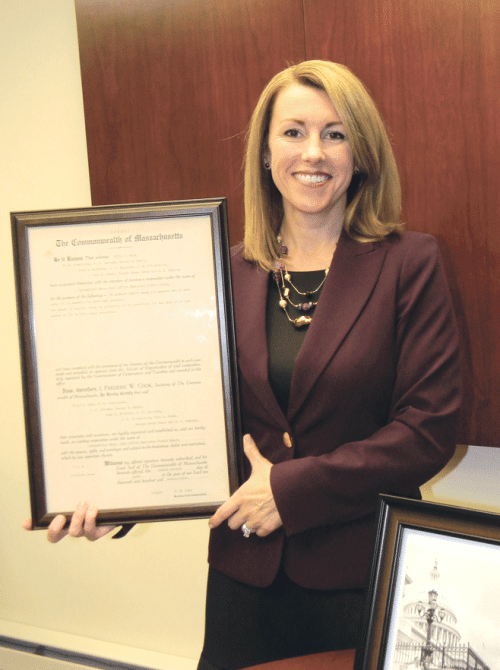
In other words, there’s still time for underwater borrowers to swim to shore — the sooner, the better.

Joseph Bednar can be reached at [email protected]