Home Sections Archive by category Banking and Financial Services (Page 6)

Banking and Financial Services

Banking and Financial Services Sections
Government Secrecy on Cash and Credit Transactions Is Troubling


By PAUL MANCINONE

Back in May 2013, our firm wrote an article for Accounting Today, “Taxing Times for the Restaurant Industry.” We followed that up with another, “Taxing Times Two for the Restaurant Industry,” which was published last month. Most recently, the Kiplinger Tax Letter contacted us, and we shaped the 1099-K paragraphs published in the Aug. 29 issue of its biweekly Tax Letter. These articles focused on the use of Form 1099-K, the IRS-mandated procedure for reports issued by credit-card companies to taxpayers that accept credit cards for payment, which we’ll attempt to summarize herein.

While the articles were focused on the restaurant industry, an area where we do a lot of representation work, the issue is not at all exclusive to any particular industry, although the IRS and the Massachusetts Department of Revenue (DOR) do target restaurants heavily. This trend involves any retail enterprise that collects its revenues in both cash and credit-card transactions. Any small business that accepts cash and credit cards as payment is a potential target.

If you aren’t familiar with Form 1099-K, you should be. According to the IRS, “the 1099-K is an IRS information return for reporting certain payment transactions to improve voluntary tax compliance.” That’s for sure! The IRS has a mechanism to compare Form 1099-K to gross receipts reported on a tax return, which is then used to create audit leads.

As an example, let’s again look at the restaurant industry. Let’s say there are two restaurants, located in the same geographic area, both with $1 million in gross receipts. Restaurant 1 has 75% in credit-card sales, while Restaurant 2 has 95% in credit-card sales. The IRS and the state DOR can now very easily see that Restaurant 1 does 25% of its sales in cash, and Restaurant 2 does only 5% of its sales in cash. No need to guess which restaurant here is the audit lead — it’s Restaurant 2.

This type of analysis is happening right now, to all types of closely held retail enterprises, such as hair salons, restaurants, hardware stores, jewelers, ski shops, grocery stores, you name it. The IRS is compiling the data it receives from tax returns from these various industries, obtaining an acceptable ‘range,’ and using the data to compare with retail establishments that appear to be reporting less than what the IRS believes to be their fair share of cash sales, and going after them.

But what is a reasonable percentage of credit-card sales for a particular industry? If an auditor says, “your client’s credit-card-to-gross-receipts percentage is too high,” i.e., meaning not enough cash reporting, that is based on what authority? I would suggest that the 1980s are long past, and plastic here to stay. Everyone reading this knows the prevalent use of credit cards, even at low-price-point establishments like the local donut shop, where cash was king just 10 years ago. Yet, this is an audit approach used by the IRS and the DOR. Even worse, tax representatives, as well as all the targeted industries, are fighting with one hand tied behind their backs, and here’s why.

We submitted a Freedom of Information Act request to the IRS, specifically requesting research data related to credit-card-to-gross-receipts percentage as it relates to the restaurant industry, preferably allocated by region, if at all possible. Oh, we got an answer, all right. Our “request was denied for law-enforcement purposes.” So not only is the IRS targeting closely held retail establishments, using this 1099-K analysis as its tool, but it’s not going to share the results of its studies, which, by the way, were gathered from tax returns of U.S. taxpayers.

I believe this was very unfortunate, but not much of a surprise. The IRS is a little weak in public opinion right about now, and not exactly transparent. But this secrecy is shortsighted. Taxation in the U.S. is getting increasingly voluntary as the IRS gets its funding scrutinized (and diminished) in the wake of the Lois Lerner fiasco. One would think that releasing this data would be a wonderful aid. At least then it would get a dialogue going between accountant and business owner.

Maybe there are valid explanations for a high credit-card percentage. And if there isn’t a good explanation, having access to this ‘secret IRS data’ may raise revenues for the U.S. Treasury, as errant retail establishments can pay more attention to their income reporting (i.e. self-audit). The IRS refusing to reveal this data does nothing to help the voluntary compliance that is unquestionably more necessary with the IRS’s limited resources.

Maybe a business has been subject to theft — less cash. Perhaps it’s in a business area with patrons using credit cards almost exclusively — less cash. There are myriad explanations to address a variance. But there is no way to know if there is a variance if the IRS is not forthcoming with benchmark data.

I believe that this type of information will eventually be released via litigation. It seems to me that, at a tax-court adjudication level, if a taxing authority uses a credit-card-to-gross-receipts test as part of its analysis, that data will need to be produced at the litigation level and subject to review by the opposing side.

For retail establishments that find my thoughts a potential concern, I would urge them to get into contact with their trade associations to request this information and publish it for its members. From my experience, no one has as of yet. It is as important, if not more so, than the other multitude of trends these associations release — the vast majority of which are interesting, but much less relevant to income taxes.

We also urge the IRS to reconsider its poor decision to refrain from releasing this data, gathered from taxpayers, for the benefit of taxpayers.

Paul L. Mancinone is president of Paul L. Mancinone Co., P.C. in Springfield; (413) 301-8201.

Banking and Financial Services Sections
Look Beyond Interest Rates and Consider the Global Picture

Gary G. Breton

Gary G. Breton

Obtaining commercial business financing from any financial institution can be complicated. It requires substantial consideration of a variety of factors.

A business lender will, in virtually all instances, propose terms that are necessarily protective of its own best interests, so you, as a business borrower, must be very careful to do the same. Unfortunately, in many instances, business borrowers are lured into their decision to sign on the dotted line solely by attractive interest rates, which have, for the last few years, been historically low.

Basing your decision on this sole criterion can be a dangerous mistake. A number of other global factors should be carefully considered before a commitment letter is signed and delivered, as many of the terms may be negotiable.

First and foremost, of equal importance to financial considerations should be a careful evaluation of the account officer who will be handling your credit facilities. This individual should be someone with whom you are comfortable and share an open and honest mutual respect. He or she must have both the desire and the ability to understand and care about your business. The lines of communication must be strong between you, and if you find that you are not comfortable with him or her during the loan application process, you may want to consider asking for another representative or, if necessary, consider another financial institution.

Another one of the global factors to consider is loan collateral when evaluating loan terms. Whenever possible, it is recommended that business assets, which would include items such as equipment, furniture, fixtures, inventory, accounts receivable, and related business real estate, be utilized before your personal assets.

When discussing any necessary pledging of personal assets as part of a financing package, you should also discuss and negotiate the possibility of marshaling. By having the lender agree to a marshaling provision in your financing terms, you can ensure that business assets, rather than personal assets, will be utilized first, in order to pay any outstanding indebtedness in the event that your business encounters future problems and a liquidation proceeding is necessary.

Marshaling will designate the order of liquidating pledged assets, leaving any personal assets intact as long as possible. Failing to resolve this issue during the loan-application process will allow the lender the ability to elect which assets it will first proceed against at its sole discretion, if and when your business defaults on the loan.

When evaluating business loans, it is also important to consider the covenants required by the lender and set forth within the loan-commitment letter. These covenants, which may be both affirmative and negative, govern specifics of certain actions that you can and cannot do throughout the term of the loan. They may run the gamut from predetermined salary limitations for the company’s principals to prohibitions on future acquisition of capital assets, as well as on additional borrowing from third-party lenders.

Carelessly crafted loan terms can leave you without options in the event that your financial needs change, and without an adequate provision to allow for expansion in the amount or type of credit facilities. Additionally, financial covenants, such as maintaining a minimum net worth or loan balance to fair-market collateral value, which can apply to both equipment or real estate, may effectively provide the lender with a report card for your business.

Such covenants establish financial expectations that must be met on an annual basis as a condition of the loan. Therefore, it is important to include your business accountant in such reviews and negotiations in order to provide reasonable assurance that the covenants can be complied with on a timely basis.

While it is true that an attractive interest rate may initially be very seductive for a business borrower, evaluating an extension of business credit based upon any single standard tends to be dangerous because it provides the potential that the loan may not be advantageous to your business on an overall basis. By focusing on a lower interest rate, you may be overlooking other critical aspects of the loan, which may be far more harmful than an extra ¼ or ½ of a percentage point on the proffered interest rate.

One overriding factor to keep in mind is that, in many instances, a number of the terms and conditions of a loan commitment may be negotiable. No business should enter into a loan commitment with a financial institution without the benefit of its professional advisors, who will work to protect its best interests.


Gary G. Breton, Esq. is a partner with Bacon Wilson, P.C. and a member of its banking and finance department. His major emphasis of practice includes representation of financial lending institutions, as well as both individual and business borrowers. He also represents numerous business clients in startup and ongoing business operations as well as the purchase and sale of businesses; (413) 781-0560; [email protected]

Banking and Financial Services Sections
Dena Hall Takes Regional President’s Role at United Bank
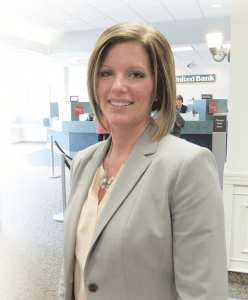
Dena HallDena Hall was talking about some of the many things that have changed since she was promoted to Western Mass. regional president at United Bank roughly a month ago.

She said her phone calls are being returned more frequently and more promptly now. Meanwhile, she’s taking more calls, including some from people who want to know if the attractive positions that once dominated her business card — senior vice president of marketing and community relations and president of the United Bank Charitable Foundation, are “up for grabs.” They are not — she’ll still have those duties.

She said she’s had more invitations for lunch — often to hear requests for monetary donations, from a board member from the bank, or both — and has accepted a good number of them, a slight departure from her previous practice, because she desired to be in the office as much as possible.

And her 6-year-old son isn’t shy about telling anyone and everyone that his mother is now president of the bank. “He leaves off the word ‘regional,’ and we just him let him run with that,’” she said with a laugh.

But mostly, Hall, now arguably the highest-ranking female bank executive in the Western Mass. region, is focused mostly on what hasn’t changed.

“A lot of what I’m doing in this new role I was doing before, between my role with the United Bank Charitable Foundation and being involved in the community, because … that’s who I am,” she told BusinessWest. “I’ve always been one of the faces of the bank, and I’ve always been interacting with the community, fielding customer complaints and compliments. It was happening before; it’s just happening more now.”

Indeed, Hall doesn’t expect much of a learning curve as she moves on with life as regional president. But there is a lot to do as she takes this lead role with what is being called the ‘new United Bank.’

That’s the marketing term that’s been used since a merger of equals between United and Glastonbury, Conn.-based Rockville Financial was announced several months ago, and especially since the union became official on May 1. As with any merger of this type, there is change, she noted, and helping customers and employees understand and cope with it has become a big part of her job description.

“There’s a huge change-management component to what we’re going through right now,” she told BusinessWest. “It’s hard to change, and people need some leadership through change, and that’s one of the things we’ve been doing all along, as a team, and myself in particular — guiding the people here through the change process that’s happening, because some things are different.”

Overall, the task at hand is taking two roughly $2.5 billion banks and shaping them into an efficient, competitive, growth-driven $5 billion bank, a number that means different things to different people, she acknowledged.

“A lot of people have said we’ve turned into a big bank because we have $5 billion in assets,” Hall noted, referring specifically to the many community banks populating Western Mass. and Northern and Central Conn. “But we’re still so tiny when compared to Bank of America or Santander or even TD Bank. Our value proposition is that we create a good alternative to those banks. We’re big enough to manage all the necessary regulatory burdens that are put on us as a bank, but small enough to deliver that really good customer service.”

The broad goal for all those at the merged bank is realization of what Hall called a “new normal,” something that won’t be achieved until probably early next year after the second of two data conversions, this one involving Rockville Bank customers, is complete.

For this issue and its focus on banking and financial services, BusinessWest spoke at length with Hall about her new — and continuing — responsibilities with the bank, and how this process of establishing a new normal will play itself out.

Balance Statement

“Day 61.” That’s how, after doing some quick math, Hall referred to July 1, the day she spoke with BusinessWest.

That means it was the 61st day since the merger between United and Rockville became official, or legal. There was a lengthy countdown before May 1, she noted, and the day counting has gone on since, at least internally.

“We counted down to legal day 1 — from the time this merger was announced until the day the companies came together, there was a countdown, like ‘what do we need to do to get to legal day 1?’” she explained. “Now that we’ve hit that, and there were struggles — everyone has struggles coming together — we’re still counting, saying ‘this is day 14’ or ‘this is day 30 — let’s figure out how, by day 40, we can be in a better spot.’”

It was day 31 when it was announced by the new bank that Jeff Sullivan, then serving as the combined entity’s president, was leaving to pursue “other opportunities.” In the same press release, it was announced that Hall, who joined United just nine years earlier, would add the title ‘regional president’ to those she already had, and that Michael Moriarty, previously senior vice president and team leader, would become executive vice president and Western Mass. commercial banking executive.

Hall told BusinessWest that a press release was being readied to announce that she would be assuming the roles of ‘executive vice president and chief marketing officer’ and ‘head of Community Strategy,’ but Sullivan’s decision brought about a quick change of plans — and titles.

She acknowledged that Sullivan’s departure just a month or so after the merger became official was “certainly not ideal,” because Sullivan was, in many respects, the face of the old United Bank, or what she called the “legacy United,” which he served as executive vice president and chief operating officer, and also because it undoubtedly raised eyebrows concerning how well the banks were coming together as one.

United Bank

Dena Hall says that creating a “new normal” at what is being called the new United Bank is at the top of her current to-do list.

But she noted that, in mergers of equals, there are often differences of opinion about how the combined institution is to be managed, and this was this case with Sullivan’s decision to move on.

“Our merger of equals is so much different than a traditional acquisition, because you’re bringing two companies, two cultures, two management teams, and, in our case, two boards together,” she explained. “And in theory, we were evaluating the practices that each one had and taking the best one.

“What we learned, and what we’re still learning, is that what worked for a $2.5 billion bank isn’t going to work for a $5 billion bank growing to $7 billion, $9 billion, or $10 billion, wherever we go down the road,” she continued. “We’re still working through all the pieces that are necessary to build this new company, because we’re really building a new bank; we’re keeping what was good about both companies, but we’re building something new.”

Sullivan’s departure did leave a critical void in the form of a strong local presence in a top leadership role, said Hall, adding that William Crawford IV, the CEO of the new United and Robert Stewart Jr., chairman of the bank’s board, recognized the need to fill it.

“They decided that local presence and geographic leadership is important,” she noted. “And it’s particularly important here in Springfield, because when you look at the legacy United, 70% of our business is here in Springfield, so if there’s a place where we need some strong geographic leadership, especially at a time when the banks are merging, it’s in Springfield.”

Hall and Moriarty, serving in their respective roles, fill the void left by Sullivan’s departure and provide that geographic leadership, she said, adding that the bank’s decision to place her in the regional president’s position sends a clear message  — actually, several of them.

For starters, it demonstrates that the bank is progressive — there are few women in top leadership positions at area banks, and none around Hall’s age — 40.

Also, the decision confirms the importance of this region to the merged bank moving forward.

“With mergers like this, jobs like this one often go out of the area,” she explained. “When there’s a merger, the geographic leader either comes in from the outside or the geographic leadership role goes away, and the president’s role goes somewhere else.

“The fact that our company has created this role, placed it in West Springfield, and given it to me speaks a lot for where the company is going,” she went on. “We’re both community banks with 120-plus years of history, but at the same time, we’re progressive, and we’re leaning toward maintaining our current customer base, but also attracting a younger customer base, going online, and going more mobile. Putting Mike and I in these roles when we’re both young and local makes a statement.”

Hall acknowledged that, traditionally, such positions within the banking industry have not gone to those from the marketing realm, but rather to commercial lenders. But the priority in all cases is to choose someone who knows the community and has created relationships within it.

“What banks are looking for in regional leaders now are people who are connected to the community — that’s the most important thing,” she noted. “Whenever you go through a merger, the automatic response is, ‘you’re leaving the community; you’re pulling out of the community.’ So regardless of the previous role, putting someone in this role who has a good connection in the community already is the driving factor behind making it successful.”

By All Accounts

It hasn’t rained much on Fridays in recent weeks, and that’s bad — in probably only one respect — because there’s a new policy in place at United’s regional operations facility in the center of West Springfield.

It’s called ‘rainy day Friday pizza,’ which pretty much says it all. If it rains on Friday — actually, even if it’s just cloudy and there’s a decent chance of rain — then Hall orders pizza for the entire building. OK, someone else does the ordering (probably 12 pizzas), and Hall pays the tab.

“This is something they do down in Glastonbury, and we thought it was kind of fun,” she told BusinessWest. “It’s only rained one Friday since we started it, but people really enjoy it. And it’s just one of the ways we’re trying to make sure that people feel valued in our new company and reaffirming to them that their role is still important even through perhaps their supervisor has changed or their job has changed.”

Implementing this new program — she’s also researching how to get a Ding Dong cart to stop by the headquarters building regularly — is clearly the least stressful of the myriad assignments facing Hall in her new role as regional president, and also with those other roles she still carries out.

Chief among them is leading the work to create that new normal she described, adding that this will be a work in progress as two bank cultures and two bank staffs are melded into one.

Hall has considerable experience with this, not only from when United acquired Worcester-based Commonwealth National Bank in 2009 and Enfield-based New England Bancshares in 2012, but also from when Woronoco Savings, which she served as assistant vice president and director of marketing, was acquired by Berkshire Bank a decade ago, a move that ultimately eliminated her job and prompted her to join United.

“I’m spending a lot of time helping people understand some of the things that are happening and why,” she told BusinessWest. “Communication is good at some levels and not so good at other levels, and decisions are made, and people may not understand why, and they instantly jump to the ‘blame the merger’ answer.

“It’s not usually ‘blame the merger,’” she went on, “but rather, ‘let’s look at the process and figure out what the best way is to accomplish what we need to accomplish, and if that means changing a process that we’ve had in place for a long time for the betterment of the organization, let’s have a conversation about it.’”

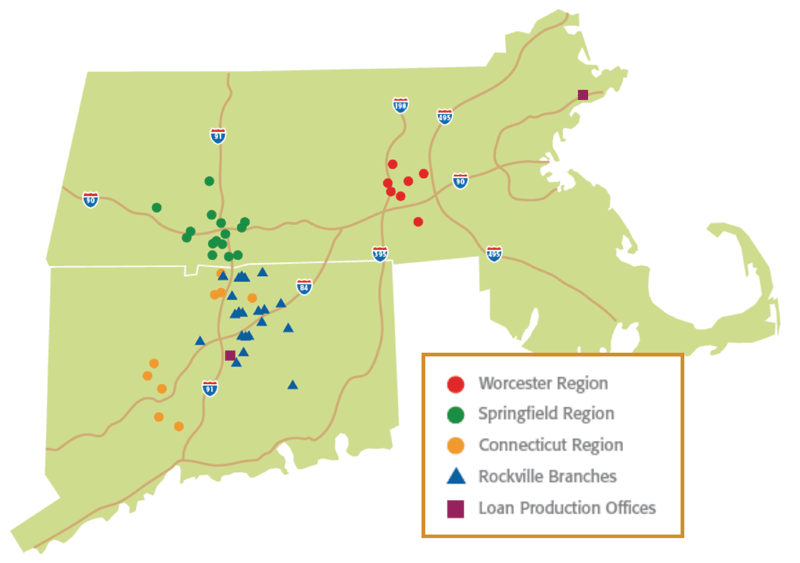
Creating greater efficiency is the ultimate goal with most of this change, she went on, adding that there have been some staffing reductions designed to eliminate redundancies across the board. And some operations have been moved, such as the loan center, which was relocated from West Springfield to South Windsor, Conn., and others that will be moved to West Springfield from Connecticut.

Beyond her work as change agent, Hall will play a key role in a rebranding initiative that will unfold in September. There will be a new logo and a new identity, she said, and not because of the merger, but because it was simply time for a new look.

“It’s time to give United Bank a facelift, and also position ourselves so that customers understand a little more about who we are, not necessarily here in Springfield, but in other areas,” she explained. “We have to make ourselves known in Connecticut. Because we just acquired New England Bank two years ago, no one really knows who we are; if you’re in one of the branch towns, like Cheshire or Southington, you know who United Bank is, but if you’re in West Hartford, you don’t know who United Bank or Rockville bank are.

“So we’re going to spend some time and money in Connecticut,” she went on, “making sure that everybody knows who United Bank is, what we do, what we offer, and why we’re a good alternative to the big banks.”

The new logo, which has been finalized but not unveiled, will be phased in, starting with the Rockville branches, which must become ‘United,’ by early October, said Hall, adding that there will be other changes, including new products, that are part and parcel of the process of becoming a new bank.

“We’re keeping some products and introducing new products, on both sides, so I’ll certainly have a number of conversations with people in the community and customers about the changes we’re making,” she said in conclusion. “And that’s OK. We need to have an open dialogue; I don’t every want someone to think they can’t walk in here and talk to any member of our staff about something that they’re feeling is not necessarily how they want it to be with their bank.”

Topping the List

As she talked with BusinessWest, Hall was getting ready to head out on a vacation for a few weeks. One of the things she did before leaving was make it clear who was responsible for ordering pizza if it rained on Friday.

That’s because continuing that new policy is one of the many components that go into the process of working through change and building a new bank.

In many respects, that process is just beginning, said Hall, noting while there will now be a number of titles crowding the business cards she’s awaiting, they can perhaps all be summed up with the phrase ‘change agent.’

It’s a role she’s excited about, and for all those reasons mentioned much earlier — from the phone calls being returned to her son getting some new bragging rights.

George O’Brien can be reached at [email protected]

Banking and Financial Services Sections
Greenfield, Northampton Cooperative Banks Agree to Merge

Citing mutually beneficial strengths that will benefit customers, two of the region’s cooperative banks have agreed to merge in a deal expected to be finalized early next year.

Greenfield Co-operative Bank and Northampton Cooperative Bank announced last month that they plan to form a single entity under a consolidation plan that has been approved by the boards of directors of both banks. Both are state-chartered cooperative banks that, when merged, will operate under the name Greenfield Co-operative Bank. The combined banks will boast about $495 million in deposits, more than $60 million in capital, and 95 employees.

“I can’t think of a more logical and mutually beneficial combination of strengths than this partnership. Both banks are well-capitalized, operate under similar charters, and are located in adjacent counties,” said Northampton Co-op Bank President and CEO William Stapleton.

The merger will give customers of both banks access to 10 full-service locations and 11 ATMs located in Hampshire and Franklin counties. Both Stapleton and Michael Tucker, president and CEO of Greenfield Co-operative Bank, cited this expanded access as one of the reasons for the deal, adding that the banks will also benefit from improved economies of scale and more efficient operations. They emphasized that no layoffs or office closings will result from the merger.

“Both of our institutions are very similar in operations and culture,” added Stapleton. “We are small, friendly, customer-oriented institutions, and proud of our long traditions in outstanding community service. Customers of both banks will continue to be served by the same dedicated people they have always known.”

Subject to normal regulatory and closing conditions, the consolidation is expected to become official during the first quarter of 2015.

The Northampton Cooperative name will continue to be used on all current and future offices in Hampshire County, as a division of Greenfield Co-op. All current and future Franklin County offices will continue to operate under the Greenfield Co-operative Bank name, and it will remain a subsidiary of Greenfield Bancorp, MHC, the mutual holding company.

Stapleton will serve as CEO of the holding company and chairman of the combined bank, with Tucker remaining as president of the holding company and president and CEO of the combined bank. The bank and holding company boards will include the members of both bank boards to assure continuity of both institutions.

“As mutual institutions,” Stapleton said, “we can continue to take the long-term view, and we will work together to ensure that this new, local community bank is here for the next century of service to our marketplace.”

In addition to expanded branch and ATM access for customers, Northampton Cooperative customers will have access to new financial services and low-cost Mass Save energy loans through Greenfield Co-op. In addition, Tucker said, a single cooperative bank expands opportunities for commercial lending, such as SBA loans.

“Customers of both banks will continue to have excellent deposit products,” he added, “including free mobile and online banking with free bill pay and free debit-card services.”

Both banks have served their communities for more than 100 years. Northampton Cooperative Bank has four full-service offices, two in Amherst and two in Northampton.

Meanwhile, Greenfield Co-operative Bank boasts six full-service offices: two in Greenfield and one each in Northfield, Sunderland, Shelburne Falls, and Turners Falls, in addition to its Commercial and Financial Services office in Greenfield.

Banking and Financial Services Sections
Monson Savings Bank Invests in Financial Literacy

Monson Savings Bank President Steven Lowell

Monson Savings Bank President Steven Lowell

Steven Lowell fashions himself more than a banker. He’s also a teacher of sorts.

“One of the things that has become clear to us over the past three or four years is that, when it comes to financial literacy, not everyone has a good understanding of how to manage their finances,” said Lowell, president of Monson Savings Bank.

“I get a chance to see it on a day-to-day basis, and you’d be surprised,” he added, citing the Financial Literacy Survey conducted last year by the National Foundation for Credit Counseling,  showing that 40% of the public would grade themselves a C or worse when it comes to their financial literacy.

“It shows up when they’re looking to approve a loan, when you look at people’s personal balance sheets, their debt levels — they just have not been smart about how they borrow money, the way they try to save money,” he continued. “We thought, rather than just complain about it, we’d try to do something about it.”

When Lowell took the reins at MSB three years ago, the bank already had accounts targeted at young people, such as its NextGen Checking for teenagers and college students, but realized he needed to do more.

“Those products were very successful; they started to get young people thinking about their finances. But we quickly realized that wasn’t enough, that we need to start even earlier,” he explaned. “So we started going to classrooms in our communities, targeting the fifth and sixth grades, teaching a course called Dollars & Sense.”

That course features an online game called MoneyIsland, which teaches children about financial literacy — what’s the difference between a need and a want, why it’s important to pay off one’s credit-card balance every month, the difference between earned income and passive income, and other topics. “They’re learning some pretty complex subjects through the game and through classroom instruction.”

After six one-hour sessions, he said, “kids come away with amazing understanding, and hopefully we help them get on the right path. We’ve had great feedback, not only from school administrators and teachers, but from parents, who tell us, ‘I’m learning from my kids.’ That’s good to hear.”

The learning doesn’t stop there, though. Monson Savings Bank has cultivated a reputation for educating the community, whether it’s through public seminars on topics like first-time homebuyer programs, special-needs trust, and long-term-care insurance, or through the bank’s relationship with the Massachusetts Financial Education Collaborative and its online financial-education program, masssaves.org (more on that later).

“The bank was doing some of this already, but I’ve always had an interest in the education part of the job — not only outside the bank, but teaching the folks inside, too,” Lowell told BusinessWest. “I had a great mentor, and I’ve tried to take on that role for a number of individuals who work for me.

“I encourage other bank officers to do that, too, to encourage this education culture,” he went on. “I’m thrilled because people here have gotten excited about it. The branch managers have so much fun going into classrooms, seeing these children learning about finance. They’re energized by it. It’s really taken on a life of its own.”

MSB as a whole has experienced new life under Lowell, who has continued the impressive growth pattern of his predecessor, Roland Desrochers, who saw the bank increase its assets from around $80 million to $236 million in 15 years. Three years after Lowell took over, that number is $272 million. “We’ve had about 6% to 7% growth every year,” he said.

For this issue’s focus on banking and finance, BusinessWest sits down with Lowell to talk about the specific ways in which Monson Savings Bank is growing its financial clout while maintaining its tradition of community engagement — and its ongoing efforts to create a more financially savvy customer base.

Loan Stars

Monson Savings Bank’s most notable recent success may be its commercial-lending operations, which earned recognition from the Small Business Assoc. as the Western Massachusetts 7a Lender of the Year. The SBA noted that the bank loaned to a wide variety of retail, professional, and consumer-service businesses in more than 10 different industries, from transportation and construction to healthcare and childcare.

“We’re a little different than most community banks in that we place a heavy emphasis on commercial lending and offering commercial products in the marketplace,” Lowell said. “I’ve been happy with the way we’ve been able to grow that business over the last few years; we have been in the top 20 commercial lenders in the state for the past two and a half years. For a bank our size, that’s a pretty remarkable achievement.”

original Monson location

MSB has expanded over the past two decades from its original Monson location to branches in Wilbraham, Hampden, and Ware.

He credits much of that success with emphasizing a personal touch with would-be borrowers. “We treat each customer as an individual; we try to understand what their issues are and find solutions for them. We try not to say ‘no,’ but there are times, as a banker, when you have to say no, when it’s in the customer’s best interest to say no. But usually, it’s no with a qualifier — ‘maybe if you talk to the folks at SCORE and come back with a better business plan,’ or ‘go to the Quaboag Valley CDC to get started, then maybe come back to us, and maybe we can meet your needs going forward.’ We always try to give people solutions, even when we have to say no.”

It helps, Lowell said, that more companies are beginning to reinvest and borrow after several years of hesitancy. “They’re growing, expanding, going after new territories. I wouldn’t say it’s as strong as it was 10 years ago, but we’re starting to see some positives in this economy, from a banking standpoint.”

Historically low interest rates drove a healthy refinance business at MSB and most other banks, he added, but with rates ticking back up, refis have ground to a halt, and new-mortgage volume still isn’t strong. “So with the commercial area doing so well, making up for that, it’s pretty significant.”

The SBA award is an exciting milestone, he added, “because it goes to the heart of our brand promise to help small businesses prosper. These are the businesses that drive our local and regional economies, and it feels great to play a role in this economic activity.”

On both the commercial and retail sides, Monson Savings Bank has embraced new technology, Lowell said, entering the mobile-banking arena two years ago — customers can even transfer money between MSB and another bank on their smartphones — and introducing remote check deposit last year.

He said when he arrived in 2011 from the much larger Cape Cod Cooperative Bank, he assumed he’d need to be patient with respect to introducing high-tech products at Monson. “But I was surprised how aggressive they were with respect to technology. We’re always looking for the next new product. This business is all about convenience for customers. We have to make it as easy as possible.”

Meanwhile, the bank continues to grow its investment arm, offering products through Infinex Financial Services and regularly ranking in the top 20% of all Infinex banks, typically first or second among banks in its asset range. At the same time, MSB expanded its geographic footprint last year, opening a branch in Ware to go along with offices in Monson, Wilbraham, and Hampden.

“We’ve had a lot of traffic,” Lowell said of the new branch on Route 32 in Ware. “We opened in late June last year, and the branch is already up to $12 million in deposits. We’re really happy about that.”

Even with the temporary drag on profits involved with opening a new branch, he added, “we’ve been really pleased with our profitability over the past few years; we’ve been in the top 20% of banks in the state in terms of profitability.”

With that growth, however, has come increased challenges — for all banks, really — from regulatory bodies, much of it stemming from the financial crash of 2008, leading to Monson’s hiring of a full-time compliance officer.

“I understand why these regulations have come into being,” he noted. “Having said that, they really weren’t aimed at the smaller community banks. We’re not the ones who caused the problems that affected the economy, but we’ve certainly been impacted to the point where it’s necessary to add a full-time compliance officer. You can’t afford not to. It doesn’t matter what size you are; they expect you to follow the rules.”

Community Ties

While bank executives are educating themselves on these new compliance issues, Lowell continues to stress community outreach and financial literacy.

Through a connection forged while serving on the board of the United Way, he became involved in the Hampden County Financial Stability Network, which introduced him to the Massachusetts Financial Education Collaborative (MFEC), a group of nonprofits, private institutions, government agencies, and other bodies that work together to increase economic stability in Massachusetts through financial education, personal savings, and access to wealth-building assets such as homes, cars, college educations, and small business.

“These folks have got a great program, which they offer online — financial coaching for people in need,” he said of the MFEC project known as MassSaves and its online resource, masssaves.org, which offers financial information and a portal to one-on-one financial coaching via phone, e-mail, and Skype.

“We thought it was a great way to supplement what we’re trying to do in the community,” he added. “They heard about what we’re doing, we entered into a relationship with the collaborative, and now I’m on their steering committee. We’re invested, as they say.”

Monson Savings Bank has invested in its communities in other ways as well, most notably through annual donations of more than $100,000 to various nonprofits.

“The year that I arrived was the first year we actually asked the community to help us select some of the agencies or benefactors that would receive some of the funds,” he told BusinessWest, adding that the bank solicits nominations on Facebook, and the top 10 vote getters receive donations.

“We make sure our customers are included,” he said. “It’s another way they can stay connected to us.”


Joseph Bednar can be reached at [email protected]

Banking and Financial Services Sections
Deliso Financial Services Spans the Gap Between Present and Future

Jean Deliso, left, and Trina Moskal

Jean Deliso, left, and Trina Moskal take pride in educating people about measures they need to take to become financially secure.

Jean Deliso has always asked questions — lots of them.

The habit began in childhood during dinnertime conversations that revolved around her family’s business, and it continues today in her role as a comprehensive financial planner.

Queries are important to the president and founder of Deliso Financial and Insurance Services in Agawam because the answers she receives are key to creating individualized plans for clients.

But she says retirement planning is something many people fail to do, even though life expectancy is much greater than it was years ago and company pensions have all but disappeared.

This is especially true for business owners and women, who tend to put retirement planning on the back burner, citing lack of time, resources, or knowledge as excuses. And although Deliso has clients from all walks of life, she has chosen to focus on these two populations.

“I really enjoy empowering women and watching them gain a sense of accomplishment by taking steps to secure their financial future. This is especially true when I see women who have just come through a divorce or the loss of a spouse,” Deliso said, adding that she works with many women who are experiencing a life transition.

“The problem with women is that they become overwhelmed,” she went on. “They say they don’t understand finances and don’t have the time to meet with a financial planner. But they live seven to eight years longer than men and make less money, so it’s critical for them to take control of their financial lives.”

Deliso noted that 90% of people in nursing homes are female, and 36% of women 65 and older are widowed, compared with 12% of men 65 and older, according to the U.S. Census Bureau. Women also make up half of the U.S. population, represent nearly two-thirds of the American workforce, and are the sole or primary breadwinner in 40% of households with children.

Deliso said a woman turning 65 today can expect to live to age 85. The 2010 Census counted 53,364 people age 100 and older in the United States, and for every 100 women who are centenarians, only 21 men have reached that age.

As for business owners, Deliso said many of them have their own reasons for failing to create a financial plan.

“Most think their business is their retirement. But quite often, something happens to that plan. They may not be able to sell it, or a child may not want to take over. And even if children do, they may not be as successful as the parent was. There are also industry changes and the fact that businesses go through cycles, and when the owner wants to retire, it may be in a down cycle.”

Other rationalizations include a lack of money or discretionary income. “But everyone can plan, and everyone can save. It’s a matter of priorities,” she added.

For this issue, BusinessWest examines how Deliso, by asking all those questions, helps clients establish priorities and, ultimately, plan effectively for both today and tomorrow.

Dollars and Sense

Deliso’s business education began in childhood. “My grandfather and parents were entrepreneurs who founded their own businesses, and I was washing windows at my parents’ company, ToolKraft, when I was about 7,” she explained.

She graduated to working after school at age 12, and says dinnertime conversations almost always focused on matters pertaining to Chicopee-based ToolKraft. “I worked in receivables, payables, and inventory as a teen. Being a hard-working entrepreneur is in my DNA, and I understand the challenges of owning a business.”

Deliso had always thought about starting a business herself, but the decision to take control of her life was cemented during her sophomore year in college. “I was visiting my mother, who was our company’s comptroller, when the CPA walked in and told her she had to do something. I wanted to know why, and realized I didn’t ever want that to happen to me.”

So she earned a bachelor’s degree in accounting, moved to Florida, and worked for a CPA firm. Although Deliso was slated to become a partner, after eight years she made the decision to leave.

“I wanted to run my own business, and started an electronic-component distribution company,” she said, explaining that this was a division of a firm owned by her brother. “I knew nothing about electronics, but understood the guts of business because my specialty at the CPA firm had been financial planning for business owners.”

Seven years later, the two companies merged, and Deliso returned to Massachusetts. “I was in my 30s and wanted to start a family,” she explained.

Her next stint was selling long-term-care insurance. But she soon found the work unsatisfying. “I didn’t like the fact that I was just selling a product. I thrive on relationships and wanted something more comprehensive,” she explained.

So, when she received a job offer from New York Life Insurance, she accepted it, and discovered she enjoyed building relationships that helped people.

Then, in 2000, Deliso founded her own company. Deliso Financial and Insurance Services has prospered since that time, and three months ago, junior associate Trina Moskal was hired to help with the growing clientele.

Deliso said that, when her associate began working, she was surprised by the amount of time spent Deliso spent with clients. But she reiterated that it’s necessary to get to know them and understand their beliefs, expectations, needs, relationships with family members, job, attitude toward spending, as well as the amount of money they will need to live comfortably in retirement.

Deliso is passionate about financial education, and says many working adults allocate a percentage of their paycheck to a retirement fund, but don’t understand how it is being invested.

“People throw money at retirement like it’s going into a big, black box,” she said. “But they never look into the box and don’t calculate if there will be enough to pay their bills in the future. It’s important because people are living longer and can spend as many years in retirement as they did in the workforce.

“That requires a lot of money,” she went on, “especially since 50% will live past the life expectancy set up by actuarial tables.”

However, money evokes emotions, and financial decisions are not always rational. For example, a person’s primary goal may be to pay off their home mortgage by the time they retire.

“But if they don’t have cash in savings and have very little in a retirement plan, their house won’t provide them with the money they need to buy groceries,” she told BusinessWest. “Many people become too focused on one goal.”

In other instances, money is spent for purely emotional reasons, which Deliso says can be fine. “A person who has gone through a divorce may need to take a vacation or get away even though they can’t really afford it,” she explained.

But people do need to think about their future and plan for the unexpected.

She said she will never forget a client who called her hours after his wife died suddenly at age 32. “They had children, had just bought a home, and needed both incomes to make the payments. He told me he didn’t even have enough money to afford the funeral.”

Thankfully, the couple had taken out a life-insurance policy that allowed the man to meet his family’s financial needs. “He had a check two weeks later,” she said. “Although many people are afraid of life insurance, if this couple hadn’t purchased a policy, the man would have had to sell the house.”

Saving Grace

Early in her career, it became clear to Deliso that women were an underserved population in the financial world, and she was determined to do something about that.

“As I grew my business, it became apparent that women suffer from financial paralysis,” she said. “They’re afraid to make a mistake, and many don’t understand their 401(k) or retirement plans and their risks, as well as what a secure financial future looks like.”

And they need to understand these things, she went on, because statistics show clearly that people are living longer in general, and most women can expect to live longer than their husbands.

As a result, she goes above and beyond to educate women, and has conducted free seminars for this constituency for the past 10 years. Her next free talks, titled  “Creating Financial Independence,” are slated for June 5 and June 19 from 5:30 to 7:30 p.m. at the Delaney House in Holyoke; call (413) 785-1100 to register.

Overall, there are many facets connected to spending and saving, and Deliso says everyone has a relationship with money that stems from their own history — and often begins in childhood.

“It’s part of the reason I ask so many questions,” she said, adding that the answers help her guide clients so she can build a bridge between their present and future needs. “I need to understand the person, so I think carefully about what I can ask because everyone’s values and life experiences are different.”

She added that many people don’t understand the difference between a financial planner and an investment banker. “The planner looks at the overall picture and competing needs of a person, while the banker focuses more on the investments,” she told BusinessWest.

Her clientele includes many business owners who appreciate the fact that she can speak their language. “Because of my background, I understand cash flow, budgets, sales projections, payroll, receivables, and inventory,” she said, adding that she has helped develop succession plans as well as company-sponsored benefit plans. She also continues to devote time to education.

“As a comprehensive financial planner, I look at cash management, risk management, investment planning, retirement planning, and estate planning, and one of my strengths is that I can take complicated topics and make them easy to understand,” Deliso explained. “Financial planning is not complicated. It can involve complex topics, but if you go through a process, it can be handled easily.”

Her work has earned her many awards, which hang on the walls of her office and include an appointment to the Million Dollar Round Table, a benchmark of achievement for insurance agents. She is a registered representative with NYLIFE Securities and a registered investment adviser with Eagle Strategies LLC.

Deliso  — who was named Woman of the Year in 2013 by the Professional Women’s Chamber — also believes in giving back to the community. “It’s a value I was brought up with. I have been blessed and want to continue the legacy.”

To wit, she is chairman of the board at the Community Music School and a member of the board of Dakin Pioneer Valley Humane Society, the Baystate Health Foundation, AAA of Pioneer Valley, Pioneer Cold, the Hampden County Estate Planning Council, the National Assoc. of Life Underwriters, and the Assoc.for Advanced Underwriting. She is also a past chairman and board member of the YMCA of Greater Springfield, the Bay Path Advisory Council, the Executive Women’s Golf Assoc., and the Community Foundation.

Sense of Accomplishment

Deliso says she went into business so she could control her own destiny. “I was able to accomplish my goal, and today I want to help others control their finances,” she said. “People need a coach to help them understand what to do, how to reach their goals, and then hold them accountable. But just having a plan provides them with a real sense of accomplishment, and I enjoy making that happen.”

Which means Deliso will continue to ask questions so she can bridge the gap between the present and the future to ensure that clients achieve financial independence without having to sacrifice the things that matter most.

Banking and Financial Services Sections
Take Steps Now to Reduce Your Tax Burden in 2015

Kristina Drzal-Houghton

Kristina Drzal-Houghton

With the 2013 tax-filing season behind the majority of businesses and individuals, now is the best time to start planning for 2014.

Many business owners noted a sharp increase in their 2013 taxes compared to 2012. I noted a few instances where the taxable income had decreased but the tax liability increased. This article will explain why many business owners saw such a sharp increase in taxes and why using S corporations now provides business owners with a unique opportunity to minimize earnings subject to both the recently imposed additional tax on net investment income and increased employment taxes.

As the dust settles on the two major pieces of tax-reform legislation that went into effect in 2013, S corporations emerge as the entity of choice for many closely held businesses. Taking into account the impact of the two income-based Medicare taxes, the self-employment tax, and the rate differential between individual and corporate tax rates, businesses eligible to be treated as S corporations have opportunities to take advantage of unique provisions not applicable to other types of entities.

Increased Medicare Taxes

For 2013 and thereafter, the Medicare tax on compensation and self-employment income increased from 2.9% to 3.8%. The 0.9% increase applies to the extent an individual’s compensation or self-employment income exceeds the specified threshold amounts ($250,000 for married individuals filing jointly and $200,000 for single individuals).

The full brunt of the increase falls on the employee, or self-employed individual, with no change to the employer portion of the tax. There is no cap on the amount of compensation or self-employment income subject to the tax. Further, the threshold amounts for the Medicare tax are not indexed for inflation, so an increasing number of taxpayers will be subject to the tax as time passes. The combined effect of increased income and Medicare tax rates on earned income puts employees at a top rate of up to 39.25%, and self-employed individuals at a top rate of up to 40.7%.

New 3.8% Tax

The new 3.8% Medicare tax on net investment income (NII) functions as a corollary to the Medicare tax on earned income. Subject to limited exceptions, most income of an individual taxpayer is covered by one (but only one) of these taxes. Individuals are subject to the NII tax on the lesser of their NII or modified adjusted gross income over the specified threshold amounts.

There is no cap on the amount subject to the tax, and the thresholds are not indexed for inflation. An individual’s NII is the sum of the individual’s passive income (generally, all interest, dividends, annuities, rents, royalties, capital gains, and certain income from a trade or business) less applicable deductions. Trade or business income is included in NII if the business activity is a passive activity with respect to the taxpayer. NII does not include any item taken into account in determining self-employment income for the relevant tax year.

Individual Rate Now Tops Corporate Rate

For the first time since 2003, corporate and individual rates have flip-flopped, and the maximum income-tax rate applicable to individuals is now significantly higher than the rate applicable to corporations. The top individual income-tax rate for 2013 is 39.6% for ordinary income and 20% for long-term capital gains and qualified dividends. The top corporate income-tax rate for 2013 remains 35%, however, for both ordinary income and capital gains.

C corporations benefit from the relatively lower corporate income-tax rate, when compared to the top individual income-tax rate. However, this corporate-level advantage is generally outweighed by the increased tax burden at the shareholder level. The cost of withdrawing corporate earnings has substantially increased, with rising individual rates and the addition of the NII tax. Every dollar earned by a C corporation is subject to tax at 35% at the corporate level, and then again on distribution as a dividend to shareholders at the applicable individual income-tax rate, with the addition of the 3.8% NII tax for high-income shareholders.

Less-obvious Tax Increases

In addition to higher individual income-tax rates, the phase-out of personal exemptions and disallowance of itemized deductions results in an even higher effective marginal tax rate for high-income taxpayers.

Beginning in 2013, an individual’s personal exemptions are partially phased out for adjusted gross income over the specified amount ($254,200 for 2014), and itemized deductions are disallowed in an amount equal to 3% of adjusted gross income over the specified amount, with the maximum amount disallowed equal to 80% of itemized deductions.

Disparity in Treatment of Different Entity Types

Entity owners must navigate the rules relating to the various taxes that are potentially applicable to their business income, whether in the form of dividends, salary, or sale proceeds. The application of these rules varies significantly with the choice of entity as discussed below.


C Corporations

For C-corporation shareholders, the NII tax applies to any dividends paid by the corporation and to any gain on the sale of the C-corporation stock. The level of a C-corporation shareholder’s participation in the corporation’s business is irrelevant for purposes of the NII tax. In contrast to partnerships, limited liability companies (LLCs), and S corporations, the NII tax applies to income from a C corporation regardless of whether the corporation’s business is active or passive with respect to any shareholder.


Partnerships and LLCs

The treatment of an owner of a partnership interest, including interests in an LLC taxed as a partnership, depends on whether the business is passive with respect to the owner for purposes of the NII tax rules, and whether the owner is treated as a ‘limited partner’ for purposes of the self-employment tax rules.

An individual partner’s NII includes the partner’s share of flow-through income from a partnership only to the extent that the income is derived from a partnership activity that is a passive activity with respect to the partner (or from trading in financial instruments or commodities), or represents a share of the partnership’s investment income. The material participation requires the partner’s involvement in the operation of the activity to be regular, continuous, and substantial, as well as more than 500 hours per year.

Thus, in the case of a passive partner, the new NII tax applies to the partner’s entire distributive share of partnership income. On the other hand, if a partner materially participates in the partnership’s business, the NII tax does not apply to the partner’s income from the partnership.

Unfortunately, even a partner whose level of participation avoids the NII tax will likely be subject to self-employment tax on the partner’s entire distributive share of the partnership’s income, as well as any gain on sale of a partnership interest.

S Corporations

Passive shareholders in an S corporation are treated much like passive investors in partnerships. The NII tax applies to the entire distributive share of S-corporation income allocable to a shareholder. As with partners, the material-participation test applies to determine whether an activity is passive with respect to an S-corporation shareholder.

A shareholder who materially participates in the business avoids the NII tax on the shareholder’s entire distributive share of the S-corporation’s income. Additionally, in most cases, the gain or loss on the sale of S-corporation shares is not included in NII.

A shareholder-employee of an S corporation is subject to employment taxes (including the Medicare tax on earned income at the new higher rate for 2013) on compensation for services that the shareholder provides to the S corporation. However, the self-employment tax does not apply to an S-corporation shareholder’s distributive share of the corporation’s income.

Conclusion

Bifurcating an S-corporation shareholder’s compensation for services from the shareholder’s distributive share of the corporation’s income provides an opportunity to minimize earnings subject to the additional layer of NII and employment taxes. The caveat is that reasonable salary must be paid.

With the increase in taxes on earned income, the IRS has added an incentive to challenge the allocation of S-corporation payments between salary and distributions. If the IRS determines that salary paid to an S-corporation shareholder is too low, a portion of distributions to the shareholder might be recharacterized as wages.

Kristina Drzal Houghton, CPA, MST is a partner with the Holyoke-based accounting firm Meyers Brothers Kalicka and director of the firm’s Taxation Division; [email protected]

Banking and Financial Services Sections
Recent Data Breaches Should Serve as a Wake-up Call for Businesses

By LARRY SNYDER, Ph.D.

Larry Snyder

Larry Snyder

All organizations, regardless of industry or size, are subject to cybersecurity risks. So if you have a business and you don’t have a cybersecurity plan or cybersecurity business unit, as the famous line from a popular movie states, you should “be afraid … be very afraid.”

Security breaches have an enormous impact on organizations. They can result in loss of investments, legal costs, and an erosion of consumer and investor confidence. One needs to look no further than the recent Target breach to understand how publicized breaches negatively impact the reputation of an organization.

According to IBM’s “2012 Mid-year Trend and Risk Report,” companies are attacked an average of 2 million times a week. The report also indicates a 38% increase in reported incidences of loss, theft, and exposure of personally identifiable information as compared to the previous year.  Keep in mind, this report was issued prior to the third-quarter breaches of retail organizations that resulted in the compromise of more than 100 million records.

Risk Based Security released a report in February 2014 indicating that more than 822 million records were exposed during data breaches in 2013, nearly double the previous high-water mark. That equates to 2.2 million records per day, or 1,560 per minute.

Regulations such as Mass. Gen. Laws § 93H-1 et seq. and 201CMR 17.00 increased administrative responsibilities for understanding and managing cybersecurity risks within organizations.

To build the business case that it is imperative for industries to address cybersecurity concerns, we must first quantify the threat. While the data on security breaches continues to be a bit murky, as there is really no incentive for organizations to fully disclose when and what they have lost, the available data provides a somber view.

The “2013 Cost of Data Breach Study: Global Analysis” released by the Ponemon Institute reveals that, globally, the average cost of a data breach has increased from $130 per record to $136. In this same report, the U.S. has cited an average cost of $188 per record. For context, this means the Target breach cost approximately $20.68 million.

The Computer Security Institute and the FBI conduct an annual survey of computer crime and security. The majority of respondents are organizations with annual revenue over $10 million that allocate some portion of their overall IT budget toward information security. As alarming as the number of reported breach incidents is, what is perhaps more worrisome is the number of organizations that could not determine if they had experienced a data breach. According to the CSI/FBI survey, 9.1% of those surveyed indicated that they did not know if their organization had experienced a security incident in the previous year.

The reaction to recent breaches has led the public and investors to call on industries to develop a more proactive approach to cybersecurity risks. Effective governance principles demand that an organization’s leadership re-evaluate the role cybersecurity has within their organization. No longer can security be viewed as an expense that is implemented as an afterthought or a reactive exercise under the category of ‘the cost of doing business.’ The integration of technology into every aspect of an organization’s daily operation has made cybersecurity controls essential for continued success. In essence, cybersecurity has moved from an expense to a stand-alone business unit. While these units will not produce direct profit for an organization, they add revenue indirectly.

Organizations that effectively protect their proprietary data, including customer information, and can effectively respond to security breaches send a clear message to the public, investors, and regulatory agencies about their attitude toward security, and reap the rewards through increased consumer engagement.

Every level of an industry, including management, staff, vendors, and suppliers, has the responsibility of addressing and responding to cybersecurity risks. As a business unit, cybersecurity personnel are responsible not only for identifying risks, but also for implementing controls for early detection, investigating and mitigating cyberthreats, and taking corrective action to prevent further exploitation.

To accomplish this, cybersecurity departments must address the following essential elements:

• Improve threat detection through the implementation of risk intelligence and forecasting;
• Conduct security data-management analytics;
• Employ organizational risk consultants;
• Develop secure control design and implementation that aligns with business needs; and
• Implement organizational change through information-security awareness and training programs.

The data breaches of 2013 must serve as a wake-up call for business owners, managers, and cybersecurity professionals. If your organization cannot determine whether it has experienced a data breach, if you do not have an effective cybersecurity risk-management program, or if you have not positioned the cybersecurity function in your organization as an essential business unit, you are putting your organization at risk … a risk from which it may not recover.

Larry Snyder, Ph.D is director of the new MS in Cybersecurity Management program at Bay Path College. He has nearly two decades of experience in law enforcement, fraud detection, and auditing, working in this capacity for the U.S. Army and in a variety of industries. He is a pioneer in the field of cybersecurity management education and, prior to joining Bay Path, worked with the State University of New York’s Herkimer County Community College in obtaining national certification for its Cybersecurity program from the Committee on National Security Systems; (413) 565-1294; [email protected]

Banking and Financial Services Sections
You Can’t Start Too Early, but You Can Certainly Start Too Late

By PATRICIA M. FAGINSKI

It’s highly likely that you started working sometime in your 20s with a retirement goal that was 40 years or so away. It’s also likely that you saved very little toward retirement in those years. For most Americans, that means they started too late.

But wait — you say you started saving in your 30s. Isn’t  that pretty good? Well, it’s certainly better than nothing, but it’s still late. Why do I say that? The numbers don’t lie, and to prove it, let’s see what happens to two savers, assuming an annual 8% return.

Both save $3,000 per year, but one starts at 25 and stops saving at 35. The other starts at 35 and continues to save for the next 30 years (see chart below).

Surprisingly, the early saver outpaces the later saver. Why? The magic of compound interest.

As a financial planner now approaching age 40, the implications of this data certainly resonate with me. It certainly doesn’t mean things are hopeless for those 40 and above, but it does mean you probably need to budget, dig deep, and find places to help you meet your retirement goals.

Understanding the best ways to start saving, including the need to start early, is key to saving enough for retirement. Here are some other points to consider:

• Contribute to your 401(k), as much as you can to the maximum, which will lower your current income taxes;
• Take full advantage of your company retirement plan;
• Create a monthly budget so that you fully understand where you are spending your money; and
• Within your budget, set aside a specific dollar amount for an emergency fund. You should have at least three to six months of savings set aside.

SavingsChartNo matter where you find yourself on the age spectrum, it’s essential to take a hard look at your finances. Yes, it’s daunting, but retirement will be the most expensive thing you ever do. With that said, I find that most people spend more time researching a new car purchase than they spend on retirement planning.

If it’s too overwhelming, call a planner and get some help. They will work with you to figure out where you stand now, establish your vision of a successful retirement goal, and formulate a plan to get you there. The work isn’t over, though — you still need to put the plan into action and monitor it for any deviations.

A good retirement plan will likely have a robust mix of investments, as well as insurance, pension plan/IRA/qualified funds, planning to maximize and integrate Social Security, and tax sensitivity.

Daunting? Sure, but with proper guidance it is manageable, giving you peace of mind that you are on the right track. A plan started late is better than no plan at all — but it really pays to start early.

Patricia M. Faginski is vice president and financial advisor at St. Germain Investment Management in Springfield; (413) 733-5111.

Banking and Financial Services Sections
How to Captivate the Room by Doing More Than Just Being Yourself

By ANGIE O’DONNELL

What’s the secret formula for developing the elusive thing called ‘executive presence?’ This question is becoming more pervasive in leadership-development programs and among our coaching clients at all organizational levels.

When we attended the Executive Coaching Conference in New York earlier this year, we learned from the Conference Board’s 2014 survey that organizations hire external coaches most often to help leaders develop executive presence and influence skills — and we intuitively know that these two are related.

The kind of presence we’re talking about goes beyond oozing charisma while delivering a great presentation; of course, these attributes are important, but we are seeing a much more holistic view of presence emerging. Executive presence is a way of being in all professional situations, with all constituencies, especially when emotions run high, which is usually when the stakes are high. From inside the boardroom to the cafeteria table, there are dozens of places where any number of your small acts contribute to others’ perceptions of your presence.

Kristi Hedges, a nationally known communications expert, says in her book, The Power of Presence, “a little presence goes a long way.” And based on the thousands of pages of 360-degree feedback I’ve read over the years, I wholeheartedly agree. What we hear from the board, managers, peers, and direct reports is a desire for small and subtle shifts, not a personality makeover. While this can be challenging, the results are worth it.

Getting Comfortable in Your Own Skin

What comes to mind when you think about someone who has a memorable presence? Is it the way he or she stands tall? Is it their polished appearance? Is it a commanding voice, or how they share a compelling story? All of these are observable aspects of outer presence that derive from one’s inner sense of self.  They contribute to gravitas and send the message to others that this is a person who is comfortable in his or her own skin.

We’d like to dispel the myth that you’ve either got ‘it’ or you don’t, and that presence requires an extroverted persona. Pick up any leadership book or article, and you’re likely to see enticers like “The Myth of Charismatic Leadership,” “Reaching Out and Empathy,” “We Don’t Need Another Hero,” and “Developing Your Social Intelligence.” This content makes the case for self-development and the idea that executive presence is something you can develop or enhance, not something that can’t be had if you’re not born with it.

I met a woman 10 years ago who exemplified presence, and she broke all of the stereotypical molds you may associate with it. She was in her 70s, stood about five feet tall, and was a grandmother — who also happened to be an aikido master and a leadership consultant to major private and public organizations. The minute she shook my hand and looked me in the eye, I knew that she was confident and comfortable in her own skin. She radiated energy, competence, and warmth, and I knew I could learn a lot from her before she uttered the word “hello.”

So what’s involved in getting more comfortable in your own skin?


An Inside-out Approach

We advocate for an inside-out approach with a focus on three distinct but integrated areas: outer presence, inner presence, and connection. We place a high premium on making positive connections with others, since leadership by definition requires followership.

Connection grows stronger when we listen well, demonstrate empathy, share compelling stories, and bring others along with us. If we were to limit the focus of our coaching to an executive’s outer presence only (primarily appearance, communication skills, and body language), there’s a risk that the leader will come off as scripted or inauthentic. We start at the core, first helping leaders to fine-tune their inner presence, which gets expressed through confidence, composure, optimism, living from values, and resilience.

The common denominator in developing any aspect of inner presence is building greater self-awareness, and the good news is that you can develop this — if you’re open to growth and can take the feedback.


A Leadership Triad

Let’s step back for a moment with a wide-angle lens and look at what constitutes leadership today. In a highly over-simplified summary, leadership involves three interconnected facets: IQ, or intellectual horsepower; EQ, or emotional intelligence — the ability to feel and deal; and what we refer to as PQ, or your presence quotient.

This triad of IQ, EQ, and PQ is dynamic and constantly evolving for standout leaders. While IQ develops early and remains fairly static in adult life, EQ and PQ are open territory for a motivated leader. The EQ facet is the home of self-awareness and self-regulation, necessary competencies for developing stronger presence. The idea is to leverage EQ to boost presence (PQ), working from the inside out.

We recently did some coaching for a global company looking to promote a particular executive. My client wanted to know if this executive was ready for the next big step as a leader of leaders. On the surface, his professional résumé spoke volumes about his achievements. In short, for the first 25 years of his corporate life, he succeeded in reaching all his sales goals, was continually promoted, and received substantial pay raises. But after my first meeting with him, we both came to the conclusion that there was something he was missing, a blind spot or roadblock preventing him from getting what he wanted from his career. So I went investigating.

When I spoke with his co-workers, I heard comments like, “he really dominates the meetings,” “he’s an intellectual bully,” “he doesn’t accept criticism,” “he’s a lousy listener,” and “for him, it’s all about me-me-me.” Where was the humorous, kind, and optimistic leader I had just met? What emerged was that this person was not connecting well with others and was even having a negative impact on them, despite his brilliance.  His IQ was dominating, while his EQ and PQ were lagging.

When I presented the feedback to him, he was shocked; this was indeed a blind spot. To his mind, he had the right answers, made good decisions, and delivered results, and wasn’t that all that mattered? His belief system was relying on a narrow definition of leadership where IQ was the only tool in his toolbox, and he was not bringing his whole self to the table.

But his organization was looking for more, and he was motivated and ambitious. He accepted the feedback and began the hard work of developing self-awareness and new practices that required dialing back the intellectual bullying and cranking up the listening, as a first step. His co-workers began to feel safer around him, they wanted to be on his team, and he saw that bringing out the best in them was a win-win for everyone. He had expanded his PQ (presence quotient), and within two years, he received the promotion he now deserved.

A memorable presence is a key accelerator on the path to the c-suite, or wherever your ambitions take you. We know presence when we see it, hear it, and especially when we feel it.

You can develop and sustain your presence by taking an inside-out approach. You can dispel the myth that presence is an elusive set of qualities belonging to a select few. We’ve seen the glow people get when they realize that they can captivate the room by not just being themselves, but by being even more of themselves.

Angie O’Donnell is an executive coach and co-founder of 3D Leadership Group, an executive-coaching firm based in Wellesley.  She recently received the New England Executive Coach of the Year award from the International Coach Federation’s New England chapter. Her clients include executives and teams from Fortune 500 firms to entrepreneurial startups; www.3dleadershipgroup.com

Banking and Financial Services Sections
A Thorough Analysis Can Help You Leverage IT as an Advantage

By GREG PELLERIN

Greg Pellerin

Greg Pellerin

“Cleanup in aisle 4!”

I was walking the aisles at my local grocery store last weekend when that all- too-familiar phrase was heard over the PA system.  I smiled and thought how cliché it had become.

‘Can’t wait for a good spring cleaning’ is another one that always makes me chuckle, but for a different reason. What’s so special about the spring that precludes us from doing that much-needed cleanup right now?

And so it goes with your IT network. More than ever before, an organization’s success is tied to technology. The challenge for many, however, is that data requirements have outgrown current infrastructure, and the perceived cost and complexity to upgrade is daunting, and therefore postponed until it’s too late.

Here’s the true story of a company that got moving just in time.

OAL Was Going AWOL

“We felt like we were spending too much time saying, ‘how much will this cost?’ not ‘how will this make us better?’” said Bill Weik, CEO of Orthopedic Associates of Lancaster, Pa. Founded in 1972, OAL is one of the most respected medical practices in Central Pennsylvania. The organization went paperless in 2003, one of the first in the country to do so, and the technology challenges began emerging soon after that.

“We’re one of those companies where we’re big enough to need IT support, but we don’t think it should be that difficult,” said Weik. He noted that OAL had already installed a practice-management system and e-mail, which met the practice’s needs back then. “When it came to tech support, we had an outsourced company that would come in a couple of days a week. But when we installed a PACS system in 2006, we decided we wanted an internal resource.”

The Best-laid Plans

“Our guy was trying to be the network engineer, the desktop manager, and more,” Weik said.
“He fixed things and did things that proved to be detrimental over time to our existing systems. It was like putting a bandage on a serious infection.”

In short, it was time for spring cleaning. OAL sought advice from a business partner, the chief information officer for the hospital with whom it was aligned. He recommended a well-respected IT and networking consultant with ties to the local healthcare community. As the hospital’s IT networking partner, it not only understood the complexities of current healthcare-technology needs, but could project five and 10 years into the future. The consultant recommended, then implemented, the following:

• A complete site assessment to define operational goals and identify current technology gaps;

• A networking, switching, routing, and security review to evaluate against best practices and create a road map to leverage IT as a competitive advantage; and

• A PC, server, and user-device inventory that included assessment of hardware condition, expandability, life expectancy, and replacement cost.

“They submitted a proposal to overhaul every server and every PC — everything except the cat-5 wire,” said Weik. The assessment also included a maintenance and replacement schedule as well as an outsourced monitoring and support plan. “The consultant made IT work for us, instead of us working for the IT department. Since we’re so technology-dependent, we got beyond the frustrations. Now, we’re running our business, and IT is there to support it.”


Where Do I Begin?

Technology-refresh decisions can be daunting, so start with an assessment.  Bring in an outside consultant with a fresh perspective.

Through on-site analysis and interviews with key organizational stakeholders, the consultant’s report should define IT operational goals and identify current technology gaps. An in-depth review of all of your critical technology areas should include an evaluation against best practices and provide a road map to better leverage IT as a competitive advantage. A complete cataloguing of organizational hardware, including an assessment of condition, expandability, life expectancy, and replacement cost, should also be performed. Then, and only then, can a good cleaning process begin.


What Time Is It? Where You Work?

Here in the northeast, nine feet of snow is finally gone, trees are budding, and healthcare and business IT professionals are awakening from their winter slumber to assess and refresh.

Spring is time for taking a fresh look around and fighting through that urge to push off today what you can do tomorrow. It’s also a time for that cleanup in aisle 4, before someone slips and can’t get up.


Greg Pellerin is a 15-year veteran of the telecommunications and IT industries and a co-founder of VertitechIT, a Holyoke-based business and healthcare IT networking and consulting firm; (413) 268-1605; [email protected]

Banking and Financial Services Cover Story Sections
St. Germain Investment Management Gets Personal

COVER0314bWhen gauging the reputation of St. Germain Investment Management, Tim Suffish says, one measure is the number of non-clients who call out of the blue.

“It happens all the time,” he said. “People call with questions, and we just give the advice. We’re more than happy to take the calls. It’s a sign that the company is doing things right when random people call us and are reaching out for something. They’re always shocked and appreciative when one of the financial advisors spend time on the phone with them with no expectation of anything in return.”

Suffish, the firm’s senior vice president of equity markets, said it’s a reflection of the name St. Germain has built in Greater Springfield for the past 90 years. But the company, launched by D.J. St. Germain in 1924, hit some, well, depressing times in its early days.

“D.J. did fantastic with his investments the first five years. Then 1929 came along and wiped out a decent portion of his net worth,” said Mike Matty, the company’s current president, adding that surviving the Great Depression sparked the firm’s long-standing focus on investing conservatively.

“He realized that not losing an investment is every bit as important as making money. That has guided our conservative philosophy, and it’s the way we continue to make money,” Matty said. “During the most recent downturn, eight or nine people said to us, ‘we know we’re not going back to the old highs,’ and yet, this week, we’re at new highs. We hit a billion last year in assets under management.”

Matty, however, prefers to talk about people, not numbers, when considering how St. Germain has grown since the days of D.J.

Mike Matty

Mike Matty, president of St. Germain Investment Management

“It’s easy to start a business, but it’s tough to stay in business 90 years. The way you do that is treat the clients right, and we’ve done a terrific job with that philosophy,” he said. “We have a great team here; they could all work in Boston or New York, or wherever they want to be. But we all like working here in Western Mass.; we all want to be here.”

Suffish said there’s a certain satisfaction that comes with helping clients — whose only exposure to retirement savings to that point might be a company-sponsored 401(k) plan — really think about what they want from their golden years.

“They’re thinking about retirement, planning to leave their job and go from earning and putting money away for retirement to taking money from their retirement account,” he said. “It’s huge. People who haven’t gone through it don’t realize how … not traumatic, necessarily, but how serious it is, and the consideration and planning that goes into it.

“Once you’re into retirement, you want to make the most of it, so you don’t outlive your money,” he went on. “That’s our meat and potatoes; the most important thing we do is sitting down and talking with clients, people entrusting us with everything they have to last them through their last days.”

Human Touch

Matty said St. Germain had long been known strictly as an investment manager, but about a decade ago, the company began to broaden its scope to all-around financial planning.

“We now do comprehensive financial planning with people. We take a look at where their income streams are in retirement; are they adequately covered? And we’re the go-to call for people on other financial questions — buying a car, refinancing a house, whatever it may be, we get a call. That’s worked out very well for us.

“Life has gotten much more complicated these days,” he continued. “People get exposed to an immense amount of information overload on the Internet. Can you sit down and Google it? Sure, but you’ll see 150,000 results. People say to us, after trying to figure it out on their own, ‘I want to talk to someone who actually walks the walk before I do this.’ That’s what we’re great at.”

Mike Matty, left, and Tim Suffish

Mike Matty, left, and Tim Suffish say their most important job is talking one-on-one with clients and understanding their expectations for life after retirement.

Matty and Suffish are both CFAs, or chartered financial analysts. “CFAs are the financial-analysis equivalent of CPAs,” Matty said. “We’re super-knowledgeable, highly trained people. It’s New York or Boston expertise, accessible in Western Mass. at a reasonable cost.”

Suffish said a client was in reviewing his account recently and saw a photograph of D.J. St. Germain with a 1930s-era Packard. “He said, ‘I remember going for a ride in that car.’ The company has been here a long time, and the experience has been consistent. People change sometimes, but the St. Germain way keeps people here a long time.”

Still, the company has experienced a growth spurt in the past decade. When Suffish came on board in 2004, he was the seventh employee; now 20 people work there. But that growth has not come at the expense of the personal touch that has long been a priority.

“When people pick up the phone and call us, they get a receptionist, not voice mail. An automated voice drives people crazy,” Matty said. “It’s one of many small touches, one of the things that sets us apart from a lot of other financial firms out there. If you’ve got a half-million parked with a big brokerage firm, you’re a cog in the wheel there. To us, you’re a client. You’re going to hear from us, and we want to hear from you. You’re not just a nameless, faceless account number. We want to get to know you.”

And know your partner as well — even if that meeting comes late in the game.

“In a lot of cases, one spouse will open an account,” he said, and after that client dies, “we almost become a surrogate spouse for the survivor because they know nothing about the household finances.”

In such cases, the survivor’s concerns often boil down to one simple question.

“They ask, ‘can I live in the lifestyle I know now? That’s all I need to know.’ They don’t want to talk about realized gains versus unrealized gains. They say, ‘I’m a machinist. I’m hiring you guys to manage the money because that’s what you do.’

Such clients appreciate a conservative approach that stays the course, Matty said. “To us, the name of the game is giving people most of the upside and preventing them from losing much on the downside. More people get scared out of the market by losses than pulled into it by greed. And they pull out at exactly the wrong time.”

Age-old Concerns

Matty said a client’s age plays a factor in asset allocation, or what percentage of money is tied up in stocks, bonds, and other vehicles.

“We’ve extended out in the past few years beyond just a conservative stock philosophy,” he added, noting that equity-income accounts — a type of mutual fund that invests in companies with a history of solid dividend payments — have become a prominent part of the roster.

“Even with what we do on the management side, making sure we build a diverse portfolio, those types of stocks are still going to be a bumpy ride,” Suffish said. “When there’s a scare overseas or interest rates do something funny, those stocks will move around a bit.” But, he added, building a portfolio that focuses on income generation through dividend growth is a good fit for many clients.

Beyond that, conventional wisdom on asset mix has shifted over the years, he said. It used to be that subtracting one’s age from 100 gave the recommended percentage of assets in stocks. Now, it’s closer to 120 minus one’s age.

“But everyone is unique,” he added, and financial advisors must take into consideration factors like Social Security projections, pensions, retirement-account balances, expected inheritance, and overall lifestyle expectations.

“If somebody is 75 years old and has all their needs met by income sources like pension and Social Security, that client can afford to be more invested in stocks,” Suffish said. “The most important thing at St. Germain is the conversation between the financial advisor and the client. It’s not like picking Coke over Pepsi; that’s a very small factor. The most important thing is the conversation between the financial advisor and the client, us knowing them and their situation, and getting the financial mix right.”

It’s definitely a more complex financial world, Matty said.

“Fifty years ago, when you turned 65 years old, you could rely on Social Security and probably had a pension. Life expectancy was not a whole lot longer after retirement, and you had some pretty reliable income sources. People had more homogeneity,” he told BusinessWest.

“Now, we have 65-year-olds taking up skiing. They plan to live 30 more years. People are saying, ‘I don’t think Social Security is going to be there for me.’ Virtually no one has a pension anymore. There’s no homogeneity,” he went on. “A client might say, ‘I’ve got aged parents, and I’m taking care of a special-needs son, who will probably live with me forever. And there’s longevity in my family; people live into their 90s.’ Everyone is unique. In these circumstances, we really need to spend time getting to know you.”

Clients run the gamut, Matty said, from individuals with accounts large enough to grab the attention of a larger firm to people who have worked hard their entire lives to amass a couple hundred thousand dollars, or less.

“I tell these folks, ‘I know to you it’s a lot of money; it’s all you’ve got. I want to treat you with respect.’ We absolutely can take on folks who have millions, but if your money is significantly less, that’s fine by us too. People here are not paid on commission. They’re perfectly happy to sit down with a guy with $150,000 or a guy with $1.5 million.”

Committed, Not Commissioned

That policy of no commissions is uncommon in the industry, Matty said. “I don’t want to incentivize people here to do anything other than what’s in the best interest of the client. If they have cash in the bank, let them keep it in the bank. I’d rather spend time working with people, making a little bit off them every year, and keep them another 90 years, rather than get a big commission off them, then go out and find new clients next year. We have people here whose great-grandparents had accounts — people who have been here since the 1930s.”

St. Germain’s independence also allows advisors to give non-biased information, he said. “We’re not trying to sell any products to you. And at a lot of financial firms, people who work at the firm don’t have their money invested there. That’s not the case here.

“We live here, we work here, and we’re part of the community here, and we do our share to support the community that has supported us for the past 90 years,” he continued. “We try to give back at both the corporate level and personal level; virtually everyone here is volunteering or serving on boards, as well as all the financial support we give.”

Still, Matty said, what many clients appreciate most is simply being able to call and speak to someone with answers.

“I think we’re easy to talk to,” he said. “It’s a simple point, but it means an awful lot. Some people might prefer a website, but I find, especially as people get older, they want to call and talk to the same person, and not have to explain their circumstances every time. As clients get older, they really appreciate that.”

It’s an approach that has worked since D.J. St. Germain drove that Packard around Springfield — and will continue long after those who remember him are gone.

Joseph Bednar can be reached at [email protected]

Banking and Financial Services Sections
Banking Leaders Say Retailers Should Bear Burden of Data Breaches

SecurityWhen it comes to data breaches and identity theft, Target isn’t the only target.

The retail chain made news of the worst sort in December when it reported a security breach that compromised the financial information of tens of millions of customers.

The fallout affected the banks that issued the credit and debit cards that were compromised, and since that event, banking-industry leaders have been speaking out about the impact of such breaches on their operations.

“When a retailer like Target speaks of its customers having ‘zero liability’ from fraudulent transactions, it is because our nation’s banks are making customers whole, not the retailer that suffered the breach,” said James Reuter, executive vice president of Colorado-based FirstBank, representing the American Bankers Assoc. (ABA) in testimony before the Senate Banking Subcommittee on National Security and International Trade and Finance.

“Banks swiftly research and reimburse customers for unauthorized transactions,” he continued, “and normally exceed legal requirements by making customers whole within days of the customer alerting them.”

High-profile breaches like the one that befell Target have reignited a long-running debate over consumer data-security policy. The issues being discussed include what security and breach notification standards should apply to businesses, and who should be responsible for covering the costs of fraud resulting from breaches.

For its part, the ABA believes Congress should pass data-security legislation that holds retailers and others to high, uniform, nationwide standards for safeguarding sensitive customer information, just as banks have long had a similar obligation to protect their customers’ sensitive financial information. The ABA is also advocating that those responsible for data breaches should be responsible for their costs.

For its part, Target admitted it didn’t read the signs of a potential problem in December.

Just a few days before Christmas, Target disclosed that a data breach compromised 40 million credit and debit card accounts between Nov. 27 and Dec. 15. A few weeks later, the retailer said hackers also stole personal information — including names, phone numbers, and e-mail and mailing addresses — from as many as 70 million customers.

“Like any large company, each week at Target there are a vast number of technical events that take place and are logged,” said company spokeswoman Molly Snyder in a statement soon after the incident. “Through our investigation, we learned, after these criminals entered our network, a small amount of their activity was logged and surfaced to our team. That activity was evaluated and acted upon. Based on their interpretation and evaluation of that activity, the team determined that it did not warrant immediate follow-up. With the benefit of hindsight, we are investigating whether, if different judgments had been made, the outcome may have been different.”

According to Target, hackers broke into its network by infiltrating a vendor’s computers. Then the criminals installed malicious software in the checkout system for some 1,800 Target stores across the U.S. The sheer scope of the crime could eventually surpass the 90 million customer records compromised in 2007 when thieves stole data from T.J. Maxx, Marshalls, and HomeGoods stores.

Target’s chief information officer, Beth Jacob, resigned recently, and the store said it is overhauling some of its divisions that handle security and technology. It is also accelerating a $100 million plan to roll out chip-based credit-card technology, which it claims is more secure than traditional magnetic-stripe cards.

Far-reaching Problem

The data-breach issue extends far beyond a major retailer or two, and is an irksome one for banks. The Identity Theft Resource Center reported more than 600 consumer data breaches in 2013 — a 30% increase over 2012.

Reuter testified that banks receive pennies for each dollar of fraud losses and other costs they incur in protecting their customers from fraud, and that, while banks bear more than 60% of reported fraud losses, they have accounted for less than 8% of reported breaches since 2005.

Data breaches can fall into two categories: unintentional and intentional. An unintentional breach — often due to the negligence of an employee who mishandles or inadvertently exposes data — does not always lead to fraud.

Intentional breaches occur when data is accessed, viewed, stolen, or used by someone who is not authorized to do so — in many cases, criminals who target the company in an attempt to steal consumers’ personal and financial information, either to use it to commit fraud or to sell it to others. This often leads to new financial accounts in the victims’ names, counterfeit cards, and phishing scams.

Debit-card fraud accounted for 54% of industry loss, followed by check fraud at 37%, and online banking and electronic transactions at 9%, according to the ABA. Typically, Reuter said, when fraud occurs or is likely to, banks will close the account, eat the loss, and reissue the card. Meanwhile, banks stopped $9 out of every $10 of attempted deposit-account fraud in 2012, according to the ABA’s 2013 Deposit Account Fraud Survey Report.

“Financial fraud, including identity fraud, is a very real risk that must be taken seriously,” writes Frank Keating, ABA president and CEO. “The best way to contend with financial fraud is to prevent it from ever happening in the first place. Banks use sophisticated technology and monitoring techniques, intricate firewalls, and other methods of securing customer data, but there are steps consumers must take as well.”

The ABA offers a number of tips to help consumers protect themselves from becoming victims of financial fraud:

• Don’t provide your Social Security number or account information to anyone who contacts you online or over the phone. Protect your PINs and passwords and do not share them with anyone. Use a combination of letters and numbers for your passwords and change them periodically. Do not reveal sensitive or personal information on social-networking sites.

• Shred sensitive papers, including receipts, bank statements, and unused credit-card offers before throwing them away, and keep an eye out for missing mail from creditors.

• Consider enrolling in online banking to reduce the likelihood of paper statements being stolen. Monitor your online accounts regularly for fraudulent transactions. Sign up for text or e-mail alerts from your bank for certain types of transactions, such as online purchases or transactions of more than $500.

• Order a free copy of your credit report every four months from one of the three credit reporting agencies.

• Make sure the virus-protection software on your computer is active and up to date. When conducting business online, make sure your browser’s padlock or key icon is active. Also look for an ‘s’ after the ‘http’ to be sure the website is secure.
For mobile devices, use the passcode lock, which will make it more difficult for thieves to access your information if your device is lost or stolen.

Everyone’s Business

Stronger vigilance by all parties — retailers, banks, and consumers — will make a dent in the incidence of data theft, Reuter said, although it won’t stop all of it, which is why the ABA continues to press Congress on the issue.

“Banks, retailers, processors, and all other participants in the payment system must share the responsibility of keeping the system secure, reliable, and functioning in order to preserve customer trust,” Reuter testified.

“That responsibility should not fall predominantly on the financial-services sector,” he added. “Banks are committed to doing their share, but cannot be the sole bearer of that responsibility. Policymakers, card networks, and all industry participants have a vital role to play in addressing the regulatory gaps that exist in our payment system, and we stand ready to assist in that effort.” n

Joseph Bednar can be reached at [email protected]

Banking and Financial Services Sections
Understand What Such a Commitment Would Require

Carolyn Bourgoin

Carolyn Bourgoin

As a business professional in Western Mass., there is a high likelihood that you have been approached (or will be approached) to serve on a board.

This region has a significant concentration of nonprofit and charitable organizations, and, therefore, there is often a need for capable and willing board members. When receiving such a request, the first step to take before accepting is determining what roles and responsibilities such a commitment would require.

All too often, however, the review of the organization’s tax filings, including the Form 990, is missing among those responsibilities. This is a significant task and should not be taken lightly.

As a board member of a charitable organization, you have a responsibility to periodically confirm with management that these items are accurate and current. But your responsibility with respect to the Form 990 does not end there, as the IRS expects management to provide the full board with a copy of the Form 990 prior to it being filed. The board may designate a committee to review the Form 990, but must disclose this on the 990.

This filing is open to public inspection on Guidestar and the Massachusetts attorney general’s website. The board should make sure the Form 990 properly represents the organization to potential donors and other interested parties.

Unfortunately, reviewing the Form 990 can seem like a time-consuming task, especially if you are unfamiliar with such tax documents. This article will provide suggestions on what to look for and highlight some of the more critical sections of the form.

• Start by scanning the first two pages of the return to make sure the summary comparison of financial information between the current and prior years makes sense, and that the mission statement is properly disclosed. The organization’s top three programs should be listed along with the related expenses and program revenues. Board members are responsible for ensuring that the organization’s charitable role is being effectively carried out in furtherance of its mission, so it is important to ensure that its programs are in line with its mission.

• Proper governance policies should be your next focus. The IRS encourages charities to adopt a written conflict-of-interest policy that requires directors and staff to act solely in the interest of the charity. The Form 990 questions whether such a policy was adopted and, if so, how the policy was monitored during the year. Also questioned are the policies used for setting executive and top-management compensation.

Both the IRS and the state attorney general’s office expect the board to be involved in approving the compensation and benefits of the CEO, including comparing the salary to other executives in similar fields. A board that is actively involved in setting executive compensation should be at lower risk for complaints being filed regarding excess compensation or private benefits inuring to top officials.

As more and more exempt organizations become involved in joint ventures or similar arrangements, the Form 990 questions whether a charity has adopted a written policy concerning its involvement in these investments. The IRS expects a tax-exempt organization to safeguard its assets and exempt status from a risky investment arrangement.

• A list of board members at year end must be disclosed. This helps determine whether the board is the appropriate size to carry out its duties for the organization. Very large boards may have a difficult time making decisions. In this situation, an executive committee with delegated responsibilities might be effective. Yet, small boards may lack the broad knowledge and skills to properly govern the organization. Regardless of the size of the board, the IRS expects that it not be dominated by employees and others who may not be independent because of family or business relationships. There are several questions on the Form 990 pertaining to this issue.

• Revenue sources disclosed on the Form 990 should be evaluated to determine whether the organization has unrelated trade or business income that may require a Form 990T (required to calculate any potential income tax). Certain partnership investments and activities that do not further the organization’s purpose may generate such income.

• Public charities that solicit funds, which are typically evidenced by the presence of contribution revenue on the Form 990, should make sure that they track and disclose fund-raising costs on the Form 990. Those that hire professional fund-raisers or grant writers must make additional disclosures on Schedule G. Fund-raising events should also be disclosed on this schedule.

• Board members of public charities should look over Schedule A, as the testing on this form determines whether the organization remains a public charity or is converted to a private foundation. While there are different tests to calculate public support, each excludes gifts from certain donors. If the public support percentage is nearing 33.3%, the organization is in danger of becoming a private foundation, and steps must be taken to broaden the overall public support of the organization.

• Transactions between the organization and disqualified or interested persons may require disclosure on Schedule L. This includes business transactions, depending on the amount, as well as grants or loans. One of the main goals of the new Form 990 is to enhance transparency, so it is essential that the organization properly disclose related party transactions.

These are some of the more significant areas of the Form 990. The form, easily obtainable on the Internet, is a reflection on the organization and the board. In order to fulfill your fiduciary duties as a board member, it is important that you have an understanding of this filing and take part in its review.

If you have questions regarding your organization’s tax filings, including the Form 990, be sure to contact your organization’s accounting professional.

Carolyn Bourgoin is a senior tax manager for the Holyoke-based public accounting firm Meyers Brothers Kalicka, P.C.;  (413) 322-3483; [email protected]

Banking and Financial Services Sections
Switch to Santander Banner Brings Some Change, but Also Stability

Sovereign Bank

Sovereign Bank customers were met with a name change last fall, but Santander Bank leaders say other changes have been nearly seamless.

When the Sovereign Bank signs suddenly came down across Massachusetts last fall, replaced by the Santander Bank name, it was … well, anything but sudden.
“We branded as Santander on Oct. 17, but as you can imagine, a lot of work went on behind the scenes prior to the rebranding,” said David L’Heureux, Santander’s market manager of Commercial Banking for Massachusetts and New Hampshire, as he explained why the international banking giant, based in Spain, made the name change almost four years after acquiring Sovereign.
“We’ve been preparing for the rebranding for the past year and a half or so,” he told BusinessWest. “A lot of that behind-the-scenes activity was internal infrastructure changes, but also new product development, so that when we rebranded, we could bring new products and services to the market.”
Sovereign, one of the 25 largest retail banks in the U.S. by deposits — operating in Massachusetts, Connecticut, Delaware, Maryland, New Hampshire, New Jersey, New York, Pennsylvania, and Rhode Island, serving 1.7 million retail and commercial clients — was acquired by the Santander Group in early 2009. Locally, it maintains offices in Springfield, Chicopee, Westfield, and Enfield, Conn.
Initially after the acquisition, Sovereign did business as a financially autonomous member of the Santander Group, but October marked the first time it operated as a federally chartered U.S. retail and commercial bank under the Santander brand.
“Since being part of Santander, we received a national charter for the bank, which allows us to do a lot more commercial business,” L’Heureux said. “And we’ve invested in infrastructure to deliver our services in a consistent manner across our footprint.”
With 102 million customers and more than $72 billion in market capitalization, the Santander Group is one of the world’s largest financial institutions, with subsidiaries doing business under the Santander brand in the United Kingdom, Germany, Brazil, Mexico, Chile, Argentina, Spain, and Portugal. It has maintained business operations in the U.S. for more than three decades.
Since Sovereign became part of the Santander Group, the bank’s corporate headquarters were relocated to Boston.
“Although we’re the largest bank headquartered in Massachusetts — we have 228 branches in Massachusetts — we also bring a global dynamic to the marketplace,” L’Heureux said. “We operate in 40 different countries and 10 different major U.S. markets.
“What Santander brings to the table is the ability to help our clients do business in a more global fashion,” he continued. “We’ve invested a significant amount of capital and people in our international trade services group. We’re already seeing increased traction, helping clients do business overseas. These companies can be very large or very small; in our local economy, business needs vary, and we have the ability to address the full spectrum.”

Big Spenders
L’Heureux said the changes for Sovereign customers go well beyond a name change.
“We also spent a lot of time, effort, and money developing new products, both for consumer and commercial customers,” he noted. On the retail side, for example, a program called extra20 checking pays customers up to $20 per month for having at least $1,500 each month in direct deposits and paying at least two bills from their accounts online each month. No minimum balance is required, and no maintenance fee is charged.
“It’s not a promotion, but an ongoing product,” he explained. “It’s $20 for doing normal business with the bank. That’s been very popular; we’ve had a good reaction from the public.”
Meanwhile, “on the commercial side, we’ve unveiled or are unveiling more services,” he continued. “We have a purchasing card for corporate clients, akin to a credit card, that basically allows companies to have their purchasing departments acquire electronically, as opposed to going through a purchasing system internally. The goal is expediency and ease of operation, if you will, on the corporate side.”
As part of a planned $200 million initiative over the next three years, Santander has unveiled a series of other upgrades nationally, including:
• Network-wide refurbishment of the bank’s more than 700 branches, including improved space facilitating personalized, one-on-one banking;
• Completion of its newly renovated flagship branch on Beacon Street in Boston;
• Rollout of enhanced ATMs across its footprint in an effort to bring greater convenience and functionality to customers;
• A new, streamlined website design, featuring industry best practices in fee disclosure, improving transparency and ease of use for consumers;
• A new, comprehensive package of financial products and services designed to meet a wide range of business and consumer financial needs; and
• A substantial print, broadcast, and online advertising campaign across the bank’s markets, both locally and nationally, designed to familiarize customers with the Santander Group.
“We’re looking forward to acquainting consumers and businesses with the Santander brand as well as our expanded capabilities and resources,” said Kathy Klingler, chief marketing officer and director of corporate communications, in a press statement. “Our new advertising campaign will focus on how Santander will support our customers in achieving their dreams, goals, and ideas.”
Locally, L’Heureux said, those customers range from retail clients to small businesses to much more sizable companies.
“From the local hardware store to large multi-nationals, the bank has people dedicated to those different ends of the spectrum,” he told BusinessWest. “We feel we bring the strength of a large, global bank, but also the local commitment of a community bank.”

Street Level
That focus on local service is important in a region that values its community-banking culture.
To that end, Santander intends to promote corporate social-responsibility efforts by working with local agencies, nonprofit organizations, and higher-education institutions, Klingler said. In 2012, Sovereign Bank contributed more than $2 million across its footprint to nonprofits; issued more than $2 billion in community loans and investments to low- and moderate-income individuals, families, and businesses; and awarded more than $8.5 million in grants to 26 college and university partners.
Meanwhile, L’Heureux said, “in Western Mass., in the Springfield area, we have branches staffed with local people who know the market, who know the clientele. So I think we’ve been doing business in Springfield just as we are in Spain.”
With all the changes, he added, it’s important that customers understand what’s not changing.
“The people are not changing. Account numbers are not changing. Local offices are not changing. In fact, we’re reinvesting in our branches, repurposing all our branches,” he said.
“Our tagline is ‘a bank for your ideas,’” he added. “We think that applies as much on Main Street as it does on Wall Street. It’s very simple: we listen to clients, try to simplify our solutions for them, and enable them to achieve their objectives. That’s our mantra: listen, simplify, and enable.”

Joseph Bednar can be reached at [email protected]

Banking and Financial Services Sections
North Brookfield Savings, FamilyFirst Ink Merger Agreement

Donna Boulanger

Donna Boulanger says the merger makes sense because both entities are community and mutual savings banks with similar customer-service philosophies.

Two area mutual banks that serve local customers and small businesses — and are active in their communities — are joining together to form one larger bank.
North Brookfield Savings Bank (NBSB) in North Brookfield and FamilyFirst Bank in Ware have come to a definitive agreement to merge into a single mutual savings bank. Once the merger is finalized, the combined bank will operate under the name and charter of North Brookfield Savings Bank.
NBSB President and CEO Donna Boulanger said the merger makes sense because both businesses are community and mutual savings banks with the same customer-service philosophy. She believes the transition will be seamless, and customers can expect the same services they have always received from both banks.
“FamilyFirst is a neighbor, but we don’t overlap with our branches,” she said. “This will expand convenience for both FamilyFirst and North Brookfield Savings customers.”
Currently, NBSB has offices in North Brookfield, West Brookfield, Palmer, and Belchertown. FamilyFirst Bank operates branches in Ware, the Three Rivers village of Palmer, and East Brookfield. All seven of the offices will remain open after the merger.
“The benefit to our customers is that there will be additional branches and longer hours,” FamilyFirst President and CEO Michael Audette told BusinessWest. “We’re pleased that all branches will remain under the name of North Brookfield Savings Bank.”
Both banks have been servicing area customers for several generations. NBSB was founded in 1854, and FamilyFirst, formerly Ware Co-operative Bank, opened in 1920 in the back of a pharmacy on Main Street in Ware. Ware Co-operative Bank changed its name to FamilyFirst Bank in 2007.
NBSB has more than $200 million in assets; once the merger is finalized, the assets of the two combined banks will rise to more than $260 million. Besides the additional assets, Boulanger said the integration of the three FamilyFirst branches will give North Brookfield Savings “a larger geographic footprint” in the area.
The two banks started talking about a merger when Audette approached Boulanger in August. He felt the two banks were a good fit in a highly competitive banking climate.
“It’s difficult to grow a bank organically in this competitive market,” Audette explained. “One way to do that is through mergers and acquisitions. Mergers of mutual institutions happen because you have a similar mission or culture or customer base. We had the opportunity to merge banks that are similar in our mission, and we went for it.”
Audette concurred. “We have complementary branches; our branches are next door to their branches. My board of directors wanted the bank to remain as a community bank and a member of the community and keep our employees. It’s a good thing for both of our banks, and we look forward to it happening.”
The transaction still needs to be approved by the corporators of North Brookfield Savings Bank and the shareholders of FamilyFirst Bank, as well as the banks’ regulators. Boulanger and Audette hope the merger is finalized by the end of the first quarter or the beginning of the second quarter of this year.
Once the merger is completed, it is expected that North Brookfield Savings Bank will retain the majority of FamilyFirst Bank’s employees for a total workforce of 73 spread across the seven bank branches.
According to Boulanger, NBSB will continue to provide the same services it always has, which include personal and business banking products, including mortgages, automobile loans, and small-business loans.
Audette, who will retire after 40 years in the banking business, said the new North Brookfield Savings Bank will also incorporate FamilyFirst’s farm loans by the Farm Service Agency, a division of the U.S. Department of Agriculture.
Boulanger, who has been president and CEO of NBSB since 2008, was recently elected to the board of directors of the Federal Home Loan Bank of Boston. She noted that North Brookfield Savings Bank has received the highest Five Star Superior Bank rating from Bauer Financial for 74 consecutive quarters. The bank was also recently accepted into the U.S. Small Business Administration’s Preferred Lenders Program, which Boulanger said streamlines the process and approval of SBA business loans.
“We have a good commercial-lending team,” she said. “Commercial lending will continue to be a focus of ours after the merger.”
Since North Brookfield Savings Bank and FamilyFirst Bank use the same core technology provider, Boulanger believes the integration of the banks’ technology should be an easy transition and will not disrupt customer service.
“It should go smoothly,” Boulanger said of combining each bank’s technology. “There’s a conversion process, but I think it will be seamless.”
NBSB currently offers online banking, bill paying, and e-statements. Boulanger said she would like, in the future, to include mobile banking to the roster of online services.
Having more branches will make personalized banking more convenient, she added, noting that many people still like to transact their business in person at a bank branch, and FamilyFirst customers “will use the same teller and customer-service system” that they did before the merger.
“There will be no difficult learning curve,” she said. “It’s all about relationships. We’ll bring our services to new customers and serve our existing customers as we always have. It’s all about giving the customer more choices and convenience.”
Boulanger and Audette are looking forward to the new North Brookfield Savings Bank becoming more involved in community service. Both banks have been involved in a number of community efforts over the years. Just this year, North Brookfield Savings Bank created its “Our Community Is Where It’s At” fund-raiser for the North Brookfield chapter of Hearts for Heat, the Belchertown Senior Center, and the Palmer Senior Center.
“A larger bank can do more for the community,” Audette said. “Both of our banks have supported the community through volunteerism. We support a variety of local entities.”
Added Boulanger, “our employees do a lot of volunteering, and we’ll continue to do that in Ware and expand to Palmer and East Brookfield.”

— Michael Reardon

Banking and Financial Services Sections
Asset Allocation Is Key to Making Sure Your Goals Are Met

Doug Wheat

Doug Wheat

The most important investing decision for individual investors is how much to save from your paycheck. The second most important decision is your asset allocation.
With the S&P 500 stock index returning 31.9% in 2013, there is renewed interest by individual investors to invest in stocks. But with high returns also comes the risk of volatility. Asset allocation helps investors maximize returns while minimizing risks by utilizing diversification as a strategy for managing different market conditions. The appropriate asset allocation for you will depend on your goals, risk tolerance, and investment time horizon. With the run-up in stock prices, now is a good time to evaluate your existing asset allocation.
At its simplest, asset allocation can be seen as the mix of stocks (partial ownership of companies) and bonds (a loan to be repaid at a specific time and interest rate). Stocks help an investment account grow over time and have averaged a 9.6% annual rate of return from 1928 to 2013 as measured by the S&P 500. But, as we know, stocks are also volatile and may at times lose value. From October 2007 to March 2009, U.S. stocks lost 56.6% of their value.
Most investors would want to protect themselves against that potential volatility, especially if they are in or near retirement. Therefore, most investors would choose to diversify their investments with bonds which have historically provided less return (about 4.9% annual rate of return from 1928 to 2013), but with much less volatility.
Investors may add complexity to the asset-allocation decision by adding additional asset classes or by breaking asset classes into subsets. For example, many investors will have separate U.S. and international stock-asset classes and separate large- and small-company stock-asset classes. They may also have U.S. and international bonds. Finally, they may also have alternative-asset classes such as real estate, commodities, and private equity.
Adding complexity allows investors to add additional diversification to their portfolio, which may decrease the total risk of their investments.
For most people who are wisely trying not to time the market, widely quoted studies indicate that asset allocation is the most important decision investors make. A 1986 study by Gary Brinson is often misinterpreted, but the message is correct — investors need to pay attention to asset allocation. Indeed, Thomas Idzorek summed up the studies by Roger Ibbotson and Morningstar, stating in a 2010 article, titled “Asset Allocation Is King,” that, “in aggregate, 100% of the return levels come from asset allocation.”
There are an endless number of approaches to asset allocation. While there is much disagreement on the fine points, nearly everyone agrees that, for retirement goals, most investors will want to have aggressive allocations to stocks when they are young and become more conservative as they grow older. The reason for this is two-fold; first, younger investors have a long time horizon and can wait out the ups and downs of the stock market. Second, older investors have likely accumulated assets over their life, which psychologically they want to protect with more conservative investment strategies.
Investors have three basic choices when determining their asset allocation. The first is to keep things simple and choose a mix between stocks and bonds based on their age and risk tolerance. The second is to choose a single fund or strategy where an investment expert is deciding the asset allocation for a large group; target-date retirement funds are the best example of this strategy. The third choice is to develop an asset-allocation strategy that is specific to their circumstances either by working with an advisor or by doing a lot of studying.
The simple strategy is professed by John Bogle, the legendary founder of Vanguard. His advice is for everyone to have roughly their age in bonds. If you follow this strategy at 40 years of age, you would have 40% of your money in bonds and 60% in stocks; at 70 years of age, you would have 70% in bonds and 30% in stocks. As your age changes, so would your asset allocation. This strategy is conservative and may allocate more money to bonds than other approaches.
The target-date retirement-fund strategy is appealing because mutual-fund companies generally have sophisticated approaches to asset allocation and will include a combination of U.S. and international stocks, large and small stocks, real estate, and U.S. and international bonds. The asset allocation of these funds also change as you age and are designed to be a ‘set it and forget it’ choice, especially for 401(k) and 403(b) retirement plans. But if you choose this strategy, make sure you understand the asset allocation of the fund designated for your age and that you are comfortable with it.
Each mutual-fund company has a different approach to asset allocation for their target-date funds, especially as investors near retirement age. Most target-date funds are more aggressive than the simple John Bogle strategy. For example, let’s look at the differences of three 2020 retirement funds designed for investors between ages 56 and 60. The T. Rowe Price 2020 Retirement Fund has 68% in stocks, while Vanguard’s 2020 Retirement Fund has 62% in stocks, and the Wells Fargo Advantage Dow Jones 2020 Fund has 45% in stocks. The T. Rowe Price approach is more aggressive and may be expected to have both higher returns and higher volatility than either the Vanguard or Wells Fargo approach.  This may or may not be comfortable or appropriate in your situation. If you just pick a target-date fund without checking out its asset allocation, you may be surprised at how aggressive (or conservative) it is.
An asset-allocation strategy that is specific to your circumstances will examine your goals, cash-flow needs, risk tolerance, and time horizon. The reality is that life gets complicated, and many times our needs cannot fit easily into a simple formula or box. In addition, if you have multiple investment accounts, you want to make sure all of the accounts are working in concert with each other.
Developing a personalized asset allocation will help you meet your own needs while making the most of the diversification opportunities available from investments in multiple asset classes. Depending on your own interest in researching the merits of different investment allocations and compiling information for all of your investment accounts, you may want to seek assistance from an investment professional.
There is no right answer to asset allocation, but make sure to carefully review your current allocation at least annually and make sure you have a strategy that is right for you. And don’t forget to keep saving.

Doug Wheat, CFP is the director of Family Wealth Management Inc.; www.fwmgt.com

Banking and Financial Services Sections
Planned United, Rockville Merger Has the Industry’s Attention
Jeff Sullivan, left, and William Crawford

Jeff Sullivan, left, and William Crawford will be the president and CEO, respectively, of the ‘new United Bank.’

They’re called MOEs, or mergers of equals.
And while neither the phrase nor the acronym is new to the banking industry, they have become far more prevalent in this sector’s lexicon in recent months as institutions of like size and character have come together to take advantage of many benefits of scale in the currently challenging economic and regulatory climate.
And one of the most watched of these mergers — or mergers in progress, as the case may be — is the one involving West Springfield-based United Bank and Glastonbury, Conn.-based Rockville Financial, which was announced late last fall, and will, if everything goes as planned, be finalized by the end of the first quarter.

The deal, which would create a $4.8 million community institution with more than 50 branches in Massachusetts and Connecticut, is similar to others consummated in recent months in that the banks are of similar size (United has $2.5 billion is assets, Rockville has $2.2 billion), there has been considerable give and take in the negotiations, and the ‘selling’ bank — United, in this case — is actually the one keeping its name, because those involved believe it will ultimately travel better.
But in some respects, this transaction is resetting the bar when it comes to the MOE.
Indeed, expectations are quite high, and industry experts are predicting that this ‘new United,’ as it’s being called, could become a powerful force in the Springfield-Hartford corridor — and beyond.
“This creates a scalable franchise with a competitive advantage among the small to mid-sized banks,” Damon Delmonte, an analyst with Keefe, Bruyette & Woods, recently told American Banker. “There is a real lack of $5 billion-asset banks in Southern New England.”
Meanwhile, David Englander, a columnist with Barron’s, wrote recently that “the merger looks like a good one. When it closes in 2014, the combined bank will have $4.8 billion in assets and more than 50 Massachusetts and Connecticut branches, positioning it well to compete with larger banks. It will also have lots of excess capital to fund growth.”
Bill Crawford, president and CEO of Rockville, and Jeff Sullivan, COO of United, would agree with all that.
They will become CEO and president, respectively, of the new United, if the merger clears the remaining hurdles, and both believe this merger represents a huge step forward for both institutions and an opportunity to do something together that they certainly couldn’t do apart — at least not for a long time.
MergerMap“We’ll have great strategic options,” said Crawford, noting that the entity created by the merger will have $150 million in excess capital that can be deployed in a number of ways. “We’ll have the ability to grow organically and later look at partnering with other banks through acquisition. Each bank, independently, could have grown, and would have done reasonably well, but how long would it have taken Rockville, with $2.2 billion in assets, to get to $5 billion? This deal puts us ahead six or seven years, and it’s the same for United.”
But while MOEs bring many potential benefits to the parties involved, they are in many ways more complicated than traditional acquisitions, where the acquiring firm sets the tone, takes the name, and dictates most of the terms.
“What’s challenging for us — and really interesting for us — is that this is a merger, not an acquisition,” Sullivan explained. “We have to reinvent almost every business process we have at the bank. In an acquisition, the acquiring bank says, ‘welcome to the family, this is how we do things, get on board.’ We’re building a new company in a lot of ways by taking the best practices of both banks, or, in some cases, saying, ‘neither one of us is an all-star at this — and we need to think about a different way of doing business.’
“So we’re spending a lot of time in the weeds looking at all business processes and all of our technology,” he went on, “and looking at how to do things better. If this were an acquisition, it would be a lot easier.”
While hammering out these details, officials with both banks, but especially those at Rockville — who use the marketing slogan ‘Rockville Bank … That’s My Bank’ and whose customers will experience a name change — are explaining that little, if anything, else will be different when this new institution makes its debut.
“The United name stands for the same things the Rockville name stands for,” Crawford noted. “That’s what I’ve told the Rockville customers — we’re merging with someone who’s very similar to us; the main differences are they’re in a different state, and their logo is green. That’s where the differences end.”

By All Accounts
Crawford and Sullivan both acknowledged that, until fairly recently, it would be hard to imagine putting the number $5 billion and the phrase ‘community bank’ together in the same sentence.
But the times — and the numbers — are changing.
Indeed, when Bank of America and Wells Fargo have more than $2 trillion in assets and many institutions have several hundred billion, $5 billion represents a “rounding error” for such banks, said Crawford. Meanwhile, he added, given current trends and challenges, community banks need to be far more concerned about being too small than what some might perceive as too big to be worthy of that designation.
“It’s very difficult to do what you need to do from a risk-management-compliance perspective, and in terms of technology investments to serve your customers,” he explained. “That’s why you’re seeing these mergers of equals across the country.”
Richard Collins, president and CEO of United, who will retire when the merger deal closes, agreed. “Increased scale is important in a number of ways,” he said. “It’s getting harder to go a good job these days; the regulatory thrusts are omnipresent, and having the funds available to get the technology you want to keep up with what’s happening today is critical, and that means getting bigger is important.”
And United has been getting bigger in recent years, expanding its footprint through two significant mergers. The first came in 2009, when the bank acquired Worcester-based Commonwealth National Bank, taking the United name east, almost to Route 495. And in 2012, United acquired Enfield-based New England Bancshares, bringing the brand as far south as New Haven County.
As it eyed further expansion, United focused its attention on Rockville, as well as the trend toward MOEs, which, analysts say, have enormous potential for the stakeholders, but also come with a high degree of difficulty when it comes to putting the deal together.
There have been several MOEs in recent months, including the pairing of SCBT Financial and First Financial Holdings in South Carolina, Home BancShares and Liberty Bancshares in Arkansas, Heritage Financial and Washington Banking in Washington State, and Provident New York Bancorp and Sterling Bancorp in New York.
It was the proximity of that last merger, not to mention the positive response from investors, that caught and held the attention of those at United and Rockville, who by that time were in serious discussions about a deal of their own.
“This was a strategic merger of equals, and when we saw how investors responded and how that deal was put together, it was very instructive of what we could do that would make a lot of sense for both banks and their customers,” Crawford noted. “What was interesting about that deal is that they announced it, and both stocks went up, which almost never happens in any kind of acquisition or merger; usually one goes up and one goes down.”

Richard Collins, president and CEO of United Bank

Richard Collins, president and CEO of United Bank, who will retire when the merger is finalized, says there are many advantages to being bigger in today’s banking climate.

Collins told BusinessWest that the banks, similar in size and other characteristics, have had mostly informal talks about a merger for several years, but moving forward wasn’t possible until Crawford, who took the helm at Rockville in early 2011, completed the process of converting the institution from a mutual bank to a stock institution.
“United was growing very nicely and had just done an acquisition, and we were growing organically, and we just sort of hit this intersection point,” said Crawford, adding that, when the merger deal involving the banks was announced in November, both stocks went up.

United in Their Vision
The ‘new United’ will include 55 branches, 18 in Western Mass. (what would be considered the original United footprint) as well as seven in the Worcester area added through United’s acquisition of Commonwealth National, nine in Connecticut added through the merger with New England Bancshares, and 21 Rockville branches. There are also two loan-production offices.
The branches in Western Mass. and Connecticut are clustered along the I-91 corridor, said Sullivan, adding that the Rockville branches essentially fill in a gap between United locations in the northern and southern areas of the Nutmeg State. The new footprint (see map, page 17) closely approximates what economic-development leaders in both states call the Knowledge Corridor.
And this is a very attractive, stable market, said Crawford, one with strong potential.
“While these markets don’t grow rapidly, they are dense, they have high population, and they’re relatively high-income markets compared to a lot of the United States. These are good markets to be in, and ones where we can take share from the large banks; that’s how we grow both companies.”
There was considerable give and take in the negotiations between the two institutions, said Crawford, which involved everything from where the bank would be headquartered to what it would be called.
With the former, the decision was made to base the bank in Glastonbury, although there will be an operations center in West Springfield, and Crawford, Sullivan, and other officials will have offices in both states. As for the name, it was decided that United would travel better than Rockville, which is associated with a community and region, while United has no geographic reference point.
“The Rockville name has been there since 1958, and the Rockville directors, employees, and customers have a lot of pride in that name,” said Crawford. “But at the end of the day, when you think about which name will travel better, United made the most sense; if they were the Bank of Springfield and we were United, I think United still prevails.”
Moving forward, while there is still considerable work to do with integrating the banks, Sullivan and Crawford said, the ultimately bigger challenge will be to take full advantage of the opportunities that come with the scale this merger creates.
“It’s easier to say bigger is better,” said Sullivan. “The challenge is proving it.”
Elaborating, he said the merger positions the new United effectively — it will be exponentially smaller and far more nimble than the large regional and national banks, such as BOA, but also considerably larger than most of the community banks in that Hartford-Springfield market. This size should enable the emerging bank to be both high-tech and high-touch at the same time, and with a large lending capacity. All that amounts to a rare and enviable combination that has certainly caught the attention of the industry.
In addition, the merger will generate economies of scale and efficiencies — the deal is expected to generate approximately $17.6 million in fully phased-in cost savings (15% of the expected combined total) that should enable it to better navigate the turbulent conditions in which banks currently operate.
“This merger will give us the ability to better deal with the costs of operating a business in our industry right now,” said Sullivan. “The compliance costs, the regulatory stuff that’s going on, are changing the game at a very rapid rate.”

The Bottom Line
Time will tell if the ‘new United’ can take full advantage of the opportunities created by scale and become the powerhouse that some analysts are predicting.
But for now, the future certainly seems bright for two banks that were doing fine on their own, but are expected to do much better through this merger of equals.
“As we put the companies together, we’re trying to think about how we not just get incrementally better,” said Sullivan in summation, “but whether we can leapfrog two or three steps in our development as individual companies and come out with something better than the sum of its parts.”
Right now, that sounds like something this new entity can bank on.

George O’Brien can be reached at [email protected]

Banking and Financial Services Sections
Hampden Bank Keeps Growing Amid Challenges

President and CEO Glenn Welch

President and CEO Glenn Welch says Hampden Bank will likely grow organically rather than through new branches.

The financial collapse of 2008 chased plenty of investors out of the investment markets and into the safety of their hometown banks, and Hampden Bank is no exception.
“Deposit growth has been really strong for several years running now,” said Glenn Welch, the bank’s president and CEO. “Part of that was people getting out of the stock market and putting their money here. Actually, we’re a little concerned about how to continue that growth as the stock market continues to go up and up. People who like to time the market and have cash here might dump it into the market at some point, although I think they’ll be a little more cautious than they were prior to the recession.”
Typically, the 2008 crisis and the Great Recession that followed didn’t hit community banks like it nailed national and international banks because they didn’t traffic in the sort of risky loan practices of their larger kin. But today, thanks in part to that influx of deposit cash Welch noted, banks of all kinds are struggling against tight margins; specifically, the interest they’re earning on loans is hovering way too close to what they’re paying out in deposit interest.
Hampden has countered that trend, Welch said, with the strong recent performance of its commercial-loan portfolio; in fact, the bank recorded loan growth of almost 22% in the fiscal year that ended on June 30, outpacing deposit growth of 9%. Overall, Hampden Bank boasts almost $700 million in assets and 111 employees spread across 10 branches in Springfield, Agawam, Longmeadow, West Springfield, and Wilbraham.
That wasn’t enough for a group of non-local shareholders who waged an unsuccessful proxy fight for more control over the bank’s dealings earlier this month. Texas-based Clover Partners, which owns about $7.8 million in Hampden Bancorp Inc. stock, accounting for about 8.1% of the company, had demanded seats on the board and has been pushing Hampden Bank to explore a sale or merger with another bank to increase earnings. In the end, stockholders rejected the bid and elected a bank-backed slate of directors.
But the ruckus highlighted the pressure banks today are under to achieve higher profitability. “We had a decent year,” Welch told BusinessWest, noting that Hampden Bank achieved a 10% higher net income in fiscal year 2013 than the year previous. “But we did so by restructuring,” which included eliminating seven leadership positions and consolidating some roles.
“As we worked on the budget, we saw a need to reduce expenses in an effort to become more profitable,” he said. “When you look at any bank’s quarterly earning announcements of late, you’ll see that everyone is talking about expense controls.”

Art of Commerce
Fortunately, a push to prioritize commercial lending has boosted the bank’s portfolio in that area.
“Our emphasis is on the commercial side,” Welch said, and for a logical reason. “Every business owner has personal needs, but not every person owns a business. We think we’ll get more market share from somebody when they own a business; those loans bring us better yields and higher balances, and then we work as a team with our retail people to cross-sell mortgages and consumer deposits.”
To draw accounts that will then become lifetime customers, however, requires a personal touch, and that’s where a community bank like Hampden excels, he added. “I think we compete well on the commercial side partly because of our local decision making. We get back to people quickly and respond to their needs in a timely manner, and people deal directly with the people who make decisions on their loans.”
The growth has been across the board, from construction loans to smaller deals. “We also work with other community banks and do participation loans; we may originate a loan too large for us to take on the entire loan, and we might want to spread out some of the exposure and sell a piece of it to like-minded community banks. They have also done the same with us. It’s a good way for community banks to work together for the community itself, and the borrowers deal with people who make decisions on a local basis.”
On the mortgage side, Hampden Bank has been selling the majority of the longer-term residential mortgages it originated because it doesn’t want the interest-rate risk on its books. Meanwhile, it has been touting the federal Home Affordable Refinance Program (HARP), which helps underwater and near-underwater homeowners — those who purchased homes in the years immediately preceding a swift decline in housing values — to refinance their mortgages without worrying about loan-to-value ratio.
“If those people remain in their current mortgage but feel they can’t refinance, we participate in this program,” Welch said.
Overall, he added, the bank has emerged from the recession years with solid loan growth and some momentum heading into the future. As for its retail services, he said the bank is currently looking to redesign some of those offerings.
The overall strategy, he said, is to increase the bank’s profit margins not only through new business, but an internal belt-tightening strategy as well, which includes the payroll reductions he mentioned earlier and renegotiating contracts with certain outside vendors. “Margins are getting squeezed,” he said. “Over the last couple of months, some banks have closed some branches down.”
Hampden Bank has gone so far as to encourage budget-cutting ideas from employees, who can make suggestions to a cost-savings committee. “If it’s approved, we share a piece of the savings with them the first year,” Welch said. “It’s a good way to get people thinking about what they’d do, rather than just do things the way we’ve always done them.
“We had that program in place years ago, and it kind of disappeared for awhile,” he added. “Since we brought it back, we haven’t come up with huge cost savings yet, but a few things on the table might be pretty substantial.”

Community Ties

One area definitely not being squeezed is the bank’s charitable work, Welch said.
“We have two charitable foundations,” he explained.  One we set up when we turned 150 years old [in 2002], before we were a public institution, and we funded that with $1 million.”
Five years later, when the bank went public, some of the capital it raised was put into a second charitable foundation. “On average, those give away a couple hundred thousand dollars a year. At our last meeting, we gave away about $85,000.”
That number is dwarfed by around $300,000 in annual requests, reflecting the ongoing needs of area nonprofits in a post-recession economy. “They’re all great projects, but we can’t totally deplete the foundation. Most banks have foundations like this.”
Welch said the bank’s leadership has encouraged a culture of community involvement among employees, too.
“We do track that, and our people spend an incredible number of hours serving on various boards, and other people donate” to nonprofits, he said. “We have dress-down Fridays, where everyone contributes $2 per pay period for that, and we have a group of employees sit on a committee to determine how to allocate that money to people who have not gotten funding from the foundation. We’ll give away $500 to $1,000 to any one organization, and we do that with many organizations.”
As for future growth, Welch said Hampden Bank will likely focus in the short term on expanding organically, rather than broaden its physical footprint.
“As far as branch expansion, we don’t have plans for that right now, but should the right opportunity come along — maybe somebody’s divesting themselves of branches — we might consider that. But it doesn’t make a lot of sense to me to be the fourth branch on four corners. And it’s very expensive to open up a branch from scratch and build up the deposit base until the branch pays for itself.”
In other words, Welch likes where his institution is positioned right now. As the bank’s tagline says, “brighter days begin right here,” and he’s hoping for more of those.

Joseph Bednar can be reached at [email protected]

Banking and Financial Services Sections
PeoplesBank Honored for Efforts in Sustainability

Doug Bowen

Doug Bowen says environmental-sustainability efforts are part of PeoplesBank’s commitment to the community.

When PeoplesBank built its third environmentally friendly branch office earlier this year, it strove to give customers and employees a new look and feel, as well as make a strong statement about the company’s values.
The bank looked to high-tech giant Apple for inspiration in developing its open and relaxed interior design. The property features free electric-vehicle charging stations in the parking lot; energy-efficient lighting, plumbing, heating, and cooling systems; and more outdoor green space, as well as a water-runoff system to conserve water and hydrate plants.
All of this innovation came at a cost. Constructing a sustainable building like the new branch office at 300 King St. in Northampton costs between 10% and 15% more than it would to build a conventional structure without all those environmentally friendly features.
Doug Bowen, PeoplesBank president and CEO, admits that the bank may not see a return on the added investment through energy savings for “seven to eight years from now” at the earliest, but that timetable certainly isn‘t deterring him from such endeavors.
Indeed, what interests him most is that PeoplesBank continues to be an industry leader in developing sustainable branch offices, fostering an environmentally friendly corporate culture, and investing in projects that will be energy-efficient. This is a mission that PeoplesBank staked out a couple of years after Bowen took over the leadership of the bank in 2006, and it continues to find new ways to manifest itself.
“It’s a continuation of our commitment to the community,” he explained. “We don’t have shareholders, so our one goal is to make this a great place to live, work, and raise a family. We’re taking a leadership position in sustainability. It’s the right thing to do. That’s what guides us.”
On Oct. 21, PeoplesBank was recognized by the American Bankers Assoc. for its efforts in sustainability by being given the organization’s Community Commitment Award and its first-ever Sustainable Banking Award. The ACA honored PeoplesBank for building three Leadership in Energy & Environmental Design (LEED) registered branch offices, and for financing more than $60 million in green-energy projects such as wind, hydroelectric, and solar power.
Bowen and PeoplesBank Senior Vice President Sheila King-Goodwin were on hand at the ACA’s annual convention in New Orleans to accept the award. More than 7,000 banks around the country were eligible for the honor.
“It was validating, primarily,” Bowen said of winning the award. “We know that we’re taking a position on environmental sustainability that’s unique to banks, but we’re still thrilled to be recognized nationally.”
King-Goodwin added that she was “humbled and honored that a local, mutually owned community bank” received the ABA award.
“The recognition amongst our peers was astonishing,”she said. “Sustainability fits with our core values. Many banks are divesting branches. We’re growing, so we wanted to do it in an environmentally responsible way.”

Sustaining Interest

LEED-certified branch

PeoplesBank has built three LEED-certified branch buildings as part of its green efforts.

Bowen, who started working at Holyoke-based PeoplesBank 38 years ago as a teller, came up with the idea to put an emphasis on sustainability about five years ago. An environmental committee formed within the company, and eventually it was decided that, as part of its strategic plan, the bank would build energy-efficient branches as it expanded its reach across the Pioneer Valley.
“It’s a crowded marketplace,” Bowen said. “You’re trying to differentiate yourself and provide value for your customers. This is one way to stand out.”
Bank officials were starting from scratch and sought advice and counsel from the Green Roundtable, a Boston-based nonprofit that offers education, policy, and technical assistance to companies and organizations looking to construct sustainable buildings.
“The Green Roundtable helped us when we built our first sustainable branch in Springfield,” said King-Goodwin. “We worked with them for about a year. Some aspects we were already putting into our buildings, such as energy-efficient heating and cooling systems. They helped us with things like reducing paved surfaces, how to better filtrate water, and how to dispose of and recycle building materials.”
The bank’s first sustainable office opened at 1051 St. James Ave. in Springfield in 2010. The office is LEED Silver-certified and was the first green building constructed in the city, which earned PeoplesBank Springfield’s GreenSeal. The following year, the bank opened a Gold-certified LEED office at 547 Memorial Ave. in West Springfield, also the first of its kind in the community.
Several environmentally friendly features were incorporated into the construction of the Northampton branch office, which was designed by EDM, an architectural firm based in Pittsfield.
The 3,425-square-foot branch was engineered by New England Engineering Corp. of Southborough and built by Marois Construction of South Hadley, and was constructed on a former Exxon gas station site using 12% recycled materials. More than 12% of construction materials were from the region, cutting down on transportation and other costs. Roughly 95% of demolition materials from the construction site were recycled.
On a recent Monday morning, light poured through the high glass ceilings into the bank’s interior. The building uses natural light for a good portion of the day, cutting down on energy costs. The main lobby has a large-screen high-definition television, a kiosk equipped with two iPads, a coffee bar, and comfortable chairs and couches.
Bowen said the bank’s customers have made the Northampton branch an immediate success.
“After being open four weeks, we were almost at $5 million in deposits,” he said. “Our goal is to have $5 million in deposits in the first year. We feel we’ve really been welcomed by the community and that we provide a valuable service.”
Environmentally friendly policies are now ingrained in the culture at PeoplesBank, said Bowen. The nine-member environmental committee plans and coordinates events such as an annual environmental fair. The committee also started working with Community Involved in Sustaining Agriculture (CISA) in 2012, and as a result stages a farmers’ market that sells local food and products at its Holyoke headquarters.
The environmental committee is also devising a plan for the bank to give each employee $1,000 toward the purchase of a hybrid vehicle.
Janice Mazzallo, senior vice president for Human Resources and head of the committee, believes this commitment on behalf of the environment makes PeoplesBank an attractive place to work.
“As we’ve brought in new employees, I’ve found that they want to work for an organization that cares about the environment,” she said. “We attract like-minded people, and it makes it easy to recruit new employees.”
Banking methods are also changing at PeoplesBank, and Bowen said the bank is implementing a plan to eventually become completely paper-free.
“We’ve reduced our use of paper dramatically,” he said. “All of our board meetings are done with iPads.”
According to Bowen, customers are also attracted to the bank’s commitment to the environment. He believes being located in Western Mass., where many residents share a concern for the environment, is a plus.
“We’ve received a lot of positive feedback from customers,” he said. “Clearly there’s an appreciation of our efforts in this area.”
Over the years, PeoplesBank has helped fund environmentally friendly projects to the tune of $60 million. In 2009, the bank provided $2.5 million to Holyoke Gas & Electric to replace hydroelectric generators. In all, the institution has provided HG&E with $8.5 million in funding for hydroelectric projects.
John Majercak, director of the Center for EcoTechnology, has been working with PeoplesBank on environmental initiatives since 2009. The bank provided $25,000 to help convert the organization’s EcoBuilding Bargains into a high-efficiency building.
The store for recycled building materials and other products, located at 83 Warwick St. in Springfield, is 100 years old and needed a major overhaul. Majercak said the money helped with the installation of exterior insulated panels, an energy-efficient heating system, a new insulated roof, and solar panels.
“We’re using a lot less energy in a building that size,” he said. “We’ve seen an 88% reduction of electric and gas use in the building. It’s really energy-efficient.”
The Center for EcoTechnology and PeoplesBank have collaborated on a number of projects, including the organization’s Go Green program. PeoplesBank has been funding the program, which encourages households to help the environment through recycling, reducing waste, composting, saving energy, and using renewable energy, since it began in 2011.

Bottom Line
“If you look around the country and the world, you see larger companies doing a lot around sustainability,” Majercak told BusinessWest. “It’s much less common among smaller companies. PeoplesBank’s commitment to the environment is at a scale that puts them in a league of their own compared to other medium-sized companies.”
The bank has been in that league for some time now, and the recent honor from the American Bankers Assoc. provides more evidence that, while being ‘green’ isn’t an inexpensive proposition, as Bowen noted, it can bring a number of rewards.

Banking and Financial Services Sections
Know the Rules When It Comes to Reimbursements, Deductions

Kristina Drzal-Houghton

Kristina Drzal-Houghton

A taxpayer who is reimbursed for expenses paid or incurred in connection with his services as an employee doesn’t include the reimbursement in gross income if it’s paid under a reimbursement or other expense-allowance arrangement that’s an ‘accountable plan.’
A reimbursement or other expense-allowance arrangement is an arrangement that meets the following three requirements:
• A business-connection requirement, which requires the advances, allowances, or reimbursements to be for only specified, deductible business expenses that are paid or incurred by the employee in connection with his services as an employee;
• A substantiation requirement, which requires the employee to substantiate each business expense to the payor; and
• A returning-amounts-in-excess-of-expenses requirement, which requires that the employee return to the payor, within a reasonable time, any amount paid under the arrangement in excess of the expenses substantiated.
Although reasonable expectations for expenses can be used to establish that a plan meets the business-connection requirement, satisfaction of the substantiation and return-of-excess requirements must be based on expenses actually incurred.
If the arrangement meets the three requirements listed above, all amounts paid under the arrangement, up to the amount of expenses treated as substantiated, are treated as paid under an accountable plan — i.e., the amounts are excluded from the employee’s gross income, aren’t reported as wages or other compensation on the employee’s Form W-2, and are exempt from withholding and payment of employment taxes.
If the arrangement does not satisfy one or more of the requirements listed above, all amounts paid under the arrangement are treated as paid under a non-accountable plan — i.e., the amounts are included in the employee’s gross income, must be reported as wages or other compensation on the employee’s Form W-2, and are subject to withholding and payment of employment taxes.
For this reason, a court rejected a taxpayer’s argument that his substantiated payments should be treated as made under an accountable plan, while the unsubstantiated payments wouldn’t be so treated, because doing so would effectively eliminate the substantiation requirement from the accountable-plan test.
The above requirements are applied on an employee-by-employee basis. So, for example, the failure by one employee to properly substantiate expenses under an arrangement won’t cause amounts paid to other employees to be treated as paid under a non-accountable plan.
The requirements must be fully complied with; ‘substantial compliance’ won’t suffice. Additionally, there is no ‘industry practice’ exception to the accountable-plan requirements.
If a payor provides a non-accountable plan, an employee who receives payments under the plan can’t compel the payor to treat the payments as paid under an accountable plan by voluntarily substantiating the expenses and returning any excess to the payor.
Automobile expenses can be reimbursed based on actual operating expenses, using an optional mileage allowance, or based on a fixed or variable rate allowance. Travel expenses (lodging, meals, etc.) can be reimbursed based on per-diem allowances for the particular location.

What Qualifies as an Accountable Plan?
To qualify as an accountable plan, a reimbursement plan must require an employee to return to the payor (i.e., employer, its agent, or a third party), within a reasonable period of time, any amount paid under the arrangement in excess of the expenses substantiated. However, this requirement doesn’t apply to a reimbursement arrangement in which only the substantiated expenses are reimbursed. In such a plan, there should be no excess to return. The determination of whether a plan requires an employee to return amounts in excess of substantiated expenses will depend on the facts and circumstances.
Illustration 1: Employer W pays its employees a mileage allowance to cover automobile business expenses that exceeds the deemed substantiated amount by 50 cents per mile. The allowance is reasonably calculated not to exceed the amount of the employee’s expenses or anticipated expenses.
Illustration 2: In anticipation of employee business expenses that Corporation X doesn’t reasonably expect to exceed $400 in any quarter, Corporation X advances $1,000 to Employee A. Whenever Employee A substantiates an expense, Corporation X provides an additional advance in an amount equal to the amount substantiated, thereby providing a continuing advance of $1,000. The amounts advanced under this arrangement aren’t reasonably calculated so as not to exceed the amount of anticipated expenditures.
The requirement to return excess amounts is also satisfied only if the employee actually returns those excess amounts. Satisfaction of this requirement must be based on expenses actually incurred; reasonable expectations aren’t sufficient.
Although reasonable expectations for expenses can be used to establish that a plan meets the business-connection requirement, satisfaction of the substantiation and return of excess requirements must be based on expenses actually incurred.
Illustration 3: Employer Y provides expense allowances to certain of its employees to cover bona-fide employee business expenses under an arrangement that requires the employees to substantiate their expenses within a reasonable period of time and to return any excess amounts within a reasonable period of time. Each time an employee returns an excess amount to Employer Y, however, Employer Y pays the employee a bonus equal to the amount returned by the employee. The arrangement fails to satisfy the requirement to return excess amounts.
If an expense arrangement has no mechanism or process to determine when an allowance exceeds the amount that may be deemed substantiated and the arrangement routinely pays allowances in excess of the amount that may be deemed substantiated without requiring actual substantiation of all the expenses or repayment of the excess amount, the failure of the arrangement to treat the excess allowances as wages for employment-tax purposes causes all payments made under the arrangement to be treated as made under a non-accountable plan.
As a result, the payments will be included in the employee’s gross income. They will be reported as wages or other compensation on the employee’s Form W-2, and will be subject to withholding and payment of employment taxes.

Additional Hurdles
Even though amounts may be paid or reimbursed under an accountable plan, additional hurdles may apply.
Expenses paid or incurred for lodging aren’t incurred in carrying on your trade or business if the lodging is extravagant or lavish under the circumstances, or primarily provides an individual with a personal benefit — such as to allow an employee to avoid a long commute — or social benefit.
In addition to meeting the requirements for deductibility, entertainment expenses must also be directly related to the actual conduct of a taxpayer’s trade or business or, if directly preceding or following a business discussion, be associated with the actual conduct of a taxpayer’s trade or business.

Kristina Drzal Houghton, CPA, MST is a partner with the Holyoke-based accounting firm Meyers Brothers Kalicka, and director of the firm’s Taxation Division; [email protected]

Banking and Financial Services Sections
FieldEddy Aims to Continue Its Impressive Growth — from Within

Sam Hanmer

Sam Hanmer says FieldEddy has switched gears from expanding by acquisition to growing organically.

FieldEddy spent much of the past decade growing a local insurance company into one of the industry’s top regional names.
EO Samuel Hanmer says he has no plans to stop growing, but the current strategy is much different than the game plan that saw FieldEddy acquire numerous small firms over the past 10 years, essentially tripling its sales volume.
“We’ve created a new five-year plan, which is to grow organically, as opposed to acquisitions. And that’s ongoing,” Hanmer said. “We’ve hired nine people — not all in sales, but primarily sales, because that’s how you grow an organization, with feet on the street.”
The firm looks much different today than it did when Hanmer came on board during the early 1990s, when the company was still known as Field, Eddy and Bulkley. His father was the majority owner, and Hanmer took a sales job with the firm. Over time, he also played a role on the financial side of the business, and when his father retired in 1995, he stepped into a leadership role.
Over the next several years, Hanmer formulated a growth strategy based on an industry trend — small insurance operations struggling to adjust to changes and technology and looking for exit strategies — and decided to grow the firm largely by acquisition. Starting in the early 2000s, FieldEddy acquired a number of such agencies, including the Curtis and Hodskins agencies in Monson, Aliengena in Palmer, LDS in Three Rivers, Meadows in East Longmeadow, BPI in Springfield, Remillard in South Hadley, Buckley Bridge in Windsor Locks, and Lawson, Marino & Bertera in Springfield.
“Back then, we had a five-year plan to double in size, and most of that was going to be through acquisition, along with some organic growth,” Hanmer told BusinessWest. “And we did better than double in those five years; we hit our goal and then some.”
Today, the agency that started as the Springfield Fire and Marine Insurance Co. in 1849 has grown to 70 employees, with offices in East Longmeadow, Monson, Ludlow, and South Hadley and a growing number of products for personal and commercial insurance lines and other financial services. And Hanmer expects more growth — although some of it might not be as visible as yet another acquisition target.

New Focus
Specifically, President Timm Marini said, “we’ve become internally focused a little bit more on process excellence,” which has included bringing in a human-resources director and a chief operations officer within the last year, as well as hiring people with specific expertise in areas like Affordable Care Act compliance, one of the major insurance issues on the horizon.
“We’ve also invested in our technology,” Marini said. “We’re revamping the website, and we’re building the physical hardware for new agency-management system software. It’s a whole one-year process to get everyone moved over. Like Sam said, we’ve grown significantly over the past 10 years, and now we’re piecing some of the parts back together.”
Hanmer said the agency is staffing up with a particular focus on three growth areas, or what he called “verticals.”
“One is health and human services; we’re going to get more aggressive around that,” he told BusinessWest. “Another is energy, which is another very strong and very fast-growing area — basically recycled energy, green energy, biomass. And the interesting part is, it’s taking us everywhere but Western Mass. — out to California, Chicago, Pennsylvania, New York, Tennessee. That’s very, very cool and a very interesting strategy for us.”
The third vertical, he noted, focuses on transportation-related businesses. All three have been targeted for their major growth potential, and FieldEddy is working on a revamped website to reflect these focus areas.
“We’re targeting niches,” Hanmer said. “We were very much generalists for years, so this is a big change, to be singularly focused on a few niches and be experts in those niches.”
Marini said some of the firm’s recent sales-staff additions are experts in those specific industries, who will then be able to provide mentorship within the company in those niches.
That’s not to say the personal (home, auto, life, and the like), commercial, and employee-benefit lines that have been the agency’s bread and butter won’t continue to grow as well. In addition, FieldEddy has expanded its financial-services offerings.
“A year ago, we hired a guy to do some financial services for us — 401(k)s, 403(b)s, life, high-end life insurance, variable annuities, buy-sell agreements, estate planning,” Hanmer said. “It’s kind of a natural transition for us. We had been resistant because of licensure aspects and oversight, but we got our arms around that.”
Added Marini, “it was very much something we always referred to others, but we came to a realization that, if we find the right people fit within our team, it could be a natural resource internally.”

Care Concerns
Like all insurance agencies, FieldEddy is well aware of the Affordable Care Act, or Obamacare, many provisions of which will come online and begin to affect employers over the next year.
“The challenge in the marketplace is responding to the Affordable Care Act,” Marini said, noting that many insurance companies have been scaling down their employee-benefit services because of uncertainty over how the law will be implemented and funded. “We’ve done the opposite and hired more support.”
Massachusetts may be less affected than other states, he added, because it went through its own health-insurance reform nearly a decade ago. In addition, FieldEddy belongs to United Benefit Advisors, a leading employee-benefits advisory organization and a key educational resource on the changing health-insurance climate. It’s the only agency in Western Mass. and one of just four in the Bay States to belong to UBA.
“It’s something we have to qualify for and re-qualify for every three years for recertification,” Marini said. “For us, it’s a huge leg up from an education standpoint and communication to our customers.”
Another intriguing development in the insurance industry centers on capacity, or the supply of insurance available to meet demand, and the way it has stayed surprisingly high in recent years, largely keeping rate increases at bay.
“We’re seeing a significant amount of capacity,” Marini said. “In the past, tough economic times saw a lot of consolidation of carriers and shrinking of capacity — folks not wanting to take risks, not wanting to insure. But even in this tough economy, we’re seeing a lot of carriers, a lot of capacity, which means they’re being aggressive.”
Added Hanmer, “there was a lot of talk industry-wide of rate increases, but because of capacity, we’re not necessarily seeing rate increases forthcoming.”
Customers regionally did see increases over the past couple of years stemming from the freak weather year of 2011, which began with damaging ice storms, followed by the June 1 tornadoes, a tropical storm in August, and a late-October snowstorm.
“We saw increases because [insurers] had significant losses,” Marini said. “Now we’re a couple of years away from the tornado; it affected all our business, both commercial and personal, but we’re seeing all of that kind of level off.”

Community Ties
Part of FieldEddy’s growing reach, Hanmer said, has been increasing involvement in the communities where it does business. That means supporting a host of agencies, including Cancer House of Hope, Holyoke-Chicopee Head Start, Human Resources Unlimited, the Ludlow Boys & Girls Club, and the YMCA of Greater Springfield, just to name a few.
The threads running through such organizations, Marini said, are health, education, and human services, reflecting the firm’s growing work in those sectors. “It makes sense. Those are our core values. You can’t serve those industries and not live them.”
He and Hanmer have been active on a number of boards, and they have also cultivated a culture where employees are encouraged to volunteer as well, even on work time.
“From museums to hospitals and clinics to Boys & Girls Clubs and YMCAs, we’re involved with a lot of these segments, and a lot of it started from our own volunteerism — kind of giving back and not forgetting our roots,” Marini said. “We’re local guys with a local business serving local people, and even as we branch out and do different things, we can’t forget the core of who we are.”
That culture of helping others is, in fact, a core value of the business itself, he said, crediting the team at FieldEddy with effectively communicating with clients about how they’re affected by the ever-shifting insurance landscape.
“We don’t get to execute these plans that Sam comes up with — sometimes in the middle of the night — without some talented folks on the team,” Marini told BusinessWest. “We don’t do anything alone.”
That kind of teamwork, Hanmer said, has helped guide FieldEddy to remarkable growth in the past decade, with more to come.
“There will be some acquisition along the way, but not as aggressive as we’ve been,” he said. “We doubled in five years, and our plan is to double again in five years, just in a different way, through organic growth.”

Joseph Bednar can be reached at  [email protected]

Banking and Financial Services Sections
Could Mobile Technology Change How We Use ATMs?

Imagine connecting a debit card to a smartphone app and ‘ordering’ cash from your bank at home, then driving to an ATM machine, scanning a QR code with the phone, and receiving the cash in seconds.
That day may not be too far off. ATMs that utilize customers’ mobile devices are already commonplace in Asia, and Americans increasingly rely on their smartphones and tablets for many daily activities.
In fact, according to the U.S. Federal Reserve, in 2012, 87% of mobile-phone users used their device to check an account balance or recent transactions, while 53% used it to transfer money between accounts, and 49% have downloaded their bank’s mobile app. The percentage of mobile users who received text-message alerts from their bank, made a bill payment with their device, or used it to locate an ATM all hover above one in four, while 21% have actually deposited a check using their phone’s camera.
“The explosion of mobile device usage and the burgeoning mobile payments scene may leave some wondering if there’s a need for a simple cash-dispensing device when more transactions are shifting to the digital form,” notes Gary Wollenhaupt, a contributing writer for ATM Marketplace, in a wide-ranging report titled “Five Ways Mobile Technology Will Revolutionize ATMs.”
Shifting delivery of some services to mobile devices, he argues, could cut operational costs, and Alan Goode, an analyst with Juniper Research in England, agrees.
“Data from the U.S. is already pointing to the fact that there is a slowdown in the physical ATM market, and it won’t be changed by the deployment of intelligent mobile ATM solutions that allow mobile users to get statements [and] make payments via their mobile phones,” Goode notes in a report called “Mobile: the ATM in Your Pocket.”
Wollenhaupt notes that major ATM manufacturers have already announced technology that integrates mobile devices with ATM functionality, in an effort to both boost the convenience of ATM use and address the security concerns raised by using a card and PIN code in a public place.
“In effect, the mobile device reproduces an ATM’s keypad and monitor and its ability to authenticate users,” he explains. “Pre-staging an ATM transaction on a mobile device leverages that fact. But is it a real way to make ATMs safer or faster, or is it a technology solution ahead of the marketplace?”
Manufacturers are taking different approaches, he continues. “For instance, the device may incorporate GPS technology to ensure the physical location of the mobile device. Also, systems may trigger a transaction with a bar code or a number sequence. The goal is the same: to provide a cardless, simple-to-use way to get cash at the ATM.”

Five Benefits
But does this get-cash-quick sector of banking need a revolution? ATM Marketplace sets out five specific ways in which mobile technology will change ATMs for the better:
• Pre-staging transactions. Pre-staging an ATM transaction on a mobile device, Wollenhaupt notes, provides a simple, cardless way to get cash at the ATM. For instance, with the software developed by ATM industry giant NCR Inc., bank customers may conduct cash withdrawals without the need for an ATM card, by using an app on a mobile device that’s linked to a bank account.
Well before approaching the ATM, the customer enters a password on the mobile device to initiate the transaction and elects the account and amount of cash to be withdrawn, then completes the transaction using a QR code on the ATM screen. In short, consumers receive cash within seconds without having to use a card or PIN number at the point of the transaction, and an e-receipt for the transaction is delivered by e-mail.
Other ATM manufacturers, including Wincor Nixdorf and Diebold, have also developed mobile ATM solutions.
• Contactless transactions. The ubiquity of such technology in the North American market is still many years down the road, Wollenhaupt maintains, but ATM manufacturers and banks are preparing for that change.
“Thinking further ahead, this kind of contactless technology at both ATMs and point-of-sale terminals may mean the end of plastic cards in a decade or two,” adds Mike Lee, CEO of the ATM Industry Assoc., writing at banknews.com.
• Serving the unbanked. Nearly 60 million Americans are either unbanked or underbanked, yet smartphones allow consumers to carry a virtual financial institution (FI) in their pockets, Wollenhaupt notes.
“The result is that the unbanked have options for many financial services without the need for an FI. However, they may still need ATMs. Prepaid card providers could offer mobile-enabled ATM transactions to give unbanked prepaid card users the same access to cash available to customers with traditional FI relationships.”
• Expanded ATM services. ATMs and mobile digital commerce can leverage technology to improve the customer experience, Wollenhaupt argues.
“Mobile is changing the entire banking landscape, meaning that more transactions are being done by mobile devices, hitting deployers’ margins. The answer to the increase in mobile-device transactions may be to look beyond cash dispensing at the ATM in order to increase ATM usage.”
Some examples, he notes, include lottery tickets, loading prepaid cards, content downloads, device-charging services, and buying prepaid phone minutes or money orders. “In a number of markets outside the U.S., ATMs offer an array of expanded services that provide a revenue stream in addition to interchange and surcharge fees.”
• Expanded ATM/mobile capabilities. “Mobile devices have radically altered consumers’ expectations of what technology can deliver to them,” Wollenhaupt writes. “They expect services beyond simply dispensing cash. FIs could lead the way in providing mobile technology that offers advanced services, as well as ATMs that can do everything from dispensing cash to processing loans.”

Securing Services

A recent report by Mondato, an advisory firm on mobile financial services, notes that mobile-based services at the ATM can hold a variety of benefits, from enhancing the convenience of transactions to reducing security risks related to lost or stolen cards. Meanwhile, entering passwords and other details on a smartphone, rather than on an ATM screen, may better protect the privacy of the user’s personal information.
In addition, “in some deployments, leveraging mobile can reduce the time spent waiting in line for an ATM. For instance, customers can prepare transactions on their phone while in the queue, and then simply scan their phone at the ATM to complete the withdrawal.”
Meanwhile, Mondato notes, integrating mobile channels with ATMs offers long-term advantages for financial institutions, particularly as they increasingly face competition from mobile and online commerce.
In addition, “ATM manufacturers also have an incentive to integrate mobile into their technology, with the rise of mobile cutting into existing revenue streams. For instance, adding mobile channels can enable ATM providers to expand their service offerings and keep up with new technology.”
Richard Bernstein, marketing director of Phoenix Kiosk, writes at Kiosk Marketplace that, while almost everyone carries their mobile phone everywhere they go, making consumer activity easier requires some type of additional hardware, and by integrating banking activity with a device that is already on the person, the problem of available hardware is solved.
“This technology is here and already exists in both hardware and software form. Standardization is the current bottleneck preventing these technologies from rapidly moving forward,” Bernstein notes. “By enabling payments via smartphones, the number of payment options increases.”
The Mondato report concurs. “For mobile technology to spur increased ATM usage, machines with this modernized technology must be ubiquitous across a given network. If this does not occur, consumers may become disillusioned by the entire concept and potentially shift their payment habits to electronic channels. As ATM manufacturers face an increasingly mature market and the rise of mobile payments, it will be in their best interest to support this technology and stay ahead of the curve.”
Added Bernstein, “it will not be too long before mobile payments are the norm in kiosk solutions. Companies should always be looking toward what the future holds and be one step ahead.”

Joseph Bednar can be reached at [email protected]

Banking and Financial Services Sections
Why Life Insurance Is Important for Small Businesses

By BILL WALTHOUSE

In any business, the death of a key person can seriously cripple stability.
Therefore, securing a life-insurance policy is an essential part of a business plan regardless of the industry served, and for many reasons.
For example, with life insurance in place, the business can use the death-benefit proceeds to help cover the expense of finding, hiring, and training a replacement, which is often a burden for even healthy companies after a loss.
Meanwhile, with many small businesses, oftentimes the key person is also an owner of the company. If an owner were to die, a life-insurance policy can help protect the remaining owners or employees from losing control of the business.
Another common use of life insurance for a small business is funding of a buy-or-sell agreement. Once an agreement is reached to sell business ownership from one party to another, the buyer can insure the life of the seller, so that if the seller dies before the planned completion of the transaction, the sale may be completed and the business survives.
Under a slightly different agreement, partners may insure the lives of each other, so that the surviving partner may buy out the interest of the deceased partner. This helps both the deceased partner’s heirs and the surviving partner. It also allows the business to continue.
Life insurance is also important for small businesses in need of collateral for loans.  Lenders often require the business owner to pledge personal assets while applying for the company’s business financing. Assigning the proceeds of a life-insurance policy can fulfill part of this need. When the loan is paid off, the assignment can be dropped, and the owner can keep the policy and change the beneficiary.
Small businesses use life insurance in their employee-benefit packages, too.  Whether it is a group policy for all employees or a deferred-compensation arrangement for key employees, life insurance can be a part of a benefits package that attracts and retains good employees.
It is easy to see that life insurance can be very important to a small business. Equally important for such companies is to work with an agent who understands these concepts and takes the time to gather enough information to help identify and recommend the best solutions.
As these examples clearly show, life-insurance policies do more than just provide a death benefit. Certain policies can address financial concerns such as cash for business needs or emergencies. Policies that accumulate cash value offer a combination of income-tax advantages, including tax-deferred cash-value growth, tax-advantaged distributions, and, of course, an income-tax-free death benefit.
Having the right protection and coverage with life insurance can bring peace of mind to any business owner. The right coverage will have different definitions depending on the stage a business is in. A business-protection plan and succession plan will vary through the company’s startup stage, growth stage, maturity stage, and, finally, transfer stage. Every small business should be able to answer the question, “do you have any plans for transferring your ownership of your business at retirement or at time of death?” Also, as the value of the business changes over time, ask, “have those plans been updated appropriately to keep in line with those changes?”
When was the last time you and your business had a thorough analysis of your insurance needs and a review of your existing insurance policies? September is Life Insurance Awareness Month. It is certainly a great time for small businesses to evaluate their needs.

Bill Walthouse, a producer for the Dowd Insurance Agencies, provides a broad range of insurance and protection strategies, including life, disability, and long-term-care insurance. Licensed to sell property and casualty products, he also manages client relationships, health plans, and employee benefits; (413) 538-7444; [email protected]

Banking and Financial Services Sections
Proposed Changes in Lease Accounting Are on the Horizon

By KELLY DAWSON
Leasing is an important aspect of running a business for many organizations, whether it’s a small family business, a large public company, or a not-for-profit organization. In May, the Financial Accounting Standards Board (FASB) released a revised exposure draft of proposed lease-accounting standards that would drastically change the way organizations account for and disclose lease transactions in their financial statements.
The original exposure draft was issued in August 2010 in response to long-established concerns associated with existing lease accounting. The main concern was the lack of recognition of assets and liabilities arising from what is now classified as an operating lease. In order to provide a more transparent representation of the transactions for financial reporting across all organizations, the FASB set out to develop a new approach to lease accounting that would require recognition of these assets and liabilities.
The most recent lease-accounting exposure draft proposes a dual-recognition approach where the recognition, measurement, presentation, and disclosure will depend on whether the lessee is expected to consume more than an insignificant portion of the underlying asset.
So what transactions will fall under this new standard? A lease is defined in the updated exposure draft as “a contract conveying the right to use an asset for a period of time in exchange for consideration.” A contract would be defined as “an agreement between two or more parties that creates enforceable rights and obligations.” Therefore, there may be transactions that are currently treated as leasing transactions that would not fall under the scope of this new definition. Issues to consider would be related party transactions that are not written and differing state regulations on what constitutes an enforceable obligation.
To lay the groundwork for how the changes will affect financial reporting, the highlights of the proposed standard are as follows.
The dual-recognition approach creates two types of lease transactions, a Type A lease and a Type B lease. These are not to be confused with the existing operating and capital lease classifications used today.
The Type B lease is the more straightforward of the two options. It would typically include leases of property (real estate) unless the lease term is for the major part of the remaining  economic life of the asset, or the present value of the lease payments accounts for a substantial part of the fair value of the asset.
The lessee would:
• Recognize a right-of-use asset and a lease liability, initially measured at the present value of lease payments; and
• Recognize a single lease expense on a straight-line basis.
The lessor would:
• Continue to recognize the underlying asset; and
• Recognize lease income over the lease term typically on a straight-line basis (similar to the current ‘operating lease’ treatment used currently).
Meanwhile, a Type A lease would typically include leases of assets other than property, which might include equipment or vehicles. However, if either the lease term is for an insignificant portion of the economic life of the underlying asset or the present value of the lease payments is insignificant compared to the fair value of the underlying asset, the lease may be treated as a Type B lease. There is no threshold for the determination of ‘insignificant,’ and, therefore, there will be some judgment involved in determining the treatment of each lease transaction.
In the Type A scenario, the lessee would:
• Recognize a right-of-use asset and a lease liability, initially measured at the present value of lease payments; and
• Recognize interest expense on the lease liability and amortization of the right-of-use asset.
The lessor would:
• De-recognize the underlying asset (or portion thereof), cease depreciation, and recognize a right to receive lease payments (the lease receivable) and a residual asset (representing the rights the lessor retains relating to the underlying asset);
• Recognize interest income on both the residual asset and the lease receivable; and
• Recognize any profit or loss relating to the lease at the commencement date.
When determining the lease term or the number of payments to include in the present value calculation for both Type A and Type B leases, the term of lease would include the non-cancellable period of the lease plus options to extend if the lessee has significant economic incentive to exercise the option.  Significant economic incentive could include bargain renewal rates, relocation costs, or an investment in leasehold improvements.
For leases with a maximum length of 12 months or less (including any option to extend), the lessor and lessee can make an accounting policy election, by class of underlying asset, to apply simplified accounting similar to current operating-lease treatment.
When determining the lease payment itself, most variable lease payments would be excluded unless they are based on an index or a rate (for example, inflation).
Due to the decisions that will go into the initial recognition of a lease, the facts and circumstances of the transaction may need to be re-evaluated on an annual basis to determine whether any adjustments are needed. Re-evaluation may be needed for any of the key factors, including the lease term, lease payments, or the discount rate used to calculate the present value of the lease payments. There is guidance available on when these factors should or should not be re-evaluated. In addition to the changes in the accounting, there will be additional disclosure requirements as well.
So how will this change impact your company? Among the possible effects are:
• Changes to key performance indicators and other performance-evaluation metrics;
• Effects on loan covenants that rely on certain metrics;
• The possibility of new book-tax differences;
• Possible changes needed for budgeting and planning processes;
• Challenges in isolating different components of a lease and separating lease payments and service payments; and
• Challenges in re-evaluation and reassessment, especially if you have numerous leases.
The change in accounting will be required to be applied retrospectively to beginning of the earliest period presented on your financial statements. An effective date has not been provided at this point.
If you have further questions on how this proposed standard would impact your business or organization, be sure to contact your accounting advisor.

Kelly Dawson is an audit and accounting manager for the Holyoke-based public accounting firm Meyers Brothers Kalicka, P.C.; (413) 322-3495; [email protected]

Banking and Financial Services Sections
Help Employees Help Themselves to a Successful Retirement

Charlie Epstein

Charlie Epstein

It has been my experience that, if you ask the average employee if they would like to retire with enough money to be financially independent with reduced financial anxiety, they will say yes. If you than ask them what are the chances that this will actually happen to them, the response is a scary, “not in my lifetime!”
Does it have to be this way? Not necessarily. One thing is for certain: for the average employee, saving for retirement is a difficult thing to do. Left to their own devices, they will always find other things to do with their money than save for some future date they cannot even imagine.
As an employer who sponsors a 401(k) retirement plan for your employees, let me acknowledge you for offering this valuable benefit to your employees. There is no requirement that you do, and yet … you do.
And as long as you are offering such a valuable benefit, then why not also offer all the automatic features possible that study after study have proven increase the likelihood of your employees saving enough money to achieve that comfortable, and even wonderful, retirement they are dreaming of?
I have written about these features before, but they merit repeating, especially as the year comes to a close. Now is the time to sit down and review your plan document and assess the value of adding these features, for your employee’s benefit and even for yours.

• Automatic enrollment at a 6% level. Make it easy and automatic when your employees enroll in your 401(k) plan. Automatic enrollment does just that. Rather than opting in, your employees have to opt out of the plan. Studies show that 70% or more of the employees that are automatically enrolled into contributing to their 401(k) plan do just that; they contribute and keep on doing so. And while you’re at it, instead of starting them with a measly 3% contribution (which is the ERISA minimum), bump it to 6%.
• Automatic escalation. This feature says that each year you send out a 30-day notice, notifying all your employees that you will be increasing their contribution to the 401(k) plan by 1%, unless they notify you they don’t want to increase. This feature is critical to improving the chances of an employee saving enough money over their lifetime for retirement. As a rule of thumb, the average employee needs to save 10% of their pay each year to accumulate enough money by the time they are age 65. For most employees, saving 10% immediately is very difficult, but if they start at 6% and you increase their savings automatically by 1% a year, they will achieve this 10% savings rate in just four years. Best of all, most won’t miss the 1% each year.
• Automatic enrollment into a target-date, lifestyle, or balanced investment. These are known as qualified deferred investment accounts (QDIA). When auto-enrolling or re-enrolling your employees into the 401(k) plan, it may also make sense to do so into one of these QDIA options. The vast majority of employees participating in a 401(k) plan have little or no investment knowledge or experience. These fund choices manage an employees’ investments based on the level of risk they are willing to assume or actually avoid. A solid target date fund will also reduce the level of equity exposure gradually over time as the employee gets closer to their retirement date. By re-enrolling your employees once a year into a target-date fund, you, as the plan sponsor, receive fiduciary protection. This protection is provided by ERISA, provided you document you have a prudent process for evaluating the QDIA investments in your 401(k) plan.
• The ‘Stretch Match’: I believe a savings goal for employees should be a minimum of 10% of their pay. Unfortunately, employers on average offer a matching contribution of either 50% of employees’ pay up to 5% or 6%, or use a ‘safe-harbor’ matching contribution of dollar for dollar on the first 4%.
The result is that employees are conditioned only to save up to their employers’ match level of 4%, 5%, or 6%. If, however, an employer offered a matching contribution of 50% on the first 5% and 25% on the next 5%, their out-of-pocket cost may be close to their original match, and they will have incentivized their employees to stretch their savings to the full 10% to get the company’s full matching contribution.
Adding these four simple features — automatic enrollment, automatic escalation, automatic enrollment and/or re-enrollment into a QDIA, and the stretch match — to your 401(k) plan in 2014 will go a long way toward impacting your employees’ saving behavior and potential success in achieving an adequate savings rate to create financial independence with reduced financial anxiety.

Charles Epstein is the author of “Paychecks for Life: How to Turn Your 401(k) Into a Paycheck Manufacturing Company.” He consults on company-sponsored retirement plans and has been nominated one of the “Top 100 Most Influential Individuals in the 401(k) Industry” by 401kWire; [email protected]

Banking and Financial Services Sections
Mobile Banking Is the Hot Trend in Personal Finance

MobileBankingDPartMore than ever, Susan Wilson says, people aren’t content to just get around. They want to get things done, even while moving from place to place.
“Everyone is on the go, and everyone’s got some kind of mobile device, whether it’s an iPad or an iPhone,” said Wilson, vice president of Corporate Responsibility at PeoplesBank. “Take a look out the window and watch people walking down the street.”
Indeed, smartphones and tablets have made it possible for individuals to e-mail and text friends, engage in social media, and play games while on the move. And, increasingly, get a little banking done.
“Right now, we have a mobile browser and mobile apps for both iPhone and Android,” said Mike Raposo, eChannel product manager at PeoplesBank. “They can use it for transaction history, transfers, and bill payments, and we have some graphs to track their expenses; these are the main components of the mobile app right now.”
Five years after introducing mobile products to customers, the bank has witnessed a dramatic rise in their use, he noted. “We typically see about 50% growth in mobile users each year, and that’s pretty consistent with what we’re forecasting going forward.”
Joan Klinakis, senior vice president of Operations at United Bank, said her institution also launched mobile banking about five years ago and has seen a steady increase in its use.
“It is definitely becoming more and more popular,” she told BusinessWest. “We have an app customers can use; you can find it in the iTunes app store or the Google Play shop if you have an Android.” Like most banks, United also has a text offering, where customers can text a code to check information like balance transfers.
The ubiquitous nature of mobile devices has most banks following suit, including Florence Savings Bank, which introduced what it considers a ‘basic’ mobile suite in March, said Becky Lynch, eproduct manager.
“The customer can either use the browser on their cell phone, use our app if they’re running iPhone or Android, and also do SMS texting to do basic functions like account history and transferring funds, as well as get the bank’s locations and that type of information.”

Becky Lynch says Florence Savings Bank will soon expand on its recently launched mobile platform.

Becky Lynch says Florence Savings Bank will soon expand on its recently launched mobile platform.

Increasingly, a smartphone culture is becoming more accustomed to moving functions once performed on desktops to the computers they carry in their pockets and purses. Rohit Sharma of Virtusa Corp., an information-technology consulting firm, recently wrote at banktech.com that mobile devices have already displaced desktop-based Internet access and will soon become the preferred vehicle for carrying out banking activities.
In fact, as far back as late 2010, according to research by Google, more consumers were using smartphones to access the Internet than PCs, and that trend has only accelerated. “As such,” Sharma said, “the tipping point for smartphones has already arrived.”
And banks, increasingly, are responding to that shift.

Smart Response
Klinakis said use of United’s mobile platform continues to grow every month, a direct result of people becoming more reliant on their smartphones and tablets. “That seems to be where everyone is going; we see a steady increase month after month in adoption rates.”
And the shift seems to be occurring across all age groups, not just the younger generations who were the first to embrace online banking a decade ago. “It doesn’t seem to be age-related any longer,” she told BusinessWest. “It may have started out that way, but these devices are popular across the board, and everyone is following suit.”
United is no stranger to technological change, having delivered online-banking options since 1997. “Back then, we still had to mail floppy discs to customers,” Klinakis said with a laugh. “I think mobile is still something that’s still up and coming; it hasn’t plateaued yet. It’s still moving in a forward direction.”
Raposo agrees. “As more and more mobile phones and tablets get in people’s hands, the age doesn’t really matter. Whoever has mobile devices use them for their banking,” he said. “Especially over the last few years, people are feeling more secure using mobile devices for everything.”
Data security is, of course, a concern, but it’s one that customers are less anxious about, according to the banks we spoke with.
In fact, “they say nothing. They just forge ahead and use these services,” Lynch said. “We have a level of trust with them. We consider mobile part of our online channel, even though it’s not Internet-based, because the service goes through all the same security reviews and risk assessment that our online banking does. Customers don’t ask about it because they know we’re securing their online banking session, and they think of them similarly.”
Wilson agreed, noting that, “based on our adoption rates, we would say it’s not a primary concern.”
Those rates, she added, have been strong. “We’ve seen tremendous growth. We started this journey in 2008 when we introduced the mobile app, and since then we’ve been adding to it. Last year we introduced the mobile triple play,” which is a combination of browser, app, and text services on one platform.

Joan Klinakis

Joan Klinakis says growth in mobile banking is largely related to Americans’ increasing reliance on their smartphones.

Although customers turn to mobile banking for a number of uses, Wilson noted, transferring funds seems to be one of the most popular, based on the bank’s internal statistics. “Sometimes people are making some sort of impulse purchase and want to transfer the funds to make sure they’re available.” Meanwhile, she added, mobile bill payment is on the rise as well.
Lynch said the majority of users of Florence Savings Bank’s mobile services check balances and transfer funds. “If you need to pay a bill, you can move money from one account to another to avoid fees. You can set up alerts based on low balance and any other kind of activity. You can move money into savings, that kind of thing.”

Making Connections
Chrissy Kiddy, eChannel specialist at PeoplesBank, told BusinessWest that even mobile users who don’t want to download an app can engage in commerce on their smart devices through a ‘responsive website.’
“In the past, PeoplesBank has always prided itself on offering customers the tools they need to be financially successful. In the case of mobile devices like smartphones and tablets, we’ve taken it upon ourselves to launch a new, responsive website that really optimizes to whatever mobile device you’re on, which makes navigation much simpler for our customers.”
The issue with many websites is that they’re optimized to be viewed on a PC screen, not on the smaller screen of a mobile device, but PeoplesBank has customized its website to be easily readable and navigable on any device.
“Whether they have a smartphone or tablet or desktop, they’re able to see all the information they need to see in order to make the transaction — do online banking, view products, view rates,” Kiddy explained. “No longer do customers have to pinch and zoom on mobile devices. Our customers are now able to receive accurate online information and view it on their mobile devices.”
She cited a report at mashable.com suggesting that many mobile users would rather use their browsers than an app, so providing both makes sense. “We’ve now optimized our website and app to cover all customer bases.”
Klinakis agreed that many customers still want to use a browser, and the banktech.com report suggested that online banking on desktops isn’t going away anytime soon.
“Smartphones are predominately used for transactional or quick access, such as looking up restaurants, products, or transit information. A consumer is more likely to use a tablet or a desktop for more analysis-based activity,” Sharma said. “In terms of banking, one can think of transactions being completed through mobile devices, but budgets or financial planning will still be done on desktops, potentially to be replaced by tablets.”
Klinakis added that more mobile features could be in the works, including the ability for customers to snap a photo of a check and send the image to the bank to deposit it. “That’s one of the key things I hear everyone moving toward. In general, customers seem to like that feature.”
As for Florence, it’s relatively new mobile platform won’t stay ‘basic’ for long.
“We will continue to enhance it, to offer solutions that will allow for some bill payments and mobile alerts — account alerts you set up yourself to deliver to your cell phone,” said Lynch. “You’ll eventually have the ability to deposit checks using the camera on your cell phone — what we refer to as ‘consumer deposit capture.’ That’s really kind of a next step. Big banks have been doing it for awhile. For us, we’re just trying to analyze risks and costs, and we’ll more than likely have more solutions soon.”

Rolling It Out
With only a few months under its figurative belt, Florence’s suite of mobile services are being used by only some 5% of customers, and the bank has tried to roll it out quietly as it evaluates user response and gauges what needs to be done next. But if the accounts of other banks hold true, the user rate won’t remain in the single digits for long.
“It really goes hand in hand with smartphone adoption, which isn’t surprising,” Lynch said. “If people are comfortable with a smartphone, they’ll want to get their banking done as well.”

Joseph Bednar can be reached at [email protected]

Banking and Financial Services Sections
Sosik Succeeds Hogan at the Helm of Easthampton Savings Bank

Matt Sosik says he wasn’t looking for another job, and, in fact, didn’t have an up-to-date copy of his résumé at the ready.
“I didn’t need one — I loved what was I doing,” said Sosik, then CEO of Hometown Bank, formerly Webster Cooperative Bank, which he had guided to exponential growth since arriving in 1997. “We had a great professional family there that was certainly hard to leave, and frankly hard to even think about leaving behind.”
But when Bill Hogan initiated discussions with him several months ago about possibly joining the competition that would identify his successor as president of Easthampton Savings Bank, Sosik’s imagination took him to where he never thought it would.
And the reason was fairly simple, he told BusinessWest just a few weeks after assuming his new post at the institution on Main Street, in the shadow of Mount Tom.
“This particular opportunity caught my attention because I’ve known Bill for many years, and I’ve known others inside the bank for a number of years,” said Sosik, who took the helm on June 17. “And I’ve come to know a lot about Easthampton Savings Bank, and the cultural fit was perfect. Culturally, Hometown and Easthampton are very similar institutions.”
Sosik takes the helm at ESB at an intriguing time for the bank — and the region’s banking sector in general. “Hyper-competitive” was the word he used to describe the financial-services landscape in the region, noting that many communities are saturated with branches, if not oversaturated, and many institutions, including ESB, are flush with capital and looking for opportunities to grow in a region where there has been little economic growth.
Thriving in this climate will require a plan, said Sosik, who said that drafting a strategic initiative, or updating the one already in place, as the case may be, is at or near the top of his to-do list. But it will also require patience, he said, noting that this is one of the lessons he’ll take with him from his time at Hometown, were he shepherded the bank from a mere $33 million in assets to more than $340 million.
“This is a long-term process,” he told BusinessWest. “If you try to do this in six months, you will fail. I spent 17 years at Hometown building that balance sheet, and it’s a pretty attractive balance sheet. It’s going to take awhile, you have to be patient, and we have the business structure to be patient; we have a lot of things going for us.”
At present, Sosik is still in what he called “evaluation mode,” meaning that period when he comes to familiarize himself with the staff and the bank’s immediate goals — and strategies for reaching them.
“The next frontier here is really about leveraging the strengths of the institution,” he said, summing up what he’s learned — or already knew before he arrived. “We’re a well-capitalized bank, and we have plenty of growth opportunities because of that capital. Other banks of similar size in the Pioneer Valley don’t have that luxury.”

Person of Interest
Sosik began his career in financial services as a bank examiner with the Federal Deposit Insurance Corp., working in Massachusetts and Northern New England. In 1996, he joined Webster Cooperative, and a year later became its CEO.
Over the next 16 years, he implemented a wide-ranging strategic initiative that included a name change to Hometown Bank, as well as geographic growth (from one branch to six), acquisition of the Athol-Clinton Cooperative Bank in 2011, and more than tenfold growth in total assets.
When asked how all that was accomplished, he said simply, “from grinding it out.” He then elaborated, noting that the bank was very small when he arrived, and needed to grow simply to survive.
“That helps energize the team and yourself every day, knowing that you have to get to a certain place so that you can remain viable,” he said with a laugh. “It allowed the fire to remain well-lit, knowing that you were fighting for your long-term survival.”
The situation is much different at ESB, he acknowledged, adding quickly that there is still a strong need to grow, and the bank has the inclination, capital, and opportunity to do so.
And as he talked about what might come next, he said that, while he’s spent his entire banking career in Central Mass. and, more specifically, the Blackstone Valley (Webster is roughly 20 miles south of Worcester), he is quite familiar with the Western Mass. market, its challenges, and its opportunities.
He told BusinessWest that the Central Mass. and Western Mass. banking markets are similar in many respects — both regions have been experiencing relatively flat economic growth, he explained, while the respective banking sectors have been extremely competitive, with many players and some new arrivals in recent years.
But there are some distinctions, he said, adding that perhaps the most significant is that many of the community banks in this region are quite larger than the ones he encountered in Central Mass., with many at or well above the $1 billion mark in assets, a milestone ESB is now approaching.
And this makes them stronger competitors, he went on. “These larger banks simply have more resources, and they can make longer-term decisions and absorb more risk.”
Summing up the situation, Sosik said that ESB, like other banks in this region, must “manufacture their own market share,” which means, in essence, taking it from rivals.
And this ‘manufacturing’ is not easy, he said, noting both the amount of competition and the fact that many of the large regional and super-regional banks are becoming more effective competitors — a trend he expects to continue and accelerate.
“They got away from some of the things you need to do to be good competitors,” he explained. “And they recognized that, and now they’re seeing some of the value of banking on Main Street again, for a variety of regulatory and financial reasons. That shift has about run its course.”
But growth can be attained, he said, stressing again that whatever takes shape in ESB’s new strategic plan, the overriding philosophy will be slow and steady.
“We have to be the better competitor and the smarter competitor,” he said. “We have to do our job of serving the customers in the community better than the ladies and gentlemen down the street.”
When asked what direction the bank’s growth initiatives will take — meaning both strategically and geographically — Sosik was shy with specifics, as might be expected. He did say, though, that the bank, which has 10 branches stretching from Westfield to Belchertown, Agawam to Northampton, will be “open-minded” when it comes to future expansion, but also smart.
Elaborating, he said that means choosing potential branch locations carefully and, in general, avoiding those communities, or regions, that are already saturated — or worse.
“We’re certainly open-minded to going where we believe there are opportunities to leverage what Easthampton Savings Bank does best,” he said, leaving plenty to the imagination. “We won’t be relying on a strict geographic pattern — I don’t mind skipping over markets to get to a market we think we can find success in — but there are obviously places that are very much overbanked; we’re not going to stick our nose in there, but we go can beyond there and to places where we think we can do well with what we do best.”
And while likely expanding geographically, ESB will also be leveraging its capital to grow its commercial-loan portfolio, said Sosik.
He acknowledged that many other banks in the region, including those highly competitive community banks he mentioned, are looking to the same, but he said this represents one of the more solid growth opportunities at present, and a key element in bringing an effective mix to a balance sheet at a time of narrow margins.

By All Accounts
Summing up the challenge ahead for himself and the institution he now leads, Sosik said simply, “there is no quick fix for the hyper-competitive market, there is no quick fix for the fact that all of these bankers and banks are almost tripping over themselves.
“This is a long-term process to ensure that you stand out, and ensure that you are relevant in the marketplace,” he continued, hinting that his philosophy will be to attempt a slow-and-sure fix.
“Growth is definitely an important factor to running a community bank like Easthampton Savings successfully,” he said in conclusion. “It’s something we’re going to work hard to attain.”

George O’Brien can be reached at [email protected]

Banking and Financial Services Sections
Sumner & Toner Offers Generations of Insurance Expertise

The two generations of leaders at Sumner at Toner

The two generations of leaders at Sumner at Toner: From left, Warren Sumner, Bud Sumner, Bill Toner, and Jack Toner. Together, they’re charting a course for a company now 80 years old.

There’s an oversized postcard prominently displayed on the bookcase in the conference room at the Sumner & Toner Insurance Agency in Longmeadow. Its few words and accompanying photographs effectively tell the story of this enterprise and the recent history of the insurance industry in general.
Well, they begin to tell the story.
Pictured on one side of the missive is Warren Sumner, and on the other is William “Bill” Toner Jr. In between is a message, written in the form of a subtle warning: “Always treat your competitors with respect,” it reads. “You may end up sharing office space.”
That’s exactly what happened in 1998, when Sumner, a principal with the Sumner Spingler Insurance Agency, located on Williams Street, decided to join forces with Toner, a principal with Smith & Toner, located just a few hundred yards away on Bliss Road.
This merger, which came a few years after Richard Smith and Douglas Spingler both retired from the firms that bore their names, is typical of the many consolidation initiatives that have taken place in the insurance industry over the past few decades. Such unions have materialized with the knowledge that two companies can, theoretically, succeed better as one, with a shared office, computer network, telephone system — and philosophy about how to thrive in an increasingly competitive insurance landscape.
“We have me here, and Warren Sumner across the street,” said Toner, reflecting back on how and why the merger came about. “After three years of that, we said, ‘let’s merge.’ And when you put two businesses together, there are synergies — you don’t have to duplicate expenses.”
But what ultimately determines how successful such mergers are isn’t bottom-line savings on rent and utilities, said Sumner, but how well the new company melds the talents of the merged entities to effectively serve customers and negotiate the many challenges now facing those in a rapidly changing insurance industry.
And the company now known as Sumner & Toner — which sprung from an enterprise born 80 years ago — has been successful with this, Toner said, noting that his expertise in commercial products (especially with contractors’ needs), coupled with Sumner’s experience in personal lines and marketing, has given the company a competitive edge.
“There was and is good synergy between the two of us — we were able to bring our collective expertise to the table,” Toner noted, adding that the next phase of this process is greater use of social media to market the company and communicate with clients and potential clients.
And this is one of many assignments that will mostly fall to the next — and, in many respects, current — generation of leadership at the company, specifically Jack Toner (Bill’s son), and Bud Sumner (Warren’s son).
These younger principals have complementary skill sets as well, said the elder Toner, referencing Bud’s expertise in medical and professional offices on the commercial side of the ledger, and Jack’s work with younger individuals — both as an insurance executive and as current co-vice president of the Young Professional Society of Greater Springfield (YPS).
For this issue and its focus on banking and financial services, BusinessWest takes advantage of the recent milestone anniversary to offer an in-depth look at how Warren Sumner and Bill Toner came to be on that postcard, and what happens next for this enterprise, where things have certainly come together nicely, and in more ways than one.

Policy Makers
As he traced the history of the company, Bill Toner started with his transition from work within an insurance company to owning an insurance agency.
It’s a significant if not uncommon career shift, he said, noting that insurance companies, or carriers, assume the risk for the policyholder and pay the claim when something happens. The agency, or what he called the “intermediary,” helps to market the different insurance products and services of the insurance companies, selling on behalf of those corporations.
Toner said he was drawn to the agency side of the industry after working for one of the many large insurance companies in Hartford. After serving in the Army for three years, he acquired from his father the Angers Agency Inc., the Springfield-based entity founded in 1933 that the elder Toner purchased upon his retirement from the General Accident Insurance Co. in New York. (It is the 80th anniversary of that business venture that is being celebrated this year).
Bill Toner said he ran that agency for 14 years, before opting to merge with Smith in 1984, and then with Sumner in 1998.
Warren Sumner was a marketing and sales vice president for Milton Bradley for years, but, as with Bill Toner, the entrepreneurial bug was biting, and he decided to venture out on his own by purchasing the Spingler Insurance Agency in 1987. A few years later, he merged with his friendly competitor across the street to form Sumner & Toner.
“My father has the advertising, marketing, and sales background, which, with the product knowledge in insurance, makes him a great salesman and advocate for his clients when a claim arises,” said son Bud Sumner. Currently, the elder Sumner is starting to get a small taste of retirement by reducing his hours.
Bud Sumner, who started with Aetna but founded his own small agency in Needham, decided to merge that venture with Sumner & Toner in 2001, giving the company a foothold in Eastern Mass. and Rhode Island — geographical diversity that has benefited the company in a number of ways.
The current leadership team became complete when, after a brief stint as a leasing agent for a real-estate company directly after graduating from Georgetown University — his father’s alma mater — Jack Toner joined the company in 2007.
Together, the two generations of Sumners and Toners are doing what agency operators across the region are trying to do — maintain and ultimately grow market share at a time of change, heightened competition, challenge, and opportunity.
All of those dynamics come together amid the proliferation of online giants such as Geico and Progressive, said Jack Toner, adding that these companies present a challenge because their marketing pitches and promises of savings are alluring, and they essentially eliminate that intermediary role that agencies play.
But they also represent an opportunity, he went on, because those same agencies can let clients and potential clients know that they usually can’t click their way to solutions for their insurance needs. This is the message he’s imparting to many young professionals in YPS, some of whom are buying insurance for the first time.
“The product that we’re offering and the services that we promise to offer are sophisticated,” said Bill Toner, explaining his caution for online one-size-fits-all insurance products. “It’s a complex sale; people think that they can go online to buy auto and home insurance — and they can — but they don’t have the expertise to know what they are missing, and that sophistication of the sale brings us to the table because we can offer that advice.”
Bud Sumner agreed. “Anybody can save you 15%; just don’t call them when you have a claim, because all [national online companies] are doing is raising your deductible and lowering your limits.”
Or they’re taking away coverage, Bill Toner added. “We have the philosophy that we should take the time and labor, which is our capital, to invest in the relationship so that, six months to a year later, they’ll realize we’ve been something of value for them. That’s our general philosophy of business.”
The two terms ‘challenge’ and ‘opportunity’ could also be ascribed to other changes within the industry, said Bill Toner, specifically citing the deregulation of auto insurance in the Commonwealth in 2008, which allowed insurance companies to set their own rates, and agencies to offer package discounts for auto and home or auto and boat, Bill said.
“This was good for the consumer — they got discounts,” he explained. “But it was good for us because we were able to develop the entire account and develop relationships.”
But Sumner & Toner isn’t out to sell everything to everybody, he went on, noting that, with a client base that is 60% personal and 40% commercial, the agency would rather offer advice and good service instead of pushing what Bill calls the ‘horror-story’ campaign. That would be advertising by fear, as in, what would happen if someone came over to visit and fell down the stairs?
“Our proposition has always been a quality product and package that will fit into your financials, which you can afford and protects your assets,” said Jack Toner.
Still another challenge moving forward is creating a strategy for effectively using social media to promote the agency and its services and also communicate with clients and potential clients.
“That’s a whole other arena we’re entering into,” said Jack Toner. “I think that our industry has a place, or is finding a place, in social media, and while we’re not totally sure where we want to place ourselves, we’re very aware of it.”
Facebook, Twitter, blogging, and all the other forms of social technology have created new marketing avenues, but industry-wide, there is no clear consensus on how to best meld these vehicles, said Bill Toner, adding that the company is currently grappling with the question of whether to hire someone to devote specific time to social media.

Predicting the Future
Stating that he’s not an actuary or a meteorologist, Bill Toner explained that the future will only get more expensive for the consumer through property-insurance premium increases due to the many recent instances of Mother Nature’s wrath and the potential escalation of extreme weather globally.
“Obviously, the insurance companies set their rates contemplating catastrophic things, because no insurance company I know of went financially bankrupt or went out of business,” he said, referencing the recent past and its tornadoes, ice dams, freak October snowstorm, and more. “But they found that it was difficult and that, actuarially, they have to cover catastrophes like what we’ve all experienced, because they’re predicting scientifically that it’s going to happen moreso in the future.”
There is no crystal ball for Sumner & Toner to predict the weather, but putting clients together with the best products — and assisting them with their claims should catastrophes, large or small, happen — is the firm’s main mission.
And the effective way they’re varying that mission is proof positive of what’s written on that aforementioned postcard. Sometimes, companies do wind up sharing office space with their competitors, and, in this case, it brought together families, generations, and a shared formula for success.

Elizabeth Taras can be reached at [email protected]

Banking and Financial Services Sections
Is a Powerful Storm on the Horizon in Western Massachusetts?

“It is said,” Ralph Waldo Emerson noted, “that the world is in a state of bankruptcy, that the world owes the world more than the world can pay.”
Like many other areas of law, bankruptcy unfortunately rides the ebb and flow of politics. History demonstrates that bankruptcy-law expansion and contraction is often based on societal factors and perceptions, including economic growth or recession, employment rates, interest rates, and — maybe most importantly — the public perception of bankruptcy effectiveness.
As the U.S. Constitution leaves bankruptcy regulation squarely in the hands of Congress, this power has been exercised several times. One of the most significant revisions was the implementation of the Bankruptcy Reform Act of 1978, which created the modern day Bankruptcy Code and set the foundation for the bankruptcy system we use today.
To promote efficiency and protect the integrity of the federal bankruptcy system, the act established the U.S. Trustee Program as a component of the Department of Justice to monitor the conduct of bankruptcy parties and generally act to ensure compliance with applicable laws and procedures. The U.S. trustee also identifies and helps investigate bankruptcy fraud and abuse in coordination with U.S. attorneys, the Federal Bureau of Investigation, and other law-enforcement agencies. Essentially, the primary role of the U.S. trustee is to serve as the watchdog over the bankruptcy process. As stated in the their mission statement, “the mission of the United States Trustee Program is to promote the integrity and efficiency of the bankruptcy system for the benefit of all stakeholders — debtors, creditors, and the public.”
The inherent premise of bankruptcy is the creation of a system that gives good, honest, hardworking people a fresh start. Over time, the bankruptcy system became an effective way for many Americans facing extreme financial hardship to discharge significant debt. In fact, in the early ’80s, annual consumer filings hovered around 300,000. However, by 2004, the number of filers had skyrocketed to 1.5 million. These increasing numbers became a great concern to the lending community, which was forced to write off ever-increasing amounts of discharged debt.
Interested in examining the reasons behind the increasing number of bankruptcy filers, Congress formed the bipartisan, nine-member National Bankruptcy Review Commission in 1994. When Congress created the commission, it did not feel consumers were abusing the bankruptcy system, or that the code needed to be restructured to respond to increased credit-card use; rather, the commission’s work was more investigative, as it was charged with “reviewing, improving, and updating the code in ways which do not disturb the fundamental tenets and balance of current law.” Following an exhaustive three-year investigation, and despite enormous lobbying pressure from the credit-card industry, in 1997 the commission produced a voluminous, 2,000-page report that ultimately rejected any significant changes to the bankruptcy system.
Unfortunately, a minority number of committee members were fundamentally unsatisfied with the conclusion of the committee’s findings, and wrote dissents because they felt the installation of credit counseling and a ‘means test’ were warranted to limit Chapter 7 bankruptcy only to those who could prove they lacked the ability to repay their debts. Specifically, four dissenting members sought significant change in the bankruptcy laws because they perceived a societal harm was occurring. They believed society no longer perceived bankruptcy as morally offensive and, as such, bankruptcy was now being used an easy first resort (instead of the intended last resort) that allowed someone to walk away from their debt responsibility without significant consequence.

Under Attack
As some members of the lending industry were upset that the commission report failed to recommend restricting bankruptcy eligibility, a few lenders instead attacked the majority’s conclusions in the report as being incorrect, and went further by extracting and using the dissenting commission members’ comments to target Congress and justify the need for significant change in the bankruptcy system. Over the next eight years, spurred on by banking-industry lobbyists, Congress worked on and revised various versions of a new bankruptcy law that focused primarily on reshaping Chapter 7 bankruptcy.
Citing questionable data that had been presented to the committee, the House reports show that Congressional supporters came to believe that liberal bankruptcy laws were filled with loopholes that encouraged abuse, and this in turn increased credit costs for all Americans. The lender lobbyists claimed that the current bankruptcy laws imposed an annual $300-$500 surcharge on all responsible Americans who did not file bankruptcy, and as such, the rest of us were the ones ultimately responsible for paying debts discharged in bankruptcy. Successful lobbying convinced some in Congress to think of bankruptcy as basically another governmental benefit (like food stamps), as opposed to its prior status as a right.
This shift in thinking was significant. Instead of a person filing bankruptcy and obtaining the right to a fresh start, someone in financial distress must now first prove they are deserving of bankruptcy protection before becoming eligible for a fresh start in bankruptcy.
In 2005, Congress passed the Bankruptcy Abuse Prevention and Consumer Protection Act (BAPCPA), which in turn was signed into law by President Bush. Although there are many parts to the law that affect both individuals and businesses, the primary thrust of BAPCPA was to cut down on abusive or fraudulent filers in the bankruptcy system. As Congressman F. James Sensenbrenner Jr. (R-Wis), one of the bill’s key supporters in the House, argued, “this bill will help restore responsibility and integrity to the bankruptcy system by cracking down on fraudulent, abusive, and opportunistic bankruptcy claims.” This was accomplished by the law primarily doing three things:
• BAPCPA created a new, complex, mostly mathematical analysis known as the ‘means test’ to determine Chapter 7 bankruptcy eligibility and abuse. This task had previously belonged to bankruptcy judges; however, it appears Congress felt bankruptcy judges were either unable or unwilling to perform this duty, and thus Congress removed this subjective component. BAPCPA instead created a largely automated and mechanized formula to determine abuse. If the means test demonstrates that a Chapter 7 bankruptcy filing is ‘abusive,’ the bankruptcy case is either dismissed (meaning the debtor is put back in the same debilitating financial position they were in before they filed bankruptcy), or they might instead be able to convert to a Chapter 13 bankruptcy. Known as a reorganization, a Chapter 13 is designed to create a long-term repayment plan for debtors (often running three to five years) in which the debtors repay some or all of their obligations. In addition to often being two to three times more expensive to hire a lawyer to do a Chapter 13 bankruptcy, the monthly payment and extended time commitment make the process untenable for most Chapter 13 debtors.
• The new law required all debtors to take two classes as part of the bankruptcy process. First, unless a debtor meets a very narrow group of exceptions, a pre-filing credit-counseling class must now be taken within 180 days before filing bankruptcy. The class is designed to require the debtor to review the opportunities for available credit counseling and assist them in performing a related budget analysis. After filing bankruptcy (and before the debtor can receive a discharge and finish the case), the debtor must also take a financial-management education class to help him or her understand budgeting and other financial basics with the hope that this information may reduce the need to file bankruptcy in the future.
Again, the message Congress sent with these changes was that it lacked confidence in the bankruptcy process. Specifically, it become apparent that Congress felt lawyers were doing an inadequate job counseling their clients about their bankruptcy and non-bankruptcy options, and lawyers were perhaps instead pushing people who really didn’t need to file bankruptcy into bankruptcy simply to earn a legal fee.
• Finally, the law sought to stop repeat bankruptcy filers by extending the time of eligibility between bankruptcy discharges from six years to eight years. Apparently, judges, the U.S. trustee, and lawyers were not able to prevent what Congress deemed ‘abusive repeat filers,’ so Congress decided to again take charge and simply extend the time for which repeat filing is a possibility for everyone.
The theoretical justification behind BAPCPA is that it would first inhibit and reduce bankruptcy filings; in turn, bankruptcy-related losses to lenders would be drastically reduced. Those lenders would then pass on the savings to the rest of us in the form of lower interest rates. Although this theory was unproven at the time of passage, it was known that BAPCPA would make bankruptcy harder to file and more expensive, and would automatically carve out a group of people who would now be ineligible for Chapter 7 relief.

The Results, Eight Years Later
After the passage of BAPCPA, did bankruptcy filing rates significantly decline? Yes and no. Although BAPCPA was signed into law on April 20, 2005, most of the law did not become effective until Oct. 17, 2005. The number of bankruptcy filings took a significant drop after BAPCPA’s effective date. Although this may seem to justify the need and effectiveness of BAPCA, a broader perspective is important.
In actuality, because of the six-month grace period, the publicity surrounding the law’s existence, and a general fear by those in financial crisis over whether or not they would remain eligible for bankruptcy protection after Oct. 17, large numbers of people who had considered bankruptcy even very briefly went ahead and filed for bankruptcy prior to the Oct. 17 deadline. Although the filing numbers plummeted to 600,000 the year after BAPCPA, it is important to note that the signing of the law caused filings to skyrocket to more than 2 million in 2005. As such, the numbers of filings after BAPCPA were negatively skewed, thus also skewing the perceived effectiveness of the law. Furthermore, since 2006, the filing numbers have generally trended upward, and are again at approximately pre-BAPCPA levels.
If the objective of BABPCA was to produce a long-term reduction in consumer filings based on implementation of a means test, credit counseling, and limiting repeat filers, Congress failed. In addition, it is interesting to note that, during the period where bankruptcy filing rates significantly fell following enactment of BAPCPA, despite Congress’s hypothesis, there is no evidence that the lending industry lowered interest rates on credit cards and other loans. Although theoretically saving hundreds of millions of dollars due to significantly fewer discharged debts, it appears some in the lending industry actually increased credit-card fees.
There is also evidence that BAPCPA failed to adequately encourage consumers to utilize debt more cautiously. In fact, during the first year that BAPCPA was in effect, revolving debt per household rose by 5.3% — higher than the rate of increase during any of the previous five years.

A Surge in Bankruptcy Filings?
Although BAPCPA seems to have failed in its primary objectives, experts are pondering the effect of its eight-year anniversary. Specifically, as that anniversary will occur this October, will there be a flood of new bankruptcy filings, as the enormous number of people who filed bankruptcy in 2005 will now be eligible to re-file?
As the economy has continued to struggle, and many people have not been able to financially rebound since their last bankruptcy filing due to the ongoing recession, lawyers in Western Mass. are preparing for a possible rush of large numbers of people needing bankruptcy assistance who will again become eligible to file bankruptcy this October.
In addition to lawyers, it also important that local banks and lenders be prepared to deal with a possible increase in bankruptcy notices. From a lender’s perspective, in anticipation of a possible filing spike, it would be prudent to have legal counsel review proper bankruptcy-notice protocol with loan and collection officers. Generally speaking, communications regarding a debt (both verbal and written) from the lender to a debtor in bankruptcy could be deemed a violation of the automatic stay, and expose the lender to sanctions.
Only time will tell if we will soon experience a spike in bankruptcy filings. As with most things in life, the best offense may be a strong defense — prepare for the worst and hope for the best.

Attorney Justin Dion is a professor at Bay Path College in Longmeadow, where he teaches in the Legal Studies Department, and is director of the Bay Path College Pro Bono Bankruptcy Clinic. He is also associated with the firm Bacon Wilson, P.C., in Springfield, and practices bankruptcy law; [email protected]

Banking and Financial Services Sections
How to Appropriately Account for Incurred Business Expenses

Jennifer Reynolds

Jennifer Reynolds

As a business owner, have you ever asked yourself, ‘am I accounting for employee-incurred business expenses appropriately?’ The answer, as always, is … it depends.

Accountable Versus Non-accountable Plans
Please don’t stop reading; these are really just technical terms for something rather non-technical. When a business owner reimburses an employee for expenses incurred during the normal course of business, as an employee, how that owner reimburses the employee determines the tax implications to both the employer and employee.
Under an ‘accountable plan,’ if the employee substantiates his or her expenses incurred (i.e. provides receipts to the employer), the employer can reimburse the employee for those expenses. This reimbursement is not considered taxable income to the employee, nor will the employer be required to withhold federal, state, or FICA taxes on the reimbursed amount.
Alternatively, under a ‘non-accountable plan,’ if an employer reimburses an employee without requiring the employee to substantiate expenses (i.e. no receipts or other documents submitted to the employer to confirm the expense), the payment to the employee becomes taxable income to the employee and is further subject to payroll taxes to both the employer and employee, and is also subject to federal and state income tax withholding to the employee.

Criteria for an Accountable Plan
For a company plan to be accountable, your company’s employees must satisfy three requirements. They must have:
• Paid for or incurred deductible expenses while performing services as an employee of your company;
• Adequately accounted to the company for the aforementioned expenses within a reasonable period of time; and
• Returned any excess reimbursement or allowance within a reasonable period of time back to the employer.
To adequately account for the employee’s expenses under the second requirement, employees must provide the company with substantiation of his or her travel, mileage, or other employee business expenses. For example, the employee must supply receipts and a statement of expense, account book, or similar record where the employee entered each expense at or near the time it was incurred in order to meet the contemporaneous requirement. Special rules apply to ‘per-diem’ reimbursements and are discussed later.
For the third requirement, an excess reimbursement or allowance is any amount a company pays an employee in excess of the actual business-related expenses for which he or she has adequately accounted. For example, if your company’s plan advances money to employees, the third requirement will be met only if the advance is reasonably calculated not to exceed the amount of anticipated expenses and the company policy requires the employee return the excess advance within a reasonable period of time.
The IRS has recognized that a ‘reasonable period of time’ depends on facts and circumstances. The following time frames were deemed to have taken place within a ‘reasonable period of time’ for guidance:
• The company advances to an employee within 30 days of the date the employee incurs the expense;
• The employee adequately accounts for his or her expenses within 60 days after the expenses were paid or incurred; and
• The employee returns any excess reimbursement within 120 days after expenses were paid or incurred.
As an alternative, many companies have abandoned the practice of expense allowances and implemented a reimbursement policy, whereby employers reimburse the employees weekly or monthly for out-of-pocket expenses incurred on the company’s behalf rather than tracking advances against actual expenses and reconciling any differences. To receive reimbursement, the employees must submit expense reports with attached receipts and adequate documentation to support a contemporaneous reimbursement.
What if an employer maintains an accountable plan but the reimbursement excess isn’t returned? What happens if an employer maintains an accountable plan that requires the return of excess advances, but the excess isn’t returned by the employee? If an adequate accounting is made to comply with all criteria of an accountable plan except the excess isn’t returned by the employee, then the employer must report the excess amount as wages.
However, if the IRS concludes that an employer’s reimbursement or other expense-allowance arrangement evidences a pattern of abuse of the rules and regulations, all payments made under the arrangement will be treated as made under a non-accountable plan, and the entire payment to the employee (both substantiated and excess) will be included the employee’s gross income, and will be reported as wages and subject to withholding and employment taxes.

Travel and Mileage Rules
A reimbursement arrangement that pays employees a fixed ‘per-diem’ amount for hotel, meals, and incidentals or a mileage-based amount (for business use of the employee’s vehicle) requires neither substantiation of actual amounts spent or the return of reimbursement in excess of the employee’s actual expense.
The IRS has issued tables defining maximum allowed per-diem rates for employers to treat per-diem or mileage-reimbursement plans as accountable plans, provided the amount paid is equal to or less than the maximum allowable rate.
Even if the employer’s reimbursement rates do not exceed the IRS rates, the employee still needs to substantiate time, place, business purpose, and mileage amounts (for mileage reimbursements) in order to comply with an accountable plan and to be excluded the reimbursement from wages, employment, and withholding taxes.
The tax rules relating to accountable plans can be complex, so addressing them now will avoid year-end payroll problems. This article is intended to provide general information regarding accountable plans. As always, you should consult your tax or legal advisor before applying it to your specific business situation.

Jennifer Reynolds is a tax manager with the Holyoke-based certified public accounting firm Meyers Brothers Kalicka, P.C.; (413) 322-3542; jreynolds@mbkcpa

Banking and Financial Services Sections
Mark Teed Seeks Answers from Trends and Patterns

Mark TeedMark Teed has file folders — lots of them — each dedicated to a trend he’s spotted in the news or through his own observations.
As senior vice president of Investments at Raymond James & Associates in Springfield, he uses those folders in his everyday work, trying to spot market trends in an effort to help clients build wealth.
That’s not unusual. But the sheer breadth of the file topics might be, ranging from straightforward stock news to societal shifts that might not immediately seem to impact financial markets. They serve as individual brushstrokes on the canvas of his financial outlook; each may not seem to portend much, but together they lend clarity to what can be a very confusing landscape.
He focuses on ‘anomalies,’ such as the question of why many retailers are still struggling in the wake of the Great Recession, yet restaurants are packed. His answer is that consumers are still holding back somewhat on purchases, but they’re prioritizing the social element of eating out.
“We think maybe restaurants represent the anti-technology world, where we can spend time with people in real life. It feels like the antidote to the smartphone world, a way to get away from technology.”
And that opens many, many other folders on the societal impact — and, by extension, the market impact — of the social-media age and the burgeoning attitudes and habits (some promising, some disturbing) of its denizens.
“I don’t like numbers. I like symbols, colors, patterns,” Teed said, admitting that he’s a right-brain thinker in the left-brain world of financial analysis. What his folders full of trends, anomalies, and inferences represents is no less than an attempt to understand and connect all the disparate rumblings of a world of rapid change, and what that means for the future.
“In my work, I’m just trying to find some clarity in the numbers, trying to help people get into a good retirement,” he said. “I’m concerned about the average person’s savings rate. I want to help people get to the point where they save and invest and accumulate and believe in America’s future, because, warts and all, it’s still the greatest place in the world.”
And it’s a nation in transition. The folders tell the story.

Calm Down
If you ask Teed for a quick market analysis — and, as a regular commentator on financial matters for CNBC and other media outlets, he’s asked often — he has an easily understood answer that sticks to the financial basics.
“At this point, the markets are calm. Four year ago, they were volatile and chaotic,” he said, crediting the change to Federal Reserve Chairman Ben Bernanke’s commitment to bringing interest rates close to zero in an effort to protect and ease the markets. But Teed says that’s only a short-term, artificial solution.
“There’s a certain amount of calmness, but behind the scenes, a lot of these models are based on constants, and they are becoming more fragile,” he explained. “Today is a sunny day, but we’re concerned about the clouds in the distance. We’re not sure how it will all play out because it’s such a new, uncharted territory. Hopefully [Bernanke] could start to raise rates a little bit, and the markets will respond positively, but we’re not sure.”
The result, he said, is that “we’re on guard like we’ve never been on guard before. Intuitively, the average person here in Springfield feels it in their gut; their head tells them it’s OK, but in their gut, things aren’t right, and we’re seeing signs of fear out there — not as much as four years ago, but just that gnawing fear.”
It’s not eased, he said, by a flood of new regulations pouring into the financial world. In a trend he calls “10,000 commandments,” he noted that the Dodd-Frank legislation designed to prevent the next financial crisis is only 30% complete and already encompasses some 9,000 pages.
“It’s gotten to the point where people don’t know how to behave,” Teed said. “Those in power are pushing through what I call extreme regulations, which are not meant to create a fair playing field; they’re meant to punish. Our response to the crash was that someone did something wrong, and we’ve spent three or four years figuring out who did something wrong and punishing them. And now there’s a hesitancy to do business because no one knows what the rules are.”
Meanwhile, millions of individuals, many approaching retirement, are still reeling from the crash. “Someone who was 55 years old in 2007 is now 61, and six years have gone by, and even though the market has reached new highs, they don’t feel like they’ve made any progress,” he said. “Baby Boomers always thought the future would be wonderful for them, and now reality is setting in; they’re worried they won’t have enough money. They know people are living longer, and they can’t retire yet. The future doesn’t look as bright as it did for their parents.”
Teed repeatedly came back to a problem he calls “psychological deleveraging.”
“We’re such an optimistic country. When I was growing up, the future looked so bright and wonderful,” he noted. “But in the last 10 years of market selloffs and layoffs and outsourcing, people, psychologically, have deleveraged what life is going to get them, and they’re starting to settle for less. There’s a feeling, as a nation or as an individual, that they’re not going to get there.
“It almost leads to anti-consumption,” he went on. “You see it first in the rich; instead of getting a trophy house, they’re getting a trophy rental. They’re not putting capital out there. They’re starting to hoard cash. It’s the first time I’ve ever seen that.”
These discussions — of markets and regulations and retirement fears — are far from uncommon in Teed’s field. But for him, they’re a jumping-off point to explore the broader social anxieties that underpin those financial uncertainties.

Something Real
Take the hyperconnectivity of Americans today. Teed, at 55, says his generation tends to value privacy and are careful about with whom they share information. But the younger generations, who grew up in the computer age — and particularly Millennials, who are very comfortable abandoning their privacy on the web and social media — are a much different breed.
“They have an amazing cooperative instinct; they aren’t afraid to reveal themselves, and in many ways, they create peace through cooperation.”
Coincidentally — or perhaps not — violence levels are down nationwide, Teed noted. The national murder rate is the lowest since 1961, and New York City recorded 414 murders last year after averaging around 2,000 per year as recently as the 1990s. “The Internet and social media are the great equalizer; these kids are different than you and I — they’re cooperating; they just get along very well, and that’s good for the future of the stock market.”
At the same time, though, perhaps paradoxically, Americans are more politically polarized than ever, and the Internet tends to fuel that as well. “It’s modern tribalism. We’re forced to be a member of a tribe and have to define ourselves by that label,” he said. “I think it’s hurting us because everyone is so polarized, and polarization leads to paralysis; nothing gets done. It seems like the airwaves are full of people venting.”
What they’re looking for, Teed said, is authenticity, noting that audiences have responded enthusiastically to a string of films set in the 1920s, including Midnight in Paris, The Great Gatsby, and The Artist, the latter a silent film that won the Academy Award for Best Picture.
“That’s an extreme anomaly,” Teed said. “We’re seeing a tieback not to nostalgia, but to authenticity. People are searching for something authentic and real, and therefore the politicians, business leaders, and religious leaders who BS people are in trouble. People are looking for truth, and that ties into that cooperative instinct. People want people to tell them the truth.”
He said Apple’s stock soared for years under Steve Jobs’ leadership not only because people used and liked its products — which they certainly did — but because users saw Apple as an authentic company; there was a level of connection and trust. When Apple released a map application with serious flaws, that was big news, because it cut against that hard-earned reservoir of trust.
Cutting-edge technology collides with trust in other ways, too, such as the cyberwar that percolates beneath the surface of the business world every day.
“It’s a barbarians-at-the-gate mentality, but it’s a digital gate,” Teed said. “If you’re a Fortune 500 company in America, you’ve been hacked. You might not know you’ve been hacked, but everyone has been hacked by the Chinese.”
He said the U.S. government has been developing a 1 million-square-foot facility in Utah tasked with countering the threat, hoping to employ some 4,000 people with high-level hacking skills to fight back. “It’s total information awareness. We’ll have eyes and ears on every single thing happening in America. I think we’re at war, but it’s a cyberwar, and our cyberwarriors are hackers.”
That sort of unsettling prospect contributes to the perception of an authority void in America — or, at least, the collapse of the illusion that our leaders are in control.
“Hacker groups like Anonymous and LulzSec — they hack into companies, not to hurt them, but just to show them they aren’t the authority, but the power is in the hands of the hackers,” Teed said. “They’ll tap into the Department of Defense website and won’t do anything, just to show them they can do it. That’s an amazing anomaly.”
And it translates, in the consumer arena, with heightened fears of identity theft — just one more anxiety to deal with.

Easing Their Pain
And they’re dealing with their anxieties in new ways, such as the dramatic increase in the use of drugs like Adderall, and other forms of self-medication.
“People are on this cycle where they take sleeping pills to go to sleep at night, then take Red Bull to wake up in the morning, then take Xanax to calm down later on, and start the cycle all over again,” Teed noted. “That’s their response to how difficult daily life has been. That hasn’t gone away, and that worries me about the future, and the future of markets.”
He concedes that those difficulties are authentic, such as a real-estate market that has remained soft for longer than people expected, and graduates leaving college so laden with debt that they can’t afford a new house anyway.
“For the first time in my lifetime, education is being attacked at its core, which is the value proposition,” Teed said of the millions of college graduates emerging into a difficult job market and onerous student-loan burdens. “People are now questioning, ‘is a college degree worth it?’ With almost a trillion dollars in education loans out there, that could be the next subprime problem — defaults on student loans. And if people are not able to find jobs, it’s a problem for universities to try to find their value in this world.”
He cited a college in Florida advertising a $10,000 BA, placing the entire focus of its pitch on the low price. “That really attacks the core value proposition for education.”
Bernanke’s actions, Teed said, have pumped oxygen into the markets, and consumer confidence has been on the upswing. “I think that’s a real positive; that would give people hope. But in their gut, they’re just not feeling that great, so he needs to keep this going.”
Yet, Teed remains undiscouraged.
“Amazingly, most of these pressures are negative, but I’m incredibly optimistic about the future. It’s so bright,” he said. “We have many, many problems, but when 6 billion people are cooperating, great things can happen, and I’m very optimistic for this country in particular to solve our problems. This is still the greatest place to invest, to raise kids, to say, ‘I came from here.’”
That’s why he doesn’t hold with the crowd clinging to investments like gold as they await another crash. “People view gold as a hedge against disaster, and that’s almost unnatural because gold doesn’t pay dividends,” he said. “I understand it, but I don’t think gold is the best investment. People are going to be surprised how quickly we get back to normal in the next 10 years and people feel better.”
That trend, which he hopes is no anomaly, will be led, he believes, by an increasingly connected world that, at its heart, identifies problems and wants to solve them cooperatively, no matter our tribal differences.
“That’s very good for the future and very good for the stock market. The stock market is nothing more than a mirror image of how we feel. It’s a confidence game. When we’re feeling good, things go up, and when we’re feeling lousy and scared, they go down. It’s amazing how quickly they react,” Teed said.
The bottom line? “I think the markets will go on and set new highs,” he said. “We always underestimate how great we are at innovating.”

Joseph Bednar can be reached at [email protected]

Banking and Financial Services Sections
Freedom Credit Union Continues Its Growth Trend

Barry Crosby

Barry Crosby says it’s important for Freedom Credit Union to have a strong presence both on the street corner and online.

In the past decade, Freedom Credit Union has expanded its footprint from just one branch to 10, with another on the way. But Barry Crosby is especially excited about the branch with no street address.
“Online banking is our busiest branch; it gets the most volume,” said Crosby, the institution’s president and CEO. “We firmly believe we need bricks and mortar in strategic locations to have visibility in the community and be involved in the community, but clearly, the online branch network is huge for us as well. We have to recognize — and we do recognize — that technology is so important to the younger generations, and we’ve reached out to meet their needs.”
Indeed, while many financial institutions continue to expand their bricks-and-mortar footprint across the region — and Freedom is no exception — industry leaders increasingly say that computers and smartphones are now the primary banking tools for a generation of younger customers, and many older ones as well.
“They’re buying everything online,” Crosby said. “Many of the younger generation are not inclined to go to bricks and mortar, be it for financial services or purchasing other kinds of products. They’re buying online and having it delivered to them directly. So we’ve had to change as well.”
As a result, more than 7,000 members now utilize the online banking platform Freedom@Home to manage their accounts and pay bills. Meanwhile, Freedom recently launched two new services — mobile banking and online account opening — to assist customers who prefer to bank on the go. The credit union has also developed mobile apps for both iPhone and Android devices so members can view their account activity, transfer funds, and find branch and ATM locations on their phones.
“My kids have smartphones; they’ve grown up with technology,” noted William Russo-Appel, Freedom’s marketing officer. “For me, computers just came on board when I was in high school. But today, more and more smartphones are being utilized. Our members are on their smartphones a lot. We need to be there too, and now we are.”
It’s another sign — and there are many — that Freedom is in a serious growth pattern, as reflected in its branch expansion, its recognition by the U.S. Small Business Administration (SBA) as a top regional lender, and its educational and cultural outreaches into the communities it calls home.
Through it all, Crosby said, “our culture — the credit-union culture — has always been to serve all our members for all of their financial needs, be they small, medium, or large. We’ve never lost sight of those roots.”

Approaching a Century

Those roots originate in 1922, when Freedom Credit Union was chartered as the Western Mass. Telephone Workers Credit Union. From a small office in the telephone company building on Worthington Street in Springfield, the institution grew until it had to find a new, larger home on Main Street.
As a result of telephone-company downsizing and reorganization, the credit union eventually expanded to include select employee groups. But growth was incremental until January 2001, when the institution applied for a community charter, and membership eligibility was expanded to include anyone who lives or works in Hampden, Hampshire, Franklin, or Berkshire county. In January 2004, around the time Crosby took over as president, the membership voted to change the name to Freedom Credit Union.
“At that time, we began a roughly 10-year strategic plan for growth,” he told BusinessWest. “At that time, there was just one office and 38 employees, but the board had a plan to better serve existing members and develop new membership through a branch network, and over the course of the last nine years, we established eight additional branches,” with a ninth coming on this fall at Putnam Academy in Springfield.
The credit union’s Northampton branch came about through a merger with Franklin Hampshire Building Trades Credit Union in May 2004, followed by the opening of a Chicopee branch that November. The following year, a merger with Four Rivers Federal Credit Union brought Freedom offices to South Deerfield and Turners Falls.
Two more branches — in Greenfield and Feeding Hills — opened in 2009, and expansion to Easthampton followed in 2010. A year later, a second Springfield branch opened in Sixteen Acres, and 2012 saw the tenth site open in Ludlow.
These days, Crosby noted, Freedom boasts about 155 employees in Hampden, Hampshire, and Franklin counties, and membership has grown in the past 10 years from roughly 16,000 to around 26,000.
“As we’ve expanded the membership base during that period, we started adding new products and services, including member business loans four years ago,” he explained. “We began the process with the focus on serving existing members who might have small businesses, as well as other small businesses in the Pioneer Valley, and we’ve been very successful.”
Two and a half years ago, the bank brought on Gary Grodzicki as vice president and chief lending officer. “He has overseen the growth of the commercial department from a couple million to approximately $20 million,” Crosby said. “We’ve served a lot of small businesses that have really had a difficult time obtaining financing at some of the larger national banking organizations.”
That success has not gone unnoticed. Last year, Freedom was recognized as the top SBA lender in Western Mass. after approving seven loans worth $2.8 million. “The award was a wonderful accomplishment for us because the award category included all financial institutions in Western Mass.,” he said, noting that more than 40 banks and credit unions were eligible for the award. “The fact that Freedom topped the list is a tremendous achievement for us.
“So we’re definitely seeing growth there,” Crosby added. “In addition, on the lending side, we’ve really expanded our automobile loan portfolio. We’re finding today that a lot of financial institutions don’t offer as competitive a rate or products as we do.”

CUPs Runneth Over

Grodzinski said customer service has always been at the heart of how Freedom operates, and that includes striving to identify additional products or services customers could use. “Members are appreciative of that.”
For instance, Freedom offers a program called CUPs, or Credit Union Partners, through which it provides local businesses and organizations a no-cost benefit package for their employees and retirees, which includes special promotions for checking and savings accounts and several types of loans. To date, more than 175 entities throughout the Pioneer Valley have signed up for the program.
As a growing credit union, Freedom places high value on community involvement, from its donation last year of $45,000 to local nonprofits to its promotion of volunteerism among employees.
But civic responsibility goes beyond donations of money and time, Crosby said, noting that Freedom has increased its focus on educating area youth on the importance of saving money, budgeting, and credit. Fifteen schools from Greenfield to Springfield participate in the institution’s youth-banking and financial-literacy programs.
“We’re looking for the next generation of credit-union members,” he noted, “and it’s important that we assist the schools in any way we can in educating students about real-life finances.”
For each elementary school in the youth-banking program, employees visit schools to accept deposits, review monthly statements, and explain the fundamentals of saving. Meanwhile, high-school students learn about financial-literacy topics such as the importance of maintaining good credit and the process of getting a car loan. Freedom also participates in area Credit for Life financial-literacy fairs — a collaborative effort with other institutions — that teach teens about budgeting and making life decisions with their finances.
“We firmly believe in this,” he said of Freedom’s community involvement and educational programs. “The bottom line is, we enjoy meeting with residents and workers in the Pioneer Valley and hearing what their financial needs are, and we try to accommodate them. We can’t do everything for everyone — nor can anyone else — but we certainly listen.”
Meanwhile, the credit union continues to work on a 10-year strategy that takes into account the shifting demographics of the region. For example, Crosby noted, Springfield is 38% Hispanic, and Holyoke 48% — and the numbers are larger in the school systems. So he’s looking to target the needs of those communities, including preparing Spanish-language financial-literacy articles in regional Latino publications as well as targeted messaging on TV and radio. “As a credit union, we need to serve all of our community.”
To that end, Freedom has employees who speak Spanish, Russian, Lithuanian, Portuguese, Greek, and Polish. “We have members who come to us because of our diversity, and our employees are as diverse as the credit union’s membership.”

Lessons from the Past

And Crosby knows, from first-hand experience, that everyone can reach their financial goals.
“One hundred years ago, my maternal grandparents came to the U.S. and didn’t speak English,” he said. “My mother was born here, and when she went to first grade, she couldn’t speak English, because the Slavic language was spoken at home. Yet, in their lifetime, she ended up being a homeowner and a professional. And the next generation — I’m president of a financial institution, and my sister has a Ph.D.”
The lesson? It’s that Freedom, he said, has to look to the future while taking lessons from centuries past, when people from different cultures and backgrounds came to Massachusetts from Europe to man the mills and managed to build lives and legacies.
“We need to look at the next generation coming to America — how do we serve them, but also their children and their grandchildren, the generations to follow? Let’s not only look forward, but backward as well. That’s how we got where we are today.”

Joseph Bednar can be reached at [email protected]
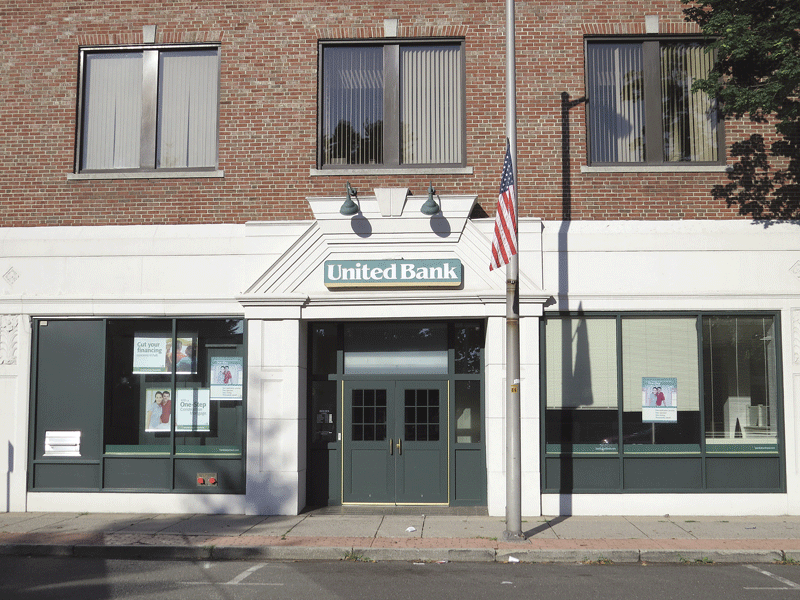
Banking and Financial Services Sections
Business Owners Must Understand Fraud Risk and Internal Control

Melyssa Brown

Melyssa Brown

Fraud is not an accounting problem or an internal-control problem; it is a human problem.
Most people who commit fraud at work are not career criminals, and often are trusted staff with no criminal history. Those employees have motivation, rationalization, and opportunity, which can be noticed by others within the organization.
Fraud affects all sizes of businesses, from small, family-owned companies to nationally recognized organizations. Effective anti-fraud programs and controls encompass a wide range of activities and policies, including governance, employee training and education, fraud-risk assessment, and internal controls.
What follows is an examination of how and why fraud occurs, and the steps companies can take to control it.

Motivation, Rationalization, and Opportunity
Motivation or pressure may include financial problems; addictions like gambling, shopping, or drugs; as well as pressure to show good or improved performance or results. Rationalization occurs when employees think they are justified because they are underpaid, or it’s for their family, or they need it now but they’ll pay it back before anyone notices. Opportunity is created when there are weaknesses in controls.
Employees think they won’t get caught because of a lack of oversight. Behavioral red flags that can indicate fraud include living beyond one’s means, unusually close association with a vendor, customer, or auditor, control issues, and unwillingness to share duties. Executing or implementing the methods and procedures suggested below can mitigate the opportunity for fraud.

Governance
Preventing fraud starts with setting the tone at the top for the rest of the organization. Management needs to create a culture through words and actions where it is clear that fraud is not tolerated, that any such behavior is dealt with swiftly and decisively, and that whistleblowers will not suffer retribution. The board of directors (or owner, if, due to the organization’s size, no board is established) should maintain oversight of the fraud-risk assessment, obtain assurance that controls are effective, and oversee that internal controls are established. The board of directors could also hire a certified public accounting firm to perform an external audit of the organization’s financial statements.
Having an internal audit department or fraud-examination department provides objective assurance to the board and management that controls are sufficient for identified fraud risks and ensures that the controls are functioning effectively. Also, that department can perform surprise audits on various areas of the organization on a haphazard, rotating basis to deter and detect fraud.
In addition, the board or management could create a code-of-conduct policy that includes appropriate ethical practices, anti-fraud verbiage, and whistleblower information, which should be circulated to all employees, with rewards outlined for whistleblowers. In order to be effective, communication regarding the organization’s anti-fraud policies and procedures must flow throughout the organization.

Employee Training and Education
All employees must receive a clear message that the organization is serious about its commitment to preventing fraud, and each employee must fully understand all relevant aspects of the organization’s anti-fraud policies, and should understand how their individual daily responsibilities are designed to manage fraud risks.
Every level of staff, including managers and executives, could be given fraud and ethics training when hired and updated yearly. Employment background checks should be performed during the hiring process. Also, employees could be cross-trained, which coincides with job rotation and mandatory vacations where someone else performs the work for a specified amount of time, which lessens the opportunity for one employee to commit fraud.

Fraud-risk Assessment
Management can perform a fraud-risk assessment on a systematic and recurring basis. This process should identify the organization’s vulnerability to fraud and where it may occur, consider relevant fraud schemes and scenarios, and determine the potential impact of fraud on the financial statements.
Management’s assessment of fraud risk should also include the potential for fraudulent financial reporting, misappropriation of assets, and unauthorized or improper revenue and expenditures. While analyzing the organization’s vulnerability, consider the following: how an employee might exploit weaknesses in internal controls, how they could override or circumvent controls, and what an employee could do to conceal the fraud. The process should also include ongoing testing of the internal controls to ensure that they are functioning as designed and changes are made in a timely manner to strengthen the controls.

Internal Controls
Effective internal controls start with the proper segregation of duties.  Management should ensure that transactions are initiated, authorized, recorded, and reported according to management’s policies and procedures, which are driven by the organization’s governance.
Management’s review of reconciled general ledger accounts, including but not limited to bank statements, accounts receivable, accounts payable, and financial statements, should occur monthly.
Examples of additional internal controls include: blank checks kept secured in a locked cabinet, safe, etc.; two signatures required on checks over a certain limit; secured inventory that is monitored and counted periodically; management approval of new vendors; and employee-expense reimbursement requiring a formal report completed and approved, with actual itemized receipts attached.
Even the best systems of internal control cannot provide absolute assurance against fraud. To help reduce the risk of fraud, organizations need to diligently perform a fraud-risk assessment and internal-control review. Those are the keys to prevention and timely detection of fraud.
The methods noted above may seem daunting; however, a reputable certified public accounting firm can provide examples of policies and tools for the fraud-risk assessment process.

Melyssa Brown, CPA, MBA is an audit and accounting manager for the Holyoke-based public accounting firm Meyers Brothers Kalicka, P.C.; (413) 322-3484; [email protected]