Home Archive by category Sections (Page 54)

Sections

Golf Preview Sections

Course of Action

This rendering shows the new pool and addition to LCC’s stately clubhouse.

This rendering shows the new pool and addition to LCC’s stately clubhouse.

Longmeadow Country Club will turn 100 in a few years (the easy-to-remember 2022, to be more specific).

It is a venerable institution with considerable history, much of it focused on two of the most famous names in the history of golf: Donald Ross and Bobby Jones.

The former designed the course, and it is considered one of his best — in this region if not the country (he designed more than 400 courses worldwide). The latter is considered the greatest amateur in the history of the game. The winner of seven major championships, he played Spalding clubs, and the Chicopee-based company put his name on some of its equipment. When he visited the plant, he would often play Longmeadow Country Club and became a member there.

The club has hosted a number of tournaments over the years, including several Massachusetts Amateurs and the 2005 U.S. Junior Amateur, won by current PGA Tour pro Kevin Tway. Popular current players Rickie Fowler and Sam Saunders (Arnold Palmer’s grandson) also competed that year.

Meanwhile, the club has long been the only one in the region to have caddies, and its program has involved young people who would become captains of industry — and even captains in the military (an admiral, actually) — who would proudly recall their time at LCC.

There’s so much tradition and lore here that you often see adjectives placed before the club, like historic, fabled, and storied. And while those still apply, all that doesn’t make LLC immune from the powerful forces impacting the game — and business — of golf and private clubs everywhere, said current President Patrick O’Shea, a lawyer by trade and avid golfer.

“We no longer have a situation where the younger generation aspires, as a sign of success, to join a country club,” he said, summing up a complex matter rather simply. “The family money is going to a lot of places other than a country club.”

The need to respond to this sea change was the catalyst for a nearly $5 million renovation at the club. There is some work taking place on the course itself, O’Shea noted, adding that several hundred trees have been taken down, mostly in an effort to bring sunlight into areas of the course that sorely need it. But the most sweeping changes will be in and around the stately clubhouse.

Indeed, the facility is being made more casual and more family-friendly, he said, citing everything from a completely new look and feel inside the clubhouse to a new pool and patio area outside.

The plans call for demolishing the old tap room and nearby patio area and replacing that with a new 19th-hole/bar area with seating for about 50 people, with an adjacent casual dining space for nearly 100 people, with an open, family-friendly design.

Those we spoke with would wear out those words ‘open’ and ‘casual,’ in large part because these are things the old clubhouse wasn’t, but needs to be moving forward, because this is the environment members want.

“The focus is on the casual, fun social-gathering spaces,” said Rod Clement, LCC’s general manager, adding that the club is moving away away from the ‘white linen’ look and feel — although there will still be some of that if it’s appropriate. “People want spaces where they can see each and other and interact; they don’t have to be segregated in different venues of the club. People want to be part of a community and see people coming in and out.”

The Donald Ross-designed course at LCC

The Donald Ross-designed course at LCC is among the region’s finest. This view is from the back of the par-3 16th hole.

The extensive renovations bring with them a discernable level of risk for the club — it has lost some members as a result of the assessment levied to help pay for it, and replacing them is challenging in this environment, even for LCC.

But all those we spoke with said it was something the club needed to do as it strives to thrive not only in its second century, but in a new environment for private country clubs.

For this issue and its focus on sports and leisure, BusinessWest toured the new clubhouse and talked with several of those involved with this ambitious project to gain some insight into the latest chapter in the club’s long history.

Reshaping History

That tour took place on St. Patrick’s Day, when the club scheduled an open house at which members could see the work in progress.

More than 100 people would come through the new front door at the course that day, said Jim Kennedy, the club’s vice president, adding that this number reflects the size and scope of this project, as well as the level of investment on the part of the membership.
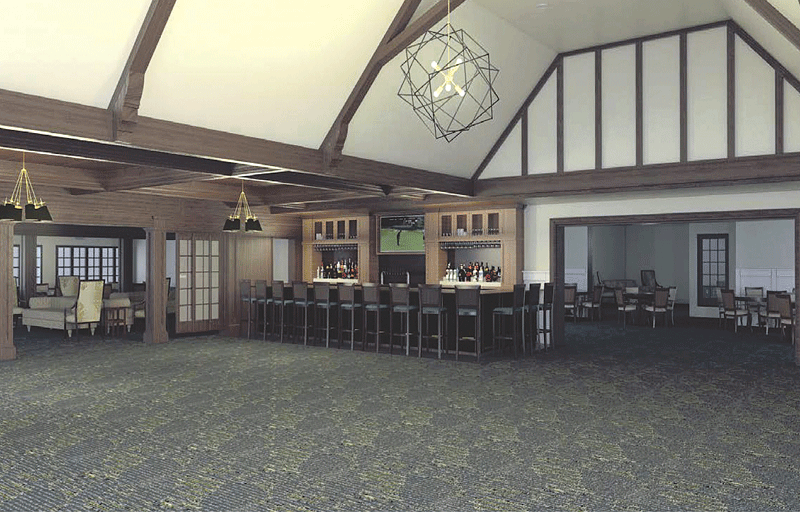
renovated clubhouse at LCC

This rendering shows the renovated clubhouse at LCC. The two words used most to describe it are ‘open’ and ‘casual,’ qualities it did not possess before the makeover.

Longmeadow is one of only two member-owned clubs left in this region (Ludlow is the other), and every aspect of this project had to be approved by committee — actually, two of them. First, the long-range planning committee, which took ownership of the project, and then the membership as a whole.

“I think it went quite smoothly,” said O’Shea, tongue firmly planted in cheek as he talked about what became several years of planning, revising plans, and revising them some more.

He said talks concerning a serious makeover at the club actually began about five or six years ago, and escalated over time. The talks commenced because the scene was changing at private clubs regionally and across the country.

“We had different national consultants come in and talk with the members and let them know that there are changes on the horizon in the country-club scene,” he told BusinessWest. “They said that it’s more family-centric, with women making more of the decisions about joining clubs, where before it was men.

“We have a spectacular golf course here — everyone knows that, we know that, we love it, we appreciate it, we’re stewards of it,” he went on. “But we realized that we need more than that; we recognized that we need to enhance the family and social gathering places. Some of the spaces we had were more set up for the 1950s dining and dancing culture than the culture of today.”

By late 2015, a plan emerged — and was actually approved by the members — for a $7.4 million renovation focused entirely on the clubhouse, with nothing slated for the course or pool and related facilities.

After much consideration, and despite approval from the membership, the panel created for this initiative decided to “tap the brakes,” as O’Shea put it, and consider something on a smaller yet broader scale. What eventually emerged is what members toured on St. Patrick’s Day.

As they drove in, they could probably see some of the changes on the course itself, undertaken in accordance with a 54-page golf-course master plan prepared by golf architect Ron Prichard, a well-known Donald Ross restoration specialist (changes to Ross-designed courses are not undertaken lightly).

While there will be repair work to the cart paths and installation of improved drainage on holes 9,12, and 17, the biggest change involves the removal of trees.

This is a movement taking place across the golf landscape, literally and figuratively, said Tim Quirk, head pro at LCC, noting that, while trees can define a golf hole, some trees don’t contribute to a course’s design or degree of difficulty but do keep areas in almost constant shade, thus impacting turf condition.

It is trees of this latter variety (more than 300 of them by the latest count) that the club has taken down since late last fall. A good number of trees have come down on the right side of the 10th fairway, but the biggest change is the removal of a large stand of trees between the 3rd and 6th holes.

Indeed, as they walked BusinessWest out for a look, Kennedy and Quirk stopped at the tee of the par-3 7th and gestured out to something that could never be seen from that spot before — the 3rd green.

But as dramatic as the on-course changes are, those inside and around the clubhouse are even more so. Overall, though, they were blueprinted in a way that would change the look and feel of the interior of the clubhouse, but yield what O’Shea called “minimal exterior transformation to make sure it looks like it’s been here for 100 years.”

Bill Laplante and his father, Ray, principals with East Longmeadow-based Laplante Construction, were assigned the task of designing and undertaking the renovations. But as long-time members, they were already heavily invested in it — in every way.

As he walked BusinessWest through the new clubhouse-in-progress, Bill Laplante also used the words ‘open,’ ‘casual,’ and ‘family-friendly,’ but he added some others that hadn’t been used to reference to the LCC facilities historically — like ‘modern,’ ‘flexible,’ and ‘energy-efficient.’

“We tried to marry the new with the old to make sure that it’s consistent with regard to the original design of the building,” he explained. “But at the same time, we’re trying to modernize the space.”

By modernize, he meant amenities like an elevator for handicap accessibility between the main level, pool-deck level, and the pool locker-room level below it. But he was also referring to foam insulation, new windows, and new roofing in some sections for increased efficiency.

And also to how everything has been designed — with the goal of creating an environment that is open, bright (there’s much more natural light), and easy to navigate.

The Next Chapter

Overall, this is an extensive makeover that includes everything from that new front door to a new private dining room; from a new and expanded kitchen with energy-efficient equipment to a new audio-visual system. As LaPlante said, it’s a marriage of the old and the new, which is important here.

Indeed, from the road, the clubhouse still says ‘1922,’ which is what the members want and demand.

But inside, it says ‘2018,’ and in all the important ways, that is also what is wanted and needed.

Thus, a course and a club steeped in tradition and lore is writing an important new chapter in its history.


George O’Brien can be reached at [email protected]

Community Spotlight Features

Community Spotlight

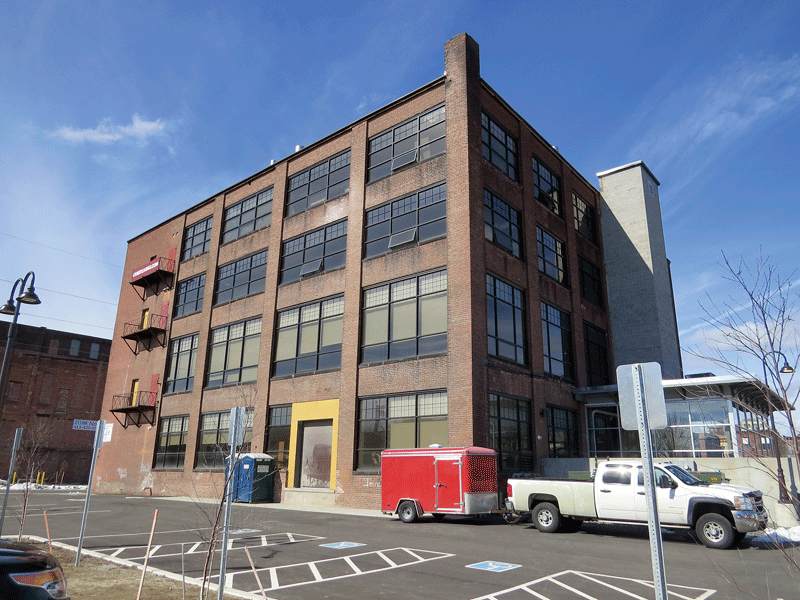
Green Thumb Industries will soon begin operating a marijuana-cultivation operation in this mill building at 28 Appleton St. And it will likely be the first of several such operations in Holyoke.

Green Thumb Industries will soon begin operating a marijuana-cultivation operation in this mill building at 28 Appleton St. And it will likely be the first of several such operations in Holyoke.

Marcos Marrero says that if one were to have a machine running an optimization algorithm that would weigh a host of quantitative and qualitative factors to ultimately determine the very best spot in the region — and maybe the country — to locate a marijuana cultivation and distribution facility, it would, when done with its analysis, likely spit out two words: Holyoke and Massachusetts.

And that second word is necessary, he went on, because there is, in fact, a Holyoke in Colorado, the first state to legalize recreational marijuana, and he’s already been asked more than a few times if he works for that small town of 5,000 people near the center of the Centennial State.

He doesn’t. He’s director of Planning and Economic Development for the other Holyoke, the one on the Connecticut River. The one heralded as one of the first planned industrial cities in the country. The one where Chicago-based Green Thumb Industries (TGI) is set to open an estimated $10 million marijuana-cultivation facility in former mill space on Appleton Street this spring.

And Marrero is fielding a lot of phone calls and e-mails these days from other people wanting to know more about that Holyoke, and marijuana cultivation is usually the reason (more on those inquiries later).

First, back to that algorithm. As noted, it would weigh a host of quantitative factors, said Marrero, and they all project strongly in Holyoke’s favor. These range from the roughly 1.5 million square feet of available, attractively priced mill space within the city, much of it ideal for marijuana cultivation because of the mills’ open spaces and high ceilings, to the lowest electricity rates in the state (this is a power-intensive business), to Holyoke’s location along I-91 and just off the Turnpike.

“You can ship it east, and you can ship it north,” said Marrero, adding quickly that there also qualitative factors to consider.

Or at least one big one, anyway. That would be the city’s welcoming attitude toward an industry that most communities in the Bay State are throwing stop signs and speed bumps in front of.

“Many cities and towns are taking out the pitchforks to prevent the cannabis industry from coming in,” said Holyoke’s mayor, Alex Morse. “Given my outspoken support for the industry, we’re seeing companies from across the country come into Holyoke to meet with us and my team about locations and learn more about our special-permit process. It’s been company after company that’s been looking to invest.”

But this cannabis phenomenon, if you will, is just part of the story. And it’s only one of the ways in which the city is succeeding with filling some its legendary and mostly idle or underused mills.

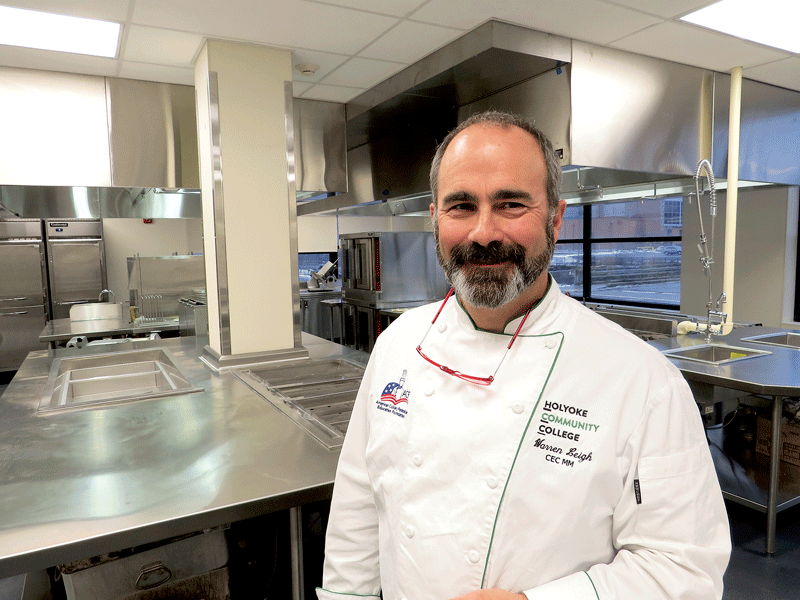
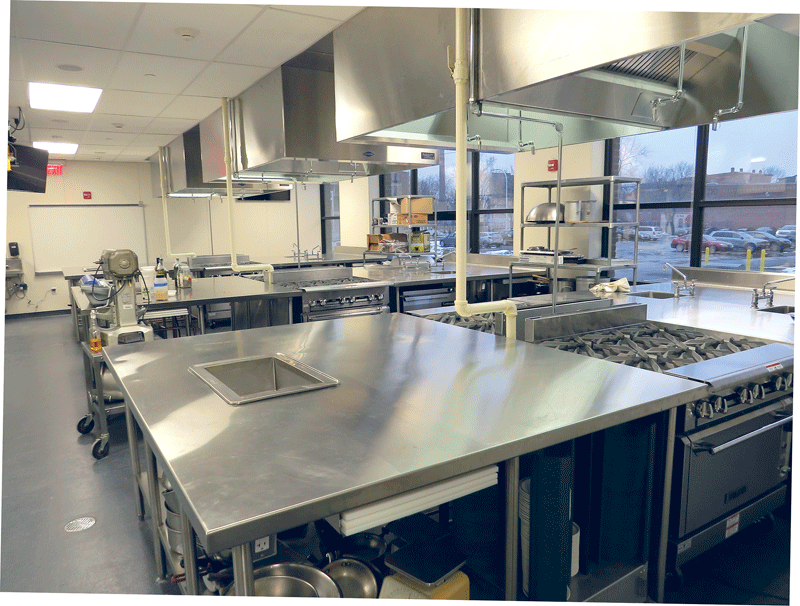
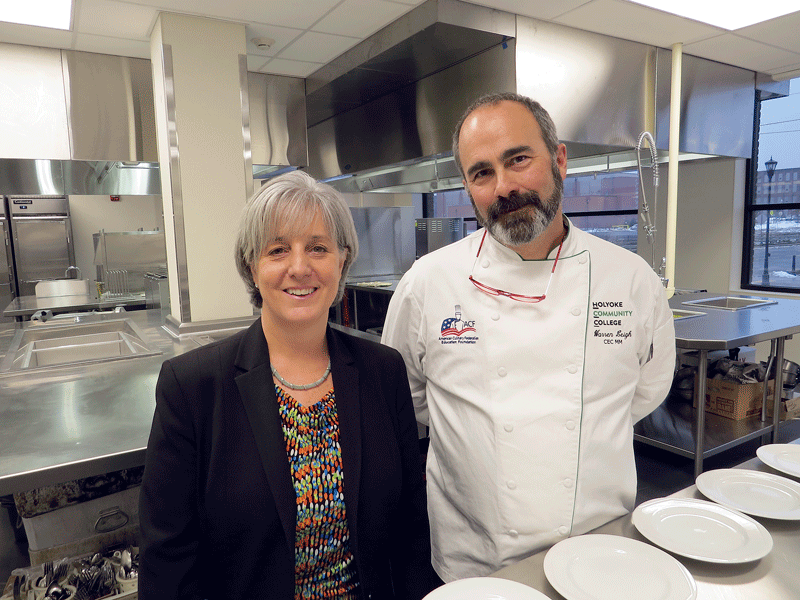
There are many others, starting with the Holyoke Community College MGM Culinary Arts Institute, which opened in the Cubit building (anther of those old mills) in January. There are also the market-rate apartments in the floors above that facility, and a host of other housing initiatives as well.

There are also arts-related facilities, such as Gateway City Arts on Race Street. And then, there are a growing number of startups, mentored by groups like SPARK, that are also moving into those mills.

All this, or most all of it (the marijuana law was passed in 2016), was part of Morse’s vision when he became mayor in 2012, and also why he’s still mayor today, having been re-elected to a four-year term (the city’s first) last fall. Back when he first ran for office, he explained, he saw enormous potential for the city to become home to a wide array of businesses and to become an attractive residential address as well after decades when it clearly wasn’t.

The formula called for a host of public investments — they’ve come in many forms, from a new canal walk to a new train depot to a slew of road projects — that would in turn encourage private investments (such as the Cubit building and GTI, for example). There would also be a focus on building the cultural economy, encouraging entrepreneurship, and maximizing Holyoke’s many geographic and historical assets.

In short, it’s all coming together nicely, as we’ll see in this, the latest installment of BusinessWest’s Community Spotlight series.

Joint Ventures

When asked to put all that aforementioned interest in Holyoke on the part of cannabis enterprises, or would-be cannabis enterprises, into perspective, Marrero let out a deep breath.

“The last couple of weeks have been … crazy,” he told BusinessWest. “There’s been lots of meetings and phone calls. Some of them are companies that are just shopping around and don’t necessarily know everything about Holyoke, but they may be looking in the Western Mass. corridor. But they’ve heard about us and want to know more.”

And it’s been crazy for a reason, actually several of them, as noted at the top.

“We believe we have the best competitive advantages for the industry at this time,” Marrero explained, “from the real estate to the low-cost electricity — those lights are on a lot — to the water. Holyoke has a lot of offer these businesses.

“And in Mayor Morse, you have the first mayor to come out and quite vocally support legalizing marijuana, recreationally and medically, and that certainly makes a difference,” he went on, adding that the city had one of the first ordinances in the state regulating, but also, and in many ways, welcoming the industry.

“So there’s some political stability — there’s a willingness and a desire to have this industry here,” Marrero continued, adding that all this caught the attention of GTI, which is now permitted to operate a facility on 42,000 square feet of former mill space at 28 Appleton St.

The company plans to hire about 100 people within the next year, said Morse, adding that, while not all of these are skilled positions, per se, these will be attractive positions with wages averaging $15 or more.

“When GTI held its first job fair last fall, there were more than 700 people in the room,” he recalled. “And that sends a strong message to other elected leaders in this city and also the community that people are looking for jobs, they’re willing to get trained, and they want to work.”

The Cubit building, home to apartments and the Holyoke Community College MGM Culinary Arts Institute, is just one example of how Holyoke’s historic mills are being put to new and productive uses.

The Cubit building, home to apartments and the Holyoke Community College MGM Culinary Arts Institute, is just one example of how Holyoke’s historic mills are being put to new and productive uses.

Meanwhile, there are many other entities looking to join GTI, said Marrero, adding that there are at least six businesses expressing what he called “serious” interest and moving toward the permitting stage, and perhaps a dozen more that are kicking the tires and filling Marrero’s voice mailbox.

How many will eventually land in Holyoke obviously remains to be seen, but Marrero and Morse both believe the cannabis sector could soon employ hundreds in the Paper City and bring additional benefits as well in the form of supporting businesses that will also pay taxes and employ area residents.

“Once you have a clustering effect of any industry, you have a subsequent clustering effect of any industry that supports that sector, and that could benefit not only Holyoke but surrounding communities,” Marrero explained. “If we had 10 cannabis-growing companies, not only would that translate into a large amount of jobs, tax revenue, and more, but then those 10 companies are going to be demanding services from pipe fitters, electricians, those who maintain HVAC systems, transportation and logistics companies, security companies, etc.; you have a second tier of expertise that is developed in the economy to support them.”

This is what has happened in Colorado (he’s not sure about the community of Holyoke) and other states where marijuana has been legalized, he went on, adding that the Holyoke in Massachusetts has the opportunity to learn from the mistakes made by others before it, and there have been some.

Run of the Mills

While the cannabis industry starts to fill in that section of the canvas that is a changing Holyoke, other businesses are finding the city as well, and the vision that Morse put in place at the start of this decade is coming into focus.

That vision involved embracing the city’s industrial past as a paper and textile hub, but also recognizing that this was in the past and that the community had to develop new sources of jobs and tax revenue while also revitalizing a downtown that had seen much better days.

The strategy for doing all that, as noted earlier, is multi-faceted.

“We’ve been pursuing an innovation-based economic-development strategy and coupling that with a public-investment strategy,” the mayor explained. “We’ve made a number of investments that have made the city a more attractive place for private investment and incentivising developers to come in; they’ve recognized that the city is making investments in itself to make it a more liveable, walkable community, especially in the downtown, and they’re responded to that.”

There’s been a housing strategy as part of that broader plan, he went on, adding that housing is obviously key to attracting businesses and the people who would work for them.

The goal is to create a dense, diverse inventory of housing, Morse went on, adding that the city is making strides in this regard with market-rate projects such as the Cubit building, mixed-use projects such such as a Wynn Development initiative at the former Farr Alpaca Mills on Appleton Street, and public housing efforts such as the ongoing, 167-unit Lyman Terrace project.

As for those public investments, they have come in many forms, including the canal walk and train station, but also a number of parks and neighborhoods. The effect has been to make the city a more attractive option for businesses, but also families, said the mayor.

“We’re not of the philosophy that one big corporate giant is going to arrive in Holyoke and solve all our problems — we have a much more long-term view of sustainable economic development,” he explained. “We’re focused on the innovation economy, but also entrepreneurship and small-business development, through initiatives such as SPARK.”

There have been more than 80 ‘graduates’ of that program of mentoring and education, run by the Greater Holyoke Chamber of Commerce, he went on, adding that some of them are either incubating in Holyoke or have already moved into their own space within the city.

Holyoke at a glance

Year Incorporated: 1786
Population: 40.280
Area: 22.8 square miles
County: Hampden
Residential Tax Rate: $19.17
Commercial Tax Rate: $39.72
Median Household Income: $36,608
Median Family Income: $41,194
Type of Government: Mayor, City Council
Largest Employers: Holyoke Medical Center, Holyoke Community College, ISO New England Inc., PeoplesBank, Universal Plastics, Marox Corp.
* Latest information available

Meanwhile, there are other forms of progress to note across the city, said Morse, listing everything from a rising high-school graduation rate — it was under 50% when he took office, and now it’s closer to 70% — to falling unemployment; from planned revitalization of the former Lynch School just off I-91 (an RFP was recently issued) to needed evolution at the Holyoke Mall.

The mall is one of the city’s important assets, he noted, adding that it brings thousands of people into the city every day. With the retail sector struggling in the wake of emerging forces like Amazon, and malls fighting to keep their spaces filled, the facility in Holyoke is responding with family-oriented tenants that are keeping the parking lots crowded, said the mayor.

“We’ve seen the mall make a number of investments in recent years and add more entertainment options,” he explained. “These include new restaurants, an escape-room place, and a new Cinemark theater that will be coming in.”

As for the graduation rate and improvement at the public schools overall, this is an important ingredient in the overall strategy for Holyoke’s revitalization, said the mayor.

And with continued progress in mind, the city will launch a new high-school model this fall, one based on four different academies focused on career readiness to create more pathways for students.

Planting Seeds

As he talked about cannabis — and everything else going on in Holyoke — Morse joked that Holyoke might soon run out of mill space to offer developers.

When told about that line, Marrero laughed, paused for a second, and said simply, “I hope so — that would be great.”

That’s not likely to happen any time soon, if ever. But that number of available square feet in the mills that gave Holyoke its nickname and its heritage keeps going down.

And cannabis is just one of the reasons. Many of the same character traits that are attracting marijuana growers — from the mills to the highways to a business-friendly City Hall — are attracting other types of businesses as well.

As noted, Morse couldn’t exactly have foreseen the cannabis industry being one of his city’s leading employers when he took office. But he could foresee a time when his staff and the office of Planning and Economic Development would be flooded with calls from people interested in maybe setting up shop in Holyoke.

And not the one in Colorado.

George O’Brien can be reached at [email protected]
Home Builders Landscape Design Sections

Something to Build On

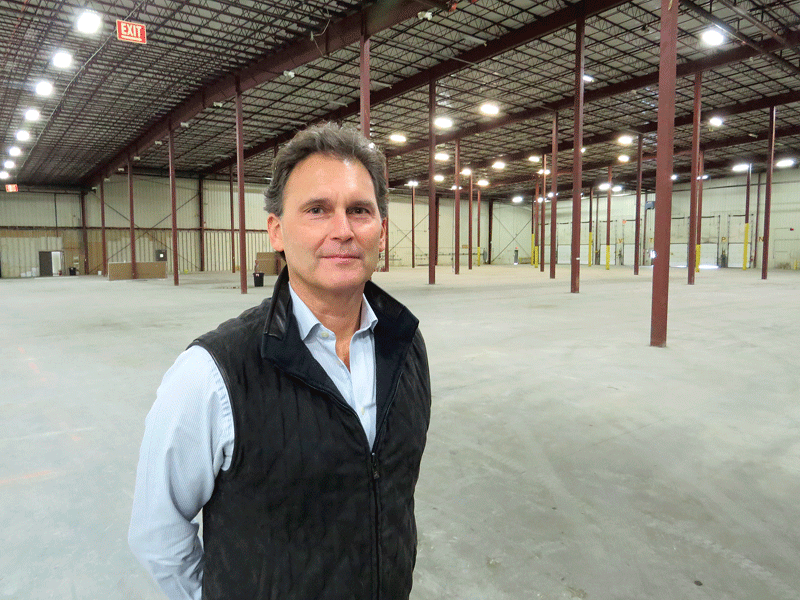
Gisele Gilpatrick says her family’s business, Pro-Tech Waterproofing in Chicopee, typically garners about six months’ worth of business from the Western Mass. Home & Garden show — just not all at once.

“They’ll take our information, but they won’t always call next week,” said Gilpatrick, Pro-Tech’s office manager and the chair of the 64th annual Home & Garden show, slated for March 22-25. “They’ll say, ‘we saw you six months ago, or a year ago, or two years ago. I pulled out your card, because I have a problem now.’”

That’s the value for many of the 350-plus vendors who will set up shop at the Eastern States Exposition on March 22-25. Among those showcasing their products and services will be builders, remodelers, kitchen and bath specialists, landscapers, painters, roofers, financial institutions, pool companies, and more.

“It’s a good chance for people to talk to us one on one about their situation,” Gilpatrick said. “Sometimes it’s easier to visualize things when you talk with someone in person, and people are more comfortable explaining what they need. Sometimes, people think it’s a major project and it’s not, while other times we have to tell them it is major.”

Either way, it’s easy to find answers — and second, third, and fourth opinions — with so many businesses on hand. For that reason and others, the annual event has become the signature showcase for the Home Builders & Remodelers Assoc. of Western Massachusetts, which produces it.

The home show started as a way to generate revenue to support the association, but it also provides member companies with a chance to market to an audience — and a big one, with around 20,000 visitors over the four days in a typical year — that might not otherwise see their name. Conversely, it gives attendees, many of whom simply come to the show for fun, a host of concrete (sometimes literally) ideas for home improvement.

The exhibitors — in more than 90 different categories — run the gamut from inspection services to security and alarm systems; Internet and communications to moving and storage; duct cleaning to pianos and organs.

Show attendees fall into one of several categories, the association notes:

• People planning to buy or build a new home, who may visit with builders, real-estate agents, financial institutions, and sellers of component products, such as hardwood flooring, tile, and appliances;

• People planning to remodel or renovate, who may want to check in with all of the above, plus vendors of replacement components such as windows and doors, as well as appliances, wall treatments, and home furnishings;

• Yard and garden enthusiasts, who tend to be interested in lawn and landscaping services; wall, walk, and edging components and materials; and trees, shrubs, flowers, and seeds;

• Lifestyle-conscious individuals, who like to check out trendy, high-tech, or time-saving products; home furnishings; and products focused on self-improvement, fitness, and health;

• Committed renters, who have no plans to own a house, but may be interested in space-conservation and space-utilization products, as well as home furnishings;

• Impulse buyers, who flock to vendors of home décor, arts and crafts, cooking and baking products, jewelry, and personal goods; and

• Those who attend the show purely for fun, who may arrive without an agenda but often develop ideas for future purchases and home products. “More than any other group,” according to the association, “these people are the ones who have come to rely upon our show on an annual basis and who perhaps have the greatest impact upon our vendors.”

Advice — on the House

In addition to the exhibitors, the four-day event will also include cooking shows, hosted by WMAS radio personalities, in the Home Show Kitchen in the Young Building. Various chefs from restaurants throughout the Pioneer Valley will be on hand to prepare some of their specialties, and audience members can ask them questions, try samples, and have a chance to win gift certificates from some of the establishments.

A children’s area in the Young Building will feature an art exhibit created by students from Thousand Cranes Studio and a chance to participate in creative activities, as well as Melha Shriners clowns and a live butterfly display from Magic Wings Butterfly Conservatory & Gardens. The Koi Society will have a pond built by C J Grounds Maintenance filled with koi fish, kids can get their pictures taken on a go-cart provided by Pioneer Valley Indoor Karting, Looney Tunes characters from Six Flags New England will be on hand, and Rolling Acres Outdoor and Science Summer Camp will help kids conduct science experiments.

Meanwhile, promotions and giveaways include the WMAS Kitchen Giveaway Contest, the Rock 102/Lazer 99.3 Ultimate New England Sports Fan Giveaway, and iHeartRadio’s $25,000 Home Makeover Contest.

In a dedicated outdoor area, several vendors will assemble outdoor structures such as sheds, gazebos, sunrooms, and furniture to spruce up the deck or poolside. Also on display in that area will be the large Beauty in Motion showroom of American Standard products.

Gilpatrick emphasized that the impact of the Home & Garden Show is year-round. “Some people may have a problem that costs $15,000 to fix, and they don’t have $15,000. But come next year, they’ve planned and budgeted, maybe secured financing, basically done what it will take, and that’s when we hear from them again. There’s a lot of that.”

This year’s show hours are Thursday and Friday, March 22-23, 1-9 p.m.; Saturday, March 24, 10 a.m. to 9 p.m.; and Sunday, March 25, 10 a.m. to 5 p.m. General admission is $10 for adults, and children under 12 are admitted free. Discount coupons, available at www.westernmasshomeshow.com, knock $6 off the regular ticket price on Thursday, $4 off the regular price on Friday, and $2 off the regular price on Saturday and Sunday. Veterans and active military with ID receive free admission on Thursday only.

Joseph Bednar can be reached at [email protected]

Entrepreneurship Sections

The ‘Connections’ Business

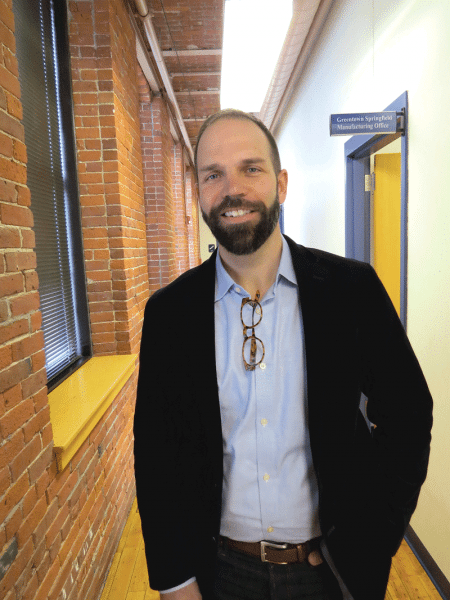
Adam Rodrigues

Adam Rodrigues

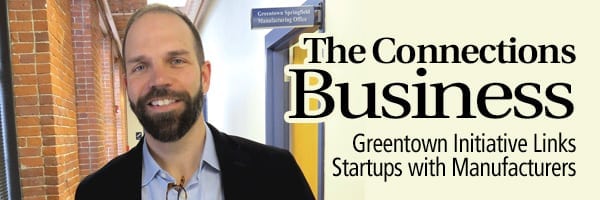
Adam Rodrigues, manufacturing fellow with Greentown labs, says his job description can be smashed down to two words: Making matches. That would be matches between startups across the state, and especially those within the 413, and manufacturers in Western Mass. that can help bring a concept to the marketplace. He’s already made several of these matches and plans to make many more, connections that have a number of benefits — for the startups, the manufacturers, the region, and the state.

Adam Rodrigues has a nice, large office in Building 101 at the Technology Park at Springfield Technical Community College.

But it’s sparse, and, therefore, a little awkward.

“I’ve got about half a basketball court and just this little desk in the back right corner,” he said with an obvious nod to the office’s well-polished hardwood floors, a holdover from the days when this building was part of the Springfield Armory complex. “It’s a little weird.”

But it’s all good, because Rodrigues isn’t in his office or at that desk very much. No, he’s paid to be on the road, actually, and that’s where he spends almost all his time.

As a manufacturing fellow with Greentown Labs — or, to be more specific, Greentown Learning, a spinoff off the Somerville, Mass.-based clean-technology incubator — his job is to make meaningful connections between as many startups and Bay State-based manufacturers, and preferably Western Mass. manufacturers, as possible.

“I’m a matchmaker,” he said, adding that this role cannot be carried out effectively from Suite 32 in Building 101 — although he can do some paperwork there. The real work is carried on in a host of other settings. They range from area manufacturing facilities — he’s visited several dozen by his count — to various programs put on Valley Venture Mentors (VVM), SPARK, and other groups focused on encouraging and mentoring entrepreneurs; from structured meet-and-greet sessions between startups and manufacturers to what amount to organized road trips during which those incubating at Greentown get introduced to manufacturers who might make their concept a reality.

And there is much that goes into that last equation, he said, adding that a manufacturer can help an entrepreneur take an idea, maneuver it through the prototyping stage, make tweaks and improvements, and finally move it to the production phase.

And that’s exactly what’s happening — note the present tense — with a company called Quikcord, its principals, Matt Fioretti and Matt Adams, and East Longmeadow-based Toner Plastics.

Fioretti didn’t want to say much at all about his concept, intended for the military, until it reaches the market — “let’s just say it’s a product designed by a Marine for Marines” — but talked enthusiastically, and at length, about how Greentown’s efforts to match the company with Toner Plastics are helping to propel this venture forward.

“It’s had an unbelievable springboarding effect,” he explained. “Greentown was able to put us in front of the right people, and it just skyrocketed us to the point we’re at.

“And the best part about is that the amount of money we spent is next to nothing when you think of what we’ve accomplished,” he went on. “We’re two guys with an idea and no money, and we’re almost ready to do a short production run.”

Such a scenario, and such commentary, is exactly what several partners had in mind roughly 15 months ago when Greentown’s Western Mass. facility was created, with Rodrigues, a veteran of the industry having worked for several years at Lenox, at the helm.

When the initiative was launched, there were goals and benchmarks set, he said, adding that most all of them have been exceeded. Here are some of the numbers to date:

• More than 50 manufacturers have been identified as interested in working with hardware startups;

• More than 45 startups have received assistance from the initiative;

• More than 80 connections have been made between hardware startups and Western Mass. manufacturers;

• More than 30 east-west connections have been made between Boston-area startups and Western Mass. manufacturers; and

• Perhaps most importantly, five contracts have been signed between startups and Western Mass. manufacturers.

All of this translates into thousands of miles on Rodrigues’ odometer and comparatively few hours sitting behind that small desk. But, as noted, this is how those behind Greentown’s Springfield facility drew up this play, and thus far, it is netting real results for the region.

For this issue and its focus on entrepreneurship, BusinessWest looks at Rodrigues’ matchmaking work to date and how it has become another key ingredient in the region’s broad economic-development strategy.

Making Introductions

As he flashed back several months and retold the story of how the company that would become Quikcord became matched with Toner Plastics, Fioretti provided a textbook example of how Greentown Learning works and why it was created.

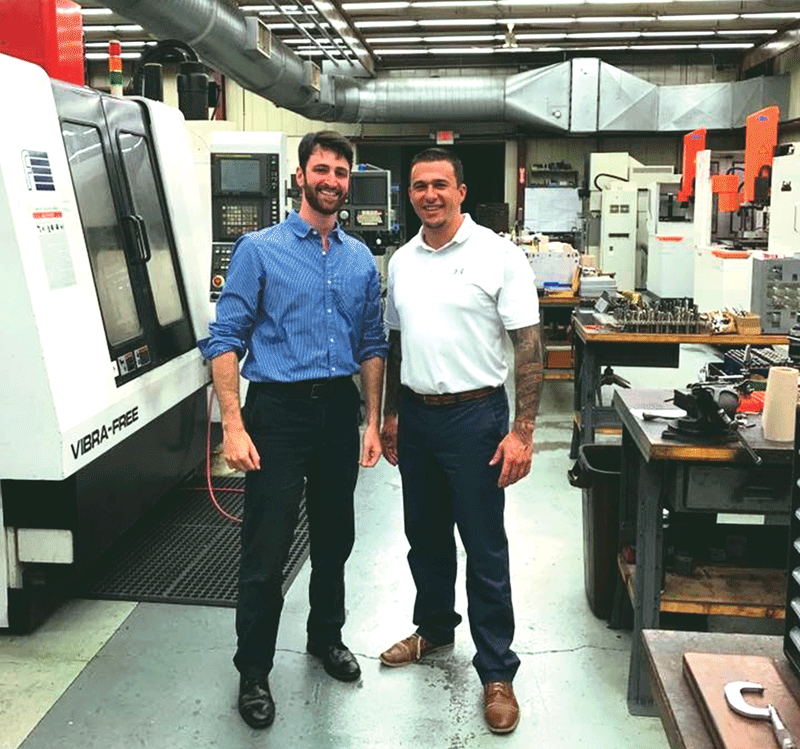
Matt Fioretti, left, and Matt Adams, cofounders of Quikcord, were successfully matched with Toner Plastics, enabling their concept to take big steps forward.

Matt Fioretti, left, and Matt Adams, cofounders of Quikcord, were successfully matched with Toner Plastics, enabling their concept to take big steps forward.

“We were at a VVM event, and we were making a pitch on our basic concept,” he recalled. “We had nothing; we just had a concept. Well, after we made the pitch, there were some breakout sessions where people come and talk with you about what they just heard. And Adam [Rodrigues] came up to us and said, ‘I’m just getting started, I don’t even have business cards, but let me get your names and e-mail addresses, and I’ll get back to you.’

“He then said, ‘this is going to be worth it for you,’” Fioretti went on, remembering that commentary because of its poignancy. “And at that stage, we were ready to try just about anything. So we said, ‘sure.’”

Fast-forwarding a little, he said Rodrigues did, indeed, follow up a few weeks later. They met and talked about their concept and also about Greentown. Later, Rodrigues arranged for the partners to pitch at a manufacturing seminar staged by Greentown and the Massachusetts Manufacturing Extension Partnership.

One of the panelists they pitched to was Steve Graham, owner of Toner Plastics. Fast-forwarding some more, he said Graham and the team at Toner took an interest in the product and provided several different kinds of support to move the concept forward.

“They recognized that we were a small business without much capital, but they loved the idea,” said Fioretti. “And they did a lot of work for us pro bono; and they got us from to the point where we could take our concept to CAD [computer-aided design].”

Again, this is exactly the script those behind Greentown Learning had in mind, said Rodrigues, adding that the need for such a matchmaking outfit, if you will, had become increasingly apparent in recent years.

Especially at Greentown Labs, the largest clean-technology incubator in the country, with more than 60 hardware startups under that one large roof.

“As they started to incubate these startups, they realized that, while they had all these awesome ideas coming out of the state, they did not have a good link to manufacturers in the Commonwealth,” he explained, adding that, to address this, a manufacturing initiative was launched to help connect the startups with Bay State manufacturers.

Progress was made, he went on, and it quickly became apparent that attention needed to be focused on the western part of the state, not only the manufacturers that give the region much of its economic heritage, but the ever-increasing number of startups being spawned there as well.

So a position, funded by the Davis Foundation, the Massachusetts Clean Energy Center, and MassDevelopment, was created, and Rodrigues started filling the drawers in that desk in January 2017.

He said he hit the ground running, and hasn’t stopped running. He had a good foundation on which to build, having been part of VVM’s manufacturing accelerator in 2016, serving as a mentor to the participants, passing on knowledge gained while working at Lenox in the supply-chain realm.

“Being a buyer, I was able to tell the manufacturers that were in the accelerator what a buyer is looking for when they’re working for new contracts,” he explained, adding that he had also taken part in several of VVM’s monthly gatherings at which entrepreneurs make pitches, make connections, and hopefully take steps forward.

So he knew both of the constituencies he would be working with in his capacity with Greentown. Sort of, but not as much as he would like. So he sent about making connections of his own.

“My goal was to meet as many manufacturers as I could in this area, and meet as many startups as I could in this area that were developing actual hardware, and try to connect them,” he told BusinessWest.

These connections usually come about, as noted earlier, through organized events, such as a Shark Tank-like gathering involving entrepreneurs pitching to manufacturing experts.

“Each startup would get on stage and say, ‘this is what I’m making, here’s where we’re hung up, here’s where we don’t know how to scale,’” he noted. “And then we’d have the manufacturers from this area there to say, ‘I’ve seen this before; here’s what I think you should do,’ and someone else would chime in with ‘have you considered doing this?’ And the startups walk away with a connection to manufactuters.”

Creating Progress

And the importance of these connections — to the startups, the manufacturers, the region, and the state itself — cannot be overstated, he went on, adding that they add up to potential opportunities that might be otherwise be missed.

Elaborating, he said part of this equation is a simple matter of awareness, or a lack thereof, as the case may be. Indeed, some entrepreneurs simply don’t know what the region’s manufacturers possess when it comes to capabilities and specialties, and often look overseas for someone to make their product.

“We want to raise a flag,” noted Rodrigues, “and say, ‘before you decide to manufacture somewhere else in this country, before you go China to have that prototype made, let me introduce you to a few people here who can help you out.”

But there is another element to these matchmaking efforts, perhaps one that’s even more important, he went on.

“Sometimes, in addition to making a connection, the entrepreneur will walk away with a completely new direction for the company and the design process,” said Rodrigues, adding that this is exactly what has happened with some of the connections he’s helped orchestrate.

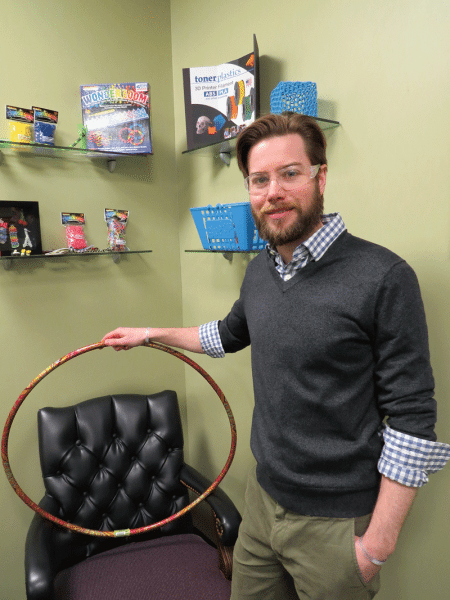
Mike Reed, seen here in the Toner Plastics lobby

Mike Reed, seen here in the Toner Plastics lobby with some of the products produced there, including the hula hoop, says the company was able to help Quikcord reach the prototype stage.

Such as the one involving Quik-cord and Toner Plastics. Summing up how that worked out succinctly, and colorfully, Rodrigues noted that, “at the initial event, their prototype was a toilet-paper roll with duct tape on it; a few months later, they had a an actual, fully formed prototype with the logo on it, and they were ready for manufacturing.”

Spearheading that transformation was the team at Toner Plastics, a 25-year-old manufacturer of extruded products and a leader in 3D printer filament products and makers of, among other things, hula hoops. Among its many other specialties is manufacturing filler for wire and cable products.

Mike Reed, the company’s engineering manager, said Steve Graham saw potential in the Quikcord concept and its principals and agreed to work with the entrepreneurs to help move their idea off the proverbial drawing board.

“At that point, they had a good concept, but they really needed some help finalizing the design and getting to manufacturing,” Reed explained, adding that Toner Plastics worked on the project in conjunction with its sister company, Modern Mold and Tool, and especially design engineer Stefan Ogle. “We worked with them for several months on the design; we went back and forth, made several revisions, and did some prototype work as well. And then we optimized that design for manufacturing.”

These were critical steps forward, ones that prompted Fioretti to use that phrase ‘springboarding effect’ to capture how this connection gave the venture some needed lift.

“We should have the final product in hand soon,” he went on, adding that the company is close to moving on to the manufacturing stage, and he expects Toner Plastics to play a big role in that work. “We love what Greentown is doing because we’ve seen first-hand how it works.”

There are other startups that can make that same claim, said Rodrigues, including Kwema, a Cincinnati-based wearable-technology startup that had participated in the VVM accelerator and also in the same ‘rocket pitch’ where Quikcord met Toner Plastics.

“When they got exposed to what’s out here for manufacturing and they started working with Worthington Assembly, they now have plans to relocate their headquarters from Cincinnati to Springfield,” said Rodrigues.

Peerless Precision in Westfield

As part of his matchmaking efforts, Adam Rodrigues has been introducing startups to area manufacturers at tours, such as this one at Peerless Precision in Westfield, led by company president Kristin Carlson.

Still another success story is RiseRobotics, a company incubating at Greentown in Somerville, that has made not one but a few of the east-west connections Rodrigues said he loves to facilitate. Indeed, the company is now working with two Westfield-based manufacturers, Peerless Precision and Manufacturing Technology Group.

The goal moving forward, obviously, is to make more of these connections, said Rodrigues, adding that he’s only 15 months into a three-year contract and is already exploring funding options to extend the life of this important initiative.

“There’s some nice momentum going — the numbers are well beyond anything we could have projected,” he said of the initiative’s track record to date. “What that means to me is that people are excited about this; they’re excited about the whole innovation movement that’s going on in this area.

“The numbers show there’s a lot of potential here,” he went on. “Manufacturers are thinking about the future, and they’re thinking about innovation, and the exposure to what Massachusetts has to offer to innovators is changing the perception that they have to go to China first.”

Prototype for Success

As he talked with BusinessWest in Building 101 and posed for a few photos, Rodrigues admitted he didn’t know too much about what was going on within the facility still known as the Scibelli Enterprise Center, named for the former STCC president who created it.

He did know there are few businesses incubating there, and that there are some economic-development-related agencies leasing space, such as Leadership Pioneer Valley and the Western Mass. Small Business Development Center.

He knows those two because he’s worked directly with the latter as part of his connection-making efforts, and the former occupies the suite next door.

Other than that … he doesn’t know very much, because he’s not there, in his half-basketball court, very much at all.

His job is to be on the road, making connections, building bridges, whatever phrase you want to use. And there is still considerable work to do in that regard.

George O’Brien can be reached at [email protected]
Architecture Sections

Home Makers

KithcenInteriorThe ideas home buyers — and those looking to renovate — bring to the table can morph over time, and a few trends, including an emphasis on open floor plans and sustainable living, not to mention natural surfaces and unobtrusive, smart technology, have come to dominate today’s residential-design world. And when the end result matches the initial vision, well, that’s when a house truly becomes a home.

Something old, something new.

That’s not just the first four words of the ritual brides seek to incorporate on their wedding day — it’s at the heart of another long-time commitment people make: Building a home.

“People in this area are definitely more focused on recognizable regional architecture that draws on arts-and-crafts tradition, farmhouse tradition, or Victorian tradition; they like forms that are familiar to them,” said Charles Roberts, a principal with Kuhn Riddle Architects in Amherst.

“People bring to the process their preconceived notions about architecture, from their research and what they’re comfortable with,” he added. “Most people are drawn to a house that’s recognizable in terms of form, something they can relate to.”

The homes on these pages, designed by Kuhn Riddle Architects, are examples of how today’s houses blend traditional ideas with modern space plans.

The homes on these pages, designed by Kuhn Riddle Architects, are examples of how today’s houses blend traditional ideas with modern space plans.

However, he said, when they step inside, they’re definitely not looking for a traditional Victorian layout with many small rooms. “They want more modern, open plans — more light, open space, an integrated way of living with their house. A compartmentalized dining room is one of those components that’s falling more out of favor. They want a kitchen space that opens to living area and the dining area.”

Chris Jacobs, president of Barron & Jacobs Associates in Northampton, a design-build firm with a large residential-renovation portfolio, has witnessed the same trend over the past decade, with many projects focused on creating a more open feel.

“In most of our jobs, we’re opening up living space,” he said. “The traditional dining room is going away; we’re always knocking down walls to open up space.”

It’s a trend the national home-design media has pegged as well; flexible living space ranks among Architect magazine’s top three trends for 2018, driven in part by changing lifestyles and the way families want to interact today. In short, it’s all about flow and compatibility between spaces.

“Dedicated kitchen, living, and dining rooms have largely been replaced by large multi-purpose spaces that can be customized to meet families’ needs,” the magazine noted. “Architects can work with builders to ensure designs offer flexibility in living arrangements by including sliding doors, pocket doors, and other movable dividers in homes to ensure a seamless transition between rooms in the home, as well as between indoor and outdoor living spaces.”

That’s just one way modern home design has shifted in recent years. For this issue’s focus on architecture, BusinessWest takes a look at a few other ways architects and builders are creating spaces that reflect 21st-century tastes.

Lean and Green

Architect’s second big trend in home design is sustainability, and that’s no surprise; ‘green’ building, once a costly outlier in home design, still often comes with a steep cost, but is no longer uncommon.

“Consumers know the importance of reducing their carbon footprints, and want to make sustainable choices that fit with their lifestyles,” the publication noted. “Architects can meet these needs by ensuring the building envelope is well-sealed and insulated and by including sustainable options such as solar panels or energy-efficient appliances.”

That may be even more true in Western Mass., with its reputation as an environmentally-conscious region.

“People are definitely interested in the energy efficiency of building and design right now, moreso than they were as recently as 10 years ago,” Roberts said. “A number of projects I’ve been working on for builders include zero design, really paying attention to the envelope of the building, heat recovery, and ventilation. All the renewable-energy components are in demand.”

Jacobs pointed out that communities in Massachusetts, with its stricter-than-average stretch codes mandating sustainable building elements, already require certain elements, and beyond that, each option comes with a budget hit. “You can definitely surpass [the codes], but most people, when they see the price difference, don’t, for example, use spray-foam insulation through their whole house.”

Beyond energy efficiency, Roberts said, homeowners are trending toward natural materials in the home, like wood floors and stone countertops, and away from plastics and formica. Meanwhile, wall-to-wall carpeting is becoming much less popular as people want to showcase their natural flooring.

They’re also more focused on the kitchen than other areas of the home, he said, not just with natural surfaces, but with high-end appliances. “Kitchen is a place people still focus on, and they want nice refrigerators and ranges and cabinets. The kitchen is still the heart and core of almost every house. Every conversation seems to end up in the kitchen.”

Jacobs said kitchens are probably the number-one target of home renovation projects he’s involved with.

“Everyone wants to go to stone countertops, good appliances, quality cabinets,” he noted, adding that there’s wide range of outcomes depending on the budget. “You can build a kitchen that can last 100 years, or build one that lasts 10.”

Bathrooms are another area where higher-end options like custom shower tile, frameless glass, and heated floors are extremely popular — when the budget allows. Of course, there’s a good reason kitchens and bathrooms get so much attention: they’re important for quality of life.

“The majority of people in Massachusetts live in an older home, so we renovate a lot of bathrooms and kitchens,” he told BusinessWest. “Everyone would love a screen porch, but they don’t necessarily need it. But if your bathroom is leaking, it can’t wait.”

Chris Jacobs

Chris Jacobs says today’s building codes mandate plenty of sustainable and energy-efficient aspects, but some home buyers and remodelers choose to go beyond them.

As for exterior trends, Roberts said, many builders are moving toward fiber cement, a durable, paintable product that replicates many traditional sidings. “It’s nice, because it holds paint forever, and it’s a little less expensive than natural wood, so a lot of housing we’re seeing going up now has that material in the exterior.”

The final top trend on Architect’s list for 2018 is hidden technology, which is becoming more integrated and extensive than ever before. Homeowners enjoy being able to adjust heat and lights, preheat the oven, and perform other tasks from a mobile device.

“Architects,” it noted, “should work with builders to ensure customization is part of the plan from the beginning, and also that new homes are optimized for wi-fi connectivity based on the size and layout of the home.”

Arch2O, an organization that promotes innovative ideas in architecture, also foresees this technology becoming more prevalent. “Smart houses which are entirely automated by an Internet application will prevail,” it notes. “You will be able to heat up the food you left in the oven on your way home and even turn on your coffee machine. This will also apply to lighting, air conditioning, heating, fridges, dishwashers, and windows.”

Home for Life

Bells and whistles are fun, and definitely something 21st-century homeowners crave, but Roberts said the most resonant ideas still revolve around the way people connect. A home can facilitate that in different ways, from an open living plan complemented by a ‘get-away’ room — an office, TV, or game room — in another area of the house, to a move toward moving master suites downstairs.

“As people get up there in life, they’re saying, ‘I want to be here for the rest of my life; I want to age in place.’ With primary suites downstairs, they can live on first floor, with second-floor bedrooms for kids and grandkids, expanded family, and visitors,” he explained. “People are looking for houses that are flexible, that have the ability to absorb extended family.”

In downtown areas, where there aren’t as many buildable lots for single-family homes, other people prefer the community aspects and neighborhood walkability of condominiums and even co-housing projects, he added. “That’s about a lifestyle as much as a style of architecture.”

For those who aren’t in the market for a new home, the past few years, with the recession well in the distance, have proven a fertile time for renovations, Jacobs said.

“People had put a hold on home improvements, and now that the recession is over, we’re seeing more of them scheduling projects. We do a lot of kitchens, and some are adding a level and doubling the size of the house. It’s still cheaper to buy a house and fix it than build it from scratch.”

In all, architects and builders see a positive landscape for turning trendy ideas into something new — often working from something old.

“In this area,” Roberts said, “I’ve have the experience of working with all the various subcontractors putting these elements together, and I really enjoy working with all the great builders on these projects” — in other words, bringing ever-changing visions to life.

Joseph Bednar can be reached at [email protected]
Architecture Home Builders Sections

Surface Appeal

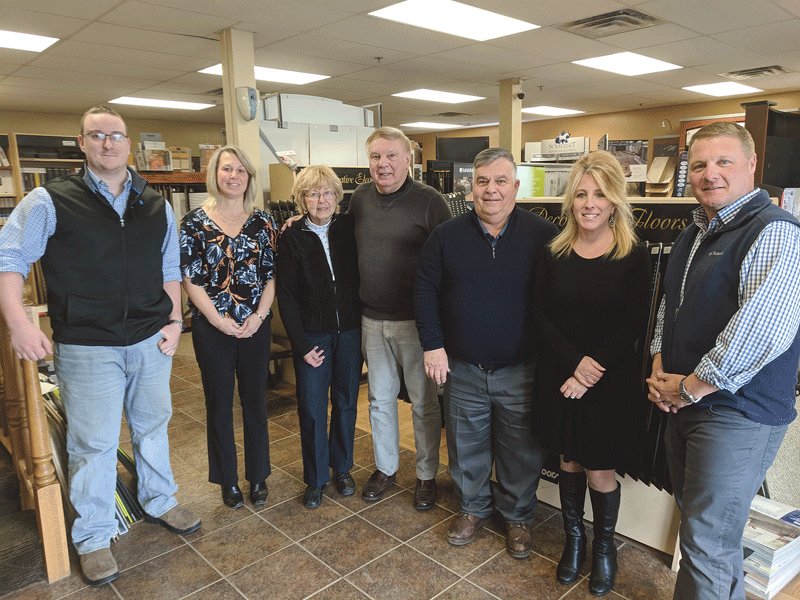
President Mitch Salomon (center) and some of his team at Salomon Flooring.

President Mitch Salomon (center) and some of his team at Salomon Flooring.

The flooring business has changed in many ways since Mitch Salamon Sr. opened his shop 75 years ago, with an array of products he couldn’t have envisioned. But other elements haven’t changed at all, say today’s second- and third-generation leaders of the company, from the importance of punctuality to helping customers work within their budget, all of which has helped Salamon build a roster of repeat customers in some of the area’s most important industries.

Visit Sarat Ford Lincoln in Agawam, Ford of Greenfield, or Balise Hyundai of Springfield, and chances are you’re walking on a surface installed by Salamon Flooring.

Since 2014, in fact, the West Springfield-based company has completed six-figure jobs at those dealerships, plus Curry Honda in Chicopee, Balise Ford in Wilbraham, Prime Hyundai in Rockland … the list goes on.

“Car dealerships are building now; there’s a lot of growth and consolidation,” said Mark Salamon, a third-generation vice president at the family-owned flooring business, which is celebrating its 75th anniversary this year. “We have a lot of projects going on with car dealerships; the opportunities are enormous.”

Assisted-living centers — which are also seeing a building and renovating boom, thanks to the largest population over age 65 in the nation’s history — are another strong niche for Salamon, with recent flooring jobs including Linda Manor in Leeds and Stonebrook Village in South Windsor, Conn., and several others now underway.

“We’re local contractors from Western Mass., but we do work all the way into Boston and New York and Connecticut,” Salamon said. “We do a lot of school work, assisted-living centers, car dealerships, government work, VAs, Navy work — small to large — as well as residential projects.”

Company President Mitch Salamon told BusinessWest that his father, also named Mitch, launched the company in 1943 in Holyoke, later moving it to West Springfield, where it has been based for more than a half-century. “It just evolved through the years, and when I was old enough to assist, we eventually broadened our scope of work and expanded our operations.”

Today, with 36 installers in the field and an office staff of nine, Salamon Flooring continues to build on its name, and its key niches. Major school projects in the past five years include a half-million dollars worth of work at UMass Amherst, plus jobs at Pioneer Valley Christian School, Baystate Academy, Bay Path College, Chapin School, West Springfield public schools, Wilbraham & Monson Academy, and Springfield Technical Community College.

Then there are the medical facilities — including Riverbend Medical Group, Baystate Medical Center, Mercy Medical Center, MedExpress, AFC Urgent Care, and other large practices. Meanwhile, recent government projects have included four naval bases around New England and Veterans Administration facilities in Northampton and Bedford.

A Vietnam veteran decorated with the Bronze Star, Mitch Salomon says being a vet qualifies his company for a competitive edge in the bidding process for government work, but added quickly that its track record provides a greater edge. “Our credibility and reputation are so strong that, once we affiliate ourselves with a contractor, we’re invited over and over for anything else they bid.”

Laying It Down

Mark Salamon noted that the company cut its teeth on residential projects, and started to shift more toward commercial work when his father took over. “As the third generation goes on, we do mostly commercial work, with some light residential.”

Popular products these days include broadloom carpet, carpet tile, luxury vinyl tile (LVT), vinyl composite tile (VCT), hardwood flooring, granite, ceramic tile, and sheet vinyls. Products like LVT, VCT, and sheet vinyls, he explained, offer more durability than traditional vinyl products while providing a realistic wood or tile appearance.

The majority of customers today are looking for long-term durability, he added, whether to protect a floor from dog claws and heavy use by kids, or due to a high-traffic location in, say, a retail store or car showroom.

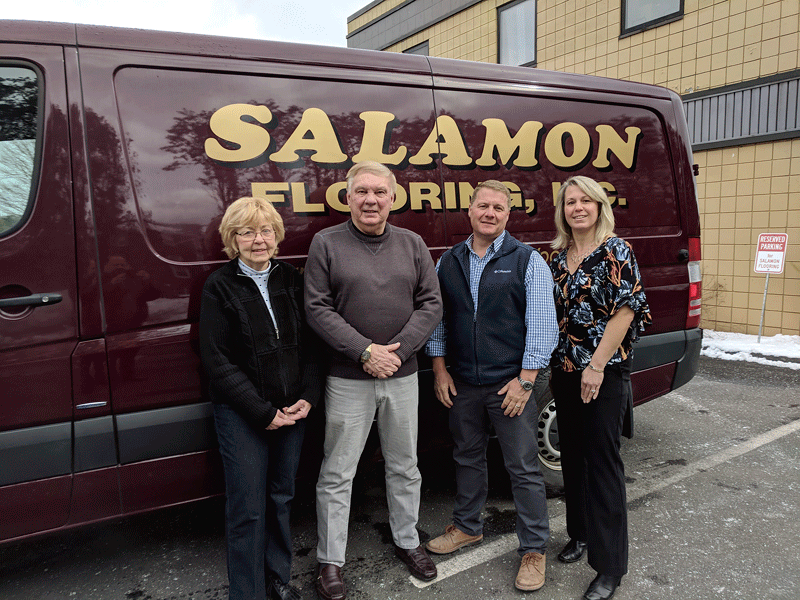
From left, Carol Salomon, Mitch Salomon, Mark Salomon, and Karen Salomon Shouse

From left, Carol Salomon, Mitch Salomon, Mark Salomon, and Karen Salomon Shouse represent the second and third generations of company leadership.

“LVT is becoming very popular and replacing hardwood in a lot of homes,” Salamon went on. “The way they’re constructed these days is a very realistic look that mimics wood, with beveled edges, graining on the surface, and it’s about half the cost of hardwood. Some have lifetime warranties, and some are waterproof.”

Commercial clients are increasingly choosing LVT as well, Mitch said, particularly high-traffic facilities like hospitals, healthcare practices, and assisted-living centers, for its blend of durability and a more pleasing appearance than traditional vinyl tile.

Part of a product’s durability stems from the surface preparation and moisture mitigation Salamon offers. Mark added that ever-expanding options in materials makes it easy to “value engineer” a job that meets the client’s needs within his or her budget.

“A lot of products start with the architect specifying something,” he noted, “but once budgets are set, sometimes value engineering comes into play, and we can make the projects fit their budget. We certainly have some clients with tight budgets, but we can find products that fit their needs and still give them quality and durability.”

Repeat business has been an important element of Salamon’s success, he went on. “Once we jump into a market and complete successful projects, we’re asked to bid a lot of similar projects again. We pride ourselves on giving 100%, doing the project on time, on schedule, and handling whatever obstacles are in the way, which creates repeat business. General contractors like us and trust us on projects.”

That’s partly because of the legwork Salamon completes well before it shows up on a job site, from the products to be used to a list of workers preapproved to work in certain settings — including background checks for military bases and CORI checks for school settings.

“We make sure the paperwork needed is done, so when the project starts, there are no delays,” he said. “General contractors like to see that set up in the system; it makes it very easy for them, which makes the process of completing the job that much quicker.”

Another important element of working with general contractors is making sure punchlist items are resolved immediately, thus preventing delays in the schedule. And he appreciates contractors with a similar emphasis on punctuality.

“We enjoy working with good general contractors that have their jobs well-organized, well-financed, and on schedule,” he said. “It makes our job easier, makes the projects come out nicer, and increases the chance for additional work with them.”

Carol Salamon, Mitch’s wife and the company treasurer, agreed. “The general contractors we work with have pride in their work; they’re not sloppy.”

Stepping Forward

Mark Salamon noted that the company has grown substantially over the past six years, emerging from the post-recession years with a substantial surge in business. “Every year has had strong, positive growth.”

The company has been a community fixture in more ways than installing floors throughout the region. Among its charitable efforts, Salamon Flooring and Salamon Realty, another family business, donated funds last year to the West Springfield Fire Department to purchase a utility task vehicle from Springfield Auto and Truck.

The emergency vehicle was put into use at the Big E in September and made 63 runs there. With its smaller size, it’s able to navigate through large crowds and access areas of the fair that would be challenging to reach with an ambulance. It is also used to reach emergency situations in Mittineague Park, the Bear Hole Watershed, and other places.

As for its flooring business, the Salamon family plans to be a local fixture for the foreseeable future. While Mark and his sister, Vice President Karen Salamon Shouse, represent the third generation of company leadership, they won’t be the last; Mark’s son, Beau Salomon, is a student at UMass Business School, but comes to work during summer vacations and other breaks, and sometimes on the weekend when needed, with every intention of coming on board full-time after graduation.

“He has the leadership ability that my father and grandfather had, that a lot of the guys here look for, Mark said, “and he’s a hard worker — something you don’t see in a lot of kids nowadays.”

He’ll be coming on board at a time when those niches that have driven so many sales, from auto dealerships to schools to assisted living, continue to experience a wave of construction. “The market is strong. We have some quality competition, but we strive every day to be better.”

“We’re not going anywhere,” Salamon Shouse added. “With the competition in the area, we have to bring our best to every job.”

Joseph Bednar can be reached at [email protected]
Home Builders Landscape Design Sections

Something to Build On

Gisele Gilpatrick says her family’s business, Pro-Tech Waterproofing in Chicopee, typically garners about six months’ worth of business from the Western Mass. Home & Garden show — just not all at once.

“They’ll take our information, but they won’t always call next week,” said Gilpatrick, Pro-Tech’s office manager and the chair of the 64th annual Home & Garden show, slated for March 22-25. “They’ll say, ‘we saw you six months ago, or a year ago, or two years ago. I pulled out your card, because I have a problem now.’”

That’s the value for many of the 350-plus vendors who will set up shop at the Eastern States Exposition on March 22-25. Among those showcasing their products and services will be builders, remodelers, kitchen and bath specialists, landscapers, painters, roofers, financial institutions, pool companies, and more.

“It’s a good chance for people to talk to us one on one about their situation,” Gilpatrick said. “Sometimes it’s easier to visualize things when you talk with someone in person, and people are more comfortable explaining what they need. Sometimes, people think it’s a major project and it’s not, while other times we have to tell them it is major.”

Either way, it’s easy to find answers — and second, third, and fourth opinions — with so many businesses on hand. For that reason and others, the annual event has become the signature showcase for the Home Builders & Remodelers Assoc. of Western Massachusetts, which produces it.

The home show started as a way to generate revenue to support the association, but it also provides member companies with a chance to market to an audience — and a big one, with around 20,000 visitors over the four days in a typical year — that might not otherwise see their name. Conversely, it gives attendees, many of whom simply come to the show for fun, a host of concrete (sometimes literally) ideas for home improvement.

The exhibitors — in more than 90 different categories — run the gamut from inspection services to security and alarm systems; Internet and communications to moving and storage; duct cleaning to pianos and organs.

Show attendees fall into one of several categories, the association notes:

• People planning to buy or build a new home, who may visit with builders, real-estate agents, financial institutions, and sellers of component products, such as hardwood flooring, tile, and appliances;

• People planning to remodel or renovate, who may want to check in with all of the above, plus vendors of replacement components such as windows and doors, as well as appliances, wall treatments, and home furnishings;

• Yard and garden enthusiasts, who tend to be interested in lawn and landscaping services; wall, walk, and edging components and materials; and trees, shrubs, flowers, and seeds;

• Lifestyle-conscious individuals, who like to check out trendy, high-tech, or time-saving products; home furnishings; and products focused on self-improvement, fitness, and health;

• Committed renters, who have no plans to own a house, but may be interested in space-conservation and space-utilization products, as well as home furnishings;

• Impulse buyers, who flock to vendors of home décor, arts and crafts, cooking and baking products, jewelry, and personal goods; and

• Those who attend the show purely for fun, who may arrive without an agenda but often develop ideas for future purchases and home products. “More than any other group,” according to the association, “these people are the ones who have come to rely upon our show on an annual basis and who perhaps have the greatest impact upon our vendors.”

Advice — on the House

In addition to the exhibitors, the four-day event will also include cooking shows, hosted by WMAS radio personalities, in the Home Show Kitchen in the Young Building. Various chefs from restaurants throughout the Pioneer Valley will be on hand to prepare some of their specialties, and audience members can ask them questions, try samples, and have a chance to win gift certificates from some of the establishments.

A children’s area in the Young Building will feature an art exhibit created by students from Thousand Cranes Studio and a chance to participate in creative activities, as well as Melha Shriners clowns and a live butterfly display from Magic Wings Butterfly Conservatory & Gardens. The Koi Society will have a pond built by C J Grounds Maintenance filled with koi fish, kids can get their pictures taken on a go-cart provided by Pioneer Valley Indoor Karting, Looney Tunes characters from Six Flags New England will be on hand, and Rolling Acres Outdoor and Science Summer Camp will help kids conduct science experiments.

Meanwhile, promotions and giveaways include the WMAS Kitchen Giveaway Contest, the Rock 102/Lazer 99.3 Ultimate New England Sports Fan Giveaway, and iHeartRadio’s $25,000 Home Makeover Contest.

In a dedicated outdoor area, several vendors will assemble outdoor structures such as sheds, gazebos, sunrooms, and furniture to spruce up the deck or poolside. Also on display in that area will be the large Beauty in Motion showroom of American Standard products.

Gilpatrick emphasized that the impact of the Home & Garden Show is year-round. “Some people may have a problem that costs $15,000 to fix, and they don’t have $15,000. But come next year, they’ve planned and budgeted, maybe secured financing, basically done what it will take, and that’s when we hear from them again. There’s a lot of that.”

This year’s show hours are Thursday and Friday, March 22-23, 1-9 p.m.; Saturday, March 24, 10 a.m. to 9 p.m.; and Sunday, March 25, 10 a.m. to 5 p.m. General admission is $10 for adults, and children under 12 are admitted free. Discount coupons, available at www.westernmasshomeshow.com, knock $6 off the regular ticket price on Thursday, $4 off the regular price on Friday, and $2 off the regular price on Saturday and Sunday. Veterans and active military with ID receive free admission on Thursday only.

Joseph Bednar can be reached at [email protected]
Modern Office Sections

Playing by the Rules

John Gannon

John Gannon says putting a policy in writing isn’t enough — an employer then needs to follow it — but it’s a first step in showing a company takes workplace law and ethics seriously.

Most companies, especially larger ones, have employee handbooks that detail everything from vacation time to reasons for termination. Yet, too many are content to draft a handbook and shelve it for years, never reviewing it for changes in the regulatory landscape or confusing or contradictory language. In the ever-changing world of employment law, those are mistakes that can prove costly in more ways than one.

An employee handbook isn’t a contract, nor is it a legally binding document. But in a legal proceeding, it helps to have one.

Take, for instance, the case of an employee suing a company for allowing a culture of sexual harassment — a particularly timely example.

“In court, the first thing the judge will ask is to see the company’s policy,” said John Gannon, partner with Skoler, Abbott & Presser. “If your response is ‘we don’t have one,’ that suggests the employer doesn’t care about harassment and discrimination in the workplace. And that’s really getting off on the wrong foot in the event you’re sued for harassment or discrimination.”

The #MeToo revolution has certainly sent HR departments scrambling to make sure their policies on that issue are up-to-date, clear, and enforced. But if they’re smart, said the attorneys BusinessWest spoke with, they’re also regularly reviewing all sorts of policies that govern workplace rules and expectations — from disciplinary procedures to time off — and, hopefully, including them in an employee handbook.

“Every company that has employees should have a handbook,” said Daniel Carr, an associate with Royal, P.C. in Northampton. “But we use the term ‘handbook’ loosely; there’s no requirement that they have to be bound in a single document. It could mean whatever collection of policies you have, as long as it’s applied to all employees.”

Even if the employee signs a statement that he has read and understands the handbook, that doesn’t create contractual rights, Carr explained, noting that Massachusetts is, after all, an at-will state when it comes to hiring and firing, and an employee can be terminated for any reason that is not explicitly illegal, such as discrimination.

“I can’t tell you how many cases we’ve seen where the employee claims his termination was a violation of his contract. When asked, ‘what contract?’ they argue the employee handbook is a contract. It’s not.”

Gannon agreed. “One of the nice thigns about a handbook is that you can reaffirm the principle that everyone is an at-will employee,” he explained. “That’s why it’s really important, if you’re going to have a handbook, it should make it clear this is not a binding contract, your employment is at-will, and we can change the terms of the handbook and your employment relationship at any time with or without notice.”

So, if it’s not a contract, what is a handbook, and why should employers have one — and take it seriously?

“A handbook is a collection of policies, an ever-living document that can be changed at any time by an employer with or without notice,” said Mary Kennedy, partner with Bulkley Richardson in Springfield. “The purpose of a handbook is to give information to employees about expectations at work.”

Employers use the policies in an employee handbook as a sort of roadmap to both the treatment of employees and, conversely, expectations for their behavior. They protect themselves from lawsuits, such as harassment claims, wrongful termination claims, and discrimination claims. Employee handbooks generally contain a code of conduct for employees that sets guidelines around appropriate behavior for the individual workplace.

Mary Kennedy says the first goal of a handbook is to lay out clear expectations for workplace behavior.

Mary Kennedy says the first goal of a handbook is to lay out clear expectations for workplace behavior.

Under Massachusetts law, for companies with at least six employees, part of that collection of expectations must be policies reflecting the state’s own guidelines governing sexual harassment, accommodations for pregnant workers, sick leave, and other issues — many of which have changed recently.

Other contents should typically include policies governing discipline, rules of behavior, when and how to take time off, sick-time guidelines, how much vacation and personal time employees get, when they are paid, and what health benefits are available and how to access them.

The contents of any handbook vary from industry to industry, Gannon noted. For instance, the time an employee clocks in may be more important on the manufacturing floor than in an office setting, while safety guidelines for construction workers will be different than those for accountants.

“It’s an inexact science, and obviously no handbook is foolproof, and you can’t account for every possible contingency,” Carr said. “There may be at times you have to deviate from it. Certainly, you don’t want to be hemming yourself in to something you can live up to. As an employer in an at-will state, you have the right to set the policies. The handbook is more about setting expectations than setting hard and fast rules.”

Law and Order

The benefits of having a handbook fall into two buckets, Gannon said: The legal obligations governed by state and federal employment law, and basic HR practices that aren’t necessarily required by the law.

For the latter, written policies must make it clear to the employee what the employer’s expectations are.

“If you do need to discipline an employee, if you need to write them up or suspend them, you never want an employee to turn around and say, ‘wait a minute, I didn’t know I was going to get written up if I was absent more than three times in a month.’ Or, ‘I didn’t know it was a violation of your company policy to raise my voice at a meeting’ — whatever the case may be. A handbook sets expectations.”

It also provides guidelines to managers so they can treat employees fairly and consistently, he added. If the policy is clear, it can be applied to everyone across the board. If not, one supervisor may write someone up for a violation, while another supervisor doesn’t. That leads to inconsistency and, sometimes, hot water in court.

“Inconsistent application of your rules can lead to a lot of legal problems if the employee challenges the reason for his or her reason for separation from employment,” Gannon said, adding that the actual enforcement of the rules is more important than what a handbook says, “but if you don’t have, at minimum, a written policy, you have a big risk of inconsistent enforcement of your work rules.”

Kennedy said having clear policies in the handbook is the first step when defending a claim of wrongful termination in court.

“If you have a no-show policy where, after three violations, the employee is terminated, and it’s in writing and the employee was told it applies to all employees, and the employer can show it was uniformly applied to all employees, then the employer has a better shot at defending itself.

“For example, if a bank teller continually makes mistakes on the line and keeps coming up short, that’s certainly not beneficial for the employer,” she explained, so a written policy outlining the consequences of coming up short multiple times would be reasonable. “Whereas, if the bank said, ‘we don’t like people with red hair,’ well, that’s different.”

Supervisors and managers, Gannon said, typically appreciate a hard-and-fast policy because it’s something they can fall back on. He recalls one client whose employee showed up to work intoxicated, and at first, his supervisor didn’t know what to do. “Fortunately, they had a policy that made it clear, if you detect someone is under the influence, this is what you should do. It helped the supervisor navigate what his options were. Without that, they’re left wondering what to do.”

Communicating the policy to employees is just as important, Kennedy said, whether it’s a physical document passed out, with the employee signing an acknowledgement of receipt, or an electronic document distributed through the company intranet, or, for a larger business, explaining new policies in a meeting and making a list of who attended. “You certainly want to give it out when onboarding people, and then when there are any changes in policy.”

Even progressive discipline can be altered if the employer can prove the action is reasonable, Carr said — again, going back to the at-will concept. “If the handbook says a first violation is a verbal warning, the second is a written warning, third is probation, and fourth is termination, you have the right to revise that if someone commits a terminable offense the first time out.”

Trouble Spots

With all the protections a handbook may provide, Gannon said, some pitfalls do exist. One is trying to put everything in a handbook.

“The more words you have in the handbook, the less likely an employee is going to read it all,” he noted. “Sometimes I’ll see one that’s 120 pages long. I’m not sure any handbook needs to be that long.”

A smarter option, he said, is to include a short, two-paragraph summary of each policy, directing the employers to ask a particular person, maybe someone in human resources, if they need a more detailed explanation.

“Another mistake is not getting it reviewed enough,” he added. “It’s great to have a handbook — most employers do — but sometimes they get stale. You don’t want to have a policy that’s outdated, or you don’t want a handbook that misstates the law, because there are often changes in the law.”

For example, on April 1, Massachusetts employers will be required to have a policy that adheres to the Pregnant Workers Fairness Act. “You need to review your handbook — it doesn’t necessarily have to be annually, but I would say every two or three years — just to make sure you’re not missing anything and there haven’t been changes in the law that would require rewording a policy.”

In a union shop, Kennedy said, employers want to make sure the handbook gels with the collective bargaining agreement, but even in a non-union shop, certain written policies may run into conflict with rulings from the National Labor Relations Board (NLRB). A few years ago, several companies made news by terminating workers for complaining about their job on social media — and took their cases to court, where they won.

“Social media has become the equivalent of the so-called water cooler,” Carr said, noting that the NLRB has long protected the rights of employees to discuss the terms and conditions of their employment, even in a public forum. However, the composition of the board has changed under President Trump and may be less willing to side with employees in all such matters.

“A few years ago, handbook provisions that restricted employees’ right to discuss terms and conditions of employment were considered overbroad — that was all the rage for awhile,” Gannon said. “New administration has scaled some of that back. With all the ebbs and flows in the world of employment law, you need to make sure the handbook stays up to date with those changes.”

Kennedy agreed. “Employment law changes on a regular basis, so handbook policies should be reviewed on a regular basis, to make sure they contain up-to-date language.”

Still, amid all the talk of violations and firings, Gannon said, the greatest value of a handbook is in its power to prevent some of those incidents in the first place.

“If an employee knows what can potentially lead to discipline, I think the employee is less likely to engage in that behavior,” he told BusinessWest. “That’s one of the really nice things about a handbook — it sets out what your expectations are. The goal of discipline is not to create a path that justifies termination. The goal of discipline is to correct behavior so that somebody can stay with the company for a long time and be a valued contributor to the group.”

To that end, he continued, “if you do need to discipline, it’s easier to explain why when you can point to handbook and say, ‘look, this is company policy, and you violated it. Sorry, but I have to write you up.’”

Turn the Page

That said, a handbook also helps with a company’s defense is they are sued, Gannon noted.

“If an employee claims they were fired because of a protected characteristic, it’s the employer’s burden to demonstrate to a judge or jury that, no, this is the real reason this person was fired. It’s nice to be able to point to a policy in a handbook that makes it clear this is why the employer took a particular action, that it wasn’t an arbitrary decision one supervisor just came up with. The company considered this particular issue, went to the extent of drafting a handbook putting this policy in place and having the employee sign off on it, and there’s an expectation the policy is going to be followed.”

Carr, who told BusinessWest he has drafted or reviewed “many, many handbooks,” emphasized, however, that a good policy holds up in court only if the employer actually enforces that policy uniformly and consistently.

“Otherwise, it’s just empty rhetoric. Sexual harassment is a perfect example, and a timely one,” he said.

Elaborating, he said virtually every company has an anti-sexual-harassment policy, and one of the tenets of sexual-harassment law is the question of whether an employer knew about, or should have known about, the alleged violations. “If the employee can show the employer was not diligent about enforcing their own policies, it creates the impression they dropped the ball and should have known.”

It’s a lesson many companies continue to learn the hard way.

Simply put, Kennedy said, “what’s bad about having a handbook is if you don’t follow it.”

Joseph Bednar can be reached at [email protected]
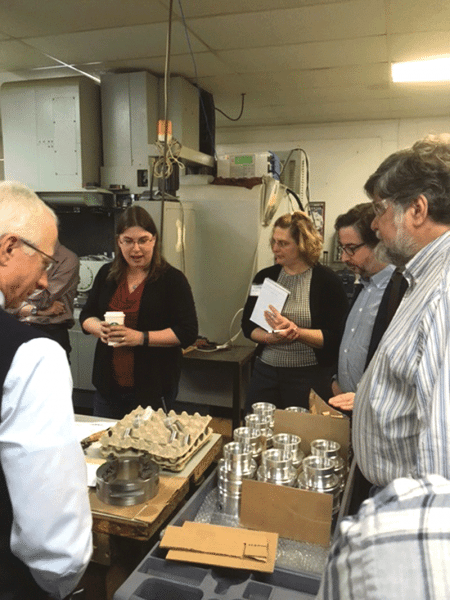
Modern Office Sections

Getting Ahead at Work

By Susan Bellows

You went to college and did well. You got an entry-level job and moved up in the company. Yet, for some reason, your advancement has plateaued.
You’re not getting the respect, recognition, and rewards your hard work deserves. What are you doing wrong, and what can you do to turn the situation around?

Let’s Start with the Don’ts

• Don’t complain, gossip, or blame others. All of these behaviors devalue you.

• Don’t make up an answer if you don’t know it. Instead, say something like, “let me get back to you with the most accurate information.” This will avoid jeopardizing your long-term credibility.

• Don’t bring your personal problems to the office.

• Don’t be afraid to ask for more details on a project you’ve been assigned. The president of a bank once said to me, “I worry if they don’t come back and ask questions.”

• Don’t try to hide mistakes. Own up to them and learn from them. You’ll earn more respect from others when you take ownership.

• Don’t be a know-it-all. A little humility goes a long way in building rapport with your colleagues.

Now for the Do’s:

• Behave positively and professionally both inside and outside the company. This includes the Christmas party, networking events, and posting on social media. You’re always being evaluated. Inappropriate pictures or statements made on social media can and will be used against you.

• Have a can-do attitude. Be proactive about saying ‘yes’ to new opportunities and challenges. Your willingness to step up will make you more valuable to the company and enhance your reputation as a team player.

• Build mutually beneficial relationships with vendors, colleagues, department heads, and your boss. Some of the best job referrals come from vendors. An adversarial relationship with a department head could easily sabotage your ability to get your job done.

• Be proactive about your career development. Invest in things like additional training and technology. These actions will increase your value as an employee. They will also make you a more marketable candidate for jobs inside and outside your company.

• Continue learning once you get a job. Go to other departments that involve the work you do, such as marketing if you’re in sales, and ask questions that’ll help you understand their challenges. Read about your industry. Join outside professional groups to learn more about your field and to build a network of peers.

• Learn communication skills to build rapport with others. Dale Carnegie’s classic book How to Win Friends & Influence People is a good place to start. Anything you can do to understand yourself and others will be valuable at work and in your personal life.

• Listen attentively and take notes, if appropriate, when gathering information. Ask for clarification if needed. Nobody wants to spend time explaining something and then realize the listener was just nodding, but not retaining the details.

• Offer fact-based solutions, not just your opinion, when making suggestions for improvements in a process.

• Contribute constructively at meetings and listen to what others have to say. It’s important to understand the perspective of others. The only way this is possible is to be receptive and listen.

• Avoid challenging, questioning, and criticizing how things are done when you’re new. Later, learn to say these things in a way that doesn’t alienate others. Try using softening statements, such as “could I ask you something that might be sensitive?” or “you probably already know this, but…”

• Volunteer for high-visibility projects when you believe you’ll be able to contribute. Doing this exposes you to the attention of upper management, who may later offer you a position that leverages the talents they observe you demonstrate.

• Be aware of what you say and how you say it. Your tone of voice can enhance or destroy the message you want to deliver. Avoid asking a question starting with “why.” Folks get defensive when they hear this word. It’s preferable to say something like, “Tell me more about…” in a soft, non-confrontational tone of voice.

• Be prepared for inevitable change. This includes changes in ownership of the company, the economy, business competitors, co-workers, and your boss. Plan for change and be ready for it.

This is lot to think about. But being strategic about getting ahead is a little like starting a new job. It’s hard at the beginning, and then it becomes second nature. In the long run, it’s well worth the effort.

Susan Bellows is a business consultant specializing in empowering middle-management women to attain the recognition, respect, and rewards they deserve; (413) 566-3934; [email protected]

Banking and Financial Services Sections

Happy Returns

Since taking over as president of Monson Savings Bank seven years ago, Steven Lowell has overseen an impressive growth pattern, including striking success in commercial lending and ever-rising assets. He credits that success to a number of factors, from a willingness to embrace technology to a customer-focused culture to an emphasis on financial literacy aimed at making sure the customers of tomorrow are well-positioned to share in the bank’s success.

Five years ago, Monson Savings Bank opened its fourth branch in Ware, to go along with offices in Monson, Wilbraham, and Hampden.

And that’s where the branch total stands today: Four. Which would be a meager haul in one of the big-bank acquisitions that have become so commonplace.

So why is MSB growing at such a healthy rate? President Steven Lowell has a few ideas.

“A lot of people are saying that small banks can’t survive, that they need to be bigger, they need to merge. And we’ve seen some of that. But Monson Savings Bank isn’t just surviving; it’s thriving,” Lowell said, noting that the institution has grown by 7% to 8% every year since he took the reins seven years ago.

“That’s a strong number,” he added, noting that the bank’s assets have risen from $230 million seven years ago to $365 million today.

“People think a bank needs a certain asset size to afford the expenses that every bank has at this point in time,” Lowell said, specifically citing increased regulatory and compliance demands in an industry that’s increasingly heavily regulated. “But we haven’t merged with anyone or had anyone merge into us; we’ve been successful in attracting new customers and developing new relationships.”

We’re performing better than many billion-dollar banks are. We’re living proof that small banks can do it, and do it well.”

He noted that MSB’s return on assets, or ROA — which measures a bank’s profits in relation to its overall resources — was 0.6 last year, while Massachusetts-based banks in MSB’s asset class — $250 million to $500 million — recorded an average ROA of 0.27. Meanwhile, banks in the $500 to $1 billion range averaged an ROA of 0.53 last year, and banks with more than $1 billion in assets averaged 0.72.

“We’re performing better than many billion-dollar banks are,” at least by the ROA metric, Lowell noted. “We’re living proof that small banks can do it, and do it well.”

A few different factors account for that success, he told BusinessWest. First was the determination made several years ago that the strongest market for the bank is commercial lending, and since then, commercial loans have risen from 40% of the total portfolio to around 65%.

“That’s been a significant driver for us,” he said. “We focus on what we do well; we don’t try to be everything for everyone. At our size, we can’t do that. But we know we’re good at commercial lending — and residential lending — and good at providing high-touch customer service. Everything we do goes back to, ‘is this good for the customer?’ We want to make sure we don’t lose that closeness with the customer.”

With all the mergers that have taken place in recent years, he suggested, business owners are looking for a banking partner they know is going to be around, and don’t like it when their loan officer keeps switching.

“We’ve been the beneficiary of a lot of these mergers,” he went on. “And we’ve developed a reputation as a bank that’s easy to do business with. We’re up front with customers and try to be as fast and efficient as we can, and that reputation starts to get around. Now we’re getting phone calls: ‘I was talking to so-and-so, and he raved about you guys, that you’re easy to do business with.’ That reputation is very important to us and has helped us spread our reach much farther.”

He also praised his team, which hasn’t necessarily grown larger — technology has created efficiencies for all banks, and, as noted earlier, MSB’s branch count is only four — but the team is peppered with long-timers who understand the customer-focused culture, a culture Lowell expects to continue to build more organic growth.

Early Adopters

Speaking of technology, MSB has consistently been an early adopter of innovations that make customers’ lives easier, from mobile banking to remote check capture. “We’re not large enough to be an innovator — we can’t be creating new software — but we’ve been right there, so as soon as a product is proven, we’ve adopted it successfully,” Lowell explained.

Some recent products speak to that success. Mobile check deposit allows far-flung cutomers to make deposits from home or anywhere else, on weekdays or weekends.

“Not only our retail customers, but our commercial customers are very comfortable not having a branch within five miles,” he noted, adding that these capabilities have allowed customers — such as a landscaping company on Cape Cod — to access services without needing a physical branch.

“We’re not marketing ourselves on Cape Cod or in the Boston area,” he noted, “but if someone has ties to Western Mass. and wants to do business in one of these areas, we can accommodate them, and they love that.”

Steve Lowell, Monson Savings

Steve Lowell says customers appreciate MSB’s stability at a time when many other small banks have merged or been acquired.

Another recent product, the CardValet mobile app, gives users complete control of their debit card, so they can essentially shut it off between uses, or if it goes missing. “There’s so much fraud in the world, and cybersecurity is a big concern,” Lowell said. “This is a great product, and we don’t charge for it; I think it’s going to be big.”

A new loan product marries the bank’s well-known financial-responsibility messaging by marrying a deposit account and a secured loan, the latter of which is deposited into an account accessible only when the loan is paid off. “From the bank’s standpoint, there’s no credit risk, and the customer is building credit, whether it’s for a down payment on a car or a first month’s security deposit. It’s a good product for people who are just starting out or running into issues trying to re-establish good credit.”

It slots well into MSB’s continued focus on financial literacy, which ranges from its Dollars & Sense program in elementary schools to workshops for college students and community members. A survey conducted by the National Foundation for Credit Counseling shows that 40% of the public would grade themselves a C or worse when it comes to their financial literacy, and that lack of knowledge can lead to poor financial planning and hurdles when it comes time to seek a loan.

“Financial literacy is really important to us,” Lowell said. “Day in and day out, our staff see people they have to turn down for mortgage loans, and they don’t like doing that; it’s not a fun part of the job.”

With that in mind, he went on “we’ve come up with ways to talk to people and help them improve their financial lives, whether it’s how important it is to build credit or how not to get in trouble with credit-card debt, or the importance of saving for retirement and contributing the most you possibly can to your 401(k), and paying yourself before paying others.”

Lowell feels like today’s parents, for whatever reason, don’t like talking about these matters with their kids, and when the kids grow up, they haven’t developed a comfort level, and may be at the mercy of predatory credit companies that aren’t looking out for their best interest. “It’s important for us to be talking about that so they know how to manage money and get into a good place.”

That Monson Savings Bank puts resources into these educational programs says a lot about its desire to be a complete community resource in the towns it serves, and to continue adding products and services that customers want.

“I believe one of our strengths, because of our size, is that we can be really nimble,” he said. “We’re able to come up with new initiatives and new products a lot quicker than some of the bigger banks. We don’t have quite the amount of red tape most banks have to deal with.”

One example, he noted, is MSB’s newest initiative, a foray into municipal banking. Since appointing an officer to lead that effort six months ago, the bank has posted $10 million in municipal deposits. “That decision was made because somebody very good became available, and we saw it as a growth opportunity that presented itself, and we didn’t want to lose that opportunity.”

Giving Back

Monson Savings Bank has invested in the community in other ways as well, most notably through annual donations to various nonprofits, which totaled more than $130,000 last year.

The year Lowell arrived, MSB launched an initiative to ask the public for help in selecting some of the nonprofits that would receive funding. The bank solicits nominations on Facebook and through other outlets, and the top 10 vote getters receive donations. More than 300 organizations received votes last year, and the top 10 were given grants between $750 and $2,000.

“People get really excited about it,” he said. “And I think community philanthropy is really good for business, and that has helped us be successful. We sponsor sports teams, we’re involved in most of the school systems, giving them money for various programs, we give some scholarships … people appreciate that.”

They also appreciate efforts by bank leadership to be accessible, he went on.

“We send a newsletter to all our customers, and my e-mail is on that newsletter. I give out my direct phone number to customers all the time. I’ve even given out my mobile number on the weekend. I think the accessible reputation of the bank is very important to our commercial customers in particular.”

Lowell said an emphasis on accessibility extends to the employees as well.

“Sometimes the people with the best ideas are the people on the front lines, so I’m talking to them, but I’m also asking what the customers are saying,” he told BusinessWest. “When a customer takes the time to send me an e-mail or give me a call because he’s not happy with us, that’s important for me to hear. Some of the best ideas come from a customer saying, ‘you guys did this, and I didn’t like it,’ and we’ve ended up changing it.

“I’ve had really good input from customers who were unhappy or felt we fell a little short,” he went on. “I’m convinced that’s how you get better. We’re in a competitive environment, so if you’re not getting better all the time, you’re losing ground — and we can’t afford to lose ground.”

Joseph Bednar can be reached at [email protected]

Features

Embracing the Future

About 40 area business leaders heard Delcie Bean’s encouragement

About 40 area business leaders heard Delcie Bean’s encouragement to embrace change and think differently if they don’t want to be left behind by coming innovations.

Delcie Bean knows something about innovation, building the company he launched at age 13, Paragus IT, into a nimble, multi-faceted presence in the region’s IT world. He’s also passionate about futurism studies, understanding better than most that several emerging innovations will dramatically alter the way entire industries do business — leaving many companies hopelessly behind. But for those willing to embrace the change, it’s also a time of great excitement.

In 2013, a small team of entrepreneurs birthed a company called Casper Sleep. Two years later, two brothers launched a similar outfit called Purple Innovation.

“Both sell mattresses online. And they totally disrupted that industry,” Delcie Bean, founder of Paragus IT and Tech Foundry, recently told a crowd of 40 area business leaders, explaining that, for generations, mattresses were designed, manufactured, distributed, and sold by, well, designers, manufacturers, distributors, and retailers, each with a well-defined role.

“That’s how mattresses have been sold for a very, very long time. But they screwed that all up. They designed their own mattress, manufactured the mattress, and sold it online. And they totally changed the ecosystem,” Bean said, noting that the two startups now control 20% of the U.S. mattress market. “And all they did was capitalize on the Internet.”

That last comment might have been the scariest thing Bean said during his wide-ranging discussion, titled “An Unprecedented Technology Disruption,” the first in a four-part series called Future Tense, presented by BusinessWest at Tech Foundry in Springfield.

That’s because disruptions like the one Casper and Purple managed — and other famous examples, such as Blockbuster’s rapid demise in the era of Netflix, Amazon’s recent dominance of the retail sector, and the way digital photography all but erased Kodak from the public consciousness — may become near-constant events in the not-so-distant future, due to several emerging trends (more on those later) that, some analysts say, could have four or five times the impact the Internet and the smartphone have already had on the economic landscape.

“Think about how different life is today; think about all the things that would not have been true before the Internet existed, and then try to imagine what it would be like to have something four to five times bigger than that disrupt our lives,” Bean said.

Perhaps the most daunting development will be the sheer speed of those shifts, he continued. “We are not wired for this. Human beings are struggling just to keep up with the rate of change we experience today, and if you compare that to 20 years ago, then compare it to 100 years ago, we are moving at a pace that is almost hard to compare to earlier generations. And the rate of change we are about to experience in the next 30 years, we’re totally unprepared for.”

To put things in perspective, he noted that it took the telephone 75 years, after its invention, to reach 50 million people. Radio took 38 years, television 13. The Internet, once opened to the general public in the 1990s, took only four.

Less than a decade ago, with smartphones becoming more widely used, the mobile game Angry Birds needed only 35 days to boast 50 million users. Two years ago, Pokémon Go needed less than a tenth of that: just three days.

“That’s the rate of change we’re talking about, where things are going to happen very quickly. What is true today might not be true tomorrow. The business I’m competing with today might not be my competitor tomorrow. My customer might not be the same customer tomorrow. These things are going to happen very quickly.”

The ripple effects, he said, will be massive and unpredictable, the result of doing business in an interconnected world where new advances have the potential of circling the globe in less than a week.

To demonstrate, Bean settled on four emerging technologies — 3D printing, autonomous driving, artificial intelligence, and virtual and augmented reality — he believes will create the greatest disruptions and most significant ripple effects for the business world over the next couple of decades, and why they are reason for excitement, not fear, for those willing to accept and embrace the change.

Driving Change

Until recently, there was one way for a musician to become famous — get signed to a major record label and trust in its ability and willingness to promote and distribute the music.

“Now, it doesn’t matter,” Bean said, “because it got democratized with the creation of things like iTunes, which built a platform where a musician could take their art and essentially immediately distribute it to a mass market without a label.”

In fact, the broader world of media was also democratized in the Internet age; no longer does an individual need the backing of a newspaper, book publisher, or TV network to deliver a message; anyone can build a website and reach millions of people.

Some people are still thinking of this as a fun hobby or a cool science experiment. But 3D printing is going to have a massive impact.”

3D printing, he explained — with its ability to replicate basically anything, from complex machinery to human tissue — has the potential to do that to manufacturing.

“Anybody could become a manufacturer. The technology is going to get cheaper and cheaper, the raw materials will get more and more available, and the technology needed to create the design and the products will get cheaper and cheaper. You’re going to have high-school students printing their own T-shirts to wear to school instead of having to go and buy them.”

The ripple effects of anyone being able to create anything will be huge, he said, not only for manufacturing, but distribution, retail, and malls — the latter of which, in turn, impacts real-estate development.

“Some people are still thinking of this as a fun hobby or a cool science experiment. But 3D printing is going to have a massive impact,” he explained. “We can design and produce individual items, so everybody’s smartphone could be different. Everyone’s pair of glasses could literally be different. They could all be perfectly shaped, perfectly fit, perfectly cut for you.”

Autonomous driving is another example of the ripple effect Bean returned to several times during his presentation. He posited a world where people won’t have to own cars, but, rather, subscribe to a service that, for a monthly fee, delivers a self-driving vehicle on demand, which transports the user to his or her destination, then drives off.

“Essentially, it’s Uber, but it’s everywhere, and there’s no human being driving the car, which drives the costs down, which changes the economics a lot,” Bean explained.

And what are the ripple effects? Well, convenience stores — which get most of their food sales from people fueling up their cars — would suffer. So would auto dealerships; perhaps some auto groups would move into the realm of managing fleets of self-driving vehicles for a host of subscribers, while others, not so nimble, would fade away like so many Blockbusters. Meanwhile, parking garages and lots could be repurposed for other types of real estate, changing cityscapes in intriguing ways. And Bean didn’t even touch on the potential impact — and loss of jobs — in the trucking industry.

The effects extend further, he said. If people don’t actually have to drive the cars, they could use their commute to do basically anything — eat breakfast, do their hair, answer e-mails, read the news — which lessens the efficiency drain of a long ride to work, which could, in turn, make city living less of a necessity.

“If autonomous driving does what it’s supposed to do, which is to reduce traffic, make my commute much more enjoyable, and arguably also make my commute more productive, faster, and efficient, the need to live in a city changes,” Bean said. “Right now, we’re going through a resurgence of everybody moving back into cities for convenience, to get access to things, for nightlife. What if that starts to shift back out? I don’t care if I’m 20 minutes from work or an hour from work, because it doesn’t really matter.”

What Is Real?

The other two concepts Bean dove into at length — artificial intelligence (AI) and virtual and augmented reality — may bring a higher gee-whiz factor, but both have very down-to-earth implications for business.

He noted that computing has always been based in programming — tell the computer A, it spits out B. “They do what we tell them to do, but faster, better, cleaner, and they make our lives easier.”

AI, on the other hand, is the concept of computers doing the thinking as well. We’re seeing its infancy in anecdotes like Target sending coupons for diapers to a woman who just found out she was pregnant but hadn’t yet told a soul — because Target’s AI basically observed her behavior online and correctly pegged her as an expectant mother.

“That was done by a computer algorithm that’s programmed to look for different things and then weight them,” Bean noted. “That’s how our thinking works. We take inputs, we weight the inputs based on certain things — our biases, our experiences, intelligence, knowledge — and then we formulate a decision.”

For computers to essentially take on that role is a scary concept for some — and it could wind up costing jobs.

“We are used to living in a world where, for the most part, the only work we think of being done by robots is typically labor-intensive and manual,” he said. “We don’t think of the kind of high-level, high-intelligence, high-skilled work being subject to being replaced by robotics and by artificial intelligence, but that’s what we’re approaching.”

For example, Boston Children’s Hospital now has more requests for robot-assisted surgery than human surgery, he noted, meaning parents trust doctors working with robot-controlled instruments than they trust the doctors’ own hands.

Or take the legal field, where the task of, say, poring through thousands of e-mails during the discovery process for a court case, looking for trends and key data, could be performed more quickly, accurately, and efficiently by a program than a human being.

“I think that’s the world we have to start to think about. We’re not just talking about fast-food workers; we’re not just talking about taxicab drivers. We’re talking about doctors and lawyers, jobs that we never would have thought could be subject to automation replacement,” Bean noted. “We’re far away from seeing a robot argue for a defendant in a courtroom, but we’re not far from a lot of the back-office functions being replaced.”

As for virtual and augmented reality, the technology could eventually become ubiquitous, ditching today’s bulky goggles for glasses or contact lenses and, eventually, implanted chips that will blur the lines between real and virtual in what people see and experience around them.

The applications aren’t as clear as those for 3D printing or self-driving cars, but could range from tourism — Bean theorized about a program that lets people walk down a city street but experience it in a different era, populated with the stores and dress styles of the past — to therapy, with a doctor prescribing a virtual ‘buddy’ to follow someone around and give them emotional support.

Virtual reality could also impact the one form of investment that has always been believed to hold its value, because it is limited: real estate.

“At the end of the day, you cannot create more real estate. But what if that wasn’t true?” Bean said. “We will be able to create space. We will be able to manufacture land as we think about it — a place where somebody goes to have an experience, to see something, to buy something, to do something, to meet someone, hear a concert, see a performance. We will be able to manufacture that at a very low cost. The most popular mall in America, in the world, might be an artificially created mall that is owned by a 15-year-old kid. That’s feasibly possible. And it will still have value.”

In short, if a business can draw traffic to a virtual world — if they can get people to ‘visit’ a place, have an experience, and spend money — then that created reality could have value rivaling that of physical real estate.

It’s one way, Bean said, that corporate assets will change in the future, with data and algorithms taking on oversized importance, and companies acquiring other firms not to make more profit, but to add data, technology and innovation.

“Data will be the next gold,” he said. “The next gold rush will be about acquiring data. Good data will be a key asset on your balance sheet.”

Staying Alive

Why is all this important? Because no one wants to become the next Blockbuster or Kodak — and those cautionary tales will occur, with regularity, as the four technologies Bean discussed at Future Tense become more accessible to the masses.

“We’re going to be living in a world where that could be a daily occurrence. It will be very, very common that a major industry is completely innovated in a very short period of time by an entrepreneur, by a new business, taking a new concept and applying it to an old industry.”

Perhaps most frighteningly, the rate of change and innovation will, for the first time, take away more jobs than it creates, he explained. Every major evolution or disruption has displaced jobs, but created more in return. But this will not necessarily be the case going forward.

“There’s no question some of this can feel a little scary, be a little bit alarming,” he said, “but, at the same time, it should be a little bit exciting. And hopefully some of you are seeing this as the opportunity it really, truly is. This is an opportunity for us to do things we’re not doing now, to reinvent ourselves.”

To do that, companies — and entire industries — need to accept that these changes are coming, he argued, and embrace the change, rather than retreating to the comfort of denial. “If that’s still your mindset, well, focus on that last seven years of your career and retire. But if you’re really going to participate in this, be a part of it rather than being lost in it, you need to accept it and then embrace it and try to get excited about it.”

Part of that is thinking differently, even in industries, like manufacturing, that haven’t drastically changed the way they operate in 100 years, aside from automating some of their processes. It also means examining the value a company can offer in the realm of data, and how that can be commercialized. Most of all, it means recognizing the next big shift before someone else does.

Going back to Blockbuster for a moment, Bean noted that the company failed to look beyond its physical DVDs to see itself as a more holistic provider of home entertainment. “If they had, there’s a chance they could have launched an online service 10 years before they did — and when they finally did, it was a joke. But they could have gotten there. Kodak could have gotten there. They didn’t because they weren’t willing to think differently. We have to fundamentally think differently.”

Thinking differently includes a new view of startups, too, seeing them not as threats, but as idea generators and potential partners.

“Businesses should be helping those startups, trying to get on their boards, giving them funding, giving them ideas — they should be opening up their doors and welcoming those startups. Because those are going to be a future acquisition, and that very well may be the company you buy that saves your own company.”

Putting physical value on virtual real estate? Emphasizing acquisition over research and development? Outsourcing skilled jobs to robots? It’s a lot to take in, Bean admitted, and it can be scary. But he’s learned to think … well, differently about his own fears.

“If you embrace it, it’s a massive opportunity, and that’s how we need to view it, because it will help us survive in a lot of ways,” he concluded. “As dire as that sounds, survival also means thriving — and that’s how I see it.”

Joseph Bednar can be reached at [email protected]

Banking and Financial Services Sections

The Tax Cuts and Jobs Act

By Sean Wandrei

Sean Wandrei

Sean Wandrei

In December 2017, Congress passed H.R.1, better known as the Tax Cuts and Jobs Act. The act is the largest overhaul of the tax code since 1986. As with any new legislation, there are opportunities and pitfalls that one needs to be aware of when trying to take advantage of the new rules and avoid unwanted situations.

There are still many questions related to the act that the IRS will need to issue guidance on. There is a lot to unpack here, so let’s take a look at some items that businesses and individuals should be aware of.

The act reduces the corporate tax rate to a flat tax rate of 21%. This means the first dollar of taxable income is taxed at a 21% rate. This reduction could cause many owners of non-taxpaying entities (e.g. partnerships, limited liability companies, and S-corporations, also known as pass-through entities) to consider switching to a taxpaying entity (i.e. C-corporation). The maximum tax rate that the income of a pass-through entity could be taxed at is 37%.

Business owners could decide that their business should convert from a pass-through entity to a C-corporation based on this. While the reduction of the tax rate sounds great, there could be some issues that could increase the overall tax due if the entity is a C-corporation. If the owner(s) want to take money out of the C-corporation in the form of dividends, it will have to pay taxes on the dividends from the C-corporation at a maximum rate of 23.8% (20% tax on the dividend plus 3.8% net investment-income tax).

This is known as double taxation, which impacts only C-corporations and not pass-through entities. This could reduce or eliminate the overall tax savings of converting the entity to a C-corporation.

While taxes paid are usually a major factor on entity selection, there are some non-tax items to consider. Owners of C-corporations can receive tax-free employee benefits that pass-through entities are not entitled to. Another tax-savings option that was available prior to the act is the exclusions of the gain on the sale of qualified small-business stock (QSBS) under Code Section 1202. This provision was amended in 2010, allowing QSBS acquired after Sept. 27, 2010 to be eligible to exclude the total gain on the sale.  There are a few rules that have to be met to allow for the 100% exclusion. Section 1202 is available only for C-corporations. This means that, when the owner decides to sell his or her stock, the gain from the sale of that stock would be tax-free. The reduced tax rate and non-tax benefits could make C-corporations more attractive to some.

C-corporations are not the only business entities that received a tax break from the act. Pass-through entities are able to take a deduction of 20% on the qualified business income (QBI) earned from the business. Individuals who are sole proprietor and file a Schedule C and individuals with rental activity reported on Schedule E also qualify for this deduction.

On the surface, this deduction seems to be straightforward, but there is a lot to this deduction. Not all businesses qualify, and the deduction could be limited. QBI can be thought of as ordinary income from the business. The catch is that the deduction is limited to the lesser of 20% of QBI or 50% of the total W-2 wages paid by the business. So wages need to be paid to be able to take this deduction.

The 50% of W-2 wages does not apply if the owner’s taxable income is below $315,000 for married filing jointly (MFJ) and $157,500 for other taxpayers. This deduction may not be available to a specified service trade or business (SSTB). A SSTB is a business involving service in many fields, including law, accounting, consulting, and financial services. Engineers and architects were excluded from the definition of SSTB in a last-minute change. If the owner’s taxable income is below $315,000 for MFJ and $157,500 for other taxpayers, the SSTB limitation does not apply.  

The planning that comes into play for this deduction is based on the entity type. QBI does not include reasonable compensation paid by an S-corporation to the owner(s). Similarly, QBI does not include amounts paid as guaranteed payments by a partnership to the owner(s).

Based on this, if the pass-through entity is an S-corporation, reasonable wages are going to be deducted from the QBI, which will reduce QBI and the deduction. A partnership and sole proprietor are not required to take guaranteed payments, so the QBI could be larger for a partnership than an S-corporation based on this. If the taxable income is below the limits mentioned above, the 50% of W-2 wages option does not come into play, and the larger deduction will be had by the partnership and sole proprietor.

If the 50% of W-2 wages comes into play, then the S-corporation will have to pay W-2 wages, and the partnership will have to pay guaranteed payments to owners or wages to non-owners to be able to take this deduction. With this in mind, the owner’s taxable income will need to be monitored.

For individuals, the elimination of exemptions and the doubling of the standard deduction will cause more taxpayers to take the standard deduction instead of itemizing. It is said that only 10% of the population will itemize in 2018 compared to 30% in 2017. If you fall into the 10% of people who itemize, you may have heard that one of the biggest deductions, state and local taxes, is limited to $10,000 per return.

This is the case if you are single or filing as MFJ; the deduction is limited to $10,000. The marriage penalty is back. If the MFJ couple was not married and filed as single taxpayers, then they each would be able to deduct up to $10,000 in state and local taxes.

In the past, the interest from a home-equity loan was deductible. The proceeds from the home-equity loan could have been used for anything. Now the interest from a home-equity loan is no longer deductible unless it is used to buy, build, or substantially improve the taxpayer’s home that secures the loan. Prior to the act, employees were able to deduct unreimbursed business expenses related to their job. This is no longer the case.

As you can see, the act has provided many new things to consider when it comes to taxes. Now, more than ever, your CPA will be counted on to help with tax planning.

Sean Wandrei is a lecturer in Taxation at the Isenberg School of Management at UMass Amherst. He also practices at a local CPA firm; [email protected]

Community Spotlight Features

Community Spotlight

The aerial map of Springfield behind Kevin Kennedy

The aerial map of Springfield behind Kevin Kennedy, taken just a few years ago, would look very different today, and that’s a good thing, he says.

To say projects are coming to fruition in Springfield is a bit of an understatement these days, with a $950 million casino opening downtown in September, following right on the heels of the $90 million Union Station renovation and the $95 million CRRC MA plant on the former Westinghouse site, which is expected to begin producing rail cars for the MBTA this year.

Kevin Kennedy, the city’s chief Development officer, cited those projects at the start of a recent conversation with BusinessWest because they have been, in many ways, the most prominent signs of economic momentum in Springfield. But they’re only three among dozens of moving pieces coming together to generate real excitement in the City of Homes.

“We’re calling it ‘the year of the new Springfield,’” he said.

And it needs to be, considering that the casino, if projections are correct, will draw 12,000 to 15,000 visitors per day, perhaps more at the start. Meanwhile, the Hartford rail line into Union Station may bring up to 2,000 people a day, in addition to the usual PVTA and Peter Pan bus traffic.

“A lot of people will be coming through Springfield; it will be a completely different area in terms of foot traffic,” Kennedy said, noting that restaurants, retail, and entertainment options in the area will get a boost — possibly a big one.

“Bruno Mars, who just cleaned up in the Grammys, plays MGM in Las Vegas. Lady Gaga performs at MGM facilities. There’s Cirque de Soleil … these are things that, from an entertainment point of view, Springfield could only wish for,” he said, adding that the sheer possibilities have people excited.

But it’s important, he said, not to simply let the wave of MGM visitors happen, but to pair the casino’s opening with an image campaign to let people know what else Springfield and the surrounding region have to offer. After all, it’s not every day that a business opens with the potential of bringing thousands of people into the city every day who would otherwise not be there.

And, indeed, there’s much more than nightlife afoot downtown; for example, the innovation economy that has taken root with entities like Tech Foundry, TechSpring, and Valley Venture Mentors has created a fertile environment for ideas to turn into cutting-edge companies.

Meanwhile, “I never thought we’d see the day that we were creating market-rate housing in our downtown,” Kennedy said, citing the 265 units in the SilverBrick Lofts and a planned transformation of the old YMCA on Chestnut Street into 114 market-rate units, not to mention the rehabilitation of the Willys-Overland building into 60 market-rate units.

“Developers are telling me there’s room for 300 more units in terms of demand,” he added, noting that such downtown housing tends to attract the younger demographic a city needs to remain vital — and the arrival of MGM Springfield ties into that as well. “Millennials love first-class entertainment. The pieces all fit.”

Those pieces include persuading people who visit Springfield, some for the first time, to explore what else the city has to offer.

For instance, “we have two things nobody else has — the Dr. Seuss museum and the Basketball Hall of Fame,” Kennedy noted. The latter is embarking on a major, $25 million renovation, while the former continues to smash attendance records at the Springfield Museums, drawing visitors from all 50 states and around the world (see story on page 39).

Kennedy drew on an apt analogy for the Hall of Fame when talking about the way Springfield is currently promoting itself. “We do some coaching and try to keep the team together, but the most important part is getting the players to play,” he said. “All the citizens and businesses, they’re the real stars of the show right now. Everyone wants to something — the chamber, the cultural council, the EDC, all these are partnerships, and they’ve taken the ball and run with it. Every major organization has stepped forward.”

Made for Walking

One of those downtown partners, the Springfield Central Cultural District (SCCD), recently signed onto the first cultural compact in the state, an agreement among the city, the district, the Massachusetts Cultural Council, and state leaders that solidifies the city’s recognition of the arts as an economic-development activity.

But the SCCD has long been promoting and installing public art as a means of ramping up creative placemaking to boost the walkability and attractiveness of the downtown.

“I think that’s something we’ve focused on since the beginning of the cultural district — increasing walkability, not just to drive visitors to a destination, but for add-ons,” said SCCD Executive Director Morgan Drewniany, before explaining what that means. “Say someone is here for MGM, and they’re walking between the bowling alley there and a restaurant. If the streetscape between those places is attractive and funky and cool, you might take that extra step and keep walking, instead of stopping at the place that’s easiest.”

That’s the goal of turning the streetscape — through public art, bustling storefronts, and increased safety measures — into an attraction in itself, so if someone arrives in the city to visit MGM and maybe the Seuss museum, they might be compelled to stick around and check out more destinations.

SEE: Springfield at a glance

Year Incorporated: 1852
Population: 156,000
Area: 33.1 square miles
County: Hampden
Residential Tax Rate: $19.68
Commercial Tax Rate: $39.28
Median Household Income: $34,311
Median family Income: $39,535
Type of government: Mayor; City Council
Largest Employers: Baystate Medical Center; MassMutual Financial Group; Big Y; Mercy Medical Center; Center for Human Development; American Outdoor Brands Corp.
Latest information available

The city, meanwhile, has embarked on revitalization projects at Stearns Square, Pynchon Place, and Riverfront Park, and is looking into restaurants installing ‘bumpouts’ onto the sidewalk for outdoor seating. Meanwhile, a pedestrian wayfinding system downtown and a coming bike-share program will further create a sense of vitality for residents and visitors alike, Kennedy said.

Perhaps most important is a city-wide reduction in crime that officials attribute to a number of factors, from an increase in police officers to leadership classes in the department to a computer program on laptops in cruisers that pinpoint where recent crimes have occurred and allows police officers to read reports about them.

One of the most notable changes has been the expansion of C3 (community) policing in vulnerable neighborhoods where high levels of poverty, truancy, and healthcare problems exist. Special police units have been created and put in place in four areas: Mason Square, the South End, the North End, and lower Forest Park.

Downtown, that public-safety momentum will take the form of a new substation and three police kiosks, Kennedy said, adding that Police Commissioner John Barberi understands the connection between safe streets and economic development.

“The things he’s done have been nothing but supportive. The concept of police kiosks and substations will not only make the downtown safer, but will free up police in other neighborhoods when they’re not answering calls downtown. All the neighborhoods benefit.”

The police force, in fact, was one of the earliest adopters of Drewniany’s arts-is-safety philosophy and her belief that more public art can increase foot traffic, which in turn raises the perception of safety, which then actually increases safety. “Criminals aren’t hanging out doing whatever they want to do in a place that’s active with pedestrians,” she said. “It follows the same idea as the police kiosks. If people feel like it’s a safe place, it will actually be a safe place.”

Meanwhile, MGM made a commitment to spend $1.5 million annually for 15 years to create and maintain a public-safety district downtown due to the traffic it will bring to the city. The district runs from the south end of Mill Street to Union Station, and from Riverfront Park up to the Quadrangle.

All the Right Moves

As for the casino, Kennedy said the way the city handled the process of securing MGM made sense.

“We were fortunate to take the right tack in how to approach the gaming question, to not marry any individual suitor. We courted multiple suitors, created competition, and created leverage,” he said. “I don’t think anyone would deny we ended up with a top-flight company in MGM that created a perception outside of Springfield that we were ready to do business in the right way.”

He credited former Gov. Deval Patrick for sowing many of the seeds for some of the city’s recent flagship developments, including a $350,000 planning grant in 2008 to get Union Station renovated. “He was the one who said to those that wanted to provide rail cars for the MBTA, ‘look west.’ And I think we picked the right mix of things, and have been fortunate with major investments like MGM but also making a transition to the innovation economy downtown. All kinds of pieces of the plan worked.”

And it’s not just new entities creating excitement, he added.

“What MassMutual did recently, by bringing 1,500 people into their home office, really solidifies its future here in Springfield,” he noted. “They’re also bringing anywhere from 500 to 1,000 employees into Boston, which is also really good for Springfield because it gives us a footprint in the state capital.”

That, along with Big Y’s just-announced expansion of its distribution center, are two examples of how large, legacy companies remain a vital force, even with all the buzz generated by the startup economy. “Not only are we bringing in outside companies, but our existing companies are expanding. It’s all great news for Springfield.”

Kennedy also credited Mayor Domenic Sarno and other officials for not thinking parochially and understanding the value of regional connections, which include the development of more rail platforms along the north-south line that connects Connecticut and Vermont. “We can’t discount the importance of Union Station for the simple reason that rail transportation is going to become more and more important.”

As for that ‘new Springfield,’ Kennedy traces the recent resurgence in the city, and especially its downtown, to the construction of the federal courthouse on State Street in 2008. In many ways, that project launched a decade of impressive development, culminating in a 2018 that many people probably couldn’t have envisioned back then, when none of these major projects were on the horizon and the national economy was tanking.

“That gave you the confidence that you could really do something,” he told BusinessWest. “And what we’re seeing now isn’t smoke and mirrors; they’re not just feel-good things. These things are real.”

Joseph Bednar can be reached at [email protected]

Banking and Financial Services Sections

Entertaining Thoughts

By Carolyn Bourgoin, CPA

Carolyn Bourgoin

Carolyn Bourgoin

For many businesses, corporate entertainment has long been a means of building relationships with referral sources, vendors, and strategic partners as well as providing networking opportunities for physicians and practice managers to meet new referral sources and industry influencers and to build a presence in the marketplace.

The recently enacted Tax Cuts and Jobs Act (TCJA) has eliminated most deductions for business-entertainment expenses paid or incurred after Dec. 31, 2017. Drawing the line between the portion of an entertainment activity that is business-related versus for pleasure has long been an area of contention between the IRS and taxpayers. Though the TCJA did eliminate most business-entertainment expenses, certain expenditures, mainly those benefiting employees, did survive the tax cut.

Taxpayers need to understand what expenses survived the repeal so that they can properly segregate the deductible costs.

Expenditures Paid or Incurred Prior to 12/31/17

Prior to the TCJA, entertainment expenses and the use of entertainment facilities were deductible only if the taxpayer could establish that the costs were either directly related to a taxpayer’s trade or business or associated with the active conduct of a trade or business for which a substantial and bona fide business discussion occurred either directly before or after the event. In addition to meeting the ‘directly related to or associated with’ test, entertainment-expense deductions had to satisfy strict substantiation requirements, including details on the amount of the expense, the time and place of the entertainment, the business purpose, and the business relationship with the persons entertained. The term ‘entertainment’ includes activities at country clubs, nightclubs, sporting events, cocktail lounges, and theaters. Though not defined by regulations, business-entertainment expenses are to be further reduced by amounts considered “lavish or extravagant.”

Additional cost limitations apply to skybox rentals, sports tickets purchased for more than face value, and attendance at foreign conventions. Country-club dues were (and still are) nondeductible.

Business entertainment expenses that had escaped limitation at this point were then generally limited to 50% of the expense, unless they fell under one of several exceptions, including certain entertainment expenses included as compensation to the recipient and social or recreational entertainment provided primarily for the benefit of employees who were not highly compensated. These business-entertainment expenditures were fully deductible and survived the TCJA repeal and will be addressed later in this article.

Entertainment Expenditures Paid or Incurred After Dec. 31, 2017

Pursuant to the TCJA, expenses related to entertainment, amusement, or recreation that are directly related to or associated with the active conduct of the taxpayers’ trade or business are no longer deductible. As a result, a tax deduction will not be allowed for the following items incurred after Dec. 31, 2017:

• Expenses incurred for the use of entertainment facilities, such as the lease of skyboxes, are no longer deductible. However, businesses should review their lease agreements to see if there may be a component included in the rental price for advertising. This portion of the rental cost would be fully deductible as advertising if properly documented and reclassified;

• Expenses related to the entertainment of a client or prospect at a sporting event, theater, concert, or similar type venue (unless included in a 1099 as a prize) are not deductible under the new rules;

• Expenses for attending charitable sporting events, such as a golf tournament, where the entire net proceeds go to charity, will not be deductible to the extent of the cost of the golf or other goods or services provided. Until further guidance is issued, it is unclear whether the meals offered at an entertainment event are still 50% deductible. To the extent the ticket price exceeds the goods and services received, the taxpayer will be entitled to a charitable deduction; and

• As was the case prior to the tax-reform act, dues paid to any social, athletic, or sporting club or organization are non-deductible expenses.

Business-entertainment Expenses Still Allowed

As discussed previously, there are nine categories of entertainment-related expenditures that were not eliminated by the TCJA, as follows:

• Expenses for recreational, social, or similar activities (including related facilities) offered primarily for the benefit of employees other than highly compensated employees are fully deductible. A holiday party or annual picnic are examples;

• Expenses directly related to bona fide business meetings of stockholders, employees, agents, or directors are allowed. Examples of such expenditures would be refreshments offered to employees at a meeting where they are being instructed in a new business procedure. Food and beverages served at these meetings would be subject to the 50% limitation;

• Expenses directly related and necessary to attendance at a business meeting or convention held by a business league, chamber of commerce, real-estate board, or board of trade are deductible. Meals at these meetings would be subject to the 50% limitation;

• Expenses for services, goods, and facilities made available by the taxpayer to the general public, such as during a promotional campaign, are deductible;

• Expenses for food and beverages furnished on the taxpayer’s business premises primarily for the taxpayer’s employees (i.e. more than half), are deductible. The cost of meals provided for the convenience of the employer, such as when employees must be available throughout a mealtime, are only 50% deductible as of Jan. 1, 2018. Prior to the TCJA, these meals were 100% deductible. In addition, meals provided at an employer’s on-site dining facility are subject to the 50% limitation until Jan. 1, 2026, when meals for the convenience of the employer as well as the meals and cost of operating an on-site dining facility are no longer deductible;

• Entertainment expenses that are treated as compensation to employees, by including the costs in employee wages for income-tax-withholding purposes, are deductible;

• Expenses for entertainment-related goods or services, to the extent they are includible in the gross income of the recipient as compensation for services rendered or as a prize or award, are allowed. The recipient in this case would not be an employee of the taxpayer and must be issued a 1099 to the extent the goods or services received exceed $600;

• Expenses for goods or services (including the use of facilities) which are sold by the taxpayer in a bona fide transaction for adequate and full consideration in money or money’s worth are deductible. An example of this would be the cost of meals sold by a restaurant, and

• Expenses incurred by a professional firm for actual meal expenses that are charged back and reimbursed by a client, where the meals are separately stated in the invoice, are deductible.

De minimis fringe benefits, which are benefits that are so small as to make accounting for them unreasonable, such as coffee, soft drinks, and donuts offered to employees, remain fully deductible through the tax year 2025. In addition, meals associated with the active conduct of the taxpayer’s trade or business are still allowed, subject to the 50% limitation. Until further guidance is issued, it is unclear whether meals purchased at a business-entertainment event, such as after a round of golf or attending a ballgame, are a non-deductible entertainment expense or if they meet the business-related tests and are still deductible subject to the 50% meals limitation.

Classifying sporting tickets provided to clients as business gifts does not provide much relief, as the tax deduction is limited to $25 per item.

Bottom Line

Due to the recent changes in the tax law, it is important for taxpayers to consult with their tax advisors and develop an understanding of the business meals and entertainment expenses that remain deductible and develop a strategy to track them. It would be wise to set up separate accounts based on whether they are 100%, 50% or nondeductible.

Amounts paid to attend entertainment events should be analyzed to see if there are advertising or charitable components to the cost that can be reclassified as fully deductible. Consideration could be given to issuing 1099s to clients or prospects being provided with free tickets to events to make the cost deductible as prizes. Though the TCJA was not favorable to taxpayers that incur business-entertainment expenses, there are still some expenses in this area that remain deductible.

Carolyn Bourgoin, CPA is a senior tax manager with the Holyoke-based public accounting firm Meyers Brothers Kalicka, P.C.; (413) 322-3483; [email protected]

Sections Workforce Development

Making Some Progress

Elizabeth Ryan

Elizabeth Ryan, working her way toward a bachelor’s degree in advanced technology systems, wants to move on to a leadership position in the manufacturing field.

While the region’s manufacturers continue to struggle to find qualified help and fill the enormous voids being left by retiring Baby Boomers, it appears that some progress is being made in efforts to inspire young people to consider the field and start down a path toward a career within it. Conversations with students at Springfield Technical Community College reveal that, while considerable work remains to be done to meet the workforce needs of this sector, some perceptions about it are changing.

Gary Masciadrelli said the letters keep coming.

And to back up those words, he started shuffling papers on his desk to find some. He didn’t have to look far or work hard.

“Here’s one — a local company looking for an intern,” said Masciadrelli, professor and chair of the Mechanical Engineering Technology Department at Springfield Technical Community College, as he held it aloft. “Here’s another one … someone looking for a manufacturing engineer. We get a letter almost every day or every other day. We’re constantly getting these demands for people to fill jobs; we could definitely use more students.”

Indeed, a number of area manufacturers are turning to STCC and Masciadrelli for some kind of help with a large and ongoing problem — finding enough talented help to help the steady steam of orders these companies are getting, especially as members of the Baby Boom generation reach retirement age.

“We have far more job opportunities than we have people to fill them,” said Masciadrelli as he talked with BusinessWest in his small office within STCC’s Smith & Wesson Technology Applications Center, equipped with state-of-the-art equipment on which students can train.

That ‘we’ he used referred to both the college — which has plenty of unused seats within both its associate-degree program and a new program launched in conjunction with Northeastern University whereby students may earn a bachelor’s degree on the STCC campus — and the manufacturing sector itself.

By some counts, there are hundreds of jobs, maybe more, within the region’s manufacturing sector that could be filled but have not been because there are simply not enough trained individuals. Changing this equation has become one of the top workforce-development priorities within the 413, which has a rich history in manufacturing and innovation dating back to the creation of the Springfield Armory (on what is now the STCC campus, ironically).

Masciadrelli told BusinessWest he’s doing what he can, but it remains a stern challenge to interest young people in this profession. Reasons vary, but at the top of the list are outdated perceptions about what the work is like; lingering doubts, fueled by talk about everything from robots to work going overseas, about the relative health of the sector moving forward; and strong memories among parents who saw stalwarts ranging from American Bosch to Moore Drop Forge to the Springfield Armory abruptly close their doors.

But some young people are managing to look beyond all that and see the vast potential that work in this sector holds. Many have role models, if you will — relatives or friends who stand as inspiring examples. And many are women, introduced to the field in high school and encouraged to continue down that path.

People like Lineisha Rosario, from Agawam, who started down the road to STCC and its mechanical engineering program (quite literally) while watching her father work on cars and becoming fascinated with how things worked.

“I was always with him and always willing to help, even though he didn’t let me because I was too little,” said Rosario, currently working for CNC Software Inc. in Tolland, Conn., which provides state-of-the-art software tools for CAD/CAM manufacturing markets, in the post-processing department.

She plans to continue working there after earning her associate’s degree in a few months, and encourages others to explore a field where they can stretch their imagination and expand their career horizon.

And also people like Elizabeth Ryan, who earned her associate’s degree at STCC and is now working toward her bachelor’s through the affiliation with Northeastern.

A graduate of Chicopee Comprehensive High School, she currently works as a mechanical engineer at Parts Tool & Die, an aerospace machine shop based in Agawam. She enjoys her current work handling programming, processing, and quoting, but has set her sights much higher.

“I want to move up the chain and see if I can get into a leadership position,” she explained. “I’m still fairly new to the industry since I’ve only been in it a year and half, but I have a lot of options now.”

Lineisha Rosario

Lineisha Rosario, currently working for CNC Software, says there are many career options for those looking to enter the broad field of manufacturing.

Indeed, she does, and this is the message that Masciadrelli and all those in the manufacturing sector want to get across loud and clear.

For this issue and its focus on workforce development, BusinessWest talked with Masciadrelli and several of the students enrolled in the programs at STCC. Their comments reveal that, while there’s still considerable work to do to close that gap noted earlier, this sector may be starting to turn some heads — as well as some cutting-edge parts for everything from the aerospace industry to the medical-device field.

Breaking the Mold

For many years now, area manufacturers, technical high schools, STCC, and workforce-development-related agencies such as the area regional employment boards have been working diligently to inspire young people — and their parents — to at least give manufacturing a hard look.

Programs have enjoyed varying degrees of success, but some progress has definitely been made when it comes to debunking myths and enlightening people about the opportunities to be found in this field.

For evidence of this, one needs to spend only a few minutes with Tim Vovk.

A graduate of West Springfield High School last May, he started work toward an associate’s degree at STCC last fall, more than four years after he signed up for something called the Pathways to Prosperity program, which introduces area young people to the manufacturing field while in high school.

“I thought to myself, ‘I might as well get to know the field; if I don’t like it, I can always leave it,’” he told BusinessWest. “I took the chance, and I grew to like it, especially the problem-solving aspect of it.”

Inspired by his cousin, a drafter at Pratt & Whitney, Vovk wants to follow a similar path because of the challenging and rewarding nature of design work.

Tim Vovk

Tim Vovk says he was introduced to manufacturing while in high school, and he grew to like it, especially the problem-solving nature of the work.

“I’m enjoying it even more than I thought I would,” he said, referring specifically to solid modeling and blueprinting. “It’s fun to see a concept take shape.”

The region — and area manufacturers — could use at least a few hundred individuals more like Vovk, and they’re a long way from getting there. But his story, or individual components of it (that’s an industry phrase), are becoming more common thanks to ongoing efforts to promote the industry, create pathways to enter it and thrive within in it, and provide people with the skills that area manufacturers are desperate for.

And STCC is at the forefront of all that, with new facilities (the Smith & Wesson Center), new programs such as the affiliation with Northeastern, and solid relationships with a number of area manufacturers, said Masciadrelli as he talked with BusinessWest just prior to a class (called Solid Modeling for Mechanical Design I) involving freshmen enrolled in the associate-degree program in mechanical engineering technology.

These students, mostly younger individuals but some looking for a new career opportunity, spent the first semester on basic modeling and learning software. In this spring semester, they are learning what Masciadrelli called the “mechanics of design,” meaning proper drawing standards, geometric dimensioning and tolerancing, and understanding how to put all that on blueprints, and, in general, understanding the language of design.

By the time they earn their degree roughly 15 months later, and probably well before that, they could be owning jobs in several different realms, including design (CAD); manufacturing, such as using Mastercam programming; and the broad ‘quality’ realm.

While those at STCC are training students for the field, they’re also trying to sell young people and their parents on a profession. And in most respects, it remains a hard sell, said Masciadrelli.

“You have to get into the high schools and get to the guidance counselors and the parents as well,” he explained. “They need to be made aware that this field has changed and there are some great opportunities for good-paying jobs and careers.

“Technology has changed the field of engineering tremendously,” he went on. “Things that were done by hand … the computer has taken over everything. Look at CNC machining; people are no longer running a Bridgeport, turning cranks and feeling the work. The computer runs the CNC machine; with the technology involved, a lot more people can get involved in this work.”

And by all indications, there will be plenty of work in the years and decades to come, he continued.

Amanda Cyr

Currently working at GKN Aerospace in Connecticut, Amanda Cyr is working toward her bachelor’s degree and, hopefully, a leadership position in manufacturing.

“The people at Pratt & Whitney are telling me they’re seeing no changes in he current demands for decades,” said Masciadrelli. “They never been so busy.”

He said the affiliation with Northeastern will help in this regard, because it will enable people to earn a four-year degree while they work (this is a night program) and in Springfield, as opposed to Boston or Amherst (UMass). And with that degree, new doors of opportunity can be opened.

“We want to show people what a great opportunity they have right here,”Masciadrelli explained. “You come here, spend two years, get a job — you’ll definitely be working when you graduate, and probably well before that — and while you’re working, you can complete your bachelor’s degree at night on this campus.”

There are actually two offerings through the affiliation with Northeastern — a degree in mechanical engineering technology (an offering that did not attract enough students to become reality this year), and another in advanced technology systems, which has attracted six students for this spring, including Ryan.

Where Dreams Take Shape

Perhaps the best selling tool the college has when it comes to its programs and the profession as a whole, Masciadrelli said, are individuals like its graduates and current students (most all of them already working in the field as well).

Through word-of-mouth referrals, they let others become aware of everything from the ample supplies of jobs available to the attractive salaries they offer. Through their stories, they effectively communicate that careers in this field are desirable and, contrary to popular opinion, not beyond their reach academically.

David Nawrocki, a graduate of Chicopee Comprehensive High School, tells a story heard often at STCC.

“Originally, I was going to do the engineering science transfer and transfer from here to UMass, but then I saw the course list, and I felt like a wanted to cry,” he explained. “I’m not really into Calc 2 and all the higher math like that. One of the admissions people sat down with me and saw how frustrated I was. I came and talked to Gary [Masciadrelli] my junior year, and he said, ‘I’ll see you next year.’”

Set to graduate in May, Nawrocki, currently working as an inspector at B&E Tool in Southwick, plans to enroll in the Northwestern advanced manufacturing program, earn his bachelor’s degree, and create more potential landing spots.

Specifically, he’d like to be a project manager or manufacturing engineer. “Something that combines the design side that I like with the practical application of the knowledge,” he explained.

Meanwhile, one his co-workers at B&E, Leah Babinova, a graduate of Westfield Vocational Technical High School last May, is just getting started at STCC.

She was inspired by her two sisters, both of whom went to STCC. One is now working toward a degree in aerospace engineering, while the other is working for a manufacturer in Connecticut.

Also an inspector at B&E, Babinova said she had that job before she even graduated from high school. Surveying the field, she said there are many attractive career opportunities already within her reach, and many more if she adds college degrees.

“There are a lot of good jobs out there,” she told BusinessWest. “Most people just aren’t aware of how many opportunities there are.”

Amanda Cyr is well aware. She’s already been working in the aerospace-engineering field for roughly eight years, since just before her graduation from Westfield Voke.

She’s currently at GKN Aerospace in Newington, Conn. as a manufacturing engineer and robotics programmer. She graduated from the associate-degree program at STCC and is now enrolled in the Northeastern program to generate more of those options her classmate Ryan talked about earlier.

David Nawrocki

David Nawrocki, an inspector at B&E Tool, is working toward his associates degree, and will press on for his bachelor’s

“I just want to continue growing within the industry and have plans to possibly be in a leadership role,” she explained. “And I think having a bachelor’s will help me down that path.”

She spoke for her classmates, her co-workers, and just about everyone else in the industry when she talked about why she chose it as a career.

“It’s challenging, it’s fast-paced, but it’s good — really good,” she said, while Ryan, sitting next to her, nodded her head in agreement.

“The whole world revolves around manufacturing,” she told BusinessWest. “Everything around you has to be manufactured, so if you think about things in that way, you get engaged in it. And the more you get engaged in it, the more you enjoy it.”

Part and Parcel

As Masciadrelli talked about the manufacturing field and the many types of opportunities within it, he said that, while the money’s good, and that’s important, the work itself brings many different kinds of rewards that are not obvious to many on the outside looking in.

“It’s an exciting field — you’re doing something, you’re making something,” he told BusinessWest. “You start with a drawing, and all of the sudden, that becomes something real; things fit together, or they don’t fit together. That’s what fun about it.”

People like Scott Vovk, Elizabeth Ryan, Amanda Cyr, and Victoria Bradenberg have already figured that part out. The region’s manufacturers need hundreds more to become similarly enlightened if they are to have enough talented people to handle the contracts coming their way.

It’s a huge challenge in every respect, but there is progress being made, in every sense of that phrase.

George O’Brien can be reached at [email protected]

Sections Workforce Development

Rolling the Dice

Diane Garvey

Diane Garvey, frustrated in her search for a sales position, has started down a much different career path, and was one of the first to sign up for classes at MCCTI.

Diane Garvey was at a career crossroads. In a big way.

In her 50s, she had spent most of her career working at call centers, as an office manager, and mostly in sales positions, specifically in the candy business, supplying retailers with everything from M&Ms to Russell Stover samplings.

Her most recent position had been eliminated in a restructuring last August, and she spent the next several months in a decidedly futile search for something else. By late last year, with her unemployment benefits winding down, her stop at the crossroads ended, sort of, and she started down a road previously not available to her and one she probably couldn’t have imagined last July.

That would be the Massachusetts Casino Career Training Institute, or MCCTI, an acronym that is quickly working its way into the region’s workforce lexicon and into the vocabulary of people like Garvey.

She was on the ninth floor of 95 State St. in downtown Springfield last Monday, taking the first of six weeks of classes that will likely earn her an audition with MGM Springfield, the $950 million casino going up next door, and perhaps a job on the casino floor by early summer, a few months before the sprawling complex is set to open.

“I was unable to relocate into a different position, so I looked at what was available,” she explained. “With MGM coming to the area and all the publicity they’ve had lately and their reputation for being number one in the entertainment business, maybe the best plan would be to go to the dealer class.”

There are roughly 70 people signed up for the first set of classes at MCCTI, a joint venture of Holyoke Community College and Springfield Technical Community College and part of the schools’ hugely successful TWO (Training and Workforce Options) program, which has created training programs to qualify individuals for work in several fields.

For each one of those students, the story is a little different, even though they’ve chosen the same path. Some, like Garvey, are unemployed and looking toward the casino as a place to relaunch their careers. Others are retired or near retirement and looking for something part-time to help fill the day and put a little money in their pocket. Others have some experience working table games in casinos and look upon MGM Springfield as a way to parlay that experience into a job with one of the leading gaming and entertainment companies in the world.

Orlando Marrero can check that last box, and as he talked about what brought him to the ninth floor for the evening class of MCCTI, he borrowed an industry term.

“I rolled the dice,” Marrero, who has a seasonal job delivering propane, told BusinessWest, not once, but several times as he discussed his decision to relocate to the City of Homes and essentially position himself for a job with MGM Springfield when it opens.

With his experience, Marrero probably faces slightly better odds than many of the other students at MCCTI, but all those enrolled stand a good chance of winning a jackpot, in the form of a job, if they are diligent and also passionate about mastering what Alex Dixon, general manager of MGM Springfield, called a “craft.”

“Sometimes people think that you have to know or like table games or like casinos to get into this,” he explained. “This is a craft, and it’s a skill, and with a small investment, you can really become skilled for the rest of your life. As long as you can pass an audition, you’re employable, and these jobs are in high demand.”

Dixon said the casino will need roughly 450 table-games workers and poker dealers when the casino opens, and he admits that MGM has its work cut out for it to not only meet that number but succeed with a much larger goal — sustainability.

“We have our work cut out for us,” he told BusinessWest. “And this is ongoing; we’re looking forward to developing a long-term pipeline of people in Western Mass. who want to choose an opportunity with us.”

For this issue and its focus on workforce development, BusinessWest talked with Marrero and Garvey about their decision to enroll in MCCTI, and with Dixon and others about the many challenges involved with having the casino floor fully staffed by opening night.

Playing the Numbers

With this pipeline-building test in mind, MGM Springfield has taken a number of steps designed to generate interest in the school and prompt more people across that broad spectrum described above to consider careers in table games.

An instructor works with students of all ages on the first day of classes at MCCTI.

An instructor works with students of all ages on the first day of classes at MCCTI.

These include options when it comes to how many games one wishes to learn, flexibility in the scheduling of classes (they run morning, afternoon, and night); similar flexibility when it comes to hours of employment (there are full- and part-time jobs and several shifts); and even reimbursement of the tuition cost.

Still, with all those incentives and flexibility, creating a large, talented corps of table-games workers in an area new to the casino industry will be a daunting challenge, said Dixon.

But he’s hoping, and expecting, that some of the first students to enter the pipeline — people like Garvey and Marrero — will become effective spokespeople, if you will, and help in the recruiting effort.

This is exactly what happened at MGM’s property in Maryland, National Harbor, which opened just over a year ago. There, a school similar to MCCTI and operated in conjunction with Prince George’s (County) Community College, was instrumental in helping that facility staff up with table-games workers.

“In many cases, our best recruiting tool will be our current students,” he explained. “They can certainly help people understand that this is an opportunity; if you’re a recent retiree or you’re currently employed and are looking to pick up a couple of shifts a week, just about anyone with a good attitude can do this.”

Marrero hasn’t even been hired yet, and he’s already helping in this regard, with comments like these when asked about why he was looking forward to returning to the casino floor — sometime soon, he hopes.

“This is what I like doing,” he explained. “I like interacting with the customers; we have a good time. I have a ball when I’m dealing.”

Marrero was a dealer for several years at Mohegan Sun and Foxwoods. He relocated to Western Mass. so his wife could take a job here, and he has taken odd things (like delivering propane) since. He first contacted Holyoke Community College with inquiries about a dealer school about three years ago, and was one of the first to sign up for the initial cohort of classes.

“I haven’t been a dealer for seven years, and wanted to refresh myself,” he explained, “so I can work at the new casino.”

Overall, Marrero fits just one of many profiles that TWO administrators are seeing in the group signed up for the first cohort that started on Feb. 26, said Jeff Hayden, vice president of Business and Community Services at Holyoke Community College.

He told BusinessWest that students come in all age groups and with a host of different backgrounds. Some signed up looking for a new career; others arrived on the ninth floor at 95 State St. hoping to find something new, different, and fulfilling to do in their retirement.

Orlando Marrero is an experienced dealer who enrolled at MCCTI to refresh his skills and learn more games.

Orlando Marrero is an experienced dealer who enrolled at MCCTI to refresh his skills and learn more games.

“So far, we’ve had a good response, but we’re always looking for more people,” said Hayden. “We’re seeing a mix that reflects the region; we’ve had a significant number of people who have some experience and are looking for a refresher course, or they know two games and want to know four games.

“We’ve had more women than men, but the men are primarily the ones with the prior experience,” he went on. “Some are unemployed, but many others are employed, but feel they’re underemployed or in a dead-end position. Still others are looking for something new and different, and MGM appeals to them.”

Dixon told BusinessWest that widely diverse student bodies are typical at these so-called ‘dealer schools,’ which exist even in areas, like Las Vegas and Atlantic City, where the gaming industry has a huge presence. That’s because table-games workers will often seek to add to their skills by mastering new games or by refreshing themselves on ones they already know, perhaps with the goal of winning a supervisory position.

In markets like Greater Springfield, however, a larger number of students are being introduced to these games — and to careers in gaming.

Hayden said that students essentially sign on for a 10-week block of classes. The first six weeks are spent on a so-called ‘level 1’ class in either blackjack, roulette, craps, or poker. A student would then take a four-week ‘level-2’ class in everything from mini baccarat to pai gow poker to follow-up sessions in blackjack, roulette, and craps.

Successfully completing classes for two or more games guarantees the student an audition with MGM, said Hayden, adding that, if a student were so inclined, they could sign up for two 10-week blocks and learn three or four games, thus likely improving their odds for employment and perhaps advancement.

Those auditions could come as early as mid-spring, said Dixon, noting that MGM Springfield will begin hiring experienced table-games workers in April and early May, and will likely start the hiring process with the first MCCTI graduates around that same time, meaning they could be on the payroll by June.

With that timetable, Diane Garvey will likely need an extension of her unemployment benefits to get by — something individuals can apply for and something that is often granted to those enrolled in training programs like MCCTI.

She told BusinessWest that she didn’t come to her decision to enroll in these classes quickly or easily. Instead, after much consideration, she decided that this seemed like the most logical path to take from the crossroads she arrived at, and maybe the best fit.

“I would have interaction with people, which is what I liked most about sales,” she explained. “And to be in an exciting environment like MGM … I thought that would be good for me as well. It looked like an opportunity I wanted to pursue.”

Improving Their Odds

While each student currently enrolled at MCCTI has a different story and a different perspective, there is a common denominator: they all use that word ‘opportunity.’

They see MGM and a job on the casino floor as a chance to add a missing piece — whether that piece is a career that’s not at a dead end or a part-time position that can add an intriguing wrinkle to retirement.

In both cases and a host of others that fall somewhere in between, it’s an opportunity. And to seize that opportunity, many are doing just what Orlando Marrero decided he had to do.

Roll the dice.

George O’Brien can be reached at [email protected]

Sections Tourism & Hospitality

Riding the Seuss Wave

Kay Simpson says the Seuss museum has fueled a surge in attendance

Kay Simpson says the Seuss museum has fueled a surge in attendance at all the museums at the Quadrangle.

Since it opened nine months ago, the Amazing World of Dr. Seuss Museum has sparked a series of attendance records at the Quadrangle and driven visitorship higher at all five museums at the complex. Meanwhile, it is also inspiring museum officials to consider improvements to those other facilities, and plans are in the formative stage for renovations to the science museum.

Kay Simpson couldn’t recall the specific name of the exhibit; she just remembered that it featured what she called “robotic dinosaurs,” which were a huge hit and are still talked about 14 years after they made their appearance at the Springfield Museums.

Simpson, executive director of that venerable institution, brought up the dinosaurs as she talked, on Presidents Day, about the school vacation week ahead, and whether the Museums, buffeted by the Amazing World of Dr. Seuss Museum, which opened last June, could eclipse the record for winter-school-break attendance the dinosaur exhibit helped set.

“It will be really, really hard to top that mark,” she said. “People came from all over the see the dinosaurs. They roared, they moved, it was really exciting. I’m not sure that record will ever be broken.”

Turns out, she was right. The dinosaurs have kept their place atop the charts, due in part to a sunny day in the ’70s that prompted many families to head outdoors, not inside a museum.

But nearly nine months after the Seuss museum opened its doors, just about every other attendance mark has fallen. That includes the one for Columbus Day. And for the day after Thanksgiving. And for Christmas school vacation week.

Overall, the numbers are stunning. When the museum was being pitched to potential funders years ago, it was thought it would provide a 30% overall boost to attendance, said Simpson, noting, by way of comparison, that when the Lyman and Merrie Wood Museum of Springfield History opened in 2009, the bump was roughly 12%.

Instead, attendance from June to August soared 300% above the total for that same period in 2016. In fact, attendance last summer equaled the mark for the entire year in 2016. As for the full year in 2017, attendance doubled the mark of the year previous, with only seven months of Seuss.

Looking ahead, well, officials don’t know just what to expect. They believe that, eventually, as more people take in the new museum, the pace of attendance growth will start to diminish, although it will still be significant, especially with MGM Springfield set to open in the fall. When ‘eventually’ will arrive, though, is a huge question mark, as the new museum continues to draw people from not only across the region but throughout the country and around the world.

Indeed, just a few months ago, surveys of attendees revealed that residents of all 50 states had found Springfield and the Seuss museum. The last one in? Neither Simpson nor Karen Fisk, director of Public Relations & Marketing, could recall exactly, but they believe it was one of the Dakotas.

The Seuss museum has brought many things to the Quadrangle — visitors, revenue, publicity, and momentum come to mind quickly. But also something else: the motivation and inspiration to upgrade other facilities at the site.

And officials would like to start with the still-popular, but often-maligned science museum, which has been described as ‘outdated’ and ‘static’ by many, including Baby Boomers who are bringing children and grandchildren to see the same exhibits they saw a half-century ago.

Simpson, while still proud of the facility and the ornate dioramas that in many ways define the facility, acknowledged that it is not as modern and interactive as this era demands, and the museum is putting preliminary plans on the drawing board to address these shortcomings.

“For the most part, people enjoy coming to the science museum; it’s a beloved institution,” she explained. “They just want it to move forward and be more exciting. They want us to bring it into the 21st century.”

The arch in front of the Seuss museum

The arch in front of the Seuss museum has become a sought-after backdrop for photos involving visitors from around the world.

And there are plans now taking shape to do just that, as we’ll see later. They call for taking many of the displays that have been behind glass for the most part and bringing them to life.

For this issue and its focus on tourism and hospitality, BusinessWest looks at both the incredible boost that the Seuss museum has provided for the Quadrangle and the plans to build on this momentum.

Rhyme and Reason

Simpson recalls that, when the Museums announced plans to put a colorful arch in front of the Seuss museum (the former history museum built like a stately home from the late 18th century), not everyone was pleased with the concept.

Indeed, there were some who thought the feature clashed architecturally with the classical buildings around it and wouldn’t be a good addition to the historic Quadrangle.

But, while some still think in those terms, this arch is rapidly becoming one of the city’s most recognizable landmarks and sought-after photo backdrops. It’s not in the same league as the St. Louis Arch, that iconic ‘Welcome to Fabulous Las Vegas Nevada’ sign, or the Rialto Bridge in Venice, but … it’s getting there.

“People take pictures there … one woman celebrating her 50th birthday came to Springfield and danced under the arch,” said Simpson. “It’s celebratory; Dr. Seuss is very meaningful for a lot of people, and we see that in all those people taking pictures at the arch.”

The popularity of the arch is just one of many signs of the awesome power of Dr. Seuss, the characters he created, and the attachment people have to his work decades after they first read one of his books.

Others include the variety of license plates in the Museums’ parking lots; the huge increase in sales in the gift shop, where a large percentage of items are Seuss-themed; the vast amount of press the Seuss museum has garnered, from outlets ranging from the Denver Post to Architectural Digest to Condé Nast Traveler; and, of course, all those new attendance records.

But maybe the most intriguing, and also entertaining indicator of the author’s gravitational pull is the collection of comments in the guest books visitors are asked to sign.

Some, especially those penned by the very young, are short and simple, like ‘this is the best museum ever,’ in large, bold letters. Others reveal how far people have traveled to take it all in, like ‘so happy this museum has opened for all of us. Much love from Indiana,’ with a little heart drawn as a form of punctuation.

Some, however, take on the style of the author himself. There’s this one:

Can it be
Is it true
To see the Seuss
The way we do?
We traveled by car
All over the land
Only to find
Our fave childhood man
Thank you to the doc
Who made reading fun around the clock.


— Abigail & Steve, 6/16/17

And this one:

This place is great!
Not a single thing to hate
It was fun. It was silly
We came all the way from Philly!

— Erica & Jonathan, 6/13/17

Overall, the pages are dominated by prose, little hearts, some attempts to draw Seuss characters, and lots and lots of exclamation points.

And then, there was this entry, which no doubt caught the attention of museum administrators.

Hello, I think that
This is the best museum in all of Springfield. You are the
Best ever seriously
I would also like to say
That the Dr. Seuss museum brings life to this
museum!

From D.

Indeed it does, as was evident during school-vacation week, when, as noted, a near-record number of people took in not only the Seuss museum, but some of the other four museums on the site.

Most need to do that almost out of necessity, because the Seuss museum is relatively small and exceedingly popular, which means many visits to it are timed — an hour or so on average after arrival.

So visitors are using that time to also take in the history museum, the Michele and Donald D’Amour Museum of Fine Arts, the George Walter Smith Art Museum, and the science museum.

So, while the arch is the gateway to the Seuss museum, that facility has become a gateway to the rest of the Quadrangle.

“We have building counts,” said Simpson. “And they show that every single museum got a bump since we opened the Dr. Seuss museum.”

And with this increased visitation comes recognition of the need to put these facilities on something approaching the Seuss museum in terms of earned hearts and exclamation points. Especially the science museum, originally opened in 1899, and for the reasons stated earlier.

“When we opened the Dr. Seuss Memorial Sculpture Garden [in 2004], the most-often-asked question was ‘where is the Dr. Seuss Museum?’” said Simpson, adding that people logically thought there was one, only to learn, to their great disappointment, there wasn’t. “Then, after we announced creation of the Seuss museum, the most-often-asked question was ‘when is it going to open?’

“Now, the question we hear the most is ‘when are you going to renovate the science museum?’” she went on, adding that she doesn’t have a specific answer to the question. But the hope, and expectation, is that soon, those asked that question will be able to say, well, ‘soon.’

The Next Chapter

As she led BusinessWest on a quick walk-through of the science museum, which has been expanded several times since the 1930s, Simpson engaged in some multi-tasking.

She was pointing out, with discernable pride in her voice, the quality, beauty, and historical significance of those aforementioned dioramas, as well as their ability to bring visitors closer to the animals in question than they could ever get at a zoo or in the wild.

At the same time, though, she was explaining that, in this age of interactivity and digital technology, these displays are certainly static.

“To today’s audience, they’re a little dated, which isn’t to say kids don’t love to come look at them,” she explained. “But our intention is to make it more like the Seuss museum, which is a playful, totally immersive, interactive environment.”

With that in mind, the plan — again, still in the formative stage — is to make what’s behind the glass spill into the middle of the room.

“You can sit on a bench that’s a log,” Simpson explained. “You can play with these creatures that you would find out in the woods. The lamps that come down look like birds.”

Elaborating, she said that today, much can be done with dramatic lighting, and the museum plans to use it to create opportunities to take in a woodland scene, for example, in the morning, afternoon, and evening, just by visitor-activated lighting.

Preliminary plans call for making the science museum more modern and interactive.

Preliminary plans call for making the science museum more modern and interactive.

Meanwhile, the renovated displays will be multi-sensory, she went on, adding that visitors will be able to see, hear, touch, and even smell a number of different settings. The carpeting will be patterned to simulate the floor of the jungle, for example.

The second floor of the museum, meanwhile, will likely feature a Spark!Lab, the only one in the Northeastern U.S. Undertaken in conjunction with the Smithsonian (the Museums are an affiliate), Spark!Lab is a hands-on, STEM invention workspace where visitors can learn about and engage in the process of invention, said Simpson, adding that this addition will bring a new create a new level of interaction at the science museum and bring visitors back repeatedly.

“How perfect is that for Springfield, given its long history of innovation and firsts?” Simpson asked rhetorically, adding that the lab will be an exciting addition aimed at generating interest in the sciences through direct involvement.

All this is ambitious, said Simpson, and the museum will need to aggressively raise funds to make it happen. But initial talks with foundations and other funding sources is underway, and momentum created by the Seuss museum is generating enthusiasm to improve other facilities within the Quadrangle.

The plan is to take on the project in phases, she said, with phase one being lighting, carpeting, and renovation of the bathrooms. If all goes according to plan, these changes could be undertaken late this year or early next year.

Phase two would be the “complete immersion” she described earlier, which would come with a much larger price tag.

But there is a need, and now a commitment, to upgrade the facility.

“We’ve made the science museum a priority because people repeatedly ask us when we’ll update that facility; we’ve heard that on TripAdvisor, and we’ve heard that anecdotally,” said Simpson, adding that, while attendance is up at all the museums, again because of Seuss, the greatest surge has been recorded at the science museum, and to drive attendance higher, and bring people back, changes are needed.

The Last Word

As noted earlier, administrators at the Museums don’t know when — or even if — the power surge from the opening of the Seuss museum will start to lose some of its intensity.

They don’t know when or if the Quadrangle will stop setting attendance records for specific dates, weeks, or months between now and June. (Remember, winter break was an outlier due to those robotic dinosaurs and a summer-like Wednesday afternoon).

What they do know is that the Seuss museum has been inspirational, and not only to those from Philly who take to prose and note that the facility is silly. It is also inspiring those at the Quadrangle, who want to raise the bar across the board — and plan to start with the science museum.

If all goes as planned, it will likely earn some hearts and exclamation points itself. And maybe even some of that prose.

Kay Simpson will settle for people young and old saying they had an enriching learning experience.

George O’Brien can be reached at [email protected]

Sections Tourism & Hospitality

Pushing the Envelope

Additions at the food court

Additions at the food court comprise just one prong in a broad strategic initiative at Bradley International Airport to improve the customer experience.

Kevin Dillon recalled that, when he first started working at airports in mid-’70s, they were run almost like government facilities.

Translation: there were few, if any, frills, customer service was hardly a priority, and the notion of generating repeat customers didn’t really exist because, for the most part, customers didn’t have any choice but to return.

All that has changed over the ensuing decades, of course. Fliers do have choices, especially in this part of he country, where there are several airports within a two-hour drive. And they make their choices based on a variety of factors, but especially convenience and the quality of their experience (after all, they’re spending at least a few hours there, on average).

So today, every airport wants to be the airport of choice, including Bradley International Airport in Windsor Locks, said Dillon, executive director of the Connecticut Airport Authority (CAA), which took over management of the facility in 2013.

And there are many factors that go into that equation, from the number of flights and, more specifically, the number of non-stop flights to the number and quality of restaurants at the facility; from ease of movement through the flying process to the overall customer experience.

And Bradley has been addressing all of them, said Dillon, referencing recent developments ranging from new non-stop service to St. Louis to a new $200 million transportation transit facility set to move off the drawing board (more on that later), to the addition of therapy dogs to help those anxious about flying.

“What we’re about at Bradley is convenience,” he told BusinessWest. “We know that’s what we’re selling as an airport, whether that’s convenient access to the airport or convenience once you get to the facility. So we have focused on improving overall customer service and the customer experience.”

Initiatives on these fronts are generating results that can be quantified in a number of ways, said Dillon, who started with the five consecutive years of year-over-year passenger growth Bradley has enjoyed since the CAA took over in 2013. That includes a 6.2% spike in 2017. He also noted that Condé Nast Traveler ranked Bradley the fifth-best airport in the U.S. it its latest Readers’ Choice Awards.

But while the passenger-growth numbers and votes from Condé Nast readers are compelling, Dillon said the airport has to keep pushing the envelope (that’s an aviation term, sort of) and find new and better ways to improve the customer experience.

“The airport business has become extremely competitive,” he noted. “So we’re constantly looking to differentiate ourselves from other options that travelers in our region have; we want to be that airport of choice, but we do know that travelers have options, so we have to keep looking for ways to improve the experience.”

For this issue and its focus on tourism and hospitality, BusinessWest talked at length with Dillon about Bradley’s focus on convenience and the many forms this mission takes.

Soaring Expectations

Perhaps the most obvious, and most important, aspect of customer service, Dillon said, is the number of flights being offered, or route development, as he called it.

And over the past several years, the airport has been working to add new flights for the convenience of all travelers, but especially business travelers.

“We know business travelers are looking for a greater menu of non-stop services at Bradley, so we’ve put a lot of attention and focus on development in general,” Dillon explained. “When we first took over the airport, we focused on bringing in West Coast connectivity as well as trans-Atlantic connectivity, and we’ve been able to accomplish both goals.”

With the former, the airport has added a popular flight to Los Angeles, he noted, and last year, seasonal, non-stop service to San Francisco was added to the portfolio, and efforts are ongoing to offer that service year-round.

Kevin Dillon

Kevin Dillon

Also, through the addition of carrier of Spirit Airlines, there are now a number of direct flights into a number of Florida cities, including Orlando, Tampa, Fort Lauderdale, and Fort Myers.

As for the latter, the daily Aer Lingus flight to Dublin introduced in September 2016 has becoming increasingly popular with area business and leisure flyers looking for a more convenient way to get to Europe than driving to and then flying out of Boston, New York, or New Jersey.

“That’s because it’s not only connectivity to Dublin, it’s connectivity to all of Europe,” said Dillon. “And there are 26 major cities that you can connect to very conveniently in Dublin with this flight.”

The overseas flight has thus far met or exceeded expectations, and the response from the business community has had a lot to do with that, he said, adding that, as might be expected, leisure travel to Europe drops off considerably in the fall and winter, and the business side of the equation has helped keep the planes reasonably full year-round.

As for the experience at the airport itself, those at Bradley have been attentive to this piece of the puzzle as well, said Dillon, focusing on such matters as security lead times, check-in times at the airline counters, the menu of restaurants, and, yes, programs such as therapy dogs.

When it comes to eateries, Phillips Seafood and Two Roads Brewery have been added to the mix in recent months, and they’ve been very well received, said Dillon, adding that travelers will likely have a decent amount of time to spend at such facilities because of efforts to help the process of getting bags checked and travelers through security.

Overall, there are some things an airport cannot control — travelers will still be asked to arrive 90 minutes before a flight, especially if it’s an international flight — but there are many things it can control, and those are the factors Bradley is focused on, said Dillon.

This extends, as he noted earlier, to access to the airport, and also what happens after one leaves.

And this mindset explains the facility’s new transportation center, now in the final design stages, which is being built to improve the overall customer experience.

“You’ll be able to fly into Bradley and connect via a walkway to this new facility right across from the terminal to get your rental car,” he explained. “No longer will you have to take a bus to that rental-car facility.”

The transportation facility will also serve as a transit hub for the various bus services into and out of Bradley, as a connecting point to the rail line that now connects Southern Connecticut with Springfield.

“We’re working to have every one of those trains stop at Windsor Locks, which is considered the airport train station, and then we’ll connect the new transportation center to the Windsor Locks train station via high-frequency bus service,” Dillon explained, adding that the ultimate goal is to directly connect the airport to that station with light rail.

Such rail connections will ultimately make life more convenient to business and leisure travelers alike, he went on, adding that they can fly into Bradley and connect, via rail, to a host of other cities, similar to how it’s done in Europe.

Plane Speaking

When the CAA took over operations at Bradley, it was handling roughly 5.5 million passengers a year. Fewer than five years later, the total is 6.5 million.

That’s a significant increase that came about through a broad, multi-faceted approach to improving convenience and the overall customer experience.

But as they say in this business, Bradley is merely gaining altitude. It can soar much higher still, and Dillon and his team are committed to doing just that.

George O’Brien can be reached at [email protected]

Health Care Sections

Left to Their Own Devices

While residential care services have broadened in recent years for seniors unable to live independently, technology has emerged as well to help older people stay in their homes longer, if they so choose — while giving some peace of mind to their families. Here are a few currently available devices, and what the health-tech media is saying about them.

GPS Trackers

Individuals with dementia face specific challenges at home — particularly the possibility they might wander from that home. To counter that challenge, a number of trackers, many that operate with global positioning system (GPS) technology, have emerged on the market.

A solution to wandering from the Alzheimer’s Assoc., the Comfort Zone Check-In application ($10 per month) allows caregivers to use a small tracking device to monitor their loved one with dementia.

“Comfort Zone Check-In combines the latest technology with flexibility, allowing families to change devices and plans as a person’s disease progresses and monitoring needs change,” according to the Alzheimer’s Assoc. “Using GPS and cellular technologies with online mapping, the entire family can proactively determine the location of the person with Alzheimer’s. Families log into a secure, password-protected website similar to logging into most e-mail systems and proactively establish safety zones.”

“Comfort Zone Check In has the potential to give peace of mind, both to those who care for Alzheimer’s patients, as well as patients themselves, who can get frustrated or distressed when people will not let them do anything independently,” noted Health and Life in a review. “It is not an over-exaggeration to say that Comfort Zone Check In could have a dramatic impact on Alzheimer’s care, especially as research continues to unlock the complexities of the condition and we understand more and more about it.

A new cellular tracking device, iTraq3 ($149) uses cellular towers to determine location, allowing it to be used anywhere there is service. The device itself is as small as a credit card, and its location is reported through a mobile application which allows the user to view a map of locations and timestamps. Itraq also features a ‘guard mode’ where users can specify a radius on a map, then receive alerts if and when the itraq goes beyond the pre-set radius.

“iTraq is a remarkable cellular tracking device for iPhone or iPad,” iGeeksBlog notes. “Being developed as the most effective gadget to track your things, it is the world’s first global location device. As iTraq uses cellular towers to determine location, it can be located anywhere else in the world where cellular service exists.”

Meanwhile, Pocketfinder ($159), a small, waterproof GPS devices, allow users to not only view a GPS location, but also an address, distance from the address, and the speed the device is moving. The app provides updates at the touch of a button through e-mail and text notifications. It also provides an unlimited number of ‘geofences’ that send an alert when the GPS leaves a specified area.

“While there are several similar GPS technologies in the market,” Digifloor notes, “PocketFinder removes the complexities of modern wireless technologies and offers a simple and easy solution that helps people coordinate and communicate with people and things.”

In-home Sensors

Rather than track people outside the home, another class of devices helps people know what their loved ones are up to in their homes. Activity-based sensors can reassure that the resident is up and about, carrying out daily tasks — or not.

For example, Alarm.com’s Wellness independent living solution ($99) integrates a suite of sensors and devices, and applies machine-learning algorithms to the data they generate to detect changes that may suggest risks. Wellness can report about changes in activity levels, sleeping and eating patterns, bathroom-visit frequency, and medication adherence, as well as emergency situations like wandering out of the home or falls.

“Far from being a contemporary Big Brother, the system provides real-time info on your loved one’s whereabouts and well-being, all without the use of intrusive cameras,” Reviewed reports. “The system uses a combination of bed-presence monitors, motion sensors, and panic buttons to track movement and alert users and caregivers of any unexpected changes in routine.”

One of the newest devices is the Inirv React ($239), which connects the stove to a sensor in the home and a smartphone app. The sensor will automatically turn the stove off if it no longer detects motion around the appliance after a long period of time. The stove can also be turned off remotely using a smartphone.

“You can control individual burners through your phone, of course, but the real star of the show is a sensor that sits on your ceiling,” according to Engadget. “If it detects gas, smoke, or prolonged inactivity, it automatically shuts off active burners. You shouldn’t have to worry about sparking a house fire just because you forgot to switch the stove off before you left for the movies.”

Meanwhile, the iGuardStove Intelligent ($495) is a pricier way to shut off the stove if a loved one is away from the cooktop for too long. It automatically shuts off the stove if cooking is left unattended, thanks to a two-part system of a power box and motion detector.

“The built-in wi-fi can help keep you posted online about how often the system has to shut down off your stove and send you alerts if it’s happening a little too often,” CNET notes. “The iGuardStove Intelligent is a good product if you are concerned about yourself or a loved one leaving a stove unattended.”

LifeAssist Technologies has developed the Reminder Rosie ($99), a clock that allows the recording of personalized messages and reminders that will be broadcast at scheduled times for whomever is in the home — perhaps a reminder to take medication or that the grandchildren will be coming over for dinner.

“Using revolutionary speech recognition technologies, Reminder Rosie announces multiple, loud, personalized reminder alarms at specific times daily, weekly, on a specific date, annually, in any language,” Caregiver Products reports. “Rosie can also tell the time, date, or today’s reminders to help organize each day. This talking alarm clock provides a simple solution to help users remember medications, appointments, household tasks, social activities, and other helpful information without touching any buttons. Reminder Rosie is a low-tech, stress-free memory aid that seniors or those with dementia, Alzheimer’s, or memory loss can actually use.”

Emergency pendants with fall detection serve a specific purpose, and have been around for longer than most other technologies in this article. Worn around the wrist or neck, they can be pressed in case of an emergency, such as after a fall, and a call is immediately made to 911 and/or pre-programmed numbers of family members.

Along with its lightweight and waterproof design, Philips Lifeline products are some of the more popular solutions on the market: HomeSafe, with autoalert fall detection (from $44.95 per month), works at home, while its GoSafe pendant, with autoalert and two-way voice (from $54.95 per month), uses up to six locating technologies, including GPS, to find someone in an emergency.

Medication Reminders

Then there are medication reminders, a field that has attracted plenty of innovation in recent years, with devices designed to remind, dispense, and manage medication.

Top5Reviews chooses as its favorite model the medSmart e-Pill automatic dispenser ($490), which comes with two keys, six daily alarms, a patient-compliance dashboard, and alarms that alert with sound and blinking lights.

“One buyer that we spoke to applauds its particularly deep medication compartments, compared to other models on the market,” the site notes. “One word of caution: it is a good buy only if the person taking the medicine is able to remember what the alarm signifies, is able to actually get the medicine out of the dispenser, and who are likely to take the pills right after removing them from the e-Pill.

For a budget option, Wirecutter, in its reviews of e-pill products, noted that the clock of the 31-day MedCenter System monthly pill organizer ($96) “was the easiest and most intuitive to program of any device we tested. If you can set a bedside alarm clock, you can set up this reminder device.

“However,” it went on, “you need to load the MedCenter’s pill trays, which each have their own plastic cover — individually, a task that can be a little arduous if you’re planning out a whole month. And you can’t individually lock the plastic pill caddies, which makes this model fine for a self-care situation or one where the patient is fully aware and not easily confused.”

Joseph Bednar can be reached at [email protected]

40 Under 40 Features

Meet the Judges

By the time you read this, the deadline for nominating an individual for the 40 Under Forty class of 2018 will be drawing to a close.

So if you were thinking of nominating someone and didn’t, well, aside from beating yourself up a little, you can take solace in the fact that there’s always next year — if the individual is currently under 39, that is.

If you did nominate someone, good for you. And know that you’re in good company — and a lot of company. Indeed, as this issue went to press a few days before the deadline, nominations were coming in at a pace destined to break the record.

With that, it’s time to meet the individuals who will be scoring all those nominations. As always, BusinessWest strives to put together a group with diverse backgrounds, individuals who can bring many different perspectives to the task of weighing nominations. And we always like to invite a few people who have a 40 Under Forty plaque on their desk to be part of this as well; they are, after all, rising stars.

This year’s panel of judges reflects all that, and we added an additional twist as well. All of them have been in the news (as in BusinessWest) recently, and in some cases only a few months ago. In fact, most of them graced the cover of the magazine.

Here are this year’s judges:

Ken Carter

Ken Carter

Ken Carter

Carter is a member of the UMass Amherst Polymer Science and Engineering Department. His research involves the synthesis and characterization of polymeric materials with specially designed properties. Carter’s research focuses on the development of organic and hybrid materials for future use in advanced electronics and storage technologies.

Carter is a principal with the startup FogKicker, which has developed a product that removes fog from glass surfaces. He and partners Marc Gammel and Yinyong Li were featured on the cover of the Nov. 13 issue of BusinessWest.

He also has projects studying advanced nanocellulose materials and applications that utilize it. He has numerous publications, more than 30 patents, and a successful startup, Treaty LLC.

Mark Fulco

Mark Fulco

Mark Fulco

Fulco returned to Springfield in 2017 to serve as president of Mercy Medical Center, following a two-year assignment in leadership at Trinity Health’s corporate office in Livonia, Mich. His appointment made him the cover story in the Oct. 2 issue of BusinessWest.

Fulco first joined the Mercy team in 2005 as senior vice president of Strategy and Marketing and a member of the senior leadership team. In 2015, he was named chief transformation officer to reflect his growing responsibilities around population-health management and value-based contracting.

Fulco is also a graduate of Clark University and the University of Hartford’s Barney School of Business and Public Administration.

Jim Hickson

Jim Hickson

Jim Hickson

Hickson is senior vice president and commercial regional president for the Pioneer Valley and Connecticut for Berkshire Bank. In that capacity, he leads both the Commercial Lending and Business Banking business units in those respective markets. He was featured in a cover story on the bank in the Feb. 6, 2017 issue.

Hickson has more than 28 years of financial experience, including commercial, asset lending, and management consulting. He holds a bachelor’s degree in finance from Boston College and an MBA from Boston University, and is heavily involved in the community. He serves as board chair and president of the board of directors for Common Capital Inc., a board member and governance committee member of Wayfinders Inc., a board member and loan committee member for the New England Certified Development Corp., (NE CDC), and a board member of Wilbraham Friends of Recreation.

Angela Lussier

Angela Lussier

Angela Lussier

Lussier is CEO and founder of the Speaker Sisterhood, a network of speaking clubs that help women discover, awaken, and create their voice through the art of public speaking. Her work was captured in a cover story in the May 1 issue.

Lussier, a member of the 40 Under Forty class of 2014, is an award-winning speaker, four-time author, two-time TEDx presenter, and the host of “Claim the Stage,” a public-speaking podcast for women rated #1 on Forbes’ inspiring-podcasts list in 2017. She is a contributor to Huffington Post, and her work has been featured on ABC, NBC, Forbes, Virgin, and Entrepreneur. Her motto: “Stop waiting. Start creating.”

Kristi Reale

Kristi Reale

Kristi Reale

A partner at Meyers Brothers Kalicka, P.C. (her ascension to partner was reported in BusinessWest roughly a year ago), Reale has close to 24 years of public-accounting experience. She specializes in closely held businesses and has extensive experience in providing compilation and review services as well as business valuations, management-advisory services, and business and tax planning.

Reale is a member of the 40 Under Forty class of 2009 and serves as treasurer of the Advertising Club of Western Massachusetts and Unify Against Bullying. u

Cover Story Employment Sections

Team-building Exercise

From left, Courtney Wenleder, CFO; Alex Dixon, general manager; and Mike Mathis, president and COO. Photo by MGM/Springfield Mark Murray

From left, Courtney Wenleder, CFO; Alex Dixon, general manager; and Mike Mathis, president and COO.
Photo by MGM/Springfield Mark Murray

Mike Mathis said he doesn’t use any of those ‘gotcha’ questions, as he calls them, when he’s interviewing job candidates.

He said he’s been on the other end of a few of these, like ‘describe your greatest weakness’ or ‘how well do you get along with your current boss?’ He didn’t particularly enjoy those experiences and, more to the point, doesn’t believe they were particularly effective in providing real insight to those asking those questions.

But Mathis, president and COO of MGM Springfield, said he does have some favorite — and effective — go-to questions (he wasn’t too revealing) that he likes to ask in an effort to get beyond the words printed on a résumé and determine if the candidate across the table would make a good fit.

And he’s had plenty of opportunities to put them to use in recent months as he’s interviewed finalists for the positions that make up the executive team that will open and then operate the $950 million resort casino complex taking shape in Springfield’s South End.

“The résumé gives me good insight into what their technical experience is,” he explained. “But I’m looking for personality and cultural fit, and you can usually get to that through them talking about their experiences.”

As he talked about his team members, or department heads, or ‘number ones,’ as he also called them, collectively, Mathis made early and frequent use of the word ‘diverse,’ and said it takes on the quality in many different respects. These include gender, age, race, geography (where they’re from), casino experience, and MGM experience.

As for those last two, some have it, and others, like Mathis himself when he was named to lead MGM Springfield, don’t.

“We have some who are internal MGM and others who are external to our company but in the industry,” Mathis explained. “We have a combination of young and those not as young, as I like to say, those with a little more experience. And we have a few from outside the industry; the company took a chance on me, and we’ve continued to take some of those chances on others.”

Anthony Caratozzolo: Vice President, Food & Beverage

Anthony Caratozzolo: Vice President, Food & Beverage

Anika Gaskins: Vice President, National Marketing

Anika Gaskins: Vice President, National Marketing

Brian Jordan: Director, Surveillance

Brian Jordan: Director, Surveillance

Monique Messier: Executive Director, Sales

Monique Messier: Executive Director, Sales

It is this team, featuring individuals with titles ranging from CFO to vice president, Table Games, to executive director, Arena Operations, that will lead the ambitious casino project through the most critical stage in this six-year process — the completion of construction, finalization of specific components such as dining options and other facilities, the assemblage of a team of roughly 3,000 people, and, finally, opening the doors (early September is the projected ‘go’ date).

At present, that team-building assignment is priority 1, said Mathis, adding that the members of the executive team will soon be, and in many cases already are, adding members to their own specific leadership teams, and soon these individuals will begin to assemble the larger teams they will lead.

“The number ones hire number twos, and the number twos hire number threes,” he explained. “And then, from there, you start building out your business plan and prepare for mass hiring.”

For this issue and its focus on employment, BusinessWest looks at the team Mathis has assembled and how it came together. Also, we’ll look at the daunting challenge this “dream team,” as Mathis called it, will face over the next six months and how it will go about making MGM Springfield ready for prime time.

A Strong Hand

Mathis told BusinessWest that he’s been a part of a few casino executive teams during his career “around but not in on a day-to-day basis” the casino industry, as he chose to phrase it.

Indeed, he was legal counsel for the Venetian Las Vegas, which opened in 1999, and also for a start-up operation, Echelon Place, also in Las Vegas.

Being the one on the other side of this equation, the one putting the team together, the one able to joke during meetings (and he’s already done this a few times) that ‘none of you would be here without me’ — well, that’s a completely different and quite rewarding experience.

“I have a great sense of pride when it comes to the group we’ve pulled together,” he said, emphasizing that this was a team effort. “What’s really nice is how, organically, this team reflects the personality of the community and our original vision. For me, as a day-one employee, I feel I’m a steward of the original vision of our president, Bill Hornbuckle, and of the mayor and the different community-group stakeholders I originally met with. And I want to reflect all that in the team we put together.”

Sarah Moore: Vice President, Marketing, Advertising & Brand

Sarah Moore: Vice President, Marketing, Advertising & Brand

Marikate Murren: Vice President, Human Resources

Marikate Murren: Vice President, Human Resources

Jason Rosewell: Vice President, Facilities

Jason Rosewell: Vice President, Facilities

Jason Rucker: Executive Director, Security

Jason Rucker: Executive Director, Security

Elaborating, he said this team is non-traditional in some respects, and, as noted, diverse in every sense of that word.

‘Non-traditional’ in that, in many cases within this industry, executive units travel as a team, Mathis explained. That was not the case here.

“Someone would come to my role already thinking about who their number two and number three would be,” he explained. “Some of those executive teams travel in groups. There’s nothing wrong with that … these people are used to working with one another, and there’s something to be said for that.

“But because I was new to the role, I came at it without some of those preconceived notions about who the team members should be,” he went on, adding that he actually worked with very few members of this executive team before MGM Springfield. “The group is really eclectic, and we make each other better.”

In total, there were hundreds of applicants for the 16 positions, Mathis went on, adding that, because the pools of candidates were strong and diverse, it was that much easier to create a very diverse team.

“One of things we believe in at MGM is that, if you have a diverse applicant pool, you’ll get great employees, and the diversity will be reflected in the hires,” he said. “So our focus has always been on making sure we’re getting great people in front of us before we make decisions.”

Elaborating, he explained that, for each of the positions, the company tried to have, as finalists, an internal (MGM) candidate, an external candidate, and a diverse candidate, and in most cases met that goal.

Overall, nine of the 16 members of the executive team are diverse or female, which, he said, makes it one of the most diverse teams not only within the MGM company, but within the industry.

Why is diversity important? “Within the hospitality industry and particularly with MGM Resorts, we’re a host to a wider range of customers than any industry I can think of,” said Mathis as he answered that question. “We’re the Disneyland for adults. We have international guests, local visitors, those who are interested in gaming, those who are interested in food and beverage, families … with that range of customers that we invite to our resort, we need our employees to reflect that diversity of customers. That’s a big part of our success, and diversity is one of our pillars — not only ethnically, but diversity in all respects.”

Great Odds ‘Relaxed.’

That’s the adjective Mathis summoned to describe not only how he wants those taking his interview questions to be, but also the kind of corporate environment, for lack of a better term, that he’s been trying to create at MGM Springfield.

Lynn Segars: Vice President, Slot Operations

Lynn Segars: Vice President, Slot Operations

Gregg Skowronski: Executive Director, Hotel Operations

Gregg Skowronski: Executive Director, Hotel Operations

Talia Spera: Executive Director, Arena Operations

Talia Spera: Executive Director, Arena Operations

That certainly sounds illogical given the nature of the casino industry in general and, more specifically, the ultra-challenging six months ahead for the team at MGM Springfield. But hear him out.

“I mean relaxed in terms of the collegiality between the team members,” he explained. “We’re all working hard, but time is going by quickly, and the work is hard enough without the environment being overly formal or not having that collegiality.

“People perform best when they’re happy; we believe in our business in the service-profit-chain model,” he went on, referring to the theory in business management that links employee satisfaction to customer loyalty and, therefore, profitability.

It was an unofficial goal, or milestone, to have this team in place, in this relaxed environment, at the start of 2018, and it has been met, said Mathis, adding that, while some team members still have some logistics to work out, such as finding homes and moving families, they are all at work now at MGM’s nerve center in at a renovated 95 State St.

They will meet collectively twice a week, said Mathis, adding that one of these sessions is an executive-team meeting at which specific information will be communicated about project status, timelines, and other matters, and decisions will be made that involve multiple departments. The second session is a weekly staff meeting, a 90-minute to two-hour roundtable with no set agenda.

Seth Stratton: Vice President and General Counsel

Seth Stratton: Vice President and General Counsel

Courtney Wenleder: Vice President and Chief Financial Officer

Courtney Wenleder: Vice President and Chief Financial Officer

Robert Westerfield: Vice President, Table Games

Robert Westerfield: Vice President, Table Games

“What we’ve learned is that meeting [the roundtable] is as productive as any other meeting we have,” he explained, adding that there are a host of smaller meetings involving some but not all of the executive staff members.

And as you might expect, there is quite a bit to meet about with the countdown now at or just under 200 days.

The biggest priority is building the individual departments, Mathis went on, adding that, while the casino is taking shape in a highly visible way on and around Main Street, the task of interviewing, hiring, and training 3,000 employees is already going on behind the scenes.

The top levels of each team will be filled out over the next few months, he continued, and mass hiring will commence in the early summer and hit high gear in the weeks just prior to opening.

Meanwhile, there are literally thousands of other tasks to be carried out, he said, listing everything from building the reservation system to creating training manuals; from interviewing vendors to detailing what will be needed in the warehouse.

“It’s a pretty incredible undertaking, and we’ve got a great team in place to carry it out,” noted Mathis, adding that this team will has borrowed heavily from the playbook created by another MGM casino that opened just over a year ago, National Harbor in Maryland.

“I don’t envy anyone that’s doing one of these as a one-off,” he told BusinessWest. “National Harbor is one of the most successful operations in the country, and we’ve taken their best practices, as well as lessons learned, and incorporated them into this project.”

Teaming with Excitement

Meanwhile, MGM Springfield will provide the playbook for the next MGM project, whenever it moves off the drawing board, said Mathis.

“Each time, the process gets better,” he noted. “One day, there will be a perfect opening; unfortunately, I don’t think we’ll be it. But with each one of these, you get a little closer to that standard.”

A perfect opening might be beyond the reach of Mathis’ executive team, but it will likely move the bar higher. In the meantime, by most accounts, it is already setting a higher standard for diversity.

It’s been an intriguing team-building exercise in every sense of that phrase.

George O’Brien can be reached at [email protected]

Employment Sections

Sidebar

Courtney Wenleder says she can see a number of parallels between the MGM Springfield development and the work to rebuild in Biloxi, Miss. after Hurricane Katrina.

Courtney Wenleder says she can see a number of parallels between the MGM Springfield development and the work to rebuild in Biloxi, Miss. after Hurricane Katrina.

Courtney Wenleder was working in Las Vegas, as financial controller for the Bellagio Hotel and Casino, in the summer of 2005 when she was asked to step in and assist another property in the MGM portfolio, the Beau Rivage Hotel and Casino in Biloxi, Miss.

She happened to be back in Vegas for some meetings when Hurricane Katrina slammed into the region several weeks after her arrival, but she’ll never forget the flight back to the area five days later on one of the company’s corporate jets that received special clearance to fly into the devastated area.

“Flying over Biloxi, you could see the blue tarps everywhere,” she said, adding that the casino complex itself was closed for exactly a year and had to rebuild just as the region around it did.

“The community saw us as a kind of beacon of hope,” she recalled. “We committed to rebuild right away; people lost their homes and their jobs, and we played a big role in the recovery.”

Wenleder related that story as she started to explain what brought her to Springfield late last summer and, more specifically, to the role of vice president and chief financial officer for MGM Springfield.

While Hurricane Katrina was an exponentially larger natural disaster than the tornado that carved a path through Springfield almost seven years ago now, Wenleder can see a number of parallels between the two calamities and the two regions, especially when it comes to the role a casino complex can play in a devastated region.

And also in how rewarding it can be to be a part of such efforts.

“That experience in Biloxi was more than a job, more than just being a CFO in a casino,” she told BusinessWest. “It was helping the community, giving them hope, rebuilding, working as a team.

“The team that we had down there was incredible,” she went on. “When you go through something like that, you bond instantly; there’s no time for niceties, and ‘let’s just develop this relationship’; you become connected quickly.”

While different from the experience in Biloxi in many ways — the disaster is years in the rear-view mirror, not days — Wenleder says she can find many parallels to her current role with another team, the one that will open the $950 million MGM Springfield in roughly six months.

That’s why, when Mike Mathis, president and COO of MGM Springfield, first approached Wenleder, then the VP of Finance and CFO at the New York New York Hotel and Casino in Las Vegas, about coming to the City of Homes three years ago, she almost immediately started giving it some serious thought.

There were several reasons why she eventually said ‘yes.’ There was that opportunity to be part of another community comeback story, if you will, but also a desire to get back to the East Coast (she was born and raised in Virginia), and the chance to open a new facility.

“Springfield was a pretty easy sell,” she explained. “I was looking for change — I had been at New York New York for nine years and wanted a new challenge — and the opportunity to have a job that meant more than building a property and running the financials.”

Although those are, obviously, big parts of her job description, as we’ll see.

For this issue and its focus on employment, BusinessWest talked at length with Wenleder about her role at top level of the leadership team at MGM Springfield, and also about why, as she said, this particular job involves much more than running financials.

On-the-money Analysis

Wenleder, one of the first members of the executive team hired last year (see story, page 15), said those letters CFO usually come complete with a lengthy and varied job description.

That’s especially true in the casino industry, where operations such as MGM Springfield have a number of components, myriad expenses, and (eventually, in the case of MGM Springfield) several revenue streams.

But at the end of the day, the job here, as it does everywhere, comes down to making sure the expense side doesn’t exceed the revenue side. (Although, when it comes to the Springfield casino, we’re going to need that word ‘eventually’ again because, at the moment, there are no revenues).

There’s no end to the expenses, though, said Wenleder, who said she’s trying to manage them the best she can.

“It’s quite stressful when you only have one side of the ledger,” she said with a laugh. “Managing the budget is difficult, especially when things come up that you didn’t anticipate, and there are plenty of those.”

One of the most pressing items on Wenleder’s to-do list is putting her own team together. For several months she was a one-person show, but over the past several weeks there have been a number of additions to the finance team.

But most of the hiring is still to come, obviously, she said, adding that, by the time MGM Springfield is ready to open, that finance team will number between 150 and 200 people.

They will be spread out across a number of departments, she noted, including purchasing; warehouse and receiving; inventory control; financial planning and analysis; those working in ‘the cage,’ meaning those handling money; the ‘counts team,’ individuals who pull money out of the slot machines and table games; casino finance (a compliance role); and a small accounting team. (Payroll, accounts receivable, and other functions are handled out of corporate offices in Las Vegas.)

It’s a big job, with big numbers, such as a projected $90 million in annual payroll alone for the Springfield facility, said Wenleder, adding that she does not yet have a budget or updated revenue projections for either the short year ahead (2018) or the first full year of operation to follow.

But she’s working on it — just as she’s working on a whole host of other aspects of the casino operation.

Such as staffing. That is the focus of much of the activity at 95 State St., and the goal is to come up with the right numbers across each of the various departments. Talks are ongoing as to just how many will be needed within each department, she said, adding that the goal, quite obviously, is not to overstaff or understaff. “There’s a balance there, and it’s important to get the right numbers.”

Other day-to-day work includes everything from financial analysis on potential partners, such as retail tenants, the movie theaters, and bowling alley, to setting of internal control drafting procedures related to the minimum standards set by the Gaming Commission.

While handling all that, Wenleder is thinking about that ‘beacon of hope’ aspect to this casino operation, the element that links it many ways to Biloxi, those blue tarps she saw while flying overhead, and the rewarding work of helping a community bounce back from adversity.

“That’s the element to this I really enjoy — engaging the community, helping people find jobs and improve their lives, training them on new skills, and, hopefully, bringing more vibrancy to the area, because other businesses will come because we’re here. There is that ripple effect.”

Watching the Bottom Line

She’s seen that ripple effect first-hand, in Biloxi and in Las Vegas, of course.

And she’s quite confident that there will be one here as well, and being one of the key drivers of that ripple effect is just part of what made Springfield the easy sell she described.

There won’t be anything easy about getting the doors open come September, but Wenleder is, by all accounts (that’s an industry phrase) well on top of things, thanks to a wealth of experience with these balancing acts.

George O’Brien can be reached at [email protected]

Employment Sections

The New Pay-equity Law

By John S. Gannon, Esq. and Amelia J. Holstrom, Esq.

John S. Gannon, Esq

John S. Gannon, Esq

Amelia J. Holstrom, Esq

Amelia J. Holstrom, Esq

This summer, Massachusetts will enact what many believe to be the most stringent pay-equity legislation in the country.

Back in August 2016, Gov. Charlie Baker signed “An Act to Establish Pay Equity,” which amends the state’s existing equal-pay law and goes into effect on July 1, 2018. The intent of the legislation is laudable; it is aimed at strengthening pay equity between men and women in the Commonwealth.

Studies show that, despite more than 50 years of pay-equity laws being on the books, a significant wage gap between men and women still exists. In order to try and narrow that gap, the new Massachusetts pay-equity law imposes rigorous equal-pay obligations on employers. The new law also prohibits certain pay-related conduct by employers, including asking applicants about past compensation.

With July 1 just around the corner, employers need to take a careful look at the law, its requirements, and what they should be doing right now to limit their legal liability.

What Is Comparable Work?

Employers have been prohibited from discriminating in the payment of wages between men and women who perform comparable work for decades. The current version of the law, however, does not define what ‘comparable’ means. As a result, the Massachusetts courts defined ‘comparable’ in a way that made it very difficult for employees to succeed on a pay-discrimination claim.

Specifically, the employee had to establish that the jobs “did not differ in content” and entailed “comparable skill, effort, responsibility, and working conditions.” Many employers were successful defending pay-equity claims by showing that jobs “did not differ in content.”

The new pay-equity law defines ‘comparable work’ in a way that eliminates this “differ in content” requirement. This means that jobs may now be comparable for pay-equity purposes even though the job duties are different. The new law defines comparable jobs as those that involve “substantially similar skill, effort, and responsibility” and are performed under “similar working conditions.”

This language is broader than the test previously set forth by the courts, so it will likely lead to more favorable results for employees who file lawsuits under the amended act.

What If Employees in Comparable Jobs Are Paid Different Wages?

Some pay differences are permitted under the amended act, but they are very limited. Pay differences between persons performing comparable work are only acceptable if based upon: (1) a seniority system; (2) a merit system; (3) a per-unit or sales-compensation scheme; (4) geographic location of the job; (5) education, training, and experience, or; (6) the amount of travel required.

However, because the statute does not define these terms, employers have little guidance on how they might be interpreted and applied.

Employers who need to correct pay disparities may not reduce the salary of an employee in order to comply with the new law. Employers who have unexcused pay differentials will need to ‘level up’ and bring the pay of the lower earners up to the pay of the highest earner doing ‘comparable work.’

From Pay Equity to Pay Transparency

The amended act also prohibits employers from engaging in a common pay-related practice. Starting July 1, employers may not ask job applicants about their salary or wage history. Employers similarly cannot seek an applicant’s pay-history information from a current or prior employer.

As a result, employers must remove all questions regarding previous salary and wage-history information from their applications and train hiring managers not to ask prohibited questions.

Defense for Those Who Evaluate Pay Practices

There is one silver lining for employers. The new law provides an affirmative defense to employers who complete a “good-faith” self-evaluation of their pay practices and demonstrate “reasonable progress” toward eliminating any wage differentials.

This means employers who adequately audit their pay practices may avoid liability under the new law, but only if the employer’s self-evaluation is “reasonable in detail and scope in light of the size of the employer.”

Businesses should take advantage of this defense by formally auditing their pay practices before July 1, 2018, to ensure compliance with the new law. Employers who conduct an audit with an attorney can assert the attorney-client privilege with regard to all or some of the audit, which would protect it from disclosure during a lawsuit if the employer so desires.

With July 1 roughly four months away, employers need to begin making necessary changes to comply with the statute and strongly consider performing an audit to identify and address any already existing pay disparities. Attorneys may be eager to assert these claims due to the relaxed definition of comparable work and the potential for liquidated damages, attorney’s fees, and costs. So businesses need to be ready.

John S. Gannon is an attorney with Skoler, Abbott & Presser, LLC, one of the largest law firms in New England exclusively practicing labor and employment law. He specializes in employment litigation and personnel policies and practices, wage-and-hour compliance, and non-compete and trade-secrets litigation; (413) 737-4753; [email protected]. Amelia J. Holstrom joined Skoler, Abbott & Presser in 2012 after serving as a judicial law clerk to the judges of the Connecticut Superior Court, where she assisted with complex matters at all stages of litigation. Her practice is focused in labor law and employment litigation; (413) 737-4753; [email protected]

Autos Sections

Driving Forces

The auto market has been in high gear for the past several years, and area dealers expect that pattern to continue, and for several reasons. These range from a solid economy and abundant consumer confidence to quality vehicles and lingering pent-up demand.

‘Flat.’

In most discussions involving business, that term has a somewhat negative connotation to it. And in many ceases, we can leave out the ‘somewhat.’

But in the case of the auto-sales industry and local dealerships … ‘flat’ has a pretty good sound to it these days. In fact, just about everyone who would use images of George Washington and Abraham Lincoln in their promotions this week, or tie red, white, and blue balloons to the cars in their showroom come July, would be pretty happy with ‘flat.’

Just as they were last year.

Indeed, since the very dark days during and just after the Great Recession, car sales have rebounded nicely, with the high-water mark, if you will, coming in the 2016 sales year, with nearly 17.5 million light vehicles (cars, SUVs, and pickup trucks) sold nationwide.

Last year was off that pace, but only slightly, with more than 17.1 million light vehicles sold. And the projections for 2018 are for pretty much the same, with maybe another slight decrease of 1% or less.

But, again, 1% off what? Even in the super-solid years leading up to the economic nosedive a decade ago (years 2001 to 2006), total sales were under or just slightly above 17 million.

As we said, ‘flat’ has rarely looked so good.

“Yes, last year was off what it was in 2016, but you’re coming off historic highs — and the drop was minuscule,” said Jeb Balise, CEO of Balise Motor Sales, adding (after checking his phone to make sure he had the numbers right) that sales this January were up 1% over a year ago, this despite some bitterly cold days, a few snow days for many adults, and even that dreaded bomb cyclone thing.

Jeb Balise says projections are for another flat year for auto dealers. But ‘flat’ is more than acceptable given the high volume of sales in recent years.

Jeb Balise says projections are for another flat year for auto dealers. But ‘flat’ is more than acceptable given the high volume of sales in recent years.

And the various forecasts he’s seen project sales of between 16.7 million and 16.9 million light vehicles, which would be another outstanding year.

Other dealers we spoke were equally upbeat and happy with ‘flat’ or something approximating it, and said a host of factors are contributing to solid sales and optimism that this trend will continue. A healthy stock market (until quite recently), a sound economy, still-low interest rates (albeit amid concerns that they will rise), low unemployment, large amounts of consumer confidence, well-made products, lots of inventory, attractive incentives from the manufacturers, some lingering pent-up demand, and the basics of supply and demand are all on that list.

“It’s just a good time to be buying a car,” said Don Pion, president of the Chicopee-based dealership started by his father, Bob Pion Buick GMC. “The product is good — the best I’ve seen since I’ve been in the business. They’re good products, they get good fuel economy, maintenance is pretty inexpensive on these new cars today, the manufacturers have been aggressive with their offers, there are good lease offers … it’s all good.”

Michelle Wirth, co-owner of Mercedes-Benz of Springfield, which opened its doors last fall, concurred.

“We have a very optimistic outlook on 2018,” she said. “People are feeling good about the economic outlook, and that allows them the mindset to spend money a little more than they would have in years past.”

Meanwhile, solid sales are not the only trend within the industry on track to continue. Others include the soaring popularity of SUVs and crossovers — Wirth noted that, for the first time last year, Mercedes reported more sales of those types of vehicles than cars — and an ongoing evolution in the role of the dealership.

Indeed, where once that was a place to check out the new models, see what they cost, and explore available options, consumers can now do a lot of that, if not all of that, on the Internet. By the time they come to the dealership, they know what they want, and they know what they expect to pay. Thus, the role for those at that facility is to make the rest of the process as quick and painless as possible.

In response, TommyCar Auto Group, comprised of three dealerships selling Nissan, Hyundai, and Volkswagen, has come up with a new product called Click, Drive, Buy, whereby the consumer can do pretty much the entire buying or leasing process online, and also get a car delivered to their home for a test drive.

“They can fill out a credit application, do the pricing up front, they can go through all the financing options and rebate options and see what they qualify for, all without coming to the dealership,” said Carla Cozenzi, president of the group. “They can even research all of the after-market products like warranties and gap insurance, all of that through our website.

“We’ve evolved because we had to,” she went on, speaking for everyone in the industry. “Customers can literally do it all from their iPhone.”

Fast Times

As he talked about the current market and the forces driving it, Pion referenced one recent vehicle traded in to get some of his points across.

“It had 250,000 miles on it, but it looked like it only had about 50,000 miles on the odometer,” he told BusinessWest. “It was in great shape; you would never know it had a quarter-million miles on it.”

And this was certainly not an isolated incident, he went on, adding that these high-mileage vehicles he’s seeing on a regular basis say a lot about the market today.

They speak to the quality of the cars on the road today and their durability — “you watch the cars drive by every day, and you see a lot of older models,” said Pion — but also to the fact that, eventually, people need, or want, to turn them in.

And this lingering pent-up demand for new models — although there is much less of it than was a few years ago — is just one of many reasons why Pion’s dealership had a 2017 to remember.

Don Pion, seen here with his son, Rob, general manager of the dealership, says the soaring popularity of SUVs and crossovers has helped fuel solid sales for the industry.

Don Pion, seen here with his son, Rob, general manager of the dealership, says the soaring popularity of SUVs and crossovers has helped fuel solid sales for the industry.

Indeed, Buick sales were up 40% over 2016, he said, while GMC sales were up 30%, and used-car sales were up 20%.

Pion attributed these strong numbers to that combination of factors he described above. And while he’s not expecting a repeat, exactly, he’s projecting another very solid year.

“No one’s looking to set a record,” he told BusinessWest. “But I don’t think we’ll see any declines, only more-modest growth, perhaps.”

Consenzi agreed, and told BusinessWest that 2017 was a solid year for all three stores within the group, especially Nissan, and she is expecting improvement on those numbers across the broad in 2018.

Balise was also optimistic, and said that the pent-up demand from several years ago has been replaced by a state of general “equilibrium,” as he called it. Surveying the market now, he sees still-ample demand and considerable inventory, an intriguing mix.

“Business is good, and plenty of cars are being sold,” he explained, “but it’s a little more competitive amongst dealers, which is always good for the consumer.”

As for Wirth, she doesn’t have any numbers from last year to use as the basis for projections, or many of them, anyway.

As noted, the dealership opened its doors in September, and that last quarter or so of 2017 was essentially a time for reintroducing the brand to this region after nearly a decade’s absence, she said, adding that this process is ongoing and has many nuances to it.

Indeed, reminding people that they no longer have to drive to Hartford or Route 128 to buy a Mercedes or get one serviced is just part of the equation, she went on.

Another big part is introducing the region to the people behind that dealership with the huge Mercedes sign in front of it — and they’ve done so in ways ranging from a huge grand opening to a presence on the ice at the MassMutual Center for Thunderbirds games, to various forms of support for several area nonprofits.

Still another is educating people about the brand, how it has evolved in some ways — all those SUVs, for example — and making it clear that, in many cases, and despite popular perception, it is not beyond their reach.

“The brand stands as a symbol of success and the ultimate in luxury, and it’s just a big brand to wear,” Wirth explained. “Mercedes is not just for folks who have made it or are about to retire and end their career; it’s very much for the person who’s still climbing.”

Elaborating, she said the dealership, and Mercedes-Benz in general, are trying to attract people not of a certain age group or income bracket, but people with a certain mindset.

“They’re young at heart, they’re entrepreneurial, they enjoy craftsmanship and brands that stand for something,” said Wirth as she explained this mindset. “As for the brand, they look at it like, ‘this is this best, everyone deserves the best, so reward yourself.’”

Into a Higher Gear

Getting back to the outlook for 2018 and the factors driving those optimistic projections, one of the influencing forces is the quality of the vehicles now parked at dealerships across the region. Indeed, while those cars and SUVs with 100,000 or 200,000 or even 300,000 miles on them are still getting the job done, the products rolling off the assembly line are appealing — enough to prompt some trade-ins.

Michelle Wirth says the role of the dealership continues to evolve, and the focus now is on transparency and making the consumer’s experience as easy and painless as possible.

Michelle Wirth says the role of the dealership continues to evolve, and the focus now is on transparency and making the consumer’s experience as easy and painless as possible.

Especially the crossovers and SUVs. As noted earlier, even brands that have built their heritage on sedans, like Mercedes, are selling more SUVs than cars these days. Buick, known for most of its existence for its sedans, now has a lineup flush with SUVs and crossovers, said Pion, and there’s only one true sedan left — the LaCrosse.

The Balise company counts nearly a dozen makes in its portfolio, including Ford, Chevrolet, Toyota, Honda, Nissan, Lexus, Mazda, Subaru, Kia, and more, and for nearly all them, SUV and crossover sales now exceed those of sedans, said Jeb Balise.

And there are many reasons for this, everything from relatively low gas prices to the additional room in the SUVs and crossovers; from the added height of such vehicles, and the fact that they’re somewhat easier to get in and out of, to their ability to take someone virtually anywhere they want to go.

“People are more active,” said Wirth. “They want to go more places and do more things, and those vehicles present themselves as being more versatile.”

Cosenzi agreed, and noted that most manufacturers, including those she represents, now have SUVs and crossovers in small, medium, large, and even micro sizes, and they are attracting consumers in all age groups. And for most people trading in a car, she said, the SUV they’re getting into will offer comparable mileage.

Even Volkswagen, which has traditionally lagged well behind in SUV and crossover sales, is making great strides with additions like the Tiguan, a smaller SUV, and the Atlas, a much larger model.

“Volkswagen always lacked in that category, but now it’s catching up,” she said. “We’re seeing it across all brands — the demand is really healthy in the SUV/crossover market.”

All that said, compact and mid-sized cars are still a huge segment of the market, said Balise, using one of the more iconic nameplates, the Toyota Camry, and some numbers off the top of his head to get his point across.

“Let’s just say Camry was selling 400,000 units and now they’re selling 315,000; that’s still a lot of momentum for that segment,” he said. “While the phenomenon is happening and it’s material — it impacts business, and we have to figure out what to do — it’s not a total-sum game. Sometimes you look at these reports and it looks like you’re never going to sell a car again, and it’s all going to be trucks — it’s not that dramatic.”

But it is still a sizable movement within the industry, as is the overall ‘dealer experience’ and the changes that have come to it, and the ever-greater emphasis on transparency and all that phrase implies.

As noted earlier, much goes into this equation, but it comes down to making life as easy as possible for the consumer during and after the buying or leasing process.

Putting it another way, Wirth said, while no one realistically expects to enjoy the car-buying process, dealers, and especially hers, are succeeding in making it far less painful that it was years ago.

How? By being up front and transparent with pricing, putting information in consumers’ hands, and adding convenience when possible, such us applying for financing online.

Balise agreed. “When it comes to the customer, their time is extremely important to them, and they don’t want to waste it,” he explained. “So when they come in, you need to be on your game and give them the information in an easy, transparent way; what you’re really doing is being as helpful as you can to help them make a decision.”

Pion echoed those thoughts, noting that a good number of people who come into a dealership ready to buy want to drive off in their new vehicle the next day — or even later that day — and dealers have to respond to such whims with inventory and an ability to get such deals done.

But these efforts to enhance the customer experience don’t end with the sale, as those in this industry like to say. Indeed, service is a huge part of the equation, especially with cars remaining on the road as long as they are, and emphasis on this part of the experience manifests itself in everything from spacious, well-appointed waiting areas to car washes built into the dealerships.

At the Mercedes dealership, said Wirth, the technician will create a video of the vehicle in for service and text it to the customer so he or she can see what the issue is.

“We’re in it for the long haul, and it’s more valuable to us and more important to us that people feel taken care of and understood,” she went on. “It’s more about how we meet people’s needs at that moment in time and have all the information at that moment.”

Full Throttle

The dealers we spoke with said those Presidents Day sales that once dominated the airwaves and turned Washington and Lincoln into pitch-people are still a part of the landscape, just not on the same scale as years ago.

Those sales were needed to propel the industry out of winter doldrums and create a bridge to spring, said Pion and Balise, both industry veterans. Today, car selling is different, and there is more of a even flow of transactions throughout the year — although a boost in February is always welcome.

That’s just part of a changing landscape in this business, where ‘transparency’ is now the watchword, and where ‘flat’ sounds really good.

George O’Brien can be reached at [email protected]

Autos Sections

On the Move — Always

The new car wash in West Springfield is the latest addition to an ever-growing portfolio of facilities for the Balise Auto Group.

The new car wash in West Springfield is the latest addition to an ever-growing portfolio of facilities for the Balise Auto Group.

As he talked about the very latest addition to the already-expansive portfolio for the Balise Auto Group, a car wash just off Riverdale Street in West Springfield, Jeb Balise said it was a capital-intensive, very necessary supplement to the collection.

Capital-intensive because car washes, as some might know but others might not, are now very sophisticated, computer-operated facilities offering an ever-greater array of wash options. And necessary because … well, consumers are becoming ever-more demanding, and, likewise, the auto business is ever-more competitive.

So auto groups like Balise need to respond with the proverbial ‘more’ and ‘better.’ ‘More,’ as in more products and services to offer those customers, and ‘better,’ as in better than the competition.

And this mindset reflects itself in everything from the company’s growing stable of car washes (there are now three, including two in Western Mass.) to the ongoing work to replace or renovate the group’s large roster of dealerships, including the Balise Nissan store a half-mile east of the car wash on Riverdale Street, to an insurance agency in Rhode Island as part of the mix.

“We’re making sure we’re giving the customer everything they want for support instead of just selling them a car,” said Balise as he talked about additions to the number of collision centers, used-car facilities, and more. “So if someone buys a car from us, they don’t have to worry about collision repair or getting their car cleaned or insurance; we can pretty much provide holistically everything they need for the life of that car.”

He offered those thoughts in an interview in one of the sales offices at Balise Nissan, the latest of the company’s dealerships to be replaced, or, in this case, given a huge makeover. Long operated under the name Jerry Rome Nissan, the facility now bears the Balise name.

Open for just over two months, the ‘new’ dealership was essentially gutted and rebuilt from the ground up, said Balise, adding that it is the first store selling this brand to incorporate new imagery and design elements developed by the carmaker.

The Nissan dealership on Riverdale Street now carries the Balise name. It’s the latest of the company’s dealerships to undergo extensive renovations or new construction.

The Nissan dealership on Riverdale Street now carries the Balise name. It’s the latest of the company’s dealerships to undergo extensive renovations or new construction.

“There was nothing left of the showroom — we stripped it right down to columns and roof, basically,” he explained. “We really rebuilt it, and you can feel it; you would never know it was a retro.”

That’s the word he chose for a dealership built in the ’80s and ’90s — before they became far more spacious (50,000 square feet in the case of the Toyota dealership, also on Riverdale Street), comfortably equipped, and customer-friendly.

As he talked about the Nissan store and offered a quick tour, pointing out its larger, revamped showroom and well-appointed service waiting area, Balise said there are a few minor touches to be completed before a grand opening can be staged — probably later this month.

And as those final touches are made, thoughts are already turning to what’s next, said Balise, adding that the company embarked on a massive campaign to make over facilities for all the brands it sells more than a decade ago, and there are still a few projects left to undertake.

One is the Balise Mazda facility on the other (north) side of Riverdale Street. Built in 1984, it is certainly showing its age, said Balise, adding that plans will be on the drawing board soon for either new construction or another extensive renovation.

Meanwhile, another nameplate in line to have a new home is Kia, which became part of the Balise stable in 2015 and has been housed in a small facility that was once a Mercedes dealership a decade ago.

Kia is a rising star in the auto galaxy, said Balise, adding that it has an attractive mix of cars, vans, and SUVs, and it will soon have a home befitting that status. Various options are currently being reviewed, and no formal plans have been announced, he went on, noting that both the Kia and Mazda facilities will be upgraded within the next 24 months.

“Our plans will be really impressive,” said Balise in reference to both projects, still in the developmental stage. “These will be either brand-new buildings or significant renovations — total change.”

As for the car washes, Balise said they are part of broader efforts to serve the full gamut of customer needs and provide additional layers of value.

The company started with a facility in Hyannis, where it also has several dealerships, then added one on East Columbus Avenue in 2016; the West Springfield location opened in January.

There are two more car washes on the drawing board for the next 24 months, said Balise, adding that the specific markets have not been identified.

The car washes offer ample evidence of consumers taking better care of their vehicles, but also of the value that auto groups are trying to provide.

Indeed, the car washes are strategically located to serve customers at the Balise dealerships (there are three on Columbus Avenue and a half-dozen on Riverdale Street), he noted.

Those who buy a car at any of the Balise dealerships get 60 days of free washes, he went on, and they also get special pricing on both everyday washes and the hugely popular ‘unlimited plans,’ whereby consumers can wash their car as often as they want for one monthly fee.

As for new dealerships, the company is always looking for new opportunities — in this market and others, he went on, adding that, despite an ongoing wave of consolidation within the industry, there are still a number of single dealerships and small groups that could be added to the portfolio if the conditions were right.

“Even with all the consolidation, it’s still a fragmented business,” he told BusinessWest. “The majority of facilities are owned by someone who might have two or three stores, or one store.

“We’re just focusing on the best-location, best-franchise philosophy,” he went on, and then making sure our facilities exceed the customers’ expectations.”

— George O’Brien

Health Care Sections

New Name, Evolving Mission

Jessica Collins and Frank Robinson say the organization’s mission to create a healthier community hasn’t changed, but is simply being honed and refocused.

Jessica Collins and Frank Robinson say the organization’s mission to create a healthier community hasn’t changed, but is simply being honed and refocused.

Partners for a Healthier Community recently initiates a rebrand, and is now known as the Public Health Institute of Western Mass., a name that officials say more accurately reflects what this agency has evolved into over the past 22 years and the critical role it plays within the region.

As she talked about a rebranding effort involving the agency now formerly known as Partners for a Healthier Community Inc. (PFHC), Jessica Collins said the project wasn’t initiated because the name chosen in 1996 didn’t convey what the nonprofit is or does.

Rather, it’s because the new name eventually chosen — Public Health Institute of Western Massachusetts — and its accompanying logo do the job much better.

Indeed, while the agency is a partner in a number of initiatives to improve overall population health in the region, the original name didn’t convey the full breadth of its portfolio of services, said Collins, its executive director. Nor did it really define just what the ‘community’ in question happens to be.

Most importantly, though, it didn’t fully communicate the agency’s role as a change agent when it comes to the overall health and well-being of the communities it serves and especially those populations that are underserved.

So last fall, PFHC, working in cooperation with the marketing and advertising agency Paul Robbins & Associates, went about coming up something more accurate and specific.

The new name, which was unveiled at an elaborate ceremony at the agency’s offices within the Community Music School building in downtown Springfield, was chosen for several reasons that we’ll get into shortly.

First, though, we need to elaborate on why a rebranding was necessary at this time. Indeed, such initiatives are time-consuming, expensive, and bring change, an always tricky proposition, into the equation.

For starters, PFHC joined the National Network of Public Health Institutes in 2014, Collins said, adding that, as part of the process of joining that organization, the agency needed to identify its core competencies.

And for PFHC, those are research and evaluation, convening and coalition building, and policy and advocacy.

“Given those three core competencies, it felt natural to go with the Public Health Institute of Western Mass., coming from that national perspective,” Collins explained. “Also, there was some confusion about our organization because there are several agencies in the Greater Springfield area that have the word ‘Partners’ already in their title.”

What’s more, a rebrand provides an opportunity for an agency or business re-emphasize its mission, how it is carried out, its history, and its plans for the future. Or “reintroduce itself,” as Collins put it, adding that, for many, the institute needs no introduction, while for many others, it does.

The unveiling of the new name was part of that effort, she said, but there will be other initiatives to build awareness of the overall mission as well as specific projects, such as:

• The Springfield Youth Health Data Project, a health survey among Springfield public-school eighth-graders in 2015 and 2017. The project is part of a larger initiative that includes the Youth Risk Behavior Survey, a tool developed by the Centers for Disease Control and administered to 10th- and 12th-graders in Springfield;

• Springfield Complete Streets, funded by a Robert Wood Johnson Foundation Policies for Action Grant. The initiative involves a study of Springfield’s Complete Streets policy and, specifically, policies that support roadways designed and operated for the safety of everyone using them — whether by car, bike, foot, or bus;

• The Healthy Homes Initiative, which brings together housing and healthcare providers to pay for home improvements in Springfield specifically related to asthma control — mold and moisture remediation, pest control, ventilation and air quality, and removal of carpeting that harbors dust and other allergens — with the goal of keeping asthma sufferers out of the hospital;

• Springfield’s Climate Action & Resilience Plan. The institute is leading the outreach and engagement of residents and key stakeholders around implementation of a plan to make Springfield a resilient, healthy city; and

• Age-friendly City, an initiative that will create a senior leadership program to train older adults to be effective age-friendly community advocates, conduct an environmental scan on housing and transportation, and work toward achieving an age-friendly status for Springfield.

As those projects indicate, the agency has taken even more of that change-agent role, while also becoming more focused on the collection and implementation of the data that is critical when it comes to everything from enacting health-policy changes to winning critical funding for initiatives to improve the health and well-being of neighborhoods, a city, or an entire region.

PFHC needed a new name and logo that brought that message home, and Public Health Institute of Western Mass. does just that.

For this issue, we’ll talk a little about this rebranding effort, and a lot about the institute and the critical work it is undertaking across the region.

Bright Ideas

As mentioned, the new name comes complete with a new logo.

Actually, it’s a remake of the old logo, imagery of a sun. The new look is larger, brighter, and the sun rays, if you will, are aligned to replicate the lines on a bar graph — a nod to the agency’s dual missions to collect data and put that data to use to improve quality of life in the region.

“We had always done the coalition and advocacy building, but over the past few years we’ve really dug deeper into bringing expertise around research and evaluation,” Collins explained. “The new name and logo bring a more academic framing to the work that we’re doing.

“We want people to understand that we’re the place to come to if they want health data — if they want data that is highlighting inequities and, therefore, identifies populations that are in need of more attention and resources and investment,” she went on. “We want people to come to us if they have policy issues and need us to organize and create advocacy strategies, and we want people to come to us, as they always have, if they have new and innovative ideas or if there are gaps and issues that need to be convened around.”

All of this comes across in the new name, where each word or phrase carries some significance: ‘public’ for obvious reasons; ‘health’ (it’s in red while the rest of the words are in black on the letterhead); ‘institute,’ which conveys research and data; and ‘Western Massachusetts,’ because the agency needs to make clear that its work extends well beyond Springfield.

Also, there is a subtitle, ‘Partners for Health Equity,’ which brings home the point that the institute partners with other entities on all of its initiatives, and that its work is focused on making sure that all those in the region have an equal opportunity for a healthy life, regardless of where they live.

While the words and the logo are certainly significant, what’s behind them is what the agency is working to emphasize with this rebranding.

And as we commence that discussion, it’s probably best to go back to the beginning. That was in 1996, when a group of area healthcare leaders, led by Sr. Mary Caritas, then retired from her role as president of Mercy Hospital (now Mercy Medical Center), sought creation of a new public entity focused on improving health and well-being in Greater Springfield.

The goal back then was to create a space where competing health organizations and other entities, including the city of Springfield, could sit at the same table and work together to make the community a healthier place, said Frank Robinson, vice president of Public Health and Community Relations at Baystate Health, who was one of those on the ground floor, if you will.
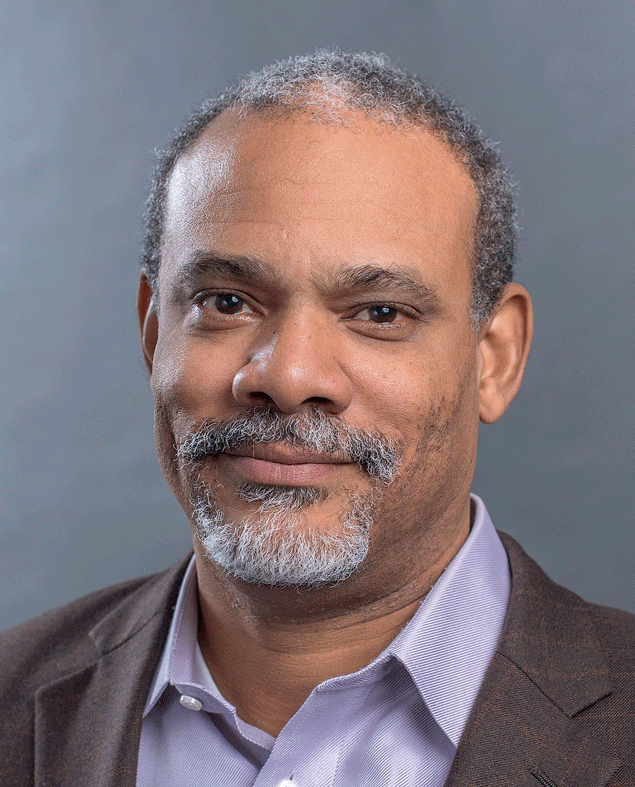
“With that ambitious agenda, the notion was, ‘what are the things that need to be changed? What’s interfering with a good portion of the Springfield population living healthy lives?’” Robinson explained. “That social-justice framework was at the root of the organization’s inception, and it has maintained that viewpoint.”

The mission has always been to create a measurably healthier community, he continued, putting heavy emphasis on that word. And while the mission hasn’t really shifted, what has happened over the past 21 years is that the focus and the interventions have become more precise, more targeted.

“And with that additional precision and targeting, we’ve become more of a specialist than a generalist,” Robinson explained. “The general work is still occurring, but the specialty work is really taking center stage.”

The agency’s broad role has shifted somewhat as well, he went on, from being merely a supporter of various coalitions to a being a change agent in its own right.

This is reflected in some of the success stories the agency has helped write over the years, including:

• The BEST Oral Health Program, which created a local system of education, screening, and treatment for preschools to decrease instances of oral diseases;

• The Pioneer Valley Asthma Coalition, created to improve asthma management and indoor air quality (two Springfield schools received national recognition for the program, and Holyoke Public Schools adopted similar policies in 2017);

• A “Health Impact Assessment on the Western Massachusetts Casino,” a 2013 study that highlighted the health impact of vulnerable populations and increased community understanding of these potential impacts;

• Live Well Springfield. Undertaken in partnership with the Pioneer Valley Planning Commission, the project is designed to improve access to health eating and active living opportunities. Signature projects undertaken as part of the initiative include the formation of the Springfield Food Policy Council, the sucessful, seven-year Go Fresh Mobile Farmer’s Market, and policies such as zoning, community gardens, and Complete Streets ordinances; and

•The YEAH! (Youth Empowerment Adolescent Health) Network, which engages diverse community stakeholders who work together to create a proactive, comprehensive response to adverse adolescent sexual health and adolescent sexuality. Between 2004 and 2015, there were significant reductions in teen birth rates in Springfield and Holyoke, and work continues to address inequities.

Data Driven

But it is in the collection and use of data that the agency has seen the greatest movement when it comes to its mission and how it has evolved over the past decades.

Indeed, as the nation, the region, and area healthcare providers continue a shift toward population health — keeping residents healthy as opposed to simply treating them when they are sick — data becomes critical, said Robinson.

Elaborating, he said providers, advocates, legislators, and, yes, foundations administering grant money use data to identify problems and where, specifically, they are occurring. But they also use it to create responses to the issues identified by this data.

The agency focuses on population data, which often comes from the state Department of Public Health, Collins explained, adding that it also works with the Springfield public schools to generate data on a large, diverse population.

“And we are able to tease out whether issues are at a block level, a neighborhood, a census track, a city, or county,” Collins explained. “We’re able to analyze data and create the story of what is going on in our region; we’re able to localize the data so people here can understand it and take action.”

Perhaps the best recent example of this is the so-called Healthy Hill Initiative, a broad-ranging effort to improve the health and well-being of those in Springfield’s Old Hill neighborhood, a program that earned the participating partners (and there were many of them) a Healthcare Heroes award (the new recognition program launched by BusinessWest and HCN) in the category of ‘Collaboration in Healthcare.’

“Their plan of action was driven by data provided to them around block groups within that neighborhood concerning health-status indicators such as asthma, obesity, public safety, and more,” Robinson explained. “Mapping that information helped to target the interventions and support the plan; the community organizing is data-driven in the sense that they’re using the data to inform both the intervention and whether they made a difference.”

Another example would the Springfield Health Equity Report, issued in 2014, said Collins, adding that the agency stratified data by race and ethnicity.

“So when you look at an issue like cardiovascular disease, or obesity, or teen-pregnancy rates, having this stratified data is critical,” she explained. “When you look at state-wide rates for teen pregnancy, for example, everyone’s thrilled because the state rate has come down considerably.

“But if you really look at the data and stratify it by race and ethnicity, you’ll see that the white-girl teen-pregnancy rates have gone down significantly, and so have teens of color,” she went on. “But you still see an incredible inequity and disparity between the two populations, and that’s what we try to lift up and shine a light on, so we’re not all clapping and saying ‘our job is done’ — there are still specific populations that need more resources and investment.”

The only way specific coalitions battling health issues ranging from asthma to obesity to teen pregnancy can determine if they are making an impact — and the desired impact — is through this data, Collins went on, adding that this reality not only explains the new name and logo, but, more importantly, where her agency’s emphasis will be moving forward.

Name of the Game

As Collins noted, there were several motivating forces behind this rebrand.

There was an effort to stem confusion given all the agencies with ‘Partners’ in their name, but also the need to better communicate just how much the agency had evolved into a true change agent since it was created in 1996.

But there was also that desire to reintroduce area residents, officials, and other constituencies to the important work it carries out, and to remind all of them that there is considerable work still to do.

So, to that rhetorical question, ‘what’s in a name?’ or, in this case, a new name? Plenty — and it is, for lack of a better term, a healthy exercise.

George O’Brien can be reached at [email protected]

Features

Storm Surge

Rosa Espinosa

Rosa Espinosa, director of Family Services at the New North Citizens Council

What happens when a family arrives in the Springfield area from far away, with no job, transportation, or living arrangements? What happens when hundreds come? That was the challenge — and certainly still is — wrought by Hurricane Maria, which devastated the island of Puerto Rico last fall and sent a flood of evacuees to the Western Mass. region. Efforts to help them find relief have been inspiring, but the needs remain great, and the path ahead far from clear.

When Holyoke High School opened its Newcomer Academy in August — a program that helps non-English speakers access classes taught in Spanish while getting up to speed on English — administrators had no idea just how timely the launch would be.

“Holyoke, for many years, has looked for alternative types of bilingual-education models, and even before the hurricane, we were seeing a lot of newcomers who needed time to build up their English-language skills,” said Ileana Cintrón, chief of Family and Community Engagement for Holyoke Public Schools.

‘The hurricane,’ of course, is Hurricane Maria, which devastated the island of Puerto Rico in September, prompting a mass exodus of displaced families seeking relief on the U.S. mainland. Western Mass. was a natural landing spot, with Puerto Rican cultural roots running deep in Greater Springfield; Holyoke, is, in fact, home to the largest percentage of Puerto Rican residents of any city outside the island itself.

That’s why 226 students whose families evacuated Puerto Rico in the wake of the hurricane enrolled in Holyoke schools shortly afterward; nearly 200 are still attending, with many families contemplating a permanent relocation to the Pioneer Valley. In Springfield, the number is close to 600.

“It was difficult at the height of it, but in the last few weeks it’s really dwindled down,” Cintrón said, noting that the school district was fortunate that HHS saw the most enrollees of the city’s 11 schools.

Ileana Cintrón


Iileana CintrÓn

“It was beneficial to us that Holyoke High School had opened the Newcomer Academy in late August and is able to provide students coming to the high school with Spanish-speaking support and access to content in Spanish,” she said. “It gives them hope they won’t lose a year. That’s what happened before — try to learn English and see where you’re at by the end of the year. Now they can keep up with math and science while still learning English, where before, it meant lost time and a lot of frustration.”

‘Frustration’ is an understatement when it comes to the needs of hundreds of families that have flocked to Greater Springfield since October, seeking housing, jobs, education, and, in many cases, the basic necessities of life that they suddenly could not access when Maria knocked out power, infrastructure, and key services throughout Puerto Rico.

“Many came with the bare minimum,” said Wilfredo Rivera, a volunteer with Springfield-based New North Citizens Council, one of the regional organizations busy receiving evacuees and connecting them with resources to find temporary relief in Western Mass. or, in some cases, start a new life.

He noted one family with a newborn who had medical records and discharge papers from the hospital, but were unable to procure a birth certificate — which is typically needed to access benefits here — before fleeing. “That’s just one example of what happens when people leave the island but don’t have time to gather their documents, or they don’t know what they’ll need here.”

New North Citizens Council meets advocacy and human-services needs on a daily basis, said Rosa Espinosa, director of Family Services, but its role — along with Enlaces de Familia in Holyoke — as one of two major ‘welcome centers’ for people displaced by the hurricane has been a challenge, albeit a gratifying one.

Wilfredo Rivera says each displaced family has its own story and unique set of needs.

Wilfredo Rivera says each displaced family has its own story and unique set of needs.

“We have our regular clients who come in every day,” she told BusinessWest, “but when the hurricane happened, that was an outrageous number of people coming in. But we were pretty resourceful, and some of the evacuees themselves were pretty resourceful; we learned from them as they learned from us.”

Rivera ticked off some of the more challenging cases, such as children and adults who fled with oxygen supplies, dialysis machines, or chemotherapy needs, and others who landed in an area hotel or motel — paid for by FEMA, but only for a limited time — without much money and no transportation, family in the area, or job prospects.

“The majority of services they needed were services we already provided — SNAP, MassHousing, employment resources, access to computers — so those things were in place,” he said, “but we were suddenly doing it on a much larger scale.”

The way they and others have done so — aided by a flood of donations to area organizations providing some of those resources and attention from local businesses looking to hire evacuees — has been a regional success story of sorts, but the work is far from over.

A Call Goes Out

Jim Ayres, president and CEO of the United Way of Pioneer Valley, said his organization was meeting very early on an evacuee-assistance strategy. Early on, Springfield and Holyoke designated the welcome centers as places to go to find out how to enroll a child in school, meet nutrititional needs, and get immediate health services. “Then there’s the underlying trauma piece and mental-health needs people may have. It takes a lot of coordination, a lot of logistical management.”

Rivera noted that every individual or family that comes to New North is handled on a case-by-case basis. “We don’t group people into categories. Every individual is assessed individually based on what their needs are.”

For example, “there’s a large group of people here for medical reasons — dialysis, cancer treatments, the types of things that require electricity,” he explained. “A lot of families did not want their kids to lose out on education, and that’s why they chose to come. Others lost their jobs. The majority who came have family here or know someone in the area; others were born here but grew up on the island, so they had some connection.”

Many are looking to stay for the long term, if not permanently, he added. That’s especially true of the families with children enrolled in school or those who needed critical medical services and prefer the treatment they’re getting in Western Mass. over what’s available right now on the island. “Those are the two biggest factors keeping people here. And a lot of them are employed already; they’re working and want to keep their jobs.”

Recognizing that critical needs exist both in Western Mass. and back in Puerto Rico, the Western Massachusetts United for Puerto Rico coalition, which came together shortly after the hurricane struck, has collected $180,000, with $80,000 going to the Springfield and Holyoke welcome centers, and $100,000 being divided equally between 10 organizations that do relief work directly on the island.

“My sense is a lot of them want to go back to their own homes,” Ayres said of the displaced families. “Whether that means six months, one year, five years, no one really knows at this point.

“This is in some ways more of a Western Mass. challenge than statewide. The state has been receptive as a whole, but it’s hitting Hampden County more than anywhere else,” he added, noting that the situation poses some unexpected budgetary dilemmas, particularly in the school systems. “The state compensation method is driven by your enrollment in October 1, which was just a few days before people started coming, so they’ve asked the state to look at the formula in a different way.”

Indeed, the Holyoke school system has hired more teachers and paraprofessionals to handle the surge, including five from Puerto Rico.

Jason Randall says many evacuees already have the skill sets MGM Springfield is looking for.

Jason Randall says many evacuees already have the skill sets MGM Springfield is looking for.

One challenge has been the arrival of families without school records in hand — a particular challenge for students with special-education needs, Cintrón said. Another is the requirement that seniors must have passed the MCAS exam to graduate, when the 10 seniors at HHS who transferred in because of the hurricane might been studying a much different curriculum on the island.

“The district is waiting for guidelines from the state about that,” she said, noting that one of those students was already accepted to Harvard while living in Puerto Rico — but will now need to pass the MCAS before enrolling there.

Another challenge is the emotional stress the new students are dealing with — Cintrón said it can take two years, in some cases, for such trauma to manifest outwardly — yet, she suggested school may actually be a bright spot in their lives.

“The major sources of stress deal with the lack of housing and the feeling of impermanence — stay at a hotel for a week, then stay with a grandmother for two weeks in public housing, but then find you can’t stay longer than that, and not always eating three meals a day. School may provide some sense of stability and normalcy — or, at least, we try.”

She was quick to note that the district took in 75 students from Puerto Rico last summer because of non-hurricane factors like economic hardship on the island, “so we’re used to getting those students. It was just more in the fall.”

Some students are also eligible for a dual-language program at the elementary level, said Judy Taylor, director of Communications for Holyoke Public Schools. “When students arrive at school, they’re given a language assessment test, and based on the results of that test, they’re given the supports they need.”

Living Wage

For most families, however, no support is more important than job-finding resources.

With that in mind, New North Citizens Council arranged a meeting in January with human-resources leaders at MGM Springfield, which is in the unique position, among area companies, of currently staffing up a 3,000-employee operation. Attendees were given an introductory presentation (in Spanish) detailing the company’s needs, followed by skills assessments and meetings with HR staff.

“We want to share our message about career opportunities, because 3,000 positions is a lot of roles to fill,” said Jason Randall, director of Talent Acquisition and Development. “So when New North came to us about these displaced families from Puerto Rico due to the hurricane, we wanted to share the opportunities that we have. Puerto Rico has a large hospitality industry, with casinos and resort properties, and a lot of individuals from the area who were displaced have the skill set and the commitment to service that we’re looking to provide here.”

The company is hiring for roles ranging from culinary services to hotel operations to gaming operations, and many evacuees have those skills, or the ability to learn them quickly, Randall added.

“Basic English is a requirement for all our positions — you have to be able to communicate in the event of an emergency — but certainly, through our partners, English as a second language courses are offered to prepare people for that.”

It can be tough to find a job without a car, and nigh impossible to afford a car with no income, but some evacuees are arriving with neither — and often no place to stay. Espinosa said getting them set up with housing and job prospects can be a challenging, step-by-step process, one beset with roadblocks that have the welcome-center staff thinking on their feet.

One client, for example, walked from the South End to the New North Citizens Council — more than two miles — with her children to access resources. But she needed to come back the following day, so the staff dipped in their pockets to buy her bus fare in both directions. The next day, Espinosa reached out to the Pioneer Valley Transit Authority for more passes to give to other families, and the PVTA was happy to donate them.

Employers have heard of the needs, too. Pride Stores had four openings at its West Street location in Springfield. “We were told, ‘I don’t need them to speak English; I just need them to bake,’” Rivera recalled. Other companies, from J. Polep Distribution Services and CNS Wholesale Grocers to businesses needing barbers, mechanics, and caregivers, have reached out with information about openings.

Companies have contributed to the relief cause in other ways as well, such as the 7-Eleven that recently opened at Wilbraham and Parker streets, far from the North End of Springfield, but decided nonetheless to donate raffle proceeds from its grand-opening event to the welcome center. Meanwhile, organizations like the Massachusetts Law Reform Institute are providing free legal services.

In addition, “there’s a huge group of volunteers helping to feed these families dinners,” Cintrón said. “Some are staying in hotels with no access to a fridge or microwave, so there’s a whole network of volunteers, restaurants, and soup kitchens delivering meals to the hotels.”

Espinosa is grateful for all of it. “Throughout this journey, we have met a lot of caring individuals, and it’s refreshing to hear from someone, ‘hey, I heard about the welcome center, and I want to do this for you.’ It’s a good feeling.”

And the clients who need help are grateful in return, she added. “They’re not a number to us; they’re a family in need, with medical needs, or with children with medical needs. And we’ll go the extra step; if we have to pick up furniture and bring it to a family over the weekend, we’ll do that.”

Looking Up

Rivera is clearly passionate about making a difference, in whatever way he and the other volunteers and staff can. “It’s good to know you were one tiny part of getting somebody stable.”

Espinosa takes it all in stride, understanding that New North’s work didn’t dramatically change with the influx of hurricane evacuees — it just got a little (OK, a lot) more hectic. But she knows her team is making a real impact on the lives of Puerto Rico’s evacuees.

“One told me, ‘there is God, and there are angels, and then there are you guys,’” she recalled.

Rivera simply smiled. “I’m good with that,” he said.

Joseph Bednar can be reached at [email protected]

Health Care Sections

Secure Connections

The Baby Boom generation isn’t just marching into retirement — they’re positively surging into their senior years, with some 10,000 Americans reaching age 65 each day.

Yet, despite the fact that senior-living communities have become increasingly modernized, specialized, and resident-focused, nearly 90% of seniors want to stay in their own homes as they age, according to the American Assoc. of Retired Persons.

And technology is helping them do just that — everything from home-monitoring devices to GPS trackers (for loved ones with dementia); from medication reminders to automatic stove turn-offs, and more . All of it is intended to lend both security to seniors living alone and peace of mind to their loved ones.

Older Americans welcome the trend — according to the AARP survey, even if they begin to need day-to-day assistance or ongoing healthcare during retirement, 82% would still prefer to stay in their own homes. Yet, the stereotype often lingers of seniors being technophobes averse to change.

“Many Boomers disagree with that statement, finding it insulting or pessimistic or both,” writes Laurie Orlov, principal analyst for Aging in Place Technology Watch, a market-research organization that provides analysis and guidance about technologies and services that enable seniors to remain longer in their home of choice. “They will repeat plaintively that Baby Boomers are very different than their parents’ generation. They are comfortable with technology. See how many have smartphones — they text, use Facebook and YouTube. Many book travel online, read Trip-Advisor reviews, and even call for car pickups with an app.”

So why not embrace technology meant to improve quality of life and — just as important — independence? Especially, Orlov noted, when there are so many options, from a simple door sensor or a sophisticated whole-home automation and security system.

In the case of the former, simple technology can have profound results. “If an older adult is alone at home, enters a room, and does not return past the sensor, an alert is sent to a family member or other predefined organization, thus enabling an attempt to contact the older adult, and, if no answer, to dispatch help.”

Rachel Walker, an assistant professor in the UMass Amherst College of Nursing, has focused much of her research on addressing health disparities and the care of older adults with cancer and other serious illnesses. She’s also on the faculty for the Center for Personalized Health Monitoring (CPHM), one of three centers that make up the Institute for Applied Life Sciences at UMass Amherst, one that aims to accelerate the development and commercialization of low-cost, wearable, wireless sensor systems for personalized healthcare and biometric monitoring — but always with a focus on the human side of care.

“Oftentimes in the national news, there’s a lot of focus on the technologies — things like wearable sensors and home health monitors,” she explained. “A lot of clinicians and practitioners like myself work with individuals out in the community who experience these health challenges as they age, and there aren’t too many places that merge those two ends of the spectrum.”

Through the Wires

One reason technology isn’t an end-all, Walker said, is because, while 90% of older adults prefer to stay in place, it’s a bigger challenge in the more rural areas of Western Mass., where people may not have access to broadband and high-speed wireless service.

“That’s a sticky wicket. We’re embracing technology more and more, in this digital arena where people also expect to access their health record [electronically]; all these things are on the horizon, but we have whole communities in this region that have yet to get high-speed access.

“The team I work with, we would like to develop solutions that put control back in the hands of actual individuals and their caregivers,” she went on, adding that they’re using grant funds to develop a home-assessment tool that’s compatible with people’s smartphones. “Most users, even in places without high-speed wireless, have access to smartphones.”

Susan Keel, an aging-in-place specialist, recently told HGTV that a robust whole-home security system can be installed for the same cost as one month in an assisted-living facility. “With a system like this, you can remotely log in on a smartphone or the Internet, and, via the devices connected to the system, monitor your loved one’s activities.”

On a smaller scale, Orlov said personal emergency-response systems — wearable devices that can be used to alert outsiders of a health emergency or fall — is currently a $3 billion market that has evolved only slightly from its origins. But one important advance has been their use outside the home.

“The ‘I’ve fallen’ message is still inspiring families and seniors to acquire one. But 30% of the market’s sales are for mobile devices. This makes sense in this time of substantial life expectancy at age 65, when 46% of women aged 75+ live alone,” she notes. “Mobility demands mobile devices, which in turn boost confidence to be out and about. Consider walking the dog — since one-third of the 65+ population has one.”

The Center for Personalized Health Monitoring consolidates expertise from polymer science and engineering, computer science, kinesiology, and neuroscience as well as from other departments and collaborators, such as the UMass Medical School and industry, to develop solutions that consider the whole person, not just technology, Walker told BusinessWest.

For example, “we’re trying to better understand what specific exercises older adults can do to improve their lower-extremity balance and strength, so they don’t have as much risk for falls,” she explained.

At the same time, however, “we’re working on home sensor networks to determine how people are using the space, so we can optimize their environment. We’ve also focused on some of the data-security problems, to make sure information is kept secure from hackers.”

In short, Walker said, there’s plenty of room for technology to help people understand their environment and manage chronic conditions and symptoms, such as fatigue and sleep impairments that, if not addressed over time, can wear the body down and lead to other types of disability. “We try to avoid that so people can stay in their homes as long as possible as they continue to age.”

Human Touch

As amazing as it is, technology doesn’t have all the answers, writes elder-care specialist Michelle Seitzer at Care.com.

“It should never be used to supplement actual caregiving — only enhance it. Certain situations may require a caregiver’s assistance or physical presence (be it a family member, neighbor, or a senior-care aide) for a few hours a week, overnight, or most of the day.

“There may also come a time when it’s just not safe for your loved one to stay home — no matter how many webcams you install,” she continues. “If a senior doesn’t answer the phone, seems withdrawn, falls frequently, misses medications, or wanders off regularly, you may need to look beyond technology. Think about options like hiring a home-care aide or finding senior housing. Figure out what works best for your loved one and the situation, and be open to changes along the way.”

Walker said her team at UMass focuses on concepts of dignity, capability, and healthcare equity in the senior years, and not on technology for its own sake.

“Any time we start a new project, we ask if there is really a need for this technology or new device. Are we building something people really need? Secondly, how will it fit into the life of the person it’s designed for? Also, who’s been left out? A lot of technology is built for the upper middle class, and that’s certainly a need, but we need to make sure what we’re building doesn’t systematically exclude certain individuals like rural residents, with no high-speed wireless access.”

Then there are unintended consequences. “Are we making someone reliant on a device, so if something breaks on the device, they’re left without a safety net to get their needs met?”

It’s an important question to keep in mind as the worlds of elder care and technology continue to cross-fertilize in new, intriguing ways.

Joseph Bednar can be reached at [email protected]

Community Spotlight Features

Community Spotlight

Linda Leduc and Charlie Blanchard stand beside one of Palmer’s two new charging stations for electric cars.

Linda Leduc and Charlie Blanchard stand beside one of Palmer’s two new charging stations for electric cars.

In a neighborhood struggling to regain some momentum, any new development matters — no matter how humble.

Literally, in the case of Humble Pie, a restaurant with a façade as nondescript as its name and a farm-to-table ethos that has quickly won over locals since opening in December on Main Street in the Three Rivers section of Palmer.

“They’ve been getting excellent reviews, and people are literally standing in line,” said Town Planner and Economic Development Director Linda Leduc. “That’s good because it’s another catalyst to get other business owners and developers to invest in Main Street.”

It’s not the only new development in the neighborhood. The town has also transferred ownership of 2032 Main St. to South Middlesex Opportunity Council, which is renovating the top floor to apartments and the bottom to retail — a mixed-use plan that will both infuse new residents into the neighborhood while attracting more shoppers, said Town Planner Charlie Blanchard. “That rehabilitated building will hopefully attract other businesses to the area.”

Property and business owners in Three Rivers have been meeting for the past two years as part of a grass-roots revitalization effort, which includes changing the perception of the area and filling vacant storefronts. Discussions with residents have touched on ideas such as making the stretch more pedestrian-friendly, building a walking path with river access around the perimeter of Laviolette Park and upgrading the parking there, and expanding Hryniewicz Park, which is used for movie nights, concerts, and other events staged by the town’s recreation department and the Quaboag Hills Chamber of Commerce. At the same time, the consortium known as On the Right TRACK (Three Rivers Arts Community Knowledge) has been working for some time to build a cultural and creative economy in the village.

Meanwhile, Pinocchio’s restaurant on Bridge Street in Three Rivers installed outdoor seating last summer, which turned out to be a popular option, said Leduc, adding that the eatery stuck out a tough period when the Red Bridge, which connects that area of Palmer with Ludlow and Wilbraham, was out of service for two years; it reopened in November.

“I know that hurt the entire village, and Pinocchio’s was definitely struggling,” she went on, “but now that it’s open, the whole village will benefit.”

Three Rivers is definitely on the move, she and Blanchard told BusinessWest — and other neighborhoods in Palmer are showing signs of positive activity as well.

Health Matters

Baystate Wing Hospital’s $17.2 million project to expand its Emergency Department, which is nearing completion, will better accommodate the needs of the community by supporting the current annual patient volume of 24,000 visits.

The 17,800-square-foot space will include separate ambulance and public entryways and will feature 20 patient rooms, including trauma, behavioral health, and other dedicated specialty-care areas. Private rooms will replace curtained bays to enhance patient privacy, and a dedicated space will be created for behavioral-health patients. Once the new building is completed, the current Emergency Department space, which was built in 1995, will be retrofitted for other uses,” according to Dr. Robert Spence, chief of Emergency Medicine for Baystate Health’s Eastern Region.

While that’s the largest medical development happening in Palmer, it’s far from the only one. Others include CrossFit Ardor, which moved from Brimfield to the Allen Block in Depot Village last year; a new massage-therapy and wellness center called Peaceful Paths on North Main St.; and an expansion of Palmer Animal Hospital on Thorndike Street. Speaking of animals, a new pet-grooming business known as Rufflections Dog Spa recently opened on Park Street.

Palmer at a glance

Year Incorporated: 1775
Population: 13,050 (2015)
Area: 32 square miles
County: Hampden
Tax Rate, residential and commercial: Palmer, $22.08; Three Rivers, $22.91; Bondsville, $22.75; Thorndike, $23.59
Median Household Income: $41,443
Median Family Income: $49,358
Type of government: Town Manager; Town Council
Largest Employers: Baystate Wing Hospital; Sanderson MacLeod Inc., Camp Ramah of New England; Big Y World Class Market
* Latest information available

Last year also saw the opening of the expanded, 4,000-square-foot Junction Variety Store in Depot Village, more than doubling its previous size. The store, which had sold beer and wine, now has a full package license, and owners Meena and Bharat Patel aim to lease some additional space for retail or office use.

In the Thorndike section of town, steampunk artist Bruce Rosenbaum and his wife, Melanie, moved into the former St. Mary’s Episcopal Church on Main Street, as both their residence and the new home for Mod Vic Steampunk Design. They have created a showroom and gallery in the historic space, as well as holding steampunk workshops for families. “He’s moving ahead with his work, and has pieces displayed in the sanctuary; it’s incredible,” Leduc said.

Finally, the new rail spur installed at Sherwood Lumber Yard, in the town’s industrial park — a project that has been in the works since 2013, and funded through an Industrial Rail Access Program grant — will allow the business to bring in materials by train, which will spur significant expansion of the operation, Blanchard said.

“It actually helps the entire industrial park,” Leduc said. “When trains would come in, they’d hold up the entire line, so that other deliveries weren’t getting into the park. “By having them have their own rail spur, now a train can come in and unload without that sort of interruption.”

Green Thoughts

Other recent business developments include a few ‘green’ businesses, in more than one sense of that word. One is the move of Gold Circuit E-Cycling from Ludlow to Third Street in Palmer, Leduc said. The four-person operation will not only do business in town — picking up and recycling used computer equipment, electronics, and refrigerated appliances, as well as recycling a host of other goods — but plans to develop a relationship with Pathfinder Regional High School’s work-study program.

The town will also see its 10th large-scale solar project this year, with the owner of a property on River Street leasing space to Borrego Solar for a 4.7-megawatt system, which will bring total production among the 10 sites to 29.3 megawatts.

Leduc said she gets calls every week about potential new solar developments, but if more are to be approved, the priority is to place them in remote areas where they won’t alter the town’s rural character and natural viewscapes.

Palmer has also given the green light to a growing industry in Massachusetts, approving its first medical-marijuana facility on Chamber Road, including a 25,000-square-foot greenhouse and 3,200 square feet of retail space. Altitude Organic Corp. will move its headquarters from Colorado to a property on Thorndike Street in Palmer as part of the development. “So they’re ready to invest in the town,” Leduc said.

Blanchard said the approval was partly driven by the fact that recreational marijuana is now on the horizon, expanding the market for growers, although the town currently has a moratorium on recreational-pot facilities as it decides on what types of ordinances and restrictions to put in place around such facilities.

Even last year’s total renovation of Town Hall — which included the expansion of the public meeting room; a new conference room and additional storage space; new offices for the Board of Health, Conservation Department, Building Department, and Veteran’s Agent; and new lighting, windows, and carpeting — had an ecologically friendly component.

“The town purchased two electric vehicles and had two charging stations installed at Town Hall and the library,” Leduc said, noting that they were funded by the state Department of Energy Resources’ Green Communities program. Particularly in the case of the library station, she noted, they will provide another opportunity for people, in this case electric-car owners, to explore town. “They’re probably going to charge for a couple of hours, which will give them the opportunity to explore Main Street, visit, go shopping, and grab something to eat.”

In other words, to take in a bit more of a town that’s constantly adding to its reasons to stick around.

Joseph Bednar can be reached at [email protected]

Construction Sections

Building Concern

David Fontaine Jr.

David Fontaine Jr. outside one of his company’s current high-profile projects, the new Pope Francis High School.

The good news for area contractors is that construction is humming along in Western Mass. The bad news? A limited talent pool has been stretched even thinner, and companies often struggle to find skilled workers. It’s actually a national problem, as a decades-long emphasis on college degrees has steered young people away from the trades as a viable career option. That needs to change, industry experts say, if they want to keep growing.

Long before the MGM Springfield casino project put hundreds of workers — carpenters, ironworkers, plumbers, electricians, you name it — to work, the region’s construction companies found themselves struggling with a critical element of the business: finding workers.

n some ways, it’s a good problem to have — it means construction activity is up regionally — but it may not be sustainable.

“In Western Mass., it’s a combination of things,” said David Fontaine Jr., president of Fontaine Brothers in Springfield. “Everyone is very busy, with a lot of large projects going on and demanding a lot of labor. And then, you’re seeing a shortage of people entering the trades. Its hard to distinguish which is more the culprit right now, but it’s definitely those two things going on.”

Fran Beaulieu, president of Phil Beaulieu & Sons Home Improvement in Chicopee, agrees.

“There is a shortage, and it’s hard to find new help; they just don’t come knocking on your door,” he told BusinessWest. “So we have to create from within. We do have a nice crop of younger guys working for us, under 30, and we’re doing everything we can to retain them — making a better work environment, making it profitable for them, and showing them there is a future in this. That’s how you retain them.”

Attracting new blood to the field? That’s a little more challenging.

“It’s hard work,” he said, perhaps referring to both the actual jobs and convincing people to do them. “When you decide you want to be a carpenter, plumber, or electrician, you know it will be hard work. And there will be days when it’s 28 degrees out — those are the bad days. But then there are a lot of good days — nice, sunny days when it’s 75 degrees out, and people sitting at their desks wish they were outside.”

It doesn’t help, he noted, that some elements of society have looked down at the construction trades over the past quarter-century, pushing hard the idea that young people need to earn a college degree.

Yet, “if you take the job professionally, you can do really, really well,” he said, noting that someone who starts at age 18 may be earning $80,000 to $90,000 by the time they’re 23 or 24, while someone who went to college is just starting out in an entry-level job, often saddled with six-figure debt.

“And that’s working for someone else; never mind venturing out and doing your own projects,” he went on. “I always tell young guys, ‘the carpenter becomes the builder, the builder becomes the developer, and the developer becomes the real-estate owner.’ After five or six years, they’re often no longer wearing a toolbelt, because they’re managing the people working for them. This business can be very lucrative; there’s a lot of opportunity. We all need a plumber from time to time.”

If You Build It…

America needs a lot more than that. Last year, the National Assoc. of Home Builders’ Economics and Housing Policy Group conducted a national online survey of 2,001 young adults (ages 18-25) in response to growing concerns over labor supply in the trades. The current scarcity is all the more concerning, the report noted, given projections from the Bureau of Labor Statistics that the construction sector will add around 790,000 new jobs between 2014 and 2024.

Among respondents who say they want to work in construction, 80% cited good pay as a reason why — the top motivator, in fact. Other reasons include the ability to obtain useful skills (74%), the ability to work outside (53%), the ability to start one’s own business (50%), and the fact that it doesn’t require a college degree (37%).

On the other hand, when respondents who said they were not interested in a construction career were asked why, the top reason was the desire for a less physically demanding job, cited by 48%, followed by the difficulty of the work (32%), the desire for an office job (26%), the desire to open their own business (20%) and, interestingly, the desire to make more money than people in the trades make (19%).

Interesting, because there seems to be a perception gap when it comes to salary. Of the respondents uninterested in a construction career, almost half (44%) think annual salary averages less than $51,000, and only 2% think someone can earn more than $100,000.

Still, the report notes, “most young adults who have yet to make up their minds on a career see very little chance they would join the trades even if the pay was high. This decision is based more on their view that construction work is physically demanding and difficult, and less so on often-repeated presumptions that it is because they prefer ‘new economy’ type jobs, or because the work is seasonal or requires being outside in the elements.

Fran Beaulieu

Fran Beaulieu says recruiting talent is a constant challenge in the industry, which is why he focuses on creating a strong culture of retention and advancement.

“The helpful news for the construction industry is that many 18- to 25-year olds who in theory would not like to work in the trades would reconsider it for an annual salary of $75,000 or more,” it continues. “Although the average annual salary is below this for the trades relevant to the home building industry, $75,000-plus salaries are available for the top 10% to 25% of workers, and it may be worthwhile to make this more widely known.”

Fontaine is doing his part.

“I think this is a great career,” he said. “We have a lot of people here who have had long, successful careers. And certainly, a lot of other contractors in the area have employed a lot of the same people for years and years. A lot of that is the unions, which have great healthcare programs and pension programs that people can take advantage of.”

It’s the other side of the coin, the too-slow trickle of younger workers, that has contractors concerned. Take, for example, these comments published in BusinessWest during 2017 alone:

• From Joe Marois, president of Marois Construction in South Hadley: “Now we’re being faced with a labor shortage, which is always a challenge. That’s the nature of construction — it’s never perfect. I don’t know to what extent the casino is affecting that, but basically, the labor pool for tradespeople is very small.”

• From Laurie Raymaakers, co-owner of J.L. Raymaakers & Sons in Westfield: “What we’re not seeing is qualified or experienced people to hire to grow with us. The need for skilled tradespeople is not going away, and it’s not just us — everyone we talk to within the industry says the same thing. And it’s a field where you can make a very good wage.”

• And from Brian Ruud, owner of Vista Home Improvement in Chicopee, who noted that companies have to be willing to pay competitive wages for good talent: “It’s hard to find good people … We’re happy with where we are now. We could grow more if we had the right people, but we’ll find them.”

Jason Garand

Jason Garand says the local carpenters union has developed programs to introduce young people to well-paying careers in the trade.

Jason Garand, business manager of Carpenters Local Union 336 in Springfield, agreed that the promise of good pay is a must to attract young people, noting that, if an 18-year-old with no plans to go to college can earn $11 an hour at McDonald’s or $13 an hour on a job site, doing hard work in the elements, he might choose fast food, even though there’s a much lower career ceiling in that field — perhaps store management, but no higher.

“He might say, ‘I’ll take the easier path in the short term,’ but in the long term, it’s a dead end,” he noted.

As one of its efforts to raise the profile of its trade, the union recently partnered with Putnam Vocational Technical Academy to bring two students in as apprentices to work on the MGM Springfield project.

“We’re giving them a taste of what construction is all about, and our rate is $16 to start — that’s an apprentice, walking in with no skills,” Garand said, adding that, in the long term, “the union has a wage and benefit package that puts you in the middle class.”

Daily Grind

Fontaine was quick to note that the office side of the business isn’t seeing the same shortage, as the flow of young people graduating from schools like Wentworth Institute of Technology or Worcester Polytechnic Institute with degrees in construction management or engineering has been steady.

“We’re seeing more of a shortage of people going into the trades, the laborers — carpenters, plumbers, pipefitters.”

He added that young people who come from families with construction trades in their background are much more likely to enter the field themselves. Meanwhile, Beaulieu said, immigrants, many from South and Central America or Eastern Europe, are entering the field locally at a higher rate than American-born young people.

“There are some drawbacks,” Fontaine said. “There’s a lot of travel involved, a lot of driving to and from job sites. You’re up and on the road early; some people are averse to that. And there are fluctuations in the construction industry; the market is going to go up and down. It’s not a career where you expect to be employed 52 weeks a year. Especially in the early stage of a career, that can drive some people away, too.”

Beaulieu agreed that it’s not the easiest career. “It’s tough on the body; you have to take care of yourself and stay thin — but the job itself will keep you thin.”

For whatever reason, he went on, “I don’t think a lot of seniors and juniors, when they’re thinking about career opportunities, are necessarily thinking about a trade. But, on the other hand, you don’t have to leave college with huge debt, you’re going to get paid right out of the gate, and five or six years later, you can be a master at the trade.”

With that in mind, Beaulieu says he focuses on training from within, so that his own people can grow in their careers, stay with the firm, and advance to project management and beyond.

The Foundation of the Wall and Ceiling Industry recently conducted its own study on why the construction business struggles to attract new talent, and emerged with five takeaways:

• Young people thrive on regular communication. They enjoy collaborating on teams. Mentoring programs will encourage them to stay on board with a company.

• What matters to a young person about work differs from older generations. Young people enjoy technology, and the construction industry is using more of it. Experts recommend appealing to young people’s interest in technology.

• Company culture is important. Young people want jobs that come with perks and ‘come and go as you like’ atmospheres, which are common among high-tech firms. To be appealing, construction firms need to create ‘good fit’ cultures.

• Companies need to develop new recruitment strategies to meet the long-term employment forecasts, which are positive.

• The construction industry needs to target the right group of young people for field positions — those out of high school but not in college. An older group, attending two-year community-college programs, is an up-and-coming recruitment target as well; they may have tried a career path or two and are ready to settle down.

Like others BusinessWest has spoken with recently about this challenge, Fontaine said there’s no one fix, but added that the tide may be turning when it comes to getting the word out that careers in the construction trades are more stable and lucrative than young people might think.

“I think it’s been a challenge for a while, but the unions have done a good job recruiting people into the trades the last couple of years; they’ve done a good job, especially with some projects like the casino, of reaching into the local market,” he noted. “People are becoming more aware of the opportunities than they were five years ago. But it’s still a constant challenge to get and keep good people.”

Joseph Bednar can be reached at [email protected]

Construction Sections

On the Horizon

In the construction industry, many firms, general contractors, and individual construction workers have done their job a certain way for decades. They learned a certain technique, process, or order of operations that they trust and has worked for them time and time again in the past. For this reason, many construction companies and workers are hesitant and skeptical of adopting new and emerging trends in the industry.

However, the technology developing for the construction industry has grown at an exponential rate, and companies that fail to adopt these new practices could seriously fall behind their competition.

Currently, the construction industry faces a variety of issues that have stifled many projects and raised concerns from the general public. One of the biggest issues facing the industry in 2018 is an overall shortage of laborers that are considered ‘qualified’ construction workers. Another major issue is the glaring number of fatal work injuries that the industry faces, highest among any sector in the U.S. Construction projects have grown increasingly intricate, causing contractors to underestimate the time it will take to complete the project on time and under budget. So, what will 2018 bring to help resolve these issues?

Cutting-edge Robotics

One of the ways the construction industry will try to address its issues with skilled labor is with cutting-edge robotics to streamline and standardize many of their work processes. There have already been great advances in this avenue of construction. Robotic bricklayers have been manufactured to correctly lay up to 3,000 bricks per day, equal to six times faster than a typical bricklayer. By using a combination of a conveyor belt, robotic arm, and concrete pump, this cutting-edge machine will not be able to fully take over a construction site but could offer a construction company huge efficiencies, when used in the right scenarios. These types of robots have only just started to be used in major construction projects.

So, why has this trend not already taken off? So far, the technology and reliance on these machines is still relatively new to the sector. As mentioned earlier, many general contractors are hesitant to adopt new technologies or new ways to complete projects, not to mention having to make a giant investment to do so. Plus, relying solely on a relatively new piece of equipment to lay thousands of bricks is a bold move. However, as these types of construction robots prove themselves more and more, work out their kinks, and skilled laborers become scarcer, a larger number of companies will be willing to make this plunge into the new age of construction robotics.

Internet of Things

As everyone has heard, the Internet of Things (IoT) is going to revolutionize everything: the manufacturing sector, retail, construction, even each individual household. Currently, there are companies offering machine-to-machine construction equipment that offers communication between the two, plus offering diagnostics on the machinery’s fluids, temperature, and even motion sensors. This instant communication between equipment and updates for operators means far less downtime for the construction company and easier maintenance.

So, why would the construction industry not have already adopted these IoT-connected machines, or be more hesitant to adopt these machines than a sector like manufacturing? Well, for the more sophisticated IoT-enabled machines, they can have a fairly high initial cost.

Now, this is the same for the manufacturing industry, too but with one major difference. A manufacturing environment is much more controlled and consistent than a construction environment. On a construction project, it can be very difficult to judge how much a company will use any particular set of machinery and, to go even further, how much they will use it from project to project. In a manufacturing environment, it is much easier to know exactly how often a piece of equipment is used for each process, and, therefore, it is easier to know where to invest in the IoT.

However, as these products become more common, prices will begin to decrease, and construction companies will find the smartest areas to invest in the IoT and begin to see just how beneficial it can be to the bottom line.

3D Model Videos

From architects to general contractors to the customers themselves, 3D models of a construction project helps the overall visualization of the project. For architects, a 3D tour of the structure allows them to see their building come to life rather than being a picture on a piece of paper or a CAD file. A 3D model allows them to see how the building will act and feel for the people using it, to see how each room compliments the next, and to see if everything makes logical sense.

General contractors have a similar reaction to the video, except in a practical sense, inspecting it for potential problems or issues in the construction process. It will not give as much information as a CAD file, but the 3D-model video could provide some insight that they may not have put together otherwise.

Finally, for the customer, they will get to see their final product. The customer will be able to familiarize themselves with the new structure and be able to point out the things they like and, potentially, the things they do not like.

Exoskeletons

Exoskeletons have drawn huge hype for the last few years, not just for the construction industry but for applications as far as military combat. These exoskeletons are mechanical suits that are worn outside of clothing that will help with lifting heavy equipment, machinery, or supplies. Basically, they give an outer shell that is sturdier and stronger.

However, these suits have had a hard time coming to fruition for a couple of major reasons. First off, the power supply of the exoskeleton has been very tough to develop (small engine doing lots of work over long periods of time). Second, they do not always provide the proper joint flexibility (can cause accidents on tough terrain).

However, strides have still been made in their development. Many of today’s exoskeletons use a combination of springs and counterweights in order to store potential energy and turn it into kinetic energy when you need it. There is still a long way to go for this technology, but these basic suits could prevent job-site injuries due to fatigue and general tiredness.

Autonomous Handling of Materials

Autonomous material handling is another technology that is easier served to a manufacturing or warehousing environment than a job site, and for the same reasons. A manufacturing environment has a set layout that can be programmed into the robot. The layout never changes, so the machine can easily predict where to go without things going awry. However, for a job site, things are constantly changing, not just from one job site to another, but even while the structure is being built. Plus, a construction site will not have the same uniform surface to travel over like a manufacturing facility.

So, how will the construction industry make it over these hurdles? One of the prevailing ideas is heavy-duty drones that provide a 3D map of the job site with designated loading and unloading zones. These drones would have a variety of cameras and sensors in order to account for variables not calculated in their original flight path. Also, it would use the Internet of Things to coordinate with other pieces of heavy machinery.

This article first appeared in Digital Journal.

Law Sections

Positive Prognosis

healthlaw-184399153The field of law that focuses specifically on healthcare is diverse, challenging, and constantly changing, and that presents growth opportunities at a time when some fields of law are seeing job stagnation. But many law students aren’t aware of these possibilities, which run the gamut from malpractice litigation to end-of-life planning; from medical-records compliance to helping people navigate the complexities of the mental-health system. And those opportunities are only expected to keep expanding.

Barbara Noah says she took a winding path to her career as a law professor, one who specializes in the rapidly changing world of health law.

“When I graduated from law school, I was thinking more of the style of practice and the sort of things I’d like to do,” said Noah, professor of Health Law at Western New England University (WNEU) School of Law, during a recent panel discussion about health-law careers.

After graduating from Harvard Law School in 1990, she wasn’t interested in litigation, and instead went to work for a Washington, D.C.-based law firm with a strong focus on regulatory compliance.

“Our role was to counsel clients, which were mostly pharmaceutical and medical-device companies, on how to keep in compliance with the regulations issued by the Food and Drug Administration,” she explained. “It wasn’t about getting new drugs approved; these were already-approved products, and we were making sure clients were following appropriate safety rules.”

She found the field so interesting that she eventually transitioned into a long career, first at the University of Florida and since 2005 at WNEU, teaching the many facets of health law.

To name just a few of those, healthcare lawyers interpret the complex healthcare regulations and statutes that govern the administration of health services, advising hospitals, physicians, pharmaceutical companies, insurers, and other providers on issues ranging from licensing, reimbursement, and risk management to malpractice litigation and general corporate management.

One panelist at the WNEU event, Judith Feinberg Albright, who works for Devine, Millimet & Branch in Manchester, N.H., started her career as a paramedic before enrolling in law school and taking a particular interest in health law. She developed a secondary interest in litigation through moot-court experiences during those years, and now defends healthcare providers against malpractice claims in Massachusetts and New Hampshire.

“I see many people in health law with non-traditional pathways, people with some previous career in healthcare — like you see engineers and architects in intellectual-property law,” she noted. “It’s a pretty diverse group of folks.”

Some jobs are more unique than others. Deb Grossman, another panelist, serves as general counsel with Physician Health Services, an arm of the Massachusetts Medical Society that helps physicians deal with personal and behavioral-health issues and navigate their way back to work.

“Doctors don’t really like lawyers much; they see them as a threat of some kind,” Grossman said. “But I want to be supportive. I’ve been in different roles that were not always supportive, but now I’m in a very conciliatory position.”

After working for a large law firm earlier in her career, she explaned, she went looking for a lifestyle change, and took a job with the state handling the licensure of medical professionals, before taking on her current role.

“I became a much better lawyer,” she said, telling students gathered at the panel discussion that, yes, she made less money working for the state, “but what I gained in experience and autonomy as an attorney, I think was really invaluable.”

It’s just one example, Noah told BusinessWest afterward, of how a shifting healthcare field is cultivating many opportunities for lawyers that students might not hear about on a regular basis during their law-school years — which is why the panel was assembled.

“What’s included in the sweep of healthcare law is broader than people initially think; they think of medical malpractice or something to do with health insurance, but it’s a much broader field than people typically understand,” she said. “And a number of these aspects of health law are in flux right now, and they might be areas of growing demand for the purposes of careers.”

A Different World

One of those changing areas of the law is healthcare compliance — for example, how hospitals are complying with the privacy rules of the Health Insurance Portability and Accountability Act, or HIPAA.

“Although HIPAA has been around for quite a while, every hospital of any size has a compliance office that makes sure medical privacy requirements are being met,” Noah said. “And now with the switch to electronic medical records, it’s created a whole new set of questions for HIPAA in information sharing, and I’m hearing that data security is a big issue which impacts compliance.”

The second growth area concerns the overlap between elder law and health law, driven mostly by the aging of the Baby Boomer population. Not only are older Americans making plans for their estates, Noah said, but they’re becoming more keenly aware of their own mortality, and considering issues like advance care directives, healthcare proxies, and end-of-life preferences, such as do-not-resuscitate orders and decisions on nutrition and breathing assistance.

recent panel discussion at WNEU School of Law

From left, Barbara Noah, Judith Fineberg Albright, Deb Grossman, and Dylan Mawdsley talk about their very different health-law careers at a recent panel discussion at WNEU School of Law.

“There are all sorts of questions, and more attention is being focused on them,” Noah said. “But there’s still a real reluctance to do much advance care planning until faced with a bad diagnosis. That’s an issue that’s going to need more well-trained attorneys in the future to reach this large and aging Baby Boomer population.”

The third big shift that could affect health law is, of course, the ever-changing Affordable Care Act, which has been threatened by the recent federal tax law that repeals its individual mandate.

“We’re keeping on top of how the Affordable Care Act is being changed, amended, and manipulated, and how that impacts the system of healthcare delivery. It’s a moving target,” Noah explained. “Without the individual mandate, if healthy people aren’t buying in anymore, the pool is sicker, and that drives up prices.”

According to Nick Sumski, an LSAT teacher for Kaplan Test Prep, health law is a compelling area of law because everyone has to touch the healthcare system at some point in their lives.

“Health law is such a big growth field with an incredible amount of opportunity, especially in the coming years,” he noted last month on the Kaplan website. “No one knows how it’s all going to work moving forward, and there is going to be a big demand for lawyers to help figure it out.”

Dylan Mawdsley, another panelist at the WNEU event, is assistant general counsel for the state Department of Mental Health, advising DMH staff in their decision making and compliance with laws, and representing the agency before probate and family courts.

He originally went to college as a political science major, but pivoted to law school afterward, starting his career in estate planning — right when the Great Recession hit, which was a bad time for that area of law. The work he does now, often serving as a liaison between doctors, patients, and the court system, is gratifying and presents a great deal of autonomy.

“I really feel like the work we do is good work,” he said, “helping people get treatment and services they wouldn’t otherwise be able to access.”

Meaningful Work

When Grossman was in law school, she recalled, she learned a lot about corporate law and litigation, but not much else, and certainly not what she’s doing today.

“This niche of work is very, very satisfying, it’s important work, and the schedule allows me to raise my kids,” she said. “Law students should know there’s a whole world of jobs out there, that aren’t typical law-firm, corporate types of jobs.”

Sumski said students shouldn’t feel like they have to pick any kind of specialization right away.

“Keep an open mind in those first-year classes; you might be surprised by the area of law that ultimately interests you,” he noted. “If you are interested in health law, however, you should take some introductory classes in the subject matter and see if a particular aspect of the field interests you. Health law is an incredibly broad field that touches on many different aspects of law. There’s a lot of opportunity in the area. The job market for lawyers is getting better, but it’s not great, so it makes sense to go into an area that is in demand.”

That demand, Noah said, is driven partly by the fact that health law is so interconnected, with so many moving parts.

“Any student who goes into health law is going to need a deep knowledge of the particular area they’re focusing on,” she noted, “but also a broad, contextual understanding of how the whole healthcare finance and delivery system works in this country — and it’s a very messy, complex, and inefficient system.”

And one that’s constantly changing, presenting plentiful opportunities for law students and career changers willing to think outside the jury box.

Joseph Bednar can be reached at [email protected]

Features

Something’s Cooking

Chef Warren Leigh in one of the teaching kitchens at the new Holyoke Community College MGM Culinary Arts Institute.

Chef Warren Leigh in one of the teaching kitchens at the new Holyoke Community College MGM Culinary Arts Institute.

The Holyoke Community College MGM Culinary Arts Institute opened its doors to considerable fanfare last month. Officials at the school wore out the phrase ‘state-of-the-art’ as they talked about its five kitchens and other facilities. But that’s only part of the story. The institute is also a key ingredient, as they say in culinary arts, in workforce-development initiatives, as well as efforts to revitalize
downtown Holyoke.

Chef Warren Leigh knew something was up when students arrived for the first class of the semester more than an hour early.

More to the point, he knew exactly what was up, and he didn’t blame those early birds one bit.

Indeed, it seems that people can’t wait to get a look at the $7.5 million Holyoke Community College MGM Culinary Arts Institute, now occupying the first two floors of the building in downtown Holyoke with a name that matches its shape: the Cubit. And that includes the students in Leigh’s classes, specifically the ones a semester or two into their studies within the culinary and hospitality programs who kept hearing about what was being built to replace the aging, insufficient facilities on the HCC campus. And hearing about them. And hearing about them.

So it’s no wonder they altered their schedules and gave themselves what amounted to — wait for it — a cook’s tour. Well, not really. Instead, it was an involved, quite lengthy tour, again for good reasons, as we’ll see when Leigh takes BusinessWest around in a little bit.

Several years in the making, the new, 20,000-square-foot, state-of-the-art facility boasts five kitchens, a separate bakery, an 80-seat dining facility that will host a variety of events, ultra-modern classrooms, a well-appointed student lounge, an area to change clothes, and much more.

“Aside from Johnson & Wales and the Culinary Institute of America, this is the most current, purpose-built culinary-arts facility in New England, maybe in the Northeast,” said Leigh, chair of the Hospitality Management and Culinary Arts programs at HCC. “It’s truly a regional resource.”

Beyond all that, and those points are noteworthy to be sure, the new center is a significant development, in every sense of that phrase, in many other respects.

First, it represents a huge step forward in the broad realm of workforce development within the culinary-arts field, both locally and regionally, a segment of the economy that was already growing and will now get a huge boost with the arrival in about eight months of MGM Springfield and a host of new restaurants.


The need to hire what will likely be several hundred food-service-related personnel is a big reason why MGM contributed $500,000 to this project and now has its name on the facility.

‘State-of-the-art’ is a phrase that defines all aspects of the new facility in the Cubit Building in downtown Holyoke.

‘State-of-the-art’ is a phrase that defines all aspects of the new facility in the Cubit Building in downtown Holyoke.
But, overall, the food-service and hospitality sectors in Western Mass. are growing, and, as is the case in many fields, finding sufficient numbers of qualified help is becoming an ever-greater challenge.
The Culinary Arts Institute will help close the gap, said Michele Cabral, HCC’s interim dean for Business and Technology, who told BusinessWest that, like other initiatives undertaken at HCC in recent years, the institute is a direct response to recognized needs within the business community and a desire to meet them.

Meanwhile, the institute is both the cornerstone of efforts to renovate the Cubit Building into a mixed-use facility, with apartments on the upper floors, and one of the key ingredients (that’s an industry phrase) in efforts to bring people, businesses, and vibrancy to a surging downtown Holyoke.

For this issue, BusinessWest takes a tour of, and an in-depth look at, the Culinary Arts Institute to fully explain its significance to the college, the students who will learn there, and the region as a whole.

Food for Thought

Leigh wears a number of hats in his role as chair of hospitality management and culinary arts, including the traditional chef’s hat.

He’s added another one, but only figuratively.

Indeed, he doesn’t wear any headgear when he’s giving tours, which has become a big part of his job description these days. He’s led walkthroughs taken by constituencies ranging from elected officials to prospective students to media members, and there are many more already on the calendar.

He doesn’t mind this intrusion on his schedule, though, because, like all those at HCC, he’s quite proud of all the hard work that went into designing and building this facility — and obviously with the final product itself.

Before getting one of those tours, BusinessWest first wanted to talk about what brought everyone to this moment.

There has a been a culinary-arts program, in one form or another, at HCC for roughly 30 years, said Leigh, whose tenure covers roughly a third that period. The program, which years ago was more hospitality-related than culinary-focused, has had several homes over the years, none of them large or particularly well-equipped. The most recent was in the Frost Building in what he believes was the old music room.

The need for a larger, better facility was apparent, he went on, but so were the challenges to securing one, including a location and, especially, the funding. Finally, a plan was conceptualized that would make the college — and MGM — partners in the bold plans to revitalize the Cubit Building, which had been underutilized for many years.

This is a true public-private partnership, one that involves the college (and thus the state), the city of Holyoke, the federal government (specifically the U.S. Department of Commerce Economic Development Administration), MGM, and brothers Denis and Marco Luzuriaga, who purchased the Cubit Building and have invested heavily in its redevelopment.

As the partners in the ambitious initiative came together and plans started to materialize, those involved came to understand what this opportunity meant, and how they needed to take full advantage of it.

“A cross-functional team was put together, and it was told that, if we have the space, we have one chance to get this right — let’s talk about how to build what we actually want,” said Cabral. “Faculty, hospitality, and culinary were part of the team from day one in designing the space and selecting the equipment.”

They certainly did get it right, and the resulting facility enables HCC to greatly expand capacity and thus better serve the region and its culinary- and hospitality-related businesses.

Warren Leigh and Michele Cabral

Warren Leigh and Michele Cabral have devoted considerable time recently to the leading tours of the new Culinary Arts Institute, and there are many more scheduled.

Cabral qualified and quantified what it all means.

“This gives us the capacity to teach multiple sections of our credit programs,” she explained, “while at the same time responding to the needs of the community and teaching workforce development, professional development, and adult basic education related to culinary hospitality. In our old space, we only had one and a half kitchens, so we could only do one thing at a time.”

Leigh agreed, and noted that the institute is a “purpose-built facility” and one of the few in the region, if not the country, when it comes to culinary arts and hospitality centers of study.

“As we grow, we can use every one of these kitchens and classrooms running simultaneously, all day long,” he explained, adding that there is considerable room for expansion as well as expectations that it will be used as demand for workers in these fields escalates.

Five-course Facility

BusinessWest visited the institute on the first day of classes for the spring semester, and, as noted at the top, many of the students were a tad eager — and more than a tad early.

Leigh said he’s been teaching a long time and has never witnessed anything quite like, but, as he said, it’s understandable.

There’s lots to see, and he started the tour where he usually does, with the fully equipped demonstration kitchen, which, as that name suggests, is for demonstrations and teaching exercises.

“In here, we can do any method of cooking,” he said. “And we have three cameras that will put it onto monitors so the students can see close up. We can save it and we can broadcast it over the World Wide Web to anywhere we want.”

From there, he went to the dining room, which can be set up for gatherings of up to 90-100 people, said Leigh, adding that this facility also has cameras and monitors, and students will handle every aspect of events to be staged there, and several have been booked already.

The tour continued in the “production kitchen,” set up European style, as he described it, with the student chefs facing each other (rather than a wall as is the case in most area restaurants) and communicating with each other as they work together to prepare a meal. And then on to two teaching kitchens, a bake shop, classrooms, and that student lounge. Each area is large, open, bathed in natural light thanks to huge windows, and built to enhance the learning process.

The ‘production kitchen’ in the new culinary arts institute is spacious and state-of-the-art.

The ‘production kitchen’ in the new culinary arts institute is spacious and state-of-the-art.

“What I like about our design is that I can stand almost any place in here as a professor and I can see the whole kitchen, I can see all the students, I can talk to all the students,” Leigh explained, adding that it will even be equipped with a microphone because it can get quite noisy in those spaces and even his “kitchen voice” might not suffice.

As noted earlier, these facilities enable a number of classes to be taught at one time, said Leigh, including all segments of HCC’s new associate’s degree program in Culinary Arts, a four-semester program that is now a cornerstone of a program that Cabral described with the term “stackable.”

Elaborating, she said that students could choose a one-year certificate program in Culinary Arts. If they wanted to go further, they could enter the associate’s degree program and essentially build on what they started.

“They can come in and go as far as they want to go; and we’ve made it easy and mapable for them to do that,” she went on, adding that, an individual can start with professional-development classes in mind and segue into the culinary certificate program and then, perhaps, the degree program.

And with that associate’s degree, a student could transfer to Johnson & Wales or another school that offers a four-year program, such as UMass Amerst’s offering in Food Science, said Leigh, adding quickly sending the first two years at a community college and then transferring to a four-year school has become an increasingly popular option for cost-conscious families and individuals.

Meanwhile, that two-year program will certainly open a lot of doors to those who choose that route, he went on, adding that with MGM’s arrival and a host of other additions within the hospitality sector, there are a lot more doors to go through if one is qualified.

Tastefully Done

Helping individuals become qualified was the primary driver behind the new culinary arts institute. Actually, there were several, including a desire among those at the college to play an even more direct role in economic development efforts in Holyoke.

Both of those assignments will play out over coming years as Leigh puts to use his kitchen voice — as well as that microphone — in that demonstration area.

“This is a unique, purpose-built facility that really doesn’t exist anywhere else,” he told BusinessWest, adding that students needed to arrive an hour before the first class started to take it all in.

he was going to say more … but he had to go give yet another tour.

George O’Brien can be reached at [email protected]

Community Spotlight Features

Community Spotlight

Geoff Kravitz (left) and Paul Bockelman

Geoff Kravitz (left) and Paul Bockelman say the town is studying what types of businesses would be best suited to its emerging mixed-use developments.

Anyone who has spent time in Amherst recognizes the town’s enviable mix of cultural institutions, restaurants, academic energy — more than 33,000 students attend UMass Amherst, Hampshire College, and Amherst College — and open space.

But town officials know they need to do more than tout those offerings; they need to leverage them to create the kind of community where college graduates will want to stay, and where families and businesses will want to locate.

A number of recent developments aim to meet that need. For example, Archipelago Investments, LLC of Amherst is building One East Pleasant, a mixed-use project featuring 135 residential units and 7,500 square feet of commercial space, with plans for the building to be completed and occupied by the fall.

Meanwhile, W.D. Cowls Inc. and Boston-based Beacon Communities are laying the groundwork for North Square at the Mill District, another mixed-use development in North Amherst, which will feature 130 residential units — including 26 affordable units for people at or below 50% of the area’s median income — and 22,000 square feet of commercial space. Construction on the project, which tapped into local tax-increment financing, is set to begin this spring.

Archipelago is also developing a third mixed-use project for the downtown area, at 26 Spring St., which will feature 38 residential units and 1,000 square feet of commercial space. That was recently permitted, as was Aspen Heights, on Route 9 at the former Amherst Motel site, where Breck Group Amherst Massachusetts LP plans a residential development that will include 115 units, 16 of them qualifying as affordable housing.

“There is a master plan which has focused development on the village centers, while taking tangible steps to preserve open space,” said Town Manager Paul Bockelman, noting that municipal leaders want new development to occur downtown, in the North Amherst Village Center, in South Amherst, and East Amherst so the town can preserve existing neighborhoods and open space.

Amherst at a glance

Year Incorporated: 1759
Population: 39,482
Area: 27.7 square miles
County: Hampshire
Residential Tax Rate: $21.14
Commercial Tax Rate: $21.14
Median Household Income: $48,059
Median Family Income: $96,005
Type of Government: Select Board, Town Meeting
Largest Employers: UMass Amherst; Amherst College; Delivery Express; Hampshire College
* Latest information available

“Things are happening on campus, too,” said Geoff Kravitz, Amhert’s Economic Development director. “UMass opened its design building, they’re renovating Isenberg School of Management, and Amherst College is doing a big, new, quarter-billion science center.”

“That’s an interesting one,” Bockelman said of the latter. “At one point, they were saying 200 tradespeople were coming into town every day to work on one building. These sorts of investments from the colleges and university are making a spillover effect on the town. Clearly, as these institutions grow, it benefits the town.”

Meanwhile, the University/Town of Amherst Collaborative has been working since 2015 to create better connections between UMass and the town, from addressing student housing needs to leveraging opportunities related to university research, entrepreneurship opportunities, cultural opportunities, and retention of graduates.

It’s a town, in short, that is ripe for opportunities that spring out of such connections — and a place whose cultural profile makes it a true destination for visitors and transplants alike.

Speaking of Culture

The Amherst Central Cultural District is another connection-maker of sorts, a state designation issued in 2016 that aims to leverage the offerings of the Emily Dickinson Museum, Jones Library, the Eric Carle Museum of Picture Book Art, the Yiddish Book Museum at Hampshire College, the Mead Art Museum at Amherst College, and other cultural institutions.

“They can cross-promote; for example, the Emily Dickinson Museum has a poetry week, and Amherst College has a literary festival,” Kravitz said, adding that the Business Improvement District also presents an arts festival downtown that brings together artists of all kinds who normally work independently. “We have a lot of people who do their artwork at home, and this gets them out of the woodwork and shows a strong artistic presence downtown.”

Meanwhile, the Amherst WinterFest, an array of cultural and recreational offerings slated for Feb. 3-10, has been expanded this year from a weekend to a full week, due to popular demand.

The downtown district continues to attract new businesses — the Red Door Salon, Bart’s Ice Cream, and Ichiban are a few recent notables — but with a low vacancy rate, growth is limited until those mixed-use developments come online. And the town has streamlined its downtown parking options as well, making it easier for people to pay by phone, for instance, and issued maps showing where visitors can find parking, bathrooms, and other amenities.

Through it all, officials hope the new mixed-use developments downtown create more business growth, energy, and tourism.

“We’re looking to fill that commercial space, and that requires breaking out the crystal ball and looking into the future,” Kravitz said. Specifically, the down has engaged with the Pioneer Valley Planning Commission to develop an economic-development plan which will examine the market, local economic indicators, and the town’s so-called SWOT — strengths, weaknesses, opportunities, and threats — to determine what types of businesses may be most successful, including but possibly going beyond the restaurants, retail, and entertainment options that have long thrived downtown.

As for housing, the new residential developments are welcome, as there hasn’t been much residential development over the previous couple decades, Bockelman said, noting that a 2015 study determined that Amherst could use some 4,000 more units. “People have been trying to fill that gap.”

But young people aren’t the only ones interested in the Amherst lifestyle. “Older people are retiring to college towns; it’s very attractive, between the cultural benefits and the 80 miles of hiking trails here and the access to nature,” he added, referring to the K.C. Trail, the Robert Frost Trail, and the Norwottuck Rail Trail. “Not everyone is going to Florida to retire. Some people grew up here and want to stay here; they’re not fleeing to warmer climes.”

The Kayon Accelerator, which opened last year on the second floor of the AmherstWorks co-working space downtown, can play a role in retaining people who grew upin Amherst and went to college here, Kravitz said, by attracting people trying to turn innovative ideas into businesses and may be looking for venture capital and other resources.

“If they like the lifestyle here, why not stay where they have friends and have a life already?” he said. “That’s one thing we’re trying to build — that 22-to-44 age group, people starting their families here. That’s really valuable to us.”

Green Thoughts

There is one other economic-development opportunity that towns have grappled with in myriad ways, but that Amherst is embracing. That’s the marijuana trade — both medicinal and recreational. Considering that the town’s voters favored the 2016 ballot measure legalizing recreational pot by a 3-to-1 margin, officials here are taking seriously how best to respect their wishes while emphasizing safe use of marijuana.

“This recreational use, or adult use, is something our residents want to see, and even if the town doesn’t think it’s a good idea, it’s going to have an impact on the town anyway, so it’s a good idea to have the businesses located here so we can take advantage of the tax revenue, and do it in a safe, responsible manner,” Kravitz said.

However, with a population that’s constantly changing — thousands of freshmen report to UMass Amherst, Hampshire College, and Amherst College each fall — the town is planning a significant educational component as well. It has also passed a number of marijuana-related regulations, including a 3% local-option sales tax, a ban on public consumption, and capping at eight the number of recreational-marijuana establishments in town.

“We thought that would create enough competition without overwhelming them,” Kravitz said. “The town is now looking at zoning that will help refine that.”

It’s just one more way a town with much to offer residents and businesses is working to weave those amenities into a tapestry that keeps people coming — whether for school, to live, or simply to enjoy the scene.

Joseph Bednar can be reached at [email protected]

Meetings & Conventions Sections

Brick by Brick

Erin Witmer says her goal was to preserve the history of the Keystone building while creating flexible spaces that can be crafted to the mood of each event.

Erin Witmer says her goal was to preserve the history of the Keystone building while creating flexible spaces that can be crafted to the mood of each event.

It’s a different wedding photo, to be sure.

Their names are Kyle and Liz, and they’re standing, decked out in formal clothes, in front of a 110-year-old mill, with boarded-up windows on the top floor and chipped bricks at their feet. It’s a striking scene, and it’s not for everyone, Erin Witmer said.

“It is part of the charm here,” she said of the environs of the Boylston Rooms, her new event space located in the Keystone building on Pleasant Street in Easthampton, next to another notable restored mill, Eastworks. “If you’re looking for a ‘perfect,’ new kind of space, you’re probably not going to look here. We definitely have some of the charm and character of the original space.”

The engaged couples and others who book the venue for a broad variety of events, however, immediately ‘get’ it, she added.

“Last year was pretty tremendous. The first couples that booked their weddings here, they looked at it when it was just an empty warehouse space, and were able to see what it could be. And it’s been incredibly positive since then.”

Witmer and her husband bought the historic Keystone building in 2015 with the goal of opening an event space that offered something memorable and different from more traditional venues, she told BusinessWest.

“I first started in events at the Inn at Northampton, before it was the Clarion, doing banquet and event work there,” she recalled. “It was a very traditional banquet hall, and it got me thinking about what I valued in an event space and what I’d like for my own event space. I really wanted a space where people could personalize it, a blank canvas where people can bring in their own ideas and dreams and design thoughts, and could create whatever space they’d like to create. It’s a very flexible place, and you can make it whatever you want it to be.”

The venue includes two main areas — the 3,800-square-foot West Room, which can accommodate 300 seated guests or 600 standing, and can be divided into two smaller spaces; and the 2,700-square-foot East Room, with space for 200 seated or 500 standing — as well as an outdoor patio. Weddings often use all of it, with perhaps a ceremony in one of the two large rooms and a reception in the other.

Event bookers, like Kyle and Liz

Event bookers, like Kyle and Liz, appreciate the quirky photos and unique memories the Boylston Rooms provide.
West On Jade Photography

Since opening in September, Witmer said, the Boylston Rooms have hosted many weddings, with plenty of positive response from the couples and guests alike, and bookings for 2018 are pouring in even faster. “We’re super blessed interms of response from the community.”

But the space accommodates many other events as well, from the inaugural ball for Easthampton’s new mayor to a fund-raiser for the town’s Fire Department; from a TEDx talk in November to upcoming events like an awards banquet and a play reading — all of them surrounded by the original wood columns, exposed brick, and visible ductwork that gives the building, as Witmer said, its considerable charm.

History Lesson

The Keystone building traces its history to the turn of the 20th century, when the West Boylston Co., a textile manufacturer incorporated in 1814, was forced to leave its namesake town when the Wachusett reservoir, which would have completely submerged the mill site, was in its planning stages.

In 1899, the company decided to dismantle the mill brick by brick and send it by train to Easthampton, where those same bricks were used to build Eastworks in 1908, and Keystone between 1907 and 1912.

“People enjoy the sense of history here, and we tried to keep as many historical elements of the space intact,” Witmer said. “When we purchased it, this was a gigantic, empty warehouse.”

But there was plenty of potential in the hardwood floors, the floor-to-ceiling windows, and the views of the Holyoke Range outdoors. She purposely kept her restoration plan simple, from incorporation of original fixtures as much as possible to the white-centric color design, which complements whatever palette each event booker wants to incorporate.

Parties have used string lights, LED uplighting, and other touches. “And you can hang things from the beams,” Witmer said. “We had a bride who made wreaths, which are amazing. Another bride made hundreds of paper cranes, which we hung from the beams; they were really spectacular, and something I never would have thought of. People can bring in their own ideas and their own dreams for the space, and we can make it happen.”

Meanwhile, Keystone is bustling with other activity, with its east wing fully tenanted by a range of businesses, its west wing quickly approaching full capacity, and plans to develop residential units on the third floor starting this spring. “So there’s a lot happening,” she added.

So it’s a busy time in the old mill, but not so much that service suffers; Witmer likes being a hands-on partner to groups that rent the Boylston Rooms, and has a special place in her heart for weddings.

“It’s a really special day, and on a very simple level, I love being able to make people happy — even in the smallest things, from having complementary champagne to making sure the DJ is playing the music they want to hear, or that every hanging thing is perfect, or that they’ve got all their gifts in the car at the end of the night,” she explained.

“A lot of times, the bride will turn to me before coming in — ‘do I look OK?’ And I can say, ‘yes, you look beautiful, and straighten their necklace, and they go in. Those little moments are incredibly important and special.”

The Big Day

‘Special’ is what Witmer was looking for when she and her husband invested in a run-down building that has become an economic engine on Pleasant Street — and a place where people can celebrate events large and small in a space that’s anything but the same old venue. People like Kyle and Liz.

“I love being a part of somebody’s wedding day,” Witmer said. “Every time the doors open and I see a bride and her father walking in, I tear up — every single time. It’s such an important day in someone’s life, and to be a part of it is such an honor.”

Joseph Bednar can be reached at [email protected]

Sections Technology

Call Forward

Brett Normandeau

Brett Normandeau says hot communication technologies like business texting are providing new opportunities for his nearly 30-year-old company.

Brett Normandeau recalls the early days of the company his father started 28 years ago, when installing telephone systems was simpler, and even voice mail seemed revolutionary. Those days are long gone, and companies, like NTI, that succeed in the world of business communication are navigating some fast-moving waters. But they’re also making work easier and less expensive for their clients, and those are goals that never go out of style.

After eight years in its headquarters on Riverdale Street in West Springfield, Brett Normandeau said he’s looking to move into a smaller space.

Simply put, while his company, Normandeau Technologies Inc. (NTI), is growing — to seven employees at present, after three recent hires — his space needs are shrinking, since technicians are performing more work remotely than ever before.

It’s one example of how NTI reflects the very business trends that impact the services it provides to customers.

The company has been been selling, installing, and servicing telephone systems for 28 years, with voice over Internet protocol (VoIP) technology — which uses the Internet to exchange various forms of communication that have traditionally been carried over land lines — serving as its main service focus over the past decade-plus.

It’s a technology that allows businesses to stay connected even when employees are far-flung — whether they’re working from home or in an office across the country.

Smartphones, however, are changing the game when it comes to phone systems, and newer developments like business texting and mass notification services — two niches Normandeau is particularly excited about — again evolving the way employers and employees communicate.

Kevin Hart is excited too — enough to return last year to the company he worked for many years ago, this time as director of business development.

“We’re looking to grow as a company. There’s a big market right now, and we’re ready for it,” he told BusinessWest, before noting that, as technology has evolved, so have client expectations. “We’re excited that we can do this more efficiently now than ever before. Customers appreciate that. They want their stuff fixed. The industry standard used to be two to three days response time, and now sometimes it’s within the hour.”

When my father started 28 years ago, all we did was run cable and service some telephone systems. That was even before voice mail. I remember that change, and thinking, ‘are we going to take this voice mail on?’ We started doing that, and it just progressed from there.”

So, while the company continues to make a name for itself in the fields of IP telephony, IP surveillance, data cabling, and cloud services, newer technologies continually shake up the game and provide plenty of opportunity for growth.

“What attracted Kevin to come back were the products and technologies we’re offering, and the opportunities he’s got to develop our business,” Normandeau said. “Business texting is huge, and so are emergency notification systems, as well as our traditional cloud and telephone systems, which have been the bread and butter of our business.”

While traditional phone systems are slowly changing over to cloud-based systems, plenty of companies are still behind the curve, he added, noting that such systems offer more integration, functionality, and control — and lower costs — than ever before. In short, it’s a good time to be in this business.

Beyond the Simple Phone

At its heart, Normandeau communications has been trading in phone systems since Ray Normandeau launched the enterprise in Florence in 1990, using money from an early-retirement package offered by a streamlining AT&T.

As Ray built his business on word of mouth and a few loyal customers, his son Brett started working alongside his father, having been licensed as an electrical journeyman shortly before Ray launched the company. He took over as president when his father retired about 16 years ago.

At the start, clients were mainly residential, but gradually, the emphasis turned to business customers, which today comprise the vast majority of the client base.

“When my father started 28 years ago, all we did was run cable and service some telephone systems. That was even before voice mail,” Normandeau said. “I remember that change, and thinking, ‘are we going to take this voice mail on?’ We started doing that, and it just progressed from there.”

NTI’s featured partners include LG-Ericsson, whose iPECS-LIK product further streamlines communication within any size business, from small offices to large corporations with thousands of users, managing all kinds of communication — phone calls, e-mails, texts, etc. — across multiple sites, under a single user interface. It’s a useful product for multi-site organizations, such as banks and their multiple branches.

Kevin Hart

Kevin Hart, standing in front of a phone from a different era, says customer expectations have evolved along with the technology.

Hart said businesses are starting to turn away from internal server networks that need occasional upgrading or replacing.

“Cloud-based systems today are effective, and they work, where 10 years ago they were heavily contingent on bandwidth,” he told BusinessWest. “The second-generation cloud-based systems at this point are not only reliable, but they’re usually cheaper than your current telephone bill.”

Added Normandeau, “it’s an operating expense as opposed to a capital expense, and that’s very attractive to businesses.”

On the business-texting front, Normandeau uses a platform called Captivated. On one side, a company’s contacts text it on a landline or published text number the business promotes. On the other side, a text comes into Captivated and the company handles it or easily transfers it to the right department or individual.

The benefit, Normandeau said, is that people don’t answer phone calls as often as they used to, particularly from numbers they don’t recognize, scared off by the proliferation of robocalls — but they will look at texts, especially if the sender’s number is familiar.

In addition, service providers in all kinds of industries can use the system to reach customers if they’re running late for an appointment, while an auto mechanic working on a vehicle who sees additional problems can quickly get in touch with the customer and start working on the second problem — all of this, again, predicated on people being more likely to respond to texts than calls. “It’s a huge scheduling convenience,” Normandeau said.

In addition, all texts are centralized and saved in the cloud, providing a permanent record that isn’t available when technicians use their personal cell phones to contact customers.

In the realm of mass notification — a related but different technology than regular business texting — Normandeau uses the StaffAlerter platform, which was originally developed originally for the K-12 market, for campus security and other reasons. It uses templates by which messages can be sent out quickly to an entire subscriber list with the touch of a button.

“In an emergency, a schook teacher can automatically send an alert, a mass notification to all staff, that can also tie into their paging system throughout the school, so teachers can lock down the classrooms,” he explained.

But the applications are endless, Hart added, from sending alerts to snowplow drivers during the early-morning hours as a storm looms, to contacting large groups of off-duty nurses or police officers if a shift suddenly opens up. “Before, you’d have to call 30 people to get someone to come over and cover.”

Growth Pattern

Staff growth at NTI includes its new operations manager, Lindsey McGrath, who has 20 years of experience on the carrier side of the business, and Russell Diederich, a technician who spent 30 years at Verizon.

Those are the moves a company that knows it has opportunities to grow, Hart said.

“The lion’s share of companies still use legacy systems,” he noted. “Especially after the economic downturn in ’08 and ’09, they held on to what they had and were reluctant to make changes, but it’s no longer cost-effective to do it that way.”

He said he recently sold a new system to a client he had services 21 years ago, noting that “he got his money’s worth.”

“Truth be told,” Normandeau was quick to note, “a lot of those old phone systems still work. There’s a New England mentality of ‘if it ain’t broke, don’t fix it.’”

That said, he added, there are plenty of opportunities for companies to streamline their communications and save money if they’re willing to look into them.

Especially companies like NTI itself, which is scaling up its staff while downsizing its space because working remotely is the wave of the future.

“It makes far more sense when technicians and sales staff don’t have to come to a central point,” Hart said. “It saves a lot of ‘windshield time’ for sales and service techs when we have this platform. It’s better for customers and better for employees’ quality of life.”

That said, NTI isn’t resting on its laurels, Normandeau said, noting that he takes part in IT networks and conferences with an eye on the next big thing in communications. “I’m going to the IT Expo in Florida next month to check out the latest and greatest,” he said — and bring that knowledge back to a company that has evolved significantly since the days when voice mail was all the rage.

Joseph Bednar can be reached at [email protected]

Commercial Real Estate Sections

Vehicle for Growth?

The Willys-Overland building on Chestnut Street

The Willys-Overland building on Chestnut Street has a proud past, and developers now believe it has an intriguing future as market-rate housing.

Chuck Irving says the property at 151 Chestnut St. in Springfield — known to the well-informed as the Willys-Overland Building because the long-defunct car maker had a showroom on its first floor and a 1,000-car garage above — caught his attention some time ago, after it was damaged and then abandoned after the natural-gas explosion in late 2012.

And he thought it had some potential.

But what really opened his eyes was the rebirth of an almost identical property in Detroit also built by Willys-Overland.

Irving recalled googling ‘Willys-Overland Lofts,’ the name of the housing complex the site was converted into (just as BusinessWest did, and you can) and seeing headlines about relatively small but well-appointed units selling for north of $500,000. And going fast.

“We started reading the articles about the same building in Detroit,” recalled Irving, a principal with Boston-based Davenport Properties. “We went online, looked at the pictures … and it was an incredibly attractive property. And so we started looking at this building, thinking, ‘if it’s structurally sound, this is a great opportunity, because it comes with parking.’”

Indeed, seeing what happened in Detroit and coupling that with what readily appears to be a growing need for market-rate housing as the countdown to MGM Springfield’s opening hits eight, maybe nine months, the Springfield property’s potential soared in Irving’s eyes.

Enough to make the 70,000-square-foot, four-story structure Davenport Property’s latest investment in the City of Homes and the region as a whole. Others include the Springfield Plaza, the Hadley Mall, and the Walmart in Westfield.

“Our company is involved with MGM,” said Irving, noting that the company considers itself MGM’s development partner in Springfield. “And we’ve been watching the employees of the company come into the area, especially the young ones, and looking at their perception of the inventory of available apartments. Through their eyes, it became really clear that there was a need for more market-rate housing in Springfield.”

Whether the Chestnut Street property in Springfield can follow the lead of its twin in Detroit is a huge question mark, one that will hopefully be answered by extensive cost-benefit analysis work in the weeks and months to come, or what Irving called “calibrating Springfield’s market rents with construction costs.”

But he believes the property is certainly a sound investment and that the building will play a key role in the revitalization of the city and especially the area that has come to be known colloquially as the ‘blast zone.’

Kevin Kennedy, Springfield’s chief Development officer, agreed. He said the Willys project, if it develops as Davenport believes it could, might become a catalyst for the blast zone, an area bordered, roughly, by Lyman Street to the north, Dwight Street to the west, Pearl and Hillman streets to the south, and Spring Street to the east.

“There are other investors looking into that area, which we’re calling the ‘next frontier’ in Springfield,” he told BusinessWest, adding that the conditions are favorable for more housing initiatives and related businesses in that zone.

These conditions include everything from MGM and other job-creating ventures in and around downtown to the revitalization of Union Station, just a block or so to the north of the Willys building, to an interest among Millennials and also some retiring Baby Boomers in what Kennedy called “urban living.”

“When you calculate all the jobs that are going to be happening in the downtown and the Springfield area in general, and also take into account the fact that urban living is making a comeback, as well as the growing entertainment options in that area … all these things make this project viable and add up to something good for Springfield,” he said.

A new life as housing would only be the latest chapter in the intriguing history of what has come to be known as the Willys-Overland Block Local Historic District, which was placed on the National Register of Historic Places in 1983.

Built in 1916 as an automobile sales, service, and garaging area, the property became part of what would later be described as an auto-industry legacy in Springfield. Indeed, the Duryea brothers created the first marketable auto in Springfield — there’s a statue depicting their creation near Stearns Square — and Rolls-Royce located a plant in the city to capitalize on its highly skilled workforce.

But Willys-Overland, like the others, did not enjoy a long history in the city. Indeed, it closed its property here in 1921 due to slumping sales, and it has seen a number of uses since.

It was a primarily a parking garage for some of the downtown hotels before they were converted into condominiums, said Irving, and after that, it served as home to a host of businesses, ranging from Square One to a construction company.

These operations were forced out by the gas explosion in late November 2012, he went on, adding that the building was completely gutted and has been vacant, with most of the windows covered with plywood, ever since.

willys-overland-building-union-sept-24-1916

Above, a news story announces the opening of the Willys-Overland building in 1916. At right, the Willys-Overland property in Detroit, which has been transformed into lofts selling for more than $500,000.

Below, a news story announces the opening of the Willys-Overland building in 1916. At right, the Willys-Overland property in Detroit, which has been transformed into lofts selling for more than $500,000.

The previous owner applied for a demolition permit in January 2015, but the city sought and won a delay of that move due to the property’s historic significance.

It was this delay that essentially gave the property a reprieve — time for more progress to take shape in Springfield, time for a recognized need for more market-rate housing to emerge, and, yes, time for the Willys-Overland Lofts project to catch fire — and catch Davenport’s attention.

As noted, the Springfield Willys-Overland property is an intriguing addition to an already large and diverse portfolio of properties in Western Mass.

Perhaps the most visible is the Springfield Plaza, which has undergone an extensive facelift and added new tenants ranging from a trampoline complex to a new home for Springfield’s Registry of Motor Vehicles office, which, said Irving, has brought a significant surge in traffic to the plaza.

The portfolio also includes a retail complex across the street from the Eastfield Mall and what’s known as Davenport Square in Springfield, at the corner of Union and Main streets across from MGM Springfield. The development will include MGM’s daycare facility as well as some retail.

As for the Willys-Overland building, the next steps in the process of writing the next chapter in its history are finalizing designs, crunching the numbers, as noted earlier, and requesting support for historic tax credits, said Irving, adding that redevelopment is dependent on such tax credits and other forms of assistance.

While the reuse plans are still in their infancy, Irving anticipates perhaps 60 units of relatively small size, with a portion of the building to be used for parking.

“It’s got great bones, and it’s absolutely perfect for apartments with the column spacing,” he noted. “What we’re trying to go after is small — really small units for young professionals who don’t want the price of having a big space.

“Our take on it is that it’s a great investment,” he went on. “We’re not certain that the market rents will support the construction costs, and we’re still verifying that. But in the long run, we think Springfield is on the upswing, so whether it’s this year or next year, we’re convinced that this will be a great residential investment.”

As for the blast zone, or Springfield’s ‘next frontier,’ as Kennedy called it, progress has come slow to that area, with the gas explosion now more than five years in the rear-view mirror.

This can be attributed to several factors, he went on, including the slow pace of insurance settlements on many of the properties in the zone (including the Willys-Overland building) and a desire among investors to see how and in what ways Springfield continued its revitalization.

But Kennedy believes the Willys-Overland project could trigger other developments in that area and other housing initiatives as well. And Irving agreed.

“The Springfield market, in our mind, is about to blossom,” he told BusinessWest. “And so, this is a good place to be on the ground level.

“This is a small project at 60 units,” he went on. “If this tests out and verifies that market rates can support new construction, then this will be a catalyst for that entire area.”

George O’Brien can be reached at [email protected]

Commercial Real Estate Sections

Progress in Site

An aerial shot of 70 Turnpike Industrial Park Road in Westfield.

An aerial shot of 70 Turnpike Industrial Park Road in Westfield.

Michael Grossman says his New York-based firm, HMC Real Estate Partners, looks at several hundred properties in the Northeast corridor over the course of a year — at least a few per week, by his estimate.

When asked what prompts he and partners Barry Lefkowitz and Brendan Kolnick to move beyond looking — or well beyond, as the case may be — and make an addition to their growing portfolio of properties, he said there are a number of factors that go into that equation.

These include everything from that time-honored first consideration in real estate — location, location, location — to the condition of the property, the condition of the local market, demand for the type of real estate in question, and a host of other variables.

And every one of those boxes could be checked when it came to a property now marketed as 70 Turnpike Industrial Road, known to most as the National Envelope site, because that was the tenant there for a number of years before it vacated the property in 2015.

“We saw great potential for value creation,” said Grossman. “The project represents an excellent opportunity to turn a non-performing property into a productive asset for the community as well as our investors.”

Elaborating on this potential, Grossman noted that the property is located roughly a mile from Mass Pike exit 3 (you can almost see the highway from the property), and also has rail accessibility. What’s more, it has size (238,575 square feet) and flexibility in that it is suited for both production and warehousing, and is in good condition, especially following more than $1 million in work to the roof, replacement mechanical systems, and more.

Add in a strong market for manufacturing and distribution space, fostered by dwindling inventory, and a city eager to replace the jobs lost when National Envelope left the city, and it’s easy to see why HMC pursued the property and thus greatly increased its presence in the region.

Indeed, this is the company’s second major acquisition in Western Mass. in 2017; the other was the fully leased, 187,840-square-foot warehouse building in the Agawam Regional Industrial Park, home to OMG and Vaupel.

Michael Grossman

Michael Grossman says acquisition of the Turnpike Industrial Park property represents an opportunity to turn a non-performing property into a real asset for the city and the region.

The company also owns a large industrial property in New Jersey, and the portfolio now boasts nearly 1 million square feet of industrial and distribution facilities.

Grossman joined fellow industry veterans Lefkowitz and Kolnick in creating HMC in 2016, with Grossman and Lefkowitz both having left Mack-Cali Realty Corp., a public, multi-billion-dollar real-estate investment trust, to start their own company.

HMC focuses primarily on acquiring multi-tenant industrial and office-flex properties, Grossman explained, adding that the company had developed a strong working relationship with many of the top real-estate-services firms, including Cushman & Wakefield, which put the Westfield property on HMC’s radar and is now its agent.

The company’s principals saw a property that needed some work — there was a considerable amount of deferred maintenance — but also great potential in what would be a new role, that of home to multiple tenants.

And Grossman, as he offered BusinessWest a tour and pointed out its open spaces, high ceilings (up to 36 feet in some portions of the facility), and 12,000 square feet of office space, envisioned up to four tenants.

“We’re looking at assembly, manufacturing, and straight distribution,” he explained. “The building lends itself to manufacturing because of the extensive power.”

The logo created to accompany marketing materials for the property does an effective job of highlighting some of its many assets, especially that strategic location part.

Indeed, curving their way around a large ‘70’ (the street address) are four lanes of highway and some railroad track. The roadway is the Turnpike, obviously, the west-bound lanes of which are less than 100 yards from the back of the property. The railroad track signifies the potential to create a spur that would connect the property to a rail line running through the north side of the city. National Envelope never used rail service, but the potential is certainly there for future tenants to do so, Grossman said.

Potential is a word you hear early and often in reference to this property, and Grossman and his partners are confident that it won’t be long before this potential is realized.

— George O’Brien

Columns Sections

Finance: A Primer on the TCJA

By David Kalicka

David Kalicka

David Kalicka

It is important to note that, although many business changes are permanent, the individual changes are temporary. The changes in tax rates, standard deductions, and personal exemptions will expire in 2025, unless extended at some future date.

Individual Tax Changes

Tax rates: Lower individual income-tax rates of 10%, 12%, 22%, 24%, 32%, 35%, and a top rate of 37%. (The current rates would be restored in 2026, i.e. 10%, 15%, 25%, 28%, 33%, 35%, and 39.6%).

Standard deduction: Single $12,000, increased from $6,350 (2017). Married filing joint $24,000, increased from $12,700 (2017).

Personal exemptions: Eliminated. Under prior law, exemptions would have been $4,150 each for 2018.

Child tax credit: Temporarily increased to $2,000 per child under 17 (was $1,000) and new $500 credit for dependents other than child.  These credits phase out for higher-income taxpayers.

Itemized Deductions: Deduction for taxes (income taxes and real-estate taxes) limited to $10,000 per year.

Mortgage interest: For mortgage debt incurred after Dec. 15, 2017, interest deduction limited to acquisition debt of $750,000. Acquisition debt incurred prior to that date is still subject to the $1 million limit.

Home equity loan/line of credit interest deduction eliminated beginning in 2018, regardless of when the home-equity loan originated.

The deduction for contributions of cash to public charities will be limited to 60% of AGI beginning in 2018 (prior limit was 50% of AGI).

Miscellaneous itemized deductions have been eliminated. This category included unreimbursed employee business expenses and investment expenses. Under prior law, these were deductible to the extent they exceeded 2% of AGI.

• In view of the elimination or limitation of certain deductions and the increase in the standard deduction, fewer taxpayers will be itemizing. To maximize the benefit of deductions, you should consider bunching allowable deductions in alternating years. For example, a married couple with no mortgage and state and local income taxes and real-estate taxes of at least $10,000 will need an additional $14,000 to exceed the standard deduction. Combining multiple years’ charitable contributions in one year may be a way to benefit from itemizing in a particular year. One technique for doing this is a donor-advised fund.

Elimination of other deductions: The moving-expense deduction has been eliminated.

Alimony: For divorce agreements executed after Dec. 31, 2018, alimony will no longer be deductible by the payer or taxable to the recipient. If anticipated, any such agreement should be reviewed in light of the new law to determine the effects of timing.

Alternative minimum tax: The individual AMT has been retained, but the exemption has been increased. With the limitation on taxes and the elimination of miscellaneous itemized deductions, fewer people will be subject to AMT.

Section 529 plans: These plans can now be used to pay up to $10,000 per year for private elementary or secondary school tuition.

Casualty and theft losses: The itemized deduction for casualty and theft losses has been suspended except for losses incurred in a federally declared disaster.

Estate and Gift Taxes

For decedents dying and gifts made after Dec. 31, 2017 and before Jan. 1, 2026, the federal exclusion has been doubled to roughly $11 million per person. Keep in mind that this expires in 2025 and then reverts to about $5.5 million per person.

Taxpayers with large estates should consider the benefit of making large gifts now to take advantage of this temporary increase in exemption.

Business Tax Provisions

These provisions have been made permanent in the new tax law unless otherwise indicated.

C-corporation: Flat corporate tax rate of 21% (old law 15%-35%). This low tax rate is attractive; however, keep in mind that there is a second level of tax when the corporation pays dividends or is liquidated. Also, C-corporations have additional potential penalty taxes (personal holding company tax and accumulated earnings tax).

Pass-through entities: Many S-corporation shareholders, LLC members, partners, and sole proprietors will be able to deduct 20% of their pass-through income. This seems like a simple concept. Unfortunately, there are some very complex rules depending upon the individual’s taxable income and whether the business is a professional service business or real-estate business. It is not practical to try to explain these rules in this communication. Therefore, you should consult with your tax adviser to discuss the optimal entity choice for your business and how you can plan to take additional advantage of some of these rules.

DPAD repealed: The new law repeals the domestic production activities deduction for tax years beginning after 2017.

Entertainment expenses: No longer deductible (50% deductible under prior law). Business meals remain deductible subject to the same substantiation rules and limitations. The 50% disallowance is expanded to cover meals provided via an in-house cafeteria or otherwise on the employer’s premises

Section 179 expensing: Annual limit increased to $1,000,000 (previous limit was $500,000). Also, the expanded definition of assets eligible for section 179 includes certain depreciable tangible personal property used predominantly to furnish lodging or in connection with furnishing lodging. The definition of qualified real property eligible for expensing is also expanded to include the following improvements to non-residential real property after the date such property was first placed in service: roofs; heating, ventilation, and air-conditioning property; fire protection and alarm systems; and security systems.

Bonus depreciation: increased to 100% (from 50% under prior law) for property placed in service after Sept. 27, 2017 and before Jan. 1, 2023, and expanded to include used tangible personal property. After 2022, it phases down by 20% each year until Jan. 1, 2027.

Luxury auto depreciation limits: Under the new law, for a passenger automobile for which bonus depreciation is not claimed, the maximum depreciation allowance is increased to $10,000 for the year it’s placed in service, $16,000 for the second year, $9,600 for the third year, and $5,760 for the fourth and later years in the recovery period. These amounts are indexed for inflation after 2018. For passenger autos eligible for bonus first-year depreciation, the maximum additional first-year depreciation allowance remains at $8,000 as under pre-act law.

Business interest deduction limitation: For businesses with gross receipts in excess of $25 million, interest-expense deductions will be limited to 30% of adjusted taxable income. For years beginning before 2022, adjusted taxable income is computed without regard to depreciation and amortization. Any excess interest expense is carried over to future years. Real-estate businesses may elect out of this limitation. However, the election requires use of ADS depreciation, which results in longer depreciable lives and loss of bonus depreciation.

Net operating losses: There is no longer a carryback provision; however, the carry-forward period is now unlimited (previous law provided that NOLs could be carried back two years and forward 20 years). In addition, any losses incurred after Dec. 31, 2017 can offset only 80% of taxable income.

Excess business limit: The new tax law limits the ability of a non-corporate taxpayer to deduct excess business losses. After application of passive loss rules, the deduction of business losses is limited to $500,000 per year for taxpayers filing jointly and $250,000 for others. The excess loss is carried forward as part of the taxpayer’s net operating loss. This provision applies to tax years beginning after Dec. 31, 2017 and prior to Jan. 1, 2026.

As you can see from this brief summary, the new law is extremely complex. You should consult with your tax adviser to fully explore how to take advantage of the opportunities and to minimize the impact of the negative changes.

David Kalicka, CPA serves as partner emeritus for the Holyoke-based public accounting firm Meyers Brothers Kalicka, P.C.; (413) 536-8510; [email protected]