
Home Archive by category Sections (Page 55)

Sections

Commercial Real Estate Sections

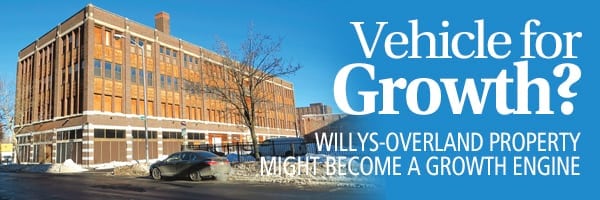
Vehicle for Growth?

The Willys-Overland building on Chestnut Street

The Willys-Overland building on Chestnut Street has a proud past, and developers now believe it has an intriguing future as market-rate housing.

Chuck Irving says the property at 151 Chestnut St. in Springfield — known to the well-informed as the Willys-Overland Building because the long-defunct car maker had a showroom on its first floor and a 1,000-car garage above — caught his attention some time ago, after it was damaged and then abandoned after the natural-gas explosion in late 2012.

And he thought it had some potential.

But what really opened his eyes was the rebirth of an almost identical property in Detroit also built by Willys-Overland.

Irving recalled googling ‘Willys-Overland Lofts,’ the name of the housing complex the site was converted into (just as BusinessWest did, and you can) and seeing headlines about relatively small but well-appointed units selling for north of $500,000. And going fast.

“We started reading the articles about the same building in Detroit,” recalled Irving, a principal with Boston-based Davenport Properties. “We went online, looked at the pictures … and it was an incredibly attractive property. And so we started looking at this building, thinking, ‘if it’s structurally sound, this is a great opportunity, because it comes with parking.’”

Indeed, seeing what happened in Detroit and coupling that with what readily appears to be a growing need for market-rate housing as the countdown to MGM Springfield’s opening hits eight, maybe nine months, the Springfield property’s potential soared in Irving’s eyes.

Enough to make the 70,000-square-foot, four-story structure Davenport Property’s latest investment in the City of Homes and the region as a whole. Others include the Springfield Plaza, the Hadley Mall, and the Walmart in Westfield.

“Our company is involved with MGM,” said Irving, noting that the company considers itself MGM’s development partner in Springfield. “And we’ve been watching the employees of the company come into the area, especially the young ones, and looking at their perception of the inventory of available apartments. Through their eyes, it became really clear that there was a need for more market-rate housing in Springfield.”

Whether the Chestnut Street property in Springfield can follow the lead of its twin in Detroit is a huge question mark, one that will hopefully be answered by extensive cost-benefit analysis work in the weeks and months to come, or what Irving called “calibrating Springfield’s market rents with construction costs.”

But he believes the property is certainly a sound investment and that the building will play a key role in the revitalization of the city and especially the area that has come to be known colloquially as the ‘blast zone.’

Kevin Kennedy, Springfield’s chief Development officer, agreed. He said the Willys project, if it develops as Davenport believes it could, might become a catalyst for the blast zone, an area bordered, roughly, by Lyman Street to the north, Dwight Street to the west, Pearl and Hillman streets to the south, and Spring Street to the east.

“There are other investors looking into that area, which we’re calling the ‘next frontier’ in Springfield,” he told BusinessWest, adding that the conditions are favorable for more housing initiatives and related businesses in that zone.

These conditions include everything from MGM and other job-creating ventures in and around downtown to the revitalization of Union Station, just a block or so to the north of the Willys building, to an interest among Millennials and also some retiring Baby Boomers in what Kennedy called “urban living.”

“When you calculate all the jobs that are going to be happening in the downtown and the Springfield area in general, and also take into account the fact that urban living is making a comeback, as well as the growing entertainment options in that area … all these things make this project viable and add up to something good for Springfield,” he said.

A new life as housing would only be the latest chapter in the intriguing history of what has come to be known as the Willys-Overland Block Local Historic District, which was placed on the National Register of Historic Places in 1983.

Built in 1916 as an automobile sales, service, and garaging area, the property became part of what would later be described as an auto-industry legacy in Springfield. Indeed, the Duryea brothers created the first marketable auto in Springfield — there’s a statue depicting their creation near Stearns Square — and Rolls-Royce located a plant in the city to capitalize on its highly skilled workforce.

But Willys-Overland, like the others, did not enjoy a long history in the city. Indeed, it closed its property here in 1921 due to slumping sales, and it has seen a number of uses since.

It was a primarily a parking garage for some of the downtown hotels before they were converted into condominiums, said Irving, and after that, it served as home to a host of businesses, ranging from Square One to a construction company.

These operations were forced out by the gas explosion in late November 2012, he went on, adding that the building was completely gutted and has been vacant, with most of the windows covered with plywood, ever since.
willys-overland-building-union-sept-24-1916

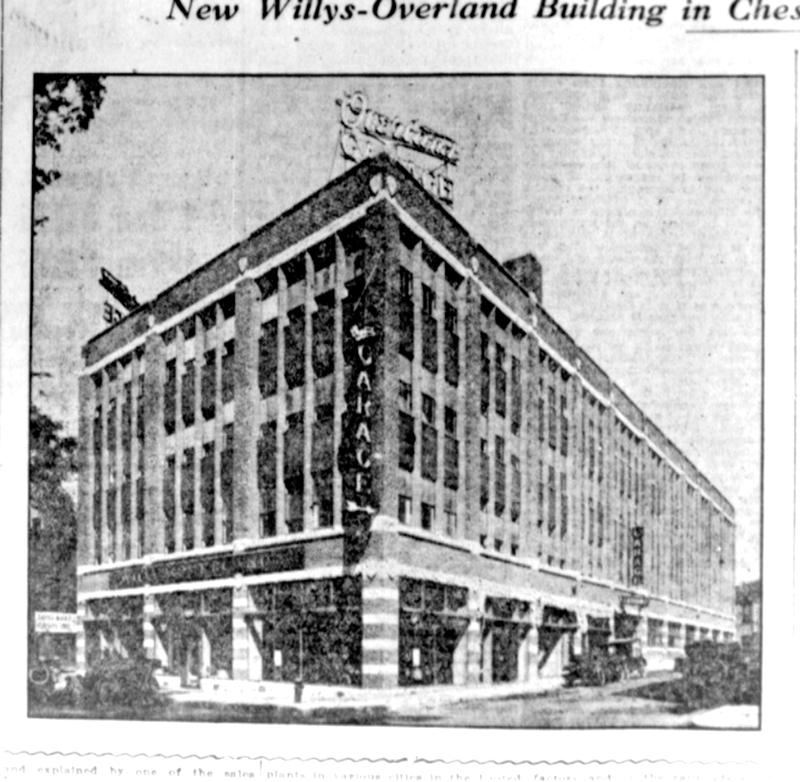
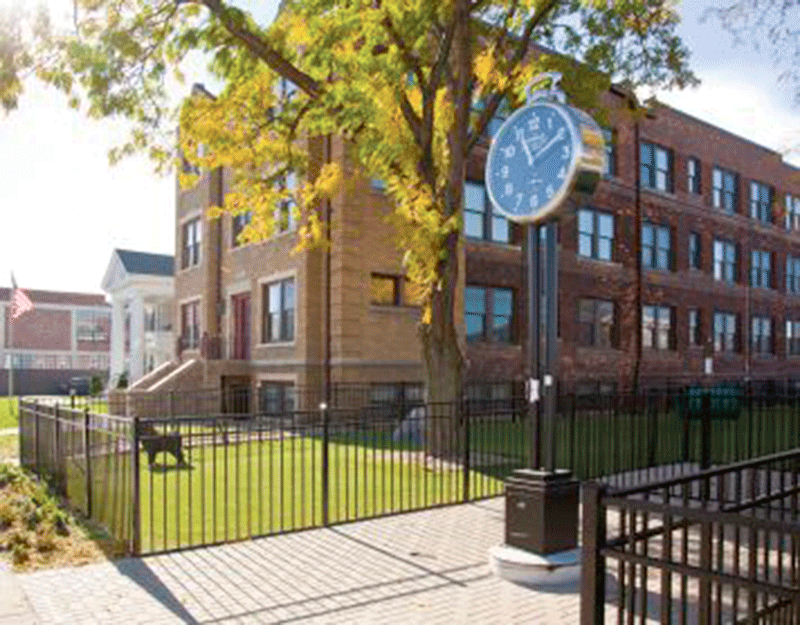
Above, a news story announces the opening of the Willys-Overland building in 1916. At right, the Willys-Overland property in Detroit, which has been transformed into lofts selling for more than $500,000.

Below, a news story announces the opening of the Willys-Overland building in 1916. At right, the Willys-Overland property in Detroit, which has been transformed into lofts selling for more than $500,000.

The previous owner applied for a demolition permit in January 2015, but the city sought and won a delay of that move due to the property’s historic significance.

It was this delay that essentially gave the property a reprieve — time for more progress to take shape in Springfield, time for a recognized need for more market-rate housing to emerge, and, yes, time for the Willys-Overland Lofts project to catch fire — and catch Davenport’s attention.

As noted, the Springfield Willys-Overland property is an intriguing addition to an already large and diverse portfolio of properties in Western Mass.

Perhaps the most visible is the Springfield Plaza, which has undergone an extensive facelift and added new tenants ranging from a trampoline complex to a new home for Springfield’s Registry of Motor Vehicles office, which, said Irving, has brought a significant surge in traffic to the plaza.

The portfolio also includes a retail complex across the street from the Eastfield Mall and what’s known as Davenport Square in Springfield, at the corner of Union and Main streets across from MGM Springfield. The development will include MGM’s daycare facility as well as some retail.

As for the Willys-Overland building, the next steps in the process of writing the next chapter in its history are finalizing designs, crunching the numbers, as noted earlier, and requesting support for historic tax credits, said Irving, adding that redevelopment is dependent on such tax credits and other forms of assistance.

While the reuse plans are still in their infancy, Irving anticipates perhaps 60 units of relatively small size, with a portion of the building to be used for parking.

“It’s got great bones, and it’s absolutely perfect for apartments with the column spacing,” he noted. “What we’re trying to go after is small — really small units for young professionals who don’t want the price of having a big space.

“Our take on it is that it’s a great investment,” he went on. “We’re not certain that the market rents will support the construction costs, and we’re still verifying that. But in the long run, we think Springfield is on the upswing, so whether it’s this year or next year, we’re convinced that this will be a great residential investment.”

As for the blast zone, or Springfield’s ‘next frontier,’ as Kennedy called it, progress has come slow to that area, with the gas explosion now more than five years in the rear-view mirror.

This can be attributed to several factors, he went on, including the slow pace of insurance settlements on many of the properties in the zone (including the Willys-Overland building) and a desire among investors to see how and in what ways Springfield continued its revitalization.

But Kennedy believes the Willys-Overland project could trigger other developments in that area and other housing initiatives as well. And Irving agreed.

“The Springfield market, in our mind, is about to blossom,” he told BusinessWest. “And so, this is a good place to be on the ground level.

“This is a small project at 60 units,” he went on. “If this tests out and verifies that market rates can support new construction, then this will be a catalyst for that entire area.”

George O’Brien can be reached at [email protected]

Commercial Real Estate Sections

Progress in Site

An aerial shot of 70 Turnpike Industrial Park Road in Westfield.

An aerial shot of 70 Turnpike Industrial Park Road in Westfield.

Michael Grossman says his New York-based firm, HMC Real Estate Partners, looks at several hundred properties in the Northeast corridor over the course of a year — at least a few per week, by his estimate.

When asked what prompts he and partners Barry Lefkowitz and Brendan Kolnick to move beyond looking — or well beyond, as the case may be — and make an addition to their growing portfolio of properties, he said there are a number of factors that go into that equation.

These include everything from that time-honored first consideration in real estate — location, location, location — to the condition of the property, the condition of the local market, demand for the type of real estate in question, and a host of other variables.

And every one of those boxes could be checked when it came to a property now marketed as 70 Turnpike Industrial Road, known to most as the National Envelope site, because that was the tenant there for a number of years before it vacated the property in 2015.

“We saw great potential for value creation,” said Grossman. “The project represents an excellent opportunity to turn a non-performing property into a productive asset for the community as well as our investors.”

Elaborating on this potential, Grossman noted that the property is located roughly a mile from Mass Pike exit 3 (you can almost see the highway from the property), and also has rail accessibility. What’s more, it has size (238,575 square feet) and flexibility in that it is suited for both production and warehousing, and is in good condition, especially following more than $1 million in work to the roof, replacement mechanical systems, and more.

Add in a strong market for manufacturing and distribution space, fostered by dwindling inventory, and a city eager to replace the jobs lost when National Envelope left the city, and it’s easy to see why HMC pursued the property and thus greatly increased its presence in the region.

Indeed, this is the company’s second major acquisition in Western Mass. in 2017; the other was the fully leased, 187,840-square-foot warehouse building in the Agawam Regional Industrial Park, home to OMG and Vaupel.

Michael Grossman

Michael Grossman says acquisition of the Turnpike Industrial Park property represents an opportunity to turn a non-performing property into a real asset for the city and the region.

The company also owns a large industrial property in New Jersey, and the portfolio now boasts nearly 1 million square feet of industrial and distribution facilities.

Grossman joined fellow industry veterans Lefkowitz and Kolnick in creating HMC in 2016, with Grossman and Lefkowitz both having left Mack-Cali Realty Corp., a public, multi-billion-dollar real-estate investment trust, to start their own company.

HMC focuses primarily on acquiring multi-tenant industrial and office-flex properties, Grossman explained, adding that the company had developed a strong working relationship with many of the top real-estate-services firms, including Cushman & Wakefield, which put the Westfield property on HMC’s radar and is now its agent.

The company’s principals saw a property that needed some work — there was a considerable amount of deferred maintenance — but also great potential in what would be a new role, that of home to multiple tenants.

And Grossman, as he offered BusinessWest a tour and pointed out its open spaces, high ceilings (up to 36 feet in some portions of the facility), and 12,000 square feet of office space, envisioned up to four tenants.

“We’re looking at assembly, manufacturing, and straight distribution,” he explained. “The building lends itself to manufacturing because of the extensive power.”

The logo created to accompany marketing materials for the property does an effective job of highlighting some of its many assets, especially that strategic location part.

Indeed, curving their way around a large ‘70’ (the street address) are four lanes of highway and some railroad track. The roadway is the Turnpike, obviously, the west-bound lanes of which are less than 100 yards from the back of the property. The railroad track signifies the potential to create a spur that would connect the property to a rail line running through the north side of the city. National Envelope never used rail service, but the potential is certainly there for future tenants to do so, Grossman said.

Potential is a word you hear early and often in reference to this property, and Grossman and his partners are confident that it won’t be long before this potential is realized.

— George O’Brien

Columns Sections

Finance: A Primer on the TCJA

By David Kalicka

David Kalicka

David Kalicka

It is important to note that, although many business changes are permanent, the individual changes are temporary. The changes in tax rates, standard deductions, and personal exemptions will expire in 2025, unless extended at some future date.

Individual Tax Changes

Tax rates: Lower individual income-tax rates of 10%, 12%, 22%, 24%, 32%, 35%, and a top rate of 37%. (The current rates would be restored in 2026, i.e. 10%, 15%, 25%, 28%, 33%, 35%, and 39.6%).

Standard deduction: Single $12,000, increased from $6,350 (2017). Married filing joint $24,000, increased from $12,700 (2017).

Personal exemptions: Eliminated. Under prior law, exemptions would have been $4,150 each for 2018.

Child tax credit: Temporarily increased to $2,000 per child under 17 (was $1,000) and new $500 credit for dependents other than child.  These credits phase out for higher-income taxpayers.

Itemized Deductions: Deduction for taxes (income taxes and real-estate taxes) limited to $10,000 per year.

Mortgage interest: For mortgage debt incurred after Dec. 15, 2017, interest deduction limited to acquisition debt of $750,000. Acquisition debt incurred prior to that date is still subject to the $1 million limit.

Home equity loan/line of credit interest deduction eliminated beginning in 2018, regardless of when the home-equity loan originated.

The deduction for contributions of cash to public charities will be limited to 60% of AGI beginning in 2018 (prior limit was 50% of AGI).

Miscellaneous itemized deductions have been eliminated. This category included unreimbursed employee business expenses and investment expenses. Under prior law, these were deductible to the extent they exceeded 2% of AGI.

• In view of the elimination or limitation of certain deductions and the increase in the standard deduction, fewer taxpayers will be itemizing. To maximize the benefit of deductions, you should consider bunching allowable deductions in alternating years. For example, a married couple with no mortgage and state and local income taxes and real-estate taxes of at least $10,000 will need an additional $14,000 to exceed the standard deduction. Combining multiple years’ charitable contributions in one year may be a way to benefit from itemizing in a particular year. One technique for doing this is a donor-advised fund.

Elimination of other deductions: The moving-expense deduction has been eliminated.

Alimony: For divorce agreements executed after Dec. 31, 2018, alimony will no longer be deductible by the payer or taxable to the recipient. If anticipated, any such agreement should be reviewed in light of the new law to determine the effects of timing.

Alternative minimum tax: The individual AMT has been retained, but the exemption has been increased. With the limitation on taxes and the elimination of miscellaneous itemized deductions, fewer people will be subject to AMT.

Section 529 plans: These plans can now be used to pay up to $10,000 per year for private elementary or secondary school tuition.

Casualty and theft losses: The itemized deduction for casualty and theft losses has been suspended except for losses incurred in a federally declared disaster.

Estate and Gift Taxes

For decedents dying and gifts made after Dec. 31, 2017 and before Jan. 1, 2026, the federal exclusion has been doubled to roughly $11 million per person. Keep in mind that this expires in 2025 and then reverts to about $5.5 million per person.

Taxpayers with large estates should consider the benefit of making large gifts now to take advantage of this temporary increase in exemption.

Business Tax Provisions

These provisions have been made permanent in the new tax law unless otherwise indicated.

C-corporation: Flat corporate tax rate of 21% (old law 15%-35%). This low tax rate is attractive; however, keep in mind that there is a second level of tax when the corporation pays dividends or is liquidated. Also, C-corporations have additional potential penalty taxes (personal holding company tax and accumulated earnings tax).

Pass-through entities: Many S-corporation shareholders, LLC members, partners, and sole proprietors will be able to deduct 20% of their pass-through income. This seems like a simple concept. Unfortunately, there are some very complex rules depending upon the individual’s taxable income and whether the business is a professional service business or real-estate business. It is not practical to try to explain these rules in this communication. Therefore, you should consult with your tax adviser to discuss the optimal entity choice for your business and how you can plan to take additional advantage of some of these rules.

DPAD repealed: The new law repeals the domestic production activities deduction for tax years beginning after 2017.

Entertainment expenses: No longer deductible (50% deductible under prior law). Business meals remain deductible subject to the same substantiation rules and limitations. The 50% disallowance is expanded to cover meals provided via an in-house cafeteria or otherwise on the employer’s premises

Section 179 expensing: Annual limit increased to $1,000,000 (previous limit was $500,000). Also, the expanded definition of assets eligible for section 179 includes certain depreciable tangible personal property used predominantly to furnish lodging or in connection with furnishing lodging. The definition of qualified real property eligible for expensing is also expanded to include the following improvements to non-residential real property after the date such property was first placed in service: roofs; heating, ventilation, and air-conditioning property; fire protection and alarm systems; and security systems.

Bonus depreciation: increased to 100% (from 50% under prior law) for property placed in service after Sept. 27, 2017 and before Jan. 1, 2023, and expanded to include used tangible personal property. After 2022, it phases down by 20% each year until Jan. 1, 2027.

Luxury auto depreciation limits: Under the new law, for a passenger automobile for which bonus depreciation is not claimed, the maximum depreciation allowance is increased to $10,000 for the year it’s placed in service, $16,000 for the second year, $9,600 for the third year, and $5,760 for the fourth and later years in the recovery period. These amounts are indexed for inflation after 2018. For passenger autos eligible for bonus first-year depreciation, the maximum additional first-year depreciation allowance remains at $8,000 as under pre-act law.

Business interest deduction limitation: For businesses with gross receipts in excess of $25 million, interest-expense deductions will be limited to 30% of adjusted taxable income. For years beginning before 2022, adjusted taxable income is computed without regard to depreciation and amortization. Any excess interest expense is carried over to future years. Real-estate businesses may elect out of this limitation. However, the election requires use of ADS depreciation, which results in longer depreciable lives and loss of bonus depreciation.

Net operating losses: There is no longer a carryback provision; however, the carry-forward period is now unlimited (previous law provided that NOLs could be carried back two years and forward 20 years). In addition, any losses incurred after Dec. 31, 2017 can offset only 80% of taxable income.

Excess business limit: The new tax law limits the ability of a non-corporate taxpayer to deduct excess business losses. After application of passive loss rules, the deduction of business losses is limited to $500,000 per year for taxpayers filing jointly and $250,000 for others. The excess loss is carried forward as part of the taxpayer’s net operating loss. This provision applies to tax years beginning after Dec. 31, 2017 and prior to Jan. 1, 2026.

As you can see from this brief summary, the new law is extremely complex. You should consult with your tax adviser to fully explore how to take advantage of the opportunities and to minimize the impact of the negative changes.

David Kalicka, CPA serves as partner emeritus for the Holyoke-based public accounting firm Meyers Brothers Kalicka, P.C.; (413) 536-8510; [email protected]

Sales and Marketing Sections

The Name of the Game

By Michelle Abdow

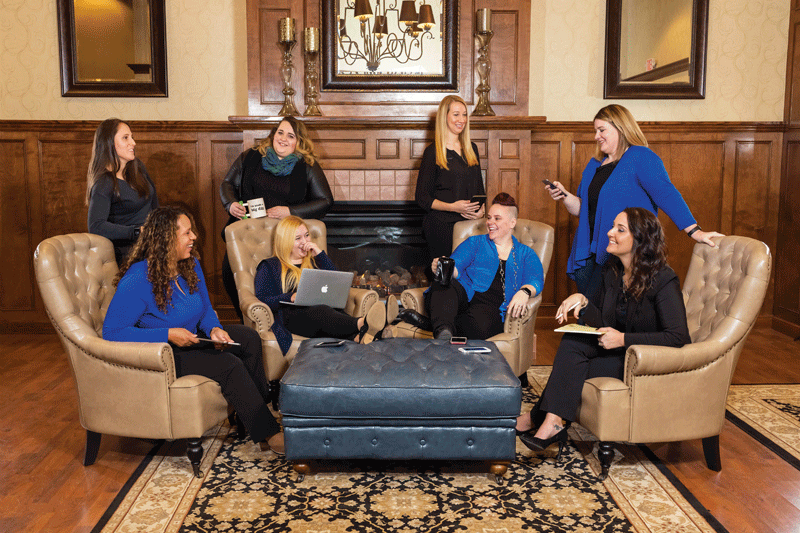
The team at Market Mentors.

The team at Market Mentors.

According to a 2015 study conducted by Microsoft Corp. and reported by Time magazine, most Americans’ brains are hardwired with an eight-second attention span.

If this is true, then your company’s marketing message is more likely to resonate (or at least be retained by) goldfish, who can focus longer: nine seconds. In the information blur last year, you may have missed another study, this one conducted by the research firm Zenith, which found that, in 2016, people consumed, on average, 456.1 minutes of media each day. With these findings, how, then, can a company possibly effectively communicate with an audience that doesn’t have capability to process or — worse — retain the message?

Comedian Jerry Seinfeld once declared the idea of an attention span a misnomer, professing, “people have an infinite attention span if you are entertaining them.” Fellow comic Steve Martin offered a similar sentiment: “be so good they can’t ignore you.” While advertising is no laughing matter, judging by the success of both men, there has to be some truth to their declarations that can be parlayed into effective messaging. Capture someone’s attention, and you need not worry about their attention span.

Say It Quickly, Say It Well

It’s been established that effective messaging needs to capture the attention of your desired audience. To accomplish this, the message itself must be memorable, relevant, and authentic. More than that, it must be inextricably linked to your company and brand so the messaging can’t mistakenly be attributed to a competitor.

Some might be tempted to jam-pack their advertisement with imagery and text to ‘make the most’ of the opportunity. A word to the wise: putting 10 pounds into a five-pound sack won’t work; customers will be apt to skim right over it — the opposite of your desired result.

Finding the right mix of messaging (print, digital, or otherwise) for the right price and in the right placements is perhaps the most challenging aspect of marketing or advertising communications, and it shouldn’t be left to chance.”

At its very core, advertising is easy: with compelling imagery, catchy headlines or taglines, a strategically placed logo, and a clear call to action, the advertisement should compel viewers to do just that: act. Right? Consider Super Bowl commercials. Perhaps you’re one of the roughly 110 million people who watch the game each year and among the working adults who congregate around the water cooler the following day to compare, contrast, and, more likely, rank the commercials. Why are some spots successful, running throughout the year, while others disappear as quickly as they first appeared during the game?

What You Say Is As Critical as Where You Say It

A commercial for sugary cereal with a prize in the box is likely to resonate more with the Saturday-morning cartoon-watching crowd than late-night talk-show viewers. A print advertisement for skateboards is unlikely to reach its intended audience if it is placed in Forbes or BusinessWest.

Therefore, it’s important to consider where your customers are consuming media so your messaging can be appropriately placed and leveraged. While you may not see your own advertisement, wouldn’t you prefer it that way if it means your potential customers are seeing it instead?

Mixing Things Up

Most businesses have a set dollar amount allocated for promotional activities. How can you find the right combination of messaging strategies to garner the best results? After all, isn’t that the desired result of promotions, to garner results, preferably the measurable variety — cash-register rings, new-client attainments, sales growth over time, competitor acquisitions, and the like?

Finding the right mix of messaging (print, digital, or otherwise) for the right price and in the right placements is perhaps the most challenging aspect of marketing or advertising communications, and it shouldn’t be left to chance.

While you may have relied on word of mouth to initially launch your business, your company will not remain top of mind if messaging is not consistently delivered. The desire should be to move customers through a sales funnel, advancing their awareness to interest, interest to evaluation, evaluation to decision, decision to purchase, and, if you’re lucky, repeat purchases.

Consistent messaging is the only way to accomplish this. One impactful advertisement will simply make your customer aware of your existence, if they notice your ad at all.

Don’t Just Take My Word for It

While Henry Ford did not invent the automobile, he did shift people’s perception about owning them. Through efficient means of production and effective messaging, consumers began to understand, desire, and ultimately purchase his Model Ts, more than 15 million of them and over the course of 20 years. How? Ford not only understood the importance of advertising, he understood how to adapt messaging to evolving customer wants and needs and, moreover, a shifting media landscape.

The takeaway? “If there is any one secret of success, it lies in the ability to get the other person’s point of view and see things from that person’s angle as well as from your own.” Do this in your advertising, in what you say, how you say it, and where you say it, and your messaging will be memorable.

And isn’t that what it’s all about?


Michelle Abdow is President of Market Mentors; a full service marketing, advertising and public relations firm headquartered in West Springfield; 413-787-1133


Community Spotlight Features

Community Spotlight

At last week’s inauguration of Chicopee officials

At last week’s inauguration of Chicopee officials, Mayor Richard Kos (center) is flanked by, from left, state Rep. Joseph Wagner, City Council President John Vieu, Elms College President Harry Dumay, and D. Scott Durham, Airlift Wing commander at Westover Air Reserve Base.

Mayor Richard Kos is fond of pointing out that Chicopee is alone among Western Mass. communities in having two exits off the Mass Pike — and now it has a third ‘beacon’ of sorts, as he calls it, with the new Mercedes-Benz dealership lighting the night as it overlooks the Pike at exit 6.

“One of the benefits of Chicopee is its convenience, as well as being a great place to do business,” Kos told BusinessWest. “That’s why Mercedes chose to build in that location. Having two exits on the turnpike is unique in Western Mass., let alone being close to four interstates — 90, 91, 291, and 391. As time goes by, society changes, especially in terms of technology, but being able to get places quickly is always a priority.”

In that vein, the mayor is gratified by a number of businesses choosing to locate or expand in Chicopee, as well as a raft of municipal projects and public-private partnerships that continue to raise the quality of life in this multi-faceted community of more than 55,000 people.

“Last year’s announcements have become this year’s ribbon cuttings, and Mercedes is one of them,” he said. “They’re a beacon advertising quality and prestige for everyone who enters the city off the turnpike or 291. That’s a major investment in the city — $12 million for acquisition, demolition, and construction. And Tru is another $15 million investment in our community.”

That would be Tru by Hilton, another major project, this one bordering the Mass Pike at exit 5. The owners of a Days Inn demolished the outdated hotel on Memorial Drive to make way for the new structure, and the property will include a fast-foot restaurant, a gas station, a coffee shop, and a sit-down restaurant.

“For people coming to Western Mass. from the eastern part of the state, these projects send a nice message,” Kos said — that message being that things are happening in Chicopee. “We’re a community that has always been responsive to businesses, with the conveniences we afford, while still being a very competitive community in terms of electric rates, taxes, and fees.”

Chicopee
at a glance

Year Incorporated: 1848
Population: 55,298
Area: 23.9 square miles
County: Hampden
Residential Tax Rate: $18.31
Commercial Tax Rate: $34.65
Median Household Income: $35,672
Median Family Income: $44,136
Type of Government: Mayor; City Council
Largest Employers: Westover Air Reserve Base; J. Polep Distribution Services; City of Chicopee; Callaway Golf Ball Operations; MicroTek
* Latest information available

Other success stories involve long-time businesses like Callaway Golf, which sits on the Meadow Street property synonymous with Spalding for many decades.

“Callaway not only chose to remain here and expand here, but with their Chrome Soft ball and all their other high-end balls, they’re running a 24-hour, seven-day operation to keep up with demand,” the mayor said. “That’s one of the fastest-growing balls in use on the tour, and we’re proud that it’s made in Chicopee.”

One key, he went on, whether dealing with new businesses or existing ones that want to expand and invest, is streamlining the permitting process.

“We’re trying to be responsive to business needs and timing,” Kos said. “A lot of times, government has a pace that leaves a little bit to be desired, and we want to make sure that doesn’t happen in our city. Chicopee has a history of being extremely business-friendly and responsive. You come in and meet all the boards at once — fire, electric, building, water, all the various departments you need — to have your ideas vetted and see what issues might arise, and to make sure your project goes smoothly. Time is money.”

Downtown Rise Up

At the same time, money is an investment — at least, that’s the way municipal leaders see it as they continue to raise the profile of Chicopee’s downtown. Those investments range from a $2.6 million MassWorks grant to improve water and sewer infrastructure to Mount Holyoke Development’s housing project at Lyman Mills, set to open this spring with 110 market-rate units — specifically, loft-style work/live spaces designed to appeal to young entrepreneurs.

Kos hopes that development and others like it — such as Valley Opportunity Council’s renovation of the former Kendall House into 41 affordable studio apartments — spur further restaurant, bar, and retail development and create a more walkable, active downtown. Community events, such as the city’s holiday tree lighting, Halloween spectacular, and the late-summer Downtown Get Down, just add to that effort.

“We want foot traffic and to get more people down there, which is why we’re investing time and effort to get people to live down there, and make it safer, too,” he added, noting that the City Council recently approved $300,000 to add more cameras downtown and throughout the city to fight and, more importantly, deter crime.

“Our cooperation with the City Council has been remarkable. And the city leaders and the state delegation have worked together to solve problems, come to a consensus, and move forward.”

Meanwhile, at the former Facemate site, David Spada from Lawrence is building a $21 million, 92-room assisted-living facility on a West Main Street parcel across from the Chicopee Falls Post Office, situated off a new road which leads to the RiverMills Senior Center. Ground will be broken this spring.

“So we’re providing opportunities for Millennials to live and work in lofts on one end of the city,” Kos said, “and assisted living on the other.”

Other innovative reuse of property includes a three-megawatt solar farm on a 26-acre site off of Outer Drive and Goodwin Street, near Westover Air Reserve Base. In 2016, the city razed 100 units of military housing units on the site, which had sat unused for two decades and become problematic.

Once a solar farm was approved by neighbors and city leaders, Chicopee was awarded a $1 million MassDevelopment grant to remediate the property, and with money came from the state’s grant program to support the Clean Energy Assessment & Strategic Plan for Massachusetts Military Installations, the housing was finally torn down. Finally, a lease agreement was signed with Chicopee Solar LLC, a subsidiary of ConEdison Development, to build a solar farm.

The city’s investment will be recouped in 10 years through tax revenue and income from the lease agreement, and the government will also benefit because Westover will receive a 5% discount each year on electricity, amounting to $100,000 in annual savings.

“Those properties were deteriorating and vagrant,” Kos told BusinessWest. “This was a win-win for the neighborhood as well as the city.”

Hometown Appeal

Other recent quality-of-life developments in the city include a $225,000 investment in Sarah Jane Park, a grant to the Valley Opportunity Council to support a culinary-arts program and expand nutrition programs in Willimansett, and grants to Porchlight, the Boys & Girls Club, and Head Start to improve infrastructure and programming. For the latter, the city helped leverage more than $600,000 in building improvements to the former Chicopee Falls branch library so Head Start can expand programs for hundreds of children in that neighborhood.

Meanwhile, the city’s public-safety complex recently saw $9 million in improvements, including a new training facility, central dispatch, and locker rooms. “Both chiefs agree that facility will last multiple generations in terms of the improvements made there,” Kos said, adding that other additions include a new ladder truck and an expansion of the police K9 program.

Not all these developments have the splash of a well-lit Mercedes-Benz dealership making a dramatic impression on Mass Pike motorists, but they are all beacons in their own way, testifying to a city on the move, and also a community with plenty of hometown pride.

“We’re the third-largest city west of 495,” the mayor concluded, “but it’s the old Cheers bar mentality — everyone seems to know your name.”

Joseph Bednar can be reached at [email protected]

Sales and Marketing Sections

It’s All About Storytelling

By Darby O’Brien

Darby O’Brien

In this age of countless media platforms, Darby O’Brien says, bold and creative messaging is more important than ever.

In today’s multimedia environment, there are countless platforms — and a hell of a lot of clutter. That means the bedrock of strong advertising and marketing — bold, creative messaging — is even more important, whether it’s a billboard or a banner ad.

As marketing agencies, we’re expected to sell our clients on viral content, social-media approaches driven by hashtags and Snapchat filters. Lots of buzzwords. It’s important to keep current and explore all available options to get the word out. But it’s also important to have a strategy and not disregard the enduring power of traditional media such as television and print.

We need to dig down and get to know our clients, what makes them unique, and what specific strategy works for them. It’s not our job to sell clients on the latest trends just because it’s something they’ve been told they should have. It’s our job to give them the tools they need to succeed.

We believe in powerful brands with a strong look and message and making sure that stays consistent through all representations: website, business cards, letterhead, social media, advertising, even the design of the office. This business is all about storytelling. A company advertises to differentiate themselves, to set themselves apart from the pack. We need to focus less on the delivery system and more on the message. Branding campaigns that work are the ones that connect. They are memorable and successful because they truly represent the client. Sometimes it’s done through humor; sometimes it’s emotion. Sometimes it’s subtle; sometimes it’s a kick in the pants.

General brand awareness usually requires a broader mix of new and traditional media. Basically, putting together the media plan is the easy part. Coming up with something that people are going to care about — and talk about — is the challenge.”

Once there’s a strong identity and story, one must consider the current media options and figure out a combination that works. If we want to capture an audience attending an event, we geofence the event and hit ’em with ads on their phones. If you sell a product that needs multiple touches, it’s best to re-market to visitors to your site and keep top-of-mind awareness until they pull the trigger.

General brand awareness usually requires a broader mix of new and traditional media. Basically, putting together the media plan is the easy part. Coming up with something that people are going to care about — and talk about — is the challenge.

People aren’t going on Facebook or Instagram to be sold. That said, it is an incredible platform for doing just that. Restaurants, fashion, beauty, and other lifestyle brands have the easy leg up on being consumer-based and can benefit from the bragging rights associated with people liking their page. Those are the easy promotions on social media. Take a food-porn shot of your top-selling entrée, appetizer, or cocktail, boost it, and watch the likes and shares come in.

It gets tougher if you are a growing company that is not in a sexy category. Try recruiting talent from a pool where the audience doesn’t have cable or read the newspaper. That is where strategy, message, and delivery come together. We have seen great success with recruiting campaigns on Facebook and Instagram, even for companies that you may not associate with social media. In this case, the strategy is to sell the lifestyle that working for said company could afford them instead of just throwing up a ‘now hiring’ post.

Unfortunately, we’re living in what I call an ‘eggshells environment.’ We need bold, creative messaging more than ever, but people seem more cautious than ever. There’s too much of a focus-group mentality. When you try to please everybody, you don’t appeal to anybody.

Our most successful campaigns have been when we dealt directly with the decision maker, the person whose reputation is on the line and knows that you have to roll the dice to win. Those campaigns and concepts have rarely made it through the groupthink filter of committees, play-it-safe marketing directors, and company boards without being dumbed down and rendered ineffective.

As marketing agencies, we need to make it clear what exactly we’re good at. Today, everybody thinks they can do it themselves. It’s great that media has been democratized by new technology, but just because a client can shoot a web video or a TV spot on their iPhone and cut it together on their laptop, doesn’t mean they should. Now more than ever, concepts, quality production values, and consistency are key if you want to make an impact.

One thing I’ve always stood by is that you don’t win when you underestimate the audience or treat them like a bunch of rubes. Today’s audience is media-savvy, sophisticated, and appreciative of quality and style. Look at what’s on TV. Look at the food world. Things are being executed on a higher level than ever before.

Businesses need to think big and not be afraid to take a risk.

Darby O’Brien is a principal with Darby O’Brien, an independent, family-run branding, design, advertising, and public-relations firm headquartered in South Hadley; (413) 533-7045.

Cover Story Sales and Marketing Sections

Getting the Message

bwcovermegaphone

Marketing was never an example of a simple exercise, but in today’s multi-media landscape, it is even less so. To help business owners and managers with this critical assignment, BusinessWest asked four area marketing firms to discuss the art and science of getting one’s message across in today’s world. Slicing through their commentary, one point becomes clear: it’s at least as important to focus on the message as it is on the vehicles used to deliver it.


It’s All About Storytelling

By Darby O’Brien
Focus more on the message and less on the delivery system   More …

The Name of the Game

By Michelle Abdow
Get their attention, and you needn’t worry about attention span   More …

By Any Measure

By Meghan Lynch
To boost profits, appeal to the heart, not the head   More …

Rock Relevance

By John Garvey
In this age, a relevant message is everything   More …

Sections Women in Businesss

Missed Connections

Robin Saunders

Robin Saunders says the job opportunities and flexible working options in the IT field make it an ideal landing spot for talented women.

Despite the fact that women comprise roughly half the workforce and the majority of college enrollment, the world of computers and information technology remains a largely man’s world, with women accounting for just over one-quarter of all professionals. Many reasons have been posited for this disparity, but most industry leaders agree that opportunity abounds for talented women willing to, as one local professor put it, “just jump in.”

The numbers aren’t surprising anymore, but they’re still striking.

According to the National Science Foundation, though women make up roughly half of the college-educated workforce — and well over half of current college students — they comprise just 25% of the nation’s workforce in ‘computer and mathematical sciences,’ the name the Bureau of Labor Statistics gives to the broad industry most people call IT, or information technology.

“When I graduated in the mid-’80s, it wasn’t quite 50-50, but there were more women for sure,” said Brian Candido, associate professor and program chair of Computer Information Technologies at Springfield Technical Community College, noting that the field is slowly diversifying racially, but not along gender lines. “What’s interesting is that colleges are 60-40 female, and the projections are 70-30 in the next five years — but not in IT. It still tends to be white males. We’re seeing more Latinos, which is good, but not as many women as I’d like to see.”

Robin Saunders, director of Graduate Programs in Communications and Information Management at Bay Path University, agrees — even from her perspective at a women’s university.

“It is absolutely a problem,” she said. “If you look at the studies done by Google, women represent less than a third of the people in information-technology fields. They partly attribute that to women not being encouraged in high school to get into computer science. They’re told it’s difficult, it’s boring, it’s technology. When I was in my graduate cybersecurity degree program, I was the only woman. It can be pretty intimidating.”

And that’s unfortunate, she said, considering the opportunity that exists in IT, citing projections that, by 2020, some 1.4 million computer-science jobs will need to be filled, making IT one of the fastest-growing industries in the U.S. (see table below). It’s that growth, she said — and increased efforts to engage women at a younger age about those opportunities — that will start to shift the trend, she added.

computingtheopportunity0118a

“Many of those jobs will be filled by women,” she said. “It’s a perfect place for women to be; these are jobs that can be done full-time, part-time, or in an entrepreneurial way. If women are looking for something that’s flexible, it’s a perfect field to be in, and the jobs are expanding exponentially.”

In short, now is the time for young women — and older career changers, for that matter — to consider a field that, despite lingering stereotypes, is as promising and diverse as any. And that message is being delivered in myriad ways.

“The Girl Scouts just developed a coding badge, which is wonderful and something that teaches girls computer science is not just for your quintessential computer geeks, guys sitting in the basement with headsets,” Saunders said. “Women say that’s not what they want to be. But they don’t understand what the definition of information technology is. It’s such a broad field.”

She cited examples of applied computer science, which uses computers to examine and solve problems in a variety of industries, from healthcare to finance to precision machining. Meanwhile, professionals in her own specialty, cybersecurity, are increasingly in demand in virtually all types of businesses.

“Women are so sought after when they graduate,” she added. “Employers are looking for women to fill those positions. There’s a big push to equalize the genders in business, so if you’re a women with a degree in computer science, it pretty much guarantees a job.”

Breaking the Code

If that’s the case, why that nagging 25% statistic?

ISACA, a nonprofit that specializes in developing knowledge and practices for the IT industry, recently tried to get at the answer from within, surveying women who currently work in IT about the greatest barriers they face.

The top five were lack of mentors (48%), lack of female role models in the field (42%), gender bias in the workplace (39%), unequal growth opportunities compared to men (36%), and unequal pay for the same skills (35%).

“Women are vastly underrepresented in the global technology workforce. This is not only a societal concern, but also a workforce problem, given the critical shortage of skilled technology professionals faced by many enterprises,” said Jo Stewart-Rattray, board director of ISACA. “The survey findings reinforce that there is much work left to be done. By providing more opportunities, including career-advancement programs, we can make long-overdue progress in ensuring that women are more equitably represented in the technology workforce.”

When asked about opportunities for professional growth, 75% of respondents said their employer lacks a gender leadership development program. Additionally, 80% report that their supervisors are male, and just 8% report never experiencing gender bias in the workplace.

One big takeaway, Stewart-Rattray said, is that women hunger to learn and benefit from the presence of other women in technology.

Brian Candido

Brian Candido says STCC’s female enrollment in computer programs has mirrored national statistics, but the college is taking steps to increase it.

Saunders said it needs to start early, with clubs as young as middle school that get girls together to talk about technology and coding, and organizations like Girls That Code. And those networks need to extend into adulthood; a good example is Saunders’ own participation with the Women in Cybersecurity network, whose national conference she addressed two years ago.

“Women love mentoring and love networking, and they’re good at it. That’s the way to get them interested.”

Candido agreed that outreach and engagement should begin long before college if the industry wants to turn around its drastic general imbalance.

“We see four or five female graduates a year, and the ones that do finish do quite well,” he told BusinessWest. “The companies we partner with, MassMutual, Baystate Health, they want diversity. They want employees that reflect the community at large.”

Everyone uses technology and social media, and some of that is spurring interest in what’s making it tick, what’s behind the software, what makes it happen.”

STCC has made efforts to create that diversity on its own campus, such as the STEM Starter Academy, which financially supports first-year students entering the STEM fields, with a particular emphasis on women and students of color; this year’s cohort is 50% female. Then there’s Candido’s mobile-programming course he teaches at Commerce High School, a project-based course that has teenagers developing apps in an effort to pique their interest in an IT career. Of the 18 current students, six are female.

“Everyone uses technology and social media, and some of that is spurring interest in what’s making it tick, what’s behind the software, what makes it happen,” he said, adding that there’s a meritocracy in the tech world that rewards what someone can do, not necessarily what demographic they are. “Some of these opportunities now, they don’t even meet with people; they work remotely over the Internet, develop apps and deploy them, or work on networks. We’re seeing that people can work everywhere and work virtually.”

Because they’re working in virtually every industry, Saunders noted, Bay Path’s applied computer science degree is especially attractive to students who see technology as a way to create tools and apps that solve real-world problems, rather than as an end in itself. Meanwhile, the school’s master’s degree in applied data science prepares them for an economy that is expected to need an influx of 190,000 big-data experts by 2018.

Meanwhile, Bay Path’s Center of Excellence for Women in STEM provides a number of supportive resources for students pursuing IT and other STEM-related degrees, including professional-development, mentorship, and networking opportunities; guest speakers, workshops, and forums; and honors programs.

It’s enough to make women want to take the plunge into IT, she said, and that’s the point.

“Just jump in, I say,” she told BusinessWest. “You know this industry is going to explode. So get in and see how it feels.”

Shift Key

While colleges are doing their part, the industry itself bears some responsibility for creating a more female-friendly culture, Stewart-Rattray argued.

“There also is much that enterprises can do, such as ensuring they are offering equitable pay for men and women and providing flexible working arrangements,” she noted. “Having ‘keep in touch’ days when women are on maternity leave, in addition to encouraging professional-development opportunities such as webinars and online courses, are other worthwhile ways to ensure that women remain connected to the organization while on leave.”

After all, she added, cultivating a more diverse work culture just makes economic sense.

“In addition to promoting a more just society, enterprises have bottom-line motivation to hire and promote women,” she said, citing research from the Peterson Institute for International Economics suggesting that organizations with at least 30% female leaders add up to 6% to their profit margin, on average. “This does not surprise me. The women I have worked with are highly motivated, focused, and encouraging of their colleagues. They are as knowledgeable — if not moreso — than their male counterparts.”

Saunders knows that to be true, and she tells prospective students as much.

“My recommendation is just to be fearless. We all had to start somewhere. The only problem is, the future doesn’t wait for anybody. If you don’t jump off the diving board, you’re going to be left behind.”

Joseph Bednar can be reached at [email protected]

Banking and Financial Services Sections

Growth Engine

Tracey Gaylord of Granite State Development Corp. (right) with Shannon Reichelt, who used Granite State’s services to finance a new property for her company, S. Reichelt & Co.

Tracey Gaylord of Granite State Development Corp. (right) with Shannon Reichelt, who used Granite State’s services to finance a new property for her company, S. Reichelt & Co.

Certified development companies, or CDCs, are entities that partner with banks to help small businesses secure financing to grow their operations. But in doing so, they’re also growing the economy by promoting economic development, which is, in fact, a key element of their mission. Since its inception in New Hampshire in 1982 — and its subsequent, ever-expanding work across Massachusetts — Granite State Development Corp. has been executing that mission.

Shannon Reichelt recently purchased a building in Holyoke to consolidate her CPA organization, S. Reichelt & Co.

Meanwhile, Ben LaRoche and Jared Martin purchased a property in Lanesboro to house their technology-integration business, Amenitek; Gordon and Patricia Hubbard bought Hidden Valley Campground in Lanesboro and renamed it Mt. Greylock Campsite Park; and Pat Ononibaku purchased the adult day-care operation known as ThayerCare and renamed it Bakucare.

Then there are Anthony Chojnowski, who is building a new structure for his clothing store, Casablanca, in Lenox, and Frank Muytjens and Scott Cole, who are developing the Inn at Kenmore Hall in Richmond, near the New York line.

While those are six very different businesses, the common thread is how they financed their property purchases: through the certified development company (CDC) called Granite State Development Corp. (GSDC).

“We work with businesses looking to either acquire an existing business that has tangible assets, or take a loan on real estate or piece of equipment,” said Tracey Gaylord, Granite State’s vice president and business development officer.

Specifically, Granite State is a nonprofit lender authorized to process and service Small Business Administration (SBA) loans utilizing the 504 lending program (more on that later). It’s the second active certified development company (CDC) in New England and provide financing in the states of Maine, Massachusetts, New Hampshire and Vermont.

“The main goal is to promote economic development and job growth,” Gaylord said. “We help banks do loans they might not be able to do otherwise.”

Those loans are spread among a broad range of sectors, she added. “We do anything from manufacturing companies to wineries to restaurants to healthcare facilities to assisted living to campgrounds. And equipment financing for manufacturing — big machines they might buy every 10 or 15 years — we do a lot with those types of projects as well.”

For this issue’s focus on banking and financial services, Gaylord explained why companies find the 504 loan program — and Granite State’s services — an attractive option when financing a purchase or investing in future growth.

Impressive Growth

GSDC President Alan Abraham created the company in 1982 in Portsmouth, N.H., with a geographic territory initially limited to three counties in that state. In 1986, its territory expanded to include the entire state of New Hampshire, and it has since grown to provide statewide coverage for the four northernmost New England states, including Massachusetts.

Granite State Development is one of the largest CDCs nationwide, ranking fifth in both loan volume and dollars, and has been the most active 504 lender in New England for almost a decade. Since 1990, in cooperation with its bank lending partners, the nonprofit has participated in more than 4,000 transactions worth more than $1.5 billion, helping create more than 20,000 jobs in New England in the process, based on borrower growth stemming from the loans.

Meanwhile, 2017 was a banner year for GSDC in Western Mass., where it has poured increasing resources in recent years, as most of its Bay State projects have historically been farther east.

Those projects fall under the SBA’s 504 loan program, which provides approved small businesses with long-term, fixed-rate financing to acquire assets for expansion or modernization. These 504 loans are made available through CDCs like Granite State. CDCs — there are more than 260 nationwide — are certified and regulated by the SBA, and work with SBA and participating lenders, typically banks, to provide financing to small businesses.

A typical 504 loan is structured in three parts: 50% is a lien from the bank, 40% is a second lien through the CDC, and 10% is a required down payment from the borrower.

This is an important element in the program, Gaylord noted, as many banks require 20%, 25%, even 30% down for certain loans, simply as a matter of policy, “and this actually allows them to do projects people may need.”

At the same time, it’s a win for the borrower, she added, because a bigger down payment may cut into funds they need to get through a lean time. “Maybe it’s a seasonal business, and they need money to get through the winter, to fill that gap.”

The bank sets its own interest rate and term for its 50% share of the loan, she went on. “If they want to do a fixed five-year rate, they can do that. They do not have to match what we do. That’s the benefit for the bank.”

As for GSDC’s portion, it determines terms based on the type of project, she explained. A real-estate project might come with a 20-year term, while 10 years might be more appropriate when purchasing a piece of equipment with a useful life of 10 to 15 years.

“Whatever the type of project, the bank chooses what to do with the other 50%,” Gaylord said. “People say, ‘why would I use this program?’ My quick response is, ‘it’s a low capital investment and a low fixed rate.’”

There are limits to what 504 loans may be used to purchase, however. They are specifically intended for fixed assets and certain soft costs, including the purchase of existing buildings; the purchase of land and land improvements, including grading, street improvements, utilities, parking lots, and landscaping; the construction of new facilities or modernizing, renovating, or converting existing facilities; the purchase of long-term machinery; or the refinancing of debt in connection with an expansion of the business through new or renovated facilities or equipment.

The 504 program cannot be used for working capital or inventory, consolidating or repaying debt, or refinancing, except for projects with an expansion component.

Bigger Picture

At its heart, the 504 lending program and CDCs like Granite State exist not only to help small businesses, but to boost economic development over an entire region. In short, applicants must demonstrate that their purchase or investment will create jobs.

“That’s one of the primary purposes of this,” Gaylord said. “We have to track the number of jobs the business has at the current time and how many jobs they’re predicting they’ll have in the first year and the next 24 months.”

That calculation incorporates job retention as well, she noted. “If they have only two employees but doing the project means they’ll be able to retain those two, that’s fantastic. If they can create more jobs, that’s even better.”

According to the SBA, community-development goals of the 504 loan program include improving, diversifying, or stabilizing the local economy; stimulating other business development; bringing new income into the community; and assisting manufacturing firms and production facilities located in the U.S.

Public-policy goals include revitalizing a business district of a community with a written revitalization or redevelopment plan; expanding exports; expanding small businesses owned and controlled by women, veterans, and minorities; aiding rural development; increasing productivity and competitiveness; modernizing or upgrading facilities to meet health, safety, and environmental requirements; and assisting businesses in, or moving to, areas affected by federal budget reductions, including base closings; reduction of energy consumption by at least 10%.

There are a few environmental goals as well, including increased use of sustainable design, building design that reduces the use of non-renewable resources and minimizes environmental impact; reduction in the use of greenhouse-gas-producing fossil fuels; and production of alternative and renewable forms of energy.

These are worthy goals, obviously, but businesses that qualify for 504 loans are typically more concerned with how the program affects their bottom line.

“We see ebbs and flows, just like conventional banks do, but we’re obviously in a good market right now,” Gaylord said. “This is a good opportunity for people to lock in those loan rates before they start to rise. Now is a really good time.”

There have been many of those good times since Granite State Development Corp. took root in New England 35 years ago, with a mission to help small businesses expand and grow, thereby helping the New England economy.

“It’s a very easy process,” Gaylord told BusinessWest. “I think that the bankers are comfortable with it, and look to us for guidance. We’re bankers and want to work with them.

“People ask, ‘are you competing with banks?’” she went on. “No, we don’t compete with banks, we work with them. We look at banks as our partners. And I get excited when I see the jobs and economic growth. That’s the best part.”

Joseph Bednar can be reached at [email protected]

Banking and Financial Services Sections

Adding Things Up

Nicholas LaPier, CPA

Nicholas LaPier, CPA

By Nicholas LaPier

Ah, tax reform.

As long as the U.S. has had a federal tax, candidates running for office have promised to simplify and make reforms to the tax code. These promises always fall positively on the ears of the electorate, but often end up on the cutting-room floor.

President Trump campaigned that he wanted to reform the tax code, which, in his opinion, would bring back business, and jobs, to America. In Trump’s opinion, reducing the corporate tax rates would entice American businesses to stay here and not move operations and jobs overseas. Trump also believes that reducing personal taxes that individuals pay would translate into enhanced consumer spending, which is an important element of economic growth. Finally, making sweeping reforms to the federal tax code would also simplify it, and allow for many taxpayers to easily understand and file their own taxes.

True, the federal tax code is complicated. It is hard to read and harder to understand. It may even be unfair or inequitable to some. Its many pages of rules, regulations, and interpretations require many taxpayers to hire professionals to assist them in preparing and filing their required annual tax returns. After all, it is a living document more than 100 years in the making.

But what is this they call tax simplification and reform? Is it something governance does to keep busy between the dog days of summer and the winter solstice? Is it an honest intention to create a simpler, fairer system for all of us to understand and employ? Or is it a necessary act to adjust a system of taxation that will boost our economy and create jobs?

I proffer that it is all of that. The Tax Act signed by president Trump on Dec. 22 is the most comprehensive piece of tax legislation enacted in more than 30 years. Almost all of the provisions began last week, on Jan. 1.

Here’s a quick primer.

Corporate Taxation

First, let’s address the reforms and simplification of the federal corporate tax laws.

Although not in its truest form, the new law does create, for the first time, a virtual flat tax. Strange how this nomenclature never got any media attention. After 2017, U.S. corporations will now have a flat 21% corporate tax rate, truly reform, which Washington believed would be commensurate with, or at least fairly attractive compared with, corporate tax rates around the globe. Further, the act eliminates the corporate alternative minimum tax, which goes hand in hand with the concept of a flat corporate tax rate..”

Although not in its truest form, the new law does create, for the first time, a virtual flat tax. Strange how this nomenclature never got any media attention. After 2017, U.S. corporations will now have a flat 21% corporate tax rate, truly reform, which Washington believed would be commensurate with, or at least fairly attractive compared with, corporate tax rates around the globe. Further, the act eliminates the corporate alternative minimum tax, which goes hand in hand with the concept of a flat corporate tax rate.

Other notable changes include expanding the bonus-depreciation rules, which, unlike many other parts of the act, became effective for assets purchased after Sept. 27, 2017.  The act also significantly enhances the amount of depreciation allowed on business vehicles, which, prior to 2018, was limited. An interesting non-publicized change was the full elimination of the business deduction for meals and entertainment, compared to the previously allowed 50% deduction.

All of these changes are, in fact, tax reforms, but not necessarily tax simplification. The actual process of preparing a corporate tax return is still complex, with numerous calculations, add-backs, subtractions, credits, etc. that didn’t go away with the act, as well as other sundry forms that are still required to be attached to a corporate tax return.

Since these new changes all took effect on Jan. 1, the real economic effect won’t be felt for years to come. Some pundits argue that many U.S. corporations don’t pay the maximum rates anyhow, and the reason why jobs were shifted over the borders and overseas was because of business opportunities and the lower cost of wages. Others believe that the tax savings will either transfer to shareholders as additional dividends, or, if corporations hold onto the cash, will increase the market value of their stock.

Washington wants us to believe otherwise, suggesting that overall surplus corporate money (saved vis-a-vis lower taxes) will be spent here on economic development and used to hire more people. This may be closer to the truth when you consider that smaller, closely held, and non-public corporations do not necessarily worry about shareholder value, nor have the benefits of tax credits and creative tax accounting that publicly traded corporations may have.

Personal Income Tax

In regards to personal income taxes, there were numerous changes made, but, in the interest of brevity, I will highlight those with the most impact.

Congress did give all tax filers a year-end gift by reducing the personal income tax rates, and brackets thereon, across the board. As an added bonus, the act made no changes in the tax rates for qualified dividends or long-term capital gains, keeping those lower rates in place.

At first glance, the reduced rates and other sundry changes should have a positive impact on almost everyone.

Except for the income tax-rate reductions, the biggest reform in the new Tax Act is the significant increase in the standard deduction that all filers will get. The act almost doubles the amount of the standard deduction, which will result in many taxpayers no longer itemizing their deductions. Some state senators lobbied heavily against putting a cap of $5,000 ($10,000 for a married couple) on the state and local tax (SALT) deduction, and among others, the National Assoc. of Realtors hit Congress hard against the mortgage-interest cap, and the possible change to the tax exemption on the gain on the sale of a home (which didn’t get changed). Thus, the much-publicized debates on the limits on state and local tax deductions and the mortgage-interest deduction became mostly moot points.

Additionally, filers will no longer be able to deduct unreimbursed employee expenses, which, if in excess of 2% of their adjusted gross income, would have otherwise been allowed for other itemized deductions. These few changes alone result in tax-filing simplification for millions of filers because they may now qualify for the traditional short-tax-form filing. Expect the IRS to amend the filing rules for who qualifies to use the short-form 1040-EZ compared to the long-form 1040.

The act has eliminated the personal exemptions, which in 2017 filers still have a deduction of up to $4,050 per person. To help counter the tax hit for this, the act has doubled the child tax credit from $1,000 to $2,000, and increased the amount that was refundable to a maximum of $1,400. This is a good tax benefit to qualified low-income filers with dependents. The benefit to other filers is an increase in the threshold of adjusted gross income before the child tax credit is eventually phased out entirely. This new limit is at $200,000, compared to $75,000 under prior law; for a married couple, these amounts are now $400,000, compared to $110,000 in 2017.

Aside from the adjustment to the standard deduction and the reduced tax rates, most of the other changes are far from simple, nor do they qualify as tax reform. For example, the act has a complicated formula to calculate how much of the child tax credit can be refundable, with specific criteria including what type of earned income qualifies, family size, and maximum income limits. Also, deductions that are allowed on page one of the long form, called above-the-line deductions, are still voluminous, and tricky.

Alternative minimum tax (AMT) is still in play, albeit with some minor increases to the limits thereto. Finally, if you are a shareholder in a flow-through business like a partnership or S-corporation, how you calculate the 20% deductible portion, combined with rules on limitations on owner wages and business type, is very complex.

In the end, how much each person and family saves as a result of all these reforms will vary, until an actual tax return is prepared for 2018.

Estate Taxation

Included in the Tax Act is the doubling of the estate- and gift-tax exclusion, as well as the generation-skipping tax (GST) exemption. This can also be deemed a year-end gift because, for federal tax purposes, the scope of taxpayers subject to this tax has been significantly reduced. This change alone is pure tax reform.

Affordable Care Act

Call this reform or political posturing (or both); the first major modification of the original Affordable Care Act (ACA) has become law. As part of the Tax Act, filers who do not have health insurance will no longer be assessed the healthcare penalty, otherwise known as the individual shared responsibility requirement, after 2017. Not only will this save some filers money (reform), it will definitely make their tax filing simpler, removing the very difficult-to-prepare Form 8965 from the return.

State Tax

This article has focused on the new federal Tax Act without taking into consideration the possible impact on your own state income tax. For individual filers, unless you live in one of the last seven states that have no income tax (Alaska, Florida, Nevada, South Dakota, Texas, Washington, and Wyoming), the many changes to the federal tax code will most likely have an impact on your own state taxes.

Many states are ‘piggyback’ states, meaning they take your federal adjusted income as a base, then have various add-backs and subtractions, before getting to their own taxable income. For example, Massachusetts never recognized the principles of bonus depreciation, which results in federal-to-state tax differences. As far as the new federal deduction for flow-through income, it will be interesting if any of the states will allow for that; it may already be provided for under existing state law, or it may take specific legislative action to adopt.

Regardless, you should take into consideration how any of the new federal provisions will impact you on your own state tax return. When in doubt, always consult a professional tax advisor.

By the time the ink has dried on this article and published, the new Tax Act will be law, and government lawyers will be putting the finishing touches on the official final regulations. Interpretations and minor fixes will surely follow, well into 2018.

Many of the new tax-law changes will expire after 2025, so expect that the next round of tax simplification and reform will be here before long.  Stay tuned.

Nicholas LaPier, CPA is the principal at Nicholas LaPier CPA PC in West Springfield; (413)732-0200; [email protected]

Education Sections

The New Faces of Medical School

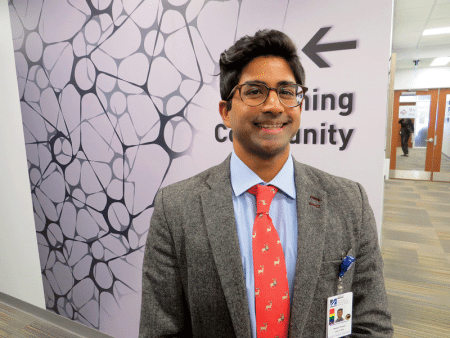
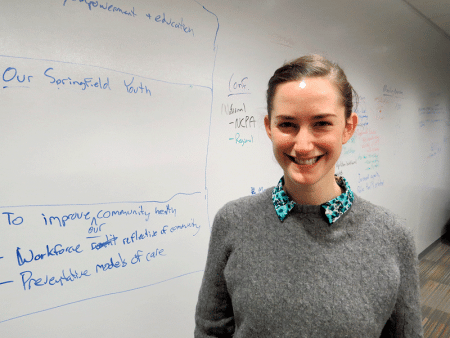
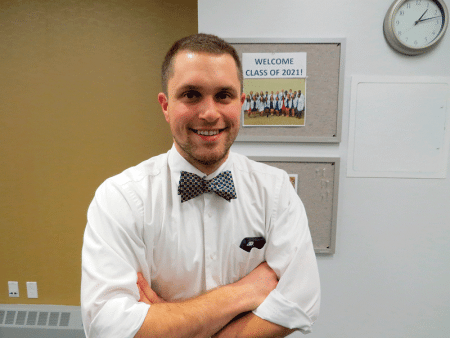
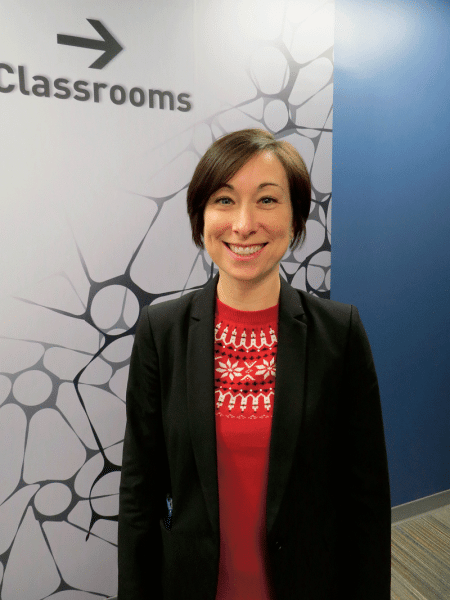
First-year medical students Betsy McGovern

First-year medical students Betsy McGovern

Prithwijit Roychowdhury

Prithwijit Roychowdhury

Kathryn Norman

Kathryn Norman

Colton Conrad

Colton Conrad

Like most first-year students, Kathryn Norman entered medical school in August not knowing exactly what to expect.

But there were certainly some things she never expected.

Like a curriculum that included a visit to the Hampden County jail in Ludlow, where she and fellow classmates talked with inmates about their health and well-being and learned first-hand how social issues and mental-health conditions have impacted their lives and put them on a path to incarceration.

Or a visit to a local food store, where teams were assigned the task of taking $125 in food stamps and buying a month’s worth of food for a single mother with diabetes and her daughter, all while trying to keep proper nutrition as the basis for the spending decisions.

Or a visit from an auto mechanic who would discuss the questions he asks a car owner to diagnose problems, with the goal of driving home the message that a similar methodology — and many of those same questions — would be utilized by a physician seeking to fully diagnose an issue with a patient.

But all this and more has been part of the first five months of experiences at what is known as the University of Massachusetts Medical School – Baystate, the Springfield campus, if you will, of the Worcester-based institution.

“The very first patient that I ever spoke to was someone who was incarcerated,” Norman said of her start in medical school. “And just getting to hear about the challenges these inmates had and bringing together the medical conditions they have, which are pretty complex, and the social conditions they have, that’s very exciting.”

That’s a word used often by the 22 students enrolled at UMass Medical, who spend one day every two weeks in Springfield and, more specifically, at the facility created by Baystate Health at the Pioneer Valley Life Sciences Institute on Main Street. They are there for a class devoted to developing their interviewing skills, something not often thought about when it comes to a medical-school curriculum, but a nonetheless critical part of the equation when it comes to being a good doctor, as Dr. Kevin Hinchey explained.

Dr. Kevin Hinchey

Dr. Kevin Hinchey says the PURCH program puts emphasis on the social determinants of health and prevention, not merely treatment, of illnesses.

He’s chief Education officer and senior associate dean for Education at UMass Medical School — Baystate, and he said that, while students are mastering the art and science of asking questions, they are gaining a unique perspective on the many aspects of population health by hearing, and absorbing, the answers.

Such as those they heard while visiting an area homeless shelter.

“There was a gentleman there who has diabetes; the students were interviewing him, and he said he keeps a candy bar by the side of his bed,” Hinchey recalled. “When they asked him why, he said ‘because it’s nutrition, it has a lot of calories in it, and it doesn’t spoil.’

“This is one of the social determinants of health,” he went on. “We talk about a food desert in downtown Springfield … you can’t get fresh fruits and vegetables, so you get other foods. That conversation becomes important, because later, when you see that same person in your office and his blood sugar is 400, you might say that he needs insulin. But because you saw him there (at the homeless shelter), you say ‘no, he needs a refrigerator.’ It changes your concept of the disease and gives you a real example of people thinking, ‘as a doctor, I’m reacting to things; can’t I get more upstream and do some more prevention?’”

Indeed, through participation in an initiative known as PURCH (Population-based Urban and Rural Community Health), students are getting a different kind of learning experience as they work on their interviewing skills, one that Rebecca Blanchard, assistant dean for Education at UMass Medical School — Baystate, and senior director of Educational Affairs at Baystate Health, summed up by saying that what differentiates it is not what’s being taught, but how and where, and also in the way these experiences motivate students.

And to get that point across, she talked more about that visit to the homeless shelter.

“This is an interviewing class; students are building skills in interviewing — having a conversation to gain information. It’s also a track focused on how population health and disparities intersect in a human way,” she said, adding that, through their various experiences, students move beyond the act of treating sick patients and into the all-important realm of advocacy.

“They come back from these experiences asking questions that are advocacy questions,” she went on. “They ask ‘why?’ and ‘why not?’ and ‘how can we help?’”

For this issue and its focus on the healthcare workforce, BusinessWest visited the Baystate facility and talked with Hinchey, Blanchard, and several students about the unique approach that is PURCH, as well as the many unique learning experiences they’ve already shared.

Body of Evidence

As he talked about the process of applying to medical schools and the factors that weighed on his decision concerning where to go, Colton Conrad, from North Carolina, started by saying he first focused on schools with respectable primary-care rankings and also an emphasis on patient care rather than research.

Through their experiences in the PURCH program, Rebecca Blanchard

Through their experiences in the PURCH program, Rebecca Blanchard says, students training to become doctors also take on the role of advocates.

Those criteria put UMass Medical on his relatively short list, he went on, adding that, while he was applying, he noticed a secondary application “for this thing called PURCH.” Intrigued, he went on the website and did some reading.

Actually, it was only about three paragraphs, but it was more than enough to get his full attention.

“What I gained from those three paragraphs was that this was a branch of UMass Med School that was starting up the year I was starting school to take future physicians out of the classroom, out of a standard hospital setting, and get them involved in the community,” he recalled, “with the goal of better understanding the people and the patients they serve — to understand them on a deeper level than just illnesses.

“And I thought that was really cool,” he went on, adding that this quick synopsis was enough to prompt him to apply. And the visits to Worcester and then Springfield were enough to convince him that his search was pretty much over.

“It felt like … it wasn’t just a place where I wanted to be; the people also wanted me to be there,” he explained. “That was the first time I felt that at a medical school.”

With that, there was considerable nodding of the heads gathered around the conference-room table as BusinessWest spoke with several students enrolled in PURCH.

Collectively, they used that word ‘cool’ several more times as they talked about both those experiences that take place, as that short description on the website noted, outside the classroom and outside the hospital, and also about what it means for their overall medical-school experience.

Norman said PURCH adds what she called “another layer” to her education, an important one not available in the traditional classroom setting.

“Our education has been so much more grounded in actually understanding real people and the real lives they have,” she said. “And these are opportunities that I haven’t seen our classmates in Worcester have.”

Betsy McGovern, from Andover, agreed, and to get her points across, she revisited her experiences at the Ludlow jail, which were memorable on many levels, but especially for the unexpectedly candid conversations between students and inmates.

“Our inmate was talking about his struggles with diabetes and his family history of diabetes, and he mentioned, very briefly, a domestic-violence incident that occurred between his family and his mother,” she recalled, adding that the students involved were at first unsure about whether to probe deeper on that topic, but eventually did, in part because the inmate was able and willing to open up, but also because it was important to do so.

Indeed, there are many contributing factors to one’s health and well-being, McGovern went on, and traumatic experiences such as witnessing domestic violence are certainly one of them. Asking patients about them is difficult and awkward, but it’s as important as asking them about their diabetes. And gaining experience with such hard questions — and the resulting answers — is a critical part of becoming a good interviewer and, more importantly, a competent clinician.

And something else as well — an advocate, said Prithwijit Roychowdhury, another first-year student known to his colleagues longing for something shorter and easier to pronounce as ‘Prith.’

He told BusinessWest that, through their experiences in PURCH, students gain a greater appreciation for those social determinants and thus, perhaps, a better understanding of the importance of prevention, rather than simply treatment of illnesses.

“I think a lot of us are interested in being advocates and policymakers potentially, or even researchers working on policy or how well certain policies are working,” said Roychowdhury, who is from Worcester. “And to that end, getting a diverse exposure from a variety of different groups of people helps to contextualize the things you might want to advocate for.

“And as medical students who are interested in population health, we all know that it’s not purely the encounter with the patient in the examination room that matters,” he went on. “It’s about the broader context: what are the kinds of policies that are causing this particular patient to have a child who gets exposed to lead or arsenic, or are there reasons why a family has a long history of diabetes?”

All these comments help explain why the PURCH curriculum, and this interviewing class, were structured in this way, said Blanchard and Henchey, adding that the goal is to motivate students to look beyond the patient’s condition and to the big picture — the factors that made this condition possible and even inevitable, with an eye toward prevention.

“We’re getting students involved in advocacy and those discussions about what can be done to improve population health early on,” said Blanchard. “There’s genuine curiosity to be actively part of the solution, and it’s quite exciting for all of the faculty to see it from that lens.”

Learning Curves

Conrad told BusinessWest that one of the most important aspects of the road trips taken by the PURCH students is the debriefing — his word — that goes on afterward.

“When we go out as a group for these experiences, we come back and we talk about them,” he explained. “And it’s really interesting to hear everyone’s perspective, because just about everyone in PURCH has different backgrounds, different life stories.”

And these debriefings have become learning experiences in their own right, he went on, using the trips to the homeless shelter and jail (half the class visited each one) as an example.

“We all came back from those trips, and it seemed like everyone had very similar stories even though we were with very different populations,” he explained. “We all found that most of our patients had these pre-existing, oftentimes mental-health conditions that were playing out in the worst ways in every aspect of their lives.

“It’s really easy to look at the prison population or the homeless population and make fairly gross generalizations,” he went on. “But after having our debriefing, it’s a little harder to do that, except to say that a lot of people have underlying issues that are affecting their lives so negatively that they are put in situations where they’re homeless or they’re incarcerated or they are drug addicts. Out of all these experiences, what I’ve gained the most is looking at people beyond what their particular illness is at that moment; whatever they’re presenting with that day isn’t even close to the full story.”

This, in a nutshell, is what PURCH is all about, and Conrad’s comments, and those of his fellow classmates, effectively bring to life that three-paragraph description of the program that drew them in and eventually drew them to Springfield.

There are many social determinants of health, and each one plays a role in what brings a patient to a physician’s office on a given day. Some of the biggest are the many challenges that are part and parcel to living at or below the poverty line, challenges that drive home the point that there are often huge barriers to doing the right thing when it comes to one’s health and well-being.

Which explains why that visit to the grocery store carrying $125 in food stamps was so eye-opening, said Norman, adding that there’s a big difference between reading about such issues in a book or news article and seeing them first-hand.

There were fruits and vegetables at this store, but they were too expensive and they would perish, she noted, adding that those pushing the cart had to steer it up different aisles.

Conrad, who was in the same group, was actually able to bring personal experience to bear.

“My family was on food stamps for a while when I was growing up, and I remember my mom having to make some of those tough decisions,” he recalled. “And it was weird to be in her situation but in a simulation.”

By the time the group arrived at the checkout line, the cart was full of rice, beans, pasta, and other items that were in bulk, inexpensive, and transportable, said Norman, adding that those who participated in the exercise left the store with large doses of frustration.

And that led Roychowdhury back to his thoughts about advocacy.

“We need to think about what we can do about these issues, such as the food choices that might lead to diabetes,” he explained. “Regardless of where we end up … if we end up in a hospital, what can we do to advocate for our board of trustees or our administration to help create and implement programs focused on education regarding diabetes or even creating a diabetes pump clinic?

“These are things already happening at Baystate and are concrete examples we can draw from,” he went on. “They give us a lot of insight into maybe how to implement these in our population health tool kit, not purely as a clinician, but as a population-health advocate.”

Outside the Box

Returning to that visit to the food store one more time, Conrad said it was quite lifelike, but not quite the real thing, and for several reasons.

Indeed, he recalls Roychawdhury, also part of his group, advising that they buy food with a lower glycemic index. “I said, ‘dude, I don’t even know what that means; how are we expecting the average person to make healthy choices for their diabetes based on a glycemic index when I don’t know what that is?’

“Also, we didn’t have a screaming kid in our cart as we doing our shopping, and we were able to take our cars; we didn’t have to take the bus and fit everything for a month into three bags,” he went on, adding that these missing ingredients would have made the assignment that much more difficult, as it was for some people who were tackling that exercise for real on the same day his team was.

The screaming child was missing, but just about everything else was there. It was real, hands-on, outside the box, and certainly outside the classroom.

As noted earlier, Norman and her classmates didn’t know quite what to expect in their first year of medical school. But they were definitely not expecting learning experiences like these.

Experiences that will make them better interviewers — and better doctors.


George O’Brien can be reached at [email protected]
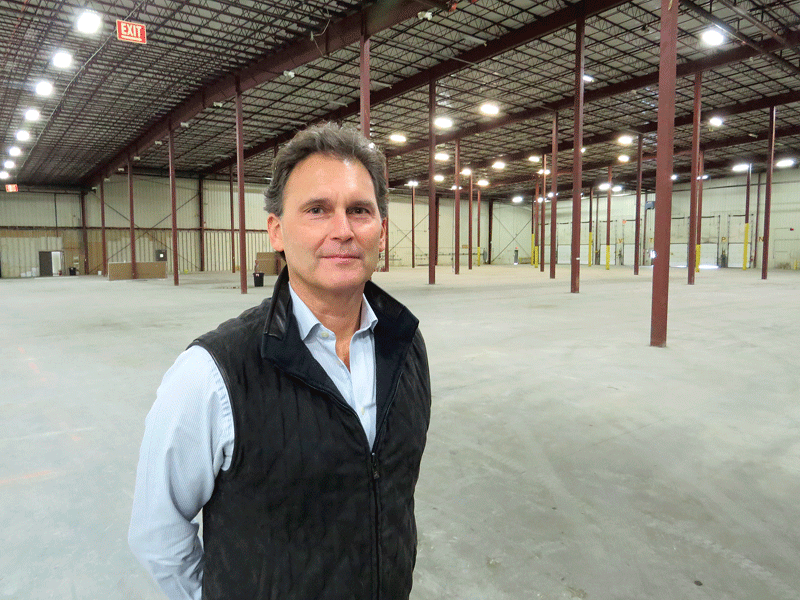
Education Sections

Life’s Work

Lisa Rapp

Lisa Rapp says many biotech students find inspiration in the fact that their work may someday make a difference — for example, in developing a key new drug.

For college students — or career changers — seeking a career path with plenty of opportunity close to home, biotechnology in Massachusetts is certainly enjoying an enviable wave.

For example, drug research and development — one key field in the broad world of biotech — has been surging in Massachusetts for well over a decade, and isn’t slowing down, according to the annual report released in November by the Massachusetts Biotechnology Council, or MassBio.

According to that report, Massachusetts has more jobs classified as biotechnology R&D than any other state (see table below), with 34,366 currently employed — a 40% increase since 2007 — barely edging out California, a state with six times the Bay State’s population, and a well-defined high-tech landscape.

Meanwhile, the total number of biopharma workers in Massachusetts rose by nearly 5% in 2016, to 66,053, a 28% growth rate since 2007, which was the year former Gov. Deval Patrick launched a 10-year, $1 billion life-sciences investment program. More recently, Gov. Charlie Baker renewed the state’s commitment to the industry when he announced a five-year, $500 million ‘life sciences 2.0’ initiative.

stateemploytrendsbiotech0118a

“Massachusetts is historically one of the first states that got into biotechnology, then Deval Patrick made a real financial commitment, and provided funding, to try to keep it here,” said Lisa Rapp, who chairs the associate-degree Biotechnology program at Springfield Technical Community College, adding that Cambridge has long been the key hub, but biotech companies can be found throughout the Commonwealth.

Still, while the industry is growing rapidly, Rapp noted that biotechnology often is not on the radar of people considering their career options. Biotechnology encompasses a broad range of applications that use living organisms such as cells and bacteria to make useful products. Current applications of biotechnology include industrial production of pharmaceuticals such as vaccines and insulin, genetic testing, DNA fingerprinting, and genetic engineering of plants.

“I don’t think many students are aware how many jobs there are in the state. There are more jobs the farther east you go, but there are absolutely jobs here too,” she said, noting that research and development companies tend to cluster closer to Boston, while Western Mass. tends to be stronger with biomanufacturing.

The research and development job gains come as the state’s collective pipeline of drugs is rapidly expanding. According to the MassBio report, companies headquartered in the state have 1,876 drugs in various stages of development, nearly half of which — 912 — are being tested in human trials. That’s a significant increase from last year, when 1,149 drugs were in development, including 455 in human trials. Treatments for cancer, neurological disorders, and infections are among the most popular.

“There are more opportunities now than ever to get good jobs in Massachusetts,” Rapp said. “The state has the highest concentration of biotechnology and pharmaceutical companies in the world.”

“We’re in the middle of a genomic revolution right now, on the cusp of this brave new world,” said Thomas Mennella, associate professor of Biology at Bay Path University, who directs the master’s program in Applied Laboratory Science & Operations, which has become a key graduate degree in the biotech world (more on that later).

“My read on the field is that no one is sure where this is going to go, but everyone believes it’s going somewhere special,” he went on. “This generation now coming out will advance that revolution, and we’re preparing them the best we can to make them as adaptable as possible and follow the flow wherever the field leads.”

Meeting the Need

Since 2012, Rapp said, STCC has received $375,000 in grants to enhance its Biotechnology program, and especially the cutting-edge equipment and supplies on which students learn current techniques in the biotech and pharmaceutical industries.

“Our curriculum is designed to meet the ever-expanding need for trained biotechnology personnel, she added, noting that students who complete the two-year program can apply for jobs in the biopharma industry, or may advance to four-year institutions to pursue higher degrees in biotechnology.

“The career-track associate degree is meant to lead to direct employment in the field, and then we have a transfer track for students looking to transfer to a four-year college and get a bachelor’s degree or additional education,” she told BusinessWest. “It’s about half and half, but the last few years, there has been a little more interest in the transfer pathway.”

Bay Path’s bachelor’s-degree program has evolved over time, Mennella said, first in response to industry talk that students nationally weren’t emerging with high-tech instrumentation skills, and then — when programs morphed to emphasize those skills — that job applicants were highly technically trained, but not thinking scientifically.

“Our degree here is meant to bridge that gap, meet in the middle,” he explaned. “They’re graduating with the best of both worlds.”

But he called the master’s program in Applied Laboratory Science & Operations the “cherry on top of the program,” because it sets up biotech undergrads with the tools they need to manage a lab — from project management to understanding the ethical and legal implications of their work — which, in turn, leads to some of the more lucrative and rewarding areas of their field.

“We’ve packaged four courses together as an online graduate certificate program, so even students who just want to learn how to manage a lab and manage people can take those four online courses as a graduate certificate,” he explained.

The idea, Mennella said, is to make sure graduates are as competitive as they can be, in a field that — like others in Massachusetts, from precision manufacturing to information technology — often has more job opportunities available than qualified candidates. He wants his graduates to demonstrate, within six months to a year, that they can slide into lab-management positions that, in the Bay State, pay a median salary of almost $120,000.

“The state is hungry for highly skilled technicians that can do the day-to-day work to keep the lab running,” he noted. “We want them geared toward the really good technical jobs in this area, but have that second [managerial] purpose in mind. We’re striking both sides of the coin.”

Cool, Fun — and Meaningful

Rapp noted that many students are looking for a challenging role in medical research that doesn’t involve patient contact, and a biotechnology degree is a clear path to such a career.

“Generally, they have some underlying interest in science — they think science is cool and fun, which, of course, it is. And with laboratory jobs, they might have an interest in science and not necessarily in patient care,” she explained. “And they like the hands-on work in a laboratory setting.”

Whether working for pharmaceutical companies, developing and testing new drugs, or for biomanufacturing companies working on medical devices, or even in a forensics lab, opportunities abound, she said.

“I feel like many students want to feel like they’re doing something meaningful here,” Rapp added. “If they’re involved in designing or testing drugs, helping some future patient, I feel that’s a message that reonates with the students — that maybe they’ll be doing a job that helps someone in some way.”

At a recent Biotechnology Career Exploration Luncheon at STCC, professors from area colleges discussed opportunities in the field, and agreed that job reports like the one from MassBio may only scratch the surface when it comes to opportunities in a field that grows more intriguing by the year.

“Biochemistry and molecular-biology principles are critical in a number of growing fields in health and technology,” said Amy Springer, lecturer and chief undergraduate advisor at UMass Amherst. “Having a fundamental knowledge in these topics provides a student with translatable skills suitable for a range of areas, including discovery research, medical diagnostics, treatments and engineering, and environmental science.”

As Mennella said, it’s a brave new world — and a story that’s only beginning to unfold.

Joseph Bednar can be reached at [email protected]

Sales and Marketing Sections

Rock Relevance

By John Garvey

John Garvey, second from right, with his team at Garvey Communications Associates

John Garvey, second from right, with his team at Garvey Communications Associates: from left, James Garvey, digital marketing analyst; Darcy Fortune, digital public relations analyst; and Mary Shea, vice president, Digital Strategy.

There are two things to remember when you are trying to get a message out to your customers.

Thing one: make sure your message is relevant.

Thing two: focus on thing one.

Seriously, in this new multi-media, digital world, a relevant message is everything. You have to figure out what is valuable to your core customers. The good news is that they will tell you if you ask. In this article, we will propose the keys to building and carrying a relevant message directly to your customers.

Start thinking about relevance this way: you own a business or are managing the marketing for a business; otherwise, this article wouldn’t be relevant to you. Your business is clearly successful because someone is buying something from you. You need to figure out why. Answering that ‘why’ is critical because, in order to be relevant, you need to know more about your customers’ needs and their challenges than you probably do right now.

Traditional business messages are familiar to us all because we see them every day. They go something like this: “ACME company is great. We have great products. You need us.” A customer-centric message digs a lot deeper and is based on a simple pain-solution formula: “we know these are your needs, and here is how we can help.” Most businesses focus on the former because we all like talking about ourselves, but, from a digital-marketing perspective, that is fatal.

In this new multi-media, digital world, a relevant message is everything. You have to figure out what is valuable to your core customers.”

Here is why a relevant message is so important in digital marketing. As you know, computers run the Internet, and computers are run by software. So, for digital marketing, software can determine if your ad runs efficiently or not. The amount of media spend does not hold the same weight as it does in traditional media because the software (an algorithm) was built to serve information that people are looking for. That pretty much sums up how Google AdWords works. The more relevant your message is, the more success you will have in search, display, and video advertising through Google AdWords.

Social-media marketing is a new and incredibly powerful advertising channel for businesses, and relevance is still key. Software still plays a slightly different role in social-media marketing than it does for Google AdWords.

While the AdWords platform offers a variety of targeting options that will make your ad spend more efficient, the targeting ability of social-media marketing platforms like Facebook and Instagram is quite simply profound.

Here’s why: Facebook buys user data from data brokers like Oracle. If you’re a consumer, you might find that creepy. But if you are a marketer, you’re jumping up and down because you now have access to big data. Using this data, you can not only target geographically and by gender, but also behaviorally.

Like the Google AdWords network, social-media marketing platforms know what you have been up to on the Internet. So if you have been looking at cars, clothes, or mortgages, the platforms have that information. Behavioral targeting through social-media marketing platforms uses that data to serve you ads that are relevant — because you have been searching or reading related information. Therefore, behaviorally speaking, you could be considered in-market for those products.

Here’s a news flash, though. The digital ad dissemination systems don’t dictate everything, but instead are programmed to respond to your customers. If your customers like your ad and engage with it (e.g. click on it, share it, or comment on it), your ad will perform better. Your customers ultimately determine a large part of the success or failure of your ad. If they find it relevant, it will perform better. Remember thing two?

One more thing that the platforms do not control: creativity. Your digital-marketing ads still need to be inventive, particularly for the Google AdWords display and video networks and for Facebook/Instagram advertising.

People (customers) and platforms like things that move — video and animation, for instance. Sure, people like to read interesting information, but they like to watch it more. Short-form video performs amazingly well on digital-marketing platforms and serves as the perfect top-of-sales funnel introduction to the rest of your relevant pitch, just a click away on your website. Longer-form video (in the digital world, this is video that approaches two minutes in length) should be reserved for your website. Unless you are creating ‘how-to’ content, the best practice is to keep your videos short.

We introduced a new term in the last paragraph. Did you notice? Website. Oh, but we are not talking about your father’s website anymore.

Your digital-marketing site should be integrated into your business. Users (think customers) want to take action. They want to research and transact. So, does your website have videos about your products and services that allow customers to learn more and that encourage them to buy? Can they check prices or inventory, make an appointment, or, for god’s sake, buy on your website? Help your customers help you. Give them the ability to move into your sales funnel while you sleep.

Best of luck in 2018.

John Garvey is president of Springfield-based Garvey Communication Associates Inc.; (413) 736-2245.

Features

Engaging Work

JC Schnabl

JC Schnabl

The UMass Amherst Alumni Assoc. has been in business since 1871. Its informal mission — to engage alums and begin (and continue) a dialogue concerning the importance of giving back to the institution, hasn’t changed over the past 147 years. But like the university itself, the alumni association has been expanding, elevating its game, and developing new strategies for inspiring graduates to invest in their alma mater.

JC Schnabl’s office in Memorial Hall is decorated with something approaching a nautical theme. There are several large framed paintings of sailing ships, including the U.S.S. Constitution.

When asked about it, with the expectation of an acknowledged personal fondness for ships, sailing, or both, Schnabl, assistant vice chancellor of Alumni Relations and executive director of the UMass Amherst Alumni Assoc., said there was some of that. But there was much more to these choices for his walls, he admitted.

Indeed, he was looking for something that said ‘Massachusetts’ or ‘New England’ — sort of … maybe. But he was also looking for something that didn’t just say ‘Massachusetts’ or ‘New England,’ and would appeal to a broader audience.

“I didn’t want to put something up that was Boston-specific,” he explained. “Old Ironsides is kind of a national emblem, and it’s broadly applicable to our alumni audience.”

And in many ways, his job, and his office’s mission, is much the same. There is a local focus to it, obviously, because there are so many graduates of the university living and working in Massachusetts, with the largest concentration (nearly half the total) being inside the Route 128 beltway around Boston. But the reach, and the message, has to be broader, because there are alums — 265,000 of them, according to the latest count — in every state and dozens of countries.

And that message is, in a word, ‘engagement’ with UMass Amherst, with engagement being an immensely broad term that is generally synonymous with ‘involvement,’ which can obviously come in many forms and flavors, said Schnabl.

For These Alums, Engagement Has Become a Passion

Vinnie Daboul remembers how it all started, and he tells the story often, because he says it’s important.

It was back in 1995, when Daboul, now a partner with Sage Benefit Advisers, was working for Phoenix Home Life. He was invited by someone at the Isenberg School of Management, which he attended a decade earlier, to speak to students about his work and his industry. Read More:

Financial support is perhaps the most obvious and important. It is the elephant in the room and the key to almost every one of the university’s ongoing efforts to climb higher in the rankings of the nation’s top institutions, he noted, adding that there is a significant, and in many ways needed, blurring of the lines when it comes to the work done by alumni-relations offices and development offices, as we’ll see later.

But engagement — and involvement — come in many other forms as well, said Schnabl, from support of athletic teams to mentoring of students, soon-to-be-graduates, and alums; from networking to efforts of all kinds to help build the university’s brand.

“We’re the mechanism that the university employs to engage alumni — and students who are going to become alumni  —in the future of the university,” said Schnabl, summing up the overarching mission of his office. “In an environment where universities across the country are trying to turn their alumni associations into a broad fund-raising arm of the university, our chancellor has a belief that our strategy of engagement is equally important.

“We don’t want a scenario where the first time someone hears from the university, we’re asking for money,” he went on, adding, again, that money is vital to the school’s success. “Frequently, it’s ‘how can we help? How can we help with your career goals? How can we reconnect you with the university, a place where you spent four or five years and absolutely loved? How do we engage you with alumni who are doing things you like to do?’”

Put simply, the alumni office wants graduates to become involved in what he called a ‘lifelong relationship’ with the university, and certainly not one that ends when the diploma is received at that huge ceremony in the football stadium.

Schnabl, who came to the university from a similar post at the University of California at Los Angeles (UCLA), said he considered a number of potential landing spots as he commenced a search for jobs on the East Coast in early 2012 to be closer to his daughter as she attended school in North Carolina.

In UMass Amherst, he said, he saw a school on the rise, one that was building new facilities and building momentum at the same time. And he decided he wanted to be part of that.

And since arriving, and partly through his own lobbying efforts, UMass has elevated its game in the broad and ‘quirky’ (Schnabl’s word) world of alumni relations. Indeed, since his arrival, the alumni office has swelled from 16 full-time employees to 25, and has become more aggressive in its efforts to get alums involved in their alma mater.

For this issue, BusinessWest talked at length with Schnabl about this quirky business of alumni relations and how the university is committing more resources, and more attention, to the work of engaging its graduates.

School of Thought

There’s a large, framed map on a wall just outside a suite of offices in Memorial Hall. It details just where the university’s alums reside these days, and it’s colored, with dark red identifying the most heavily populated areas, white indicating the least populated regions, and progressively darker shades of pink showing those in between.

As might be expected, the Northeast, and especially Massachusetts, is dark red, as is much of Florida and some pockets of Arizona, the Carolinas, and California — the popular retirement spots, but also, in the case of the Research Triangle and Silicon Valley, where many graduates are finding jobs. Meanwhile, also as expected, huge swaths of the Midwest and South are white. Not many residents of those states go to UMass, and not many graduates go there to live or work.

Such information is obviously valuable, said Schnabl, but knowing where the graduates are is just a small piece of the puzzle when it comes to getting alums involved or engaged.

Communicating with these individuals is a much bigger piece, as is sending a message that will inspire as much as it keeps the recipient informed.

Other pieces include events such as homecoming and reunions (there’s a large one on campus for each class marking its 50th anniversary, for example), as well as programs to get alums involved in their school, like a job-shadowing initiative in a few weeks that will involve several companies in the Bay State and beyond.

All this and more comes under the purview of the UMass Amherst Alumni Assoc., which operates, as most similar operations do, as a 501(c)(3) nonprofit agency.

JC Schnabl says the broad mission for the alumni association is to engage alumni — and students who are going to become alumni — in the future of the university.

JC Schnabl says the broad mission for the alumni association is to engage alumni — and students who are going to become alumni — in the future of the university.

Around since 1871, nearly as long as the university, the association was created to engage graduates, said Schnabl, and, as he put it, “begin the dialogue concerning the importance giving back — of both their time and their money, and also being advocates for the university.”

That mission hasn’t changed in 147 years, but the manner in which it is carried out, at UMass and elsewhere, and the vehicles for doing so, including LinkedIn and Facebook, certainly have.

Schnabl has been in the alumni business, if you will, for more than 20 years now (after starting his professional career in law enforcement), and he’s seen a number of changes and emerging trends. Mostly, he’s seen forward-thinking colleges and universities become more serious about this business of alumni relations because of its importance to brand building and development.

So serious that schools, especially large public institutions, will now hire the best applicant they can find to lead such efforts, not the best applicant who is also an alum, as has been the case historically. Schnabl is an example — he did undergraduate work at the University of the Redlands just outside Los Angeles, and earned his MBA at the University of California at Irvine.

He stayed in California, and after working in law enforcement, “stumbled” into alumni relations, as he said most people working in this business do, by taking a job in that office at Long Beach State. He later took the lead job at Stanford.

As noted earlier, the UMass job was one of many he was considering when he decided he wanted to work close, but not too close, to his daughter. And it was one that intrigued him on a number of levels.

“UMass Amherst was poised for great things, and the alumni association was as well,” he said, adding that, when he interviewed for the position, he saw a school with considerable momentum and an alumni office with potential and an administration ready to make a bigger commitment to it.

Grade Expectations

As noted, there are several aspects to the work of all alumni offices, including the one at UMass, ranging from the writing, printing, and dissemination of magazines and newsletters to the staging of homecoming and other gatherings, to efforts to bring alumni from various academic programs, regions, and backgrounds together.

But at its core, the office’s primary focus now, more than ever, is to promote the value of philanthropy and thus increase constituent giving, and also to expand and promote available volunteer opportunities to broaden and diversify alumni support of the school’s students and its initiatives.

In other words, the office works to get people involved and — this is important — keep them involved, with involvement meaning writing checks to the university, but also much more.

When private universities graduate students, that’s not the first those students hear that it’s important to give back to the university. They hear it, starting not on the day they show up, but before they’re even thinking about going to that campus. They’re being indoctrinated into the notion that their support of the institution is going to be a lifelong commitment.”

It’s a process that needs to start early, and there must be constant reinforcement, said Schnabl, who talked about the need to instill what he called a “culture of philanthropy,” and notable progress with that assignment.

“When private universities graduate students, that’s not the first those students hear that it’s important to give back to the university,” he explained. “They hear it, starting not on the day they show up, but before they’re even thinking about going to that campus. They’re being indoctrinated into the notion that their support of the institution is going to be a lifelong commitment.

“Being a large public university that hadn’t really had that as part of our DNA, there was a lot of groundwork to lay,” he went on, adding that considerable work has been done in this regard. He started with a reference to the Commencement Ball.

As that name suggests, this is a gathering that takes place in the weeks leading up to commencement. Over the past several years, the event has seen explosive growth, from 700 attendees at the Student Union to more than 2,500 at a packed Mullins Center.

There is a fund-raising component to the ball, said Schnabl, noting that a portion of the ticket price is a donation to the university, hopefully the first of many.

“That makes them a donor to the university, which means we can communicate to those who participated and explain to them the importance of being a donor to the university,” he noted, “and how that money is going to help do everything from boost the rankings of the university to help other students come here and afford their time at UMass.”

There’s also the award-winning Multicolor Mile Run/Walk. This is an annual event at which participants — there’s a solid mix of students, alumni, faculty, and staff — traverse a one-mile loop through the campus while getting sprayed with liquid paint — hence the name. It’s fun event, but there’s a giving component here as well.

“They pay money to participate, and they take a ball that symbolizes their money and drop it in the bucket where they believe it should most effectively go in support of the institution,” he explained. “It usually winds up in the scholarship bucket.”

Yet, while working to stress the importance of philanthropy and giving back financially, the alumni association has also developed programs to engage graduates in other ways that build the brand.

One is the upcoming job-shadowing program, said Schnabl, adding that this is a new initiative designed to involve graduates in various fields with current students with an eye toward introducing them to potential job opportunities and giving them exposure to various business sectors.

“It’s an opportunity for a student to see what it’s like working for that industry in a way that being on campus doesn’t necessarily show them,” he explained, adding that it’s scheduled for January so that students can visit businesses near their homes while on winter break. “They get a day in the life at a particular business, but they also have exposure to an alum, to a professional field, and to a particular company so they can engage and potentially come through with jobs and internship possibilities.”

Several corporations, including Liberty Mutual, Target, Novartis, Genesis Health Care, the Pyramid Hotel Group, and others, are participating, he said, adding that more than 40 businesses, most of them in the Boston area, are hosting students.

Other initiatives include a mentoring program that also matches alums with current students, as well as affinity groups representing everything from various regions to the LGBT community. There’s also something called the Almuni Advisors Network, an online platform similar to LinkedIn.

“If a student or a young alum, or even an alum in transition, were looking to find out more about an industry or a career, they can tap into this wealth of information from people across the country and in a variety of different industries and set up an appointment to talk with them,” Schnabl explained. “They can take those career discussions and turn them into career opportunities.”

Meanwhile, volunteerism comes in many forms, from those in various industries advising the deans of specific schools to professionals advising individual students.

“Yes, their financial contributions are important, but their advocacy on behalf of the university is as important, if not moreso,” he noted, adding that alumni have been invaluable in communicating the importance of the university to economic development in the Bay State to the Legislature and the public at large.

Bottom Line

When asked how to measure success in his business — a question that’s being asked by many in that sector and in college presidents’ offices as well — Schnabl said there are a number of yardsticks.

They include everything from the number of hits on websites and clicks on specific articles in the magazines to attendance at the Commencement Ball, to the number of companies taking part in the job-shadowing program. The most important, obviously, is the level of donations to the school in question.

Ultimately, though, the greatest measures of success involve what is done with the dollars that are donated — new facilities, new programs, new opportunities for students to attend the university, and an upward trajectory in those all-important rankings of universities and individual schools within them.

Thus, some results are not visible, or measurable, for years.

For now, though, Schnabl believes UMass Amherst is making great strides in this business of alumni relations, and with building those lifelong relationships between graduates and the university that lie at its core.

George O’Brien can be reached at [email protected]

Sales and Marketing Sections

By Any Measure

By Meghan Lynch

Meghan Lynch

Meghan Lynch says emotional campaigns ultimately outperform rational campaigns. Photo courtesy of Stephanie Craig Photography.

Likes and leads.

Most marketing professionals love to be able to show these statistics as proof of their effectiveness, and most business owners love to receive news that they have gone up. But marketers’ preoccupation with these short-term indicators is counter to what will drive the long-term effectiveness and return on a marketing campaign.

The Institute of the Practitioners of Advertising, a London-based trade association dedicated to marketing effectiveness, has analyzed the results of almost 1,000 long-term case studies, and finds that marketing campaigns with emotional appeal have a much stronger effect on market share and profitability than the more standard ‘features and benefits’ advertising.

The study found that rational, lead-generation advertising provided a short-term sales uplift, but provided no long-term increase in sales and no reduction in price sensitivity. The effects of emotional branding campaigns grew stronger over time, leading to volume increases and decreased price sensitivity at double the rate of rational campaigns when used for three years or more.

Emotional campaigns ultimately outperformed rational campaigns on a number of critical business measures: sales, market share, profit, penetration, loyalty, and price sensitivity. While social-media likes and leads might be feel-good statistics to read in a report, these other measures are of more bottom-line importance to CEOs and boardrooms.

In a way, these findings are more predictable than it might appear at first. Research, such as the work of Francesco Gino at Harvard Business School, shows that human decision making is largely affected by our emotions, even when we believe it is rational. Examples of these effects range from positive uplifts in the global stock markets on sunny days to video clips affecting people’s ability to properly weigh advice they were given.

Therefore, when customers have an emotional connection to a brand (positive or negative), it follows that this ‘emotional priming’ will affect the way that they respond when presented with a rational decision to make about that brand, i.e. whether to purchase or not. The prospective customer will be predisposed either to respond favorably to the sales pitch or to ignore it. Emotion centers of the brain are also critical for imprinting memories, leading to longer-lasting recall — a critical success factor for branding and marketing effectiveness.

It is important to note that the IPA findings do not recommend a total abandonment of lead-generation campaigns, but to a ratio that favors an emotional branding campaign, with the ideal mix being 60% brand campaign and 40% lead generation. Over time (a span of three years or more), this mix has been shown to provide the highest level of effectiveness.

The study found that rational, lead-generation advertising provided a short-term sales uplift, but provided no long-term increase in sales and no reduction in price sensitivity. The effects of emotional branding campaigns grew stronger over time, leading to volume increases and decreased price sensitivity at double the rate of rational campaigns when used for three years or more.”

Running multiple large-brand campaigns in conjunction with lead-generation activity has been shown to reduce price sensitivity among customers and prospects by 11 times the rate of companies who do not run significant branding campaigns. This integration has also been shown to double the efficiency of marketing budgets, again with three years being the critical threshold for that return.

Applying this philosophy means a drastic shift not only in the minds of marketers and agencies, but also in the demands of CEOs. For many businesses that feel the pressures of day-to-day cash flow or a sales team demanding leads to feed their pipeline, a long-term approach can sound like a cop-out, especially when the short-term effects of emotional brand advertising are particularly difficult to measure. At the same time, most businesses bemoan the intense pressure to compete on price, and see it as a huge impediment to business success and growth in the long term.

The idea that this effect of emotional priming and an emphasis on strongly emotional branding might be an antidote for customer and prospect price sensitivity should be one that causes CEOs to seriously reconsider what reports they are requesting from their marketing departments or agencies. Brand-loyalty and market-share metrics are more directly correlated to profitability than standard success measures such as impressions, social interactions, and even brand awareness.

“A lot of clients, especially in the U.S., are schooled in the rational USP [unique selling proposition] — finding a product difference and then using advertising to convey a message rather than building a relationship. They don’t understand the power of emotions,” said Les Binet, co-author of the IPA report, in an interview with Ad Age.

Treating emotional marketing as an essential component of the marketing mix can give businesses owners a true advantage in an increasingly crowded and competitive environment.


Meghan Lynch is president and CEO of Springfield-based Six-Point Creative; (413) 746-0016.

Features

Sidebar

Vinnie Daboul says alums of UMass Amherst should be finding ways to support other alums.

Vinnie Daboul says alums of UMass Amherst should be finding ways to support other alums.

Vinnie Daboul remembers how it all started, and he tells the story often, because he says it’s important.

It was back in 1995, when Daboul, now a partner with Sage Benefit Advisers, was working for Phoenix Home Life. He was invited by someone at the Isenberg School of Management, which he attended a decade earlier, to speak to students about his work and his industry.

“As I was walking out after talking to the students, she thanked me and said, ‘by the way, would you be willing to make a donation?’” he recalled. “At the time … two little kids, a mortgage, two car payments, money was tight, but she made the ask, and I’m like ‘absolutely.’

“That was the first time I committed, and I can tell you, from that day, I’ve been engaged,” he said, summoning a word the UMass Alumni Office has been longing to hear from graduates.

And for Daboul, engagement takes a number of forms, again, like the alumni office would draw it up if it could. There are the financial donations, of course, including a scholarship he endowed several years ago in his grandparents’ name, one intended for Isenberg students from his native Pioneer Valley.

But there are also several forms of mentoring — of Isenberg students, but also those outside the business school — as well as outreach, and efforts to help graduates network, assist one another, and, quite often, do business with one another.

Jim Hunt’s story of engagement followed a similar path in many respects. A principal with Amity Street Dental in Amherst, he was in dental school at Columbia University when he was first asked to donate to his alma mater.

“As a dental student, I’m broke, I’m one of six kids who all went to graduate school, and that spread things pretty thin for my dad,” he recalled, adding that he could really only attend dental school with the help of a sizable scholarship. “Some kid on a cold call asked me to contribute to the alumni association, and I sent in $10. My second year I sent $20, my third year $30, until I got a job, when I gave $1,000.

“I’ve never missed giving in a year since 1978,” he went on, adding that his engagement has taken a number of forms over the years, from helping raise more than $800,000 to endow the track program when it was in danger of being cut (he ran track while he was a student and still holds the 800-meter record 40 years later) to providing mouthguards for a number of the school’s athletic teams on a pro bono basis.

The Jim and Ellen Hunt Hospitality Suite overlooks the end zone at Warren McGuirk Alumni Stadium following contributions to that effort, and there’s a ‘middle distance’ room within the facility for the track team named after one of his former teammates after contributions from Hunt and others helped fund improvements to the track and the team’s locker room, which were completed just over a year ago.

Dr. James Hunt

Dr. James Hunt

The connection you have back with your school is the most enjoyable thing about this. And people give back to something that was important to them.”

“I’m a passionate athletic supporter,” he said, adding that he’s also been a strong booster of the basketball team for more than 20 years.

Summing up all that, he joked that the connections made and kept from such engagement and giving back are far more important than the tax deductions.

“The connection you have back with your school is the most enjoyable thing about this,” he said. “And people give back to something that was important to them.”

Such is the case with Daboul, who graduated from the Isenberg School and is passionate about giving back to it and assisting its graduates.

He’s even created a group of 60 to 70 Isenberg alums from the area who meet every six to eight weeks, by his estimate, to engage and network.

“I’ve got a consistent group of about 20 right now, and we meet four or five times a year,” he said of the group he calls the Isenberg Alumni Network of Western Mass. “It’s just another way to make sure the university and Isenberg stay top of mind for alums.”

Engagement with the university and fellow alums has become a cause, or passion, for Daboul, who said that, overall, graduates of the university don’t network or “take care of each other,” as he put it, as much as alums at other schools, like those in the Ivy League, for example, seem to do.

And that’s something he says needs to change, and he’s doing his part by setting what he believes is a good example of solid, multi-faceted engagement.

“As alums, we should be finding ways to support other alums,” he told BusinessWest. “Whether you’re a chemistry major or an education major or a nursing major, we should be doing a better job of supporting one another — in multiple ways.

“Schools like Harvard and BC … one thing they do a really good job of is talking care of alums,” he went on. “We should be really focused on each other as alumni of the University of Massachusetts at Amherst and the University of Massachusetts period.”

As just one example, he said the gifts he gives benefit clients are Tre Olive gift packs — the East Longmeadow-based purveyor of olive oil is owned by Isenberg graduates.

Daboul said one of the keys to creating these connections and gaining more engagement from alums is strengthening the UMass Amherst brand and creating more pride in that name.

“There are still many people my age — I’m 54 — and older who still think of this as their safety school,” he explained. “In my network of alums, we don’t like that phrase; it’s not a safety school, it’s the University of Massachusetts, and I’m proud of it.”

And by donating to the school in various ways, including financial support, alumni can help the school grow, rise in the national rankings, and, in the process of doing all that, create more pride in the institution.

“I look on what I do as an investment,” he said in summation. “Every time the university gets better, gets stronger, a rating goes up a notch … every time Isenberg moves up, that helps my diploma, it helps my daughter’s diploma, it helps the kids who are graduating this year and next year. It’s not a donation, it’s an investment.”

Hunt agreed, and cited Isenberg as an example.

“Alumni donations to that program are probably the highest,” he said, citing its dramatic climb in the rankings in recent years. “People love to see a program thrive, especially when they give to it, because they think they helped.”

That’s true with the school of management, but with the sports teams he supports as well, said Hunt, who has been putting his money where his mouth is — and where student athletes’ mouths are as well.

— George O’Brien

Custom Content Sales and Marketing Sections

Diving into the deep end once again.

inspired-marketing

(Left to right) back row: Lauren Mendoza, Kristin Carlson, Noelle Myers, and Lynn Kennedy; front row: Nikia Davis, Amanda Myers, Jill Monson-Bishop, and Crystal Childs
Photo by: Seth Kaye Photography

A new year is marked by many traditions: the ball drops, ‘Auld Lang Syne’ chimes, people kissing; but for local marketing agency, Inspired Marketing, 2018 started with the biggest ‘Splash’ yet. Inspired Marketing is ecstatic to announce the recent acquisition of Splash Marketing & Creative.

“ I have wanted to continue to grow the team,” shares Monson-Bishop, “and doing so through acquiring a company like Splash was a natural fit. I had been watching Crystal Childs for a while; impressed with the company’s work, commitment to the community, passion for helping businesses grow, and her desire to be a marketing educator. I truly believe our like-mindedness make this a perfect match.”

The objective of this addition is to provide the region with cutting-edge, customized solutions all under one roof. The Inspired Marketing team is now eight members strong including Splash founder, Crystal Childs, and her colleague, Amanda Myers.

Crystal Childs will be Inspired Marketing’s first Creative Director. She brings a vast array of experience to the team including graphic design, creative direction, social media skills, and management. Childs began her career as a graphic designer before transitioning into the world of social media in 2009. She’s trained at organizations such as Twitter and Facebook in California along with both the New York and California Google offices. Throughout her career she has learned all the various aspects of marketing; spending ten years in automotive marketing with the mega-dealership Balise Auto Group.

“I’m looking forward to being a part of the Inspired Marketing team,” Childs shared, “I am excited to continue offering my clients the outstanding customer service and creative Splash Marketing is known for; with the ability to now offer additional resources such as media buying and public relations. As Creative Director I can’t wait to work with the team to generate award-winning work on behalf of our clients.”

Area businesses will now benefit from affordable, user-friendly websites built in-house with the addition of Web Developer, Amanda Myers. Myers is a graduate of Roger Williams University where she majored in Web Development and double minored in Graphic Design and Marketing. She combines creativity and savvy technical skills to build or redesign websites for clients; improving the aesthetic, functionality and overall usability of a brand or company’s web presence. In addition to agency-life, Myers has built websites for several industries including non-profits, manufacturing, and higher education.


Many Years of Hard Work

It is remarkable to think how much Inspired Marketing has grown over the years. Starting as a sole proprietorship with a part-time employee and growing to an S-Corporation with a full-time team is no easy feat. All while becoming a Certified Women Owned business, adding a Connecticut office, becoming an award-winning agency and expanding services, client portfolios and geographical reach.

In addition to all of this excitement, the last six-months Inspired Marketing has promoted from within and added key new team members.

  • Lauren Mendoza was promoted to Operations Manager and oversees all the HR, finances, and traffic for the agency. Mendoza had previously worked for Inspired Marketing when it was just a team of three, but needed the opportunities afforded by a larger company. Fortunately, when the company got bigger Mendoza was in the position to come back.
  • Kristin Carlson was promoted to Intern Supervisor. Carlson has been with Inspired Marketing since graduating Fitchburg State University in 2014. Her role now includes overseeing two interns per semester from colleges all over New England. In addition, she handles media buying; digital and social media; and analytics.
  • Lynn Kennedy joined the team as an Account Executive. Kennedy has an extensive history of marketing experience including 15 years of retail marketing with Yankee Candle and Pyramid Management and a decade of global marketing knowledge as well.
  • Nikia Davis has joined Inspired Marketing as Graphic Designer. Davis had a long and outstanding career in design with BusinessWest and The Healthcare News. Her creativity and passion produces some truly unique options for clients.
  • Noelle Myers also joined Inspired Marketing as Marketing & Event Specialist. Most recently she was the Director of Marketing for The Arbors Assisted Living. Prior she was the Director of Chamber Management Services and the Vice President of the Massachusetts Chamber of Commerce. She brings to the team a plethora of media and C-Suite relationships, a vast knowledge of event management, and a creative flair to writing.


Out of Sadness Came the Spark

An entrepreneurial idea typically stems from a personal moment in one’s life; Jill Monson-Bishop, founder of Inspired Marketing, is no exception. After a long career as a deejay on radio stations such as WMAS, Rock 102, and Mix 93.1; it was 2009 and she was selling advertising and seemingly content. All of that changed on June 2nd, when her Mom passed away suddenly at only 55-years-old.

Monson-Bishop pictured at her college graduation, with her mother, Sue McCormack

Monson-Bishop pictured at her college graduation, with her mother, Sue McCormack, the company inspiration.

The next day, Monson-Bishop was walking up the stairs to the family home and encountered a blue butterfly floating along next to her. Surprised by its appearance, she felt it had deeper meaning, “It was such a powerful symbol and message, like my Mom was saying I’m still here for you. Now it’s time to follow your dreams!”

In addition to the immense shock of losing her Mom came a realization that tomorrow is promised to no one. It was a sobering idea – one she pondered for days. “If I only get 55 years on this earth, how do I want to spend my time, and what do I want to be remembered for?” Those questions lit the spark for Monson-Bishop and, inspired by her Mom’s legacy, she began mapping out this new adventure – Inspired Marketing. The butterfly was incorporated into the logo as a reminder for each of us to always follow our dreams.


A Butterfly Takes Flight

In December of 2009 Inspired Marketing officially launched as a sole proprietorship. Like many start-ups, Monson-Bishop also held a full-time position as the Director of Marketing for Adam Quenneville Roofing and Siding for the first year. Throughout 2010 the business basics were developed, including the company Vision & Values Statement. This process is usually difficult for new businesses, for Monson-Bishop she used her Mom’s rules:

  • Don’t lie.
  • Respect others.
  • Be a team player.
  • Live with no regrets.
  • Always do what you say you’re going to.
  • Laugh often.
  • Listen.
  • And make your bed! (They don’t make beds, but they do have great coffee!)

In 2011, Monson-Bishop took the leap into the deep end of the pool. With $1,500 from her personal bank account and a rented desk at a friend’s office, she became a full-time solopreneur. In 2014 the company was proud to relocate to its current downtown Springfield office space and become a part of the city’s renaissance.


Our Story Is Just Beginning

Inspired Marketing is a full-service marketing agency specializing in creative services, digital and traditional marketing, and public relations. Working over the years with some of the region’s best companies including American International College, Adam Quenneville Roofing & Siding, The Good Dog Spot, Fuel Services, Square One, Bob Pion Buick GMC, Smith & Wesson, Deep River Plastics, Bounce Springfield and Bounce NY, PayLess For Oil, and MGM Springfield. Their objective is to make your business stand out with customized solutions to increase revenue. If you are ready to stand out in a cluttered world and really make a splash give Inspired Marketing a ring at 413-303-0101 or [email protected].

inspired-marketing-logo

Facebook: GetInspiredMarketing

Instagram: InspiredMktg   

LinkedIn: Inspired Marketing 

Twitter: #InspiredMarketing


Employment Sections

An Engaging  Topic

Janice Mazzallo

Janice Mazzallo

Danielle St. Jean

Danielle St. Jean

Elba Houser

Elba Houser

PeoplesBank was in news again recently, bringing more ‘top employer’ honors, this time from both the Boston Globe, again, and the Employers Assoc. of the NorthEast, also again. While the awards are newsworthy, the real story is what’s behind them, a culture of employee engagement. In a roundtable discussion, some bank leaders talk about this culture and how other businesses can create one of their own.

They might have to start thinking about securing a bigger display case for the front lobby at PeoplesBank’s headquarters at 330 Whitney Ave. in Holyoke.

It was already crowded with various awards and commendations — many of them in the broad realm we’ll call ‘top employers’ — and now, it is even more so, with some recent additions. Indeed, for the sixth year in a row, the bank has been named a ‘top place to work’ by the Boston Globe, and for the second time, the institution has been named an ‘employer of choice’ by the Employers Assoc. of the NorthEast.

But while what’s in the trophy case is significant, it’s what’s behind all that ‘best employer’ hardware (and we don’t mean the wall) that is actually more important to the company.

When asked to talk about all that in the form of advice to other business and owners and managers, Janice Mazzallo, executive vice president and chief Human Resources officer at the bank, paused for a moment.

It was a poignant pause to be sure, and it essentially said what she was about to say before she even said it — that becoming worthy of these ‘best employers’ awards takes time, patience, energy, imagination, and much more than a flex-time policy and allowing people to wear jeans on Friday, although that helps.

It’s about creating an environment where people feel good to come to work every day; it’s not just a place to make a living, but it’s more of a family environment.”

“It’s sounds cliché, but it’s about walking the walk and talking the talk, and it all starts in the C-suite,” she said. “It’s about creating an environment where people feel good to come to work every day; it’s not just a place to make a living, but it’s more of a family environment.

“It’s a place where people don’t just come to do a job, but get involved in the community, get involved with each other,” she went on. “We have a lot of people here who do more work outside, in the community, than they do in their 9-to-5 work.”

It is impossible to sum all this up with one word, she said, but ‘engagement’ does the job as effectively as any other (see sidebar, page 16). There are many types of engagement, she went on — with others at the company, within the community, with mentors, with new team members, and more — and the bank works hard to ensure that employees have experience with all of them.

And this hard work goes a long way toward explaining not only all those plaques in the display case, said Mazzallo, but the bank’s continued growth and success in the local market.

tptw_logo-smallIn an effort to dive deeper into this discussion of culture and employee engagement, Mazzallo was joined in a broad roundtable discussion on this subject by Danielle St. Jean, Human Resources coordinator and training specialist at the bank, and Elba Houser, commercial banking credit analyst, both fairly recent additions to the team.

The stories about how and why they came to the bank and what they’ve experienced since help drive home the importance of culture to a company’s success — not in winning awards, but in building teams, promoting innovation, attracting and retaining talent, and, yes, gaining market share.

The three stressed that a culture of engagement starts at the top — in this case bank President Tom Senecal — and filters down to all levels, and all locations (the institution has 17 branches scattered across Hampden and Hampshire counties), within the company. And it also encompasses a number of other words and phrases, including communication, listening, connecting, mentoring, empowerment, volunteerism, even fun.

“It’s really a personal experience,” said St. Jean as she sliced through all those words and what they mean collectively. “When people feel supported from day one, they perform better and are more likely to be engaged in what they do.”

Houser agreed. “From day one, there have always been people I could reach out to who have guided me through the ropes,” she explained. “It’s a community here, and it’s a family; these are not only people you work with, but people you can depend on.”

Listen Up

To effectively get many of those talking points and bullet points across, Mazzallo recounted Senecal’s recent decision to visit many of the branches personally with the stated desire to meet with employers and listen to them about their work and any issues or concerns they may have.

She said some of the employees were initially intimidated by the notion of the boss coming for a visit, but soon, most fears evaporated.

Manager-employee Engagement Tips

Engagement Is a Word; Being Engaging Is Your Responsibility
Too often managers can develop the bad habit of saying what they want versus doing what they want. Nowhere is this more systemic than with employee engagement.

Managers can have ideals, but they also have to practice them. Here are some suggested strategies to create a true culture of employee engagement.

Read More …

“At first, people were scared and shocked, saying, ‘here’s the CEO coming out to my branch and my department,” she recalled. “But when he came in and genuinely wanted to learn more about what they did, with a mindset of ‘how can I understand your role to make this a better place to work and walk a mile in your shoes?’ the word spread very quickly that not only did he want to understand, he really wanted to hear their ideas.”

Better still, he responded to what he heard.

“He brought some of the ideas to management meetings, and we talked about them,” Mazzallo went on. “And changes were made as a result.”

Senecal’s road trips represent just one of many ways in which the bank’s operating mindset, or culture, has generated benefits in the form of improved communication, idea generation, and continuous improvement.

Others, as noted, include a greater ability to attract and retain talent, which is significant at a time when many in banking can relate their careers through a large stack of business cards they’ve disseminated over the years, and also when individual lenders — and sometimes whole teams of them — are moving from one institution to another with great regularity.

And it’s significant also because, from a big-picture perspective, PeoplesBank is still a relatively small institution (about $2.3 billion in assets) based in Holyoke.

“Were competing with larger banks, and at the end of the day, there are other organizations that can offer more money and probably big bonuses,” said Mazzallo. “And so, I have to be able to answer the question, ‘why should someone be excited work with us? And once they’re here, why should anyone be excited to stay with us?’”

Why indeed? The answer, she said, lies in that fact that, for most people, contentment goes well beyond money and to things that “pull at the heartstrings,” as she put it.

For St. Jean, who was working in Boston before she came to the bank, it was the culture she said was in clear evidence starting with her first interview with the company roughly six months ago.

She and her boyfriend, who is from this area, had made the decision to leave the Hub and relocate to the 413.St. Jean needed a job, but more than that, she needed the “right employer and the right community.” And she found both at the bank.

“The strength of the culture here really does begin before day one; it all begins with the recruitment and onboarding process,” she explained. “For me, personally, leaving behind the city life, I had a lot to do to get ready. When I first started here and accepted the offer, I had to find a car, move all my belongings, and get established. And the team here really helped me with all of that.”

And she said she’s seen that scenario — meaning several layers with assistance with the process of relocating and starting the next chapter in a career — repeat itself several times since she arrived, re-emphasizing that this is the culture at the institution.

“This is a place that can help individuals with that type of transition in their life,” she said, “which speaks greatly to the culture and to what keeps associates engaged.”

Houser tells a somewhat similar story. Her transition involved returning to work after taking some time off to start a family, and, like St. Jean’s, it wasn’t an easy journey, and one for which support was appreciated.

“I started as a management-development trainee, and when I came in, I had a network of colleagues who were management-development trainees prior,” she explained. “That first day, they took me out to lunch, and they discussed what was to be expected of me in that role, and that helped a lot, especially after not being in the workforce for two years and having to build a career again. That help is the reason I succeeded as I did.”

The Not-so-secret Sauce

Returning to the subject of retention, a key ingredient in any company’s success, Mazzallo said one of the main reasons why people leave an organization is a feeling that they’re not being heard, or that their input isn’t entirely welcome or appreciated.

“People get wooed by other companies because they’re getting attention, and often, they don’t feel they’re getting attention from their current employee,” she explained. “So it’s very important, especially with your higher performers, that you’re paying attention, and sometimes it’s just as simple as making time to listen to them and listen to their ideas.”

If that sounds like advice to other business owners and managers, it is. And those we spoke with at the bank had lots of it as they addressed the question of how other companies can become more engaging and, in the process of doing so, become better competition for ‘top employer’ awards.

For starters, they said, repeatedly, that a culture of engagement starts with those at the top setting the tone, walking the walk, and giving employees at all levels a voice.

“Ideas can come from anywhere, and they should be encouraged,” said Mazzallo. “And companies should look to not only implement them when it’s appropriate, but communicate that they’ve been implemented. We do that here, and it takes on a life of its own; people hear about these ideas, they get inspired, and that creates more innovation and involvement.”

But while listening and encouraging ideas and innovation, a company must also take the proper attitude when things don’t go as well as everyone would like. In other words, a company can’t be afraid of — or in any way punish — failure.

“Failure comes with the territory, and you have to be careful with it,”Mazzallo explained. “You don’t want to have too much, obviously, but here, when we work on a project and it runs off course, we take the opportunity to bring the team together, to course-correct, to find out what’s happened, and learn from those experiences.

“You embrace the problem and find out what out what’s happened,” she went on. “That way, people aren’t hesitant or afraid of making a mistake in the future. If you’re in an environment where you’re afraid to make mistakes, that’s where innovation gets squashed.”

Still another big part of the equation, she went on, goes back to that notion of a workplace being more than a place where people go to work.

“Just show people that you care,” Mazzallo said simply. “Show people that they’re more than just there from 9 to 5. Show people you value them as more than just a worker.”

As an example, she said the bank’s leaders, recognizing how stressful the holiday season can be and usually is, scheduled a lunch-and-learn (a healthy lunch) that addressed the many stress-inducing aspects of the holidays and how to deal with them head on.

There’s also that fun factor, which all those we spoke with said cannot be overlooked.

Which brings us to something the bank calls Employee Fest, which is a week, not a day, of what amounts to employee recognition and celebration.

Staged in September to coincide with the United Way’s Day of Caring, Employee Fest involves volunteerism, a luncheon, team games, visits to the branches, and more.

This year, there was a carnival theme, said Houser, adding that activities were designed, many with some assistance from the Internet, to bring the branches and the main office together.

This year’s festival was St. Jean’s first, and she was struck by its ability to connect people, even if they were working in branches separated by miles of asphalt.

“It really strengthens the community,” she told BusinessWest. “It connects different groups within the organization with friendly competition and provides insight into what different people are doing for the institution; it helps keep them productive and engaged.”

Bottom Line

There’s that word again. Engaged.

It’s a simple term, but it covers a lot of ground, said Mazzallo, reiterating that, ideally, employees should be engaged in everything from the community to innovation; from the well-being of their co-workers to the art and science of listening.

Creating such a culture doesn’t happen overnight, and there are absolutely no quick fixes.

But all the hard work that goes into creating and maintaining such a culture and making it part of the company’s DNA pays off in all kinds of ways.

And we’re not even talking about the those plaques in the display case.

George O’Brien can be reached at [email protected]
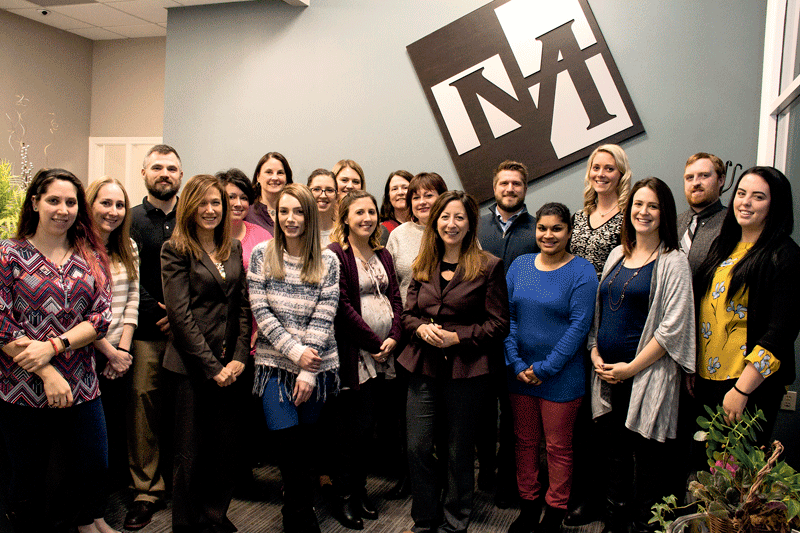
Employment Sections

There Are Many, for Employers and Employees Alike

By Erica E. Flores

Erica E. Flores

Erica E. Flores

As 2017 winds to a close, society continues to be rocked by the Harvey Weinstein scandal, the #MeToo movement, and the unending torrent of allegations against prominent and powerful men. We find ourselves wondering what happened.

Or, more importantly, how this has been going on for so long, seemingly undetected. But sexual harassment isn’t a new problem. And it’s not a problem that went away and is just now returning. No, sexual harassment has always existed, in one form or another.

After the Mad Men era, perhaps it became a bit more taboo, and less an accepted norm, but it did not go away. So why now? And more importantly, what can we — the concerned bystanders, responsible business owners, and innocent professionals — take away from all of this?

It is clear that the first allegations against Weinstein struck a chord in the collective consciousness of the American woman, but we may never fully understand how or why the dam broke as and when it did. After Bill Cosby, maybe we had simply had enough, and when those first cracks appeared, the levee was inevitably doomed. Ultimately, the why is not so important.

Because, just as sexual harassment is not a new problem, it is also not a problem that will ever be solved completely. People behave badly, especially when emboldened by an imbalance of power. And the workplace provides both the temptation and the authority for bad people to do bad things.

Which brings me to the second question — the takeaways. As a management-side employment attorney and a woman, I see in this avalanche of public shaming both lessons and warnings. The lessons are caution and vigilance. Whether you are a man, woman, or gender-fluid; straight, gay, or bisexual; supervisor, subordinate, or human-resources professional, you must exercise caution as you go about your affairs at work. No matter what side of the power equation you are on, you should always be aware of the effect your words may have on others, the messages and signals you are communicating, and the risks you run when the lines between friend and colleague start to blur.

While being cautious about your own behaviors, however, you must also be vigilant when it comes to what is going on around you, and you cannot be afraid to speak up, no matter how high or low on the totem pole you are. We all share a responsibility to protect our co-workers, at every level; to make sure that we all can enjoy a safe and comfortable workplace where we can and will perform at our best. We also share a responsibility to protect our company’s brand, the reputation each of us has worked so hard to earn and maintain, for the benefit of every one of us and our families.

Which brings me to the warnings. The law is not forgiving when it comes to sexual harassment. Employers are strictly liable for sexual harassment committed by managers, and anybody — yes, anybody — can be held legally responsible for aiding and abetting sexual harassment. What does that mean? It means whatever a judge or jury decides it means, and in this moment in time, I suspect it means much more than you might think.

Make no mistake — society is desperate for consequences, and this public purging will not stop at the top. Small businesses in small communities are just as vulnerable, and there will be lots of blame to go around for the behavior of those who are eventually outed.

So before you or your business become the story, take steps to protect yourself. Employees cannot be afraid to speak up, and employers should encourage them to come forward. Businesses should also consider reviewing and revising their sexual-harassment policies, reiterating that employees who come forward will not face retaliation, and perhaps even provide additional training to supervisors and human resources personnel.

Most importantly, employers must make sure they are addressing complaints promptly and properly. That means being thorough but objective, and fair but strict. It means talking to the right people, asking the right questions, looking in the right places, and preparing the right forms of documentation. None of this is obvious or easy, so when in doubt, get your employment attorneys involved.

After all, while the tide will eventually ebb, sexual harassment will never go away completely.

Erica E. Flores is an attorney at Skoler, Abbott & Presser, P.C., which exclusively represents management in labor and employment matters. She has successfully defended employers before state and federal courts and administrative agencies. In addition to her litigation practice, she regularly advises clients with respect to day-to-day employment issues, including decisions regarding adverse employment actions and litigation avoidance;(413) 737-4753; [email protected]

Employment Sections

Labor Pains

Angst.

You won’t see that colorful noun written anywhere in the National Business Trends Survey conducted by the Employers Associations of America (EAA), said Mark Adams, but there is quite a bit of that commodity lurking behind the words and especially the numbers that are contained in that document.

There is angst — or concern, or anguish, or anxiety (all quality synonyms) — when it comes to the labor market and what is becoming increasingly a labor shortage. There is more of it when it comes to wages — employers want to raise them, but there are hindrances to doing so, especially rising healthcare costs.

And there is more angst when it comes to the juxtaposition of wages and the labor market, said Adams, director of HR Services for the Employers Assoc. of the NorthEast (EANE). Indeed, he said that, as wages remain fairly stagnant (3% increases are the norm, as they have been for several years) and the increases amount to less amid the rising cost of living, many employees are exercising their right to pursue greener pastures. And they’re finding them, leaving employers to replace them in a job market where good help is increasingly hard to find.

“It’s definitely a buyer’s market,” said Adams, noting that employees are the buyers. “With unemployment being so low, and people looking to add bodies to their organization, either through new jobs being created or replacing existing workers that are going to leave, employees realize that now is the time to explore all their options if they haven’t been fully satisfied with what they’re been earning in their organization.

“The 2.8% to 3% increases they’ve been getting are being cannibalized by rising health costs and the cost of living in general,” he went on. “So they’re not advancing financially within the organization they’re in, and a lot of them are sitting there saying, ‘I’m going to start exploring other options.’ For companies, there are a lot of openings, and they’re not finding adequate replacement workers, which puts a whole premium on ‘are we paying people enough? Are we providing a workplace that’s engaging enough?’”

Like we said, angst. There’s enough of it to temper the considerable optimism reflected in the report, said Adams, adding that nearly two-thirds of respondents (62%, to be exact) expect their 2017 revenues to exceed those of 2016, and 73% project that 2018 will be better than 2017.

Meanwhile, more employers expect to be hiring in the year ahead than in 2017. In the Northeast region, 51% of the executives surveyed plan to increase staff in 2018, a sizable increase from a year ago, when 41% responded in such fashion.

But these positive numbers are couched in the reality that, for many employers across virtually every business sector, hiring is becoming a real challenge. Indeed, 42.3% of regional respondents (those in the Northeast and Mid-Atlantic states) identified the skilled labor shortage as a ‘serious’ challenge in the short term (up from 37.8%), while 52% identified it as a serious challenge long-term, up from 47% last year.

Adams noted that these numbers clearly reflect what he’s heard anecdotally and seen directly through EANE’s efforts to assist members with finding and hiring talent.

“We’re experiencing all that with the members we’re serving,” he explained, adding that many of the recruitment-and-hiring projects EANE has undertaken with members have taken much longer than anticipated, and some have been relaunched, simply because employers have not been satisfied with the response they’ve seen in terms of the quality of the job aspirants.

Elaborating, Adams said EANE will assist members with searches for managers or professional staff, providing services including ad placement, sourcing of candidates, prescreening, help with interview questions, actual interviewing, and more.

And, as he noted, many of these searches are taking much longer than they did even a year or two ago, and a growing number of them are not ending successfully, and for a host of reasons, ranging from lack of satisfaction with (or consensus on) finalists to disparity between what the candidate is seeking compensation-wise and what the company is willing to pay.

As the challenges to hiring and retaining good help grow, employers are responding, said Adams, adding that many are making investments in technology, equipment, benefits, training, recruitment, and other areas in an effort to navigate a job market increasingly defined by full employment or something close to it.

Indeed, the survey showed that 60% of respondents plan to invest in technology in 2018, up from 45% in 2017; 54% plan to invest in equipment, up from 45% a year ago; 41% intend to increase the training budget, up from 26% in 2017; 38% plan to heighten their emphasis on recruiting, up from 30% a year ago, and 35% intend to shift more healthcare costs to the employer, a huge increase from the 15% who responded in that fashion a year ago.

“Companies are realizing that, if they can’t go dollar for dollar to keep people in the organization or attract people, they’d better bring other things to the table to make them a company that’s going to be worthwhile to someone,” said Adams, adding that these numbers speak loudly about the extent of the problem and growing awareness of the need to do something about it.

And while it is still too early to gauge the full impact of MGM Springfield’s ongoing efforts to create its workforce of roughly 3,000 people on all of this, it’s to assume that it will only exacerbate the problem, Adams said, adding that employers are certainly expressing concerns about this development at EANE HR Roundtables.

As for wages, many companies are in a bind because, as much as they feel compelled to raise them and want to, strong forces, especially double-digit increases in healthcare insurance, act as considerable roadblocks.

“The rising benefit cost is a countermeasure that’s creating a barrier toward putting more on the table financially to induce people,” Adams explained. “And it’s becoming a paradox for companies; they want to pay people more to attract and retain them, but they have these rising benefits costs, and there’s only so much in the budget to cover both of those things.”

Meanwhile, the pay-equity act set to take effect July 1 becomes what Adams called a “wild card” when it comes to wages in 2018.

“The question becomes whether there will be additional needs to invest money into compensation budgets because of concerns employers may have about questionable difference in pay structures,” he noted.

— George O’Brien

Construction Sections

Building Momentum

construction-2018artdpAfter years of slow recovery after the recession that struck almost a decade ago, area construction firms are reporting strong volume in 2017 and predicting the same, if not better, in 2018. Whether relying on diverse expertise, a widening geographic footprint, or repeat business from loyal customers, there are plenty of ways to grow in the current economic environment, and contractors are optimistic they will do just that.

Even during good times for the construction industry — which 2017 certainly was, to hear area contractors tell it — everyone still has to keep on their toes.

“We’re optimistic for next year, but there are a lot of smart people working in New England, and everyone’s trying to get their fair share of the pie,” said Jeff Bardell, president of Daniel O’Connell’s Sons. “It’s still very competitive, and it’s been that way for a long time.”

While O’Connell is based in Holyoke, the firm has branched out over the years to develop a significant presence in Eastern Mass., Connecticut, and Rhode Island, particularly with large utility projects, while closer to home, it has maintained strong activity at area colleges and universities, including work at Amherst College and UMass, not to mention Dartmouth College in New Hampshire and Marist College in New York.

We’re optimistic for next year, but there are a lot of smart people working in New England, and everyone’s trying to get their fair share of the pie.”

“We’re busy, but not out-of-control busy, in Western Mass. The projects we’re doing now aren’t as big as they were for awhile, but we’re still fairly busy.”

However, the heavy civil side has been a different story, featuring projects like upgrades to the Uxbridge Wastewater Treatment Facility, a runway rehabilitation at Hanscom Airfield in Bedford (one of many projects for MassPort), and a biogas co-generation facility at the Bucklin Point Wastewater Treatment Facility in Rhode Island — not to mention some MassDOT highway work in Worcester and a pedestrian bridge over the Providence River.

“Things are going fairly well for us,” Bardell said. “Everyone is working.”

Kevin Perrier, president of Five Star Building Corp. in Easthampton, had a similar outlook, noting that “2017 has proven to be one of our busiest years, with work from one end of the state to the other. Both public and private work has certainly kept our guys busy, and it looks like next year will be more of the same.”

While margins are still tight, workload has remained busy, including two large mechanical upgrade projects for MassPort and increasing work at Logan International Airport over the past several years.

While those two firms have broadened their reach, Chicopee-based A. Crane Construction recorded a strong 2017 mostly close to home, said partner A.J. Crane. “We do a lot of local, private commercial work, and it seems that sector is booming, with a lot of small to medium-sized businesses either building new facilities or renovating their existing facilities. It’s nice to see. And we’re helping as much as we can with that, which we really like to see.”

Recent projects include a remodel of the Sunshine Village offices in Chicopee, Arrha Credit Union’s new West Springfield branch, a new office for Ameriprise Financial in South Hadley, two renovations for Oasis Shower Doors, an office renovation for Noonan Energy, and ongoing work for Ondrick Natural Earth and AM Lithography.

Five Star Building Corp

Five Star Building Corp. opened its Boston office to handle a growing volume of business from the eastern part of the state.

“We’re in that sweet spot between small firms and huge commercial industrial contractors,” he told BusinessWest. “We’re a good size where we can serve a lot of those people that are upgrading and building new, local businesses. We’ve recently serviced quite a few financial-services offices, some retail, and, obviously, the whole legalization of medical and recreational marijuana is going bananas, and we’re doing quite a bit of that, too.”

Clearly, these are high times for area builders, and they expect to keep rolling in 2018.

Branching Out

Bardell said O’Connell’s broad geographic footprint — and its expertise in many different types of work — are both hedges against shifting economic tides.

“We see it rotate from place to place. I would say from ’09 to ’12 or ’13, we were really busy in Rhode Island, hundreds of millions of work there. Now we have maybe $20 million in work there. When we’re not busy in the Eastern Mass. region, we’re doing a lot of work for MDC in Hartford, redoing their treatment plant. It just rolls from one area to the other.”

As a result, he went on, “we pursue a lot of college work, and then we pursue heavy civil work. We do bridges, water and wastewater plants, drinking-water facilities — those have kind of become the bread and butter of our company.”

From a backlog standpoint, O’Connell is in pretty good shape, he told BusinessWest, but firms need to stay aggressive. “Talk to any contractor, and they’ll say they’re looking for more work; you burn it off quickly. But we’re here working through the holiday, with a lot of projects coming out in all kinds of places. There are projects in the Hudson Valley in New York out to bid right now, projects with Connecticut treatment plants, a very large university job in upstate New York, and some treatment-plant projects in Rhode Island.

Now boasting 50 employees, Five Star has developed a strong presence out east as well, opening a Boston office to support the “booming” seaport and commercial construction happening there. Long-term relationships with airlines like Southwest and Jet Blue have kept the firm busy at Logan, while projects like a new Westborough Town Hall, a library in Sherborn, a new charter school in Plymouth, and the Uxbridge fire station attests to the company’s diversity. Closer to home, major projects have included new life sciences laboratories at Holyoke Communtiy College and an ongoing upgrade of the entry at Noble Hospital in Westfield.

“Between healthcare and the airport and transportation sector, we’ve found ourselves all over, with a lot of long-time clients keeping us very busy this year,” Perrier said. “We’re fortunate enough to have another $30 million on the books for next year, so we’re happy about that.”

One goal has not to become too focused on one particular niche or industry, like some companies that focus almost all their energy on, say, healthcare or auto dealerships, he went on. “We’ve always been somewhat reluctant to do that, because it makes you more susceptible to shifts in the economy. We’ve been lucky to have some diversity and to be spread out across the state.”

That said, he added, “we’ve seen our fair share of the work. It’s safe to say the bad economy is behind us. Everyone has a pretty full plate.”

Crane has diversified in other ways, opening divisions in property management and condominium management, and taking on more and larger commercial jobs. And customer loyalty is important, because a construction job might lead to other jobs down the line. “We’re not just building someone a new, 5,000-square-foot facility. They’ll call us for everything else, which is nice.”

The benefits of a strong local construction market are twofold, Crane went on. “Businesses are spending money on their real estate here, which brings everybody’s property values up, and second, if they’re investing in property here, that means they’re not moving their business anywhere else, which is huge. Everyone knows construction drives the economy.”

Help Wanted

Perrier says contractors remember what the recent recession years were like — and how many years it took to return to something resembling normalcy — so everyone is a little gunshy, but they’re also optimistic that a strong 2017 will spill over into an even better 2018.

“The last two or three years, the economy has been strong,” he told BusinessWest. “We’re fortunate to stay busy. During the recession, most general contractors just wanted to keep people busy, try to see some growth and not lose their key players, and weather the storm. We made it out of that, and we continue to see growth. Last year was one of our best years.”

Bardell added that most operations professionals in construction will say they don’t have enough good, quality workers.

“It seems like things are picking up a little with availability of work to pursue, so we’re pretty optimistic, to be perfectly honest with you,” he said. “The biggest problem is finding people to do the work. That’s not getting any easier, and it’s going to be the biggest issue for us. We actively recruit at a lot of colleges; we’re trying to build a little farm team of guys and gals who can move up the ranks. We’ve been pretty successful doing that, but sometimes you can’t keep up with the volume.”

Not that high volume is a bad thing, of course.

“Things were good last year, and next year is looking great, too,” Crane concluded. “Hopefully it keeps rolling.”

Joseph Bednar can be reached at [email protected]
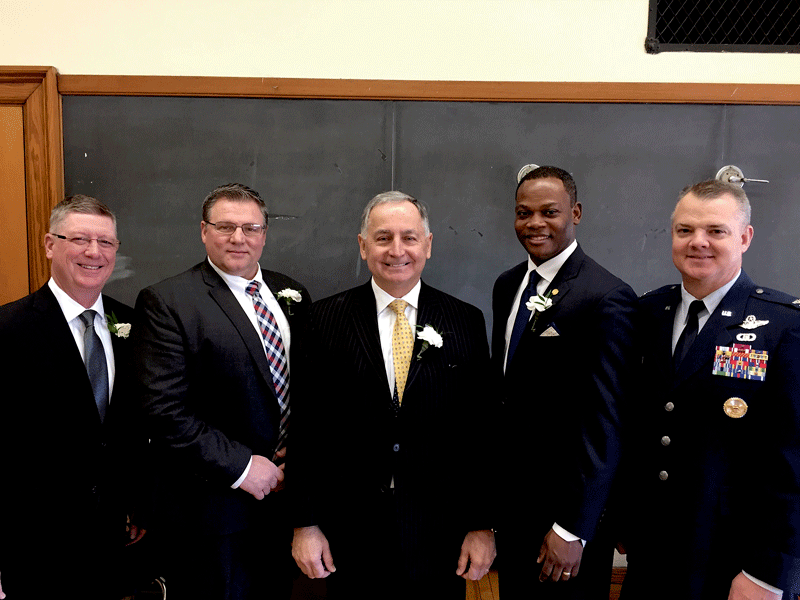
Construction Sections

A Matter of Resiliency

union-station-before

The Grand Concourse at Union Station before (top) and after.

The Grand Concourse at Union Station before (top) and after.

Springfield’s Union Station — and the project to bring it back to productive life after more than 40 years of dormancy — have both been described using a whole host of words and phrases.

But ‘a bureaucrat’s delight?’

That was a new one, and one that most people probably wouldn’t expect to see the light of day. But Kevin Kennedy, Springfield’s chief Development officer, summoned it as he talked about the latest additions to what is becoming known as the Union Station trophy case — only there is no such thing. Yet.

These would be two awards from the Environmental Protection Agency (EPA)— one for the best environmental rehabilitation project in New England region, and the second, announced after all the regional awards, is the so-called Phoenix Award, for the best brownfield redevelopment project in the country.

This was the first such honor for the Western Mass. region, and to earn it, the Springfield project prevailed over a wide range of impressive initiatives, from transformation of 14 acres of former rail yards, junk yards, and auto-repair shops into a recreational center in New Jersey, to a stunning metamorphosis for the so-called ‘Big Marsh’ in Chicago.

The award — and the efforts that made it possible — are significant on many levels, said Kennedy, because this was the work that went on behind the scenes, in every sense of that phrase. And this is what he meant by ‘bureaucrat’s delight.’

“From a professional basis, this is what we do in the background to make these projects happen,” he explained. “Everyone focuses on the public side of things, the up-front things that you see. But when you develop a project, you have to be able to work within the bureaucracy to satisfy all the regulatory issues and help with some of the funding.”

Indeed, while much of the focus on the station project has been on high-profile, highly visible initiatives, such as the façade, the parking garage, the new bus terminal, and the stunning transformation of the main concourse, all that wouldn’t have been possible without the environmental remediation work that came before it.

This environmental cleanup involved the former baggage-building property adjacent to the terminal, which was demolished, and the former site of the Hotel Charles, said Kennedy, noting that the property had petroleum, metals, and asbestos contamination. Meanwhile, the project — creation of a new and expanded intermodal transportation facility — also addressed air quality and congestion mitigation.

The Springfield Redevelopment Authority, owners of the building and managers of the redevelopment project, and lead contractor Daniel O’Connell’s Sons worked with a number of vendors to handle the remediation. The Westfield-based environmental engineering firm Tighe & Bond handled the analysis, specifications, and oversight of the work, while T&M Equipment Corp. in Springfield, LVI Environmental Services in Everett, American Environmental in Holyoke, and NCM Contracting Group in Weston handled various aspects of the cleanup and demolition work.

But when Kennedy says the $95 million could not have come to its successful conclusion without that remediation, he really means it, and on many levels, from not only a construction standpoint, but also what would have to be called a momentum standpoint.

Indeed, there were several times over the past few decades when the Union Station project was stalled, even dead in the water. But it was progress with the environmental issues that kept the project relevant and put it, well, back on track.

“Back around the turn of this century, there was a start to this project, and then it stopped,” Kennedy recalled. “We had to figure out in 2007 and 2008 how to restart the project, and there were two very important funding sources that enabled us to get things restarted.”

The first was a $350,000 planning grant awarded by then-Gov. Deval Patrick that enabled the city to hire an architect to start the process of organizing the project, and the second was a roughly $250,000 EPA assessment grant to be used to identify to scope of the environmental issues at the site, including the baggage building and Hotel Charles footprint.

Lauren Liss, president and CEO of MassDevelopment, addresses those assembled at a press conference on Dec. 11

Lauren Liss, president and CEO of MassDevelopment, addresses those assembled at a press conference on Dec. 11 to announce that the Union Station project had won the Phoenix Award.

“Those were the two items that kick-started the project again,” Kennedy told BusinessWest. “They allowed us to scope out how to do this, and without them, I don’t know how we would have been able to start.”

In essence, the initial environmental work enabled planners to “get our arms around the project,” as Kennedy put it, enabling them to go back to the major funders, including the Federal Transit Authority and the Mass. Department of Transportation with a far sharper picture of what needed to be done at the site and what could be done with it.

“There were so many of those boring things that those of us in the inside of the government had to put together,” he went on, adding that these boring, behind-the-scenes efforts, spearheaded by SRA director Chris Moskal and consultant Maureen Hayes, eventually made those stunning ‘after’ shots in the before-and-after scenarios possible.

The environmental-cleanup efforts, and the project as a whole, were effectively summed up in the application for the brownfield awards, where Springfield officials listed the key project lessons as ‘resiliency.’  “A long-vacant train-station redevelopment project that had many starts and stops was restored to a state-of-the-art intermodal transit center thanks to the resiliency of its people and leaders,” the application reads.

As for that reference to a trophy case, there really is one, as noted. But the Union Station project has collected a number of awards, including the two EPA prizes, the Paul and Niki Tsongas Awards from Preservation Massachusetts in the category called ‘Best Now and Then,’ the Springfield Preservation Trust’s 2017 Project Rehabilitation Award, and the Honow Award from the Assoc. of General Contractors of Massachusetts.

Collectively, they speak to the enormity of the project and the significance of resurrecting a huge piece of Springfield’s past and making it a significant part of its future.

As for it being a ‘bureaucrat’s delight,’ only the bureaucrats can truly say.

— George O’Brien

Business of Aging Sections

Support System

hcncover1217Group classes — whether spinning or dancing or core workouts — are all the rage in the fitness world, and it’s easy to see why. Working out in a group provides not only socialization and support, but accountability and motivation to maintain one’s progress. Often, area gym owners say, the biggest challenge is just taking that first step — and learning that fitness classes are, quite simply, a lot of fun.

Maggie Bergin is certified to teach spinning, TRX, and Group X classes, and has, in fact, been teaching fitness in the Valley for the past seven years. As the communications director at Open Square, she thought it would be a natural move to open a fitness facility in that complex overlooking Holyoke’s canals.

So, last month, she launched the Reset, which specializes in group classes, hoping to draw some of the 200 people who work at Open Square, as well as employees of nearby businesses, to take part in ‘nooner’ sessions at lunchtime and classes after work.

“I love leading people through workouts,” she told BusinessWest. “I designed the Reset to accomplish the medical things we are supposed to get done in the most efficient way possible. And what are we supposed to do? Getting our heart rate up on a regular basis, using our muscles so muscle mass doesn’t decrease over time, and stretching, so we’re not tighter than bark on a tree in our 40s and 50s.”

But there’s a difference between understanding the need to work out and actually doing it, she went on.

“I see that people have less and less time; we’re drawn in 20 different directions in the morning and exhausted at night. So things have to be comprehensive and quick. People think, ‘if I can’t get a full-body workout in an hour, I’m not going to do it.’ I created this place to hit those three goals so people can keep moving and stay healthy into their 90s.”

The Reset is equipped with TRX suspension trainers hanging from the ceiling, a popular fitness device designed by a Navy Seal to have intense core workouts with a minimum of equipment. But it’s not equipment that will draw members to Bergin’s new gym, she said; it’s the appeal of working out as a group.

In fact, group training classes have become the most popular element of today’s fitness facilities. Gym owners say people who might initially be reserved about working out around others are quickly taken by the sense of community, mutual support, and socialization these classes offer.

Maggie Bergin

Maggie Bergin says exercise classes are an investment of money and time, and people want to know they’re getting results — and having fun, too.

“Some people, particularly women, feel they have to be perfect immediately, and do it exactly like the instructor immediately. That is a lie,” Bergin said. “You don’t have to do it like anyone else; you can make it your own, within safety precautions, which I’m going to take care of. You have to embrace that you’re on a journey, and in a different place than someone else in the room.”

Marie Ball, owner and group personal-training specialist at the Anytime Fitness franchise in Agawam, agrees.

“The biggest trend we’re responding to is the need for small-group personal training,” she said. “People are more focused today on socialization in fitness, which allows for accountability and motivation. They like to work out in a group.”

However, the smaller groups that Anytime runs typically max out at five to seven participants, so there’s more individualized attention from the trainer, while maintaining that social aspect people desire.

“Some of the participants may not have the same ability, so the trainer is constantly checking and instructing and making sure they’re exercising with proper form, technique, and posture,” she said. “In a large class, the trainer might not have the ability to make sure everyone is doing things properly, so there’s greater potential for injury.”

Justin Killeen, owner of 50/50 Fitness/Nutrition in Hadley, said the trend has been away from commercial, big-box gym environments filled with Nautilus and circuit equipment, and toward a more supportive, community environment. He noted that the technology on today’s group workout equipment gives instant feedback for calories burned and other data, while allowing participants to compete against each other for extra motivation.

Mostly, though, what fitness enthusiasts — especially the younger crowds — are looking for is a fun experience.

“If we have a regular spin class but don’t make it fun and interesting, it’s not as engaging, and people won’t want to come back to it,” he said, adding that people also want a progressive experience, tracking their goals with each workout. “We want to build on each workout and tie it in to your overall health and wellness.”

For this issue’s focus on fitness and nutrition, BusinessWest examines why group fitness classes are growing in popularity and how they motivate people to get — and stay — healthy.

Time and Energy

When she considers where people find that motivation, Bergin agrees with Killeen that it starts with having fun.

“I keep things light. We’re not saving babies here; we’re trying to get stronger and stay healthy,” she explained. “I take my training seriously, but I’m not a yeller. I’m going to encourage, not berate. Some people want to be berated; they respond to that. At places with multiple instructors, you can find one that works best for you.”

Finding time can also be an issue, especially for people with jobs and kids. The 24/7 model at Anytime Fitness is geared toward this issue, Ball said. “In today’s busy world, people have crazy schedules, and it’s hard to fit time in for themselves and make that investment. That’s one of the benefits of our facility. You can do this on your own time.”

She said the overnight hours are beneficial not only for those with those so-called crazy schedules, but first-timers who might be nervous about working out in front of lots of people. Many of them, however, eventually move on to daytime classes and experience the social benefits of exercising as a group.

“Every fitness club or gym has a certain demographic,” she said. “Our club is kind of mixed; some members want to come in the when the gym is quiet, and our 24/7 model lends itself to that. People can work out on their own terms and don’t have to worry about being in an overwhelmingly busy place. Many are just beginning their journey, and they’re not comfortable exercising in front of people.”

Others strictly crave the one-on-one interaction with a personal trainer, which Anytime also offers, but the most popular option continues to be those small-group classes. “People like the socialization aspect. I think some people really need that in their lives to get motivated; they like that engaging atmosphere.”

Besides its popular group classes, 50/50, as its name suggests, helps members with their nutrition plans as well, as a way to bring total wellness under one roof — and save time in the process.

Marie Ball

Marie Ball says small-group classes provide both a sense of community and more individualized attention from the trainer than a larger class.

“We try to integrate a lot of the health and wellness spectrum,” Killeen said. “People might end up going to one place for a gym, then go to nutritionist, then a massage therapist. Our goal here is to pull as many of these together as possible.”

That said, “we try to create a network of people that come together here as part of a community. We bring the whole experience full-circle for them. The nutrition piece is certainly a big part of it. The underlying concept is a balanced approach, thinking more holistically, instead of jumping in on one thing at a time — diet for a while, gym for a while, and so on.”

It helps, he said, that people today are more educated about health and wellness and have options for improving their own.

“For the first time, the younger generation has grown up with it, and they consider it a fun and social thing to do,” he said of group exercise. “If you go out with some friends and go to a spin class and head out afterward, you form friendships. It’s the best of both worlds — the social piece and the feeling that you’re progressing toward something important.”

First Steps

Still, Ball said, it can be difficult for some people to get started.

“I always say, when people walk in our door, that might be the hardest thing they’re going to do this month. That first step is so hard for people,” she told BusinessWest, adding that the sheer variety of fitness modes can be intimidating.

“It’s a good thing there’s a lot of options, but that can also be a bad thing, when they don’t even know what they need. The first step should be to check out a lot of places and find out where you’re comfortable.”

That’s why Anytime offers a seven-day all-access pass so people can get a feel for the center without a long-term, high-cost commitment.

“If people don’t feel comfortable, they’re not going to come back, and they’re not going to progress along their journey,” Ball said. “But it starts with stepping out of your comfort zone and finding like-minded people who support you. A lot of people out there though they couldn’t do it, and then they found they could. Everyone can have a success story.”

And, as Bergin said, success often starts by finding an activity that’s fun, because without that element, people don’t want to invest their money and time.

“It’s not food or shelter. You have to be interested and find joy and be willing to spend money on this thing,” she said, adding that there are always more people to reach with the message that fitness matters. “If we’d figured out how to get people motivated, we wouldn’t have an obesity epidemic and a pre-diabetes epidemic. We all know what we need to be doing.”

And she’s eager to help people find their fitness joy.

“I was always the second-to-last picked in gym. I don’t come by this naturally,” she said. “I have a deep empathy for people who haven’t found their thing yet. So, if you don’t like swimming, don’t swim. If you don’t like running, don’t run. If you want to dance in your underwear to Depeche Mode, then do that. And do it again and again and again. If I can find a thing, you can find a thing. And once you’ve found that thing, keep doing it.”

Joseph Bednar can be reached at [email protected]

Columns Law Sections

Law Column

By Marylou Fabbo

Marylou Fabbo

Marylou Fabbo

During the holiday season, employers may have been faced with a variety of religion-related requests such as whether they may display certain religious icons in their work areas. Throughout the year, employees may want time off to observe certain holy days rather than conforming to the employer’s holiday schedule, request breaks to pray, or seek an exemption from an employer’s dress or grooming standards so that they may express themselves consistent with their religious beliefs.

While employers do not question most requests, what should an employer do if it suspects that the requested accommodation is being made to upset a co-worker or that an employee is requesting certain days off to go shopping or take a long weekend?

What Constitutes a Religious Belief?

Both state and federal law prohibit discrimination against employees and applicants based on religion, and employers are required to reasonably accommodate bona fide religious beliefs.

A ‘bona fide religious belief’ means that the individual has a religious and sincerely held belief or practice. Title VII defines ‘religion’ very broadly. It includes traditional, organized religions as well as those that are new, uncommon, not part of a formal church or sect, or held only by a small number of people. Religious beliefs don’t need to be part of organized religion, and moral or ethical beliefs as to what is right or wrong could constitute religious beliefs. According to the U.S. Equal Employment Opportunity Commission (EEOC), however, “social, political, or economic philosophies, or personal preferences” are not religious beliefs.

What Religious Accommodations Must an Employer Provide?

Employers may not refuse to accommodate an employee or applicant’s sincerely held religious beliefs or practices unless accommodating them would impose an undue hardship.

Some examples of accommodations that an employer would have to provide, absent undue hardship, include excusing a Catholic pharmacist from filling birth-control prescriptions or permitting a Muslim employee to take a break schedule that will permit daily prayers at prescribed times. With the holidays approaching, an employee may request other accommodations, such as the ability to take certain days off (other than Christmas) or to display religious symbols in their work areas. What should an employer do in response? Read on.

When May an Employer Deny a Request for a Religious Accommodation?

Employers must grant a request for a religious accommodation unless doing so would pose an undue hardship on the employer. The ‘undue hardship’ burden is lighter when it comes to religious accommodation than it is when talking about disability-accommodation requests. For religious-accommodation purposes, an undue hardship exists if it would cause more than de minimis cost in terms of money or burden on the operation of the employer’s business. Generic co-worker complaints usually are not valid reasons to deny a request for religious accommodation.

What If an Employer Suspects the Employee Wants an Accommodation for Non-religious Reasons?

Certain behaviors may make an employer question an employee’s assertion that the employee sincerely holds a religious belief that forms the basis of a requested accommodation. The EEOC has suggested that these behaviors may include whether the employee has behaved in a manner markedly inconsistent with the professed belief, whether the accommodation sought is a particularly desirable benefit that is likely to be sought for secular reasons, whether the timing of the request renders it suspect, and whether the employer otherwise has reason to believe the accommodation is not sought for religious reasons.

The courts, too, have recognized that an employee might use ‘religious beliefs’ to obtain an accommodation for a personal preference rather than a religion. In a recent case, a hospital employee refused to receive a mandatory flu vaccination based on her religious beliefs, which included the notion that her body is a temple. The hospital excused the employee from the mandatory vaccine and instead required her to wear a mask. She claimed that the mask was not an acceptable alternative because it interfered with others’ ability to understand her. During the litigation, the employer sought a detailed description of the ways in which the employee adhered to her belief that her body is a temple, and, despite the employee’s protest, the court required her to answer the question.

It’s probably the best practice to ask the same questions to everyone who makes a religious-accommodation request, or question whether an employee has a sincerely held religious belief, when there is objective evidence that the request may have been made for ulterior reasons.

How Should Employers Handle Requests for Religious Accommodations?

When an employer receives a request for a religious accommodation, the employer should let the requesting employee know it will make reasonable efforts to accommodate their religious practices.  Employers should assess each request on a case-by-case basis.

Remember, while an employer should consider the employee’s requested accommodation, employers are not required to provide an employee’s preferred religious accommodation if there’s another effective alternative. However, be wary of affording employees who practice certain religions different treatment than afforded to those who practice other religions. Employers should train supervisory personnel to make sure they are aware that a reasonable accommodation may require making exceptions to regular policies or procedures.

Marylou Fabbo is a partner and head of the litigation team at Skoler, Abbott & Presser, P.C. She provides counsel to management on taking proactive steps to reduce the risk of legal liability that may be imposed as the result of illegal employment practices, and defends employers who are faced with lawsuits and administrative charges filed by current and former employees; (413) 737-4753; [email protected]

Chamber Corners Departments Sections

1BERKSHIRE
www.1berkshire.com
(413) 499-1600

• Jan. 27: BYP Winter Ball, 7-11 p.m., hosted by Country Club of Pittsfield. Let’s take an evening to dress up and enjoy a ball together. It’s an inexpensive way to enjoy an elegant evening with music, heavy hors d’oeuvres, elegance, and an excuse to dress to the nines — and much more — with friends. Cost: $25 for members, $35 for non-members.

GREATER CHICOPEE CHAMBER OF COMMERCE
www.chicopeechamber.org
(413) 594-2101

• Jan. 23: B2B Roundtable, 8-9 a.m., hosted by Polish National Credit Union, 923 Front St., Chicopee. Sponsored by CHH Engraving Inc. An opportunity to connect and increase your contacts, generate leads, and establish relationships with other businesses. Cost: free to chamber members, but limited to one representative per business industry. Call Sarah Williams at (413) 594-2101, ext. 103, for more information or to sign up.

• Jan. 31: ChamberMaster Training, 9-11 a.m., hosted by Hampton Inn Chicopee, 600 Memorial Dr. This is a brief presentation on how to use ChamberMaster for chamber members. This is a great tool for all chamber members for some free advertising. Cost: free to chamber members. Sign up online at chicopeechamber.org/events.

GREATER EASTHAMPTON CHAMBER OF COMMERCE
www.easthamptonchamber.org
(413) 527-9414

• Jan. 18: Celebrate Success Event, 5-8 p.m., hosted by Delaney House, 3 Country Club Road, Holyoke. The evening will celebrate the successes of 2017, share what has been learned along the way, and examine where the chamber is headed in 2018. The event will honor winners of the Business, Business Person, and Innovative Entrepreneur of 2017. In addition, we will reveal winners of the President’s Award and the Ambassador of the Year. We will also celebrate member milestones. For more information, visit www.easthamptonchamber.org, or call the chamber office at (413) 527-9414.

• Feb. 8: Networking by Night, 5-7 p.m., hosted by the Boylston Rooms, 122 Pleasant St., Suite #112, Easthampton. Sponsored by Tanya Costigan Events. This is a great networking opportunity and an opportunity to tour the new Boylston Rooms.

GREATER HOLYOKE CHAMBER OF COMMERCE
www.holyokechamber.com
(413) 534-3376

• Jan. 10: The Chamber Coffee Buzz Morning Networking, 7:30-9 a.m. Check the chamber website for location. The Coffee Buzz is a great way to jump-start your day with an opportunity to meet business and community leaders while enjoying coffee and a light breakfast. Coffee sponsored by Spradley Deluxe Coffee. Cost: free to the business community. Sign up online at holyokechamber.com or call (413) 534-3376.

• Jan. 17: Chamber After Hours, 5-7 p.m., hosted and Sponsored by Applebee’s, 225 Whiting Farms Road (at intersection of Holyoke Mall). Join us for a casual networking experience. Enjoy complimentary appetizers and drink specials. Cost: $10 for members, $15 for non-members. Sign up online at holyokechamber.com.

• Jan. 24: Candidate & Elected Officials Reception, 5-7 p.m., hosted by Gary Rome Hyundai, 150 Whiting Farms Road, Holyoke. Sponsored by bankESB, Dowd Insurance, the Republican, Marcotte Ford, Comcast Business, Holyoke Medical Center, and Ferriter Law. An enjoyable evening where local and state legislators, administrators, and dignitaries are celebrated. Mingle with this year’s candidates and elected officials in a casual setting. Ticket price includes appetizers, food stations, and drinks. Cost: $40. Sign up online at holyokechamber.com.

GREATER NORTHAMPTON CHAMBER OF COMMERCE
www.explorenorthampton.com
(413) 584-1900

• Jan. 10: January Arrive @5, 5-7 p.m., hosted by Hitchcock Center for the Environment, 845 West St., Amherst. Sponsored by PeoplesBank. A networking event. Cost: $10 for members.

• Feb. 7: February Arrive @5, 5-7 p.m., hosted by Christopher Heights, 50 Village Hill Road, Northampton. A networking event. Cost: $10 for members.

• March 7: March Arrive @5, 5-7 p.m., hosted by 50/50 Fitness, 251 Russell St., Hadley. Sponsored by Applied Mortgage, a division of Merrimack Mortgage Co. A networking event. Cost: $10 for members.

GREATER WESTFIELD CHAMBER OF COMMERCE
www.westfieldbiz.org
(413) 568-1618

• Jan. 8: January Mayor’s Coffee Hour, 8-9 a.m., hosted by Western Massachusetts Hospital, 91 East Mountain Road, Westfield. Join us for our monthly Mayor’s Coffee Hour with Westfield Mayor Brian Sullivan. This event is free and open to the public. Call the chamber office at (413) 568-1618 to register for this event so we may give our host a head count.

• Jan. 10: January After 5 Connection, 5-7 p.m., hosted by Armbrook Village, 551 North Road, Westfield. Refreshments will be served. A 50/50 raffle will benefit the chamber scholarship fund. Bring your business cards and make connections. Cost: free for chamber members, $10 for potential members (cash or credit paid at the door). Online registration will be available at www.westfieldbiz.org. For more information, call Pam at the chamber at (413) 568-1618.

SOUTH HADLEY & GRANBY CHAMBER OF COMMERCE
www.shgchamber.com
(413) 532-6451

Jan. 23: Annual Meeting, 5:30-8:30 p.m., hosted by Willits-Hallowell Center, Mount Holyoke College, 26 Park St., South Hadley. An opportunity for chamber members to socialize with old friends in the business community and make new ones. A cocktail hour will be followed by dinner. The brief meeting will introduce the board of directors, describe the chamber’s various committees and their functions, and open discussion of 2018 calendar/plans/suggestions for the coming year.

SPRINGFIELD REGIONAL CHAMBER
www.springfieldregionalchamber.com
(413) 787-1555

• Jan. 10: Professional Women’s Chamber Luncheon, 11:30 a.m. to 1 p.m., hosted by Carriage House, Storrowton Tavern, 1305 Memorial Ave., West Springfield. Featuring author Dr. Valerie Young on “The Imposter Syndrome.” Sponsored by the Eastern States Exposition. Cost: $35 for members, $40 general admission, $25 for students. To make a reservation, visit www.springfieldregionalchamber.com, e-mail [email protected], or call (413) 755-1310.

• Jan. 11: Lunch ‘n’ Learn, 11:30 a.m. to 1 p.m., hosted by the Colony Club, 1500 Main St., Springfield. Panel discussion, “Workplace Sexual Harassment in the Wake of the Harvey Weinstein Scandal: What Employers Need to Know to Protect Themselves,” presented by Skoler, Abbott & Presser. Cost: $30 for members ($35 at the door), $40 general admission ($45 at the door). To make a reservation, visit www.springfieldregionalchamber.com, e-mail [email protected], or call (413) 755-1310.

• Jan. 23: C-Suite Conversations & Cocktails, 5-7 p.m., hosted by CityStage, One Columbus Center, Springfield. Members-only event. Cost: $25 in advance, $30 at the door. To make a reservation, visit www.springfieldregionalchamber.com, e-mail [email protected], or call (413) 755-1310.

WEST OF THE RIVER CHAMBER OF COMMERCE
www.ourwrc.com
(413) 426-3880

• Jan. 18: Networking Lunch, noon to 1:30 p.m., hosted by Carrabba’s Italian Grill, West Springfield. Only members or guests of members may attend. Enjoy a sit-down lunch while networking with fellow chamber members. Each attendee will get a chance to offer a brief sales pitch. The only cost to attend is the cost of lunch. Attendees will order off the menu and pay separately that day. We cannot invoice you for these events. Register online at [email protected].

• Feb. 13: Lunch & Tour at the Bistro LPVEC – West Springfield, noon to 1:30 p.m. Join fellow members and non-members for a networking lunch at the Bistro at Lower Pioneer Valley Educational Collaborative, followed by an informative discussion on the value of gaining skills in the trades industry and how we can promote to fill local jobs. Sponsorships are available for this event. Register online at [email protected].

YOUNG PROFESSIONAL SOCIETY OF GREATER SPRINGFIELD
springfieldyps.com

• Jan. 18: January Third Thursday, 5-7 p.m., hosted by Springfield Country Club, 375 Elm St., West Springfield.

Business of Aging

Fresh Ideas

Pat Roach

Pat Roach says the plan to improve culinary service in Springfield’s schools could eventually be a model replicated nationwide.

Pat Roach likes to share an anecdote that speaks to the occasional absurdity of school lunch. It involves the community gardens that dozens of Springfield schools have planted and maintain.

“Take Kennedy Middle School, which has a beautiful garden, where kids grow their own vegetables,” said Roach, chief financial officer of Springfield Public Schools. “If they want to serve them in the cafeteria, we have to ship the vegetables to Rhode Island, where they’re washed, cut, processed, and shipped back to Kennedy.”

But what if the city didn’t have to rely on an out-of-state partner to prepare its meals? What if everything served in the schools was cooked fresh, from scratch, on site?

That’s the goal of the Culinary and Nutrition Center, a 62,000-square-foot facility to be built on Cadwell Drive in Springfield, just two addresses from the school system’s current, 18,000-square-foot, food-storage warehouse.

The new facility will be much more than a warehouse, however. It will include all the resources necessary to prepare fresh ingredients for breakfast and lunch at every public, parochial, and charter school in Springfield, and to train staff to prepare meals from scratch right in the school kitchens.

“We’re renting space in Chicopee for cold storage. Our bakery is based in Rhode Island,” Roach said. “Here, we’ll cook all the food fresh on site — egg sandwiches, fresh muffins, local blueberries, as opposed to getting stuff packaged out in California and shipped to us. And it will bring down the cost of using local produce.”

The city broke ground on the center on Dec. 13, and the facility should be fully operational before the start of the 2019-20 school year, Roach said, and will include several components:

• A production and catering kitchen aimed at increasing product quality and consistency and reducing the use of processed foods;

• A produce cutting and processing room where fresh fruit and vegetables sourced from local farms will be washed, cut, and packaged for use by the schools, and waste will be composted;

• A bakery to prepare fresh muffins and breads, which will also incorporate local produce;

• Cold and dry food storage, which will centralize product purchasing and receiving and inventory control; and

• A training and test kitchen, where culinary staff from the city’s schools, and their ‘chef managers,’ will be trained in preparing from-scratch meals in their own cafeterias. The potential also exists to use the facility to train students interested in the culinary arts as a career.

“They want to serve much higher-quality food to students, with more locally sourced products and fresh-baked goods,” said Jessica Collins, executive director of Partners for a Healthier Community, one of the school system’s foundation partners on the project. “For the schools, it means quality food, and for some students, it’s a career path.”

Speaking of careers, the district plans to add 50 to 60 jobs for cooks, bakers, vegetable cutters, warehouse personnel, and other roles. It will take that many, Roach said, to bring food production and preparation in house for the second-largest school food program in New England, one that serves 43,000 meals served daily.

Considering the nutrition needs of those students, many of whom live in poverty, the stakes could hardly be higher.

Dawn of a New Day

The Culinary and Nutrition Center is hardly a standalone project. Instead, its the culmination of several years of efforts to improve food quality in the schools. Among those programs was an initiative, now in its third year, to move breakfast service — a requirement for districts that serve high numbers of children from poor families — from a strictly before-school program to one that creeps into actual class time.

As a result, Roach said, the schools are serving more than 2 million more breakfasts per year than they were several years ago.

“By law, because of the poverty level, breakfast in school is mandated, but logistically it causes all sorts of problems. If the kids don’t get to school early enough, they don’t get breakfast, or they get to class late.”

It has been an adjustment for teachers in that first period, who have fine-tuned how they craft the first few minutes of class while students are eating. But the impact of fewer kids taking on the day hungry more than makes up for that challenge, he argued. Much fewer, actually, as participation in breakfast has risen from 20%, district-wide, to almost 80%, with much of the remainder likely students who ate something at home.

“It’s been a huge success. Nurse visits for hunger pains are down 30%, and more students are getting to class on time and having breakfast.”

But putting breakfast — and lunch, for that matter — in front of students is one thing; serving healthy food is another. And that concern was the germ of an idea that will soon become the Culinary and Nutrition Center.

“One of the biggest challenges is getting healthy produce, real egg sandwiches, freesh muffins,” Roach said, noting that pre-packaged egg sandwiches, the kind that convenience stores sell, and heavily processed muffins aren’t ideal.

bowles

“We want to be feeding the kids — this is better than nothing — but we want to give them something fresh,” he said. “Instead of buying crappy egg sandwiches that cost a lot of money, we know we can do things in-house cheaper and better. They want real eggs, better muffins — not fake, microwaved stuff.”

Instead of a central kitchen that prepares all the meals and sends them to schools for reheating, the vision is for the school kitchens to actually prepare the meals from scratch using fresh ingredients sent from Cadwell Drive. For instance, “they’ll be making their own sauces using fresh tomatoes and fresh basil,” he noted. “We want to have the best food around. We want kids to want to eat breakfast and lunch at school.”

He also wants students to learn about nutrition and food delivery through their own experiences. “Kids are starting to get it. There’s a whole educational component, and kids understand this stuff is being sourced locally from local farms.”

That gives them a sense of ownership of the nutritional changes. For instance, when Michelle Obama led a change in school lunches, emphasizing whole grains, lower sodium, lower sugar, and other improvements, Roach noted, many schools made the shift all at once, and students rejected what suddenly started appearing on their plates.

“But we had already started increasing whole grains in food, reducing sodium levels — it was a huge success with us,” he said. “We think we’re training kids in lifelong dietary habits. If they get accustomed to eating this way, three meals a day, they’ll continue to do so for the rest of their lives.”

Back to School

Roach said the $21 million project, funded through government and private sources, is being supported by several partners with an interest in food policy, such as Trinity Health, Partners for a Healthier Community, EOS Foundation, and Kendall Foundation.

“Everyone knows how big and important this is, and a lot of people see this as potentially a model for Boston or Worcester, even across the whole country,” he told BusinessWest. “They do see us as pioneers on this project, and a lot of people are excited for us to get this project off the ground. Whether it’s improving student nutrition, decreasing obesity, or reducing hunger, all these organizations share our mission in this center.”

Collins said the city’s support — the project was part of a recent $14.3 million bond approval — is encouraging to those, like her, with a keen interest in community health.

“That’s really exciting, because here you have policymakers investing in what we have been pushing for years, which is higher-quality food for kids,” she said. “When you think about nutrition and higher-quality food and food insecurity, the schools are critical, because that’s where they are every day.”

Roach said the potential exists to broaden the center’s reach to serve other districts, but that’s not in the plans right now. “We don’t want to expand it beyond Springfield until we’re sure we’re serving 100% of our kids.”

That begins with a better egg sandwich, a better muffin — and a better school day.

Joseph Bednar can be reached at [email protected]

Features

Future Tense

futuretenseFrom the beginning, perhaps the hardest thing about being in business is trying to figure out what’s coming next, how to prepare for it, how, perhaps, to capitalize on it, and, well, how to stay in business.

And at the rate technology is advancing and society is changing, this assignment has probably never been more challenging. Just ask the former owner of a Blockbuster Video franchise — although that example is dated and almost cliché.

But this much higher degree of difficulty shouldn’t stop business owners and managers from trying.

And that is the message — actually, one of many — that Delcie Bean, founder of Paragus Strategic IT and one of the region’s most heralded entrepreneurs, intends to leave with attendees of a highly anticipated series of breakfast lectures being produced by BusinessWest and sponsored by Paragus and the Jamrog Group, with additional sponsorships available. The program is unique in that the audience will be capped at 40, and attendees must be the owners of ventures with at least $1 million in annual sales.

The first installment of the Future Tense series, set for Feb. 22 at Tech Foundry in downtown Springfield, is loosely titled “An Unprecedented Technology Disruption.” That name speaks volumes about what’s on the horizon and should get the attention of every area business owner.

Delcie Bean

Delcie Bean

What we think of as fast now would be twice as fast next year and twice as fast the year after that.”

If it doesn’t, some of these comments from Bean certainly will. He told BusinessWest there are four main drivers, if you will, of this technology disruption — a confluence of extremely powerful forces, as he called it. These include virtual/augmented reality, autonomous driving, 3-D printing, and artificial intelligence/machine learning. Each one is significant in its own right, he said, but all four of them coming at once? This will be historic in its influence on business and society in general.

“We have these 40-year cycles, and when you look at the Internet and the impact it had on the latest cycle … the experts, the people who make a living predicting these things are saying that the confluence of these four things coming together is going to have four times the impact on the world economy that the Internet did, and it’s going to have that impact over the course of a relatively short period of time,” Bean explained.

“We’re 10 years into the current 40-year cycle,” he went on. “So they’re saying that, over the next 30 years, the confluence of this is all going to happen. And what’s really interesting about this is not the technology, but the rate of change; we are going to see markets, technologies, companies, and work evolve at a rate of change we’ve never seen in the history of mankind. The rate of change is going to be exponential.”

To drive these points home, no pun intended, Bean focused, as he will during the breakfast program, on one of those aforementioned forces — autonomous driving.

As the technology advances and becomes mainstream, he noted, there will be a powerful ripple effect that will impact most all businesses related to the automobile and transportation, and economic tremors felt in communities of all sizes.

The lowest-hanging fruit when it comes to anticipating change is the trucking industry and the obvious impact on jobs, said Bean, adding that, a few years later, the next ripple would be car ownership and a sharp decline in the same.

“Most people would subscribe to a car service, like a Netflix, but they wouldn’t own a car,” he explained. “And you look at what that does; if people don’t own cars, the concept of car dealerships goes away. Then gas stations go away, because you won’t be concerned about finding a convenient gas station to fill up your car — fleets will have refueling stations.

Fast Facts

What: ‘Future Tense’ a BusinessWest breakfast lecture series;

When: Over the next year; the first program, is slated for Feb. 22

Where: Tech Foundry,
1391 Main St., Springfield

Sponsors: Paragus Strategic IT, The Jamrog Group, Meyers Brothers Kalicka, P.C.. Additional sponsorships available

For More Information or to purchase tickets:
Call (413) 781-8600.

“And if there’s no gas stations, there’s no convenience stores, because the convenience store loses a lot of its impact if it’s not attached to a gas station,” he went on. “And the further out you go … you look at the impact on parking and the impact parking has on real estate, and the impact that real estate has on where people live … the ripples get wider and wider, and the further out you go, the bigger the impact on the U.S. economy and the global economy as a whole.”

And that’s just autonomous driving. The same ripple effects will result from visual/augmented reality, 3-D printing, and artificial intelligence/machine learning, he noted, adding that the changes will come in everything from the how work is done to the relevance of professions up to and including doctors and lawyers.

Summing things up, Bean cited what’s come to be known as Moore’s law. Named after Gordon Moore, co-founder of Fairchild Semiconductor and Intel, it is the observation that processor power will double approximately every two years, and it holds true a half-century later.

Bean said that same formula, more or less, will apply to the rate of change taking place in society — and, indirectly, to the definition of the word ‘fast.’

“The rate of change will double every year,” he explained. “What we think of as fast now would be twice as fast next year and twice as fast the year after that.”

How do business owners and managers prepare for such abrupt, profound, and ongoing change? That is the $64,000 question, and Bean intends to provide some answers at the Feb. 22 presentation.

As for subsequent programs, they, too, will live up to that title Future Tense and provide attendees with deep insight into how to be ready for what’s coming next.

And for many (actually, everyone, eventually), what’s next is retirement. Amy Jamrog, financial advisor with the Jamrog Group, who will lead the second program in the spring, said many people are not preparing properly for that day, or those 30 or 40 years, to be exact.

Common mistakes she sees come in many categories, ranging from failure to anticipate how much one will need in retirement, to how to decide what to do with accumulated wealth, to survival of a family business.

“Having done this for 20 years, what I’m seeing more than ever before is business owners making decisions in silos,” she explained. “They think their business, their family situation, their succession plan is unique. In some respects it is, but I don’t feel that the information is getting disseminated to the business owner and the family structure in general when it’s a family-owned business, in a way that coordinates all the pieces.

“There are tax implications to consider, there are legal considerations, and there are family dynamics,” she went on. “And the big piece we’re working on with a lot of local companies getting ready to sell is the philanthropic side. Some of these companies are going to be selling for a lot of money, and these people aren’t even thinking about giving some of the proceeds back to the community.”

For more on that, well, stay tuned for more details on future installments of the lecture series.

Registration and tickets to the Feb. 22 program, and the for the entire series, can be ordered HERE or by calling (413) 781-8600. Tickets to each program are $25 each, with all proceeds going to Tech Foundry.

George O’Brien can be reached at [email protected]

Community Spotlight Features

Community Spotlight

Danielle Fillio says recent projects will boost Stockbridge’s cultural and tourism draws.

Danielle Fillio says recent projects will boost Stockbridge’s cultural and tourism draws.

The Elm Court Estate in Stockbridge was constructed in 1886 as a summer cottage for William Douglas Stone and Emily Vanderbilt, completed a series of renovations in 1919, and evolved into an inn in the ’40s and ’50s, hosting dinners, events, and overnight accommodations. It was eventually placed on the National Register of Historic Places.

Nowadays, it’s getting a big boost from Travaasa Berkshire County, which plans to renovate, preserve, and add to the complex in order to create a new resort — and bring in the jobs and tourism that comes with it.

“Elm Court was approved three years ago and held up in land court in Lenox, but now it’s done and moving forward with development,” said Danielle Fillio, Stockbridge’s recently appointed town administrator. “It’s a big resort with a restaurant on site.”

The property sits on the border of Stockbridge and Lenox on Old Stockbridge Road and fits well into the destination marketing of both communities, smallish towns that rely heavily on visits from outsiders to grow their tax base.

“We’re excited about bringing some jobs here, and we’ll have the meals tax, room tax, and more tourists,” Fillio said.

Meanwhile, the Boston Symphony Orchestra broke ground over the summer on a $30 million construction project at Tanglewood, a four-building complex that will house rehearsal and performance space for the Tanglewood Music Center as well as a new education venture known as the Tanglewood Learning Institute — the first weatherized, all-season structure at Tanglewood, which the BSO plans to make available for events beyond the summer months.

“Those buildings will be used year-round, which will help extend tourism through the offseason,” Fillio said, noting that Tanglewood is one of Stockbridge’s main summer draws, but the colder months could use a tourism boost.

Indeed, those two projects are indicative of how much Stockbridge relies on tourism and visitorship for economic development. With a population of just under 2,000, the community doesn’t have a deep well of residents or businesses from which to draw tax revenue, but it does boast a widely noted series of destination attractions, from Tanglewood to the Norman Rockwell Museum; from the Berkshire Theatre Festival to Berkshire Botanical Garden.

The goal, Fillio said, is to complement those regional draws with the kinds of services and municipal improvements that will best serve an older population that values the town’s rural character. And town leaders are striving to do just that.

Full Speed Ahead

Although the issue has been a contentious one, the Select Board, earlier this year, approved the hiring of Fillio, who had been assistant to the previous town administrator for a decade, to her current role. She had been serving in an interim capacity while town leaders mulled a number of options, including partnering with neighboring Lee and Lenox on a shared administrator.

We want to preserve our natural resources while bringing more people here and helping businesses.”

In her now-permanent role, she’s involved with many critical areas of town administration, from budgeting to planning, and she’s pleased with some of the recent progress to improve municipal infrastructure and attract new business.

On the former front, Stockbridge has been successful winning grants to repair a number of bridges in town, including $500,000 from the state’s Small Bridge Program and $1 million from its Small Town Rural Assistance Program to replace the deteriorated, heavily traveled Larrywaug Bridge on Route 183, just north of the state highway’s intersection with Route 102. The project will commence in 2018.

The town’s voters had previously approved a $2.6 million, 20-year bond to finance repairs to eight bridges and roadways in need of restoration. Among them are the Averic Road twin bridges off Route 183, which were closed by MassDOT in the spring of 2016.

Meanwhile, the town is looking to replace its highway garage, which is “currently falling apart,” Fillio said, and is also considering options for the quirky intersection of Routes 7 and 102 at the Red Lion Inn. “We’re going to see if we can raise funds to be able to get an updated study to see what may help us with the traffic there. The last traffic study in that area was in 2004.”

Stockbridge at a glance

Year Incorporated: 1739
Population: 1,947 (2010)
Area: 23.7 square miles
County: Berkshire
Residential Tax Rate: $9.59
Commercial Tax Rate: $9.59
Median Household Income: $48,571
Median Family Income: $59,556
Type of government: Town Administrator; Open Town Meeting
Largest Employers: Austen Riggs Center; Tanglewood; Red Lion Inn
* Latest information available

On the planning front, a visionary project committee was formed several years ago to develop recommendations that could be implemented over the next 20 years. The committee issued a report in 2016 titled “Planning a Way Forward.”

That report noted that residents value the town’s cultural institutions and historic buildings; its open space, recreation sites, and walking trails; and its downtown (although many would like to see additional shops and services, as well as more parking). Meanwhile, they want to see smart housing growth that takes into account the community’s aging population, as well as additional transportation options and better accommodation of walkers and bicyclists.

As a result, the document envisioned a Stockbridge in 2036 that mixes the traditional strengths of tourism, culture, and creative economy with green- and technology-based businesses, food production from local farmers, and agri-tourism. The ideal community would also be less auto-reliant, expanding pedestrian networks, bicycle infrastructure, and regional bus and ride-sharing services.

The report also predicts a socially and economically diverse population that provides equally diverse housing options, from apartments and condominiums to smaller single-family homes, co-housing projects, and historic ‘Berkshire cottages.’ These include a mix of sustainable new construction and repurposed buildings, including the preservation of older homes, along with an increase of people living close to the town center, including mixed-use buildings with apartments over shops to support downtown businesses.

While the overall vision may be ambitious, it encompasses the sorts of goals a town of Stockbridge’s size can reasonably set when looking to move into its next era. To help bring new businesses into this plan, the Planning Board has formed a bylaw-review committee tasked with examining all the zoning bylaws to determine what needs to change to make the town a more attractive place to set up shop.

“We want to preserve our natural resources while bringing more people here and helping businesses,” Fillio said.

Positive Signals

Businesses are certainly cheering the cell-phone tower that Verizon erected on the southern end of the town landfill earlier this year. Previously, half the town had no cell service, and downtown tourists were surprised by the lack of a signal.

“The tower is up and running, and it makes a great difference — if you have Verizon. If you have AT&T, it’s still not a huge help, but there have been talks about possibly having AT&T go up in the tower,” Fillio said. “But you can actually get service at the Red Lion now, which for years was never the case.”

It’s just one way a small town is taking small steps to preserve its cultural character while adding the kinds of amenities demanded by a 21st-century population.

Joseph Bednar can be reached at [email protected]

Cover Story Employment Sections

Paws for Effect

Lauren Mendoza

Lauren Mendoza gets plenty of work done at Inspired Marketing, at least after Finn gives her mouse back.

To some employers, the very idea of having employees’ dogs roaming about the office every day seems absurd. How would anyone get any work done? Would they pester clients and other visitors? But many area businesses that welcome pets into the company culture say the benefits — reduced stress and a sense of lightness and fun leading to more productivity, not less — definitely outweigh any drawbacks.

Maxwell Vondogenburgen (Max for short) came into Jill Monson-Bishop’s life around the time she launched her company, Inspired Marketing, in 2009.

Right from the start, neglecting one for the other was out of the question.

“Since I got Max, we’ve had a dog culture here,” Monson-Bishop said, while Max came sniffing around to check out the reporter visiting the company’s Maple Street office in Springfield. “It was almost necessary because some of the staff have dogs, and I want them to give me their all; I want them to be present and be here, and it helps from a logistical standpoint for the dog parents not to worry about running home at lunch or getting home before 5 to let them out.”

When you’re stressed, there’s nothing like being able to sit on the floor and have this unfiltered love of a dog. He doesn’t judge your deadline or your creative work. A dog just licks you, and everything else just melts away.”

But the benefits extend far beyond that, she added.

“It grew into what the dogs did for us. When you’re stressed, there’s nothing like being able to sit on the floor and have this unfiltered love of a dog. He doesn’t judge your deadline or your creative work. A dog just licks you, and everything else just melts away. Everyone thinks creatives are super fun, and obviously, we have fun, but there are elements of stress to our jobs, too. And dogs are great for that.”

Max’s title on the Inspired Marketing website is ‘employee satisfaction manager,’ which implies a broad set of responsibilities for someone getting paid in food, treats, and ear scratches. He’s joined in the office by two other mixed breeds: Monson-Bishop’s second dog, Vinnie — the ‘customer experience associate’ — and Finn, the firm’s ‘siesta manager,’ who belongs to Operations Manager Lauren Mendoza. Other dogs have come and gone over the years as well.

Deb O’Brien

Deb O’Brien has been bringing Fidelco dogs to work for well over a decade, providing educational opportunities for both the dogs and her fellow TD Bank employees.

As a result, when a client visits, they might be greeted by barking, but the dogs are behind a locked door, so no one gets jumped. Visitors are also asked if they have a problem with dogs before meeting any. “Almost everyone says no,” Monson-Bishop said. “Sometimes, during a meeting, a dog will try to get up on somebody, and we get them down, and most times the person is like, ‘oh no, it’s fine.’ It’s nice — sometimes meetings can be intense, and when we introduce a dog, it lightens the mood and can help us be more creative.”

Meghan Lynch didn’t have a dog when her advertising agency, Six-Point Creative, was getting off the ground, and one of the key considerations when adopting one was not having to leave the pet at home. “To me, there was no point in having a dog and bonding with him and then leaving him home alone for eight to 10 hours a day.”

So she talked to her partners about accommodating a dog at work, and everyone was willing to give it a shot. Five and a half years later, Dexter is a fixture in the office on Hampden Street in downtown Springfield. Meanwhile, he’s joined some of the time by Quincy and Goose, the fur babies of Senior Director Scott Whitney and Senior Designer Meghan Mason.

“It’s worked out really well, and it’s good for socialization because he’s coming into contact with different people all day long,” Lynch said. “Getting used to all the people coming in and out, and me going in and out, has made him a calmer, happier dog.”

And the feeling is reciprocal.

“From our standpoint, it means a lot having him around, especially if I’m having a tough day,” she said. “And for new employees, it’s a signal that we value work-life balance. We understand that you only have one life — you don’t have a work life and a home life; you have a life.”

When Blair Winans launched Rhyme Digital in 2011, he searched for a workspace that allows dogs, before finding one at Eastworks in Easthampton. When the digital-marketing company needed more space, he moved to an available building on Route 10 and brought the canine crew — four were in the office the day BusinessWest visited — with him.

“For me, it was the convenience of not leaving my dog at home, having to check on him, going back and forth. I had never worked in an environment that would have dogs at the office, but as employees came on here, I said, ‘my dogs are here; feel free to bring your dogs.’”

That’s why Winans’ lab, Butters, and pug, Flora, get to hang out with Design Master Ian Reed’s husky mix, Maggie, and Marketing Analyst Dan Taylor’s Aussie puppy, Ellie, instead of sitting quietly at home.

“I feel they supply so much comic relief,” Winans said. “When we’re in a meeting and Butters is trying to be the center of attention and barking at something going on outside the door, it’s just part of the environment here.

“And our clients get it,” he went on. “When I’m on a conference call and a dog is barking in the background, they ask, ‘which one is that?’ No matter how stressful things are, when these guys are begging for attention and trying to make you laugh, that’s an extension of what we want as a company culture. Our employees are part of a business, but they’re also part of a family.”

Tails to Tell

Businesses that are opening their arms to that concept of family and dog culture are a growing breed (pun intended). The Society for Human Resource Management’s Employee Benefits survey in 2015 found that 8% of respondents reported that their workplaces permitted pets, an increase from 5% in 2013.

A report published this year in the International Journal of Environmental Research and Public Health cited a recent study on the effects of dogs in the workplace on stress and well-being. In the study, employees who did and did not bring dogs to work completed a perceived stress survey several times throughout the workday. Employees who did not bring dogs to work had significantly higher perceived stress than employees who did. To assess differences in stress, employees who brought their dogs to work were instructed to leave them at home two days a week during the one-week study period. On days when employees in the dog group did not bring their dogs to work, their stress levels increased throughout the day, matching the pattern of employees who never brought dogs to work.

Lynch is a believer in that effect, but conceded that the dogs themselves need to get along — which, in her office’s case, they do. “There’s never been a problem. They all have beds with their person, so they interact for a while, then go back and lie down in their people’s offices, then they might come back again and play a little later in the day.”

Meghan Lynch

Meghan Lynch wasn’t going to adopt a dog if she couldn’t bring him to work with her.

She noted, however, that not every dog has the temperament for an office environment, and Whitney leaves his second dog home for that reason.

“You have to know your dogs, and which one would thrive in the office and which wouldn’t. It has to be the right dog fit. We’re not running a kennel here,” she told BusinessWest. “At the same time, they learn very quickly and pick up on each other’s behavior.”

For some dogs in the workplace, learning is the whole idea. Deb O’Brien trains German shepherds to be Fidelco service dogs for the blind; the puppies stay with her for 18 months, then it’s back to Fidelco in Connecticut for “college work,” learning seeing-eye and guide-dog skills.

“While we have them, our job is to raise them with basic obedience, manners, and tons of exposure to everything, so when they go into training and learning job skills, they’re already well-adjusted, well-behaved, and socialized in every social situation,” she explained.

That’s why O’Brien can be seen bringing a pup named Ray to work at TD Bank in downtown Springfield, where she is the commercial regional operations director, to get him used to the office environment, a wide variety of people, traveling on elevators, and all the outdoor distractions of a downtown city setting.

The main goal is socialization, but when she puts his Fidelco vest on, that’s behavioral-training time, and the dog quickly learns the difference, she noted. “Most of my challenge is telling people they can’t pet him right then.”

That said, fellow employees and others who work in the TD Bank building on Main Street have gotten a good education about Fidelco dogs, and about general etiquette on how to approach an animal in a public situation (always ask before petting, for starters).

“We’re not just training dogs; we’re training people,” she said. “There’s a difference between having a dog in the office for love, attention, and therapy, and being here to learn. But while you’re educating people, it’s also an opportunity to train your dog. They’re both learning.”

City life brings plenty of opportunities for training service dogs, from learning to relieve themselves on a hard surface where grassy areas aren’t plentiful to developing a comfort level around noisy buses, foot traffic, and other stimuli they might run into someday during their service career. But the socialization is critical, too.

“We all get something out of it,” she said. “I’ve seen people having a bad day, and they come into my office, and the minute we take the vest off, you see them de-stress.”

O’Brien began training Fidelco dogs after hearing an ad on the radio, and has now trained eight such animals, counting her latest companion. The hardest part, she said, is letting go.

“When it came time to return the first one, my heart got ripped out,” she recalled. “Seven dogs in, I’m better. But I see them with clients, and I see them working and doing what they’re intended to do. It becomes easier if I tell myself, ‘now they’ve got to go to college and get a job.’”

Pet Projects

As for humans that are supposed to be working, Monson-Bishop said some employers might feel welcoming dogs will just lead to staffers sitting around playing with their furry friends. But Inspired Marketing hasn’t seen that kind of loss in productivity. On the plus side, someone may walk their dog during lunch, which gets them out of the building, which is a healthy thing. “I’d like to see more dogs interacting in downtown Springfield.”

Of course, a building’s owner has to be OK with dogs as well, and Monson-Bishop said her landlord has been more than accommodating. “Other office buildings might not permit dogs, but we’re lucky.”

Rhyme Digital’s official ambassadors

From left, Butters, Maggie, Flora, and Ellie — on a break from their duties as Rhyme Digital’s official ambassadors — wait for a treat from Dan Taylor.

So are Max, Vinnie, and Finn, she added. “Statistics say socialization helps dogs live longer, and if we can give that to them here, it’s better for their well-being — with the caveat that this is not for all dogs. Not everyone should bring their dog to work. A very rambunctious dog could be very disruptive. They all have their individual personalities, and some wouldn’t thrive at work, and you wouldn’t put a child in a situation where they wouldn’t thrive.”

Lynch agreed that introducing canines into the office has not been a distraction or a drain on productivity.

“They all get into the routine of the day, and it’s a huge help not to run home to let them out, or pay for a dog sitter. And it’s a benefit for the people who don’t have dogs, because they get to be around a dog without having to feed or walk it.”

Winans reiterated that there’s a lightness, even a silliness, that dogs introduce to often-intense work, and that’s a healthy thing.

“We’re serious about everything we do, no question about that,” he said. “It’s more like, how can you feel stressed when you turn around and there’s Butters lying upside down, or having a meeting and these guys are having a wrestling match under the table? What we’re trying to do here is build an environment where people are able to get their work done and have some fun, and feel like they can bring their dogs, part of their family, into the office.”

In short, the benefits outweigh the distractions. “I feel like they’re happier, and the employees are happier,” he told BusinessWest. “That’s not to say they’re not annoying sometimes when you’re on a conference call and something interesting is happening by the front door and they can’t stop barking. But, at the same time, that’s just who we are.”

Like the others we spoke with, the team at Rhyme makes sure everyone who comes in — for client meetings or job interviews — is comfortable being around dogs. “There are some people who aren’t, so we corral the dogs and keep them away.”

But most people expect to be welcomed, and look forward to it, said Winans, who called his furry friends “official ambassadors” for the company. “I can’t imagine them not being here. The times when there are no dogs in the office, it is rare, and it feels like something’s missing.”

Lynch takes the same approach to office visitors. “Our dogs are part of the family and the culture here, and it’s something we tell people about in advance. Some clients may have a dog phobia or may be allergic, in which case I schedule meetings elsewhere.

“Overall, it’s a really positive experience,” she went on. “Some people specifically schedule meetings in order to see Dexter or see Quincy. Some of them bring treats and presents; they love them as much as we do.”

Monson-Bishop goes even further, claiming that dogs in the office are doing their small part to make the world a better place.

“It’s a family-based culture here,” she said, “and dogs unify us. At a time when the world is a little more tumultuous than usual, dogs bring humans together, and that feels good.”

Joseph Bednar can be reached at [email protected]
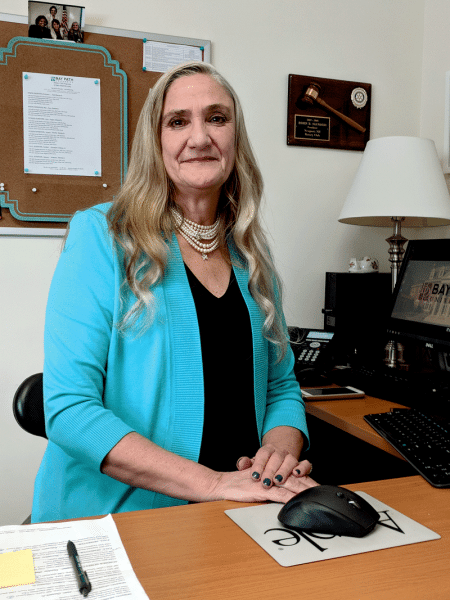
Cover Story Economic Outlook Sections

Experts Don’t Foresee Any Rocking of the Economic Boat

economicoutlookartMore of the same. That’s what the experts are predicting for this region, and the country as a whole, when it comes to the economy. And by more of the same, they mean growth that is steady if unspectacular — even with tax reform — and few if any signs of what could amount to real trouble. “Another boring year,” was how one economist put it. But for many businesses, boring is more than acceptable.

As a student — and a professor — of economics, Bob Nakosteen fully understands that the region and the nation as a whole are, as they say, due for a recession.

Maybe even overdue.

Indeed, eight and a half years is a long time to be in an expansion, if history and especially 20th-century history is any guide, and that’s about the length of the run the country has been on, said Nakosteen, a long-time educator at UMass Amherst who pegged the summer of 2009 as when the Great Recession ended and the upswing — as unspectacular as it has been, for the most part, in this region — began.

But he quickly noted that there’s no actual relationship between how long a country has been in an expansion and when it’s due for a recession. Time isn’t officially one of the factors that determine such things, he noted, adding that none of the issues and indicators that do are — at this moment, at least — pointing toward recession.

Bob Nakosteen

Bob Nakosteen

The issues in the state economy, especially in Western Massachusetts, are not macro-economic nearly as much as they are structurally micro-economic; there are individual sectors that are really struggling.”

“The expansion is old, certainly, but there’s nothing on the horizon to interrupt the expansion,” he told BusinessWest, adding quickly that a host of factors will shape what course a continued expansion takes. “The issues in the state economy, especially in Western Massachusetts, are not macro-economic nearly as much as they are structurally micro-economic; there are individual sectors that are really struggling.”

Karl Petrick, an economics professor at Western New England University, agreed, and summoned another word for what he’s projecting for at least one more year: boring.

Karl Petrick

Karl Petrick

Trickle-down doesn’t really come to fruition the way people say it will. It’s been promised for decades and decades, but it’s never really happened.”

“Unless you were on Twitter, last year was pretty boring,” he said, tongue firmly planted in cheek while focusing his remarks on what was happening in this region economically. And that was essentially the same thing that’s been happening for the past several years — steady if unspectacular growth that amounts to a few percentage points on average and not the kind of boom times that traditionally follow a recession, especially like the one of almost a decade ago now.

“Even with the tax break, the projections are for the U.S. economy to grow at 2.5% in 2018, and in 2019, 2.1%,” he said. “And if we did see a big increase in growth, it’s very likely that that the Fed will raise interest rates to slow down inflation. The forecast is for another boring year — I hope.”

Indeed, for many in business, boring translates into a decent year, and that’s what Tom Senecal, president of Holyoke-based PeoplesBank, said many of his clients — commercial and residential alike — experienced.

He told BusinessWest that the residential real-estate market is enjoying a surge fueled by low inventories, and that many individual sectors are experiencing steady growth. And he expects tax reform to lift most boats still higher.

Tom Senecal

Tom Senecal

Inventory is extremely low in many area communities, and this is having a big impact on prices. We’re going back to seeing sale prices in excess of asking prices, and that hasn’t happened since the late ’80s and early ’90s.”

“With corporate tax rates projected to decrease from 35% to 20%, that will have a significant impact on most businesses,” he went on. “I expect that to be a determining factor in what our local economy will be like in 2018.”

There are other determining factors, obviously, and some areas of concern, both nationally and locally, including persistently stagnant wages.

Despite steady growth in the economy and soaring corporate profits that have fueled a nearly 20% rise on Wall Street this year, wages have remained flat, said Petrick. And he doesn’t believe — despite what leading supporters say — that tax reform will change that equation. And if wages remain stagnant, that might slow the economy down.

“Trickle-down doesn’t really come to fruition the way people say it will,” he explained. “It’s been promised for decades and decades, but it’s never really happened.”

Meanwhile, Nakosteen said the precipitous decline of traditional retail could pose some problems regionally (more on that later), as could a host of other factors ranging from escalating student debt to tighter immigration laws that could keep some foreign students from landing on area college campuses.

But overall, these concerns are not expected to significantly alter the picture or impact those projections for more of what the region has seen over the past several years.

Onward and Upward

“Stable.”

That’s the word Senecal summoned early and often as he talked about the local economy, and it’s another word business owners always like to hear.

He said the region’s economy has historically been fueled by education and healthcare (‘eds and meds’), and that trend continues. And those sectors are, well, stable, to say the least.

“If you think of the spin-off economies in the Western Mass. market, we clearly benefit from those sorts of industries [healthcare and education] that are not recession-proof, but they certainly come through recessionary times much more stable than the rest of the economy,” he said. “And I see this in the numbers from our residential loans and our commercial loans. The stability and continued growth has been there, and we expect it to continue throughout next year.”

Beyond eds and meds, Senecal noted, a number of sectors are doing “pretty well,” as he put it. These include ‘green’ energy businesses, commercial construction (although moreso in the eastern part of the state than this region) and the residential real-estate market, which, as noted earlier, has picked up dramatically over the past few years.

“Inventory is extremely low in many area communities, and this is having a big impact on prices,” he explained. “We’re going back to seeing sale prices in excess of asking prices, and that hasn’t happened since the late ’80s and early ’90s; it’s clearly a seller’s market right now.”

Surveying the scene locally as well as nationally, those we spoke with said there is no indication of anything that will disrupt this stability to any significant degree.

But that doesn’t mean there aren’t some question marks concerning the year ahead. And perhaps the biggest concerns tax reform and what it will mean.

Petrick and Nakosteen said such reforms — usually measures to be administered during a recession, not an expansion — can’t (or shouldn’t) be expected to trigger the wage hikes and subsequent consumer spending predicted by supporters of the legislation, because … well, because history shows this isn’t what happens, they told BusinessWest.

“Tax cuts really have little effect,” said Nakosteen, “especially when the economy is not in recession and is near full employment.”

Also, early and unofficial polling of business leaders indicates that wage increases for their employees are not in their plans.

“Many big corporations have already said that, whatever tax breaks they get, they’ll use them to buy back stock,” Petrick noted. “That will do wonders for the stock market, but there’s no indication they’ll use that tax break to raise wages.”

But Senecal projected that tax reform might, in fact, provide a real boost for the economy in the form of investments made by business owners.

“Tax reform has a significant impact on corporate spending,” he opined. “I think that, right now, a lot of businesses are waiting and seeing on tax reform to determine how aggressive or reserved businesses are going to be come 2018.”

Economic Indicators

As for other factors that might impact the year ahead, to one degree or another, Petrick put wages, and the stagnancy of same, at the top of that list.

“We see growth, but the foundation for continued growth continues to be a little bit shaky, in terms of wages at the national level and the state level,” he told BusinessWest. “They’re just not growing, even as unemployment comes down.

“And that is a bit of conundrum for us at the state level and the federal level, because that puts more pressure of households, especially with uncertainty with what’s going to happen with the individual mandate and how that might impact insurance rates,” he added. “It also impacts state tax revenue, because if wages don’t go up, the state doesn’t collect more.”

There are many reasons why wages are stagnant, he went on, listing everything from soaring health-insurance costs for employers to the decline of labor unions, to the retirement of Baby Boomers and their replacement by younger workers earning lower salaries. But the bottom line is that, generally, flat wages are not good for the economy.

Meanwhile, Nakosteen said the continued decline of traditional retail would further change the local landscape, and it might impact the economy in some ways.

Giant retailers like Sears, Toys R Us, Kmart, and others are closing stores in huge volumes, leaving malls with large boxes to fill (or not, as the case may be) and worries about their very existence. Meanwhile, many smaller retailers are disappearing from the landscape, for reasons ranging from the intrusion of online shopping to a lack of a succession plan.

All this is creating a number of empty storefronts and a lot of commercial real estate for sale and lease, said Nakosteen, adding that the problem is impacting even the most vibrant of downtowns, including Northampton’s, where tenants are asking, ‘why are lease rates so high if so many storefronts are empty?’

“And that’s a very good question,” he said, adding that the higher rates will impact existing retailers and perhaps dissuade others from coming downtown.

But it’s an issue in nearly every area community.

“There are so many empty storefronts,” Nakosteen went on, “and the retail sector is so important to so many downtown areas.”

Meanwhile, workforce issues might also have an impact on the course and strength of the ongoing expansion, he noted, adding that a lack of qualified workers within some sectors might stifle growth.

“The state, as a whole, has issues with the labor force not growing fast enough to accommodate the economy,” he explained. “And Western Mass. is even worse. We have very slow labor growth here; you can’t grow the economy faster than you can hire people to fill the jobs.”

Interest rates could play a role as well, the experts noted, adding that, if the economy does start heating up, the Fed will likely raise rates to keep it from overheating and sending inflation higher.

“Prime rate effects people’s home-equity loans, and it effects commercial borrowers,” Senecal explained. “And if the Fed increases rates two or three times, and that’s clearly their intent, that could have an impact on spending.”

Bottom Line

‘Stable. ‘Boring.’ ‘Steady.’ Those aren’t exactly headline-generating adjectives when we’re talking about the economy and where it might head in the months to come.

But they represent reality, and for many in this region — which, as has been noted countless times in the past, doesn’t enjoy stunning highs and crippling lows like other regions — those words are welcome, and much better than the alternative.

And if tax reform works, as Senecal and others believe it might, the region just might wind up doing better than ‘more of the same.’


George O’Brien can be reached at [email protected]
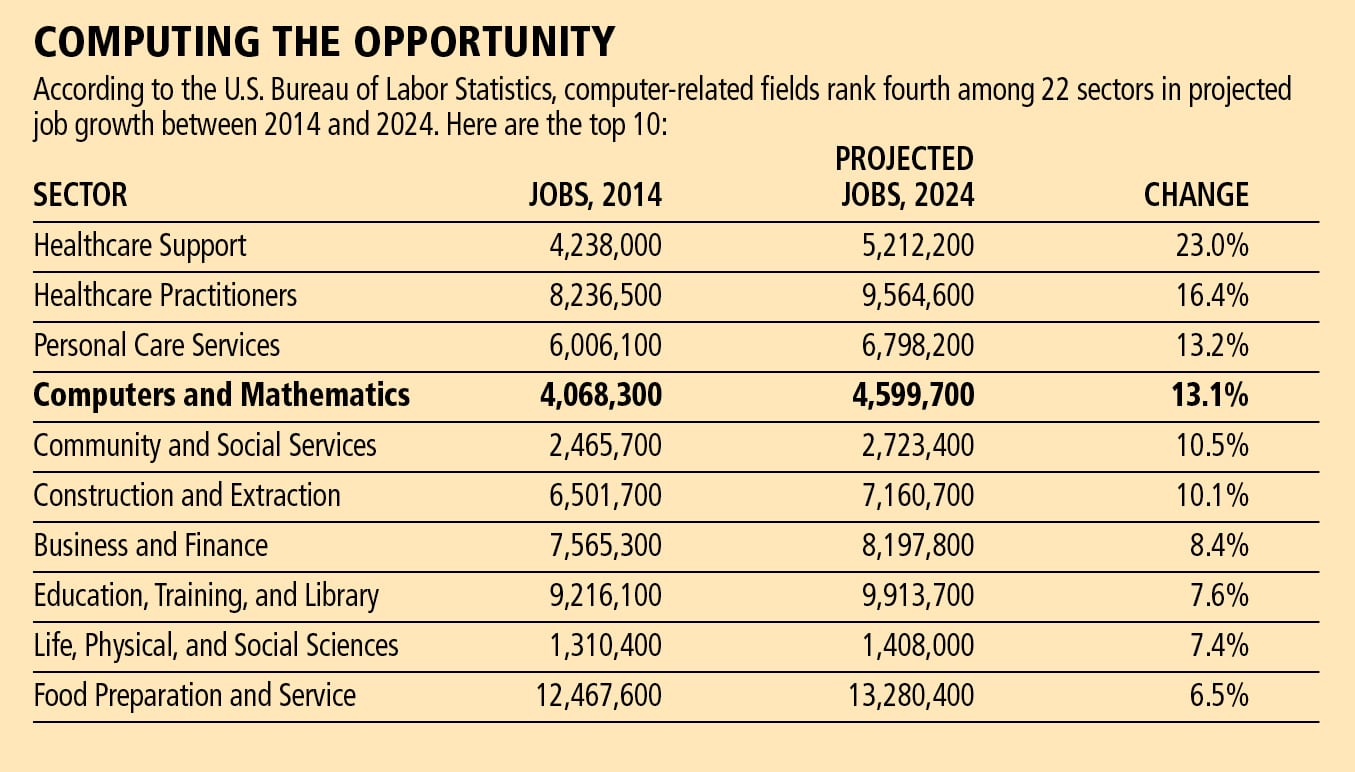
Economic Outlook Sections

On the Bright Side

By Richard Sullivan

Richard Sullivan

Richard Sullivan

The state of the region’s economy is strong, and the economic outlook is bright. That’s a simple statement, but let’s look at the facts that support that optimism.

We all have read of the important investments that MGM and CRRC, the Chinese rail-car manufacturer, are making in Springfield. Less-reported is the some $5.2 billion of economic-development projects that have recently occurred or are currently underway in our region.

In a 2016 study, the Economic Development Council of Western Mass. (EDC) catalogued the growth in each community — from housing developments to manufacturing companies expanding and relocating to the area; from transportation investments to growth in our public and private education systems. That study shows strong and important regional investments, and this trend is continuing.

MGM and CRRC are certainly important regional economic-development projects for the jobs they are creating, the taxes they will pay, and the many public benefits they are required to provide through their host-community agreements. However, the biggest economic impact the projects will have is when they contract with local businesses as part of their operational and supply chains. MGM specifically is using best efforts to annually contract locally for $50 million in goods and services. These dollars will stay local, provide additional economic opportunities, and create more jobs in companies that are part of the fabric of our communities, hiring our neighbors, paying local taxes, and supporting our local charities. It is an opportunity we are capitalizing on, but one that we can’t lose sight of.

Another bright spot within the local economy is tourism. You may think Boston, San Francisco, or New York, but maybe not Western Mass., when it comes to this important sector. However, tourism is the third-largest industry in the region. Approximately 3 million visitors come to the area each year, spending $750 million, producing an estimated $17 million in state and local taxes, and supporting 5000 jobs.

Mary Kay Wydra, president of the Greater Springfield Convention & Visitors Bureau, is bullish on the growth of tourism in Western Mass., with the addition of MGM, the Dr. Seuss Museum, a soon-to-be-refurbished Basketball Hall of Fame, continued investment at Yankee Candle and Six Flags, and more. She is confident that annual visitorship will grow. Tourism is a vital part of our economy and will become even more important beginning in 2018.

Still another source of optimism and good news is the growing amount of entrepreneurial energy in the region.

Indeed, at the recent “State of Entrepreneurship in the Valley,” hosted by Steve Davis and the EDC entrepreneurship committee, the focus was on the growth of a relatively new sector for the region — innovation, startups, and entrepreneurship. In 2015 and 2016 alone, more than 9,000 people attended a Valley Venture Mentors (VVM) event; there are currently 613 part-time and 227 full-time jobs in the startup ecosystem, and just under $27 million of revenue and investment was created in the region. If all the startups were under one roof, they would represent the 11th-largest company in Springfield.

The entrepreneurship ecosystem is growing up and down the Valley. VVM works closely with initiatives in Franklin County and SPARK in Holyoke; our local colleges and universities have all carved out leadership positions; Greentown Labs, based in Somerville, Mass., has opened a manufacturing office at the Scibelli Enterprise Center; and the Grinspoon Entrepreneurship Initiative is a national leader in elevating the importance of entrepreneurship and recognizing entrepreneurial excellence among college students. A new group, Women Innovators & Trailblazers (WIT), is establishing itself in order to ignite a women-led innovation economy in Western Mass. and beyond. This is an exciting and quickly growing sector in the region.

I see additional new sectors growing in the region that can become centers of excellence for Western Mass. This year, UMass Amherst, in cooperation with the EDC, hosted an event highlighting its national leadership position in the field of green technology and the environment. The event was sponsored by the Massachusetts Clean Energy Center and focused on building technologies, water innovation, and clean energy and storage. Companies from across Massachusetts came to discuss the quickly growing green-technology cluster and the partnerships that can be developed between the private sector and the university for research and development, but also talent development.

Bay Path University recently staged its fifth annual Cybersecurity Summit, showcasing the work it is doing in the field of cybersecurity. President Carol Leary, who serves as a member of the Department of Homeland Security’s Academic Advisory Council, said “it is critical for higher education to be a central part of this emerging cyber ecosystem. We are developing the right talent, the diverse talent needed to be a part of the cybersecurity workforce. To the students pursuing a cybersecurity career — you are the future, you are qualified, and we need you more than ever.”

Western Mass., because it is home to a significant number of universities, colleges, community colleges, and technical schools, finds itself in an enviable position because it can supply the workforce of the future.  Still, there is no doubt that the biggest issue facing our existing companies, and the companies of the future, is their ability to find, develop, and retain a high-quality workforce.

We need to coordinate with all the great workforce-development organizations in the region and leverage the high-quality education institutions that call Western Mass. home to meet this demand.

When we do, our future economy will be bright.

Richard Sullivan is president of the Economic Development Council of Western Mass.; [email protected].

Economic Outlook Sections

A Time to Stay on Track

By Nancy Creed

Nancy Creed

Nancy Creed

We might remember 2017 as the year of the much-anticipated reopening of Union Station as a dramatically renovated transportation hub. The more than $90 million renovation additionally created office and retail space, transforming this area of Springfield’s North End. The Innovation Center on Bridge Street welcomed new tenants with continued construction on additional office and retail space, and the new, $11.8 million Mercedes-Benz of Springfield dealership opened in Chicopee.

This past year was also one during which many projects made significant progress toward their anticipated 2018 completion dates.

Awaiting us in 2018 is a mix of opportunities and challenges. Springfield and the region have been experiencing unprecedented growth in the last couple of years. While 2018 is the year in which we will see the finishing touches put on some major projects and programs, we are also faced with the uncertainty and potential effects of healthcare, tax reform, and ballot initiatives which could impact all of us.

On the growth side, the I-91 viaduct construction is ahead of schedule, with the highway expected to be in full use by February; production of MBTA subway cars at the new 204,000-square-foot, $95 million CRCC rail-car factory off I-291 in East Springfield will kick off in 2018; and the much anticipated opening of the $950 million MGM resort casino is on track for a late-2018 opening.

There is also opportunity to help small businesses grow and prosper. The city of Springfield has launched “Rise Up Springfield,” an innovative collaboration between the city, the Assoc. of Black Business & Professionals, and the Springfield Regional Chamber. Powered by Boston-based Interise’s award-winning StreetWise MBA curriculum, this seven-month, intensive, hands-on program provides the knowledge and know-how business owners need to create and manage a three-year strategic business plan. This a key opportunity for the city to capitalize on the entrepreneurial spirit of the region and to encourage our smaller, less-established businesses get to the next level in their growth.

Advocates of a ballot question are pushing for an additional income tax on those making above a certain income threshold in order to fund some of the areas I mentioned above. However, other states have taken a similar approach, which only resulted in businesses relocating to lower-tax jurisdictions. At its core, this proposal is bad for business. Why would we tax talent — our state’s principal competitive advantage.”

While we are encouraged and excited about growth in the region, our business community will face some significant challenges in the coming year. Healthcare continues to remain of grave concern. Costs continue to rise at uncontrollable rates, not only impacting the bottom lines of our businesses, but crippling the state budget. With 40% of the state budget allocated to MassHealth, there is virtually no room for additional funding in critical areas such as education, transportation, and local aid.

Advocates of a ballot question are pushing for an additional income tax on those making above a certain income threshold in order to fund some of the areas I mentioned above. However, other states have taken a similar approach, which only resulted in businesses relocating to lower-tax jurisdictions. At its core, this proposal is bad for business. Why would we tax talent — our state’s principal competitive advantage?

Another ballot question that we could be faced with is one that provides for paid family and medical leave. Not only does our business community understand the value of fringe benefits and attracting and retaining the top talent, but they want to do the right thing for their employees. Those businesses that are financially able to offer ‘above and beyond’ benefits do so, but not every small business is in a position to compete with the benefits offered by a Fortune 100 company.

The ballot question as proposed would require employers of any size to offer paid leave at a rate of 90% of an employee’s wages. It is estimated that this would have a $1 billion financial impact across the Commonwealth.

There is one other ballot question we could be faced with come November 2018 — an increase in the minimum wage, to $15 an hour by 2022. A back-of-the-napkin calculation estimates this to be an increase of 25% to a company’s salaries/wages line item. Again, while the business community wants to do the right thing, it comes at a cost to the competitiveness of our state.

While we are optimistic about our growth, we are concerned about what lies ahead that could derail that growth. We are concerned for our business community here in Western Mass., but equally concerned as to what the impact could be across the state, on the Commonwealth’s fiscal health, on attracting new growth, on remaining competitive with our neighboring states and across the country, and on ensuring Massachusetts and our region remain at the forefront of innovation.

Throughout the chamber’s 127-year history, we have worked to encourage and facilitate economic growth. We have faced and weathered challenges and advocated on behalf of the region’s businesses. Our mission will continue in 2018 and beyond, as we support and collaborate with regional businesses and advocate for them at the local, state, and federal levels and work to ensure our continued growth is not stunted.

Nancy Creed is executive director of the Springfield Regional Chamber of Commerce; (413) 755-1309.

Sections Travel and Tourism

‘Time to Step Forward’

An architect’s rendering of the renovated lobby area at the Hall

An architect’s rendering of the renovated lobby area at the Hall, complete with lockers bearing the names of some of the game’s greats.

The Naismith Memorial Basketball Hall of Fame will soon commence work on an ambitious, $15 million renovation and expansion that will dramatically change the look and feel of the shrine. While the project represents the future, it also speaks loudly to just how far the Hall has come since the dark days — and years — earlier this century.

John Doleva calls it a “spaceship.”

That’s what he and others at the Naismith Memorial Basketball Hall of Fame have come to call the individual lights that sit atop the dome that defines the shrine on West Columbus Avenue and change color with the seasons and the occasions.

That’s because they look like one, at least that ’50s sci-fi-movie take on what a spaceship looks like, a flat, roundish base with a circular bubble on top. There are 860 of these lights affixed to the dome, and maybe a quarter of them are in a condition approximating that of the one that Doleva has in his office — cracked, with the seals damaged, allowing water to get in and cause serious trouble.

This is the same ‘spaceship’ he takes with him when he talks to gatherings large and small about the planned $15 million to $16 million renovation of the hoop Hall. That’s because these fixtures will be removed and replaced with projection lighting that is, well, light years ahead of the old bulbs in terms of what can be done with the surface of the giant sphere.

“You can do incredible things with projection lighting,” said Doleva. “It will give us so much variability it terms of bringing the building alive, and the maintenance is so much easier.”

But the lights are really just a small, though highly visible, part of the ambitious undertaking at the Hall, noted Doleva, its president for nearly two decades now. Indeed, he said the current facility, opened in 2003, was designed and built just before digital technology was about to explode and change forever the way information is presented and stories, like those of the hall’s inductees and of the history of the game itself, are told.

John Doleva

John Doleva holds up one of the ‘spaceships’ that are soon to be history at the Hall.

“We have a lot of printed word here — exhibits that don’t necessarily interact and entertain, especially when you’re talking to a 12- or a 14- or a 17-year old,” he explained. “With the advent of all the digital content that’s out there now, we can bring Hall of Famers alive, and that’s what we intend to do; instead of a plaque on a wall and two and a half paragraphs of information, we’re going to bring James Naismith alive; we’re going to bring Bob Cousy alive.”

The renovation project will take part in two stages, with the dome lighting, a main lobby area overhaul, and significant renovation of the Hall’s theater comprising stage one. Work on it will start next month (the museum will remain open during construction), and it will all be finished in June, a few important months before MGM Springfield opens its doors in September 2018.

Phase two involves a substantial overhaul of the museum itself, what’s under the dome, said Doleva, noting that state-of-the-art, digitized presentations are currently being blueprinted. Phase two is slated to begin in January 2020, to be finished six months later, with the museum obviously closed for those six months.

And while this project and the campaign that will fund it — called “A Time to Step Forward” — represent the future of the Hall, they also embody just how far it has come in the years since the current building was put on the proverbial drawing board roughly two decades ago.

Indeed, the existing facility was built without a considerable amount of support from what Doleva collectively calls the “basketball community,” and it was opened with a large amount of debt that left the Hall in precarious financial condition for a number of years.

It has ridden out that storm, if you will, and has regrouped on many levels. The Hall has forged much stronger relationships with that basketball community and its many subcomponents, including inductees themselves (as we’ll see), and, as a result, the capital campaign has far exceeded initial expectations. Because of this, goals have been recalibrated.

“The initial goal of the campaign, $20 million, has been exceeded, and it now stands at $26 million,” said Doleva, adding that more than 90% of this total comes from the basketball community. A new goal of $30 million has been established, he went on, to not only fund the renovations to the galleries and visitor area, but also adequately fund an endowment.

For this issue and its focus on travel and tourism, BusinessWest takes an in-depth look at the Hall’s renovation project, and also at the forces that have made it — and a much more secure future for this Springfield landmark — possible.

Net Gains

There are a great deal of numbers associated with the Hall’s renovation project, its capital campaign, and its comeback from those dark years after the new shrine was opened 14 years ago.

And while all of them are significant, from the number of lights to be taken out to the projections on increased visitation — from the improvements, MGM’s opening, and other factors — maybe the place to start is with the number 5.

That’s how many of the Hall’s previous inductees turned out for the enshrinement ceremonies in 2000. (Actually, eight committed to come, and three of them backed out). And in many respects, Hall officials were lucky the number was that high.

That’s because the Hall didn’t pay to fly any of those inductees in, didn’t pay for their hotel rooms, and didn’t pay for anything, really, except their admission to the show — largely because it couldn’t afford to do so.

“We quickly concluded that, if we don’t have Hall of Famers on our side, if they’re not our ambassadors across the country and around the world, then we really don’t have a Hall of Fame,” said Doleva, adding that the Hall now pays such expenses, and the results of such a sea change have been dramatic.

Fast-forward to this past September, and there were 65 former inductees in attendance, a number that certainly helps explain the large number of autograph collectors camping out in front of the downtown Springfield hotels.

These Hall of Famers are now truly ambassadors, said Scott Zuffelato, vice president of Philanthropy for the Hall, adding that they regularly make appearances at Hall-produced events such as fund-raising golf tournaments and basketball events.

“They’ve become our foot soldiers,” he explained. “And this stronger relationship with the Hall of Famers has led us to stronger relationships with others in basketball as well, such as college coaches who take part in our events, and the NBA as well.”

And these improved, much stronger relations, resulting in part from getting coaches and officials in pro and college basketball more engaged in the Hall at many levels, has helped the institution secure a higher placed within the game, Doleva told BusinessWest.

Scott Zuffelato says the Hall has strengthened relationships

Scott Zuffelato says the Hall has strengthened relationships with many constituencies within the basketball community, including the Hall of Famers themselves, which is reflected in giving for the current capital campaign.

“We took the organization from a museum in Springfield where the game was invented,” he said, “to a global basketball brand with the mothership located in Springfield.”

This transformation, if you will, has certainly played a huge role in the enormous — and ongoing — success of the Hall’s capital campaign, which was launched more than two and a half years ago. Those who originally met to plan it did so with the initial mission of retiring lingering debt from construction of the new Hall at the start of this century — the roughly $2 million left from an original figure that approached $12 million.

But soon, the vision — and the campaign — took on new meaning.

“It soon became clear that we had a grander plan — and that was to redo the museum and bring it into the 21st century to again be the world’s finest sports museum,” said Doleva, adding that the campaign will raise far more than is needed for the planned renovations, which will enable the Hall to undertake those projects in a manner that couldn’t have been imagined back in 2000: by paying cash.

“The original goal was $21 million, and we saw that as a big challenge based on where we had been with the 2000 campaign,” he went on. “But very quickly, probably within 14 or 15 months, we hit $21 million. And like any good organization, with so many asks that were out there and so many opportunities that hadn’t been harvested, we decided to raise it to $30 million.”

As noted, the basketball community has responded to the Hall’s bid to step forward in a big way. The donor list is replete with the names of players, coaches, executives, and contributors to the game in various ways.

Zuffelato credited Jerry Colangelo, the Hall’s chairman, former owner of the NBA’s Phoenix Suns and WNBA’s Phoenix Mercury, and currently a special adviser to the NBA’s Philadelphia 76ers, with inspiring many within the basketball community to give to the campaign.

Imagination on Display

What those traveling to the renovated Hall will encounter is a more modern, more visitor-friendly facility and museum that tells stories on a number of levels — both literally and figuratively.

Indeed, the renovated ground-floor lobby, the entry point for visitors, will feature a new, far less imposing ticket area (Doleva has a name for that, too — the ‘tugboat’ — and, more importantly, a number of new displays and attractions.

Overall, the lobby work, a significant portion of phase one, isn’t an expansion in the technical sense, said Doleva. Rather, it is a concerted effort to capture and make much better use of existing space in the lobby area.

“That concourse could really be any retail mall in America — when you walk into it, you don’t know that you’re in the Basketball Hall of Fame; you wouldn’t know until you look through the glass,” he said, adding that the renovations will make it clear to visitors just where they are. “This will be a very high-energy area.”

It will be dominated, he went on, by lockers bearing the names of some of the game’s greats, including Michael Jordan, Larry Bird, Grant Hill, Jerry West, and others, who have donated to the capital campaign. These lockers — there are 16 planned, with the ability to expand to 24 — will highlight not only achievements on the court, but the work done by these players within their community.

Meanwhile, a renovated theater in the lobby area, complete with digital technology, surround sound, and an actual stage, will play a more prominent role in the typical Hall visit — and in the Hall’s operations in general.

“Many people don’t know there’s a theater there,” he said. One reason for this, he noted, is that the Hall has never had what he and others in this business call a “signature film” to show to visitors upon their arrival. But it will have one soon, and Doleva said this work in progress will set the emotional tone for one’s visit.

As for the museum, it will see all its galleries renovated and modernized. Doleva explained that such work is necessary not only to keep pace with other museums and sports halls, but to set a new, higher bar.

“We want to present Bob Cousy in a way that will enable people in their teens or 20s to know who he was, and know who Oscar Robertson was, or Kareem,” he explained. “We want to make sure we celebrate all the Hall of Famers, whether they played in recent times or way back; we want to make sure they get their fair share of digital education to the fans.”

Another key addition to the Hall’s lineup, if you will, is the 1891 Gallery, so named because that’s the year James Naismith invented the game.

The gallery will provide area companies that donate specified amounts to the campaign with an opportunity to gain visibility in that space, a company statement that links Naismith’s core values to their company’s values, and a host of other benefits.

Many area businesses have already signed on, including MassMutual, Balise Auto Group, Excel Dryer, Florence Savings Bank, the Chicopee Savings Foundation, and the Davis Foundation.

These renovation project, coupled with MGM’s opening and other forms of momentum at the Hall and across Springfield, are inspiring Hall officials to set some ambitious goals for visitorship — for 2018, and especially for 2020 and beyond.

“I would expect a 20% to 25% increase in attendance,” said Doleva, adding that MGM should have a huge influence on the facility simply by introducing it to people who may not have known it was there.

Court of Opinion

The name affixed to the capital campaign — “It’s Time to Step Forward” is simple, yet has meaning on a number of levels.

On one of them, it speaks to potential donors, inviting them to step forward and play a role in modernizing a Springfield landmark and helping it secure a solid future in a way it never really has.

On another, that name speaks directly to what the Hall is doing — stepping forward — in terms of everything from building a facility truly worthy of the phrase ‘state of the art’ to forging stronger, long-lasting relationships with the basketball community.

These are, indeed, big steps forward, and, to borrow a phrase from the game itself, they comprise a winning formula for years and decades to come.

George O’Brien can be reached at [email protected]

Features

Impact Hire

Jim Ayres

Jim Ayres

Jim Ayres, who took the helm at the United Way of Pioneer Valley this past spring, arrived knowing he would be leading the organization through a time of significant change and challenge. His elaborate to-do list includes efforts to increase efficiency, do a better job of telling the United Way’s story to the younger people who probably don’t know it, and continuing the work of building coalitions to take on the many issues confronting the region’s communities and families.

There’s an old map hanging on the wall just inside the door to Jim Ayres’ office within the United Way of Pioneer Valley’s suite at the TD Bank building.

One of many he owns, it depicts Hampden and Hampshire counties and the areas just outside them, which means it covers the territories served by his last two employers — the United Way of Hampshire County was the other.

There’s no visible date on the map, but there are plenty of clues as to how old it may be. For starters, Dana, one of four towns disincorporated in 1938 to make way for the Quabbin Reservoir, is on the map. (Greenwich, Prescott, and Enfield were the others). Also, Holyoke takes what’s known to some as its ‘old’ shape, meaning the one before the area in Northampton known as Smith’s Ferry (that finger-shaped sliver of land so recognizable on today’s maps) became part of the city in 1909.

The map drives home the point that changes to the region’s landscape came about slowly, over several decades.

And that is in sharp contrast, in most respects, to the changes in the landscape for the United Way as a whole, the two that serve the region on the map, and the one based in Springfield in particular.

Indeed, that suite of offices downtown is roughly half the size it was just a few years ago (the Springfield Symphony Orchestra now occupies the other half), and the group working there is also about half the size it was not long ago. And most importantly, its annual fund — the amount it puts to work in the communities it serves — is about half as big (roughly $2 million) as it was.

A decision by MassMutual to no longer run a traditional United Way campaign and instead contribute to groups serving the community through its own foundation played a huge role in those developments, but other factors have contributed as well.

These include everything from changes in the demographic breakdown of the region’s business community (there are far fewer large employers now) to changes in how businesses of all sizes give back to the community — there’s more direct giving now, and also a host of new vehicles such as Valley Gives Day and individual foundations like the one at MassMutual.

“United Ways are in a place where technology, giving practices, and general educational changes have all changed the work that we need to do,” Ayres explained. “And while for a long period of time United Way was a household name and people widely understood what United Ways did, a lot of that has changed.

“There are a lot of other options now for people to give to support organizations in their community,” he went on. “It really behooves our organization to make the case as clearly as possible about what we do and the benefits of giving through this particular option.”

All this adds up to a serious, complicated, even painful period of adjustment that is very much ongoing, said Ayres, who last spring took on the job of leading those efforts for the UWPV.

He did so for a number of reasons, including the fact that he isn’t daunted by stern challenges; in fact, he’s always embraced them. Also, though, he believes he possesses the proper skill set for the multi-faceted task at hand, including the ability to build coalitions, strong communication skills — both within an organization and externally as well — and even achieving success in a region dominated by small (make that very small) businesses, Hampshire County. He also has an MBA, one focused on nonprofit management, and another degree in international relations focused on migration issues.

There are a lot of other options now for people to give to support organizations in their community. It really behooves our organization to make the case as clearly as possible about what we do and the benefits of giving through this particular option.”

“My career in Western Mass. has been about bringing people together in communities to make communities a better place to live and a better place for kids to grow up,” he explained.

Ayres said this adjustment period for the UWPV involves a number of initiatives, from work to become leaner and more efficient to efforts to better tell the agency’s story and relate its still-substantial role in bettering life for residents of area communities, to initiatives that go well beyond merely writing checks.

For this issue, BusinessWest talked at length with Ayres about his new assignment with the United Way of Pioneer Valley, and also about the changing landscape for the United Way and philanthropy in general, and how organizations like the one he now leads must adjust to those changes.

Change Agent

As noted earlier, Ayres brings a diverse skill set to his current role, one amassed through nearly 30 years of work in education and nonprofit management, realms he says have more similarities than most would believe.

A graduate of Hampshire College, where he concentrated in “political and social issues in education,” he started his career in Boston’s Chinatown and surrounding neighborhoods as co-director and lead classroom teacher for the Boston Catholic Chinese Community Children’s Program.

After relocating to Western Mass., he went to work for the Springfield Public Schools, specifically as education summit coordinator and ‘community involvement coordinator.’ In that role, he said, he built effective coalitions between the school system and community stakeholder groups, including neighborhood associations, human-services providers, parent groups, communities of color, and private industry.

From there, he went to work for the Hampshire County Action Commission, serving as project director of the Hampshire County Family Network. In that role, he developed and administered a multi-agency collaborative that provided comprehensive services for families and children. Later, he became executive director of the Northampton-based Center for New Americans, a regional education, advocacy, and resource center for immigrants and refugees in Western Mass.

uw_4p_ful_pioneervalley_v3

His career with the United Way began in 2011, when he became CEO and executive director of the Hampshire County agency. During his tenure there, he was credited with energizing the organization and expanding the donor base, funding diversity, and overall revenue at a time when most United Ways were going in the other direction.

“I had worked in individual organizations, but had been very interested in addressing challenges from a strategic level and from a macro level,” he noted while explaining why he joined the national organization. “And United Ways are organizations very well-suited to do that; we have relationships with the nonprofit service community, and we have relationships throughout the business community and with individuals as well. And United Ways are uniquely positioned to pull those assets together to make a difference, so I was excited to join the United Way and do that work.”

His track record of success in Hampshire County certainly caught the attention of UWPV’s board as it went about the task of finding a successor to the retiring Dora Robinson, and Ayres came on board late last spring.

Since then, he’s been focused on what he called “structural changes,” a broad term used to describe efforts to enable the agency to operate as efficiently as possible while still carrying out its multi-dimensional mission, shore up relationships with existing businesses, and develop ways to recover the donations lost from MassMutual’s decision.

At the same time, he and the agency continue to proactively adjust to that changing landscape described earlier, he said, adding that both assignments obviously constitute work in progress.

As he talked about the assignment he’s assumed — and the situation facing all United Ways across the country — Ayers said the challenges come on many levels, including one that Baby Boomers probably couldn’t fathom — name recognition and awareness.

Indeed, while those who grew up decades ago are well-versed when it comes to the United Way name, mission, and even some of the controversies that have enveloped the agency over the years, Millennials are far less familiar with the organization — and the concept.

“We’re finding more and more young people we approach either in the workplace or in the community who are very open to the idea to the idea of supporting the United Way, but haven’t necessarily heard of it before,” he said. “Or, if they have heard of it, they aren’t necessarily familiar with what it is that the United Way was created to do. So introducing ourselves, or re-introducing ourselves, is very important.”

And in that respect, the United Way has dropped the ball, or at least taken its eye off it, he went on, adding that, in many ways, it failed to realize these generational differences.

“A lot of United Ways didn’t recognize the degree to which generational changes were going to impact our work and have wound up playing catch-up,” he explained, adding that this was a challenge to most all United Ways, including the UWPV.

Forward Progress

Another challenge, obviously, is to maintain the ability to stand out amid the many other ways that individuals and businesses can contribute to nonprofits and causes.

“The history of United Way, and a piece of where we see our impact, is allowing people to give easily through payroll deduction — giving where they work,” he told BusinessWest. “And giving with the trust to know that the dollars they give will have a long and lasting impact. Part of the power of United Ways come from our ability to aggregate those gifts; so, even though roughly 40% of the gifts we receive are from people giving between $1 and $4 per paycheck, we’re able to aggregate those into significant-size grants that really change the capacity of the organizations we work with.”

A lot of United Ways didn’t recognize the degree to which generational changes were going to impact our work and have wound up playing catch-up.”

Overall, the United Way and individual chapters like the UWPV have to do a better job of telling their story, said Ayres, adding that this is just one of the subjects discussed at the regular gatherings of United Way officials.

Part of this ‘telling the story better’ involves making it clear the many ways in which this is still your father’s, or your mother’s, United Way, but one that nonetheless has changed with the times. And these discussions focus on everything from a more results-driven approach to the agency’s giving to the ways it goes beyond awarding grants, to its ongoing ability to bring groups together to tackle larger problems that require such coalition-building efforts.

And Ayres had specific thoughts on all of the above, starting with the coalition-building work, which, he said, is essentially the essence of the United Way.

“This organization is based on the idea that, to create a meaningful and lasting impact in our community, very few of us have the resources, the time, or the volunteer hours to do that on our own,” he said. “But if our businesses, our employees, and our neighbors are able to come together and work on challenging problems together, we’re able to have a much stronger impact than we would alone.”

And this operating philosophy is being put to work, and to the test, with efforts to assist those who have left hurricane-ravaged Puerto Rico for communities in Western Mass.

“Many of the funders in Hampden County have been asking the question, ‘what can we do to support those individuals, and what can we do help the organizations that are going to helping those displaced people coming in, and what can we do to shore up the core functions that those organizations already provide so they don’t have to pivot away from their core services?’” he said. “So United Way convened a core group of eight or nine foundations and funding organizations to look at how we can use our dollars collaboratively.”

A fund has been established by the United Way to provide grants to the welcome centers that are assisting those displaced by the hurricane, he went on, adding that this is just one example of the agency’s coalition-building powers, and also an example of how it can and does go well beyond the traditional payroll-deduction method of raising funds for specific causes.

“This was a case of philanthropic organizations putting our heads together and saying, ‘how can we be stronger?’” he went on, adding that, moving forward, the United Way will playing even more of a convening role, as he called it, because this is one of its greatest strengths.

Mapping Out a Course

Getting back to that map on Ayres’ wall, it does a good job of driving home the point that time doesn’t stand still.

Dana, Prescott, Greenwich, and Enfield were erased from the map almost 70 years ago. And the Smith’s Ferry area has played a huge role in Holyoke’s history.

Time doesn’t stand still for the United Way, either. Thus, it is incumbent upon the organization to change with those times in order to be relevant and continue to carry out its important work.

It doesn’t say as much on Ayres’ job description, but that’s essentially what he was hired to do.

And he believes he’s in the right place at the right time.

George O’Brien can be reached at [email protected]
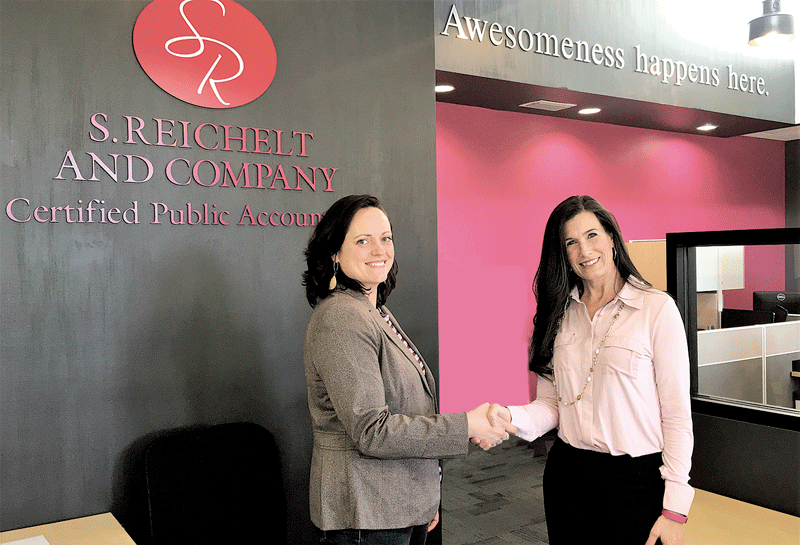
Sections Travel and Tourism

Happy Trails

A Ski Butternut instructor

A Ski Butternut instructor — one of many who teach lessons for a wide range of ability levels — helps a youngster improve on the slopes.

When operating in a competitive industry with far fewer customers than it boasted a few decades ago, expanding one’s operations carries some risk.

But Ski Butternut believes the niche it has carved out in Great Barrington — a moderately sized mountain that focuses on a family environment and boasts a robust learn-to-ski program — will translate well about 25 miles to the east, which is why it purchased the Blandford Ski Area earlier this fall and rechristened it Ski Blandford.

“It has a long history and a rich tradition; it’s been there since 1936,” said Dillon Mahon, Ski Butternut’s marketing director. “It’s also close to a large population in Springfield, and we’re hoping to attract quite a few people from that area.”

The Blandford resort, which has been owned by the Springfield Ski Club for the past 81 years, has struggled with declines in memberships and visits, and decided in July to sell the property to Ski Butternut owner Jeff Murdoch for $269,000.

“We purchased what was basically a private ski club,” Mahon said. “They didn’t advertise it, and a lot of people didn’t know it was there. We’re reopening it this year and making a lot of improvements, from renovating the lodges to upgrading snow-making equipment and grooming equipment.”

Also important, he added, is spreading the word that Ski Blandford will represent what Butternut does: a place that welcomes families and beginners and helps them navigate the world of skiing and snowboarding — and convinces them to keep coming back. Ski Blandford’s website has been redesigned in the style of the Ski Butternut site — only with less expensive pricing to persuade mountain enthusiasts to give the facility a try.

“It’s a great family atmosphere on a good-sized mountain close to home,” Mahon said, again touching on the emphasis that has kept Ski Butternut successful.

“That’s been a big part of why we’re successful,” he went on. “Butternut focuses on a family atmosphere and on learning, bringing people into the sport. It’s kind of a startup mountain that gives people great service. The ski school here is large and can accommodate large amounts of children and adults. Learn-to-ski weekends made Butternut successful, and it’s something we plan to mirror at Blandford as well.”

The First Time

It’s a critical element, he said, to bringing in new blood at a time when the popularity of skiing has been experiencing a slow decline. In a one-year period from early 2008 to early 2009, 11.24 million Americans took to the slopes, according to industry sources. Eight years later — from the spring of 2016 to early 2017 — the number was 9.78 million. And snowboarding has seen an even more precipitous fall.

That’s when people think about skiing. I can send people e-mails and Facebook posts all day, but when a fresh bunch of snow is on their doorstep, that changes people’s mindset toward skiing.”

One reason is that what’s known as the conversion rate, or the percentage of first-timers who embrace the slopes and return for more, currently stands at around 15% nationally. Mahon said Ski Butternut has made a conscious effort to boost it.

“There are a lot of barriers to entry,” he told BusinessWest. “We as a resort are trying to knock down those barriers, to make it a more accessible sport, make it easier for people to get into the sport.”

For instance, the resort has long offered a one-day beginner’s package that includes access to the milder hills, a group lesson, and equipment rentals, all for $75. After that, an all-mountain pass with a group lesson and rentals costs between $75 and $100, depending on age.

“We’ve had a lot of success bundling those offerings for beginners, giving them a smaller piece to bite off that might be more digestable than a season-long rental and saying ‘good luck,’ Mahon said.

For its part, Ski Blandford is rolling out beginner packages for between $70 and $80, and all-mountain packages of lift ticket, rentals, and lesson for between $70 and $85, depending on the day of the week — slightly less than at Butternut.

“For us as an industry, and especially at Butternut and soon at Blandford, that’s part of our overall strategy to attract more skiers as opposed to putting up more barriers,” he went on. “Basically, we want to hold their hand as they learn to ski and make it a better experience for them. When people try skiing for the first time, it’s hard. How do you choose equipment? How do you ride a lift? We’re doing our best to break down those barriers and make it affordable for beginners.”

After that, well, the challenge is getting visitors to come back. Several years ago, Ski Butternut undertook an extensive upgrade of its snow-making system to guarantee ski-worthy conditions no matter what kind of winter New England experiences.

“We’re open with or without Mother Nature’s cooperation. That’s the way things go,” Mahon said. “We have great snow-making equipment, and we’ll be updating with the equivalent at Blandford as well — more guns, higher capacity. We’re open hell or high water.”

That said, “it also helps quite a bit to get a bunch of snow,” he conceded. “That’s when people think about skiing. I can send people e-mails and Facebook posts all day, but when a fresh bunch of snow is on their doorstep, that changes people’s mindset toward skiing.”

The typical season brings well over 100 inches of snow, but some are drier. Even in those years, typically the weather will remain cold enough to consistently manufacture snow. Temperatures below 26 degrees are ideal for making snow, because the water that emerges from the nozzles in tiny droplets are almost instantly supercooled to create the best-quality snow.

Beyond the Slopes

Ski Butternut has also done well with its non-skiing activities, such as its popular tubing park, complete with a mechanized lift to keep riders energized for their two-hour sessions.

“Tubing is a different market in some ways,” Mahon said. “Everyone likes tubing, while not everyone skis. So it’s great for families with little kids — something to do for a quick day out.”

Meanwhile, the event calendar features plenty of activities, from race events to wine and beer tastings; from Saturday concerts on the lodge deck to a ‘ski and paint’ day on Jan. 28, which is exactly what it sounds like. In the summer, the mountain stays open to hikers and outdoor enthusiasts, and the resort is also the site of the annual Berkshires Arts Festival.

“Some of these events aren’t necessarily skiing-based events,” he noted. “We want to draw on the local community and give people a good experience so they keep showing up.”

He and the ownership team at Butternut hope for the same at Ski Blandford, which is why Murdoch is investing in painting the lodges, upgrading snow guns and grooming equipment, and, in general, letting people know the resort is on the way back.

“We’re making a lot of improvements over the next couple of years,” Mahon said. “It’s going to get better and better.”

Joseph Bednar can be reached at [email protected]

Community Spotlight Features

Community Spotlight

Karl Stinehart (left) and Doug Moglin

Karl Stinehart (left) and Doug Moglin say Southwick is an ideal spot to live, work, and play, with plenty of opportunties for all three.

Many communities, Doug Moglin notes, tout themselves as a great place to live, or an ideal spot to do business, or a haven for recreation.

“But we have all three,” said the chair of Southwick’s Board of Selectmen. “I’m one of those people who do all three in town, and we still have room for more of all those things.”

On the residential front, for example, work continues on 26 homes at the new Noble Steed subdivision off Vining Hill Road. Meanwhile, the Southwick Country Club site is being sold to Fiore Realty, which intends to develop more homes and perhaps some mixed-use properties along College Highway.

Golf enthusiasts in town shouldn’t fret, though, said Karl Stinehart, the town’s chief administrative officer, noting that Southwick boasts three other golf courses, including the PGA-level track at the Ranch. The community’s recreational offerings run far deeper than that, actually, from the Congamond Lakes and the boating opportunities there to a fully developed rail trail; from motocross events at the Wick 338 to the 66-acre Whalley Park.

Southwick at a glance

Year Incorporated: 1770
Population: 9,502
Area: 31.7 square miles
County: Hampden
Residential Tax Rate: $17.50
Commercial Tax Rate: $17.50
Median Household Income: $52,296
Family Household Income: $64,456
Type of Government: Open Town Meeting; Board of Selectmen
Largest Employers: Big Y; Whalley Computer Associates; Southwick Regional School District
*Latest information available

On the business front, meanwhile, the town’s industrial park continues to thrive with its mix of high-tech, light-industrial, and other types of firms, while a series of major infrastructure projects ease the path for motorists seeking out those aforementioned opportunities to live, work, and play in this community of just under 10,000 residents.

“It’s just a great place,” said Stinehart, Southwick’s chief administrative officer. “People who live in our community have all the right pieces — access to recreational opportunities, good schools, business, and commerce. We also have the ability to have more capacity — more business and commerce here.”

And plenty more fun.

Great Outdoors

Indeed, Southwick has long prided itself on its recreational opportunities, and they have only grown in prominence over the past several years.

Take the lakes on the south side of town — featuring two boat ramps, a fishing pier, and a town beach — which provide an array of activity for residents. A planned $275,000 project will renovate the south boat ramp on Berkshire Avenue, and the beachfront was recently renovated as well.

Ongoing efforts to preserve open space nearby are also gaining ground, as the town hopes to acquire a 144-acre parcel for sale on North Pond at Congamond Lakes. The Mass. Department of Fisheries and Wildlife awarded Southwick money to help purchase it, and the Franklin Land Trust has embarked on a fund-raising effort to make up the difference in price. The parcel is abutted by two areas owned by the Commonwealth of Massachusetts and the state of Connecticut.

Outdoors enthusiasts can also enjoy access to the natural scenery of the Metacomet/Monadnock Trail, as well as a 6.5-mile-long linear park, or rail trail, that runs through town, from the Westfield border to the Suffield border. “It gets a ton of use on weekends during spring, summer, and fall — even the winter, before the snow flies,” Moglin noted.

Bikers can park in a number of spots along the trail to start their ride, and, in fact, expanding parking is one of the challenges the town is studying, he added. But the fact that the trail skirts close to several commercial areas of town is a benefit to stores and restaurants when bikers take a break to enjoy a meal or shopping.

People who live in our community have all the right pieces — access to recreational opportunities, good schools, business, and commerce. We also have the ability to have more capacity — more business and commerce here.”

“People can take advantage of these businesses,” Stinehart said. “I often see people riding off the trail to make use of these commercial areas.”

The Wick 338, the motocross track behind the American Legion, is another major draw. “They’ve put a lot of investment into the track, which abuts the Southwick Recreation Center and Whalley Park, so the spinoff benefits are significant,” Stinehart said.

The complex hosts the annual Lucas Oil Pro Motocross Championship — which is broadcast live on NBC and draws close to 20,000 people to town — as well as a host of other events, including Rugged Maniac New England, a challenging, mud-splattered 5K obstacle course.

“People of varying levels of capability can do that, from people who can do it in 20 minutes to those who take four hours — we’re somewhere in the middle,” Stinehart said with a laugh and a nod to Moglin.

The selectman agreed, again noting that more than 10,000 people may show up. “That’s an economic driver as well as a great recreational opportunity.”

As for Whalley Park — which was donated to the town by the prominent Whalley family and developed using municipal and Community Preservation Act funds — it includes a full-size soccer field, baseball field, and softball field, lighting for the fields, a huge kids’ play area, and a pavilion.

On the Right Road

Speaking of kids, a recent $69 million project was completed two years ago at the complex on Feeding Hills Road that houses Woodland Elementary School, Powder Mill Middle School, and Southwick Regional School, all of which enjoyed additions and renovations.

Meanwhile, the town just finished the total reconstruction of a half-mile stretch of Route 57 that runs by the school complex, including new turn lanes, synchronized signals, drainage, and road widening. That’s important, Moglin said, because businesses access the road from the industrial park, and parents and bus drivers appreciate the safety upgrades where the school lots dump out onto 57. “It makes for improved public safety and better flow of people and goods.”

It’s not a standalone project; stretches of College Highway, or Routes 10 and 202 — the main commercial artery in Southwick — were similarly widened and reconfigured within the last five years, and Congamond Road, a key entry into town from Connecticut, is next on the docket, with a project commencing in the spring to improve the roadway and drainage, with a possible sewer component as well, which will help attract new business ventures to the busy neighborhood.

“That’s all serviced by septic today, which limits potential for pad sites,” Moglin said. “It would be a job creator if we can get sewer lines in there.”

Overall, though, the town offers plenty of incentives for businesses, both he and Stinehart noted, ranging from proximity to Bradley International Airport to a singular tax rate of $17.50 per $1,000 for both residential and commercial properties. “That’s an overreaching goal of the Board of Selectmen,” Moglin said of the rate. “We have really tried to keep that reasonable and competitive.”

The town has also streamlined its permitting process, bringing together planning, zoning, and other officials to work together with prospective businesses, rather than fragmenting the process.

“We’ve got capacity for small, medium, and large employers to come to Southwick,” he continued. “We’re working collaboratively with employers in town who want to expand or who want to move to Southwick, and we’ll put together a partnership to go through the process.”

Stinehart emphatically agreed. “Southwick is open for business,” he said — and open for much more, as well.

Joseph Bednar can be reached at [email protected]
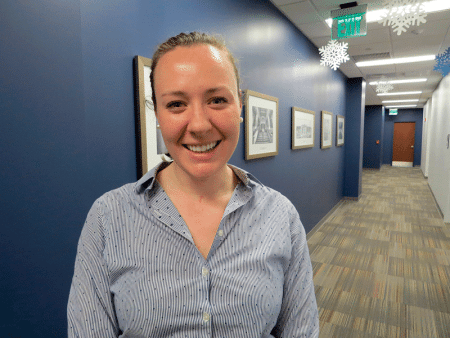
Education Sections

Connecting to a Better Future

online-medi-517935648useIt’s no secret that hospitals and other healthcare settings are pushing for nurses with higher education levels, but it can be difficult for a working RN, often with plenty of family responsibilities, to go back to school. The RN to BSN Completer Program at the American Women’s College of Bay Path University solves that issue with a fully online format and plenty of support to help students succeed — and open doors that had previously been closed.
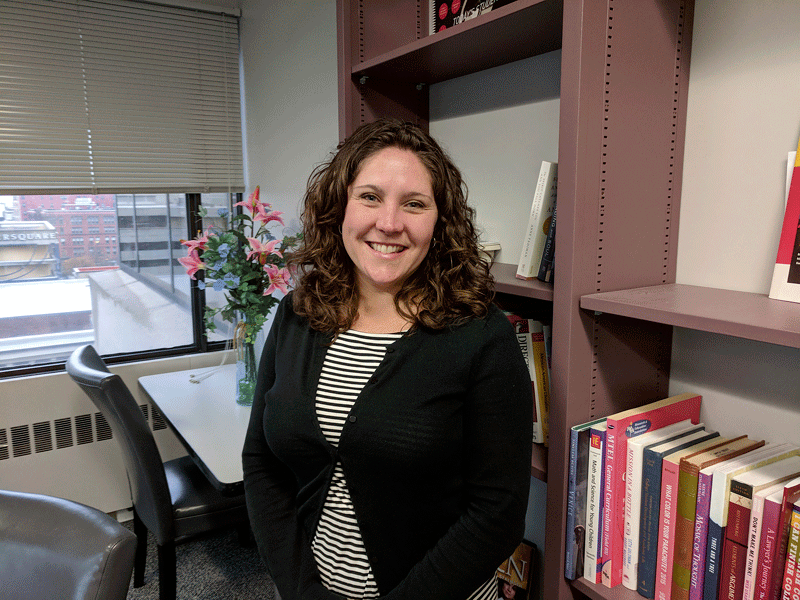
The 22 registered nurses who graduated in May from the American Women’s College of Bay Path University with their bachelor’s degrees — the first class to complete the new, innovative program — weren’t just improving their own career options, although they certainly did that.

On a broader level, they were responding to a call from the National Institute of Medicine for 80% of nurses to eventually achieve a baccalaureate level of education, one that encompasses the big-picture issues faced in settings ranging from hospitals to skilled-nursing facilities to public-health organizations.

“The national challenge for 80% of nurses to be BSN-prepared by 2020 indicated to us a great need for a flexible, affordable solution for registered nurses whose lives are already so full, between caring for others at work and, on top of that, having families, hobbies, and other personal responsibilities,” said Amanda Gould, chief administrative officer for the American Women’s College (TAWC).

Bay Path’s solution, she said, is an accelerated, 100% online program that lets students — many of whom are already juggling an RN position with family responsibilities — an opportunity to broaden their education on their terms, around their rigorous schedules.

The RN to BSN Completer Program, as it’s officially known, allows for licensed, registered nurses with an associate or diploma degree to return to college to complete a bachelor’s degree in nursing. Bay Path’s program is fully online, allowing students to enroll and participate from across the country, and the accelerated format means that, for most students, the degree can be achieved in 18 months.

Post-graduation surveys of the inaugural graduating class revealed that two quickly found promotions, one as a hospital ER manager and another as a manager of care coordination, said Maura Devlin, deputy chief learning officer at TAWC. A new survey underway is expected to reveal more such career moves, as well as a number of graduates preparing to continue on toward master’s degrees at other schools.

Amanda Gould

Amanda Gould says the online RN to BSN program is a tangible response to the national call for 80% of nurses to eventually have bachelor’s degrees.

Programs like this one will continue to bring the Bay State’s number of BSN-level nurses closer to 80% — the state had already set a goal of 65%, with the number currently around 50% — but it will also open doors that may be starting to close for RNs. Although there are no official numbers, Gould and Devlin said, RNs see hospitals and other organizations pushing for higher levels of education, and favoring BSN-level nurses in hiring and promotions.

Bay Path’s new nursing program, now educating its second class of enrollees, is doing what it can to meet that demand, and early returns have been positive.

Expanding Access

Backing up a little, the American Women’s College was founded in 2013 with a mission to expand access to higher education to the 76 million American women who do not have a college degree. Its 28 programs run the gamut from accounting to criminal justice; from child psychology to early childhood education; from entrepreneurship to food science and safety.

Many students enrolled in various RN-to-BSN programs in this region haven’t necessarily had to leave a job to do so, but they have been challenged to fit classes in between work and family life. The online option at TAWC allows students to engage in classroom activity — much of which takes place on forums and discussion boards — on their own schedule.

The RN-to-BSN track technically requires 120 credits, but 30 are awarded up front for the students’ RN training and experience, and other credits (up to 84, in fact) can be transferred in as well, depending on the student’s prior education, training, and experience.

Devlin said the courses are patient-focused and reflect the ‘nine essentials’ of baccalaureate nursing education established by the American Assoc. of Colleges of Nursing. These include a liberal education base; evidence-based practice; quality care and patient safety; information management; policy, finance, and the regulatory environment; communication and collaboration; population health management; professionalism and values; and general nursing practice.

“These are our program outcomes,” Gould said, adding that administrators have explicitly defined some fields students may see as options for professional growth upon attaining their degree, such as case manager, infection control, home care, hospice care, occupational nurse, managerial positions, public health, risk management, and specialty care.

There’s a self-reflective element to the program as well, Devlin said, and students are encouraged to consider their unique attributes and leadership skills. “The program has the BSN candidates thinking about themselves as leaders in the field of nursing, and positions them to go on to those types of roles.”

Classes are run in a cohort model, meaning the students navigate through the courses together, although they don’t have to be online at the same time. The classes are conducted in six-week sessions — six of them per year — and taught by master’s level nursing educators.

“When we surveyed the first cohort of 22 students in May, every one of them said they would recommend the program,” Gould said. “That was really validating.”

The American Women’s College was developed to improve performance, retention, and graduation rates for nontraditional learners, and does so partly through the development of Social Online Universal Learning (SOUL), a data-driven approach to online education at TAWC, Gould said. Among its features, SOUL features customized instruction, dedicated educator coaches to help students who start to struggle, and virtual learning communities to engage other students who share their goals and professional interests.

And there are definitely some common challenges. Seventy percent of TAWC students are first-generation college attendees, one-third are single mothers, and more than half are Pell-eligible, which speaks to economic need. “We really do feel it’s kind of mission-driven, in that we’re creating a new entry point to college for this population,” she said.

She cited one student, a 38-year-old who had dropped out of high school when she became pregnant, who now works as an administrative assistant. “Her daughter is now college age, and she wanted to be a role model for her daughter,” Gould explained, so she enrolled in the American Women’s College and is now one of its top students.

Maura Devlin

Maura Devlin says the first cohort of graduates is already seeing broadened career opportunities and even promotions.

“She’s kind of representative of a lot of students we serve who are trying to make a better life for themselves and their families,” she told BusinessWest. “Their motto has become ‘it’s my time.’ For a long time, they’ve put their families first, and they’ve finally come to a place where they give themselves permission to get their education.”

First Steps

The American Women’s College received some good news in October when the Commission on Collegiate Nursing Education (CCNE) voted to grant full accreditation through 2022 to the RN to BSN Completer Program.

“The collective commitment to quality education demonstrated each day by our faculty, staff, and community partners to provide our students with the knowledge and skills they need to be outstanding nurses is at the heart of our work, and our program status reflects that,” said Marjorie Bessette, director of the Nursing program.

Meanwhile, TAWC maintains partnerships with Baystate Health and Mercy Medical Center to work together to increase the number of nurse practitioners with BSN degrees.

“As a nurse, I want to give the best possible care that I can to patients. It’s my job to save lives. Completing my BSN has ensured that I can do just that,” said Laura Mazur, a nurse at Baystate Medical Center who graduated from Bay Path’s program in May. “I used to think of myself as an in-class learner, but as a floor nurse working the midnight shift, I simply didn’t have the time to spend in a classroom. The online program through the American Women’s College fit well into my life.”


Joseph Bednar can be reached at [email protected]