
Home Archive by category Sections (Page 59)

Sections

Accounting and Tax Planning Sections

A Different Kind of Number Crunching

sixsigmadpart3Since its introduction more than 30 years ago, the data-driven process-improvement methodology known as Six Sigma has been most closely associated with the manufacturing sector. But, as recent initiatives undertaken by the accounting firm Meyers Brothers Kalicka clearly show, this ‘lean’ concept can be utilized by companies in any business sector to improve efficiency and buy employees time — literally.

Melyssa Brown joked that when she earned her green belt in Six Sigma last year, she was disappointed when all that arrived in the mail confirming that accomplishment was a piece of paper, a certificate.

“I was thinking, hoping that maybe there would actually be a green belt — I could use an accessory like that,” she told BusinessWest, tongue firmly planted in cheek, adding quickly that just about everything else about Meyers Brothers Kalicka’s deep dive into this data-driven process-improvement methodology has been about what she and others at the Holyoke-based accounting firm expected.

And then some.

Our interaction with the client is better, and our delivery of services to the client is better. And internally, it has put everyone on the same page; it’s put everyone together behind a commitment to move forward and not stand still, because you can’t grow that way.”

Indeed, they were expecting that incorporation of this lean, quality-control program, developed by Motorola in 1986 and popular within the manufacturing sector, would be intense, time-consuming, and somewhat difficult because it constituted a significant change in how things were done.

They were right.

But they also expected it would achieve real results and provide powerful evidence that Six Sigma can work in the service sector as well as it does in the realm of manufacturing. And they were right again.

“Our interaction with the client is better, and our delivery of services to the client is better,” Brown, a senior manager in the auditing department at MBK, said of the net gains from the firm’s investments in Six Sigma. “And internally, it has put everyone on the same page; it’s put everyone together behind a commitment to move forward and not stand still, because you can’t grow that way.”

Elaborating, Brown said that, through Six Sigma, the company has been able to chart how the all-important time of partners, associates, and others at the firm is spent, with a critical eye toward making processes more efficient, thus essentially providing personnel with more time with which to better serve clients and serve more of them, critical elements in any company’s efforts to increase profits and improve market share.

Getting more specific, Brown said MBK has undertaken a few Six Sigma projects, both involving client interaction, the time spent accumulating needed information for tax and audit work, and efforts to bring more efficiency to those efforts.
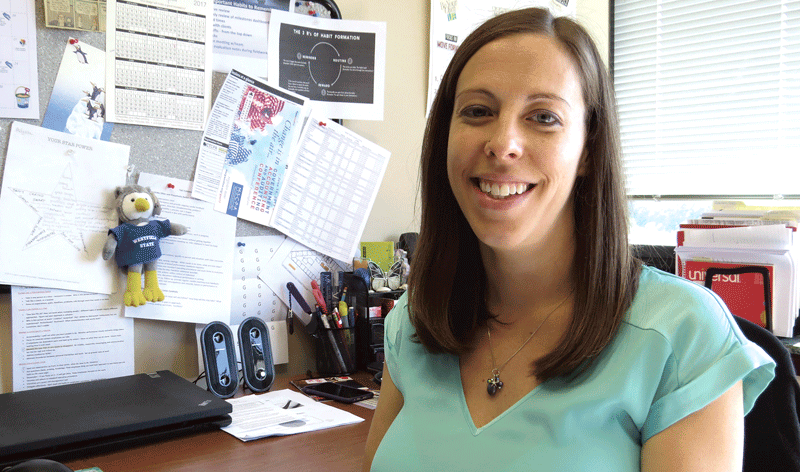
Melyssa Brown

Melyssa Brown says MBK’s Six Sigma projects have effectively given employees at the firm more of that most precious commodity — time.

“To do audit and tax work, you clearly need to get information from the client — we need some numbers to work with,” she explained. “It comes down to, when you have that interaction, how it’s done, and how it’s followed up.”

In short, there were inefficiencies with all those steps in the process, she went on, and, therefore, some diligent work was undertaken to mitigate them.

“From these processes, we’ve put structures in place to help us monitor and conduct better interactions with the client, because that’s what’s important to them — and us,” she went on, adding that the goal was and is to make these interactions easier for the client and more productive for the firm.

Fast-forwarding a little, Brown said the firm has created an online portal, or drop box, if you will, for client information that can be accessed by all those servicing that particular client. This innovation has significantly reduced the time, trouble, and anxiety involved with collecting and accessing that data, as will be explained in more detail later.

As noted, the company’s experience shows how Six Sigma can be applied to businesses not traditionally associated with this methodology, said Brown, who was a member of a panel that delivered that very message to assembled members of the Employers Assoc. of the NorthEast several weeks ago.

“Everyone has a back office,” Brown explained. “And while people think of Six Sigma in terms of manufacturing processes, those back-office functions can be made more efficient as well.”

For this issue and its focus on accounting and tax planning, BusinessWest departs from more traditional discussions about taxes, audits, legislation, and compliance, and takes a hard look at a different form of number crunching.

Time Is of the Essence

Brown told BusinessWest she became the company’s point person on Six Sigma … well, because each senior manager at the firm has a ‘niche,’ as she called it, and at that moment in time, she didn’t have one.

So Six Sigma became her niche.

Backing up a little, Brown said she and others at the firm were in attendance for a presentation on Six Sigma presented by a consultant and hosted by CPA America, a trade organization the firm has belonged to for some time. That seminar came about just as the firm was aggressively exploring methods for achieving process improvement, thus bolstering the bottom line.

“We had tried several other ways to become better at improving efficiency,” she explained. “But we needed that outside person’s view of what the best course of action might be.”

Brown underwent green-belt training, which introduces an overview of the key concepts, in Ohio, and took on a project involving one of her clients to earn that aforementioned certificate in 2016.

Summing up what’s been happening at the firm since, Brown said MBK has essentially embraced ‘lean,’ a concept that, as noted earlier, is usually associated with manufacturing, but can be applied to virtually any business sector.

Lean is a transferable and systematic approach for discovering, analyzing, prioritizing, and correcting time-wasting activities that exist in business processes, Brown told BusinessWest — and her audience at the EANE roundtable in May.

Elaborating, she said ‘lean’ is a mindset, or a culture, to reduce waste, something that exists in every operation and can be reduced — but only, in most all cases, through careful analysis of data and development of new ways to do business.

And, as Brown noted, this approach can generate positive results not only on the factory floor, but also in back-room operations such as billing and accounts receivable, accounts payable, payroll, monthly reconciliations, and financial reporting.

With that, she returned to the projects undertaken by MBK, and specifically that online portal she discussed. It came about through the Six Sigma process of analyzing a specific process or method of doing business, taking it apart, and putting it back together again — without the wasted steps, energy, time, and profit.

To get her points across, she undertook an exercise in ‘before and after.’

“Before, we would send a list of needed information via e-mail, in Word or Excel, and the client would either send us documents via e-mail, save it to a jump drive, or find some other way to get it to us,” she explained. “But it was never really clear if we had a certain piece; we would say, ‘do we have an accounts-receivable list?’ and they would say, ‘yes, you have it,’ and someone here would say, ‘I don’t think I do.’”

Now, with the online portal, such exchanges are a thing of the past, she went on, and so is the time lost looking for information or trying to verify whether the firm has it or not.

The bottom line, as they say in this business, is that the firm can now serve clients better and more efficiently, and use the time saved to serve other clients or solicit new ones.

And all of these things can be measured.

“In the end, our goal in this is to issue financial statements to clients earlier or get tax returns done and out to the client sooner than we used to, and we can measure this,” she explained.

Meanwhile, the system improvements are enabling individual service providers to make better use of their time, she went on, adding that, in many cases, it is now possible to do some audit-preparation work in October or November, thus creating more time during the extremely hectic months and weeks prior to April 15.

“You’re getting a head start on the client,” she noted, “which frees us up during tax season, when we’re all a little stressed.”

The end result, she said, is the creation of more time.

“Before, we may have thought that we needed to hire more people to get the work done,” she noted. “Now, we can get the same amount of work done with fewer hours and the same amount of people — or more work, because you’re taking on new projects with the time that you’ve saved.”

Looking forward, Brown said the firm is looking at other ways to put Six Sigma to use.

Indeed, after projects involving the tax and audit functions, the company is looking at possible initiatives involving billing and administration and making them more efficient.

“There are lots of opportunities — you just have to crack open the shell,” said Brown, who told BusinessWest that this is her general advice to all those who own or manage service businesses.

She noted that too many businesses in this sector are not embracing Six Sigma, in part because they don’t fully understand how it can be applied to their sector. But once educated to the contrary, many are put off by what amounts to a considerable commitment to this culture in terms of time, expense (usually, a consultant must be hired and new technology acquired), and needed buy-in from everyone at the company.

Those willing to make such a commitment, she said, should take the dive.

“This can’t be the flavor of the month,” she explained. “The tone at the top has be, ‘we’re going to make this work — this is our new way of doing business and operating.’”

It All Adds Up

As noted, Brown doesn’t have an actual green belt, like the ones awarded to those engaged in the martial arts.

But through the firm’s implementation of Six Sigma principles, she and others at MBK have something far more meaningful — additional time, the most precious commodity that exists in business today.

It came about through hard work and a deep dive into processes and ways of doing business, with an eye toward continuous improvement.

Historically, such words, phrases, actions, and, yes, results have generally been restricted to the world of manufacturing. But as Brown noted and MBK has shown, any service business can generate the same types of positive outcomes.

They just have to crack open the shell.

George O’Brien can be reached at [email protected]

Health Care Sections

Holistic Approach

Dr. Lydia Lormand

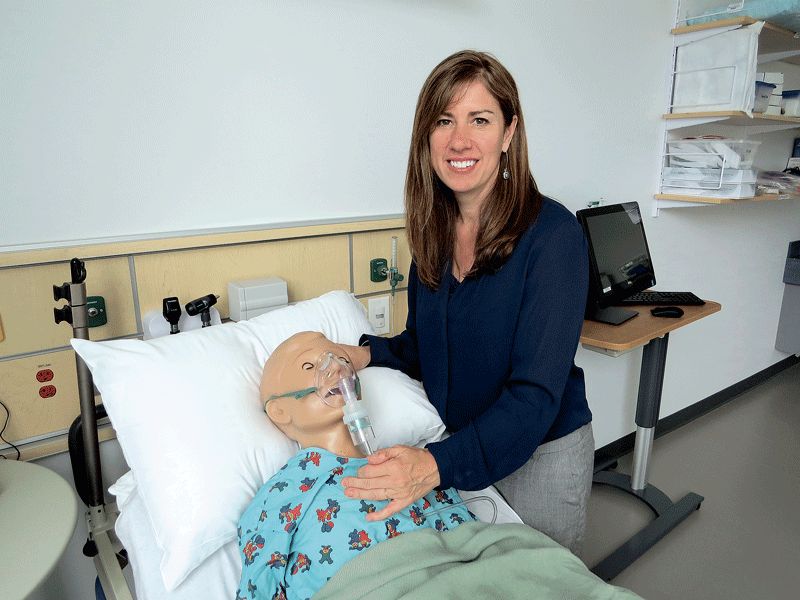
Dr. Lydia Lormand says an annual gynecological exam plays an important role in a woman’s healthcare regimen.

Women’s health is almost as broad a category as healthcare itself, and the practitioners at Women’s Health Associates in Westfield understand this. Although they focus on obstetrics and gynecology, their holistic approach to patients considers their entire wellness profile, and helps them take steps to stay healthy in all facets of life.

By Kathleen Mitchell

Every day, Dr. Robert Wool spends time educating patients on disease prevention and how to stay healthy.

Although the founder of Women’s Health Associates in Westfield and his fellow practitioners focus on obstetrics and gynecology, their approach is holistic, and they teach patients what they need to know or do to avoid problems in the future.

“Women’s health doesn’t just mean a gynecological exam,” said Dr. Lydia Lormand. “It covers a wide range of topics that include birth control, hormones, post-menopausal management, and taking care of yourself.”

She noted that Pap smears are not needed annually, but yearly exams are important because they can uncover abnormalities such as cervical polyps or masses a woman may have that aren’t symptomatic.

Wool agreed, and said the practice takes a proactive stance toward health.

“Education can prevent so many things, including pregnancy,” he told BusinessWest, noting there have never been more options for contraception, yet 50% of pregnancies in the U.S. aren’t planned. Meanwhile, the incidence of conditions such as osteoporosis can be reduced by diet, exercise, and proper care.

“More than a third of women who break a hip after age 75 aren’t alive a year later,” he continued, adding that older women cherish their independence, which they often lose after a hip fracture.

Women’s Health Associates was founded in 1988, and today its practitioners include Wool, Lormand, Dr. Jacqueline Kates, and three nurse midwives. They have served generations of women in the same families, and the relationships they have forged are invaluable not only in terms of establishing a comfort level, but because knowledge about their psychosocial support systems can be critical.

Wool recently had four generations of women from one family in his office, and with the exception of the new baby girl he had delivered, they were all his patients.

Dr. Robert Wool

Dr. Robert Wool has seen generations of women from the same family and delivered thousands of babies since Women’s Health Associates opened in 1988.

“Knowing the type of support a woman has during pregnancy is important, especially when a teen is pregnant,” Wool said, noting that, if he knows the parents of a pregnant teen are not inclined to help, he can access services from local agencies to ensure the woman is able to comply with her doctor’s advice.

Indeed, trust is a critical component of the practice’s success, and patients talk to the providers about problems such as urinary incontinence or painful sex that they don’t discuss with friends, family members, or other doctors because the topics can be embarrassing.

“The information allows us to find solutions to make their lives better,” Wool said.

Lormand noted that a woman in her 20s recently told her she was in a relationship but wasn’t having sex because she didn’t have a strong sex drive. But she soon confessed that the real reason was because it was painful, which resulted in a resolution of the problem.

“We are still a mom-and-pop shop,” Wool said, adding that this small size allows them to get to know patients on a personal level.

For this issue, BusinessWest examines the history of Women’s Health Associates, what makes the practice unique, and how its scope has changed over the last three decades.

Continuity of Care

Wool was hired by Noble Hospital in 1988 as a salaried employee to staff its newly created practice, Women’s Health Associates, that the facility decided to establish within the confines of the hospital.

“There was only one obstetrical/gynecological practice in Westfield, and it had closed a year before I was hired. One physician had retired, a second left to do a fellowship, and the remaining two moved,” he said, adding that he was given two exam rooms, a nurse, and a secretary.

About two years later, Dr. James Wang was hired to help Wool, and within a few years they purchased the practice and moved to their current location in the Pioneer Valley Professional Center at 65 Springfield St. in Westfield.

The change in location proved beneficial as it put them closer to the hospitals where they were delivering babies: Baystate Medical Center in Springfield, Providence Hospital in Holyoke, then Mercy Medical Center after Providence closed its obstetrics department in 1994.

Today, all of their patients in labor are delivered at Baystate, and they work in conjunction with the hospital’s faculty and resident obstetrics/gynecological practices.

Midwives were added to the staff at Women’s Healthcare Associates after Wool began collaborating in 1992 with Holyoke Midwives, and they taught him techniques that proved helpful to his patients.

“Birthing is a pretty natural process, and in the majority of cases no interventions are needed,” he said, noting that the midwives showed him that if a doctor is patient and allows nature to take its course, most babies can be delivered naturally without having to resort to a cesarean section.

But even though labor and delivery haven’t changed much, the way medicine is delivered has undergone dramatic shifts in the past three decades, and Wool says what sets Women’s Health Associates apart from similar obstetrical/gynecological groups is its size.

For example, during the final weeks of a woman’s pregnancy, she sees all three doctors, so when labor begins, they are familiar with her health and ability to cope with stress.

Lormand noted that, at 1:30 a.m. the night before she spoke with BusinessWest, she received a call that a patient was in labor, and for her and other doctors, knowing a patient’s anxiety level as well as any underlying problems is far more helpful than reading a chart or being told about them.

In contrast, a woman who is a patient in a large medical practice might have her baby delivered by a physician she hasn’t met, then see a different doctor the following day in the hospital because having a large number of doctors on staff means they only have to work assigned hours.

Physicians in large practices also tend to move frequently, which can affect what a patient is willing to talk about. This is important because honesty is critical to providing care, and Wool says it is a cornerstone of the practice, but has to be reciprocal.

“If you tell a woman a procedure won’t hurt and it does, she will never tell you anything personal again,” he said, noting that they prepare patients when they know something will be uncomfortable.

Knowledge and education are critical because many people believe things that aren’t true. For example, Wool received a flood of calls from patients in 2001 after the Women’s Health Initiative published a study that said hormone-replacement therapy was dangerous.

He told the BusinessWest that the study was flawed, and the results were eventually debunked, but the initial findings made national news and did irreparable damage.

Wool said the average age of menopause is 51 ½, and hormone therapy offers invaluable benefits because life expectancy has increased by several decades over the past two or three centuries.

“Some women have menopausal symptoms in their 60s and 70s, and women who are not on hormones develop osteoporosis at a much faster rate,” he said, noting that some researchers believe hormone-replacement therapy improves cardiac health.

Indeed, a study on monkeys whose ovaries had been removed and were fed a high-fat, high-sugar diet all developed heart disease, while monkeys in another group who ate the same diet and also had their ovaries removed, but received estrogen, never had a problem. But Wool noted the therapy needs to begin right after menopause rather than a few years later, and unfortunately, many women shy away from it due to misinformation.

Still, any treatment depends on a number of factors and needs to be discussed with a woman’s healthcare provider. But because osteoporosis is so common after menopause, Women’s Health Associates has developed a strong program to prevent it that includes the ability to do bone-density testing in its offices.

Satisfying Outcomes

The practitioners at Women’s Health Associates have always taken a proactive stance when it comes to educating patients. But they also do routine obstetrical and gynecological care, treat minor and acute problems, diagnose cancer, and work closely with specialists at Baystate Medical Center.

“It’s a real privilege to be able to treat patients over their lifetime,” Wool said, adding that he has delivered thousands of babies and enjoys seeing generations of women from the same families.

Although he and his peers perform different types of surgery and perform many tasks each day at work, he says there is no greater joy in life than delivering a baby and laying it on a mother’s chest.

It’s part of the life cycle and a very important time in a woman’s life, but only one facet of the continuum of care that Women’s Health Associates has provided and will continue to offer patients for generations to come.

Health Care Sections

After the Diagnosis

Jo-Anne Gaughan-Cabral

Jo-Anne Gaughan-Cabral says a cancer diagnosis affects not only the patient, but his or her family and caregivers, and West Central’s cancer-informed program addresses the needs of all these parties.

As a provider of psychotherapy services for patients of all types, the therapists at West Central Family and Counseling observed a striking trend, said Jo-Anne Gaughan-Cabral.

“We noticed, from referrals coming into the clinic, that a growing number of people had been treated in the past, or were currently being treated, for various cancer diagnoses,” said Gaughan-Cabral, clinic supervisor and clinical lead of what is being called the facility’s Cancer Informed Therapy Program. “Although we were already treating the mental-health needs of these people, we decided to develop a more specialized cancer-focused therapy, and we set out to train a group of people to work with patients with cancer.”

West Central Family and Counseling’s (WCFC) new mental-health treatment program is targeted specifically for not just cancer patients, but their families, caregivers, and loved ones.

“The goal of the program is to provide patients and their families cancer-informed therapy. We can accomplish this in the clinic and as a home-based support when it seems needed,” said Gaughan-Cabral. “Clients and family members who are affected by a cancer diagnosis will benefit from this program.”

The effort represents a response of sorts to a 2006 Institute of Medicine report recommending that every cancer patient receive a cancer-survivorship care plan.

“We’re the psychotherapy component for people dealing with depression, anxiety, body-image issues, and needing cognitive behavioral therapy from managing the side effects of chemotherapy, such as nausea,” Gaughan-Cabral said. “We’ve been able to coordinate with other programs like Survivorship Journeys and therapy groups, as well as mentors, people who’ve already had the diagnosis and can walk other people through it. We’re basically trying to treat all the needs of the patient — and their family — as they deal with the negative feelings associated with grief and loss, change in roles, and other issues.”

In the midst of treatment, they’re not feeling well, and they may not feel like talking to someone, but once they’re on the other side, they realize life has changed so much, so we try to pick up with them on whatever they need.”


Those issues certainly affect a patient’s loved ones, as all parties struggle with unfamiliar roles, she added, whether that’s parents caring for sick children or grown children managing a cancer journey for their elderly parents. In any case, a cancer diagnosis can be a challenging experience for all, and many clients have reported feelings of anxiety and depression along with grief, stress, episodes of confusion, and acute or reoccurring trauma, she explained.

The team of cancer-focused therapists at WCFC, who undergo a six-month training to be part of the program, work to help patients process the emotional issues that surface during this time, and, if necessary, provide consultation to those providing their medical treatment at local cancer-treatment centers.

Gaughan-Cabral added that, while patients currently undergoing treatment for cancer will be well-represented in the program, most of the participants will likely be survivors who are past their initial treatment. “In the midst of treatment, they’re not feeling well, and they may not feel like talking to someone, but once they’re on the other side, they realize life has changed so much, so we try to pick up with them on whatever they need.”

Those needs are myriad, she said. “How do I go back to work? How do I resume an intimate relationship with my spouse? How do I get back to an active life? Having faced this life-or-death situation, you’re changed by that, and you need new strategies to deal with your world.”

Common Concerns

According to the American Psychiatric Assoc. (APA), general emotional distress, poor coping strategies, and psychiatric disorders such as anxiety and depression are common in cancer patients — perhaps 25% to 30% of them. Depression can not only negatively impact cancer patients’ quality of life, but can reduce their chances of survival, just as it can in heart-disease patients, Dr. David Spiegel, associate chair of Psychiatry at Stanford University and a psycho-oncologist, told Psychiatric News, an APA publication.

Yet, effective treatment of depression may increase the chances of survival. A study conducted by Spiegel and his colleagues in 2010 found that a decrease in depression symptoms was associated with longer survival in metastatic breast-cancer patients. Research during the past decade has also shown that various psychotherapies developed for cancer patients can improve patients’ quality of life, the APA reported.

The fact that more people are surviving cancer diagnoses makes WCFC’s cancer program even more relevant, said Gaughan-Cabral, who noted that referrals come in from hospitals, community-based programs, and simple word of mouth.

To better communicate how the program can help a wide range of cancer patients, survivors, and caregivers, West Central recently hosted an open house for cancer-treatment professionals interested in learning more about the new program, with the hope they would be willing to refer their patients.

“We wanted people who treat cancer — social workers, oncology units, therapists — to see our clinic and come meet with our staff, and make a personal connection,” said Joshua Frank, WCFC’s recruitment and marketing manager.

In addition to the therapeutic services offered on site, outreach and home-based support appointments are available when needed, Gaughan-Cabral said. “For those not able to get to the clinic for the support they need — for example, if they can’t drive — we go out to be with them. That’s one of our strong suits.”

Beyond its new cancer-focused program, West Central provides psychotherapy services to children, adolescents, adults, and elders with a wide range of behavioral-health issues, and also collaborates with schools and community centers to provide additional services, Frank said. But the Cancer Informed Therapy Program is meeting a specific need that isn’t being addressed on a larger scale, Gaughan-Cabral added.

“Feedback so far has been very positive,” she told BusinessWest, adding that the center plans to hire and train more people in this discipline once referrals necessitate a waiting list. “We’ve been so supported by people in the community, and that makes us feel positive about what we’re doing. It’s something that’s really necessary.”

Joseph Bednar can be reached at [email protected]

Health Care Sections

Home Is Where the Asthma Is

A

Sarita Hudson

Sarita Hudson says treating asthma patients is a frustrating exercise if they’re just returning to homes filled with environmental triggers.

nyone who has experienced an asthma attack, the chest-tightening, often panicky feeling of not getting enough air into the lungs, knows it’s not a matter to take lightly. Yet, it remains one of the most common medical conditions in Massachusetts, affecting some 10% of Massachusetts residents, according to the state Department of Public Health.

In Springfield, it’s even worse, with rates approaching 18%, making it one of the most asthma-aggravating cities in the U.S.

“Nearly one in five kids in Springfield has asthma, and the rate for adults is almost the same,” said Sarita Hudson, director of Programs and Development for Partners for a Healthier Community (PHC). “And we have health inequities when it comes to asthma — Latinos and the black community are more heavily impacted by asthma and more likely to end up in the hospital and the emergency room.”

This is more than an individual health issue, she noted. When kids miss school days because of asthma, their absenteeism can lead to poor academic performance. When parents have to stay home with them, they miss work, with all the financial implications that entails. Multiplied over hundreds of homes, that’s a region-wide economic and quality-of-life impact.

The region’s air quality is a factor, but so are its aging homes, Hudson noted.

“Springfield has old housing stock — more than 86% of the homes were built before 1978, and 40% were built before 1940,” she said, adding that elements of these homes, ranging from mold and moisture to rodents and poor ventilation, can trigger or exacerbate asthma attacks.

For the past decade-plus, the Pioneer Valley Asthma Coalition, a program of PHC, has worked with families to educate them about asthma triggers in the home, and has gone into schools to push environmental changes, like greener cleaning supplies.

“This is a nationally proven best practice,” she said. “The CDC recommends education around these problems with the goal of reducing ER and hospital visits. The problem is, for some of those kids, you can make behavioral changes — take care to keep pets out of the bedroom, wash bed covers — but there’s still a hole in the roof causing mold, or a pest problem. Or there are ventilation issues; they’re not getting good air supply. It’s a structural problem. So you can educate them, treat them, help them, but they’re going back to an unhealthy home.”

That’s about to change for hundreds of Springfield-area residents who will soon take part in a program, first modeled in Baltimore by the Green & Healthy Homes Initiative, that pays for home improvements specifically related to asthma control — mold and moisture remediation, pest control, ventilation and air quality, removal of carpeting that harbors dust and other allergens — with the goal of keeping asthma sufferers out of the hospital.

“The Pioneer Valley Asthma Coalition has looked at ways people are impacted by asthma, looked at ways we can reduce hospitalization and healthcare, reduce impacts on families, and keep people healthy,” Hudson said. “We’ve done work around outdoor and indoor air quality and worked with the school district here. Now we want to work on the homes.”

Risk and Reward

The intriguing aspect of the project, known as Pay for Success, is how it’s funded. Calling the model a “social-impact bond,” Hudson said private investors will pay the up-front costs to perform interventions for 600 families — 200 families a year over three years. Revitalize CDC and the Springfield Office of Housing are among the partners which will oversee the home improvements.

“If we show impact — if we do what we say we’re going to do, which is reduce healthcare utilization and healthcare costs and keep people healthier — the investors are paid back by the healthcare system: Health New England, the state Medicaid office, Mass Health,” she explained, noting that financing details are still being worked out. If it works, it’s a way for investors with a bent toward social good to earn a return — Hudson said between 3% and 7% is the goal — on their investment in a total stranger’s home and health.

It’s an innovative example of the intersection between clinical care and community-based care, said Frank Robinson, vice president of Community Relations and Public Health for Baystate Health, one of the program partners. “On the community side, we want to work outside the four walls of the hospital, to do what is necessary to make sure the patient doesn’t come back in. So how do we change our policies to support this prevention work?”

Frank Robinson

Frank Robinson calls Pay for Success an innovative example of the intersection between clinical and community-based care.

Jackie Spain, medical director for Medicaid at Health New England, another project partner, said Pay for Success deals with key housing issues that aren’t usually addressed in the healthcare arena. “The nice thing about this initiative is it finds a way to address those issues up front. It’s hard to get payers, like Health New England and others, interested in paying for housing renovations up front, for a lot of reasons; the savings are likely longer-term, and people change health insurance frequently.”

The downside, she said, is that it’s still unclear how to determine how much someone’s healthcare costs have decreased due directly to the housing improvements. Also, in a world where provider contracts often include shared savings, all providers expect a piece of that savings — so who determines what piece is carved out for the social investor, and when will they be paid?

Those details are still being worked out, Robinson said, but an external evaluation program will address those issues by comparing the families that receive interventions with those that don’t, so the partners will be better able to document where the intervention made a difference.

Spain did note that asthma is an ideal condition around which to launch a program like this because the cost savings can be recorded in the short term, as a patient might go to the emergency room at any time. With something like diabetes — which may result in blindness, amputations, or renal failure — the most significant costs won’t appear for years, maybe decades.

Just Breathe

Pay for Success is certainly not an end-all to the problem of asthma. The American Academy of Pediatrics recommends a number of interventions families can implement with little cost to reduce the risk and severity of asthma, from banning smoking in the home to reducing exposure to dust mites.

For the latter, allergy-proof encasings are available to cover pillows and mattresses, and all bedding should be washed in hot water every week or two. Stuffed toys should be removed from the bedroom, which should be vacuumed and dusted regularly. Dehumidifiers and HEPA filters help as well, although these are a bit more expensive, and pets can easily be barred from the bedroom, which, through all these suggestions, can be turned into a safety zone against asthma triggers.

But other interventions, from extermination services for persistent pest problems to mold remediation; from carpet removal to fixing leaky roofs and plumbing, can be out of reach of low-income families, and that’s where the Pay for Success program promises to make a difference. Once the financial details are finalized and investors lined up, the partners plan to contact the first cohort of beneficiaries. Additional project funding will be provided by the White House’s Social Innovation Fund, with technical assistance from the Green & Healthy Homes Initiative.

“We know the number of people who need help, we have a model deemed to be feasible now, and we’re at the point of starting,” Hudson said. “We’re excited about this partnership; we’ve been working on it more than a year.”

Robinson agreed. “We’re hoping this is a way of getting ahead of the curve and improving how we deliver care,” he told BusinessWest, adding that he hopes to see strong evidence that will make such interventional programs routine, not just a one-off. “It’s an exception to how healthcare currently conducts itself, with some of the risk contracting, but it’s a different way of looking at social determinants and not just medical procedures.”

And if more Springfield-area families find some relief from their asthma, plenty of regional healthcare stakeholders will be breathing a bit easier. u

Joseph Bednar can be reached at

[email protected]

Sections Technology

Human Touch

NetLogix President Marco Liquori

NetLogix President Marco Liquori

Information-technology solutions providers can easily get lost in a maze of technical jargon, but that’s the last thing Marco Liquori wants to throw at customers. Instead, the technicians at his 13-year-old company, NetLogix, are trained to communicate clearly with clients about their network needs — and then meet those needs, in the background, so businesses can focus on growth, not computer issues. A recent customer-satisfaction report suggests the Westfield-based firm is doing something right.

When Marco Liquori talks about how his IT company, NetLogix, sets itself apart, he doesn’t go right into technical jargon. In fact, he tries to avoid it.

“We have some business savvy; we’re a small business ourselves,” he told BusinessWest. “We take that knowledge to our clients, and, when we do talk to them, it’s not geek-speak, but business recommendations in plain English.”

That’s actually one of the points on a list he’s prepared called “10 Things We Do Better.” Some of them — delving into areas like network security, budgeting for IT services, and the difference between proactive maintenance and reactive response — get into the nitty-gritty of NetLogix’s services, but many are common-sense goals that wouldn’t be out of place in companies in myriad industries.

Take phone calls, for instance. “We answer our phones live and respond quickly,” he said, noting that callers will always get a human being, not a recording or voice mail, and those calls are followed up by a technician within the hour — actually, the average is 12 minutes.

Those touches are part of the reason why a third-party monitoring system, SmileBack, which tracks customer satisfaction for companies, reported that NetLogix scored a 99.4% favorable rating from clients in 2016 — the highest customer-satisfaction score it recorded last year.

netlogixbuilding

“That’s unheard-of in our industry; our competitors are unable to say that,” Liquori said. But it’s not a surprise, he added; it’s a goal the company works toward. “Our techs are incentivized to get high satisfaction scores; they’re compensated not on billable hours, but on efficiency and customer satisfaction.”

Of course, part of achieving high satisfaction scores is actually getting the job done, and this is where a shift in the company’s strategy several years ago has paid dividends and grown the Westfield-based firm — which Liquori describes as a network-management, cloud, and systems-technology integrator providing end-to-end solutions for clients — to a 12-employee operation, and why his plans to keep expanding the company look promising indeed.

Entrepreneurial Itch

Liquori had worked for several other computer and IT companies — “value-added resellers was what we called them back in the day” — but business wasn’t great in the years following the dot-com bust. In 2004, the firm he was working for decided to take his business in a different direction, focusing more on application development. In the transition, Liquori decided to set out on his own — even in that tough economic climate.

“I was on my own for a year, but we grew, slowly and steadily, and we’ve been growing ever since,” he told BusinessWest. “We were originally a break-fix service — when people had issues, they would call us, and we’d go out and fix them.”

During that time, he was developing a book of business focusing on a handful of industries in which NetLogix still specializes today, including insurance agencies, law firms, medical and dental practices, and professional services like accounting firms. But the business model needed tweaking.

We try to understand each client’s business need for technology and address it. We help them overcome challenges they may have with some new technology or new processes.”

“It was a more reactive model. As an issue occurred, we’d go out and fix the problem, and we’d bill for the time we worked,” he explained. “Over the past few years, we transitioned to a managed-services model that’s more proactive in nature. We’re constantly monitoring every system out there for our clients.”

That encompases everything from preventing cyberattacks and monitoring for malicious activity to installing Windows and third-party application updates to managing firewalls and developing disaster-recovery strategies.

“We try to understand each client’s business need for technology and address it,” he said. “We help them overcome challenges they may have with some new technology or new processes.”

Under the old system, the more hours NetLogix’s technicians worked, the more money the company made. But a managed-services model is a win-win for both sides on multiple levels, he explained. “With this, the overall objective is to make IT spending predictable for the client, which helps them them budget accurately. They pay a fee for unlimited support.”

That’s an advantage over many companies that hold fast to a more reactive model, he said, adding that clients like knowing exactly what they’ll be spending — no surprises — and can focus their energies outside the IT realm, on growing the core functions of their business.

defendingagainstcyberattacks

In fact, the fixed price, all-inclusive support plan includes a commitment to resolve any issues that arise in an expeditious manner. Since everything is included in one price, Liquori explained, NetLogix is highly motivated to use its time wisely and bring each situation to a successful completion — and clients aren’t nickel-and-dimed just at the time they need the most help.

“Our goal is to resolve issues as quickly as possible, and make sure their computers are back up fully and functioning normally as soon as possible,” he said.

But he kept coming back to the firm’s security-first approach. NetLogix’s first task is to evaluate a client’s network and explain any potential risks and exposures, and recommend adjustments to protect the network and client data — which is of massive importance for companies that store patient records or financial information, for example.

“With our full suite of multi-layered security in place, none of our clients were affected by the WannaCry ransomware attack — or any other ransomware,” Liquori said, referring to last month’s worldwide attack targeting computers running the Microsoft Windows operating system, encrypting data and demanding ransom payments to free it. Within a day of the attack, more than 230,000 computers in 150 countries were affected.

“We keep all our engineers constantly trained in the latest technology that’s out there, and constantly go to security seminars and network-security training events,” he went on. “Security is the biggest thing, and we stay on top of it.”

Growth Pattern

At the heart of NetLogix’s services, though, is its strategic IT planning. Liquori said he considers himself a strategic partner with clients, listening first and offering solutions second.

“I really enjoy a challenging technical issue and being able to provide a solution that meets a business objective and saves the customer money by improving efficiencies and improving security,” he told BusinessWest. “Customers may be losing sleep over these things. I enjoy the fact that we can take that burden off them so they can focus on their business.”

Liquori said he’s certainly looking to grow beyond 12 employees, and geography isn’t the barrier it used to be in the IT world. “Most of what we do is remote, so we can work in almost any geographic area,” he explained, adding that the firm covers most of the Northeast. But face time is important, too.

“For our managed-services clients, we will engage with them proactively — quarterly or semiannually, depending on the size of the organization. We will sit with the business owner or office manager for strategic IT planning. We’ll talk about areas where they’re weak or vulnerable, get those adjusted and up to speed. It may be making sure they have a backup recovery solution, or a computer may be out of date, so we plan together for updating their computers to help them stay atop the curve.”

And sleep better at night.

Joseph Bednar can be reached at [email protected]

Sections Technology

Banking on Breakthroughs


Three UMass Amherst campus research initiatives are among nine projects across the five-campus system that are sharing $735,000 in grants from the President’s Science & Technology (S&T) Initiatives Fund.

Announced by UMass President Marty Meehan, the projects showcase a range of cutting-edge faculty research being conducted across the UMass system, from enhancing clean-energy technologies to developing materials that can autonomously release drugs and precisely target tumors.

The Amherst campus projects include:

• The Center for Autonomous Chemistry, an initiative with UMass Lowell and UMass Medical School, and led by chemistry professor S. Thayumanvanan. The project will develop the molecular design fundamentals for autonomous chemical systems, inspired by the immune system. Fully developed, this will form the basis to develop materials that can autonomously release drugs in response to a specific trigger and precisely target tumors. The grant of $140,000 will be used to facilitate one or more proposed projects to federal research agencies.

• The UMass Unmanned Aerial System Research and Education Collaborative (UASREC), led by Michael Knodler of the UMass Transportation Center. A collaboration with UMass Dartmouth, UASREC is established to advance unmanned aerial systems, also known as drones, to advance interdisciplinary and collaborative research and education. With research already funded through the state Department of Transportation, $100,000 in S&T funds will help position UASREC to become the New England Transportation Center and develop other proposals to federal funding agencies.

• The Center for Smart and Connected Society (CS2), a project with UMass Medical School, is being led by Prashant Shenoy in Computer Science at UMass Amherst and David McManus in Cardiovascular Medicine at UMass Medical Center. The project, as part of the creation of the new interdisciplinary CS2, will focus on the advancement and application of smart and connected technologies. The smart-application domains include smart health and smart living, smart buildings and energy, smart and autonomous vehicles, and smart agriculture. The one-year, $25,000 S&T grant will advance the planning for CS2 and coordination with the medical school’s Center for Data Driven Discovery and HealthCare, which also received an S&T award.

Amherst campus researchers are also involved in another of the funded projects, the UMass MOVEment Research Center, which will explore the mechanics of movement and muscle function. Led by Matthew Gage of the UMass Lowell Chemistry department, the researchers will use the $25,000 grant to plan for a UMass system-wide research center for movement mechanics, focused on understanding movement in the aging population. Faculty from Lowell, Amherst, and the medical school will explore how to combine existing research strengths at all three campuses into a comprehensive program designed to approach research questions in the biomechanics of aging from a molecular to an organismal level.

“These funds empower our faculty, strengthen our research enterprise, and spur breakthroughs that boost the economy and improve lives,” Meehan said. “I’m proud to support our faculty while advancing our critical mission as a world-class public research university.”

Now in its 14th year, the S&T fund accelerates research activity across all five campuses, drives partnerships with state industry, and positions researchers to attract larger investments from external sources to expand the scope of their projects.

Since 2004, the fund has awarded nearly $12 million to faculty, helping to generate additional funding of more than $240 million in areas such as medical devices, nano-manufacturing, clinical and translational science, bio-manufacturing, data science, robotics, and personalized cancer therapy.

S&T awards have also helped to establish important research and development centers across the state, including the Center for Hierarchical Nanomanufacturing at UMass Amherst, the Center for Personalized Cancer Therapy at UMass Boston, the Center for Scientific Computing and Data Visualization Research at UMass Dartmouth, the Massachusetts Medical Device Development Center and New England Robotics and Validation & Experimentation Center at UMass Lowell, and the UMass Center for Clinical and Translational Science at UMass Medical Center.

“Since 2004, these grants have generated a tremendous return on investment to our campuses and to the Commonwealth, strengthening our engagement in key areas, including the life sciences, data science, climate science, and advanced manufacturing,” Meehan said. “This program underscores how critical a strong public research university is to the future of the state.”

The President’s Science and Technology Initiatives Fund is one of three sources of support that help advance the work of faculty members, along with the Creative Economy Initiatives Fund and the Technology Development Fund. u

Community Spotlight Features

Community Spotlight


Doug Stefancik

Doug Stefancik says Ludlow’s status as a safe, clean, middle-income community makes it an attractive spot to live or do business.

When it comes to economic development in Ludlow, the sprawling project known as Ludlow Mills has been the lead story for several years. But it’s far from the only story, Douglas Stefancik said.

“We do need economic development, and we take it seriously,” said Ludlow’s town planner. “We look to businesses for tax revenue and jobs. And anytime we can get a new business in town, it enhances the entire area.”

A good deal of that movement has occurred at Ludlow Mills since Westmass Area Development Corp. purchased the site six years ago. Since that time, it has attracted $127 million in public and private investment.

The State Street property encompass a sprawling complex of more than 60 buildings set on 170 acres, and Westmass predicts that, over the next 15 years, more than 2,000 new jobs will be created and retained there, and more than $300 million will be spent in private investments.

The majority of buildings that make up the heart of Ludlow Mills were built between the 1870s and 1920s by Ludlow Manufacturing and Sales Co. From the 1860s through the 1970s, it made cloth, rope, and twine out of Indian-grown jute, flax, and hemp, employing about 4,000 people in its heyday.

Today, the complex is a growing mixed-use complex and home to many small businesses, including Iron Duke Brewery, which opened in a 3,000-square-foot space in December 2014, including a taproom that draws big crowds to the site.

But the jewel so far is HealthSouth Rehabilitation Hospital of Western Massachusetts, which opened a $28 million acute-care facility on the grounds four years ago, marking the beginning of the revitalization of the largest brownfield mill-redevelopment project in New England, and keeping 75 to 100 jobs in Ludlow.

On the heels of that project, WinnDevelopment, which specializes in housing and mill redevelopment, is in the final stages of a $24.5 million adaptive reuse of Mill 10 that will include 75 apartments for seniors, most subsidized but a few market-rate. Winn is also working on a $60 million conversion of Mill 8, which features the town’s iconic clock tower to a mixed-use complex of market-rate apartments with commercial, retail, and office space on the first floor.

“Winn has been first-class professionals all the way,” Stefancik said. “We’re excited about what they’ve done with Mill 10 and what we expect them to do with Mill 8.

“We’re also finishing up a riverwalk project, with public-safety improvements, lighting, trash receptacles, historical and interpretive signage, and benches,” he went on, describing a project that has drawn well over $1 million in funding to date. “Having walked it a few times, it’s fantastic. Overall, we continue to see the evolution down there. It’s a 20-year project, and we’ll continue to see development happen in phases.”

On the Rise

Nearby, the East Street corridor has been attracting more small restaurants, mom-and-pop shops, and convenience stores. Long a fertile ground for insurance agencies, banks, hair salons, bakeries, and other small businesses, “there’s a good, healthy mix there,” Stefancik said. “We just had a lady open a cupcake bakery down in that area, and someone is looking to open a yogurt shop. We continually have interest in the storefront businesses down there.”

He said business activity has been healthy, with 33 changes of occupancy in 2016, following 37 in 2015. “We see a good amount of businesses coming in,” he noted, before taking a stab at explaining why.

“I think we’re a classic middle-income community that’s safe and clean,” he said, adding, “the process for going through permitting is simple. The permitting on the mill site is more of an expedited permit, and we have similar processes and procedures for other types of businesses.”

That’s true, he said, for both a change in ownership in a small, storefront business or a new build from the ground up. “The Planning Board has been good about working with developers to make sure the plans are as close to approvable as possible when they come before them. And I don’t think our rules and regulations make people jump through hoops; I think they’re straightforward and fair.”

Stefancik said Ludlow also approves many special permits for home-based businesses, 18 last year. “These can be anything from a landscaper to someone doing an Internet business.”

Ludlow Mills

WinnDevelopment plans to turn Mill 8 at the Ludlow Mills into a bustling mixed-use complex.

But they’re less visible than storefront businesses that continue to proliferate, such as recent East Street additions like Corner Café, BlueWater Sushi, Casa Pizzeria, Family Pawn, and Treasures of the World.

Meanwhile, the Planning Board recently approved the town’s third solar array, a 1.8-MW installation owned by Eversource on Chapin Street. That joins a town-owned, 2.6-MW photovoltaic system on a capped landfill on Holyoke Street, and a privately owned, 3.8-MW installation on Center Street.

Residential development has been steady as well, with a 13-lot subdivision on Maria’s Way, a 20-lot project on Cislak Drive, and a 35-lot subdivision at Parker Lane Extension. Meanwhile, HAPHousing is planning a 40-unit affordable-housing project on Fuller Street that has run into neighborhood opposition, but is moving through the approval process.

Out and About

Recreation is typically the third pillar of a healthy community, and Ludlow planners have their eyes on a few projects, like a dog park at Camp White on the north side of town.

“The dog park committee has finalized a design for the plan with Berkshire Design Group,” Stefancik said. “It’s one of these amenities that people in town have been asking for. So we researched our area, and Camp White allows passive recreation. A lot of other parks in town are filled to capacity with sports fields, so it’s hard to fit something like that in. For a dog park, we’re looking at one or two acres, if not more.”

The town also continues to look for open space to develop a new complex of sports fields, and is exploring the construction of a new elementary school to replace Chapin Street Elementary and also possibly Veterans Park School. For the older set, a committee is studying the potential for a brand-new senior center or retrofitting the existing center on Chestnut Street.

Finally, Ludlow officials are finalizing the design of a reconstruction of Route 21, Center Street, though the center of town, from Beachside Drive to Sewall Street. “There will be a turning lane in the middle, and pedestrian improvement, with sidewalks where there are none now,” he said. “The end result will be a big improvement to that area.”

Improvement is the name of the game for the Planning Department in any town, and Stefancik says Ludlow has plenty of reason for optimism.

“A lot of good things are going on,” he told BusinessWest. “We’re excited about the momentum, especially with the Ludlow Mills project and the impact that will have on the whole community.”

Joseph Bednar can be reached at [email protected]


Ludlow at a glance

Year Incorporated: 1774
Population: 21,103 (2010)
Area: 28.2 square miles
County: Hampden
Residential Tax Rate: $18.13
Commercial Tax Rate: $18.13
Median Household Income: $53,244
MEDIAN FAMILY Income: $67,797
Type of Government: Town Council; Representative Town Meeting
Largest Employers: Hampden County House of Correction; Massachusetts Air National Guard; Kleeberg Sheet Metal Inc.; R&C Floral Inc.
* Latest information available


Features

Sensational Six

40under40contdExcellenceLogo2016
When gathering her thoughts on this year’s six nominees for the Continued Excellence Award, Susan Jaye-Kaplan summoned none other than Dr. Martin Luther King Jr.

“I believe Dr. King once said, ‘we’ll judge people based on what they do, rather than what they look like,’” said Jaye-Kaplan, co-founder and president of Link to Libraries and one of three judges for BusinessWest’s third annual award program honoring extremely high achievers in the region. “The talent, commitment, and caring of all the nominees makes one proud to be in this community, where, for many of our citizens, giving is a moral responsibility.”

BusinessWest launched the Continued Excellence Award in 2015 to recognize past 40 Under Forty honorees who have built on the business success and civic commitment that initially earned them that honor. The first two winners of the award were Delcie Bean, president of Paragus Strategic IT, and Dr. Jonathan Bayuk, president of Allergy and Immunology Associates of Western Mass. and chief of Allergy and Immunology at Baystate Medical Center. Both had been named to the 40 Under Forty class of 2008.

The winner of the third annual award will be announced at this year’s 40 Under Forty gala, slated for June 22 at the Log Cabin Banquet & Meeting House in Holyoke.

The six finalists, as determined by scores submitted by three judges — Jaye-Kaplan; Dana Barrows, Estate & Business Planning specialist with Northwestern Mutual; and Bill Grinnell, president of Webber & Grinnell insurance — are, in alphabetical order:

Michael Fenton

Michael Fenton

Michael Fenton

When Fenton was named to the 40 Under Forty in 2012, he was serving his second term on Springfield’s City Council and preparing to graduate from law school. He was also a trustee at his alma mater, Cathedral High School, where he dedicated countless hours to help rebuild the school following the 2011 tornado.

Today, Fenton is City Council president and an associate at Shatz, Schwartz & Fentin, P.C., practicing in the areas of business planning, commercial real estate, estate planning, and elder law. He received an ‘Excellence in the Law’ honor from Massachusetts Lawyers Weekly and was named a Super Lawyers Rising Star in 2014. Meanwhile, in the community, he is a founding member of Suit Up Springfield, director and clerk at Save Cathedral High School Inc., a corporator with Mason Wright Foundation, a volunteer teacher at Junior Achievement, a member of the East Springfield and Hungry Hill neighborhood councils, and an advisory board member at Roca Inc., which helps high-risk young people transform their lives.

Jeff Fialky

Jeff Fialky

Jeff Fialky

A member of the 40 Under Forty Class of 2008, Fialky was recognized an an associate attorney at Bacon Wilson in Springfield and for his volunteer work with numerous area organizations. He has since added a number of lines to that résumé. For starters, in 2012, he was named a partner at Bacon Wilson, and is active in leadership capacities with the firm. But he has also become a leader within the Greater Springfield business community.

Former president of the Young Professional Society of Greater Springfield, Fialky currently serves as chair of the Springfield Chamber of Commerce, and is also on the board of trustees of the Springfield Museums, where he chairs the membership and development committee and is the incoming vice treasurer. He has also served on boards and committees such as the Jewish Federation of Pioneer Valley, Leadership Pioneer Valley, DiverseCity OnBoard, the YMCA, and the Pioneer Valley chapter of the American Red Cross.

Scott Foster

Scott Foster

Scott Foster

In 2011, Foster, an attorney with Bulkley, Richardson and Gelinas, was honored as a 40 Under Forty member not only for his work with that firm, where he specializes in general corporate, business, and finance matters, but for his chairmanship of the Forest Park Zoological Society, his work with the Family Business Center at UMass Amherst and the university’s Entrepreneurship Initiative, and his then-recent efforts to co-found Valley Venture Mentors (VVM), a nonprofit organization that connects talented Pioneer Valley entrepreneurs with mentors in the business community.

While his leadership roles at work and on civic boards have expanded in the past six years, Foster’s most significant achievement since then may be the growth of VVM from an all-volunteer organization to a nationally recognized entrepreneurship engine with an annual budget of $1.2 million, six full-time employees, and a track record of helping seed the Pioneer Valley with a culture of successful startups. He spends hundreds of hours each year improving the environment for entrepreneurs, who in turn are helping to lift an entire region.

Nicole Griffin

Nicole Griffin

Nicole Griffin

Griffin spent 12 years in the insurance industry before launching her own business, Griffin Staffing Network, in 2010. Her work there, helping teens and adults acquire job-related skills and find temporary and permanent employment, earned her 40 Under Forty recognition in 2014, as did her generosity with her time and resources, from founding Springfield Mustard Seed, in response to clients who wanted to become entrepreneurs, to her involvement with a host of community-focused organizations.

Over the past year, Griffin has mentored young mothers through the Square One mentorship program and the New England Farm Workers Council’s teen-mom program, as well as leveraging the skills of her staff to provide recruiting opportunities and career guidance to current and graduating students at area colleges and universities. She was also recognized with the Community Builder Award from the Urban League for helping meet employment needs in Springfield. Meanwhile, she has ramped up her mentorship efforts for young entrepreneurs, chaired a Women’s Leadership Council event that raised $15,000, and lent her support to events benefiting Revitalize CDC.

Amanda Huston Garcia

Amanda Huston Garcia

Amanda Huston Garcia

When she was named to the 40 Under Forty class of 2010, Huston Garcia was vice president of operations for Junior Achievement (JA) of Western Mass. Meanwhile, she was active in myriad community organizations, including various chambers of commerce, the Young Professional Society of Greater Springfield, and various boards at Elms College and Springfield High School of Science and Technology.

In 2011, she left her position with JA — but still plays numerous roles in the organization — and became a full-time professor at Elms, where her passion for teaching young people about entrepreneurship and financial literacy remains strong. In addition to helping create the Elms MBA program (and serving as its interim director for a time), she developed a partnership between Elms and JA, recruiting more than 60 college students each year to teach JA programs. She also forged a classroom partnership between Elms and Putnam Vocational Technical Academy and is working on a program to help Putnam students earn college credits. She also introduced Elms accounting students to a national business-ethics debate competition, where they finished first in the region twice.

Meghan Rothschild

Meghan Rothschild

Meghan Rothschild

Rothschild, then development and marketing manager for the Food Bank of Western Mass., was named to the 40 Under Forty class of 2011 mainly for her tireless work in melanoma awareness. A survivor herself, she began organizing local events to raise funds for the fight against this common killer, and launched a website, SurvivingSkin.org, and TV show, Skin Talk, that brought wider attention to her work.

Since then, Rothschild has stayed busy, transitioning from a board seat with the Melanoma Foundation of New England to a job as marking and PR manager, where she’s the face of the organization’s “Your Skin Is In” campaign. She has testified in Boston and Washington, D.C. in support of laws restricting tanning beds. Meanwhile, she hosts a community talk show on 94.3 FM, and co-founded chikmedia, a marketing firm that specializes in nonprofits and fund-raisers — all while supporting a raft of area nonprofit organizations. Most recently, she joined the board of the Zoo at Forest Park, donating her time to its marketing and PR initiatives, and participated in events benefiting the Holyoke Children’s Museum, Junior Achievement, and a host of other groups.

About the Judges

Dana Barrows

Dana Barrows

Dana Barrows began his association with Northwestern Mutual while a full-time law student at Western New England School of Law. He has used his law background to help clients address a wide range of personal, business, and estate-planning needs, often working closely with their other professional advisors. He has developed a financial-services practice in the areas of estate and business planning. He specializes in working with high-net-worth individuals and owners of closely held businesses in the areas of business continuity and estate planning. Barrows also serves on a variety of professional and community boards and is very active within the Northwestern Mutual’s Financial Representative Assoc.

Bill Grinnell

Bill Grinnell

As president of Webber and Grinnell Insurance, Bill Grinnell oversees a company with 30 employees serving 5,000 clients. Currently vice president of the board of River Valley Investments, he has also served as board co-chair of the United Way Campaign from 2013 to 2015, Northampton Planning Board member from 2014 to 2016, trustee at the Academy at Charlemont from 2009 to 2012, board chair at Hampshire Regional YMCA from 2009 to 2010, vice president and board member at Riverside Industries, board member of the Employers Assoc. of the NorthEast, and board member of the Northampton Chamber of Commerce. His agency also supports countless nonprofits in the region.

Susan Jaye-Kaplan

Susan Jaye-Kaplan

Susan Jaye-Kaplan is not just the co-founder of Link to Libraries — an organization whose mission is to collect and distribute books to public elementary schools and nonprofit organizations in Western Mass. and Connecticut — but also founded Go FIT Inc. and the Pioneer Valley Women’s Running Club. Her many accolades from regional and national organizations — far too many to list here — include being named a BusinessWest Difference Maker in 2009, the program’s inaugural year. She is a member of the Women’s Sports Foundation and a requested speaker at conferences and universities throughout the area. She works part-time as a consultant for the Donahue Institute at UMass Boston.

“It is inspiring to have had the privilege to read about the varied accomplishments of the nominees presented,” Jaye-Kaplan said regarding the judges’ challenge of considering dozens of Continued Excellence Award applications and trying to determine which to nominate this year — and, in the coming weeks, which to name the winner for 2017. “I can see these young people are  responsible to the communities in which they live and work, the environment, and to the bigger community as well. It is an honor to see this in our community.”

Business of Aging Sections

Aging in Place

Suzanne McElroy

Suzanne McElroy says it’s important to match a family with the right caregiver to ensure there’s a comfort level on both sides.

As the Baby Boom generation continues to advance into the golden years, the demand for home care continues to rise, as families embrace a model that keeps seniors stay in their homes while helping them with everyday needs. That means the need for qualified caregivers is rising, too — and it’s not always easy to find them.

Home care is a far cry from, say, plumbing, Suzanne McElroy says. Sure, both careers require specialized skills, but not a lot of plumbers are turned away because they just don’t … feel right.

“I’ve often tried to compare this to other industries, and you can’t,” said McElroy, owner of Home Instead Senior Care in Springfield. “A plumber can come in and fix your pipes, and you don’t have to worry about what they look like or smell like, or how they talk; they just come in and fix your pipes. But I’ve had caregivers rejected for silly things, like a tattoo in the wrong place, or things I’m not legally able to consider, like age, race, or religion.”

Paul Hillsburg, owner and president of Amada Senior Care in West Springfield — who left financial services for a career in this fast-growing field — has observed similar difficulties matching caregivers to families, starting with his own life.

“I saw the challenges we had with my mom in finding qualified caregivers,” he said, noting that she utilized home care in the early stages of her dementia. “My dad fired the first seven. I realized that was an important part of providing care in the home — the personalities need to match. So we take a personalized care approach.”

After all, McElroy said, she has to consider things from the family’s perspective, and why they need a certain comfort level with someone who will be spending lots of time in the home. “It’s not like fixing pipes and leaving; they’re going to be staying and sitting with your mom.”

SEE: List of Home Care Options

The problem, both she and Hillsburg, noted, is that the challenge of making those matches, plus the surge of Baby Boomers into their senior years — around 10,000 are turning 65 every day, on average — are ratcheting up the pressure on home-care agencies to find and retain talent.

“More and more people want to stay at home, and hospitals are actually suggesting home care during discharge,” Hillsburg said. “People want to age in place, to be at home, where their family can come and visit, and where they feel more comfortable.”

Home-care services run the gamut from companionship and household help to assistance with ambulation and medical needs, and the popularity of this option continues to grow, creating worries that demand will eventually outstrip the number of qualified caregivers. That means competition among agencies, which are bringing myriad tools to bear with the goal of helping seniors live as independently as possible.

The Right Choice?

McElroy, who has lectured many times on the topic of choosing a senior housing plan, outlined several considerations that families must discuss, including:

• Physical needs, including activities of daily living — from shopping, cleaning, cooking, and pet care to more intensive help with bathing, ambulating, and eating — and medical needs, which could arise from a sudden condition, such as a heart attack or stroke, or a more gradual condition that slowly needs more care, such as Alzheimer’s disease.

• Home maintenance. “If you’re living alone, your current home may become too difficult or too expensive to maintain,” she noted. “You may have health problems that make it hard to manage tasks such as housework and yard maintenance that you once took for granted.”

• Social and emotional needs. As people age, their social networks may change, with family and long-time friends no longer close by, and neighbors moving away or passing on. At the same time, they may no longer be able to drive and have no access to public transportation. The desire to be around a community of friends and take part in social activities may be paramount.

• Financial needs. “Modifying your home and long-term care can both be expensive, so balancing the care you need with where you want to live requires careful evaluation of your budget.”

The answers to these questions may very well point to assisted living as a better option than home care, but others may be able to age in place, accessing home-care services to better manage activities of daily living, while still enjoying the comfort and security of a residence they have lived in for years or decades.

Aging in place is a less effective senior-housing option once your mobility is limited. Being unable to leave your home frequently and socialize with others can lead to isolation, loneliness, and depression. So, even if you select to age in place today, it’s important to have a plan for the future when your needs may change and staying at home may no longer be the best option.”

“You may also be able to make home repairs or modifications to make your life easier and safer, such as installing a wheelchair ramp, bathtub railings, or emergency response system,” McElroy said.

Home care is a good option, then, for people who can access transportation; live in a safe neighborhood and in a home that can be modified to reflect changing physical needs; don’t have an overwhelming burden of home or yard maintenance; have physical or medical needs that don’t require a high or specialized level of care; and, perhaps most important, have a network of nearby family, friends, or neighbors.

“Aging in place is a less effective senior-housing option once your mobility is limited,” she added. “Being unable to leave your home frequently and socialize with others can lead to isolation, loneliness, and depression. So, even if you select to age in place today, it’s important to have a plan for the future when your needs may change and staying at home may no longer be the best option.”

Individuals and families who do choose home care, Hillsburg said, still have to overcome that initial reluctance to invite a stranger into their home.

“When I meet clients, I do my own personal assessment, trying to link their personalities with the personality of the caregiver,” he explained. “And when the caregiver goes to the family’s home for the first time, I meet them there and introduce them to the family, make sure there’s a comfort level there.”

Hillsburg said his company, part of a national network of Amada franchises, also performs extensive background screening — credit history, DMV records, criminal records, sex-offender registries — to ensure client safety, and also assists people trying to figure out how to pay for care, whether that’s a long-term care policy, veterans’ benefits, reverse mortgages, even life-insurance policies that can be sold back, swapping death benefits for current care.

Paul Hillsburg

Paul Hillsburg says the biggest challenge for home-care companies is finding and retaining quality caregivers in an increasingly competitive arena.

But to build a team of reliable caregivers at a time when the competition for talent is becoming fiercer by the month, a company has to make sure they’re paid well and happy in their jobs, he told BusinessWest.

“It’s a very, very competitive field. The biggest challenge going forward is going to be finding and retaining good, quality caregivers. That’s why we provide 20 hours of free training, or more, if they want it, to all our caregivers, and we pay them while they’re in that training,” he explained. “They want to be treated like a person and respected.”

Cost is still a major consideration for families, McElroy said, especially when agencies have to pay their caregivers competitively. While lower-income services are available through Medicaid and MassHealth, home care still isn’t within reach of everyone who needs it. “That’s only going to change in importance when enough people feel this pain, or the right people feel this pain.”

High-tech, High-touch

At the same time, Hillsburg said, home care continues to absorb technological advances that make it easier for families and companies to assess results, from an online portal Amada offers called Transparent — which allows families to see which duties a caregiver has performed — to a GPS system that lets the company know whether caregivers show up at the right place and time.

Meanwhile, the company’s Discharge Admissions Reduction Team (DART) works with care managers to negotiate transitions between hospital and home care with the goal of reducing hospital readmissions.

“The need for care is going to continue to increase for the next 30 years before we hit the end of the Baby Boom generation,” Hillsburg said by way of explaining the ways companies are honing their services to meet the needs of this population.

Still, at the end of the day, McElroy said, families are most concerned with whether the caregiver increased their loved one’s quality of life. She recalled one client who requested someone versed in quilting, to help her thread needles and otherwise allow her to continue enjoying her favorite pastime.

“That’s the heart of what we’re doing. Yes, we’re helping them out of bed and into the shower, but if we can help someone live the live they want, that’s what’s driving the spirit of our business,” she explained. “It’s hospitality; it’s customer service. You have to love what you’re doing. You have to love the mission and love the work.”

After all, “whenever I have someone raving about a caregiver, it’s not because they came in for a few hours and got the job done; it’s because they made a difference in someone’s life,” McElroy said. “They can be doing the grossest thing ever, but when they leave, if the person takes their hand and says, ‘I don’t know what I would do without you,’ they’re flying. They can’t wait to go back.”

Joseph Bednar can be reached at [email protected]

Business of Aging Sections

A Matter of Time

Dr. Rajiv Padmanabhan

Dr. Rajiv Padmanabhan says the initial 911 call triggers a chain of events at the hospital that ensures everyone is in place to treat a stroke quickly when the patient arrives.

Everyone knows women who are fiercely independent and used to doing everything for themselves. Getting to the hospital after a stroke — or, more likely, getting a friend or loved one there — shouldn’t fall into that category.

“We stress to stroke patients that we want them to come to the hospital quickly,” said Patti Henault, coordinator of Stroke Programs at Mercy Medical Center. “Every minute someone is having a large stroke is a minute that is wasted, and a little part of your brain is going to be damaged. Basically, the quicker you get treatment, the better the outcome usually is. But to arrive as fast as possible, you should call EMS. People think an ambulance takes longer, but the thing is, EMS lets us know they’re coming, so we can get everything in place. That helps a lot.”

Once the patient calls 911, she explained, the ambulance crew is in contact with the hospital, so doctors and CT-scan technicians are in place the moment of arrival. “The first diagnostic test for stroke is do a CT scan, so we know what’s going on inside the brain,” Henault said. “It’s a quick test, but the faster we can do it, the faster we can know whether it’s something we can treat.”

Dr. Rajiv Padmanabhan, a neurologist with Baystate Health, said the system has an algorithm — a chain of command, if you will — for stroke response, and it begins with the EMS team.

“When they call into the hospital, we are on standby, with the CT scan and neurology team and the emergency room; we’re all aware that a patient with a stroke is coming on the ambulance,” he told BusinessWest. “The 911 call triggers the whole thing. They go straight to the CT scan, and we also look at pictures of the arteries.

“The most important lesson is to get them treated fast,” he went on. “Every minute, 1.9 million neurons are lost in the brain. The sooner we treat them, the better chance we have of getting blood supplied back to the brain, which is what we aim for. Once the patient calls 911, the likelihood of a good outcome increases. It sets up a chain of command, which notifies techs, the lab, pharmacy, and the ER. It triggers a chain of events that leads to faster delivery of care. 911 makes a difference.”

According to the American Stroke Assoc., stroke is the third-leading cause of death for women and the fifth-leading cause of death for men; each year, 55,000 more women have a stroke than men. And because women live longer on average than men, strokes often have a more negative impact on their lives. In fact, women are more likely than men to live alone when they have a stroke; require the services of a long-term healthcare facility after a stroke; and have a worse recovery overall.

But with proper management of risk factors, and a quick response when an event occurs, women, as well as men, have a better chance of decreasing mortality rates from stroke and boosting quality of life.

On the Clock

Once a stroke patient arrives at Mercy, Henault said, a consultation is conducted with a neurologist from Massachusetts General Hospital in Boston through that institution’s stroke telemedicine program. “They can see the patient, give directions, answer patient questions, they can even zoom close up on eyes and check the pupils. It’s pretty amazing. They can give us advice on how to treat the patient.”

Patti Henault

Patti Henault says many risk factors for stroke — like high blood pressure, obesity, and smoking — are manageable with lifestyle choices.

Mercy began using the Mass General service in January 2016 because they are always ready to consult. “The neurologists in our area are often with patients, and it’s difficult to stop what they’re doing. We decided we’d get quicker service with telemedicine. And it really has made an impact.”

About 85% of all strokes are ischemic, caused by a clot, while the rest are hemorrhagic strokes, which are treated differently. In the case of an ischemic stroke, the first line line of defense is the blood-thinning agent tPA (tissue plasminogen activator), known colloquially as a ‘clot buster.’

“If there is a problem like a clot blocking an artery or arteries are very narrowed because of artherosclerosis, we might be able to resume blood flow to the brain,” Henault said. “The idea is, if we can resume blood flow to the brain, the brain cells stop dying because they’re getting the nutrients and oxygen they need.”

For patients that require a more dramatic intervention than a clot buster, a cutting-edge device in use at Baystate known as the ‘stentriever’ can actually be inserted into the artery to remove the clot.

“We’ve incorporated that as part of the protocol,” Padmanabhan said. “We want to make sure we have the right tools, state-of-the-art tools, to respond 24/7/365 and get all patients to the right treatment immediately.”

He added that doctors are waiting on trials and studies examining whether such interventions may be employed more than seven hours after a stroke, which is considered the current limit. (Clot busters like tPA are typically administered no more than four and a half hours out). “Expanding the window might capture more big strokes before disability and death. We won’t get them all, but we can decrease mortality.”

The best medicine, of course, is not to have a stroke at all, and fortunately, most risk factors are lifestyle-related and can be managed in most people.

“High blood pressure is huge one,” Henault said. “A lot of people think high blood pressure is kind of harmless, but it’s insidious because it does damage to blood vessels every day, and if you have high blood pressure, it’s constantly wearing down the side of the blood vessel, and one crack can develop a blood clot because the body is trying to fix it.”

Other risk factors, she went on, include being overweight, lack of physical activity, and behaviors like smoking, excessive drinking, and drug abuse. “Our younger stroke victims, especially, tend to have some high-risk behavior such as that.”

Some stroke risks require medical intervention, such as atrial fibrillation, or irregular heartbeat, which increases an individual’s chance of developing blood clots. Many with this condition take blood thinners on a regular basis.

“The most important risk factors are hypertension, diabetes, high cholesterol, and obviously smoking,” Padmanabhan said. “Quitting smoking and controlling sugars are important for treating blood pressure. Sleep apnea also has a correlation, so if you feel foggy and tired all the time, check it out and make sure it’s treated. You don’t have to be obese or have a metabolic syndrome to have sleep apnea.”

Although it sounds simple, he added, regular doctor visits can go a long way toward preventing strokes, as will following the American Heart Assoc. guidelines to engage in 20 minutes of moderate exercise five times a week. “The important thing is knowing your numbers. You won’t get to your goals in a day.”

For recovering stroke patients without these risk factors, Padmanabhan said, Baystate’s stroke clinics in Springfield and Greenfield conduct diagnostic cardiac testing to try to determine a cause. But there’s no one way to rehab from a stroke, Henault added.

“No two people are the same. Every section of the brain controls different things, so everyone’s treatment after a stroke is different. Younger brains tend to recover more quickly.”

Different for Women

Each year, according to the American Stroke Assoc., stroke kills twice as many women as breast cancer. But the public tends to be less knowledgeable about the risk factors and don’t perceive themselves at risk for stroke.

In addition to the general risk factors like family history, high blood pressure, high cholesterol, diabetes, smoking, lack of exercise, and being overweight, women face some unique risk factors, including:

• Taking birth control pills. The greatest concern about using oral contraceptives is for women with additional risk factors, such as age, cigarette smoking, high blood pressure, or diabetes;

• Being pregnant. Stroke risk increases during a normal pregnancy due to natural changes in the body such as increased blood pressure and stress on the heart;

• Using hormone-replacement therapy, a combined hormone therapy of progestin and estrogen, to relieve menopausal symptoms; and

• Suffering from migraine headaches with aura. Migraines can increase a woman’s stroke risk two and a half times, and most people in the U.S. who suffer migraines are women.

Women may also report symptoms that are different from common stroke symptoms. These can include loss of consciousness or fainting; general weakness; difficulty or shortness of breath; confusion, unresponsiveness, or disorientation; sudden behavioral change; agitation; hallucinations; nausea or vomiting; pain; seizures; and hiccups. Because these are not typically recognized as stroke symptoms, treatment is often delayed.

Henault said men and women should at least know the FAST symptoms. That’s an acronym stroke-care professionals use to help people recognize the signs of a stroke. The letters stand for facial drooping, arm weakness, speech difficulties, and time — which is of the essence, so call 911 immediately.

“It sounds silly,” she said, “but little kids understand that, and sometimes they end up calling 911.”

It could be the most critical call they ever make, because it launches a chain of events at the hospital designed to save lives — and, more often than ever, does just that.

Joseph Bednar can be reached at [email protected]

Entrepreneurship Sections

Sweet Smell of Success

Valley Venture Mentors’ Accelerator Awards

The winners of Valley Venture Mentors’ Accelerator Awards, who split $150,000 in grant money to further their nascient businesses.

Valley Venture Mentors’ third annual Accelerator program may have been capped by the grants given to a dozen of its participants at a recent awards ceremony, but participants say the rewards of the program go far beyond dollars, encompassing everything from intensive business training and expert advice to exposure in the marketplace and critical networking. These entrepreneurs’ ideas are often potentially world-changing; VVM’s goal is to help turn that potential into reality.


By Kathleen Mellen

Ronny Priefer’s niece Ava was just 18 months old when she was diagnosed with type 1 diabetes, and almost died from diabetic ketoacidosis. If an alert aunt, who was babysitting, hadn’t noticed the telltale sweet smell of her niece’s breath (caused by a build-up of ketones), the toddler might have been in serious trouble.

“She realized something was wrong and took her to the hospital,” Priefer said, referring to the quick-thinking aunt. “If she hadn’t, the doctors think she probably would have died within hours.”

Ava’s story is not uncommon. Every year, more than 150,000 children in the U.S. are diagnosed with type 1 diabetes; roughly one in four aren’t diagnosed until they develop diabetic ketoacidosis, which occurs when the body cannot use glucose as a fuel source because there is no insulin, or not enough insulin. When that happens, the body breaks down fat for fuel instead, which leads to a build up of ketones, which, in turn, causes the sweet-smelling breath.

Like others with type 1 diabetes, Ava, now 6, must monitor her blood glucose by pricking her finger six to nine times a day, every day, for the rest of her life. Those finger pricks and the associated pain, Priefer says, can cause compliance problems, and “low compliance rates correlate to higher diabetic complications.”

All of which got Priefer, a chemist, to thinking: since the initial indicator of the little girl’s disease was sweet-smelling breath, why not find a way to use the breath as a way to monitor diabetes?

Priefer, 42, a professor of Medicinal Chemistry in the College of Pharmacy at Western New England University, is the co-founder and chief scientific officer of a business startup in Springfield called New England Breath Technologies, which has, indeed, developed a way to measure blood glucose using a person’s breath.

“It’s 100% pain-free,” he said. “This is my way to help the diabetic community.”

Priefer and his business partners, Judi Grupp, the company’s CEO, and Michael Rust, a co-founder and chief technology officer, got a leg up in their efforts on May 25 when they were awarded $25,000 at Valley Venture Mentors’ (VVM) annual Accelerator Awards banquet. The group will use the money to run a clinical trial this summer.

Holding their check for $25,000

Holding their check for $25,000 are New England Breath Technology’s Ronny Priefer and Judi Grupp, with, from left, Jay Leonard, VVM board treasurer; Katie Allan Zobel, president and CEO, Community Foundation of Western Massachusetts; Dennis Duquette, head of Community Responsibility, MassMutual, and Scott Foster, VVM board chairman.

The company is just one of a dozen that walked away with a share of $150,000 in prize money at the awards banquet held at the MassMutual Center in Springfield. The other finalists were Genoverde Biosciences Inc. in Amherst ($25,000), MEANS Database in Washington, D.C. ($22,500), Ernest Pharmaceuticals in Hadley ($12,500), M1 Tapes in Haydenville ($12,500), Lumme Inc. in Amherst ($10,000), Streamliners in Hampden ($10,000), Kwema in Miami, Fla. ($10,000), Nonspec in Carlisle (7,500), RecordME in Torrington, Conn. ($5,000), Barakat Bundle in Cambridge ($5,000), and ProjectMQ in Pooler, Ga. ($5,000).

They’ll all put the money to good use, but the true wealth they received was, perhaps, less tangible.

The companies participated in VVM’s annual, four-month-long Accelerator boot camp, now in its third year, which is designed to prepare high-potential startups for serious growth. As participants, they received intensive training and critical support from experts, investors, and collaborative peers; marketing exposure and public-relations promotion; and the chance to build a network of peers, potential advisors, and investors.

“We create career learning,” VVM CEO Liz Roberts said. “Usually people come to us with some proprietary experience or knowledge, who found a way, or think they have a better way, to solve a problem for a lot of people. They come here looking for the missing pieces.”

Priefer said he’d heard about the VVM Accelerator program and thought it would be beneficial for both the refinement of the business and networking — and he was right. “We not only gained the financial reward, but we were able to refine our business pitch, and make some solid connections for potential future investments.”

Addressing Addiction

Akshaya Shanmugam, 29, was born and raised in India, where access to healthcare, she said, is “a privilege that not many people enjoy.” She hopes to change that.

“My goal in life is to address the challenges of healthcare that the developed and developing worlds face,” said Shanmugam, who received a doctorate in electrical and computer engineering from UMass Amherst, and is an expert in the design of portable health monitoring, data analytics, and testing and validation.

She’s starting her quest with what she says is one of the most neglected diseases, addiction — specifically, smoking addiction.

Shanmugam is the program manager of Lumme Inc., a new business in Amherst that is developing technology to help people effectively quit smoking, by using what she calls “the ubiquitous power of smartphones.”

Lumme’s patented platform combines machine learning and wearable devices to automatically track activities and the context surrounding each activity. Based on that data, the platform can deliver personalized strategies on how to improve overall health. The group is also exploring the capability of using the platform to aid in the treatment of eating and obesity disorders, as well as alcohol addition.

Akshaya Shanmugam (right) and Abhinav Parate from Lumme Inc.,

Akshaya Shanmugam (right) and Abhinav Parate from Lumme Inc., which won $10,000 at the awards ceremony.

“Any role I can play in bringing this technology to the masses and to make a difference in the world is meaningful to me,” she said. “All the rich data that we can provide surrounding human behavior can help shift the focus from treatment to prevention of diseases.”

Shanmugam and her teammates — company CEO Christopher Salthouse; President Deepak Ganesan; Abhinav Parate, head of research and development; Sherry McKee, a behavior-change expert — received an award of $10,000 at the banquet, money that will help the fledgling company launch its pilot program. But the most beneficial part of the experience, she added, was the networking she and her team members were able to do.

“We had the opportunity to meet so many personally and professionally accomplished individuals,” she said. “These were top people in their fields who we wouldn’t have had the opportunity to meet otherwise.”

To be eligible to participate in the Accelerator program, a company must have earned less than $250,000 in revenue in the last 12 calendar months, but must also “think big,” Roberts said. “We aren’t here to support people who want to open a dry-cleaning business; there’s a lot of small-business support out there. We’re looking for people who, for example, want to create a franchise of dry-cleaning stores. You have to have ambition to scale. We are creating high-capacity, high-growth companies.”

This year’s winners were selected from a cohort of 36 teams who participated in the boot camp, which runs each year from January to May. They, in turn, were selected from more than 200 applicants. While 60% to 70% of all participating startups come from within a two-hour drive of Springfield, others come from around the world, including as far away as Ghana and the United Kingdom.

“We want Western Massachusetts to be the next startup region,” Roberts said. “The way business works now, it’s global, and it’s international. If you want to be a place of innovation, and you want to draw and retain people to this area, that’s a really key thing.”

At the close of the boot camp, the 36 startups self-selected 12 finalists following a high-stakes pitch contest. On May 25, 15 judges (angel investors and venture capitalists from Western Mass., Boston, New York, Washington, D.C., and as far away as Atlanta), were each allotted $10,000 to ‘invest’ in the companies; they heard the finalists’ pitches, interviewed them, looked at their product demos, and independently determined the amount each company would be awarded.

“This is not a consensus piece,” Roberts said. “It’s actually how investing works in real life.”

VVM receives funding for this and other programs from MassMutual, MassDevelopment, the Community Foundation of Western Massachusetts, the Irene E. and George A. Davis Foundation, and the Massachusetts Technology Collaborative, among other sponsors.

Big Picture

The folks at Valley Venture Mentors say they believe in setting big goals. Through its mentorship programs and its Accelerator Awards, VVM aims to create nothing short of an entrepreneurial renaissance in Western Mass. by building what Roberts calls an ecosystem, in which startup businesses can grow and flourish, both locally and globally.

“When Valley Venture Mentors was founded in 2011, there weren’t the entrepreneurship programs in colleges that there are now, and there certainly wasn’t the support of an ecosystem,” Roberts said. “It’s hard to get started on your own, in isolation. They don’t know what they don’t know before they come in — how to find your customers, who your customers are. Do you have the presentation model? Do you actually have a flawed business model? Through the process of this program, we help them with all that.”

The proof the companies’ success, Roberts says, is in the pudding. In 2016, VVM startups created $7.9 million in earnings and attracted $11.3 million in outside funding — everything from angel and venture-capital investments to prestigious federal research grants. VVM startups supported 227 full-time and 613 part-time and contract jobs, in addition to spending $2.45 million on service providers outside payroll.

It’s worth noting, Roberts says, that VVM’s startups are also diverse. While 63% of the companies in this year’s cohort were women-led, and more than 50% were led by people of color, the numbers for similar programs are much lower, nationally (23% led by women and 20% led by people of color), according the Ewing Marion Kauffman Foundation, which supports women and minority entrepreneurs.

“There’s something about the way we’re doing this — it’s on nights and weekends, we provide childcare, we do a founder-blind application process — that’s really different,” Roberts told BusinessWest. “I think it’s something that’s specific to Western Massachusetts, that is human-friendly. They can succeed here.”

With the aid of VVM’s Accelerator program, they’re gaining the resources to do just that — with rewards that go far beyond a dollar sign.

Entrepreneurship Sections

Growing the Future

Farms and farmers have long been among the region’s most important entrepreneurs. Now in its third year, the Local Farmer Awards program continues to help farmers welcome the growing season with funds to make infrastructure improvements to expand their businesses, compete in the marketplace, and continue to provide the health and environmental benefits of local farming.

The awards are possible due to the support of two partners: the Harold Grinspoon Charitable Foundation and Big Y. Other community sponsors include HP Hood LLC, Baystate Health, Farm Credit East, MGM Springfield, Springfield Sheraton Monarch Place, and the Community Foundation of Western Massachusetts.

In 2017, awards of up to $2,500 were given to 49 farmers, all members of Berkshire Grown or CISA (Community Involved in Sustaining Agriculture). Half of these award winners were newer farmers in business no more than 10 years.

“Western Massachusetts’ agricultural roots run deep, and we have long been known as one of the primary growing regions in New England,” said Charlie D’Amour, president and chief operating officer of Big Y. “Today, alongside families who have been farming for generations, a new crop of young farming families and entrepreneurs are continuing this fine tradition. At Big Y, we are pleased to continue our own 80-plus year tradition of supporting these farmer families by joining with the Harold Grinspoon Charitable Foundation and other sponsors to provide grants and opportunities for this important part of our region’s economy and culture.”

We have long been known as one of the primary growing regions in New England. Today, alongside families who have been farming for generations, a new crop of young farming families and entrepreneurs are continuing this fine tradition.”

Farm Credit East is a new sponsor for 2017, and Vice President and Branch Manager Keith Stechschulte said the program is an important one. “A strong agriculture industry in our local communities is a connection to our past and a bridge to our future. Farm Credit East is proud to be a supporter of the Local Farmer Awards.”

The projects, soon underway, will provide support to farmers throughout the growing cycle. A highly motivated group, the farmers are paying, on average, more than 51% of the cost of the projects — and they are eager to move forward. The awards help fund everything from seeding, cleaning, storing, and packaging to sales. The variety of what is produced on the recipient farms — milk, vegetables, eggs, meat, maple syrup, and more — represents a slice of what is grown throughout the region.

The four counties of Western Mass. are abundant with farms; in fact, more than 800 farms in the region have sales greater than $10,000, a requirement for the award application. Recognizing that agriculture is such a strong regional force, Harold Grinspoon, founder of the Harold Grinspoon Charitable Foundation, launched the Local Farmer Awards in 2015. He understood that farmers do not typically ask for help, and that the awards would have a direct impact.

“I’m thrilled our partner, Big Y, and our sponsors have come together to help farmers make much-needed infrastructure improvements,” he said. “We all benefit from their success.”

A farmer-appreciation event will be held in late fall for more than 100 applicants and award recipients, to recognize farmers and promote the importance of local agriculture.

The 2017 recipients of the Local Farmer Awards include these 15 members of Berkshire Grown: Ayrhill Farms Inc., Brattle Farm, Caretaker Farm, Colfax Farm, Farm Girl Farm, Joshua’s Farm, Many Forks Farm LLC, New Leaf Farm, Raven & Boar Farm, Red Shirt Farm, Sky View Farm, Square Roots Farm, Wild & Cultivated Farm, Wildstone Farm, and Woven Roots Farm.

The 34 Local Farmer Award recipients from CISA include the Apple Place, Atlas Farm LLC, Bear Swamp Orchard and Cidery, Book & Plow Farm, Carr’s Ciderhouse, Dave’s Natural Garden, Ferrindino Farms, Fungi Ally, Henry and Edward Parsons d/b/a Mayval Farm, Hettie Belle Farm, Hickory Hill Farm, Just Roots Inc. (Greenfield Community Farm), Kenburn Orchards, the Kitchen Garden, Kosinski Farms, Leyden Glen Farm, Lyonsville Farm, Many Hands Farm Corps, Mapleline Farm, McCray’s Farm, Nasami Farm and New England Wild Flower Society, Natural Roots, New England Wild Edibles, Phoenix Fruit Farm, Queen’s Greens, Rooted, Seeds of Solidarity Farm, ServiceNet’s Prospect Meadow Farm, Shinglebrook Farm, Sidehill Farm, Sweet Birch Herbals, Sweet Morning Farm, Wakulima Cooperative, and Wild Rose Farm.

Law Sections

Winning Attitude

Raipher Pellegrino

Raipher Pellegrino

Its marketing materials are emblazoned with the phrase ‘for the win.’ But at Raipher, P.C. — the law firm Raipher Pellegrino founded in 1994 and put on the map with a series of high-profile victories — the end result is only part of a successful case. Just as important, Pellegrino notes, is helping clients, who are often suffering through the worst crisis of their lives, navigate the legal system and get back to some semblance of normalcy. That, in itself, he says, is also a win.

Raipher Pellegrino may be best-known for winning a handful of high-profile court cases. There was his defense in 2002 of a man accused of breaking into a UMass dorm room with attempt to rape, arguing — successfully — that the defendant was sleepwalking. Then, as a plaintiff’s attorney, he secured a $6 million settlement for the family of a woman killed when a Big Dig tunnel collapsed on her car in 2006.

Such cases may not represent the day-to-day work of Pellegrino and his team of attorneys at Raipher, P.C. in Springfield, but they did help raise his profile, which is why he works on cases for clients nationally.

“It’s a matter of being able to prove results year in and year out, on complex, oftentimes high-profile cases, which can be more difficult to handle because you’re worried about not just the legal aspect, but the public-relations aspect of the case,” Pellegrino told BusinessWest.

Perhaps most recognized as a personal-injury firm, Raipher also focuses on criminal defense, family law, and general business law, from commercial transactions to business litigation and everything in between. Pellegrino also has a special interest in charter schools, a model he supports, and has represented them in matters ranging from financing to litigation.

When he launched his firm in 1994, “the original concept was personal injury and criminal litigation, but not so much on the transactional side. We’ve evolved since then,” he said, noting that the firm currently boasts 12 attorneys.

In any case, success isn’t measured only in decisions and settlements, he explained, but in meeting the myriad needs of clients who are often dealing with life-changing situations.

“When someone is in a circumstance where they need a lawyer, it’s a moment of anxiety. Our goal here is that they should feel less anxious after they contact us,” said Sean O’Connor, who joined the firm 18 months ago in a management capacity, overseeing the case loads of each attorney and handling marketing and other non-legal aspects of the business, in an effort to modernize the practice.

SEE: List of Law Firms

“We go up against some of the largest forms in the U.S. and the world, with over 1,000 attorneys,” Pellegrino added. “They’ll attempt to bury you with process, putting five or six lawyers on the case and sending documents 24/7. The modernization of the practice on the intellectual side and also in workflow is important; it allows us to take on large firms from right here in Western Mass.”

For this issue’s focus on law, BusinessWest sat down for a candid chat with Pellegrino and O’Connor about how they take on those challenges — and why the process of resolving each case is as important as the end result.

Sean O’Connor

Sean O’Connor says much of the firm’s business comes from client referrals, which he considers “a real compliment to an attorney.”

Sweet Relief

Personal injury is a broad field in itself, encompassing car accidents, product liability, medical malpractice, slip-and-fall injuries, and workplace injuries, just to name a few. Pellegrino cited a recent, complex case with multiple defendants, in which the plaintiff was killed in a manufacturing plant.

“We brought suit against the company that designed the machine and the employer, and we were able to settle that for several million dollars despite having serious legal obstacles which could have precluded an award to the plaintiff,” Pellegrino said, including a state workers’ compensation statute that throws up barriers to suing employers. “We were able to navigate around those issues and resolve that case.”

The defendant was a Boston-based company, and his sole heir lived in Puerto Rico, but despite the presence of many large personal-injury firms in the Boston area, the plaintiff sought out Raipher, an example of the firm’s reputation for handling difficult cases — work that begins with the first meeting with the client.

“We don’t try to sell the firm; we try to educate people. We believe education is the building block of what we do,” he explained, likening it to a different kind of major life event. “If you’re going in for surgery and have no concept what the surgery is about, what the process is, it can be frightening to go through it because of the fear of the unknown. Well, nobody prepares for an accident; you don’t wake up and say, ‘I might have an accident today.’ But if you have a law firm in mind, and you know they’ve been through it time and time again, and they can walk you through the process, it takes some of the fear away.”

The firm uses the motto ‘for the win,’ but Raipher Pellegrino emphasizes that the process of finding relief, restitution, or justice is as important as the end result.

The firm uses the motto ‘for the win,’ but Raipher Pellegrino emphasizes that the process of finding relief, restitution, or justice is as important as the end result.

And monetary restitution isn’t the sole goal, he added. “We also want to let them get on with their lives. They may be out of work, have loss of income, physical pain; that’s what they should be focused on, getting better and back to life as quickly as they can. We routinely tell clients, ‘let us do our job and make your life easier.’ And if we can make the process more understandable, that’s part of our job — not just getting a monetary settlement.”

Pellegrino said his firm has built its client base organically. “We have generational clients, we’ve been referred by clients’ family and friends, and we’ve had referrals from attorneys, not just in Western Mass., but around the country. I’ve had jurors hire me.”

That makes sense, he added, since jurors have a front-row seat to how an attorney works. If one is impressed and, down the road, has a need for a lawyer, they’ll remember what they saw in court. “That feels good, when people appreciate you and want to hire you. We take pride in our work and in delivering a good product.”

Added O’Connor, “the greatest complement we get here is client referrals. Raipher has clients he’s known for 20 years who still refer people to us. That’s a real compliment to an attorney, to have the confidence of past and current clients.”

To earn that confidence, Pellegrino said, his team is dedicated to staying educated on all facets of the law they handle. “A doctor doesn’t stop reading about new surgeries. We’re constantly adapting to changes in the law, whether regulatory or statutory.”

When asked whether the regulatory landscape has become more burdensome over the past decade or so, he said many lawyers would say yes. “And that certainly requires a broader spectrum of knowledge to litigate a claim.”

But some changes have been beneficial for attorneys, he added. For instance, only recently have lawyers in Massachusetts been allowed to ask potential jurors specific questions during the voir dire process, allowing them to dig into biases — whether conscious or subconscious — and establish their best opportunity to ensure a level playing field. In addition, lawyers can now demand a specific award amount at trial, which can make it easier to demonstrate the value of an injury, loss, and suffering to a jury.

And jurors take these matters seriously, Pellegrino said, noting that, while people often feel hesitant when summoned to jury duty, once they’re empaneled, they tend to embrace their responsibility. In fact, he noted, jurors are often frustrated they can’t get more information, though there are good reasons behind the rules for which pieces of evidence can be entered into the record and which can’t.

He recalled one criminal-defense case that fell apart for the prosecution during cross-examination and was quickly settled. “The jury waited for me outside the court to talk to me; they wanted to ask about more underlying facts of the case. It shows how they’re engaged, and they take it seriously.”

For the Win

Pellegrino certainly takes his work seriously, even though personal-injury law often suffers from negative perceptions in society.

“The only way our society knows how to compensate someone for a civil loss is monetarily,” he said. “One of the best mediators in the country likes to ask, ‘if I could give you your leg back or offer you $100 million, which would you take?’ Inevitably, the person says, ‘I’d want my leg back.’ So it’s clear no amount of money can adequately compensate for your leg.”

I tell everyone, ‘don’t go into the practice of law for money. It serves society in many ways, and if you put your heart and soul into it, it’s one of the most gratifying professions you can have.”

As a result, he went on, it can be difficult to put the value of a death, injury, or physical loss in financial terms. “It’s constantly evolving, and so many factors go into it. In every case, those factors change. There are different ways to value it and monetize it. It’s not simply, someone gets in an accident and makes a demand, and you give them that money. It’s far more complex.”

O’Connor said he often finds himself explaining this concept at dinner parties. “People often don’t want to bring a lawsuit because there’s a stigma. But there is literally no other way to compensate you for someone else’s wrong. It’s not your stigma. Someone else’s negligence caused you harm. So the stigma is unfortunate.”

But Pellegrino sees the value of his work in the lives of his clients, and doesn’t worry about public perception.

“I tell everyone, ‘don’t go into the practice of law for money,’” he told BusinessWest. “It serves society in many ways, and if you put your heart and soul into it, it’s one of the most gratifying professions you can have.”

The emotions cut deep in both wins and losses, he added. In the Big Dig case, he recalled being happy for the plaintiff, who wouldn’t get his wife back, but could at least move on with his life having received some compensation and an assurance that it wouldn’t happen to someone else.

Then, in a criminal-defense case, “you can lose the case, and the client is going away to be incarcerated for 10 years, and they’re thanking you and hugging you and telling you how appreciative they are of your effort,” he said. “That’s an odd feeling. But at the end of the day, you’re not going to win every case, but if you put your heart and soul into it, the client knows that. They know you can’t guarantee an outcome.”

O’Connor agreed, adding, “you feel like you disappointed them, even though they’re clearly expressing gratitude. Clients can tell whether you’re phoning it in or doing the best you can for them.”

Still, every lawyer wants to win — which is why Raipher, P.C. uses the phrase ‘for the win’ in its marketing materials.

“I tell people, ‘you almost have to hate losing more than you like winning,’” Pellegrino said. “And if I lose, I’ve got to know that I did everything I could for the client.”

Joseph Bednar can be reached at [email protected]

Law Sections

Tiny Homes, Big Questions

By Jeffrey L. Adams

Jeffrey Adams

Jeffrey Adams

Tiny homes are efficient, cost-effective, and environmentally friendly. Generally speaking, tiny homes are defined as residential dwelling units measuring 400 square feet or smaller. As a result of their benefits, tiny homes are soaring in popularity both locally and nationally.

With a blossoming tiny-house market, however, comes increasing uncertainty due to the vast landscape of complicated legal issues facing prospective owners of such homes. This article is not designed to be an exhaustive list of every imaginable legal issue facing a prospective tiny-home owner. As outlined below, there are a wide array of potential issues facing the building or purchasing of a tiny home. Some of those issues may apply to the building of a tiny home, some to the purchasing of a tiny home, and many others to both construction and sale.

The first concern prospective tiny-home owners must contemplate is whether the purchase and sale of their tiny home is governed by common contract law or the Uniform Commercial Code. Tiny homes are commonly built on either a foundation or a trailer. This distinction dictates which law applies. Article two of the Uniform Commercial Code governs the sale of “goods” that includes “all things … which are movable at the time of identification to the contract of sale.” Accordingly, if your tiny home is built on a trailer, it is “movable” at the time of identification of the contract and governed by the Uniform Commercial Code. Any tiny home, however, built on a foundation will be governed by common contract law, similar to most residential homes. It is imperative to determine which law applies prior to entering into a contract to ensure a smooth purchase or sale of your tiny home.

The next issue for prospective owners is whether the land on which you intend to place your tiny home is zoned for such use. Massachusetts General Laws c. 40A permits local governments to enact zoning ordinances and bylaws which regulate how landowners may use their lands. Currently, Nantucket is the only municipality in the Commonwealth that has permitted tiny homes to be placed legally on land that already includes one residential dwelling. Unfortunately, most municipalities are likely to restrict residentially zoned plots to one dwelling, which will present significant legal issues for tiny-home owners seeking to place their homes legally.

One way tiny-home owners nationally are trying to circumvent such zoning restrictions is through a request to their local government permitting a tiny home as an accessory dwelling unit (ADU). This is a clever mechanism that permits a second dwelling on a zoned plot; however, municipalities tend to enact such bylaws only where the second dwelling is attached to the primary residence. The legislative purpose of permitting ADUs is to create a cost-effective alternative for the elderly. Therefore, many municipalities may be hesitant to allow tiny homes as ADUs where such homes are not connected to the principal residence.

In addition to the Zoning Act, tiny-home owners must be cognizant of the building code, which regulates how one may build their tiny home. See 780 Code Mass. Regs 1.00, et. seq., and model regulations cited. The building code is enforced by the state, and any local zoning ordinance or bylaw may not interfere with the implementation of the building code.

The building code poses yet another challenge for prospective owners. The state requires that the code govern the building of any residential dwelling used for the permanent provisions of living, sleeping, eating, cooking, and sanitation. Accordingly, prospective owners, especially those building their own home, must comply with the building code.

Finally, prospective owners must adhere to the Department of Public Health’s regulations regarding dwellings that are fit for human habitation. See 105 Code Mass. Regs. 410.000, et. seq. For example, the regulations require that every dwelling unit must contain at least 150 square feet of floor space for one occupant, and 100 square feet of floor space for each additional occupant. These numbers may be difficult to achieve for prospective owners, especially families with the intent of going tiny.

The laws and regulations governing tiny homes, as currently constituted, were written and implemented by principally considering the purchase and sale of residential dwellings that were affixed to a foundation and were large enough to comply with all of the state’s building and health requirements. Tiny homes pose a challenge, not only to the prospective owners of such homes, but also to our local and state governments.

Ultimately, a primary tiny-home market will erupt once a secondary market forms for such homes; however, this impending growth will not occur if our local and state governments do not adapt. Perhaps the proper method to govern tiny homes is by subjecting such homes to the same laws and regulations in place for recreational vehicles and mobile homes, rather than creating a new, complicated framework of laws specifically designed for tiny homes.

One thing is certain: tiny homes present enormous potential rewards for sustainable, economic living that can help ease the dearth for affordable housing. The question remains: will our laws dictate such an outcome?

Jeffrey L. Adams is an associate with Robinson Donovan, P.C., where he concentrates his practice on litigation; (413) 732-2301; [email protected]

Law Sections

Taking It Personally

By John S. Gannon, Esq.

John S. Gannon

John S. Gannon

As a management-side employment attorney, I know how frustrating it is for businesses to be sued by current or former employees. Employers who have been through the litigation process know it’s a stressful, time-consuming exercise that often requires their managers or supervisors to be deposed or called as a witness at trial.

Unfortunately, being a witness is not the worst outcome for managers and supervisors who get dragged into employment litigation. Many state and federal employment laws provide a path for litigious employees to individually sue their managers or supervisors, while at the same time suing the employer as a completely separate entity. These laws can put managers and supervisors in the dreadful position of having to personally defend themselves in a lawsuit, while exposing their personal assets (home, car, bank accounts, etc.) to risk if the plaintiff is successful. It also means having to pay defense costs and attorney’s fees regardless of how the case turns out. A recent Massachusetts federal court decision highlights the relative ease of bringing an individual liability claim against a supervisor in an employment lawsuit.

Elliott Eichenholz worked for Brink’s Inc. His supervisor was Gordon Campbell. According to Eichenholz, while he was out on a disability leave, Campbell issued him a performance-improvement plan (PIP) letter addressing Eichenholz’s performance deficiencies. The PIP letter also contained various demands Eichenholz would need to meet within a prescribed time frame.

Eichenholz returned to work about two months later. Upon his return, Campbell e-mailed Eichenholz, stating that he needed to develop a plan to address the issues raised in the PIP letter now that he was back to work.

From my perspective, Campbell’s approach appeared reasonable enough, but Eichenholz did not see it that way. He resigned a few days later and subsequently filed a lawsuit claiming that Brinks and Campbell discriminated and retaliated against him in violation of a host of federal and state employment laws, including the federal Family and Medical Leave Act (FMLA) and the Massachusetts Fair Employment Practices Law, which prohibits discrimination in employment (Chapter 151B). In his complaint, Eichenholz claimed he needed to resign “in order to ensure that he was no longer subjected to unlawful harassment, no longer subjected to a hostile work environment, and no longer in the precarious position that Campbell’s continuous violations and discriminatory behavior had caused.”

Campbell moved to dismiss the charges against him, raising two principal arguments. First, he argued the FMLA claim should be dismissed because that law does not allow for individual liability. Second, he contended Chapter 151B warranted dismissal because Eichenholz did not follow the proper procedural channels before filing that claim.

The court rejected both arguments. Although the FMLA does not expressly allow for individual liability against supervisors, courts have ruled that similar federal laws — including the Fair Labor Standards Act — permit personal liability against supervisors. This was enough to convince this court that FMLA liability could flow to Campbell. Also, because Campbell was on notice of the potential Chapter 151B claim early on, he could not rely on technical procedural errors to defeat the individual liability claim.

Because the Massachusetts anti-discrimination statute (Chapter 151B) allows for individual liability, supervisors can be personally sued in almost any lawsuit that alleges a violation of state anti-discrimination law. In addition, state and federal wage-payment laws, including the federal Fair Labor Standards Act and the Massachusetts Wage Act, can trigger individual unpaid-wage liability for certain executives, officers, and even managers within the organization.

In light of this vast potential for supervisor liability claims, we recommend litigation-avoidance training for managers and supervisors as a way to mitigate risk. Effective training is probably the single best way to combat individual liability exposure, as it puts managers and supervisors on notice of this very real threat. Training programs also highlight tips and strategies that managers and supervisors can use to avoid litigation crosshairs and keep the company out of expensive lawsuits.

If your manager or supervisor is sued individually, it may also be (somewhat) comforting to know that individual liability claims are often a strategic move meant to make the case more difficult to defend. It is rare — but not unheard of — that a manager or supervisor is left paying damages associated with an adverse judgment, rather than the business. Even so, adequate training can help prevent employment claims before litigation is filed, which is a win-win situation for both the supervisor and the company.

John S. Gannon is an associate attorney with Skoler, Abbott & Presser, P.C., a management-side labor and employment firm with offices in Springfield and Worcester.

Education Sections

Bringing Classrooms to Life

By Alta J. Stark

Steven O’Brien emceed Western New England University

Steven O’Brien emceed Western New England University’s Student Media Festival, part of his spring internship as chair of the festival.

Today’s college graduates understand it takes much more than book learning to compete in the job market; employers are looking for real-world experience. Students gain that experience through internships in their field, but they gain more than that. BusinessWest spoke with a few from this year’s graduating class who said their internships gave them confidence, inspiration, connections, and, in one case, a whole new career focus.

As thousands of new graduates from the region’s colleges and universities prepare to start their careers in a competitive labor market, the range of their majors is as varied as their diverse backgrounds and talents. But they’re finding it often takes more than a degree to prepare for the work world.

Increasingly, who gets the plum jobs comes down to the work experience students accrue well before they graduate.

“As students transition out of the university into the real world, employers are looking for students with experience,” said Andrea St. James, director of the Career Development Center at Western New England University. “College internships are now a major component in providing students with on-the-job skill sets they need to succeed. We encourage students to get that experience early and often.”

All colleges boast active career centers that help cultivate meaningful and practical experiences for students, but a unique consortium of career-center professionals is bringing it all together in the Pioneer Valley. Comprised of career directors from American International College, Bay Path University, Elms College, Holyoke Community College, Springfield College, Springfield Technical Community College, Western New England University, and Westfield State University, College Career Centers of Western Mass (CCCWM) provides companies and organizations a central venue in which to connect with a pool of potential interns and entry-level candidates located in Western Mass.

“We meet monthly to learn from each other. We want to help students not only build their résumés, but help direct where they may want to take their education when they leave,” said St. James.

CCCWM cross-posts job and internship opportunities, participates in career fairs throughout the year, and educates and empowers students through special events and focus groups, she added. “It’s a great resource to add to the specialized career preparation that’s available to students in their schools’ career centers. We encourage students to start exploring opportunities in their first year because an effective combination of education and career programs is a valuable complement to the academic experience.”

Laurie Cirillo

Laurie Cirillo says her department at Bay Path empowers women to take charge of their own career path.

In addition, career counselors help internship-seeking students make and maintain connections with friends, peers, professors, and alumni who may be helpful in their search. To hear the students tell it, those efforts are paying off.

The Right Channels

As a communications major at Western New England University, Steven O’Brien is learning how to tell stories creatively and effectively. He’s an incoming senior who’s spent the past three years studying mass media, television, radio, online media, and media production. This past spring, he jumped at the chance to turn his academic learning into real-life, hands-on experience.

“Ask anybody who has anything remotely to do with finding a job after college — anybody from the career development center, any of my professors — and they’ll tell you internships are critical because more and more employers, even for entry-level positions, are looking for people who have experience in the field,” he said.

O’Brien chaired WNEU’s 15th annual Student Media Festival, which celebrates student-produced music videos, news reports, newspaper articles, radio programming, commercials, public-service announcements, and digital photography.

“The Media Festival is a huge part of the spring semester for everyone who enters WNE. My focus was to make this the best it could be and do my job well because a lot of people were counting on me to do that,” he said.


SEE: List of Colleges in Western Mass.


He worked closely with Professor Brenda Garton-Sjoberg, who told BusinessWest that internships place students in the driver’s seat to navigate through career options, as well as providing outstanding networking opportunities.

“They allow students to experience a job through academic credit to determine if that’s the best path for their future down the road,” she explained. “I believe internships are essential for anyone, especially students interested in careers in communications.”

Simply put, O’Brien added, “being in the internship environment forces you to either sink or swim. It puts you in a position that, if you don’t have these skills, you have to find them quickly. If you’re not familiar with something, you need to know about it, and you need to learn about it.”


We encourage students to start exploring opportunities in their first year because an effective combination of education and career programs is a valuable complement to the academic experience.”


What O’Brien liked best about the internship was wearing many hats. “It was really a multi-faceted internship that went beyond the norm. It dealt with myriad skills and disciplines from public speaking and PR to marketing, media production, event planning, social-media marketing, and e-mail marketing. To get a taste of each of those, I think, was incredible.”

St. James agreed. “It’s the soft skills that he’s building that all employers value; yes, it’s the networking, the résumé building, but knowing how to manage personalities, the critical thinking, the teamwork, the motivation, communication, the small talk that has to occur to bring this people together — that’s really invaluable.”

O’Brien aced the internship in more ways than his grade. He also networked himself into a paid summer internship with the festival’s media sponsor, Cloud 9 Marketing Group, a fairly new startup founded by a recent WNE graduate.

“I worked with him throughout the entire process, and got to know him,” he said. “After the festival, I e-mailed him to ask if he was looking for interns this summer. We met, and now it looks like I’ll have an internship this summer that grew from my spring internship.”

Gaining Empowerment

Alison Hudson has been performing since she was 3 years old. She says she’s always known she wanted a career that would include her love of the creative arts and her passion for psychology. She graduated from Bay Path University in May, majoring in forensic psychology, with a minor in performing arts. In the fall, she’s going to Lesley University to seek a master’s degree in mental health counseling with a focus on drama therapy.

Hudson said her senior-year internship was critical because it showed her she was on the right path for her future. Specifically, she interned as a residential assistant at Berkshire Hills Music Academy, a live-in community for young adults with developmental disabilities, who gain communication skills through music therapy.

“The students are really wonderful,” she said. “They welcome you into their lives, and it’s very rewarding.”

Tori Bouchard, certified trainer and 2017 Springfield College graduate (left), with Sue Guyer, chair of Exercise Science and Sport Studies at the college.

Tori Bouchard, certified trainer and 2017 Springfield College graduate (left), with Sue Guyer, chair of Exercise Science and Sport Studies at the college.

Prior to her internship, Hudson wanted to work with veterans and rehabilitated criminals, but her work at the academy pointed her in a different direction. “This internship gave me the confidence to take on the challenge of grad school and follow a career path of working with people using performing arts as therapy,” she said.

In fact, helping students build confidence helps them graduate, move on to graduate school, and get a job, said Laurie Cirillo, assistant dean of Student Success at Bay Path’s Sullivan Career & Life Planning Center. “We’re trying to empower women to be in power over their own destiny.”

To help students grow and develop self-reliance, Bay Path has adopted a unique take on the internship experience, which has become a hallmark of the university. “We don’t place our students; they work with a career coach to match themselves,” Cirillo said. “We provide a solid support system and strategies for success, but we’ve found multiple benefits to having students open the doors to the next steps of their lives and careers.”

When Delmarina Lopez entered Bay Path as a freshman, she didn’t think she could do that. The young Latina woman with a love for the public sector recalls that she was ready to transfer out.

“College was a rude awakening for me, academically, culturally, and financially, but President [Carol] Leary wasn’t going to let me go. I received amazing support, guidance, and mentoring. I stayed, and I do not regret it.”

Lopez, who’d already achieved success in her young life as the first high-school-age, community-based intern for former Gov. Deval Patrick, became more active on campus, serving as Leary’s presidential ambassador, as well as president of the Student Government Assoc. She started as a criminal justice major, then switched to legal studies after interning with attorney Elizabeth Rodriguez-Ross of Springfield.

“I knew her as one of a handful of Latina leaders in our community. It was good to work with someone who looked like me and has a similar background,” Lopez said. “She taught me the importance of mentoring and bringing someone up with you, not just focusing on yourself. I learned that law isn’t about competition; it’s about justice.”

Lopez applied to multiple law schools across the country and was accepted at 12; she chose to stay close to home, entering Western New England University Law School this fall on a full scholarship.

Cirillo says helping build a woman’s self-efficacy is one of the most rewarding parts of her job. “Many students come here with a lot of self-doubt, but by the end of their college experience, they’re able to stand back and see what they’ve achieved, and what lies ahead as they realize their potential.”

Trainers in Training

Springfield College is well-known for its athletic programs. “We’re preparing students for careers in the fitness and health industry, providing them with classroom and hands-on training from day one,” said Sue Guyer, chair of the school’s Exercise Science and Sport Studies program. “Undergrads and grads work with varying populations, from top-level athletes to still-developing high-school athletes and the elderly, and they’re influencing their lives for the better.”

Tori Bouchard completed six internships during her studies to become a certified athletic trainer. It’s a program requirement to complete a clinical rotation each semester, starting sophomore year.

“Through these rotations, we’re able to connect to patients, coaches, other athletic trainers, and other healthcare professionals, and athletic directors. We’re able to grow as athletic trainers,” Bouchard said. “We’re able to see and meet all sorts of different people. No case is the same. No patient is the same patient. So you take the theories you’re learning in the classroom, and you apply them to the setting, and not everything is always textbook. Nothing is ever textbook, actually. So, sometimes you’re learning one thing, but you realize  — under supervision of the preceptor — ‘oh, this isn’t necessarily going to work for this case, but I also know about this technique.’”

Guyer said it’s impossible to measure the true value of the experiential learning. “It’s invaluable to have the opportunity to mentor into the profession,” she told BusinessWest, noting that the rotations can also have a positive impact at understaffed schools, which may have large populations of student athletes, but just one athletic trainer on staff.

“If Springfield College sends two interns to that high school, they’ve added two qualified people to help maintain the health and well-being of students,” she went on. “What we’ve learned is, if a student is able to see, feel, experience, treat, and rehabilitate athletes, that it really brings the classroom to life.”

Bouchard agreed. “The connections with people are unbelievable,” she said.
“You learn so much just by talking to other people, learning what they’ve learned, and you grow as a person.”

Bouchard has passed her certification exam and is presently looking for a paid internship before heading back to graduate school. “I think I still have more to learn in the clinic,” she said. “I think you’re always learning something new, and I want to learn who I really am when I’m working on my own team without another athletic trainer.”

That is, after all, what the college experience is really about — young people learning who they are, what they can do, and how to realize their potential.

Cover Story Features

Hire Expectations

employeesartfinal

The job market in the region has tightened considerably in recent years, approaching, if not reaching, that state known as full employment. In this environment, employers are finding it increasingly difficult to find good help — at least among the ranks of the unemployed — and many are responding to the situation proactively and creatively.

It was almost 17 years ago, but Kevin Lynn can still remember the sense of urgency in the employer’s voice and the impassioned plea for help — any kind of help.

“He just said, ‘get me someone with a beating heart,’” said Lynn, then (and still) director of FutureWorks, the one-stop career center based in Springfield. “That was his lone qualification; he was desperate, to be sure.”

That was in 2000, just before the recession prompted by the bursting of the tech bubble, he told BusinessWest, when the nation, and this region, were pretty much at full employment and companies were struggling mightily to find talented help.

Things are not quite that bad (for employers) or that good (for job seekers) at this moment in time, he added quickly, before offering a very intriguing, if not menacing, qualifier.

“If the economy keeps going the way it’s going, could we be there in a year? Maybe,” he said.

For now, Lynn, like others, would say merely that the job market is as tight as it’s been in a while, maybe since 2000, and certainly since the height of the last recession in 2009.

Kevin Lynn says the tightening of the job market has put many employers in a situation where they need to ‘grow their own’ talent.

Kevin Lynn says the tightening of the job market has put many employers in a situation where they need to ‘grow their own’ talent.

At that time, he noted, there was a very large pool of talented, skilled people looking for work. Now, the pool is seriously depleted, comprised mostly of people with fewer skills, both technical and ‘people,’ and less experience than employers would prefer.

This is the main byproduct of  ‘full employment.’ That’s a term used by economists and others, and it has a definition — actually several of them. The one that prevails goes something like this: ‘a state of the economy in which all eligible people who want to work can find employment at prevailing wages.’

Most economists believe full employment occurs when the unemployment rate is at or just above 4%, which, according to the latest figures, just happens to be the rate nationwide.

But from a practical standpoint, and for the purposes of this discussion, parties are more interested in what full employment, or something close to that, means figuratively, not literally.

For employers, it means challenges — everything from finding and retaining qualified help to rising wages, said Meredith Wise, executive director of the Employers Assoc. of the NorthEast.

“Employers are beginning to get frustrated with the lack of quality out there, the lack of skills out there,” said Wise, adding that this situation will, in all likelihood (meaning unless there is a dramatic downturn in the economy) become more exacerbated when MGM Springfield begins hiring people in large numbers. That should start happening about a year from now, and there should be quite an impact on the local employment picture (much more on this later).

Nearly full employment also means that many employers are becoming more creative when it comes to such matters as searching for help and developing employees’ skill sets once they arrive, Wise went on, which, overall, is a good thing.

“Employers are looking at the situation and saying, ‘well, if the regular methods for getting employees aren’t working — if I can’t just go out to the employed market — what else can I do?’” she explained. “We’re seeing employers that are trying to get more involved with the schools, trying to get more involved with interns, and other steps. Employers are sensing that, if the regular methods aren’t working, instead of just throwing their hands up and trying to steal people from others, they’re looking at what else they can do.”


Meredith Wise

Meredith Wise

Employers are telling me that the people who are walking through their doors don’t have the skills that they’re looking for.”


Lynn agreed, noting that, in many cases, employers are adopting what he called a ‘grow your own’ philosophy, whereby, instead of holding out for individuals who have the requisite skills upon arrival, they’re opting for taking rawer talent, if you will, and developing it.

He cited the staffing company Snapchef, which recently opened a location in downtown Springfield, as one that embraces a model others will likely have to follow.

“They provide a five-week training course for people who want to get into the food-service business,” he explained. “Individuals learn all the basics, and Snapchef gets people into a job; this is probably the model that more employers are going to have to embrace.”

As for the region as a whole, full or nearly full employment means working harder with those who are still in the labor pool — including some who might have given up on their efforts to re-enter the workforce and are now giving it another go — to help them attain and retain work, said Dave Cruise, executive director of the Regional Employment Board of Hampden County.

“We’re working hard with those individuals looking to re-enter the market to address barriers that might have prohibited them from getting back in,” he said. “And as we do that, we’re focused not only on identifying candidates for employers, but also on the issue of retention, and dealing with issues now, as opposed to when someone is five or six weeks on a job.”

Work Orders

Lynn calls it the ‘recruiting corner.’

That’s an area at the FutureWorks complex — a table near the main entrance, actually — where area employers will, as that name, suggests, do actual one-on-one recruiting with those who come to the agency for help attaining employment.

At the height of the recession, and in the years after it, for that matter, the recruiting corner wasn’t used much because most companies weren’t hiring, and if they were, job hopefuls were coming to them.

The situation is much different now, obviously, Lynn went on.

“We’re seeing increased demand among employers who want to come and sit there during times of high foot traffic and get some face time in front of potential employees,” he said, adding that the economy is, for the most part, solid, and many companies across a host of economic sectors, are hiring — or at least thinking about it.

Dave Cruise

Dave Cruise says many of those who remain unemployed face one or more barriers to re-entering the workforce.

And what they’re finding as they go about hiring is that the pool of talent is shallow, that most of the individuals they would prefer to hire are already gainfully employed, and that they’re going to have to work harder and be more creative in their efforts to find and retain talent.

The resulting challenges for employers manifest themselves in many ways, from the recruiting corner to the strong interest shown in a job expo to be staged early next month at the Basketball Hall of Fame.

“We recently opened registration,” said Lynn. “And as soon as we put that out, we got three or four companies to sign up.”

Locally, as noted, the employment situation is not as tight, or robust, as it is nationally, or certainly in the eastern part of this state.

Larry Martin, director of Employer Services & Engagement with the Regional Employment Board of Hampden County, said the unemployment rate in Hampden County is just over 5%, compared to roughly 3.6% for the Commonwealth. In Springfield, meanwhile, still one of the poorest communities in the state, unemployment is at roughly 6.8%.

Both that number and the 5% for the county represent significant improvement over just a few years ago, said Martin, noting that unemployment in Springfield was well above 10% at the height of the recession.

As for the current situation and what it all means, those we talked with started by assessing the constituency that remains unemployed. This is where Cruise made repeated use of that word ‘barriers,’ adding that most all of those out of work and looking for work (some are not) generally face at least one, and perhaps several.

Wise agreed, and summoned that well-worn phrase ‘skills gap’ to describe what employers generally see or perceive from the current workforce, meaning those who are presently unemployed.

“Employers are telling me that the people who are walking through their doors don’t have the skills that they’re looking for,” she explained. “Sometimes this is in manufacturing, when people are looking for someone specific, like machine operators or maintenance people, or other roles. But other times, it’s just the general market — people walking through the doors for receptionist positions or accounting clerk, positions where you don’t need a lot of technical skills, but you need the customer-service skills and people with good work histories.

“A lot of the people who currently make up that 4% are people whose work history is maybe not that great,” she went on. “They may have moved around a lot, or they may have been out of the workforce for a while, so therefore employers are hesitant to bring them back in.”

Work in Progress

Some of those who remain unemployed are older individuals (a term usually used to describe those over 55, although the age varies), who were downsized during the recession and have often struggled to re-enter the workforce or given up altogether.

The tightening of the job market has given some of these older workers the impetus to get back in the hunt for work, said Martin, noting that some face a steep climb because their skills are outdated.

“There were a lot of older individuals who may have been in a particular industry and didn’t have the updated skills, and got discouraged,” he explained.

Wise agreed, but opined that she believes some employers are making a mistake by overlooking or perhaps underestimating some older workers and, more specifically, their desire to return to the workforce at a salary (and rung on the ladder) lower than where they were when they left.

“Employers look at some of those older workers and look at what they had been making and also at what their job responsibilities may have been,” she noted. “And they’re hesitant to bring them into their workforce now, because they’re concerned that the individual may not be satisfied — this person may have been in a managerial position or a position with some responsibility, and is now looking for a lower-level position.

“I think employers are doing themselves a bit of a disservice, because they’re bypassing those people,” she went on. “A lot of those older workers that have been in a position of responsibility … they’re done with that; they don’t want those responsibilities anymore. They want to keep working, and they’re ready to take that step back and do the 9-to-5. And many employers are overlooking those people.”

Others among the unemployed have different barriers, including everything from language to basic skills to transportation, said Cruise, adding that one of the REB’s main focal points at this juncture is working to remove some of those barriers — not just to gaining a job, but to succeeding in one and staying in it.

Elaborating, he said many individuals come to the REB looking for employment, but before they are ready to attain it, they need one or more of the other services provided by the agency — training, education, and various forms of support.

“What we’re finding is that fewer and fewer of the people coming to us are ready, based on our assessment of them, for that top bucket — employment,” he explained. “They may come in looking for employment, but we’re finding that in many cases they need training, and prior to that, they need education, such as basic mathematical skills.”

They also need some of those softer ‘people’ skills, he added, adding that the workforce of today is different from the ones years ago in that teamwork and the ability to work in tandem with others, as well as the ability to perform many different tasks, are far more important.

“It’s no longer a situation where you park your car, punch in, and go to your workstation and stay there, in isolation, until your lunch break,” he explained. “That doesn’t exist anymore, and for a lot of people trying to re-enter the workforce, it’s a matter of educating them to a different work culture and the necessity of them working in team-type situations and having the skills to move from task to task.”

Rolling the Dice

As the pool of unemployed workers shrinks and become less qualified, several forces come into play, said Wise, adding that employers must be focused not only on attaining new help, but retaining existing help.

Indeed, in such cycles, competition for those with skills and good work habits naturally intensifies as the advantage clearly shifts from employees to workers, she went on, adding that this dynamic is reflected in rising wages and benefits.

They’re not going up dramatically in this region, but they are rising, she said, noting that, while most companies weren’t giving any raises at all during the recession and the year or two after it (in fact, wage cuts were common) and then giving increases of only a percentage point or two, most are giving raises averaging 2.5% to 3%.

“That’s been pretty consistent for the past few years,” Wise said. “And in many industries, it’s closer to 2.8% or 3% than 2% or 2.5%.”

These wage hikes reflect the heightened competition for good help, said Lynn, adding, again, that in this environment, most people who are seeking employment and have desired skills are already gainfully employed.

“If you talk about people who have solid work histories and skill sets … if companies want what we’ll call a ‘fully formed’ employee, they’re pretty much looking at stealing from other employers,” he told BusinessWest. “Those who are still looking for work are facing barriers to employment, and in general, we have to train that group up to a point where they’re attractive to an employer.”

This brings him back to that notion of companies having to ‘grow their own,’ as he put it, and get someone in the door and do more training, rather than hope to find someone who already has all the requisite skills.

“I think we’re at a point where companies need to reconsider how they bring people in,” he explained. “We’re coming into a period where companies who are successful at attracting people are going to have to do more training; they’re going to have to look at people and say, ‘this person has the raw material — they may not have everything, but they have the ability to learn, and we’re going to have to grow our own.”

This situation should become more exacerbated within the next 12 to 15 months as MGM Springfield, scheduled to open in the fall of 2018, begins to assemble a workforce projected to number 3,000, said Lynn.

He said several sectors, especially financial services (bank tellers and others), food service, and the broad hospitality industry are certainly vulnerable to losing valuable employees to the casino.

And if the current trends with regard to the job market continue, backfilling those individuals lost to MGM could prove quite challenging.

“The backfill is the most crucial thing — how are we going to deal with those vacancies?” he asked. “Banks have something to worry about, based on what we’ve seen when other casinos have opened — tellers have left for those jobs because of the flexibility; you can give someone an off shift. And anything involving food and restaurants — because they’re having trouble finding people now.

“If you add another major player into the mix, and their wages are more than competitive, that will be problematic for employers,” he said, adding that their woes could be further compounded by another casino slated to open in Northern Conn.

Wise agreed, and noted that, while the casino’s opening is more than a year away, it certainly isn’t too early for employers to start thinking about what might happen and reacting in a proactive manner. Some are doing just that, she went on, but others, caught up in today, tomorrow, next week, and maybe next month, aren’t able or willing to focus on the fall of 2018 just yet.

“There are still organizations thinking, ‘I need to get through this month,’ or ‘I need to get through this year, and the casino’s not coming for another year,’” she told BusinessWest. “They’re thinking they’ll worry about that down the road, and that may be short-sighted.”

Bottom Line

Lynn said that, to the best of his knowledge, no one has called FutureWorks recently putting in an order for someone possessing only a beating heart.

The market has, indeed, tightened, but conditions are not yet approximating those of 2000 and the years that followed.

But as the steady use of the recruiting corner and the early registration for that job expo clearly show, employers are facing challenges, and they’re responding, in many cases, with creativity and maybe a mild dose of desperation.

No one really knows what will happen in the months to come, but it appears likely that conditions will only worsen — for employers, anyway — before they improve.

George O’Brien can be reached at [email protected]
Education Sections

Down to a Science Center

Marcia Scanlon says the numerous simulators in the new Science and Innovation Center provide unique, hands-on learning experiences.

Marcia Scanlon says the numerous simulators in the new Science and Innovation Center provide unique, hands-on learning experiences.

John McDonald hit the pause button ever so briefly in his conversation with BusinessWest and went to the window.

He then scanned the parking lot for his pick-up truck, found it, and gestured toward it. “There … that was our other lab space — my truck,” said McDonald, an assistant professor in the Environmental Science Department at Westfield State University. “Occasionally, we’d have field labs, such as animal necropsies, and we’d have to do those on the back of the truck, parked next to Route 20. We had zero functional lab space.”

The window he pointed from is one of many in the spacious classroom/lab area dedicated to Environmental Science at the Dr. Nettie Maria Stevens Science and Innovation Center at WSU, which opened last fall and was officially dedicated earlier this month.

The space represents everything this department didn’t have before — especially ample room and modern facilities such as a wet lab complete with drains in the floor. And while this department represents perhaps the most dramatic ‘before-and-after,’ ‘night-and-day’ scenario when it comes to the new building, there are many such stories to be told here.

Like the one the Department of Nursing and Allied Health can tell.

Marcia Scanlon, chair of that department, said that, prior to the opening of the new center, the Nursing Department made do with some classroom space on campus and, for hands-on skills work, a room with three hospital beds and two simulators in what amounted to rented space at Baystate Noble Hospital, about a mile from the campus.

Now, Nursing has a spacious suite of facilities in the 54,000-square-foot facility, including three simulation rooms, an eight-bed health-assessment room, an eight-bed nursing-skills lab, two control rooms, four high-fidelity mannequins, and 12 additional low- and mid-fidelity mannequins representing adults, children, infants, and newborns.

All this represents quite an upgrade, not just in space and convenience (students no longer have to make their way to Baystate Noble), but in overall learning opportunities, said Scanlon.

“By having all this on campus in this center, that gives students better access,” Scanlon explained. “It gives them better visibility, better access, and more opportunities to come for extra help if they need it.”

Jennifer Hanselman, professor and chair of the Biology Department, and Christopher Masi, chair of the Department of Physical and Chemical Sciences, told somewhat similar stories.

The 54,000-square-foot Dr. Nettie Maria Stevens Science and Innovation Center.

The 54,000-square-foot Dr. Nettie Maria Stevens Science and Innovation Center.

They, like Scanlon and McDonald, said a tremendous amount of research and input gathering, including visits to many other health and science centers in this region, were undertaken before the architects and construction crews went to work.

“We affiliated very closely with Springfield Technical Community College, which is a renowned simulation center for its Nursing and Allied Health,” said Scanlon, as she discussed just one example of this process. “We went and toured there to look at their technology and their equipment, and how they integrate it  — how often do they bring students to use it, and how do they use it? We made several trips there, and they actually came here, put hard hats on, and walked through our space to give us advice.”

Those exercises have yielded a facility that takes WSU to a new, much higher level in terms of its facilities, learning opportunities, and ability to recruit top students.

For this issue and its focus on education, BusinessWest went inside the new science center to get a feel for what it means to those departments now housed there, and the university itself.

Grade Expectations

As WSU cut the ribbon on the new center on May 5, a good amount of time was spent explaining just who Dr. Nettie Maria Stevens was. And such a discourse was needed, because most in attendance — not to mention the students now doing work in the facility — don’t know the story.

And they should.

Stevens completed four years of coursework at what was known then as the Westfield Normal School in only two years. In 1905, she published a series of papers in which she demonstrated that the sex of an offspring is determined by the chromosomes it inherits from its parents. Her discovery had an immeasurable impact on science and society; however, despite the significance of her work, Stevens’ notoriety went unheralded even as her male colleagues received recognition.

It is fitting, then, that the school named the center after her, said speakers at the ribbon cutting, especially in light of the role the facility will play in advancing a statewide strategy in promoting STEM (science, technology, engineering, and math) careers, especially with women.

At WSU, women comprise 51% of the student population, said a spokesperson for the university, and within the school’s STEM majors, there has been 69% growth in male majors and an impressive 109% increase in female majors over the past 10 years. (Nationally, only 29% of the science and engineering workforce is female.)

The new science and innovation center should only help improve upon those numbers, said the educators who spoke with BusinessWest, noting that the facility features state-of-the-art facilities and interactive classrooms, with an emphasis on collaborative learning.

Jennifer Hanselman says the new biology facilities in the Science and Innovation Center provide educators with better opportunities to work with students and develop their skills.

Jennifer Hanselman says the new biology facilities in the Science and Innovation Center provide educators with better opportunities to work with students and develop their skills.

Translation: the Environmental Science Department has come a very long way from the back of John McDonald’s pickup truck. And the same can be said for the other departments that now call the center home.

Elaborating, McDonald said his department had a small classroom in Wilson Hall, where most science programs were housed, some counter space and cabinets, and “a hood that didn’t work and a walk-in freezer that didn’t work, and no workspace other than a collecting hallway to another classroom that was about 10 feet long.

“It was pretty meager,” he went on, adding that environmental science is a relatively new major, one that now has considerable space in which to grow.

“Getting this room, and the adjacent workroom and storeroom with a working walk-in freezer, has been a huge boon to what we’re able to do with our students,” he said of the large space now occupied by his department. “The space doubles as a teaching classroom, but we can get it as dirty as we want with soil samples, water samples, or wildlife samples.”

Meanwhile, the Nursing Department has undergone a similarly dramatic transformation through its new facilities.

Indeed, as she offered a tour of the suite, Scanlon showed off a host of amenities that were just not available to students at Baystate Noble.

These include the wide array of simulators, representing everything from newborns to a pregnant women to a senior citizen, complete with a hearing aid. These simulators can take the role of either gender — “they all come with wigs and interchangeable parts; I can make them ‘Bob,’ and I can make them ‘Dorothy,’” said Scanlon — and present students with myriad medical conditions and problems, from high blood pressure to a skin rash to heart palpitations.

There were also the control rooms guiding work with those simulators (at Noble, an educator would work from behind a curtain), as well as a ‘medication-simulation room,’ which, as that name suggests, allows students practice with retrieving and dispensing medication.

And then, there are the large, eight-bed health-assessment room and nursing-skills lab. Designed to replicate conditions in a hospital, where nurses would obviously be caring for multiple patients at a time, these facilities provide learning opportunities simply not available at Noble.

“I think this is the beginning of something big,” she said while describing what the new facility means in terms of education opportunities, using a phrase that everyone we spoke with would echo. “We’re just trying to learn the technology and see how to implement it. But in the future, this will be transforming; we’ll have inter-professional education, and we’ll be able to do things using this technology that we weren’t able to do before. And it will provide a higher degree of safety because we have the actual equipment the hospitals have.”

Masi used similar language as he talked about the facilities dedicated to the Department of Physical and Chemical Sciences, noting, as others did, that the Science and Innovation Center represents a significant upgrade.

“Our new facilities provide us with a safer space to work in,” he explained. “We can now deal with more students at a given time, and we can work with them in a safer environment.”

Elaborating, he said there were 144 students enrolled in the General Chemistry classes in the new facility and roughly 80 in Organic Chemistry, both sizable increases.

“By moving from one building to the next, we can get more students in, which is important, because other majors are requiring Organic Chemistry,” he explained, adding that, beyond sheer capacity, the new space creates a more collaborative learning environment. “We’re excited to have the space and to be able to get to some of the things we’ve been slowly working on in the past.”

Hanselman, meanwhile, said the new space brings similar improvements and new opportunities for the Biology Department, which currently has roughly 230 students enrolled in that major.

“The modernized lab facilities offer us the opportunity to certainly work and prepare our students more effectively,” she explained. “We have a goal of working with our students in the scientific process; we emphasize research experience, and we planned this space accordingly.”

As examples, she pointed to two dedicated labs and a tissue-culture facility.

“Those lab spaces are never scheduled for classes; they’re used only for student research,” she explained. “This is giving us a chance to really work with students and develop their skills.

“These labs are designed in a way to promote inquiry-based instruction for those 100- and 200-level lab courses,” she went on, adding that they provide an environment conducive to problem solving and critical thinking.

Class Acts

As noted earlier, Scanlon was speaking for everyone when she said the first year of activity at the new Science and Innovation Center was merely the beginning of something big.

Something much bigger than McDonald’s pickup truck. Something that, as many of those we spoke with said, will be transforming.

Something to which Dr. Nettie Maria Stevens would be proud to lend her name.

George O’Brien can be reached at [email protected]
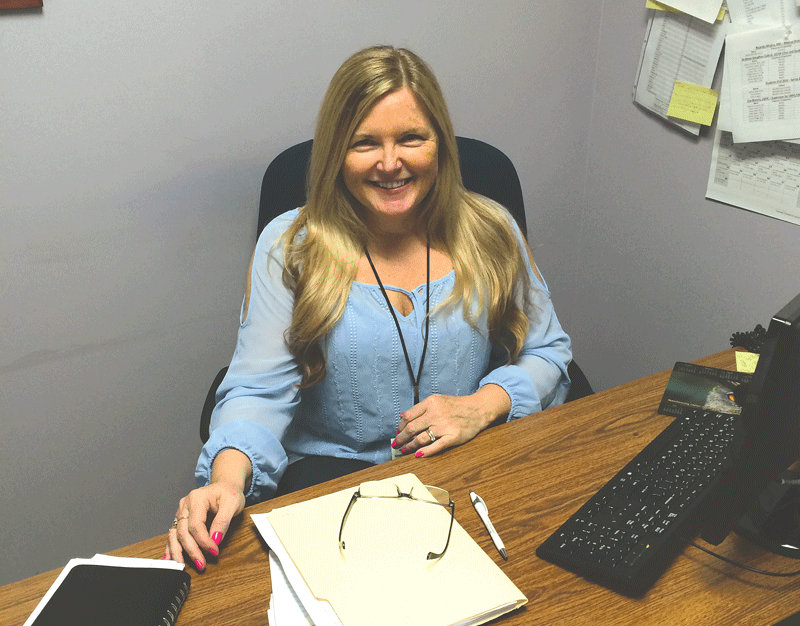
Community Spotlight Features

Community Spotlight

Moe Belliveau

Moe Belliveau

Moe Belliveau says it’s certainly not the most important part of her job. But it just might be the most meaningful.

She was talking about the ribbon cuttings that mark the openings of new businesses and expansions of existing ventures. As executive director of the Easthampton Chamber of Commerce, Belliveau, like her colleagues at chambers across the region, has taken part in more of these than she can count. In fact, after borrowing a pair of large ceremonial scissors for her first such celebration nearly three years ago, she ordered her own pair.

But despite some sameness, these ceremonies never get old, she said, because they’re not about her — or the various elected officials who might turn out for the ceremonies. No, they’re for the business owner or owners in question, and for many, it’s one of the biggest days of their lives.

“This is an important day for them — people put their lives into these businesses,” she explained. “And it’s important that these moments are celebrated.”

There have been many ribbon cuttings in Easthampton in recent years, said Belliveau, who took the helm at the chamber three years ago, noting that this former mill town continues to make great strides in the effort to reinvent itself as a center for the arts, retail, hospitality, and, in a word, vibrancy.

The most recent involved Corsello Butcheria, a Roman-style butcher shop opened by Vincent and Kasey Corsello on Cottage Street in April.

By Roman-style, Vincent means a butcher shop modeled on the one they frequented while living in Rome, an open-air facility where shoppers would stop and pick up something fresh for that night’s dinner.

A software project manager by trade — actually, he’s worked in various capacities — Corsello said he returned from Italy determined to become an entrepreneur and intent on starting his own butcheria. And he says Easthampton is the perfect landing spot.

In fact, his commentary sums up the thoughts of many now doing business there or supporting the business community in various ways.

“This is a truly authentic community with all the moving parts,” he told BusinessWest. “Twenty years ago, people would have said Easthampton’s best days are behind it; now, I think, and most people think, its best days are ahead of it.”

Meanwhile, the next ribbon cutting will likely come on June 10 at a venture known as Valley Paddler, which will bring paddle boats to Nashawannuck Pond in the center of the community.

There have been many others in recent years, involving restaurants, breweries (there are three of them now), arts-focused establishments, tech companies, and much more.

Together, they speak to Easthampton’s revival and vibrancy, or its “renaissance,” the word chosen by Mayor Karen Cadieux, who believes it fits.

She’s had what amounts to a front-row seat for this transformation as it has unfolded over the past quarter-century or so. Indeed, she served as an assistant to the selectmen and then the town administrator before Easthampton officially became a city in 1996, and then served in that same capacity to the community’s first mayor, Michael Tautznik.


Karen Cadieux

Karen Cadieux

What happens … is you have new owners who take abandoned buildings, and they bring new ideas to the table. And it becomes growth, and it becomes catchy.”


When Tautznik decided not to seek re-election after eight terms in office, he encouraged her to seek the corner office, which she did, triumphing in the 2013 election.

With all that experience at both desks in the mayor’s office, she spoke with some authority when she said “this is a working mayor’s position,” noting that those two people do it all, but they also work in partnership with a host of other individuals and agencies, including the chamber.

And much of that work, she said, involves making the city more business-friendly and a true destination for a host of constituents, including artists, tourists, craft-beer lovers, and, yes, those looking for a good place to set up shop.

As an example of these efforts in the name of business friendliness, she cited what have come to be known as ‘roundtable meetings.’ These are gatherings involving a prospective new business owner and a number of city officials, where questions are asked and answered and a road map of sorts is laid out for getting to another one of those ribbon cuttings.

“A meeting is scheduled with my office, and anyone who would be involved in the permitting process — the city planner, the building inspector, the fire chief, the DPW director, and others — all of them are there,” she explained. “They can ask anything they want, they bring in their plans, tell us their idea … and in that way, they’re prepared for when they go to the Planning Board.

“It has streamlined the process, and in the meantime, they know we’re willing to work them,” she went on, adding that these roundtables have met with a very positive response.

For this, the latest installment of its Community Spotlight series, BusinessWest takes an in-depth look at Easthampton, a city that continues to add new chapters to a compelling storyline of economic revival.

Lager Than Life

It might sound like a line from Casablanca, but in this case, no one who utters it has been misinformed.

People really do come to Easthampton for the water. In 2015, the city won the gold medal for the best-tasting water in the U.S. at the National Water Assoc. Rally in Washington, D.C.
Cadieux has a ceremonial coffee mug to prove it, although she and the city have much more substantial proof of that honor in the form of three craft-beer breweries that now call the city home.

“You need good, clean water, and lots of it, to brew beer,” said Belliveau, adding that Fort Hill, Abandoned Building, and New City Brewery are now helping to … wait for it … create a buzz in this community.

But while water is one of the main ingredients in the city’s revival, both literally and figuratively, there are many others. That list includes an abundance of old mill buildings with large expanses ready for imaginative reuse, public/private partnerships that have made such reuses feasible, a thriving arts community, with many of its members taking up space in those mills, and a city government looking for new and different ways to streamline the process of doing business here.

And now, another critical ingredient is a more active, more responsive chamber of commerce, one that Belliveau came to after a stint with the Westfield Business Improvement District before it was dissolved. She said she was drawn by the energy in the community and a desire to be part of the story that was being written there.

“I was between jobs and in a position to start a new adventure,” she told BusinessWest. “I could feel the buzz starting to rise and the excitement in Easthampton. And the city had an interesting combination — there’s an urban feel, but the city hasn’t lost its suburban charm; there’s an interesting intersection of all that here.”

Since arriving, Belliveau said she has been focused on taking the focus off of merely staging events — for fund-raising, networking, and other purposes — and bringing more value to members.

And that value has come in many forms, from so-called ‘listening sessions,’ where input is sought from businesses across different sectors of the economy, to a universal gift card redeemable at dozens of area businesses that are also chamber members.

“I did a lot of listening; I talked with everyone I could — members, non-members, former members — to try understand who we are and where we wanted to go,” she explained. “When I arrived, the board was very ready for some new energy, some new animation, and moving out into the world.

“We were event planners at that time — that’s what the chamber was,” she went on. “And we decided to do something new and different, and the board has embraced the idea of evolution.”

That specific tone of this evolution has been set as a result of reaching out to various constituencies — members and non-members among them — and responding to the feedback, she said, adding that she initiated something she called “listening lunches.”

One of the first was with restaurateurs and other hospitality-related business owners, she said, adding that this sector was not well-represented on the chamber at the time.

“We started at noon, and I figured people would be on their way by 1; instead, we were still talking at 2,” Belliveau recalled. “There were many takeaways, and one of them was their perception that we weren’t marketing this area as well as we should.”

The universal gift card was part of the response to that feedback, she said, adding that the chamber does essentially all of the heavy lifting — it markets and sells the cards. The original goal when things got started early last fall was to have 25 to 30 participating members on board, a target that was easily reached, and today there are more than 40 participants, and the number continues to rise.

The cards have been popular with the public as well, she said, adding that they sold well in the run-up to the holidays, and have been in demand recently, with graduations, Mother’s Day, and other events on the calendar.

There have been other initiatives within this evolutionary process, she went on, including collaborative efforts with other neighboring chambers, including Holyoke, Northampton, and Westfield, and new, more value-laden events, including a women’s leadership conference to be presented in conjunction with the Holyoke chamber, slated for Sept. 22. “The Art of Risk” will be the broad theme for the day-long conference, which will feature keynote speaker Angela Lussier, founder of the Speaker Sisterhood, a business devoted to helping women find their voice.

High-steaks Venture

As she talked about how Easthampton has evolved over the past quarter-century or so, Mayor Cadieux talked repeatedly about partnerships — on many levels.

They have involved private business and city government, the city and state, and among a host of agencies working within the broad realm of economic development, she said, adding that these efforts have succeeded in making Easthampton a welcoming city when it comes to both business and tourism.

As just one example, she cited the case of an entrepreneur looking to buy a commercial property (a former theater) on Cottage Street.

“The owner wouldn’t sell the property without the adjacent parking lot,” she explained. “But the new buyer didn’t have money for the parking lot, so what we did was obtain a grant for the parking lot, and it became a partnership.”

That was maybe 15 years ago, she went on, adding that there have been countless examples of such partnerships since, and these efforts by public agencies to help private business owners have created an environment conducive to continued growth and vibrancy.

“What happens in such instances is you have new owners who take abandoned buildings, and they bring new ideas to the table,” she went on. “And it becomes growth, and it becomes catchy.”

To sustain this momentum, the city has been diligent about finding ways to continue a dialogue with the business community and continuously improve and streamline the process of helping new businesses plant roots in the city.

The chamber’s listening sessions are one example of this, said the mayor, adding that another involved her successful efforts to attain a technical grant to gauge just how competitive the city is with its permitting process.

“From that, we started the roundtable meetings,” she said, adding that the response to such sessions has been overwhelmingly positive.

“All of our departments are communicating with a prospective new business,” she explained. “You don’t have to go from this department to that department to this department — we’re all right there. It’s another example of partnership, and I think it sends a really good message.”

That message was received by Vincent and Kasey Corsello, who cut the ceremonial ribbon in mid-April and are enjoying early success with a fairly unique venture that offers locally sourced food.

“We cut food to order — if you want a pound of ground beef, we’ll grind it right in front of you,” he noted. “If you want a steak, we’ll cut it right there so it will be just the thickness you want.”

Slicing steaks is a long way from software-development work, but after living and working in Italy for years and seeing how the butcheria was not just a source of fresh meat but also a gathering spot in the community, he decided he wanted to create one of his own.

His family settled in Easthampton, and the Corsellos quickly determined that this community was the right place at the right time for their venture.

“The town looks somewhat unassuming from the outside,” he told BusinessWest. “But has all those moving parts … it has its own truly local economy. I’m thrilled with it; there’s no place I’d rather be at this point.”

A Cut Above

Those ceremonial scissors Belliveau ordered have turned out to be a good investment. In other words, they’ve seen quite a bit of use over the past few years alone.

That’s a reflection of many positive things in the community, from its growing cultural community to the paddleboats soon to arrive on Nashawannuck Pond; from the universal gift card to those craft breweries; from the roundtable meetings to the Roman-style butcheria in the heart of downtown.

They all provide solid evidence of a renaissance, an evolution from an old mill town to a new and exciting destination city.

George O’Brien can be reached at [email protected]

 

Easthampton at a glance

Year Incorporated: 1809
Population: 16,036
Area: 13.6 square miles

County: Hampshire
Residential Tax Rate: $15.59
Commercial Tax Rate: $15.59
Median Household Income: $57,134
median family Income: $78,281
Type of government: Mayor, City Council
Largest employers: Berry Plastics; Williston Northampton School; National Nonwovens Co.; October Co.
* Latest information available

Construction Sections

Home Makers

An example of Laplante Construction’s work

An example of Laplante Construction’s work creating both indoor and outdoor spaces.

When it comes to custom homes, trends come and go, but buyers are always looking for the next big thing — or, to be more accurate, the next not-so-big thing, as one of those trends favors downsizing in favor of easier maintenance and more energy-efficient touches. But high-end homebuyers aren’t shorting themselves on the interior; they still want the best floors, trims, and technology money can buy. And many are turning to Laplante Construction to get the job done.

Ray and Bill Laplante both grew up around the construction business, so it’s not surprising they’ve made a name among the region’s top luxury home builders.

“My dad was a builder, and my older brother was a builder,” said Ray Laplante, who launched East Longmeadow-based R.E. Laplante Construction — since shortened to Laplante Construction — in the early 1970s. “I started out doing a lot of work for them, and after a few years, there wasn’t enough for me, so I went out on my own, doing remodeling and framing and building.”

At the time, duplexes were in vogue in Springfield, and he cut his teeth there, but soon started building custom homes in Longmeadow, Wilbraham, East Longmeadow, and surrounding towns. “Business just took off from there,” he said, and soon he was developing entire subdivisions of high-end residences in those communities.

His son, Bill, grew up in the business too, helping on job sites when he was only 13 years old.


SEE: List of Home Builders


“I would clean out houses, do final cleanings upon completion of houses,” he told BusinessWest. “Then I started in the framing crew, working as a mason tender and doing some finish work. I basically worked through all the way through high school and college, through the summer breaks and vacations.”

He graduated from Trinity College in 1992 with a degree in economics, but a few days after graduation, he was back out on job sites, where he worked for about five years, framing houses and performing myriad other tasks. But, though the experience was invaluable, his heart wasn’t in the field.

“So I started working in the office,” he said, “in project management and then in financial management and sales and marketing, touching virtually all aspects of contruction and understanding how everything goes together — all facets of building.”

Company founder Ray Laplante (left) and President Bill Laplante

Company founder Ray Laplante (left) and President Bill Laplante say a healthy mix of residential and commercial building and remodeling keeps their business thriving.

That’s the part of the business he enjoyed most, Bill said — working with clients on the big picture, and shepherding their vision to reality.

“Growing up, I always liked the idea of seeing something built,” he continued, “but I knew pretty early on, after getting out of college, that I didn’t want to stay in the field; I wanted to work with people, helping design and build what is, in many cases, their largest investment: a new home. That’s really what I’ve enjoyed. My passion is in working with the people and selling our services.”

Today, Bill Laplante serves as the company’s president, working alongside its founder to bring those visions to life — including, in 2014, a replica of Thomas Jefferson’s famed Monticello estate in Somers, Conn.

But luxury homes are only one staple of this family business, as it expands its reach in commercial construction as well, delivering a range of building and remodeling services with the diversity to weather economic cycles and record continued growth.

Estate of Mind

In fact, Ray said, Laplante takes on many different types of jobs, from single bathroom remodels up to large commercial buildings. “And every once in a while, you get a Monticello thrown in there.”

That’s not quite true, of course, as both he and Bill acknowledged that Monticello Somers, built at the behest of Friendly’s co-founder S. Prestley Blake, was a once-in-a-generation project. Ray and Bill Laplante designed the project themselves based on copious research into the original Virginia estate, creating a ‘modernized replica’ that’s historically accurate in the façade, yet decked out in 21st-century amenities inside.

“It was extremely interesting trying to recreate a building like that,” Bill said. “One of the most challenging aspects was trying to create a modernized interior within a very old exterior. And there were code issues that didn’t exist in the original Monticello.”

To be sure, custom finishes, modern touches, and code compliance have long been facets of Laplante Construction’s work building and renovating high-end homes in the Greater Springfield region. But, contrary to a Monticello-scale project, Bill said the trend in luxury homes today is moving away from massive floor plans and toward spaces that are smaller, but still pack all the bells and whistles.

While many homeowners are looking to downsize, Bill Laplante says, the company still puts up plenty of large homes.

While many homeowners are looking to downsize, Bill Laplante says, the company still puts up plenty of large homes.

“We’re seeing people generally downsize. There has been an increased demand for single-family living, low maintenance, and high energy efficiency. Many people are selling their 4,000-square-foot, two-story, inefficient colonial and want a 2,500-square-foot, very well-appointed, single-family house that’s very low-maintenance, which they can shut down and head to Florida over the winter and really reduce their operating expenses.”

He credits a desire for a simpler lifestyle; people are staying home more and enjoying the space they have, but don’t necessarily want to maintain a sprawling estate.

“It’s amazing — 15 years ago, we built one or two ranches. Nowadays, we’re building, six, eight, 10 ranches a year,” he went on. “That’s because of downsizing. Everyone used to want a colonial, but now focus on ranches and other things. It’s becoming desirable to buy those smaller homes and put money into them.”

And they are investing plenty of money into them, he added. “They want all the amenities — granite countertops, expensive finishes, Wolf and Sub-Zero appliances. They want those outdoor spaces, the screen porches, the outdoor kitchens, all very well-appointed.”

That goes for remodeling as well, Bill added, which has long been a critical part of the business — which was fortuitous when the market for custom homes dried up in the years following the financial crash in 2008.

“People weren’t building homes, but they were still trying to renovate their homes,” he noted. “What served us well was, we never abandoned the remodeling. Other builders at the time wouldn’t take on smaller remodeling projects; they were busy with bigger housing projects. We always maintained smaller remodeling jobs. Then, when the new-construction market dried up, we were well-positioned to respond to demand for remodeling as well.”

Those home remodels, which are often aimed at creating a getaway without actually having to get away, often include outdoor elements, particularly features that blur the lines between inside and outside living, Ray noted. “We’re starting to see a lot of outdoor-living projects — carriage houses, pool cabanas, outdoor kitchens, things of that sort.”

These can all carry hefty price tags, but, interestingly, other home costs have come down in recent years, notably whole-home technology — the devices that control heat, cooling, lights, security cameras, and irrigation remotely.

“The old ‘smart house’ was very expensive, but nowadays, with technology and with the iPhones and apps available, virtually every manufacturer has a product or an app that can be controlled on a cell phone from anywhere in the United States,” Bill explained. “That goes for heating, lighting, security cameras, you name it — and people are really embracing that. I mentioned people closing up the house and going down to Florida for the winter; they can check in with their phones, see what the temperature reading is in the house, or turn the lights on and off.”

clients want the interior well-appointed with high-end flooring, tile, trims, and technology.

No matter the size of the home, Bill and Ray Laplante say, clients want the interior well-appointed with high-end flooring, tile, trims, and technology.

Homeowners appreciate the cost reductions in that area, as they do the savings they realize from energy-efficient investments.

“Because of the spike in energy costs a few years ago, everyone became much more concerned with energy efficiency,” Bill said. “When people move from 4,000-square-foot homes into smaller, higher-energy-efficiency houses, they’re shocked by the savings in operating costs. We’re doing a lot with spray-foam insulation, energy-efficient windows, air sealing, and super-energy-efficient heating and cooling equipment. Then there are people who want to go even further, into geothermal heating as well as photovoltaic and solar.

“Some of these technologies, there’s not a great payback on, but there are some tax credits available to explore alternative energies,” he added. “And it makes people feel good to reduce their carbon footprint and be energy-conscious.”

Down to Business

Laplante Construction is widely recognized as a custom home builder, but its commercial roster is deep and far-reaching — and has been expanding over the past decade.

“Going back to the ’80s, when my father did a lot of Jiffy Lubes in the area, that type of work has always been there,” Bill said, “but I would say there’s been a resurgence over the past eight to 10 years in commercial. We’ve done a wide range of things, from banks to an eye-care office to a behavioral health clinic to Kringle Candle Country Barn in Bernardston to a school in West Springfield. We have a pretty good diversity of commercial construction.”

That mix of expertise promises to keep Laplante growing as it moves forward with what has been one of its best years in the past decade.

“Maintaining that diversity, and keeping the commercial work going as we do our residential new construction and remodeling, allows us to be flexible and weather turns in one or two sectors,” he told BusinessWest. “With the increase in commercial work, we feel very comfortable and confident moving forward.”

Joseph Bednar can be reached at [email protected]

Construction Sections

Blueprint for Growth

From left, the principals at Caolo & Bieniek Associates, James Hanifan, Bert Gardner, Curtis Edgin, and John MacMillan.

From left, the principals at Caolo & Bieniek Associates, James Hanifan, Bert Gardner, Curtis Edgin, and John MacMillan.

“More horsepower.”

That’s the phrase summoned by Curtis Edgin when he was asked to identify the primary advantage gained through the union of two architecture firms, Caolo & Bieniek Associates (CBA), which he serves as a principal, and Reinhardt Associates, a long-time competitor.

He would go on at length in his answer and use a number of different words and phrases, but the term ‘horsepower’ probably summed it up best.

He used it to describe everything the union brings to the table: experience, client bases, contacts within both the public and private sectors, and simple know-how — about this business, this market, and much more.

It’s a case of simple addition by … addition, said Edgin, noting that this new, larger firm has a bigger engine, if you will, one capable of fueling additional growth.

And by engine, he meant people in particular.

“In a service business, and especially architecture, it’s about the people; it’s not about tables and chairs and computers,” he explained. “Your main resource is the intelligence you bring to the table; architecture is about designs, but it’s really about relationships.”

John MacMillan, formerly president at Reinhardt Associates and now a partner with Caolo & Bieniek, agreed. With a larger team, he noted, the firm brings more experience to the forefront, especially in several specialty areas shared by CBA and Reinhardt, including schools, public-safety complexes, senior centers, and others.

“The competition is getting tougher, and you have to be able to show people more of what you can do,” he explained, touching on a theme he would return to often as he spoke with BusinessWest. “This union certainly strengthens the résumé; we can show 30 or 40 examples of past projects.”

Both MacMillan and Edgin agreed that, because of these shared specialities, talents, and especially relationships forged through decades of work with common institutions, cities, and towns, the union of the companies made sense on a number of levels.

“John and Reinhardt have a good, established client base, and CBA has a good, established client base,” Edgin explained. “And we thought that joining together those assets would be beneficial as we continue to serve those past clients and also pursue future clients.”

For this issue and its focus on construction, BusinessWest takes an in-depth look at the union of the two firms and what this additional horsepower means in terms of growth potential.

Progress — by Design

The walls of an architecture firm’s lobby — and this case, the conference room as well — usually tell a story.

It’s told through photographs and renderings of projects that have made it from the drawing board to reality — and the firm’s portfolio as well.

The walls within Caolo & Bieniek’s offices in Chicopee relate such a story, with images of schools, public-safety complexes, senior centers, bank branches, municipal offices, libraries, and more.

Actually, the walls and the images tell two stories — well, sort of. Caolo & Bieniek’s deep portfolio and wide diversity of projects mirror the body of work assembled by Reinhardt Associates.

The new Easthampton High School

The new Easthampton High School is one of many education-sector projects in the Caolo & Bieniek portfolio.

Indeed, both firms focused on both private and public-sector work, and especially the latter. In fact, they competed against each other for probably hundreds of individual projects for the better part of 60 years. (Caolo & Bieniek was founded in 1955, and the Reinhardt firm in 1957.)

These common specialties were among the most common-sense reasons for the firms coming together in what the principals prefer to call a “strategic alliance.”

Talks began sometime last fall, and they culminated in an agreement earlier this year that saw MacMillan and another architect join the Caolo & Bieniek firm.

As noted, the union gives the firm more horsepower at a time when it is certainly needed. Indeed, while the economy is relatively strong and work somewhat plentiful — in both the public and private sectors — competition for that work is as keen as ever.

And it’s coming from all points on the compass, especially the east, said MacMillan, where a number of Boston-area firms are becoming more aggressive in their pursuit of work in the 413 area code.

“We’re getting more competition from the east, including some of the larger firms, which have set up satellite offices in this area,” he explained. “And everyone is looking for specialists these days, so it’s harder to be a general practitioner.”

Overall, the firm intends to use its additional horsepower and existing strengths and contacts to generate more growth, said Edgin.

One of these strengths is simple diversity, a trait that helps keep operations afloat when one segment of the industry falls off, as school construction did years ago when the state cut back on funding. But it also helps when times are better and there are a number of projects to bid on.

And the company’s portfolio — not to mention those walls in the lobby and conference room — reveal that it has undertaken everything from restoration work on the clock tower of the Old Chapel at UMass Amherst to the new transit center in downtown Westfield; from a host of police and fire stations to school projects across the region and well outside it.

Roughly 75% of the joined firms’ portfolios fall in the public-sector realm, said Edgin, adding that schools are a big component of this work, and projects run the gamut from preschool to colleges and universities.

umasspolicefacility

Among the many projects in the Caolo & Bieniek portfolio are the new UMass Police facility, top, and the new Arrha Credit Union branch in West Springfield.

Among the many projects in the Caolo & Bieniek portfolio are the new UMass Police facility, top, and the new Arrha Credit Union branch in West Springfield.

The firms have collectively done a considerable amount of work for UMass Amherst, for example — the new police headquarters there is another example — and Westfield State University, where projects include a residence hall, classroom spaces, and the Eli Campus Center.

Public-safety complexes have become another strong niche, said MacMillan, noting that experience with such structures certainly helps in the highly competitive bidding process, and it has helped the firm amass nearly a dozen such projects over the years.

And he believes the combined experience of the firms helped CBA as it won the contract to build a new public-safety complex for the town of Westhampton.

Other specialties include libraries and senior centers, he went on, adding, again, that the firms have been very similar in the composition of their portfolios, although Reinhardt would often venture out of the 413 area code — it did a lot of work on both the North and South Shores of the Bay State — while CBA stayed closer to home.

The union of the companies also allows CBA to be more responsive because it can bring more resources to bear, said Edgin, adding that this is another important trait within a market that has become, in a word, more demanding.

“People want things faster, they wants things to be less expensive — they want it all,” he said. “By joining together, we can be responsive to clients.”

Building Momentum

Architects use numbers and images in their work, but, as Edgin noted, this is a relationship-driven business, where people make all the difference.

But ‘horsepower’ is a term that works, well, because it has a number of definitions, in this case the ability to offer valuable resources and experiences in efforts to serve the client.

And through this union of two former competitors, a larger firm can bring considerably more horsepower to bear.

George O’Brien can be reached at [email protected]

Modern Office Sections

Move Along

Mike Morin says sales of adjustable sit-stand desks are soaring

Mike Morin says sales of adjustable sit-stand desks are soaring as employers discover their health and wellness benefits.

It’s no secret that workers who struggle to stay healthy and fit can cost employers in myriad ways, from absenteeism to lowered productivity. That’s why more forward-thinking companies are launching wellness initiatives aimed at boosting their staff’s health and — by extension — their morale and job satisfaction. While they can take many forms, these efforts often start with a simple goal: get moving.

Attention, desk jockeys stuck at uncomfortable workstations: Mike Morin feels your pain.

“I’ve had jobs before where you get hired, go to the office and sit down at the computer, and you realize, geez, this is not how I naturally work,” said Morin, marketing and communications coordinator at Conklin Office Furniture in Holyoke. “I’ve had that moment where you step back and realize you’ve been hunched over the desk, staring at a computer screen for two hours.”

Many employers, however, are giving desk workers some relief by installing adjustable sit-stand desks, so employees have the option of working on their feet, which can improve blood flow, reduce tiredness, and avoid the long-term drawbacks of being largely sedentary for eight hours a day.

“People are definitely more concerned about health nowadays, in general and in the workplace,” Morin said. “We offer a sit-stand, height-adjustable desk, and sales are going through the roof with those. People are spending more time at the office — not just at their workplace, but at the home office as well. And they want desks they can stand at.”

One selling point, he said, is giving employees a choice, convincing employers they don’t have to go with a one-size-fits-all mentality. Sit-stand desks can often be incorporated right alongside traditional desks and tables, and can be designed to match the existing décor and furniture in the office.

Lisa Bowler says Baystate takes a holistic approach to employee wellness, as reflected by its wide range of programs to that end.

Lisa Bowler says Baystate takes a holistic approach to employee wellness, as reflected by its wide range of programs to that end.

It’s one way employers are taking a harder look at workplace wellness, incorporating not just equipment, but programs and incentives to keep their workers healthy, reduce absenteeism, and, in theory, lower costs in the long term.

Lisa Bowler, manager of Wellness and WorkLife at Baystate Health, says her employer has offered a raft of wellness benefits for many years, and sit-stand desks are an option many workers have chosen — but emphasized that they’re a very small part of the equation in a system where 60% of employees are clinical staff who are on their feet all day, not behind desks.

“It’s such a vast array of roles and types of jobs … the challenge is, how do we deliver wellness programs that make the most sense?” Bowler noted. “We offer a whole host of programs — a great variety — and we provide those resources to support our employees’ health and well-being because we know, in many ways, that contributes to a healthy organizational culture and also makes for a great place to work.”

Lisa Verville would agree. As Human Resources director for the O’Connell Companies in Holyoke, she has overseen a formal wellness committee launched two years ago that partners with Blue Cross Blue Shield (BCBS) to offer wellness-related apps, challenges, and incentive progams where not only employees, but their spouses can earn money for reaching activity and fitness goals. Employees are also reimbursed up to 75% for annual gym memberships.

The O’Connell Companies have always had a culture of caring about their employees,” Verville said. “This is another facet of that — making employees aware of things they can do and listening to what they want, and trying to provide resources that make the healthy choice the easy choice.”

Culture of Health

Mary Ellen Shea, Marketing manager at O’Connell, told BusinessWest that wellness efforts at the firm stretch back well before the formal committee. “There’s always been a culture of health,” she said, “but now I feel it’s been ramped up.”


SEE: List of Office Furniture Dealers in the Area


Employees earn points through the BCBS partnership for walking, hydration, and nutrition challenges, as well as completing online workshops, scheduling wellness visits, and other tasks.

“It encourages a holistic approach,” Verville said, noting that employees were surveyed on the types of programs they wanted to see. “It’s actually been a lot of fun. We also had our health fair last November, and it was fun to see people from all our companies get together. We provided incentives — gift cards, gift baskets — to get people to come, and we had a great turnout, and got a lot of good feedback; we’re looking forward to doing it again this year, with hopefully an even bigger event.”

While many employees try to participate in many wellness activities, one challenge for O’Connell is that it’s a geographically dispersed company, with several affiliate companies spread across the Valley. “So it’s hard to get everyone to participate in a lunch and learn, with so many employees out in the field,” she went on. “But the committee has representatives from every subsidiary, we get direct feedback on what works and what doesn’t work. Not every program is tailored to the same group; we try to offer a lot of variety while still focusing on what the needs and interests are.”

This fall, it will be easier to bring employees together for wellness activities when O’Connell moves into a newly built headquarters on Kelly Way in Holyoke, consolidating more of its operations under one roof. The project allows the company to incorporate wellness initiatives right into the building design.

“We have a great opportunity there,” Verville said. “When we move, the plan is to install, for those who want them, the adjustable workstations. We’re also thinking about walking paths and things of that nature, a fitness room with equipment in it, and there will be an area dedicated to the wellness seminars.

“It’ll bring more people together,” she went on. “The new building will provide a lot of new opportunities, and having more employees in one location will help encourage more collaboration and cohesiveness, and get more people involved.”

Bowler said Baystate has built a similar emphasis on wellness into its operations, which are even more spread out than O’Connell’s.

Lisa Verville

Lisa Verville says employees at the O’Connell Companies have taken enthusiastically to the wellness programs launched two years ago.

“We would define a culture of health as a work environment where our employees have the resources and tools and support that empowers them and motivates them to take steps to benefit their health,” she said. “We’ve evolved the program over the years, and we think it’s important to view health holistically. Programs are designed in such a way to help our team members learn how to make healthy lifestyle choices and help them manage their responsibilities at work and at home.”

The effort includes access to a WebMD portal that provides not only health information but access to fitness challenges. In addition, “we have walking clubs, mindfulness classes, two or three educational webinars each month, confidential counseling for employees and family members, Weight Watchers memberships free of charge, and a whole host of resources for parents,” Bowler said, not to mention smoke-free facilities since 2007.

Rising Tide

Many of the initiatives at Baystate and O’Connell mesh with the top workplace-wellness trends recently outlined by the Corporate Health & Wellness Assoc. These include:

• Lifestyle management, which may include cholesterol screenings, flu shots, sleep-management programs, and incentives (like gift cards or insurance-premium discounts) for participating in corporate wellness programs;

• Weight-loss programs, from yoga and Zumba classes on site to gym and Weight Watchers memberships, to offering healthy sbacks in the office;

• Redesigned workspaces, which include standing or treadmill desks, ergonomic chairs and headsets, and FitBit trainers and pedometers;

• Smoking bans in the office and accompanying smoking-cessation programs to help employees kick the habit for good; and

• Stress-management programs, including meditation instruction and guidance in everything from personal finance to parenting.

And programs don’t have to be tied to specific company initiatives, Shea said. “Usually twice a day, team members or employees meet in the lobby, go out, and walk together around the block.”

She and Verville said wellness programs conceivably lower costs for companies by reducing absenteeism — or presenteeism, where tired or ailing employees show up but are far from productive.

“We certainly have seen that,” Bowler added, noting that Baystate has won recognition from national business groups for its wellness policies. “Employees who regularly participate are more engaged, healthier, and more productive. Beyond that, having these programs available is the right thing to do. As an organization, we’ve taken the view that achieving a culture of health is not something that occurs overnight. We are in this for the long term and are committed to it.”

From talking to Conklin’s clients, Morin can tell interest is rising.

“Nowadays, people are obsessed with health, and for good reasons,” he said. “People are paying more attention to what they’re eating, so it’s natural they’re noticing how much time they’re sitting at a desk each day. Studies have come out claiming that sitting down for long periods of time is as unhealthy as smoking.”

That’s why he’s gratified that employers are increasingly tailoring office design to individual worker needs through flexible workstations. “In the past, offices were set up a certain way, but not everyone works like that. There’s a new focus in ergonomics where it’s more customizable.”

Bowler said companies of any size can make changes to improve employees’ health, and some — from walking clubs to lunch-and-learn sessions — don’t take much financial investment. “But to really get that return and change the culture, there needs to be a comprehensive approach.”

And it’s happening more and more, she told BusinessWest. “The concept of worker wellness has been around a long time. It just seems to be gaining more energy and visibility the last several years.”

And it can begin with something as simple as standing up.

Joseph Bednar can be reached at [email protected]
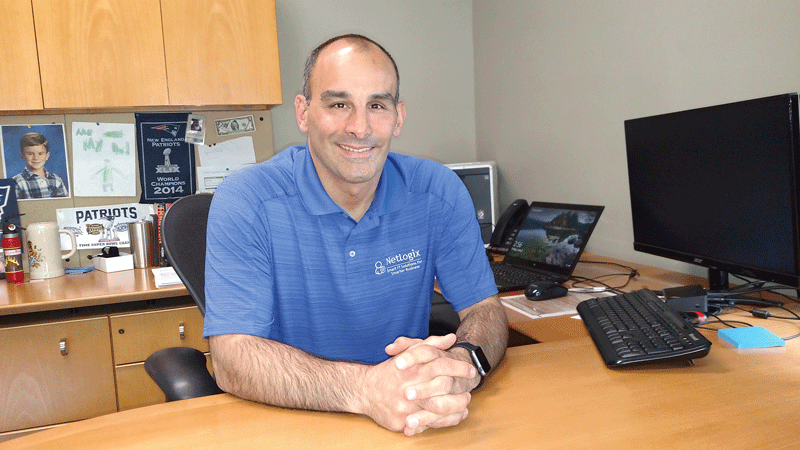
Modern Office Sections

Progressive Environment

Cooley Dickinson Health Care is no stranger to environmental awareness, recently earning the Greenhealth Partner for Change award from Practice Greenhealth for the fifth consecutive year.

Practice Greenhealth is the nation’s leading healthcare community dedicated to transforming healthcare worldwide so that it reduces its environmental footprint and becomes a community anchor for sustainability and a leader in the global movement for environmental health and justice.

The Partner for Change award is one of the organization’s Environmental Excellence Awards given each year to honor outstanding environmental achievements in the healthcare sector. The award recognizes healthcare facilities that continuously improve and expand upon their mercury-elimination, waste-reduction, recycling, and source-reduction programs. At minimum, facilities applying for this award must be recycling 15% of their total waste, have reduced regulated medical waste, are well along the way to mercury elimination, and have developed other successful pollution-prevention programs in many different areas.

Among Cooley Dickinson’s recent environmentally friendly practices, it has recycled 65 tons, or 85%, of the construction waste during the construction of the Comprehensive Breast Center at Cooley Dickinson Hospital; replaced kitchen dishwashers, saving 50% of water and energy use; arranged contracts for 3,500 kwh of solar power under a 20-year agreement, which is 30% of CDH’s annual usage; and replaced and upgrade lighting to LED technology in 15,000 square feet of the CDH property.


“Cooley Dickinson’s employees take pride in our sustainability efforts to lessen our impact on the environment and look forward to working with Practice Greenhealth to continue this work across the country.”


“As a Practice Greenhealth Partner for Change Award winner, Cooley Dickinson is committed to improving the health of our patients, staff, and community as a whole,” said Anthony Scibelli, vice president, Operations and chief administrative officer. “Cooley Dickinson’s employees take pride in our sustainability efforts to lessen our impact on the environment and look forward to working with Practice Greenhealth to continue this work across the country.”

Practice Greenhealth recently released its eighth annual Sustainability Benchmark Report, analyzing data from leading hospitals and health systems across the country, giving a snapshot of trends in environmental performance and sustainability in energy, water, toxics, food, and other categories. Among the findings:

• While U.S. hospitals emit an estimated 8% of the nation’s greenhouse-gas emissions, in the last three years, the percentage of facilities that have a written plan to address climate-change mitigation has nearly doubled. Also, the percentage of facilities that generate or purchase renewable energy has increased by 81%.

• Hospitals in the U.S. produce more than 4.67 million tons of waste each year. But in the last two years, the percentage of facilities that have taken measures to reduce the generation of pharmaceutical waste has grown by 11%. Leading hospitals are routinely achieving a 30% recycling rate — more than double the early EPA goal of 15%.

• More hospitals are purchasing products with safer chemicals. In 2016, the percentage of hospitals prioritizing furniture and medical furnishings free of halogenated flame retardants, formaldehyde, perfluorinated compounds, and PVC (vinyl) more than doubled from the previous year. A total of 78% of hospitals have chemical or purchasing policies that identify specific chemicals of concern to human health and the environment, with 79% purchasing certified green cleaning chemicals and 30% indicating they have programs in place to purchase furniture or furnishings that avoid chemicals of concern.

• Currently, U.S. hospitals use more than 7% of the nation’s commercial water supply. However, in the last three years, the percentage of facilities that benchmark water usage has doubled. During that time, there’s also been a 36% increase in the percentage of facilities that have a written plan to reduce water use over time with specific goals and a timeline. However, only 17% of hospitals reported any water-reduction projects in 2015.

“Our annual Sustainability Benchmark Report allows us to share how the nation’s leading hospitals are making progress year after year to improve health and reduce environmental impact while delivering strong financial return,” said Cecilia DeLoach Lynn, director of Sector Performance and Recognition for Practice Greenhealth. “We are proud to see more hospitals than ever appointing sustainability leaders to oversee environmental performance.”

Features

Designs on New Digs

Kerry Dietz, left, and Nancy O’Brien

Kerry Dietz, left, and Nancy O’Brien offer a tour of the space in Union Station that will become the company’s new home.

Kerry Dietz was asked about the circumstances that will bring the architecture firm she put her name on 32 years ago to the second floor of the recently renovated Union Station this summer, making her company the celebrated first tenant in the spacious office area of the landmark.

She paused for a long moment, as if she were reconstructing (that’s one industry term) the timeline of events in her mind, before summoning another phrase used by those in her profession.
“Let’s just say it was a process,” she told BusinessWest before breaking into a broad smile, something she would do repeatedly as she talked about this move, what it means for the company, and what it might mean for the nearly 90-year-old station itself.

But first, that process. It began, she said, with the realization that, while there are many reasons to love the company’s home for 22 years in the so-called Patton Building (circa 1872) on Hampden Street in downtown Springfield — everything from a large skylight to ornate tin ceilings to brass handrails — there just aren’t enough of them.

Or, to be more precise, perhaps, there are not as many as there were when this company was younger and smaller.

Indeed, the venture that started with three employees has grown to now boast 25, and they are spread over two floors of the Patton Building, said Dietz, noting that the company has grown within that building in an organic, but “not very thoughtful way.”

“One of the things that this space has are these great big offices,” she explained. “They were in many ways too big for two people, two small for three people … it’s lovely space and great windows, but it’s not an efficient flow, and it tends to isolate people.”

Nancy O’Brien, an interior designer with the firm who has spent the past few months designing the new space at Union Station, agreed. The existing space makes things logistically difficult, and collaboration … well, that’s not as easy as it should be.

“There’s no open studio space, so when we’re trying to collaborate, we’re running up and down stairs,” she noted. “That’s great exercise, but it’s not good for efficiency.”

Such introspection and close examination of quarters is commonplace when a lease is up, and this was the situation facing the Dietz company, said its founder, adding that this amounted to step one in that aforementioned process.

Step two was deciding whether these shortcomings were enough to warrant a move; eventually, the answer became what amounted to a “soft yes,” said Dietz, who at one point in the conversation with BusinessWest turned to O’Brien and, while adding up all that the company was leaving behind on Hampden Street, said under her breath,“tell me why we’re moving again?”

The answer to that question was the roughly 8,000 square feet of space now being fitted out just around the corner from the conference room where she was talking with BusinessWest.

Kerry Dietz says her company’s move into Union Station makes sense on many levels.

Kerry Dietz says her company’s move into Union Station makes sense on many levels.

“This is what an architect’s office should look like — or, at least it will be once we’re done with it,” said Dietz, referring specifically to the floor plan O’Brien had placed on the table. It revealed a spacious, wide-open area with light streaming in from large windows on three sides.

“We’ve got light coming in from all directions in this space,” Dietz said of the company’s new offices, adding that, in addition to more light, the space provides more and better space in which the team can function. “There’s not a single dark space there except for one little quiet room.”

On top of all that, the move places the company in a landmark building and within a landmark restoration and redevelopment effort, one that city officials believe will be a catalyst for further development in that area and a point of pride for the community.

Dietz said all these points were part of the discussion and part of that aforementioned process. She might have summed things up best by relaying the comments of one of her male co-workers.

“He said, ‘the 6-year-old boy in me is excited about being in a train station,’” she recalled, adding that she’s excited, too, and for a number of reasons.

Blueprint for Growth

Dietz called it “de-papering.”

No, that word is not in the dictionary, but it effectively conveyed her point.

Her company, which has, as one might expect, accumulated vast amounts of paper over its history and kept far more than it should have or needed, has been getting rid of some.

About 7 tons of it, to be exact.

“We’ve filled 49 of those recycling barrels — the big blue ones, not the little ones,” she said, using language everyone in business would understand. “That’s about 14,000 pounds of paper we took out, and we needed to. We don’t need 14 iterations of a schematic we did years ago; it’s all on computer.”

These de-papering efforts are just another part of that process that will have the Dietz company — which has designed everything from the UMass Center at Springfield to a number of senior-living projects to dorms at Smith College — in its new digs, one full floor above the station’s main concourse, by mid-July, according to the latest timeline.

That’s a very aggressive target date, said Dietz, noting that this process began just a few months ago, really, but it’s a timetable the company and the Springfield Redevelopment Authority, which manages the station, are quite eager to meet.

As for exactly when the process began, Dietz was having a harder time with that date, but she believes it was last fall, as the company began that introspective, forward-looking analysis that commences as a lease gets set to end, and soon decided that relocation was needed.

“I needed to move us to the next level,” said Dietz. “And this was a way to do that.”

She told BusinessWest she did look at a few other sites in Springfield, but admits that the search ended when she got her first look at the space being renovated within Union Station, a building she had never been in but had read and heard about — always with use of the past and future tenses — throughout her career.

That visit might have occurred earlier this year, by her estimation, although O’Brien recalls that the first tour was probably taken before the holidays. Whenever it happened, it was enough to soon take the discussion about whether to move, and to where, to a new place — its conclusion.

When asked about what cinched matters for her and the company, Dietz said there were many factors.

This included everything from the ability to eliminate those shortcomings with the space on Hampden Street to those aforementioned windows; from a desire to assist the city as it went about the stern challenge of making the station a viable entity to something that would resonate with any architect, and any business owner — new systems in an historic, nearly century-old building.

Indeed, above all, this move had to make sense for the company, and to Dietz, it did, on every level (still another industry term), especially the one regarding practicality.

“I wanted to be in a building that had all new stuff in it — brand-new systems, brand-new everything,” she explained. “But new stuff in an old, historic building — that’s even better; there’s history here that’s really quite wonderful.”

And with that, both she and O’Brien waxed nostalgic about the role the station and the trains that rumbled in and out of it played in the city’s history — while also expressing the hope that such prominence can be restored in the future.

“One of the things I’m really hopeful for, and I hope it happens in my professional lifetime, is the east-west train to Boston,” said Dietz. “I spend so much time on the road between here and Boston, and it’s such a waste of resources, time, and money. It’s crazy.”

Whether the east-west train becomes reality or not remains to be seen, but the Dietz company’s future in Union Station is already secure, and its founder is proud to be a big part of the next chapter in the landmark’s history.

Blueprint for Progress

As she talked with BusinessWest, Dietz was only a day removed from finalizing the furniture and the finishes for the new space in Union Station.

“It’s starting to get real now; we picked this color and that color … it’s really exciting, and I can’t wait to get in there and get to work,” she said, using words and phrases that could be echoed by countless others who have been involved with Union Station’s renovation for nearly four decades now.

Her company’s move has become part of a blueprint for progress at the station and within the city — in every sense of that phrase.

George O’Brien can be reached at [email protected]

Banking and Financial Services Sections

At This Early Juncture, We Honestly Cannot Tell

By Kristina Drzal-Houghton, CPA MST

Kristina Drzal-Houghton

Kristina Drzal-Houghton

President Trump’s skeletal outline of a tax package, unveiled at the White House late last month in a single-page statement filled with bullet points, was less a plan than a wish list.

Treasury Secretary Steven Mnuchin and Gary Cohn, the director of Trump’s National Economic Council, laid out the skeleton of a plan to reporters. They pitched his new tax proposal as a cut for the middle class and not the wealthy. However, it appears as if it would undoubtedly mean lower taxes for top earners, while the impact on middle incomes is less clear.

The proposal envisions slashing the tax rate paid by businesses large and small to 15%. Lowering the corporate tax rate from 35% to 15% is one of the most aggressive moves in the plan. The administration says it gets the rate down to where it is for most other industrialized nations.

Additionally, corporations would pay reduced or no taxes on foreign profits brought back to the U.S. It would be a special, one-time opportunity to bring home cash that they are parking overseas. They did not say how low that rate would be or how they would ensure that the money would be invested productively.

Pass-through businesses, such as S corporations and LLCs, would also pay the same 15% tax rate that Trump has proposed for corporations. As the name suggests, pass-through businesses pass their income through to their owners, who pay tax at their individual rates. For high-income earners, the rate could decrease from 39.6% to 15%. Critics have noted that this will not only benefit small family businesses, but also large business empires like Trump’s own.

On the individual tax front, the number of tax brackets for individuals is reduced from seven to three: 10%, 25% and 35%. The Trump administration did not say where those brackets begin and end. Individual tax rates currently have a ceiling of 39.6% and a floor of 10%. That lowers the top rate by nearly five percentage points, easing the tax burdens on most Americans, including, again, the rich.

Under the plan, the top federal capital-gains rate is cut from 23.8% to 20%. This is achieved by eliminating a 3.8% tax that is used to fund the Affordable Care Act. The reduction is meant to create greater incentives for people to invest.

Currently, single individuals have a standard deduction of $6,350, and married couples can deduct $12,700 from their taxable income. The president’s plan would double the standard deduction. That is intended to put more money in the pockets of the average taxpayers who do not itemize their deductions. It has the added benefit of simplifying the preparation of tax returns for more people. Cohn tried to frame this as a benefit to middle- and lower-income people who don’t have deductions, saying some people would pay little or no taxes under Trump’s plan.

The one-page blueprint proposes, without specifics, to “eliminate target tax breaks that mainly benefit the wealthiest taxpayers.” The proposal would scrap most itemized deductions, such as those for state and local tax payments, a valuable break for taxpayers in Massachusetts and Connecticut, which have high income-tax rates as well as real-estate taxes. But the president would leave in place popular breaks for mortgage interest, charitable contributions, and retirement savings.

The plan would eliminate the estate tax and alternative minimum tax, a parallel system that primarily hits wealthier people by effectively limiting the deductions and other benefits available to them — both moves that would richly benefit Trump himself.

In a brief session with reporters, Cohn and Mnuchin said they had been toiling for weeks on the proposal, much of which closely resembles the plan Trump championed as a presidential candidate. They argued that it would spur robust economic growth that would, along with the elimination of deductions, cover the potentially multi-trillion-dollar proposal entirely, a prospect that even many Republicans believe is virtually impossible.

“This will pay for itself with growth and with reduction of different deductions and closing loopholes,” Mnuchin said, repeating his optimistic estimate that the plan would spur the economy to grow at a rate of 3% annually. “The economic plan under Trump will grow the economy and will create massive amounts of revenues, trillions of dollars in additional revenues.”

The non-partisan Committee for a Responsible Federal Budget has estimated that the Trump outline could cost $5.5 trillion in revenues. The likelihood of our needing to worry about the accuracy of this estimate seems slim given recent developments.

Congressional leaders reached a bipartisan agreement on April 30 to fund the government through September, effectively ending any suspense about the possibility of a government shutdown. The agreement includes increased funding for the military and for border security. But it does not include funding for the wall that President Trump wants to build along the border with Mexico, one of his major campaign promises.

While the agreement avoids the embarrassment of a government shut-down, it also gives a glimpse of the reluctance of lawmakers to bend to Trump’s spending priorities, like his desire for sharp cuts to domestic programs, with the increase in funding for medical research a prime example.

While you may want to consult your tax adviser about the possible benefits the Trump plan would have on your taxes, I would suggest you hold off on changing your withholdings or estimated tax payments for 2017.

Kristina Drzal-Houghton, CPA MST is the partner in charge of Taxation at Holyoke-based Meyers Brothers Kalicka, P.C.; (413) 536-8510.

Community Spotlight Features

Community Spotlight

Greenfield Mayor William Martin

Greenfield Mayor William Martin says the town is keeping pace with change through major projects and investments that will serve future generations.

Mayor William Martin recently acquired a book about Greenfield that was published in 1912. He keeps it in his office, and during a recent visit by BusinessWest, he culled through it and pointed out initiatives integral to the town’s economic development that mirror historic advances in the book that were considered progressive in the early 20th century.

They include increasing density downtown, attracting businesses where growth is occurring, and developing town-owned energy companies, while continuing to meet the needs of residents.

“We have taken ideas from the past and brought them into the modern day, which is very, very exciting,” Martin said. “Greenfield is a unique, progressive, and supportive community whose roots go back centuries in time; although people have come and gone, the spirit here remains the same.

“We were called a progressive community 150 years ago and are being called that again today,” the mayor continued, as he spoke about how the town is keeping pace with change through major projects and investments that will serve future generations.

They include the new, $70 million Franklin County Justice Center which opened its doors about a month ago after two and a half years of planning and construction. “It brought people back downtown and consolidated the county’s judicial system into one building,” Martin said, adding that, although some downtown businesses suffered when the old courthouse was closed and the offices were temporarily moved, there has been a revival of vibrancy due to an increase in traffic from courthouse employees, attorneys, and people who visit the justice center to resolve legal issues.

“In addition to housing the Franklin County court system, the center is home to preventive and social-justice offices for the afflicted and the addicted,” Martin said.

The increase in visitors created an immediate need for more downtown parking, which is being addressed. Construction will begin in July on a new, $10 million, four-story Olive Street Garage that will have a solar canopy on its upper floor and offer 355 parking spaces, charging stations for electric vehicles, and spots designated for bicycles and motorcycles.

It is being built on the site of a former parking lot and is expected to alleviate traffic congestion since it is located a block from the courthouse and across the street from the John W. Olver Transit Center, which serves Franklin County Transit Authority bus routes and provides inter-city bus service, as well as a train station that houses Amtrak’s Vermonter line.

“Greenfield is the capital of Franklin County and has always been an active transportation center. Our history dates back to the time of steamboats and stagecoaches which brought supplies to the hilltowns,” Martin said.

He noted that Robert Cartelli, who owns Ford Toyota of Greenfield and recently built a new, $8 million dealership, preserved several historic bas-relief caricatures of stagecoaches, planes, and trains that were on his old building and donated them to the town. One will be mounted on each floor of the garage, and the floors will be named after the sculptures.

A large monitor will also be installed that will serve as an educational showcase for the town’s transportation history and allow visitors to learn about its importance in Franklin County.

For this, the latest installment in its Community Spotlight series, BusinessWest looks at the many initiatives and projects taking place in Greenfield that are adding to its vitality and ensuring the town keeps pace with the future.

Continued Progress

Healthcare is an industry that is experiencing rapid growth, and projects in Greenfield reflect that trend. The Lunt Silversmiths property, located about 1.5 miles from Main Street and downtown, has undergone substantial reconstruction, and phase 3 is being completed by the developer 401 Liberty Street, LLC.

One of three buildings slated for redevelopment has been converted into a residential medical treatment center with 65 beds that is operated by Behavioral Health Network. That structure also houses two residential clinics that opened last fall, and Clinical & Support Options will soon move into a 15,000-square-foot renovated space in another building.

When the renovation is finished and the remaining 15,000-square-foot space is occupied, the property will have generated several hundred new jobs and increased taxes from $2.2 million to $11 million.

“The former brownfields site has been put to good, productive use,” Martin said.

He explained that the town purchased the property after Lunt Silversmiths went bankrupt, and the acquisition included a number of ballfields on 6.62 acres of the 11-acre parcel that had been used by youth baseball teams for more than 50 years.

“During negotiations that were associated with the sale, the developer agreed to create a mini-Fenway Park that will contain three playing fields for youth in the community that will open in August,” Martin said.

greenfieldfact

Health services and businesses in Greenfield are on the rise, and the Center for Human Development plans to move its Clinic for Behavioral Services and Community Health Clinic into 104-106 Main St., the former home of an antique and used-furniture business.

“The health clinic serves several thousand clients each month, which will help us reach our goal of increasing density downtown,” Martin told BusinessWest.

In addition, the First National Bank and Trust building downtown, which has been unoccupied for more than two decades, is being acquired by Greenfield Development Authority.

Martin said the state approved the town’s application to establish a cultural district last fall, and plans for the structure include creating a flexible space that could be used for plays, theater productions, an international marketplace during the winter, and an indoor seasonal farmer’s market in the spring, summer, and fall, as well as a gallery and museum to house the city’s antiques, including a Concord coach, an original pump from the Fire Department, a liberty bell, and a golden cane.

“This is a magnificent space in the center of Greenfield that will be used by the community and serve the interests of many residents,” the mayor said.

The Abercrombie Building, another structure downtown in the buildings along Bank Row, will also be put to new use when the state takes over 15,000 square feet and turns it into the Franklin County Public Attorneys’ Office. Martin noted that the building has been unoccupied for about 20 years, and its reuse fits in well with the idea of increasing foot traffic downtown.

Greenfield has also taken a proactive stance toward energy and technology because these sectors will play a vital role in ensuring its independence as well as its ability to attract new businesses.

Greenfield Light and Power began operating as a municipal aggregation plan more than a year ago, and brought lower-cost electricity to the community and measures to procure it from renewable sources.

Since it went online, all electricity used in the town is 100% green and is priced at $8.02 per kilowatt hour, which is less than the cost of electricity supplied by Eversource.

“Greenfield Light and Power was started by the town in the 1880s, then sold to Western Mass Electric in the 1930s. But today we have our own power company again,” Martin said, as he continued to outline the town’s history.

Another major initiative was born last year when the Town Council approved a $5 million bond to create a municipal broadband network that includes Internet, phone, and data services.

Greenfield Community Energy and Technology, commonly known as GCET, will pay for itself now that it is up and running. The mayor said the town will begin taking subscriptions within the next 60 days.

“We’re taking ideas from the past and giving them new life. It’s exciting that things done 150 years ago are the same things we want to do today. Our generation is replacing institutional landmarks, and we hope our Internet service and electric company will continue to operate into the next century,” the mayor noted, explaining that the goal was to provide the most current, fastest service for businesses in Greenfield at no cost to the taxpayer, which is part of the town’s strategy of making investments in capital projects to satisfy needs in the private market.

The town recently issued a request for proposals to demolish the former Bendix Corp. building and draw up a plan for the 17-acre brownfields site. The project is in the final stages of cleanup, and Martin said the city is working with Honeywell Corp., which is responsible for site remediation.

International Container Co. has also announced plans to move from Holyoke and build an 80,000-square-foot building in Greenfield. “We have been meeting with them for eight months, and they hope to start construction in August and hire 65 new employees after they open,” Martin said.

Eye to the Future

Improvements to the public-school system are ongoing. The new, $66 million Greenfield High School opened its doors in the fall of 2015 and sports new playing fields, a concession stand, and a track.

“The first track meet was held behind the building several weeks ago,” Martin said as he outlined other educational investments: Greenfield Community College’s establishment of a downtown campus; the Mass. Virtual Academy at Greenfield on Main Street, which was the Commonwealth’s first virtual K-12 public school; and the recent completion of $1.8 million of work at Federal Street School.

In addition, Greenfield’s Math and Science Academy, which serves grades 4 through 7, is being moved from the Federal Street School to Greenfield Middle School so more students can take advantage of its advanced curriculum.

Progress is also being made on the new 10,000-square-foot John Zon Community Center, which will be designed to meet the changing expectations and needs of seniors in the community.

Forish Construction in Westfield is in charge of the $4.5 million project and began demolition of a 15,000-square-foot brick building at the intersection of Pleasant and Davis streets several weeks ago. The town-owned structure was built as a school in 1908, operated as a hotel and apartments in the ’80s, then used as the public-school administration center.

“It’s an exciting project,” Martin said, explaining that the school’s administrative offices have been moved into the bottom floor of Greenfield Middle School.

Greenfield has also reorganized its Veteran’s Service Department that is the hub for all towns in Franklin County. In addition to a downtown office, it has a van that serves disabled vets in their homes.

“They deserve to get the care they need and also bring in between $7 million and $10 million a year in benefits, which affects our economy,” Martin said, noting that the town recently held a symposium for veterans at Greenfield Community College that dealt with Agent Orange and 43 diseases presumed to originate from exposure to the deadly chemical that was used during the Vietnam War.

In another part of town, the Eunice Williams Bridge has been restored. The historic covered structure was knocked off its abutment during Hurricane Irene and downgraded to a pedestrian bridge. But thanks to $9 million from the Federal Emergency Management Agency to cover damages in the town resulting from the storm, the abutment was replaced, and the bridge has been upgraded for vehicular travel.

Martin said Greenfield has received a number of awards in the past few years. Green River Park was feted with the 2017 Design of Facility Agency Award from the Massachusetts Recreation and Park Assoc. for major renovations that include a new basketball court, pickleball court, playground, pavilion, dog park, parking area, and Americans with Disabilities Act improvements.

And in 2016, Greenfield was designated as a Crossroads Cultural District by the Massachusetts Cultural Council, and honored by American City & County magazine as a Crown Community for pioneering locally generated renewable-energy certificates into the Greenfield Light and Power Program.

A LEED Gold certification was also awarded at completion of the new Greenfield High School, and the town was recognized for the fifth time as a Playful City USA by the national nonprofit KaBoom!, which honors cities and towns that ensure that all children, particularly those from low-income families, get the balanced and active play they need to thrive.

The mayor said these accolades and Greenfield’s continued progress has not come about by accident; rather, they are a result of action that has been taken with an eye to the future.

“I have dedicated myself to making Greenfield a city that is on the precipice of inventiveness, always moving forward while maintaining a dedication to fiscal responsibility,” he said. “We will continue to look for private investments that will enhance long-term development, generate revenue and jobs, and add to our tax base.”

This is a recipe from the past that should yield equal success in the future.

Insurance Sections

Culture of Safety

riskmanagementMention insurance to someone, and chances are they’ll think of buying a certain level of coverage against loss, damage, or other adverse events. But when it comes to business insurance, that’s just one aspect of protecting a company. Just as important is risk management, which is essentially the process of implementing steps to reduce the probability of such dangers. It’s a win-win effort that saves money for both insurance companies and their clients — and often saves lives, too.

Insurance, Bill Grinnell noted, is a transfer of risk, an investment a business makes in protecting itself from the costs of accidents, fraud, theft, and any number of other occurrences.

“You can manage risk in different ways,” said Grinnell, president of Webber & Grinnell Insurance in Northampton. “You can buy insurance to protect against exposures, but you can also reduce the risk of exposures — and your costs will be lower.”

He was talking about risk management, which can take many shapes, but typically refers to the mitigation of risk to avoid an accident or other incident that could trigger a costly insurance claim.

Risk management is big business for insurance carriers, who employ professionals with industry-specific expertise to help businesses cut down on their exposure to risk, thereby saving both the insurer and client money.

Bill Grinnell

Bill Grinnell says reducing risks is the best way to lower the cost of insuring against exposures.

“Some of it is common sense. But sometimes it takes paid professionals to come in and make recommendations to help devise solutions,” said Timm Marini, president of HUB International New England in East Longmeadow. “The larger employers have their own safety officers and risk-management officers, but even they often rely on people like us.”

He said one of HUB’s calling cards is its network of individuals around the country who develop and help implement industry-specific workplace strategies to reduce risk, from driver training to hazardous-materials edcuation. “Within each discipline, there are very specific types of expertise available.”

Shellye Archambeau, CEO of MetricStream, a provider of governance, risk, and compliance software solutions, recently wrote that the hallmark of a good risk-management program is a pervasive risk-assessment culture that starts at the top, and is built on sound policies, training programs, and incentives.

“For organizations to not only survive, but thrive in this new landscape, they will need to build better resilience. That means gathering, analyzing, and learning from the past, so that decision makers can take measured steps to deal with the next major volatility or stress,” Archambeau noted. “It also means having the right risk data at the right time to understand how to diversify or disperse risks, so that no single risk has a major impact.”

The exposures that HUB works with companies to mitigate, Marini told BusinessWest, are diverse and always changing. For instance, while many accident-prevention strategies in manufacturing have been around for decades, now employers must deal with a demographic shift: Americans working longer in life than before, leading to higher-than-ever instances of joint deterioration and a subsequent boost in workers’ compensation claims related to joint injury and replacement.

Then there’s the new high-tech culture as it intersects with driving, a concern for companies with employees who work on the road. “With new technology in vehicles, we’re seeing more distracted drivers,” Marini said. “That creates increased exposure; when drivers get distracted, it’s very similar to drunk or impaired driving.”

SEE: List of Insurance Agencies in Western Mass.

Grinnell agrees, saying, his agency insures many firms in trucking, fuel-oil transport, and other fields where driver safety is a concern. “So we’re seeing more webcam technology, GPS technology, and technology that tracks the speed of the vehicle, sudden starts and stops, swerves … all that gets recorded.”

It’s a way to both incentivize driver safety and to record the true facts of an accident, both of which affect a company’s bottom line. But another high-tech concern is causing an even greater stir these days in the world of risk management.

Breach Combers

That would be cybersecurity, an area of interest for just about every company, large or small. Not every breach causes exposure on the level of a Target or Home Depot, but any avoidable damage can harm a company’s bottom line and reputation.

“Those companies that keep medical records, Social Security numbers, and credit cards are expected to be more diligent in protecting their data than businesses that don’t have so much of that exposure,” Grinnell said. “You need to be sure you’re not only protected, but in compliance with some pretty stringent laws.”

More and more, Marini added, insurance agencies are working with clients to control cyber privacy and protect information. “It runs the gamut from healthcare to manufacturing. If people get in, they can disrupt your business and hold you hostage. We’re spending a whole lot of time developing capabilities to help our customers protect themselves from cyber exposure and risk.”

Timm Marini

Timm Marini says technology is posing new risks, from data breaches to drivers distracted by their devices.


One way it has done that is through the use of certified friendly hackers. “We’ve actually put on some seminars with the FBI, where our friendly hacker goes in and shows how easy it is to permeate your firewalls. For 97% of businesses, it’s not a matter of if, but when something of this nature will happen.”

But he also returned to that concept of creating a culture of safety where each employee understands the risks of, say, leaving a laptop open, neglecting strong password protection, or falling for phishing e-mails. “Those moments of carelessness may be having the same password for everyone, or keeping printed materials of a private nature in your vehicle.”

After all, employee negligence may limit insurance protection, noted Lorelle Masters,  a partner at the international law firm Perkins Coie, in Risk Management Monitor. “Although many businesses have crime insurance that covers ‘computer-systems fraud,’ ambiguous provisions or liability limits may restrict coverage,” she noted. “Some courts have held that fraud coverage applies only when intrusions are unauthorized, but not when an unwitting employee falls prey to an online scam.”

For other types of risk exposure, insurance companies rely on the guidelines laid out by the National Fire Protection Agency, the Occupational Safety and Health Administration (OSHA), and other work-related protection agencies — as well as their own, industry-specific expertise — to determine exposure to loss and help companies reduce it.

For instance, manufacturers need to train employees in handling hazardous chemicals and working around dangerous machinery and sharp cutting edges. Much like the friendly-hacker concept, many risk managers conduct mock OSHA inspections, so companies can locate and iron out safety issues before the real thing — when mistakes can lead to hefty fines. Businesses may also choose to make structural changes to their buildings if they’re located in a flood zone, near a faultline, or otherwise geographically vunerable.

Once risk is mitigated to whatever degree is possible, an insurance carrier can then assume the remainder of the risk.

“Risk management boils down to the owner and management of a business making safety a priority and really instilling in their managers to preach safety — and hold them accountable for the safety of their workers,” Grinnell said. “It’s amazing how much common sense can protect a business. On the other hand, if it’s all about profit and productivity and squeezing as much business as you can into one day, then safety falls to the side, then accidents are going to happen. When businesses get the culture of safety right, the rest kind of falls into place.”

Stepping Up

Grinnell noted, however, that many insurance companies do a mediocre job helping companies reduce risk. “Most insurance companies go out for the first visit and make sure companies have their act together, but they don’t repeat that visit or check up on them,” he said. “Some companies do offer more comprehensive risk-management services, but they’re few and far between, so companies are left to rely on their own devices to figure out their risk-management steps. We do offer a fair amount of those services.”

With the risk-management and regulatory-compliance worlds intersecting in a more complex way for businesses these days, Marini said HUB’s emphasis on providing resources to help clients navigate their risks is a definite benefit. “We have all of that available for our customers. Ninety-nine percent of the time, it’s part of the arrangement.”

Some risk-management startegies are simply common sense, from not leaving customer data lying around to shredding rather than throwing away sensitive documents; from maintaining eye-wash stations where chemicals are handled to installing cameras in parking lots and entryways to record the verity of slip-and-fall accidents that often lead to costly lawsuits.

“Those types of controls have been around for a long time,” Grinnell added. “You basically do an assessment of the business, whether you’re trying to prevent hands getting caught in machines or exposure to hazardous materials or fall exposure, whatever. There are safe practices to follow to protect yourself against all those hazards.”

Although no company can ever say it’s totally safe from the myriad events that cause disruption, financial loss, and injury — or worse — it’s clear that developing that culture of safety, with all the details that go into it, can significantly reduce exposures and help employers sleep better at night.

“You may think you’re running the best operation in the world,” Grinnell said, “but if you’re not thinking about these exposures, you’re leaving yourself vulnerable.”

Joseph Bednar can be reached at [email protected]

Features

Program Recognizes Excellence, Innovation, Service to Region

healthcareheroeslogo021517-pingThe time for talk is over; the time for action is now.

That’s action in the form of nominations for Healthcare Heroes, an exciting recognition program involving the Western Mass. healthcare sector, launched this spring by BusinessWest and HCN.

Presented by American International College with supporting sponsors Bay Path University, Elms College, and Renew.Calm, with additional sponsorships available, the program was created to shed a bright light on the outstanding work being done across the broad spectrum of health and wellness services, and the institutions and individuals providing that care, said Kate Campiti, associate publisher of BusinessWest and HCN.
Nominations are now being sought — and they will be accepted until June 29 — in the following categories:

Categories

(Click on each category to go to it’s nomination form)

The nominations will be scored by a panel of judges to be announced in the coming weeks. The winners will be chosen in July and will be profiled in the Sept. 4 issue of BusinessWest as well as the Sept. issue of HCN.
What follows are the guidelines to consider when nominating individuals, groups, or institutions for these various categories. All this information and applications will be available at businesswest.com/healthcare-heroes/healthcare-heroes-nomination-information-criteria/.
As you consider the award categories, please keep in mind the following guidelines in preparing your nomination:
Criteria: The criteria for the award and how the nominee fits the criteria for the chosen category;
Accomplishments: What are the nominee’s specific accomplishments, and how were they achieved;
Impact: What measurable impact the nominee has had on the population served in the health and wellness community;
Uniqueness: Is there anything else that makes the nominee exceptional or unique? Provide any other information that will aid in the judges’ consideration of the nomination; and
Eligibilty: Nominees must work in either Hampden, Hampshire, Franklin, or Berkshire county, and organization nominees (which may be for-profit or not-for-profit) must have offices in Hampden, Hampshire, Franklin, or Berkshire county; nominations may be self-nominated or nominated by another person; and nominees cannot be a member of the judges’ panel or a member of a judge’s immediate family.

Award Category Descriptions

(Click on each category to go to it’s nomination form)

Patient/Resident/Client Care Provider

Who is eligible: Company or organization which has shown leadership and excellent service over a sustained period of time by providing quality care, and is considered exemplary by patients and peers.

Judging Criteria: The judges will be looking for evidence of high quality care and continuous improvement. Successful submissions should also demonstrate an area of going above and beyond in terms of training, new programs, best practices, and staff/service user engagement.

Innovation in Health/Wellness

Who is eligible: A company, organization, individual, or group of individuals responsible for development of a new procedure, treatment, program or service that can save lives or improve quality of life. The award may be given for either new innovations or for the refining of existing procedures, treatments, programs or services.

Judging Criteria: The innovation should be expansive in scope so that it now, or could in the future, affect many people’s lives. The application should provide information on the size of the target population and the potential dollar value of the market.

Community Health

Who is eligible: Company, organization, individual, or group of individuals responsible for promoting healthy living, bringing attention to a health/wellness issue, or solving a problem through community outreach.

Judging Criteria: Impact on the community, fulfilling a need otherwise not met in the community.

Examples but are not limited to: Community education efforts, donation of facility resources for community use, outreach to at-risk youth, volunteer service projects, events and activities designed to address local community needs.

Emerging Leader

Who is eligible: Individual, early in their career, who is making a significant impact in the health/wellness industry, exemplifying true leadership, and acting as a role model for others.

Judging Criteria: The judges will be looking for an individual who is rising through the ranks and establishing themselves as future leaders in the health/wellness industry. The winner of this award will be someone who outshines their peers in many ways and helps their organization surpass the competition.

Collaboration in Health/Wellness

Who is eligible: Two or more entities which demonstrate creative and effective collaborations for the purpose of addressing significant health and wellness needs or common problems and standards in community.

Judging Criteria: The judges will be looking for evidence of excellence in strategic collaborations promoting cooperation, sharing of resources and expertise and mutual support with a focus on outcomes, value and initiatives. Effective elimination of organizational silos and promotion of more holistic approaches to care and service.

Health/Wellness Administration/Administrator

Who is eligible: Individual, or group of individuals, whose performance, care and leadership is considered exemplary by patients and peers.

Judging Criteria: Increased efficiency in the delivery of services, increased employee morale, improved profitability.

Lifetime Achievement

Who is eligible: Individual who has dedicated their career to improving the quality and delivery of healthcare in the Western Mass. community. This person should have at least 20 years in the health/wellness field.

Judging Criteria: A lifetime career in the health care field, making an impact through care, either by the number of people affected or the scope of his/her contributions, dedication to his/her field.

Submitting multiple nominations does not enhance your chances of winning.

Cover Story Restaurants Sections

Your Annual Guide to Eating Out


restaurantguidedpThe Western Mass. region is well-known for its culinary diversity, offering nearly endless choices when it comes to cuisine, atmosphere, price range, and overall experience. For our 2017 Restaurant Guide, we made our way to four restaurants — from a 40-year-old icon to newer establishments well on their way to becoming household names. There’s plenty on the menu, so read on.

SEE: List of Restaurants in Western Mass.


‘Accommodating Cuisine

At Sierra Grille, they’re not fixing what isn’t broken

Upwardly Mobile

Cima is making more history at a long-time dining destination

Pop On Over

Judie’s continues to draw a crowd 40 years after its opening

Taking a Simple Approach

The Alvah Stone offers a view — and much, much more

Restaurants Sections

‘Accommodating Cuisine’

By Kathleen Mellen

Sierra Grille sous chef David Moses has his eye on pleasing the customer.

Sierra Grille sous chef David Moses has his eye on pleasing the customer.

We’ve all been out to dinner with that person: you know, the one who pores over a restaurant’s menu and then tries to reinvent it on the spot.

“I’d like the tuna,” your companion might say, “but instead of the baked potato you have listed here, I’ll have mac and cheese, and rather than a salad, I’ll go with butternut squash.”

Let’s face it; the creative orderer can be a waitstaff’s nightmare. It’s why you’ll see the words “no substitutions, please” on so many menus.

But not at Sierra Grille, where diners are invited to build their meals at will, from a menu that features a dozen entrées, 18 ‘small bites,’ 10 special sauces, seven choices of salads and paninis, and nine sugary desserts — and that’s not counting the sliders, soups, and daily specials.

Say you’re craving a blood-red tenderloin steak, but you aren’t a meat-and-potatoes fan, per se, and would prefer a double order of locally grown asparagus in place of the more traditional spuds. No problem. Or, maybe it’s meatless Monday, and your mouth is screwed up for seitan or tempeh, cooked on a veggie-only grill, and paired with royal basmati rice and grilled vegetables. Sierra Grille has you covered.

SEE: List of Restaurants in Western Mass.

This place is a mix-and-matcher’s delight.

“I call it an accommodating cuisine,” said Sierra Grille owner O’Brian Tomalin, in a recent interview at his establishment at 41 Strong Ave. in Northampton. “Did you ever go to a barbecue, where you bring a six-pack, which you add to the collection of six-packs, and then you bring a side dish, and it lands on a table, and there’s something on the grill? You take what you want from the grill, you have this great selection of sides to choose from, and there’s a selection of beer and wine. This is that kind of experience, extrapolated to a restaurant. Everybody can find something they like here, and that’s what I strive for.”

Tomalin, 49, opened Sierra Grille in 2006 after working in restaurants and breweries in his home state of Maine and, later, as the first bar manager at Amherst Brewing Co. And while he says he’d never call himself a chef, he does know a thing or two about cooking. As the youngest of nine children, four boys and five girls, he learned to make himself an egg for breakfast by the time he was 6, out of necessity.

By the way, one of those nine is actress Susan Sarandon, a fellow foodie who has eaten at her brother’s establishment on several occasions, surprising diners as she’s supped on the likes of hanger steak and scallops. After a recent visit, she asked Tomalin what he had used for a marinade on the scallops. “I said, ‘nothing. They’re just beautiful, fresh scallops. A little white wine and a tiny bit of butter.’ She said they were incredible.”

For this issue and the magazine’s annual Restaurant Guide, BusinessWest visited Sierra Grille and talked at length with Tomalin about his accommodating cuisine and why it resonates with his customers.

Food for Thought

On a recent afternoon, just before the day’s 3 p.m. opening, Tomalin was seated at a two-top high table in the vintage bar area of the restaurant, dressed casually in a short-sleeved shirt, cargo shorts, and a baseball cap. Light poured into the wood-paneled room, its effects dappled in spots as it shone through stained glass embedded at the top of two grand, arched windows.

The mahogany bar top dates from 1947, and while Tomalin had it refurbished about five years ago, he said, nothing was changed — other than removing about 50 cigarette burns that harkened back to the days when smoking was allowed in eating and drinking establishments.

The building was constructed in 1880 as a hotel for railroad passengers who arrived or departed from the city’s train station, just across the street. In the 1980s and ’90s, as the Baystate Hotel, it was a popular venue for live music.

As an ode to that history, Tomalin recently revamped a long-defunct program, “Reanimate the Bay State,” which features live music every Thursday, starting at 10 p.m., with a cover charge of $3.

The dining room at Sierra Grille

The dining room at Sierra Grille in Northampton, home to what owner O’Brian Tomalin calls “accommodating cuisine.”

“The bands — most of them local — get 100% of the cover charge, and they get beers while they play,” Tomalin said. “It’s really exciting.” It has also boosted business, with the bar doing up to an additional $1,000 in sales on Thursday nights.

Tomalin leases the ground-floor space from the building’s owners, brothers Antonio and Efthimios Rizos, who also own the Opa Opa Steakhouse and Brewery in Southampton, and business partners Volkan Polatol and Petros Mirisis. The quartet runs two other restaurants in the building: Mulino’s Trattoria on the second floor, and Bishop’s Lounge on the third.

Sierra Grille is open seven days a week, from 3 p.m. to midnight, but never on holidays (it’s a policy, he says, that his staff appreciates. “The restaurant business is pretty flaky; whatever makes you a whole person — it makes it better for us.”)

An early/late menu that includes everything but the entrées is available from 3 to 5 p.m., and from 10 p.m. to closing.

In addition to the array of culinary choices, the restaurant features 24 beers on tap, as well as a selection of bottled beers. Tomalin is also the owner of Building 8 Brewery in Northampton, and he always has a couple of those brews on tap at Sierra Grille. He also serves selections from other local brewers, including Green River Ambrosia, a mead made with honey from local bees that comes from the Artisan Beverage Cooperative in Greenfield, as well beers from Germany and Belgium and elsewhere in the U.S.

Berkshire Brewing Co. is always on; we pour their Steel Rail and their Coffeehouse Porter,” he noted. They also go through a keg a week of Allagash White, from the Allagash Brewing Co. in Maine, often using it in recipes. The hoppier beers are customer favorites.

Most of his wines are available for purchase by the glass, and are priced in the mid-range (“I call the selection ‘Wine 101’”), and though there are no obvious favorites, customers invariably switch between reds and whites with the seasons.

The biggest change for imbibers is Sierra Grille’s full liquor license, awarded by the state in January after an 18-month-long process of meetings, applications, and more meetings. Tomalin is in the final stages of designing a stable of craft cocktails, with selections from boutique distillers, which will be priced in the $8 to $12 range.

“You won’t be able to get a Jack and Coke here,” he explained. “We like supporting the little guys.”

Tomalin says he’s committed to supporting smaller growers as well, and buys his food locally, or regionally, as much as possible.

“We can get wahoo from Hawaii, and it’ll be here the day after it’s caught, but do you think I want my fish flying on a plane, blasting stuff into the atmosphere? No.”

Seafood comes from the coasts of Massachusetts and Maine; burger meat comes from local sources; and, when they’re in season, he gets his veggies at local farms, like Queen’s Greens in Amherst, as well as from area foragers. During the growing season, he often stops by Northampton’s farmer’s markets to see if anything strikes his fancy. Those items might just turn up in that day’s specials.

Tomalin says his customers appreciate the local freshness. “We just switched over to local asparagus, and we’ve doubled what we’ve been selling.”

With an eye toward environmental sustainability, the restaurant also recycles plastic, glass, tin, and even cooking oil. “Until recently, an employee was using the oil in his car,” Tomalin said.

The restaurant also supports a number of causes dear to Tomalin’s heart (during the last presidential primary, he held a fund-raiser for Bernie Sanders, where he read a statement of support from Sarandon, a longtime political activist), as well as local nonprofit organizations. This month, for example, the restaurant is running a “Half Pints for Half Pints” campaign: half the cost of each pint of beer sold on Mondays is donated to the Cooley Dickinson Hospital’s “Cooley Cares for Kids” fund-raiser.

“The benefits stuff is pretty great,” he said. “It is nice to do something, have an issue, accomplish that, get it done, and see it work.”

Something to Chew On

Even though Tomalin quips that the restaurant business “would be great if it weren’t for the customers,” he says he’s committed to satisfying diners at his busy establishment.

On an average Saturday, the restaurant serves between 225 and 275 meals; on a bigger weekend, like at college-graduation time, the number rises to about 300.

“People always tout our consistency,“ Tomalin said. “I look at cuisines and see what’s trending, but I don’t want to be trendy. We’re still evolving a bit, but we do what we do. As the saying goes, ‘if it ain’t broke, don’t fix it.’”

Restaurants Sections

Upwardly Mobile

Tony Dimaio and Mindy Sullivan

Tony Dimaio and Mindy Sullivan say Cima is off to a solid start, thanks to a great location and a diverse, eclectic menu.

Mindy Sullivan says she and partner Tony Dimaio didn’t realize that, when they chose the name Cima for their restaurant venture in Wilbraham, it would turn into such a conversation starter.

But that’s what it has become, and in most all ways, that’s been a positive development.

For starters, there’s the pronunciation; most don’t get it right. It’s actually ‘cheema,’ although most will leave out the ‘h,’ which leads to a quick correction if Sullivan or another staff member is within earshot. Then, there’s the translation of that term, which usually comes up, because most patrons need one.

In Italian, cima means hilltop (or summit or mountaintop, although Sullivan and Dimaio usually focus on hilltop), which is what the restaurant lies on; it’s also the name that was on this building years ago — the Hilltop (it was most recently known as Horizons, however).

Between the pronunciation, the translation, and then a quick history of this property along busy Route 20, there’s plenty to talk about, said Sullivan, adding quickly that there’s generally more to the conversation.

And this often comes down to what Cima Restaurant and Chop House isn’t — although the menu makes this abundantly clear. Indeed, while the name is Italian, this eatery isn’t what would be called traditional Italian in its cuisine.

SEE: List of Restaurants in Western Mass.

Indeed, while there are some of the stalwarts, like linguini with clams, chicken Milanese, veal marsala, and seafood Mediterranean, the menu tilts heavily toward the ‘chop house’ side of its name, said Dimaio, with everything from a 20-ounce ribeye to double-cut lamb chops to a thick veal chop.

“We didn’t want this to be the typical red-sauce Italian restaurant,” he said, adding that the traditional Italian favorites, steaks and chops, and the overall broad diversity of the menu has made it easy for patrons of the other establishments that have been on this site to return to that stretch of Route 20.

“This has long been a dining destination,” Dimaio, formerly the long-time executive chef at the Monte Carlo in West Springfield, told BusinessWest. “And with Cima, it’s become a destination again.”

In many ways, this venture represents the summit — to date, at least — in a career in cooking that began with Dimaio working in various pizza shops before gradually opening his own place, with Sullivan, in rural Erving.

Cima is closer to home (East Forest Park) for the partners, and also closer to the vision of the restaurant operation the two have long sought to operate.

For this issue and its annual Restaurant Guide, BusinessWest ventured to the hilltop (that’s lowercase) to see why the latest name over the door on this well-known property is generating conversation that goes well beyond that name and what it means.

The dining room at Cima can seat close to 100 people.

The dining room at Cima can seat close to 100 people.

High-steaks Venture

It was a week or so before Mother’s Day, and the calls to the front desk at Cima were coming at a fairly steady clip.

One only needed to hear Sullivan’s side of the conversation to grasp the big picture — and the questions being asked on the other end. Over the span of a few calls, she communicated that the restaurant would have special hours — it would open at noon rather than at 4 — as well as a ‘holiday’ menu with a few additional specials, and, yes, they were still taking reservations.

“It’s become one of the very busiest days of the year — right there with New Year’s Eve and Valentine’s Day,” said Sullivan, who, by day, is the director of Environmental Health and Safety at Westfield State University. She added quickly that, while Cima would certainly do well on Mother’s Day, as most restaurants do, she and Dimaio were more focused on the hundreds of non-holidays.

And by most all accounts, she said, Cima, which will soon mark a year in business, is off to a very respectable start in a highly competitive business — and also a highly competitive stretch of road.

“We’ve been quite pleased with the response thus far — business has been quite steady, and we have a great base of customers that keep returning on a regular basis,” said Sullivan, who attributed the solid start to a number of factors.

The location is obviously one of them, she told BusinessWest, adding, again, that generations from the same family have now been dining at that location, and essentially from the moment Horizons, which operated on that site for many years, closed, there was speculation — and anticipation — about what would follow, and when.

“A of people missed Horizons, and they were anxious for us to get the place open,” she recalled. “Throughout the three months we were readying it, we had a steady stream of visitors asking when we would be opening.”

And the site has a long history as a restaurant for a reason, said Sullivan, noting that this stretch of Route 20, just a mile or so from the Eastfield Mall in Springfield and also Post Office Park in Wilbraham, is very well-traveled. It’s also accessible to a number of communities, including Ludlow, Palmer, East Longmeadow, Hampden, and others.

And this location certainly played heavily in their decision making as the two partners looked for a solid opportunity within the broad hospitality sector.

“We were looking for something closer to home,” she noted. “And when this particular piece of real estate came on the market, we wanted to be part of the community.”

But location, while always one of the main ingredients for success in this business, to borrow an industry term, is just part of the equation, said Sullivan and Dimaio.

Other important ingredients include an eclectic menu, great service, and, above all else, consistency, they said, with one voice, adding that this is what Cima strives to deliver.

“That consistency is very important,” she noted, adding that it is a key factor in generating both return business and positive word-of-mouth advertising, which have been other factors in Cima’s solid first year in business.

Along with consistency, there is variety, said Dimaio, adding that several specials are offered every evening (prime rib is a common addition), as well as a number of seafood, veal, chicken, pasta, and salad options.

While Cima has become a destination for dinner, it is also “finding its way,” as Sullivan put it, when it comes to private functions such as memorial receptions, showers, birthdays, and others. On the day BusinessWest stopped by, the staff was cleaning up the restaurant after a first Communion gathering.

“The biggest challenge is keeping your product interesting to the public, and consistency is key,” she said in summation. “And we’re definitely keeping things interesting.”

Meat and Greet

While the new name over the door at 2200 Boston Road has been a conversation starter, the diverse menu, thick chops and steaks, and that consistency mentioned earlier are keeping the conversation going.

They’re also helping to continue the site’s long history as a dining destination.

The name means hilltop, and for the establishment’s owners, it means taking things to new heights — in all sorts of ways.

George O’Brien can be reached at [email protected]

Restaurants Sections

Pop On Over

Judie’s

Judie’s has expanded its space multiple times over the years to meet growing demand.

David Williams worked in architecture, not food service, when he was inspired, 40 years ago, to open a restaurant. His inspiration was a young woman named Judie Teraspulsky.

“We had an office in Boston, in Faneuil Hall Marketplace, and one here in Amherst,” he said over lunch one recent afternoon at a brightly sunlit table overlooking the stretch of North Pleasant Street that passes by Judie’s restaurant. “We used to take clients to the Lord Jeffery Inn, where Judie was the baker and a lunch waitperson, and we’d always sit in her section.”

Those lunches became well-known and well-liked by clients. “They would come to my office and say, ‘can we cut this meeting short, and go to the Lord Jeffery and sit in Judie’s section?’”

He had an idea.

“One day, I mentioned to her that I recently designed three restaurants in food courts in shopping centers. I said, ‘we should start a restaurant together.’” She found the possibility appealing.

The location they chose had recently housed a natural-foods restaurant that didn’t last long, so Williams bought the property and all the equipment, procured financing, and brought Teraspulsky on as an equal investor. Judie’s opened in May 1977 — 40 years ago this month — and quickly became, and has remained, one of the Valley’s most celebrated culinary success stories.

SEE: List of Restaurants in Western Mass.

“The first day we opened, Judie came to me and said, ‘can I be the manager?’” Williams recalled. “I said, ‘Judie, you own 50% of the business. It’s named Judie’s.’”

He said that particular idea wasn’t hers — she would rather have kept her name off the façade. But he also knew that her reputation at the nearby inn would help bring in patrons in those early days.

The target audience, at first, was professional women, who Williams and Teraspulsky felt were underserved by the town’s culinary choices in the late ’70s. “It was all pizza and hot dogs; there wasn’t a lot of ‘adult food’ in town,” he said. “She targeted women realtors, attorneys, insurance agents — and it took off like a shot.”

David Williams

David Williams says he and Judie Teraspulsky saw a need for more eclectic fare in downtown Amherst in the late ’70s.

The idea was that women were more open to experimental food — “and they tip better,” Williams said with a laugh — and, indeed, Teraspulsky’s eclectic menu, rife with fresh ingredients and interesting combinations, proved an immediate hit.

Even with that early success, what the restaurant needed, they felt, was a signature item. They certainly found one.

Enter the Popover

The fateful inspiration was the Proud Popover, a Boston-based restaurant and tavern affiliated with the Magic Pan. After trying that eatery’s namesake starch, Teraspulsky wanted to create something similar in Amherst — but bigger, and more impressive, than the smaller version she enjoyed.

“She came back here and experimented and managed to come up with the Judie’s popover, and it’s been the staple ever since. Nobody else went that big,” Williams said, adding that they’ve never made public how they’re baked. “There’s a very special way you make them in terms of heat and periods of time. It’s a closely guarded secret.”

A popover slathered with apple butter may be the Judie’s classic, but over the years, she’s turned them into sandwiches, incorporated them in stews and salads, filled them with everything from basil pesto chicken to a spicy gumbo, and even used leftover batter to make popover crepes. The Souper, a soup served alongside a popover and salad, has long been a best-selling item.

“I wanted people to have a ‘wow’ experience,” Teraspulsky told BusinessWest several years ago, “so when we put the trays down, the first thing out of their mouth is ‘wow.’”

The popover isn’t the only well-regarded Judie’s original, though. Williams said she’s been ladling out her popular seafood bisque since day one, among other early creations. And her variety of meal-size Caesar salads are another mainstay.

The experimentation that has made Judie’s menu a hit — and with a much wider audience than professional women — reflects a wave of culinary inspiration that has settled across downtown Amherst in the ensuing decades. Visitors can still get pizza or a hot dog, but Judie’s and the Lord Jeffery Inn are now joined by institutions like Johnny’s, Chez Albert, and Oriental Flavor. Of the latter, Williams noted, “a good friend of mine from Taiwan said that’s the best Chinese food you can eat outside of China.”

He doesn’t think it odd to talk up these offerings while simultaneously competing with them for business, noting that the restaurant scene is part of a downtown renaissance that benefits everyone.

“I’m never scared of competition,” he told BusinessWest. “It means there’s going to be more people coming here, and we’ll always get our percentage because we have a unique menu. Judie has crafted a unique destination in terms of the menu, and, having been a waitperson, she is crazy about the service — it’s got to be perfect.”

Art of the Meal

The years have seen plenty of changes and innovations at Judie’s, many of them related to the restaurant’s consistent growth and need for more space. The partners built out the front of the structure early on, and in 2007, they turned an adjoining bar into still more seating, along with an expanded kitchen and new restrooms; the renovation shut the restaurant down for only five days.

Donna Estabrooks’ wildly colorful tabletops have become a hallmark of Judie’s.

Donna Estabrooks’ wildly colorful tabletops have become a hallmark of Judie’s.

A third partner, Katie Day, took on that role in 2000, after coming to work at Judie’s in the 1980s; her sister was the general manager in the restaurant’s early days, and she learned the business from the ground up.

Judie’s has also become known for its striking, colorful paintings that adorn the walls and tabletops, all created by Florence artist Donna Estabrooks, which has effectively turned the restaurant into a gallery. Patrons are welcome to buy the paintings — and, yes, even tabletops — and Estabrooks changes out the offerings on a regular basis.

“Judie has always been fond of artists,” Williams said, noting that she gave additional vent to this passion a few years ago by opening Judie’s Art Bar, an art classroom tucked behind the restaurant where people come and learn how to unlock their own muse — and leave with their own painted creations.

But Judie’s remains best known for its culinary creations, with head chef Michael Babb firing up everything from sea scallops with tomato tart tatin to lamb shank served with a crisp, shredded potato pancake stuffed with grilled tomatoes, caramelized onions, and mascarpone whipped potatoes.

One might assume a restaurant with a four-decade arc would have passed its peak days, but Williams said business continues to increase an average of 4% every year.

“Of course, the area keeps growing,” he was quick to add, pointing out the window at the main artery through downtown Amherst. “Look at this traffic. In 1970, you could lie down in the middle of the street and never get run over, but now, it’s super busy.”

As Judie’s celebrates its 40th anniversary, Teraspulsky, Williams, and Day continue to welcome patrons eager for a hot, fresh popover or any number of other tempting offerings, in an atmosphere drenched in sunlight and dappled by Estabrooks’ artistic visions.

“When Judie realized she was not the manager, but the owner,” Williams recalled, “she really threw her body, mind, and spirit into this place. She knew what she had here.”

Joseph Bednar can be reached at [email protected]

Restaurants Sections

Taking a Simple Approach

By Kathleen Mellen

The view is just part of the package at the Alvah Stone.

The view is just part of the package at the Alvah Stone.

Tucked away in the tiny Franklin County town of Montague (population 8,437), is the Alvah Stone, a small-burg restaurant with a big-world sensibility — one that it comes by honestly.

Owner Howard Wein has been a major player in the hospitality business for many a year. Since receiving an MBA in hotel and restaurant administration from Cornell University in 1999, he’s built an impressive résumé, launching the W hotel chain and opening big restaurants, like Buddakan and Iron Chef Morimoto, both in New York City, as well as others across the country.

Most recently, Wein, 45, founder and president of Howard Wein Hospitality, created 10 restaurants and bars in eight months for the Diplomat Beach Resort. He finished that job in late April, when he launched establishment number 10 — Monkitail, an izakaya-style Japanese restaurant.

It’s been very exciting (and exhausting), Wein says, but all that corporate work has been for other people. He wanted to create a home where his heart is — in Montague, with his wife, Jennifer, their 8-year-old daughter, Lyla, 7-month-old son, Simon, and, for the past three years, his other baby, the Alvah Stone.

“I love this part of the world,” said Wein, who graduated in 1995 from Hampshire College, where he met Jennifer. “We wanted to come back, but, professionally, I was doing such amazing things. It was impossible to figure out how to ride the career wave from here. Finally we said, ‘we’re not going to figure it out. We’re just going to do it.’”

SEE: List of Restaurants in Western Mass.

So they moved to Montague, and Wein set up an office next door to the Night Kitchen, a restaurant at 440 Greenfield Road. When that establishment closed in 2013, he decided it was time to create a restaurant of his own. So, in 2014, he signed a lease and opened the Alvah Stone.

“This is the only restaurant I’ve ever done that’s really, truly a reflection of me,” Wein told BusinessWest. “I’m everywhere. I did the design. I hired all the people. Doing this keeps me fresh, keeps me focused on the things that really drive success in this business, which is keeping an eye on quality and building a really strong culture of excellence.”

Owner Howard Wein

Owner Howard Wein says patrons come for the local food items, creative cocktails, and spectacular view.

Wein shares the building with the Montague Bookmill, a popular bookstore whose tongue-in-cheek motto is “books you don’t need in a place you can’t find.” And though the restaurant, like the bookstore, is decidedly out of the way, customers have increasingly beaten a path to its door, in search of its signature, all-local food offerings; creative, crafted cocktails; and spectacular view (the restaurant is perched high above the rushing Sawmill River).

They also find old-school hospitality.

“We have a simple approach,” Wein said. “The best thing you can do to build your business is to make sure that every single plate that goes out is great, and that every interaction is satisfying.”

The restaurant, which seats 65 inside and 40 on an a deck, weather permitting, is open seven days a week, from noon to 10 p.m., for lunch and dinner, and brunch on Sundays, year-round.

“In a destination like this,” Wein said, “you don’t want people wondering if you’re open. If you change the hours all the time, you’re going to lose people.”

Reservations are accepted, but the restaurant is never fully booked in advance, leaving room for those who stop by unannounced. “If you fully book, that’s the same as being closed to someone who just drove all the way here.”

Historical Perspective

The Alvah Stone is named for the first owner of the mill, which was constructed in 1834. It’s a name that firmly cements the restaurant in the building’s history, Wein says. “I didn’t want a trendy or hokey name —  that’s not who we are. The Alvah Stone has strength. It’s unique to the place and to the story of where we are.”

That attention to detail extends to naming cocktails, too. Each is inspired by the history of the building, the geographic location, or a literary reference. Take the Seldom Heard, for example, which features bison grass vodka, maurin quina (a French aperitif), cashew, coconut, lime, and cardamom.

“We were working with this rye vodka from Poland, infused with bison grass, so we went for a theme based on lyrics to the song “Home on the Range” (“Oh, give me a home where the buffalo roam …’),” explained bar manager Lincoln Allen, one of 25 employees.

Wein says it’s important that his employees, like Allen, share in the restaurant’s creativity. “We have fun going back and forth about the cocktail names,” Wein said. “If there’s no creative process, then creative people don’t stay. And if we lose creative people, then we don’t have the product we want here.”

Wein calls his food “authentic American,” and says he puts the emphasis on quality and comfort. “We want to be known as one of the best restaurants in the Valley, but definitely not one of the most pretentious. Or serious.”

The menu, which is driven by chef Dave Schrier’s creative juices, features snacks and smaller items, like the li’l pork belly sandwich on a brioche roll with Alabama white sauce, iceberg lettuce, and a pickle; and beets with pickled shiitake mushrooms, toasted seeds, crispy wheat berry, and crème fraîche. Entrées on the menu that changes daily might include an Alvah Stone burger on an English muffin with onion marmalade, mayo, cheddar, and a pickle; and seed-crusted cod, served with a ramp condiment, coconut milk, and sorrel. Desserts and cocktails, wine, and “really local” beers are always available, too.

“The idea of the menu and the pricing is flexibility,” Wein said. “If you want to have a beer and a warm, soft pretzel, you can spend $15. Or you can eat traditionally, where you have a couple of snacks, and everyone gets their own entrée.”


Menu items are also determined by what’s fresh. Most vegetables come from the Kitchen Garden in Sunderland and other local farms, and there are also a number of foragers who pop in — including one who arrived on a recent afternoon carrying a tray piled high with pungent ramps.

“We don’t have a green salad with cucumbers and tomatoes unless it’s August or September,” Wein said. “You won’t get a bad tomato on a burger, ever, and we won’t give you mesclun mix from California.”

Just Desserts

The biggest challenge to owning a restaurant is reacting to things you can’t control, Wein says, like rising wages and health-insurance costs for employees. “We’re in favor of always trying to improve the quality of life for workers, at any and all levels, but it’s really difficult when you have a small business.”

And then, there’s the weather. “The deck is an incredible setting, but if it rains every Saturday, it cuts the traffic down, and you’re talking about a dramatic impact on our year.”

But there are plenty of pluses as well, he added.

Before he opened, Wein composed a list of goals: to be a place where people want to work, to be the best restaurant in the Valley, and to have an incredible commitment to hospitality.

And he thinks he’s achieved all three.

Features

Reclaiming the Past

Armory Superintendent James Woolsey

Armory Superintendent James Woolsey with the skyline of Springfield behind him, something that wasn’t visible from that site just a few weeks ago

While steeped in history, the Springfield Armory property — now a National Historic Site managed by the National Park Service, has become somewhat of a forgotten, or overlooked, part of the city’s past. But James Woolsey, superintendent of the site since 2012, has aggressively worked to shift that equation by changing the landscape at the facility — in all kinds of ways.

James Woolsey walked to the crest of a hill near the northwest corner of the Springfield Armory property and paused for some reflection and commentary.

He started by gesturing toward the skyline of Springfield less than a half-mile away, something that would not have been as visible from that spot just a few months ago because it would have been obscured by small, scruffy trees and bushes.

Woolsey, superintendent of the Springfield Armory National Historic Site, as well as the Coltsville National Historic Park in Hartford that is being readied for its opening, then pointed down the hill to a spot that, 40 or so years ago, was used by area Springfield high schools for gym classes, specifically track and field events.

“They used to throw the shot put and javelin down there,” he said, pointing to an area that will, like most of the rest of the 50-acre Armory site, be restored to the way things looked in the late ’50s, only a half-decade before then-Defense Secretary Robert McNamara would initiate the process of decommissioning the facility, which had opened near the end of the 18th century.

A shot of the Armory from roughly 60 years ago

A shot of the Armory from roughly 60 years ago. Current initiatives aim to recreate that look.

The Armory has called this comprehensive construction and renovation effort “Reclaiming the Past,” and that’s a sentiment that also fits much broader efforts undertaken by Woolsey since he arrived at the facility five years ago to reconnect it to the area, improve visitation, and, overall, make more area residents aware of the Armory’s story and its broad significance to the region in terms of employment, innovation, and culture.

There is no turning back the clock and making the Armory as prominent as it was throughout most of its history and especially during World War II, when more than 12,000 people were employed there. But Woolsey said it can gain greater visibility, respect, and visitorship, and in many respects it already has.

Indeed, annual visitation, stagnant and hovering around 16,000 when Woolsey arrived after stints at many historic sites here and abroad (more on that later), has risen steadily and is now at or above 25,000.

Woolsey credits this rise to everything from new exhibits such as the current offering on this country’s entry in World War I (nearly a century ago) and the Armory’s role in that effort, to new signs — on area highways and at the Armory itself.

The road signs feature the easily recognizable National Park Service (NPS) logo, said Woolsey, and thus they attract people drawn to the more than 400 individual sites managed by that agency.

“People are very passionate about the National Park Service,” he explained. “And when people see that logo on the sign, they will want to get off the highway and see that national park.”

Springfield Armory has taken a number of steps to be more “welcoming

Over the past several years, James Woolsey says, the Springfield Armory has taken a number of steps to be more “welcoming.”

Overall, Woolsey said the mission is to make the Armory, in a word, more “welcoming,” an assignment that has manifested itself in everything from new exhibits to the new signs, to the reopening of the large gate at the entrance to Byers Street, enabling easier public access to the facility masterminded by George Washington more than two centuries ago.

“What I wanted to do was make it more welcoming,” he explained. “This is a national park; it’s a park for all the American people. We want people to be able to find us, and we want to provide a great experience when they come here.”

For this issue, BusinessWest talked at length with Woolsey about his efforts to reclaim the past and thus make the Armory a more visible, more relevant part of the city’s present and future.

History Lessons

Woolsey’s office speaks loudly and effectively to his career and his passion for historic sites and the national parks.

His screen saver features a photo from Bryce Canyon National Park in Utah, where he served as ‘chief of interpretation’ from 2000 to 2003, and there are many photos depicting his various career stops over the years.

As he was talking with BusinessWest, he grabbed one of them, a photo depicting the grand opening of the visitors center at the Normandy American Museum on the bluffs overlooking the famous battlefield at Colleville-sur-mer in France, a project he oversaw as director of visitor services.

That assignment represented the lone departure from a career spent with the National Park Service. He started as a park ranger working on the National Mall in Washington, and later worked at the Chesapeake and Ohio Canal National Historic Park in Maryland, the Lowell (Mass.) National Historic Park, the Mohave National Preserve in California (there were two stints there), and Bryce Canyon, before six years of service in France.

It was a desire to run his own park that brought him to Springfield in the spring of 2012. And that assignment was broadened shortly upon his arrival with the creation of the Coltsville National Park in Hartford, a facility that will commemorate the contributions of both Samuel and Elizabeth Colt, specifically creation of the village of Coltsville, the complex where guns were made and the workers who built them lived.

Current landscaping efforts at the Armory

Current landscaping efforts at the Armory include restoration of some of the gardens on the site, including these, seen nearly 60 years ago, adjacent to the commander’s quarters.

While Coltsville is one of the 50 National Historic Parks (the facility in Lowell is another), the Armory is a National Historic Site. There are 90 of them, and the list includes everything from Ford’s Theater, site of the assassination of Abraham Lincoln, to the Golden Spike National Historic Site in Utah, where the first transcontinental railroad was completed, to the Tuskegee Airmen National Historic Site in Alabama.

Most all of the historic sites are managed by the NPS, but some, including the Armory, are what are known as ‘partnership’ sites, said Woolsey, meaning they’re managed in partnership with another entity. In the case of the Armory, that entity is the Commonwealth of Massachusetts, which owns much of the land and operates Springfield Technical Community College in a mix of old Armory structures and new facilities built in the ’80s and ’90s.

Woolsey now splits his time between the Armory and Coltsville — he says he’s figured out the traffic patterns to minimize the commute time when possible — but has been in Springfield quite a bit this spring to oversee a project that has captured the public’s attention.

As he discussed it, he would gesture out his west-facing window, because that is where most of the work is taking place. Indeed, as he talked, earth-moving machines were humming as part of a project that blends landscaping with much-needed infrastructure work.

“The drainage and sewer system was installed in the 19th century, and the entire system is failing,” Woolsey explained, adding that, while securing funds for this necessary work, he is using this opportunity to restore the historic contouring of the land and undertake other initiatives to essentially turn back the clock.

These include everything from a $500,000 project to repair and paint the many windows on the Armory building (known technically as the ‘Main Arsenal’ because large supplies of guns were stored there) to restoration of gardens around the commanding officer’s quarters adjacent to the main arsenal, to repaving roads and sidewalks.

As for the contouring, Woosley said the city, needing ballfields, trucked in tons of fill and leveled the gentle slope of the Armory property behind the main arsenal; these changes also altered the natural drainage of the site, creating bogs and flooding hazards.

Overall, $1.2 million will be spent on this project, which won’t just recreate the look of 1959, but perhaps some of the feel as well, he said.

Blasts from the Past

But the landscaping work is only part of a larger effort to reclaim the past, said Woolsey, who, soon after arriving at the Armory, put together a multi-faceted strategic plan for addressing a host of needs he soon recognized at the facility.

The first of these needs was to improve what he called “community outreach,” a broad term he used to describe efforts to build visibility, relevance, and involvement within the city and region.

“We’ve really worked to build better relationships with Springfield and Greater Springfield,” he explained, “and become involved in the cultural district downtown and other institutions.”

byers-st-gate_c1967_spfld-magazine-dated-1967

Above, the gate at the Byers Street entrance, seen here in a postcard, will soon be open to pedestrians. Below, one of the gardens to be restored through current landscaping initiatives.

Above, the gate at the Byers Street entrance, seen here in a postcard, will soon be open to pedestrians. Below, one of the gardens to be restored through current landscaping initiatives.

Overall, the Armory had to do considerable work to make its story — and its historical importance — known, said Woolsey, adding that it’s among the less-well-known National Historic Sites across the country and even in this region, and correcting this awareness problem is still a work in progress.

“This is something we’re trying to rectify,” he noted. “I’m often surprised at how many local people don’t know this is a national park.”

What’s more, he said there has historically been what he called “less enthusiasm” for this site among local residents, at least when compared to others in the NPS portfolio, such as the park dedicated to Thomas Edison and his work in New Jersey and the park in Lowell, focused on that city’s rich industrial heritage.

“When you compare the enthusiasm of the local population and their involvement with those sites … people here are less involved with their site,” he noted, adding that one theory for this is that the closing of the Armory was a huge blow to the city, not merely from an employment standpoint, but from a pride standpoint as well.

“During World War II, 12,000 people worked here, so this was a central part of the local economy,” he went on. “And when the federal government decided to close it down, I think a lot of people had a bad feeling about that in their gut, and it lasted for years.”

Thus, much of the Armory’s recent efforts aim to get the local population more involved, he said, adding that part of this equation is creating more awareness and making the visitor experience more powerful. Stagnant visitation numbers for the better part of three decades provided ample evidence that work was needed in this realm.

Visitation has improved roughly 5% a year since he arrived, said Woolsey, who attributed this steady climb to several factors, including those new signs and also a new low-power radio station (105.5 AM) that tells those within a 15-mile radius what’s happening at the Armory and how to get there.

“People can find us now,” said Woolsey, adding that the Armory is hampered in this regard not only by the fact that it’s not directly off a main highway, but also because it is at the far end of a complex now dominated by the college.

But getting people to the Armory was only part of the solution, he noted, adding that the facility needed to improve the experience people would find upon arrival.

To this end, Woolsey and his staff worked to create more and better programming, including rotating exhibits and temporary exhibits.

“The exhibitry here had been stale for several decades,” he told BusinessWest, adding that the centennial of this country’s entry into that conflict (April 6, 1917 is the exact date) provided an opportunity to not only mark that occasion (considered a turning point in the war) but also spotlight the Armory’s contributions to the quick and massive rearmament efforts that followed years of isolationism.

old-house409-sa

Two views of what are known as Buildings 5 and 6; the one at top is from the 1930s, and the other is recent, after significant restoration efforts.

Two views of what are known as Buildings 5 and 6; the one at top is from the 1930s, and the other is recent, after significant restoration efforts.

Thus, among the exhibits is one featuring the M1903 Springfield, nicknamed the ‘03’ for the year it was adopted by the military.

There have been many other initiatives involving exhibits and programming at the Armory, including a collection of movie clips shown in the facility’s theater featuring weapons made there, including the climax scene in Jaws (yes, that was an M1 Garand used by Chief Brody to obliterate the shark).

The landscaping and infrastructure improvements are among the elements in the strategic plan, said Woolsey, adding that they include an ongoing collaborative effort with the state to renovate and preserve what are known are as Buildings 5 and 6, directly across the main road through the Armory property.

While technically on state property, the buildings, which had fallen into a state of advanced disrepair in recent years, are highly visible and historically important — the large duplex was used as junior officers’ quarters.

Arsenal of Democracy

In 2016, the Armory was chosen as the winner of the Greater Springfield Convention and Visitors Bureau’s Spotlight Award, part of its Howdy Awards for Hospitality Excellence. The spotlight award recognizes individuals or organizations that have made a significant contribution to the tourism industry in Western Mass.

Woolsey said that honor speaks to the many ways the Armory has worked to improve visitation and bring visitors to the area, and he’s very proud of it.

Overall, though, he has his eyes on a much bigger prize — bringing ever more attention and relevance to a historic landmark and the cradle of the region’s precision-manufacturing industry.

He calls the effort ‘Reclaiming the Past,’ and he’s well on his way to doing just that.

George O’Brien can be reached at [email protected]

Banking and Financial Services Sections

Beyond the Numbers

Managing Principal Julie Quink, left, and Principal Deborah Penzias

Managing Principal Julie Quink, left, and Principal Deborah Penzias

The two youngest partners at Burkhart Pizzanelli say they’ve learned well from the accounting firm’s founders, who have long cultivated a relationship-driven culture that builds not only business, but, more importantly, trust. It’s a model they hope to build upon in the coming decades, with the goal of helping clients navigate the many facets of growing a successful enterprise.

To those outside the accounting industry, it may seem like a dry, numbers-driven game.

But that’s not the case at West Springfield-based Burkhart Pizzanelli, said Managing Principal Julie Quink, noting that each of those numbers tells a story, and it’s a story she and her team want to hear and understand.

“We’re very relationship-driven in terms of our clients, and also with our team — we’re a very close-knit team; that’s how we function,” Quink said. “We don’t want to be one-and-done, where we prepare your tax return and don’t hear from you until next year. We want to reach out often to see how things are going. We want to hear when positive things are happening.”

That leads to new business opportunities, said Partner Deborah Penzias, but also a deepening of trust between Burkhart Pizzanelli and its clients that often results in decades-long business relationships.

“We stress the relationship aspect of it; that’s really important to us,” Quink added. “Our topmost priority here is quality, and building relationships is second.”

The company dates back to 1986, when Richard Burkhart and Salvatore Pizzanelli, still partners with the company today, went into business together as an accounting, tax, and consulting firm. A third partner, Thomas Pratt, joined them soon after, and the three steadily grew the firm. Penzias came on board in 1998, followed by Quink in 2011, and today, the five partners are among 18 total employees, performing services in a variety of areas.

“We provide your traditional tax and accounting services, and we also do a lot of things other firms don’t do,” Quink said. “We have a forensic accounting practice, we have our own bookkeeping group in house, and we have access to a third-party administrator on site who can help with defined-contribution plans and plan design.”


We don’t want to be one-and-done, where we prepare your tax return and don’t hear from you until next year. We want to reach out often to see how things are going. We want to hear when positive things are happening.”


The firm specializes in a number of industry groups, including healthcare, construction, affordable housing, auto dealers, manufacturing, nonprofits, professional services, real estate, restaurants, and wholesale and distribution. “It’s a good mix,” Quink said.

In all those areas, she and Penzias stressed that the company’s culture is one of collaboration, honesty, mutual respect, and trust, and that means forging relationships with all the members of a client’s financial-advisory team, which may include an attorney, an investment adviser, a bank, and an insurance agent. “We’re all part of the financial team advising the business,” Penzias noted.

Whether dealing with a small-business client with $100,000 in revenues or a $100 million entity, that philosophy stays the same, Quink added.

“We like to function as a team. If we find something is not in our bailiwick to deal with, we refer it out. We feel that we should be advising on our core competencies, and if something is outside that realm, we’ll refer it to one of the others on the team. There’s a lot of crossover with legal counsel in terms of estate planning, divorce situations, and business planning. That’s why it’s important for us to work as a team.”

Current Events

It’s equally important to stay on the cutting edge of the accounting and business-advisory world, which Burkhart Pizzanelli does in two critical ways.

“We recently rolled out to the team what our financial picture looks like, where we spend our money,” Quink said. “If you look at it as a pie graph, clearly the biggest piece is our human capital, our people. But the next-biggest buckets where we spend our resources are education and technology.”

“The industry has changed so much since I started in business, when we were preparing tax returns by hand with pen and paper,” Penzias said by way of explaining the commitment to current technology. “That has evolved over the years. Now, we replace our computers on a three-year cycle, whether they need it or not. We’re constantly adding new programs, new tools, so we can delegate the calculation tasks to computers and focus on what’s really important to a business.”

Julie Quink

Julie Quink says she sees Burkhart Pizzanelli as a critical part of a client’s financial team.

Quink added that clients are encouraged to use as much technology as possible, both because it creates an electronic trail, and to make their operations as convenient as possible for them. “We’re conscious of the security piece of it, and we’re very secure,” she added.

Burkhart Pizzanelli also invests substantial resources into continuing education, far beyond the minimum requirements of licensing authorities, the partners explained. This includes industry-specific and technical training in the areas in which they operate and want to expand.

Most team members require at least 80 hours of education every two years to retain their certifications, which they usually split into 40 hours each year. But those industry-specific certifications require additional education and may push them well past 60 hours annually.

“The firm pays for this education and makes sure they’re current with what’s happening in different industries, and that we have appropriate knowledge to work in these areas,” said Quink, who became a certified fraud examiner last year. “We should have a working knowledge of any business we’re serving.”

She reiterated that continuing education isn’t just beneficial, but an integral part of the business. “There are certain educational criteria we need to meet. Some folks here have their insurance licenses and are able to help underwrite policies. On the tax side, we need specialized tax knowledge; most of our people here can do tax returns, so the majority of our people get tax training every year to make sure they’re up on their education. We don’t ever want to be in a situation where we’re serving industries we don’t have expertise in.”

Penzias agreed. “We would refer away before doing something we couldn’t handle,” she said, noting that expertise combined with candor helps build trust with clients. “The best referral sources are happy customers.”

The company’s culture is producing happy employees, too, Quink said, noting that more than half of them have been with the firm more than 10 years.

Community Ties

That kind of retention bolsters a relationship-oriented culture that also manifests itself in the community. Many Burkhart Pizzanelli employees volunteer with local organizations in various capacities, including board membership, advising, and other forms of service.

“One thing we stress here is community service,” Quink said. “We encourage the team and provide time during the day or evening to attend events or be involved. We feel like we make a difference in the West Springfield area — both with clients and in our community. We feel it’s important to be a good community partner.”

“We want to give back,” Penzias added, “and we encourage that in our team.”

Meanwhile, the firm continues to expand its reach in professional areas as well. Take Quink’s certification as a forensic accountant, which allows her to work with legal counsel — sometimes on the plaintiff side, sometimes the defense — to help build a case in matters ranging from divorce to business disputes.

“What we don’t do is come up with an opinion on innocence or guilt — just a pattern of facts to help with the case,” she explained. “It’s not just hard numbers; you see what causes people to do things, what motivates them, and it’s often not pleasant for clients because there’s a level of trust that’s been violated, or it may be a marital situation where one spouse is hiding assets from the other. It’s a little more interesting than just doing a tax return.”

The company continues to expand its traditional services as well, now boasting 10 CPAs but also strengthening client relationships on matters from transactional needs to succession planning.

SEE: List of Banks in Western Mass.

“Tom has one client who’s been with him more than 40 years,” Quink said. “They may not need the same level of service anymore, but they stay because of the relationship aspect. They feel comfortable that we’re giving them the best advice for their situation. Clients look to us for advice, and we provide that. If we’re not able to help them with some particular aspect, we refer them to one of the trusted people we deal with.”

As the youngest partners, and the ones who will eventually be fully in charge, Quink and Penzias want that culture to spur the next 30 years of growth at Burkhart Pizzanelli. As a professor at Elms College, Quink has access to a pipeline of talent she can observe and evaluate in the early stages; four of the firm’s employees are Elms graduates.

Counting on Them

In such a diverse business, they added, everything comes back to those relationships they touted multiple times — those real people, with real issues, behind the numbers.

“We’ve seen companies start from seedlings and grow and watch the next generation take over,” Penzias said. “I’ve worked with the parents, and then the kids take over, and we have to foster those relationships as well. It is very gratifying to see our clients succeed.”

But even when they struggle, Burkhart & Pizzanelli has a place — perhaps an even more important one, Quink said.

“When clients aren’t doing so well, I think we shine there,” she said. “We can provide a lot of insight, alternatives, and strategies. At some point in each business’ life cycle, they’ve had some struggles. Most of our clients are closely held, family-run, not publicly traded companies. Family businesses have their own dynamic — and we understand the dynamics of a family business.”

Being there for all aspects of a clients’ business also creates a personal bond as well, Quink said, recalling a client who lost his spouse, and one of the very first calls he made was to Burkhart. “We have so much impact on people’s lives; it’s impressive,” she said. “But, likewise, so is the impact our clients have on our lives.

“As we evolve as a firm, Debbie and I are the future owners; ultimately, she and I will own the firm,” she went on. “With that happening, we are also grooming the next wave. We’re always forward thinking; we’re finding our replacements, too. We’ll be here awhile, but it takes awhile to build referral networks and understand how the business works and really gain experience in the industry. We’re grooming our next leadership team.”

That grooming and training goes far beyond the technical aspects of the accounting industry, Penzias said, but extends to soft skills and relationship building, which are as much art as science, but are critical to continuing the culture first cultivated by the firm’s original partners.

“Trust is important, and relationships are important,” Quink said — much more important, in fact, than the dry numbers on a computer screen.

Joseph Bednar can be reached at [email protected]

Nonprofit Management Sections

Strong Foundation

By Kathleen Mellen

eureka-2The reach of Girls Inc. of Holyoke — which operates programs for elementary-school-aged girls as well as teenagers — is striking, serving more than 1,750 girls each year through programs, peer education, and community outreach on a budget of $1.3 million. But other numbers are more impressive, such as statistics showing that Girls Inc. participants are more likely than their peers to get good grades, attend college, and find learning fun and valuable. What it all adds up to is a priceless foundation for success.

You could call it a lunch break on wheels.

Every Monday through Friday during the school year, Dianette Marrero uses her lunch hour to drive her daughters, Jasminn, 7, and Tatianna, 10, from their hometown of Chicopee to 52 Nick Cosmos Way in Holyoke, where the girls attend a licensed after-school program for ages 5 to 12, sponsored by Girls Inc. of Holyoke. And when her workday is done, Marrero returns to pick her daughters up.

Marrero says she doesn’t mind the drive in the least. She’s been sold on the nonprofit organization that educates and empowers girls from underserved communities ever since her daughters started attending its girls-only after-school program nearly two years ago. Through the program’s breadth of activities — including an in-depth literacy program, educational field trips, outdoor activities, and experiential, hands-on learning opportunities — she says her daughters are learning to be confident and motivated young women.

“Girls Inc. allows the girls to be confident with their peers,” Marrero told BusinessWest. “We’re a girls-only family, so this has been great for my daughters.”

Stella Cabrera, 16, has had a similarly positive experience: she has participated in nearly every program offered by Girls Inc. of Holyoke since joining up in the fifth grade. She first heard about the organization from a friend, and pleaded with her mother to let her attend.

The Girls Inc. Eureka! program is a STEM-based approach to education

The Girls Inc. Eureka! program is a STEM-based approach to education that places girls in labs and classrooms at UMass Amherst for intensive training.

“I was getting bullied by boys at school, and I wanted to try something new,” Cabrera said in an interview at the Girls Inc. administrative office and teen center at 6 Open Way in Holyoke. “It was really exciting because I’d never been in a place where it was just girls.”

Since then, she’s become more confident, and she credits Girls Inc. with the transformation.

“When I started out, I was a really shy person; I didn’t talk to many people,” she said. “Now I make friends with everybody. I don’t judge people. I’ve learned to accept people for who they are.”

Testimonials like these are music to Suzanne Parker’s ears.

“It’s our mission to inspire girls,” said Parker, the organization’s executive director. “The work that we’re doing, helping them to be successful, is really important.”

Girls Inc. of Holyoke, formerly the Holyoke Girls Club, operates programs for elementary-school-aged girls, as well as Holyoke’s only teen center just for girls. Serving more than 1,750 girls each year through programs, peer education, and community outreach, the organization aims to equip girls to navigate gender, economic, and social barriers, and grow up to be healthy, educated, and independent. It is one of more than 90 Girls Inc. affiliates of a network across the U.S. and Canada that serves more than 138,000 girls, ages 5 to 18.

“The programs we provide are developed to meet the very specific needs of girls,” Parker said. “Having the research and the support of the national organization really helps us with that.”

Why Girls Only?

Girls live in a society with different expectations about success for boys and girls, Parker said, and Girls Inc. aims to close that gap. By teaching personal-development and communications skills, conflict resolution and problem solving, and how to make healthy choices relating to their bodies and relationships, it aims to “inspire girls to be strong, smart, and bold by offering life-changing experiences and real solutions to the unique issues girls face,” according to its website.

“We work to build up their confidence, making sure they have self-esteem, but first and foremost, we make sure they’re exposed to opportunities that they wouldn’t otherwise have,” Parker said. “All of those things are best done, we feel, in a girl-only environment, where they feel safe. They know they have a sisterhood here.”

From left, Girls Inc. of Holyoke participants Brandy Wilson and Stella Cabrera with Executive Director Suzanne Parker.

From left, Girls Inc. of Holyoke participants Brandy Wilson and Stella Cabrera with Executive Director Suzanne Parker.

The organization’s hallmarks are its mentoring programs, the girls-only environment, and its research-based, hands-on approach to learning. It also advocates for legislation and policies to increase opportunities for all girls.

The staff includes 11 full-time and four part-time professionals year-round, as well as an additional eight to 10 staff members who work in the full-day summer programs. In addition, more than 100 community members volunteer with the organization in a number of ways.

Nearly 70% of those who attend programs at Girls Inc. of Holyoke live in households earning $30,000 a year or less; one in 10 lives below the $10,000 line. The majority of members are Latina, Parker noted. While most live in Holyoke, some come from Chicopee, like Jasminn and Tatianna, and others live in Longmeadow, Wilbraham, South Hadley, Westfield, and West Springfield.

The organization’s newest strategic plan includes initiatives to broaden the organization’s reach, with in-school programs now being developed in Holyoke’s Peck Middle School, as well as Alfred G. Zanetti Montessori Magnet School and M. Marcus Kiley Middle School, both in Springfield.

In April, the organization was one of 17 Girls Inc. affiliates to receive a three-year grant award of $100,000 from the S.D. Bechtel Jr. Foundation to expand strategically to serve more girls growing up in low-income communities.

“Girls Inc. of Holyoke has a strong track record of making a measurable difference in the lives of girls,” said Judy Vredenburgh, president and CEO of Girls Inc. “As a well-run, sound organization, they are poised for expansion and growth, preparing more girls for responsible and confident adulthood, economic independence, and personal fulfillment.”

The programming reflects those initiatives, and its successes are measurable. For example, according to a national survey, one in six girls will not finish high school; by contrast, three-quarters of high-school girls who attend Girls Inc. programs report earning As and Bs on report cards, and 85% say they plan to attend college.

Finding Their Voice

Still, Parker said, girls who do well in math and science can pay a price socially at school, where they are often teased, even bullied, by other students. “We hear it from girls all the time. Bullying continues to be a major issue with girls across the country. And when you’re in school and you’re facing that, it’s hard to be successful.”

Girls Inc. addresses these gender-specific problems — and, more importantly, crafts solutions — in its girls-only environment.

“In order to be successful, girls have to have confidence, and they have to understand they have a voice and that they have the tools needed to be successful in that co-educational world we all live in,” she told BusinessWest. “There’s a need to provide a space for girls where they can come together, where they can take risks, try things they wouldn’t otherwise try.”

To that end, the organization fashions programs that promote academic success for girls in fields previously thought to be the domain of males. Chief among them is the Eureka! program, a STEM-based approach to education for eighth- through 12th-graders, which places girls in labs and classrooms at UMass Amherst for intensive training in science, technology, engineering, and math.

More than 100 girls are currently involved in Eureka!, attending the program for four weeks in the summer and on one Saturday a month during the school year, where they work with UMass professors who volunteer their time to offer hands-on experiences in fields like nanoscience, robotics, DNA research, and forensic science. In addition, the students are active daily in physical fitness and sports training, healthy living, and financial literacy.

Data shows that girls participating in Eureka! stay engaged in math and science throughout high school; many go on to higher education, often becoming the first in their family to attend a college or university, Parker noted. According to a recent survey, the percentage of girls participating in the program who identify themselves as “smart” increased by 13%, girls who think math is fun and interesting increased by 10%; and girls who feel comfortable in science class increased by more than 20%.

“Exposing girls to STEM skills and proficiencies is absolutely critical,” she went on. “While they might not all go into traditional STEM careers, the types of skills they’re learning, and the exposure they’re having, is absolutely critical. I believe that to the core.”

In the same survey, more girls also reported a positive body image, and nearly 90% of Eureka! girls see school as an opportunity “to learn as much as I can.” It also showed that the percentage of girls planning to go to a four-year college increased more than 10%.

Cabrera, now a high-school junior, and one of the original Eureka! scholars, wants to be a math teacher, and plans to attend college after she graduates from high school.

“I’ll be the first grandchild [in my family] to graduate and plan to go to college,” she said, adding that the program has significantly bolstered her confidence. “I really thrive, and I’ve gotten so much support for being strong. It’s a really inspiring program, and it really does help girls to understand their power and their impact on the world, and the amount of strength they have in themselves that they probably haven’t tapped yet.”
Avenues of Support

Girls Inc. of Holyoke’s annual budget is about $1.3 million, with between 55% and 60% of funding coming from the state. As a licensed after-school provider, it receives some funding from the state Department of Early Care. The teen center also receives support from the state Department of Public Health to run programs in pregnancy prevention and youth violence prevention. Specifically, the organization’s Healthy Relationships module helps girls learn to “identify, establish, and cultivate healthy relationships through assertiveness and negotiation skills,” and Project Bold works to “ensure that girls have the skills, knowledge, and support to be safe and reduce their risk of experiencing violence.”

But, Parker says, those funds don’t begin to cover the cost of providing a high-quality experience. For the past 10 years, the organization has held a Spirit of Girls breakfast, its signature fund-raising event; this year, on April 4 at the Log Cabin in Holyoke, a record crowd of about 450 people donated more than $140,000.

The organization also relies on foundation grants, as well as corporate and private donors. Indeed, Parker says there’s been a significant uptick in recent years in support from individuals. For example, participation in the three-year-old Champion for Girls initiative, through which individuals donate $1,000 or more, has risen from 15 annual donors to close to 100.

The organization also launched a program this year for ‘corporate champions,’ which is also seeing growing success, Parker said, with recent donations from CheckWriters Payroll, MassMutual, and PeoplesBank.

“Companies are definitely seeing the value of partnering with Girls Inc.,” she added. “We have to work hard; we’re always looking for people who are interested in investing in our work. We can’t do it alone.”

That work continues to enrich the lives of its members, from the STEM education of Eureka! to myriad teen-center programs offered on a drop-in basis, including art, creative writing, spoken-word expression, computer coding, and entrepreneurship, among others, as well as myriad field trips, classes, and workshops.

The success-based programming is not just reserved for the older girls. Last year, for example, a group of younger students, including Jasminn and Tatianna, developed a business model for a lemonade stand and put it into practice; the girls tested their lemonade recipe, did a market survey, and created a business plan to determine how much were they would charge for the lemonade. Then they launched their business in a real-life setting, setting up their stand at Celebrate Holyoke. Finally, the girls deposited the proceeds into a bank account and, together, decided how they would spend it.

That program, like others at Girls Inc. of Holyoke, builds a knowledge base that is useful in the real world, while building self-confidence, said Brandy Wilson, director of middle- and high-school programs.

“It’s all about exploring their options. So many times, girls who come in from what we consider an underserved community don’t know what their options are,” she explained. “We’re giving the girls experiences that make that lightbulb go off — that makes them realize, ‘I can do this.’”

Nonprofit Management Sections

Growing Opportunities

Peter Gagliardi

Peter Gagliardi says Way Finders’ mission comes down to helping people solve problems, not just getting them into homes.

When the Housing Allowance Project opened its doors in 1973, the idea of providing people with assistance to pay their rent was a novel concept.

“Giving people a housing allowance was a radical concept, but poor people were concentrated in projects and high-rises that had become real problems, especially in large cities,” said Peter Gagliardi, president and chief executive officer of Way Finders in Springfield and Holyoke. “Many were poorly built and filled with children who had no place to play other than the hallways and elevators, so the idea was to stop building projects where the poor were all housed in one place, and give people choices about where they could live.“

HAPHousing, which changed its name to Way Finders on March 31, was one of 10 sites across the country selected to host a three-year experimental federal pilot program to provide this rental assistance. The project led to the creation of Section 8 housing, a federal program that provides vouchers to low-income families, the elderly, and people with disabilities to help them afford decent, safe places to live in the private market.

When the pilot program morphed into Section 8, HAPHousing was tasked by the state to administer it in Hampden and Hampshire counties. But today, that is only a small part of the scope of its work, which has extended into many arenas.

The organization holds periodic strategic planning sessions, and in 2014 it became clear that its name and narrative did not convey the agency’s purpose and may have led potential clients to believe they couldn’t find the help they needed from their staff.

“Our old name didn’t provide a sense of the magnitude of our work,” Gagliardi said, noting that, although the Section 8 housing program still exists, 28,600 people in Hampden and Hampshire counties and more than 100,000 people across the state are on waiting lists. Since new vouchers are not being issued given today’s turnover rate, the statewide wait equates to 166 years.

“People need better options than vouchers that don’t exist,” he continued, explaining that the agency’s clients have needs ranging from finding jobs to getting an education, improving their credit scores, and other measures that open up opportunities for a better life.

“Getting people into homes is important, but having a roof that is affordable over your head is just the beginning,” Gagliardi noted, as he spoke about difficulties homeless families face and the multi-faceted approach Way Finders takes to connect clients to appropriate resources.

The organization’s history has been marked by many twists and turns as it responded to crises caused by changes in the economy, so choosing an appropriate new name was important to everyone who worked there.

HAP hired TSM Design in Springfield to facilitate the effort. The name Way Finders resulted from a collaborative brainstorming effort by staff members dedicated to ensuring their moniker reflected their mission, coupled with the creativity of TSM Design, which was responsible for suggesting names that matched the passion and commitment of the staff. Every employee participated in a survey that asked them about the most important part of their job, and a committee of 12 was eventually formed to represent the findings and share the thinking of the staff as a whole.

“Our mission came down to finding a way to help people solve problems. It begins by finding them a decent place to live, but we wanted to let the public know that we offer a wide range of programs through collaborations with partners that include finding jobs for people who don’t know where to start,” Gagliardi said, noting that, in the past three and a half years, the agency has helped place 480 people into jobs as an alternative to those non-existent housing vouchers he talked about.

Indeed, the new name is fitting because clients literally need help finding their way to a better life.

“We started out with a staff of about 20, and this year we have 250 employees who are very mindful of our philosophy,” Gagliardi said. “When they go home at the end of a day, they know that someone has a better home or opportunity in life than they did when they arrived.”

Over the past four decades, the organization has grown from an experimental housing-assistance program to an agency that provides rental assistance, housing-support services for homeless families as well as prevention, education about home ownership, foreclosure counseling, real-estate development, property and asset management, and community building and engagement in neighborhoods to improve health and safety.

For this issue and its focus on nonprofits, BusinessWest looks at the storied history of Way Finders and how the agency stepped in to help people and improve the community through the many changes in the economy.

Critical Response

When the Housing Allowance Program morphed into the Section 8 housing program, the state Department of Housing and Community Development hired eight regional agencies to administer it, including HAPHousing.

“For the first time, people in every town and city in the state had an opportunity to live where they wanted,” Gagliardi noted.

During the early ’80s, HAP added a program for first-time homebuyers that included information about how families could strengthen their credit so they would be eligible for bank loans. Some were purchasing multi-family houses, so they also needed to learn how to become a good landlord, and HAP published a manual that contained all of this and more, which has undergone multiple revisions and is sold on Amazon.

By the mid-’80s, homelessness had become a glaring problem, and HAPHousing opened Prospect House in Springfield, which was the first family shelter in Massachusetts funded by the state.

“We started out with nine families and a manager,” Gagliardi said, noting that the shelter is still operating and the program has served thousands of people.

In the ’90s, when the U.S. entered a recession, HAP took action again and focused its efforts on distressed properties on Byers Street in Springfield. Its work led to the creation of the Armory Quadrangle Civic Assoc., which still exists and plays an active role in the neighborhood.

HAPHousing continued to acquire properties and create affordable housing as the years went on, and eventually became involved in the Old Hill neighborhood after a Springfield College study showed it was home to 4,500 people and 150 vacant lots and boarded-up buildings.

“About 10% of the residential properties were blighted, and we worked with the neighborhood, the city, Springfield College, and our housing partners, Springfield Neighborhood Housing Services and Habitat for Humanity, to renovate properties that could be saved and replace housing that couldn’t be repaired. We also filled in some of the vacant lots with new homes,” said Gagliardi, adding that the collaboration between Springfield College, HAPHousing, and Habitat resulted in 50 new or renovated homes.

After the recent recession hit in 2008, HAP again took the lead in helping homeless families. It created a new partnership with the Center for Human Development and New England Farm Workers Council in anticipation of the state’s new HomeBASE program, and when the tornado hit in 2011, representatives from all three groups were able to work with the city and others to help more than 400 displaced families.

“These groups had never joined forces before, and the way everyone worked together was unprecedented. By the time FEMA showed up, we were already getting people into housing,” Gagliardi noted.

After that was accomplished, HAPHousing began implementation of the state’s new HomeBASE program, which offers an alternative to living in a shelter for families at serious risk of becoming homeless. It provides them with time-limited assistance that allows them to find long-term accommodations and get help from stabilization services, which is paid for buy the state.

But this avenue wasn’t new to HAP, because it had pioneered a program in the ’80s that worked with landlords and tenants to negotiate settlements to prevent homelessness. It had attorneys on staff and was able to resolve many situations that would otherwise have resulted in eviction.

Programs to prevent homelessness continue to be offered, although they have changed over the years. Gagliardi said many clients have lost jobs and fallen behind in their rent, missed work due to illness, or been part of a family breakup that led them to get behind in their rent. “These situations can easily spiral out of control if they are not addressed,” he told BusinessWest.

The current program, known as RAFT (Residential Assistance for Families in Transition), serves 600 to 700 families a year at an average cost of $2,500, which is a small investment compared to the $3,000 a month it costs the state to house a family in a shelter, especially since the average length of stay is six months.

But HAP has always stepped in when it was needed, and in 2008, it played a significant role in the formation of the Western Mass. Foreclosure Prevention Center.

“The number of people losing their homes was staggering, and we helped families through a partnership with the attorney general’s office that saved their homes or allowed them to make a graceful exit without completely ruining their credit,” Gagliardi said.

He noted that the agency has assisted thousands of property owners over the past eight years, and although the worst of the crisis has passed, over the past year, it helped 85 homeowners. “Thirty-five managed to preserve their homes, 25 were successful loan modifications, eight were able to bring their mortgage current, and two refinanced into more sustainable mortgages,” he continued, adding that another 43 were referred to legal assistance, and only two lost their homes.

Over the years, HAP also became involved in developing affordable housing and managing rental properties. Today, it has its own management company that oversees 700 units in towns and cities including Amherst, Hadley, Southwick, Southampton, Easthampton, Northampton, Charlton, Ware, Wales, Springfield, and Holyoke. It has also built and renovated properties, and has 10 projects underway, including construction of a $19.9 million, four-story, mixed-use building on Pleasant Street in Northampton that will have 2,600 square feet of retail space on its first floor and 27 studio apartments and 43 one-bedroom units in its upper stories.

“We also played a leadership role in creating the Western Mass. Nonprofit Housing Developers Group 20 years ago, and partnered with Nueva Esperanza in Holyoke and another organization to restore a number of four-story apartment buildings in South Holyoke,” Gagliardi said, as he recounted decades of work in Hampden and Hampshire counties.

Growing Enterprise

The mission of Way Finders continues to expand, and Gagliardi said its new name belongs to the next generation of leaders.

“We found that the best way to create affordable housing and revitalize a neighborhood is to collaborate, and in several situations organizations have become our affiliates,” he noted, explaining that news of the name change was accompanied by an announcement that Way Finders is forming strategic partnerships with Common Capital Inc. of Holyoke and MBL Housing and Development LLC of Amherst that will allow the parties to develop and finance projects that will benefit area residents, businesses, and communities.

Common Capital provides small loans to help businesses, while MBL Housing consults with developers interested in building affordable housing. That group was in danger of closing because the owner wanted to retire, but Way Finders found a way to allow it to stay in business.

“We know that no organization can do everything, but we have played a leadership role, and collaboration has always been important to us,” Gagliardi said. “Stable housing is a starting point, not an end point, and we have seen many former voucher holders move into new homes.”

So, although the sign in front of its Springfield office reads “Way Finders Housing Center,” the hope is that this rebranding will attract people in a variety of situations who need help finding a path to a better life.

Sections Technology

Virtual Breakthrough

Dr. Glen Brooks

Dr. Glen Brooks demonstrates how patients can adjust specifications on a screen before viewing themselves with virtual-reality goggles.

Dr. Glen Brooks, who runs a cosmetic-surgery practice in Longmeadow, says he was initially “awed” by a virtual-reality device that allows breast-surgery patients, using 3D goggles, to view their own post-surgery bodies — before the actual surgery — in a virtual-reality space. He says Crixalix, as the technology is known, has helped ease patients’ anxieties, while assuring him they’re getting exactly what they want.

Dr. Glen Brooks understands that preparing for cosmetic surgery can be an anxious time, especially for women unsure of what the end result will look like. Take breast augmentation, for example.

“The biggest fear of the patient is that she’s going too big. But the biggest fear of the doctor is that I have to reoperate because she’s gone too small,” Brooks said, explaining that, while the fear of choosing too large an implant is a common concern, the patient typically discovers she had nothing to worry about.

Still, he added, “I don’t want to do a revision, and the patient wants to get it right the first time. A revision costs someone money, takes time, and has risks. If we can avoid a revision, that’s an excellent outcome.”

If only there were a way for a woman to see the end result, on her own body, before the surgery.

Now there is.

Five months ago, Brooks, who owns Aesthetic Plastic & Reconstructive Surgery, P.C. in Longmeadow, started using Crisalix, a virtual-reality technology developed in Switzerland that allows patients, using 3D goggles, to view their own bodies — not just on a screen, but in a virtual space, as if they were looking down at themselves — exactly how they will look after the breast surgery.

“I was really awed when I watched a demonstration,” Brooks said of his first exposure to the device. “What it allows us to do is create a 3D image of someone’s chest. Then, we can image every single breast manufacturer, any size, any shape implant, and using 3D goggles, the patient can view herself from all angles.”

The result, he said, is a true ‘a-ha moment.’

“The first time they look down and see they have cleavage, they’re like, ‘oh my God.’ It’s an a-ha moment because they’re seeing themselves; it’s a real view of what they look like, not like in a mirror.”

Indeed, Crisalix markets itself as a way for doctors and patients to answer the common question, ‘how might I look after the procedure?’ The goal is to increase patient satisfaction and decrease anxiety, both during the consultation and post surgery.

brooksscreen1art

Crisalix markets itself as a leader in web-based, three-dimensional, virtual-reality simulations for plastic surgery and aesthetic procedures. The company is a spin-off from the Swiss Federal Institute of Technology, a fast-growing life-science cluster, and the Institute of Surgical Technology and Biomechanics at the University of Bern.

“It gives the patient a chance to see herself,” Brooks said, “and know precisely what she’s going to look like afterward.”

First Steps

But first, the patient sees herself on a screen. Brooks scans her chest and uploads the image to a tablet, where he can help the woman decide on which implant manufacturer to use and which volume and shape to use. They can test out myriad options on the screen, rotating the image to see the change from multiple perspectives.

When both doctor and patient are comfortable with a particular option, the patient dons goggles and enters a 3D, virtual-reality world where she can view herself with the new breast size and shape, and either approve the specifications or go back to the tablet for something else.

Brooks told BusinessWest that breast augmentation, reduction, and reconstruction — Crisalix is effective on all three — are more science than art, a matter of delivering precisely what the patient is asking for. What the VR technology does is help the patient clearly communicate that decision.

“The patient predetermines beforehand what volume they want to have — ‘this is what I am, and this is what I want to be,’” he noted. “It’s a very different type of technological advance because so much of the surgery is objective, but showing patients their size in advance in this way is more powerful than a verbal discussion.

“Most of the other technological advances in this field tend to be things like lasers and non-surgical devices to either remove fat or tighten skin,” he went on. “This is more on the side of patient awareness of outcomes than the actual outcome. It’s the first device that helps on the awareness side so well. There are other imaging systems out there, but this is the first true VR system, and it’s so simple to use.”

The reasons women ask for augmentations varies greatly, Brooks said, but there are a few common categories: early-20-somethings whose breasts are mismatched in size; women in their late 30s or early 40s who want a “mommy makeover,” feeling they’ve lose some volume and gained some sag after having kids; and women of any age who feel more attractive or confident with a different look, to name a few.

“This gives them a really great education in what I need to correct,” he said, adding that the technology is just as effective with reconstructions, typically after mastectomies with cancer patients, in that it can formulate a completely symmetrical look to the patient’s specifications.

According to data from the American Cancer Society, breast cancer is the most common cancer among U.S. women after skin cancer, representing nearly one in three cases. Furthermore, the ACS notes, seven out of 10 women diagnosed with breast cancer who are candidates for breast reconstruction are not aware of their options. As a result, fewer than one in five American women who undergo a mastectomy go on to have breast reconstruction.

“Many women are able to get an immediate breast reconstruction performed at the same time as the mastectomy, but that option depends on what treatment is necessary after surgery,” Brooks said. “Patients with breast cancer have numerous options to help them restore a breast to near-normal shape, appearance, and size following mastectomy or lumpectomy.”

Seeing the Future

Crisalix is only the latest option to reach that goal, and Brooks said patients have been pleasantly surprised at what the virtual images tell them. The technology to convert 2D images to 3D virtual reality is currently being used on five continents.

Dr. Glen Brooks says he was “awed” the first time he used the Crisalix technology.

Dr. Glen Brooks says he was “awed” the first time he used the Crisalix technology.

“Months ago, they asked whether I would re-up next year for the software license, and I said ‘absolutely,’” he told BusinessWest. “It makes what I do so much more precise, putting together the right outcome by showing exactly what we’ll provide to patient. It’s absolutely a home run.”

And it’s far from the only potential use of VR in the surgical world. The Wall Street Journal recently reported on others, such as GE’s early-stage testing of technology that will allow a doctor wearing a Rift headset to take a virtual tour of a patient’s brain and perhaps determine how surgery might affect various parts of it, and pediatric surgeons at Stanford University Medical Center who have used a virtual-reality platform from EchoPixel, a California startup, to plan surgeries on newborns missing pulmonary arteries. Another promising use of VR may be in medical training, as universities that can’t afford to store cadavers for education may be able to rely on virtual reality instead.

Even in cosmetic surgery, Crisalix isn’t limited to breast surgeries; the company also touts its use for eyelids, faces, and other body parts, though Brooks says the impact on patients’ expectations isn’t as dramatic.

“For breast surgeries, it’s absolutely fantastic,” he said. “It’s a great feeling, seeing the change for themselves.”

Joseph Bednar can be reached at [email protected]