
Home Archive by category Sections (Page 60)

Sections

Features

Real-world Education

Valley Venture Mentors co-founder Paul Silva

Valley Venture Mentors co-founder Paul Silva

Valley Venture Mentors has long cultivated entrepreneurship in the Pioneer Valley through programs like its signature Accelerator, which provides education and support for aspiring business owners to hone their ideas. VVM’s Collegiate Accelerator, set to begin in June, is a different beast, focusing on a younger group with startup ideas and tossing them into a more demanding, time-intensive experience than the traditional Accelerator. But they do have something in common with their older peers: they don’t know anything. Yet.

Paul Silva recalls how Valley Venture Mentors was born out of entrepreneurship classes he and his fellow co-founders, Scott Foster and Jay Leonard, were teaching at UMass. But the vast majority of participants in VVM’s programs have been past their college years.

“But the student demand was there all along,” Silva said. “College students needed this.”

Which is why the Springfield-based nonprofit — which aims to build, support, and maintain an entrepreneurial renaissance in Western Mass. — launched a Collegiate Accelerator program this summer for college students and recent graduates. Twenty startups have been chosen to participate in the eight-week program, which was funded by multiple sources, including an anonymous donor who made a significant contribution.

“The donors agreed with us: ‘hey, we have great kids in our schools, or great kids are born here and go somewhere else to school. What they need is a great reason to stay,’” Silva told BusinessWest. “We want to show them that, if they want to create a startup, this is the place you can do it, and there’s no better time in their lives.”

There are some important differences between VVM’s traditional Accelerator and the collegiate version. While the adults in the former program dedicate one long weekend a month, the college students are essentially working a 40-hour schedule for eight weeks, with 20 hours per week spent in the classroom and another 20 in the field, meeting potential customers and honing their idea into a workable business plan. The accelerator will run weekdays from mid-June through August, and participants will receive a $2,000 stipend.

“We can run the program over the summer and not conflict with their studies,” Silva said. “Local kids can participate over the summer, and kids who come here for school can stay here over the summer. So we’re keeping all these great kids here; we give them our intensive program, and we get those great minds to stay local.”

We’re giving them an internship at their own startup, and they’re getting paid. We’re taking eight weeks of their summer, leaving time at the beginning and end, and we make it intense.”

Silva noted that participants will learn how to pitch their startup and how to raise capital, and will benefit from successful entrepreneurs and business leaders who will serve as speakers and mentors.

It is in some ways the best job of their lives so far, he added. “We’re giving them an internship at their own startup, and they’re getting paid. We’re taking eight weeks of their summer, leaving time at the beginning and end, and we make it intense. It’s a full-time job.”

VVM worked with a variety of partners, from the Grinspoon Charitable Foundation to area colleges, to publicize the Collegiate Accelerator and attract applications. Being chosen for one of the 20 slots was a two-part process. In the first, the applicants judged each other’s ideas blindly — no name, age, gender, or race information was attached. From that peer review, a number of startups were chosen to attend a screening party where they made their elevator pitch before at least 10 different VVM members, who grilled them about their ideas.

It’s an intense process, Silva said, but superior to coming before, say, a three-member panel and needing unanimous approval. With that model, if someone has an idea involving video games and one of three judges simply hates video games, it’s over. With 10 or more judges, there’s more leeway for those biases to be filtered out. And applicants who were not chosen were given plenty of practical feedback that might make them more likely to be chosen next summer.

Knowing Nothing

For those taking the plunge this June, the first lesson is a mantra that has been used often at Valley Venture Mentors.

“The foundation of our program is, you don’t know anything, and neither does your business partner,” Silva said. “All you have is a good idea.”

That idea requires testing through actual field work, he said. “Maybe I want to make video games for blind people. And it turns out that blind people are mostly older and don’t give a darn about video games, but they do miss socializing. So now I’ve learned more about them, and about social isolation.”

Perhaps that leads to a different idea for a video-game company, or a completely different type of company focusing on the needs of blind people. Those crossroads pop up all the time for young entrepreneurs, he explained. In fact, Silva said most entrepreneurs at the idea stage are 90% wrong, and the idea is to discover where they’re 10% right, and build on that.

VVM’s overarching goal is to catalyze the entrepreneurial renaissance in the Pioneer Valley.

VVM’s overarching goal is to catalyze the entrepreneurial renaissance in the Pioneer Valley.

A few of the 20 participants in the Collegiate Accelerator have actually received money in exchange for products, but most have not gotten that far, nor should that be expected at this stage of the game, Silva said.

“I tell them a startup is not a job where you make money; it’s where you figure out how to make money. A business is a job where you make money. The goal is to grow your startup into a business. If people are already giving you money, that’s a great signal, but it’s not the goal.”

The students participating in the 2017 Collegiate Accelerator include:

• Boman Container Homes, Springfield Technical Community College (STCC): offers a variety of customizable container homes, offices, and cabins for sale, ranging from economic to luxurious;

• Bystand, Hampshire College: connects certified bystanders, who rarely use their skills, with people nearby who are in need of immediate medical assistance;

• CognitEyes, UMass Amherst: makes affordable, comfortable, eye-tracking glasses, helping identify diseases, assess fatigue, and understand consumer behavior;

• DetraPel, Babson College: a super-hydrophobic liquid repellent that repels any liquid from almost any surface;

• El Cherufe Chile Paste, Greenfield Community College: offers a unique hot flavor profile to lovers of all things spicy in a versatile paste form;

• In Case Audio, UMass Amherst: installs speaker systems into vintage suitcases to create a stylish yet portable speaker and amp;

• Love Jones Renaissance Café & Lounge, STCC: a cozy, sophisticated lounge and café that provides customers with an ambiance that fosters individual and group creativity and networking;

• Lymph + Honey, Hampshire College: provides access to healthful, wholesome, and sustainable natural hair- and body-care products;

• Mitho MoMo, Mount Holyoke College: brings authentic Nepalese foods back to their people in the U.S. at affordable prices with the convenience of a microwave;

• Peace of Mind Home Inventory, STCC: personal asset inventory for insurance and estate planning;

• Redflowers, Smith College: promotes, empowers, and engages black identities and black women;

• Salad Express, Elms College: an inexpensive healthy fast-food experience;

• Shesabelle Chandeliears, Smith College: adds versatility and variety to modern jewelry owners’ earring selection;

• Socialopolis, UMass Amherst: a virtual and augmented reality software and hardware development firm;

• STEAMporio, STCC: STEAM education marketplace with a focus on the maker and DIY communities;

• Studio 26, Holyoke Community College: an inspiring network that strengthens the community and encourages growth and self-expression through the arts;

• The Schwa Company, Smith College: provides on-demand, real-life translators through an app 24/7, eliminating language barriers;

• The Travel Unicorn, Mount Holyoke College: an LGBTQ+ travel guide dedicated to sharing stories of love and travel, connecting LGBTQ+ travelers to safe and fun travel destinations;

• Vidvision, Babson College: offers a suite of interactive lead-generation tools to help SMBs drive ROI on their video content; and

• Zirui Collective, Mount Holyoke College: a beauty tech company that builds a compact, modular, customizable makeup kit that is space-efficient and travel-friendly.

Catalyzing the Valley

When asked what the end goal of the Collegiate Accelerator should be, Silva said it’s similar to VVM’s overarching goal of catalyzing the entrepreneurial renaissance in the Valley.

“One of the most underutilized assets in the Valley is our college students,” he said. “We know from personal experience, and from the experience of others around the country, that if you shower young entrepreneurs with love and support, they’ll be more likely to find success, to remember you, and to stay here. Not everyone is going to stay, of course, and not everyone should stay; if what you’re doing is perfect for Silicon Valley, then you should go to Silicon Valley. But this is a great region for all kinds of startups.”

Besides, he added, startups that leave the area often become ambassadors of sorts, or allies, of the Pioneer Valley. One team from London that took part in a VVM Accelerator has since helped three other teams expand their business in the United Kingdom.

“We are dedicated to helping entrepreneurs launch and thrive. Students are one of the most high-potential populations our region has, and with a bit more help, they could really have an impact here,” Silva said. “We can’t wait to learn about their ventures and help them take the next steps to launch.”

Joseph Bednar can be reached at [email protected]

Cover Story Sections Women in Businesss

Words to Live By

lussierbooksIt took just nine words to change Angela Lussier’s life: “you’ll never be ready; you just have to start.” That’s good advice for entrepreneurs of all kinds, but it was especially relevant for a shy, self-conscious, but creative and ambitious woman who decided her path to leadership was learning to overcome her fear of public speaking. Today, through the Speaker Sisterhood, she’s helping women around the world do the same — and, in the process, discover who they really are and what they were meant to do.

Angela Lussier has a surprising entrepreneurial bent — surprising to herself, that is.

It began at UMass, where she studied a VHS tape to learn how to cut her boyfriend’s hair. “My neighbor walked by and said, ‘can I have a haircut too?’ I said, ‘why not?’ Then his roommate walked in and said, ‘can I have a haircut?’ I said, ‘sure.’ Soon a whole bunch of guys on the floor wanted haircuts.”

Soon, she was setting up shop in a back room and charging for haircuts, which she did until the dorm shut her down. It wasn’t until later that she realized she had been an entrepreneur, if only for a short time.

It never occurred to me that it was a business,” she said. “I just wanted to make some money to put gas in the car and buy clothes.”

Lussier tells the story to demonstrate how opportunities cross our paths all the time, and sometimes what seems to be the least likely possibility can become a successful business.

Which explains why someone who was terrified of speaking now runs a business teaching women how to find their voice.

It’s called the Speaker Sisterhood, and it helps women become more effective public speakers. But it’s much more than that, she said. “It creates a safe space for women trying to find out who they are and what they’re meant to do.”

It’s a winding story that can be told only from the beginning, after college, when Lussier went to work in marketing for Rock 102 and Lazer 99.3, a job where her natural creativity was encouraged and rewarded. But she soon learned not every job was like that; an executive at her next employer, an executive recruiting firm, eventually told her, “we knew your creativity would be an issue when we hired you.”

So, in 2009, she started out on her own, initially as a career consultant, helping people figure out what jobs were the best matches for their skills and passions. Her grounding philosophy? “You have to work in a place that respects your talents and gifts and uniqueness.”

Lussier knows something about that, having had to overcome her own physical uniqueness. She stood six feet tall at age 12 and had to endure barbs like “ogre” and “jolly green giant” — experiences which led, she realized years later, to an intense shyness and anxiety about public speaking.

“At the recruiting firm, I realized that being shy was not a great attribute to have. Looking back to the radio station, the people who were the most respected, the most followed, were people who were excellent communicators, and even better public speakers. I had this fear of being seen, being made fun of, but I wanted to be a leader. So I signed up for Toastmasters.”

It didn’t go exactly as planned at first. “I said, ‘OK, I’m going to tackle this fear of speaking because I want to be a leader.’ Six months later, I’d never said a word.” That’s when the club’s leader told her she was on the agenda for the next meeting, where she would deliver a four-minute speech about her job. “I said I wasn’t ready, but she said something that changed my life: ‘you’ll never be ready; you just have to start.’”

It wasn’t easy. In fact, she sat in her car outside that next meeting, petrified of going in, wondering if people would make fun of her or think she sounded stupid. But she took that first step, even though she read completely from notes, never looking up at the audience.

“The important thing was, I didn’t die,” Lussier said with a laugh. “So I continued to go back and give more speeches, and every time I gave a speech, not only did I not die, but I learned something about myself. I learned why I was so shy; I was able to connect it to my adolescent years, feeling so different, feeling like people didn’t understand my creativity, feeling like the black sheep in the family, like I didn’t relate to other people. Public speaking gave me not only a voice, but insight into who I am.”

That recognition would eventually form the basis of the Speaker Sisterhood, though the story would take a few more turns first.

First Steps

Lussier’s first step was recognizing she needed public-speaking skills to advance her career-consulting business, so she developed a free workshop series on how to find a job in a tough economy (remember, this was right after the recession peaked), interviewing skills, self-marketing, résumé writing, and other topics.

She pitched the idea to area public libraries without success, until Forbes Library took her up on it, allowing her to stage two separate eight-week series, a daytime series for unemployed job seekers, and an evening series for people with jobs looking for a change. After that first booking, other libraries came on board.

But she still needed to write the material. And deliver it. And she was still far from fearless on that front.

“When the first workshop came around, I drove there thinking to myself, ‘who do I think I am? No one’s going to come to this. I’m not a business owner. I’m only 28 years old; why would anyone take career advice from me?’ I sat there in the library parking lot, and a voice told me, ‘maybe you should do this because you want to be a leader.’”

Not only was the workshop a success, but Lussier gained a paid booking through it, and people kept showing up at the free library events, leading to more exposure and more paid bookings, including, eventually, one for a local Fortune 500 company. She had no idea of her worth at that point — the firm seemed surprised when she came up with a fee of $200, and she realized later she should have charged 10 times that — but she started to recognize that speaking about careers, which originally was a way to boost her consulting business, had potential as a revenue stream in itself.

“That was a huge turning point for me,” she said. “I had become a professional speaker; I’d built this skill, and people like hearing me speak. I thought, ‘I’m actually a leader; I actually did this. I can’t believe it’s happening.’”

So, while she continued her career-coaching business, she started asking herself a few questions: “where have I been most successful? What do I enjoy doing? What do people always ask me about?”

She sat down one night in front of a fire, coffee at the ready, and filled a journal with the answers to those three questions. And the one common denominator to all three was public speaking, her former nemesis. “It was like a neon sign blinking from the highway. I thought, ‘why did I not see this until right now?’”

She had already enrolled in the Valley Venture Mentors Accelerator program, but decided to switch gears midstream and morph into something different, to build an online school to teach women how to be professional speakers.

Angela Lussier

Angela Lussier addresses a Washington, D.C. audience at a TEDx event in 2010.

“We need more women on stages, more women getting paid what they’re worth, more women leading conferences,” Lussier told BusinessWest. “It took me a long time to see there should be a Toastmasters for women — a place where women can get together and share their voices and be honest and say the things they don’t get to say in the world.”

As an experiment, she co-hosted an open house for her first speaking club to see who would respond. About 10 women showed up, all strangers. At first.

“Each woman shared her story about fear of speaking up, being belitted at work, being told their opinions don’t matter, feeling like they don’t have any idea how to say what they’re thinking. Or, they’re working in a job now where they have to train people, and they’re terrified, but they don’t want to lose their job.”

Something happened that day that surprised Lussier.

“As we went around the circle, it was like each woman was giving the next woman permission to tell the truth. They came as strangers, but they left as sisters. I had never experienced that kind of transformation; I had chills for two hours. I knew this was not just a public-speaking club, but an opportunity for women to walk in the door and shed their role as wife, mother, boss — to show up as themselves and say what’s on their mind.”

She knew she had something special, and the e-mails that followed proved it — e-mails from women who didn’t attend the meeting, but knew someone who did, and wanted to join. So she built waiting lists and eventually launched clubs in Springfield, Northampton, Amherst, and South Hadley, training the women who would lead each one. Recently, a Greenfield club opened its doors, as well as a second club in Northampton.

Gaining Momentum

But Lussier saw potential for the Speaker Sisterhood clubs well beyond Western Mass., creating a curriculum and licensing model to take the concept nationwide and even international. Lehigh, Pa. and Portland, Maine were the first club sites outside the Commonwealth, and a New Zealand club marked the first overseas expansion.

“You don’t have to be a public-speaking expert to start a club, but you do need to have leadership experience and meeting-facilitation experience, and a sincere interest in helping women build this skill set,” she said, reiterating what she considers the heart of the clubs’ popularity.

“Yes, we’re running speaking clubs that teach skills, but these clubs also use public speaking as a tool for self-discovery,” she went on. “What I say to members is, ‘this is your public-speaking journey, and the more you learn, the more you’ll find out how little you know.’”

And they are learning about themselves, she noted. One woman, who works in a healing field, signed up because she wanted to build her skills to teach workshops, and after a few months, she remarked that, when she spoke before a group, she felt like a floating head, disconnected from her body. What she came to realize was that she spent so much time talking to people one on one, in a spirit of empathy, that she started to take on the energy of each person she spoke with.

“She said, ‘I become them, so in front of a group of people, I have no idea who I am. That teaches me I’ve spent my whole life being other people, and now I have to discover who I am.’ To hear someone say that is transformative — not just for the speaker, but for the audience. We’re all learning from each other’s journeys.”

Those journeys vary, she said, from business owners who want to get better at promoting their services, to teachers who interact with kids all day, only to freeze up when they meet with parents. “One has experienced several tragic deaths over the past few years and felt she’s lost herself in grieving those deaths, and she wants to discover herself again.”

The curriculum takes the form of an ‘adventure guide,’ with chapter titles like “Adventures in Storytelling,” “Adventures in Humor,” “Adventures in Audience Interaction,” and so on.

“It was a thoughtful decision to call it an adventure because anything can happen. It’s not about perfection; it’s not about doing it right. The emphasis is not on trying to be a perfectionist, but enjoying the journey. It helps a lot to reframe public speaking that way.”

By prioritizing sharing experiences over perfection, she added, participants feel less alone as they realize so many others feel the same way they do. “And that helps them build confidence in themselves.”

The meetings include prepared speeches, but also a lot of improv games, which challenges club members to be present in the moment while stretching their creativity. She knows it’s a lot to ask from new members, many of whom are approaching the club from a place of anxiety.

“The first day, there’s a lot of fear. Their voices are trembling; they’re looking around the room, thinking, ‘do I belong here?’ Then they speak again at the end, and there’s a transformation over two hours. They go, ‘wow, I’ve never been able to speak like this. This is what I need.’ I feel like the biggest step you take on your public-speaking journey is the first step. Every single step after that gets easier. So I always applaud the guests for showing up. That’s not easy.”

By the Book

Amid her transformation into the leader she’d long wanted to be, Lussier has also shared her words with the world through her books. The first, The Anti-Résumé Revolution, was a direct result of that first eight-week workshop, inspired by one attendee asking her for her notes — which totaled 120 pages. So she combined them with her own story, interviewed others who had followed her advice, and self-published in 2009.

“The whole concept is not just waiting for opportunities to show up on a job board or the newspaper, but to go out and create your own future and taking action on your ideas,” she explained.

She managed to get the book into the hands of Seth Godin, one of her heroes and the author of Purple Cow, which drives home the importance of being different and standing out fron the crowd. He recommended Lussier’s book on his blog, broadening her visibility immensely.

“That changed my whole perspective on what’s possible,” she said. “I wrote a book in my basement which was now being shared with millions of readers, being taught in colleges, and being read by people all over the world. It helped me see that, even if you think what you’re doing is only for a small audience, you never know what could happen.”

Two more books followed. She published Who’s with Us? in 2015 — sporting the subtitle From Wondering to Knowing If You Should Start a Business in 21 Days. It was the result of talking to hundreds of people about their business ideas, and takes the form of 10 self-assessments potential entrepreneurs can use to gauge their next move. She recently followed that with Do + Make: The Handbook for Starting Your Very Own Business, which progresses beyond the assessment phase and dives into practical action.

Clearly, Lussier has found multiple outlets for her entrepreneurial bent and her passion for writing. But her heart lies mostly in the work she’s doing with women — not to give them a voice, but to help them discover their own.

“It’s the most amazing work I’ve ever done. I know I was born for this reason — to start the Speaker Sisterhood and build clubs around the world,” she told BusinessWest. “I want to help thousands, if not millions, of women discover who they are, and how amazing they are, so they can go out and do what they were put here to do. Ever since I was 5 years old, even when I was a teenager and felt like an outcast, I knew I would do something important someday.”

That’s the voice that echoed in her head the night she sat in her car, stricken with anxiety, ready to drive away and abandon her dream of becoming a better speaker.

However, “I thought, ‘I’m not going to do something important if I go home.’ And even when I started my business, that was just the road to the thing; it wasn’t the thing. Now, every meeting I go to, I can’t believe I get to do this; I can’t believe this woman is discovering things about herself because, years ago, I sat in a car and said, ‘you’re going to go in and give a speech.’ That blows my mind.”

Joseph Bednar can be reached at [email protected]

Community Spotlight Features

Community Spotlight

Springfield Mayor Domenic Sarno (left) and Police Commissioner John Barbieri

Springfield Mayor Domenic Sarno (left) and Police Commissioner John Barbieri say community-policing efforts are changing perceptions — and reality — about crime in the city.

Most people are familiar with the major projects underway in Springfield: the $950 million MGM casino, the $90 million renovation of Union Station, and the $95 million CRRC MA rail-car factory being built at the former Westinghouse site.

But a highly successful, multi-pronged program to improve public safety that was created by Mayor Domenic Sarno and the Springfield Police Department has gone on mostly behind the scenes and yielded remarkable results.

“We have had a 20% drop in crime since 2015,” said Police Commissioner John Barbieri.

Officials attribute the dramatic reduction to a number of factors. They include an increase in police officers (48 were added from the last academy, and in about a month another 50 will be sworn in), a highly effective C3 (community policing) program, an ongoing strategic analysis of crime by a division in the police department that has been dramatically increased, leadership classes for police officers, a new computer program on laptops in cruisers that pinpoint where recent crimes have occurred and allows police officers to read reports about them, and other measures that have made a decided difference.

Officials are proud of the recorded success, but know that changing public perception remains an ongoing challenge.

“Perception and attitude equal reality, and we are continuing to battle the negative perceptions people have toward crime and urban cities by enhancing public safety and providing increased police visibility,” Sarno said, noting that, in the past, businesses interested in moving to Springfield typically asked about public safety, but that conversation rarely occurs today.

downtown police presence

The downtown police presence will be boosted by a number of well-lit kiosks and substations.

Barbieri agreed. “The goal for the future is to create a high degree of police visibility downtown which reflects modern-day standards,” he said. “Whenever people travel to a metro area, they worry about crime, but an increase in police presence combats their fear.”

He added that public safety and economic development complement each other, and the entire police department has been reorganized.

“We’ve a made a commitment to the community in terms of accountability and responsiveness,” Barbieri noted, explaining that the department’s approach has differed from most large cities, where attempts to suppress crime are not typically linked to accountability. For example, some police departments might increase arrests or tickets for offenses such as littering, but since 99% of people are law-abiding, those tactics don’t generate cooperation or lead to an increase in information from residents about problems that haven’t yet surfaced.

“Our officers will never know the neighborhoods they work in as well as the people who live there, no matter how long they are assigned to an area,” Barbieri said, as he spoke about the difference community policing has made in establishing respect and rapport between Springfield police officers and residents.

“Crime is complex, and it takes a unified approach by nonprofits, businesses, schools, and local, state, and federal partners to deal with the issues that cause it,” he continued. “Reducing crime is not just about making arrests; it’s about arresting the right people who will not reform or seek help, as well as resolving neighborhood problems.”

They can include derelict properties, and to that end, Sarno created a Quality of Life/Ordinance Flex Squad in 2008 to deal with properties that are neglected or affect the quality of life of nearby residents. Members include the police department, building and code enforcement, the city’s law department, and the mayor’s office. The fire department and housing department also offer assistance when needed, and the collaborative approach has proven effective.

Sarno noted, as an example of success, a project that involved multiple entities to deal with the old River Inn at the corner of State and Thompson streets. It had been a troubled location for two decades before it was condemned in 2011, then purchased by DevelopSpringfield at a foreclosure auction and demolished. There are other examples of success related to the vision of creating a vibrant downtown where people feel safe and can enjoy and appreciate the Innovation District, Union Station, the Quadrangle, the MGM casino, and the businesses and eateries that already exist as well as those that will grow around them.

“But no matter how much money is spent on marketing, word of mouth is key,” Sarno said, adding that highly successful events, such as the Jazz & Roots Festival in August that attracted more than 12,000 people from all over New England and New York, are making a difference in perception and reality, which is critical because Union Station will be used by 4 million people each year and the MGM casino will bring in at least 10,000 guests on a daily basis when it opens.

For this issue, BusinessWest focuses on measures that officials in Springfield and its police department have taken to improve public safety and the overall perception of the City of Homes.

Ongoing Work

When Sarno was elected mayor in 2008, the city had significant problems and was being managed by a state Finance Control Board due to a $41 million budget deficit. But that board was dissolved in 2009, and in addition to addressing the city’s finances, Sarno took steps to improve public safety and quality of life in all of Springfield’s neighborhoods.

New lighting was installed downtown, the police presence was strengthened in the former entertainment district, which had been attracting large numbers of undesirable people, and the size of the police force was increased.

In addition, MGM made a commitment to spend $1.5 million annually for 15 years to create and maintain a public-safety district downtown due to the traffic it will bring to the city. The district runs from the south end of Mill Street to Union Station, to Riverfront Park, which is being renovated, and up to the Quadrangle.

But perhaps one of the most important changes was the establishment of C3 policing in vulnerable neighborhoods where high levels of poverty, truancy, and healthcare problems exist. Special police units have been created and put in place in four areas: Mason Square, the South End, the North End, and lower Forest Park.

MGM will be an important piece of Springfield’s resurgence

MGM will be an important piece of Springfield’s resurgence, Mayor Domenic Sarno says, but it’s only one piece.

Police officers in these units have formed strong bonds with families and children through a number of measures. They have walked thousands of students to school via a program called the Walking School Bus, attend school sports events and cheer students to success, participate in community events, and recently collaborated with neighborhood agencies to hold an Easter-egg hunt.

Every police academy recruit receives C3 policing and de-escalation training and volunteers on a regular basis in the community, where they mix and mingle and take part in a wide variety of activities.

Weekly meetings are held in each neighborhood that are attended by representatives from 60 agencies, including churches, local businesses, and nonprofits such as the YMCA, YWCA, and Big Brothers Big Sisters. The number of residents who attend the meetings is growing, and many provide information about issues that need to be addressed.

“The philosophy of C3 policing is carried over into our entire uniformed division,” Barbieri said, noting that all concerns expressed by residents are taken seriously.

The mayor said the city’s C-3 policing program (which was named a Difference Maker by BusinessWest in 2013) has been so successful, it is being used as a model across the country, and Barbieri has spoken about it before many audiences.

In addition, the police commissioner established a Crime Analysis Unit in 2014 that allows the police department to determine trends and patterns.

“We look at trends from the previous year and hold weekly meetings with all of our commanding officers and supervisors to go over crime that has occurred,” Barbieri said, explaining that they discuss problem properties, prolific offenders, and strategies that will be used to resolve issues. “There is a high level of accountability.”

Sarno works closely with Barbieri and gave a green light to the idea of installing a Crime View program on the laptops in every police cruiser. The technology gives officers detailed information about incidents that have taken place over the previous seven days in the area they are assigned to patrol.

“It pinpoints where the crime occurred and allows officers to read reports related to each incident, including the time of day and day of the week it took place, so they can self-deploy into the areas where they are needed the most,” Barbieri said, noting that residents can also text tips or reports anonymously about problems or concerns.

Although a police presence is not always visible in some neighborhoods, that happens for a reason, as it doesn’t make sense for officers to be limited to a very small area. For example, if a rash of housebreaks are occurring in a neighborhood, an appropriate contingent can move into that area.

However, in the near future, the police presence downtown will increase and be highly visible. Plans are in place to build a number of well-lit police kiosks and substations in the public safety district, and Union Station will have its own police office.

Call-for-service kiosks will also be installed throughout the area, containing cameras that videotape action on the street, and the C3 squads will be expanded.

“People will see blue wherever they go,” Barbieri said, noting that additional police officers assigned to the area will be hand-picked and will adopt a customer-service approach.

In addition, programs in the schools and community centers are yielding positive results: the truancy rate has been cut in half, and young people are forming relationships with police due to their participation in community events and the Walking School Bus program.

The entire police department is making strides, and is the only one in the country that provides peer-to-peer anti-corruption training without being mandated to do so by a federal consent decree. In addition, the strategic crime unit will eventually become a 24/7 operation and will provide information to officers in real time as crime is occurring.

Sarno believes that, as Springfield adds more attractions and confidence rises, there will be an increase in demand for housing downtown, and Baby Boomers who left years ago may want to return.

The $6 million renovation of the former Morgan Square complex at 15 Taylor St., located a block from Union Station, serves as a cornerstone of new residential redevelopment and potential for growth in the future. The complex has been named SilverBrick Lofts Springfield, and 25 of its one- to three-bedroom apartments, with rents ranging from $795 to $1,235, have been reserved for teachers.

Kevin Kennedy, the city’s chief Development officer, said another example of progress is the $40 million renovation of the Chestnut Towers complex by Related Beal. When the towers were built 40 years ago, the property was known for its luxury apartments, but the state foreclosed on the complex in 1996, and after that occurred, it became a hotspot for drugs, violence, and other crimes.

But that is another site where progress is occurring. “Related Beal plans to spend about $100,000 on each of the 489 apartment units,” said Kennedy. “A key component of its plan involves working with the police department to get rid of negative tenants and provide reassurance to the good families who live there.”

He noted that there has been a change in management, the developer is working with police to hire a new security director, and it has partnered with the city to provide better housing and improve the quality of life for new and existing residents.

In addition, Pynchon Plaza will be updated and renovated. It was built in 1976 as a gateway between downtown and the Springfield Museums and Quadrangle, and the city is going out to bid for designer services for a plan to improve it in phases.

New Chapter

Sarno believes confidence in public safety will grow alongside new entertainment venues and spur more investment.

“MGM put Springfield on the map, and the new CRRC MA plant and Union Station revitalization has led to meetings every week with businesses and developers who want to come to Springfield,” he said, noting that the City of Homes has an AA+ rating from Standard & Poor’s, and the last two city budgets were not only balanced, but contained reserves.

Crime — as well as the perception of it — is being reduced, and officials are proud of the work being done by the police department. “When Springfield police officers were asked to stand up to prepare the city for growth, they stood tall and embraced the community,” Barbieri said.

Sarno calls Springfield police officers “sentinels of peace” and says they are making a positive difference 24 hours a day.

“In the next five years, there will be dramatic changes in Springfield,” he said, “and we are working hand in glove with the police department to keep our city safe.”


Springfield at a glance

Year Incorporated: 1852
Population: 156,000 (2016)
Area: 33.2 square miles
County: Hampden
Residential Tax Rate: $19.66
Commercial Tax Rate: $39.07
Median Household Income: $38,398 (2015)
median family Income: $43,289 (2015)
Type of government: Mayor; City Council
Largest Employers: Baystate Medical Center; MassMutual Financial Group; Big Y; Center for Human Development; American Outdoor Brands Corp.
* Latest information available

Sections Women in Businesss

Laying the Groundwork

The Women’s Fund of Western Massachusetts recently announced a slate of initial appointments to the steering committee of the Partnership for Young Women’s Progress (YWP), its multi-sector partnership aimed at driving economic prosperity for young women in Springfield.

In February, the MassMutual Foundation and the office of state Treasurer Deb Goldberg announced their participation as lead corporate and government partners, respectively, for the project. The MassMutual Foundation awarded $150,000 to the Women’s Fund to support the launch of the partnership, while Goldberg’s office will offer its Women’s Economic Empowerment series, share state-agency-generated research and data, and participate in final recommendations.

“The YWP initiative is a new, innovative way to showcase the talent and leadership skills of young women in the city of Springfield. We are excited to be a part of this initiative and look forward to working with the young women selected for the program,” said Sarah Williams, vice president of Global Capital Risk at MassMutual, and one of the steering committee members chosen in April.

The YWP aims to elevate the leadership of local young women (ages 12 to 24) and design a lasting blueprint for investing in the Springfield community that addresses the needs, programming, best practices, policies, and research that will build the pathways to economic prosperity for themselves, their families, and their community.

The pilot is made up of two core groups, the Young Women’s Leaders Advisory Council (YAC) and the steering committee. The YAC will consist of up to 20 young women (again, ages 12 to 24) who will be selected by a competitive, city-wide nomination process that opened last month.

The steering committee is comprised of cross-sector leaders from the education, government, business, philanthropy, and nonprofit sectors (see list below). The committee’s purpose is to provide thought leadership, as well as leadership development and mentorship opportunities, for the young women on the YAC. They will also help facilitate community outreach, help attract additional resources to the project, and assist with sequencing final recommendations.

“What we know from available data is that young people, and particularly young women, are leaving our region for perceived lack of economic opportunity,” said Layla Taylor, board chair of the Women’s Fund. “While these statistics are troubling, we are excited about the opportunity to work closely with city leaders to make this project transformative for our community, and as a model for peer cities across the country.”

The three-year YWP challenges partners to:

• Create leadership and high-level decision making opportunities for young women, and reward their efforts as part of the YAC;

• Encourage the participants to become peer educators by launching philanthropy clubs or hosting workshops at their school;

• Analyze available data, examine current investments, and identify where partners can make a lasting impact;

• Create a public document with young women’s economic growth and empowerment recommendations;

• Engage message research conducted by a leading national firm to help shape strategic communications, which will be aimed at creating a positive shift from the current negative cultural narratives regarding young women; and

• Generate and fund a phased action plan for the region that will include re-granting partnerships.

“What a wonderful opportunity this initiative offers for young women in our community,” said Lydia Martinez-Alvarez, assistant superintendent of Springfield Public Schools and a member of the steering committee. “I am extremely proud and excited to be part of an initiative that will make a real difference in the lives of our young women. The guidance and mentorship they will receive is beyond measure, and we will be keeping our eyes on these young women and expecting great things from them in their future.”

Besides Williams and Martinez-Alvarez, other members of the steering committee include Ann Burke, vice president, Western Mass. Economic Development Council; Michael Clark, senior advisor and director of Strategic Engagement, office of state Sen. Eric Lesser; Dawn Creighton, Western Mass. regional director, Associated Industries of Massachusetts; Ernesto Cruz, legislative aide to state Rep. José Tosado; Dawn Forbes DiStefano, chief finance and grants officer, Square One; Pattie Hallberg, CEO, Girl Scouts of Central & Western Massachusetts; Denise Hurst, Springfield School Committee member; Justin Hurst, Springfield City Council member; Ronn Johnson, President and CEO, MLK Family Services; Rachel Parent, vice president, MassMutual, and chief of staff, MassMutual U.S. Business; Suzanne Parker, executive director, Girls Inc. Holyoke; Marian Sullivan, communications director, office of Springfield Mayor Domenic Sarno; and Samantha Washburn-Baronie, deputy director, Office of Economic Empowerment, office of the state treasurer.

“As a husband and father of two daughters, I recognize the importance of young women being able to have equal opportunities to succeed and contribute to their communities,” Tosado said.

Added Sarno, “this is all about empowerment access and pathways to secure better educational, social, and economic-development opportunities for the women of our community.”

Goldberg noted, when the YWP program was launched, that public-private partnerships like this one are crucial in creating opportunities to empower young women across the state.

“We truly value this partnership that leverages available resources in an innovative and collaborative way,” added Ali Mathias, MassMutual’s director of Charitable Giving and vice president of the MassMutual Foundation. “This program will not only expand the economic opportunity for young women, but also economic development in the city of Springfield.”

Even as it transitions from the leadership of former president Elizabeth Barajas-Román, who stepped down in March, the Women’s Fund has been busy with new initiatives. It recently announced a partnership with Bay Path University aimed at driving women’s leadership and educational access by providing college credits as part of the Women’s Fund’s Leadership Institute for Political and Public Impact (LIPPI) program.

Through that partnership, which aims to educate women for leadership roles, LIPPI will give participants access to Bay Path’s online classroom tools, including virtual sessions with instructors. LIPPI participants will also be able to earn three undergraduate or graduate credits from Bay Path or, upon approval, credits that can be transferable to a college or university of their choice. To date, more than 250 women have graduated from the LIPPI program.

Nonprofit Management Sections

Strong Foundation

By Kathleen Mellen

eureka-2The reach of Girls Inc. of Holyoke — which operates programs for elementary-school-aged girls as well as teenagers — is striking, serving more than 1,750 girls each year through programs, peer education, and community outreach on a budget of $1.3 million. But other numbers are more impressive, such as statistics showing that Girls Inc. participants are more likely than their peers to get good grades, attend college, and find learning fun and valuable. What it all adds up to is a priceless foundation for success.

You could call it a lunch break on wheels.

Every Monday through Friday during the school year, Dianette Marrero uses her lunch hour to drive her daughters, Jasminn, 7, and Tatianna, 10, from their hometown of Chicopee to 52 Nick Cosmos Way in Holyoke, where the girls attend a licensed after-school program for ages 5 to 12, sponsored by Girls Inc. of Holyoke. And when her workday is done, Marrero returns to pick her daughters up.

Marrero says she doesn’t mind the drive in the least. She’s been sold on the nonprofit organization that educates and empowers girls from underserved communities ever since her daughters started attending its girls-only after-school program nearly two years ago. Through the program’s breadth of activities — including an in-depth literacy program, educational field trips, outdoor activities, and experiential, hands-on learning opportunities — she says her daughters are learning to be confident and motivated young women.

“Girls Inc. allows the girls to be confident with their peers,” Marrero told BusinessWest. “We’re a girls-only family, so this has been great for my daughters.”

Stella Cabrera, 16, has had a similarly positive experience: she has participated in nearly every program offered by Girls Inc. of Holyoke since joining up in the fifth grade. She first heard about the organization from a friend, and pleaded with her mother to let her attend.

The Girls Inc. Eureka! program is a STEM-based approach to education

The Girls Inc. Eureka! program is a STEM-based approach to education that places girls in labs and classrooms at UMass Amherst for intensive training.

“I was getting bullied by boys at school, and I wanted to try something new,” Cabrera said in an interview at the Girls Inc. administrative office and teen center at 6 Open Way in Holyoke. “It was really exciting because I’d never been in a place where it was just girls.”

Since then, she’s become more confident, and she credits Girls Inc. with the transformation.

“When I started out, I was a really shy person; I didn’t talk to many people,” she said. “Now I make friends with everybody. I don’t judge people. I’ve learned to accept people for who they are.”

Testimonials like these are music to Suzanne Parker’s ears.

“It’s our mission to inspire girls,” said Parker, the organization’s executive director. “The work that we’re doing, helping them to be successful, is really important.”

Girls Inc. of Holyoke, formerly the Holyoke Girls Club, operates programs for elementary-school-aged girls, as well as Holyoke’s only teen center just for girls. Serving more than 1,750 girls each year through programs, peer education, and community outreach, the organization aims to equip girls to navigate gender, economic, and social barriers, and grow up to be healthy, educated, and independent. It is one of more than 90 Girls Inc. affiliates of a network across the U.S. and Canada that serves more than 138,000 girls, ages 5 to 18.

“The programs we provide are developed to meet the very specific needs of girls,” Parker said. “Having the research and the support of the national organization really helps us with that.”

Why Girls Only?

Girls live in a society with different expectations about success for boys and girls, Parker said, and Girls Inc. aims to close that gap. By teaching personal-development and communications skills, conflict resolution and problem solving, and how to make healthy choices relating to their bodies and relationships, it aims to “inspire girls to be strong, smart, and bold by offering life-changing experiences and real solutions to the unique issues girls face,” according to its website.

“We work to build up their confidence, making sure they have self-esteem, but first and foremost, we make sure they’re exposed to opportunities that they wouldn’t otherwise have,” Parker said. “All of those things are best done, we feel, in a girl-only environment, where they feel safe. They know they have a sisterhood here.”

From left, Girls Inc. of Holyoke participants Brandy Wilson and Stella Cabrera with Executive Director Suzanne Parker.

From left, Girls Inc. of Holyoke participants Brandy Wilson and Stella Cabrera with Executive Director Suzanne Parker.

The organization’s hallmarks are its mentoring programs, the girls-only environment, and its research-based, hands-on approach to learning. It also advocates for legislation and policies to increase opportunities for all girls.

The staff includes 11 full-time and four part-time professionals year-round, as well as an additional eight to 10 staff members who work in the full-day summer programs. In addition, more than 100 community members volunteer with the organization in a number of ways.

Nearly 70% of those who attend programs at Girls Inc. of Holyoke live in households earning $30,000 a year or less; one in 10 lives below the $10,000 line. The majority of members are Latina, Parker noted. While most live in Holyoke, some come from Chicopee, like Jasminn and Tatianna, and others live in Longmeadow, Wilbraham, South Hadley, Westfield, and West Springfield.

The organization’s newest strategic plan includes initiatives to broaden the organization’s reach, with in-school programs now being developed in Holyoke’s Peck Middle School, as well as Alfred G. Zanetti Montessori Magnet School and M. Marcus Kiley Middle School, both in Springfield.

In April, the organization was one of 17 Girls Inc. affiliates to receive a three-year grant award of $100,000 from the S.D. Bechtel Jr. Foundation to expand strategically to serve more girls growing up in low-income communities.

“Girls Inc. of Holyoke has a strong track record of making a measurable difference in the lives of girls,” said Judy Vredenburgh, president and CEO of Girls Inc. “As a well-run, sound organization, they are poised for expansion and growth, preparing more girls for responsible and confident adulthood, economic independence, and personal fulfillment.”

The programming reflects those initiatives, and its successes are measurable. For example, according to a national survey, one in six girls will not finish high school; by contrast, three-quarters of high-school girls who attend Girls Inc. programs report earning As and Bs on report cards, and 85% say they plan to attend college.

Finding Their Voice

Still, Parker said, girls who do well in math and science can pay a price socially at school, where they are often teased, even bullied, by other students. “We hear it from girls all the time. Bullying continues to be a major issue with girls across the country. And when you’re in school and you’re facing that, it’s hard to be successful.”

Girls Inc. addresses these gender-specific problems — and, more importantly, crafts solutions — in its girls-only environment.

“In order to be successful, girls have to have confidence, and they have to understand they have a voice and that they have the tools needed to be successful in that co-educational world we all live in,” she told BusinessWest. “There’s a need to provide a space for girls where they can come together, where they can take risks, try things they wouldn’t otherwise try.”

To that end, the organization fashions programs that promote academic success for girls in fields previously thought to be the domain of males. Chief among them is the Eureka! program, a STEM-based approach to education for eighth- through 12th-graders, which places girls in labs and classrooms at UMass Amherst for intensive training in science, technology, engineering, and math.

More than 100 girls are currently involved in Eureka!, attending the program for four weeks in the summer and on one Saturday a month during the school year, where they work with UMass professors who volunteer their time to offer hands-on experiences in fields like nanoscience, robotics, DNA research, and forensic science. In addition, the students are active daily in physical fitness and sports training, healthy living, and financial literacy.

Data shows that girls participating in Eureka! stay engaged in math and science throughout high school; many go on to higher education, often becoming the first in their family to attend a college or university, Parker noted. According to a recent survey, the percentage of girls participating in the program who identify themselves as “smart” increased by 13%, girls who think math is fun and interesting increased by 10%; and girls who feel comfortable in science class increased by more than 20%.

“Exposing girls to STEM skills and proficiencies is absolutely critical,” she went on. “While they might not all go into traditional STEM careers, the types of skills they’re learning, and the exposure they’re having, is absolutely critical. I believe that to the core.”

In the same survey, more girls also reported a positive body image, and nearly 90% of Eureka! girls see school as an opportunity “to learn as much as I can.” It also showed that the percentage of girls planning to go to a four-year college increased more than 10%.

Cabrera, now a high-school junior, and one of the original Eureka! scholars, wants to be a math teacher, and plans to attend college after she graduates from high school.

“I’ll be the first grandchild [in my family] to graduate and plan to go to college,” she said, adding that the program has significantly bolstered her confidence. “I really thrive, and I’ve gotten so much support for being strong. It’s a really inspiring program, and it really does help girls to understand their power and their impact on the world, and the amount of strength they have in themselves that they probably haven’t tapped yet.”

Avenues of Support

Girls Inc. of Holyoke’s annual budget is about $1.3 million, with between 55% and 60% of funding coming from the state. As a licensed after-school provider, it receives some funding from the state Department of Early Care. The teen center also receives support from the state Department of Public Health to run programs in pregnancy prevention and youth violence prevention. Specifically, the organization’s Healthy Relationships module helps girls learn to “identify, establish, and cultivate healthy relationships through assertiveness and negotiation skills,” and Project Bold works to “ensure that girls have the skills, knowledge, and support to be safe and reduce their risk of experiencing violence.”

But, Parker says, those funds don’t begin to cover the cost of providing a high-quality experience. For the past 10 years, the organization has held a Spirit of Girls breakfast, its signature fund-raising event; this year, on April 4 at the Log Cabin in Holyoke, a record crowd of about 450 people donated more than $140,000.

The organization also relies on foundation grants, as well as corporate and private donors. Indeed, Parker says there’s been a significant uptick in recent years in support from individuals. For example, participation in the three-year-old Champion for Girls initiative, through which individuals donate $1,000 or more, has risen from 15 annual donors to close to 100.

The organization also launched a program this year for ‘corporate champions,’ which is also seeing growing success, Parker said, with recent donations from CheckWriters Payroll, MassMutual, and PeoplesBank.

“Companies are definitely seeing the value of partnering with Girls Inc.,” she added. “We have to work hard; we’re always looking for people who are interested in investing in our work. We can’t do it alone.”

That work continues to enrich the lives of its members, from the STEM education of Eureka! to myriad teen-center programs offered on a drop-in basis, including art, creative writing, spoken-word expression, computer coding, and entrepreneurship, among others, as well as myriad field trips, classes, and workshops.

The success-based programming is not just reserved for the older girls. Last year, for example, a group of younger students, including Jasminn and Tatianna, developed a business model for a lemonade stand and put it into practice; the girls tested their lemonade recipe, did a market survey, and created a business plan to determine how much were they would charge for the lemonade. Then they launched their business in a real-life setting, setting up their stand at Celebrate Holyoke. Finally, the girls deposited the proceeds into a bank account and, together, decided how they would spend it.

That program, like others at Girls Inc. of Holyoke, builds a knowledge base that is useful in the real world, while building self-confidence, said Brandy Wilson, director of middle- and high-school programs.

“It’s all about exploring their options. So many times, girls who come in from what we consider an underserved community don’t know what their options are,” she explained. “We’re giving the girls experiences that make that lightbulb go off — that makes them realize, ‘I can do this.’”

Nonprofit Management Sections

Growing Opportunities

Peter Gagliardi

Peter Gagliardi says Way Finders’ mission comes down to helping people solve problems, not just getting them into homes.

When the Housing Allowance Project opened its doors in 1973, the idea of providing people with assistance to pay their rent was a novel concept.

“Giving people a housing allowance was a radical concept, but poor people were concentrated in projects and high-rises that had become real problems, especially in large cities,” said Peter Gagliardi, president and chief executive officer of Way Finders in Springfield and Holyoke. “Many were poorly built and filled with children who had no place to play other than the hallways and elevators, so the idea was to stop building projects where the poor were all housed in one place, and give people choices about where they could live.“

HAPHousing, which changed its name to Way Finders on March 31, was one of 10 sites across the country selected to host a three-year experimental federal pilot program to provide this rental assistance. The project led to the creation of Section 8 housing, a federal program that provides vouchers to low-income families, the elderly, and people with disabilities to help them afford decent, safe places to live in the private market.

When the pilot program morphed into Section 8, HAPHousing was tasked by the state to administer it in Hampden and Hampshire counties. But today, that is only a small part of the scope of its work, which has extended into many arenas.

The organization holds periodic strategic planning sessions, and in 2014 it became clear that its name and narrative did not convey the agency’s purpose and may have led potential clients to believe they couldn’t find the help they needed from their staff.

“Our old name didn’t provide a sense of the magnitude of our work,” Gagliardi said, noting that, although the Section 8 housing program still exists, 28,600 people in Hampden and Hampshire counties and more than 100,000 people across the state are on waiting lists. Since new vouchers are not being issued given today’s turnover rate, the statewide wait equates to 166 years.

“People need better options than vouchers that don’t exist,” he continued, explaining that the agency’s clients have needs ranging from finding jobs to getting an education, improving their credit scores, and other measures that open up opportunities for a better life.

“Getting people into homes is important, but having a roof that is affordable over your head is just the beginning,” Gagliardi noted, as he spoke about difficulties homeless families face and the multi-faceted approach Way Finders takes to connect clients to appropriate resources.

The organization’s history has been marked by many twists and turns as it responded to crises caused by changes in the economy, so choosing an appropriate new name was important to everyone who worked there.

HAP hired TSM Design in Springfield to facilitate the effort. The name Way Finders resulted from a collaborative brainstorming effort by staff members dedicated to ensuring their moniker reflected their mission, coupled with the creativity of TSM Design, which was responsible for suggesting names that matched the passion and commitment of the staff. Every employee participated in a survey that asked them about the most important part of their job, and a committee of 12 was eventually formed to represent the findings and share the thinking of the staff as a whole.

“Our mission came down to finding a way to help people solve problems. It begins by finding them a decent place to live, but we wanted to let the public know that we offer a wide range of programs through collaborations with partners that include finding jobs for people who don’t know where to start,” Gagliardi said, noting that, in the past three and a half years, the agency has helped place 480 people into jobs as an alternative to those non-existent housing vouchers he talked about.

Indeed, the new name is fitting because clients literally need help finding their way to a better life.

“We started out with a staff of about 20, and this year we have 250 employees who are very mindful of our philosophy,” Gagliardi said. “When they go home at the end of a day, they know that someone has a better home or opportunity in life than they did when they arrived.”

Over the past four decades, the organization has grown from an experimental housing-assistance program to an agency that provides rental assistance, housing-support services for homeless families as well as prevention, education about home ownership, foreclosure counseling, real-estate development, property and asset management, and community building and engagement in neighborhoods to improve health and safety.

For this issue and its focus on nonprofits, BusinessWest looks at the storied history of Way Finders and how the agency stepped in to help people and improve the community through the many changes in the economy.

Critical Response

When the Housing Allowance Program morphed into the Section 8 housing program, the state Department of Housing and Community Development hired eight regional agencies to administer it, including HAPHousing.

“For the first time, people in every town and city in the state had an opportunity to live where they wanted,” Gagliardi noted.

During the early ’80s, HAP added a program for first-time homebuyers that included information about how families could strengthen their credit so they would be eligible for bank loans. Some were purchasing multi-family houses, so they also needed to learn how to become a good landlord, and HAP published a manual that contained all of this and more, which has undergone multiple revisions and is sold on Amazon.

By the mid-’80s, homelessness had become a glaring problem, and HAPHousing opened Prospect House in Springfield, which was the first family shelter in Massachusetts funded by the state.

“We started out with nine families and a manager,” Gagliardi said, noting that the shelter is still operating and the program has served thousands of people.

In the ’90s, when the U.S. entered a recession, HAP took action again and focused its efforts on distressed properties on Byers Street in Springfield. Its work led to the creation of the Armory Quadrangle Civic Assoc., which still exists and plays an active role in the neighborhood.

HAPHousing continued to acquire properties and create affordable housing as the years went on, and eventually became involved in the Old Hill neighborhood after a Springfield College study showed it was home to 4,500 people and 150 vacant lots and boarded-up buildings.

“About 10% of the residential properties were blighted, and we worked with the neighborhood, the city, Springfield College, and our housing partners, Springfield Neighborhood Housing Services and Habitat for Humanity, to renovate properties that could be saved and replace housing that couldn’t be repaired. We also filled in some of the vacant lots with new homes,” said Gagliardi, adding that the collaboration between Springfield College, HAPHousing, and Habitat resulted in 50 new or renovated homes.

After the recent recession hit in 2008, HAP again took the lead in helping homeless families. It created a new partnership with the Center for Human Development and New England Farm Workers Council in anticipation of the state’s new HomeBASE program, and when the tornado hit in 2011, representatives from all three groups were able to work with the city and others to help more than 400 displaced families.

“These groups had never joined forces before, and the way everyone worked together was unprecedented. By the time FEMA showed up, we were already getting people into housing,” Gagliardi noted.

After that was accomplished, HAPHousing began implementation of the state’s new HomeBASE program, which offers an alternative to living in a shelter for families at serious risk of becoming homeless. It provides them with time-limited assistance that allows them to find long-term accommodations and get help from stabilization services, which is paid for buy the state.

But this avenue wasn’t new to HAP, because it had pioneered a program in the ’80s that worked with landlords and tenants to negotiate settlements to prevent homelessness. It had attorneys on staff and was able to resolve many situations that would otherwise have resulted in eviction.

Programs to prevent homelessness continue to be offered, although they have changed over the years. Gagliardi said many clients have lost jobs and fallen behind in their rent, missed work due to illness, or been part of a family breakup that led them to get behind in their rent. “These situations can easily spiral out of control if they are not addressed,” he told BusinessWest.

The current program, known as RAFT (Residential Assistance for Families in Transition), serves 600 to 700 families a year at an average cost of $2,500, which is a small investment compared to the $3,000 a month it costs the state to house a family in a shelter, especially since the average length of stay is six months.

But HAP has always stepped in when it was needed, and in 2008, it played a significant role in the formation of the Western Mass. Foreclosure Prevention Center.

“The number of people losing their homes was staggering, and we helped families through a partnership with the attorney general’s office that saved their homes or allowed them to make a graceful exit without completely ruining their credit,” Gagliardi said.

He noted that the agency has assisted thousands of property owners over the past eight years, and although the worst of the crisis has passed, over the past year, it helped 85 homeowners. “Thirty-five managed to preserve their homes, 25 were successful loan modifications, eight were able to bring their mortgage current, and two refinanced into more sustainable mortgages,” he continued, adding that another 43 were referred to legal assistance, and only two lost their homes.

Over the years, HAP also became involved in developing affordable housing and managing rental properties. Today, it has its own management company that oversees 700 units in towns and cities including Amherst, Hadley, Southwick, Southampton, Easthampton, Northampton, Charlton, Ware, Wales, Springfield, and Holyoke. It has also built and renovated properties, and has 10 projects underway, including construction of a $19.9 million, four-story, mixed-use building on Pleasant Street in Northampton that will have 2,600 square feet of retail space on its first floor and 27 studio apartments and 43 one-bedroom units in its upper stories.

“We also played a leadership role in creating the Western Mass. Nonprofit Housing Developers Group 20 years ago, and partnered with Nueva Esperanza in Holyoke and another organization to restore a number of four-story apartment buildings in South Holyoke,” Gagliardi said, as he recounted decades of work in Hampden and Hampshire counties.

Growing Enterprise

The mission of Way Finders continues to expand, and Gagliardi said its new name belongs to the next generation of leaders.

“We found that the best way to create affordable housing and revitalize a neighborhood is to collaborate, and in several situations organizations have become our affiliates,” he noted, explaining that news of the name change was accompanied by an announcement that Way Finders is forming strategic partnerships with Common Capital Inc. of Holyoke and MBL Housing and Development LLC of Amherst that will allow the parties to develop and finance projects that will benefit area residents, businesses, and communities.

Common Capital provides small loans to help businesses, while MBL Housing consults with developers interested in building affordable housing. That group was in danger of closing because the owner wanted to retire, but Way Finders found a way to allow it to stay in business.

“We know that no organization can do everything, but we have played a leadership role, and collaboration has always been important to us,” Gagliardi said. “Stable housing is a starting point, not an end point, and we have seen many former voucher holders move into new homes.”

So, although the sign in front of its Springfield office reads “Way Finders Housing Center,” the hope is that this rebranding will attract people in a variety of situations who need help finding a path to a better life.

Sections Technology

Virtual Breakthrough

Dr. Glen Brooks

Dr. Glen Brooks demonstrates how patients can adjust specifications on a screen before viewing themselves with virtual-reality goggles.

Dr. Glen Brooks, who runs a cosmetic-surgery practice in Longmeadow, says he was initially “awed” by a virtual-reality device that allows breast-surgery patients, using 3D goggles, to view their own post-surgery bodies — before the actual surgery — in a virtual-reality space. He says Crixalix, as the technology is known, has helped ease patients’ anxieties, while assuring him they’re getting exactly what they want.

Dr. Glen Brooks understands that preparing for cosmetic surgery can be an anxious time, especially for women unsure of what the end result will look like. Take breast augmentation, for example.

“The biggest fear of the patient is that she’s going too big. But the biggest fear of the doctor is that I have to reoperate because she’s gone too small,” Brooks said, explaining that, while the fear of choosing too large an implant is a common concern, the patient typically discovers she had nothing to worry about.

Still, he added, “I don’t want to do a revision, and the patient wants to get it right the first time. A revision costs someone money, takes time, and has risks. If we can avoid a revision, that’s an excellent outcome.”

If only there were a way for a woman to see the end result, on her own body, before the surgery.

Now there is.

Five months ago, Brooks, who owns Aesthetic Plastic & Reconstructive Surgery, P.C. in Longmeadow, started using Crisalix, a virtual-reality technology developed in Switzerland that allows patients, using 3D goggles, to view their own bodies — not just on a screen, but in a virtual space, as if they were looking down at themselves — exactly how they will look after the breast surgery.

“I was really awed when I watched a demonstration,” Brooks said of his first exposure to the device. “What it allows us to do is create a 3D image of someone’s chest. Then, we can image every single breast manufacturer, any size, any shape implant, and using 3D goggles, the patient can view herself from all angles.”

The result, he said, is a true ‘a-ha moment.’

“The first time they look down and see they have cleavage, they’re like, ‘oh my God.’ It’s an a-ha moment because they’re seeing themselves; it’s a real view of what they look like, not like in a mirror.”

Indeed, Crisalix markets itself as a way for doctors and patients to answer the common question, ‘how might I look after the procedure?’ The goal is to increase patient satisfaction and decrease anxiety, both during the consultation and post surgery.

brooksscreen1art

Crisalix markets itself as a leader in web-based, three-dimensional, virtual-reality simulations for plastic surgery and aesthetic procedures. The company is a spin-off from the Swiss Federal Institute of Technology, a fast-growing life-science cluster, and the Institute of Surgical Technology and Biomechanics at the University of Bern.

“It gives the patient a chance to see herself,” Brooks said, “and know precisely what she’s going to look like afterward.”

First Steps

But first, the patient sees herself on a screen. Brooks scans her chest and uploads the image to a tablet, where he can help the woman decide on which implant manufacturer to use and which volume and shape to use. They can test out myriad options on the screen, rotating the image to see the change from multiple perspectives.

When both doctor and patient are comfortable with a particular option, the patient dons goggles and enters a 3D, virtual-reality world where she can view herself with the new breast size and shape, and either approve the specifications or go back to the tablet for something else.

Brooks told BusinessWest that breast augmentation, reduction, and reconstruction — Crisalix is effective on all three — are more science than art, a matter of delivering precisely what the patient is asking for. What the VR technology does is help the patient clearly communicate that decision.

“The patient predetermines beforehand what volume they want to have — ‘this is what I am, and this is what I want to be,’” he noted. “It’s a very different type of technological advance because so much of the surgery is objective, but showing patients their size in advance in this way is more powerful than a verbal discussion.

“Most of the other technological advances in this field tend to be things like lasers and non-surgical devices to either remove fat or tighten skin,” he went on. “This is more on the side of patient awareness of outcomes than the actual outcome. It’s the first device that helps on the awareness side so well. There are other imaging systems out there, but this is the first true VR system, and it’s so simple to use.”

The reasons women ask for augmentations varies greatly, Brooks said, but there are a few common categories: early-20-somethings whose breasts are mismatched in size; women in their late 30s or early 40s who want a “mommy makeover,” feeling they’ve lose some volume and gained some sag after having kids; and women of any age who feel more attractive or confident with a different look, to name a few.

“This gives them a really great education in what I need to correct,” he said, adding that the technology is just as effective with reconstructions, typically after mastectomies with cancer patients, in that it can formulate a completely symmetrical look to the patient’s specifications.

According to data from the American Cancer Society, breast cancer is the most common cancer among U.S. women after skin cancer, representing nearly one in three cases. Furthermore, the ACS notes, seven out of 10 women diagnosed with breast cancer who are candidates for breast reconstruction are not aware of their options. As a result, fewer than one in five American women who undergo a mastectomy go on to have breast reconstruction.

“Many women are able to get an immediate breast reconstruction performed at the same time as the mastectomy, but that option depends on what treatment is necessary after surgery,” Brooks said. “Patients with breast cancer have numerous options to help them restore a breast to near-normal shape, appearance, and size following mastectomy or lumpectomy.”

Seeing the Future

Crisalix is only the latest option to reach that goal, and Brooks said patients have been pleasantly surprised at what the virtual images tell them. The technology to convert 2D images to 3D virtual reality is currently being used on five continents.

Dr. Glen Brooks says he was “awed” the first time he used the Crisalix technology.

Dr. Glen Brooks says he was “awed” the first time he used the Crisalix technology.

“Months ago, they asked whether I would re-up next year for the software license, and I said ‘absolutely,’” he told BusinessWest. “It makes what I do so much more precise, putting together the right outcome by showing exactly what we’ll provide to patient. It’s absolutely a home run.”

And it’s far from the only potential use of VR in the surgical world. The Wall Street Journal recently reported on others, such as GE’s early-stage testing of technology that will allow a doctor wearing a Rift headset to take a virtual tour of a patient’s brain and perhaps determine how surgery might affect various parts of it, and pediatric surgeons at Stanford University Medical Center who have used a virtual-reality platform from EchoPixel, a California startup, to plan surgeries on newborns missing pulmonary arteries. Another promising use of VR may be in medical training, as universities that can’t afford to store cadavers for education may be able to rely on virtual reality instead.

Even in cosmetic surgery, Crisalix isn’t limited to breast surgeries; the company also touts its use for eyelids, faces, and other body parts, though Brooks says the impact on patients’ expectations isn’t as dramatic.

“For breast surgeries, it’s absolutely fantastic,” he said. “It’s a great feeling, seeing the change for themselves.”

Joseph Bednar can be reached at [email protected]

Sections Technology

View to the Future

By Janet Lathrop

With a new cluster of specialized graphics processing units (GPUs) now installed, UMass Amherst is poised to attract the nation’s next crop of top Ph.D. students and researchers in such fields as artificial intelligence, computer vision, and natural-language processing, said Associate Professor Erik Learned-Miller of the College of Information and Computer Sciences (CICS).

“GPUs are critical for modern computer-science research because they have such enormous computational power,” Learned-Miller said. “They can address extreme computational needs, sol­­ving problems 10 times faster than conventional processors, in days rather than months. They can run neural network algorithms that are prohibitively slow on lesser machines. Our new network of 400 GPUs is unusually large for an academic cluster.”

UMass Amherst’s new GPU cluster, housed at the Massachusetts Green High Performance Computing Center in Holyoke, is the result of a five-year, $5 million grant to the campus from Gov. Charlie Baker’s administration and the Massachusetts Technology Collaborative last year. It represents a one-third match to a $15 million gift supporting data science and cybersecurity research from the MassMutual Foundation of Springfield.

Deep-learning research uses neural network algorithms to make sense of large data sets. The approach teaches computers through trial and error to categorize data, much as human brains do.

“Deep learning is a revolutionary approach to some of the hardest problems in machine reasoning, and is the ‘magic under the hood’ of many commercial products and services,” said Learned-Miller. “Google Translate, for example, produced more accurate and natural translations thanks to a novel deep-learning approach.”

Andrew McCallum, professor and founder of the Center for Data Science at UMass Amherst, added that “this is a transformational expansion of opportunity and represents a whole new era for the center and our college. Access to multi-GPU clusters of this scale and speed strengthens our position as a destination for deep-learning research and sets us apart among universities nationally.”

He noted that the campus currently has research projects that apply deep-learning techniques to computational ecology, face recognition, graphics, natural-language processing, and many other areas.

The state funds must be used for computing hardware at UMass Amherst, its Springfield Center for Cybersecurity and for terminals at Mount Holyoke College and the UMass Center in Boston, the researchers noted.

Learned-Miller says he and colleagues are now in the first year of the grant, during which about $2 million has been spent on two clusters: the GPU cluster dubbed ‘Gypsum’ and a smaller cluster of traditional CPU machines dubbed ‘Swarm II.’ Gypsum consists of 400 GPUs installed on 100 computer nodes, along with a storage system and a backup system. It is configured with a leading software package for deploying, monitoring, and managing such clusters.

Not only do the researchers hope the GPUs will accelerate deep-learning research and train a new generation of experts, but an important overall goal is to foster collaborations between UMass Amherst and industry. For example, if MassMutual data scientists design a practical problem with high computational needs, they can collaborate with sponsored UMass faculty and graduate students to solve it on the Gypsum cluster.

Janet Lathrop is associate news editor and science writer for the UMass Amherst Office of News & Media Relations.

Sections Technology

The Best Defense

By Sean Hogan

Hogan Technology recently announced it is educating small to mid-sized businesses (SMBs) on password-protection policies to help safeguard their businesses from a variety of threats.

Sean Hogan

Sean Hogan

Password management has become increasingly important, with daily attacks from hackers specifically targeting SMBs. For example, some 6 million LinkedIn account passwords were compromised just few years ago, and the list of breaches has grown dramatically since. Anyone who has been using major social-media sites, like LinkedIn, may have received a notification forcing them to reset their passwords. This is the result of colossal breaches in Internet security, and Hogan Technology has been advising businesses on how to protect themselves.

As the Internet continues to expand in complexity, so do its vulnerabilities. In order for business owners to protect their organizations, they need to utilize best practices in password security. Here are some steps that business owners can take immediately.

1. Never use the same password twice. One of the most effective ways to prevent breaches is also the simplest: never use the same password for multiple accounts. Strong, unique passwords, with symbols, numbers, and capital letters are usually far more effective than anything else.

2. Enable two-step authentication and verification. This is one of the other simple ways a business can instantly upgrade the security of its entire network by simply passing a company policy. Two-step password authentication essentially means that, when a user logs into their account, they’ll be required to confirm that log-in attempt by replying to a text message or phone call. This best practice makes it much harder for hackers to impersonate the true account owner because it requires them to have access to multiple accounts before their hacking attempts can be effective.

3. Stay vigilant against phishing. Hackers have long relied on phishing, a common strategy in which a hacker attempts to defraud an online account holder of financial information by posing as a legitimate company. For example, a hacker will gain access to your account information by purchasing your e-mail and password on the black market, and then they will log into your e-mail and send a desperate note to one of your contacts, posing as you, something like, “John! My transmission just blew, and I’m stranded out here. My phone is about to die. Can you send me $2,000 to this account? I’ll pay you back as soon as I get into town.”

Users need to constantly remain vigilant against attacks like this because they are prevalent and have proven effective over the years. While these are a few proactive steps a company can take in the right direction, they are only a mere shadow of what is possible if they work with a true managed IT services provider. Hogan Technology partners with SMBs that need to secure a competitive advantage with advanced technology and want to remain focused on growing their business, instead of keeping up on the latest in online security.

Sean Hogan is president of Easthampton-based Hogan Technology, a business-technology company that specializes in increasing customer profitability and efficiency through the use of technology; (800) 929-5201; teamhogan.com

Health Care Sections

Skeletal System

Dr. Steven Wenner, who specializes in hand surgery, and nurse practitioner Jessica Drenga

Dr. Steven Wenner, who specializes in hand surgery, and nurse practitioner Jessica Drenga show off a model of the bones beneath the skin.

Rehabilitation is a very broad term in the medical community, encompassing a range of services — ambulatory, cardiac, developmental, the list goes on — with one basic aim: to help patients achieve, or rediscover, the quality of life they desire. This story and the ones that follow demonstrate how area facilities are doing just that.

Thirty years ago, Dr. Joseph Sklar and Dr. Sumner Karas were among a group of physicians who gave birth to a medical practice that was ahead of its time: a place where every orthopedic surgeon had a subspecialty and only saw patients whose problems related to their area of expertise.

New England Orthopedic Surgeons (NEOS) was opened in 1987 by seven doctors and three physician assistants who made the decision to merge Mulberry Orthopedics and Chestnut Orthopedics, which were both in Springfield. The roster of physicians included Sklar and Karas, who met doing their residencies and fellowships at Mass General Hospital, liked the model they saw there that focused on subspecialties, and presented the idea to their partners, which became a central focus as they orchestrated the merger.

Over the past three decades, the practice has been highly successful. It has grown to 18 physicians and 22 physician assistants who see 700 patients a day in their Springfield office and two physical-therapy locations.

“We were a little ahead of the game, but thought this was the best way to deliver optimal patient care,” Sklar told BusinessWest, explaining that the idea stemmed from the belief that, if a doctor focused all of his or her energy on a subspecialty and did the same surgery frequently, their skill would improve, which would result in improved patient care and outcomes.

“We also believed if each doctor specialized in one area, the likelihood would increase that they would be able to recognize unusual problems and know the best way to treat them,” he added.

At the time, no studies had been done to substantiate these beliefs, but over the past several decades, a wide range of benefits from treatment by subspecialists have been documented; they range from accurate diagnoses to a low incidence of post-operative complications.

Today, NEOS is the largest surgical orthopedic practice in the Pioneer Valley. Patients range in age from infants to people in their 90s, although children who need reconstructive surgery for conditions such as congenital hip or spinal disorders or a club foot are usually treated at Shriners Hospitals for Children in Springfield.

Dr. Sumner Karas, Dr. John Corsetti, and Dr. Joseph Sklar

Dr. Sumner Karas, Dr. John Corsetti, and Dr. Joseph Sklar say New England Orthopedeic Surgeons has grown to be the largest subspecialty practice of its kind in Western Mass.

But NEOS does provide care for many young people with traumatic injuries that include broken bones, dislocated shoulders, meniscus tears, or other sports-related problems.

Dr. John Corsetti, who specializes in sports medicine, arthroscopy, and shoulder and knee surgery, joined NEOS in 1995. He was impressed by the practice and said the number of surgeries its physicians perform today is significantly higher than orthopedic groups in Boston.

“Orthopedic surgeons in private practice usually do about 300 to 400 surgeries a year, but our doctors can do as many as 1,300 every year,” he said, noting that many of their patients are referred by other doctors for diagnosis refinement and confirmation.

The practice continues to grow, and on June 5 a new location was opened on Benton Drive in East Longmeadow with the goal of making care more convenient for patients who live in that area or in Connecticut. To that end, the NEOS physical-therapy office in the Sixteen Acres area of Springfield also moved to East Longmeadow.

Two new jobs for physician assistants were created, and an aggressive growth plan is in place for the future, but in the meantime, changes have been put into place that have reduced the time it takes to get an appointment.

In the past the wait was often several months, but NEOS has established a waiting list, and as soon as an appointment is cancelled, a receptionist picks up the phone and begins calling people until someone is found to fill the slot. It has led to 80 additional appointments each week, due in part to a ripple effect: when a cancellation slot is filled, the appointment time the person originally scheduled opens up.

In addition, X-rays no longer need to be taken in advance of an appointment. They can be done while the patient is in the office, which makes it easier for people to get the care and treatment they need in an expedited manner.

For this issue and its focus on rehabilitation and sports medicine, BusinessWest examines the growth of NEOS, the types of problems its doctors treat, and its plans for the future.

Storied History

Karas and Sklar moved to Springfield from the Boston area after completing orthopedic fellowships, which requires an extra year of training in a specialized area after a surgeon fulfills his or her residency requirements.

Sklar joined Mulberry Orthopedics, while Karas joined the Chestnut practice, and although they knew each other, they never dreamed they would play a major role in developing the largest orthopedic practice in Western Mass.

Sklar told BusinessWest he had enjoyed working with children at Boston Children’s Hospital, and one of the things that attracted him to Mulberry Orthopedics was the fact that its doctors provided staffing for Shriners.

It turned out that surgeons from both Mulberry and Chestnut covered for each other on weekends there, and the relationship between Sklar and Karas deepened through their shared work ethics and similar beliefs.

When the decision to merge and form NEOS was made, the two practices had nine doctors between them, but one retired and another moved, leaving seven doctors when the group opened their doors at 300 Carew St. in Springfield.

But forming the new partnership was a complex endeavor. In addition to requiring complete trust and a willingness to send each other patients, there were also financial implications. Since the surgeons agreed to see only patients whose problems fell into their areas of specialized expertise, they had to find a way to share incomes, because limiting their work meant some were no longer doing routine procedures that accounted for a significant percentage of their earnings.

But NEOS quickly became known, and as referrals from other orthopedic surgeons with challenging cases as well as the general public mushroomed, it added a physical-therapy area to its medical office.

“It allowed us to work closely with the therapists, which was particularly important for post-operative patient care,” Karas said, adding that it also enhanced their goal of providing the highest quality of care possible.

Fifteen years ago, NEOS moved to a much larger location at 300 Birnie Ave. in Springfield, and today, it is the only subspecialized comprehensive orthopedic surgical practice in Western Mass. Its physicians are all board-certified and focus on sports medicine, knee and hip replacements, hand and wrist care, foot and ankle surgeries, total joint care, trauma and fracture care, spine care, and orthotic services.

Each surgeon has completed a fellowship in at least one of these areas, but the physician assistants and nurse practitioners are generalists.

“This is important because sometimes it is not clear what the problem is; the neck can cause shoulder pain, while a problem with the spine can result in pain in the hip or knee,” Sklar explained, adding that PAs often determine which doctor the patient should see.

Surgery accounts for only half of the services provided at NEOS because medications, different types of injections, and physical therapy are often the best way to treat muscular-skeletal problems. For example, frozen shoulders can be helped with injections, people with arthritis in their knees or shoulders can experience relief with the help of medication and physical therapy, tendinitis in the hands can improve with splints, and ankle pain can be relieved with a splint or brace, which patients often get before they leave the practice, thanks to the wide array of durable medical equipment that NEOS stocks in its office.

A large number of the surgeries undertaken by NEOS physicians are performed at Baystate Orthopedic Surgery Center, and the results are reviewed by Baystate Medical Center.

“We also keep up with technology,” Karas said, adding that NEOS adopted an electronic medical-records system, has digital X-ray machines, and does casting on site.

Patients also benefit from communication that takes place between the surgeons, especially when a case involves complex injuries. “We come up with a plan and help each other with surgery, which gives everyone a great deal of comfort,” Corsetti said.

Sklar says being able to focus on one aspect of orthopedic medicine gave him the time and experience to create tools and implants that would make a difference in knee surgery, which, coupled with sports medicine, has been his primary focus.

He designed and co-designed two fixation devices that anchor grafts to reconstruct torn ACL ligaments into the bones inside the knee, has developed tools to make arthroscopic surgery more successful, secured a grant from the National Institutes of Health to study the effect of a patient’s outlook on their recovery from ACL surgery, and is an advocate of preventive measures that athletes or anyone engaging in exercise can take to avoid injury.

Changing Landscape

Corsetti said NEOS treats every type of orthopedic problem, and has a large population of patients with degenerative disorders. It continues to specialize and keep current in its respective fields, but thanks to minimally invasive surgical procedures, the length of a hospital stay after surgery has been greatly reduced.

“People used to be in the hospital for five to seven days after a total knee replacement, but now are in for two or three days. In the past, a shoulder surgery could involve a five- to seven-day stay, but today people sometimes return home right after it,” Corsetti told BusinessWest, noting that 60% of the patients they operate on go home the same day and often return to work several days later.

It’s all part of staying ahead of the curve in an ever-changing field, which NEOS has done since its early beginnings when Sklar, Karas, and their partners imagined a new way of delivering orthopedic care in Western Mass. — and made it a reality.

Health Care Sections

Small Steps Toward Wellness

Jill LeGates

Jill LeGates says Weldon’s outpatient services have become both more personalized and more regionalized as the healthcare industry continues to change.

Almost 600,000 Americans died of cancer last year. But almost 15 million were living with — and often well beyond — a cancer diagnosis, a figure expected to rise to 19 million by 2024, as cancer treatments continue to improve and Americans live longer than ever.

That trend poses opportunities in the world of outpatient rehab — opportunities Weldon Rehabilitation Hospital in Springfield has embraced.

“We went through a cancer rehab certification program to offer additional services to cancer patients. It’s a large area of growth,” said Jill LeGates, director of Rehabilitation Services at the facility. “More patients are surviving cancer treatments, but now they have fatigue, pain, dysfunction. We can help return them to the activities of daily living, so that’s been a huge focus for us.”

Specifically, Weldon is certified by the STAR Program (Survivorship Training and Rehabilitation) program, a nationally recognized certification that focuses on improving the lives of cancer survivors who experience side effects caused by treatment.

A team of therapists, physicians, and nurses has undergone training to provide patients with individualized cancer rehabilitation treatment to improve the symptoms that affect their daily functioning and quality of life. It’s similar to rehabilitation that people undergo after a serious illness or injury, but tailored to the unique issues they face as a cancer survivor.

“Our rehabilitation professionals can help you with a wide variety of treatment-related conditions and the symptoms they cause, targeting not just pain and fatigue, but balance and gait problems, memory and concentration issues, swallowing and speech problems, and lymphedema.

“You might expect your oncologist to say to you, ‘I did my job; you’re wonderful. This is your new normal,” LeGates said. “But some patients are saying, ‘I still have this pain.’ So, is there a way we can manage their pain and fatigue, increase their endurance, get them back to working, back to caring for their children, back to living? Rehab can be a huge part of that.”

It’s just one example, actually, of how Weldon — founded in 1974 and part of the Sisters of Providence Health System (SPHS), which includes Mercy Medical Center — continues to change with the times to meet rehabilitation needs.

The most obvious change is the new location of its outpatient services, a block away from the main Weldon facility, in the medical office building the health system opened in 2015 on the corner of Carew and Chestnut streets.

“When we were at the old building, we had multiple outpatient services in different places, scattered throughout the building,” LeGates said. “Here, all the outpatient services are together in one suite — physical therapy, occupational therapy, speech therapy, and some specialized programs.”

Those programs include occupational, physical, and speech therapy; hand therapy for a variety of conditions; specialized programs for lymphedema, swallowing disorders, vestibular therapy, and voice disorders; a wheelchair clinic; a driver-advisement program to help people determine whether it’s safe for them to drive; a broad pediatric program; and the STAR program for cancer patients.

“As a mission-driven hospital organization, our focus is on patient-centered care,” LeGates said. “We strive to provide patients with the individualized care and treatment plans they require. If someone needs more specialized care, we have therapists with those specialties to consult and help patients increase their function.”

Meeting Needs

Patients arrive in Weldon’s outpatient programs in a number of ways, but post-hospital care remains a key focus, especially at a time when the accountable-care model in healthcare is putting a premium on discharging patients sooner than before and emphasizing preventive and rehabilitative care outside the hospital setting.

“They’re coming out of the hospital faster, and health systems are looking at cost containment,” LeGates said. “So the environment where patients receive therapy services is a huge component — how is that patient functioning, and what are their needs?”

While many patients are referred from hospitals, others may be referred directly from physician practices. “They go to the doctor, who identifies an illness, something that requires the services of a therapist. We also see patients that have an injury on the job, and they may need therapy services in order to return to work.”

The pediatric wing of Weldon Rehabilitation Hospital

The pediatric wing of Weldon Rehabilitation Hospital features therapeutic and sensory tools that are both effective and fun.

Since SPHS absorbed the former Hampden County Physician Associates practices and is affiliated with Riverbend Medical Group’s network, these referrals are an especially critical pipeline. “As a huge health system, we want to maintain the integrity of where our patients receive services,” she noted. “Keeping all those services within the health system has been a huge opportunity.”

In short, she went on, “we always knew if we were in strong alignment with referral resources, we would see growth. And we do have a very positive referral base, and we are continuing to grow. Our physical-therapy services are extremely busy, and we’ve added additional therapists to absorb that growth, which is great.”

The growing need for services is also being driven by an aging population, as the Baby Boomers surge into their senior years but are often living with a host of conditions that require therapy. But at the other side of the age spectrum, Weldon has broadened its pediatric services, working with children dealing with autism, sensory-processing disorders, Down syndrome, developmental delays, handwriting difficulty, speech apraxia, language delays and speech issues such as stuttering, neuromuscular disorders, ADHD, and a host of other conditions.

Weldon’s pediatric therapists evaluate each child’s needs and develop an individualized treatment plan that may include one-on-one occupational therapy, speech therapy, and physical therapy, all provided in a colorful, child-centered environment, LeGates said.

“We may work in collaboration with schools or with home services — there’s a lot of collaborating with the pediatric world,” she added. “We’re treating the whole person and all the child’s needs, whether educational, medical, or social. We also have a well-established animal-assisted therapy program with the Zoo at Forest Park; animals seem to bring out a lot in people. That’s a huge piece of what we do as well.”

Regional Focus

Since SPHS became part of a much larger, regional health system, Trinity Health New England, Weldon has begun to assess the regional big picture for rehab services, and perhaps find ways to collaborate on population-health initiatives with facilities like Mount Sinai Rehabilitation Hospital in Hartford and St. Mary’s Hospital in Waterbury, which boasts several outpatient rehab centers.

“How can we expand to grow and regionalize some of this?” LeGates said. “As we look to the future, as we move from fee for service into all kinds of payment changes, we may be able to collaborate on this from a regional perspective.”

Despite that big-picture outlook, however, rehabilitation remains, at its core, a one-on-one connection between therapist and patient.

“It’s a wonderful profession,” she told BusinessWest. “You’re helping people and truly seeing people gain back their independence, gain back function, and return to the activities they had stopped doing.”

In the end, success stories are based on more than hard work in the gym; they rest on strong relationships — which don’t necessarily end when the care does.

“We’ve had patients come back and show us how they’re doing, tell us how they went back to school or went back to work,” LeGates said. “It’s a rewarding career, and the people who work here are a people-driven team.”

Joseph Bednar can be reached at [email protected]

Features

Square Deal

Jay Minkarah

Jay Minkarah stands inside the innovation center now under construction on Bridge Street.

Webster defines momentum this way, among others: ‘capacity for progressive development’ and ‘forward movement.’ Those phrases certainly describe what’s being seen and heard in the Stearns Square area of Springfield, where a project blueprinted to be catalytic in nature, the Innovation Center now taking shape on Bridge Street, has been exactly that.


Katie Allan Zobel was talking about life on the 25th floor of Tower Square, and comparing and contrasting it with that in the new offices for the Community Foundation of Western Mass., which she serves as executive director, on the first floor on Bridge Street.

She was qualifying the dramatic change from being more than 250 feet above what’s going on and looking down upon it, literally speaking, to being a big part of what’s going on.

“The views from up in the tower … they’re incredible, but it’s like looking at a postcard of the city,” she explained, while being courteous and quite respectful to her long-time landlord, MassMutual. “Here on Bridge Street, we’re actually in the picture; we’re in the middle of the picture.”

And with that, knowingly or unknowingly, she summed up perfectly the broad strategy — putting more people and businesses in the picture — behind ongoing and quite ambitious plans to revitalize the area the Community Foundation is now in the middle of and can see so clearly out the huge windows facing north from its suite of offices.

It used to be called the Entertainment District, and some still call it that, although the goal is to make it much more. It’s also called Stearns Square, because that 130-year-old park and gathering spot sits in the middle of it and in many ways defines it. And it has another name these days — the TDI District. That’s short for Transformative Development Initiative district, a name contrived by MassDevelopment to describe what this particular program within its portfolio is and does. (We’ll get to that shortly.)

Katie Allan Zobel

Katie Allan Zobel’s office within the Community Foundation’s suite on Bridge Street offers a commanding view of Stearns Square.

It had another name, too. Well, sort of. This area was considered part of what was sometimes referred to as the ‘blast zone’ — the area impacted by the November 2012 natural-gas explosion. And that’s where, in many respects, this story begins, or at least where it gained a huge amount of momentum.

Indeed, in the wake of that blast, a study was commissioned to identify paths to recovery and progress. One of the key components of that document was a revitalization strategy for the Entertainment District, and thankfully, this plan had a different fate than many that came before it.

“It’s a cliché to say it, but many plans were created to sit on a shelf,” said Jay Minkarah, executive director of DevelopSpringfield, another huge player in this saga. “This is actually one of the best examples I’ve seen of a plan really advancing a strategy.”

In broad terms, the plan called for a catalytic project to spur other investments, and it got one when DevelopSpringfield, Valley Venture Mentors, MassMutual, MassDevelopment, and other players came together around plans to create an ambitious innovation center in a group of tired, long-neglected properties in the Bridge Street area known collectively as the Trinity Block.

The plan also called for a number of public and quasi-public entities to make investments in the area to stimulate activity, and several are doing just that:

•  The city will undertake significant improvements to both Stearns Square and nearby Duryea Way, named after brothers Charles and Frank, who built what is considered the first successful gas-engine vehicle on that very spot 125 years ago. And it has also created a restaurant loan program;

• MassDevelopment acquired the former Skyplex property that faces Stearns Square and is moving aggressively toward revitalizing it into a mixed-use facility; and

• The Springfield Business Improvement District is, among other things, building upon a portfolio of events and programming designed to bring people into the downtown and the TDI District.

According to the plan, these investments would eventually encourage the private sector to make similar investments and create still more momentum. And that’s happening as well. In addition to the Community Foundation, the staffing agency United Personnel, which had moved into space on Bridge Street, is said to be looking for more. Meanwhile, serial entrepreneur Delcie Bean will create a café, Ground Up, in the Innovation Center, and the Women’s Fund of Western Mass. has already moved into space there.

“We’re trying to create a truly vibrant mixed-use urban district that supports the development of an entrepreneurial and innovation ecosystem for the purpose of advancing Springfield’s economy,” Minkarah said. “That’s what this is all about.”

For this issue, BusinessWest takes an in-depth look at the scene unfolding within the TDI District, how an ambitious plan came together, and what can likely happen next in this historic section of Springfield.

Center of Attention

Evan Plotkin says his travels have taken him all across Europe, and they’ve given some insight into what the Stearns Square area can become, and some inspiration as well — not that he really needed more.

Plotkin, president of NAI Plotkin, doesn’t expect that district to even approach what St. Mark’s Square and Plaza Mayor are to Venice and Madrid, respectively — millions visit those attractions each year — but he told BusinessWest that it can emulate those landmarks in the sense that they are the very heart of those cities and centers for dining, tourism, business, and pride.

Skyplex building on Stearns Square

MassDevelopment acquired the former Skyplex building on Stearns Square with the expectation that it will spur additional investments in that area.

“In those cities, you have these beautiful plazas surrounded by businesses and residences; you have the outdoor cafés where people gather, socialize, eat, and drink,” he said. “We can have that right here. Stearns Square can be that; it’s been that.”

Plotkin’s offices are now on the 14th floor at 1350 Main St., also known as One Financial Plaza, where he and some partners own the top 12 floors. But for decades, his business — and, in many ways, his mind — were always on Taylor Street and the Stearns Square area.

His former business address, 41 Taylor St. (now home to a dental office), is where the Duryeas built their motorcar, and Plotkin was the catalyst behind the statue depicting that vehicle that now sits in Duryea Way.

Thus, Plotkin has had a front row seat to more than five decades of change and development in the Stearns Square area, and he and his dog, George, still walk through it almost every day.

“My earliest memories of Stearns Square were from when the fountain was working and this was very well-maintained public space,” he recalled. “There was retail, business, and residential space, and in that respect, it was very much like those European cities.”

In the ’90s, the neighborhood evolved into an entertainment district dominated by a number of nightclubs. Those clubs created a great deal of vibrancy — Plotkin recalls a time when Northampton leaders feared losing visitors to the City of Homes — but, eventually, not the kind that the city was really looking for, he went on, adding that, over the past decade or so, the area has been in general decline, with the population falling and crime rising.

The gas blast was a contributing factor in all this, but it also, as noted earlier, eventually provided the blueprint for a turnaround campaign of the highest order.

And this brings us back to that catalytic project that Minkarah talked about, the innovation center.

In most all respects, the Trinity Block fits squarely into the profile, and the mission of DevelopSpringfield, which acquires somewhat low-profile properties described with that hard-hitting adjective ‘blighted,’ with the goal of giving them new life.

The row of buildings along Bridge Street certainly fits that description. Once home to everything from a church to a boxing gym, and almost everything in between, the Trinity Block had been mostly vacant and neglected for years, as evidenced by the many holes in the floor and cracks in the marble stairs that Minkarah pointed out as he offered a tour.

In a matter of a few months, though, there will be several dozen people working in the building and many more arriving for various functions or a cup of coffee in the café, said Minkarah, who used the phrase ‘purpose-built space’ to describe what’s happening at the Trinity Block.

And ‘purpose’ comes at many levels. On one, the purpose is to give Valley Venture Mentors larger space with more flexibility, including co-working space for entrepreneurs. On another, level, though, the purpose is to help the area evolve into a dining district through the café’. On still another level, the purpose is to generate foot traffic, vibrancy, and momentum in that section of the city.

“This will be a very active place, and that’s a big part of the goal,” he explained, adding, again, that the goal is to create that mixed-use urban district, with the mix including places to work, start or grow a business, gather, dine, visit, and, yes, live.

This urban lifestyle, or urbanization, if you will, is a growing movement nationwide, said Minkarah, adding that it’s being fueled by the younger generations and especially Millennials, who are attracted to cities and especially walkable ones.

For Springfield to become part of this trend rather than act as spectator while the phenomenon plays out in several other communities, it is critical that it provides what Minkarah calls, alternately, “the experience” and “the opportunity” of attractive urban life.

Stearns Square and Duryea Way

Public improvements to Stearns Square and Duryea Way (seen here) are designed to stimulate additional private-sector investments in that district.

He was referring specifically to young people looking for a place to launch a business, but he was also talking about individuals seeking a place to live, as well.

“It’s important that you provide an environment that has the kinds of qualities that the younger entrepreneurs are looking for,” he explained, adding that this list includes everything from co-working space to plenty of dining opportunities, to the proverbial ‘things to do.’

And this is virtually the same list that will also attract visitors to this urban district as well.

Motion Science

All this helps explain why, while the innovation center is the centerpiece of progress in the Stearns Square area, it is, as noted, just one of many such pieces.

Indeed, there is a type of symphony of motion, said Kevin Kennedy, Springfield’s chief development officer, and it is creating an upbeat tempo that is certainly necessary.

Union Station is nearly ready to begin the intriguing next act in its nearly 90-year history, following a roughly $90 million renovation. MGM Springfield will be opening its doors in about 16 months. The City Council will soon vote on improvements to Stearns Square and Duryea Way, the Springfield Museums will soon open the new Seuss Museum, and the Springfield Central Cultural District is creating new strategies to connect people to downtown through art. Meanwhile, the BID is building and refining a deep roster of programs and events to bring people into Springfield and compel those who work there to stay well past 5 p.m. (see related story, page 11).

The broad strategy that has emerged, he went on, is to essentially build a bridge, if you will, between the development in the South End (MGM) and the development in the North End (Union Station).

But more than a bridge, the new urban district would be, as Minkarah and others have noted, an innovation and dining district with its own identity.

“The deal was, and this is a very simple deal, to have the folks on the private side make some investments here and do the right things with those investments,” he told BusinessWest. “And those of us on the public side will make some investments as well.”

Those public investments include work within the park and Duryea Way, which should commence later this year. These include new grass, new pavement, sidewalk work, lighting, and more — “everything that can make the area appealing and comfortable.”

They also include an aggressive, $1.5 million loan fund to help prospective restaurateurs, who often struggle with gaining conventional financing, to get initiatives off the ground.

And there are other momentum-building initiatives as well, especially MassDevelopment’s purchase of the former Skyplex property at 8-12 Bridge St., with intentions to inspire further investments in that district.

As Laura Masulis, a TDI fellow assigned by MassDevelopment to the city of Springfield, explained, the equity investment undertaken by the agency is, like the innovation center itself, designed to be a catalyst.

“The point of this program is to identify properties that could act as game changers in these TDI districts across the state,” she said. “And this property could be just that — a game changer in that neighborhood. It’s not just one of eight storefronts in the middle of a block; it’s something that really defines that district.”

Home to a number of clubs over the years, the property has been mostly vacant for years, she went on, adding that, because it was highly unlikely a private developer would step in and undertake the massive renovations needed, MassDevelopment filled that void.

The plan moving forward is to essentially have the building reflect the broad goals for the district — meaning to fill it with dining, entrepreneurship, and art, said Masulis, adding there are negotiations with several potential tenants along these lines.

“We definitely want to have a food component in the building,” she explained. “We see this as an opportunity to have multiple tenants and many different components because of the size of the building.”

A number of potentially attractive options are being considered, she went on, listing everything from restaurants to smaller arts and performance venues to creative retail. “We’re open to different possibilities.”

The sign outside the property at present says “Join us in Stearns Square,” and there are many indications that more businesses and organizations will heed that advice.

Meanwhile, the Naismith building next to Theodores’ on Worthington Street is under new ownership, and plans are emerging for the former Fat Cat lounge across the street and the former dental offices further down Worthington Street.

And such private investments will be the key moving forward, said all those we spoke with, noting that the public-side initiatives are already succeeding in moving the needle in an area that was stagnant for some time.

Worthington Street

City officials report considerable interest in many of the vacant storefronts that still dominate Worthington Street (seen here) and Bridge Street.

The Big Picture

As she talked about the circumstances that brought the Community Foundation to that view of Stearns Square out its front windows, Zobel started by talking about the need for more flexibility and visibility through its space.

It had not enough of either in Tower Square, and as its long-term lease was nearing its conclusion, it commenced a search for a location that would remedy that situation, she went on, before taking the discussion in a different direction, one that really gets to the heart of the momentum currently being seen in that area of Springfield.

“We visited all the towers,” she said of a lengthy search led by the brokerage firm Colebrook Realty Group. “But they were not going to afford us visibility. But there was more to it than that; we didn’t really feel as if we were part of the community.

“Finally, I inquired about this block because it seemed like there was potential,” she said, referring to a row of retail storefronts along the south side of Bridge Street. “This had it all, and I couldn’t get over standing in front of this building and looking at the park; it just seemed like we were right here in the community.”

Elaborating, Zobel said she took in all that was going on around this location — a lengthy list that started with the innovation center but also included United Personnel’s move, the elaborate renovations of the Fuller Block and National Public Radio’s relocation there, the Union Station renovations, the city’s planned renovations of the park, MassDevelopment’s purchase of the Skyplex building, the restaurant loan fund, and more — and decided it wanted to be part of that movement.

“I thought ‘OK, this is really compelling,’” she told BusinessWest. “We have the innovation center putting a stake in the ground, we have MassDevelopment putting a stake in the ground … it just felt like we would be part of the revitalization in a very clear, obvious, meaningful way. And that’s why we made this decision — the promise and the potential is real.”

This is that catalytic effect Minkarah was talking about, and all those we spoke with are firm in their belief that the ball is really only beginning to roll in this section of the city.

Indeed, as more people begin to work in the area, as more people attend events at the innovation center, and as more people exiting trains at Union Station create a critical mass of vibrancy in the area, this should generate more businesses to support those individuals, which should, in turn, create more such businesses, which should spur more vibrancy … and so goes the theory.

But, based on what has happened in many other communities in the Northeast, Masulis said, it’s not exactly a theory any more.

She’s seen districts similar to Stearns Square become vibrant new centers of activity in Providence, Cleveland, and a host of other cities. The common denominators in those stories are a strong arts scene, dining, and entrepreneurship, and these are the pieces now coming together in Springfield.

“We’re building on those building blocks,” she said of all the initiatives listed above. “We’re also looking at what strengths we have in that district and in Greater Springfield, and saying, ‘how can we continue to build on what’s there and fill in where the private market is not doing quite as well as we’d like to see it doing?’”

Minkarah agreed, and said the momentum that is gathering is a significant force.

“When you move forward with a catalytic project, or what you believe is a catalytic project, the whole point is to catalyze something and not just sit there in isolation,” he noted. “The fact that we’re seeing other businesses and organizations moving into the district is so encouraging, and it speaks to the strength of the partnership that’s been created to advance this district.”

Age of Enlightenment

Returning to Europe for a moment, again figuratively, Plotkin told BusinessWest that his walks in many cities on that continent would generally take him as far as the last establishment with a light on.

That not-uncommon attitude certainly helps explain the general decline of the Stearns Square area years ago and the broad challenge to achieving overall vibrancy in Springfield.

That would be, simply, to turn more lights on. It’s happening within the Stearns Square area, and there is general consensus that the future of this critical urban district will be brighter in every way.

That’s because more people and institutions will, as Zobel and so many others said, want to be in the middle of the picture.

 George O’Brien can be reached at [email protected]

Features

Coming Attractions

Chris Russell

Chris Russell says the BID’s roster of events and programs is creating additional foot traffic and vibrancy in the central business district.

Chris Russell didn’t have all the details, but he had enough to make his point — and make a good segue into his discussion about the Springfield Business Improvement District’s lineup of events for the coming months.

Russell, the BID’s executive director, said an official with one of the downtown Springfield hotels had informed him that the flight crews for one of the major airlines — he’s not sure which one — had made a formal request to lay over in Springfield when flying into Bradley International, rather than Hartford, because there was much more to do in the City of Homes.

And their request was heeded in the form of a long-term contract.

“We were being shopped against Hartford and Windsor Locks,” he told BusinessWest, “and the flight crews had reported back that there’s a lot of good stuff going on here.”

Those at the BID didn’t exactly have airline flight crews in mind when they put together this year’s array of programming, which includes everything from classic car shows to a beer garden to a local music festival, but that constituency was just one of many that figures into the equation.

The broad goal, said Russell, is to create a critical mass of people, a degree of vibrancy, if you will, one that will support businesses downtown while also providing an environment that makes the central business district a true destination.

Elaborating, he said the programming is assembled with several specific goals in mind. One is to give those already working downtown reasons to stay in that area long after 5 o’clock rolls around. Another is to give people not living or working in the downtown a reason to come into it.

“There’s a lot of value to these events,” he explained, referring to them as both singular items and a collective of happenings. “They’re keeping people here longer; the majority of people who work in the downtown doesn’t live in the metro center, so their habit is to get in their car at the end of the day and leave immediately. We wanted to keep people here longer and have them spend money in the downtown longer than just during their workday.

“The popularity of the events has had a transformative effect,” he went on. “And now we’re seeing many more people coming in from out of town.”

The lineup includes:

• Restaurant Week: Set for April 21-30, this now-annual event has become a celebration of Springfield dining. Patrons can expect to dine at participating restaurants across the city and choose a host of specials priced at $20.17 to commemorate this year.

• Cruise Nights: The popular classic car shows will move to Court Square for this year (Stearns Square will be undergoing renovations), and Russell believes this site will bring more people, more attention, and more color to the popular Monday night shows, which begin May 15 and run through at least August.

“Being in the heart of the city, the ease of getting in and out, the photo opportunities … this will be a great venue for these shows,” he said, adding that there will be live music at these weekly gatherings, which usually feature several dozen cars crossing many decades of classics. And the shows have another purpose — raising money for Square One and the Shriners.

• White Lion Wednesdays: The popular beer garden, launched with the goal of helping entrepreneur Ray Berry build awareness of his craft beer, will return starting May 17. They will be staged at three locations on a rotating basis: 1350 Main St., Tower Square Park, and the Shops at Marketplace.

The decision to rotate venues brings attendees to different sites across downtown, and it also creates a greater dialogue about the shows, said Russell, adding that they also generate vibrancy on a different night of the week (Wednesday), which benefits businesses in the district.

At the height of last season, White Lion Wednesdays, which feature local musicians, were drawing north of 300 people, eventually catching the attention of Food & Wine magazine, which called the series one of the best new beer gardens of 2016.

“The music is an important component of these events, but it’s not the primary driver for people to be there,” said Russell, explaining why this has become more than a concert series. “People aren’t coming exclusively to hear music; it’s a networking event, with a lot of young professionals and a lot of older professionals as well.”

• Thunderbird Thursdays: Like the White Lion events a night earlier, these gatherings, inspired by the city’s new American Hockey League franchise, will be staged at three venues on a rotating basis: 1350 Main St., 1550 Main St., and the Shops at Marketplace. And they are similar in nature, with music, a beer garden, food, and networking. They’ll start on July 6 and run through mid-October.

The series will also hit the road — the Big E, to be exact — on Sept. 7 for one night to celebrate the history of hockey in the region at a place where so much of that history was written, the Coliseum. “The Big E has generously donated a musical act, and we’ll be using their Infinity Stage for that night,” Russell explained. “It should be a great evening.”

• The Downtown Farmers Market: Covering still another day of the week (Friday), the markets will start the second season in Tower Square Park on May 19, and run through late October. The market will provide local produce, specialty food items, and hand-crafted merchandise.

“We got off to a very strong start with these markets last year,” said Russell. “And for year two, we’re looking at a much larger number of vendors; we’re adding a musical component and food trucks. With the farmers markets, we’re trying to draw people out during the day, get them to the park where they can buy fresh produce, dairy, and fine-crafted products.”

Also, he noted, “for the residents there, there is no grocery store, so we’re trying to help people make healthier food choices.” To that end, the market was accredited with the Department of Agricultural Resources, so residents with SNAP and EBT benefits may use them at the market.

• Court Square Music Festival: Slated for Sept. 9, the event will feature all local acts, with details to emerge in the coming weeks.

All that should provide those flight crews — and a host of other constituencies — with plenty to do this spring, summer, and fall.

—George O’Brien

Employment Sections

A Legislative Update

By Peter Vickery

billsdpart


A number of business-related pieces of legislation are in various stages of review on Beacon Hill, covering matters ranging from non-competes to earned sick time to credit reports. The common denominator is that they all deserve the attention of area business owners.

There are a number of bills currently under consideration within the Massachusetts Legislature that impact business owners and managers and how they run their operations. What follows is a quick look at several measures that bear watching.

Non-competes

Among the bills filed in the Massachusetts Legislature at the start of its current two-year session was one already familiar to employers, namely the Act to Protect Trade Secrets and Eliminate Non-Compete Agreements. As its title suggests, this refiled measure (originally championed by former Gov. Deval Patrick) would render null and void non-compete agreements between employers and employees.

In Massachusetts, non-competes are already unenforceable in a range of professions and occupations. In 1977, the Legislature made non-competes unenforceable against physicians; in 1983, it added nurses; in 1998, the broadcast industry; in 2004, psychologists; and most recently, in 2008, social workers.


SEE: Chart of Largest Employers


Lawyers are barred from entering into non-competition agreements under the Rules of Professional Conduct. Similarly, internal rules and regulations prohibit them in the financial-services industry. This bill would ban them across the board.

Pregnant Workers Fairness Act

Another re-filed bill of interest to employers is the Pregnant Workers Fairness Act, and this one seems to be garnering widespread support. After the end of the last session, advocates reached agreement with some employers’ organizations, which suggests that, this time around, the bill will make it over the finish line.

If enacted, the measure would require employers to accommodate pregnancy and baby-related requests for longer breaks, private non-bathroom space to express milk, modified schedules, and time off to recover from childbirth. It is important to note that the time off would be in addition to leave already available under other applicable laws.

Earned Sick Time

On the subject of time off, H. 3155 would re-write significant pieces of the Earned Sick Time Law, which the voters approved in 2014. As well as providing that overtime should not count toward sick-time accumulation and clarifying those workers who should not be included in calculating the total number of employees (e.g. the CEO, CFO, COO, independent contractors, and employees working fewer than 20 hours per week), the bill includes a novel fact-finding provision.

Many employers use credit reports to help gauge a job applicant’s reliability and trustworthiness … But Massachusetts might be poised to join the 11 or so states that ban the practice of looking at credit reports, which advocates refer to as ‘credit discrimination’ because of its alleged disparate impact on people of color.”

Because of the effect of sick time on the bottom line, the bill would require the secretary of Labor and Workforce Development to conduct an annual survey asking employers whether the law has led them to change staffing levels, or to move their operations out of state. The bill does not say what the secretary should do with the survey results. But knowledge is power, as the saying goes.

Credit-report Ban

Some knowledge gives too much power, apparently, so efforts are under way to put it behind a statutory veil. Many employers use credit reports to help gauge a job applicant’s reliability and trustworthiness. This is perfectly legal under the federal Fair Credit Reporting Act (for now, at least), so long as the employer obtains the applicant’s permission.

But Massachusetts might be poised to join the 11 or so states that ban the practice of looking at credit reports, which advocates refer to as ‘credit discrimination’ because of its alleged disparate impact on people of color. U.S. Sens. Elizabeth Warren and Ed Markey are pushing for a nationwide ban via their bill called the Equal Employment for All Act. In the meantime, a state-level measure sponsored by State Rep. Elizabeth Malia would prohibit Massachusetts employers from using credit reports in their hiring decisions and even from asking applicants for permission to do so.

Although it would exempt certain categories of jobs from the ban (e.g. law enforcement, executive/managerial positions in financial institutions, and positions requiring national-security clearance) the proposal would strip most employers of the ability to lawfully review a would-be employee’s credit report. Violating the statute would constitute an unfair practice under Chapter 93A, the Consumer Protection Act, which generally does not apply to employment disputes, and thereby allow plaintiffs to seek multiple damages and attorney’s fees.

EEOC Transgender Enforcement

At the federal level, the Equal Employment Opportunity Commission (EEOC) has issued guidelines stating that sex-based harassment includes harassment based on “transgender status” and the “intent to transition.” Examples of such harassment include “using a name or pronoun inconsistent with the individual’s gender identity in a persistent and offensive manner.”

The new guidelines purport to apply Title VII of the Civil Rights Act of 1964, which prohibits sex discrimination in employment and contains this definition:

“The terms ‘because of sex’ or ‘on the basis of sex’ include, but are not limited to, because of or on the basis of pregnancy, childbirth, or related medical conditions; and women affected by pregnancy, childbirth, or related medical conditions shall be treated the same for all employment-related purposes, including receipt of benefits under fringe benefit programs, as other persons not so affected but similar in their ability or inability to work, and nothing in section 2000e-2(h) of this title shall be interpreted to permit otherwise.”

This definition does not, on the face of it, include transgender status, and the equivalent provision in Title IX (regarding education) is the subject of ongoing litigation. Nevertheless, the EEOC has made gender-identity enforcement a priority in its Strategic Enforcement Plan for 2017-21.

The federal guidelines and enforcement plans will not change customs and practices for employers in Massachusetts, where — long before Gov. Baker signed the 2016 Act Relative to Transgender Discrimination — the MCAD had treated discrimination on the basis of transgender status as a violation of Chapter 151B, the Commonwealth’s anti-discrimination statute.

For example, in 2016, the MCAD issued its decision in Tinker v. Securitas Security Services USA and Najeeb Hussain. In October 2009, the complainant, at that point Rebecca (Becky) Tinker, started work as a part-time security officer reporting to Najeeb Hussain. About two years later, during Tinker’s gender transition, Tinker informed Hussain that he wished to be known as Alyx and that Hussain should refer to him with male pronouns. Hussain seems to have not complied.

The MCAD found that Hussain continued to refer to Tinker as Becky and with female pronouns, and to include Tinker in statements that he directed to female employees, e.g. “you girls.” Hussain also informed Tinker of the Koran’s pronouncements regarding homosexuality. Including annual statutory interest of 12% interest, the total award for emotional distress came to approximately $86,000.

Peter Vickery is an employment-law attorney with offices in Amherst; (413) 230-3323.

Community Spotlight Features

Community Spotlight

From left, Douglas Albertson, Kyle Thibeault, and Nicolas O’Connor

From left, Douglas Albertson, Kyle Thibeault, and Nicolas O’Connor say the disc-golf course that will be built at Piper Farm Recreation Area will benefit residents and help make Belchertown a destination.

Bob Bolduc says Pride purchased a 20-acre parcel of land in Belchertown about eight years ago because it believed this was an area where development was likely to occur.

“We envisioned it as an ideal location for a gas station and other businesses,” said the company’s founder and adviser, referring to a site at the junction where Route 202 and Route 21 intersect.

The prediction proved quite prescient; the Eastern Hampshire District Courthouse was built there shortly after the purchase was made, and a bevy of projects are underway. They include a new, $2 million Pride station; a new financial-services center; the town’s first assisted-living facility, to be built on the grounds of the former Belchertown State School; a new disc-golf course on town-owned land; and infrastructure improvements aimed at improving pedestrian safety, solving traffic problems, and enhancing connectivity with the town center, which is a short walk away.

“After many years of work and planning, there will actually be shovels in the ground on multiple projects this spring,” Selectman Nicolas O’Connor told Business West, noting that the projects align perfectly with goals that include meeting the needs of residents while finding ways to use open space for recreational purposes that will attract visitors, benefit local businesses, and spur additional growth.

Decades ago, Department of Public Works Director Steven Williams noted, economic development was concentrated at the end of the corridor that runs in the opposite direction from the town center, which is also within walking distance, although it is a little farther away.

But that area is almost completely built out, so the new hub has become the mile-long stretch of Route 202 that extends from the center to the courthouse. The Pride property sits on one side of the corridor, while the former Belchertown State School campus is across the street. It is owned by the Belchertown Economic Development Industrial Corp. (EDIC), which entered into an agreement with MassDevelopment five years ago that designated it as the agent for redevelopment.

Since that time, MassDevelopment has worked with the town and EDIC to access funds to demolish 40 dilapidated buildings on the campus. About half of them have been removed, and anticipation has been building over the past 18 months since approval was granted to build the Christopher Heights assisted-living complex on the site. It will contain 83 units, half of which will be affordable, and fill a real need within the community.

“They expect to break ground soon, which is very exciting,” said Claire O’Neil, vice president of planning and development for MassDevelopment.

She added that the town has plans to make significant infrastructure improvements that will restore water to the state school campus, improve sewer lines, and address pedestrian and traffic issues that will help move plans forward for the property to become a mixed-use development that will include manufacturing, commercial enterprises, and space for anyone interested in building in Belchertown.

An abundance of property is also available across from the campus, which is close to Route 21. “The area has enormous potential to generate new construction, businesses, jobs, and resources for the town,” Williams said, explaining that it will be fueled by the aforementioned $4.5 million in infrastructure work that will be composed of upgraded sidewalks and crosswalks, roadwork with new striping, new turning lanes, a new signal at the Stadler Street intersection and perhaps another at the junction of Routes 202 and 21, and new signage.

The plan is still in the design stage, but Williams estimates it will be completed by the beginning of next year. When the work is finished, he added, it will improve pedestrian access and safety, and connect the area to the town center in a way that will allow development to occur without creating traffic problems.

“Some businesses have already been established along the corridor, but compared to the amount of land available, they constitute a drop in the bucket of future potential,” he said.

For this issue, BusinessWest looks at projects in the planning stages or underway that will make a difference in the town’s economy and help make it a destination for recreation while meeting the needs of residents.

Generating Growth

Alden Credit Union recently opened a new, 4,000-square-foot financial center on State Street in an existing building that sits on a 1.4-acre parcel purchased from Pride.

“They did a major renovation of the property,” O’Connor said, explaining that it will become Alden’s headquarters.

Bolduc noted that Pride’s new, 4,500-square-foot store will be built adjacent to the credit union and will focus on food service.

“Most people think of Pride as a place to get gas that also sells food. But we want to reverse that, have them think of this as a food store where they can also get gas,” he said, explaining that the new store will contain a large bakery, full café with specialty drinks, a drive-thru window, a full deli and grill with a breakfast and lunch menu, and an area with tables and chairs where people can eat. “There will also be a fountain area where people can get real fresh-fruit smoothies.”

Although the exterior will have 10 gas-filling stations, including one for diesel fuel, Bolduc emphasized that “this will be a new version of Pride. We are in the permitting stage and are looking forward to working with the town and hiring locally.”

Town Planner Douglas Albertson said Pride designed the building to fit in well with the neighborhood: the exterior will resemble a brick colonial structure with clapboard, and will have real roof shingles.

Other developments in the area include a new garage being built by Belchertown Motors that will allow it to expand the business; and discussions taking place with the Pioneer Valley Transit Authority to install a turnaround to accommodate bus traffic to the area, which will become especially important when construction on the Christopher Heights assisted-living complex is complete.

In the meantime, the town is doing everything possible to create new recreational opportunities in the area, which is within walking distance of several public schools.

“We recently moved the Belchertown Family Center into the former Belchertown Day School, which is a town-owned property,” O’Connor said, explaining that the move is in line with officials’ vision of developing more recreational resources in and around the schools.

The Recreation Department also conducted a recent online survey to determine what people would like to see built in the future, and the top choices were a new splash park and public recreation area with pavilions.

“It would be really nice if families could go there for the day with their children, play baseball at our mini-Fenway Park, then head to Jessica’s Boundless Playground, which was recently completed,” O’Connor said.

That may happen at some point, but right now a great deal of effort is being focused on creating an 18-hole disc-golf course in the Piper Farm Recreation Area, where 25 of its 68 acres will be used for that purpose.

“We already have a population in town involved with disc golf, and our new course will draw people from other communities,” said Parks and Recreation Director Kyle Thibeault.

“The golf trails could be used for hiking, snowshoeing, or cross-country skiing off-season,” he continued, noting that the course could also be used for after-school activities and instructional programs, especially since the middle school is close to the rear of the property.

O’Connor told BusinessWest that disc golf is rapidly gaining popularity, and people who use the free course could park in the town center and visit the Pride station or existing eateries, as well as other restaurants or businesses that could be established in the future.

“Disc-golf courses have become destinations, and our small-business owners are helping us with this project. We plan to be very aggressive with this project, as it requires a small investment but will provide a positive return for the town,” he said as he spoke about fund-raisers being planned to raise money for the course.

The town also recently completed the acquisition of the Patrick Center on the old state school campus. It sits on a 5.5-acre tract of land, and officials are working with state legislators, the Recreation Department, and a local committee to initiate projects to add additional recreation and public-use spaces adjacent to existing fields and the public-school complex.

“We want to bring things here that people in the community can use, but also want to create unique recreational experiences that will attract visitors,” O’Connor said.

Fruitful Endeavors

Town officials helped establish the Quaboag Connector, a shuttle service that provides rides for people in Belchertown, Brookfield, Hardwick, Monson, Palmer, Ware, and West Brookfield. Priority is given to those who need transportation to and from work, job-training programs, and related destinations that include community colleges and educational programs. The shuttle also allows passengers from outlying towns to be taken to Belchertown, where they can board Pioneer Valley Transit Authority buses that go to a number of destinations.

Residential construction is also gaining ground; last year 55 new homes were built, and the Bell Property Corp. is building 24 single-family homes on the former Dudek Farm property. “Woodland Lane will be our first new subdivision in 10 years,” Albertson said.

Both he and O’Neil believe the combination of projects that are planned or underway will benefit residents while attracting new people to Belchertown.

“Things have finally converged here,” Albertson said, noting that there is plenty of land available for new businesses and restaurants in a community that offers many benefits and is a great place to live, work, and play.


Belchertown at a glance

Year Incorporated: 1761
Population: 14,838 (2017)
AREA: 52.64 square miles
County: Hampshire
Residential Tax Rate: $18.20
Commercial Tax Rate: $18.20
Median Household Income: $76,968
Family Household Income: $80,038
Type of government: Open Town Meeting; Board of Selectmen
Largest Employers: Hulmes Transportation Services; Town of Belchertown/School Department; Super Stop & Shop
(Latest information available)

Employment Sections

Understanding EPLI

By Timothy M. Netkovick, Esq.

Timothy Netkovick

Timothy Netkovick

A primary reason people (and businesses) buy insurance is peace of mind — to have protection from financial loss due to something bad.  Most businesses buy insurance to protect themselves from a variety of potential disputes. Employment practices liability insurance (EPLI) covers certain types of disputes arising out of employment.

How do you know if an EPLI policy is right for your business?  While the answer is “it depends,” there are several factors to consider when deciding to purchase EPLI or not.

What Does EPLI Cover?

EPLI provides insurance coverage for discrimination, wrongful termination, and other workplace issues. EPLI is different than traditional liability insurance, and is being purchased by more and more companies due to an increasing amount of discrimination claims filed by job applicants and employees.

EPLI typically covers discrimination claims based upon sex, race, national origin, age, and all other characteristics prohibited by law. This includes claims made under the Americans with Disabilities Act and Family Medical Leave Act, among other federal laws, as well as associated state discrimination statutes. EPLI policies usually provide coverage to the company, management, supervisors, and employees from claims that arise under the policy.

EPLI typically does not cover wage-and-hour law violations, unemployment issues, or ERISA and COBRA matters. In fact, some claims that you think are covered may not be covered by your EPLI insurance. For instance, in Cracker Barrel Old Country Store Inc. v. Cincinnati Insurance Company, the U.S. District Court for the Middle District of Tennessee agreed with the insurance company’s position when it declined to cover a claim against Cracker Barrel because it was filed by the Equal Employment Opportunity Commission (EEOC). The terms of Cracker Barrel’s EPLI policy said that claims by “employees” were covered.  The insurance carrier argued that the EEOC was not an employee, and therefore declined to provide coverage under the policy.

Cracker Barrel appealed the decision, and the decision was overturned on appeal.  While coverage was ultimately provided to Cracker Barrel under the policy, the case demonstrates that not all scenarios will qualify as a claim under an EPLI policy.

What Time Period Is Covered?

EPLI can be either a ‘claims-made’ or an ‘occurrence’ policy.  It is important to understand the difference between the two types of policies so that you do not have an unintended lapse in coverage. In a claims-made policy, the policy must be in effect when the allegation took place and when the claim was filed. In an occurrence policy, claims that are made during the policy period are covered, regardless of when they arose.

Costs and Benefits of EPLI

The costs and benefits of an EPLI policy will vary from business to business. The first obvious cost is the cost of purchasing the policy. In addition, businesses will also need to factor in the cost of retention, which is similar to a deductible in other insurance policies, and is the amount of expenses the business is responsible for before the insurer will begin paying for the cost of defense.

Insurers use retention as a way to avoid incurring the expense of defending against nominal or frivolous claims by passing on that expense to the business. Conversely, the business will also want to evaluate the amount of their retention prior to obtaining EPLI. A business will need to evaluate its options if it is faced with high retention and a small amount of discrimination claims that are usually resolved at the administrative level.

Has your business had EPLI for several years and never exhausted its retention? Or does your business have a high volume of discrimination cases at the administrative level and also never exhausted your retention? If so, your business could also evaluate the option of self-insuring.

What Is Your Approach to Employment Lawsuits?

Businesses will need to have a consistent strategy when it comes to employment lawsuits. The business should have a clear plan ahead of time as to whether it will report all claims to its EPLI carrier, no matter how nominal they may appear on their face. The more claims are reported, the more the business’ retention amount will increase.

The increased retention will have an impact on the business’ budget for the next policy period. If a business is going to vigorously defend against apparent small claims on its own, it will need to budget for legal fees and possible settlement amounts. A business will therefore need to make a strategic decision when faced with a seemingly small claim as to how it will proceed.

Who Controls the Claim?

EPLI policies typically require the insured’s consent to settle a claim.  EPLI policies also typically include a ‘hammer clause.’ This serves to transfer the burden of paying legal fees and any potential judgment from the insurer to the employer in the event the employer does not agree with the insurer’s decision to settle the matter.

For instance, let’s assume an employer believes that a claim is meritless, and the employer does not want to settle the matter. The insurer has assigned a settlement value to the claim, which is calculated based upon its legal fees and expenses that will be incurred in continuing the defense of the matter. If the employer refuses to settle, the insurer can invoke the hammer clause, and the employer would be responsible for legal fees associated with continuing the defense of the matter.

The employer would also be responsible for any judgment that may be entered against it over and above the insurer’s approved settlement figure. The hammer clause gives an insurer significant leverage in negotiating settlement with its insured.

If the employer agrees to settle a claim against an EPLI policy, the settlement would bring an end to that particular claim. However, any settlement can have long-lasting repercussions for the employer. Similar to auto insurance, any amount the insurer pays out under an EPLI policy will impact your rates for the next policy. Even if an employer switches insurance carriers, a new insurance carrier could view the employer as an increased risk and increase the employer’s rates and the cost of the premium of their next EPLI policy.

Another common feature of EPLI is that it is a ‘wasting policy,’ meaning that, in the event a claim is filed and legal fees are incurred in defending the claim, the amount of the available insurance coverage is decreased by the amount of legal fees incurred by the insurer.

The longer a claim goes on, and the more legal fees are incurred, the less insurance coverage you will have available to settle the claim. This situation becomes even more complicated in the event there are multiple discrimination claims filed against the same policy. The employer will need to be aware of the legal fees incurred in each case, and the amount of settlement, as the policy limits will decrease.

Can I Have My Own Counsel?

Oftentimes, insurance companies want to use their attorneys to defend against a claim. The insurance-company attorneys usually have no familiarity with the business and no knowledge of its business practices. However, the business may have been represented by its own counsel for a prolonged period of time and prefers to use its own counsel due to ease of communication and familiarity with its business practices.

A proactive employer may be able to have their choice of counsel entered as an endorsement to the EPLI policy at the time the policy is purchased. This preventive measure would alleviate the employer’s potential future headache over choice of counsel.

EPLI is not a panacea; as an employer, it is important to understand what you are purchasing when you purchase insurance coverage. Failing to understand the coverage you are purchasing could leave your company out in the cold when you need coverage the most. Irrespective of EPLI, prevention is your best defense against a lawsuit.

There are several steps you can take to insulate yourself from liability, including ensuring that your employee handbook is current, having written policies that are consistently enforced, imposing consistent discipline, and making sure your managers and supervisors have periodic training to ensure they are aware of all employment laws. These are all ways to minimize your exposure if you face a lawsuit.

Timothy M. Netkovick, Esq. specializes exclusively in management-side labor and employment law at Royal, P.C., a woman-owned, boutique, management-side labor and employment law firm, which is certified as a Women’s Business Enterprise with the Massachusetts Supplier Diversity Office and the National Assoc. of Minority and Women Owned Law Firms; (413) 586-2288; [email protected]

Features

The Search for ‘Heroes’ Begins

BusinessWest and HCN have finalized a list of categories for a new and exciting recognition program involving the Western Mass. healthcare sector.

It is called, appropriately enough, Healthcare Heroes, a name known across the country as a means to recognize excellence in healthcare, and one that is now making its introduction in the four western counties of Massachusetts.

healthcareheroeslogo021517-pingPresented by American International College, and supported by Bay Path University, Elms College, and Renew.Calm, with additional sponsorships available, the program was created to shed a bright light on the outstanding work being done across the broad spectrum of health and wellness services, and the institutions and individuals providing that care, said Kate Campiti, associate publisher of BusinessWest and HCN.


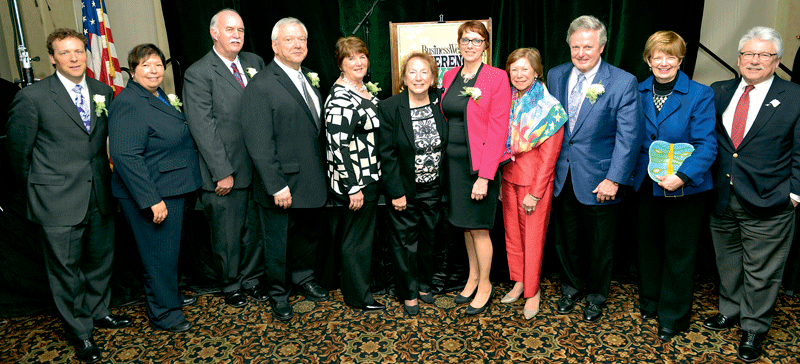
The ‘heroes’ will be recognized on Oct. 19 at the Starting Gate at GreatHorse in Hampden. That will be the climax to a lengthy process that will begin with nominations for outstanding achievement in the following categories:

• Patient/Resident/Client Care Provider;

• Innovation in Health/Wellness;

• Community Health;

• Emerging Leader;

• Collaboration in Health/Wellness;

• Health/Wellness Administration/Administrator; and

• Lifetime Achievement.

In subsequent issues of both BusinessWest and HCN, as well as in e-mail blasts and online at businesswest.com and healthcarenews.com, the criteria for these categories will be explained in detail, said Campiti, adding that a formal request for nominations will be issued in the coming weeks. These nominations will be scored by a panel of independent judges, and the winners will be selected this summer, with their stories told in both publications in September.

“We put a tremendous amount of thought into the categories, and sought the help of an advisory committee made up of industry leaders,” said Campiti. “We believe this list crosses the broad realm of health and wellness service providers, as well as the important ways in which service should be recognized.”

She cited, as one example, the ‘Collaboration in Health/Wellness’ category. “Today, collaboration is more than a watchword in healthcare,” she explained. “It’s a means to achieving real progress with health and wellness issues facing our society, because these problems are large in scale, and it often takes collaborating, or partnering, institutions to address them.”

The ‘Innovation in Health/Wellness’ category is another good example, she went on. “Innovation comes in many forms. It could be a new medical procedure or way to treat a specific illness or problem. But is can also be in how an emergency room is designed or redesigned, how a hospital fights infections, how a business is finding new ways to operate more efficiently … the list goes on.”

Given the area healthcare sector’s rich history of cutting-edge work, innovation, collaboration, new-business development, talented workforce, and emerging young leaders across the sector, Campiti said, it should not be difficult to generate several nominations in each category.

“There are countless heroes across this sector,” she noted, and we want to recognize their achievements.”

Employment Sections

Questions of Substance

By John Gannon, Esq.


John Gannon

John Gannon

Can a job applicant be rejected because of medical-marijuana use? Can employees be let go for lawfully using narcotic pain medications, such as prescription opioids? These are questions without easy answers.

Medical-marijuana dispensaries are opening throughout the Commonwealth. Meanwhile, prescription opioids are wreaking havoc across the country. With medical marijuana use on the rise, and prescription-medication dependence becoming increasingly common, employers are left in the precarious position of trying to help their employees while ensuring workplace safety and employee productivity. Now more than ever, employers need to be aware of the legal pitfalls associated with disciplining or firing employees who rely on these substances for palliative care.

Medical-marijuana Use

In November 2012, Massachusetts residents voted to legalize marijuana for medicinal purposes. Despite marijuana being classified as an illegal Schedule I drug by the federal government, state law does not punish marijuana use by qualifying patients.

Approved patients can obtain a medical-marijuana identification card and purchase marijuana at various licensed dispensaries. There are approximately 10 dispensaries currently approved to sell marijuana in Massachusetts, but that number could soon increase because nearly 100 additional dispensaries are close to final approval.

Use by Employees

The Massachusetts medical-marijuana statute explains that employers do not have to allow on-site medical marijuana usage, but does not address off-site use. So can employers take action against employees for their off-site medical-marijuana use? This has been litigated in Massachusetts and other states. Most courts, including a Massachusetts Superior Court, have confirmed that employers can reject applicants and terminate employees who fail drug tests due to medical-marijuana usage.

The common rationale is that marijuana remains illegal under federal law, so employers can refuse to accommodate illegal activity. However, that rationale should be taken with a grain of salt.

Last month, the Massachusetts Supreme Judicial Court heard oral arguments in a case about the rights of employees who use medical marijuana off-site. The plaintiff in that case was disabled and using medical marijuana for her condition. She was rejected for employment after failing a drug test. She claimed this was disability discrimination because medical marijuana did not impact her ability to do the job.

The court’s decision, which should be issued in the coming months, could change the rights of employers relative to medical-marijuana users. Employers should monitor the status of this case carefully.

What about Use of Prescription Drugs?

If an employer suspects an employee is taking a prescribed opioid — or any other medication that could compromise their ability to perform their duties — can the employer ask the employee about it? As a general rule, the answer is no.

Asking an employee about their prescription medications is a ‘disability-related’ inquiry that could run afoul of the Americans with Disabilities Act (ADA), which prohibits employers from asking disability-related questions unless there is good reason to believe the employee cannot effectively or safely do the job. This might include a visual observation or reliable information from a credible co-worker about safety concerns.

Even if an employer has a valid reason to believe the employee is unfit because of prescription-drug use, termination of employment is not the next step. Employers have an obligation to engage employees in an interactive dialogue to determine whether it can accommodate their medication use.

This might involve offering a temporary ‘light-duty’ assignment until the employee is off the medication, or giving a job-protected leave of absence until the employee is fit to return. Terminating an employee without engaging in this interactive dialogue could trigger costly damages under the ADA. Employers concerned about an employee’s prescription-drug use should consult with an employment attorney before taking action.

What If an Employee Is Acting Oddly?

Employers may also encounter a situation where an employee is acting oddly, and the employer suspects that drugs might be involved. Can an employer ask the employee to take a drug test?

Generally, it is acceptable to ask employees to take a drug test when the employer has an objective, reasonable suspicion that drugs are involved. To ensure legal compliance, employers should have a drug-testing policy and provide training to all frontline managers about how to spot drug use. Employers should consult with employment counsel when establishing and enforcing any reasonable-suspicion drug testing program or policy.

Bottom Line

Medical-marijuana laws and employee prescription-drug use put businesses in a tough position. Employers attempting to protect the safety of their workers and others could inadvertently violate an employee’s rights under the ADA. But if an employer merely ignores the problem, they could face financial consequences stemming from an employee’s use of illegal or prescription drugs.

So what should an employer do? The single best thing an employer can do to prevent exposing themselves to legal risk is to consult with an attorney before taking any action. Doing so will only take a few minutes in the short term, but could save the business tons of time and money in the long run.

John Gannon is an attorney with Skoler, Abbott & Presser, P.C.

Class of 2017 Difference Makers Event Galleries Features

Scenes From the Ninth Annual Event

The 2017 Difference Makers

The 2017 Difference Makers

bizdiffmakrslogobttrfly

More than 450 people turned out at the Log Cabin Banquet & Meeting House in Holyoke on March 30 for a celebration of the 2017 Difference Makers, the ninth annual class of individuals and organizations honored by BusinessWest for making an impact in their Western Mass. communities. The photos on the next few pages capture the essence of the event, which featured musical entertainment by the Taylor Street Jazz Band, fine food, and thoughtful comments from the honorees. This year’s class, chosen by the editor and publishers of BusinessWest from dozens of nominations, include the: the Community Colleges of Western Massachusetts; Berkshire Community College, Greenfield Community College, Holyoke Community College, Springfield Technical Community College; Friends of the Holyoke Merry-Go-Round; Denis Gagnon Sr., President & CEO of Excel Dryer Inc.; Junior Achievement of Western Massachusetts; and Joan Kagan, President & CEO of Square One.

Sponsored by:

RoyalPC SunshineVillage first-american-logo nortwestern-mutual
mbk-300x141 jgs-lifecare oconnell-care-at-home hne_logo_cmyk_stack-page-001

Go HERE to view the sponsor’s videos

For reprints contact: Leah Martin Photography

From left, Dajah Gordon, Sabrina Roberts, and Johnalie Gomez

From left, Dajah Gordon, Sabrina Roberts, and Johnalie Gomez, teenagers involved in Junior Achievement of Western Mass., a 2017 Difference Maker.

Susan Jaye-Kaplan, a 2009 Difference Maker, and Bob Perry, a 2011 Difference Maker.

Susan Jaye-Kaplan, a 2009 Difference Maker, and Bob Perry, a 2011 Difference Maker.

Bob Pura, president of 2017 Difference Maker Greenfield Community College (left), chats with Ted Hebert of Teddy Bear Pools & Spas.

Bob Pura, president of 2017 Difference Maker Greenfield Community College (left), chats with Ted Hebert of Teddy Bear Pools & Spas.

Joe Marois of Marois Construction (left) chats with Ed Murphy and Molly Murphy of event sponsor First American Insurance.

Joe Marois of Marois Construction (left) chats with Ed Murphy and Molly Murphy of event sponsor First American Insurance.

From left, Darlene Francis of event sponsor JGS Lifecare, Ethel Griffin and Colleen Loveless of Revitalize CDC, Kathleen Plante of BusinessWest, and Mary-Anne Schelb of JGS Lifecare.

From left, Darlene Francis of event sponsor JGS Lifecare, Ethel Griffin and Colleen Loveless of Revitalize CDC, Kathleen Plante of BusinessWest, and Mary-Anne Schelb of JGS Lifecare.

From left, Noni Moran, Dennis Murphy, and Amber Letendre of event sponsor First American Insurance.

From left, Noni Moran, Dennis Murphy, and Amber Letendre of event sponsor First American Insurance.

Al Kasper of Savage Arms with Jennifer Connolly, president of 2017 Difference Maker Junior Achievement of Western Mass.

Al Kasper of Savage Arms with Jennifer Connolly, president of 2017 Difference Maker Junior Achievement of Western Mass.

The community colleges of Western Mass., honored collectively as 2017 Difference Makers, were represented by their presidents, from left, Bob Pura of Greenfield Community College, Ellen Kennedy of Berkshire Community College, Christina Royal of Holyoke Community College, and John Cook of Springfield Technical Community College.

The community colleges of Western Mass., honored collectively as 2017 Difference Makers, were represented by their presidents, from left, Bob Pura of Greenfield Community College, Ellen Kennedy of Berkshire Community College, Christina Royal of Holyoke Community College, and John Cook of Springfield Technical Community College.

From left, Shawna Biscone of event sponsor Royal P.C., Julie Cowan of MassDevelopment, Tara Brewster of Greenfield Savings Bank, and Amy Royal of Royal P.C.

From left, Shawna Biscone of event sponsor Royal P.C., Julie Cowan of MassDevelopment, Tara Brewster of Greenfield Savings Bank, and Amy Royal of Royal P.C.

From left, Patricia Faginski of St. Germain Investment Management, Amanda Huston of Elms College, Jennifer Connolly of 2017 Difference Maker Junior Achievement of Western Mass., and Rebecca Connolly (Jennifer’s daughter) of Moriarty & Primack, P.C.

From left, Patricia Faginski of St. Germain Investment Management, Amanda Huston of Elms College, Jennifer Connolly of 2017 Difference Maker Junior Achievement of Western Mass., and Rebecca Connolly (Jennifer’s daughter) of Moriarty & Primack, P.C.

From left, from Square One, Dawn DiStefano, Bonnie Katusich, Kristine Allard, Karen Smith, 2017 Difference Maker Joan Kagan, and Andrea Cincotta.

From left, from Square One, Dawn DiStefano, Bonnie Katusich, Kristine Allard, Karen Smith, 2017 Difference Maker Joan Kagan, and Andrea Cincotta.

From left, Brigit Shea-O’Connell, Fran O’Connell, and Rachel Normantowicz of event sponsor O’Connell Care at Home.

From left, Brigit Shea-O’Connell, Fran O’Connell, and Rachel Normantowicz of event sponsor O’Connell Care at Home.

Michael Curran of the Taylor Street Jazz Band.

Michael Curran of the Taylor Street Jazz Band.

2017 Difference Maker Denis Gagnon Sr., president and CEO of Excel Dryer, with his wife, Nancy.

2017 Difference Maker Denis Gagnon Sr., president and CEO of Excel Dryer, with his wife, Nancy.

From event sponsor Northwestern Mutual, from left, Adey Thomas, Darren James, Cara Cole, Kate Kane, Donald Mitchell, and Craig Knowlton.

From event sponsor Northwestern Mutual, from left, Adey Thomas, Darren James, Cara Cole, Kate Kane, Donald Mitchell, and Craig Knowlton.

From event sponsor Meyers Brothers Kalicka, P.C., from left, Howard Cheney, James Krupienski, John Veit, Brenda Olesuk, and Donna Roundy.

From event sponsor Meyers Brothers Kalicka, P.C., from left, Howard Cheney, James Krupienski, John Veit, Brenda Olesuk, and Donna Roundy.

Top row, from left: Glenda DeBarge of event sponsor Health New England (HNE); Jen Stone of USI Insurance Services; Mark Keroack of Baystate Health; Ashley Allen, Jody Gross, and Jessica Dupont of HNE. Bottom row: Michelle Martone of USI (left) and Yvonne Diaz of HNE.

Top row, from left: Glenda DeBarge of event sponsor Health New England (HNE); Jen Stone of USI Insurance Services; Mark Keroack of Baystate Health; Ashley Allen, Jody Gross, and Jessica Dupont of HNE. Bottom row: Michelle Martone of USI (left) and Yvonne Diaz of HNE.

Back row, from left: from event sponsor Sunshine Village, Teri Szlosek, Amie Miarecki, Michelle Depelteau, Peter Benton, and Jeff Pollier. Front row, from left: Colleen Brosnan and Gina Golash Kos from Sunshine Village, and Chicopee Mayor Richard Kos.

Back row, from left: from event sponsor Sunshine Village, Teri Szlosek, Amie Miarecki, Michelle Depelteau, Peter Benton, and Jeff Pollier. Front row, from left: Colleen Brosnan and Gina Golash Kos from Sunshine Village, and Chicopee Mayor Richard Kos.

Back row, from left: from TD Bank, Gregg Desmarais, Peter Simko, Dave Danker, and Tracey Alves-Lear. Front row, from left: from TD Bank, Christina Sousa, Bela Blake, Jana Seiler, and Claudia Pereira.

Back row, from left: from TD Bank, Gregg Desmarais, Peter Simko, Dave Danker, and Tracey Alves-Lear. Front row, from left: from TD Bank, Christina Sousa, Bela Blake, Jana Seiler, and Claudia Pereira.

BusinessWest Associate Publisher Kate Campiti welcomes attendees to the Log Cabin.

BusinessWest Associate Publisher Kate Campiti welcomes attendees to the Log Cabin.

Back row, from left: from event sponsor JGS Lifecare, Karen Petruccelli, Christina Tuohey, and Susan Halpern. Front row, from left: from JGS Lifecare, Darlene Francis, Mary-Anne Schelb, and Martin Baecker, with George Sachs from Acme Metals & Recycling.

Back row, from left: from event sponsor JGS Lifecare, Karen Petruccelli, Christina Tuohey, and Susan Halpern. Front row, from left: from JGS Lifecare, Darlene Francis, Mary-Anne Schelb, and Martin Baecker, with George Sachs from Acme Metals & Recycling.

BusinessWest Publisher John Gormally (left) with Springfield Mayor Domenic Sarno.

BusinessWest Publisher John Gormally (left) with Springfield Mayor Domenic Sarno.

From left, Monica Borgatti and Ellen Moorhouse of the Women’s Fund of Western Mass., a 2012 Difference Maker, and Elizabeth Fisk and Danielle LeTourneau-Therrien of Big Brothers Big Sisters of Franklin County, a 2016 Difference Maker.

From left, Monica Borgatti and Ellen Moorhouse of the Women’s Fund of Western Mass., a 2012 Difference Maker, and Elizabeth Fisk and Danielle LeTourneau-Therrien of Big Brothers Big Sisters of Franklin County, a 2016 Difference Maker.

Steve Levine applauds 2017 Difference Maker Joan Kagan, president and CEO of Square One.

Steve Levine applauds 2017 Difference Maker Joan Kagan, president and CEO of Square One.

BusinessWest Editor George O’Brien congratulates 2017 Difference Maker Denis Gagnon Sr., president and CEO of Excel Dryer.

BusinessWest Editor George O’Brien congratulates 2017 Difference Maker Denis Gagnon Sr., president and CEO of Excel Dryer.

Building Trades Sections

Floor Plans

The team at Best Tile in Springfield

The team at Best Tile in Springfield includes, from left, Sarah Rietberg, showroom manager; Chad Hart and Beverly Gomes, design consulants; and Karen Belezarian-Tesini, store manager.

Harry Marcus started installing tile way back in 1955, so Karen Belezarian-Tesini considers herself lucky to have known him.

“Harry would say, ‘why are you here? Why do you like the business?’” said Belezarian-Tesini, manager of Best Tile in Springfield — one of some 30 locations that have sprung from Marcus’ original business 60 years ago. “I said, ‘I have a passion for it.’ Harry said, ‘that’s why you’re going to last. You have to have a passion for what you do.’”

Marcus Tile was born in the City of Homes, but there were no tile distributors in Springfield, meaning he had to travel to Hartford almost every day to pick up tile for his four-man team of installers. So he and his wife, Mollie, decided to start their own tile-distribution business. They sold their installation business and partnered with the Wenczel Tile Co. to open up Standard Tile Distributors in August 1956.

“It was a true rags-to-riches story,” Belezarian-Tesini said. “He was selling so much and so well, Wenczel asked him, ‘if we got you a bricks-and-mortar shop, would you open a store?’ He said yes and opened up his store.”

That’s where the story began — a story that has since expanded well past the Springfield-Hartford corridor, across the Northeast and down the Atlantic Coast. The Marcuses’ oldest son, Steve, eventually entered the family business and, after managing the Hartford branch, opened a new location in Albany, N.Y., naming it Best Tile — the word ‘Best’ representing the first two letters of his first name and that of his wife, Beverly.

By the early 1970s Best Tile was importing tile from around the world, and Steve Marcus and his business partner, Bob Rose, had expanded well into Central and Western New York. Meanwhile, Steve’s brother, Brad, expanded the company into the Boston area, and Steve Marcus and Rose later expanded into Pennsylvania with another partner, Chet Whittam. Following that, the company set up shop in Rhode Island, New Jersey, Maryland, and Virginia, and more recently Vermont and North Carolina.

Karen Belezarian-Tesini

Karen Belezarian-Tesini says a slowing of the building boom over the past 20 years has coincided with an uptick in remodeling, which certainly benefits Best Tile.

“They’ve done very well managing and growing the business. It’s a great company to work for,” Belezarian-Tesini said. “They’re smart investors, and they direct-import everything, buying direct from factories. They’ve kept a great relationship with these factories over the years, which gives them great buying power.”

Those factories are based in countries as far-flung as Spain, Italy, Brazil, England, Turkey, Mexico, and the U.S., she added. “We pride ourselves on quality. In all the years I’ve worked here, no one’s ever come back and complained about quality of the tile, which is huge.”

Hitting the Wall

From her position managing the bustling shop on Belmont Avenue — where customers come looking to inject new life into their kitchen and bathroom floors and walls, among other areas — Belezarian-Tesini has seen a number of changes in the tile business.

“Twenty years ago, it was a contractor-driven industry, big time. It’s now more of a remodeling industry, with maybe 50% of the business retail — years ago, there was not as much retail,” she explained. “The building boom isn’t there like it used to be; you don’t see big tracts of homes going up. There’s a lot more remodeling going on.

“It’s still the City of Homes; I do believe that,” she went on. “You can tell by the remodeling going on in our neighborhoods. People are retiring to over-55 communities, and the younger generation is moving in and remodeling the home. That’s where a lot of our business is coming from nowadays.”

She noted that the contractors working in this field are an aging lot. “I don’t know what the future holds, but I wish trade schools would introduce more tile-related careers, because it’s an industry that should continue to grow.”

It’s growing in part through social media, websites, and especially home-improvement networks like HGTV and DIY, which showcase transitions that inspire viewers to tackle tile jobs themselves or hire someone to bring their vision to life.

“That’s what’s driving people, opening their eyes to what’s current, what’s hot,” she said. And that means Best Tile needs to stay on the cutting edge of what shoppers are looking for.

“Flooring has gone from a marble look to a wooded look,” she noted as one example. And large-format floor tiles are extremely popular, like 8-by-48-inch floor sections and 12-by-24-inch wall tiles; 12-by-12 pieces have become a bit passé. Meanwhile, “mosaic is hot, hot, hot — glass mosaic, glass and stone mixed, all stone, stone and ceramic. It can be for a floor, wall, backsplash, bathroom, kitchen, you name it. It’s everywhere, and it’s beautiful.

“The industry has come a long way,” she added. “The digital imaging, the handcrafted tile, so superior to what we had years ago. It’s beautiful.”

Happy Wife, Happy Life

Since the 2000s, the third generation of Roses and Marcuses have led the company through continued growth, showroom upgrades, and product expansion, under the umbrella of the East Coast Tile Group of companies.

But that’s the big picture; Belezarian-Tesini is more invested in the individuals — and, more often than not, couples — that show up at Best Tile looking to realize their vision of a beautiful bathroom or kitchen.

“You do this with your spouse; it’s not usually something you do alone. Husbands and wives make decisions together. And when they shop, they’re generally shopping together,” she said, adding, however, that some husbands embody man-shopping clichés. “Most of the time, we offer the husbands coffee or water, or ask if they want to sit down somewhere. Some spouses are very involved, and some are just here for the ride.”

It’s a ride that began with Harry Marcus’ vision, and passion, for building a business from the ground — well, the tile floor, anyway — up.

Joseph Bednar can be reached at [email protected]

Features

50 Shades of … Everything

Amy Woolf

Amy Woolf

Amy Woolf, a certified architectural color consultant, says color can, and very often does, affect people physiologically and psychologically. And for these reasons, it’s very important to pick the rights ones, especially in business. Indeed, the chosen colors should reflect the products or services being sold, and the people selling them.

Amy Woolf says colors have long had meaning, importance, and symbolism; that’s not a recent phenomenon.

Centuries ago, she noted, royals and those in the clergy wore purple because that was a rare, very expensive dye, and thus that color translated directly into money and power.

And while they are still relatively few in number, individuals have been putting the title ‘architectural color consultant,’ or words to that effect, on their business card for some time now, she went on. In fact, there is a trade group comprised of such professionals — the International Assoc. of Color Consultants (IACC) — that has chapters all over the world; the one in North America stages classes once a year in San Diego.

But in recent years, color has seemingly taken on more importance in architecture, office design, and business in general, she noted, listing as reasons why everything from the growing number of colors (or shades of them, to be exact), to high-definition television, which brings everything into sharper focus; from the proliferation of decorating shows on TV to an increased emphasis — in business and in marketing — on sending the proper message, in part through colors.

These would be the colors on the walls, the company logo, the home page of the website, the business card, the fleet of vans or trucks, and on it goes. But much of her work involves commercial and residential real estate.

“To me, the most important thing is to unravel how someone wants to feel in a space, and how we can choose a color that’s going to have the right physiological outcome and the right psychological outcome,” Woolf said while trying to quickly explain what she does and how she does it. “Because color really does have a physiological impact; it changes our heartbeat, it changes how we perceive temperature, those kinds of things.”

There is such a focus on color now that Woolf — whose business is based out of her home in Northampton — and others in this profession make a decent living from what could certainly be described as a solid mix of art and science, one with many variables and focus points.

Indeed, just listen to this description of a job she worked on recently involving a lengthy search for the right color for the exterior of a commercial building in Amherst.

“The building had been brown, and the client was expecting me to specify gray,” Woolf told BusinessWest. “The tenants are diverse, including light manufacturing, a Comcast office, and a martial-arts school. The color eventually chosen, which sits between the blue of the sky and the green of the trees, settles into the landscape nicely, but provides a much more welcoming first impression than brown or gray would have. Heaven knows the world is not lacking for more brown and gray buildings.”

Also consider this summation of her work to “break a tie” among leaders at Greenfield Savings Bank concerning the exterior color for the branch on King Street in Northampton; two browns and a gray were under consideration.

“Their goal for the architectural design was to help increase the sense of a “walkable, village-like feeling for King Street,” she recalled. “I suggested they do a 180 away from neutrals and go with an olive green instead. I encouraged them to break up the monotony of gray and brown so prevalent in the King Street corridor with something fresh and friendly.”

Like we said, it’s a blend of art and what is certainly now a science.

The exterior color chosen for this commercial building in Amherst

The exterior color chosen for this commercial building in Amherst “sits between the blue of the sky and the green of the trees,” says Amy Woolf.

And one of the key aspects of this work is working in partnership with the client, said Woolf, adding that the key words in those remarks above are ‘suggested’ and ‘encouraged.’

Indeed, Woolf says she doesn’t choose colors for her clients. She advises, explains the reasons behind this advice, and works to achieve buy-in. Ultimately, the client has to be more than comfortable with the decision, she said, and essentially own it.

“I explain to my clients why I’m choosing the colors I’m using,” she explained. “I’m as much a coach and a teacher; I don’t just come in and say ‘do this’ and ‘do this’; I’m always explaining why.”

For this issue, BusinessWest takes an in-depth look at the business of colors, or, more specifically, the art of picking the right ones.

No Black and White Issues

As she grabbed a large fan deck, this one created by Sherwin Williams, Woolf made an emphatic point about just how many colors there are to choose from by stopping in the ‘whites’ section.

It was not a short visit.

“Look at all of these whites,” she said as she flipped through the wheel. “And they all have a slightly different, subtle quality to them, and that’s where people get in trouble; they say, ‘I’m just going to paint white.’ But if it’s a pinky white, then they end up with pink walls.”

Helping people make sense of, and perhaps choose among, all those whites — and blues and greens and grays — is essentially Woolf’s stock and trade, only it’s much more complicated than looking at swatches and finding one that looks good, as she would explain in detail. Because ‘good’ is certainly a relative term in this discussion, and one with myriad meanings.

Other professionals involved in art, architecture, and interior design obviously work with clients on color selection, she noted, but this is all she does. She’s not sure if she’s the only certified color consultant in the 413 area code, but she does know that it wouldn’t take long at all to call the roll.

Nonetheless, hers is a vibrant business (that’s a technical term in many respects), and she quantified that by saying she’s generally juggling more than 20 clients at a time, with a healthy mix of residential and commercial, probably a little more of the former than the latter.

And her work, as she told BusinessWest, involves almost anything, design-wise and business-wise, that comes in colors. That includes flooring, window treatments, furniture, etc. (She noted that, when she mentions she’s a color consultant, many ask if this extends to fashion and coordinating one’s wardrobe; it doesn’t.)

“I liken it to an algebraic equation — everything’s a variable that all comes together in a certain way,” she said of most projects in both the commercial and residential realms. “As you tweak one thing, everything around it moves, so it’s good to look at it all at once.”

Like most of those who are certified architectural color consultants, Woolf was greatly influenced by the work of the late Frank Mahnke, who wrote the book on the subject — quite literally. It’s called Color, Environment & Human Response, and that name goes a long way toward explaining this profession.

Indeed, there are human responses to various colors, she went on, adding that these responses should help dictate which ones people, especially those in various businesses, should choose.

As she talked about all this, Woolf referenced the color chosen for the walls of her home office — called ‘cooking apple green.’

She chose it because she likes it and finds it comfortable to be in and around. But BusinessWest was among the very few people outside her family who have been in this office (Woolf obviously needs to do her work on location in almost all cases), so this played into the decision.

“This is just for me,” she said, adding quickly that it might be suitable in a traditional business office; that’s might.

“The important thing about color is that we do have these sort of prescriptive ways of talking about it — ‘this is good for business,’ or ‘this is good for a nursery,’ or ‘this is good for a bedroom,’” she explained. “But what that doesn’t really examine is the individual, personal relationship with color.

“For me, I find this green to strike the right balance between restful and having enough liveliness so that it’s somewhat energizing,” she went on, diving into the real science of her work. “But for someone who doesn’t really like green, it would be the wrong choice. So you probably need to think of it in terms of a bell curve — for a large number of people at the middle of the bell curve, this would be an acceptable color, but for some people who are maybe outliers, it wouldn’t work. The bottom line is that one needs to be careful not to generalize over colors that are ‘good.’”

For her new office in Agawam, Jean Deliso

For her new office in Agawam, Jean Deliso desired colors that make clients feel comfortable and convey a sense of trust.

So, just what goes into choosing the right color or colors, especially for a business setting? Woolf said it all comes down to how the client would like someone to feel in that space. Sometimes, that someone is the client themselves, but for a business that entertains customers, it’s more about how those individuals will feel in that space.

Business owners want that individual to feel comfortable, obviously, she went on, but often there’s more to it. In settings where the visitor might be anxious — a doctor’s office or any other place where delicate matters are discussed, for example — calming colors are required. Meanwhile, in most professional settings, like lawyers’ and accountants’ offices, colors that somehow generate trust and respect are preferable.

“In a commercial environment, you want to choose colors that send the appropriate message for the product or service being sold,” she said, adding that, while this sounds obvious, it is often an overlooked or underappreciated matter.

“I would never — OK, never is a big word … I would be unlikely to use trendy colors in an office or business environment where the message and the branding is that of solidity or trust,” she went on. “We talk about ‘IBM blue’ or ‘banking blue,’ the kinds of colors that create a sense of trust and reliability; we can use colors like that.”

And, as one might guess, there are, well, fine lines everywhere when one is talking about this subject.

Take yellow, for example. “It’s a very energetic color, it’s very buzzy; that’s why we paint school buses yellow, so we can see them,” she told BusinessWest. “But sometimes, people are sensitive to the level of energy in that yellow, and might think it’s overwhelming.

“In my training, we talk about this continuum of understimulation versus overstimulation,” she went on, “with understimulation being monotonous and boring in the environment, and overstimulation being so vivid, so bright, so much data that it becomes overwhelming and is too much. So what I want to unravel with my clients is, what does their environment call for in terms of that feeling?”

Hue and Cry

What this unraveling process has revealed throughout her career is that, while there are rules of sorts in this science and this business, they are not exactly hard and fast, and sometimes rules are made to be broken.

“The classic example is using a restful color in a bedroom,” she explained. “People want calming, soothing colors. But I did work for a physician who really wanted a wake-up call, so her bedroom is a soft orange, which flies in the face of those rules, or those shortcuts.”

One of those rules pertains to colors at opposite ends of the color circle, such as yellow/purple, red/green, and orange/blue. While celebrated artists liked to bring such contrasts together on a canvas, and doing so might work from a fashion perspective, it’s generally best to avoid such practices in a business setting, said Woolf.

“Color schemes that are high-contrast really don’t work,” she said. “Strong black and white, which arguably is trendy and in style in the architectural world, really creates eyestrain,” she explained. “My training says to keep the colors closer to the center and not to the extreme end of light and dark.”

However, strict adherence to the common practices of using all warm colors or all cool colors might not yield the kind of dynamic color scheme and interesting environment that results from working from both ends of the color wheel.

“You can do it, but do it just enough,” she said of contrasting colors, adding that this, in itself, is part of the art and science of this work. “That’s where the magic is.”

There are some other general guidelines to follow, she said, adding that it is wise, especially in a business setting, to focus on colors that work for that particular setting, meaning sending the right message, and not, as she noted earlier, colors that are ‘trendy’ at that given time.

Colors in that latter category now include turquoise and aqua, said Woolf, adding that, while they may be ‘hot,’ they still wouldn’t be suitable for a lawyer’s office. A pediatrician’s office? Well, probably.

However, businesses should look to avoid what she called “outdated” colors in order not to appear behind the times. Asked for examples, she listed dusty rose and Colonial blue.

“When we go to a doctor’s office, we want to feel like they’re up to date on everything — they’ve got the latest equipment and the newest science,” she explained. “If the color schemes are holdovers from the ’80s, you’re not really sending that message.”

conference room at Deliso Financial

Amy Woolf says the colors in the conference room at Deliso Financial were chosen to have a calming effect.

While talking about colors in the hypothetical can he helpful, Woolf said an actual project from her portfolio might help put matters in perspective. She was right.

BusinessWest accompanied her on a visit to Deliso Financial Services in Agawam. Jean Deliso, principal and financial advisor, most recently served the magazine as a judge for this year’s 40 Under Forty competition. This time, the assignment was to explain how Woolf helped her make over her new space in the office building on Meadow Street Extension, and, more specifically, how and why the colors now on the walls were chosen.

And she embraced it enthusiastically because the walls of this space, formerly occupied by a pest-control company, were white (which shade she doesn’t know), and she wanted to replace this blank canvas with something that “said something.”

“This is a great space, but it needed a transformation,” she recalled, noting that she was essentially moving across the hall and into a bigger office. “Everything was white, and it was soooo non-inviting, and I need to have something inviting, and I needed help to do that.”

Elaborating, she said she desired something that was “comfortable and non-intimidating,” which is understandable seeing that she works in financial services, dealing with a subject that the vast majority of people would prefer to not talk about. She also wanted to convey professionalism and trust, two character traits required of those handling such work.

She hired Woolf, who has also done work at her residence, and who set to work picking colors that would convey all that. For one wall, she chose a color called Wilmington tan, which is kind of like beige, but a little richer (“people think of beige as insipid, but this has a lot of depth to it”), because it has a calming effect.

For the back wall, the one a client would be looking at if he or she were sitting across Deliso’s desk from her, Woolf chose something called Newburyport blue.

Deliso likes the name — she’s a sailor (paintings of boats dominate her walls), and Newburyport is right on the water — but likes the color better. It complements the IBM blue on her business card — sort of — and that’s by design, said Woolf, who noted that Deliso had a much brighter blue (like the shade on her business card) on the walls in her old office. And that wasn’t exactly working, at least in her judgment.

“We toned the blue down a little bit,” she explained. “Because what looks great on letterhead doesn’t always translate into a comfortable wall color. We can use those brand colors as an inspiration, but you don’t, or shouldn’t, just pull it off a card and stick it on a wall.”

Elsewhere in the Deliso Financial suite, Woolf used Providence olive in the conference room, again to create comfort and a sense of ease among clientele who might be nervous upon entering, especially for the first time, and carefully positioned Deliso’s many awards and news clippings on what the client calls the ‘trophy wall,’ again to convey professionalism and generate confidence.

When asked if all this focus on color was worth the time and expense, Deliso issued an enthusiastic ‘yes’ that speaks to why Woolf’s schedule is pretty tight these days.

“My clients feel very comfortable here; they enjoy coming here,” she explained. “They feel great when they come here, and it’s a good experience, and I think the colors play a very big part in that.”

Positive Tones

In her next life, Woolf joked, she wants to be the one who gets to assign names to all those colors on the wheel — like ‘cooking apple green’ or even ‘Bedford Stuyvesant boiled chicken,’ the name one client attached to a wheat-like color she eventually chose for her summer home.

For now, though, she’s content to work with all those hues and, more to the point, help clients choose the right ones — like the color on that building that “sits between the blue of the sky and the green of the trees and settles into the landscape nicely.”

It’s rewarding work on a number of levels, one that has made for a colorful career to date, in every sense of that phrase.

George O’Brien can be reached at [email protected]

Health Care Sections

Continuum of Care

Beth VettoriAs the Baby Boom generation continues to hurtle into their retirement years, about 15% of all Americans today are over age 65, a percentage expected to soar to almost 22% by 2040. That demographic tide presents both challenges and opportunities for senior-living facilities, which more than ever are emphasizing a continuum of care and a resident-centric experience.

Beth Vettori has sat with plenty of families stressed out from balancing their own lives with caring for an aging parent, yet reluctant to make the transition into a senior-living community.

“It’s hard for them. Usually, the sons and daughters are in their 40s, 50s, 60s, and most are still working, and it’s hard for them to play an active role in dividing those caretaking tasks,” said Vettori, executive director of Rockridge Retirement Community in Northampton.

But, while many seniors resist giving up a home they may have lived in for decades, she said, the move often goes more smoothly than expected.

“It can be hard for people to let go of where they were living — the memories, the history attached to their previous physical environment,” she told BusinessWest. “But more times than not, we hear, ‘I should have done this years ago.’”

Kelly Sostre, executive director of Keystone Commons in Ludlow, tells a similar story. “I think, sometimes, their families see the quality of life they have here, the friends they’ve made, and they feel guilty for waiting so long.”

One of the reasons families are feeling better about making the transition has been an emphasis, in the modern senior-living complex, on a continuum of care, which gives assurance that the resident won’t have to find a new community if their physical needs change.

Kelly Sostre (center, with Bryan McKeever and Grace Barone

Kelly Sostre (center, with Bryan McKeever and Grace Barone) says the average age of a Keystone Commons resident is older than it used to be, with more health issues to boot.


Keystone and Rockridge, for example, both offer independent living, assisted living, and memory-care neighborhoods, all on one campus.

“People are coming here more frail and needing more services. Five years ago, our average age was in the mid-80s; now it’s the low 90s. We’re even moving people in at 100,” Sostre said. “When we opened, the majority our independent-living folks were driving and attending social functions in the community. That’s tapered down.”

The key, then, is to offer a menu of social, culinary, and assistive options that ease the transition into this next phase of life. “We understand home is where they want to be, and if we can provide something here that’s homelike, that’s what we want to do.”


SEE: List of Senior Living Options in Western Mass.


Bryan McKeever, vice president of Roche Associates, Keystone’s marketing firm, stressed that the goal is to provide supportive services that help people maintain as much quality of life and independence as possible, while receiving help with medication management and other daily activities when needed.

Linda Manor Assisted Living in Northampton, true to its name, doesn’t offer an independent-living option, but its neighbor, Linda Manor Extended Care Facility, is a skilled-nursing residence for when the time comes. “A lot of people who come to assisted living are drawn by the fact we’re on the same campus as our nursing home,” said Emily Uguccione, executive director. “As your needs change, you can age in place; the nursing home on campus really helps with that, or if you have an acute healthcare issue or have rehabilitation needs.”

Changing Needs

Linda Manor does, however, offer a memory-care neighborhood in its assisted-living complex, a draw for families who look to assisted living because they recognize the early symptoms of dementia. But the reason for making the jump can be as basic as a need for connection.

“A lot of people come to assisted living needing some socialization, and loneliness is a huge, huge factor,” Uguccione said. “It affects the psychosocial well-being of people across America.”

Emily Uguccione

Emily Uguccione

In assisted living, they know they’ll get their medication on time and as prescribed, and they have transportation to doctor’s appointments, errands, and social trips.”


In addition, she said, many candidates for assisted living find they need help with activities of daily living and medication management — often, up to 10 medications a day or more.

“In assisted living, they know they’ll get their medication on time and as prescribed, and they have transportation to doctor’s appointments, errands, and social trips,” she told BusinessWest. “And it’s not just a taxi. Our driver is a wonderful gentleman who provides support and socialization to people as he takes them to the doctor. When someone comes to assisted living, we want to give them support, but also fill in that loneliness gap.”

It’s also about safety, Vettori said. “If a loved one has some sort of deficit that puts them in a category of risk — mild dementia, cognitive decline, physical ambulation, those kind of disabilities — that’s where family members or residents look to us.

“Many times,” she went on, “people have been living independently, maybe have been in their home 30, 40, even 50 years, but now it’s getting harder to get around, especially in Western Mass., outside the large cities, where public transportation isn’t easy to access. So there’s a greater chance of isolation and a greater reliance on family.”

Those who make a complex like Rockridge their next home certainly aren’t required to socialize or engage with people, she added. “But if you take a few steps down the corridor, you’re right there with people who want to be part of your new family. That’s another great piece of living in a community setting. You have people who, for the most part, want to be there, and you can engage when you want, participate in whatever you want, and build friendships — not just with the people who live there, but also the staff.”

Sostre agreed. “They love the idea they can go to a spacious, home-like apartment they’ve decorated with their own things, yet they can be out and about at social activities and pick what they want to do every day. They have those options, and still have the comfort of their own environment, too.”

Activity planners at Keystone aren’t so much dictating a program, McKeever said, as getting to know the residents individually — what their hobbies and interests are — and developing offerings around those interests, while resident committees provide further input on the way activities are structured.

“It may well change month to month. Six months ago, I couldn’t get a card club going,” Sostre said. Since then, a beginners bridge group started up, and that activity has become hugely popular.

As the over-65 population swells, Vettori said, senior-living affordability will become an even more critical issue.

“This is going to be huge as the next group of Baby Boomers start to come online — the discrepancy between low income and high to moderate income. There’s a huge segment of the population falling through the cracks; they make too much to qualify for MassHealth or Medicaid, and don’t have enough to pay privately for a traditional independent- or assisted-living neighborhood.”

That situation inspired the development of Violette’s Crossing at Rockridge, which includes 25 independent rental apartments for people of moderate income, offering an a la carte menu of services.

“We set the income levels so that we could truly help this margin of folks that need a place to live and don’t qualify necessarily for an independent- or assisted-living community or some of the lower-income housing options,” Vettori said. “We’re one of the first across the country to pilot and put together a program like this where we’re not reliant on government funding.”

Focus on Memory

With one-third of Americans above age 85 expected to develop some form of dementia, it’s no surprise that all three facilities BusinessWest visited offer a dedicated memory-care unit.

Uguccione said Linda Manor’s memory-support and specialized life-enrichment program is driven by the habilitation model, which focuses on where their successes are and where their strengths lie, not necessarily on how to compensate for their weaknesses.

“We also do a lot with the environmental factors. The furniture is chosen really carefully, and the staff wears certain colors in the building to promote calm and serenity.”

Vettori said complexes are starting to employ wearable GPS trackers — like pendants and watches — with memory-care residents, allowing them to move more freely in the community. “People want to participate without constraints.”

That dovetails with an overall goal of giving residents more choice, she noted, which is something families increasingly demand.

“Communities like ours are constantly exploring how we can expand our menu of offerings and provide services people are looking for. They can choose to use them or not, but we never take away their independence. We really tailor the individual programming to be resident-centric.”

Sometimes, she added, residents never really accept a senior-living facility as their new home, but simply the place they live now. “Of course, we make them as comfortable as we can, knowing their heart is still at their previous home. It’s not often, but it does happen.”

Uguccione said the idea is to lessen the burdens of daily living so residents can, well, enjoy life. “People do much better when they don’t have to worry about all these other things; they can just enjoy being with each other, making new friends, and they have more time now to take up tai chi or go out to lunch, and don’t have to worry about taking three buses to get to a doctor’s appointment.”

Grace Barone, director of Community Relations at Keystone, said it’s a lifestyle, full of hobbies and interests and friends, that brings purpose back into residents’ days and gives them reason to get up in the morning, in contrast to the loneliness they might have felt in their previous home.

It also lends quality to their visits from loved ones, she added, recalling one resident’s daughter who was pleasantly surprised to see her mother painting, something she used to love but hadn’t done in 15 years.

“They’re not worried about filling the pillbox or whether there’s food in the fridge,” Barone said. “They can just come in and spend time talking and visiting, or share a meal while mom tells them about some fabulous activity she’s done.”

In other words, it feels a lot like home.

Joseph Bednar can be reached at [email protected]

Community Spotlight Features

Community Spotlight

From left, Kameron Spaulding, Gwen Miller, Colin Toole, and Mayur Desai

From left, Kameron Spaulding, Gwen Miller, Colin Toole, and Mayur Desai say the new, 96-room Courtyard by Marriott hotel will open in May.

The temperature was in the teens and the wind chill factor was frigid on a recent day when town officials arrived at the construction site of the Brushwood Marriott Hotel in Lenox, but Colin Toole and Mayur Desai wanted photos taken outside the entrance to show off the building’s unusual French empire design.

“This is not a prototype of a typical Courtyard Marriott,” Toole explained.

But then again, noted the CEO of Toole Co., which owns and will manage the property, and also built and operates the Hampton Inn and Suites in Lenox, the town is no ordinary place.

“Lenox has a certain cachet in terms of its name; when people think of it, they think about Shakespeare and Co., the Gilded Age mansions, and Tanglewood,” Toole told BusinessWest.

Indeed, those very attractions, combined with bucolic scenery, the town’s identity as a center for health and wellness — it’s home to Canyon Ranch and the Kripalu Center for Yoga and Health — and a wide range of culture and recreational opportunities have spawned a number of multi-million-dollar projects in the last year alone.

“A combination of factors makes Lenox attractive,” said Kameron Spaulding, executive director of the Lenox Chamber of Commerce. “You can see great theater in New York City, but you can’t take a hike there and go to the beach in the same day. But you can do those things here, plus visit a spa and listen to the Boston Symphony Orchestra play outdoors without ever leaving town. All these things work together to create a unique experience.”

The largest project in the works is a $60 million expansion and renovation at the former Cranwell Spa & Golf Resort. The Miraval Group, a subsidiary of Hyatt Hotels, purchased the property last fall for $22 million and plans to transform it into a high-end wellness resort. Other major projects taking place include the new Marriott, the relocation of Morrison’s Home Improvement Specialists Inc. from Pittsfield and its adaptive reuse of a blighted building that had been vacant for 10 years, an apartment conversion at the Walker Street Residences by Allegrone, and the construction of its new headquarters and co-working office space using green design and technology in a building on Route 7.

“It’s been a good year for investments, which shows that Lenox is a place where people want to do business,” Spaulding said.

The building was ghostly, but I had a vision of what it could become, and knew the location was great in terms of visibility: 35,000 to 45,000 vehicles drive past it every day.”

Economic development and growth is on an upward trajectory, but Town Manager Christopher Ketchen said the town hasn’t rested on its laurels. In February, officials adopted a policy to determine whether a project is worthy of a TIF, or tax-increment financing, which is used as a subsidy to spur redevelopment; or an STA, which stands for special tax assessment.

“Developers are looking for these, so it was important for us to have objective measures to make decisions,” said Land Use Director and Town Planner Gwen Miller. “Now we have a clear time frame and process for businesses looking for the help.”

Ketchen added that Lenox has a sound fiscal standing and excellent schools, which play into the equation when developers consider a project or a business wants to move. It is one of two towns west of the Connecticut River that has an AAA rating from Standard & Poor; one of its elementary schools earned a Blue Ribbon rating from the U.S. Dept. of Education, and its high school is the only one in the Berkshires that received a Gold Medal Award from U.S. News & World Report.

In addition, its infrastructure improvement budget was $10 million for FY 2016-17, and the town plans to spend another $5 million over the next year.

The population in Lenox is aging, which reflects a trend in other towns in the Berkshires, and the median age of residents is 51. But town officials are taking steps to attract young professionals and families. Last year, they created a first-time-homebuyers program in partnership with four banks that offers up to $10,000 in down payments to qualified applicants. They also changed zoning requirements to make it easier to build new apartments and condominiums or convert older housing stock into appealing residences, as well as adopting a Complete Streets policy that will make the town eligible for state funds to improve connectivity for pedestrians and bicyclists.

For this issue, BusinessWest looks at major projects that are underway and what they will add to help increase the tourist business that is the cornerstone of the town’s economy.

Filling a Need

The Miraval buildout of the Cranwell resort will begin this spring and is expected to take two years to complete. A total of 43 new rooms will be added to the existing 105, along with a new spa, fitness center, new programming, and other wellness features. The existing facilities will be renovated, the property will remain open during construction, and neighboring condominiums will be able to access the golf course and other amenities via a fee-based system.

“Miraval plans to construct several new buildings and an underground tunnel to connect guests from the main campus to the driving range and several other buildings across the street,” Miller said.

Ketchen told BusinessWest that people have been coming to Lenox for generations to find themselves spiritually and improve their lifestyle, and this high-end wellness resort will benefit the town as well as Miraval’s clients, who often fly from New England to their other locations in the Midwest.

The project is expected to create more than 100 new full-time positions and generate an estimated $1.3 million annually in real estate, sales, and lodging taxes, in addition to a one-time, $1.1 million payment for sewer, water, and other utility connection fees.

The new Brushwood by Marriott will also add to the town’s offerings and is expected to open next month. The hotel will have 92 rooms with panoramic views, an indoor pool, a large patio with firepits, a restaurant, and a 12,000-square-foot event space, which is something Lenox hasn’t been able to offer groups in the past.

Planning began in 2013, and construction kicked off last year after a blighted Econolodge building on the site was demolished.

“We focused a great deal of attention on making this property unique. It fills a void in the Berkshires for hospitality,” said Desai, who will serve as general manager and is a partner in Brushwood LLC, which owns the real estate.

The work has been undertaken by local contractors, and although Marriott is a branded property, the Lenox hotel will be managed by its owners.

Another major project was finished last month and opened its doors April 1. Steve Morrison, who owns Morrison’s Home Improvement Specialists in Pittsfield, relocated his company to Lenox after completing a $400,000 gut and renovation of the former Trillium House on Route 7.

He needed room to grow, and the moment he stepped into the 1870 building, he saw its potential in spite of the deterioration that might have scared others away.

“The roof was leaking, there was structural damage, plaster was falling off the walls, and there was mold inside of them; the windows needed replacing, and the chimney had to be rebuilt,” he said. “The building was ghostly, but I had a vision of what it could become, and knew the location was great in terms of visibility: 35,000 to 45,000 vehicles drive past it every day.”

Today, the building is a welcoming place and resembles a new home inside and out. It has become Morrison’s headquarters, but there are areas that show off every product needed in a residential renovation, filled with samples of roofing, windows, tiles, kitchen cabinets, lighting, bathrooms, floor and wall tile, and more.

“It’s a year-round home show,” Morrison said, explaining that manufacturers lease space from him and, in addition to multiple 40-inch screens that show before-and-after photos of remodeling jobs he has done, he finally has a place where customers can “see, feel, and touch products before they buy them.”

Expanding Options

There is a dearth of market-rate apartments in Lenox, but thanks to Allegrone Companies, the number will soon increase. The firm is undertaking a $5 million to $8 million renovation of the 1804 William Walker House that will transform it into eight market-rate, one- and two-bedroom apartments.

The new units will range from 800 to 1,500 square feet and contain dishwashers, security alarms, stainless-steel appliances, and other amenities. The work is expected to be completed this summer, and three of the apartments have already been rented.

“The building is within walking distance to downtown, Shakespeare and Company, and Canyon Ranch,” Miller said, adding that they will help fill a need in the community.

In addition, Allegrone recently completed the renovation and establishment of the new Berkshire Design Center. The project began almost five years ago when the firm purchased the foreclosed and abandoned Edgewood Motel, which was built in 1959.

After a major renovation, Allegrone moved its corporate headquarters from Pittsfield to Lenox into the second floor of the newly built, contemporary, 30,000-square-foot office building on Pittsfield Road last summer.

Large window frames align the inner corridors and outer walls, allowing natural light to radiate through the building, and the first floor contains 16 suites and co-working conference and event space that tenants will share.

Xerox moved in and staged a ribbon-cutting ceremony several weeks ago, and Liberty Mutual has signed a lease agreement and will become the second tenant.

“This renovation was one of only 16 economic-development initiatives across the state during the recession,” Spaulding said, explaining that officials from the town and state Economic Development Incentive Program collaborated with MassDevelopment, which gave Allegrone a multi-million-dollar recovery-zone facility bond to fund the project, then Allegrone worked with local teams of architects, engineers, and field contractors to do the work.

The Zoning Board of Appeals has also approved a special permit to open a center for women with eating disorders at the former Lenox Institute of Water Technologies. Members of the Berg family who established 107 Yokun LLC and own the adjoining Ethelwynde Estate plan to hire a company that will use the building to help women who suffer from anorexia and bulimia. It would house up to 48 residents who would live there for several months while undergoing treatment, and promises to create 25 full-time jobs.

“It dovetails into the broader health and wellness movement stemming from nearby Canyon Ranch and Kripalu, as well as the recreational opportunities here, and is an interesting example of a private adaptive reuse of a building on a historic site that leverages other development in our community,” Miller said, explaining that the town has a ‘great estates’ bylaw intended to promote this type of reuse.

In addition, to encourage companies to move to Lenox or expand, town officials have been focused on a five-year open-space plan that was adopted in 2013 to serve the community as well as the visitor population.

“Open space is a large part of our identity,” Ketchen said, as he spoke about the town’s great-estate legacy and expanses of open space around these historic buildings.

Officials are working with partners to capitalize on the town-owned land at Kennedy Park and a future boardwalk with access to Parson’s Marsh, which is a wetlands area that is home to many birds.

In addition, Berkshire Natural Resource Council, the regional land trust, is working toward a regional trail network with a long section passing through Lenox, and construction is about to begin to improve the town beach on Laurel Lake.

Lifeguard hours will be expanded this summer, the area will become handicapped-accessible, and changes will be made to the beach house that contains bathrooms and changing areas.

Vital Relationships

The fact that Lenox is a small town has helped facilitate development because officials know what properties are available for development as well as their history.

“I’ve spent entire days driving people around to look at sites, and several hours on Sundays,” Spaulding said.

Miller has done the same and will continue to extend that courtesy to people interested in building or moving to the town.

“We know what is permissible,” she said, adding that officials were able to waive the site-planning review for the Morrison Home Improvement renovation. “Our responsiveness and assistance make a marked difference to developers. It’s our goal to help them get to ‘go’ as painlessly and quickly as possible, so we make it easy, which starts by helping them find the right location.”

Ketchen agreed and said the end result is the continued popularity of the town as a destination.

“We bring people here and create experiences,” he said. “We’re also the central hub of Berkshire County, and people come here to stay.”


Lenox at a glance

Year Incorporated: 1767
Population: 5,214 (2017)
Area: 21.7 square miles
County: Berkshire
Residential Tax Rate: $12.21
Commercial Tax Rate: $15.06
Median Household Income: $61,457
median Family Income: $82,212
Type of government: Open Town Meeting
Largest employers: Canyon Ranch, Boston Symphony Orchestra, Cranwell Resort and Spa
(Latest information available)

Health Care Sections

Functional Assets

Cheryl Moriarty and Jack Jury

Cheryl Moriarty and Jack Jury say Weldon Rehabilitation Center not only provides physical, occupational, and speech therapy, but educates seniors about health conditions such as diabetes and vascular disease to prevent return visits.

Only a few generations ago, many people who had strokes did not survive, while seniors who had respiratory problems, broke a hip, had an amputation, or suffered from other serious health conditions never regained their strength or functionality.

But, thanks to medical advances, people are not only living longer, many can return home or to an assisted-living facility if they receive rehabilitation therapy after being released from an acute-care hospital.

“It’s extremely rewarding to see someone with a functional problem tell us, ‘I never thought I could do that again,’” said John Hunt, chief executive officer of HealthSouth Rehabilitation Hospital of Western Massachusetts in Ludlow, noting that the majority of its patients are 65 or older. “We’re not making people perfect, but we are increasing their function and helping them compensate for their new disability.”

That’s especially important because today’s seniors are more active than people in previous generations, want to remain independent, and have the ability to continue activities they enjoy.

In addition, hospital stays are often limited to days instead of weeks, and although this helps prevent elders from getting weak from lying in bed for long periods of time, many have more than one health condition and need care immediately after they are released.

“Most people are eager to get home as soon as possible after a hospital stay,” said Heidi Hevey, regional director of admissions and marketing
for Wingate Healthcare, which has 24 facilities in three states. “But going directly home might not be the best choice compared to spending some time in a skilled-nursing facility where the person can rebuild their strength and get help with any new limitations. Our job is to give them whatever is medically necessary to get them back to the highest level of functionality they can attain.”

Jack Jury, lead physical therapist at Weldon Rehabilitation Hospital in Springfield, said education is also important so people understand why their hospitalization occurred, how they can prevent a return visit, what they need to know about their health conditions, and the medications prescribed for them.

“We put a big focus on looking at the patient as a whole and do our best to incorporate their wants and needs,” he said. “But we also make sure the person understands everything about their health. As people live longer, the need for comprehensive education has increased.”

The length of time a patient spends in a rehabilitation facility depends on their health; ability to engage in physical, occupational, and speech therapy; how quickly they progress; and other factors. But insurance typically covers the cost of therapy needed for recovery, which can take place in stages that may begin at an acute inpatient rehabilitation hospital, progress to therapy in a sub-acute setting, and be followed with outpatient or home care.

For this issue, BusinessWest looks at the types of services seniors receive today, the conditions that cause them to need help, and how rehabilitation extends the quality of their life with as few limitations as possible.

Treatment Variables

Rehabilitation can take place in a variety of settings, and physicians make referrals based on individual needs, although ultimately the decision where someone receives therapy is made by the patient or their family.

John Hunt

John Hunt says the need for acute rehabilitation care has increased because people are living longer, and HealthSouth treats many seniors with complex medical and functional needs.

Rehab hospitals offer the highest level of care, but individuals must meet specific qualifications to be accepted as a patient. They include a referral by a physician; a need for 24-hour rehabilitation that can’t be provided in a less-intensive setting such as a nursing home or assisted-living facility; the need for two or more types of therapy, including physical, occupational, or speech/language; and the ability to participate in a minimum of three hours of therapy a day, five days a week.

A physician is present in these hospitals 24 hours a day, and the typical stay is about two weeks. Patients often need more therapy, but at that point they can be transferred to a sub-acute care center or receive outpatient therapy or home care.

Stroke accounts for the majority of admissions at local rehabilitation hospitals, and these patients often need assistance regaining mobility, cognition, speech, and swallowing.

“Recovery is unpredictable and variable and can occur over the course of a year or two,” Jury noted, adding that most of that therapy is delivered in outpatient care settings.

Weldon was recently awarded accreditation by CARF International for its inpatient rehabilitation program for adults, stroke specialty program, and program for children and adolescents. The certification is good for three years, and it is the eighth consecutive time the hospital has received the accreditation.

Meanwhile, HealthSouth has received disease-specific care certification from the Joint Commission for strokes, brain injuries, and pulmonary rehabilitation, in addition to the standard Joint Commission accreditation.

In 2013, its aging facilities were replaced with a $23 million hospital, and every room is private and spacious, which allows patients to have some therapy there if they need or want that option.

Thirty years ago, Hunt said, people were kept in the hospital for weeks after a stroke, but today they are discharged and moved to a rehabilitation facility after a few days, and the goal is to get them moving and back to normal as quickly as possible.

“We start discharge planning as soon as the person comes here, and we let them know the estimated length of their stay,” he noted, adding that 80% of patients at HealthSouth are able to return home, although they may need additional therapy.

For example, an 85-year-old who has had a stroke may have lost the use of his or her right arm. “We help the person gain strength, improve their function, and learn to use the arm in a different way than before the stroke occurred,” Hunt explained. “No two patients are the same, so we don’t have a cookie-cutter approach to treatment.”

In addition to stroke, rehab hospitals see people with brain or spinal-cord injuries, disorders such as Parkinson’s disease and multiple sclerosis, amputations, respiratory conditions, diabetes, infections, and a multitude of other health problems.

Hunt told BusinessWest that many people don’t know that seniors who are living a marginal existence due to functional deficits may be eligible for admission to a rehab hospital, which can improve the quality of their life as well as help their caregivers.

However, discharge planning to ensure that every patient gets the help or care they need is critical. “But it can be challenging,” said Cheryl Moriarty, lead occupational therapist at Weldon Rehabilitation Hospital.

She cited a few examples that make care planning complex: the patient’s spouse may have been caring for them at home but can no longer do so because of new medical complications; patients may need assistance that is difficult for family members to coordinate; and assistance from resources in the community may also need to be arranged.

In addition, family members must receive education about their loved one before a discharge, which includes changes that may be needed at home, such as adding a ramp or moving a bedroom from a second floor to a first floor.

Jury said Weldon sees many patients who have had amputations due to uncontrolled diabetes or vascular disease. They haven’t healed enough to be fitted for a prosthesis and need to learn how to care for their extremity, use a wheelchair or walker, shower, get in and of bed, use the bathroom, and be able to accomplish other tasks of daily living.

The loss of a limb can be difficult emotionally, so Weldon schedules peer visits with amputees for people who have had similar amputations and are about the same age and gender as the patient.

Tamilyn Levin, chief operating office for Wingate Healthcare, says its admission criteria is different than a rehabilitation hospital, and the patient’s length of stay depends on what they need and how quickly they progress.

She told BusinessWest that every Wingate has a gym and team of therapists and nurses. Patients at their facilities can also receive assistance with tasks of daily living, such as getting dressed, if and when it is needed.

Every patient is seen by a physician during their stay, and every Wingate has a trainer whose job is to keep pace with changes in healthcare and make sure employees are kept informed about best practices.

Hevey noted that the East Longmeadow and South Hadley facilities have pavilion suites for patients who need short-term rehabilitation.

“Most of the rooms are private, and there is a separate entrance for this section of each building,” she said, noting that stays are typically two weeks or less and patients receive one to four hours of therapy a day, depending on their needs and how much they can tolerate.

“We treat a wide range of conditions that range from wound care to infections to respiratory problems, and also see patients who are weak and deconditioned from the flu or chemotherapy,” she continued. “Our goal is to get them back to their prior level of functioning.”

Changing Environment

There are 76.4 million Baby Boomers alive today, and many have more than one health condition. “This is the beginning of the senior explosion, and we haven’t hit the peak yet,” Moriarty said.

Changes in healthcare are occurring rapidly, but local rehab facilities are keeping pace with the industry and will continue to do so as the demand for their services continues to grow.

“An individual program has to be created for each person that follows best practices, and because things are constantly in flux, our program has to be very dynamic, so we have an integrated approach from the time a patient is admitted,” Jury said.

Such policies and procedures are helping to make many seniors functional and independent, which represents a vast improvement over generations past.

Cover Story Sections Sports & Leisure

Polishing a Gem

Camile Hannoush

Camile Hannoush on the soon-to-be-renovated front porch at Springfield Country Club, which has a commanding view of downtown Springfield.

Camile Hannoush, managing partner for a group of new owners at Springfield Country Club, doesn’t buy into that argument that the younger generations don’t necessarily want to join a private club. He believes they will join if they’re given enough good reasons to do so. His group’s broad assignment, then — and they’re already hard at work on it — is to create more of those reasons at this venerable landmark.

Camile Hannoush says he’s been a member, and, therefore, a co-owner, of Springfield Country Club (SCC) for more than 25 years now.

“So nothing’s really changed,” he told BusinessWest as he talked about what he and a group of partners who acquired the 120-year-old club last month for $2.8 million intend to do with it, and for it.

He was saying that tongue in cheek, of course, because with this new ownership model — from member-owned to private control — and Hannoush’s new business card identifying him as managing partner, a great deal has changed.

And this is exactly the message that Hannoush and his fellow partners — his brothers Tony, Norman, Peter, and George, as well as Raipher and Joe Pellegrino — want to get across to members and prospective members: change — for the better.

It is coming, and will continue to come, in the areas where it is most needed, especially in the broad realm of financial stability, said Camile, who noted that SCC, like many private clubs, has struggled in recent years with membership and everything that comes with that challenge, especially cash flow, or lack thereof.

As we improve the situation here, once the remodeling is complete and members start coming and bringing friends and guests … once we bring that customer-service level up to five-star, I believe word of mouth will bring us the additional members we need.”

“Our first goal, obviously, is to increase membership,” he explained. “And one key to that is achieving confidence among the community that the club is a solid business and a solid place to be a member.

“One of the reasons we’ve struggled to bring in new members in recent years has been assessments,” he said, referring to the charges imposed upon members to cover everything from cash shortfalls to capital projects to course improvements. “And people don’t want to join a club where they’re not sure what their bottom line is going to be at the end of the year and how much it’s going to cost them.”

Change is also coming to the facilities — everything from improvements to the pool area to a broad renovation of the front-porch area, with its dramatic view of the Connecticut River and the Springfield skyline, to a new fine-dining restaurant now under construction (more on all this later).

What will also change is Hannoush’s typical workday. Also a partner with his brothers in Hannoush Jewelers and Giftology, a gift boutique with several locations including Longmeadow and Springfield, Camile says the country club will be his main focus for the foreseeable future. To prove it, he has taken over what used to be the “ladies card room” on the second floor of the massive clubhouse and created an office there (a new card room for women will be created elsewhere).

“I’ll be running the club this year — this is where I’ll be,” he said, adding that all the partners will be involved, but he’ll be leading the various efforts to return the club to the prominence it has enjoyed through most of its history.


SEE: Chart of Golf Courses in the the area


Hannoush said there is already a good deal of momentum at the club — roughly 25 new members (some of which are former members returning to SCC) have signed on since the change in ownership was announced, and he expects more in the coming weeks as the golf season, delayed by that massive March 14 blizzard, gets underway.

And once these new members bring their friends to the facility, and as word gets out about the many improvements and new amenities, he expects momentum to continue building.

“I believe in word of mouth,” he explained. “And I think that, as we improve the situation here, once the remodeling is complete and members start coming and bringing friends and guests … once we bring that customer-service level up to five-star, I believe word of mouth will bring us the additional members we need.”

For this issue and its focus on sports and leisure, BusinessWest talked with the Springfield Country Club’s new managing partner about how the facility intends to refine its game, build membership, and become the region’s club of choice.

Course of Action

Hannoush said he’s heard all that talk and conjecture about how the younger generations simply are not into the country-club scene as much as their predecessors, and this is one of the big reasons why many area clubs are struggling to find members.

He doesn’t exactly buy into that argument, and adds that a quick demographic breakdown of those new members he mentioned earlier helps him state his case.

the younger generations will join a country club

Camile Hannoush says the younger generations will join a country club if they’re given enough good reasons to do so, and that’s his mission at SCC.

“Many of them— in fact, most of them — are under 40,” he said of those new recruits, adding that he’s firmly of the opinion that the younger generations, or any constituency, for that matter, will join a private club if they have the wherewithal, and if you give them enough good reasons to do so.

In a nutshell, this new ownership group has taken on the singular mission of creating more of those good reasons.

There were already many to begin with, said Hannoush, listing the club’s location — just off Riverdale Street in West Springfield and, therefore, easily accessible to downtown Springfield and a host of area communities — as one of its best assets. Others include the stately, well-appointed clubhouse, diverse membership, and a course known for its impeccable condition.

Lately, though, this mix hasn’t been quite enough, he went on, noting that membership had dipped to around 240, down considerably from pre-recession days, and just over half the high-water mark of more than 400 around the start of this century.

To get those numbers back up, the new ownership team has commenced creating more reasons to join, starting with perhaps the biggest — financial stability and far less uncertainty about what members’ financial obligations will be to the club, as he noted earlier.

Of course, this stability can only come through greatly increasing membership, he went on, but not only getting members, but convincing them to spend time and money at the club.

“There’s a lot of overhead — this is a big, big business,” he said while essentially outlining the basic strategy in the business plan moving forward. “That’s why you need a certain number of members to be here, and why you need the members to dine here and spend time here.”

This simple fact explains the current emphasis on amenities with a strong focus on families, and meeting their specific needs, said Hannoush, who said the improvements to the pool area, including a new pool house and cabana, are a good example.

“What we’re going to try to do is bring back more family-focused events,” he explained. “We want to give them more reasons to come to the club. Improving the pool area and giving them more services there will bring them back.”

The extensive renovations to the porch area are another example, he said, as he took out his phone to show pictures of a planned 50-foot ‘fire wall’ that will replace a row of hedges, a new patio, new ceiling, tiling, and other improvements that will make that space more liveable and much more popular with members.

Another big step forward, he said, is creation of a fine-dining restaurant. The club has a grille room and a banquet room that can sit more than 200 people, said Hannoush, but it has long lacked the fine-dining facility that many clubs have and that most current and potential members relish.

One is being created in the former ‘19th hole’ just off the banquet room, he said, adding that the new facility, now walled off from the main room, will seat roughly 40 and have its own bar. Meanwhile, another room, the Brooks Room, with stunning views of the first and 10th holes and the setting sun, will also be renovated and used for small parties and receptions.

“So we’ll be more aggressive with social and dining memberships,” he explained, adding that another focus of change at the club will be its menu of memberships. It will be lengthened and diversified, with corporate offerings, a weekday membership, and other options, to accommodate different constituencies, create value, and, therefore, help bring in new members.

And, as he mentioned earlier, as those new members begin to talk about the club, and as their friends and guests get to experience what they’re talking about, he expects momentum to build.

Diamond in the Rough

As he completed his quick tour of the facilities and posed for a few photos before returning to his new office, Hannoush paused on the porch, gestured toward the Springfield skyline in the distance, and then back toward the clubhouse.

“This club is a gem — it’s always been a gem,” he said. “It just needed to be polished a little.”

Spoken like someone who’s been in the jewelry business his whole life.

Actually, it was spoken like someone who has been a member, and therefore an owner, of the club for 25 years. As he said, in one respect, nothing’s changing.

But in most all others, everything is changing — and for the better.

 George O’Brien can be reached at [email protected]

Sections Sports & Leisure

Challenge Cup

the PGA Junior League Golf program has helped swell the ranks

Chris Tallman, head pro at Cold Spring Country Club, says the PGA Junior League Golf program has helped swell the ranks on the local high-school golf team — and get more families involved in the game.

It was with discernable pride in his voice that Chris Tallman noted that there are 30 members on the Belchertown High School boys golf team.

He said that number slowly and with emphasis, as in 30! And with good reason. That is certainly a large number, especially for a comparatively small school, especially at a time when many larger institutions are struggling to field a team. But also because Tallman, head pro at Cold Spring Country Club in Belchertown, believes he probably had something to do with it.

More specifically, he believes his enthusiastic support of a youth program called the PGA Junior League Golf had something to do with it.

The national initiative, administered by the PGA of America, creates teams of young people at participating clubs that compete against one another. The goals are to have fun, learn the game, make some friends, and maybe get families involved in the sport, as well as young people.

And it seems to be working on all those levels.

“You have 70 to 80 juniors at each match, which is great to see,” Tallman explained. “But looking at the business side of things, if you get the juniors to the course, their parents are going to come, too, and they might get involved in the game.”

Such efforts to grow the sport are certainly necessary at this intriguing and somewhat precarious time for the game — and the business — of golf.

Indeed, those we talked with used a host of synonyms, but mostly ‘flat’ and ‘stagnant,’ to describe both business activity and interest in the game. In short, golf isn’t growing — in fact, it’s probably declining slightly — and many are outwardly skeptical about whether the younger generations will embrace the game with the same vigor as their predecessors.

Dave DiRico

Dave DiRico says young professionals comprise the fastest-growing segment of his business.

Tom Hantke, executive director of the Connecticut PGA, which covers most of Western Mass., used some different numbers to get some important points across.

He said there are roughly 24 million golfers out there, meaning people who are active and play the game regularly. And that number has remained at about the same level for some time now. Meanwhile, there are another 86 million who could — that’s could — perhaps join the core group, with some encouragement and attention.

A problem for the industry, said Hantke, is that many within it continue to focus their efforts on those 24 million in the core group, and not the other 86 million. He puts many club owners and managers in that category, as well as the equipment manufacturers, who continue to focus their energies on those who might buy a $500 driver, a $1,000 set of irons, and a $200 pair of golf shoes, rather than those who might be interested in a starter set or some used clubs.

“The industry gets it backward,” he said. “They’re targeting the 24 million core golfers, or whatever the number is in their respective market. And what they should be doing is marketing toward the 86 million, the ones who want to try the game or be part of the game or be entertained by the game.”

But amid the skepticism and heavy use of ‘flat’ and ‘stagnant’ to describe conditions within the industry, there are some positive signs.

Dave DiRico, owner, with his wife, Joann, of Dave DiRico’s Golf & Racquet in West Springfield, said ‘young people’ — a term he used to describe those in college and their first decade or two out of it — constitute the fastest-growing segment of his customer base. He said many of these individuals played sports in high school and maybe in college, they’re athletic, and they’re looking for a place to park that athleticism and spirit to compete.

And many are choosing golf.

“We’re seeing those people coming in more and more,” said DiRico, now in his sixth year with this venture. “The college kids, they’re buying used equipment to get into the game. And later, when they want to stay in the game, it’s those same people circling back to buy newer sets; the game has got them, and they’re going to continue to play.”

Meanwhile, a host of other initiatives — everything from a campaign to convince players to step up to the tees that suit their age and abilities, not the ones that suit their ego, to a set of proposed new rules changes — are aimed at making the game more fun, less confusing, less penal, and thus more popular.

The question lingering over the industry is whether all these efforts will make a difference at an age when many don’t seem to have the time or inclination for the game.

Since we’ve focused on numbers quite a bit, we might as well keep going and call that the $64,000 question. And for this issue and its focus on sports and leisure, BusinessWest  goes about getting some answers.

Round Numbers

Dave Fleury knew he was going to get some heavy flak from his male members. And he was right about that.

But he went ahead with his plan to award a popular, coveted night — Thursday — to a women’s league at Crestview Country Club in Agawam, which he owns, along with Elmcrest Country Club in East Longmeadow. And he’s never regretted that decision; in fact, he did the same at Elmcrest.

He told BusinessWest that, along with young people, women constitute the largest, most potential-laden, but also perhaps the most challenging component of that block of 86 million people who could embrace golf.

Like all the other constituencies, including men, they are challenged by the amount of time and money it takes to play golf, but also its complexity and thick, confusing rule book. What many women who take up the game seem to like about it are the social aspects, he went on, meaning the camaraderie and friendships that result.

Which brings us back to Thursday night.

I really applaud these efforts to change the rules. These are the kinds of things that need to happen to make the game more approachable for women, and for everyone, really.”

For many, that’s a social night, a night out, said Fleury, which is why he awarded it to this women’s league.

“Women really focus on the social side of the game,” he explained. “And for a long time, women’s leagues used to be on Monday afternoon, when the men aren’t playing anyway. We turned that on its ear, giving them Thursday night.

“We took flak for it, but you have to take a stance and make it clear that there’s no reason why women shouldn’t have the same accessibility, the same opportunity to go out and have a good time on a night that makes sense, like Thursday,” he went on. “So now, they come in for cocktails and food after the round and socialize like the men would. And as a result, they can see the game the way men see the game, and golf doesn’t become this drudgery.”

Fluery’s decision on what to do with Thursday night at his clubs is a good example of movement toward giving some thought and attention to those aforementioned 86 million potential golfers out there.

It’s a not a huge step, but an important one, he noted, adding quickly that it’s not going to generate tremendous or immediate improvement when it comes to the big picture. But it’s a step in the right direction, something the game and the industry need many of at this moment.

PGA Junior League Golf is another one, only those involved with it say it has the potential to become huge.

“It’s really cool — the kids have jerseys with numbers on them, so it’s similar to other team sports like soccer and basketball,” he explained. “We’ll play against other teams from other clubs; it’s a fun, laid-back format. There’s not a ton of pressure, the kids are competing against one another, and they’re having fun.”

And, as he noted earlier, the juniors’ parents, grandparents, and friends come out to watch them play, possibly inspiring more interest in the game.

“As a golf professional, my main job is to create more golfers, not just for my facility, but for the game of golf as a whole,” he went on. “And this program is helping clubs do just that.”

E.J. Altobello, head pro at Tekoa Country Club in Westfield, a public course, which hosts several teams, agreed, noting that participation has grown from just over a dozen young people in 2013 to more than 50 last year.
“I value it as one of the best programs they’ve probably ever rolled out,” he said. “It’s definitely piqued more interest in junior golf. The kids get involved, the parents get involved; it’s a good way to get families together on the golf course, just as you would in a Little League game.

“I think the program has gotten more kids in the game, and it’s gotten more families into the game,” he went on, adding that he can see results at his course and on area high-school golf teams. “We have parents now who probably wouldn’t have played ever if their kids hadn’t become involved.”

Green Business

But while the youth program is encouraging, Altobello has real concerns about whether the young people can stay with the game after they’ve graduated from college and the many pressures of life — work, family, and more — take hold.

“I don’t have any trouble getting college kids out here — we have a lot of them come down and play,” said Altobelli, noting that Westfield State University is only about two long par-5s away from Tekoa, and many students walk or even skateboard to the course. “But it’s after college — that’s when we lose them for a bit.

“There are tremendous time and money issues at that point that make it difficult for them to stay in it,” he went on. “But if we give them a good base when they’re juniors, and then increase their play when they’re in their early to mid-20s from two rounds a year to six rounds a year, that’s huge.”

There are many keys to getting young professionals — those in their 20s, 30s, and 40s — involved in golf, said those we spoke with. And they come at different levels, from the individual course to national and even international initiatives.

In that first category, said Fleury, courses have to tailor programs for that specific market. Private or semi-private models (the latter of which is used at both Crestview and Elmcrest) typically enable members to pay only for what they’re going to use, and nothing more.

“If they just want to play golf, they can just join the golf course,” he explained. “They don’t have to pay for the pool or the tennis courts, and we don’t have any food minimums; they just play for golf.”

Meanwhile, all courses can encourage nine-hole play, rather than 18 — a major consideration when everyone seems to be strapped for time and when a round plus lunch at the end absorbs five hours or more, said Fleury, and they can take steps, as he did, to accommodate women and enable them to enjoy the social aspects of the game.

On the national and international front, a broad campaign to convince players to choose the right tees — you might have seen Jack Nicklaus in those TV commercials encouraging people to “play it forward” — is designed to make golf more enjoyable, said DiRico.

“The game was meant to be fun,” he explained. “It’s not fun if you can’t reach many of the par-4s or struggle on the longer par-3s. By playing the right tees, people can relate better to the game they see on TV; they’re on in regulation more often, and they’re putting for more birdies. That makes the game enjoyable.”

And then, there are the rule changes. The U.S. Golf Assoc., working in a joint initiative with the R&A (the ruling body on the other side of the Atlantic), have proposed many of them, all with the twin goals of ‘modernizing’ the rules but also making them easier to understand and apply. The hope is that they also make the game less imposing and more fun.

Players will still have to play the ball as it lies, but there are changes regarding everything from play on the greens (one can leave the flagstick in the hole if they choose and repair spike marks) to taking relief (one could drop the ball from any height, not just from the shoulder, as currently prescribed).

“I really applaud these efforts to change the rules,” said Fleury, also a golf-course designer, who said these changes won’t impact the integrity of the game. “These are the kinds of things that need to happen to make the game more approachable for women, and for everyone, really.

“The game can be quite confusing and seem extremely penal, and sometimes unfairly so,” he went on. “A softening of some of these stringent rules and making them more understandable will help make the game less intimidating.”

Rough Guesses

While it may be some time before those owning and managing golf courses can use words other than ‘flat’ or ‘stagnant’ to describe things within their industry, there are some positive signs and many intriguing steps being taken to grow the game.

All one has to do is look at the Belchertown High boys golf team, for example.

But such efforts won’t change the picture overnight, as Fluery noted, and everyone in this business has to remain focused on both those core 24 million golfers and especially the many more who might take up the game with the right encouragement.

Like the game itself, this is a very stern challenge, but one with some significant rewards.

George O’Brien can be reached at [email protected]

Law Sections

Firm in Its Commitment

Ken Albano, Bacon Wilson’s new managing partner

Ken Albano, Bacon Wilson’s new managing partner

Ken Albano, the recently named managing partner at Bacon Wilson, said the firm has a simple yet quite complex challenge — to achieve growth and further stability simultaneously. It is addressing this assignment through a number of initiatives, including the opening of a new, larger facility in Northampton, creating a presence on Route 9 in Hadley, and continuing to pursue opportunities to bring the firm’s name and reputation to more communities.

Ken Albano has what would have to be described as a very diverse practice, one that covers a large amount of territory — geographically, within the broad realm of the law, and in societal matters as well.

To get his point across, he relays a story that one can surmise he’s told quite often over the years.

“One day, I was in a meeting concerning a multi-, multi-million-dollar acquisition in one of our largest conference rooms in Springfield,” he told BusinessWest, referring to the downtown headquarters of Bacon Wilson. “Back in those days, the accountants would show up, the insurance people would show up, the bankers would show up, and you’d have 15 people in a four- or five-hour closing trying to get a deal done. And at that particular closing, I had to leave early to go handle a dog-bite hearing in Monson.

“That was a reality check,” the Springfield native went on, adding that this happened not long after he was appointed town counsel for that small (population 8,700) town in the eastern corner of Hampden County. “I went from one end of the spectrum to the other, and quickly. But it’s been a blessing ever since; I really enjoy my municipal work, and we’ve grown that side of the business.”

Today, there are still dog-bite hearings, in Monson and also Southwick and Holland, the other communities he serves as counsel, but there are also contract negotiations, conservation matters, cell-phone-tower location hearings, and a host of other matters. And there are still multi-, multi-million-dollar deals to handle in the business and banking and finance practices at the firm — although there are fewer people in the room these days.

But now, there are still more matters on Albano’s plate vying for (and consuming) his time and attention. Indeed, he recently succeeded Steve Krevalin as managing partner of the 122-year-old firm, a role that comes with a number of responsibilities.

Such as finding a new, larger, and in all ways better location for the firm’s offices in Northampton. Which explains why he was on Center Street in that community, giving BusinessWest a tour of that work in progress, which will eventually house seven lawyers and represent a significant upgrade, facilities-wise, from the present quarters on Trumbull Road.

Also on his responsibilities list is forging a new affiliation — similar in many ways to the one struck with the firm Morse & Sacks in Northampton to give the firm a real presence there — with the Law Office of Alfred Albano (no relation to Ken) in Hadley. (More on that merger later.)

This initiative gives the firm a Route 9 address, and the visibility that comes with it, in a bustling town often overshadowed by the communities it borders — Northampton and Amherst (more on that later).

Beyond these strategic developments are the more day-to-day, but no less important matters involved with being managing partner, he said, noting these include everything from interviewing candidates for open positions (the firm has one at present) to coping with a changing legal landscape and constant pressures from a wave-riding economy.

Times are relatively good at the moment, he explained, but things can change in a hurry, and downturns, especially one like the one that started roughly a decade ago, can seriously impact a firm.

Overall, many firms have become smaller in recent years, said Albano, adding that Bacon Wilson has remained relatively steady while continuously exploring new opportunities for further growth and stability.

For this issue and its focus on law, BusinessWest talked at length with Albano about his practice, his expanded duties at Bacon Wilson, and the broad strokes within the firm’s business plan moving forward.

Building His Case

Albano said he finds municipal work quite intriguing, for a number of reasons, one of them being that he’s working with a constantly changing cast of leaders and different forms of government.

“I’ve grown accustomed to working with select-board members over the years; every three or four years they shuffle the deck, and someone new gets elected,” he explained. “And you’re serving under a different leadership form for each municipality, which has been interesting as well.

Ken Albano stands outside

Ken Albano stands outside the future home of the firm’s Northampton office on Center Street.

“I always say, and I tell the selectmen this as well, that there always seems to be one member who has common sense,” he went on, referring to what are generally three-member boards. “There’s one who’s kind of a hothead who doesn’t really think before he or she speaks, and there’s always one rookie who generally stays quiet and learns the ropes. That’s been the pattern, generally, and it’s always … always interesting.”

And it’s also a long way from downtown Hartford, which is where Albano essentially started his career, working in the tax division at Arthur Andersen, then one of the Big 8 accounting firms in the country, and the one that famously self-destructed through its involvement in the Enron scandal.

Albano said his work at the firm wasn’t really to his liking — “they were trying to convert their tax division into a team of tax attorneys, and I wasn’t doing as much legal work as I wanted to” — but there was more to his decision to return to his roots in 1988 than that.

“When I was working in Hartford in the Gold Building, I’d walk out in my navy-blue suit, white shirt, and red tie and feel like a robot,” he explained. “Everybody on the street had the same outfit on, and I didn’t know anyone; I didn’t get that hometown feeling working in Hartford.

“When I came back to Springfield in the late ’80s, I could walk to lunch from State Street and run into five or 10 people on the street who would say ‘how’s your mom and dad?’ or ‘how’s your brother or sister?’ or ‘say hello to this person or that person.’ There’s a real hometown feel to Springfield, and that’s a big reason why I’ve stayed at Bacon Wilson ever since.”

And over the past three decades or so, he has, as noted earlier, greatly expanded and diversified his practice to include work in a host of areas, including business/corporate, healthcare, banking and finance, and municipal.

With that last specialty, he started in Monson, where he settled after returning to the area, in 1993, and added Southwick in 2002, Holland in 2011, and Wales in 2015.

Albano said he was approached by Krevalin toward the end of 2015 about succeeding him in the role of managing partner, a transition agreed to by the other partners at the firm. The two essentially co-managed the firm in 2016, and Albano took the reins officially this past January.

“It’s been exciting — and challenging,” he said of the new role and the process of assimilating its various responsibilities into everything he was already doing. “I’m still practicing law 100%, which I’m expected to do, but I’m also getting pulled in a lot of different directions.”

By that, he meant both points on the compass and a host of management roles, many of which he was not really involved with, such as personnel.

The main direction he’s been pulled in geographically is north, where he’s essentially closing two deals that will give the firm a larger, stronger presence in Hampshire County.

Elaborating, he said many Springfield-based firms have what would essentially be called satellite offices in Northampton and maybe Amherst. These would be small facilities with a phone and conference room that would be used for closings and other meetings several times a month. But Bacon Wilson has gone further, establishing affiliations with existing practices with matching philosophies, and putting both names on the door and the letterhead.

It did this in 2005 with the firm Morse and Sacks in Northampton, and in 2006 with the firm Monsein and MacConnell in Amherst.

“With these affiliations, these lawyers came on as basically employees of the firm,” he said of the Amherst and Northampton mergers, as they’re called officially. “In time, their practices molded into the fabric of the firm, and to this day, you probably couldn’t remember when they started with us, because it feels like they’ve always been with us.”

In Northampton, he said, the firm will take its presence to a higher level with the new facility on Center Street, a building that was being built out for yet another new restaurant in a community known for its abundance of them. Those plans never materialized, so the blueprints were altered dramatically to accommodate a law firm instead.

Bacon Wilson’s lease was due to expire in Northampton, Albano went on, and was looking at a host of options, including staying put on Trumbull Road, when the Center Street opportunity unfolded.

“I looked at this [Trumbull Road] facility as a whole, and determined that the lawyers, paralegals, and staff that came here on a daily basis were in need of a better working environment,” he explained. “This Center Street location will be state-of-the-art, with all the bells and whistles.”

Meanwhile, the firm has finalized an affiliation agreement with Alfred Albano’s practice, giving the firm a presence starting this week, with the sign saying ‘Bacon Wilson, Al Albano.’

That practice is well-established, but a good bit of work that comes to it must be referred out to other lawyers with expertise in specific matters. “That work will now stay in house,” said Ken Albano, “because we have 40 other lawyers that can help out, and he won’t have to refer it any more.”

As for the bigger picture, Albano said the firm will continue to take steps to give it the size and flexibility needed to weather the various swings in the economy — the recent steps taken in Northampton and Hadley certainly fall into that category — while also looking at further territorial expansion through new affiliations.

“Our goals, simply put, are to achieve growth and stability at the same time,” he explained. “We’re always looking for opportunities to grow the firm; there may be new municipalities in the future that we would target to open a law practice, just as we have in the past.”

Greenfield might become one potential target, he said, noting the growth of small business there, and there might be others as well.

Final Arguments

Albano told BusinessWest he still handles the occasional dog-bite case in the municipalities he serves. They no longer provide a reality check, though, because he’s certainly adjusted to this new reality.

In many respects, he can the say the same about his new role as managing partner as he makes that adjustment as well. He said the many new responsibilities are quite a bit like the practice of law and the business of law themselves — compelling, but also challenging.

The biggest challenge facing Bacon Wilson, and any other firm, for that matter, is managing that task of simultaneously achieving growth and stability. It’s a work in progress, but, as they say in this business, he and the firm are building a solid case.

George O’Brien can be reached at [email protected]

Law Sections

Rule of Thumb

By Marylou Fabbo, Esq.

Last summer, the U.S. Occupational Safety and Health Administration (OSHA) announced a number of regulatory changes that are designed to improve employee safety. For organizations that have not yet taken a look at how the rule may impact their company’s policies and procedures, now is the time to do so.

Marylou Fabbo

Marylou Fabbo

The rule’s guiding principle is that an employer must have reasonable procedures by which employees can “promptly and accurately” report work-related injuries and illnesses without the fear of retaliation, and a policy or procedure that deters an employee from reporting an injury or illness that is not reasonable. Some policies that may discourage employees from coming forward with injury and illness information include drug-testing policies and employee-incentive programs.

Drug Testing and Accident-free Reward Policies Problematic

The rule prohibits non-discretionary, post-accident drug testing. Post-accident testing is not prohibited altogether, but employers’ drug-testing policies must be limited to situations in which the employer has reasonable suspicion that employee drug use likely contributed to the incident.

For example, it would not be reasonable for an employer to drug-test an employee who suffers a repetitive action injury from typing. Also, while not specifically required in the rule, employers who are making a determination as to whether to drug-test an employee should rely on objective evidence of suspected drug use rather than subjective suspicions. In situations where drug testing appears warranted, the testing itself must not be punitive or embarrassing.

For those employers who are required to test under certain federal laws, such as U.S. Department of Transportation regulations, continued automatic post-accident testing is likely permissible. Still, employers should check with counsel to confirm that their policies are in compliance with the new rule.

What about rewarding employees for accident-free days? Many employers believe rewards and recognition are strong employee motivators. While the new rule does not prohibit incentive programs altogether, employers cannot maintain incentive programs that might encourage an employee not to report an injury. For example, an employee who is eligible to receive a bonus when the organization reaches a set number of accident-free days might be deterred from reporting an injury that would bar the employee from receiving that compensation.

So what’s an employer to do? They should design incentive programs to encourage employee participation in making the workplace a safer environment rather than from discouraging employees from reporting accidents and injuries.

Required Written Reporting Procedures

The rule also imposes some affirmative duties upon employers. They are required to establish a reporting procedure that does not deter or discourage the reporting of a work-related injury or illness. The procedure cannot be unduly burdensome for the employee and should allow reporting through various means, such as phone, e-mail, or in person. It also must provide employees with a reasonable amount of time to report rather than immediately.

Additionally, employers must let their employees know that they have a right to be free from retaliation. Employers can meet the rule’s requirement that they provide notice to employees by posting OSHA’s “It’s The Law” employee-rights poster in the workplace or by drafting policies that include the required language.

What If We Violate the New Rule?

Companies that do not abide by the new rule’s requirements may face legal challenges on multiple fronts. Employers can violate the anti-retaliation provision by disciplining employees for reporting work-related accidents or illnesses, by subjecting them to drug testing when it is not reasonable to do so, or by engaging in a variety of other behaviors that may be retaliatory.

Although it is unlikely that OSHA will inspect your site solely to find out whether you are in compliance, employees can contact OSHA to report retaliatory practices, which may trigger a visit to the workplace and an inspection of hundreds of records. The OSHA Whistleblower Protection Program allows the agency to file complaints against employers suspected of retaliating against employees. Penalties for unlawful retaliation may include repayment for lost wages, compensation for emotional distress, reinstatement of the employee(s), and even punitive damages.

Employers should give careful review to their established procedures for reporting work-related injuries and illnesses and revamp them if necessary to ensure that they are reasonable. Employers who drug test after work-related accidents should adopt and enforce drug-testing policies that are consistent with the new rule’s anti-retaliation provisions. Requiring management, supervisors, and human-resource personnel to attend educational programs on how to detect the signs of drug impairment can support an employer’s position that it in fact had a reasonable basis upon which to believe drug use contributed to a particular accident.

Organizations should take a close look at their safety-incentive programs and remove any withholding of incentives based on the reporting of work-place injuries. Companies that are mindful when deciding whether to take an adverse action against an employee based on a work-related injury, and document a legitimate, non-retaliatory business reason for taking that action when they do, are likely to reduce their risk of OSHA citations and/or other legal action.

Marylou Fabbo, a partner in the Springfield office of Skoler, Abbott & Presser, joined the firm in 1995. As head of the firm’s litigation team, she practices in all areas of employment litigation. She provides counsel to management on taking proactive steps to reduce the risk of legal liability that may be imposed as the result of illegal employment practices, and defends employers who are faced with lawsuits and administrative charges filed by current and former employers.

Law Sections

In Defense of Employers

By Jennifer A. Rymarski

Every day, the news bombards us with articles about trends in business, including, but not limited to, the death of the organizational hierarchy, how to foster transparency, the fundamental differences between managing and leading, and in particular, Millennials: how to attract them, how to keep them, and why they are not being compensated enough. Some go so far as to harshly conclude why Baby Boomers and Gen-Xers hate them.

Jennifer A. Rymarski

Jennifer A. Rymarski

My summation is that, with every generational workforce, there are positives and negatives. Yet, the cultural shift that is upon us may feel like a tidal wave to many employers. Undeniably, people are living longer and working longer. A single organization can employ people ranging in age from their 20s to their 70s.

Companies need to innovate from both a mechanical and technical perspective as well as with their culture, and younger generations can help businesses usher in changes. However, businesses still need to be managed appropriately and must continue to operate reliably and dependably to deliver the products and services that generate the revenue needed to keep people employed with comparable benefit packages.

Millennials may be up and coming, but Baby Boomers and Gen-Xers still maintain the majority roles of management, hiring and firing. Employers need to be prepared for the new norms, such as:

• Analyzing if and how to staff your business with flex-time employees and how this may impact existing employees;

• Training and supervising;

• Managing incidents, grievances, discipline, and performance reviews;

• Deciding what benefits to offer and how to implement these benefits;

• Determining how to classify workers;

• Developing and maintaining leadership and team development across all cultures and generations;

• Updating and managing technology;

• Considering business outlooks and implementing change;

• Ensuring the business and its employment practices are in compliance with the law; and

• Mitigating risks and defending against contractual disputes, discrimination, and terminations.

Get It in Writing

Navigating all this can be challenging for all employers, regardless of size or industry. An employee handbook is a must for delineating a company’s expectations, policies, and practices. These handbooks outline the company’s mission statement and can address everything from dress codes and scents in the office to cell-phone and computer policies, vacation- and personal-time accrual, bereavement and other leave, and discipline policies.

While having a handbook is a great way to introduce an employee to the organization, management needs to also be aware of the policies therein and act consistently in accordance with it. This handbook should also be reviewed periodically to ensure it is current with changes in the law.

Another useful tip for employers is to have clearly defined job descriptions, both for advertising purposes and so the prospective employee has a clear definition of the duties and responsibilities of the job, including but not limited to hours, physical or travel demands, whom this individual will report to, and any benefits that may be available.

Establishing a firm training schedule and/or having a training manual can assist all employees (those newer and those more established). With all the new technology available and the demands of the consumer and business clientele, companies cannot continue to rely on the proverbial ‘way it was always done,’ and maintaining open communication about processes and projects on a daily, weekly, monthly, or quarterly basis will not only help the manager define expectations, but will give employees a sense of contribution to something larger than just their day-to-day job.

Benefit packages are typical, yet, given the diversity in the workplace, a one-size-fits-all model may no longer be relevant. Student debt, healthcare, fitness, daycare, and financial well-being are all considerations. The challenge for employers is not only the straight costs of these benefits and related perks, but how to measure the impact of the benefits on the lives of employees and the overall impact to company morale. Seeking the help of a financial advisor and evaluating multiple vendors for benefit packages are recommended. Soliciting feedback about how your employees feel about the organization’s culture can also be a useful and eye-opening exercise.

With respect to grievances and discipline, an established written process for dealing with grievances and investigations is recommended. Likewise, discipline policies — progressive or otherwise — should be well-defined and documented. Performance evaluations are best done on a continual and day-to-day basis, as opposed to stockpiling issues for a year-end review. Documentation and acknowledgement of issues contemporaneous with events is more useful from a legal perspective.

Career Defining

As to more technical legal issues, an organization needs to closely examine how it is classifying its workers — as an employee (who will receive a W-2) or an independent contractor (who will receive a 1099). There has been considerable scrutiny of independent contractors, and the law establishes a standard that presumes employee status and gives the employer an opportunity to rebut the presumption by examining whether the individual is free from the control and direction with the performance of the services, the service is performed outside the usual course of the business, and the individual is customarily engaged in an independently established trade or business of the same nature as that involved with the service performed.

Because of advances in technology, the trend appears to be for more flexible workers and freelancers. However, companies can and do unwittingly expose themselves by misclassifying workers and/or not properly paying wages in violation of the law. Staffing with flexible schedules or freelancers may also pose work-coverage issues, not to mention compensation issues and general frustrations for full-time employees.

Thus, the question of whether flex time can work for your organization and how it can be implemented need to be closely examined. Other legal issues include whether the employee is ‘at will’ or contracted. If an employment contract is necessary, employers need to be mindful of laws that impact contract provisions, such as non-competition, non-solicitation, contract renewal, and contract termination.

If a contract is drafted by the employer, it is construed against the drafter; therefore, having these contracts reviewed and prepared by legal counsel, as opposed to trying to utilize one that was used five years ago with the names changed, is risky. This is particularly important if the employee is exposed to confidential and proprietary information that the employer seeks to protect. Massachusetts recognizes an employer’s interest in protecting its legitimate business interests; however, any agreement containing restrictive covenants needs to be reasonable in scope, time, and geographic area.

In Compliance

When examining a company’s compliance with state and federal laws, employers need to be mindful of everything from the content of their employment application to accommodating workspaces, as well as ensuring there is no discrimination or harassment based on age, gender, sexual orientation, race, or disability. If a business is offering goods and services, it must also comply with laws ensuring access for the hearing- and sight-impaired.

One consideration for employers (including nonprofit entities who have volunteer boards) is for the company to purchase insurance that would cover employment-related matters. With employment-related litigation and jury verdicts on the rise, a policy of insurance may be a worthwhile investment.

The foregoing are just a few of the considerations from a legal perspective that can impact a business. While there are lawyers, organizations, and professional-services firms to help businesses structure and define these crucial aspects of an organization, satisfying the various generational divides that exist in organizations may pose a more amorphous challenge for company leadership. Addressing the legal and quasi-legal management issues on a thoughtful and prospective basis as opposed to a reactionary basis provides the best chance for success and better preparedness to defend against any legally related employment challenges.

Jennifer A. Rymarski is a civil-litigation attorney at Morrison Morrison, LLP who helps businesses navigate through employment-related matters; (413) 737-1131.

Building Trades Sections

Flush with New Ideas

Craig O’Connor says bathroom makeovers by Affordable Bath

Craig O’Connor says bathroom makeovers by Affordable Bath can include deep soaking tubs, which are growing in popularity.

It’s one of the most important rooms in the house — resale-wise, and otherwise. And yet, many people live with something that’s been outdated for 20 years or more. New materials, products, and techniques provide an array of creative and often-affordable options for giving the bathroom a new life.


A bathroom makeover can be functional and involve a simple update, or turn the space into a spa-like retreat with recessed lighting, a heated floor, a spacious tiled shower with multiple shower heads and built-in benches, or a deep soaking tub where the water vibrates in response to soft music.

The choices are almost limitless, and thanks to new materials and technology, there are solutions for every budget that result in a fresh, clean, updated look.

“The two rooms that affect resale value the most are the kitchen and the bathroom; they tend to be most expensive to remodel, but are also the most important,” said Jason Cusimano, owner of Bathfitter of Western Mass. in Greenfield, which specializes in customized acrylic tub liners, wall systems, and shower-to-bath conversions.

Jim Belle-Isle agrees. “The bathroom is the first thing people see in the morning and the last room they see before they go to bed,” said the owner of BathCrafters in Chicopee, which also specializes in custom acrylic tub liners, wall systems, and conversions.


The two rooms that affect resale value the most are the kitchen and the bathroom; they tend to be most expensive to remodel, but are also the most important.”


Affordable Baths Inc. in Springfield, meanwhile, does complete makeovers that begin with gutting the entire room. The existing footprint can be replicated, or the room may get an entirely new design, which allows a homeowner to be as creative as their budget and imagination allow.

“Many people are suffering with bathrooms that have been outdated for 10 or 15 years; they wait to remodel until they are ready to put their house on the market, but if you are going to spend the money, you should do it at least a few years before you sell so you can enjoy it,” said Craig O’Connor, owner of Affordable Baths, adding that a remodeled bathroom adds instant equity to a home.

Local bath remodelers say the majority of their clients are 35 and older, and are remodeling or making changes because the room is outdated or has problems due to mold and mildew. Baby Boomers also make up a large part of their business, and those who plan to stay in their homes often want the bathtub converted into a spacious shower stall with grab bars, a seat, and recessed soap holders.

“Twenty years ago, we did one shower conversion for every tub makeover. Now the ratio is one-to-one,” Cusimano said as he spoke about the growing trend. “The bathroom usually has a small footprint, but eliminating a tub can make the space seem amazingly larger.”

Trends and styles come and go, but white fixtures are the most popular, followed by neutrals that include beige and gray. Although many remodeling shows on TV feature bathrooms with intricate tiles and daring designs in shower stalls, grouted seams require maintenance, and most New Englanders want surfaces that are easy to clean and prefer wall surrounds or large, block-style tiles.

For this edition and its focus on home improvement, BusinessWest explores options offered by local remodelers that range from complete makeovers to less-costly renovations that include relining and resurfacing tubs, sinks, wall tiles, and bath surrounds, extending their life and giving them a clean, updated look.

Changing Trends

O’Connor’s Springfield showroom contains tiles, vanities, showerheads, shower stalls, faucets, lighting, countertop samples, flooring, and everything else needed for a complete bathroom remodel. The typical cost of a job in New England is $14,000, but Affordable Bath can usually do a complete remodel for $10,000, as long as the footprint isn’t changed. However, the price rises if people choose costly options such as heated floors, custom tile bath surrounds, or vanities larger than 36 inches.

The room is gutted down to the studs, and the remodeling takes a week or two to complete. It can be inconvenient for homeowners who have only one bathroom, but the new bath or shower is ready for use by the end of the first week, and clients are offered Porta Potty units.

Gunmetal-gray-colored vanities are growing in popularity, but most people choose shades of brown, and quartz countertops are replacing granite; the material is slightly more expensive, but doesn’t require maintenance and resists stains.

O’Connor told BusinessWest that many people whose master bathrooms have Jacuzzi tubs are eliminating them or replacing them with deep-soaking or claw-foot models.

Jim Belle-Isle

Jim Belle-Isle says BathCrafters can install a new bathtub liner and wall system in one or two days to give the room an updated look.

Claw-foot tubs come in cast iron, which retains the temperature of the water for long periods of time, or acrylic, which weighs less and is a good choice for second floors.

Some Baby Boomers and seniors are also looking toward the future and choosing walk-in tubs.

“The surfaces are heated, and the jets can be positioned to hit the knees, hips, or lower back,” O’Connor said, adding that roll-in showers with fold-down seats and grab bars are another option that eliminate the need to step over a wall to bathe.

“We’ve created bathrooms that range from a basic remodel that meets practical needs to spaces that provide the comfort of a private, spa-like retreat,” he continued, noting that the company recently remodeled a master bathroom and installed an oversized Jacuzzi tub and separate shower with multiple showerheads, custom tiles, a built-in bench, and a frameless glass exterior.

Although a complete makeover is the ultimate choice, there are many options for people who don’t need or want that option or can’t afford it. They include having a custom-made acrylic tub and liner installed over the existing one. The liners usually have lifetime warranties, and the entire job can be done in about two days and enhanced with a new sink with fancy faucets and a new toilet.

“We have more than 1,000 acrylic molds that fit every cast-iron or steel tub, along with multiple designs and colors,” Cusimano said, adding that bronze or brushed nickel drains or overflows are popular and an average job costs $3,000 to $4,000, although prices for tub-to-shower conversions range from $1,000 to $7,000, depending on factors that include how much plumbing is required and whether the homeowner wants built-in seats and other high-end features.

He told BusinessWest that acrylic is a very high-end plastic and far more durable than old bath surrounds that tend to be made of fiberglass. The material is easy to clean, and the finish never wears off, as acrylic is not a coating.

Many bathrooms remodelers are called upon to change have baby-blue or pink tubs and fixtures, and tiles that were also used as wainscoting and were popular in the ’40s and ’50s.

The tiles are often removed before a new wall system is put in place, and water damage caused by small cracks in the tiles or grouting behind them is repaired.

“There can be hundreds of seams in a tiled bathroom where water can get in,” Cusimano said, adding that some people have no idea that this has been happening.

Most tub liners and wall systems need beading where the edges meet, but new barrier materials are infused with mildicides and antimicrobial additives.

The wall systems Bathfitter uses don’t come in pieces, but are custom-made after taking measurements with a laser. They extend from the edge of the tub or shower to the ceiling, and the corners are bent so there are no seams inside the tub.

Soap dishes and corner caddies can be added, along with acrylic on the ceiling, and bowed rods are gaining popularity as they make the area seem more spacious.

BathCrafters also makes custom tub liners that are formed to fit perfectly over existing tubs, and if tile walls are in excellent shape, Belle-Isle said, they can be covered with acrylic liners, which reduces the cost of removing them. In addition, tile wainscoting in dated colors can be covered with tile-shaped acrylic.

“The biggest decision they have to make is whether they want a shower door. It does pose a maintenance issue, but some people want glass doors without metal frames,” he noted.

Although tub surrounds come in many colors and designs, neutral palettes allow people to change the look of the bathroom in the future without having to spend a lot of money. “People can get creative with floor tile, vanity tops, and paint colors,” Belle-Isle said, adding that he often reminds customers that it is much easier to redo a floor than a tub and surround.

“Remodeling can cost a lot, but the main issue in a bathroom is usually the tub or shower. Many don’t want to completely gut the room, but they do want a look that is modern and doesn’t require much maintenance, and we can provide that,” he continued, adding that everything he installs is customized to fit.

Miracle Method of Ludlow offers another option that is the least expensive choice but completely updates the look of a bathroom, tub, or shower area and extends the life of existing tubs and showers that are scratched, chipped, or contain outdated colors. After the tub or wall surround is professionally cleaned, a high-end coating is applied, which contains a bonding agent that fuses with the old surface.

Owner Jim Kenney says the entire process takes five to six hours and cures overnight. Prices start at $585 for a standard bathtub, and sinks, countertops, and tiled walls can also be sprayed.

“We can change the entire color scheme and use the same acrylic on tile walls, which will give the room a fresh new look and bring it up to date,” he explained.

In addition, Miracle Method does step-through cutaways in bathtubs that turn them into shower stalls and are popular with seniors. “We cut a 24-inch wide step into the side rail so it is easier to get into,” Kenney explained, adding that he leaves five inches on either end of the cutaway and can install grab bars and apply a non-slip surface to the floor before the coating is sprayed onto it. The cost of this makeover with grab bars is about $1,450, and it is a growing part of his business.

Modern Look

Bathrooms are used on a daily basis by homeowners as well as their guests, and can reflect a person’s decorating style or simply serve as a functional room that meets basic needs.

But the look and age of the tub, sink, toilet, and walls can make it a place to avoid or one that is enjoyable to visit, Belle-Isle said. “When the environment in a bathroom is pleasant, it makes a big difference in a person’s overall mood.”

Building Trades Sections

Scaling New Heights

Fran Beaulieu

Fran Beaulieu says it’s a challenge to attract young workers, but those with a passion for the home-improvement trades can build gratifying careers there.

From the time his father first hung out a shingle — and then installed a whole lot more of them — Fran Beaulieu says the secret to this 50-year-old company’s success is almost too simple to be true.

“The key here is we outwork everyone,” he said. “We’re here at 7, we’re open on Saturdays, we’re always on top of it, always focused on every job. We outwork everyone. It sounds corny, but it’s true.”

That legacy of hard work began in the mid-’60s, when Fran’s father, Phil Beaulieu, a French-Canadian immigrant, arrived in Western Mass. looking for a job, and found one at Fisk Rubber in Chicopee, which later became Uniroyal.

At one point, Fisk’s unionized workers went on strike, and while on strike, the elder Beaulieu met a couple fellow French-Canadians who hung siding, and went to work for them.

Decks are among the many home-exterior projects tackled by Phil Beaulieu & Sons.

Decks are among the many home-exterior projects tackled by Phil Beaulieu & Sons.

“They would go out on Saturdays and on Sundays after church and knock on doors to generate work,” Fran said. “The first time he did that, he got three jobs, and he never had to look back.”

Beaulieu officially launched his home-improvement business in 1967, gradually adding other skills beyond siding, from roofing to window and door installation. His son Al came on board in 1984, and Fran followed in 1988, eventually taking Phil Beaulieu & Sons Home Improvement to new heights.

“My brother and I have been operating the business since 2008,” Fran Beaulieu said, noting that the company recorded $1.8 million in gross sales that year, but $7 million last year. “We are, from what our supply houses tell us, by far the largest exterior remodeler in the area, but we’ve done it quietly — 90% comes from past customers and referrals.”

That testifies to high levels of customer satisfaction, he went on.

“As soon as you call here, we don’t drop the ball; we make an appointment and show up on time. Unlike a lot of home-improvement companies in the area, we aren’t about marketing; we’re about the trade. My brother and I, and the key guys here, are all about the trade and the craft. If that’s where our focus is, we don’t have to worry about what the competition is doing.”

Today, Phil Beaulieu & Sons specializes in all manner of exterior home improvement — tackling about 600 projects a year — including roofing, siding, windows, doors, decks, and masonry, with occasional light interior work related to an exterior project, like repairing ceiling damage caused by a leaky roof or installing interior trim on window jobs.

Products have evolved over time; for example, Beaulieu said new energy codes have put many window makers out of business and consolidated business among fewer manufacturers. He said he chooses product lines with a long track record for quality, and for good reason.

“We choose manufacturers that stand behind their products,” he told BusinessWest, rattling off names like Mastic siding, Harvey windows, Therma-Tru doors, and Trex decking. “We get every salesman in here, wanting us to sell their product, but we’re cautious about what we sell. If we select an inferior window to save a few bucks, we might put in a couple thousand windows in a year, and if they have a problem, it could destroy our reputation. So we have to be very careful. We use products that are time-tested and generally leaders in their industry.”

For that reason, Beaulieu said, his company tries to be up-front about pricing, but customers appreciate the candor. After all, while a generic product might cost 10% less, “if something goes awry, people don’t remember what kind of window is in their house; they remember who put the window in. So we don’t want callbacks — unless, of course, you want more work.”

Weathering Change

At peak times, Phil Beaulieu & Sons may have 60 people working, including eight office staff, three on the sales team, and professionals scattered at job sites throughout the region.

“It’s a struggle to find labor,” Fran Beaulieu said. “We have a young crop of guys coming through the system, along with reaching out to other guys in the industry. They might have been a small-time contractor, and we say, ‘listen, come work here. You won’t have to chase leads and make calls; here’s your next job.’ We’ve been able to bring in some guys that way. We’re always looking.”

That said, some Beaulieu employees have been there 30 years or more, crafting the sort of long-term, successful, and satisfying careers that many young people mulling career choices may not consider.

“The trades are great, and they’re not what they were 25 years ago,” he said. “If you take it as professionally as, say, a banker does, you can do really well.”

But it’s also hard work, he added. “You have cold days, hot days, rainy days, but also beautiful bluebird days. Working in the fall is amazing. Working in February and March … not so fun. But you become accustomed to working outside in the elements. You learn how to dress in layers, how to eat properly, and how your body reacts.”

While job volume remains strong, he told BusinessWest, large projects tend to be fewer than in the past.

“People tend to nickel and dime on their house, but if they’re comfortable with our work, we’ll get more projects from them,” he explained, noting, for example, that it was common 20 years ago for homeowners to order 32 windows at once, where now they’ll order a few at a time as they can afford it. Tax season is a healthy time for orders, not only because people like sprucing up their properties with the warm weather, but they see a hefty tax refund as an opportunity to reinvest in their homes.

“That’s when we get a lot of repeat business — ‘you did our roof last year; this year we need a rear sliding door, and take care of that hatchway.’”

Over the years, the company has become increasingly involved in the communities it serves, lending energy and resources to organizations such as Lorraine’s Soup Kitchen, D.A.R.E., the Ludlow Hockey Assoc., and many local schools and youth sports groups.

Fran Beaulieu also sits on the executive board for Revitalize CDC, which is dedicated to performing home repairs and modifications for low-income families, the elderly, military veterans, and people with special needs. “We do a number of projects with them each year. We did a big Veterans Day project. When they came to Holyoke, we closed an entire block at Beech Street and worked on about 15 homes, all in one day. That was a great day.”

This year, Phil Beaulieu & Sons struck an affiliation with the Valley Blue Sox, with a billboard in left field reading ‘hammer it here,’ and making a donation to Revitalize CDC with each home run.

Beaulieu also sits on the board of the Home Builders and Remodelers Assoc. of Western Mass., which, among other roles, helps members comply with new building-industry codes in the Bay State.

“All that regulation has eliminated a lot of the little pickup-truck guys; they’re harder to find,” he said. “We used to bid projects against the small-time guys who were uninsured, unlicensed, and, if there was a problem, the homeowner probably couldn’t find that guy again. That’s changed in Massachusetts, which has become increasingly progressive about regulating our industry. A lot of it has to do with consumer protection.”

Next Generation

Fran and Al Beaulieu are already looking down the road to the third generation of this family business, as Al’s son will soon graduate from American International College and has decided to make home improvement his career.

“He’ll wear a tool pouch for a while,” Fran said. “You can’t manage it if you can’t do it. You’ve got to appreciate your employees.”

That said, he added, “we’re always looking for young talent. Any time someone wants to be a carpenter, sider, or roofer, we’re always willing to listen. We try to find guys who are into the trade and have the same passion we have for it. I’ve talked to young guys after their first cold day and said, ‘this trade isn’t for you. Not to make you feel bad, but you’re only 21, and you should know it now.’ If you don’t have the passion, this isn’t for you.”

For those who embrace the challenge, however, there are plenty more ladders to climb, on days both cold and gray, and when the bluebirds are happily singing.

Joseph Bednar can be reached at [email protected]

Banking and Financial Services Sections

Taking Account

Principals Patrick Leary (left) and Doug Theobald

Principals Patrick Leary (left) and Doug Theobald

The field of accounting is broad, diverse, and constantly changing, so the leaders of Moriarty & Primack are rightfully proud that their firm has weathered those changes with near-constant growth and little turnover. They credit a culture of connection, where open communication is valued in the office and client relationships dig deeper than mere numbers on a ledger. As it approaches its second quarter-century, those are values the company intends to preserve.

After a quarter-century in business, it’s natural for an accounting firm to re-evaluate its place in the financial-services industry — particularly for a firm with the consistent growth record of Moriarty & Primack.

“We’re probably at the cusp where we’re not a small firm anymore, but not a large firm, either — maybe a medium-sized firm,” said Patrick Leary, CPA, Assurance Services partner with the firm, which now totals almost 40 employees. “So, what does that mean to our clients and how we market ourselves in the community?”

When he and other leaders of the Springfield-based firm sat down with BusinessWest recently, they talked about how the company’s evolution had sparked conversations, now ongoing, about its messaging and growth strategy going forward. What kept coming up was a wave of young talent.

“You can certainly say we’re younger than we were 10 years ago,” Leary said. “That certainly changes the firm’s culture — younger people with lots of energy, people who are building their careers, striving to move forward.”

They also bring their own, varied perspectives, said Douglas Theobald, Tax Services partner and the firm’s president, noting that they were recruited from both Western Mass. colleges and well outside the region, and hail from both accounting programs and other professions, bringing a richness of life experience to their jobs.

This group — which definitely doesn’t represent the old vanguard of “green-eyeshade accountants,” Leary noted — also bring key experience in modern modes of communication and connection.

“The world is changing so quickly, with social media and technology and such,” said Margie Smith, human resources director, “and they are really savvy in all those areas in a way that some of us older folks may not be.”


We’re probably at the cusp where we’re not a small firm anymore, but not a large firm, either — maybe a medium-sized firm.”


Conversely, noted Lisa Behan, CPA and director, the company’s leaders can model the close client relationships that have been a hallmark of Moriarty & Primack’s 24 years in business. “The only way to teach them that is to show them.”

To that end, Leary said, the firm’s leaders make an effort to draw younger employees into many of their client discussions, if only to help them gain experience in myriad areas. “That builds our bench; someday our clients will be going to them with these questions, and the more situations we throw our staff into, the better they’re going to be in their career.”

Smith said the younger employees appreciate that culture. “It helps them develop more quickly than they might otherwise. We also have an open-door policy here. Everyone is approachable, and they know they can come to anyone, anytime, with any questions. There’s a lot of collaboration here, and everyone is on a first-name basis. It’s not ‘Mr. Theobald’ or ‘Mr. Leary’; it’s Doug and Patrick. That open-door policy helps everyone work together and makes them feel like they can ask questions, that questions aren’t stupid.”

For this issue’s focus on financial services, Moriarty & Primack’s leaders spoke with BusinessWest about how asking the right questions, and answering them with a culture that prioritizes relationship building, has fostered continual growth since 1993, and likely more moving forward.

Making a Name

Richard Moriarty and Jay Primack were long-time employees of Coopers & Lybrand when they decided to put their own names over the door, using their experience and effective recruiting of talented CPAs to make their firm one of the standouts in the local accounting community. They started in a 1,000-square-foot office in One Financial Plaza, then expanded that footprint before moving one block down Main Street to Monarch Place in 2001.

Now in its second generation of leadership, said Theobald, the firm has come to focus on four key areas: Auditing services to business clients, nonprofits, and other business entities; tax-consultation and compliance services to business clients, individuals, and other segments; business-valuation work; and employee benefit plans.

From left, Doug Theobald, Margie Smith, Lisa Behan, and Patrick Leary

From left, Doug Theobald, Margie Smith, Lisa Behan, and Patrick Leary say the company benefits from a culture of open communication.

“Those are our core service lines,” Leary added. “It’s a fairly traditional core set of services for a CPA firm of our size.”

Theobald said the firm is well-versed in virtually every industry, but its accountants aren’t afraid to consult with someone else in the company who might have broader experience in a certain field.

“We do collaborate internally amongst ourselves. Patrick may have more experience in the construction field than I have, and if I have a construction client, I can come to him with a question. And vice versa — he might come to me with a tax issue. That’s been very successful for us; we work with individual clients with a team approach, and try to use the best knowledge we can internally.”

That’s an important part of the culture, Leary added. “We tell our people that nobody here knows everything. To me, being a good CPA means asking a lot of questions. We’re not going to go to a client and just pretend we know all the answers.”

That emphasis on candor and communication appeals to Behan, who joined the firm last year from Owens & Co. in Connecticut. “I’ve seen the whole profession change over the past 10 to 20 years around relationships as opposed to technical expertise,” she said. “What’s really important to clients now is the trust, the connections, the relationships, the experience … a lot of intangibles around our relationships with clients. Twenty years ago, what we did was more of a commodity, and less personal.”

Theobald agreed. “The only way you can be successful in this business is by driving deep in relationships with your clients. They look to you as a confidant. We clearly bring technical expertise, or you wouldn’t be working with us, but it’s also a relationship built on trust. We wouldn’t have approached Lisa to join this business if she didn’t have both those skill sets.”

Smart Growth

Behan’s arrival was one example of organic growth, Theobald said, as she brought her own client base into the firm. Other growth over the years has been driven by acquisition, referrals, and a broadening of services.

“We realize we’ve got to continue to grow, and we give our staff as much opportunity as possible to grow,” he told BusinessWest, and that means drawing in new clients from near and far. “We are committed to Springfield, and we value the Pioneer Valley; we work here and reinvest in this community. But we’re also very active outside Western Mass. — in the Boston marketplace, in the Hartford marketplace. We realize that, if we want to grow the firm, we have to expand our footprint, and we’ve done this very successfully.”

To move forward, though — beyond that ‘medium-sized firm’ status — Moriarty & Primack is now examining its growth goals and formulating new marketing strategies, which is in some ways untilled ground.

A wave of new employees over the past decade

A wave of new employees over the past decade, many of them young professionals, has given Moriarty & Primack an injection of energy and ideas.


“I think our success has been built off hard work and past successes with clients,” Theobald said. “We do very little in marketing, but get a lot of referrals — but we only get those referrals if clients have seen us do a good job, and are confident in our ability to work together, to bring high-end service with good ideas and good execution.”

Smith noted that the firm has also committed to boosting employee training and updating its technology and infrastructure to better serve clients, which is critical in an age when so much business is handled by electronic means.

“A lot of times growth is a byproduct of where the industry as a whole is going, and so much these days is done electronically,” Theobald said. “We can serve clients totally through electronic means. We might meet with a client twice a year but still do a lot of work with them throughout the year.”

Behan agreed. “Relationships can really be built and maintained electronically. We have clients on the West Coast … so much of it is phone and e-mail. If you stay on it and maintain these relationships, you don’t always have to be face to face with people anymore.”

Busy clients tend to appreciate doing business through those channels, because carving out an afternoon meeting can be a real commitment on their end, Leary added. “We get it. We know how clients work — they may wake up at 5:30, check their e-mail, and get a lot of work done during that quiet time.”

The challenge, Theobald said, is to be accessible at all hours, but respectful of the work-life balance that’s such a key factor in retaining talent in the Western Mass. marketplace “Young professionals don’t want to work 8 to 7 every day; they want that work-life balance, and that forces us as managers to run a business that can effectively serve clients but also be a good fit for the staff.”

Getting Involved

So far, it’s working, Theobald added. “We’re only as successful as our staff, and we have a low turnover rate, which translates into continuity of service and not having to retrain the staff every so often. Turnover is very disruptive to a firm, and that is maybe the best judge of what we are doing right as a firm.”

Moriarty & Primack keeps employees engaged in ways that go beyond their job description, he added — for example, though a social-action committee through which employees decide  where to target the firm’s charitable resources, whether through dollars or events. “They like that; it’s empowerment. They’re contributing more than just in an accounting sense.”

The company also manages a mentorship program for younger staff, who have the opportunity to give and get feedback, Smith said. “They can help grow their own careers by talking to someone more experienced, and have someone watching out for them a little bit.”

These sorts of endeavors have myriad positive effects, Leary said, notably building employees’ knowledge — about their field and what’s happening in the community — which they can bring to bear in the future as they move throughout their careers.

As Moriarty & Primack looks to its second quarter-century, he went on, its leaders are drawing on history and experience to craft a vision of what they want to look like down the road.

“We’re a much larger firm than we were 10 years ago, and we’re a more diverse firm,” he told BusinessWest. “So we’re going through a strategic thought process: how do we get from here to there, how do we continue to distinguish ourselves from our competitors? The goal is to create a good strategy and execute it.”

It’s a vision that appeals to Behan. “I admire that Doug and Patrick are looking years down the road instead of looking back. They’re open-minded to how the firm might look in 10 years.”

It will certainly look much different — and has for a long time — from that small office Richard Moriarty and Jay Primack launched 24 years ago, Theobald said. “But we owe a lot to them for what they started.”

Joseph Bednar can be reached at [email protected]

Banking and Financial Services Sections

Seizing an Opportunity

Adam Corcoran

Adam Corcoran says the new facility in Belchertown exudes what he and others call the ‘Alden mystique.’

Adam Corcoran calls it the “Alden mystique.”

And by about the third casual reference to it, he was hard-pressed by BusinessWest to elaborate and elucidate as to just what that is.

He struggled a little with that assignment, because, in his view, and those of others around him nodding their head in agreement as he spoke, this isn’t exactly something you can see or easily qualify.

“The Alden mystique? It’s hard to explain, really … it’s more something you feel; it’s our personality, for lack of a better word,” said Corcoran, president of Chicopee-based Alden Credit Union. “It’s our brand — it’s who we are, it’s everything we say, and how we say it; it’s everything. You have to witness the service and get the full effect to really understand.”

Whatever the Alden mystique is, it will be — again, according to the people acquainted with the phenomenon — very much in evidence at the new, 4,000-square-foot Alden Financial Center on State Street in Belchertown, set to open its doors at the end of this month.

“It speaks to who we are — it adds to our mystique,” said Corcoran, adding that the name ‘financial center’ is significant, because this isn’t a branch, in the strictest definition of that term, and so, therefore, that is not what it is. Rather, it’s a full-service facility to be staffed by a full-time investment/financial advisor, a full-time property and casualty insurance advisor, and those providing traditional banking and loan services.

“It’s truly a one-stop financial center,” said Corcoran, and one that speaks to the credit union’s explosive growth in recent years, from $78 million in assets in 2010, when Corcoran arrived, to $161 million at present — and its ambitious plans to continue on that trajectory.

Indeed, the Belchertown facility, formerly occupied by Easthampton Savings Bank before it relocated to another location in Belchertown, is part of a strategic initiative to better serve the credit union’s many customers in the Ludlow-Belchertown area, and attract more of them, said Corcoran. But it was also pursued (ultra-aggressively, as we’ll see shortly) out of sheer necessity; the company has been growing at such a rate that it simply needed more space, and in a hurry.


The Alden mystique? It’s hard to explain, really … it’s more something you feel; it’s our personality, for lack of a better word. It’s our brand — it’s who we are, it’s everything we say, and how we say it; it’s everything.”


“One of the biggest challenges we’ve had over the years has been trying to find space for the staff we’ve assembled to support the growth we’ve had,” he explained. “Our main office in Chicopee is only so big … we’ve had board meetings in the basement for years. We then moved into the administration building across the parking lot from us, but it seems like every year we run out of space.”

That shouldn’t be the case any longer, he went on, noting that the new center in Belchertown should provide adequate space for years to come.

Meanwhile, it will become the cornerstone of expansion efforts in an area identified as one with high growth potential.

“One of the things we decided was that expanding for the sake of expansion and just putting branches up where we had an opportunity to do so was not really the way to go,” said Alden board chairman David Hodge, referring to a branch opened in Amherst in 2012 and closed three years later due to underperformance. “We all thought this [State Street] location was a great opportunity to not only solve our space problem, but better serve existing new customers and generate additional growth.”


List of Credit Unions in Western Mass.


For this issue and its focus on banking and financial services, BusinessWest takes an in-depth look at the new Alden Financial Center, the circumstances that made in a necessary reality, and the role it will play as the credit union seeks to continue and even accelerate an ambitious pattern of expansion — in every sense of that phrase.

Site for Sore Eyes

Corcoran told BusinessWest that Alden undertook what would be considered a very elaborate search for a location for its new financial center, one that would take it to several communities and a host of potential sites, many of which did not fit that aforementioned Alden personality for one reason or another, or didn’t work from a financial perspective.

To say that it became enamored with the State Street parcel in Belchertown, owned by Pride Stores, would be a huge understatement, as Corcoran’s recollection of efforts to acquire it reveals.

“This wasn’t even available when we first looked at it,” he recalled. “When we first inquired, they said, ‘oh, you want to rent it?’ We said, ‘no, we want to buy it,’ and they said, ‘but it’s not for sale.’”

Continuing with the story, he said the credit union asked the individual in question if inquiries could be made into if, and under what circumstances, the property might come up for sale.

“Some time went by, and we got a call back, and the person said, ‘I hear you’re interested in leasing the bank space in Belchertown,’” he went on. “I said, ‘no, we’re interested in buying it,’ and he said, ‘but it’s not for sale.’ And I said, ‘we’ve had this conversation.’”

Adam Corcoran, left, and David Hodge

Adam Corcoran, left, and David Hodge, chairman of the Alden board of trustees, believe the new facility in Belchertown will enable the credit union to continue its torrid pace of growth.

In essence, Alden wasn’t interested in taking ‘no’ for an answer, and it didn’t, eventually convincing Pride to let it acquire the property and the 1.3 acres it sits upon, a small portion of a much larger development (still owned by Pride) that includes a Tractor Supply Store, Planet Fitness, and other retail outlets, and will soon include a Pride store itself.

Why was Alden so persistent? A combination of factors, said Corcoran, including the geographic location — the proximity to communities with many customers and Belchertown itself, still one of the fastest-growing communities in the region — but also potential traffic flow at that expanding retail site, complete with the new Pride store, and the attractive physical space in the building itself. Also, there are no other credit unions in the vicinity.

“This was one of those things where timing and the pieces to the puzzle all came together,” he said. “It’s worked out fantastic so far.”

To get a better appreciation of all that, we need to back up a bit, to when Corcoran came to the company. It had $78 million in assets and roughly 12,000 members. Today, as noted, the numbers are $161 million and 22,075, respectively, and growing, with all of that growth coming organically and well ahead of the pace industry-wide, he noted.

When asked how this was accomplished, he made perhaps the first reference to the Alden mystique, noting that, during his first few years at the helm, the institution built up what he called its “infrastructure.”

By that, he meant a foundation on which to grow, meaning everything from products, a staff, new branches, and a platform for providing quality service, to aggressive marketing and smart use of improved information technology.

“We’ve set the bar higher for ourselves when it comes to the value we provide the membership and potential new members,” he explained. “We haven’t been afraid to take risks; sometimes they’ve worked out, and sometimes they haven’t, but we haven’t been afraid.”

In that ‘haven’t worked out’ category is that aforementioned branch in Amherst, undertaken as part of a partnership with UMass Amherst Athletics. The branch, located on Main Street, was not ideal, with no drive-up window and limited space, said Corcoran, and didn’t develop as expected.

Thus, the credit union, still desperately in need of more space, commenced a search for a more strategic location in Hampshire County, and for something that would be much more than a branch.

The search ended in Belchertown.

Center of Attention

Thus begins an intriguing new chapter in the story of this nearly 90-year-old institution.

Its marketing slogan is ‘Banking. No Boundaries,’ and that saying now has new meaning with the Alden Financial Center. The literal boundaries have been extended, and the figurative ones — well, there weren’t any to begin with, as evidenced by the Alden mystique.

That phenomenon is, as Corcoran said, hard to see and define. It’s the institution’s personality. And it will be on full display at this new facility.

George O’Brien can be reached at [email protected].

Banking and Financial Services Sections

Expanding the Profile

nhampphoto-sign-wcoratm-rev-1

The planned new Greenfield Savings Bank branches in Northampton (top) and Amherst.

The planned new Greenfield Savings Bank branches in Northampton (top) and Amherst.

Denise Coyne says one of the most important tenets of customer service is listening to the customers. And an even more critical one, she went on, is acting on what is being heard.

Adherence to both parts of that equation sums up, quickly and efficiently, Greenfield Savings Bank’s recent announcement that it will open two new branches in Amherst and Northampton, thus putting another exclamation point on the institution’s expansion into Hampshire County.

In short, the bank listened, and it acted.

“We have a great relationship with our customers, and we talk with them a lot,” said Coyne, the bank’s executive vice president and chief operating officer. “Over the past year or so, what we kept hearing about was location. We have great branches in those communities, and we’re going to keep those branches — they’re great locations. But customers wanted us to be on Main Street.”

In Northampton, that meant literally — the city’s bustling Main Street. In Amherst, it meant what amounts to the main thoroughfare for retail and foot traffic (which is not actually Main Street).

Thus, the bank will augment its large, full-service branches in those communities — 6 University Dr. in Amherst and 325 King St. in Northampton — with smaller, almost full-service branches in the heart of those downtowns. There will soon be a branch at 207 Main St. in Northampton, and another at 108 North Pleasant St. in Amherst.


Over the past year or so, what we kept hearing about was location. We have great branches in those communities, and we’re going to keep those branches — they’re great locations. But customers wanted us to be on Main Street.”


The new branches are being undertaken in direct response to customer need for convenience — “parking is at a premium in Amherst and Northampton, and once you get a spot in those communities, you don’t want to move,” said Coyne — but also as part of the bank’s ongoing efforts to grow market share in communities several exits to the south on I-91 from its base in Greenfield.

And that growth has come across the board, she went on.

“We have a trust department … we’ve seen an increase in wealth-management services,” she explained. “And as far as deposits go, since we opened our branch in Northampton in 2012, we’ve seen 16% growth in deposits annually.”

But perhaps the most profound growth has come on the commercial side of the ledger, said Mark Grumoli, senior vice president and director of Commercial Lending for the nearly 160-year-old institution.

“One of the factors that spearheaded our look to establish another branch in Northampton has been from the commercial-loan growth we’ve experienced,” he said. “Over the past nine years, we’ve generated in excess of $400 million in loan volume, and a large percentage of that has come in Hampshire County; the loan portfolio has grown almost three-fold over those nine years.”

Elaborating, he said that, to better serve that growing number of commercial customers, the additional branches were a necessary strategic initiative.

And the new additions have come after a lengthy search for sites that would meet customers’ needs for more convenience, but also give the bank needed visibility and the desirable space it needed.

“We’ve been looking for locations for more than a year now,” said Coyne, adding that, in Northampton, especially, there were many options to consider, but not many that would allow the bank to accomplish its primary mission. So it waited for such an opportunity to develop.

The Northampton site, located favorably near a Starbucks and across the street from City Hall, was previously home to a clothing store, and covers nearly 700 square feet. The Amherst site, meanwhile, near a CVS and across the street from Judie’s Restaurant, had been occupied by a bookstore and was vacant for some time.

Thus, both sites will require extensive renovation, said Coyne, adding that they will feature most of the traditional services, other than safe-deposit boxes and drive-thru facilities.

Both are slated to open their doors in June, and both are needed additions in those communities, Coyne noted.

“These are ‘walking’ communities,” she stressed. “And we wanted to bring that additional convenience to our customers.”

—George O’Brien

Banking and Financial Services Sections

Avoiding Identity Theft

By Cheryl M Fitzgerald, CPA, MST


Identity theft has become an increasing concern for all. The Federal Trade Commission (FTC) estimates that as many as 9 million Americans have their identities stolen each year. According to a Jan. 26, 2015, FTC press release, tax-related identity theft was the most common form of reported identity theft in 2014.

Personal information (including Social Security numbers) is stolen by using various methods (including dumpster diving, skimming, and phishing). The people stealing identities have become very adept and strategic in the ways that they are obtaining this information.

According to the Internal Revenue Service (IRS), tax-related identify theft occurs when someone uses your Social Security Number (SSN) to file a tax return claiming a fraudulent refund. Taxpayers are usually unaware of this until they receive a notice from the IRS indicating that multiple returns have been filed using the same SSN. The IRS uses your SSN to make sure your filing is accurate and complete, and that you get any refund you are due.

Cheryl M Fitzgerald

Cheryl M Fitzgerald

Remember to be extremely cautious when you receive unexpected e-mails or phone calls from the IRS. If no written correspondence preceded it, there is reason to be suspicious.”

 

Identify theft can affect how your return is processed. An unexpected notice or letter from the IRS could alert you that someone else is using your SSN; however, the IRS does not start contact with a taxpayer by sending an e-mail, text, or social-media message that asks for personal or financial information.

Some of the things that you can do to in the event that identify theft (not just with the IRS) has occurred are as follows:

• Call your credit-card companies if you believe fraud has occurred;
• Place a fraud alert on your credit reports and get copies of the report;
• Report identify theft to the FTC;
• File a report with your local police department; and
• Contact your financial institutions and close any financial or credit account opened without your permission.

If your SSN is compromised and you know or suspect you are a victim of a tax-related identify theft, the IRS recommends these additional steps:

• Respond immediately to any IRS notice. Call the number provided or, if instructed, go to idverify.irs.gov;
• Complete IRS Form 14039 (identity-theft affidavit) if your e-filed return rejects because of a duplicate filing under your SSN or you are instructed to do so. Use a fillable form at IRS.gov, print, then attach the form to your paper filed return and mail according to the instructions; and
• Continue to pay your taxes and file your tax return, even if you must do so by paper.

According to the IRS, some suggestions that you can do in order to help reduce your risk are as follows:

• Always use security software with firewall and anti-virus protections, and use strong passwords;
• Learn to recognize and avoid phishing e-mails, threatening calls, and texts from thieves posing as legitimate organizations such as your bank, credit-card companies, and even the IRS;
• Do not click on links or download attachments from unknown or suspicious e-mails; and
• Protect your personal data; do not routinely carry your Social Security card, and make sure your tax records are secure.

These steps should be followed because, if an identity theft does occur, the situation can typically take many months to correct. Some identity-theft victims have experienced a year or more wait before receiving their appropriate refund. The IRS will typically tell taxpayers who inquire about the status of their identity-theft case that cases are resolved within 180 days; however, it has typically taken longer than that time frame.

In conclusion, the single most important takeaway is that the IRS will always send a written correspondence first. Remember to be extremely cautious when you receive unexpected e-mails or phone calls from the IRS. If no written correspondence preceded it, there is reason to be suspicious. With the increased occurrence of identity theft, it is especially important this tax season (and throughout the year) to be diligent with your information and take proper measures to secure it.

Cheryl M Fitzgerald, CPA, MST, is senior manager at Holyoke-based public accounting firm Meyers Brothers Kalicka, P.C.; (413) 322-3500; [email protected]

Education Sections

Dollars and Sense

financialaidart

Attaining a college degree is a stern challenge. These days, paying for one is probably an even bigger challenge, for both students and their families. Area colleges are responding proactively with programs and initiatives that put information into the hands of those who need it and help students and families understand all the options and opportunities available to them.

Springfield College students Olivia Otter and Emily Giardino are well aware of the cost of higher education.

Although Springfield College (SC) was Otter’s first choice and she was thrilled to be accepted, she needed to see the financial-aid package the school offered her before she could commit to entering the freshman class.

“This year I signed up to be an RA [resident assistant] so I won’t have as much debt when I graduate,” said the 20-year-old sophomore, explaining that the job provides her with free housing and a reduced rate on her meal plan.

Giardino, meanwhile, is a junior and has a merit scholarship and a grant. Her mother, Trish Giardino, found the financial-aid process daunting but said that, at one point, their financial needs changed, and they were able to benefit from the college’s appeal process.

Families have very different financial situations, but they are faced with common denominators: the cost of higher education continues to climb, and the amount of student debt is reaching new, alarming heights.

Springfield College students Emily Giardino (left) and Olivia Otter

Springfield College students Emily Giardino (left) and Olivia Otter say the amount of financial aid students receive can play an important role in the school they choose to attend.

Studies show 44.2 million Americans owe $1.28 trillion in college debt, and the average class of 2016 graduate has $37,172 in student loans, which is 6% more than 2015 graduates owed. Graduate students incur even more responsiblity, with an average of $57,000 in loans because there isn’t much financial help available for them.

Although some people question why higher education is so costly, Stuart Jones says the demand for amenities such as great food, health and counseling services, and advanced technology continues to rise, and these are certainly factors.

“We call it the arms race,” said Springfield College’s vice president for Enrollment Management. “When families visit us, they judge our buildings and compare them to what they see at other schools. Plus, today’s students want to have fun and want to know whether the school holds events like movie nights and carnivals. They want a great education, but also want a great experience, and that comes with a price tag.”

Full tuition at SC is $36,000 annually, or $43,000 with room and board, but 85% of its students receive financial aid. “We have a responsibility to help families get the help they need, so we really work hard to keep costs down; for six consecutive years, our tuition has remained lower than the national averages for colleges of the same size,” Jones said.

Kathleen Chambers said Western New England University (WNEU) is tuition-driven: the majority of the price it charges pays for the school’s operating budget, and 90% of its students receive some sort of financial aid.

“It’s our job to help parents and students meet the bottom line,” said WNEU’s director of financial aid, adding that the school’s tuition plus room and board is $49,000.

We have a responsibility to help families get the help they need, so we really work hard to keep costs down; for six consecutive years, our tuition has remained lower than the national averages for colleges of the same size.”

Public schools tend to be less expensive, but families still typically need help to pay for schooling. Suzanne Peters, director of Financial Aid Services for UMass Amherst, said 80% of the school’s full-time undergraduate students have loans, grants, or other forms of aid. Tuition at UMass Amherst is $30,000, which includes room and board, books, and transportation, and www.umass.edu/umsa contains forms, information, and search engines for a wide range of scholarships which students are urged to explore.

“Part of going to college is learning to advocate for yourself, but we give families as much information as we possibly can and things to think about, such as interest rates and repayment terms,” Peters said, noting that private schools usually have more scholarship money to award students than public schools.


List of Colleges in Western Mass.


For this issue and its focus on education, BusinessWest looks at what public and private schools do to help students and their parents access the help they are eligible for so they can earn a degree that will lead to a satisfying and well-paid career.

Variable Factors

Guidance counselors at high schools have information about financial aid and can steer prospective college students and their parents to appropriate resources. Most high schools also hold financial-aid information nights, while colleges and universities hold similar sessions during annual open houses.

Peters said UMass Amherst goes out into the community and puts on 100 presentations every year for prospective students and their parents, as well as panel discussions for guidance counselors, programs for incoming families, and financial-literacy sessions on campus that remind students about the debt they are accumulating.

Stuart Jones

Stuart Jones says Springfield College is unique in the amount of money it awards to graduate students.

Catherine Ryan, director of Financial Aid at Westfield State University, said that school also gives presentations and works closely with community colleges because many students transfer there after completing two years of schooling.

In general, private schools are the most costly form of higher education. State schools are less expensive, and their price tag is determined by a tiered system: community colleges are the least expensive, state universities cost more, and the UMass system is at the top of the tuition-cost pyramid.

Ryan said Westfield State costs $9,275 without room and board and $20,000 with it.

“Some students expect to be able to borrow the full amount of the cost of their education, but that’s not possible,” she noted, explaining that there are limits to federal loans. “It’s important for families to research the cost of each college the student is interested in because there are a lot of different price tags. I tell them to be organized and look at a wide range of schools.”

There are three main sources of funding for higher education. The first comes from the government via federal loans, Pell grants, state grants, and work-study programs.

The second source is scholarships or awards from a college or university, and the third is independent scholarships that are given out by a wide array of local and national groups.

“It’s our job to educate students about where they can find scholarships and grants,” Jones said, adding that millions of dollars of scholarship money goes unclaimed every year, and students should visit www.fastweb.com, the nation’s largest scholarship clearinghouse.

“We give families the tools they need to explore options and tell them what they need to know about private loans,” he went on. “But we are very honest about the amount of debt the student is likely to incur, and although some really want to come to Springfield College, we know they can’t afford it and have to help them face that reality.”

Chambers agreed, and said 90% of students at WNEU receive financial aid, and the admissions office gets in touch with students after they receive their financial-aid package to answer any questions. But they have also had to tell some students it is not realistic for them to attend the school.

However, experts say every student should fill out the Free Application for Student Aid, or FAFSA, which automatically qualifies them for low-interest and forgivable federal loans if they meet eligibility standards. It is also the first step needed to qualify a parent for a federal PLUS loan, which can be used to help pay college costs.

Catherine Ryan, director of Financial Aid at Westfield State University

Catherine Ryan, director of Financial Aid at Westfield State University

Experts say the form is important even for the wealthiest families because students may qualify for merit scholarships or other forms of aid if they don’t meet the benchmarks for federal programs. In addition, the most generous private colleges have awarded need-based aid to some students from families earning more than $200,000 a year.

However, Peters noted that it’s critical to read the FAFSA directions carefully. For example, it’s important to understand where to include the student’s tax information and where to use the parent’s.

The U.S. Department of Education recently announced new income-reporting rules for FAFSA beginning with the upcoming 2017-18 school year. Instead of using prior-year income as ‘base year’ income, it will now use what it refers to as ‘prior-prior year income.’ For example, the FAFSA will report 2015 calendar year income to schools the student designates on the form for the 2017-18 ‘expected family contribution’ determination instead of 2016 calendar-year income.

In addition, for the first time, families were able to fill out the FAFSA in October instead of having to wait until Jan. 1. Students who did so right away and were accepted at colleges received financial-aid packages early, which gives them more time to consider their options.

Ryan cautions that the FAFSA should be filled out as soon as possible each year because students who file after March 1 may lose out on help, as a college may have allocated all of its resources by that date.

Different Circumstances

Although every family is expected to contribute toward their child’s education to fill the gap between what can be borrowed and what is given to them in grants, sometimes this is not possible. “The amount is often double or triple what parents expected to pay,” said Ryan. “Middle-class families don’t quality for a lot of aid at public schools, so they should start conversations about affordability long before the student is ready to enroll in college.”

Although most schools don’t have an extra pool of money to help students beyond their initial offer, experts say if a family’s circumstances change, they should alert the financial-aid office, because special situations are taken into consideration. If extra aid is not available, private loans can be an option, but a student needs a credit-worthy co-signer, and interest often begins accumulating as soon as the loan is processed.

“But if a parent lost their job, or there is a death, divorce, or other significant change in the family, they should contact us,” Ryan noted.

Jones said some families try to negotiate the amount of aid the student will receive. “Some don’t really need our help and simply want a bargain, while others really do need assistance,” he noted, adding that, in some instances, SC is able to offer them more grant money.

Ryan said Westfield doesn’t have a reserve fund, but it looks at individual situations, and students sometimes opt to attend classes part-time while they work or help their family.

But most schools offer payment plans, and if parents request a meeting with the financial-aid office, they will be advised about their options.

“We have our own scholarship program, but it is only for upperclassmen,” Chambers noted.

Ryan said Westfield State may offer the neediest students a package that includes federal loans, a Pell grant, a state grant, and grant money from the school, which in some cases equates to the majority of the cost.

Kathleen Chambers

Kathleen Chambers says 90% of students at Western New England University receive financial aid.

But when it comes to helping graduate students, most colleges and universities don’t have much to offer.

“Most graduate students who receive financial aid receive it in the form of a job as a teaching assistant or research assistant,” said Patrick Callahan, a spokesperson for UMass Amherst. “When they apply for admission to a graduate program, they are considered for this type of aid, which is typically based on qualifications rather than financial need.”

He added that some graduate students receive fellowships that help with the cost of living or scholarships that reduce their tuition cost. Fellowships can come from university sources or outside sponsors, such as the National Science Foundation.

UMass Amherst has a robust assistance program that offers tuition credits as well as health benefits, and Westfield State offers its own programs.

Springfield College awards scholarships for excellence as well as associateships that provide students with free or discounted tuition and a living stipend in exchange for work on campus that does not exceed 20 hours a week.

Chambers said WNEU’s School of Law offers merit money based on a student’s undergraduate academic record and their results on the Law School Admission Test, but noted that graduate students can get an unsubsidized federal loan of up to $20,500 for their first year of study, which is considerably higher than the amount an undergraduate can borrow.

Countdown Begins

Time is of the essence, and most colleges send out financial-aid packages by March 1 because students must decide by May 1 which school they will attend.

The amount they borrow is a very important factor, but Chambers noted that higher education is an investment. “Unlike a car or house, a degree can’t be taken from you.”

Jones added that, although affordability and financial aid are critical factors in decision making, many parents say support services, the safety of a campus, and whether the school is student-focused also weigh into the equation.

“They want to know if the school is going to give their son or daughter the greatest chance at success,” he said.

When they finish their schooling and settle into careers, the amount of debt they owe may well figure into that definition, so it is indeed a situation that deserves serious consideration — because it will affect their lives for years to come.

Education Sections

Close to Home


Janet Williams

Janet Williams says an automatic interview at the WNEU College of Pharmacy is a big leg up — and a chance to stand out — for Elms students who might otherwise seem equivalent to other applicants.

Students at Elms College tend to have local roots and want to remain in Western Mass. after graduation, Janet Williams said. Meanwhile, pharmacists are in demand in the region, as they are almost everywhere in the U.S.

That’s why a recent agreement between Elms and the College of Pharmacy at Western New England University (WNEU) — guaranteeing qualifying Elms students an interview with an admissions officer at the College of Pharmacy — makes sense.

“We’ve had a few students attend their pharmacy school,” said Williams, an Elms professor of Biology, before citing the examples of two: Grant Stebbins, who graduated from Elms and then was part of the inaugural graduating class at the WNEU College of Pharmacy in 2015; and Kevin Krupczak, who graduated from Elms, went to MIT — where he co-authored biomedical articles in venerable journals —  then returned to Western Mass. this past fall to enroll in the College of Pharmacy.

“He was involved in research at MIT before deciding research might not be his bag, but maybe pharmacy was,” Williams said.

For Elms undergrads who want to create a life in the Valley, she went on, it’s convenient for them to get their degree in pharmacy at WNEU and continue to practice in the area. That’s true for Stebbins and Krupczak. “They’ve grown up in this area and wanted to stay local. It’s important for many of our students to stay local.”


One of the reasons an agreement like this makes so much sense and is so practical is that, when you look at where individuals want to practice healthcare, they always say, ‘I want to be local.’ If we can get Springfield-area students to stay in the Springfield area and be pharmacists, I think we’ve got a much better chance of trying to impact some of the care issues that are going on right in our yards.”


That idea appeals to Evan Robinson, dean and associate provost for Academic Affairs at the WNEU College of Pharmacy.

“One of the reasons an agreement like this makes so much sense and is so practical is that, when you look at where individuals want to practice healthcare, they always say, ‘I want to be local,’” he told BusinessWest. “If we can get Springfield-area students to stay in the Springfield area and be pharmacists, I think we’ve got a much better chance of trying to impact some of the care issues that are going on right in our yards.”

Interviewing and accepting more students who have local roots, he noted, is one way to do that. “An interview doesn’t guarantee anything, but it’s an important step considering how competitive pharmacy programs are.

“Elms has a great reputation and has worked with other programs in the past on articulation partnerships,” Robinson went on. “If someone has an affinity or affiliation being in the Greater Springfield area, if they have an opportunity to continue their education in the area, so much the better.”

Important Step

The agreement between the two institutions ensures that any Elms student who meets the requirements set out by Western New England College of Pharmacy will be given an automatic interview — requirements that include a minimum GPA and Pharmacy College Admission Test (PCAT) score, and completion of certain required courses, Williams explained.

While Elms doesn’t have a pre-pharmacy program per se, it does offer majors in biology and chemistry that students often use as a springboard into further education in the medical, dental, pharmacy, or veterinary fields. Some major in one and minor in the other, or take on a dual major.

When it comes time to apply to pharmacy school, she said, many students appear equivalent on paper, with similar GPAs, standardized test scores, and extracurricular experiences.

“How do you select who to interview? Potentially, some students could slip through the cracks. With an interview, they’re able to stand apart,” she told BusinessWest. “This is a big leg up for students. It doesn’t necessarily mean they’ll be accepted to the program, but it’s a way for them to stand apart from the rest of the students.”


Colleges with MBA Programs in Western Mass.


She said Elms students bring another advantage to the field. “Elms College, because of its Catholic roots, spends a lot of time making sure our students have good integrity and a good background of bioethics built into their classes. It’s also possible for our students to minor in bioethics while majoring in biology or chemistry.”

This is important, she said, because of how the role of the pharmacist has changed over the past several years.

“It really is expanding, I think. To a large degree, pharmacists are acting as healthcare coordinators,” Williams said. “Many people have more than one doctor and are taking more than one medication for different conditions. The pharmacist is really there to coordinate everything for the patient. Say you’re taking one thing for your heart and another for blood sugar and maybe something else for your thyroid. You have to be careful these medications don’t counteract in a negative way and cause harm. The pharmacist is playing a very big role in being a healthcare coordinator.”

Robinson agrees, having long expressed a philosophy of the pharmacist as patient educator. With the WNEU College of Pharmacy continuing to thrive — it will send its third graduating class into the field this spring — students have embraced that role as well, often honing it in community clinical residency programs with the likes of Big Y and Walgreens.

“We’ve been very excited with how our students — our learners — have not only embraced the notion of being in pharmacy school, but embraced a big part of the health profession: their activities in the community,” he said. “They have been outstanding.”

But Robinson wants pharmacy students to do more, to tackle specific issues that bring them closer to the communities in which they live and work. As one example, the College of Pharmacy has issued a challenge to students to come up with strategies to address the state’s opioid crisis.

“The problem isn’t specific to Western Mass., but realize we need to be part of the solution, whether that’s doing talks at area high schools and colleges or providing better education on this campus or working with our healthcare partners,” he told BusinessWest, adding that he has met with Springfield Mayor Domenic Sarno on the topic. “It’s a huge and complicated problem, and we’re hopeful we’ll be able to assist in some small way. There are a lot of players and a lot of complexities.”

He’s confident, though, that it’s just one way pharmacy students can begin to interact with their communities even before starting their careers.

“Our learners and our faculty and staff here at the College of Pharmacy have embodied the notion of community service, and they’ve done a wonderful job giving back and engaging,” he said. “This is another way of trying to channel some of that engagement.”

Making a Difference

Elms College, which currently has a range of agreements in dozens of programs with more than six institutions throughout the region, sees the value in such a community-focused pharmacy program, Williams said.

“Having a college of pharmacy in the vicinity of Elms College is a wonderful pathway for our students, because a lot of our students are local. This will give them opportunities to not only get their education in pharmacy, but also possibly continue to practice in the area.”

They will enter a field with considerable potential for career seekers. The U.S. Bureau of Labor Statistics projects 14% growth in jobs between 2012 and 2022, an increase of 41,400 positions. The annual median wage for pharmacists is more than $116,000.

Meanwhile, 3.5 billion prescriptions are written each year, and medications are involved in 80% of all treatments. In its 2014 National Pharmacist Workforce Survey, the Midwest Pharmacy Workforce Research Consortium predicted that these trends and others — like the aging of America and the high number of pharmacists, especially men, approaching retirement age — will continue to create opportunities in the field.

“When we opened the College of Pharmacy, we were looking to do things that would impact the profession, but also the community, and one of those was keeping kids local,” Robinson told BusinessWest.

“It’s great to have graduates who want to stay in their backyards. Their hometown is where their head is, where their heart is. It’s where they were raised,” he added. “So if we can get folks from the Springfield area affiliated with Western New England, the thinking is, they’ll want to stay here and practice and hopefully make a difference.”

Joseph Bednar can be reached at [email protected]

Entrepreneurship Sections

Pour Planning

sign

It’s one of the region’s most unlikely success stories — a brewery that doesn’t distribute its beers beyond the building where they’re crafted, yet has managed to amass a passionate following of enthusiasts who wait in long lines to buy that week’s selections. From humble beginnings in a Brimfield barn, Monson-based Tree House Brewing Co. will make its second big move later this year, into a 55,000-square-foot brewery in Charlton, which will dramatically expand its capacity, raise its profile, and put smiles on the faces of a lot more thirsty people.

It’s called Julius, and it’s a different type of IPA beer.

“Julius is a beer that is near and dear to our heart, both because we love it and because it is the embodiment of our identity: a brewery that makes carefully crafted, brightly flavored, contemplative, and pleasant-to-drink malt beverages,” said Nate Lanier, co-founder and head brewer at Tree House Brewing Co.

Describing it as robustly flavored, with notes of citrus, papaya, and mango, Lanier said Julius is typically available year-round at Tree House’s headquarters on Koran’s Farm in the rolling hills of Monson. “If you’re used to light-beer flavors, drinking a Julius will be a shock to the palate — in the most lovely way imaginable.”

No wonder, then, that the day BusinessWest visited, the line to purchase cans of Julius and other ales stretched a football field’s length from the door of the barn that currently houses the brewery’s entire production and retail space (but not for long; more on that later). In fact, fans surge into the farm’s parking lot and brave those sometimes hour-long lines every time the doors open to the public, like zealous fans who can’t find Tree House brews anywhere else.

Because they can’t.

“We’re 100% sold out of this building, and that is uncommon,” said Dean Rohan, one of the brewery’s three co-founders, along with Lanier and Damien Goudreau. But it’s not strictly by design, Rohan said.

“By Saturday, there is no beer left to put on a truck and bring somewhere. We brew 340 barrels of beer a week, and we sell every single drop of it every single week.”

beer
 

It was like nothing they’d had before. A lot of the guys out west were making big, hop-forward beers, and when Nate started brewing hop-forward beers, they were what we called ‘drinkable hops’ — they weren’t so bitter and in your face. People who don’t like IPAs say they like our beer.”


But the phenomenon wouldn’t exist were it not for Lanier’s wife, Lauren, who got him started in the craft of home brewing.

“He loved craft beer and would go on pilgrimages to his favorite breweries and stand in line,” Rohan said. “So she bought him a home-brewing kit as a gift. I call her the mother of this place; she started it all.”

The three knew each other through music — they’re all musicians who occasionally played together — but Tree House Brewing Co. was born from a different kind of gathering, when Lanier threw a craft-beer tasting party as his house. Everyone brought favorites, and Lanier tossed three of his own home brews into the mix; when attendees voted, his creations finished first, second, and third among some 25 selections.

That got the three of them talking about investing time and money into making beer together, which they did, in Goudreau’s backyard barn in Brimfield, after getting permission from his wife. In 2012, they applied for and received a license to sell to the public, filling growlers right from the barn.

Tree House Brewing Co. founders (from left) Damien Goudreau, Nate Lanier, and Dean Rohan

Tree House Brewing Co. founders (from left) Damien Goudreau, Nate Lanier, and Dean Rohan say the Charlton expansion will create opportunities for growth and perhaps broader distribution.

“Our business plan said maybe if we could get 25 people to come buy our beer, we’d be able to pay off the little loan we took to buy a 12-gallon, half-barrel system,” Rohan said. “Well, those 25 people came the first day, then 50, then 75. From the day we opened our doors, we had more people than we’d expected.”

That’s a story that would be repeated again and again, resulting in a move to Monson two years ago and the ongoing development today of a much larger brewing facility in Charlton. At its heart, it’s a story about the enthusiasm shared among folks who make beer, and those who seek it out and stand in long lines to buy it.

Word of Mouth

The initial response to that tiny brewery in Brimfield — and, really, much of the marketing ever since — was driven by social media, which has long been a fertile communications network for craft brewers. Beer enthusiasts like the idea of hunting down something new and different, and Lanier had already developed a reputation for his beer.

“It was like nothing they’d had before,” Rohan said. “A lot of the guys out west were making big, hop-forward beers, and when Nate started brewing hop-forward beers, they were what we called ‘drinkable hops’ — they weren’t so bitter and in your face. People who don’t like IPAs say they like our beer.”

Unable to meet the demand from people who were driving up to the barn, the partners quickly outgrew the 12-gallon system, and approached the bank for their first big loan. The funds helped purchase a five-barrel brewhouse — a 150-gallon system — from California.

“That was going to be it,” Rohan said. “We were going to be able to make enough beer in that little barn to keep people happy. But we couldn’t do it.”

Again, simply through word of mouth and social media, beer enthusiasts continued to cram into the Brimfield site. Clearly, it was time to find larger digs.

“After about a year and a half in that neighborhood, the neighbors decided it was getting to be too much, having 125 cars driving up their agricultural, residential road in Brimfield, and rightfully so. We didn’t have an inch to grow in that barn anyway, so we came here.”

The lines to buy beer at Tree House often stretch to an hour or more.

The lines to buy beer at Tree House often stretch to an hour or more.

The partners built the current brewery — a 7,000-square-foot building housing a 30-barrel brewhouse, which could pump out 13,000 barrels per year — at Koran’s Farm in Monson. During construction, they continued to sell beer out of a little red barn across the street.

“This is where we were going to retire,” Rohan said, adding that, at the very least, the farm would be the framework of a five-year plan. But, a year and a half into that plan, production still wasn’t keeping up with demand.

“We have these plans and goals for the future, and the future arrives much faster than we expect it to,” he went on. “Wait, that’s wrong — we actually expect it now.”

It was in Monson that the long-line phenomenon really took off, he added. “In the dead of winter, on days when the news people were saying, ‘coldest day of the year — stay home, don’t go out’ — we’d have 25 cars in the parking lot an hour or two before we opened.” So he started printing tickets with the line order and passing them out so people could stay warm in their cars and not lose their place.

There are benefits to selling on site only, starting with freshness, as everything patrons carry out has been very recently brewed. As the partners note on their website, people like the convenience of finding a favorite beer at the convenience store, but that convenience comes at a price. “The minute our beer leaves our loving hands, it is subjected to forces that seek to destroy it — temperature fluctuations, ultraviolet light, mistreatment, etc. These forces are especially destructive to the pale, hoppy beers we love so much.”

The no-distribution model hasn’t hindered the company’s recognition; Beer Advocate recently listed 14 of its offerings on a list of 100 favorite beers. Besides the ever-popular Julius, other brews in regular rotation include ‘That’s What She Said,’ a milk stout with elements of chocolate and coffee; ‘Sap,’ a piney IPA originally brewed as a Christmas beer; ‘Green,’ a citrus-heavy IPA with notes of pineapple, tangerine, and orange rind; and ‘Eureka,’ which boasts a delicate bouquet of passionfruit and a slight lemon flavor.

Nate Lanier crafts a brew at Tree House’s headquarters in Monson.

Nate Lanier crafts a brew at Tree House’s headquarters in Monson.

Occasional offerings may include ‘Tornado,’ which Lanier concocted in the aftermath of the June 2011 tornado that ripped through Monson and Brimfield, and features notes of pine, tropical fruit, and citrus; ‘Good Morning,’ which pours black in the glass with a creamy head and offers the flavors of milk chocolate, maple syrup, and coffee; and ‘Double Shot,’ a rich, decadent coffee stout.

Stay Awhile

Those beers and more will soon be brewed in Charlton — specifically, in a 55,000-square-foot brewery on a 68-acre parcel that was most recently considered for a Home Depot warehouse, and before that, a casino. Built with the help of a $7.7 million MassDevelopment bond, the facility will initially boast a 30,000-barrel annual capacity, with the potential to expand to 125,000 barrels. Customers will be able to sample beers, buy and fill growlers, and buy cans of Tree House beer.

“For the first time in our history, we will have a taproom where guests can enjoy pints and enjoy a self-guided tour from a mezzanine level of our new, state-of-the-art brewing facility,” Lanier said. “We were lucky to find an amazing property high on a hill off of Route 20 that will allow guests to explore the grounds and disconnect a bit from the world at large.”

The people who wait in line in Monson typically make their purchases and get back in their cars, as there’s no space inside for socializing. Lanier is excited that Charlton will provide that social space.

“Since our inception, we have never been able to make enough beer to keep up with demand. Charlton will solve that problem and allow us to focus more on curating a communal environment,” he said — a place where beer enthusiasts can sit, enjoy the selections, and pass time with friends.

With the much larger quantities Tree House will be able to produce in Charlton, it may be able to keep public hours every day, as opposed to the four days a week — and maybe 20 total hours — it keeps now. While the Monson facility will remain operational, both for testing new beers and probably a scaled-back retail presence, Charlton will become the main hub, potentially doubling the company’s 22 employees.

“Once we get up and running, we may even do a little bit of distribution,” Rohan said. “There are so many taps in Massachusetts that have been waiting for us to give them a keg since the first month we were open. We’d never be able to get kegs to all those bars and restaurants, and we wouldn’t be anything but hyper-local for the next five to seven years. The closer we keep the beer to us, the fresher it will be.”

He expects the long lines and early arrivals at the new facility as well, but said the phenomenon has grown to be endearing phenomenon. “We’re in awe that some people sit there for hours for no other reason than to be first or second in line.”

In a way, he told BusinessWest, customers have made themselves into a community and made new friendships over their shared passion for craft beer. “We’re seeing upwards of 5,000 people a week coming through the doors, and when I walk out and talk to the people in line — some of them have been here four or five times — I feel like we’re friends.”

equipment

It’s a vibe he, Lanier, and Goudreau try to maintain among their employees as well.

“We want to make sure everyone is happy and friendly and can answer questions and give people what they need. We want this to be more than just a place to come get beer — we want it to be an experience, and a good experience. That’s really important to us, and I think that started from the beginning, when they’d walk into the red barn in Brimfield, put a record on the record player, sit on the couch next to the pot-belly stove, and wait for their beer to get poured. I want to give everyone that vibe here, and I’m hoping that vibe comes back twofold or even tenfold in Charlton.”

Climbing Higher

When the founders first petitioned the state for a brewery license, they had to list a company name, and went through a few rustic-sounding options to match their surroundings.

“We thought maybe Red Barn Brewing, or Brimfield Brewing,” Rohan said. “Well, Damien had this beautiful treehouse in one of the trees right next to the brewery. We realized it had to be Tree House Brewing.”

The company’s logo — a treehouse stylized in a whimsical, flowing manner — has become a common sight on car bumpers throughout the Quaboag region, which he finds gratifying. “I can drive down the road and see the sticker in front of me and know they’re coming from the brewery or have been there. It’s recognizable.”

And it all started with a wife’s gift, a tasting party — and an idea.

“We’re riding a wave that is bigger than any of us imagined, for sure,” Lanier told BusinessWest. “We love Tree House — the beer, the community, the philosophy, and the brand — and our goal every day is to wake up and work our tails off to meet the very high standards we set for ourselves before we ever brewed a beer.”

In short, he concluded, “if the beer is good, and the attitude is right, everything else will fall into place.”

Joseph Bednar can be reached at [email protected]

Entrepreneurship Sections

Business Is Blooming

Christine Adams

Christine Adams combined a long-time love of flowers, design expertise, and an entrepreneurial itch to create a success story in Florence.


Christine Adams tells of a trip she and her husband, Chip, took to the White Mountains in New Hampshire many years ago, and a sign that caught her attention along a scenic hike.

“We walked by this rickety old bridge, and I looked up and saw a sign that said ‘Badger’s Realty,’” she said, adding that the name struck her for some reason. “I said to Chip, ‘that’s going to be the name of my store someday.’ It wasn’t just the name — the look of the building was ratty, and I loved it. I just love rustic. And it just stuck with me.”

Fast-forward to Adams’ current business, Florence-based Badger’s Flowers & Co., where she creates floral arrangements for weddings and other events that are anything but ratty; in fact, she has won awards from WeddingWire and the Knot for her work with clients. But she took a circuitous route to entrepreneurship.

“I was a bookkeeper for an architecture firm in my single days,” she said. After she got married, her husband, a TV producer, wound up traveling quite a bit, and she stayed home with her two children. When they reached school age, she worked part-time — mother’s hours, as she put it — at a local florist for the better part of a decade.

“When the kids went off to college, it was time to reinvent myself,” Adams told BusinessWest, and she again looked to the world of flowers, but as her own boss this time. “I thought, why not try doing this? So, about three years ago, I had a website made, and a friend of a friend told a friend getting married, they called me, and it just slowly started trickling in.”

Helping clients decide on everything from bridal bouquets and boutonnieres to table centerpieces and outdoor arbors, in styles ranging from rustic to garden to classic elegance, Adams has taken her passion for design (she attended Rhode Island School of Design, and holds a degree in business management) and married it — pun intended — to a desire to provide brides and their families with what she calls ‘wow’ moments.

“I love the experience of meeting with people. I’ve had brides, grooms, moms, and dads spend hours here, chatting over coffee or wine,” she said, explaining that she takes on no more than one event per weekend, often traveling to New York or Boston during the week — as well as local flower farms — for some hard-to-find flower or specialty ribbon. “It’s a boutique style of business. I pride myself on bringing something with a specialty touch. I’m always looking at how I can make it a little different.”

Tech Savvier

Interestingly, it wasn’t the floral-design element of Adams’ business that challenged her at first. It was the decidedly 21st-century business models she had to get used to.

“It’s funny — at one point, I noticed I was getting nothing, so I hired a guy to take a look at my website. He said, ‘whoever did your website didn’t fill in your geographic information, so you’re located in New York.’ Since he tweaked it, I started getting hits again.


Flowers come easy for me. My learning curve has been social media and having to learn, at this point in my life, how Instagram works. I met with a marketing consultant, and as soon as I did what she suggested, my visibility doubled.”


“Learning technology and social media is so new to me, but it’s such an integral part of this business, because that’s where everyone goes for their information,” she went on. “Much of my demographic is out of state; I get calls from San Francisco, San Diego — people whose parents live here, or they went to college here, and they’re coming back to get married. I don’t feel like I’m competing with local businesses, with so much of my business coming from out of state.”

She did, however, recently join the Berkshire Wedding Collective, a group of wedding vendors that provides an online information portal for people seeking such services in Western Mass., and also got involved with the Greater Northampton Chamber of Commerce, through which she has taken classes in Google AdWords, Excel, and other business tools.

“Flowers come easy for me. My learning curve has been social media and having to learn, at this point in my life, how Instagram works,” she said, before opening up her account and scrolling through dozens of examples of her work that potential clients can peruse. “I met with a marketing consultant, and as soon as I did what she suggested, my visibility doubled. I wouldn’t have guessed that.”

Christine Adams makes effective use of Instagram

Christine Adams makes effective use of Instagram to display dozens of photos to inspire clients planning their own weddings.

As someone who was once very shy, business networking is new for her as well. “But at the same time, I can see the benefit, and I’m slowly growing more comfortable.”

It’s the one-on-one sessions with clients where she feels truly at ease, though. It’s in those discussions where she can formulate a vision. Sometimes the budget doesn’t match the wish list, but when everything comes together and the client gets that ‘wow’ feeling, it’s gratifying. “It’s a collaboration, and I want people to be happy.”

She told of a bride from San Diego coming back to Western Mass. to be married near her parents, who live in South Hadley. She loved patriotic colors, but didn’t want a bright, gaudy red, white, and blue design. Adams found a ribbon featuring a motif of American flag colors, but more subdued, and when she showed her the ribbon via Skype — and how it could match with ivory fabric — the client loved it.

That give and take is the heart of the business, but an element she wouldn’t have as much time for if she operated a storefront flower shop rather than working out of her home, a restored 1800s farmhouse that’s been in her husband’s family for five generations. “When you have a flower shop, you can’t take all this time with people.”

Bursting to Life

Adams delights in hard-to-find flowers to pepper arrangements of more traditional choices. “I might hit Boston or New York for those specialty stems that say, ‘wow.’ You don’t need a lot of them. Even few items like that gives it a special look, and really sets it apart.”

The challenge doesn’t always end with the order, however.

“It’s in my contract that Mother Nature is a variable,” she said, recalling one wedding where cafe au lait dahlias were a featured item. When she went to pick them from the wholesaler a few days before the wedding, inclement weather had rotted those particular flowers. But while her heart was racing, she called local farmers and ended up with smaller dahlias that were just as striking, and visited a market in Boston for some other unique pieces. “When I delivered them, there was a ‘wow,’” she said.

Indeed, weather that’s too hot, too wet, or too dry can mess with the best-laid plans, she said, but scrambling to replace an item and still coming up with something impressive is an oddly gratifying experience.

Adams’ satisfaction isn’t priority one, of course; her clients’ happiness is. And the comments on her website testify to that.

“She is truly a floral artist with an eye for design like I have never witnessed in my life,” one bride from Westfield wrote. “She is so extremely talented, but most importantly so extremely passionate about her work, and her clients. When I first saw her stunning work, I was truly taken back. I witnessed her hard work first-hand — the time, effort, and passion she put into every arrangement, like a piece of art.”


Reactions like that provide a ‘wow’ factor of their own.

Joseph Bednar can be reached at [email protected]