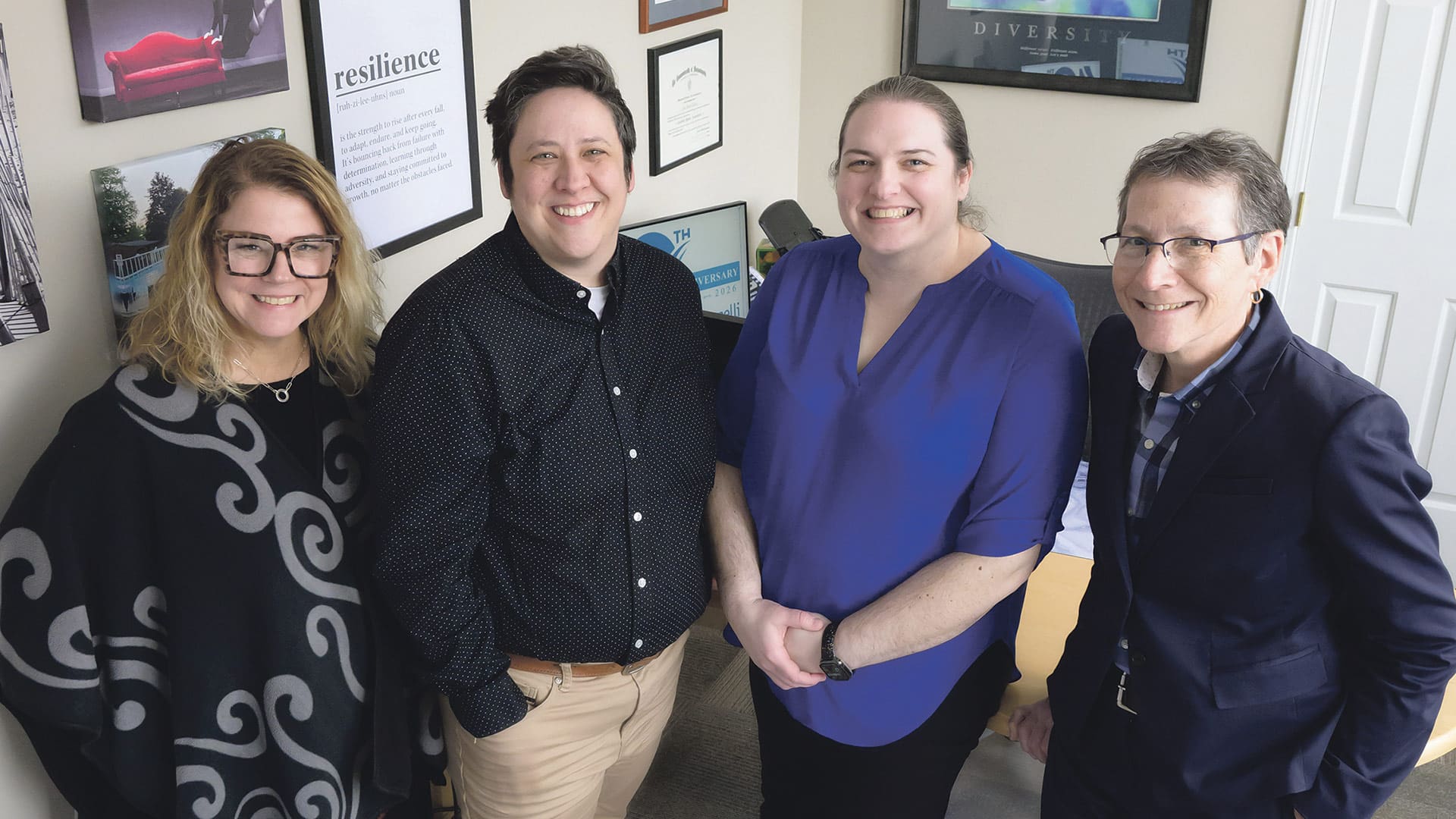
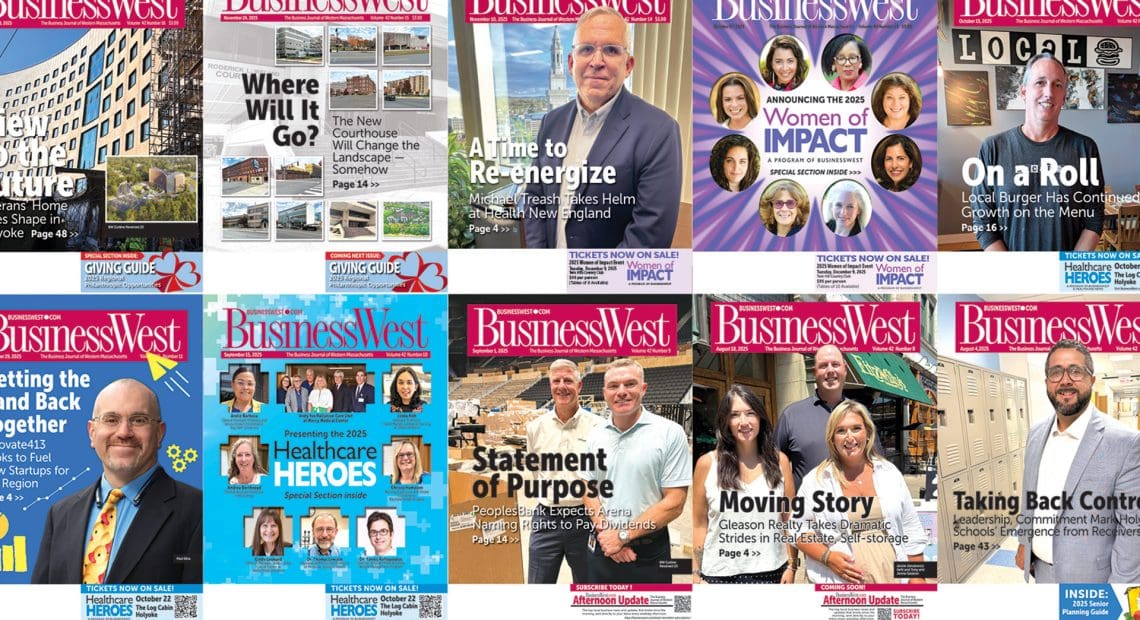
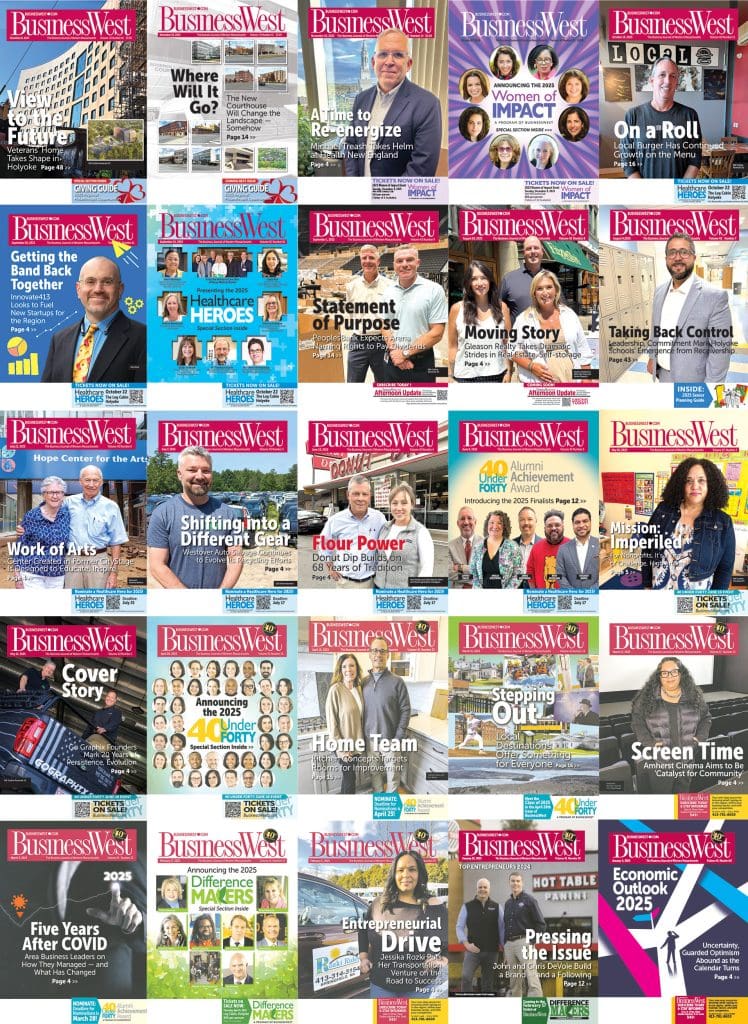
That’s how many people are now members of ‘the club.’
That would the 40 Under Forty club, which BusinessWest launched back in the spring of 2007. It is comprised of rising stars in this region, people who are making a difference in their business, nonprofit, school, or seat in government — and also in the community.
This is the 20th class of honorees to be chosen by independent panels of judges. Members of the class of 2026 are officially in the club, but they will get their plaques at the annual gala on June 11 at the MassMutual Center in downtown Springfield.
Like the 19 classes that came before, this one is diverse in every respect, but especially with regard to what earned individual honorees a spot among the 40. For some, it’s professional accomplishments. For others, it’s primarily their work within the community. For most, it’s a combination of both, as the stories that begin on page A6 clearly relate.
Here are some snapshots that convey the depth of this class and the many ways its members stand out.
• Inspired by his father, a commercial banker who passed away in 2012 after battling ALS, Paul Accorsi Jr. has followed in his footsteps, not merely as an assistant vice president and business banking lender for PeoplesBank, but as a leader in the community, getting involved with groups and causes ranging from the Springfield Kiwanis Club to the South End Community Center to a wide range of charitable road races.
• Alexandra Balise ultimately decided to join the family business — a growing collection of auto dealerships and related ventures that bears her family’s name — but while she has made her mark there, now as director of Corporate Strategy, she has been a force in the community as well, especially with the early childhood education provider Square One, but also Benjamin Swan School, Link to Libraries, the Zoo in Forest Park, and other instititions and causes.
• Alicia Brown is an English teacher at Springfield’s John J. Duggan Academy who created ‘the Royals,’ an after-school program to empower young women through mentorship, leadership development, and life skills education — “helping them build healthy coping mechanisms to navigate life,” as she put it.
• Shannon O’Connell turned a lifelong heart for animals into a long-running stint as facility manager at the Good Dog Spot in Chicopee — but, more impressively, a role as foster mom to more than 250 animals (and counting) over the years, creating a calm, nurturing environment where they can safely grow, heal, and learn to trust.
• Almost two decades ago, Aimee Salmon launched Positively Africana by Aimee, a thriving retail, online, and fitness enterprise that works directly with women entrepreneurs and artists across Africa, creating economic opportunties for them while bringing authentic African gifts and experiences to Western Mass.
• Brandon Towle is the manager of Rolling Meadows Country Club in Ellington, Conn. And while he excels in that role, he’s an honoree for the manner in which he has gained the confidence and courage to move past a severe stutter and, even more importantly, create Camp Words Unspoken in Pittsfield, where young people are provided with the tools to do the same.
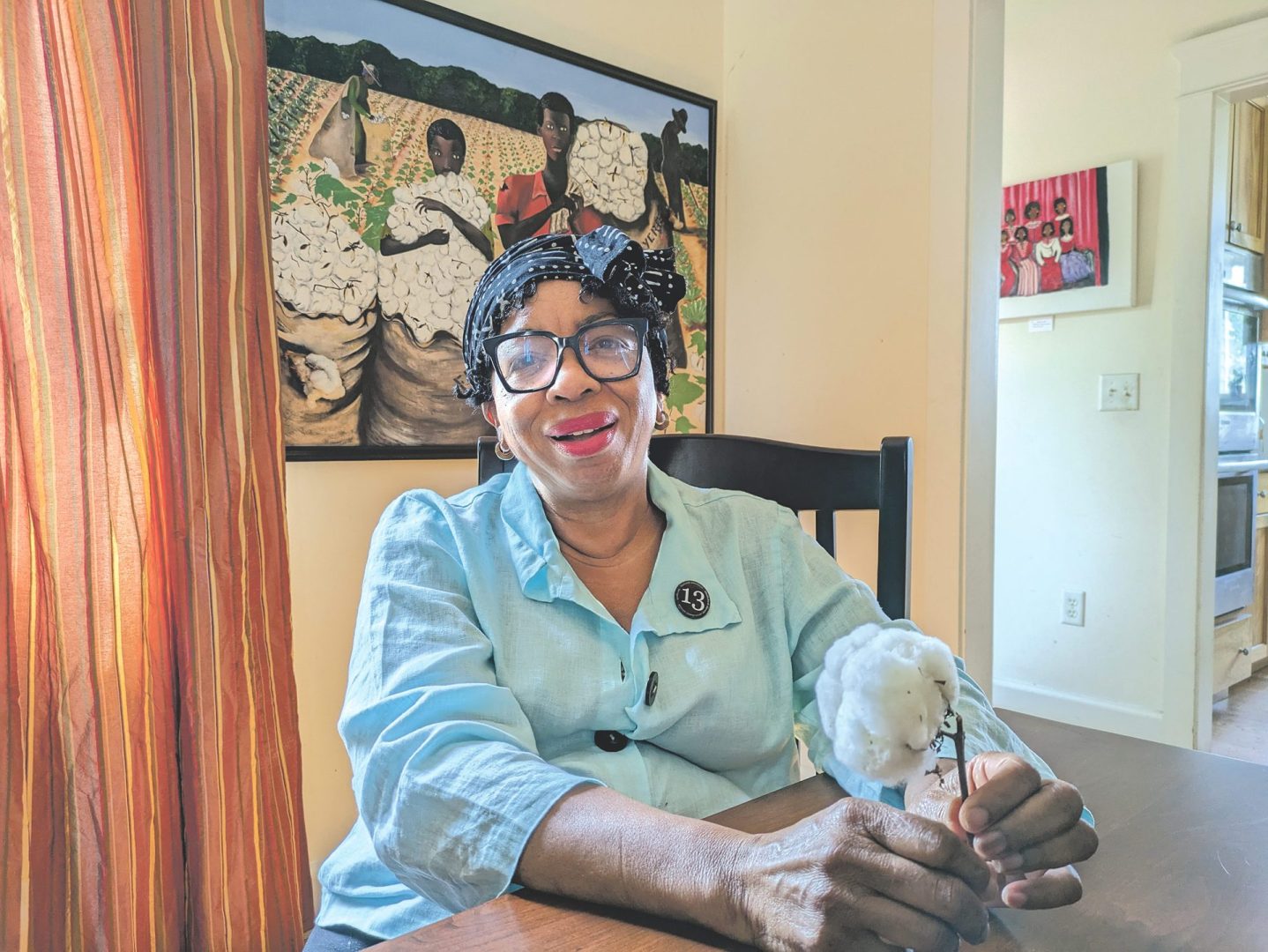
• Yeselie Tulloch, this year’s top scorer among the five independent judges, co-founded the Academic Leadership Assoc., a nonprofit organization dedicated to empowering youth through school-based mentoring, literacy support, social-emotional development, and self-advocacy programming. “It’s so important to me to work with children and just be that adult that some kids might not have,” she said.
That last quote speaks to another thread that runs throughout this year’s 40 Under Forty class: impact. Real impact that goes well beyond personal success. We’re once again honored to share their stories with you in the 20th edition of BusinessWest’s 40 Under Forty. Here’s to 20 more years, and so many more stories waiting to be told.
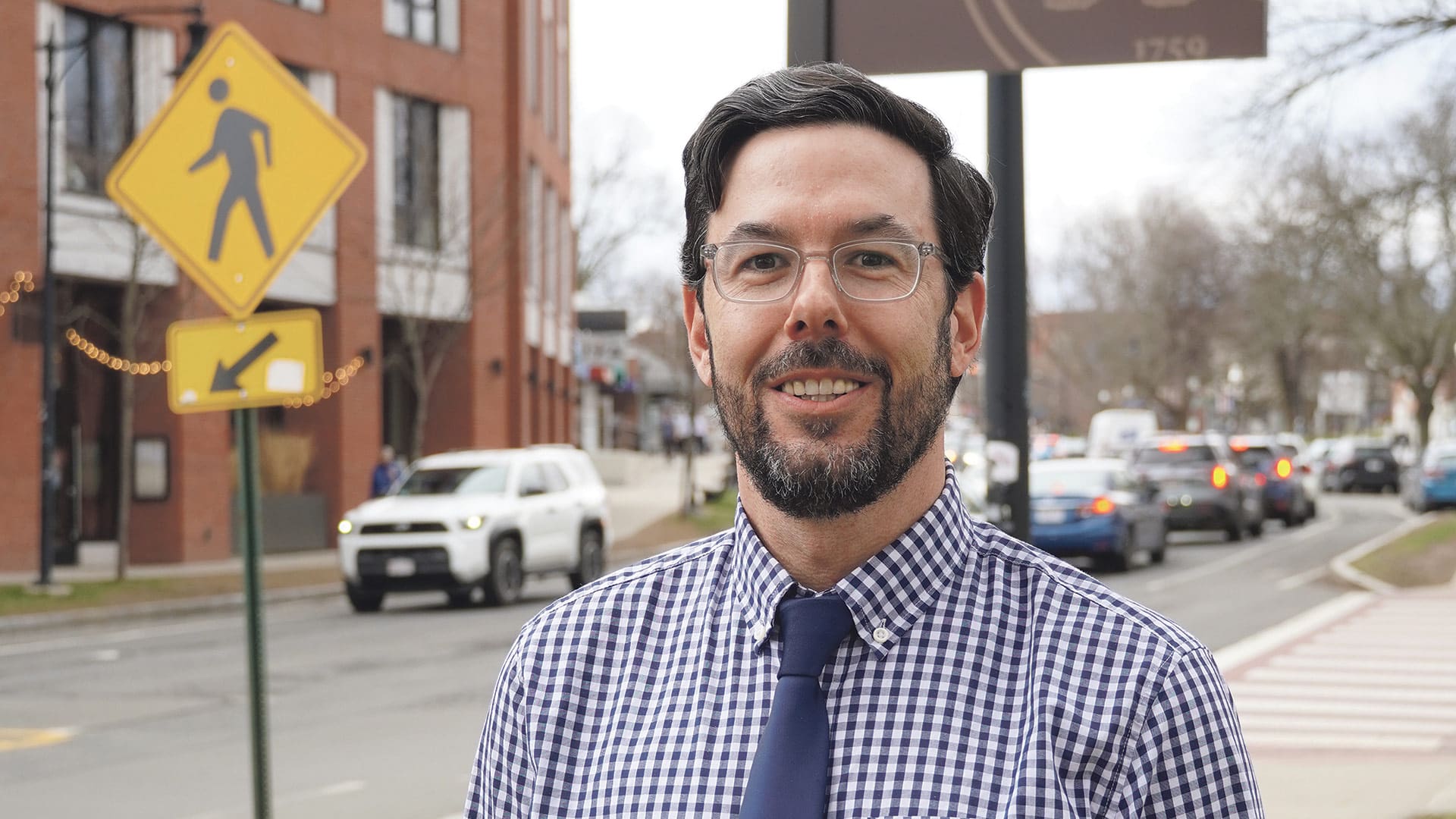
Jeff Bagg says Amherst is well-stocked with assets as it goes about competing with other area communities for the dollars spent by visitors.
Jeff Bagg says he’s come full circle. Sort of.
He graduated from UMass Amherst back in 2002 and then worked for the town of Amherst as senior planner from 2008 to 2016. But now, after gaining different types of experience in various settings, he’s back in Town Hall, serving as director of Planning & Economic Development, a melding of two roles.
He started in December and has spent the past four months getting reacquainted with a community that is in a seemingly constant state of motion, but with challenges and opportunities that have been present for decades.
“I knew a lot about the town of Amherst, but it had been 10 years since I last worked there, so there was a learning curve,” said Bagg, who is involved in several initiatives at present, from a project to set new design standards for the downtown to a study of the East Amherst area with an eye toward creating core commercial development opportunities, to the collection of data to be used in creation of the town’s first economic development plan in several years.
“What we have available is pre-pandemic, and there have been really big shifts in the way people spend their money,” he said of that last initiative. “Knowing that businesses need a strong customer base and foot traffic, we really need to figure out ways to bring more residents out and visitors in, and the data drives a lot of that.”
“Knowing that businesses need a strong customer base and foot traffic, we really need to figure out ways to bring more residents out and visitors in, and the data drives a lot of that.”
These are just some of the many converging storylines in Amherst, a community that those we spoke with said is a college town, but so much more. Others include:
• Amherst Area Chamber of Commerce, which continues to grow membership and become ever more diverse — Executive Director Jacob Robinson said the chamber added 57 new members in 2025, roughly double the number welcomed in 2023 and the years prior — and build new events into the schedule, including a revitalized business expo;
• A Business Improvement District (BID) that is working with the chamber and individual businesses to make the community a true destination year round;
• The ongoing success story that is the Drake, a downtown live-performance venue that is planning 200 nights of performances for 2026 involving 500 artists from both the 413 and around the globe and more than 33,000 audience members, many of whom will support other hospitality-related businesses before and after those shows;
• The ongoing saga of Hampshire College, which has been fighting for survival in recent years amid declining enrollment and continuing fiscal hardship. That fight took a new twist recently when the New England Commission of Higher Education announced late last month that it will require the school to show cause in June as to why it shouldn’t be placed on probation or have its accreditation withdrawn over concerns the college may no longer be meeting the organization’s institutional resources standard; and
• Continued evolution of the community’s downtown, including several new businesses, the owners of which told BusinessWest there is a rhythm to the downtown, one dictated by the calendar, which takes some getting used to (much more on this later).
For this latest installment of its Community Spotlight series, we take an in-depth look at one of the more intriguing communities in the region — one marked by learning of all types.
Developing Story
Bagg brings a diverse résumé to his new position in Amherst. Indeed, after his stint as senior planner there, he served as project manager for the Central Massachusetts Regional Planning Commission before beginning what would become a six-year stint as director of Planning and Economic Development in Easthampton and then serving as senior planner for the BSC Group in Worcester.
He described his new role as a “good fit” and an opportunity to return to the public sector — in a community where change is a constant.
“I’ve been working in many different communities in Massachusetts, and more and more towns have increased their efforts to attract visitors; it’s an intense competition for people’s time and limited disposable income.”
Like others we spoke with, he said Amherst has both a number of assets and … let’s call them liabilities.
In that first category, he started with the obvious, the three colleges that provide the community with its distinct flavor — Amherst College, UMass Amherst, and Hampshire College — but also its many cultural attractions, ranging from the Emily Dickinson Museum and the Eric Carle Museum to the Drake and Amherst Cinema, which make it more than your typical college down.
John Page says downtown Amherst is in a seemingly constant state of change and is always welcoming new businesses.
On the downside, this can be a difficult town to do business in, and Bagg acknowledged this with a comment intended to be diplomatic.
“We have a very engaged community, but there is some lack of agreement on where new growth should happen. Amherst struggles with its vision for the future and an identity that we can get most people to agree to,” he said, adding that town officials are making it a priority to make it easier to do business in town, such as with the hiring of a permit administrator to facilitate the process of setting up shop there.
Which brings him back to the economic development plan, and the collection of data that will help drive it.
“What we don’t have a good handle on is where people are spending their money — we don’t know where residents are spending their money, we don’t know where visitors spend their money when they come here, and how all that relates to demographics — population changes, the age of people coming and going, those are factors for what’s going to drive new businesses in Amherst, and we don’t really have a handle on that.
“I’ve been working in many different communities in Massachusetts, and more and more towns have increased their efforts to attract visitors; it’s an intense competition for people’s time and limited disposable income,” he went on, adding that this competition is one of myriad factors that will go into the development of an economic development plan over the next year or so.
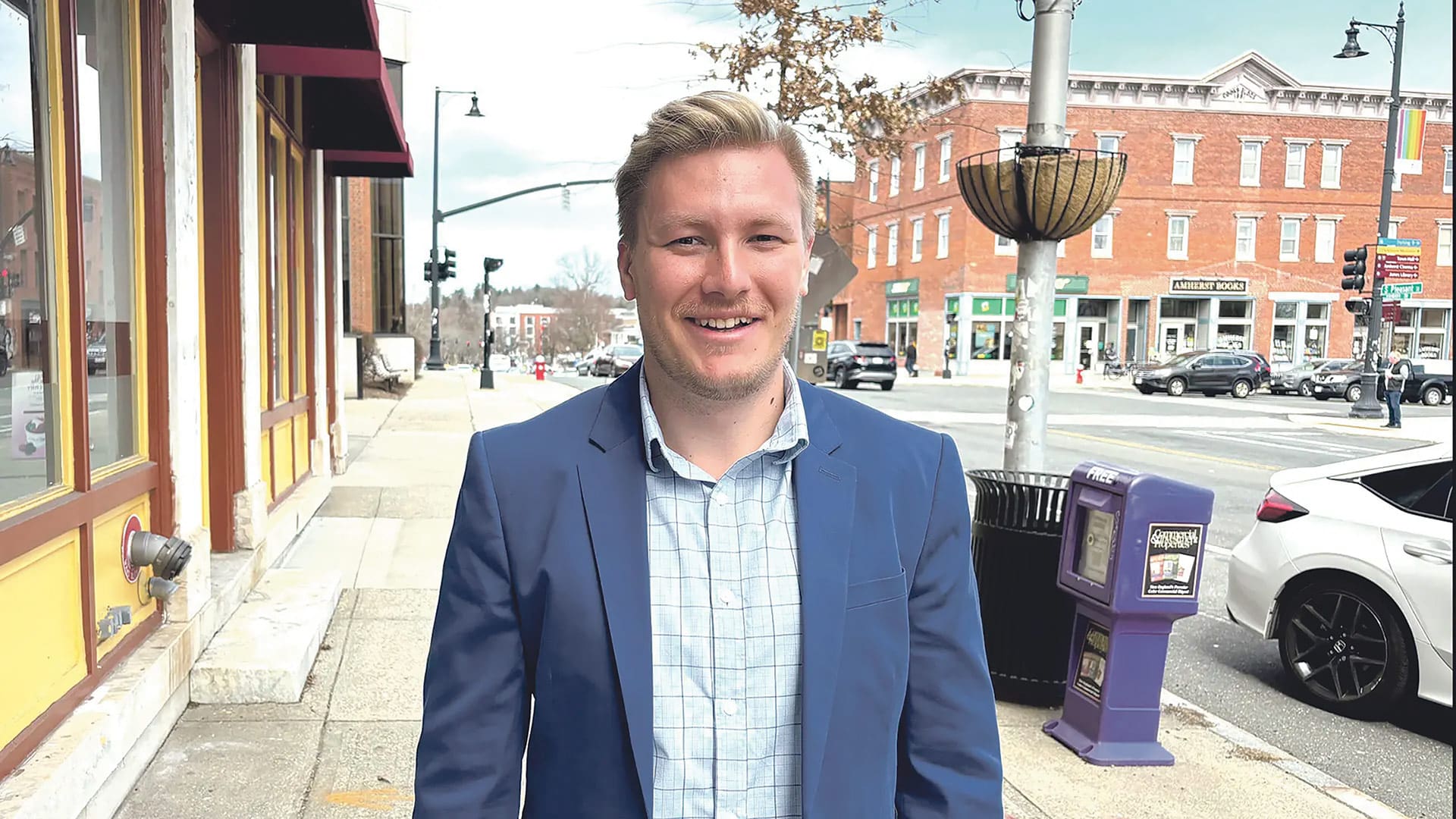
Overall, the community is well-suited to succeed in this competition to attract visitors, said John Page, executive director of the Amherst BID, adding that there is already plenty to do in town — such as the recent Fire and Ice Winter Festival, which drew more than 2,000 people — and plans to provide more good reasons to make the trip.
That list includes the Amherst Literary Walk on April 11, a day of literary events throughout the downtown, including readings, workshops, literary trivia, and more, said Page, adding that one of the BID’s broad goals is to get people out and have them experience Amherst.
Another is to help bring new businesses to town and create an environment that will enable them to succeed year-round. Like others we spoke with, Page said Amherst has some unique assets, but especially the colleges and the people who go there to learn and to work.
“We have to keep showing up for these businesses that give this place its identity. These are not just storefronts — they create jobs, they build relationships, and they shape the character of the community.”
“There is this youthfulness,” he said, speaking to the environment created by the melding of the higher learning institutions and the omnipresent arts and culture. “You’ve got bands, you have artists of all ages, and a college town both because of the students and the faculty. There’s this appreciation for arts and culture — we have a lot of museums and a lot of live music going on, and that goes hand-in-hand with a college community, and that helps us out even when the students aren’t here because that reputation is great in the summer, when we want to invite other people to join us from across Massachusetts, across New England, and across the world.”
Robinson agreed, noting that the chamber is committed to promoting and supporting the downtown, but other ‘villages’ in the community as well, such as the Mill District in North Amherst and the South Amherst section of town.
“We have to keep showing up for these businesses that give this place its identity,” he said, summing up the chamber’s mission. “These are not just storefronts — they create jobs, they build relationships, and they shape the character of the community.”
What’s in Store
As she spoke with BusinessWest, Becky Guyer was gearing up for Easter, but also a very busy three-month stretch that includes Mother’s Day, college and high school graduations, some weddings, and other events that require flowers.
She can speak from experience about what this time means for her Floral Affairs shop in downtown Greenfield. But the one she opened last July on North Pleasant Street in Amherst … not so much.
Indeed, Guyer said she is still experiencing a learning curve when it comes to doing business in downtown Amherst. She was invited to look at the North Pleasant location, long a flower shop, at the behest of the building’s owner, who thought she might be interested in opening a second location there.
Amherst at a Glance
Year Incorporated: 1759 Population: 39,263 Area: 27.7 square miles County: Hampshire Residential Tax Rate: $16.91 Commercial Tax Rate: $16.91 Median Household Income: $48,059 Median Family Income: $96,005 Type of Government: Town Council, Town Manager Largest Employers: UMass Amherst; Amherst College; Hampshire College
* Latest information available
After some due diligence, she determined that she was.
“I thought that this could be a good opportunity — this is a college town, there are some venues in town, some that we already do weddings with, as well as UMass events and Amherst College events,” she said, adding that the location was also across the street from a funeral home, which, in the floral world, is a real benefit.
“There were a lot of positives,” she went on, adding that the storefront, which had to be completely gutted, wasn’t one of them. But she moved forward with confidence, has found the move worthwhile, and has high praise for the chamber and the BID. But there has been a learning curve as she adapts to life in a college town.
“When the college kids leave … it was the worst Christmas I’ve ever seen in my life — so much so that it’s made us completely restructure our game plan,” she told BusinessWest. “I don’t necessarily have a designer in Amherst — it’s meant for convenience; all orders get run out of Greenfield, and we’ve made this location more of a convenience store.”
Overall, the downtown Amherst location is a work in progress, she said, adding that she is learning the cadence, if you will, of this college town, and the nuances of the calendar. Christmas was a letdown, and she’s not sure what to expect this summer, but she is optimistic about the upcoming few months and what they could bring, and the location itself.
“The walk-up traffic is fantastic — there’s a young, growing community there that comes in quite a bit,” she said. “There are a lot of $10, $15, and $20 sales, which is great.”
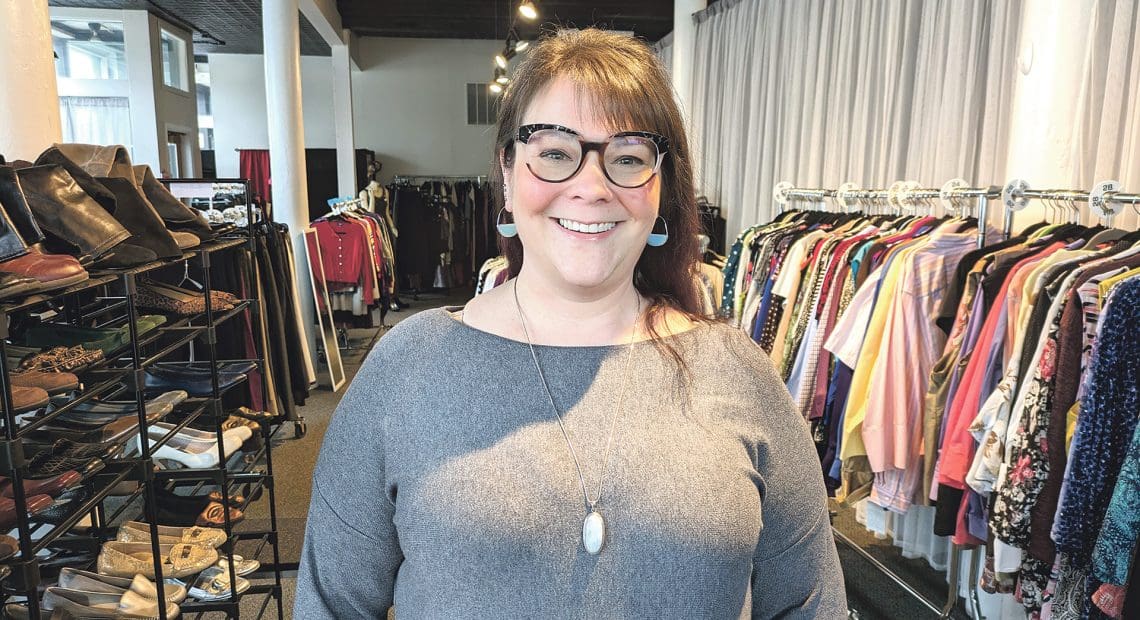
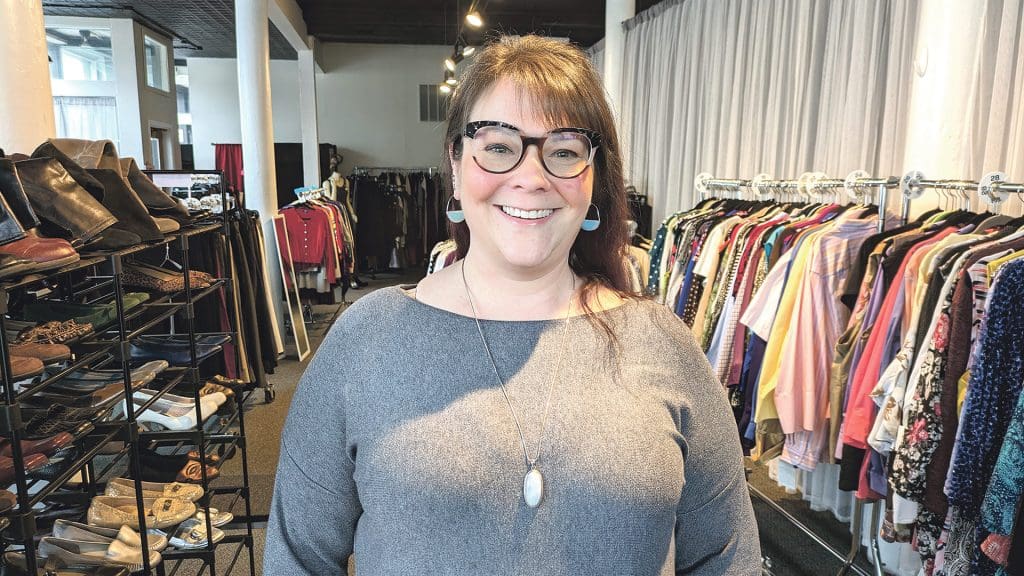
Andrea Marion is also getting used to the rhythm of Amherst’s downtown. She moved the Closet from a location in the Mill District to a storefront (a former restaurant) on Main Street last fall. She enjoyed the Mill District atmosphere but said there is more foot traffic in the downtown, and that suits her operation.
She described her business as a “curated resale boutique,” and herself as a “fashion concierge.”
“I hand-pick every piece that comes into the store — I don’t do consignment, generally, and I try to make sure I have something for everyone … I sell for all genders and all sizes,” said Marion, a nonprofit manager before she went into business for herself, adding that, while many items would be described as high-end (Fendi, Givenchy, and Prada handbags, for example), she has items at all price points.
Like Guyer, Marion said it takes some time to get used to the patterns of the downtown, especially when it comes to the students’ schedules, but overall, she says the area is becoming ever more vibrant and remains a good place to do business.
“There’s a lot of energy and activity,” she said, adding that she is accessible to more people now, which has broadened the customer base and made it more diverse, especially age-wise. “Amherst’s downtown has so much potential, and I’m really happy to be here.”
Last week, a new international study, called “Firm Data on AI,” reported that artificial intelligence (AI) adoption is now widespread across the U.S. and other countries with advanced economies — but measurable impact remains limited, or at least elusive.
The study, which surveyed nearly 6,000 CFOs, CEOs, and senior executives across the U.S., U.K., Germany, and Australia found that about 70% of firms are actively using some form of AI; in the U.S., that figure is 78%.
However, more than 80% of the surveyed firms say AI has had no impact on employment or productivity over the past three years.
Something has to give — and it’s probably not going to be the advance of AI, which seems here to stay.
“The total impact of AI … I don’t think anyone knows what it is,” said Scott Longley, a manufacturing expert in residence for FORGE, one of the companies partnering with BusinessWest on a new workshop series centered on putting AI to the most productive uses (see story on page 4).
Our new StratAI Series aims to demystify the potential of AI in several different sectors, starting with manufacturing on Thursday, March 26 at the STCC Technology Park. Future workshops will address the impact of AI in professional services such as law, accounting, and financial services; nonprofits; the service sector; and others.
Considering the statistics above — the idea that almost everyone is using AI, but few companies truly grasp it — this series is especially timely, and we are excited to partner with a number of smart, forward-thinking business leaders to bring it to you.
“Manufacturers, especially Western Mass. manufacturers, have had their hands so full dealing with the regular chaos of the economy that taking time for new technology has never been at the top of the priority stack, and understandably so,” said Paul Silva of Innovate413, one of the partners on StratAI. “It needs to be a conservative industry. You spend a lot of money for capital assets, so you can’t afford to really screw up; they have to be very careful.”
But that’s also true of other sectors, and so are the feelings of general uncertainty around how best to incorporate AI — and why. We are confident, and excited, that this StratAI Series is an important step in the right direction.
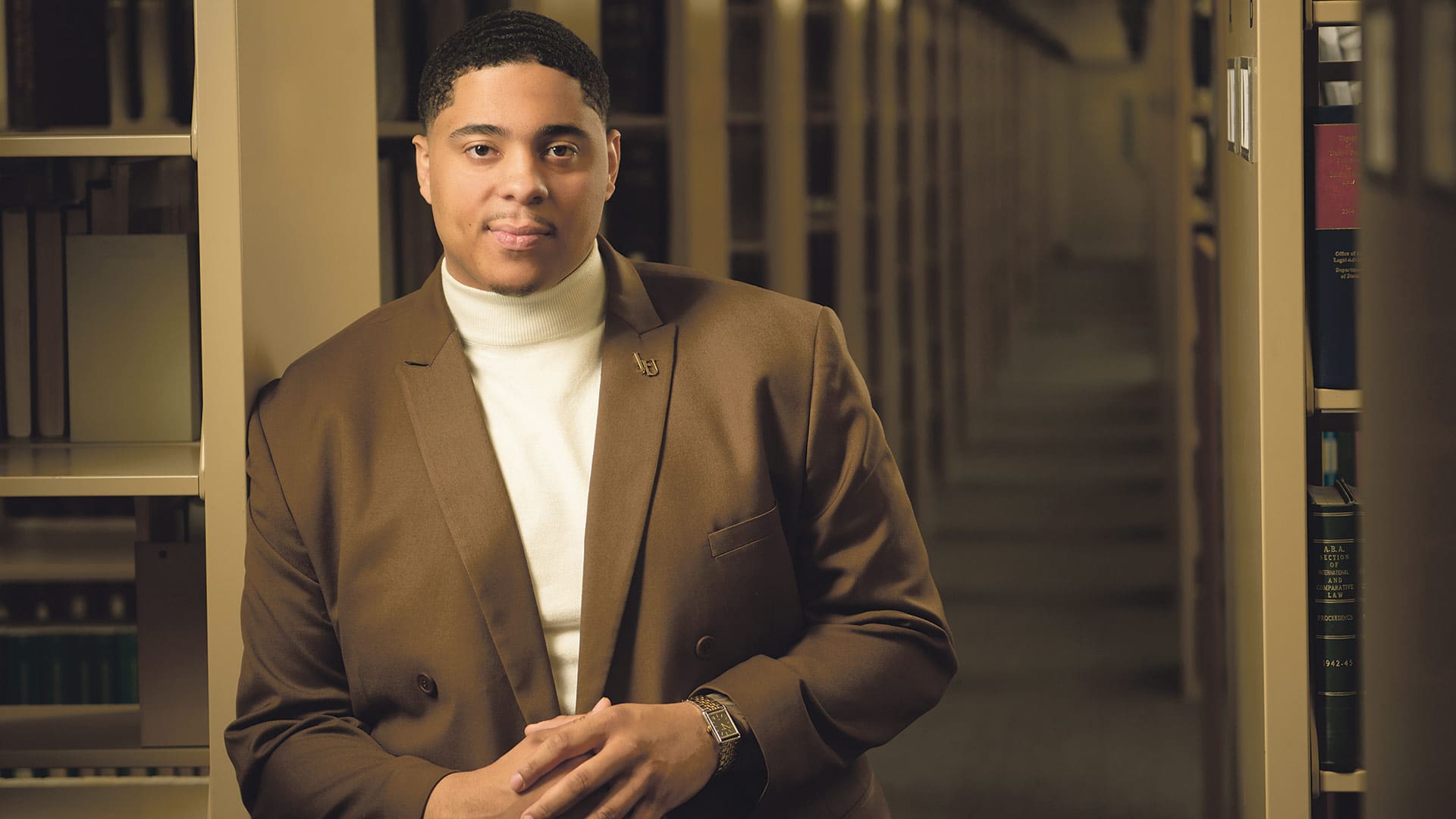
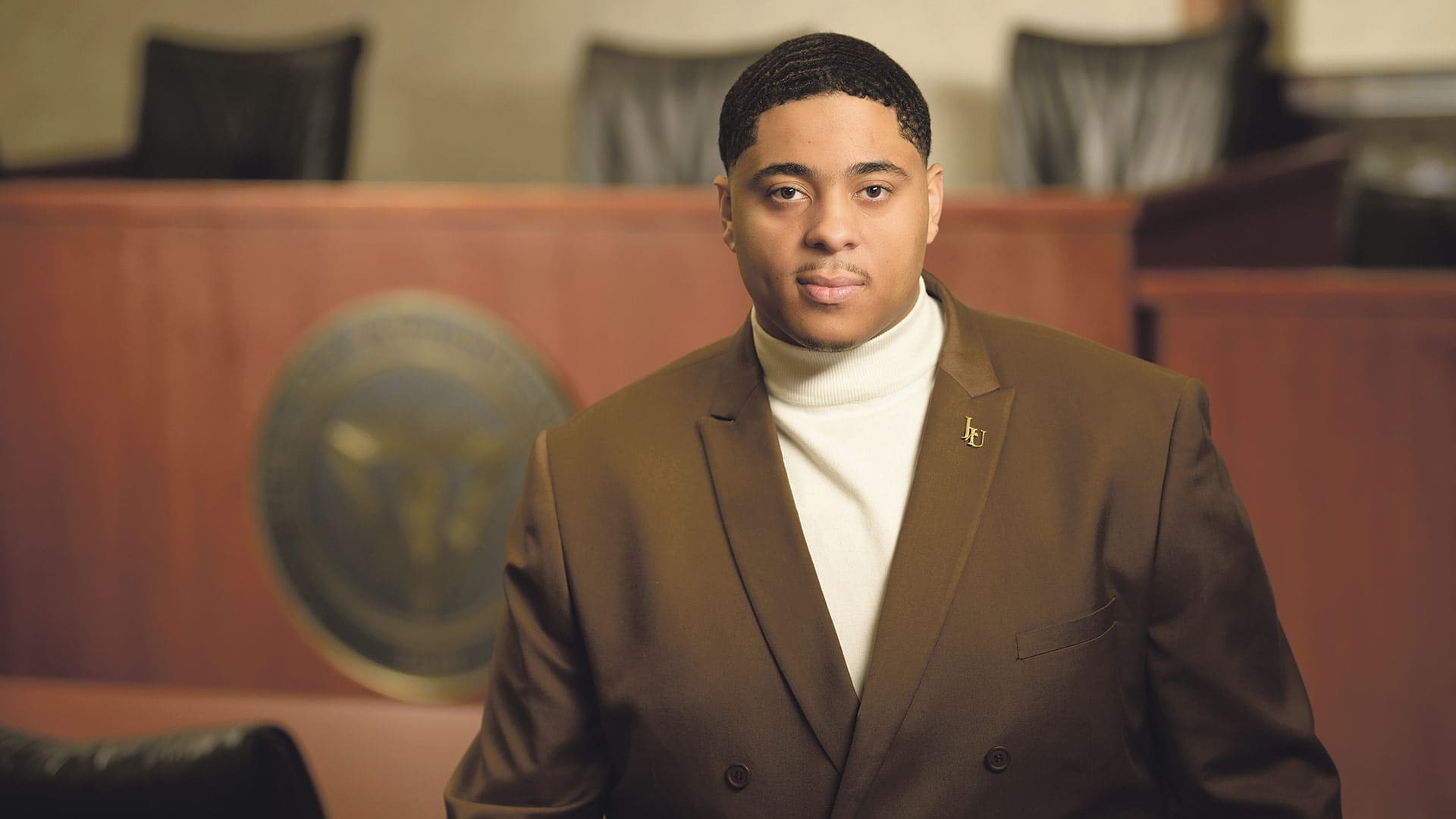
Zeno Temple played football at Western New England University.
He started on the defensive line and eventually moved to offensive guard. He played all four years he was at the school, and the teams he played on did well, winning the Conference of New England title each year and advancing to the Division III playoffs.
Temple, who spent several years working as a community safety outreach specialist at the Hampden County District Attorney’s Office, says he takes a number of lessons from his playing days into his current work — both as a senior legal analyst with the law firm Royal Parker Spruce, working toward becoming a lawyer (he’s on track to graduate from Western New England University School of Law in May and envisions specializing in employment law); and with a nonprofit he launched called the Just Us Movement.
In both cases, he strives to do something his former head coach, Keith Emery, or ‘Coach E,’ always told his players.
“Human rights and civil rights are not things where you can sit back and be like, ‘OK, I have those, and everything will be fine.’ These are things that always have to be advocated for and fought for.”
“He told us, ‘you gotta show up every day and get one better,’” Temple recalled, noting that the one refers to 1%. “He said it every day — ‘one better, one better.’ I keep that handy and ready because it’s true; I try to get one better in some aspect of my life every day.”
This philosophy, if you will, of continually getting 1% better is reflected in the broad mission of the Just Us Movement — to empower individuals, strengthen communities, and dismantle systemic barriers through legal education, health and wellness initiatives, and dynamic leadership programs — and its specific initiatives.
They fall into three categories — education, law, and health — and include everything from a program called Nourish the Neighborhood, through which Temple and his team have served hundreds of families with fresh meals; to a series of Know Your Rights workshops, free webinars covering topics from immigration encounters to mental health in the workplace; as well as the distribution of Red Cards, pocket-sized constitutional rights guides.
Temple is also establishing what he calls the Emerging Leaders Council, a pipeline for young professionals and students entering fields like law, education, and healthcare. It’s designed to cultivate the next generation of justice-driven leaders, he said — people who will carry forward the values of equity, service, and community advocacy.
“Zeno is one of Hampden County’s emerging leaders, whose work is transforming how communities access support, advocacy, and empowerment,” wrote Khadijah Allen, the Just Us Movement’s chief of staff. “His leadership reflects a clear vision — that justice and community well-being must be accessible to everyone, not just those who know how to navigate complex systems. That belief is the foundation of his work and the driving force behind the movement he leads today.
“Zeno is a Difference Maker because he doesn’t just witness inequities — he responds to them with action,” Allen went on. “Through the Just Us Movement, he has built a model of leadership that uplifts, empowers, and unites communities. His work is not only changing individual lives; it is shaping the future of justice and advocacy in Hampden County.”
Zeno Temple says the Just Us Movement aims to empower individuals, strengthen communities, and dismantle systemic barriers. Photo by Bob Zemba, Simple Truth Imaging
Reflecting on what’s been done in the year since he started the nonprofit — and the work still to come — Temple said there are many needs within the community, including equal access to justice.
“It sounds so simple, and it sounds so basic, but it’s true — justice as a whole needs to be accessible to everyone, period. And I don’t think that we’re doing a good enough job of that as a society, and my goal is to make that a reality.”
Knowing the Score
Temple grew up in Philadelphia and recalls that his early aspiration was to become an architect.
“As the years went on, I got more in tune with current events and things that were going on, like Trayvon Martin,” he said, referring to the case of the Florida teenager shot and killed by a neighborhood watch member who claimed self-defense and was eventually acquitted of second-degree murder and manslaughter. “I was glued to the TV and, for the first time, saw what was going on.
“I started becoming more interested in the law,” he went on, adding that this interest, while keen, took a back seat to athletics. He played football in high school and in his senior year commenced a search for schools where he could continue playing.
“I visited a ton of schools and fell in love with Western New England,” he said, adding that, while playing, he also majored in law and society and became a life-skills mentor to younger players on the football team.
“When the freshmen would come in as athletes, we’d be the people to look out for them, help them out, check in on them, make sure their grades were good, and get them any resources they needed,” he recalled, adding that these experiences helped inspire his advocacy efforts to come later.
After graduating in 2020, at the height of the pandemic, he took some time off, went back to Philadelphia, did some policy work, and helped with a few political campaigns, before getting an offer to return to Springfield and work in the DA’s office as a community safety outreach specialist.
In that role, he worked as part of a small unit that worked within the community on several initiatives, everything from school visits to talk with students on a variety of subjects to court tours, by which young people became acquainted with the legal system, from arraignment to trial.
“Zeno is a Difference Maker because he doesn’t just witness inequities — he responds to them with action.”
“It was a cool job … we went into schools across Hampden County, getting to students early and doing prevention work,” Temple explained. “We talked about internet safety, alcohol and drug abuse, driving safety, and more. We had those discussions in big group settings, but also smaller sessions as well.
“Having that connection with the students was amazing,” he went on. “Being out in front of 100 high school students or middle school students and talking about important topics … it was not just educating the students, but also educating myself, trying to keep up on what’s new and what’s happening so we can be most productive and most helpful to the community. It gave me the opportunity to work on my public speaking skills, while also finding lanes to grow as an individual.”
Temple started attending law school at night in 2022, and is closing in on his degree, with intentions to focus on employment law and civil rights. As a paralegal and senior legal analyst at Royal Parker Spruce, he is gaining additional learning experiences while sitting in on mediations and other sessions.
Inspired by several factors — everything from the example set by his mother, a social worker, to the work he’d become involved with at the DA’s office, to various, and obvious, needs within the community, he started the Just Us Movement roughly a year ago.
As noted earlier, the Chicopee-based agency has a broad mission and service area (Western Mass. and Northern Conn.) and several focus points.
These include Nourish the Neighborhood; a Community Earth Day initiative (tree planting and neighborhood beautification); virtual programs to connect community members with information and resources; a back-to-school teacher supply drive in Hartford; participation in the Dignity Grows Partnership, a national initiative that provides hygiene and menstrual care products to individuals experiencing period poverty; a Black Balloon Day webinar on March 6 to join others in honoring those lost to overdose; and more.
The ‘Rights’ Thing to Do
Each of these initiatives grew out of need and a desire to meet it, Temple said, adding that the Nourish the Neighborhood effort is a good example. It was inspired by efforts undertaken by a friend at shelters in Philadelphia.
“I was thinking, ‘we should definitely do something like that up here,” he recalled, adding that the first effort, one that provided meals to more than 70 people — with his mother, also a caterer, doing most of the cooking — was in Hartford, with others to follow in the 413.
“We knew it was the right thing to do and that we were on the right track,” he said, adding that two more events followed over Thanksgiving and Christmas, with more planned for this year.
Another key element of his mission is education, including Know Your Rights seminars. These are free webinars on topics such as “Bridging the Gap: Access to Justice and Community Engagement,” “Know Your Rights: Law Enforcement and Immigration Encounters,” and “Mental Health in the Professional World.”
“We have some amazing people come in and speak on these panels — judges, attorneys, people who work in the community,” he said, adding that there have been seven of these webinars to date, with other subjects ranging from employment law matters to record sealing and expungement, and they are available on YouTube and various social media platforms.
The most recent offering was on Feb. 7, a program on housing featuring officials with the Massachusetts Commission Against Discrimination.
And the response has been very positive, he said, adding that several dozen people have attended the live webinars, and there are usually energetic rounds of Q&A at the end of each one.
Behind these events is the simple philosophy that information is power and that access to justice and the rights that many take for granted is in many cases not equal.
“Human rights and civil rights are not things where you can sit back and be like, ‘OK, I have those, and everything will be fine,’” he said, adding that recent events in Minneapolis and elsewhere have driven home this point. “These are things that always have to be advocated for and fought for, and right now is the most important time to have people speak up for human rights. We need to realize that we all matter.
“The easiest thing to say would be, ‘I want peace and happiness, and things like that,’” he went on. “But we also have to realize that history repeats itself, and we all have to do a better job of learning from history, in all facets of life.”
Looking ahead, Temple wants to keep growing the Just Us Movement and broadening its impact. “I want us to be an organization that reflects the community we serve, and I want it to be an organization that will serve the community based on access to justice.”
This brings him all the way back to that notion of getting 1% better. It’s a personal goal, of course, but also something everyone involved in the Just Us Movement strives for.
“That’s what we do here — 1% better,” he said. “If you try to shoot for 1% better every day for a year, and you reach that, at the end of the year, you’ll be doing well.”
That mindset certainly helps explain why Temple is a Difference Maker.
Margaret Tantillo has spent her entire career in the nonprofit space, much of it with the Girl Scouts, and then for almost a decade leading Dress for Success Western Massachusetts.
“I’ve always worked in organizations in support of women and girls — and that was purposeful. I had a passion for it,” she said.
“There were some experiences that led me to understand that women are treated differently, and that there’s a need for women to support each other,” she added, citing a persistent wage gap between men and women as one example.
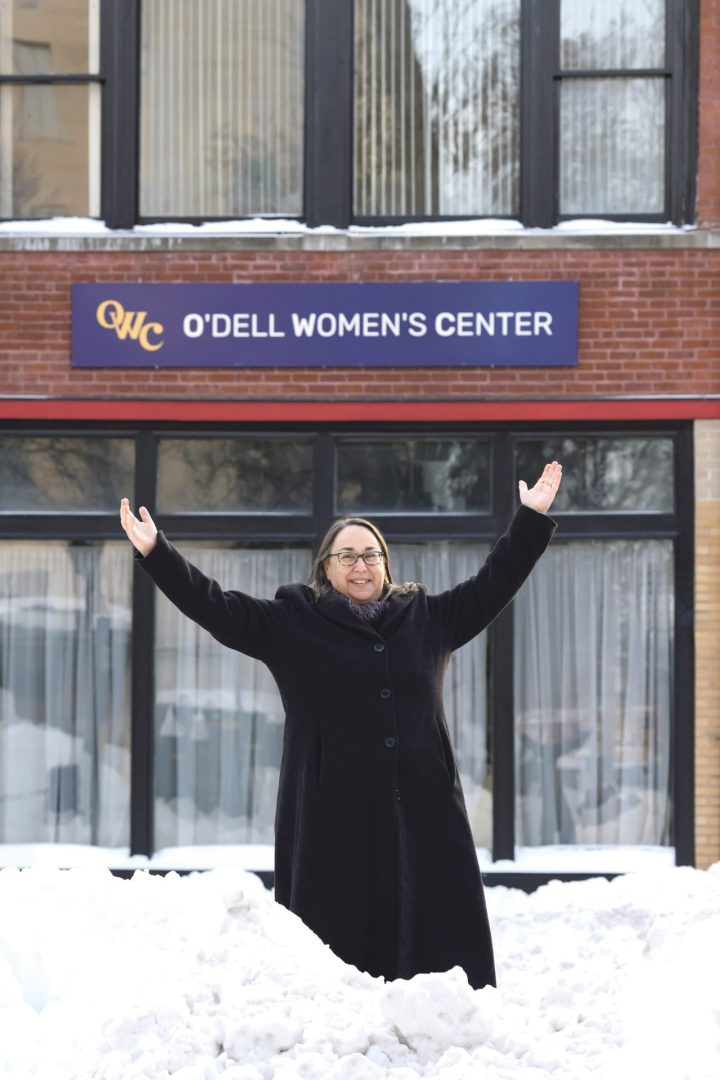
“Women take the more responsibility for childcare, for elder support. So there are benefits to lifting women up — especially the women that we serve,” she went on, referring to her latest role, which she accepted in early 2024, as executive director of the O’Dell Women’s Center, a philanthropic organization that supports low-income women in and around Springfield in a variety of ways.
“I’ve always said that not everybody gets dealt the same cards, and my hope, personally, is to sort of even the playing field,” Tantillo explained. “I could have just as easily been born into a household that was not well-off financially, and that would have been my barrier to overcome. But the hand I was dealt was middle-class, and there was no question I was going to go to college.
“Margaret’s dedication ensures that women and families have stability and access to essential resources during difficult times.”
“So for me personally, it’s like, where’s the fairness?” she went on. “We’re all getting different opportunities, and and they’re just not equal, so by working in women’s organizations, what can I do to even the playing field?”
The O’Dell Women’s Center was inspired by Connie O’Dell, who served for more than 40 years as a maternity nurse at Providence Hospital and dedicated her life to caring for women with dignity, compassion, and respect. Founded in 2023, the center occupies a 10,000-square-foot facility in the heart of Springfield.
Its most visible arm is its foundation, which provides grants, typically ranging from $10,000 to $75,000, to local nonprofits that advance educational, workforce, and career development opportunities for low-income women, as well as nonprofit organizations that address systemic barriers, such as food insecurity, childcare access, transportation, and housing instability.
The foundation distributed $550,000 in 2025 to support women and families across Springfield, and an estimated $750,000 in grants will be awarded in 2026.
The center also houses Dress for Success Western Massachusetts, which was displaced from its longtime home at the Eastfield Mall when that complex was about to be torn down and redeveloped. The O’Dell Women’s Center offered it about 5,000 square feet of space — more than $80,000 in free rent annually — to continue its work without interruption, said Jessica Roncarati-Howe, who succeeded Tantillo as head of the organization in 2024 — and is one of two individuals who nominated her as a Difference Maker.
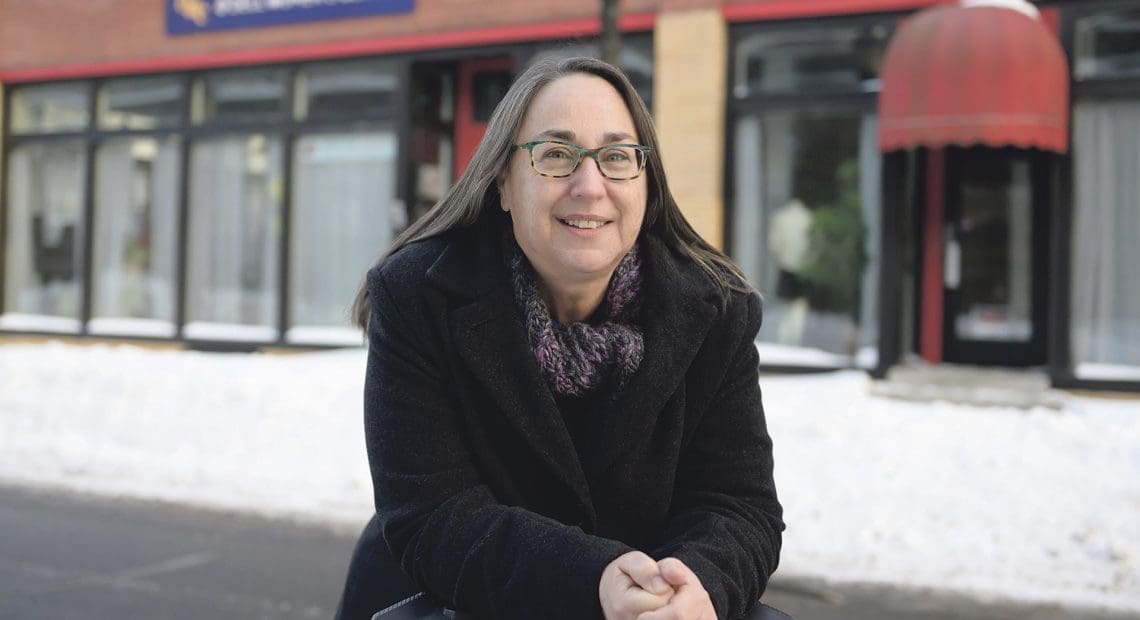
Margaret Tantillo says she understands Springfield and its needs, and is grateful to be in a place where she can make an impact. Photo by Bob Zemba, Simple Truth Imaging
“This single act ensured that hundreds of women in Springfield and surrounding communities could still access professional clothing, employment coaching, career development, programming, and the support networks that help them thrive,” Roncarati-Howe said. “The O’Dell Women’s Center did not just give us space; they gave us stability, dignity, and the ability to keep serving women who rely on us every day.
“What impresses us most is that this generosity is not an exception — it is the model,” she added. “The Odell Women’s Center provides free gathering and meeting space for women’s groups and is actively seeking additional nonprofits to join the building at low or no cost. Their goal is to create a true community hub where women can access multiple resources under one roof, reducing barriers and strengthening the social and economic fabric of Springfield.”
“We’re hoping to see quality relationships that align with our values of treating women with compassion, not assuming what other women need, but kind of walking hand in hand to provide that support.”
Mydalis Vera, founder of Guerrera Writer and a volunteer at the center, noted its support of food pantries during a particularly challenging time for food insecurity, pointing out that the center distributed $100,000 in emergency support to Springfield-area pantries late last year, helping families navigate the pressures of SNAP benefit changes and a temporary federal government shutdown.
“Margaret’s dedication ensures that women and families have stability and access to essential resources during difficult times,” Vera said, adding that Tantillo also spearheaded a successful diaper drive, partnering with local agencies to collect more than 40,000 diapers and registering more than 200 families to receive this essential support. “Her tireless commitment to uplifting women and families, providing practical assistance, and fostering long-term stability truly sets her apart as a leader and changemaker in the community.”
Spreading the Wealth
In her former role as executive director of Dress for Success Western Massachusetts, Tantillo increased the budget sevenfold and grew the organization from one program to five, all in the service of helping unemployed and underemployed women achieve economic independence. And, as Roncarati-Howe noted, it was a natural fit to operate out of the O’Dell building in downtown Springfield.
“Dress for Success is its own nonprofit; they have their own board of directors and run their own thing,” Tantillo explained. “We have a very collaborative relationship, and now it’s like, ‘what else can we bring in to support women?’ It’s a slow build. In some ways, we’re providing the next step, the next circle of resources for women.”
The funding for Dress for Success’ rent-free tenancy comes from the O’Dell Women’s Center’s family foundation, she added.
Margaret Tantillo says it’s important to lift women up, and she’s spent much of her career doing just that. Photo by Bob Zemba, Simple Truth Imaging
“These partnerships reflect our belief that economic stability is built through coordinated, community-driven solutions,” said Keely Krantz, founder and president of the O’Dell Women’s Center Foundation. “When women have access to basic needs, education, and career opportunities, entire families and communities are strengthened.”
To demonstrate how the O’Dell grants target the upward mobility of women, the 2025 grantees included:
• Bay Path University, to support a new emergency assistance initiative for Springfield-based students facing unexpected crises, including housing instability, transportation challenges, and lack of basic necessities, helping women remain enrolled and complete their education;
• Dress for Success Western Massachusetts, to provide a continuum of career support, including professional attire, career readiness, coaching, and advancement services that help women achieve long-term financial independence;
• Girls Inc. of the Valley, to continue supporting the Eureka! Program, a no-cost, five-year STEM initiative that empowers girls to envision themselves as part of the future workforce through hands-on learning and sustained mentorship;
• The Gray House, to strengthen adult education services for low-income migrants and refugees, including ESOL (English for speakers of other languages) instruction paired with essential life and job skills training;
• It Takes a Village, to expand basic needs programming that fills critical service gaps for low-income women and families, helping remove survival-level barriers to economic stability;
• MassHire Holyoke, to implement the GLOW program in Springfield, a holistic workforce initiative combining intensive case management, job placement, and wrap-around supports to address barriers such as childcare, transportation, housing instability, and digital skill gaps;
• South End Community Center, to provide out-of-school programming that offers safe, reliable childcare through after-school, vacation, summer, and school-closure programs, supporting parents’ ability to work and pursue education;
• Tech Foundry, to deliver digital literacy instruction, professional development, and career mapping for women participating through YWCA programming; and
• United Way of Pioneer Valley, to expand direct services for underserved women by increasing food pantry access and strengthening Thrive Financial Wellness programming through individualized financial coaching.
As the center’s executive director, Tantillo ensures that the grants are directed in the most impactful ways and that the building’s physical resources are used responsibly, and most of those efforts specifically help women navigate barriers to stability and build sustainable futures, she explained.
“I understand Springfield and its needs, and I work very closely with the founder, who is one of the kindest, smartest women I’ver ever met,” she said of Krantz. For example, “with that emergency food funding, I said, ‘this is what’s going on with SNAP. I think we need to do this.’ And she said, ‘yes, that makes sense.’”
The decision wound up putting the planned grant outlay for 2025 $50,000 over the original budget, but the issue was deemed an urgent one. So Tantillo went about approaching area food pantries directly to get a sense of how many people they serve and what their needs were, then facilitated the grants.
While most of the center’s work focuses on providing a path to academic stability through career advancement and education, the $100,000 outlay for food pantries isn’t as much of an outlier among the other grants as it might seem.
“In the organizations that we provided funding for, you’ll see those [career] paths as well as some basic needs, because there are a lot of barriers for women,” Tantillo explained. “Like, we didn’t necessarily fund childcare, but we fund out-of-school programming, so when women are working, there’s a safe space for their children to go. So we’re going from immediate needs, basic needs, to supporting long-term opportunities.”
Walking Together
As part of that effort to connect women with education and career opportunities, the center is piloting something called the Bridging Navigator Peer to Peer mentorship program, which pairs mentors with lived experience with low-income women to help connect them with resources and pathways that lead to educational and career advancement.
One of those navigators is Areliz Barbosa, an assistant professor at Bay Path University and one of BusinessWest’s Healthcare Heroes last fall, who has often spoken about the dire challenges she has had to overcome in life.
“I was shocked to hear that she slept on a bench for a little while,” Tantillo said. “We’re going to pair her with a woman who may be in a situation where she can’t see her future — because she certainly has achieved a professional level of success.”
If the pilot expands, she added, “we’re hoping to see quality relationships that align with our values of treating women with compassion, not assuming what other women need, but kind of walking hand in hand to provide that support. The Bridging Navigator program will probably help women access social services or steer them toward Dress for Success or encourage them to take a training or go to community college to get that certificate.”
The O’Dell Women’s Center also offers free space for clients and community nonprofits to use, including a small, private conference room; an office with several desks; and a large, central meeting or presentation space. Tantillo said the center has also forged a partnership with MassHire Hampden County Workforce Board, which will physically place a representative in the building.
Meanwhile, she added, with nonprofits facing a tough funding landscape, she would like to bring area organizations together to determine what efficiencies exist and how they can complement each other’s services.
These are just some of the ways Tantillo brings people and resources together with the general goal of elevating women — which she has done, in some form, over her entire career.
“I just provide the opportunity, and people kind of join in,” she said. And by doing so, she continues to be a true Difference Maker.
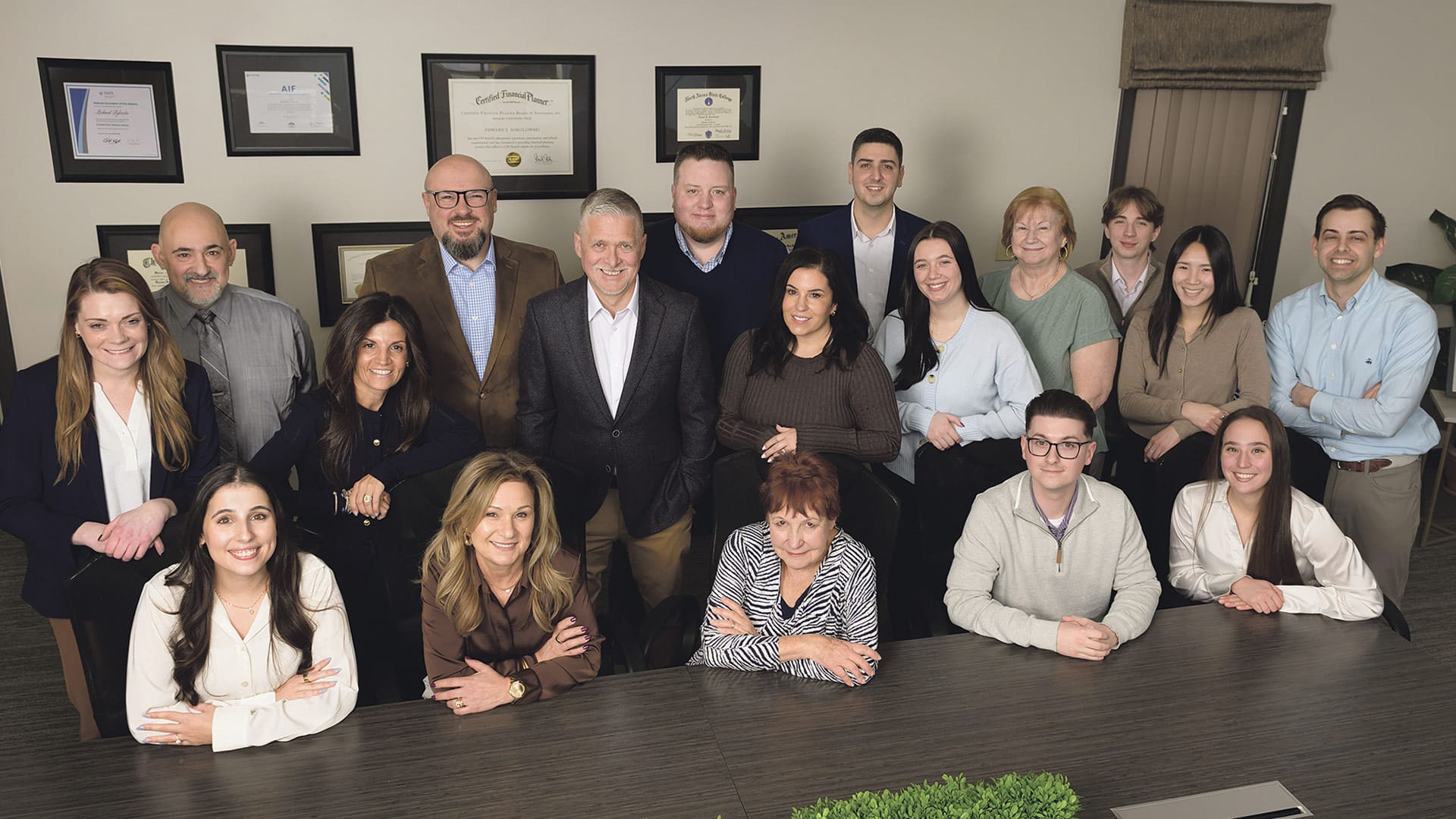
It comprises what he says are the three sides of any company that wants to consider itself truly successful.
One side involves the client and, more specifically, providing consistent, quality service — “you need to be there for them; we pick up calls on the weekend,” he said. Another involves employees, taking care of them, and giving them the tools they need to succeed in whatever role they might perform.
And the third involves the community and giving back to it, said Sokolowski, managing partner and wealth advisor with Pioneer Valley (PV) Financial Group in Ludlow, the company he and a few partners founded in 2002, adding that these three sides must be equal, and he makes sure that, with his business, they are.
“If we equally take care of those elements — you put the clients on top, you have the employees and the community, and you put PV in the middle … we’ll be OK,” he told BusinessWest. “We’re not here to make the most money; we’re here to make a difference in all three of those areas.”
Indeed, from the beginning, he has stressed that the company, and everyone who works for it, must be focused as much on the community as on the team and the customers.
“It’s in our mission statement — we believe in helping our clients and community live better,” he said. “Our legacy is the people and lives we have touched.”
“If we equally take care of those elements — you put the clients on top, you have the employees and the community, and you put PV in the middle … we’ll be OK. We’re not here to make the most money; we’re here to make a difference in all three of those areas.”
This philosophy has manifested itself in countless ways — from the PV Charitable Fund, which Sokolowski funds out of his own pocket, to the annual Slide into Summer Safely programs on the last day of school in Ludlow, Wilbraham, and Hampden (more on this later); from an annual First Responders Dinner, a salute put on by the company in conjunction with the local VFW, to small donations to myriad nonprofits across the region.
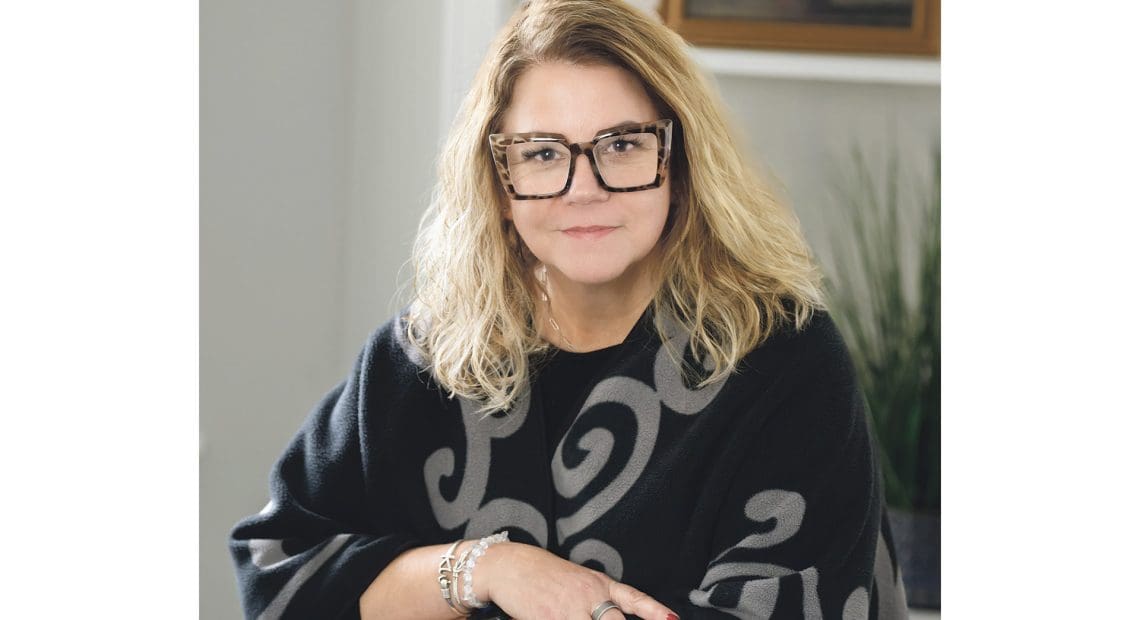
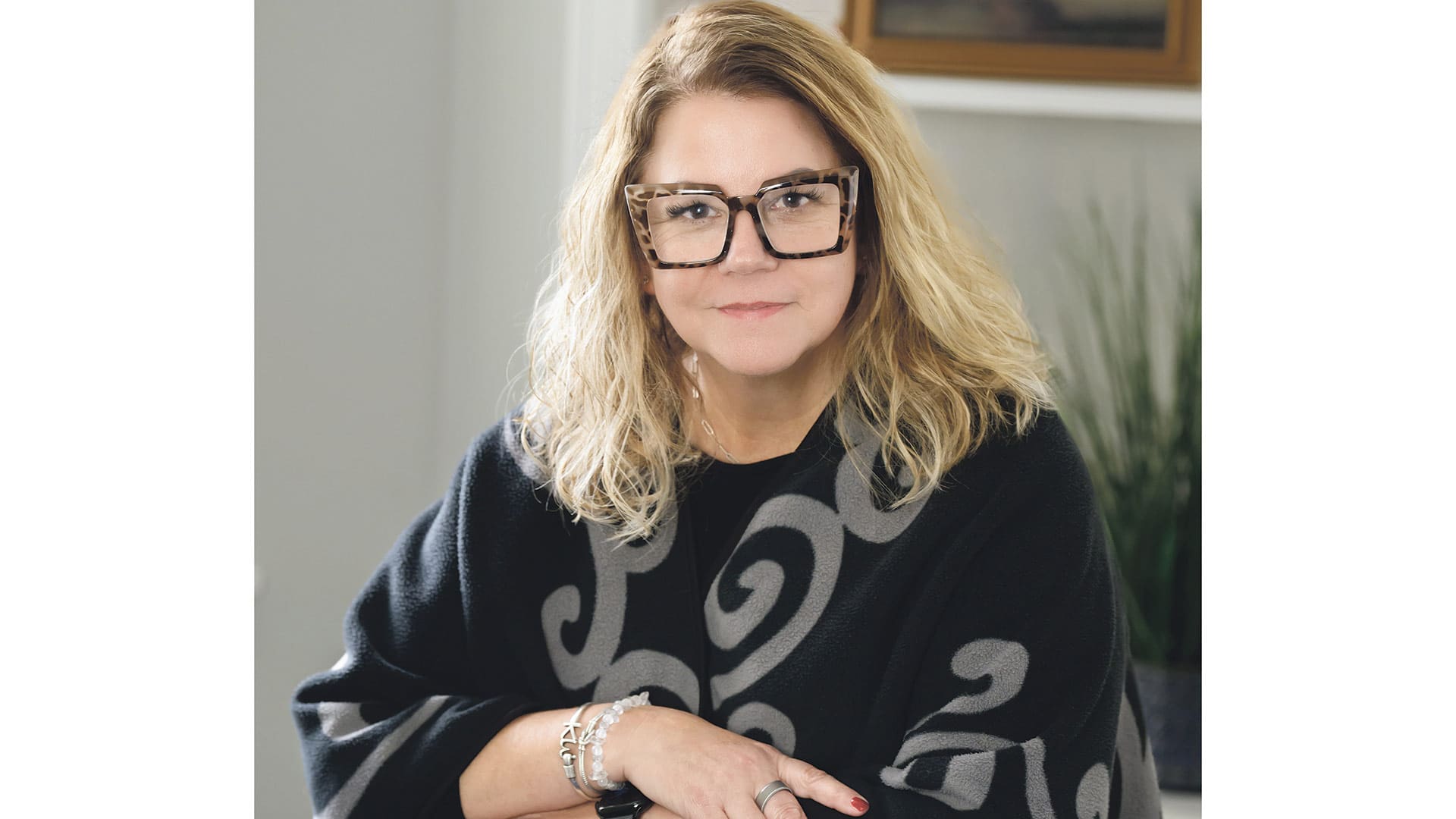
It has also manifested itself in a relatively new position at the firm — Community Outreach manager, a post held by Katherine (Kat) Ferri, who acknowledged that it is rare for a company this small (just 20 people) to have someone in such a role, which also includes marketing duties. But the fact that it exists, she added, speaks volumes about Sokolowski and his belief in giving back.
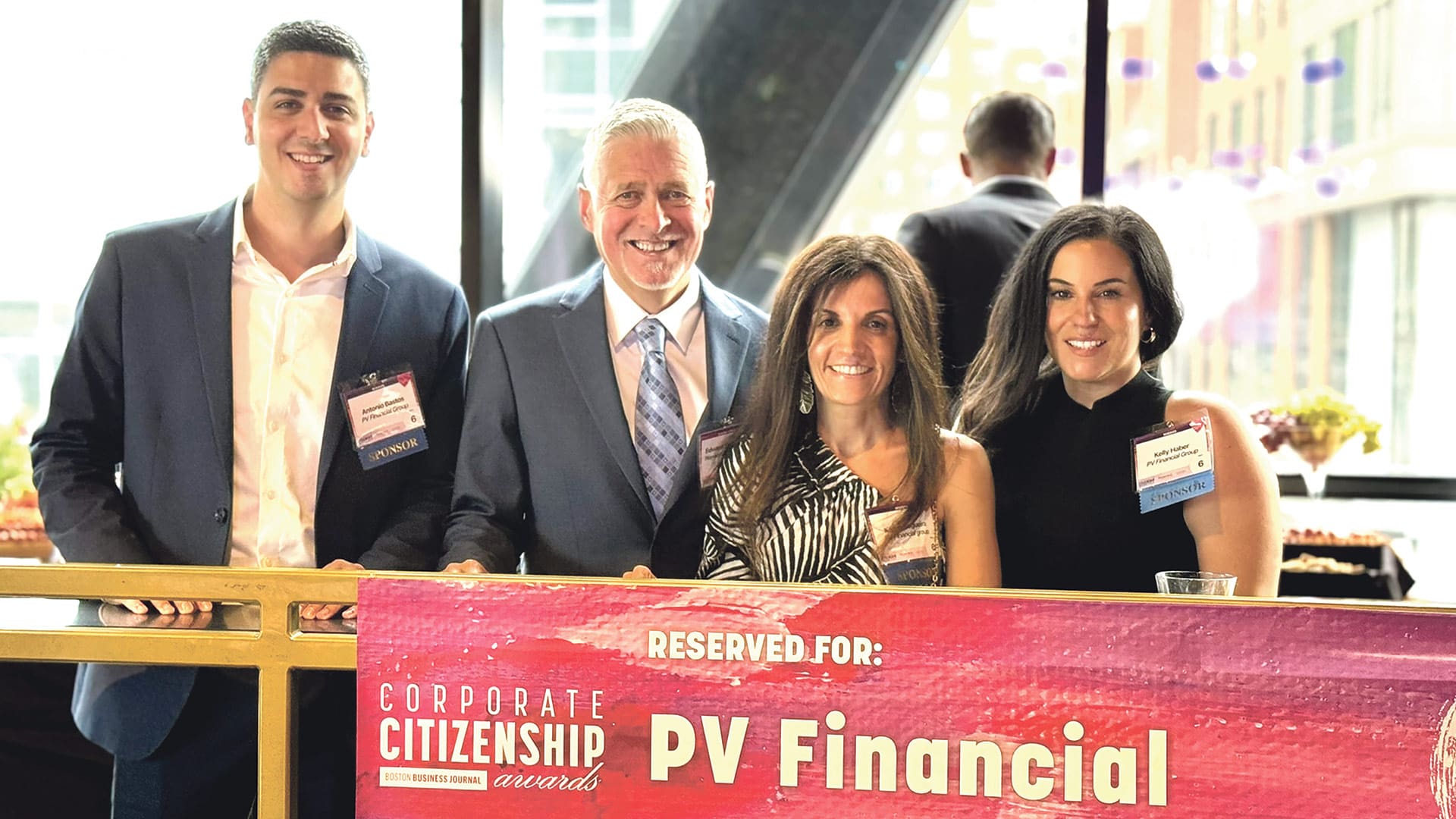
From left: Antonio Bastos, Ed Sokolowski, Karen Nogueira, and Kelly Haber at the Boston Business Journal’s Corporate Citizen Awards in 2025.
“Going back to when I was first interviewed, Ed talked about the company and how it has a focus on finance and helping people plan,” Ferri recalled. “And then, he went all in about the work we do in the community, the events we do, and the importance placed on giving back to the community.”
This hard focus on community has led to some recognition. Indeed, PV Financial, an employee-owned company, made its first appearance on the Boston Business Journal’s list of the state’s most philanthropic companies (what it calls its Corporate Citizenship Awards) in 2025, placing 96th in total giving ($145,000, not counting another $50,000 from the charitable fund — a large number for a small company) — but first in the average number of hours per employee devoted to community work, roughly 75 a year. The company was also among the first to be recognized by the Springfield Regional Chamber’s Super 60 category known as ‘Give Back.’
The awards are nice, and they bring attention to what is truly a team effort, said Sokolowski, adding quickly that the greater rewards come from seeing the impact of that team’s work in the community — the smiles on the faces of children at Slide into Summer Safely events or the appreciation from first responders at that annual dinner, for example.
“I don’t know how much it’s helped; we’ll probably never know, but we’ve had thousands of kids participate over the years, and we certainly think this is worth doing. It’s enjoyable to see the kids, knowing that they’re having fun, but learning.”
“I know we were happy when we crossed $100 million in assets, and then $200 million, $500 million, and on our way to $1 billion. I know I was proud, but I don’t remember the dates; I don’t remember the weather that day; I don’t remember too much,” he said. “But I do remember the kids’ faces and something that someone might say to me when it comes to charitable giving. I’m just as proud of those things, and they’re more memorable.”
Sharing the Wealth
Every Monday at 9, the staff at PV Financial gathers in the conference room for a weekly meeting. This room was carved out of the former LUSO Federal Credit Union offices, and there is still a teller’s window looking out onto what used to be a drive-thru.
These meetings start with Sokolowski giving what he calls a ‘state of the union’ report on the company, its performance, and its financial health. The agenda also includes updates from partners Kelly Haber and Karen Nogueira on compliance and initiatives to serve clients, before things are turned over to Ferri, who gives a lengthy update on upcoming events and all other matters involving the company’s involvement in the community.
This is just another indicator of the importance placed on this work, said Sokolowski, who told BusinessWest that he knew what he wanted to do for a living when he was 12, when he visited the EF Hutton office that his sister worked in and saw the ticker-tape machine used to print stock prices.
As he advanced these career plans, he decided early on that he wanted to work on the financial consulting side, rather than the stockbroker side.
“There’s a big difference between buying and selling stocks and doing financial planning,” noted Sokolowski, who ran the investment arm of the former Palmer Goodell Insurance before launching PV Financial Group in 2002. “I like watching money grow, but I’d rather watch what it does for people at the other end. Money can help in so many ways; it doesn’t necessarily buy happiness, but it helps, for sure.
The team at PV Financial puts a hard focus on community involvement. Photo by Bob Zemba, Simple Truth Imaging
“I didn’t want to call people and say, ‘I have a hot stock tip for you,’” he went on. “I’d rather do that longer-term planning.”
This thoughtfulness, this caring about people and their futures, permeates every aspect of this company, and all three sides of the triangle. That includes the community side, which includes many different types of giving.
The list includes monetary donations — almost all of them small in nature, meaning a few hundred dollars — to a wide array of groups of causes, from Rick’s Place and Ludlow High School hockey to the WillPower Foundation and Baystate Children’s Hospital; from Belchertown Little League and the Southwick Animal Shelter to the Miracle League of Western Massachusetts and the Michael J. Dias Foundation.
“We rarely say no when we’re asked,” said Sololowski, adding that the company likes to spread the wealth, if you will, and support as many causes and agencies as it can.
But it’s important to note that the giving back goes well beyond writing checks — and, again, it’s a company-wide effort, with Sokolowski setting the tone.
He said he was influenced by his upbringing — he grew up in a low-income household and attended a state university (what is now Massachusetts College of Liberal Arts) — and also by mentors, especially Bob Carnavale, president of Palmer Goodell.
“He was a very philanthropic person — he gave back a lot, and that’s how he ran his business,” said Sokolowski, adding that, like Carnavale, he and his team members make giving back a corporate philosophy.
Getting Creative in the Community
When it comes to those 75 volunteer hours that employees spend on average, Sokolowski — who’s very proud of that number and knows it by heart — said the company likes to get creative in this regard.
By that, he meant fun and productive, such as staging putt-a-thons and fling-stick challenges to raise additional money at charity golf tournaments, rather than playing in the event.
“We try new things,” he said, putting the Slide into Summer Safely programs in that category. Undertaken in cooperation with local police and fire departments, and started a dozen or so years ago in Ludlow and later expanded into Wilbraham, they place on the last day of the school year.
“The thinking was that, if we can talk with them right before they head into summer break, that would be ideal; that’s when they get into trouble — riding bikes without helmets, fireworks, swimming,” he said, adding that the challenge would be how to get students to come to such a program after school let out, and then how to get to them to listen and respond to what they were being told.
The answer was a program that’s as entertaining as it is educational, with ice cream, slides, popcorn, and more.
“I don’t know how much it’s helped; we’ll probably never know, but we’ve had thousands of kids participate over the years, and we certainly think this is worth doing. It’s enjoyable to see the kids, knowing that they’re having fun, but learning.”
“In order for the kids to get free popcorn and ice cream, they have to go up to a police officer or firefighter,” Sokolowski explained. “They’ll be asked a question — like a firefighter asking, ‘what do you if you light yourself on fire?’ And the kid has to say ‘stop, drop, and roll.’ If it’s a police officer, he’ll ask, ‘what do you do when you swim?’ And the kid has to say, ‘you swim with a friend.’ Their wristband gets marked, and then they get the free food.
“I don’t know how much it’s helped; we’ll probably never know, but we’ve had thousands of kids participate over the years, and we certainly think this is worth doing,” he went on. “It’s enjoyable to see the kids, knowing that they’re having fun, but learning.”
Another program the company has initiated is a first responders dinner event, staged in conjunction with the local VFW post. First responders from across the area, including the Ludlow, Wilbraham, and Hampden police and fire departments, the Massachusetts State Police, the Hampden County Sheriff’s Office, veterans, and others participate, said Sokolowski, adding that the event has grown in size since it was initiated eight years ago.
Meanwhile, in the planning stages is another event to recognize several of the area’s nonprofits, perhaps five a year, across different realms, with the twin goals of educating people about their missions and how they are carried out, while also raising money for these groups.
“For every dollar we spend, we should fundraise the same dollar amount back,” he said, adding that organizers are looking at higher-end bingo and raffles as options for fundraising. “It’s a way for the nonprofits to just show up and not have to worry about planning the event or fundraising.”
Meanwhile, the event should provide another creative way for PV Financial employees to volunteer, he said, adding that the company is always looking for fun ways to get employees involved in the community.
It’s just another example of how PV Financial focuses on that third leg of the triangle — one of the keys to this company being truly successful, and one that makes Sokolowski, who sets the tone for all of this, a true Difference Maker.
Julie Quink says it’s easy for accountants to get involved in community.
Indeed, she said, there’s no shortage of small nonprofits who need CPAs on their boards to help handle the books, and over the years, she’s done some of that, as almost everyone in the profession has.
And she encourages all members of the team at Burkhart Pizzanelli, P.C., the firm she serves as managing principal, to get involved as well — and, when possible, to go much further than crunching numbers for nonprofits and regional institutions, although that’s important, too. And here, she sets the tone.
She’s affiliated with several professional groups, such as the Massachusetts Society of CPAs and the Assoc. of Certified Fraud Examiners; sits on some boards — those at Baystate Health, Greater Springfield Senior Services, Monson Savings Bank, and Square One, among others — and serves as treasurer for the Quaboag Hills Chamber of Commerce, I Found Light Against All Odds, and the Estate Planning Council of Hampden County.
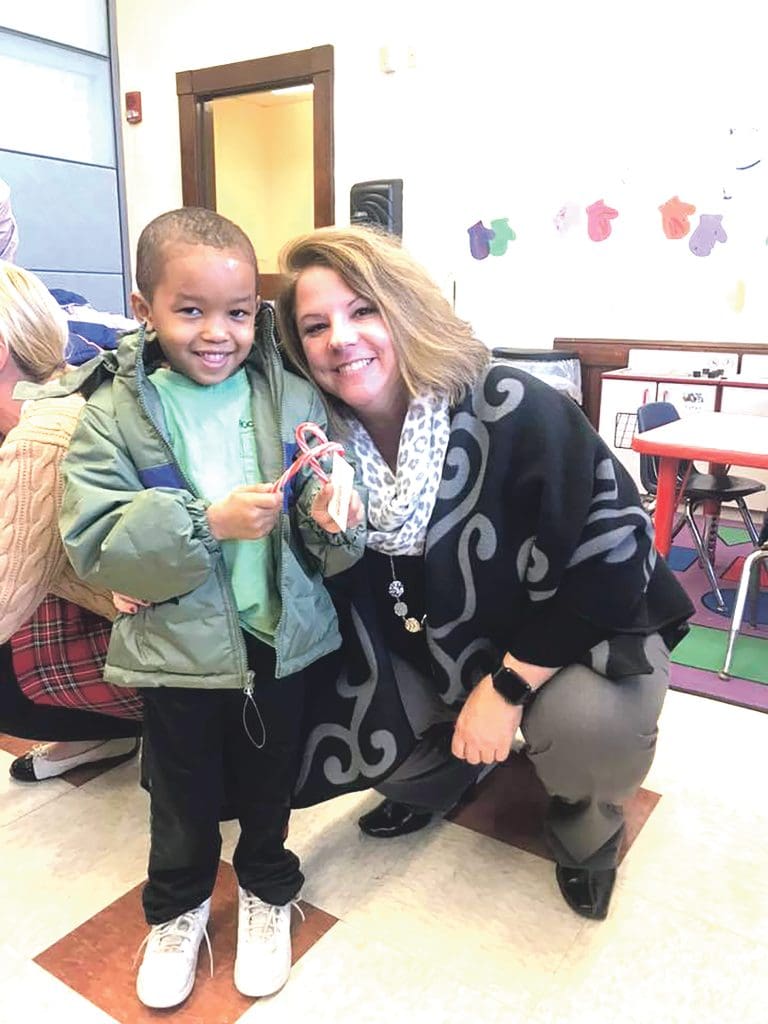
“One of the things that Square One does is allow us, when the coats come in, to help the kids choose their coat, and some of our team members take part. It’s a completely amazing event for us, and over the years, it has helped the team share my commitment to that organization because we can see that the little work we do for this fundraising really has an impact on these kids.”
But she does, indeed, go further, such as with Square One’s Operation Warm, a program that provides winter coats for kids; she has made the firm the sponsor of that initiative and inspired team members and clients alike to support those efforts.
“One of the things that Square One does is allow us, when the coats come in, to help the kids choose their coat, and some of our team members take part,” she noted. “It’s a completely amazing event for us, and over the years, it has helped the team share my commitment to that organization because we can see that the little work we do for this fundraising really has an impact on these kids.”
Julie Quink with Burkhart Pizzanelli co-owner Deborah Penzias. Photo by Bob Zemba, Simple Truth Imaging
With that, she tells the story of a now-retired staff member at Burkhart Pizzanelli who had a sign outside his office that read ‘Grumpy Old Man.’
“He was self-proclaimed,” Quink said. “He went one year when the team met with the kids to hand out coats, and he was on his knees with these little people, and he had the biggest smile on his face. And I just thought, ‘if there was nothing else worth it in this whole entire thing, just seeing the look on his face and the joy that doing what he was doing brought … that’s what it’s really about for me.’”
Quink’s success with creating such moments is one of many reasons why she will be among those honored as Difference Makers in 2026. Others include the way she serves as a mentor and role model to those on her staff, creating an atmosphere that is more like a family than a business.
“Julie believes that we live and work in a community, and everyone has a very important role to play,” said Rebecca Connolly, director of the Auditing Department, who nominated Quink for this award. “She takes her role as a business owner and as a role model — not only for her staff, but her family and clients — seriously.
“At work, we joke that we don’t think Julie sleeps because she is so busy with helping small business owners with their businesses, helping them to grow their businesses, navigating tough financial times, while coming out on the other side feeling more supported and in better financial position,” Connolly added, noting that she does all this while serving on several boards, supporting the initiatives of several nonprofits, and serving as adjunct faculty in the MBA accounting program at Elms College.
Quink says she enjoys all aspects of this balancing act and finds the time for all of it, even during tax season — which isn’t really a season anymore, she noted, saying, “it never ends.”
“I can tell you personally that I take away much more than I give when it comes to organizations I belong to and work with, as a board member or even as a volunteer,” she told BusinessWest. “It makes everything worthwhile when you see the impact that you have on someone else’s life.”
Julie Quink spends a moment with a Square One student as winter coats are distributed as part of Operation Warm.
Overall, Quink excels at listening, responding, and being there for people — in all aspects of her life and every corner of the community.
It All Adds Up
Quink told BusinessWest that, while in high school, she developed an affinity for numbers and accounting.
“My accounting professor recognized that I had a talent in that area — I wasn’t even focused on it, really — and urged me to explore it,” she recalled. “It was interesting to me, and I understood it; I’m not a scientist, and I could never be a medical professional — I don’t have the stomach for that sort of thing — so accounting was it.”
She considered UMass Amherst and Elms College, and chose the much smaller, much more intimate setting, and never regretted that decision, becoming the first in her family to graduate from college.
“I’m a firm believer that you end up where you’re supposed to be,” she said, adding that she enjoyed the small class sizes there. “In hindsight, had I gone to a large institution, I probably would have gotten lost in the system. It was a benefit to me, and that’s one of the reasons I teach at Elms.”
She started in the field as senior accountant at what was then KPMG Peat Marwick in Springfield and later worked for 17 years at J.M. O’Brien & Co., P.C. in Springfield as director of Audits and Business Issues.
She came to West Springfield-based Burkhart Pizzanelli, now celebrating its 40th anniversary, in 2011 as part of a succession plan, serving first as senior manager of Audit/Consulting before becoming a principal in 2013 and then managing principal in 2015. She’s now spent 35 years in the profession and has seen a good amount of change, especially when it comes to culture.
“When I came on, you were expected to work long hours, you were expected to travel … it was just something you knew was part of the job; it was expected of you, and you did it,” she explained. “Now, it’s a lot different in terms of culture; we’re really focused on our team members here, their wellness, their well-being, their career trajectory. It’s really come a long way.
“Quality of life is really important to the younger generations, understandably, and the meaningfulness of what they do is important,” she went on. “We’ve had to adapt to all that.”
Elaborating, she said Burkhart Pizzanelli was at what she called the “front end of that curve,” which is one of the things that attracted her to the firm. And as managing principal, she is determined to stay ahead of that curve.
“What’s really important for us is balance,” she told BusinessWest, noting that there is now a staff of 25. “I think we, as a leadership group here, are really in tune with what’s impacting our team, and we can make changes and adapt workloads quickly if we see that someone’s overwhelmed.”
Beyond balance, she and others on the leadership team are focused on mentoring and being positive role models for younger staff members.
“All the leaders here have a strong desire to make sure our team is happy, growing in their positions, exposed to new opportunities … so we all take mentoring very seriously,” she said. “If I were to look at where I spend my time during the day, I’d say maybe an hour or two a day is spent in conversation about ‘how can we do this better? Where are we at? And how can I be a resource for you?’ We want to be hearing what’s going on, and we want to be adapting where we need to make change, and that takes a lot of listening. So I like to think I spend a lot of time listening.
From left: Julie Quink with team members Sarah Lapolice, Rebecca Connolly, and Deborah Penzias. Photo by Bob Zemba, Simple Truth Imaging
“If I want people to come to me as a leader with a problem, an issue, something I can solve, my advice … I must be authentic, and they need to feel like they’re being heard,” she went on. “I’m really focused on what’s important to them because, if it’s important for them, then it becomes important for me.”
Warm Thoughts
This ability to listen and act on what she’s hearing is one of the many reasons why Connolly considers Quink, the tone-setter for the company, a Difference Maker.
“She really believes in family — she remembers everything about you,” she said. “No matter if it’s April 15 and a client needs her or something has happened to a staff member health-wise, her first response is, ‘do what you need to do; we’ll cover you.’ That’s what we do — we’re a team, and we support one another.”
Indeed, Connolly said, if there is one word that perhaps best sums up Quink and all aspects of her life, it would be ‘supportive.’ That’s true when it comes to the team at work, clients, her students at Elms, and the community.
“I can tell you personally that I take away much more than I give when it comes to organizations I belong to and work with, as a board member or even as a volunteer. It makes everything worthwhile when you see the impact that you have on someone else’s life.”
With that last realm, she stressed that she gets involved with agencies and causes that she’s passionate about, and she encourages others at the firm to take that same approach. “I tell them, ‘don’t just volunteer and not feel like you’re getting meaning out of your volunteering.’”
This sentiment explains why she became involved with healthcare organizations such as Baystate Health — which is going through a challenging time, as all hospitals and healthcare systems are — as well as Greater Springfield Senior Services and Square One.
“I’m on the board of Greater Springfield Senior Services because of the really great work they do with seniors in the catchment area and folks that really need the services we can provide and connect them to,” she said, explaining that she has chaired this board for several years now. “Especially as our population ages, we want people to be able to age at home if they like.”
Julie Quink, left, and other Burkhart Pizzanelli team members take part in a program run by the Parish Cupboard, which provides meals and groceries to individuals and families in need.
She was also drawn to I Found Light Against All Odds, an organization that helps secure housing for homeless young women — efforts that made it a Difference Maker in 2022.
“The need exists, probably more than we recognize or are aware of,” Quink said. “Homelessness is a real issue among young women, and that’s what drew me to that organization; we’re actively working toward increasing programming and creating more supports for women in that age group and in those insecure situations. Our goal is to get them off the streets or out of the situation that is harmful for them.”
With Square One, she was approached by now-retired president and CEO Joan Kagan to join the board, and almost immediately started looking for ways to get involved on a deeper level.
She recalled a conversation with Kris Allard, the agency’s vice president of Development and Communication, about the coats program.
“They had someone who worked with them prior who was backing out of the coat campaign, and she approached us about sponsoring that effort,” Quink noted. “We sat across this conference room table, and both had tears in our eyes as we talked about the conditions these kids are dealing with.
“I said, ‘sure, we’ll do what we can — we’ll be a sponsor,’” she went on, adding that it soon became a firm-wide initiative, with fundraising and then and distributing the coats.
The fundraising goal this year was $5,000, she said, noting that more than $10,000 was raised, enough to buy more than 400 coats.
“Over the years, the campaign has evolved to where our clients have gotten involved, and they remind us to send them information on the coat campaign because they want to donate,” she continued. “It’s really become important to us, but also our clients.”
And it’s just one example of how Quink and members of the firm get involved beyond handling the books for nonprofits. And another example of why this role model is also a Difference Maker.
This Unconventional ‘Mad Man’ Has Always Been Ready for a Fight
Photo by Bob Zemba, Simple Truth Imaging
They call it the Fishing Buddies Lodge.
It’s a very informal meeting space within the suite of offices for Darby O’Brien Advertising in South Hadley, and, obviously, it is decorated to look like a fishing cabin.
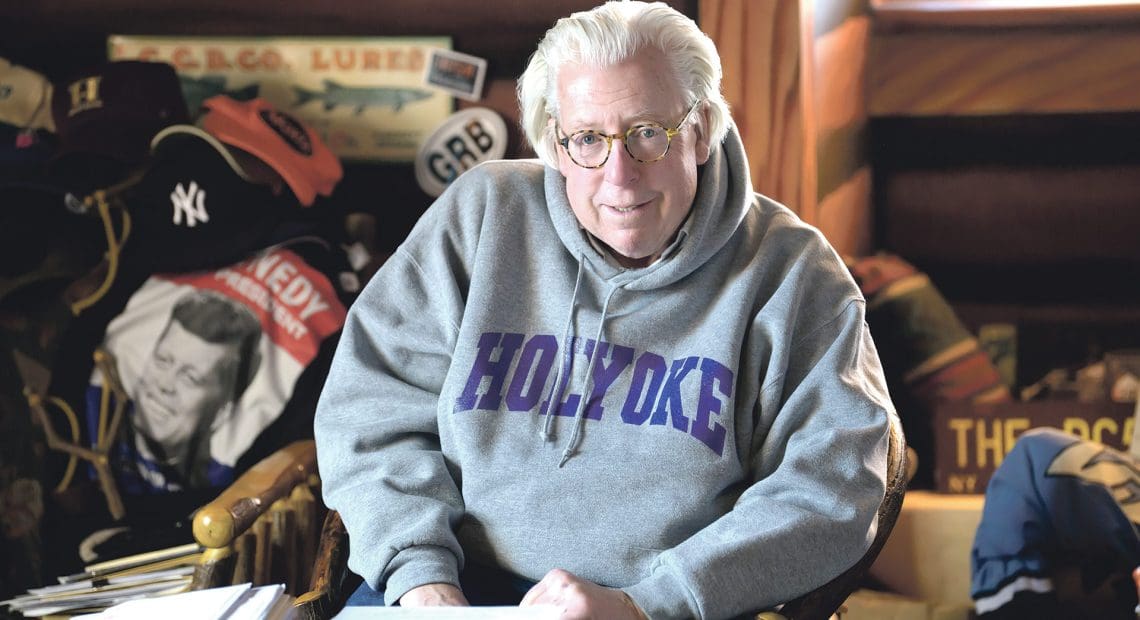
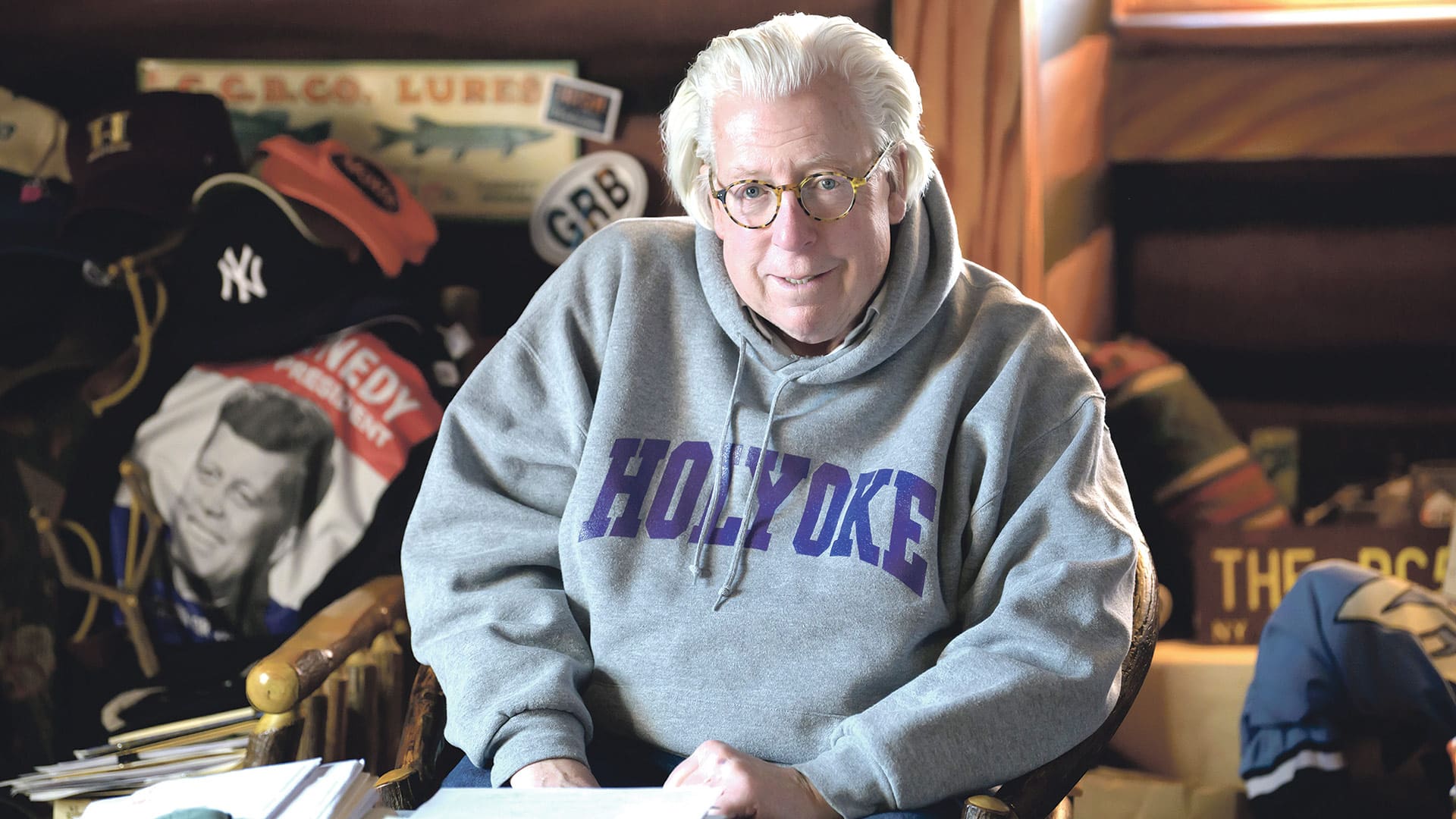
It is crammed, as in crammed, with collectibles and wall art that start to tell the story of the founder of this company. There are bobbleheads, baseball gloves, New York Yankees and Mickey Mantle merch (he’s a long-time fan of the team and grew up, as many his age did, idolizing #7), a scale model of the Bluesmobile, various photos of JFK, countless mugs, hats, and, on the wall, a framed, autographed photo of Ken Osmond, famous for playing the insincere flatterer and provocateur Eddie Haskell on the classic sitcom Leave It to Beaver.
“I was a fan of Eddie’s — he was the king of mischief,” said O’Brien, the Holyoke native who shares that trait with Haskell, one of many that make him a unique character, in every sense, and contribute to his being named a Difference Maker.
Others include creativity — his ads certainly stand out as different and, generally speaking, effective — as well as genuineness, sincerity, and a passion for getting involved, often with underdog groups and causes.
“On the way out, Jeremy grabbed me by the arm and said, ‘will you fight for us? Because we can’t fight.’ I said, ‘yeah, I’ll fight to the finish, because this is wrong.’”
With that last one, there is a long list, everything from efforts to reopen Holyoke’s reservoirs to fishing and bring back his childhood baseball team, the Elmwood Jets, to lobbying against the quarrying of a local ski area with his ‘Mount Tom, I Don’t Dig It’ campaign; from early efforts to thwart casino gambling in Springfield to a campaign protesting the Western Massachusetts Economic Development Council’s (EDC) decision to hire a Tennessee-based firm to rebrand the region for tourism efforts, rather than use local marketing talent.
And then, there was the Phoebe Prince case.
Prince was a student at South Hadley High School when she took her own life after persistent bullying. O’Brien is credited by many with taking the case to a regional, national, and even international stage, attention that eventually led to charges against several students and the passing of anti-bullying legislation at the state level called ‘Phoebe’s Law.’
Soon after the matter starting getting press, O’Brien remembers getting a call from Prince’s parents, Jeremy and Anne, asking if they could meet with him.
“On the way out, Jeremy grabbed me by the arm and said, ‘will you fight for us? Because we can’t fight,’” he recalled. “I said, ‘yeah, I’ll fight to the finish, because this is wrong.’
“No one was standing up,” he went on, adding that he pressed the matter, despite repeated warnings that it would be bad for his business and, eventually, several death threats.
But as with other cases in which he’s gotten involved, he’s ignored such warnings and plowed ahead. Indeed, while he likes to say he’s gotten involved in most of the issues listed above “by accident,” those who know him well say otherwise.
“He literally does not back down from a fight or a wrong,” said John Garvey, a friend and fellow marketing firm owner. “And he encourages other people to not back down when they see a wrong.”
This is certainly the case with a weekly blog of sorts that he started at the height of the pandemic as a way to keep people connected, informed, and even entertained, and also to generate dialogue on the issues of the day.
While some offerings are whimsical, such as taste testings (fruitcake and Twinkies, for example) involving his grandson, Flynn, others are poignant and thought-provoking, such as a recent tribute to his brother David (known to most as ‘Moon’) who died last month, a remembrance of one of the students shot at Kent State in May 1970, who died recently, and sharp criticism of Newton officials for making a man take down an ice rink he created in his front yard during COVID because he lacked a special permit.
“Imagine doing that to kids during this COVID-19 winter?” O’Brien asked rhetorically. “Jackasses. Look the other way and let the kids have good, clean fun, will ya?”
Such sentiments, and the williness to express them, help explain why he’s a true Difference Maker.
Getting the Message
O’Brien said he took note of all the things marketing experts said not to do as he was starting his business — such as not getting involved with retail or political campaigns — but, by and large, he ignored them.
Indeed, among his first clients were the men’s clothing store A.O. White and Holyoke mayoral hopeful Marty Dunn, who was waging an underdog (there’s that word again) campaign to unseat long-time incumbent Ernie Proulx.
“He was a sure-shot loser because Ernie Proulx had been mayor for 12 years, he won every ward, every precinct, and had a reputation for demolishing Irish candidates,” O’Brien recalled, adding that he drew inspiration from boxer Sugar Ray Leonard’s ‘stick-and-move’ tactics to defeat Marvin Hagler and ran a successful campaign that he called “a real strong statement about being creative.”
Suffice it to say that O’Brien has been doing things his way — not the way the experts advise — since he started his company — and, actually, long before that.
Like when he was in high school — actually, several of them, as it took him six years and several institutions to earn a diploma. He said he joked to his frustrated father, a vice president with the construction firm Daniel O’Connell’s Sons, “dad, the longer I’m in school, the smarter I get.”
He added that “I hadn’t really thought about advertising, although I was kind of a promoter as a kid.” But he was eventually “discovered” by the owner of the local firm Bewick Advertising.
“He called me, hired me, and put me in charge of new business, which I knew nothing about,” O’Brien recalled, noting that he eventually started his own agency in 1980, taking with him many of his clients from Bewick and focusing on the goal of getting more of the larger businesses in the region to use local marketing talent.
Over the course of roughly 45 years in business, O’Brien has made his mark in many different ways, starting with his approach to marketing — which is to almost dare clients, and potential clients, to look beyond what would be considered safe — something he laments that very few are willing to do now.
His ads can certainly be defined as different and creative, to the extent that the phrase ‘Darby ad’ has entered the lexicon, a reference to something bold — and at times controversial — that stands out.
One of the many marketing initiatives that could be described with the phrase ‘Darby ad.’
Like the billboard featuring a Hot Table panini and the headline ‘Bite Me.’ Or the billboard for lawyer Raipher Pellegrino with the words, ‘The Iceman Sueth.’ Decades ago, there was a newspaper ad for the Springfield Civic Center promoting a tennis match at the then-Springfield Civic Center between Springfield native Tim Mayotte and Czechoslovakian Ivan Lendl. The headline read, ‘On February 9, BayBank Invites Tim Mayotte Back to Springfield to Bounce a Czech.’
As O’Brien tells the story, Lendl called the event organizers saying that was backing out of the match due to the ad, which he considered offensive, then started laughing, saying he was just kidding.
Then there’s the ad O’Brien put together for a group opposing casino gambling in Springfield. Featuring a picture of a masked man pointing a gun at the reader, it took the headline, ‘If You Build It, They Will Come.’
“You hire Darby because you want ideas,” Garvey said. “You don’t hire Darby to run your ideas by him. And for God’s sake, don’t fight him on the creative — because that is holy ground.”
Peter Rosskothen, the serial entrepreneur who has been a client of O’Brien’s for more than 30 years and worked with him on campaigns for the Log Cabin Banquet & Meeting House, the Delaney House restaurant, and his current venture, Delaney’s Market, agreed — sort of.
In fact, he has fought him on creative content on a few occasions, but most of the time, he’s been talked into ads that were, well … different.
“He likes to push the envelope, and he makes a difference with his uniqueness,” Rothkossen said. “He’s very bold, and he tells me as a client that I’m being too conservative. I like that — I like the fact that the material tends to be different and stands out.”
Taking a Stance
While his marketing and advertising impact has been noteworthy, so too has O’Brien’s work within the community, much of which has involved young people, Holyoke, or some combination of the two.
Such as his efforts to reopen the Paper City’s reservoirs to fishing, a campaign that featured a group he created called the Fishing Buddies, and some escapades involving O’Brien and Peter Jourdain in Blues Brothers-like outfits. He said this effort started by accident when he and an acquantaince, who fished the reservoirs when they were young, tried to relive old memories several decades later and were chased off by police.
The Fishing Buddies Lodge at Darby O’Brien Advertising is crammed with collectibles that speak to O’Brien’s interests — and passions. Photo by Bob Zemba, Simple Truth Imaging
“There’s no reason why inner-city kids can’t fish out here,” he said, adding that, while the fight was ultimately unsuccessful, despite widespread support — the reservoirs remain closed to fishing — he had some fun and gave people something to think about. And that could be described as his MO.
It was the same with the EDC’s decision to hire a Tennessee firm to rebrand the region. After the ad campaign was created, O’Brien famously challenged then-EDC President Allan Blair to a winner-take-all ping-pong game in an ad that appeared in BusinessWest.
“I told him that if he beat me, I’d shut up and he could put me on his board, and that if I beat him, he’d give the work to the local talent,” said O’Brien, adding that, while Blair never responded, he got his point across, and had some more fun.
With the Phoebe Prince case, though, his involvement was taken to new and far more serious levels.
Encouraged by his father, who thought South Hadley officials were trying to sweep the matter under the rug, O’Brien reached out to Boston Globe columnist Kevin Cullen and went on the record for a piece titled “The Untouchable Mean Girls,” which was essentially the first news story to suggest that bullying was the root cause of Prince’s suicide.
“All hell broke loose,” recalled O’Brien, adding that national and global media were soon all over the story. Soon thereafter, he met with Prince’s parents and committed to do whatever he could to generate more press and hold those responsible accountable. And in the months and even years to follow, he was the subject of threats to his business, health, and life.
Rosskothen said he’s one of many who have, over the years, advised O’Brien that it might not be good for his business to get involved — with the Prince case, but also many of the other issues he’s become entangled with.
“A conversation like that with Darby is a pretty normal conversation because he pushes hard,” Rosskothen said. “As a friend, I sometimes tell him that; he listens, but that doesn’t mean that he follows the advice.”
O’Brien continues to push for what he considers right in his weekly blog, which he calls “Keep Up Your Dukes,” something he said repeatedly to a close friend during his recent cancer fight.
He acknowledged that the more common phrase is ‘put up your dukes,’ a nod to someone that you’re ready to fight and that they should bring it on. His take is different — meant to say that one should always be ready to fight when necessary.
He’s always been that way, and that’s what makes him a Difference Maker.
Rachelle Hannoush often talks to teenagers about red flags and green flags in relationships — because, at that young age, it’s easy to mix up the two.
“Say a guy is isolating you from your family, isolating you from going to your volleyball practice. And when I ask about it, you say this is actually a green flag because it shows that they love you and want to spend time with you,” said Hannoush, whose title — director of Youth, Violence Prevention, and Court Support Programs at the YWCA of Western Massachusetts — hints at the many hats she wears there.
In this particular part of her conversation with BusinessWest, she was explaining the ‘prevention’ part of her job, especially an initiative called the HERE (Healthy and Empowering Relationship Education) Project, which helps students between ages 12 and 18 how to navigate everything from dating violence to gang activity to sex trafficking risks.
“We go into schools and teach youth different curriculum that enhances their skills on healthy relationships, violence prevention, bystander intervention. Like, if you see something, what do you do? Who do you talk to? How do you stay safe? And also, how can we have healthy relationships? What are the green flags? What are the red flags? During high school and middle school, a lot of things happen. So it’s really equipping them with skills to be able to make good decisions as they get through those teenage years.”
“What empowers our work and makes the biggest impact is when different organizations work together. And I see that here at the Y — all the departments truly live its mission, which is to empower women.”
Hannoush said prevention is effective — and is more important than ever in the age of social media and the extra pressure it places on kids.
“They can see, ‘oh, she got to go to the Caribbean for April vacation,’ or ‘she got this purse,’ or ‘she’s hanging out with this friend, and they didn’t invite me.’ There’s much more transparency and knowledge, and sometimes it can be very toxic.”
Another of Hannoush’s roles involves supervised visitation centers in Hampden and Hampshire counties, which provide secure, neutral visitation services for families experiencing domestic violence, divorce, custody, and probate issues. The program provides a structured environment for children to connect and visit with their non-residential or custodial parents.
Rachelle Hannoush says her own early struggles as a high school student in Lebanon have influenced the significant empathy she has for teenagers today. Photo by Bob Zemba, Simple Truth Imaging
“We ensure an environment that’s safe; the most important thing is the child in that scenario,” she explained. “We want the child to have this special bond with their parents, and supervised visitation creates an environment where the parent can connect or the caregiver can connect with the child in a safe environment.”
The third leg on the stool of her job description is working with SAFEPLAN, which provides vital court advocacy services for victims of domestic violence, sexual assault, and stalking in five area district and probate courts. These advocacy services include assistance in obtaining restraining orders, harassment orders, safety planning, and resource and referral information.
“In each of the courts, there’s a SAFEPLAN office and a SAFEPLAN advocate. And anyone that is looking to do a restraining order or harassment order, the advocates help them,” she said. “Sometimes we’re making referrals to other community organizations, or for other programs within the YWCA.”
So … it’s definitely more than a long job title for Hannoush — it’s a lot of work. And that’s not even touching on some of her other community-centered projects outside the YWCA (but we will touch on those a bit later).
But she’s gratified by her copious responsibilities at the YWCA, where she started working last September after years of being connected to the nonprofit as a volunteer and advocate.
“It’s amazing work, and I’ve always been a fan of the YWCA, even before I started working here,” she said. “What empowers our work and makes the biggest impact is when different organizations work together. And I see that here at the Y — all the departments truly live its mission, which is to empower women.”
Humble Beginnings
Hannoush grew up in Lebanon, and to say she encountered struggles in school would be an understatement.
“The reason my family moved was because I was, you might say, the troubled child. I remember to this day, my principal telling my mom, ‘don’t bother with her; she will be nothing in life.’ And I had to redo my freshman year because I failed it. I was going through a lot back then — just teenage stuff — but nobody stopped to ask, why is she doing this?’” she explained. “I think that’s why I care so much — that experience really informed my work. But I didn’t come to that conclusion until much later.”
First came a dramatic turnaround when her family settled in Holyoke.
“It was my sophomore year of high school, and the change in school environment shifted me to become almost a straight-A student,” she recalled, adding that she still derives motivation from her high school experience in Lebanon. “That principal’s words will never leave me — I will be something, and I will do my best, and I will always be looking for more.”
Those years also gave her a deep empathy for the challenges of young people, which is why she found herself working in early education.
Her path there wasn’t exactly linear; she originally went to school for nuclear medicine. But she loved spending time with the children during internships at Boston Children’s Hospital, and when she had her first child, she began to understand the critical role of early education for a working parent — and its cost and access challenges — and she began to explore that as a career.
“I love science, so I was able to blend science with motherhood and education,” she said. “I started as an assistant teacher and then went back to school and got my teacher certification, then lead teacher certification, then director certification. And that started my educational leadership journey.”
A few years later, in 2019, Hannoush found herself developing a passion for professional development and also came across across the Children’s Trust, a Boston-based organization that addresses child abuse and neglect, which was looking for trainers.
“As early educators, as caregivers, we’re mandated reporters, which means, if you see something, you have to report it. My staff had always taken the mandated reporter training, but the training only shows you how to report; it doesn’t teach you how to respond. Like, if a child comes and discloses something to me, what’s the appropriate thing to say? That caught my attention and started my journey deep diving into prevention.”
The Children’s Trust eventually appointed her outreach coordinator for Western Mass. “I would reach out to different schools, different programs, anyone serving children, to say, ‘hey, we will give you training on how to create policies and procedures that ensure safe environments for children.’ Then I started doing parent workshops. With everything I do, the child is always center.”
“Rachelle has spent years working on the front lines and behind the scenes, creating systems of support and bridging gaps between agencies, schools, nonprofits, and families. Her ability to mobilize networks, build trusting partnerships, and bring diverse sectors together demonstrates the very essence of making a difference.”
That mindset led Hannoush to create an organization called Rooted Leaders, which partners with area schools, early education programs, and youth-serving organizations through parenting workshops, educator workshops, leadership services, and coaching and consulting programs.
“You cannot act in silos when you are serving children and families,” she told BusinessWest. “And if you want to have a really big impact, the impact comes from working together.”
The COVID years, especially, posed challenges for educators.
“Social and emotional development got really bad. So a lot of support was needed within the classrooms when we came back. I remember, when we came back into the classroom after COVID, the kids had to be in what I called islands. I’m like, how do we keep 3-year-olds separated? So we created islands. I got different colored rugs and it was like Pirate Island, or Lego Island, and each child got to have an island per day.
“That takes creativity and planning; we knew that it wasn’t right, but it’s what we had to do,” she added. “So how do you make it fun and exciting so children don’t feel it?’”
Willing to Serve
Hannoush has taken on other civic responsibilities as well. As president of the Massachusetts Assoc. for the Education of Young Children, she represents thousands of early educators across the state, advocating for policies and professional supports that strengthen the early education workforce.
And her commitment to young women is further amplified through her role with the Hampden County Commission on the Status of Women, where she champions opportunities, safety, and leadership development for girls and young women across the county.
“Her voice and advocacy contribute to meaningful conversations and initiatives that uplift the next generation of leaders,” said Lauren Kidrick, a registered behavior technician with Beacon Mental Health Services, who nominated Hannoush as a Difference Maker.
Hannoush is also an adjunct professor at the Urban College of Boston, a role she took on after earning her master-of-education degree last spring from Bay Path University. “One of my goals was to teach in higher education. I’ve been doing professional development, and I’m training everywhere, but I really wanted to experience the higher ed field.”
This depth of commitment impresses Kidrick. “Across all her roles — nonprofit leadership, statewide advocacy, higher education, and community service — Rachelle has spent years working on the front lines and behind the scenes, creating systems of support and bridging gaps between agencies, schools, nonprofits, and families. Her ability to mobilize networks, build trusting partnerships, and bring diverse sectors together demonstrates the very essence of making a difference.”
Hannoush said she’s not afraid to say no, but she also makes sure time with family comes first, noting that she and her husband, Ziad Hannoush — “my support and cheerleader from day one” — make sure their children, ages 13, 10, and 6, come first.
She’s also quick to credit others in her life, from her mother, Carol Tatarian, to her grandfather, George Tararian, for their influence on helping her overcome obstacles to success.
“My grandpa was a big supporter of mine,” she recalled. “He always really believed in me, regardless of what was happening at the school in Lebanon. He would say, ‘you are smart; you just have to put your mind to it — never give up.’ And he would spend hours teaching me, doing homework and preparing me for tests. So, whenever I succeed in something, he’s always there with me.”
That said, “I’m still figuring it out as I go,” Hannoush went on. “I do the best that I can today. I don’t think 10 years from now; I think one day at a time, one month at a time. Wherever I see an opportunity to make a difference, to help someone, I take the opportunity — because that’s what stays. That’s our legacy — our legacy is our impact.”
And that’s why she’s able to take on so much, to be a true Difference Maker — because helping others succeed, as others helped her, is deeply meaningful.
“Entrepreneurship has given me the ability to dream beyond survival and focus on legacy,” she said. “I come from a place where nothing was handed to me, and that reality fuels my passion to build something meaningful for my family, my children, and the community I serve. I want to show that it’s OK to want more, to pursue different goals, and to redefine what success looks like. Breaking generational cycles means not only changing our circumstances, but also creating access, hope, and opportunity for the next generation.”
For Dan Dziuban, running a business is a lot like skateboarding and snowboarding.
“When you fall down, you’ve got to get right back up,” he said, offering one of many analogies between these activities, all of which feature twists and turns, trial and error, aches and pains (of either the figurative or literal variety), a fast pace, and an always-changing landscape.
Watch more from this year’s Top Entrepreneurs:
Success in all these realms also requires persistence and some luck, said Frank Langone, Dziuban’s partner in the venture known as Theory Skate Shop, which is coming up on 30 years of growth, evolution, thrills, spills, no less than 18 moves within the Holyoke Mall, and rewards on many different levels.
“It’s been a real roller-coaster ride,” Langone said. “There have been a lot of ups and downs, but mostly, it’s been a lot of fun.”
More ups than downs, to be sure, for Theory, which also sells apparel, including its own brand of clothing, and a wide range of accessories, and now operates two locations, with the other in Northampton, and has a strong online presence as well.
But it’s not just the retail aspect of this venture that has earned Dziuban and Langone BusinessWest’s coveted Top Entrepreneur honor, first awarded 30 years ago. There is also the manner in which they have promoted these sports, and especially skateboarding, bringing the sport more into the mainstream and greatly upgrading facilities locally.
Indeed, they have worked with several area communities to design and build skateboard parks — the latest such initiative is in Westfield — and there have also been summer camps, an indoor skateboard park they operated in Springfield for 14 years called Junction, videos, skating events, and more to bring people into the sport — and sometimes, through their influence, into the professional ranks.
“We’ve had three local guys come up and become professional skateboarders, and one become a professional snowboarder who’s left a huge mark on the sport; he grew up riding at Blandford, shopping here, and working for us,” said Dziuban, adding that helping people get into these sports and then watching some excel at the highest level is among the greatest rewards from all their hard work.
Another is seeing and hearing from young people who attended their skateboard camps and frequented the indoor skateboard park and have not forgotten those experiences.
“You’ll be in a restaurant, and someone will tap you on the shoulder … you don’t recognize him because it’s 20 years later and he was just a kid then, but he’ll tell you how much the skate park impacted his life, kept him out of trouble, kept him busy,” Dziuban said. “You could be in Rhode Island and that would happen, and it would happen all the time. And that’s very rewarding.”
“You’ll be in a restaurant, and someone will tap you on the shoulder … you don’t recognize him because it’s 20 years later and he was just a kid then, but he’ll tell you how much the skate park impacted his life, kept him out of trouble, kept him busy.”
Our story begins in the mid-’80s, with both Dziuban and Langone becoming part of what could be called the rise of skateboarding, fueled by highly visible professionals, especially Tony Hawk, who pioneered vertical skateboarding and would go on to become a successful entrepreneur — with his own skateboard company, Birdhouse — and philanthropic, helping to build skateboard parks around the world.
Dziuban and Langone have essentially followed this pattern within the 413 and a little beyond. They started with a small store on Main Street in West Springfield in 1998, and would go to set up headquarters, if you will, in the mall. They would diversify — into snowboarding, as that sport became more popular, and also into footwear and a wide array of clothing, including Theory branded items, while also getting involved in the community, especially with building skateboard parks and operating skate camps. They would add several other locations over the years, most of which did work out long-term.
Which brings us back to Langone’s reference to a roller-coaster ride, which this has been — a fun, rewarding thrill ride that has become a story not only of entrepreneurship, but of giving back; not just doing business in a community, but becoming a positive force within that community.
For this issue, we talked with Dziuban and Langone about the ride, about grabbing some air, as they say in the skateboarding world, and about the possible next chapters in an intriguing story.
Ramping Up
As he talked with BusinessWest in the Holyoke Mall just before it opened for the day earlier this month, Dziuban referenced the new Dick’s House of Sport soon to open in the old Sears footprint, just a few doors down from Theory’s current location.
The new Dick’s will be massive — and interactive — with batting cages, rock-climbing walls, a turf field, and much more, in addition to its vast inventories of sporting goods. Dziuban was asked if he worried about what would seem to be intimidating new competition.
Frank Langone says being an entrepreneur is much like mastering a skateboard or snowboard — there’s lots of trial and error. Photo by Bob Zemba, Simple Truth Imaging
“The younger me would definitely be worried about what this might mean for us,” he said. “This older me? I can see how this will be good for the mall and bring more people here — and possibly to our store. I’d prefer to focus on the positive aspects of this.”
Those comments show a maturity that comes with nearly three decades of experience in retail; time in the trenches that has included countless learning experiences on many levels; coping with new challenges like COVID and, more recently, tariffs; and, as noted earlier, some falling and getting back up again.
Before doing it in business, both Dziuban and Langone were doing it on skateboards on the streets of Springfield.
“Someone in the neighborhood got a board … you tried it, and then you wanted one,” Dziuban recalled, adding that this pattern was being repeated countless times across the region and the country.
“A friend of mine and I … we bought our boards together and started from there,” Langone said. “We met new people, and then Dan and I met eventually down the line.”
In addition to some passion for the emerging sport of skateboarding, Langone, who left for California for a year in the mid-’90s before returning to Western Mass., and Dziuban also shared some entrepreneurial blood, if you will. Langone’s father owned a flower shop in Springfield’s South End, and Frank worked there growing up. Meanwhile, Dziuban’s father operated a cleaning service.
So they knew what they were getting into — sort of — when they opened their first store on Main Street in West Springfield, looking to tap into the growing popularity of the sport.
“I just had an idea — I thought starting a shop would be a cool thing to do, and Dan agreed. We pooled our money together and got started,” said Langone, who also worked for a time at the Board Room, one of the region’s first skateboard shops, in Northampton.
“When you’re 23 or 24 years old … at that age, you pretty much think you can do anything.”
Neither one quit what would be considered their day job as they set up shop — Langone was still working at the flower shop, and Dziuban was still stocking shelves in the frozen food aisle at the Food Mart on Allen and Cooley streets in Springfield — and they couldn’t afford to pay themselves for a while, either.
But they were laying a foundation for a business — and a brand.
Indeed, the name originated with a class in criminal theory that Dziuban was taking at Westfield State University, and the logo, an ornate ‘T,’ which has stood the test of time, was created by his roommate, a graphic design major.
Soon after they opened and established a firm footing, they started laying another foundation, this one for work in the community, specifically with West Springfield to create its first skate park within the city’s Cooks Park.
“We had built a lot of ramps for ourselves over the years, so we knew what to do, and we played a pivotal role in getting that park built,” said Dziuban, adding that they did so thinking the facility would be for the community, but also inspire more people to take up the sport.
The partners would soon get involved in more parks in communities such as Belchertown, Amherst, Monson, and Sturbridge, he went on, joking that, before long, the business had what could be called a construction division, often converting little-used tennis courts into skate parks.
Summer skate camps, like the one seen here, are among the many ways Theory and its founders get involved in the community and give back.
Meanwhile, the two partners started conducting summer skate camps — they still participate in city-run camps in Agawam and Westfield — that bring more people into the sport and forge some relationships that have lasted for decades.
And in 2000, they started created their first skateboard video, called “Thesis,” featuring local skateboarders on the Theory team. It was designed to promote both the sport and the company, and it would be the first of many.
“It was the first of its kind for this area,” Dziuban said. “We premiered it at CityStage — there more than 400 people there; it sold out. That video was on VHS, we sold 1,600 copies — it was very well-received, and that was the tipping point for us doing eight more of those videos, and business boomed after that.”
On a Roll
Looking back on the early years, the partners acknowledged that, while there was some of that fear that comes with opening any kind of business, there was also a certain confidence that comes from youth — and perhaps from being able to master difficult skateboarding maneuvers.
“When you’re 23 or 24 years old … at that age, you pretty much think you can do anything,” Langone said.
Dziuban agreed, adding, “in all honesty, we didn’t have much time to think. We opened the store, then we built that skateboard park in West Springfield, and every year we were doing a new skateboard park or a new store or trying something new. There was no time to relax and little time to think.”
Soon after getting started, the partners would add snowboard equipment to the mix, as many skate shops have, bringing needed diversity to a business focused on a sport that more or less shuts down for the winter months. The sports are similar in many respects, and many who skateboard also snowboard.
They eventually set up a holiday pop-up store at the Holyoke Mall in 2006, an experience that would lead them to become year-long tenants there, although not with enough confidence to sign anything approaching a long-term lease.
Which explains the 18 moves within that facility, said Dziuban, humorously noting that he knows every inch of the mall because he’s operated in every corner of it.
“Sometimes, there were two moves in the same year,” he recalled. “It was every six months for a few years.”
The moves within the mall — in addition to four moves in West Springfield earlier in the life of the company — reflect the newness and trial-and-error aspect of this specific niche within retail, the partners noted.
And with the successes have come some setbacks. Indeed, Dziuban and Langone have opened shops or acquired existing facilities in various locations, including Amherst and Northern Connecticut, that have not worked out. There was also Junction, the indoor skate park that, though it eventually closed, was a huge part of the business and its efforts to introduce people to skateboarding.
“We were out there all the time, skating with everyone, teaching skate camp, working there — we were becoming friends with our customers. It was amazing,” Dziuban said.
“We were throwing a lot of darts, and we were younger and more eager to try things,” said Langone, adding that, collectively, these were learning experiences that have made Theory a stronger company and the partners wiser entrepreneurs.
Today, there are the two locations — in addition to two large booths at the Big E they’ve had for 20 years now — as well as the summer camps and events at the skate parks.
“We do ‘come skate with us’ events on Wednesday nights; we have a DJ, sometimes we have food, we have prizes for best trick,” Dziuban noted. “We have go-skate events, which are all-day events; we do a Halloween event … we do a bunch. We’re out there interacting with the skateboard community and doing everything we can to keep it fun.”
Such efforts are more difficult on the snowboarding side of the equation — the company used to run bus trips to area ski resorts — but the partners do what they can to build enthusiasm for that sport as well.
Meanwhile, Theory has diversified into brands, and products, that are not skate- or snowboard-related, especially at the mall location, which boasts everything from outdoor clothing (Patagonia and the North Face) to Yeti coolers and accessories, to a wide range of shoes and even sunglasses and backpacks. As for the Theory brand itself, it can be found on everything from T-shirts and hoodies to jeans and baggy shorts.
“The good thing is the skateboard culture itself is popular,” Dziuban said. “The clothing brands, the shoes … you don’t necessarily have to skate to want to buy those products.”
Overall, business has been good, but there is a fickleness to sporting goods in general and some specific sports, like skateboarding and snowboarding. Indeed, Langone and Dziuban referenced how the snows of last December, a stark departure from the past several years, to be sure, helped fuel sales of snowboards during the holiday season — and also how the recent years with little snow before January didn’t drive such sales.
“If you can’t see snow in your backyard, you’re not even thinking about snowboarding,” Langone said. “And with skateboarding, one day it’s really cool, and everyone wants a skateboard for Christmas, and then, five years later, every kid wants a soccer ball, and skateboarding is not cool.”
Dziuban agreed. “The thing about skateboarding and snowboarding is they’re both so volatile,” he explained. “The weather affects snowboarding, and skateboarding comes in and goes out of popularity. So we don’t have much time to think about what the business plan should be. The business plan is pretty much sent to us by the customer.”
Making the Jump
Right now, the plan calls for continuous efforts to listen to those customers and respond accordingly, growing the internet sales side of the business, and continuing to get involved with efforts that simultaneously promote the sport and bring new facilities to area communities.
The latest initiative is in Westfield, where the partners, along with Jeff Burke, a Theory team rider who came up through its skate camp, have helped design, coordinate, and raise money for a $1.6 million skate park facility in Amelia Park.
It’s the latest example of how these entrepreneurs have always been more then retailers. They’ve also been promoters — of skateboarding and snowboarding, to be sure, but also safe, healthy communities.
Previous Top Entrepreneurs
• 2024: John and Chris DeVoie, owners of Hot Table
• 2023: The Food Bank of Western Massachusetts
• 2022: Benson Hyde and Bruce McAmis, co-owners of Provisions
• 2021: Dinesh Patel and Vid Mitta, owners of Tower Square in Springfield
• 2020: Golden Years Homecare Services
• 2019: Cinda Jones, president of
W.D. Cowls Inc.
• 2018: Antonacci Family, owners of USA Hauling, GreatHorse, and Sonny’s Place
• 2017: Owners and managers of the Springfield Thunderbirds
• 2016: Paul Kozub, founder and president of V-One Vodka
• 2015: The D’Amour Family, founders of Big Y
• 2014: Delcie Bean, president of
Paragus Strategic IT
• 2013: Tim Van Epps, president and
CEO of Sandri LLC
• 2012: Rick Crews and Jim Brennan, franchisees of Doctors Express
• 2011: Heriberto Flores, director of the New England Farm Workers’ Council and Partners for Community
• 2010: Bob Bolduc, founder and CEO of Pride
• 2009: Holyoke Gas & Electric
• 2008: Arlene Kelly and Kim Sanborn, founders of Human Resource Solutions and Convergent Solutions Inc.
• 2007: John Maybury, president of Maybury Material Handling
• 2006: Rocco, Jim, and Jayson Falcone, principals of Rocky’s Hardware Stores and Falcone Retail Properties
• 2005: James (Jeb) Balise, president of Balise Motor Sales
• 2004: Craig Melin, president and CEO of Cooley Dickinson Hospital
• 2003: Tony Dolphin, president of Springboard Technologies
• 2002: Timm Tobin, president of
Tobin Systems Inc.
• 2001: Dan Kelley, president of
Equal Access Partners
• 2000: Jim Ross, Doug Brown, and Richard DiGeronimo, principals of Concourse Communications
• 1999: Andrew Scibelli, president
of Springfield Technical
Community College
• 1998: Eric Suher, president of E.S. Sports
• 1997: Peter Rosskothen and Larry Perreault, co-owners of the Log Cabin Banquet and Meeting House
• 1996: David Epstein, president and co-founder of JavaNet and the JavaNet Café
Thirty years ago this month, BusinessWest launched a new recognition program.
We called it Top Entrepreneur, and from the beginning, this award has been about paying homage to this region’s long history of entrepreneurship — more than 300 years of it — and recognizing those who continue that tradition today.
And for 30 years, we’ve enjoyed telling the stories of people who follow in the footsteps of Horace Smith and Daniel Wesson, Milton Bradley, Everett Barney, inventor of the ice skate, the Picknelly family, William Skinner, and so many others. Entrepreneurship played a huge role in the development of this region and communities like Springfield, Holyoke, Westfield, Lee, and North Adams, and it continues to shape our region today, in ways large and small.
As the list on page 9 reveals, this award has been given to individuals, families, and institutions across the broad spectrum of business — from car dealers (the Balise family) to hardware (the Falcone family) to technology, healthcare, energy, education, and the nonprofit realm.
This year, there is a new twist, sort of. We’ve chosen to recognize Dan Dziuban and Frank Langone, founders and owners of Theory Skate Shop. It’s a different kind of story, but one with many of the same threads as the ones we’ve told starting in 1996.
Only this one lends itself to some poetic analogies between business and the sports of skateboarding and snowboarding — the twists and turns, ups and downs, thrills and spills, and the need to keep getting right back up when you’ve fallen.
Dziuban and Langone, like all entrepreneurs, have experienced all of this on a journey that will soon mark 30 years itself. They started with a small shop in West Springfield and gradually set up headquarters in the Holyoke Mall, with a second location in Northampton and a large presence at the Big E. They sell a broad range of items and have created their own line of clothing.
But they’re being honored not just because of their success in the challenging, ever-changing, ever-fickle world of retail, but also because of the way they have changed the landscape in the region — literally, by helping several area communities create skateboard parks — and also changed the lives of countless young people by introducing them to a new sport, and, in some cases, providing them with a new passion.
They’ve done this through the skateparks, summer skate camps, and through countless other efforts to promote a sport they discovered themselves in the late ’80s.
As for being entrepreneurs, like skateboarding, it’s something you get better at over time, and they’ve done that, applying lessons they’ve learned over nearly three decades to continue on their growth trajectory and grab some air, as they say in the skateboarding world.
We started this program to recognize the very important role entrepreneurship has played in this region, and how it continues to not only provide jobs and fill spaces on Main Street and in industrial parks, but shape our cities and towns.
Dziuban and Langone continue that proud tradition, and they are quite worthy of the title Top Entrepreneurs.
From AI to the Courthouse Search, the Landscape Is Changing
By George O’Brien and Joseph Bednar
It is December, time to look ahead to what might happen in the new year, but also look back, at what has been an eventful year, to say the least.
For example, Springfield has become engrossed in the search for a site for a new courthouse, the Western Massachusetts Economic Development Council has named a new director, AI is changing the landscape in all kinds of ways, and remote work is becoming more entrenched in the workplace. Then there’s the constantly changing story of tariffs, federal budget cuts that are challenging nonprofits, and an ongoing housing crisis.
As we said, it’s been an eventful year. Here’s a look back at some of the biggest stories of 2025:
A Softening of the Job Market
“Job hugging.”
That was one of the workforce trends to unfold in 2025, a year that saw the pendulum swing from this being an employees’ market to one favoring employers. The phrase refers to people hanging onto their jobs longer amid concerns that the grass isn’t any greener elsewhere, amid forces ranging from AI to severe cutbacks within the federal government.
“People are feeling a sense of volatility and continuous change, and when you feel like that, you look for some personal anchors, and for a lot of people, their job is their personal anchor,” Allison Ebner, president of the Employers Assoc. of the NorthEast, told BusinessWest recently, adding that this is a fairly recent phenomenon dating back to last spring or early summer. “Everything in the world is changing, and they want to keep something consistent, and maybe it’s their job.”
But while people may be hugging their job, they’re still looking around, as evidenced by the strong turnout at the recent job fair staged by the MassHire Springfield Career Center. The turnout was strong on both the job seeker and employer sides of the coin, indicating that, while some sectors are seeing a slowdown, many others, especially healthcare, are still struggling to find qualified help.
Seeking New Sources of Funding
This issue of BusinessWest includes the annual Giving Guide, encouraging readers to support local nonprofits. And it couldn’t come at a better time, at the tail end of a year in which federal funding for nonprofits of all types was significantly slashed.
That has caused frustration, but also a new determination among nonprofit leaders to be more creative and collaborative in meeting the many needs of the community.
“People are reaching out, and not just with appeals for direct funding,” Denise Hurst, vice president of Community Impact and Partnerships with the Community Foundation of Western Massachusetts, told us in May. “They’re asking about opportunities to partner with one another, share ideas, and collaborate in real time to navigate these difficult times.”
Meanwhile, a coalition of local nonprofits working in farming, conservation, food security, health, and environmental justice has come together under the name Resilient Valley to respond to federal funding cuts that have slashed organizational budgets by 25% to 40% or more.
“We realized we were all telling the same story,” said Billy Spitzer, executive director of the Hitchcock Center for the Environment. “Our budgets had been gutted overnight, and the ripple effects were only beginning. We decided we couldn’t face this crisis in isolation. We needed to find strength in each other.”
The Impact of Tariffs
President Trump ran on the promise of new, sweeping tariffs, and he has certainly followed through, announcing ‘Liberation Day’ on April 2, followed by months of trade talks, new deals, deadlines made, deadlines extended, and seemingly never-ending speculation about the impact of tariffs on prices, individual businesses, and entire sectors.
Dave Fontaine, CEO of Fontaine Bros. Inc., told BusinessWest earlier this year that tariffs will certainly impact project costs because tariffs on products, such as steel or copper, are applied not when they are ordered, but when they enter the country.
“I think it’s vitally important to bring this area back — it raises the quality of living for those living downtown, and it provides places for people to go and eat.”
“I would equate it to walking into a store … the sales tax is 6.25%, and then, while you’re purchasing the item, the sales tax gets doubled or tripled,” he explained. “That’s going to impact at the register.”
Uncertainty around tariff decisions also triggered fluctuations in the stock market this past spring — and plenty of client phone calls to investment firms. But Jeffrey Liguori, executive vice president of Bradley Foster & Sargent Inc., was one of several experts who told us it’s wise to take a longer view.
“The data is 100% in your favor. Nothing ever goes straight up. We’ve lived through most of these crises — the housing crisis, the tech bubble, the Great Recession,” he said. “All of those, time and again, have been incredible buying opportunities. It’s almost like, if there’s no pain, there’s no gain.”
The Search for a New Courthouse
The search for a replacement for the troubled Roderick C. Ireland courthouse in Springield entered an intriguing new phase when the state’s Department of Capital Asset Management and Maintenance (DCAMM) decided to let a private developer build and manage the facility and have the state lease it.
An RFP was issued mid-year, and 11 proposals were received involving a wide range of properties, from the park created by the demolition of the former Steiger’s department store to the Republican building; from the current courthouse site itself to the home of the former Mardi Gras strip club.
DCAMM is now weighing those proposals and is expected to have a decision in the first or second quarter of next year, making for a long and agonizing wait to see how the city’s landscape will be changed.
Progress in the Entertainment District
Many of the windows in the storefronts are still boarded up or covered by brown paper, but behind all this, there is some progress in Springfield’s entertainment district.
Noted attorney and developer Raipher Pellegrino, with support from the city in the form of a $2 million grant, is filling in a canvas along a city block of buildings on Worthington Street.
He envisions five restaurants in all, most with doors opening out onto Worthington Street and outdoor dining, in addition to a club and other businesses that will support each other and bring people and energy back to that corridor.
“I think it’s vitally important to bring this area back — it raises the quality of living for those living downtown, and it provides places for people to go and eat,” he told BusinessWest in June, adding that the project is a work in progress. “That was my desire with this, and it’s a much more difficult project than I think anyone envisioned, but I think we’re starting to see it evolve, and we’re seeing a lot of momentum.”
A Work of Arts
Another intriguing story in 2025 was the opening of the Hope Center for the Arts in downtown Springfield. Created in the former CityStage space, the center is the culmination of a long-held dream of Bob Bolduc, former owner of Pride Stations and Stores and founder of the Hope for Youth and Families Foundation.
The center, which opened its doors during the summer, and created at a cost of more than $14 million, is designed as flexible learning, rehearsal, and performance space that will advance the mission of the foundation and several partner organizations focused on the arts and helping youth and families in Springfield thrive.
Bolduc said the facility is designed to educate young people, immerse them in the arts, and perhaps inspire careers in that realm.
“The arts are not just entertaining and cultural, which we need in this city; they’re also inspiring,” he told BusinessWest. “Imagine a kid who gets turned on to dance or vocals or an instrument and then goes to a good school on a scholarship … we’ve changed their life.”
AI Has Become a Force
Wherever artificial intelligence takes us, we’ll look back at 2025 as the year it firmly established itself as a force to be reckoned with. Businesses in sectors ranging from law to accounting to healthcare are finding new ways to utilize AI to create new efficiencies and, in some cases, trim their workforce expense.
Meanwhile, for those in the workforce, as well as those looking to enter it, the ability to use AI has rapidly become a skill they must have.
Indeed, Ebner told us, “the phrase you hear now is, ‘AI won’t replace all the people, but it will replace people who don’t have AI skills.’”
Nicole Polite, CEO and founder of the East Longmeadow-based MH Group, agreed, telling BusinessWest that employers are becoming more skills-focused in their hiring.
“I often talk to people during the interview process and ask them what training they’ve had in terms of AI and make sure they stay in front of it,” she noted, “because AI is here for the long haul, so we have to adjust to it.”
Remote Work Is Here to Stay
Also seemingly here for good is remote work, as 2025 saw remote and hybrid models becoming more entrenched, regionally and nationally, even as some major employers were scaling back on the practice, if not cutting it out.
Indeed, while business leaders such as J.P. Morgan CEO Jamie Dimon enforced return-to-office policies, requiring most employees to work in person five days a week — arguing “you can’t learn working from your basement” — most businesses locally have preferred to stay with hybrid schedules as a way to retain valued talent — and attract new talent.
And while the practice seems to work for most businesses and their employees, it is definitely having an impact on businesses in central business districts in cities regionally and across the country — as well as the commercial real estate owners who rely on them, not to mention the restaurants and retailers who count on people working nearby and stopping in.
The Housing Crisis Continues
An ongoing story in 2025 was the housing crisis that has enveloped the county and this region. As BusinessWest continued its Community Spotlight series, leaders in cities and towns across the 413 spoke of the need for more housing of all kinds, especially the affordable variety.
Housing is needed for many reasons, they said, from helping seniors stay in their hometowns as the cost of homes skyrockets to enabling those in the workforce to afford to live in or close to the communities where they work, a problem that is especially acute in the Berkshires, where home prices have soared.
And while new housing projects are underway or planned in several area communities, from Pittsfield and Lee to Springfield and Chicopee, in many cases, the new units will only scratch the surface when it comes to what is needed.
A New Effort to Spark Entrepreneurship
They’re calling it VVM 2.0, and that’s a poignant name.
VVM is an acronym for Valley Venture Mentors, the nonprofit started to inspire entrepreneurship and provide fledging businesses with the mentorship and technical support needed to get to the next stage. The agency thrived for several years, but essentially didn’t survive the pandemic and other challenges to its existence.
Paul Silva, one of VVM’s founders, with support from the Davis Foundation and the MassMutual Foundation, recently launched a new initiative called Innovate413 that is designed to spark new tech-based startups in the region.
When asked how it would work, Silva said the initiative will provide startups with what he called “an unfair advantage,” in the form of access to potential customers, meaning large, regional employers that will talk about problems facing them and all those in their industries, and access to the latest artificial intelligence and product development techniques.
“When you’re in Silicon Valley or in Boston, you have access to that stuff, but the vast majority of the country doesn’t,” he told BusinessWest.
Aaron Vega Chosen to Lead the EDC
Rick Sullivan, president of the Western Massachusetts Economic Development Council (EDC), announced his retirement early in the year, and soon thereafter, a nationwide search for a successor commenced.
It ended this fall with the announcement that Aaron Vega, director of the Office of Planning and Economic Development in Holyoke, would assume that high-profile position in January. Vega brings a diverse résumé to his new job. Indeed, he worked for many years as a freelance film editor and also owned his own yoga studio before becoming a city councilor in Holyoke and then a state representative.
Vega told BusinessWest that his first order of business is to conduct a lengthy listening tour. Longer-term, he wants to build on progress made with developing new business sectors, such as food science, clean energy, and cybersecurity, while also being more aggressive with efforts to promote the region and tell its story.
Hub of Progress
Speaking of the EDC, it recently celebrated a major milestone for the innovation economy, with Western Mass. being designated as both a Quantum Technology TechHub and a Food Science TechHub through the Massachusetts Technology Collaborative. In addition to the two designations, funding in the form of $1 million to advance a feasibility and design study of a quantum supply chain accelerator (QSCA) was awarded to Springfield Technical Community College.
“Western Massachusetts is the only region in the Commonwealth to receive two TechHub designations, which is a testament to the strength of our innovation ecosystem and the collaboration that defines it.”
The QSCA will build on the foundation established in Holyoke at the Massachusetts Green High Performance Computing Center and the state’s first quantum computing complex launched with QuEra Computing Inc. The accelerator, which will be the first regional facility of its kind to drive commercialization, support startups, and strengthen advanced manufacturing supply chains across the Pioneer Valley, will be located at the Springfield Technology Park.
“Western Massachusetts is the only region in the Commonwealth to receive two TechHub designations, which is a testament to the strength of our innovation ecosystem and the collaboration that defines it,” said Rick Sullivan, outgoing president and CEO of the EDC. “These designations, and the $1 million dollar investment in the quantum supply chain accelerator, represent years of hard work and vision from our regional partners.”
A New Chapter for the Monson Developmental Center
Housing is one of the many potential new uses for the Monson Developmental Center, which is an intriguing new addition to the large portfolio of Westmass Area Development Corp.
Indeed, in July, the Commonwealth officially transferred the sprawling campus to Westmass, touting the transaction as part of ongoing efforts to utilize existing properties to build more housing in the state.
And with that transfer, Westmass, in partnership with DCAMM, will commence work to create what will be known as the Village at Sawmill Brook, named for the brook that runs through the property, which closed in the ’90s. This village will take shape over the next 10 to 20 years, said Westmass President and CEO Jeff Daley, adding that this is a large and difficult undertaking for the agency, but one laden with potential.
“It’s an imposing site, and there’s a ton of work that has to be done,” he told BusinessWest. “And there’s a lot of money that has to be invested just to make the site developable again.”
Something to Sink Your Teeth Into
BusinessWest continued a 30-year tradition by honoring its Top Entrepreneur in 2025, with the award going to John and Chris DeVoie, founders of the Hot Table chain of panini restaurants.
Launched in 2007, the chain has grown to 13 locations and well beyond its roots at the Brightwood Plaza — to several communities in the 413 and also Central Mass. and into Connecticut.
The past few years have been extremely busy, with the opening of five new restaurants — in Westfield, Chicopee, West Springfield, and Franklin, as well as Manchester, Conn., a time that has been followed by a period of absorbing such rapid and profound growth. Further expansion is possible, but the high costs of building has prompted the partners to hit pause while they continue to search for new opportunities.
“We always want to be nimble — the market changes quickly; that’s one of the things COVID taught us,” Chris said. “We always have our eyes open and our ears to the ground, watch what’s happening in other cities and with trends, and not chase every shiny object, especially when it comes to the menu — do what you do, and do it well.”
BusinessWest has long recognized the contributions of women within the business community and created the Women of Impact awards in 2018 to further honor women who have the authority and power to move the needle in their business, are respected for accomplishments within their industries, give back to the community, and are sought out as respected advisors and mentors within their field of influence.
The eight stories below demonstrate that idea many times over. They detail not only what these women do for a living, but what they’ve done with their lives — specifically, how they’ve become innovators in their fields, leaders within the community, advocates for people in need, and, most importantly, inspirations to all those around them. The class of 2025 features:
SPRINGFIELD — In the spring of 2017, BusinessWest and its sister publication, the Healthcare News, created a new recognition program called Healthcare Heroes. It was launched with the theory that there are heroes working across this region’s wide, deep, and all-important healthcare sector, and that there was no shortage of fascinating stories to tell and individuals and groups to honor. That theory has certainly been validated.
But there are hundreds, perhaps thousands of heroes whose stories we still need to tell. And that’s where you come in. The nomination deadline for the class of 2025 has been extended to Friday, July 25, and we encourage you to get involved and help recognize someone you consider to be a hero in the Western Mass. region in one (or more) of these eight categories: Patient/Resident/Client Care Provider; Health/Wellness Administrator; Emerging Leader; Community Health; Health Educator; Innovation in Health/Wellness; Collaboration in Health/Wellness; and Lifetime Achievement.
Nominations can be submitted at businesswest.com/healthcareheroes/nominations.
Email ‘Picture This’ photos with a caption and contact information to [email protected]
Hooplandia Leadership Award
At the recent Hooplandia 3-on-3 basketball tournament, the annual Hooplandia Leadership Award, sponsored by Bulkley Richardson, was given to John Doleva, president and CEO of the Naismith Basketball Hall of Fame in Springfield. The Leadership Award is presented each year to a deserving person, group, or organization within the community that exhibits the qualities of good leadership: bravery, respect, positive attitude, integrity, and fair play.
Pictured, from left: Eastern States Exposition President and CEO Gene Cassidy, Doleva, and Bulkley Richardson Partner Mark Cress.
Encouraging Summer Reading
Thanks to a grant from the Beveridge Family Foundation, Link to Libraries provided every second-grade student at Highland, Southampton Road, Westfield River, Paper Mill, and Munger Hill elementary schools in Westfield with a free, new book to read over the summer, a baseball hat, and a bookmark. Each of these schools participates in Link to Libraries’ Community Book Link and Read Aloud programs.
Pictured, from left: Highland Principal Erica Masciadrelli, volunteer reader Joanne Fouche, Peter Weston of the Beveridge Family Foundation, and volunteer readers Cindy Gaylord and Alison Hamilton.
Creature Comforts
On June 13, team members from Whittlesey’s Holyoke office participated in the firm’s 15th annual Community Day at the Zoo in Forest Park & Education Center in Springfield. Volunteers spent the day painting fences, cleaning the grounds, and constructing wooden display boxes, hands-on work that supports the zoo’s mission of caring for non-releasable animals and promoting conservation education. Community Day is an annual tradition at Whittlesey, during which employees set aside their usual work to support local nonprofit organizations. In addition to the efforts of the Holyoke team, volunteers participated in projects across Connecticut.
On June 13, team members from Whittlesey’s Holyoke office participated in the firm’s 15th annual Community Day at the Zoo in Forest Park & Education Center in Springfield
Law Enforcement Torch Run
On June 4, Meyers Brothers Kalicka, P.C. (MBK) hosted a rally for the final leg of the Law Enforcement Torch Run for Special Olympics Massachusetts, welcoming athletes, law enforcement officers, and supporters as they finished carrying the Flame of Hope across Massachusetts. The event was held at PeoplesBank headquarters, spearheaded by MBK’s Lauren Foley, senior associate, and Christopher Soderberg, Audit and Assurance supervisor, who brought together employees from MBK and other businesses to show their support for the Special Olympics athletes and law enforcement officers across the state.
On June 4, Meyers Brothers Kalicka, P.C. (MBK) hosted a rally for the final leg of the Law Enforcement Torch Run for Special Olympics Massachusetts, welcoming athletes, law enforcement officers, and supporters as they finished carrying the Flame of Hope across Massachusetts
Supporting Communities
In celebration of Liberty Bank’s 200th anniversary, the Liberty Bank Foundation recently announced $1,825 grants to organizations in each town where the bank has a branch, for a total of $87,600 to 48 organizations. All recipient organizations were selected by bank customers, and the East Longmeadow branch gave its $1,825 donation to the Ronald McDonald House of Springfield.
Pictured, from left: Michelle D’Amore, CEO of Ronald McDonald House Charities of Connecticut and Western Massachusetts, and Teresa Parker, Liberty Bank’s East Longmeadow branch manager.
Gathering of Local Legal Lights
The Hampden County Bar Assoc. (HCBA) held its annual meeting, vendor show, and member reception on June 11 at the Springfield Sheraton. Attorney Christopher Pierson from Bacon Wilson, P.C. was sworn in as HCBA president for 2025-26, and attorney Kathleen O’Malley of Raipher, P.C. (pictured) was presented with the first Thomas A. Kenefick III Memorial Award for Leadership & Professionalism by attorney Michael Jennings. Fifty-year members of the bar were also recognized, including judges Henry Boroff, Philip Contant, Robert Howarth, and Michael Ponsor; and attorneys Peter Barry, Mary Costello, Thomas Costello, Gerald Glasser, L. Jeffrey Meehan, Stephen Manning, Joseph Pacella, and Aaron Wilson.
Attorney Christopher Pierson from Bacon Wilson, P.C. was sworn in as HCBA president for 2025-26, and attorney Kathleen O’Malley of Raipher, P.C. (pictured) was presented with the first Thomas A. Kenefick III Memorial Award for Leadership & Professionalism by attorney Michael Jennings
Through July 17: In the spring of 2017, BusinessWest and its sister publication, the Healthcare News, created a new recognition program called Healthcare Heroes. It was launched with the theory that there are heroes working across this region’s wide, deep, and all-important healthcare sector, and that there was no shortage of fascinating stories to tell and individuals and groups to honor. That theory has certainly been validated. But there are hundreds, perhaps thousands of heroes whose stories we still need to tell. And that’s where you come in. Nominations for the class of 2024 are due Thursday, July 17, and we encourage you to get involved and help recognize someone you consider to be a hero in the Western Mass. region in one (or more) of these eight categories: Patient/Resident/Client Care Provider; Health/Wellness Administrator; Emerging Leader; Community Health; Health Educator; Innovation in Health/Wellness; Collaboration in Health/Wellness; and Lifetime Achievement. Nominations can be submitted at businesswest.com/healthcareheroes/nominations.
Free Friday Concert Series
Through Aug. 15: Hot Plate Brewing Co., in partnership with Downtown Pittsfield Inc. and a collection of other Pittsfield-based businesses, announced the Pitt, a brand-new, 10-week, free concert series set to energize Dunham Mall. Running weekly on Fridays from 6 to 8 p.m., the Pitt will showcase a dynamic lineup of musical acts hailing from Montreal, Boston, the Pioneer Valley, and the Berkshires. From indie rock and soul to emerging electronic artists, this series will celebrate both regional talent and international artistry, right in the heart of downtown Pittsfield. In addition to the music, concertgoers can enjoy local food and drink offerings. Hot Plate Brewing Co. will host a beer garden, and Handcrafted, a new, Pittsfield-based restaurant, will serve up a variety of food. For more information and weekly lineup announcements, visit hotplatebeer.com/the-pitt.
Second Chance Animal Services Golf Tournament
July 14: Second Chance Animal Services is teeing up for its 13th annual Charity Golf Tournament at Cold Spring Country Club in Belchertown. This event combines a day of golf with the mission of helping pets receive the veterinary care they need. Proceeds from the tournament will benefit Second Chance’s community veterinary hospitals in Springfield, Worcester, Southbridge, and North Brookfield — life-saving programs that provide affordable care to pets in underserved communities and help keep them with the families who love them. Golfers will enjoy a full day of fun, including a box lunch, a banquet dinner, a commemorative gift, and a bucket of range balls. The tournament will feature on-course tastings and contests such as longest drive, closest to the pin, closest to the line, a yellow ball competition, and more. A hole-in-one challenge offers a $4,000 pool or spa prize sponsored by Teddy Bear Pools. Guests can also take part in raffles and a silent auction, which opens online one week prior to the event. The tournament will follow a scramble format. Check-in begins at 9 a.m., with a shotgun start at 10 a.m. Individual golfers and foursomes are welcome, and early registration is encouraged as spots fill quickly. To register, inquire about sponsorship opportunities, or donate items to the silent auction and raffle, visit www.secondchanceanimals.org/events/golf.
Feed the Kids Charity Golf Tournament
July 14: Feed the Kids, a local nonprofit focused on fighting childhood hunger, is seeking sponsors and donated auction items for its eighth annual Feed the Kids Charity Golf Tournament at Springfield Country Club. The event, which will include an online auction open to all, benefits local organizations that work to ensure children do not go hungry, including Square One, the Holyoke Weekend Backpack Program, Pioneer Valley Powerpacks, and Team No Kid Hungry. Local individuals and businesses can also support the cause by donating items or services for the silent auction portion of the event. The online auction will be open to the community for bids beginning on July 1 and will end on July 14, the day of the golf tournament. For more information or to sponsor the event, visit feedthekidsgolf.com and click ‘Register Now.’ To donation auction items, email Kadushin at [email protected].
Pickleball Tournament
July 20: Greater Springfield Habitat for Humanity announced a pickleball tournament open to players of all skill levels at the Picklr, 415 East Main St., in the Westfield Shops. From noon to 4 p.m., seasoned players and rookies alike will play ‘king of the court’ three-person-style. Tickets cost $40 each, which includes prizes, snacks and refreshments, and swag bags. All are welcome to participate or spectate. To purchase tickets, visit habitatspringfield.org.
Sarah Lapolice, Tax Department manager, Burkhart Pizzanelli, P.C.;
Shannon Lynch, assistant vice president of Compliance, Mount Holyoke College;
Dr. Nathan Macedo, Assistant professor of Family Medicine, UMass Chan Medical School – Baystate; associate program director, Greenfield Family Medicine Residency Program;
40 Under Forty was launched in 2007 to honor young professionals in Western Massachusetts, not only for their career achievements, but for their service to the community. Winners hail from a host of different industries. Many are advancing the work of long-established businesses, while others have created their own entrepreneurial opportunities.
Meet the class of 2025 and read their stories below.
Jessica Roncarati-Howe in her 2012 40 Under Forty portrait
Jessica Roncarati-Howe in the Dress for Success boutique today.
When Jessica Roncarati-Howe was honored as a member of the 40 Under Forty class of 2012, she was executive director of the AIDS Foundation of Western Massachusetts — a job with many hats, all of which she wore proudly.
As the foundation’s only paid staff member, she was in charge of marketing and development, administering the grant program, co-chairing most events, and overseeing a cadre of volunteers and interns.
The AIDS Foundation had three missions: providing financial assistance to about 100 patients a year for expenses like rent, utilities, and medications; educational components, including the training of young peer educators to bring awareness into high schools and colleges; and referral services to help people with the disease access healthcare and other resources.
And those efforts made a difference, and even saved lives, considering Greater Springfield had the highest rate of infection in the state at the time.
“It was so gratifying to help them, not just get the services and supports they needed, but build their level of dignity and quality of life,” Roncarati-Howe recalled. “That work really was my heart for the longest time. It taught me a lot about this community, its diversity, how it feels to meet somebody where they are in their lives, as opposed to holding expectations of where people think they should be, and then helping them from that point. It was a remarkable bit of education for me. And that’s something that I wanted to carry into my career going forward.”
Eventually, the heavy workload of that job wasn’t meshing with her home life as well as she would have liked, and she didn’t want either to suffer. “I left the AIDS Foundation because I had a responsibility to both the people who relied on the foundation and my daughter, and I couldn’t juggle both without doing a disservice to one or the other.”
So she moved on to other jobs (and had “surprise twins” along the way), but nothing felt like the right fit — until she became involved with Dress for Success of Western Massachusetts, which she serves as executive director today.
“A friend of mine who was president of the board at the time met with me and asked if I might be interested in a position as program coordinator, but she couldn’t promise me anything except complete uncertainty and lousy pay,” she laughed.
Yet, the executive director at the time felt the organization was on the cusp of rapid growth, and she was right — eventually. Roncarati-Howe’s initial experience was something different, as she came on board in January 2020, just before the world shut down.
“My job went from defining existing programs and building more programs to figuring out what our participants actually needed in that moment and building from there,” she recalled. “And that meant scaling back and scrapping some things, going in different directions that we never expected that we would go. And, lo and behold, we ended up not only successfully delivering programs and services through the pandemic, but also growing.”
From program coordinator, she quickly advanced to director of programs and operations, and began to feel the same sense of ‘right place, right time’ that she had with the AIDS Foundation.
“The more things changed in the world, the more important it became to me to do meaningful work again. And now, I can’t see myself contentedly doing anything else.”
In January 2024, when the executive director position opened up, Roncarati-Howe was named to that role in an interim fashion, and the job became official two months later.
“We’ve all been in a position where we’ve needed help, we’ve needed support, and we haven’t known what the next steps are. To be able to provide that for women is an honor. That’s why I do this.”
It’s impactful work, with services that include the well-known boutique where women can get professional attire for interviews and after landing jobs, and also the Foot in the Door program that focuses on work readiness, from résumé writing and interview skills to networking, workplace etiquette, professional attire, and how to navigate difficult situations on the job.
Dress for Success also partners with a number of organizations, including hiring agencies, employers, and community colleges, to make sure as many people as possible graduate and move right into further training, higher education, or a job within three months of graduating.
“Instead of having siloed programming, we’ve developed a model that we call the continuum of support,” Roncarati-Howe said. “We help a woman from the moment they walk in the door, wherever they are in their life and whatever their needs might be, to whenever they feel that they don’t need us anymore. In some cases, that’s eight to 10 years.”
The program also provides basic computer literacy and a laptop, courtesy of Tech Foundry; basic financial wellness with Liberty Bank; and preparation for the National Career Readiness Certificate exam, not to mention the Margaret Fitzgerald Mentorship Program, a year-long, one-on-one mentorship with a professional or retired professional woman in the community.
The work of Dress for Success of Western Massachusetts is being amplified and expanded with the recent opening of its new Women’s Career Center, which will make the nonprofit’s workforce-development programming available to hundreds more individuals each year, both on a drop-in basis and through regularly scheduled workshops.
The organization will celebrate all of this, and its impact, at its 25th-anniverary Common Threads gala coming up on Thursday, April 17.
“We really try to ensure that, no matter who’s coming to us, the answer is never ‘no,’” Roncarati-Howe said. “It’s just so heartwarming and inspirational and gratifying. It’s also humbling because our perspective is that we’re serving. We are grateful to be able to do this work and do good for people who need us because we’ve all been in a position where we’ve needed help, we’ve needed support, and we haven’t known what the next steps are. To be able to provide that for women is an honor. That’s why I do this.”
Email ‘Picture This’ photos with a caption and contact information to [email protected]
Girls Week
Girls Inc. of the Valley hosted Girl Day 2025 on Feb. 20 at Holyoke City Hall as part of Engineer Week celebrations. This event aimed to inspire and empower girls to explore STEM careers through engaging activities, mentorship, and educational experiences. Girl Day aligns with DiscoverE’s nationwide initiative to spark interest in engineering and encourage girls to imagine their futures in these fields.
Girls Inc. of the Valley participants and staff come together in the City Council chambers. (Photos by Hilary Lynn Photography)
Holyoke Mayor Joshua Garcia and Suzanne Parker, executive director of Girls Inc. of the Valley, unveil the Girl Day flag. (Photos by Hilary Lynn Photography)
Power of Play
Wellpoint and Playworks New England hosted a lively recess event on Feb. 24. Teachers at White Street School in Springfield engaged in an interactive recess session for their students led by Playworks professionals, highlighting the profound benefits of quality recess on children’s development.
Pictured, from left: David Morales, general manager of Wellpoint; Miranda Foisy, assistant principal of White Street School; Springfield Mayor Domenic Sarno; Max Fripp and Murat Emmanuel, executive director and site coordinator, respectively, at Playworks New England; and White Street School teachers Tommy Hyjek and Lisa Rahilly.
Promoting Financial Empowerment
Greenfield Cooperative Bank announced its continued partnership with Community Action of Pioneer Valley to support the Volunteer Income Tax Assistance program, which provides free tax-preparation services to individuals and families with low to moderate incomes. Several bank employees attended the VITA kickoff event at Greenfield Community College on Jan. 31, highlighting the bank’s commitment to financial empowerment and community support.
Pictured, from left: Mary Rawls, Siobhan Tripp, Jackie Charron, Clare Higgins, Jess Thompson, Sweeney, and Alyssa Ranker.
Martin Luther King Jr. Family Services Inc. (MLKFS) announced the appointment of Ariana Williams as the organization’s first-ever chief of Public Health Strategy and Innovation. Williams’s journey with MLK Family Services began in 2018 as a part-time community health worker after earning her bachelor’s degree in public health from American International College (AIC). Within nine months, she was promoted to director of Public Health, spending three years leading initiatives that strengthened community health, public-health programming, and youth development. After a brief period away, she returned in February 2023 as a grants consultant. In her new position, Williams will integrate public-health strategies into the organization’s core mission, develop new community-driven initiatives, and strengthen strategic partnerships that advance health equity. A Springfield native, she is also the CEO and founder of Catalyst for Equity Consulting, where she helps nonprofits strengthen their position in the public-health ecosystem by aligning with public-health funding, developing evidence-based programs, and driving systemic change. She has led community-based initiatives in problem-gambling prevention, gun-violence prevention, food insecurity and nutrition, and mental-health advocacy. In 2019, she led a cohort of junior community health workers, whose advocacy efforts played an instrumental role in raising the tobacco-purchase age from 18 to 21 in Springfield. Their work later contributed to the movement to eliminate flavored tobacco products, a tactic used by the tobacco industry to target youth. In 2020, she co-led Springfield’s first-ever youth mental-health advisory board, Beat the Odds, creating a safe space and platform for young people to support one another, share lived experiences, and influence mental-health policies and resources. Williams earned her master of public administration degree from Westfield State University in 2024. She is also an adjunct professor at AIC, teaching in the same public health program she graduated from. Additionally, she serves on the board of the Rise LEAP & Achieve Foundation Inc. and the board of Anti-Racism Community Organizers.
•••••
James Hagan, president and CEO of Westfield Bank, announced the promotions of Tom Donnelly, Colin Dunn, and Craig Lacey to assistant vice president, commercial loan officer. They will continue to be responsible for managing middle-market commercial loan portfolios and driving new business-development opportunities in Western Mass. and Northern Conn. Donnelly joined Westfield Bank in 2020 as a commercial loan administrator with 10 years of experience with business development and account management. He graduated from St. Bonaventure University in 2008 with a bachelor’s degree, followed by completing his master’s degree in management at Springfield College in 2013. He serves as a member of the Economic Development Council and St. Joseph Society. Outside of work, he volunteers by coaching youth sports. Dunn joined Westfield Bank in 2019 as a commercial loan administrator and quickly worked his way up to commercial loan officer. He graduated from Westfield State University in 2019 with a bachelor’s degree in finance. He also completed a credit analyst apprenticeship with the Massachusetts Bankers Assoc. in 2022. Outside of work, he serves as a member of the Young Professional Society of Greater Springfield and the Western Massachusetts Chapter of the National Tooling and Machining Assoc. Lacey joined Westfield Bank in 2019 as a commercial loan administrator and was then promoted to commercial loan officer. He graduated from Bryant University in 2019 with a bachelor’s degree in finance. Outside of work, he serves as an ambassador for the Office of Manufacturing for Connecticut along with being a member of the Middlesex Chamber of Commerce.
•••••
The W.E.B. Du Bois Center for Freedom & Democracy announced the appointment of John Lloyd as its interim director. A seasoned executive with more than two decades of leadership experience in the nonprofit sector, Lloyd brings a wealth of expertise in organizational strategy, financial management, and community engagement to this role. As interim director, he will oversee the center’s strategic initiatives, strengthen partnerships, and continue to advance the legacy of W.E.B. Du Bois by promoting scholarship, civic engagement, and social-justice advocacy. Lloyd is the principal of Agile Consulting Group, a management consulting practice specializing in nonprofit strategy, financial management, board development, and executive-transition services. Throughout his career, he has successfully guided numerous organizations through periods of transformation, stabilizing leadership teams and fostering sustainable growth. His interim leadership roles at organizations such as Community Healing Network, InReach, and Domestic Violence Ended have showcased his ability to enhance operational efficiency and advance mission-driven objectives. His leadership approach is deeply rooted in fostering collaboration, driving mission-driven impact, and enhancing operational efficiency to support long-term organizational success. A Massachusetts native, Lloyd holds a doctorate in organizational learning and development from the University of Pennsylvania, an MBA from Bentley University, and a bachelor’s degree from Plymouth State University. He also serves as an adjunct faculty member at Bentley, where he teaches strategic management and human dynamics in organizations. His commitment to education and leadership development is further reflected in his extensive experience in training and facilitation for nonprofit boards and executives.
•••••
Kevin Engel
Doherty, Wallace, Pillsbury and Murphy, P.C. announced that the firm has hired a new attorney, Kevin Engel, to serve as an associate in the business practice. Engel joined the firm in October after graduating from the University of Maine School of Law, and is admitted to the Bar of the Commonwealth of Massachusetts and the Bar of the State of Maine. He is also a member of the Hampden County Bar Assoc. and the Massachusetts Bar Assoc. Engel’s law practice includes general business and corporate law, business formation and planning, financing, mergers and acquisitions, and a variety of other business and real-estate matters. While in law school, he worked at Jackson and MacNichol, a law firm in South Portland, Maine, with a main practice in veterans’ disability law. Prior to law school, he attended Syracuse University and graduated with a bachelor’s degree in sports management. While at Syracuse, he worked for a soccer team in the United Soccer League in business development.
•••••
Elizabeth Román has been promoted to executive editor for NEPM News. Román joined New England Public Media (NEPM) as managing editor in 2022 after reporting for nearly two decades at the Republican. In her new role, she will oversee NEPM’s award-winning local newsroom, ascertaining community needs, setting editorial priorities, and supervising journalists, local program hosts, freelancers, and interns. Sam Hudzik, who has led the NEPM newsroom for over a decade, will leave NEPM and the world of public media for a position in housing law in March. As executive editor for news, Román will assume oversight of the newsroom, reporting to NEPM’s vice president for content and audience strategy. Román is a graduate of Holyoke Community College and UMass Amherst. In recent years, she has also edited El Pueblo Latino, co-founded Colectivo de Medios Latinos, and appeared as a panelist on NEPM’s “The Fabulous 413” and “The Rundown with Carrie Saldo.”
•••••
Olivia O’Connor
Monson Savings Bank recently announced the promotion of Olivia O’Connor to assistant Monson branch manager. In that role, she will provide support to her entire team and be the ‘encyclopedia’ of the Monson branch. She will also be responsible for assisting customers with banking transactions, including account and HELOC openings. O’Connor has worked in customer service for more than eight years. Prior to joining Monson Savings Bank a little more than three years ago, she worked at Rice Fruit Farm and Springfield Technical Community College as a tutor. O’Connor holds an associate degree in general studies from Springfield Technical Community college, where she earned a near-perfect grade point average. Her career in banking began in 2021 when she was hired as a customer service associate at the bank’s Hampden Branch. From there, she quickly proved herself to be a trusted and capable team member. She excelled in the bank’s branches and was promoted to CSA supervisor, then briefly served as the East Longmeadow branch’s assistant branch manager before her most recent role.
•••••
The Big Y board of directors announced the appointment of Michael Pashko as director of Pharmacy. As director, he will be responsible for setting overall direction and goals for the Pharmacy division and the development and execution of programs, promotions, services, and operational excellence for Big Y’s 33 in-store pharmacies. He reports to Nicole D’Amour Schneider, senior vice president of Retail Operations and Customer Experience. Pashko was born into the profession of pharmacy as the son of a pharmacist, spending many days during his childhood in independent pharmacies. He was introduced to drugstore and retail operations in 2002 as a service clerk for Walgreens and, two years later, moved into pharmacy operations as a pharmacy technician. After graduating from pharmacy school in 2012, he had a strong desire to learn more about business growth and moved into pharmacy and field management. In 2022, he was promoted to director of Pharmacy and Retail Operations for 84 Walgreens locations in Massachusetts. Pashko earned a doctor of pharmacy degree from the Massachusetts College of Pharmacy in Boston in 2012. He is a registered pharmacist in Massachusetts, Connecticut, Rhode Island, and Illinois, along with being a certified immunizer since 2012.
We are excited to announce that BusinessWest has launched a new podcast series, BusinessTalk. Each episode will feature in-depth interviews and discussions with local industry leaders, providing thoughtful perspectives on the Western Massachuetts economy and the many business ventures that keep it running during these challenging times.
Editor Joe Bednar talks to Girls Inc. Executive Director Suzanne Parker
The mission of Girls Inc. is to inspire all girls to be strong, smart, and bold. But Girls Inc. of the Valley has certainly displayed those characteristics in other ways, including building out and opening a new, dynamic headquarters two years ago and expanding upon programs that immerse girls in STEM studies, career preparation, skills to overcome challenges and achieve mental wellness, and much more. On the next episode of BusinessTalk, Executive Director Suzanne Parker talks with BusinessWest Editor Joe Bednar about how the organization’s focus and programming continue to evolve in the service of helping girls succeed and thrive in myriad ways. It’s must listening, so tune into BusinessTalk, a podcast presented by BusinessWest.
Difference Makers was launched in 2009 to recognize and celebrate the work of individuals, groups, businesses, and institutions that are positively impacting the communities of Western Mass. As our winners have shown, there are many ways to make a difference within our community.
Join Us Wednesday, April 9th at The Log Cabin in Holyoke
THANK YOU TO OUR PARTNER SPONSORS!
Jennie Adamczyk
Executive Director, Providence Ministries
Jennie oversees programs that include a soup kitchen, a pantry, sober homes for men, and a warming shelter. She does all this and more with determination, imagination, and a focus on identifying and meeting critical needs.
Sheryl has built a wide-ranging nonprofit that includes four veterinary hospitals and a range of support services that help more than 56,000 animals each year and, just as important, keep families and their pets together.
Andrea is the leader of a successful healthcare emergency field-service response organization but also the leader of numerous initiatives that bring people together, create dialogue, build community, and help people become the best versions of themselves.
Mychal is a serial entrepreneur and successful owner of a unique marketing business, but also a mentor, role model, and true inspiration to aspiring entrepreneurs, particularly young people, helping them get off the ground or to the next level.
John helped create what has become one of the region’s premier bicycling events — not a competitive ride, but a communal one that has raised awareness of fallen heroes and money for a host of important charitable causes across the region.
President and CEO, Naismith Memorial Basketball Hall of Fame
John has led the Hall over the past two decades through myriad challenges, while also becoming greatly involved in the Western Mass. community, especially with programs involving young people and sports.
The Michael J. Dias Foundation has grown out of tragedy — the deaths of several young men due to drug addiction — into a series of sober homes where individuals in recovery can develop resilience, responsibility, accountability, and a chance to move on to a successful life of independence.
Dan likes to use sports metaphors involving the importance of teamwork. But he practices what he preaches and leads by example, and has built a strong team committed to getting involved and giving back to the community.
SPRINGFIELD — BusinessWest is currently accepting nominations for the 40 Under Forty class of 2025. The deadline for nominations is Feb. 27.
Launched in 2007, the program recognizes rising stars in the four counties of Western Mass. Nominations, which should be detailed in nature, should list an individual’s accomplishments within their profession as well as their work within the community. Nominations can be completed online by clicking here.
Nominations will be weighed by a panel of judges, and the selected individuals will be profiled in the April 28 issue of BusinessWest and honored at the 40 Under Forty Gala in June.
It has established residency in one corner of the conference room at the Hot Table offices on the 23rd floor at Tower Square in downtown Springfield.
And the plaster statue of the character Captain Jack Sparrow from the Pirates of the Caribbean movies — salvaged from a closed seafood restaurant in the Plaza at Buckland Hills in Manchester, Conn., where it greeted visitors at the front door — speaks volumes about the Hot Table chain of panini restaurants and the entrepreneurs who have grown it to 13 locations. And counting.
It speaks to how far the chain, launched in the Breckwood Shoppes in Springfield in 2007, now reaches — south and east of Hartford — but also to how the chain has been able to capitalize on some real-estate opportunities, in this case that failed restaurant, to expand its reach. But mostly, it speaks to how founders and brothers John and Chris DeVoie like to collect memorabilia and, well … also have a good time.
“It was a seafood place with a kind of a pirate theme,” John explained. “The place was emptied out, we went in, demoed it, and that was left over, and we decided to take it and put it in our office. It makes a great conversation piece.
“It scared the cleaning people when we first brought it up here,” he went on, noting that the cigar-store-Indian-like artifact wears a nametag — Rich — for Rich Calcasola, a partner in the Hot Table venture based in North Carolina, so that he can have a physical presence in Springfield.
Other examples of memorabilia include a framed copy of the blueprint, if you can call it that, for the first Hot Table restaurant at the Breckwood Shoppes, now hanging in the sitting area of the Hot Table’s suite of offices at Tower Square, affectionately dubbed ‘Club 23.’ It’s just one sheet of paper, compared to the dozens of pages for some of the latest standalone locations in Chicopee and Westfield. And also the glowing red ‘Hot Table’ ordering kiosk, which sits in another corner of the conference room.
“We were doing great, and then the music just stopped. That was a scary time — we had an 80% drop in revenue from one week to the next. And that was before anyone was talking about PPP or a bailout. We were thinking … do we have a company.”
Other examples of fun include the vintage arcade game installed in Club 23, a nod to the games the DeVoies played in the ’80s — and how they still like playing them — as well as their increasingly famous billboard featuring a cheese-steak panini and the words ‘Bite Me.’
These various items speak to a business, a brand, and an entrepreneurial gambit that continues to grow, evolve, and become an ever-bigger part of the regional landscape, both literally and figuratively.
John (left) and Chris DeVoie with ‘Rich,’ some memorabilia from a closed seafood restaurant in Manchester, Conn. that became the latest location for Hot Table.
And one that has earned its founders BusinessWest’s coveted Top Entrepreneur award for 2024.
First presented in 1996, the award pays homage to this region’s strong tradition of entrepreneurship and those that are continuing that legacy. Recipients have ranged from vodka-label founder Paul Kozub to former Springfield Technical Community College President Andrew Scibelli; from the Balise family of auto dealers to the D’Amour family still operating Big Y.
The story of the DeVoies and Hot Table echo some of the region’s better narratives of entrepreneurship, especially that of Curtis and Prestley Blake, founders of the Friendly’s chain of restaurants.
Not in size, certainly — Friendly’s grew to hundreds of locations in its heyday — but in how two brothers took a chance and created both a concept and a following, overcoming some growing pains and extreme adversity, especially during the pandemic, in the process.
“We were doing great, and then the music just stopped. That was a scary time — we had an 80% drop in revenue from one week to the next,” John said, recalling the early days of the pandemic. “And that was before anyone was talking about PPP or a bailout. We were thinking … do we have a company?”
As for size … well, with interest rates high and construction costs still soaring, continued expansion of Hot Table has become a difficult proposition. But the brothers DeVoie continue to look for opportunities and say there are likely to be some, especially with the attrition rate with restaurants in today’s changing, ultra-competitive market, and less sticker shock when it comes to real-estate prices in general.
Beyond expansion, the two like to focus on other aspects of this growing venture, from brand building to getting involved in the many communities where they now have a presence, to the opportunities, and mentoring, they provide to young people.
“We have a lot of success stories … people starting with pressing paninis and advancing to general manager and even regional manager,” Chris said. “Eight of our general managers are homegrown, and we’re very proud of that.”
There is much to be proud of with this growing business — especially the entrepreneurial spirit that launched it and has taken it to the next level.
Chain of Events
By now, most people in this region know at least some elements of the Hot Table story, such as its origins in the Breckwood Shoppes, just a few doors down from Sophia’s Pizza, where both John and Chris worked as delivery drivers while attending Western New England University just across the street.
“That’s how we got our start in the restaurant business,” said John with a laugh, noting that the experience did provide some valuable insight into the industry.
Many folks have also heard how the two, while both working in corporate sales for day jobs, blueprinted their venture in 2007 with an initial focus on coffee and an eventual shift to a design-your-own-panini format after John’s sister and brother-in-law saw such a setup on a cruise ship.
Or how they were turned down for financing by a slew of area lenders before finally securing a loan from Nuvo Bank, a startup in its own right.
Or how they made Tower Square their second location after essentially getting an offer they couldn’t refuse from then-owner MassMutual, and have been there ever since.
Chris (left) and John DeVoie at the company’s Chicopee location, one of many new stores to open over the past several years. Photo by Bob Zemba, Simple Truth Imaging
Or how they managed to survive the pandemic in large part because they were already developing an app that would enable people to order online and pick up at the store.
Or how they’ve expanded both within this region — with stores now in Chicopee, Westfield, Hadley, and West Springfield — and well beyond, going as far east as Route 495 in Massachusetts, and deep into Connecticut, with locations in Enfield, Manchester, Glastonbury, and West Hartford.
These are all elements to a compelling story, one that blends opportunity with vision, persistence, and creativity.
And, obviously, some entrepreneurial spirit, something the brothers say runs in the family — their mother, Lois, owned and operated the House of Flowers in East Longmeadow for nearly 40 years. With that background and degrees in business from Western New England in their portfolios, the two brothers developed “an itch to do something,” as John put it, while also working their day jobs.
This itch coincided with the return of John’s brother-in-law, veteran restaurateur Don Watroba, to this region. Watroba had owned and operated several eateries in the area, including Admiral DW’s, Captain DW’s, the Goldmine, and DT Smith’s, before selling them in the early ’90s, moving out west, and returning to this region when his father became ill.
“He was looking for an opportunity also, and we had this itch, so we teamed up with Don, who had some restaurant experience,” John explained, adding that they considered a seafood restaurant and other options before settling on sandwiches and coffee, and especially the latter.
“With John and I being on the road in sales — we were in a lot of different markets in the Northeast — we saw the rise of the café, the fast casuals,” Chris said. “And the coffee aspect was a big part of it.”
The other big part of it, the panini aspect of the venture, traces back to that cruise taken by John’s sister and brother-in-law, and with that concept, the Hot Table picture began to come into focus.
Entrepreneurial Flavor
Fast-forwarding a little, the two partners first made the significant leap from one location to two with the opening of the store in Tower Square, formerly home to Gus & Paul’s and, before that, coincidentally, a Friendly’s location.
“To do two locations,” Chris recalled, “that’s when you said, ‘whoa, we’re running a business, and it’s scalable — we can do this in two places, where we never thought that was possible. We’ve created something that people enjoy and desire. That’s great; it’s very fulfilling.’”
“To do two locations, that’s when you said, ‘whoa, we’re running a business, and it’s scalable — we can do this in two places, where we never thought that was possible. We’ve created something that people enjoy and desire. That’s great; it’s very fulfilling.’”
After that, they continued a pattern of expansion that took them across this region and then well beyond, to communities and locations that made sense: Enfield, Hadley, Marlborough, the Trolley Yard in Worcester, Corbin’s Corner in West Hartford, the jughandle off the turnpike exit in Westfield, Memorial Avenue in Chicopee, and space that was part of Table & Vine in West Springfield.
While adding new locations, the DeVoies and third partner Rich Calcasola have been building a brand, and using many vehicles, including social media and billboards, to do so.
Several locations marked milestones, if you will. Enfield, which became a real confidence builder, marked the first time the Hot Table brand was taken to an area loaded with fast-casual competition, such as Panera Bread, Five Guys, and others. Chicopee was the first standalone, new-construction site. Marlborough marked the first venture to the eastern part of the state, and Worcester marked the next major population center.
Calcasola joined the business as a third partner in 2013, just as Watroba was essentially moving on to something else, and Chris gave up his day job and made Hot Table his sole focus in 2018. And over the years, the venture has become a true family affair, with Chris’s wife, Cara, now serving as HR director, and several members of the second generation taking jobs during school vacations and the summer.
The past few years have been extremely busy, with the opening of five new restaurants in 19 months — Westfield, Chicopee, West Springfield, and Franklin, as well as Manchester, Conn., a time that has been followed by a period of absorbing such rapid and profound growth.
“It’s like snake eating a rabbit — it takes time to digest all that,” said John, adding that the cost of each buildout grew higher as inflation climbed. And while those costs have stabilized somewhat, they remain high, making additional expansion a trickier proposition.
“We decided to pump the brakes and evaluate what we were doing because the return on investment was a different proposition,” he explained. “Something that cost $450,000 in 2022 is all of a sudden costing $800,000 in 2024.”
While hitting pause in many respects, the partners continue to search for opportunities for continued expansion, while also looking at the menu in an effort to identify ways to provide more value to consumers and create efficiencies.
“We always want to be nimble — the market changes quickly; that’s one of the things COVID taught us. We always have our eyes open and our ears to the ground, watch what’s happening in other cities and with trends, and not chase every shiny object, especially when it comes to the menu. Do what you do, and do it well.”
“We always want to be nimble — the market changes quickly; that’s one of the things COVID taught us,” Chris said. “We always have our eyes open and our ears to the ground, watch what’s happening in other cities and with trends, and not chase every shiny object, especially when it comes to the menu. Do what you do, and do it well.”
As for eventual expansion, John said the company will look to progress farther south in Connecticut, toward New Haven, along the Route 495 belt (going further east will likely be cost-prohibitive, and labor is in short supply, he noted), and perhaps into Rhode Island — the store in Franklin is near the border. As for the long term, Hot Table could eventually become more of a regional and then national chain, but the company would need to partner with an entity with expertise in capital to take that step.
“We’re going to continue to do what we do — look for good real estate,” said John, adding that franchising, which has been considered, is not in the cards at the moment.
“Getting into franchising is stepping out of the restaurant business — selling and supporting franchises is a completely different company,” he went on. “That’s not something we’re looking to do right now.”
Food for Thought
Beyond adding more restaurants — and collecting memorabilia — John and Chris say they’re hard at work building a brand and creating a culture, complementary assignments that have many aspects to them.
As for brand building, billboards — including ‘Bite Me,’ described by at least one friend as “slightly inappropriate” — are just a small part of the equation, as is a strong social-media presence.
Bigger parts include involvement in the community while also getting the Hot Table name out there. Examples include everything from a partnership with the Springfield Thunderbirds, which includes an animated panini race between periods, to providing meals to the Franklin High School football team; from support of the Hooplandia 3-on-3 basketball tournament at the Big E to setting aside a portion of sales on given days to support area food pantries.
An employee at the Chicopee location presses a panini, a concept that has done well in several different markets where the chain now has a presence. Photo by Bob Zemba, Simple Truth Imaging
Such efforts provide exposure and let people know this is a local, family-owned company, said John, adding quickly that many still believe this is a national chain and the brothers are merely franchisees.
As for culture, Hot Table is establishing itself as a good place to work, where young people (and that’s the bulk of the workforce) can find not only a first job — and many have — but also a real opportunity to grow and develop leadership skills. Indeed, Chris noted that several men and women have worked their way up from the panini line to management positions, progression that he’s proud of.
“They’ve grown with Hot Table — we’ve given them an opportunity to grow from making paninis to a supervisor to assistant manager to general manager,” he explained. “And we’ve had an opportunity to mold them in a way where they have an influence and help us create a culture of good service.
“Sometimes, you get people who have been in the restaurant business for a long, long time, they become hardened to the industry, and with that sometimes come mistakes,” he went on, adding that the ability to teach and mentor new talent is valuable. “And they bring a certain energy level — a newness.”
Jeff Sullivan, president of Springfield-based New Valley Bank — who, as a lender with the institution known then as United Bank, was among those who turned down the DeVoies as they sought financing for the Breckwood location — said the two have succeeded with their niche in large part because of their ability to listen to various constituencies, especially customers, and respond to what they hear.
“They’re very dedicated to continuously improving their business,” Sullivan said. “They are humble in the way they study their business processes and try to listen to the customer, adapting constantly based on the feedback they get from their customer base.
“I think of them as one of those companies that are setting a high bar for service and teaching very valuable lessons to young people, giving them the skills that they can use their whole lives,” he added.
That’s just one aspect of this intriguing success story, one that certainly builds on the region’s strong tradition of entrepreneurship.
Previous Top Entrepreneurs
• 2023: The Food Bank of Western Massachusetts
• 2022: Benson Hyde and Bruce McAmis, co-owners of Provisions
• 2021: Dinesh Patel and Vid Mitta, owners of Tower Square in Springfield
• 2020: Golden Years Homecare Services
• 2019: Cinda Jones, president of W.D. Cowls Inc.
• 2018: Antonacci Family, owners of USA Hauling, GreatHorse, and Sonny’s Place
• 2017: Owners and managers of the Springfield Thunderbirds
• 2016: Paul Kozub, founder and president of V-One Vodka
• 2015: The D’Amour Family, founders of Big Y
• 2014: Delcie Bean, president of Paragus Strategic IT
• 2013: Tim Van Epps, president and CEO of Sandri LLC
• 2012: Rick Crews and Jim Brennan, franchisees of Doctors Express
• 2011: Heriberto Flores, director of the New England Farm Workers’ Council and Partners for Community
• 2010: Bob Bolduc, founder and CEO of Pride
• 2009: Holyoke Gas & Electric
• 2008: Arlene Kelly and Kim Sanborn, founders of Human Resource Solutions and Convergent Solutions Inc.
• 2007: John Maybury, president of Maybury Material Handling
• 2006: Rocco, Jim, and Jayson Falcone, principals of Rocky’s Hardware Stores and Falcone Retail Properties
• 2005: James (Jeb) Balise, president of Balise Motor Sales
• 2004: Craig Melin, president and CEO of Cooley Dickinson Hospital
• 2003: Tony Dolphin, president of Springboard Technologies
• 2002: Timm Tobin, president of Tobin Systems Inc.
• 2001: Dan Kelley, president of Equal Access Partners
• 2000: Jim Ross, Doug Brown, and Richard DiGeronimo, principals of Concourse Communications
• 1999: Andrew Scibelli, president of Springfield Technical Community College
• 1998: Eric Suher, president of E.S. Sports
• 1997: Peter Rosskothen and Larry Perreault, co-owners of the Log Cabin Banquet and Meeting House
• 1996: David Epstein, president and co-founder of JavaNet and the JavaNet Café
In 1996, BusinessWest created a new recognition program, its Top Entrepreneur Award. We did so to acknowledge this region’s deep history of entrepreneurship and to recognize those that are continuing that tradition today.
As for that history, you know the names — or many of them, anyway: Milton Bradley, Horace Smith and Daniel Wesson, Charles and Frank Duryea; Everett Barney (clip-on ice skates), George Hendee (Indian Motocycle); Curtis and Prestley Blake (Friendly’s); Paul and Gerry D’Amour (Big Y), William Skinner (the Skinner Silk Mill) … the list goes on. And the people on that list created tens of thousands of jobs and helped shape the region.
Today, this tradition continues, although mostly with people creating dozens, and perhaps hundreds, of jobs, all of them vitally important to this region’s future. Indeed, entrepreneurship creates more than wealth — although it does that, too. It creates vibrancy in our communities, jobs (sometimes for generations of people), and opportunities for others to make their own mark.
This is why we recognize those that continue this region’s proud tradition of entrepreneurship with our annual award. Over the years, we’ve honored some traditional entrepreneurs — the Balise family of auto dealers, the D’Amours, the Falcone family (Rocky’s Hardware), and people like Paul Kozub, founder of V-One Vodka. We’ve also honored some non-traditional entrepreneurs, such as the Food Bank of Western Massachusetts; Andrew Scibelli, former president of Springfield Technical Community College; and Craig Melin, former president and CEO of Cooley Dickinson Hospital.
For 2024, we blend the past with the present and future by honoring John and Chris DeVoie, founders of the Hot Table chain of panini restaurants (see story on page 12).
Their story echoes many of those from the past. They started with an idea and started small, and eventually grew the venture. Indeed, from humble beginnings in the Breckwood Shoppes in Springfield, they have grown the chain to 13 locations across this region, into Eastern Mass., and also into Connecticut, with plans to continue growing and taking the concept to new markets.
Beyond growing their venture, the brothers DeVoie, along with third partner Rich Calcasola, have succeeded in creating a culture of giving back as well as a pattern of providing employment opportunities, especially to young people. These include all-important first and second jobs to high school and college students, who need the experience as well as the paycheck, but also opportunities to advance and take on leadership positions.
While doing all this, the partners have exemplified the traits of all successful entrepreneurs — vision, persistence, imagination, perseverance, and the ability to overcome adversity and learn from mistakes.
They share traits with Smith, Wesson, Bradley, Skinner, Barney, and three generations of the D’Amour family, and, like those others, they have become true inspirations to others.
They are making their own mark, but they are also carrying on a proud tradition, and that’s why they’re the Top Entrepreneurs for 2024.
Uncertainty, Guarded Optimism Abound as the Calendar Turns
Before talking about 2025 and what might happen this year, Carol Campbell first wanted to talk about 2024 — and 2023.
The latter was a very solid year for her business, Chicopee Industrial Contractors, which specializes in rigging and machinery installation, and also for the manufacturers on its client list. The former? Not so much.
“Almost immediately after the first quarter, we really experienced a lot of peaks and valleys, and I think it was the uncertainty of the election and the uncertainty of the world,” she said. “I talked to people in our industry, and they were all the same — whether union or non-union, it was just … people were afraid to spend money. They were afraid to borrow money, and they were afraid to spend money.”
But after the election — and Campbell doesn’t think it has much to do with who won — things got better, and orders started coming in. “There was no more uncertainty,” she explained, adding quickly that such sentiment applies strictly to the presidential race.
“There’s a lot of uncertainty about what Trump’s really going to do, and any prognostication about the economy is contingent on what Trump does.”
Indeed, there is a great deal of uncertainty about matters impacting Campbell’s sector — everything from a possible dockworkers’ strike, which would keep the machines CIC installs from entering the country, to tariffs, which would impact the cost of those machines and the parts for them — and most other sectors as well.
“There’s a lot of uncertainty about what Trump’s really going to do, and any prognostication about the economy is contingent on what Trump does,” said Bob Nakosteen, semi-retired professor of Economics at UMass Amherst, referring to the president-elect’s return to the White House and unending speculation about what his administration will be doing regarding everything from tariffs to immigration to taxes on tips and Social Security — and what the impact will be on everything from the workforce to interest rates and inflation to the federal deficit.
Carol Campbell says the uncertainty of the election has passed, but there is now uncertainty about what comes next.
Beyond the general uncertainty about the economy, inflation, and the Trump administration, there is general optimism regarding the local scene, as captured in thoughts on the coming year from more than two dozen area business leaders starting on page 7.
Rick Sullivan, president and CEO of the Western Massachusetts Economic Development Council, said the state’s economic-development bond bill contains earmarks that represent large, and unprecedented, opportunities for development of new sectors, specifically food science, cybersecurity, and quantum computing in this region.
“When you put these things together, I think it’s the single biggest investment, specifically in the Western Mass. economy, maybe ever, but certainly in the past few decades,” he said. “The governor, the lieutenant governor, and the secretary of Economic Development are committed to making potentially transformative investments in Western Mass. and our economy.”
Meanwhile, Andrew Melendez, founder and director of the Latino Economic Development Corp., said one of the better stories locally has been the continued surge in new businesses launched by women, Blacks, and Hispanics in the region’s gateway cities.
He cited the Shops at 1350 Main in Springfield — a collection of nine Hispanic-owned businesses in former office space in that tower — as an example of this growth, and also of what area communities should try to emulate.
While new businesses are opening in area communities, many entrepreneurs looking to launch or get to the next level are facing the challenge of finding a storefront, Melendez said, with too many landlords holding out for national chains or opting to keep space vacant rather than compromise on rent and give a fledgling enterprise a place to start, at an amount that won’t handicap them.
“Inflation is at 2.7% and trending upwards. If they do more rate cuts, they’re fearful that inflation will creep back in, so I don’t think we’re going to see the rate cuts we thought we were going to get.”
“There’s a new dynamic with new entrepreneurs trying to come into the market, and landlords that are just getting what they believe they can get for their square footage,” he explained. “What we need are people willing to come together and negotiate.”
For BusinessWest’s annual Economic Outlook, we talked with business and economic-development leaders about these issues and the many others that will shape 2025 — and beyond.
Matters of Interest
Adding to the speculation — and anxiety — about what might come in 2025 was the Federal Reserve’s recent decision to package its 25-basis-point cut in interest rates last month with indications that it will only cut rates twice in 2025, down from four in its previous forecast.
Tom Senecal, CEO and chairman at Holyoke-based PeoplesBank, had read about projections for fewer cuts before the strong hints from the Fed, and said they speak loudly to the fact that the fight to lower inflation is far from over.
“Inflation is at 2.7% and trending upwards,” he noted. “If they do more rate cuts, they’re fearful that inflation will creep back in, so I don’t think we’re going to see the rate cuts we thought we were going to get.”
A slower pace of rate cuts, or even rate increases, which some economists project might actually happen if inflation climbs higher and the Fed sees the need to step in, would not be good news for banks, Senecal said, noting, as others in the industry have, that 2024 was a year of reckoning, when higher rates on deposits, coupled with loans locked in at lower rates, squeezed margins to uncomfortable levels.
Compounding matters further is that there is now a deposit crunch, Senecal added, noting that, while deposit rates soared during the pandemic when people were spending less, they’ve been dwindling as customers battle the higher costs of … just about everything. Now, as always, banks need deposits to fuel loans, and there’s a pitched battle for them.
“With no deposit growth, banks are getting squeezed in their ability to lend, which ultimately impacts economic growth,” he said, adding that factors such as these should fuel more M&A activity, such as the announced ‘merger of equals’ between Berkshire Hills Bancorp and Brookline Bancorp (see story on page 28).
“Scale and efficiency are huge these days because of where interest rates are,” he explained. “Margins are extremely tight, costs are extremely high, and banks are starting to realize that, to compete, you have to have scale.”
Andrew Melendez says entrepreneurship is key to filling vacant storefronts — and creating more vibrancy — in the region’s gateway cities.
Despite the many challenges facing banks and the general uncertainty regarding the economy, Senecal said he’s cautiously optimistic, a sentiment shared by Campbell, who said there are caveats to this optimism. The possible dockworkers’ strike would be the most immediate, and tariffs would be the largest.
“I don’t see any good coming from tariffs — it’s simple math,” she said. “If the parts are coming from China and there’s a huge tariff on those parts, I don’t see how that can help manufacturers — or us.”
Overall, Nakosteen said, the Biden administration is handing the Trump administration a relatively sound economy, one with low unemployment, relatively low inflation, and modest but persistent growth. It’s strong enough that the Fed is worried that it might have to slow it down again.
What happens with the economy over the next several quarters depends on those factors listed above, he said, adding that large-scale deportations, as promised by Trump, could hurt several sectors from a workforce perspective, including agriculture, construction, and hospitality.
Meanwhile, Trump vows to continue tax cuts and eliminate taxes on Social Security, tips, and overtime work, will certainly raise the deficit and may trigger higher inflation.
“If all the policies he’s talked about are implemented, the national debt is going to really increase,” Nakosteen said. “At some point, that will really affect bond markets, interest rates may increase, and you might even see inflation go back up just because of that.
“At the moment, if the status quo was maintained … the economy is strong, and there’s no indication it’s going to weaken,” he went on, adding that, given the strong talk leading up to November, the status quo is unlikely.
Growth Engines
As for regional economic development, Sullivan offered many reasons for optimism, with many of them contained in those earmarks within the state’s economic-development bond bill.
“There’s an exciting one for $30 million around food science, leveraging the leadership at UMass Amherst and the great work they’re doing there,” he said. “There’s $40 million identified for Greater Springfield around quantum computing, quantum manufacturing, leveraging the Massachusetts Green High Performance Computing Center in Holyoke, and there’s an additional commitment by the Commonwealth in cybersecurity, which is going to continue to grow.
“These are all important sectors — they’re important today, and they’re going to be more important tomorrow and for the next generation,” he went on, adding that growth of these sectors means new, important, good-paying jobs for the region, some of which will not require a college degree.”
On the minus side, workforce issues continue to nag businesses across virtually all sectors, an ongoing challenge that has many concerned.
“We’re just not getting people walking through the doors, young or old, who want to work defined hours,” Campbell told BusinessWest. “And when we talk with people in our industry, they say the same thing — the biggest concern is workforce, and I don’t see anything out there to indicate that things are going to change any time soon.”
Melendez, meanwhile, said there are new businesses being opened in the downtowns of the region’s many gateway cities, including Springfield, Holyoke, Chicopee, Westfield, and Pittsfield, but there would be more of them, and these communities would certainly benefit if more landlords were willing to negotiate and structure rental agreements to give entrepreneurs time — and terms — to get some roots down.
He cited the example of Las Cangiris, a new Latin restaurant in downtown Springfield, in the location of the short-lived Crazy Crab eatery, which managed to negotiate a favorable lease that will give it a better chance at survival.
“There has to be a balance within area communities — we have to figure out how we can fill these empty storefronts,” he said, adding that doing so benefits not only individual entrepreneurs, but also central business districts across the region.
Unfortunately, he went on, too many landlords are content to “wait for Superman,” as he put it, meaning a national chain willing to pay a high rate, or let a property sit vacant and take the losses to help reduce their tax burden.
Melendez pointed to ongoing discussions among Boston city councilors about a tax on long-vacant property in an effort to stimulate movement and fill empty storefronts. He said this region may not need to go there, necessarily, but it does need a concerted effort to put this real estate to productive use.
“Everyone has to play ball together,” he said. “We’ve been filling storefronts across Western Mass., and people are people successful, but they’re one-offs; what we need to start doing is filling city blocks and city districts to make a true impact.”
Ralph Santaniello, right, with executive chef and co-owner (and brother-in-law) Michael Presnal at the recently opened Lola’s at the Longmeadow Shops.
Ralph Santaniello was gushing about the Longmeadow Shops as the location for a restaurant — specifically the one operated by his family, Posto, which features Italian cuisine.
“It’s just ideal,” he said, listing everything from location — it’s in Longmeadow, but just a stone’s throw from East Longmeadow, Enfield, Springfield, and other communities — to its many shops, which draw people for an extended stay that could include a meal; from the strong support for local businesses from the Longmeadow community to the growing number of restaurants in or near the shops, creating a dining destination of sorts.
“It’s becoming a little like West Hartford or Northampton years ago,” said Santaniello, noting that this combination of factors led his family to double down, if you will, and convert the former Umi’s Asian restaurant (and, before that, a Friendly’s) at the shops into Lola’s, described as a ‘coastal Mexican’ restaurant.
“Mexican is now the most popular food behind Italian food in this country,” Santaniello said. “And we’re taking a different look at Mexican food; for years, it was what Mexican-American food was; now, you’re getting more authentic Mexican food from different parts of Mexico.”
Lola’s adds this authentic Mexican eatery to a growing, diverse roster of restaurants in town that also includes Posto, Max Burger, and Delaney’s Market, all in the shops, as well as the Meeting House, featuring ‘creative New American’; Royal Spice, an Indian restaurant; and a Jersey Mike’s, all in the plaza across Williams Street from the Longmeadow Shops, and Fletcher’s barbeque restaurant on Longmeadow Street.
This steady progress toward becoming a dining destination is one of many storylines in this residential community of roughly 16,000 people.
Another is the relatively new ownership at the Longmeadow Shops. It was acquired roughly a year ago by Regency Properties, which saw a unique asset — what Jack deVilliers, managing director of the company’s Northeast region, called “the heart and soul of the community.”
“This has the DNA that we really like — it’s a community shopping center,” he said, noting that the shops, fully leased for as long as anyone can remember, is a gathering spot, not just for Longmeadow residents, but those in neighboring communities as well. “This property checks all the boxes — location, tenant mix, access, visibility, parking; it’s all there.”
On the municipal side, the town is making progress with plans to consolidate its two middle schools and construct a new facility at the site of one of them, Williams Middle School, Town Manager Lyn Simmons said. This is a $150 million project, according to the latest estimates, expected to open its doors in the fall of 2028 if all goes according to schedule.
Meanwhile, plans are moving forward for work at a major intersection, and for improvements at one of the municipal parks, projects that will now be coordinated by employees working at a new complex of town offices in the former Greenwood Park Elementary School.
“This has the DNA that we really like — it’s a community shopping center.”
That move leaves the former offices, in the Community House on Longmeadow Street, available for reuse, said Simmons, adding that the town will be commissioning a study to determine the best uses of not only the Community House, but Town Hall, located next door, and Old Town Hall, located about a half-mile down Longmeadow Street.
On the business side, all eyes are on the former First Church of Christ Scientist property on Williams Street, just east of the Longmeadow Shops. The property, unused for several years now, has been acquired by the Springfield-based Colvest Group. While no specific plans have been announced, Colvest has said the planned development, to be called Towne Shoppes of Longmeadow, will include retail (high-end shops) and one or more restaurants to complement the town’s growing mix.
Jack deVilliers says the Longmeadow Shops checks all the boxes for him, from location and tenant mix to access, visibility, and parking.
deVilliers said the development, which has been several years in the making, will in many ways be an extension of the shops, one that will complement that complex and make it even more of a magnet for diners and shoppers.
“This will only strengthen the gravitational pull of that area,” he said, adding that Regency is already working with Colvest on upgrades to access where the properties join.
Meanwhile, three years after fire destroyed the Maple Shopping Center at the corner of Maple and Shaker roads near the Enfield line, the shell of a new plaza has been constructed, said Simmons, adding that its owners have not announced any tenants to date.
She noted that both commercial projects are important developments for the town, which has very few developable parcels — meaning few opportunities for business growth.
For this latest installment of its Community Profile series, BusinessWest takes an in-depth look at Longmeadow and the many developing stories there.
Food for Thought
As he talked with BusinessWest at a table in Lola’s, Santaniello said there is a considerable amount of dining history at that site.
Indeed, for several decades, this was a flagship location for Friendly’s, the chain started by Longmeadow Shops developer S. Prestley Blake and his brother Curtis.
Later, it was Umi’s, which essentially “papered over and bricked over” the Friendly’s as it installed its own look.
“This certainly provides an opportunity for development, job creation, and new growth, which is not something we see very often, especially to the extent we can see from this parcel.”
“As we dug through, we saw different iterations of Friendly’s, including a fireplace,” said Santaniello, adding that his family essentially took the storefront down to the studs in creating Lola’s, which opened in March and is off to a solid start.
“We had a great launch, and we’ve settled in,” he noted. “Everyone rushes in to try a place at first — every night is like Saturday night when you first open up. That tapers off eventually, and then you build it back up, and that’s where we are now.”
This success has not come at the expense of Posto, or probably any of the other restaurants in town, he said, adding that the emergence of a “restaurant community,” as he put it, helps bring more people from across the region to the town.
Longmeadow at a glance
Year Incorporated: 1783 Population: 15,853 Area: 9.7 square miles County: Hampden Residential Tax Rate: $20.68 Commercial Tax Rate: $20.68 Median Household Income: $109,586 Median Family Income: $115,578 Type of Government: Open Town Meeting; Town Manager; Board of Selectmen Largest Employers: Bay Path University; JGS Lifecare; Glenmeadow * Latest information available
Meanwhile, for the family, which is selling the third restaurant it owns, the Federal in Agawam, Lola gives them two operations about 250 yards apart, which brings several advantages, as well as lots of steps for Santaniello, who will go back and forth between the two spots at least a few times each day.
He passes an eclectic mix of shops and eateries, one that is historically stable, a retail property where vacancies — and pending vacancies — are filled quickly.
Such is the case with one storefront, soon to be available as its owners retire, that will be filled by Warby Parker, the manufacturer and retailer of eyeglasses, contact lenses, and other products.
“When you look at the lifestyle centers that Warby Parker has been going into … they saw this, loved the community-center aspect of this, and jumped on it,” said deVilliers, adding that the location is slated to open in the summer of 2025.
Meanwhile, Longmeadow’s stable of restaurants should have at least one addition with the development of the neighboring church property, said Simmons, adding that the project is an important development for the town, which has little in the way of developable land or property.
“We have very few parcels that can be redeveloped,” she noted, adding that a measure was passed at the Nov. 12 town meeting to update the town’s zoning map to reflect an article passed at an earlier town meeting to change the zoning of the property from residential to business. “This certainly provides an opportunity for development, job creation, and new growth, which is not something we see very often, especially to the extent we can see from this parcel.”
Developing Stories
As for the Maple Road plaza, known to most locals as the Armata’s Plaza, for the supermarket that was located there, the shell of a new facility has been constructed, as well as a new parking lot, said Simmons, adding that the owners have not provided information on potential new tenants, which will not include Armata’s.
As these commercial developments unfold, there are several municipal projects advancing as well, starting with the new middle school.
The town’s two middle schools, Williams and Glenbrook, are aging structures, opened in the ’60s, noted Simmons, adding that the trend in communities of this size is toward one middle school, which in this case would be built on the athletic fields adjacent to Williams, with the existing structure then demolished.
“Our population at each school is about 330 students, so when we consolidate, we’ll have 660 at one site, which is the standard model used in many districts across the state,” she explained, adding that the town will gain efficiencies, and certainly reduce costs, by operating and maintaining one school instead of two.
The project has received approval from the state and is the queue for funding, said Simmons, noting that a town-meeting vote will take place in the fall of 2025.
Meanwhile, the consolidation of the middle schools would give the town an opportunity for redevelopment of the Glenbrook site, said Corrin Meise-Munns, assistant town manager and director of Planning & Community Development, adding that talks about what to do with that property are still in the very early stages.
Other municipal projects include a state Land and Water Conservation Fund grant, the first one the town has received in 30 years, to be used for renovations of the playground at Bliss Park.
The project comes with a $1.6 million price tag, with the grant covering just over half that total. The work involves replacing the playground, benches, and picnic tables and making them all ADA-accessible. The work complements significant investments in the park’s pool, including upgrades to the pump room, said Simmons, adding that the next phase of that initiative is a liner.
The town has also received its first-ever MassWorks grant, $285,000 to design improvements to the intersection of Williams Street, Redfern Drive, and Frank Smith Road, site of the church adjacent to the Longmeadow Shops that is slated for redevelopment.
“It’s a heavily trafficked area, and there have been discussions for some time about the need for pedestrian, bicycle, and vehicular improvements, and this will fund that design work,” Simmons said, adding that the town will look for additional grant monies to help pay for the recommended improvements.
SPRINGFIELD — BusinessWest is calling on all Western Mass. companies to update or add their listings in the 2025 Book of Lists, our annual resource guide of dozens of industries and thousands of individual businesses.
The guide, available in print and online at businesswest.com, provides important information on myriad businesses, nonprofits, and regional institutions. Together, these snapshots convey the size, strength, and diversity of this region’s vibrant business community.
Click here to view your current listing and update it, or add a listing if it is not already included. The submission deadline is Dec. 1. Call us at (413) 781-8600 with any questions.
To be included as an advertiser or sponsor in the 2025 BusinessWest Book of Lists, reach out to Kate Campiti, sales manager and associate publisher, at (413) 781-8600, ext. 106 or [email protected]; or Kathleen Plante, advertising consultant, at (413) 781-8600, ext. 108 or [email protected].
SPRINGFIELD — BusinessWest is calling on all Western Mass. companies to update or add their listings in the 2025 Book of Lists, our annual resource guide of dozens of industries and thousands of individual businesses.
The guide, available in print and online at businesswest.com, provides important information on myriad businesses, nonprofits, and regional institutions. Together, these snapshots convey the size, strength, and diversity of this region’s vibrant business community.
Click here to view your current listing and update it, or add a listing if it is not already included. The submission deadline is Dec. 1. Call us at (413) 781-8600 with any questions.
To be included as an advertiser or sponsor in the 2025 BusinessWest Book of Lists, reach out to Kate Campiti, sales manager and associate publisher, at (413) 781-8600, ext. 106 or [email protected]; or Kathleen Plante, advertising consultant, at (413) 781-8600, ext. 108 or [email protected].
Tad Tokarz in 2007 as a 40 Under Forty honoree (right) and today in his office at Springfield Central High School.
Tad Tokarz
Only a few months after being named to BusinessWest’s inaugural 40 Under Forty cohort in 2007, Tad Tokarz won a promotion.
At the time of that first award ceremony, he was wrapping up another school year as assistant principal and director of Athletics at Springfield’s Central High School. But then-Principal Dick Stoddard retired, and Tokarz, then just 33 years old, applied for and won the job.
It altered his life’s course in some ways, but has impacted the lives of young people in far more meaningful ones.
As for his career, he was the owner of the Western Mass. Sports Journal at the time, which covered sports at a variety of levels, but always with a Pioneer Valley slant. Operating out of the Scibelli Enterprise Center at Springfield Technical Community College, it was, in essence, a second full-time job, and one he couldn’t keep going after his promotion at Central.
“Once I became principal, it was just too much work. So we had to shut it down,” Tokarz recalled. “But it was good while it lasted. The experience that I got from from running my own business has helped me tremendously here, because this is a business, with the hiring and the partnerships and the thinking outside the box. So I think that experience really helped me push Central forward in a unique direction.”
And that he has, in more than one way. “Physically, it’s a different place,” he said, citing the addition of a three-story science wing with 12 classrooms, a renovation to the athletic complex, and a current project to renovate the theater and gymnasium.
But socially, Central is also different, he added, noting that “we have put so many safeguards in place and wraparound services for our kids.”
And academically, well, the numbers speak for themselves; last year’s seniors set a Central record with $24 million in scholarship offers.
“We sent kids to some of the best colleges and universities in the country, and it’s great giving kids an opportunity to excel in whatever interests them once they graduate. We tell our kids, ‘we want you to have options when you graduate,’ and I think we’re doing a pretty good job.
“It’s very rewarding to see where these kids actually end up, and to feel like you played a small part in their development.”
“We have a tremendous staff, and the district has given us an amazing amount of support,” he went on. “Yes, COVID was a real challenge for us. But we came out stronger, I think, after COVID. What transpired was kids starting to participate more in clubs and activities. That’s a big part of who we are. We want our kids to participate, whether it be ROTC, athletics, clubs, whatever it is.”
Students have also improved academically, and that success has been mirrored by Central’s athletic programs, which bring in 10 to 15 Division I athletic scholarships each year, “so we’re watching our kids play on TV, which is fun,” Tokarz told BusinessWest.
“Now, we have every college in the country recruiting our students, athletically and academically. This year, we created a new position of recruiting coordinator; he meets with a lot of the seniors about the kinds of colleges would best suit them, along with our guidance counselors, adjustment counselors, and graduation coaches. So we’re done a lot of different things the last 17 years, put in a lot of different positions, to push kids forward, not just in the classroom, but far beyond that.”
Tokarz, always willing to work toward self-improvement — for instance, he completed an Ironman triathlon in 2005 just two years after starting to train on a bike and in the pool — has earned a doctorate degree in educational leadership since his promotion to principal. But while working toward becoming a better leader, he still says it’s the students and staff that make his job fulfilling.
“They make this place what it is. And it’s never boring; you’re helping people get to the next chapter in their life, and that, to me, is very rewarding,” he said. As for the staff, “the people that we have surrounding our students are second to none, and the reason why we’ve been so successful over this time period.”
New challenges are always emerging in education; right now, Massachusetts schools are waiting to see if voters decide on Nov. 5 to keep the MCAS test as a graduation requirement.
If they decide to change course, Tokarz said, “I’m interested to see how that’s going to change the testing and the accountability, because we’ve always focused on accountability — that’s important to us.”
No matter how the standardized test is deployed, Tokarz said he and his team will continue to help students get the best grades possible and envision a future where anything is possible.
“I just came back from the 10-year reunion of the Central High School class of 2014, and we have dentists, doctors, veterinarians, people working downtown in New York City on the Today show … all kinds of stuff. It’s very rewarding to see where these kids actually end up, and to feel like you played a small part in their development.”
BusinessWest has long recognized the contributions of women within the business community and created the Women of Impact awards in 2018 to further honor women who have the authority and power to move the needle in their business, are respected for accomplishments within their industries, give back to the community, and are sought out as respected advisors and mentors within their field of influence.
The eight stories below demonstrate that idea many times over. They detail not only what these women do for a living, but what they’ve done with their lives — specifically, how they’ve become innovators in their fields, leaders within the community, advocates for people in need, and, most importantly, inspirations to all those around them. The class of 2024 features:
In More Than One Way, She Draws on History to Help People Heal
Staff photo
“When a patient walks into my room, they expect to have a seat and for me to talk with them about their history, about their journey. I take that information, and I use it to help them heal. I need to look at history. And sometimes patients come in and tell you horror stories, but I can’t discard it because I need it all to help that patient to live.”
Dr. Shirley Jackson Whitaker, a nephrologist by trade — that’s a kidney specialist — shares those thoughts toward the beginning of Ashes to Ashes, a documentary she produced in 2019. And they are apt when juxtaposed against the story she goes on to tell.
The film is actually two intertwined stories, both incredibly powerful. One is related by Winfred Rembert, an avid Star Wars fan and master leatherwork artist.
Clear-eyed but haunted, he relates a life-changing experience in 1967, when he drew the ire of law enforcement in Cuthbert, Ga. because of his work advocating for civil rights. They tossed him in a car trunk, and he emerged to see a noose hanging from a tree. They stripped him, hung him upside down, stabbed him, and made it clear they intended to castrate him, hang him, then burn his body. When one of the men suggested they stop, they moved on, and Rembert, bleeding and deeply traumatized, lived.
“In this country, no one really, genuinely talks about the people who were lynched.”
The other story in Ashes to Ashes concerns the 4,000 people lynched in the U.S. during the Jim Crow era, which, as Rembert painfully reminds us, didn’t end all that long ago. In 2017, Whitaker, a friend of Rembert’s who also grew up in Georgia, organized a funeral in Springfield to honor the many lynching victims who were never buried. As Whitaker explains in the film:
“Sometimes they would lynch people, then put them in the water with weights, so the family would never see them again. Sometimes they would take the bodies and cut them up and sell the pieces. Sometimes they would take the body after they lynched it and burn it up, so the families would not have anything. A lot of these people never got a funeral. It was often too dangerous for the families to retrieve those bodies. And sometimes, there were no bodies to retrieve. It’s not just black history — this is American history.”
At the funeral ceremony, participants read names of many of these unburied individuals, and members of a local theater group read monologues drawn from Whitaker’s historical research. The account of a father forced to choose to die along with his young son or watch the boy drown is especially wrenching.
Ashes to Ashes gained acclaim on the festival circuit and was a finalist for Academy Award consideration.
“In this country, no one really, genuinely talks about the people who were lynched,” Whitaker says in the film. Which is why she produced it — to give those people a voice, get people talking about some too-recent history, and, by grappling with that reality, just maybe start the process of healing.
“I decided to have a funeral for the over 4,000 African-Americans who were lynched in the United States to close that chapter and move forward. America has to do the same thing to help heal this country. You’ll get some pushback from people: ‘why do you want to stir that up?’ But it hasn’t been stirred enough. People were saying, ‘ah, that’s so depressing.’ I say, well, if you think this depressing, try hanging from a tree.”
She then asks, “what can I do? I can’t bring them back, but I can give them a prayer.” For doing so much more, Whitaker is an uncommonly powerful Woman of Impact.
Pain and Promise
As she spoke with BusinessWest in her Amherst home about her multi-faceted life and career, virtually every wall in every room was covered with her paintings — some traditional in medium, some incorporating mixed media, including fabrics and, in a few cases, unprocessed cotton.
“Cotton has this fluffy appearance to it, but just take your hand and squeeze right there,” she said. “Just squeeze. You feel the seeds? Once Eli Whitney got the seeds out, they had more uses for cotton.”
And the slaves who picked it, as the cotton gin essentially rejuvenated the plantation slavery industry.
“The thing is, when you go to pick this, you’ve got to be careful because this is like knives,” she continued, pointing out the sharp wall surrounding the fluffy cotton. “You learn early how to avoid that.”
Rembert, who passed away in 2021, knew that well; he grew up picking cotton on a plantation, and he understood the dark history of the crop in the South.
Whitaker’s path was somewhat different; the seventh child of Eddie and Charlie Mae Jackson from Waycross, Ga., she attended Clark Atlanta University, graduating with a bachelor’s degree with honors and then earning a public health degree at Yale University School of Medicine and undergoing advanced medical training in internal medicine and nephrology at Emory University School of Medicine, where she was the only Black woman in her class.
After some years on the West Coast, she moved to the Pioneer Valley when her husband was hired at UMass Amherst as a professor of Mathematics. For a decade, she worked at Springfield Southwest Community Health Center, where, in addition to bettering and saving lives, she designed a children’s coloring book advising against drugs, created a community-health newsletter, and produced an imaginative ‘puppet opera’ for young people titled “Monsters Among Us.” In 2006, she went into private practice.
But nephrology wasn’t her only interest; to address her concerns about the academic standing of African-American children in Amherst schools, she established the Academic Initiative for Maximum Success, which resulted in a dramatic increase of Black students in AP math programs.
“In addition to caring for her patients’ health, Shirley brings joy and hope. Her contributions to her community through educational programs have provided many with opportunities that would not have been afforded without her initiatives.”
Whitaker has also continued to paint, authored two children’s books, and produced her award-winning documentary. These days, she continues to practice medicine two days a week at the Northampton VA Medical Center.
“When I look back and I think of all these things, and the ripple effect of it all, I’m pleased with that,” she told BusinessWest, adding that her honest, often hard assessments of patients made a long-term difference. “People to this day come up to me and say, ‘I remember what you said, and it changed my life. I changed my diet; I lost 40 pounds.’”
Stories Worth Sharing
Taylor Rees, director of Ashes to Ashes, will certainly never forget her. “Dr. Shirley is a neighbor of mine who lived on the same street as my family in Massachusetts when I was growing up,” he wrote. “In 2015, she asked for help documenting her memorial, and throughout the year, we worked together to also visit with and listen to the personal and lived experiences of Winfred, her friend. The film evolved over time into an homage to both Shirley and Winfred and their work using art to address racial injustices in America.”
Whitaker has also made a powerful impression on Anika Lopes, who nominated her as a Woman of Impact a year after Lopes, president of the Ancestral Bridges Foundation, earned the same honor from BusinessWest.
“Dr. Whitaker is a woman of impact with every step she takes, a tireless giver, sharing all she has with others,” Lopes wrote. “As a medical doctor, Shirley has and continues to dedicate herself to the wellness of others; she goes far beyond expectation and keeps going. In addition to caring for her patients’ health, Shirley brings joy and hope. Her contributions to her community through educational programs have provided many with opportunities that would not have been afforded without her initiatives.”
Lopes added that Whitaker believes we all have a collective responsibility to create a better future, “and she sure is walking her talk.”
She’s doing so at a time when too many people don’t truly comprehend the horrors of slavery or the more recent legacy of Jim Crow, or are actively trying to erase that history. But she’s also hopeful about the future, currently working on a screenplay called Blanket, noting that “a blanket of hate can never cover the resilience, remembrance, and hope.”
As for Rembert, he spent more than 50 years struggling with sleep issues, stemming partly from the trauma he experienced in 1967, as he describes in Ashes to Ashes.
“Even today, now, it’s dragging me down. I can’t rest. I can’t rest. I lie in my bed, and I can’t rest. I’m running for my life every night. Somebody’s after me, and I don’t know what to do.”
And later in the film:
“I don’t think I can be healed. I think I’ll go to the grave with what I got, holding me down and holding me back. Even though those things were done to me years ago, they’re still holding me back. Can I send the message? Can I change this? I can’t change this world. I know I’m not a big enough man to do that, but I can put a dent in it. But you just keep going, and going, and going, and going.”
Whitaker has kept going as well, maybe not changing the world, but impacting her corner of it in profound ways as a doctor, educator, artist, and filmmaker. And she empathizes with the pain of friends like Rembert and thousands of people she never knew, but wanted to memorialize through a unique funeral service and a story that will live on as people continue to watch it.
“I talked to him like two days before he died,” she said of Rembert, “and he said, ‘I just want to know what it’s like to go to sleep.’”
“We’re looking back in history so this patient can live,” Whitaker said during that 2017 memorial service in Springfield, referring not to a nephrology patient, but to a nation with deep, unhealed wounds. “We’re looking back in history so this patient can thrive. We’re looking back in history so this patient can become very strong. But this patient could only live and get stronger if we’re willing to look back. So tonight, we start.”
Kristi Reale says it’s an unofficial assignment. In other words, it’s not written or her business card. In addition to serving as a partner with the Holyoke-based accounting firm Meyers Brothers Kalicka (MBK), she’s also in charge of the ‘fun committee’ there.
She even has a ‘fun drawer’ in her credenza, filled with Easter eggs to be hidden around the office at that time of year, golden coins and shamrocks for St. Patrick’s Day, material for the ‘decorate your space for the holidays’ competition, and much more.
Fun is an important part of the equation at this firm, she said, adding that there is stress throughout the year, but especially around the many tax-filing deadlines, such as those in April, September, and October, and fun is needed to help take the edge off.
“It’s a hard job, and you want to make it fun,” she said, adding that she tries to do something fun — like a Belgian waffle bar or hot chocolate bar — every Saturday during spring tax season, when many employees are in and trying to dig out.
But fun is just a part of that equation, as evidenced by the sign on top of that credenza, the one that reads, “Work Hard, Play Hard.” Those are words her father, Bill Hurley, a small-business owner who passed away in February, lived by, and Reale does as well, she said, adding that she stresses both elements — to anyone who will listen, but especially to the young women (and men) she mentors.
“Hard work is important, but you also need to have some fun,” said Reale, who is the proud (sort of) repeat recipient of one of the awards given out at the firm annually, this one to the individual “most likely to have squatted” at MBK, meaning you could find her at her desk at almost any hour.
“It’s not an award you really want to get,” said Reale, who has also been awarded a blanket by her colleagues, in part because she’s always, as in always, cold, but also as a nod to the notion that she sleeps in her office.
Hard work — but not necessarily the kinds of hours needed to win the ‘squatter’ award — is what Reale preaches to young people — as well as the need to balance that hard work with fun, to give back to the community in many different ways, and to mentor others on their way up, just as they were mentored.
She does all this, and that’s why she’s being honored as a Woman of Impact in 2024.
Her office helps tell the story: there’s the fun drawer, that aforementioned sign, photos of family (a nod to work-life balance), her 40 Under Forty plaque from 2009, her diplomas and credentials hanging on the walls, and — on this day, parked in one corner in large bags — 60 pairs of kids’ pajamas she had already purchased for an organization called Jammie Jingles, started by a firm member, which contributes new pajamas to children in need.
But comments from those she works with tell it better.
“She’s devoted 100% to the firm, to her clients, and, more importantly, staff,” fellow Partner Rudy D’Agostino said. “What’s great about Kristi is that she’s a mentor to many of our younger staff; she takes the time out of her busy schedule to meet with them, work with them, mentor them, and help them put a plan together.”
“Hard work is important, but you also need to have some fun.”
Howard Cheney, another partner at the firm, concurred. “Kristi has made, and continues to make, a remarkable impact on individuals, businesses, and organizations in Western Mass. The position she holds is a unique one because her job directly enables others to thrive in their own endeavors. The weight of that responsibility is not lost on her, as she goes above and beyond for her clients.
Kristi Reale, right, with Springfield Thunderbirds mascot Boomer and fellow Meyers Brothers Kalicka Partners (from left) Rudy D’Agostino, Kristina Drzal Hougton, Howard Cheney, and Jim Krupienski on the occasion of the firm’s 75th anniversary in 2023.
“Additionally,” he said, “Kristi serves as a role model to a number of young professionals on our staff, and she works hard as a mentor, helping these young accountants to navigate the road to success, as she experienced it herself.”
Firm Resolve
Reale was a student at Assumption College in Worcester, working toward a degree in accounting, when she decided that real world-world experience would be a good complement to what she was learning in the classroom.
Her advisor agreed, suggesting that she pursue an internship. So she did, with a vigor that would reflect her career to come.
“I opened the phone book, and I called every single accounting firm within driving distance of Assumption,” she said, adding that she scored some interviews, including one at a large regional firm in Worcester.
“When I went to interview with this person, he said, ‘how did you find us?’” she recalled, adding that she told him about opening that phone book and calling every accounting firm in Worcester and asking if they had an internship program. “He called me up and said, ‘Kristi, I’m a Bentley guy, and I had a Bentley student pinned for this internship, but I’m going to give it to you.”
She completed that internship in the spring and started with the firm in the fall, she went on, noting that times were different in the broad world of public accounting then; jobs were much harder to come by, and the competition for them was fierce.
“You went to work, you did your job, you did the best you could every day because, if you didn’t, there was a line of people outside waiting to get your job. It was a tough market,” she said, adding that this environment was fine with her because, from a young age, good working habits were instilled in her by her parents and, later, several mentors.
And she is essentially trying to impress that same message on young people today.
“What’s great about Kristi is that she’s a mentor to many of our younger staff; she takes the time out of her busy schedule to meet with them, work with them, mentor them, and help them put a plan together.”
Tracing Reale’s career, she stayed with the firm in Worcester for a few years before tiring of the commute from and a perceived lack of opportunities to advance. So she went to work at a smaller firm but was again stymied by a lack of opportunities, feeling “disposable,” as she put it. Frustrated, she decided in early 2001 that she was done with public accounting.
But she still needed to work, so she called her sister-in-law, an employee at Meyers Brothers, and asked if the firm needed any tax-season help. It did, and she came on board with the intention of making this a very temporary assignment and finding something else to do for a career.
Instead, she saw women in management roles, became inspired, and stuck around, passed the CPA exam, and plowed ahead.
“I knew no one was going to outwork me, and I was just going to do it,” said Reale, who eventually became the second woman to become a partner at the firm (her colleague, Kris Houghton, was the first).
As a partner and CPA, she works hard on behalf of her clients, but also on behalf of those she works with, setting an example and also acting as a mentor — to young people in general, but especially women.
Kristi Reale, right, and Chelsea Russell, manager/CPA at Meyers Brothers Kalicka, display some of the many items collected during a supply drive to benefit the residents of Ruth’s House in Longmeadow.
“What I’m trying to encourage is for this next generation of women to be strong and financially independent, and to succeed. The glass ceiling’s already been broken; why not go for the moon?” she said, adding that most of her mentorship activity is informal, and she works hard to make herself accessible, with some colleagues calling her at 10 p.m. or later.
She Gives of Herself
There is no managing partner at MBK; the six partners essentially split up the workload. Reale’s areas of emphasis include IT and administration.
But, as noted earlier, she’s also in charge of bringing some fun to the firm’s 80 or so employees. That’s a broad assignment that includes everything from activities around various holidays to celebrations when those tax-filing deadlines have passed, to random pranks and other efforts to coax smiles and relieve all that stress.
It’s an assignment she takes … well, seriously.
But in addition to her work with clients and her ‘work’ to supply fun, she is also very involved in the community — and in many different capacities.
She has sat on different nonprofit boards in the past and remains involved with the board at the Advertising Club of Western Massachusetts. She has also been involved at various levels with Habitat for Humanity, Trees of Hope Supporting Ronald McDonald House, Unify Against Bullying, and Dress for Success.
Meanwhile, the firm supports several different nonprofits and individual programs, with initiatives revolving on a monthly basis, and Reale makes a point of stepping up for each one.
Such as with those kids’ pajamas she started buying, with an emphasis on starting.
“I’m at 60, but I could be at 100 soon. This is fun; I enjoy this,” she said, adding that she does most of this kind of giving — including the purchase of pairs of Air Jordans for two teen boys in a family the firm adopted last holiday season — on a low-profile basis. (Since the firm went ‘casual’ at the height of COVID, she often wears Jordans herself; she says it gives her some street cred with the younger employees in the office.)
Overall, Reale is a giving person with an incredibly strong work ethic … and a great sense of humor, a blend of traits exemplified by her donation of a kidney to her husband 18 years ago, and the ultimate timing of that donation.
“I was tested and passed all the testing in late 2005, during the beginning of tax season,” she recalled. “I was cleared to be a donor in March of 2006, and they had an opening, but I told him I had to wait until the end of tax season. I said, ‘you waited like eight years … what’s a few more weeks?’”
All this explains why Reale is a Woman of Impact and why D’Agostino, who knew her father well, says he would undoubtedly be very proud of all she has accomplished and the manner in which she has, indeed, become a role model to so many.
Chief Business Educator, Monroe Naylor Consulting, LLC; President and CEO, Parent Villages
She Has a Passion and Purpose for Helping Others Find Their Own
Photo by Focus Ashely Photos
Mission-rich and Profit-powered.
That’s the title of the book LaTonia Monroe Naylor wrote, and its subtitle — A Guide to Transforming Your Passion Work into a Fully Funded Business — offers further clues to what’s inside.
And to how she helps businesses move purposefully to the next level, through her business, Monroe Naylor Consulting LLC, which seeks to help entrepreneurs build profitable, mission-driven businesses.
But that consultancy, and the book, are just two elements in what has become a life and career of helping others. It’s been a life of a Woman of Impact.
“When I came up with this, the idea was, how do you take your overwhelming passion and structure it in a way that you can be productive?” she explained.
“Most people don’t use the administrative part of their skillset, or they don’t have it, but that was a gift that I’ve always had,” Monroe Naylor told BusinessWest, noting that she was developing business acumen from a very early age, working at her uncle’s store.
While entrepreneurs typically bring the passion and purpose — that’s why they started the business, after all — they don’t necessarily know how to marry that with an understanding of how a successful business works. “Most people are not taught that because they don’t come from environments where people are teaching them that. So I want to teach people that; I want them to be successful.”
At the same time, “I want them to know that starting a business is not the only thing you should be focused on, so how do you sustain what you do and have harmony in your life?” she said, adding that people shouldn’t feel like they need to sacrifice time with their family for the sake of a job that keeps them separated 100 hours a week.
“That, to me, is mission-rich. How do you do the things that you love and embrace the things that you love, but still have enough stability that you can be comfortable and have a nice house?” she went on. “If you can’t have both, then you’re not going to be happy. And who wants to be miserable?”
Essentially, Monroe Naylor works with entrepreneurs, small-business owners, churches, and other organizations on culture, business sustainability, and other key elements of a thriving business. “I provide training on grants, management, strategy, funding, how to start your business, what you need, what kinds of people you need on your team. On the nonprofit side, how do you set up your board, who should be on your board, how do you ensure you stay compliant?
“Then, when I created the book, I literally thought about the last 20 years of my life. What were the biggest challenges and roadblocks that I ran into? And how do I simplify that for people in less than a three-hour read, so that they will actually read it?”
“How do you do the things that you love and embrace the things that you love, but still have enough stability that you can be comfortable and have a nice house? If you can’t have both, then you’re not going to be happy. And who wants to be miserable?”
Ayanna Crawford, president of AC Consulting and one of three individuals who nominated Monroe Naylor as a Woman of Impact, wrote that her story “serves as a testament to the power of resilience and unwavering dedication to making a difference. As a chief business educator, she inspires others to follow her lead and create lasting impact in their communities. She has reached the place she is today by focusing on others and making their needs a priority in light of her own.”
Back to School
Monroe Naylor has long had a heart for the community, which manifested in running for, and winning, a seat on the Springfield School Committee in 2017 — a decision also influenced by a desire to help her young son navigate the challenges of school and life.
“We ran a very grassroots, non-political campaign because we didn’t know any other way to do it,” she recalled. “We just wanted to help our kids. I feel like, if you do things for the right reason, the good will always come back to you. Even though a lot of bad may happen, I focus on the good.”
LaTonia Monroe Naylor says she wants people to be successful in business and happy in life.
Her experience on the committee led indirectly to her establishment, in 2018, of Parent Villages, a multi-faced nonprofit that works to improve educational achievement while also offering assistance for victims of violence, resources for family engagement and parent advocacy, and more.
The educational focus came from a presentation she heard as a School Committee member, about how 7% of kids aren’t prepared for kindergarten.
“I said, ‘70 or 7?’ And she was like, ‘7.’ So I said, ‘so 93% of our kids aren’t prepared for kindergarten.’ She said, ‘yeah,’ and I was floored,” Monroe Naylor recalled. “How can they be successful if they’re not ready for kindergarten? They’re starting off on a bad foot.”
So Parent Villages was born, first through meetings in at places like community centers and libraries.
“At one meeting, about 85 people came, all kinds of stakeholders, to try to understand what it is that we need to focus on,” she said. “And we found there were these disconnects; people just didn’t know about resources or how to access those resources.
“We also learned very quickly that the people who showed up to the meetings were parents like us, who were already in the 7% — our kids were already prepared. So how do we reach the other 93%? That’s when we built the organization and started to get into the schools, started working with Baystate Health and other programs to develop a strategy.”
Now, Parent Villages focuses on youth in grades 6 to 12 and their parents and caregivers — what Monroe Naylor called a two-generation model, which offers educational programming and workshops, but also provides interim support services.
“So if somebody is going through a domestic situation and needs housing, we help them. Over 90% of our folks are dealing with trauma, dealing with some type of violence, and just need help and support. They don’t know how to wrap their minds around where they need to go. We help them to see the end and see the potential they already have and help them grasp hold of the fact that they have a village, and that’s going to help them through it.”
The topic of trauma is personal to Monroe Naylor due to an event during her teenage years that almost killed her.
“I was shot when I was 16, and that changed my whole life,” she told BusinessWest. “I already had trauma dealing with the fact that I grew up in the neighborhood that I did — that was trauma enough. But when I was 16, I found a way to escape my day-to-day through music. I loved music, I used to rap, I used to do poetry; that was my safe space.”
So she’d spent time at local studios, working on her music. One day, while walking out of one, she was struck by a stray bullet from a fight on the street. Recovering from that physically wasn’t as challenging as the emotional aspects.
“It wasn’t just [the shooting] that that haunted me; it was the fear and the trauma after — the fear of going into certain spaces, or the fear of somebody coming after you. Those are the things you live with for the rest of your life.”
Through therapy, self-care, and a commitment to her faith, among other factors, she’s navigated that trauma, but always understood she had a solid support system, while many people dealing with trauma don’t, and need a village to be successful. Hence, the ‘village’ aspect of Parent Villages.
“It was the fear and the trauma after — the fear of going into certain spaces, or the fear of somebody coming after you. Those are the things you live with for the rest of your life.”
“The last couple of years, we’ve helped well over 700 people, and we consistently have about 40 youth that we work with throughout the year, and we have about 80 families that we’re working with, doing case management, throughout the year,” she said. “We have a great staff and a diverse board, and we focus on the important things that matter. We make sure we get what they need.”
An earlier nonprofit Monroe Naylor established in 2006, called VITAL Center, advised several nonprofit startups, sole proprietorships, and small businesses. These days, she’s also an adjunct professor at Springfield College and Worcester State University and volunteers as a mentor to youth and young adults in her church and community, establishing initiatives such as computer learning centers, youth summer programs, and other projects.
Care Starts at Home
Monroe Naylor is no stranger to being recognized. A member of BusinessWest’s 40 Under Forty class of 2016, she was also named a Massachusetts Commonwealth Unsung Heroine in 2020, won the Commonwealth Black Excellence Award in 2021, and was named Community Builder by the Urban League of Springfield in 2022.
But Woman of Impact may be the broadest and most accurate way to sum up her life, which she says has been profoundly shaped by so many of the people in it, from her mother to her husband, Mah’dee Naylor Sr., a pastor who founded Dwelling Place Church in Springfield earlier this year, and their four kids — not to mention community giants like Dora Robinson, who was impactful in her life in her early years.
And make no mistake: Monroe Naylor aims to be impactful every day, whether on the business plans of a budding entrepreneur, the trauma of a victim of violence, or the well-being of anyone struggling to be all things to all people.
“A lot of women leaders are so heavily focused on everybody else that they forget to take care of themselves,” she said. “We talk about all the great things that happen, but we don’t talk about our own trauma that we have to deal with, our own internal struggles. How do you gather the inner courage and the inner fortitude that it takes to be a person of impact, and be able to do it on a continual basis? That’s something we don’t talk about enough.”
At the end of the day, she said, being there for other people requires self-care, so she can wake up the next day and continue to have that impact on the lives of others.
“The model that I live by is, whatever you do, make sure you can sleep at night. And if I can’t, I won’t do it. That’s how I hold fast to what I do and the decisions that I make.”
Chief of Creative Strategy and Development, MiraVista Behavioral Health Center
Her Career Is a ‘Narrative of Commitment, Innovation, and Compassion’
Photo by Focus Ashely Photos
She called it the “Mom Squad.”
This was a group of mothers recruited by Kim Lee or community service at nonprofits and even a few Springfield city departments. Beyond the good work they were doing, these women were using that community service as a way to earn a voucher for childcare that would enable them to address that challenge and eventually go back to school or join the workforce.
Lee — then working as vice president of Advancement for the child- and family-services provider Square One, previously known as Springfield Day Nursery — read the fine print on the literature pertaining to childcare vouchers, noticed the section on community service, and then did what she’s done throughout her career: she went to work helping those were less fortunate and needed a leg up.
Whatever that might be.
“There are so many women who might not be working, might not be employed, or in school, but they want to be, but there is the major barrier, oftentimes, of childcare for their kids,” she said. “The idea was to use what was available to us in order to help these women get the childcare they needed. Meanwhile, through their volunteerism, they were able to gain skills they could put on a résumé.”
There are plenty of other examples of how, throughout Lee’s career, she has gone well above and beyond her official job description to help others while also advancing the mission of the nonprofit in question.
At the Basketball Hall of Fame, where she worked early in her career, she played a pivotal role in curating the “Freedom to Play” exhibit, a landmark project that not only celebrated the pivotal contributions of African-Americans to the sport of basketball, but also served as a platform for discussing the broader themes of racial equity and inclusion within sports and society at large.
Meanwhile, at the Mental Health Assoc. (MHA), she helped secure the donation of a patio set for a residential program for teens, an initiative that was about much more than outdoor furniture.
“It was not about the table and four chairs and the umbrella,” she said. “It was really about giving young people that place, that space, that medium to just enjoy their time together outside.”
At MHA and now at her current employer, MiraVista Behavioral Health Center, Lee has been an advocate for those with mental-health and substance issues, and a facilitator, if you will, for bringing many individuals into programs of care.
“Each professional opportunity I’ve had has afforded me the chance to reflect my personal values and what I deem to be extremely important, which is to make a difference in the community,” she said in summing up what could be called her life’s work. “I’ve always strived to reach individuals who need support and access to services, and harness the energy and resources of an organization to make an impact.”
“I’ve always strived to reach individuals who need support and access to services, and harness the energy and resources of an organization to make an impact.”
But to understand her commitment to empowering the most vulnerable in society, one needs to go back to when she was only in grade school.
Indeed, at age 10, she organized a carnival for the Jerry Lewis Muscular Dystrophy Assoc. Telethon, raising significant funds and awareness of muscular dystrophy.
“This early venture into community service was a precursor to a lifetime of advocacy and engagement, setting the stage for her lifelong commitment to harnessing collective energy for the greater good,” wrote Darby O’Brien, president of Darby O’Brien Advertising, in his nomination of Lee for the Woman of Impact Award. “Throughout her career, Kim has spearheaded numerous outreach programs aimed at extending healthcare and support services beyond traditional settings, directly reaching those in urgent need.”
Kim Lee with Springfield Thunderbirds President Nate Costa and some teddy bears donated to the Center for Human Development’s youth-serving programs by the team through its teddy-bear drive.
O’Brien, who has worked with Lee on initiatives throughout her career, including the rebranding of Springfield Day Nursery to Square One, said her career is “a profound narrative of commitment, innovation, and compassion.
“From her early days organizing community events to her impactful work in healthcare and advocacy, she has consistently demonstrated what it means to be a leader who not only dreams of a better world, but takes tangible steps to create it,” he went on. “Kim’s enduring impact on individuals, families, and communities, coupled with her pioneering contributions to healthcare and social justice, make her an exemplary candidate for the Woman of Impact award.”
She’s a Shoe In
When Lee first applied for work at the United Way of Pioneer Valley after graduating from Westfield State University, she received a polite rejection in the mail.
Never one to give up easily on anything, she wrote back and included with the missive a man’s shoe.
“I told him I was just looking to get my foot in the door,” said Lee, referring to then-United Way Director Ty Joubert, who was so impressed with her creativity and determination that he put her on the payroll.
“This early venture into community service was a precursor to a lifetime of advocacy and engagement, setting the stage for her lifelong commitment to harnessing collective energy for the greater good.”
So began an impressive career in the broad realm of marketing, public relations, and development, one where creativity has been just one character trait she has brought to her work, in ways that have benefited not merely her employers, but the community at large.
After several years with the United Way, she was recruited (as she was with all subsequent positions) to the Basketball Hall of Fame, where she served as vice president of Marketing for three years before starting a lengthy stint with what was known then as Springfield Day Nursery.
As noted earlier, she was part of the team that rebranded the agency, but also one of the key players to lead the organization back from a series of unforeseen setbacks, including the 2011 tornado that destroyed its headquarters on Main Street in Springfield, and the 2012 gas explosion that rendered one of its facilities unusable.
In 2015, Lee was recruited to the Center for Human Development, where she served as vice president of Development and Marketing. There, among other things, she negotiated a strategic partnership with the Springfield Thunderbirds and also created and managed the Through Her Eyes Girls Conference. Designed for educators, social workers, and mentors with the goal of improving the lives of at-risk girls and young women, the conference drew 500 attendees annually and featured 21 workshops run by notable professionals.
Kim Lee, center, with groundskeepers at the Country Club of Wilbraham, whom she successfully recruited to collect winter coats for children.
In 2018, she moved to Springfield-based MHA, where, as vice president of Development and Branding, her list of accomplishments included the launch of the You Matter Award program to highlight employees and members of the community committed to making a difference in the lives of others.
Then, in 2022, she was recruited to MiraVista, where, as chief of Creative Strategy and Development, she has helped forge partnerships and strategic collaborations to drive new business, while also propelling enrollment in substance-use recovery programming among providers throughout the region.
All of which makes clear that, at each career stop, Lee has leveraged the opportunity given her and, as O’Brien put it, committed to “harnessing collective energy for the greater good.”
As she did with the Freedom to Play exhibit at the Hall of Fame.
“It was the first exhibit of its kind, and I did it with some phenomenal people in the African-American community,” she recalled. “It gave me a real sense of accomplishment to take that vision that we all collectively had, bring it to reality, and really celebrate those significant contributions.
“That was a great example of harnessing an organization and being able to use that as a platform in order to make an impact,” she went on. “When you think about it, Freedom to Play … yeah, it was about basketball, but it was really about giving voice to a whole demographic, to a whole community of individuals who had not really had a chance to tell their story in that way.”
A Drive to Meet Needs
There have been many other examples, of course, including that table and chairs for the residential program operated by MHA, one of myriad instances where Lee has been able to find things for the nonprofits she’s worked for through outreach, relationship building, and communicating need.
At MHA, she became so good at this that she was labeled a ‘waterfinder,’ meaning that, if something was needed by a group, be it winter coats or backpacks or presents around Christmas, she would go out into the community and find it — often from some outside-the-box sources.
Such was the case when she reached out to the course superintendent at the Country Club of Wilbraham with a request for winter coats.
“From her early days organizing community events to her impactful work in healthcare and advocacy, she has consistently demonstrated what it means to be a leader who not only dreams of a better world, but takes tangible steps to create it.”
I asked if they had any interest in doing a coat drive, and they sure did,” she recalled. “I knew they spent a lot of time outdoors, and I thought that perhaps they had some coats that had been gently worn, or perhaps they’d have some interest in supporting the folks at MHA — and they ended up producing bags of beautiful coats.”
At MiraVista, Lee hasn’t been called upon as much to find things, but she has been effective at linking individuals to needed services.
“I spend a lot of time in the community,” she told BusinessWest. “I’ve had the opportunity to just set up tables in local parks and meet individuals where they are in terms of wanting to address their substance-use addiction.
“It’s extremely rewarding when you meet an individual and they’re ready to step on that pathway to recovery,” she went on. “They say they’re going to come in to MiraVista the next day, and I’ll say, ‘when you get here, let me know that you’re here.’ And, sure enough, they come through the front door and they ask for me; it’s extremely satisfying.”
And it’s just one of many examples of why Lee is a Woman of Impact.
Throughout her career, she’s always done her job, but she has also gone well beyond the job and into the realm of community leader.
“Her leadership style is characterized by empathy, inclusivity, and a steadfast commitment to justice and equity,” O’Brien said in his nomination, noting that it has been this way since she got her foot in the door — or that man’s shoe, to be more precise — all those years ago.
Executive Director, Pioneer Valley Habitat for Humanity
She Helps Families Achieve Life-changing Stability, One House at a Time
Photo by Focus Ashely Photos
“Timing is everything.”
That’s how Megan McDonough described the circumstances that saw her arrive at Pioneer Valley Habitat for Humanity in 2013 and take the reins as executive director a year later.
And she’s grateful for that timing — and the experiences that led her to be successful in that role — because of what the organization’s work has meant to so many low-income families achieving home ownership for the first time.
That experience began with a master’s degree in regional planning at UMass Amherst, with a concentration in housing and social issues. “My concentration was part of an overall desire to make a difference in the community and realizing how important housing was in that journey,” she said.
After working at the Center for EcoTechnology (CET) in Northampton for seven years, she joined Pioneer Valley Habitat for Humanity in 2013 as an office manager and was quickly elevated to the post of Operations manager, working with volunteer build teams and overseeing applications for zoning, planning, and building permits. In 2014, she shepherded the first Women Build project for two net-zero-energy homes — the chapter’s first — in Easthampton.
“Her work has empowered many women and families of marginalized racial identities to achieve the first step in building generational wealth through affordable home ownership.”
Those efforts, among others, caught the attention of Habitat’s board of directors, and when the organization’s executive director stepped down in 2014, McDonough won the job over 30 other applicants.
“It was clear to me after a couple weeks as interim ED that Megan would make a great ED,” said Peter Jessop, then board president. “It was her attention to detail and her can-do attitude that most impressed me during my short tenure at the board helm.”
McDonough told BusinessWest she was confident in her ability to lead the affiliate. “I had previous management experience and a master’s degree in planning and housing, and the board decided I was the best fit to take that leadership role.”
A decade later, that decision has been proven correct many times over, and McDonough has carved out a … well, impactful place helping families achieve stability in life. That’s a word she used a few times during this interview, and for good reason.
Megan McDonough (center) with Charles Roberts and Aelan Tierney of Kuhn Riddle Architects & Designers, which has provided pro bono design services for Habitat for Humanity projects.
“Stability is a word we use a lot because, when you’re a renter, you’re at the whim of your landlord; if they want to sell the building or the house, you’ve got to move,” she said. “Even if you’ve been a perfect tenant, you can still experience housing instability as a renter — whereas, when you own your own home, that gives you certainty to say, ‘OK, I’m putting down roots in this community.’”
She noted that Habitat International has done studies showing improved educational, health, and economic outcomes stemming from home ownership. “I’ve also heard anecdotal stories about our homeowners pursuing higher education or different job opportunities because they have that stability.”
Aelan Tierney, president of Kuhn Riddle Architects & Designers, nominated McDonough as a Woman of Impact, having worked with her during her time at CET, focusing on sustainable and energy-efficient building practices, and, more recently, having provided pro bono design services for sustainable Habitat building projects.
“Over these years, we have been witness to Megan’s unwavering passion and commitment to developing affordable, sustainable homes,” wrote Tierney, a Woman of Impact herself. “Her work has empowered many women and families of marginalized racial identities to achieve the first step in building generational wealth through affordable home ownership.”
“There’s this deep impact that happens with the family that’s selected and becomes a homeowner, but there are also hundreds of volunteers who are impacted as well, and I think that’s often underappreciated.”
Tierney noted that McDonough and her team have especially impacted the lives of single parents, many of whom never imagined home ownership would be achievable. In fact, of the 58 houses the nonprofit has completed, 60% are owned by female heads of household.
“Research reveals that Habitat homeowners go on to achieve higher levels of education, more advanced jobs, and better health outcomes than their non-homeowning peers,” Tierney added, “and as taxpaying members of their communities, they have more voice in and impact on their local towns and neighborhoods.”
Impact that ripples outward into the community and across generations — that’s Habitat for Humanity in a nutshell, and it’s also McDonough’s passion.
Building on a Vision
McDonough was quick to explain what Habitat does — or, more specifically, dispel some common misconceptions, like the notion that the homeowners are getting a free house.
“Habitat for Humanity builds homes for low-income families and then sells it to them with an affordable mortgage. And we do that to build strength, stability, and self-reliance for those future homebuyers,” she told BusinessWest. “We don’t give away homes for free. They do purchase them, but at a price that’s much more affordable than you could find in this area on your own.”
Habitat for Humanity projects bring together a raft of volunteers, both individuals and businesses.
That’s an especially big deal these days, as home prices are soaring. Equally important is the work the homeowners put into the projects.
“That’s the other thing that’s special about Habitat for Humanity: the future homeowners help build their own houses. They put in sweat equity in the construction alongside community volunteers, who also help bring down the cost of building the homes by donating their time,” she explained.
“It’s empowering to know they helped build the house and that they can take care of it themselves,” she went on. “One of the side benefits of sweat equity is they actually learn a lot of construction skills and how to use power tools. They were there caulking and painting alongside the volunteers, so if something needs to be touched up later, they’ll know how to do it.”
A roster of local businesses, from builders and roofers to landscapers and solar-energy installers, offer discounted materials to Habitat and even send workers to help out on a job, McDonough noted, adding that the organization relies first and foremost on volunteer labor.
“There’s this deep impact that happens with the family that’s selected and becomes a homeowner, but there are also hundreds of volunteers who are impacted as well, and I think that’s often underappreciated,” she said. “There’s the college student who learns how to use a hammer for the first time, or the professional carpenter who gets to give back and feels the accomplishment of sharing their skills and knowledge. There’s a lot of social capital building and community building that happens when people work together for a common goal. It’s extremely gratifying.”
“We had almost 80 applications for our last house here in Northampton, so the need couldn’t be greater.”
One of the key evolutions in the organization’s work has been an emphasis on energy efficiency and green building.
“We work really hard on bringing down our costs, selling a home at an affordable price, but if we get someone in there and they can’t afford their utility bill, we sort of missed the mark,” she said. “We’re not building fancy McMansions. We’re building a box, but a nice box — a new one with good insulation and high-efficiency mechanical systems. And we have been getting those homes Energy Star-certified for a number of years, and have added some additional green-building certifications as well.”
That focus on energy efficiency and renewable energy is a way to impact the future, McDonough told BusinessWest. “It’s not cost-effective to build small, simple, energy-efficient homes. They’re just not getting built in the marketplace. So it’s also really unique that we build high-quality but simple homes. We have laminate countertops; these aren’t luxury granite countertops. But we also have extra insulation in the walls to make sure it’ll be a cozy house. We put in air-source heat pumps so it can be all electric and part of the decarbonization of the future.”
At the same time, during her 10 years as the affiliate’s executive director, McDonough has hired and mentored dozens of interns through the Massachusetts Clean Energy Center’s internship program, and a significant number of these interns have gone on to careers in sustainable housing or related industries.
Generational Impact
The application process to be selected for a Habitat home is rigorous, McDonough said, and everyone who meets the criteria is placed into a lottery.
“They must have a minimum income so they can afford that mortgage, and they must good-enough credit so that they don’t have other creditors who are going to endanger their ability to pay their mortgage. And they have to have a low-enough income, under 60% of the median income, so that they have a housing need and couldn’t just go buy a house elsewhere.”
For many such individuals, without Habitat’s help, especially in the current market, home ownership would be simply unattainable.
“There’s a lot of talk right now about affordable opportunities for housing. That’s a huge story, and it can seem overwhelming, and the average person thinks, ‘well, that’s for someone else to deal with. That’s for the politicians or the developers,’” McDonough said.
“One of the things I value about Habitat for Humanity is that we know there’s this huge problem, and we know we have neighbors living in unsanitary, unsafe, or unaffordable housing, and we can’t necessarily solve that whole problem overnight,” she continued. “But can I show up tomorrow and do something to help this one family have a safe and stable place to call home. We take that huge problem and break it down into actionable steps. Someone’s got to go to the store and buy the paint, someone’s got to pick up the paintbrush and put it on the wall, someone’s got to raise a hammer. All these community volunteers come together to make it happen.”
As Pioneer Valley Habitat for Humanity celebrates its 35th anniversary, McDonough and her team have instituted the Framing the Future Legacy Society, which encourages donors to consider a legacy gift in their estate planning — another way the nonprofit is creating generational impact.
“Some of our volunteers have been here for 20-plus years,” she said, adding that there’s always a need for more. “And that longevity, that investment of time from the community, is what has built our ability to build good houses for these future homebuyers.
“I only see that growing in the future, so we can help as many families as we can,” she added. “We had almost 80 applications for our last house here in Northampton, so the need couldn’t be greater. My hope is that we can continue to navigate the complex systems, mortgages, construction, and fundraising, and increase our impact as we go forward.”
For leading these efforts to create safe, affordable housing and change lives throughout the Pioneer Valley, one build at a time, Megan McDonough is certainly a Woman of Impact.
She Has Long Understood the Importance of Getting Involved
Photo by Focus Ashely Photos
JoAnne Finck grew up in Holyoke in what she described as “modest” surroundings. Her parents, from a young age, impressed upon her the importance of appreciating what one has and assisting those in need.
“They always taught me the value of helping,” she recalled. “One of the things that was really important was that my mother and father would always say, ‘there’s someone who has it worse, so what can you do to help?’”
All through her life, she’s been asking that question — and answering it proactively.
Indeed, throughout a career that has taken her from banking to a leadership role with an insurance company co-owned by her husband, Roger, to serving Friends of Cooley Dickinson (currently as its president), she has always gotten involved, and she has always worked to build a stronger community.
“My goal in life was to always to make a difference — in the community, and in someone’s life,” she said. “And if you can make the change for one person, then you’ve succeeded.”
She’s done just that while serving in volunteer leadership roles for local organizations ranging from the United Way of Hampshire and Franklin Counties to the UMass Fine Arts Center; from Pioneer Valley Symphony to the Greater Northampton Chamber of Commerce.
And she has especially done that in her role with Friends of Cooley Dickinson, where she has energized the organization and infused it with new members, while also leading several fundraising campaigns for CDH, now part of Mass General Brigham.
Finck chaired the Building Our Future Campaign, a comprehensive campaign that raised funds for the Mass General Cancer Center at Cooley Dickinson Hospital. She also volunteered on the Caring for the Future Campaign and was pivotal in raising funds for the Kittredge Surgery Center and an addition to the North Building.
The goal for the Building Our Future Campaign was $8.2 million, but $11.4 million was raised, in part due to Finck’s persistence, drive, and ability to communicate the importance of a strong CDH, and a modern, state-of-the-art cancer center, to Northampton and the communities that surround it.
“As a campaign volunteer, she stands out because of her unwavering enthusiasm and commitment; her grace, dedication to community, and persistency were paramount to our success,” wrote Christina Trinchero, Communications director for CDH, in nominating Finck as a Woman of Impact.
As she talked about raising money, be it for a college, a nonprofit, the United Way, or CDH — and she’s done it for all of the above — Finck said it is both art and science, and there is a key ingredient to success.
“One of the things that was really important was that my mother and father would always say, ‘there’s someone who has it worse, so what can you do to help?’”
“No one likes to ask for money, but if you believe in something, that makes it much easier,” she explained. “I don’t take every single cause — I look to how you can make a difference, how we can make a change, and if I believe in something, I will be very passionate, and I ask.”
“The hospital is a core supporter of the area; we are so lucky to have a world-class community hospital here,” she went on, adding that the merger with Mass General has taken the level of care and access to resources, specialists, and options to a new and much higher level. “Cooley will always be special to me in regards to being there for family and friends and giving our community world-class care within a community-hospital environment. Cooley makes a difference in the lives of its patients.”
She obviously knows a little about making a difference, and has essentially spent a lifetime doing what her parents impressed upon her that she needed to do — make full use of her time and talents to help others.
“Because of her expansive commitment to organizations across our community, JoAnne has made a lasting impact in a variety of areas ranging from education and healthcare to fine arts and social services,” said Trinchero, speaking for countless others when she said Finck is certainly a Woman of Impact.
Collecting Experience
Soon after graduating from Marymount College in Tarrytown, N.Y. and working briefly as a “grunt” on Wall Street, Finck returned to this region — and a tough job market — and eventually found work at Shawmut Bank in Greenfield, in its collection department.
She had a number of responsibilities, including being part of two-person teams that would repossess cars from owners who had fallen behind on their payments. And in the recession years of the early ’80s, there were plenty of cars to repossess.
JoAnne Finck and her husband, Roger, have long been strong supporters of Cooley Dickinson Hospital.
It was not glamorous work, obviously, and not something she recalls with any fondness, but it was a learning experience on many levels, and it reinforced an already-strong desire to help others.
“I got that delinquent rate from over 10% to 0.5% in less than a year,” she recalled. “And I learned that I was very good at working with people and helping them. I would try to work with them and say, ‘this is what you need to do … communicate with me, and we’ll get you on the right path.’”
She would move on the loan office, and as her banking career progressed, her desire to get involved in the community grew. She ran the Sustaining Campaign for Youth for the local YMCA in 1982, a successful initiative that would inspire involvement with the United Way of Franklin County.
“It helped children, it helped people of need, and, being the treasurer, I knew that the money raised stayed in the community, so I got very vested in the United Way,” she said, adding that she volunteered on its board for more than 20 years (including as treasurer and chair), ran leadership giving, and chaired its campaign in 1999.
“I was very vested in the United Way because I saw how it helped so many people,” she told BusinessWest. “We would have people speak to us, people who were homeless, people who had drug issues, and they talked about how this one place, the United Way, helped them. It was so impactful — for me, it was easy to raise the money. I hate asking people, but this was making a difference in people’s lives.”
“As a campaign volunteer, she stands out because of her unwavering enthusiasm and commitment; her grace, dedication to community, and persistency were paramount to our success.”
Finck also handled major gifts for Lilly Library in Florence before getting heavily involved with another institution in that area — CDH. Or more involved, to be more precise.
In the late ’80s, she would take part in phone-a-thons for the hospital’s annual giving campaigns before taking on a larger role with several of its fundraising drives, including the comprehensive Building Our Future campaign as well as the initiative for the cancer center, which started in 2008 and took eight years, largely because the hospital was in the process of being merged into a larger, still-undetermined healthcare group.
Later, she would get involved with Friends of Cooley Dickinson (formerly the hospital auxiliary), which this year is celebrating its 120th anniversary.
The group runs the hospital’s coffee and gift shops, conducts events, places art throughout the hospital (which can be purchased, with some of the proceeds going to Friends), and stages several fundraising events, including an annual Trees of Love event in the Healing Garden and an arts-and-crafts auction.
It has grown and gained new energy under Finck, who was recruited to be its president, as Trinchero explained in her nomination.
“She blends a respect for traditions and history of the auxiliary with a dynamic ability to manage change,” she wrote, “thus keeping long-standing auxilians and volunteers involved, while recruiting new members to reinvigorate the group.”
A ‘Giving’ Person
Finck’s passion for supporting CDH is in many ways personal.
JoAnne Finck has been instrumental in many of the fundraising campaigns that have reshaped Cooley Dickinson Hospital.
To explain, she turned back the clock 20 years to when she arrived home at 2 a.m. after attending an insurance event.
“All the lights were on in the house,” she said. “My husband … I thought he was having a heart attack. He was pale; he was sweating. He said, ‘I sat up, I walked, and something was definitely wrong.’”
She took him to the ER at CDH, where X-rays were taken.
“You know it’s bad when they call you back right away,” she said, adding that tests revealed a huge mass in his chest, which turned out to be the largest bronchogenic cyst that anyone involved with removing it had ever seen. Finck said those at CDH (this was pre-merger days) fast-tracked her husband to Beth Israel Hospital and its head thoracic surgeon.
“We were just average people coming in with a problem,” she said, adding that, around that time, she was doing what she called minor fundraising for the hospital. She was good friends with Mike Kittredge, the founder of Yankee Candle, who passed away several years ago, who offered to make some phone calls on her behalf. She said that wouldn’t be necessary.
“The hospital took us under their wing, shipped us to Boston, and got it squared away. He had a six-month recovery, but he’s 100%,” she went on. “We were no one special, and that’s the point — they treat everyone like that.”
Repeat evidence to this effect has inspired Finck as she has taken on the lead in fundraising campaigns and her work with Friends, both of which she finds rewarding and fulfilling.
Especially the fundraising.
As she mentioned earlier, it isn’t easy asking for money — for anything and at any time — but when the cause is good, the assignment is easier. And when it comes to the campaigns at CDH and their purposes — from the cancer center to the ER to the childbirth center — the impact on the community is enormous.
Getting back to the art and science of making the ask, and getting individuals and institutions to commit, she said it comes down to being honest, persistent, and, above all, a true believer in the cause.
“When taking on a project, you must believe in the project and then research its impact to people and the community,” she explained. “Timing is essential for the ask, as is listening to the people you are talking to. After the ask … follow up, and then even more follow-up is mandatory, but the most important part is a ‘thank you’ — regardless of the outcome.”
Finck has become quite proficient at all of this, and that’s just one of many reasons why she’s a Woman of Impact.