Home Posts tagged Education (Page 25)
Company Notebook Departments

Health New England Announces New Branding, Launches New Website

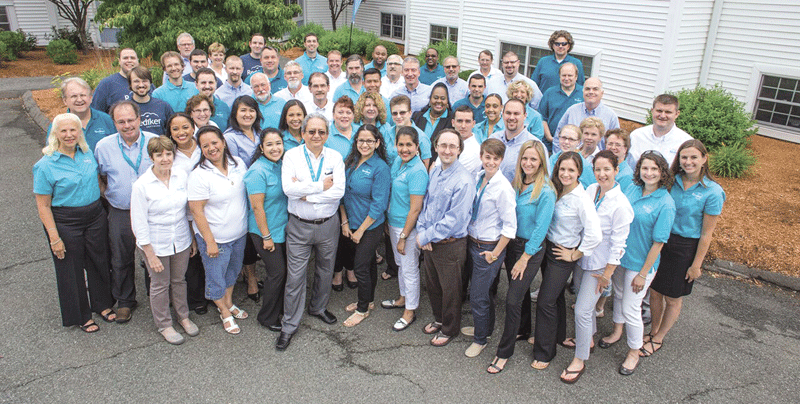
SPRINGFIELD — Health New England recently launched an all-new corporate brand, marked by a blue and gray logo and tagline, “Where you matter.” To coincide with the new brand launch, the company also released its new public website, healthnewengland.org. Health New England continues to offer health plans across three lines of business: commercial, Medicare, and Medicaid (its Be Healthy MassHealth plan). Although the company will begin using one logo to represent all lines of business going forward, the new branding will have no impact on the current plans or benefits available to members. “We have been meeting the health care needs of our communities for more than 30 years. And now, we’re renewing our commitment to our members and business partners through our all-new logo and brand promise,” said Steven Webster, director, marketing and digital strategy. “We have a new look, and our commitment to members and our communities is as strong as ever.” The new Health New England branding was developed after over a year of extensive research with brokers, employer groups, providers, and members, which revealed three key brand attributes: quality coverage, thoughtful service, and a human experience. Health New England’s new public website offers a contemporary design, updated content, and simplified navigation. Last fall, the company relaunched its member portal, my.healthnewengland.org, offering new tools and information to help members manage their healthcare. “It’s our goal to provide our members with a meaningful, simplified, and robust experience, working to help explain complex healthcare topics,” Webster said. Based in Springfield, Health New England is a nonprofit health plan serving members in Massachusetts and Connecticut, and is a wholly owned subsidiary of Baystate Health.

Montessori School of Northampton Launches Middle-school Program

NORTHAMPTON — Montessori School of Northampton (MSN) will open Northampton’s first independent middle school in September, aiming to take education well beyond the four walls of the classroom. “Our middle-schoolers will benefit from the unique materials, intensively trained teachers, and self-directed learning for which Montessori schools are known worldwide,” said Susan Swift, head of school. “But they will also work and learn at local farms, theaters, and businesses, and do service projects to benefit the local community.” To lead MSN’s middle-school program, the school has hired Corey Hadden, a Montessori-trained and experienced middle-school teacher. He is also an apprentice trainer on the staff of the Cincinnati Montessori Secondary Teacher Education Program and has many years of experience with Outward Bound as well as mindfulness training. His goal as middle-school teacher is to help students understand themselves as part of a community — and part of a bigger world. “Our out-in-the-community curriculum was designed with the specific developmental needs of adolescents in mind,” he said. “As any parent of a 12-year old will tell you, these kids are in transition, changing from children to teenagers. Their bodies, their minds, their self-image are all in flux. The experience of doing meaningful work alongside adults and one another will help build a sense of self, with purpose, responsibility, and a love for learning that will help them succeed as they enter high school and beyond.”

Columbia Gas Supports Revitalize CDC Event

SPRINGFIELD — Columbia Gas of Massachusetts has awarded Revitalize CDC a donation of $5,000 in support of the 2016 Green-N-Fit event scheduled for Saturday, April 23. “We are so appreciative of Columbia Gas of Massachusetts’ ongoing support, now for the fifth consecutive year. Thanks to Columbia Gas, we are able to make the homes of low-income elderly and military veterans in need safe, healthy, and energy-efficient,” said Revitalize CDC President and CEO Colleen Loveless. Nearly 100 skilled and dedicated volunteer employees from Columbia Gas have tackled several projects over the past five years. Projects have included interior and exterior painting, upgrading a daycare outdoor play space, repairing bathroom and kitchen plumbing, planting a garden, and pitching in wherever there is a need. “Columbia Gas of Massachusetts is committed to working with nonprofit organizations such as Revitalize CDC where their mission to revitalize homes, neighborhoods, and lives through preservation, education, and community involvement aligns with ours to help create strong and sustainable communities where our employees and customers live and work,” said Andrea Luppi, the utility’s manager of Communications and Community Relations.

Berkshire Bank Donates $2.3 Million to Nonprofits

PITTSFIELD — Berkshire Bank announced that its two charitable foundations awarded a total of $1,810,229 in grants to nonprofit organizations in Massachusetts, New York, Connecticut, and Vermont during 2015. The grants supported education and community-development initiatives as well as health and human services and cultural programs. In addition, Berkshire Bank provided approximately $500,000 in community sponsorships, raising its total contributions in the community to more than $2.3 million. “Our philanthropic investments impacted more than 8 million individuals in 2015, helping to enhance economic opportunities and improve the quality of life for members of our community,” said Lori Gazzillo, vice president and director of the Berkshire Bank Foundation. “Thanks in large part to the work of our nonprofit partners, individuals improved their reading, writing, and math; graduated from high school; attended college; and visited local cultural organizations. Our partners also created affordable housing, revitalized downtown centers, and helped individuals gain employment. We are so pleased to continue our support of so many community initiatives throughout our footprint.”

Country Bank Makes Donation to Abby’s House

WARE — Country Bank recently Abby’s House with a check for $3,050. This donation was made possible through the Country Bank Employee Charitable Giving Program’s casual Fridays. Each week Country Bank staff are able to wear jeans in exchange for a $5 donation to the charity of the month. The total funds collected are then matched by Country Bank. The organizations chosen for this honor are suggestions submitted by the staff at Country Bank. Country Bank serves Central and Western Mass. with 14 offices. For more information, visit www.countrybank.com or call (800) 322-8233.

Pride Stores Donates $25,000 to CHD’s MaryAnne’s Kids Fund

SPRINGFIELD — Pride Stores recently donated $25,000 to the Center for Human Development’s (CHD) MaryAnne’s Kids Fund, which was established to provide opportunities for children in foster care that would otherwise be unavailable to them. This donation will help continue to provide these children the means to pursue special interests in music, dance, art, sports, summer camps, and extracurricular education, and an overall positive influence that will remain with them throughout their lives. “Pride does so much for MaryAnne’s Kids, helping foster children have opportunities that would not otherwise be available to them,” said Jim Williams, CHD’s Children and Families Program director. “We are grateful to have such a great partner in the community.” Every year, Pride Stores sells $1 ornaments in each of its 30 locations during the holidays to support MaryAnne’s Kids. “We are grateful to all the Pride customers who support this important fund-raiser.” said Marsha Del Monte, president of Pride Stores.

Monson Savings to Offer Free Tax Preparation Through VITA Program

MONSON — The Ware branch of Monson Savings Bank is participating in the Volunteer Income Tax Assistance (VITA) program, which offers free tax preparation for those who qualify for this service. Monson Savings Bank volunteers will help people prepare their federal and Massachusetts state taxes starting every Tuesday from 4 to 7 p.m. and Thursday from 3 to 6 p.m. Those interested must call (413) 263-6500 to find out if they qualify and to make an appointment. The program is sponsored and funded by Springfield Partners for Community Action and United Way of Pioneer Valley.

Departments Picture This

Send photos with a caption and contact information to:  ‘Picture This’ c/o BusinessWest Magazine, 1441 Main Street, Springfield, MA 01103 or to [email protected]


Community Pride

Community Pride Pride Stores

Pride Stores recently donated $25,000 to the Center for Human Development’s (CHD) MaryAnne’s Kids Fund, which was established to provide opportunities for children in foster care that would otherwise be unavailable to them. This donation will help continue to provide these children the means to pursue special interests in music, dance, art, sports, summer camps, and extracurricular education, and an overall positive influence that will remain with them throughout their lives. “Pride does so much for MaryAnne’s Kids, helping foster children have opportunities that would not otherwise be available to them,” said Jim Williams, CHD’s Children and Families Program director. “We are grateful to have such a great partner in the community.” Every year, Pride Stores sells $1 ornaments in each of its 30 locations during the holidays to support MaryAnne’s Kids. “We are grateful to all the Pride customers who support this important fund-raiser,” said Marsha Del Monte, president of Pride Stores. Pictured among CHD staff and volunteers are Karen Nystrom, Pride’s director of marketing (second row, third from left), Del Monte (fourth from left), and Williams (fifth from left).


Daily News

BOSTON — Eleven teachers in Western Mass. have been honored with Mass Insight Education’s Partners in Excellence Award for helping students take advanced-placement (AP) courses with success as they prepare for college.

The winners include Melissa Ferris and Patrice Latrell, Taconic High School, Pittsfield; Carla Comeau and Jennifer Gaudette, Pittsfield High School; Jill Keenan, Jennifer Levesque, and Tawnya Tiskus, Westfield High School; Michelle Fontana, Christopher Rea, and Diana Sands, Ludlow High School; and Marissa Lapointe, Springfield Central High School.

The award recognizes 54 Massachusetts AP teachers for their outstanding contributions to student achievement and their dedication to college success during the 2014-15 academic year. The teachers were selected out of a pool of more than 600 AP teachers who participated in Mass Insight Education’s AP STEM and English program.

“The teachers Mass Insight supports in AP partnerships across the state are the backbone of the schools’ role preparing students for college success,” said William Guenther, president, CEO, and founder of Mass Insight Education. “We’re very pleased to recognize the AP teacher partners who have produced especially outstanding results with their high-school students.”

Mass Insight Education’s content directors selected the teachers based on their ability to increase their students’ access to AP classes, their students’ improved performance on the AP exams, and their students’ resulting college readiness.

The award recipients will be honored at Mass Insight Education’s Partners in Excellence Award Celebration on Tuesday, April 5 from 6:30 to 9 p.m. at Seaport Hotel in Boston. Eric Waldo, executive director of First Lady Michelle Obama’s Reach Higher initiative, will be the keynote speaker. Each award winner will be recognized for his or her achievement and will receive a check for $1,000.

Mass Insight Education (MIE) is a national nonprofit dedicated to improving student achievement and increasing college success through district restructuring and rigorous academic programs. This is particularly important within the urban ‘gateway’ communities in which MIE operates, as youth from economically challenged communities are not as typically afforded the personalized, high-caliber instruction that is provided in the AP environment.

Mass Insight Education’s AP STEM and English program encourages more students to take AP classes in an effort to increase their confidence while providing them with the academic skills they need to succeed in post-secondary education. The AP STEM and English program is a key part of MIE’s innovative College Success Campaign. Annually, more than 10,000 students at more than 75 Mass Insight Education partner schools take part in the program. These schools typically double or triple their enrollment in AP classes, and double the number of students earning qualifying scores on the AP exam.

To help students prepare for the AP exams, Mass Insight Education supports them in several ways, including hosting a series of weekend classes. The goal is to have students take an AP class as an introduction to the level of work they will need to do in college. The hope is that the experience inspires many to enroll in college who previously thought themselves incapable of that work. Getting a qualifying score earns them college credit, thus allowing them to finish college more quickly and at a lower cost.

Statistics show that 78% of Mass Insight Education students who took at least one AP math, science, or English course in high school attended a two- or four-year college after graduating high school. Ninety-three percent continued with two years of college, and 82% either graduated or are still in school four years after graduating from high school. Mass Insight Education also provides extra training for AP instructors to strengthen their teaching skills.

Daily News

WEST SPRINGFIELD — Homewatch CareGivers announced the hiring of Deborah Epstein as business development manager for Hampshire and Franklin counties. She will work in tandem with Kate Tyler, who also works in those two counties.

Epstein comes to Homewatch CareGivers with a skill set in public relations, program development, and administration. She has a master’s degree in public health from the UMass Amherst School of Public Health and Health Sciences with a focus in health policy management and community health education. This complements her dual bachelor’s degree in management and psychology from Simmons College in Boston.

She also works as a marketing and health-promotion consultant for various organizations, including Orchard Medical Associates of Indian Orchard. She brings a wealth of experience through her work for Massachusetts General Hospital, Cooley Dickinson Hospital, Baystate Medical Center, various senior centers, and as coordinator of the Franklin-Hampshire RSVP Osteoporosis Exercise/Nutrition Program.

Epstein will begin her role immediately, seeking out partners in the medical community who can assist Homewatch CareGivers in building alliances to better serve Western Mass. residents in securing appropriate homecare options.

Daily News

WESTFIELD — Tighe & Bond, a Northeast leader in civil and environmental engineering and consulting, opened its doors this month to a New York office in Dutchess County. The workplace at 62 East Market St. in Red Hook, N.Y. provides a strong base of operations to better serve the company’s growing list of clients in New York. Tighe & Bond is providing services in New York through T&B Engineering, P.C.

Project Manager Erin Moore is providing leadership for the establishment of Tighe & Bond’s newest office. A lifelong resident of New York’s Hudson Valley, she is an environmental engineer with more than 15 years of experience in the municipal water, wastewater, and stormwater industry.

“We are a firm that is committed to our clients and the longstanding relationships we have developed,” said David Pinsky, president and CEO of Tighe & Bond. “Locating and growing an office within Dutchess County allows Tighe & Bond to more readily respond to growing client service demands. Plus, Erin Moore has a strong local knowledge of the region and years of experience providing comprehensive engineering and environmental services, which is sure to benefit both existing and new clients.”

Tighe & Bond currently has more than 260 employees. Its other office locations include Westfield (its headquarters), Pocasset, Westwood, and Worcester, Mass.; Middletown and Shelton, Conn.; and Portsmouth, N.H. Founded in 1911, the firm provides engineering and environmental services for clients in the government, industry, healthcare, education, real-estate, energy, and water/wastewater markets.

Daily News

EASTHAMPTON — The Women’s Fund of Western Massachusetts announced that Liz Feeley was named director of philanthropy. She brings a wealth of blended experience in education and philanthropy to the organization.

Feeley received her bachelor’s degree in English from Lehigh University. After spending 21 years coaching intercollegiate women’s basketball at institutions such as Smith College, Princeton University, the University of Notre Dame, and Holy Cross College, Feeley took her penchant for building relationships into the field of philanthropy. She brings a background in strategic planning, team building, volunteer management, and designing sustainable programs to the Women’s Fund.

Feeley’s work at both Smith College and Stoneleigh-Burnham School, a day-boarding school for girls in Greenfield, brought to the forefront of her consciousness issues that girls and women face each day. She looks forward to building relationships around the Women’s Fund’s mission of creating economic and social equality for women and girls in Western Mass. through philanthropy.

Prior to arriving at the Women’s Fund, Feeley served as director of Development at Amherst Montessori School. Previously, as director of Development and Alumnae Relations at Stoneleigh-Burnham, she led a team that increased fund-raising by 133% and alumni participation in the annual fund by 50% in three years. As director of Development, she also launched an initiative that increased the number of major-gift donors by 35% in two years. In five years, her team took fund-raising at the school to an unprecedented level by implementing a strategy based on stewardship, cultivating relationships, brand identity, creating sustainable programs, social media, and in-person visits across the country and in Asia.

While at Stoneleigh-Burnham, Feeley was instrumental in the planning and implementation of a $1.2 million two-year campaign. Her team coordinated and hosted a Leadership Symposium and Gala to launch the campaign that successfully raised money for a new student-center complex. She partnered with volunteer groups of parents, alumni, faculty, students, trustees, and others in an effort to advance the mission of the institution.

Daily News

HOLYOKE — Meyers Brothers Kalicka, P.C. (MBK) announced the promotion of Brandon Mitchell, CPA, MSA and Chris Marini, MSA, MOS to senior associate positions.

Mitchell has been with MBK since 2013 and brings a strong technical skill set to his work, as well as a background in sales.

“Brandon has demonstrated a strong understanding of our clients and their industries in his time with our firm,” said MBK partner Howard Cheney. “He is resourceful and often takes the initiative to educate himself on his clients beyond the scope of his technical work, allowing him to enhance his relationship with our client base and deliver an even higher level of client service.”

Mitchell earned his MSA from Westfield State University. He is a member of the Massachusetts Society of Certified Public Accountants and the American Institute of Certified Public Accountants.

For more than two years, Marini has demonstrated a dedicated work ethic to both clients and the firm. He is a team leader within the not-for-profit, HUD, and pension-audit niches.

“Since the very beginning, Chris has worked hard and demonstrated a commitment to growth and education,” Cheney said. “He is also an instrumental resource for computer and technology matters here at the firm, helping to spearhead a number of projects and initiatives as we continue to take our cloud-based computer environment to the next level. This has resulted in efficiencies which we are able to pass on to our clients.”

Marini holds a BBA with a concentration in accounting from the Isenberg School of Management at UMass Amherst and earned his MSA from the University of Connecticut. He is a member of the Massachusetts Society of Certified Public Accountants and the board of trustees for the Springfield Symphony Orchestra, and serves as a mentor for the Westfield State University Accounting Club.

Daily News

SPRINGFIELD — Columbia Gas of Massachusetts has awarded Revitalize CDC a donation of $5,000 in support of the 2016 Green-N-Fit event scheduled for Saturday, April 23.

“We are so appreciative of Columbia Gas of Massachusetts’ ongoing support, now for the fifth consecutive year. Thanks to Columbia Gas, we are able to make the homes of low-income elderly and military veterans in need safe, healthy, and energy-efficient,” said Revitalize CDC President and CEO Colleen Loveless.

Nearly 100 skilled and dedicated volunteer employees from Columbia Gas have tackled several projects over the past five years. Projects have included interior and exterior painting, upgrading a daycare outdoor play space, repairing bathroom and kitchen plumbing, planting a garden, and pitching in wherever there is a need.

“Columbia Gas of Massachusetts is committed to working with nonprofit organizations such as Revitalize CDC where their mission to revitalize homes, neighborhoods, and lives through preservation, education, and community involvement aligns with ours to help create strong and sustainable communities where our employees and customers live and work,” said Andrea Luppi, the utility’s manager of Communications and Community Relations.

Daily News

PITTSFIELD — Berkshire Bank announced that its two charitable foundations awarded a total of $1,810,229 in grants to nonprofit organizations in Massachusetts, New York, Connecticut, and Vermont during 2015. The grants supported education and community-development initiatives as well as health and human services and cultural programs. In addition, Berkshire Bank provided approximately $500,000 in community sponsorships, raising its total contributions in the community to more than $2.3 million.

“Our philanthropic investments impacted more than 8 million individuals in 2015, helping to enhance economic opportunities and improve the quality of life for members of our community,” said Lori Gazzillo, vice president and director of the Berkshire Bank Foundation. “Thanks in large part to the work of our nonprofit partners, individuals improved their reading, writing, and math; graduated from high school; attended college; and visited local cultural organizations. Our partners also created affordable housing, revitalized downtown centers, and helped individuals gain employment. We are so pleased to continue our support of so many community initiatives throughout our footprint.”

Community Spotlight Features

Community Spotlight

By JACLYN C. STEVENSON

Corydon Thurston

Corydon Thurston says GE served Pittsfield well, but long gone are the days when the city should strive to be a one-industry town.

The pervasive feeling in the city of Pittsfield — the Berkshires’ largest city and county seat — is that it’s done trying to return to its heyday.

Rather, elected officials, business-development professionals, and entrepreneurs alike are calling for a new day in Pittsfield, one that celebrates the creative economy, makes great use of existing resources, and stands ready for entrepreneurial endeavors of all types and sizes.

Mayor Linda Tyer, who took office in January and will serve Pittsfield’s first-ever four-year mayoral term, made these tenets some of her key platform points during her campaign, and the message appears to have resonated. The former Pittsfield City Clerk defeated two-term incumbent Mayor Daniel Bianchi with 59% of the vote, winning all 14 precincts.

Tyer said the city has long suffered from what she calls “group depression” following the departure of General Electric, which became part of the Pittsfield landscape in 1903 and at its peak provided 13,000 jobs in a city of 50,000 residents. Its influence on the city’s economy dwindled steadily through the ’70s, ’80s, and ’90s, but many people long held hope that another outfit similar in size and scope may someday return.


Mayor Linda Tyer Embarks on First Term in Pittsfield

BusinessWest spoke with Pittsfield’s Mayor Linda Tyer on day 11 of her administration.

Read more …


“Pittsfield has a tendency to say, ‘someone is out there,’” Tyer noted. “But we’ve already seen that one business will only be able to sustain us for so long. I’m interested in who is already here, on the cusp of expansion or ready for something new. In the end, the best investment is local, big or small.”

Corydon Thurston, executive director of the Pittsfield Economic Development Authority (PEDA), has a similar, if not more concentrated, view of the city and its opportunities for business development.

“The chances of landing a major corporation are akin to winning Powerball,” he explained. “Today, competition isn’t just statewide, it’s worldwide, and finally the realization here is that we need to support who we already have, help them grow, and find ancillary opportunities for additional growth and added diversity — not create another a one-industry town.”

If You Build It…

The largest development currently underway is the creation of the Berkshire Innovation Center (BIC), which will be located at the William Stanley Business Park (created at the massive former GE complex) and cater to small and medium-sized businesses positioned to add to the supply chain of various life-science and biotechnology projects.

“The BIC is designed to provide access to high-tech equipment that will allow businesses to innovate, grow, and respond to customer demands in an efficient and timely fashion — rapidly prototyping products and bringing them to market,” Thurston said. “Temporary space will be available for lease within the center to allow companies to mature, and hopefully they will stick around. Pittsfield has plenty of existing manufacturing space at low cost, and once we get them here, we can grow them here.”

He added that support of the BIC, which was made possible by a $9.75 million state grant, has been citywide and dovetails with a number of other initiatives in the areas of workforce training, real-estate development, and education. In the coming year, PEDA is expected to blend its efforts with 1Berkshire, a regional economic-development organization, and Pittsfield’s Office of Community Development.

“One of the reasons why we’re so bullish on the innovation center is it has a broad base of community support at every level,” Thurston went on. We also believe that a young startup company, whether it’s in Worcester, Boston, Albany, or Rensselaer, that is looking for a place to commercialize or test their ideas and inventions, will be attracted here because of our existing manufacturing structure and lower costs of doing business.”

A built-in mentor network will be part of the BIC’s offerings, with 19 mentoring partners from across Pittsfield already signed on, along with several academic partners from across the Northeast, including UMass and Rensselaer Polytechnic Institute.

“The support from the education side is rewarding to me because it’s a foundational element that will create a number of new opportunities for our industrial base,” Thurston said, noting that Berkshire Community College has been a particularly active participant.

In the absence of a physical building, for instance, BCC has taken the lead on the programmatic components of the center, identified a variety of courses to complement the BIC’s eventual hands-on work, and set up a temporary center at Pittsfield’s Taconic High School that includes a pipeline for students to pursue advanced-manufacturing careers.

Hire Education

Ellen Kennedy, president of Berkshire Community College, echoed Thurston’s excitement for the BIC.

“This could be the most promising economic-development engine to enter Pittsfield in a long time,” she said. “As the facility itself comes into play, training opportunities are already in place that allow existing businesses to share research and identify workforce-development needs.”

Kennedy said BCC has been instrumental in identifying academic opportunities for Pittsfield students from grade school to college, as well as career-development and refresher courses for the workforce. It received $500,000 in funding from the Massachusetts Life Sciences Center last year in order to create educational components to support the BIC, such as the purchase of state-of-the-art equipment and new courses in advanced manufacturing and engineering technology, and another $10,000 just last month to fund career-path programming for middle- and high-school students.

The BIC has also become the new lead organization of the Berkshire Robotics Initiative, with an eye toward underscoring the use of robotics in today’s manufacturing world and the career opportunities that may arise.

“We’re looking to build on students’ interests, allow them to see the different employment opportunities open to them, and start them on a career path,” Kennedy noted, adding that this and other projects have the dual benefit of increasing the college’s profile among prospective students, and therefore that of the city, which has an aging population.

“Berkshire County’s demographics are challenging, and it has become the job of both Pittsfield and BCC to keep the younger population engaged,” she told BusinessWest. “In a sense, we’re making a commitment to the Millennial.”

For Kennedy, that means offering more opportunities for the community to visit the campus, be it to play sports, attend a career fair, or utilize campus amenities. By extension, she hopes the city’s cultural destinations, retail shops, eateries, and nightlife will also get a boost.

“In order to attract people here to experience what we have to offer, we all need to market the quality of life and the world-class culture. In that respect, we are tied at the hip with the city of Pittsfield.”

North Star of Our Nights

That’s a construct the team involved with Hotel on North, a boutique hotel on Pittsfield’s main thoroughfare that just opened its doors in June, subscribes to as well.

Owned by Berkshire residents David and Laurie Tierney and managed by Main Street Hospitality Group, a hotel-management company based in Stockbridge that manages three other properties in the county, Hotel on North includes a restaurant, bar, event space, and gift shop housed in a pair of adjoining 19th-century buildings that are on the National Register of Historic Places.

Sarah Eustis

Sarah Eustis says Hotel on North was designed to reflect the character of its region, with plenty of local contributions.

Sarah Eustis, CEO and part-owner of Main Street Hospitality Group, said work between the partners began in earnest in 2012, and moved swiftly into “two solid years of highly collaborative project work.”

“We represent two deeply rooted Berkshire businesses with different skills that we wanted to apply to Pittsfield, to contribute to the renaissance that is happening here,” she said, noting that a hospitality venue in Pittsfield has been a goal of Main Street Hospitality Group for several years. “We looked originally to Pittsfield to build on a base, and now we have an undying passion that this is right for the city. That belief comes from both gut and numbers.”

The hotel features brick walls, tin ceilings, and hardwood floors that hearken back to the buildings’ original décor, as well as Victorian themes paired with nods to the Berkshires in the form of vintage maps and organic elements. The scheme is bound together with the ‘on North’ tagline, i.e. ‘Eat, Drink, Stay on North.’

In more ways than one, the entire business was “made on North,” said Eustis, by partnering with local vendors and craftsmen whenever possible, from architects to designers to furniture and décor makers.

“We like to create hotels that give you a sense of where you are, and we realized early on that it had to be ‘by Pittsfield for Pittsfield,’ with influences from around the world. That’s one reason we didn’t partner with a large brand or make a slick New York hotel and plop it in the Berkshires,” she went on. “The ‘on North’ concept arose from that idea of using local businesses.”

One of the hotel’s owners, Laurie Tierney, added that she hopes its luxurious feel paired with local accents will instill a feeling of pride in Pittsfield’s residents, and attract them downtown along with other visitors to the region.

“My goal is to change perceptions so people realize what’s downtown and feel safe,” she said. “The locals need to be brought into the change, and I do believe that there is a movement afoot.”

Sometimes, Tierney added, getting big things to happen in a city is like starting a lawnmower.

“You pull the cord, but it often takes a few times to start. That’s how it’s been in Pittsfield … almost, not quite, almost, not quite. I’m hoping this is what turns the engine.”

Indeed, it’s been nearly 90 years since GE made Pittsfield a boom town, and many people are now seeing the city’s heyday as something ahead of them, not behind. The key, says Tierney, is to maintain momentum.

“We can’t stop; we have to keep going,” she said. “I hope to be in a place someday where I can sit back and watch the ball roll a little, and maybe be a background person who whispers in someone’s ear, ‘hey. You know what we should do?’”

One person Tierney may be able to whisper to is Mayor Tyer.

“I’m interested in anyone who wants to make an investment in the city,” Tyer said in conclusion. “The idea of a hip, walkable urban center is coming back, and we have the infrastructure for it. Now, we just need to be plugged into the modern economy.”


Pittsfield at a glance

Year Incorporated: 1761
Population: 43,697
Area: 42.5 square miles
County: Berkshire
Residential Tax Rate: $18.76
Commercial Tax Rate: $38.06
Median Household Income: $35,655
Family Household Income: $46,228
Type of Government: Mayor, City Council
Largest Employers: Berkshire Health Systems, General Dynamics, Berkshire Community College, SABIC Innovative Plastics

 Latest information available


Community Spotlight Features
Mayor Linda Tyer

Mayor Linda Tyer says her administration is focused more on helping and growing existing busineses, not luring someone “out there.”

BusinessWest spoke with Pittsfield’s Mayor Linda Tyer on day 11 of her administration.

Only 1,450 days to go.

That’s notable because Tyer is serving Pittsfield’s first-ever four-year term, and, as such, she’s in the beginning stages of laying out a map for the long haul that pinpoints high roads, trouble spots, destinations for the future, and plenty of pit stops in between.

The journey began for Tyer last year, while she was still serving as city clerk. She’d served as a member of the City Council for five years prior to taking the clerk’s position, and watching the inner workings of Pittsfield’s government had her mulling a run for its top office.

“I saw the city’s potential being lost to old ways of thinking, governing, and leading,” she said. “It was time for a new generation of leadership, and I wanted the residents of Pittsfield to really think about what they imagined for themselves. I offered an alternative in every way: from gender to voice to style.”

Tyer announced her candidacy for mayor on the City Hall steps in March, and defeated two-term incumbent Mayor Daniel Bianchi in November. Since then, she’s pledged more communication and relationship building between the mayor’s office and all its stakeholders, from elected officials to Pittsfield’s residents and business owners.

“The plan is to have constant, regular communication, both incoming and outgoing,” she said, noting that this will include regularly scheduled public updates on some key issues — among them public safety, workforce development and retention, and ongoing work to create a hip, walkable urban center in the heart of Berkshire County. “We need to invest in public safety and, as part of that, address the underlying issues that are the source of crime, including poverty and feeling disenfranchised.”

Tyer added that there are strategies at play in these arenas, starting with youth initiatives such as a city-wide mentoring program for high-risk young adults. That program has recently been expanded through grant funding to include job training and workforce-development opportunities for men ages 17 to 24, which is one way Pittsfield is also addressing the dual issue of workforce training to fill the area’s job vacancies.

“The business community cares that its investments are being protected, but it also cares about filling the gap that exists between marketing their jobs and finding candidates with the right skills,” she said.

Abandoned sites scattered across the city and outdated technologies are other barriers to recruiting and retaining great talent in Pittsfield, Tyer noted.

“Neighborhood blight and business blight make it very difficult to market our city; it affects community pride, and potential investors aren’t going to announce their arrival so we can show them our best sites … they’re going to be stealth,” she said. “And we need access to broadband in our commercial centers. We have the infrastructure, but we’re not yet plugged in. A modern-day creative economy has to be global.”

Ultimately, that creative economy is what Tyer hopes to nurture through all of these initiatives: a diverse business landscape powered by human capital.

“Our transportation system is not conducive to big manufacturing — that’s not our strength,” she said. “What we can do is ensure that we’re providing young professionals with the tools they need to succeed so we can continue to cultivate the vibrant community we have here.”

To that end, Tyer’s plans for the first leg of her four-year tour of duty include targeting resources to Berkshire-based small businesses; ‘Blight to Bright’ initiatives, such as requiring that vacant buildings are maintained for aesthetics and safety; street-improvement plans; and strategies for expansion of early-childhood education.

It’s a packed itinerary, but Tyer said she has the drive.

“I am motivated by a belief that the city has great potential,” she said.

— Jaclyn C. Stevenson

Opinion

Editorial

Paul Doherty.

Paul Doherty.
Businesswest file photo

Where does one begin when talking about the accomplishments and legacy of Paul Doherty, who passed away recently after a lengthy battle with lung cancer?

Is it with his success as a lawyer and with the firm he grew into one of the largest in the region — Doherty, Wallace, Pillsbury & Murphy? Or is it with the fact that he was a devoted family man? Maybe it should be with the many aspects of his work within the community, as both activist and philanthropist. Or maybe it’s his work as a truly relentless advocate for this region and especially the city of Springfield.

Maybe the best place to begin is by saying all of that is really just the beginning.

Indeed, one can’t easily sum up the many contributions Paul — often working in tandem with his wife of 55 years, Dianne — made to the larger community we call Western Mass. He was heavily involved in business, education, philanthropy (he was one of the founders of Valley Gives), race relations, and a host of efforts to promote the City of Homes. He lent his considerable talents and imagination to everything from the United Way to the Economic Development Council of Western Mass., to the adoption agency Downey Side, which he co-founded.

Those who knew and worked with him called him a friend, mentor, and inspiration.

People who become as active in their community as Paul often note that they have a hard time saying ‘no’ when people ask them to contribute their time and energy to a cause or initiative. Paul did, in fact, have that problem, if one could call it that. But he could go one better — or even two.

Usually, he didn’t have to say ‘yes’ or ‘no,’ because he didn’t wait to be asked to get involved. He was an initiator, the one who would ask others if they wanted to get involved.

And perhaps his very best quality was getting others to say ‘yes’ and follow his lead.

Because of this rare and special talent, this region is a better place — a much better place.

And that’s why he will certainly be missed.

Law Sections

Mapping Out a Strategy

Anthony Gulluni

Hampden County District Attorney Anthony Gulluni

Hampden County District Attorney Anthony Gulluni says the ongoing opioid crisis is a function of supply and demand. In short, there is no shortage of either. And the situation won’t improve until that changes dramatically. Reducing both is the broad goal, and he says the key is partnerships — between law enforcement, the medical community, lawmakers, and other constituencies.

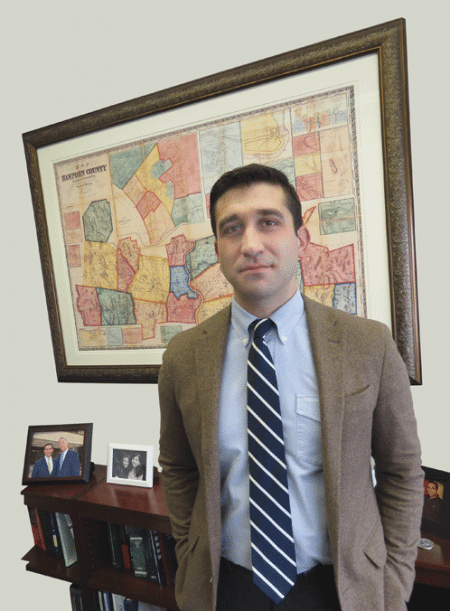
Hampden County District Attorney Anthony Gulluni is rather proud of the large map of the region he represents that now dominates one wall of his office in the Hall of Justice on State Street.

He found the item, circa 1857, on eBay, paid $40 for it — it’s a replica, not an original — and then plunked down more than 30 times that amount (his own money) to have it matted and framed.

“It’s sort of a gift to myself,” said Gulluni, who said he often finds himself looking at the map and noting the many forms of progress that have visited the region over the past 159 years.

But that term certainly wouldn’t be applied to the opioid crisis facing his territory — and the other 13 counties in the Bay State, and the entire country, for that matter.

In fact, it likely represents the biggest law-enforcement issue — and one of the deepest healthcare crises — in the Commonwealth and this region since his map was drawn.

“Historically, this is as bad as it’s ever been,” he said, referring to drugs and the many different tolls they take on society. “We had the crack epidemic in the late ’80s, but this is far worse, on many levels. Drugs have always been an issue, but it’s now reached a fever pitch.”

To map out strategies to address the crisis, Gulluni’s office is forming a task force comprised of law enforcement personnel, healthcare providers, elected officials, and others. These are the parties that will have to work together to not only conceptualize a strategy and its specific components, but secure the money to pay for them and then carry them out.

As he talked about the task force and this crisis in general, Gulluni acknowledged what many have said in various forums across the nation — that this is not a problem that the country or his county can arrest its way out of. But arrests can, and must, be a part of that equation. A big part.

Arrests like the one made in Springfield’s South End in early January that took more than 8,000 bags of lethal ‘Hollywood’ heroin off the street, probably saving many lives in the process (officials attribute at least six fatal overdoses to heroin bearing that stamp). And arrests like the one of Ludlow doctor Fernando Jayma, who was indicted late last year on 41 charges, including illegally prescribing oxycodone and other drugs and also making false Medicaid claims.

“We can’t arrest our way to a resolution of this problem, but we have to keep making arrests to take heroin off the streets and keep it from the people who are addicted,” Gulluni noted.

But the DA noted that this fight will have a number of fronts, including treatment of those currently addicted to opioids and educational efforts aimed at keeping others from becoming addicted.

And while saving lives and stemming addiction are the overriding goals of this initiative, the opioid crisis is a quality-of-life issue for everyone living in this county, said Gulluni, adding that, by his estimation, roughly 50% of the crimes committed in his jurisdiction are related in some way to drugs and, quite often, opioids.

This includes crimes related directly to those distributing and selling those drugs, but also those committed by individuals who will seemingly do anything to obtain the money needed to acquire them. And those committed by individuals impacted mentally, emotionally, and physically by those drugs.

“Addiction drives a lot of people’s crimes in terms of breaking and entering charges, trespassing, shoplifting, all those things,” he explained. “But there’s also domestic violence and other crimes that relate to the breakdown in people’s ability to deal with other people, the stress that addiction causes, and how it affects people’s well-being and their relationships with spouses and others.”

For this issue and its focus on law, BusinessWest talked at length with Gulluni about his ‘all hands on deck’ campaign against opioid abuse, and how it exemplifies the battle being waged across the region and across the country.

A Bitter Pill

When asked if he thought the opioid crisis in this region had peaked, Gulluni offered a contemplative “I really hope so” that spoke volumes about this crisis, how far it extends, and, yes, the uncertainty about whether any kind of corner has been turned despite a mountain of press on the subject and calls for action at the local, state, and national levels.

And when queried about when and how it will become evident that real progress has been made, he said this will be borne out by numbers — such as those concerning everything from arrests to fatal overdoses — but perhaps more importantly by fewer uses of phrases too often heard in cities and towns today.

“We’ll know when there are fewer mothers, fewer brothers, and fewer friends coming to me and saying, ‘I can’t believe it was my son,’ or ‘I can’t believe it was me who’s become addicted and it started with a prescription from my doctor,’” he said. “When we hear fewer stories like that, fewer stories of woe, tragedy, and death, that will be a clear indication of progress, and it’s one I look forward to.”

Getting to that day — and he didn’t want to speculate on how far away it is — will require a concentrated, collaborative effort, Gulluni told BusinessWest, one that will involve law-enforcement agencies, the healthcare community, the court system, community activists, and government leaders, who will be called upon to provide the legislation and financial resources to get the job done.

PillsSpillingFromBottleStockAnd, as mentioned, it will be a multi-faceted initiative, one focused on everything from curbing the supplies of lethal heroin to providing adequate numbers of beds for those trying to recover from addiction, to changing the way doctors prescribe narcotic painkillers.

Adding to the challenge in Hampden County is the fact that Gulluni’s office is already the busiest in the state by most measures, but has a fraction of the staffing that other DA’s offices have secured.

“We dispose of, in many years, the most Superior Court indictments, our District Court is extraordinarily busy — if you aggregate our numbers, we’re the busiest district, inclusive of Boston, Worcester, and Middlesex County, in the Commonwealth,” he explained. “We have 63 assistant district attorneys, Boston has about 140, Middlesex has 130, Worcester has about 95. So, with about half the staff of some districts, we have the same case load, or a bigger one.”

Gullini is lobbying state officials to enlarge his staff, and, in the meantime, he’s deploying the troops he has in ways that might bring the region closer to that day he described earlier.

These broad efforts might be described as efforts to dramatically curb both supply and demand for opioids.

Indeed, as he returned to the subject of arrests and convictions when it comes to those distributing and selling heroin, like that aforementioned batch with the ‘Hollywood’ stamp, Gulluni said that, while the supply of such drugs is seemingly inexhaustible, the seizures do make a difference.

“In terms of the overall supply of heroin in Western Mass. and Hampden County, those 8,200 packets were a drop in the bucket,” he said of the South End seizure, adding quickly that Western Mass. has become a kind of distribution hub for the drug. “And it has practically no effect on people’s access to heroin. But it’s significant nonetheless.

“And to understand that significance, you have to look at it from the context of how that particular heroin was killing people,” he went on. “Taking 8,200 bags of the ‘Hollywood’-stamped heroin out of circulation is significant; through the hard work of the Springfield Police Department and its narcotics group, in that case, a number of lives were saved as a result of that bust. Those bags would have found their way into any number of people’s hands — people suffering from addiction — and they would have used it, with possibly fatal consequences.”

While the South End bust certainly saved lives, the supply of heroin remains a huge issue, he said, adding that untold amounts of the almost ridiculously cheap drug flow into the region every day.

And by cheap, he means $3 or $4 a bag, with most users needing perhaps three of four a day to satisfy their cravings (at the extreme end, it could be a dozen or more). In Vermont, though, the price is much higher ($10 to $12 a bag due to supply-and-demand issues), which is in turn fueling a surge in cases where entrepreneurial criminals buy heroin at low prices in this state and then try to profit by crossing the border and selling it there. But that’s another story — or at least another disturbing aspect of this one.

“It’s a cheap habit, and that’s why we’re seeing this crisis reach this level,” said Gulluni, adding that heroin has become a very affordable alternative to the much-higher-priced prescription painkillers that many addicts began their unfortunate journeys with.

Prescription for Progress

And this brings us to another front in this campaign — stemming the tide in the number of prescriptions of addictive pain killers.

The arrest of Jayma was one manifestation of this effort, said Gulluni, adding that this was the first such arrest during his administration, which began just over a year ago, and likely not the last. Indeed, while he’s not sure how widespread such abuse is, he knows this is not exactly an isolated incident.

“The so-called pill mills — they’re out there,” he explained, adding that he hopes Jayma’s arrest sends a strong message and becomes an actual deterrent.

“I hope it was a strong statement to everybody, including the prescribing community, that there are certain limits by which you have to abide, based on both your professional ethics and the laws of this Commonwealth and the federal government,” he said. “If you’re doing things that are irresponsible or unlawful, whether you’re a doctor or not, you’re going to be arrested.”


Go HERE to view a PDF chart of the region’s law firms


That arrest is part of the ‘curbing demand’ aspect of this fight, said the DA, adding that it is as important as the supply side, and perhaps even moreso, because without demand, there is no need for supply.

And it’s an example of how those involved with stemming this crisis must deal with the present and the future at the same time.

Regarding the former, efforts are focused on educating and treating those currently addicted, and not incarcerating them, said Gulluni, adding that jail time is generally for those who sell or traffic in drugs or those who profit from their use.

Elaborating, he said those arrested for possession of such drugs are, in most cases, given probation. And there is additional focus now on making sure this probation involves a setting where there is treatment for the addiction.

As for the latter, the future, Gulluni said attention must be directed toward the young people that might someday become addicted if they’re not encouraged to start down and stay on a different path.

“We’ve got to engage with young people; we have to engage with people who are at the stage where they’re beginning to use drugs,” he explained. “In terms of prevention and education, we need to get out in front on this issue for the future.”

Already, the DA’s office is engaged with programs to get opioid addicts and those who treat addiction in front of different types of audiences to “tell the stories,” as Gulluni put it, concerning what happened to them — and what could happen to others.

“We’re presenting groups of people — young people, parents, educators — with the information concerning how this affects people’s lives, how it starts,” he told BusinessWest. “We need people to say, ‘no, thank you; I don’t want 100 oxycodone pills because I had a tooth pulled.’ This is how this stuff starts.

“We need to get some of this out of the stream of commerce,” he went on, adding that legislation is being considered that would limit the numbers of potentially addictive painkillers that may be prescribed and the conditions they may be prescribed for.

Such efforts will require partnerships, he continued, adding that steps to limit prescriptions of this nature require the cooperation of the medical community, and represent just one example of how that constituency must work with law enforcement to stem the tide.

Many such partnerships will be needed, he said in conclusion, because of the deep-rooted nature of this problem and the simple yet indisputable laws of supply and demand.

Challenging Road

A quick look at Gulluni’s prized map reveals just how much Hampden County has changed since 1857.

Missing from this snapshot are countless roads, bridges, dams, reservoirs, colleges, airports, and parks — all of which have contributed mightily to the current landscape.

As has the ongoing opioid crisis, which, of course, doesn’t show up on any map or limit itself to any borders — real or imagined.

It represents history, and not the kind that society will look back fondly on, like a map drawn 159 years ago. And it will take an historic effort to relegate it to the past tense.

The state’s youngest and newest district attorney is ready and willing to make such history, and he’s not wasting any time in that effort.

George O’Brien can be reached at [email protected]

Sections Technology

Class Act

Andrew Anderlonis

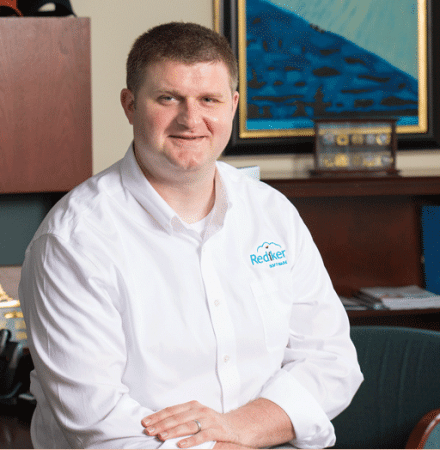
Andrew Anderlonis says Rediker Software’s products are designed to require as little time or fuss as possible from their users.

As a chemistry teacher in the late ’70s, Rich Rediker was simply seeking a way to generate tardy notices more efficiently, using a computer which, by today’s standards, seems impossibly inadequate for … well, anything. But that humble machine became the foundation of what has evolved into an international leader in school administrative software, doing business in every state and 115 countries. Through four decades of innovation and growth, one goal has remained constant: to make life easier for teachers and administrators, so they, in turn, can spend more time with the kids.


The Commodore PET was a late-’70s computer with a tiny, calculator-like keyboard and a whopping 4K of RAM.

It was also the foundation on which Rich Rediker built a software company that today employs 125 people at its Hampden headquarters and around the world, and has grown to become an international leader in what’s known as administrative software for schools, with a presence in all 50 states and 115 countries.

“The company started before the Internet existed, before Windows, even before DOS,” said Andrew Anderlonis, Rediker’s son-in-law and the firm’s second-generation president. What did exist, though, back in 1980, was a need.

Specifically, as a chemistry teacher at Longmeadow High School, Rediker needed an easier way to track student tardies and generate notices. So, using the PET he had scraped up enough money to buy, he designed a program to do just that — and also helped the school’s secretary produce a daily bulletin faster than before.

“He kept working on it, tinkering with it, and it became useful to the school,” Anderlonis explained, to the point where he offered to sell his program to other schools, beginning with St. Mary’s High School in Westfield in 1981. After a couple of years dividing his time between teaching and broadening his tiny software business, he left LHS and dedicated himself full-time to what is now known as Rediker Software.

Two generations of Rediker leadership

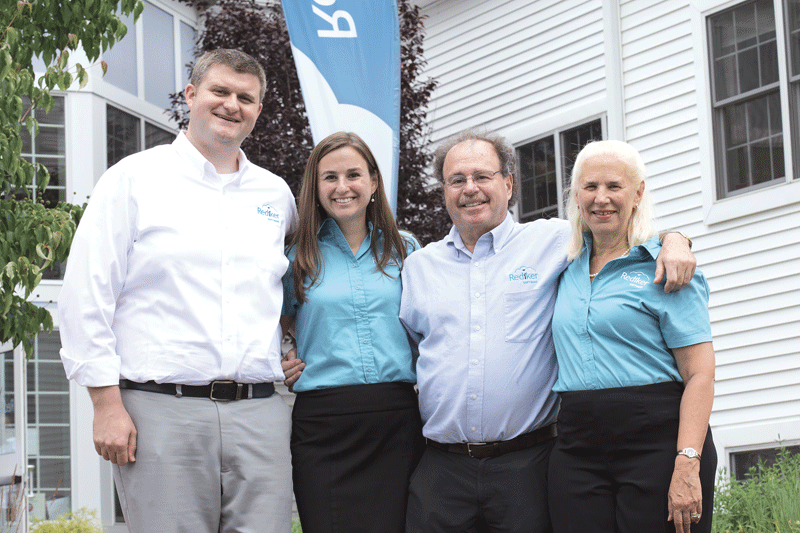
Two generations of Rediker leadership: Rich and Gail Rediker (right) and Andrew and Amy Anderlonis.

At first, Rediker ran his business from the basement of a house in Hampden — a story with echoes of the way giants like Amazon and Microsoft were birthed. As he developed more sophisticated programs to run other administrative tasks, sales took off, and in 1998, he moved into the building at the center of Hampden that still houses the enterprise today — that is, after a needed expansion in 2006.

“As the software evolved, he converted it for DOS, converted it to Windows … now we’re tackling mobile-type things. It’s amazing,” Anderlonis said. “Not many technology companies have been around four decades.”

Because of that long history, he added, “we’re convinced that we were the first student-information system on a PC. There were mainframe systems, but not on a PC.”

Covering the Bases

Today, the company serves public, private, charter, and religious schools with administrative software. That’s a broad category Anderlonis said, one best explained by some of the company’s key products, including:

• Administrator’s Plus, which manages data on students and staff. Schools can use the system to track attendance, create report cards, manage discipline, and build student schedules. Teachers can use the integrated web gradebook, TeacherPlus, to calculate and enter grades. School administrators can create digital portfolios for each student and staff member, and use them to electronically store documents and class projects. The system allows schools to batch e-mail report cards and other documents to parents, eliminating the need for paper and postage. Families can log into the system from home to see their children’s grades as well as other important school information. Finally, teachers can maintain web pages for their classes as a learning resource;

• Admissions Plus Pro, an enrollment-management software program that streamlines the admissions and enrollment process, while reducing extra work and duplicate data entry. The system can help private schools increase the number of applications they receive by allowing parents to submit them online;

• Teacher Evaluator, a web-based application available as an app for iPad but also accessible with any web browser. The application helps schools schedule and complete teacher evaluations; and

• School Office Suite, a product that complements Administrator’s Plus and folds in other areas of school functions, including cafeteria, library, and school-nursing services, in addition to basics like applications, admissions, and academics.

Rich Rediker (center) with his staff

Rich Rediker (center) with his staff in Hampden, just some of the 125 employees based across the U.S.

“Our products cover anything that has to do with student data — attendance, report cards, grades, discipline, general demographic information, billing information, and more,” Anderlonis said. “The admissions product allows schools to customize the admissions process. Our goal is really to provide a complete product suite. When kids apply and enroll, they’re brought into the system, and their information can be shared with parents.”

The goal, he went on, is user convenience — specifically, as much automation, and as little time spent fussing with data, as possible.

“The end goal is for schools not to have to spend a lot of time managing data,” he told BusinessWest. “We’re building systems that are easy to use and easy to understand, and part of that hinges on great customer support.”

It’s an element Rediker has invested in, with an in-house call center in Hampden. In fact, 75% of the company is built around customer support and product development; half the firm’s employees are developers, tasked with creating new products and improving existing ones.

One sign of progress is the way the software has evolved beyond something only administrators used, to products that teachers and students interact with directly. “We’re approaching nearly 2 million students using portals, and close to 100,000 teachers; we’ve seen really substantial growth in the adoption and use of our portals.”

Since his arrival at the company four years ago — Anderlonis’ wife, Amy, is Rediker’s daughter and the firm’s public-relations manager, while Rich Rediker continues to act as CEO — he has made an effort to expand the ways in which Rediker interacts with customers, including delivering software through the cloud; partnering with Microsoft, Apple, and Google to open up new channels for its products; and finding new uses for its expertise.

“We’ve moved into products for mass notification, allowing schools to mix text, call, and e-mail notifications across the system,” he noted as one example. Another is a deeper commitment to designing school websites, an effort for which Rediker has partnered with Wild Apple Design Group in Wilbraham.

The bottom line, Anderlonis said, is that schools always have room for improvement in the way they incorporate technology. “Schools in general typically lag a little behind on the tech highway. They’re obviously constrained by what’s in the budget. But most schools are going to spend on classroom technology; we’re trying to provide software tools that enable them to be more constructive.”

The last two years have been an especially fruitful time, he added, when it comes to developing next-generation technology at Rediker. “We’ve looked at where we’ve had success and how we can continue that success and continue to grow. We have a very tight-knit family atmosphere here — we promote family and a great workplace culture — and make sure that, as a family business, we take care of our employees because, in the end, they take care of our schools.”

Next Generation

In short, Anderlonis said, he simply wants to make sure Rediker stays ahead of the technology curve and carry on an impressive record of growth.

“Rich has done an amazing job ensuring the company is profitable every year since the company was founded, and we continue to do that through product innovation,” he said. “My goal is really to set the company up for the next generation of management and success with these products, and to create a strategic vision going forward. With the products were introducing to the market, we’re focused on providing even more robust, powerful, and flexible tools for schools to utilize. We really feel we’re one of the top vendors in the U.S. with student-information systems, and we consider ourselves the market leader.”

As a preferred vendor for Massachusetts schools, Rediker software is employed in more than 80 districts and charter schools, but it has also forged a solid reputation in Catholic schools, recently winning a contract with the Archdiocese of Washington, D.C, one of many large dioceses the company boasts among its clients.

Public or private, Anderlonis said, “we want  our customers to feel comfortable choosing to partner with Rediker. We want schools to call us when they need help. Schools call us all the time, and we’re there to talk to them.”

In addition, the company hosts three week-long workshops annually, each one drawing up to 100 educators from across the U.S. and around the world. “They interact with staff, train on the software, and get to network with other administrators. There’s a really tight-knit community around our products, both domestically and internationally. It’s pretty neat.”

As part of an effort to stay on top of advancing technology — while helping to cultivate the next generation of software developers — Anderlonis launched a summer internship program that brings a handful of promising high-school and college students on board to work on real-world projects.

“They experience the full life cycle — they’ll develop a product all the way from an idea on the whiteboard to possible customer interaction,” he explained, drawing from the skills they’ve been learning in school. “It’s not just a superficial internship; there’s a lot of depth. We give them a lot of autonomy. We’re essentially giving students in the local community an opportunity to use their abilities on real-world applications, but at the same time, they’re helping us.”

The company also connects to the community through a program called Rediker Cares, a volunteer program that allows employees to volunteer at local organizations and events during company time. As a result, employees have made significant contributions to local organizations, particularly Link to Libraries, the regional literacy initiative that was given workspace at Rediker free of charge; Anderlonis sits on the nonprofit’s board.

“Our company is a primary sponsor of Link to Libraries; they’re a great organization,” he said. “That’s another way we can give back — by helping promote literacy. Our employees have a chance to volunteer there and other ways in the community as well.”

That commitment echoes, in a different way, Rediker’s mantra of giving teachers more time with students, and developing software that allows them to have that.

“Technology is such a foundation for everything today, including education,” Anderlonis told BusinessWest. “Walk into any classroom nowadays, and you’ll see incredible technology — computers, tablets, smartboard projects. That’s the hardware, but what’s behind it? Our goal is to be part of the software that can help schools run more efficiently and effectively.”

Still, he added, as the company continues to branch out and diversify, it will do so at a measured pace, as not to lose the personal touch Rich Rediker has emphasized from his Commodore days.

“We’re not the biggest company, and we’re not the most aggressive,” Anderlonis said, “but we’re passionate about what we do, and we take care of our customers.”

Joseph Bednar can be reached at [email protected]

Sections Technology

A Critical Skills Gap

CyberSecurityAmerican employers have realized the vital importance of cybersecurity — but that realization has created a near-term shortage of workers that may require long-term solutions.

Cybersecurity was once the province of defense contractors and government agencies, but in the third edition of its annual cybersecurity job-market analysis, Burning Glass found that hiring has boomed in industries like finance, healthcare, and retail.

A glance at the headlines is enough to explain why. In addition to the federal Office of Personnel Management, recent cyber breaches have hit major consumer companies like Chase and Target. According to PricewaterhouseCoopers’ 2015 State of U.S. Cybercrime Survey, a record 79% of survey respondents said they detected a security incident in the past 12 months. Many incidents go undetected, however, so the real tally is probably much higher.

Yet, we are also seeing multiple signs that demand for these workers is outstripping supply. Job postings for cybersecurity openings have grown three times as fast as openings for IT jobs overall, and it takes companies longer to fill cybersecurity positions than other IT jobs. That’s bad for employers, but good news for cybersecurity workers, who can command an average salary premium of nearly $6,500 per year, or 9% more than other IT workers.

Or, put another way, there were nearly 50,000 postings for workers with a CISSP certification in 2014, the primary credential in cybersecurity work. That amounts to three-quarters of all the people who hold that certification in the U.S. — and presumably most of them already have jobs.

This is a gap that will take time to fill. The skills for some IT positions can be acquired with relatively little training, but cybersecurity isn’t one of them. For example, five years of experience are required to even apply for a CISSP certification. That doesn’t even consider the rising demand for experience in a specific industry, like finance or healthcare. This suggests that the shortage of cybersecurity workers is likely to persist, at least until the education and training system catches up.

Among the key trends in cybersecurity jobs:

• These jobs are in demand and growing across the economy. The professional-services, finance, and manufacturing/defense sectors have the highest demand for cybersecurity jobs. The fastest increases in demand for cybersecurity workers are in industries managing increasing volumes of consumer data, such as finance (+137% over the last five years), healthcare (+121%), and retail trade (+89%).

• Positions calling for financial skills or a security clearance are even harder to fill than other cybersecurity jobs. The hardest-to-fill cybersecurity jobs call for financial skills, such as accounting or knowledge of regulations associated with the Sarbanes-Oxley Act, alongside traditional networking and IT security skills. Because finance and IT skills are rarely trained for together, there is a skills gap for workers who meet the requirements of the ‘hybrid jobs.’ Meanwhile, more than 10% of cybersecurity job postings advertise a security-clearance requirement. These jobs, on average, take 10% longer to fill than cybersecurity jobs without a security clearance.

• Cybersecurity positions are more likely to require certifications than other IT jobs. About one-third (35%) of cybersecurity jobs call for an industry certification, compared to 23% of IT jobs overall.

• Cybersecurity employers demand a highly educated, highly experienced workforce. Some 84% of cybersecurity postings specify at least a bachelor’s degree, and 83% require at least three years of experience. Because of the high education and experience requirements for these roles, skills gaps cannot easily be resolved though short-term solutions. Employers and training providers must work together to cultivate a talent pipeline for these critical roles.

• Geographically, cybersecurity jobs are concentrated in government and defense hubs, but are growing most quickly in secondary markets. On a per capita basis, the leading states are Washington D.C., Virginia, Maryland, and Colorado; all have high concentrations of jobs in the federal government and related contractors.

Burning Glass is a Boston-based firm that delivers job-market analytics that help employers, workers, and educators make data-driven decisions. Its full report on cybersecurity jobs is available online at burning-glass.com/research/cybersecurity.

Departments Incorporations

The following business incorporations were recorded in Hampden, Hampshire, and Franklin counties and are the latest available. They are listed by community.

Agawam

Krishna Keshav Corp., 31 Riviera Dr., Agawam, MA 01001. Jay Patel, 9 Sanford Road, Chelmsford, MA 01824. Gas station and convenience store.

Amherst

Ginger Garden Restaurant Amherst Inc., 351 Northampton St., Amherst, MA 01002. Xue Bin Zhang, 1855 SW Jamesport Dr., Port St Lucie, FL 34953. Food service.

Belchertown

Gigxero Inc., 121 Aldrich St., Belchertown, MA 01007. Kristopher J. Pacunas, same. Technology: Internet (e-commerce and website).

Clarksburg

Florida Mountain Turnip Inc., 522 Walker St., Clarksburg, MA 01247. Jerrid C. Burdick, same. Service — Florida mountain turnips and vegetables.

Easthampton

Golden China Pan Inc., 98 Union St., Easthampton, MA 01027. Dan Ju Pan, 8 Quirk Ave., Holyoke, MA 01040. Restaurant.

Great Barrington

MC2 Creative Services Inc., 454 Main St., Great Barrington, MA 01230. Walter J. McTeigue III, 76 Townhouse Road, South Egremont, MA 01258. Jewelry design and related services.

Hampden

La Casa Bella Inc., 546 Main St., Hampden, MA 01036. Michael F. Connors, 7 Jennifer Lane, East Longmeadow, MA 01028. Restaurant/tavern.

Holyoke

Jeb Corporation, 81 North Bridge St., Holyoke, MA 01040. Jose Almonte, 193 Cabot St., Holyoke, MA 01040. Own and operate a liquor store.

Longmeadow

Hair Studio One Inc., 20 Cross St., Longmeadow, MA 01106. Michelle La Valley, 13 Rabideau Dr., Easthampton, MA 01027. Hair salon.

Southwick

Him Group Foundation Inc., 37 Dear Run Road, Southwick, MA 01077. Pramod Sarraf, same. Organization for charitable, religious, educational, and scientific purposes.

Springfield

Guananico 1 Market Corp., 68 Locust St., Springfield, MA 01108. Carlos Tejada, same. Grocery store.

Main Wok Inc., 590 Page Blvd., Springfield, MA 01104. Song Qiu Chen, same. Restaurant/food service.

Mama Hilda’s Houses Inc., 13 Quincy St., Springfield, MA 01109. Rosah Clase Tuarezca, same. Recovery center for women from alcohol, drugs, and domestic violence.

Markey Barrett, P.C., 1414 Main ST. 8th Floor, Springfield, MA 01144. Patrick J. Markey, 17 Oxford St., Springfield, MA 01108. Law practice.

Masjid Al-Nur Inc., 820 Worthington St., Springfield, MA 01109. Yasir Osman, 197 Florida St., Springfield, MA 01109. Place of worship for Muslims and providing education on Islam.

Westfield

HCT Second Hand & Pawn Shop Inc., 68 Court St., Westfield, MA 01085. Thang Dac Bui, 32 Russell St., West Springfield, MA 01089. Buy and sell new and used merchandise.

West Springfield

Het Parikh Inc., 55 Main St., West Springfield, MA 01089. Rakesh Parikh, same. Real estate.

Briefcase Departments

Downtown Springfield
to Offer Free Wi-fi

SPRINGFIELD — Mayor Domenic Sarno and Chief Development Officer Kevin Kennedy announced upgrades to Springfield’s downtown technology infrastructure. The initiatives include providing free public wi-fi access beginning in the downtown area this spring, then expanding to other areas of the city, including public parks. Working with city partners, the initiative will also bring high-speed fiber into buildings, which will provide the growing entrepreneurship sector with quicker, cost-effective, easier-to-access technology. “Springfield has a history of innovation,” Sarno said. “These investments will keep us competitive in the market to attract entrepreneurs and to assist those here today in continuing to grow. This will also serve as a matter of convenience for residents and tourists who will be able to access Internet in our parks and public spaces.” The initial investment will range between $50,000 and $100,000 and will ensure free wi-fi access throughout downtown. The investment comes on the heels of the city’s announcement of a National Disaster Resilience Competition (NDRC) award, part of which will dedicate funding to a pair of key innovation projects in the district: DevelopSpringfield’s Springfield Innovation Center and an IT workforce-training program through Tech Foundry. Funding is expected to be $300,000 for each project. All of these activities fall in the city’s Transformative Development Initiative district, a designation the city applied for and was awarded through MassDevelopment, which has since provided staff, an equity investment, and technical and financial assistance as the Worthington Street master plan continues to advance. “This has all been part of a dedicated planning process to establish an innovation district in our downtown,” Kennedy said. “The private and nonprofit sectors have been doing their share in creating a great deal of excitement with programming; these key city infrastructure investments will only help further these efforts. It’s been a great partnership.”

Springfield Regional Chamber Adopts
Energy Position

SPRINGFIELD — The board of directors of the Springfield Regional Chamber voted this week, on behalf of its members, to take a position on energy in the state of Massachusetts and to support a balanced energy portfolio, including the expansion of the supply of natural gas. “Energy is a critical issue for our members. While they acknowledge that regional investment in the transmission infrastructure has increased the reliability of our grid, they see that demand for natural gas continues to rise and the infrastructure is not in place to support such demand,” said chamber President Jeffrey Ciuffreda. “This not only increases their already-high costs of electricity, but causes constraints on the infrastructure and supply. Combined, they tell us it significantly impeded their continued economic development and the economic development of our region.” As a result, Ciuffreda said the Chamber, on their behalf, has adopted the following position: “The Springfield Regional Chamber of Commerce (SRC), through its members, has long identified the high, and increasing, cost of energy as a major issue to address and more recently has identified the constraints on the supply of natural gas as a major deterrent to economic development in the region. Therefore, the chamber supports the expansion of the supply of natural gas, especially to the Western Massachusetts region, as a means to assist in economic-development efforts as well as to reduce the cost of electricity. The chamber acknowledges that two pipeline expansions are in various stages of development, the Spectra project as well as the Kinder Morgan project, and encourages the development of each. The chamber believes that there are sufficient permitting and regulatory rules in place to ensure the safety of these projects and the protection of lands in and around these projects. While endorsing the increased supply of natural gas, the chamber also reiterates its support for the goal set by the state for the development of solar energy and encourages swift action on a comprehensive energy bill that will further bring on line other alternative energies such as wind and hydro. Finally, the chamber is encouraging its members to take advantage of the programs available, many funded through electricity charges, for conservation and efficiencies. There is no better way to lower the cost of electricity than through those efforts. Moving toward this balanced portfolio of energy sources and recognizing the conditions and constraints about being in New England will ensure a better future for all — businesses and residents alike.” Ciuffreda said the chamber will work with local and state officials, utility companies, and developers to continue to advocate on behalf of its members for the programs and capital necessary to lower these escalating costs and improve the region’s infrastructure, and will be an active participant in reviewing any legislation on this issue.


State Proposes $83.5M
for Vocational Technical Education Programs

BOSTON — Gov. Charlie Baker, Secretary of Education James Peyser, Secretary of Labor and Workforce Development Ronald Walker II, and Secretary of Housing and Economic Development Jay Ash announced a series of new initiatives to support career vocational technical education, including $83.5 million to be proposed between the governor’s FY 2017 budget recommendation and new capital grant funding to be filed in an economic-development bill this week. “With too many good-paying jobs going unfilled, we are pleased to announce this critical investment in our career and technical schools,” Baker said. “Our proposal will make it possible for more students to explore a pathway to success through stronger partnerships with our schools and local businesses in the Commonwealth.” The funding in the FY 2017 budget will be coupled with a substantial capital-grant program for vocational equipment that further aligns the administration’s investments with local economic- and workforce-development needs and employment partnerships. “Massachusetts has some of the strongest career-technical programs in the country, at both the high-school and college levels, but access and quality are uneven across the Commonwealth, and there’s currently little alignment across education levels,” said Peyser. “Our efforts will significantly expand student access to high-quality career-education programs in STEM fields, manufacturing, and traditional trades, with a focus on underserved populations and communities.” Added Walker, “finding ways to make sure people get the skills and job training they need to get a good-paying job is one of the biggest challenges before us. With these initiatives, we will engage employers as full partners in program design and implementation to help them create a pipeline of workers.” Ash noted that “vocational institutions are an important part of training the workforce to address the skills gap. These additional resources will continue to equip vocational institutions as they train the next generation of skilled workers who will help grow the Commonwealth’s economy.”


Employer Confidence Steady to Start 2016

BOSTON — Confidence among Massachusetts employers remained steady during January as optimism about the state economy offset uncertainty about China and turbulent financial markets. The Associated Industries of Massachusetts (AIM) Business Confidence Index rose 0.5 points to 55.8 last month, starting 2016 well above the 50 mark that denotes a positive economic outlook. The increase was driven by a 1.8-point surge in the index measuring employer attitudes about Massachusetts. Confidence remained lower than it was in January 2015, however. “The fact that employer confidence remained solid during a month in which the Standard & Poor’s 500 Index was at one point off 9% and oil dropped below $27 a barrel points to the fundamental, underlying strength of the Massachusetts economy,” said Raymond Torto, chair of AIM’s Board of Economic Advisors (BEA) and lecturer at Harvard Graduate School of Design. The AIM Index, based on a survey of Massachusetts employers, has appeared monthly since July 1991. It is calculated on a 100-point scale, with 50 as neutral; a reading above 50 is positive, while below 50 is negative. The Index reached its historic high of 68.5 on two occasions in 1997-98, and its all-time low of 33.3 in February 2009. The index ended 2015 down for the year, but remained consistently in optimistic territory for the first 12-month period since the Great Recession. Most of the sub-indices based on selected questions or categories of employer rose a point or two in January, though all remained down year over year. The Massachusetts Index, assessing business conditions within the Commonwealth, jumped 1.8 points to 58.1, starting the year more than a point lower than last January. “The Massachusetts Index has been above its national counterpart for 80 consecutive months, and that perception was bolstered by the decision in January by General Electric to locate its corporate headquarters in Boston,” Torto said. “GE’s decision was important, not only for the 800 jobs it will bring, but because the company cited Massachusetts’ leadership in knowledge industries as its reason for coming.” The U.S. Index of national business conditions slipped to 49.9 on the month, leaving it more than four points lower than a year ago. The Current Index, which assesses overall business conditions at the time of the survey, increased slightly to 54.6, while the Future Index, measuring expectations for six months out, rose almost a full point to 57.0. “Employers clearly do not believe that the correction in financial markets signals an overall economic slowdown,” said Alan Clayton-Matthews, associated professor of Economics and Public Policy at Northeastern University and a BEA member. “Massachusetts employers foresee positive business conditions through at least the first half of 2016, and that comports with economic forecasts that Massachusetts will reach full employment during the year.” The three sub-indices bearing on survey respondents’ own operations were mixed in January. The Company Index, reflecting overall business conditions, was up 0.3 points at 57.0, the Sales Index shed 1.1 points to 57.1, and the Employment Index rose 1.3 points to 55.1. “The increase in the Employment Index is good news for Massachusetts. Our survey found that 39% of respondents reported adding staff during the past six months, while 19% reduced employment,” said Katherine Kiel, professor of Economics at College of the Holy Cross and another BEA member. “Expectations for the next six months are even stronger — 37% hiring and only 10% downsizing.”


State Announces $9.2M
in Skills Capital Grants

HOLYOKE — The Baker-Polito administration recently announced the availability of $9.2 million in Skills Capital Grants for vocational-technical equipment investments to improve the quality of education and vocational training, provide career technical training to increase program capacity, and enable students to improve their skills to meet the needs of employers in the Commonwealth. “The skills gap is real across the country, and many companies cannot find the talent they need to fill positions and further develop their local economic impact,” said Gov. Charlie Baker. “By investing in capital equipment at vocational and technical schools that are focused on training, we will ensure more residents get the skills they need to get good-paying jobs in growing industries across the Commonwealth.” State officials announced the availability of the Skills Capital Grants at the future site of Holyoke Community College’s (HCC) Center for Culinary and Hospitality Excellence, located in the heart of the Holyoke Innovation District, which is experiencing significant investment and growth. The center is being funded by a $1.75 million capital grant from the former Manufacturing Training Equipment Grant program, which is being combined with the Vocational Opportunity Challenge Grants to create the new Skills Capital Grant. The Holyoke grant was awarded from a prior funding round. High demand for career training programs like Holyoke’s led to the creation, and expansion in scope, of the Skills Capital Grant program. “We are proud and excited to see the expansion of Holyoke Community College’s Culinary Arts program into a larger center which will provide critical skills to our residents for jobs available that are available now,” said Holyoke Mayor Alex Morse. Added HCC President William Messner, “Holyoke Community College is committed to continuously improving our academic program offerings. We have invested $20 million in such efforts over the past few years in areas directly related to regional employment opportunities, including this culinary center, as well as healthcare, STEM fields, and adult literacy. We are pleased to be able to expand our culinary and hospitality program at a critical time for the region and look forward to increasing the educational opportunities for hundreds of local residents.” The Skills Capital grants will range from $50,000 to $500,000, and while the grants do not require a match, applicants are encouraged to demonstrate cash and/or in-kind matches. Eligible applicants include Massachusetts schools, institutions, and organizations that provide career/vocational technical education programs, including all Chapter 74-approved vocational tech schools, community colleges, and providers of training programs that meet the federal Perkins Act definition of career and technical education. Grant applications must be submitted by Jan. 29.


Results From Statewide
Healthcare Quality
Survey Released

WATERTOWN — Massachusetts Health Quality Partners (MHQP) announced the results of an independent statewide patient experience survey, now publicly available at healthcarecompassma.org. The survey encompassed nearly 65,000 patients from more than 500 primary-care practices representing approximately 4,000 physicians across the state, who responded to the question of whether they would recommend their primary-care physician to their family and friends. “The answer to this and other patient-experience questions makes Healthcare Compass MA a tremendous resource for Massachusetts residents who want to find the best care available,” said Barbra Rabson, president and CEO of MHQP. Questions about whether or not providers ask patients about feeling depressed, feeling stressed, or experiencing problems with alcohol, drugs, or a mental or emotional illness were reported for the first time in MHQP’s 2014 survey results. The 2014 statewide behavioral-health mean score of 53.1 indicated that there was substantial room for improvement. The results of the 2015 survey indicate improvement to 56.5 for these behavioral-health measures, with several practices having made truly noteworthy progress. The survey also found that primary-care physicians across the state excel in communicating with their patients. The communication mean score for all practices across the state is 93.5 out of a potential 100 points. “We are fortunate to live in Massachusetts where we have access to MHQP’s statewide public reporting about patient-experience results,” said patient advocate Rosalind Joffe, president of ciCoach and MHQP board member. “MHQP’s commitment to capturing and reporting the patient voice, and focusing on what is important to patients, will continue to make care better in Massachusetts.” Added Dr. Thomas Scornavacca, senior medical director, UMass Memorial Health Care Office of Clinical Integration, “MHQP’s survey provides actionable information that helps bring physicians closer to our goal of delivering patient-centered care. At UMass Memorial Health Care, we evaluate MHQP survey results very carefully as we set healthcare quality-improvement priorities.”

Applicants Sought for
Energy and Environmental
Education Awards

BOSTON — The Executive Office of Energy and Environmental Affairs (EEA) is now accepting nominations for its annual Secretary’s Awards for Excellence in Energy and Environmental Education until March 30. EEA Secretary Matthew Beaton will present awards this spring to Massachusetts teachers and students involved in school-based programs that promote environmental and energy education. “I am proud to recognize the teachers and students leading and inspiring their communities as they tackle critical energy and environmental issues,” Beaton said. “It is important to engage students early in issues like energy, recycling, conservation, and wildlife, and they have so many fresh ideas to offer.” All public and private Massachusetts schools (K-12) that offer energy and environmental education programs are eligible to apply for the awards. In 2015, schools and nonprofit organizations from 22 communities across the state were recognized for their work on issues including recycling, energy conservation, ocean science, wildlife conservation, and alternative fuels. The Secretary’s Advisory Group on Energy and Environmental Education will review applications through mid-April. Qualified entrants will be invited to attend a formal award ceremony with Beaton at the State House this spring.

Company Notebook Departments

U.S. News Ranks
Isenberg’s Online MBA Program 12th Nationally
AMHERST — The Isenberg School of Management’s online MBA program at UMass Amherst ranks among the best online MBA programs in the country, according to U.S. News & World Report’s “Best Online MBA Programs.” The Isenberg MBA is ranked 12th out of 221 institutions ranked by the publication. “We continue to lead the pack in an increasingly competitive online educational landscape,” said Mark Fuller, dean of the Isenberg School. “This confirms what thousands of Isenberg students and alumni have known for over a decade: Isenberg’s online program goes beyond case studies and textbooks to drive students to real success.” The U.S. News ranking is based on five factors: student engagement, admissions selectivity, peer reputation, faculty credentials, and training and student services and technology. Unlike many of the other programs that recently entered the online space, Isenberg has offered its MBA in a 100% online format for more than 13 years, making it one of the oldest accredited online MBA programs in the nation. Enrollment approaches 1,300 students, making it the largest out of the top 25 schools ranked by U.S. News. “We continue to attract a high number of highly educated, highly successful professionals because we have a team of experienced professors and advisors who really understand how these students learn best,” said John Wells, associate dean of professional programs. “Despite our long tradition of outstanding online education, we continue to innovate with a variety of new approaches and technologies to connect students in our online format, new opportunities for in-person connections, and more diversity in our class offerings, including business analytics and sport management.”

Florence Bank TV Ad
Earns Top-20 Ranking from Bank Innovation
FLORENCE — Florence Bank, a mutually owned savings bank serving the Pioneer Valley through nine branch locations, has earned a spot on the Bank Innovation website (www.bankinnovation.net) for creating one of the 20 best banking videos of the year.
The commercial was produced by Sean Tracey Associates, Florence Bank’s advertising agency of record for the past three years and a key contributor to the bnk’s rebranding campaign. As one of Bank Innovation’s top 20 video ads of the year, the Florence Bank commercial is in good company with banks from around the world, including such high-profile institutions as Capital One, PayPal, Wells Fargo, Citigroup, American Express, JP Morgan Chase, Lloyds Bank, Ally Financial, Bank of Scotland, Bank of Ireland, and Commonwealth Bank of Australia. The Bank Innovation website was launched in 2009 and is produced by Royal Media, a media company that has served the financial industry since 1995. Bank Innovation tracks and encourages innovative banking worldwide. According to Sean Tracey, principal of Sean Tracey Associates, the 30-second video was a follow-up to a commercial produced two years ago in which local talent danced to the beat of Florence Bank’s theme music, titled “Always.” That year, professional singers were used on the music tracks. “Since that was a hit market-wise, we thought it would be a great idea to follow up the dancing commercials with a series of singing commercials,” said Tracey. “Since the bank’s customer base is full of talented artists and musicians, we felt we could use all local singers, performing the bank’s theme music in their own style.” The singing styles featured in the video range from country and jazz to pop and rock, with the 10 performers showcased culled from close to 50 who auditioned. Casting and pre-production spanned three months, with post-production and editing taking another month. Photography was shot over a two-day period on the Academy of Music stage in Northampton. Music producer and writer Dan Serafini, a long-time friend of Tracey’s, produced the music for the ad. “It was a dream-team production experience and extremely rewarding. As far as we know, this concept has not been done before, much less by a local bank — it was bold and daring,” Tracey said, thanking Monica Curhan, the bank’s senior vice president and marketing director, and President and CEO John Heaps Jr. “for their immense bravery and trust in our team to do something truly innovative and allow us to push the creative envelope. I think it paid off in spades.” Heaps added, “we are thrilled at the attention our latest television spot is receiving and feel honored that it has earned a spot on the Bank Innovation website. We thank Sean Tracey Associates for their vision and remarkable work and also our talented customers for their contribution to this award-winning video.”

MacDuffie Announces Collaboration with MCPHS
GRANBY — The MacDuffie School, a co-ed, college-preparatory school for grades 6 to 12, announced a collaboration with the Massachusetts College of Pharmacy and Health Sciences (MCPHS) that will guarantee qualified students admission to the Boston-based university. “The MCPHS program aligns well with the MacDuffie School,” said MacDuffie Head of School Steve Griffin. “MCPHS works hard to ensure that their graduates are certified in their home country, which is great for our international population. In addition, many of our local students are looking at careers in health sciences; a path to guaranteed admission is a wonderful benefit to all of our students.” This opportunity is contingent on students’ success in prerequisite courses at MacDuffie and, if needed, an English-proficiency test. According to the agreement, students with a minimum B average in MCPHS-specified science and math courses will be eligible for a reserved spot in an undergraduate program. Students graduating from MacDuffie with a minimum B average in the prerequisite courses and who meet the English-language requirements are guaranteed both a reserved spot and a scholarship. “In the health sciences, it’s important to have good training and references,” said Ita Duron-Hermouet, director of Admission International Research and Strategy at MCPHS. “Our graduates have the most prestigious internships available.” Brigham and Women’s Hospital, Beth Israel Deaconess, Dana-Farber Cancer Institute, Harvard Medical School, and the Harvard School of Public Health are just a few of the institutions where MCPHS graduates obtain internships and employment.

State & Bond, LLC Joins International Trade Group
SPRINGFIELD — State & Bond, LLC, has become a member of ACA International, a association of credit and collection professionals. ACA membership demonstrates that State & Bond is dedicated to advancing quality and professionalism in the credit and collection industry. As an ACA member, State & Bond has agreed to comply with all applicable federal and state laws and regulations, as well as the ethical standards and guidelines established by the association. State & Bond is also a member of the New England Collectors Assoc. Founded in 1939, ACA brings together third-party collection agencies, law firms, asset-buying companies, creditors, and vendor affiliates, representing more than 230,000 industry employees. ACA establishes ethical standards; produces a wide variety of products, serices, and publications; and articulates the value of the credit and collection industry to businesses, policymakers, and consumers. For more information, visit www.acainternational.org.

Michael’s Party Rentals
to Move into New
Location in Palmer
LUDLOW — Michael’s Party Rentals Inc., located in Ludlow, recently purchased a building at 1221 South Main St. in Palmer. The new building gives the rental company more than double its current space, providing more than 20,000 square feet. “I have been looking for quite a long time to find the right building to solve our space issues,” said Michael Linton, president and owner. “Landing in Palmer was perfect because we service west to Albany and east to Boston, as well as north and south from Vermont to Southern Connecticut; this gives the team terrific access.” The additional space is needed to hold Michael’s ever-growing inventory of special-event equipment, including items obtained during its recent acquisition of Yankee Tents. The migration of the tents, chairs, and china from Ludlow to the new building will not happen until late spring, as Linton plans a major renovation of the building, including 1,000 square feet of office space, as well as a 2,000-square-foot Show Room and Design Center, where a client can plan an event. “This is the part I am most excited about,” said Melissa Sullivan, senior event coordinator and director of the Design Center. “It is going to be so amazing to actually be able to help a client visualize their event by creating a mini-version for them to touch and feel.” In addition, Michael’s will be adding a state-of-the-art tent-washing machine, the only one of its kind in the Pioneer Valley. The total project is expected to cost just shy of $750,000 and was financed by Chicopee Savings Bank and the Worcester Business Development Corp.

Euro-style Kart Track to Open in Hadley in March
HADLEY — Get ready to start your engines — Autobahn Indoor Speedway will open in March in the Hampshire Mall. “Indoor kart racing has been popular in Europe for many years and has recently found a strong following on the West Coast of the United States,” said Autobahn Managing Partner David Larson. “Autobahn Indoor Speedway is extremely excited to be bringing the first European-style indoor electric kart-racing facility to the Amherst area.” The Italian-made adult racing karts approach speeds of 50 mph.  The speedway utilizes zero-emission electric karts that accelerate faster than their noisier, gas-powered counterparts. “These are not the slow, rattling go-carts you may be used to as a kid,” Larson said. “Our karts are the highest-performance available, state of the art and built for safety.  One of the first things people notice is the torque of our electric motors — that acceleration is amazing. The handling is also top of the line, with hydraulic disc brakes, a rear differential, and competition-style racing tires.” The company, which will have a total of nine tracks on the East Coast by April, provides racing instruction to newbies and offers competitive leagues to more seasoned drivers. There are even Junior Karts (with slightly slower speeds) suitable for the younger crowd if they are at least 48 inches tall. Autobahn Indoor Speedway will be available for company outings, social groups, and birthday parties. Various group race packages are designed to meet the needs of most events, but a custom package can be arranged (including private, full-facility rentals). Groups have reserved race times and exclusive use of the track during their races, and they can compete individually or in teams. For more information, visit www.autobahnspeed.com or e-mail [email protected].

Departments People on the Move

PeoplesBank announced the promotions and appointments of nine associates.
• Matthew Bannister has been appointed to Vice President, Corporate Responsibility. He possesses more than 30 years of brand management and corporate social-responsibility experience. He earned a bachelor’s degree in communications from UMass Amherst. His prior experience includes advertising, public relations, and event marketing for top advertising agencies and major nonprofit organizations;
• Paul Hillsburg has been promoted to Vice President, PeoplesFinancial and Insurance Services. With more than three decades of financial, sales, and business-development experience, he first joined the bank in 2008 and previously served as assistant vice president, PeoplesFinancial and Insurance Services. He holds an associate degree in business management from Springfield Technical Community College. He holds Series 7 and Series 66 licenses.
• Kristen Hua has been promoted to Vice President, Secondary Market. She possesses more than a decade of banking experience. She first joined the bank in May 2001 and previously served as assistant vice president, secondary market. She holds an MBA from the Isenberg School of Management at UMass Amherst and a bachelor’s degree from Providence College. She also is a graduate of the New England School for Financial Studies;
• Craig Kaylor has been appointed to Vice President, Compliance. He brings more than a decade of banking and financial experience to his new position, where he will be responsible for overseeing all compliance regulations and policies. He holds a juris doctor degree from the Maurice A. Deane School of Law at Hofstra University and a bachelor’s degree from the University at Albany, SUNY;
• Denise Lamory has been promoted to Vice President, Commercial Loan Administration. She possesses close to four decades of banking experience. She first joined the bank in August 1976 and previously served as assistant vice president, commercial loan administration. She holds several business and financial certificates from the Western Massachusetts Institute of Management Education Inc. and Holyoke Community College;
• Trisha Leary has been promoted to Vice President, Internal Control. She possesses more than a decade of financial experience. She first joined the bank in 2013 and previously served as risk oversight officer. She holds a master’s degree in accounting and a bachelor’s degree in accounting from the Isenberg School of Management at UMass Amherst.
• Karen Sinopoli has been appointed to Vice President, Controller. She brings a decade of banking and audit experience to her new position, where she will be responsible for maintaining and supervising the financial record of the bank in accordance with generally accepted accounting principles. She holds a master’s degree in accounting from the Isenberg School of Management at the UMass Amherst and a bachelor’s degree in accounting from Pennsylvania State University;
• Donna Wiley has been promoted to Vice President, Regional Manager. She possesses close to four decades of banking experience. She first joined the bank in 1979 and previously served as assistant vice president, regional manager. She holds an associate degree in business administration from Holyoke Community College and graduated with honors from the Massachusetts Bankers Assoc. School for Financial Studies; and
• Brian Rheaume has been promoted to assistant vice president, information technology. He possesses more than a decade of information-technology experience. He first joined the bank in 2002 and previously served as information technology officer supervisor. He holds a bachelor’s degree in computer information systems from Westfield State University and is an A+ certified professional IT technician.
•••••
Kathleen McCormick and Peter Mirante have been appointed to the Berkshire Community College board of trustees. McCormick is a partner with McCormick, Murtagh & Marcus, a law firm in Great Barrington. She joined the firm in 2004 and was named partner in 2009. Her focus is on residential and commercial real estate, land use and permitting, construction law, business law, and estate planning. She previously clerked for First Justice David Kopleman in the Norfolk County Probate and Family Court and later served as an associate with the litigation firm Herlihy, Thursby & Herlihy in Boston. She has worked for well-known companies such as the Boston Celtics, the Jane Blalock Co., and Reebok International. McCormick holds a juris doctor degree from Suffolk University Law School and a bachelor’s degree from Boston College. She is a member of the Massachusetts Bar Assoc., the Berkshire County Bar Assoc., and the Real Estate Bar Assoc. of Massachusetts. She is dedicated to enriching the lives of disadvantaged youth and is an active community member serving on boards of numerous charitable organizations. Mirante, who has worked in the banking industry for more than 20 years, is senior vice president of Branch Administration at Greylock Federal Credit Union in Pittsfield. He joined Greylock in 1998 and has served in numerous management positions. Prior to joining Greylock, he worked for Patten Corp. and then Berkshire Bank.
Mirante holds a bachelor’s degree in business administration from the former North Adams State College. He has a long history of community service and currently serves on the boards of the Northern Berkshire United Way, Berkshire Family & Individual Resources, Berkshire Compact for Education, and North Adams Parks & Recreation. Darlene Rodowicz, who was recently reappointed board chair by Gov. Charlie Baker, noted that “the new board members bring a wealth of knowledge from their respective roles in the community. We are happy to have them join the BCC board of trustees as we continue to advance the mission of the college.”
•••••
Local law firm Shatz, Schwartz and Fentin, P.C. announced that attorney Steven Schwartz is the recipient of the Distinguished Advisor in Philanthropy Award. The award is presented annually by the Community Foundation of Western Massachusetts in partnership with the Estate Planning Council of Hampden County and the Pioneer Valley Estate Planning Council. Each year, the award’s recipient may recommend a Hampden, Hampshire, or Franklin county charity of their choice to receive a $1,000 grant. This year, Schwartz has decided to recommend the grant be made to the Children’s Study Home in recognition of its 150 anniversary. Schwartz concentrates his practice in the areas of family-business planning, mergers and acquisitions, corporate law, and estate planning. His practice involves representation of principals in family-business planning (including exit planning for business owners), representation of individuals and corporations in the purchase and sale of business enterprises, strategic planning for the future of clients’ businesses, and providing advice on alternatives in financing through loans and venture capital.
•••••
Pope Francis High School announced that John Goda, Athletic Director for Holyoke Catholic High School, has been appointed to the Athletic Director position for Pope Francis High School. The creation of Pope Francis High School was announced in 2015 when Springfield Bishop Mitchell Rozanski revealed that Cathedral High School and Holyoke Catholic High School would merge into a new school, named in honor of the current Pope. While the official merger will take place to coincide with the next academic year, 2016-17, there has already been a joining together of the athletic programs. Goda, a 1987 graduate of Cathedral, started his career with Holyoke Catholic as a teacher in 1994, and took over as athletic director in 2003. Since the merger of Cathedral and Holyoke Catholic was announced, Goda has worked alongside Cathedral Athletic Director Joe Hegarty to oversee the combined athletic programs for Pope Francis High School. Hegarty recently vacated his position at Cathedral, and Goda will assume the role.
•••••
Holyoke Medical Center (HMC) announced the appointment of Phillip Candito to the position of Vice President of Business Development, where he is leading marketing and development efforts and focused on growing the organization. Candito worked as director of Business Development at the Eastern Connecticut Health Network in Manchester, Conn. for 10 years before coming to HMC. Previously, he served St. Mary’s Hospital in Waterbury, Conn. as director of Rehabilitation Services and Occupational Medicine, and as a physical therapist. Earlier, he earned a degree in psychology from the University of Connecticut; worked in television, video, and stage production for 10 years in Connecticut and New York City; re-enrolled at UConn and earned a degree in physical therapy, which he practiced for 10 years; then attended Rensselaer Polytechnic Institute to earn his graduate degree.
•••••
TD Bank has named Karl Mirke assistant vice president, store manager of the location at 90 Main St. in North Adams. He is responsible for new-business development, consumer and business lending, managing personnel, and overseeing the day-to-day operations at the store, serving customers in Berkshire County, including North Adams, Clarksburg, Adams, Cheshire, Stamford, and Readsboro. Mirke has 11 years of retail banking experience. Prior to joining TD Bank, he served as assistant branch manager at Citizens Bank in Pittsfield. He is a 2003 graduate of Massachusetts College of Liberal Arts in North Adams.
•••••
Aaron Smith, P.C., a certified public accounting firm, announced that certified public accountant Bernard “Buzz” Travers III will assume the role of managing director. In that role, Travers will provide leadership and direction to achieve the goals of the firm. He will oversee day-to-day management and will continue to cultivate the talents of all accountants and staff at Aaron Smith. Travers joined the firm in 1999 as a tax specialist. He is a certified public accountant in both Massachusetts and Connecticut. His areas of expertise include corporate, individual and fiduciary income tax; state and local income and sales and use taxation; federal and state tax audits; mergers and acquisitions; estate and gift taxation; nonprofit taxes; and bankruptcy taxation. In addition, he has assisted numerous business owners in the sale and purchase of businesses. He received a bachelor’s degree in accounting from Bentley University and his juris doctor from Western New England University School of Law. He is past president of the Estate Planning Council of Hampden County Inc., past president of the Field Club of Longmeadow Inc., an officer and director of the Sportsmen’s National Land Trust Inc., and past treasurer of the Longmeadow High School hockey and lacrosse booster clubs.
•••••
Bob Barna has joined Whalley Computer Associates (WCA) as a consulting architect. Barna was employed by VMWare as a senior consultant for the last 16 months and has 19 years of experience in the IT industry. He spent 17 of those years as the senior systems engineer at Competitive Computing. He has earned numerous VMware certifications and has extensive experience in design enablement, developing business requirements and identifying use cases, architecture design, environment build, product pilot, documentations and knowledge transfer, and more. Barna joins a team at WCA that also includes another former VMWare employee, Dan Sullivan, who joined VMWare shortly after it was founded and, in his seven years there, served customers all over New England and New York as a VMware systems engineer, VMware account executive, and partner business manager. Sullivan, who now holds the role of senior solution architect at WCA, is a 39-year veteran of the IT industry, with a background that combines technical expertise and sales skills.
•••••
EMA Dental announced that Dr. Colleen Chambers has joined the practice as its newest associate. Chambers completed her undergraduate degree in biological sciences at the University of Connecticut and went on to earn her DMD at the University of Connecticut School of Dental Medicine. She was awarded the School of Dental Medicine Alumni Research Fellowship for her research with alveolar bone and implant integration using rh-PDGF-BB. She completed an Advanced Education in General Dentistry program at Virginia Commonwealth University, where she focused on esthetics, general dentistry, and complex implant dental treatment. Chambers is proud to have had the opportunity to provide dental care to underserved communities at the CT Mission of Mercy, Remote Area Medical Services in Wise County, Va., and as part of a dental service trip to Honduras. She is a member of the American Dental Assoc., the Massachusetts Dental Society, and the Valley District Society.
•••••
Caroline Gear has been named executive director of the International Language Institute (ILI) of Massachusetts, located in Northampton. Gear joined ILI in 1986 as a Spanish and ESOL instructor, and in 1989, she became the school’s director of programs. In that capacity, she has been ILI’s primary coordinator with numerous partners, including area businesses, partner colleges and universities, the U.S. State Department, the Fulbright Scholars program, and the U.S. Commercial Service. She has written several articles on assessment and evaluation and regularly presents on teacher training and supervision, both regionally and nationally. Gear earned her bachelor’s degree in Spanish from State University of New York at Potsdam and her masters’ degree in Spanish literature from Michigan State University. In addition to her years at ILI, she has worked in Peru, Mexico, and Spain.
•••••
Lee Bank announced that Wendy Healey has been named to the position of Senior Vice President, Community Banking, and David Harrington has been named to the position of Vice President, Commercial Lending. Healey joins Lee Bank with experience in both the retail-banking and financial-technology sectors. She most recently served as senior vice president in charge of retail, sales, and marketing at Torrington Savings Bank. Prior to that, she was an independent financial services consultant while pursuing an MBA, and has held senior management roles at COCC Inc., a lead provider in core technology to the financial industry; Sovereign/Santander Bank; and People’s United Bank in Connecticut. As senior vice president in charge of community banking, Healey’s focus will be on existing and new customer relationships, as well as the design and fulfillment of new products and packages of services to meet customer needs. She will oversee policies, future business planning, and long-range strategic goals for her department and is responsible for the overall administration of compliance, including policy and procedures, monitoring, review, training, and board reporting. Harrington brings more than 18 years of experience in product and operations management. He most recently served as multi-life new business operations manager at Guardian Life Insurance Co. in Pittsfield. Prior to that, he was employed as product and project manager, U.S. Insurance Group, MassMutual Financial Group, and senior product line manager, disability and long-term-care insurance at Berkshire Life Insurance Co. As vice president of commercial lending, Harrington is responsible for developing and maintaining Lee Bank’s commercial-lending activities and expanding existing customer relationships in conjunction with the bank’s strategic goals.
•••••
Springfield Technical Community College (STCC) recently welcomed three new members to its board of trustees: Steven Grande, Franklin Quigley, and Macarthur Starks Jr. Grande is president of Meridian Industrial Group, LLC in Holyoke and Springfield. He also serves on the Holyoke Taxpayers Assoc. is vice chair of the advisory committee at Smith Vocational and Agricultural High School, chairs the Mayor’s Industrial Development Advisory Council, serves on board of directors for the Greater Holyoke Chamber of Commerce and Associated Industries of Massachusetts, is a member of the advisory board for William J. Dean Technical High School; and is president of the board of directors for the Western Massachusetts National Tooling and Machining Assoc. Grande holds a bachelor’s degree in political science and criminal justice from American International College. Quigley, an STCC alumnus, serves on the STCC foundation board and is a member of the presidential search committee. He is the president of FD Quigley and Associates, an organization specializing in providing project-management services to commercial retail developers; is a member of the state board of directors for Special Olympics; and is a retired referee of the American Hockey League. Starks, a senior finance and leadership professional, is an assistant vice president/change agent at MassMutual Way Center of Excellence, at MassMutual Life Insurance Company. Starks also serves as board chair and treasurer of FutureWorks Career Center in Springfield. A graduate of STCC (‘88), Starks received a master’s in management information systems and a bachelor of arts in accounting from Western New England University.

Daily News

SPRINGFIELD — Pride Stores recently donated $25,000 to the Center for Human Development’s (CHD) MaryAnne’s Kids Fund, which was established to provide opportunities for children in foster care that would otherwise be unavailable to them. This donation will help continue to provide these children the means to pursue special interests in music, dance, art, sports, summer camps, and extracurricular education, and an overall positive influence that will remain with them throughout their lives.

“Pride does so much for MaryAnne’s Kids, helping foster children have opportunities that would not otherwise be available to them,” said Jim Williams, CHD’s Children and Families Program director. “We are grateful to have such a great partner in the community.”

Every year, Pride Stores sells $1 ornaments in each of its 30 locations during the holidays to support MaryAnne’s Kids. “We are grateful to all the Pride customers who support this important fund-raiser.” said Marsha Del Monte, president of Pride Stores.

Features

40under40threeinches-LOGO2013Editor’s Note: Again this year, five individuals have been chosen to score the nominations submitted for the 40 Under Forty Class of 2016. In keeping with past practice, BusinessWest has chosen two former winners to be part of this panel — in this case, members of the classes of 2012 and 2015. In addition, BusinessWest has sought out individuals with experience in business and entrepreneurship. This year’s judges are:

Elizabeth Barajas-Román

Elizabeth Barajas-Román

Elizabeth Barajas-Román

Elizabeth Barajas-Román is currently CEO of the Women’s Fund of Western Massachusetts, a public foundation that funds gender-based programs and operates a leadership program that trains women to run for public office. She has been a leader in progressive movements including advocating at the national level for the health and rights of immigrant women and their families.

Most recently, she was a manager at the Pew Charitable Trusts, where she directed a portfolio of partners that campaigned for state and federal policy change to improve government performance. Previously, as the Director of Policy at National Latina Institute, she directed the organization’s Washington, D.C.-based office, where she was instrumental in expanding the visibility of the organization on the national stage. She was frequently invited to be a voice in national policy discussions in the media, at the White House, on Capitol Hill, and in target states.

In addition, her leadership has been recognized nationally with a Center for Progressive Leadership Executive Fellowship, an appointment to the American Public Health Assoc. Committee on Women’s Rights, and as a current member of the Assoc. of Public Television Stations Leadership Council. Locally, she is on the WGBY Public Television Board of Tribunes, a member of the steering committee for New England Women’s Policy Initiative, and a member of the External Advisory Board for the University of Massachusetts-Boston Center for Women in Politics and Public Policy. She also serves on the Massachusetts Economic Empowerment Trust Fund Board and the statewide Committee on Wage Equality.

Barajas Román was honored as a member of BusinessWest’s 40 under 40 class of 2015. She is a certified project manager professional, a graduate of Oberlin College, and received her master’s degree in international policy from Harvard University.

Ben Craft

Ben Craft

Ben Craft

Ben Craft is the director of Public Affairs for Baystate Health. He grew up in East Longmeadow and graduated from UMass Amherst in 1996. He spent his early career in New York, where he worked as an editor at the Wall Street Journal and two years at the United Nations, specializing in environmental issues in human development. He joined Baystate Health in 2008.

At Baystate, Craft leads a team of seven in maintaining informative and constructive dialogue with the media and the community, sharing the stories of Baystate’s caregivers and the fulfillment of its mission, and building community relationships to improve health.

He is a graduate of the Springfield Leadership Institute, a member of BusinessWest’s 40 Under 40 Class of 2012, and vice president of the board of the Longmeadow Historical Society. He also coaches youth soccer and basketball and is the father of Emma, 8, and Teddy, 3.

Daniel Flynn

Daniel Flynn

Daniel Flynn

Daniel Flynn is executive vice president and COO of the Wholesale Banking Division at United Bank. In that capacity, he has oversight of the bank’s Greater Springfield commercial-banking operations, development of the bank’s business-loan center, cash-management enhancements, implementation of a new commercial-loan operating system, and incentive planning and administration.

Overall, Flynn has more than 33 years of commercial-banking experience. Prior to his arrival at United Bank, he held a number of positions at People’s United Bank (formerly Bank of Western Mass.) and, prior to that, worked at the First National Bank of Boston and Nations Bank.

He earned a bachelor’s degree in business at Rollins College and his MBA at the E. Crummer Graduate School of Business. He is heavily involved in the community, serving on the board of the YMCA of Greater Springfield and as a member of the Economic Development Council of Western Massachusetts. Previously, he served on the board of the Ronald McDonald House of Springfield, the Springfield Chamber of Commerce, and the South End Community Center.

An avid runner — Flynn has completed four marathons — he is married to Patricia Flynn, and has three children, Kathryn, Robert, and Elisabeth.

Michael Matty, CFA, CFP

Michael Matty

Michael Matty

A leading investment manager with decades of responsibilities for billions of dollars in equity investments, Michael Matty, president of St. Germain Investment Management, has more than 20 years of investment and wealth-management experience.

Before coming to St. Germain, he was vice president of Investments at Phoenix Investment Counsel, a subsidiary of Phoenix Home Life, as well as a principal at Capital Reflections Inc., an independent firm supplying investment research and stock recommendations to institutional investors and mutual-fund managers.

In his current tenure at St. Germain, Matty has served as executive vice president and chief investment officer, and still oversees investment policy and stock selection for well over $950 million in assets under management. In addition to his responsibilities at the trading desk, he plays a lead role in regulatory and compliance initiatives as directed by the SEC and FINRA.

Matty is a graduate of Penn State with his bachelor’s and master’s degrees in economics, and holds the NASD Series 7 designation. He is also a dedicated mountaineer and enjoys the challenge of high-altitude climbing. In fact, he has succeeded in climbing the tallest mountain on each of the seven continents, the so called Seven Summits: Mt. Kilimanjaro, March 2007; Mt. Elbrus, August 2007; Mt. Vinson, December 2007; Denali, June 2008; Mt. Aconcagua, February 2010; Mt. Kosciuszko, October 2010; and Mt. Everest, May 2011. Only 275 individuals have successfully completed the Seven Summits.

Lora Wondolowski

Lora Wondolowski

Lora Wondolowski

Lora Wondolowski is executive director of Leadership Pioneer Valley. She joined that organization as its founding director in 2011 after serving as the founding executive director of the Mass. League of Environmental Voters (MLEV). Prior to her work with MLEV, she worked for the League of Conservation Voters Education Fund and the National Audubon Society in Washington, D.C.

While at LCVEF and Audubon, she launched and organized several successful programs and training programs. She has nearly 20 years of experience with grassroots organizing and community outreach.

Wondolowski holds a bachelor’s degree from the University of Illinois at Champaign-Urbana and a master’s degree from Bard College. She was one of the founders of the Friends of the Great Falls Discovery Center in Turner’s Falls, was a volunteer and board member of Pride Zone Youth Center in Northampton, and was the founder of the Progressive Christian Voice at First Churches of Northampton.

She serves on the boards of the Connecticut River Watershed Council, Partners for a Healthier Community, and United Way of Pioneer Valley. She is the recipient of the Community Connector Award from the United Way of Pioneer Valley. She lives in Greenfield with her spouse and two young daughters. n

Daily News

NORTHAMPTON — Montessori School of Northampton (MSN) will open Northampton’s first independent middle school in September, aiming to take education well beyond the four walls of the classroom.

“Our middle-schoolers will benefit from the unique materials, intensively trained teachers, and self-directed learning for which Montessori schools are known worldwide,” said Susan Swift, head of school. “But they will also work and learn at local farms, theaters, and businesses, and do service projects to benefit the local community.”

To lead MSN’s middle-school program, the school has hired Corey Hadden, a Montessori-trained and experienced middle-school teacher. He is also an apprentice trainer on the staff of the Cincinnati Montessori Secondary Teacher Education Program and has many years of experience with Outward Bound as well as mindfulness training. His goal as middle-school teacher is to help students understand themselves as part of a community — and part of a bigger world.

“Our out-in-the-community curriculum was designed with the specific developmental needs of adolescents in mind,” he said. “As any parent of a 12-year old will tell you, these kids are in transition, changing from children to teenagers. Their bodies, their minds, their self-image are all in flux. The experience of doing meaningful work alongside adults and one another will help build a sense of self, with purpose, responsibility, and a love for learning that will help them succeed as they enter high school and beyond.”

MSN is holding free middle-school information sessions for interested families, members of the media, and the public, at Lilly Library in Florence on Saturday, Feb. 6 at 10:30 a.m., and at Edwards Public Library in Southampton on Thursday, Feb. 25 at 5 p.m. For more information, call Laura Frogameni, director of Admissions, at (413) 586-4538, or visit northamptonmontessori.org.

Daily News

LONGMEADOW — Social Online Universal Learning (SOUL) at Bay Path University’s American Women’s College was shortlisted for the Wharton-QS Stars Reimagine Education 2015 Awards, a ceremony billed as the ‘Oscars of higher education.’

The second annual Wharton-QS Stars Reimagine Education Conference, which took place in Philadelphia, brought together more than 300 delegates representing some of the world’s most influential universities and companies to discuss innovation in higher education, consider ways to improve pedagogy and employability, and reward the best projects that aim to do so. Key industry and thought leaders like William Rankin, director of Learning at Apple; Jaime Casap, chief education evangelist at Google; Caroline Howard, senior editor at Forbes; and Sean Coughlan, education correspondent at BBC News, were among the attendees of the event.

More than 150 projects were submitted this year, aiming to win prizes in 14 categories, with the overall winner receiving a $50,000 prize.

Bay Path’s SOUL is a set of cutting-edge online tools and resources developed to make each student’s college experience more personal, supportive, and successful. Sponsored by the U.S. Department of Education’s Fund for the Improvement of Postsecondary Education (FIPSE), SOUL is the first program of its kind in the nation.

Daily News

Where does one begin when talking about the accomplishments and legacy of Paul Doherty, who passed away recently after a lengthy battle with lung cancer?
Is it with his success as a lawyer and with the firm he grew into one of the largest in the region — Doherty, Wallace, Pillsbury & Murphy? Or is it with the fact that he was a devoted family man? Maybe it should be with the many aspects of his work within the community, as both activist and philanthropist. Or maybe it’s his work as a truly relentless advocate for this region and especially the city of Springfield.

Maybe the best place to begin is by saying all of that is really just the beginning.

Indeed, one can’t easily sum up the many contributions Paul — often working in tandem with his wife of 55 years, Dianne — made to the larger community we call Western Mass. He was heavily involved in business, education, philanthropy (he was one of the founders of Valley Gives), race relations, and a host of efforts to promote the City of Homes. He lent his considerable talents and imagination to everything from the United Way to the Economic Development Council of Western Mass., to the adoption agency Downey Side, which he co-founded.

Those who knew and worked with him called him a friend, mentor, and inspiration.

People who become as active in their community as Paul often note that they have a hard time saying ‘no’ when people ask them to contribute their time and energy to a cause or initiative. Paul did, in fact, have that problem, if one could call it that. But he could go one better — or even two.

Usually, he didn’t have to say ‘yes’ or ‘no,’ because he didn’t wait to be asked to get involved. He was an initiator, the one who would ask others if they wanted to get involved.

And perhaps his very best quality was getting others to say ‘yes’ and follow his lead.

Because of this rare and special talent, this region is a better place — a much better place.
And that’s why he will certainly be missed.

Daily News

PITTSFIELD — Kathleen McCormick and Peter Mirante have been appointed to the Berkshire Community College board of trustees.

McCormick is a partner with McCormick, Murtagh & Marcus, a law firm in Great Barrington. She joined the firm in 2004 and was named partner in 2009. Her focus is on residential and commercial real estate, land use and permitting, construction law, business law, and estate planning. She previously clerked for First Justice David Kopleman in the Norfolk County Probate and Family Court and later served as an associate with the litigation firm Herlihy, Thursby & Herlihy in Boston. She has worked for well-known companies such as the Boston Celtics, the Jane Blalock Co., and Reebok International.

McCormick holds a juris doctor degree from Suffolk University Law School and a bachelor’s degree from Boston College. She is a member of the Massachusetts Bar Assoc., the Berkshire County Bar Assoc., and the Real Estate Bar Assoc. of Massachusetts. She is dedicated to enriching the lives of disadvantaged youth and is an active community member serving on boards of numerous charitable organizations.

Mirante, who has worked in the banking industry for more than 20 years, is senior vice president of Branch Administration at Greylock Federal Credit Union in Pittsfield. He joined Greylock in 1998 and has served in numerous management positions. Prior to joining Greylock, he worked for Patten Corp. and then Berkshire Bank.

Mirante holds a bachelor’s degree in business administration from the former North Adams State College. He has a long history of community service and currently serves on the boards of the Northern Berkshire United Way, Berkshire Family & Individual Resources, Berkshire Compact for Education, and North Adams Parks & Recreation.

Darlene Rodowicz, who was recently reappointed board chair by Gov. Charlie Baker, noted that “the new board members bring a wealth of knowledge from their respective roles in the community. We are happy to have them join the BCC board of trustees as we continue to advance the mission of the college.”

Daily News

HOLYOKE — PeoplesBank announced the promotions and appointments of nine associates.

Matthew Bannister has been appointed to vice president, corporate responsibility. He possesses more than 30 years of brand management and corporate social-responsibility experience. He earned a bachelor’s degree in communications from UMass Amherst. His prior experience includes advertising, public relations, and event marketing for top advertising agencies and major nonprofit organizations.

Paul Hillsburg has been promoted to vice president, PeoplesFinancial and Insurance Services. With more than three decades of financial, sales, and business-development experience, he first joined the bank in 2008 and previously served as assistant vice president, PeoplesFinancial and Insurance Services. He holds an associate degree in business management from Springfield Technical Community College. He holds Series 7 and Series 66 licenses.

Kristen Hua has been promoted to vice president, secondary market. She possesses more than a decade of banking experience. She first joined the bank in May 2001 and previously served as assistant vice president, secondary market. She holds an MBA from the Isenberg School of Management at UMass Amherst and a bachelor’s degree from Providence College. She also is a graduate of the New England School for Financial Studies.

Craig Kaylor has been appointed to vice president, compliance. He brings more than a decade of banking and financial experience to his new position, where he will be responsible for overseeing all compliance regulations and policies. He holds a juris doctor degree from the Maurice A. Deane School of Law at Hofstra University and a bachelor’s degree from the University at Albany, SUNY.

Denise Lamory has been promoted to vice president, commercial loan administration. She possesses close to four decades of banking experience. She first joined the bank in August 1976 and previously served as assistant vice president, commercial loan administration. She holds several business and financial certificates from the Western Massachusetts Institute of Management Education Inc. and Holyoke Community College.

Trisha Leary has been promoted to vice president, internal control. She possesses more than a decade of financial experience. She first joined the bank in 2013 and previously served as risk oversight officer. She holds a master’s degree in accounting and a bachelor’s degree in accounting from the Isenberg School of Management at UMass Amherst.

Karen Sinopoli has been appointed to vice president, controller. She brings a decade of banking and audit experience to her new position, where she will be responsible for maintaining and supervising the financial record of the bank in accordance with generally accepted accounting principles. She holds a master’s degree in accounting from the Isenberg School of Management at the UMass Amherst and a bachelor’s degree in accounting from Pennsylvania State University.

Donna Wiley has been promoted to vice president, regional manager. She possesses close to four decades of banking experience. She first joined the bank in 1979 and previously served as assistant vice president, regional manager. She holds an associate degree in business administration from Holyoke Community College and graduated with honors from the Massachusetts Bankers Assoc. School for Financial Studies.

Brian Rheaume has been promoted to assistant vice president, information technology. He possesses more than a decade of information-technology experience. He first joined the bank in 2002 and previously served as information technology officer supervisor. He holds a bachelor’s degree in computer information systems from Westfield State University and is an A+ certified professional IT technician.

Education Sections

In Perfect Alignment

Sr. Mary Reap

Elms College President Sr. Mary Reap

When Sr. Mary Reap took the helm at Elms College in 2009, she arrived with a reputation for identifying needs and building the partnerships necessary to meet them. She has done all that and more at Elms, launching a number of new degree programs, expanding enrollment and employment at the Chicopee institution, and maintaining the service- and community-oriented character that its students have long valued.

Some might regard Sr. Mary Reap’s inauguration as president of Elms College in Chicopee as, well, a godsend.

After all, the former president of Marywood University in Pennsylvania had retired after serving at the first Catholic women’s university from 1988 to 2007 and establishing a wide variety of new programs at every level, including majors in physician’s assistant, art therapy, aviation management, biotechnology, information sciences, sports nutrition, and exercise science.

She came out of retirement to take the helm at Elms amid expectations that she could, and would, do the same for that Chicopee institution.

Indeed, soon after her 2009 arrival, Reap began to initiate positive change. But at that point seven years ago — as well as today — she simply viewed the position as an opportunity to put her honed skills to work.

“I arrived just in time; when I took office, Elms needed some updates, including new programs and structural work to the facilities,” Reap told BusinessWest. “Nineteen years of experience allows you to see things that can be changed, and the college was not only ready, they trusted me.”

From the first day she set foot on the Chicopee campus, she was highly impressed by the integrity of the staff and faculty and their willingness to do whatever it takes to help students succeed. In fact, it was one area where no improvements were needed.

“I viewed the job as a wonderful opportunity to take a very dedicated, caring group of individuals and move forward,” Reap said. “Our faculty is really dedicated to student success; we have a high retention rate, and it really amazes me to hear stories of what people here have done,” she continued, citing examples that include faculty members who have purchased books for students who could not afford them, cafeteria and housekeeping staff who know every student by name and give them “a little hug when they need it or make special food for them,” and others who have shouldered the expense of clothing needed by graduates for job interviews when they couldn’t afford it themselves.

Reap said these acts of kindness are done quietly behind the scenes, and she hears about them from grateful students. She attributes the altruism to an attitude that pervades the campus and its many new satellite locations and is passed from staff to students, infusing them with the desire to make an impact.

“Our students often begin their Elms careers with a passion for positive change and leave with the tools necessary to make change happen,” she said.

Her initial goal was to help individuals and the community by making it possible for more people to earn a four-year-degree in subjects that met the requirements of employers who were recruiting outside the area due to a lack of qualified local candidates.

“I looked at the demographics and found that less than 20% of the population in Western Mass. has a four-year degree,” she recalled.

These goals were bolstered by Reap’s belief that it is critical for her to be a good steward of the college and its resources — a commitment she takes seriously.

Her efforts to increase the numbers of graduates with bachelor’s degrees has been successful, and today, enrollment has increased by 400 students. Every building on the Elms campus has undergone renovations to keep up with the changing face of education, and 40 new jobs have been created, thanks to new programs at every level that resulted from collaborations and meetings with business owners, healthcare providers, representatives from the state’s community colleges, and data culled from the government and surveys that have been conducted in the community.

“Every new program has filled a need,” Reap said, using a word that surfaced repeatedly throughout the interview. For this issue’s focus on education, BusinessWest takes a look at the expansion that has occurred at Elms since Reap’s inauguration and how new collaborations have led to success.

New Programs

Reap said that, after she arrived in Chicopee, she met with Holyoke Community College President Bill Messner and was pleased to discover he shared her vision of helping more HCC graduates earn a four-year degree.

“We formed a partnership in 2010-11 and launched our first completion program in the fall of 2010 in psychology, management, and accounting,” Reap recalled. “It’s a cohort model in which students start together and finish together on their own campuses. Classes are held on Saturdays, which makes things easier, and since that time, the program has expanded into other community colleges across the state.”

It is a popular program, and more than 90% of students who enroll graduate. “Right now, 230 students are enrolled, and we believe we have done a great service by making it possible for so many people to complete degrees, which enhances the workforce and puts graduates in line for job promotions,” Reap said.

Another new program instituted after Reap arrived at Elms allows registered nurses who are working in the field to earn a bachelor’s degree in nursing. The RN-BS degree-completion program came about as a result of a partnership with Berkshire Health Systems (BHS) in Pittsfield, and was launched in 2007. Classes are held on the hospital ’s Hillcrest Campus.

Reap said more than 100 people have received their four-year degrees, enhancing the level of care patients receive, and since 2007, RN-BS programs have expanded and are in place at four community colleges.

Reap noted that the baccalaureate program at BHS led to a master’s program, then a doctor of nursing practice program that was launched in the fall of 2014. Students can choose from two tracks and become a family nurse practitioner or adult gerontology acute-care practitioner.

Center for Natural and Health Sciences

Sr. Mary Reap says the new Center for Natural and Health Sciences was built in response to needs for more graduates with science and nursing degrees.

The inaugural class included nine students from BHS and and nine from Baystate Medical Center, whose tuition was underwritten by the hospitals, and 22 additional students.

“We have helped fill the need for nurses with advanced degrees in a number of local hospitals,” Reap explained. “It was a natural area to grow, especially since the population here is aging. And these programs have an added value as many of the students are bilingual. It’s a great asset as there are so many Spanish-speaking people in the area.”

She noted that Elms received a $650,000 Health Resources and Services Administration grant to provide undergraduate scholarships for deserving, financially eligible Hispanic nursing students.

“We gave out eight awards last year, and 16 students will receive them this year in addition to other help they receive. It’s a wonderful way to meet the needs of the community,” she continued. “Last fall, we also began offering an undergraduate degree in Ethical Healthcare Management, which can be completed online or at some of our satellite sites.”

Elms College has also focused on expanding its science programs. “We know that more young people are needed today in these careers,” Reap said, adding that this knowledge spurred the construction of a new, $13 million Center for Natural and Health Sciences, which contains classrooms and laboratories.

And three years ago, the college responded to another need with a new post-baccalaureate science program for students who want to apply to medical or dental school. It can be completed in one or two years, depending on the student, and Reap said it attracts candidates from around the world in need of additional coursework.

“We’re drawing graduates from Ivy League schools, and they have been getting accepted at the best medical and dental schools in the country,” she noted. “It’s another area that was underserved where we think we are adding value.”

The needs of employers in the business community have also been addressed, and three years ago Elms launched an MBA program. Fifty students are enrolled this year, and they are taking classes on campus and online, which allows them the flexibility to work and earn a degree simultaneously. And, thanks to a generous gift from a benefactor, Elms is in the process of launching a new business center that will provide entrepreneurial and leadership programs at the certificate and degree level. Reap said the center will open officially next fall.


Download a PDF chart of the region’s colleges HERE


“There are many small businesses in the area, and more open every day, and we were getting requests from them for workshops,” she told BusinessWest, adding that slots in the MBA program filled quickly and the school felt it was important to provide other types of education to business owners and employees working in an entrepreneurial environment.

Elms has always had a strong social-work program, and in the spring of 2012, it launched a bachelor’s-degree program in criminal justice. It was created in response to requests from students and an increased need for people to fill crimina-justice positions in the area.

“We work closely with the Hampden County Sheriff’s Department, local law-enforcement agencies, and the governor’s office, and have a nice relationship with the Soldier On program in the Berkshires,” Reap said, noting that Elms also has a strong legal-studies program and takes an interdisciplinary approach to these fields of study.

“The need is increasing for homeland security, and there are new approaches to criminal justice,” she continued. “Our emphasis is on helping to lower the recidivism rate of people released from prison, and the programs were driven by our mission to have a system of education with our philosophy and values. Respect for the individual is paramount, and it’s important to teach these people how to gain dignity as well as the skill sets they need to enter society again.”

Mirroring the Community

Reap said the student body at Elms and its satellite locations is representative of the community. About 20% of their students are Hispanic, and close to the same number are African-American.

“We also have a lot of religious diversity on campus, and most women feel very comfortable here because it’s a place where they feel safe and respected; plus, they like the idea of coming to a school with a value system similar to their own,” Reap said. “And we have been very entrepreneurial and flexible in adapting, maintaining, and enhancing our reputation for quality and excellence.”

Core values at Elms include faith, community, justice, and excellence, and part of the college’s mission is to educate students and inspire them to help others. It’s a practice that starts at the top and filters down to students who absorb the value, then pay it forward.

“Staff members take turns providing meals for students who can’t go home for the holidays or come back to campus early; I’ve had them in my own home on Thanksgiving,” Reap said, citing just one example of the support the students receive.

“It’s part of our culture, our expectation, and our environment, and we have nursing students who volunteered to use their spring break to serve the poorest of the poor in Jamaica rather than going somewhere like Florida,” she said, noting that they will pay their own travel costs.

In fact, community outreach is such an integral part of the Elms nursing curriculum that, in January 2013, a new program to serve the homeless was launched by Br. Michael Duffy, an assistant clinical professor in the School of Nursing.

It’s called the Elms caRe vaN, and free healthcare services are administered by students in the bachelor’s-degree program out of a 32-foot van that contains two treatment stations, a full exam room, and a five seat-waiting area, which doubles as a warming area. The care is offered in conjunction with St. Stanislaus Basilica’s Sandwich Ministry in Chicopee, and free lunches are distributed every week during the van’s stop in Chicopee Center. In addition, traditional undergraduate nursing students work with Duffy at Lorraine’s Soup Kitchen and Pantry every Tuesday.

Reap said the majority of majors at Elms College are service-oriented in keeping with the school’s tradition. For example, its communication sciences disorders program is very strong and was designed to serve the increasing number of children who are diagnosed on the autism spectrum or have speech-language problems.

“Every program we offer was developed in response to need,” Reap repeated. “Before we started our nursing-degree programs, Berkshire Medical Center was going to other states to recruit qualified nurses. We wanted to prepare young people who grow up here to take higher-level positions and raise their own standard of living, while meeting job requirements in the area.

“And we plan to add more flexible programs and formats,” she went on. “We will also continue to gather information from the Department of Labor and conduct needs assessments, surveys, roundtables, and talk to people, not only at the community colleges, but in the business world and at the Economic Development Council, which has been very helpful.”

Moving Forward

In short, Elms has done a good job keeping up with the times.

“We know where we are going, and I am confident that whatever we do will be done well and successfully because of our staff and the strong ethical and value-based approach to education that the college provides,” Reap said. “We continually seek out scholarships and grants for disadvantaged students as they comprise the majority of the population in our community; 90% of our student body gets some type of financial aid, and we’re always looking for assistance to help students, many of whom have financial challenges.”

She told BusinessWest that, when she asks students what makes Elms special, the answer is always the same. “It’s the strong sense of community we have here. Commencement can be difficult because this is a place they call home, and it’s hard to walk away from such a supportive setting.”

So, as Reap enters the spring semester of her seventh year at Elms, she feels satisfied with the growth that has occurred. It has aligned perfectly with her own goals, and she is confident that need-based growth will continue.

Which is, indeed, a true godsend to students seeking the education they need to get a job that pays well — and has helped establish a pipeline of new, local, well-educated graduates for employers.

Community Spotlight Features

Community Spotlight

Mayor Richard Kos (right) and Mike Vedovelli

Mayor Richard Kos (right) and Mike Vedovelli say Chicopee has issued an RFP for the old library building adjacent to City Hall.

Mayor Richard Kos says Chicopee is well-poised for growth, thanks to what he called a multi-faceted approach to economic development.

“We’re trying to address the city as a whole to make sure we strengthen any areas where there are weaknesses,” he told BusinessWest a few days after being sworn into office for the second consecutive term and sixth term overall. “Although any urban environment has challenges, Chicopee has a great track record of addressing infrastructure needs in conjunction with development opportunities, and we continue to build on this in one of the strongest financial communities in the state.”

To that end, biweekly meetings are held to assess projects that are underway or on the drawing board. And there are several in those categories, as developers convert space in old mills and buildings downtown and a variety of neighborhoods for housing, business, or industrial use.

In turn, the city has done its part; in addition to initiating infrastructure improvements that encourage growth, it has a new middle school, is focused on improving its network of parks, and stays closely aligned with Westover Air Reserve Base, which has a significant economic impact on the city and region.

Revitalization is taking place in Chicopee Center, and Kos said two high-profile projects show that significant investments are being made downtown. The first is a $6 million conversion of the former John R. Lyman Mill building at the lower end of Front Street, situated next to the Chicopee River Canal, that has been vacant for several years.

A developer has purchased it and plans to convert the space into 80 market-rate live/work/loft apartments, Kos noted, adding that a groundbreaking ceremony is expected for March.

The second project is a $7 million renovation of the Kendall Building at 4 Springfield St., which has been purchased by Valley Opportunity Council. That agency plans to convert it into 39 apartments with $3.1 million in help from the state, Kos explained.

A request for proposals was also issued last month for Chicopee’s old library, which sits adjacent to City Hall.

“We’re looking to see what the private sector wants to do with the property,” Kos said, adding that the city secured a number of grants that allowed it to undertake selective remediation and resolve contamination issues in the building.

“Marketing this building is part of the emphasis we’re placing on our downtown,” he went on, noting that security cameras were installed downtown last year to help make it “a safe, secure, and convenient place to live.”

Michael Vedovelli said the city is fortunate to be working with developers in the old mills, and received a $2.6 million MassWorks grant to make utility, water, and sewer infrastructure improvements in the canal area.

“It’s a very competitive process, and they are difficult to obtain; there were 110 grant applicants, and only 37 were awarded,” said the director of Community and Economic Development. “But we constantly do all we can to create a vibrant downtown, and the projects in Chicopee Center are moving forward and will generate more activity.”

Tom Haberlin, the city’s Economic Development manager, agreed, saying these are the first investments that have been made in the area since 40 new apartments opened last year at Ames Privilege, a former mill and downtown complex that is home to several businesses and 120 apartments.

“When these projects are finished, the bookends [of the mills] will be complete, which leaves the middle of the sandwich to be developed, and we are hopeful that the owners of the mills will ramp up their plans,” he told BusinessWest, explaining that Ames Privilege and the Lyman building sit on opposite ends of the mill area that flanks the canal.

Private investment is being matched by public investments, and the city has demolished a six-family property on 296 Front St. that it plans to turn into a parking lot.

Kos said adding parking space is part of an effort to make City Hall more accessible, and earlier this month the City Council voted to fund an analysis of the building in hopes of turning the antiquated third-floor auditorium into a community meeting center. The council also allocated $500,000 to preserve stained-glass windows in the building that had deteriorated.

The well-known Munich Haus restaurant downtown is also making improvements, which include enlarging its parking area. Its owners purchased the former Ferris parking lot downtown and are awaiting final approval to reconstruct it, Kos said. The new lot will contain more than 50 spaces to complement the businesses’ beer garden and restaurant, and 15 will be designated as free public parking sites.

“Chicopee is one of the largest cities in the area that provides substantial free parking, which is part of the comfort and ease of getting into our downtown,” Kos noted, adding that Munich Haus also purchased the former Bank of Boston building and continues to invest in Chicopee.

Multitude of Projects

As Kos mentioned earlier, there are a host of economic-development initiatives taking place across Chicopee.

Cleanup efforts continue on the 27-acre Uniroyal property, for example, and last year the city not only secured a $200,000 grant to make improvements to the six-story historic administration building on the site, the City Council approved adding $186,000 to weatherproof and preserve it for the future.

The former Facemate site is also being addressed, and several acres are out for bid.

“We anticipate interest in building senior living there,” Kos said, explaining that the acreage abuts the new $10 million RiverMills Senior Center that opened in September 2014.

Progress is also taking place at the former Schine Inn. It was built in 1960 and decades later became the Plantation Inn, known for its 30-foot waving mascot that greeted travelers coming off Exit 6 on the Mass Pike. Kos said 194 motel units on the site have been demolished so a luxury auto dealer can fulfill plans to build a dealership there.

Developments are also taking place in Aldenville, and the former Racing Oil Service Center at 181 Front St., which has remained vacant since 2004 due to contamination issues, will be cleaned up, thanks to a $200,000 grant from the Environmental Protection Agency.

The city also welcomed coffee-maker manufacturer Chemex to a location off James Street after the business moved from its Pittsfield location to Chicopee, said Kos, noting that many businesses move to or expand in Chicopee due to its accessible location. In fact, it has been marketed as the ‘Crossroads of New England’ because of its easy access to I-91, I-391, and the Pike.

Education ranks high on the list of Chicopee’s assets, and last year the 90-year-old former Chicopee High School building on Front Street reopened as the 1st Sgt. Kevin Dupont Middle School after undergoing a $38 million renovation. The building boasts a television production room and a number of new science laboratories, and Kos says half of the city’s middle-school students attend the new school.

Work on the city’s network of parks is ongoing, and last year, a $20,000 KaBOOM! grant paid for new playground equipment at Nash Park with the help of volunteer labor. And although the public outdoor pools were found in need of extensive repairs, the city was able to reopen the Rivers Park pool last summer after it received a $400,000 state grant to do needed work. And earlier this month, the City Council accepted another state grant that will pay for 70% of the cost of replacing Ray Ash Park pool located in the city’s center, Kos said.

Westover Air Reserve Base is a major entity that adds to the city’s economy, and the 2015 Air Show proved to be of its most successful public events. Nearly 375,000 people attended, and an economic-impact study estimated the air show had an $11.5 million economic impact in the area, Kos said, explaining that more than $9 million was spent on hotel stays, meals, gas, and other items. Meanwhile, he added, the fact that base commander Col. Albert Lupenski was recently promoted to general shows his leadership has captured attention in Washington, D.C.

In addition, eight of Westover’s C5-As are being retrofitted with the “quietest engines in the industry and will become C-5M Super Galaxy aircraft,” Kos noted.

Many military installations across the country have closed due to budget cuts, but the city has an innovative plan to help Westover remain open. Kos said 69 multi-family units of military housing on 26 acres that were purchased from the U.S. Navy in 2011 are being demolished to make way for a three-megawatt solar farm on the property with the aim of reducing Westover’s utility bills.

MassDevelopment agreed to provide $1 million to fund the project, and that grant was matched by $1 million from the state.

The base uses approximately $2 million of electricity each year, so this step will save the facility $100,000 annually, which equates to a 5% reduction, Kos said.

“The solar farm will also be a plus for the city because we are clearing up a long-abandoned property and developing it into a taxpaying entity; it will benefit Chicopee, Westover, and the neighborhood,” he noted, noting that roughly 70% of the acreage will contain the solar farm, while the remainder will be preserved for future development because it is contiguous with Westover AirPark North.

The park contains the former Avery Dennison Corp. building, which was purchased by investors after the plant closed two years ago. Yankee Candle now occupies 289,000 square feet of the building, Kos noted, adding that the company opened a distribution operation there.

Haberlin said the number of available commercial and industrial buildings in the city is one of its strengths because many communities lack the space that businesses need to expand. “Chicopee continues to have a supply of large industrial buildings that are being reabsorbed and reused. The cost is typically about $30 per square foot, which is 30 to 40% less than the cost of new construction.”

Celebrating Continued Success

The city is divided into distinct neighborhoods that include Chicopee Center, Chicopee Falls, Willimansett, Fairview, the Burnett Road area, and Aldenville, and last September the city held its first block party downtown.

“We received a $7,500 grant from MassDevelopment and had help from local businesses,” Kos said. “The streets were closed from noon to 10 p.m., and more than 7,000 people attended the family-friendly event that showcased food, entertainment, and the convenient assets of our city in a way that multiple generations could enjoy. We also have a Halloween event downtown which 3,000 families attended last October, and our annual Christmas-tree lighting that more than 1,000 people turned out to see. We are a substantial city that still has a small-town atmosphere and sense of community.”

Haberlin agreed. “Our neighborhoods complement each other and give the city its unique flavor,” he said, “making it a great place to live, work, play, and call home.”


Chicopee at a glance

Year Incorporated: 1848
Population: 55,795
Area: 23.9 square miles
County: Hampshire
Residential Tax Rate: $16.91
Commercial Tax Rate: $31.17
Median Household Income: $45,763
Family Household Income: $58,118
Type of government: Mayor, City Council
Largest employers: Westover Air Reserve Base; Chicopee City Hall; Ethos Energy; J. Polep Distribution Services

* Latest information available


Opinion

Opinion

By Domenic Sarno

The New Year is an appropriate time to reflect on all of the important milestones that have been achieved in Springfield over the past year, and to prepare for a 2016 that promises to be even more prosperous.

It is clear that 2015 has been extremely significant in terms of our city’s economic development history. The city’s largest project ever, MGM Springfield, has progressed from an interesting concept several years ago to a fully realized $950 million project in 2015 with site preparation and demolition now underway. This project will result in 3,000 new, permanent jobs and will bring new amenities to our downtown that will help support and attract further development.

CRRC Corp. also made great progress in 2015, completing its site purchase and breaking ground on a $95 million railcar production facility that will bring state-of-the-art manufacturing and assembly back to the historic former Westinghouse site. As many Northeastern cities deal with a continuing loss of industry, Springfield is welcoming 150 new, permanent jobs to the CRRC facility, with the possibility of many more to come as the company seeks additional contracts across the country.

While projects of this scale are incredibly important to our city and regional economy for many reasons, what is even more exciting is the spinoff that will be created. MGM Springfield will spend $50 million on local contracting each year, which means more small-business jobs, more tax revenue, and more activity than what happens just within the project footprint.

We’ve already seen a hospitality-driven company like Falvey Linen, an 85-year old Rhode Island business, making the largest investment in its history in establishing a new facility here in Springfield. CRRC Corp. will have a similar effect on our local small-shop manufacturing economy because its production will require a constant influx of specialized parts and products.

The positive impact of the rebirth of Union Station is obvious. Vacant since the 1970s, the station is now undergoing an extensive renovation, and many signs of progress are evident. With the former baggage building now fully demolished, the historic terminal building being fully restored, and a 377-space parking garage starting to rise, the future of transit in our city is starting to come into focus.

By the end of 2016, we will have reopened a gleaming new Union Station. Soon thereafter, we will welcome regular commuter service to Hartford, New Haven, and beyond, in addition to our regular Amtrak service. This project, too, will generate tremendous spinoffs of economic and real-estate development.

These two mega-projects, Union Station and MGM Springfield, will become thriving bookends for our very walkable downtown, which is itself experiencing a rebirth. Springfield Museums is working diligently on a new Dr. Seuss Museum that will become a major attraction. And Silverbrick Lofts, with assistance from the city’s market-rate-housing program, has become a huge success in redeveloping the former Morgan Square apartment complex into a place where young professionals have started to flock for urban living.

The city has also partnered with MassDevelopment to create a Transformative Development Initiative district, which has brought with it a host of tools for revitalizing the former Entertainment District as a fully functioning innovation and dining district.

Of course, innovation is nothing new to the ‘City of Firsts,’ and we have been steadily putting the pieces together to a downtown that is truly unique. From Valley Venture Mentors to Tech Foundry; from TechSpring to DevelopSpringfield’s Innovation Center, substantial momentum is building in Springfield. And this trend is attracting a wide range of entrepreneurs and innovators.

Ultimately, what this wide swath of economic activity means is we are entering a year when workforce readiness will be a priority. All of the exciting projects currently underway will not be successful if we cannot link our Springfield residents with appropriate skills-training programs to prepare them for the opportunities on the horizon. The city has already begun investing in workforce training related to these opportunities, and that focus will only become more intense as we move closer to fruition on so many of these projects.

The public sector, of course, cannot move forward on these projects and efforts alone. It will take the cooperation and participation of businesses, nonprofit organizations, higher education, neighborhood councils, and many others. It will be absolutely critical that we are all rowing in the same direction.

Domenic Sarno is mayor of Springfield.

Education Sections

A Winning Hand

Jeffrey Hayden

Jeffrey Hayden says HCC has expanded its hospitality and culinary programs to provide a needed pipeline of skilled workers to fill emerging jobs in Western Mass.

Robert LePage has lost track of how many times someone has told him, ‘I want to become a dealer.’

The pronouncements began long before MGM and Springfield were selected as the casino developer and city of choice in Western Mass., and LePage, executive director of Training and Workforce Options (TWO) at Springfield Technical Community College (STCC), said they increase by the day.

His observation constitutes a reality check, because he knows that most people aren’t aware of what the job entails.

“I ask whether they like doing basic math, if they enjoy interacting with people all day, if it would bother them to stand on their feet for seven hours at a time, and if they realize they will have to work nights, weekends, and holidays because these are the busiest times in a casino,” said LePage.

STCC and Holyoke Community College (HCC) have formed a collaboration to provide knowledge about jobs, training, and qualifications that will be required by MGM Springfield when it begins hiring, and have joined forces with numerous local organizations that have a vested interest in filling the gap for the estimated 3,000 employees the casino will need.

Efforts began with TWO program, which was established by the presidents of the two community colleges with the goal of supporting regional workforce needs. Since its inception, a seemingly endless amount of work has been done to create custom-designed programs and provide employee assessments, skills training, and professional development, while strategically recruiting students for credit and non-credit programs.

“We have worked on joint projects in the industrial sector, manufacturing, IT, and hospitality, along with basic workforce literacy,” LePage explained.

Two years ago, TWO conducted a study with the largest hospitality/culinary employers in the area, including Sheraton as well Sodexho and Aramark, which provide food-service operations for local hospitals, schools, and colleges.

The study uncovered a significant finding: although the casino will need about 1,000 people to fill jobs in this sector, there is already a dearth of qualified individuals to meet the needs of local employers in the Pioneer Valley, where about 400 new positions open each year.

“We suspected this in the past and had talked about the need to expand our programs, but with the advent of the casino, the timing was finally right,” said Jeffrey Hayden, vice president of Business and Community Services for Holyoke Community College, adding that the hospitality/culinary field is one of the largest entry-level job markets in Western Mass. “MGM adds to the need, but it is the industry itself that is driving our new offerings.”

In the past two years, HCC has established a large number of new non-credit and credit courses in that field of study. In addition, as an offshoot of TWO, the colleges have taken the lead in establishing the Massachusetts Casino Training Institute, which will offer a gaming school in Springfield as well as hospitality and culinary training in Holyoke.

A tremendous amount of collaboration has taken place to get this off the ground between the colleges, the Greater Springfield Convention & Visitors Bureau, the Regional Employment Board of Hampden County, the area’s one-stop career centers, and local nonprofits and businesses whose clientele or employees could benefit from earning a certificate or advancing their hospitality/culinary and customer-service skill sets.

“We have also worked with our sister community colleges in the East and Southeast, and are trying to create a casino-training model that will be replicated across the state,” LePage said. “We have done a lot to figure out how to build this system. People have no idea how complex it is, but this gaming scale-up is the largest that has been done in decades. When MGM Springfield opens, it will be among the top five employers in Western Mass.”

Chipping In

STCC and HCC are working closely with MGM and the Mass. Gaming Commission to create the curriculum for a certificate program in gaming-related occupations, and a workforce plan that has taken several years to complete will be submitted to the commission within the next three to six months.

“Our goal is to assist in providing a labor pool and ensure the availability of training programs that will provide general instruction for careers, and specific training for licensed occupations such as table dealers, slot attendants, slot-repair technicians, and surveillance,” LePage explained.

Informational sessions are expected to begin as early as this summer, which will allow interested people to gain critically important information about gaming jobs and what is required to work at them. The sessions will include talks by employees from operating casinos, who will likely share the pros and cons of their positions to ensure prospective candidates know what to expect.

LePage said an announcement is expected next month that will let people know where the school will be located in Springfield.

“The courses held there will run about 20 hours a week and for six to 14 weeks, and will include basic competency skills, as well as technical training. There will also be simulated hands-on training stations where students will learn to deal cards as well as how to deal with customers,” he told BusinessWest, adding that the colleges are working with the state to provide free tuition to qualified applicants.

Robert LePage

Robert LePage says a center will open in Springfield to teach people the skills they need for gaming-related occupations.

However, these sessions will not begin until about 90 days before MGM begins hiring to prevent a gap between learning and putting newly acquired skills to work.

Although these courses of study are still in the definitive stages, HCC has already begun to fill the existing gap of qualified employees in the hospitality/culinary industry that will grow when MGM begins hiring.

Hayden said the need is so great that HCC has been able to place close to 80% of its hospitality/culinary graduates into jobs, while incumbent workers who enrich their education have attained an 85% increase in pay, position, or responsibility.

“This is one of the largest occupational sectors in the Pioneer Valley,” he noted. “It employs about 30,000 people, so our goal is to provide basic training so people can get a job, get a better job, or be able to do their job better.”

New non-credit courses for restaurant, food-service, and hotel workers include “ServSafe Food Safety,” “Customer Service and Workplace Communication,” “Management and Leadership,” “Goal Setting and Productivity,” and a number of other professional-development offerings. There are also one-year certificate programs and associate-degree programs in hospitality and food-service management.

“We have the only post-secondary program for this field of study in the region,” Hayden said.

HCC plans to open a new Center for Hospitality and Culinary Excellence in January 2017 that will offer workforce and credit programs.

“It’s a highly anticipated investment by the college, the state, and the federal government because we recognize the need extends across the marketplace in Hampden County and the Pioneer Valley,” Hayden explained. “The new, 20,000-square-foot facility will have state-of-the-art hot and cold labs, a bakery, a dining area, a demonstration area, and a mock hotel room where people can learn skills like how to make a bed.”

Training is also ongoing in Springfield and Northampton, and may begin in Ware to accommodate people with transportation issues. In addition, two 14-week training sessions have been offered at Dean Technical High School in Holyoke in collaboration with the Hampden County Sheriff’s Office.

“It’s part of the sheriff’s effort to have people leave with workplace skills,” Hayden said, adding that, although former inmates might not be able to work in the casino, they can enter many of the positions available in the area.

A significant amount of effort has also been expended to help people pay for their education. Over the last three years, HCC has received Rapid Response grants from the Department of Higher Education totaling $182,000 that have allowed more than 250 people to earn more than 300 certificates in these fields, and the college recently applied for a Workforce Competitiveness Trust Fund grant to provide more scholarships.

“There are more than 400 new job openings in the Pioneer Valley every year, and employers are looking for people who have some kind of training or experience,” Hayden said, noting that one local employer recently pledged to hire people who completed a ServSafe Food Safety course.

The Stakes Are High

STCC kicked off a new, 14-week advanced customer-service credit program last October to help build a stronger pipeline of employees.

“The casino will present a significant opportunity in terms of jobs, and a good body of work has already been done, which is important because, to capitalize on these opportunities, we have to get people prepared to move in and up in the workforce,” LePage explained. “It’s a pretty large project, and shovels are growing in the ground.”

Which means the time is right for people to begin researching gaming occupations or take part in hospitality/culinary training if they hope to embark on an entry-level casino career, change careers, or advance in their own workplace.

Education Sections

According to Script

Briana Santaniello

Briana Santaniello says a pharmacy degree opens up many more career doors than just retail or hospital settings.

Briana Santaniello can trace her interest in the pharmacy profession to an article in the local press about a local pharmacist working for Baystate Health, which her mother showed to her when she was 16 and contemplating what to study in college.

“She said, ‘you’re strong in math, you’re strong in science, you’re good with people … have you ever considered pharmacy?’ I hadn’t, and at the time, I was looking at college programs, and there weren’t any pharmacy colleges around here — and I really wanted to stay in Massachusetts.”

But a few months later, she came across a postcard announcing the launch of the Western New England University College of Pharmacy. By this time, she had thoroughly researched the field and decided it was for her. “The timing was perfect.”

That’s how Santaniello, in the fall of 2011, joined the very first class of pharmacy students at WNEU. Of the first cohort of 75 students, 69 graduated last spring and have found a diverse assortment of jobs, both in Massachusetts and far away, according to Evan Robinson, the college’s dean.

“Pharmacists are in demand,” Robinson told BusinessWest. “We have an aging population, which is going to tax the healthcare system. And we have a healthcare environment in which patients have to be more independent and autonomous more than ever before. To that end, the community pharmacist is a valuable partner and a valuable contributor to patient care and patient outcomes. For those reasons, I think there’s a very sunny future in this field.”

Those signals were already becoming evident when WNEU made pharmacy its fifth school in 2011, and earned an important accreditation from the Accreditation Council for Pharmacy Education last spring.

“One of the reasons Western New England made the decision to open a School of Pharmacy was that we recognized strong job opportunities in a health profession with strong upside — one where people are able to really help others get better,” Robinson said.

In fact, he has long touted the school’s philosophy of “pharmacist as educator,” recognizing that clinical pharmacists are often a key link between patients and doctors, and sometimes the only professional an individual with a health concern may talk to.

“That’s not to say we’re not linked to the product — the product is key to our profession — but, beyond that, pharmacists really have an opportunity to be teachers of patients or their allied health partners in patient care, and serve as that therapeutic expert, if you will, working to help people feel better and move quality patient outcomes.”

Or, in Santaniello’s case, work in a managed-care setting in the Clinical Pharmacy Department at UMass Medical School in Worcester. Under the umbrella of the Commonwealth Medicine program, she helps provide services to a variety of clients, from MassHealth to Health New England, using population-health statistics and other evidence to help clients make coverage decisions. “It’s always changing, with new kinds of drugs and price changes,” she said. “Every day is different.”

Pioneering Idea

Statistically, pharmacy is a broad field with much potential for career seekers. The U.S. Bureau of Labor Statistics projects 14% growth in jobs between 2012 and 2022, an increase of 41,400 positions. The annual median wage for pharmacists is more than $116,000.

“The pharmacy job market is showing some rebound, so that’s been good,” Robinson said, citing a recent wave of pharmacy-school openings and the recent sluggish economy as recent negative factors that, hopefully, will prove temporary. “It’s never been bad by any stretch of the imagination, but it tends to fluctuate.”

Grant Stebbins, another 2015 graduate, had previously enrolled in the Pharmacy Technician program and was working as a tech at Baystate Medical Center, but after a few years there, he decided to return to WNEU for his PharmD degree. Today, he works at Holyoke Medical Center in a role that greatly influences patient care.

“It’s not like a retail pharmacy; we don’t dispense to people who come in off the street,” he told BusinessWest. “We serve the inpatients in the hospital; we monitor antibiotics and other high-risk therapies, go on multi-disciplinary rounds with doctors and other members of the care team from the hospital, a lot of behind-the-scenes stuff.”

And that’s not all. “We interview patients when they come into the emergency room about what medications they take outside the hospital. We also do counseling for a certain population of patients who have heart failure before they leave the hospital, make sure we educate them on the types of medications they’ll be taking. It’s very interesting. It’s not the same thing every day, which is nice.”

While he was never interested in a job in a commercial pharmacy, Stebbins said many of his fellow graduates had jobs lined at drugstores well before graduation. In fact, just over half the inaugural graduating class moved right into positions in retail pharmacies, while others found jobs in hospitals and other clinical settings. Others sought out residencies, from which they may explore more specialized niches in the pharmacy industry, Robinson explained. “It could be pediatric oncology, critical care, acute care, emergency departments.

“Interestingly enough,” he added, “we have two residency programs here at Western New England, one with Walgreens and one with Big Y. The idea is creating an environment in which someone who’s ready to be a licensed pharmacist can learn more about the practice at a high level, in a community-care environment, whether that means some clinical engagement or different types of health and wellness activities.”

WNEU was no stranger to pharmacy education before launching the School of Pharmacy four years ago. It had long boasted a pre-pharmacy program and had partnered with the Hampden College of Pharmacy and, later, the Massachusetts College of Pharmacy on joint programs until 1995.

Still, Robinson praises the recent class of graduates for taking a chance on a brand-new enterprise.

“We used to joke with them that they’re pioneers,” he told BusinessWest. “They came in with a lot of expectations, a lot of aspirations, and not a lot of tangibles. They took that leap in a new building with no classes ahead of them; we were still hiring faculty. It was a fascinating thing for them. I give them a lot of credit.”

Evan Robinson

Evan Robinson says today’s pharmacist isn’t just a pill dispenser, but a valuable part of a customer’s healthcare team.

Stebbins said the idea of making a day-to-day impact on a local pharmacy program as one of those pioneering students appealed to him.

“I’d worked with a lot of people would have stayed in Western Mass. if there was a pharmacy school here, but they went out to Worcester or Boston,” he explained. “I’m from the area, and I was interested in helping start something new in the area.

“When I interviewed,” he went on, “there seemed to be a real interest in having students be a really big part of the program. I was on a lot of councils asking for our thoughts on how the process was going. And they had a sympathetic ear; a lot of my friends had an impact on how the program is set up now.”

Growing Appeal

The initial class that arrived in 2011 has been augmented with a new roster of 75 students each year, bringing the program to around 300 students today. Some jump over from the pre-pharmacy program at WNEU, and others come from outside, with bachelor’s degrees in various fields. The curriculum is designed to produce generalists trained to handle any entry-level position.

The first three years of the program are spent on campus, while the fourth is entirely off campus, with a series of six rotations, each six weeks long, working in the field, guided by pharmacy ‘preceptors.’ That’s where the ‘learners,’ as Robinson likes to call them, start to apply their craft, learning how to fill prescriptions, make IVs, and — of course — educate patients.

Stebbins said those rotations essentially amount to six-week-long interviews, and are a great way for students to make key career connections before they graduate. “I had two rotations at Holyoke, and later, when they had an opening, they called me. I think pharmacy school is unique, in that it’s cooperative programming while still in school.”

There remains some concern among pharmacy leaders over a surge in new pharmacy programs that is producing 14,000 graduates per year after a trend of between 6,000 and 8,000 per year between 1974 and 2003.

Daniel Brown, a professor in the School of Pharmacy at Palm Beach Atlantic University and a nationally recognized thought leader on the pharmacy workforce, understands why those programs sprung up and why they are attractive.

“The pharmacist job market in the 1990s and up to about 2007 was characterized by a significant shortfall of pharmacists, fueled largely by a marked increase of community pharmacy positions in chain stores, supermarkets, and mass merchandisers,” he told Medscape.com recently.

“This made jobs plentiful and caused salaries to rise above six figures, understandably making pharmacists a very hot commodity. The lure of a guaranteed job with a high salary attracted many people to pharmacy, and the growing number of applicants created opportunities for new schools of pharmacy to be established and for existing schools to expand,” he continued, adding that he wonders whether that academic growth has exceeded the need.

Still, the reports of WNEU’s first graduating class of pharmacists finding jobs in a variety of workplace settings is encouraging to Robinson.

“With an aging population and the fact that, in many instances, the community pharmacist is a uniquely accessible and available member of the healthcare team,” he told BusinessWest, an assertion driven home by the fact that more than 3.5 billion prescriptions are written each year, medications are involved in 80% of all treatments, and Medicare beneficiaries with multiple chronic diseases take 50 different prescriptions per year.

One of the pluses of the WNEU College of Pharmacy was its dual-degree track allowing students to simultaneously earn a PharmD and MBA, said Santaniello, who, like Stebbins, relished being among the first cohort of graduates. “A lot of pharmacy schools don’t offer that, and it gave me the chance to be where I am now. I’m very grateful to be one of those trailblazers.”

An MBA certainly makes a pharmacy graduate more attractive to an employer, depending on the field, but employability can still differ depending on what job setting a graduate prefers and whether they’re willing to travel.

“If staying on a traditional career path, they might not easily find a job unless they consider relocating, but there’s so much available to pharmacists now with a doctor of pharmacy degree, as opposed to a bachelor’s degree that limits you to a retail or hospital setting,” she said. “There’s managed care, medication therapy management … the possibilities are endless. People realize the value a pharmacist adds to the mix, and there are plenty of opportunities. You just have to find the niche that works best with your qualities.”

Positive Outlook

In its 2014 National Pharmacist Workforce Survey, the Midwest Pharmacy Workforce Research Consortium predicted that demographic trends and others — such as the high number of pharmacists, especially men, approaching retirement age — will continue to create opportunities in pharmacy-related careers.

“We’re living in dynamic times as a health profession,” the report notes. “We have shifted from a male-dominated to a female-dominated profession. Male pharmacists will continue to retire in large numbers, given that almost 50% of actively practicing pharmacists who are over 55 years old are male.”

Meanwhile, it adds, “more pharmacists are reporting their pharmacies are providing direct patient-care services. As coordination of care for patients with chronic conditions grows, the number of opportunities for pharmacists in new roles is likely to increase.”

Robinson has noted that fact as well. “This is an important role that benefits patients,” he concluded. “The pharmacist can serve not only as an educator, but an advocate.”

That’s why Western New England University is busy training more.


Joseph Bednar can be reached at [email protected]

Departments Incorporations

The following business incorporations were recorded in Hampden, Hampshire, and Franklin counties and are the latest available. They are listed by community.

CHESTER

Chester Volunteer Firefighters Association Inc., 300 Route 20, Chester, MA 01011. Kathy Engwer, 104 Middlefield Road, Chester, MA 01011. Serve and protect the public safety and welfare of Chester citizens and the environment including protecting from injury, damage, and destruction; rendering medical assistance; educating the public; recruit and train personnel; acquire, handle, and dispose of public safety equipment and materials for Chester; monitor and maintain buildings according to codes.

CHICOPEE

DAA Express Inc., 88 Chestnut St., Apt. 2R, Chicopee, MA 01013. Diego Elias Alticimo, same. Transportation.

Davishing Divas Virgin Hair Inc., 144 Cabot St., Chicopee, MA 01013. David Gainey, same. Develop community business and promote growth within the Commonwealth.

EASTHAMPTON

Callie Rose Foundation Inc., 49 Campbell Dr,, Easthampton, MA 01027. Tracey Beth Durant, same. Charitable organization that identifies community needs that would benefit from charitable support; receive contributions, grants, donations, gifts, and other funds to support the foundation; accept, hold, invest, and administer funds for said purposes; enter into agreement with other charitable organizations/groups to carry out aforesaid purposes.

FEEDING HILLS

Acme Holdings LTD, 1349B Springfield St., Feeding Hills, MA 01030. Deborah Brown, 192 Captain Road, Longmeadow, MA 01106. Multiple service oriented businesses.

HOLYOKE

First Choice Home Health Care Services Inc., 187 A High St., Holyoke, MA 01040. Benjamin Beaulieu, same. Home health care agency.

LENOX

Berkshire Design Center Inc., 150 Pittsfield Road, Lenox, MA 01240. Susan A Allegrone-Zaniboni, 124 Shore Dr., Hinsdale, MA 01235. Residential and commercial design services.

NORTHAMPTON

All Hands on Deck Network, Inc., 37 Kensington St., Northampton, MA 01060. William Wimsatt, same. National progressive policy advocacy and civic engagement organization to defend Dr. King’s dream of a beloved community and the American dream of liberty, justice, and opportunity for all including economic fairness, environmental sustainability, and fair treatment through grassroots organizing, direct lobbying, policy research and advocacy, alliance building, candidate questionnaires, voter guides, networking, community building, public communications, and social media.

PELHAM

Casagrande Enterprises Inc., 45 South Valley Road, Pelham, MA 01002. Rebecca M. Casagrande, same. Own and manage a restaurant.

PITTSFIELD

F Cleaning Services Inc., 125 Dan Casey Memorial Dr., Pittsfield, MA 01201. Edcaros Lucio Ferreira, same. General janitorial and cleaning services.

SOUTH HADLEY

Cultivate and Nest Inc., 3 Amherst Road, South Hadley, MA 01075. Terra Missildine, same. Shared co-working and leasing services.

SPRINGFIELD

Clase Foundation Inc., 13 Quincy St., Springfield, MA 01109. Rosah Clase Tuarezca, same. Non-profit organization to develop and foster social, cultural, educational, recreation, and economic activities in the Spanish community; search for unity to bring Spanish community together to develop and implement techniques for understanding of the community problems.

Crossroads Springs Institute Inc., 117 Dewitt St., Springfield, MA 01129. Redempter Isiaho, same. “Serve the child, heal the nation” provide health, nutrition, care, and education to orphans in Kenya to prepare them for a better future and to become a source of economic and leadership strength.

FJR Towing & Transport Inc., 250 Albany St., Springfield, MA 01105. Francisco Roman, same. Towing and trucking services.

Briefcase Departments

Grinspoon, Big Y Call for Farm Awards Applicants

WEST SPRINGFIELD — In partnership with Big Y, the Harold Grinspoon Charitable Foundation (HGCF) announced the second year of the Farm Awards, a program to support local farmers with projects that will help improve their farm businesses. The awards are for equipment and physical farm improvements. “Big Y has been supporting local farmers since we began 80 years ago,” said Charles D’Amour, president and COO of Big Y. “Through our partnership with the Grinspoon Foundation, we are providing one more way to help the local growers to thrive in our community.” In an effort to have the widest impact, the individual award recipients will be given up to a maximum of $2,500 per award, for a grand total of $100,000. Realizing the importance of local farms in the region, Grinspoon launched these awards last year. The 2015 awards were distributed to 33 of the 88 applicants. The two regional Buy Local farm advocates, Berkshire Grown and Community Involved in Sustaining Agriculture (CISA), will continue to provide insight and assistance, which was essential to the successful launch of the program in 2015. “We are so pleased to continue to work with everyone involved in this unique Farm Awards program to support the vital role family farms play in our communities,” said Philip Korman, executive director of CISA. Added Barbara Zheutlin, executive director of Berkshire Grown, “we’re thrilled about the continuation of these financial awards for farmers in Western Massachusetts to strengthen their farm businesses. This helps build the local food economy in our region.” The deadline for applying is Jan. 31. Interested applicants are encouraged to visit www.hgf.org/farm-awards for more information.


MGM Springfield Begins Major Demolition

SPRINGFIELD — With a permit from the city of Springfield in hand, MGM Springfield began demolition of the Zanetti School on Jan. 12. This sign of construction progress follows the project’s recent state and city environmental and zoning approvals. The former elementary school suffered some of the worst damage caused by the 2011 tornado that tore through Springfield’s South End, and last year served as the backdrop for MGM Springfield’s groundbreaking. Demolition is expected to last up to several weeks. MGM Springfield, a more than $950 million resort, is slated for 14.5 acres of land between Union and State streets, and between Columbus Avenue and Main Street. For more information, visit www.mgmspringfield.com.


State to Issue $700,000 in Naloxone Grants for First Responders

BOSTON — Gov. Charlie Baker and the Mass. Department of Public Health (DPH) announced that $700,000 will be awarded to police and fire departments in 40 communities heavily impacted by the Commonwealth’s opioid epidemic, facilitating the purchasing, carrying, and administering of the opioid-overdose-reversal drug naloxone. “This grant will help save more lives as our administration continues to pursue new and wide-ranging tools to combat the opioid epidemic, including the ability for medical personnel to intervene with those who have overdosed,” Baker said. “We look forward to continuing to work with the Legislature to pass meaningful reforms, and are pleased to support our first responders’ access to immediate, life-saving resources.” Last year, the administration established a bulk purchasing fund allowing first responders in municipal entities to access the state rate for naloxone purchases and, when available, receive an additional discount. Baker has also filed legislation to provide medical personnel with the power to intervene with patients suffering from addiction, control the spread of addictive prescription opioids, and increase education about substance-use disorder for providers and in the community. “Today’s announcement, along with the creation of the bulk purchasing fund, will increase the amount of naloxone available in hot-spot communities where it is needed most,” said Lt. Gov. Karyn Polito. “These resources will help ease the costs of medication, enabling our firefighters and police officers to save more lives.” Grants for $10,000 to $50,000 are being awarded to the following communities: Attleboro, Barnstable, Beverly, Boston, Brockton, Chelsea, Chicopee, Everett, Fall River, Falmouth, Fitchburg, Framingham, Haverhill, Holyoke, Lawrence, Leominster, Lowell, Lynn, Malden, Medford, New Bedford, North Attleboro, Peabody, Pittsfield, Plymouth, Quincy, Revere, Salem, Saugus, Somerville, Springfield, Stoughton, Taunton, Waltham, Wareham, Westfield, Weymouth, Winthrop, Woburn, and Worcester. “There is no faster and more effective way to reverse an opioid overdose than to administer naloxone,” said state Health and Human Services Secretary Marylou Sudders. “It is imperative we do everything we can to counteract the epidemic of opioid addiction by providing as many first responders as possible the opportunity to use this life-saving medication.”


State Launches $30M Solar Loan Program

BOSTON — The Baker-Polito administration recently announced the launch of a $30 million residential solar loan program, which will support Massachusetts lenders in providing loans between $3,000 and $60,000 with low, fixed-interest rates to homeowners across the state. The program is expected to deliver approximately $100 million in savings to residents who take advantage of it. “Massachusetts is a national leader in solar energy, and this program provides another way for residents to access solar energy while diversifying the Commonwealth’s energy portfolio and reducing our overall carbon footprint,” said Gov. Charlie Baker. For residents, Mass Solar Loan widens the range of energy financing available via low-interest solar loans and by making those loans also accessible to borrowers with lower credit scores or incomes. For local lenders, Mass Solar Loan opens up new lending opportunities. For solar installers, the program provides a long-term financing program for customers. Direct solar ownership of solar electricity keeps more energy dollars in Massachusetts, while keeping energy generation local and helping to achieve the Commonwealth’s goal of 1,600 megawatts of solar by 2020. “Helping residents own their own solar generation will expand the Massachusetts solar industry and help local lenders grow their business while moving Massachusetts closer to its statewide energy and environmental goals,” said Secretary of Energy and Environmental Affairs Matthew Beaton. Mass Solar Loan is a program run in partnership by the Department of Energy Resources (DOER) and the Massachusetts Clean Energy Center (MassCEC). It is available for solar installations on single-family homes and residential buildings up to three units, with all lenders offering loans between $3,000 and $35,000 and some lenders offering loans up to $60,000. The program provides funding to Massachusetts banks and credit unions to incentivize lenders to make solar lending a part of their portfolios and to make solar loans available to borrowers with lower incomes or credit scores. To date, Bank Five, First Citizens’ Federal Credit Union, North Brookfield Savings Bank, Shrewsbury Federal Credit Union, UMassFive College Federal Credit Union, and Weymouth Bank offer Mass Solar Loans, with more due to begin participating over the coming weeks. “Residential solar has been a key component in the Commonwealth’s efforts to meet our ambitious clean energy goals,” said DOER Commissioner Judith Judson. “The Mass Solar Loan program will lower costs and increase the options for Massachusetts residents to benefit from owning solar.” Residents can visit www.masscec.com/programs/mass-solar-loan for a list of participating solar installers and lenders, tips on how to select a solar installer, and the steps for participating in the program. They may also call (617) 712-1121 for more information. Interested lenders or installers may contact MassCEC to participate in the program.


Sheriff Michael Ashe Joins Mental-illness Anti-stigma Effort

SPRINGFIELD — Hampden County Sheriff Michael Ashe is known across the Commonwealth as a leader and innovator in law enforcement. Now, he’s become the first sheriff in Massachusetts to join the NAMI Mass CEOs Against Stigma campaign, pledging to create a mentally healthier work environment for the employees of the Hampden County Sheriff’s Department. “As sheriff of Hampden County for over 41 years, with 900-plus employees and over 1,500 inmates in our custody, I know all too well the stigma surrounding mental illness,” Ashe said. “My staff is committed to treating these afflictions and removing the stigma that surrounds this critical issue in the workplace as well as in the community.” The campaign is designed to put an end to stigma in the workplace, employing top-down leadership to change misconceptions about mental-health disorders and encouraging people to open up and speak freely about the conditions that affect them and their immediate families. Mental-health disorders affect one in five adults and are the single greatest cause of lost productivity at work. “We all know the stigma surrounding mental-health issues prevents many from seeking treatment,” Ashe said. “That is why I’m committed to this effort.” Bernice Drumheller, president of NAMI Western Mass., noted that, “unlike physical conditions, mental illness is often not discussed in the workplace. Sheriff Ashe understands the importance and positive impact that the CEOs Against Stigma campaign brings to the work environment.” By signing the CEOs Against Stigma pledge, Ashe makes the commitment to open up dialogue about mental-health conditions without fear of disclosure as well as making employees aware of the benefits available to them. He will also bring into his workplace NAMI’s In Our Own Voice presentations, an effective anti-stigma program. The goal of CEOs Against Stigma is to have 250 chief executives — including elected officials — join the campaign and to reach a half-million employees. Any Massachusetts company or organization with at least 50 employees can take part. For more information about CEOs Against Stigma, visit ceos.namimass.org. To contact NAMI Western Mass., call (413) 786-9139.


Employers Assoc. Releases Business Trends Survey

AGAWAM — With close to 900 members concentrated in Massachusetts, Rhode Island, and Connecticut, the Employers Assoc. of the NorthEast (EANE) unveiled the regional findings from the 2016 National Business Trends Survey conducted by the Employer Associations of America. Results from this comprehensive survey of 1,242 organizations, covering 2,814 employer locations and 45 U.S. states, indicate that the majority of executives surveyed remain optimistic for 2016, are confident they will award pay increases, will provide a heightened emphasis on recruiting, and plan to increase training budgets that focus on developing their existing employees. “Here in the Northeast, we certainly understand that regulatory compliance is a concern, and we are heartened to see more companies looking to increase staff,” said Meredith Wise, president of the Employers Assoc. of the NorthEast. “We are also encouraged by the commitment of businesses in the Northeast to technology, processes, and people.” The top three distinctions for the Northeast from the findings appear to be:
• Regulatory compliance is a bigger concern. In comparison to the national average, Northeast companies view the cost of regulatory compliance as a greater challenge, both in the short and long term. The data shows 32% of the Northeast regional responses expressing concern in the short term versus 27% of the national responses. On a long-term basis, 42% of the Northeast regional responses see regulatory compliance as a serious challenge, whereas nationally the average checks in at 34%.
• There appears to be a greater consensus on the part of Northeastern business to invest in technology equipment, lean and other process improvements, and training. All measures were responded to more favorably and at a higher rate than in comparison to the national norms. Overall, 70% of executives surveyed in the Northeast said they would be making new investments in people, facilities, and/or equipment in 2016 versus only 62% nationally.
• More companies are looking to add staff. While the majority of surveyed executives indicated that they would be increasing staff in 2016, a greater percentage of Northeastern executives — 59% — plan on adding staff when compared to the national norm of 52%.


Massachusetts Launches Digital-health Initiative

BOSTON — Gov. Charlie Baker, Boston Mayor Martin Walsh, House Speaker Robert DeLeo and executives from the Massachusetts Competitive Partnership (MACP) joined leaders from across state government, healthcare, and the technology sector at Boston Children’s Hospital this week to announce a comprehensive public-private partnership designed to accelerate the competitiveness of the Commonwealth’s digital healthcare industry. “Our administration is committed to making Massachusetts a national leader in digital health by partnering with private industry, convening key stakeholders, and addressing market gaps,” Baker said. “This emerging industry cluster has the potential to become a powerful driver of job creation across the Commonwealth, while also unlocking new advances in improving patient care and lowering health care costs.” Digital health, or eHealth, is a rapidly growing sector at the intersection of healthcare and information technology and, according to a report by Goldman Sachs, represents an approximately $32 billion market opportunity over the next decade. The sector spans a variety of technologies including electronic health records, consumer wearable devices, care systems, payment management, big-data analytics, and telemedicine, among others, and has close connections to the state’s technology and life-sciences sectors. Massachusetts is well-positioned for success in digital health as host to world-class healthcare and academic institutions, a strong startup culture, significant venture-capital investment, a healthy life-sciences sector, and roughly 250 existing digital-health companies. The initiative will bring public, private, academic, and healthcare leaders together to build a stronger and more connected statewide digital-health ecosystem. To support digital health startups, the city of Boston, Massachusetts eHealth Institute at MassTech, and MACP announced the establishment of a digital-health-innovation hub. The initiative will provide space, programming, and a strong industry network for digital health startups and will serve as a Boston hub for the industry. Programming through the hub will be managed and operated by MassChallenge. MACP also announced several private industry-led initiatives that will help accelerate growth in the digital health sector, including innovative approaches to provide private funds for digital healthcare companies that are starting up in, located in, or planning to re-locate to Massachusetts. MACP also facilitated the development of standardized software, technology, and sponsored research agreements and user guides to make it easier for entrepreneurs, venture capitalists, and the private sector to do business with academic institutions, including the UMass system, Harvard University, Massachusetts Institute of Technology, Northeastern University, and Partners HealthCare. MACP will also host a second year of its Mentorship Speaker Series, with a focus on digital health, connecting high-level, experienced industry leaders across the state with entrepreneurs of emerging companies to discuss how to start and grow a successful tech business in Massachusetts. “The innovation economy comprised of the life-sciences and digital-technology sectors is the future growth engine of our Commonwealth,” said Dr. Jeffrey Leiden, who led the Digital Health Initiative on behalf of MACP. “It has been a privilege for me to lead this outstanding group of public- and private-sector partners toward our shared goal of accelerating the growth of the digital-healthcare industry in Massachusetts. With the strengths of our universities, academic medical centers, and life-sciences companies, Massachusetts is uniquely positioned to succeed in digital healthcare, and I’m thrilled to be part of the team that will make it happen.”

Departments People on the Move

Baystate Health recently announced changes and consolidations in leadership positions in its Eastern Region:
• Effective Jan. 29, Michael Moran will become the interim president and chief administrative officer for the Baystate Health Eastern Region. Moran has been at Baystate Health for 14 years and currently serves as the organization’s Vice President for Clinical, Facilities and Guest Services. Moran’s new role combines the responsibilities of two current positions in the region, the president and the chief operating officer;
• The region’s current president, Dr. Charles Cavagnaro III, will depart Baystate Health to pursue other opportunities. Before joining Baystate Health, Cavagnaro served as president and CEO of Wing Memorial Hospital and Medical Centers for 15 years;
• The region’s current chief operating officer, Dr. M. Shafeeq Ahmed, will return to practicing medicine full-time at Baystate Health. Ahmed has been a physician-leader at Baystate Health since 2003;
• Dr. David McGuire will become the region’s chief medical officer.
“Our goal, in considering these changes, is to ensure that our Eastern Region can successfully deliver care that matters to the community in a responsible and sustainable way,” said Nancy Shendell-Falik, Senior Vice President of Hospital Operations for Baystate Health. “To survive and thrive in the contemporary world of healthcare, we continue to make changes that ensure long-term stabilization, system integration, and a consistent model for delivering quality, safety, patient experience, and value.”
Added Dr. Mark Keroack, president and CEO of Baystate Health, “Drs. Cavagnaro and Ahmed have made major contributions to the integration of Wing into Baystate Health and to our organization as a whole. We thank them for their leadership, and we wish them the very best.” Three other management positions in the region are being eliminated and their work consolidated into other positions. At Baystate Health, Moran has been responsible for a broad spectrum of services including cancer, behavioral health, neurosciences and rehabilitation, food and nutrition, facilities, and more. Moran is known for building high-performing teams, fostering engagement, and serving as executive leader for Baystate Medical Center’s complex heart and vascular and emergency-room expansion projects. He led the building of the orthopedic surgery and cancer centers in Springfield and the surgical center under construction at Baystate Franklin Medical Center. He has co-led the health system’s largest and most complex Lean project, which saved more than $5 million and improved patient flow at Baystate Medical Center.

•••••

PeoplesBank has announced the promotions and appointments of four associates:

Brian Canina

Brian Canina

• Brian Canina has been promoted to senior vice president, chief financial officer, and treasurer. He possesses more than 16 years of financial experience and first joined PeoplesBank in 2009. He holds a bachelor’s degree in accounting from Bryant College and is a certified public accountant. He is also a graduate of the ABA Stonier Graduate School of Banking and is a recipient of the Wharton Leadership Certificate. Canina is president of the Finance and Accounting Society of New England and an officer of the Financial Managers Society, Boston Chapter. He serves on the boards of directors for the Greater Holyoke Chamber of Commerce and the Children’s Study Home;

Stacy Sutton

Stacy Sutton

• Stacy Sutton has been promoted to senior vice president, retail administration. Boasting more than two decades of banking experience, she joined the bank in 1992 and previously served as first vice president, retail administration. She holds an associate degree in accounting from Springfield Technical Community College and is a graduate of the Massachusetts Bankers Assoc. School for Financial Studies. She serves on the board of directors for Springfield Partners;

Joseph Zazzaro

Joseph Zazzaro

• Joseph Zazzaro has been promoted to senior vice president and chief information officer. He possesses more than three decades of information technology experience with a focus in financial services. He joined the bank in 2006 and previously served as first vice president, information technology. He holds a bachelor’s degree in information systems from the University of Phoenix and an associate degree in management information systems from Holyoke Community College. He also is a graduate of the New England School of Financial Studies. Zazzaro was a 14-year member of the Greater Westfield Boys and Girls Club board of directors and continues to volunteer to provide technical support for the club. He has also volunteered his technical and leadership skills at other local organizations, such as the Greater Springfield Habitat for Humanity, the United Way, the Red Cross, and the Chicopee Boys and Girls Club; and

Russell Fontaine

Russell Fontaine

• Russell Fontaine has been promoted to first vice president, retail sales. Boasting more than a decade of financial experience, he first joined the bank in 2009 and previously served as vice president, sales and service manager. He holds a bachelor’s degree in business management from Westfield State University and a certificate from the Wharton School of Business Leadership at the ABA Stonier Graduate School of Banking. He serves on the board of the Greater Springfield Habitat for Humanity.

•••••


John Dowd Jr

John Dowd Jr

The Dowd Insurance Agencies announced that John Dowd Jr., president and CEO of the Dowd Insurance Agencies, was selected to serve on the board of directors for the Massachusetts Assoc. of Insurance Agents (MAIA). Membership in the MAIA is open to independent, licensed insurance agencies doing business as individuals, partnerships, corporations, or other forms of business organizations in Massachusetts. With 1,300 agency members, MAIA is one of the largest state and regional associations of independent insurance agents in the country. The new board of directors began their term on Jan. 1. The board as a whole establishes positions on various industry issues and advocates for the agency community before government bodies. Individual members of the board of directors are the official representatives of the MAIA members in their geographical areas. “The Massachusetts Association of Insurance Agents has a long track record for consistent support for the insurance-agency community,” Dowd said. “I am very pleased to serve among this group of dedicated insurance professionals.” A 1980 graduate of St. Michael’s College, Dowd is an accredited advisor in insurance (AAI) and a licensed insurance advisor (LIA). He began his career as an underwriter for the Fireman’s Fund Insurance Co. and joined Dowd Insurance Agency in 1982.

•••••


L. Alexandra Hogan

L. Alexandra Hogan

Local law firm, Shatz, Schwartz and Fentin, P.C. announced that attorney L. Alexandra Hogan was selected to serve on the emerging insolvency professionals subcommittee of the American Bankruptcy Institute. “Alex has quickly become a rising star in our bankruptcy department. She is dedicated and is already helping other professionals establish themselves in the insolvency field,” said attorney Steve Weiss, supervisor of the firm’s bankruptcy division. As a new member of the emerging insolvency professionals subcommittee, Hogan will help bankruptcy professionals find different avenues to network and develop as experts. The mission of this new subcommittee is to create a forum for developing leaders to exchange ideas to better aid clients and further cultivate the insolvency field. Hogan graduated in 2008 with cum laude honors from Western New England University School of Law, where she was also appointed assistant editor and became a published author of the Western New England Law Review. She graduated from Bay Path University with summa cum laude honors in 1996. She has been selected by Super Lawyers to the Rising Stars list and as a Top Women Attorney (2011-15). Hogan concentrates her practice primarily in business, litigation, and bankruptcy law. She has an extensive bankruptcy practice that includes both debtor and creditor representation in individual and business cases, including Chapter 7 and Chapter 11. Additionally, she acts as counsel to Chapter 7 trustee Steven Weiss in bankruptcy litigation advanced in adversary proceedings. “I am honored to be a member of this new committee,” Hogan said. “It is very important for developing professionals to find ways to network with insolvency experts and to discuss emerging trends in the bankruptcy field.”

•••••

Richard Venne, president and CEO of Community Enterprises Inc., announced the election of new officers to one-year terms at the recent board of directors meeting. Elected to officer positions for one-year terms are William Donohue, Chair, Children and Family Law, Springfield; Donald Miner, Vice Chair, Loomis Communities, South Hadley; Joanne Carlisle, Clerk/Secretary, Stop & Shop Inc., Springfield; and Brittney Kelleher, Treasurer, Westfield Bank, Springfield. Deborah Omasta-Mokrzecki, Amherst College, was elected as a new member for a three-year term. Existing members elected to additional three-year terms include Donohue; Carlisle; Miner; Mary Beth Davidson, Travelers, Hartford, Conn.; Kate LaMay-Miller, Multi-Media Impact, Hadley; and Albert Lognin, HARC, Hartford, Conn. Community Enterprises is a human-service organization that provides employment, education, housing supports, and day supports for people with disabilities. It is headquartered in Northampton and maintains 27 service locations throughout the U.S.

•••••

Lou Mayo has been installed as president of the 1,700-member Realtor Assoc. of Pioneer Valley. Mayo, a Realtor since 1997, is the office manager with Real Living Realty Professionals, LLC in Wilbraham. As president, he will oversee the association’s activities and operations, including meetings of the board of directors, and act as a liaison to the association’s various committees. He is the official spokesperson of the association on issues related to the real-estate industry and the regional housing market. The other 2016 officers are Richard Sawicki Jr., president-elect; Edward Alford, treasurer; Susan Drumm, secretary; and Dawn Henry, immediate past president. Directors include Elias Acuna, Kelly Bowman, Shawn Bowman, Suzi Buzzee, Janise Fitzpatrick, Raymond Hoess-Brooks, Susan Rheaume, and Russell Sabadosa.

Company Notebook Departments

WNEU Business Students Partner with White Lion

SPRINGFIELD — Western New England University College of Business students recently collaborated with White Lion Brewing Co. to create an in-depth market-research report to help the company expand its reach outside of the Pioneer Valley. White Lion Brewing, the first craft brewery in the city of Springfield, recently cracked the Valley Advocate Beerhunter’s “Must Try Craft Beers” list. The university students began their research last spring, culminating in their final report in December 2015. White Lion was part of Valley Venture Mentors’ inaugural accelerator cohort last year, and a finalist for competing in the Accelerator Awards in April, winning seed money with data collected by the Western New England University student team. “I was very impressed by the level of detail and amount of research the students conducted,” Berry said. “We walked away with a complete analysis on what is working, where we can improve, and what differentiates us from other breweries in our region. It was a pleasure and an honor for me to work with them over the past year.” In addition to working closely with Berry and holding several meetings, the students employed a second team of marketing students to help develop promotional ideas and concepts for White Lion craft beer. With the assistance of Table & Vine stores, the students were permitted to administer surveys to customers for their market research, and provided Berry with a variety of insights for the future growth of his company. “There is nothing more fulfilling than helping students shine among business professionals and helping them carve their reputation in the business community as up-and-coming graduates of Western New England University,” said Janelle Goodnight, professor for both the market-research and marketing-management courses.


Elms College Announces Program Accreditations

CHICOPEE — The MBA program at Elms College has been accredited by the International Assembly for Collegiate Business Education (IACBE). This accreditation also includes a reaccreditation for the college’s undergraduate business program. “This is exciting because IACBE accreditation not only validates the quality of our business education and our commitment to program excellence, but also enhances the employability of our graduates and offers significant value to their employers,” said Kim Kenney-Rockwal, MBA program director at Elms College. IACBE accreditation of a higher-education institution is mission-driven and outcome-based, and indicates the business program’s effectiveness. The process of accreditation involves a comprehensive self-study in which the school demonstrates that it meets the IACBE’s evaluation criteria. Following the self-study, an independent team of professional peer reviewers conducts a site visit, and then the IACBE’s board of commissioners reviews the site-visit report and delivers its decision. Only eight schools in all of Massachusetts are IACBE-accredited. These schools demonstrate “a commitment to continuous improvement, excellence in business education, and advancing academic quality,” according to the IACBE website. “Accreditation means that the academic business unit’s programs are sufficiently strong to be considered as high-quality programs, and that the academic business unit is functioning effectively (e.g., is producing excellent student-learning outcomes).” Walter Breau, vice president of Academic Affairs at Elms, noted that “our undergraduate business and MBA programs are already recognized in the community as student-centered with a focus on quality, rigor, and ethics. IACBE accreditation of all of our business programs — accounting, management and marketing, sport management, healthcare management and the MBA — reinforces that reputation. The business programs at Elms College will be eligible for reaccreditation in seven years, Kenney-Rockwal said. “During that time, we will submit interim progress reports on what we are changing and enhancing every couple of years.”


Springfield College Students Receive Humanitarian Award

SPRINGFIELD — Springfield College communication sciences and disorders students, who are members of the National Student Speech Language Hearing Assoc., recently received the WillPower Foundation’s University/College Humanitarian Award. The WillPower Foundation provides financial support that empowers Western Mass. families and individuals with different abilities to meet their unique needs. “We are extremely honored to have received this award in our first year as an official National Student Speech Language Hearing Association chapter,” said Springfield College student and National Student Speech Language Hearing Assoc. treasurer Abbie King. “The Springfield College communication sciences and disorders program was given the award in recognition of the program’s commitment to assisting the WillPower Foundation with fund-raising and advocacy work. The college hosted multiple fund-raising events over the last year for WillPower, and we plan to have another large fund-raising event for the foundation in the spring.” The WillPower Foundation provides grants for items such as mobility equipment, therapeutic recreation, advocacy costs, attorney’s fees, private tutoring, and personal-care needs. “I witnessed first-hand how important the WillPower Foundation is in the community,” said King. “At my internship with Communicare, I noticed that many of the clients we worked with had been awarded grants to purchase communication apps on their iPads, which gave these children a voice that they otherwise would not have had.” The National Student Speech Language Hearing Assoc. has approximately 13,000 members at more than 300 independently operated chapters located on college and university campuses in the U.S. and abroad.


Country Bank Promotes Financial Literacy in Local Middle Schools

WARE — Country Bank recently sponsored an educational presentation called “The Brain Show.” Students from Ware Middle School, Charlton Middle School, Knox Trail in Spencer, and Converse Middle School in Palmer were asked to participate in a game-show-like presentation which tested the students’ knowledge in history, math, science, art, music and financial education. “The Brain Show presentation allowed us to promote financial education as well as many other subjects in a way that speaks directly to students, all while working together as a team,” said Jodie Gerulaitis, financial education officer at Country Bank. “Principals and students acknowledged this show as the most exciting presentation they had seen in years. Students were not the only ones dancing and learning; the teachers had a blast too.” Country Bank also sponsors the Savings Makes Sense program and the award-winning Credit for Life program in area communities.


Blue Heron Featured in New Cookbook

SUNDERLAND — Blue Heron Restaurant and its executive chef, Deborah Snow, are featured in The Berkshires Cookbook, a new work by Jane Barton Griffith, author of Knead It! The chapter on the Blue Heron includes a brief history of the restaurant and its owners, as well as recipes for three of the restaurant’s signature dishes: pan-seared sea scallops, housemade ricotta with local honeycomb, and pomegranate custard. The Berkshires Cookbook explores the stories behind the rich culinary traditions of Western Mass., a region known to many as a food hub and a leader in the sustainable-food movement. Of the 88 recipes showcased in The Berkshires Cookbook, 60 are the author’s original creations, while the rest were donated by farmers and chefs from across the region. Griffith’s text is accompanied by photographs by Barbara Dowd, which reflect the rich colors and textures of the region’s landscapes and food. Other local restaurants and producers featured include Bistro Les Gras, Pierce Bros Coffee, Hungry Ghost Bread, Blue Hill Farm, and Coco and the Cellar Bar. Copies of The Berkshires Cookbook are available for sale at the Blue Heron, as well as many local booksellers and online. The list price is $24.95.

Class of 2016 Difference Makers

His Career Has Been All About ‘Embracing the Challenge’

Hampden County Sheriff Michael J. Ashe Jr.

Hampden County Sheriff Michael J. Ashe Jr.
Leah Martin Photography

Since taking office back in January 1975, Michael Ashe has spent roughly 15,000 days as sheriff of Hampden County.

The one everyone remembers was that Friday in October 1990 when he led what amounted to an armed takeover of the National Guard Armory on Roosevelt Avenue in Springfield. It was mounted in response to what Ashe considered dangerous overcrowding at the county jail on York Street, built in 1886 to house a fraction of the inmates he was hosting at the time.

The incident (more on it later) garnered headlines locally, regionally, and even nationally, and in many ways it finally propelled Hampden County’s commissioners to move toward replacing York Street — although nothing about the process of siting and then building the new jail in Ludlow would be considered easy.

While proud of what transpired on that afternoon more than 25 years ago, Ashe, now months away from retirement, hinted strongly that he would much rather be remembered for what transpired on the 14,999 or so other days. These would be things that didn’t land him on the 5 o’clock news, necessarily (although sometimes they did) — but did succeed in changing lives, and in all kinds of ways.

Summing up that work, he used the phrases “embracing the challenge” and “professional excellence” for the first of perhaps 20 times, and in reference to himself, his staff, and, yes, his inmates as well.

Elaborating, he said professional excellence is the manner in which his department embraces the challenge — actually, a whole host of challenges he bundled into one big one — of making the dramatic leap from essentially warehousing inmates, which was the practice in Hampden County and most everywhere else in 1974, to working toward rehabilitating them and making them productive contributors to society.

This philosophy has manifested itself in everything from programs to earn inmates a GED to the multi-faceted After Incarceration Support Systems Program (AISSP), to bold initiatives like Roca, designed to give those seemingly out of options one more chance to turn things around.

Slicing through all those programs, Ashe said the common denominator is making the inmate accountable for making his or her own course correction and, more importantly, staying on that heading. And the proof that he has succeeded in that mission comes in a variety of forms, especially the recently released statistics on incarceration rates in Hampden County.

They show that, between September 2007, when there were 2,245 offenders in the sheriff’s custody — the high-water mark, if you will — and Dec. 31, 2015, the number had dropped to 1,432, a 36% reduction.

Some of this decline can be attributed to lower crime rates in Springfield, Holyoke, and other communities due to improved policing, but another huge factor is a reduction in the number of what the sheriff’s office calls “recycled offenders” through a host of anti-recidivism initiatives.

Like the Olde Armory Grille. This is a luncheon restaurant and catering venture (a break-even business) operated by the Sheriff’s Department at the Springfield Technology Park across from Springfield Technical Community College, and in one of the former Springfield Armory buildings, hence the name. It is managed by Cpl. Maryann Alben, but staffed by inmates engaged in everything from preparing meals to cashing out customers.

‘Bill’ (rules prohibit use of his last name) is one of the inmates currently on assignment.

He’s been working on the fryolator and doing prep work, often for the hot entrée specials, and hopes to one day soon be doing such work in what most would call the real world, drawing on experiences at the grille and also while working for his uncle, who once owned a few restaurants.

He said the program has helped him with fundamentals, a term he used to refer to the kitchen, but also life in general.

“I went from being behind the wall to being out in the community,” he said. “And now I’m into the community.”

Bill’s journey — and Ashe’s life’s work — are pretty much defined by something called the “Hampden County Model: Guiding Principles for Best Correctional Practice.”

There are 20 of them (see bottom), ranging from No. 4: “Those in custody should begin their participation in positive and productive activities as soon as possible in their incarceration” to No. 15: “A spirit of innovation should permeate the operation. This innovation should be data-informed, evidence-based, and include process and outcome measures.”

But it is while explaining No. 2 — “Correctional facilities should seek to positively impact those in custody, and not be mere holding agents or human warehouses” — that Ashe and his office get to the heart of the matter and the force that has driven his many initiatives.

“It is a simple law of life that nothing changes if nothing changes,” it reads.

By generating all kinds of change, especially in the minds and hearts of those entrusted to his care, Ashe is the epitome of a Difference Maker.

Coming to Terms

Sheriff

The old and the new

The old and the new: above, Mike Ashe at the old York Street Jail, which was finally replaced in the ’90s with a new facility in Ludlow, bottom.

Ashe told BusinessWest that, when he first took the helm as sheriff in 1975, not long after a riot at York Street, he was in the jail almost every day, a sharp departure from his current schedule.

Perhaps the image he remembers most from those early days was the white knuckles of the inmates. They were hard to miss, he recalled, as the prisoners grasped the bars of their cells, an indication, he believed, of immense frustration with their plight.

“There was a great deal of tension, and you see it in those knuckles.” he said. “Inmates had a lot of time on their hands; people were just languishing in their cells. I think the only program they had at the time was a part-time education program conducted with the Springfield School Department, an adult basic-education initiative. That was it, and it was only part-time.”

Doing something about those white knuckles has been, in many ways, his personally written job description. As he talked about everything involved with it, he spent most of his time and energy discussing how one approaches that work, using more words that he would also wear out: ‘intensity’ and ‘focus.’

Together, those nouns — as well as the operating philosophy “firm but fair, and having strength reinforced with decency” — have shaped a remarkable career, one that he freely admits lasted far longer than he thought it would when he took out papers to run for sheriff early in 1974. It’s been a tenure defined partly by longevity — since he was first elected, there have been seven U.S. presidents (he had his photo taken with one — Jimmy Carter); eight Massachusetts governors (nine if you count Mike Dukakis twice, because he had non-consecutive stints in office); and eight mayors of Springfield — but in the end, that is merely a sidebar.

So too, at least figuratively speaking, are the takeover of the Armory and the building of a new Hampden County jail, although the former was huge news, and the latter was a long-running story, as in at least 20 years, by most accounts.

Recalling the Armory seizure, Ashe said it was a back-door attempt — literally, the sheriff’s department officials gathered at the front door while the inmates were brought in through the back — to bring attention to the overcrowding issue, because all other attempts to do so had failed to yield results.

“We were trying to get people to listen, because it was clear to us that they weren’t listening,” he explained. “We went to the Armory that Friday afternoon and basically evoked a law that went back to the 1700s. Getting into the building was key; once we did that, we knew we’d get everyone’s attention.”

No, the sheriff’s story isn’t defined only by the Armory takeover or his long tenure. It involves how he spent his career working to give his staff less work to do — or at least fewer inmates to guard.

To explain the philosophy that has driven the many ways Ashe has worked to lessen that workload, one must go back to guiding principle No. 2.

“If incarceration is allowed to be a holding pattern, a period of suspended animation, those in custody are more likely to go back to doing what they have always done when they are released,” it reads, “because they will be what they have always been. The only difference may be that they have more anger and more shrewdness as they pursue their criminal career.”

Elaborating on what this principle and the others mean in the larger scheme of things, Ashe said most inmates assigned to his care have been given sentences of seven to eight  months. Relatively speaking, that’s a short window, but it’s an important time. And what the sheriff’s office does with it — or, more importantly, what that office enables the inmate to do with it — will likely determine if the individual in question becomes one of those recycled offenders.

So we return once more to the second principle for insight into how Ashe believes that time should be spent.

“Most inmates come to jail or prison with a long history of social maladjustment, carrying a great deal of baggage in the form of histories of substance abuse; deficits in their educational, vocational, and ethical development; and disconnectedness to the mores and values of the larger community,” it reads. “Given the time and resources dedicated to corrections, it is absolute folly in social policy not to seek to address these deficit areas that inmates have brought to their incarceration.”

And address them he has, through programs that have won recognition nationally, but, more importantly, have succeeded in bringing down the inmate count by reducing the number of repeat offenders.

Sentence Structure

As he talked about these programs, Ashe began by offering a profile of his inmates, one of the few things that hasn’t changed much in 40 years.

“Roughly 90% come there with drug or alcohol problems,” he explained. “You’re looking at a seventh-grade education, on average; 93% of them lack any kind of marketable skill; and 70% of the people are unemployed at the point of arrest.

“Everyone knows that, in the state of Massachusetts, no one just happens to end up in jail — they land there after a long period of what I call irresponsible behavior,” he went on, adding that, likewise, no one just happens to correct that behavior and rehabilitate themselves.

Instead, that comes about by addressing those gaps he mentioned, or doing something about addiction, the lack of an education, the shortage of marketable skills, and the absence of a job.

In a nutshell, this is what the sum of the programs Ashe and his staff have created — both inside and outside the prison walls — is all about.

“What I’m most proud of, I think, is that we never waved at those gaps,” he told BusinessWest. “We put together strategies to deal with these issues.”

And as he likes to say — in those principles, or to anyone who will listen — re-entry to society begins on the first day of incarceration.

That’s when an extensive, seven- to 10-day orientation program and testing period begins, one designed, as Ashe said, to let staff “get to know the inmate — let’s find out who this guy is.”

Such steps are important, he went on, because even amid all those common denominators concerning education, addiction, and lack of job skills, there is still plenty of room for individualization when it comes to correctional programs.

Orientation is then followed by a mandatory transitional program, during which the sheriff says he’s trying he capture the inmate’s heart and mind. Far more times than not, he does, although sometimes it’s a struggle.

And as he said, the work has to begin immediately.

“I didn’t want them to languish,” he explained. “In years past, we would have programs, but they would have a beginning and an end, so you had waiting lists; to get into the GED program would take three weeks, to get into anger management would take four weeks, and I didn’t want that.

“If they come in and just languish in a cell for four, five, or six weeks, I’ve lost them,” he went on. “The subculture wins out — the inmates take over.”

There are always those reluctant to enter the mandatory transition program, the sheriff noted, adding that these individuals are sent to what’s known as the ‘accountability pod,’ a sterile environment where there are fewer rights and privileges. In far more cases than not, time spent there produces the desired results.

“Inevitably, what happens is, at the end of two to four weeks, they say, ‘Sheriff, I get it,’” Ashe told BusinessWest. “They say, ‘this is a coerced program … mainstream me; I’ll go to your programs.’ Not all the time, but a lot of the time, inmates will look back and say, ‘Sheriff, I’m glad you forced me to go through this.’”

Elaborating, he said ‘this’ is the process of addressing the various forms of baggage identified in principle 2 — addiction, lack of education, and a lack of job skills. Initiatives to address them include intense, 28-day addiction-treatment programs; GED classes; an extensive vocational program featuring graphics, welding, carpentry, food service, and other trades; and more.

Many of those who take part in the culinary-arts program will then move on to work at the Olde Armory Grille, an example — one of many — of how the work that begins inside the walls can lead to a productive life when one moves outside those walls.

Indeed, roughly 80% of the women who work in various capacities at the grille — and statistics show women enter the county jail with even fewer marketable skills than men — are finding work in the hospitality sector upon release, said Ashe.

To find out how that specific program works, and how it exemplifies all the programs operated by the Sheriff’s Department, we talked to Alben and Bill.

Food for Thought

The grille, which opened its doors in 2009, is in many ways an embodiment of that line explaining principle 2 regarding change. Indeed, there was a good deal of apprehension about this initiative at first, the sheriff recalled, adding that those attitudes had to change before the facility could become reality.

Over the years, it has become one of the most visible examples of the Sheriff’s Department’s focus on providing inmates with a fresh start — and a popular lunch spot for the hundreds of employees at the tech park and the community college across Federal Street.

Sheriff Ashe with Maryann Alben

Sheriff Ashe with Maryann Alben, catering and dining room manager at the Olde Armory Grille.

The restaurant is designed to provide real work experience and training for participants returning from incarceration as they re-enter communities, said Alben, adding that it involves inmates from the Ludlow jail, the Western Mass. Regional Women’s Correctional Center in Chicopee, and the Western Mass. Correctional Alcohol Center. These are inmates in what is known as ‘pre-release,’ meaning they can leave the correctional facility and go out into the community and work.

When asked what the program provides for its participants, who have to survive a lengthy interview process to join the staff, Alben didn’t start by listing cooking, serving, making change, or pricing produce — although they are all part if the equation. Instead, she began with prerequisites for all of the above.

“Self-esteem is huge,” she said. “When most women come in here, they have slouched shoulders … many of them have never had a job before,” she explained, adding that this is reality even for individuals in their 40s or 50s. “You bring them in here, and you try to build them up. Some of them will catch on sooner than others; some of them worked in restaurants way back when.

“We help them understand how to work with customers and leave the jail behind them,” she went on, adding that inmates don’t often exercise their people skills inside the walls, but must hone those abilities if they’re going to make it in the real world.

And many do, she went on, adding that there are many employers within the broad restaurant community who are able and, more importantly, willing to take on such individuals.

In fact, roughly 87% of those who take part are eventually placed, usually in kitchen prep work, she said, a statistic that reflects both the need for good help and the quality of the program.

Bill hopes to be a part of the majority that uses the grille as an important stepping stone.

“This is the next step in getting back into the community 100%,” he explained. “Not only with getting up early with a job to go to five days a week, but in the way it prepares me mentally and fundamentally for the next step into the real world.”

Such comments explain why an inmate’s final days at the grille involve more emotions than one might expect.

Indeed, the end of one’s service means the beginning of a new and intriguing chapter, which translates into happiness tinged with a dose of apprehension. Meanwhile, there is some sadness that results from the end of friendships forged with customers who frequent the establishment. And there is also gratitude, usually in large quantities.

“We’re giving them a chance to prove themselves,” said Alben. “And when they leave here, most of all them will say, ‘thank you for believing in me.’”

If they could, they would say the same thing to Sheriff Ashe. He not only believed in them, he challenged them and held them accountable, a real departure from four decades ago and what could truly be called white-knuckle times.

No Holds Barred

When asked what he would miss most about being sheriff of Hampden County, Ashe paused for a moment to think back and reflect.

“I think I would have to say that it’s the challenges, embracing the challenges,” he said one last time. “I’ll miss the work of recognizing the problems that our society faces and trying to come up with solutions.”

That answer, maybe as much as anything that he’s done over the past 41 years and will do over the next 11 months, helps explain why Ashe will be remembered for much more than what happened at that National Guard Armory.

And why he’s truly a Difference Maker.

George O’Brien can be reached at [email protected]


Guiding Principles of Best Correctional Policy

(As developed by the Hampden County Model, 1975-2013)

1. Within any correctional facility or operation, there must be an atmosphere and an ethos of respect for the full humanity and potential of any human being within that institution and an effort to maximize that potential. This is the first and overriding principle from which all other principles emanate, and without which no real corrections is possible.

2. Correctional facilities should seek to positively impact those in custody, and not be mere holding agents or human warehouses.

3. Those in custody should put in busy, full, and productive days, and should be challenged to pick up the tools and directions to build a law-abiding life.

4. Those in custody should begin their participation in positive and productive activities as soon as possible in their incarceration.

5. All efforts should be made to break down the traditional barriers between correctional security and correctional human services.

6. Productive and positive activities for those in custody should be understood to be investments in the future of the community.

7. Correctional institutions should be communities of lawfulness. There should be zero tolerance, overt or tacit, for any violence within the institution. Those in custody who assault others in custody should be prosecuted as if such actions took place in free society. Staff should be diligently trained and monitored in use of force that is necessary and non-excessive to maintain safety, security, order, and lawfulness.

8. The operational philosophy of positively impacting those in custody and respecting their full humanity must predominate at all levels of security.

9. Offenders should be directed toward understanding their full impact on victims and their community and should make restorative and reparative acts toward their victims and the community at large.

10. Offenders should be classified to the least level of security that is consistent with public safety and is merited by their own behavior.

11. There should be a continuum of gradual, supervised, and supported community re-entry for offenders.

12. Community partnerships should be cultivated and developed for offender re-entry success. These partnerships should include the criminal-justice and law-enforcement communities as part of a public-safety team.

13. Staff should be held accountable to be positive and productive.

14. All staff should be inspired, encouraged, and supervised to strive for excellence in their work.

15. A spirit of innovation should permeate the operation. This innovation should be data-informed, evidenced-based, and include process and outcome measures.

16. In-service training should be ongoing and mandatory for all employees.

17. There should be a medical program that links with public health agencies and public health doctors from the home neighborhoods and communities of those in custody and which takes a pro-active approach to finding and treating illness and disease in the custodial population.

18. Modern technological advances should be integrated into a correctional operation for optimal efficiency and effectiveness.

19. Any correctional facility, no matter what its locale, should seek to be involved in, and to involve, the local community, to welcome within its fences the positive elements of the community, and to be a positive participant and neighbor in community life. This reaching out should be both toward the community that hosts the facility and the communities from which those in custody come.

20. Balance is the key. A correctional operation should reach for the stars but be rooted in the firm ground of common sense.

Class of 2016 Difference Makers

His Legacy of Generosity, Inspirational Living Will Carry On

Mike Balise

Mike Balise, September 2015

Kathleen Sullivan was doing fine, talking in calm, measured — you might even call them precise — tones about Mike Balise and his many forms of support for the Homer Street School, which she serves as principal, until…

Until the conversation turned to the events of last fall — specifically, Mike’s latest, but certainly not last, gesture regarding what has become known simply, and famously, as the ‘coat thing.’ That’s when the dam holding back the emotions broke.

And with very good reason.

To explain, one needs to go back two more Octobers. That’s when Mike first entered the Homer Street School as a celebrity reader with the Link to Libraries program. As he walked down the main hallway, he noticed a number of winter coats, department-store tags still on them, hung on hooks along one wall.

Upon asking what this was all about, he learned that many students’ families cannot afford winter coats, so the school has long been proactive in soliciting donations of coats and money to buy more. But need had traditionally exceeded supply, he was told.

According to Homer Street School lore, Mike then asked what he could do to help close the gap, and soon commissioned a check for $2,000 — much more than was requested.

A year later, and a few weeks after he was diagnosed with incurable stomach cancer, Mike was back at the school — to read and present another $2,000 check for coats. And last October, after already living longer than his doctors told him he probably would, he was back again, to read and do a lot more than cover another year of coats.

“He said to me, ‘I might not be here next year, but those kids will be here, and some of them will need coats, so I want to give the students at Homer Street School $2,000 for an additional five years,’” said Sullivan, her voice cracking before she had to stop for a minute and compose herself. “And later, he wrote me an e-mail a few days before he passed away to thank me for an inspirational message I had sent to him, and for allowing him to be part of something special here at the school.

“That’s the kind of person he was,” she went on. “He was always thinking of others and how he could help, even while battling cancer.”

The coat thing is one very literal example of how Mike’s generosity, his ability to make a difference, will live on long after his passing. There are many others, from the donation the Balise company made to the expansion of the Sister Caritas Cancer Center in Springfield, to his work supporting efforts to assist autistic children and their families (one of his daughters has autism).

Mike Balise began his relationship with Homer Street School

Mike Balise began his relationship with Homer Street School as a celebrity reader with Link to Libraries; it soon evolved into much more.

Indeed, Mike made Community Resources for People with Autism, an affiliate of the Assoc. for Community Living, the primary beneficiary for those wishing to honor him following his death. Jan Doody, the recently retired executive director of the center, said it’s far too early to know how the funds received in Mike’s memory will be used, but she does know they will certainly advance the agency’s mission for years to come, and help fill recognized gaps in support for individuals with autism.

While effectively filling such gaps is certainly one reason to call Mike a Difference Maker, another was the inspiration he provided to those across the area through the courageous manner in which everyone says he fought cancer and the death sentence he was given.

Everyone, that is, except his brother, Jeb, who took a departure from the rhetoric that usually accompanies such a battle, and offered a different, quite profound take on what went down over the 15 months after Mike was diagnosed.

“What he did, and I think he did it better than most people in that situation, is that he didn’t really battle cancer,” Jeb explained. “What he did was focus on positive things, enjoying life, and making a difference.

Mike Balise Family

Jeb Balise says his brother, seen here with his family, didn’t battle cancer; rather, he fought to get the most out of every day.

“His battle was making sure that he got the most out of every moment, and not allow himself to fall into the trap of ‘how much longer do I have?’ and ‘I can’t do this anymore,’” he went on. “He had one very bad day, as I recall, but otherwise he did an amazing job of focusing on life, not his condition. And that’s what I mean when I say that he didn’t really fight cancer.”

By focusing on life, not only for those 15 months after his diagnosis, but for all 50 of his years, Mike Balise remains an inspiration to all those who knew him. For that reason, and for spending much of that time devoted to finding ways to help others, he was — and indeed always will be — a true Difference Maker.

Warm Feelings

Mike died early in the evening on Dec. 23, roughly a week after entering hospice care, and several days into Homer Street School’s two-week winter break.

Thus, the staff at the facility didn’t have a chance to collectively grieve until a meeting after school let out on Jan. 4, their first day back. It was an emotional session, said Sullivan, noting that there was literally not a dry eye in the room. People shared their thoughts on the many ways he supported the institution, she went on, and initiated talks on how best to honor him.

A statue of a man reading a book to children — a non-personalized model that Sullivan had seen on some Internet sites — was one early proposal, but the concept now gaining serious traction is a plan to name the school’s library after him.

That would certainly be fitting, because although he actually read to students there only a few times, Homer Street, a nondescript school in the city’s Mason Square neighborhood that opened its doors in 1896, and is thus the city’s oldest elementary school, has become a kind of symbol of Mike’s work within the community.

The building itself is slated to be replaced over the next few years, said Sullivan — work to identify a site in the area, near American International College, is ongoing — and there will very likely be a new name as well.

But the ‘coat thing’ and the way in which Balise attached himself to the needs of the students at the school will long outlive both the man and the structure.

Indeed, in many ways, his work there epitomizes not just what he did, but how, and the enthusiasm and tireless energy he brought to such endeavors, said Susan Jaye-Kaplan, co-founder of Link to Libraries (LTL) — she was among BusinessWest’s first Difference Makers in 2009 in recognition of her efforts — and a self-described friend of Mike’s.

Upon that first visit to Homer Street School in late fall 2013, she recalled, he adopted the facility in a manner that went well beyond reading on the rug at the front of a third-grade classroom.

“He told me that he would read at other schools over the course of the year,” she said, “but he said, ‘I have to go to Homer Street in the fall for the coats.’”

And the need for such items there was acute, as poignantly explained by Nancy Laino, the school’s instructional reading specialist, who was happy to use the past tense as she talked.

“Kids wouldn’t come to school when it was very cold outside because they didn’t have a coat,” she told BusinessWest. “And sometimes, two siblings would share a coat; one would come to school one day, the other would come the next day.”

This reality explains why teachers would pitch in money themselves and work with a host of service agencies to purchase coats — and why Mike saw several along the wall of the main hallway on his first visit to the facility.

But, eventually, his commitment to the school went behind the coat thing. Indeed, last fall, Mike told Jaye-Kaplan he wanted Balise to sponsor the school as part of LTL’s Business Book Link program. She told him it already had a sponsor, albeit one on a one-year contract, a reply that drew a response she said she won’t ever forget.

“He said, ‘I don’t care if there’s six sponsors at Homer Street; we want to sponsor them,’” she recalled. “He said it had nothing to do with the coats, that they would take care of themselves. He said the company wanted to sponsor a school and he would have members of his team read there.”

And this aggressive form of attachment to a cause was hardly isolated, she went on, using the word ‘humble’ and ‘committed’ frequently as she talked about him.

“When he saw a need, he was always quick to act,” Jaye-Kaplan recalled. “There was no hesitation, and he always followed through. When he said he was going to do something, you could count on him to do it.”

Wear There’s a Will…

Mike Balise, second from left, presents a check to Community Resources

Mike Balise, second from left, presents a check to Community Resources for People with Autism to, from left, James Foard Jr., former president of the board of directors of the Assoc. for Community Living, parent of Community Resources; Jan Doody, recently retired director; Nancy Farnsworth, educational advocate; and Kaitlyn Holloway, projects manager.

Such character traits explain why, even though the Balise company’s many and diverse philanthropic efforts were and are undertaken by a team, and Mike was simply a part of that team, he nonetheless stood out when it came to work in the community, said Jeb.

He was, in most respects, the face of the company — even if it was his voice, heard on countless Balise radio commercials, that most people knew, Jeb went on. But his work at Homer Street School and many other places went well behind that.

“When Mike saw the ability to make a meaningful difference, he would step in and do it,” Jeb explained, adding that his contributions often came with causes that fell between the cracks, groups that could use his organizational — and entertainment — skills, and with filling gaps in funding.

He cited a number of examples, starting with the many requests the company receives for donations of vehicles to help individuals, families, or nonprofits in various types of need. Summing up the corporate response to such requests, he said there are many social-service agencies that, among their many other responsibilities, handle such matters, and Balise will step in only if such needs can’t be met through such channels.

“There are so many great services that will handle such requests,” he explained. “It takes time, there’s bureaucracy, and you have to go through paperwork, but there are agencies that meet these needs. If we believed the system provided for these people, we would tend to say ‘no.’

“But quite often, Mike would give a vehicle to a person who didn’t fall into any of those categories,” he went on. “It would be a mom whose husband died … she had four kids … one of the kids has a job but now he’s going to lose his job because he has no transportation to it, that kind of thing. It was people like this, people who fell under the radar screen, that he sought to help — and he helped a lot of them.

“That’s what Mike was good at — finding people who really needed the help,” Jeb continued, adding that one of the causes he attached himself to years ago was autism.

This work has taken many forms, from working with his friend Doug Flutie to stage a free-throw-shooting competition at the Basketball Hall of Fame to raise money for Flutie’s foundation, which assists those with the condition, to taking an autistic child to visit New England Patriots Head Coach Bill Belichick last fall.

But the main beneficiary (literally and figuratively) of his time, talents, and desire to help was Community Resources for People with Autism.

Founded in 1989 by a group of parents with autistic children, this state-funded organization, as the name suggests, is focused on providing resources to a host of constituencies. These range from individuals diagnosed with the condition to their families to the school systems tasked with providing them with an education.

The resources provided by the Easthampton-based agency, one of seven across the state with the same mission, vary as well, from information and referrals to a resource library; from training and education to educational advocacy.

It is with the last item on that list that Mike (whose family received various forms of support from the agency), acting as part of that aforementioned team at Balise, decided to step in and fill another critical gap.

Indeed, educational advocacy, which involves guiding parents though the individualized education program (IEP) and special-education processes, is the only service not funded by the state. But it’s something many parents need, said Doody, adding that it is very difficult for them to articulate and then fight for all the services their child needs and is entitled to.

“It’s hard for a parent to know how the law works, let alone possess the negotiating skills needed, to advocate for their child in front of school officials,” she explained, adding that Nancy Farnsworth, the agency’s educational advocate, has both parts of the equation covered.

The rate for her services generally runs about $45 per hour, although there is a sliding scale, Doody went on, noting that families sometimes need help meeting such costs. Various forms of support have been secured over the years, she explained, but, as with the coats at Homer Street School, there was a gap between need and the help available.

“Sometimes we would try to divert some of our fund-raising toward that project and cobble money together somehow,” she told BusinessWest. “But it was always underfunded.”

It was roughly 16 months ago, or just after Mike was diagnosed with stomach cancer, that the Balise company was first approached by the agency about helping to close that gap.

The $20,000 the company eventually donated last fall — Mike presented the ceremonial check at one of the company’s dealerships — will provide scholarships and assistance for roughly 10 to 15 families, said Doody, making this a substantial gift that will have a lasting impact.

The same can certainly be said for Mike’s decision to name the agency his beneficiary of choice.

“We were surprised but very pleased that they chose Community Resources as the beneficiary,” she said. “Knowing how many people he was connected to and the many ways he was involved in the community, this is a real honor, and I’m imagining that a lot of people will want to remember him with a gift.”

Doody placed herself in that category, noting that she dropped off a check in Mike’s name early this month.

She said it certainly isn’t known yet how her gift and all the others will be put to use by the agency to support its mission. But there is already some sentiment toward using at least a portion of those funds to expand the educational-advocacy program — Farnsworth currently works part-time — and provide more help to those who need such services.

If that is what transpires, it will be just one example of how Mike and the Balise company will be closing gaps long after his passing.

Clothesing Thoughts

There is just one coat hanging

There is just one coat hanging in the hanging in the hallway at Homer Street School, said Principal Kathleen Sullivan, because everyone who needs one has one.

Today, there is just one winter coat, a large blue one with gold accents, hanging in the main hallway at Homer Street School, just a few feet from a large collection of hats, mittens, and gloves.

And it’s been there for a while, said Sullivan, adding that this is because every student who needs a coat has one, a departure from years past.

Mike Balise saw to it that this was the case, and he will continue to see to it, even though his fight with cancer has ended.

This is an example of how his work as Difference Maker continues to live on. And there are many more where that came from.


George O’Brien can be reached at [email protected]

Class of 2016 Difference Makers

This Inspirational Leader Isn’t in the Community; She’s of the Community
Carol Leary

Carol Leary, President of Bay Path University
Leah Martin Photography

Carol Leary says the executive search firms, the headhunters, don’t call very often any more. In fact, she can’t remember the last time one of them did.

She still gets e-mails gauging her interest in various positions, but they’re almost always of that variety that goes out to hundreds, if not thousands, of people. “Are you interested in, or would you care to nominate someone for, the job of president of ‘fill-in-blank college’” is how they usually start.

But not so long ago, Leary, who took the helm at Bay Path University in Longmeadow in late 1994, was getting calls all the time, most of them related to attractive opportunities within the broad realm of higher education. She declined to get into specifics, but said one of them was “very, very flattering.”

Still, it met with the same response as all the others — no response.

When asked why, Leary offered an answer that went on for some time. Paraphrasing that response, she said she was in a job — and in a community — that she was very committed to. And she had, and still has, no intention of leaving either one.

“Noel and I are not dazzled by big or prestigious; we’re dazzled by mission, vision, and making an impact,” said Leary, referring to her husband of 43 years. “We really love this community. We think you can make an impact here; you can make a difference.”
And the evidence that she has done just that is everywhere.

It is in every corner of the Longmeadow campus, starting with the brick sign at the front gate, which declares that this nearly 120-year-old institution, once known as a junior college, is now a university.

Carol Leary is where she always is

Carol Leary is where she always is — the middle of things — after a recent Bay Path commencement exercise.

It also exists in the many other communities where Bay Path now has a presence, including Springfield, where the school located its American Women’s College Online in a downtown office tower in 2013, and East Longmeadow, where it opened the $13.7 million Phillip H. Ryan Health Science Center a year ago.

It’s also on the recently unveiled plaque at the D’Amour Museum of Fine Arts at the Quadrangle, the one that reads ‘The Carol and Noel Leary Gallery of Impressionist Art’ in recognition of their $300,000 contribution to that institution, which Noel has served as a board member for many years.

And, in a way, it’s in virtually every business and nonprofit in the region — or, to be more specific, any organization that has sent employees to the Women’s Professional Development Conference, which Leary initiated amid considerable skepticism (even at Bay Path) soon after her arrival.

When the conference was first conceptualized, organizers were hoping to draw 400 people; 800 turned out that first year. Today, the event attracts more than 2,000 attendees annually, and over the years it has welcomed keynoters ranging from Margaret Thatcher to Barbara Walters to Maya Angelou.

But Leary is best known for the turnaround story she is very much still writing at Bay Path, a school that was struggling and suffering from declining enrollment when she arrived.

Over the past two decades, she has led efforts that have taken that enrollment from just under 500 to more than 3,000 when all campuses and all programs, including online offerings, are considered. When she arrived, the school offered 14 associate degrees and three baccalaureate degrees; now, it offers 62 baccalaureate degrees and 20 graduate and post-graduate degrees.

In 2015, for the second year in row, the Chronicle of Higher Education included Bay Path on its list of the fastest-growing baccalaureate colleges in the country, and just a few months ago, Leary and Bay Path were ranked 25th in the 2015 ‘Top-100 Women-led Businesses in Massachusetts’ compilation sponsored by the Boston Globe and the Commonwealth Institute.
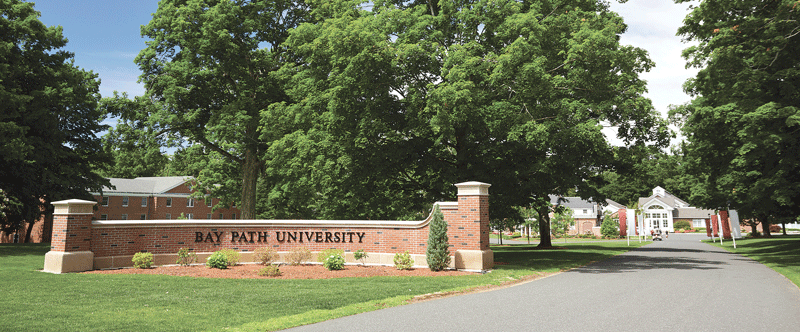
The sign at the main entrance

The sign at the main entrance explains just how far Bay Path has come under Carol Leary’s stewardship.

Such growth and acclaim didn’t come overnight or very easily, said Leary, who attributed the school’s success to vision, assembling a focused, driven team (much more on that later), and a responsive boards of trustees — all of which have facilitated effective execution of a number of strategic plans.

“Let’s see … there was Vision 2001, and 2006, and 2011, which we had to redo halfway through because of the crash, so there was 2013, and Vision 2016, which ends in June, and then we just launched Vision 2019,” she said, adding that she would like to be around for its end.

“I’ll do it only as long as my board wants me and the faculty and staff feel I can be effective as their leader,” she explained. “And as long as I can get up every day and say ‘wow, it’s great to go to work today.’”

She’s said that since day one, and it’s an attitude that only begins to explain why she’s a Difference Maker.

Making a Course Change

Leary told BusinessWest that, with few exceptions, all of them recently and schedule-related, she has interviewed the finalists for every position on campus, from provost to security guard, since the day she arrived on campus, succeeding Jeanette Wright, who passed away months earlier.

And there’s one question she asks everyone.

She wouldn’t divulge it (on the record, anyway) — “if I did, then someone might read this, and then they’d be prepared to answer it if they ever applied here” — but did say that it revealed something important about the individual sitting across the table.

“To me, that’s the most important part of any CEO’s job — the hiring of the individuals who will be working in the organization,” she explained. “Beyond the résumé and the skill set, I dig a little deeper. And my question tells me what that person cares about; it tells me what motivates them.”

The practice of interviewing every job finalist — but not her specific question of choice — was something Leary took with her from Simmons College, where she spent several years in various positions, including vice president for Administration and assistant to the president, the twin titles she held at the end of her tenure.

But that’s not all she borrowed from that Boston-based institution. Indeed, the Women’s Conference was based on an event Simmons started years earlier, and Leary has also patterned Bay Path’s growth formula on Simmons’ hard focus on diversity when it comes to degree programs.

She applied those lessons and others while undertaking a turnaround initiative at Bay Path that almost never happened — because Leary almost didn’t apply.

“I sent in my letter of interest and résumé on the last day applications were due,” she told BusinessWest, adding that she was encouraged to apply by others who thought she was ready and able to become president of a college — especially this one — but very much needed to be talked into doing so.

“I was nominated for this job — I wasn’t even looking for a presidency,” she went on, adding that, while she had her doctorate and “six years in the trenches,” as she called it, she wasn’t sure she was ready to lead a college. “I loved Simmons, I loved my job, I loved the mission, and I loved working in Boston; it was great.”

It was with all that love as a backdrop that she and Noel, while returning to Boston from a vacation in Niagara Falls that August, decided to swing through the Bay Path campus to get a look at and perhaps a feel for the institution. Suffice it to say they liked what they saw, heard, and could envision.

Indeed, what the two eventually found beyond the idyllic campus located in the heart of an affluent Springfield suburb was a college that possessed what Leary described using that time-honored phrase “good bones.”

And by that, she meant that it still had a sound reputation — years earlier, it was regarded as one of the top secretarial schools in the Northeast, if not the country — and, perhaps more importantly, a solid financial foundation upon which things could be built.

“I knew that Bay Path had been challenged with a decrease in its enrollment over several years,” she recalled. “But all the presidents had kept the institution financially strong; they kept deferred maintenance down, and the endowment was healthy for such a small school of 500 students. I looked at their programs, and I saw the challenges they were facing. But I looked at the balance sheet, and we both said, ‘we can see ourselves here; this has incredible potential as a women’s college.’”

When asked about those struggles with enrollment, Leary said they resulted in part from the fact that there was declining interest in women’s colleges, fueled in part by the fact that most every elite school in the country was by that time admitting women, giving them many more options. But it also stemmed from the fact that Bay Path simply wasn’t offering the products — meaning baccalaureate and graduate degrees — that women wanted, needed, and were going elsewhere to get.

So she set about changing that equation.

But first, she needed to assemble a team; draft a strategic plan for repositioning the school; achieve buy-in from several constituencies, but especially the board of trustees; effectively execute the plan; and then continually amend it as need and demand for products grew.

Spoiler alert (not really; this story is well known): she and those she eventually hired succeeded with all of the above.

To make a long story short, the college soon began adding degree programs in a number of fields, while also expanding geographically with new campuses in Sturbridge and Burlington, and technologically. It’s been a turnaround defined by the terms vision, teamwork, innovation, and entrepreneurship.

Milestones along the way include everything from the establishment of athletics (there are eight varsity sports now) to the first graduate-degree program (Communications and Information Management), launched in 2000, a year ahead of schedule; from the introduction of the innovative One-Day-a-Week Saturday College to those new campuses; from the launching of the American Women’s Online College to the school’s being granted status as a university in 2014.

Add it all up, and Leary and her staff have accomplished the mission she set when she arrived — to make Bay Path a destination.

That’s a great story, but the better one — and the reason why all those executive search firms were calling her — is the manner in which all this was accomplished.

Study in Relationship Building

And maybe no one can explain this better than Caron Hoban.

She didn’t work directly with Leary at Simmons — they were assigned to different campuses but served together on a few committees — but certainly knew of her. And when Leary went to Bay Path, Hoban decided to follow just a few months later.

“I knew her a little bit, and I was looking to make my next move just as she had been made president at Bay Path; they had a position open, and I applied for it,” said Hoban, who now holds the position of chief strategic officer.

When asked to summarize what Leary has accomplished at the school and attempt to put it all in perspective, Hoban obliged. But is doing so, she focused much more on how Leary orchestrated such a turnaround and, perhaps even more importantly, why.

And as she articulated these points, Hoban identified what she and others consider Leary’s greatest strengths — listening and forging partnerships.

“One of her greatest gifts is relationship building,” Hoban explained. “So when she came to Bay Path and the Greater Springfield area 21 years ago, she really committed to not just learning more about the college, but really understanding the whole region. She met with hundreds and hundreds of people and just listened.

“At my first meeting with her, she said, ‘what I’ve really been trying to do in my early days is listen to people and understand what the college needs and what the region needs,’” Hoban went on, adding that from this came the decision to create a women’s professional conference modeled on the one at Simmons, and a commitment to add graduate programs in several areas of study.

“She knew that the way to grow the campus and move from 500 students, which is what we had when she arrived, to the 3,000 we have now is by adding master’s-degree programs,” Hoban went on. “And these came about by her going out and listening to what the workforce needs were in the community.”

But Hoban said Leary’s listening and relationship-building talents extended to the campus community, the people she hired, and her own instincts, and this greatly facilitated what was, in every aspect of the word, a turnaround that was critical to the school’s very survival.

In 2007, President Leary welcomed poet, author, and civil-rights activist Maya Angelou

In 2007, President Leary welcomed poet, author, and civil-rights activist Maya Angelou to the Women’s Leadership Conference.

Indeed, in 1996, Leary recalled, she essentially asked the board for permission to spend $10 million of the $14 million the school had in the bank at the time over the next several years to hire faculty, add programs, and, in essence, take the school to the next level.

“I remember the conversations that were had around the table, and there was one member of the board, the chair of the academic committee, who said, ‘if we don’t do this, there might not be a future for Bay Path,’” she recalled. “I recommended that we make that investment — it had athletics in it, the Women’s Leadership Conference, and much more; that was Vision 2001.”

As it turned out, she didn’t have to spend all the money she asked for, because those degree programs added early on were so successful that revenues increased tremendously, to the point where the school didn’t have to take money out of the bank.

Looking back on what’s transpired at Bay Path, and also at the dynamics of administration in higher education, Leary said turning around a college as she and her team did is like turning around an aircraft carrier; in neither case does it happen quickly or easily.

In fact, she said it takes at least a full decade to blueprint and effectively execute a turnaround strategy, and that’s why relatively few colleges fully succeed with such initiatives — the president or chancellor doesn’t stay long enough to see the project to completion. And, inevitably, new leadership will in some ways alter the course and speed of a plan, if not create their own.

But Leary has given Bay Path not one decade, but two, and she’s needed all of that time to put the school on such lists as the Chronicle of Higher Education’s compilation of fastest-growing schools.

In keeping with her personality, Leary recoils when a question is asked with a tone focusing on what she has done. Indeed, she attributes the school’s progression to hiring the right people and then simply providing them with the tools and environment needed to flourish.

“I got up every day and knew I had to hire the best possible staff, people who believed in the mission,” she recalled. “And when people ask why Bay Path has been so successful, I say it’s because I hired the right people at the right time, and they just threw themselves into their jobs.”

While giving considerable credit to those she’s interviewed and hired over the years, Leary saved some for Noel and his willingness to share what she called “an equal-opportunity marriage.”

Elaborating, she said she agreed to uproot and follow him to Washington, D.C. and a job in commercial real estate there decades ago, and he more than reciprocated by first following her to Boston as she took a job at Simmons, then making another major adjustment — trying to serve his clients in the Hub from 100 miles away — when she came to Bay Path. He did that for more than a decade before retiring and taking on the role of supporting her various efforts.

“Noel has been a tremendous, tremendous support to me,” she explained. “He basically said, ‘this is an important job, I love what you’re doing, and I enjoy being a part of it.’”

And she implied that what he meant by ‘it’ was not simply her work at the campus on Longmeadow Street, but her efforts well outside it. They are so numerous and impactful that Hoban chose to say that Leary isn’t in the community, “she’s of the community.”

And perhaps the best example of that has been the women’s conference and how the region’s business community has embraced it.

Learning Curves

Dena Hall says it’s a good problem to have. Well … sort of.

There are more people at United Bank, which Hall serves as regional president, who want to go to the conference than the institution can effectively send.

Far more.

And that has led to some hand-wringing among those administrators (like Hall) whose job descriptions now include deciding who gets to go each spring and who doesn’t.

“We’ve gotten to the point where we have too many who want to go — we just can’t accommodate everyone, because we can’t have 50 current or emerging leaders out of the company at one time,” she explained. “So we’ve put it on each of our managers to identify one or two women in their business line who they believe should attend the conference and who will really benefit from what they see and hear.”

But these hard decisions comprise the only thing Hall doesn’t like about the women’s conference, except maybe finding a parking space that morning. That, too, has become a challenge, but, for the region as a whole, also a great problem to have.

Because that means that 2,000 women — and some men as well — are not only hearing the keynoters such as Walters, Angelou, and others, but networking and learning through a host of seminars and breakout sessions.

“You always learn something,” said Hall, who has been attending the conference for more than a dozen years. “Last year, I participated in the time-management workshop, and it changed the entire way I look at my schedule from Monday through Friday; the woman was fantastic.

“And there’s tons of networking,” she went on. “We use the conference here as a coaching and development tool for the more junior women on our team. There’s a lot of value in it, and for us, the fact that it’s five minutes away makes it so much easier than sending someone to Boston or New Haven or anywhere else.”

The conference is a college initiative — indeed, its primary goal beyond the desire to help educate and empower women is to give the school valuable exposure — but it is also a community endeavor, and one of many examples of how Leary is of, not just in, the community.

Others include everything from her service to the Colony Club — she was the first woman to chair its board — to her time on the boards of the Community Foundation, the Beveridge Foundation, WGBY, and United Bank, among others. She was also the honorary chair of Habitat for Humanity’s All Women build project in 2009.

And then, there was the support she and Noel gave to the museums and the current capital campaign called “Seuss & Springfield: Building a Better Quandrangle,” a gift that Springfield Museums President Kay Simpson described as not only generous, but a model to others who thought they might not be able to afford such philanthropy.

“One of the motivating factors for Carol and Noel,” she noted, “is that they wanted to demonstrate that, even if you don’t think you can make a substantial gift, with planning, you can do it.”

Leary said planning began years ago, and was inspired by a desire to preserve and expand a treasure that many in this area simply don’t appreciate for its quality.

“We really believe in the museum — we absolutely adore it,” she said. “I said to my niece and nephew at the gala [where the gift was announced], ‘this is your inheritance; you might be in the will, but there isn’t going to be any money in it — it’s going right here, so you can bring your children and your children’s children here decades from now.’

“Noel told the audience that night, ‘we have some big birthdays coming up, but forget Tiffany’s; we’re giving it to the museums,’” she went on. “That’s how much we think of this region; there are so many gems, like the museums, the symphony, CityStage, and others that need support.”

From left, Donald D’Amour, Michele D’Amour, Carol Leary, and Noel Leary

From left, Donald D’Amour, Michele D’Amour, Carol Leary, and Noel Leary at the ceremony marking the naming of the Gallery of Impressionist Art.

And looking back on her time here, she said it has been her mission not only to be involved in the community herself, but to get the college immersed in it as well. She considers these efforts successful and cites examples of involvement ranging from Habitat for Humanity to Big Brothers Big Sisters; from Link to Libraries to the college’s sponsorship of the recent Springfield Public Forum and partnerships that brought speakers such as Supreme Court Justice Sonia Sotomayor and author Wes Moore.

“You can’t be an ivory tower,” she told BusinessWest. “We have to be part and parcel of the good, the bad, and the ugly of any community.”

As she talked about the importance of involvement in this community, Leary made it a point to talk about the region itself, which she has chosen to call home. She said it has attributes and selling points that are easier for people not from the 413 area code to appreciate.

And this is something she would like to see change.

“People underrate this area, and the negativity has to stop,” she said with twinges of anger and urgency in her voice. “The language and the perception has to start changing from all of us who have a voice; we have to talk more positively.”

A Class Act

When asked how long she intended to stay at the helm at Bay Path, Leary didn’t give anything approaching a specific answer other than a reference to wanting to see how Vision 2019 shakes out.

Instead, she conveyed the sentiment that was implied in all those non-responses to inquiries from executive search firms: she’s not at all ready to leave this job or this community.

As she said, one can have an impact here. One can make a difference.

Not everyone does so, but she has, and in a number of ways.

George O’Brien can be reached at [email protected]

Daily News

BOSTON — Gov. Charlie Baker, Secretary of Education James Peyser, Secretary of Labor and Workforce Development Ronald Walker II, and Secretary of Housing and Economic Development Jay Ash announced a series of new initiatives to support career vocational technical education, including $83.5 million to be proposed between the governor’s FY 2017 budget recommendation and new capital grant funding to be filed in an economic-development bill this week.

“With too many good-paying jobs going unfilled, we are pleased to announce this critical investment in our career and technical schools,” Baker said. “Our proposal will make it possible for more students to explore a pathway to success through stronger partnerships with our schools and local businesses in the Commonwealth.”

The funding in the FY 2017 budget will be coupled with a substantial capital-grant program for vocational equipment that further aligns the administration’s investments with local economic- and workforce-development needs and employment partnerships.

“Massachusetts has some of the strongest career-technical programs in the country, at both the high-school and college levels, but access and quality are uneven across the Commonwealth, and there’s currently little alignment across education levels,” said Peyser. “Our efforts will significantly expand student access to high-quality career-education programs in STEM fields, manufacturing, and traditional trades, with a focus on underserved populations and communities.”

Added Walker, “finding ways to make sure people get the skills and job training they need to get a good-paying job is one of the biggest challenges before us. With these initiatives, we will engage employers as full partners in program design and implementation to help them create a pipeline of workers.”

Ash noted that “vocational institutions are an important part of training the workforce to address the skills gap. These additional resources will continue to equip vocational institutions as they train the next generation of skilled workers who will help grow the Commonwealth’s economy.”

Daily News

EAST LONGMEADOW — EMA Dental announced that Dr. Colleen Chambers has joined the practice as its newest associate.

Chambers completed her undergraduate degree in biological sciences at the University of Connecticut and went on to earn her DMD at the University of Connecticut School of Dental Medicine. She was awarded the School of Dental Medicine Alumni Research Fellowship for her research with alveolar bone and implant integration using rh-PDGF-BB. She completed an Advanced Education in General Dentistry program at Virginia Commonwealth University, where she focused on esthetics, general dentistry, and complex implant dental treatment.

Chambers is proud to have had the opportunity to provide dental care to underserved communities at the CT Mission of Mercy, Remote Area Medical Services in Wise County, Va., and as part of a dental service trip to Honduras. She is a member of the American Dental Assoc., the Massachusetts Dental Society, and the Valley District Society.