Home Posts tagged Employment (Page 26)
Departments People on the Move

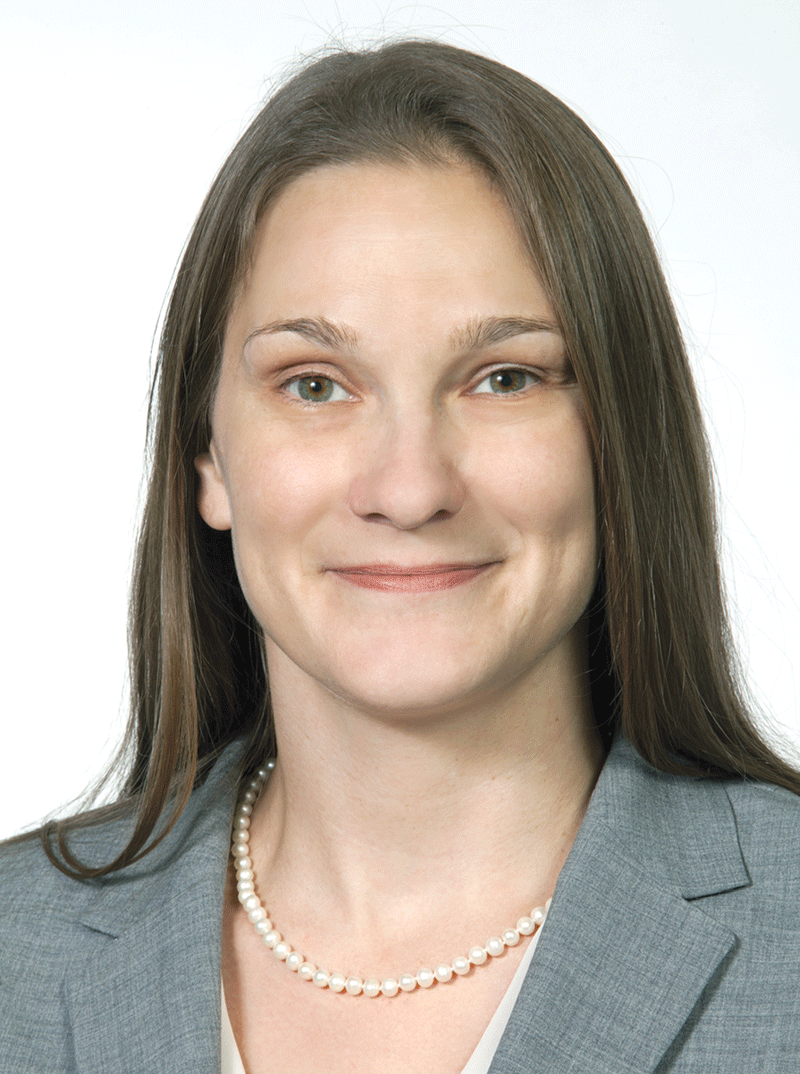
Carole Desroches

Carole Desroches

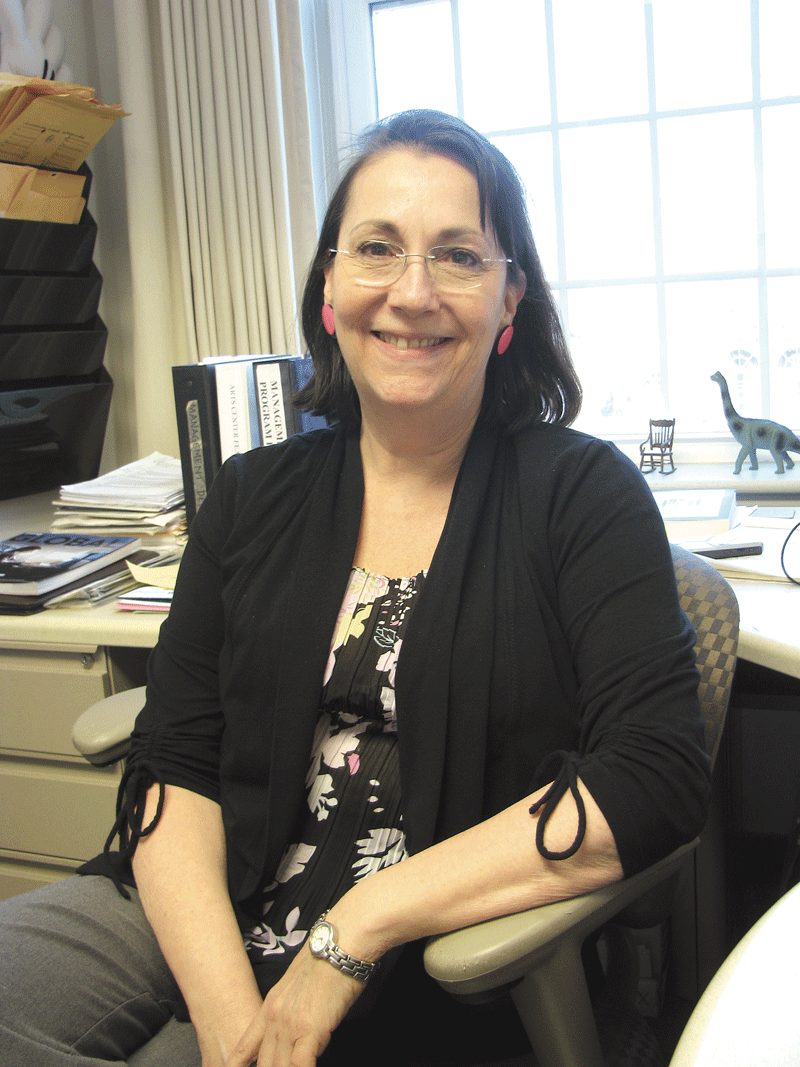
Carole Desroches has been appointed Assistant Vice President/Investment Officer at Westfield Bank. She has 16 years of experience in the banking industry, and will work primarily out of the corporate office. She will work with Westfield Bank’s investment portfolio to develop new strategies and provide ongoing analysis.
•••••
EBTEC of Agawam recently recognized nine employees, each with more than 25 years of service, representing 255 years of combined employment at the high-energy-beam-manufacturing facility. Those honored were:
• Christopher English;
• Daniel Hebert;
• Cathy Anderson;
• Mark Modzeleski;
• Mathew Girouard;
• Vincent Mammano;
• Paul Krassler;
• David Maheu, and
• Brian Havens.
•••••
Carla J. Potts has been named Coordinator of Media Relations in the Marketing and Communications Department at Springfield Technical Community College.
•••••
Chicopee Savings Bank announced the following:
• Irene Alves has been promoted to Assistant Vice President of Retail Lending Operations;
• Gloria Faria has been promoted to Assistant Vice President of Retail Banking and also manages the bank’s Ludlow office;
• Clare Ladue has been promoted to Assistant Vice President of Retail Banking and is also managing the main office in Chicopee;
• Becky Elias has been promoted to Portfolio Manager; and
• Sarah Medeiros has been promoted to Credit Officer.
•••••
Dan Carstens, publisher of the Airport News & Bradley International Cargo Guide, will serve as Marketing Consultant to the Connecticut Airport Authority (CAA). His role includes identifying new routes and enhancements for Bradley International Airport and the state’s general-aviation airports. The CAA was established last July to develop, improve, and operate Bradley International and the state’s five general airports (Danielson, Groton/New London, Hartford Brainard, Waterbury-Oxford, and Windham).
•••••
Shaun Dwyer has been named First Vice President and Commercial Team Leader for Berkshire Bank in the Pioneer Valley.
•••••
MassMutual’s Retirement Services Division in Springfield announced the following:
• John Budd has been appointed National Practice Leader covering the division’s institutional retirement products. In this newly created role, Budd is responsible for leading MassMutual’s distribution strategy for its stable-value investment-only and defined-benefit businesses, working with the division’s managing directors and their key advisor relationships; and
• Brian Mezey has joined the division as Managing Director of Institutional Sales. In this role, Mezey is responsible for working with retirement-plan advisors in mid-sized and large markets, and is partnered with Andy Hanlon covering the Eastern New England region.
•••••
Market Mentors in West Springfield announced the following:
• Jessica Lemieux has joined the firm as an Account Executive. She is responsible for managing accounts and client expectations, as well as outreach for new business;
• Karin O’Keefe has joined the firm as Account Coordinator and Manager of Digital Advertising. She will coordinate various accounts and oversee all social networking and digital advertising; and
• Laura Stopa has joined the firm and will assist the Art Director with Web coding and design.
•••••
Charles Frago

Charles Frago

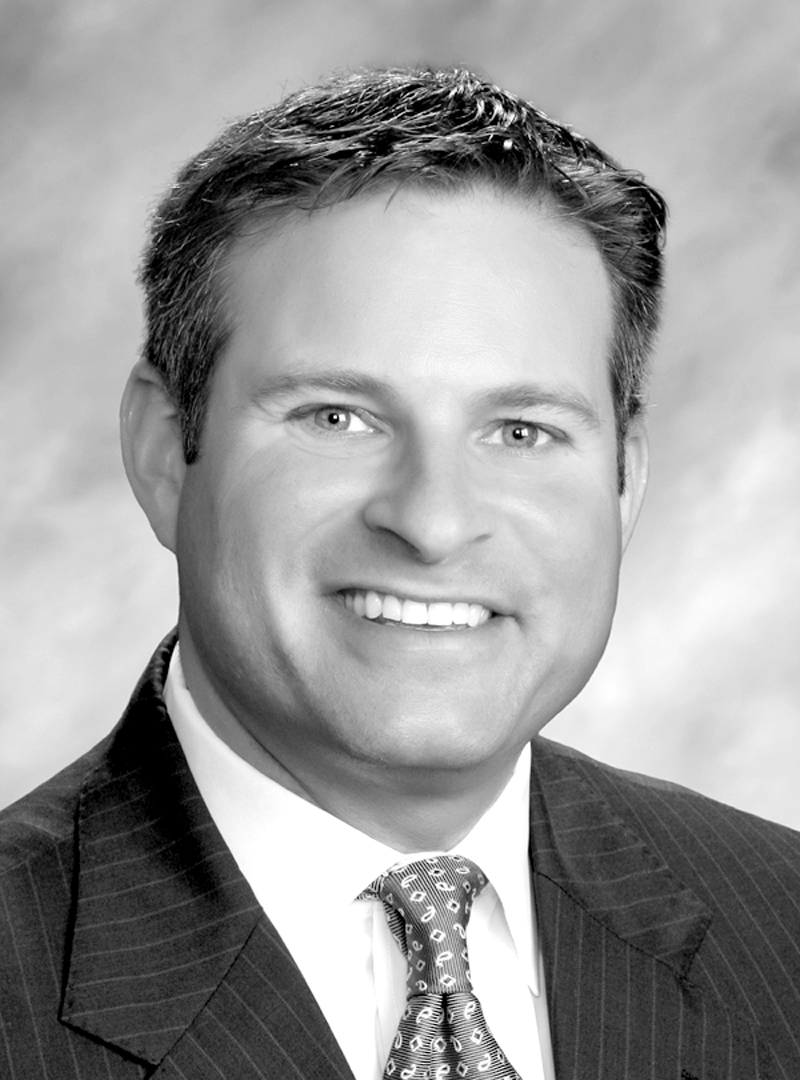
Charles Frago has joined Wolf & Co., P.C. of Boston as a Principal on the tax-service team of Wolf’s Financial Institutions group. Frago will focus on tax planning, compliance, mergers and acquisitions, stock-based compensation, and preparing clients for tax examinations.
•••••
John P. O’Rourke has been named Director of Electricity for the Hampshire Council of Governments. He will lead the Hampshire Electricity Program, and work to expand the customer base by providing lower-cost electricity to government entities, school districts, nonprofits, and businesses throughout Western Mass.
•••••
Syeda Maham Al Rafai has joined Hatch Mott MacDonald in Holyoke as an Engineer. She is experienced in AutoCAD and Risa2D beam-column design, and will enroll in the engineer-in-training program for the state of Massachusetts.
•••••
Michael Natale was recently named Vice President of Sales for Leonard E. Belcher Inc. He will oversee all sales operations of the multi-branded, multi-state distributor.
•••••
Thomas W. Barney, Certified Financial Planner, has joined Heaphy Trust Group and Heaphy Investments, which offer investment-management, financial-planning, and fiduciary services to individuals, nonprofits, and retirement plans.
•••••
Susan Barbiasz has been promoted to Manager of the Chicopee Savings Bank Ware branch. She will manage the day-to-day operations of the branch office located at Gibbs Crossing on Palmer Road.
•••••
Michele A. Rooke has been named a Shareholder with the law firm of Doherty, Wallace, Pillsbury & Murphy. Rooke joined the firm in 2002 after serving as an Assistant District Attorney for Hampden County. She represents plaintiffs and defendants in a variety of civil-litigation matters. Her practice also includes criminal defense.

Education Sections
Sport-management Graduates Are Covering Their Bases

Lisa Masteralexis

Lisa Masteralexis says sport management is a growing industry, but also a competitive one.

Sport management is a broad term, Lisa Masteralexis said, but one way to narrow it down is to focus on the games people watch, not just play.
“Our students can go work anywhere in the industry, combining business and sports, but what they don’t do is recreation, health, fitness, those types of sports,” said Masteralexis, head of the Mark H. McCormack Department of Sport Management at UMass Amherst.
“We focus on spectator sports — imagine anything someone goes to see, then all of the support industries around that,” she added. “Think of the teams, the leagues, facilities, media, college athletics, Olympic sports, even high-school sports … really, anything a fan might go see, then all the sports businesses that go along with that.”
Sport-management students at Springfield College are taught the ins and outs of the industry through four lenses, said Matthew Pantera, professor and chair of the school’s Sport Management & Recreation Department. “There are four major areas: administration and management; event management and planning; maintenance, upkeep, and design of facilities; and problem solving. Those are highly transferable to quite a few degrees.”
In other words, he said, these are typically students with an interest in sports, but especially in what goes on behind the scenes; they are the individuals the fans aren’t watching when they click on the TV or file into the bleachers.
“We have kids working for ESPN, the Red Sox, the Miami Dolphins, doing sports marketing for the Basketball Hall of Fame, these types of organizations,” said Mei-Lin Yeh-Lane, professor of Sport Management at American International College. “Some are kids who like to work in the college or university arena.”
With a sport-management degree, “they can work as a sports agent; they can do event management, organizing a basketball, golf, or tennis tournament; they can join a marketing team to promote services or products; those types of things.”
In fact, the list is much longer, and while dreams of becoming the next Theo Epstein or Scott Boras might fall short, the spectator-sport industry in the U.S. — and internationally — has proven to be diverse, fast-growing, and relatively hardy even during recessions.
At the same time, however, college programs that teach students the business and behind-the-scenes aspects of sports have proliferated as well.
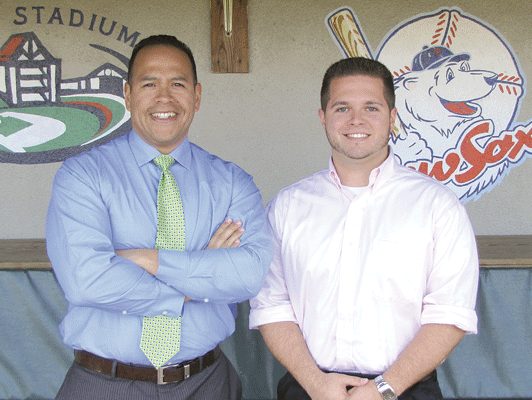
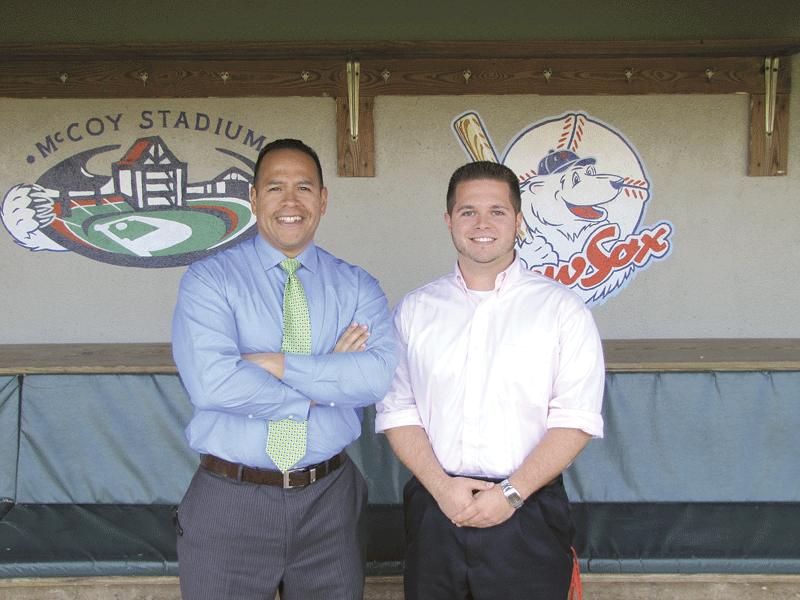
Adam Perri, pictured with Cookie Rojas.

Adam Perri, a 2011 graduate of Springfield College, now works as a marketing and sales representative with the Pawtucket Red Sox; he’s pictured with Cookie Rojas, general manager of sales for the Pawsox.

“There has been a lot of growth in the field, an incredible number of programs that have been developed over the past 20 years, and to be frank, I don’t think there are enough jobs out there for the number of students coming out of these programs,” Masteralexis told BusinessWest. “I feel like we’re in a position of luxury, having 40 years of alumni going out and making their way in the field; it’s more challenging for newer programs.”
The reason, she said, is all about connections.

Record Books
In those four decades the UMass program, part of the Isenberg School of Management, has been in existence, the school has cultivated an extensive alumni network, which is a great benefit to students seeking internships and eventual employment.
“As you can imagine, these positions are very competitive, and you have to connect with someone inside to get in; these teams and other organizations get thousands of unsolicited résumés,” said Masteralexis, meaning that it helps to tap into the influence of an alumnus or professor.
“We have alumni who really support our program by supporting internships, special projects, experiential learning … they really support our students in a mentoring capacity,” she explained. “We have an internship director and an internship database, hundreds of organizations where we place students, and some find internships on their own. In a nutshell, there are more internships than we have students to fill them.”
The same isn’t necessarily true for paying jobs upon graduation, which is why those internships are so crucial. In fact, many students are persuaded to take on multiple internships, both during the school year and over the summer, to set themselves apart from their competition and also broaden those networking opportunities that have become so valuable.
“With the growth in the industry, there are so many more internship opportunities, and I think the industry is recognizing the value of interns,” Masteralexis said. “However, one of the challenges is that many of these organizations do not pay students. It can be a difficult venture for a student who doesn’t come from means to live in New York City for the summer unpaid. How many of us could do that? So that’s very challenging.”
Pantera also recognizes the value of networking while in school, adding that Springfield College, which has operated its sport-management program for 30 years, has long cultivated invaluable relationships.
“We’re one of the few schools that visit every single one of these sites,” he told BusinessWest. “The fact that we go visit the Celtics and the Red Sox and the Indianapolis Colts with a professor helps us stay differentiated because not many schools are nurturing those contacts by visiting.”
Those efforts pay off when job openings arise, he added. “We just had a woman, in the middle of her master’s degree, get recruited by the Celtics in corporate luxury-box sales.”
In all, Springfield College is affiliated with approximately 900 organizations, large and small, throughout the U.S. and abroad, and around their junior year, students take on an internship, putting in 480 hours over a 12- to 15-week period. “Faculty members actually do visit them and see how they’re doing,” Pantera said. “It also gives us an opportunity to keep current with what’s going on, to stay on the cutting edge.”
As at UMass, the AIC program is part of the School of Business Administration, peppered with courses in sports marketing, finances and economics, communications, and the international aspects of the industry, in addition to those ubiquitous internships and experiential-learning opportunities
“As we know, sports are an important part of our lives,” Yeh-Lane said, noting that AIC’s program is relatively new compared to other disciplines, but growing, taking in about 25 freshmen per year.
“Sport management is a multi-billion-dollar industry, and it’s definitely more than professional sports teams. There’s event organizing, handling players’ contracts, budgeting and resource allocating. From a management perspective, there’s a really wide range of options, depending on what a student wants to do.”

Hire Ground
Although it’s been around since 1982, Pantera said, the Springfield College program has remained small, recruiting about 40 sport-management students and another 20 recreation-management students per year, as opposed to, say, UMass, which boasts between 400 and 450 undergraduates and 30 to 35 graduate students at any given time. One reason is to maximize opportunities, both on campus and in the field, for each student.
“Sixty is not that big a number, and we’re looking for leaders,” he told BusinessWest. “They’re getting face-to-face work with our professors. We don’t have graduate students teaching courses; we’re the ones in the classroom, and on the front lines with the students, and that’s an advantage of a Springfield degree.”
The sport-management industry, in all its diversity and vibrancy, “is a lot of fun, and a lot of work,” he added. “And it’s fun for us to work with the students and see them set goals for themselves. And it’s neat when they say, ‘I just graduated, and I got hired.’”
Getting there isn’t easy, Masteralexis reiterated, but “if you make a commitment to this industry, you can move up. We have alumni at the highest level — presidents, CEOs, and general managers, Division I conference directors, heads of Olympic programs, and some of the heads of ESPN and other organizations have come through the program. It’s a challenging road, often with long hours and low pay at the beginning, but once you get on track, you can advance.”
The types of students attracted to sport management tend to be personable and team-oriented, as much of the industry is very collaborative. “They’re people who want to be part of a team. And it’s constantly exciting.
“Our students have a passion for the business side of sports,” Masteralexis added. “I had a former student tell me, ‘the alarm goes off in the morning, and I want to go to work because it’s so much fun.’ I think that plays a role in the attraction. It’s like working in music or entertainment — it’s not the same thing every single day. Every day, there’s a new plan or new product to sell. One day, you might have a hidden gem like Jeremy Lin or Tim Tebow, and another day, you may have some disaster to deal with, but every day is a unique opportunity and a unique challenge.”
One thing it’s not (unless you’re Epstein or Boras, anyway) is a chance to be in the spotlight — that’s reserved for the players on the field — or to relax and cheer, like the spectators in the stands. “We tell students, ‘when everyone else is having fun, you’re working, creating fun for them.’”
For those who succeed in this competitive, fast-moving field, that’s reward enough.

Joseph Bednar can be reached at [email protected]

Employment Sections
Understanding Reasonable Accommodations and the Interactive Process

Karina L. Schrengohst

Karina L. Schrengohst

Federal law pertaining to disability discrimination can be challenging to navigate for employers.
For example, an employee, Jill, does not say to her supervisor, “I need a reasonable accommodation for my disability.” Instead, she says, “I’m having a hard time getting to work on time because of the medical treatments I’m undergoing.” And an employee, Jack, does not say to his supervisor, “I am a qualified individual with a disability, and I’m exercising my rights under the Americans with Disabilities Act.” Instead, he says, “my wheelchair doesn’t fit under my desk.”
These examples illustrate one challenge that employers face under the ADA: identifying requests for accommodation. The law does not require an employee to make any reference to the ADA or use any magic words, such as ‘disability’ or ‘reasonable accommodation,’ when requesting an accommodation.
Thus, supervisors and managers need to be able to recognize the variety of ways in which a request for an accommodation may be articulated. Jill did not explicitly request a change to her work schedule, and Jack did not explicitly ask that a modification be made to his workspace; however, in both scenarios there is either an expressed or obvious connection to a medical condition or impairment that might be a disability. Both Jack and Jill are making requests for a reasonable accommodation.
The ADA requires that an employer provide a reasonable accommodation to an applicant or employee with a disability, unless such accommodation would cause an undue hardship to the employer. A reasonable accommodation is a modification or change to the workplace that enables an individual with a disability to apply for a job, perform job duties, or enjoy the benefits and privileges of employment.
Reasonable accommodations are determined on a case-by-case basis and may include, for example, modifying work schedules, granting time off, making the workplace accessible by wheelchair, or providing an interpreter. An employer does not have to provide an accommodation if it would cause undue hardship to the employer. Whether an accommodation would cause undue hardship is evaluated in light of the difficulty of providing such accommodation, the disruption to the employer’s operations, and the cost in relation to the financial resources of the employer. The difficultly, disruption, or expense must be significant.
Another difficult area of the ADA that employers must tackle is engaging in the interactive process with an employee with a disability in need of accommodation. The interactive process is simply an informal, interactive dialogue between the employer and the employee to identify the limitations resulting from the disability and discuss reasonable accommodation options. There should be direct communication between the employer and the employee in which both parties explore possible accommodations. The employee may offer options for what he or she thinks would be the most effective and preferred accommodation, and the employer may offer alternative suggestions. The goal of the interactive process is that the employer and the employee work together in identifying reasonable and effective accommodations.
The interactive process does not require that an employer provide the employee’s preferred accommodation. If there is more than one effective accommodation, the employer has the discretion to choose the most-cost-effective, least-burdensome accommodation.
For example, an employee, Sarah, has a severe learning disability, and reading is extremely difficult. Her supervisor sends her detailed written memoranda that she has trouble understanding. However, she has no difficulty understanding oral communication. Sarah requests that her employer install a computer program with voice output, and that her supervisor send all written memoranda through e-mail, which the computer can then read to her. The supervisor asks whether a digital voice recorder would accomplish the same objective, and Sarah agrees that it would.
Since both accommodations are effective, the employer may choose to provide a digital voice recorder so that Sarah’s supervisor can record her memoranda and then Sarah can listen to them.
In recent years, federal law has greatly expanded the definition of disability, thus making it easier for disabled individuals to come within the ADA’s protection. As a result of this broadening of the scope of protection, there has been a shift in disability-discrimination cases from determining whether an employee is disabled under the law to whether an employer complied with its obligations under the ADA. This also means that, as more employees fall under the protection of the ADA, there are more occasions for employers to face the risk of non-compliance.
One way employers can reduce their risk is to ensure that they are prepared to navigate difficult issues that arise under the ADA. Toward this end, supervisors and managers should be trained to identify a request or need for an accommodation. In addition, once an issue is identified, the individual(s) responsible for handling such requests must be properly prepared to engage in an interactive dialogue with the employee.

Karina L. Schrengohst, Esq. specializes exclusively in management-side labor and employment law at Royal LLP, a woman-owned, boutique, management-side labor- and employment-law firm; (413) 586-2288; [email protected]

Features
Southern Berkshire Chamber Puts Community First

Betsy Andrus, left, and Joy Lyon

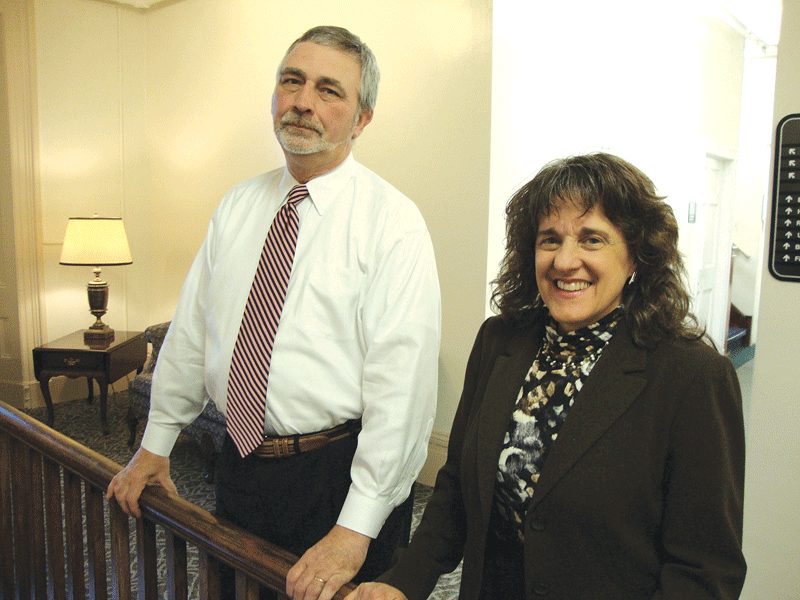
Betsy Andrus, left, and Joy Lyon say last year’s events let people experience Great Barrington in a new, exciting way.

In a different time, Joy Lyon said, people would have called it a “love-in.”
The manager of the Southern Berkshire Chamber of Commerce’s Visitor Center was referring to 2011’s roster of celebrations for the 250th anniversary of Great Barrington. While the events may have lacked some of the more colorful connotations of those groovy times 45 years ago, the fact remains that, for a full year, scores came out in force to honor the businesses, townspeople, and civic pride of this picturesque Berkshire town.
One of the architects of this year-long series of events was Betsy Andrus, at that time owner of her own business in consulting, marketing, event planning … “it was this multifunctional operation,” she explained. “I would do weddings, property management, run construction projects — all across the board. Every day it was something new.”
As of Jan. 3, however, she assumed the role of the executive director of the SBCC, and it’s hard to imagine a more vibrant champion of both the town and the member region’s business community.
The SBCC serves Alford, Egremont, Great Barrington, Monterey, Mount Washington, New Marlborough, Otis, Sandisfield, and Sheffield. Each community offers a unique piece of the Berkshire experience, from outdoor activities, historic tourism, and unique retail — Sheffield has a widely known array of antiques dealers — to the hub of all comings and goings, the town of Great Barrington.
Andrus calls herself “just a local girl who is community-business-oriented.” But this local girl is a part of that very population of merchants, dating back generations.
As the incoming director of the SBCC, Andrus said her greatest hope is to keep the momentum from 2011’s spirited civic pride rolling into the years ahead. “Our drive was to bring the community back out of their houses and together again,” she said, “and that is our great challenge for the future.
“When I grew up here, this town was like a Norman Rockwell painting,” she continued. “Everyone knew their neighbors, everyone said ‘hi’ to one another. We had parades, huge town picnics. It all just stopped, and that was sad.”
Just a month into her tenure as the Chamber of Commerce director in this scenic corner of the Commonwealth, Andrus told the story of how she has been there to help Great Barrington, and the Southern Berkshires, continue to get down to business. “I want to help the business community recreate those events that people loved,” she said — “to make that a guaranteed part of our calendar, and part of our identity.”

Our Town
Andrus said that her family has been active in the Great Barrington-area business community for more than 70 years, and that continues to this day. Starting with her great-grandfathers and grandfathers, she told how some of those businesses are still owned by relatives, from Harlan B. Foster’s on Bridge Street— a hardware store with a noteworthy collection of antique tools — to R.J. Aloisi Inc., an electrical contractor.
Her own foray into local commerce came from organizing the showrooms for one of her father’s firms, and after a hiatus to care for her ailing mother, she returned to the Berkshires to get back to business.
Andrus was always drawn to multitasking styles of employment, from the family businesses to her own, and a few years ago, an item in the local newspaper caught her eye. “The town of Great Barrington was interested in people to donate their time for the next few years to create and carry out ‘something,’ whatever we chose, for the 250th anniversary of the town. I was very excited about that, submitted a paper on why I would be an OK person to do that, and my proposal was accepted.”
Immediately, there was a need for officers to take charge of the various and sundry roles necessary to execute the events, and Andrus, the born leader, suggested a local businessperson who had a large secretarial pool, perfect for the administrative tasks at hand.
“I’m one of those cheerleading types,” she explained, “and also a bit of a jokester, so in the middle of a meeting when no one was volunteering, I said, ‘well, I think so-and-so should do it.’ So, through that smart-alecky remark, that person said, ‘OK, I’ll do it, if you do it with me.’ And it turned out to be a fabulous year.”
Lyon and Andrus together remembered many of the 28 events that took place in their hometown, from historic slide shows, where they couldn’t shoehorn another guest into the auditorium, to picnics, parades, a gravity car race, a family snow day, and the popular holiday stroll.
“It was almost over the top,” Lyon said. “Each day was like a better party than the last. A lot of people in Great Barrington got to experience the town in such a way that we hadn’t for many, many years.”
It was during the time organizing the holiday stroll that Andrus learned of the eminent departure of the chamber’s then-executive director. “I had the conversation with the president of the board,” she said, “talking about how it was sad to see her go, and I asked about the job description — trying to figure out, maybe, why she would want to leave, why was it not working for her, because we all liked her.
“I left that conversation, and the president called me back and asked if I’d be willing to come in for an interview,” she continued. “I hadn’t written a résumé in 30 years! I said I’d think about it, but they called me back two hours later and said, ‘no, we really want you to come in for an interview.’ I said, ‘oh boy!’”

Time Tested
“When I was younger, people would say that Great Barrington was like Mayberry,” Andrus said of the old-fashioned feel to her hometown.
While the smaller towns each have their own distinct pockets of commerce, the fact remains that most, if not all, roads wend into Great Barrington. Andrus said that is a strength of those more rural locations.
“We are a quaint town,” she explained, “but that doesn’t mean there isn’t vibrancy here. Pittsfield is just up the road, and that does have all the offerings of a larger city. But we have here in downtown a satellite branch of Berkshire Community College, we have businesses that have been anchors of Main Street for over 50 years, and are still important employers in the town, not to mention supporters of civic events.” She mentioned Tom’s Toys, Wheeler & Taylor Realty Co., her family’s hardware store, and the Berkshire Co-op Market on Bridge Street, among many others.
The co-op has been instrumental in supporting small, local brands and giving them a platform for expanded distribution, said Andrus, noting that, in years past, brands like Berkshire Brewing, SoCo Creamery’s ice cream, Route 7 BBQ Sauce, and many others have been given their first boost by the market.
As the “local girl,” Andrus said that neighborly support is still a part of the fabric of her small town, and as the chamber director, she added that such community actions are a source of strength for businesses in the Southern Berkshire region. “Somewhere along the way, the notion that we are a community has been lost,” she said. “And I want the chamber to help change that.”
To encourage business owners to become part of the SBCC, Andrus said she is willing to adopt creative methods for them to finance initial entry into the organization.
“If finances are an issue, you don’t have to pay dues the first year,” she explained, “but can instead donate your space, food, or your time. You can still have a place on our Web site, in our newsletter, and be part of Joy’s vibrant Facebook presence for the chamber.”
The next few years will see two large-scale construction projects tearing up downtown Great Barrington, and Andrus said that some business owners are concerned about the potential disruption. But the chamber expects to prepare up-to-the-minute responses for parking, closures, and other relevant information on navigating their big dig. The SBCC will speak with one organized voice for the business community, she explained.
Reflecting back on the successful birthday of Great Barrington, and the momentum for bringing her to where she was that day, Andrus said, “even at some of the very smallest things we did, people loved it. They would say, ‘why haven’t we done this in 20 years? Is someone going to take over and do it again?’”
Looking out the window onto Main Street, she nodded her head and said, “yes.”

Features
Rebuild Springfield Unveils Strategy for Revitalizing the City of Homes
This rendering shows how the banks of Mill River

This rendering shows how the banks of Mill River could be improved with walking trails, new plantings, and other amenities.

Outside St. Anthony’s Social Center on Island Pond Road, overlooking the parking lot, sits a ridge lined with trees, most of them bent and broken beyond salvaging.
Inside, hundreds of Springfield residents recently pressed into a standing-room-only gathering, where municipal officials and individuals tasked with revitalizing the city in the wake of last spring’s tornado unveiled the outline of their plan.
Unlike that row of battered trees, they testified to a city well worth saving.
“This is a solid, strong road map, a framework of good guidance. This is going to be a three- to five-year plan of action,” Mayor Domenic Sarno told residents. “I need you committed, to stay engaged. We must show the same tenacity and resiliency we showed in tackling the cleanup of the tornado.”
The Rebuild Springfield Plan, the result of months of meetings, discussions, and strategy sessions between local and national consultants and the city’s residents and business owners, aims for more than simply rebuilding the structures devastated by the June 1 twister. It’s a chance, said Nick Fyntrilakis, to activate a master plan for the improvement of the entire city, but it’s only the beginning.
“This plan is not a panacea. We don’t have all the answers,” said Fyntrilakis, who was appointed last year to co-chair Rebuild Springfield with Jerry Hayes. “But by putting the right people in the right room with the right leadership, we’ll get even more recommendations and make better progress.”
The Rebuild Springfield Plan is the latest and most tangible result of a process that began shortly after the tornado, but came to encompass much more than rebuilding what was destroyed in that weather disaster. Sarno helped to mobilize a public/private partnership between the Springfield Redevelopment Authority and DevelopSpringfield, respectively, and a 15-member Rebuild Springfield Advisory Committee was appointed to help guide that process.
Over the past six months, 19 separate meetings, with an aggregate attendance of more than 2,000 citizens, have been held in various locations, primarily in neighborhoods impacted by the tornado.
The Rebuild Springfield Plan was crafted using input from those meetings, and also incorporates many previous plans, reports, and studies from a variety of organizations and stakeholders in Springfield. But Sarno stressed that the plan goes much further than returning the city to its pre-tornado condition. Instead, it aims to establish realistic short-term and long-term visions for the city’s future.
As the community came together and tornado recovery progressed, “people were talking about the entire city: ‘how can we build on this positiveness?’” he said, adding that it quickly became clear that this was an opportunity to stimulate the city’s rebirth, not just respond to a storm.
Bobbie Hill, a principal with Concordia LLC, a New Orleans-based consulting firm hired to work on the plan, agreed.
“The tornado-impacted areas were the impetus for the plan, and there’s a special focus on what we call the three districts” hardest-hit by the storm, Hill told those gathered at St. Anthony’s. “But we also have a plan that looks citywide because this is not just about the impacted areas, but about the whole city.”
The Rebuild Springfield Plan, in its final form, will be a “very, very large document,” Hill said, but the 12-page executive summary mailed to every address in Springfield gets to the heart of what the priorities are for each of those districts — the Metro Center and the South End; Maple High/Six Corners, Old Hill, Upper Hill, and the northern part of Forest Park; and East Forest Park and Sixteen Acres — as well as how the physical, cultural, social, organizational, economic, and educational assets of Springfield may be part of a holistic, citywide revitalization plan.
“This is a plan not just about physical projects,” she explained, “but about projects and people and places; we are using this framework to build recommendations across the city and across the different neighborhoods.”

Downtown Dilemma
According to the executive summary, “as the pre-eminent urban center of the Pioneer Valley with unique historic character, Springfield has the opportunity to create and sustain a desirable, walkable, urban environment for living, working, playing, and learning.” To that end, the plan builds on previous plans for the downtown and South End — what the plan calls District 1 — that were in place before the tornado. Some major points of emphasis include:
• Public safety. The city needs to strengthen partnerships among community stakeholders, police, and enforcement staff. Key initiatives should include replication of the C-3 policing model successfully implemented in the Brightwood section of the city and replicated in the South Holyoke Safe Neighborhood Initiative.
Hill noted that the safety of a community and people’s perception thereof are often two different things, but for Springfield’s center to thrive, both must be addressed. “If you want a thriving downtown, people have to feel safe and want to go down there.”
• Housing. The plan calls for a variety of housing options appropriate to different locations in the Metro Center and South End that enhance downtown and neighborhood character, add market-rate housing, and raise the median household income.
• Commercial and retail strategy. The city should create centers of vitality and activity along Main Street by recruiting retail and restaurants to ground-floor spaces, office users to upper-story space, and neighborhood-serving retail, as well as assisting in the rebuilding of important sites. Key initiatives include rebuilding the Main and Union intersection to be a South End gateway and activity center, reinforcing the cluster of eateries in the South End to form a ‘restaurant row,’ and exploring options for a grocery store or pharmacy.
• Community institutions. The plan aims to enhance the anchor role of community institutions, especially by hekping to relocate those damaged by the tornado. Key initiatives include assisting the South End Community Center in relocating to the Gemini site and Square One in developing new space on Main Street.
• Urban character and historic preservation. The plan encourages the adaptive reuse of historic buildings and sites and establishes urban design guidelines and a regulatory framework to enhance walkability. Among the recommendations is connecting the district to the riverfront with public art, and special treatments for Union Street as a ‘festival street.’
Public spaces. The city should activate and program public spaces to create destinations, mobilize community partners for stewardship, and connect important public spaces. Key initiatives include programs and activities led by community arts and culture groups to attract people to Court Square and other locations; organizing temporary uses, programs, and events for empty storefronts; and focusing on maintenance and programming for existing parks and open spaces, including the newly redesigned Emerson Wight Park.

A Time to Heal
The neighborhoods of Maple High/Six Corners, Upper Hill, Old Hill, and some of Forest Park comprise District 2, making it a richly diverse section of Springfield, the plan notes.
“The dialogue in District 2 has been intense and complex, yet hopeful,” it goes on. “Many challenges faced District 2 neighborhoods even before the tornado struck: abandoned properties, substandard housing, low home-ownership rates, higher-than-average crime and poverty rates, and low high-school graduation rates.
“In District 2, perhaps more than anywhere else in the city, there is an opportunity for the rebuilding process to have a transformative effect,” it adds. “The scar of the tornado’s path in this part of town revealed the challenges and allowed them to air. What came from these dialogue sessions was a strong commitment to rebuild stronger than before, an engaged community newly energized to improve their community.”
The plan identifies six guiding principles that support and elaborate on this vision:
• Build on the strong commitment and pride in the neighborhoods to support communities and organizations that are connected, engaged, and working together;
• Improve quality of life and provide new opportunities for residents by enhancing the health, safety, and vitality of the community;
• Preserve and promote the history and character of the neighborhoods as an amenity that enriches quality of life and attracts new residents and businesses;
• Achieve a sustainable and equitable balance of owners and renters, incomes, housing types, land uses, employment opportunities, and services that meets the needs of residents while positioning the community to thrive and flourish in the future;
• Value the diversity of people, cultures, and activities and recognize this diversity as a source of resilience, creativity, learning, empowerment, and collaboration that strengthens the neighborhoods; and
• Demonstrate public and personal commitment, improve perceptions, and attract new energy and investment through neighborhoods that are attractive and well-maintained.
Among the specific goals to meet those objectives are a coordinated housing strategy with new infill housing, job training and small-business support, enhanced neighborhood businesses, reuse of vacant lots, access to safe public transit, improved schools, healthier lifestyles, and coordination of community services, among others.

Better Than Before
District 3, which includes the East Forest Park and Sixteen Acres neighborhoods, is relatively stable with a strong sense of neighborhood pride, the report notes.
“While home rebuilding has long since begun in this district, it will take generations for newly planted trees to replace what was lost,” it continues. “There is a strong interest in rebuilding better than before in this community.
Some broad goals for the district include:
• Restore and enhance the neighborhoods’ natural resources, including trees, water bodies, open spaces, and wildlife, and recognize these resources as amenities that enhance value, improve health, and provide recreational opportunities;
• Promote the family-friendly character of the community through safe, attractive neighborhoods, strong community organizations, quality schools, social gathering spaces, and activities for all ages;
• Focus on schools, parks, and public facilities as community anchors that are integrated into the neighborhood and coordinated to provide efficient, effective services;
• Improve mobility within and between neighborhoods through efforts to reduce congestion, calm traffic, provide enhanced bicycle and pedestrian infrastructure, explore trail opportunities, and enhance streetscapes to support local businesses; and
• Strengthen neighborhoods by rebuilding, repairing, and maintaining well-designed homes that are efficient, durable, and comfortable.
Residents, the report states, are ready to turn the devastation of the tornado into an opportunity to enhance their neighborhoods by way of better homes, parks, greenways, trails, and other community assets. The plan calls for a branch library at Dryden Memorial School, greater access to youth and senior activities, and aggressive maintenance and repair assistance, among other things.

Street-level View
Sarno said the entire city should think along the lines of creating a better Springfield than before, and also took a moment to be grateful for how much worse the twister could have been.
“This tornado hit at 4:37 p.m. Think about it: if this tornado hit at 2:37 p.m., all our children would have been in school. Imagine if it had hit at 4:37 a.m.; we would all have been asleep,” the mayor said. “And as Gov. Patrick indicated when he came out here, there’s a silver lining to these storm clouds that we’ve already seen: the resiliency of Springfield’s people.”
Hill agreed. “There are great success stories in this city, and one for sure is how far you’ve come in eight months after the disaster. These great stories will attract people to this area.”
But first, the plan must be implemented, Fyntrilakis said, and that will begin by forming committees of volunteers to focus on specific domains and districts, each co-chaired by a public employee and someone from the private sector.
“The task for the leaders,” he said, “is to convene all the stakeholders, all those who want to participate and all those already participating, and to convene a working group as set forth by recommendations in the plan.”
“I need you to stay engaged; that is the key,” Sarno told residents. “It’s not over … but the framework is there. The guidance is there. The road map is there.”

Joseph Bednar can be reached at [email protected]

Opinion
The Jobs Market: Is the Worst Over?

The latest jobs report was a welcome surprise. Jobs increased in January by 243,000, cutting the unemployment rate to 8.3%. The question remains: is this a blip, or has the economy turned a corner?
Earlier in the week, the Congressional Budget Report put out a more pessimistic report, showing unemployment rising to 8.9% by the final quarter of this year (which happens to include Election Day) and peaking at 9.2% in early 2013.
According to the CBO, we won’t return to pre-recession employment levels until 2019. Why the grim picture? CBO assumes more budget cutting as the Bush tax cuts sunset, the deficit keeps declining, and there is no further offsetting stimulus.
Though the short-term jobs numbers have been above expectations for both December and January, there is no assurance that this good news will continue in the absence of additional stimulus.
And the risk remains of either a spike in the price of oil, as a byproduct of the escalating conflict with Iran, or further troubles in Europe. Either could weaken this hopeful trend.
The European Union, wedded to an even more perverse brand of austerity economics than the U.S., remains our biggest export market. And even a modest hike in the price of oil is like a tax on purchasing power.
For now, a prime engine of economic growth is the Federal Reserve, which has pledged to keep interest rates at near zero for the next three years. That itself is both recognition of how fragile this recovery is and also a necessary tonic.
Astoundingly, senior House Republicans spent one recent morning morning raking Fed Chairman Ben Bernanke over the coals for his refusal to let the economy fall off a cliff. The ever-clueless Paul Ryan, chair of the House Budget Committee, attacked Bernanke for failing to pay sufficient heed to inflation. The Fed’s policy, Ryan opined, “runs the risk of fueling asset bubbles, destabilizing prices, and eventually eroding the value of the dollar.”
On what planet does this man live? Bondholders are now willing to lend the government money for 30 years with returns of under 4%. If investors were worried about inflation, the interest rate on Treasury bonds would be rising, but it has been steadily falling for two years. The more serious risk is prolonged deflation.
As Bernanke, nobody’s idea of a Bolshevik, told the committee, “We still have a long way to go before the labor market can be said to be operating normally. Particularly troubling is the unusually high level of long-term unemployment.”
And if Ryan and his fellow Republicans want to be sure that low interest rates don’t cause asset bubbles, the remedy is financial regulation — of the sort that Republicans relentlessly oppose.
The Fed has done all it can to fight unemployment — you can’t push interest rates below zero. More public investment is needed. The latest jobs report showed that the public sector actually shed a net 14,000 jobs last month.
And a much more aggressive policy of mortgage relief would reverse the current problem of sinking housing values dragging down the rest of the economy.
Still, let’s celebrate good news when it comes — and hope it continues. There is much still to be done to help these encouraging trends turn into a durable recovery.

Robert Kuttner is co-founder and co-editor of the American Prospect.

Court Dockets Departments

The following is a compilation of recent lawsuits involving area businesses and organizations. These are strictly allegations that have yet to be proven in a court of law. Readers are advised to contact the parties listed, or the court, for more information concerning the individual claims.

CHICOPEE DISTRICT COURT
Jerry Cruz v. Shirin Jewelers and Yousef Al-Ryati
Allegation: Breach of contract to sell jewelry: $16,000
Filed: 11/3/11

Platinum Choice Staffing Inc. v. Wellman Healthcare d/b/a Palmer Healthcare Center
Allegation: Breach of contract for services rendered: $3,690.37
Filed: 11/15/11

HAMPDEN SUPERIOR COURT
Ann C. Gatti v. National Union Fire Insurance Co. of Pittsburgh
Allegation: Breach of contract for failure to pay death benefit: $42,000
Filed: 12/28/11

Jesse Bennefield v. Applied Proactive Technologies Inc.
Allegation: Employment discrimination: $25,000+
Filed: 12/29/11

Northeast Solite Corp. v. Connecticut Valley Block Co. Inc.
Allegation: Breach of contract and failure to pay outstanding invoices for concrete aggregate product: $111,464.90
Filed: 12/28/11

Patricia E. St. Armand, William F. Julian, and Maureen T. Julian v. Willie Ross School for the Deaf Inc., et al
Allegation: Property damage and personal injury: $304,200
Filed: 12/28/11

HAMPSHIRE SUPERIOR COURT
Alpine Landscape Co. Inc. v. Spillane’s Nursery and Landscape Co. Inc. and Nauset Construction Corp.
Allegation: Breach of contract for landscape construction services: $39,959.37
Filed: 1/12/12

Boulanger’s Plumbing and Heating Inc. v. Aecon Inc.
Allegation: Non-payment of goods and services provided: $30,747.26
Filed: 12/15/11

Ronald S. Meck v. UMass Five College Federal Credit Union
Allegation: Violation of consumer-protection laws: $85,203
Filed: 12/22/11

HOLYOKE DISTRICT COURT
Clara DeJesus v. Stop & Shop Supermarket, LLC and Coca-Cola Enterprises Inc.
Allegation: Negligence in property maintenance causing slip and fall: $3,127.69
Filed: 10/28/11

NORTHAMPTON DISTRICT COURT
M&S Electric Inc. v. Sackrey Construction Co., LLC
Allegation: Non-payment of labor and materials: $17,000
Filed: 11/7/11

Preferred Mutual Insurance Co. as subrogee of Allen and Judith Davis v. Amherst Maintenance Co.
Allegation: Plaintiff seeks to recover monies paid under the property-damage portion of an insurance contract: $10,952.12
Filed: 11/14/11

PALMER DISTRICT COURT
B.A.C. Sales Inc. v. Turnpike Acres and George Dupuis
Allegation: Non-payment of goods sold and delivered: $16,658.64
Filed: 12/12/11

Norman J. Buehler v. Complete Restoration Solutions Inc. and Joe Gillette
Allegation: Breach of contract: $19,164.79
Filed: 11/25/11

SPRINGFIELD DISTRICT COURT
ABC Supply Co. Inc. v. Agass Systems and Donald Mitchell
Allegation: Non-payment of goods sold and delivered: $6,735.32
Filed: 12/28/11

Dewayne and Mary Lou Devos v. Bob the Roofer and Robert Kelley
Allegation: Failure to perform work as required in contract: $9,682.00
Filed: 12/15/11

Sturdy Home Improvements Inc. v. Brook Valley Investments Inc. and David Reynoso
Allegation: Breach of contract and fraud: $18,685
Filed: 12/28/11

Features

WRC Launches Wicked Wednesdays
WEST SPRINGFIELD — The West of the River Chamber of Commerce (WRC) has a new lineup of events for the business community as well as career-minded students, including Wicked Wednesdays. Starting in March, Wicked Wednesdays will be conducted on the first Wednesday of every month, to be hosted by various businesses throughout Agawam and West Springfield. The gatherings are free for members and $10 for non-members. The first event is planned for March 7 at 5 p.m. at Westfield Bank, 206 Park St., West Springfield. For more information about Wicked Wednesdays or other events, visit www.ourwrc.com or call (413) 426-3880.

Construction Employment Hits Two-year High
WASHINGTON, D.C. — The construction sector added 21,000 jobs in January as a second consecutive month of unseasonably mild winter weather helped the industry raise employment to a two-year high, according to an analysis of new federal employment data recently released by Associated General Contractors of America. Association officials cautioned that the gains remain fragile amid declining public-sector investments in construction and infrastructure. “Although it’s great news that the industry has added 52,000 jobs in the past two months, the unemployment rate in construction is still double that of the overall economy, and construction employment remains at 1996 levels,” said Ken Simonson, the association’s chief economist. “It will take another month or two to see if the recent job growth reflects a sustained pickup or merely acceleration of home building and highway projects that normally halt when the ground freezes in December and January.” Total construction employment now stands at 5,572,000, or 0.4% higher than a month earlier, and 116,000 (21%) higher than in January 2011 — which was an exceptionally cold and snowy month in many regions, noted Simonson. He added that construction employment is still 28% below its peak level of 7,726,000 in April 2006 and is no higher than in August 1996. The industry’s unemployment rate in January was 17.7%, not seasonally adjusted, Simonson noted. The rate was down from 22.5% a year earlier but still double the all-industry rate of 8.8% (8.5%, seasonally adjusted). Job gains occurred at similar rates across the major construction segments in the past year, added Simonson. Heavy and civil-engineering construction employment grew by 2.6% or 21,000 jobs from January 2011 to last month. Non-residential building and specialty trade contractors increased their combined employment by 2% (17,000 jobs), while employment among residential building and specialty trade contractors rose by 2.1% (41,000 jobs), he said. Association officials said the across-the-board increase in construction jobs was heartening, but they were concerned that an ongoing failure to enact highway and other infrastructure funding in Washington would drag down employment numbers across the industry, especially in heavy and civil-engineering construction. “While it is encouraging to see some recent progress on aviation and surface transportation measures, it is vital that Congress and the White House make passing key infrastructure and pro-growth measures a top priority,” said Stephen Sandherr, the association’s CEO. “Without adequate long-term funding for infrastructure, competitive tax rates, and fewer costly regulatory hurdles, the construction industry may lose many of the jobs it has gained in the past year.”

Submissions Sought for Mass. Chamber Awards
BOSTON — The Massachusetts Chamber of Commerce is seeking submissions for the annual Business of the Year and Employer of Choice awards. Business of the Year recipients receive statewide visibility for companies that have dedicated resources toward working with lawmakers in Boston and Washington, D.C., to make changes and support laws that improve the business climate in Massachusetts. The Employer of Choice award, sponsored by the Employers Association of the NorthEast, provides statewide visibility for companies that have developed a culture for transforming and rewarding employee performance. The awards committee ranks companies based on the following criteria: company culture, training and development, communication, performance recognition and rewards, life/work balance, and Employer of Choice-related results of on-site visits performed. An award will also be presented to a business in the manufacturing and non-manufacturing/service sectors. Applications will be accepted until April 9. Winners of both awards will receive invitations to attend the Massachusetts Business Summit in September in Hyannis, where they will meet other business leaders from across Massachusetts, as well as state and local elected officials, and will be recognized at a luncheon in their honor on Sept. 11. The application process is free. For more information or to obtain an application, visit www.masschambersummit.com or call (617) 512-9667 or (413) 426-3850. The Massachusetts Chamber of Commerce provides legislative advocacy, marketing, networking, and educational and informational programs for businesses across the state. The chamber also provides managerial services for local chambers of commerce and professional organizations such as the West of the River Chamber of Commerce and the Realtors Commercial Alliance of Massachusetts.

Employers Step Up
Hiring in January
WASHINGTON, D.C. — The nation’s labor market posted strong gains in January, according to a recent statement by Secretary of Labor Hilda Solis. “The economy added 257,000 private-sector jobs last month, exceeding expectations, while the unemployment rate dropped to 8.3% — its lowest level since February 2009,” said Solis. “These numbers show that the labor market continues on a positive trajectory.” More than 3.7 million private-sector jobs have been created over the last 23 months, according to revised numbers from the Bureau of Labor Statistics. January’s job growth was the strongest in nine months. The unemployment rate among African-Americans fell by 2.2% in January down to 13.6% — the largest one-month drop in recorded history. “The national unemployment rate has fallen by 0.8% in the last five months,” added Solis. “The drop in unemployment has been driven by employment gains, not workers leaving the labor force. We’re seeing accelerated growth in our labor force across almost every industry.” Solis noted that the manufacturing industry surged in January, adding 50,000 jobs. “Over the past year, we’ve added 235,000 manufacturing jobs,” she said. “More products are rolling off the assembly line marked ‘made in the USA.’ We can build on this encouraging trend if Congress acts on the president’s proposals to remove tax incentives for companies that ship American jobs overseas and invests in training programs so our workers can fill existing openings in advanced manufacturing. January’s employment numbers exceeded all forecasts and provide the strongest evidence yet that our economic recovery is on track.”

Census Bureau Reports Post-recession Growth in 10 of 11 Service Sectors
WASHINGTON, D.C. — The U.S. Census Bureau recently released its 2010 Service Annual Survey, which shows that, of the nation’s 11 service sectors, 10 showed an increase in revenues for employer firms between 2009 and 2010. Only the finance and insurance sector showed a loss ($27.2 billion, down 0.8%). “The statistics presented in this year’s Service Annual Survey are noteworthy,” said Thomas Mesenbourg, the Census Bureau’s deputy director. “We are able to present a six-year trend that clearly shows the impact the most recent recession had on certain service sectors. At the same time, the newly released 2010 statistics show that, in some industries, there is evidence of a statistically significant change in an upward direction.” These figures are the first findings from this survey to track the revenues of services after the December 2007 to June 2009 recession. The survey provides the most comprehensive national statistics available annually on service activity in the U.S. Since 2009, the survey has been expanded to collect data for all service industries, capturing 55% of U.S. gross domestic product (GDP). Previously, the survey accounted for only 30% of GDP.
“Increases varied widely across service sectors,” said Mesenbourg. For example, the information sector increased from $1.08 trillion to $1.1 trillion. Within this sector, Internet publishing and broadcasting continued to see increased revenues, up 11.3% from $19.1 billion to $21.3 billion in 2010. Television broadcasting increased 12.0% from $31.6 billion to $35 billion. Cable and subscription other programming as well as wireless telecommunications carriers also saw increases in revenue of 7.3% and 5.3%, respectively, to $55.2 billion and $195.5 billion. However, revenues for newspaper and periodical publishers continued to fall. Newspaper publishers declined by 4.6% to $34.7 billion, and periodical publishers declined 1.8% to $38.4 billion. Wired telecommunications carriers continued to decline, falling 2.3% to $168.8 billion. Health care and social-assistance revenue continued to increase for employer firms, rising to $1.9 trillion in 2010, an increase of 4.0%. Hospitals increased revenue to $822.6 billion, up 4.5% from 2009. Nursing and residential care facilities also rose 4.4% to $192 billion.  The finance and insurance sector had a small decline to $3.3 trillion in revenues in 2010, decreasing 0.8% from the prior year. Revenues for securities and commodity exchanges decreased 1.5% to $10.9 billion, while miscellaneous intermediation revenue rose 16.0% to $23.6 billion. Among other sectors covered by the Service Annual Survey, the utilities sector showed estimated revenues of $501.7 billion, an increase of 5.0% from $477.6 billion in 2009. Arts, entertainment, and recreation increased 2.0% to $192 billion in revenue. Revenues for the transportation and warehousing sector were $640.2 billion in 2010, up 7.6% from $595.2 billion in 2009. The real-estate rental and leasing sector had total revenues of $356.0 billion, up 1.8% from 2009. New subsectors added last year to this sector included real estate and lessors of nonfinancial, intangible assets. For measures of sampling variability and other survey information, visit www.census.gov/svsd/www/cv.html.

Retailers Say January
Ends on Mixed Note
NEW YORK — The fiscal month of January ended on a mixed note for retailers, as retail sales rose marginally on a week-over-week basis. For the week ending Jan. 28, weekly retail sales rose modestly by 0.1%, according to the International Council of Shopping Centers (ICSC) and the Goldman Sachs Weekly Chain Store Sales Index. However, on a year-over-year basis, retail sales rose sharply by 3.9% to end the fiscal month, which was lifted by a weather-depressed sales performance during the same week of 2011. “With the fiscal month and year coming to a close this past week, retail sales once again showed how much sales patterns can shift, especially in January,” said Michael Niemira, ICSC vice president of research and chief economist. “The good news is that sales on a year-over-year basis continue to show strength, which is a positive sign as the industry moves into the new fiscal year beginning this week.” For January, ICSC Research anticipates that January comparable-store sales for the retail industry will increase by 2% to 3% on a year-over-year basis when retailers release their monthly sales figures in February. The Weekly Chain Store Sales Snapshot measures U.S. nominal same-store or comparable-store sales excluding restaurant and vehicle demand. The weekly index is constructed as a sales-weighted geometric average growth rate to preserve long-term consistency, and is statistically benchmarked to a broad-based, monthly retail-industry sales aggregate that currently represents approximately 40 retail chain stores, also compiled by ICSC.

Class of 2012 Difference Makers

Chairman/CEO and President/COO, Big Y Foods Inc.

Charlie, left, and Donald D’Amour. Photo courtesy of Big Y Foods

Charlie, left, and Donald D’Amour.
Photo courtesy of Big Y Foods

It’s called the Y-AIM Program.

The A stands for ‘achieve academically.’ The I, ‘inspire to attend college,’ and the M, ‘move toward personal, family, and community advancement.’

The Y? Well, that’s there for two of the main drivers in this ambitious initiative, the YMCA of Greater Springfield and the 75-year-old local grocery chain Big Y, which provided financial and logistical support to help get it off the ground, and remains a strong supporter.

In a nutshell, the program, which started with Springfield Sci-Tech High School and has recently been expanded to two more schools, places youth advocates in those facilities to help young people stay connected, engaged, motivated, and productive. And the first-year results were stunning.

In a school system where the dropout rate is just under 50%, 38 of the 39 seniors who participated in the initiative’s pilot program graduated, 36 applied to college, and all of them were accepted; two more entered the military.

“And these were at-risk kids,” said Charlie D’Amour, president and COO of Big Y. “This was not a selected pool of kids who would do well anywhere; they were clearly at risk of dropping out and not finishing high school.”

Participation in the Y-AIM program is just one of myriad reasons why D’Amour and his cousin Donald (chairman and CEO), the sons of Big Y founders Gerry and Paul D’Amour, respectively, have been chosen as Difference Makers for 2012. The two have long records of success in business, community service, and philanthropy, and perhaps the best thing they’ve done is involve other executives at Big Y, rank-and-file employees, and customers in many of the initiatives, a point they reiterated many times.

Here is just a partial list of those reasons:

• Company growth. Under their joint leadership, which unofficially began in the late ’80s (the transfer of power was a fluid process), Donald and Charlie D’Amour have more than doubled the size of the family business, with total sales now above $1.5 billion, and a projected annual economic impact (payroll and spending at local businesses) of $375 million.

• Employment in Big Y food and liquor stores in Massachusetts and Connecticut, which now totals more than 10,000. Meanwhile, over the years, the company has provided several thousand people with their first job, a fact the two cousins say they are seemingly reminded of every day.

• Community service to area organizations and institutions. While there are many lines on both résumés, Donald is perhaps best known for his work with the Springfield Library & Museums. In fact, one of the facilities is now known as the Michele & Donald D’Amour Fine Arts Museum in recognition of their many contributions of time, money, and inspiration. Charlie, meanwhile, is most known for his long service to Baystate Health; he’s been on the board of directors for many years, and was president in 2009 when the critical decision was made to move forward with the $296 million Hospital of the Future project, despite the fact that the economy was in free fall.

• Many contributions in the broad realm of education, from Y-AIM to a scholarship program that has awarded more than $3 million to date, to the Homework Helpline, a one-on-one homework-assistance service for students in kindergarten through grade 12.

• Donations of food by the Big Y corporation to area food pantries that average an estimated $5 million annually.

• Contributions in health care, perhaps the most notable being a financial donation that put the D’Amour name over Baystate Health’s cancer center.

• Fund-raising efforts staged at Big Y stores to benefit the victims of disasters ranging from the tornado in Springfield to the earthquake in Haiti, to the tsunami in Japan.

• An annual giving campaign involving employees which now raises in excess of $350,000, with all proceeds spent locally.

• The BEST (Big Y Employees Sharing Time) program, through which employees of specific stores donate time to the host community for initiatives ranging from park cleanup to service at a local shelter.

On the occasion of their being selected as Difference Makers for 2012, BusinessWest conducted a lengthy phone interview with the two cousins (Donald now winters in Florida), which was laced with good-natured barbs between the two, who grew up delivering watermelons together for the business their fathers were then taking to the next level.

Consider this exchange:

While noting that his time spent on endeavors within the community has escalated over the years, Charlie said, “people say I’m pretty good at what I do here at Big Y; they joke that maybe I should try doing it full-time.” To which Don remarked, “they’re not joking.”

But the two were much more serious when talking about that lengthy list of reasons why they’ll be honored at the Log Cabin on March 22. Indeed, when asked about the motivations for their work with area institutions and within the broad realm of philanthropy, Charlie said, “we look for things that can have an impact.”

“We’re focused on health, education, and hunger, because we’re in the food business,” he continued. “We look for programs that are going to be meaningful in the community and that will have direct impact.”

Don concurred, noting that, in many respects, he and Charlie are continuing and escalating a tradition of giving back started by their fathers.

“They set the tone for us,” Donald said of his father and uncle. “They were always doing things in the community — and they were very busy, too; they worked around the clock. I’m not saying that we don’t work hard, but Gerry would work at home on Sundays doing the ads, and those two were always on the phone talking to one another.

“They didn’t have a lot of leisure time,” he continued. “But they somehow found the time to get involved in the community. They sat on local community boards, be it chambers of commerce, hospitals, or colleges, and were always in a philanthropic mode. They set a very good precedent for us.”

Don noted that his paternal grandmother was a schoolteacher, and she impressed upon his father and uncle the importance of education, a philanthropic attitude that has manifested itself in many ways, from donations of time and money by the first generation to Western New England University, where the library now bears the names of Big Y’s founders, to the Homework Helpline.

The Y-AIM program is the latest example of this focus on education, and the results speak for themselves, said Charlie.

“There is so much being thrown at the Springfield schools to try to move that needle and improve graduation rates and improve college matriculation rates,” he said. “And they’re nowhere near as successful in terms of getting results as this one, and I think it’s because of its comprehensive nature with youth advocates in the schools working directly with these young people.”

There is a work component to the program, said Don, noting that many participants land jobs with Big Y, and for most of them, it’s their first work experience. Providing such opportunities is a responsibility all those at the company take very seriously, he noted.

Charlie agreed. “We have to teach these young people how to dress, work with the public, read a schedule, and what to do with a paycheck,” he explained. “It’s very gratifying to see that sense of empowerment that these kids feel when they earn their first paycheck and it’s their money.”

For providing a path to those first paychecks — and for the many other reasons listed (and not listed) above, Donald and Charlie D’Amour, and all those in the Big Y family involved in their efforts, are truly Difference Makers.

— George O’Brien

Class of 2012 Difference Makers

Executive Vice President, Peter Pan Bus Lines

Bob Schwarz Photo by Denise Smith Photography

Bob Schwarz
Photo by Denise Smith Photography

The walls and credenza in Bob Schwarz’s office are cluttered with mementos and awards from a more-than-40-year career in business and community service — and together, they tell a compelling story.

While many of the items are individual in nature, most involve the company, Peter Pan Bus Lines, for which he has worked for more than 25 years. And that’s appropriate, because most times it’s hard to separate one from the other. And more than a few items involve occupants of the White House, or occupants in the making.

First, there’s the picture from Bill Clinton’s first inaugural parade. It shows, crossing in front of the reviewing stand, the Peter Pan bus that Clinton and key members of his election team took on the first 1,000 miles of his post-convention campaign in 1992. Schwarz was one of the company’s employees who made the trip down. Meanwhile, there are a few framed, handwritten notes to Schwarz from George H.W. Bush, dating to his days as ambassador to the United Nations in the early ’70s, when the two had become acquainted. He signed them using the nickname many knew him by: ‘Augy.’

But perhaps his most treasured item is the national Community Champion Award that he received from the U.S. Interagency Council on Homelessness in 2008, for which he made another trip to Washington. And there’s a story behind this one that he likes to tell.

“I didn’t take a bus this time, and I should have,” he recalled. “My wife didn’t want me to wear my suit down, so I packed it. And of course, the airline lost my luggage — and really didn’t seem too interested in finding it. The experience gave me the opportunity to know a little about what it feels like to be in a city with nothing but the shirt on your back.”

Schwarz was eventually hooked up with a clean shirt, tie, and jacket, and received his award from then-‘homeless czar’ Philip Mangano, who praised him for his efforts as part of a nationwide program to end homelessness. Locally, Schwarz told BusinessWest, that effort was not about placing people in shelters, but instead in finding them permanent housing.

“It’s been proven that putting people in shelters does not really put a stop to their being homeless,” he explained. “It’s just a stopgap; we need more permanent solutions.”

Schwarz’s work to stem the tide of homelessness constitutes one of several reasons why he was chosen as a Difference Maker for 2012. Others include his work with the United Way, the Eastern States Exposition, the New Leadership Charter School and its library, which he helped create, and especially as chair of the Literacy Works Cabinet of the Regional Employment Board.

And as he talked about these various initiatives and his involvement with them, Schwarz said he’s been helped tremendously over the years by the very positive influence of role models in the broad realm of community service. Exposure to them came through his work with the Greater Springfield Chamber of Commerce, which he served in several capacities, from manager of Government Affairs to president.

“I was this young kid managing a chamber, and I had this incredible opportunity to work with and learn from so many great business leaders,” he said. “People like James Martin at MassMutual, Wilson Brinnell at Third National Bank, Bill Janes at S.I.S., and then later Bill Clark at MassMutual, Paul Doherty [a Springfield attorney], and David Starr [publisher of the Republican]; these individuals began to instill in me a philosophy about corporate social responsibility and the responsibility of the business community to give back.”

Perhaps the most influential of these role models, however, was the man he would later go to work for, Peter Picknelly, president of Peter Pan, who was chairman of the Greater Springfield Convention and Visitors Bureau when Schwarz started with the chamber and was later its volunteer president.

“There was no one more generous in giving to his city than Peter Picknelly,” Schwarz told BusinessWest. “Peter really believed in Springfield, and also in the responsibility to become active in community organizations; it was a way of life at Peter Pan.

“Peter told me that, if I ever decided to get a legitimate job, I should give him a call,” Schwarz continued with a laugh, noting that, a few years after that initial proposition/challenge, he took up Picknelly on his offer, joining the company in 1986.

Since then, he has become involved in a number of the transportation and real-estate-related ventures initiated by Peter Pan and its subsidiaries. This includes everything from the bus line’s decision in the late ’80s to take on archrival Greyhound by expanding its reach along the East Coast (there’s a framed Boston Globe business page story on this move hanging in his office) to the current efforts to revitalize the property in Springfield’s Court Square.

But amid his exploits in business, he has always devoted considerable time and energy to community service. And while this commitment to giving back has manifested itself in many ways, the two most notable have been his efforts to promote adult literacy and the fight against homelessness — and both were in many ways inspired by Picknelly.

Recalling his work with literacy efforts, Schwarz said they really started when Bill Ward, whom he hired to manage what was known many years ago as the Private Industry Council, asked him to serve on the board of what’s now called the Regional Employment Board of Hampden County. “And when you become a member of Bill’s board, you don’t just become a member; he gives you an assignment.”

And Schwarz’s was (and is) adult basic education (ABE) and English as a second language, two causes that became the focus of a project in Holyoke originally conceived by Peter Picknelly — transforming the old main fire station into a combination transportation hub and ABE center.

“It became a passion for me, and a natural when Peter Sr. decided to build the transportation center,” Schwarz recalled. “He saw this as an opportunity to do something very unique and very different, and do something that hadn’t been done before in this country, which was Peter’s style, and something that would make a real contribution.”

Meanwhile, Schwarz said his work with the homeless was in many ways inspired by views of a tent city on the route taken by the funeral procession following Picknelly’s death in 2004 — and commentary offered by Picknelly’s son, Peter.

“He said, ‘this is not the Springfield my father loved and worked all his life to build; we simply can’t have homelessness,’” Schwarz recalled, noting that he was later approached to join (and become the first chair of) then-Mayor Charles Ryan’s program to eliminate homelessness in the city, called the Housing First Initiative.

“I’ve had the chance to participate in a lot of volunteer efforts over the years, but this was one of the most challenging and interesting assignments I’d ever taken on,” Schwarz told BusinessWest. “It was a very interesting time when street and individual homelessness was on the rise, and the ULI report came out and said, ‘the city of Springfield will never reach its revitalization potential unless the issue of homelessness is dealt with.’”

Only a few years into the 10-year initiative, homelessness had been reduced by 39%, said Schwarz, adding that one of the keys to achieving such results was the creation of the Homeless Resource Center on Worthington Street, a feat he called one of the most rewarding of his life because of the economic and logistical challenges to overcome.

“The economy was lousy; this was a time when individuals were losing their jobs and businesses were cutting back,” he said. “To think that you could raise $1 million in private capital to put toward a homeless resource center is pretty remarkable. The people in Las Vegas wouldn’t have given us high odds of success, but we did it, because it was the right time and the right thing to do.”

Because of his hard work in such endeavors and track record for gaining results, Schwarz will have to make room for another item on his credenza — the plaque recognizing him as a Difference Maker for 2012.

— George O’Brien

Opinion
Workforce Training Is Good Business

There are 13 million unemployed Americans and approximately 3 million job openings in the U.S. today. According to the Mass. Department of Workforce Development, this 4:1 ratio of unemployed people to unfilled jobs is mirrored in our state as well. Despite high unemployment, a 2011 report found that more than half of business leaders, and 67% of small-business leaders, face a challenge recruiting employees with the right education and training. In Massachusetts, these unfilled jobs in the health care, education, and manufacturing sectors pay between $40,000 and $60,000 per year.
How can this be?
Primarily, it’s the result of a skills mismatch brought on by technological change, structural economic shifts, and decades of underinvestment in the types of basic skills and occupational training that are essential for a thriving economy. We need an education system that focuses not on a college degree, but on preparation for the jobs of today and tomorrow as identified by employers, not politicians and economic forecasters. And with the rapid evolution of technology, we need programs that continually train and retrain adults.
Middle-skill jobs across the country pay well and contribute similarly through income-tax revenues paid by employees and reduced unemployment payments. Many of these jobs involve specialized training on highly complex manufacturing machinery or in hospitals and labs. Regions can achieve economies of scale by partnering with vocational schools and community colleges to do this training on shared equipment with shared curricula.
Western Mass. faces a chronic shortage of skilled machinists in our high-technology, precision-manufacturing industry. This month alone, three companies in Hampden County are looking to hire more than 40 machinists at salaries that average $60,000. Without these workers, companies face unwelcome choices such as subcontracting the work to outside shops or expanding in other states with more skilled machinists.
We’ve had success in Western Mass. by developing public-private partnerships to support this type of skills training, but employers can’t do it alone. The partnership between employers in the Western Mass. Chapter of the National Tooling and Machining Assoc., the Regional Employment Board of Hampden County (REB), the state, and area school systems and community colleges has leveraged resources and created or retained good-paying jobs for over 1,000 Western Mass. residents.
Precision machinists, nurses, elevator mechanics, and EMTs require a foundation of advanced math, metrology, physiology, biology, etc. that employers cannot be expected to provide. Skills training by professional educators combined with on-the-job internships should be part of our public education system. And if properly aligned with available jobs by hiring employers, this will strengthen our economy by putting people back to work.
Congress should examine the business case for skills training:  the above-mentioned 3 million job openings, if filled, could generate over $9 billion in annual taxable income (assuming a low average salary of $30,000 per year). With a federal tax rate of 15%, this would provide more than $1.3 billion in annual payroll taxes as well as state tax revenues and reduced unemployment benefits. With estimated training costs of $2,500 per person, the government would recover its investment in less than a year.
Federal funding for workforce-training programs declined by almost 20% (adjusted for inflation) between 2002 and 2012, with a 29% decrease in funding for Workforce Investment Act programs for adults, dislocated (laid-off) workers, and youth.
Instead of improving the system to help workers enter or return to the labor market and match employers with skilled workers, Congress has proposed eliminating it or consolidating it to the point of elimination. Cuts to federally funded workforce training would hurt Massachusetts’ small-business owners, stifle job creation, and slow economic growth.
Our elected representatives, including Sen. Brown and Sen. Kerry, need to stop their colleagues from acting in direct opposition to the economic interests of Massachusetts and the needs of our state’s workers and employers.
These programs, when properly structured and administered, pay for themselves. The Western Mass. model developed by the local Machining and Tooling Assoc. and the REB can provide the case study for success. v

Larry Maier is president of Peerless Precision Inc. in Westfield and co-president of the National Tool and Machining Assoc. of Western Mass.; [email protected]

Opinion
A Victory on Many Levels

The recent announcement that Thing5 LLC will be creating a new call center in One Financial Plaza, thus bringing 500 new jobs to Springfield, is a positive story for the city and the region — on a number of levels.
Let’s start with the jobs. That’s priority No. 1 in the Greater Springfield area, and it has been for many years now. Some might look at this and say, ‘it’s only call-center jobs,’ or words to that effect, but these opportunities come on many levels, from entry positions to management slots, and, in many cases, they can be handled by those who do not possess a college education. The region needs those high-quality jobs (call them white-collar, if you like), but it also needs employment opportunities like these, especially in such large volume.
Beyond the employment factor, there are many other aspects to this story, all of them positive. First, this company started here, in the Technology Park at Springfield Technical Community College — which was created to spur this kind of tech-related enterprise — and thus provides solid evidence that we can incubate ventures and grow them into major employers.
Also, this company stayed here. Indeed, when it reached that proverbial next level, there were, quite obviously, opportunities to take Thing5 almost anywhere — because there isn’t a city or town in the Commonwealth or well beyond it that wouldn’t fight, and fight hard, for 500 jobs. But management chose to stay in the City of Homes, largely because of the lower cost of living, available workforce, access, quality of life, and affordable commercial real estate.
This shows that our various assets are tangible — and sellable.
But perhaps the biggest benefit will come in the form of greater momentum downtown. First, this move gives a substantial boost to the office tower known as One Financial Plaza, which has had several dark floors for many years, but has been staging something of a comeback recently.
Beyond that, though, the 500 new employees working downtown will provide a larger critical mass of people needed to spur additional investments, be they in support businesses, hospitality-related ventures such as restaurants and clubs, or badly needed retail.
And there is another component — the possibility that some of these employees may soon be working and living downtown, thanks to a program that will offer reduced lease rates to Thing5 employees at the nearby Morgan Square apartments, managed by the same company (Samuel D. Plotkin) that also manages One Financial Plaza. This additional residential piece could further stimulate investment in the central business district and be a key contributor to the kind of vibrancy that other Northeast cities have enjoyed.
As we said, there are many angles to this positive story for Springfield and its downtown. The headlines were all about the jobs coming to the city — and that’s an important aspect of this — but there are many other elements that bode well for the City of Homes.

Opinion
Work in Progress: Glacial Improvement on Jobs

The December jobs numbers are good news — sort of — for the economy and the Obama re-election campaign. The economy added 200,000 new jobs, and the duration of unemployment is down slightly. Wages and hours worked are up, too. We can anticipate continuing progress between now and November.
But the bad news is that, though the trend is in the right direction, the progress is glacial. As Heidi Sherholz of the Economic Policy Institute (EPI) reports, the deficit of jobs needed to keep up with the normal growth of working-age population is still upwards of 10 million. Even at December’s modestly improved rate of net job creation, it will take until 2019 for the U.S. to recover its pre-recession rate of unemployment.
Moreover, as EPI points out, if we factor in workers who have dropped out of the labor force by looking at the ratio of employment to population (which is still down almost five percentage points since the beginning of 2007), the adjusted unemployment rate would be 9.5%.
The other problem is wages. As the New York Times keeps reporting in its fine “Working for Less” series, some jobs are coming back, but the wages are down by as much as half. And as long as that is the case, the measured unemployment rate can drop, but people still feel as if their own personal economy is in a deep recession. Between June 2009 — when the recession officially ended — and June 2011, inflation-adjusted median household income fell 6.7%, to $49,909, according to a study by two former Census Bureau officials.
This trend has only begun to reverse. Worker productivity is actually increasing at a rapid rate, but nearly all of these gains have been captured by corporate profits rather than worker wages.
As long as household income is down, there is not enough purchasing power to drive a recovery strong enough to generate enough good jobs at good wages. At the bottom of this problem are deep structural trends compounded by the financial collapse. They include a chronic trade deficit, the weakness of labor unions, and economic deregulation that gave corporations the power to batter down wages.
Since the financial crash, these longer-term trends have been compounded by the deflationary drag of the housing collapse and misplaced austerity fever. While the private sector is belatedly adding jobs, a public sector that should be leaning against the winds is still cutting net jobs.
So while the December jobs report is cautiously hopeful news both politically and economically, the administration, should President Obama win a second term, will have to do a great deal more to restore an economy of good jobs at good wages.

Robert Kuttner is co-founder and co-editor of the American Prospect.

Opinion
Thing5 Move Downtown Spurs Momentum in Springfield

The recent announcement that Thing5 LLC will be creating a new call center in One Financial Plaza, thus bringing 500 new jobs to Springfield, is a positive story for the city and the region — on a number of levels.
Let’s start with the jobs. That’s priority No. 1 in the Greater Springfield area, and it has been for many years now. Some might look at this and say, ‘it’s only call-center jobs,’ or words to that effect, but these opportunities come on many levels, from entry positions to management slots, and, in many cases, they can be handled by those who do not possess a college education. The region needs those high-quality jobs (call them white-collar, if you like), but it also needs employment opportunities like these, especially in such large volume.
Beyond the employment factor, there are many other aspects to this story, all of them positive. First, this company started here, in the Technology Park at Springfield Technical Community College — which was created to spur this kind of tech-related enterprise — and thus provides solid evidence that we can incubate ventures and grow them into major employers.
Also, this company stayed here. Indeed, when it reached that proverbial next level, there were, quite obviously, opportunities to take Thing5 almost anywhere — because there isn’t a city or town in the Commonwealth or well beyond it that wouldn’t fight, and fight hard, for 500 jobs. But management chose to stay in the City of Homes, largely because of the lower cost of living, available workforce, access, quality of life, and affordable commercial real estate.
This shows that our various assets are tangible — and sellable.
But perhaps the biggest benefit will come in the form of greater momentum downtown. First, this move gives a substantial boost to the office tower known as One Financial Plaza, which has had several dark floors for many years, but has been staging something of a comeback recently.
Beyond that, though, the 500 new employees working downtown will provide a larger critical mass of people needed to spur additional investments, be they in support businesses, hospitality-related ventures such as restaurants and clubs, or badly needed retail.
And there is another component — the possibility that some of these employees may soon be working and living downtown, thanks to a program that will offer reduced lease rates to Thing5 employees at the nearby Morgan Square apartments, managed by the same company (Samuel D. Plotkin) that also manages One Financial Plaza. This additional residential piece could further stimulate investment in the central business district and be a key contributor to the kind of vibrancy that other Northeast cities have enjoyed.
As we said, there are many angles to this positive story for Springfield and its downtown. The headlines were all about the jobs coming to the city — and that’s an important aspect of this — but there are many other elements that bode well for the City of Homes.

Cover Story
New Development Officer Is Focused on the Big Picture

January 16, 2012Kevin Kennedy, long-time aide to Richard Neal while he was both mayor of Springfield and the congressman representing the state’s second district, was recently named the city’s chief development officer. In that capacity, Kennedy said he plans to take full advantage of his knowledge of the city, as well as lessons taken from involvement in projects ranging from the building of Monarch Place to the recent State Street Corridor initiative.

Kevin Kennedy is still settling into his new office on Tapley Street.
He told BusinessWest that he has several blank walls to cover, and is still making up his mind on just how to carry out that assignment. However, there are some items up, and together they tell a lot about the city’s new chief development officer, and also help explain why he’s supremely confident he’ll hit the ground running in his new position.
First, there’s the picture of the U.S. team at the first Nike Hoop Summit in 1995. Kennedy, then the head coach at Cathedral High School, is visible on the far left, just a few spots down from an 18-year-old Kevin Garnett. (The event was staged at the Basketball Hall of Fame, and it wanted a local coach to take part). There’s also a framed poster announcing then-President Bill Clinton’s visit to Springfield on Nov. 3, 1996, the so-called Celebrate Democracy event at which he campaigned for himself, but also for John Kerry in his pitched Senate battle against Bill Weld. Kennedy said he was asked to be “protocol chief” for the president and his entourage on that visit.
Also framed and hanging beside his desk is a rendering of the new federal courthouse on State Street, a project that Kennedy helped see from conception to reality as chief administrative aide to Congressman Richard Neal, who secured the funding to build the facility. And then there’s one that will soon be going up — a frame holding two architect’s renderings of what the Great Hall inside Union Station will look like when it’s renovated. (Kennedy always uses ‘when,’ not ‘if,’ as he discusses Union Station, even though the building has been mostly vacant for more than 30 years.)
Together, the wall art tells of Kennedy’s long involvement in Springfield politics, sports, economic development, and even architecture. Individually, they speak to passions — basketball (he won championships as both a player and coach at Cathedral), public service, and, yes, Union Station. The courthouse rendering? That symbolizes strategic planning, he explained, adding that the facility isn’t simply a building, but rather one part of a much larger initiative involving the State Street corridor (more on that later).
“It’s good to have an institutional memory,” said Kennedy, noting that he’s worked for or with every mayor of Springfield, in one capacity or another, since the mid-’70s. “You don’t want to live in the past, but it’s good to know what’s happened previously, what’s worked, and what hasn’t worked.”
Kennedy said his knowledge of Springfield and all the players there — something lacked by some recent occupants of his office — coupled with his experience taking plans from start to finish and his work on broad strategic endeavors, persuaded him that he was the right person for this job, and especially at this critical juncture in the city’s history.
Indeed, 2012 will be a year when tornado-recovery plans are put on the table, many downtown initiatives could take big steps forward, the Union Station project may actually go to bid, and the casino debate — with a Springfield site among many in contention — will intensify.
“While the hits we took in 2011 were substantial, I foresee a very good year in 2012 — we have enormous possibilities,” said Kennedy. “If we can all work together and coalesce around the plans and come up with the correct strategies to implement what’s there, we’ve got great opportunity. We still have good bones and great institutions, and I think downtown will take on a completely different vitality in 2012.”
For this issue, BusinessWest talked at length with Kennedy about his new position, his thoughts on what’s next for Springfield, and how to transform plans into reality.

Background — Check
When asked why he wanted to take on the high-profile chief development director’s job at this stage in his career, the 58-year-old Kennedy smiled and said, “I thought I was still young enough to take on some more challenges.”
Elaborating, he said he wanted to take some of the lessons — and measures of success — garnered from the courthouse and State Street corridor initiatives and apply them to the broad canvas of citywide development.

site of the former Tech High School

Kevin Kennedy says the state data center now under construction at the site of the former Tech High School is an integral part of a much broader State Street corridor improvement project.

“The thing that’s attractive about this,” he explained, “is that you get to combine thinking about things — which you must do because you really have to think ahead — with actually getting something done.
“When a project comes up, be it large or small, and obviously the larger ones are a little more complicated, you have to be able to develop the plan and execute the plan,” he continued. “And to go along with all that planning and execution is strategy, which is the piece that keeps the planning and execution together; it’s the glue.”
And as he goes about applying this glue, Kennedy said he’ll take every bit of experience from his nearly 40 years of service to the city and Neal with him to his new office in the Tapley Street municipal complex.
That location is only a stone’s throw from where Kennedy grew up, on Melbourne Street, which no longer exists because the property was taken to build I-291 in the late ’50s. From Hungry Hill, Kennedy’s family moved to the East Forest Park neighborhood, and he attended nearby Cathedral.
He graduated from St. Anselm’s during the recession of the mid-’70s and, after a lengthy search for work, found a position with the city through the Comprehensive Employment and Training Act (CETA) in 1974. He started as a personnel assistant and worked his way up to become personnel director in 1978. Soon thereafter, he became the city’s collective bargaining agent and negotiated labor contracts.
He left municipal service to work for a technology-related startup, Data Management Corp., before branching out into individual data-processing consulting. When Neal was elected mayor in 1985, Kennedy joined him as executive assistant (a job now titled chief of staff), and in that position essentially ran the day-to-day operations of the city.
When Neal was elected to Congress in 1988 following the retirement of Ed Boland, Kennedy eventually joined him after first staying behind to facilitate the transition to first interim mayor Vincent D’Monico, and then elected mayor Mary Hurley.
He coached at Cathedral from ’85 to ’97, during what he called “one of the golden eras” for local high-school sports.
“I had Derrick Kellogg, and Howie Burns had Travis Best and Edgar Padilla at Central,” he said, noting that Kellogg and Padilla played at UMass and Kellogg now coaches there, and Best enjoyed a solid career in the NBA. “We used to fill up the Civic Center; we didn’t play our homes in our own gyms because too many people wanted to watch them.”
In recent years, Kennedy’s responsibilities with Neal have involved more work that would be considered economic-development related, including the State Street corridor, the new courthouse, and Union Station, which he described, alternately, as a “personal challenge” and “the next thing we have to do to complete the plan, with that plan being preservation of the central business district.”

Tracking Results
Kennedy said he clearly remembers what he considers the last big event in the Great Hall. It was early in 1977, he explained, when Neal used the facility to announce his candidacy for Springfield City Council.
“It still looked good then,” he recalled. “It had declined somewhat, but it was still in good shape, and it was still a special place, one with a lot of history.
The hall has been seen by only a few people — maintenance crews, journalists (BusinessWest has been inside a few times), economic-development leaders, and representatives of prospective tenants — over the past 25 years, said Kennedy, noting that efforts to revitalize the station do not constitute a project, although many hold that opinion.
Rather, he explained, the initiative is an important part of a much broader plan for bringing more vibrancy to the central business district. That plan involves the full length of Main Street — from the South End, where the equation, not to mention the landscape, has certainly been changed by the June 1 tornado, to the Chicopee border. It also involves State Street and many other arteries, said Kennedy, noting that all but a handful of Springfield’s neighborhoods are included in this plan.
Elaborating, he said Union Station’s transformation into an intermodal transportation center is one of the links in the chain in downtown revitalization. Some have been completed — 1550 Main Street, the new federal courthouse, and the convention center, for example — but most are still in progress. That list includes Court Square redevelopment initiatives (specifically 31 Elm St.); the Paramount and other endeavors involving the New England Farm Workers’ Council and its energetic leader, Herbie Flores; the vacant and partially demolished Asylum building; and others.
Union Station’s redevelopment would be a catalyst for further progress in the so-called North Blocks area, and the North End as well, said Kennedy, who drew an analogy between the current efforts downtown and the ongoing work along the State Street corridor, while returning to the subject of strategy.
The new federal courthouse was a piece of the State Street initiative, albeit a big one, he continued, adding that there were and are many other components to that strategic plan.
Finding a new use for the abandoned Technical High School was another big piece of the puzzle, he went on, noting that this is why Neal fought tooth and nail to put the state data center (now under construction) there, as opposed to the Technology Park at STCC or anywhere else.
“We knew that we wanted to build a new courthouse,” he explained, “and we knew we had to deal with the disposal of the old courthouse. We also knew that, by itself, the courthouse is not a real economic generator, so the congressman came up with the State Street corridor improvement project, which is what really leveraged the investment in the courthouse.
“We also knew that Tech, which had been sitting there since 1986, was a serious issue in terms of both State Street and the new courthouse,” he continued. “So you had to get a plan that was executable to not only build a new courthouse, but dispose of the old courthouse, do something with Tech, and make all the other real-estate transactions that were necessary for this to happen. There were so many moving pieces that had to be put together, you needed a strategic plan to get them done.”
Returning to Main Street and the central business district, he said individual initiatives are part of a broader plan there as well. And he believes that enough pieces of the puzzle are falling into place to generate more private-sector investment downtown.
“Between reuse of the [old] federal building, Cambridge College coming to Tower Square, 31 Elm St., Union Station, and some other announcements to be made soon, we’re starting to aggregate enough people down there to generate economic-development activity,” he explained. “And, frankly, it’s up to the private sector to take advantage of it.”

Pieces of the Puzzle
When asked about his approach to economic development, Kennedy said he’s adopted the philosophy and operating style of his mentor in this realm.
That would be Gerald Hayes, who was the city’s chief development officer in the mid-’80s, and thus worked with Neal and Kennedy to make the Monarch Place project a reality.
“I learned a lot from him about how to manage a large-scale project and a small-scale project, and the biggest thing I took from him is the importance of accountability,” said Kennedy. “You convene regular meetings, with assignments of future tasks, and then report on what you accomplished on those future tasks, so you’re accountable.
“We did that when we did State Street — we sat regularly, twice a month for two years, planning the corridor project,” he continued. “The results were minimal change orders, and the project came in $600,000 under obligation; the same was true with the federal courthouse. If you spend enough time planning what you want to do, and you do it correctly, that’s critical to the project.”
Accountability will be a much-needed character trait moving forward, said Kennedy, noting that there are many large, complex projects — either in progress or in the offing — that will require high levels of coordination between local, state, and federal officials, and could be described as public-private initiatives.
Tornado recovery certainly falls into that category, he said, noting that, while the June 1 twister impacted several Springfield neighborhoods, most of the rebuilding efforts moving forward will involve the South End, Six Corners, and East Forest Park areas.
A recovery plan is expected from the consulting firm Concordia later this month, said Kennedy, adding that it is likely to spell out specific initiatives for each impacted area. For the South End, where much of the speculation is focused, he expects retail and residential components that will enhance but not change the character of that neighborhood.
“I think it needs much of what it had before,” he told BusinessWest, “which means lots of walk-in retail — it used to be the greatest place to go for restaurants — and you still need a housing component to go with it.
“I don’t think the ideas today will be much different than they were,” he continued, “but they’ll be modern, and there are already people out there speculating, which I take as a good sign.”
Union Station is perhaps the most complex of the endeavors, Kennedy explained, because it is involves a number of players, government agencies, and potential funding sources, including a new round of TIGER (Transportation Investment Generating Economic Recovery) grants from the U.S. Department of Transportation and another transportation reauthorization program (one is about three years overdue).
The plan is to seek bids late in 2012 for construction of a project that will blend transportation elements — rail, inner-city bus, and possibly intra-city bus — with transportation-related businesses and agencies that will fill roughly 75,000 square feet of space, said Kennedy. In that latter category would be the Pioneer Valley Transit Authority offices, the Pioneer Valley Planning Commission, transit-related retail, and what he called “opportunity space.”
If all goes as planned, the project would be completed by 2015 or early 2016, in conjunction with improved and expanded north-south rail service from Southern Vermont to New Haven, with a projected 25 runs a day between Springfield and Hartford going through Union Station.
When asked about the proverbial elephant in the room — casinos — Kennedy, sounding much like Mayor Domenic Sarno in recent interviews, said that, while he won’t necessarily advocate for a casino in Springfield, he considers it his job to make sure that Springfield gets the best “deal” possible, whether the casino is built in the old Westinghouse House site, Palmer, Holyoke, or anywhere else.
And by ‘deal,’ he meant a wide range of considerations, from preferences on employment to traffic-mitigation efforts; from tax benefits to measures that will help minimize the impact on a host of other hospitality-related businesses.
“If you’re in the hospitality business and you’re around a casino, you’ve got a problem,” he said. “Springfield could get hurt, Northampton would get seriously hurt, and Amherst could take a real hit, depending on where this casino is located.
“If we’re going to get one in Springfield, we need to think a little bigger than that citadel, or that fortress that a casino could be,” he continued. “If we put a casino in the North Blocks, for example, and coupled it with a baseball stadium and a revitalized Union Station, and insisted that the MassMutual Center and Springfield Symphony Hall were their performing-arts venue, we’d then have a casino effect that would really be widespread and benefit a lot of people.”

Court of Opinion
While packing up his photo from the Nike Hoop Classic, the Bill Clinton event poster, and the rest of his belongings from his congressional office, Kennedy said he came across his disposition testimony in the legal action involving David Buntzman, former owner of Union Station, and the city of Springfield.
“That goes back to 1989,” said Kennedy, noting that, when the city took the station by eminent domain a year earlier, Buntzman sued for greater remuneration.
Knowing all of what happened back then, and even decades earlier, may not necessarily help in the current efforts to redevelop the station, he acknowledged, but historical perspective, meaning institutional memory, is usually a benefit.
Kennedy has plenty of that, as well as what he called a desire to “get some things done.”
If he can, then he’ll have plenty of new items with which to cover all that wall space.

George O’Brien can be reached at [email protected]

Briefcase Departments

Friendly Is Closing 37 More Restaurants
WILBRAHAM — Friendly Ice Cream Corp. closed another 37 stores recently, including 10 in the Bay State, before emerging from Chapter 11 bankruptcy protection. The chain, based in Wilbraham, has closed about 40% of its locations in Massachusetts and 20% overall (about 100 restaurants in total) since filing for bankruptcy protection last October. Locally, stores in Springfield, Holyoke, and Great Barrington shut their doors. The most recent closings will result in nearly 800 people losing their jobs, the company said. A spokesperson for Friendly said the company restructured leases for some sites, but could not reach agreements with landlords for 37 restaurants and decided to shut them down at the close of business on Jan. 8.

HCC To Acquire
Grynn & Barrett Studio
HOLYOKE — State Sen. Michael Knapik (R-Westfield) and state Rep. Michael Kane (D-Holyoke) recently announced that legislation authorizing Holyoke Community College (HCC) to borrow $7 million from the Mass. Development Finance Agency for the acquisition and renovation of Grynn & Barrett Studios has passed both branches of the legislature and is headed to Gov. Deval Patrick for his approbation. The bill, which was filed last January, will allow HCC to create a state-of-the-art educational facility for the associate’s degree in Nursing and the Practical Nursing and Radiologic Technology programs at the site currently occupied by the Grynn and Barrett Photography Studios. The building is located across from the college’s secondary access road on Homestead Avenue. These funds will provide an additional 22,000 square feet for specialized and general instruction, and will allow the college to repurpose space on campus freed up by the relocation of these programs. In 2008, the Mass. Division of Capital Asset Management (DCAM) commissioned a space-reallocation study, which concluded that HCC was tightly packed, and the current campus would not allow for projected increases in enrollment. The college has pledged to continue to work with DCAM to develop strategies to address space issues in the future. “This legislation will allow Holyoke Community College to prepare more students for careers in nursing and health care to meet the growing demand for qualified workers,” said Knapik. “This will not only be a boost for the college but for the Pioneer Valley as whole, as many of the students and former students live and work within our communities.” A major component of the new facility will be the HCC SIMuCENTER. This program will introduce simulation into the nursing curriculum, providing students the opportunity to learn clinical decision-making skills, refine technical skills, gain competency in recognizing and preventing common medical errors, and practice a wide variety of commonly occurring clinical events and situations. The SIMuCENTER program will also provide a unique opportunity for the creation of partnerships with other community-college nursing programs and local health care providers to further educate current employees. The college will enter into a 30-year financing plan with the Mass. Development Finance Agency, with the loan to be paid off through student fees. The college will implement a three-tier surcharge, including a $150-per-semester surcharge for Registered Nursing, Practical Nursing, and Radiological Technician students; a $100-per-semester surcharge for Pre-Nursing, Pre-Health, and Foundations of Health students; and a $1-per-credit charge for all students. Currently, HCC is the second-least-expensive community college in Massachusetts at $4,050 per year. The average for all Massachusetts community colleges is $4,545 per year. Patrick is expected to sign the bill into law.

Nominations Sought for Woman of the Year
SPRINGFIELD — The Professional Women’s Chamber, a division of the Affiliated Chambers of Commerce of Greater Springfield, is seeking nominations for its 2012 Woman of the Year Award. The award has been presented annually since 1954 to a woman in Western Mass. who exemplifies outstanding leadership, professional accomplishment, and service to the community. The nominee’s achievements can be representative of a lifetime’s work or for more recent successes. Any woman is eligible for nomination, and a chamber affiliation is not required. For more information and a nomination form, visit www.professionalwomenschamber.com or e-mail committee chair Nancy Mirkin at [email protected]. Nomination documents are due by Feb. 10.

Construction-industry
Unemployment Jumps
to 16% in December
WASHINGTON, D.C. — Despite the addition of 17,000 jobs in December, the nation’s construction-industry unemployment rate jumped to 16% last month, a sharp increase from 13.1% in November, but down from 20.7% at the same time last year, according to the Jan. 6 jobs report by the U.S. Labor Department. For all of 2011, the construction industry added 46,000 jobs (0.8%), representing the best industry performance since January 2007. The average annual construction unemployment rate in 2011 was 16.4%, down from 20.6% in 2010 and 19% in 2009. Non-residential building construction employment stood at 662,200 jobs in December, down by 3,000 jobs compared to November, but up 3,000 jobs (0.5%) compared to the same time one year ago. Residential-building construction employment stood at 567,000 jobs in December, up by 3,000 jobs from the previous month and up 4,000 jobs (0.6%) from the same time last year. Non-residential specialty trade contractors added 20,000 jobs in December and have added 12,000 jobs, or 0.6%, during the past 12 months. In contrast, residential specialty trade contractor employment decreased by 3,000 jobs for the month, but is up by 16,000 jobs (1.1%) from December 2010. Heavy and civil engineering construction employment remained unchanged for the month and has added 11,000 jobs (1.4%) during the course of 2011. Across all industries, the nation added 200,000 jobs as the private sector expanded by 212,000 jobs and the public sector shrank by 12,000 jobs. Year over year, the nation has added 1,640,000 jobs (1.3%). The nation’s unemployment rate fell to 8.5% in December, down from a revised 8.7% level in November and down from 9.4% in December 2010.

Company Notebook Departments

TommyCar Corp. Adds Northampton Volkswagen
NORTHAMPTON — Carla Cosenzi and Thomas Cosenzi are continuing the legacy of their father, Thomas Cosenzi, by adding Northampton Volkswagen to the family-owned company, TommyCar Corp. The dealership, which will add approximately 25 to 30 new jobs in the Northampton area, is located at 48 Damon Road. “We want to strengthen the Volkswagen brand in the Pioneer Valley,” said Carla Cosenzi, president. “It is the leading company in diesel-engine technology, and the cars are an excellent value for the money. We believe we are exactly the right company to build excitement for this line of great cars.” Northampton Volkswagen will offer all models in Volkswagen’s line, including the Jetta, Passat, CC, Tiguan, Touareg, Golf, GTI, Golf R, Jetta SportWagen, Routan, Eos, and Beetle. The dealership will include a service department that offers full service, parts, and repairs for all Volkswagen models.

United Bank Foundation Awards $62,400
WEST SPRINGFIELD — Ten not-for-profit organizations recently received grants from the United Bank Foundation totaling $62,400 that serve individuals and families in the Springfield area and Worcester. The grants included $34,000 to United Way of Pioneer Valley, $2,000 to the Hampshire Community United Way, and $2,500 to United Way of Central Massachusetts. In addition, $6,900 was awarded to the Boys and Girls Club of West Springfield to replace game-room equipment destroyed by water damage as a result of the June 1 tornado. Also, Junior Achievement of Western Mass. received $5,000 from the foundation to support financial-literacy, work-readiness, and entrepreneurial programs for youths in kindergarten through grade 12, while Western New England University was granted $4,000 to purchase equipment for its School of Pharmacy. A $1,000 grant to ServiceNet in Northampton will provide program support for the Fit Together wellness center, which meets the needs of individuals with developmental and emotional challenges. The Worcester Education Collaborative received a $3,000 grant to help ensure that all Worcester public-school students have equal access to excellence in education, and a $3,000 award to the Worcester Youth Center will support the Leap to College program for urban youth. Dress for Success Worcester, which provides business attire for disadvantaged women seeking employment, was awarded $1,000 for operating funds. The foundation’s four primary funding areas of interest are education, health and human services, youth development, and cultural programs. Foundation guidelines can be found by logging onto www.bankatunited.com.

Firm Achieves LEED Gold Certification
SPRINGFIELD — Dietz & Co. Architects Inc. has received Leadership in Energy and Environmental Design (LEED) for Homes Gold certification from the U.S. Green Building Council for the recently completed units at the YWCA’s Campus of Hope. The new units provide housing that serves to transition women from domestic-violence shelters to longer-term living facilities. The 32,000-square-foot project is made up of 20 apartments and eight congregate housing units within its walls. The project was part of the larger Campus of Hope initiative that was started more than 10 years ago for which Dietz & Co. was the master planner. The firm also designed the first phase of the campus, a 60,000-square-foot building that includes administrative offices, meeting and classroom space, as well as an on-site shelter. The YWCA project was originally designed to achieve the LEED for Homes Silver certification level, but exceeded that level by achieving Gold certification. Several factors that supported the Gold certification include super-insulated walls and airtight construction, efficient mechanical systems that include roof-mounted photovoltaic panels for electricity, sustainable site design, and the use of green construction materials. A healthy indoor environment, pollution reduction, and lower utility and maintenance costs are also key elements of the certification. The efficient building is expected to reduce water and energy consumption by 20% to 30% over typical code-compliant construction. NL Construction was the general contractor for the project, and the units were supported by the LEED for Homes Provider, CET. The LEED Green Building Rating System is a voluntary, consensus-based national standard for developing high-performance, sustainable buildings.

Amherst Media Offers Animation Workshops
AMHERST — Amherst Media, an Apple-authorized training center, recently added a Winter Break Animation Workshop to its course offerings. Professional illustrator Gregory Miller, who has worked at Cartoon Network, is the instructor for the four-day course. Also, a Final Cut Pro X class will be offered Jan. 16-18 from 10 a.m. to 6 p.m. In addition, a host of training sessions are available for cameras and field equipment, editing, studio use, and numerous software applications, including Final Cut Pro and Photoshop. For more information on all of the available programs, visit www.amherstmedia.org.

Nicolai Law Group Named to U.S. News Ranking
SPRINGFIELD — For the fifth year in a row, Paul Nicolai has been named one of the “Best Lawyers in America” in commercial litigation. His firm, Nicolai Law Group, P.C., also ranked among the “Best Law Firms” by U.S. News & World Report in Springfield’s Tier 1 for Commercial Litigation and Tier 2 for Arbitration, and for Litigation-Eminent Domain and Condemnation. More than 3 million confidential evaluations by 39,000 of the country’s leading attorneys help formulate the lists for the “Best Lawyers in America.” Now in its 18th edition, the reference work is considered a definitive guide to legal excellence in North America, according to Nicolai. The U.S. News ranking took the evaluation process a step further, asking thousands of clients as well as legal peers for feedback on those law firms with “Best Lawyers” on their staff. The publication’s rigorous evaluation process also included information submitted by more than 10,000 U.S. law firms. The guide, in its second year, is intended to help refer lawyers and clients to appropriate sources of legal advice for their needs. The Nicolai Law Group represents businesses and their owners in Massachusetts, Connecticut, New York, New Hampshire, and Washington, D.C.

Court Dockets Departments

The following is a compilation of recent lawsuits involving area businesses and organizations. These are strictly allegations that have yet to be proven in a court of law. Readers are advised to contact the parties listed, or the court, for more information concerning the individual claims.

FRANKLIN SUPERIOR COURT
Jason Brooks v. Charter Oak Fire Insurance Co.
Allegation: Failure to amounts due under insurance contract: $66,000
Filed: 11/8/11

GREENFIELD DISTRICT COURT
Capital One Bank v. Ace Cab Two
Allegation: Non-payment for goods charged on credit account: $7,513.49
Filed: 11/10/11

HAMPDEN SUPERIOR COURT
James Afflitto v. Shuttle X Transportation, LLC
Allegation: Breach of employment contract: $25,000+
Filed: 11/10/11

Liberty Mutual Insurance Co. v. Brian Michalyzk Excavation & Trucking
Allegation: Non-payment of workers’ compensation policy: $83,233.58
Filed: 11/21/11

New Penn Motor Express v. Insulation Machine Corp.
Allegation: Non-payment of shipping services: $94,090.41
Filed: 11/29/11

Plastic Resource Inc. v. Igor Poltavets, Bergen Industries Inc. and James P. McKay
Allegation: Breach of contract and conversion of equipment: $133,810.50
Filed: 12/6/11

Richard and Doreen Weisner v. Bertera Chrysler Jeep Inc.
Allegation: Misrepresentation and deceit in the sale of a vehicle: $25,000
Filed: 11/21/11

PALMER DISTRICT COURT
Stephen Plifka v. Liberty Mutual Insurance Co.
Allegation: Claim for non-payment of benefits: $5,000
Filed: 11/30/11

SPRINGFIELD DISTRICT COURT
ABC Supply Co. Inc. v. Nick’s Affordable Home Improvement Inc.
Allegation: Breach of contract: $8,605.88
Filed: 11/21/11

Alphasite v. Dunbar Community Center Inc.
Allegation: Breach of contract and non-payment of services: $7,267.50
Filed: 12/9/11

Christopher R. Brunell v. Jump & Bounce Inc. and Brenda G. Chouinard
Allegation: Breach of contract and failure to pay on promissory note: $20,000
Filed: 11/22/11

United Rentals Inc. v. Defelice Corp.
Allegation: Non-payment of materials, equipment, and services on a construction project: $23,826.52
Filed: 12/6/11

WESTFIELD DISTRICT COURT
Airflyte Inc. v. Waltzing Matilda, LLC
Allegation: Remaining balance due for FAA inspection and repairs to a Cessna aircraft: $70,934.19
Filed: 12/9/11

Ford Motor Credit Co., LLC v. Eg Partners, LLC
Allegation: Non-payment on retail installment sales agreement: $2,943.79
Filed: 11/9/11

Restaurants Sections
Violations of Wage and Overtime Laws Can Come with a Hefty Price

Karina L. Schrengohst

Karina L. Schrengohst

State and federal laws pertaining to minimum wage, tips, overtime, and employing minors are complicated. As a result, these are areas where mistakes are often made. Employers, however, cannot afford these errors because the consequence of not complying with these laws can be very costly.
In fact, in Massachusetts, there are mandatory treble (triple) damages for violations of wage-and-hour laws relating to minimum wage, tips, and overtime. This means that, if an employer is found in violation of state law, at minimum, for every dollar an employer does not pay in accordance with wage and hour laws, that employer will have to pay three times that amount. And violations of child-labor laws bring civil and criminal penalties.
Thus, in order to reduce their risk of liability, restaurant and coffee-shop owners should consult with their employment counsel and familiarize themselves with state and federal laws.
Employers, such as restaurants and coffee shops, who employ individuals who receive gratuities must be familiar with minimum-wage and tip law. In Massachusetts, employees who receive at least $20 a month in gratuities ($30 a month under federal law) may be paid $2.63 per hour, provided that their hourly pay rate and tips together are at least equal to the state minimum wage of $8 per hour.
There are two areas in particular which relate to tips that employers should be aware of: tip pooling and service charges.
Amy Royal

Amy Royal

Tip pooling is permitted under Massachusetts law, but proceeds may be distributed only to waitstaff employees and bartenders. Individuals with any management responsibility may never receive any portion of pooled tips. In February 2011, in Matamoros v. Starbucks Corp., a Massachusetts federal court found that Starbucks’ tip-sharing policy, which divided tips weekly among baristas and shift supervisors, violated state law because shift supervisors have some management responsibility.
Under the Bay State’s tip law, if a restaurant chooses to impose a service charge on an invoice, which serves as the functional equivalent of a tip or gratuity, all the proceeds from that service charge must be paid to waitstaff employees or bartenders as a tip.
Employers may, however, charge a ‘house fee’ or ‘administrative fee,’ which they may use or distribute at their discretion, but only if the employer provides a designation or written description of that house or administrative fee, informing the patron that the fee does not represent a tip or service charge for waitstaff employees, bartenders, or other service employees. This language informs the patron that the fee is not a gratuity that goes to employees. Thus, any fees not intended as gratuities and not paid to employees should not be labeled a service charge.
Under Massachusetts law, restaurants are exempt from paying employees overtime; however, they may not be exempt under federal law. Restaurants with annual gross sales of at least $500,000 are subject to both state and federal law, the latter in the form of the Fair Labor Standards Act (FLSA). If subject to the FLSA, employees working in restaurants must be paid 1.5 times the minimum wage (not 1.5 times $2.63 per hour) for all hours worked in excess of 40 hours per week.

Minor Concerns
Child-labor laws are designed to protect minors from hazardous jobs and allow minors to balance education with employment. They prohibit employment based on age (minors under 14 years old may not work) and the hazardousness of a job. Minors must obtain work permits. And after 8 p.m., all minors must be under the direct and immediate supervision of an adult supervisor who is located and reasonably accessible in the workplace.
Child-labor laws restrict the time a minor may work, setting rules for the earliest permissible hour, the latest permissible hour, the number of hours per day and week, and the number of days per week. Restrictions vary based on age and whether it is a school day, school night, weekend, holiday, school year, or summertime.
Two recent examples of violations of child-labor laws reveal the hefty financial consequence of non-compliance. In June 2011, the owners of five Dunkin’ Donuts franchises were fined $6,000 for violating state child-labor laws. The franchises employed minors without work permits, before the earliest permissible hour, after the latest permissible hour, and beyond the maximum number of daily hours allowed under child labor laws.
And in October 2011, the owners of two Boston-area Chinese restaurants were ordered to pay more than $129,000 in penalties and $52,000 in restitution for violations of state laws, including minimum-wage and child-labor laws. One of the restaurants was cited for employing a 16-year-old for nine months without pay and allowing her to work beyond permissible work hours and in excess of maximum work hours.
Employers who violate Massachusetts wage and hour laws are subject to mandatory treble damages for any unpaid wages. In addition, a prevailing employee will be awarded attorneys’ fees and costs of the litigation. Because the damages are mandatory, even an employer who makes an honest mistake or takes reasonable steps to comply with wage and hour laws will be subject to these hefty damages.
In contrast, under the FLSA, employers may offer a good-faith defense for violations. Under state and federal law, employers who violate child labor laws are subject to civil and/or criminal penalties, including civil citations, civil fines, criminal fines, and imprisonment.
Considering the consequences of violations, restaurant owners should regularly consult with their employment counsel to review their practices and policies to ensure compliance with state and federal law.

Karina L. Schrengohst, Esq. and Amy B. Royal, Esq. specialize exclusively in management-side labor and employment law at Royal LLP, a woman-owned, boutique, management-side labor and employment law firm; (413) 586-2288; [email protected]; [email protected]

Opinion
Thing5 Move Downtown Spurs Momentum in Springfield

The recent announcement that Thing5 LLC will be creating a new call center in One Financial Plaza, thus bringing 500 new jobs to Springfield, is a positive story for the city and the region — on a number of levels.
Let’s start with the jobs. That’s priority No. 1 in the Greater Springfield area, and it has been for many years now. Some might look at this and say, ‘it’s only call-center jobs,’ or words to that effect, but these opportunities come on many levels, from entry positions to management slots, and, in many cases, they can be handled by those who do not possess a college education. The region needs those high-quality jobs (call them white-collar, if you like), but it also needs employment opportunities like these, especially in such large volume.
Beyond the employment factor, there are many other aspects to this story, all of them positive. First, this company started here, in the Technology Park at Springfield Technical Community College — which was created to spur this kind of tech-related enterprise — and thus provides solid evidence that we can incubate ventures and grow them into major employers.
Also, this company stayed here. Indeed, when it reached that proverbial next level, there were, quite obviously, opportunities to take Thing5 almost anywhere — because there isn’t a city or town in the Commonwealth or well beyond it that wouldn’t fight, and fight hard, for 500 jobs. But management chose to stay in the City of Homes, largely because of the lower cost of living, available workforce, access, quality of life, and affordable commercial real estate.
This shows that our various assets are tangible — and sellable.
But perhaps the biggest benefit will come in the form of greater momentum downtown. First, this move gives a substantial boost to the office tower known as One Financial Plaza, which has had several dark floors for many years, but has been staging something of a comeback recently.
Beyond that, though, the 500 new employees working downtown will provide a larger critical mass of people needed to spur additional investments, be they in support businesses, hospitality-related ventures such as restaurants and clubs, or badly needed retail.
And there is another component — the possibility that some of these employees may soon be working and living downtown, thanks to a program that will offer reduced lease rates to Thing5 employees at the nearby Morgan Square apartments, managed by the same company (Samuel D. Plotkin) that also manages One Financial Plaza. This additional residential piece could further stimulate investment in the central business district and be a key contributor to the kind of vibrancy that other Northeast cities have enjoyed.
As we said, there are many angles to this positive story for Springfield and its downtown. The headlines were all about the jobs coming to the city — and that’s an important aspect of this — but there are many other elements that bode well for the City of Homes.

Employment Sections
Job Prospects Are Bright for the Class of 2012

Sally Schirner-Smith

Sally Schirner-Smith says students network, do volunteer work, take internships, and use the Internet to make themselves marketable.

There are a number of indications that the employment outlook for college seniors is fairly bright — from the strong turnout of employers at recent job fairs to statistics showing an uptick in overall hiring. Recent and upcoming graduates have other things going for them as well, especially a proficiency with technology that gives them a decided edge over older individuals competing with them for job opportunities.

Nic Wegman calls it a “competitive edge.”
He was referring to technology, and, more specifically, the ability of recent and upcoming college graduates to understand it and take full advantage of it when it comes to both handling a job and applying for one.
“Their relationship with technology is seamless and almost intuitive,” said Wegman, executive director of the Career Center at the Isenberg School of Management at UMass Amherst, citing just one of their strengths.
His colleague, Jeff Silver, touched on another. “Our graduates have a real edge,” concurred the director of Career Services at UMass Amherst, adding that more than 60% of its undergraduates complete internships that allow them to show off their skills and network with professionals in their field.
And although local experts say it’s a little early to project how the class of 2012 will fare after graduation, indicators are bright. “Employers booked every space we have for a job fair in February; in the past, it was more challenging to get them to sign up,” said Silver, adding that an employer networking event in New York City this month reached maximum capacity in terms of employers, as did an engineering fair last fall.
“We had employers in the hallway,” he recalled. “It’s a positive sign because in the past we had to call companies and go through our database to find people who were hiring. But this year employers are running to us.”
Deborah Pace, director of employer relations at Western New England University, said a job fair held in November for the class of 2012 attracted 45 employers who “had openings and were willing to hire graduates.”

Barbara Kautz, director of the Career Center at Springfield College

Barbara Kautz, director of the Career Center at Springfield College, says today’s college graduates offer advanced Internet skills and a tremendous amount of energy and enthusiasm.

In addition, employers who participated in the Job Outlook 2012 survey conducted by the National Assoc. of Colleges and Employers (NACE) said they plan to hire 9.5% more graduates in 2011-12 than they did in 2010-11. The majority of jobs are entry- level positions, but NACE reports the average salary offer for grads in the class of 2011 rose 6% over the previous year’s average, soaring from $48,288 to $51,171. However, career experts do say there is a wide variance in those numbers because students who major in accounting, engineering, or computer fields earn far more than those who study liberal arts.
For this issue, BusinessWest talked with career experts about the prospects for the class of 2012, as well as the forces that will shape their job-search fortunes.

Progress in Degrees
Wegman works with people who are pursuing degrees in management, marketing, finance, accounting, operations management, hospitality management, and sports management.
“They’re faring better in this economy than students from higher-education backgrounds in other fields,” he said. “Companies that are hiring are looking for the skill sets they have mastered.”
He added that the buzzword, or phrase, often used by corporate recruiters is ‘transferable skills.’ Today’s business graduates have them, and Wegman said they include “the ability to solve problems using data. Our graduates are able to model and use analytics that can lead to potential solutions.”
Nearly half (47%) of students in the graduating class of 2011 who responded to a UMass survey said they had accepted a job related to their field of study before graduation, and an additional 15% had jobs three months later. “We feel very confident that, if anything, these numbers are understated,” Wegman added.
The poll’s results showed that 70% of these jobs were in Massachusetts, 11% were in New England, and 7% were in New York or New Jersey. “So the outlook for business students with a four-year degree is better than the press is portraying; they seem to be disproportionally sought after by companies in this difficult market,” Wegman said, adding the average salary for entry-level jobs his students accepted ranged from the 30s to the high 50s.
Pace agrees that students with degrees in accounting, finance, or telecommunications are in demand, and said graduates in these fields almost always have a job offer before graduation.
Their sophisticated knowledge of technology gives them an edge over older workers, said those we spoke with.
“There is no doubt that there is a generational difference,” Wegman explained. “Students can use multiple devices at the same time and process and solve so much through the efficient use of technology that it is almost mindboggling.”
Barbara Kautz, director of the Career Center at Springfield College, is also impressed by students’ advanced technological abilities. “Their comfort, savvy, and expertise can be better and more refined than those who didn’t grow up with the Internet. They may not have much work experience, but their personal involvement with technology surpasses that of many other people looking for employment,” she said.
Recent graduates in any field of study are also willing and able to research a company’s history and apply for jobs quickly online. “It’s as simple for them as ‘click, click, click,’” Pace said. “And new college graduates are adept at using Microsoft Office products.”
Kautz said the students’ ability to present information about a company works to their advantage. “If a candidate fails to demonstrate knowledge about an organization, he or she is unlikely to be hired,” she told BusinessWest.
Meawhile, many businesses use the Internet to research a candidate by viewing their Facebook or LinkedIn profiles. “They are looking for a certain level of professionalism,” Kautz said, adding that, in some instances, job offers have been rescinded if inappropriate pictures or postings are discovered. “A candidate may be a finalist for a job, but the employer wants to check the way the person represents themselves,” she explained.
Students with degrees in health care, which include physical and occupational therapy, as well as accounting, marketing, and retail management, are also in high demand. “There is opportunity for growth in these fields, and these grads don’t have the dilemma of identifying jobs that students in other liberal-arts programs have,” Kautz  said.

Smart Choices
Many students take advantage of internships, which gives them with a clear picture of what is expected in the workplace as well as an inside track with what is going on within the company.
“It provides them with an edge because most employers are looking for candidates who can help move their organization forward,” Kautz said. “And because graduates are at the beginning of their careers, they throw themselves into their work with eagerness. That’s not to say people in their 40s and 50s don’t have as much energy, but they may have some reservations or ambivalence if they’ve been laid off, which can result in a morale issue.”
Sally Schirner-Smith, director of Career Services at Bay Path College, said that school requires students to perform an internship or have experience in their field before graduation. “We have found it is very beneficial for leveraging employment. If an employer has trained a student or put them through an orientation and they are a good fit for the company and have the right skill set, it can be a win-win situation. Some students have gotten jobs as a result, because employers don’t want to lose the person if he or she is doing quality work.”
Silver said UMass is one of a handful of schools in the country that allows students to earn up to 18 credits through internships or paid co-op positions. “U.S. News and World Report rated UMass among the top 10 universities in the country for producing internships,” he said. In fact, it recently started a program that allows students from other schools to sign up for internships through UMass and earn credits for their experience.
“An internship allows students to prove themselves in front of people who are doing the hiring,” Silver explained. “When they graduate, they have a leg up if their experience is linked with good grades.”
But even if a job offer isn’t forthcoming, the students gain valuable work experience, which enhances their résumé. Volunteer work is also beneficial, so many students pursue this avenue. “If a business sees that a graduate has given his or her time as a volunteer, it tells them a lot about the person’s interest and willingness to give back,” Schirner-Smith said.
Another decided advantage is that many young people are willing and able to relocate to distant states. “Today, people have to be open to mobility and the geographic regions that offer the greatest opportunity in their field,” said Schirner-Smith.
“There are jobs out there, but if a student wants to teach, he or she may have to work in North Carolina,” Pace agreed. “There are older people who are not getting jobs because they don’t want to move. They are established and have homes and young families.”
Recent graduates at Western New England University in Springfield have done well in the job market. “About 78% of the class of 2010 got jobs in their field,” said Pace, adding that statistics have not yet been compiled for 2011 graduates. The jobs spanned a wide range of fields, but the average starting salary was between $35,000 and $45,000.  “Employers are hiring the newbies because they can pay them less money,” Pace said.
Silver said students also haven’t developed bad habits and can be molded to fit within a corporate culture.

Alternative Measures
Many students who receive a bachelor’s degree continue their education, but Pace said most do so because their field requires a graduate degree. “If a student is a liberal-arts major and wants to become a social worker, he or she generally will be required to get a master’s degree.”
However, a fair number of the 44% of graduates in the class of 2010 at Springfield College who went to graduate school did so because they believe an advanced degree is a good investment. Because they realize work experience is important, competition can be fierce for fellowships and internships. “Students recognize that challenging themselves and seeking experiences of service to others can help them develop skills and competencies that are of value to employers,” Kautz said.
Colleges also do their best to offer programs that put grads at the top of the game, including a two-day career summit at Bay Path which offers workshops, classes, and opportunities to have résumés reviewed by professionals.
But some grads prefer to take the entrepreneurial path and have launched their own companies. Pace attributes this to two factors: they want to be in charge of their own destiny and want to help the country remain strong.
“They don’t like the trends they have seen in business and the fact that jobs are being sent overseas, so they decide to grow businesses that are American-owned,” Pace said, adding that recent grads have opened a variety of businesses which range from a bakery to a diagnostic car-repair company and a vodka company. “Ten years ago, graduates would have been more reluctant to do this. Back then, they were looking for jobs within companies, but today they want to be in charge of their own success and have control of their own legacy.”

Promising Futures
Experts concur that the outlook is positive for today’s graduates. “I think the prospects for the class of 2012 are good because there has been slight growth in some industries, and right now there are companies in the U.S. that are doing well,” Pace said.
Schirner-Smith acknowledged that graduates will face challenges.
“But things are slowly improving with the economy, and we are definitely seeing more students find jobs than we did in the past,” she said. “They are working very hard to strategize for employment in their respective fields by networking, using social media, joining organizations, and going to conferences, because many jobs are never posted. These things can streamline the time it takes to find a position, so we anticipate they will have success.”

Features
NAYP Readies Itself for Reinvention

Editor’s Note: This is the first in a series of stories spotlighting the work being done by area chambers of commerce and other economic-development-related agencies. We start with Northampton Area Young Professionals.

From left, Suzanne Beck, Lynn Kennedy, Rich Horton, and Kate Glynn.

From left, Suzanne Beck, Lynn Kennedy, Rich Horton, and Kate Glynn.

Sitting around the conference table at the Northampton Chamber of Commerce were some members of a new ‘executive team.’
That’s the name the Northampton Area Young Professionals — or NAYP, as the group calls itself colloquially — are using for the new leadership that has been steadily helping to reinvent the organization.
Some departures in the prior leadership of NAYP have led the group to take a look at its core values and mission. Kate Glynn is the owner of A Child’s Garden and co-owner of Impish, two children’s stores in downtown Northampton, and she said they were necessary changes for the group to evolve.
“Over the past four years of NAYP being up and running, we’ve learned that young professionals change careers,” she said. “We’re at a time in our lives where people get new opportunities, professionally speaking, or they’re making big changes in their private lives, having babies. And that’s the nature of being a young professional in today’s world.
“So, rather than have a static organization that isn’t flexible, nor addressing actual needs, we’ve decided to open it up and re-examine,” she added.
Rich Horton, Northampton director of Community Staffing, an employment agency, said NAYP is currently making “aggressive structural changes.”
“Historically it’s been what we called the leadership team — 10 or 12 people, a president, vice president, with committees underneath that,” he said. “So we decided to pull back and make the leadership roles a committee, with an executive team at its core. That team will have five members responsible for strategy, making sure everything gets done, with project leaders overseeing specific issues.
“The leadership of NAYP is no longer just 10 people,” he continued. “Rather, it’s really whoever wants to be involved. We’ll be having open meetings where anyone can come, and we expect that, over time, there will be a core of people who are consistently showing up. It really is more of an open format, allowing us to get more warm bodies in the room, getting things done that we want to get done, but also just to get excitement going around.”
The sixth de facto member of the executive team is Lynn Kennedy, the NAYP’s liaison within the Northampton Chamber of Commerce. She was quick to add that, while all this talk of restructured leadership and changing titles might sound like an entirely new organization, NAYP will not change in the way the group functions for its members.
“But there is one change that we want them to see,” she added, “and that is how to get involved, and at what levels. They don’t need to make these excessive commitments to get involved — they can be involved at the level that works for them.
“We hope that the NAYP membership is seeing a more clear way for them to be part of the group. That was a barrier that we are recognizing — that people weren’t always sure of the steps that they needed to take before.”
While the NAYP team was talking out the changes that are still taking place, they did state that they are, as always, ready to get down to business. Talking with BusinessWest for this inaugural feature, NAYP members said that, at its next meet-and greet-function to take place on Jan. 12, relative terms like ‘young’ and ‘area’ keep it pretty open as far is who is welcome to attend.
“We’re never going to say ‘no’ to someone because of where they are from,” Kennedy said, “or that you’re too old.”

Defining Moments
“The way that I address that question of who can be a member,” Glynn said, “and it comes up all the time, is that young can mean chronological; young can mean in business. Or young can mean that you have a fresh perspective on how you want to be part of the community.”
She was one of the early members of NAYP, which is not yet five years old. Initially, there was a common theme among other businesspeople like her, that a lack of a forum for young professionals needed to be addressed.
“I know there are other young people out there in business,” she remembered, “who consider their professional lives first and foremost, but also have a desire for networking and social opportunities within that.”
The Northampton Chamber of Commerce also realized early on the importance of such an organization, and NAYP considers them a sponsor and its biggest advocate. Suzanne Beck is the chamber’s executive director, and she told BusinessWest that there has always been a lot of talk in the Valley about who is that next generation in business and what is their commitment to the region. The chamber’s commitment to NAYP has stemmed from that question.
“Many of those people that were at the beginning of our downtown’s renaissance are aging out of their businesses,” she continued. “There was a five-year period where we really asked, ‘who’s next?’ Kate is one of the younger generation with a retail presence on Main Street, and these days, if you walk through Thorne’s, it’s amazing how many young people are running businesses there.”
NAYP started as a once-a-month networking event, and it has added things like leadership lunches, where a small group meets with area CEOs to learn about their career paths. There’s also a strong philanthropic component, working with area nonprofits, and Glynn said the monthly meetings are also “an opportunity for a local nonprofit to stand up and tell us what they do. We ask that they don’t make a pitch for money, but it’s more of an educational instruction as to what they do within the community, and if members want to get involved, here’s how.”
Borrowing an idea from the playbook of the Young Professional Society of Greater Springfield, NAYP launched what it calls a Nonprofit Board Fair this past summer. “What we find is that a lot of young professionals have interest in nonprofit leadership opportunities, but don’t have any clue as to how to get on a board,” said Horton.
“We worked closely with the local United Way,” he continued, “and we reached out to other nonprofits and stipulated that they had to have a board opportunity opening in the next six months. They didn’t have to actually take any of our folks, but they did have to have an opening.” The meeting was well-attended, and all members said that this was assuredly the first of an unfolding tradition for NAYP.

School of Thought
From the perspective of the chamber, Beck said NAYP fills a need for that developing generation of businesspeople in the region.
“With all the colleges and UMass, there’s always been the question of what happens to those kids who have been very well-educated and want to stay here,” she said. “We know that a huge percentage of people who are educated here want to stay here, and unfortunately we know that the majority of them won’t find it easy to find a job to keep them here. NAYP serves an important purpose for developing those connections to the community that might be more valuable to them.”
As one of those former students, Glynn said that it is exciting to see the possibilities for new members within NAYP’s frameworks, because a larger membership means more opportunities for individuals and for the organization as a whole. With a committee-based leadership, Kennedy noted that this structure will be an asset in how those opportunities are addressed.
“In the past, we had so many things that we wanted to do, but only a small number of people able to get things done,” she said, adding that the organization will look hard at prioritizing programs and then maximizing its available young talent to carry them out.
But as the assembled members of NAYP said, the core mission of the group will always be welcoming anyone who wants to be a member. There are currently 135 dues-paying NAYPs, and the goal is for that number to rise.
“Just last week, we had an event, and I met five or six people,” Horton said. “The hope is that they will become members, and from that become more involved. We have really evolved into a vibrant population. There’s a younger slant, but certainly there are folks who are much older in age but who contribute to the energy that knows no age limits.”
Said Glynn, “it’s not just a party with a purpose — we want it to be a fun networking event, but it’s an opportunity to be professional and social with a business perspective. People are coming because of that energy.”

Departments People on the Move

Florence Savings Bank announced the following:

Erin L. Couture

Erin L. Couture

• Erin L. Couture has been elected Vice President, Commercial Lending Officer of the Commercial Lending Department; and
Nancy D. Mirkin

Nancy D. Mirkin

• Nancy D. Mirkin has been elected Vice President, Commercial Lending Officer of the Commercial Lending Department.
•••••
Attorney John G. Bagley, Partner at Morrison Mahoney in Springfield, has been admitted to the American College of Trial Lawyers. He is the first person in the 63-year history of the firm to be inducted into the American College of Trial Lawyers. Bagley’s practice focuses on medical, dental, and legal malpractice; professional liability; product liability; commercial litigation; construction liability; employment litigation; and general negligence.
•••••
Karina L. Schrengohst, Esq. has been elected to serve as a member of the Board of Directors of Community Enterprises Inc. She is an Associate at Royal LLP, a management-side labor- and employment-law firm.
•••••
TD Bank announced the following:
• Gregg P. Desmarais has been appointed Store Manager at the TD Bank branch at 60 Main St., Westfield. He is responsible for new-business development, consumer and business lending, managing personnel, and overseeing the day-to-day operations; and
Derrick P. Feuerstein

Derrick P. Feuerstein

• Derrick P. Feuerstein has been named Store Manager of the TD Bank Hadley store, 140 Russell St. An Assistant Vice President, he is responsible for new-business development, managing personnel, consumer and business lending, and overseeing daily operations.
•••••
Six-Point Creative Works in Springfield announced the following:
• Meghan Lynch has been appointed President and Chief Executive Officer. In her new role, she is responsible for business and client development, and continues to manage day-to-day agency operations; and
• Marsha Montori will serve as Chief Strategist for client accounts.
•••••
Bacon Wilson, P.C. of Springfield announced that eight attorneys have been distinguished as New England “SuperLawyers,” and six of its attorneys have been distinguished as “Rising Stars” in the November issue of Boston magazine:
Paul R. Salvage

Paul R. Salvage

• Attorney Paul R. Salvage is the Co-chairman of the Insolvency Department. His practice deals with creditors, individuals, and companies facing financial difficulties. He was named a SuperLawyer;
Gary L. Fialky

Gary L. Fialky

• Attorney Gary L. Fialky is Chairman of the Corporate Department. His practice is concentrated in business and banking law, with an emphasis on business formations, mergers, and acquisitions. He was named a SuperLawyer;
Michael B. Katz

Michael B. Katz

• Attorney Michael B. Katz is Co-chairman of the Bankruptcy Department. His practice is concentrated in business and insolvency law. He was named a SuperLawyer;
Paul H. Rothschild

Paul H. Rothschild

• Attorney Paul H. Rothschild is Chairman of the Litigation Department. His practice is concentrated in general litigation, as well as personal injury, product liability, medical malpractice, and employer/employee disputes. He was named a SuperLawyer;
Hyman G. Darling

Hyman G. Darling

• Attorney Hyman G. Darling is Chairman of the Estate Planning and Elder Law departments. His areas of expertise include all areas of estate planning, probate, and elder law. He was named a SuperLawyer;
Michael J. Coyne

Michael J. Coyne

• Attorney Michael J. Coyne is a member of the Litigation Department with experience in commercial litigation, motor-vehicle franchising, banking litigation, lender-liability defense, franchise-litigation defense, municipal-law litigation, and government-contracts litigation. He was named a SuperLawyer;
Francis R. Mirkin

Francis R. Mirkin

• Attorney Francis R. Mirkin specializes in commercial and residential real estate and general business matters, as well as commercial-loan documentation. He was named a SuperLawyer;
Stephen B. Monsein

Stephen B. Monsein

• Attorney Stephen B. Monsein is a member of the Domestic Relations and Litigation departments. His work is concentrated on divorce cases, but he also handles personal-injury cases and does OUI defense work. He was named a SuperLawyer;
Gina M. Barry

Gina M. Barry

• Attorney Gina M. Barry is a member of the Estate Planning/Elder Law Department whose practice includes estate-planning issues as well as pet estate planning. Additional areas of focus include guardianship, conservatorship, planning for long-term care, and residential real estate. She was named a Rising Star;
Justin H. Dion

Justin H. Dion

• Attorney Justin H. Dion focuses on insolvency, business, and financial matters. In addition to handling Chapter 7, 11, and 13 bankruptcies, he also does financial planning, conducts foreclosures, and handles collection matters for lenders, as well as practicing nonprofit and real estate law. He was named a Rising Star;
Adam J. Basch

Adam J. Basch

• Attorney Adam J. Basch is a member of the Litigation Department whose areas of practice include construction litigation, personal injury, general litigation, and commercial litigation. He was named a Rising Star;
Todd C. Ratner

Todd C. Ratner

• Attorney Todd C. Ratner is a member of the Estate Planning/Elder Law Department whose practice includes estate-planning issues. Additional areas of practice include commercial and residential real estate together with general business and corporate law. He was named a Rising Star;
Benjamin M. Coyle

Benjamin M. Coyle

• Attorney Benjamin M. Coyle is a member of the Business and Corporate, Estate Planning and Elder, Litigation, and Municipal departments. He was named a Rising Star; and
Kevin V. Maltby

Kevin V. Maltby

• Attorney Kevin V. Maltby concentrates his practice on litigation and employment law. He was named a Rising Star.
•••••
The YMCA of Greater Springfield announced five new board members. They are:
• Ray Berry;
• Jules Gaudreau;
• Brendon Hutchins;
• John Koomson; and
• Sarah A. Williams.
The addition of these new members brings the total number of board members to 26.
•••••
Freedom Credit Union announced the following:
• Amy E. Fyden has been appointed Branch Officer of the Easthampton branch; and
• Beverly Walz has been appointed Branch Officer of the Sixteen Acres branch in Springfield.
As branch officers, both women oversee the financial and lending operations of their branch, develop new business opportunities with individuals and businesses, and promote financial literacy at area schools.
•••••
SABIC in the Americas, based in Pittsfield, announced the following:
• Innovative Plastics Executive Vice Presi-dent Charlie Crew will retire on Jan. 1; and
• Keith J. Smith, formerly of DuPont, will succeed Crew. Smith joined the company in December to plan for the transition.
SABIC acquired GE Plastics in 2007 and integrated it into its diverse portfolio as the Innovative Plastics strategic business unit.

Employment Sections
Program Readies Students for Arts, Entertainment Careers

Jeanie Forray

Jeanie Forray describes the arts and entertainment field as a growth industry.


As he talked about his exploits with the bass guitar, or at least as far as organized performances are concerned, Jonathon Eells made repeated use of the past tense.
“I was in a band with some friends … we played in high school for a while, but that was pretty much it,” said Eells, his voice tailing off. But he made it abundantly clear that, while his performing days are apparently over, he very much wants to still be involved with music — and make it his career, perhaps in the realm of managing bands, individuals, or a concert hall.
“I know a lot of people who play still, and I’d like to manage a band,” he said, adding that there are many directions his passion for the industry could take. “I could also manage a venue; I just want to be around music.”
This explains why Eells became one of the first students at Western New England University to sign on for a program that gives him one of the more intriguing — and envied — answers to the age-old question, ‘what are you majoring in?’
His reply is ‘Arts and Entertainment Management,’ and it’s a comeback that he says has earned more than a few responses like ‘that’s cool,’ or ‘I wish I was majoring in that.’
But he isn’t out to impress his classmates; he’s trying to position himself for a career in a sector that many 21-year-olds are intrigued by, and one that Jeanie Forray, associate professor and chair of the Department of Management (and chief architect of the new program), believes is very much a growth field, in both the arts and entertainment realms.
“This is a multi-billion-dollar industry with a need for individuals with knowledge and skills focused on the business side of the creative enterprise,” she said. “This is considered a growth field, especially with what’s happening with technology and the Internet, and graduates of this program will be prepared for a wide range of careers.”
Alyssa Beecy certainly hopes she’s right. She is another of the students who switched into this major, and, like Eells, she has her eye on a career in music, preferably representing artists or handling bookings for a venue. She knows this is the ambition of many people, and she’s still trying to figure out the road in front of her — probably to begin with one of many large firms (most of them located in Los Angeles or New York) that manage musicians and bands.
She also wants to be positioned for other kinds of opportunities in this broad realm, and for that reason she is interning this spring at CityStage and Symphony Hall in Springfield.
“We’ll see if that changes my direction at all,” she said of her internship, adding that she’s leaving her options open regarding both what she wants to do and where the jobs are. But for now, she believes she’s in the right major at the right time.

Achievements of Note
Forray told BusinessWest that the Arts and Entertainment Management program came about the way most recent additions to the portfolio of degree offerings have — through collaborative discussions among faculty members in various disciplines.
In this case, the dialogue focused on the recognized need for a management program focused specifically on arts and entertainment — similar to how Sports Management concentrates on that still-emerging field — and how the university could meet that need.
“I have had contact with the theater instructor and the music instructor at various times, and we’ve talked about the arts on campus and the curriculum,” said Forray, who brings to the table extensive experience in television production and post-production, facilities operations and sales, and work with such production companies as Entertainment Tonight, the Disney Channel, and Paramount. “And I’ve always had an interest in somehow linking my professional background with academia.”
The answer was a new major that would address both universal aspects of business management, and issues and challenges unique to the arts and entertainment worlds. And there are many of each, she noted, listing everything from the many challenges involved with running a not-for-profit agency (a description that covers most arts-related endeavors) to the rigors of the musician-management positions both Eells and Beecy are eying.
Meanwhile, it would also dovetail nicely with an institution-wide strategic initiative to elevate the arts on campus. “It seemed like an ideal collaboration to situate arts and entertainment in the college of business in a way that would be attractive to students who have an interest in the arts, but who are not planning to be performers or creatives in the process, but rather the people behind the art, behind the scenes,” Forray said.
Students who complete the program could see their diplomas translate into a number of intriguing job titles on business cards, representing talent or managing everything from arts festivals to community theaters; orchestra companies to television stations; art galleries to historical museums, she explained.
Forray told BusinessWest that the first offering in the program this past fall, a course she taught called ‘Managing Arts and Entertainment Organizations,’ featured textbooks, some guest speakers from within the industries, and some learning by doing — and that many of the courses will unfold in the same manner.
In this case, students read both Management of the Arts and Performing Arts Management: A Handbook of Professional Practices, while also hearing from a broad range of speakers. That list include Alexander Kennedy, executive director of the Eric Carle Museum of Picture Book Art; Tina D’Angostino, interim president, and Bevan Brunelle, marketing manager for Springfield CityStage and Symphony Hall; Dawn Helsing Walters, managing director of the Milwaukee Repertory Theater; Becky Schutt, senior consultant with Festivals & Events International, and Michael Kane, managing partner of Mt. Auburn Associates, the Boston-based planning, strategy, and evaluation company that has become a leader in the creative-economy field.
“This class is an introduction to the structure of arts organizations and entertainment organizations, which tend to be somewhat different than other industries in that they have both creative and functional sides,” she explained. “Students do research on a company in an area that interests them to determine what the challenges are for that kind of organization in the current business environment, and we have a number of speakers.”
Other arts- and entertainment-specific courses include:
• Business Law for Arts and Entertainment Management, which focuses on, among other things, industry-related matters such as intellectual property, copyright, First Amendment, representing talent, provenance, and autehtication;
• Arts and Entertainment Venue Operations, which provides an overview of venue management, including issues related to various arts and entertainment facilities;
• A Seminar in Arts and Entertainment Management, a capstone course that examines contemporary issues and challenges for managers in the industry; and
• The Arts and Entertainment Practicum, which focuses on the management process involved in producing events within the arts and entertainment domain. During the course, students produce an arts or entertainment event on campus or in the local community.
As with other business and management programs at the university, internships will be a key part of the learning experience, said Forray, adding that such opportunities provide exposure to the industry, hands-on work in that field, and the potential to make a connection that could lead to employment upon graduation.
She said students like Beecy are finding internships with area organizations like CityStage and Symphony Hall, and that such experiences could help keep graduates in Western Mass., where they could become part of the effort to expand the cultural community regionwide.

The Big Finale
Eells said he looked into sports management early in his college career because he was (and still is) intrigued by that industry.
But he found that his real passion is music, which holds a number of career possibilities beyond performing, as he’s learning. If all goes well, he’ll accomplish his main goal of “still being around music,” but going much further and making it a rewarding career as well.
In other words, even though he doesn’t perform on stage anymore, he can still make some achievements of note — quite literally.

George O’Brien can be reached at [email protected]

Employment Sections
That’s the Goal of an Initiative Involving the State’s Community Colleges
Stephen Keller and  Deborah Koch.

Stephen Keller and Deborah Koch.

Jeff Hayden says it all comes down to one word: transformation.
That was his way of describing, in a succinct yet meaningful way, an initiative to assist the unemployed and underemployed that has a long name and a broad set of goals.
It’s called the Massachusetts Community College and Workforce Development Transformation Agenda (MCCWDTA), and it’s part of nearly $500 million in grants for community colleges in all 50 states that will help workers around the country. U.S. Secretary of Labor Hilda Solis called this the first step in preparing a workforce for “high-wage, high-skills fields.”
Hayden, vice president of Business and Community Services at Holyoke Community College, put it another way.
“The expectation sometimes in today’s world is that education is not meeting the needs of the workforce,” he explained, “because they’re not connected, or because there are bureaucratic systems in place that just don’t mesh with the business world. The grant will connect education to workforce in a way that transforms the systems that we have.”
Spearheaded by Quinsigamond Community College in Worcester, the MCCWDTA is a three-year, $20 million package that will involve all 15 Massachusetts community colleges, and is intended to target several industries, including health care, information technology, manufacturing, life sciences and biotechnology, clean energy, and financial services and entrepreneurship. In conjunction with the state’s workforce-development system — the local career centers — the broad goal is to find and pursue what the unemployed and underemployed need to re-enter the workforce.
As he talked about the initiative, Stephen Keller, executive vice president & chief academic officer at Springfield Technical Community College, gestured out his office window across the street to the STCC Technology Park, which houses FutureWorks Career Center. “Instead of FutureWorks working with employers and us working with employers, it’s getting everyone together at the table to talk about these issues.
“With the assistance of this grant,” he continued, “we can we create a unified approach where the one-stop centers are talking to the providers of training, who are in turn talking to the employers who are talking to the unemployed and underemployed. It’s a unified effort to create a system where someone comes in, they need a job, they’ve just been laid off, or a company is in the process of expecting layoffs, so they can contact one of the centers and we can work with the company to create some kind of training package.”
It’s a big effort, and there are many more fine points. Both men agreed that the goal is to transform not just the lives of future workers, but in many ways the entire academic process for workforce development. The MCCWDTA has been in effect since October, but there is still a lot of work to be done both at the colleges and for the Commonwealth’s administration of the grant.
Deborah Koch is director of grants for STCC and one of the design team who framed this transformative measure. As a simple means to understand the sheer breadth of what is hoped for, she used that magic word once again. “This will help transform how the community colleges deliver education, so that they can meet the needs of these dislocated workers.”

Class Action
The final draft of the MCCWDTA proposal lays out the bad news and the good news.
“In the last decade, millions of jobs requiring only a high-school diploma or less have been permanently lost to automation and overseas completion,” the abstract states. “Analysts anticipate that two-thirds of new jobs emerging in the next decade will be middle-skills jobs demanding some post-secondary education … especially true in Massachusetts, which is expected to lead the nation in middle-skills job openings in the coming decades.”
The document goes on to state that the grant isn’t just throwing money at a problem. Rather, it is hoping to address a cause, “changing the way that community colleges in the Bay State interact with one each other, the workforce-development system, public agencies, leading industry groups, leaders of government, and private businesses to transform delivery of education and training programs for workers.”
Here’s how it works:
Initially, each college will address particular strengths within their own curriculum. Keller said that STCC is focused on IT, health care, and manufacturing, and at HCC, Hayden said that his school is looking to fund the development of programs in both health care and clean energy — solar and wind — and to augment their career-counseling component.
“So we will now be able to offer career counseling to the adult student, and that’s relatively new,” he said. “We have been doing some of it, but this will give us the capacity to actually do that type of assessment, with the goal of helping that individual find what they want to do, and to get motivated in increasing their potential success.”
Koch explained some key concepts that the MCCWDTA targets. The grant allows the colleges to explore possibilities, “which is the beauty of grant funding,” she said, “so that we can meet the needs of our clientele. Workers probably have never seen themselves as college-bound, but now can consider us as a very sensible and reasonable option.”
Stackable certification is something both colleges spoke of. Koch explained it as “moving up the academic ladder,” but while being employed.
“The idea of stackable certificates is that, rather than being focused on coming and getting a two-year degree as the only indicator of your ability to do a good job,” she said, “it may be that there are steps prior to the two-year degree that will enable you to have some form of employment. You can get a job, not a high-paying job, but a job in a system or industry where there is growth. While you’re working, you can take additional courses to get you to the next step, so you can eventually have your two-year degree, but in the meantime you’re working.”
Another transformative component for the academic process is what Hayden called “the institutionalization of credit for prior learning.”
He listed the UMass Amherst University Without Walls as a good example of how this concept works. As the phrase suggests, it involves academic credit for relevant work in the business sphere, Hayden explained, adding that it hasn’t happened yet throughout the community colleges.
“In the academic world, it’s difficult to put a system like that into place where it’s widely accepted,” he told BusinessWest. “Part of this grant is to help the community colleges have broadly accepted standards for workforce and workplace-related education. An individual works at an area business after they have achieved a certain level of skill in their academic program, and they receive credit.”

Working Model
There are some limitations to the grant funding, Keller and Koch admitted.
“Some of these people may have had jobs that didn’t require college-level work, and perhaps they didn’t have a high-school diploma,” Keller said. “We’ll have to solve that problem. A lot of these moneys from the government come with a timeline, and sometimes a worker might need to learn these skill sets within a year, or a matter of months. That’s a real problem because, if a student comes to us with a low reading level, it’s going to take time to get them over that.”
Hayden said that, for those who might wish to switch fields altogether — for instance, from manufacturing to health care — the process isn’t a quick and easy fix. But with the new models of academic delivery allowed by the grant funding, it is possible.
“We know that someone who wants to be a doctor or nurse, and who has kids at home and might be on public assistance, isn’t going to be able to jump into medical school tomorrow,” he said. “But how do we get them to the point where we create some stability, get them a job, and make them aware of the career steps, the academic pathways, which they need in order to get them to where they want to be?”
Ultimately, MCCWDTA funds will help the colleges blur the lines between the ivory tower and workforce readiness. Historically, Hayden said, there has been a notion that education and workforce training are two different things.
“What this grant is saying is that they’re not,” he continued. “They might have different steps, or different components, but education and training are part of the same thing. The grant is bringing together the ideas that we need skills training, workforce-development training, and we need academic pathways and careers. And we need them to be at community colleges in an accessible way for our students.
“One of the criticisms that community colleges always get is that we try to be all things to all people,” he added. “But the mission of the community college is to take an individual where they’re at and to meet their goals, but at the same time make them aware of the education and career pathways that exist.”
With the MCCWDTA funding to help that mission become more clear, the word ‘transformation’ that everyone uses sounds less like magic, and more like people getting back to work.

Briefcase Departments

Big Y Acquires Louis & Clark Locations
SPRINGFIELD — Louis & Clark Drug Stores have signed an agreement to sell the assets of two of their pharmacy locations to Big Y Foods Inc. The Louis & Clark Drug Stores at 471 Breckwood Blvd. in Springfield and 459 Main St. in Wilbraham will be operated as Big Y’s Louis & Clark Pharmacies. Louis & Clark will continue to operate their remaining locations. “As a family-owned and -operated company, we are excited to be working with another family-owned and -operated company to continue to serve the needs of our local community. Through our partnership with Big Y, we are able to maintain our local roots,” said Skip Matthews, president of Louis & Clark. Through our partnership with Big Y, we are able to focus our business efforts on the growing fields of home medical equipment and specialty pharmaceutical services, while Big Y focuses on its strength in retail pharmacy.” In addition, Big Y Pharmacies and Louis & Clark will work together to develop Louis & Clark’s ongoing home medical equipment division by offering referrals and consultations to Big Y customers through Louis & Clark’s Medical Supplies and Equipment located at 309 East St. at the corner of Page Boulevard in Springfield, and the satellite Louis & Clark location at 238 Northampton St. in Easthampton. Through the years, Louis & Clark has been one of the region’s premier independent pharmacy and health care solutions providers. This new relationship with Big Y will ensure that continuity of services for these two stores. Louis & Clark Drug Stores were founded in 1965 by Louis Demosthenous and Clark Matthews. The first store, based in Chicopee, was named Airline Drug, but customers and friends commented so frequently on the opportune names of the partners, Louis & Clark, that they soon named the company after the two explorers, Lewis and Clark, who traveled across America in 1804. All current Louis & Clark employees at both locations will have an opportunity to interview for employment with Big Y.

MassCBI Updates Name
BOSTON — The Massachusetts Chamber of Business and Industry recently announced its new identity, the Massachusetts Chamber of Commerce Inc. “At the Massachusetts Chamber, we strive to represent all business interests in and around the Commonwealth,” said Debra Boronski, president and founder of the organization. “While we serve business and industry, the purpose of a statewide chamber of commerce is to increase wealth and prosperity by facilitating the growth of existing businesses and fostering new ones. Simply put, the Massachusetts chamber’s focus is the Commonwealth’s economic well-being.” The organization provides legislative advocacy, marketing, networking, educational, and informational programs for businesses in the state. The chamber also provides managerial services for local chambers of commerce and professional organizations such as the West of the River Chamber of Commerce and the Realtors Commercial Alliance of Massachusetts. For more information, visit www.masscbi.com.

Construction Industry a Lagging Indicator
WASHINGTON, D.C. — The nation’s construction industry lost jobs for a second straight month, shedding 12,000 jobs in November, according to the Dec. 2 jobs report by the Department of Labor. During the past 12 months, the construction industry has added 18,000 jobs, an 0.3% increase. The construction unemployment rate slipped from 13.7% in October to 13.1% in November, and is down from 18.8% in November 2010. Non-residential building construction employment decreased by 1,200 jobs for the month, but has added 9,900 jobs, or 1.5%, from the same time last year. Residential construction building employment decreased by 3,000 jobs for the month and has lost 400 jobs, or 0.1%, compared to the same time last year. In related news, for the week ending Dec. 3, the advance figure for seasonally adjusted initial claims was 381,000, a decrease of 23,000 from the previous week’s revised figure of 404,000. The four-week moving average was 393,250, a decrease of 3,000 from the previous week’s revised average of 396,250. The advance seasonally adjusted insured unemployment rate was 2.8% for the week ending Nov. 26, a decrease of 0.2% from the prior week’s unrevised rate. The advance number for seasonally adjusted insured unemployment during the week ending Nov. 26 was 3,583,000, a decrease of 174,000 from the preceding week’s revised level of 3,757,000.

Report: Corporations Paying Few State Taxes
BOSTON — A comprehensive new study, from the Institute on Taxation and Economic Policy (ITEP) and the Massachusetts Public Interest Research Group (MASSPIRG), profiles the 265 consistently profitable Fortune 500 corporations, finding that 68 companies paid no state corporate income tax in at least one of the last three years, and 20 of these corporations averaged a tax rate of zero or less during the 2008-10 period. “Individual taxpayers and Main Street businesses end up having to pick up the tab when these corporations avoid paying their taxes,” said Deirdre Cummings, legislative director for MASSPIRG. The report, “Corporate Tax Dodging in Fifty States, 2008-2010,” was produced by the Institute on Taxation and Economic Policy (ITEP) and recently released in conjunction with MASSPIRG. It examines Fortune 500 companies that filed SEC filings with required information on total state taxes paid that year. Only companies that reported profits in all three years were included in the study. It includes EMC, Raytheon, and Staples, which are headquartered in Massachusetts. “Our report shows these 265 corporations raked in a combined $1.33 trillion in profits in the last three years, and far too many have managed to shelter half or more of their profits from state taxes,” said Matthew Gardner, executive director at the Institute on Taxation and Economic Policy, and the report’s co-author. “They’re so busy avoiding taxes, it’s no wonder they’re not creating any new jobs.” EMC is one company covered in the report. It reported annual profits each year from 2008 to 2010, netting over $2.3 billion during the period, and paid 0.3% in state taxes across the nation. Raytheon is another example, with annual profits netting over $8 billion but paying just 2.3% in state taxes across the country. The report finds that 68 of the 265 companies managed to pay no state income tax at all in at least one year from 2008 through 2010, despite telling their shareholders they made almost $117 billion in pretax U.S. profits in those no-tax years. Some companies, such as DuPont, Goodrich, International Paper, and Intel, paid no net state income tax over the full three-year period. MASSPIRG’s own study last year on the use of offshore tax havens found that household tax filers in Massachusetts pay on average $608 in additional federal taxes to make up for revenue lost due to use of offshore tax havens. “We need to level the playing field,” said Cummings. “Companies should thrive based on how productive and innovative they are, not based on their aggressive tax lobbyists and lawyers and their ability to devise elaborate tax-avoidance schemes.”

Education Sections
Study on Community Colleges Prompts Questions, Criticism

Bill Messner

Bill Messner


Bob Pura says he found at least a few things to like about the recent Boston Foundation report titled “The Case for Community Colleges: Aligning Higher Education and Workforce Needs in Massachusetts” — especially the main subject of the account.
“I’m glad they focused on community colleges — we need and deserve that kind of attention,” said Pura, the long-time president of Greenfield Community College, noting that this segment of the Commonwealth’s higher-education portfolio is often overlooked due to the prevalence of top-shelf private colleges. He also liked the fact that the report, released late last month, said the 15 institutions are woefully underfunded and that the state needs to step up its commitment to the schools.
Bob Pura

Bob Pura

But beyond that, Pura had some major reservations about the document and its primary message — summed up by a recent local headline: “Report Slams Community Colleges” — that these institutions were essentially failing in one of their primary missions, to train individuals to succeed in today’s technology-driven job market.
Actually, this was the conclusion of two reports released within the same week. In the other, the Commonwealth Corp., in a report titled “Critical Collaboration,” found that the state’s community colleges are not properly aligning their training programs with the specific needs of the health-care industry. According to the report, the schools are not creating important standards that ensure sufficient academic performance from students.
This double whammy had many community-college presidents on the defensive, but those we spoke with mixed praise for the reports — especially the Boston Foundation document — with criticism that it was recommending that things be fixed that aren’t necessarily broken.
Pura said the report seemed far too Boston-focused to be considered complete and fully accurate — one of its main recommendations is the merger of Roxbury and Bunker Hill community colleges — and surmised that those doing the research might not have ventured west of Worcester or even Route 128 as they went about their work. If they were more thorough, he argued, they would have found plenty of evidence that community colleges are successfully training and retraining thousands of individuals.
Bill Messner, president of Holyoke Community College, agreed, and took exception to some of the report’s primary recommendations, including a centralization effort that would do away with local boards of trustees at the community colleges, and a call for a more singular focus on workforce training, presumably, he believes, at the expense of one of his school’s historical strengths — transfer programs to four-year schools.
Meanwhile, Messner, Pura, and others said a move back to a centralized board for all 15 institutions would rob those schools of individuality and probably stifle ongoing efforts at various schools to address many of the concerns listed in the report.
“How’s that going to enhance workforce efforts? I don’t know,” asked Messner in reference to the centralization proposal before answering his own question.
Ira Rubenzahl

Ira Rubenzahl

Meanwhile, Ira Rubenzahl, president of Springfield Technical Community College, said that, while many of the report’s conclusions can be debated, its basic argument — that community colleges have a huge role in both workforce development and economic development, and need more financial support to carry out that role — cannot be.
And this is what he hopes everyone — including the community-college presidents that have assailed the report — can take away from this exercise moving forward.
“The reason for looking at community colleges now is economic,” said Rubenzahl, referring to both the timing of the report and its main thrust. “We’re still in the throes of the Great Recession, and certainly employment has not responded. And if we’re going to have a vibrant economy in Massachusetts, the report argues, and I agree, that community colleges have to play an important role — a bigger role — for that to happen.”

Schools of Thought
The crux of the Boston Foundation’s report — and the reason for its focus on the role and performance of community colleges — can be found in its executive summary:
“Massachusetts has one of the lowest unemployment rates in the nation and has added more jobs throughout the recession than most states. However, this transition has not benefited everyone,” it reads. “Rather, as blue-collar jobs continue their long decline, it is leaving far too many workers on the sidelines. There are great rewards for those with the requisite levels of education and skills — and far fewer options for everyone  else, as the economy becomes more and more highly specialized.
“While traditional jobs are disappearing, the gap between the needs of the knowledge economy and the educational attainment of the state’s residents is growing every year,” the report continues. “The recession has been especially tough on on those with less than a high-school diploma, leading to unemployment rates that are four times greater than those of college graduates. Already there are regions of Massachusetts where low rates of educational attainment have exasperated high unemployment levels and stalled economic recovery.”
“The economic imperative for aligning the workforce needs of Massachusetts with the needs of students attending community colleges is powerful and growing,” the authors go on. “Massachusetts is at a crossroads in its capacity to compete — and the ability of its residents to fully participate in the current economy and the rewards that employment brings. For the Commonwealth to flourish going forward, a high priority must be placed on training the workforce that is needed by the industries that are driving the Massachusetts economy. That responsibility falls squarely on the Commonwealth’s public higher-education system, most predominately the 15 community colleges.”
To enable these institutions to effectively carry out that assignment, the report’s authors recommend a number of steps, starting with a clarification and simplification of the schools’ mission. Not only is that mission too wordy, says the foundation (252, compared to 102 for North Carolina and an ultra-concise 18 in Virginia), but it is too broad.
The mission statement “is indicative of a lack of focus and an attempt to be all things to all people,” the authors state. “It is time for community colleges to embrace their role as the link between elementary education and career. This encompasses transfer to to a four-year college, technical education, certificate programs, and career retraining programs. The mission should be providing the Commonwealth’s residents with the education and skills necessary for a productive career with a family-supporting wage.”
Other recommendations include:
• “Developing a strategic blueprint for building a system that effectively leverages the capacity of community colleges to be leaders in meeting the workforce needs of Massachusetts”;
• Strengthening the community-college system of governance and accountability. “The existence of 15 community college governing boards, to whom the presidents report, completely independent from the Board of Commissioner of Higher Education, is not conducive to achieving state and regional workforce-development goals,” the authors write;
• Adopting performance metrics;
• Better preparing students for community-college-level work and graduation;
• Forming a community-college coalition; and
• Stabilizing community-college funding and consolidating the funding into one line item managed by the commissioner of Higher Education.
Paul Grogan, CEO of the foundation, told the Boston Globe, “I hope the colleges see this is not a blame game, not an assault, but just the reverse — we’re saying these institutions are crucial to the economic future of the state.”

Grade Expectations
The community-college presidents we spoke with said this message is certainly embedded in the report, although they believe it may likely get lost amid headline-making recommendations such as merging two of the schools, eliminating local governance, and narrowing the schools’ broad focus to workforce-related initiatives.
Meanwhile, they hint strongly that the authors may have overlooked Western Mass. in their research, and thus some evidence that the schools are working on some of the issues the report details — specifically that often-mentioned jobs-skills mismatch — and achieving progress.
“I thought the study lacked perspective on Western Massachusetts,” said Pura. “I thought that the wonderful work that’s going on in Springfield, Holyoke, the Berkshires, and here in Franklin County was not spoken to. That fact is that community colleges are very tied to the workforce agenda, and they’re serving the communities of this region in a rather powerful and significant way.”
As examples, he cited work at Berkshire Community College to partner with business leaders there to help make graduates workplace-ready; a regionwide effort called the Healthcare Workforce Partnership of Western Mass., designed to draw more people into health care fields and train them for those jobs; and the recently announced collaborative between HCC and STCC called TWO (Training and Workforce Options) through which the schools are essentially combining their workforce-training initiatives.
And he also summoned a recent anecdote from his own school that he believes is quite typical of what’s happening across the region.
“I know of one particular individual who was laid off; he worked with the regional employment board, and essentially went through the system,” Pura explained. “He had never been out of work before, and didn’t know how he would provide for his family. He wound up at GCC, got involved in our sustainable-energy program, did an internship with Sandri Energy Co., and is now gainfully employed there.
“If you asked him, this gentleman would say that the system works,” he continued, “and there are countless other people who could say the same thing.”
Messner had some similar observations, but noted quickly that workforce preparation is simply a part of the community-college mission — a large part, to be sure, but only one component that should not become the singular focus of such institutions.
“As you read this report, you come away with the sense that what they mean is we should be focused on short-term training and technical training, and that this whole focus on general education and liberal-arts transfer amounts to resources that are misallocated — which we simply don’t agree with here,” he told BusinessWest. “We’re a comprehensive community college; that’s our mission. We do transfer, we do liberal arts, we do adult basic education.
“Is that a lot? Yes, but that’s what we’re in business to do; that’s what we’re charged with doing,” he continued. “And the notion that we’re somehow going to truncate our mission doesn’t make sense; more and more students are coming to us because they’re being priced out of four-year education, and they’re coming to us for a start in that direction.”
Rubenzahl, meanwhile, without necessarily disagreeing with his colleague’s comments, said he’s choosing to view the report in the most positive way he can, and that is by focusing on its central theme — that community colleges are at the crossroads of education and the workplace, and must function effectively in that role if the state is to reverse those recent trends concerning out-migration, unemployment, and underemployment.
“There has been a fundamental change in the way education has to interact with the economy,” he explained. “We all have to be very thoughtful about how to improve education in order to help the economy recover.”

Thoughts in Passing
Echoing Pura’s thoughts, both Messner and Rubenzahl praised the report’s authors for bringing needed attention to the plight of community colleges as they go about their work.
“I was generally pleased that we’re getting this kind of attention,” said Rubenzahl. “Because generally, community colleges have labored in this state without a lot of recognition, and without the kind of support that goes with more recognition.”
Whether that support is coming is a matter of conjecture, but for now, community-college leaders and state legislators have been given something to think about — and debate — concerning the future of institutions who are finally getting some due, even if it comes complete with large doses of controversy.

George O’Brien can be reached at [email protected]

Education Sections
Start Early When Determining and Preparing for Life After School

Dennis G. Egan

Dennis G. Egan

Parents and guardians of special-education students often misunderstand the rights that state and federal law affords such students, particularly in the area of transitional planning. Transition services are those designed to prepare children for education beyond high school, employment, and independent living, and must be included in the first individualized education plan (IEP) in effect when a child turns 16 years old (typically developed when the student is 15).
Federal and state laws dictate that school districts provide transition planning to special-education students between the ages of 14 and 22. These services are in furtherance of the free appropriate public education (FAPE) that special-education students are entitled to receive.
Melissa R. Gillis

Melissa R. Gillis

The IEP process for a student receiving transitional services is much like that of any special education student; however, it differs in one critical area — once a student reaches the age of 14, he or she must be invited, though is not required, to participate in the IEP process. The key to effective transition planning is starting early and understanding what services your special-education child is entitled to, and which are appropriate given his or her academic achievement and potential post-secondary life skills.
Effective transition planning starts well before the student reaches the age of 14, however, and takes into account individual needs, strengths, weaknesses, and interests. Specific services may include academic instruction, exposure to social experiences, training in adult living skills, or soft skills such as interviewing or résumé writing. Effective communication between your child (however he or she is able) and you, as the parent or guardian, is always the first step in successful transition planning. Although most students — special education or otherwise — don’t know what they want to do after leaving high school, these discussions should take place early and often during the child’s high-school career.
Whether your child wishes to attend college is another important consideration, because the answer to this question often dictates the transition services requested and received. For example, both formal and informal assessments should be performed in order to evaluate how your child compares to other students, as well as identify his or her strengths and weaknesses, all in an attempt to make a determination about whether college, trade school, life class, or another avenue should be pursued.
In order to identify your child’s needs, preferences, interests, and strengths, the following assessments can be performed. Formal assessments are standardized tests that include areas covering knowledge on independent living skills, the student’s personality, career preference tests, and vocational-skills evaluations. Informal assessments are the subjective observation of your child both in and out of the classroom setting, and may include viewing him or her in their workplace or interviews.
Transition planning is not an abstract idea. In fact, your child’s IEP should clearly identify his or her post-secondary goals, as well as the services being provided by the school district in furtherance of those goals. As with any effective IEP, post-secondary goals should be clearly stated, deemed achievable, updated at least annually, and address three general areas — those that the student hopes to achieve after high school, those appropriate to the individual student, and those capable of being objectively measured — all focusing on education and training, employment potential, and independent-living skills. Appropriate questions to ask when developing an effective IEP include:
• What are your child’s hopes and dreams?
• What skills are necessary in order for your child to achieve those hopes and dreams?
• What areas need attention in order for your child to master these skills?
• What services will help your child hone these skills? and
• How will you know that the services are or have been effective?
Effective communication with your special-education child is only the first step to ensuring that he or she receives appropriate and successful transition services. In fact, such communication will assure optimal results only if it is committed to writing. In other words, not only must the IEP be well-written, but the services requested to be provided by the school district must be memorialized in writing via the Transition Planning Form (TPF) in order to ensure that all services requested are accepted and document what services are to be provided.
It is important to note that, like any area of an IEP, the transition-services provision is a ‘living thing.’ That is, your child may want to attend college when they are 14 or 15, but by the time they turn 16 or 17, they may decide that a vocational skill is more desirable. In such cases, effective communication with both your child and the school district is imperative in order to assure that transitional services are adjusted when necessary so that the post-high-school student is on the desired path.
While this article contains only general considerations with regard to transition services, like any other part of special education, it is vital that you as a parent are an active participant in the process. Advocacy on behalf of your child, as well as self-advocacy, are the only ways to ensure that he or she receives the transition services necessary to promote a successful post-secondary life.

Melissa R. Gillis, Esq. is an attorney with Bacon Wilson, P.C. in the special-education, domestic, and real-estate departments; (413) 781-0560; baconwilson.com/attorneys/gillis. Dennis G. Egan Jr. is an attorney with Bacon Wilson, P.C., concentrating in special education, business, and corporate law; (413) 781-0560;  baconwilson.com/attorneys/egan.

Departments People on the Move

Meghan Lynch

Meghan Lynch

Meghan Lynch has been appointed President and CEO of Six-Point Creative Works in Springfield. In her new role, Lynch is responsible for business and client development, while continuing to manage day-to-day agency operations for the advertising and brand-development agency.
•••••
Kimberly A. Camp has joined Capuano Care as Marketing Liaison. She will direct the agency’s communication with the medical community.
•••••
Melissa Nelson has been named Project Manager for Medvest LLC, the local franchise holder for Doctors Express Urgent Care Centers in Massachusetts, Maine, New Hampshire, and Vermont. In her role, she is responsible for supporting the development and management of Doctors Express Urgent Care Centers.
•••••
James D. Chadwell

James D. Chadwell

Crear & Chadwell, P.C. announced that shareholder James D. Chadwell, Esq. has been selected as a 2011 Massachusetts Super Lawyer. He is the only Western Mass. defense attorney to have been chosen as a Super Lawyer based on his professional achievements in workers’ compensation, as well as a high level of peer recognition. Chadwell focuses 100% of his practice on representing insurers, self-insurers, and employers in their workers’ compensation requests. The objective of the Super Lawyers selection process is to create a credible, comprehensive, and diverse listing of outstanding attorneys that can be used as a resource to assist attorneys and sophisticated consumers in the search for legal counsel. In the Massachusetts Super Lawyers selection process, ballots are sent by Law & Politics to over 31,000 Massachusetts attorneys, each of whom must have been in practice for five years or more. Independent research is then conducted on each of the nominees, followed by a panel-review process. Only the top 5% of attorneys in each state are identified by Super Lawyers. Chadwell is well-known throughout Massachusetts as an expert workers’ compensation attorney, and was selected by Super Lawyers in 2005 as a Rising Star. He is a member of both the Hampden County and Massachusetts bar associations. Chadwell has been a member of, or very active in, local community and charitable organizations, including the Affiliated Chambers of Commerce of Greater Springfield, the Springfield Technical Community College Board of Trustees, the Western Mass. March of Dimes Golf Tournament, and the Alzheimer’s Assoc.
•••••
Amy B. Royal, Esq. has been elected Vice Chairperson of the Board of Directors for the United Way of Hampshire County. She is Senior Partner at Royal LLP, a management-side labor and employment law firm in Northampton.
•••••
Gwen Orzel has joined King & Cushman Inc. of Northampton as a Personal Lines Insurance Representative. She is a licensed broker with a certified insurance service representative designation.
•••••
Attorney Gregory S. Bombard has joined the law firm of Bulkley, Richardson and Gelinas as an Associate in its litigation and alternative dispute resolution department. His practice focuses on representing financial institutions in mortgage-related litigation and on general commercial and business litigation. The firm has offices in Springfield, Boston, and Amherst.
•••••
Environmental Compliance Services of Agawam announced the following:
• Mark C. Hellstein has been named President and CEO. Hellstein, the company’s founder, also serves as the chairman of the Board of Directors;
• Kevin C. Sheehan has been designated Corporate Operating Officer. He has been with the firm since 1989 and is a member of the board of directors. He also oversees the health and safety operations;
• Michael L. Fiorini has been named Senior Vice President, Business Development. He has been with the firm since 1989 and will continue to serve as treasurer and a member of the board of directors;
• Daniel W. Felten has been appointed Senior Vice President, Technology. Felten has been with the firm since 1999 and is a member of the board of directors. He is also responsible for the information-technology operations;
• Jon P. Berntsen has been designated Senior Vice President and Regional Manager. He has been with the firm since 2000 and will be responsible for the management of the company’s offices in Tampa and Jacksonville, Fla.; Charlotte, N.C.; and Columbus, Ohio. He is also a member of the board of directors;
• Douglas M. McVey will continue to serve as Chief Financial Officer and Trustee but will now oversee the firm’s human resources department in addition to accounting. He joined the firm in 1999 and is a member of the board of directors; and
• William J. Alpine Jr. will continue to serve as Director of Cost Recovery and Internal Counsel but will now oversee real estate and facilities for the firm. He joined the company in 2005 and also serves as a member of the board of directors.
•••••
Linda S. Syniec, CPA of Holyoke, has joined the accounting firm of Sullivan, Poulin & Payne, P.C. of West Springfield (sppcpa.com). She has more than 25 years of public accounting experience. Her expertise is in providing tax services to clients in most every industry group including closely held private companies and high net worth individuals. Syniec graduated from Western New England University with a Bachelor of Science degree in Accounting. She is a member of the American Institute of Certified Public Accountants and the Massachusetts Society of Certified Public Accountants.
•••••
Frederick L. Sullivan, founding Partner at Sullivan, Hayes & Quinn, has been named to the 2011 Irish Legal 100. The Irish Legal 100 is a network of distinguished and accomplished men and women of Irish descent in the legal profession.
•••••
Thompson & Thompson, of Springfield, has announced the following:
• Robert F. Hennessy has joined the firm as an Associate Attorney.
• Amos Nissenbaum has been promoted to Senior Paralegal.
•••••
Andrea Stalf has been named President and Chief Executive Officer of the Hartford Symphony Orchestra.
•••••
Claire Kenna has joined Park Square Realty in its Westfield office as a Sales Associate.

Opinion
Making the Case for Community Colleges

Looking at it one way — maybe the way most community-college presidents choose to view things — it certainly was a tough stretch from a public-relations standpoint.
Indeed, the headlines following the release of two reports — from the Boston Foundation and the Commonwealth Corp. — were certainly not flattering. “Massachusetts Community Colleges Slammed Twice in One Week,” “Report: Massachusetts Community Colleges Fail in Preparing Students for Careers,” “Report Says Community Colleges Falling Short with Health Majors,” and “Mass. Community Colleges Slammed in 2nd Report This Week” were among the offerings (see story, page 18).
Like we said, not a good week PR-wise, at least on the surface. But we think there’s much more to these accounts — one of which says that many health care graduates are not fully ready for the careers they’ve chosen, while the other suggests that community colleges need to do more to close what the authors call a growing jobs-skills mismatch.
While most community-college presidents, including several in this market, got their backs up when the reports were released and spent most of their time defending their institutions and assailing the accounts (and some of that was and is warranted), we prefer to look at the week that was in late November in a very different way.
And that is from the perspective of opportunity, which we believe is buried in these reports somewhere amid several headline-grabbing suggestions — such as merging a few of the Boston-area community colleges, narrowing the mission of all 15 instituitions to workforce-related initiatives, and a centralization effort that would do away with the local boards of trustees.
That opportunity comes in the form of exposure, or recognition, regarding the vital role community colleges are playing and will continue to play in both economic development and workforce development across the state — and also the possibility that this recognition will eventually lead to greater support as the schools go about their work.
The Boston Foundation report notes that “Massachusetts is at a crossroads in its capacity to compete — and the ability of its residents to fully participate in the current economy and the rewards that employment brings,” and that community colleges will play a critical role in reversing many disturbing trends regarding the state’s skilled workforce. It suggests that several steps can be taken to make the schools more effective in that role. All this is much too difficult to cram into a short headline, and thus we are left with “Report Slams Community Colleges,” which isn’t entirely accurate but does catch the reader’s eye.
Over the past several years, community colleges have been involved in almost every major workforce-related initiative in this region, from the Healthcare Workforce Partnership of Western Mass. to the new Training and Workforce Options program involving Holyoke Community College and Springfield Technical College, to initiatives involving the area’s precision-machining sector and efforts to draw more people into that profession. And they have done their work extremely well, and under great duress in the form of reduced state funding in the wake of the recession.
None of this seems to have caught the attention of the Boston Foundation report’s authors, which is frustrating, but not the main point of this discussion. That point is that individuals and groups like the foundation and Commonwealth Corp. are finally waking up to the vital role being played by community colleges in this state, and that even more can and should be expected from them moving forward.
We can’t blame the community college presidents in this market for being defensive and critical of many of the recommendations in these reports. But most of those steps, especially the centralization of governance and a narrowing of the community-college mission, are not likely to happen any time soon, if at all.
But what might happen because of all this attention — and needs to happen — is for state leaders to adequately support these institutions, and in the many forms that the word ‘support’ connotes.

Departments People on the Move

Josiah B. Neiderbach recently joined the Pioneer Valley Planning Commission in Springfield as a Land Use and Environment Planner.
•••••

Lynn Brown

Lynn Brown

Lynn Brown has been appointed First Vice President of Commercial Banking at PeoplesBank in Holyoke. Brown joins PeoplesBank with more than 26 years of experience in the financial-services industry. She is a seasoned commercial banking professional who has worked in the area for the majority of her career. At her previous position, Brown was responsible for managing a commercial-loan portfolio totaling more than $85 million. She is the chair of the board of directors for the Behavioral Health Network and is a member the board of directors for the East Longmeadow Education Endowment Fund.
•••••
Amy B. Royal has been named a Director of Aditus Inc., a community-based education and employment agency serving individuals with developmental disabilities. She is a Senior Partner at Royal LLP, a management-side labor- and employment-law firm.
•••••
Nancy Milkey

Nancy Milkey

Nancy Milkey, PG, LSP, has been named Tighe & Bond’s Technical Practice Leader for the Environmental Practice Group. In this role, she coordinates and champions the Westfield firm’s extensive environmental-assessment capabilities and ensures the group stays abreast of local, state, and federal regulations that impact clients. She is a registered brownfields professional, a Massachusetts-licensed site professional, and a professional geologist in New Hampshire.
•••••
Alicia M. Szenda has been appointed Director of Sales at the Greater Springfield Convention and Visitors Bureau. She previously served as Group Sales Manager. In her new position, Szenda manages convention and meetings sales for all member properties in the Pioneer Valley, and serves as the hotel liaison for the TEAM Springfield sales strategy for conventions. She will also coordinate group tour activities for the bureau.
•••••
Elisabeth E. Johnson has been appointed by TD Bank as Vice President, Portfolio Manager in Commercial Real Estate in Springfield. She is responsible for managing a $280 million portfolio of commercial mortgages and lines of credit, as well as credit administration, risk management, and compliance of existing loans.
•••••
Katya Cerar has been named Director of Transition Aged Youth Services at ServiceNet.
•••••
United Bank, based in West Springfield, announced the following:
Donna George-Ebbeling

Donna George-Ebbeling

• Donna George-Ebbeling has been named Senior Vice President and Chief Credit Officer. She brings with her more than 25 years of banking experience in credit administration, most recently with People’s United Bank and previously with the former Bank of Boston. Her experience includes credit analysis, management of regional credit departments, and risk-management responsibilities.
• Donna Easton-Vicalvi has been promoted to Vice President, Government Banking. A former town treasurer with more than 15 years experience in municipal government and banking when she joined United Bank in 2008 as assistant vice president of government banking, Easton-Vicalvi has since built and maintained significant customer relationships with numerous municipalities in the surrounding area. She also plays an active role with various industry and community organizations.

Health Care Sections
The Employment Outlook Remains Strong in Health Care

In many respects, the phrase ‘jobless recovery’ still applies to the landscape in Western Mass. But one key sector where that term doesn’t fit, or at least to the same degree, is health care. Indeed, shortages exist in many specialities, and hiring remains steady across the field. This situation presents opportunities for job seekers and career changers, but many positions require degress and completion of challenging programs.

In the midst of a still-sluggish economy that, overall, is adding jobs at a frustratingly slow pace, Cathy Dow-Royer paints a significantly rosier picture.
“We’re seeing an increase in the number of students coming through,” said Dow-Royer, director of the Occupational Therapy program at American International College. “A lot of students are interested in medical fields like occupational therapy, and they’re seeing no problems getting jobs at all.”
Overall employment trends are packed with good news for the health care sector. According to the U.S. Bureau of Labor Statistics, about 26% of all new jobs created by the nation’s economy between 2008 and 2018 will be in health care and social assistance — a broad category encompassing hospitals, nursing and residential-care facilities, and individual and family social services.
Those fields overall are expected to expand by about 24% over that 10-year period — an increase of about 4 million jobs — driven largely by an aging population and longer life expectancy in the U.S.
David Miller, dean of the School of Health Sciences and Rehabilitation Studies at Springfield College, cited data from the same report as he talked optimistically about this sector and its future. He noted that, for specialties represented in his institution’s roster of programs, the numbers are often even better — 39% for physician assistants, 37% for athletic trainers, 30% for physical therapists, 26% for occupational therapists, 21% for substance-abuse counselors, 19% for rehabilitation counselors, and 19% for speech and language pathologists.
As a result — at least in Springfield College’s case — young people mulling career options are increasingly giving health care serious consideration. “Enrollment in our [health] programs a few years ago was in the 500s, then the 600s, then the 700s, and now the 800s, so we’ve had steady, incremental growth,” Miller said.
“One of the reasons for that,” he continued, “is that prospective students and their families see that there are very good opportunities for employment on the other end — and that is, in fact, the case for 100% of our graduates, or very near that.”
Many of these programs require some clinical rotations or other field work, which exposes students and employers to each other, often greasing the tracks to a full-time job, he added. “Once they’re there, and they like the job and the employer likes them, our students are often offered employment in that setting. It’s a great opportunity for employers to work with our students and supervise them during their training.”

Cathy Dow-Royer

Cathy Dow-Royer says most graduates from programs at American International College have little trouble finding jobs in their chosen fields.

Dow-Royer added that internships in occupational therapy are usually a significant step toward employment. “Ninety-nine percent of graduates end up getting hired at field work sites; they go into internships and usually get hired by one of those.”
These employment success stories are being echoed across the region, in a wide variety of medical disciplines. But in many cases, job seekers must complete much more education and training than in the past, and need to be more flexible about where they want to work. But in most cases, the end result — a steady, good-paying job — is more than worth the effort and expense.

Outside the Office
According to Dow-Royer, one reason her department’s graduates are experiencing a solid hiring outlook is because occupational therapy has expanded its reach into so many areas of health care.
“Hospital outpatient rehabilitation is one area of practice, as well as prevention and chronic care management,” she said, which can include care at home, at skilled-nursing facilities, and elsewhere. “We’re working in primary care, with intensive care units, we’ll always be involved in mental health, and then there are extremity programs — working with doctors doing surgery on hands and arms, and getting people back to work again.”
Miller agreed. “To some extent, this is not necessarily hospital-based,” he said. “Some of the robustness is due to a shift away from bricks and mortar, from acute-care hospitals, into community-based settings. Home care, for instance, is projecting a 46% increase.
“There are rich opportunities — I don’t mean fiscally rich, but robust opportunities — in geriatrics,” he continued, citing the ever-advancing age of the Baby Boom generation, many of whom are living longer with chronic medical conditions than ever before. “Many of us are crossing that threshold into our 60s. People are living longer and want to be active and well and continue to work.”

Lynn Ostrowski, director of Health Programs and Community Relations at Health New England

Lynn Ostrowski, director of Health Programs and Community Relations at Health New England, says health insurance is just one of many fields experiencing job growth.

Another rapidly changing field is health insurance; that industry has spawned a need for more workers with specialized skills, said Lynn Ostrowski, director of Health Programs and Community Relations at Health New England.
“Even in this economy, we have been measurably growing,” she said. “It’s been slow but steady growth, and as we have entered new lines of business and marketed a variety of products, we’re looking for a trained workforce to come in and do these jobs. It’s getting more and more specialized. Medicaid product requirements are very different from Medicare products, and so on.”
That means looking for employees with a variety of skill sets, Ostrowski explained. For instance, “we have this brand-new role today — it’s a Medciaid community outreach leader, and we have a huge need for people who are bilingual. It was very difficult for us to fill this position. It took us almost six months to find someone with some knowledge of medicine with communication skills, who could work with members, someone we could teach the plan to and have them hit the ground running.”
At a recent seminar in Springfield on health-insurance reform (see story, page 32), state Rep. Michael Finn, D-West Springfield, said lawmakers recognize a shifting of jobs across the health care landscape, and have created a workforce-development fund that helps people working in struggling health care fields to transfer into areas with healthier employment rates.
In addition, he noted the state’s chronic shortage of primary-care physicians, exacerbated by pay disparities with other specialties and the five-year-old mandate that every citizen must carry insurance, creating access issues at doctors’ offices. In response, the state is exploring options such as loan-forgiveness programs and regional-disparity payments to try to broaden the pool of medical students entering primary care.

Back to School
While opportunities in many fields are expanding, however, education requirements are increasing as well. Occupational therapy, for example, is now typically a master’s-level program, while incoming physical therapists almost universally need a doctorate today. Even careers that once required just an associate’s degree now demand a four-year track of study.
Ostrowski’s “other hat,” as she called it, is coordinator of the Health Services Administration degree program at Elms College. “I teach mostly students who have an associate’s degree in some form — it may be occupational therapy assistant, nursing assistant, physical therapy assistant, dental hygienist — but most of these jobs we’re talking about need a bachelor’s degree just to be looked at.”
However, through a partnership between Elms and Holyoke Community College, these students can complete their bachelor’s degrees in less than two years through a Saturday program, making the track ideal for students who need to work or support a family while moving toward greater career opportunity.
“The tuition is the HCC tuition structure, but they get the degree from Elms College, so it’s a great opportunity for people to come into the health care field who have only an associate’s degree, but need to get their bachelor’s degree quickly.”
“From skilled-nursing facilities to the managed-care environment to teaching hospitals to rehab facilities, there are just so many different places where people can work,” Ostroski said. “The goal of the program is to give people experience across the entire industry so they can get an idea of what role they want to have, and then prepare them to take on that role. As soon as they get that bachelor’s degree, their salary goes up significantly.”
But it’s more than salary, Miller said. For those willing to make the necessary commitment to education, the result is usually a job that’s both well-paying and personally gratifying.
“There are wonderful opportunities — good jobs with good benefits — and if you look at job satisfaction, these are people who like some control over their day, respect, and work that makes a meaningful difference in someone’s life,” he said. “These are really positive things.”

Joseph Bednar can be reached at  [email protected]

Briefcase Departments

Ameristar Casinos Announces Agreement to Purchase Former Westinghouse Site
LAS VEGAS — In anticipation of the legalization of casino gaming in Massachusetts, Ameristar Casinos Inc. (NASDAQ-GS: ASCA) announced last week it has entered into a definitive agreement to purchase land in Springfield, Mass., with the intent to apply for the sole casino license for Western Mass. and, if awarded, build a luxury hotel and entertainment resort. “This is a great opportunity for Ameristar to build on a one-of-a-kind site within the city limits of Springfield, a city that would greatly benefit from an economic development project of this magnitude,” said Gordon Kanofsky, Ameristar’s CEO. “There are not many attractive new-market growth opportunities for casino companies, and this one in particular fits squarely within the Ameristar business model as an upscale regional destination casino operator.” Ameristar has agreed to purchase the 41-acre site at Page Boulevard and Interstate 291 (the former Westinghouse complex) for $16 million from an affiliate of the O’Connell Development Group Inc., which had anticipated a large-scale retail project on the site. Since Westinghouse vacated the property in 1970, it had been utilized for light industrial purposes, but more recently had been vacant. The buildings on the site are being razed, and the property will be delivered to Ameristar substantially ready for construction. Ameristar’s development plans are preliminary but are expected to include a state-of-the-art casino continuously updated with the newest and most popular slot machines and a variety of table games, a luxury hotel, a diverse offering of dining venues, retail outlets, entertainment and meeting space, and structured parking. “As with all of our other properties, we look forward to partnering with the city and community to ensure our project visually complements the surrounding neighborhood and suitable street improvements are made to accommodate increased traffic in the area,” said Kanofsky. Subject to the satisfactory completion of Ameristar’s due diligence, the closing of the purchase is expected to occur in January 2012. Ameristar Casinos  has eight casino hotel properties primarily serving guests from Colorado, Idaho, Illinois, Indiana, Iowa, Kansas, Louisiana, Mississippi, Missouri, Nebraska and Nevada.

Poll: Palmer Resort Casino Favored Over Springfield Venue
WILBRAHAM — By a margin of 61.4% to 42.5%, residents of four Western Massachusetts counties who have visited a casino during the past two years would prefer visiting a Palmer destination resort casino over a Springfield venue, should gaming become legalized. Market Street Research of Northampton conducted the survey from Oct. 20-26. The survey included 350 residents of the four counties with a margin of error between 3.1% and 5.2%, according to Julie Pokela, principle of Market Street Research. “We interviewed those who have visited a casino, and who don’t live in either Palmer or Springfield, determining preference in Western Massachusetts between a possible Palmer or Springfield resort casino,” said Pokela. The survey also found that a large majority of residents of Berkshire, Franklin, Hampden, and Hampshire, 75.8%, have visited a resort casino, while 23.9% have never visited a casino. Of those who have visited a casino during the past two years, nearly half, 48.5%, have visited two or more times. The Mohegan Sun has proposed a resort casino for Palmer on 152 acres of land owned by The Northeast Group, and Penn Gaming recently announced interest in a Springfield casino venue. “One of the considerations was to determine if the public prefers venues ‘in the woods’ such as Mohegan Sun and Foxwoods or in urban areas such as Springfield,” said Paul Robbins, public relations consultant to Northeast. “The survey was designed to determine preference among those in Western Mass. who are located within an hour’s drive of both Palmer and Springfield.”

October Employment “Stable”
WASHINGTON — The nation’s labor market posted stable growth in October, according to Secretary of Labor Hilda L. Solis. “The economy added 104,000 private sector jobs last month, and we also added 102,000 more jobs than had previously been reported in August and September,” said Solis in a statement. The unemployment rate dropped to 9%, its lowest level in six months. “The number of long-term unemployed — defined as Americans out of work for 27 weeks or more — fell by 366,000 in October, the biggest drop since 1948,” she said. Additionally, the jobless rate for African-Americans dropped a percentage point to 15.1%, its lowest level since August 2009. “We’ve now created 2.8 million jobs over 20 consecutive months of private sector growth, including more than 1 million jobs this year alone,” she said. GDP growth in the third quarter was 2.5% — the fastest rate in more than a year and nearly twice that of the previous quarter. Businesses reported significantly fewer layoffs in October. Consumer and business spending are both up, reflecting Americans’ increased confidence in our recovery progress. “Unfortunately, we continue to see job losses in government and construction, both areas where passage of the American Jobs Act would have a direct and immediate effect on job creation,” said Solis. Overall, non-farm payroll added 80,000 jobs in October, reflecting the loss of 24,000 government jobs and 20,000 jobs in construction. “The policies this administration has pursued have added jobs back into the economy, but the pace of our recovery continues to be influenced by the failure of Congress to pass legislation to put Americans back to work,” she said. In the week ending Oct. 29, the advance figure for seasonally adjusted initial claims was 397,000, a decrease of 9,000 from the previous week’s revised figure of 406,000. The total number of people claiming benefits in all programs for the week ending Oct. 15 was 6,781,960, an increase of 103,117 from the previous week. Extended benefits were available in Alabama, California, Colorado, Connecticut, Delaware, the District of Columbia, Florida, Georgia, Idaho, Illinois, Indiana, Kansas, Kentucky, Maine, Maryland, Massachusetts, Michigan, Minnesota, Missouri, Nevada, New Jersey, New Mexico, New York, North Carolina, Ohio, Oregon, Pennsylvania, Rhode Island, South Carolina, Tennessee, Texas, Washington, West Virginia, and Wisconsin during the week ending Oct. 15.

Census: Re-Emergence of Concentrated Poverty in Local Cities
SPRINGFIELD — As the first decade of the 2000s drew to a close, the two downturns that bookended the period, combined with slow job growth between, clearly took their toll on the nation’s less fortunate residents, according to a new report, The Re-Emergence of Concentrated Poverty: Metropolitan Trends in the 2000s, by the Brookings Metropolitan Policy Program. Over a 10-year span, the country saw the poor population grow by 12.3 million, driving the total number of Americans in poverty to a historic high of 46.2 million. By the end of the decade, more than 15% of the nation’s population lived below the federal poverty line — $22,314 for a family of four in 2010 — though these increases did not occur evenly throughout the country. An analysis of data on neighborhood poverty from the 2005-09 American Community Surveys and Census 2000 reveals that: After declining in the 1990s, the population in extreme-poverty neighborhoods — where at least 40% of individuals live below the poverty line — rose by one-third from 2000 to 2005-09. By the end of the period, 10.5% of poor people nationwide lived in such neighborhoods, up from 9.1% in 2000, but still well below the 14.1% rate in 1990. For the Springfield metropolitan area, which includes Holyoke, a total population of 520,801 included 58,565 classified as “poor” while 16,311 were classified as “poor in extreme poverty.” The extreme poverty areas in Springfield cited in the report included the neighborhoods of Brightwood, Memorial Square, McKnight, Old Hill, Six Corners, Lower Liberty Heights and the South End. In Holyoke, tracts considered in extreme poverty were bordered by Interstate 391, Beech Street and the Connecticut River. Local officials have cited the weak economy and job losses as reasons for these extreme poverty neighborhoods. The report noted that in the past decade, the Springfield Metropolitan Area has seen a 2% increase in concentrated poverty neighborhoods.

Departments People on the Move

Shatz, Schwartz and Fentin, P.C. of Springfield and Northampton announced that eight of the firm’s attorneys have been selected as 2011 Massachusetts Super Lawyers. In choosing Super Lawyers, ballots are sent by Law & Politics to more than 31,000 Massachusetts attorneys who have been in practice for five or more years. These attorneys then nominate their peers based on professional achievement and a high level of peer recognition. Independent research is then conducted on each of the nominees, followed by a blue-ribbon panel-review process, and the top 5% in each state are named Super Lawyers. The objective of the Super Lawyers selection process is to create a credible, comprehensive, and diverse listing of outstanding attorneys that can be used as a resource to assist attorneys and sophisticated consumers in the search for legal counsel. The following Shatz, Schwartz and Fentin, P.C. attorneys have been named 2011 Super Lawyers:

Stephen A. Shatz

Stephen A. Shatz

• Stephen A. Shatz, who specializes in real-estate development, real-estate finance, and commercial leasing;
• Steven J. Schwartz, family-business planning, mergers and acquisitions, corporate law, and estate planning;
Gary S. Fentin

Gary S. Fentin

• Gary S. Fentin, commercial and tax-exempt finance, real estate, reorganization and workout, and representation of not-for-profit organizations;
Timothy P. Mulhern

Timothy P. Mulhern

• Timothy P. Mulhern, taxation law, business organizations, exit planning for business owners, estate planning, and probate;
Steven Weiss

Steven Weiss

• Steven Weiss, business bankruptcy, workout, and reorganization;
Michele J. Feinstein

Michele J. Feinstein

• Michele J. Feinstein, estate planning and taxation, estate administration, probate, and elder law;
Carol Cioe Klyman

Carol Cioe Klyman

• Carol Cioe Klyman, estate planning, estate settlement, elder law, guardianships, and probate litigation; and
Ann I. Weber

Ann I. Weber

• Ann I. Weber, estate planning, elder law, and probate.

L. Alexandra Hogan

L. Alexandra Hogan

The firm also announced that L. Alexandra Hogan has been selected as a 2011 Massachusetts Super Lawyers Rising Star. In 1998, Super Lawyers launched Rising Stars in Minnesota to recognize the top up-and-coming attorneys in the state — those who are 40 years old or younger or who have been practicing for 10 years or fewer. Today, Rising Stars honors attorneys in more than 35 states. Hogan focuses her practice on business litigation, bankruptcy, and creditor and debtor rights.
•••••
David W. Eidle has joined Berkshire Bank as Senior Vice President of Corporate Initiatives. He will lead the project-management office and provide leadership, design, direction, and strategic oversight for all corporate-wide initiatives, including mergers-and-acquisition integration, primary systems conversions, major business initiatives, and program implementation.
•••••
Stephen H. Bryant, President of Columbia Gas of Massachusetts in Springfield, has been appointed to the Board of Directors for the New England Council, a nonpartisan alliance of businesses and academic and health institutions.
•••••
Claire Kenna

Claire Kenna

Claire Kenna has joined Park Square Realty’s Westfield office as a Sales Associate.
•••••
Seth N. Stratton has joined Fitzgerald Attorneys at Law in East Longmeadow. Stratton is a litigator with experience at Boston and Hartford firms.
•••••
Structural Engineer Matthew Dodge has joined Tighe & Bond of Westfield, specializing in the assessment and mitigation of vibrations on building structures to ensure occupant comfort and satisfactory operation of sensitive equipment. He also specializes in designing massive jointless concrete structures that resist cracking from temperature fluctuations and long-term shrinkage.
•••••
Keith A. Minoff

Keith A. Minoff

Attorney Keith A. Minoff has been named to the list of Massachusetts Super Lawyers for 2011 and is featured in New England Super Lawyers Magazine, a supplement to the November issue of Boston magazine. The selections for the list are made by the research team at Super Lawyers, a service of the Thomson Reuters legal division, which undertakes a rigorous multi-phase selection process that includes a statewide survey of lawyers, independent evaluation of candidates by the attorney-led research staff, and a peer review of candidates by practice area. Each year, more than 37,000 ballots are sent to lawyers statewide. The Super Lawyers list represents the top 5% of attorneys in Massachusetts. Attorney Minoff specializes in business litigation and employment law. He has a law office in Springfield and lives in Northampton.
•••••
Arley Ewald has been promoted to Financial Reporting Officer for Chicopee Savings Bank and Chicopee Bancorp Inc.
•••••
Matthew C. Wisdom has been named Manager of TD Bank at 460 Newton St., South Hadley. An assistant vice president, he is responsible for new-business development, consumer and business lending, managing personnel, and overseeing the day-to-day operations at the branch bank.
•••••
Attorney Aaron W. Wilson has been reappointed by Gov. Deval L. Patrick to the Holyoke Housing Authority. He will serve a five-term term through May 2016. He is the current Vice Chair, and served as Chair of the board the last three years.
•••••
Top Women of Law, the fourth annual event sponsored by Massachusetts Lawyers Weekly, recently celebrated legal educators, trailblazers, and role models who have demonstrated outstanding accomplishments in social justice, advocacy, and business.
Ellen W. Freyman

Ellen W. Freyman

Attorney Ellen W. Freyman of Shatz, Schwartz and Fentin, P.C., of Springfield and Northampton, was among the women honored for accomplishments in the legal community.

Banking and Financial Services Sections
Bob Annon says Webster makes an effort to become partners with their customers, offering financial counsel and services for all stages of life.

Bob Annon says Webster makes an effort to become partners with their customers, offering financial counsel and services for all stages of life.

Webster Looks to Expand Its Footprint, Deepen Relationships

When Webster Bank opened branches in West Springfield and Westfield five years ago, it made a bold move into a region which many consider overbanked.
But this longtime major player on the Connecticut scene — it celebrated its 75th birthday last year and boasts 176 locations, most in the Nutmeg State — felt it could keep pace in the Western Mass. region. And, indeed, it has since expanded to locations in Springfield, Longmeadow, and East Longmeadow, with further growth expected down the line.
“When we decided to go in there, we felt that our approach to banking would serve us well competing in a highly competitive environment,” said Bob Annon, Webster’s regional president for Northern Conn. and Greater Springfield.
“We still find it competitive, but we’re pleased with the progress we’ve made,” he told BusinessWest. “We have, as clients, one of the largest and oldest manufacturers in the market, and also some fairly new companies, so we’re pleased with the penetration we’ve made. A lot of credit goes to our people in our branches who deal with people in our communities on a daily basis; they represent us extremely well.”
Annon knows a relatively new player on the region’s banking landscape, even one with the cachet of Webster — an $18 billion commercial bank with extensive retail and wealth-management services — needs to make a positive splash in any way it can.
“We offer a full range of services for individuals, families, and businesses,” he said. “We think that, at our size, we have the capacity to deliver the types of services — and quality of services — that national and even multinational banks offer, but still retain a strong commitment to valuing each customer, from individuals to larger businesses. We think we’re good at that, at staying close to them and treating them well in good times and in bad.”
And there’s been plenty of the latter during the past few years of economic hardship — which, to Annon, presents not just challenges for customers, but opportunities for the bank to help them overcome hardships.
For example, Webster earned national publicity earlier this fall in a Wall Street Journal article headlined “For Lender, Foreclosure Is a Dirty Word.” The article details the bank’s mortgage-modification efforts, citing examples like a couple, struggling with reduced employment hours, who were able to shrink their monthly payments by 17%, lower their interest rate, and shorten their term.
In fact, despite rampant consumer complaints about loan workouts and foreclosures nationally, Webster has been the subject of just 16 such complaints since 2006, which the Connecticut Department of Banking calls “a very small number.”
“We recognized that’s the best way we can serve our customers,” Annon said, “and that it’s in the best interest of the bank to work with customers and keep them in their homes, rather than having more adversarial relationships with them.
“And we’re not just working with residential mortgage modification; it’s what we’ve done with our business customers for awhile,” he continued. “There have been some big bumps in the road during this Great Recession, and we’ve had to amend or modify some relationships and agreements.
“It’s part of the culture of the company when someone does business with us,” he went on — a culture that is gradually drawing new adherents in a region that offers plenty of competition as well as opportunity.

Five Alive
Annon said Webster likely won’t stop at five branches in Greater Springfield.
“I think we’re where we want to be for the time being,” he said, “but we’re always looking. We know five branches isn’t the market density we’d like to have, so we’re always looking for opportunities to find new locations and opportunities to expand in a desirable market like Greater Springfield. It’s been five years now, and so far we’re pleased.”
Founded in 1935 in Waterbury, Conn. as First Federal Savings Bank, Webster Bank has been on an aggressive expansion path in recent years, opening almost 40 branches in four states — it also has a presence in Rhode Island and New York — since 2002 alone.
At a time when many large, national banks are trying to recoup lost profits through more aggressive fee policies (see story, page 39), Webster’s revenue model has long been based on the concept of a lifetime customer, from the initial, basic checking account to a suite of wealth-management services fully customized according to assets and need.
“Our chairman has gone on record saying we have no interest in charging for debit cards,” Annon said. “Having said that, when someone does business with us, it’s important to do as much business as we can with those customers on a personal and business basis. We’re not only selling credit products, but state-of-the-art cash-management products and investment products as well. Rather than have someone just have a checking account with us, we want to deepen that relationship with them, so that they’re a Webster customer for a long time.”
Through those services, and others, such as online bill pay, “we can really establish many different venues for customers,” he said. “Our commitment has always been to be, not a transactional company, but a relationship-oriented company; customers can look to us for advice, and we can counsel them as well as provide them with banking services.”
To that end, Webster boasts certain specialties in its lending and cash-management programs, including health care, not-for-profits, professional firms (such as lawyers and CPAs), and condo and homeowners’ associations.
“For example, in health care, we have people with intimate knowledge of third-party payers — Medicare, Medicaid, and insurance companies — who are critical if the goal is to become involved with hospitals, nursing homes, and people who rely on those third-party payers,” Annon said.
That expertise was recognized by the Massachusetts e-Health Institute, which named Webster its preferred provider of financing for electronic health records. “This is the program to get medical and health care providers using electronic health records,” he said — a major issue facing health providers over the next several years. “We have programs that can provide 100% financing for that hardware and software.”
Webster also has an asset-based lending specialty, as well as a program that specializes in equipment financing. “Our people really come to understand equipment values and, in many cases, are able to lend 100% of the purchase price of equipment,” he explained. “It’s delivered by people who have been in the market for a long time and who have done this a lot.”
Other specialties are in Small Business Administration loans — Webster is the number-one SBA lender in Connecticut — and check fraud and electronic fraud, “which is becoming more and more pervasive,” Annon explained. “We’ve been conducting seminars on what companies can do to protect themselves from this fraud.”
It’s another way to provide value to a community, he said, and to market the bank to people who might eventually be Webster customers.

Community Focus
It’s all part of an overall strategy to make Webster part of the community fabric. That includes philanthropic efforts, such as the bank’s support of organizations like the Food Bank of Western Mass., Open Pantry, the Urban League, and the capital campaign at Baystate Medical Center. “We’re determined to give back to the community wherever we can,” Annon said.
And, by all accounts, the communities of the Pioneer Valley are starting to see some economic growth, albeit slowly, and that improvement is starting to register in increased business lending at Webster.
“I think it’s starting to loosen up,” he told BusinessWest. “The results we’re seeing, with some third-quarter financial statements starting to dribble in, are generally fairly good, and the market might be starting to turn in confidence, which is where we really need to change. Banks are ready and willing to lend money, but there’s been reluctance by companies to borrow.”
As that confidence begins to take hold, he said, Webster will be ready to become not just a lender to growing businesses, but a partner.
“We are committed to to our customers’ success,” he said. “If they come to Webster, they’re going to find a bank that can fulfill all their banking and investment needs. They’re going to find a banker who is going to be candid and forthright from the first meeting on, and a banker who will deliver what they say they can deliver.”
Perhaps more importantly, during an era of such turmoil in financial services, Annon added, “they can expect a bank that’s going to stay around — that wants to stay part of their banking picture for a long time.”
For life, actually.

Joseph Bednar can be reached at [email protected]

Departments People on the Move

Yuki Cohen

Yuki Cohen

Yuki Cohen has been named Vice President and Wealth Advisor for the Wealth Management Division of Berkshire Bank in Pittsfield. Cohen will work with a variety of clients and institutions throughout the Berkshire County and Pioneer Valley markets, providing trust-administration and asset-allocation services to wealth-management clients.
•••••
Attorney Karina L. Schrengohst has joined Royal LLP, based in Northampton, focusing her practice in labor law. She will represent unionized employers in court, defending them against unfair labor practice charges, and before administrative agencies, such as the National Labor Relations Board. Also, she will assist clients at arbitrations in matters involving contract interpretation and employee discipline or discharge and advise non-union clients on developing the best practices for maintaining a union-free workplace.
•••••
Shefali Desai has been appointed National Sales Leader of Emerging Markets for MassMutual’s Retirement Services division, based in Springfield. Desai is responsible for leading the division’s 15 sales directors, as well as third-party administrator channel managers targeting small-market retirement plans.
•••••
Ralph F. Abbott Jr.

Ralph F. Abbott Jr.

Skoler, Abbott & Presser, P.C., with offices in Springfield, Worcester, and Meriden, Conn., has announced that Ralph F. Abbott Jr. has been named the 2012 Springfield Employment Law-Management Lawyer of the Year by Best Lawyers, a peer-review publication in the legal profession. Abbott has been a member of the firm since 1975. In addition to providing employment-related advice to employers, he assists clients in remaining union-free and represents employers before the National Labor Relations Board.
•••••
Heather Bosworth has joined Park Square Realty’s Westfield office as a Sales Associate.
•••••
Johanna M. LaClair has joined the Insurance Center of New England as a Personal Lines Sales Representative.
•••••
James E. Vinick has been named Treasurer of the Naismith Memorial Basketball Hall of Fame in Springfield.
•••••
Chicopee Savings Bank announced the following:
• Martha M. Rickson has been named Branch Officer of the West Springfield branch office; and
• Maribel Torres has been named Assistant Vice President of Retail Lending.
•••••
Western New England College in Springfield announced the following:
• Nuno C. Alves has been named Instructor of Electrical and Computer Engineering;
• Anthony E. English has been named Associate Professor of Biomedical Engineering;
• Joe A. Riofrio has been named Assistant Professor of Mechanical Engineering; and
• Brian K. Smith has been named Assistant Professor of Industrial Engineering.
•••••
Joseph DaSilva has been named Vice President of Administration at Springfield Technical Community College.
•••••
Florence Savings Bank announced the following promotions:
• Susan A. Pepin-Phillips has been named Vice President of Marketing;
• Shelley M. Daughdrill has been elected Assistant Vice President and Branch Manager;
• Michele Z. Lawrence-Bennett has been named Assistant Vice President and Security Officer;
• Sharon C. Malouin has been elected Audit Officer; and
• Robert E. Teto has been elected Virtual Branch Manager.
•••••
Western New England University in Springfield recently appointed new members of the faculty at the College of Arts and Sciences:
• Eric L. Clark has been named Assistant Professor of Mathematics;
• William R. Force has been named Assistant Professor of Sociology;
• Jacob L. Krans has been named Assistant Professor of Neuroscience;
• Sean P. McClintock has been named Assistant Professor of Chemistry;
• Alexander S. Rosas has been named Assistant Professor of Political Science and Director of the Law and Society program; and
• Heather Stassen-Ferrara has been named Assistant Professor of Communication.

Sales and Marketing Sections
Seven Steps to Using LinkedIn to Promote Yourself Effectively

Christine Pilch

Christine Pilch

Have you Googled your name lately? When you do, you’ll likely find that your LinkedIn profile is near the top of the results. That’s how powerful this social network is. So why would you fail to take it seriously and neglect its potential as a mighty self-promotional tool?
Statistics published by Quantcast Corp. in October show that nearly 17 million U.S. LinkedIn users visit the site at least once weekly, 70% of them are age 35 or older, 75% of them have undergraduate or graduate degrees, and 68% have incomes exceeding $60,000. This proves that LinkedIn users are generally affluent and well-educated.
So what are all these people doing on LinkedIn? Another study by Lab42 in August said that top-level executives use it primarily for industry networking and promoting their own businesses, while mid-level executives use it for keeping in touch and industry networking. Entry-level people use it primarily for job search and co-worker networking.
Unfortunately, some people join LinkedIn simply because they were invited by a colleague and felt obligated to do so. They entered the minimally required information, and bam, their profile was created. From that point on, their account remains neglected, and they demonstrate that they’re not serious about this social network and perhaps convey the message that they’re a luddite who isn’t up to speed on contemporary networking techniques.
How can you use LinkedIn to your best advantage?

Determine Your Goals
Perhaps your goal is to find a new job. You may feel stagnant, undervalued, or bored in your current situation. If you want to find a new job, LinkedIn can be your golden ticket. Recruiters and human resources personnel have become adept at utilizing LinkedIn to search for and find qualified candidates, and they are reaching out directly to people who indicate that they are open to job inquiries. Two key components to successfully leveraging LinkedIn to land a new job are having a complete and impressive profile and making sure that your profile is open to accepting messages from everyone, not just your connections.
Perhaps you want to promote your services or company. LinkedIn is the professional standard for online networking these days, so it is the perfect venue to promote yourself. But a word of caution: beware promoting your company at the exclusion of yourself within your profile. Your profile is the place to show what you personally bring to the table. Even if you’re a consultant and you are the company, make sure that viewers know what you can do for them with action words that speak in terms of ‘you’ instead of ‘I.’ The tenants of basic marketing messaging apply here, so if you don’t understand how to craft a proper marketing message, find someone who is good at it to help you.
Perhaps you are unemployed. LinkedIn is a no-brainer if you’re in this situation. It’s usually the first place most recruiters and hiring managers go to check someone out, so it is imperative to have a 100% complete profile. Take the time to create a summary that sells you on your merits, draft descriptive narratives for all your past experience, and list your complete educational history, so people from your past can find you. Remember that, when people search, their results come from their expanded LinkedIn network only, not all of LinkedIn, so it is also especially important for you to expand your network, because everyone is a potential job-referral source for you.

Enhance Your Profile
LinkedIn is not the place to be humble. Provide concrete proof of the value you can bring to a new organization by listing past key accomplishments. For example, don’t just say that you can save an organization money; demonstrate it by listing specific actions you took, the positive results they generated, and the timeframe in which all this occurred.
Use a current photo that shows you dressed the way that people see you in your employment environment. Bankers and accountants should be in suit and tie if that’s how people see them. A chef should be in her coat. If in doubt, dress for the position you aspire to rather than the position you currently have. Remember that this is a professional network, so unless you’re a baseball player, don’t display a photo of you in a cap.
Use the line under your name to highlight the benefit you can bring to an organization. Surely, “experienced leader with 15 years developing top-notch sales teams and growing businesses an average of 30% per year” will gain more attention than “sales manager.” Use this prime real estate to tell a prospective employer or client what you can do for them rather than simply listing a boring job title.
Your status is another easy way to remind people about your core competencies and remain top of mind. Whatever you put in that box lands in your connections’ newsfeed and in their e-mail digest, so make sure that it demonstrates your professional capabilities. “Cleaning my desk” is an irrelevant and improper message here, while “drafting an updated will for a newly divorced mother” lets people know specifically what you do.

Use Add-ons
LinkedIn has sections that you can add to highlight awards, additional languages, patents, projects, certifications, and test scores, in addition to other things. There is now a section where you can list your charitable and volunteer experience. You can add videos, presentations, reading lists, and articles. You also have the ability to customize your LinkedIn profile by rearranging the sections so that your most important credentials appear at the top. This can be helpful, for example, for a recent grad with little work experience to highlight relevant courses.

Get Recommendations
Few professionals are hired these days without a reference check, so consider the upfront benefit to a prospective employer when your peers or employers sing your praises on LinkedIn. You can talk until you’re blue in the face about how wonderful you are, but when someone else says it, there is extra credibility. Recommendations are also a point of distinction, as many LinkedIn users don’t bother to solicit them.

Engage
LinkedIn is, after all, a social network, and being social means engaging with others, not just lurking or broadcasting. LinkedIn provides plenty of opportunities to communicate with other members, so read your news feed, and comment on and like connections’ statuses. Reach out with a congratulatory note when someone gets promoted or changes jobs. Join and participate in Groups. This means reading the discussion items, posting relevant topics, and participating, not just collecting logos to decorate your profile.
You should also check out the Answers component. You can find it under ‘More’ in the site’s primary navigation. Once there, you can ask and answer questions posed by your network. This is a great way to demonstrate expertise and solicit advice, and it helps to raise awareness of you within the LinkedIn community.

Fact Check and Update
Spelling errors and improper punctuation and grammar on LinkedIn make you look bad, so carefully proofread everything before posting it, and correct any errors promptly. If writing isn’t your strong suit, make sure you have an editor review your profile for problems. LinkedIn allows you about 15 minutes to change your discussion entries, too, so use this time wisely. Also, be sure that all referenced dates, accomplishments, and facts are accurate. Toot your own horn, but don’t lie.
Keep your profile updated, and remain an active participant within the network. The value of LinkedIn lies in its innate ability to connect people, so if you don’t participate, you’re not adding value to your network. In addition, keep your profile updated. Review it regularly, compare it against competitors or people who have the job you want, and continue to refine it.

LinkedIn Don’ts
Along with all the good suggestions above, it is also easy to damage your reputation on LinkedIn. Here are a few things to avoid:
Don’t spam your network. Unsolicited communication is considered spam by most recipients. Don’t be the guy who interrupts his network with unwanted promotional messages. Everybody is on LinkedIn to sell something, but overt sales are generally not welcome. It’s better to demonstrate your expertise and generate desire for your skills via engagement.
Don’t use a logo or graphic for your photo. This is prohibited in LinkedIn’s terms of service. LinkedIn wants real faces of actual people connected to its membership.
Don’t argue, abuse, attack, or use foul language anywhere on LinkedIn. Such activity is not tolerated, and you can be reported and kicked out of the network. Can you afford to be ostracized from the largest and most influential professional network online today?
LinkedIn is too powerful for professionals at any level to ignore these days. There is a general expectation that you are there, and if someone is looking to fact-check or gauge your credibility and ability to perform in a particular capacity, you’d better have a strong presence there, or LinkedIn makes it really easy for them to find your competitors and move on down the line.

Christine Pilch is a partner with Grow My Company and a social-media marketing strategist. She trains businesses to utilize LinkedIn, Twitter, Facebook, YouTube, blogging, and other social-media tools to grow, and she collaborates with professional-service firms to get results through innovative positioning and branding strategies; (413) 537.2474; linkedin.com/in/christinepilch; growmyco.com

Features
Region’s Business Successes Will Be Feted on Oct. 28

Formerly called the Fabulous 50, the Super 60 — a celebration of successful and growing businesses — has become an annual tradition in Western Mass. This year’s Super 60 lunch, slated for Oct. 28 at Chez Josef, will honor individual companies, but also recognize the diversity and vibrancy of the entire local business community — a worthwhile message as the economy continues its slow recovery.

Jeffrey Ciuffreda says the annual Super 60 luncheon is more than a recognition of individual achievement in business, although it is definitely that, too.
It’s also a celebration of Western Mass. as a whole.
“I believe this program is a great showcase of our region and truly shows the diversity of our employment base, our businesses, which is our strength,” said Ciuffreda, president of the Affiliated Chambers of Commerce of Greater Springfield, which sponsors the event. “The list of winners includes human-services providers, manufacturers, institutions of higher education, technology, environmental firms, insurers, and more.”
And that’s a positive message at a time when the economy continues to slog toward some semblance of forward momentum. The Super 60, Ciuffreda said, is an opportunity to honor some of the success stories being written across Western Mass. during these uncertain times.
For 23 years now, the luncheon at Chez Josef in Agawam has toasted the chamber’s top 30 companies in the total revenue and revenue growth categories (there are actually 53 businesses being honored this year, as seven overlap both lists). This year’s event is scheduled for Oct. 29, and will feature as a keynote speaker Paul Kozub, president of V-One Vodka.
“The two categories allow one to see businesses in a couple of important ways,” Ciuffreda said. “Revenue speaks for itself oftentimes in the size of a company or in its longevity. The Revenue growth category oftentimes includes newer companies who have solidified their base and are beginning to show real growth, or companies that have been around for some time and continue to do the right things and therefore grow in our area.
“The program has always been well-received and attended by more than 500 people,” he added. “Oftentimes the winners use this award in their marketing and advertising, and the public realizes the significance of it.
The companies being honored represent virtually every sector of the economy, from financial services to education; from human services to manufacturing; from health care to retail.
The top finisher in the total revenue category is Savage Sports Corp. in Westfield, followed by Springfield College (which made the top three last year as well) and Hannoush Jewelers. NUVO Bank & Trust, chartered four years ago, is the top company in the revenue growth category for 2011, followed by Convergent Solutions in Wilbraham (last year’s top growth company) and Samuel’s in Springfield. Those six companies alone demonstrate the diversity of the Super 60.
Average revenue for the top 30 companies in total revenue exceeded $28 million in 2010. In the growth category, the average growth for the top 30 companies was 23%, and half of them recorded revenue growth in excess of 30%.
The luncheon will run from 11:30 a.m. to 1:30 p.m. The keynote speaker, Kozub, is a classic example of the entrepreneurial spirit running through the Pioneer Valley. His father ran a successful family business, and his grandfather produced and distributed his own vodka during the 1930s. Inspired by those stories, Kozub started making vodka at home, visiting Poland several times to perfect the recipe.
Six years ago, V-One Vodka made its debut in 10 liquor stores and five restaurants. In the first year, Kozub spent all of his time visiting restaurants and liquor stores with samples of his product. Today, V-One is widely distributed and considered one of the top vodkas in the world.
Ciuffreda called Kozub “a businessperson who fits the mold of an entrepreneur and started his own company within the last 10 years and has met with great success, not just regionally but nationally and internationally. It is safe to assume that many of the award winners started as Paul did: with an idea, with a product, and with great determination.”
For more information on the Super 60 luncheon or to order seats ($50 for chamber members or $70 for non-members), call (413) 787-1555. n

TOTAL REVENUE

American International College
1000 State St., Springfield, MA 01109
(800) 242-3142
www.aic.edu
Vincent Maniaci, President
Launched in 1885, AIC is a private, co-educational, four-year institution in the geographic center of Springfield. Liberal arts serves as the core in all its academic offerings, and the college is organized into schools of Arts, Education, and Sciences; Business Administration; Health Sciences; and Continuing and Extended Studies.

Associated Electro-Mechanics Inc.
185 Rowland St., Springfield, MA 01107
(413) 781-4276
www.aemservices.com
Elayne Lebeau, CEO
Associated Electro-Mechanics Inc. is the largest independent industrial service center in the Northeast, providing industry with services that cover electrical, mechanical, machining, welding, and field services. Its multi-faceted field service crews and a staff of electrical and mechanical engineers complement the departmentalized staff operations.

City Tire Co. Inc.
25 Avocado St., Springfield, MA 01101
(413) 737-1419
www.city-tire.com
Peter Greenberg, President
With 11 locations in Massachusetts, Connecticut, Vermont, and New Hampshire, City Tire offers quality tires from a number of top brands, while its service department specializes in alignments, oil changes, brakes, suspension, and more.

Delaney Restaurant Inc. / The Log Cabin
500 Easthampton Road, Holyoke, MA 01040
(413) 535-5077
www.logcabin-delaney.com
Peter Rosskothen, President
The Delaney House restaurant offers 13 private-themed rooms for any special occasion, with seating for up to 260. It offers two dining options — fine dining and the more casual Mick. The Log Cabin Banquet & Meeting House offers quality banquet facilities for weddings, showers, anniversaries, engagement parties, bar/bat mitzvahs, business meetings, holiday parties, and more.

The Dennis Group, LLC
1537 Main St., Springfield, MA 01103
(413) 746-0054
www.dennisgrp.com
Tom Dennis, CEO
The Dennis Group offers complete planning, design, architectural, engineering, and construction-management services. The firm is comprised of experienced engineering and design professionals dedicated to excellence in the implementation of food-manufacturing processes and facilities.

Disability Management Services Inc.
1350 Main St., Springfield, MA 01103
(413) 523-1126
www.disabilitymanagementservices.com
Robert Bonsall Jr., President
Founded in 1995, DMS is an independent, full-service third-party administrator and consulting firm, specializing in the management of individual and group disability products. DMS is headquartered in Springfield, with an additional office located in Syracuse, N.Y., and employs more than 200 professional associates.

Environmental Compliance Services Inc.
588 Silver St., Agawam, MA 01001
(413) 789-3530
www.ecsconsult.com
Mark Hellstein, CEO
For more than 25 years, ECS has specialized in environmental site assessments; testing for asbestos, lead, indoor air quality, and mold; drilling and subsurface investigations; and emergency response management.

Hannoush Jewelers Inc.
1655 Boston Road, Unit B7, Springfield, MA 01129
(888) 325-3935
www.hannoush.com
Norman Hannoush, CEO
Since it opened its first store in 1980, Hannoush Jewelers has grown its network to more than 50 company-owned and franchised locations throughout the U.S. The chain operates under a philosophy of family ownership and personal attention to detail, and boasts more than 400 professionally trained employees.

Insurance Center Of New England
1070 Suffield St., Agawam, MA 01001
(413) 781-2410
www.icnegroup.com
Dean Florian, President
In operation since 1866, Insurance Center of New England Group (ICNE Group) is a locally owned, independent insurance agency, providing full-service insurance solutions for individuals and businesses. It operates six locations throughout Massachusetts.

Jet Industries Inc.
307 Silver St., Agawam, MA 01001
(413) 781-2010
Michael Turrini, President
Jet Industries manufactures aircraft engines, parts, and equipment, as well as turbines and turbine generator sets and parts, aircraft power systems, flight instrumentation, and aircraft landing and braking systems.

The Gaudreau Group
1984 Boston Road, Wilbraham, MA 01095
(800) 750-3534
www.gaudreaugroup.com
Jules Gaudreau Jr., President
The Gaudreau Group is an insurance and financial-services agency serving neighboring families and businesses since 1921. It offers a consultative approach to assessing needs and risks and then offering a custom solution.

Joseph Freedman Co. Inc.
115 Stevens St., Springfield, MA 01104
(888) 677-7818
www.josephfreedmanco.com
John Freedman, president
Founded in 1891, the company provides industrial scrap-metal recycling, specializing in aluminum, copper, nickel alloys, and aircraft scrap, and has two facilities in Springfield — a 120,000-square-foot indoor ferrous facility, and a 60,000-square-foot chopping operation.

Kittredge Equipment Co.
100 Bowles Road, Agawam, MA 01001
(413) 304-4100
www.kittredgeequipment.com
Wendy Webber, CEO
Serving a variety of establishments and institutions for more than 80 years, Kittredge is a one-stop, full-service equipment and supplies dealership for the food service industry, with three showroom locations — in Agawam, Natick, and Williston, Vt.

Marcotte Ford Sales
1025 Main St., Holyoke, MA 01040
(800) 923-9810
www.marcotteford.com
Bryan Marcotte, President
The dealership sells new Ford vehicles as well as pre-owned cars, trucks, and SUVs, and features a full service department. Marcotte has achieved the President’s Award, one of the most prestigious honors given to dealerships by Ford Motor Co., on multiple occasions over the past decade.

Maybury Material Handling
90 Denslow Road, East Longmeadow, MA 01028
(413) 525-4216
www.maybury.com
John Maybury, President
Since 1976, Maybury Material Handling has been designing, supplying, and servicing all types of material-handling equipment throughout New England. Maybury provides customers in a wide range of industries with solutions to move, lift, and store their parts and products.

Mental Health Association Inc.
995 Worthington St., Springfield, MA 01109
(413) 734-5376
www.mhainc.org
Linda Williams, Executive Director
The Mental Health Assoc. Inc. provides residential and support services to enhance the quality of life for individuals challenged with mental impairments. Affordable quality housing, advocacy, and public education are part of the agency’s dedication to empowering individuals to develop their fullest potential.

Rocky’s Hardware Inc.
40 Island Pond Road, Springfield, MA 01118
(413) 781-1650
www.rockys.com
Rocco Falcone II, President
With locations throughout Massachusetts, Rhode Island, and New Hampshire, the family-run business founded in 1926 is a fully stocked, convenient source for not only typical hardware-store items but also a line of goods for the home, yard, and garden.

Sarat Ford Sales Inc.
245 Springfield St., Agawam, MA 01001
(888) 254-2911
saratford.dealerconnection.com
John Sarat Jr., CEO
Founded in 1929, Sarat has grown to become the largest Ford dealership in Western Mass. The third-generation business sells a wide variety of new and used vehicles and boasts a 24-bay service center with a $1 million parts inventory, and has received Ford’s Distinguished Achievement Award for excellent customer service multiple times.

Savage Sports Corp.
100 Springdale Road, Westfield, MA 01085
(413) 568-7001
www.savagearms.com
Albert Kasper, President
Founded in 1995, Savage Sports Corp. designs and manufactures center-fire rifles, rim-fire rifles, shotguns, and muzzleloaders for the hunting and shooting sports industries. It also offers firearms, ranges, bullet traps, and accessories.

Specialty Bolt & Screw Inc.
235 Bowles Road, Agawam, MA 01001
(413) 789-6700
www.specialtybolt.com
Alan Crosby, CEO
Founded in 1977, Specialty Bolt & Screw Inc. is a distributor of innovative fastener solutions. The company has engineering resources on staff to help determine the optimum fastener for each application, and utilizes state-of-the-art technology along with more than 30 years of experience to help clients achieve their objectives.

Spectrum Analytical Inc.
11 Almgren Dr., Agawam, MA 01001
(413) 789-9018
Dr. Hanibal Tayeh, CEO
For more than a decade, Spectrum Analytical Inc. has provided quantitative analysis of soil, water, and, more recently, air samples, as well as petroleum products. Consulting firms, industries, municipalities, universities, and the public sector are among the constituencies that make up the client list.

Springfield College
263 Alden St., Springfield, MA 01109
(413) 748-3000
www.springfieldcollege.edu
Dr. Richard Flynn, CEO
Founded in 1885, Springfield College is a private, independent, coeducational, four-year college offering undergraduate and graduate degree programs with its Humanics philosophy — educating students in spirit, mind, and body for leadership in service to others.

Tighe & Bond Inc.
53 Southampton Road, Westfield, MA 01085
(413) 562-1600
www.tighebond.com
David Pinsky, President
Celebrating its 100th anniversary in 2011, Tighe & Bond specializes in environmental engineering, focusing on water, wastewater, solid-waste, and hazardous-waste issues, and provides innovative engineering services to public and private clients around the country and overseas.

Titan USA Enterprises Inc.
140 Baldwin St., West Springfield, MA 01089
(888) 482-6872
www.titanman.com
Ralph Colby, CEO
For almost four decades, Titan USA Enterprises has served industrial distributors as a manufacturer of premium-quality, solid-carbide, high-speed steel, and cobalt cutting tools.

United Personnel Services Inc.
1331 Main St., Springfield, MA 01103
(413) 736-0800
www.unitedpersonnel.com
Mary Ellen Scott, President
United provides a full range of staffing services, including temporary staffing and full-time placement, on-site project management, and strategic recruitment in the Springfield, Hartford, and Northampton areas, specializing in administrative, professional, medical, and light-industrial staff.

Universal Plastics Corp.
75 Whiting Farms Road, Holyoke, MA 01040
(800) 553-0120
www.universalplastics.com
Joseph Peters, CEO
Since 1965, Universal Plastics has been a leading force in the custom thermoforming industry. It specializes in precision custom thermoforming, a plastic-manufacturing process that converts a sheet of plastic into a highly detailed finished product with less tooling investment than other plastic molding processes.

Valley Communications Systems Inc.
201 First Ave., Chicopee, MA 01020
(413) 592-4136
www.valleycommunications.com
Edward Tremble, President
Valley is a diversified communications company serving New England with broadband TV distribution systems, satellite-dish installations, data and voice cabling, computer interactive whiteboards, data/video projection equipment and systems, videoconference room design, telephone systems, sound systems, security systems, and AV equipment.

W.F. Young Inc.
302 Benton Dr., East Longmeadow, MA 01028
(800) 628-9653
www.absorbine.com
Tyler Young, CEO
This family-run business prides itself on offering a variety of high-quality products that can effectively improve the well-being of both people and horses with its Absorbine brands.

Whalley Computer Associates Inc.
One Whalley Way, Southwick, MA 01077
(413) 569-4200
www.wca.com
John Whalley, President
WCA is a locally owned family business that has evolved from a hardware resale and service group in the 1970s and 1980s into a company that now focuses on lowering the total cost of ownership of technology and productivity enhancement for its customers. Whalley carries name-brand computers as well as low-cost performance compatibles.

YMCA of Greater Springfield Inc.
275 Chestnut St., Springfield, MA 01104
(413) 739-6951
www.springfieldy.org
Kirk Smith, CEO
The YMCA focuses on youth development, with child-care, educational, and enrichment programs; on healthy living, with programs in exercise, fitness, and nutrition; and on social responsibility, with scholarships and social-services programs. Also includes the Scantic Valley Y Family Center in Wilbraham.

REVENUE GROWTH

ABIDE INC.
P.O. Box 886, East Longmeadow, MA 01028
(800) 696-2243
www.abideinc.com
Frank Tilli, CEO
With more than 14 years of experience, Abide is an environmental contracting and restoration firm using the latest equipment and technology. It provides abatement services to remove environmental hazards, as well as general contracting services to rebuild and restore facilities following remediation.

Acme Metals & Recycling Inc.
64 Napier St., Springfield, MA 01104
(413) 737-3112
www.acmerecycling.com
George Sachs, President
For more than 70 years, Acme Metals & Recycling has been a leader in state-of-the-art recycling services,  offering consultations, on-site evaluations, plant dismantling, demolition services, and more. It also provides steel mills, paper mills, foundries, and overseas markets with valuable materials recycled from its facilities.

American International College
1000 State St., Springfield, MA 01109
(800) 242-3142
www.aic.edu
Vincent Maniaci, President
Launched in 1885, AIC is a private, coeducational, four-year institution in the geographic center of Springfield. Liberal arts serves as the core in all its academic offerings, and the college is organized into schools of Arts, Education, and Sciences; Business Administration; Health Sciences; and Continuing and Extended Studies.

Benchmark Carbide
572 St. James Ave., Springfield MA 01109
(413) 732-7470
www.benchmarkcarbide.com
Paul St. Louis, President
A manufacturer of carbide end mills and reamers, Benchmark (a division of Custom Carbide Corp.) sells its products to distributors throughout the continental U.S. and Canada. Its extensive line of products includes its best-selling aluminum series and its patented variable-helix end mills.

Braman Chemical Enterprises Inc.
147 Almgren Dr., Agawam, MA 01001
(413) 732-9009
www.braman.biz
Gerald Lazarus, President
Braman has been serving New England since 1890, using state-of-the-art pest elimination procedures for commercial and residential customers. The company has offices in Agawam, Worcester, and Lee, as well as Hartford and New Haven, Conn.

Complete Healthcare Solutions Inc.
1497 North Main St., Palmer, MA 01069
(800) 250-8687
www.completehealthcaresolutions.com
Michael Penna, CEO
Founded in 1994, CHS provides affordable software solutions for small to mid-sized health care practices.  The company helps customers with electronic medical records, practice-management software, medical billing, document management, data security, and a host of other services.

Consolidated Health Plans Inc.
2077 Roosevelt Ave., Springfield, MA 01104
(413) 733-4540
www.consolidatedhealthplan.com
Kevin Saremi, President
Established in 1993, Consolidated Health Plans is a leader in providing third-party claims administration of medical, dental, disability, flex, accident, and life insurance programs for employees and college students throughout the country.

Convergent Solutions Inc.
9501 Post Office Park, Wilbraham, MA 01095
(413) 509-1000
www.convergentsolutions.com
Arlene Kelly, CEO
A health care billing solutions provider founded in 2006, Convergent Solutions provides hardware and software products that help eliminate human error in medical billing processes, thus helping bring down the cost of health care.

Dietz & Co. Architects Inc.
17 Hampden St., Springfield, MA 01103
(413) 733-6798
www.dietzarch.com
Kerry Dietz, CEO
Dietz & Co. provides a full range of architectural services in the public and private sectors, including work in housing, education, heath care, commercial facilities, historic preservation, and sustainable projects. The firm seeks to bring the benefits of integrated design into all its projects, from individual buildings to entire neighborhoods.

Duval Precision Grinding Inc.
940 Sheridan St., Chicopee, MA 01022
(413) 593-3060
Ronald Duval, CEO
Since its inception in 1988, Duval Precision Grinding has specialized in precision grinding, metal coating, and engraving.

EOS/Proshred
75 Post Office Park, Suite 7401, Wilbraham, MA 01095
(413) 596-5479
www.proshred.com
Joseph Kelly, CEO
Proshred is a paper-shredding company providing secure on-site document shredding and recycling services for safeguarding private information, maintaining legislative compliance, and protecting public image.

The Futures Health Group, LLC
136 Williams St., Springfield, MA 01105
(800) 218-9280
Peter Bittel, CEO
The Futures Health Group provides special education and clinical services and management to 25,000 students and individuals. Bittel has more than 35 years of clinical and executive leadership experience in the areas of special education, rehabilitation, and developmental disabilities.

Gandara Center
147 Norman St., West Springfield, MA 01089
(413) 736-8329
www.gandaracenter.org
Dr. Henery East-Trou, CEO
Focusing on the Latino/Hispanic community, Gandara Center provides substance-abuse recovery, mental-health, and housing services for men, women, children, adolescents, and families throughout the Pioneer Valley.

Kittredge Equipment Co.
100 Bowles Road, Agawam, MA 01001
(413) 304-4100
www.kittredgeequipment.com
Wendy Webber, CEO
Serving a variety of establishments and institutions for more than 80 years, Kittredge is a one-stop, full-service equipment and supplies dealership for the food service industry, with three showroom locations — in Agawam, Natick, and Williston, Vt.

Litron Inc.
207 Bowles Road, Agawam, MA 01001
(413) 789-0700
www.litron.com
Mark Plasso, President
Litron was founded in 1997 as a laser welding and laser systems company, but has grown to incorporate four distinct, yet interrelated, divisions: open-air laser welding, laser systems, microwave electronic packaging, and glovebox hermetic sealing. The company services the aerospace, medical, and industrial markets.

Marcotte Ford Sales
1025 Main St., Holyoke, MA 01040
(800) 923-9810
www.marcotteford.com
Bryan Marcotte, President
The dealership sells new Ford vehicles as well as pre-owned cars, trucks, and SUVs, and features a full service department. Marcotte has achieved the President’s Award, one of the most prestigious honors given to dealerships by Ford Motor Co., on multiple occasions over the past decade.

The Markens Group
1350 Main St., Suite 1508, Springfield, MA 01103
(413) 686-9199
www.markens.com
Ben Markens, President
Markens has guided hundreds of businesses toward excellence since 1988. It provides services in strategic management, profit planning, sales and marketing, mergers and acquisitions, and more.

Moriarty & Primack, P.C.
One Monarch Place, Springfield, MA 01144
(413) 739-1800
www.mass-cpa.com
Jay Primack, CEO
While audit and tax services continue to be a dominant aspect of the accounting firmís business, practice professionals also provide a wide range of services in the areas of tax-planning and tax-compliance services.

NetLogix Inc.
181 Notre Dame St., Westfield, MA 01085
(413) 586-2777
www.netlgx.com
Marco Liquori, President
NetLogix offers a wide range of IT services, including equipment sales; managed network services and remote monitoring; network design, installation, and management; network security and firewalls; disaster-recovery and business-continuity services; VoIP; wi-fi; and more.

NUVO Bank & Trust Co.
1500 Main St., Springfield, MA 01115
(413) 787-2700
www.nuvobank.com
M. Dale Janes, CEO
Chartered in 2007, NUVO is an independent, locally owned bank that provides loans, deposits, and cash-management services for both personal-banking and business-banking needs.

O’ConnelL CARE AT HOME & HEALTHCARE STAFFING
14 Bobala Road, Suite 1B, Holyoke, MA 01040
(413) 533-1030
www.opns.com
Francis O’Connell, President
For more than two decades, O’Connell Care at Home and Healthcare Staffing has grown to deliver the a wide range of home health care and staffing services across the Pioneer Valley. Services range from nursing care and geriatric health care management to advocacy and transportation.

PC Enterprises / Entre Computer
138 Memorial Ave., West Springfield, MA 01089
(413) 736-2112
www.pc-enterprises.com
Norman Fiedler, CEO
PC Enterprises (d/b/a Entre Computer) assists organizations with procuring, installing, troubleshooting, servicing, and maximizing the value of technology. In business since 1983, it and continues to evolve and grow as a lead provider for many businesses, health care providers, retailers, and state, local, and education entities.

Pioneer Spine & Sports Physicians
271 Park St., West Springfield, MA 01089
(413) 785-1153
www.spinesports.com
Dr. Scott Cooper, CEO
The practice specializes in the diagnosis and treatment of neurologic and musculoskeletal disorders. While best-known for expertise in sports medicine and spine care, it treats a wide variety of conditions. In addition to routine non-operative care, the practice also provides the latest in minimally invasive and reconstructive surgery of the spine.

Robert F. Scott Co., Inc.
467 Longmeadow St., Longmeadow, MA 01106
(413) 567-7089
Leonard Rising III, President
Robert F. Scott Co. Inc. (known as Longmeadow Garage) is a locally owned and operated full-service gasoline and automotive service station. Its staff includes ASE-certified technicians well-versed in all makes and models.

Samuel’s
1000 West Columbus Ave., Springfield, MA 01105
(413) 732-7267
www.samuelstavern.com
Edward Grimaldi, CEO
Located at the Basketball Hall of Fame, Samuels is a sports bar that takes as its motto “It’s better to eat in a bar than to drink in a restaurant,” and backs it up with a menu strong on new American cuisine, seafood, tapas, and an extensive selection of wine and other drinks.

Sarat Ford Sales Inc.
245 Springfield St., Agawam, MA 01001
(888) 254-2911
saratford.dealerconnection.com
John Sarat Jr., CEO
Founded in 1929, Sarat has grown to become the largest Ford dealership in Western Mass. The third-generation business sells a wide variety of new and used vehicles and boasts a 24-bay service center with a $1 million parts inventory, and has received Ford’s Distinguished Achievement Award for excellent customer service multiple times.

Springfield College
263 Alden St., Springfield, MA 01109
(413) 748-3000
www.springfieldcollege.edu
Dr. Richard Flynn, CEO
Founded in 1885, Springfield College is a private, independent, coeducational, four-year college offering undergraduate and graduate degree programs with its Humanics philosophy — educating students in spirit, mind, and body for leadership in service to others.

United Personnel Services Inc.
1331 Main St., Springfield, MA 01103
(413) 736-0800
www.unitedpersonnel.com
Mary Ellen Scott, President
United provides a full range of staffing services, including temporary staffing and full-time placement, on-site project management, and strategic recruitment in the Springfield, Hartford, and Northampton areas, specializing in administrative, professional, medical, and light-industrial staff.

Valley Communications Systems Inc.
201 First Ave., Chicopee, MA 01020
(413) 592-4136
www.valleycommunications.com
Edward Tremble, President
Valley is a diversified communications company serving New England with broadband TV distribution systems, satellite-dish installations, data and voice cabling, computer interactive whiteboards, data/video projection equipment and systems, videoconference room design, telephone systems, sound systems, security systems, and AV equipment.

YWCA Of Western Massachusetts
One Clough St., Springfield, MA 01118
(413) 733-7100
www.springfieldy.org
Mary Johnson, Executive Director
The YWCA is a worldwide organization seeking to bring women of diverse backgrounds together to work toward a common vision of peace, justice, freedom, and dignity for all people. The YWCA of Western Massachusetts is a private, not-for-profit charitable corporation and a certified woman-owned business.


Opinion
Are Background Checks Discriminatory?

In two hearings held earlier this year, the Equal Opportunity Employment Commission (EEOC) heard testimony about whether or not background checks cause a disparate impact on minorities.
Advocates for ex-offenders and various watchdog groups from around the country argue that it must, because African-Americans and Latinos have higher arrest and conviction rates than whites. Although the EEOC claimed its hearings to be fair and unbiased, many critics have argued that the panelists invited to speak were strongly biased in favor of limiting background checks.
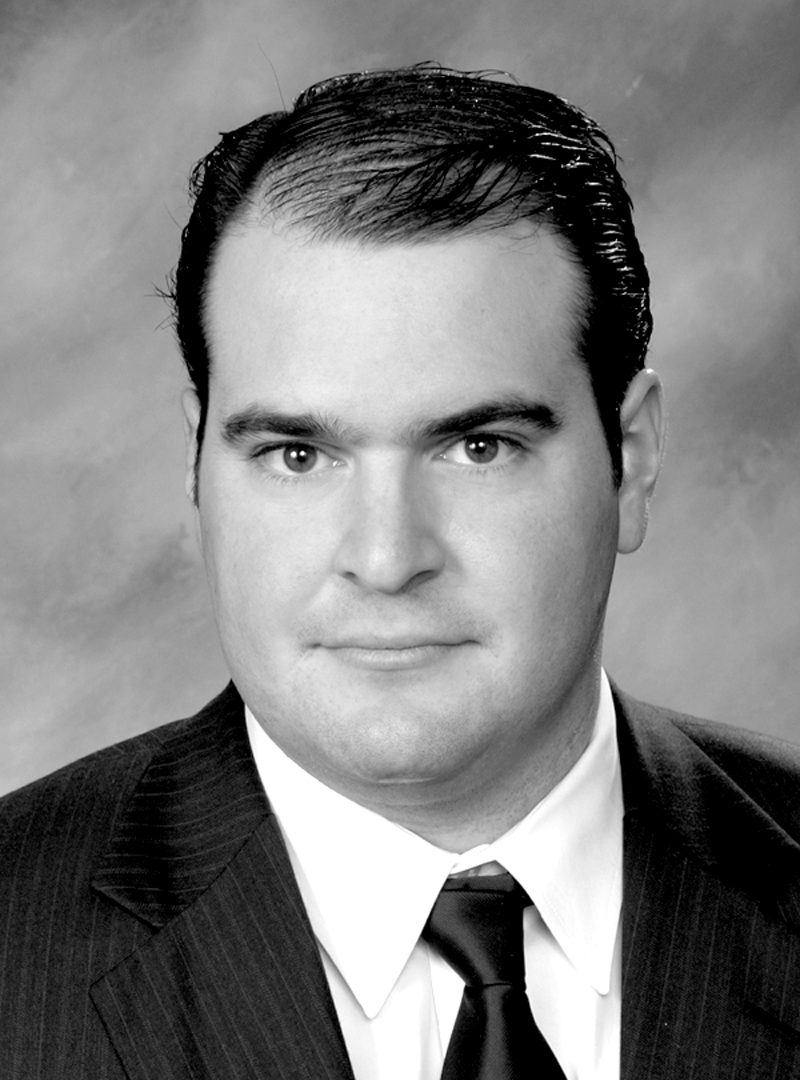
The commissioner heard testimony from defense attorneys, various academics, and two employers who had positive experiences hiring ex-offenders.
In a letter to the EEOC sent from the U.S. Commission on Civil Rights (USCCR), Commissioners Peter Kirsanow, Gail Heriot, and Todd Gaziano asserted that the hearings were not balanced and that the omission of important data was a mistake.
The commissioners said the EEOC should have heard important research from economists Harry Holzer and Stephen Rafael, as well as public-policy professor Michael Stoll. Their research, published in the Journal of Law and Economics, showed that employers with access to background checks were actually about 10% more likely to hire minorities than those without access to that information.
The commissioners wrote that the studies from Holzer, Rafael, and Stoll “suggest that, in the absence of criminal-background checks, some employers discriminate statistically against black men and/or those with weak employment records.”
The USCCR commissioners have asked the EEOC to convene another hearing specifically to look at this additional information and to consider the negative impact that limiting background checks would have on minorities.
What should employers do? The discussion in Washington and around the country will continue, hopefully in a fair and balanced way that all sides can agree with. When it concludes, it is possible that the EEOC may revise its existing guidance or simply leave it alone. That doesn’t mean that employers should just wait it out. With increased attention on this matter and a surge in lawsuits claiming discrimination, now is the time for employers to look carefully at their policies and procedures regarding background checks.
Employers should always ensure that hiring decisions are made consistently. When negative information returned on a background check is considered, employers should be careful to weigh the job-relatedness of the crime and the amount of time passed since the completion of the sentence.
Some employers also look to consider additional factors such as any positive work experience since the sentence, references, or civic activity.
The Employers Association of the NorthEast (EANE) will be hosting a Webinar about this topic on Nov. 30 from 12:30 to 2 p.m.  Employers interested in attending can register by visiting www2.gotomeeting.com/register/531504930.

John McTighe is vice president of Strategic Information Resources, a background-screening company based in Springfield; (800) 813-4381; [email protected]