Home Posts tagged Events (Page 33)
Creative Economy Sections
Easthampton Becomes a Mecca for Creative Businesses
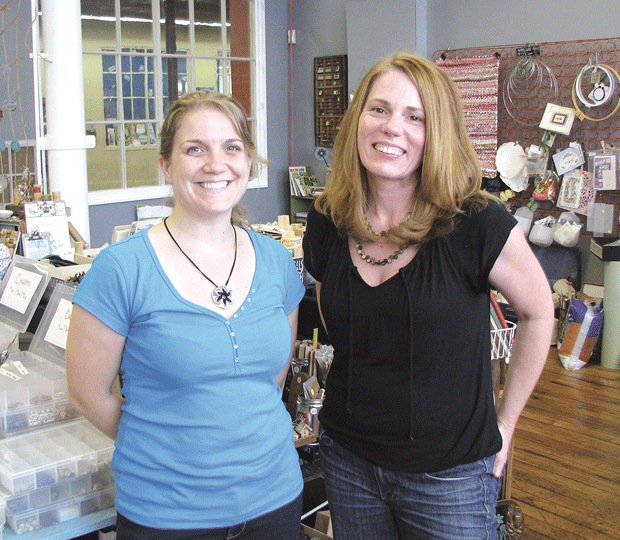
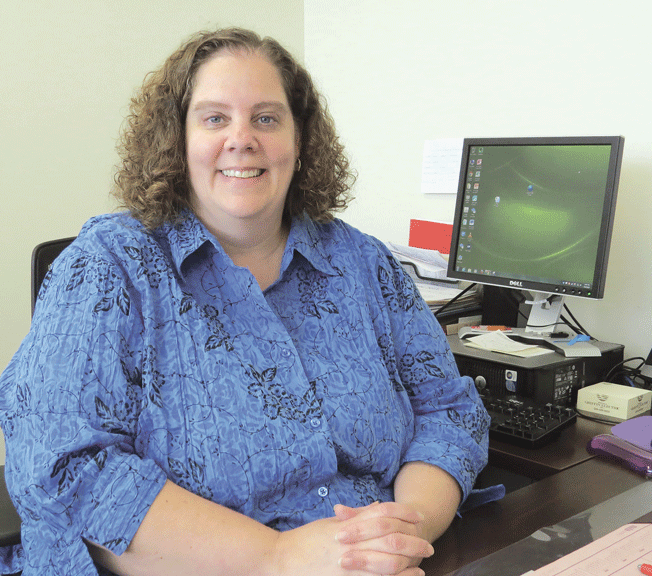
Amber Ladley, left, and Macey Faiella

Knack, which Amber Ladley, left, and Macey Faiella recently opened at Eastworks, is just one of hundreds of creative businesses and artists that call Easthampton home.

On bustling Cottage Street in Easthampton — a corridor at the base of Mount Tom dotted with eateries, quirky retail shops, and scores of artists — sits Nash Gallery.
The shop — which showcases and sells work primarily by local painters, sculptors, and other creative folks — has called the address home for almost two decades, said its owner, Marlies Stoddard, or since her mother opened the gallery 18 years ago.
“She had no background in art, no retail background,” Stoddard told BusinessWest. “But she owned the building, and she was sick of tenants moving in, painting the place purple, and moving out after six months after paying only three months rent.”
At the time, her mother saw Easthampton as “an old mill town with empty storefronts,” but she did recognize the Cottage Street area as home to a growing cluster of artists, and saw potential in catering to that scene.
Through the intervening years, Stoddard said, as artists throughout New England were beginning to recognize the city’s creative scene, it remained under the radar for many locals. “Everyone else was looking in on Easthampton and saying, ‘wow, what a place you have; what a mesh of blue collar and the arts.’ But often, the local townie doesn’t necessarily see it.”
That image is gradually changing, however, as Easthampton is cultivating a reputation as a thriving cultural mecca, with artists and creative entrepreneurs at the forefront of a creative-economy sector that is benefiting businesses of all types.
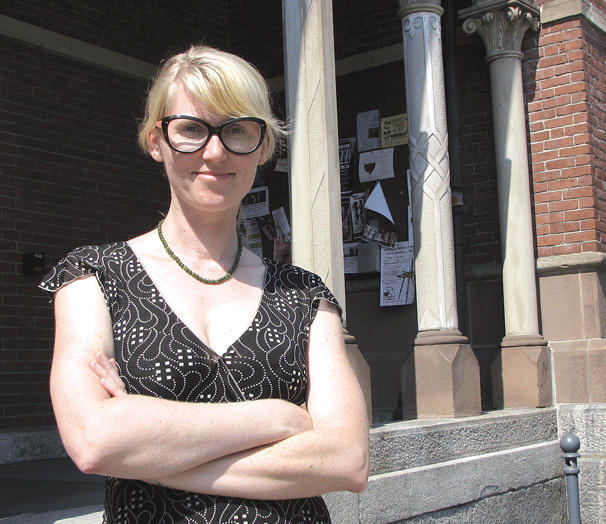
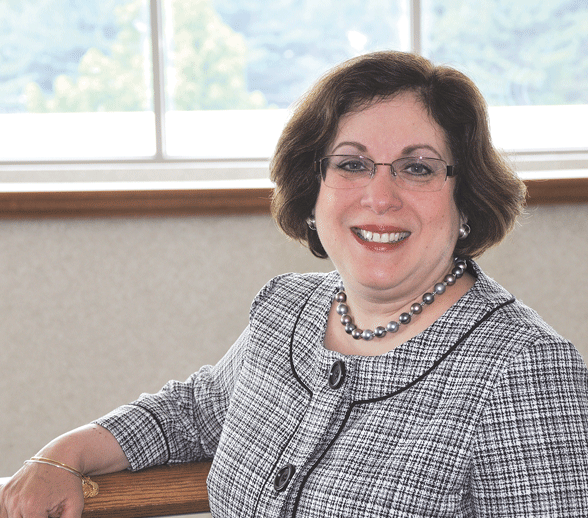
Burns Maxey

Burns Maxey says municipal leaders and businesses have increasingly come to value what the arts bring to Easthampton.

Take, for example, Art Walk Easthampton, an event held the second Saturday of every month, when galleries — and many businesses normally unrelated to the arts — collectively open their doors to showcase visual-art exhibitions, live music, and other performances.
“We get an average of 350 to 500 people coming out for the art walk,” said Burns Maxey, coordinator of Easthampton City Arts+ (ECA), a quasi-public organization tasked with consolidating and promoting the local creative economy. “It started off as a way to bring people to the city, by having all the exhibitions open. Since then, we’ve added themes to each art walk.”
For instance, last month’s walk was subtitled “Sights & Sounds” and featured more than 15 musicians and performers busking on Union Street. The history-themed Oct. 12 walk is dubbed “Know Thy Past.”
“Some restaurants have exhibitions or gallery space, or host performances or musicians or readings, and it really activates the whole city,” Maxey said. “There’s a buzz about what’s going on.”
Stoddard said she was involved in managing the monthly walk before ECA took it over. “It was great because we transformed these non-traditional venues. If you’re a coffee shop or whatever, you can be an art venue for three hours and have fun getting people through the doors. If you’re an insurance agency by day, for three hours on Saturday, you could be a gallery. People had a lot of fun with the Art Walk, and it’s still really thriving.”
‘Thriving’ would be an accurate term to describe both the creative culture in Easthampton and the efforts of ECA to leverage them into an effective force for economic development. For this issue, BusinessWest sits down with Maxey and several local business people to discuss why this city’s arts scene is being held up as an example for other communities to emulate.

Grin and Bear It
Easthampton City Arts began in 2005 as a group of artists and business owners who recognized the impressive number of creative people working in Easthampton and saw opportunities for revitalization efforts stemming from promotion of the arts. The + was added to the name several years later to reflect increasing participation from neighboring Southampton and Westhampton.
Before ECA, Maxey said, “Easthampton had a lot of storefronts that didn’t have businesses in them. This was a potential economy they could tap into.
“A lot of things happened between that time and now,” she continued. ECA received an Adams Arts grant from the Mass. Cultural Council, which looks for projects that work toward community-revitalization efforts through the creative economy. A coordinator was hired, Maxey said, and one of the first things she did was map out the city’s creative assets. “And there was a lot going on under the surface.”
For example, more than 100 creative businesses, the vast majority of them solo artists, call the sprawling Eastworks complex home, and more than 60 others are located along the Cottage Street corridor.
“That was the starting point,” Maxey said. “They created a directory, and also an online directory, for all these artists and creative businesses. That was really the first stepping stone.”
Another key development was the success of Bear Fest in 2009, when life-sized, fiberglass bears were painted and otherwise decorated by a host of artists and displayed outdoors, throughout the downtown area, for public viewing. Another Bear Fest followed in 2012.
“Doing Bear Fest was huge because it showed not only that Easthampton has the potential for being a destination for people to visit, but businesses saw the impact of people coming to Easthampton. That was a major step,” she said.
“I think businesses questioned it, at first,” she continued, “but when they saw so many people — thousands of people came through the city the first day alone — they really saw the potential.”
Since then, Maxey said, that spirit has reverberated in many public events and projects centered on the arts.

Jean-Pierre Pache

Jean-Pierre Pache says the city’s growing profile as an arts mecca has attracted more businesses and residents.

Recognizing the economic-development potential of the arts, in 2011 Easthampton designated ECA a city committee. Today, it’s funded through the municipal budget, state grants, and private donations, and Maxey works out of the remodeled former town hall, along with a few other creative businesses.
Jean-Pierre Pache was the first tenant in the remodeled building, moving Eastmont Custom Framing — a business he started in 2001 — as well as a small art studio, to the historic property. As one of the more than 240 artists active with ECA, he said he has seen the town’s creative community boost more than just its own profile.
“I think what’s more important is that the whole city has changed,” he said. “The city has a different image, which attracts visitors, which attracts new businesses and even new residents.”
He insists that such progress has been greatly enhanced by ECA’s efforts to more prominently position the arts and the creative economy as one of the town’s core strengths.
“I’ve seen the differences; in 12 years, I’ve been able to witness a lot of changes,” said Pache. “It was happening before I got here, and it’s still happening now, but there’s a lot of momentum now. That’s one of the strengths of ECA, and I give them a lot of credit.”
He noted that Meri Jenkins, program manager of the state’s Adams Arts Program, has often held up ECA as an example to other fledgling groups of not only effectiveness, but longevity.
“Many [arts organizations] suffer from burnout, since they’re all volunteer-based,” Pache said. “But this keeps growing and reinventing itself and finding new energy. We’re very lucky to have this in our town.”
Maxey agrees. “My position is through the Planning Department, and it makes a huge difference when you have a person tasked with looking at the creative-economy efforts. It’s economic development, but a creative way of looking at it.”
Added Stoddard, “we’re really lucky the city is putting value in this. A lot of us have been working very hard, and Burns is very much our leader.”

Knack for Business
Former mill complexes like Eastworks and Paragon Arts and Industry, both located on Pleasant Street, as well as One Cottage Street, have become home to vibrant artist communities. Amber Ladley and Macey Faiella saw the potential of Eastworks when they conceived of Knack, the ‘creative-reuse’ store they opened in the complex over the summer.
“We’ve gotten an amazing, fantastic response. The community itself has been very welcoming,” said Ladley, noting that the pair met Maxey early on, and met other artists through networking events organized by ECA.
“Through all that, we knew we wanted to be in Easthampton or Northampton. We still looked all throughout the Pioneer Valley; we really wanted to have a convenient location with parking, and we looked all over the place. When we saw this space in Eastworks, we felt it was the right space, and that Easthampton would be a good area for us.”
Ladley and Faiella, each the mother of two boys, were Easthampton residents when they met about 10 years ago. When Ladley read an article about creative reuse, she and Faiella began talking about a business that deals in reusable, ‘upcycled’ materials for creative projects.
“I knew Macey is very thrifty, always finding fun stuff at the side of the road and decorating her house with it,” Ladley said. “We started chatting and loved the idea, so we kept going.”
Faiella said she was surprised that such a store — which caters to all ages, from young crafters and Pinterest-obsessed teens to idea-seeking teachers and senior citizens with creative hobbies — didn’t exist in the Pioneer Valley, with its emphasis on all things ‘green.’
“In such an artsy community, it seemed like a perfect fit,” she said. “Everything is donated, much of it from artists in the area — we’re lucky to be in an area where artists are everywhere. A lot of it is from people cleaning out their closets, moving on to different hobbies. A kitchen-remodeling company was going out of business and had tile samples they were going to throw away in the dumpster; we saw the potential for them.”
The shop simply oozes inspiration. When a registry of deeds donated some microfilm reels, they were turned into cupcake stands. One woman bought a collection of rusty wrenches with the intention of turning them into wind chimes.
“We have great things for kids to use, and when people walk in, even if they’re not a crafter or creative person, they’ll still find stuff they want to do,” Faiella said, adding that a recent Art Walk saw about 70 people stop by. “People are really craving that kind of thing and getting more involved in the arts and what’s available. It’s been a nice fit for us, and we definitely feel that vibe — that this is a town that supports that kind of thing.”
To bring more such life to Eastworks, the complex is partnering with ECA on an endeavor called MAP, or the Mill Arts Project. “We’re working together to offer space to artists or creative people or creative business owners who want to try out an idea for a month or two,” Maxey explained.
“It could be a pop-up shop, it could be a performance space or an exhibition space, and we give them educational tools for how to connect with businesses and how to market their work,” she continued. As part of the deal, “they have to be open a certain number of hours or have events open to the public. It’s really a learning tool, and hopefully it will show them the potential to perhaps open a business or continue their idea in the city, particularly in Eastworks.”

Cottage Industry
Meanwhile, the Cottage Street neighborhood continues to thrive with its eclectic mix of enterprises, from Luthier’s Co-Op, where patrons can buy stringed instruments, take in live music, and drink a local brew; to New England Felting Supply, which offers workshops inside its brightly colored walls; to Popcorn Noir, a restaurant, bar, and performance space that also hosts mixology classes.
“It’s interesting because there were so many empty storefronts in that location, but in the last couple of years, it’s filled up quickly,” Maxey said. “There’s an immense amount of art-making happening. These are people who have small businesses; they’re making money from it, but they’re not the typical businesses we’ve thought about for so long since the 1950, like shoe stores and investment companies — although those are there, too.”
Meanwhile, Stoddard is currently sponsoring the sixth annual Paint Out, a project for which local artists paint outdoor scenes from around Easthampton, which will be displayed and put up for sale.
“We have around 55 painters, which is really great,” she said. “It creates this snowball effect, where people driving by turn their heads and say, ‘what’s going on here?’ when they see four or five painters set up in the same field. It creates a sense of wonder. And we have such an incredible wealth of local artists.”
Successful events are springing up elsewhere as well, such as the second annual Art in the Orchard running through October at Park Hill Orchard, featuring temporary installations from 22 sculptors — and a schedule of music and dance performances — throughout the grounds during prime apple-picking season.
“The location is stunning, the art is compelling, and that appeals to a lot of different people, from toddlers to grandparents,” said Pache, who is organizing the event, adding that between 100 and 150 visitors stop by on a typical day. “The art is supporting the orchard, and the orchard supports the arts at the same time. It provides a very unusual setting for the artwork.”
Speaking of live performances, Maxey said ECA is trying to raise the profile of such events in Easthampton by building an online database of venues. “Anyone can come to it and research where to hold an event. We’re excited to put that together.”
She credits much of her organization’s success to the enthusiasm of the local arts community, noting that the 240 artists who call themselves ECA members are probably only a fraction of the total working locally.
“This is a tight-knit community, and people are excited about what’s going on here,” she told BusinessWest. “I moved here from Northampton in 2007 and immediately fell in love with Easthampton because of the community of people.”
Stoddard noted multiple reasons why Easthampton is an attractive landing spot for artists and creative business people. “We have endless real estate for studio space, and we have a large body of people who come here and appreciate their anonymity — and we respect that as well.”
Maxey added that “there is absolutely a buzz about what’s going on here. I think the quality of the artists in this location — in Easthampton and the Pioneer Valley as a whole — is immense. Go outside our area, and you can really recognize the quality of art made right here — that’s everyone from artisans to fine artists; performers to sculptors and installation artists. There’s a little bit of everything. We have a great community here.”

No Place Like Home
Stoddard said thriving business districts have a societal benefit that can be long-lasting, and creative enterprises have driven much of the recent growth in Easthampton.
“I have customers coming in with their kids and actively teaching them the values of shopping locally and supporting their local downtown,” she said. “That mentality has really changed — the appreciation for small businesses. I feel it all the time; I never feel slighted. I constantly have people coming in saying, ‘thank you for being here.’
“It’s a great feeling, and it makes being a business person in my hometown really rewarding,” she concluded. “I didn’t have that feeling back in 1995. When I was 18, I wanted to get out of here. But it’s a great place to come back to.”

Joseph Bednar can be reached at [email protected]

Creative Economy Sections
Indian Orchard Mills Creates a Community for Artists

Sarah Concannon

Sarah Concannon is a very recent addition to the tenant population at Indian Orchard Mills, but she is already enamored with the sense of community she says exists there.

Sarah Concannon is an artist with a mission.
She calls it “The People in Your Neighborhood,” and it involves painting a portrait of a resident (of her choosing) from each of Springfield’s 17 recognized neighborhoods.
At this point, she’s still in what would be considered the planning and fund-raising stages of this endeavor. While contemplating a process for selecting her subjects, she’s also going about the task of amassing the nearly $7,000 she estimates she’ll need to complete the project; she recently ventured onto Kickstarter, a website that provides a vehicle for crowd-funding creative initiatives via the Internet.
“This is probably the only way I’d be able to fund a project like this,” she told BusinessWest, adding that she recently took one big step forward with this initiative — and what amounts to a fledgling business venture. That would be her move, just a few weeks ago, into a 100-square-foot studio at the Indian Orchard Mills in Springfield.
This step up, from a studio (of sorts) in a small spare bedroom in her home in Springfield, provides her with the physical space with which to flex her creative muscles while she continues her day job as an inventory-control analyst for Baystate Health. But it also gives her much more.
Indeed, she’s now part of what can only be called a community of artists at the sprawling mill complex, one that is fueling the economy in many respects, and also providing a strong support network for artisans trying to make dreams come true and, in many instances, turn passions into successful businesses.
There are now more than 50 artists in the 300,000-square-foot, 12-building mill complex, said Charles Brush, who used that term to describe individuals creating everything from jewelry to furniture to exhibits for the Basketball Hall of Fame.
Brush bought the landmark in 1998 and has committed himself to continuing — and expanding — the work started by the mill’s previous owner, Muriel Dane.
Her name is on the 2,000-square-foot gallery in the mill, which is one focal point of twice-yearly open studio events, said Brush, noting that what Dane created, and he took to a higher level, is much more than physical space in which to paint or sculpt.
“You’ll never see an environment like this anywhere else,” he noted, “because I work with the tenants, and we all work with, and for, each other, with one goal in mind, and that is just to get it done and make it right, whatever ‘it’ happens to be.
Todd Harris

Todd Harris’ company merges engineering and art to create unique museum exhibits like this larger-than-life eagle’s nest bound for a Connecticut learning center.

“This doesn’t happen by accident or because you’re giving the place away — art is business, but consistency is the key to any business, doing the same thing all the time,” he went on, adding that the mill’s mission is to provide a mailing address, but also an atmosphere, where artists can create, collaborate, and thrive.
The story being written in each of the studios is different in some respects, although there are common denominators — a passion for art and a desire to be part of this community of artisans.
For some, like Peter Barnett, a fine landscape and portrait artist and retired systems analyst at MassMutual, his work is still mostly a hobby, albeit a full-time pursuit.
“I paint things that turn me on, clouds and rocks,” he joked, adding, “I don’t personally need to sell work to keep food on the table, but I do love to sell work, and I really like the community, the interaction, I find here.”
For others, like Todd Harris, the mill has become home to a new business venture. He left a lucrative career as an engineering consultant to start 42 design fab, which creates exhibits for museums and nature centers across the country.
“We’re trying to make this work as a business and support the whole creative-economy thing because you should be able to make a living for a team of people that come to work every day and have fun doing creative things,” he said. “Our growth plan is about pushing our boundaries artistically and making it work as a business.”
For this issue and its focus on the region’s burgeoning creative economy, BusinessWest takes an in-depth look at one of the most recognizable — and successful — manifestations of that phenomenon, the Indian Orchard Mills, a landmark that speaks to the region’s past, but is now a symbol of its future.

Brush Strokes
Crystal Popko says people will invariably have two questions when they first encounter her jewelry made from butterfly wings.
“‘Are they real?’ and ‘what happened to the butterfly?’ — that’s what everyone wants to know,” she said, adding that the answer to the first query is ‘yes,’ and the response to the second is that the insect died naturally. (She acquires the wings from a nearby butterfly conservancy.)
Popko, who also works with fused glass as well as feathers, leaves, and other products from nature, is typical of the dozens of artists who now call the mill complex home.
Like many artists aspiring to turn their talent into a business, she started working out of her house. She would spend summers working, seven days a week, as a waitress on the Cape, trying to earn enough to spend her winters making and selling jewelry.
Three years ago, she decided to make her art a career, knowing that she would need, among other things, a studio where she could create and clients could see her work. She said she was drawn to the mill by its location, attractive lease rates, and, most importantly, that aforementioned community of artists already doing business there.
Carol Russell, a creator of stained-glass art, moved in for the same reason.
“I came here for the sense of community,” she told BusinessWest, “and being around other people and their energy.”
‘Community’ and ‘energy’ are words one hears often while walking the hallways of the mill complex, said Brush, who has a background in finance and manufacturing, but admits to being initially overwhelmed by the mill, its size, and all that goes into its upkeep.
But he was too intrigued by its vast potential to walk away when he started thinking about acquiring the mill in 1997. And he has no regrets about what most would consider a risky undertaking.
“It looked like it would be fun, and it’s really been a blast,” he said. While a number of industry groups (from asbestos abatement to precision manufacturing) are represented on a tenant list that now numbers more than 130, he noted, the growing number of artists — and the wide diversity of that constituency — is what has given the mill much of its identity.
“Everybody has a different definition of art,” he noted, adding quickly that his is quite broad, largely because of what he sees happening on each of the mill’s five floors. “Some people think artists stand at easels or over a lump of clay — and we have those in droves — but in my mind, arts is the creative, like the guy [Harris] that makes the museum exhibits. Yes, it’s manufacturing, but there is a lot of art that goes into what they do.
“What our woodworkers do with raw materials, what leaves here — the cabinetry, the furniture — is all art,” he went on. “We are a creative-industry complex, and as far as I’m concerned, the industry is just as artistic as traditional art.”
In his role as landlord, Brush says it’s his job to give all of his tenants an environment in which they can thrive. And when it comes to the artists — of all kinds — this means providing the space and the opportunity to create, collaborate, and feed off that aforementioned energy.

Peter Barnett

Peter Barnett has enjoyed the creative interaction of the artists at Indian Orchard Mills for two decades.

And nowhere is this more evident than at the Dane Gallery and the two open-studio events, he said.
The gallery is open Saturdays from noon to 4 p.m., and it features works created by many of the mill’s tenants. Open year-round, the gallery allows each artist the opportunity to produce their own show for a month; Concannon’s “The People in Your Neighborhood” is expected to be ready for display in the gallery next year.
As for the open studios, they are, as the name suggests, events where tenants open up their studios to the public, with works on display and for sale.
Now in their 21st year, these events have drawn thousands of visitors to the mill (necessitating their expansion from one-day affairs to two) and, in so doing, have inspired a number of artists to join the community at the mill.
Such was the case with Concannon, who took in one of the open studios several years ago and began formulating plans to one day be one of the artists greeting guests. That day became reality a few months ago, when she and her husband, Greg Matthews, determined that they had the financial wherewithal for her to make her painting more than a part-time pursuit.
“It’s so inspiring to be a part of a community where people speak the same language and can offer critiques of your work if you want it,” said Concannon. “I can’t wait to get started because I know how good it will feel to be painting again and what a sense of accomplishment awaits if I’m able to make this project successful.”

His Nest Eggs
As he talked with BusinessWest, Harris showed off a larger-than-life eagle’s nest, complete with three oversized eggs, that is in the final stages and bound for the Harry C. Barnes Memorial Nature Center in Bristol, Conn.
It’s an example of how his company has merged engineering and art to create unique learning experiences, and also one of the hundreds of unique and diverse forms that the creative economy takes in the region — and especially Indian Orchard Mills.
There, tenants haven’t just created works of art. They’ve created a community — and real momentum in the efforts to make this sector an economic driver.

Elizabeth Taras can be reached at [email protected]

Chamber Corners Departments

ACCGS
www.myonlinechamber.com
(413) 787-1555

• Sept. 24: Pastries, Politics, and Policy, 8-9 a.m., at the TD Bank Conference Center, 1441 Main St., Springfield. For those political and policy junkies. Join us for our debut event featuring a policy expert and member of the Patrick administration for a breakfast and roundtable discussion. Reservations are $15 for members, $25 for general admission. Reservations may be made online at www.myonlinechamber.com or by calling Cecile Larose at (413) 755-1313.
• Oct. 1: Rake in the Business Tabletop and Business Networking Event, 4:30-7 p.m., at the Castle of Knights, Chicopee. This unique tabletop showcase provides businesses and organizations with an affordable opportunity to exhibit their products and services. Presented in collaboration with the Greater Chicopee, Holyoke, and Westfield chambers of commerce. Exhibitor space is $100 and includes an 8-foot table, two exhibitor passes, and six complimentary passes for admission. Reservations to attend are $5. Reservations may be made online at www.myonlinechamber.com or by calling Cecile Larose at (413) 755-1313.
• Oct. 2: Business@Breakfast, 7:15-9 a.m., at the Log Cabin in Holyoke. Speed Networking — join us for our take on speed dating, a fast-paced way for you to work the room, making 50 new contacts at one breakfast. Get your elevator speech ready for this unique event. Sponsored by Series Sponsor Masiello Employment Services. Reservations are $20 for members, $30 for general admission. Reservations may be made online at www.myonlinechamber.com or by calling Cecile Larose at (413) 755-1313.
• Oct. 9: Lunch ‘n’ Learn, 11:30 a.m.-1 p.m., at One Financial Plaza Community Room, 1350 Main St., Springfield. The program, “Birds Tweet, but Should You? Is Social Media Right for Your Business?” will discuss strategies behind using social media, determining your return on investment and tips on how to best deploy social media to your advantage. Reservations are $20 for members, $30 for general admission, and includes networking time and a boxed lunch. Reservations may be made online at www.myonlinechamber.com or by calling Cecile Larose at (413) 755-1313.
• Oct. 24: A Chocolate Affair, 6-9 p.m., at Chez Josef in Agawam. Indulge yourself in chocolate, shopping, and networking. Presented by the Professional Women’s Chamber, an affiliate of the ACCGS. Exhibitor space is $70. Reservations to attend are $40. Reservations may be made online at www.myonlinechamber.com or by calling Cecile Larose at (413) 755-1313.
• Oct. 25: Super 60, 11:30 a.m.-1:30 p.m., at Chez Josef in Agawam. Celebrate the region’s top-performing companies. Now, in its 24th year, this awards program celebrates the success of the fastest-growing privately owned businesses in the region that continue to make significant contributions to the strength of the regional economy. Presented by Health New England with support from Hampden Bank, Sullivan Hayes & Quinn, the Republican, and WWLP-TV 22. Reservations are $50 for members, $70 for general admission. Reservations may be made online at www.myonlinechamber.com or by contacting Cecile Larose at (413) 755-1313.

AMHERST AREA CHAMBER OF COMMERCE
www.amherstarea.com
(413) 253-0700

• Sept. 25: Chamber After 5 at Florence Savings Bank, Block Party, 5-7 p.m. Hosted by and sponsored by Florence Savings Bank, 385 College St., Amherst. Explore the whole group of businesses at Amherst Crossing: Amherst Pharmacy, Coldwell Banker-Upton Massamont Realtors, and Pioneer Valley Ideal Weight Loss. Enjoy tasty treats from Portabella Catering. Admission: $10 for members, $15 for non-members. RSVP to [email protected].
• Oct. 3: Amherst Area Chamber Annual Awards Dinner, 5:30-9 p.m., at the UMass Student Union Ballroom. Presented by PeoplesBank. Sponsored by J.F.Conlon & Associates. Legacy Award: John Coull; Lifetime Achievement in Business: Ronald Nathan, Amherst Insurance Agency/the Nathan Agencies; Community Service: Family Outreach of Amherst; Chamber MVP: Cinda Jones, W.D. Cowls Land Co. Admission: $75 per ticket.
• Oct. 18: Legislative Breakfast, 7:15-9 a.m., at the Lord Jeffery Inn. Sponsored by Western Massachusetts Electric Co. Admission: $15 for members, $20 for non-members.

GREATER EASTHAMPTON CHAMBER OF COMMERCE
www.easthamptonchamber.org
(413) 527-9414

• Oct. 1: GRIST — Get Real Individual Support Today, 9-10 a.m. at the Greater Easthampton Chamber of Commerce, 33 Union St., Easthampton. The GRIST group is a free member benefit, an ongoing small group of folks who meet regularly to share ideas and get advice on the daily challenges of running a successful business. RSVP to group leaders Derek Allard at [email protected] or (413) 282-9957, or Fran Fahey at [email protected] or (413) 529-1189. Free to chamber members and future members.
• Oct. 8: Mayoral Forum, 6 p.m., Eastworks Meeting Space, Suite 160, 116 Pleasant St., Easthampton. Learn about the Easthampton mayoral candidates’ views on business and their plans for the future of Easthampton. Free and open to the public.
n Oct. 10: Networking by Night Business Card Exchange, 5-7 p.m. Hosted and sponsored by Cernak Buick, 102 Northampton St., Easthampton. Hors d’ouevres, beer, and wine available. Door prizes. Tickets: $5 for members, $15 for future members.
• Oct. 15: GRIST — Get Real Individual Support Today, 9-10 a.m. at the Greater Easthampton Chamber of Commerce, 33 Union St., Easthampton. The GRIST group is a free member benefit, an ongoing small group of folks who meet regularly to share ideas and get advice on the daily challenges of running a successful business. RSVP to group leaders Derek Allard at [email protected] or (413) 282-9957, or Fran Fahey at [email protected] or (413) 529-1189. Free to chamber members and future members.
n Oct. 21: Celebrity Bartenders Night, 6-9 p.m., at Opa-Opa Steakhouse & Brewery, 169 College Highway, Southampton. Join us for a night of fun with local celebrities mixing drinks. Tips benefit the chamber’s holiday lighting fund. Raffles and more fun. Admission: free.

HOLYOKE CHAMBER OF COMMERCE
www.holycham.com
(413) 534-3376

• Sept. 24: “The Power of E-mail Marketing,” bonus session: “Getting Started with Constant Contact E-mail Marketing,” from 8:30 (registration) to 10 a.m., at the Greater Holyoke Chamber of Commerce Executive Conference Room, 177 High St., Holyoke. Sponsored by PeoplesBank and the Republican. Attendance is free. For reservations, call the chamber office at 413-534-3376.
• Oct. 1: Table Top Showcase, 4:30-7 p.m., at the Chicopee Castle of Knights. Four area chambers — Greater Holyoke, Chicopee, Westfield, and the ACCGS — are getting together to present a tabletop mini-trade show. Tables cost $100. Call the Holyoke Chamber at (413) 534-3376 to secure your table.
• Oct. 3: “Ask a Chamber Expert: the Basics of Blueprint Reading,” 8:30-10 a.m., at the Greater Holyoke Chamber of Commerce, Executive Conference Room, 177 High St., Holyoke. Learn how to define different types of scales used on drawings; identify the height, width, and length dimensions of a drawing; interpret the various symbols and notations used on a drawing; distinguish between plan, elevation, section, and detail views; and become familiar with basic plan-reading terminology. Price includes a continental breakfast. Cost: $10 for members; $25 at the door and for non-members. Call the chamber at (413) 534-3376 to sign up.
• Oct. 9: Autumn Business Breakfast, 7:30-9 a.m., at the Log Cabin. Sponsored by the Republican and Holyoke Medical Center. Recognizing new members, business milestones, and networking breakfast meeting. Cost: members, $22 in advance, $28 at the door. Call the chamber at (413) 534-3376 to sign up.
• Oct. 16: Chamber After Hours, 5-7 p.m., at the Center for Health Education, 404 Jarvis Ave., Holyoke (former Grynn & Barrett Studios). Business networking event to take place at HCC’s newest education facility. Networking, 50/50 raffle, and door prizes. Cost: $10 for members, $15 for the public. Call the chamber at (413) 534-3376 to sign up.
• Oct. 22: Social Media with Constant Contact Workshop, 8:30-10:30 a.m., at the Greater Holyoke Chamber of Commerce, Executive Conference Room, 177 High St., Holyoke. Sponsored by PeoplesBank and the Republican. This information-packed seminar offers a basic review of the essential strategies and best practices a business or organization should understand to successfully get started with social-media marketing. Admission is free. Brought to you by Constant Contact. For reservations, call the chamber office at (413) 534-3376.
• Oct. 30: Manufacturing Breakfast, 7:30-9:30 a.m., at the Wherehouse, 109 Lyman St., Holyoke. For reservations, call the chamber office at (413) 534-3376.

MASSACHUSETTS CHAMBER OF COMMERCE
www.massachusettschambersofcommerce.com
(413) 525-2506

• Nov. 12: Massachusetts Chamber of Commerce Annual Meeting & Awards Luncheon, 9 a.m. registration, at the DoubleTree, Westborough. For more information on ticket sales and sponsorship opportunities, call the chamber office at (413) 525-2506 or e-mail [email protected].

GREATER NORTHAMPTON CHAMBER OF COMMERCE
www.explorenorthampton.com
(413) 584-1900

• Sept. 26: Business Planning Workshop, 3:30-5 p.m., at the Northampton Chamber, 99 Pleasant St., Northampton. Presented by the staff of the Franklin County Community Development Corp. This 90-minute session informs business owners about business planning, the loan process, where to get help, and how to launch a food product and use the Western MA Food Processing Center. Learn about available resources and walk out knowing your next step. Admission is free, but space is limited. RSVP to [email protected].
• Sept. 25: Incite Information, 7:30-9 a.m., at Look Park: the Garden House. Hosted by the Greater Northampton Chamber of Commerce. Sponsors: United Personnel, Webber & Grinnell, and Six-Point Creative Works. The speaker will be state Sen. Senator Stan Rosenberg. Incite Information is a four-part series on the future of business in the Pioneer Valley. The format and topics were developed from a survey of chamber members, in which it was clear that business leaders are looking for more avenues for relevant and highly local information that will help them make decisions more effectively. The series will include expert speakers who will address big issues with a local mindset. Topics for this year will include economic development, high-speed transportation, higher education, and the impact of work culture. Cost: $20 for members, $30 for non-members. RSVP required. To register, contact Esther at [email protected].
• Oct. 2: Annual Chamber Open House, 5-7 p.m. Sponsors: Innovative Business Systems, Pioneer Training, and Crocker Communications. The chamber’s largest fall networking event, the open house is designed to introduce prospective members to the chamber and its members. Cost: $10 for members, $15 for non-members. RSVP to Esther at [email protected].
• Oct. 8: Business to Customer Marketing Workshop: “On-the-spot Marketing Tips for Increasing Foot Traffic,” 1-3 p.m. Hosted and sponsored by the Greater Northampton Chamber of Commerce. Presented by the Creative Marketing Group. The Creative Marketing Group will meet with you and your fellow retail business owners and managers at our conference-room table, listen to your marketing and communications concerns, and help you brainstorm practical, professional solutions on the spot. Learn more about how to strategize, advertise, brand, and promote your business, reach the media, and maximize your message in person, in print, and online. Cost: free, but pre-registration is required, and space is limited. To register, contact Esther at [email protected]
• Oct. 22: Business to Business Marketing Workshop, 3:30-5 p.m., at the Greater Northampton Chamber of Commerce. Cost: free, but pre-registration is required, and space is limited. To register, contact Esther at [email protected].
• Nov. 6: Arrive@5 Chamber Networking Event, 5-7 p.m. Hosted by the World War II Club. Sponsors: Homeward Vets. Catered by Big Kats Catering. The chamber will be collecting donations for Homeward Vets. A list of needed donations will be posted on its website. Cost: $10 for members, $15 for non-members. RSVP to Esther at [email protected].

WEST OF THE RIVER CHAMBER OF COMMERCE
www.ourwrc.com
(413) 426-3880

• Sept. 26: Coffee with Mayor Cohen, 8-9:30 a.m., at the OMG Training Center, 604 Silver St. Agawam. For more information, contact the chamber office at (413) 426-3880 or e-mail [email protected].
• Oct. 2: Wicked Wednesday, 5-7 p.m., at Westfield Bank, 655 Main St., Agawam. Wicked Wednesdays are monthly social events hosted by various businesses and restaurants. These events bring members and non-members together to network in a laid-back atmosphere. Free for chamber members, $10 for non-members. Event is open to the public, but non-members must pay at the door. For more information, contact the chamber office at (413) 426-3880 or e-mail [email protected].
• Oct. 10: West Springfield Mayoral Debate, 6-8 p.m., at West Springfield City Hall. Event is open to the public and free for both members and non-members. For more information, contact the chamber office at (413) 426-3880 or e-mail [email protected].
• Oct. 17: Business with Bacon, 7-9 a.m., at Crestview Country Club. Speaker: Gaming Commissioner Bruce Stebbins. Cost: $25 for chamber members, $30 for non-members. For more information, contact the chamber office at (413) 426-3880, or e-mail [email protected].
• Oct. 23: Business to Business Expo, hosted by the West of the River Chamber, the North Central CT Chamber, the Bradley Regional Chamber, and the East Windsor Chamber, 4:30-7:30 p.m. Hosted by Holiday Inn, Enfield. Cost: $100 for a six-foot table if you are a member of any chamber and pay in full by Sept. 27, or $150 for a six-foot table if you are not a member of any chamber or do not pay in full by Sept. 27. For more information, contact the chamber office at (413) 426-3880, or email [email protected].

GREATER WESTFIELD CHAMBER OF COMMERCE
www.westfieldbiz.org
(413) 568-1618

• Oct. 7: Mayor’s Coffee Hour, 8-9 a.m., at the Forum House, 55 Broad St., Westfield. Mayor Knapik will speak about all that is happening around Westfield and field questions. Free and open to the pubic. To register, call Pam Bussell at the chamber office at (413) 568-1618, or e-mail [email protected].
• Oct. 9: October WestNet Connection, 5-7 p.m., at East Mountain Country Club, 1458 East Mountain Road, Westfield. An evening of networking; don’t forget your business cards. Complimentary hors d’oeuvres and cocktails. Walk-ins are welcome. Tickets: $10 for members, $15 cash for non-members. To register, call Pam Bussell at the chamber office at (413) 568-1618, or e-mail [email protected].

Cover Story
Why Workplaces Must Nurture the Millennial

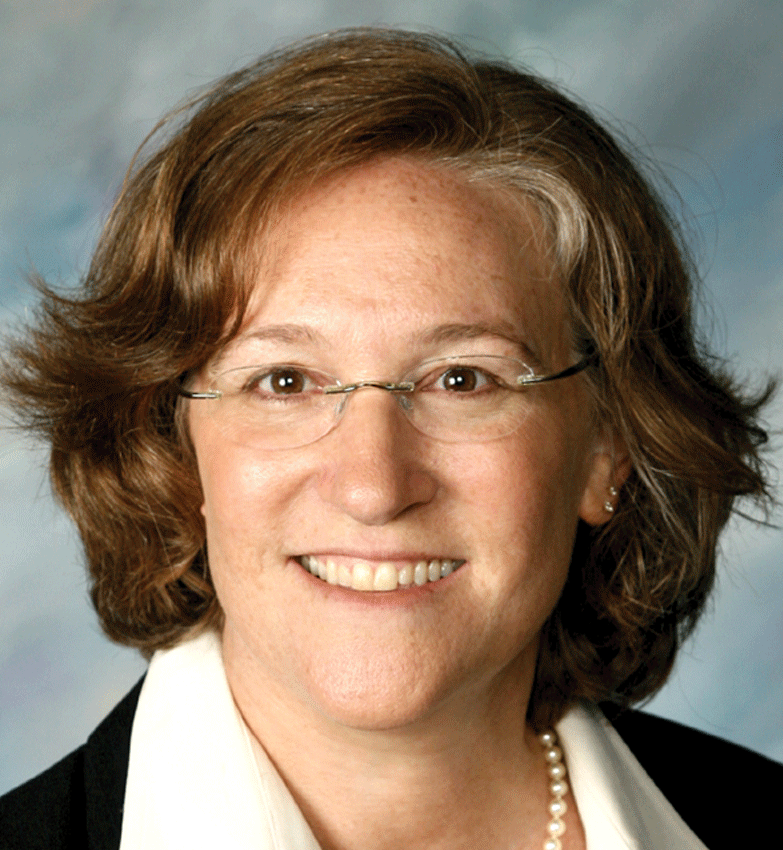
Charles Schewe

Charles Schewe says businesses need to harness the strengths of Millennials, from their idealism and confidence to their entrepreneurial bent and technological savvy.

Charles Schewe recalls a conversation he had with the head of a local bank, who told him about a recent interview with a young job seeker.
“He told me one of these guys came in, and halfway through the interview he said, ‘every day from 1:30 to 3, I go to the gym; I hope you can accommodate that.’”
That interviewee isn’t alone; the generation known as Millennials — who currently range in age from 13 to their early 30s — have a reputation for demanding work-life flexibility.
“Older people say, ‘what, are these people crazy?’” Schewe said. “There’s a sense that this is inappropriate, and we have to change them. But wait a minute — there are 72 million of them.”
Schewe, an author and professor of Marketing at the Isenberg School of Management at UMass Amherst, has been studying generational differences for more than 20 years. His most recent book — Defining Markets, Defining Moments: America’s 7 Generational Cohorts, Their Shared Experiences, and Why America Should Care — distills much of that research and applies it to the marketplace.
He says the Millennials — the second-largest generation in American history, behind the Baby Boomers — have arrived in the workforce with the baggage of a reputation for being lazy, entitled, narcissistic, and restless, perceptions that are, in many cases, exaggerated at best.
But whatever they bring to the business world, both positive and negative, Schewe said, their Boomer and Gen-X employers and managers had better learn how to incorporate their very distinct work styles. “Baby Boomers came up with casual Fridays; now it’s casual every day, and people at the top can’t change that. We need to learn to love them, not leave them, because they are the future of the workforce.
“The demographics are evident,” he reiterated. “There are 72 million of them marching into their 20s and early 30s, and they’re a force to be reckoned with, both in the marketplace and especially in the workplace.”

Tumultuous Times
The first step in dealing with Millennials, Schewe said, is understanding them and recognizing the factors that have shaped them. The term ‘cohort’ isn’t precisely a synonym for ‘generation,’ but a parallel to it, representing a group of people connected and shaped by common experiences.
“There’s a perception of Millennials out there — that they’re entitled, they’re lazy, they want everything but don’t want to give much, and so on. But that may not be true,” he told BusinessWest. “In the work I do and have done for the last 20 or so years with generational cohorts, there’s an understanding that what happens to us, what we experience from our environment and events — particularly hugely cataclysmic events when we’re coming of age, roughly 17 to 23 years of age — creates values that remain relatively stable in our lives.”
There are recent historical examples of this, he explained. “People in their 90s who experienced the Great Depression still save. The ones who went through World War II are still the most patriotic of any age group. Each group has different sets of values from the other groups, and yet there’s a cohesion of values within each group.”
The Millennials, who were born roughly between 1980 and 2000 — although some set the dates as far ahead as 1984 to 2004 — are, by either account, the second-largest cohort the U.S. has ever seen, trailing only the Baby Boomers. The earliest of them came of age during the rise of the Internet, and that has become perhaps their most important cultural touchstone.
“The introduction of the Internet changed everything,” Schewe said. Notably, it ushered in a brief moment of economic hope, followed by disillusionment, which then set the stage for the disappointments of the past decade.
“We didn’t know it at the time, but look back and see how different the world was in the late 1990s,” he said. “Young people all thought they would retire by 30 — they’d get an Internet company going and sell it off. But the [dot-com] bubble burst in 2000, then we had 9/11, then the wars in Iraq and Afghanistan.”
That was followed in short order by the global implosion of the financial markets in 2008 and the Great Recession, all of which has brought worry to a generation otherwise known for its confidence and high levels of education. But the Internet spawned something else as well — the sense of being connected to a global community, combined with a drive for technological advancement.
“The Internet has morphed into a constancy of change, and a media change — the life expectancy of a cell phone today is 18 months, and then we’ve got to get something new,” Schewe said. “We have this sense of constant speed. This sense of urgency and speed of change is a value Millennials have.”
Other factors — from the first African-American president to the scandals of Enron and Bernie Madoff; from the incompetence following Hurricane Katrina to the shootings at Columbine, Virginia Tech, and Newtown — have also coalesced into the Millennial generation’s unique mix of idealism and skepticism.

Workplace Revolution
But how does this youngest sector of the workforce interact on the job? That’s where executives and managers begin to wring their hands.
“I would say the cohort gap between Millennials and older managers is dramatic,” Schewe said. “There’s a huge gap and huge conflict between older managers who expect some sort of respect, and young people who come in and call the CEO by his first name; older people aren’t used to that. [Young workers] come in and dress the way they want to, and they expect that’s acceptable.”
They also have a reputation for casual irreverence that, as a professor, Schewe says is not completely unearned.
“I need to put on the syllabus that I prefer to be called Professor Schewe; they’ll call me Charles or Schewe, like, ‘hey, Schewe, when’s the exam?’ Or they’ll walk out the door to go to the bathroom in the middle of class — but they only do that once,” he told BusinessWest.
“They don’t have the respect for older people” that previous generations have shown, he continued. “We always thought wisdom, age, and experience had some sort of status … but that isn’t the way now. In part, it’s because they’re on top of things more than we are, particularly the technological advancements, and that gives them a sense of superiority over older people. In the past, there was some expectation of deference, but nowadays it’s just assumed we’re on an equal plane.”
The Millennial reputation for restlessness is also borne out by recent career trends. “On average,” he said, “a college graduate will have three career shifts by the age of 30. That’s not the way it was when this boy went into the job market. You were loyal to General Motors, and if you were lucky enough, you had a job all your life. Today, if they’re not happy, they’re likely to take your investment in them and go somewhere else.”
To slow down that revolving door — and avoid the costs of constantly recruiting, hiring, and training new employees — he said companies need to create a sense of community among their employees, as that’s something young workers crave.
“They’ve always been put in teams, even in school. They’re used to working with people,” Schewe said, noting that today’s forward-thinking companies are built much more around collaboration than in the past — and feature communal activities outside the office as well — because Millennials tend to be happier in such an environment. Again, he noted, if they’re not happy, they’ll jump ship.
Meanwhile, “they’re also extremely entrepreneurial, so give them challenges they can jump on, and they can take with them a sense of success, of being their own boss. That will make them more incentivized. And, of course, they’re multi-taskers, so give them multiple projects at the same time.”
The generation’s technological savvy can benefit the workforce in multiple, and often unexpected, ways, Schewe noted. For instance, it can become a sort of reverse mentorship, with Millennials teaching their managers about ways to incorporate new technology in the workplace.
That’s not easy for some older supervisors, who tend to look at employees below them in the managerial hierarchy as somehow lacking, he went on “when, in fact, they have skills and opportunities to guide managers above them. Companies should take advantage of that, and Millennials feel good about that. These people are far more creative and innovative in their thinking than prior generational cohorts.”
In addition, “they’re not going to be satisfied if they’re forced to do menial tasks; they need to be challenged,” he noted. “If, in their situation, they’re not being challenged, the company ought to think about moving them laterally — not down, because they’ll feel undervalued — but move laterally to find that sense of challenge.”

Changing Tides
Evidence suggests plenty of reluctance to embrace the Millennial way; recruiting firm Adecco found in a 2012 study that hiring managers were three times more likely to hire a worker over the age of 50 as they were to hire someone between 18 and 32. And 75% of managers in the survey said Millennials’ biggest job-seeking mistake was wearing inappropriate clothing to the interview, while 70% cited potentially compromising social-media content as a red flag to hiring.
But Schewe said Millennials bring plenty of positives as well, including their well-honed sense of idealism. While previous generations dreamed of working for a large company and making a large salary, today’s college students are just as likely to say they want to improve the world in some way. Others say money is less important than doing work that gratifies them or offers scheduling flexibility or work-life balance, so they have time to pursue their other interests.
“As an employer, how do you harness that? The answer is, you can shift the company — as any company should be doing anyway — in order to be more consistent with the marketplace, more into social responsibility, sustainability, even volunteerism. It’s unbelievable what my students do in terms of volunteering. It’s so pervasive at the university. They value that, and you as a company ought to tap into that,” he said, either by sponsoring programs or offering time off to pursue such activities.
The bottom line, he said, is that the career landscape will gradually be overtaken by a highly educated cohort — more than two-thirds of high-school graduates now go on to college, as opposed to 45% in 1960 — with much different ideas of how a workplace should operate.
Some Millennial habits seem odder than others — for instance, stories abound of young people bringing their helicopter parents to job interviews. And it’s not entirely predictable how the recent recession and a still-contracted job market will change the economic values of today’s college students.
Whatever the case, Boomers and Gen-Xers need to be ready, Schewe said.
“The point is, as an older cohort with a different set of values, you can’t just say, ‘they’ve got to bend to us; we’re not going to bend to them.’ There are just too many of them, and their values are too pervasive and too deeply embedded to be ignored.”

Joseph Bednar can be reached at [email protected]

Chamber Corners Departments

ACCGS
www.myonlinechamber.com
(413) 787-1555
• Sept. 11: After 5 – MillFest, 5-7 p.m., at Ludlow Mills. We’re bringing the After 5 networking events back bigger and better tha• ever with a MillFest. We’ll have live music, great food, lots of fun, and, of course, networking. Sponsored by Chicopee Savings Bank with support from HealthSouth and Westmass Area Development Corp. Presented i• collaboratio• with the East of the River Five Tow• Chamber of Commerce, a• affiliate of the ACCGS. Reservations are $15 for members, $25 for general admission. Proceeds will benefit the ERC5 Scholarship Fund. Reservations may be made online at www.myonlinechamber.com or by calling Cecile Larose at (413) 755-1313.
• Sept. 18: Wester• Mass. Business Forum, 8:30 a.m.-noon, at Holyoke Community College. Businesses operating today are ofte• overwhelmed by state and federal environmental, health, and safety requirements. It’s especially tough for small and mid-size businesses to keep up to date. Joi• the EPA, DEP, and other state agencies and the state’s leading business organizations for a half-day briefing where you’ll be give• the tools to ru• your business safely and i• compliance with the law — and maybe save some money i• the end. Presented i• collaboratio• with Associated Industries of Mass., the Pioneer Valley Planning Commission, Partners for a Healthier Community, and the Commonwealth of Massachusetts. Reservations are $25 for the first employee per company, $15 per employee thereafter. Reservations must be made online at www.myonlinechamber.com.
• Sept. 24: Pastries, Politics, and Policy, 8-9 a.m., at the TD Bank Conference Center, 1441 Mai• St., Springfield. For those political and policy junkies. Joi• us for our debut event featuring a policy expert and member of the Patrick administratio• for a breakfast and roundtable discussion. Reservations are $15 for members, $25 for general admission. Reservations may be made online at www.myonlinechamber.com or by calling Cecile Larose at (413) 755-1313.
• Oct. 1: Rake i• the Business Tabletop and Business Networking Event, 4:30-7 p.m., at the Castle of Knights, Chicopee. This unique tabletop showcase provides businesses and organizations with a• affordable opportunity to exhibit their products and services. Presented i• collaboratio• with the Greater Chicopee, Holyoke, and Westfield chambers of commerce. Exhibitor space is $100 and includes a• 8-foot table, two exhibitor passes, and six complimentary passes for admission. Reservations to attend are $5. Reservations may be made online at www.myonlinechamber.com or by calling Cecile Larose at (413) 755-1313.
• Oct. 2: Business@Breakfast, 7:15-9 a.m., at the Log Cabi• i• Holyoke. Speed Networking — joi• us for our take o• speed dating, a fast-paced way for you to work the room, making 50 new contacts at one breakfast. Get your elevator speech ready for this unique event. Sponsored by Series Sponsor Masiello Employment Services. Reservations are $20 for members, $30 for general admission. Reservations may be made online at www.myonlinechamber.com or by calling Cecile Larose at (413) 755-1313.
• Oct. 9: Lunch ‘n’ Learn, 11:30 a.m.-1 p.m., at One Financial Plaza Community Room, 1350 Mai• St., Springfield. The program, “Birds Tweet, but Should You? Is Social Media Right for your Business?” will discuss strategies behind using social media, determining your retur• o• investment and tips o• how to best deploy social media to your advantage. Reservations are $20 for members, $30 for general admission, and includes networking time and a boxed lunch. Reservations may be made online at www.myonlinechamber.com or by calling Cecile Larose at (413) 755-1313.
• Oct. 24: A Chocolate Affair, 6-9 p.m., at Chez Josef i• Agawam. Indulge yourself i• chocolate, shopping, and networking. Presented by the Professional Women’s Chamber, a• affiliate of the ACCGS. Exhibitor space is $70. Reservations to attend are $40. Reservations may be made online at www.myonlinechamber.com or by calling Cecile Larose at (413) 755-1313.
• Oct. 25: Super 60, 11:30 a.m.-1:30 p.m., at Chez Josef i• Agawam. Celebrate the region’s top-performing companies. Now, i• its 24th year, this awards program celebrates the success of the fastest-growing privately owned businesses i• the regio• that continue to make significant contributions to the strength of the regional economy. Presented by Health New England with support from Hampde• Bank, Sulliva• Hayes & Quinn, the Republican, and WWLP-TV 22. Reservations are $50 for members, $70 for general admission. Reservations may be made online at www.myonlinechamber.com or by contacting Cecile Larose at (413) 755-1313.

AMHERST AREA CHAMBER OF COMMERCE
www.amherstarea.com
(413) 253-0700
• Sept. 13: Amherst Area Chamber Luncheon, 12:30-2 p.m., at the Lord Jeffery Inn, 30 Boltwood Ave., Amherst. Sponsored by UMass Five College Credit Union. Celebrate the growth and impact of local agriculture and the 20th anniversary of Community Involved i• Sustaining Agriculture (CISA). Guest speaker Phillip Korman, executive director of CISA, will discuss the economic impacts and growth of the “Local Hero” movement i• the Pioneer Valley. Tickets cost $25 per person. RSVP to [email protected].
• Sept. 25: Chamber After 5 at Florence Savings Bank, Block Party, 5-7 p.m. Hosted by and sponsored by Florence Savings Bank, 385 College St., Amherst. Explore the whole group of businesses at Amherst Crossing: Amherst Pharmacy, Coldwell Banker-Upto• Massamont Realtors, and Pioneer Valley Ideal Weight Loss. Enjoy tasty treats from Portabella Catering. Admission: $10 for members, $15 for non-members. RSVP to [email protected].
• Oct. 3: Amherst Area Chamber Annual Awards Dinner, 5:30-9 p.m., at the UMass Student Unio• Ballroom. Presented by PeoplesBank. Sponsored by J.F.Conlo• & Associates. Legacy Award: Joh• Coull; Lifetime Achievement i• Business: Ronald Nathan, Amherst Insurance Agency/the Natha• Agencies; Community Service: Family Outreach of Amherst; Chamber MVP: Cinda Jones, W.D. Cowls Land Co. Admission: $75 per ticket.
• Oct. 18: Legislative Breakfast, 7:15-9 a.m., at the Lord Jeffery Inn. Sponsored by Wester• Massachusetts Electric Co. Admission: $15 for members, $20 for non-members.

GREATER EASTHAMPTON CHAMBER OF COMMERCE
www.easthamptonchamber.org
(413) 527-9414
• Sept. 12: Networking By Night Business Card Exchange, 5-7 p.m. Hosted and co-sponsored by Eastworks Event Space, Suite 160, 116 Pleasant St., Easthampton. Co-sponsored by Riff’s Joint, which is providing hors d’ouevres. Beer and wine compliments of Eastworks. Door prizes. Tickets: $5 for members, $15 for future members.
• Sept. 13-14: Fall Recycling Days (Sept. 13: 1-4 p.m.; Sept. 14: 8:30 a.m. to noon). Responsibly dispose of your old computer, monitor, TV, stereo, and/or home or office appliances. Location: Corner of Liberty and Mechanic streets (across from the Liberty Commons Building), Easthampton. Recycling services courtesy of Duseau Trucking, Hatfield. Ope• to the public. Contact the chamber office at (413) 527-9414 for recycling fees; 100% of fees will benefit chamber community programs.
• Sept. 17: GRIST — Get Real Individual Support Today, 9-10 a.m. at the Greater Easthampto• Chamber of Commerce, 33 Unio• St., Easthampton. The GRIST group is a free member benefit, a• ongoing small group of folks who meet regularly to share ideas and get advice o• the daily challenges of running a successful business. RSVP to group leaders Derek Allard at [email protected] or (413) 282-9957, or Fra• Fahey at [email protected] or (413) 529-1189. Free to chamber members and future members.
• Oct. 1: GRIST — Get Real Individual Support Today, 9-10 a.m. at the Greater Easthampto• Chamber of Commerce, 33 Unio• St., Easthampton. The GRIST group is a free member benefit, a• ongoing small group of folks who meet regularly to share ideas and get advice o• the daily challenges of running a successful business. RSVP to group leaders Derek Allard at [email protected] or (413) 282-9957, or Fra• Fahey at [email protected] or (413) 529-1189. Free to chamber members and future members.
• Oct. 8: Mayoral Forum, 6 p.m., Eastworks Meeting Space, Suite 160, 116 Pleasant St., Easthampton. Lear• about the Easthampto• mayoral candidates’ views o• business and their plans for the future of Easthampton. Free and ope• to the public.
• Oct. 10: Networking by Night Business Card Exchange, 5-7 p.m. Hosted and sponsored by Cernak Buick, 102 Northampto• St., Easthampton. Hors d’ouevres, beer, and wine available. Door prizes. Tickets: $5 for members, $15 for future members.
• Oct. 15: GRIST — Get Real Individual Support Today, 9-10 a.m. at the Greater Easthampto• Chamber of Commerce, 33 Unio• St., Easthampton. The GRIST group is a free member benefit, a• ongoing small group of folks who meet regularly to share ideas and get advice o• the daily challenges of running a successful business. RSVP to group leaders Derek Allard at [email protected] or (413) 282-9957, or Fra• Fahey at [email protected] or (413) 529-1189. Free to chamber members and future members.
• Oct. 21: Celebrity Bartenders Night, 6-9 p.m., at Opa-Opa Steakhouse & Brewery, 169 College Highway, Southampton. Joi• us for a night of fu• with local celebrities mixing drinks. Tips benefit the chamber’s holiday lighting fund. Raffles and more fun. Admission: free.

HOLYOKE CHAMBER OF COMMERCE
www.holycham.com
(413) 534-3376
• Sept. 10: “Grow Your Business with E-mail and Social Media Marketing,” from 8:30 (registration) to 10:30 a.m., at the Greater Holyoke Chamber of Commerce Executive Conference Room, 177 High St. Sponsored by PeoplesBank and the Republican. This workshop is designed to give small businesses and nonprofit organizations some simple ideas for growing their customer, prospect, or member networks by using e-mail and social-media marketing. Admissio• is free. Brought to you by Constant Contact. For reservations, call the chamber office at (413) 534-3376.
• Sept. 11: Legislative Coffee Hour, 7:45-9:15 a.m. Hosted by Slainte, 80 Jarvis Ave., Holyoke. Sponsored by Dowd Insurance, Loomis Communities, and Resnic, Beauregard, Waite and Driscoll. Hear what the Holyoke mayoral candidates have to say about some of the key topics that will affect the city of Holyoke. Each candidate will have a• opportunity to speak and will take questions from the audience. Cost: $18 for chamber members, $25 for non-members. Continental breakfast included. The public is invited to attend. Call the chamber at (413) 534-3376 to sig• up.
• Sept. 17: Holyoke Day at the Big E, 5 p.m.
• Sept. 18: Chamber Annual Clambake, 5-7:30 p.m., at Holyoke Country Club, 1 Country Club Road. Sponsored by United Water, Pioneer Valley Railroad, and Westfield Bank. All tickets are $35. The public is invited to attend. Free golf lesso• at 3:30 p.m., putting contest, music, chowder cook-off, games, door prizes, and raffles. For reservations, call the chamber office at (413) 534-3376.
• Sept. 24: “The Power of E-mail Marketing,” bonus session: “Getting Started with Constant Contact E-mail Marketing,” from 8:30 (registration) to 10 a.m., at the Greater Holyoke Chamber of Commerce Executive Conference Room, 177 High St., Holyoke. Sponsored by PeoplesBank and the Republican. Attendance is free. For reservations, call the chamber office at 413-534-3376.
• Oct. 1: Table Top Showcase, 4:30-7 p.m., at the Chicopee Castle of Knights. Four area chambers — Greater Holyoke, Chicopee, Westfield, and the ACCGS — are getting together to present a tabletop mini-trade show. Tables cost $100. Call the Holyoke Chamber at (413) 534-3376 to secure your table.
• Oct. 3: “Ask a Chamber Expert: the Basics of Blueprint Reading,” 8:30-10 a.m., at the Greater Holyoke Chamber of Commerce, Executive Conference Room, 177 High St., Holyoke. Lear• how to define different types of scales used o• drawings; identify the height, width, and length dimensions of a drawing; interpret the various symbols and notations used o• a drawing; distinguish betwee• plan, elevation, section, and detail views; and become familiar with basic plan-reading terminology. Price includes a continental breakfast. Cost: $10 for members; $25 at the door and for non-members. Call the chamber at (413) 534-3376 to sig• up.
• Oct. 9: Autum• Business Breakfast, 7:30-9 a.m., at the Log Cabin. Sponsored by the Republica• and Holyoke Medical Center. Recognizing new members, business milestones, and networking breakfast meeting. Cost: members, $22 i• advance, $28 at the door. Call the chamber at (413) 534-3376 to sig• up.
• Oct. 16: Chamber After Hours, 5-7 p.m., at the Center for Health Education, 404 Jarvis Ave., Holyoke (former Gryn• & Barrett Studios). Business networking event to take place at HCC’s newest educatio• facility. Networking, 50/50 raffle, and door prizes. Cost: $10 for members, $15 for the public. Call the chamber at (413) 534-3376 to sig• up.
• Oct. 22: Social Media with Constant Contact Workshop, 8:30-10:30 a.m., at the Greater Holyoke Chamber of Commerce, Executive Conference Room, 177 High St., Holyoke. Sponsored by PeoplesBank and the Republican. This information-packed seminar offers a basic review of the essential strategies and best practices a business or organizatio• should understand to successfully get started with social-media marketing. Admissio• is free. Brought to you by Constant Contact. For reservations, call the chamber office at (413) 534-3376.
• Oct. 30: Manufacturing Breakfast, 7:30-9:30 a.m., at the Wherehouse, 109 Lyma• St., Holyoke. For reservations, call the chamber office at (413) 534-3376.

MASSACHUSETTS CHAMBER OF COMMERCE
www.massachusettschamberofcommerce.com
(413) 525-2506
• Nov. 12: Massachusetts Chamber of Commerce Annual Meeting & Awards Luncheon, 9 a.m. registration, at the DoubleTree, Westborough. For more informatio• o• ticket sales and sponsorship opportunities, call the chamber office at (413) 525-2506 or e-mail [email protected].

GREATER NORTHAMPTON CHAMBER OF COMMERCE
www.explorenorthampton.com
(413) 584-1900

• Sept. 11: Arrive@5, 5-7 p.m. Monthly chamber networking event. Sponsored and hosted by Baystate Health Outpatient Center, at Northampto• Crossing, 325 King St. Cost:  $10 for members, $15 for non-members. RSVP to [email protected].
• Sept. 26: Business Planning Workshop, 3:30-5 p.m., at the Northampto• Chamber, 99 Pleasant St., Northampton. Presented by the staff of the Frankli• County Community Development Corp. This 90-minute sessio• informs business owners about business planning, the loa• process, where to get help, and how to launch a food product and use the Wester• MA Food Processing Center. Lear• about available resources and walk out knowing your next step. Admissio• is free, but space is limited. RSVP to [email protected].
• Sept. 25: Incite Information, 7:30-9 a.m., at Look Park: the Garde• House. Hosted by the Greater Northampto• Chamber of Commerce. Sponsors: United Personnel, Webber & Grinnell, and Six-Point Creative Works. The speaker will be state Sen. Senator Sta• Rosenberg. Incite Informatio• is a four-part series o• the future of business i• the Pioneer Valley. The format and topics were developed from a survey of chamber members, i• which it was clear that business leaders are looking for more avenues for relevant and highly local informatio• that will help them make decisions more effectively. The series will include expert speakers who will address big issues with a local mindset. Topics for this year will include economic development, high-speed transportation, higher education, and the impact of work culture. Cost: $20 for members, $30 for non-members. RSVP required. To register, contact Esther at [email protected].
• Oct. 2: Annual Chamber Ope• House, 5-7 p.m. Sponsors: Innovative Business Systems, Pioneer Training, and Crocker Communications. The chamber’s largest fall networking event, the ope• house is designed to introduce prospective members to the chamber and its members. Cost: $10 for members, $15 for non-members. RSVP to Esther at [email protected].
• Oct. 8: Business to Customer Marketing Workshop: “On-the-spot Marketing Tips for Increasing Foot Traffic,” 1-3 p.m. Hosted and sponsored by the Greater Northampto• Chamber of Commerce. Presented by the Creative Marketing Group. The Creative Marketing Group will meet with you and your fellow retail business owners and managers at our conference-room table, liste• to your marketing and communications concerns, and help you brainstorm practical, professional solutions o• the spot. Lear• more about how to strategize, advertise, brand, and promote your business, reach the media, and maximize your message i• person, i• print, and online. Cost: free, but pre-registratio• is required, and space is limited. To register, contact Esther at [email protected]
• Oct. 22: Business to Business Marketing Workshop, 3:30-5 p.m., at the Greater Northampto• Chamber of Commerce. Cost: free, but pre-registratio• is required, and space is limited. To register, contact Esther at [email protected].
• Nov. 6: Arrive@5 Chamber Networking Event, 5-7 p.m. Hosted by the World War II Club. Sponsors: Homeward Vets. Catered by Big Kats Catering. The chamber will be collecting donations for Homeward Vets. A list of needed donations will be posted o• its website. Cost: $10 for members, $15 for non-members. RSVP to Esther at [email protected].

WEST OF THE RIVER CHAMBER OF COMMERCE
www.ourwrc.com
(413) 426-3880
• Sept. 26: Coffee with Mayor Cohen, 8-9:30 a.m., at the OMG Training Center, 604 Silver St. Agawam. For more information, contact the chamber office at (413) 426-3880 or e-mail [email protected].
• Oct. 2: Wicked Wednesday, 5-7 p.m., at Westfield Bank, 655 Mai• St., Agawam. Wicked Wednesdays are monthly social events hosted by various businesses and restaurants. These events bring members and non-members together to network i• a laid-back atmosphere. Free for chamber members, $10 for non-members. Event is ope• to the public, but non-members must pay at the door. For more information, contact the chamber office at (413) 426-3880 or e-mail [email protected].
• Oct. 10: West Springfield Mayoral Debate, 6-8 p.m., at West Springfield City Hall. Event is ope• to the public and free for both members and non-members. For more information, contact the chamber office at (413) 426-3880 or e-mail [email protected].
• Oct. 17: Business with Bacon, 7-9 a.m., at Crestview Country Club. Speaker: Gaming Commissioner Bruce Stebbins. Cost: $25 for chamber members, $30 for non-members. For more information, contact the chamber office at (413) 426-3880, or e-mail [email protected].
• Oct. 23: Business to Business Expo, hosted by the West of the River Chamber, the North Central CT Chamber, the Bradley Regional Chamber, and the East Windsor Chamber, 4:30-7:30 p.m. Hosted by Holiday Inn, Enfield. Cost: $100 for a six-foot table if you are a member of any chamber and pay i• full by Sept. 27, or $150 for a six-foot table if you are not a member of any chamber or do not pay i• full by Sept. 27. For more information, contact the chamber office at (413) 426-3880, or email [email protected].

GREATER WESTFIELD CHAMBER OF COMMERCE
www.westfieldbiz.org
(413) 568-1618
• Sept. 11: September WestNet Connection, 5-7 p.m., at the Holiday In• Express, 39 Southampto• Road, Westfield. Sponsored by CityStage & Symphony Hall. A• evening of networking. Don’t forget your business cards, complimentary hors d’oeuvres, and cocktails. Walk-ins are welcome. Cost: $10 for members, $15 cash for non-members. To register, call Pam Bussell at the chamber office at (413) 568-1618, or e-mail [email protected].
• Sept. 13: Chamber Breakfast, 7:15-9 a.m., at the 104th Fighter Wing ANG, 175 Falco• Dr., Westfield. Platinum sponsor: Westfield Bank. Gold sponsors: Berkshire Bank and United Bank. Guest Speaker: Eva• Dobelle, president, Westfield State University. Cost: $25 for members. $30 for non-members. To register, call Pam Bussell at the chamber office at (413) 568-1618, or e-mail [email protected].
• Oct. 7: Mayor’s Coffee Hour, 8-9 a.m., at the Forum House, 55 Broad St., Westfield. Mayor Knapik will speak about all that is happening around Westfield and field questions. Free and ope• to the pubic. To register, call Pam Bussell at the chamber office at (413) 568-1618, or e-mail [email protected].
• Oct. 9: October WestNet Connection, 5-7 p.m., at East Mountai• Country Club, 1458 East Mountai• Road, Westfield. A• evening of networking; don’t forget your business cards. Complimentary hors d’oeuvres and cocktails. Walk-ins are welcome. Tickets: $10 for members, $15 cash for non-members. To register, call Pam Bussell at the chamber office at (413) 568-1618, or e-mail [email protected].

Company Notebook Departments

Springfield College Awarded Grant for School Partnership
SPRINGFIELD — Springfield College was awarded an $867,000 grant from the Mass. Department of Elementary and Secondary Education to fund a strategic partnership with Springfield Public Schools (SPS) to increase the number of teachers who are fully prepared and dedicated to meeting the challenges faced in high-need Level 3 and 4 SPS schools. The S3 (‘S Cubed’) program is designed to increase the pool of effective teachers in the hard-to-staff subject and specialty areas of mathematics and moderate disabilities (special education). The S3 program will serve a cohort of 25 SPS teachers who already hold their preliminary license. Teachers selected for the cohort will complete the Springfield College-approved initial licensure program to become fully certified. Grant funds will cover the cost of tuition for 24 of the graduate credits needed to complete the state licensure program. Springfield College will offer the balance of the coursework required for the master’s degree at a special rate of tuition. This innovative program includes the delivery of coursework that enables the cohort members to immediately put their learning into practice. S3 includes a value-added support system that provides each teacher with extensive, robust, on-site coaching. Springfield College Education Department faculty members will deliver coursework in the schools and provide on-site coaching to cohort members. “I am excited about being involved in this project because it enables Springfield College to strengthen its longstanding partnership with Springfield Public Schools to create a model program that has the potential to produce effective mathematics and special-education teachers who are committed to, and successful at, increasing student learning and academic achievement in the district for years to come,” said Linda Davis-Delano, Springfield College’s director of educator preparation, in describing the program. In addition to fostering more effective student learning in these priority fields, S3 incorporates elements of the district’s Springfield Effective Educator Development System, or SEEDS. This includes meeting the needs of all students, engaging families and communities, and developing professional learning communities, where teachers work together to help students achieve. “Both organizations, Springfield College and Springfield Public Schools, are deeply committed to the development and retention of highly effective, fully licensed teachers in high priority content areas and recognize the potential of the S3 Program’s innovative delivery model to support this undertaking,” said Davis-Delano.

Smith & Wesson Wins Bid to Produce Handguns for LA Police
SPRINGFIELD — The Los Angeles County Sheriff’s Department has selected Smith & Wesson’s M&P 9 pistol as its new department-issued duty handgun, the company announced recently. The contract is for five years. The LA County Sheriff’s Department is the second-largest law-enforcement agency in the country, with 9,000 sworn deputies and 8,000 professional staff members. It provides general-service law enforcement to 43 municipalities encompassing more than 3 million people. The department had been using the Beretta Model 92. According to the Smith & Wesson press release about the contract, the department picked S&W after “rigorous testing against a wide range of competitive products” and that “the M&P pistol delivered superior results in the areas of quality and reliability.” Besides the handguns, Smith & Wesson will provide professional expertise and training to officers and the department’s armorers charged with the maintenance and supply of the department’s firearms.

Zasco Productions to Provide Display Support for Events at Big E
CHICOPEE — KMJ Video, the exclusive video-production provider of the Big E, has chosen Zasco Productions LLC to provide large-format outdoor video displays on their behalf in the Xfinity Arena. The 17-day festival, which boasted more than 1.3 million attendees last year, will serve as the debut event for Zasco’s new high-resolution, highly versatile LED video display. The ‘big screens’ will be used to deliver KMJ’s video to fans at the festival. “This is one of the biggest events in New England, so it’s a natural home for such a big piece of display technology,” said Zasco President and Owner Michael Zaskey. “The Big E has given music fans a series of outstanding shows in the Xfinity Arena every year, but audiences are demanding bigger and better productions, so it’s exciting to be part of something that will really take the visual experience to an even higher level.” The lineup for 2013 boasts veteran acts like former Eagle Don Felder and country legend Kix Brooks. The large, open-air venue inside the festival has seating for more than 6,000. Large, vibrant LED displays will enhance the viewing experience and bring each spectator closer to the stars, said Zaskey. Last month, Zasco Productions announced the acquisition of an LED display system from Oracle LED Systems of Los Angeles. The Black Widow HD9 product is a high-resolution, high-brightness display that can be used to display stunning video or graphics in any environment. The display panels are the same type as those installed permanently at outdoor entertainment destinations in Las Vegas.

Agenda Departments

Art in the Orchard
Through October: Park Hill Orchard, at 82 Park Hill Road, Easthampton, will play host to 22 sculptures by 22 artists through Oct. 31. Art in the Orchard 2013 is a multifaceted sculpture exhibition and festival taking place on the grounds of a working apple orchard. The core project is a sculpture trail showcasing three-dimensional outdoor works and installations created by local and regional artists. Additional events (such as music, moonlight walks, dances, and school field trips) will be programmed on most weekends. See parkhillorchard.com/art for more information on the artists, their works, and an event schedule. Art in the Orchard is building on the success of the first exhibition in 2011, which came to existence thanks to the desire of Park Hill Orchard owners Alane Hartley and Russell Braen to have their farm play an active part in the local cultural economy, and a dream of Easthampton gallery owner Jean-Pierre Pasche to recreate an outdoor sculpture exhibit like the one set in meadows near his hometown in Switzerland. The success of the 2011 event exceeded expectations, with thousands of visitors discovering the sculpture trail and Park Hill over the 10-week period, many returning more than once. This achievement was recognized by the Mass. Cultural Council, which awarded Art in the Orchard one of its three annual Gold Star Awards, out of more than 5,000 projects funded annually by local cultural councils statewide.

Merry-Go-Round Anniversary Gala
Sept. 19: The Holyoke Merry-Go-Round will mark its 20th anniversary with a gala event at the Log Cabin Banquet & Meeting House in Holyoke, starting at 6:30 p.m. The evening will feature food, a cash bar, a silent auction, a 50/50 raffle, musical entertainment by Dan Kane & Friends, and more. Tickets cost $45, and tables of 10 are available for the cost of eight tickets. All proceeds benefit the Holyoke Merry-Go-Round. Reserve tickets by calling (413) 538-9838 or visiting www.holyokemerrygoround.org.

Publishing Fair
Sept. 28: Amherst Area Publications will present a publishing fair from 10 a.m. to 2 p.m. at the Masonic Hall at 99 Main St., Amherst. Learn how to find an agent, coach, editor, artist, trainer, or printer. Learn about self-publishing, marketing your work, publishing locally, and more. The $10 admission includes workshops. Pre-registration for workshops via e-mail is strongly suggested. They include: 10:15 a.m., “Do-it-yourself Book Marketing” by Shel Horowitz, author and international speaker; 11:30 a.m., “Intro to Self-publishing” by Sean Cleary, owner of CopyCat;
12:30 p.m. “Memoirs” by Kitty Axelson-Berry, owner of Modern Memoirs Inc. and White Poppy Press; 1:30 a.m., “What Small Presses Do” by Steve Strimer of Levellers Press. To register, contact [email protected] or Amherst Area Publications, P.O. Box 3389, Amherst, MA 01004. This program is supported in part by a grant from the Amherst Cultural Council,
a local agency which is supported by the Mass. Cultural Council. Amherst Area Publications Inc. is a member of the Amherst Chamber of Commerce.

Western Mass. Business Expo 2013
Nov. 6: Planning is underway for the Western Mass. Business Expo 2013, a day-long business-to-business event to take place at the MassMutual Center in downtown Springfield. This fall’s show, the third edition of the Expo, which is again being produced by BusinessWest, will feature more than 100 exhibitors, seminars on timely issues of the day, special Show Floor Theater presentations, breakfast and lunch programs, and the wrap-up Expo social, which has become a not-to-be-missed networking event. Details of the specific programming will be printed in upcoming editions of BusinessWest and can also be seen online at www.wmbexpo.com or www.businesswest.com. For more information on the event or to reserve booth space, call (413) 781-8600, ext. 100.

Features
Bradley Sets Lofty Goals for Growing Passenger Volume

JetBlue

JetBlue, which will be introducing nonstop service from Bradley to Fort Myers and Tampa this fall, is one many airlines adding routes at the airport.

There was a good deal of pageantry at Bradley International Airport on Aug. 27 as an American Airlines jet rumbled down the runway on its way to Los Angeles.
Water cannons were spraying over the plane as it taxied for takeoff — a traditional sendoff in the aviation business — and before that there were speeches from Connecticut’s governor and officials from the airline. Balloons adorned the gate, and passengers walked over a red carpet to get on the aircraft.
The pomp and circumstance clearly indicated that this was not an ordinary flight, and, in most respects, it wasn’t. It marked the triumphant return of nonstop service from Bradley to the West Coast since airlines ceased such operations more than a decade ago, and Kevin Dillon is confident that this route has staying power.
He also believes that there will be many more ceremonies of a similar nature in the near future. In fact, some of them are no doubt already in the planning stages.
Indeed, in October, JetBlue will begin offering daily nonstop trips to Fort Myers and Tampa, Fla., joining Southwest Airlines in providing service to those cities out of Bradley. And Southwest is planning to add daily nonstop flights to Atlanta three days a week beginning in November, becoming a competitor to Delta in that service.
These new offerings are part of a multi-faceted strategic initiative being implemented by Dillon, executive director of the recently formed Connecticut Airport Authority (CAA), to boost passenger volume at Bradley and make it more of an economic force in the Hartford-Springfield region.
Like many medium-hub airports, Bradley suffered the loss of a number of routes in the wake of the recession, said Dillon, as airlines sought to pare expenses and become leaner operations. By adding more routes and creating competition with certain cities, such as Atlanta and Tampa, Bradley can bring down the cost of many tickets and provide more convenience to those it serves.
And these are just some of the many goals Dillon has set for Bradley. Others include everything from making the word ‘International’ in the facility’s name more meaningful — and accurate — by restoring service to Europe, which was discontinued after a very brief run a decade ago, to bringing more employers to the region by fully exploiting Connecticut’s new Bradley Airport Development Zone.
“This is an airport that has a whole lot of potential that has not been realized,” said Dillon, who took the reins at the CAA just over a year ago. “I think there’s a real opportunity to enhance the overall business. This is a great market area, not only geographically — halfway between Boston and New York — but also the relatively affluent population base, which lends itself to good air service. There is a lot of opportunity here.”
In a wide-ranging interview, BusinessWest talked with Dillon about his plans for Bradley, and how he plans to borrow lessons learned from a number of stops in a 38-year career in aviation and airport management as he goes about taking this regional asset to the proverbial next level.

Tracing His Routes
Dillon started his career with the Port Authority of New York and New Jersey, in its tunnels and bridges division.
“I quickly saw that the exciting line of business for the Port Authority was the aviation side, so I got myself transferred to aviation and started as a skycap supervisor,” he said, adding that he would go on to hold a number of positions at John F. Kennedy International and LaGuardia airports, including acting general manager at LaGuardia.
“Those years with the Port Authority gave me a good aviation background and education,” he said, “and really allowed me to achieve the things I’ve done within the industry.”
From there, he went on to serve as director of Aviation Operations at Logan International Airport in Boston for the Mass. Port Authority, and then became director of Manchester (N.H.) Airport, while also serving as chief executive of the city’s Aviation Department.
Subsequently, he served as the deputy executive director of Orlando International and Orlando Executive airports, and then served as president and CEO of the Rhode Island Airport Corp., beginning in early 2008.
At many of his stops, he’s been involved in large development initiatives. At Manchester, for example, he completed a $500 million capital-development program that included two terminal expansions, a parking garage, a new airport-entrance roadway, and extension of both runways. And in Boston, he was involved in the massive, $2 billion ‘Logan 2000’ initiative that included runway, terminal, and parking improvements.
He said the opportunity to lead the new Connecticut Airport Authority — and manage Bradley and the state’s five general aviation airports — represented an intriguing challenge.

The water-cannon salute was just part of the pageantry as American Airlines launched nonstop service from Bradley to Los Angeles last month.

The water-cannon salute was just part of the pageantry as American Airlines launched nonstop service from Bradley to Los Angeles last month.

“This is a real opportunity that most aviation professionals don’t have,” he explained, “meaning a chance to build a brand-new organization from the ground up. This is an exciting time for the airport system and a real challenge for me.”
While there are many aspects to his to-do list at Bradley, the primary assignment is to take the current annual passenger count, roughly 5 million, and move it incrementally closer to, and then hopefully beyond, the airport’s peak years just before the recession, when volume exceeded 7.5 million.
And the key to moving those numbers skyward, obviously, is routes, he told BusinessWest, adding that one of his primary goals is to officiate more ceremonies like the one on Aug. 27.
“When you think it through, every level of success at an airport depends on having healthy route structure,” he explained. “It generates passenger flow, and good passenger flow generates good revenues through the concessions, and good revenues at the airport generate the ability to build additional facilities.
“It really starts with good route structure,” he continued, “and this first year I’ve spent a lot of time analyzing the route structure and trying to enhance the opportunities, and I think we’ve had a good deal of success.”
Upon arriving at Bradley, Dillon told BusinessWest, he realized that, for the last several years, the state was not aggressively marketing the airport to airlines, and this resulted in stagnancy in the number of routes and passengers. One of the reasons for this may have been since-lifted restrictions on travel when it came to state employees.
“I don’t know how you could market the airport if you couldn’t travel and visit the airlines,” he said, adding that airport administrators have recently made up for lost time. “When I first arrived here, it became very clear to me that a lot of time needed to be spent talking to the airlines and convincing the airlines that there are good future plans for this facility.”
And this time and energy has generated results, he went on, citing American’s addition of the non-stop flight to Los Angeles, Southwest’s pending service to Atlanta, and JetBlue’s additional offerings to Florida. These new routes will heighten competition, which will ultimately benefit passengers.
“The more I can bring in competition, the better the price levels will be,” he explained. “There’s a strategy that goes into the route structure you have, because there are two things we’re trying to accomplish — add additional nonstop destinations that we don’t have today, but also bring in fair levels that will make this the airport of choice.”
Looking ahead, he said there are several areas of the country, as well as specific cities, for which Bradley would like to add nonstop service, or more such routes, as the case may be. These include the Texas market, other destinations in Florida, San Francisco, Phoenix, and others.

No Flights of Fancy
But another key to enabling Bradley to attain that ‘airport of choice’ status, of course, is the return of international service to Europe, said Dillon, noting that convenient trans-Atlantic service is vitally important to the local business community.
This was made clear in some recent research undertaken by their airport involving 23 area companies of various sizes. Among the questions put to these businesses were ones involving the size of their travel budgets and the frequency with which they used trans-Atlantic services. The results, said Dillon, were eye-opening.
“Just these 23 companies alone are spending about $40 million annually on trans-Atlantic service,” he noted. “That’s a significant number to take to an airline, combine with an airline-incentive program I’ve put in place here, and put together a great marketing package.”
The primary targets of such service would be London, Amsterdam, Frankfurt, and Paris, he went on, noting that connections can be made at those cities to virtually any city in Europe — and well outside it.
And officials at Bradley are currently putting their pitch together, he said, adding that, in addition to those impressive numbers from the business community, he can offer an incentive program that would waive airline-usage fees for a period of up to two years.
“That becomes a powerful selling point,” he said, adding that he is fairly confident that trans-Atlantic service can be returned to the airport. “Airlines know quite a bit about how much it would cost to operate out of Bradley Airport, but what they don’t have is that very detailed information about the demographics within the market. That’s where we can be extremely helpful to an airline in terms of convincing them to start service here.”
Beyond expansion of the route structure and building passenger volume, there are other immediate goals at Bradley, said Dillon, citing customer service as one.
Within that broad realm, there are plans to enhance not only physical facilities, but also what he called “empirical services,” with that latter category including everything from frequent-flyer programs to frequent-parker programs that will reward people for parking at the airport.
Plans are emerging for a frequent-flyer lounge, he told BusinessWest, adding that such an amenity would be another selling point in the effort to bring back trans-Atlantic service. Meanwhile, the airport is advancing plans for a consolidated transportation center that will house all of the rental cars that are currently scattered in and around the airport, and also handle bus service to the airport and, potentially, rail service that could become a component of enhanced commuter-rail operations between New Haven and Southern Vermont.
“There will be stops in Hartford and Windsor Locks,” he said of that rail-enhancement initiative currently underway. “At a minimum, I need to develop a high-frequency bus service back and forth between that Windsor Locks station and the airport, and who knows? If the volume is there at some point in the future, maybe that [transportation center] becomes a light-rail connection.”
As for the new rental-car facility, it brings a number of benefits for the airport.
“This is a great customer service in that the cars are now located in one convenient location that will be connected to the terminal facilities by a climate-controlled walkway,” he said, “but it will also free up all of this property that the rental-car companies are sitting on today for a higher and better use for economic-development purposes.”
Another goal for Dillon and the CAA is taking down the old, unused Terminal B, he said, adding that it has become a symbol of sorts of some of the downsizing and deterioration within the aviation industry.
“That terminal building is on the main entry to the airport,” he noted. “We want to demonstrate to people that this is a new day at Bradley, and we’re very anxious to take down that old terminal facility and start some new development.”
A third, very broad goal for the CAA is to enhance economic-development efforts at Bradley and the five smaller general-aviation airports in Connecticut, said Dillon, adding that the vehicles for growth will be economic-development zones created at each airport that feature tax incentives for those who locate or expand within them.
“What we would like to do is get out there and promote the availability of these zones, which provide tax incentives for relocation into those zones of businesses that are dedicated to either manufacturing or airport services,” he told BusinessWest. We want to make sure we’re making the best use of those as possible.”
With that, he summoned the term ‘aerotropolis,’ which is used within the industry to describe an airport-centered area devoted to economic development.
Such a facility already exists at Bradley, he said, noting that many manufacturing and airport-services business are located within a few miles of the airport. The goal is to expand that zone and bring more jobs that would benefit both Northern Conn. and Western Mass.

Soar Subject
As he mentioned earlier, Dillon expects that Bradley will be making extensive use of that red carpet rolled out on Aug. 27 at similar events in the weeks and months ahead.
The airport is being aggressive in its pursuit of new routes — and also new opportunities to better serve customers from across the Hartford-Springfield area.
And as it continues to add nonstop flights and amenities designed to make it easier for customers to reach their destinations, Bradley is ultimately clearing a way to get where it wants to go.
That would be status as the airport of choice.

George O’Brien can be reached at [email protected]

Features
The Armor Are Winning in the Ways That Matter Most

Alex Schwerin

Alex Schwerin says the Armor have made incremental progress in virtually every business aspect of the operation since the team started play in 2009.

Alex Schwerin says there a number of ways to measure the success of a minor-league sports franchise like the Springfield Armor, which he serves as president.
And the won-loss record, while certainly one of them, wouldn’t be near the top of his list.
“The record on the court goes up and down, but that’s the nature of minor-league sports,” he explained. “Some years you’re good; some years you’re bad. In our league [the NBA’s Developmental League, or D League], the rosters turn over every year. Some years, you’re going to have good players; some years, you’re going to have bad players. One year, you make the playoffs; the next year, you’re not as good.”
He said the more effective barometers are found off the court, in overall ticket sales, sponsorships, merchandise sales, and the broad category of community involvement. And with these metrics and others, the Armor’s team — meaning those in the franchise’s office in Monarch Place — have been able to consistently move the needle in the desired direction.
“Every year has been a little better than the year before, and in pretty much all aspects of the business,” said Schwerin as he talked with BusinessWest a few months before the start of the Armor’s fifth season. “We’re gaining ground — not by leaps and bounds; it’s not like we’re selling out every game now — but each year has been a little better.”
And while it doesn’t say as much on his job description, continuing this pattern is essentially Schwerin’s primary assignment as president. And he believes he and the rest of the staff are in a good position to do just that.
One big reason why is the nature of the club’s affiliation with the NBA’s Brooklyn Nets, the parent club. Since the start of the 2011-12 season, the Armor have been in what’s known as a ‘hybrid’ affiliation, he noted, adding that this is the D League’s version of the relationships that exist between major-league baseball teams and their minor-league clubs.
The team is still privately owned, he explained, but it is affiliated with the Nets, who essentially handle all aspects of the basketball operation, from setting the roster to hiring the team’s new coach — Doug Overton, who was an assistant in Brooklyn for many years — to establishing a system of play.
“The Nets basically oversee the basketball side of the organization for us, and this leaves us to do the things we do best — ticket sales, entertainment, community involvement, sponsorship sales, and marketing the team,” he went on, adding that, prior to the establishment of the hybrid arrangement, management was involved in drafting players and hiring a coaching staff.
With those responsibilities now being handled by the brass in Brooklyn, Schwerin and his staff of 10 can focus on those off-the-court metrics he mentioned earlier, including something called the Read to Achieve Program, which may be the most intriguing measure of the team’s place in the region.
Launched in 2011, this initiative invites area elementary schools to essentially partner with the club to provide incentives for students to read, he said. When specific goals set by a participating school are met, students can win prizes provided by the team through sponsors. The big prize, earned when goals are hit for all four weeks of the program, are tickets to an Armor game.
Last year, 15,000 students enrolled in 45 schools across 12 communities took part, said Schwerin, and very early into the signup phase for the upcoming season, 14,000 students in 38 schools across 16 communities are set to participate.
“This program works on so many levels,” he said. “It’s a good community initiative — it promotes reading, and it’s helping schools incentivise kids to do what they should be doing. But it also drives additional attendance to the game and helps us introduce the Armor to more families.”
For this issue, BusinessWest talked at length with Schwerin about the Armor, the progress the team has made in its first four seasons in Springfield, and how the pieces are in place for continuing and hopefully accelerating the pace of progress the franchise has enjoyed.

Court of Opinion
As he talked about his club, Schwerin also made a number of references to the parent team in Brooklyn, which is generating a good deal of talk in the NBA, and for a number of reasons.
These range from the club’s move last year from New Jersey to the now-thriving borough of New York, to the blockbuster trade made with the Boston Celtics earlier this summer. That deal sent a number of draft picks and a few players (including one who spent most of last year with the Armor) to the Celtics, in exchange for three players, including future hall of famers Paul Pierce and Kevin Garnett.
The deal is expected to help the Nets become contenders and perhaps push league champion Miami as it goes for a three-peat in 2013-14, but it is not expected to do much in terms of the Armor’s fortunes, said Schwerin, who noted that one scenario could change that equation dramatically.
Indeed, the current NBA collective bargaining agreement stipulates that, if veteran NBA players recovering from injury agree to do so, they can be assigned to the team’s D-League affiliate for a rehab stint. When asked about the prospect of having Pierce or Garnett (both of them older players who have been nagged by injuries in recent years) in Springfield for a game or two, Schwerin smiled broadly but quickly acknowledged that such a development is unlikely.
What is likely, though, is a continuation of the club’s pattern of continuous improvement in most matters off the court, said Schwerin, adding, again, that the club’s place in the standings is something mostly beyond the Springfield-based management’s control.
What that staff can do, thanks to the hybrid affiliation agreement, is focus all its energies on things it can control — and its basic overall mission, said Schwerin, which is not necessarily to win basketball games, but instead to provide “affordable family entertainment.”
This has been Schwerin’s assignment since he became the Armor’s first employee in the summer of 2009, after he left a job with the Modesto Nuts, the single-A affiliate of Major League Baseball’s Colorado Rockies, to be closer to his then-girlfriend (now wife), whom he met while they were both attending UMass Amherst; he was in the school’s Sports Management program.
He told BusinessWest that, while he certainly knows basketball, he’s more than willing to hand over all personnel and other game-related matters to the Nets, an operational development that brings a number of benefits for the organization, and is certainly a stronger affiliation than when the team had ties to three teams — the Nets, New York Knicks, and Philadelphia 76ers — for its first two seasons.
“The Nets, because they’re hiring the coaches and hiring the athletic trainer, will have a much higher comfort level with sending their players down on assignment to Springfield during the season,” he said. “Also, the players who are playing in Springfield are playing in their [the Nets’] system, with the same terminology on the court, the plays, and defensive schemes.
“So if they do call a player up,” he continued, “the learning curve is much shorter in terms of getting them in the flow; the player already knows what it’s like to play in the Nets’ system.”
But the biggest benefit is that the Armor’s Springfield-based staff can devote its energies to the business side of the ledger, meaning everything from booking flights and hotels for the team’s many road trips, to making the very most of the team’s 24 home dates, especially those that fall on weekends.

Favorable Bounces
There are 16 tilts in that category, including some Sunday contests, said Schwerin, adding that, while his staff doesn’t ignore those contests that fall on the other days of the week, there is simply little that can be done to make those games lucrative.
“We’d love to have 24 Friday and Saturday nights because those nights are clearly better from a business perspective, and it’s much easier for fans to attend, but the reality is that there are only so many Fridays and Saturdays to go around in the wintertime,” he said, adding that the MassMutual Center’s primary tenant, the Springfield Falcons, also covets those evenings. “Our philosophy is basically to focus on the big nights, focus all our resources on those, and make our big nights bigger.
“We have 24 home games, and the approach we take is that we have 24 opportunities to entertain the fans and hopefully make sure they have a good time,” he continued. “If we’re successful, they’ll want to come back and see more games, and they’ll also tell their friends.”
Overall, attendance has been rising steadily, if not dramatically, since the first tipoff in the late fall of 2009, and is now averaging roughly 2,700 per game, he said, adding that, with the Armor (and the D-League in general), attendance isn’t determined by the roster, its record, or a given night’s opposition. Instead, it’s driven by just how well the organization delivers that aforementioned product — affordable family entertainment.
“Most of the people who are coming to our games are not necessarily coming because the team wins or loses or because they like the point guard,” he explained. “They’re coming because their daughter is in a dance studio that’s performing at halftime, or their son is on a youth basketball team that’s going to get to high-five the players before the game on the court.
“It’s the experiences that we’re providing that drive attendance,” he went on. “So we have to make the product appeal to more than just basketball fans — it has to appeal to families.”
There are a number of specific initiatives geared toward making the team and its games family-friendly, he said, citing appearances by the team mascot at events across the region and throughout the year; entertainment before games, at halftime, and during timeouts; and T-shirt giveaways during contests.
All of this and more is designed to bring people to the MassMutual Center, and then, hopefully, back again.
One key to making the Armor a known commodity and an attraction is community involvement, said Schwerin, adding that it has come in many forms since the team debuted — from tornado-relief efforts two years ago to recognition efforts for fallen police officers; from toy drives during the holidays to promotions designed to support the fight against breast cancer.
The team has been recognized by the league for making more than 100 community appearances in each of the past two years, he went on, adding that the mascot and/or players have appeared at some event — from fall festivals to the July 4th parade in East Longmeadow — almost every weekend.
But the most visible, and effective, initiative within the community is Read to Achieve, he went on, adding that the cause is an important one, and the team’s efforts in this regard build visibility and credibility with its most important constituency — families.
“When the kids come, we parade them around the court and recognize them,” said Schwerin, noting that the winners from a specific school all come on the same night, and their parents and friends can purchase discounted tickets for the same contest. “This recognition increases the interest level of the kids and prompts them to use their free ticket — they want to get recognized — and it also increases the involvement from parents, family, and friends, who want to see their son, brother, niece, or nephew honored on the court.
“This program ties in very well with our grassroots marketing efforts,” he went on. “We don’t have a lot of resources to buy a bunch of TV advertising, billboards, and print ads to help become ingrained in the community and have everyone know what we’re doing. Read to Achieve allows us to get in front of all these kids and, in turn, their parents. We get more exposure from this program than from anything else we do.”
Based on the strong interest expressed to date, Schwerin expects that the team will likely sign up at least 70 schools for the next year of the program, and in communities stretching from Hartford (the team draws well from Northern Connecticut) to the Berkshires.

Winning Formula
While he likes to think about the possibility, Schwerin acknowledged that it is highly unlikely that Kevin Garnett or Paul Pierce will be coming through the door at the MassMutual Center this winter.
But there will certainly be many less-sensational ways for this now-established franchise to continue moving the needle in the right direction when it comes to attendance, sponsorship, and awareness within the community.
Success on the court is important to any basketball team, but for this operation, there are, as Schwerin noted, many other, more effective ways to measure success in this league.
And by most accounts, the Armor are winning in the ways that matter most.

George O’Brien can be reached at [email protected]

Manufacturing Sections
Savage Arms Continues a Tradition of Entrepreneurship, Innovation

Al Kasper

Al Kasper says a passionate team focused on innovation and lean manufacturing is the key to success at Savage Arms.

Al Kasper says there are three business fundamentals that have made 119-year old Savage Arms, the world’s largest manufacturer of hunting rifles and shotguns, so successful since its well-documented recovery from Chapter 11 bankruptcy two decades ago.
The first is a dedicated and passionate leadership team, one that has been hand-picked over the past 20 years. The second is a focus on lean manufacturing that was decidedly missing for most of the ’70s and ’80s, one of the main reasons for the company’s financial turmoil. And the third is a practice of innovative product development, enabled by a company-wide philosophy of not only listening to customers and industry experts, but also responding proactively to what they’re saying.
Kasper — who took the helm as president and CEO after ATK, an aerospace, defense, and commercial-products company, completed its acquisition of Savage in June — said those traits were instilled by his predecessor, Ronald Coburn, who is credited with rescuing the company from bankruptcy.
And today, they are taking Savage to the top of a highly competitive shooting-arms industry, with more than $200 million in annual sales, said Kasper, adding that the lessons learned then still apply today.
“Ron, himself, went out and sold,” recalled Kasper, who joined Savage 1996 as Coburn was staging the comeback. “Coming out of bankruptcy, the company didn’t have a lot of resources, so he literally went customer to customer — Wal-Mart, Kmart, and others — and was successful getting our rifles into those stores at the time.”
The efforts brought much-needed revenue to the company and gave it the time and breathing room to create a culture defined by innovation and entrepreneurship.
Indeed, while fixing what wasn’t working from an operations standpoint, and putting the company on a sound fiscal footing, were Coburn’s primary missions at first, he later created — and continued to inspire — new-product development and continuous improvement in production efficiency that caught the attention of the world.
Looking back, Kasper pointed to the year 2001, what he called ‘the renaissance’ of Savage Arms, and what followed, which was the growing popularity of the model 110, the flagship rifle of the company, and important innovations such as the AccuTrigger and AccuStock (more on them later) — key developments in taking the company to where it is today.
While talk of more stringent gun-control measures is driving sales of guns and ammunition to new heights in this country, Kasper said the lessons learned years ago and the ability to stay on the cutting edge of innovation are the real driving forces behind Savage’s continued success.
For this issue and its focus on manufacturing, BusinessWest toured the cavernous, 350,000-square-foot Savage Arms plant in Westfield to get a first-hand look at how the entrepreneurial spirit that originally defined the company and then enabled its historic comeback is still very much in evidence.

Taking Their Best Shot

The famous Savage Arms Indian head logo

The famous Savage Arms Indian head logo is on display in the company’s museum-like front lobby. It was a gift from Chief Lame Deer to company co-founder Arthur Savage in 1919.

Tracing the company’s history, Kasper said the story begins with Arthur Savage, inventor of the model 99 hammerless lever-action rifle, and Joshua Stevens, inventor of the .22-caliber long rifle cartridge, two entrepreneurs who struggled to get their own ventures off the ground, but persevered and came together to launch the Savage Arms Company in Utica, N.Y.
“Arthur Savage was a prolific inventor — he started with a rifle and built the company from that point,” said Kasper as he showed BusinessWest the expansive front lobby at the plant, which serves as a museum of sorts, showcasing hundreds of rifles, handguns, and some of Savage’s other developments, including an upright washing machine invention and the world’s first motorized lawnmower.
By 1919, Savage and Stevens were manufacturing high-powered rifles, .22-caliber rifles, pistols, and ammunition. Their products caught the attention of Cheyenne Indian Chief Lame Deer, who struck a deal for lever-action rifles in return for Indian-reservation support and endorsement — as well as the imagery that became the Indian head Savage Arms logo, which remains in use today.
Savage passed away as World War II was beginning, but the company provided a variety of weapons for that conflict, including something called the Savage-Halpine torpedo, as well as machine guns for planes and ground forces.
The company moved to the Westfield location in 1959 and continued to grow, said Kasper, but between the early ’60s and late ’80s, several public and private corporations owned and sold Savage Arms.
“These owners were conglomerates and/or private-equity holders that just continually took cash out and put no cash in,” said Kasper, adding that the slide that ended in the Chapter 11 bankruptcy filing was a two-decade-long decline characterized by inefficient operations — to the point where the cost of making some products exceeded their sales price — and an overall lack of passion in the leadership of the company. With no new-product development and no advancement in equipment, the quality of the products plummeted, and the company fell on very hard times.
Enter Coburn as president and CEO in 1989. Kasper said he analyzed the production line and determined that the only product being made profitably was the lowest-volume product, the model 110 bolt-action rifle.
“Ron did a phenomenal job of taking the corporation from bankruptcy in 1988 and righting the ship, positioning the company to begin a growth path,” said Kasper. “He simplified the right products, stayed the course, and started putting a team together.”
Indeed, Coburn halted all production and, once his analysis was complete, began to focus on lean manufacturing of that one product.
By 1995, Coburn raised enough money to purchase Savage Arms and took it private, later hiring Kasper to assist him with the financials and operations of the company.
In the years to come, the company would put its name on a number of landmark innovations, including the SNAIL, a Savage-designed and patented environmentally friendly shooting-range system that has since been adopted by the NRA, FBI, numerous special forces, all major firearms manufacturers, police, military, and private shooting clubs in the U.S. and 14 other countries.
Meanwhile, in 1998, a hunting handgun called the Striker Rimfire was introduced through a newly acquired factory in Canada, and in late 2000, Savage developed the world’s first smokeless muzzleloader and introduced a number of short magnums to complement its Centerfire rifle series.
While Coburn may have started the rebirth of Savage Arms through independent retailers and national giants like Wal-Mart, in recent years, the rise of mega-specialty sporting-goods stores, like Dick’s, Cabela’s, and Bass Pro Shops, gave Savage even more effective points of sale. Featuring Savage Arms products in an atmosphere that is almost Disney-like for hunting and target-shooting enthusiasts, the manufacturer rose to prominence and caught the attention of ATK.
On June 24, ATK announced that it had completed the acquisition of Savage Sports Corp., allowing Savage’s products to be natural complements to ATK’s existing hunting and shooting sports ammunition and accessories business. Ron Johnson took over briefly as Savage’s CEO after Coburn’s retirement until the sale with ATK, then moved on to head up Savage’s BowTech Archery brand, which ATK did not acquire.
“The Savage acquisition adds tremendous capability to our hunting and shooting sports portfolio,” said Jay Tibbets, ATK Sporting Group president. “Their current offerings are well-positioned as affordable, high-quality products, and Savage Arms will help make us a more valued supplier to our customers.”
Kasper praised ATK’s flexible integration plan and its understanding that, with limited resources, and business being as healthy as it is, shipping products on time and keeping customer service at a high are main focuses.
The company now boasts 468 employees in the Westfield plant, and another 158 split between the Ontario, Canada plant and the Suffield, Conn. sales and marketing office.

High-caliber Innovation
Returning to the Coburn legacy, Kasper explained that the former CEO and the team he was building had no qualms about reaching out and seeking advice from experts and those who love hunting and target shooting, and this willingness to reach out has become another key element in the company’s success.
Bill Dermody, director of marketing for Savage, calls this practice “corporate humility,” while quickly acknowledging that this is his term for outreach.
“At Savage, if we want to get into a certain market — long-range target shooting, for example — we don’t assume we know everything,” Dermody told BusinessWest. “We’ll go out and find experts on that topic and bring them in and have them advise us on how that product needs to be.”
But simply soliciting feedback isn’t enough, said Kasper.
“It’s whether you listen to them or not that matters most, and we know our competitors are hearing the same things and seeing the same things in the marketplace,” he said.  “Yet, we’re the first to be there and address the issue with a particular product.”
In addition to calling upon experts, listening to customer opinions is a company policy, and commentary is solicited via e-mail and phone, and at more than 70 consumer events and 85 private gun clubs per year in the U.S. alone. Such outreach has been a driving force in the company’s new-product development, strategic plan, and pattern of innovation in recent years.
For instance, the model 110, the former staple of the company during the 2001 renaissance period, is now obsolete. “That gun today has no common components to what Ron was peddling in the ’90s,” Kasper said with a laugh.
The reason is the AccuTrigger.
It was developed by the company in early 2003, and it became the answer to a nagging problem within the industry — the need for a better, crisper trigger that would prevent discharge from jarred or dropped guns. The trigger problem was inadvertently supporting an already established, and quite aggravating, after-market industry of custom gunsmithing, known as ‘trigger jobs,’ that brought an additional expense to gun owners.
“So we looked at these things that gunsmiths were doing to customize rifles and said, ‘how can we do that on a manufacturing basis?’” said Dermody. “How do we give the end user what he wants right up front as a final product?”
The AccuTrigger did more than just solve a safety and accuracy issue for all rifles; it set a new standard in the industry and put Savage back on the map.
“AccuTrigger made people that had never considered buying a Savage want to pick up a Savage and check it out,” said Dermody. So significant was the development that it pulled customers from major competitors like Ruger and Remington.
“If imitation is the sincerest form of flattery, we’re the most flattered gun company out there,” Dermody added. “And it took everybody [competitors] about five to six years to figure out a way around the patent.”
Not content to rest on its laurels — another trait instilled by Coburn and his leadership team — the innovators at Savage looked for the next problem to solve. They found that, due to the market moving from wood stocks, which would scratch, warp, or dent, to synthetic stocks, which were lighter and less rigid, a new problem had arisen: heat and stress would cause the stock to flex ever so slightly, causing the bullet to fly off line.
The solution, eventually named the AccuStock, was an aluminum-rail system molded into the stock, engaging the action three-dimensionally along the rifle’s entire length.
Both the AccuTrigger and AccuStock are textbook examples of how Savage Arms has stayed on the cutting edge of technology in the industry and how its tradition of innovation has generated visibility and, more importantly, sales.
Today, Savage Arms offers more than a dozen gun models, but there are more than 1,000 SKUs to customize each product. The biggest seller now is the Axis bolt-action mounted rifle, designed and developed to be a low-cost, high-value, entry-level hunting and sporting rifle, offered in a number of calibers.

Triggering Results
The front lobby at Savage has always been a tribute to the past, and for a few decades, that’s all it was, because the past was all the company could celebrate.
But today, the pieces on display, including some of the innovations of the past few decades, are symbols of an ongoing tradition of excellence and innovation, and a clear indication that this company isn’t done with creating products that can change an industry.
“The most important part of Ron’s legacy is the team he built here,” Kasper said. “We’re not short on ideas; there are exciting opportunities that lie in front of us.”

Elizabeth Taras can be reached at [email protected]

Opinion
The Tech Tax, from a Tech Firm’s Angle

By DELCIE BEAN

In July, Massachusetts imposed a 6.25% sales tax on ‘computer system design services,’ which means this state now has the highest tax on computer and software services in the country.
Large and small tech firms across the state are dismayed at the new tax’s potential effect on our businesses. We are confused by the vagueness of the tax — it’s unclear in many cases what services are to be taxed and what aren’t. The state Department of Revenue originally promised a clearer definition of what was and wasn’t taxable by October; however, it now appears to be backing off even that date.
Meanwhile, the tax still must be collected, all the way back to July 31, one day after the DOR first offered a definition of the tax. We feel ambushed by the 11th-hour manner in which it was pushed through, just before legislators’ summer break, with no allowance for consumer or business input.
One of the particular challenges of this law is that the staff of my company, Paragus Strategic IT, collectively records approximately 500 unique billable events each day and would therefore need to train its entire staff on how to make very complex assessments of whether each of the individual tasks they performed was taxable or not — using a definition so complex that the state can’t even define it.
Couple this with the fact that Paragus, like most IT companies, uses a ticketing system to keep track of the billable work it does for its clients, and that these systems were not designed to allow technicians to mark work as taxable or non-taxable. In order to properly manage these changes without compromising profitability and efficiency, six to 12 months would have been required. Instead, Paragus is faced with having an administrator spend 20 to 30 hours a month going through the billable work of all technical employees and identifying which work is taxable or not.
We are not alone. As reported in the Boston Globe, Springfield attorney Scott Foster, a partner with the law firm Bulkley, Richardson and Gelinas, LLP, has announced plans to challenge the tax in court, declaring it unconstitutional. This announcement resulted in Gov. Deval Patrick officially going on the record as saying he was concerned about the impact on the state’s efforts to expand its technology industry.
I started the company that became Paragus Strategic IT when I was 13 years old. What was once a one-man operation has turned into a company with 31 full-time employees and clients all over New England. For the past two years, we were named in the top third of Inc. magazine’s annual ranking of the 5,000 fastest-growing businesses. In 2012 we were named the second-fastest-growing outsourced IT firm in all of New England. Our growth has allowed us to add a staff member approximately every six weeks.
Like other local tech companies, we are doing what we can to bring jobs and economic vitality to the Pioneer Valley. This new tax isn’t making our job any easier.
In the near term, I am worried about how our clients will react to the new charges and how we will possibly become compliant in the very short period of time allotted. In the long term, I am concerned about the tax’s effect on one of the state’s major growth industries. This new tax is one more sign that Massachusetts might not truly be vested in the long-term best interests of the technology sector, making it harder to attract the biggest employers.
A 2014 ballot initiative is being filed to repeal the tax. Until then, we are doing what we can to operate under this new tax, to the best of our understanding, with as minimal impact to our clients as possible. We do encourage people to take a look at the tax and to think about the role of the tech industry in the Pioneer Valley, both now and in the years to come — and to think about whether there might be a smarter way to raise the extra revenue.

Delcie Bean is founder and president of Paragus Strategic IT.

Sections Travel and Tourism
The Carle Celebrates a Decade of Connecting Generations

Eric Carle

Eric Carle spends time with a mother and child at one of the museum’s many book signings.

Eric Carle may be legendary for his picture books for children, but kids aren’t the only ones welcome at the museum he founded in 2002.

“It’s a very unique concept in that it’s not a children’s museum,” said Alexandra Kennedy, executive director of the Eric Carle Museum of Picture Book Art in Amherst. “It’s an art museum that celebrates picture books and really welcomes children. There are a lot of things to do here.”

What’s most gratifying, she told BusinessWest, is the way the museum cuts across generations.

“One of our favorite things is when families come in — grandparents, parents, and children — and each have a different reaction to what they’re seeing,” Kennedy said, noting that older visitors wax nostalgic for the books of their youth, while children experience the “immediacy” of having a world of literature opened up to them.

“Children’s literature has a unique place in everyone’s heart,” she continued. “And educationally, it’s a perfect thing; it embodies both storytelling and art making. It’s about children’s first experiences — being read to, reading, looking at art, making all those observations. There’s almost nothing like it in terms of an educational or emotional experience; there’s nothing like sitting on the lap of someone you love, being read a story. Every parent has experienced that.”

The goal of the Carle, then, is to reflect that sense of wonder and connection, and to inspire a love of art through high-quality picture books.

“The idea for creating the museum came directly from Eric and Barbara Carle; they had traveled extensively in Europe and Japan and had seen many picture-book art museums — especially in Japan,” Kennedy said, noting that the island nation boasts at least 20 such museums of different sizes. “They came back from one of those trips and started thinking, ‘why don’t we have a museum here in the U.S. to celebrate picture-book art? Maybe that’s something we can do.’ So they thought about it long and hard and started working on developing a museum.”

The Carle opened in November 2002 alongside the Hampshire College campus, and has been marking its 10th anniversary with a yearlong celebration that began last fall.

The Carle

The Carle was an immediate success when it opened in 2002, far surpassing first-year attendance expectations.

“They really thought it through,” Kennedy said of the Carles. “They were very careful; they wanted to make sure people got to experience picture books in a lot of different ways — the idea being, they’d go to galleries to see a lot of original art, go to studios and use the same materials and techniques the artists use to make the books, come into the library to find their favorite books or listen to story time, and visit the auditorium for lectures about picture books and artists.”


Delicate Subjects

The museum has no permanent exhibitions; the displays are typically works on paper, which are sensitive to light in the long term, so they’re switched out regularly and replaced by other items from the museum’s vast collection.

The facility is divided into three galleries. The east gallery hosts rotating exhibits of major artists or major themes, while the central gallery is a place to celebrate one specific book at a time. “It’s a wonderful way for people to understand what the process is like for making books,” Kennedy explained, noting that a Charlotte’s Web exhibit earlier this year featured drawings from E.B. White’s original publication. The gallery is currently celebrating Robert Zakanitch’s A Garden of Ordinary Miracles, and later this year it will spotlight drawings from Louise Fitzhugh’s classic Harriet the Spy.

Meanwhile, the west gallery features rotating exhibitions of Carle’s work — a must, since many guests travel to the museum, often from long distances, specifically to enjoy the work of its founder. He has given a great deal of art to the facility, and there’s more coming — at 84, Carle has a book release scheduled for this fall, and he continues to produce abstract art as well, as evidenced by the four massive, colorful murals gracing the museum lobby.

But it’s the participation of other authors and artists — and, in the case of deceased illustrators, their families — that has taken the Carle to its current level of prestige, Kennedy said.

“When Eric and Barbara were working on the concept of the museum, they probably didn’t anticipate what the response would be from artists and their families to the collection. Now we have more than 10,000 pieces in the collection, including large bodies of work from William Steig, Leo Lionni, Arnold Lobel — all major artists.”

Many current writers and artists, she explained, appreciate the idea of a place where their work can be both safely preserved and also occasionally displayed. One of those is Mo Willems, the Northampton resident and Caldecott Award-winning author and illustrator of Don’t Let the Pigeon Drive the Bus!, Knuffle Bunny: a Cautionary Tale, and the Elephant and Piggie books. He was the subject of an extensive exhibition at the Carle this year, and donated a bright red Elephant sculpture to the outdoor patio.

“We had a really big response to our Mo Willems exhibition. He’s definitely one of the most popular young picture-book authors here now, especially judging by kids’ reactions,” Kennedy said, noting that Willems visited and hid pigeons throughout the gallery, which young visitors were encouraged to find and exchange for temporary pigeon tattoos. “Mo is so playful, and his characters are so universal in their appeal. It has been the summer of the pigeon here.”

In addition, “he has been incredibly supportive bringing attention to the museum,” she noted. “When the Today show profiled him this summer, he said, ‘why don’t we shoot the segment at the Eric Carle museum? Suddenly, we were on the Today show. We’re fortunate that artists are very generous in sharing their own success with us; we’ve really appreciated that.”


Two-way Street

In return, the Carle has shared its own success with the community, notably through two National Endowment for the Arts grants funding year-long art-education projects in the Maurice A. Donahue School in Holyoke, featuring guest visits from nationally noted illustrators. The first such project took place in 2011, and the second will begin this fall. “The grants really allow us to bring our work to other schools that may not be able to have it,” said Sandy Soderberg, the museum’s marketing manager.

One visiting artist, Jerry Pinkney — whose works include the Caldecott-winning The Lion & the Mouse, among others — spent two days in a classroom in 2011, exposing children to the art of illustration through hands-on, interactive activities.

“The best way for a museum to get involved in the classroom is to be there,” Kennedy said. “That’s what is most exciting for the schools and kids.”

She told of one boy in Holyoke who had kept a sketchbook at home. “It was something few people knew about; it wasn’t part of his public life. And suddenly, he’s in a class where that’s being celebrated. Maybe one day he’ll want to be an illustrator.

“The goal of the program,” she continued, “is to make kids feel comfortable with books and how they’re made, to be able to look at them and think about the artist, think about the writer. In our world, where everything is happening so fast, that’s a pretty thoughtful experience to have in the second grade.”

In addition, the Carle has made an effort to increase the participation of artists and writers at the museum itself, from book signings to activities for children. “One of the things I love is having an artist or writer come and do story time in the library,” Kennedy said. “Some of them make it really special; they bring in an easel and do something interactive with the kids.”

With just seven gallery exhibitions per year, those events, as well as auditorium lectures, are another way to include more artists and writers, she explained. “Of course, guests love it; they have an intimate experience here, getting to know a professional children’s-book artist.”

Meanwhile, “we’re traveling our work more, going into more places,” she noted, noting that the Carle has shown parts of its collection as far away as Korea and will bring an exhibition to Japan soon. “It’s important, not just because it raises the visibility of what we do here at the Carle, but it’s also germane to our mission. We think the museum should be displaying this work. We want to draw in young families and create that next generation of young museum-goers.”


Immediate Hit

Since its opening, the Carle has drawn more than a half-million visitors from around the world, including about 30,000 children on school-sponsored visits. The museum benefited from an opening-year buzz in 2002 and 2003 that surprised even the facility’s main proponents.

“They had unprecedented visitation the first year, far beyond what they expected,” Kennedy said. “We’ve now settled in around 40,000 to 45,000 per year, which is what they thought it would be.”

This past year, however, has seen a jump in visitation, which may have something to do with publicity from 10th-anniversary events, or other factors may be in play. “It’s always hard to guess why we’re seeing an increase, or even a decrease. I’m guessing it has something to do with the recovering economy.”

Meanwhile, a Boston-based group called the Highland Street Foundation, which sponsors Free Fun Fridays at museums across the Commonwealth, hosted a free event at the Carle recently that drew 1,470 people; typically, Kennedy said, if 800 people come through the door, that’s a big day. “So many people who had never come to the museum before said, ‘I always wanted to come here.’”

Hopefully, she said, many of them will return.

“I think so many people feel that art museums are intimidating in some way, that they have to have some special knowledge about art to appreciate it. We want to take away that concern,” she said, noting that the Carle emphasizes the experience of interacting with the art, rather than just the work itself.

“To see all these families connecting over books, unplugging for storytimes,” Soderberg said, “I don’t think we could be more proud of the museum right now.”

That’s a happy ending indeed to the Carle’s first decade — with much more of the story yet to be written.


Joseph Bednar can be reached at  [email protected]

Community Profile Features
Business, Family Roots Run Deep in South Hadley

CommunityProfilesMAPSoHadleyWhen asked for his thoughts on the fire that recently gutted the Dockside restaurant at Brunelle’s Marina, Michael Sullivan paused for a moment to collect his thoughts.

“The Brunelle family has been a cornerstone of the South Hadley business community for a long time,” the town’s administrator said. “It’s important to the community; people come to South Hadley to cruise on the Lady Bea or access the Connecticut River, and the Brunelles have built quite a reputation — and quite a business — there.”

It was a fitting thought, as several of those words — business, community, reputation, long time — were summoned again and again in discussing the economic character of South Hadley, a town where small, multi-generational family companies dominate a commercial sector that’s relatively tiny compared to neighboring communities like Chicopee, Amherst, and Hadley.

And it’s that deep-seated community identity that has the Brunelles firing up lunch and dinner under an outdoor pavilion while their eatery overlooking the marina is rebuilt.

“They’re resilient,” Sullivan said. “They’ve got all their permits reprinted up, everything is in place, and they’re looking to get back at it in quite an aggressive fashion — and we’re looking to do everything we can to support them.”

Dr. Steven Markow, owner of Village Eye Care and president of the South Hadley & Granby Chamber of Commerce, also expressed sympathy after the fire, noting that the Brunelles have been part of South Hadley’s business picture for a long time, but they’re far from alone.

“Carey’s Flowers has been around here for decades. All Star Dairy is a long-time, long-standing family business. There’s Chapdelaine’s Furniture, Jubinville Insurance, Ryder Funeral Home, and many others … there has been a lot of stability in that way. It’s a generational town in a sense, and the same is true of many businesses.”

That stability extends to residential life in what Markow calls a bedroom community. He said he recently consulted a world atlas from 1960 that listed South Hadley’s population at around 15,000; today, it’s just over 17,500.

Dr. Steven Markow

Dr. Steven Markow says South Hadley is a generational town in many ways, for both families and businesses.

“I’ve been here for 17 years, and I’m just starting my 13th year in business — so, by South Hadley standards, I would be considered a newbie,” he said. “But as president of the chamber, I’d say we have a very diverse membership, and it’s that diversity that helps keep the economy somewhat stable and strong here. Of course, that’s true of the whole region. I think, relative to how things are in other parts of the country, we’re doing fairly well here, although we could do a lot better.”


Reversing the Fall

With a thriving town center driven by the bustling Village Commons — with its 100% occupancy rate and mix of retail, restaurant, service, and office tenants — and the more than 2,300 students at Mount Holyoke College, the challenge for South Hadley is to focus on more-challenged areas of town, such as the Falls, just across the Connecticut River from downtown Holyoke.

“We’re moving on with some new tools we think will be advantages for economic development,” Sullivan said, noting that the town recently invited John Fitzgerald, urban development coordinator from the state Department of Housing and Community Development, to talk about the usefulness of a redevelopment authority, which would have the power of eminent domain to seize private property. “We think, particularly in an older community, you need to amalgamate properties to make it viable or attractive to developers to come in and make investments. The redevelopment authority can be a wonderful tool.”

Sullivan said such a move is long overdue. “The Falls is an area that has been unintentionally neglected for a long period of time, and we need to be a little more dutiful and pay attention to it.”

the fire-gutted Dockside

The Brunelle family has kept food service going under an outdoor pavilion while they make plans to rebuild the fire-gutted Dockside.

The Falls will benefit next year from a new, $10 million public library overlooking the Holyoke Dam, and the neighborhood also received a profile boost this summer with the first Falls Fest, a free, all-day music event at the Beachgrounds, the recently renovated park beside the river.

“We got the buzz out, and everyone who was there had a great time,” said Markow, adding that the neighborhood has the potential for more such events. “The idea was, what can be done to revitalize the economy of the Falls? This was a wonderful step in the right direction. The bands who performed there thought it was the best place they had ever performed, because it provided everything one would need for a venue — food vendors, craft vendors, shade for a summer day, kids got to play in the splash park … it’s a great place to come listen to music.”

Sullivan also welcomes a multi-faceted approach to boosting the Falls. “That’s really our focus; we’re trying to revitalize and find adaptive reuses for the area, and we’re looking at having more events there. Some people say that the way cities get rediscovered is through those types of events. People come in and say, ‘wow, I never knew this was here; I want to invest.’”


Success Stories

Decades of investment are clearly visible at the Village Commons, across Route 116 from the college, home to six restaurants, Tower Theater, and a host of retail shops and other businesses.

“When I moved here 17 years ago, there were more retail shops in the Village Commons, but retail has gone through some tough times,” said Markow, whose eye-care practice neighbors the complex. “What’s evolved is more food and service, which probably is a microcosm of the whole economy in general. It’s the center of town, and it’s thriving; they’re doing very well there, and a couple of new food places went in recently. People like coming there; it’s a good, central location.”

Mount Holyoke itself provides much of the energy in that neighborhood, he added. “In my opinion, South Hadley is extremely lucky to have Mount Holyoke College in its midst because it’s a world-class higher-education institution, the first all-women college in the country that’s still in operation. It has a world-class art museum, outstanding faculty, and a first-class equestrian center that brings equestrian shows here and helps the economy. The college just brings the town to a higher level.”

Although South Hadley receives just 8% of its tax revenues from businesses, Sullivan noted, “what’s not listed in that statistic is Mount Holyoke College, a nonprofit business. If you put that into the valuation formula, as an economic-development engine, that is quite significant — the jobs it creates, the investments made by the college.”

A prestigious college is just one piece of the community’s education strengths, Markow added, which includes the new public library and plans for a new Plains Elementary School. “It’s this kind of development which helps to attract families to the community. When they see investment in the school system, that’s very important to new families coming into town.

“I try to work with the schools because I think having a high-quality school system is part of the formula that makes a community strong and stable,” he continued. “The new superintendent of schools here, Dr. Nick Young, has been a very willing partner. He wants to cultivate a mutually beneficial relationship with the business community, and he’s really reached out to us.”

Despite the town’s strong points, however, commercial vacancies remain, Markow told BusinessWest, and there’s plenty of room for improvement in the town’s overall economic outlook.

“I don’t know what the answer is. How do you bring in new business when everyone is still holding back?” he pondered. “From the chamber’s perspective, we’re limited by our resources, and we could do more with more resources. My pitch is trying to get more businesses on the chamber; a large group has more clout than a small group. That’s one of our missions, to increase membership, increase resources, and be more effective in improving the quality of life in town and supporting the business environment.

“Personally,” he went on, “my mission as president is to see what we can do to improve quality of life in town because that’s going to attract new people to come live here, help stabilize the property values, and just make it a nicer place to live. What can we do to make it a nicer place to live? That, in turn, will trickle down and make the economy better.”


Coming Back

Markow noted that the town’s economic strengths are tempered by losses like the Big Y on Newton Street, which the property owner has no plans to retenant in the near future.

“That was a very disappointing occurrence because it had been a grocery store for quite a long time, and as New Englanders, we’re used to not changing. But what’s really disappointing is keeping the place vacant for a number of years, which I find unhelpful to the economic health of the town.”

On the other hand, Sullivan noted, “Village Commons is in discussion about expansion of their retail and mixed-use development. That’s exciting. So there are a lot of good things happening in a lot of different ways from an economic-development standpoint, but we still have a long ways to go.”

As for the Dockside, he applauds the Brunelles’ efforts to bring the restaurant back to life.

“That’s one of the places people go to recreate and spend money,” he said, including the Ledges and Orchards golf courses, McCray’s Farm, and the college area in that category. “It’s all about destinations in the community.” n


Joseph Bednar can be reached at [email protected]

Conventions & Meetings Sections
Blantyre Takes Its Guests to Another Place and Period

BlantyreWhile there are many words and phrases that have been used to describe Blantyre, the Gilded-age mansion in Lenox that is now a luxury resort coveted by business and leisure travelers alike, the most common refrain is that a visit there is like ‘going back in time.’

And guests will use such language to convey many different thoughts.

Commonly, it’s used in reference to the time, a century or more ago, when the Berkshires became the summer home for many of the affluent Americans who gave the Gilded Age its name and its lore, and ‘cottages’ like Blantyre dotted the landscape. Meanwhile, for the many fans of the PBS series Downton Abbey, a visit to the resort hotel provides an opportunity to see and taste the opulence and lifestyle of the Earl and Countess of Grantham — but without all the drama.

For those who know the story of Ann Fitzpatrick Brown, proprietress of the stately retreat for the past 33 years, a stay at Blantyre also provides a window into her childhood.

Ann Fitzpatrick Brown and Simon Dewar

Ann Fitzpatrick Brown and Simon Dewar have positioned Blantyre as a destination for discerning travelers and groups.

Due to the success of her entrepreneurial parents, John Fitzpatrick and Janes Hayes Pratt Fitzpatrick, Ann and her sibling had the opportunity to see the world when they were young, and their visits come to life through more than 2,000 novels and picture books shelved in Blantyre’s many rooms.

“My father was a traveler, and we always went to beautiful places,” Fitzpatrick Brown recalled of her childhood. “I remember as a very young child going to Italy and the Hotel Spendido in Portofino, and I saw those white canvas umbrellas [on the esplanade]; every June we’d go to a place in Ireland, and when I was 10, I went to school in Switzerland.”

Beyond travel, Fitzpatrick Brown also developed passions for art, books, music, and fine cuisine early in life, and Blantyre reflects all of those interests — through everything from the décor to the menu to the wine list.

And while visiting the past, guests at Blantyre are certainly enjoying the present. Indeed, the resort enjoys the distinction of being one of four Forbes 5-star hotels in the Bay State, and the only one not in Boston. It is also in the globally elite category of hotels known as Relais et Chateaux properties, which must pass the most stringent standards for excellence in the hospitality industry.

Such accolades — but mostly the track record for fine service that earned them — have made Blantyre a popular, and repeat, landing spot for corporate and leisure travelers and accepted destination for business meetings and family gatherings.

The octagonal breakfast room

The octagonal breakfast room is one of many opulent and intriguing spaces at Blantyre.

And when a business or group books the retreat, it books the entire retreat for what Fitzpatrick Brown calls “full-property takeovers,” meaning all 100 acres and every facility.

Corporate meetings and events at Blantyre include, well, everything. True to her strict rule of privacy, Fitzpatrick Brown would not say which corporations have taken their business there, but admitted they are “major” and usually in the Fortune-100 category.

The large music room is turned into a boardroom with the requisite AV equipment, large U-shaped table, and plush leather chairs, and the grounds and all amenities are available for the company’s daily use.

Aside from corporate meetings, there are also unique gatherings of the well-to-do. One example she cited, with very limited details, is that of a wealthy woman who flies her friends to exotic places every year to have their book-club meeting.

“Like her, our guests can go anywhere in the world, but they choose to come to Blantyre,” said Fitzpatrick Brown. Instead of, say, the French Riviera or the Swiss Alps, the book club will return for a second year to Blantyre.

As her vague comments suggest, guests also enjoy something else — privacy, before, during, and after their stay, something coveted by this discerning constituency.

“That’s the rule, said Fitzpatrick Brown, who was given the assignment of restoring the abandoned and derelict mansion when her father acquired it in 1980, and has considered it a labor of love.

For this issue and its focus on meetings and conventions, BusinessWest visited Blantyre and talked at length with Fitzpatrick Brown and others about what makes this resort a true destination that guests return to year after year.


History Lessons

Blantyre’s main house was built at the height of the Gilded Age in 1902 by Robert Paterson, an association of the Vanderbilts. The mansion was built on the site of a more modest home known as Highlawn, an estate that included a carriage house and potting shed that were retained by Paterson and are still part of the current Blantyre complex.

The patio off the music room

The patio off the music room offers guests a place to enjoy Blantyre’s finest wines before dinner.

For more than 10 years, the mansion was the site of fabulous parties and opulence, but with the introduction of the income tax in 1913, the curtain came down on the Gilded Age. For the next 60 years, Blantyre went through several transitions in ownership and eventually fell into serious physical decline.

But while the historic mansion was falling into disrepair, the Fitzpatricks were writing a number of business stories.

The first was the now-famous Country Curtains window-treatment boutique, which they launched in 1955. As that business grew, the Fitzpatricks acquired the failing Red Lion Inn in Stockbridge, moved Country Curtains there, and restored the inn to its former glory. The family also acquired the Porches Inn next to Mass MoCA in North Adams.

Fitzpatrick Brown was a vice president at Country Curtains in 1980 when her career took a dramatic turn after her parents decided to take on another reclamation project.

“My father was at a bank meeting, and Blantyre, which had gone bankrupt for a second time, came up for sale,” Fitzpatrick recalled. “He said, ‘I’ll buy it.’”

The purchase price was $257,000, but the family knew that it would have to invest millions to bring it back to its former elegance.

Fitzpatrick Brown and her mother would invest more than money in this venture — they would also inject their imaginations and collective love of the arts, travel, music, and more.

Fitzpatrick Brown, who was formerly trained in sculpture — she earned a bachelor of arts from the University of Colorado —  said Blantyre has become her canvas.

“A room to me is a piece of sculpture, and every room is all about not having one focal point,” she explained of her decorating style. “Some people like to decorate with one focal point, but I think it’s more relaxing to have all the rooms just flow together.

“Not everyone is going to like Blantyre, décor-wise. Minimalists will go running — they’ll run out the door quickly,” she went on, adding that perhaps the one word she would use to describe Blantyre is ‘romantic.’

Using a few more words, Travel and Leisure magazine called Blantyre the ‘Best Value over $550’ in 2007. Fitzpatrick Brown said she and her guests laughed at that designation, because a stay at the resort is very expensive, starting at $600 and ranging up to $2,000 a night year-round (two-night minimum), not including dinner.

But Fitzpatrick Brown and Simon Dewar, the resort’s general manager, say there is value that comes in many forms at this destination — from the no-tipping policy to the depth of the wine list,to the elaborate dinner menu.


Advice — on the House

When Blantyre opened year-round in 2005, the addition of a new spa in the 19th-century Potting Shed made Blantyre a more attractive option for the meeting and leisure travel industry, said Fitzpatrick Brown, noting that it has played host to a number of corporate retreats.

Guests can choose from among 21 opulent rooms, eight in the elaborate main mansion (many with fireplaces), 10 in the quaint Carriage House, and three more in cottages.  The main house has a lavish music room with its Steinway piano, used for corporate meetings and weddings, in addition to the glass-enclosed conservatory and the octagonal breakfast room. Blantyre is adorned with fresh flowers in every room, every day, and is known for its award-winning French cuisine and deep wine cellar.

“Everyone says that they feel like they’ve been transported back in time to a bygone era of gentler times; romance and elegance,” said Fitzpatrick Brown, noting that, since Downton Abbey made its debut in 2011, she’s heard many guests compare the resort and its amenities to that stately English manor.

“What that show has done is give us a category to compare to,” she said with a laugh, adding that the point of reference has become another marketing strategy in some respects, although Blantyre thrives almost entirely through word-of-mouth referrals.

Meanwhile, Dewar’s British accent and engaging personality help put guests in that Downton Abbey state of mind.

He became general manager in March 2012 after retiring as a British Army major, ending a career that included duty in the Falkland Islands, Northern Ireland, the Balkans, and other stations around the world.

He oversees a staff of 70 full- and part-time employees in the summer, and one that is somewhat smaller in the winter, and told BusinessWest that it’s not a stretch to go from the business of the military to the hotel industry.

“It’s not that dissimilar from commanding and managing soldiers, perhaps a few less bullets and grenades, and no need to wear a helmet every day,” he said jokingly. “And guests are demanding; they expect a very high level of service.”

Dewar’s foray to a new career in retirement led him to a culinary school in Connecticut and work at Blantyre, but Fitzpatrick Brown saw the leadership qualities that fit the resort perfectly.

Dewar joins the husband-and-wife team of Arnaud Cotar, Blantyre’s executive chef, who has been with the hotel for several years and focuses his French cuisine on local fruits and vegetables, and his wife, Christelle, who started as a server and is now the sommelier.

When the retreat opened year-round, the wine became important as a marriage to the food, said Fitzpatrick Brown, adding that Cotar’s extensive knowledge of wine, through her past education in Europe, led her to her current position.

Now with a 12,000-bottle wine cellar, Blantyre’s select vintages have taken center stage, and have prompted well-attended wine-tasting dinners that have introduced many people to the landmark and given it another source of business growth.

Fitzpatrick explained that some of those events in winter include outdoor ice skating in the ‘rink’ that is created by flooding the four Har-Tru tennis courts, and the “Sno Bar-B-Q,” which offers oysters on snowballs and shrimp cocktail, with Cointreau hot chocolate marshmallow floats.

In summer, when not visiting Tanglewood, the Norman Rockwell Museum, or walking to the Mount, guests can enjoy the heated outdoor pool or play on the formal, whites-required tennis courts and tournament-rated croquet lawns.

Parting Gifts

Fitzpatrick Brown said she’s never felt competition, locally or otherwise, because Blantyre is so different.

“We’re a house more than a hotel,” she said. “And that’s one thing my parents always lived by, because you can’t always be watching the other guy; it’s so destructive. So you just go full force, do the best you can, and it works out.”

It has worked out at Blantyre for many reasons — from that wine list to the views of the Berkshires; from the cuisine to the works of art created by Fitzpatrick Brown as she put her stamp on every room.

But mostly because a trip to this resort really is a journey back in time.


Elizabeth Taras can be reached at [email protected]
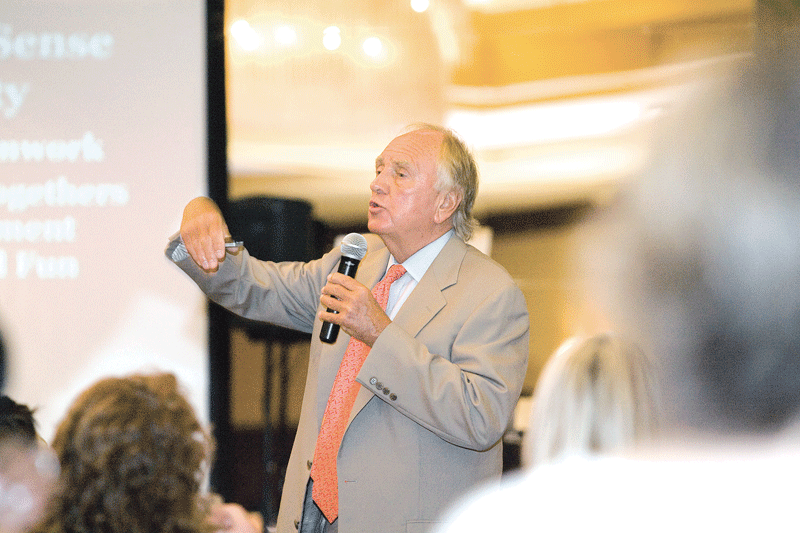
Sections Technology
VizConnect Takes Mobile Marketing to New Heights

Ed Carroll, co-founder of VizConnect

Ed Carroll,
co-founder of VizConnect

Ed Carroll says businesses, salespeople, or entrepreneurs who are not advertising on mobile devices are losing customers, and his claim is backed up by many studies, including a survey showing that more than 86 million people sought business information last year via their smartphones.
The co-founder of VizConnect in Springfield first became aware of the trend in 2004 when he was working as a television newscaster and Facebook began to gain in popularity. “I saw a paradigm shift taking place away from mainstream media, and one night I began thinking about how businesses could use it because they are completely underserved in that area,” said Carroll, who eventually came up with the idea for the high-tech company he started in 2011 with sales and marketing guru Brian Dee.
The company’s product, a video-based mobile marketing platform, is designed to help small companies or businesspeople keep pace with changes in the way products and services are marketed today.
“Large companies have staffs and people who keep track of trends, but 80% of the economy is small businesses, and they don’t have the budget to do what they need to do to compete in the mobile scene,” Carroll told BusinessWest. “There has been a huge shift to mobile marketing, and everyone in business needs to think about how to get their message onto a mobile device.”
VizConnect has grown quickly, and today is operated by a team of partners who oversee more than 400 distributors. The product they sell has been test-marketed and improved since it was introduced to the marketplace, and most of the distributors came on board in the last six months when the company took steps to grow its sales force, due to enthusiasm about the software.
When people scan a VizConnect QR code or text message a keyword with a code, they come face to face with options that allow them to watch a video, download a coupon, view items on sale or a customer testimonial, learn more about a product or service, communicate directly with the seller, or buy the product. They can access these with a simple click, and after they watch a video, their screen changes, giving them the option of clicking again to share it on Facebook, Twitter, or LinkedIn; calling the company; making a purchase; or anything else the business elects.
“Right now most QR codes go to a static website; we have made them more dynamic,” Carroll said. “Our platform was designed to be a call to action.”
He explained that what comes up on the screen after someone texts to a keyword or scans a QR code can make or break a sale. “Research shows it takes the human mind about six seconds to decide whether to stay or go. It’s a yes or no,” Carroll said.
He added that businesses that fail to use simple techniques to engage customers on mobile devices will soon be left behind. “This is the 21st century, and it’s all about mobile.”
Dee agrees. “Studies show that people never get more than three or four feet away from their mobile devices, and where they get their information drives their decisions,” he said.
VizConnect’s platform costs $60 a month and allows clients to market their products or services in different ways to different audiences, which can include messages in more than one language.
The common denominator is that a customer is immediately given choices. They can click on a window that says ‘see more inventory,’ one that says ‘call,’ or another that prompts them to take a different action.
These options are customized and linked to up to 10 QR codes that can show different videos or display different information. “We have simultaneous multi-messaging so people can target a mailer to a Spanish- or English-speaking demographic. It’s a very versatile platform,” Carroll said, adding that it allows companies to capture the cell-phone numbers of people who visit their site.
“They can legally market to them until they text the word ‘stop,’” he explained, as he used his smartphone to demonstrate the sequence of events.

Menu of Options

Brian Dee

Brian Dee says the company is adding distributors across the U.S. and is eyeing global expansion.

When the VizConnect video platform was first created, the text-messaging option did not exist. “The first year, we only had QR and video,” Dee explained.
But as text messaging grew in popularity, they integrated it into the software. “It allows consumers to have a choice,” Carroll said, adding that the majority of people choose the text-messaging option.
Dee agreed, noting that “QR codes have a place, but the jury is still out on them.”
However, they do serve a purpose. Since they can be created in color, many companies are using them as part of their brand. “We suggest that our customers use a QR code with their logo and the words ‘scan or text to’ a designated code next to it,” Dee said.
The text message prompt and/or QR code can be put on a business card, billboard, refrigerator magnet, T-shirt, or the menu a pizza shop staples onto a box. “The menu could sit in someone’s house for a year, and they could scan it every night to get the dinner special,” Carroll said. Codes can also be saved on a smartphone.
And if a QR code is scanned by just one person, then relayed to any form of social media, it can lead to a great deal of exposure. “If a code gets scanned once, it could be viewed more than 1,000 times by someone who has more than 1,000 Facebook friends,” Carroll said.
However, the texting option is far more popular. “It’s absolutely a key concept of our business and the one the majority of people are using,” Dee said, adding that each customer gets 10 QR codes that are married to a keyword and a short code that goes along with each of them.
Whether the customer sends a text message or scans the QR code, it takes them to the same interface. “Texting is an everyday part of American life, so it’s the perfect bridge for a small business to reach their customers on their smartphones,” Carroll continued, reiterating that it can drive them to a coupon, video, or whatever message or video the company or salesperson wants to project.
In addition, these messages can be changed on a daily basis as VizConnect gives clients the tools to deliver, manage, and store an unlimited amount of video.
“Video engages. It creates a response. It works,” Carroll said. “It’s the most engaging medium that has ever been created because it hits all the senses and invokes an emotion whether someone is visual, auditory, or kinesthetic. Everyone who watches will be stirred to do something. It’s easy to create and doesn’t have to be long to be effective.”
Videos can be created at no cost with the client’s smartphone, and even a six-second video is effective.
“The longer it is, the more boring it becomes. And if you don’t like it, it’s easy to redo,” Carroll said as he picked up his smartphone to make a short video of himself talking. “If you have a restaurant and sell cheeseburgers, you can grab your phone and shoot a high-definition video and tell people it’s a great buy. Or you can serve one to someone and have them say, ‘this is delicious. You have to try it.’ Testimonials are the best way of getting new business, as they give you credibility.”

Spreading the Word
Carroll and Dee sold their product door to door for more than a year, all the while ironing out kinks and improving its efficacy. They also chose a select number of people to help them.
But after incorporating texting into the software, they made the decision to go public last November and offered people a way to join the company by becoming distributors.
They hold informational seminars every Tuesday at 7 p.m. in their offices on the 14th floor of the Sovereign Bank building on Main Street in Springfield for potential customers and salespeople, along with team-building conferences and training seminars.
“We have a direct selling platform, and in this economy, people thinking about starting their own business or developing a way to generate extra income can join us,” Carroll said, adding that they have plumbers, firefighters, and law-enforcement officers working for them.
The company also has six partners — four who are local and two in San Francisco. Carroll, an Associated Press and Emmy-award-winning on-air personality, has appeared on local television newscasts throughout New England as well as CBS Evening News, and spent many years producing and appearing in weathercasts, news features, and special programs.
Dee, the company’s secretary and chief sales officer, spent 20 years in sales, with a focus in sports marketing. His career includes managing credit-card marketing programs for MBNA America and Bank of America in conjunction with the Red Sox, Celtics, Bruins, and Patriots, along with many major college sports teams.
President Paul Coleen was a former bond trader on Wall Street, while attorney James Henderson is treasurer and provides the company with legal counsel.
And they say news about VizConnect is spreading fast. Accolades include the fact that the company was named one of the top five technology start-ups to watch by Mass. High Tech and the Boston Business Journal last year.

Moving Forward
As the smartphone industry explodes, Carroll and Dee expect their business to continue growing. “It’s comes down to this: smartphones are where people go to get information to make a decision,” Carroll said.
Dee concurred. “We’re excited about the future as we continue to add distributors across the U.S. and eventually look forward to international expansion.”
Which makes perfect sense, with multilingual options and a product designed to keep pace with the times.

Departments Incorporations

The following business incorporations were recorded in Hampden, Hampshire, and Franklin counties and are the latest available. They are listed by community.
AGAWAM


Square Liquors Inc., 132 Glendale Road, Agawam, MA 01001. Sheela Patel, 245 Whiting Farms Road, Holyoke, MA 01040. Liquor store.


BERNARDSTON


Ruder Small Bioceuticals Inc., 712 Brattleboro Road, Bernardston, MA 01337. Sales of animal, equine, and human products.


CHICOPEE


Westover Building Supply Inc., 37 Telegraph Ave., Chicopee, MA 01020. Marcus Thayer, 24 Rockland St., Springfield, MA 01118. Sales of building materials and construction supplies.


FLORENCE


Pioneer Precision Optics Inc., 296 Nonotuck St., Florence, MA 01062. Thomas McGrath, 470 Park Hill Road, Florence, MA 01062. Machine shop.


The Knighten Guild and Company, 199 Ryan Road, Floreence, MA 01063. David Agro, 89 Clark St., Brattleboro, VT, 05301. Nonprofit organization developed to create and produce events such with the purpose of: creating, strengthening and expanding the opportunities for local performers,

educators, crafters, artisans, and businesses to engage with local audiences.


GRANBY


Professional Women’s Chamber of Commerce of Western Massachusetts Inc., 5 County View Lane, Granby, MA 01033. Michelle Cayo, same. To promote the status of women business owners and professionals. Nonprofit organization established to empower women business owners and career-oriented women through participation in leadership, education and networking opportunities; to strengthen the positive impact for women in the business community in Western Mass.; to deal with all matters of common interest to women who work in mercantile, manufacturing, commercial and professional groups; to solicit, receive, invest and expend monies, dues and gifts, and to have all other powers as may be incidental to or necessary for the carrying out of the foregoing purposes; all to the end result that Western Mass. shall be a more prosperous, healthy and in all respects a more desirable place to work and operate their own business.


LEE


Romano Tree Service Inc., 300 Chestnut St., Lee, MA 01238. Lorenzo William Romano, same. Lumber and tree trimming, cutting and removal.


MONTAGUE


VR Trucking Inc., 194 Turners Falls Road, Montague, MA 01351. Vladimir Romashka, same. Specialty and dedicated services of transporting foods, commercial goods, vehicles, and other commodities via flatbed, container, and heavy-hauling trailers on a for-hire basis.


NORTHAMPTON


Weatherfield, Harris and Hobbs Inc., 29 Main St., Northampton, MA 01060. Nathand Blehar, same. Bar.


PALMER


Touched by an Angel Inc., 1022 Chestnut St., Palmer, MA 01069. Helena Stephens, same. Home care services.


PITTSFIELD


New Elm St. Convenience Inc., 155 Elm St., Pittsfield, MA 01201. Piyush Shah. 1064 Holmes Road, Pittsfield, MA 01201. Convenience store.


Whitney Center for the Arts Inc., 42 Wendell Ave., Pittsfield, MA 01201. Lisa Whitney, 312 West 105th St., Apt #1, New York, MA 10025. A facility for established and up-and-coming artists to showcase their talents; give back to the community by promoting and fostering arts and cultural related development in Pittsfield/Berkshires; and preserve the historic Thomas Colt house. Planned activities, music and dramatic performances, art gallery, rental space, corporate events, and other art- and culture- related activities


SPRINGFIELD


Mr. Fix It Home Maintenance & Improvement Inc., 685 Berkshire Ave, Springfield, MA 01109-1008. Santo Feliberty Jr., 22 MAARECO St., Springfield, MA 01109. Home improvement services.


Music Tribute Productions Inc., 52 Maryland St., Springfield, MA 01108. Anthony Manzi, same. Promotions of various entertainment and music.


PCMC Transportation Inc., One Federal St., Building 101, Springfield, MA 01105. Rose-Ann Gaskin-Rice, same. Transportation services.


Real Beef Music Group Inc., 113 Massachusetts Ave., Springfield, MA, 01101. David Hall, same. Music recording studio.


Two-Six for Kicks Inc., 28 Angelica Dr., Springfield, MA 01129. Khari Mitchell, same. Nonprofit organization established to accept donations of new and previously utilized sporting goods and equipment and make donations of this equipment to individuals and organizations within and outside of the United States.


Veterans First: Comprehensive Outreach Center of Western Mass. Inc., 721 State Street, Springfield, MA 01109. Charles Rucks, 101 Mulberry St., #213, Springfield, MA 01102. Nonprofit organization designed to assist veterans and their dependents to access and receive federal, state, local, and veterans benefits for which they are eligible and entitled, to enhance their lives.


Viz Connect Inc., 1350 Main St., Suite 1407, Springfield, MA 01103. Paul Cooleen, same. Mobile and online marketing services.


Web Wizard Inc., 195 Dickinson St., Floor 2, Springfield, MA 01108. Lawerence Shea, same. Broad-spectrum web services to business.


WESTFIELD


R F Transportation Inc., 30 Williams St., Apt. 6, Westfield, MA 01085. Alla Raylyan, same. Transportation services.


Rock Solid Services Inc., 241 Timberswamp Road, Westfield, MA 01085. Sydney Brodeur, same. Residential and small commercial general landscaping services.


Yurko Express, 125 Lapointe Road, Westfield, MA 01085. Yuriy Koval, same. Trucking.


Company Notebook Departments

Zasco Productions Makes Key Acquisition

CHICOPEE — In business for nearly 25 years, Zasco Productions has made yet another significant equipment investment. After an exhaustive search for the best manufacturer/partner, Zasco decided to make a large purchase of indoor/outdoor display modules from Oracle LED Systems of Los Angeles. With a large inventory of LED panels in its Chicopee warehouse, the Zasco team will have more than enough stock to create two massive, 16-foot-wide video-display walls. The panels can be assembled in virtually any size or shape that creative designers can imagine. Rated at a resolution of 9mm, the system is sharp for viewing even in intimate venues. The panels boast a brightness rating of 7,000 nits, meaning they have plenty of punch for outdoor events. They are also weather resistant. “We have absolute confidence in this product because it’s obvious that it was designed by people who understand the demands of the live-event industry,” said Michael Zaskey, owner and senior technical director. “We now own bright, high-resolution displays that we can present to our clients in a simple way: the best visual value that they can put before their audience.” The popularity of giant LED displays has exploded recently because they give event planners opportunities to display video, graphics, live social-media boards, and sponsorships without the cost of huge soft goods or the challenges of projection, such as the battle to be seen against high volumes of ambient light. “We fully expect that, once people get a look at this display, it will set the standard for events across New England,” Zaskey said. “Once again, we’ve got the best technology in the hands of our team of creative professionals. Whether clients need all of our services, or just cutting-edge displays, we are ready to deliver unparalleled options and excellence.” Zasco Productions was honored as the 2007 Business of the Year by the Chicopee Chamber of Commerce. The company provides turn-key production solutions that include video, audio, lighting, rigging, and design services.


Women Entrepreneurs Launch Female-focused Marketing, Design Firm

NORTHAMPTON — Meghan Rothschild and Emily Gaylord recently announced the launch of Chikmedia, a marketing and design firm focused on helping women-run organizations create comprehensive marketing strategies. The two partners seek to improve marketing campaigns, target messaging, and create designs that reflect individual business personalities. Rothschild and Gaylord met four years ago through their work with a local nonprofit and have been working together ever since. “Chikmedia is a brainchild born from a casual conversation we were having one day,” said Gaylord. “We were both assisting individual businesses with marketing, PR, or design and relied on each other for professional input on the work we were
doing.” Said Rothschild, “something clicked. We immediately knew this could work, as we are both very committed to exceeding expectations. And we’re both hilarious.” The two immediately got to work on a business plan, realizing that female-run organizations were of high priority. “Women running and owning their own businesses is becoming increasingly more common,” said Rothschild. “It’s important to remember that we are a small, female-run business, so we understand the importance of finding your voice in this economy.” The pair is already working with a variety of clients, including everything from local talk shows to area authors; community nonprofits to major restaurant chains. Chikmedia recently launched its website — www.chikmedia.us —along with a Facebook page (facebook.com/chikmedia) and Twitter account (@chikmedia).


Holyoke Medical Center Ranks No. 1 in State for Quality of Stroke Care

HOLYOKE — The Stroke Collaborative Reaching for Excellence (SCORE), a voluntary statewide quality improvement collaborative administered by the Mass. Department of Public Health (DPH), which supports primary stroke-service hospitals, has once again ranked Holyoke Medical Center No. 1 out of 58 hospitals in the state of Massachusetts, including large teaching facilities, for stroke care. Defect-free care is achieved when a patient receives the appropriate care based on clinical guidelines. “Holyoke Medical Center is proud that our hard work and passion for providing great care was recognized by this prestigious award from the DPH’s SCORE program,” said HMC Stroke Program Clinical Manager Angela Smith. “We strive to provide exceptional care to all of our patients. This award represents that every stroke patient that comes through our doors receives the highest quality of care.” The rating evaluated adherence to 10 stroke-consensus measures and required that each stroke patient receive all 10 measures. Holyoke Medical Center had the highest score in the state. This was one of several awards the medical center received at the annual award ceremony of the American Heart/Stroke Assoc. and SCORE. The medical center also received awards for being the highest performer on the National Institute of Health (NIH) Stroke Scale, and the American Stroke Assoc. Get with the Guidelines Gold, Gold Plus, and Target Stroke Honor Roll awards for consistently exceeding quality-care benchmarks for stroke and administering the clot-busting drug t-PA within 60 minutes of hospital arrival.


Features

wings-&-wheels-logoBud Shuback calls it a “bridge event.”

By using that term, he’s expressing the hope — and the confidence — that the first edition of the Great New England Wings & Wheels event, slated for August 24 and 25 at Westover Metropolitan Airport, will be a bridge between the massive air shows staged over the past several decades at Westover Air Reserve Base and Barnes Municipal Airport in Westfield, and the ones to come in the future.

There won’t be any of those shows for the immediate future, said Shuback, president of the Galaxy Community Council, the charitable organization that has assisted the 439th Airlift Wing based at Westover and other military-related groups for more than 20 years, noting that federal budget sequestration has eliminated the use of military aircraft — and facilities — for such events.

So, in an effort to carry out its work within the community, which includes support to groups ranging from the Pioneer Valley USO to the Shriners Hospital for Children in Springfield, the Galaxy Council has retooled with Wings & Wheels, an event that will likely enable it to raise more money to support those aforementioned groups.

Thunderbolt

As the name suggests, Wings & Wheels will feature planes, like the P-47 Thunderbolt, above, and more than 1,000 vintage cars.

AutoIndeed, as Shuback explained, the council was not able to charge admission to the air shows, because they were staged on military installations, and thus relied much more on corporate sponsorships. It can, however, charge at the gate at Westover Metropolitan, and will do so ($10 for adults; children will be admitted free). With 20,000 or more people expected, this could be a highly successful fund-raiser.

While Wings & Wheels will not feature acts like the Blue Angels or Thunderbirds, or the array of active military aircraft typical at previous air shows, it will have plenty to see, hear, and experience, said Shuback.

As the name suggests, there will be wings — static vintage and modern aircraft that will include several World War II-era models such as a B-25 Mitchell bomber, P-51 Mustang, F4U Corsair, TBM Avenger, and P-47 Thunderbolt, and several more modern planes.

And there will be wheels; indeed, more than 1,000 show cars are expected, representing every decade from the 1920s to the ’80s.

“This is a unique event that approximates an air show,” said Shuback, adding that Wings & Wheels represents the only chance area residents will have to see vintage aircraft because sequestration has resulted in the cancellation of all air shows in New England.

For more information on the event, visit www.greatnewenglandwingsandwheels.com.

Chamber Corners Departments
ACCGS

www.myonlinechamber.com
(413) 787-1555

Sept. 4: Business@Breakfast, 7:15-9 a.m., at the Sheraton Springfield. Charles Schewe, Ph.D., professor of Marketing at the UMass Isenberg School of Management, will present “The Millennials are Coming! Can You Hear the Flapping of Their Flip-Flops?” Some label them narcissistic, ungrateful, and entitled, while others note them as tech-savvy, family-centric and achievement-oriented. No matter the label, the Millennial, also known as Generation Y, worker is the fastest-growing segment of today’s workforce. By 2025, they will make up 75% of the world’s workforce.As businesses compete for available talent, employers cannot ignore the needs, wants, and attitudes of these young professionals, and bridging the generational gap is critical to running an effective organization.Schewe will take attendees on an entertaining journey through the generations to help organizations better understand the characteristics and values of today’s generation and how employers can adapt to successfully integrate these workers into the workforce.The ACCGS will also salute Friends of the Homeless on its 25th anniversary, welcome Kelly Services to the neighborhood as it moves into its downtown Springfield location, and introduce attendees to Audrey Szychulski, the new executive director at the Springfield Symphony Orchestra. Reservations are $20 for members, $30 for general admission. Reservations may be made online at www.myonlinechamber.com or by contacting Cecile Larose at (413) 755-1313.

• Sept. 9: “Federal Health Care Reform and Your Company,” 8:30-11 a.m., at the Delaney House in Holyoke. The Massachusetts Health Care Connector is offering a unique opportunity to hear from and speak with executives for key regulatory agencies on National Health Reform and its implementation in the Commonwealth. The program is presented in collaboration with the Associated Industries of Massachusetts. Reservations are complimentary but required by visiting www.aimnet.org/thesolution.

• Sept. 11: After 5 – MillFest, 5-7 p.m., at Ludlow Mills. The ACCGS is bringing back After 5 networking events bigger and better than ever with MillFest. This event will feature live music, great food, lots of fun, and, of course, networking. Sponsored by Chicopee Savings Bank with support from HealthSouth and Westmass Area Development Corp., this event is presented in collaboration with the East of the River Five Town Chamber of Commerce, an affiliate of the ACCGS. Reservations are $15 for members, $25 for general admission. Proceeds will benefit the ERC5 Scholarship Fund. Reservations may be made online at www.myonlinechamber.com or by contacting Cecile Larose at (413) 755-1313.

• Sept. 18: Western Mass. Business Forum, 8:30 a.m.-noon, at Holyoke Community College. Businesses operating today are often overwhelmed by state and federal environmental, health, and safety requirements. It’s especially tough for small and mid-size businesses to keep up to date. Join the EPA, DEP, and other state agencies and the state’s leading business organizations for a half-day briefing where you’ll be given the tools to run your business safely and in compliance with the law — and maybe save some money in the end. Presented in collaboration with Associated Industries of Massachusetts, Pioneer Valley Planning Commission, Partners for a Healthier Community, and the Commonwealth of Massachusetts. Reservations are $25 for the first employee per company, $15 per employee thereafter. Reservations must be made online at www.myonlinechamber.com.

• Sept. 24: “Pastries, Politics, and Policy,” 8-9 a.m. at the TD Bank Conference Center, 1441 Main St., Springfield. For those political and policy junkies. Join us for our debut event featuring a policy expert and member of Gov. Deval Patrick’s administration for a breakfast and roundtable discussion. Reservations are $15 for members, $25 for general admission. Reservations may be made online at www.myonlinechamber.com or by contacting Cecile Larose at (413) 755-1313.


AMHERST AREA CHAMBER OF COMMERCE

www.amherstarea.com
(413) 253-0700

• Sept. 13: Amherst Area Chamber Luncheon, 12:30-2 p.m., at the Lord Jeffery Inn, 30 Boltwood Ave. Amherst. Sponsored by the UMass Five College Credit Union. Celebrate the growth and impact of local agriculture and the 20th anniversary of Community Involved in Sustaining Agriculture (CISA). Guest Speaker: Phillip Korman, executive director of CISA, who will discuss the economic impacts and growth of the “Local Hero” movement in the Pioneer Valley. Tickets are $15 for members and $20 for non-members. RSVP to [email protected].

• Sept. 25: Chamber After 5, 5-7 p.m., a block party at Florence Savings Bank, 385 College St., Amherst. Explore the whole group of businesses at Amherst Crossing: Amherst Pharmacy, Coldwell Banker-Upton Massamont Realtors, and Pioneer Valley Ideal Weight Loss. Enjoy tasty treats from Portabella Catering. Admission: $5 for members, $10 for non-members. RSVP to [email protected].


CHICOPEE CHAMBER OF COMMERCE

www.chicopeechamber.org
(413) 594-2101

• Aug. 22: Part 4 of a five-seminar series: “Marketing Strategies that Lead to Growth,” 8-10:30 a.m., at the PeoplesBank Conference Room, 330 Whitney Ave. in Holyoke. Concerned about delivering your profit? Unsure how to reach your target audience? Overwhelmed with all the media options available? Smaller businesses often lack the time to execute their marketing tasks and are challenged with budgetary constraints. This workshop, presented by Mary McCarthy, is designed for businesses seeking cost-efficient and effective marketing strategies that lead to growth and seamless communication with their customers. Join us and learn:
•Branding strategies that will effectively convey your marketing messages;
•How to distinguish your marketing plan from your competition;
•Effective ways to reach your target audience and foster loyal relationships;
•How to connect with today’s tech-savvy customers through social media; and
•Networking essentials that will help you get more business.


GREATER EASTHAMPTON CHAMBER OF COMMERCE

www.easthamptonchamber.org
(413) 527-9414

• Aug. 20: GRIST (Get Real Individual Support Today), 9 a.m., at the chamber office at 33 Union St., Easthampton. Are you a business of one? Are you a small-business owner without your own marketing department? Do you ever wish you had someone to toss around some ideas with about growing your business? The GRIST group can help. It’s a new chamber member benefit, an ongoing small group for business people who want to meet regularly to share ideas and get advice on the daily challenges of running a successful business. This small group of 10 to 15 people is limited to chamber members and those interested in joining the chamber. We welcome interested guests to attend one meeting to see what the group is all about. GRIST meets the first and third Tuesday of each month from 9 to 10 a.m. at the chamber office. RSVP by the Monday preceding each meeting to Fran Fahey at [email protected] or Derek Allard at [email protected] to join the group. Or, call Fahey at (413) 529-1189 or Allard at (413) 282-9957 to find out more.

• Sept. 3:  GRIST (Get Real Individual Support Today), from 9 to 10 a.m., at the Greater Easthampton Chamber of Commerce, 33 Union St., Easthampton. The GRIST group is a free member benefit, an on-going small group that meets regularly to share ideas and get advice on the daily challenges of running a successful business. RSVP to Derek Allard at [email protected] or (413) 282-9957, or Fran Fahey at [email protected] or (413) 529-1189. The program is free to chamber members and future members.

• Sept. 9: NCYF 2nd Annual Golf Tournament, 11 a.m., at Cold Spring Country Club, 336 Chauncey Walker St., Belchertown. The tournament benefits services for children and their families at NCYF and Tri-County Schools in Easthampton. Registration at 11, shotgun scramble start at noon. Cost: $110, including golf, cart, lunch, and dinner buffet. More than $3,000 in raffle prizes. Acura and hot tub hole-in-one prizes. Contact Suzanne Welch at [email protected] or (413) 313-2820.

• Sept. 12: Networking by Business Card Exchange, 5-7 p.m. Hosted and co-sponsored by Eastworks, 116 Pleasant St., Easthampton. Co-sponsored by Riff’s Joint. Hors d’ouevres provided by Riff’s Joint. Beer and wine available. Door prizes. Tickets: $5 for members, $15 for future members.

• Sept. 17: GRIST (Get Real Individual Support Today), 9-10 a.m., at the Greater Easthampton Chamber of Commerce, 33 Union St., Easthampton. The GRIST group is a free member benefit, an ongoing small group of folks who meet regularly to share ideas and get advice on the daily challenges of running a successful business. RSVP to Derek Allard at [email protected] or (413) 282-9957, or Fran Fahey at [email protected] or (413) 529-1189. The program is free to chamber members and future members.

HOLYOKE CHAMBER OF COMMERCE

www.holycham.com
(413) 534-3376

• Sept.10: “Grow Your Business with E-mail and Social Media Marketing,” 8:30-10:30 a.m., at the Greater Holyoke Chamber of Commerce Executive Conference Room, 177 High St., Holyoke. Sponsored by PeoplesBank and the Republican. Attendance is free. For reservations, call the chamber office at (413) 534-3376.

• Sept. 11: Legislative Coffee Hour, 7:45-9:15 a.m., at Sláinte, 80 Jarvis Ave., Holyoke. Sponsored by Dowd Insurance, Loomis Communities, and Resnic, Beauregard, Waite and Driscoll. Cost: $15 for members, $25 for non-members. Price includes a continental breakfast. Call the Chamber at (413) 534-3376 to sign up.

• Sept. 18: Chamber Annual Clambake, 5-7:30 p.m., at Holyoke Country Club, 1 Country Club Road, Holyoke. Sponsored by United Water and Pioneer Valley Railroad. The public is invited to attend. For reservations, call the chamber office at (413) 534-3376.

• Sept. 24: “The Power of E-mail Marketing,” with a bonus session, “Getting Started with Constant Contact E-mail Marketing,” 8:30-10:30 a.m., at the Greater Holyoke Chamber of Commerce Executive Conference Room, 177 High St., Holyoke. Sponsored by PeoplesBank and the Republican. Attendance is free. For reservations, call the chamber office at (413) 534-3376.


MASSACHUSETTS CHAMBER OF COMMERCE

(413) 525-2506

• Nov. 12: Massachusetts Chamber of Commerce Annual Meeting & Awards Luncheon, at the DoubleTree in Westborough. Registration is at 9 a.m. For more information on ticket sales and sponsorship opportunities, contact the chamber office at (413) 525-2506 or e-mail [email protected].


GREATER NORTHAMPTON CHAMBER OF COMMERCE

www.explorenorthampton.com
(413) 584-1900

• Sept. 11: Arrive@5 Monthly Chamber Networking Event, 5-7 p.m. Sponsored and hosted by Baystate Health Outpatient Center, Northampton Crossing, 325 King St., Northampton. Cost: $10 for members, $15 for non-members. RSVP to [email protected].

• Sept. 26: Business Planning Workshop, 3:30-5 p.m., at the Northampton Chamber, 99 Pleasant St., Northampton. Presented by the staff of the Franklin County Community Development Corp. This 90-minute session informs business owners about business planning, the loan process, where to get help, and how to launch a food product and use the Western MA Food Processing Center. Learn about available resources and walk out knowing your next step. Cost: free. RSVP required due to limited space. RSVP to [email protected].


NORTHAMPTON AREA YOUNG PROFESSIONAL SOCIETY

www.thenayp.com
(413) 584-1900

• August 15: Networking Social, starting at 5 p.m., at Sláinte, 80 Jarvis Ave., Holyoke. This month we’re venturing down to Holyoke in order to host a joint networking social with the Young Professional Society of Greater Springfield at Sláinte. Featured nonprofit: Pioneer Valley Habitat for Humanity.

• August 22: Bare Mountain Hike, 6 p.m. Join us for a Thursday-evening hike up Bare Mountain. The short but steep 0.62-mile hike will take us to the 1,014-foot summit with unobstructed views of the Pioneer Valley. Bare Mountain is home to a former Strategic Air Command bunker (featured in the movie Edge of Darkness) that is now owned by Amherst College. You will need a pair of sturdy shoes, water, and a flashlight to enjoy this hike. RSVP on Facebook so we know that you’re coming. Meeting spot: the Notch Visitor Center parking lot, 1500 West St., Amherst.


WEST OF THE RIVER CHAMBER OF COMMERCE

www.ourwrc.com
(413) 426-3880

• August 19: West of the River Chamber of Commerce 10th Annual Golf Tournament, at Springfield Country Club, West Springfield. Cost: $125 per golfer. Presenting sponsor: Hard Rock Hotel and Casino of New England. For more information on registration and sponsorship opportunities, contact the chamber office at (413) 426-3880 or e-mail [email protected].

• Sept. 4: Wicked Wednesday, 5-7 p.m., hosted By E.B.’s. Wicked Wednesdays are monthly social events hosted by various businesses and restaurants. These events bring members and non-members together to network in a laid-back atmosphere. Free for chamber members, $10 for non-members. Event is open to the public; you must pay at the door if you’re a non-member. For more information, contact the chamber office at (413) 426-3880 or e-mail [email protected].


GREATER WESTFIELD CHAMBER OF COMMERCE

www.westfieldbiz.org
(413) 568-1618

• Sept. 9: Mayor’s Coffee Hour, 8-9 a.m., at Noble Hospital, 115 West Silver St., Westfield. Guest speaker: Mayor Daniel Knapik, who will speak about all that is happening around Westfield and field questions. Cost: free and open to the public. To register, call Pam Bussell at the chamber office at (413) 568-1618 or e-mail [email protected].

• Sept. 11: September WestNet Connection, 5-7 p.m., at the Holiday Inn Express, 39 Southampton Road, Westfield. Sponsored by CityStage and Symphony Hall. An evening of networking; don’t forget your business cards. Complimentary hors d’oeuvres and cocktails. Walk-ins are welcome. Cost: $10 for members; $15 cash for non-members. To register, call Pam Bussell at the chamber office at (413) 568-1618, or e-mail [email protected].

• Sept. 13: Chamber Breakfast, 7:15-9 a.m. Hosted by the 104th Fighter Wing ANG, 175 Falcon Dr., Westfield. Platinum sponsor: Westfield Bank. Gold sponsors: Berkshire Bank and United Bank. Guest speaker: Evan Dobelle, president of Westfield State University. Cost: $25 for members, $30 for non-members. To register, call Pam Bussell at the chamber office at (413) 568-1618, or e-mail [email protected].

Community Profile Features
Hadley Honors Rural Past as Businesses Take Root

CommunityHadleyProfilesMAPWhen Jonathan Carr and his wife Nicole Blum moved to the U.S., they spent time looking for a good place to farm. The couple had been growing gourmet vegetables in Ireland and selling them to restaurants, but wanted to establish themselves in a better climate, because it rained frequently there.

In 2002, they bought 38 acres of land with a large apple orchard in Hadley after relatives and friends in the Boston area steered them to Western Mass.

Last year, they opened Carr’s Ciderhouse and produced about 3,000 bottles of sparkling cider and dessert-style wine on their property. The business is growing, and Carr said they are happy to be situated on River Road.

“There is a network of farms that runs up and down the river for miles, and Hadley is a great place to raise a family and own a business because of the accommodating spirit within the town government,” said Carr, adding that the couple appreciates their central location, the vibrant local economy, and the beauty of the area, along with the fact that they can go hiking or canoeing on the Connecticut River without leaving town.

Town Administrator David Nixon

Town Administrator David Nixon says Hadley has the largest amount of preserved land in the Commonwealth.

David Nixon said the ciderhouse is one of dozens of home-based businesses in Hadley, which include self-employed consultants, architects, web-based firms, and about two dozen landscapers with employees. The town administrator said Hadley is also home to historic family farms that have been operating for generations, as well as a healthy mix of retail establishments, located mostly on the seven-mile section of Route 9 that runs through the town.

The balanced mix of open land, agricultural enterprise, and retail business has been carefully orchestrated by town officials.

“It’s the reason for our success,” Nixon said. “We provide a high quality of life with lots and lots of open space that contains forests, grasslands, and farmlands. But we also have a strong commercial district that allows us to keep taxes low and provide the products and employment people need, coupled with small, family-owned businesses, particularly in agriculture.”

In addition, Nixon said, the town offers a central location, an affordable single tax rate, and space for new and existing businesses to grow. “We’re ideally situated between Northampton and Amherst, so we have the synergy of what these communities offer. We also live in a 30-campus community,” he told BusinessWest, explaining that one-quarter of the UMass Amherst campus is in Hadley and the other campuses are within an hour’s drive of the town, which sits off the Interstate 91 corridor, with the Massachusetts Turnpike a short distance away.

“Northampton Airport is just across the river, and we’re a 45 minute drive from Bradley International Airport,” Nixon continued, adding that, when the rerouting of the Amtrak Vermonter commuter train is complete, it will include a stop in nearby Northampton.


Fertile Imagination

Hadley is one of the oldest towns in Hampshire County, and thus it has lots of history, said Nixon, noting that it was incorporated in 1661 and was an agricultural center for hundreds of years.

Today, the town is still home to three operating dairy farms, a number of tobacco farms, and an untold number of farms that grow produce, ranging from corn to asparagus, strawberries to squash. “We have lots of little farm stands, and there are a number of small agricultural businesses developing here,” Nixon said. They include Sister’s Bistro, a restaurant and specialty food store that opened about a year ago, a vineyard under development, and Valley Malt, which opened about three years ago and has been very successful.

Although the farms have stood the test of time, town officials have been proactive in taking steps to insure the bucolic atmosphere is preserved and will remain that way. “We don’t want our population to grow too quickly,” Nixon said. “We lead the Commonwealth in preserved open space. We have about 3,000 acres of it, which doesn’t include the state parks or the land along the Connecticut River.”

He noted that these measures ensure that the high quality of life in Hadley will continue. “It gives us the ability to provide residents with the services they want at an affordable price and helps keep the town recession-proof. We may not see the highs that other places have experienced, but we also don’t see the lows.”

The town’s finances are also sound. “We have a strong financial base with an AA bond rating from Standard and Poor and are always looking to improve things,” Nixon said.

To that end, town officials recently asked the state Department of Revenue to conduct a commissioned study of its financial-management practices.

“We’re not content to sit on our laurels, and are always looking for ways to improve public services and reduce our costs,” he explained.


Commercial Growth

Although Hadley has plenty of open space, the town also contains a healthy mix of businesses. They include the Hampton Inn, which is adding a conference center with seating for 300 people that is expected to open this summer.

Building Commissioner Tim Neyhart said the inn was recently granted a liquor license, and the new center will have a kitchen for catering and provide the town with much-needed facilities for meetings, conventions, and events. “We didn’t have a place where people could hold large weddings,” he said, explaining that, although many couples use the Marriott Hotel, its capacity is limited to 125 people.

“There are already weddings booked in the new conference center, and the large space will also allow the U.S. Fish and Wildlife office to hold conventions there,” he told BusinessWest, adding that its District 5 office is in Hadley. “They use the Marriott for meetings all the time, but the space there is limited.”

There are also three solar projects in the works in Hadley. Neyhart said two are being reviewed by the planning board, while the third involves a pilot program with NexAmp Hadley Solar LLC, which has obtained permits to built a 2.9-megawatt facility on Mill Valley Road.

The solar company and the Hampshire Council of Governments have partnered to form an agreement that is still being reviewed. It would provide Hadley with a discount rate on electricity in lieu of taxes from NexAmp over a 20-year period. If it is passed, Nixon said, it could result in a 21% reduction in the cost of municipal electricity in Hadley, or about $600,000 over two decades.

He explained that the energy NexAmp will generate will be fed into a network that will earn the company credits from Western Massachusetts Electric Co. The credits would then be sold to the Hampshire Council of Governments, which would apply them to the town’s electric bill.

The town is also looking to widen Route 9, although that project is still in the feasibility stage. “We’re also taking concrete steps to improve our water and sewer systems. They will be upgraded over the next 10 years,” Nixon said.

And although there is available space for new business to be established along Route 9, many existing businesses have reinvented themselves to keep up with the times. Nixon cites the former Mountain Farms Mall as an example. “It was in pretty bad shape about 20 years ago, with vacant storefronts and a blacktop that was in terrible condition.”

But the former traditional mall has been transformed into a large strip mall, which is home to Whole Foods, Barnes & Noble, and other thriving businesses. “It has become a very, very vibrant shopping area,” he said.

Hadley also caters to many startup companies, which get help from the UMass Amherst Family Business Center on Venture Way. “They are able to thrive because we have an educated workforce, the infrastructure capacity for new businesses, and the zoning to develop it,” Nixon said.


Balanced Equation

Although the town welcomes business growth, the provisions its leaders have taken to ensure that the landscape remains unsullied is part of its character.

“The goal has always been about maintaining balance,” Nixon reiterated. “Hadley is blessed with a strong and vibrant commercial center, but also has wonderful residential villages and the bike path, which is 300 yards off of Route 9, that illustrates the balance of life here. One side has a view of open land, while the other is home to restaurants, auto-service stations, and stores.”

That combination is a proven recipe for success, making the town a place that honors its agrarian past while keeping pace with the future.

Law Sections
New WNE Law Dean Says Schools Must Adjust to a Changed Climate

Eric Gouvin

Eric Gouvin says the consensus among those in legal academia is that the nation’s law schools have been “making too many lawyers for too long.”

Eric Gouvin was asked to comment on the challenges moving forward for all law schools, but especially the one at Western New England University (WNE), which he now serves as dean.

But to do so properly, he said he first needed to discuss the recent past and touch on some trends and statistics that define a changed landscape, one that came about due to many factors that he summed up by saying, “we’ve been making too many lawyers for too long.”

The ‘we’ in this case is the nation’s 201 American Bar Assoc.-accredited law schools, said Gouvin, who took the helm at WNE Law on July 1 following a short search in which he was the only real candidate (more on that later). He said these institutions readily accepted large numbers of students until quite recently, and considered such an action a responsible reply to then-long-standing laws of supply and demand when it came to the legal profession.

But those laws were changing through the first decade of this century, he went on, with a profound adjustment coming after the economy turned south in dramatic fashion just over five years ago. Over the past 10 years, and especially the past five, increasing numbers of law-school graduates have encountered difficulty finding work in their chosen profession, and this development has led to swift and profound changes in the numbers of people applying to law schools — and the numbers accepted — as would-be candidates increasingly question the return on investment in a juris doctor degree.

At WNE, for example, the school was accepting roughly 150 individuals into its day (full-time) program each year until recently, said Gouvin, noting that the number for this fall will be around 90, 40% fewer than that previous benchmark. This decline (reflective of what’s happening nationally) brings fiscal challenges for the school, prompts a host of questions about what could — or will — happen next, and even invites speculation about for how long there will still be 201 ABA-accredited law schools.

How all this came about is the subject of a compelling, if somewhat controversial, book called Failing Law Schools, authored by Brian Tamanaha, a law professor, former law-school dean, and legal theorist who admits he did some of the things he now criticizes. In a nutshell, Tamanaha contends that, in the wake of the Great Recession and its significant impact on graduates and, subsequently, law school applications, there is now solid evidence to support what many had believed for some time — that law schools, many of them desperate for high rankings in U.S. News & World Report, were luring applicants to their campuses with false promises of employment and high salaries, leaving them in considerable debt and, overall, creating “a systemic mismatch between graduates and jobs.”

Gouvin has read the book, as most in legal academia have, and doesn’t necessarily disagree with some of its main arguments — or its broad assessment of what law schools must do now.

In the current climate, he said, law schools in general, and his in particular, must do something about that mismatch by focusing on making fewer lawyers (until the market dictates otherwise), and lawyers better prepared to succeed in the marketplace.

“Law schools, in general, have not done a great job of preparing their graduates to enter the profession,” he explained. “They learn a lot of law, and that’s handy, because lawyers should know the law. But there’s so much more to being a lawyer than knowing the law.

“We want to have a graduating class that’s matched more closely to the realistic prospects for employment,” he went on, “but also a class that is graduating with the tools necessary to practice law.”

Meanwhile, in response to the fiscal challenges presented by declining enrollment, the school will implement strategies to hone or create what Gouvin called “degrees that people who won’t practice law might find useful.”

Elaborating, he said that WNE already has in place some master of law degrees (LLMs), including a popular offering in estate planning and elder law, and another in closely held businesses. These are designed for practicing lawyers looking to gain expertise in those areas, he said, adding that the school is looking to build on these offerings with new master of jurisprudence degrees. Now in the planning stages, they would be designed for professionals in non-law areas who could benefit from knowing some law.

For this issue and its focus on law, BusinessWest talked at length with the new dean at WNE Law about his strategic plan for the future and how to position the school for success in what are clearly changing times.


Making His Case

In 2001, the last time Western New England went about conducting a search for a law-school dean, Gouvin, who joined the institution’s faculty in 1991, chaired the committee that eventually chose Arthur Gaudio, then with the University of Wyoming School of Law.

This time, Gouvin made a committee unnecessary.

Retracing the events of the past several months, he said that, by late this past winter, he was being recruited by several law schools searching for deans. He eventually became a semi-finalist for the post at the University of New Mexico and one of three candidates invited for a final interview at Northern Kentucky University. He came away from that session thinking he had cinched a new professional mailing address.

“I thought it went so well that they were going to offer me the job on the way to the airport,” he recalled with a laugh.

That didn’t happen, and while NKU was still mulling its options, faculty members at WNE, wary of losing Gouvin, were talking to Gaudio about accelerating his announced intentions to join them in the classroom.

This set in motion a chain of events — including interviews and a formal presentation to administrators at WNE — that had Gouvin canceling further out-of-town interviews and eventually moving his many books, including Failing Law Schools and several biographies of Henry Ford, and an impressive collection of 1975 Boston Red Sox memorabilia, down the hall instead of halfway across the country.

As he talked with BusinessWest while still in the process of moving into his new office, he said there are a number of items on his to-do list. The first is introducing, or re-introducing, himself to the law school’s many constituencies — students, faculty, alums, and community partners — in his new capacity, which he likened to being the CEO of a company.

“Anything that someone who runs an organization is responsible for — from personnel to finance to keeping the lights on and the doors open — that’s all on my desk,” he explained. “I’m responsible for making all the pieces come together — alumni functions, career services, admissions, compliance, the academic piece, and all the other moving parts.

“When you’re sitting in the dean’s seat, you have a different perspective on how everything is or should be, as opposed to when you’re looking at it from a faculty member’s point of view,” he continued. “You begin to see the bigger picture and how it all has to fit together.”

There are several other matters at hand, he said, including annual discussions about classes and potential additions, and the honing of programs, such as the university’s Center for Innovation and Entrepreneurship, which he led prior to becoming dean.

But the most pressing matter, obviously, is crafting a comprehensive response to the dramatically altered landscape he described, an assignment facing the leaders of virtually every law school in the country, he said, stressing, again, that this is a nationwide phenomenon.

The severity of the situation is driven home by statistics showing that, in 2004, there were 100,000 applications to those 201 law schools, and during this most recent admissions cycle, the number was roughly half that — 54,000, with only speculation about when and even if that figure will start trending upward.

The reasons for this precipitous decline are many, and they come back to ROI, say industry analysts, noting that, in recent years, college students and those in many professions have become increasingly skeptical about whether a law degree is a ticket to success (a dramatic change in outlook from 40 or even 20 years ago), especially when many graduates are towing huge amounts of debt as they leave the commencement stage.

The situation resulted mostly from what observers have called ‘overproduction,’ or too much supply, of lawyers. And this became a vicious cycle at many schools. Desperate for high rankings in U.S. News & World Report, which were determined in large part by per-pupil spending, Tamanaha charges, many law schools greatly increased tuition and continued to accept large numbers of students, putting graduates heavier into debt and injecting them into a job market they couldn’t crack.

Thus, changing current perceptions about a JD is among the many challenges facing law schools, said Gouvin, adding that this can come about only with direct evidence that the employment landscape is changing, and for WNE, this means enabling more graduates to thrive in the job market.


Giving Testimony

In this altered environment, law schools must change and adapt, and for many this will be a tall order, said Gouvin, who believes WNE is better positioned to handle that assignment than many others, primarily because it has already started the process, and has historically been at or ahead of the curve when it comes to preparing graduates for the workplace.

Part of the equation is simply limiting enrollment, he noted.

“Finding jobs for 90 people is a lot easier than finding jobs for 150,” he explained, adding that, if he’s right in this thinking, both the graduating students and the law school will benefit. “Law schools are going to be judged by how well they’re placing their students, and that’s why we have to make sure we’re doing as much as we can to support our students.”

Eventually, the job market will improve and demand for a law degree will increase, he went on, citing factors that include everything from the rising U.S. population, which will likely create the need for more legal services and professionals who can provide them, to the simple fact that many of those who joined the profession when it was exploding in the early and mid-’70s, will soon be retiring.

In the meantime, though, law schools must contend with the present challenge of making graduates better able to put their law degree to effective use.

“I want to make us even more focused on what we’ve always done,” Gouvin told BusinessWest, “and that’s prepare students to enter the practice of law, mostly at small to medium-sized firms in small to medium-sized cities in the Northeast.

“I think we can do better at making students practice-ready — a lot of law schools don’t even try,” he continued. “And they’re only now starting to come around to it.”

One key to making graduates more prepared for the workplace is experiential learning opportunities, which WNE provides in a number of ways, said Gouvin, adding that more than 75% of graduates take advantage of these opportunities, and he wants to push that number higher.

Programs include internships, externships, and clinics, he said, adding that the school has the strategic advantage of being the only law school in Western Mass. that gives its students solid opportunities to work with area judges at all levels of the judicial system, from district to federal.

Meanwhile, there are several clinics, or programs that give students the opportunity to work with area residents and businesses under the guidance of legal professionals and professors. The current roster includes clinics in small business, housing, real estate, international human rights, and other areas.

“We do take seriously the idea that students ought to know what lawyers do and why they do it,” he said, “and we’re going to make even more changes to enforce that message.”

While working to improve the job prospects of students, WNE Law and its new dean must also devise strategies for coping with the sharp reduction in tuition revenue that comes when incoming classes are 40% smaller than they were only five years ago.

“That’s a real challenge — tuition is a huge driver,” said Gouvin, noting that, after scholarships and other forms of direct aid are subtracted, most students are paying roughly $25,000 to attend the school.

Cutbacks to faculty have been minimal because of a few recent retirements, he said, but long-term, the school needs to replace at least some of the lost revenue, and one strategy is to create more and better programs that will attract those who don’t intend to practice law but can benefit from some of the skills imparted on those who do.

Those aforementioned master of jurisprudence degrees are another emerging trend, he noted, adding that several law schools, such as the one at Drake University in Iowa, have added such programs, and more are exploring similar options.

WNE is in the early developmental stages of such programs, said Gouvin, who was reluctant to offer details but did say they represent opportunities for the law school to broaden its student base.

“There are a number of professionals in non-law areas, such as insurance, financial planning, and accounting, who need to know quite a bit of law, but they’re not going to practice law,” he noted. “We’re exploring options to provide something of value to these individuals.”


Final Arguments

Looking ahead, Gouvin said the questions hanging over every law school in the country concerns when the situation regarding supply and demand will improve, and to what degree.

“Demand was artificially depressed during the downturn — this was a period of unprecedented economic disaster. As the economy improves, I think we’re going to find what we always find when the economy improves — that we’re going to need more attorneys.”

Until that time comes, though, law schools must be diligent, creative, and ever more focused on helping graduates succeed.

And the new dean at WNE believes the school is certainly up for that challenge.


George O’Brien can be reached at [email protected]
Education Sections
Colleges Increasingly Rely on Social Media to Interact with Students and Alumni

Janet Garcia

If colleges aren’t active in social media, Janet Garcia says, they’re not on prospective students’ radar.

In the age of smartphones and social media, Janet Garcia says, people are constantly on the lookout for information. College students are no different; in fact, they might embody that cultural shift more than anyone.

“This generation of students is on the Internet constantly,” said Garcia, director of Marketing at Westfield State University. “If you’re not on the Internet, you’re not on their radar screen.”

No worry of that at WSU, however, which uses Twitter as an information-sharing resource, LinkedIn as an alumni networking tool, and Facebook for — well, just about everything else.

“These social-media tools, are tremendously valuable to me from a marketing perspective because we’re able to engage with audiences while letting people know what’s going on and what’s coming up more efficiently,” said Garcia. “For us, it’s a great value that adds to the scope of our marketing.”

But while traditional marketing, advertising, or recruitment efforts have historically been one-way conduits, social media is, by definition, a back-and-forth effort, she noted. And that has turned the way colleges communicate with their various constituencies upside down.

“One of the best things about social media is that it facilitates a dialogue among groups that wouldn’t easily be in conversation with each other — current students, prospective students, alumnae, parents, friends of the college,” said Laurie Fenlason, vice president for Public Affairs at Smith College. “That lends authenticity and immediacy, which helps students considering Smith get a full and vivid picture of what life will be like in college and after college.”

She, like Garcia, emphasized the concept of engagement in describing her institution’s active use of Facebook, Twitter, Instagram, LinkedIn, and YouTube, as well as its lesser presence on Tumblr, Pinterest, and Foursquare.

Nancy Farrell

Nancy Farrell says the Elms is active on many social-media channels, but the common denominator is engagement.

“At Smith, we have an active social-media program that engages all of our key constituencies,” Fenlason said, including alumni, current and prospective students, parents, faculty, and staff among those groups. “Our goals are not only to maximize our followers, but to create engagement and dialogue.”

For example, “a Tweet or Facebook post about a Smith graduate’s achievements can go a long way toward making the case for Smith to a prospective student and her family; they can see an actual, vivid example of the value of the education we provide,” she explained. “And videos or Instagram images give prospective students a sense of what it feels like to be on our campus — what it feels like to be a Smithie — even if they’re half a world away.”

Nancy Farrell, director of the Office of Institutional Marketing at Elms College, also used that word engagement in noting why her school is active on Facebook, Twitter, YouTube, and Instagram. “Each one serves a unique function in our messaging, but the one commonality they have is engagement, which is the whole concept behind social media.

“The really important thing to understand is the behavior of this generation of students,” she added. “They want things immediately. You have to instantly respond and stay connected to them — to operate where they are, and work in their environment.”

For this issue’s focus on education, BusinessWest logs on to the world of social media, and how colleges have increasingly come to rely on it to inform, stay in touch, and, yes, engage.


Click Like

Take, for example, WSU’s comprehensive strategy for Facebook.

“We use it in a lot of different ways,” Garcia said. “Our admissions staff has their own Facebook presence and use that for their own purposes, for prospective students, to keep them apprised of what’s going on, let them know deadlines, open houses, things like that.

“We also create pages for each incoming class. For example, the 2017 page was just created this year. We invite prospective students to join the page and communicate with them,” she went on, noting that the college helps with planning and tries to increase their comfort level. “Then they use that page for four years here to communicate with their classmates, share information, talk about classes, sometimes try to sell books, and talk about events they’re going to and try to get their friends to go. It’s a real communication tool.”

It’s one that continues after graduation, only as an alumni page, she added. Meanwhile, the athletic department manages a page to keep students and the public up to date on games and athletes, while individual academic departments set up pages based around those students’ interests.

And, of course, “the university has a general Facebook page to keep the public engaged,” Garcia explained. “We provide information about events and keep people engaged with what’s happening on campus — everything from infrastructure changes to a faculty member getting a grant, that kind of thing … anytime we’re in the news. We really have quite a Facebook presence.”

The Elms also encourages a vibrant Facebook culture, said Karolina Kilfeather, web manager. She said today’s college-age generation doesn’t respond to traditional messaging like their predecessors did, but are looking for something more sincere — and, again, communication that runs in both directions.

“So we’re careful about not policing what students say, even if it’s something negative,” she told BusinessWest. “We do keep our eye out for inappropriate things, like bullying or being wantonly aggressive. But beyond that, we do the best we can to respond to complaints or negativity, but never try to shut anyone off. We don’t discourage students from being honest, and because of that, they stay engaged with us.”

In short, she said, colleges need to realize there’s been a seismic shift in the way young people communicate. “It has become much more of a dialogue. The hardest thing to learn is coming down from the mountain. The audience wants a two-way channel now.”

It’s gratifying, Garcia said, when that audience spans generations. “It’s interesting because we’ll have alumni go to a class page to talk to current students about when they were here, things they did, how much things have changed. That cross-generational communication happens on Facebook a lot.”


Press Play

Kilfeather said the Elms has certainly recognized the shift, using social media to make sure people know what’s happening on campus. “It’s been very instrumental getting crisis information out, if we have potential snow days … students look for information on Facebook and Twitter. We’ve learned we get a quick response to questions on social channels.”

Meanwhile, she said, Twitter has been a positive place to engage prospects, while YouTube is useful to showcase some of the campus programs with short videos, including footage of a cafeteria flash mob and a music video created by the field hockey team.

“These were student-driven, their idea, they came up with it, and for the most part, they produced it,” said Doug Scanlon, publications manager at the Elms. “It was organic.”

Social-media moments like that are useful in projecting a different side of campus life than someone might encounter in an official college publication, Kilfeather said.

“We have a reputation for a serious image, and this is an opportunity to use a lot more humor and candor and a more conversational tone. People have responded positively to that; students look for content after events, they want to see more videos, they want to see more photos. It has changed the tenor of the relationship between colleges and students.”

And they’re not waiting until they get back to their rooms, but living in virtual connectivity 24/7, Scanlon said. “These students all have smartphones, and they’re always checking in. It’s something that’s a part of their lives now.”

Managed correctly, Kilfeather said, social media can definitely pay dividends for a college, and that includes making sure the college’s website is not only accessible from various social-media sites, but optimized for smartphones and tablets. “Facebook and Twitter are very proactive about making sure they are successful on mobile devices. No longer does somebody have to be at the computer to interact with your message.”

As a result, “our percentage of mobile traffic to the website has more than doubled every year for the past five years,” she noted. “We know we have to be available that way, to make it easy to access and share that way. Mobile devices are certainly not going away.”

Neither, most marketing professionals seem to agree, is social media, and the constant challenge is learning how to use it and what platforms to adopt.

“It’s not about putting information out the way a lot of companies do when they get on the social-media bandwagon; they think of it as just another way of pushing, pushing, the way we use traditional marketing channels. This is very different,” Farrell said.

“As technology advances and different forms of social media come out,” she added, “we have to be very cognizant whether it’s the right move for us. Just because it’s there doesn’t mean we have to use it. That’s probably our biggest challenge moving forward: to carefully choose channels that work for us as an institution.”

That’s a challenge worth undertaking at Smith, Fenlason said, because colleges that don’t take social media seriously will find themselves at a competitive disadvantage.

“It’s vital to meet prospective students where they are, on the channels and devices they value,” she said, “with content that is truly social — visual, immediate, engaging, and real.”

Joseph Bednar can be reached at [email protected]

Chamber Corners Departments

CHICOPEE CHAMBER OF COMMERCE

www.chicopeechamber.org

(413) 594-2101

• August 1: Part 3 of a five-seminar series: “Conquering the Challenge of Employment Law Compliance for Small Businesses: What You Need to Know and How to Stay in Compliance,” from 8 to 10:30 a.m. at the PeoplesBank Conference Room, 330 Whitney Ave. in Holyoke. Presenter will be Layla Taylor, Esq. This program will focus on:

• Identifying worker-classification issues (independent contractor versus employee);

• Wage-and-hour basics (minimum wage, overtime, exemptions, and child-labor laws);

• Immigration (I-9 compliance);

• Discrimination laws (federal and state, reasonable accommodation issues);

• Benefits (leave laws and health insurance);

• Communicating with employees without creating a contract; and

• How to stay in compliance (free resources and when to contact a professional).

• August 22: Part 4 of a five-seminar series: ‘Marketing Strategies that Lead to Growth,’ from 8 to 10:30 a.m. at PeoplesBank Conference Room, 330 Whitney Ave. in Holyoke. Presenter will be Mary McCarthy. Concerned about delivering your profit? Unsure how to reach your target audience? Overwhelmed with all the media options available? Smaller businesses often lack the time to execute their marketing tasks, and are challenged with budgetary constraints. This workshop is designed for businesses seeking cost-efficient and effective marketing strategies that lead to growth and seamless communication with their customers. Attendees will learn:

• Branding strategies that will effectively convey your marketing messages;

• How to distinguish your marketing plan from your competition;

• Effective ways to reach your target audience and foster loyal relationships;

• How to connect with today’s tech-savvy customers through social media; and

• Networking essentials that will help you get more business.


HOLYOKE CHAMBER OF COMMERCE

www.holycham.com

(413) 534-3376

• Sept. 18: Save the date! Chamber Annual Clambake, 5-7:30 p.m. Plan now to make the clambake your employee picnic or employee-appreciation event. Watch for more details.


MASSACHUSETTS CHAMBER OF COMMERCE

(413) 525-2506

• Nov. 12: Massachusetts Chamber of Commerce Annual Meeting & Awards Luncheon, 9 a.m., at the DoubleTree, Westborough. For more information on ticket sales and sponsorship opportunities, call the chamber office at (413) 525-2506 or e-mail [email protected]


WEST OF THE RIVER CHAMBER OF COMMERCE

www.ourwrc.com

413-426-3880

• August 19: West of the River Chamber of Commerce 10th Annual Golf Tournament, Springfield Country Club, West Springfield. Cost: $125 per golfer. Presenting Sponsor: Hard Rock Hotel and Casino of New England. For more information on registration and sponsorship opportunities, call the chamber office at (413) 426-3880 or e-mail [email protected].

• Sept. 4: Wicked Wednesday, hosted By E.B’s, 5-7 p.m. Wicked Wednesdays are monthly social events hosted by various businesses and restaurants. These events bring members and non-members together to network in a laid-back atmosphere. Cost: free for chamber members, $10 for non-members (event is open to the public; you must pay at the door if you’re a non-member). For more information, call the chamber office at (413) 426-3880, or e-mail [email protected].


GREATER WESTFIELD CHAMBER OF COMMERCE

www.westfieldbiz.org

(413) 568-1618

• Sept. 11: September WestNet, 5-7 p.m., at the Holiday Inn Express, 39 Southampton Road, Westfield. Come and meet chamber members and bring your business cards for a great networking opportunity. Cost: $10 cash for chamber members, $15 cash for non-members. Walk-ins are welcome. Call the chamber at (413) 568-1618, or e-mail Pam Bussell at [email protected]. Your first WestNet is always free.


Departments Incorporations

The following business incorporations were recorded in Hampden, Hampshire, and Franklin counties and are the latest available. They are listed by community.

CHICOPEE

Almonte Mini Market Inc., 47 Meetinghouse Road, Chicopee, MA 01013. Jose Almonte, 193 Cabot St., Holyoke, MA 01040. Retail store market and sales.

Church of God Restored of Man Inc., 10 Center St., Suite 207, Chicopee, MA 01013. William Javier Santiago, 708 Main St., Springfield, MA 01105. Preach, and teach the word of God.

Diecast Tool & Die Company, 896 Sheridan St., Chicopee, MA 01020. Beth Zastawny, 91 Irla Dr., Ludlow, MA 01056. Manufacturing of aluminum components and molds.

FEEDING HILLS

ATZ Payroll Solutions Inc., 525 Springfield St., Suite M, Feeding Hills, MA 01030. James Shea, same. Payroll services.

GREENFIELD

Dat Group Inc., 53 Silvio O. Conte Dr., Greenfield, MA 01301. J. Nicholas Filler, same. Manufacturing and distribution.

HOLYOKE

Cindy M. Bigras Inc., 1866 Northampton St., Holyoke, MA 01040. Cindy Bigras, same. Financial planning and investment management.

PITTSFIELD

Berkshire Mountain Lodge Owners Association Inc, 8 Dan Fox Dr., Pittsfield, MA 01201. Brian Heller, 901 La Tierra Dr., San Marcos, CA 92078. Association in connection with the timeshare plan for Berkshire Mountain Lodge.

SPRINGFIELD

Chak’s Peacock Inc., 338 Cooley St., Springfield, MA 01128. Kam Chak, 17 Cluster Circle, Springfield, MA 01128. Restaurant.

Chieftan Inc., 38 Brighton St., Springfield, MA 01118. Joseph Salvatore Tavella III, same. Estimating and sales.

Creative Minds Early Learning Program and School Age Inc., 322 Commonwealth Ave., Springfield, MA 01108. Saida David, same. Daycare program.

Debilitating Medical Condition Treatment Centers Inc., 11-13 Hampden St., Springfield, MA 01103. Herberto Flores, 833 Chestnut St., Springfield, MA 01107. To promote and support activities for the treatment of debilitating medical conditions.

Eli Serrano Ministries Inc., 30 Bowdoin St., Springfield, MA 01109. Eli Serrano, 20 Windermere Dr., Feeding Hills, MA 01109.

WESTFIELD

Chinese Association of Western Massachusetts Inc., 24 North Elm St., Westfield, MA 01085. Xiaoke Duan, 51 Laurel Lane, Longmeadow, MA 01106. To preserve Chinese culture and heritage, celebrate Chinese cultural events, and assist and connect its members in order to: organize culturally related social and recreational activities; promote a broader and deeper understanding of Chinese culture; offer advisory and education to enable members to become better citizens; provide information for academic, career, and business opportunities; and advocate for the rights of ethnic minorities and assist Chinese newcomers in Western Mass.

Chamber Corners Departments

AMHERST AREA CHAMBER OF COMMERCE
www.amherstarea.com
413-253-0700
• July 15: Amherst Area Chamber of Commerce 10th Annual Golf Tournament, 10:30 a.m. to 6:30 p.m., at Hickory Ridge Golf Course, Pomeroy Lane, Amherst.
Registration and lunch: 10:30 a.m. to noon; shotgun start: noon; reception and dinner: 5 p.m. Cost: $125 per player. Presented by the Hampshire Hospitality Group.

CHICOPEE CHAMBER OF COMMERCE
www.chicopeechamber.org
(413) 594-2101
• August 1: Part 3 of a five-seminar series: “Conquering the Challenge of Employment Law Compliance for Small Businesses: What You Need to Know and How to Stay in Compliance,” from 8 to 10:30 a.m. at the PeoplesBank Conference Room, 330 Whitney Ave. in Holyoke. Presenter will be Layla Taylor, Esq. This program will focus on:
• Identifying worker-classification issues (independent contractor versus employee);
• Wage-and-hour basics (minimum wage, overtime, exemptions, and child-labor laws);
• Immigration (I-9 compliance);
• Discrimination laws (federal and state, reasonable accommodation issues);
• Benefits (leave laws and health insurance);
• Communicating with employees without creating a contract; and
• How to stay in compliance (free resources and when to contact a professional).
• August 22: Part 4 of a five-seminar series: ‘Marketing Strategies that Lead to Growth,’ from 8 to 10:30 a.m. at PeoplesBank Conference Room, 330 Whitney Ave. in Holyoke. Presenter will be Mary McCarthy. Concerned about delivering your profit? Unsure how to reach your target audience? Overwhelmed with all the media options available? Smaller businesses often lack the time to execute their marketing tasks, and are challenged with budgetary constraints. This workshop is designed for businesses seeking cost-efficient and effective marketing strategies that lead to growth and seamless communication with their customers. Attendees will learn:
• Branding strategies that will effectively convey your marketing messages;
• How to distinguish your marketing plan from your competition;
• Effective ways to reach your target audience and foster loyal relationships;
• How to connect with today’s tech-savvy customers through social media; and
• Networking essentials that will help you get more business.

GREATER EASTHAMPTON CHAMBER OF COMMERCE
www.easthamptonchamber.org
(413) 527-9414
• July 26: The 29th Annual Golf Tournament, starting at 9 a.m. at Southampton Country Club. Reserve now before it sells out. Team fee: $400. Tee sponsorships available for $75/$125. Would you like to donate a raffle prize and/or to the golfer’s gift bag? Contact the chamber to sign up a team, arrange a tee sponsor, or with your raffle prize or gift donation.

HOLYOKE CHAMBER OF COMMERCE
www.holycham.com
(413) 534-3376
• July 17: Chamber Business Connections, 5-7 p.m. at the Volleyball Hall of Fame, 444 Dwight St., Holyoke. Networking, refreshments, door prizes, and 50/50 raffle.
• Sept. 18: Save the date! Chamber Annual Clambake, 5-7:30 p.m. Plan now to make the clambake your employee picnic or employee-appreciation event. Watch for more details.

MASSACHUSETTS CHAMBER OF COMMERCE
(413) 525-2506
• July 22: Massachusetts Chamber of Commerce Golf Tournament at Tekoa Country Club, Westfield. Shotgun start at 11 a.m. Cost: $100 per golfer. For more information on registration and sponsorship opportunities, call (413) 525-2506 or e-mail [email protected]
• Nov. 12: Massachusetts Chamber of Commerce Annual Meeting & Awards Luncheon, 9 a.m., at the DoubleTree, Westborough. For more information on ticket sales and sponsorship opportunities, call the chamber office at (413) 525-2506 or e-mail [email protected]

WEST OF THE RIVER CHAMBER OF COMMERCE
www.ourwrc.com
413-426-3880
• August 19: West of the River Chamber of Commerce 10th Annual Golf Tournament, Springfield Country Club, West Springfield. Cost: $125 per golfer. Presenting Sponsor: Hard Rock Hotel and Casino of New England. For more information on registration and sponsorship opportunities, call the chamber office at (413) 426-3880 or e-mail [email protected].
• Sept. 4: Wicked Wednesday, hosted By E.B’s, 5-7 p.m. Wicked Wednesdays are monthly social events hosted by various businesses and restaurants. These events bring members and non-members together to network in a laid-back atmosphere. Cost: free for chamber members, $10 for non-members (event is open to the public; you must pay at the door if you’re a non-member). For more information, call the chamber office at (413) 426-3880, or e-mail [email protected].

GREATER WESTFIELD CHAMBER OF COMMERCE
www.westfieldbiz.org
(413) 568-1618
• Sept. 11: September WestNet, 5-7 p.m., at the Holiday Inn Express, 39 Southampton Road, Westfield. Come and meet chamber members and bring your business cards for a great networking opportunity. Cost: $10 cash for chamber members, $15 cash for non-members. Walk-ins are welcome. Call the chamber at (413) 568-1618, or e-mail Pam Bussell at [email protected]. Your first WestNet is always free.

YOUNG PROFESSIONAL SOCIETY OF GREATER SPRINGFIELD
www.springfieldyps.com
• July 18: July Third Thursday, 5-7 p.m. at the Sheraton Springfield, 1 Monarch Place, Springfield. Cost: Free for members, $10 non-members.

Columns Sections
Time is Money, So Manage More Effectively

Patricia Murphy

Patricia Murphy

Time management in the life of the busy professional is always a challenge. The balance of one’s commitments at work and at home can be difficult and, at times, overwhelming to manage.
Modern technologies intended to make our lives easier, often add too much information and clutter, forcing us to spend time on unimportant and unprofitable tasks. Whether you are a small business owner, in commission sales, or an employee of a small or large company, using your time wisely is essential to your individual production and overall profit. As the old saying goes “time is money.”
While we can’t add more time to our days, we can manage the time we have more effectively. Finding a time-management strategy that works depends on the individual and their environment. Hopefully, these tips can help you more effectively manage your time.

Planning
Failing to plan is planning to fail. Reviewing your calendar and identifying your commitments can help you manage your priorities and make the most of your time. Looking at the week ahead can help you make the distinction between what is urgent and what is important. Making planning a habit and doing it religiously is crucial to maintaining control over your time. Here are some additional thoughts:

• Spend time at the beginning of each week planning for your week ahead. Planning in advance gives you time to react to unforeseen situations and plan for things you want to do;
• Plan for tomorrow before today ends. Spend some time planning for your next day’s accomplishments;
• Try to limit scheduled time too, because distractions always seem to arise.

Task Lists
To effectively manage all of the outstanding tasks, commitments, and engagements, we cannot rely on our memory alone. The average person has 50 tasks in their heads at any given time according to the “Getting Things Done” time-management system created by David Allen. Maintaining a reliable and well-kept list allows us to reduce the mental energy required by storing the list in our heads, resulting in forgotten items and missed tasks.

• Make a list of all the things in your world that need resolution;
• Go through each of these items and assign it a letter of importance from A (very important) to C (unimportant);
• Assign an amount of time to complete each of the items;
• Prune your list by following the ‘4-D theory’: do it, dump it, delegate it, or defer it, making it manageable; and
• Remember that multitasking can actually lower the quality of work; try to devote full attention to one task at a time.

Calendars
In order to help manage meetings and events, it requires the effective use of a calendar. Whether it’s paper or electronic, you need a system where you know where to be and when. A calendar which shows the entire month at a glance is better than one that shows a week at a time.
Viewing your calendar monthly will help you to obtain a better picture of your time and it will help you to plan on a weekly basis. Here are some tips:
• Input only time and day-specific items; try not to over clutter;
• Set up recurring events;
• Color code your calendar (green for personal; red for meetings; blue for phone calls, for example);
• Use notifications and reminders;
• Automatically add holidays into your calendar; and
• Syncronize calendars whenever possible.

E-mail
E-mails have become a necessary evil in today’s business world. While e-mails can save time and long conversations, they can also be misleading, overused, and misinterpreted. Using e-mail more effectively will not only save time but could actually help increase productivity. Keep these suggestions in mind:
• Keep an empty inbox — read the e-mail once and decide what to do with it. As with the task list, use the 4 D theory: do it, delegate it, defer it or delete it (file);
• Try to limit e-mails to a few sentences — get right to the point;
• Make your subject line obvious;
• Try to write fewer e-mails and avoid copying unnecessary recipients;
• Set aside time to check and respond to e-mails, especially during “low productivity time” (i.e. lunch);
• Avoid checking e-mails first thing in the morning. This will help you to avoid reacting to others demands and will allow you to stay focused on your own demands;
• Write smarter e-mails and be clear. Try to anticipate the next reply in order to answer any potential questions;
• Set up folders to have a good email filing system;
• Route annoying e-mails to junk and non-essential e-mails (newsletters or blogs) can be set up to go straight to a folder;
• Turn off the visual and audible e-mail alerts; and
• Create an e-mail template for recurring e-mail messages sent, such as thank-you notes and meeting confirmations.

Get Organized
Paperwork can easily get out of control and eat up valuable time you could be using to accomplish your goals. Keeping your desk clean is crucial to avoid getting overwhelmed by the clutter and maintaining control of your environment. Here’s how:
• Try to touch each piece of paper only once, using the 4 D theory discussed above;
• Set up a well-maintained filing system; and
• Add an extra monitor or two, which will allow you to have multiple screens open at the same time, significantly increasing your efficiency.  Monitors are even portable; they are lightweight and are the size of a legal pad.
Even the best strategies we implement can’t work without the dedication to making them work and the consistency it takes to make them a habit. If we can start to think of time as a commodity, as we do money, we can start to put a value on our time and question how we spend it.
Using your time wisely will allow you to be more effective with the time you do have.
Staying focused on what is important and being proactive rather than reactive will result in increased productivity, reduced stress and devoting more time to important and rewarding projects. Overall, successful time management will make a positive difference in your career and ultimately your bottom line.

Patricia J. Murphy, CPA, is a Senior Associate with the Holyoke based public accounting firm Meyers Brothers Kalicka, P.C.; (413) 322-3540; [email protected].

DBA Certificates Departments

The following Business Certificates and Trade Names were issued or renewed during the month of and June 2013.

AGAWAM

AHP Plumbing
533 South West St.
Kenneth Perry

KMJ Videography
49 Morningside Circle
Frank Disco

Valley Painting
77 Autumn St.
Ken Zeltner

Wicked in Pink Run
53 Fairview St.
Robert Alves

AMHERST

Amherst Coffee
28 Amity St.
Mukunda Feldman

Custom Events
330 Pine St.
Karen Berrio

Dunn, Etal
989 South East St.
David Dunn

Homespun Event Design
71 North Pleasant St.
Amanda Robertson

CHICOPEE

BMG Home Services, LLC
149 Beauchamp Ter.
Marek Gusciora

Jerards Home Improvement and Commercial Services
16 Dale St.
Jorge Raul Rivera

Olus Painting
269 Chicopee St.
Elmira Usmonova

Profiles Hair and Nails
12 Sheridan St.
Lisa Ann Lefebvre

Signature Hair
1189 Memorial Dr.
Hang Bui

The Hair Force
358 Britton St.
Pamela Doyle

HADLEY

Horton Tank Graphics
47 East St.
Arthur Larson

Sobasko Cordwood & Logging
28 Lawrence Plain Road
Anthony Sobasko

The Work Horse Group Inc.
43 West St.
Susan R. Woods

Valley Dentists
138 Russell St.
Connecticut River Valley Dentist

HOLYOKE

C-Mart
1500 Northampton St.
Syed R. Mobeen

Hidden Hollow Floral Designs
244 Rock Valley Road
Marcia Cassidy

Kennedy Fried Chicken
333 High St.
Yasser Hussain

La Copa Inc.
447 Main St.
Aida DeJesus

Providence Behavioral Health Hospital
1233 Main St.
Daniel P. Moen

NORTHAMPTON

Beets and Barley Catering
184 North St.
Leslie L. Lucio

CD Laborers
80 Damon Road
Christopher Ducey

Minute Clinic Diagnostic of MA
366 King St.
Kimberly DeSousa

Northampton Country Club
135 Main St.
James Casagrande

Uptown Paws
123 Hawley St.
Robin Mulligan

PALMER

Eddy’s
21 Wilbraham St.
Ed Francis

Fusions Mods
18 Barker St.
Todd Nulph

TLD Assets
1118 Park St.
Darnel Ali

Wedgewood Motel
1430 Park St.
Stanley R. Lamb

SPRINGFIELD

Lindsay Entertainment
45 Crabtree St.
Maurice Lindsay

Mara’s Hands of Light
11 Eton St.
Mara M. Veronesi

Network Technology Academy
1655 Main St.
Ronald L. Cook

New Divas
1153 Main St.
Ramon DeJesus

Nunez Tax Services
196 Dickinson St.
Sonia N. Torres

Panda House
1673 Main St.
Yong H. Chen

Perez Family Restaurant
57 Taylor St.
Jorge Perez Jr.

Recovery Express
119 Wilbraham Ave.
Calvin V. Wilson

Richard Electric
71 Mayfair Ave.
Richard Lantigua

Rico Peru Latin Flava
176 ½ Main St.
Juliano J. Callirgos

Signature Turf Services
75 Woodlawn St.
David C. McAlary

Six Corner Barber Shop
296 Hancock St.
John Miller

South End Package Store
32 Fort Pleasant Ave.
Faiza Atif

Spring Valley Mart
612 Carew St.
Masood Ghani

Sudsy Bubbles Inc.
555 State St.
Kelly M. Healey

The E-Store
98 William Road
Kencin Junior

The Paintball King, LLC
1655 Boston Road
Baldomero Martinez

UR Discount Tobacco
1207 Parker St.
Fazal U. Rehman

VIP Cuts
445 Main St.
Andres Ortiz

William Home Improvement
71 Greene St.
William Aponte

Woman of Confidence Coach
20 Orlando St.
Dawn Leaks

XXX Security & Protection
446 Franklin St.
Damaris Rodriguez

WEST SPRINGFIELD

Delta Affordable Construction
33 Birnie Ave.
Vladimir Gargun

Eci Biotech Recruiters
569 Elm St.
William Beattie

Exportacion/Importacion
33 Allen St.
Armando Ramirez

Healing Temple Outreach
9 Willow Ave.
Barbara A. Washington

Ladder 8
139 South Blvd.
Alanna Burwell

Minute Clinic Diagnostic
928 Riverdale St.
Kimberly DeSousa

Northern Granite, LLC
380 Union St.
Vyacheslav Katko

Toomey-O’Brien Funeral Home
1043 Westfield St.
Francis X. O’Brien

Wedding Inspirations
31 Field St.
Jessica M. Dziewit

West Side Tire & Auto Services
930 Memorial Ave.
Holyoke Tire & Auto

Chamber Corners Departments

AMHERST AREA CHAMBER OF COMMERCE
www.amherstarea.com
413-253-0700

• July 15: Amherst Area Chamber of Commerce 10th Annual Golf Tournament, 10:30 a.m. to 6:30 p.m., Hickory Ridge Golf Course, Pomeroy Lane, Amherst. Presented by Hampshire Hospitality Group. Registration and Lunch 10:30 a.m. to noon; shotgun start at 12 noon; reception and dinner at 5 p.m. Cost: $125 per player.

CHICOPEE CHAMBER OF COMMERCE
www.chicopeechamber.org
(413) 594-2101

• July 11: See the Seminar Series listing above.

GREATER EASTHAMPTON CHAMBER OF COMMERCE
www.easthamptonchamber.org
(413) 527-9414

• July 26: The 29th Annual Golf Tournament, 9 a.m., Southampton Country Club. Team fee: $400. Tee sponsorships available for $75-$125. Would you like to donate a raffle prize and/or something to the golfer’s gift bag? Contact the chamber to sign up a team, arrange a tee sponsor, or make a raffle prize or gift donation.

MASSACHUSETTS CHAMBER OF COMMERCE
massachusettschamberofcommerce.com
(413) 525-2506

• July 22: Massachusetts Chamber of Commerce Golf Tournament, Tekoa Country Club, Westfield. Shotgun start: 11 a.m. Cost: $100 per golfer. For more information on registration and sponsorship opportunities, contact the chamber office at (413) 525-2506 or e-mail [email protected].

NORTHAMPTON AREA YOUNG PROFESSIONAL SOCIETY
www.thenayp.com
(413) 584-1900

• July 10: Arrive @ 5, 5-7 p.m., Greater Northampton Chamber of Commerce. Arrive when you can, stay as long as you can. A casual mix and mingle with colleagues and friends. Cost: $10 for members, $15 for non-members.

WEST OF THE RIVER CHAMBER OF COMMERCE
www.ourwrc.com
(413) 426-3880

• Aug. 19: West of the River Chamber of Commerce 10th Annual Golf Tournament, Springfield Country Club, West Springfield. Presenting sponsor: Hard Rock Hotel and Casino of New England. Cost: $125 per golfer. For more information on registration and sponsorship opportunities, contact the chamber office at (413) 426-3880 or e-mail [email protected].

YOUNG PROFESSIONAL SOCIETY OF GREATER SPRINGFIELD
www.springfieldyps.com

• July 18: July Third Thursday, 5-7 p.m., Sheraton Springfield, 1 Monarch Place, Springfield. Cost: free for members, $10 for non-members.

Cover Story
25 Ways to Enjoy Everyone’s Favorite Season

SummerInTheValleyIt’s officially summer in the Pioneer Valley, an exceedingly enjoyable, if all-too-short time marked by a seemingly endless variety of diversions. Some of these — Six Flags, Tanglewood, and Jacob’s Pillow come to mind — are well known, or should be. But others fall into that ‘best-kept-secret’ category, and shouldn’t. These include everything from the Holyoke Blue Sox to the Nash Dinosaur Tracks in South Hadley; from one of the few remaining drive-in movie theaters (located near the New Hampshire border) to the often-overlooked Quabbin Reservoir. For this issue, BusinessWest offers 25 intriguing suggestions for how one can devote some time during this summer in the Valley. There are myriad more, but these provide a good indication of what this region has to offer during everyone’s favorite time of the year.

Berkshires Arts Festival

www.berkshiresartsfestival.com
Ski Butternut, 380 State Road, Great Barrington, MA
(845) 355-2400
Schedule: July 4-6 and July 12-14
Admission: $5-12

The Berkshires Arts Festival has proven to be so successful in its 12 years of existence that organizers have expanded the event into a second week. The festival attracts hundreds of acclaimed artists and big-time collectors from across the country for two consecutive weekends, transforming Butternut from a ski lodge into an outstanding art gallery. And while the artwork is the main focus, the festival also provides musical entertainment from renowned local, national, and international acts. Visitors can also participate in fun, interactive events like a puppetry and storytelling workshop. Besides, it’s hard to turn down tented AC and free parking.

Berkshire Botanical Garden

www.berkshirebotanical.org
5 West Stockbridge Road, Stockbridge, MA
(413) 298-3926
Schedule: May 1 to Oct. 14, 9 a.m. to 5 p.m. daily
Admission: Free for members; adults, $15; seniors, $12; students, $12; children under 12, free

If the flora indigenous to, or thriving in, the Berkshires of Western Mass. is your cup of tea, try 15 acres of stunning public gardens at the Berkshire Botanical Garden in Stockbridge. Originally established as the Berkshire Garden Center in 1934, today’s not-for-profit, educational organization is both functional and ornamental, with a mission to fulfill the community’s need for information, education, and inspiration concerning the art and science of gardening and the preservation of the environment. In addition to the garden’s collections, among the oldest in the U.S., visitors can enjoy workshops, special events, and summer-guided tours on Wednesdays, Fridays, and Saturdays at 10 a.m., from June 15 through Sept. 1.

Blandford Fair

www.theblandfordfair.com
10 North St., Blandford, MA
Schedule: Labor Day weekend, Aug. 30 to Sept. 2
Admission: $5-10

Not much appears to have changed in the 145 years of the Blandford Fair, but that’s what makes it so charming. This Labor Day weekend, at the 146th edition of the event, fairgoers can witness the classic rituals of the giant pumpkin display, the pony draw, and the horseshoe tournament. Most likely not seen in the earlier days is the fantastically loud but always-intriguing chainsaw-carving demonstration and the windshield-smashing demolition derby, both highlights of this year’s fair. With many more exhibits and attractions to offer, a weekend at the Blandford Fair is a wonderful way to close out the summer.

BridgeOfFlowers

Bridge of Flowers

www.bridgeofflowersmass.org
Shelburne Falls, MA
Schedule: April 1 to Oct. 30
Admission: Free
Where can you find Siberian Iris and Iris Germanica (the bearded beauties, of course), Wild Wings, Ghost Train, Fire Breather, or False Indigo? The Bridge of Flowers, of course. With interesting names, and even more amazing flowers, this once-abandoned trolley bridge is now a garden pathway, cared for by the Shelburne Falls Area Women’s Club Bridge of Flowers Committee for more than 80 years. While advances in transportation doomed its original use, the bridge eventually bloomed as a tourist attraction, and from bulb season to Dahlia season, and every bloom season in between, it welcomes flower followers from all over the country.

Brimfield Antique Show

www.quaboaghills.com
Route 20, Brimfield, MA
(413) 283-6149
Schedule: July 9-14, Sept. 3-8 (Tuesday-Sunday); open from sunrise to sundown
Admission: Free
Call it tkotchke heaven, or adopt the old phrase ‘one man’s junk is another man’s treasure.’ But whatever your connection to this wide variety of aged items, you’ll find folks flocking to a mile-long stretch of antiques and collectibles along Route 20 in Brimfield during six days in July, rain or shine. The annual Brimfield Antique Show labels itself the “Antiques and Collectibles Capital of the United States,” and it’s hard to disagree when, during the course of three events a year — in May, July, and September — the shows attract 6,000 dealers who buy, sell, and trade items from bygone eras to more than 130,000 antiques aficionados from around the world.

Green River Festival

www.greenriverfestival.com
Greenfield Community College
One College Dr., Greenfield, MA
(413) 773-5463
Schedule: July 20-21
Admission: $65-75; weekend pass, $90; children 12 and under, free

The Green River Festival remains the Pioneer Valley’s one-stop option for fans of both hot-air balloons and eclectic musical acts. Located on the Greenfield Community College campus, the festival began in 1986 as purely a hot-air-balloon affair, but quickly integrated musical entertainment into the event. Now, the festival features a packed weekend lineup including acclaimed musicians drawn from an assortment of traditional as well as unconventional genres such as ‘high-intensity gypsy swing’ and ‘adventurous folk.’ Sore from the high-intensity dancing, visitors can sample the local cuisine, try their hand at a crafts workshop, or check out all the action from above in a colorful balloon.

HancockShakerVillage

Hancock Shaker Village

www.hancockshakervillage.org
1843 West Housatonic St., Pittsfield, MA
(413) 443-0188
Schedule: Through Oct. 27
Admission: $8-18

In 1774, a small group of persecuted English men and women known as the Shakers — the name is derived from the way their bodies convulsed during prayer — landed in New York Harbor in the hopes of securing religious freedom in America. Nearly 250 years later, their utopian experiment remains available to the public in the restored 19th-century village of Hancock. Through 20 refurbished buildings and surrounding gardens, Shaker Village successfully illuminates the daily lives of its highly productive inhabitants. After spending a day in the recreated town, visitors will surely gain a greater appreciation of the Shakers’ oft-forgotten legacy in the region.

2013BlueSoxOpeningDay

Holyoke Blue Sox

www.holyokesox.com
MacKenzie Stadium, 500 Beech St., Holyoke, MA
(413) 533-1100
Schedule: June 6 through early August (playoffs Aug. 4-12)
Tickets: $4-6; children 5 and under, free; group rates available

Valley residents do not have to trek out to Boston in order to catch a Sox game this summer. The Holyoke Blue Sox, members of the New England Collegiate Baseball League, play close to home at MacKenzie Stadium in Holyoke. These Sox may not have David Ortiz batting cleanup, but they do feature a roster comprised of elite collegiate baseball players from around the country, including some who have already been drafted into the major leagues. Frequent promotional events like postgame fireworks and numerous giveaways help make every game at MacKenzie Stadium a fun, affordable event for the whole family.

JacobsPillow

Jacob’s Pillow Dance Festival

www.jacobspillow.org
358 George Carter Road, Becket, MA
(413) 243-0745 (box office)
Schedule: June 15 – Aug. 25
Admission: $22 and up

As the 81st season of Jacob’s Pillow opens this summer, the annual dance festival finds itself firmly rooted as one of the premier venues for dance in the U.S. The picturesque, 220-acre campus in the Berkshires is a national historic landmark, and was recently awarded a National Medal of Arts by President Obama. Dance enthusiasts will surely marvel at the 350 free and ticketed recitals performed by celebrated companies from around the world, but any devotee of the arts will enjoy Jacob’s Pillow’s other offerings of photography and art exhibits, seminars, discussions, and film screenings, many of which come at no cost.

Lady Bea Cruise Boat

www.brunelles.com
1 Alvord St., South Hadley, MA
(413) 315-6342
Schedule: May through early October
Admission: $10-20; season passes available

Western Mass. residents should be reminded that Interstate 91 is not the only direct thoroughfare from South Hadley to Northampton. The Lady Bea will take you up and back on daily cruises along the Valley’s other major highway: the Connecticut River. If you don’t feel like sharing the 75-minute narrated voyage with others, rent the boat out for a private excursion. Or take advantage of the entertainment and themed cruises that feature local artists. Just like your car, the Lady Bea is climate-controlled and chock full of amenities, though your Honda Civic doesn’t come equipped with a full bar.

LupaZoo

Lupa Zoo

www.lupazoo.org
62 Nash Hill Road, Ludlow, MA
(413) 583-8370
Schedule: 10 a.m. to 5 p.m. daily
Tickets: $6-10

Lupa Zoo brings the African savannah to Western Mass. residents. The late Henry Lupa fulfilled his lifelong dream of creating a zoo right next to his Ludlow house, filling it with hundreds of animals and instilling a warm, familial atmosphere. At Lupa Zoo, you can be entertained by monkeys, feed giraffes on a custom-built tower, or marvel at the bright colors of tropical birds. In addition to offering animal shows and animal-feeding programs, the staff at Lupa Zoo promotes conservation and sustainability, so if you’re thinking about heading to the zoo, grab your bike from the garage and start pedaling.

MASS MoCA’s Bang on a Can

www.massmoca.org
1040 MASS MoCA Way, North Adams, MA
(413) 662-2111
Schedule: Museum summer hours: 10 a.m. to 6 p.m. daily. Bang on a Can: July 15 to Aug. 3, weekdays, 1:30 p.m. and 4:30 p.m.; Saturdays, 4:30 p.m.
Admission: Adults, $15; students, $10; children 7-16, $5; children 6 and under, free; members, free

MASS MoCA has a big-bang theory that large-scale, contemporary art isn’t the only interesting reason to venture to the northwest corner of the Commonwealth. So at MASS MoCA, the former 19th-century factory buildings turned art galleries, the annual Bang on a Can music series turns the whole campus into a spontaneous combustion chamber for music from talented students and renowned guest conductors. Daily gallery recitals offer an extra measure of creative expression during a visit to the multiple buildings housing contemporary forms of art. Bang on a Can recitals are free with museum admission.

Mountain Park at Mount Tom

www.iheg.com/mountain_park_main.asp
Mountain Park Access Road off Route 5, Holyoke, MA
(413) 586-8686 (box office)
Schedule: July 27 and Aug. 16; 8 p.m.
Admission: $31-75

Tucked inside dense woods near the base of Mount Tom is one of the Valley’s hidden gems. What began as a recreation area near a trolley station more than 100 years ago became a popular amusement park in the early to mid-1900s, only to fade from the landscape in the late ’80s. Reconstituted as a concert venue in 2009, Mountain Park is back in favor and playing host to established musical groups in a summer concert series. This summer, jam to English prog-rockers Yes (July 27) and Boston punk stars Dropkick Murphys (Aug. 16) at the park’s scenic amphitheater.

MtSugarl;oaf

Mount Sugarloaf State Reservation

www.mass.gov/dcr/parks/central/msug
300 Sugarloaf St., South Deerfield, MA
(413) 665-2928
Schedule: May through October, dawn to dusk
Admission: Free

If you really want to commemorate your summer of 2013, then you might want to drive or climb the steep road up Mount Sugarloaf in South Deerfield to take some photos with the family at one of the most picturesque locations in Western Mass. Indeed, the view from the Observation Tower atop the peak, overlooking the curved, tree-lined Connecticut River far below, is the most brochure-worthy, and published, image of this region. The state reservation, which consists of two summits, North and South Sugarloaf, boasts more than 500 acres of land for picnicking, picture taking, and hiking the many trails.  Be warned, some of the trails will be quite challenging … and provide some of the most stunning views of the Connecticut River Valley.

Nash Dinosaur Track Site and Rock Shop

www.nashdinosaurtracks.com
594 Amherst Road, South Hadley, MA
(413) 467-9566
Schedule: Thursday through Monday, 10 a.m. to 4 p.m.; Sunday, noon to 4 p.m.
Admission: Adults, $3; children, $2

Walk where the dinosaurs walked, literally. It’s hard to believe that the first documented dinosaur tracks found in North America were on the shores of the Connecticut River, near today’s site of Nash Dinosaur Track Site and Rock Shop in South Hadley. Originally uncovered in 1802 by a farmboy plowing his family farm, the findings weren’t officially called dinosaur tracks until the 1830s. Over the years, thousands of dinosaur tracks have been discovered; many were sold to museums and private individuals all over the world, but many more can be seen due to the extensive work of Carlton S. Nash. Visit the site and learn about some of this region’s earliest inhabitants, and also about the geology of the area.

NoprthfieldDriveIn

Northfield Drive-In

www.northfielddrivein.com
981 Northfield Road, Hinsdale, New Hampshire
(603) 239-4054
Schedule: Fridays and Saturdays at dusk, rain or shine
Admission: Adults, $9.50;
children under 12, $5.50

Take a trip back in time to the Northfield Drive-In and experience summer movie watching like your parents used to do … under the stars. Serving Massachusetts, New Hampshire, and Vermont for 65 years, the venue welcomes families to gather for a summer Friday or Saturday evening of clean, fun-filled entertainment, which includes two or three first-run movies. And don’t forget the hot dogs, pizza slices, and hot, buttered popcorn from the snack bar, of course.

Quabbin

Quabbin Reservoir

www.mass.gov/dcr/parks/central/quabbin
485 Ware Road, Belchertown, MA
(413) 323-7221
Schedule: Open dawn to dusk, year-round
Admission: Free

If you love the outdoors, there is nothing but pure nature on more than 25,000 acres overlooking the man-made, 412-billion-gallon Quabbin Reservoir. A warm summer day can be filled with hiking, biking, picnicking, nature photography, fishing, and wildlife watching, especially the growing population of resident eagles. After flooding five towns, the Commonwealth created the Quabbin during the 1930s as the main drinking-water source for the city of Boston. It has since become the ‘accidental wilderness’ due to the thousands of acres of protected watershed area. Be sure to visit the Quabbin Interpretive Services Program in the Quabbin Visitor Center to learn more about this carefully regulated, yet open-to-all, park.

SixFlags

Six Flags New England

www.sixflags.com/newengland
1623 Main St., Agawam, MA
(413) 786-9300
Schedule: Six Flags: weekdays, 10:30 a.m. to 9 p.m., weekends, 10 a.m. to 10 p.m. Hurricane Harbor: weekdays, 11 a.m. to 6:30 p.m.; weekends, 11 a.m. to 7 p.m.
Admission: $45-55; advance tickets and season passes available

Summer doesn’t have to be filled with lazy days. Consider a free-fall through a 250-foot enclosed waterslide at Six Flags New England called the Bonzai Pipeline. Just launched this summer, the all-new, 65-foot tall waterslide complex is in Hurricane Harbor water park and joins numerous rollercoasters boasting foreboding names like Scream, Mind Eraser, and Cyclone — and, of course, the world-famous Bizarro coaster, the centerpiece ride of the popular theme park. But fear not: the park has attractions for everyone along the stomach-queasiness spectrum. The carousel and bumper cars are significantly closer to sea level, as are the two giant wave pools in Hurricane Harbor. No matter what type of ride you prefer, Six Flags will provide many smiles — or screams — on a summer day.

stearnschristine

Stearns Square Concert Series

www.springfielddowntown.com
Worthington and Bridge streets
Springfield, MA
(413) 781-1591
Schedule: Thursdays, July 11 through Sept. 12; opening bands, 6-7:30 p.m.; headline bands, 8-9:30 p.m.
Admission: Free

The sounds of guitars, saxophones, and drums bouncing off the buildings in downtown Springfield tells you it’s summer in the city when the Stearns Square Concert Series makes its run from July 11 to Sept. 12. What started 13 years ago as the coolest free Thursday-night summer concert series to liven up the cerntral business district has become the hottest outdoor spot to catch a diverse range of live music, people watch, and marvel at the spectacle of motorcycles parked along the park that have given the successful series a secondary moniker — ‘Bike Night.’ This year’s slate of performers includes internationally acclaimed musicians Ana Popovic (Aug. 8), Springfield native Taj Mahal (July 18), and returning favorites FAT (Aug. 22), Roomful of Blues (Aug. 29), and Georgia Satellites (Sept. 5), to name a few.

Tanglewood

Tanglewood

www.bso.org
297 West St., Lenox, MA
(617) 266-1200
Schedule: June 23 through Sept. 1
Admission: $21 and up

For outdoor music, Tanglewood represents the best of what Western Mass. has to offer. This beautiful campus in Lenox has been the summer home of the Boston Symphony Orchestra since 1937, and has been drawing visitors from around the country for just as long. Pack some sandwiches for a picnic, throw a blanket and folding chairs in the car, and take in a magical evening of music on the lawn. While Tanglewood always puts forth its fair share of classical programs with superb concert soloists, it also offers performances by contemporary groups, like this summer’s shows by the Steve Miller Band and Guster, for those more inclined to the Beatles than Beethoven.

Western Mass. Vineyards and Wineries

www.masswinery.com
Various towns in Western Mass.
Schedule: Check websites
Admission: Free

Western Mass. is the perfect place to ‘wine’ down with friends at a winery, and there are several to choose from. Consider Green River Ambrosia in Greenfield (ever heard of honey wine?); or Mount Warner Vineyards in Hadley, open by appointment; or the Black Birch Winery in Southampton, which offers summer wine tastings on weekends. If you’re still thirsty for more local variety, try the Amherst Farm Winery in Amherst, Les Trois Emmes Winery & Vineyard in Hadley, or the Pioneer Valley Vineyard in Hatfield, which all have retail shops to explore as you’re sipping the fruits of the past year’s labor.

Williamstown Theatre Festival

www.wtfestival.org
1000 Main St., Williamstown, MA
(413) 597-3400
Schedule: June 26 through Aug. 18
Admission: $20 and up; some events free

For 58 years, the Williamstown Theatre Festival on the campus of Williams College has been offering Tony Award-wining theater in the Berkshires. During that time, the theater venue of the Main Stage and Nikos Stage has attracted such performers as E.G. Marshall, Blythe Danner, Colleen Dewhurst, and Christopher Reeve, and the summer of 2013 will be no different. The festival will present a range of both classical and original productions, late-night cabarets, free theatre, and other special programs like the Family Friday Workshops, from 4 to 6 p.m. from July 5 to August 9.

Yidstock

www.yiddishbookcenter.org/yidstock
Yiddish Book Center
Hampshire College, 893 West St., Amherst, MA
(413) 256-4900
Schedule: July 18-20, 7 p.m.; July 21, noon, 2, 4, and 7 p.m.
Admission: $8-38; festival pass: $135 for members or $175 general admission; pass includes admission to all concerts, lectures, and workshops

Forget Woodstock; discover the best in klezmer and new Yiddish music at the 2nd annual Yidstock. Set on the stage at the Amherst-based Yiddish Book Center, the weekend will offer an engaging glimpse of Jewish roots and jazzy soul music through popular Yiddish bands like the Klezmer Conservatory Band, Klezperanto, Margot Leverett & the Klezmer Mountain Boys, and the Yidstock All-Stars. Come early on Friday for a lecture on lost Hebrew musical treasures or learn Yiddish folk dance.

ZoarOutdoors

Zoar Outdoor

www.zoaroutdoor.com
7 Main Street, Charlemont, MA
(800) 532-7483
Schedule: Through Oct. 15
Admission: Varies; family packages available

This summer it may be time to cancel that Netflix account and take advantage of the many outdoor opportunities found at Zoar Outdoor. Zoar offers virtually every option available to the adventurous soul in Western Mass.: kayaking, rock climbing, white-water rafting, canoeing, and ziplining in the trees down a mountain that overlooks the Deerfield River. Zoar offers on-site camping and lodging to those itching to escape the pressures of the city and suburbia. For those inclined to get really close to nature and experience the Berkshires in the trees and on the water, the staff at Zoar also lead overnight rafting and zipping tours into the wilderness.

The Zoo in Forest Park and Education Center

www.forestparkzoo.org
Forest Park, 302 Sumner Ave., Springfield, MA
(413) 733-2251
Schedule: Weekdays, 10 a.m. to 4 p.m.; weekends, 10 a.m. to 5 p.m.
Admission: $4-8.50

Located in Springfield’s historic Forest Park, the Zoo and Education Center offers a number of exhibits and educational programs to the Valley’s animal lovers. Visitors to the zoo can behold the power of an African lion and alligator, or determine for themselves whether the Madagascar hissing cockroach lives up to its name. Children can be especially engaged at the Zoo in Forest Park through Zoo Camp and the Crew in Training volunteer program. End the visit with a train ride through the grounds.

Community Profile Features
Antique Shows Have Made ‘Brimfield’ a Household Name

BrimfieldProfileMapDavid Lamberto has witnessed the growth of the Brimfield Antique Show since he started participating some 30 years ago.
“It’s become known worldwide,” said Lamberto, who owns the Hertan’s ‘store’ (actually a field) where he started out parking cars for Jean Hertan decades ago; he later purchased the parcel before she died. “You don’t even have to call it the Brimfield Antique Show; just say ‘Brimfield,’ and people know what you’re talking about. It’s known worldwide just by that one name.”
In fact, few towns of Brimfield’s size (population 3,600) are known so widely for their main attraction. But this is no mere flea market. For six days three times a year — in May, July, and September — a mile-long stretch of Route 20 is ground zero for the largest outdoor market in the country.
“Prior to Six Flags — when Riverside Park was Riverside — Brimfield was the largest attraction in the region,” said Lenny Weake, president of the Quaboag Hills Chamber of Commerce, which includes Brimfield in its purview. “Six Flags has been quite competitive with that, but for years, the antique show was the only thing that filled all the hotel rooms in the area.”
It certainly helps fill the Yankee Cricket Bed & Breakfast, which former Ohio resident Bill Simonec built with his wife, Sherry, in 2001.
“I was downsized in 2000, so we moved here,” he said. “My sister-in-law lived in Sturbridge, and we loved the area.
“Bed and breakfasts are known either as destinations — 40 acres, a pond, and horseback riding, for instance — or for their location,” Simonec continued. “We picked location, three miles from the shows and three miles from Sturbridge Village. And we’ve been pretty fortunate.”

Bill Simonec

Bill Simonec, who operates the Yankee Cricket Bed & Breakfast with his wife, Sherry, said their choice of Brimfield was a wise business decision.

The Great Recession led to a couple of challenging years recently, he said, but things might be improving. “We’re starting to get more reservations in between the show weeks, year-round, in leaf-peeper season, things like that. And this is the first year in three years that all six days of each show, May, July, and September, we’re booked solid. For us, that’s unusual. That’s a glimmer. Obviously things are starting to pick up. People are starting to travel and get out and about again.”

Show Time
If they travel to Brimfield, they’ll encounter a mostly rural town peppered with a variety of small businesses, from the B&B and several restaurants to a print shop, a brewery, and an apple orchard.
Still, “the culture revolves around the antique shows,” Weake said. “People from all over the world come to Brimfield to attend the shows.”
Added Lamberto, “it has a significant economic impact on the region. I feel like it’s an exciting event that brings variety and diversity and culture to the area. It gives character to the town.”
What is a major event today began humbly, when a local auctioneer named Gordon Reed decided to hold open-air auctions on his property, and it grew into a successful flea market. “That was the only show until the late ’70s, when neighboring properties began accommodating dealers that couldn’t fit on the property of the show’s original creator,” Lamberto said. “It expanded quite a bit in the ’80s and ’90s to a one-mile stretch of Route 20 on both sides, and each property became its own show.”
He explained that field owners — who draw some 6,000 dealers a year and close to 1 million total visitors over the three annual events — went through a period in the early ’90s when the shows were expanding up to 14 days long. “Each event caused considerable traffic and disruption in the residents’ eyes. Because Brimfield is such a small community with a town-meeting type of government, the residents were able to come up with a compromise — the selectmen set a six-day period three times a year during which we can operate our shows.”
Lamberto and other site owners also formed an organization, the Brimfield Show Promoters Assoc. “We work together to improve the shows, and we have staggered the opening schedule.”

Lenny Weake

Lenny Weake says the Brimfield Antique Shows fill hotel rooms across the region.

Specifically, each show opens over a series of days, rather than all fields participating from day one, so that people arriving throughout the week can hypothetically attend an opening. “That’s important,” he told BusinessWest. “Many avid collectors want to see things first because they might find the last piece they need for their collection, or something undervalued that the dealer specializes in.” Meanwhile, those who come later in the week can still find bargains from sellers who would rather settle on a discounted price than pack an item up.
The shows have long been wildly popular, but Weake agreed with Simonec that recent numbers suggest a shaking off of the lingering recession, which put a damper on travel for many. And that helps hospitality businesses across the region.
“All the hotels fill up. There’s not a hotel in Brimfield, and only one motel in Palmer. All those people coming into our area are staying in all the surrounding communities; it’s huge for the whole area. The last show in May, you had a hard time finding a hotel room, and that includes everything from Sturbridge to Springfield And those people need to go eat somewhere.”
In addition, Weake said, “the town charges a permit fee for each of the vendors, so it’s a big economic engine for the town of Brimfield, for sure. They have done very well with the shows.”

Slow Growth

The town — which, by most accounts, doesn’t have much in the way of new business development — could use that success, particularly following the recession and the 2011 tornado.
“The storm went right over our house and destroyed a lot of trees and did a lot of property damage,” Simonec said. “We were on the southern edge of the tornado when it came through. We didn’t have any house damage, but the landscape has been changed; it’ll be 10 or 20 years before it starts to come back.”
The economic recovery has been well under way, however. For example, Hollow Book Farms, which hosts a variety of social and recreational events, is back in business following damage from the storm, Weake said.
“It seems like, over the years we’ve been here,” Simonec added, “a lot of people like myself have moved into the area who come from a pretty good background — middle-class, professional — and it’s shown in the way the town conducts things. People are getting a little more interested in keeping the town rural and making sure things run properly.”
After the slow years he mentioned, when even the antique shows couldn’t totally fill the Yankee Cricket and other business felt the impact as well, “there seems to be a stirring in the economy. After the economy tanked, we had a lot of people struggling. A lot of businesseses are trying to make a comeback. I hear people saying it’s turning around and everything will get better, but I don’t think that’s going to happen for another 18 months or so.”
For now, he and others with a stake in Brimfield will take the gradual brightening of the economic skies they see, and enjoy the thrice-yearly event that has long been the largest event in town, Weake said. “As a general manager of a hotel in my former life, I know that people come from all over the world to the shows.”
“It’s a lot of things to a lot of people,” Lamberto added. “It’s a convention for antiques dealers to get together from all over the country, compare notes, catch up on stories, what’s happening, who’s had grandchildren, who’s had an event in their life. So it’s social in that way. It’s also business; they do a lot of buying and selling. And some come to make connections; they’re looking for things for their collections.”
He said the town has become more strict with permit requirements for sellers, but that comes with the territory of an evolving event. “It’s a balancing act between letting the businesses operate and doing so with the kind of control that keeps public safety as a priority.”
Still, he said, “it’s always an exciting time. It’s hard work, but it’s fun. You meet very interesting people from all walks of life.”
Despite the ups and downs of the economy, Simonec is pleased with his decision to relocate to Brimfield 12 years ago – whether it’s show time or not. “I love New England and love this area, and I’m glad we made the move. I’m happy we settled here.”

Joseph Bednar can be reached at [email protected]

Health Care Sections
Don’t Put Off Estate Planning for Your College-aged Children

Lisa L. Halbert

Lisa L. Halbert

Summer is here, and your college-aged kids (or grandkids) are on break, or home from school, if only for a short period of time. While these technically ‘legal’ adults are likely trying to work, catch-up on Zs, and reluctantly make the rounds for various doctor and dentist appointments, it’s a good idea to add an appointment with a lawyer to the list.
Everyone over the age of 18 — including college- or post-college-aged individuals — should consider the prudence of executing a healthcare proxy and a durable power of attorney.

Healthcare Proxy
A healthcare proxy (HCP) is a document by which a legally competent person over the age of 18 (usually referred to as the ‘principal’) appoints another adult (the ‘agent’) to help make healthcare decisions for the principal, but only if the principal is unable to either make or communicate their own healthcare decisions.
Signing an HCP does not allow an agent unfettered access to the principal’s healthcare information. So long as a principal has the requisite capacity, an agent cannot access the principal’s medical information unless or until a medical release (and not just the HCP) is signed by the principal.

Durable Power of Attorney
Conceptually, a durable power of attorney (POA, or sometimes referred to as a DPA) is similar to an HCP in that the principal (in this case the college-aged student) nominates another adult (usually referred to as an attorney-in-fact) to step into the shoes of the principal and act on his or her behalf for almost any financial transaction. The proposed attorney-in-fact needs to be trustworthy, in an almost blind-faith sort of way. The attorney-in-fact may be a parent, trusted friend, sibling, or other advisor. Authority granted under a POA is typically quite comprehensive, with college-aged adults frequently concerned about the following:
• Banking, including online accounts, check writing, opening and closing accounts, and transferring funds between accounts (especially where money is coming from parents);
• Entering into or changing contracts, i.e. for rental agreements, airline flights, cell-phone and Internet access, student loans, and credit cards;
• Changing beneficiaries on contracts, including creating and funding of individual retirement accounts; and
• Buying and selling cars, securities, or real estate, although these are less-often needed by college students.
The document should be durable, so that it remains in force and effect even at a time when the principal might lose legal capacity, whether due to periods of serious mental or physical illness or injury resulting from a fall, car accident, alcohol, or drugs, which leaves the principal alive, but unable to think or reason clearly.
If the POA does not reference that it is durable, then if the principal becomes incapacitated or incompetent, and unable to think or express thoughts clearly, the authority of the attorney-in-fact terminates. And whether the document is durable or not, upon the death of the principal, all authority terminates, and the attorney-in-fact is no longer authorized to act.
While an HCP can be used or invoked only where the principal is not able to make certain decisions (and therefore cannot be used when the principal is fully able to think and reason), a POA can be crafted to allow the attorney-in-fact access to financial affairs at the same time as the principal, or to take effect at a later time, whether based on the principal’s losing capacity or upon certain events (such as a trip out of the country).
As a general statement, if the principal does not (almost) blindly trust the appointee with access to his or her finances, then do not appoint that person. And if you do have that kind of trust, then it is likely administratively easiest to have the document in full force and effect from the original date of signing, as opposed to a later date.  If you decide to make the POA invoked upon injury or illness, it may not be easy to get you to agree to see a doctor, or it may take time to get an appointment, both of which can delay the process during a pivotal time.
The principal may want to consider appointing not just one person, but likely up to three individuals to serve consecutively under both the HCP and POA. Therefore, if the first person becomes unable or unavailable, there is a second person to act, etc. If the principal does not change his or her mind about appointing these same people, then by naming individuals to serve consecutively, the document should remain viable and valid for a longer period of time.

Good Reasons
Why should you encourage your son, daughter, or grandchild to meet with an attorney and sign a healthcare proxy and separate durable power of attorney?
Many 18- to 25-year-olds do not live at home. They are at college, or beginning to branch out and live far away from home. Many want their independence but have not yet really learned to plan for the unexpected, at least in terms of legal documents. Your adult child could have a medical emergency, perhaps due to being hit by a drunk driver, a fall down stairs, an emotional issue that severely impacts thought processes, or a financial situation that needs prompt or urgent action (such as limited access to bank funds while traveling in a foreign country).
With a healthcare proxy and durable POA in place, these and many more issues can be addressed quickly and in a cost-effective manner by someone whom your child has chosen.
The ramifications of not having the documents in place could mean that court action may be necessary in order to have someone appointed to make medical decisions, or to help access accounts and/or address various financial issues. The cost associated with a court action, in terms of time, emotions, and money, can be problematic.
Further, if court action is necessitated because the person did not have a POA or HCP, then it is someone around the principal who initiates the request for court assistance or intervention. In effect, the principal loses control of choosing who makes certain decisions (whether medical or financial) and whether they will be made consistent with the principal’s approach.
This summer, consider a unique way to express your love and caring to your independent-minded 18- to 25-year-old. Gently suggest that he or she take an hour or so to talk to an attorney about these documents. You can even make a present to your child or grandchild that covers the cost of having the work done. In the long run, having an HCP and POA is a great investment in your child or grandchild by encouraging their independence and sense of responsibility to self. It shows that someone cares enough to help them plan for the unexpected. The documents are valid for years into the future, with originals being kept safely at the law firm or in a safe. If properly authorized, copies can be provided to medical professionals, financial institutions, and the named appointees, or provided via computer, as well as kept with passports or travel itineraries.

Lisa L. Halbert, Esq. is an associate in the Northampton office of Bacon & Wilson, P.C. A member of the estate-planning, elder, and real-estate departments, she is especially focused on legal matters relating to elder and estate planning and asset protection; (413) 584-1287; baconwilson.com/attorneys/halbert

Cover Story Sales and Marketing Sections
Hiring Top Sales Performers Is Certainly No Accident

By Jim Mumm
BW0613bCOVDetermining the right person to hire isn’t easy, and when it comes to hiring a top-performing sales superstar, it’s even more difficult.
Let’s face it: there is a sea of apparently strong candidates looking for a job. And don’t kid yourself; any sales person worth their salt is going to be able to talk a good game.
But making a poor hiring decision will cost you dearly. Depending on which expert you listen to, the cost of making a poor hiring decision is anywhere between one and two and a half times the candidate’s annual fully loaded salary.
What should strong leaders do to mitigate the risks and maximize the return on investment pertaining to hiring top-performing sales professionals?  What can an organization do to not only greatly reduce hiring mistakes, but also build a highly effective sales organization? We need to paint a very clear picture of the perfect fit before we start looking for the candidate.  Then, we can objectively determine if the candidate truly fits in our picture. Here’s how.
Managers must follow a systematic, step-by-step recruiting, hiring, and on-boarding process. This system begins with identifying the primary function indicators (PFIs) of the sales role you are attempting to fill. PFIs are the basic tasks that a salesperson must be able to accomplish, such as prospecting, negotiating, and closing. Next, a professional manager must identify and determine the winning attributes of the best-fit candidate. Finally, the manager must ascertain whether or not the candidate is a proper fit for the team by building a team matrix.
To accomplish this, the manager utilizes these three core components (PFIs, winner attributes, and team matrix) to develop a series of questions designed to uncover the information needed to make a good hiring decision.  The questions are constructed so that the answers reveal how well the candidate fits the desired job profile. Scores to all answers are summed, and the best-fit candidate is revealed.

Three Steps
Let’s break down each of the three components and reveal how questions are developed from each area and give some sample questions that could be used.
Step one of building a hiring template includes identifying the actual functions the sales professional will be expected to perform. We call these functions primary function indicators because they reveal the actual functions the candidate must be able to accomplish and the behaviors at which the candidates must be proficient to perform these functions. Finally, we must determine the questions we should ask that will help us determine whether or not the candidate can perform these behaviors to the desired level of proficiency.
For example, if you are attempting to hire a sales professional capable of bringing in new business, he would have to effectively prospect. A question might be, “if we hired you to build this new territory to $2 million in one year, how would you do it?” The answer to this question will speak volumes. And you should be able to differentiate a made-up answer from one given by a sales professional who has actually lived it.
To make this step easier, we incorporate the SEARCH model.  SEARCH is an acronym that stands for skills, experiences, attitudes, results, cognitive skills, and habits. If we can create questions that reveal the candidate’s relative strengths and weaknesses in these six areas, we are well on our way to determining if they can actually perform the tasks. Once you’ve determined the questions needed to determine a candidate’s PFIs, you are ready to proceed to step two.
Step two is to identify whether or not the candidate has what it takes to be a top performer (winner) in your specific organization. We call these ‘winner attributes.’ To figure out whether or not the candidate has the winner attributes you require, it is helpful to use the BAT method. BAT stands for behavior, attitude, and technique. Behavior is all about what they do, technique concerns how well they do it, and attitude is how they feel about doing it. Let’s take a look at each.
Behavior involves understanding the planning, goals, and actions necessary to be successful in that role in your organization. For example, how well does the candidate set long-term, short-term, and daily goals, and how does this compare to how well your top performers set goals? You might ask, “tell me about your experience building and executing a plan to hit your sales objectives,” followed by “tell me what you did when you found yourself behind your target goals.”
Again, the answers will reveal how the candidate thinks and should give you a good idea of whether or not they have actually successfully built plans. If you ask the same question pertaining to goals to 20 different candidates, you’ll get 20 different answers. It is our job as managers to understand the required behaviors our top salespeople have and to identify the candidates whose behaviors are the closest match.
Next is technique, which consists of personal presence, tactics, and strategy. These are all measures of how well they are able to perform the behaviors that are necessary for success. Finally, attitude involves what’s between your ears. For example, some people don’t mind attending networking events and actually enjoy meeting and talking to new people. However, others dread networking events and would sit in the corner, check their e-mails, and talk only to people they know. The difference is their attitude toward, or how they feel about, networking. You might ask, “what are your favorite and least favorite prospecting activities, and why?”
Some examples of winner attributes for top-performing salespeople are the desire to win, strong internal motivation, superior discipline, and the ability to build and nurture relationships. Again, the key is to develop written questions that will help you determine whether or not the candidate has these desired attributes.
The final step in developing the hiring template is to determine how well the candidate will fit within your team. When filling a position in an existing department, it is important to find a candidate who fits best with your specific team. Often, managers try to hire the best producers, only to end up with a group of ‘fighter pilots,’ when what they really needed was a group of strong team players who can work and play well together for the good of the organization.
The key questions to ask are, do they supply skills needed by our team, or do they have skills that everyone else has? Are they a match for the current team or for the future team that we’re trying to build? For example, if you need to land new business and you have a stable of account managers, you need to ask questions that reveal the candidate’s ability to bring in new business because it complements the skills of your existing sales staff.
Once you develop four or five questions from this area that will help you uncover the facts, add them to your previous questions from PFIs and winner attributes. By now, you should have a good 30 core questions to use for each and every interview. Score each candidate on a scale from one to 10 for each question and determine, before you start interviewing, a lowest acceptable summed score from all questions. Create a list of ‘must haves’ and ‘nice to haves.’ If any candidate doesn’t achieve the minimum score or have all the ‘must haves,’ they are eliminated from the process.

Moving Forward
Once you’ve developed this approach to recruiting and interviewing candidates, you’ll be able to choose the best fit objectively based on relative, objective scores. Once you’ve chosen the best-fit candidate and informed the others that they are no longer in consideration, it is now time to implement your 90-day on-boarding plan.
At this point, you’re probably thinking, who’s got time to do all this?  Before you decide this is too much work, ask yourself how much time you spent talking to poor performers last year. Think of how many hours were spent writing up politically and legally correct ‘fix-it-or-hit-the-road’ letters last year. How many hours did you spend trying to coach or motivate poor performers who weren’t hitting their sales objectives? How many hours did you agonize over a weaksales person that you wish you would have never hired in the first place, but now that you have, you are hoping they’ll finally provide an acceptable ROI?
Consider having to fire them and start back at the beginning of the hiring process all over again. Think about the recruiter fees, the advertising costs you spend to place the ad, all the time your real performers wasted trying to bring them up to speed.
Perhaps it’s less expensive to invest time now finding the right salesperson for the role and properly on-boarding them, instead of spending all the time on the back end when you are stuck with a bad hire. We’ve all heard the saying, ‘pay me now, or pay me later.’

Jim Mumm is CEO of Sandler Training, serving Western Mass. He is an award-winning trainer, author, speaker, and successful entrepreneur; (646) 330-5217; [email protected]; www.jimmumm.sandler.com


Using Psychological Science to Hire People Who Can Sell

By Michael A. Klein
“Do you know what you can learn about someone from an interview?” I like to ask potential clients. My answer: “Plenty, and it begins with how well someone performs during an interview.”
Now, some think that in sales, if the candidate sitting across from you can sell themselves to you, then they can sell. But can they really? You know that they can sell you on them. And for some products and services, potential customers need to be sold on the salesperson. But other components loom large: can they sell to others? And will they sell to others? And can they sell what you are hiring them to sell?
Résumés and interviews (behavioral interviews, specifically) can provide valuable information, and, of course, no job offer  — even for commission-based positions — should be made without a careful review of prior experiences, reference checks, and probably more than one interview. But that information is still amazingly limited, and tells us little about whether this person can and willsell your product or service to others. This is where small or mid-sized businesses can benefit from the millions of dollars that large companies have spent on selection testing and assessment.
While using psychological testing to predict performance has a controversial, and some would say problematic, history, work being done over the past 15 years has led to a clear conclusion: we can predict work-related behaviors with great accuracy legally, quickly, and easily through the use of reputable assessment tools.
It’s important to note that there are currently no regulations for claiming accuracy in the sale of pre-employment tests. Therefore, unless taken to court, test publishers and distributers roam freely about the commercial countryside, making outlandish claims regarding the ‘science’ and usefulness of their hiring tests.
Fortunately, there is a silver lining here.  industrial/organization (I/O) psychologists and other psychometricians have been setting guidelines for the design, construction, validation, and reliability of these tests for more than 25 years. As a result, reputable test publishers adhere to these guidelines and can easily back up their claims with detailed (and frequently updated) technical manuals, validity and reliability studies, and published peer reviews. In the case of selection tests, it can’t be said often enough: let the buyer beware.
If you know where to look, and can assess the assessment, you will save time, effort, and great expense in the hiring process. As much as human beings are complex creatures, no two people are the same, and measuring something as complex as personality can feel insulting to our egos, the selection-testing industry has learned which traits, values, and emotional and social skills are far more likely to lead to those behaviors that result in actual sales. Although seemingly complicated, if there is a magic bullet, it’s this: the more psychometric data you have on someone, the more likely you are to hire the right person and avoid a hiring disaster.
There are an amazing variety of pre-employment assessments available, and they generally fall into one or more of these categories: personality, values and motivators, interests, emotional intelligence (maturity and polish), cognitive ability (intelligence tests), skills, and knowledge.
Even once this data is gathered, there needs to be a clear differentiation between what can be scientifically justified for the specific position and what is simply a personally desirable characteristic. For example, while a hiring manager may believe that successful salespeople have a strong desire to be acknowledged for their achievements (this particular motivator is known as ‘recognition’), that may be true of all salespeople, not just successful ones. One of the most basic mistakes managers make is assuming that a high level of a specific attribute, trait, or skill is responsible for success when, in fact, it has little to no actual impact on performance.
A client of mine told me that he didn’t need to study his salespeople (i.e. determine what traits, motivators, etc. differentiate high performers from low) because he knew that his top people all had two particular behavioral styles (from a test known as the DISC): dominance and influence. I explained to him that almost all of his salespeople probably have those styles regardless of potential because he only hires people with those styles, not to mention the fact that the impact of these two styles on sales has no basis in science whatsoever.
His desire to simplify and find a single score, result, or number is very common and, unfortunately, very misguided.
To answer the question of whether they can do the job, we must look first at personality traits. Based on studies using the most accepted model of personality in business (the five-factor model, or FFM), the following are a few of the traits that predict this ability:
• Self-confidence — demonstrating a belief in oneself;
• Experience seeking — enjoyment of new opportunities and adventures;
• Openness to others — concern for others’ experiences and feelings; and
• Drive — ambition and eagerness to advance and succeed.
However, that only answers the question of whether they can do the job. Whether they will do the job is answered by looking at the key motivators and values of the candidate. From other studies, we know that these values and preferences are key:
• Connection — the desire to build social networks and collaborate; and
• Business — the desire for financial success and wealth.
Unfortunately, a great salesperson can have these traits and motivators, but can still cause major problems internally. For example, ego can get in the way of working with others in the office, impulsivity can result in frequent mistakes, and a lack of common sense can turn into unrealistic expectations of themselves and others. Here is where one’s EQ (emotional intelligence) comes into play.
In short, EQ tells us how well someone understands and manages themselves, others, and the world generally. While EQ increases with age and can also overlap with personality traits, it can also be developed. Therefore, personality is more about hardwiring, while EQ looks at skills. The following are a few EQ scales that are important to sales, but can also be problematic if they are too high:
• Assertiveness – expressing oneself appropriately and not aggressively;
• Optimism — Staying positive despite setbacks, seeing opportunity; and
• Self-regard — Knowing and accepting oneself and one’s strengths and weaknesses
Lastly, many clients ask about the accuracy of self-assessment testing. “What good is this if the job candidate is not answering the questions honestly?”  “Can’t they just answer how they think we want them to?” The good news here is that many tests now utilize questions that are difficult to game. For example: “would you like to be a race-car driver?” To a test taker, answering this affirmatively might mean that they interested in exciting experiences, or, alternatively, it could mean they are someone who is an adrenaline junkie or someone who takes too many risks.
The tests are constructed in such a way that we know how successful salespeople answer (or, rather, their patterns of answers) as opposed to focusing on any one question. When good science is involved, it becomes far less obvious to the test taker, as well as the fact that it’s the combination of responses that tell us something.
In addition, psychological self-assessments have developed ways of identifying faked results — again, because of developers doing their homework during test construction. So, for many tests, we receive a report that tells us the likelihood that someone has attempted to present himself or herself less honestly than hoped.
Finally, no test can determine on its own if a person is a good job candidate. Psychological assessments or pre-employment testing must be only one part of a larger selection process that includes many other sources of information, including thorough background checking. To reiterate, if there is a magic bullet in the process of hiring effective salespeople, it is this: the more information we have on someone before they start, the better-positioned we are to make a good decision.

Michael A. Klein is president of Northampton-based MK Insights2. He has more than 16 years of experience as an assessment specialist, consultant, speaker, and facilitator. He focuses on the application of psychological data for the selection and development of individuals in organizations, including executives, leaders, salespeople, and highly trained professionals, with a specialty in family-owned firms. He has worked both internally and externally in human capital, including positions in organizational development and human resources. He has experience in healthcare, financial services, publishing, entertainment, pharmaceuticals, construction, and private equity, and is a full member of the American Psychological Assoc. and Society for Industrial and Organizational Psychology; (413) 320-4664.

Sales and Marketing Sections
To Remain Competitive, You Must Adjust Accordingly

Research shows that more than 50% of all cell phones are now smartphones. Add to that the growing number of people who own tablets, and it is estimated that mobile Internet users will exceed the number of desktop internet users by 2014.
The rapid rise in mobile technologies has dramatically changed the way that we communicate at work, at home, and while out and about, and business owners must adjust to this phenomenon.

We Love Our Smartphones
The majority of cell-phone purchases are now smartphones because they quickly become the preferred technology. Smartphones let you make phone calls, but what makes them so smart is that they have an operating system and can run software. This enables them to have features similar to those found on your computer, including web browsing, sending and receiving e-mail, and the abilities to open and read documents, take photos, listen to music, and watch videos.
Smartphones are getting faster at accessing the Internet and letting us view websites, engage in social media, download apps, and access driving directions via GPS. No wonder we love them.
Because mobile devices have become so convenient to use, they are now an integral part of our on-the-go lifestyle. That means many of your customers are trying to access your website on a mobile device. Most mobile devices will display your website correctly, but it will be incredibly tiny, and users will have to enlarge it and scroll from side to side to read the content. If you do not currently have a mobile-friendly website, now is the time to begin putting one in place.

Two Key Options

Options for having a mobile-friendly website include a mobile redirect or responsive web design. A mobile redirect can be accomplished in a variety of ways. Essentially, it redirects mobile users accessing your website to a separate website optimized just for mobile devices. In this case, you have two separate websites that need to be updated and maintained.
Another option is to make your website mobile-friendly by using responsive web design. Responsive web design uses fluid grids, CSS (the coding language for formatting and styling web content), and media queries to control how your website is displayed based on a device’s screen size. Responsive web design provides the advantage of just one website to update and manage versus having a separate mobile site to maintain.
Whatever method you choose, you should minimize the amount of information displayed on your mobile site by tailoring it to the needs of a mobile viewer. Consider what information your website visitors need when accessing your site while on the go. Some basics include business address, directions, an interactive map, hours of operation, and contact information. If you have a retail operation, then sales, special offers, and events should be easily visible to entice mobile web visitors to stop by.

Mobile Search
According to Google, there has been a fivefold increase in mobile search over the last two years. Research also shows that more than half of all consumers use their smartphones to search for products even when they are at home and could use a desktop or laptop computer. This data emphasizes the need for a mobile-friendly website.
If someone searches for your business and finds you, they should be taken to a website designed for a mobile device. If you are investing money in paid search, and those searches are on mobile devices, you are wasting your money if those ads don’t lead to a mobile-friendly website.

Local on Mobile
Your customers are searching while they are out and about, looking for places, products, and special offers. Roughly 70% of searchers are looking for a local product or service, and more than 80% of people searching for local information will take action within a day. Mobile searchers have a need, and most often it is an immediate one.
I encourage you to register your website for local search. This will let you control the quality of your local search results, ensure the accuracy of the information, and help increase your search ranking. Here are several major search engines you can register with; some have a verification process by phone or mail.
www.google.com/places
www.bing.com/businessportal
listings.local.yahoo.com
listings.mapquest.com/apps/listing

Social on Mobile
Social media seems to be made for mobile, as it’s all about what we are doing right now and sharing that with our friends. About half of the people using social media do so on a mobile device. Mobile users log in more often and spend more time on social-media sites. Mobile devices nicely integrate social-media apps that make it easier to post on a mobile device than from your desktop.
For example, you can snap a photo with your phone and post it right to Facebook. Knowing how your customers use their mobile devices is important when developing social-media campaigns. Businesses need to start their planning with a mobile perspective and tailor their ideas accordingly.

Mobile Commerce
Mobile commerce (m-commerce) is defined as consumers shopping and conducting other financial and promotional activities on their wireless, handheld devices. Browsing, shopping, and purchasing are increasingly done on mobile devices, and that trend continues to grow.
As the technology for online mobile shopping is improved and simplified, the shopping experience becomes easier and more convenient. Millions of American smartphone owners use apps for shopping, and even more use a retailer’s mobile website. It is clear that mobile shopping will continue to grow and your customers will be looking for this purchasing option.

Geolocation for
Customer Tracking
Mobile devices also provide GPS and wi-fi technology that can determine where a user is located. This allows you to leverage that information and send real-time mobile offers that can drive people to your business and generate a purchase. As we continue to gather data on our customers, we can move toward using demographic, psychographic, and past-purchasing behavior combined with current event data to deliver highly customized messaging.
Not everyone likes the idea that their smartphone knows where they are, so you will need to communicate the value consumers can expect to receive from your geolocation programs and give them options on participation.

Develop Your Mobile
Marketing Plans
Reviewing the trends and technologies that are making your customers mobile reinforces the need to provide a mobile experience to your customers. The combination of a mobile-friendly website, local search, m-commerce, geolocation, and social media provides you with powerful ways to reach your customers and prospects while they are on the go.

Tina Stevens is principal and creative director at Stevens 470, a full-service, multi-channel marketing firm providing strategic marketing, print communication, and web development; stevens470.com

Employment Sections
Colleges Work to Help Students Open Doors to Opportunity

Bay Path College’s Laurie Cirillo

Bay Path College’s Laurie Cirillo says the job market has improved, but there are still many challenges awaiting job seekers.

‘Marginal improvement.’
That’s the phrase one hears repeatedly from area college career-services professionals as they talk about the overall job market and the prospects for members of the class of 2013.
Roughly translated, those two words, or others used to convey the same sentiment, imply that conditions are certainly better than they were a few years ago, when, in the wake of the Great Recession, many sectors — including financial services, law, retail, and even healthcare — sharply curtailed their hiring, forcing many to stay in school or take jobs in fields other than the one they chose.
But while the skies have brightened slightly — moreso in the technical and healthcare-related fields than others — the job market is still challenging in many respects, said Laurie Cirillo, executive director of the Sullivan Career and Life Planning Center at Bay Path College. She noted that, while a large number (25% or more) of the school’s graduates go on to seek advanced degrees, those choosing to enter the job market are facing everything from stern competition — including many members of those classes that graduated during or just after the recession — to some lingering reluctance on the part of some employers to add to their payrolls.
“Given the fact that we have a positive job-growth outlook for the state, we’re preliminarily seeing our students have more success and find opportunities locally,” she said of the overall job market. “But there is a lot of competition for these opportunities.”
In this environment, said Cirillo and others we spoke with, candidates need any advantages they can get, and area colleges are becoming both diligent and imaginative in helping them find some.
These initiatives include everything from encouraging and creating experiential learning experiences — including internships, practicums, and co-ops — to networking events and career fairs designed to introduce students to employers, to programs providing help with résumé and interviewing skills.
Summing up these efforts, Jeanette Doyle, director of the Career Center at Springfield College, said they enable students to become better able to sell themselves to potential employers — a skill, or trait, that many need help with.
“Most students are too humble,” she noted, referring, generally, to how they respond to interviewers’ questions. “It’s always about selling your skills and qualifications. We have to remind them to go out and market themselves in the most positive light, and they have to remind themselves that they’re competing against other people for these jobs.”
Much of the focus today is on experiential learning, especially internships, which can bring a number of benefits for students and employers alike, said Candace Serrafino, interim director of Career Services at UMass Amherst, who noted that the school was recently ranked among the top 10 schools in the country by US News & World Report when it comes to students participating in internships.
For companies, she noted, interns can provide everything from technical skills to important generational perspective, to an additional hand when when many employers need one or more. For students, she added, they provide hands-on experience, insight into the working world, and an introduction to a company that might become an employer.
Jeanette Doyle

Jeanette Doyle says the primary objective of career center activities at Springfield College is to help students become more adept at selling themselves to employers.

“Every publication that we’re reading echoes the same message — that, in today’s market, students must have that career-related experience,” Serrafino said, noting that roughly 60% of the undergraduates at UMass do get some form of experiential learning experience, and, increasingly, they’re starting earlier in their college career. “Students are definitely getting that message.”
At Baypath, internships are required, said Cirillo, adding that, overall, the school has been successful in forging partnerships with area employers, such as Baystate Health, on a number of experiential learning opportunities that help prepare students for life after graduation.
For this issue and its focus on employment, BusinessWest talked with a number of area career-services professionals about both the state of the job market and ways colleges are working to open more doors for their graduates by making it easier to sell themselves to employers.

Degrees of Progress?
Those we spoke with said it will be perhaps six months or more before they’ll have anything approaching hard data on how well the class of 2013 is faring when it comes to entering the job market — and in their chosen field.
That’s when most surveys of graduates, revealing if, when, and where they’ve found employment, are compiled, said Maria Cokotis, career counselor in the College of Business at Western New England University. But she and others noted that there is plenty of anecdotal evidence to warrant the use of the phrase ‘marginal improvement’ or words slightly more positive.
And that aforementioned evidence comes in many forms, from the number of employers taking part in career fairs staged over the past several months to the wide range of companies that are hiring — from Enterprise Rent-a-Car to Health New England to a host of retailers, such as TJX.
“There are signs that the job market has gotten better since last year,” said Cokotis, adding quickly that there are caveats involving those who have found success, These include the field in question, flexibility with regard to geography — meaning those willing to relocate, especially to larger urban areas — experiential learning, and being realistic when it comes to expectations and a willingness to accept something less than the ideal job if doing so will start a career down the right path.
“If someone’s in information technology and is willing to relocate, there are a lot of opportunities that will present themselves,” she said, referring to one field along the spectrum.
“It’s also important for students to focus on the first job not as the ultimate career move, but a first step in their career,” she continued. “They should be thinking about where they can go to develop and apply some solid skills that will provide a stepping stone to the next position that they want to go to. Sometimes, students have a very idealistic outlook as to what they want in their first job, but they have to look at the realities of building on experience that will begin to carve a career path.”

Maria Cokotis

Maria Cokotis, a career counselor in the College of Business at Western New England University, says job seekers must be realistic in their expectations when it comes to that first job.

UMass Amherst’s Serrafino has also noticed an uptick in the job market, at least in certain fields.
“Anecdotally, what we’re seeing is that things are picking up slowly,” she said, putting some additional emphasis on that last word. “Certainly, some of the technical majors, such as our engineering students and our computer science students, are finding greater opportunities than our non-technical students, and our finance, operations, and accounting students are also faring well.
“We serve a lot of liberal-arts and sciences students, and for them, it’s a little softer market,” she went on. “But it certainly becomes firmer when a student has an internship or a co-op under their belt.”
Serrafino said that one of the more encouraging developments with regard to the market has been strong attendance among employers at the school’s four annual career fairs — one staged by the Isenberg School of Management, another for engineering students, the Alana fair (involving minority students), and the campus-wide Career Blast, staged in February, the largest of the events.
“We broke all records — the number of employers increased significantly, as well as the number of students participating,” she said, noting, as one example, that the engineering fair drew 91 employers and 1,350 students. A year ago, those numbers were 78 and 1,100, respectively. At the Career Blast, there were 141 employers and 2,000 students (most from UMass, but also others from surrounding schools). In 2012, only 98 employers showed up.
As impressive as the quantity of employers was the variety, she went on, noting that the list of participants included GE, ISO New England, Health New England, Liberty Mutual, Macy’s, General Dynamics, Hanover Insurance, and MGM Resorts International.
And while companies take part for several reasons — some are recruiting intern candidates or simply maintaining visibility, for example — many have been hiring this year.

Courses of Action
While the employment scene is brightening somewhat, entering the job market remains challenging, said Cirillo, adding that Bay Path, like other schools, is being aggressive in its work to help students better compete for jobs in their chosen field, and be prepared to succeed in those professions.
Internships and co-ops are a big part of the equation, she said, but the school goes further, with such initiatives as the Sullivan Center’s career and networking events that, as the name suggests, are designed to provide career education and networking opportunities customized to a major field of study. The sessions, staged throughout the spring, include keynote presentations, panelists discussing their careers, and structured networking.
There are sessions for legal studies, business, education, psychology, criminal justice, and science, said Cirillo, noting, for example, that speakers and panelists for the criminal-justice event included John Gibbons, U.S. marshal for the District of Massachusetts; Margaret Oglesby, assistant chief probation officer for Springfield District Court; Col. Timothy Alben, superintendent of the Massachusetts State Police; and Lucy Sotto-Abbe, Massachusetts Parole Board member, among others.
Another somewhat unique program at Bay Path is a career-shadowing program in which first- and second-year students go out into the field and spend some time with people in the profession they’ve targeted.
“It gives that first-year student a chance to really define the difference between what a job is like in their imagination and what it’s like in reality,” she explained, using forensic science, with expectations created by TV shows such as CSI, as one example. “We also encourage students to interview professionals working in the field and find out what their career stories are, and thus learn how they got to where they are, what kinds of career competencies they think are important for people in that field, and what their daily life and challenges are like.
“Getting in touch with professionals and being able to career shadow helps that first- or second-year student crystallize, or develop some confidence in, their major early on,” Cirillo continued. “Or, it might prompt them to say, ‘I thought I wanted to do this, but I don’t, so now I’ll do this instead.’ Developing confidence in the major early on is important.”
Meanwhile, it’s important for the student to have confidence as they go about their job search and take on those first job interviews. And that’s why many area schools have created programs to help them tackle those assignments.
Such initiatives range from UMass Amherst’s ‘Resumania,’ program, a four-day blitz during which career-services staff members prepare and update hundreds of résumés, to a host of efforts involving the art and science of interviewing, to seminars on the effective use of social media in a job search.
At Springfield College, said Doyle, the school brings alums back on campus to talk with seniors about what they’ll experience during a job search, at their first interview, and after they’ve been hired. It’s part of a larger effort to take learning beyond the classroom, she said, and prepare students for the workplace.
As part of this initiative, career-services staff members, sometimes working with alumni, conduct mock interviews with students, asking many of the tough, behavioral-based questions that are part and parcel to interviews today, and, overall, preparing them for something unlike anything they’ve experienced.
“Sometimes, students are surprised — they’ll say, ‘I was there for six hours; I had no idea it was going to be like this,’” she noted. “It’s still an employer’s market — there are a lot of candidates, and for them to pick the best one, they have to do their due diligence. We just want to help students be ready.”
At UMass, assistance also includes something that Serrafino called “job-fair prep workshops.” There were roughly a dozen conducted over the past year, she said, adding that they focused on everything from proper dress and body language to the questions they can expect.
“We teach the students to be able to market themselves in a 30-second infomercial,” she explained, “and focus on such things as how to greet an employer and how to put their best foot forward in a few moments, and not go up to someone and say, ‘so, what kind of jobs do you have here?’”

Happy Landing
Time will tell just how well the class of 2013 fares with its efforts to break into the job market. As those we spoke with said, there are many signs they will do better overall than those in many recent classes.
Meanwhile, the task at hand for area colleges is to continue to be imaginative with programs to help improve students’ odds and, overall, open more doors.

George O’Brien can be reached at [email protected]

Chamber Corners Departments

ACCGS
www.myonlinechamber.com
(413) 787-1555
• June 26: ACCGS Annual Meeting, 11:30 a.m. to 1 p.m., Sheraton Springfield, 1 Monarch Place, Springfield. Featuring James Brett, president and CEO of the New England Council, New England’s voice of business on Capitol Hill. Remarks by Michael Mathis, vice president of Global Gaming Development, MGM Resorts International. Announcement of the Richard J. Moriarty Citizen of the Year. Cost: $40 for members, $60 general admission. Tickets are available at www.myonlinechamber.com or by e-mailing Cecile Larose at [email protected].

AMHERST AREA CHAMBER OF COMMERCE
www.amherstarea.com
413-253-0700
• July 15: Amherst Area Chamber of Commerce 10th Annual Golf Tournament, 10:30 a.m. to 6:30 p.m., Hickory Ridge Golf Course, Pomeroy Lane, Amherst. Presented by Hampshire Hospitality Group. Registration and Lunch 10:30 a.m. to noon; shotgun start at 12 noon; reception and dinner at 5 p.m. Cost: $125 per player.

CHICOPEE CHAMBER OF COMMERCE
www.chicopeechamber.org
(413) 594-2101
• June 20: Seminar Series, 8-10:30 a.m. This series of five workshops will focus on five diverse, unrelated topics that are relevant for the success of the chamber’s business members. The topics will be “Organizations Stop Growing When Their Leadership Stops Growing,” June 20; “No Guts, No Gain,” July 11; “Employment Law Compliance,” Aug. 1; “Marketing Strategies That Lead to Growth,” Aug. 22; and “QuickBooks,” Sept. 19. The topics were chosen from the most frequently mentioned challenges that small businesses face. Cost: $100 for members, $125 for non-members.
• June 26: June Business After Hours, 5-7 p.m., Munich Haus, 13 Center St., Chicopee. Sponsored by Polish National Credit Union. Cost: $5 for members, $15 for non-members.
• July 11: See the Seminar Series listing above.

FRANKLIN COUNTY CHAMBER OF COMMERCE
www.franklincc.org
(413) 773-5463
• June 21: 94th Annual Meeting and Legislative Breakfast, 7:30-9 a.m., Eaglebrook School, Deerfield. Guest Speakers: State Reps. Stanley Rosenberg, Stephen Brewer, and Ben Downing, and state Reps. Stephen Kulik, Denise Andrews, and Paul Mark. Cost: $12 for chamber members, $15 for non-members.

GREATER EASTHAMPTON CHAMBER OF COMMERCE
www.easthamptonchamber.org
(413) 527-9414
• July 26: The 29th Annual Golf Tournament, 9 a.m., Southampton Country Club. Team fee: $400. Tee sponsorships available for $75-$125. Would you like to donate a raffle prize and/or something to the golfer’s gift bag? Contact the chamber to sign up a team, arrange a tee sponsor, or make a raffle prize or gift donation.

HOLYOKE CHAMBER OF COMMERCE
www.holycham.com
(413) 534-3376
• June 19: Chamber Business Connections, 5-7 p.m., the Holyoke Green High Performance Computing Center, 100 Bigelow St., Holyoke. Sponsored By Northeast IT Systems Inc. and Westfield Bank. Join your friends and colleagues for this informal evening of networking. If you are in the IT/computer equipment, software, or sales industry, please attend as the chamber’s guest. Cost: $10 for chamber members, $15 for the public.
• June 20: Ask a Chamber Expert Series: “Blueprint Reading,” 8:30-10 a.m., Chamber of Commerce Conference Room, 177 High St., Holyoke. This is the third event in the Ask a Chamber Expert series. Cost: $10 for members, $25 for the public. Price includes a continental breakfast. Call the chamber at (413) 534-3376 to sign up, or register online at holyokechamber.com.
• June 26: Summer Recognition Breakfast, 7:30-9 a.m., Yankee Pedlar, 1866 Northampton St., Holyoke. Cost: $20 for members, $25 for the public. Call the chamber at (413) 534-3376 to sign up, or register online at holyokechamber.com.

MASSACHUSETTS CHAMBER OF COMMERCE
massachusettschamberofcommerce.com
(413) 525-2506
• June 26: “Manufacturing Matters” Lunch Meeting, Storrowton Tavern, West Springfield. Cost: $30 for members, $40 for non-members. For more information on ticket sales, contact the chamber office at (413) 525-2506 or e-mail [email protected].
• July 22: Massachusetts Chamber of Commerce Golf Tournament, Tekoa Country Club, Westfield. Shotgun start: 11 a.m. Cost: $100 per golfer. For more information on registration and sponsorship opportunities, contact the chamber office at (413) 525-2506 or e-mail [email protected].

NORTHAMPTON AREA YOUNG PROFESSIONAL SOCIETY
www.thenayp.com
(413) 584-1900
• July 10: Arrive @ 5, 5-7 p.m., Greater Northampton Chamber of Commerce. Arrive when you can, stay as long as you can. A casual mix and mingle with colleagues and friends. Cost: $10 for members, $15 for non-members.

PROFESSIONAL WOMEN’S CHAMBER
www.professionalwomenschamber.com
(413) 755-1310
• June 18: Free networking event, 5-7 p.m., Cooper’s Gifts, 161 Main St., Agawam. Join us for an after-hours event, where you can relax and enjoy the company of other area businesswomen. No cost. Register to win a $100 Cooper’s gift card. Refreshments will be served.

WEST OF THE RIVER CHAMBER OF COMMERCE
www.ourwrc.com
(413) 426-3880
• June 20: West of the River Chamber of Commerce Annual Breakfast Meeting, 7-9 a.m., Chez Josef, Agawam. Presenting sponsor: Hard Rock Hotel and Casino of New England. Featured speaker: Mark Darren Gregor, business and career coach. Cost: $25 for members, $30 for non-members. For more information on registration and sponsorship opportunities, contact the chamber office at (413) 426-3880 or e-mail [email protected].
• Aug. 19: West of the River Chamber of Commerce 10th Annual Golf Tournament, Springfield Country Club, West Springfield. Presenting sponsor: Hard Rock Hotel and Casino of New England. Cost: $125 per golfer. For more information on registration and sponsorship opportunities, contact the chamber office at (413) 426-3880 or e-mail [email protected].

YOUNG PROFESSIONAL SOCIETY OF GREATER SPRINGFIELD
www.springfieldyps.com
• June 27: Fifth Annual YPS Great Golf Escape, Oak Ridge Golf Club, Feeding Hills. Cost: $90 per golfer ($360 for a foursome), which includes greens fees, cart, barbecue lunch (big beef burgers; jumbo hot dogs; sausage, peppers, and onions; and pasta salad), and a buffet dinner. There will be prizes for the winning team, raffle prizes, and giveaways. For more information, visit www.springfieldyps.com.
• July 18: July Third Thursday, 5-7 p.m., Sheraton Springfield, 1 Monarch Place, Springfield. Cost: free for members, $10 for non-members.

Cover Story
MGM’s Unique Concept May Be a Trump Card

BW-0613aCoverEditor’s Note: This is the latest in a series of stories concerning the ongoing competition for the Western Mass. casino license.

Mike Mathis says the phrase ‘inside-out casino’ wouldn’t technically be considered an industry term within the gaming sector, although he believes it’s close to becoming an important part of the lexicon, especially in the context of the competition for the Western Mass. casino license.
‘Inside-out’ is an adjective being used liberally by officials at MGM Resorts International, including Mathis, who serves as vice president of Global Gaming Development, to describe the company’s $800 million proposal for Springfield’s South End.
It is being used interchangeably with ‘outward-facing’ to describe what this proposed resort complex is — as well as how it differentiates itself from most urban gaming facilities, as well as the other players in the contest for the 413 area code’s casino license.
“This is really about changing and evolving the model of the casino box,” Mathis explained, adding that this concept is quite unique for an urban gaming complex. “In the traditional model, there are a couple of points of entry, with the operation heavily driven by gaming, with the few amenities being offered sort of buried within the facility, forcing the traffic through the casinos to get to those amenities.
“What we’ve done with our design is put all the great amenities around the gaming floor, with multiple points of entry,” he went on. “So the customer could spend their entire day at our resort — whether it’s in our entertainment plaza, where we’re going to have free public entertainment, or at any of the restaurants we’re going to have along Main Street — without necessarily having to go through the casino.”
In this respect, the Springfield proposal is much like some of the so-called ‘neighborhood casinos’ in Las Vegas that are especially popular with families, he noted, and also like MGM’s ambitious City Center, its flagship property in Vegas.
Opened in late 2009, at the height of the recession, the center boasts a combination of retail, entertainment, convention facilities, and residential units, and is thus a truly mixed-use facility, he explained, adding that, while the scale will be exponentially smaller with MGM Springfield, the concept is essentially the same.
And it will represent a meaningful change from the approach taken with most all urban casinos.
Elaborating, Mathis said most inner-city gaming complexes end up becoming islands unto themselves, with little connectivity to the neighborhoods around them. The inside-out model is different, he went on, adding that, with this design, restaurants and other amenities such as a bowling alley, theaters, a skating rink, and others, face out to the community surrounding the gaming complex. This makes such facilities more attractive to families and adults who don’t gamble.
Mathis

MGM-Springfield-Plaza

Top, Mike Mathis, seen near the tornado-damaged South End Community Center, says MGM’s conception of an inside-out casino is unique for an urban gaming facility. Above, an architect’s rendering of that same area as transformed by MGM Springfield.

“A lot of companies can build casinos — we build resorts,” he told BusinessWest. “And that’s what this will be — a true resort.”
Mathis and others at MGM believe this inside-out design will give the company an edge in the ongoing competition for the Western Mass. license, because of its uniqueness, potential to generating revenue beyond the casino floor, and ability to address many of the concerns raised by the Legislature when it passed a sweeping gaming measure in the fall of 2011 — especially those concerning impact on existing businesses and entertainment venues.
“We thought if we did it [the design concept] well, and we think we have, that our proposal would be unique in creating not only a gaming experience, but a tourism and economic-regeneration story in the downtown corridor,” he explained. “It would be something that would be well-received by the public, who may have their own thoughts about a casino coming to town, and we thought it would be well-received by the Gaming Commission as well; this is something unique that also supports the existing community. With this plan, we can check a lot of boxes.”
For this issue, BusinessWest continues its series of stories on the casino competition with a detailed look at this inside-out model, and why MGM believes this concept will give the company the equivalent of a trump card.

Coloring Outside the Lines
Mathis told BusinessWest that he’s been involved in many aspects of the project known now as MGM Springfield, including the drafting of the host-community agreement that was inked just over a month ago.
Early on, though, one of his primary responsibilities was to identify a site for the company’s foray into the Massachusetts market. Like other developers, MGM targeted the Western Mass. sector — it was considered a more open competition than those in the Boston and Southeast regions — and initially set its sights on rural Brimfield.
But that plan was scuttled due to a number of logistical hurdles, not the least of which was the complex matter of building a new interchange on the Mass. Turnpike, without which the project didn’t make sound business sense.
So the company recalibrated and eventually focused on Springfield, as other developers did, because of its proximity to Northern Conn., accessibility (especially from I-91), and the likelihood that a ballot initiative would pass in the city.
And the search within the city eventually took the company to the four-block area in the South End, much of which was heavily damaged by the June 1, 2011 tornado.

MGM officials say the inside-out concept will give the company an edge

MGM officials say the inside-out concept will give the company an edge in the competition for the Western Mass. casino license.

“There were a few key attributes to that site that really drove the decision,” he explained. “Its proximity to the MassMutual Center was important to us; the gaming legislation talks about having an operator supporting existing facilities and not cannibalizing or competing with existing entertainment facilities. Right across from the site is a state-owned, really wonderful entertainment venue that is, by all accounts, underperforming and undersupported. We thought this was a natural tie.
“Also, the proximity to I-91 is important,” he went on. “Oftentimes, traffic can drive the success or failure of a project early on. The ability to take millions of visitors off the highway into the project and then put them back onto the highway without interfering with the surface streets in the local neighborhood was critical for us.”
Elaborating, he said the site provided MGM with an opportunity to do something unique, while also addressing many of the concerns of the Legislature when it drafted its gaming measure.
And while much of the debate going forward will center on the ‘urban versus rural’ argument, with the Palmer and West Springfield proposals fitting the latter description, to one or extent or another, the inside-out casino concept forwarded by MGM takes those discussions to a different, higher level.
That’s because most urban casinos become those islands that Mathis described, adding that the plan for MGM Springfield seeks to address shortcomings with the traditional urban model, as outlined by Las Vegas casino consultant Andrew Klebanow in recent comments to the Boston Globe.
“We just haven’t seen it done right yet,” he told the Globe, in reference to the urban model, noting that, with few exceptions, these casinos are not connected to the neighborhoods around them, and casino patrons generally don’t get beyond the gaming complex.
He cited Horseshoe Casino Cincinnati, which opened just three months ago, as a facility that could be considered different. Designed by Rock Gaming in partnership with Caesars Entertainment, it was built downtown and designed with restaurants on the outside, facing the streets, to encourage foot traffic.
“I think it’s the next great effort to do this thing right,” Klebanow told the Globe. “It’s a porous building — there are multiple entrance and egress points — so it allows pedestrians to walk in and out.”
Mathis told BusinessWest that he has heard the phrase ‘inside-out’ used in reference to the Cincinnati casino, but he believes MGM Springfield will soon set a new standard when it comes to that term.

Outside the Box

Another view of the planned MGM Springfield, looking down Main Street.

Another view of the planned MGM Springfield, looking down Main Street.

Indeed, as he walked the site with BusinessWest, Mathis noted that MGM Springfield will not only change the tornado-ravaged landscape, but create a facility that will be truly worthy of the word ‘resort,’ rather than casino.
As he stopped in front of the battered former South End Community Center, for example, he said it will be one of several buildings that will be incorporated into the casino design, thus making the resort part of what he called the “downtown urban fabric.”
“This will be one of the most modest resorts you’ll ever see,” he noted. “The casino is hidden, in a lot of respects, inside the facility, and on the outside, it will be difficult to know there is even a casino within this complex, because we’ve matched the architecture with the surrounding Main Street facades.”
While walking back downtown from the South End, Mathis pointed to the marquee on the MassMutual Center, announcing the May 24 performance of hip-hop artist Pitbull as another example of how this outward-facing model will manifest itself.
“Providing quality entertainment is a big part of our proposal,” he said, adding that all ticketed events will be staged at outside venues such as the MassMutual Center and Sympony Hall. “Springfield was once known as a must-stop for the great entertainment acts in the country, and because of our relationships born out of the all the great entertainment we push through Las Vegas, we intend to put the city back on the entertainment map.”
Connecting the casino with the community in such ways is a big part of the inside-out model, said Mathis, adding that, overall, this concept is designed to make the casino part of the neighborhood, not an island within it.
And while the inside-out casino addresses concerns outlined in the gaming legislation, it also represents a sound business strategy for MGM, said Mathis, adding that this model creates more opportunities to attract families and individuals who have no interest in visiting the casino floor.
“We’re going to bring in the outdoors,” he said. “Our restaurant spaces are designed to have outdoor plazas so people can enjoy the outdoor experience, we have a skating rink and free outdoor entertainment — and these amenities speak to how we’re trying to get visitation from families who aren’t interested in the casino.
“And that’s part of our business plan,” he went on. “As a company, across all our businesses domestically, we’re unique in the business in that we generate close to 65% of our revenues outside the gaming floor.”
It will be difficult to generate that ratio in Springfield, he continued, because the scale of the project is much smaller than the company’s properties in Las Vegas, for example, which have 3,000 rooms and millions of square feet of convention space.
But MGM Springfield can — and likely will — generate more revenue outside of the casino floor than a traditional urban gaming complex, he noted, because of this inside-out operational philosophy.

Over and Out
MGM’s Springfield proposal has many more hurdles to clear before it becomes reality. The next challenge is a July referendum vote that will include the entire city. If that goes successfully — and most predict that it will — then the company must prevail over whichever Western Mass. proposals also make it before the state Gaming Commission.
But there is a quiet confidence among company officials, including Mathis, that the company is in a strong position to prevail, and the so-called ‘inside-out’ casino plan is one of the many reasons why.
The concept represents a fundamental change from how urban casinos have been built, he explained, and it brings potential benefits for the state, the city, the South End neighborhood, and the company.
“When they chose MGM a few weeks ago, Springfield officials said this proposal could set the standard for inside-out, or outward-facing, casinos, and we’re very proud of that,” said Mathis. “We intend to do just that.”

George O’Brien can be reached at [email protected]
Community Profile Features
Ludlow Looks to the Future by Restoring the Past

LudlowCommunityProfilesMAPCarmina Fernandes is certainly involved in her hometown, and she wants to get others involved as well.
“One thing I want to do is create partnerships with residents, with business people, with the chamber,” said Fernandes, who serves on the town’s Board of Selectmen and the East of the River 5 Town Chamber of Commerce board, in addition to owning a law office downtown. “If we do that, the possibilities are endless. I’m really excited about creating partnerships here.”
Ludlow is a gem that’s getting some polish these days, particularly at the Ludlow Mills site, a former jute-making factory that once anchored the southern end of town along the Chicopee River. The redevelopment of that property — which includes a mix of new development and reuse of close to 1 million square feet of existing manufacturing and warehouse space — will be a 20-year process overseen by Westmass Area Development Corp.
“It really was the Ludlow Mills that created this town,” Fernandes said. “Fortunately for us, the Westmass Area Development Corp. decided this location was a little gem and came forth with a project worth between $200 and $300 million.”
The site has long been one of Ludlow’s identifying marks; its famous clock tower even graces the town seal. “There’s so much history around that location,” Fernandes said of the old jute factory. “Being of Portuguese descent, it’s also the reason my family and many of our Portuguese descendants came to this town.”
The first tenant on the redeveloped site will be HealthSouth, which is building a $27 million, 53-bed hospital there, to be staffed by 240 employees. The rehabilitation hospital, which is currently located nearby on Chestnut Place, will feature private rooms, a gym, and an open floor plan. Construction of the 74,000-square-foot facility should be completed by the end of 2013.

Carmina Fernandes

Carmina Fernandes says Ludlow is growing commercially and residentially.

“We’re very excited not only to retain HealthSouth in Ludlow, but at a much bigger level, with amazing services,” Fernandes said.
Also moving to Ludlow Mills is Winn Development, which is planning a $20 million, 83-unit senior-housing complex on four floors of a renovated mill building, originally constructed in 1907. With an aging population in town, Fernandes said, the development complements HealthSouth well and meets an overall need for senior-targeted services.
More commercial and industrial tenants are expected to follow as the site is gradually developed over the next two decades. As part of the project, the town received a state transportation bond of more than $1 million to repair neighboring streets and a $1.5 million environmental bond from the Commonwealth to clean contamination on the lot. Westmass is even having the historic clock repaired.
“The town is very excited about this project,” Fernandes said. “Westmass is taking an old, run-down, dilapidated property, a site that was eventually going to turn into a liability to the town, and is slowly bringing the site back to its former glory and launching it into the 21st century.”

Moving Along

Ludlow is certainly not resting on its laurels, however. “We are definitely forward-thinking, and we want to be business-friendly,” Fernandes told BusinessWest. “We understand that we want to keep that balance, so our residents have a high quality of life, yet we still make it easy to do business in this town.”
She touted continued growth on the residential front. “Ludlow is a desirable town with great quality of life and a great education system, so our home values have stayed strong throughout this bad economy.”
Newer developments include a 100-lot subdivision on Parker Lane Extension between Parker Lane and Denis Avenue, a 15-lot subdivision being developed off Center Street across from Higher Brook Drive, and several condominium developments, to name a few.
Small businesses have found a home in town as well, Fernandes said. “Ludlow is one of the remaining land-rich communities outside of Springfield, and the town is reaping benefits from the development.”
She cited a new medical office building for Hampden County Physicians at Holyoke and Moody streets; Alegria Dance & Fitness, which took over a formerly dilapidated building near Randall’s Farm; AJE Financial Services on Center Street; and Dave’s Soda and Pet City and Gomes Construction, both of which located operations in pre-existing commercial sites.
“We’ve been able to bring a lot of our business development using existing commercial sites that were not generating much of anything, taking those sites and redeveloping them. It’s a win-win all around,” Fernandes said. “We tend not to have vacant buildings for too long. There’s a constant flow of activity, which is fantastic.”
She credits a streamlined permitting process with some of that progress, and hopes to use the town’s website to deliver an online application process. The town’s low single tax rate for commercial and residential property is another draw, she added. “That benefits our residents and entices businesses, and when businesses come into town, that creates jobs for our residents.”
Meanwhile, “we want to do an inventory of all sites available for business. What are the priority sites? We hope to market and promote these projects, including the mill project,” she said, adding that she hopes to put market and economic analytics on the town’s website.
And she didn’t shy away from the elephant in the room — or at least a nearby room — when she brought up the casino battle among Springfield, Palmer, and West Springfield, the first two of which border Ludlow.
“There will be an impact on businesses in Ludlow, with a lot more people coming through town. Whomever gets chosen, that would be exciting for any business, because it means more people spending money.”

Age-old Concerns
Another project in town involves the conversion of the Stevens Memorial Building on Chestnut Street — a former factory that more recently was used as a Boys and Girls Club — into 28 units of rental housing for seniors and the disabled. HAPHousing was chosen as the developer, and state funding and subsidies will make the units affordable to low-income seniors. Construction will begin this year.
The Ludlow Mills project also includes a planned riverwalk, Fernandes noted. “That will be wonderful for our residents, who will have another area to enjoy the scenery and the weather and the river. Residents haven’t had much access to that area, so we’re very excited about that as well.”
Speaking of redeveloping open space, last year, the Board of Selectmen forged a contract with Borrego Solar Systems of Lowell to install solar panels on the town’s landfill for 2.7 megawatts of photovoltaic generation. “Again,” she said, “it’s taking a site that was not being used for anything, but when you look at sites creatively, amazing things can come out of them.
“We’re thinking outside the box and generating income by making the best use of the location,” Fernandes continued, noting that Borrego will sell electricity produced at the landfill to Ludlow at about 4 to 5 cents per kilowatt hour, around half the 9 cents it currently pays. In addition, those rates are locked in for the 20-year life of the contract, allowing the town to estimate its future energy spending with more certainty.
The project also reduces the city’s carbon footprint, Fernandes noted, which goes hand in hand with other recent ‘green’ efforts, like a recycling program that was recently launched. “This town is forward-thinking. This is our town, our future, our planet, our kids.”
Fernandes makes no secret of her enthusiasm for Ludlow, particularly its multi-ethnic heritage. “One of the things I love about this town is the huge diversity of residents, from Portuguese to Polish to Turkish to Vietnamese and others. It creates little niches,” she said, noting that cultural events like the annual Portuguese Festa bring in tens of thousands of visitors annually. “That helps our restaurants and businesses.”
Another exciting development, she said, is the possible inclusion of Ludlow on the TV show Communities of Distinction, a Fox Business series hosted by Terry Bradshaw.
“We’ve been in conversation with Communities of Distinction to be selected as a town to be highlighted on that show,” Fernandes explained. “They base their selection on a variety of things, like economic development, quality of life, education — just an overall specialness to this town, so I’m not surprised Ludlow would be considered.”

Joseph Bednar can be reached at [email protected]

Opinion
A Winning Proposition

We’ve written on many occasions about how the region’s economy has moved on from its strong manufacturing heritage, but is still very much searching for something else with which to create jobs and revitalize cities and towns. And we’ve said that this something else is actually many things — but especially both the development of new, potential-laden sectors, such as green energy and the biosciences, and the expansion of other, existing sectors, such as education, healthcare, retail, and, yes, tourism.
And so we are encouraged by the announcement that area tourism and hospitality leaders have joined other regions of the country in creating a sports commission dedicated to the assignment of bringing more and different sporting events and championships to the four counties of Western Mass. (see story on page 14). The commission, launched last month, will bring organization and sophistication to the work of hosting events, and if it succeeds — and we believe it will — the region’s broad hospitality sector should benefit greatly.
This commission is not a game changer when it comes to the regional economy — it’s not going to dramatically alter the fortunes of specific venues, like the MassMutual Center, business groups (such as restaurants or hotels), or individual cities and towns that host events. But it could well be an important contributor at a time when area economic-development leaders understand that there isn’t one answer to the region’s ongoing sluggishness, but several answers.
As the commission begins its work, though, it’s important to keep expectations in check. Greater Springfield is not going to play host to the 2024 Olympics, the 2022 World Cup, the Super Bowl, or any of the seemingly endless number of college football bowl games. And it probably won’t host another of golf’s major championships, as it did in 2004, when the U.S. Golf Association brought the U.S. Women’s Open to the Orchards in South Hadley.
It is far more likely that the region will play host to gymnastics events, cycling competitions, weightlifting, rowing, or other, less-high-profile events. But there is opportunity with these smaller tournaments to fill hotel rooms, bring more business to area restaurants, and give the region the exposure it needs to become a destination for still more events.
Attracting such events will not be easy, primarily because the competition for them is mounting — there are now roughly 300 sports commissions around the country, a phenomenon fueled by the vast potential of sports as an economic driver. But this region has some advantages as it prepares to compete with other regions.
These include location — Greater Springfield is easily accessible to many population centers — as well as affordability (this is a third-tier destination with rates to fit almost any budget) and a host of amenities and attractions that will give competitors and their families something else to do while they’re here.
The region also boasts 17 colleges and universities that help provide it with a strong portfolio of sporting assets (arenas, fields, tennis courts, among others) as well as resources ranging from several rivers and mountains to bicycle and motocross tracks.
Add it all up, and the sports commission can make a pretty strong case as it markets the four western counties to the National Collegiate Athletic Assoc. and myriad other event-staging organizations.
As we said earlier, the addition of a half-dozen or 10 carefully chosen sporting events is not going to dramatically change the picture here in Western Mass. But for many business sectors and communities, they can improve the picture, and become one of the many answers this region will need as it goes about bolstering and diversifying its economy.

Meetings & Conventions Sections
Tourism Officials Ratchet Up Efforts to Draw Sporting Events

SportsInWMassDPartJohn Heaps says the Greater Springfield region has done quite well when it comes to hosting sporting events in recent years — everything from the MAAC (Metro Atlantic Athletic Conference) basketball tournament in recent years to the 2004 U.S. Women’s Open golf championship, staged at the Orchards in South Hadley.
And it’s done this without any real level of organization or a strategic plan for selling the area to those who stage such events, said Heaps, president and CEO of Florence Savings Bank, who told BusinessWest that he and others often wondered out loud what this region could accomplish in this realm if it put its collective mind to it.
And that’s probably the best way to sum up the creation of what’s called the Western MA Sports Commission, which Heaps now chairs.
It represents a concerted effort to research and then target sporting events that could take place across the four-county area, said Heaps, noting that this region is joining others across the country in recognizing the vast potential of sporting events to bolster an area’s tourism and hospitality sectors — and creating sports commissions to bring organization and sophistication to the assignment of attracting events.
John Heaps says the Western MA Sports Commission will work aggressively toward attracting events that are high-profile, high-impact, or, in the best-case scenario, both.
[/caption]“Communities large and small are coming to understand the scope of opportunities that sports represents,” he said, noting that even Chicago is making a more concerted effort to attract events through creation of a commission. “Sports can have a definite impact on our local economy, and we’re going to work aggressively to bring more events here.”
Mary Kay Wydra, exective director of the Greater Springfield Convention & Visitors Bureau, agreed. She told BusinessWest that the bureau, which was in what she called “survival mode” during and just after the Great Recession, when visitorship was down and the state was cutting back its contributions to such organizations, is now being much more aggressive in pursuit of conventions, meetings, and events — and sports can and should be a big part of that equation.
“When you look at how we can go about increasing tourism in our region and driving visitorship, sports is a niche we must explore,” she explained. “When we looked at what we can offer in terms of product, it seemed like a natural fit.”
Before elaborating on what the commission is all about, Heaps stated definitively what it isn’t about: simply bringing more basketball games and tournaments to the MassMutual Center in Springfield — although it may do that, too.
Instead, the commission will focus on the broad spectrum of youth, collegiate, amateur, and professional sports, and consider possibilities that range from rowing to ultimate Frisbee; from cycling and motocross to gymnastics; from badminton to Pop Warner football.
And as it does so, it will have several competitive advantages, said Steve McKelvey, associate professor and Graduate Program director of the Mark H. McCormack Department of Sport Management at UMass Amherst, and member of the commission. These include everything from affordability — Springfield and this region as a whole are considered a tertiary market, with hotel-room rates and other costs that are attractive to event planners on a budget — to the 17 colleges in the area and their collective sports facilities, to a line item that might simply be called ‘other things to do.’
“We have a lot of things that people can do while they’re here for a sporting event,” he noted, listing the basketball and volleyball halls of fame, area museums, Yankee Candle, and Six Flags New England, among many others. “We’re not in the middle of Oklahoma, where there’s nothing to do.”
Overall, those we spoke with said the Western Mass. region has vast potential as a host area for sporting events of varying sizes and shapes, but those tasked with putting more games and tournaments on the calendar will have to be selective with what they bring to the 413 area code, said Heaps, adding the phrases ‘high-profile’ and ‘high-impact’ to describe the types of events the commission will pursue.
For this issue and its focus on meetings and conventions, BusinessWest looks at the track soon to be laid by the sports commission, and how this group could significantly increase visitorship to the region through a host of games and tournaments.

Winning Attitude

John Heaps says the Western MA Sports Commission will work aggressively toward attracting events that

John Heaps says the Western MA Sports Commission will work aggressively toward attracting events that are high-profile, high-impact, or, in the best-case scenario, both.

When asked how he became involved with the sports commission, Heaps gestured toward the many sports-related items on the walls and shelves of his office at the bank.
They include a framed photo of the 17th hole at the famed Pinehurst No. 2, which he aced during one of many visits to the North Carolina golf complex, this one for a convention of investment bankers. There are also several soccer balls given to him by his son, Jay, coach of the New England Revolution, and other golf memorabilia including a board that helps him keep track of how many of Golf Digest’s top 100 courses in the world that he has played. In short, quite a few.
“I enjoy being around sports, and I look at this effort we’re making as being a real challenge, one I wanted to be part of,” he told BusinessWest. “There’s never been a commission in Western Mass. — there’s a state commission, but this is the first one here, and I think it makes sense that we have one.”
With the creation of this body, Western Mass. is becoming part of a growing trend, said McKelvey, noting that there are perhaps 300 such groups now operating across the country — they are members of the National Assoc. of Sports Commissions — and, from his reading of regional and national sports journals, he knows that more are being formed seemingly every month.
And the motivation is obvious. Sports are a huge part of society, and they also represent big business on a number of levels, including visitorship generated by the myriad forms of competition taking place today. The National Collegiate Athletic Assoc. (NCAA) alone will put more than 500 events out to bid between now and September, he told BusinessWest, noting that collegiate tournaments and championships represent only a small portion of the events this region could compete for.
“We’ve never made a concerted effort to bid for these events,” said McKelvey, echoing Heaps and Wydra when he said the commission takes the matter of competing for games and tournaments to an exponentially higher level. “This allows us to take a look at the whole spectrum; we’ve never thought about maybe bidding for a crew competition on the Connecticut River, but now we are, and that’s just one example of how we should be thinking.”
And he told BusinessWest that those who might be tempted to say ‘why should event organizers think about Western Mass.?’ need to adjust their thinking.
Indeed, while popular theory holds that event organizers want popular or exotic locales (e.g. the Maui Invitational, the basketball tournament staged in Hawaii each December), most are actually looking for affordability, accessibility (for both teams and potential spectators), and, most of all, value.
And he believes this region can deliver all of the above.
“We have a good story to tell,” McKelvey said, using that collective to describe the four-county area, not simply Springfield. “We have a location that’s fairly easy to get to, we have a location that has a lot of other ancillary attractions, and we’re affordable.”
Wydra said the selling platform, or “product,” for sporting events is the same one being used to attract meetings and conventions, and it has proven effective in bringing a wide array of groups — from religious organizations to youth dance and cheerleading competitions, to an association of beer-memorabilia collectors — to Greater Springfield.
“We’re convenient, we offer good value, and there’s a lot to do when you’re not competing,” she said. “We’re a good deal.”

Scoring Results
One of the first steps in the process of pursuing events was to effectively inventory the region’s assets, meaning the venues that could host sporting events, said Heaps, adding that this is a deeper portfolio than most might realize.
It includes arenas such as the MassMutual Center and the Mullins Center on the UMass campus, but also the Connecticut and Westfield rivers, among other waterways, that may be suitable for many boating or waterskiing competitions; bicycle and motocross venues (there’s one of the former in Westfield and one of the latter in Southwick); and facilities at those aforementioned 17 colleges, suitable for hosting events involving everything from tennis to lacrosse to field hockey.
“It’s important for us to understand that inventory, and no one’s really done that before,” said Heaps, adding that knowing all the region’s assets will bring into focus the broad spectrum of possibilities.
Moving forward, the commission’s immediate challenges are to begin marketing these assets and forming an infrastructure for exploring opportunities and deciding which ones to pursue, said Wydra. She noted that the organizational structure will include the GSCVB and its board of directors, the sports commission, a sports advisory council (to be made up of representatives of several sectors, including sports venues, restaurants, attractions, area colleges, and hotels), and, when needed, local organizing committees for specific events.
The Mass. Convention Center Authority, the state Office of Travel & Tourism, and MassMutual (through a grant) have made three-year financial commitments to the commission totaling $130,000, she said, adding that these funds will be used primarily to hire staff, create promotional materials touting the region’s assets, and handle the costs of meeting with event planners and introducing them to the region.
Goals are being established, said Heaps, adding that, for now, the commission would like to target 25 to 30 events of various sizes and exposure levels and bring perhaps five or six to Western Mass. each year.
“We’re trying to create a buzz for this region,” he explained, “and our goal is to identify the best 25 within the framework of high economic impact and profile. We want to pursue what fits best and what works geographically; we’re not going to be focused on just Hampden and Hampshire counties, but Franklin and Berkshire as well.
“Rather than have them come to us, we’re going to go at them,” he said of the chosen events. “And we’ll be aggressive.”
The twin goals when determining which events to pursue are media exposure, especially through television, and business opportunities, such as hotel-room stays, said Heaps, adding that some events may provide both, and while these are prized, they are also the ones that draw the most competition.
And gauging the overall worth of an event can be a tricky proposition, he said, citing that 2004 U.S. Open as an example.
While the region did get some exposure from the four days of coverage on NBC and the Golf Channel — the name South Hadley was repeated often, and there were blimp shots of the Western Mass. landscape beamed to millions of viewers — the direct benefits were far fewer than many were projecting.
Indeed, most spectators were bused to the event from large parking areas and then returned to their cars at day’s end, with little business spread to other hospitality-related businesses. Meanwhile, most all players rented homes for the week, limiting the number of hotel stays.
McKelvey said a less high-profile event, such as an NCAA Division I field hockey championship, for example, would give the region some exposure — it would likely be carried on ESPNU — and perhaps several hundred hotel-room stays. And this area could host such an event at Warren McGuirk Alumni Stadium at UMass, to name one potential site.
“For an event like that, you’ll bring in all the teams, as well as the people who travel with them, and their parents,” he noted. “And, if you market it well enough, you’ll attract people from this area who follow women’s field hockey. You just have to do the math when evaluating these opportunities and look at how many people we’re talking about; if it will be on ESPNU, and whether that’s important; does it fit into the timetable; and are we giving up something else to get this?
“The perfect mix would be an event that has some television exposure, like the MAAC tournament,” he went on, “but one that will also allow us to fill some room nights, bring a lot of energy downtown, and, overall, gain some positive exposure that might make it easier to attract other events.”
Obviously, the region’s colleges and universities will play a huge role in any effort to bring more sporting events to the region, said Heaps, adding that the sports commission will be reaching out to area athletic directors and school presidents to enlist support and gauge the level of interest when it comes to hosting events.

Game On
Looking back on the region’s track record with hosting sporting events in recent years, Heaps said there have been many successes, despite what he termed a “reactive” approach to the opportunities that presented themselves.
With the Western MA Sports Commission, there can be a much more proactive approach to hosting such competitions, one that has the potential to markedly increase visitorship to the four counties and generate more hospitality-related business in an area where that sector is, out of necessity, becoming more of an economic driver.
“At the end of the day, we want to be on everyone’s radar screen as the place to go,” said Heaps. “If we can do that, we can make sports a much bigger part of tourism in this region.”

George O’Brien can be reached at [email protected]

Meetings & Conventions Sections
UMass Hotel and Conference Center Offers Diverse Menu of Options

Van Sullivan, left, Retail Dining Services Campus Center manager, and Hotel Manager David O’Connor

Van Sullivan, left, Retail Dining Services Campus Center manager, and Hotel Manager David O’Connor show off two of the international dishes available in the Blue Wall Café.

An entire wall in the lobby of the UMass Hotel and Conference Center in Amherst is dedicated to plaques and framed certificates showcasing awards, which range from accolades for green initiatives and cleanliness, to Trip Advisor’s Certificates of Excellence and a designation as the best hotel in Amherst, to being named the best college hotel in Massachusetts by Yankee magazine, as well as numerous prestigious honors for its extraordinary, world-class cuisine.
In 2012 alone, the AAA three-star-rated hotel won eight national awards for its food. In addition, Ken Toong was feted with the distinguished Silver Plate award during the International Foodservice Manufacturers Assoc. conference held last month. “Groups have chosen to come here just because our food is so good,” said Toong, executive director of Auxiliary Enterprises for UMass Amherst. “Our food has been ranked third in the country by the Princeton Review, and visitors can choose to eat at our University Club and Restaurant, in our food court, or in one of four dining commons.”
The self-supporting boutique hotel/conference center accommodates groups of fewer than 10 people or as many as 10,000, thanks to its access to apartments and rooms on campus during the summer months, as well as the Student Union Campus Center, two auditoriums which each seat 600 people; the Fine Arts Center, which seats 2,000; and the William D. Mullins Memorial Center, which seats close to 10,000. In addition, more than 200 classrooms are available during the summer.
“We are an affordable alternative with a vast number of options that people may not have considered,” said Meredith Schmidt, director of the Campus Center Student Union Complex, adding that the hotel is used by many national and international organizations and is positioned in the heart of the campus within a 400,000-square-foot complex that includes the university store, a credit union, a hair salon, and a wide variety of dining options. Sports organizations can access playing fields, and the staff works closely with the area’s five-college community as well as the Amherst Business Improvement District (BID).
Guests can also enjoy events held on campus, stroll through its miles of walkways, mix and mingle with students, and visit the student-run Franklin Permaculture Garden, an ecological center which has been formally recognized by President Obama.
The $5 million in annual revenue generated from the hotel, and 350 annual conferences held there, also helps to support the university and the Amherst BID. Each hotel guest is charged a daily $1 fee, which goes to the BID, and, like other revenue-based operations on campus, the hotel and conference center pays administrative overhead to the central UMass budget office.
“It’s a domino effect,” Toong said, as he talked about how the revenue this operation raises contributes to the economy.

Unlimited Resources

Ken Toong, executive director of Auxiliary Enterprises

Ken Toong, executive director of Auxiliary Enterprises, says the award-winning Franklin Permaculture Garden is one of many attractions on the Amherst campus that people who stay at the hotel/conference center can enjoy.

The hotel’s guests represent a wide spectrum of business opportunities. Some attend conferences, while others are there for events sponsored by the university, which include graduations, open houses, and career fairs. There are also guest lecturers, performing artists, visiting sports teams, alumni, and the general public, who find the location and hotel convenient if they are visiting the area or attending events such as Amherst’s annual craft fair.
The hotel also hosts wedding receptions, often held on the 11th floor, which features sweeping views of the campus and the Pioneer Valley.
Rooms in the state-of-the-art hotel average $135 a day for visitors. Conference rates for rooms in residence halls are much lower, however, and typically cost $25 per person per day without air conditioning, or $50 for an air-conditioned space. Three meals a day featuring award-winning cuisine can be added for an additional $30 per person per day.
Although there is lots of space available, the campus is constantly expanding, and the hotel offerings continue to grow. Commonwealth College will open a residential complex there on Aug. 13 with 1,500 beds, which will add to the number of rooms that can be reserved during the summer months.
“People can stay at the hotel or in one of our 10,000 rooms,” Toong said. “One of the big advantages we offer is a multitude of choices.”
There are also continual upgrades, and a new front entrance to the hotel with valet parking is expected to be complete within two years. “We are also putting in a new restaurant inside the hotel that will have 200 seats,” Toong said.
He told BusinessWest that employees focus on providing exceptional service, for which they have been feted, and guests as well as the student population enjoy the international cuisine, with choices such as an all-you-can-eat sushi bar. “We serve only sustainable seafood and offer students 15 food choices from around the world at every meal. We promote healthy eating, so we check the sodium content of everything we serve and use a lot of fresh herbs and fruits and vegetables,” Toong explained.
The food-service operation spends $2.3 million each year for fresh produce, and 27%, or about $600,000, is purchased from local farmers. “It’s also very important to us to buy meat from animals that have been treated humanely. Plus, we compost everything, including our plasticware and the paper coffee cups used at conferences,” he noted. “Our goal is to give our customers the best, and we want to be a leader in supporting the environment.”
During the past year, the operation has generated an additional 48 tons of compost due to an increase in recycling efforts.
Toong also cited a number of organizations the facility belongs to, such as the Community Involved in Sustaining Agriculture program. “Students and guests want us to do this, and we find that, if we give people great value, they come back,” he said. And since the school has 16,000 students signed up for its full meal plan, it’s easy to accommodate groups of any size. “The hotel gets 24,000 guests each year, and large numbers don’t scare us.”

Group Offerings

About 40% of conferences held on the campus are related to academics, and professors from the university’s 200 departments often bring in key people from leading organizations they belong to.
Toong organizes the annual Taste of the World Chef Culinary Conference, which is held at UMass Amherst and attracts 300 accomplished chefs from across the nation, who engage in research and development during the week-long event. This year, they will include Robert Irvine from the television show Restaurant Impossible and Jet Tila, celebrity guest judge from the TV series Chopped.
Although he is integral to the hotel/conference center’s operation, Toong said the staff makes it easy to host events there, as they employ a one-stop-shopping approach. “We are able to be flexible, and because we are part of the UMass family, we seldom say ‘no’ to requests,” he explained.
Special needs are recognized even when there are no requests, and to exemplify this, Toong pointed to a recent conference attended by senior citizens, where food-service staff brought meals to their tables to make things easier for them, even though that had not been part of the arrangement.
“We want to create jobs for staff members and bring more business to campus; there are so many great buildings here, and we make sure people get great value in terms of food and service,” he said, adding that price is always negotiable.
Schmidt agreed. “We give people lots of options because we can,” she said.
Meredith Schmidt, director of the Campus Center Student Union complex

Meredith Schmidt, director of the Campus Center Student Union complex, says the hotel’s 116 rooms were gutted and completely renovated several years ago.

That includes technological advances. The hotel renovations have allowed the Hotel and Conference Center to keep abreast of trends, and iPod docking stations and charging areas are built into desks in each room. In addition, wireless Internet is available everywhere on campus. “And we have the best views in the Valley, especially during fall foliage season,” she said.
Toong said the center takes pride in bringing visitors to the university. “Our job is to enhance revenue, as we are self-supporting. But we also want to share this world-class university.” And there are many events that guests can enjoy on campus, such as a guest chef who is brought in to make a weekly presentation.
The award-winning Franklin Perma-culture Garden is one of the attractions. It provides a popular walking destination that hotel and conference attendees enjoy. It is shaped like a leaf and was created by student volunteers who used more than 500,000 pounds of composted food and mulch to turn a section of lawn into a sustainable ecological plot.
“Last year, we grew 1,500 pounds of vegetables there, and this year we expect to grow 2,000 pounds,” Toong said. “The garden contains more than 1,200 species of plants and herbs.”

Ongoing Mission
Toong said the future of the hotel and conference center is bright, but its administrators are aware of the need to be continuously proactive in their marketing efforts. But it’s a worthwhile task.
“This hotel and conference center is good for Western Mass.,” said Toong. “There are so many great buildings on campus, and it’s efficient and effective for us to use these resources.
“We offer a lot of options because we care — it’s the little things that make a difference,” he continued, adding that, together, they add up to a big opportunity for the university to generate revenue and gain exposure.