
Home Posts tagged exclusive (Page 11)
Law Sections
Law Firms Raise Their Profile Through Blogs, Social Media

Jeff Fialky

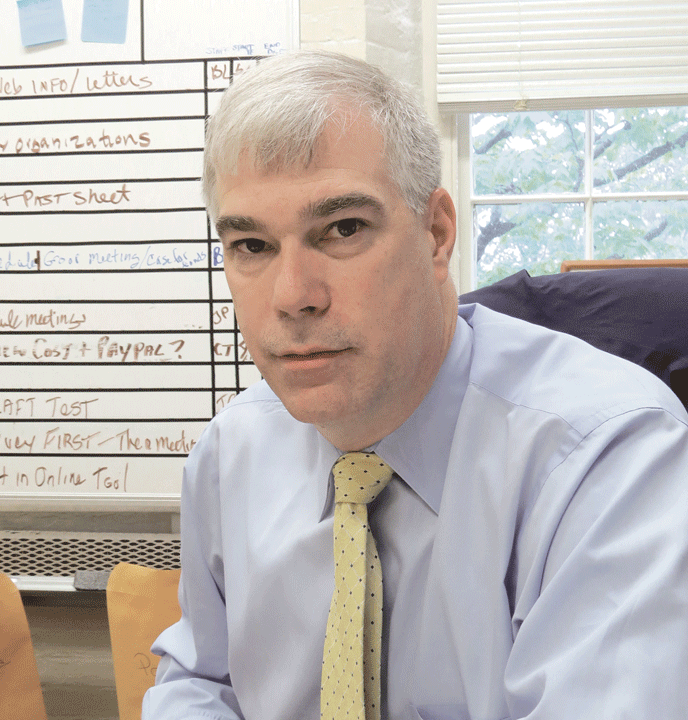
Jeff Fialky says consumers of all types of goods and services look for them on the Internet, and savvy law firms are taking advantage of that.

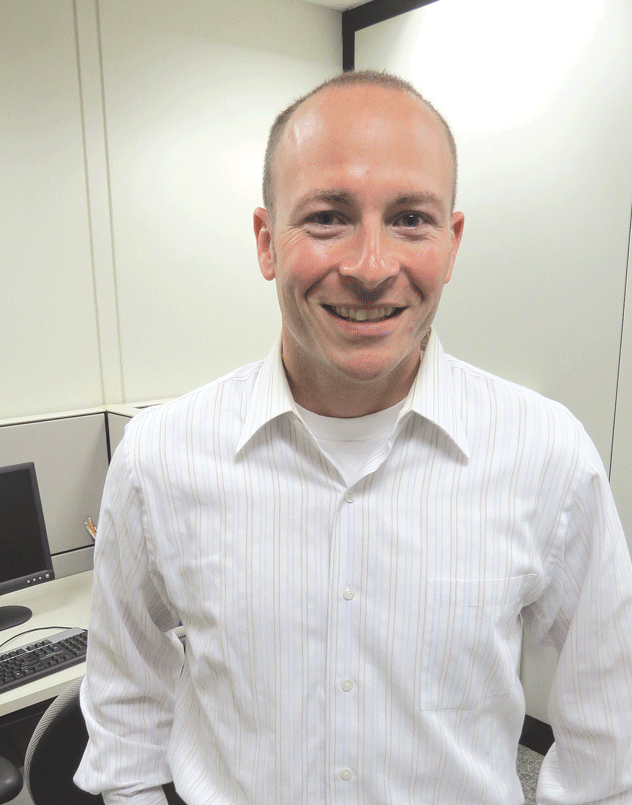
Kevin Maltby says few people buy anything without checking it out online first.

For example, millions check out Yelp reviews before making dinner reservations, or head to Amazon to read product reviews before making a purchase — even if they plan on buying the item elsewhere.

The legal world even has its own review site, Avvo, said Maltby, an associate with Bacon Wilson, P.C. in Springfield. “I would liken that to the comment section on any retail site, where people rate the lawyer and talk about the lawyer. To some degree, in the day and age we live in, no one buys anything without going online and looking at reviews.”

That’s why it’s more important than ever for attorneys to control their own image and messaging, and increasingly, firms are doing so through blogs and social media.

“I think it’s valuable,” said Jeff Fialky, a partner with Bacon Wilson. “First, it has value for marketing purposes. I think most consumers, when they’re looking for a professional service provider — like a law firm or any other good or service — is using the Internet, furthering that global marketplace.

“We get a fair amount of business from outside the area,” he continued, “from people looking for established law firms — from a business in another state, for instance, that needs a local transactional lawyer in this area — who go to the Internet to find an established attorney with relevant experience.”

What they often find is a post on one of Bacon Wilson’s four blogs — which deal with employment law, estate planning, bankruptcy, and family law — that piques their interest. That might lead to a phone call — and a new client for the firm.

Skoler, Abbott & Presser, P.C., an employment-law firm based in Springfield, also hosts a robust blog at its website called “The Law @ Work.” Recent topics include the Employee Retirement Income Security Act, protections for employees who ‘like’ Facebook comments critical of their employer, and Massachusetts’ new law granting domestic-violence leave (see related story, page 27).

“A lot of articles are geared toward providing some sort of information or guidance to employers, whether it’s HR professionals or other people in business,” said Kimberly Klimczuk, a partner with the firm. “Sometimes, we’re reporting on interesting cases.”

But if the blog is a marketing tool, she said, it’s not one intended to generate more phone calls, but rather one that raises the firm’s profile as an expert resource in the ever-changing world of workplace law, which is just as important.

“Although everyone likes to think we reach more clients through the blog, that’s not the primary purpose,” she said. “It’s a publication, primarily. You want to generate content for the blog that is of general interest. Of course, if more HR professionals and employers read it, that’s awesome.”

Peter Vickery understands the value of a regularly updated blog in boosting his professional profile — a particularly important consideration for a sole practitioner in Amherst.

“It does boost your Google ranking,” said Vickery, who focuses his practice — and his blog — in the areas of employment and discrimination, copyright and trademark, voting and elections, and public policy, among others. “That’s not the reason I started blogging, but it’s one reason I kept doing it. Every time I update the blog, Google’s algorithms boost my ranking.”

For instance, the blog can catch the eye of “people who are looking for anything in my practice areas, employers and landlords and people who have an interest in constitutional law. That third group is more amorphous — an audience of people who have an interest in First Amendment issues, separation-of-power issues. If someone is Googling, say, ‘Article 30, separation of powers, Massachusetts,’ one of my blogs should pop up. It’s a hard market to reach otherwise.”

For this issue’s focus on law, BusinessWest talked with some area law firms that are heavily invested in reaching the masses online through blogs and other forms of social media, like Twitter, LinkedIn, and Facebook, and examine why these channels, when managed correctly, help lawyers control their own reputation and generate business.

Information, Please

Various areas of Bacon Wilson’s sprawling practice lend themselves to social media, said Maltby who listed estate planning among others. Hyman Darling,  a partner with the firm, has recently taken to the “Estate Planning Bits” blog with posts on changes in estate- and inheritance-tax law, a change in how inherited IRAs are protected in bankruptcy, and whether religious marriages are valid for estate-planning purposes when no civil marriage license was issued.

“A lot of people read the estate-planning blog or the employment-law blog for their own information, and if they have questions, they might call,” said Maltby, who added that certain practices, like his own work in criminal defense, don’t lend themselves as well to blogs.

Klimczuk said arming clients and others with information from employment-law experts is the foremost reason her firm maintains a blog.

“If people read your blog, hopefully, if an issue comes up, they’ll remember the blog, think, ‘they seem to know what they’re talking about,’ and give you a call,” she told BusinessWest. But even if that never happens, “we think it’s a good way to share information with the public about our area of expertise.”

Fialky said Bacon Wilson’s public profile has certainly been raised through its blogging and other social-media presence, including Facebook pages for many of its lawyers,

“On the other hand, it’s valuable for individuals to educate themselves with respect to legal concepts,” he noted. “While legal concepts vary from jurisdiction to jurisdiction, others remain constant. For instance, issues facing a startup business are fairly universal across the country. Creating blogs provides us with accessibility to markets that word of mouth and geography would otherwise not provide.

“Just the other day,” he added, “one of my colleagues received a query from a company, very distant, from one of the western states, entirely on the basis of an article he had written and posted on one of the blogs. They had a specific need, and they called.”

If clients and the public are learning from reading legal blogs, Vickery said, he benefits in a similar way from writing them.

“I’m motivated partly by fear,” he said, only partly joking. “I have this fear of not knowing what the most up-to-date law is. A lot of attorneys have a recurring nightmare of being in court, and the opposing counsel drops this unfamiliar case on you.

“Keeping my blog up to date is almost self-discipline,” he continued. “If I have to read cases in a certain area of practice in order to maintain my blog, I can sleep easier and not get those nightmares so much.”

Other forms of social media can be effective either on their own or in conjunction with blogs, Klimczuk said. “We use Twitter more casually, sometimes to promote things, like a blog post. We find that, when we post something on the blog, then tweet about it, it directs more traffic to the blog. It’s our way of illuminating areas of the law that would be of interest to people.”

Twitter is also valuable for promoting events the firm is involved in, she said, while LinkedIn is used more for business contacts, “as a way for clients to keep in touch with what we’re doing.”

At Bacon Wilson, “certain lawyers have found success on Facebook,” Maltby said, offering the example of someone reaching out to an estate-planning attorney with his own issue or that of a friend, because of a relevant post they read.

“I’m a commercial transactional lawyer,” Fialky added, “so, for me, it’s unlikely that business owners outside the area, or even in this area, would be looking for a service provider by way of Facebook. But they may connect through a LinkedIn relationship or a blog. I’ve received inquiries over the years on articles I’ve written in blogs.”

Maltby noted that Bacon Wilson’s website, which hosts its blogs, is mobile-friendly, to make it easier for people who access the Internet on the go to find the information they need — and easily find a phone number if they want to call.

Open Book

Fialky understands he’s practicing law in a new world of consumer research, which is as true of law firms as it is of car shoppers and restaurant patrons.

“Very frequently, by the time I talk to a new client, they’ve already read my bio online,” he said. “Clients are good consumers and want to understand with whom they’re doing business.”

That’s why it’s critical to actively build that profile, rather than sit back and let sites like Avvo do it. Any additional business that arises from those efforts is just a bonus.

“It certainly helps me with the pipeline; I’ve gotten some business by way of the blog,” said Vickery, who has posted recently on campaign-finance law, Facebook defamation, and recent decisions by the Mass. Commission Against Discrimination. “I can draw a direct line from a couple of blog pieces to revenue, which is always encouraging. With advertising and marketing, it’s often difficult to see what works and what doesn’t work. Every now and again, things clearly work, and these were instances when it did.”

Most law firms don’t blog, and many have no social-media presence, but that could change, Klimczuk said.

“As more people get into social media, it’s kind of expected that firms are going to participate, which creates a scenario where firms that are not doing it are kind of at a disadvantage,” she said, adding that it’s not enough just to create a blog.

“If you’re doing a blog, you have to make sure it’s updated. If you post every two months, that’s super lame, and it makes you look bad. You have to update on a regular basis with relevant content, things people are interested in. It definitely adds a new dimension to the practice of law.”

Fortunately, Maltby said, it’s not difficult to find new topics to write about.

“Information is always changing, and the law is always evolving, so if you don’t keep your blog up, it gets stale,” he told BusinessWest. “There’s always new information, new cases. In the employment-law world, that could mean a new wage-and-hour case reinterpreting lunch breaks … stuff like that.

“It’s an excellent tool and another way to keep clients informed,” Maltby said of social media in general. “But I think it’s very important to make sure, whatever you’re posting, however you’re using those online tools, that it’s done in a professional manner. If you do, it will resonate with a large cross-section of clients.”


Joseph Bednar can be reached at [email protected]

Employment Sections
It Appears That These Contracts May Be Here to Stay

By PETER VICKERY, Esq.

Peter Vickery

Peter Vickery

There have been no TV specials, live re-enactments, or commemorative stamps, but the fact is, this year marks the 600th anniversary of Dyer’s Case, the first recorded legal decision about a non-compete agreement.

It did not go well for the employer, John Dyer. He was asking the court to enforce the agreement against his former apprentice, a young man who (in exchange for Dyer forgiving a loan) had promised to refrain from setting up his own shop for six months after the end of the apprenticeship. Not only did the judge rule for the young apprentice, he added that Dyer himself ought to go to prison for trying to stifle competition.

While Massachusetts Gov. Deval Patrick has no plans to jail employers who draft them, he would nevertheless like to make non-competes a thing of the past.

Six centuries after Dyer’s Case, the goal of non-competes remains the same: to help employers protect their businesses by temporarily preventing ex-employees from aiding, or becoming, the local competition. As in 47 other states, these contracts are legal in Massachusetts (with a few exceptions for particular professions, discussed below) so long as they are reasonable in terms of time and territory. Patrick wants to change that, but so far the Legislature has refused to go along. At the end of the last session — after legislators passed his economic-growth bill, minus the section that would have banned non-competes and rewritten the trade-secrets law — the governor said he would try again. What is at stake, and how would victory for the governor affect businesses in Massachusetts? Read on.

What Are Non-compete Agreements?

Non-competes have survived because creating intellectual property is like training an apprentice: it takes time and money. In business, our motive for investing such resources is profit, and most of us would not invest if other people could simply walk off with our profits.

Patent, copyright, and trademark law harness the profit motive by protecting most — but not all — forms of intellectual property. Trade-secrets law helps plug the gaps. Even after revealing a trade secret to an employee, an employer can retain some of the secret’s value via contracts, such as agreements not to disclose and not to compete.

If an employee with access to your trade secrets (e.g. customer data, expansion plans, and marketing strategy) quits and walks straight into a job with your nearest rival, you have reason to worry. Mindful of this possibility, some employers use non-disclosure agreements to prevent their trade secrets from falling into the hands of the competition. By signing non-disclosure agreements, your employees promise not to divulge confidential information to their new employer.

But how can you, the former employer, looking across the street at your ex-employees happily chatting away with your nemesis, be absolutely sure that they are abiding by this commitment and not using your information against you? As a practical matter, you cannot, at least not without resorting to electronic surveillance, which would likely generate many more difficulties — big ones, involving lawyers and judges — than it would solve. This is why non-competes are helpful.

Compliance with a non-compete agreement is easier to verify than compliance with a non-disclosure agreement. Although you may not be able to find out what your ex-employees are saying, you will find it comparatively easy to find out where they are working. So, to borrow a theological term, the purpose of the non-compete is to ensure that your employees avoid the occasion of sin, i.e. circumstances that entice or incite wrongdoing on their part.

Waiting for the harm to occur and then suing for damages would make little sense. After all, the most effective way to protect commercially valuable confidential information is to stop the harm from happening in the first place. Therefore, the typical non-compete allows the employer to ask a judge for an injunction prohibiting ex-employees from going to work for the local competitors or setting up a rival enterprise of their own.

But non-competes cannot go as far as some employers might wish. To imagine an extreme example, if the law allowed permanent, worldwide non-competes, ex-employees would be unable to pursue their livelihoods or start new businesses, commerce would stagnate, and the consumer would suffer. So to balance the employer’s interests against those of both the employee and society as a whole, the Massachusetts courts have gradually narrowed the purpose, geographic reach, and duration of non-competes.

This is how the Supreme Judicial Court has summed up the law: “a covenant not to compete is enforceable only if it is necessary to protect a legitimate business interest, reasonably limited in time and space, and consonant with the public interest.” In addition, the court will not enforce an agreement if, after signing it, the employee’s job undergoes substantial changes.

Each case is different, and the reasonableness of time and territory will depend on the particular facts, as will what sort of job changes are substantial, but one universal principle applies: if the agreement’s purpose is merely to prevent ordinary competition, the court will not enforce it.

There are at least five hurdles an employer has to jump over before a court will enforce a non-compete:

• The agreement must protect a legitimate business interest, e.g. trade secrets and good will;
• It must be reasonable in duration, e.g. up to two years;
• It must be reasonable in geographic scope, which depends on the extent of the employer’s business. The court might uphold a worldwide ban for a genuinely worldwide enterprise, but not for a business whose market extends only 50 miles from its store;
• The competition must be direct, i.e. for the same customers; and
• If the employee’s compensation or responsibilities change, the employee must sign a new agreement.

There is one more hurdle regarding current employees. If an employee is already working for the employer at the time she signs the agreement, the employer will have to provide her with separate consideration, meaning a benefit that is something more than the job itself, such as extra money. Otherwise, the non-compete is unenforceable.

As well as these significant hurdles, Massachusetts law prohibits non-competes for certain professions, namely physicians, nurses, broadcasters, licensed social workers, and attorneys. And the courts are inclined to relax the terms of non-competes that try to restrict the employment of financial advisors and brokers.

Even with all those caveats and provisos, non-competes make obvious sense for established companies. And therein lies the tradeoff dilemma for policymakers. A rule that protects existing businesses is also a barrier to entry, standing in the way of newcomers. If policymakers want to protect current jobs-makers, the environment will be less welcoming to insurgents. Conversely, if they want to create an ideal climate for startups, they will almost certainly hurt existing businesses and the people they employ.

The Case for Banning Non-competes

Patrick would like Massachusetts to follow California, where non-competes are illegal. Much of the lobbying has come from groups that believe the switch would encourage more innovation, making Massachusetts more like Silicon Valley.

Non-competes came into the crosshairs in the 1990s when academics started to blame them for discouraging startups. In 1994, AnnaLee Saxenian, a graduate of Williams College, Harvard, and MIT, credited Silicon Valley’s “culture of mobility” with enabling the rapid transfer of knowledge, and compared it unfavorably with the “buttoned-down” culture of Route 128 in the Boston area. Five years later, Ronald Gilson, a law professor at Stanford Law School, published an article that pointed to non-competes as the explanation for the success of Silicon Valley compared with Route 128. Gilson said that it was the presence of non-competes in Massachusetts and their absence in California that lay at the root of the different cultures.

Several scholars have buttressed this idea, claiming that non-competes impede entrepreneurship and job growth. For example, Matt Marx and Lee Fleming, the authors of Non-compete Agreements: Barriers to Entry… and Exit? (2012), found evidence of a “brain drain,” with talent moving from states that enforce non-competes to states that do not.

Patrick’s proposal is based on this notion. Specifically, he wants the Legislature to repeal Sections 42 and 42A of General Laws Chapter 93 (which allow damages and injunctions for the unlawful taking of trade secrets) and create a new Chapter 93K, a Massachusetts version of the Uniform Trade Secrets Act (UTSA). In a nutshell, the thinking behind the governor’s proposal is that ditching non-competes and adopting UTSA will help make Massachusetts more like California, increasing our allure for new, innovative, hi-tech enterprises.

Who Wants to Keep Non-competes?

Established, larger businesses tend to oppose the governor’s plan. Some report that confidential-information theft is common, not rare, and that abolishing non-competes would make it harder to deter the practice. More fundamentally, these employers sense that the bill threatens existing jobs without guaranteeing new ones. The promised gains are merely possible and general, whereas the losses are highly likely and specific.

Even some people who believe that non-competes impede startups recommend caution. For example, Marx and Fleming agree that non-competes “are responsible for a general exodus of talent [and] are driving away some of the best and brightest.” But they also point out the absence of some important data, and warn that there is still no “definitive answer regarding whether non-compete enforcement is a net positive or negative.” Clearly, when weighing the merits of a far-reaching policy proposal such as banning non-competes and signing up to UTSA, legislators need to bear in mind what we do not know.

But they should also look at what we do know, starting with two simple facts. First, 46 states have adopted UTSA in some form. The exceptions are Massachusetts, New Jersey, New York, and Texas. Second, 47 states enforce non-competes, and those that do not are California, Montana, and North Dakota.

So we know that (1) most states have a version of UTSA on their statute books and (2) most states enforce non-competes. This makes it difficult to determine how big a factor non-competes and UTSA are in encouraging innovative startups. Complicating matters further, in recent years several states have modified their non-compete rules. Idaho and Louisiana made it easier to enforce them, Oregon and New York made it harder, and Georgia moved closer to the Massachusetts approach. But, keeping these analytical challenges in mind, we can learn something valuable by looking at recent economic indicators and league tables of innovation and competitiveness.

One useful indicator is the unemployment rate. Looking at the states where non-competes are illegal, North Dakota’s rate is 2.8%, Montana’s is 4.7%, and California’s is 7.4%. Our unemployment rate in Massachusetts is 5.6%, higher than North Dakota’s and Montana’s but lower than California’s. The most likely explanation for the lower unemployment rates in Montana and North Dakota is not the absence of non-competes but the presence of a booming energy sector. And the fact that the unemployment rate is higher in California than in Massachusetts suggests that banning non-competes would not, in and of itself, boost our overall job growth.

Most of the states with UTSA — which are most of the states in the U.S. — have higher unemployment than Massachusetts. Of course, so do New Jersey and New York (non-UTSA states), which indicates that UTSA is not a determinative factor either way.

League tables of competitiveness and innovation tell a similar story. The Beacon Hill Institute’s 2013 State Competitiveness Index ranked Massachusetts top of the league, with Texas in ninth place and New York 26th.  California came in 29th and New Jersey 41st. As for the two states (other than California) where non-competes are illegal, the index gave second place to North Dakota and 36th place to Montana. Non-competes do not seem to be outcom-determinative, at least according to the way the Beacon Hill Institute measures competitiveness.

The University of Nebraska-Lincoln’s 2013 State Entrepreneurship Index ranks North Dakota first and California second, which would seem to support the contention that states without non-competes are more entrepreneurial than those with them, until you notice that, only two years before, California placed 11th, which was the ranking Massachusetts received in 2012, while New York held third place throughout. Between 2011 and 2013, the legal status of non-competes remained stable in California, Massachusetts, and New York, so any claim that this index proves non-competes stifle entrepreneurship falls flat.

Another index reinforces the lack of a connection, namely the 2014 State New Economy Index from the Information Technology and Innovation Foundation, which factors innovation capacity into its calculation of economic dynamism. On the one hand, California (where non-competes are illegal) ranks third, ahead of New York and New Jersey (where they are allowed). But, as for the two states other than California where non-competes are illegal, the index ranks North Dakota 36th and Montana 39th. The state winning first place? Massachusetts. Again, the presence or absence of non-competes fails to predict a state’s standing in the innovation rankings.

In summary, the UTSA states include many with high unemployment and low innovation, which suggests that UTSA is not a key ingredient to prosperity. Similarly, the states that enforce non-competes include some that lead the nation in terms of innovation, and some that bring up the rear. What we do know is that, so far, no one has been able to offer clear and convincing proof that banning non-competes and enacting a version of UTSA would lead to greater innovation and more jobs.

The Future of Non-competes

If Patrick or his successor should decide to rejoin the battle, legislators would have to consider the costs to present employers as well as the putative benefits to employers yet to come.

They might also consider some innovations of their own, such as expanding the motley list of vocations where non-competes are forbidden — currently physicians, nurses, broadcasters, social workers, and lawyers. Even though those professions cannot be subject to non-competes, they seem to thrive regardless. For example, nobody is complaining about a lack of lawyers in Massachusetts (or anywhere else).

On the other hand, the amorphous nature of the tech sector makes it difficult to draw lines around. The Legislature learned this lesson last year when it imposed, and then repealed, a tax on “computer-system design services.” Trying to define the kinds of high-tech jobs that would qualify for new exemptions from non-competes could become a legislative drafter’s nightmare.

Unless and until proponents can offer persuasive evidence that banning non-competes would create more jobs than it would destroy, this particular species of contract looks set to celebrate its 601st birthday — and maybe many more.

Peter Vickery practices law in Amherst; (413) 549-9933; www.petervickery.com

Cover Story
Family Business Center Marks 20 Years of Dispensing Insight

Director Ira Bryck

Director Ira Bryck

There’s a small sign in front of a parking space near the front door of Notch Mechanical Constructors in Chicopee declaring that it is reserved for Roger Neveu, who founded the company 41 years ago.

He has rarely parked there in recent years, said his son, Steve, one of five siblings now managing the venture, noting that his father stops by once in a while, but considers himself fully retired. The parking space, he said, is a way to recognize the past and the elder Neveu’s vision and drive, and, in a way, it serves as a symbolic bridge between the generations — a way of saying that, while the company’s creator isn’t physically there most of the time, he still has an important place in the enterprise.

Of course, the process of building an actual bridge between the generations managing a business is much more difficult than creating a designated parking space, and this concept of having a ‘place’ is quite complicated as well. And it was these simple realities that helped drive the creation of what is now known as the UMass Amherst Family Business Center, which this month will celebrate 20 years of helping businesses like Notch achieve successful transitions — and also negotiate countless problems that arise when several people with the same last name are running an operation.

The center’s executive director, the colorful Ira Bryck, said the agency was founded through the inspiration of a number of professionals and business advisers, many of whom still serve as strategic partners, and was also part of a movement in the early and mid-’90s to establish university-based education programs for family businesses.

“It became clear to a lot of expert advisers that they needed a sort of safe-harbor environment to be able to talk with business owners about a lot of issues that they normally would not be able to talk with them about if they were just doing their taxes or helping them with some legal issue,” said Bryck, adding that the center has certainly filled this role effectively over the years.

And this is one of many reasons why, two decades or more after many family business centers were established, the UMass facility is one of a relatively few that are, well, still in business.

Other reasons include Bryck’s persistence and imagination when it comes to creating value for members, and his ability to enable the center to evolve over the years and broaden its scope. For example, the center is no longer exclusively for family businesses — it also assists closely held operations — and has extended its main focus to all that it takes for a business to succeed in a changing and challenging climate.

It does so mostly through the many dinner meetings staged annually, during which speakers with a wide range of backgrounds provide insight on the myriad issues facing businesses today, and attendees are given some thoughts — and inspiration — on how to take these lessons back to their plants and offices and implement them.

Roger Neveu, who founded Notch Mechanical Constructors

Roger Neveu, who founded Notch Mechanical Constructors and later was bought out by five of his siblings, sought out the UMass Amherst Family Business Center for help on succession issues.

But it’s also done through a new weekly radio program called The Western Mass. Business Show with Ira Bryck, blogs and other forms of social media, and a host of other media. Summing it all up, Bryck likes to borrow the phrase “marketplace of ideas.”

And it’s a unique marketplace, he went on, because membership crosses virtually all business sectors, from manufacturing to retail to technology, and while these industries have their unique challenges, there are issues and concerns common to all ventures.

“There have been many good conversations where people have gained a broader perspective because they’re talking to people who are not in their industry,” he explained. “Everyone would like to think that they can think outside the box, but what’s really helpful is to talk to someone who’s not in your box.”

Kent Pecoy, founder and owner of West Springfield-based Kent Pecoy Homes, and a long-time member, agreed. He told BusinessWest that he enjoys the diverse nature of the membership and the perspective provided by business owners facing similar issues.

Pecoy said he’s probably years away from dealing with succession issues at the company, but there are still plenty of matters for which he can use that aforementioned safe harbor, many of them involving his son, Jason, who has worked at the company since he was in high school and has been going to work with his father for as long as he can remember.

“Working with my son all the time is a blessing, but it’s not without its challenges,” he said with a laugh.

For this issue, BusinessWest pauses at the center’s 20th anniversary to discuss with Bryck and others how this organization has made an important difference within the local business community.

Public Relations

By now, most in this region know about Bryck’s background, and specifically the many years he spent working beside his parents at the children’s clothing outlet called Barasch’s Kids Store on Long Island.

Kent Pecoy

Kent Pecoy, a long-time member of the Family Business Center, says working with his son, Jason, is a blessing, but is “not without its challenges.”

What was supposed to be one summer at the family business turned out to be closer to 17 years, said Bryck, who has imparted lessons from his experiences at the store and with family businesses in general to center members — and a host of other audiences — in a number of ways.

These include the writing of three plays — A Tough Nut to Crack, based on his time at Barasch’s, as well as The Perils of Pauline’s Family Business and Wait Till Your Father Gets Home — which are still performed on occasion.

But while Bryck became proficient as a playwright, his greater talents have been selling the center to the region’s business community, connecting members with resources, and implementing change within the agency when necessary to maintain relevance.

Retracing the history of the center, Bryck reiterated that it was part of a national trend to create programs focused on family businesses and the issues facing them. MassMutual was at the forefront of that movement, eventually becoming involved with more than 50 centers, and one of its financial advisers, Charlie Epstein, president of Epstein Financial Services, was instrumental in getting the center off the ground.

Epstein’s company remains a strategic partner, along with First Niagara Bank, Giombetti Associates, the law firm Bulkley Richardson, the accounting firm Meyers Brothers Kalicka, and Touchstone Advisors. These partners provide financial and advisory support, as well as input on the center’s mission and the process of carrying it out, said Bryck.

Ross Giombetti, a principal with Hampden-based Giombetti Associates, which provides employee assessment, leadership training, recruitment, and other services, has been a strategic partner from the beginning. He said the center has been successful in fulfilling the safe-harbor role, and in providing a unique forum in which business owners can learn from each other and, in the process, often avoid costly missteps.

“We needed a forum where family business leaders — siblings, husbands, and wives — felt comfortable talking about their issues and the dynamics of operating their business,” he explained, “and also where they could learn from other successful family businesses and professionals, do things better, and perhaps avoid some of the mistakes they made.”

The center hosts six dinner forums each year as well as several workshops and roundtable discussions focused on strategic questions, said Bryck, adding that this year the schedule will include a 20th-anniversary party on Oct. 14 at the Log Cabin Banquet & Meeting House.

There will be much to celebrate at that event, said Bryck, adding that the center remains vibrant, with more than 60 member businesses, including several that have been involved from the beginning, and it continues to evolve and expand its role.

In fact, there was talk a few years ago of changing the name to the UMass Family and Closely Held Business Center, said Bryck, adding that a consensus emerged that the family business was still an effective niche, and the main point of emphasis. However, a new slogan — “a continuing resource for family and closely held businesses” — was adopted to drive home the broader mission, which has come about out of necessity in many ways, he said.

Elaborating, Bryck told BusinessWest that many operations that were family businesses — concerns run by multiple generations or several members of the same generation — are now sole proprietorships or concerns with one owner, with managers who still need the type of support and services the center has provided.

“There were a lot of family businesses that became non-family businesses,” he explained, adding that he’s not sure how national or global this phenomenon is, but does know it’s a pattern regionally. “There are still a lot of multi-generational families in business, but around here, parents retired or passed away, the kids took over … and sometimes the siblings or cousins in business realized that it wasn’t the same and they didn’t get along that well since the parents left. So a lot of family businesses went back to sole owner.

“So we said, ‘are all of these people who are suddenly sole owners or have brought in partners who are not family no longer our concern?’” he went on, adding that all those quickly determined that he answer to that question was ‘no.’ “There were many people who were still interested in what we do, so we started focusing more on the issues of small and medium-sized businesses in Western Mass. and what they needed to succeed.”

Mostly, what they need is insight into coping with the many challenges of doing business today, Bryck noted, adding that members get this through both the speakers he brings to the dinner forums and the other members in the room.

“A business owner or key manager who comes to the meetings gets as much out of the program from discussing issues with other business owners in the room as they might get from the presenter,” he explained, adding that, while speakers will devote most of their time to dissecting an issue, they will leave some for interactive discussion about how attendees can apply what they’ve learned to their operation.

“We’re working more and more on how companies are actually going to implement what they’ve learned, because someone could come in with a grand theory of some kind, and a very practical owner of a small or medium-sized company is going to say, ‘I could use this or that piece of it,’” said Bryck, adding that he’s considering an additional set of roundtable programs or follow-up workshops devoted to the process of implementation.

Not Child’s Play

Notch Mechanical Constructors had been a member for several years, and is now ‘member emeritus,’ a more limited type of membership, said Steve Neveu, who serves as president, adding that the center has played a significant role in what he described as a smooth transition in ownership from his father to the five siblings that take titles ranging from vice president to ‘crew leader.’

“It’s a nice division of labor,” he told BusinessWest, adding that all five worked in their business while their father was running it and they get along, two attributes that certainly help in the challenging environment that is the family business.

“We’re a close family,” he noted. “Like any set of partners, you don’t always see eye to eye on things, but we manage to work things out cleanly and get to the bottom of issues.”

Neveu doesn’t remember the specific circumstances that led to Notch joining the center — whether Bryck reached out to his father or vice versa, or whether a consultant recommended joining — but he can clearly recall a number of occasions when the agency, through its various programs, provided valuable insight to the family, not only about succession, but on a host of other issues as well.

“This was about the time when my father was starting to consider how to pass this on to the next generation and how to do that well,” he recalled. “I had been talking with him about it — I was his president, and he was CEO — and we thought joining the Family Business Center made sense on many levels.

“I have an MBA, but one of things you find is that they don’t talk about these kinds of issues in school,” he went on. “The center offered a unique forum, a way to learn about this whole process. We were a well-functioning family business at the time, but it’s different when you have one owner.”

Neveu said the center, through the speakers at its dinner forums, focused on issues both broad and specific, and in many cases, the subject matter involved something not covered in a textbook or in business school — such as the issue of whether to make siblings not involved in the family business shareholders.

“A lot of companies do that, but I remember a speaker at one of the dinner meetings saying that such a scenario is fraught with difficulty,” he recalled. “When a parent has two children in the business and two outside the business and gives them all equal shares, you can create a division there because there will be different perspectives, and you open up an area for complications when you do that.

“I remember meeting with my father and taking about it, and we decided it made sense to keep the business with those in the business,” he went on. “It was an understanding of what’s healthy, and example of how you really need to think things through when you make important decisions like that.”

Another matter the center has been helpful with is something Neveu called the “hat concept.” Elaborating, he said the owners of a family business like Notch will wear many hats representing their various roles — as employees, board members, and shareholders — and it’s important to remember to keep them straight.

“People need to know which hat they’re wearing and understand the authority and responsibility that goes with each hat,” he explained.

Neveu said speakers at the center’s meetings rarely provide direct advice, but they will explain the parameters of a specific issue and, thereby, help members make smart decisions.

Pecoy agreed, and told BusinessWest that, unlike most other business groups he belongs to or serves as a board member, such as a homebuilders association, the Family Business Center has members across a host of industries, all facing similar issues and challenges in an ever-more-competitive global economy. This mix, and the interactive dialogue it creates, has helped nurture a unique learning environment, one that provides attendees with both perspective and insight.

“This is more widespread and diverse,” he said of the center, “and you get to see how similar all businesses are. It doesn’t make any difference whether you’re in manufacturing or construction — it’s amazing how similar the issues are, and this has been a great takeaway from our involvement.

“And our employees get an entirely different take on things,” he continued, adding that several will attend the center’s dinner meetings over the course of a year. “They begin to see how difficult it is for a business owner and the many challenges he or she faces. It’s a great forum for them to listen to other business owners, which is important, because they see it on some level within my organization, but when you hear other business people in different organizations talk about the same thing, it solidifies it or brings more credibility.”

The Bottom Line

While Pecoy, 56, jokes that it might be 20 years or more before he gets around to transitioning his business to the next generation, he admits that he thinks about succession all the time, primarily because it is one of the main focal points for many of the center’s speakers over the years.

“One of the best lines I’ve heard goes something like, ‘when the owner of the business walks out, no one even hears the door close,’” he told BusinessWest, adding that this colorful wording refers to a completely seamless transition.

These rarely happen in business, but because of the Family Business Center and its informative programming, that complicated matter — and countless others — have become easier for dozens of businesses to negotiate.

George O’Brien can be reached at [email protected]

Cover Story
Ted Hebert Sets His Own Standard of Success

COVER0914bTed Hebert walks through his store, hugging customers he knows, slapping them on the back, making recommendations, and bending over happily to pat dogs that people bring inside with them.

His positive attitude and the relaxed atmosphere that emanates throughout Teddy Bear Pools & Spas in Chicopee belies the fact that the pool and spa business is down 70% from the peak it reached between 2004 and 2005.

But Hebert has weathered worse storms, and his love for people and reputation for customer service have allowed him not only to survive when his competitors went under, but ultimately thrive during the course of his 39 years in business.

None of that has come easily. Hebert enjoyed unprecedented highs but also suffered devastating blows as his business grew from the carport of his parents’ home to the position it holds today as one of the leading pool and spa businesses in the Northeast. Still, “to me, success is not what you have; it’s about what you give back to the community,” he said. “It includes respect, which is something you can’t buy, and my goal is to make this a better world than it was when I came into it.”

Hebert’s business history is peppered with philanthropic endeavors, and he and his wife, Barbara, have served on the boards of countless charities and made an untold number of generous donations, which include the gift of a kangaroo to the Zoo at Forest Park in Springfield. They sponsor hundreds of youth and adult sports teams, and have also sponsored events ranging from the Paws Golf Tournament for the MSPCA of Western Mass. to the Shriners Chowder Bowl, which they supported for 15 years, to the local chapter of the Make-A-Wish Foundation. The couple has volunteered all over the world, and Hebert has been feted with many awards for his altruism, including the prestigious Paul Harris Fellowship for distinguished community service, which he received in 2008 from the Rotary Club of West Springfield.

He takes pride in the fact that the majority of his employees have been with him for more than three decades, his salespeople close 75% of their sales, and factory representatives come from as far away as California to learn from his business.

Teddy Bear Pools

Ted Hebert doesn’t do much advertising, but his community activity — occasionally involving his store’s mascot — is its own form of marketing.

But he has always set the bar high, and Hebert’s concern for his customers extends to the products that line the shelves at Teddy Bear Pools and Spas. The majority carry his private label and were created decades ago when he discovered the industry was reducing the quality of chemicals needed to maintain the chemistry of the water in pools and spas.

“I have some medical background, so I understood what was taking place in terms of the chemistry,” he said, adding that he hired a company to make products to his specifications, with ingredients that were better than what he could purchase and resell.

This concern for other people and their lives, which extends to their pets, was learned at his mother’s knee and highlighted by an incident that took place during his childhood.

Christmas was approaching, and although Hebert and his siblings were excited about the holiday, any hopes of finding toys beneath the tree were dashed when their mother told them money was tight and she could not afford to buy them much.

But when the doorbell rang a few moments later and a woman asked her to donate a dollar for flowers for a sick neighbor, Billie Hebert hurried to her desk and painstakingly counted out pennies and nickels until she had enough to satisfy the request.

“When I asked her why she did it, she told me, ‘it’s more important to use the money to help others than to buy toys with it,’” Hebert recalled. “She ingrained the belief in me at a young age that it was important to do what you can to make the world a better place.”

Since that time, it has been a guiding principle in his life, and to that end, he had a bench in his backyard emblazoned with the words, “make the world a bit better or more beautiful because you have lived in it.”

“It sits by our pond,” Barbara said, “and the words are something he has always lived by.”

Getting Ahead

Hebert was a lonely child, as his mother worked two jobs to make ends meet, and his father was rarely home. He also had a stuttering problem and suffered from low self-esteem. “But I always had an innate ambition to work,” he said, adding that, by the time he was 9 or 10, he was mowing lawns, shoveling driveways, washing windows, devliering newspapers, selling Christmas cards from a catalogue door to door, and collecting old newspapers and bottles to exchange for cash.

Ted and Barbara Hebert

Giving back to others is important to Ted and Barbara Hebert, as this bench at their home reminds them.

He was hired as a busboy at age 14, and during his high-school years, he worked every night from 11 p.m. to 7 a.m. as a dishwasher at New Bay Diner in Springfield. “I spent more time working than I did at school,” he said, noting that he took a second job during his senior year, working around the clock from Friday night to Sunday night at the Oaks Inn.

The course of his life changed when his mother purchased an above-ground pool for a Fourth of July party. The people who were supposed to install it didn’t show up, and when Hebert’s uncle volunteered to do the job, he decided to help.

They had to visit the pool store to get some missing parts, and he saw a young man cleaning a pool there and working in the display lot. “I thought it looked like a cool job,” Hebert said.

So he had his mother drive him to the store, where, much to his surprise, he was hired to fill a temporary slot, which led to a permanent position. The following summer, Hebert began installing above-ground pools with several different subcontractors, and after he got his driver’s license, he and his best friend decided to become their own subcontractors.

“I realized I could make more money that way, so we loaded shovels and rakes into my Corvette and went to work, digging by hand,” Hebert recalled.

His career soared after he began installing in-ground pools. “I fell into it,” he told BusinessWest, explaining a woman insisted he do the job for her even though he had no experience, so he tried and met with success. “By the time I was 21, I had five or six guys working for me and was subcontracting the heavy-duty equipment we needed.”

But prior to that, after graduating from high school, Hebert attended classes at Holyoke Community College. At first, his grades were poor, as he was working so many hours, but after three semesters he switched to Springfield Technical Community College, where his grade point average improved, then went on to Worcester State College, where he finally earned high grades.

Hebert wanted to become a doctor, but didn’t have the money for medical school. In 1975, after 14 rejection slips from schools he hoped to attend, he made the decision to start his own pool company from the carport of his parents’ home. It was the right thing to do, Hebert said, as his mother had suffered a mild aneurysm, and he wanted to stay home and care for her.

Although the original moniker he chose for his business was Custom Pools by Ted, his mother suggested he use his childhood nickname of ‘Teddy Bear’ given to him during a visit to his grandmother in Canada, which was a play on the French pronunciation of Ted Hebert.

“I thought the name Teddy Bear Pools was stupid,” he said, but conceded to her suggestion after he thought about it and realized everyone likes teddy bears.

By 1976, Teddy Bear Pools had grown enough to allow Hebert to rent a former car-wash bay on Memorial Drive in Chicopee and turn it into a storefront. When the property was foreclosed upon three years later, he purchased what he describes as “a beat-up car dealership in a completely dilapidated, 4,000-square-foot building on East Street in Chicopee.”

The property contained an old garage and was owned by the Partyka family. “I was blessed, as interest rates were 18%, but because they liked the idea of my business, they offered me financing at 10%,” he said.

In the early years, he did his bookkeeping himself, and the business grew steadily. Despite its success, however, Hebert suffered terribly years later when some of his employees betrayed him and mismanaged his business. The first event occurred in 1986 when an audit undercovered $1.2 million of money and goods not accounted for, and the second took place while he was on his honeymoon in 1987. When he returned, he found an additional $200,000 of money and goods missing.

“I had no business background and a great faith in people,” he told BusinessWest. “I was very naïve and learned the hard way. For many years I was consumed by hurt and pain, and my business completely controlled my life. But I finally realized that money and materials could be replaced. I have survived two mismanagements, paid off $1.45 million in debt, and never went bankrupt.”

He also refused to allow the pain of betrayal to destroy his belief in others. “The reason I survived and have done so well is because of the people who stood by my side. They were my rock.”

Innovative Measures

Today, Hebert’s retail operations are housed in an 18,000-square-foot complex of buildings in Chicopee, backed by a 38,000-square-foot warehouse in South Hadley which serves as the center for his service and installation operations. “We can service and repair up to 10 spas at a time,” he said, adding they are sent from as far away as the mid-Atlantic states, and he received a great deal of work after Hurricane Katrina.

The company also installs several hundred new pool liners each year, opens 1,300 pools each spring, and closes about 1,600 pools in the fall, which equates to roughly 40 a day.

“The business we do is not normal. We are very, very unusual,” Hebert said, adding that the store has five laboratories where pool and spa water can be analyzed and tested at no charge to the customer.

The Teddy Bear name is well-known in the community, and in the last few years, Hebert has done little in the way of formal advertising. Instead, the Teddy Bear Pools name is emblazoned on the uniform shirts he provides for sports teams. Meanwhile, he has sponsored many racecar teams and owns a Volkswagen ‘Bear Bug,’ emblazoned with his company’s mascot, and a Smart Car known as ‘Smart Bear’; both are a hit at parades and other events. In addition, he was the first local business owner to have a hot-air balloon with his company name on it.

These measures, along with his charitable work, have morphed into an indirect advertising and branding campaign. “I love helping kids and adults in any way that I can,” he told BusinessWest, noting that his work on the boards of nonprofit organizations, such as the Rotary Club, where he was named a Paul Harris Fellow for his generous contributions to society, helped spread the word about his business.

“My wife has also been very instrumental and has done a lot for local charities. She left her job after we married to help me, and we do everything together,” he said.

The business also expanded due to Hebert’s commitment to his customers, which led him to implement innovative ideas. For example, when he realized people often forgot the initial instructions they were given about how to maintain a new pool, he hired a production company and made a video that explained everything pool owners needed to know, from how to change, operate, and clean filters to how to vacuum a pool, winterize it in the fall, then reopen it again in the spring. It can be viewed at no charge on the Teddy Bear website at www.teddybearpools.com.

Then, in 2009, when pool manufacturers Esther Williams and Johnny Weissmuller went out of business, Hebert launched a company to make replacement parts for those brands to make sure his customers had everything they needed if a problem occurred. Teddy Bear is also one of the only companies in the Northeast that repairs automatic electric pool vacuums. “People sold them, but no one wanted to fix them,” he said, adding that he regards his customers as family, and didn’t want them to encounter insurmountable obstacles with the products they purchased.

As a result of these measures, the company soon achieved national and international recognition. Teddy Bear Pools carries Hot Springs spas and is rated 22nd out of 700 dealers in the world who sell its products. “We have had people come here from the factory in California to see how we operate,” Hebert said, “and we were one of the first companies inducted into the Aqua Hall of Fame.”

Above and Beyond

Hebert’s success led him to become a motivational speaker at national conferences in his industry, and he created eight three-hour seminars on topics that range from branding to team building to “How to Survive the Economy, the Weather, and Your Employees.”

However, he says he values the people who work for him and prides himself on the benefits he offers his 85 employees — a number that expands during the summer season.

“I consider them part of my family and believe I have been successful because I care about people, quality, and value,” he said. “We are fair in price, and I take advantage of every opportunity I have to help the community. But you are only as good as your employees, and the people who work for me are my greatest asset.”

Although no one can predict the future, Hebert says he will never retire. “I keep getting new ideas. I don’t know where they come from, but the work I do is fun and gives me a reason to get up in the morning. Every season is a new adventure, and I have been blessed to have the foresight to look ahead and see where the business is going,” he said. “But I never want to forget where I came from, and for the past 15 years, I have called customers personally to thank them for their business.”

Thus, Hebert’s reputation and business continue to grow, while he and Barbara remain committed to using their time and talent to do what matters most to them — which is, “to make the world a better place to live in,” he said.

And to swim in, of course.

Banking and Financial Services Sections
Greenfield Savings Bank Emphasizes Community Ties

Rebecca Caplice

Greenfield Savings Bank President Rebecca Caplice

Rebecca Caplice laughed when asked whether Greenfield Savings Bank had seen growth of its online and mobile services among younger customers.

“You’d be surprised at the acceptance across the board,” said Caplice, the bank’s president. “My father is 87 years old, and he’s on Facebook and Twitter every day. It’s really not just young people asking for these things; we are all attached to those mobile devices. I can hardly remember what it was like when someone in a group of people had a question, and no one knew the answer. Now we just look it up.”

In other words, Caplice said, banks had better offer robust options in electronic banking if they want to attract new customers — of all generations, not just Millennials. It’s one of many ways the banking world has evolved, and continues to do so.

“We have all kinds of ways to access your banking services. And we’re seeing growth in those electronic channels,” she told BusinessWest — but that growth has not come at the expense of branch traffic. “You read the industry press and see all these articles — ‘the branch bank is dead.’ But in our experience, our branch traffic hasn’t declined, even as other types of traffic have increased. We’re seeing people use several channels interchangeably, depending on what they’re doing.

“Sometimes a single transaction might use more than one channel; they might start someplace and end up somewhere else. That has been a real change,” she added. “Take mortgage applications, for example. More than half of our mortgage applications use an online channel to do part of the process electronically; then they’ll come in. I guess that speaks to people wanting to do things on their time, not the bank’s time.”

If there’s any difference between older and younger customers when it comes to technology, it’s not comfort with the tools, but with security fears.

“That’s where the separation occurs,” Caplice said. “It’s not the technology that’s frightening, but the younger people have less of a concern about security and privacy. I guess being brought up in a world where technology is all around you gives you a certain comfort level with that. I think those of us who have been on the planet a little longer don’t have that ease of comfort.”

Making Change

Caplice has seen plenty of change in the banking industry since arriving at GSB in 1991, and even since taking the reins as president in 2007. But her 23-year arc at the bank has also given her some deep roots in Franklin County, where the bank enjoys a 50% market share in savings deposits and is also the county’s number-one lender.

But GSB — which, along with Greenfield Cooperative Bank, is one of only two institutions located in Greenfield 20 years ago that are still around today — has expanded gradually over the years. It merged in 1967 with the Crocker Institution for Savings in Turners Falls, making that office its first branch outside of Greenfield, and added another branch in South Deerfield in 1972.

Additions during Caplice’s time at the bank include branches in Shelburne Falls and Conway; the opening of the Amherst Financial Center in 2002, marking the bank’s first physical presence in Hampshire County; and the recent opening of its first Hampshire County branch, in Northampton.

Greenfield Savings Bank

Greenfield Savings Bank has been a fixture in its namesake town for 145 years.

“When we made that next step into Hampshire County, it was almost like we were following a growing customer base there — Franklin County customers work there and said, ‘boy, I wish I had a branch in Northampton.’ So we saw an opportunity there, even though we’re still the dominant player here. You can’t take your eyes off that; you have to look outside your boundaries.”

As the region gains more distance from the Great Recession — although the economy can hardly be described as booming — commercial loan volume is up at GSB as well. “We’ve seen a lot of growth in commercial loans in the last four or five years. Ask any banker, and they’ll tell you the same thing.”

Rising demand for commercial loans runs the gamut, she said, including a manufacturing base in Franklin County that has suffered in recent years but is slowly gaining steam. “This region has a history and legacy of skilled blue-collar workers, and as those workers have transitioned into more precision machining, those industries have been doing very well.”

Meanwhile, the bank has differentiated itself in the market with unique products, like its trust business, which GSB started to cultivate during the 1990s when other banks with strong trust divisions, particularly Bank of New England and Shawmut Bank, left the Franklin County landscape. It now offers the region’s only in-house trust and investment department — a business most small banks don’t normally delve into.

“These are really high-touch banking services; we can manage people’s money, pay their bills, take care of their property, or take care of their estate. Sometimes a trust is set up for a child with special needs. It’s all kinds of high-touch financial management,” Caplice said. “And there is no bank in the Valley that has a locally controlled trust department. We’re at about $200 million under management, which gets us to a size that is respectable in the industry.”

It’s an interesting time for investment services in general, she added, especially with the massive wealth transfer from the GI Generation to their Boomer children. “The Baby Boomers’ parents are dying, so we’re seeing this transfer.

“There’s also a shift in what people’s goals are financially,” she continued, particularly at the other end of the generational spectrum, with the Millennials, and their relationship with banking institutions.

“In community banks, we’ve always emphasized our role in the community — that’s important,” Caplice said. “And we’ve got this generation that’s eventually going to be in charge, and they care deeply about causes. Yes, they want to earn money on their investments, but they also ask, ‘what are your values, and are those values the same as my values?’ I think that was not so much the case in other generations. It will be interesting to see how that impacts our business.”

Local Flavor

With a 145-year history in Greenfield, GSB has certainly cultivated strong bonds with the towns it calls home.

For example, about five years ago, the bank partnered with institutions ranging from the Economic Development Council of Western Mass. to Greenfield Community College in spearheading a project to revitalize a series of downtown buildings. The development model brought together several property owners, representing more than a dozen buildings, who used tax-credit financing, facilitated by GSB, to fund renovations of the vacant sites.

“Taking on those projects individually wouldn’t have been cost-effective, but the project resulted in the renovation of those buildings in the core of the downtown,” Caplice said.

Before that, almost a decade ago, the bank launched an initiative called ‘civic action accounts,’ by which GSB donates money to school districts and other organizations based on how often customers use their debit cards.

Meanwhile, bank employees regularly set out to perform random acts of kindness. “I think that’s one thing that makes this place special,” Caplice said. “Each branch office plans its own events, and for the most part, they have nothing to do with banking. Maybe they’ll go up and down the street putting money in everyone’s meters, or wash every car that comes through the lot, to handing out free ice cream in Dixie cups. If you go to work proud of what’s going on in the organization and you’re having a good time, I think that resonates with customers, even though the activity itself has nothing to do with the business.”

Caplice was quick to add that Greenfield Savings Bank employees sit on many nonprofit boards, and the bank offers resources to various causes, but the smaller acts of kindness are often what customers, and prospective customers, notice. It’s part of a culture at the bank that the Massachusetts Chamber of Commerce honored several years ago with its Employer of Choice Award.

“If we create an atmosphere where the people who work here want to come to work, because they have fun and are permitted to do things they know change people’s lives, that attitude is infectious. You can feel it when you walk into a place,” she said. “We pay a lot of attention to culture; we think that’s really critical.”

After all, even in today’s fast-paced, high-tech banking landscape, there’s still room for kindness — and maybe a little ice cream.

Joseph Bednar can be reached at [email protected]

Commercial Real Estate Sections
Art and Commerce Intersect at Thriving 1350 Main Street

Evan Plotkin

Evan Plotkin says 1350 Main Street, with its robust leasing activity and artsy “vibe,” is a microcosm of what could happen across downtown Springfield.

There’s an art and science to marketing commercial real estate. In some cases, lots of art.

Take 1350 Main Street, or One Financial Plaza, in downtown Springfield, which was recently branded the MassLive Building after its newest tenant, which is leasing 11,000 square feet of space and paying for the right to emblazon the tower with its logo. MassLive is among several companies and colleges that have recently forged deals at 1350 Main, drawn by its location, its noteworthy art galleries (more on that later), and what Evan Plotkin describes as a palpable “vibe” at the site.

“One of the fascinating things about this building is that it represents, in my mind, a microcosm of an economic-development concept that is arts-driven,” said Plotkin, president of NAI Plotkin, which co-owns the property. “When we acquired this property in 2007, the storefronts [on the first floor] were empty. We made major improvements in the plaza, including bringing the fountain back, putting in benches, and creating an environment conducive to gathering.”

That’s quite a contrast to seven years ago. When NAI Plotkin invested in 1350 Main, occupancy was 34%, the café now in the lobby was just a dark space, and there wasn’t much reason anyone would want to be on the property if they didn’t work in the tower, he said. “Most companies we approached said there was not enough foot traffic, and they would not be willing to make an investment.”

1350MainDPartBut some of the more recent tenants — like the Baystate Innovation Center, which will move in around Nov. 1; Bay Path University, which leased space last year; 180 Fitness, which opened its doors on Jan. 1; and MassLive — say that’s changed dramatically.

“What I’m hearing over and over again is that what we’ve done here is build a community in this building,” Plotkin said. “That happens because we’re getting people out of their offices, and they’re able to interact with each other, and that’s how innovation happens. That’s why the Innovation Center, of all the places they could have gone, wanted to be here, because they felt it was right for innovators because of the vibe this place gives off.”

That vibe includes a unique collection of paintings, sculptures, and other works of art assembled by John Simpson, manager of the Hampden Gallery at UMass Amherst and an art professor in the Commonwealth Honors College at the university. He has been working with Plotkin over the past few years to bring art to 1350 Main, from the impressive ninth-floor art gallery to the myriad paintings decorating the lobby.

Plotkin has also revitalized the outdoor pavilion, not only with those aforementioned tables and fountain, but with regular music events. The Palazzo Café, opened in 2007, remains busy, and 180 Fitness has not only thrived in its new space, but is attracting people who have no other connection to the tower.

“We’re talking about marketing their membership to the new market-rate housing developments coming to downtown,” Plotkin said. “I’ve offered these types of opportunities so we can start connecting the dots downtown. We need to stop building silos and start looking beyond the walls where we live and work and realize we have this incredible, walkable city.”

And that, he told BusinessWest, is the real story of the newly christened MassLive Building — not the success of the tower itself, which has more than doubled occupancy in the past seven years, to 79%, but how it models the kind of vibrancy he envisions for the entire downtown area.

Framing the Issue

Plotkin placed 1350 Main in the context of a recently released report detailing a potential innovation district centered around Worthington Street and Stearns Square. “There are major improvements being proposed in that study that will ultimately attract restaurants and other retail to that dining district. That’s what we did here by improving the outdoor community space and creating vibrancy here.”

John Simpson

John Simpson, who curates the art at 1350 Main Street, has also painted a series of murals, like this one of B.B. King, on the walls of nearby 31 Elm St., bordering Court Square.

That included offering an extremely attractive rate to the Palazzo Café. “Someone had to prime the pump. We had to do something to increase the vibrancy in the area, knowing that a retailer was reluctant to take that kind of risk. A small business can’t afford to take the risk if there isn’t foot traffic. It’s incumbent upon private business and, I think, the public sector as well, to create an environment where people want to gather.”

It’s clearly working. “We’re getting companies — large, established companies — renewing their leases now, even when they have term left. They’re seeing the demand for the building and understanding that, as vacancy goes down and demand increases, rates usually go up.”

As for MassLive, “we’re happy to be identified with them. It’s a very positive organization, and it says a lot that the company wants to grow in Springfield. They can go anywhere they want, but their commitment to Springfield is important.”

Although it’s significant for the building’s branding, the MassLive lease is just one more in a string of deals, including Thing5’s occupancy of the entire sixth floor in 2012. “In the last three years, in a declining market, we’ve leased 90,000 square feet of space,” Plotkin said. “So I look at this as a microcosm of what is possible.”

He looks specifically to Stearns Square, a gathering place that the city is looking at as a linchpin of its innovation district. “The fountain hasn’t worked in 15 years, and the turf has been worn away by concerts, with no restoration to it. You have vacant properties all around.”

It will take investment — both from the city and private developers — to change the aesthetics and provide incentives to attract retailers and restaurants, and hopefully housing will follow, he explained. “There has to be that initial investment by the property owners and the city to make the infrastructure improvement.”

Elm Street and State Street

Simpson will continue his mural project and liven up this alleyway connecting Elm Street and State Street.

That will require the participation of organizations like the Springfield Business Improvement District, the Convention and Visitors Bureau, the mayor’s office, and other stakeholders, working together to promote the cultural assets of the city and continue developing the market-rate housing necessary to drive more retail, dining, and other business. “That’s what’s going to make site selectors look at downtown as a cool, vibrant place,” Plotkin said.

“It helps to have the other dynamics going on,” he continued, “with Union Station up there, the possibility of MGM coming in, and the sale of Morgan Square to a company that’s investing in market-rate housing. We have UMass downtown, Bay Path College, Cambridge College, NPR — all these companies and schools down here. Now you need to create an urban theme park — an urban campus, in the colleges’ case — where students and faculty leave their buildings. That’s a huge customer base, and they feel trapped in their buildings. We need to get them out.”

In other words, create foot traffic.

“To create an urban theme park, where you can access your cultural assets, you have to deal with people’s fear,” he continued. “But the more you engage people in walking, the more foot traffic you have, the less people are concerned about crime. You have fear when you have no people around, when you have vacant storefronts. People don’t want to walk on a block where they don’t see anyone.”

Art of the Deal

Plotkin and Simpson believe that art installations can go a long way toward creating an atmosphere where people want to be outside.

“John and I have been collaborating on public art for almost as long as I’ve been here, and it’s been a wonderful thing,” Plotkin said. “Even people who are not art aficionados can’t help but be taken by the beauty of our lobby and the paintings there. Then, when we take them up to the ninth floor, the incredible gallery up there, and they see the different conference rooms and a fitness center on the other side of the hall, people talk about mind, body, and spirit all here on one floor.”

The floor has become a popular spot for business meetings and school tours, but in 2007, it was considered a liability.

“That was a dark floor with a former call center and a cafeteria,” Plotkin said. “I was told by the appraiser, when I bought the building, that they deducted value from the ninth floor because of the cafeteria; the way it was laid out, it would cost so much to restore it to office use.”

Instead, he continued, “we have turned that space in to this beautiful asset which, if nothing else, has brought people here who would otherwise never see the building. We’ve created this vibe and this word of mouth about the building being such a cool place. Nobody has anything like this downtown. But I remind people that we’re trying to do this all over the downtown.”

Take neighboring Court Square, for example. During the Jazz & Roots Festival held there last month — an event that drew several thousand music lovers — Simpson painted a series of murals of musical icons on the black panels covering the darkened storefronts of 31 Elm St., a project that’s far from complete.

“Not a day goes by that people don’t thank us for doing it,” Simpson said of the public art displays he’s helped bring to 1350 Main and downtown in general. “A woman just told me it makes her day.”

It’s just one way the downtown can distinguish itself as a place people want to live, work, and shop, Plotkin said, noting that Springfield’s location at the center of the Knowledge Corridor, at the crossroads of Interstates 90 and 91, already make it an intriguing location for site selectors.

“But if we don’t have a city that people want to work in, if they say, ‘look, I don’t want to move to Springfield because I’m afraid there’s nothing to do,’ or any number of other reasons, that needs to change.

“The walkability of the city is what we have going for us, but we have blockages,” he added. “I use the analogy of a heart that’s pumping; if you have blocked arteries, you have extremities that aren’t getting oxygen. I would say that’s an example of what’s happening in many pockets of the city. It takes four and a half minutes to walk from here to the riverfront, but nobody talks about that; no one thinks of going there. We need to bring back these linkages and create walkability. If you don’t have walkability, people feel isolated.”

On the Horizon

Plotkin continues to work to fill that remaining 21% of the MassLive Building. For instance, he’s been talking to a video-game company interested in space. “They’re impressed with 1350 Main Street and the murals and sculptures all over.”

And he’s confident that the city and its developers will continue to work together in a holistic way to create the environment — the vibe — needed to keep drawing businesses and jobs downtown.

As one example, he cited MassMutual’s recent $5 million investment in the Springfield Venture Fund — an attempt to cultivate high-potential startups in the City of Homes — as an example of a proactive effort to keep talent local and stimulate the economy. “But that alone won’t do the trick. We need to create an environment downtown where people want to go. I’m seeing a huge uptick in rents. It’s working at 1350 Main, and it will work in other places. It’s not that complex — in fact, it’s very simple.

“At the end of the day,” he added, “we’re trying to get students who are graduating from the colleges up and down the Knowledge Corridor to say, ‘why not Springfield?’ By attracting retail, restaurants, coffee shops, we will generate the foot traffic to support other businesses. And it just builds on itself.”

Plotkin said he’s consulted with other property owners on how to bring art into their buildings, yet some people have wondered why he’d help rival real-estate owners accomplish something that already distinguishes his own tower.

“But it’s not about having exclusivity in having good taste in art; it’s about putting a mirror up and saying, ‘look, you can do this too,’” he said. “I hope other businesses downtown do this; imitation is the best form of flattery. Let’s talk about it so we’re not just an island here all by ourselves. We’re connected.”

Joseph Bednar can be reached at [email protected]

Cover Story
New Director Wants to Take the Women’s Fund

COVER0914aElizabeth Barajas-Román says there are a number of reasons why she actively pursued the position of CEO for the Women’s Fund of Western Massachusetts (WFWM).

For starters, there was the opportunity to work in an attractive, challenging position much closer to her home in Northampton — she had been “commuting” to the nation’s capital for her work with the Pew Charitable Trusts as a campaign manager. There was also the chance to continue what had become a career in what she calls “high-impact philanthropy” (much more on her working definition of that term later).

But, perhaps most importantly, there was an opportunity to lead an organization that has more than come into its own over the past several years and is now at a truly critical juncture in its history.

It’s one that Barajas-Román summed up with a term generally reserved for startup businesses looking to get to the next stage — ‘scaling up’ — and she used it to describe not only the fund’s grant-writing work, but its strategic initiatives such as LIPPI, the Leadership Institute for Political and Public Impact.

“At the Pew Charitable Trusts, I was working on projects that are really focused in on a two- to three-year timespan, and working with partners to pick issues that were really going to move the needle over that time,” said Barajas-Román, who brings to her new position an intriguing résumé that includes everything from work in philanthropy to a stint as a reporter for the Daily Hampshire Gazette. “When I looked at this opening and what the Women’s Fund was doing and the way it’s doing its grant making, I saw a number of similarities to the work I was doing, and that was very attractive to me.

“A lot of grant making is done through funding one organization or another organization, in a piecemeal fashion, like drops in a bucket,” she went on. “But instead, the Women’s Fund has been interested in saying, in essence, ‘if we dump a whole bucket of water on a problem, how much more can we do?’ And that’s what they’ve shifted into over the past few years.”

As an example, she cited the WFWM’s recent announcement that it will be donating $240,000 over the next three years to intriguing initiatives in the four counties of Western Mass. These efforts will focus on everything from teen pregnancy to foster care; from Hampden County’s Prison Birth Project to something called the Franklin County Women’s GARDEN Project Collaborative.

That’s an acronym for Growing Agricultural Resiliency and Developing Economic Networks, said Barajas-Román, adding that the initiative, designed to break down the isolation that affects low-income women in rural communities by teaching them how to grow their own food and also sell what they produce through a food co-op business, is simply one example of how the mission of the WFWM is evolving.

“It provides a real solution to a problem, in this case a woman transitioning out of domestic violence,” she explained. “She needs skills, meaning leadership skills, access to education, and confidence. I’m really thrilled about it, and it exemplifies what we want to do with our resources.”

WomensFundSignAs she talked about the WFWM (which was named a Difference Maker by BusinessWest in 2012), its current initiatives, and prospects for the future, Barajas-Román made early and frequent use of the words ‘partnership’ and ‘collaboration.’ She said they are the keys to carrying out the agency’s mission to advance social-change philanthropy to create economic and social equality for women and girls in the region — and to improve overall quality of life.

“We’re really looking for people to come together and make an impact together,” she noted, adding that the four recently funded projects, and especially the GARDEN initiative, which includes four community partners, including Greenfield Community College, is a good example of this philosophy.

For this issue, BusinessWest talked at length with Barajas-Román about her latest career challenge, where she wants the Women’s Fund to go, and how she intends to get there.

Background — Check

As she takes on her new responsibilities with the WFWM, Barajas-Román has an array of intriguing career stops from which to draw both experience and perspective.

A native of Lincoln, Neb., she moved to Massachusetts — specifically, Harvard University — for her master’s degree in education. She concentrated on international development policy, and her coursework at the Kennedy School of Government included negotiation, regulatory analysis, and financial and strategic management.

Upon graduation, she took a job as a city planner in Cambridge and, among other initiatives, created girls’ programs that focused on academic, leadership, and social development. She also established partnerships with agencies working with children and youth, and served as a resource for other youth-oriented programs in the Greater Boston area.

From there, she became director of Policy & Operations for the Justice Research Institute in Boston, where, among things, she helped orchestrate a six-figure deficit turnaround, helped acquire several new grants, and prepared grant and performance reports for federal, state, and private agencies.

Desiring to be with her spouse in Western Mass., Barajas-Román’s career took a decidedly different direction in early 2005, when she joined the newsroom at the Daily Hampshire Gazette, covering politics, health, and education. She then shifted gears again, becoming associate director of Hampshire College’s Population and Development Program in 2008. In that capacity, she developed outreach strategies for national and international population-policy projects and co-edited policy publications, including a monthly academic paper series called DifferenTakes.

She then took a job as director of Policy for the National Latina Institute for Reproductive Health in Washington in 2009. There, among a host of other duties, she developed and advanced successful national policy positions on a range of issues involving women, infants and children, immigration, health, and human and civil rights.

At the Pew Charitable Trusts, which she joined in 2012, she managed a portfolio of partner contracts totaling more than $450,000. Her work included writing grant agreements, acknowledgements, and partner work plans.

Summing up all that work experience, Barajas-Román said her previous stops have provided her with a firm understanding of the importance of creating and strengthening partnerships to create positive change in the community, however that term is defined.

She said the role of CEO at the WFWM, which “spoke to me on a number of levels,” will give her an opportunity to generate such partnerships to move that needle on a host of issues involving women and girls.

Though not directly involved with the WFWM while living and working in this region, Barajas-Román said she was well aware of the agency, its mission, and specific initiatives through her circle of friends, and has attended several of its events over the years.

“It was always on my radar,” she noted, adding that, when the CEO’s position became available, she investigated it more and determined it was something she want to be part of.

Impact Statement

As she talked about the Women’s Fund and its mission moving forward, Barajas-Román said the agency is taking its work to the proverbial next level, and has been doing so for some time now.

Elaborating, she said the focus at the WFWM, now 17 years old and with more than $2 million in grants to its credit, is no longer on specific needs — although that’s still part of the equation — but much more on “what it wants the community to look like,” and then taking necessary, and rather involved, steps to make that vision become reality.

And this brings her back to that notion of ‘scaling up’ and the various forms this process will take.

Director Elizabeth Barajas-Román

Director Elizabeth Barajas-Román

She started with LIPPI. Launched five years ago, it has now equipped more than 200 women from across the four western counties to become civic leaders in their communities; to impact policy on the local, state, and national levels; and to seek and retain elected positions, said Barajas-Román, adding that the agency’s goal is to increase both the number of participants and their collective reach and impact.

“We have 200 women who have gone through this program,” she said. “That’s a significant pipeline of women who are poised and trained and ready to mobilize on these issues, and we’re ready to activate them.

“That’s one example of the scaling up that we’re doing,” she went on. “We have a cadre of really strong women leaders that we’ve helped train, and we want to grow those numbers.”

And as a step in that direction, the WFWM is investing an additional $12,000 into the partnerships involved with the latest round of funding, by giving each grantee the opportunity to select two of their staff, constituents, or board members to be participants of LIPPI.

As for its grant-writing efforts, Barajas-Román said the WFWM is now more focused on that aforementioned high-impact philanthropy — the full bucket rather than drops in one — and added that the latest round of funding provides some good examples of this.

“The Women’s Fund is looking at these grants and these different issues, and saying, ‘what are the bold goals we can set for the next three years that will make things different for these people and really make an impact?” she said. “The Women’s Fund is now extremely results-driven, and is well-positioned to deliver those results.”

The GARDEN project is such an initiative, she said, noting that this is a partnership between Greenfield Community College’s Sustainable Agriculture and Green Center for Women in Transition, Seeds for Solidarity, the New England Learning Center for Women in Transition (NELCWIT), and Montague Catholic Social Ministries.

Each organization will recommend women who show potential for success through the project, she said, adding that more than 40 women will participate over the next three years. They will each have the opportunity to take courses at GCC in organic gardening, permaculture landscape installation, food preservation, and farm and food cooperatives.

The Women’s Fund grant will pay for instructor costs, allowing participants to take the course free of charge, and GCC will arrange for instructors to attend a one-time training with NELCWIT and Montague Catholic Social Ministries on how to understand trauma triggers, how to recognize signs of physical and emotional domestic violence, and other factors affecting women in transition.

“This program tackles all the different comprehensive pieces that are involved with helping a woman who is transitioning from a domestic-violence situation,” she explained. “It will give her all the tools she needs to be successful. And it’s a perfect example of the high-impact philanthropy that is our focus.”

On a Grand Scale

One of Barajas-Román’s many priorities moving forward is creation of a new strategic plan for the agency. There is no set timetable for the project — although she did say only that the “time is now” — but what she does know is that the plan will involve all the various types of partners the fund has.

“This isn’t something we’re going to do in any kind of silo,” she explained. “We’re getting a lot of feedback from the community about what they’d like to see from their Women’s Fund over the next three years or five years.

“This idea of community ownership is emerging,” she went on. “This is the community’s fund; that’s the message we’re getting out.”

And it’s a fund set on making an ever-deeper impact, not only on women and girls, but on society in general.

George O’Brien can be reached at [email protected]

Business Management Sections
Alan Robinson’s Second Book on Ideas Shows Organizations How to Get ‘There’

Alan Robinson

Alan Robinson says “The Idea-Driven Organization” is designed to be a road map for companies looking to glean ideas from frontline employees.

When asked what prompted his second book on the broad subject of ideas in the workplace and how to generate them, Alan Robinson said there was something rather obvious missing from the first one, called Ideas Are Free.

Only, it wasn’t obvious to Robinson and co-author Dean Schroeder at the time.

“When we wrote Ideas Are Free, we made the same mistake a lot of writers make,” said Robinson, a professor at the Isenberg School of Management at UMass Amherst. “We went out and we looked at organizations — companies, nonprofits, and government agencies — that were doing the best in the world at this; wherever we found these systems, we went and studied them, and we said, ‘this is how they work; here’s what they look like.’

“Then the book came out, and it went all over the world, and soon we were starting to get inquiries,” he went on, noting that it became a bestseller on Amazon. “People were saying, ‘this is great … but how do we do it?’ It took us maybe a couple of years to realize that it is an entirely different problem to show what it’s like to live in this environment and then to show how to get there from being an average company.”

So, The Idea-Driven Organization: Unlocking the Power in Bottom-Up Ideas was conceived to show how.

Released a few months ago, it provides what Robinson called a road map that companies can follow in their efforts to replicate some of the organizations on the leading edge of what some would call a movement.

Elaborating, he said Ideas Are Free was a comprehensive look at best practices. The sequel, if one can call it that, is all about the journeys that bring companies to that point.

And in the course of chronicling dozens of such journeys, Robinson and Schroeder included lessons that could be taken from three local organizations — Big Y Foods, Health New England, and Springfield Technical Community College, which is, in Robinson’s estimation, one of the few institutions of higher education, if not the only one, that has enjoyed any real success in this realm (more on that later).

Those organizations, like the others cited in the book, have fully grasped what too many companies and their managers still haven’t, said Robinson, and that would be the simple math he calls the ‘80-20 rule,’ meaning that 80% of the overall improvement comes from frontline ideas, and only 20% comes from management-driven initiatives.

“This is the big gorilla in the room, and most organizations just leave it on the table,” he said. “Globalization means that companies have a lot more competition, whether they know it or not, and the Internet means people can find those competitors much more easily and compare. So the pressure on you to perform and to innovate and to get better is higher than it ever was — and, yet, most organizations have very weak cycles of continuous improvement, if they have any at all.”

For this issue and its focus on business management, BusinessWest talked with Robinson about his new book and what it offers to readers, but also about the contributions made by the three area organizations to this so-called road map, and why the author considers them some of the clear leaders in what would have to be called the ideas movement.

The Write Stuff

As he talked about Ideas Are Free, which was released roughly a decade ago, Robinson described it as a labor of love, a work, years in the making, that chronicled what leading-edge companies around the world were doing to generate ideas, review them, and, when appropriate, implement them.

But, as he said, this was a look at best practices.

“There are barriers that organizations have to remove to make their systems work — you don’t just collect ideas; you also fix the policies and the systems, the resource issues, and all the stuff that blocks ideas,” he told BusinessWest. “The process is only 20% of this issue; these obstacles to ideas are something you have to address. But when we were going in and looking at the best in the world, you don’t see those barriers, because they’d already been removed.”

Thus, The Idea-Driven Organization takes the reader back to the barrier-removal process, he went on, and to specific cases, such as one at Big Y that has been oft-cited by Robinson in his many talks on this subject, and has become known simply as the ‘eco bag idea.’

Elaborating, he said a checkout clerk at one of the chain’s stores noted that, often, after he recited the question ‘paper or plastic?’ an embarrassed customer would say that he or she left their eco bags in the car. Therefore, he suggested that signs be put in the parking lot reminding people to remember their eco-bags — a common-sense recommendation that has since been copied by many competitors.

But this sound idea didn’t get put in place for a while, because of some miscommunication and a lack of clarity concerning who was responsible for escalating ideas.

“The store manager was new, and he thought, ‘I don’t have the authority to do this,’” said Robinson, paraphrasing a section from the book called “How Effective Idea Processes Work.” “The idea goes up to the regional manager, who says, ‘it’s the store manager’s authority,’ and doesn’t take any action because he assumes he’s just being informed.”

Fortunately, the company had a policy in place whereby ideas such as this one were red flagged if they were not implemented within a certain period, Robinson went on, adding that, in the course of investigating what went wrong, company executives, including CEO Donald D’Amour, realized that store managers and other executives weren’t being trained properly in what their responsibilities were in such cases.

There are hundreds of other examples of effective obstacle removal in the book, said Robinson, adding that it was designed to help others possibly avoid such barriers to progress.

Overall, the book was undertaken to stress the importance of encouraging, gathering, weighing, and implementing frontline ideas — those that originate with individuals who work in the trenches rather than the corner office — and then provide that road map for putting a system in place.

As for the first part of that equation, the authors sum up neatly why many managers are often blind to frontline ideas — and why, if they want to take their companies forward, they can’t be.

BookJacket“Consider the constant reminders of their superiority that managers are bombarded with in the course of their daily work,” they write. “They wear the suits, they have the private offices, they are the ones chosen for promotion, they are more highly educated and paid significantly more than their subordinates, and everyone defers to them. They are the ones in charge. With all of these signals continually reminding them that they are superior to their employees, it is easy for managers to come to believe that they actually are.”

Robinson told BusinessWest that, among other things, leadership at the three local organizations he cites in The Idea-Driven Organization don’t have that problem, and that’s a big reason why they’ve been so successful.

“One of the messages of our book is that you need to be humble enough to realize that the people who work for you know a lot more than you do, and your job as manager is not to tell them what to do and be the smartest person in the room,” he explained. “Your job is to tap that know-how, and these three companies have done that very well.”

Chapter and Verse

Overall, more than 100 businesses and organizations were cited for their success in The Idea-Driven Organization, and HNE, Big Y, and STCC, all of which have worked extensively with Robinson on their systems, receive prominent mention.

While each was highlighted for different types of obstacle-clearing and pace-setting work, Robinson summed up their contributions to the book — and the ideas movement in general — by telling BusinessWest that each organization highlights the importance of getting a high level of involvement from top management in the creation of an ideas system, implementation, and problem solving.

He started with high praise for STCC and especially its president, Ira Rubenzahl.

“I have my thumb pretty much on what’s going on in this business, and this is the only institution of higher education in the United States that’s doing this,” he said of the 47-year-old college. “They’re the only ones who are actually going out to their frontline people — the registrars, the librarians, and others — and soliciting ideas.

“President Rubenzahl is in higher education, he’s the only one doing this, and higher ed could really benefit from this,” he went on. “Of all the leaders I’ve worked with over the years, he’s put more of his personal self into this than anyone I’ve seen. We did lots of training sessions at STCC, we had lots of meetings, and he sat through every one of them. He really sent a message with that; if you ask him any details about the system, he knows them cold because he’s really engaged in it, and there’s a lesson there for other organizations.”

At Big Y, D’Amour has also taken a leadership role in the ideas process, said Robinson, adding that perhaps his most notable contribution to the process was getting senior management involved early on — especially during a pilot phase involving five of the company’s stores.

“He determined that the executive team would meet every two weeks and review every idea that came up,” Robinson recalled. “The senior team at this 5,000-person company was going to look at every single idea; what that showed them was what kind of things to expect, and the senior management team said, ‘wow, this is really cool. This can really help; we need more of this.’

“The other thing they saw was how these ideas were getting hung up,” he went on, returning to the eco bag. “They said, ‘we have this idea, and it’s a great idea; why isn’t it being implemented?’”

In HNE’s case, Robinson praised now-retired President and CEO Peter Straley for having the foresight to understand years ago that the healthcare industry was heading into uncharted waters, and that his company would have to be imaginative — and nimble — to handle whatever was coming down the road.

“He said, ‘we’re facing Obamacare, we’re also looking at big changes in Medicaid, and no one knows how this is all going to shake out, and the best way to prepare my company is to make it great at improving, great at adapting, and very flexible,’” noted Robinson. “[Straley] knew his company was facing massive change and needed to get better at handling change. That was his rationale, and it was a brilliant piece of leadership.”

The authors praised Straley for his ability to put together a seven-member team to design and oversee an ideas system — one that included the IT director, general counsel, a member of the executive leadership team, several middle managers, and a frontline employee known for proposing improvement ideas — and then provide it with the proper training and the time needed to do its job properly.

“Once the design team is assembled, it must be provided with a thorough education in idea management. Its members will need to have a strong understanding of what high-performing idea processes look like, how they work, and how to address the challenges they will face in creating one,” the authors write. “The initial training can involve classes taught by experts, reading relevant books, and perhaps visits to idea-driven organizations. For the HNE team, the process began with a day of training in idea systems, and then reading and studying two books on managing ideas.

“Once the team began to apply its new knowledge, it began to learn by doing, starting with the assessment of HNE from an ideas perspective,” the authors continue. “As the team members interviewed frontline employees, supervisors, and middle and upper managers, they discovered impediments to the flow of ideas that needed to be addressed. This action learning continued as the team designed their system and rolled it out through their company. In the end, the members of the design team developed considerable expertise in the management of ideas, and HNE went on to successfully implement a high-performing idea system.”

Not the End

Robinson told BusinessWest that he’s already hard at work gathering material for the next book on ideas.

He didn’t say what the specific subject matter would be or when it would be ready to write, but he did note that the ideas movement is still in its relative infancy, and that the process of learning — and teaching others how to do this — is, like the process of soliciting ideas itself, ongoing.

And it seems likely that these Western Mass. companies, and perhaps others, can and will be part of that teaching process.

George O’Brien can be reached at [email protected]

Accounting and Tax Planning Sections
Whittlesey & Hadley Expands into the Western Mass. Market

Andrew (Drew) Andrews

Andrew (Drew) Andrews, managing partner of Whittlesey & Hadley

Tom Terry started with the Holyoke-based accounting firm Lester Halpern & Co. back in 1976.

And for as long as he can remember, there have been at least a few bowls filled with various types of candy at the reception desk to tempt visitors as they arrive, depart, or, quite often, both.

“Our clients love the candy, and our employees love it as well,” he told BusinessWest, adding that, when the Hartford-based firm Whittlesey & Hadley initiated discussions to acquire Lester Halpern more than a year ago, he and others at the company — not to mention some customers — made it clear that this was one tradition they wanted to see survive a change in the name over the door.

They needn’t have worried.

Indeed, Andrew (Drew) Andrews, managing partner at Whittlesey & Hadley (or W&H, as it’s sometimes called) has long kept candy at his desk and understands its importance to the broad mission of keeping clients happy.

“I just have to stay away from it myself,” he said with a laugh, adding quickly that continuation of the candy tradition is merely one of many ways the merger with Lester Halpern — the vehicle by which W&H has made its long-planned entry into the Western Mass. market — has been smooth and essentially seamless.

Andrews said there were many things about the Lester Halpern firm that appealed to W&H as it explored various merger opportunities in this market, including its size (nearly 20 accountants and roughly $4 million in annual revenues), location in Holyoke, and the mix and size of clients in the portfolio, which includes a number of tax-exempt entities and closely held businesses.

But it was Lester Halpern’s culture that was perhaps most important to this exercise, because it closely resembles the one at Whittlesey & Hadley, said Andrews, who described it in a number of ways, starting with the word ‘collaborative.’

“At some firms, people are very protective, taking the attitude, ‘that’s my client,’” he explained. “The better answer is, ‘that’s the firm’s client,’ and what’s best for the firm’s client is what we’re going to do. That’s our philosophy, and it’s the philosophy that existed here [at Lester Halpern], and that’s one of the reasons why this transition has gone so well.”

The similarity in corporate cultures extends to the way the two firms treat staff members, he went on, adding that, at the new/old company, the preferred term is ‘team members,’ not ‘employees,’ and the phraseology speaks volumes.

“We’re very concerned about everyone’s welfare, and we have very low turnover in our shop in Hartford,” he explained. “And they [Lester Halpern]seem to have the same culture of being very concerned for their team members’ needs.”

There have been a few minor challenges to overcome since the acquisition became official on Aug. 1 — the receptionist sitting just behind the candy dish has to get in the habit of saying the company’s new name when people call, and it’s taken some practice to pronounce and spell Whittlesey properly, said Terry, adding that, overall, there have been few, if any, problems.

“You read in articles that there are always going to be some bumps and there are always going to be some issues,” he said of the transition process. “But this has gone as smoothly as a transition possibly can.”

Tom Terry

Tom Terry says the merger of Lester Halpern and Whittlesey & Hadley has been essentially seamless.

And this solid start has only heightened the level of confidence as W&H seeks to gain market share in the competitive Western Mass. region, said Andrews, adding that he believes the Holyoke-based operation can match the Hartford office’s recent track record of roughly 8% to 10% growth a year.

He says to key to meeting this goal is to stress the additional resources that this ‘new’ firm can bring to the table through its operation in Hartford, and then deliver a broader array of services.

“We’re just a new player in town with added resources,” he explained. “We can provide more depth and other things that a 100-person firm can provide that a 20-person firm just can’t provide. So there’s more potential to the existing clients and the potential clients.”

For this issue and its focus on accounting and tax planning, BusinessWest talked with Andrews and Terry about this merger and what the future could hold. They both said that, while there is, indeed, a new name in this market, this is essentially the same old firm, only one that can now better serve clients.

By All Accounts

Tracing the history of the firm he joined as a staff accountant in 1984, Andrews said it was started by Bill Whittlesey in Hartford as a solo practice in 1961. He later expanded with the hiring of Bob Hadley as a staff accountant; he would become a partner in 1965.

The firm has achieved steady growth over the past 55 years or so, reaching $16 million in annual revenues and more than 100 employees at the start of this year.

Andrews, who became a partner in 1996 and managing partner in 2008, noted that, while the vast majority of clients’ firms are based in Connecticut, W&H has done some business in Western Mass. over the years, and recently made it a strategic initiative to do considerably more in the 413 area code.

Indeed, the question eventually became how, not if, the company would expand into this market, he told BusinessWest, adding that, while there were a few options, only one of them made real sense.

“We thought this was an area we really wanted to expand into, because we see a lot of similarities in culture to Hartford in this area,” he noted. “But, as in Hartford, if you’re not in the marketplace — even though it only took me 25 minutes to drive here from my office in Hartford — you’re a foreigner; you really need to live and breathe in the marketplace. I was invited once to an event that one of the banks held at the Basketball of Hall of Fame; I went with one of my partners. Everyone seemed to know each other, but no one knew us, and we felt like outsiders.

“We explored the possibility of simply opening an office, hanging out a shingle here — putting someone there and seeing what happens,” he went on. “But we didn’t think that would make a lot of headway, so we started exploring whether there was a local firm that had similarities to us in terms of how we deliver client service, how we treat employees, and wanted to get in with a larger firm so they could offer more services to their existing client base.”

W&H did some research, relying heavily on team members who lived in this area for insight, and eventually started talking with Terry and others at Lester Halpern.

“And, of course, with accounting firms, it takes a lot longer than with regular businesses to pull something like this off,” Andrews told BusinessWest, adding that talks began in January 2013, were then set aside for tax season, picked up again later in the year, and completed several months ago. “That’s because accountants, in general, are conservative, and accountants, in general, are very individualistic and like to do things their way, even though we all tend to do things in a similar fashion; it’s all about getting to know each other.”

Both Andrews and Terry said a good amount of due diligence went into making sure the fit was right between the two firms, and this research ultimately concluded that it would be an effective match.

“They [Whittlesey & Hadley] did their homework, but we did ours, too, as far as finding a partner to team up with,” he explained. “We were pretty confident that we picked the right partner, and that’s turned out to be the case. Our cultures match perfectly, our philosophy in terms of how we work with our clients — they’re very similar.

“And our clients are very similar as well,” he went on. “We both have a similar focus, with a strong not-for-profit sector in our work, but also an equally strong for-profit sector as well.”

Numbers Game

As he talked with BusinessWest about his firm’s prospects in this market, Andrews acknowledged that Western Mass. is generally considered a low- or no-growth area.

Which means that, if W&H is going to reach that goal of 7% to 8% growth for the Holyoke office, it will have to take market share from existing firms. And he believes it has the assets and attributes needed to do that.

For starters, it has the base that Lester Halpern has built over the years, he said, as well as accountants who are well-known in the Western Mass. market and understand the needs of clients here.

“We’ve tried to figure out a way to get into different markets without merging with a firm already in a market, and we haven’t been able to figure that out real well,” Andrews explained. “So that’s why we’ve gone this merger route. And one of the keys to it is to listen to the people that are already here, because they’re successful here.

“Even through we’re not that far away from each other, this is a different marketplace,” he went on. “And what succeeds in Hartford may not succeed in Western Mass. So we’re learning from our partners here, and we’re trying to do what they’ve been successful at doing since 1959 and leverage that.”

But Whittlesey & Hadley also has the resources of a much larger firm thanks to the staff, and it’s expertise, in Hartford, he went on, adding that these resources could become a strong selling point.

“As we’ve grown, pretty much organically, and become a larger firm, we’ve found that we’re better able to attract different types of talent and have in-house resources that traditionally aren’t available in smaller firms because there aren’t as many people,” he explained. “For instance, I have experts in different areas, and if my client has a complicated tax issue that’s very unique, I might have someone who’s dealt with it and is an expert on it. When you have a larger firm, you have different talents and skill sets, and you can provide a more-in-depth package of services to your existing client base.”

Terry agreed, and told BusinessWest that, in just the first 20 days of operating under the W&H umbrella, there were instances where he called on that expertise Andrews mentioned, and to the benefit of clients.

“There have been three instances already where clients have had questions that I would not have been able to answer,” he explained. “But because of the very strong tax department that’s located down in Hartford, I’ve been able to use those resources — and we’re only three weeks into it.

“We’re really just getting started,” he went on, “and to have that resource is extremely helpful.”

One of the challenges ahead for W&H is to make the region more familiar with the company’s name, acronym, and operating culture, said Andrews, adding that the firm intends to be visible, with some aggressive marketing as well as involvement with many area business organizations and their events and programs.

Ultimately, though, word of mouth will carry the most weight, he said, adding that, if the company can provide the depth and quality of service that he believes it will, that will be the best way to get the word out and build market share.

The Bottom Line

On the day BusinessWest visited the W&H facility on Bobala Road, the company’s new signage was not yet in place — it will be arriving later this month.

And outwardly, there were few, if any, signs (literally or figuratively) that anything had changed. Indeed, there were three bowls at the reception desk containing everything from chocolate to jellied candy.

But some change has come to the business beyond a new name, said Andrews and Terry, adding that, mostly, there is new opportunity to make this operation a stronger force in the local accounting market. n

George O’Brien can be reached at [email protected]
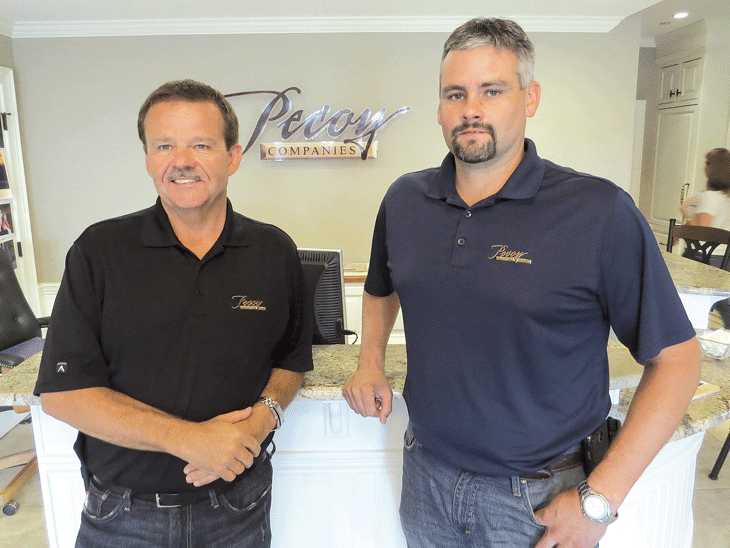
Insurance Sections
T.P. Daley Insurance Navigates a Changing Industry

From left, Tom, Kathy, Anne, and Jim Daley

From left, Tom, Kathy, Anne, and Jim Daley, second-generation principals at T.P. Daley Insurance Agency.

Insurance is certainly in the Daley family’s blood. But their father wanted them to be certain.

“Our father made sure we all worked somewhere else first,” said Anne Daley, one of four principals at T.P. Daley Insurance Agency, along with her siblings, Jim, Kathy, and Tom Daley.

In fact, all four of them were interested in joining the company their father, Thomas P. Daley, started, but he wouldn’t allow them to make the firm their first job. So they cut their teeth at large companies like Aetna, Travelers, and John Hancock.

“He wanted to make sure we liked the business and learned the business; he didn’t want us to come in as the boss’s kid,” Anne added. “That was the message: ‘get a little background prior to coming here. If you hate it, hate it with someone else; don’t hate it with me.’”

None of them, it turned out, hated the insurance field, and between 1985 and 1990, all four came on board, and run the second-generation family business in West Springfield to this day.

“It’s scary that we all ended up in insurance after graduating,” Kathy said, “but we all wound up here.”

They have fond memories of growing up around Thomas Daley’s workplace.

“When we were young kids, Dad used to call on all his customers, and he’d take us with him,” Jim recalled. As it happened, most of those clients were in construction, as Daley focused his business on performance bonds in the construction field. “So we would climb on all the equipment. I don’t remember how many times he’d be talking to the owner, and we’d be climbing on loaders and excavators. I remember coming home filthy, and Mom saying she’d never get the grease out of my coat.”

“We really did grow up with it,” Anne added.

With the help of the GI Bill, their father graduated from the University of Rhode Island, which at the time boasted the only insurance school in the Northeast, Kathy said.

He was a bond manager for Aetna in Springfield during the 1950s when he decided to start an independent insurance agency and become a bond producer rather than work for someone else as a bond representative, Jim explained. So, at the dawn of the ’60s, he and partner Bill Tuttle opened Daley & Tuttle Insurance on State Street in Springfield.

“Then Bill wanted to go to Eastern Mass. and focus his sales pursuits there,” Jim said. “My dad really liked the more parochial nature of Western Mass., so they decided to split up. T.P. Daley started in 1963, just him and one employee.” They moved the business across the river to Park Avenue in West Springfield, then relocated to their current location on Westfield Street around 1981 — the former site of Sweenor’s Candy.

“People come in and say, ‘I can still smell those bon bons,’” Jim said, standing beside a long counter where the Daleys still set out bowls of candy. “This is where the glass was, where they sold candy.”

But it’s not candy running through he family’s veins, Jim said, but insurance; in fact, he met his wife at a four-day-long ‘bond school’ in Texas. Simply put, this is a clan that truly enjoys the business their father started, and for this issue’s focus on insurance, they sat down with BusinessWest to explain why.

Bonding Agents

While the company has diversified considerably since its early days, T.P. Daley still specializes in bonds for contractors. “It’s not really an insurance product,” said Jim. “It’s a financial guarantee that the contractor is going to bid the job according to plan and then complete the job according to plan.

“The key focus for us is still contractors,” he added. “We do an awful lot of construction risk, both in insurance and bonds.”

The industry has changed quite a bit since the 1960s, however, a time when the surety world wasn’t set up to handle very large contracts. “So he had to go out and buy reinsurance for different layers of the contract size.”

Also, Tom noted, “he didn’t go through agents; he went directly to the customer. Now a lot of that is handled through agents.”

Despite the changes, Anne said — and there’s a tremendous variety today of what bond companies will accept — T.P. Daley still succeeds by fostering relationships, even though insurance products are viewed more and more like commodities, with clients in search of the cheapest price. “Although the field has grown and evolved tremendously, it’s still a relationship business here.”

She noted that there weren’t a lot of bond agencies when her father started out, and very few locally. “That has changed over the past 10 years — there are more agents in the area, and more agents in general working in the bond field.”

The agency’s location for the past 30-plus years

The agency’s location for the past 30-plus years is the former site of Sweenor’s Candy, which many customers remember well.

That means a much more competitive playing field, Jim said, which is a far greater challenge today than it was when the construction industry was rolling along throughout most of the 2000s. Even when the financial markets crashed in 2008 and triggered the Great Recession, contractors remained busy for awhile.

“Construction kind of lagged, so the industry was still rolling in ’08, ’09, even into ’10,” he said. “Those were good years for most contractors.”

But once backlogs were depleted, times got tough, and remain so today. Contractors have had to “sharpen their pencils” and cut their margins, he explained, and insurance companies heavily invested in construction have felt the pressure. “If there was more work, we’d see the margins come up, but there’s so much competition for the amount of work available out there that the margins have not recovered to their prior levels.”

The situation has been exacerbated, Jim added, by the fact that the government has been reluctant to access funds from the Chapter 90 Program, which pays for infrastructure-improvement projects in Massachusetts, and cities and towns have been loath to dip into their own budgets, “so you’re seeing deteriorating infrastructure; that’s exactly what’s going on.”

Rest of the Story

Fortunately, T.P. Daley’s array of products has widened considerably since the agency’s early days, encompassing a range of both business and personal lines, including home, auto, and life.

That side of the business has undergone changes as well in recent years, particularly with Massachusetts moving from set auto-insurance rates to a managed-competition system in 2008.

But while the Geicos of the world attract consumers with that last $10 off their premium, Anne said, “people buying online have to be astute.”

“They need to know what they’re getting for their dollar,” Kathy added. “A lot of times, people come in here, and we have to explain to them what they’re getting, what they’re protecting. We find that a lot of younger people buying online don’t know what they’re really getting — they just know it costs $400. You have to be educated, and that’s where we come into play.”

Or, as Jim put it, “we don’t want them to find out the hard way that the deductible was $1,000, when they thought it was $500.” Or that they didn’t include collision among their coverages.

“That’s the importance of an independent agent,” Anne said, “to explain what the coverages are, and then you decide what your needs are.”

Added Jim, “it’s more than just buying coverage. All those coverages mean something. It’s not just about the dollars. At the point of sale, that extra money in your pocket sounds like a good idea, but the financial consequences for saving a few dollars could be dramatic.”

That’s just one example of how customer service remains a valuable commodity at T.P Daley Insurance, Anne told BusinessWest. “That’s probably one of the key elements of this agency, our customer service. When you call, you deal with a family member.

“We’re literally 24/7,” she continued. “We give out our cell-phone and home numbers. Especially in the bond business, sometimes you need something tomorrow. I think that sets us apart from other agencies — our love of the service.”

Tom said it all goes back to Thomas Daley never turning anyone away. “Even if it was a tough situation, he always tried to help. He said, ‘give me your papers, and let me see what I can do.’”

Anne said she advised a client on insurance products for six years before writing a policy. “They’d call with questions, and I’d help out any way I could. I knew them from high school. Ultimately, when they needed to make a change, they came to us.”

The Daley siblings hope customers keep coming, and they sense some interest among their own children in turning the business into a third-generation affair someday, but they also know it’s a challenging field, and, like their own father, they want their kids to be sure.

“This is a changing industry, and I think there’s a lot more pressure on people now than there was 20 years ago,” Anne said. “It’s not an easy business, but it’s rewarding.”

Jim agrees. “There have been some dynamic changes from the old-school days to now,” he said. “That’s not to say it’s lost all its luster; it’s still got some positives that make you want to come to work. And I think people here enjoy coming to work.”

Even if they don’t get to climb on heavy machinery anymore.

Joseph Bednar can be reached at [email protected]

Commercial Real Estate Features Sections

Springfield Unveils Blueprint for Downtown Innovation District

From the wreckage of a natural-gas explosion in Springfield almost two years ago has emerged a revitalization plan — one that encompasses far more than the immediate blast zone.

The “Worthington Street District Plan,” as the plan’s creators title it, contains an overarching vision of transforming much of downtown Springfield into an ‘innovation district,’ characterized by entrepreneurial businesses, expanded market-rate housing, new dining and entertainment options, and a raft of infrastructure and traffic-flow improvements.

It is, in a word, ambitious, said Kevin Hively of Ninigret Partners of Rhode Island, which produced the study in conjunction with Utile Inc. of Boston. The firms were hired by DevelopSpringfield, using part of an $850,000 settlement between the city and Columbia Gas stemming from the natural-gas explosion that rocked the Worthington Street-Chestnut Street area the day after Thanksgiving in 2012.

Base-Model“We want to create an innovation district with a lot of energy and momentum taking place, but the fact of the matter is, innovation districts are driven by talent, and talent is driven by job opportunities and quality of life,” Hively told an assembly of municipal and economic-development officials and other neighborhood stakeholders.

“If you’re going to have an innovation district, you have to create a strong, robust, urban lifestyle environment,” he added. “The reality is, they are related.”

A key example is Kendall Square in Cambridge, which boasts, by far, the nation’s highest density of biotech and IT firms — 163 per square mile, to be precise. (Palo Alto, Calif. comes in a distant second, with 36.) Yet, Kendall Square developers have also been focused on quality of life, as evidenced by the emergence of outdoor cafés, charging stations for electronic devices, and lively kayak and canoe activity along the Charles River.

To develop such an environment in Springfield, the report notes, Worthington Street and its environs is the best place to start.

The key is the neighborhood’s pre-existing assets, including the architectural character of the building stock, public ownership of a number of parking lots and other empty parcels, existing housing stock that can be upgraded, proximity to Union Station, and pre-existing places — like Stearns Square, Apremont Triangle, and Matoon Street — that can serve as anchors for activity.

Once demand for an urban lifestyle — and development in response to that demand — lift the profile of this neighborhood, businesses will hopefully become interested in the neighborhoods northeast of Chestnut Street, producing a cascade effect of development, public improvement, and general buzz across the entire district.

Mayor Domenic Sarno noted that the plan isn’t unlike the city’s efforts over the past three years to bring large-scale improvements to Springfield in the wake of the June 2011 tornado. “From a potentially devastating tragedy, an opportunity has come forth,” he said. “As we did with the tornado, we have an opportunity to define this area as an innovation district.”

Jay Minkarah, president and CEO of DevelopSpringfield, said his organization commissioned the study to establish a vision for how the downtown area should be developed. “We have a tremendous opportunity to create a truly vibrant, urban district, one that is walkable, with an innovation-based economy and market-rate housing — those are exactly the things we’d like to do.”

After all, Sarno added, “if we want to move the city forward, we have to be bold and innovative.”

Food for Thought

As one example, Sarno emphasized repositioning the city’s entertainment district as a restaurant district, because a neighborhood known for catering solely to large clubs and their patrons detracts from its universal appeal.

The Utile/Ninigret report highlighted several ways this can be accomplished, including placing size limits on venues to discourage large clubs; requiring all venues to have full kitchens; and using façade-improvement program funds to improve the aesthetic appearance of the district.

Another key is drawing an eclectic mix of retail businesses to the district, a goal, Hively noted, that Springfield officials can’t just wish into reality.

“It’s very hard to create a successful retail business,” he noted. “It’s out of the hands of the city. It cannot create a successful retail business, but it can create an environment that allows people to come in; then it’s up to the retailers to get people to come in and convert those people from shoppers to buyers.”

But downtown revitalization is about more than making it a destination for diners and shoppers; attracting people to live there is equally important, which is why the city is also looking at ways to develop more market-rate housing downtown. Officials believe a growing network of young entrepreneurs and residents want to see downtown become more livable, and that future rail service to the area will bring new opportunities, both to attract residents and encourage further development around Union Station.

It may sound a dizzying exercise in chickens and eggs, but the report highlights several improvements Springfield can undertake to make the district more attractive for both walkers and motorists. These include upgrading Stearns Square; redesigning Apremont Triangle’s open space and streetscape; converting Dwight and Chestnut streets to two-way streets; restriping travel lanes on cross streets; retrofitting Worthington and Bridge streets; improving Lyman Street, especially at the entrance to Union Station; and incorporating public art and lighting into underpasses.

This stretch of Worthington Street, which includes the site of the natural-gas blast, is among the areas the city hopes to revitalize as part of a broad innovation district.

This stretch of Worthington Street, which includes the site of the natural-gas blast, is among the areas the city hopes to revitalize as part of a broad innovation district.

The good news, Hively noted, is that the innovation district has plenty going for it already, from the neighborhood’s pre-existing geographic assets to economic-development success stories such as the Baystate Innovation Center, a business accelerator that creates an anchor and partner for health technology startups; the entrepreneurial support system of entities like Valley Venture Mentors, Springfield Angels, and River Valley Investors; and Tech Foundry, which acts as a training ground for building career skills and filling job openings.

“Everyone in the world wants an innovation district, but not everyone can have one,” Hively said, adding that the key questions are, does it have to be created from scratch, and are there people willing to make it happen? Clearly, he added, the answers in Springfield are no and yes, respectively. “You don’t have to create this from whole cloth.”

Added Sarno, “we are thinking big, thinking bold, thinking innovative. But the bones are already here, where other cities are sinking millions of dollars into that.”

Still, while those foundational elements exist, the study notes, they are still nascent and the lack critical mass necessary to have a major impact — yet. Other efforts are necessary, among them the potential conversion of the Willys-Overland Building on Worthington Street, which was damaged in the explosion, into a catalytic project featuring a mix of business uses, small-scale manufacturing, and housing.

Sarno said he envisions a neighborhood of revitalized properties featuring retail, dining, and business on ground level, parking on the second floor, and market-rate housing on the third. “It is extremely important that we continue to make downtown Springfield vibrant.”

Safety First

Kevin Kennedy, Springfield’s chief development officer, said the study is valuable in the way it outlines development concepts and encourages residents and businesses to generate more. “For some ideas, the city would have to help with some infrastructure, and that’s what we would do.”

The city has also been focused on public safety and raising people’s confidence in walking downtown — efforts that include everything from a lighting-improvement project along some of the city’s main thoroughfares, including the downtown club district, to police strategies to more effectively patrol the area. Public perception of crime and safety, after all, are “the 900-pound gorilla in the room,” said the mayor.

However, Evan Plotkin, president of NAI Plotkin, told Sarno and others gathered at the study presentation that the best way to make the innovation district safe is to make it vibrant. “Bringing foot traffic to these neighborhoods will do more to create a sense of safety than anything else you can do,” he said. “Having a police plan will augment that, but there’s nothing better for public safety than foot traffic.”

As for the Utile/Ninigret report, Plotkin said he hopes the city moves forward with some of the ambitious plans, and that the study doesn’t just sit on a shelf. “I think we can get it done.”

He’s not alone, judging by the sentiment of Herbie Flores, executive director of the New England Farmworkers’ Council and, like Plotkin, someone invested in the future of Springfield’s downtown.

“There are always going to be negative people in Springfield,” Flores told Sarno at the end of the presentation. “The hell with them. We’re behind you.”

Joseph Bednar can be reached at [email protected]

Sections Travel and Tourism

The Big E Continues to Be an Economic Engine

Eastern States Exposition CEO Gene Cassidy and the man who inspires his work, fair founder Joshua Brooks.

Eastern States Exposition CEO Gene Cassidy and the man who inspires his work, fair founder Joshua Brooks.

Joshua L. Brooks was a man who got things done. And Gene Cassidy, CEO of the Eastern States Exposition, doesn’t let anyone forget it, hanging a large portrait of Brooks, the fair’s founder, at the front of the conference room where he meets with his staff.

“Mr. Brooks was concerned about agriculture,” Cassidy told BusinessWest. “He was an industrialist, but he saw that agriculture was losing ground in New England at the turn of the last century, with so much agriculture being produced out of the Midwest and South Central estates. So he established the Eastern States Agricultural and Industrial Exposition.”

Specifically, he got the National Dairy Show to move its annual event from Chicago to West Springfield in 1916, but only after he transformed a bare plot of land into a property where the expo could be staged.
“There’s a great story of how he capitalized the fairgrounds and got people to donate incredible sums of money,” said Cassidy, citing, as an example, the night of Feb. 1, 1914, when a major blizzard hit the Pioneer Valley. A fund-raiser was scheduled for that night, and Noyes Fisk, owner of Fisk Tire Co. in Chicopee — which later became Uniroyal — was given the responsibility of raising $750,000. “Even in that blizzard, with limited attendance, he was able to raise $450,000. That was the initial capital providing resources to build these facilities, including A Barn, B Barn, and C Barn.”

All three of those barns, including several other structures built in the early years of the fair, still stand today, while the fairgrounds has added many others over the years. More importantly, however, the fair — its name eventually shortened to the Eastern States Exposition and known colloquially as the Big E — has built a nearly century-old legacy that’s measured by more than its impressive regional economic impact (more on that later).

“The impact of Eastern States is dramatic, and it’s important to the region,” said Cassidy, who joined the Big E 20 years ago as chief financial officer and took the reins from longtime CEO Wayne McCary. Cassidy’s first two fairs as CEO set records for attendance, but he has been equally successful with another mission: bringing the expo’s history to life, partly by decorating the expo’s offices with dozens of posters, documents, and artifacts from the past 98 years, including more than one celebrating the work of the man he respectfully calls Mr. Brooks.

“Since I became CEO, my goal has been to reconnect and resurrect, if you will, the spirit of our founder, Mr. Brooks,” Cassidy said. “This building was pretty sterile before, but I think the history is important, and it’s important for all of us who work here to be reacquainted with why we’re here — and what, really, is the purpose of the Eastern States Exposition.”

As the 99th edition of the Big E gets set to roll out in two weeks, Cassidy sat down with BusinessWest to answer that question in a number of ways.

Animal Attraction

Although the words ‘agricultural’ and ‘industrial’ are no longer in the fair’s name, Cassidy said, it would be a mistake to underestimate their importance to what the Big E is all about.

“Yes, entertainment drives people’s interest, and we make a big deal about food; that drives people’s interest as well. And certainly the midway is an attraction, so making sure we have a good, clean, safe, attractive midway is key,” he explained. “Behind the scenes, though, we’re engaged in producing an event that serves the agricultural industry and the commodities industry for all of New England. Those are less exciting things for some people, but we get very excited about them.”

He said the fair has become known over the decades as a prime showcase for what he called the “bovine, equine, and swine” categories of livestock shows, as well as for produce and other food products. “If you win a blue ribbon at the Eastern States Exposition, whether it’s for cheese or cattle or goats, whatever it is, that gives you national cachet, national attention. Most fairgoers aren’t cognizant of that, but it’s very important for both the agriculture and industry that drives a large part of the New England economy.”

The fair has always educated people about livestock and agriculture, and Cassidy feels that mission is more important than ever, with so many Americans, particularly of the younger generations, unaware of what goes into putting their food on the table.

“So much time has passed from 1916 to today, and people are so distant from production agriculture. In many cases, animals [at the show] are viewed as if they’re domestic pets and not domestic food products. Youth today have no connection, no understanding of where their food actually comes from,” he said, adding that this disconnect isn’t limited to the agricultural side, and he’d like to see more fair offerings that teach people about food processing as well.

In addition, “it’s a continuing battle with animal-rights organizations,” Cassidy noted. “We get blowback from rogue groups that raise money on the Internet, anonymously, and they influence our programs in a way that’s detrimental to the general public.”

For example, “my office is two miles from the house where I was born and raised,” he continued. “When I was a kid, the Eastern States Exposition had a carcass exhibit, and a butcher butchering beef cattle and explaining the different cuts of beef. People would be mesmerized, and would learn where the loin comes from, the shoulder, and so on. In this day and age in New England, you could never have an exhibition like that, and it’s sad.”

Just like today, fairgoers have long been able to peruse and buy the latest products at the Big E.

Just like today, fairgoers have long been able to peruse and buy the latest products at the Big E.

While maintaining as much of the expo’s agricultural focus as possible, Cassidy said he would like to strengthen the connections the fair has to other notable industries, such as machine tools, using the fair as a platform to grow those businesses and generate jobs as well. He also believes promotion of consumer products still has a place.

“Companies used to use fairs as a means of promoting their new products,” he noted. “With the advent of television, fairs became less attractive for, say, Westinghouse or General Electric to launch their latest washing machine or other product. But we’re working very hard here to create opportunities for companies to re-engage people on the one-to-one level.”

This year’s fair will showcase the Ford Mustang, which made its debut at the New York World’s Fair 50 years ago. The Big E will display one of the Mustangs that was actually on display in New York in 1964, and Sarat Ford has produred a few rare special-edition Mustangs to display as well. “In many ways, we’re celebrating the World’s Fair,” Cassidy said. “It’s a throwback feature, which I’m really excited about.”

Eat, Listen, Love

Cassidy told BusinessWest that he fully understands the fair’s appeal to tradition and nostalgia that repeat visitors enjoy — everything from the livestock shows to the parades and circuses to the state buildings, where the six New England states promote their most popular foods, crafts, and other products. The challenge, of course, is maintaining those traditions while keeping the fair fresh.

Entertainment is a large part of that, and the Big E has long offered free concerts to visitors — this year’s extensive lineup features up-and-comers like The Voice winner Cassadee Pope and veterans like Eddie Money — while mixing in a few bigger-name shows that require an extra admission fee, including Darius Rucker, Little Big Town, and ZZ Top.

“I’ve been trying to get ZZ Top for 10, maybe 15 years, and I finally got them, so I’m very excited,” Cassidy said, adding that financial changes in the entertainment-booking world have made charging for some acts necessary.

“You’ve got to have good entertainment — that’s the thing that puts the buzz in the air. But that’s extremely difficult to do, and every year, it’s harder and harder. When I started here in 1994, we could book the biggest acts in Las Vegas for $40,000 or $50,000, and they would do two shows a day. Now, in the current age, we can’t afford these acts,” he said, noting that booking Reba McEntire in 2011 cost $335,000. “So we’ve been forced to charge now for the biggest acts, and we do our best to find solid acts we can give away.”

He credited John Juliano, the long-time special-events director for the Big E, with always being able to book talent on the rise, from Beyoncé before Destiny’s Child was popular to Hunter Hayes last year to Pope next month.

Still, for many fairgoers, music isn’t the number-one attraction; they’re more interested in finding out how many foods can be successfully deep-fried.

“Talent is such an important way of keeping people interested, but the other way is gastronomically,” Cassidy said of the Big E’s extensive selection of fair food. “I love cheese curds, and this is the only place in the world I get cheese curds. But we also have to continually discover new products and find means by which to bring new products to the fairgoing public.”

After all, the vitality and continuing popularity of the Big E has a direct economic impact on the region. According to a report the Eastern States Exposition produced this year, the 17-day Big E, plus all the other events that take place on the fairgrounds each year — which feature exhibitions for animal lovers, car enthusiasts, gun owners, campers, and dozens of other groups — benefit the region with an annual economic impact of $479 million.

The tax revenues alone include $3 million in income tax, $1.4 million in sales tax, $427,000 in hotel tax, and $3.3 million in food and beverage tax. More significantly, events generate $299 million in gross regional product and account for 3,000 jobs in Hampden County that generate $91.9 million in personal income. The exposition’s impact on the rest of New England and New York include 2,000 jobs generating $134 million in personal income. In all, 2.5 million visitors stop by the fairgrounds each year, well over 1 million for the Big E alone.

“We need all the stakeholders — which include the fair patrons, business leaders from throughout the region, and our own board of trustees — to be able to draw a direct link toward the Eastern States as a mechanism to drive the economy and jobs,” Cassidy said. “The fair has a broad impact on agriculture worldwide, but has its most important role in this region. It plays a very important role in generating business on a grand scale, and that ripples throughout the economy at many different levels.”

Into the Next Century

At one point, Cassidy pulled out an old, worn book filled with stock certificates that Brooks sold to some of Greater Springfield’s most notable citizens in the fair’s early days — then later bought back so that no individual or group could set the event’s agenda.

To continue Brooks’ legacy for the next 100 years, Cassidy knows that the fairgrounds need some attention, starting with those century-old buildings. Renovating the large B Barn, otherwise known as the Coliseum, is a $60 million endeavor, and that’s just one structure. Last year, the fair generated about $5 million in profit — a success, of course, but not the kind of revenue flow needed to sustain multiple improvement projects.

“We need to continue to grow, not just because we’re a 100-year-old facility with a great deal of deferred maintenance, but to re-educate the fair-going public,” he said. “I think we’re the most successful fair in the country; we’re recognized nationally as a best-practices organization. We’re one of the largest fairs, and the largest fair that’s not state-subsidized, which is really remarkable. But we need to put a lot of attention into this 100-year-old plant.”

To do that, Cassidy says it’s crucial to generate regional philanthropy, like Brooks did when he reached out to his wealthy friends to launch the exposition in 1916. “We’re a 501(c)(3) public charity, and financially, we’re a very stable organization, but we need to reinvigorate our stakeholders — not just to sustain ourselves, but we owe it to the region to grow, so the region grows.”

As board treasurer of the Regional Employment Board of Western Mass., Cassidy is keenly aware of the region’s need to retain talent to grow a number of its industries, and he feels like the Big E and its myriad activities can play a role in that, if only by improving quality of life in the Pioneer Valley.

“We have access to the best education in the world, and we’re exporting our graduates. Any company executive who scoffs at that is not being responsible in their duty to grow the economy and make their mark on the general citizenry,” he told BusinessWest. “It’s all about quality of life. My hope is that the Eastern States Exposition adds to quality of life for people in West Springfield and all of Greater Springfield.”

It’s an easy thing to get excited about, Cassidy added. “People pay to get in, and they’re predisposed to happiness. There are very few jobs in the world where the person coming through the gate is coming in to have a good time. You go to the grocery store because you have to, or go to the tire store because you need tires. You don’t have to come to the Big E.

“Our job,” he concluded, “is to deliver a product that makes you want to be here. If we can take our presence here and use it as a multiplier to drive industry in the local economy, we’ve succeeded.”

Joseph Bednar can be reached at [email protected]
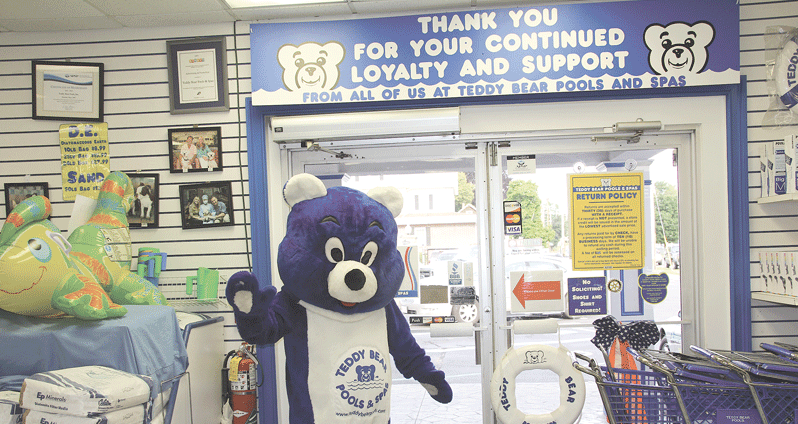
Features

At a Time of Change in Retail, Holyoke Mall Marks 35 Years

Holyoke Mall General Manager William Rogalski

Holyoke Mall General Manager William Rogalski

When the Holyoke Mall opened in the Ingleside section of the city in 1979, shopping malls were the hottest trend in retail.

These days, as the center celebrates its 35th anniversary, they’re anything but, losing ground to online retail options and smaller shopping centers. But Holyoke Mall remains a draw, said General Manager William Rogalski.

“Certainly, our traffic is good. In recent years, sales have fluctuated with the economy, but we’re still a significant part of people’s shopping experience,” he told BusinessWest. “Online shopping does affect us, but I’m still of the belief that people still like to see it, touch it, feel it, and try it on before they buy.”

To get shoppers inside the mall, though, variety and a fresh experience are key — part of the mall’s mission to get visitors to “stay longer and shop more,” to quote an oft-repeated mantra at Ingleside.

“We’ve always tried to be a shopping center where everyone can go, from the high end — like Apple, Sonoma, Pottery Barn, and a new store opening up, Michael Kors — to traditional retail tenants, to value tenants like Burlington Coat Factory and everything in between,” said Rogalski. “That’s what makes the difference for people here — there’s something for everyone.”

The fact is, despite the surge in online retail, consumers still visit brick-and-mortar stores for the vast majority of their shopping, according to a 2013 Nielsen report titled “Brick by Brick: The State of the Shopping Center.”

“Shopping centers aren’t just places to buy things,” the report notes. “They’re social centers, places for entertainment, and employment hubs. They’re also transforming what consumers can expect from a shopping experience.”

With the increasing diversification and aging of the U.S. population, the report continues, the line between shopping, entertainment, and community building has blurred, and this blending of experiences has created an opportunity for retail centers to strengthen social ties within communities that are looking for communal experiences.

“It’s a gathering point, even for people who don’t even shop, like mall walkers; for them, it’s a social experience,” Rogalski said. “And it’s nice to have them. Frankly, they’re a good source of information. They’re here every day, as we are, but we don’t see everything. In some cases, they become our eyes and ears. We’ve made some relationships, made some good friends.”

The goal of any mall, of course, is to ring up sales, and to that end, Rogalski — and Pyramid Management Group, which owns Holyoke Mall and 19 other properties in Massachusetts and New York — are not sitting on past laurels, instead moving forward with a series of renovations and possible future additions to keep the crowds coming back and spending money.

For this issue, Rogalski — a West Springfield native who actually worked at the just-opened Holyoke Mall in 1979, at Blake’s department store — sits down with BusinessWest to discuss some of those changes, and why he believes malls are far from irrelevant in the 21st century.

The Mall’s Changing Face

Signage goes up at Holyoke Mall in 1979.

Signage goes up at Holyoke Mall in 1979.

At its opening, Holyoke Mall was one of the largest shopping centers in the Northeast, with 125 stores covering 1.1 million square feet and surrounded by 5,000 parking spaces. Today, almost 200 stores (counting kiosks) sprawl across 1.6 million square feet of shopping space, and the construction of additional parking garages has expanded vehicle capacity to 7,052.

But the mall still needed some work, said Rogalski, who has managed the facility for a dozen years. “We’re working on a major renovation now, retiling the whole center. We’re redoing the wood trim, replacing the wooden handrails with metal handrails, upgrading restrooms, and putting in a new guest-services area.”

Other changes will include refacing the mall’s signature glass elevator, new directional signage in the hallways, a continuation of energy-efficient lighting upgrades, new interior landscaping, and what’s known in the industry as ‘soft seating areas’ to help guests relax and extend their stay.

“It’s a pretty significant renovation. People will notice,” Rogalski said, adding that the work is largely taking place overnight so as not to disrupt shoppers. During BusinessWest’s visit, much of the the top floor had been torn out, awaiting new white tile, and fire alarms were being tested in the future location of Michael Kors.

He added that customer feedback has guided some of the changes, and mall management is also listening when it comes to future additions — including, perhaps, a movie theater. The Ingleside Eight Screen Cinema, which opened in 1979 and was located downstairs, beside the current food court, was shuttered in 1998.

“Of [Pyramid’s] 14 enclosed centers, we are one of two that does not have a movie theater. That’s definitely in the cards somewhere down the road for us,” he said, noting, however, that the mall is currently about 95% leased. “In one regard, that’s a good thing. But in another, it’s not so good, because we need to create space to include a movie theater. We’d be fine from a parking aspect; it’s a matter of getting contiguous space to do a theater.”

Pyramid is exploring other entertainment options as well, Rogalski added. “There’s always a buzz that gets created when we bring in new stores, restaurants, or entertainment. A lot of the changes happen gradually, but it’s always good to add new blood.”

Holyoke Mall, which attracts between 18 million and 19 million visitors a year, saw a downturn when the economy went south six years ago, but the hit wasn’t as severe as it was for retail centers in other regions.

“That’s probably more a reflection of Western Mass. as a whole as related to the general economy. Maybe because it’s our Yankee roots’ we’re a bit more conservative,” he noted. “When the nation is on a high, we don’t hit the high peaks; we roll a little bit below that. And when the nation hits lows, we roll a little bit above that; we skew more along the center line and don’t waver too far. That’s not to say we don’t have ups and downs, but they’re not as dramatic.”

Rather, the dramatic shifts come with the seasons, especially the holiday rush, from Thanksgiving through New Year’s Day, when many retailers find out whether they will turn a profit for the year.

“We’re in our second-best season now, back-to-school time,” Rogalski said. “Then we’ll have a little dip, accentuated by having the Big E for three weeks, drawing everyone’s attention. We certainly don’t shut down, but we feel the impact. Then we ramp up for the holidays. It’s a critical time, and it has been extended with the advent of gift cards — now it really flows into the end of December and the beginning of January.”

He added that malls tend to be slaves to the weather, citing a downturn in sales due to this year’s harsh, extended winter. “That impacted spring sales because people just weren’t in the mood. That’s one thing we can’t control.”

Gauging the Future

There’s plenty that malls can control, however, and it’s critical that they keep an eye on trends that have battered some shopping centers and helped others.

On the plus side for Holyoke Mall is its enviable location at the crossroads of two major interstates. While malls located away from highways have struggled in recent decades, Ingleside’s location draws shoppers from as far away as New York to the west, Hartford to the south, Worcester to the east, and Vermont and New Hampshire to the north. “We are at the intersection of 90 and 91,” Rogalski said. “Pyramid definitely paid attention to Marketing 101: location, location, location.”

America’s first enclosed mall, Southdale Center in Edina, Minn., was a true innovation in the way it invited people to browse, eat, hang out with friends, or just wander about. Early malls encouraged walking by placing anchor stores as far apart as possible, forcing visitors to pass dozens of small shops.

The model caught on big time, and the number of regional malls more than doubled from 1973 to 2006, topping 1,500 nationally, according to CoStar Realty Information. But since 2006, only one traditional enclosed mall has been built, in Salt Lake City. Analysts point to a number of factors hurting enclosed malls, from the growing popularity of smaller outdoor shopping centers to the rise in e-commerce.

But Pyramid has been proactive with freshening up a number of its properties, Rogalski said, including Walden Galleria near Buffalo, N.Y., Destiny USA in Syracuse, N.Y., Palisades Center in West Nyack, N.Y., and, of course, Ingleside.

Of course, no property that’s been around as long as Holyoke Mall will look much like it did 35 years ago, if only because the retail world is constantly in flux. Of the original 125 stores at Ingleside, only a few remain, including anchors JCPenney and Sears, as well as American Eagle Outfitters, Deb, Foot Locker, General Nutrition, Kay Jewelers, Motherhood Maternity, and Radio Shack.

Enclosed malls have been hurt by the decline of traditional anchors; Holyoke’s other two original anchors, G. Fox and Steiger’s, are long gone. But at the same time, the definition of an anchor has broadened significantly, and Holyoke Mall now boasts 12 anchors after launching with only four.

“We were probably the first developer out there that saw value in bringing in big-box retail,” Rogalski said. “Some said it can’t be done, that they want to be in strip locations, pad locations. But now you see the Targets, the Best Buys, you see Babies R Us, Hobby Lobby, AC Moore, those type of retailers. We thought they would be successful in a closed shopping center, and they’ve been wildly successful.

“Sometimes it takes retailers a while to think out of the box and get them out of their comfort zone,” he said. “But, at the end of the day, this is the Northeast; we aren’t sunny and 70 degrees 12 months of the year. It’s a nice convenience for shoppers to have all this under one roof.”

That kind of convenience, he said, will continue to make the Holyoke Mall a destination, especially given its prime location at the crossroads of the Pioneer Valley.

“It’s easy to get to, easy to park, easy to walk,” Rogalski said. “It definitely is an attraction.”

Joseph Bednar can be reached at [email protected]
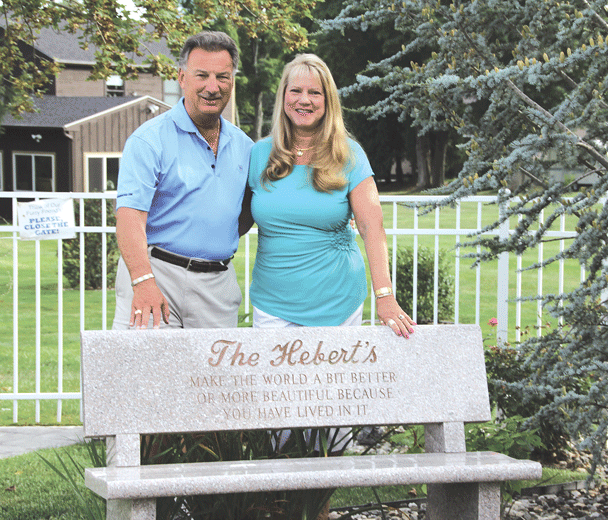
Cover Story

Schools See Value in Swapping ‘School’ for ‘University’

Bay Path President Carol Leary

Bay Path President Carol Leary

Carol Leary was asked about her institution’s decision to call itself a university, rather than a college, and the reasons behind that move. But before going there, she took a few minutes — actually, more than a few — to chronicle and explain the many times over the past 117 years that the name over the school’s front door has changed.

It began as Bay Path Institute, when it was located in downtown Springfield and focused on training men and women for roles in business and accounting, she noted, adding that it became Bay Path Secretarial School in 1945 after it relocated to Longmeadow and focused on training women to become executive secretaries; most of the region’s prominent CEOs had a “Bay Path secretary,” said Leary. In the ’60s, the institution became Bay Path Junior College as it expanded into other areas of study with a liberal-arts base, and then Bay Path College in 1988, when it became a four-year institution.

Those changes were not about semantics, said Leary, the school’s president since 1995, but, rather, reflections about what the school had evolved into.

And that is the case with this latest change in the signage as well.

“A quarter-century later, we’re in a whole different way of educating,” she explained. “We educate on the ground, we educate online, we are educating 12 months of the year, and we’re educating 24/7. That word ‘university’ reflects the complexity of what we have evolved into, what we have become.”

Indeed, the school not only meets the state’s revised requirements for what constitutes a university — graduate programs in four or more distinct fields of study (more on this later) — but, more importantly, it has the look and feel of a university, not merely the accepted definition of one, said Leary.

It has five campuses — the main location in Longmeadow, as well as sites in Springfield, East Longmeadow, Burlington, and Sturbridge-Charlton — and several colleges within the institution itself, including the American Women’s College, featuring online undergraduate degrees, the One-Day-a-Week College, and 19 graduate programs. And it has ambitious plans to soon establish its first doctorate program.

“We are a university,” said Leary. “This represents who we are and how we have evolved and grown; I can’t verify it with numbers, but I believe Bay Path is the fastest-growing women’s college in the country, and the change to ‘university’ reflects all of that.”

It also reflects what could be considered a minor yet intriguing trend in higher education over the past several years. A number of schools across the country and several in the Bay State, including Bentley, Leslie, Western New England College, Massachusetts College of Pharmacy and Health Sciences, and six of the nine state schools, have made a similar change. Others, like Springfield College, have thought about it and decided not to do so, mostly because it considers that word ‘college’ part of its brand and culture. Meanwhile, other schools are still thinking about it.

There are several reasons why schools might make such an adjustment, with perception being at or near the top of the list. In many foreign countries, for example, the word ‘college’ denotes an institution similar to or just above a high school, said Richard Wagner, who researched the matter for Western New England, which he serves as director of Institutional Research & Planning, as part of a strategic planning initiative undertaken in 2008.

He noted that, since WNEC became WNEU in 2011, the number of international students on campus has risen considerably, from 33 in the fall of 2011, the first semester as a university, to 81 just two years later, with more expected next month. There are several factors that may have contributed to this increase, he said, but he has little doubt that the name change has been one of them.

Meanwhile, the word ‘university’ may also help with recruiting in this country, he went on, adding that, with some schools, having ‘college’ in the name can be a competitive disadvantage.

“The word ‘university’ is meant to convey a certain breadth and depth of programs,” he explained. “Legally speaking, it has different meanings in different places; for us, it was a question largely of the fact that we were already structured to be how a university would expect to be structured, and ‘university’ was a better moniker for us and more representative of what we are. The administration here would be firmly convinced that this was a positive move for us to make.”

For this issue and its focus on education, BusinessWest takes an in-depth look at why there are now several universities in Western Mass., and why the change in terminology represents more than a new name and logo on T-shirts for those who have taken this step.

New-school Thinking

Tracing the steps that took Bay Path from a college to a university, Leary said that, while the matter had been discussed rather informally for several years, things started heating up in late 2011 when a graduate of the original Bay Path Institute, then-92-year-old trustee Bernard Mussman, spoke up at one of the panel’s sessions not long before he passed away.

“He raised his hand near the end of the meeting and said, ‘I’ve been on this board for 12 years; we’re now very complex, and we should become a university,’” she recalled. “And everyone sort of just stopped. No one immediately responded to Bernie, but here was a 92-year-old Bay Path Institute alum suggesting that we were a university and no longer a college.”

Nothing really happened with Mussman’s suggestion until roughly a year later, she went on, noting that, as part of something called Planning Vision 2016, the latest in a series of three-year strategic plans undertaken by the school, one of five cross-functional teams comprised of faculty and staff came forward with the recommendation that the school consider becoming a university.

Such a transition was made possible a few years earlier, and not long after the state Legislature voted to change the names of six state colleges, including Westfield State, to universities in a move that reflected what was becoming a nationwide trend. (Three of the schools, Massachusetts College of Liberal Arts in North Adams, Massachusetts Maritime Academy in Buzzards Bay, and Massachusetts College of Art and Design in Boston, chose to maintain the status quo.)

In making the change, the state also lowered the bar when it came to the prerequisites for university status. The old standard was two distinct doctoral programs, while the new measure was four distinct graduate programs, a threshold the state schools easily met.

Fearing that this change might give the state’s many private schools a competitive disadvantage, some of them lobbied — through the Assoc.of Independent Colleges and Universities in Massachusetts (AICUM), which represents 60 private schools in the Commonwealth — for essentially the same privilege.

“Our argument with the Board of Higher Education was that, from a consumer-clarity perspective, the state shouldn’t have a public institution just renamed a ‘university’ by the Legislature, and have a private college that may in fact have many more master’s-degree or graduate-degree offerings be hamstrung by the previous regulations, and they agreed with that,” AICUM President Richard Doherty told BusinessWest. “The argument we made was that, whatever policy the state decided on, it should apply equally to public and private schools.”

Doherty noted, as Wagner did, that there is little, if any, technical difference, definition-wise, between a college and a university, and that many institutions with ‘college’ in their names are, in fact, universities. But he noted that the latter word could easily be perceived as a school with a larger breadth and depth of programs.

Defining Moments

In the wake of the recommendation to at least study the feasibility of becoming a university — one of many action steps in that strategic plan, eventually named “Evolution to Revolution” — Bay Path began an extensive period of research, said Leary, noting that school leaders looked at a number of institutions, especially women’s colleges, that had made the change from ‘college’ to ‘university.’ That list included Chatham University in Pittsburgh and Trinity Washington University in the nation’s capital.

“We looked at why they became a university,” she noted, “and at what they had to do to become a university, because each state is different.”

That research revealed that the change hasn’t negatively impacted the schools, and has probably yielded some benefits, said Leary.

“They said it was very positive,” she noted, “and that it gave them more to talk about internationally because of the word ‘university.’”

Meanwhile, Bay Path officials also listened to their own students, one of whom suggested at an open forum that ‘university’ would carry more weight with potential employers looking at the lines on a résumé.
“I had never thought of that,” Leary went on. “She was defining ‘university’ by the worth of the name, which was interesting, because we were looking at it mostly from the standpoint that we were already operating as a university, and a change would only verify that.”

Despite those positive sentiments, Bay Path alumni and some of those working at the school had some concerns that needed to be addressed, said Leary.

“They didn’t want to lose the personal touch, and we said that would always be a hallmark of Bay Path,” she explained. “They were worried that on the main campus, class sizes would get bigger for traditional students; we said, ‘that can’t happen because we don’t have large classrooms — the largest one seats 60.’ They were worried that we were going to charge so much more, and we told them tuition would remain the same.

“And they were really worried that we were going to go co-ed,” she went on. “But we assured them that we would stay all women.”

The matter eventually went to the board of trustees, which voted to seek approval for the transition to university status from the Mass. Department of Higher Education. The change became official, and Bay Path became the first women’s university in the Commonwealth, on July 1.

When asked how, in five years, the school might be able to quantify the results of the transition, Leary noted that this was a good, if difficult-to-answer, question, adding that it will likely be easier to qualify the benefits.

“I think that, if we have more students from around the country and around the world, we’ll certainly be able to quantify that,” she said. “But will those students be coming just because we’re a university? That might be hard to determine.

“The bottom line is that ‘university’ makes it clearer to us and our prospective students who we are — it just makes more sense,” she went on. “And we’re very proud of who we are.”

Marsha Marotta, interim vice president of Academic Affairs at Westfield State University, echoed those sentiments. She said the term ‘university’ more accurately portrays what the school has become, and it has also helped improve perceptions of the institution, both externally and internally.

“The tangible impacts of the name change were obvious; it reflected our reality in terms of what we already were doing,” she said, listing everything from comprehensive undergraduate programs to graduate and online programs; from high expectations for faculty to research agendas supported by federal and other grants, such as a National Science Foundation grant for innovative approaches to teaching math as part of the liberal arts. “The name ‘university’ also more accurately reflects who we are in a global context, since the international understanding of college equates with a high-school level of education.

“The name change is also about aspirations and identity,” she went on. “The name ‘university’ makes us more mindful of what we do and more accurately captures the way we are — which in turn changes how we think about ourselves. This was an unexpected consequence, and allows us to think more expansively about the institution. Saying it out loud changes how we think about the institution, which becomes a catalyst for new things.”

Name of the Game

Richard Wagner says the word 'college' can become a competitive disadvantage.

Richard Wagner says the word ‘college’ can become a competitive disadvantage.

Three years after Western New England transitioned to university status, Wagner believes the change has benefited the school, as it has others that may not have the international reputations that have enabled some colleges to go on with that word in their name.

“For us, I think ‘college’ was primarily a disadvantage because it didn’t really convey what the campus represented,” he said. “‘University’ allows us to better represent who we are an as an institution.
“For some schools that have very well-known reputations, like Dartmouth or Boston College, it’s not much of an issue,” he went on. “But for schools that don’t have international name recognition, ‘college’ can be disadvantageous.”

Overall, he considers the change one of many factors that has enabled Western New England to ride out what has been a challenging post-recession period.

“The university status, in association with some of the other things we’ve done over the past few years, such as starting the School of Pharmacy, have allowed us to weather the prolonged recession in a relatively good way,” he explained. “Although we’ve been stressed, like a lot of other tuition-driven institutions, we’ve been able to continue building, adding programs, and so on. I think of it as being one element in our ability to get through some rather difficult times.”

Perhaps the most visible impact has come in the number of foreign students now enrolled at the school. There were only nine international students at WNEC in 2009, he noted, adding that the nearly ten-fold increase still represents a very small portion of the overall student body of roughly 3,800. Still, the surge is significant, and for many reasons.

The first is the cultural diversity gained through having students from around the globe, he told BusinessWest, adding that another is a greater ability to withstand domestic economic downturns, and a third is the fact that foreign students are much more likely to pay full tuition rather than relying on financial aid.

“One of the things about internationalization is that, when things might not necessarily be good economically in the United States, they may be better overseas, and vice versa,” he noted.

Over the past few years, Wagner said, there’s been what he called a “follow-the-leader mentality” when it comes to changing ‘college’ to ‘university,’ with more schools making the change perhaps out of a feeling of necessity.

“I think there’s a certain amount of pressure on some institutions to do it,” he explained, “because it’s been done in so many other places.” But some schools, including Springfield College, apparently aren’t feeling that pressure.

“The leadership at Springfield College has, in the past, considered a name change to a university,” said Steve Roulier, a spokesperson for the school. “But given the reputation of our mission and current academic strengths, we have decided to remain Springfield College. The college consistently ranks in the top tier of the U.S. News “Best Colleges” list as a leader in providing a broad and balanced educational experience. We are proud to be known as Springfield College.”

Sign of the Times

Bay Path has a rather intriguing tradition for the start of the new school year, and its students have to get up pretty early in the morning to take part.

It’s called the Awakening, and it gets underway at 5:30 a.m. Participants light candles and celebrate the school’s history and tradition. They walk together down Longmeadow Street to the school’s circle, where there are a few speeches, followed by breakfast. This year, there will be an additional twist — unveiling new signage that features that word ‘university.’

One could say it’s the start of a new era, said Leary, adding that there is a great deal of excitement accompanying the name change. But in reality, that new era started some time ago.

The word ‘university,’ as she said, only puts an exclamation point on it.

George O’Brien can be reached at [email protected]
Cover Story
UMass Facility in Springfield Set to Open Its Doors

Director of Operations William Dávila

Director of Operations William Dávila

William Dávila wasn’t looking to leave Springfield’s Gandara Center. In fact, he was quite happy in his role as director of Outpatient Services for the facility, which provides mental-health, substance-abuse, and preventive services for children, adults, and families across Western Mass.

But when he was informed that UMass Amherst was looking for someone to manage the center it was building within Tower Square in downtown Springfield, he saw an opportunity he couldn’t resist.

“I’m a UMass graduate and a Springfield kid,” he said with a voice that expressed pride in both those pieces of information. “When this came to my attention, I couldn’t pass it up. I’m a big fan of UMass, and the idea of bringing the quality education that UMass offers to Springfield, where I know it’s needed and where I know folks in my community are looking for opportunities, really intrigued me.”

Dávila, a member of BusinessWest’s 40 Under Forty class of 2013, eventually prevailed in an extensive search for the center’s director of Operations, and is now in a highly visible position with a clearly stated but multi-faceted job description — to make the broad vision for the UMass Center at Springfield become reality.

And that vision goes well beyond the actual 26,000-square-foot facility, which makes extensive use of glass and prompted Dávila to wear out the phrase ‘state of the art’ as he described it. Indeed, there are expectations that the center will be a catalyst for change and help bring a renewed sense of vibrancy downtown. In short, this is being viewed as an economic-development initiative as much as it is an educational facility.

And it will likely be both, said Dávila, adding quickly that, for now, the task at hand is to get the doors opened as scheduled on Sept. 2. All appears to be on track, he said while offering a tour of the facility — something he’s done quite often over the past several weeks — adding that UMass has moved quickly and purposefully in building the center, which will open less than 10 months after it was announced at an elaborate press conference at Tower Square.

More than 30 traditional and online courses will be offered through the center this fall, with titles ranging from “Gambling, the Hidden Addiction,” part of the curriculum for the Addiction Counselor Education program at UMass Boston, to “Introduction to Urban Education,” one of the offerings for Education students at UMass Amherst, to “Advanced Pathophysiology,” part of the Nursing program at UMass Amherst.

Dávila expects between 200 and 300 students, faculty, and staff to take part in programs at the center. In time, he believes, those numbers will escalate as people come to understand all that the facility has to offer and realize what an attractive learning environment has been created.

“This space is just very conducive to a good academic experience,” he explained. “We think that if people give us a chance, if they look at what we’re offering, they’ll be interested in being a part of it.”

For this issue, BusinessWest goes behind the scenes at the emerging UMass Center at Springfield to gain some perspective on the operation as well as the hopes and expectations of the individual chosen to manage it.

Course of Action

When asked when he started in his new position, Dávila had to think for a few minutes, and eventually had to summon his phone to pinpoint the date.

“It’s been a really hectic start,” he said with a laugh while discovering that his first day was July 7. “There’s been a lot happening here.”

By that, he meant everything from the work to build out the space, some of which looks out on Main Street, to meetings with a host of constituencies, including UMass Amherst Chancellor Kumble Subbaswamy, Springfield officials, and members of the business community, to giving those aforementioned tours, which are more detailed now than they were a few weeks ago because there is much more to see.

An architect’s rendering of the main entrance to the UMass Center at Springfield.

An architect’s rendering of the main entrance to the UMass Center at Springfield.

Several large classrooms, which can accommodate more than 30 students, are taking shape, as are two patient-simulation areas that will be used for nursing courses and other healthcare offerings and are expected to be among the main draws at the center. Meanwhile, two large student lounges, each making extensive use of natural light through huge windows, are receiving their final touches, as is the welcome center.

“It’s fascinating to see it all come together,” said Dávila, who brings a diverse background to his latest assignment, with a résumé that features work in higher education, social services, and nonprofits.

One of his first professional stops was with Project Hope of Merrimack Valley Catholic Charities, which he served as program director. That was followed by two assignments in higher education — first as assistant director of Graduate Admissions at Lesley University in Boston and then as coordinator of Personal & Academic Support Programs at Boston University.

He then switched gears and became Metro Boston regional manager for the Devereux Foundation, a national behavioral healthcare provider. That was followed by a stint as West Roxbury program manager for the MENTOR Network and then a five-year stop as deputy director of the Children’s Study Home in Springfield, before coming to the Gandara Center in 2011.

Dávila will put experiences at those various stops to good use while meeting what he said is an intriguing job description for the UMass Center’s director of operations.

“It’s kind of interesting — the job description is a combination of a community-relations person, an operations person, and some admissions as well,” he explained. “It’s a combination of all those things. I’ll be functioning as a recruiter, but I’ll definitely be looking for opportunities to connect prospective students with some of our different departments and making sure that I’m creating some opportunities for us to reach out to students.

“This is like coming back home for me,” he continued, referencing his work in higher education. “And one of the reasons why I thought it was a good match for me personally is because what they were looking for was not just someone to come in and say, ‘we’re opening our doors, and we’re offering these courses,’ because that’s a two-dimensional approach. What got me excited about this is that we’re trying to make sure that we demonstrate that we’re committed to the region.”

In the short term, as he said, the primary assignment is to coordinate a smooth launch for the center, which will be a closely watched initiative given the lofty expectations and the considerable hype that accompanied the university’s long-discussed plans to heighten its presence in Springfield exponentially.

Long-term, though, he said he will be tasked with gauging and then meeting community needs.

“We’ll need to make sure that we understand what the community is looking for in terms of educational programs,” he explained, “and that we are, to the greatest extent possible, offering those here locally.”

Class Action

A new sign on the east side of Tower Square announces the arrival of UMass.

A new sign on the east side of Tower Square announces the arrival of UMass.

The lineup of graduate and undergraduate courses for this fall was assembled in response to stated community needs, Dávila went on, adding that the offerings cover a number of degree programs, from nursing and addiction treatment to education and business. There are also a few classes offered through the school’s University Without Walls program for non-traditional students, many of whom are already in the workforce, as well as some non-credit training programs.

There will be a number of offerings in education, including “The Work of the Middle and High School Teacher” and “Adolescent Growth and Development,” he noted, as well as several classes offered through the Isenberg School of Management’s MBA program, including “Financial and Managerial Accounting” and “Leadership and Organizational Behavior.”

The biggest block of classes, however, is in nursing. Overall, there will be eight offerings, including “Pathophysiology” and “Advanced Pathophysiology,” “Community Focus in Nursing,” and “Cultural Diversity in Health and Illness,” he said, adding that the state-of-the-art simulation areas make the Springfield center a unique learning facility.

And its location should be an asset, not a hindrance, he went on, noting that, while downtown Springfield presents some challenges, the center offers 24/7 security, plenty of attached parking, the latest educational technology, a unique space, and scheduling that is conducive to working professionals as well as traditional students.

Making prospective students aware of all this is one of the more critical aspects of that aforementioned job description, said Dávila, adding that he and others are getting the word out through traditional advertising, social media, and networking. These efforts have yielded enrollment figures that are solid and consistent with unofficial goals.

But numbers, while important, are not the primary objective at this early stage, he went on, noting that more critical is the work to lay a solid foundation and then build on it through efforts to collaborate with other schools and the community at large to ensure that the center becomes what it was a designed to be — a multi-faceted resource.

He acknowledged that there are those at Greater Springfield-based colleges and universities who might consider the UMass center to be competition for them, but added that, thus far, other schools are indicating a desire to partner with the facility, not reject or fear it.

“I’ve been approached by other institutions about working together,” he told BusinessWest. “I’m sure there are some folks who are looking at us as competition, but others see that there are opportunities here; we can do degree programs, we can do transfer programs … there are opportunities here to do different things, and I know the faculty that’s already associated with us has expressed interest in that.

“I’m very excited about what’s happening here,” he went on. “We’ve got a great team coming together; we’ve got a lot of opportunities coming ahead. I think something like this gets people’s creativity going. People are thinking about doing new things, and they’re interested in doing some collaborations that maybe they haven’t thought about in the past. And we’re open to it.”

Grade Expectations

When asked how success would be measured at UMass Center Springfield, Dávila said the answer to that query will change over time.

“The first measure of success is going to be about satisfaction with the facility — that’s number one,” he said. “How do people feel coming in here? Do they feel they’re getting what they need? Are students satisfied with the facilities and resources?”

After that, success will be a function of connecting students to the courses, he went on, emphasizing that, while enrollment numbers are not critical at this stage, they will become paramount in the years to come as the center seeks to continually grow its operations.

But, overall, success will be measured by how well the center can connect with the community and become a vital resource, he said, noting that this first year will be an important one for not just establishing a presence, but making sure that presence is felt.

George O’Brien can be reached at [email protected]
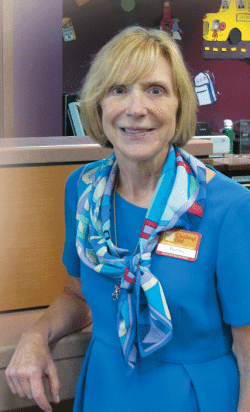
Law Sections
Robinson Donovan Is in a Growth Mode

Jeff Roberts

Jeff Roberts, managing partner with Robinson Donovan, P.C.

Jeff Roberts, managing partner with Robinson Donovan, P.C.[/caption]For Jim Martin, understanding where Robinson Donovan, P.C. is headed requires an appreciation of the past.

“I always think it’s illustrative, when we talk about Robinson Donovan, to acknowledge our historical connections,” he said of the Springfield-based law firm that will mark its 150th anniversary in 2016. “We trace our roots back to Gov. George Robinson, and we’re the longest continuing law firm in the Pioneer Valley — perhaps in the state.”

Martin, a partner at the firm, said the late Milton Donovan — one of the founders of the practice long known as Robinson Donovan Madden & Barry — always stressed client service, and that’s what the six current partners and nine associates continue to emphasize today. “We feel we’re able to deliver high-quality legal services in an effective manner.”

According to Jeffrey Roberts, the longest-tenured partner at Robinson Donovan, building that reputation has been a multi-generational effort.

“When I started here, there were six or seven lawyers,” he told BusinessWest. “But even at that size, I never had the impression that the firm was being run by a few owners doing it for themselves, who didn’t care to leave anything behind. And today, I think all the partners want this firm to keep going after they’re gone.

“That’s why we keep hiring, why we made the decision to remodel the place,” he said of the firm’s offices high in Tower Square. “We’re looking for people to come here in the early stage of their career and stay here, stay in the community. And it’s working. It’s enjoyable to see everyone working as a team here and growing. Even through the recent recession, we’ve been in the game the whole time and expanding again.”

A general-practice firm, Robinson Donovan specializes in a number of legal niches, including corporate and business law, commercial real estate, estate planning and administration, divorce and family law, employment law, and litigation. After a period of rapid contraction last decade — more than 30 lawyers worked there as recently as 15 years ago — business is growing in virtually all those specialties, Roberts said, and the practice is on the rise again, hiring five attorneys over the past five years.

“With employment-law work, we’re talking about all types of employment-law issues — harassment, wrongful termination, age discrimination, all kinds of discrimination claims, and counseling employers,” Roberts explained. “Another area that’s been really active for us has been family-law work — divorce and domestic relations.

“We continue to have a lot of demand,” he said, “so we’ll likely keep hiring. But we try to be careful in how we grow, so we don’t grow just for the sake of growing. We want to keep our level of service up, keep our expertise up, while bringing in more people. We’re pretty confident, notwithstanding swings in the economy, that we’ll keep growing.”

For this issue’s focus on law, BusinessWest sits down with several attorneys with Robinson Donovan to talk about why this firm with an extensive history is anticipating a bright future.

Raising the Bar

Roberts was quick to note that the firm’s recent hires have spanned most of its specialties.

“It’s interesting to note, when you look at the people we’ve hired, they work in general litigation, trusts and estates, corporate transaction law, labor and employment, domestic relations. In each one of those areas, the partners and lawyers say there’s more work coming in, and we need to hire more people. That’s a good indication where the key practice areas are in Western Mass.”

He and Martin said Robinson Donovan has been quick to assimilate fast-growing subspecialties into its roster of services. Take, for example, the growth of solar projects and other installations involving ‘green’ forms of energy production — projects that require legal services to navigate a host of real-estate, zoning, and regulatory issues.

Associate Mike Simolo

Associate Mike Simolo, right, says younger attorneys at Robinson Donovan benefit from a culture of mentorship promoted by Jim Martin, left, and the other partners.


“Every time you pick up the paper, there’s something new with these projects,” Roberts said. “We’ve become involved in these opportunities to the point where one of our younger lawyers, Nick Lata, is extremely knowledgable about them.

“We now have a considerable amount of expertise in solar work,” he continued. “There aren’t too many wind farms around, but Jim started representing a company putting up windmills. As you do these projects, you learn a lot, acquire a lot of expertise. We’re excited about that.”

Martin, an expert in transactions who is also a leading automotive franchise attorney, said the transfer of closely held businesses is another fast-growing field. “People would be very surprised how difficult it is to effectuate a smooth transition of a family business from one generation to the next. It’s fraught with variables and rarely as smooth as the owners or their successors would like it to be.”

Nancy Frankel Pelletier, a partner who specializes in litigation, also has plenty on her plate these days, including municipal issues ranging from zoning to civil rights. “It’s a substantial amount of work. The law is very broad, but the aspect of litigation is somewhat specialized. You need someone experienced in the courtroom, and we are.”

One growth area in litigation involves dissolving business partnerships in which only one partner wants to walk away. “In these cases, no one really thought about what would happen if they didn’t want to stay together anymore; they didn’t create an agreement that didn’t allow for someone to walk away. I’ve seen a spike in people trying to get out of those arrangements.”

Jeff Trapani, another associate who works in litigation, noted that cost factors tend to drive trends, which is why alternative dispute resolution and arbitration continue to rise in popularity.

Meanwhile, Roberts noted that estate planning has taken on new importance at a time when Baby Boomers are aging and estate-tax rules have drastically changed, with exemptions rising from $1 million in 2000 to $5.5 million today.

All these factors, he said, contribute to a fertile environment in which a law firm can thrive and expand its reach — and he expects Robinson Donovan to continue to do just that.

The Next Generation

Martin said this growth is possible because the firm has long emphasized a culture of mentoring, with senior partners, influenced by those who came before, constantly training the younger generation, including tax-law specialist Lata, estate-planning specialist Michael Simolo, and family-law specialist Katherine McCarthy. “We continue to build a foundation of new talent, which we’re proud of.”

Simolo, for one, appreciates that culture. “It’s comforting to me to know I’ve got help available to me from both the partners and associates and the paralegals, if I need to turn to someone with an issue.”

Gesturing to Roberts and Martin, he noted, “there’s probably 65 years worth of legal experience sitting at this table, and it’s nice to be able to draw on that both in terms of not only getting the work done in a professional manner, but also client development. The culture here is to be applauded. Frankly, I feel totally comfortable going to any one of the partners with a question — ‘want to grab lunch? I’ve got an issue I want to talk over.’ That kind of thing happens here all the time. It’s very collegial, very team-oriented. For me, that’s one of the real pluses.”

It’s also a practical matter, Roberts said, to make sure all attorneys are up to speed.

“We’re big enough that we can take on big projects. On the other hand, we’re not too big. Clients want effiency, they want service, and when things go awry, they want someone to talk to,” he explained. “We’re well-positioned to do that. When we get young lawyers in, we get them involved right away in things that the other lawyers are doing. We don’t hide them for five years; we get them directly involved with clients. It gives a lot of depth to the practice. I’m on vacation, they know who to call. If somebody’s in a meeting or out of the office for two days, there’s always somebody they can call.”

Martin also praised the firm’s paralegal staff, many of whom have been at Robinson Donovan for many years. “We work as a team here, and we draw on their areas of training and deliver services in an efficient way, which is important to us.”

Attorneys Jeff Trapani and Nancy Frankel Pelletier

Attorneys Jeff Trapani and Nancy Frankel Pelletier say their litigation work has become more complex in recent years.

The firm has also built strong bonds in the community, with partners and associates serving on the boards of dozens of area nonprofits.

“It’s hard to do because everyone is so busy at work,” Roberts said, before emphasizing that such efforts are more than worth the time and energy. “I don’t think we’re any different than any other law firm. It’s hard to have a family, do all your work, and stay involved in the community. When somebody is able to do that, it really reflects some strong character. And we really like to see it.”

Looking Up

Robinson Donovan has come a long way since its early days, when it was best known for George Robinson’s successful defense of Lizzie Borden on double murder charges in 1892. These days, Martin noted, the firm is being recognized in a host of ways, such as the citations many of its attorneys have received from organizations like Best Lawyers, Super Lawyers, and Martindale-Hubbell. Simolo expects more of the same in the future.

“I think they’ve made some great hires since I’ve been here,” he said. “It’s encouraging to me to see the partners investing in the future of the firm.

“They’re very pragmatic and results-oriented in helping people solve issues,” Simolo continued. “They do that very well, as a result of having decades of experience. And it works out very well for the client.”

“We’re very results-oriented,” Frankel Pelletier agreed. “People don’t always perceive it this way, but we’re problem solvers. That’s what we do.”

Joseph Bednar can be reached at  [email protected]
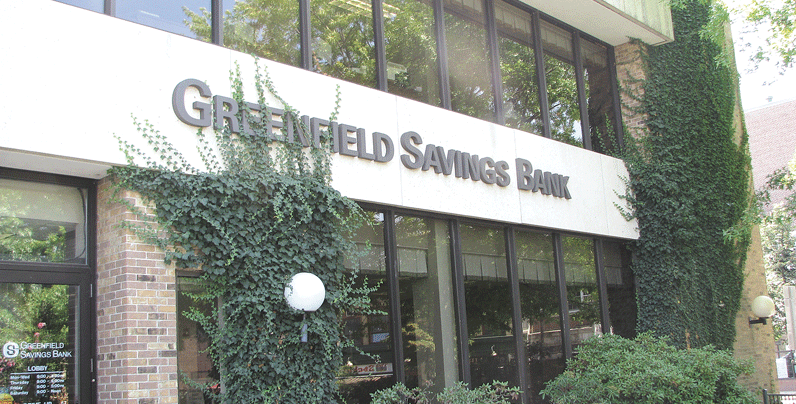
Employment Sections
Sunshine Village Provides Opportunities for Clients, Solutions for Employers

Gina Golash Kos

Gina Golash Kos says Sunshine Village has made a significant difference in the lives of individuals with disabilities.

Gina Golash Kos says Sunshine Village gives people with disabilities the opportunity to fulfill their potential, become independent, and learn valuable work skills.

“People’s lives are better today because of a dream conceived by a small group of parents in 1967 who wanted to create a warm, welcoming organization to help their children and other people with disabilities,” said Kos, the agency’s executive director. “That dream was and is Sunshine Village, and today the organization helps people find employment, make friends, and do things they never thought they could.”

The agency serves 400 adults age 22 and older, and has formed close ties with many local businesses that augment their employee base with trained workers who are available on a temporary, seasonal, or permanent basis.

“It’s a win-win situation because people with disabilities get the opportunity to work and businesses get great employees who show up on time and do the job correctly,” Kos told BusinessWest.

She added that using Sunshine Village as a subcontractor is cost-effective because it pays for traditional employee-related benefits and its employees are prescreened, trained, and overseen by a supervisor who accompanies them to the worksite each day.

“We typically meet with the employer, tour their operation, talk to them about the work they need done, and help them determine how we can help them save time and money through group or individual placements, before we assign people to a job,” Kos said.

Last November, Callaway Golf Balls Operations Inc. in Chicopee hired a six-person team from Sunshine Village to help fulfill a number of orders. “We put them on the assembly line and also had them label and unpack golf balls,” said Georgia London, Callaway’s maintenance, repair, and operating buyer and parts-crib supervisor. “They were here for six months, and we grew to love them. They showed up every day smiling, ready for the next challenge, and their smiles never diminished, no matter what we asked them to do. I was impressed and amazed by how conscientious they were and by their focus on quality. It was an excellent situation, and as soon as business picks up, we will hire them again.”

Kos said people who work for Sunshine Village are happy to be given the opportunity to earn a paycheck. Although some might not be able to meet the demands of a workplace on their own, the supervision they receive allows them to be successful.

“The workers we place are proud to do jobs that others might find repetitive or boring,” Kos said. “So many people with disabilities want to work and have the chance to prove themselves, and with our support, they are able to meet employers’ expectations and often exceed them.”

For this issue and its focus on employment, BusinessWest takes an in-depth look at Sunshine Village and its strong track record of providing opportunities for its clients and solutions for area employers.

Work in Progress

The village became a reality 47 years ago, thanks to the efforts of a group of parents whose children had disabilities. Under the direction of P. Joseph Casey of Chicopee, they procured 13 acres of donated land and built their program.

“They started with a nursery school and playground,” Kos said, adding that Sunshine Village soon grew to include three large buildings and a ballfield. “Over time, it went from a grassroots organization led by parents to a well-respected, sophisticated organization led by a board of directors.”

Sunshine employees

Sunshine employees (from left) Colleen Brosnan, Jonathan Gelula, and Richard Klisiewicz say their training center prepares people to work in industrial and commercial settings.

The agency employs more than 200 staff members, and its annual operating budget exceeds $10 million, which comes from federal and state money, boosted by private funding and proceeds from an annual fund-raising golf tournament.

Services provided by clients range from packaging to document preparation, catalog assembly, custom display assembly, box folding, labeling, collating, shrink-wrapping, clamshell and blister packaging, liquid pouring, and more.

Many begin their careers by working in the Employment Services Division’s integrated training center on the Chicopee campus, which prepares individuals to work in industrial and commercial settings.

“It’s a hub where we help people find jobs,” Kos said, adding that individuals with and without disabilities are trained alongside each other and fulfill orders that companies outsource to the facility.

The jobs can range from redoing work that was done incorrectly, such as removing inappropriate stickers and replacing them with the right ones, or removing products from boxes that were packed incorrectly, then repacking them. “We support a lot of manufacturers,” she added.

Sunshine Village also has a federal contract, and its employees maintain and clean all of the buildings and hangars at Westover Air Reserve Base. In addition, some perform other janitorial work, such as dusting, vacuuming, and emptying wastebaskets at local companies.

In addition, Sunshine Village opened a Community Based Day Service last month to allow individuals to find their own jobs while enhancing their professional skills through internships and volunteer opportunities, while enjoying an array of social and recreational activities.

Kos says the unpaid internships give people the opportunity to experience different types of jobs and work environments. “It’s important because some individuals are not sure what they would like to do,” she explained. “They may enjoy sitting and working quietly or prefer a fast-paced environment with a lot of other people around them.”

The volunteer work is also helpful. “Our clients have helped local churches with cleaning and spent time in local food pantries, at the Chicopee Public Library, and in the Thomas J. O’Connor Animal Control and Adoption Center,” Kos said. “Volunteering is a great way for people to get ready for their first job and give back to the community.” She added that groups planning nonprofit events are invited to call Sunshine Village if they need volunteers.

Expanded Horizons

In addition to its Employment Services Division, Sunshine Village offers a Day Habilitation Services Program, which runs year-round and helps people acquire the skills they need to become productive members of their communities. It is a medically based model with offerings tailored to meet each individual’s strengths and needs.

“Physical, speech, and occupational therapies are incorporated into music, culinary, art, and sport therapy programs,” Kos said. “People might work on gross motor skills in music therapy or fine motor skills in art therapy. Music therapy helps them communicate and express themselves while they have fun and socialize with others. They also learn to prepare food in our culinary program and participate in yoga and tae kwon do classes in our sports program. We focus on developing functional life skills, improving coping strategies, and increasing independence.” Adaptive devices and equipment are also used to maximize each person’s potential.

Jonathan Scytkowksi and Samuel Whittle fill out job applications with help from Miguel Colon.

Jonathan Scytkowksi and Samuel Whittle fill out job applications with help from Miguel Colon.

These programs are conducted at a variety of locations. In addition to providing services at Sunshine Village’s main campus on Litwin Lane in Chicopee, the agency also operates community-based sites in Three Rivers, Westfield, Springfield, and Chicopee Falls, said Kos, adding that the organization receives a great deal of support from the community.

The golf tournament, for example, allows the agency to pay for improvements to its buildings, new technology, and holiday parties, as well as adaptive equipment and extra supplies, she noted.

Meanwhile, the Chicopee Elder Council 69 of the Knights of Columbus and Fairview Council #4044 have made generous donations to the agency, and many businesses provide ongoing support. “We are very fortunate to have so many people helping us,” Kos said.

As a result, Sunshine Village’s programs continue to grow. “We’re developing a day program specifically designed to meet the needs of people with autism-spectrum disorders,” she noted. “We want to help them live independent lives by promoting social and daily living skills and improving communication.”

The program is still in the planning stages, but the demand for it is clear. “Autism is a growing problem, and during the last year we have talked with our funding sources, local sources, and parents to determine the types of services that are needed,” Kos said.

People employed by Sunshine Village are proud that, since 1968, all of the organization’s programs have received the highest level of accreditation by the Commission on Accreditation of Rehabilitation Facilities. “And the most recent accreditation, which was highly complimentary, was completed in April,” Kos told BusinessWest.

Bright Prospects

Sunshine Village has made a significant difference in the lives of individuals with disabilities.

“Everything we do, which includes the people participating in services, our experienced and caring employees, our innovative programs, and our effective outcomes, is a realization of our founders’ dream,” Kos said.

“We serve so many people who are truly happy, and we are proud of our history and what we achieve day by day,” she went on. “Our partnerships are growing and will continue to expand, which allows us to help people find jobs while providing employers with good employees. So we are confident about the future of our organization, because our success is sustained by compassion and enthusiasm and realized through strategic planning and effective leadership.”

Sections Sports & Leisure
Area Recreation Facilities Raise the Game for Summer Fun

By KEVIN FLANDERS

Kevin McMillan, with canopy tour manager Nina Nunes

Kevin McMillan, with canopy tour manager Nina Nunes, says Zoar Outdoor used to be one of the only such facilities in the region, but today, enterprises across New England are getting in on an increasingly popular activity.

The forest is cool and quiet, sunlight coruscating through the trees. In the distance, a high-pitched, mechanical whine tumbles down the mountain, growing steadily louder, closer, accompanied by screams of excitement. A look upward reveals a taut cable backlit by ripples of morning light, and then, moments later, a flash of color and joyful sound ripping past — another guest giddily speeding toward the next platform.

It’s a scene that plays out every day in Charlemont, a rural Franklin County town intersected by the Mohawk Trail and the Deerfield River. With a population scarcely exceeding 1,000, the town would be virtually unknown to most Massachusetts residents if not for two popular ziplining destinations that have transformed the burg into a hub of outdoor recreation.

Located almost directly across the river from each other, Berkshire East and Zoar Outdoor have become two of the premier ziplining and canopy-tour businesses in New England. Boasting advanced equipment, thrilling courses, and knowledgeable staffs, they have helped thousands of families learn how to ‘zip’ while enjoying the breathtaking scenery atop Massachusetts’ northwest woods.

“Our focus is on making a connection with guests,” said Kevin McMillan, director of guided programs at Zoar Outdoor. “We carefully train our staff, and they’re always excited to share their vocation with the guests. If you have a family with young teens, coming here is a great family adventure.”

The sentiment was echoed by Gabriel Porter-Henry, director of marketing and customer relations at Berkshire East, who encourages guests to sample both facilities.

“What’s nice is that both businesses provide different experiences and cater to people with different focuses,” he said. “Both are great businesses that have created a series of outdoor activities that draw people to Charlemont.”

For this issue’s focus on sports and leisure, BusinessWest zips up to Charlemont to learn about a fast-growing activity that is, quite literally, raising the game when it comes to outdoor fun.

High-flying Business

Berkshire East and Zoar Outdoor vary in terms of ziplining offerings, with programs geared toward different interests, McMillan and Porter-Henry said.

For example, Zoar puts a greater emphasis on the tree-to-tree exploration component of a canopy tour, with eleven zip lines and two sky bridges. The course is essentially an aerial hike, enabling guests to explore the woods from one platform to the next and experience nature in a new way. At times, when they’re cutting through the dense wilderness at 35 mph, guests feel what it’s like for birds to fly between the trees. The course’s highest point reaches 55 feet, and the tour takes about three hours to complete.

DownHill“We’re definitely different in what we offer, and I always recommend that guests try both places,” said McMillan, who has been with Zoar Outdoor for 23 years and previously worked at Berkshire East.

Meanwhile, across the Mohawk Trail, the Berkshire East course is perfect for those in search of speed, height, and distance, Porter-Henry noted, boasting zips that exceed 50 mph and rise nearly 200 feet into the air. The course’s most extreme lines, X1 and X2, are each a half-mile long and bring guests high above the treetops and across town lines. Berkshire East also offers an introductory tour for those who aren’t quite up for the intensity of X1 and X2.

“We have some of the longest lines in North America, and it’s great to see all kinds of people come out and enjoy them,” he said, adding that staff recently guided a 94-year-old woman through the course.

Both Zoar Outdoor and Berkshire East draw significant revenue from ziplining during a season that runs from spring to fall. For Berkshire East, a ski resort, the zips allow the mountain to maintain a steady stream of customers long after the snow melts.

Meanwhile, Zoar Outdoor generates revenue through a host of activities, including rafting, kayaking, mountain biking, and rock climbing, the latter run through a partnership between Zoar and Hadley’s Central Rock Gym, which specializes in rock climbing and rappelling.

Ziplining has flourished in the last decade, not only regionally but nationally, with hundreds of operations starting up. Many of them are run by ski resorts, as the expansive, hilly terrain is ideal for the construction of zip platforms complete with sturdy cables that can support 14,000 pounds. Other zipline businesses are operated by companies that specialize in water sports and are interested in adding another source of income.

“The zip business is going well,” said Porter-Henry. “There is excellent interest locally and from people throughout New England, which is great for the local economy.”

For Zoar Outdoor, the zipping and canopy-tour business continues to thrive, but McMillan has seen growth slow slightly in recent years, mostly due to increased competition.

“When we first started, we were one of the only places in the region offering canopy tours,” he said. “Now there are many operations in New England, which means more competition for us.”

Still, Zoar Outdoor has hosted about 50,000 people since starting its canopy-tour business six years ago, and employs about 55 canopy tour guides, most of whom are also experienced in leading rafting and kayaking excursions. Many staff members have primary jobs in teaching or other occupations that give them significant time off in the summer, and they wind up serving as guides in a part-time capacity.

“It’s nice to have staff members that can do kayaking, rafting, and zipping, which gives them variation and keeps people fresh,” McMillan said. “Because of how we do it with the part-time work, our staff tends to be a little older and more experienced in each activity.”

Hanging Around

While both Berkshire East and Zoar Outdoor are constantly welcoming new zipliners to the thrill of sailing over the trees, it’s only natural that some participants arrive with a little anxiety. But Porter-Henry and McMillan both emphasized the role of their well-trained guides — and their safety equipment — in helping zippers build trust and let go of their fears.

In fact, they said, newcomers are often left speechless by the exhilarating freedom that sweeps over them while soaring through the air, suspended by just a few pieces of equipment, including harnesses, carabiners, ropes, and cables. Some guests curl their legs up tightly to maximize speed, while others spread themselves out to increase drag and prolong their views of the sprawling scenery.

As thrilling as the activity is, however, there are innate risks if the correct safety procedures aren’t used. Both Zoar Outdoor and Berkshire East employ dual locking mechanisms on each line that provide a secondary failsafe in the extremely unlikely event of a break from the cables. The equipment is carefully inspected each day, and when guests are waiting for their next zip on the platforms, the staffs at both sites ensure they are secured to the decks to prevent injury in case of a stumble.

“Whenever you’re working at height, it’s all about redundancy,” McMillan said. “Redundancy will minimize your exposure to risk.”

Guides also carefully explain the safety procedures and confirm that guests are comfortable and ready prior to each jump, and no one feels rushed.

Those positive experiences with ziplining have been a boon to Zoar, especially as families try other outdoor activities after coming down from the trees. They’ve also taken advantage of Zoar’s campground and lodge.

“A lot of people will raft one day, camp overnight, and zip the next morning, which I think is the perfect way to do it,” McMillan said. “You could leave one day in the morning and be back by noon the next day.”

Berkshire East also affords guests an opportunity to try various outdoor thrills in one day or weekend. As a partner with nearby Crab Apple Whitewater, the facility offers guests discounts for zipping and then heading down the road for a few hours on the Deerfield River. In addition, Berkshire East is nearing the completion of what will be the longest mountain coaster in North America. Carrying one to two people per car, the attraction is expected to open in late summer or early fall.

“We’re really excited about it opening. This will provide another activity for people to try and help increase our exposure,” said Porter-Henry, who used to work at Crab Apple Whitewater as a raft guide, and is gratified to see people enjoying a variety of activities that have helped put sleepy Charlemont on the map.

“Personally,” he said, “it’s very rewarding to work in the area where I grew up and see these businesses continue to develop.”

Features
Is This as Good as the Recovery Is Going to Get?

Mike Oleksak

Mike Oleksak says positive things are happening with the economy, but many business owners don’t believe what they’re seeing and hearing.

Andre Mayer says business owners who are still waiting for what would be considered a real economic recovery should probably stop waiting.

That’s because, in his view, this is about as real as it’s going to get.

“At this point, we’re really past the recovery phase; the recession ended five years ago,” said Mayer, senior vice president for communications and research at Associated Industries of Massachusetts. “We never had the recovery we were hoping for and expecting — that big burst of growth where GDP goes up quickly and rejoins the prior trend line. It never happened.”

And it’s very likely that it just won’t happen, at least not any time soon, he said, adding that business owners would be wise to accept this state of the economy and get on with hiring people, expanding their ventures, and moving forward rather than waiting for that aforementioned burst.

And he believes many are doing just that.

“We have been adding quite a few jobs in the first quarter of this year, when the national economy was contracting,” he said, adding that ‘we,’ in this case, refers to the state as a whole, but includes Western Mass. “And that, to me, seems to reflect a change of attitude. In other words, employers, instead of hunkering down and going all out to preserve productivity and not dilute it, because that’s what got them through the recession, are now taking a more sustainable path and sort of coming to the realization that this is the economy we have to live with.”

Bob Nakosteen, professor of Economics at the Isenberg School of Management at UMass Amherst, agreed, and pointed to the latest unemployment figures as evidence of what he considered progress, at least in some respects.

Indeed, while the state’s jobless rate fell to 5.5% in June, the lowest since August 2008, and 3,700 jobs were added, the manufacturing sector lost more than 1,000 jobs, and the construction industry lost more than 900, what Nakosteen called “hidden disappointments.”

And he said they may provide more evidence of something that many are now calling ‘secular stagnation,’ or ‘economic immobilism,’ terms that aren’t new — they go back at least as far as the Great Depression — but are being summoned with greater frequency by many economists to help describe and explain the phenomenon that Mayer touched on: a recovery that certainly doesn’t look or feel like one.

“There are a number of factors in our economy, some of them demographic, some of them technological, some of them stemming from globalization, that imply that we’re simply not going to experience the growth in this economy that we have in the past, especially job growth,” said Nakosteen while explaining secular stagnation, which he said is now being hotly debated in the “economics blogosphere.” “The workforce is getting older and large numbers are retiring, technology is developing quickly — but it’s doing so in a way that seems to be removing jobs rather than adding jobs — and globalization continues to put great pressure on our domestic workforce, especially the blue-collar occupations and manufacturing.

“And the prospects for any of this changing are simply not good,” he went on, adding that some economists believe it may be decades before the current scene improves markedly.

Meanwhile, the tepid state of the recovery is being reflected by ongoing caution on the part of area business owners, said commercial lenders we spoke with, who noted that many, perhaps still waiting for that burst they have seen following other downturns, such as the ones in the mid-’90s and just after 9/11, are hesitant about pulling the trigger on expansions or new hiring.

“I don’t see anybody really jumping in full force to bring people back or undertake plant expansion,” said Michael Oleksak, executive vice president and chief lending officer at Holyoke-based PeoplesBank. “Everyone is still pretty hesitant.”

Luke Kettles, senior vice president and chief lending officer at Hampden Bank, agreed, summoning a phrase that has been given a thorough workout over the past several years.

“People are guardedly optimistic,” he said, adding that, in this case, that means they often lack the confidence to move ahead with expansion plans or new hiring.

“Employers are not adding people unless they really need to,” he explained, adding that most are still looking to improve efficiency and trim fat rather than add to their workforces.

For this issue, BusinessWest takes an in-depth look at the state of the recovery, such as it is, and whether any change in the forecast can be expected any time soon.

Dollar Signs

While secular stagnation, if that’s what the region is experiencing, is a mostly negative term, there are some positives to be gleaned from recent economic statistics and trends, said both Nakosteen and Mayer.

Perhaps the most important of these is that the recovery — and job growth — has finally extended beyond the Greater Boston area, said Nakosteen, adding that both Central and Western Mass. are enjoying better unemployment numbers of late.

The June jobs report provides more evidence of this, he noted, but real signs of improvement started appearing earlier in the spring.

“Over the past few months, unemployment rates have come down dramatically in metropolitan areas in the Berkshires and Springfield, where they were the highest,” he noted. “This is a really good thing. It doesn’t mean they’re low enough to make you feel you’re in a true recovery, but for the first time since the recovery began, it now seems to be extending past Route 495.”

Mayer agreed. “Growth has evened out a good deal,” he told BusinessWest, adding that the Greater Boston area recovered quickly and profoundly after the recession while most of the rest of the state lagged well behind.

“Over the past year, the jobs have been added in the Worcester and Springfield metro areas at the same rate as in the Boston and MetroWest areas,” he noted. “At this point, we’re seeing growth, albeit modest growth, on the labor-market side almost everywhere.”

Luke Kettles

Luke Kettles says some sectors, such as senior housing, are experiencing growth, but by and large, many business owners are hesitant about expanding or new hiring.

Still, the recovery being witnessed in this region — and many other parts of the country, for that matter — is atypical of what is generally seen after prolonged downturns, said Mayer, citing a lack of growth in GDP and describing what much of the country, and this region, have experienced as a “watered-down version of a boom.”

“One reason, maybe the main reason, why this recession was such a bad one is that it seems to have knocked our GDP down a few percentage points long-term — we haven’t just bounced right back to that point where we left off,” he said. “And by now, waiting for that to happen doesn’t seem realistic, although we are on an upward track.”

Nakosteen concurred. “Sometimes after a recession, we’d have 9% or 10% gross-domestic-product growth for a year or two — it was just stunning,” he said. “We haven’t done better than two or three percentage points the past several years, and I just don’t think you’re going to see that big figure ever again.

“That’s a dangerous thing for me to say,” he added quickly, reflecting on the gravity of his own words. “But I’m buying into this secular-stagnation argument, and I don’t know what to tell people except that, however they have to adjust to the idea that there may not be a pot of gold at the end of the rainbow, they’d probably better at least think that through.”

Referencing the declines in both manufacturing and construction jobs, he said those numbers, if they don’t change, are ample evidence that the recovery lacks “oomph,” and that this is as good as it is likely to get.

“I thought manufacturing, and construction as well, were on very positive trajectories, and that this might continue more or less unabated,” he noted. “Now, there’s been an abatement.”

That said, both Mayer and Nakosteen anticipate further improvement in the economy, especially if business owners and managers can somehow gain the confidence needed to expand operations and add to their workforces — and consumers can buy again — possibly by recognizing the new economic reality for what it is, and making it better than it’s been.

“It’s time for us to not wait for magic, but to think hard about what we can do to continually make our economic climate better,” Nakosteen said.

Lending Credence

But Oleksak and Kettles said there are still a number of factors holding area business owners back when it comes to hiring and borrowing to expand.

And many are still continuing to do what essentially got them through the recession, said Oleksak, referring to everything from better inventory control to improving production efficiencies to controlling or, in many cases, reducing salary.

Uncertainty about health-insurance costs is one of the factors leading to hesitancy, he noted, adding that these expenses have been a drain on hiring for some time because they keep going up and there is little, if anything, to indicate that this trend will not continue.

Meanwhile, interest rates, which are still historically low but moving back up and projected to continue rising, are another impediment to progress.

“We’ve had such low interest rates for so long that’s there’s also concern about over-leveraging yourself in light of the fact that we’re going to see some higher interest rates down the road,” he explained. “And when interest rates start increasing, there’s more concern about the economy, with people asking if we’re going to fall backward again.”

Kettles said that some sectors, such as senior living, medical office facilities, social services, and even self-storage, are doing well, and Hampden Bank is having a solid year in commercial lending, due in part to the many bank mergers in recent years.

Still, he also sees hesitancy among many business owners, especially when it comes to hiring.

“Benefit costs are increasing, and healthcare costs are pretty significant, so people do not hire unless it’s really necessary,” he said. “Profit margins may be improving, nationally as well as locally, but I think it’s through improving efficiencies and doing more with less. People aren’t going out and adding a position unless they really need to, and a lot of times they’ll try to use part-time labor until they really need a full-time position.”

Kettles noted that many of the manufacturers the bank does business with have been willing to make investments in new equipment and technology, but these purchases often translate to fewer jobs, not more of them.

Overall, confidence, or the lack thereof, remains a factor as well, said both Kettles and Oleksak, noting that, while the June jobs report is generally positive, business owners aren’t necessarily buying into such reports.

“There is some improvement going on,” said Oleksak, “and people are being cautiously optimistic, but I’m not sure they’re really believing what they’re seeing.”

As evidence of this, he cited the residential real-estate market. While those at PeoplesBank and other institutions were expecting the refinancing market to slow this year, mainly because most everyone who could refinance already has, they were expecting sales to pick up, but they haven’t.

“If you look at the numbers, we’re about 5% to 10% behind last year,” he said, adding that an overall lack of confidence is the primary reason.

Whether confidence improves in the near future is likely a function of whether the news continues to improve, and whether it can actually convince people to believe what they see, said those we spoke with.

Nakosteen, for one, believes conditions will continue to improve.

“I think the next 12 months are going to be pretty good,” he told BusinessWest. “A lot of things, especially at the national level, but also at the state level, are getting better. Households are just in a much better position than they’ve been in for years to make healthy consumption decisions, and therefore employers will be making more job offers, buying more equipment, and so on. Over the next year, we’re going to see reasonable economic growth.”

Bottom Line

But what does ‘reasonable’ mean?

It probably doesn’t mean the kind of burst that traditionally accompanies the end of a recession, or the kind of oomph that economists expected and business owners are in many respects still waiting and hoping for.

As Mayer explained, that kind of jolt simply isn’t realistic a full five years after the recession was declared over.

This is the economy this region may have to deal with — like it or not.


George O’Brien can be reached at [email protected]

Cover Story
When It Comes to Business, Dave Ratner Has Some Pet Peeves

COVERart0714bWhen Dave Ratner speaks to small-business owners — something he does often — he will inevitably touch on some of the highlights from his intriguing, 40-year career selling soda and pet food, during which he has made his first name and face into a nationally known brand.

And there are many such highlights, from his success in retail (he now has seven Dave’s Soda & Pet City stores in Western Mass. and Northern Conn.) to his triumphs in wholesaling, specifically the introduction and then rapid expansion of his lines of dog and cat food, to his highly regarded marketing initiatives.

But Ratner says he spends much more of his time at the podium talking about what hasn’t gone right with his various business endeavors. Like the store he opened on Allen and Cooley streets in Springfield, which closed roughly a year after it opened in 1995 because of what he called “miscalculations” and bad timing. Then there was an ill-fated e-commerce venture, a four-year experiment that failed because, in essence, he entered a game without fully understanding how it’s played.

“This was the first all-natural pet-food e-commerce site in the country,” he explained, referring to an acquisition he made in 2010. “I said to myself, ‘how hard can this be?’ Well, the e-commerce business is much different than the retail business, and I’m not an expert in e-commerce. I didn’t have anyone on my team who knew the e-commerce business, and we got killed.”

It is by relating these failures and others and the reasons behind them that Ratner believes he can most effectively get across his points about how to succeed in business, something he’s becoming noted for as much as his stores, products, and TV spots.

Indeed, he speaks to various trade groups — he recently addressed the Billiard Hall Owners Assoc., for example — and business organizations on a fairly regular basis. The audience and subject matter varies, but he’s often addressing retailers, and a common theme is advising little guys on how to beat the big guys.

Meanwhile, some of his more recent blog posts — such as “Good Boss or Good Leader? Business Owners Should Learn the Difference Between the Two and How to Be Both,” “Your Attitude Goes a Long Way in Business: Changing Your Mindset Can Mean a Positive Impact for Your Store,” “Not So Fast: Before Pulling a Product off the Shelf, Think About the Total Picture,” and “The Learning Never Stops: Going to Trade Shows and Conventions Can Help Retailers Move Their Business Forward” — are clearly aimed at that constituency.

Overall, Ratner told BusinessWest that there are many mistakes that entrepreneurs will make — everything from not having enough money when they launch a venture to letting their ego get in the way of smart decisions, to not having what he called a “damage-control policy” in place.

“People go into business with their hearts, not their heads,” he noted. “The reason that big companies have boards of directors is so they can question what management is doing and be a devil’s advocate. So if a successful company needs one, and you’re an entrepreneur, you certainly need one.”

Elaborating, he said business owners and managers generally tend to forget about “Mr. Murphy,” the individual whose name is attached to a law — the one about how everything that can go wrong will. And this will invariably lead to trouble, especially when it comes to money and cash flow.

“I don’t care what you’re doing — if you don’t have enough money, don’t do it, and whatever money you think you need, multiply it by at least two,” he explained, “because the minute you start your business, Mr. Murphy is going to move in next door to you.”

For this issue and its focus on entrepreneurship, BusinessWest talked at length with Ratner about his career in business, but also about how he’s devoting a good deal of his time and energy to advising others on how to use their head and not their heart and thus avoid making the critical mistakes that often mean the difference between success and failure.

Poignant Paws

Dave Ratner takes a moment to meet and photograph a regular

Dave Ratner takes a moment to meet and photograph a regular and her dogs, one of the many ways he tries to make an emotional connection to customers.

It’s probably safe to say that few people living and doing business in this region don’t know Ratner’s story.

It’s pretty much common knowledge that he flunked out of Babson College between his sophomore and junior years, only to later return and get his degree, and, not long after graduating, borrowed $5,000 from his father to open a Soda City store on Route 9 in Hadley. That’s the name his father, Harold, gave to a venture he started in 1972 after his career as a distributor for Clicquot Club soda came to an abrupt end when the company decided to sell direct to retailers. Ratner made it clear that, while his father provided some seed money, this was a separate enterprise he could call his own.

“He said to me, ‘if you want to do this, I’ll loan you $5,000, and you can go and find a location and open up your business,’” Ratner recalled. “He said, ‘yours is yours, mine is mine; I’m here for guidance, but this way, you’ll learn how to run a business really quickly.’ And he was definitely right about that.”

It’s also well-known that, roughly a year or so after starting that venture, he bought a puppy, an acquisition that took him to the pet-food aisle at the supermarket, where he learned there was much more to sell there than in the carbonated-beverages aisle, a realization that started him down the road to selling two totally different product categories out of the same building.

The past 37 years or so have been spent expanding the enterprise in several directions, making Dave’s a household name — in this market, but also others — and, for the most part, anyway, practicing what he preaches when it comes to running a successful business and beating those aforementioned big guys.

“And unless you’re Wal-Mart, you’re the little guy,” he said with a laugh, adding that the most important thing for any business owner who falls in that latter category is to “connect with the customer emotionally.”

“When I talk with entrepreneurs and business people, I explain to them that we’re not here to have a transactional relationship with customers, but an emotional relationship with them so we can try to bond with them,” he explained. “Business is business — you have to offer what the customer wants or needs at the correct price, you have to be easy to do business with, and you have to build a relationship with them. And you have to build trust; people don’t want to hang out with or do business with someone they don’t trust.”

Ratner’s been doing all that throughout his career, with his stores, his marketing (it’s his voice you hear in the radio ads), and a weekly television show called simply Dave’s Pet Show, which has been running on Fox for more than two decades, as well as a hands-on attitude in his stores.

For example, on the day he spoke with BusinessWest at his flagship store in Agawam, Ratner could be seen helping customers unload their huge bags of dog food into their cars and taking photos of the canines that his regulars bring into the store with them when doing their shopping.

And he’s taken this emotional relationship to an even higher level with his lines of pet food, which he started introducing nearly 20 years ago and wholesaling five years ago. It’s the entrepreneurial gambit that appears to have the most potential — it’s generating close to the same amount of revenue as his retail operation, and he believes it will soon surpass it — and the one he’s easily most proud of.

His products are now being sold in 40 states and by more than 3,000 independent retailers, he said, adding that beyond those numbers is the great sense of satisfaction that comes with knowing what they mean.

“Dave’s Pet Food is just the coolest thing in the world,” he told BusinessWest. “People who have never met me and have no clue who I am trust me with the health of the creature they love more than anything in the world. How does it get any better than that?”

Talking the Talk

While perhaps not as satisfying as his pet food, Ratner’s seminars, lectures, blogs, and other vehicles for sharing knowledge and lessons with small-business owners remain a big part of who he is.

He told BusinessWest that he’s learned a great deal from his own experiences and also from mentors ranging from his father to Al White, founder of A.O. White, who hired him for a few summers when he was in high school, to Ken Abrams, president of the FoodMart chain of supermarkets that once operated in the region. And he enjoys sharing these lessons, as well as myriad others he’s learned through relationships forged from his membership in the Young Presidents Organization as well as his work with the National Retailers Federation.

There are many such lessons he said, starting with making sure you have enough money when you launch a business and understanding that Murphy’s Law will apply to your venture. Entrepreneurs must also create a reason for people to do business with them “unless they’re inventing something revolutionary,” he went on.

And they need to have that devil’s advocate there, not only to ask the hard questions, but to make sure that they’re answered sufficiently.

Ratner said he’s had to learn some of these lessons himself the hard way.

Indeed, he said he didn’t have enough money to keep the Allen and Cooley location open during a year when he said everything went wrong for retailers, and especially those selling pet food.

“That was the year of Nintendo, America Online, and snowstorms,” he noted, adding that the poor weather kept people from making non-essential trips, and they would get their pet supplies at the supermarket instead. “Everyone started going online, and the pet business declined; kids weren’t into fish and birds anymore.”

Dave’s new pet food

Dave’s new pet food label also features his German shepherd, Trudie.

Using hindsight, he said that, if he had more money at his disposal, he probably could have weathered the storms, literally and figuratively, and outlasted Mr. Murphy. He acknowledged that a devil’s advocate couldn’t have helped him when it came to meteorology or calculating the impact of Nintendo on hamster sales, but in general, they can help entrepreneurs anticipate and navigate various forms of whitewater.

And they can help them understand their limitations and avoid costly missteps, such as Ratner’s foray into e-commerce.

“On the Internet, it’s all about ‘who’s got the best price; who’s got the best deal?’” he explained, adding that distribution is also a huge factor and one that ultimately kept him from effectively competing with Amazon and other huge sites.

Knowing one’s limitations is an important quality for business owners, he stressed, as is the related ability to keep one’s ego in check.

“The smartest, best business people in the world are those who hire the best people, those who can do the things they can’t,” he explained. “I have the best controller in the world — he’s phenomenal; I flunked accounting.

“Another thing that gets entrepreneurs in trouble is ego — there’s no place for ego in business,” he went on. “People have to listen, watch, learn, and never believe they know everything, because they don’t.

“You have to be a sponge,” he continued. “You need to go look and see what your competitors are doing right and copy that, see what they’re doing wrong and make sure you don’t do that.”

But perhaps the most important trait a successful business must possess, he said, is the ability to take a vision and make it permeate a company. To get that point across, he relayed a conversation he had with Mindy Grossman, CEO of Home Shopping Network, that took place as HSN mulled adding Dave’s pet-food products to the list of items it sold.

“I asked her how she competed with QVC, because QVC is twice as big as she is, and she said, ‘QVC is very transactional, and we try to develop an emotional relationship with our customers,’” he explained, noting that, not coincidentally, she used the same language he has employed for decades.

“She said, ‘this was the vision that I brought to the company — that’s it’s all about the customer, storytelling, and developing a relationship with that customer,’” he went on. “CEOs say a lot of stuff, so the next morning, I asked everyone I met, the buyers and everyone else, what it was like working at Home Shopping Network, and they, to a T, repeated exactly what Mindy said. So if you run a business, you have to let everyone know that ‘this is my vision’ and everyone in that company has to buy into it, and if you have people who don’t buy in, you have to get rid of them.”

Tale End

When asked if had — or still has — any plans to perhaps take his chain of stores to a regional or even national stage, Ratner offered a hearty laugh and then some deep introspection.

“You know, I’m just a classic small-town businessman — there’s guys like me in every town,” he said. “I don’t have the brains to go and become a national company; I don’t have the skill set.

“The coolest thing in the world now, though, is that I get to hang out with people who are doing that,” he went on, referring to both YPO and the National Retail Federation. “I like to tell my friends that these guys see stuff that I don’t know exists.”

Perhaps, but there’s no debating that Ratner has scripted an intriguing entrepreneurial success story, and is still writing new chapters. In the meantime, he’s also making a name for himself helping others become successful small-town businessmen and women.


George O’Brien can be reached at [email protected]

Sections Technology
Anzovin Studio Stays on the Cutting Edge of Animation Technology

By KEVIN FLANDERS

Raf Anzovin, left, and David Boutilier

Raf Anzovin, left, and David Boutilier, with an image they created for an American Canoe Assoc. public service announcement.

Raf Anzovin, president of Northampton-based Anzovin Studio, has discovered that success in the animation industry comes to those who push their businesses to the edge — the cutting edge of technology.

Dedicated to supplying an array of services to clients while regularly improving the tools with which they create their products, the Anzovin Studio staff has mastered an ingenious two-pronged approach. Even when business is thriving, the company challenges itself to refine its practices and streamline its productivity, which serves to benefit both artists and clients.

“It’s amazing to look back and see how far animation has come in the last 15 years,” said Anzovin, who opened the studio in 2000 with his father, Steven Anzovin. “When you compare movies like the first Toy Story to current movies, you’ll see a huge difference in the quality of the characters and the exactness in the way they move. The industry has progressed in leaps and bounds in terms of the quality you’re expected to create. Something that would have been considered good in the ’90s would be viewed as well below average today.”

With that truth constantly in mind, Anzovin and his staff strive each year to develop new software that not only benefits Anzovin Studio artists but also draws the interest of clients. One of the studio’s latest and most successful software products, Anzovin Rig Tools, is expected to provide major advances in the area of character rigging. Because Anzovin’s software programmers and artists work in close collaboration, each new plug-in tool and application serves a specific need, with the ultimate goal of making computer-animated characters as seamless and believable as possible.

“We’re very excited about it — this particular area of animation hasn’t had significant upgrades since the ’90s,” Anzovin said of the new product, which has not yet been brought to market.

If the success of the studio’s previous products is any indication, then Anzovin Rig Tools will be utilized by some of the most prominent players in the industry. In past years, companies like Dreamworks, Disney, and Sony have bought Anzovin’s products, while the studio has consulted with clients like Microsoft, EA, and Hasbro.

“There are certain areas like character rigging where we are really pushing the technology,” added Anzovin, who takes pride in spearheading technological advances.

In short, he told BusinessWest, companies that fail to keep up with the breakneck speed of invention in this industry find it doesn’t take long to fall behind.

Products on All Platforms

In addition to its software-design work, Anzovin Studio produces educational and entertainment content through several media each year. Its art can be seen in everything from commercials to public-service announcements to video games, depending on the client and the request.

Last year, the studio supplied animation for a PSA run by the American Canoe Assoc., a piece that employed cartoon-like characters to convey water-safety tips in a unique manner.

“A lot of times, clients come to us looking to create PSAs that get the point across but also have entertainment value,” said Jake Mazonson, an artist and producer at the studio. “Animation is a good tool to communicate information in a fun, engaging way.”

Anzovin said the studio usually produces art for a handful of TV commercials each year, but that number might rise in future years, because the amount of content featuring animation is expected to increase. With the popularity of video sharing and downloading, the Internet is also a source of boundless potential for animators, especially when distributed across social-media platforms.

Meanwhile, video games have generated solid business as well, with the studio providing cut-scene animations for such games as Halo II, Charlie and the Chocolate Factory, The Da Vinci Code, The Sims Medieval, and Mercenaries II, among others.

“One of the great things about animation is that it can be used as a communication tool but also for entertainment — we often bring those two aspects together in our projects,” Anzovin said.

But the staff’s emphasis isn’t always on fun and entertainment when it comes to video games. The studio frequently contributes animations for instructional games and programs designed for individuals preparing to deal with hazardous law-enforcement and military situations. A recently released training program for the Department of Defense, for example, included art created by Anzovin’s staff to help simulate civilian populations in various locations. The tool will help soldiers learn how to defuse potentially dangerous encounters in highly populated areas.

“It’s really nice when we can help solve problems and serve social purposes,” added Mazonson, who is excited to be working on a new project with the American Canoe Assoc. — an animated memoir of individuals recounting their stories from the water. The project will be funded by a grant allocated by the U.S. Coast Guard.

How It Works

The concepts and methods that drive computer animation can be a little tricky to understand — if not downright mind-boggling at times — but Mazonson described the complexities of creating character-rigging products in remarkably simple terms.

“It’s a lot like making a puppet, with the strings and all of the different parts,” he told BusinessWest. “You have to figure out how to arrange everything in such a way that others will be able to use it.”

Anzovin believes one of the major keys to successful animation is to become a master of movement. Many movie animators have perfected the art to such a degree that, from a distance, animated characters can often be mistaken for actors. Their movements are swift and natural, seemingly enhanced with each movie.

“The goal is to present movement in a believable way,” Anzovin said. “One of the things that movies like Frozen and Tangled do well is combine the subtleties that are possible in computer animation with the graphic quality of movement. At times, you’re trying to create something that is more lifelike and exciting than life itself.”

So how long does it take to create such vivid animations? In terms of average project length — from the initial design stages to completion — a variety of factors come into play. Sometimes a project can be finished in just a few weeks, while other endeavors can last up to two years.

“It depends on the scope of the project and what the client is asking for,” said David Boutilier, vice president of Anzovin Studio. “Every project has a different script and style, and each client has a different level of experience. Some people are experts, while others only have a little experience in animation. All of those things affect how long it takes.”

ACAmasterComp00172

Above, imagery created by Anzovin Studio for the American Canoe Assoc. Below, animation created for client Squelch Inc.

Above, imagery created by Anzovin Studio for the American Canoe Assoc. Below, animation created for client Squelch Inc.

Raf Anzovin never spent a day in a college classroom, but he wound up teaching collegiate courses. He didn’t attend high school, either. Homeschooled and self-taught in the world of computer animation, he found this industry to be an open road for an 18-year-old going into business with his father. The possibilities offered in this new, exciting, undeveloped terrain were limitless, the perfect career choice for technologically inclined artists like Anzovin whose passion and ambition are matched only by their creativity.

“Everything was just starting up back then — a wild west,” he recalls. “Even if you had basic abilities in animation, you could make a name for yourself. Everything has come a long way since then.”

After exploring various institutions, Anzovin decided not to attend college because there weren’t many computer-animation programs available. Instead, he went to work with his father, starting off in Amherst and eventually moving into the studio’s current Nonotuck Mill office in 2009. Now, five years after calling the Florence section of Northampton home, the business has become an industry leader in technological innovation, with major companies routinely turning to Anzovin and his staff for consultation.

“The tools you have determine how quickly you can produce things, which is one of the reasons why we create our own products,” Anzovin said. “Animation is a very time-consuming process, but the way we approach it, by developing our own tools, certainly gives us an advantage.”

Added Mazonson, “technology and art are constantly interacting with everything we do.”

Branching Out

Over the next few years, Anzovin hopes to continue consulting with his studio’s partners and also to build new relationships, preferably with local businesses. As one of the only companies in the region focusing heavily on character animation, most of its clients are based outside Massachusetts, many of them in different time zones.

“I think one of the reasons [for the low number of local clients] is a lack of exposure,” Mazonson said. “A lot of people don’t know there’s an animation studio right here in Western Mass.”

One project that might help raise the studio’s profile  will take place in the coming year — a collaboration with representatives from Google. Though Anzovin couldn’t get into much detail about the project, he said it will likely involve mobile devices and the creation of tools.

Judging by how far animation has progressed in the last decade, in addition to Anzovin Studio’s commitment to innovation, the company will likely be redefining industry standards for years to come.

Commercial Real Estate Sections
Cooper’s Commons Complex Is Shaping Itself into a Destination

Kate Gourde

Kate Gourde

Kate Gourde laughed as she talked about how she’s spent the past several weeks rolling up her sleeves and “diving back into things” at Cooper’s, the curtain and specialty gift shop she’s been managing for the past several years.

“I felt like I had been neglecting my own business and was anxious to really sink my teeth back into it,” she told BusinessWest, using some intriguing language to sum up what she and her husband, Robert, have been doing for the past three years.

This would be a comprehensive conversion of the former Country Squire Furniture Shop on Main Street in Agawam into a home for a host of small, and complementary, businesses — a project that is far from complete, but has advanced to the point where Gourde feels comfortable spending much more time at Cooper’s, which is located directly behind the landmark named after Ensign Thomas Cooper, the Civil War naval hero who once lived there.

Only a few small spaces in the 14,000-square-foot building on Main Street in Agawam are not occupied, and plans are emerging for those rooms as well. And as the business names on the large sign on the front lawn reveal, the repositioning of this property has gone pretty much according to the vision that Gourde related when BusinessWest first talked with her in February 2012.

Indeed, as she led a tour of the property back then, Gourde pointed to a large space at the front she thought would be ideal for a small restaurant. It is now home to the Squire’s Bistro, operated by Fred Withee, former owner of Storrowton Village. Likewise, she said another two-room space toward the front would be ideal for a hair salon — it is now occupied by Shear Techniques, which moved roughly a mile down Main Street — and that a large space toward the back of the property would be perfect for a dance studio; LHQ Danceforce & Wellness has set up shop there.

These ventures have been joined by a consulting business, a skin salon, a massage therapist, the Individual and Family Counseling Center, Dupre Hypnosis, and even state Rep. Nicholas Boldyga, who set up his regional office there last fall.

Not everything has gone according to the script, certainly, said Gourde, who noted that some early tenants had short stays, promoting more due diligence before leasing out space. Overall, she described the conversion as both a “journey” and a “learning experience on many levels,” as she and her husband have added ‘landlord’ to their professional résumés. But the blank canvas that existed in the winter of 2012 has been filled in pretty much as they envisioned it would be.

What remains is more hard work to make Cooper’s Commons the destination that the Gourdes intend it to be. This includes effective marketing of the complex, she said, adding there has been use of a website, social media, and some television spots to promote the location as a place to “spend an hour or spend a day.”

“We’ve done our best to continue to work on the branding of the location and the promotion of the location to help all of our tenants move forward,” she explained. “That’s all we want — to see everyone take care of their own business and do well.”

For this issue and its focus on commercial real estate, BusinessWest talked at length with Gourde and some of her tenants about how Cooper’s Commons has come together, and what the future holds for what all those involved hope will become a retail destination.

New Lease on Life

Dianne Palazzi had been doing business about a mile to the south on Main Street, in one of Agawam’s myriad strip malls, for more than a quarter-century, and had no real desire to leave that location.

But one day, while she was shopping at Cooper’s, Gourde asked her to take a look at a two-room space within the old Country Squire building.

It wasn’t love at first sight, but something approaching it, said Palazzi, who admitted that the ornate fireplace in one of the rooms helped stir the imagination and eventually prompt her to sign a lease.

Fred Withee

Fred Withee says the unique space in the old Country Squire furniture building was a perfect fit for his new venture.

I saw the fireplace, and that’s all it took,” said Palazzi, who became the first tenant in July 2012, with a laugh. “It took a while for people to find out we were here, but now things are picking up  — we’re getting more walk-ins. This is a great location for us.”

This same story, or something closely approximating it, played out several times over the next several months as the Gourdes worked to fill in that aforementioned blank canvas, with spaces tranging in size from 200 to 2,700 square feet.

Indeed, Withee said he was semi-retired after selling Storrowton, but was looking at a possible new venture, a coffee roaster, when he started talking to Gourde about the old furniture store he’d frequented years earlier.

Today, his establishment features some furniture he bought there, as well as a collection of antique tools amassed by Gourde’s father, Arthur Leary.

“I have a grandfather clock, a painting, and some lamps — I brought them back home,” he said. “I knew the building well, I was a good customer, and when I looked at this space I knew that this is where I wanted to be.”

He said business has been good, though challenging, as it has been for many in this sector. Overall, he sees a good deal of promise, not only for his eatery, but for the complex as a whole.

“As people find out we’re here and visit, the ambiance gets their attention,” he said. “We couple it with good food and a friendly atmosphere, and they come back, and the same is true for the whole complex.”

When she talked with BusinessWest in 2012, Gourde said the space wouldn’t exactly sell itself, but she believed that once people saw it, they would want to make it home.

And that’s what has happened.

Gourde said the property has been developed in two phases, with the ground floor coming first, with a focus on retail, and then the second floor, which has been shaped mostly into offices for professionals, ranging from Boldyga to a business consultant to a home-care business operator.

The first floor was filled by the end of 2012, said Gourde, adding that there was a short lull, followed by a somewhat frantic push last fall and early this year to fit out the second floor for interested parties.

The process of tenanting the structure — a home that was expanded several times after being converted into a furniture store — has gone very much according to the original vision, with the size, shape, and amenities in each space often dictating its new use.

“We let the building speak to us about where the spaces would fall,” said Gourde. “And it’s an interesting building, because there were so many additions over the years. We had to figure out how to connect that addition to this addition and connect the front to the back. And with everything having to be up to code, for fire and handicap accessibility, it had its challenges, but it all worked out fine.

“Each space is definitely unique,” she went on, “and it’s been fun to watch how each tenant’s personality has come out in their space. We kept the common areas kind of subdued and calm, with classic colors and such, but the tenants took the ball and ran with it when it came to their own space. Overall, it’s classic and charming, with a contemporary twist.”

She said converting the Country Squire has been both a “monumental undertaking” and a labor of love, one that has included taking on the often-challenging role of landlord.
“We’ve learned a lot of lessons,” she said with a laugh, adding that the learning curve is ongoing. “It’s been an interesting project; about a year into it, my husband looked at me and said, ‘how do you like being a landlord now?’ I kept hoping it would get easier, but it hasn’t.”

Moving forward, while contemplating whether to convert the remaining second-floor space into apartments, as originally planned, and deciding when to start the elaborate (and expensive) process of repainting the complex, the Gourdes will focus much of their energy on marketing, making people aware of the of all that’s happening in the old furniture store, and helping their tenants succeed.

“It’s amazing how many people know the building because it’s a landmark,” said Gourde, “but because we didn’t change the front of the building drastically, many people are still unaware of all the changes that have happened within, so we’re trying to get the word out.”

The sign outside Cooper’s Commons

The sign outside Cooper’s Commons tells the story of how the complex has become populated with an eclectic mix of businesses.

To make them aware, the Cooper’s Commons website has been revamped, with links to the websites of the tenants. Meanwhile, there has been some marketing across several media, said Gourde, adding that the message is that the complex isn’t an office building — it’s a retail destination.

“I think that we can make this into more of a draw to bring people in,” she went on, “and let people know that there are so many things here to do and see. You can spend an hour or spend the day, depending on how much time you want to give it.”

Building Momentum

While Gourde is neglecting her own business far less than she was months ago, there is still much to do at the Commons, from finalizing plans for the remaining space to that aforementioned painting project, to marketing the complex.

This was all part of the vision Gourde laid out nearly three years ago.

As she said, it hasn’t all gone according to the plan. But for the most part, the complex has come together as the couple had hoped, and when people see the huge red building now, they don’t think of furniture — they think about an intriguing mix of small businesses.


George O’Brien can be reached at [email protected]
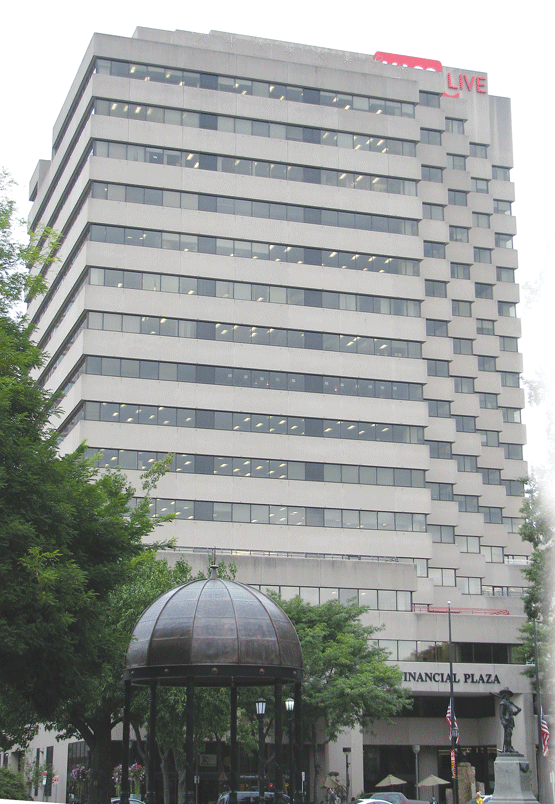
Cover Story
All Bets Are Off on the State’s Casino Referendum

COVERl0714aPaul Robbins calls it “casino fatigue.”

He describes this condition as being burned out by the long, drawn-out, often controversial process of bringing casino gambling to the Bay State, to the point where this frustration will manifest itself at the polls in November when state residents will vote on a referendum that will decide the fate of the industry here.

“You may have voters who say, ‘you know what? This was an experiment, it came and went, it’s a mixed bag, there’s a lot of questions … let’s just vote ‘no,’” said Robbins, principal with the marketing and public relations firm Paul Robbins Associates, adding quickly that the amount of casino fatigue that exists now — and will exist come Nov. 4 — is one of a great many unknowns when it comes to what will be perhaps the most expensive and most closely watched referendum vote in the state’s history.

Some others? Here’s just a short list:

• Will the casino operators come together and form an effective coalition to fight the referendum question?
• How hard will Mohegan Sun — which has proposed a casino at Suffolk Downs in Revere, but is the short answer to the question ‘who benefits most if the anti-casino forces prevail?’ because of its operation in Connecticut — fight to win this referendum battle?
• How will area communities (like Longmeadow and Northampton) that are not necessarily happy with MGM’s plans for a casino in Springfield, or the way they’ve been treated by the company, vote come November?
• How will MGM, which has drawn considerable praise for the campaign to win the vote in Springfield and then the Western Mass. license, scale up its campaign and make it statewide?
• How prominently will Springfield, the only community with a casino license, and its story, involving everything from high unemployment to tornado damage, be on display in this campaign? And how will that story be received?
• How will the highly publicized struggles of the casino industry in Atlantic City — several facilities have closed or gone bankrupt in recent months — play into the equation in Massachusetts?
• How will the casino referendum impact the many political races on the ballot this fall, from the governor’s contest to the pitched battle for the Senate seat being vacated by Gail Candaras?
• How will the confusing nature of the question itself — a ‘yes’ vote means opposition to casinos and a ‘no’ vote means you support them — impact the outcome?
• What will ultimately determine how this casino vote will go?

Mike Mathis

Mike Mathis, like Springfield Mayor Domenic Sarno, used the word ‘grassroots’ early and often as he talked about the upcoming campaign concerning the casino referendum question.

Many of these questions are not yet answerable, but BusinessWest put them to a host of key players, including analysts like Robbins and Tony Cignoli, president of A.L. Cignoli Co.; Springfield Mayor Domenic Sarno; Mike Mathis, president of MGM Springfield; and others.

They are, for the most part, predicting a close contest, one where Springfield’s story will get a considerable amount of play, and one where the outcome will likely be determined by how effective the rival camps are at getting their points across and separating fact from conjecture — words that have different meanings to different people.

For example, Mathis noted, casino opponents and some analysts say that economic conditions have changed considerably since the gaming legislation was passed in 2011, and believe there is sentiment that casinos are no longer needed as a stimulus for jobs and economic development. But Mathis said that whatever progress has been made is more or less confined to the eastern part of the state, and conditions elsewhere, and especially Springfield, remain dire.

“In November 2011, the state’s unemployment rate was 7%. Today, it’s about 5.5% across the state, but lower in the east, so clearly the Greater Boston area is in the middle of a recovery,” he explained. “In November 2011, the unemployment rate in Springfield was 10.5%, and today, it’s still 10.5%, and across the region it’s probably 7.5%. It’s great that the rest of the state is recovering, but Springfield still needs this economic injection.”

Cignoli said that sentiment has been borne out in some recent headlines, such as those from North Adams — the mayor there said the fiscally struggling city was “one cycle away from Detroit” — and suggested that a case can, and will, be made that cities and towns need casino revenue.

Tony Cignoli

Tony Cignoli says Western Mass., and especially the city of Springfield, will likely play a big role in the upcoming referendum fight.

“I can see the gaming folks showing up in North Adams and saying, ‘gosh, we realize that you’re about to go under; you’re one year away from insolvency,’” he said. “They can make a case to the people of North Adams — ‘here’s your salvation, here’s that chunk of change you need.’”

Overall, there is no shortage of speculation concerning this referendum and the factors that will determine the outcome. For this issue, BusinessWest takes an indepth look at the many nuances of this critical moment in the state’s history and what will likely determine the fate of the casino industry in the Commonwealth.

Playing the Odds

Mathis told BusinessWest that MGM has not faced a referendum question quite like the one in Massachusetts — where companies that have earned licenses can have them swept away by a vote of the residents — but it has confronted statewide votes on casino issues, such as a recent, hotly contested bid to expand gaming in Maryland with a sixth license in Prince George’s County.

MGM learned a number of lessons from that campaign and others like it, he said, including several involving not underestimating the opposition — and the many forms it takes.

Indeed, he noted that, in addition to in-state opponents to the planned expansion, there were casino rivals in neighboring states that had a vested interest in the outcome, and thus injected themselves into the fray by secretly funneling money to those opposing the measure.

“When the state Supreme Judicial Court ruled that this question could go on the ballot, there were lawmakers and different businesses in Connecticut and Rhode Island that were given a real gift — the possibility that they can keep their operations in full force and Massachusetts would continue to give them hundreds of millions of dollars in tax revenues and tens of thousands of jobs,” he said. “We are very concerned about the outside influences that may impact this campaign and try to protect their own across state lines.

“Foxwoods is looking for a potential license in the southeast part of the state, and Mohegan is looking for a license in Boston, but a facility like Twin River in Rhode Island has no conflict of interest — they clearly want this law to go away so their slots facility can continue to generate the millions of dollars of revenue that they see,” Mathis went on. “So there’s a real potential for outside influence, and I suspect it will come through late financial contributions to casino opponents, and it will come in such a form that you won’t find out where the money came from until after the race is over.”

But outside influence is just one of many factors that those we spoke with believe could possibly determine the outcome of the referendum question. Others range from the amount of money that will be spent to present both sides of the argument to the tone of the messages that are sent, to that aforementioned ‘casino fatigue’ and just how much of it exists.

The most recent polls, including one conducted by the Boston Globe just before the SJC’s decision on the referendum, show there that there is still support for casinos in the state, with more than 50% of those queried backing the licensing of up to three facilities.

But Robbins said the poll numbers can, and often do, change quickly in the heat of campaigns. He noted that the numbers on this referendum are narrowing and that opposition forces have certainly picked up momentum in recent months, in part because of changing economic conditions since the legislation was passed, and also because casinos in other states are struggling.

But there are other factors in play as well, he said, noting that casino operators made a number of mistakes during the licensing-contest portion of this process that have cast the industry in a more negative light. He lists everything from Hard Rock’s proposal to place a casino on the Big E grounds — a plan that drew considerable criticism inside and outside West Springfield — to what he considers Mohegan Sun’s bungling of its plans to place a casino off Turnpike exit 8, a gambit that ended abruptly when Palmer voters narrowly rejected the proposal last November.

Paul Robbins

Paul Robbins says the so-called ‘casino fatigue’ factor is one of many unknowns going into what is expected to be an intense campaign leading up to the referendum question.

“Somehow, Mohegan took a consistent 20-point lead in polling over the past two years and lost a nail-biter — by less than one percentage point,” Robbins wrote in a recent blog post titled “The Massachusetts Casino Wars.”

“Some of this was just bad communications or a lack of communications,” he went on. “Mohegan presented its casino renderings — affectionately called by some opponents ‘the spaceship,’ because it looked like one and it landed in front of voters with no input from the local community. Mohegan also promoted one of the traffic options being a five-lane access road — communicating this proudly on the front of mailers to residents living in a two-lane, rural community. Not terribly smart.”

Robbins said the fate of the referendum may come down to how deep — and effective — a coalition of supporters becomes. And he threw into question, as other analysts have, just how hard Mohegan Sun will fight for this question.

“They’re conflicted, there’s no doubt about it,” he said. “At the end of the day, they’re the ones that stand to benefit most if gaming is defeated.”

Mathis concurred. “What Mohegan is proposing at Suffolk Downs is a $1 billion facility; what they have in Connecticut is a $5 billion facility,” he explained. “They pay an 18% tax rate in Connecticut, and in Massachusetts they would pay a 25% tax rate — anyone can do the math. I think they do want a presence in Boston, and I think they are fighting hard for that license, but at the same time, I don’t think they’d be harmed if, at the end of the day, they didn’t have that license.”

Dicey Situation

Overall, Mathis expects the emergence of a broad pro-casino coalition, one that will involve not only the casino operators, but also labor groups, business and economic-development organizations, convention and visitors bureaus, and elected leaders in communities, like Springfield, that have the most at stake.

“The issue for us it to make it as broad as we can and make sure that all the different supporters who have a stake in this are part of the effort,” he explained. “When most people think about a coalition, they think about MGM Springfield and the other casino applicants, but that’s secondary to us; what we’re attempting to do is build a coalition around Massachusetts stakeholders who are already here.

“We compete for these licenses from time to time, and we understand that we go in not knowing if we’re going to be successful or not,” he went on. “Frankly, we can afford to lose and life will go on for us, and we’ll do it again in another jurisdiction, probably internationally. But what we’ll leave behind is a great gateway city like Springfield that is in the middle of a renaissance partly inspired by what we’re trying to do downtown. Those are the people that the rest of the Massachusetts residents need to hear from.”

Sarno agreed. He expects that the city’s story — all of it, from its economic struggles to its resiliency in the face of natural disasters — will be a big factor in the referendum battle. And he believes the task at hand is to convince those who don’t want a casino in their backyard that there will be benefits — for the state, this region, and especially Springfield — to putting one in someone else’s backyard.

“What’s important for people across the state to know is that, in Springfield, we’re trying to stand on our two feet, and that’s not easy because we don’t get a tremendous amount of unrestricted government or local aid,” he explained. “We have to send out a heartfelt message that, while someone may not want a casino in their community, this is important for our city, it’s an outside-the-box proposal, and it’s woven into the fabric and the mosaic of Springfield.”

MGM’s $800 million casino plan translates to $25 million in direct aid to Springfield each year, he went on, as well as 2,500 to 3,000 permanent jobs, a unique opportunity to revitalize 15 blighted, tornado-ravaged acres in the South End, and a real chance to move the city out of decades of stagnation. And he believes that story will resonate around the Commonwealth.

As they talked about the campaign ahead, Mathis and Sarno made repeated use of the word ‘grassroots.’ They said this was the tone of the initiative that was successful in Springfield, and it will be scaled up and taken statewide.

“The Springfield campaign was door-to-door, and we think that’s the key to a successful campaign statewide,” Mathis explained. “The question is how do you scale it up, and how do you make sure that the rest of the state, which isn’t directly impacted by all the great things that are happening in Springfield, understands at least how important it is to Springfield.

“We’re going to do that in a number of ways,” he went on. “Most importantly, we’re going to go back to our supporters in Springfield and Western Mass. and make sure that they’re engaged and they’re talking to their friends and neighbors and colleagues across the state about how important this industry and this development is to them; it’s as simple as that.”

Elaborating, he said the broad strategy will boil down to two primary missions: educating and communicating.

“This is a new industry in Massachusetts, so what we did in Springfield was educate them about the industry, which is not the old industry,” he told BusinessWest. “What the antis [opponents] want to do is put us in a box and rely on old, tired stereotypes. We at MGM are a Fortune 500, international hospitality company; we got that message across in Springfield, and we need help getting that message out to the rest of the state.”

Bill Mandel, a professor of Political Science at Western New England University who believes that pro-casino forces will prevail come November, said one key for gaming supporters is to drive home all the economic-development aspects of their argument and convince voters in every corner of the state that this is a critical matter for some communities — like Springfield.

“Leaders in Springfield really need to go out and sell this to the rest of the state as something that we need and want,” he explained. They need to go out there and say ‘we want it,’ and explain to the people of Arlington, Belmont, and Foxborough that, while it may seem abstract to them, it’s very important to us. That may be a critical strategy.”

Playing Their Cards Right

Cignoli told BusinessWest that, while there are many question marks concerning the upcoming referendum fight, some things are known.

For starters, it appears certain that the turnout will be high — perhaps record-setting, given the casino question and a number of high-profile races, especially the one for governor. What isn’t known, although there is speculation, is which side gets helped the most by that turnout.

Robbins said conventional wisdom holds that the side that spends the most money benefits from a high turnout. However, Cignoli said a high turnout generally brings out opponents.

What’s also certain is that this will be a lucrative year for the media, with the pro-casino forces expected to spend heavily on print, radio, television, and social media to get their message across, said Cignoli, who projects that $10 million and perhaps much more could be spent on the casino referendum, because of the stakes involved.

“There’s so much on the line, not only for the developers, but all the people around them who will try to motivate this issue,” he explained. “There are the political consultants, the lawyers, the lobbyists — this has been a full-employment bonanza for a lot of these people, especially in the Boston area. So they’re going to double down, no pun intended, and go the full nine yards.”

And he expects the Western Mass. market to get a decent share of that windfall, because he believes this region will play an important role in this contest, even though the vast majority of votes are concentrated in the eastern part of the state.

“It’s going to be close, so that means every vote is going to count,” he explained. “It’s polling 50-50 right now, and in a tight race, you have to pay attention to Western Mass., especially because of the urban base in Springfield, which can turn out a significant vote. You need every single vote you can get in Western Mass.”

And to get votes, in this region and elsewhere, Cignoli believes the pro-casino forces will lean heavily on MGM and the strategy that worked well for it in Springfield — primarily a focus on jobs, economic development, and revitalizing the tornado-ravaged South End — as well as Penn National’s slots parlor in Plainville, which is already under construction.

“MGM ran a fantastic public-relations campaign leading up to Sarno choosing them to move forward,” said Cignoli, “and they ran a very good referendum campaign. So you can use the better elements of that out and about and in the other 350 cities and towns. They were textbook perfect in their campaign in Springfield — can that translate and help them elsewhere? That’s the big question.

“Also, Penn National will be front and center as well,” he continued. “They won a license for slots, and they’re in the ground. They’re pouring concrete, you can see cranes, you can see jobs, you can see economic impact already.”

But while the stories in Springfield and Plainville may sway some of the voters in communities not directly impacted by casinos, the question of ‘what’s in this for me?’ may ultimately decide how this referendum question goes, he went on.

“That’s the big litmus test this year,” he told BusinessWest. “If I live in Pittsfield, North Adams, or Fall River, what’s in this for me? Why should I care if this benefits Revere, Everett, Greater Boston, Springfield, or Plainville? You have to motivate those voters in those other places.

“And if you’re a proponent of casinos, you have to worry about the parochial aspects of this,” he went on. “Longmeadow may be getting a settlement from MGM, but do the people there really want this? This is their first opportunity to vote for or against this. And in Northampton, there’s always been that rivalry with Springfield, and Northampton has been out there very clearly with their concerns about a revival in Springfield and MGM in Springfield and what that means to their nightlife and their entertainment district. Casino proponents have to make a case to everyone and explain what’s in it for them.”

Cignoli told BusinessWest, and several other media outlets, that conventional wisdom suggests that it’s easier to secure ‘no’ votes in such referendum questions, and in this case, ‘no’ is a vote against casinos.

But Mandel said that conventional wisdom may not apply in this case, because of the many factors mentioned earlier, and especially the large amounts of money that pro-casino forces will spend to get their messages out.

“There’s a good amount of time left, and there’s going to be a lot of money thrown into this,” he noted. “Any thoughts right now as to how this may go might well be off the mark.”

No Sure Bets

There is considerable time before November, leaving plenty of opportunities for speculation about the vote and what might drive its outcome.

What’s certain is that this will be a high-profile, high-stakes contest, where, as Cignoli suggested, all the parties involved will be doubling down.

That’s because, when this is over, all the chips will be in the middle of the table, and the winner really will take all. n

George O’Brien can be reached at [email protected]

Banking and Financial Services Sections
Dena Hall Takes Regional President’s Role at United Bank

Dena HallDena Hall was talking about some of the many things that have changed since she was promoted to Western Mass. regional president at United Bank roughly a month ago.

She said her phone calls are being returned more frequently and more promptly now. Meanwhile, she’s taking more calls, including some from people who want to know if the attractive positions that once dominated her business card — senior vice president of marketing and community relations and president of the United Bank Charitable Foundation, are “up for grabs.” They are not — she’ll still have those duties.

She said she’s had more invitations for lunch — often to hear requests for monetary donations, from a board member from the bank, or both — and has accepted a good number of them, a slight departure from her previous practice, because she desired to be in the office as much as possible.

And her 6-year-old son isn’t shy about telling anyone and everyone that his mother is now president of the bank. “He leaves off the word ‘regional,’ and we just him let him run with that,’” she said with a laugh.

But mostly, Hall, now arguably the highest-ranking female bank executive in the Western Mass. region, is focused mostly on what hasn’t changed.

“A lot of what I’m doing in this new role I was doing before, between my role with the United Bank Charitable Foundation and being involved in the community, because … that’s who I am,” she told BusinessWest. “I’ve always been one of the faces of the bank, and I’ve always been interacting with the community, fielding customer complaints and compliments. It was happening before; it’s just happening more now.”

Indeed, Hall doesn’t expect much of a learning curve as she moves on with life as regional president. But there is a lot to do as she takes this lead role with what is being called the ‘new United Bank.’

That’s the marketing term that’s been used since a merger of equals between United and Glastonbury, Conn.-based Rockville Financial was announced several months ago, and especially since the union became official on May 1. As with any merger of this type, there is change, she noted, and helping customers and employees understand and cope with it has become a big part of her job description.

“There’s a huge change-management component to what we’re going through right now,” she told BusinessWest. “It’s hard to change, and people need some leadership through change, and that’s one of the things we’ve been doing all along, as a team, and myself in particular — guiding the people here through the change process that’s happening, because some things are different.”

Overall, the task at hand is taking two roughly $2.5 billion banks and shaping them into an efficient, competitive, growth-driven $5 billion bank, a number that means different things to different people, she acknowledged.

“A lot of people have said we’ve turned into a big bank because we have $5 billion in assets,” Hall noted, referring specifically to the many community banks populating Western Mass. and Northern and Central Conn. “But we’re still so tiny when compared to Bank of America or Santander or even TD Bank. Our value proposition is that we create a good alternative to those banks. We’re big enough to manage all the necessary regulatory burdens that are put on us as a bank, but small enough to deliver that really good customer service.”

The broad goal for all those at the merged bank is realization of what Hall called a “new normal,” something that won’t be achieved until probably early next year after the second of two data conversions, this one involving Rockville Bank customers, is complete.

For this issue and its focus on banking and financial services, BusinessWest spoke at length with Hall about her new — and continuing — responsibilities with the bank, and how this process of establishing a new normal will play itself out.

Balance Statement

“Day 61.” That’s how, after doing some quick math, Hall referred to July 1, the day she spoke with BusinessWest.

That means it was the 61st day since the merger between United and Rockville became official, or legal. There was a lengthy countdown before May 1, she noted, and the day counting has gone on since, at least internally.

“We counted down to legal day 1 — from the time this merger was announced until the day the companies came together, there was a countdown, like ‘what do we need to do to get to legal day 1?’” she explained. “Now that we’ve hit that, and there were struggles — everyone has struggles coming together — we’re still counting, saying ‘this is day 14’ or ‘this is day 30 — let’s figure out how, by day 40, we can be in a better spot.’”

It was day 31 when it was announced by the new bank that Jeff Sullivan, then serving as the combined entity’s president, was leaving to pursue “other opportunities.” In the same press release, it was announced that Hall, who joined United just nine years earlier, would add the title ‘regional president’ to those she already had, and that Michael Moriarty, previously senior vice president and team leader, would become executive vice president and Western Mass. commercial banking executive.

Hall told BusinessWest that a press release was being readied to announce that she would be assuming the roles of ‘executive vice president and chief marketing officer’ and ‘head of Community Strategy,’ but Sullivan’s decision brought about a quick change of plans — and titles.

She acknowledged that Sullivan’s departure just a month or so after the merger became official was “certainly not ideal,” because Sullivan was, in many respects, the face of the old United Bank, or what she called the “legacy United,” which he served as executive vice president and chief operating officer, and also because it undoubtedly raised eyebrows concerning how well the banks were coming together as one.

United Bank

Dena Hall says that creating a “new normal” at what is being called the new United Bank is at the top of her current to-do list.

But she noted that, in mergers of equals, there are often differences of opinion about how the combined institution is to be managed, and this was this case with Sullivan’s decision to move on.

“Our merger of equals is so much different than a traditional acquisition, because you’re bringing two companies, two cultures, two management teams, and, in our case, two boards together,” she explained. “And in theory, we were evaluating the practices that each one had and taking the best one.

“What we learned, and what we’re still learning, is that what worked for a $2.5 billion bank isn’t going to work for a $5 billion bank growing to $7 billion, $9 billion, or $10 billion, wherever we go down the road,” she continued. “We’re still working through all the pieces that are necessary to build this new company, because we’re really building a new bank; we’re keeping what was good about both companies, but we’re building something new.”

Sullivan’s departure did leave a critical void in the form of a strong local presence in a top leadership role, said Hall, adding that William Crawford IV, the CEO of the new United and Robert Stewart Jr., chairman of the bank’s board, recognized the need to fill it.

“They decided that local presence and geographic leadership is important,” she noted. “And it’s particularly important here in Springfield, because when you look at the legacy United, 70% of our business is here in Springfield, so if there’s a place where we need some strong geographic leadership, especially at a time when the banks are merging, it’s in Springfield.”

Hall and Moriarty, serving in their respective roles, fill the void left by Sullivan’s departure and provide that geographic leadership, she said, adding that the bank’s decision to place her in the regional president’s position sends a clear message  — actually, several of them.

For starters, it demonstrates that the bank is progressive — there are few women in top leadership positions at area banks, and none around Hall’s age — 40.

Also, the decision confirms the importance of this region to the merged bank moving forward.

“With mergers like this, jobs like this one often go out of the area,” she explained. “When there’s a merger, the geographic leader either comes in from the outside or the geographic leadership role goes away, and the president’s role goes somewhere else.

“The fact that our company has created this role, placed it in West Springfield, and given it to me speaks a lot for where the company is going,” she went on. “We’re both community banks with 120-plus years of history, but at the same time, we’re progressive, and we’re leaning toward maintaining our current customer base, but also attracting a younger customer base, going online, and going more mobile. Putting Mike and I in these roles when we’re both young and local makes a statement.”

Hall acknowledged that, traditionally, such positions within the banking industry have not gone to those from the marketing realm, but rather to commercial lenders. But the priority in all cases is to choose someone who knows the community and has created relationships within it.

“What banks are looking for in regional leaders now are people who are connected to the community — that’s the most important thing,” she noted. “Whenever you go through a merger, the automatic response is, ‘you’re leaving the community; you’re pulling out of the community.’ So regardless of the previous role, putting someone in this role who has a good connection in the community already is the driving factor behind making it successful.”

By All Accounts

It hasn’t rained much on Fridays in recent weeks, and that’s bad — in probably only one respect — because there’s a new policy in place at United’s regional operations facility in the center of West Springfield.

It’s called ‘rainy day Friday pizza,’ which pretty much says it all. If it rains on Friday — actually, even if it’s just cloudy and there’s a decent chance of rain — then Hall orders pizza for the entire building. OK, someone else does the ordering (probably 12 pizzas), and Hall pays the tab.

“This is something they do down in Glastonbury, and we thought it was kind of fun,” she told BusinessWest. “It’s only rained one Friday since we started it, but people really enjoy it. And it’s just one of the ways we’re trying to make sure that people feel valued in our new company and reaffirming to them that their role is still important even through perhaps their supervisor has changed or their job has changed.”

Implementing this new program — she’s also researching how to get a Ding Dong cart to stop by the headquarters building regularly — is clearly the least stressful of the myriad assignments facing Hall in her new role as regional president, and also with those other roles she still carries out.

Chief among them is leading the work to create that new normal she described, adding that this will be a work in progress as two bank cultures and two bank staffs are melded into one.

Hall has considerable experience with this, not only from when United acquired Worcester-based Commonwealth National Bank in 2009 and Enfield-based New England Bancshares in 2012, but also from when Woronoco Savings, which she served as assistant vice president and director of marketing, was acquired by Berkshire Bank a decade ago, a move that ultimately eliminated her job and prompted her to join United.

“I’m spending a lot of time helping people understand some of the things that are happening and why,” she told BusinessWest. “Communication is good at some levels and not so good at other levels, and decisions are made, and people may not understand why, and they instantly jump to the ‘blame the merger’ answer.

“It’s not usually ‘blame the merger,’” she went on, “but rather, ‘let’s look at the process and figure out what the best way is to accomplish what we need to accomplish, and if that means changing a process that we’ve had in place for a long time for the betterment of the organization, let’s have a conversation about it.’”

Creating greater efficiency is the ultimate goal with most of this change, she went on, adding that there have been some staffing reductions designed to eliminate redundancies across the board. And some operations have been moved, such as the loan center, which was relocated from West Springfield to South Windsor, Conn., and others that will be moved to West Springfield from Connecticut.

Beyond her work as change agent, Hall will play a key role in a rebranding initiative that will unfold in September. There will be a new logo and a new identity, she said, and not because of the merger, but because it was simply time for a new look.

“It’s time to give United Bank a facelift, and also position ourselves so that customers understand a little more about who we are, not necessarily here in Springfield, but in other areas,” she explained. “We have to make ourselves known in Connecticut. Because we just acquired New England Bank two years ago, no one really knows who we are; if you’re in one of the branch towns, like Cheshire or Southington, you know who United Bank is, but if you’re in West Hartford, you don’t know who United Bank or Rockville bank are.

“So we’re going to spend some time and money in Connecticut,” she went on, “making sure that everybody knows who United Bank is, what we do, what we offer, and why we’re a good alternative to the big banks.”

The new logo, which has been finalized but not unveiled, will be phased in, starting with the Rockville branches, which must become ‘United,’ by early October, said Hall, adding that there will be other changes, including new products, that are part and parcel of the process of becoming a new bank.

“We’re keeping some products and introducing new products, on both sides, so I’ll certainly have a number of conversations with people in the community and customers about the changes we’re making,” she said in conclusion. “And that’s OK. We need to have an open dialogue; I don’t every want someone to think they can’t walk in here and talk to any member of our staff about something that they’re feeling is not necessarily how they want it to be with their bank.”

Topping the List

As she talked with BusinessWest, Hall was getting ready to head out on a vacation for a few weeks. One of the things she did before leaving was make it clear who was responsible for ordering pizza if it rained on Friday.

That’s because continuing that new policy is one of the many components that go into the process of working through change and building a new bank.

In many respects, that process is just beginning, said Hall, noting while there will now be a number of titles crowding the business cards she’s awaiting, they can perhaps all be summed up with the phrase ‘change agent.’

It’s a role she’s excited about, and for all those reasons mentioned much earlier — from the phone calls being returned to her son getting some new bragging rights.

George O’Brien can be reached at [email protected]

Architecture Sections
Kuhn Riddle Continues to Build on a Solid Foundation

By KEVIN FLANDERS

John Kuhn, president of Kuhn Riddle Architects

John Kuhn, president of Kuhn Riddle Architects

When local architects John Kuhn and Chris Riddle began their first project together in 1978, they never imagined it would lead to a thriving partnership.

In fact, they had no idea where it would take them. But success, they’ve learned, is a lot like architecture — you start off with a foundation and steadily build your way upward.

Kuhn and Riddle made a risky decision back in 1978, quitting their jobs after receiving a $500 commission to complete a sketch for the Northampton Armory. Kuhn admits it wasn’t one of their most calculated moves, but looking back on it almost 40 years later, he realizes their decision built the foundation for what would eventually become Kuhn Riddle Architects (KRA), one of the most successful firms in the area.

“We were working for a firm in Springfield at the time and carpooling together,” recalls Kuhn, president of the Amherst-based firm. “We’d been talking about what it might be like to get work on our own, and then we saw an article about the building being renovated in Northampton. If we’d known better, who knew what would have happened?”

Fast-forward 36 years — past the initial years of uncertainty, past the fire that engulfed one of KRA’s early buildings, past the painstaking process of building not only structures but relationships — and the firm is prospering in a challenging climate. With 16 employees, it isn’t the largest or smallest firm around, which Kuhn believes is conducive for success in projects of varying scales.

“It’s been a spotty market, and we’ve been fortunate to stay fairly busy,” he told BusinessWest. “Being profitable in a competitive industry is a challenge, and you have to work hard to keep work coming through the door. We’re big enough that we can handle larger projects, but small enough where everyone still wears a lot of hats.”

Kuhn estimates that the firm completes between 50 and 100 projects a year, many of them involving major renovation and reuse efforts. This year, KRA designed renovations for the building that formerly housed the First Baptist Church of Amherst — which now serves as non-academic offices for Amherst College — in addition to renovating an Easthampton mill into affordable housing units and redesigning a Springfield building for National Public Radio.

With dozens of old, once-bustling buildings now sitting dark and abandoned, New England towns are perfect for renovation projects that save structures and money. Like many area architectural firms, KRA has mastered the ability to modernize and repurpose old buildings that would otherwise remain blights on their communities and eventually be torn down.

“Redevelopment and adaptive reuse of buildings brings a lot of work for us,” said Kuhn, who remembers being excited about architecture ever since he took a mechanical drawing class back in high school. “Oftentimes, a building will be renovated for a completely different use. The Amherst College project is a good example; it was once a church and is now used for office space.”

For this issue and its focus on architecture, BusinessWest goes behind the scenes at KRA to see how it takes concepts off the drawing board, or the computer screen, as the case may be, and makes them reality.

Growth — by Design

The building in which Kuhn and his staff work each day is also a testament to the power of redevelopment. The Amherst Cinema Building at 28 Amity St., which houses the KRA offices, Amherst Cinema, Arise Pub and Pizzeria, GoBerry Frozen Yogurt, and HB Financial, among other businesses, has become a major recreational and commercial hub in downtown Amherst. But it wasn’t always that way — many residents recall the building’s former distress before KRA completely overhauled it in 2006.

“The building was an empty black hole, a dead zone in the middle of town,” said Kuhn, who described the 28 Amity St. renovation as the most personally rewarding project in his career. “We were able to renovate it into a mixed-use building that everyone can enjoy. It was rewarding for us to transform a building that served no purpose into a vital part of the town center.”

The renovated Amherst Cinema Building


The renovated Amherst Cinema Building is now one of the highlights of downtown Amherst and home to KRA’s offices.

For local business and civic leaders, the project was not only a restoration, but a reclamation. Don Courtemanche, executive director of the Amherst Area Chamber of Commerce, described the work Kuhn and his staff put into the building as a major revitalization effort for the town and region.

“The building had fallen on hard times and was in desperate need of reinvention,” said Courtemanche. “Now it’s one of the most active parcels of real estate in downtown Amherst thanks to John’s design and vision for what it could look like. He took the project on full speed ahead, and the building has become a mixed-use, vibrant powerhouse of downtown activity.”

The project also emphasized Kuhn’s belief in the importance of strengthening cities and towns at their cores by renovating and redeveloping in downtown sections, as opposed to taking on multiple projects calling for new construction at the fringes of towns that offer few geographical benefits.

‘If it’s old and broken, fix it up’ would be a fitting summary of KRA’s stance on redevelopment — and at 28 Amity St., arguably the new heart of downtown Amherst, the benefits and opportunities are endless, even after normal business hours.

“The building doesn’t go dark at five o’clock like a lot of downtown buildings. With the cinema and the shops, it’s alive even on weeknights and weekends,” Courtemanche added.

Yet another advantage for Kuhn to renovating the building that would house his firm’s offices was the ability to include details to enable his employees to maximize their production each day. With spacious rooms and high ceilings comprised of the original beams and trusses, the building has a historical yet modern air, far removed from the standard office environment.

“It was a great opportunity for us to design our office and create new workspace,” Kuhn said.

Building Solid Relationships

A successful career can often distance business leaders from their early adversities, but Kuhn still remembers the struggles he and Riddle endured, the ones they had to persist through in order to build their firm into its current incarnation. Their first few projects were completed out of a cramped, rented space in 1978.

“That’s how we got started,” said Kuhn, “in someone else’s office” — until they partnered with Bill Gillen and began to establish an identity in the community. In November 1989, a fire totaled their office and forced the staff to move to another building. On several occasions thereafter, business threatened to dry up, but through it all Kuhn and Riddle stuck together and used their struggles as learning tools.

“We always had a solid relationship, both professional and personal,” Kuhn said of Riddle, who is now retired. “We were different, we worked well together, and I don’t think we ever said an angry word to each other in all of those years.”

renovated Fuller Block

This rendering shows an interior view of the renovated Fuller Block in downtown Springfield, which will house National Public Radio.

One of the most important lessons Kuhn and Riddle learned during their challenging years was the value of building lasting relationships. Recently, KRA has completed several projects for Yankee Candle, a relationship that has strengthened with each new endeavor. Local high schools and universities are also a wellspring for annual construction opportunities, as they are constantly expanding and evolving to better serve their student populations.

“For us, it’s more about looking for clients rather than projects,” said Kuhn, whose portfolio also includes the $22 million expansion and renovation of Amherst Regional High School and extensive work at River’s Landing Complex in Springfield. “We like to establish long-term relationships with companies and institutions. A primary source of work for us has been repeat customers.”

It’s always difficult to predict the future when it comes to the construction industry, but Kuhn anticipates housing will dominate KRA’s focus over the next five years. In a bustling college town like Amherst where apartment units don’t go vacant for very long, student housing is always a hot topic, but it’s become even more of a focal point in an economy that has seen student costs soar. There will also be an increased need, Kuhn believes, for affordable-housing opportunities for families living in and around Amherst.

“Housing of various types will continue to be a challenge, especially student housing and affordable housing,” said Kuhn, whose firm is also working on a project at Springfield’s American International College, as well as a renovation to the Common School in Amherst. “Housing for retirees is also a huge, untapped market.”

Following the recent completion of a successful affordable-housing project in what has been a busy 2014 for KRA, the firm is eagerly anticipating the opening of 43 units at Olympia Oaks in town. The conversion of abandoned mills, warehouses, churches, and other defunct buildings into affordable-housing units and senior-living facilities has become a popular construction approach over the past 10 years, one that KRA and other firms have taken advantage of with their expertise in adaptive reuse.

“It’s nice to be as flexible as we are in the marketplace,” Kuhn said. “We can handle a range of different projects.”

Drawing on Experience

No matter how big or small the project, Kuhn and his staff are ready to tackle it, not simply with the goal of renovating or constructing buildings, but continuing to transform promising real estate into vital assets for area communities.

In a nutshell, this is what the company has built on that foundation that Kuhn and Riddle laid all those years ago — and continue to build today.

Meetings & Conventions Sections
Hotel Northampton Blends Location, History, and Amenities

Mansour Ghalibaf

Mansour Ghalibaf says the key to his success at the Hotel Northampton is listening to guests and always striving to meet their needs.

The recipe for success at the Hotel Northampton, which hosts about 1,000 meetings and conventions every year, contains ingredients that are difficult to replicate.
First, there is the old-fashioned historic charm of the hotel itself, which was built in 1927 with great attention to detail and an elegant ballroom designed for formal affairs. Next is the advanced technology available to meeting planners, including state-of-the-art sound systems and audio-visual equipment.
Then there’s a third fundamental — the hotel’s location.
It is set in the heart of Northampton’s thriving downtown, which allows people who attend business retreats, meetings, and conferences to season their stay with visits to eclectic shops, restaurants, museums, and art and entertainment venues.
But perhaps the most critical ingredient is owner Mansour Ghalibaf’s belief about the importance of catering to clients and surpassing their expectations.
“Everything we do is for our guests,” said Ghalibaf, who has 33 years of experience in the hotel business, began working at Hotel Northampton in 1990, and purchased it in 2006. “We listen to our customers, and whatever they want … they get.”
That extends to unusual ethnic foods. “We have had people who are planning weddings ask for foods that are not on our menu. Our chef has gotten recipes from them, and we have prepared the food under their guidance and had them taste it to be sure we got it right,” he told BusinessWest.
He added that many people who come to the hotel to stage a social event such as a retirement party need help with the planning process. “We know it’s something people don’t do often, and we want their event to be successful, so our staff members act as consultants and advise them on what they need to do,” he said. “We want them to be happy.”
In fact, Hotel Northampton’s service and amenities have caused it to be featured in more than one edition of Yankee magazine, and the hotel and Ghalibaf have also won a number of awards.
But he doesn’t seek that type of publicity. He prefers to go about his business quietly, showing due respect to guests and conference planners whose events range from meetings that take half of a day to itineraries that last up to a week.
“Every group needs a different type of setup, and we have a lot of repeat business from groups who come here and appreciate the high quality of our food as well as the service,” he said. “We conduct a follow-up survey which is sent to all of the managers who attend a conference, then review the results. It’s important to listen to your customers, and it’s something we have done for a long time.”

Staying Power
The hotel has 6,000 square feet of meeting space for event planners to choose from, with offerings that range from the formal to the informal. There are also 196 rooms for overnight stays, which include a cottage with two suites and two large rooms.
The hotel’s insider boardroom, which Ghalibaf describes as “elegant,” is often used for meetings of 18 people or fewer, while the executive boardroom can hold up to 20.
The T.K. Room is larger and can accommodate up to 45 meeting participants, while the Northampton Room holds 50 to 55. “It has windows on three sides and is a very bright room,” he said.
The Hampshire Room holds up 80 people, but large groups often prefer to stage meetings in the ballroom, where tables and audio-visual equipment are set up according to need.
MeetingsNoHoHotelart“The hotel has a lot of the technological equipment that groups need, and we also work with a local company, so we are able to provide everything from lighting to a closed-circuit camera,” Ghalibaf noted. In addition, wireless and wired Internet access is available throughout the hotel.
Meeting planners also have their choice of two award-winning restaurants on the premises — the historic Wiggins Tavern and Coolidge Park Café, which offers seasonal outdoor dining.
But there is a wide variety of other eateries within walking distance, and the hotel’s location definitely adds to its appeal.
“Northampton is a vibrant city with theaters, restaurants, and shops with welcoming merchants, which helps to make our hotel exclusive and very unique,” said Ghalibaf, adding that many firms that host retreats for their managerial staff look for a place where they can enjoy local comedy, restaurants, and other attractions, and Hotel Northampton gives them that option. “We’ve had groups that also schedule activities such as whitewater rafting or golf; the atmosphere and number of things to do here allows participants to enjoy each other’s company and build camaraderie.”
The food is also a source of pride, and Ghalibaf said the hotel has received an untold number of letters from guests who rave about the cuisine. “Most of our ingredients are fresh. We don’t try to save money on food.”
The menu is enhanced by the fact that he is serving his second term as chair of the Mass. Restaurant Assoc., which gives him access to a variety of chefs. “The hospitality community is close-knit, and everyone helps each other,” said Ghalibaf, adding that restaurants in Northampton have borrowed food from other nearby eateries if they run out of an item. “These things all make a difference, and our guests reap the benefits.”

On Location
The Hotel Northampton was built in 1927, thanks to funding by the chamber of commerce and local businesses that felt the city needed an upscale place for guests to stay.
Three years later, entrepreneur Lewis Wiggins moved the Wiggins Restaurant from Hopkinton, N.H. to Northampton, where it was attached to the hotel’s lower level. The tavern had been built in 1786 by his grandfather, Benjamin Wiggins, and the move was tricky.
In order to accomplish it, the building had to be disassembled, then carefully reconstructed, using the carved paneling, hand-hewn beams, and stone and brick hearths brought to the site from New Hampshire.
When the restoration was complete, Lewis, who was a renowned antique collector, filled the tavern with antiques from the original building as well as others purchased throughout New England.
He continued to add to the collection, and by 1937, two staff members were assigned to mingle with guests and discuss the hotel and its antiques. Many of these pieces still grace the hallways, restaurants, and lobby of the hotel, which went through a number of owners over the years.
Ghalibaf was hired in 1990 to handle the hotel’s operations and budget, and in 2006, he purchased it with partner and hotelier Tony Murquett from the United Kingdom. Since that time, Ghalibaf has worked to improve the property and provide noteworthy service in the historic setting, which appeals to wedding planners as well as conference planners.
In fact, the hotel hosts about 75 weddings each year, and many are held in the ballroom. “Discriminating couples appreciate its atmosphere. There is nothing like it in Massachusetts — it’s very elegant and was designed for balls,” said Ghalibaf, as he talked about the room’s arched windows and historic charm.

The Hotel Northampton

The Hotel Northampton hosts about 75 weddings per year, many of them in its sumptuous ballroom.

However, he allows only one wedding a day to take place on the property. “We give the space exclusively to the bride and groom. It’s their day,” he explained, adding that the hotel works with local businesses that provide wedding cakes, photography, and horse-and-buggy rides.
Event planners also find the space attractive, and in some instances, classroom-style tables are set up for a morning or afternoon meeting. When it ends, participants are given a break, while employees, including members of the management staff, rush to replace the long tables with round ones so lunch or dinner can be enjoyed beneath the enormous crystal chandelier in the room’s unusual setting. However, some groups choose to eat in Wiggins Tavern, while others dine downtown.
“The ability to enjoy downtown Northampton also makes our hotel exclusive and very unique,” said Ghalibaf. “But the bottom line is that, if people have a good experience, they will come back.”
This pattern extends to Hollywood actors and actresses. Indeed, Ghalibaf noted an instance where word of mouth, which has increased the hotel’s business exponentially, made a difference.
It occurred when actor Michael Caine was staying at Hotel Northampton during the filming of the movie The Cider House Rules — several scenes were shot on the grounds of the former Northampton State Hospital.
“He was in our cottage for two weeks and no one knew it,” said Ghalibaf. “The staff kept it quiet, and we did a lot of work behind the scenes because we wanted to respect his time and privacy. As a result, he was able to put on a hat and sit in the café without anyone bothering him.”
When Caine returned to Hollywood, he told his peers about the experience, and later, actor Mel Gibson stayed at the hotel during the filming of Edge of Darkness.
Tom Cruise and Nicole Kidman also stayed there during the first days of the filming of Malice. In addition, the Dalai Lama was a guest at the hotel in 2007 when he came to the city to speak at Smith College. Ghalibaf said his hotel stay required unusual security measures, but everything possible was done to secure his privacy. “We try our best to provide comfort and relaxation and fill every need.”

Landmark Decision
Other factors play into the success of the hotel, which is listed in the National Trust for Historic Preservation’s Historic Hotels of America. They include the fact that General Manager Essie Motameni has more than 40 years of experience in the hotel business, as well as frequent upgrades to the property, such as new locks installed last month that work when a guest holds an electronically programmed card in front of the door of their room.
“We take care of our guests and all of their needs and provide 21st-century technology and convenience with the charm of yesteryear,” said Ghalibaf, recounting ingredients in the recipe that is responsible for the Hotel Northampton’s award-winning success.

Cover Story
Region Sees Economic Potential in Rail Service

BW-0614c-1Timothy Brennan calls the return of passenger rail service to the Pioneer Valley a “new frontier.”

That’s a phrase that has been used in other cities across the nation where revitalization has occurred as a result of the introduction or expansion of commuter rail service, which caters to the growing demand among young people and Baby Boomers for housing in downtowns complete with shops, restaurants, entertainment, and a good transportation system. And Brennan, executive director of the Pioneer Valley Planning Commission, believes it applies here.

Next year, after more than a decade of planning and infrastructure work, Amtrak’s Vermonter passenger train will run again along a direct route from Springfield to St. Albans, Vt., with stops in Holyoke, Northampton, and Greenfield. In addition, beginning in 2016, there will be more than 25 trips a day between Springfield and Hartford.

“We think this will be a game changer,” said Brennan. “There is a palpable sense of excitement about it, and the Valley has the disposition to be very supportive of this endeavor.”

Kevin Kennedy, Springfield’s chief development officer, agreed.

“As vehicular and truck traffic grows, it may become more relaxing to take a train with wi-fi service where people can use their cell phones and tablets or sit with a coffee, muffin, and their laptop and get some work done,” he said, pointing to the congestion that will be caused by the Mass. Department of Transportation’s three-year rebuild of the I-91 viaduct between State Street and the I-291 ramps as just one of many reasons why rail service may see a surge in popularity.

Tim Brennan

Tim Brennan says expanded rail service could be a game changer for the region.

In addition, the world of work is changing, and more people are telecommuting and reporting into an office only on occasion, Brennan noted, making it more possible for someone to live in Greater Springfield and work in New York, Boston, or another metropolitan area.

“Working from home is a growing phenomenon, and people could have a job in New York City, live here, and take the train to meetings,” he told BusinessWest, adding that, in some parts of California, employers allow employees to log into work via their laptops during their commute.

Marcos Marrero, Holyoke’s director of Planning and Economic Development, says it’s critical to keep up with societal change, and commuter rail service is part of this equation.

“Rail is the future for the Hartford-Springfield metropolitan area, and rail service is key to economic development in the Pioneer Valley,” he said. “Interconnected cities offer fertile ground for economic activity, as it allows them to prosper through the movement of people, products, and services. It’s important to go beyond our parochialism and understand globalization, and if we want to be part of what we know is successful in so many other metropolitan areas, we have to be interconnected and part of that fabric.”

This belief reverberates in Greenfield, and Linda Dunlavy says Franklin County has recognized the importance of restoring rail service to the area for more than a decade.

“We haven’t had a rail stop here since about 1985, but have always known that travel by passenger rail is really important to our economic development and quality of life,” said the executive director of the Franklin County Council of Governments (FCCG). “It has been one of the goals in all of our long-term planning, even though a decade ago it seemed like wishful thinking.”

Experts also hope commuter rail will boost local tourism, as it has in Vermont and other states. “Tourism is an export business, and Vermont does a very good job of marketing packages to people in New York that include Amtrak and hotel stays,” said Marrero. “Having a rail system allows that to happen.”

For this issue, BusinessWest looks at the reasons behind the reopening of the rail line, and also at the hopes and expectations of communities that find themselves on what is being called a path to progress.

On the Right Track

Passenger rail service existed to and from Springfield for decades before it was halted in 1989. At that time, Amtrak deemed the 49 miles of track running to the Vermont border through Greenfield in too great a state of disrepair to continue using.

AMtrakVermonterMapAlthough some freight traffic continued, train speed was limited to 10 mph. “The principal reason the track was used was to deliver coal to the Mount Tom power plant in Holyoke, which will soon be closing,” Brennan said.

But Vermont found the rail service, which extends today from St. Albans to Washington, D.C., so lucrative that it chose to make a sizable investment to continue it. “The Vermonter is enormously popular, especially during ski season and during the summer,” Brennan said, adding that Vermont views it as an economic-development vehicle.

However, in order to keep the train running, it had to be diverted from Springfield to the east in Palmer, where a switchback sends it north. That switchback has always been problematic, as it takes 30 minutes, and passengers cannot leave the train.

As a result, more than a decade ago, Vermont approached the Pioneer Valley Planning Commission asking for help in restoring the deteriorated track. “Congressman John Olver was enthusiastic about it and was able to get an earmark for a study,” Brennan said.

At that point, the PVPC became the custodial agency responsible for moving the project forward, and a consultant was hired in December 2009 to determine what it would take to revitalize the track and analyze its return on investment.

The timing proved serendipitous, as the PVPC had the plan ready when President Obama allocated $8 billion in grant money for high-speed, inner-city rail projects.

The state’s application for a $73 million grant to rebuild the aging rail corridor, which would allow trains to travel in excess of 75 mph, was accepted, and a construction plan began to take shape.

“The work is being implemented as we speak and is scheduled to be completed by the end of the year,” Brennan said.

Although he is optimistic about the return of passenger rail service in the area, he said it will need to be expanded down the road to satisfy expectations.

“It will be great to get the Vermonter back, but there will only be one train a day in each direction, so we are working in earnest with partners to get more service up and down the valley to attract commuters,” Brennan said.

Still, experts predict that, if the MGM casino is built in Springfield’s South End as planned, it could generate an enormous amount of traffic. This development, coupled with construction work on the I-91 viaduct, which will begin in 2015 and take at least three years, could prompt people to use the train.

“If there is more north and south rail service, it could serve as a relief valve; our challenge now is how to add more trains between Springfield and Greenfield,” Brennan continued, explaining that an expansion will cost $30 million, but the PVPC is working with the Mass. Dept of Transportation and the Massachusetts Bay Transit Authority (MBTA) on that goal, and funding could come from the state transportation bond bill passed in April.

“The biggest issue is that the rail corridor is owned by Pan Am Rail, which is a division of Norfolk Southern Rail,” he explained. “The state reached a verbal agreement to buy it for $17 million, but it hasn’t happened yet.”

Still, action is underway, and a letter has been sent to the secretary of Transportation, asking if the MBTA could donate locomotives and passenger cars that are being retired to the Pioneer Valley Transit Authority. They could be refurbished, Brennan said, and the final step would be to find an operator to run them. He added that a connection from Vermont to Montreal is also on the drawing board, and there is keen interest in making that happen, but it is not a priority.

Accelerating Growth

Meanwhile, progress has been made in the form of new, multi-million-dollar intermodal transportation stations, and Union Station in Springfield is undergoing the first phase of its long-awaited restoration.

Kevin Kennedy

Kevin Kennedy says MGM Springfield, if it comes to fruition, would be one of many factors that could drive use of rail service in Western Mass.

Kennedy said the Union Station project has generated excitement, and the restoration of rail service is one of three ingredients — a major development investment, a significant transportation project, and a large-scale, market-rate housing development downtown — necessary in the revitalization of a city such as Springfield.

MGM represents the first element in that equation, and if the casino is built, it is expected to create 2,200 construction jobs and 3,000 permanent jobs, in addition to vendor activity. “People could work in Springfield and live in Windsor Locks, Conn. or Northampton, but we will need to be able to get all of the workers in and out of the city,” said Kennedy, adding that rail service could help address that need.

The third element (housing) is also expected to come to fruition. “We anticipate a major housing announcement for downtown soon,” Kennedy told BusinessWest, adding that MGM’s plans include a trolley system with stops throughout downtown Springfield, which ties into the entertainment factor that makes a downtown attractive.

“Rather than focusing on MGM as a gaming place, think of it as an outdoor skating rink and place of entertainment which ties in with venues already in Springfield — the MassMutual Center, City Hall, and CityStage,” Kennedy said.

But he added that the rail system will eventually need to connect to New York City as well as the north for revitalization in Springfield to be successful.

Marrero also views the restoration of commuter-rail service as a key factor in Holyoke’s economic development.

“The Vermonter route runs along a major spinal cord, and the realignment will cut down on the time it takes to get to Vermont while providing service to Holyoke, Northampton, and Greenfield; Chicopee could also have a stop in the future,” he said, adding that he believes rail service will make the area more attractive as a place to live, work, or establish a business.

Holyoke is already moving in that direction, said Marrero, citing the success of Open Square in the city’s Innovation District, which is home to 50 businesses located a block from where the new rail station will be built.

“Vertitech Corp. moved into Open Square last fall, and they have plans to open in the New York metropolitan area,” he noted, adding that employees could take the train to meetings to and from either site. “We also have a lot of investment opportunity nearby in architecturally attractive buildings, which could lead to a walkable, dense neighborhood rich in interaction, which all fits together with rail service.”

Research on transit-oriented development shows that property within a one-mile radius of a rail station tends to be popular for mixed-use development. “So, rail has been my highest priority in terms of projects in the past two years,” Marrero said.

In May 2012, the city procured an architect to design a new, 12,000-square-foot rail station at the corner of Main and Dwight streets, which is the site of the first rail stop in Holyoke. It is expected to be complete by the end of July, and the next step will be to hire a contractor with MassWorks funding to build the $2.4 million structure, which will include new sidewalks leading into the station.

Economic Engines

Today, the $12 million John W. Olver Transit Center in Greenfield, located a few blocks from the heart of downtown, sits ready for rail service. It is the first zero-net-energy transit center in the nation and home to the Franklin County Regional Transit Authority and the FCCG.

Dunlavy and other Franklin County officials are also looking to the future and hope to expand the number of rail trains that stop there.

“When we first envisioned rail service, we only thought about Amtrak,” she explained. “But we hope to add a shuttle service to help employers expand workforce opportunities and help residents expand their opportunities for employment. Not everyone who lives here has a car.”

Passenger rail service is also expected to help with Greenfield’s revitalization, which got a boost a few years ago when new market tax credits and historic tax credits were approved for redevelopment of the upper stories of buildings.

Today, about 10 buildings have added office or residential space to their second floors and have also made aesthetic improvements to their first floors. In addition, the Franklin County Courthouse is undergoing a major renovation, and with the intermodal transit center as an anchor, “our long-term plan is finally coming to fruition,” Dunlavy told BusinessWest.

Pittsfield is also hoping to improve its rail service, and Mayor Daniel Bianchi believes rail “will be great for the area.”

The city’s primary goal is an east-west connection with New York City, and he believes reinstating rail is a viable form of transportation. “But it’s a huge project that involves a multitude of states. It’s a large, complicated issue, and we have to be realistic,” he said, suggesting that, since Connecticut already has good commuter rail service, the state might not be as willing as Massachusetts to make further investments in rail expansion a priority.

However, Community Development Director Douglas Clark envisions people from New York City who don’t own cars taking the train to Pittsfield to enjoy its cultural attractions.

That belief was enhanced when the results of a study conducted by Williams College Economics Professor Stephen Sheppard were made public, showing that the Berkshires could reap $344 million in the first 10 years of passenger train service to and from Gotham.

Unknown Potential

Brennan said Worcester is connected to Boston via rail service run by the MBTA, and it has made a significant difference in the city’s growth and revitalization.

“Worcester is now thought of as an attractive, affordable alternative to living in Boston,” he explained. “It has been an effort that has taken about 15 years, but it has really come together over the past few years. So our feeling is that we should anticipate a similar outcome once there is a high level of rail service available here.

“There will be talent shortages in the next decade, and we need to be connected so we can leverage these connections,” Brennan concluded. “We have to make sure we are well-positioned for the 21st century.”

With expanded rail service, he believes the region will have the right economic-development vehicle to meet that goal.

Education Sections
Westfield State Works to Put the Dobelle Controversy Behind It

WSU Interim President Elizabeth Preston

WSU Interim President Elizabeth Preston

Elizabeth Preston acknowledged that, in the vast majority of cases, when someone in academia has the title ‘interim president’ in front of their name, they are usually in a caretaking role, holding down the fort until the institution chooses its next leader.

But at Westfield State University, that hasn’t always been the case. In fact, it’s been more of the exception than the rule, she said, noting that individuals have been called upon to restore order and change the tenor of front-page headlines in the wakes of scandals in the ’80s that led to the resignations of Frank Pilecki and Irving Buchen.

And that is the situation that Preston, formerly the school’s vice president of Academic Affairs, finds herself in as she serves as interim leader following the tumultuous end to what could only be called the Evan Dobelle era at WSU.

It’s been roughly eight months since Dobelle, who by then had the adjective ‘embattled’ seemingly attached to his name and title, abruptly retired amid a searing controversy over his lavish spending of university resources. Dobelle, who had been suspended from his $240,000-a-year job with pay while a law firm hired by the university’s board of trustees investigated his spending habits, had vowed to fight for that job, filing a federal lawsuit against the trustees and accusing the chairman of conspiring to destroy his reputation.

But he eventually stepped down for what he said was the good of the university — although state and federal lawsuits he’s filed against various parties are still pending — and Preston, who has also served as dean of faculty and chair of the school’s Communications Department, stepped into the breach, first as acting president, then as interim, which means she’ll serve until a new president is selected — a year from now, by most estimates. She will not be a candidate for the permanent position.

Today, most of the headlines concerning the university — and the Dobelle controversy — concern the size of the legal bills the school has amassed in this mess (roughly $1.3 million to date), and there is still the rather large matter of a state inspector general’s report on the school’s noncompliance with the state’s Public Records Law, which was due to arrive several weeks ago, but is still being awaited.

But Preston believes that, to a large degree, the university is succeeding with the ongoing work of putting the Dobelle scandal behind it and moving on with the present, and especially the future.

WSU community

Elizabeth Preston says the WSU community has recovered quickly from last fall’s controversy.

It is being helped in this regard by the school’s 175th-anniversary celebration — which has come in parts and is still in progress (more on that later) — because there have been a number of events that have helped the campus community focus on the positive, said Preston, and also change the tone of news coverage and begin the discussion about what the school could, and should, look like when it turns 200.

The sentiment can be summed up with the phrase ‘moving forward,’ which is more than the name given to a website (www.westfield.ma.edu/movingforward) created to serve as the university’s official resource for information on the inspector general’s investigation and related legal action.

Indeed, it is also a mindset.

Looking back on the academic year that began last September and ended in May, Preston said that, while there were some bright spots, this was what amounted to a timeout for the college, as the Dobelle controversy played itself out in the media, he eventually retired, and the school dealt with the aftereffects.

“And you can’t have a two-year timeout. You can’t sit in the break-down lane for two years. That’s simply not an option in higher education today,” she went on, adding that evidence that this won’t happen comes in a number of forms. They range from enrollment numbers for this fall, which are slightly higher than last year, and on target with the administration’s goals, to fund-raising efforts, including a successful initiative that was part of the recent 175th Anniversary Gala, to comments she’s received from faculty, students, and parents.

Meanwhile, there are other positive developments, such as the planned construction of a new science center, the matriculation of the school’s first class of nursing students last spring, and a collaborative initiative with Holyoke Community College to improve access to, and the affordability of, a bachelor’s degree.

For this issue and its focus on education, BusinessWest talked at length with Preston about what being interim president means in this situation, and about what’s next for this school as it marks a milestone.

Altered State

Preston was vacationing in Yosemite National Park last July when the controversy surrounding Dobelle and his spending habits started to reach a boiling point.

She had only limited Internet access where she was staying, but enough to learn that a special meeting of the board of trustees had been called. “That’s when it first occurred to me that this was serious.”

That wasn’t the first time she allowed herself to think about having to assume the role of acting president — the vice president of Academic Affairs is next in line in such situations, according to the school’s well-entrenched succession plan — but it was the first time she thought it was a real possibility.

And four controversy-filled months later, it was reality.

A few weeks after that, her title changed to interim president, which is not an automatic progression, but a role she wanted and one the board of trustees asked her to accept.

It’s been a learning experience on many levels, one that has taken her out of what she called her “comfort zone” within academic affairs, but she’s found it rewarding in a number of ways.

“I was a little bit unprepared for the feeling of responsibility that I have — I’ve always been in a position where there was someone else who was ultimately responsible for things,” she explained. “There’s something very challenging about knowing that you’re responsible for the institution. That would be challenging under any circumstances, but under these circumstances, it’s been more difficult.”

Preston told BusinessWest that, from the beginning, she’s considered her job description as interim president to be fairly simple, even if carrying out that assignment isn’t.

“I thought I clearly had the responsibility for boosting morale and restoring confidence,” she explained, adding that she has gone about this in a number of ways, from effectively communicating not only with the campus but the outside community as well, especially with the ‘moving forward’ website, to putting in place spending safeguards to prevent another controversy like the one authored by Dobelle, to revamping the school’s financial-management team by creating two new positions that focus on internal auditing and risk management.

The website is a key part of the process of putting information in the hands of those who want and need it, and being completely transparent, she said, stressing the importance of communication — at all times, but especially in situations like these. The site answers often-asked questions about the inspector general’s investigation, which began last August, other investigations, ongoing litigation and the accompanying costs to the school, the impact of the scandal on enrollment and fund-raising, and even the search for a new president.

As she talked about the past academic year, using that term ‘timeout’ on more than one occasion, Preston said it’s obviously been a challenging time for the school — and for her.

But in some ways, she said she’s been pleasantly surprised by how quickly the school has seemingly recovered, while also acknowledging that maybe she shouldn’t be surprised.

Indeed, Preston told BusinessWest that, in many ways, the Dobelle scandal, while it received national and international coverage, did not leave what she would consider a deep mark on the school. Few on the campus were really affected by the spending controversies, she noted, and many at the school have been able to focus on the many positive developments from Dobelle’s tenure, and not on how or why it ended so badly.

“The controversy really hasn’t affected much of the work of the university,” she explained. “In terms of morale, Evan Dobelle did a lot of good things for this university, and he greatly elevated its profile.”


School of Thought

Backing up a bit, she noted that, prior to Dobelle’s arrival, WSU endured two caretaker interim presidencies following the departure of Vickie Carwein and then a failed presidential search. This led to what she called “pent-up energy” when Dobelle arrived that translated into a number of initiatives.

She used one — a greater focus on international programs — to show how this pent-up energy manifested itself.

“There was a lot of interest in international study-abroad programs and travel-abroad trips; the faculty had been proposing those kinds of programs for years on campus and hadn’t been able to get any traction,” she explained. “He [Dobelle] opened the doors to all kinds of international programs, and that was typical of a number of things.

“There was a lot of interest in movement on campus in a number of directions,” she went on, “and he elevated the profile of the institution and also empowered faculty and staff to do a number of things they wanted to do; there were a lot of people on campus who were very partial to his presidency.”

So when the controversy broke and Dobelle was eventually compelled to resign, some felt a sense of loss, while others experienced a sense of betrayal, she went on, adding that the extensive, global media coverage and commentary that slammed not only Dobelle, but the trustees — first for hiring him and then for an apparent lack of oversight — made matters much worse.

It all added up to a challenging period, but one that she doesn’t believe has lingered.

A new science building

A new science building, seen here in an architect’s rendering, is one of many positive developments taking place on the Westfield State campus.

“This really is a tight campus community, and people are really focused on the education and experience that our students receive,” she said. “So it was surprising to me how quickly things returned to a degree of normalcy on campus.”

She can’t pinpoint exactly when that happened, but a social event late last fall may have been a factor in accelerating the healing process.

“There were no speeches, and there was no program,” she said of the gathering. “There was just a chance for everyone to reconnect. I think that was the beginning of the process of rebuilding morale on campus.”

Meanwhile, the 175th anniversary and various celebrations to mark that occasion provided not necessarily a distraction, she went on, but a chance to focus on the institution’s history, future, and core values.

“When you celebrate something like a 175th anniversary, what gives that occasion such power is what it allows you to recognize and talk about where the institution has been, and also about the timeless values that have been the foundation of everything you’ve been doing, and how much they’re still present.

“It gave us a chance to celebrate being a public institution, our history of inclusion, and the centrality of service to our academic programs and the campus culture,” she went on, “because those have been part of the institution for 175 years, and it gave people a chance to be proud of who we are and where we’ve come from; it was very helpful in moving the institution forward.”

The festivities culminated with a gala on campus on March 29. The event raised more than $125,000 for scholarships, the highest total for a single event in the school’s history.

And the 175th celebration will continue, she said, adding that there is some “fuzziness” about the dates surrounding the school; the Legislature approved the charter for Framingham State and what became Westfield State in 1838, but the schools didn’t open until the fall of 1839.

Moving forward (there’s that phrase again), the school is looking at new enrollment of more than 1,500 students this fall, which will exceed the target set by administrators. Meanwhile, work is expected to commence this fall on the new, $48 million science building, the first new academic building on campus in nearly 40 years.

There are other initiatives, such as an RN-to-BSN initiative that will be part of a growing Allied Health program, as well as the articulation agreement with Holyoke Community College, which will enable students at HCC to transfer from that school’s online associate’s degree program to WSU’s complete online bachelor’s degree program.

“We have a lot going on here,” said Preston, adding quickly that such initiatives may not be generating big headlines, at least when compared to those stories about the school’s legal bills, but they do provide evidence that the timeout is clearly over.

Steady Course

Preston wanted to make it clear — and did — that the Dobelle controversy and its aftereffects are not entirely in the rear-view mirror.

The inspector general’s report still hangs over the campus, as do the lawsuits filed by Dobelle and the resulting legal fees. Meanwhile, there are several vacancies on the board of trustees resulting from resignations  and expiring terms.

“We’re not on the other side of this completely,” she told BusinessWest, adding quickly that, with the issues that matter most — those of morale, momentum, and positive energy with regard to what comes next — the school has in almost every sense turned the corner.

Which means that Westfield State University is moving forward — in a great many ways.

George O’Brien can be reached at [email protected]
Autos Sections
Carmakers Branch Out as Sales Continue to Increase

AutoSalesDPartJeff Sarat calls it “pent-up demand.”

Auto-industry analysts have been saying for years that the average age of all cars on the road is hovering at or over 10 years, each year expecting the dam to break and a good percentage of those motorists to trade up for something newer.

It never seems to happen, but Sarat, president of Sarat Ford Lincoln in Agawam, says there are some indications that people are tiring of squeezing another year or two out of the old beater.

“There’s a lot of pent-up demand out there, and I think that’s helping us,” he told BusinessWest. “We just sold a couple a new Lincoln MKZ; they had a 2002 Cadillac — a 12-year-old car. It was time for them. They wanted to buy a new car two years ago, but they held off for a year or two. But they were at 99,000 miles, and it was just time to trade in that car. And that 10-year average is just that — an average. So you’ve got five-year-old cars out there, and 15-year-old cars. That’s old. And that’s really helping us right now.”

What didn’t help, Sarat said, was a remarkably cold winter that suppressed sales industry-wide.

“In January and February, the snow, ice, and freezing temperatures really hit us pretty hard. We hit our numbers, but it was a real struggle. That was happening everywhere, but especially in New England, because of the cold weather,” he explained, noting that the cold even impacted the rail system that delivers products from factories in the Midwest to dealerships in the Northeast. “Everything was stuck. But now, things are back to normal. Ford and Lincoln have a lot of really good programs going on right now, and they’re getting us where we need to be.”

For Damon Cartelli, president of the Fathers & Sons dealerships in West Springfield and Greenfield, the winter was just a bump along what has been a positive road over the past few years.

Damon Cartelli

Damon Cartelli says luxury carmakers like Audi are starting to offer vehicles at lower price ranges — although not necessarily this $180,000 model — to build brand loyalty with younger consumers.

“Business has been really good after we got through January and February, after the cold,” he said. “We were wondering what kind of year we’d have because it was really quiet in January, but we roared back after February, and we expect another year of growth. Quite honestly, 2011 was better than 2010, 2012 was better than 2011, and 2013 was better than 2012 — actually, last year was our second- or third-best year.”

Sarat and Cartelli aren’t the only ones optimistic about the rest of 2014 and beyond. In fact, just five years after the onset of the Great Recession saw U.S. sales bottom out at 10.4 million, online auto-sales resource Edmunds.com expects that number to reach 16.4 million in 2014, not far off the 2000 peak of 17.3 million. In other words, the cold spell looks to be broken, both literally and figuratively.

Looking Up

Lacey Plache, chief economist at Edmunds.com, notes that sales this year are receiving a boost from a higher number of lease returners than in 2013, many of whom will opt to buy instead of leasing again.

“At the same time, the downside risk to sales growth will be lower as the economy and consumer confidence continue to improve,” she adds. “While economic growth will remain modest overall, enough progress has been made that car buyers will be largely undeterred by the next rounds of U.S. fiscal crises.”

Despite the cold start to 2014, Sarat said the first half of the year saw sales about even with a strong 2013. “Now we’re hoping for a bit of an uptick. This month’s shaping up that way, and I think the second half of the year will be a lot better. That’s what I’m hoping, anyway.”

Sales should be helped by Ford’s annual Summer Sales Event, which offers 0.9% financing on many vehicles. “They’re even pushing pre-owned cars now, which helps us move those cars,” he said. “We’ve got some great lease deals, sign-and-drive, the Ford Focus for $199 a month … we’re selling just about every Focus we can get because of that program.”

Rising consumer confidence is helping to move some of the larger vehicles as well, Sarat said. “I remember five years ago, we needed a $5,000 rebate to sell a Ford Explorer; now we sell them with a $1,500 rebate.”

The Fathers & Sons family of dealerships runs the gamut from its Kia store to its higher-end Porsche, Volvo, Audi, and Volkswagen showroom, and across the board, Cartelli said, sales have been brisk.

“Kia has remained a very strong brand for us. The only problem is getting a sufficient amount of product to satisfy demand,” he noted. “Same thing with Audi — it’s a great brand for us, but we haven’t had enough product to fulfill demand. But with Volkswagen, we do have a good mix of products, so there’s not a concern. And Volvo is coming on strong right now.

“It’s a perfect storm right now, when all cylinders are firing, when we have good sales with all the franchises” he added. “There are lot of times when we have a couple up and a couple down, but when all are clicking at the same time, those are special years.”

Despite a greater willingness to spend, however, buyers are still on the lookout for fuel efficiency. “That’s an overriding thing for all manufacturers. Everyone is trying to figure out how to make cars as nimble as possible while keeping the fuel efficiency high,” Cartelli noted, adding that European manufacturers have also been investing in lighter but stronger metals that boost both performance and fuel economy. “It seems like an oxymoron, but it’s not.”

However, Sarat said people are becoming used to high gas prices, figuring that’s the new norm.

“The last time gas approached $4 per gallon, everyone wanted economy cars, asking, ‘what’s the fuel efficiency?’ I hate to say it, but the general public is used to gas at $3.65 per gallon,” he told BusinessWest. “I know the tank on my truck is 35 gallons, and when I fill it up, it hurts. Yet, people are not mentioning that anymore. It’s in the cormer of their mind, but it’s not the top reason they’re buying or trading.”

Into the Future

What they are looking for is technology. “Connectivity for smartphones is really starting to catch on across all brands,” Sarat said.

Jim Motavalli, who blogs about cars for the New York Times, sees the industry entering an age when budget cars won’t have to be spartan. “Automakers, particularly American ones, have discovered the low end of the market, once ceded to Japan, Korea, and Europe. That means great deals on entry-level cars such as the 2014 Chevrolet Spark or Ford Fiesta,” he writes. “And because there’s fierce competition for the youth market, both have access to the latest high-tech gadgets, through MyFord Touch or Chevy’s MyLink.”

And while driverless cars are still the stuff of science fiction — you can’t sit in the back seat and play with your phone, Motavalli notes — autonomous vehicles will dominate by 2040. “What we’re going to see is a gradual increase in the sophistication of in-car safety equipment. Soon you’ll take it for granted that your car prods you to stay in your lane, warns you when you’re going to hit somebody or go off the road, parks itself, and even takes over for short stretches in traffic jams.”

While automakers work to develop this next generation of high-tech vehicles, Plache notes that the used-car market will soon see a surge in off-lease vehicles and older trade-ins, which is good for budget-conscious buyers. “Growing inventories could mean more deals to attract car buyers, which will appeal to the deal-seeking mentality prevalent since the recession.”

The quest for bang-for-the-buck also means buyers will be increasingly drawn to leasing, she adds. “In general, more car buyers will arrange funding through dealers, with leases and dealer financing supporting over three-quarters of transactions as the share of sales from other funding sources, such as cash and loans from third-party lenders, declines further. Regardless of how they pay, buyers will be less tolerant of the traditionally long-winded negotiations in the dealership, preferring instead to lock in the price and as many other terms of the deal as possible before arriving.”

Meanwhile, luxury automakers are reaching out to consumers with lower-priced models, like Audi’s A3, priced around $30,000.

“That has been a perfect mix for our market demographics, being a personal car, a starter car, if you can call it that,” Cartelli said. “It’s got front-wheel drive, leather, and sunroof, all standard, and it’s $32,000 with all-wheel drive.”

The idea, he said, is to develop brand loyalty with consumers earlier in their lives, so they eventually move up to the A5 or A6. “It puts on the shopping list. It opens the door to a lot more people we can talk to, where before, we just didn’t have a model that fit into that range.”

Other luxury names are doing the same thing, including the Mercedes CLA class, a Porsche crossover SUV, and a Maserati mid-size sedan. At the same time, Plache writes, value brands like Hyundai and Kia are continuing to push the upper price envelope with high-end sedans.

In other words, manufacturers are looking to provide something for everyone.

“If you’re thinking of buying a new car in 2014, the trends are mostly positive. The auto market has gotten incredibly competitive,” Motavalli notes. “That means they’re fighting for market share, and using just about any advantage to get your attention — and your dollars.”

Joseph Bednar can be reached at [email protected]
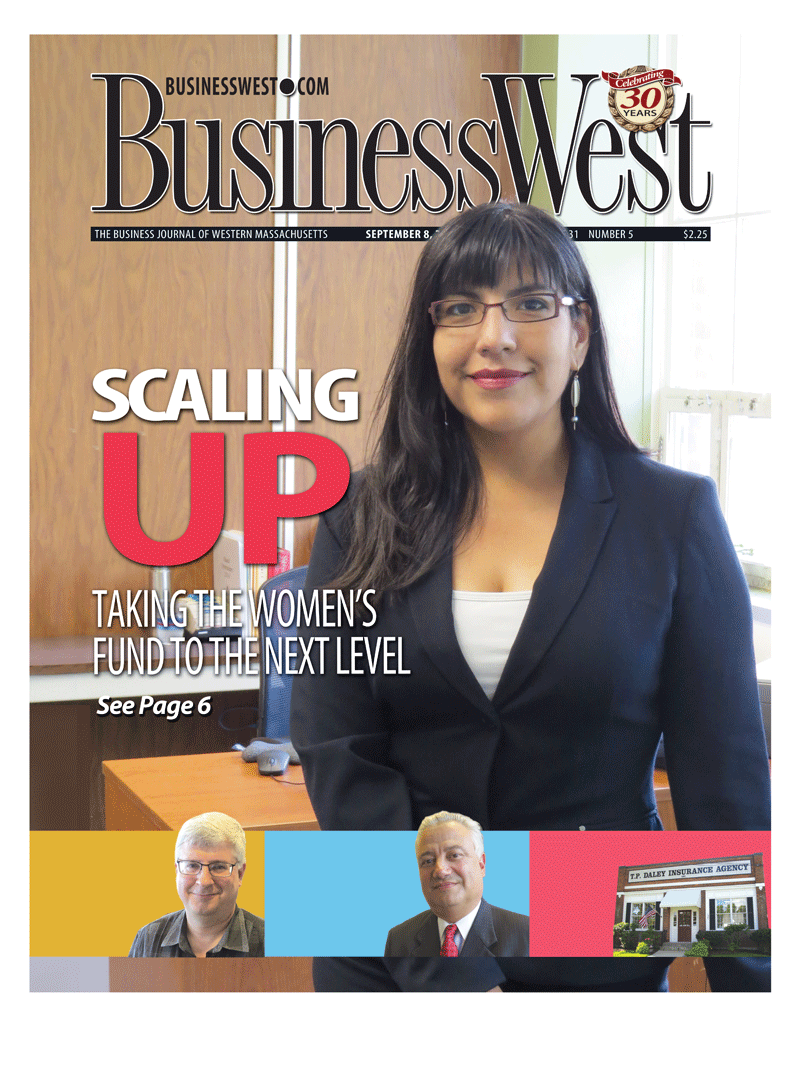
Construction Sections
N. Riley Construction Builds on Its Early Success

Company President Nick Riley

Company President Nick Riley

Nick Riley had never been one to turn down challenges, and he wasn’t about to turn down this one.

It was the summer of 2011, and he had opened his own construction business five years earlier. It was mainly repairs and remodeling work at first, but the goal was always to get into new-home construction. So he accepted a big request — to build a house in the Upper Hill neighborhood of Springfield.

Oh, and it would have to be done in a week.

Almost three years after accepting that challenge from the producers of TV’s Extreme Makeover: Home Edition, his company, N. Riley Construction, has managed to procure more new-construction jobs, in addition to expanding the remodeling — especially kitchens and bathrooms — that have always been his bread and butter. And he sees that crazy week in 2011, and the preparation that led up to it, as a net positive when it came to taking his business to the next level.

“We ended up turning a lot of work away for that project,” he told BusinessWest. “Initially, going into it, we had many reservations about taking on a project of that size with a company my size. We certainly had never built a house in a week. But looking back at it, accepting that project was probably the best move I have made. It was gratifying personally to be able to help a family out on that scale, and as a business owner, the contacts that I made throughout that project — and the experience we gained from that project overnight — helped our business grow.”

Today, Riley is preparing to tackle three or four new-home builds this year, with one already under construction, and a slowly improving economy is bringing more remodeling business to his door as well.

“Our goal going forward is to build more new homes, but I think the market will dictate how that grows,” he said. “We’ve been busy, though. We’re pretty fortunate that we do all types of services, from small repairs right up to new construction and light commercial. That way, we’re able to adapt to different changes in the economy; if commercial is doing a little bit better, we do more commercial. We’re trying to stay flexible, not be bound to one thing.”

For this issue’s focus on construction, Riley talks about how his eight-year-old company has continued to evolve, the lessons he learned from the Extreme Makeover project, and how he’s giving back to the community — and helping to raise up the next generation of builders — in some unique ways.

One Big Week

Riley started out in the construction business working for his uncle, Andrew Crane, president of A. Crane Construction in Chicopee.

“My family has always been around construction, and I’d been around it all my life,” he said, adding that, with Crane, “I learned a lot of hands-on parts of the job. I found I really enjoyed this business, this industry. Then I started a family and decided to start my own business.”

That was a challenge, he said, but he intentionally started small, focusing on home repairs and gradually ramping up to larger remodeling projects and whole-home renovations. When the Great Recession began, construction was among the hardest-hit industries, but home remodeling took less of a dip, and Riley stayed busy.

And then ABC came calling, just four weeks before the planned blitz build in Springfield. Riley was recommended to Extreme Makeover producers by the Home Builders Assoc. of Western Mass. and other contractors, including Crane — even though he had never actually built an entire house.

The homeowner was Sirdeaner Walker, a single mother who lived on Northampton Avenue with two daughters, a sister, her mother, and her grandmother. A seventh person used to live there — her son, Carl Walker-Hoover, who took his own life in 2009 after being incessantly bullied by peers at the New Leadership Charter School in Springfield.

Nick Riley

Nick Riley on site at the one-week Extreme Makeover project in September 2011.

In the months following the tragedy, Walker became a strong advocate against school bullying, successfully pushing for anti-bullying legislation in Massachusetts, meeting with federal lawmakers and President Obama, and establishing a foundation in her son’s name that raises awareness of the bullying issue and scholarships for area students. But her house, in the Upper Hill neighborhood close to Springfield College, was run down and riddled with plumbing and electrical issues — in short, the kind of need, coupled with an emotional story, that the show specialized in.

“The family was amazing — and they’ve really maintained the house,” Riley said, noting that not every Extreme Makeover beneficiary has done so. “They’re amazing owners, with the things they’ve done and continue to do. It was well worth our time. Everyone involved agreed that the project went extremely well.”

Riley was starting work on another new-home build at the time, and since then, he’s expanded into other such projects, he said. “We’ve been adding more and more new construction as the economy gets a little better and the housing market starts to regain a little strength. But we haven’t gotten away from what we started out doing, remodeling kitchens and bathrooms. That’s what we most enjoy doing. We like working on people’s houses and making them into homes.”

The recession did scale back some homeowners’ plans, he noted. “It was smaller repairs and remodeling. People weren’t spending money on big-ticket items — kitchens, really ornate bathrooms — but they were still remodeling their homes. Fortunately, insurance work propped that up.”

He referred specifically to the freak weather year that was 2011, which started with an epidemic of ice dams and leaking roofs, included the June tornadoes and the August tropical storm and flooding, and concluded with a freak snowstorm two days before Halloween. BusinessWest has spoken with many contractors who said insurance work stemming from those events carried them through a rough year or two, and Riley was no exception.

Today, though, he sees an improving economy starting to make a positive difference in home building and remodeling.

“It’s far better than five years ago. I think the housing market has a lot of hurdles to overcome, but it’s definitely improving,” he said. “I’m not an economist, but I see very slow improvement over the next 10 years. In my opinion, we’ve still got a lot of negatives to overcome. Regulations, material prices, and land costs are really three keys slowing things down. I think the demand for new housing is there; the challenge is building it at prices someone can afford.”

Next Generation

With his company’s success, Riley said, has come an increased civic involvement, efforts that go far beyond financially supporting community organizations and getting involved with Rebuilding Together Springfield, which was formed in the wake of the tornadoes.

It also extends to Student Builders, an effort N. Riley launched to help young people gain experience in the building trades.

“It’s something we set up to help out vocational kids at Chicopee Comp,” he explained. “Two years ago, we built a house on McKinstry Avenue. Well, we didn’t build it — we just facilitated the financing and worked out the logistics and coordination, so students at Chicopee Comp were able to have a real hands-on project, able to build a house from start to finish.

“It was a great project to help the students figure out if that’s what they want to do for a living,” he continued. “It was a good project to train the kids and develop a better workforce, because in this industry, it’s hard to find quality employees. It’s so hard to find the workforce for what we do.”

A second build is scheduled for 2015, and he’d like to see a project begin every two years. “Whatever proceeds come from the house, if it ends up making money, goes right back to the kids in the form of tools or scholarships or into the next project. The idea of doing it every other year or so is that, over four years, the kids are able to at least see part of a project.”

As for his own business development, Riley has seen an evolution in the way customers approach projects, and said the change has probably been more dramatic for contractors who have been in the game a lot longer. In short, it has to do with the expectations of clients and the ideas they come with.

“With social media and things like Pinterest, people are able to find ideas and pictures and things like that,” he said. “Years ago, it was, ‘it’s a bathroom; can you put in a toilet and sink?’ Now, there are hundreds, thousands of sinks, bathtubs, and tile configurations they can visualize on sites like Pinterest.”

Personally, he doesn’t mind the more detailed input. “It certainly helps with the design aspect. A lot more creativity is going into these projects,” he said, whether it’s a client seeking an ultra-modern look or the recent customer in Chicopee who wanted the bathroom design to reflect the 1880s when the house was built, complete with a claw-foot tub and hardwood floors instead of tile.

“The best part about this job is being able to have a customer say, ‘this what I want; this is my vision,’ and you’re able to put it together for them,” he told BusinessWest. “We’re doing something different every day in this industry. That’s one of the main reasons why I love doing what I do — it’s something different every day.”

Of course, it’s still a challenging profession, one still crawling slowly from the tough years of the recession. Even so, Riley said, he managed to avoid the lows some builders experienced and keep making families happy — although it usually takes more than a week to do so. “We’ve been able to grow consistently every year. We’ve been very fortunate.”

Joseph Bednar can be reached at  [email protected]

 

Cover Story
Hot Table Puts Expansion on the Menu

Co-founders John (left) and Chris DeVoie.

Co-founders John (left) and Chris DeVoie.

John DeVoie calls it an “internal motivator.”

That’s how he chose to describe the small, rather nondescript note taped to one wall of what passes for the corporate headquarters of Hot Table Panini — the cramped back room of the location within Tower Square in Springfield.

It reads simply “500 stores by 2030.”

That’s not an official goal of this company, which now operates three sites that specialize in what could be called custom panini sandwiches, and has another two set to open in the next six months or so. But it is a target, or a conversation starter, or, as he said, a number designed to motivate those working for this growing venture.

“If you don’t put goals on the walls, you don’t get anywhere,” he joked, adding that Hot Table may indeed have 500 locations by the start of the century’s fourth decade. “Or it could have five by 2030.”

Right now, the plan is to be exponentially closer to the former number than the latter, said both John and his brother, Chris, who launched this venture together, along with their brother-in-law, Don Watroba, in 2006, and have made their brand a growing part of the local culinary lexicon ever since.

They started in the Breckwood Shoppes in Sixteen Acres near Western New England University (they’re both alums) in the spring of 2007, opened their second site in Tower Square in 2009, and their third in Enfield in 2012. They plan to open a site in Glastonbury, Conn. in September, and another on Route 9 in Hadley a few months later.

After that? Well, that’s to be determined, said the brothers DeVoie, who noted that there have been discussions about more locations in Connecticut and Western Mass., a likely push toward Central and Eastern Mass., possibly starting in the region known as MetroWest, and perhaps expansion in the Albany area.

“We’re leaving ourselves open; we’re pushing further south into the Hartford market,” said John, adding that the company is in preliminary talks with franchising consultants about that eventual step. “But we do see opportunities in Eastern and Central Mass.”

What is known is that the co-owners feel good about where they are, and excited about where they could be a few years down the road. In other words, they believe the concept they’ve adopted — what’s known in the industry as ‘fast casual,’ which rests strategically between fast food and traditional sit-down dining — shows great promise and staying power, and also that their brand has established itself in this market and has the potential to do so in other markets.

For evidence, they look at what’s been achieved at their first three locations. The Breckwood Shoppes store has shown steady growth and has attracted a following that goes well beyond the university across the street, said Chris. Meanwhile, the downtown Springfield location has succeeded in space where several other eateries failed, growing each year since it opened and showing enough promise to re-up on the lease for another five years.

The original Hot Table location

The original Hot Table location, in the Breckwood Shoppes, has drawn business from well beyond Western New England University, which sits across the street.

And in Enfield, on Freshwater Boulevard next to Costco, Hot Table has proven it can go toe-to-toe with a host of competitors in close proximity, said John, noting that the location there, in a major retail area, competes effectively with Starbucks, Red Robin, Panera Bread, McDonald’s, Friendly’s, Arby’s, and many others.

“You gain confidence when you jump into the sandbox, and there’s a Panera Bread across the street, and a Chipotle, and a Moe’s, and a D’Angelo’s,” he explained. “In Springfield, we were working in a certain market with not a lot of competition, but then we jumped into Enfield, and all the national brands are there — you name it, it’s there — and we’ve grown sales every year since 2012, hopefully taking market share from all those other people.”

Chris agreed. “When you’re on that stage with all the nationals, you need to perform,” he explained. “You need to give people a reason to choose Hot Table over all the others, and we’ve done that.”

All of the above has given the DeVoies that confidence John noted, as well as the wherewithal to scale up their concept. The questions now concern when, where, and how the expansion will play out.

The partners intend to be patient, picking their spots carefully and strategically, and for this issue, they talked at length with BusinessWest about just what those terms mean.

Bread Winners

While certainly not as well-known as the exploits of the Blake brothers — Prestley and Curtis — who launched Friendly’s almost 80 years ago, the story of the DeVoie brothers is becoming part of local entrepreneurial lore.

A decade or so ago, they were both working in corporate sales, doing well at their craft and making good money. But they were not feeling entirely satisfied.

“I was getting tired of making money for other people,” said John, effectively speaking for the two of them. “I always wanted to do something on my own, and I was definitely ready for something else, something entrepreneurial.”

HotTableLogo0614And he and Chris were leaning strongly toward that ‘something else’ being in the restaurant business.

They started talking with Watroba, a veteran of the industry who had operated the Gold Mine, Admiral DW’s, Captain DW’s, and TD Smith’s, among other area venues, and eventually agreed to go into business together.

And in choosing a dining concept, they listened, and responded, to advice from other family members.

Indeed, it was the DeVoies’ sister who told them about a dining model she encountered on a trip to Italy — cafés of sorts called tavola calda, which translates, literally, to ‘hot table.’

“This was their version of fast casual,” said Chris, adding that more input from their parents helped solidify the concept. After returning from an ocean cruise, they reported that the most popular dining option was a made-to-order panini bar.

Meanwhile, the two took what they had learned from years on the road in sales and applied it to their vision. “We had a lot of experience with taking clients out, all over the Northeast, and all over the country, for that matter,” said Chris, “and we could see the fast-casual market was what people were migrating toward — away from the sit-down restaurants and diners, where they could sit in a good environment or get it to go. We knew that this was the kind of restaurant we wanted to establish.”

What eventually emerged and opened its doors in the Breckwood Shoppes in 2007 was what John described as a cross between Panera Bread — which he credited with popularizing fast casual — and Subway, where customers could customize their sandwich, see it being prepared, and, if they desired, eat it in a warm, relaxed atmosphere.

“People like to customize their sandwich as they move down the line,” John explained. “They like to see what’s being done, and they love to see presentation.”

Over the past seven years, the brothers DeVoie have solidified their place in the market (Watroba is no longer involved in the venture) while also putting in place a product and a culture they believe will help take the company to the next level, or the next several levels, as the case may be.

“To succeed in this business today, you have to fire on all cylinders; if not, you’ll get gobbled up,” said John, referring to food, service, cleanliness, and the environment. “You have to do it all well, and I think I can say that we do that here.

“At this point in the game, we’re pretty confident that we have a product that people want, and while we’re still streamlining things, we know who we are,” he went on. “Now it’s the real-estate game — finding the right real estate for us to expand.”


Turning Up the Heat

As he talked with BusinessWest, John DeVoie opened his laptop and clicked his way to Google Earth and then to aerial photos of the area in Glastonbury where the next Hot Table location will open in the fall.

He did so to illustrate just what the company is looking for as it goes about selecting sites. This particular location, on Main Street, is in the middle of a bustling retail area that sits on the edge of a large, somewhat affluent residential area, he said, adding that this site is very similar to the Enfield location in that regard, and this is the model the company is eyeing as it moves forward.

“Look at the rooftops,” he said while panning across the specific site. “It’s right off a major highway, and this plaza is loaded — there’s a whole bunch of high-end retail. And right down the street, there’s a Whole Foods, Panera Bread, Plan B Burger, Five Guys, and more. There’s also a corporate center where a lot of people work; this is where we want to be.”

That same phrase could be applied to Hadley, he went on. The chosen location on Route 9, a plaza now under construction, is just in front of the Home Depot, visible from the road, and surrounded by a host of national chains, including Panera Bread. Hot Table will share the building with Starbucks, Aspen Dental, and two or three other tenants, and hopefully draw from the area colleges, but also the surrounding neighborhoods and businesses.

“That area has a lot going on,” said John. “It has the university and the five-college system, but there are also a lot of people living there, and it’s a huge retail area.”

Chris agreed. “The college community is part of it,” he explained, “but we look for rooftops, industry, businesses, and a destination shopping area, because people will often drive to an area like Hadley or Enfield and say, ‘where do we want to go to eat?’ — and there are several choices.”

While working to get the next two locations off the ground almost simultaneously — something the company hasn’t done before — the DeVoies have been thinking about where to go next, and when.

They are in no rush to expand, and will be careful and deliberate in this process, waiting for sites they know will enable their model to succeed.

For example, the company would like to expand into West Springfield and be part of the sprawling retail area on Riverdale Street. But they can’t find exactly what they want and have no intention of forcing the issue.

“There’s tons of space available, but finding the right spot is very difficult, and I’d rather wait for the right spot than make a mistake,” said John, referring to his overall philosophy with regard to expansion. “I’d love to be in West Springfield on Riverdale, but we’re not going to put a store north of I-91 — that’s a deathtrap there. I’d like to be in the Riverdale Shops, and we’ve been looking for four years, but there’s nothing that meets our criteria.”

Overall, said Chris, the preferred locations must offer visibility, accessibility, and parking, and would ideally be in a regional shopping center located in a heavily populated area. In other words, Hot Table is looking for the same qualities that all other chains are seeking.

And this helps in the selection process, he went on, adding that it’s very easy to track where other brands, such as Panera Bread, have gone, and essentially follow their lead when it makes sense to do so.

“The nationals spend a lot of money picking the right real estate,” he explained. “We can piggyback on what they do.”

This is what many experts say Burger King did decades ago — locating almost everywhere McDonald’s did — and it’s not a bad strategy for an emerging company that doesn’t have a small army of people scouting possible sites.

Elaborating, John said the company won’t expand simply for the sake of expanding and reaching stated goals, something he said Starbucks did years ago when it was adding roughly six new sites a day and eventually had to close many of them due to poor performance and what amounted to market oversaturation.

“It’s all about picking the right spots,” he said, adding that the proper equation involves both quantity and quality. “The big guys can afford to make mistakes, and they all do, but at our size, we can’t.”


Food for Thought

Looking ahead, the DeVoies said they’ll continue to look for expansion possibilities in Western Mass. and Connecticut, but also look hard at taking the brand — complete with a new logo featuring the name and a grill — into new markets.

“Our short-term goal into next year is to stick our toe into Eastern and Central Mass.,” said Chris, adding that MetroWest, a cluster of cities of towns west of Boston and east of Worcester, will likely be the landing point.

Also, there could be movement west into the Albany area, he went on, adding that there are ongoing discussions about which direction — figuratively, but also quite literally — to take next.

But there is more to taking a brand like Hot Table to the next level than scouting for locations, said the brothers.

Indeed, the company must be aggressive in its branding and marketing, said John, with the goal of associating the name with a product — in this case, paninis — an important consideration when it comes to taking it to new markets.

He noted that, with products like fried chicken and burritos, a few brand names immediately come to mind. And when it comes to burgers, it’s more than a few, especially with the flood of new chains to emerge in recent years. The goal with Hot Table is to make just such an association, he went on, adding that the company is working hard on that assignment.

“Paninis are very popular, and you’ll find them on a lot of menus,” he explained. “And the industry leader [Panera] has a section of the menu dedicated to paninis. But no one, on a national scale, has said, ‘this is ours — this is what we identify our company with.’

“Before McDonald’s came on the scene, everyone was selling hamburgers — they were very popular, and they were on everyone’s menu,” he went on. “Then McDonald’s came along and said, ‘this is going to be what we do.’ Our strategy is to do the same thing with the panini.”

As part of this process, the company, working in conjunction with the Springfield-based marketing firm Six Point Creative, has introduced a logo, one that ditches the coffee cup that was once juxtaposed against the Hot Table name and replaces it with a grill mark.

“This is one of the ways we’re working to associate us with the panini — and nothing leaves the store without a logo on it,” said Chris, adding that the company is building name recognition, and a reputation, largely through word of mouth and aggressive use of social media, although other vehicles, such as billboards, may be put to use after the two new locations open for business.

Meanwhile, another challenge for the company as it expands, said John, is maintaining standards for excellence, as well as the company’s culture — which he said is grounded in taking care of both customers and employees — as it moves into new markets, either organically or through franchising.

“One of the challenges to growing, and especially with franchising, is making sure things get done the Hot Table way, and also making sure people know the heart of our company, know who we are, know our systems, and know how we treat employees,” he explained.

“If you open a store in Natick and just hire someone off the street,” he continued, “you might find someone who’s great, but they still don’t know the culture. So we have to figure out a way to imbue that culture without watering it down. And that’s a challenge for any company that’s growing.”

Setting Their Sites

Returning to that small sign in the Hot Table headquarters room, John DeVoie said, in essence, that 500 is just a number, or, as he said, a motivator.

He and Chris are not at all sure how many locations they’ll have in 16 years, or 16 months, for that matter. What they do know is that their concept and their specific product works. And they believe they can take it to new markets regionally and perhaps nationally.

“When we started this venture, the plan was never to build just one of these,” said Chris, adding that the business plan has been altered many times over the past eight years, and that process will certainly continue. “How many we open and where we go … those are questions we can’t answer now, but we wanted to build a scalable model, and we have.”

In other words, and as they say in another medium, stay tuned.

George O’Brien can be reached at [email protected]

Law Sections
Holland & Bonzagni Helps Clients Protect Their Intellectual Property

Partner Donald Holland

Partner Donald Holland

Don Holland says most people don’t realize that a patent application in the U.S. can be a long, tedious process, taking on average three to five years. It’s more believable when one considers the sheer volume of existing and potential patents.

For example, back in the 1970s, Holland — who has an aerospace engineering degree in addition to his law degree — was employed at the U.S. Patent and Trademark Office, working on rotary pumps and turbines for jet engines.

“It’s amazing to think there are 230,000 patents in that area alone,” he told BusinessWest — representing a tiny sample of all the patents issued by the U.S., across all industries.

It doesn’t help, he added, that patent examiners almost always reject an application on first submittal, because they want to build a record of diligence and avoid the impression that they’re not doing their job. “So it’s not a smooth road.”

But it’s a fascinating one for Holland, who left the Patent Office in 1981 to launch his own intellectual-property law firm. He was joined in 1989 by a partner, Mary Bonzagni — a former student from his teaching days at Western New England College School of Law — to form Longmeadow-based Holland & Bonzagni.

Although they’re registered as ‘patent attorneys’ (the only term technically allowed by the American Bar Assoc.), their work runs much deeper than that, encompassing patents, trademarks, copyrights, trade secrets, product licensing, litigation, and general counseling — in other words, just about anything a client needs to bring new products to market and then zealously safeguard those products.

“In this field,” Holland said, “I like to say that nobody dies, and nobody goes to jail. Instead, you do everything you can to help clients succeed with their products and services without impediments from copycats.”

He detailed one memorable case involving a manufacturer of household items who took action against Christmas Tree Shops. The discount chain had bought seconds from the client one year, then wanted firsts at seconds prices the following year. When the client refused, the chain commissioned Asian manufacturers to create cheaper knock-offs of his products.

Holland & Bonzagni did some investigating, then assembled a team of sheriffs to seize 117,000 items from the stores to assess the level of damage to the plaintiff. Within six weeks, Christmas Tree Shops ceased its knockoff sales, wrote the plaintiff a six-figure check — and then became its best customer.

Another high-profile case involved Yankee Candle, which successfully sued New England Candle Co. for copying the look of the Yankee Candle storefronts at its Enfield store.

Those types of cases might make news, Holland said, but they only scratch the surface of a broad palette of services — and a rich education in intellectual-property law — that the firm brings to its clients. For this issue’s focus on law, BusinessWest sat down with Holland to learn more about a field that continues to challenge and gratify him today, 33 years after taking on his first client.


Stock in Trade

The firm has expanded its client base significantly since then, he noted, working with between 100 and 200 companies every year and dealing with patent and trademark issues in between 50 and 75 countries.

“We’re no different than any other intellectual-property firm,” he said. “Most patent attorneys are either engineers or have strong science backgrounds. Recently, there are patent attorneys who are computer programmers, too. I’m an aerospace engineer, and Mary is a chemist.” In fact, she was working with a solid-waste management firm on a sludge-recycling project in Detroit when she started to consider other career paths for her organic-chemistry background, and pursued her law degree at WNEC.

The firm’s clients are generally industrial corporations, both foreign and domestic, and include manufacturers of aircraft, food, paper products, biomedical equipment, computer software, chemicals, electronic components, and other high-tech items. It also services chains of restaurants, hospitals, and other businesses. Bonzagni does a good deal of work for paper companies, including one area firm that makes security threads for currency.

“My work is 50% trademark work, which is a lot of fun,” Holland said, adding that the firm has a long-standing policy of representing only companies it admires, from regional names like Yankee Candle and Friendly’s to much smaller firms. “We’ve said we don’t do work for anyone we don’t like, and we stand by that. Early in our practice, we wanted to work for people we respect and enjoy, and that’s what we still try to do.”

The first step in trademark work, he explained, is determining which brands are the most sacred to a company — “the brands a company would be ticked if someone else copied.” Why not protect all of them? It comes down to budget, as each action costs money and time.

“If you say, ‘you have 40 trademarks, and you need to register all of them,’ you’re not going to get the work,” he said. “They don’t want to spend that kind of money. Typically, you take a look at the top three to five trademarks, and analyze which can be protected and to what extent. We suggest to them which marks should be registered.” Trademarks, he added, are applied to products, and service marks to services.

This work to protect trademarks becomes critical when another company copies a product name or look.

“If a client has registered its name and the registration has become incontestable, that’s one half of the lawsuit; you don’t have to prove who owns your name,” Holland said. “So when you go to court, you’ve already proven one of two things. The second is whether someone has infringed that trademark, or has used a mark confusingly similar.” Generally, consumers are surveyed as part of the legal action, and if 35% of them are confused by the similar names or logos, the plaintiff has proven his case.

Litigating a trademark violation can take one to three years and cost upwards of $200,000, but patent litigation ­— a claim that a company has copied a patented product design — can be much more involved, lasting four to eight years and costing between $500,000 and $2 million, depending on the type of case and the parties involved.


Knowledge Is Power

Beyond litigation and consulting with clients on how to bring their products to market and grow their business, education is a large part of Holland & Bonzagni’s mission.

After teaching intellectual-property law for 23 years at WNEC, Holland now teaches in the Paralegal Studies program at Bay Path College. “I have  a lot of fun teaching,” he said. “My patent professor was able to get a patent job for anyone in class who wanted to go into the patent profession, so it has been my pleasure to teach students about the fun and rewards of being intellectual-property attorneys.”

The firm also presents seminars on a number of subjects in the broad realm of trademarks, trade secrets, counterfeit goods, licensing technology, Internet piracy, and more.

“We have 10 different seminars tailored for different clients, which we give at no charge after we establish a relationship with the client,” he said, before adding, “I typically will tell the owner or president of the company that there will be no charge for the seminar — if somebody will give me a tour.”

Holland has also authored a booklet titled Corporate Guide to Patents, Trademarks, Copyrights, and Trade Secrets, and the firm posts industry news on its website, www.hblaw.org. Currently, visitors can read about the America Invents Act passed by Congress last year that shifts the U.S. from a first-to-invent to a first-to-file system, meaning only the first person to file a patent application can receive a patent, unless the first inventor publicly disclosed the invention beforehand and filed a patent application within 12 months after that disclosure.

In other words, there is no longer a one-year grace period for an inventor to keep an invention totally secret before deciding to file a U.S. patent application. Someone with knowledge of the invention could conceivably beat the earlier inventor to Patent Office and prevail.

“A lot of companies don’t know this until they’ve been burned,” Holland said. “Under the old system, you had a grace period. Now, if you’ve invested $2 million, $3 million, $5 million in a product, competitors could copy the product and don’t have to spend the millions you did in research and development.”

Other challenges exist for inventors, he added. For instance, there’s no such thing as a worldwide patent, meaning if someone wants to market a product in, say, Europe, Canada, and Australia, they need to pay separate fees and go through individual processes in each country. Fortunately, 2015 will see the emergence of a single European patent, covering most European Union members and reducing filing costs by more than 75%.

Meanwhile, the Internet age has produced its own raft of trademark issues, including the practice known as ‘typosquatting,’ where someone will create a website almost named after a real company — www.smythandwesson.com, for instance, with the ‘i’ replaced with a ‘y’ — to draw in users who misspell a URL.


Back to the Drawing Board

Holland continuously came back to how impressed he is with the clients he works with, and how much he learns from them.

“People are brilliant at what they do, but sometimes too humble to recognize it,” he said, citing as one example the man who created the x-ray arm that moves around a patient. “Previously, the table moved. His invention is now in 5,600 hospitals.”

Then there’s another favorite client, a company that claims roughly 10% of the U.S. market share for beef. “It was fun going out to visit them and represent them in all sorts of trademark matters and patent matters.”

When it comes to fascinating clients, however, “everyone has them,” he told BusinessWest. “I’m not alone. Go to any intellectual-property firm, and they have clients as good as ours or better.”

And, as a general rule, those clients are not in the mood for lengthy legal battles. They just want to get on with their business.

“Some law firms are all about wins and losses,” Holland said. “But I’ve learned that our clients just want to solve a problem and move on to the next matter. They just want to sell their product or service and not get involved in a lawsuit.”

He laughed when he recalled his fastest-ever litigation, a copycat case where the documentation was clear and the case was settled in two weeks — and the defendant ended up purchasing work from the client. Most cases are much more complex, keeping the staff at Holland & Bonzagni — which also includes two paralegals and four support staff — busy.

Holland said the firm wants to grow, but it’s difficult to get lawyers to commit to Springfield. “We’ve been looking for three or four years. If you graduate law school, do you want to go to Boston or New York, or Springfield? Unless you grew up here and know how great the area is, it’s tough to see it.”

So hiring, like patent law, isn’t a smooth road, either. But it’s all part of the challenge for an engineer and a scientist who found, in the broad realm of intellectual-property law, a far more satisfying path. n


Joseph Bednar can be reached at [email protected]

Sections Travel and Tourism
Mark Your Calendar with These 20 Happenings

SummerInTheValleyCover

In the mood for some music or theater? Enjoy art or antiques? Feel like trying out some different kinds of food?
The Pioneer Valley offers myriad opportunities to enjoy the summer, so if you’re feeling stir-crazy — or the kids say they’re bored — check out these 20 summer destinations, which only scratch the surface of what’s available in Western Mass. Whether you’re into baseball or fireworks, concerts or dogs, you’re sure to find plenty to do.

Taste of Amherst
Town Common, Amherst
www.facebook.com/tasteofamherst
Admission: Free
June 19-22: Kick off the summer by eating your fill during the four days of the 2014 Taste of Amherst. In addition to food offerings from about 20 town restaurants — most for $5 or under — the event will feature live entertainment by the River, 93.9 FM, as well as fun family events. The Taste runs from 5 to 9 p.m. Thursday, 5 to 10 p.m. Friday, noon to 10 p.m. Saturday, and noon to 4 p.m. Sunday, and is presented by Atkins Farms Country Market, with sponsorship by the Amherst Business Improvement District, Amherst College, Hampshire College, and UMass Amherst.

Stearns Square Concert Series
Worthington and Bridge streets, Springfield
(413) 781-1591; www.facebook.com/stearnssquare
Admission: Free
Starting June 26: Thursday evenings heat up in downtown Springfield for another season of concerts in Stearns Square, starting with a visit from Black 47 on June 26, this summer’s kickoff concert. And the bands — from notable local lights to internationally acclaimed acts — just keep coming, including FAT (July 3), the Spin Doctors (July 10), Roomful of Blues (July 17), Diamondback (July 24), Truckstop Troubadors (July 31), Maggie Rose (Aug. 7), John Eddie (Aug. 14), Doug Demings and the Jewel Tones (Aug. 21), and the Smithereens (Aug. 28). All concerts begin at 8 p.m., and there are no opening acts this year. What began 14 years ago as a way to liven up downtown Springfield — it was originally held in the Court Square area — has become a weekly destination for music lovers, people watchers, and scores of motorcyclists. The series is sponsored by the Springfield Business Improvement District.
Stearns-Concert-Series

Williamstown Theatre Festival
1000 Main St., Williamstown
(413) 597-3400; www.wtfestival.org
Admission: $15 and up
July 2 to Aug. 17: Sixty years ago, the leaders of the Williams College drama department and news office conceived of an idea: using the school’s theater for a summer performance program with a resident company. Since then, the festival has attracted such performers as E.G. Marshall, Blythe Danner, Colleen Dewhurst, and Christopher Reeve. This summer, the program will present a range of both classical and original productions, plus other programs like the interactive workshops, post-show Tuesday Talkbacks with company members, and ‘A Festival 4th,’ when actors will celebrate the Fourth of July by gathering at the Williams College Museum of Art to read the Declaration of Independence and the British reply before viewing the college’s noted Founding Documents collection. Williamstown’s classic small-town parade then kicks off on Spring Street at 11 a.m. and ends at the Clark Art Institute for the grand opening of its newly expanded campus.

Clark-ArtClark Art Institute
225 South St., Williamstown
(413) 458-2303; www.clarkart.edu
Admission: Free on July 4; otherwise $20 for adults, free for under 18 and students
Starting July 4: Immediately following the Williamstown parade, enjoy hot dogs, live music, balloons, and other family fun on the museum’s East Lawn before the Clark — which has been closed for an extensive renovation — officially reopens at 1 p.m. Admission is free on grand-opening day. Galleries will be open until 9 p.m., and the Eagles Band will perform at 7 p.m., followed by fireworks at 9. Founded in 1936, the Eagles Band is the oldest continuing performance ensemble in the Berkshires, performing music from the late ’30s through the early ’50s, in styles ranging from traditional brass to contemporary and pop arrangements. Guests are welcome to return throughout the summer (admission $20, students and under 18 free), with new exhibitions including “Make It New: Abstract Paintings from the National Gallery of Art,” which will include Jackson Pollock’s “Lavender Mist,” opening Aug. 2. Perhaps the most impressive work of all is the Clark’s new, 42,650-square-foot Visitor Center — designed by the Pritzker Prize-winning architect Ando, who is known for incorporating landscape into his design. The center boasts new dining facilities, a museum shop, outdoor terraces, and 11,070 square feet of additional special exhibition space. And if you can’t make it to Williamstown on July 4, there’s always…


Monson Summerfest

Main Street, Monson
(413) 267-3649; www.monsonsummerfestinc.com
Admission: Free
July 4: In 1979, a group of parishioners from the town’s Methodist church wanted to start an Independence Day celebration focused on family and community, The first Summerfest was held at the church, featuring food, games, and fun activities. With the overwhelming interest of nonprofit organizations in town, the event immediately grew, and relocated onto Main Street the following year. With the addition of a parade, along with booths, bands, rides, and activities, the event has evolved into an attraction drawing more than 10,000 people every year. The festivities will be preceded this year by a town fireworks display on June 28.

Star-Spangled-SpfldStar Spangled Springfield
Downtown Springfield
(413) 733-3800
Admission: Free
July 4: Speaking of fireworks, what’s a better end to an Independence Day filled with food, family, and outdoor fun than taking in a spectacle of the skies? Springfield’s annual show, starting at 9:30 p.m., is a welcome tradition, but it’s hardly the only one. For example, South Hadley and East Longmeadow have slated their displays for July 3, Old Sturbridge Village will light up the night on July 4, and Westfield and Greenfield have events scheduled for July 5. Many other cities and towns are planning fireworks as well; check with municipal offices for times.

Berkshires Arts Festival
Ski Butternut, 380 State Road, Great Barrington
(845) 355-2400; www.berkshiresartsfestival.com
Admission: $5-$13
July 4-6: Now in its 13th year, the Berkshires Arts Festival has become a regional tradition. Thousands of art lovers and collectors are expected to descend on the Ski Butternut grounds to check out and purchase the creations of more than 175 artists and designers, as well as experiencing theater, music, and dance from local, national, and international acts. Founded by Richard and Joanna Rothbard, owners of An American Craftsman Galleries, the festival attracts top artists from across the U.S. and Canada. Visitors can also participate in interactive events like puppetry and storytelling, all the time enjoying a respite from the sun under tents and in the ski resort’s air-conditioned lodge.

Tanglewood
297 West St., Lenox
(617) 266-1200; www.bso.org
Admission: $21 and up
Starting July 5: Tanglewood has been the summer home of the Boston Symphony Orchestra since 1937, and like previous years, it has a well-stocked slate of concerts in store for the 2014 season, including an All-American Opening Night Gala Concert on July 5 and a special gala concert on July 12, a dance-inspired program featuring both the Boston Symphony and fellows of the Tanglewood Music Center, the BSO’s prestigious summer music academy. This season, Tanglewood will offer a special focus on American music with orchestral, opera, and film presentations in the Koussevitzky Music Shed, and opera, chamber music, and recital programs in Ozawa Hall, which marks its 20th anniversary season in 2014. Check out the website for the extensive roster of shows and events, including a number of non-classical shows, such as Tanglewood regular James Taylor, who perform in the Koussevitzky Music Shed on July 3 and 4, with both performances followed by fireworks displays.

BrimfieldBrimfield Antique Show
Route 20, Brimfield, MA
(413) 283-6149; www.quaboaghills.com
Admission: Free
July 8-13: What began humbly — when a local auctioneer decided to hold open-air auctions on his property, and grew into a successful flea market — eventually began including neighboring properties as it grew. It expanded in the ’80s and ’90s to a one-mile stretch of Route 20 on both sides, and these days, the Brimfield Antique Show is a six-mile stretch of heaven for people to value antiques, collectibles, and flea-market finds. Some 6,000 dealers and close to 1 million total visitors show up at the three annual, week-long events; the first was in May, and the third runs Sept. 2-7. The Brimfield Antique Show labels itself the “Antiques and Collectibles Capital of the United States,” and — judging by its scope and number of visitors — it’s hard to disagree.


Green River Festival

Greenfield Community College, One College Dr., Greenfield
(413) 773-5463; www.greenriverfestival.com
Admission: Weekend, $75; Saturday, $49.99; Sunday, $34.99
July 12-13: For one weekend every July, Greenfield Community College hosts a high-energy celebration of music; local food, beer, and wine; handmade crafts; and family games and activities — all topped off with four hot-air-balloon launches (rides are available) and a spectacular Saturday-night ‘balloon glow.’ The music is continuous on three stages, and this year features Trombone Shorty & Orleans Avenue, Josh Ritter and the Royal City Band, Lucius, the Dirty Dozen Brass Band, Trampled by Turtles, Grant Lee Phillips, and more than two dozen other artists. Children under 10 can get in for free, as the family-friendly festival features children’s music performers, a kid’s activity tent, games, circus acts, a Mardi Gras parade, and other surprises. New for 2014 is the Maker’s Market, a collective of fine artisans from across Western Mass., offering an impressive array of handmade crafts and jewelry. The festival began in 1986 as purely a hot-air-balloon affair, but quickly integrated musical entertainment into the event. Now, its one of the most eclectic events in the Valley.

Yidstock
Hampshire College, 893 West St., Amherst
(413) 256-4900; www.yiddishbookcenter.org/yidstock
Admission: Festival pass, $145 for members or $185 general admission; tickets may be purchased for individual events
July 17-20: Boasting an array of films, concerts, lectures, and workshops, Yidstock 2014: The Festival of New Yiddish Music lands in Amherst in mid-July. The third annual Yidstock festival will bring the best in klezmer and new Yiddish music to the stage at the Yiddish Book Center. The festival pass includes admission to all concerts, lectures, and workshops.
The weekend will offer an intriguing glimpse into Jewish roots and jazzy soul music through popular Yiddish bands like the Klezmer Conservatory Band, Klezmatics, Frank London’s Klezmer Brass All-Stars, and more. Friday and Saturday feature dance workshops as well.

New England Collegiate Baseball League All-Star Game
MacKenzie Stadium, 500 Beech St., Holyoke
(413) 533-1100; www.valleybluesox.com
Admission: $5-$8
July 20: The Valley Blue Sox (formerly the Holyoke Blue Sox) continue to bring plenty of baseball excitement to Holyoke and its surroundings, playing in a league that attracts some of the top collegiate talent each summer. “It’s a tremendous opportunity for these guys to really showcase their talent in a professional setting,” General Manager Hunter Golden said. “Major League Baseball is a big believer in our product and the caliber of players we bring. Watch the College World Series, and chances are you’ll see half our roster.” This year MacKenzie will host the league All-Star Game, starting at 12 noon on July 20, but the club will play plenty of other home games into early August — usually featuring giveaways and other promotions — to provide families with a fun, affordable evening out.
Blue-Sox-All-Star-Game

Bang on a Can Plays Art
1040 MASS MoCA Way, North Adams
(413) 662-2111; www.massmoca.org
Admission: Festival pass, $75; individual concerts, $15-$24
July 26 to Aug 2: The Bang on a Can Summer Music Festival, a residency program for composers and performers, will take place from July 15 through Aug. 4 at MASS MoCA. The heart of this three-week workshop is a week-long series of 14 concerts running from July 26 to Aug. 2, highlighted by two major Saturday events in the museum’s Hunter Auditorium. The first is David Lang’s “death speaks” on July 26 at 8 p.m., featuring the Bang on a Can All-Stars with special guest Shara Worden. Lang combed through every song by Franz Schubert and pulled out just the moments when Death is a character, speaking directly to us, and then set those texts to new music. On Aug. 2 at 4 p.m., the museum will present the six-hour Bang on a Can Marathon with special guests Steve Reich and Glenn Kotche of Wilco. The festival finale will include more than 50 musicians and composers from around the world, and will feature Steve Reich’s newest composition “Radio Rewrite,” a remix of two songs by Radiohead. Another highlight will be a rare performance of Edgar Varese’s riotous masterpiece “Ionisation,” the first piece ever written for percussion ensemble.

Springfield Jazz & Roots Festival
Court Square, Springfield
(413) 303-0101
Admission: Free
Aug 9: Following in the footsteps of the Hoop City Jazz and Arts Festival, which drew more than 20,000 people to downtown Springfield, is the inaugural Springfield Jazz & Roots Festival, intended to celebrate the emergence of Springfield’s Cultural District and promote an arts-driven, community-oriented, and sustainable revitalization of the city. The event will offer a festive atmosphere featuring locally and internationally acclaimed musical artists, a variety of ethnic cuisines and local food producers, and more. This inclusive event aims to bring people from Springfield and the surrounding region together to foster connection, stimulate the local economy, and highlight positive initiatives contributing to the betterment of Springfield’s residents, and uniting the city with the rest of the Pioneer Valley. The festival is being produced by Blues to Green, a nonprofit organization led by Kristin Neville, wife of legendary jazz musician Charles Neville. The organization’s mission is to use music and art to celebrate community and culture, build shared purpose, and catalyze social and environmental change.

Dog Shows at the Eastern States Exposition
1305 Memorial Ave., West Springfield
(413) 737-2443; www.thebige.com
Admission: Free
Aug. 20-24: The Big E fairgrounds certainly haven’t gone to the dogs, but it will seem that way for five days in August, when dog shows take over the Better Living Center. The Elm City Kennel Club Dog Show will be in town on Aug. 20 and 24, the Newtown Kennel Club Dog Show will take over on Aug. 21 and 23, while the Northwestern Connecticut Kennel Club Dog Show will make an appearance on Aug. 22. Come see dogs in all breeds compete for best in class and best in show.

Jacob’s Pillow Dance Festival
358 George Carter Road, Becket
(413) 243-0745; www.jacobspillow.org
Admission: $50-$150
Aug. 23: In its 82nd season, Jacob’s Pillow has become one of the premier venues for dance in the U.S. Dance enthusiasts will surely marvel at the dozens of free and ticketed recitals performed by celebrated companies from around the world, not to mention Jacob’s Pillow’s other offerings of photography and art exhibits, seminars, discussions, and film screenings. The season concludes on Aug. 23 with the Festival Finale, featuring a performance by the Aspen Santa Fe Ballet or LeeSaar. The ticket also includes entry to a festive after-party, with drinks, desserts, photo-booth fun, and DJ BFG spinning live at the ultimate dance celebration. Proceeds benefit the community programs of Jacob’s Pillow.Jacobs-Pillow2

Three County Fair
41 Fair St., Northampton
(413) 584-2237; www.threecountyfair.com
Admission: $8-$10
Aug. 29 to Sept. 1: In 1818, the Hampshire, Franklin & Hampden Agricultural Society was formed, with the purpose of promoting agriculture, agricultural education, and agricultural science in the Commonwealth. The society relied on exhibitions, displays, competitions, and demonstrations to fulfill its purposes, awarding prizes in agricultural and domestic categories. Almost 200 years later, the society’s original purpose still provides the umbrella under which the Three County Fair is presented to the public. Over time, however, various entertainment events became part of the annual fair, from carnival rides and games to thoroughbred horse racing, horse demonstrations, crafts, and, of course, plenty of food. “Taste the past, enjoy the present,” fair organizers say, and visitors will certainly experience a good deal of both.

Blandford Fair
10 North St., Blandford
(413) 848-0995; www.theblandfordfair.com
Admission: $5-$10
Aug. 29 to Sept. 1: Not much has changed in the 145 years of the Blandford Fair, but that’s what makes it so charming. This Labor Day weekend, at the 147th edition of the event, fairgoers can witness the classic rituals of the giant pumpkin display, the pony draw, and the horseshoe tournament, plus more modern additions, like the fantastically loud chainsaw-carving demonstration and the windshield-smashing demolition derby. With many more exhibits and attractions to offer, a weekend at the Blandford Fair is an ideal way for families to close out the summer.

SturbridgeOld Sturbridge Village Family Fun Days
1 Old Sturbridge Village Road, Sturbridge, MA
(800) 733-1830; www.osv.org
Admission: Adults, $24; children, free
Aug. 31 to Sept. 2: Bring the whole family to Old Sturbridge Village on Labor Day weekend, when the largest outdoor history museum in the Northeast opens its doors to children for free (normally, youth admission is $8). Guests are invited to play baseball the way early New Englanders did, make a craft, join a game of French & English (tug of war), meet the oxen in training, try their hand at marbling paper, see a puppet show, watch a toy fire-balloon flight, visit the Freeman Farm, stop and see craftsmen at work, and much more. In addition, the weekend will feature appearances by Bob Olson, performing 19th-century magic, as well as the Old Sturbridge Village Singers and the Old Sturbridge Village Dancers. Let your kids step back into the 1830s and enjoy the last summer weekend before school.

Glendi
St. George Cathedral, 22 St. George Road, Springfield
(413) 737-1496; stgeorgecath.org
Admission: Free
Sept. 5-7: Every year, St. George Cathedral offers thousands of visitors the best in traditional Greek foods, pastries, music, dancing, and old-fashioned Greek hospitality. In addition, the festival offers activities for children, tours of the historic St. George Cathedral and Byzantine Chapel, various vendors from across the East Coast, icon workshops, movies in the Glendi Theatre, cooking demonstrations, and a joyful atmosphere that the whole family will enjoy.

Green Business Sections
Hadley-based Venture Has Big Plans for ‘Small Wind’

Patrick Quinlan, left, and Bill Stein

Patrick Quinlan, left, and Bill Stein, with an HR-3 model wind turbine outside their Hadley facility.

When Patrick Quinlan and Bill Stein went about the task of assigning a name to the company they started in 2012 to design, build, and service small wind turbines, they quickly settled on ‘Black Island.’

That phrase may not mean much to most people — Quinlan joked that many who hear it think it has something to do with pirates — but it does resonate with those who know their geography. Or their wind power.

Black Island, so named because of a distinct lack of snow — there is also a White Island nearby that obviously has some — is in the Ross Archipelago in Antarctica. It is home to a major U.S. telecommunications center, and is among the most climatologically inhospitable places in the world.

The official population is zero, and for good reason — actually, several reasons. The island is often visited by category-5 hurricane winds exceeding 150 mph, temperatures regularly dip south of 40 below zero, and the island is in absolute darkness for almost half the year.

For nearly three decades now, the facility there — America’s South Pole communications link to the world — has been powered in part by several of the so-called HR-3 (3-kilowatt) series of small wind turbines built by a Vermont-based company called Northwind Power Co, later renamed Northern Power Systems.

It was this product that Quinlan and Stein were recruited to essentially reintroduce to the market — Northern exited this stage in favor of ‘big wind’ products several years ago — by the National Renewable Energy Laboratory (NREL). This was an entrepreneurial challenge they accepted, in part because they were both unemployed at the time, but also because they’ve been working in wind power throughout their careers and saw vast potential for products that fall in the category of what the industry calls ‘small wind.’

These would be units rated at under 10 kilowatts, said Quinlan as he spoke with BusinessWest in the company’s R&D facility in the ironically named Propeller Building on River Drive in Hadley. And there is growing demand for such products among commercial, industrial, and even residential users, he noted, adding that a study conducted by Navigant Research revealed that the market for small wind turbines will double to $3.3 billion annually by 2018.

An installation crew

An installation crew is seen with one of the HR-3 models in operation on Black Island in Antarctica.

There will likely be many competitors for that growing pie, but Black Island, which also plans to develop a 1-kilowatt version of the HR (high-reliability) product, will be well-positioned, he noted, steering the conversation back to Antarctica and the brand name chosen for this venture. That remote location has become a proving ground of the highest magnitude for the HR series of products, he said, adding that the company uses a photo of an installation on that South Pole outpost, along with the slogan “Toughest Wind Turbines on the Planet,” in its marketing materials.

And while there aren’t many, if any, other places like Black Island, reliability, in general, has been an issue with small wind turbines, said Stein, adding that the Black Island product distinguishes itself in this regard due largely to a spring-damper system called VARCS (variable-angle rotor-control system), which enables the turbine to handle high winds by pitching the rotor upward into a helicopter position when winds are strong.

“The demonstrated survivability of our H-3 wind turbine is exemplary, and uniquely distinguishes our design,” he said, adding this competitive advantage is important because demand for such turbines will be great in areas where competitively priced solar power is not practical — like Antarctica and other places that don’t get much year-round sun.

The current business plan calls for the company to build a small number of 3-kilowatt wind turbines in the Hadley facility — it has already filled a few orders from the U.S. Air Force — and eventually scale up production of those units, most likely in conjunction with Greenfield-based Applied Dynamics, while also introducing the 1-kilowatt unit capable of powering a home or small business.

“We’re leveraging the great reputation of the HR series to build a very solid, practical wind turbine that we think will be attractive to everybody, because small wind does not have a great reputation for reliability otherwise,” said Quinlan. “And there are so many great applications for small wind.”

For this issue and its focus on green business, BusinessWest examines an emerging local company that is looking to make a powerful statement in an intriguing and potential-laden industry.


Turns for the Better

Quinlan told BusinessWest that naming a wind-turbine company Black Island is similar in many ways to a carmaker naming one of its products after a racetrack where it has enjoyed great success — and that has happened many times over the years, with the Dodge Daytona, Chrysler Sebring, and Pontiac LeMans, among others, coming to mind.

That’s how powerful a statement he believes the brand name makes, and how much it resonates with the company’s audience.

“Among the people who purchase small wind turbines, they know about the Black Island facility and respect what’s happened there,” he said. “In many instances, people have called them legendary wind turbines because they’re so anomalous in their reliability.”

Quinlan and Stein have been telling the Black Island story repeatedly over the past few years as they’ve taken their venture off the drawing board and into reality and worked to differentiate themselves from what they call “commodity small wind turbines.” For example, there was the presentation given before the Mass. Clean Energy Center (MCEC), which eventually gave the partners a $150,000 grant to help get the planned 1-kilowatt unit off the ground.

In addition to lessons learned in the climate of Antarctica, Quinlan and Stein told the MCEC — as they have other groups and BusinessWest — that, when it comes to small wind turbines, there is a lot of “junk” out there.

“In short, small wind turbines are disappointing customers,” Quinlan explained. “There is a strong need for a cost-effective, reliable, and productive alternative that is dependable.”

All those words could be used to describe the original HR-3, he went on, adding that the product had made a name for itself in Antarctica and other remote locations, so much so that the National Renewable Energy Laboratory launched a search for a company that would service existing models and create what amounts to the next generation of the product.

It focused its efforts on Stein and Quinlan, two veterans of what could be the called the wind-power movement, who are now partnering with Lawrence Mott, an engineer on the originally built HR-3, on the Black Island venture

Quinlan is the former associate director of the UMass Wind Energy Center and has been involved with wind power for more than 30 years. He worked at Southern California Edison and AeroVironment Inc. on wind-turbine testing and in-field troubleshooting, and worked with individual electric cooperatives and municipal utilities across the West on wind-power projects. In Washington, he served as a renewable-energy expert as a Congressional fellow, working for the ranking member of the House Science Committee, and then as ASME White House technology fellow supporting the presidential science advisor at the Office of Science and Technology Policy.

Stein, meanwhile, is a former senior research fellow at the UMass Wind Energy Center who also began work in the field in the early ’80s.

He started building wind turbines at Clark University, worked at Natural Power Inc., a wind-instrumentation company, and started his own wind-power company, Astral Wilcon, a manufacturer of 8- and 15-kilowatt residential-sized wind turbines. He worked briefly at MIT’s Fusion Energy Laboratory and at Yankee Environmental Systems, where he developed meteorology instrumentation.

With $180,000 in funding from the NREL, the partners eventually set up shop in Hadley and contracted with the agency to design and then test a modified HR-3 at Texas A&M University’s Alternative Energy Institute. During those tests, the turbine ran flawlessly, said Quinlan, adding that, since then, the company has produced a handful of the units and sold two to the Air Force.

It hopes to secure more orders at the Small Wind Conference in Stevens Point, Wis. later this month, he went on, adding that the partners project sales of perhaps 20 units this year.

The company also sells new and refurbished parts  for the roughly 100 legacy HR-3 units still operating around world, mostly in remote locations such as mountaintop installations and offshore oil rigs, said Quinlan, adding that this component of the business provides a steady cash flow that makes the venture less of a business risk.

Looking forward, the partners are optimistic about scaling up production of the HR-3. Quinlan projects sales of the $39,000 turbines possibly reaching 100 units by next year.

“We’re targeting organizations that highly value reliability,” he said, adding that failures in the field can be extremely expensive and disruptive because getting service is so difficult and time-consuming. “This includes government agencies that have telecommunications networks, telecom companies that have microwave towers, oil and gas companies, and microgrids — small, self-contained utilities.”

Meanwhile, climate change may create business opportunities in another of the world’s most remote outposts — the Arctic, he explained.

“The Arctic will soon be navigable,” he told BusinessWest. “And there’s a lot of interest in setting up telecommunications systems there to support ship traffic, and that could create opportunities for us.”

The partners are also optimistic about development of the 1-kilowatt model now on the drawing board, with a prototype expected soon.

That product will compete with solar and other options for the business of those willing and able to use renewable energy to power their homes and businesses, said Stein, adding that, while solar has become an attractive option now that the price tag for such installations has come down in recent years, there is, and will continue to be, decent demand for wind power.

That’s because there are some places where solar is not a viable option, and where wind is, because it’s plentiful, said Quinlan.

“We’re looking at the windy states — the whole center of the country and the coasts,” he said, adding that preliminary projections forecast first-year sales of perhaps 1,000 units, and 5,000 annually within a few years.

Demand may be bolstered by growing need among businesses, government operations, schools, and other facilities to continue operating after a weather disaster or power outage, he went on, adding that small wind can provide that capability.


Gust in Time

When Quinlan and Stein were asked if they’ve been to Antarctica to see their product in action, they both enthusiastically said ‘no,’ although Stein admitted that it might be fun to go there — “for a few days, maybe, and at the right time of year.”

There are no plans for such an excursion, or to visit any of the other remote locations where the company’s turbines are in operation or will soon be put to use.

“We know what these units can do — we don’t need to go to the South Pole,” said Quinlan, adding that pictures from such outposts will suffice.

But Black Island will always be a big part of this company. As Quinlan said, it has been a proving ground, and because of that it is now a brand name — one that is expected to do big things in the world of small wind. n


George O’Brien can be reached at [email protected]
Cover Story
Program Strives to Put More Qualified Workers in the Pipeline

Sarah Burek

Sarah Burek, one of the first graduates of the Advanced Call Center and Customer Service Training Program, is now an employee at MassMutual.

Sarah Burek was getting a little frustrated. Actually, more than a little.

She had been out of work for seven months and was having no luck at all finding something in what would be considered her field — clerical work such as her most recent assignment handling payroll at Brodeur-Campbell Fence Co. until she was laid off.

“It was just not a good job market, and there were a lot of people vying for the same positions,” she told BusinessWest, adding that she eventually came to the conclusion that she had to move in a new direction.

And it was right about that time that her counselor at the Springfield-based one-stop career center FutureWorks told her about something called the Advanced Call Center & Customer Service Training Program, an initiative led by the Regional Employment Board of Hampden County (REB) in conjunction with the Training & Workforce Options (TWO) program created by Springfield Technical Community College and Holyoke Community College, and a host of other partners.

Burek was intrigued by what she heard, applied to be part of the first class of a pilot program, which was to start last August, and survived a rigorous vetting process that yielded 18 participants.

Fast-forward nine months or so, and Burek is gainfully employed at the Retirement Services call center at MassMutual’s Enfield facility, just a few weeks after passing the difficult Series 6 security exam required for such a position.

She said she enjoys the work handling calls involving everything from explaining investment options to altering contribution amounts for 401(k)s, and is already excited about where this door that opened for her may eventually lead.

“It’s been an exciting journey,” she noted, “and I can’t wait to see where this path takes me.”

This is exactly the script, not to mention commentary, that organizers of this program had in mind when they conceived it in late 2012 and then won a $350,000 grant from the state Executive Office of Labor and Workforce Development to get it off the ground, said Larry Martin, director of Business Services and special project manager for the REB, who spearheaded the initiative.

He said need was identified in two areas. First, people like Burek, unemployed and underemployed, needed new job opportunities and environments in which they could advance over time. Also, companies like MassMutual, Liberty Mutual, Thing5, and the area’s banks, among many other employers, needed a larger, better-equipped pool of candidates for jobs in customer service and call centers.

The new program essentially addresses both, said Bob LePage, executive director of the TWO program. He told BusinessWest that surveys of area companies with call centers and customer-service personnel revealed that they were getting a large quantity of applicants, but not sufficient quality.

“Our surveys revealed a number of common challenges,” he explained. “There was high turnover and problems recruiting bilingual candidates, but there were also difficulties in recruitment of individuals that could come in the door and quickly move up in the organization on that career path.”

Looking ahead, the third class in the pilot program will begin its summer session in July and graduate in October, said LePage, noting that what will follow is an evaluation of the initiative — organizers are already identifying needed tweaks, such as altering session graduation dates to meet industry needs — and a likely scaling up of the endeavor.

Ultimately, organizers believe, the call-center training program will help companies fill positions more efficiently and thus less expensively, reduce the high turnover rates in this profession, and perhaps make the region a more attractive landing place for those looking to open or expand call-center operations.

Indeed, while the program’s initial thrust was to assist companies struggling to staff call centers and customer-service departments, organizers eventually broadened the mission to include an economic-development component.

“If we really did have a program that showed the ability to scale to meet employer needs, then attracting other call centers to the region might be much more viable,” said LePage. “If we could position ourselves as having an asset of multi-language speakers in our workforce, and people with proper customer-service skills and language skills, we could have a regional competitive advantage, if not a New England or Northeast competitive advantage.”

All that comprises a fairly tall order, but stories like the one scripted by Burek and others like her show that this initiative has great potential to improve the hiring landscape — for job seekers and area employers alike.

Ringing True

LePage told BusinessWest that the phrase ‘call center’ usually conjures up images of vast, open rooms with rows of cubicles operated by financial-services giants and cable operators. And while the region does have several of these larger operations, there are call centers of all sizes across virtually every business sector in Western Mass.

All banks have them, he noted, as do healthcare providers and insurance companies such as Health New England. Meanwhile, manufacturers such as Smith & Wesson and Dinn Brothers, a trophy maker based in Holyoke, maintain large call centers as well.

Bob LePage

Bob LePage says surveys of area employers revealed that they were getting applicants for call-center jobs, but not enough qualified applicants.

And while these facilities vary in their size, scope, and the nature of the questions being handled by the customer-service representatives, they share the common challenge of finding enough good help to fill the headsets.

“What employers told us is, ‘we get applicants; we don’t get qualified applicants,’” said LePage. “They also say the number of applicants that they have to review to find a qualified applicant is a large funnel. While a company may be looking to bring in a class of 10 people, it may have to look through 200 to 300 applications to find 10 qualified at the level and abilities they want.”

Surveys of these companies revealed both general and specific needs, said Martin, adding that many employers struggle to find bilingual candidates — a considerable problem given the changing demographics in the region — while others have difficulty securing those with adequate people skills.

Training such individuals is a comprehensive — and expensive — undertaking, he went on, adding that this situation is exacerbated by annual turnover rates that reach or exceed 30% in some sectors.

Meanwhile, at MassMutual, there is another challenge, said Eric Blackman, a senior recruiter for the company, noting that individuals must be licensed to work at one of the company’s four call centers by the Financial Industry Regulatory Authority. And to get a license, candidates must pass that aforementioned Series 6 or Series 7 exam, which poses a number of difficult questions about finance and investments. If they don’t pass, they’re terminated.

“We end up losing a lot of individuals based on that,” he said, adding that the call-center training program has the potential to provide the company with candidates better-prepared to pass that test.

All of these factors prompted area workforce-development officials to come together and consider possible solutions, said Martin, adding that it was the financial-services sector, and especially MassMutual, that generated a dialogue on creating an action plan.

It came in the form of something called the Financial and Business Services Workforce Development Collaborative, which was created in the summer of 2012. It first involved a number of area banks and other financial-services businesses, but other companies, ranging from Thing5 to the staffing firm United Personnel, came on board as well.

“Upfront and center was the immediate need for customer-service and call-center personnel,” Martin explained. “But we wanted to look at the overall occupational needs of the industry long-term.”

The desire to meet those needs, while also creating new and better opportunities for the unemployed and underemployed, dovetailed nicely with the parameters of a request for proposals issued in 2012 by the Workforce Competitive Trust Fund, an agency dedicated to making Bay State businesses more competitive.

That RFP focused on sector initiatives to create candidates for hard-to-fill positions where additional training is needed, but also put an emphasis on what Martin called the “middle skills,” meaning opportunities for those with at least a GED but not a college degree.

The proposed Advanced Call Center & Customer Service Training program became the thrust of a response to that RFP, which involved the REB and TWO, as well as additional partners, including the Economic Development Council of Western Mass., DevelopSpringfield, Putnam Vocational High School, and others.

Eric Blackman

Eric Blackman says the call-center program may help MassMutual address the problem of recruiting a sufficient number of qualified bilingual candidates.

The $350,000 grant received from the state funded the training of 60 individuals, as well as job-development and job-placement services once the third session is completed, said Martin, adding that 16 of the 17 participants in the first class graduated, and several have been placed with area companies, while 17 of the 18 members of the second class successfully completed the regimen.

He described the 16-week program as “intense,” and by design, to meet the specific needs of employers, especially those in the financial-services sector.

“We didn’t want to set up anyone to fail,” he explained, adding that the vetting process is quite extensive and designed to weed out those who would not eventually meet the criteria for employment. “We do two levels of interviews to make sure that we’re matching the right individuals with this program.”

Busy Signals

Karen Zanetti was among those who went through, and passed, that rigorous interview process. She was one of the 18 members of the program’s second class who graduated on May 20.

Like Burek, she was unemployed — she was laid off from a job in human services roughly a year ago — and looking for a fresh start when she heard about the call-center initiative from her counselor at Holyoke-based CareerPoint and considered it an intriguing proposition.

“I had always had an interest in finance, banking, and customer service from years ago when I worked in retail,” she explained. “And when I saw the different kinds of classes that went into this program, it really appealed to me.”

She started an internship at MassMutual recently and hopes that experience will lead to a job with the company. Meanwhile, several members of her class have been hired by Liberty Mutual, and a few others have joined customer-service staffs at area banks and healthcare providers.

“It was a really good class,” said Martin, adding that the early results show that the program has real potential to reduce the size of the funnel LePage described and make it easier, and less expensive, for companies to secure qualified workers.

LePage agreed, adding that the success of the first two classes reveals that the program will likely benefit sectors other than financial services.

“One of the areas where we’ve had some dialogue and seen some success is the healthcare industry,” he noted. “We didn’t go into this thinking about this sector relative to call centers, but Baystate Health and Health New England both have significant call-center programs and need people with solid customer-service skills.”

The first two sessions of the pilot program have yielded some important lessons that will enable program organizers to make adjustments to better serve both participants and area employers, he added.

One such lesson concerns the scheduling of the sessions. Employers like MassMutual tend to hire at certain times of the year, and graduates need to be hitting the job market at those times, LePage said. “Our dialogue with industry partners revealed their desire to have the output of the students more aligned with their hiring patterns. Instead of a class that completes its work in December, they really see a value in completing in October, when they do their last hiring of the year. An officer with one of the banks said, ‘if you make toys, you don’t deliver on Christmas morning,’ and he’s right.”

Meanwhile, the first session revealed the importance of teaching the students the hiring process, he went on.

“We now run essentially a week of career experience,” he said. “The students do tours of area employers, such as Liberty Mutual. They spend a half-day there with the Liberty Mutual team, they sit in on calls, they visit the call center, they learn the operation.”

Program organizers also bring in eight to 10 employers for what LePage called “speed mentoring,” which amounts to one-on-one interviews that provide invaluable practice for the real thing.

It was during one of these speed-mentoring sessions that Blackman met Burek and immediately recognized that she was the type of candidate the company looks for.

“She was very articulate and very ambitious; she had the demeanor about her, the professionalism that we look for,” he recalled, crediting the call-center program with bringing such a candidate to the interview room.

Looking ahead, Martin said, after the third session is completed in the fall, the program will continue to operate as part of TWO, and will be a self-sustaining initiative, with participants eligible for financial aid and possibly assistance from potential employers in the form of scholarships.

Indeed, with the cost of the program likely to be $1,500 to $2,000 per student, LePage noted that this amount is far less than what a company would spend to hire and train an individual.

If and to what degree the program is scaled up is a matter that will essentially be determined by the needs of area businesses, said Martin, adding that organizers certainly don’t want to flood the market with candidates and leave candidates without job opportunities.

However, by scaling up, the region could gain that competitive advantage that comes with having a large, qualified pool of call-center and customer-service candidates.

“There’s been dialogue about being more aggressive just within the Commonwealth,” said LePage, “and be able to say to financial-services companies in the Boston area that we have the workers they need.”


A Positive Tone

It’s too early to know just how effective the call-center training program will be in helping employers overcome the many challenges to hiring qualified workers, create opportunities for the unemployed and underemployed, and perhaps make this region more competitive when it comes to attracting more customer-service facilities.

But it’s not too early to say that it is certainly moving the needle in the right direction.

Just ask Sarah Burek.

She’s on a path she couldn’t have imagined a year ago, and as she said, she can’t wait to see where it might take her. n

George O’Brien can be reached at [email protected]
Employment Sections
Tech Foundry Aims to Build a Skilled Workforce — and More

Delcie Bean

Delcie Bean, president of Paragus Strategic IT and founder of Tech Foundry.

Paragus Strategic IT, by any measure, is one of the Pioneer Valley’s recent success stories, a fast-growing technology firm that’s getting set to move into a brand-new building in Hadley, having long outgrown its current location.

In fact, said its president, Delcie Bean, the firm would like to grow even faster, but that’s not always possible, because of the difficulty finding the right talent. It’s a story other business owners have been telling as well.

“We have been struggling with staffing for a long time, as has everyone else in the area,” Bean said. “We thought it was just us because our requirements are so stringent, and that’s why we’re having trouble hiring people. But it turns out everyone is looking for the same people but can’t find them — MassMutual, Baystate, Health New England, and smaller places like MassLive, Mobius, and Entre. They’re all having the same problem — they can’t hire. And that impedes growth, it impedes service, it impedes research and development.”

So, about a year ago, Bean started writing down ideas to tackle the problem — on a napkin. “I still have that napkin somewhere,” he said. “I wrote what the problem was and how we can go about solving it.”

The problem, in very specific terms, is that most people applying for available jobs, with IT firms and in other industries, lack not only the necessary skills, he noted, but also a certain level of professional acumen. “They don’t know customer service, they don’t know how to fill out a résumé or cover letter, they can’t interact with people well or write a business-formatted e-mail. Even the ones who have the technical skills, we can’t hire them because they aren’t ‘people people,’ they aren’t professionals — they’re not employable.”

“It’s not just a problem in the IT sector,” he reiterated. “Many sectors in Massachusetts are saying the same thing; they can’t find entry-level employees who come to the table with professional skills. We’ve seen it in precision manufacturing, financial services, healthcare — a lot of the sectors we work with say they have the same problems.”

From those napkin scribblings, however, emerged a possible solution, an ambitious workforce-development program Bean calls Tech Foundry. The goal of the new nonprofit, which will soon complete almost $500,000 in fund-raising for a one-year pilot project, is to train unemployed and high-school-age individuals and match them with the very precise needs of area companies.

“A lot of existing workforce-development programs use a broad-based curriculum, with all the kids learning the same stuff in the same way, then demonstrate what they know by taking tests,” he said. “I had some very frank, open conversations with the community colleges, and they admitted what they’re doing well and where they can improve. They admitted that, in many ways, they’re not equipped to handle what some sectors are asking for.”

The ambitious, innovative Tech Foundry is seeking nothing less than a game change when it comes to training workers and keeping them in a region that has been bleeding talent for a long time. It’s an idea with ramifications for not only education and workforce development, Bean said, but overall economic growth in the region as well.

Badges? We Need Badges

And it all begins by earning badges.

Backing up a little, Bean interviewed a number of companies about their needs and asked them to be very specific. “Customer service? What exactly does that mean? So I asked for 15 things they want applicants to know how to do. Same thing on the technical side — they say they want someone proficient in Excel, so I made them explain exactly what they want them to do in Microsoft Excel.”

Tech Foundry space

Delcie Bean describes the Tech Foundry space, still being completed and furnished, as “Googlesque.”

Tech Foundry distills these specific needs into badges students in the program can earn by learning the designated skills, not unlike in the Boy Scouts or Girl Scouts. “This badge means they can do these 25 things in Microsoft Excel. If people want them to do other things, there will be another badge we’ll call Intermediate Excel, or Excel 202.

“It allows us to have a common language between employers and people training future employees,” he continued. “Everyone will be on the same page. Right now, we’re misaligned, and this forces us all into one set of agreed-upon skills as we define what each position needs.”

The core idea of Tech Foundry, then, is to use those very specific badges to match job seekers with available jobs.

“We built what we call an engine — a real-world, scalable, real-time model for delivering education,” Bean said. “Say Paragus wants to hire two people. We’d log onto the engine and post the job and a list of badges associated with that position. Then we’d specify when we plan to hire, how many we want to hire, a couple more criteria, and hit submit.”

The end result, he told BusinessWest, resembles not so much a traditional want ad, but something more akin to a manufacturer placing an order for an item: “I say, ‘here’s the part I need; here’s my specific timetable,’ and that part is delivered to me.”

Meanwhile, students in the program will see these requests come up on the engine and get a feel for what they need to accomplish to find the ideal career. “They become aware of market demand and can tailor their education to meet that demand. Maybe a position opens up, and you have 80% of the badges already. You say, ‘I like that company, I like the pay, and I know what I need to do to get where I need to be for them to hire me,’ and you focus your time on getting the remaining badges.”

One of the critical aspects of the program, for many, will be the way it bypasses college debt for those who don’t need a degree and makes college more affordable for those who do.

“We’re going to show kids how to get a $40,000 job right out of high school — to earn a living wage,” said Bean, who famously launched his company when he was 14 and bypassed college to focus on growing it.

While some of the careers Tech Foundry graduates achieve won’t require a college education, he noted, for those that do, many participating companies are expected to offer tuition-reimbursement plans for night school, weekend study, or an online degree. “Why not get your professional education on someone else’s dime? Your education is tailored to the career path you love, you’re doing the work and getting a paycheck at the same time — you’d be crazy not to do it.”

Starting Young

Bean envisions an engine where hundreds of Tech Foundry graduates are seeing precise company needs in real time and constantly making matches. In fact, Bean would like to target four or five groups of career seekers — unemployed people, veterans, young people with some college experience who dropped out, high-schoolers, and — possibly — parolees trying to get a fresh start after jail time. But he can’t serve all those groups right off the bat.

“We decided to pick one for the pilot, and that’s high-school kids,” he said, noting that the initial idea was to teach them job skills, confidence, and professionalism over several years. The problem is that a pilot of 100 students over four years would cost between $3 million and $5 million in personnel and other resources, and Bean thought it unlikely that he’d secure that level of funding for an unproven concept.

So, instead, he’s launching a one-year pilot program involving 25 teenagers, all entering their senior year of high school this fall. It will cost $482,000, most of which has already been raised — mainly with small donations, although larger ones, like $50,000 from MassMutual and $125,000 from an anonymous donor, helped a great deal.

The pilot will essentially be an accelerated version of the program, with the 25 students — who have already been chosen from around 100 applicants — taking part in a six-week curriculum starting July 7 and running through mid-August.

When school starts in the fall, Tech Foundry will essentially become an after-school program, with the participants studying there five to 10 hours a week until graduating in the spring. After that, they will be placed among 15 companies that have committed to participating in the pilot.

“That will be the proof of concept we use to fund-raise, to show that we’re economically viable,” he said, before scaling the project up to 100 participants at a time, from the different demographics he mentioned. Teachers have already been hired, as well as an executive director and director of operations.

Tech Foundry has leased the ninth floor of Harrison Place in downtown Springfield and spent $40,000 renovating it to resemble a Silicon Valley workspace, with brightly colored paint and carpeting and what Bean called “a funky-cool café and weird furniture. It’s a very creative and engaging place. It’s Googlesque.”

Speaking of Google, Bean is thinking big when it comes to the regional economic-development potential of his new enterprise. He noted Cambridge’s tech explosion convinced companies like Google, Microsoft, and Amazon, as well as a number of smaller firms, to set down roots there and generate a critical mass of growth. “They produced 10,000 new jobs in three years. Those are insane numbers, crazy numbers. But it’s been done elsewhere — Raleigh, Austin, New Orleans, Denver … it’s happening all over the country.”

But it only happens where there’s a skilled workforce, because the big players are desperate for talent, he said. And the presence of a Google or Microsoft will help the region retain the talented graduates from UMass and other regional colleges who have been packing up their degrees and leaving for better, higher-paying opportunities than are available here.

“That will solve what people thought was the original problem, the brain drain,” he explained. “We’ll be able to keep UMass graduates because they’ll be able to work at these brand-name companies right here.”


Pieces in the Valley

The catalyst for achieving all that, Bean stressed, is a skilled workforce.

“We all know we have a low cost of living here, tons of infrastructure, a great lifestyle, access to the outdoors — we have all these assets,” he said. “But without a catalyst, we can’t sell those assets. That’s what Tech Foundry is trying to do, to build that catalyst.”

In fact, he added, Greater Springfield has the potential to become an even more promising hub than those other cities he mentioned. “We’re right between Boston and New York, we have an airport in Hartford, we have the computing center and low-cost electric in Holyoke … this is a phenomenal region.”

He believes Tech Foundry will be the first step in keeping more talent in a region with so much to offer. For promising high-school students and eventually others, the project may prove to be a vital link to a lucrative, satisfying career.

“They’ll see the data in real time,” Bean said. “They will know what the market demand is, and they’ll know, in very specific terms, what they need to do to get to the level they need to get that job.”

And, like other local businesspeople who have volunteered to be part of the training starting in July, he’ll be right in the middle of it, teaching some of the classes himself.

“I’m excited that I get to work with these kids,” said someone who understands youthful ambition better than most. “I’m so passionate about this.”


Joseph Bednar can be reached at [email protected]
Health Care Sections
Joanne Marqusee Takes the Reins at Cooley Dickinson

CDHdpARTWhen Boston’s Beth Israel Hospital merged with Deaconness Medical Center 18 years ago, Joanne Marqusee was there to witness the aftermath.

And it wasn’t pretty.

“I learned about what organizations should not do when they merge,” said Marqusee, the new president and CEO of Cooley Dickinson Hospital in Northampton, taking over for Craig Melin, who had steered the CDH ship for a quarter-century and through both quiet and turbulent seas.

With Cooley Dickinson having recently finalized a merger of its own, with Massachusetts General Hospital, she reflected on the smoothness of that transition compared to the tumult that followed the Beth Israel Deaconess deal in 1996.

“Being across the street from each other, in some ways it seemed like the perfect merger,” said Marqusee (pronounced ‘mark-a-see’), who joined the BI team in 1992. She noted that the two institutions had complimentary specialties; for example, Deaconess was known for surgery, while BI had a stronger medicine program. “On paper, it seemed like a match made in heaven. But in some ways, there really wasn’t enough attention paid to how to bring two cultures together, how to manage people through that situation. And it really matters.”

Staff from the two Boston institutions became notoriously suspicious of each other. “People didn’t want to work in teams. Fortunately, I had been there only three years, so I didn’t define myself as a ‘BI person.’ I didn’t have this bias based on what side of the street I worked on. That didn’t define my contribution to the corporation.”

On the bright side, however, “when the organization was in such flux, with people coming and going, there were a lot of opportunities,” she said. “So I was given more and broader responsibilities — often in areas I didn’t necessarily have any background in.

“I kind of learned over time that management is management,” she continued. “Particularly as a non-clinical person moving up in healthcare, I applied the same approach to problems involving people, whether in a clinical or non-clinical area.”

Having most recently served as executive vice president and chief operating officer at Hallmark Health System, located just north of Boston, a job she accepted in 2009, Marqusee is embracing her first stint in the CEO’s chair, and has been pleased with the way Cooley Dickinson and Mass General are coexisting.

“The distance makes it almost easier; people don’t feel threatened,” she told BusinessWest. “And they have been terrific. We can call there for help; they have such intellectual capital. I spend at least one day a month at MGH and feel like a part of their team, which is nice.”

Matthew Pitoniak, who chairs the CDH board and led the search committee tasked with replacing Melin, is impressed with Marqusee’s acumen for bringing different teams together within an expansive health system, one that includes the hospital, the Cooley Dickinson VNA, and a number of other practices.

“We set out to identify a person capable of leading our care system into the future,” he said. “We also wanted a strong collaborator who can bring together the components of our care system for optimal patient care, and a leader who could build upon our affiliation with Massachusetts General Hospital while strengthening our local system.”


On a Mission

Marqusee was raised outside New York City in a family that was politically involved and socially conscious. “All my siblings and I ended up doing mission-based work in one way or another.”

Attending Cornell University, she didn’t know what career path she wanted to take, but she had a love for international affairs and languages, so she majored in linguistics. But she eventually felt a call to nonprofit management.

“I thought, ‘should I be a social worker?’” she said. “But I had a sense that a better fit would be to look at how whole organizations work and to make an impact there.”

While earning a master’s in public policy from Harvard University’s Kennedy School of Government, she decided she was more analytic than she’d suspected, and wound up working in New York Mayor Ed Koch’s first administration. There, in 1984, she was exposed to the Health and Hospitals Corp., which ran 11 public hospitals, five nursing homes, and dozens of ambulatory-care sites. It was a $2 billion corporation with 50,000 employees.

“After about a month, I realized I wanted to be in the healthcare world,” she said. “It was so complicated; I had the sense I could spend decades in healthcare and have different roles and always be learning.”

From there, Marqusee joined Beth Israel in 1992 and eventually ascended to senior vice president of operations for the merged system. She eventually ran most support and ancillary areas of BI Deaconess, including the Laboratory, Pharmacy, Radiology, and other clinical areas, as well as non-clinical areas such as housekeeping and patient transport.

“I got an appreciation for the fact that hospitals aren’t just doctors and nurses, even though TV and movies tell us they are,” she said. “I really got to see how, if you could tap the creativity of what’s considered support staff, it can make a great deal of difference.”

Take transport personnel, for example. “Follow one of them around for a day and see what a difference they make in healthcare,” she said, noting that patients are often already anxious and confused as they’re being moved from a room they know to somewhere unfamiliar, and a transporter who engages that patient with information and compassion makes a huge difference. “If nobody talks to them, it can be quite frightening.”

Eventually, though, Marqusee sought a new challenge. “I loved BI Deaconess; I loved the fact that it was an academic center. But personally, my interest and skill set is on the clinical side of medicine, and while teaching and research are good — we want to find a cure for cancer and teach the physicians of the future — my skills at managing people, bringing people together, can make more of a difference on the clinical side. I wanted to work in a community hospital.”

CDH

Joanne Marqusee takes over at CDH in an era of growth and new construction for the community hospital.

So, in 2009, she took over operations of the community-based Hallmark Health System, which is comprised of acute-care hospitals Lawrence Memorial of Medford and Melrose-Wakefield of Melrose, with more than 300 beds, as well as several ambulatory-care centers, a home-health agency, and a school of nursing. There, Pitoniak said, she spearheaded improvements in clinical quality and safety, financial stability, service excellence, and employee, physician, and patient satisfaction.

“Hospitals are complicated cities with 24/7 operations, involving doctors, nurses, phlebotomists, transporters, people who make sure supplies get where they need to go — it’s this complicated dance to make sure everything gets done right,” she said.

“There are a lot of policy issues, but also the question of, how do you make such a complex organization work better? How do you make teams work better?,” she went on. “The emergency room, for instance, is an amazing thing — think of all the different parts that have to come together to move everyone from A to B.”

In her five years at Hallmark, she said, she helped standardize practices and managed to improve both patient and employee satisfaction, while better engaging physicians — even while battling the onset of a recession that made life difficult for all community hospitals.

“In 2009, it was awful. People were losing their jobs, and if not them, their spouse was losing their job. It had a huge effect in all hospitals,” she said. “We were able to get through that and find ways to reduce costs while improving care. As a non-healthcare person, I like to apply the quality-improvement approaches of other industries, like the LEAN approach that Toyota uses. That’s very helpful in bringing frontline staff together, standardizing workflow, and finding ways to keep the patient at the center.”

Marqusee added that she wants employees at all levels to enjoy their jobs. “That’s important. People like it when they have fun and work as a team. For staff, it’s important to balance the seriousness of what they do with enjoying the community they work in. People come to healthcare, usually, because they care about what they’re doing.”

Western Swing

While Marqusee loved being in a community hospital, she occasionally missed the learning experiences of an academic medical center, and the opportunity to lead a Mass General-affiliated CDH appealed to her. “I wasn’t sure what I wanted to do, but when this came up, I was really excited; it seemed like the perfect job for me. It’s a community hospital that’s very well-regarded with high quality scores — very, very impressive.

“I hadn’t thought I would leave the Boston area, but my twins grew up and were in college, and my husband recently retired,” she went on. “Northampton seems like such an ideal area, really, with the culture and level of activity here. We can be connected with Boston, and not far from New York.”

She cited the hospital’s well-known infection-control efforts as one example of how CDH has been a leader.

“The focus on quality is clearly embraced here; physicians and staff are proud of being innovators,” she said. “Some people think hospitals and healthcare systems are solely based upon healing people, but harm can happen in hospitals. We want to make sure people don’t leave with an infection, and we make a priority of that. The housekeepers are passionate about this issue. They think, ‘what I do makes a difference in whether patients get sick here or not.’”

At the same time, Marqusee takes the reins amid controversy over a state investigation into several serious incidents in the Childbirth Center, including two infant deaths and a failure to properly treat high blood pressure in a mother, leading to a stroke that caused her death. The hospital has since reorganized the center and its affiliated nurse-midwife practices and launched a corrective action plan.

“We’re trying to be out there and communicating,” she said, noting that the recent tragedy comes on top of stress that already existed related to the Mass General merger and Melin’s announced retirement. “It’s been a year and a half of people not knowing what’s going to happen. So we communicate with them the good and the bad, the issues we need to work on, trying to be honest so we can get better. We’ve been as open as we can about the Childbirth Center to staff and the community.”

She credited Melin with steering the hospital with a steady hand amid an ongoing shift in the healthcare industry toward accountable care, which emphasizes efficiencies of treatment. “In America, we use more healthcare, but we don’t necessarily have better health outcomes.”

She said Northampton is a progressive community when it comes to understanding, for example, that more MRIs are not necessarily better, but added that the industry has a long way to go toward a less-wasteful system of care.

“Physicians get paid to see patients; they don’t get paid to talk on the phone,” she noted as another example. “But even five minutes on the phone can be more valuable than having them come into the hospital, be exposed to more germs, and maybe be encouraged to take an unnecessary test.”

What Cooley Dickinson can do, Marqusee said, is improve its own processes, and that begins with better communication between departments.

“We’re trying to understand where our systems do not work as well as they could, to connect the departments with one another, communicate better between the day shift and evening shift,” she said.

“The departments themselves run quite well; this place is strong operationally. They don’t need a leader to come in and tell food services or the ICU how to run their department, but they could use help linking to one another in interdisciplinary teams,” she continued. “Most errors in healthcare tend to be around communication or handoffs, radiology to ICU, day shift to evening shift, communication between nurses and physicians, nurses and technicians. I’ve been interested in finding where the gaps are and setting priorities for improvement projects.”

Take the Emergency Department, for example. “That’s such a complicated place — the doorway to the organization in many ways; a hospital’s reputation in the community tends to rise and fall with the Emergency Department,” she told BusinessWest. “But the ED staff themselves say we could do much better with the way we communicate with people upstairs, so in the fall, we’re launching a major project to reorganize how we work in the ED, make it even better.

“Right now, patients are happy with it,” she stressed, “but if they spend less time here, it would make them even happier.”

Talk It Out

In her first two months on the job, Marqusee has been busy spending time in many different areas of the hospital and, in fact, the entire CDH network. “I’m trying to make people understand that it’s not just a hospital; Cooley Dickinson is also the VNA, off-site physician practices, radiology, and rehab,” just to name a few, she said.

“I’m also trying to meet people from different shifts — nights, weekends, evenings. It’s a whole new world at night, so I’m trying to understand their challenges, too. I’m just trying to create some visibility; I don’t want anyone to think the CEO is a suit in the corner office they can’t talk to. I want to have a culture that’s not hierarchical, where the frontline staff understand that I care about them, and they can talk to me.”

The bottom line, Marqusee said, is that, despite recent challenges, a well-regarded hospital system has the ability to improve, and that’s not a task she takes lightly.

“I feel like this community values Cooley Dickinson, and that doesn’t just happen,” she said. “It’s years of reaching out and providing valuable services.”

Joseph Bednar can be reached at [email protected]
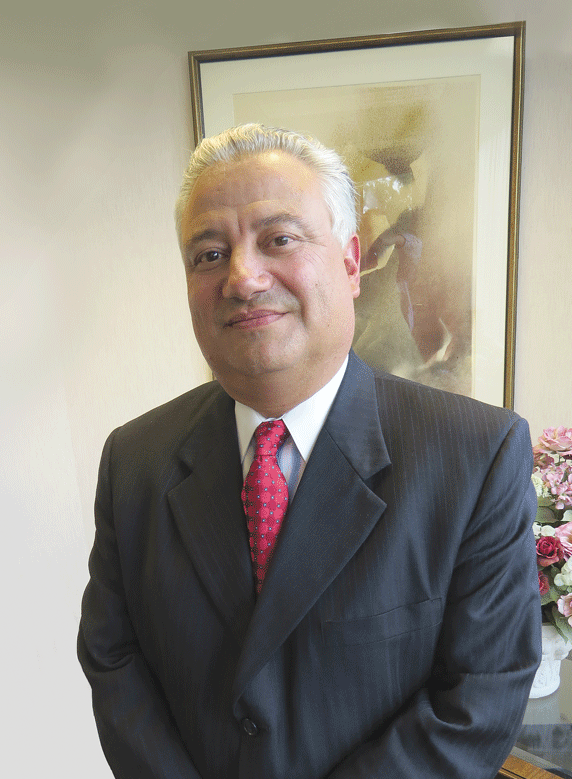
Sections Technology
Web Design Is Only Part of the Game at Gravity Switch

Christine Mark

Christine Mark, co-founder, graphic designer, and budding ukulele player at Gravity Switch.

Gravity Switch may be known for websites, Christine Mark said, but clients are often surprised to discover where conversations about those sites lead.

“Yes, we’re working on the public face of a company or organization, but we always want to talk about what their business challenges are, what they’re trying to do, what are their metrics of success. The work we do needs to help drive those things forward in some way. If it’s not, it doesn’t make sense to pursue it,” said Mark, who started Gravity Switch in 1996 with her husband, Jason (the company’s creative lead and a BusinessWest 40 Under Forty winner in 2011) and one of his high-school friends.

“We were three kids out of college, not unlike how a lot of startups begin, a bootstraps operation with wires hanging from the ceiling,” she told BusinessWest. “But our core ideals and why we’re here haven’t changed, even though the landscape around us has changed tremendously. We’ve matured as a company as we approach our double-decade milestone, but we still follow those ideals of doing work that we love, that’s meaningful, for people and organizations that we believe in and care about.”

And they draw on their own business experience to approach web design and a range of other high-tech services from a broad perspective.

“The end product might be a website, or it might be a website plus a mobile version of the site, or responsive design where the display and content are dynamically reformatted depending on whether it’s on a desktop, tablet, smartphone, whatever the case may be,” she said. “Or we might develop print pieces to accompany a web launch, or user testing and a usability study with a findings report, where we can leverage what we learn in that process. There might be a social-media strategy; we can offer a lot to clients in terms of how to approach their social media.”

All these elements — design, branding, messaging, technology — are spokes on the same wheel, and at the center is a company’s goals.

“The clients we work with feel really excited and energized to articulate who they are and what makes them great,” Mark told BusinessWest. “I’ve heard clients say to us, ‘we thought coming to you would help us with this marketing and technology issue, but then you helped us figure out how to position our products differently.’”

For this issue’s focus on technology, BusinessWest visits a Northampton-based company known for its cutting-edge work, its civic conscience, and — did she just break out a ukulele? — sense of fun.

Evolving World

At the start, Gravity Switch wasn’t as broad in its goals; in fact, it didn’t even focus on websites, its eventual bread and butter. In its first year, about 95% of the company’s work was graphics, animation, and video for CD-ROM and other platforms.

“My, how that’s flip-flopped,” said Mark. “In 1996 or 1997, if you told someone you were doing websites, a lot of people didn’t understand what that meant. You had to do a lot of explaining.”

She recalled someone who called that first year, struggling to articulate his question before asking, “do you have the Internet there?”

The Internet has, obviously, become much more pervasive since then, but Gravity Switch has evolved in some key ways as well.

“Now, I can say to someone, ‘we do websites,’ and stop there, but it wouldn’t do justice to it,” she said. “What we do is build web and mobile and digital experiences — and we’ve really moved over to print as well — that are rooted in business marketing, branding, and messaging strategy. To pull it off right, it’s not just websites.”

The Marks and their 10-person team focus on three key sectors: higher education — they’ve done website work for Yale, Dartmouth, UMass, Smith, Asuntuck Community College, and many other institutions — nonprofitsm, and businesses, ranging from local entrepreneurs to large corporations.

“We’re a good match for people who are forward-thinking, energetic, and like to get things done, because that describes us,” she said. “We’re not afraid of hard work, and we bring a lot of energy and expertise to the mix.”

For the most part, Mark explained, Gravity Switch doesn’t build first websites for companies, unless the client is a startup. Instead, they tackle the challenge of redesign, of making a site powerful, visible, and adaptable in a more complex Internet landscape.

“Between 2000 and 2005, we were doing first websites; companies came to us, wanting to embark on the web, and there was a lot of education to convey — why it’s important, why it matters, and what things don’t matter.

“It’s a much savvier client base today,” she continued. “I can say ‘CMS,’ and most of our points of contact — directors of marketing, directors of IT, presidents and CEOs — they’ll understand that CMS means content-management system. We used to have to define what that meant even five years ago. Now, they know what that means and maybe have some experience working with them.”

A CMS is essentially a program that allows users to publish content on the web, and even do-it-yourself programs have become more sophisticated, she said, citing Squarespace as a good example.

“There are design constraints imposed by Squarespace templates, but it’s a pretty powerful tool. What it doesn’t bring, though — and what you always need a human for — is the strategic part, the thinking, the messaging. No technology is able to hear what the client is saying and listen between the lines. No technology can replace that and add good copywriting and photography.”

Two basic questions Gravity Switch asks clients is what they want people to know, in terms of data and facts, and what they want people to feel — what impressions they want to convey ­— when users access their site.

“When you start conversations with these questions, some really interesting, powerful things come out of it, versus coming out of it thinking, ‘I need a website, and I want it to be blue.’ We don’t pick blue; we pick ‘businesslike’ or ‘conservative’ or ‘edgy’ or other things,” she said, adding that it’s important to test design ideas with different audiences before going live. “It’s the mantra of ‘fail early and fail often’ when it’s not that expensive to fail and it’s pretty inexpensive to correct course.”

All aspects of design and testing have become more complicated in the new mobile world, where consumers are constantly accessing the Internet on the go. Mark said Gravity Switch designs apps for mobile devices, but because their budget isn’t always matched by an immediate return on investment — after all, most apps are offered for free — they are not always an attractive option.

More important, she noted, is a mobile-friendly or mobile-streamlined website, which might include anything from minimizing form entry to streamlining screen real estate, to making sure the company’s phone number is findable and tappable. “The dexterity available in the mobile environment is more limited, and that needs to be taken into consideration.”

Clients need to ask themselves what their mobile audience is — the difference between 1% and 20% can change the way they prioritize a mobile-streamlined site — but it’s becoming at least a consideration for almost everyone.

“Maybe four years ago, the question was, ‘do we think we need mobile?’ Now it’s ‘what do we need to do about mobile?’” she said. “It’s part of the landscape, and it’s an opportunity to be leveraged or missed.”

Fun with a Purpose

Mark repeatedly came back to her company’s philosophy, which has remained steady over 18 years of otherwise dynamic industry change. “We work with organizations we care about and believe in. When it comes down to it, we like working with organizations we think are making a good impact on the world. Nonprofits are exciting for us, education is exciting, and we work with businesses we like. We’re very passionate about the work we do.”

She added that she and Jason have built their own team in a similar way, choosing talented individuals who bring with them a passion for their work.

“In terms of how we hire and the expectations we have for our team members, the people at Gravity Switch are in the roles where they get to do what they do best every single day,” she said. “That’s really a core part of our hiring philosophy and career-development philosophy.”

In addition to 10 full-time employees and a few part-timers — what she referred to as a “good, strong team of designers, developers, lead strategists, people who do content, and project managers” — the firm also works with a number of outside contractors, including videographers, photographers, additional content writers, and designers, to regulate the workload.

While Gravity Switch — which was named, whimsically, after a Shel Silverstein poem — has become a well-known name in Northampton and beyond, it seeks to be part of the community in ways that go beyond business.

“We contribute to the world around us through group volunteer work — a couple of times, we’ve helped Habitat for Humanity build houses — and we donate 15% of our corporate profits every year to charity; our employees help direct the funds,” Mark said, adding that the Make-A-Wish Foundation has benefited recently as well, with Gravity Switch paying for three of the 50 wishes granted last year by the local chapter.

Taking a page out of Alan Robinson’s book Ideas Are Free, the company has also formalized a process for generating ideas to help people. Every other week, the staff gathers to pitch ideas for making people’s lives better, doing things more efficiently, helping clients save money, or just have fun — with the caveat that all ideas must cost under $30 and take less than 30 minutes to implement, the concept being that more complicated, expensive plans are less likely to be put into action. “It’s another piece of sharing the work we’re doing with each other,” Mark said.

In other words, it’s a fun, open, and progressive place to work, she said, one where she feels free to break out her ukulele to jog her creativity.

“We’re all avid learners with different areas of interests. It’s part of our culture, that energy we bring. I’m grateful for our people, this team, and our culture. Jason and I are the business owners, but I’d be remiss if I didn’t say it’s the people who create that culture. It’s a fun group — a hard-working group, but we like to laugh and enjoy work, too.”


Joseph Bednar can be reached at [email protected]
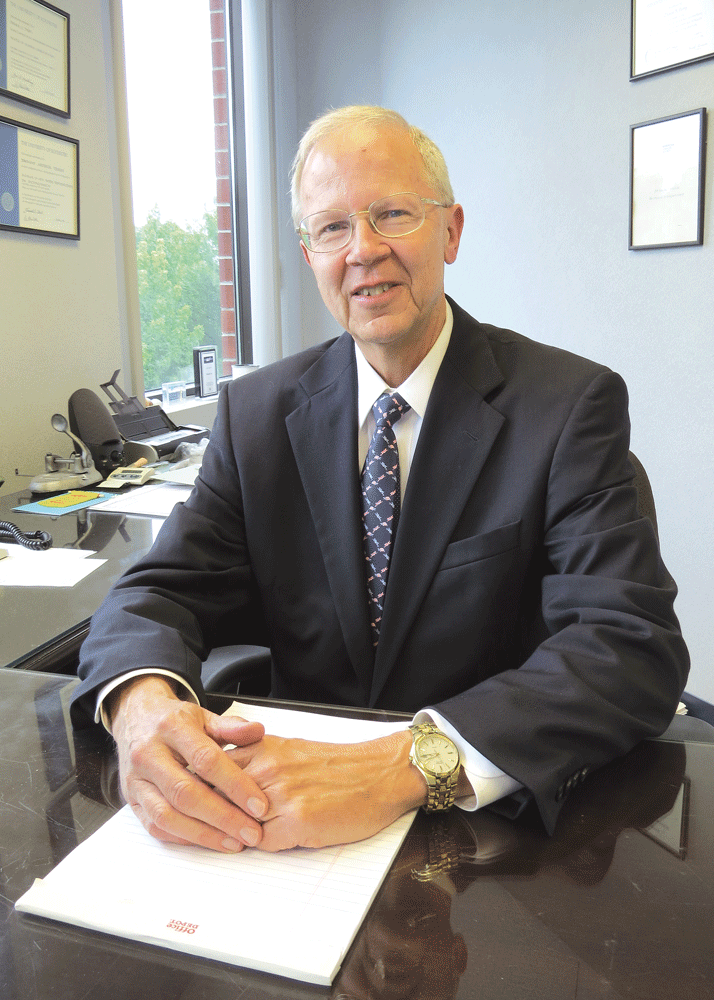
Cover Story
UMass Dining Makes Degrees of Progress

COVER0514b“Come for the food; stay for the education.”

That was perhaps the most memorable, and repeated, remark offered by UMass Amherst Chancellor Kumble Subbaswamy at ribbon-cutting ceremonies last fall for the renovated Hampshire Dining Commons in the campus’s Southwest residential area.

And the comment speaks loudly to what would have to be called the meteoric rise of UMass Dining, an $80 million, self-sustaining operation that is one of the largest of its kind in the country, if not the world, and now also one of the most heralded.

It’s unlikely that any of the 28,000-odd students attending the university this past year came just for the food, but it’s fair to say it was a factor for many of them, which is something that could not have been said until … well, after Ken Toong arrived on the scene nearly 16 years ago.

Now a certified rock star in the dining-services universe, Toong, executive director of Auxiliary Enterprises for the university, which oversees a number of operations, including UMass Dining, changed the way the school thought about food and food service. He is credited with orchestrating a stunning turnaround for an operation that for decades was an afterthought — if it was thought about at all.

This resurgence is about much more than better-tasting food and more choices, although those are big parts of the recipe for success. It’s also about promoting healthy eating habits, buying local, sustainability — and fun, such as setting Guinness Book of World Records marks for the largest stir fry (4,010 pounds), seafood stew (6,656 pounds), and fruit salad (15,291 pounds) over the past three years.

There are myriad ways to measure the success achieved by Toong and his staff.

For starters, there’s a host of numbers and statistics concerning trends and programs within the operation. These include:

• A 15% increase in student consumption of fruits and vegetables over the past year;
• A 30% reduction in sodium in recipes;
• An 18% decline in the consumption of sugary drinks;
• Steadily climbing consumption of seafood; UMass students now eat 21 pounds of it a year, on average. Nationwide, the number is 14 pounds;
• A rise in the number of students on the meal plan from roughly 8,400 when Toong arrived to more than 17,000 in 2013;
• A sharp increase in the amount of produce the university buys locally — from roughly 8% a decade ago to nearly 40% today; and
• A so-called ‘missed-meal’ mark of 10%; 15 years ago, it was nearly 40%.

There are also awards — the dining service was rated the third-best in the nation by the Princeton Review in 2013, and first in University Primetime’s ranking of the 50 Best Colleges for Food in the U.S., for example — as well as comments such as the one offered by Subbaswamy and a number of visitors from other colleges who come to UMass Amherst to learn about the dining operation; Harvard, Yale, Buffalo, and UCLA have all been in recently.

And soon, there will be even more for such delegations to see. Indeed, work is proceeding on an extensive, $19 million renovation of the former Blue Wall cafe and adjacent space in the Campus Center into a 33,000-square-foot eatery that will sit more than 800 people (more on it later).

The emergence of UMass Dining is an important development for the university on a number of levels, said Toong, citing everything from the national exposure it brings to the revenue generated for the school; from help in bringing top students to Amherst to improved quality of life for all those on campus.

“We firmly believe that a strong dining program can do a lot of things for a school,” he explained. “It can certainly help a great university like UMass attract top students, and we also contribute to the financial well-being of the university.”

For this issue, BusinessWest goes behind the scenes at UMass Dining to get a taste — literally and figuratively — of how this turnaround has been accomplished and what it means for the university and its students.

Food for Thought

They’re known as ‘Baby Berk 1’ and ‘Baby Berk 2.’

These are the two colorfully painted food trucks operated by UMass Dining and now seen at various locations around the campus. They were given those names, said Garett DiStefano, director of Residential Dining at the university, because they’re essentially scaled-down, mobile versions of the Berkshire Dining Commons, also in Southwest, where they are parked when not in use, which means only for a few hours a day.

Garett DiStefano

Garett DiStefano, seen in the renovated Hampshire Dining Commons, says UMass Dining places a strong emphasis on the “customization of food.”

These are said to be among the first food trucks put into use on a college campus, he told BusinessWest, adding that they serve everything from salads and soups to pulled-pork sandwiches to mac and cheese — or, more specifically, the university’s own brand of that classic known as ‘UMac and Cheese’ — and have become fixtures at the university.

“The food trucks allow us to have the ability to go around campus any time of day, any location, no matter what the event is, and serve students,” he said, adding that the vehicles got a workout over commencement weekend earlier this month, serving more than 5,000 customers.

They’re also just one of the many imaginative innovations and programs that have marked what would have to be called the ‘Ken Toong era’ for UMass Dining.

It began in the summer of 1998 when Toong, then working for Marriott International in Canada, saw a want ad that caught his attention. UMass Amherst was looking for an executive director of Dining Services.

The position appealed to him on a number of levels, but especially because it offered him an opportunity to put the many lessons in effective customer service he’d learned from Marriott in an intriguing and challenging setting — higher education, and, specifically, a UMass campus that was somewhat behind the times when it came to food services, as evidenced by the fact that perhaps a third of the student body was enrolled in a meal plan.

“I would say that they were not very customer-focused,” said Toong of the operation he joined, adding, in diplomatic terms, that the staff was in many ways talented, but not particularly well-trained or current with best practices of the day.

So he set about changing that equation.

His business plan, if one were to label it that, called for sweeping changes in what foods were served and how, with a much greater emphasis on both the customer and his or her experience.

The food trucks at UMass Amherst

The food trucks at UMass Amherst, Baby Berks I and 2, enable UMass Dining to take its service to another level.

One of his first, and more intriguing, initiatives was the introduction of sushi onto the menu at the various dining commons. At the time, 2001, it was a fairly radical concept — only a few other schools, mostly on the West Coast, were serving it on a regular basis — and Toong wasn’t sure quite what to expect.

He certainly didn’t envision that, a decade later, the school would be serving more than 3,000 pieces a day.

“We serve more sushi than anyone else in the country, and this is New England, not Southern Calif.,” he said. “At first, I wasn’t sure we could serve sushi here; now, if we took it off the menu, I think there would protests across campus.”

But there is much more to this story than raw fish and rice.

Indeed, Toong and his staff have taken UMass Dining in a number of new and intriguing directions — from new eateries on campus, such as a facility in the main library affectionately named Procrastination Station, to those aforementioned food trucks; from a host of educational initiatives on healthy eating to the UMass Permaculture Initiative, a cutting-edge sustainability program that has received accolades from the White House.

As they talked about all that, Toong and DiStefano referenced what they called the ‘Millennial diner,’ their term for today’s college student — a very demanding customer indeed.

“They want everything — they want food that tastes good and is good for them,” Toong said of this constituency, which also demands sustainability and the support of local farmers and manufacturers. “We serve the same customers several times a day, so the food has to be good, and it has to be a good experience; otherwise they get bored. That’s why we change the menu all the time; we’re like casino dining, but without the games.”

Power Lunch

Meeting the many wants, needs, and demands of the Millennial diner is the unofficial mission of UMass Dining, the largest campus food service, by revenue, in the country.

This is a multi-faceted operation that includes four dining commons — Hampshire, Worcester, Franklin, and Berkshire (they’re named after Western and Central Mass. counties), as well as 20 retail locations, including the Baby Berks, a bake shop operating in the Hampden Dining Commons, and other facilities.

Together, these eateries serve roughly 45,000 meals a day, or 5.5 million a year, said DiStefano, adding that what is served, when, and how are all functions of the operation’s hard focus on customer service and making necessary adjustments to reflect the calendar and specific needs.

The food trucks, for example, operate from 7 a.m. to 4 p.m., and will park at various locations across campus. Meanwhile, dining commons, which years ago closed by early evening are now staying open much later.

“Between 9 p.m. and midnight, we’ll feed 3,000 students a day in the dining commons,” said DiStefano, adding that many customers are averaging what amounts to four square meals a day, not three. “What we try to do is keep pace with what’s going on in the campus community and adjust accordingly.”

During final exams and the reading period that preceded them earlier this month, hours of operation in the dining commons were extended to 2 a.m., while other operations, such as Procrastination Station, were open 24 hours a day.

Meanwhile, UMass Dining employees will generally eat in the campus facilities every day, he went on, adding that this is the best way to see what’s going on and gauge student opinion.

“We have to see things from a student point of view,” he told BusinessWest. “If you’re not looking at what the customer sees every day, you’re going to miss some things.”

Overall, UMass Dining owes its success to successful relationship-building efforts, said Toong, adding that there are many constituencies involved.

This architect’s rendering

This architect’s rendering shows what’s planned for the former Blue Wall café, a 33,000-square-foot eatery that will seat more than 800 people.

These include students at the university, obviously — there are regular meetings to gain input and create adjustments — but also other colleges and universities and their dining programs, area youth groups that come to the Amherst campus to learn about healthy eating and sustainability, and even students’ parents.

In fact, parents can eat for free whenever they visit the university, said Toong, and they can contribute recipes to a cookbook called Taste of Home, now in its fifth edition.

The current volume includes bacon brussels sprouts from the Berson/Krohngold family in Cleveland, mix bean curry from the Bhatt family in Lexington, apple puffed pancakes from the Brady family in Ludlow, and fiddlehead ferns with Hollandaise sauce via the Carlton/Bates family in Turners Falls.

“Some dining operations around the country don’t want to get the parents involved,” said Toong. “We’re just the opposite; we know they’re the ones paying the bills, and we want their input.”

Meanwhile, the university is sharing recipes, best practices, and thoughts about where this industry is headed next with representatives of a number of colleges and universities, said DiStefano, adding that college dining is a very collaborative business sector.

“We’re not competing against Stanford or UC Berkeley or UCLA,” he explained. “So we get to pool information and say, ‘what is UCLA doing that we should be doing?’ and ‘what is UMass doing that UCLA should be doing?’”

On a Grand Scale

They’re called ‘trash fish.’

That’s an affectionate industry term for a range of underutilized species, including hake, blue fish, Acadian red fish, pollack, and dogfish, said DiStefano, adding that the name originates from the fact that fishermen once simply threw these fish away because no one wanted them.

But as traditional staples such as cod and salmon have become overfished, attitudes about these trash fish have changed, and the university is now at the forefront of a movement to create a market for these species by including them in a number of recipes, such as the one for fish tacos. And by doing so, the school is supporting struggling fishermen, diversifying students’ palates, taking the pressure off over-fished species, and further promoting healthy eating.

“This allows us to support fishermen who might otherwise be out of business because there are limits on salmon and Atlantic cod,” DiStefano explained, adding that use of these trash fish is just one example of how the university’s dining service goes about meeting the many facets of its mission statement, everything from sustainability to healthy eating to supporting the local economy.

And that word ‘local’ has a broad definition, said both DiStefano and Toong, noting that the university buys from asparagus growers in Hadley, Angy’s in Westfield (pizza dough), Performance Food Group in Springfield (a $15 million annual contract), a bakery operation in Boston, and the Hadley Sugar Shack, among many others.

“It’s part of our mission to support people who support the economy around us — as we grow, they grow,” said DiStefano. “And when we survey our students, more than 75% of them say buying local is important to them. The word ‘local’ to them means they’re tied to the community, and community is very important to them.”

In addition to buying local, UMass Dining also puts a heavy focus on healthy eating, said Toong, adding that this is both a national trend and a reflection of changing habits — and attitudes — among today’s college students.

In response to this change, UMass Dining has initiated what it calls its ‘stealth health program.’ It covers all the bases, said Toong, from reducing sodium in recipes to serving more fruits and vegetables to providing portion control through a philosophy summed up with the phrase ‘small plates with big flavor.’

“Five years ago, we spent about $1.5 million on produce,” said Toong, using more numbers to get his points across. “This year, we spent close to $3 million.”

All these characteristics of the dining program — from the smaller portions to the diversity of the cuisine to the emphasis on sustainability — are clearly in evidence at Berkshire Dining Commons, which underwent extensive renovations six years ago, and the new Hampshire Dining Commons. Together, they serve the 6,000 people living in Southwest, one of the most densely populated areas in the country.

As he offered BusinessWest a tour of the former, DiStefano started at the so-called Noodle Bowl. “Noodles are hot right now,” he said, adding that this station enables students to pick not only their noodle — there are several options — but also the broth and toppings they want with it.

“This allows the customization of food,” he said, using that term for the first of many times, while noting that almost all the cooking is now done in front of the student, and meals are made to order.

This is true at the nearby vegetarian station, the salad station, an area where students can design their own flatbread pizza, the wok station, the Pasta Pronto station, and an area marked ‘street food.’

“This is the worldwide concept of food — anything that’s small and eaten by hand, like tapas and sliders,” he explained. “It’s all made to order — we’re continuously making small batches of it all day long.”

This is a trayless environment, DiStefano explained, adding that students will take what they need and go back for more if they need to, rather than piling things onto a tray. This concept, another idea that came from students, has enabled the school to reduce food waste by roughly 30%.

The open, oval layout at Berkshire, designed to eliminate lines and bottlenecks, was taken even further in Hampshire, said DiStefano, noting that best practices from dining commons around the country were incorporated into its design and operations.

“The oval design allows students to see everything around them, they can find a seat quickly, and they can engage with chefs behind the line in terms of what they’re cooking,” he explained. “And they can hear, smell, and see what’s being prepared in front of them.

“The oval design also diminishes queues, because you can pick a little bit at each station,” he went, “as opposed to going to one station and lining up and going to another station and lining up.”

Many of these same concepts will be put to use at a facility being built on the site of the Blue Wall, said David Eichstaedt, director of Retail Dining for the university.

He told BusinessWest that a new classroom building now under construction near the Campus Center will bring several thousand students each day to that part of the campus, and larger, more modern, more customer-friendly facilities are needed to serve that population.

The new eatery will include many of the features found in the renovated dining commons, including a bake shop, a host of food stations, and made-to-order foods. The yet-to-be-named facility — students will ultimately make that decision through social media — is scheduled to open this fall.

Lobster Tales

Last Halloween night, UMass Dining served surf and turf for the masses.

The program was called “Just Treats, No Tricks,” said DiStefano, and featured steaks and lobsters — 12,000 of them.

That grand meal is just one of many ways to measure just how far this program has come in a few decades, and how important food service has become for a school that may soon have a rival for its marching band when it comes to national acclaim.

As the chancellor said, “come for the food; stay for the education.”


George O’Brien can be reached at [email protected]
Banking and Financial Services Sections
Monson Savings Bank Invests in Financial Literacy

Monson Savings Bank President Steven Lowell

Monson Savings Bank President Steven Lowell

Steven Lowell fashions himself more than a banker. He’s also a teacher of sorts.

“One of the things that has become clear to us over the past three or four years is that, when it comes to financial literacy, not everyone has a good understanding of how to manage their finances,” said Lowell, president of Monson Savings Bank.

“I get a chance to see it on a day-to-day basis, and you’d be surprised,” he added, citing the Financial Literacy Survey conducted last year by the National Foundation for Credit Counseling,  showing that 40% of the public would grade themselves a C or worse when it comes to their financial literacy.

“It shows up when they’re looking to approve a loan, when you look at people’s personal balance sheets, their debt levels — they just have not been smart about how they borrow money, the way they try to save money,” he continued. “We thought, rather than just complain about it, we’d try to do something about it.”

When Lowell took the reins at MSB three years ago, the bank already had accounts targeted at young people, such as its NextGen Checking for teenagers and college students, but realized he needed to do more.

“Those products were very successful; they started to get young people thinking about their finances. But we quickly realized that wasn’t enough, that we need to start even earlier,” he explaned. “So we started going to classrooms in our communities, targeting the fifth and sixth grades, teaching a course called Dollars & Sense.”

That course features an online game called MoneyIsland, which teaches children about financial literacy — what’s the difference between a need and a want, why it’s important to pay off one’s credit-card balance every month, the difference between earned income and passive income, and other topics. “They’re learning some pretty complex subjects through the game and through classroom instruction.”

After six one-hour sessions, he said, “kids come away with amazing understanding, and hopefully we help them get on the right path. We’ve had great feedback, not only from school administrators and teachers, but from parents, who tell us, ‘I’m learning from my kids.’ That’s good to hear.”

The learning doesn’t stop there, though. Monson Savings Bank has cultivated a reputation for educating the community, whether it’s through public seminars on topics like first-time homebuyer programs, special-needs trust, and long-term-care insurance, or through the bank’s relationship with the Massachusetts Financial Education Collaborative and its online financial-education program, masssaves.org (more on that later).

“The bank was doing some of this already, but I’ve always had an interest in the education part of the job — not only outside the bank, but teaching the folks inside, too,” Lowell told BusinessWest. “I had a great mentor, and I’ve tried to take on that role for a number of individuals who work for me.

“I encourage other bank officers to do that, too, to encourage this education culture,” he went on. “I’m thrilled because people here have gotten excited about it. The branch managers have so much fun going into classrooms, seeing these children learning about finance. They’re energized by it. It’s really taken on a life of its own.”

MSB as a whole has experienced new life under Lowell, who has continued the impressive growth pattern of his predecessor, Roland Desrochers, who saw the bank increase its assets from around $80 million to $236 million in 15 years. Three years after Lowell took over, that number is $272 million. “We’ve had about 6% to 7% growth every year,” he said.

For this issue’s focus on banking and finance, BusinessWest sits down with Lowell to talk about the specific ways in which Monson Savings Bank is growing its financial clout while maintaining its tradition of community engagement — and its ongoing efforts to create a more financially savvy customer base.

Loan Stars

Monson Savings Bank’s most notable recent success may be its commercial-lending operations, which earned recognition from the Small Business Assoc. as the Western Massachusetts 7a Lender of the Year. The SBA noted that the bank loaned to a wide variety of retail, professional, and consumer-service businesses in more than 10 different industries, from transportation and construction to healthcare and childcare.

“We’re a little different than most community banks in that we place a heavy emphasis on commercial lending and offering commercial products in the marketplace,” Lowell said. “I’ve been happy with the way we’ve been able to grow that business over the last few years; we have been in the top 20 commercial lenders in the state for the past two and a half years. For a bank our size, that’s a pretty remarkable achievement.”

original Monson location

MSB has expanded over the past two decades from its original Monson location to branches in Wilbraham, Hampden, and Ware.

He credits much of that success with emphasizing a personal touch with would-be borrowers. “We treat each customer as an individual; we try to understand what their issues are and find solutions for them. We try not to say ‘no,’ but there are times, as a banker, when you have to say no, when it’s in the customer’s best interest to say no. But usually, it’s no with a qualifier — ‘maybe if you talk to the folks at SCORE and come back with a better business plan,’ or ‘go to the Quaboag Valley CDC to get started, then maybe come back to us, and maybe we can meet your needs going forward.’ We always try to give people solutions, even when we have to say no.”

It helps, Lowell said, that more companies are beginning to reinvest and borrow after several years of hesitancy. “They’re growing, expanding, going after new territories. I wouldn’t say it’s as strong as it was 10 years ago, but we’re starting to see some positives in this economy, from a banking standpoint.”

Historically low interest rates drove a healthy refinance business at MSB and most other banks, he added, but with rates ticking back up, refis have ground to a halt, and new-mortgage volume still isn’t strong. “So with the commercial area doing so well, making up for that, it’s pretty significant.”

The SBA award is an exciting milestone, he added, “because it goes to the heart of our brand promise to help small businesses prosper. These are the businesses that drive our local and regional economies, and it feels great to play a role in this economic activity.”

On both the commercial and retail sides, Monson Savings Bank has embraced new technology, Lowell said, entering the mobile-banking arena two years ago — customers can even transfer money between MSB and another bank on their smartphones — and introducing remote check deposit last year.

He said when he arrived in 2011 from the much larger Cape Cod Cooperative Bank, he assumed he’d need to be patient with respect to introducing high-tech products at Monson. “But I was surprised how aggressive they were with respect to technology. We’re always looking for the next new product. This business is all about convenience for customers. We have to make it as easy as possible.”

Meanwhile, the bank continues to grow its investment arm, offering products through Infinex Financial Services and regularly ranking in the top 20% of all Infinex banks, typically first or second among banks in its asset range. At the same time, MSB expanded its geographic footprint last year, opening a branch in Ware to go along with offices in Monson, Wilbraham, and Hampden.

“We’ve had a lot of traffic,” Lowell said of the new branch on Route 32 in Ware. “We opened in late June last year, and the branch is already up to $12 million in deposits. We’re really happy about that.”

Even with the temporary drag on profits involved with opening a new branch, he added, “we’ve been really pleased with our profitability over the past few years; we’ve been in the top 20% of banks in the state in terms of profitability.”

With that growth, however, has come increased challenges — for all banks, really — from regulatory bodies, much of it stemming from the financial crash of 2008, leading to Monson’s hiring of a full-time compliance officer.

“I understand why these regulations have come into being,” he noted. “Having said that, they really weren’t aimed at the smaller community banks. We’re not the ones who caused the problems that affected the economy, but we’ve certainly been impacted to the point where it’s necessary to add a full-time compliance officer. You can’t afford not to. It doesn’t matter what size you are; they expect you to follow the rules.”

Community Ties

While bank executives are educating themselves on these new compliance issues, Lowell continues to stress community outreach and financial literacy.

Through a connection forged while serving on the board of the United Way, he became involved in the Hampden County Financial Stability Network, which introduced him to the Massachusetts Financial Education Collaborative (MFEC), a group of nonprofits, private institutions, government agencies, and other bodies that work together to increase economic stability in Massachusetts through financial education, personal savings, and access to wealth-building assets such as homes, cars, college educations, and small business.

“These folks have got a great program, which they offer online — financial coaching for people in need,” he said of the MFEC project known as MassSaves and its online resource, masssaves.org, which offers financial information and a portal to one-on-one financial coaching via phone, e-mail, and Skype.

“We thought it was a great way to supplement what we’re trying to do in the community,” he added. “They heard about what we’re doing, we entered into a relationship with the collaborative, and now I’m on their steering committee. We’re invested, as they say.”

Monson Savings Bank has invested in its communities in other ways as well, most notably through annual donations of more than $100,000 to various nonprofits.

“The year that I arrived was the first year we actually asked the community to help us select some of the agencies or benefactors that would receive some of the funds,” he told BusinessWest, adding that the bank solicits nominations on Facebook, and the top 10 vote getters receive donations.

“We make sure our customers are included,” he said. “It’s another way they can stay connected to us.”


Joseph Bednar can be reached at [email protected]