Home Posts tagged exclusive (Page 12)
Business Management Sections
Massachusetts Export Center Helps Firms Do Business Overseas

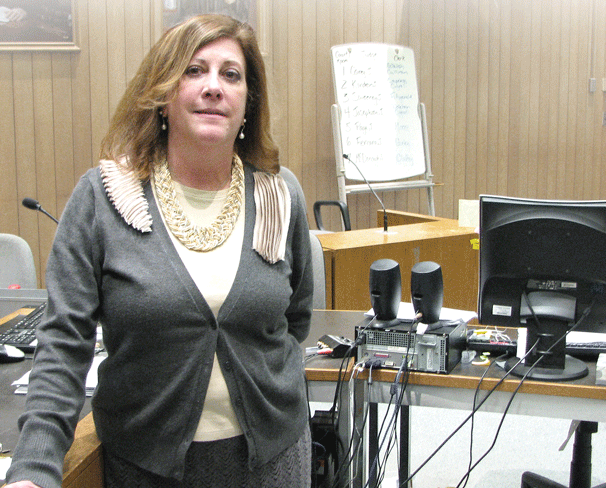
ExportDPartTo Ann Pieroway, the statistics speak volumes.

Take, for example, the fact that Massachusetts companies exported more than $26.8 billion in goods last year — a 4.63% increase over 2012 — and ranks as the 17th-highest exporting state in the U.S.

Or that the Bay State ranks second nationally in seafood exports, third in medical-device exports, and fourth in the U.S. in high-tech exports. Or that 28% of the state’s manufacturing workers depend on international exports for their jobs, which ranks fourth nationally.

Those achievements don’t happen in a vacuum, said Pieroway, regional director of the Western Mass. office of the Mass. Export Center (MEC).

“We have a very simple mission: to help companies throughout the Commonwealth achieve success in global markets and contribute to economic growth in our state,” she said. “The goal is to maintain jobs or grow jobs.”

It does so by providing a range of resources to client companies, from counseling and technical assistance to market research and assessment, to a wide range of training programs to help businesses navigate the tricky, hyper-regulated world of exports. As for the center’s effectiveness, Pieroway said, the numbers speak loudly there, too.

“For our latest impact study, we sent out a questionnaire to our clients — significant clients, not just somebody we’ve answered questions for,” she explained. Almost 70% responded, and reported $240 million in financial return from their dealings with the MEC in 2011. “That’s not total exports; that $240 million for 2011 is their increase in export sales due to the help they’ve received from the Massachusetts Export Center.”

With a background in offshore manufacturing, Pieroway has been involved in the export arena since 1983, when she was appointed to the governor’s International Trade Council.

“Back then, there were 27 different groups that had their fingers in international trade, but no one primary group,” she said, explaining the germination of the MEC. Paula Murphy, who still serves as statewide director, got the program running 20 years ago, and Pieroway came on board soon after. “We’re a specialty center of the Mass. Small Business Development Center Network, which put the funding in.”

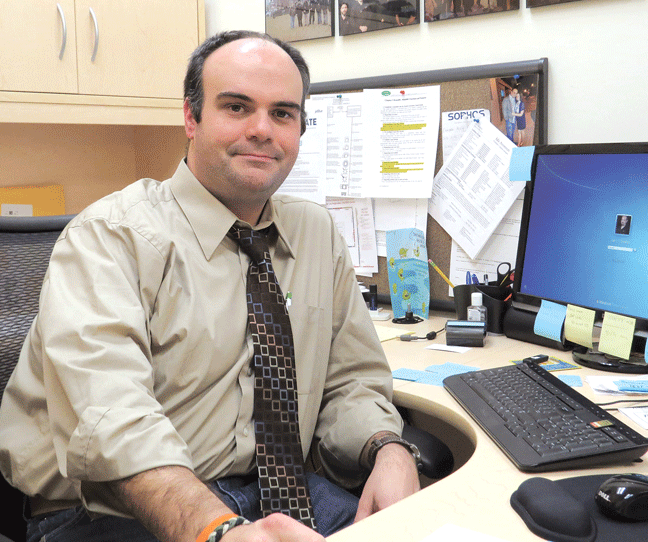
Ann Pieroway

Ann Pieroway says the success of the Massachusetts Export Center can be measured in the additional dollars exporters bring into the Bay State.

Today, the center is primarily funded by the Small Business Administration, with a matching commitment from the Isenberg School of Management at UMass Amherst.

The state contributes as well, Pieroway said, and studies show that, for every tax dollar it kicks in, $4 is pumped back into the state economy. “So we don’t get cut; we’ve always been level-funded. We put out an impact study that goes to all legislators, and everyone can see what we do — $240 million is a lot of money.”

She also noted that the $2.2 trillion in overall U.S. exports accounts for 9.8 million jobs. “Supposedly, every time you get a $125,000 increase in export sales, a job is created somewhere in the network. That’s very important to us here in the Valley.”

Helping Hands

While Pieroway wasn’t at liberty to name specific clients, she did cite a broad range of services the agency provides, including:

Export counseling and technical assistance. These services are customized to each client’s needs, and might include:

• Export planning and preparation;
• Assessment of export readiness;
• Export strategy and international business-plan development;
• Assessment and selection of target export markets;
• International sales and marketing;
• Identification and qualification of overseas customers and partners;
• International payment and financing;
• Export logistics, including shipping, documentation, terms, and controls;
• North American Free Trade Agreement compliance and eligibility; and
• Working with export service providers, such as international banks, law firms, and freight forwarders.

International market research and assessment. The center has access to a wealth of information on export markets. Examples of research provided to clients include:

• General information on doing business in different countries;
• Demographic, economic, political, and cultural information on different countries;
• Market size, characteristics, and trends;
• Trade barriers and regulatory issues;
• Detailed statistical information on U.S. exports by state, product, and country.

International business-development assistance. Through the center’s partnership with other state and federal government agencies, companies can take advantage of specific programs to market their products and services internationally. These services include:

• International business-plan development;
• Assessment and selection of target export markets;
• Guidance on international sales, marketing, and distribution-channel development and management;
• Identification and qualification of overseas customers and partners;
• Participation in overseas trade shows and missions; and
• Connections with state and federal overseas offices for in-country support.

Export training programs. Partners for Trade, the state’s official export training initiative, is a regional collaborative between the Massachusetts Export Center, chambers of commerce, trade associations, economic-development agencies, and the private sector, working together to present frequent seminars on international trade.

Partners for Trade programs offer Massachusetts companies an overview of topics like international marketing, legal issues, export logistics, international distribution, and others, including country-specific and industry-specific export issues. Much of the training is provided by international trade experts from the private sector, including international business lawyers, export consultants, freight forwarders, international bankers, and international business executives from area companies. On average, more than 1,000 companies participate in the Partners for Trade program each year.

The Massachusetts Export Resource Center. Launched in 2012, the MERC offers a wide range of instructional and practical information on exporting, including training modules, video guides, workbooks, and templates.

The bottom line, Pieroway said, is that the MEC deals in information — lots of it.

“When I first started this job 19 years ago, we used to get reports from the Department of Commerce monthly, and we would send requests to Amherst; our research people would send us a stack of paper like this to take to our clients,” she said, spreading her hands a foot apart. “We no longer have a research department; we do all our own research, or have our interns do research. The things available today were nowhere near available 20 years ago; it’s all Internet research now.”

That information is invaluable to companies navigating the often-thorny, heavily regulated world of international business. Pieroway told of a seven-month-long effort to help a client send a product to China. “Anything going to China gets extra scrutiny. They finally allowed it, with all kinds of conditions. I just pray this company adheres to those conditions.

“We’ve helped companies in every industry there is,” she added, “from agriculture to guns to butternut squash to cosmetics to precision machining — you name it,” she said. And whether a client needs a license or legal assistance or any of a host of other requests, “I connect them with somebody who can help them. We have a wonderful network of support across the Commonwealth.”


Ship Shape

The day she spoke with BusinessWest, Pieroway was preparing for a Partners for Trade seminar in Holyoke called “Fundamentals of Exporting.”

“We want people to have a basic understanding of the process. For some people it’s daunting — there’s a little more paperwork going international — but we achieve results the same way you would domestically: research your client and find out who they are.”

The MEC recently launched another program, called Compliance Alliance, a forum for exporting firms that offers:

• Periodic briefings that address a variety of regulatory compliance issues and provide an opportunity for exporters to network and share best practices with one another;
• Conferences and seminars that provide in-depth training across a broad range of compliance and operational issues. Speakers include exporters, law firms, consulting firms and representatives from government export regulatory authorities;
• An e-newsletter containing updates about current compliance issues and events; and
• Online resources, such as a member directory, a compliance resource library, and a job board.

That word ‘compliance’ comes up often for a reason, Pieroway said, adding that the federal government has tried to simplify international trade, but those efforts have often just made it more difficult.

“We’re doing a lot more webinars, so a lot more people can participate, from all across the country,” she said. “We’re known for our compliance training. We know what companies are going through, and we do a lot of hand holding here.”

That hand-holding has led to national recognition, especially in 2008, when the agency won both the Presidential E Award for excellence in exporting — the highest honor the federal government issues in the exporting arena — and the SBA’s Service Excellence and Innovation Award.

“This year, we won the SBA award for the state and for the region,” Pieroway said. “We feel we should have won the national award, too. I think they thought we’d won too much.”

A 2010 survey found that more than 11,000 Masschusetts companies were exporting goods — about 90% of them small and medium-sized businesses. Along with all the other resources the MEC provides, Pieroway boils a company’s international-trade success down to a strong commitment — of people and resources — by top management.

“You’ve got to have someone in charge of this,” she said, reflecting back to when a company’s compliance ‘expert’ was often a secretary tasked with figuring out how to move product out of the country. “So they became the experts. Now there’s more emphasis on training.”

Pieroway conceded that most companies still get involved in exporting by being reactive, not proactive — for example, when foreign buyers take an interest in a product at a trade show. But the world has been shrinking, so to speak, for a long time, and opportunities abound in other countries for businesses willing to seek it out and learn the ins and outs of exporting. And that takes work.

“You cannot do international business sitting in your chair in your office; you have to leave the country to be really successful,” she said. “It depends on your commitment — of time, personnel, and money.”


Joseph Bednar can be reached at  [email protected]

Business of Aging Sections
Fallon’s Summit ElderCare Sets a New Standard

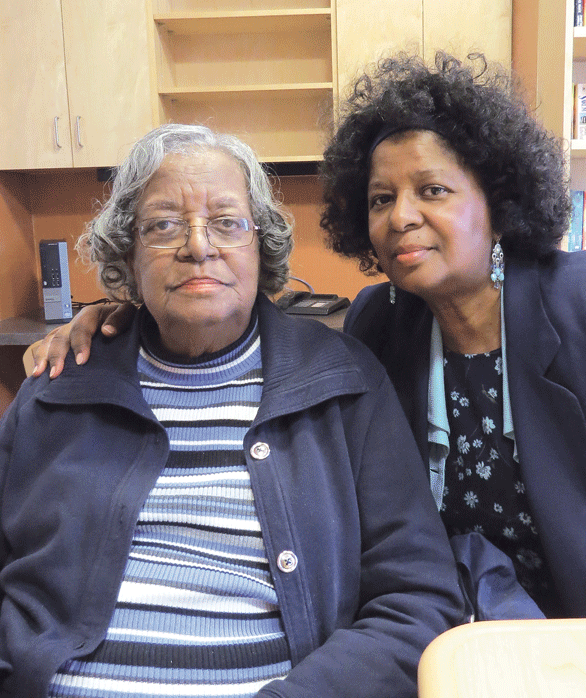
Pam White and her mother, Helese

Pam White and her mother, Helese, in the library at Summit ElderCare in Springfield.

Pam White is an only child, and is still many years from being in a position to retire.

Which means that she faces some significant challenges in her role as caregiver for her mother, Helese, who has several health issues, but is neither ready nor willing to move into a nursing home.

Pam told BusinessWest that, as she launched a search for a solution to her dilemma, she did so with a specific mindset. She was looking for a facility that was a step above adult day care and two or three steps above a community senior center — a place where medical care was available in the form of an on-site geriatrician, but where there was also a strong social component with a host of activities for a diverse group of seniors.

She has found all this and a lot more at Summit ElderCare, a PACE (Program of All-inclusive Care for the Elderly) facility operated by Fallon Community Health Plan in Springfield’s North Medical District.

The facility, which opened its doors roughly a year ago, now serves 53 individuals with roughly the same needs as Helese. They are called ‘participants,’ rather than ‘clients,’ ‘patients,’ or ‘customers,’ because that term best describes what they are, said Kristine Bostek, vice president and executive director of Summit ElderCare.

Elaborating, she said they are participating in a program, based on a national model of coverage recognized by both Medicare and Medicaid, that provides medical care, geriatric case management, care coordination, adult day health services, full insurance coverage (including Medicare Part D prescription coverage), and in-home support in a personalized setting that features interaction with other seniors and a host of activities.

All of this resonated with Pam White.

“My mother is a very social person, and what appealed to me is that there would be other seniors involved in this program,” said White. “I wanted to engage my mother in a program where they have activities, and where it’s obviously a safe environment.

“It’s like one-stop shopping,” she went on, referring to the range of services offered at the facility. “They have a primary-care physician that specializes in geriatrics, and if my mother needs lab work, that can be done. And if I were trying to do that as caregiver, I’d be running here and running there, and that’s difficult with my work schedule.”

Kristine Bostek


Kristine Bostek says Summit ElderCare calls those it serves ‘participants’ — rather than clients, patients, or customers — because that word best reflects what they are.

The Springfield location is one of five now operated by Summit ElderCare in Central and Western Mass., said Bostek, adding that the company started with a location in Worcester in 1995 and eventually added a second facility in that city before eventually expanding into Charlton and Leominster. Further expansion into the Merrimack Valley is now under consideration.

An assessment of the Western Mass. market several years ago revealed a need for a PACE facility there, said Bostek, noting that, after consideration of several possible landing spots, the company eventually chose a location in Springfield in a new medical building on Wason Avenue built to Fallon’s specifications.

One year after opening that site, the company is on target with regard to growth, said Mary Woodis, RN and site director, adding that this location will likely hit its goal of 250 participants within three years.

For this issue and its focus on the business of aging, BusinessWest takes an in-depth look at Summit ElderCare’s Springfield facility and how it is improving the quality of life for both participants and their caregivers.

Senior Moments

Bostek told BusinessWest that the PACE concept is gaining considerable traction across the country, with more than 100 sites currently operating nationwide.

Fallon is now the fifth-largest PACE provider in the nation, with 900 total participants, and the largest in New England, she said, adding that the company is a firm believer in this model of healthcare because it provides a viable option to more expensive nursing-home care, and will only become more popular as the population ages because of the many benefits it provides for people like Helese — and the peace of mind it offers to those like her daughter Pam.

The concept was described by both Bostek and Woodis as a “community-based alternative to nursing-home care,” and one with two critical elements: a healthcare component and a social component, which are both considered critical in the delivery of complete care to a participant.

Elaborating, Woodis said Summit ElderCare provides geriatric case management, care coordination, and a host of additional services that include:

• On-site medical care;
• 24/7 emergency access to a staff member;
• Physical and occupational therapy;
• Adult day services;
• Medically necessary supplies and equipment;
• In-home assistance;
• Medically necessary transportation;
• Nutritional counseling;
• Caregiver education and support; and
• Full medical and prescription drug coverage.

The model has met with a good deal of success in Central Mass., as evidenced by the steady base of expansion, said Bostek, adding that, by the start of this decade, the company was actively pursuing opportunities to bring the concept to other parts of the state.

“Based on experiences in Central Mass., we felt there was a huge opportunity to take this model into this part of the state,” she said of the Greater Springfield area. “So we embarked upon a plan to expand in Western Mass.”

The 14,500-square-foot Springfield facility is licensed to serve residents of Hampden County and a few communities in Hampshire County, said Woodis, adding that, while many of the current participants are from Springfield, several other communities are represented. To be eligible for the program, individuals must by 55 or older and meet clinical criteria that Bostek summed up with the phrase “nursing-home-eligible.”

Mary Woodis

Mary Woodis says people come to the program for their medical care, but also for the social aspects.

The current mix of participants includes individuals across a broad age spectrum, said Woodis, adding that many are in their 60s, while a few are in their 90s, and there’s one centenarian. Some have cognitive issues, such as dementia or Alzheimer’s, while others do not, and there is a growing number of what would be considered younger seniors with neuromuscular disorders such as MS and ALS.

“A PACE participant, in general, is a frail, older adult,” said Dr. Alison Grover, the on-site gerontologist at the facility. “They probably average in their low 80s with multiple medical problems and usually some difficulty with mobility and self-care.

“It’s not at all unusual to have some level of memory impairment as well,” she went on, “and it’s our mission to keep such individuals in their home as opposed to in a nursing home.”

Summit Eldercare makes this possible by providing that one-stop shopping Pam White described.


Care Package

Elaborating on this concept, those we spoke with all used the phrase ‘integrated model of care’ to describe what’s offered, meaning both medical care and the many social aspects of the PACE program available at the Wason Avenue facility.

“People come here for their medical care,” said Bostek, referring to everything from visits with Grover to occupational and physical therapy. “But they’re also here for the social aspects of this program, doing things with other participants.”

It is this “complete package,” as Grover called it, that separates Summit ElderCare from a typical senior center and adult day care facilities, and also enables older adults to stay out of nursing homes.

Woodis said activities run the gamut from arts and crafts to computer classes; from reading in the facility’s small library to healthy-cooking classes. On the day BusinessWest toured the facility, a Mother’s Day tea was in progress. Participants helped create tissue-paper flowers and also baked pies for the attendees.

The key to effectively providing this integrated model of care is teamwork, said Grover, and there are many members on the team, including nurses, physical and occupational therapists, a nutritionist, social workers, a transportation coordinator — who oversee work to get participants to and from appointments — and others.

Each day starts with a team meeting, she went on, one that essentially assesses the immediate needs of the participant population and creates an action plan.

“We talk about our participants — we talk about who may be having problems, who may be in or out of the hospital, who has a caregiver that’s been in the hospital for the past month,” she explained. “We talk about what we can do to help support the family and what the patient needs to be safe at home. We talk about whether we need to go out and see the patient at home that day. And then we go out and do our various jobs.”

This is an effective model, but one that many in this region don’t know about, said Bostek, adding that, to meet established goals for growth, the company must build awareness about the PACE concept. Meanwhile, it must also be diligent and imaginative when it comes to outreach and building relationships with individuals and agencies that might refer potential participants.

Those constituencies include senior centers and ASAPs (aging service access points), agencies that serve the elderly, as well as hospitals, primary-care physicians and specialists, elder-law attorneys, senior housing complexes, food pantries, and others.

“We really work hard to be very visible in locations where there would be a large older adult population, as well as a low-income older adult population,” said Bostek. “We do some marketing, but it’s really a grassroots approach that we take.

“You sit across the kitchen table from a caregiver and/or an older adult to talk about the program,” she went on. “We have that personalized touch, but we need to make sure that we’re out in the community and that we’re building relationships with community partners and resources, because we want to them to readily identify that this program may be a viable option for someone and refer them to us.”

Caregivers are a very important piece of this outreach process, Bostek continued, citing statistics showing that one in three Americans serve as caregiver to a spouse, older relative, or friend, and many, like White, face considerable challenges as they take on that assignment.

Grover agreed, and cited the caregiver of that aforementioned centenarian as a good example.

“That patient has medical problems and mild dementia, and is cared for by her son at home,” she explained. “In order to keep her there, he needs oversight on medical management, assistance in the home with personal care, and help to simply balance his caregiver role with other roles in his life. She needs help with personal care and mobility, and for someone like that, there aren’t many other alternatives.”


Coming of Age

There were not many alternatives for Pam White as she searched for a program that would allow her to keep working and also enable her mother to remain in her home and out of a skilled-nursing facility.

The program offered by Summit ElderCare has proven to be the solution sought by both mother and daughter, and this story is now being repeated on a regular basis at the Wason Avenue site.

These developments clearly show that the company has become a PACE setter, both literally and figuratively.


George O’Brien can be reached at [email protected]

Education Sections
College Summer Programs Continue to Grow in Popularity

Pam Robinson

Pam Robinson says the average student taking summer courses at American International College earns 12 credits, or nearly the equivalent of a full semester.

The job market and economic climate have changed dramatically in recent years, and so have the needs of college and university students, who are signing up for summer courses in record numbers.

Many want to reduce the time it takes to earn a degree, take the prerequisites needed to enter a program, improve a grade, and/or lighten their course loads for the fall semester by taking challenging classes during the summer.

So, in response to a continually growing demand, college and university officials have continued to expand their summer offerings; create new, accelerated, year-round programs; and add experimental summer courses in hopes of attracting new students.

“Years ago, students attended classes during the fall and spring and took the summer off. But it’s very different now,” said Walter Breau, vice president of Academic Affairs at Elms College in Chicopee. “We have really become a 12-month institution. Students are looking to finish their schooling quickly, so colleges have had to respond.”

Bill McClure agrees. “The concept of taking courses in the summer is not new, but what has changed is the programs that are offered. Summer is our largest term,” said the executive director of Continuing and Professional Education at UMass Amherst and former president of the North American Assoc. of Summer Sessions, which includes 250 colleges and universities.

“We have a very strong summer program,” he went on. “Last year our Division of Continuing and Professional Education offered 1,323 courses, and 525 of those were held during the summer.”

Community colleges have also seen a brisk increase in summer enrollment. “We have a very robust summer program. Almost everything that is offered in the fall and spring is also offered in the summer, but with fewer sections, or classes,” said Debbie Bellucci, dean of Continuing Education and Online Learning at Springfield Technical Community College. “We try to add a few new courses every summer, whether they are online or totally new topics, and this summer we have instituted a format change. In the past, we ran two five-week sessions, but this summer we have some 10-week, on-site courses for students who don’t want the intensity of a five-week term.”

Similar measures are being introduced at other institutions and include an increase in online courses, which allow working students to stay on track.

“Our offerings have grown significantly over the last five years,” said Pam Robinson, associate dean of Adult and Continuing Education at American International College. “More and more students have to stretch out their studies because they have so many other responsibilities, and our experience with adult learners has helped us to design offerings for all of our students. Even traditional students today are working and often need to rely on summer classes to stay on track.”

Officials say summer courses offer other benefits as well, which include smaller classes and an increased opportunity to interact with faculty members.

“But summer school isn’t for everyone. It’s very intense,” Bellucci said. “Plus, some students need to work full-time or want to take the semester off.”

Creative Programming

STCC will offer a number of new free classes this summer. Its so-called Jump Start program includes three pre-college-level classes — Algebra I, Algebra II, and Review for College Writing. The courses are open to students slated to start college in the fall, but who need remedial coursework, which is determined by placement testing. “We’re hoping the free courses will give them a jump start,” Bellucci said.

STCC also created a new STEM (Science, Technology, Engineering and Math) Academy with three classes for Massachusetts high-school graduates who earned their diplomas between 2012 and 2014 and had a point average of 2.0 or higher. “We have room for 60 students who will each receive a $1,000 stipend as an incentive to participate and complete the courses,” said Bellucci. “We hope the students will develop an interest in pursuing a degree in our STEM programs in the fall.”

She added that STCC offers close to 300 summer classes, including unique offerings, such as Organic Chemistry, which can be difficult to find in a summer syllabus. “We also offer Calculus I through 5, and find students take these classes so they can concentrate on that subject.”

Jackie Synder

Jackie Synder says Bay Path College continues to create accelerated degree programs that run year-round.

Accelerated programs that run year-round are also on the rise. At Elms College, they include the Second Bachelor’s Degree Program in the School of Nursing for students with an associate, baccalaureate, or higher degree in a non-nursing major.

The program begins in September of one year and finishes in May the following year. “Our second class will graduate May 17, the third cohort is working toward graduation, and a fourth group has been accepted for next year,” said Program Coordinator Brother Michael Duffy, adding that it was designed for people “whose career didn’t play out the way they had hoped or who are looking to make a significant career change, and want to parlay their experience and credits into a professional degree that makes them more marketable.”

The waiting list is longer than the acceptance list, and the next class will include a Harvard graduate. “The program has become very competitive; it’s intense, but the people in it are adult learners who don’t want to wait four years to get back into the work pool,” Duffy continued. “It fills a need and is a commitment on our part to prepare more nurses with a bachelor’s degree for bedside care.”

Elms also offers an accelerated bachelor’s degree-completion program in social work at several sites. The largest is held in the STCC Technology Park, a second program is based in the Berkshires, and a third will start this fall at Greenfield Community College.

“Classes are held on Saturdays for 20 months, and people find the program very accessible,” said Maureen O’Connor Holland, assistant professor and program director of the Social Work department. She told BusinessWest that Elms has formed partnerships with community colleges, and students start the Elms program as a junior after earning an associate’s degree in liberal arts or human service.

“It is booming, and is a way for the college to reach more deeply into the community,” she said. “We also have several other social-work degree programs, including a year-round weekend program on the main campus and a traditional program with an optional summer course for students who want to accelerate their education.”

Breau said the number of high-school graduates has declined since 2006, and the numbers are expected to decrease through 2020, due to the size of the population. “We’re a small, regional liberal-arts college, and since the traditional market of students is getting smaller, we had to look at other opportunities to serve students, including the adult market. And we’re not alone,” Breau told BusinessWest. “There are people looking to move up in their job who have an associate’s degree and need a bachelor’s degree or have a bachelor’s degree and need a master’s degree. And adult learners are passionate and motivated. They want to complete their schooling as quickly as possible.”

To that end, Elms also offers a year-round RN to BS to MSN Nursing Completion program, which allows students to complete graduate-level nursing courses while enrolled in the RN to BS program, and a year-round master’s in Business Administration degree program, as well as summer courses for students in more traditional programs.

Changing Demographic

AIC will also launch two new undergraduate degree-completion programs this fall, targeted at working adults.

“People can earn a bachelor of arts in social science or in general business through a combination of online and Saturday classes in 20 months,” Robinson said. “We have a lot of adult students who are reinventing themselves, starting new career fields, and returning to school as a result. But traditional students also take these courses.”

Bay Path College in Longmeadow also offers several accelerated programs, including more than a dozen degrees through its American Women’s College, in which all courses are taken online with a few Saturday classes.

“The sessions are unique,” said Jackie Synder, executive director of Academic Operations, Assessment and Planning.

Bay Path had stopped offering summer courses to traditional students for many years, but revived the programming last year due to demand. In addition to college students, Snyder said, the classes are popular with high-school students who want to enhance their college applications.

Debbie Bellucci

Debbie Bellucci says Springfield Technical Community College is offering a number of new, free courses this summer.

“It also provides students who have already been admitted an opportunity to get a jump start on coursework so they have a reduced load their first semester or are able to take a double major without becoming overwhelmed,” she explained.

Seventeen of Bay Path’s summer courses are held on campus, and 32 are online. “Science and math are the most sought-after classes,” said Snyder. “They’re called gatekeeper courses because of their difficulty. But if they are taken in the summer, students can focus entirely on them.”

Robinson agreed, and said science courses fill up quickly at AIC.

“They’re especially popular, not only for our own students, but for high-school students and others going into health fields who need to take prerequisites,” she said, adding that other offerings include courses in general education, such as history, sociology, and foreign languages. “The average summer student takes two courses per semester, so they can earn 12 credits, which is essentially a college semester.”

She reiterated that a growing number of traditional students work while they are in college. “So they often rely on summer classes to stay on track,” she explained. “But others take summer courses for a variety of reasons. Some want to fulfill general requirements, some want to repeat a class they didn’t do well in, and others need prerequisites for graduate schools. There are also students who want to take a double major or add one, and are trying to earn credits during the summer that will give them more opportunities. Every year I try to add two or three new offerings to see if the interest is there.”

This year, new online summer classes at AIC include Crime and Delinquency and Philosophy Through Literature, while History of American Musical Film will be offered on campus.

UMass Amherst offers two six-week terms during the summer. “We experimented with a three-week term, but it didn’t work well,” McClure said, adding that a growing number of students are opting to take classes online. “It’s been a trend which continues across the board for undergraduate and graduate students.”

The university also has a full course catalog that includes eight-week music camps, sports camps, science programs, and a French program. “Some are aimed at high-school students, and some are college-level courses,” McClure said.

UMass also offers a year-round undergraduate degree-completion program called University Without Walls. “And our online MBA program continues to be very popular,” he continued.

Meanwhile, Bay Path added two online cybersecurity classes this summer in advance of its new undergraduate program in cybersecurity, which will begin this fall.

Future Outlook

As the cost of education continues to rise, Robinson said, more students will have to work while attending school, which means they will take fewer courses during the academic year and make up the difference during winter and summer intercession periods.

“These classes provide a great alternative for many people,” she concluded.

McClure agreed, and said UMass has become a four-season school, offering classes during winter breaks and in the summer through its division of continuing education.

And as student demographics change and the need for adult education expands, the demand for summer courses is almost guaranteed to heat up even more.

Features
Springfield’s New Police Commissioner Charts a Course

Page6CommishARTJohn Barbieri acknowledged that his analogy wasn’t perfect, but believed it worked on a number of levels, so he went with it.

He was talking about law-enforcement personnel and why many people don’t understand why they can’t prevent crime, or criticize them for not doing so. And he drew a comparison to getting a bad diagnosis from one’s doctor.

“For a community to expect the police to resolve crime in a city is like going to your doctor and being mad at him because you have cancer,” said Barbieri, a deputy chief who will become Springfield’s police commissioner next month. “If the doctor could go back 20 years and take the cigarette out of your hand or stop you from working at the asbestos factory, that would be one thing. Don’t be upset with him because you have cancer; be upset with him if he doesn’t treat it properly.

“I can’t go back 20 years and give the person who broke into your car an educational opportunity or parental discipline,” he went on. “The best I can possibly do is look at the trends and patterns from when such break-ins occur, be responsive and try to have police in that area, make an arrest whenever possible, and work with area residents and educate them about what’s going on in their neighborhood.”

If a community wants to make a serious dent in crime, there must be what he called a “holistic response” to the matter, and a police department will certainly play a key role in that, he said, adding that police must work in collaboration with neighborhood residents, other social agencies, the school department, and other players.

Indeed, collaboration has been the word heard most often in the many media interviews, neighborhood meetings, and other gatherings at which Barbieri has spoken or taken questions since he was named commissioner on March 19.

And it will continue to be heard in the weeks, months, and years to come, because it is the one-word thrust of Barbieri’s philosophy regarding public-safety initiatives and how to make them more effective.

Collaboration between police, the public, and neighborhood groups lies at the heart of the C3 (Counter Criminal Continuum) Policing program in the city’s North End, a multi-faceted initiative aimed at stemming gang-related crime, which Barbieri has co-led, and for which he and other organizers were named Difference Makers by BusinessWest in 2013.

Barbieri wants to expand that specific program to Mason Square, the South End, and Forest Park, but he wants the key ingredients in its success formula — cooperation and information from neighborhood residents — to become a city-wide phenomenon.

“The goal is to go into those neighborhoods and work with the residents to teach them that the department does care, legitimize our services to them, and show them we can be responsive,” he continued. “And then educate them with regard to their responsibilities with preventing crime in their neighborhoods and being our eyes and ears.”

And while working to inspire residents to take a more active role in public-safety efforts, Barbieri has a number of other goals and objectives — everything from making more effective use of available resources to improvements in crime analysis, to making sure the department is ready if and when a casino opens in the South End.

In a broad-ranging interview with BusinessWest, he addressed those issues and many others, and in the course of doing so, put that term ‘collaboration’ to early and repeated use.

Chief Concerns

The office at police headquarters that Barbieri will soon be vacating in favor of the commissioner’s space has an eclectic array of photos on the walls, everything from assorted views of his prized 1966 Chevy Impala — “driving it keeps me sane” — to an image of the World Trade Center the moment the second plane struck the south tower. He said he hung it there so he could point to it whenever someone says a major act of terrorism can’t happen in a city like Springfield.

There’s also a shot of him in a cruiser taken a few months after he joined the force in 1988, one of several times the city was beset with fiscal problems and the police budget was stretched thin — as the photo made clear.

“We didn’t have enough money to paint the cruisers black and white,” he said in noting why the car he was sitting in was all white (it came that way), and also why it looked beat up. “The car was in such disrepair that you had to leave it running at all times. It had a bad battery, so you ran it all night; if you shut it off, it wouldn’t restart, and you’d have to call a tow truck and get a jump.”

Several years later, during the Clinton presidency and a period of heightened federal assistance for law-enforcement efforts, things were much different. Springfield’s force numbered roughly 700 officers, nearly double the current number, community policing was in vogue, and the police could effectively “smother” crime in many ways and many places, said Barbieri, by effectively deploying all that manpower.

John Barbieri

John Barbieri has a number of goals and objectives for his department, including an expansion of the C3 Policing program into three additional neighborhoods.

Those days are gone, and they are, in all likelihood, not coming back, he went on, adding that this reality is why he places such a heavy emphasis on collaboration and involving city residents and a host of other partners in the process of combating crime and making the streets safer.

Talk of inspiring more collaborative efforts has dominated what Barbieri called the “whirlwind tour” he’s been on since he prevailed over two other deputy chiefs in the search for the successor to the retiring William Fitchet.

That tour has included interviews with many local media outlets, community meetings, and the release of his five “priority objectives” for the department and his administration:

• Initiate a movement toward a proactive, patrol-centered department ideology;
• Deliver improved response times;
• Create increased levels of service through clearer lines of delegation of authority and responsibility for line supervisors;
• Build relationships with stakeholders for collaborative problem-solving, enhanced communications, and unified effort; and
• Develop and implement measurement and feedback processes to modify and enhance operations as required regarding calls for service.

Barbieri borrowed the term ‘listening tour’ to describe the six weeks or so since he’s been named the new commissioner, and said it will continue for the next several months, and involve meetings and briefings with the Chamber of Commerce, the City Council and its various subcommittees, the press, concerned-citizens groups, and many other constituencies.

“Hopefully during the listening tour there will be educational opportunities for both of us,” he said. “I want and need to know what some of the concerns of the community are, although I’d like to think I’m fairly well plugged in. And the other part is educating people about this department; there are people out there who still think we have 700 officers and community policing and that we’re going to be able to focus on every small aspect of their concerns. We’ll work with them with regard to prioritization, and I have to work on attaining maximum efficiency here.”

It’s been a relatively quick ride to the top for Barbieri, who joined the force in 1988 after serving as a special police officer for Baystate Medical Center and later as a supervisor there.

Seemingly from the start, his work on the force has involved gangs and gang-related violence. Indeed, one of his first assignments was with the City Uniform Anti-gang Patrol, and after working on a patrol that focused on the city’s schools, whereby he became familiar with many at-risk youths, he was one of the city’s first two gang-intelligence officers.

He was named sergeant in 1995, lieutenant in 2001, captain in 2005, and deputy chief in 2009. In that latest assignment, he had a number of responsibilities, including supervision of the uniform division, the Police Academy, the Street Crimes unit, and anti-gang deployments, including the C3 initiative.

That work in the North End, which he remains involved with, has garnered local and national press, including a segment on 60 Minutes, with Barbieri sharing the spotlight with State Police Officers Michael Cutone and Tom Sarrouf, who drew inspiration for their counter-insurgency tactics from their experiences serving with the Special Forces in Iraq and Afghanistan.

That press has inspired a number of cities to explore creating similar initiatives, said Barbieri, adding that he was recently in Michigan, consulting with state police there on plans to create programs in Detroit, Lansing, Flint, and other cities.

“They’re running into a lot of the same problems in those cities that we ran into here — gang activity and economically impacted cities,” he explained. “And they have several cities that don’t have the financial wherewithal to increase their police departments. So they reached out to us because we have a plan and it’s working.”

Arresting Developments

Overall, the C3 program has been hailed as a major success — crime is down in a number of categories — and the initiative has shown what can happen when the residents of a neighborhood take an active role in making it safer by reporting crimes and providing police with information that could prevent more of them.

As an example, he pointed to a recent shooting on Osgood Street that remains under investigation. Thanks to shot-spotter technology, police were on the scene within a minute, and have received a number of leads from witnesses.

“The level of cooperation we get now down there is just unprecedented,” he said. “We got a number of tips and calls, and we continue to get tips and calls since the shooting occurred. That just didn’t happen before C3 Policing.”

It’s happening now, he said, because those involved in the program have been able to convince residents of the North End that there is a direct connection between this higher level of cooperation and improved quality of life. And this is something that has to happen in other neighborhoods, he said, adding that an obvious key is the simple act of reporting crimes.

“Statistics just tell you about reported crime,” he noted. “And if you look at the worst neighborhoods, where we have the shootings, the drug dealing, and other crimes that makes the newspapers and television, it’s all the little things, the lawlessness in that neighborhood — it’s permissive for all this to occur. And in those neighborhoods, they don’t report crime because they’re afraid, they’re inured, and they’re apathetic.”

The risk to doing all this is that there will be reported crime, something that might create apprehension among those who watch crime statistics or drive Springfield higher on those infamous lists of the most dangerous places to live, he went on, but when crimes are reported, police departments have a better chance of preventing more of them down the road.

Looking forward and acting on the assumption that there won’t be significant, if any, additions to the force in terms of personnel, Barbieri said one of his priorities is to review departmental procedures and initiatives with the goal of ensuring that people and resources are being used in the most efficient manner possible.

“The goal is to take a baseline snapshot of what we do, look at where we want to be, and analytically look at a transition method to get us there,” he said. “We need a projected plan and timeline — and I have the basis of that on paper and in my head — and get a management team in here, because as smart as I’d like to think I am, it’s much smarter to take the experience and intelligence of eight or nine people and put them together to come up with a well-balanced plan.

“The objective is to make us the most efficient department possible with the number of officers we have,” he went on. “There may be a time when I’ll go to the mayor for more police officers, but I’m not there yet.”

And those aforementioned partners that Barbieri listed, especially city residents, can play a role in making the department more efficient through the information they provide.

“In this modern era, what we need is for people to report crime; we need neighborhood residents to get involved and be the eyes and ears of the police,” he told BusinessWest. “And we need to look at that reported crime and put officers where it’s occurring. It’s less about free travel time for police officers for discretionary response, and more about directed patrol time, because there are so many things going on above and beyond what the sector officers may know from their own experience. Neighborhood residents and our computer experts here can predict trends and patterns, and we need to put officers where the dots are.”

Elaborating, Barbieri said another of his goals is to improve crime-analysis efforts, something Boston has been doing, in an effort to both stem crime and more efficiently utilize available resources.

“Instead of catching on to a series of breaks into homes after there have been 30 breaks, and have eight detectives follow up in hopes of catching somebody,” he said, “my hope is to catch on to a series of breaks after three or four them, have uniformed patrol officers patrol more heavily in those neighborhoods in an effort to apprehend that person, but, more importantly, to deter them.”

Looking further ahead, and toward the elephant in the room, the $800 million MGM Springfield gaming and entertainment complex planned for the South End, Barbieri said it will present new and different kinds of challenge for his department.

There are still some hurdles to clear before it becomes reality — especially a referendum question that will soon be in the hands of the Supreme Judicial Court — and it will be at least three years before a casino opens its doors, but Barbieri said the city, and his force, must aggressively move forward with the assignment of being ready.

“We have to plan, plan, plan, plan — that’s the biggest thing,” he said, adding that there will be visits to a number of cities that have casinos to observe, ask questions, and learn. “And once the details start to emerge as to just what we’re looking at, we have to start planning immediately. And then you have to plan to adjust your plan once it starts.”

Off-the-cuff Remarks

Thinking back on those days when Springfield had 700 police offers and could easily afford to paint its cruisers black and white, Barbieri said everyone knew that those conditions wouldn’t last forever — and they didn’t.

“We made the most of it while we had it, though,” he said, adding that the force has adjusted to the new reality, and it will continue to do so in the years to come. Part of that adjustment is stressing that holistic approach to improving public safety and then making it happen.

And this comes back to that notion of collaboration — a word you’ll keep hearing from the new police commissioner long after his listening tour is over.

George O’Brien can be reached at [email protected]

40 Under 40 Cover Story The Class of 2014
The Young Business and Community Leaders of Western Massachusetts


In 2007, BusinessWest introduced a new recognition program called 40 Under Forty. It was intended as a vehicle to showcase young talent in the four counties of Western Mass. and, in turn, inspire others to reach higher and do more in their community.

Seven years later, it has accomplished all that and much more. The program has become a brand, the awards gala has become one of the most anticipated events of the year, and the 40 Under Forty plaque that sits on one’s desk has become both a coveted prize and symbol of excellence, recognized by all.

On June 19 at the Log Cabin Banquet & Meeting House in Holyoke, 40 more plaques will be handed out, to members of a class that is both distinguished and diverse. It includes bankers, lawyers, and accountants, but also a Holyoke city councilor, a contractor who specializes in blitz building, and Springfield’s senior project manager. And it represents virtually every business sector, from healthcare to education; from technology to the nonprofit realm.

With that, we introduce the Class of 2014 with words (enough to explain why they’re an honoree) and pictures that tell a big part of each story, whether the winner is captured with his or her children, dog, or even boxing gloves or a giant candle. The stories are all different, but the common denominator is that these young individuals possess that most important of qualities: leadership.

Click here to download a PDF flipbook version of the 40 Under Forty Class of 2014

Sponsored by:
BaystateMedCenter130x70
Fathers&Sons130x70
HNE
StGermain130x70
Partner

YPS130x70


2014 40 Under Forty Winners:

Tamara Blake
Sandy Cassanelli
Robert Chateauneuf
Nick Colgin
Izabela Collier
G. David Condon IV
Jose Delgado
Justin Dion
Garett DiStefano
Patricia Faginski
Sean Gouvin
Nicole Griffin
Lee Hagon
Denise Hurst
Justin Hurst
Sean Jeffords
Danielle Klein-Williams
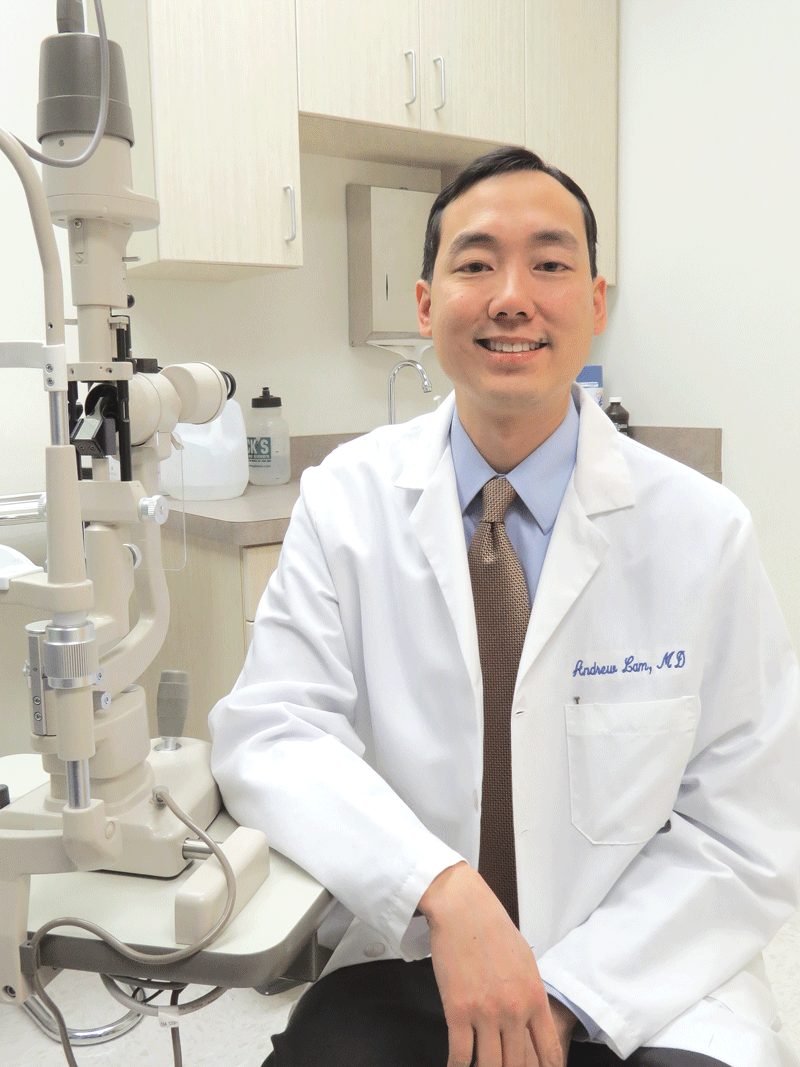
Dr. Andrew Lam
Angela Lussier
Ruby Maddox
Kevin Maltby
Andrew McMahon
Geoff Medeiros
Alex Morse
Meghan Parnell-Gregoire
Orlando Ramos
Jason Randall
Liz Rappaport
Robert Raynor
Alfonso Santaniello
Michael Schneider
Paul Silva
Michael Simolo
Noah Smith
Seth Stratton
Geoff Sullivan
Kyle Sullivan
Anthony Surrette
Jessica Wales
Francia Wisnewski

Meet the Judges — Click Here

Photography for this special section by Denise Smith Photography

Features
J. Polep Distribution Services Evolves with the Times

Jeff Polep, president of J. Polep Distribution Services

Jeff Polep, president of J. Polep Distribution Services

Stop by the Chicopee headquarters of J. Polep Distribution Services, and the first thing you’re greeted with is an old-fashioned cigar-store Indian standing beside the front door.

The adjoining office of Jeff Polep, fourth-generation president of this 116-year-old family business, is also strewn with kitschy memorabilia from the past century, but it’s that wooden Indian who tells the most significant story — one that starts with Polep’s great-grandfather launching a small-time enterprise, Polep Tobacco Co., in Salem, Mass.

“He started with candy and tobacco, but we diversified into groceries to survive,” Polep said. “Since then, we’ve kept diversifying.”

Today, J. Polep ranks among the top 12 convenience-store distributors in the country, servicing about 4,500 chain and independent retailers in New England, New York, and — most recently — Pennsylvania and New Jersey.

Much of that expansion has come in just the past several years, with the addition of alcohol products and an ice-cream and frozen-food division in 2007, and the purchase of Springfield Smoked Fish in 2011 and two Connecticut meat-processing plants, Mucke’s and Grote and Weigel, in 2012. Meanwhile, “we recently went into produce, both fruits and vegetables, and we’re carrying about 200 items,” Polep said.

All of this reflects the fourth generation’s constant focus on diversification.

“That’s where most of the growth has come,” Polep said, adding that some product additions have worked out better than others. “We’ve had exceptional growth in the ice-cream business; we sell a lot of ice cream.” Meanwhile, he added, alcohol products haven’t been as lucrative, although they do turn a profit.

In the past decade, J. Polep also launched Rachael’s Food Corp., named after Polep’s daughter. The Rachael’s line includes candy and other snack foods, but also a number of refrigerated products — from sandwiches and salads to meat products — that comprise the only foods that the Polep company produces on its own.

J. Polep also tries to find synergies among the Rachael’s products, such as putting smoked salmon from Rachael’s Springfield Smoked Fish on the sandwiches it makes in its commissary — which, like its meat-processing plants, is a USDA-inspected facility. “Anything we can cross-merchandise is pretty good for us.”

Meanwhile, the company’s salespeople, armed with iPads and other modern devices, are constantly restocking stores and tracking how each product is selling. “Our main function was always convenience stores,” Polep said, “but over the past few years, we’ve gone into fresh foods, healthy foods, natural foods. That’s been really good for us.”

Back from the Dead

Polep likes to show visitors a photograph hanging in the lobby, probably from around 1910. It shows his grandfather, Charles, standing on the running board of a truck driven by his great-grandfather, Sam. He says that photograph — and the hard work and legacy it represents — has inspired him to keep growing the company, even during dark days like the mid-1980s.

“In 1984, my father and uncle sold the business,” he said, adding that they believed the sale, to Trade Development Corp. (TDC), would bring security as well as access to the larger corporation’s expertise and buying power. They were wrong. “Within two years, the company that bought us went bankrupt.”

Polep, who managed the Chicopee operation for TDC, was determined to keep the business alive, but he had a non-compete agreement in his contract that barred him from restarting the company after TDC filed Chapter 11. After a week hashing out the issue in a Texas bankruptcy court, however, a judge released him from the contract. But that was only the beginning.

“We had to start all over again,” he said, adding that this included a name change from Polep Candy & Tobacco Co. to J. Polep Distribution Services. Many of the first employees he brought back worked for free for the first couple months, enabling him to hire about 50 more. And keep growing, steadily, for almost 30 years.

“We went from zero business to almost $1 billion; we’re over $900 million now,” he said, adding that J. Polep currently employs about 630 people, with distribution centers in Chicopee and Woburn, as well as Providence, R.I. and West Haven, Conn. “I’m glad it worked out the way it worked out. It was a lesson learned. We have a good, successful business, and we know that’s because of our employees. They’re loyal. We can’t do it without them.”

Speaking of hardships, much of the company’s recent growth coincided with the Great Recession. Asked whether those years, which impacted so many industries in the Northeast, affected his company, Polep offered a simple “yes … and no” — and for a perhaps surprising reason.

“We didn’t really get hurt too badly by the recession because tobacco items sell better when there are economic issues out there,” he explained.

While it has been a core product for J. Polep since the beginning, tobacco sales have been shaped by a number of different trends.

“There have been a lot of changes in the tobacco business alone. It’s gone way beyond cigarettes, pipe tobacco, and other tobacco products,” Polep said. “The biggest diversification lately has been e-cigarettes. Right now, we sell a lot of e-cigs. A lot.”

At a time when government taxes tobacco heavily and society increasingly frowns on its use — bans in restaurants, workplaces, and a host of other public spaces are simply making it more inconvenient to smoke — e-cigarettes, a smokeless product that uses nicotine vapor, have been widely embraced, particularly by the younger generation.

“Some people are trying to quit smoking, no doubt, and this is a vehicle that helps them achieve that result,” Polep said. “But many people are smoking e-cigs who never smoked cigarettes because it’s an enjoyment for them.”

Healthy Sales

While cigarettes — which are still J. Polep’s top product — may not be in vogue, healthy and organic food is, and the company is starting to take advantage of that trend.

“We’ve now gotten into about 450 colleges with good, healthy alternatives, all the different food groups,” Polep said. “That’s a very, very successful business — although our slow season for colleges is coming up within the month.”

That’s OK, he added, because convenience-store sales rocket up during the summer, more than making up for summer break on campuses. When the weather turns warmer, he explained, people are out driving more, and more apt to make a quick stop for a soda or a snack. “In the winter, they go to the supermarket, load up, and stick it in the fridge or freezer.”

The college crowd may be a solid market for healthier foods, but stores are following suit, he said. “A lot of convenience stores have taken on the organic and natural products we have for the colleges, and they’ve set up healthy sections. And they’re selling.”

While J. Polep has thrived by staying atop trends and making savvy acquisitions of other companies — about two dozen in the last 30 years — it’s ramping up geographic expansion as well. The most recent moves, into Pennsylvania and New Jersey, represent a significant step for the company, but a necessary one if it expects to grow in ways other than diversification.

“If you think about it, in New England, we’re on a peninsula, so we can’t really go much further — we’ll eventually run into the ocean,” he said with a laugh. “The only way we can grow geographically now is by going south to pick up new business.”

He sees the potential of J. Polep to expand beyond its current territory to become an even bigger presence in the eastern half of the U.S., but any growth will have to be gradual and sustainable. “I think it will take us a little while to be satisfied with Pennsylvania and New Jersey. But we’ve grown tremendously through acquisition over the years, so territory growth makes sense.”

The company will continue to take a multi-pronged approach to growth, especially as the recession fades into the past and competition heats up. “We did have an advantage selling certain types of products during the recession,” Polep said. “But things have gotten better, and our industry is looking for more business, so the competition is fierce.”

J. Polep doesn’t seem primed to make the mistakes of the mid-’80s anytime soon, though — not with the fifth generation so firmly entrenched. Polep’s son, Eric, who was a district manager in Boston, returned to Chicopee to learn more of the business. Meanwhile, daughter Rachael works in human resources, and his son-in-law, Adam Kramer, works in food service. They’re all interested in preserving the 116-year legacy and moving it forward, he told BusinessWest.

“And they can have it, at this point. I’m just doing it for them,” he said, expressing pride that his family has continuously grown what has become one of the nation’s most prominent distribution companies — “except for that hiccup of two years, of course.”

Distributing the Wealth

For now, he says, being president gives him something interesting to do every day until the next generation takes over, and he’s fine with that.

“It’s really simple,” he said when asked what he enjoys most about his role. “It’s something new and different every day. We have 600-plus employees, 80 drivers, 100 sales-type people — they all make business interesting and fun. I never walk into the same situation two days in a row.”

That’s easy to see, with hundreds of different products rolling off the conveyer belts every day and being shipped to thousands of destinations. J. Polep has come a long way indeed from that old, black-and-white photo in the lobby, and that 116-year-old dream of making a living selling candy and cigarettes. n

Joseph Bednar can be reached at [email protected]
Law Sections
MassMutual Steps Up Its Pro Bono Work in the Community

Mark Roellig

Mark Roellig says one of the responsibilities any business has is to give back to the community, and MassMutual’s pro bono work is one example of doing just that.

Mark Roellig was adding up in his head the number of lawyers MassMutual has working for it in Western Mass., Northern Conn., and elsewhere.

He didn’t have an exact figure, but by doing some quick math, Roellig, the Fortune 100 company’s executive vice president and general counsel, could say without hesitation that the number for this region alone would far exceed that of any law firm in the Greater Springfield area.

And if this roster of attorneys comprised an actual firm, it would have a responsibility, he said, to give back to the community in a number of ways, but especially with pro bono work for residents who cannot afford to hire legal help. It is this thought process that helps explain why, during Roellig’s eight-year tenure as general counsel, MassMutual has certainly stepped up its participation in a number of pro bono initiatives and other efforts involving its legal team.

For starters, there’s something called Just the Beginning, a week-long program during which nearly two dozen area high-school students meet with lawyers from MassMutual, as well as area judges and other volunteers, to explore the different professional opportunities within the legal profession. The week includes a networking reception at the firm’s headquarters on State Street, a mock trial, oral appellate arguments, a courthouse tour, and visits to law firms. There is also something called the Pro Bono Partnership, a clearinghouse of sorts that works to connect in-house lawyers with area nonprofits for transactional work.

But perhaps the most significant undertaking by the company has been its multi-faceted commitment to the Hampden County Legal Clinic, a legal-aid program that assists individuals at no charge who have limited financial resources and who meet specific eligibility guidelines.

Support comes in many forms — from helping those facing eviction in Housing Court to assisting individuals appealing denial of unemployment benefits in District Court — and together, these avenues provide a natural, and highly effective, way for the company’s legal team to escalate its pro bono work in the community, said Roellig.

“If you are operating as a business in a community, whether it be a major corporation like MassMutual or a law firm, frankly, you want your community to be one that’s vibrant and strong and one that attracts and retains high-quality talent,” he explained. “In many ways, Springfield has been challenged over the years, so one of the things we want to do through our law department, and in keeping with our obligations as lawyers, is to ensure that we’re adding value to the community.

“When I arrived here, we didn’t have much of a program, or any program at all, really,” he went on. “And this is something I believe in; if you’re going to do business in a community, you need to give back to that community, and our legal team has been consistently ramping up its commitment.”

The company’s support for the legal clinic, for example, takes several forms, including financial assistance after the previous sponsor opted not to continue its commitment in 2011. Indeed, a $20,000 contribution for this year will help defray the cost of a support staffer at the Hampden County Bar Assoc. (HCBA) tasked with recruiting, scheduling, and assisting lawyers taking part in the various volunteer programs, and also directing consumers to these initiatives.

But the most visible form of support has been the steadily growing number of legal staff from the company — lawyers, paralegals, and other professionals — who have volunteered for the initiatives in Housing Court, District Court, and Probate Court.

More than 20 attorneys have volunteered for the various lawyer-for-a-day (LFD) programs involving those aforementioned courts, said Dorothy Varon, an in-house attorney who is part of that group, and the total number of hours donated by staff members increased from just over 100 in 2012 to more than 400 in 2013, a trend that is projected to continue in the year ahead.

For this issue and its focus on law, BusinessWest takes an in-depth look at how MassMutual and its large legal team are working with various partners, such as the bar association, to assist the rising number of people who need free legal assistance.

Strong Testimony

It’s called ‘eviction day.’

As that name suggests, this is the one day each week (Thursday) at Hampden County Housing Court that is devoted to eviction cases. It’s a long, often emotional day for tenants and landlords alike, one where many of those present aren’t sure if they will have a roof over their head when they leave.

Roellig has volunteered his services for a few eviction days, and can provide compelling testimony regarding the gravity of what’s taking place.

“It’s an intense day,” he said, “because people are coming in with serious problems on either side, whether it’s someone who’s being evicted or someone who feels that he needs to evict someone, and they need some help.”

Assistance in Housing Court has become one of the many ways in which MassMutual has stepped up its pro bono work within the community, said Varon, one of the company’s in-house attorneys, who credited Roellig with getting the ball rolling and keeping it rolling.

“He gave us the green light to propose to him how we could go about creating a pro bono program that would be effective,” she explained, noting that a pro bono committee was formed and a mission statement drafted. “And one of the things that we concluded early on was that connecting with our local bar association would be the most logical way of creating a pro bono program without reinventing the wheel; this was a very logical connection.”

And support from the corporate giant is needed, said Varon, because, while Springfield has a large and diverse legal community, the landscape lacks the very large firms found in Boston and Hartford that provide the critical mass of attorneys needed to effectively staff the many types of pro bono programs that have been created.

“If you think about Boston or New York or Chicago, there are a gazillion lawyers at these megafirms, and there’s all this support coming from these firms — associates can do pro bono work as part of their workload,” she noted. “In a market like Springfield, where you have a lot of solos and a lot of small firms, it’s not so easy to be out there doing a lot of pro bono work. It’s a very difficult market to generate income.”

Meanwhile, need within the community for volunteer legal assistance is growing, said Charles Cassartello, an attorney with Springfield-based Pellegrini, Seeley, Ryan & Blakesley, former HCBA president, and active participant in the legal clinic.

Indeed, while the economy has improved somewhat in the past few years, he said, there has been no decline in the number of people seeking help through various pro bono programs.

And while such initiatives help provide access to justice for people of low or no income, they also play a pivotal role in keeping the wheels of justice turning, said Cassartello, noting that, when individuals decide to represent themselves in legal matters — usually because they have no choice in the matter — the pace of business slows.

“The Springfield District Court is perhaps the second-busiest district court in the Commonwealth — lots of business is conducted there, criminal and civil, and many of the people who come there are unrepresented; they’re pro se litigants,” he explained. “We wanted to develop a program in the District Court to not only assist self-represented people, but take some burden from the court.

“It’s very difficult to deal with self-represented people,” he continued, emphasizing the word very.  “It slows things down, and it can really clog the court’s docket.”

To help unclog matters, the District Court lawyer-for-a-day program assists such pro se litigants outside the court, during regularly scheduled office hours, providing help with forms, general problem-solving, and legal advice in civil matters, said Cassartello.

“They walk away with a basic notion about how to approach their case, how to put together a defense, how to make a claim, and more,” he went on, adding that those seeking assistance may also get referrals to lawyers participating in programs featuring sliding fee scales and other vehicles for providing assistance to the poor.

MassMutual’s assistance, in terms of both volunteers and funding to support an administrative infrastructure, has enabled the LFD programs to continue and ultimately assist more individuals, said Cassartello, who used the term “force multiplier” to describe the firm’s impact on HCBA initiatives.

Varon agreed.

“MassMutual can contribute in a lot of ways,” she noted. “One of the ways is with volunteers, but the other way is with resources. To support the clinic means that there’s someone in the community trying to rally all the lawyers — not just the MassMutual lawyers, but also the broader community.

“If we can support the legal clinic and the bar association, we have a much bigger impact on how pro bono services are delivered than if we we’re just sending volunteers, and that’s our basic strategy,” she went on. “It’s important to volunteer, but we also want to support this on a community level.”

Bottom Line

The goal moving forward is for the firm and the bar association to continually look for ways to add new programs and assist more people, said Varon, who described the current roster of initiatives as a “work in progress.”

“We keep trying to grow what we’re doing and improve what we’re doing,” she told BusinessWest, adding that one priority is to improve data-collection efforts, one of the keys to tracking progress and gaining additional support.

In many ways, MassMutual has helped lay the foundation for a comprehensive system of legal assistance, she said, and now the mission is to build atop that foundation.

The financial-services giant is not a law firm, Varon said in conclusion, but its legal department is determined to act like one — and work within the community is certainly a big part of that assignment.

George O’Brien can be reached at [email protected]

Sections Travel and Tourism
Six Flags New England Reaches Higher — Much Higher

By JOSEPH BEDNAR and ROBERT GEBO

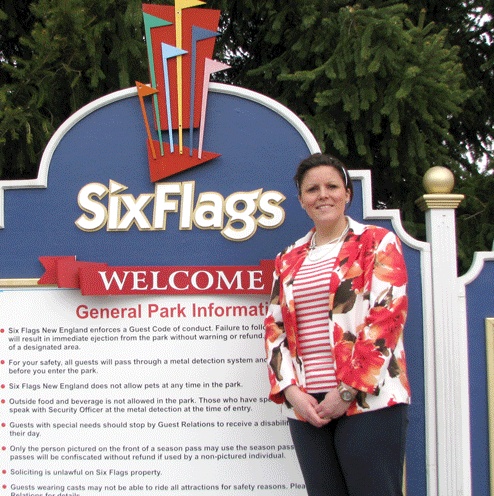
Jennifer McGrath

Jennifer McGrath says the 400-foot-tall New England Sky Screamer will take the classic theme-park swing ride to the extreme.

Just cross the South End Bridge in Springfield and look south, and it’s easy to see how Six Flags New England already towers over the Connecticut River. On a clear day, Bizarro, Scream, Goliath, and the Cyclone are clearly visible in the distance.

The tallest of those, the award-winning Bizarro rollercoaster and the Scream drop ride, reach about 200 feet into the air, offering breathtaking — and, for some riders, nerve-wracking — views of the river, Mount Tom to the north, and Connecticut to the south.

Now imagine being twice that high.

Actually, visitors won’t have to imagine once the park unveils its newest attraction, the New England Sky Screamer, this summer. Lifting patrons 400 feet up and then swinging them around for two minutes at 35 mph, it’s touted as the world’s tallest swing ride.

Clearly, Six Flags has come a long way in the 15 years since the chain acquired historic Riverside Park, adding it to its international stable of destinations, adding numerous major rides and a bustling water park, and effectively doubling the property’s size. And now, it’s touting a new height record to boot.

“It’s taking that swing ride we know and love and adding every possible element of thrill and fear into it,” said Jennifer McGrath, communications manager for Six Flags New England. “Your arms and legs are exposed in the air, your swing is on chains, just like that classic family swing ride — except this is not classic.”

The ride, which is painted red, white, and blue, will glow with color-changing LED lights at night, she added. “We don’t feel it’s just a new ride for Six Flags New England; we feel it’s a new icon, something people will identify with Western Mass. You can see it from the Springfield area and well into Enfield and Suffield. Six Flags loves breaking records, and they feel this ride is something special, and they know Six Flags guests are going to love it.”

As a prominent chain in a highly competitive industry, Six Flags is always looking to the future, mapping out a national strategy of park additions to keep the buzz high at its 13 parks in the U.S., Canada, and Mexico. Not every park gets a major addition on the level of a Sky Screamer every year, but Agawam has received plenty of recent attention, adding the Bonzai Pipeline slides in the Hurricane Harbor water park in 2013, the Goliath switchback coaster in 2012, and the Gotham City Gauntlet mouse coaster in 2011.

“It’s amazing what we’ve evolved to, and we continue to grow,” McGrath said, noting that it’s a cornerstone of the Six Flags brand to continually invest new capital in its properties.

“In true Six Flags fashion, we’re going even bigger in 2014 with our new attractions,” added Jim Reid-Anderson, the chain’s chairman, president, and CEO, in a press statement. “Our promise to you is to bring something new to every single park every year.”

Work and Play

Economic-development and tourism officials have long pointed to Six Flags New England as a major economic engine for the region. While the park, as a publicly held company, does not release attendance figures, it easily outdraws the number-two tourist attraction in Western Mass., Yankee Candle Village, which records 1.5 million guests per year.

SixFlagsGoliathSign

Six Flags officials say they’re committed to introducing something new at all the chain’s parks every year.

“Six Flags has been a wonderful neighbor to Agawam. They’re one of the top five taxpayers in the community, they work closely with all our departments, and they are a huge economic boon to the Pioneer Valley as a whole,” Agawam Mayor Richard Cohen told BusinessWest. “And it’s a regional tourist attraction, so it’s not just great for Agawam, but for the whole Valley.”

Six Flags is a significant employer as well, with more than 100 year-round employees, about half of whom work in maintenance. In the offseason, they’re busy enhancing the grounds, from new painting and signage to landscaping and structural improvements.

In addition, the park hires more than 3,000 seasonal workers annually, giving a major boost to the region’s efforts to employ high-school and college-age individuals, who are facing an historically lean market for summer jobs.

“They’re one of the largest hiring employers in the summer for seasonal purposes, which is great in these economic times,” Cohen said, referring to not only young people, but older individuals who might be unemployed or between jobs. “They really are good neighbors, and we’re really proud to have them in Agawam.”

He noted that the public ownership group that bought Six Flags in 2010 has been much easier to work and communicate with than Premier Parks, which operated the chain from 1998 until its Chapter 11 bankruptcy and restructuring a decade later. That’s important, he said, when planning a project like the Sky Screamer, which has the potential of drawing bigger crowds to the park, but is also a significant change to this small town’s skyline.

“They came to us early, in a very timely manner, and answered all our questions,” the mayor said, adding that Agawam residents were largely supportive of the project. “There were some people — not many — afraid that this would change the landscape of the area. But we already have cell towers. And they did this in patriotic colors. They took our concerns into consideration, and it was done tastefully. I have not had many — if any — complaints at all.

“Everything was done expeditiously — the public announcement, meetings, permits,” he reiterated. “They don’t wait until the last minute. Since the new regime took over, they work well on the local level, answering the concerns that people have. The relationship is much healthier, and communication has been much better.”

That’s not to say the park hasn’t been growing all along. Since becoming a Six Flags property in 1998, it has introduced a raft of thrill rides, including Bizarro (formerly Superman: Ride of Steel), winner of five Golden Ticket Awards from Amusement Today as the nation’s top steel coaster, in 2000; Flashback, a switchback coaster, also in 2000; Batman: the Dark Knight, a floorless coaster, in 2002; Pandemonium, a kid-friendly spinning coaster, in 2005; and, of course, the recent additions.

Meanwhile, Hurricane Harbor, which now totals 33 waterslides in addition to a lazy river, two wave pools, and other watery fun, opened in 1998 as part of the Six Flags makeover.

The entire property now comprises more than 270 acres, and ranks as both the largest amusement park and largest water park in New England.

Food for Thought

Other recent changes are less flashy, but are significant to many patrons. For example, McGrath said, restaurant menus will add food items, including more vegetarian fare — a shift that guests had been asking for. Once again, the park will offer a $99 dining plan along with its popular season-ticket options, allowing guests one lunch and one dinner per visit throughout the season.

As for the season tickets, they are priced at different tiers — higher tiers include free parking all year, among other amenities — but tend to pay for themselves within two or three visits, making Six Flags an affordable recreation option for area families, McGrath said. That’s important in a stressed economy, when many families can’t afford to fly to vacation destinations. “This is a day trip for anyone, all the way up to Maine — down to Pennsylvania, even.”

Many of those visitors are parents and grandparents taking their kids to Six Flags and sharing their fond memories of Riverside Park, which existed as an amusement park alongside the Connecticut River for about 90 years.

Some relics remain on the grounds, McGrath said, from the 1909 carousel to the antique automobiles that rattle along a metal track and give youngsters the chance to experience driving a car. Then there’s the Thunderbolt, the 1941 wooden coaster — standing 70 feet tall and traveling up to 40 mph — that has been called a landmark by American coaster enthusiasts. Six Flags preserves rides like this, McGrath said, because the company understands the special memories they have for many.

No matter what a ride’s age, she noted, maintenance teams check each attraction daily, often from as early as 5 a.m. “Our staff is diligent in regard to checking safety, and it’s a main focus — before the park opens, during, after, every potential minute for our guests, it’s a thorough process.”

Besides its obvious link to families, Six Flags involves itself in the community through charity events as well, working with more than 3,000 organizations annually across its 13-park footprint. Locally, that includes school-supply drives and coat drives for children, as well as Cause for Paws, an event that raises money for the Dakin Pioneer Valley Humane Society, and an annual skin-cancer-awareness event.

But the main buzz right now is clearly on the rides, which opened to their first guests of the 2014 season on April 12. New England Sky Screamer will open a bit later in the season, and though it’s expected to be a hit, it won’t be the last one, McGrath said.

“Right now, we are well into the planning process of 2015, even though we are executing 2014,” she told BusinessWest. “When it comes to building a new attraction for the park, we listen to our guests, of course, and what they would like to see in the future. We want to entertain those of all ages.”

After all, at the end of the day, it’s all about reaching new heights of entertainment — literally and figuratively.


Joseph Bednar can be reached at [email protected]
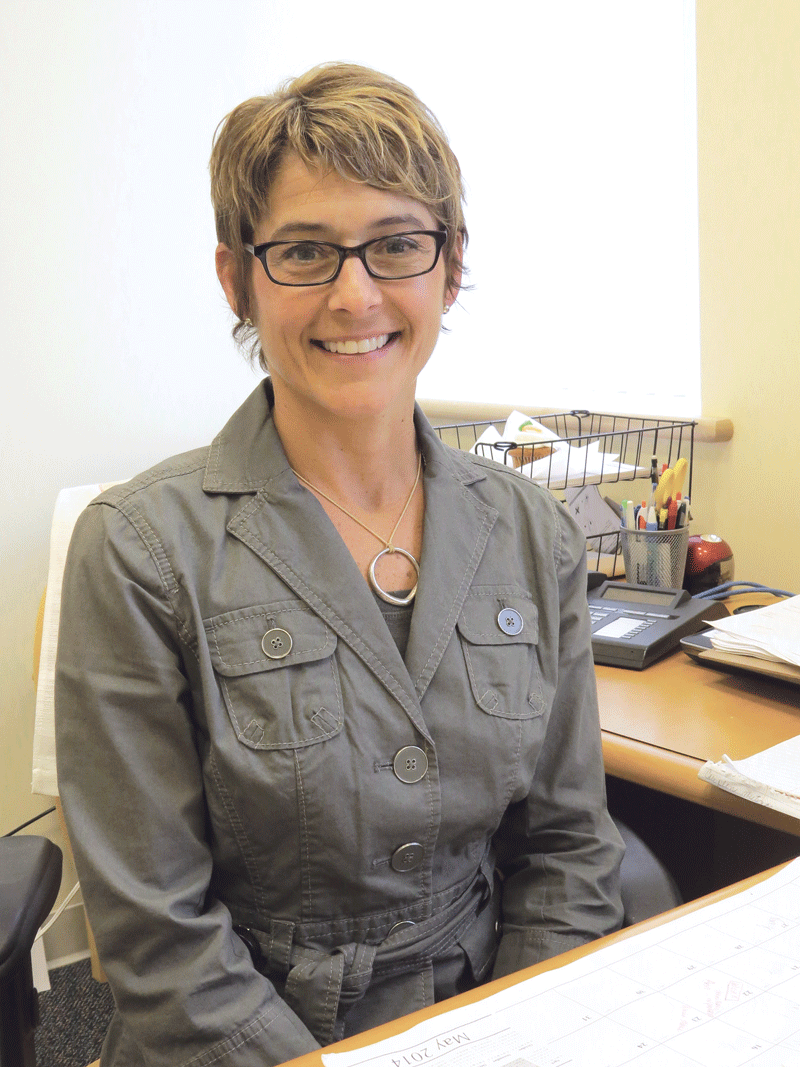
Cover Story
Holyoke Blue Sox Reach for the (Future) Stars

COVER0414aHunter Golden is living the baseball dream. A dream that seemed unattainable when he actually, you know, played the game.

“I was a terrible baseball player. I was a pretty good athlete, but a terrible baseball player,” he said of his days in youth sports. “I wasn’t bad — I was brutal. I felt bad for my parents having to watch.”

Which is why his new role — as general manager of the Holyoke Blue Sox, hired last year by the team’s new owner, Clark Eckhoff — is more than a little surprising.

“Baseball has always been this mistress of mine since I was young,” Golden said. “It’s weird — baseball was always a source of conflict in my life. My dad was a diehard Yankee fan and owned season tickets; I was a Red Sox fan. My dad was great at baseball, and I stunk. I mean, I was indescribably bad, but I was always chasing it, trying to beat it.”

is ascension from sports blogger to upper management of a team in the New England Collegiate Baseball League (more on that later) is just one of many brainstorms wrought by Eckhoff, who previously owned the Wausau (Wisconsin) Woodchucks of the Northwoods League for 13 years, and was looking for a change when he bought the Blue Sox last summer.

“I saw this as a huge opportunity, based on the market and the great baseball culture here,” Eckhoff told BusinessWest. “My wife likes the New York area and the East Coast, and all our kids are in college but one, so we saw it as a different challenge, a new adventure. We’re going to grow this thing, and it’s something that’ll be really special for fans throughout the Pioneer Valley.”

To do that will require a significant boost in the team’s profile. “The biggest thing is, you have to promote the product. A lot of people in the Valley don’t even know we’re here,” he said.

MacKenzie Stadium

MacKenzie Stadium, adjacent to Holyoke High School, has been the Blue Sox’ home since 2007, and will host the NECBL All-Star Game in July.

“We’ve got to get people exposed to the product and see how affordable it is,” he continued. “Not only that, but our players are accessible; you can get autographs. Hey, your son might be getting the autograph of a future major-league baseball player. The product is very good, but we’ve got to bring it all together.”

The summer league — which attracts elite collegiate players from across the U.S. to play a 44-game schedule from June into August — has plenty to recommend it, Eckhoff said. “We’re getting the best kids in the country, but we also make it about entertainment, with giveaways and on-field promotions. In minor-league baseball, 80% of the fan base is coming out for an affordable family night.”

He and Golden believe that fan base is largely untapped — after all, Springfield remains the largest metro area in the country without a professional baseball team — and have some ambitious plans to make the Blue Sox more of a household name.

Cream of the Crop

Peruse the 30-man Blue Sox roster, Golden said, and you’ll see schools like Cal State-Fullerton, Miami, Vanderbilt, and other top baseball universities represented.

BlueSoxAllStarLogo“They’re the cream of the crop, the best guys out there,” he said, noting that two of the last five number-one major-league draft picks — Stephen Strasburg in 2009 and Mark Appel in 2013 — played in the New England Collegiate Baseball League (NECBL), as did notable lights like Andre Ethier, Andrew Bailey, Joe Nathan, Craig Breslow, Chris Ianetta, and scores of others.

“It’s a tremendous opportunity for these guys to really showcase their talent in a professional setting. Major League Baseball is a big believer in our product and the caliber of players we bring,” he said. “Watch the College World Series, and chances are you’ll see half our roster.”

This year, the team is heavily promoting catcher Max Pentecost, a Kennesaw State University junior who’s projected as an eventual first-round, top-20 major-league draft pick. “That’s how good these guys are. They’re no joke. We see 19-year-olds throwing in the mid-90s, hitting the ball 400-plus feet. They’re prodigies, and this is where they come to showcase themselves.”

Pentecost played for the Blue Sox in 2012 before spending last summer in the Cape Cod Baseball League, one of Holyoke’s main competitors for talent. But Golden noted that, while the CCBL may be a higher-profile league, the NECBL, with its longer road trips, offers an experience more reflective of the minor-league life. “We sell that to the players — it’s more of an opportunity to come and develop themselves professionally.”

And the professional baseball life is, despite its perceived glamor factor, a real job, he explained. “These guys get to the clubhouse at 9 in the morning, and they’re reading scouting reports, data reports, understanding the math, learning the pitching staff, how fast they throw, each pitcher’s arm slot — they’ve got to memorize all that stuff. They deal with injuries, they deal with the media … there’s a lot in a baseball player’s day.”

Other collegiate summer leagues across the country offer bigger stadiums and more fans, which can be seductive, but the NECBL has a reputation for taking seriously the job of preparing young men for professional ball — and the risk that career path entails.

“A lot of these kids turned down a lot of money to stay in college and get their degree. They’re coming to a collegiate league to advance their career and work toward a college degree,” Eckhoff said — a smart move for most, he added, since only 3% of all players who enter professional ball ever reach the majors. “It’s smart to at least graduate before entering the minor leagues; it’s a tough road.”

If the Blue Sox do their job with scouting, he added, fans will see more than one future major leaguer in action. As for recruiting, he said he enjoys the networking side of that important task.

“With me being older, it’s easier for me to pick up the phone,” he said. “I know the coaches at Fullerton, Stanford, Oregon, and the coaches trust me; we have a good relationship. They know the kids will have good host families and will be taken care of well.”

Those families, who volunteer to share their homes with the collegiates, are a key component in the success of a team, Eckhoff added. “I knew a lady in Wisconsin who hosted three or four players a year, over 18 or 19 years. She had a wall with [photos of] 70-something players who stayed with her. She stayed in touch with them, even flew to a wedding in Texas. That was incredible. It almost becomes like an extended family.”

Blogger Rhythm

Meanwhile, Golden’s path to professional baseball came through a relationship not with coaches and players, but with numbers.

After his washout as a player, he found some measure of satisfaction in sabermetrics, an innovative way to analyze a baseball player’s potential by crunching his in-game performance into, essentially, hard math. While Michael Lewis’s bestseller Moneyball brought the concept into the mainstream, a core of number crunchers led by the original sabermetrician, Bill James — whose newsletters Golden read meticulously — had long been touting new ways to measure performance.

Clark Eckhoff

Clark Eckhoff says his goal is to spread the word about the high quality of play and affordability of a Blue Sox game — and he’s confident that people will come.

That was a little odd, Golden conceded, since, as a child, he was a straight-A student — except in math, where he earned Ds. “Essentially, I got involved in two things I wasn’t good at — baseball and math — but they coalesced because of Bill James.”

In terms of impact, Moneyball was a “nuclear bomb” on the baseball-management scene, he said, although Athletics GM Billy Beane, the focus of that book, was hardly the first to put sabermetrics into practice. “But he was one of the first to be vocal about it and be successful with it.”

After graduating from Springfield College, Golden launched his own copywriting business, which morphed into a marketing consultancy, working with several national clients. But because he was passionate about baseball and sabermetrics, he started a blog on those topics in 2007.

“My friends really liked it,” he said. “Then Twitter came around, and Twitter turned into a gigantic barroom for baseball dorks. One thing led to another, and my work got noticed by ESPN, which had me come on board with their SweetSpot blog.” Appearances on outlets like the Sports Hub radio station in Boston raised his profile further, which attracted the attention of Eckhoff, who asked Golden to serve on a community-advisory board after he purchased the Blue Sox.

“He heard about me through the grapevine of local baseball dorks and brought me to the table,” Golden said. “We hit it off, and after three or four conversations, we got together for lunch, and he offered me the job.”

It was a big deal, he added, because the world of baseball management, a classic old-boys network, is a notoriously tough nut to crack for job seekers. “I always thought of the MLB employment site as a place they just stash résumés.

“It’s weird, though; once you’re in, you’re in,” he added, recalling sitting down in Dallas and chatting with former Yankees bullpen coach Dom Scala — who told stories about Billy Martin, Reggie Jackson, fights in the locker room, and humorous run-ins with George Steinbrenner — like the two were old pals.

And he loved this world, dealing for the first time with flesh-and-blood players and not just numbers — and in a much different way than, say, the management of the Springfield Falcons, the American Hockey League affiliate of the Columbus Blue Jackets.

“I think where we’re different — and, from a greedy standpoint, where it’s fun for me — is that we have a significant baseball-operations component to what we do,” Golden said. “With the Falcons, the Blue Jackets say, ‘here are your players; don’t break ’em.’ Ultimately, at the end of the day, the parent club dictates who the players are going to be. Here, we identify and recruit players we like for next year’s team, and our roster turns over year after year. We’re constantly in player-acquisition and analysis mode based on objective data, sabermetrics, and scouting.

“The challenge in this league is to win now; we have to get players who are good now,” he added. “It’s very easy to get seduced by prospects with a little more talent, who may be better off down the line.”

Even some very good players, unfortunately, reach their end in college, never even making it to single-A ball. “A lot of kids come here batting .340 in college and can’t hit with wood bats, and their career goes up in smoke,” Eckhoff said. “It happens. One kid came in and lost 140 points in one year.”

Race to the Top

The key to the team’s success, Golden said, is to take player development seriously, but also understand that families that show up at MacKenzie Stadium, near Holyoke High School, want to have a good — even silly — time.

“Our core product is baseball, but really, at the end of the day, we’re family entertainment,” he told BusinessWest. “We have the goofy promotions — the dizzy bat races, the sausage races — but also serious stuff, like recognizing community heroes and a Rays of Hope night. Just like a minor-league franchise, that’s ultimately what fans come back to see.”

Families with children are a key demographic, he said. “It’s expensive to see the Boston Red Sox. Between tickets and parking, before you even get in the park, you’re out $150 for a family of four. Then it’s $50, $75, maybe $100 more to feed everybody, then you drive all the way home.”

With Blue Sox tickets priced at $4 and $6, it’s a more manageable financial proposition. “You can bring $35 bucks to the park and have a really great time with your family,” Golden said. “We’re even cheaper than the movies, and you can be outside talking to each other. It’s an outstanding value for families.”

Meanwhile, the team is making an effort to be more visible in, and involved with, the community. “We’re working closely with area nonprofit organizations. We want to bring as many to the park as possible this year, and have ballplayers and the mascot at events. We’re going to have a nonprofit or two at the stadium every game this season. The community impact that has is substantial.”

The team is planning to get kids involved more as well, bringing them on the field for the national anthem, making players accessible for autographs, and conducting a summer baseball clinic.

In another move that makes sense in Holyoke, Golden said, “we’re aggressively courting the Hispanic and Latino market, which, from a sports standpoint, has gone mostly untapped here. That’s a baseball-crazy culture, and we’ve got a great opportunity to market to them.”

Whoever comes to the games, the idea is to show them a good time, Eckhoff said. “Every home game, we’ll have a different promotion, whether it’s a T-shirt giveaway or a bobblehead or something else. And our concession prices are more affordable. We’ll have dollar-hot-dog nights.”

He recalled one promotion in Wausau called the ‘chicken chuck,’ where fans tried to toss a rubber chicken back and forth and catch it in a frying pan. “You have 90 seconds between half-innings to show them something enjoyable; it could be a T-shirt toss or a chicken chuck. And they remember that.”

Added Golden, “if you wait two weeks after a game and ask a fan who attended the game what he remembers, it won’t be the players or the score, but they will remember the chicken chuck.”

Eckhoff was doing something right in Wisconsin. When he bought the Woodchucks in 1999, the team was drawing some 600 fans per night. By his 10th year, attendance averaged 2,000. He attributes that to the team getting the word out about the quality of play — about 15 of his players eventually made the majors, including Ben Zobrist — but the fun factor as well.

Stars Aligned

The New England Collegiate Baseball League has experienced similar growth since its founding in 1993 by former MLB Commissioner Fay Vincent. It began with four teams and eventually expanded to 12.

“That’s slow, sustainable growth,” Golden said. “That’s playing for the long game, and the caliber of baseball has continually gotten better over the years. More than 150 major-league players have come through the league, the lion’s share in the last 10 years.”

The Blue Sox, who began in 2001 as the Concord (N.H.) Quarry Dogs before relocating to Holyoke in 2007, have seen ups and downs of their own, but the new ownership believes a largely untapped base of potential fans is waiting to support quality summer baseball in the Valley — and that attendance, currently averaging about 1,000 per game, will follow. Hosting the league’s All-Star Game on July 20 is just one more draw.

“Our goal this year is to establish a real, genuine presence in the region and let people know we’re here,” Golden said. “We’re committed to the region, and we’re going to make this thing work.”

In the end, the numbers won’t lie. They never do. Just ask any sabermetrics dork.

Joseph Bednar can be reached at [email protected]
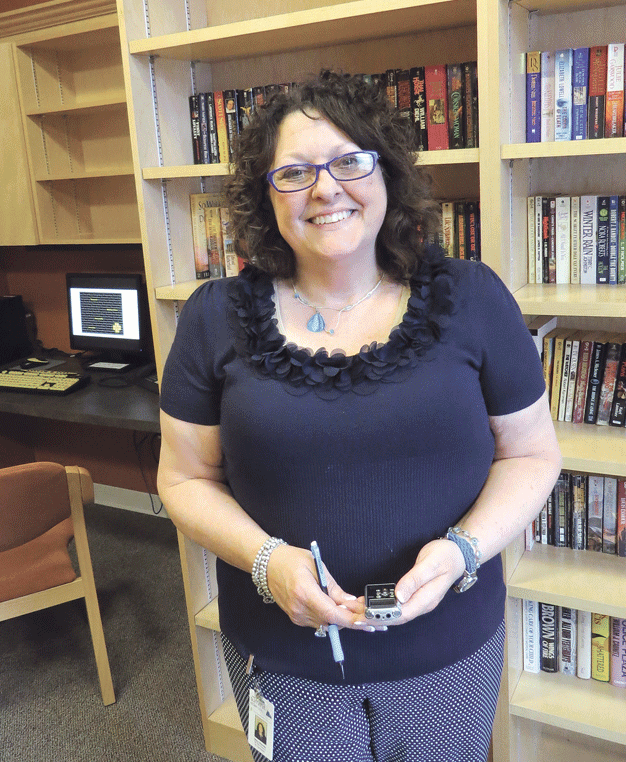
Sections Sports & Leisure
Cautious Optimism Prevails as a New Golf Season Gets Underway

GolfDPartDave DiRico hadn’t been in retail for very long — just over two years, actually — but that was long enough to know that something unusual, and perhaps historically bad, was going on.

“January was terribly slow,” said the former club pro turned owner of Dave DiRico’s Golf & Racquet in West Springfield, formerly Fran Johnson’s. “And in February, we were closed for seven days due to snowstorms; it was tough.”

Like area car dealers and others in the retail sector, DiRico was feeling the effects from an interminably long, brutal winter, one in which consumers mostly stayed indoors and kept their wallets in their pockets.

But when the calendar turned to March, said DiRico, people started coming out again. And then, Golf Digest printed its annual “Hot List,” a rundown of the year’s new equipment, with the TaylorMade SLDR driver earning five stars in each of four categories, something that had never happened before.

“The Hot List comes out the first week in March, and people really pay attention to that,” said DiRico, adding that, while the SLDR has been his best seller this spring, many lines are moving, people are replacing equipment they bought from him just two years ago, and, overall, he’s off to his best start to a year.

He and others are choosing to view these early signs as harbingers of what could be a turnaround year for an industry that has seen the adjective ‘beleagured’ attached to it for the past several years.

“I don’t know where golf is going in the years to come — I don’t think anyone does, and that’s the big question, “ said Ted Perez Jr., long-time pro and co-owner of East Mountain Country Club in Westfield, a public facility. “I’m optimistic, but that’s my nature, I’m always optimistic.”

But there are still a number of challenges remaining for an industry that has never fully recovered from the recession that started six years ago, and has endured several difficult seasons weather-wise, with everything from tornadoes to heavy rains to last summer’s prolonged heat wave, and is still in a state of flux.

And for Perez and several other owners and operators, the new year is already off to a slow start.

Dave DiRico

Dave DiRico says golfers have a good case of cabin fever, and that could translate into stronger sales for his store and a solid start to the new season for area courses.

Indeed, East Mountain, famous for being open whenever the ground is clear of snow, is usually open by St. Patrick’s Day, if not before, and has long stretches during winter when the course is playable. This year, the track was open just a few days in January, due more to cold than snow, and also on Super Bowl Sunday. “But things turned south in a hurry after that,” said Perez. The official opening was March 28, and the next three days saw torrential rain, heavy winds, snow, and sleet.

Most area courses are looking to open on or about April 10, putting them somewhat behind schedule at a time when there is little margin for error, as competition for what has become a stagnant, if not declining, pool of area golfers has intensified and area clubs have turned to discounts and promotions to bring people to their first tees.

And some believe these specials are making it more difficult for area courses because the buying public has becoming increasingly less willing to pay full price, and a time when margins are tightened and expenses are spiraling.

At the Ranch Golf Club in Southwick, one of the region’s high-end, semi-private layouts — greens fees average $100 — long-time pro Hope Kelley has seen people arrive at the pro shop looking for bargains, and sometimes getting back in their cars if they can’t find one, something that just didn’t happen years ago.

“People will come in and say, ‘what’s the real rate for today?’ It’s like Hotwire nonstop,” she said, referencing the website that helps consumers find cheap deals on flights, hotel rooms, and travel. “Unfortunately, that’s pretty much taken over the whole golf industry, just as it’s infiltrated into the restaurant business and the recreation business, and it’s a tough thing.”

Dave Fleury, managing partner and leader of a group that acquired Crestview Country Club two years ago (see story, page 26), agreed, and said the discount pricing and various coupon books that enable golfers to get rounds at many area courses at substantially reduced rates, while good for consumers, are in some ways hurting the industry.

“Golf, as an industry, is going through a very interesting time, and with some of the things that are happening, like these deals, whether it’s one of these Internet companies or these cards or books, they’re almost creating the feel that golf is a commodity,” he explained. “And, in fact, golf is not a commodity. Every property is so very unique, every course is so unique; they all have their strengths and weaknesses, and some are more fun to play than others, and some are better-conditioned than others. This is not a commodity.”

For this issue and its annual golf preview, BusinessWest looks at projections for the season ahead and at the many challenges that continue to face area club owners and professionals.

Rough Going

Perez, who has spent most of his life working at the course his father carved out of the hills just east of Barnes Municipal Airport more than a half-century ago, said he used some of the considerable downtime from this longer-than-normal offseason to look at some recent numbers, especially last year’s, and attempt to decipher what they were telling him.

The first part of the assignment was rather sobering.

“The numbers [of rounds and overall revenues] from 2010 to 2013 were dramatically lower,” he said, adding that, while this was not a news flash, the extent of the decline was more excessive than he’d anticipated. “And last year was an off year; the number of outings was the same, but overall, play was down.”

Ted Perez Jr.

Ted Perez Jr., the pro at East Mountain Country Club, says the trend toward deep discounts and specials is making things more challenging for area courses.

As for the reasons why, he said there are many, and they include the weather — lots of rain in the spring and hot, muggy weather through July — as well as the lingering recession and, for East Mountain, problems with three greens (6, 12, and 13) that were damaged in the application of an herbicide during the summer.

But he believes numbers are down industry-wide. “Anybody in the golf business who says they had a good year last year is flat-out lying,” he said with a strong dose of confidence in his voice. “Nobody had a good year.”

Kelley said volume was down at the Ranch last year, and weather was a big reason reason why. She said a good fall helped rescue the season to some extent, but business was off probably 2% to 4% for the region as a whole, and the Ranch’s numbers were in that ballpark.

The question now becomes, will it get better in 2014? The quick answer is usually ‘yes,’ but with the typical caveats, with weather at the top of the list.

“In this part of the country, about 80% of our revenue has to be made in a five-month period — the second week in April to the second week of September,” said Perez, noting that, while early fall saw good weather last year, many players had put their clubs away by then. “It’s during those five months that you’re at full capacity, there’s more daylight, the leagues are playing. This is when you have to do it, and in recent years, we just haven’t been doing as well.”

By ‘we’ he meant East Mountain, but also the industry in general. He said the recession is still a factor, but the bigger issues are stagnancy in the number of players and relentless competition for consumer dollars.

That competition has led some clubs to take what Fleury called “desperate measures,” such as deep discounts on everything from individual rounds to club memberships, with some positive results short-term, but real question marks about the long term-impact.

“Golf is going through the unfortunate circumstance of having to deal with a really poor economy,” he explained. “And in a poor economy, people may do things from a general business sense that they wouldn’t do otherwise because they feel forced into it, and I think that’s what we’re seeing.”

Kelley said the “Hotwire mentality,” as she called it, presents challenges, but also some opportunities, especially during off-peak times of the day and the season.

“You have much longer days in summer, so there’s more inventory you can sell,” she told BusinessWest, adding that the Ranch does offer what she called “qualified promotions” (she doesn’t like to use the term ‘discount’) to help fill the tee sheets and expose new audiences to the course.

But Perez clearly doesn’t like the way things are trending.

“I think the golf industry in this area is hurting itself by running too many specials, at least low-priced specials,” he said. “The golf ‘passbooks’ that are going around are hurting the business; they’re lining some people’s pockets, but they’re not helping the golf courses.

“These things cheapen golf in the area,” he went on, “and it schools everyone to think they should be able to play for $12 — golf, cart, lunch, dinner, and more. It’s gotten out of hand, and that’s why you’re seeing fewer clubs in this area take part in these anymore.”

The discount pricing and intense competition challenges all clubs, public or private, because it forces them to maintain current pricing levels even as the cost of doing business continues to rise, with everything from payroll to insurance to fertilizer.

“Any business shows that, if your expenses go up, you are supposed to pass that expense on to the consumer, somehow, some way,” said Perez, who is nothing if not candid and outspoken about what he’s seeing in his industry. “And that means going up a dollar or a half-dollar on greens fees. But you can’t do that anymore, because if you do, people will go down the road to the guy who has a better special.”

Recovery Shots

Moving forward, club pros and owners we spoke with said their facilities have to become proactive, aggressive, and imaginative when it comes to operating their courses, bringing players to their pro shops, and introducing the game to various audiences, especially women and young people.

“To me, golf is very healthy,” said Kelley. “We have a goal within the PGA of America to try to grow the game and get more people to play the game; golf is still a very popular sport, and golf professionals across the country are doing their best to offer programs that appeal to the masses.

“And that’s what I want to focus my energies on,” she continued. “At the end of the day, if we can bring more people to the golf course, that’s what really matters.”

Elaborating, she said the challenge for individual clubs, and the industry as a whole, is to do more than just bring people to the club. The focus must be put on what she called the “experience,” and getting visitors to return — to that club or another one.

“The glass is half-full as far I’m concerned, not half-empty,” she went on. “I’m optimistic that there will be a lot of people playing golf. Yes, there are a lot of courses competing for players, but I’m rooting for everyone — I don’t care if you’re a muni (municipal course), private, or public. At the end of the day, it’s all about the game of golf.”

Perez summoned that well-worn phrase ‘thinking outside the box’ to sum up the challenge, adding that, in some cases, it means going back to basics, such as with customer service and marketing.

He noted that East Mountain was one of the first area courses, if not the first, to market itself extensively, especially through cable television, and also one of the facilities to see a dramatic benefit from such exposure.

“My dad said we should be doing advertising on television,” he recalled, adding that this was in the ’80s, cable was still in its relative infancy, and the notion of the courses taking to the airwaves to promote themselves was a novel concept. “It really made a hell of a lot of difference; we went from being a little busy to a lot busy in a year.

“When we first got into it, our brand-new ad was being shown at 2:30 in the morning on CNN,” he went on. “But we learned how to do it. And when your ad is in the middle of a golf tournament on the Golf Channel or one of the networks, you’ve got a captive audience; that’s going to reach a lot of people.”

Beyond marketing, the club will look to continue to find ways to control and cut costs without impacting the quality of the experience, and create repeat business.

“You have to make the most of the opportunities that you have to show people a good time and make them want to come back,” he said, speaking for everyone in his business as he did so.

Driving Force

As he talked with BusinessWest about his start to the year and thoughts on what happens next, DiRico kept referring to what he called an “improved forecast.”

Initially, he was talking about weather, and how, after roughly 15 weeks of misery, the mercury was ready to soar past 40 — and stay there.

But he was also talking about projections for the industry as a whole.

This business has been playing out of the rough for several seasons now, and its score, the bottom-line results, clearly show it. Challenges, and many of them, remain, but there are indications that the industry’s lie, and its fortunes, might be improving.

George O’Brien can be reached at [email protected]

Health Care Sections
Noted Eye Surgeon Andrew Lam Shows He Has the Write Stuff

Dr. Andrew Lam

Dr. Andrew Lam’s twin passions for eye care and history have helped him carve out a unique niche in both fields.

China 1944: American lieutenant David Parker and Communist guerilla Lin Yuen have nothing in common except a common enemy — the Japanese. When fate brings them together for a dangerous assignment behind enemy lines, their clashing convictions threaten to derail the mission. But the battles they fight, the horrors they witness, and the brotherhood they forge ultimately transform them both.

That’s a passage off the book jacket of Two Sons of China, a novel penned by noted retinal surgeon Dr. Andrew Lam. The language is typical of that used by publishers to compel readers to turn some pages and buy the book, and it explains what this historical novel is all about.

But that excerpt doesn’t begin to convey the passion that Lam has for history, military history, World War II, and especially the usually forgotten theater of that global conflict — the war in China.

“I wrote this because I wanted more people to know what happened in China during World War II,” said Lam, who studied history as an undergraduate at Yale but was ultimately swayed to enter the medical field by the seemingly countless stories of the life-saving exploits of his father, a cardiologist (more on those later). “A lot of people don’t know that thousands of Americans served in China during the war and that millions of Chinese died; China actually served a very important role in the Allied victory, yet few seem to know the story.”

Telling it, or at least part of it, through this saga based on true events has become the latest chapter in an intriguing and newsmaking career, one that has put Lam’s name together in the same sentence with the phrases ‘distinguished ophthalmologist’ and ‘bestselling and award-winning author.’

cover_savingsight

Dr. Andrew Lam’s first published book blends the history of eye-care innovations with his own personal experiences, while his latest work explores the often-forgotten Chinese theater of World War II.

Dr. Andrew Lam’s first published book blends the history of eye-care innovations with his own personal experiences, while his latest work explores the often-forgotten Chinese theater of World War II.

Those latter honors were earned with his first published work, Saving Sight, subtitled  An eye surgeon’s look at life behind the mask and the heroes who changed the way we see. It’s mostly about science and developments such as refractive surgery and treatment of wet macular degeneration, but there is also a lot of history, such as in the stories about Louis Braille and his language for the blind and Harold Ridley’s invention of the intraocular lens and how it took nearly 30 years to come into use.

And they’re told with heavy use of the first person, which gives such weighty subjects and 15-letter words a needed personal touch.

“I told my agent I wanted to write a book about the heroes of ophthalmology,” he recalled. “And she said, ‘that’s fine, but nobody’s ever going to buy that book, because only nerdy ophthalmologists would buy a book about medical non-fiction like this.’ So I decided I had to do something to make it more marketable, to make it more interesting, to make people want to pick up a book about medical history.”

That something turned out to be his decision to blend his own experiences training in surgery, a tactic that helped the book, which came out nearly a year ago, greatly exceed his publisher’s expectations, become a bestseller on Amazon, and earn awards from the London Book Festival and the New England Book Festival, with more competitions to come.

Two Sons of China was actually finished before Saving Sight, but it took Lam’s agent more time to find a publisher for that work. The novel was released in December, and early sales have been promising.

Meanwhile, Lam is hard at work on his next project, a detailed look at the famous 442nd Regimental Combat Team — the unit of Japanese-American soldiers that fought in Europe during World War II while many of their families were held in internment camps in the U.S.

For this issue, BusinessWest talked at length with Lam about his twin passions, and how they both might be considered volume businesses.

Novel Ideas

The lobby at New England Retina Consultants looks like most other medical waiting rooms, with rows of seats, assorted magazines on a table near the front, and staff members taking information and calling out patients’ names.

What sets it apart are all the framed newspaper clippings about Lam and his books and signs alerting visitors that signed copies of these works are available for purchase.

The juxtaposition of these items speaks to how effectively Lam has been able to blend his passions for medicine and history rather than choose one over the other.

How he’s managed to do that is an intriguing story, one that begins in Springfield, Ill., where Lam grew up and received almost daily reminders about how respected, and revered, his father was in that community, famous as the birthplace of Abraham Lincoln.

“I’d go to the mall or just walk around the city, and people would stop me and say, ‘your dad’s a great doctor; he saved my life or the life of a loved one — are you going to be a great doctor like your dad?’” he recalled. “These kinds of experiences left an indelible mark on me; they showed me that being a physician could be a very gratifying thing. He had a very gratifying career, and you can’t help but be influenced by that when you’re growing up.”

So strong was that influence that Lam put aside any thought of doing graduate work in history and instead went to the University of Pennsylvania Medical School, where he quickly focused on surgery, which fit his personality — “I like to fix things; I like to do things and see if I can make things better” — and the eye.

“I felt that sight is so important to everybody, so ophthalmology was the perfect fit,” he said, adding that, 10 years after graduating from Yale, he completed a fellowship at the prestigious Wills Eye Hospital in Philadelphia and then joined New England Retina Consultants in Springfield, where he saves patients’ sight on a daily basis.

He treats a number of conditions, including retinal detachment, macular degeneration, and diabetic retinopathy, and told BusinessWest that the work is extremely rewarding because of the seriousness of those problems and the ability to greatly improve quality of life by providing solutions.

“The people I treat have serious eye problems — if other eye doctors have a complication, they will often call on us to help them,” he said. “But the flip side to this is that it’s very gratifying to try to help people, because we’re talking about their vision.”

But while Lam was certainly excelling in his chosen field, his passion for military history — and, more specifically, U.S. involvement in Asia during various 20th-century conflicts — never left him, and he began looking for ways to express it. He found one in his desire to relate a little-known chapter from the forgotten Chinese theater of World War II — an operation known as the Dixie Mission.

This was the first effort on the part of the U.S. to establish official relations with the Communist party of China and the People’s Liberation Army, led by Mao Zedong, which was then headquartered in the mountainous city of Yenan.

“During the war, Americans supported Chiang Kai-Shek’s nationalist government in Chungking,” he explained while turning to a map in his book. “But he wasn’t the best ally because his government was very corrupt and inept, and they weren’t really interested in fighting the Japanese — they wanted to hoard American weapons so they could use them in the future civil war with the Communists.

“So the Americans were very frustrated because they wanted to fight the Japanese,” he went on. “They later learned about another group of Chinese in the north in Yenan. It turned out that these were Mao’s Communists, and at this point we had no idea they would be the future leaders of China; these were just agrarian reformers who were also fighting the Japanese even though they hated the Nationalists, and there was basically a separation.”

The name Dixie Mission stemmed from how Americans viewed the Communists as rebels, not unlike Southerners during America’s Civil War, said Lam, adding that U.S. forces joined the Communist guerrillas on a mission behind Japanese lines. Accounts of this mission provided inspiration for the book, but Lam chose fiction to make the subject more entertaining for the reader.

“My goal is help people learn about the war in China,” he explained, “but I thought personally that it would be fun to write an exciting, action-packed, emotional war novel that would entertain people.”

The Latest Word

While his agent was shopping Two Sons of China, Lam shifted his focus — both literally and figuratively — to a different kind of hero: pioneers in eye care.

He said Saving Sight was inspired by the groundbreaking developments in ophthalmology and a desire to retrace some of the steps that laid the groundwork for these advances.

“We can take out cataracts in minutes, we can do Lasik surgery, which yields instant, glasses-free 20/20 vision, and we’re even starting to implant retinal microchips that can return some sight to the blind — it’s FDA-approved, but we haven’t started doing it yet,” he explained. “These are amazing things that we do, and I started thinking, ‘how did all this come about — who invented them?’

“What I learned were these stories of the heroes of my field,” he continued. “And these are incredible stories — they have the components of a Hollywood movie; there’s perseverance, serendipity … a lot of these people were ridiculed for their ideas for decades before they came into acceptance. I knew I wanted to write a book that shared all that.”

And Saving Sight is something quite unique in literature, he went on, adding that no one in the profession had written a memoir on what it’s like to be an eye surgeon, and it’s clear from the first year’s sales volume that the market was ready for one.

But as he tapped on the cover of Two Sons of China, Lam noted that fiction in general, and even historical fiction, is something much different.

“There’s a lot of competition in fiction,” he said, adding that, to stand out, a work of historical fiction must both inform and entertain. He believes Two Sons of China achieves that mission, and that his latest project involving the 442nd, called Repentance, will follow suit.

“Asian Americans know about the 442nd; it’s famous for us,” he told BusinessWest. “But not enough Americans know about it. This is the most decorated unit in U.S. military history — they won more than 20 Medals of Honor.”

As he continued to talk about the 442nd, the war, and the contributions of countries such as China and Russia, Lam’s passion for the subject came through loud and clear. And it is that passion that drives him to write — and find the time to do it.

“My goal is basically to inspire people,” he said. “I hope Saving Sight inspires young people, and I hope Two Sons of China helps people understand the history of World War II more, and you only do it because you’re passionate about it — it’s too much work otherwise.”

He said people are always asking where he finds the time for his writing, and admits that he has no profound answer for them other than to say that, if one is passionate about something — and he is when it comes to both science and history — then he or she finds the time.

“I have a great wife who supports me,” he noted. “I write whenever I can, like if I’m driving my kids and waiting for them after gymnastics, or if I’m waiting poolside at my son’s swim meets. There was a time when I’d watch a movie every night, but that was a major time suck, and I stopped doing that; now I use that time to write.”

Epilogue

Speaking of films, Lam said his agent is already having discussions with at least two parties interested in the movie rights to Two Sons of China.

Those talks are still in the preliminary stages, and he considers it unlikely that the story will be coming to the big screen anytime soon, although he’s staying optimistic.

“It’s a long shot, always, but there is interest,” he told BusinessWest, adding that he’s not sure how that story will end.

He is sure that he will have more stories to share. That’s because his passion for history is deep, and while it’s not his career, it’s a big part of his life, and it always will be.

George O’Brien can be reached at [email protected]

Landscape Design Sections
Demand Grows for Low-maintenance Backyard Sanctuaries

Rick Miller

Rick Miller, president of R.J.M. Landscaping

When Cathy Hartley attended the 20th annual Four Chamber Table Top Expo and Business Networking Event last month at the Log Cabin Banquet and Meeting House in Holyoke, she heard the same sentiment expressed repeatedly.

“People said they were tired of winter; they are starved for warm weather and fresh air and wanted to talk about gardening and projects outside,” recalled the wife of Dan Hartley of Hartley Bros. Landscaping Inc. in Westfield, who works in the business.

Dave Graziano of Graziano Gardens in East Longmeadow also believes that people are unusually eager to enjoy the warm weather they hope is soon to come. “The winter seemed so long. There was a lot of snow, and many people have cabin fever,” he said. “They want to get outside, work in their yards, and plan new projects, which may bring an increase in business.”

His brother, Mark Graziano, added that demand for custom-designed outdoor living spaces has increased in recent years. “People are sitting outside, entertaining, and enjoying their property. They’re spending money on their yards instead of moving,” he told BusinessWest.

They’re also looking for creative designs that reflect their taste and personality.

“People don’t want a typical deck or patio anymore — they want something different; they want to make their yards into an entertainment space with a seating area, bar, and firepit,” said Dan Hartley. “Some even have pergolas built so the area looks like an outside living room. They put their big-screen TVs outside and have low-voltage lighting installed around the steps.”

The trend has led to an upswing in the landscape-design business, and local businesses say the spring and summer seasons look promising. In fact, Rick Miller is already booked until June.

“I think we’ll be very busy based on what we have already scheduled and the calls that are coming in,” said the president of R.J.M. Landscaping in Westfield, adding that clients began contacting him in February. “But we’ll be backlogged because of the cold weather. We can’t work until the frost ends.”

Design work requested today ranges from removing old shrubs and replanting new ones to tearing down existing decks and replacing them with new materials; from creating patios made from pavers in a wide range of colors and shapes to transforming entire front and backyards into distinctive spaces. Many people choose to have the work done over several years, but fireplaces and firepits, sitting walls, outdoor kitchens, and unique plantings are in high demand. And although budgets vary, local experts say all jobs share two common denominators: the finished product must be low-maintenance and must be sustainable.

Dave, Chris, and Mark Graziano

Dave, Chris, and Mark Graziano (left to right) say people don’t want to spend their free time working on their yards.

“People don’t have the time to garden and don’t want to be a slave to their yard; they also want to go organic. They don’t want to use chemicals or plant anything that will have an insect problem. They want perfect plants,” said Chris Graziano, adding that new varieties of perennials, shrubs, and ornamental grasses, which require cutting only once a year, make it easy to meet the request.

For this issue and its focus on landscape design, BusinessWest takes a look at what has changed in this industry as well as some local projects that have transformed homeowners’ yards into restful retreats.

Sought-after Designs

Design plans often start with a place to entertain, and Miller said patios have increased in popularity in recent years. “Decking materials have come a long way, but you can do a lot more with natural stone and pavers in terms of flexibility and creativity.”

Mark Graziano added that patios are more permanent than decks, which don’t age well due to harsh New England weather. “People want to spend money on things that will last as long as possible,” he told BusinessWest.

But some homeowners do want to keep their decks. “Sometimes an existing deck has dried, splintered, and aged, and we have to remove the material and rebuild it,” Dave added, noting that they use composite materials that can be cleaned with a hose.

In addition, fencing is being replaced by plants, trees, and shrubs that don’t need to painted or repaired. “We do a lot of buffer plantings to create privacy, using a mix of evergreens, shade and ornamental trees, and flowering shrubs,” he said.

Dan Hartley said tall bushes and trees such as Little King River Birch, which grow to 15 or 20 feet, can be strategically placed to create the look and feel of a natural oasis. “You can create great scenery and cut down the noise from busy roads and glare from headlights with them.”

Dan and Cathy Hartley

Dan and Cathy Hartley say people are spending money to create attractive landscapes that allow them to relax and entertain in their yards.

Miller said the first step in designing a landscape is to ask the homeowner a series of questions, which include how the space will be used, how many people they expect to entertain, and how often they plan to use the area.

He typically presents the homeowner with several concepts, via blueprints or three-dimensional renderings. He said many clients request outdoor kitchens, which can be as simple as installing a built-in grill, or much more elaborate, with sinks, refrigerators, and storage space set into stonework beneath a pavilion or shingled roof.

“A lot depends on peoples’ budgets,” Miller said. “Some projects we’ve done have cost upwards of $50,000.”

The hottest feature, however, is fire. “Last year, every job we did had a firepit,” he noted. “Some clients opt for gas, but most prefer to burn wood. They like to hear it crackle and want to enjoy the sound of an old-fashioned fire.”

Cathy Hartley agreed. “Sitting and staring at flames is mesmerizing and relaxing,” she said.

Dan said many clients also request outdoor fireplaces. “We’ve built them with raised hearths and stone mantels, using concrete blocks or pavers in different colors. We’ve also done inlays with pavers that look like rugs in front of the fireplaces.”

In the past, many people wanted ponds installed in their yards. But Miller said the trend is diminishing. “We’ve removed ponds in the last few years because people are tired of the upkeep and maintenance they require.”

Still, water is soothing, and waterfalls that cascade into a bed of stone or bubble out of rocks have proven to be a viable alternative. “It all comes down to low maintenance. People don’t want to spend their time trimming bushes, weeding, or taking care of their yards,” he reiterated. “Most of what we put in is as low-maintenance as you can get.”

The concept even extends to plantings in front of a home and throughout the rest of the yard. Ornamental grasses in different colors and textures, dedicuous shrubs, evergreens, and a few perennials can create an interesting mix.

“We rarely do formal plantings with tightly trimmed shrubs that have to be constantly trimmed to maintain their shape,” Miller said. “Things have come a long way since the ’70s and ’80s.”

The use of pavers around pools is also more popular than concrete, due to the ease of repair if a pipe breaks, as well as the longevity of the product. “Plus, pavers also allow for more design possibilities, due to the variety of colors, textures, and bandings available,” he said.

Far Afield

Landscape designs sometimes include three-season rooms that lead to a patio. “The room becomes an extension of their home; people can sit outside, barbeque, and enjoy the sun, but if it gets too hot or buggy, they can move to the porch where there is shade and a fan,” Cathy Hartley said. “It offers homeowners the best of both worlds.”

But budgets are the trump card in determining what is done, and many homeowners are taking time to research possibilities before contacting a landscape designer.

“They’re spending their money wisely and are also spending more time thinking about what they want than they did four or five years ago,” Dan Hartley said.

A custom design can change the look of a home. Dan spent two years creating elements for a bungalow with a sloping yard built in the middle of a hay field. A retaining wall, trees, flowers, and perennials made it appear as if it was in the woods, and a native stone wall erected near the road added to the charm. “The wall looked like it had always been there,” he noted, adding that clients often have work done in stages because their ideas continue to evolve.

Mark Graziano said the younger generations are putting more focus on curb appeal. “They want their front yards to look nice.”

But although jobs are diverse and work may be plentiful, many landscapers in recent years have had to travel far afield to keep busy. “We go all over New England,” Miller said. “We were recently in the Berkshires, on the Vermont border, and in the eastern part of the state. Our work used to be more local, but in the past two years, we have to go farther to get it.”

Dan Hartley agreed. “We are definitely going farther west,” he said, adding that, since clients are more educated, more time is also required for the planning process.

His business has had its ups and downs in the last few years. “We had times where we were really busy, then would be slow for two weeks. But it leveled out during the past year, and I think this will be a really good year,” he said.

Cathy Hartley concurred. “We have a lot of clients who have already lined up work,” she said.

Chris Graziano said his company had a great fall, with jobs that included some large commercial projects. However, change has also occurred in that arena that involve environmental considerations.

“We’ve put in rain gardens to accommodate water runoff,” Mark Graziano said, citing an example.

The Grazianos take pride in the fact that one of the brothers is at every job site from start to finish. “But in the past two or three years, we’ve had to work a little harder to maintain the flow of business, and we are traveling farther and expanding our territory,” Mark said.

Sunny Forecast

Hartley Bros. will hold free demonstrations on April 26 that include how to properly install a patio and/or retaining walk, how to plant trees, and how to design container gardens.

But Dan, Cathy, and other landscapers say most homeowners want the work done for them and will line up for it. “People are really looking forward to spring, and there is a project that fits every budget,” Miller said.

The Grazianos agree. “People just want us to make their yards beautiful,” Chris said.

“Every house is different, and we like to get creative,” Dave added.

And with a growing array of hardscapes, low-maintenance plants, and new products, the options are endless, making it possible to design and build cozy, sustainable outdoor living spaces where people can relax, entertain, and enjoy the beauty of nature in their own backyards.

Features
Wellspring Initiative Strives to Create a Steady Stream of New Jobs

Fred Rose, left, and Evan Cohen

Fred Rose, left, and Evan Cohen say the upholstery cooperative has strong growth potential.

Bob Demerjian says he saw the ad last fall on a state website featuring job postings. It caught his eye for several reasons.

For starters, he had been unemployed for some time, and realistic opportunities to rejoin the workforce had become quite scarce. But there was something else. While waiting for such an opportunity to develop, Demerjian had begun to learn the somewhat obscure trade of upholstery, and had landed a few odd jobs. Escalating this activity into a vocation seemed unlikely, though.

Fast-forward a few months, and Demerjian is stripping the fabric off a chair that until recently occupied the lobby at the campus hotel at UMass Amherst. He is working in the spacious confines of Alliance Upholstery in a century-old building in Springfield’s South End where monkey wrenches were once made, and, decades later, Bottaro-Skolnick Furniture had its showrooms.

He is the first official employee owner of something called the Wellspring Upholstery Cooperative (WUC), and the hope, and expectation, is that there will soon be many more.

Wellspring is the name of a unique collaborative designed to create economic opportunities and revitalize Springfield’s neighborhoods. Launched in 2011 with a grant from the Robert Wood Johnson Foundation, the program intends to use the purchasing power of the region’s largest employers to provide a market for new worker-owned companies that will create entry-level jobs and ownership opportunities for unemployed and underemployed residents.

These employers, also called ‘anchors,’ include Baystate Health, the Sisters of Providence Health System, Springfield Technical Community College, UMass Amherst, and Western New England University, and the hope is to add more, said Fred Rose, co-director of the Wellspring Collaborative at the Center for Public Policy and Administration at UMass Amherst.

“It’s estimated that these major institutions purchase more than $1.5 billion worth of goods and services a year, and maybe less than 10% of it comes from the Springfield area,” he noted. “So there’s a big potential market for goods that we could produce locally, and we’ve been meeting with their purchasers and identifying possible opportunities.

“If we could shift just 10% of that $1.5 billion, we could create 2,000 or 3,000 jobs in this city,” he went on. “We want to build a capacity for these institutions to use their purchasing powers to drive some development.”

Rose said Wellspring was inspired by the many examples worldwide of worker-owned businesses successfully serving such anchors. Perhaps the most notable is the program known as the Evergreen Cooperatives in Cleveland. The initiative, which involves Case Western University, the Cleveland Clinic, University Hospitals, and other major employers, has grown to include a laundry, a solar-power operation, and a growers cooperative, said Rose, adding that the program has created hundreds of jobs.

But there are many other examples of how this concept works effectively, said Rose, citing the Mondragon Cooperatives in Spain’s Basque region as another.

In Springfield, the Wellspring initiative has begun with an upholstery shop, said Rose, because there is recognized need for such services, an existing infrastructure in the form of the Alliance Upholstery facilities, and an important partner at the Hampden County Sheriff’s Department, which has operated an upholstery program for years and provides a pool of employee candidates with some initial upholstery training.

But there could be other businesses underway in the near future, including a greenhouse operation that would supply fresh fruits and vegetables to those anchor businesses, as well as a laundry and other ventures.

The Wellspring initiative involves a number of partners in addition to those anchors, including Jobs with Justice, the New North Citizens Council, the Center for Popular Economics, Partners for a Healthier Community, GreenWorks, the Pioneer Valley Project, the Hampden County Regional Employment Board, Springfield Neighborhood Housing Services, MassMutual, and the United Way of Pioneer Valley.

That list reveals that the program is not only about jobs and economic development, said Steve Bradley, vice president of Government and Community Relations and Public Affairs at Baystate Health. It’s also about neighborhoods, and the overall health of the region.

“There’s a very direct correlation between income levels and both an individual’s and family’s health status,” he said when explaining why a health system would become involved in an economic-development endeavor of this nature. “Simply put, the poorer you are, the worse your health is going to be.”

For this issue, BusinessWest goes behind the scenes at the upholstery cooperative for a look at this intriguing operation, and also talks with a number of those involved with Wellspring to gauge its potential as a vehicle for generating economic development — and much-needed jobs in the city’s poorest neighborhoods.

Seats of Government
Evan Cohen, long-time owner of Alliance Upholstery, a venture that at one time took his name, said his trade is somewhat of a lost art.

Decades ago, he noted, there were a number of upholstery shops in Greater Springfield employing hundreds of highly trained craftspeople. Alliance is one of the few operations left, and it handles everything from new, high-end furniture to old sofas and chairs that need a new look and a new seat. But there is still a good deal of demand for services, as indicated by the number of projects in progress and in waiting on his shop floor.

Scattered in among those mostly high-end new pieces and some antiques have been some institutional projects, including 65 booth-like pieces from the Berkshire Dining Commons at UMass Amherst, several chairs from the mayor’s office in Westfield, assorted pieces from the campus hotel at UMass, and others.

These represent what Rose and others describe as the start of what could be a thriving enterprise, and the first of a series of businesses designed to keep a portion of that aforementioned $1.5 billion in the City of Homes.

“Our goal is to create a network of these businesses,” said Rose, adding that the ultimate success of the Wellspring initiative will be determined by how effective its organizers are at identifying need among those anchor institutions and creating efficient, profitable ventures to meet them.

Bob Demerjian

Bob Demerjian at work at the Wellspring Upholstery Cooperative

There is certainly ample evidence in both this country and abroad to suggest that worker-owned businesses supplying such anchors is a viable economic-development strategy, he said, adding that the Mondragon Cooperatives in Spain have grown to 110 cooperatives employing more than 80,000 people in 2012. Meanwhile, Cleveland’s Evergreen program has grown to four businesses and has received national attention for its potential to revitalize blighted neighborhoods.

It will take years, if not decades, to approach those levels of success, Rose went on, adding that the long-range business plan is to generate smart, need-driven expansion that will meet Wellspring’s stated goals of creating jobs while also revitalizing neighborhoods.

Getting the WUC off the ground has been roughly a two-year initiative, and a learning experience on a number of levels, said Rose, one that involved everything from identifying partners to securing capital to attracting those first customers. And the operation takes Wellspring from words on an informational brochure to reality, which is an important first step.

“We learned a lot getting this business started,” said Rose. “We had to raise $145,000 in capital, and that was challenging, because not a lot of places want to put money into startup companies.”

Funding was eventually obtained from what Rose called a “socially responsible investor” in Boston, while a line of credit was secured from Freedom Credit Union, and a $15,000 grant was attained from the city’s small-business loan program.

And while funding was being located, organizers were creating partnerships with Alliance Upholstery and the Sheriff’s Department, which has contracts for upholstery work with many of those aforementioned anchors, but has limited capacity, so potential exists for handling overflow. Only a few people currently work at the WUC, said Rose, but there is potential to add another six or more before the end of the year.

Couching Their Remarks
Ira Rubenzahl, president of STCC, has been to Cleveland, and he’s toured some of the Evergreen facilities. He came away inspired, believing that Springfield could replicate some of that success.

“Cleveland is very impressive,” he said. “They have major institutions there like the Cleveland Clinic, which is an enormous operation. They’re on a much different scale there, but the concept works, and it’s something we can do here.”

Like others we spoke with, Rubenzahl said the worker-owned-business model has a number of attractive qualities that go beyond simple job creation. Indeed, there is a wealth-creation component to the initiative that could drive home ownership and prompt investments in the neighborhoods where these businesses are located.

“We believe that additional business development is important for the city, especially business development that could employ people of modest skills,” said Rubenzahl. “We have a lot of people in this city without college degrees who need jobs, and this idea of enabling people to pull themselves up by their bootstraps and do it themselves has a certain attraction for us at the college. We think this is an important initiative, and we’re very supportive of it.”

Bradley agreed. He said Baystate became involved in Wellspring as part of its Community Benefits Program, and has been inspired by the program’s goal of stimulating development in areas of the city where there has been little private-sector investment in recent years.

The Baystate system provided the project with some seed money ($50,000) as well as some technical support, most of it from Frank Robinson, president of Partners for a Healthy Community. And the system is committed to helping initiatives like the WUC become reality because of their impact on overall health within a community, especially one like Springfield, which has nearly half its population living at or below the poverty line.

“When you look at the direction in which healthcare is moving, there is a greater focus on education, prevention of disease, and the promotion of wellness,” he explained. “And one of the factors in that equation is economic status; if we can help local people create and grow jobs in their neighborhoods through co-ops, then we can help raise the economic status of those individuals and their families, which will in turn create a much healthier community.

“We like to say healthcare is more than just acute care, and it’s more than just treating people who have serious disease,” he added. “It’s all of that, but it’s also about investing in the health of the community as a whole, and focusing on population health.”

Dan Keenan, vice president of Government Relations for the Sisters of Providence Health System, concurred.
“It’s simple — jobs are a key component to a healthy community,” by way of explaining the system’s involvement in Wellspring. “There’s been a lot of studies showing that a key health indicator is employment.”

Sofa, So Good
As he ripped the old fabric off that chair from UMass, Bob Demerjian used simple, direct, upbeat language to talk about Wellspring and the break it has provided for him.

“It’s good — I like the work,” he said. “I’m learning a skill that few people have. It’s an opportunity for me.”

And for the region as well, to tap into the buying power of those anchors and create businesses that may help change the fortunes of some Springfield neighborhoods.

Demerjian is the first Wellspring employee, and all those involved believe he will be the first of many.

George O’Brien can be reached at [email protected]

Entrepreneurship Sections
Click Workspace Puts Members on Collision Courses

Randall Smith, left, and Chris Landry

Randall Smith, left, and Chris Landry connected at Click Workspace and are now collaborating on a project.

‘Collisions.’

That’s the term Paul Silva absolutely wore out as he talked about what happens when entrepreneurs — or ‘crazy people,’ as he calls them — as well as creative types, such as writers, editors, musicians, and website designers, get together in close quarters.

“There are collisions — and lots of them,” said Silva, adding quickly that these developments take many forms, such as individuals collaborating on an idea that becomes a business concept. Or an entrepreneur finding an angel investor that can provide the capital to get an idea off the ground. Or a writer making the acquaintance of a social-media expert who has some suggestions on how she can better communicate with her readers.

All these scenarios and countless others have played out at a unique facility in Northampton called Click Workspace, or simply ‘Click,’ as most members call it. It is one of the more recent manifestations of a trend toward coworking, a style of work that involves a shared environment, said Silva, the nonprofit facility’s president, noting that it was inspired by much larger projects such as the Cambridge Innovation Center and the Innovation Pavilion in Colorado, which was founded by serial entrepreneur Ali Usman, who would later help start Click.

The basic concept behind coworking is simple. Create a work space where people can share a table or an office, provide fast Internet service, charge modest fees or rent, create a critical mass of those crazy people and creative professionals (who are also entrepreneurs), and wait — and not for long — for collisions to happen.

Like the one involving Randall Smith and Chris Landry.

Paul Silva

Paul Silva says collisions are at the heart of the mission at Click.

Smith is a digital strategist and founder of a venture called PowerLabs, which helps organizations use the Internet to recruit supporters and raise money by integrating data-driven digital strategies into their work. Landry is the founder of Landry Communications, a branding company that works with businesses, foundations, and non-government agencies to get their stories out.

The two came to Click Workspace primarily because they often found it better, for various reasons, than working at home, although they do that, too. The two started talking, then collaborating, and eventually wound up responding as a team to a request for proposals issued by the Chorus Foundation in Boston, which has a stated mission to end the extraction, export, and use of fossil fuels in the U.S.

“I got this RFP and instantly thought, ‘I need Randall on this job,’” said Landry. “Here’s a guy I probably wouldn’t have met if we hadn’t been working here; he’s the perfect person, and he helped us land the contract.”

Smith had similar observations.

“This wouldn’t have happened if I wasn’t here,” he said of the Chorus work, which included a recent trip to Kentucky, where the foundation was presenting funds to several groups. “The biggest projects I’ve landed have been a direct result of my being here at Click.”

In addition to fostering collisions, the facility has also been the birthplace of several startups, most notably one called Fiksu, which specializes in cohesive mobile app marketing. Micah Adler, its president and founder, was one of the first members of the facility, said Silva, adding that he now employs dozens of people.

The obvious goal is to help foster more startups and generate many more collisions, said Silva, adding that the plan is for Click Workspace to expand. When, how, and where it will do this are the key questions still to be answered.

Expansion into larger quarters in Northampton is a possibility, but this will be difficult because of the high price of real estate there (the facility is currently getting an attractive deal on 1,000 square feet on Hampton Avenue), said Silva, adding that the more likely scenario is creation of additional offices in other area cities and towns.

Amherst is one possibility, but lease rates are quite high there as well, he went on, noting that downtown Springfield holds vast potential as a site, and exploratory talks with some building owners and managers are underway.

For this issue and its focus on entrepreneurship, BusinessWest examines the shared-workspace concept, the early success recorded at Click, and the prospects for expanding that operation to other communities.

Getting a Read

Middle School: My Brother Is a Big, Fat Liar. That’s the title of the latest work, in a genre known as young-adult fiction, to which Lisa Papademetriou, one of the co-founders of Click, has attached her name.

The tome, the third in the acclaimed Middle School series of books, was co-written with James Patterson, but she has many titles she authored herself, including Sixth Grade Glommers, Norks, and Me, The Wizard, The Witch, and Two Girls from Jersey, and How to Be a Girly Girl in 10 Days.

She said these are humorous books aimed at an audience she calls ‘tweens,’ those ages 8 to 12, and that she conceived some of her ideas and did a good bit of the writing at Click.

“I come here for two reasons,” she said, noting that she’s at the facility four days most weeks. “First, it’s good to interact with human beings — writing can be a very isolating profession. But also, I come to ask people about the best ways to use social media and to build a customer base, and also to focus on the business aspect of my writing.”

Indeed, when asked about collisions, a word used by just about everyone at Click, Papademetriou put her hands together and then pulled them apart abruptly with verbal commentary consisting of the one word: “boom.” It was a gesture aimed at indicating the magnitude of these developments.

“I’ve had several very productive collisions here,” she noted. “In fact, I was just raving to my husband that I had one just last week that was so helpful in terms of using Facebook and interacting with fans in a way that’s meaningful to them.”

These are the kinds of synergistic developments that the founders had in mind when they conceptualized Click Workspace in late 2011.

Silva, who was not involved with the organization then but knows the history, recalled it this way: three serial entrepreneurs, Papademetriou, Usman, and Rocco Falcone, were looking for space in which to conduct their operations and develop new ones, and turned their focus to Northampton.

“The smart thing to do would have been to find an office somewhere and split it three ways and be done with it,” said Silva, who is known to spice his commentary with humor. “But they’re entrepreneurs, so they’re not smart. We do crazy things. What they said was, ‘what we really would like is to be around crazy people; there’s this coworking thing that really hasn’t come to this area — let’s try that.’”

Usman, whose latest venture, Credit Market Intelligence, provides software engineering to Fortune 100 companies, noted that the trend toward coworking space began five or six years ago, and when he would visit New York or Boston, he would visit such facilities.

“I would say to myself, ‘wow, this is great,’” he recalled. “I spent a lot of time convincing people that they should start one, and when I realized I wasn’t being very persuasive, I just banded together with some other people and started Click Workspace.”

Like others, he said the facility allows him to be around, and work with, talented people across a number of sectors and specialties. It’s an environment and constituency that can inspire ideas and fuel growth for a business.

“As an entrepreneur, I need access to talent, so it’s very good for business,” he explained. “If I need social-media help, Randall is there; if I need some technical help, I have a number of people I can turn to; if I need anything about entrepreneurship, Paul is there … it’s a lot of fun.”

Click occupies roughly 1,000 square feet and includes a main room with several tables that can host perhaps 12 to 15 in what is called ‘open space,’ with those seats priced at $175 per month. There are also three small offices with two or three desks that run for $350 per month.

The facility also includes a few conference rooms that are shared by members, as well as a copier, a kitchen, and nearby classroom space.

“It has everything you’d find in an office but a boss,” said Silva with a laugh.

Time and Space

Young-adult fiction writer Lisa Papademetriou

Young-adult fiction writer Lisa Papademetriou is one of Click’s founders and one of its strongest advocates.

Overall, this atmosphere has proven very conducive to collisions — and the opportunities and jobs that they generate.

While each story told by the members is different, there are many similar threads, such as the factors that inspired them to come to Click in the first place.

Landry, who had worked in the nonprofit realm for 20 years before going into business for himself, seemed to speak for everyone when he said simply, “I got tired of working at home — it’s too easy to get distracted, and I wanted people to bounce ideas off.

“That’s what I found here — smart people, people I could just grab and say, ‘what do you think of this?’” he went on. “It’s fun, it’s smart people, it’s thinkers — it gives me what I need. I don’t always come here; some days, if I’m editing video, it’s easier to sit at my dining-room table, or if I need a break I’ll go sit at a coffee shop. But it’s great to have this as my home base. It makes me more productive.”

John Galvin, who’s been coming to Click for more than two years now, feels pretty much the same way.

A magazine writer by trade — he’s written pieces for the New York Times, National Geographic, and Wired — he left that field nearly a decade ago and started a company called One Day University, which he called the “ultimate day of college.”

“We’d bring in professors from across the country to give their best one-hour lecture to an audience of mainly adults ages 50 to 75 who were thrilled with the idea of learning from the best minds in the country without having to take a test or pay $50,000 a year,” he said, adding that he sold the business in 2009 and soon thereafter started the Strategic Media Group.

He works with a host of organizations to create engaging content for their audiences, a concept known as content marketing. And he’s hired a number of individuals working at Click to handle graphic design, promotional materials such as signage, proofreading, and more.

“I travel a fair amount, but when I’m in town, I’ll be in here working — it’s a great environment,” he explained. “It has all the benefits of an office without all the office politics.”

Ali Usman

Ali Usman, another of Click’s founders, says it’s patterned after initiatives in Cambridge, Denver, and other cities.

Looking forward, both Silva and Usman said coworking space is a concept with staying power, and they will look to expand it in Western Mass.

While Northampton has a large number of people who fit the coworking profile, the concept doesn’t easily lend itself to expensive commercial real estate, at least in this region. The Cambridge Innovation Center, which hosts more than 600 companies, now occupies 207,000 square feet in Kendall Square, and recently announced plans to open a major outpost in Boston’s Financial District with enough space for about 300 startups.

“I tried to expand in Northampton first,” said Silva, “and I had some very pleasant interactions with landlords, but the market rates are such that it’s not feasible; they’ve got too many people from New York coming here who are really happy to pay New York prices for Northampton real estate.”

So, at the moment, most of the focus of expansion talks centers on downtown Springfield, said Silva, as that’s where many young entrepreneurs are coming together — Valley Venture Mentors meets monthly in Tower Square, for example, and Paragus IT founder Delcie Bean has relocated that company temporarily into Harrison Place — and the real estate is, in theory, anyway, more attainable and affordable.

But a facility like Click represents a challenge, as well as sizable risk for a landlord, said Silva, adding that he usually has to offer an education in the potential benefits, which are sometimes difficult to envision.

“I say to landlords, ‘you have small fish come to you all the time, and it’s not worth your time to deal with them, but you know that if someone feeds the small fish, they may grow up to be big fish — you just don’t want to be in that business,’” he explained. “‘So give me some space, and send all the small fish to me; we’ll feed them and care for them and nurture them. Some of them are going to die, but some of them are going to grow up to be big fish, and they’re not going to fit in our tank.’”

Despite some inherent challenges to getting them off the ground, Usman said, coworking facilities represent the future of incubation and efforts to foster entrepreneurship.

“I really believe coworking spaces will be in every large town — New York probably has 60 coworking spaces, if not more, and almost every major city has them,” he noted. “And many of the startups now are through coworking space — they don’t get their own office space, but they just go to a coworking facility.

“If you want to promote entrepreneurial activity, you have to have coworking space,” he went on. “Greenfield should have a facility. Westfield should have one.This is the wave of the future.”

When Something Clicks

Smith and Landry don’t know how long they’ll be working for the Chorus Foundation, or how much the contract will eventually be worth to them.

What they do know is that it’s highly unlikely that their partnership, and this assignment, would have come about had they not both been working at Click.

Theirs was a highly effective collision, one that Silva and others hold up as a model for what can, and often does, happen when creative minds and crazy people share a table, a copier, a conference room, and an office without a boss.

The goal now is simply to create more of them.

George O’Brien can be reached at [email protected]
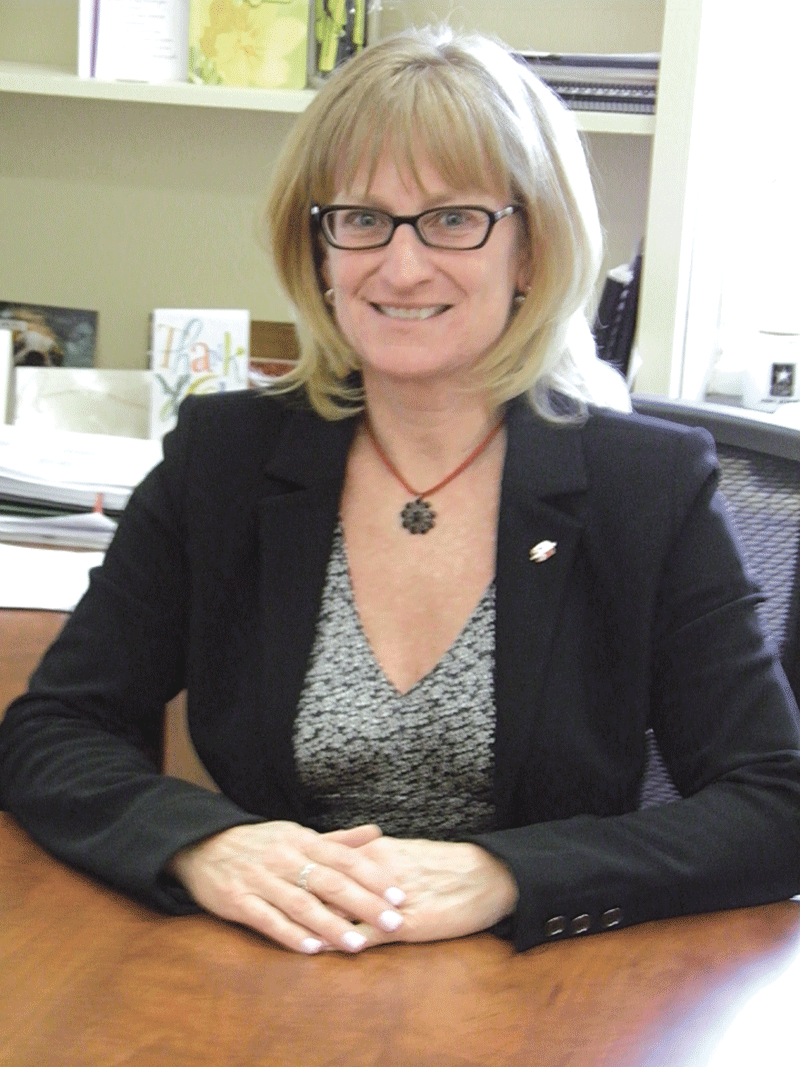
Banking and Financial Services Cover Story Sections
St. Germain Investment Management Gets Personal

COVER0314bWhen gauging the reputation of St. Germain Investment Management, Tim Suffish says, one measure is the number of non-clients who call out of the blue.

“It happens all the time,” he said. “People call with questions, and we just give the advice. We’re more than happy to take the calls. It’s a sign that the company is doing things right when random people call us and are reaching out for something. They’re always shocked and appreciative when one of the financial advisors spend time on the phone with them with no expectation of anything in return.”

Suffish, the firm’s senior vice president of equity markets, said it’s a reflection of the name St. Germain has built in Greater Springfield for the past 90 years. But the company, launched by D.J. St. Germain in 1924, hit some, well, depressing times in its early days.

“D.J. did fantastic with his investments the first five years. Then 1929 came along and wiped out a decent portion of his net worth,” said Mike Matty, the company’s current president, adding that surviving the Great Depression sparked the firm’s long-standing focus on investing conservatively.

“He realized that not losing an investment is every bit as important as making money. That has guided our conservative philosophy, and it’s the way we continue to make money,” Matty said. “During the most recent downturn, eight or nine people said to us, ‘we know we’re not going back to the old highs,’ and yet, this week, we’re at new highs. We hit a billion last year in assets under management.”

Matty, however, prefers to talk about people, not numbers, when considering how St. Germain has grown since the days of D.J.

Mike Matty

Mike Matty, president of St. Germain Investment Management

“It’s easy to start a business, but it’s tough to stay in business 90 years. The way you do that is treat the clients right, and we’ve done a terrific job with that philosophy,” he said. “We have a great team here; they could all work in Boston or New York, or wherever they want to be. But we all like working here in Western Mass.; we all want to be here.”

Suffish said there’s a certain satisfaction that comes with helping clients — whose only exposure to retirement savings to that point might be a company-sponsored 401(k) plan — really think about what they want from their golden years.

“They’re thinking about retirement, planning to leave their job and go from earning and putting money away for retirement to taking money from their retirement account,” he said. “It’s huge. People who haven’t gone through it don’t realize how … not traumatic, necessarily, but how serious it is, and the consideration and planning that goes into it.

“Once you’re into retirement, you want to make the most of it, so you don’t outlive your money,” he went on. “That’s our meat and potatoes; the most important thing we do is sitting down and talking with clients, people entrusting us with everything they have to last them through their last days.”

Human Touch

Matty said St. Germain had long been known strictly as an investment manager, but about a decade ago, the company began to broaden its scope to all-around financial planning.

“We now do comprehensive financial planning with people. We take a look at where their income streams are in retirement; are they adequately covered? And we’re the go-to call for people on other financial questions — buying a car, refinancing a house, whatever it may be, we get a call. That’s worked out very well for us.

“Life has gotten much more complicated these days,” he continued. “People get exposed to an immense amount of information overload on the Internet. Can you sit down and Google it? Sure, but you’ll see 150,000 results. People say to us, after trying to figure it out on their own, ‘I want to talk to someone who actually walks the walk before I do this.’ That’s what we’re great at.”

Mike Matty, left, and Tim Suffish

Mike Matty, left, and Tim Suffish say their most important job is talking one-on-one with clients and understanding their expectations for life after retirement.

Matty and Suffish are both CFAs, or chartered financial analysts. “CFAs are the financial-analysis equivalent of CPAs,” Matty said. “We’re super-knowledgeable, highly trained people. It’s New York or Boston expertise, accessible in Western Mass. at a reasonable cost.”

Suffish said a client was in reviewing his account recently and saw a photograph of D.J. St. Germain with a 1930s-era Packard. “He said, ‘I remember going for a ride in that car.’ The company has been here a long time, and the experience has been consistent. People change sometimes, but the St. Germain way keeps people here a long time.”

Still, the company has experienced a growth spurt in the past decade. When Suffish came on board in 2004, he was the seventh employee; now 20 people work there. But that growth has not come at the expense of the personal touch that has long been a priority.

“When people pick up the phone and call us, they get a receptionist, not voice mail. An automated voice drives people crazy,” Matty said. “It’s one of many small touches, one of the things that sets us apart from a lot of other financial firms out there. If you’ve got a half-million parked with a big brokerage firm, you’re a cog in the wheel there. To us, you’re a client. You’re going to hear from us, and we want to hear from you. You’re not just a nameless, faceless account number. We want to get to know you.”

And know your partner as well — even if that meeting comes late in the game.

“In a lot of cases, one spouse will open an account,” he said, and after that client dies, “we almost become a surrogate spouse for the survivor because they know nothing about the household finances.”

In such cases, the survivor’s concerns often boil down to one simple question.

“They ask, ‘can I live in the lifestyle I know now? That’s all I need to know.’ They don’t want to talk about realized gains versus unrealized gains. They say, ‘I’m a machinist. I’m hiring you guys to manage the money because that’s what you do.’

Such clients appreciate a conservative approach that stays the course, Matty said. “To us, the name of the game is giving people most of the upside and preventing them from losing much on the downside. More people get scared out of the market by losses than pulled into it by greed. And they pull out at exactly the wrong time.”

Age-old Concerns

Matty said a client’s age plays a factor in asset allocation, or what percentage of money is tied up in stocks, bonds, and other vehicles.

“We’ve extended out in the past few years beyond just a conservative stock philosophy,” he added, noting that equity-income accounts — a type of mutual fund that invests in companies with a history of solid dividend payments — have become a prominent part of the roster.

“Even with what we do on the management side, making sure we build a diverse portfolio, those types of stocks are still going to be a bumpy ride,” Suffish said. “When there’s a scare overseas or interest rates do something funny, those stocks will move around a bit.” But, he added, building a portfolio that focuses on income generation through dividend growth is a good fit for many clients.

Beyond that, conventional wisdom on asset mix has shifted over the years, he said. It used to be that subtracting one’s age from 100 gave the recommended percentage of assets in stocks. Now, it’s closer to 120 minus one’s age.

“But everyone is unique,” he added, and financial advisors must take into consideration factors like Social Security projections, pensions, retirement-account balances, expected inheritance, and overall lifestyle expectations.

“If somebody is 75 years old and has all their needs met by income sources like pension and Social Security, that client can afford to be more invested in stocks,” Suffish said. “The most important thing at St. Germain is the conversation between the financial advisor and the client. It’s not like picking Coke over Pepsi; that’s a very small factor. The most important thing is the conversation between the financial advisor and the client, us knowing them and their situation, and getting the financial mix right.”

It’s definitely a more complex financial world, Matty said.

“Fifty years ago, when you turned 65 years old, you could rely on Social Security and probably had a pension. Life expectancy was not a whole lot longer after retirement, and you had some pretty reliable income sources. People had more homogeneity,” he told BusinessWest.

“Now, we have 65-year-olds taking up skiing. They plan to live 30 more years. People are saying, ‘I don’t think Social Security is going to be there for me.’ Virtually no one has a pension anymore. There’s no homogeneity,” he went on. “A client might say, ‘I’ve got aged parents, and I’m taking care of a special-needs son, who will probably live with me forever. And there’s longevity in my family; people live into their 90s.’ Everyone is unique. In these circumstances, we really need to spend time getting to know you.”

Clients run the gamut, Matty said, from individuals with accounts large enough to grab the attention of a larger firm to people who have worked hard their entire lives to amass a couple hundred thousand dollars, or less.

“I tell these folks, ‘I know to you it’s a lot of money; it’s all you’ve got. I want to treat you with respect.’ We absolutely can take on folks who have millions, but if your money is significantly less, that’s fine by us too. People here are not paid on commission. They’re perfectly happy to sit down with a guy with $150,000 or a guy with $1.5 million.”

Committed, Not Commissioned

That policy of no commissions is uncommon in the industry, Matty said. “I don’t want to incentivize people here to do anything other than what’s in the best interest of the client. If they have cash in the bank, let them keep it in the bank. I’d rather spend time working with people, making a little bit off them every year, and keep them another 90 years, rather than get a big commission off them, then go out and find new clients next year. We have people here whose great-grandparents had accounts — people who have been here since the 1930s.”

St. Germain’s independence also allows advisors to give non-biased information, he said. “We’re not trying to sell any products to you. And at a lot of financial firms, people who work at the firm don’t have their money invested there. That’s not the case here.

“We live here, we work here, and we’re part of the community here, and we do our share to support the community that has supported us for the past 90 years,” he continued. “We try to give back at both the corporate level and personal level; virtually everyone here is volunteering or serving on boards, as well as all the financial support we give.”

Still, Matty said, what many clients appreciate most is simply being able to call and speak to someone with answers.

“I think we’re easy to talk to,” he said. “It’s a simple point, but it means an awful lot. Some people might prefer a website, but I find, especially as people get older, they want to call and talk to the same person, and not have to explain their circumstances every time. As clients get older, they really appreciate that.”

It’s an approach that has worked since D.J. St. Germain drove that Packard around Springfield — and will continue long after those who remember him are gone.

Joseph Bednar can be reached at [email protected]
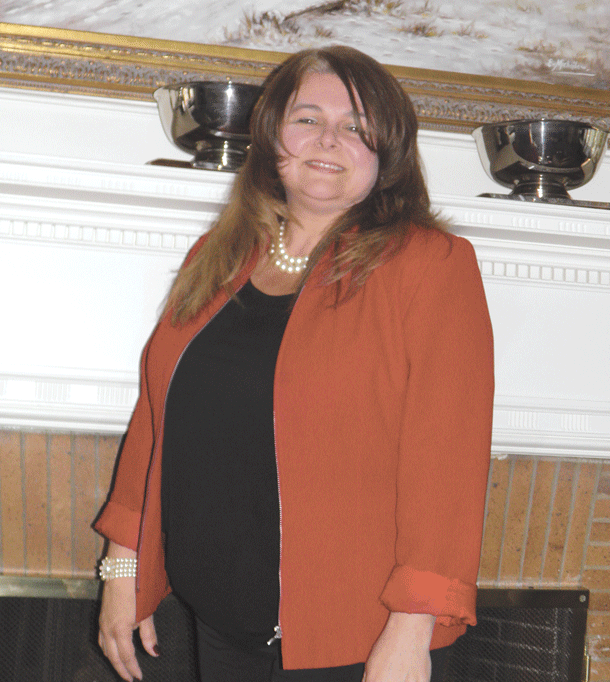
Features
Sarah Pompea Wants the Falcons to Be a Force in the Community

DesignPage6pageARTSarah Pompea was a senior at the University of New Haven in December 2010 when her father, Charlie, acquired the Springfield Falcons, the American Hockey League affiliate that traces its roots back to the late ’30s.

She remembers being excited by that development and thinking that it would provide another outlet for a life-long passion for sports, one that included attending a good number of games involving the New Haven Nighthawks, another AHL franchise, in her youth.

What she wasn’t thinking at that time was that this could become a career, or at least an intriguing and highly rewarding start to one.

But then, Sarah, a frequent spectator at Falcons games before and after the acquisition became official, started interacting with team President Bruce Landon, who has spent more than 40 years with the franchise, about various aspects of the sport — and the business — of hockey.

Eventually, Landon approached Charlie Pompea about the possibility of Sarah bringing her talents in marketing and corporate communications to the Falcons organization. When that question was put to her, she jumped at the opportunity and became the team’s first official marketing coordinator.

In that role, she’s worn many hats and taken on a number of initiatives. These include the expanded use of social media to promote the team and interact with fans, as well as initiatives within the community that have players, front-office personnel, and even the team’s mascot, Screech, involved in programs in area schools to promote literacy, encourage healthy eating, and combat bullying.

There’s also the Springfield Falcons Charitable Foundation, which the Pompea family launched in 2013, with a specific focus on families and children.

Last month, when Landon announced that he was retiring from his position as president and accepting a new role as director of hockey operations, Pompea saw her title change to acting president, and her list of responsibilities grow to include most all of the business and sales operations.

Increasingly, she is becoming the face of the franchise, although she acknowledged that Landon, who last year was honored by BusinessWest as a Difference Maker for his efforts to keep hockey alive and well in Springfield, will continue to have that designation.

Sarah Pompea and the Falcons have involved team personnel

Among many other community initiatives, Sarah Pompea and the Falcons have involved team personnel, including players and the mascot, Screech, in literacy programs.

But increasingly, she is becoming the liaison between the team and the community, and it’s a role she relishes.

“I find Springfield to be a very special place to work,” she noted. “It’s a small community, and people work together. Ultimately, I think everyone wants the Falcons organization to succeed, and I think that people do understand that, hockey aside, the players are positive influences and role models within the community, not only for students, but for professionals as well. We certainly hope to be here for a long time.”

For this issue, BusinessWest turns the spotlight on a young rising star in the local business community, an individual who, like her father, is committed to keeping hockey in Springfield, but also making this franchise a more visible, more impactful force within the community.

Net Results

Parked against one wall in Pompea’s small, windowless office within the team’s complex at the MassMutual Center is a cluster of hockey sticks once wielded by team players.

For one reason or another they’ve been retired from game action, and are set for a new and much different life — as collectibles. They’ve all been signed by the players who used them, and are now destined for area nonprofits to be auctioned off at various fund-raising activities.

Matching area agencies with used sticks is just one small, quite unofficial line on Pompea’s job description, but it’s symbolic in many ways of how she has become that link between the team and the community.

Another example sits in a large frame above her desk. It’s a game jersey she bought following a now-annual event called Pink in the Rink, which, as the name suggests, puts players in pink uniforms for a night to raise awareness of programs to battle breast cancer, and raise money for those efforts by selling those jerseys on eBay.

“We’ve been doing this for about six years now, and it’s something that’s gained a lot of traction in that time,” she noted. “And it’s just one of many ways we can give back to the community.”

How Pompea came to lead such initiatives and become involved in all things Falcons is an intriguing story, and one that can’t be summed up by saying she’s the daughter of the team’s owner.

Indeed, Pompea said a number of other career opportunities presented themselves as she was wrapping up her work at New Haven University, where she majored in marketing and minored in corporate communications.

She had various summer jobs and internships working for marketing firms in Boston and New York, and also had a stint with Micato Safaris, a high-end safari operator based in New York. She interned there, but was brought on full-time for the balance of the summer when the marketing director left her job abruptly.

She worked extensively on the company’s involvement in the huge Travel Mart conference in Las Vegas, and company officials liked her work so much they tried to talk her into skipping or delaying her senior of college to stay with the company — a move she wasn’t ready to make.

“I learned a lot there and took on a lot of responsibilities,” she said, adding that Micato kept trying to lure her to New York during her senior year, but then her father, owner of a steel-distribution company, bought the Falcons, and a career path she couldn’t have imagined a few years or even a few months earlier started to emerge.

She pointed to a game the two attended together before the sale became official as one of the pivotal moments in this ongoing story.

“We just sat in the stands and talked to people, and really learned right away how important this team was to the city,” she recalled. “We could sense the passion and the pride the fan base had for the team, and he knew at that moment that it was something he wanted to be part of.”

And something she would soon want to get involved with as well.

“Once he purchased the team, I attended games solely as a fan for the rest of the season,” she told BusinessWest. “It got to the point where I was pretty much coming to every home game. Bruce and my dad had spoken about an opportunity here, and it’s something I jumped on right away because I was always looking for a corporate job, but not something that had me sitting at my desk from 9 to 5 for 40 hours a week.”

Tweet Success

As marketing coordinator, Pompea has had a broad range of responsibilities, from media buying, which she revamped recently to include television and a reworked radio message, to work with social media to increase fan interaction, to creation of promotion nights and theme nights, with a broad focus on enhancing the family experience at Falcons games.

And there have been a number of successes in all those realms, which often come together with various initiatives.

For example, there’s the ‘tweet your seat’ program, something borrowed from the Red Sox, and a name that pretty much says it all: fans tweet out their seat number for an opportunity to win prizes. There’s also something called ‘Facebook fan of the game,’ which encourages fans to take a picture of themselves enjoying the game and post the photo on the Falcons’ Facebook wall.

“We’ve found that this has really generated a lot of interest among our fans,” she said of the Facebook initiative. “Each game, I see more and more pictures being submitted. We pick one lucky winner and feature their photo on our video board during the game. So the fans feel special, and it’s something they look forward to; they’re always hoping they’ll be the winner that night.”

Overall, Pompea views social media as an effective means for connecting with the fan base and the community between games and, in many respects, all season.

“Fans are on their phones and on the Internet non-stop,” she explained. “It’s important for them to feel part of the team, even in the offseason, and know what’s going on.”

With the promotions and themes, the team has introduced or continued everything from restaurant giveaways to celebrity appearances — Jarod Mayo from the Patriots and Gregory Campbell from the Bruins have been on hand for games this year — to so-called ‘seat upgrades.’ Sponsored by A to Z Movers, that program allows two fans, usually sitting high up in the cheap seats, to move to a seat on the glass.

When asked to quantify and qualify the results from such initiatives, Pompea said there has yet to be a strong impact on attendance, although she expects that will happen. In the meantime, though, such programs are keeping those who are in attendance more engaged — and entertained — and broadening the fan base at the same time.

“We can’t control what happens on the ice,” she explained. “But we can control the fan experience. Our goal is to make sure that, whether the Falcons win or lose, fans go home smiling because they had a great time.”

But while Pompea and other members of the Falcons’ staff have made great strides when it comes to the game experience, some of their best work has come outside the arena — in school classrooms, at Habitat for Humanity building projects, and a host of other settings where the team has become not only more visible, but more of a force with a number of the challenges facing this region.

During her tenure, Pompea has played a lead role in introducing several new programs that place Falcons players and staff into the community.

One is called Stick to Reading. Sponsored by Columbia Gas, it puts players in classrooms, where they read to students and then engage in often-lively Q&A sessions.

Another, called Play It Forward, focuses on health, nutrition, and exercise, and also places players in the classroom, where they talk about healthy eating and how it contributed to their success, and also lead a game of ball hockey.

And then, there’s Teamwork, an anti-bullying program that features players talking with small groups about teamwork, what it means to be a leader, and how they work together.

To further emphasize the team’s commitment to the community, the Pompeas launched the Springfield Falcons Charitable Foundation, which puts its focus on families and children.

“It’s important for us to invest in the future of Western Mass., so our foundation focuses on creating long-lasting partnerships with a handful of organizations,” she said.

The first of these relationships was established with Link to Libraries, which works to fill library shelves in schools and youth agencies while also promoting literacy. As part of that partnership, the Falcons sponsor Tatham Elementary School in West Springfield, and players and front-office personnel read there regularly.

Meanwhile, another partnership has been forged with the YMCA of Greater Springfield to sponsor that organization’s so-called Saturday Sports Sampler, which introduces young people to a variety of different games and sports.

The Puck Stops Here

Since joining the Falcons in the spring of 2011, Pompea said her hockey IQ has increased measurably through far greater exposure to the game and its many nuances.

But, as she said, she is focused far more on the business side of the game and the fan experience than she is on penalty killing, power-play opportunities, and line changes.

And thus, she treats each road game (she goes to some, but not all) as a learning experience.

“I like to be a spectator, see other arenas, and pick up some ideas that we can implement here, whether it’s concessions or in-game entertainment,” she said. “I’ve learned a lot from watching how other teams do things.”

A few weeks ago, she was in attendance for the AHL all-star game, played in St. John’s, Newfoundland. The franchise there, the Ice Caps, have sold out 103 consecutive games, said Pompea, speculating that the long, cold winters there probably have something to do with that — fans are looking for an escape — but that streak is more attributable to the team’s success in “creating an NHL atmosphere in an AHL city.”

That’s something she’ll be trying to replicate as the Falcons’ acting president, a role she says she’s growing into.

She now has control of all day-to-day operations, including business-side functions such as marketing and community relations, but also sales. Her new title also means she’s picked up what had become Landon’s top priority in recent years — improving the numbers at the gate.

Pompea said there has been some improvement in attendance since her father bought the team, but not as much as was expected, especially with the team’s recent success — a playoff berth last year, the first in some time, and its steady position at the top of the Eastern Conference’s Northeast Division this year.

“We’re certainly looking to build off our playoff run last year,” she said, “and I hope we’re playing hockey into June.”

She’s not sure if and for how long the word ‘acting’ will remain part of her title, but for now, she’s focused on eventually becoming the face of the franchise, while also working continuously to improve the fan experience and make the Falcons more of a force in the community.

“In the 20 years that he was here, Bruce did some wonderful things for this franchise,” she said. “I just see this as a new chapter for the organization.”

A chapter that is still being written.

George O’Brien can be reached at [email protected]
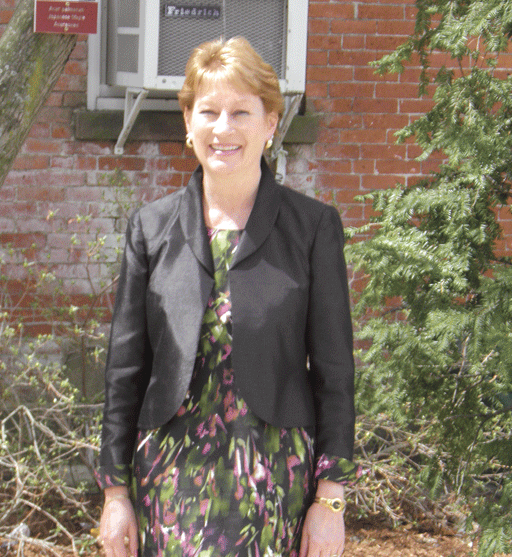
Cover Story
Mike Mathis Has Become the Face of MGM Springfield

MikeMathis600x200A year or so ago, Mike Mathis could walk the streets of downtown Springfield in relative anonymity.

These days … well, not so much.
He said he was buttonholed recently by a business owner on Worthington Street who gave him a tutorial on the wide range of musical talent that resides in this region and advised him to exploit it. And a few days ago, he was recognized by the person working behind the counter at a car-rental agency, who asked about job opportunities — not for himself, but for family members who had left the area and were interested in coming back.

There have been many similar episodes over the past several months, and there will certainly be exponentially more for what everyone expects will be years to come.

That’s because Mathis is the face of the $800 million casino project proposed for Springfield’s South End, and, increasingly, that face is being recognized, a development he doesn’t mind at all.

Indeed, Mathis, whose business card now reads ‘president, MGM Springfield,’ likes talking with people about what could be called his project, although there is already a sizable team working on it. And more than that, he loves hearing from individuals about how this initiative could dramatically change things for the city and the region — and in positive ways.

‘Transformative’ was the word he said one state official used to describe the MGM Springfield project, and he’s not at all shy about borrowing that term.

Actually, he’s not shy about much of anything, a character trait he says is one of many necessitated by, and also honed by, life as the son of an Army officer who moved his family a number of times during his career.

“It was a wonderful childhood,” Mathis told BusinessWest, listing stops in Atlanta, Monterey, Calif., Frankfurt, Germany, and Huntsville, Ala., among many others. “The nature of moving around that often, and the whole culture of military kids and schools, is that you make friends really quickly. It forces you to be outgoing, and you need to be open to a lot of different cultures, because you’re going to experience them. So I give a lot of credit to my dad and my mom for helping me to get there in terms of my personality.”

Those qualities he listed have served him well in a career that started with a New Jersey law firm just after he earned his juris doctor at Georgetown University, but soon saw the dateline shift to Las Vegas, where he would become involved in one of the biggest projects in the industry’s history — that is, until the recession stopped it in its tracks (more on that later).

He would eventually be recruited by MGM Resorts International, where he would rise to the title of vice president of the Global Gaming Department, a position that would take him from Vegas to Macau, Japan, countless other stops, and eventually to Springfield, which, by the fall of 2012 had become ground zero in the fight for the coveted Western Mass. casino license.

MGM’s proposed casino

Mike Mathis made frequent use of the word ‘transformative’ to describe the impact MGM’s proposed casino will have on Springfield and the surrounding region.

By last fall — Nov. 4, to be exact, the day Palmer voters said ‘no’ to Mohegan Sun’s plans to build a resort casino just off turnpike exit 8 — the MGM proposal was the proverbial last plan standing.

That phrase has been used quite extensively in the press, and Mathis doesn’t like it at all. He told BusinessWest that it conveys the sense that MGM will win this license — if that’s what happens — seemingly by default.

Instead, he said, MGM will have triumphed because it had the best plan, one that prevailed over Penn National’s bid to build a gaming complex in Springfield’s North End in what became the first stage of the license competition, and one he believes is a potentially groundbreaking concept for an urban gaming facility — what the company calls the ‘inside-out casino.’

“I think this project is going to set the bar for any other opportunities that a gaming company has to develop in a downtown urban environment,” he said, making reference to this plan’s focus on melding with its surroundings and putting the emphasis on family entertainment, not gaming. “If all goes well, people will look back at what we did in Springfield as the standard.”

For this issue and its focus on the casino era, BusinessWest talked at length with Mathis about everything from his career in this industry to the state of MGM’s proposal to the nagging presence of a referendum initiative that could undo everything that’s transpired since the gaming legislation was passed in the fall of 2011.

And in keeping with his character, he wasn’t shy about speaking his mind.

In the Background

Mathis remembers that it was a dark February day, one when the mercury barely touched 20 degrees. Those were the conditions when he and his wife, Lisa, whom he met while both were pursuing law degrees at Georgetown, boarded a plane at New York’s JFK airport to take up a fellow classmate’s advice to explore job opportunities in Las Vegas.

“It was 75 and perfect when we landed,” he said with a broad smile, adding that the weather was just one of many factors that would entice the couple to pack up and move roughly 2,500 miles west.

The bigger factor was that Las Vegas was at what would later be identified as the early stages of a massive building boom, one that this entrepreneurial couple wanted to be a part of.

MGM’s planned ‘inside-out’ casino

Mike Mathis says MGM’s planned ‘inside-out’ casino could set the standard when it comes to urban gaming facilities.

Backing up a bit, Mathis said his childhood spent moving from base to base, and the character traits it generated, definitely had an impact on his eventual career track and made it much easier to pick up and move across the country.

“My upbringing in a military family helps define my in a lot of ways,” he explained. “It’s not surprising to me that I’ve been attracted to hospitality and international development, because I’m very comfortable traveling, and I like experiencing new environments.”

He saw many environments in his youth, starting with the desert in Arizona, where he was born. Over the next decade and a half, his father’s work would take the family to the Southeast — Atlanta and Huntsville — and then to the West Coast and Monterey, a somewhat lengthier stint that was perhaps his favorite.

“We were there for four years,” he recalled. “I didn’t know how great that assignment was until we moved to New Jersey for middle school and high school.”

There was also a lengthy stay at a base near Frankfurt, one that afforded the family opportunities to travel throughout Europe, experiences that made a lasting impression on the young Mathis.

“My parents have always been great about exploring our environments and surroundings,” he said. “This was a working-class family, but my parents always put a priority on traveling. And my wife and I really go out of our way to make sure our kids see the world.”

Mathis probably couldn’t have imagined just how much of the world he would eventually see when he was wrapping up his law degree at Georgetown. He did a clerkship with a firm in New Jersey and a summer internship with a large Wall Street firm, experiences that exposed him to trial work and sophisticated corporate practice, respectively.

He eventually opted to return to New Jersey and spend more time in the courts.

Meanwhile, Lisa, who was in the same class with him at Georgetown, took a job with a Wall Street firm. Their schedules didn’t allow them to spend much time together, he said, and soon there was discussion about whether she would seek opportunities in New Jersey or he would do likewise in Manhattan.

Instead, they would both go to Las Vegas.

“We both got jobs with two of the top law firms in Las Vegas, who were happy to recruit some professionals from the East Coast because they were looking to broaden their practices,” Mathis recalled, adding that, within that first year, they both represented clients in the gaming industry; he worked with Las Vegas Sands, and Lisa with Caesars. Those stints eventually led to offers for in-house positions, which they both accepted.

Mathis spent the six years working with Las Vegas Sands, which he called a great learning experience, one in which he worked on not only the Venetian and Palazzo resort casinos, but also an expansion into Macau and the process of taking the company public.

“It was a really intense period with a lot going on, and I was right in the middle of all of it as a junior lawyer,” he explained. “It was just an incredible experience.”

He later accepted an offer to join Boyd Gaming and be general counsel for its flagship development on the Las Vegas strip — Echelon Place, at the site of the historic Stardust casino. The $4 billion venture would have included four hotels, a 140,000-square-foot casino, and the 650,000-square-foot Las Vegas ExpoCenter, but construction was halted in August 2008, roughly a year after it started, just as the effects of the Great Recession, which would devastate the Las Vegas economy, were starting to be felt.

While work at the site never resumed, Mathis considered his time at Boyd another key learning experience.

“Bill Boyd, who’s a legend in this industry, was an attorney who transitioned into an operator, so he was a great role model for me,” he said. “He was a very hands-on individual, very successful, very wealthy, but famous for working every day and knowing everyone’s names at each of the properties. I really respected that, and wanted to model my career after that type of engagement with the business, and with the people. He had a big impact on my outlook.”

Mathis described the demise of Echelon Place as the low point in his career — “I had only experienced the boom” — but he stayed with the Boyd group until 2011, when he accepted a position with MGM as vice president of Global Gaming Development for MGM Hospitality.

In that capacity, he has been one of the key players in advancing MGM’s latest developments — resort casinos in Macau, Delaware, and Springfield. And late last year, that focus was narrowed when he was made president of MGM Springfield.

Solid Bet

As he talked with BusinessWest in MGM’s offices in the TD Bank building — facilities crammed with architectural renderings and an elaborate model of the Springfield proposal — Mathis made it clear that he wasn’t taking anything for granted as the race for the Western Mass. license heads for the finish line. Nor was the company doing any coasting — another word he hears often — because there is no competition left.

“We’ve continued to work as if this were a five-operator race,” he said, referring to the number of companies that were bidding for the Western Mass. license in the final days of 2012 before the attrition started. “That’s what has helped make it such a detailed project; we felt a need to nail down a lot of specifics so that we could distinguish ourselves from our competitors. And that’s pretty unique to have as complete a design and as complete a program as we had early on.

“And we’ve continued to follow the Gaming Commission process, which is a very specific process,” he continued. “It requires engagement with surrounding communities, which has been ongoing, and it requires engagement with different entertainment venues. We’ve had a series of hearings in front of the Gaming Commission, and we passed suitability earlier in the year. We continue to keep our heads down and work and not take anything for granted.

“We’re at the point now where, from a development-operations standpoint, we can’t be arrogant about it, but we have to assume that we’re going to win the license,” he went on. “And we need to be ready to implement the project on day one.”

Overall, there are many aspects to the work being undertaken by the company at this juncture, roughly three months before the five-member Mass. Gaming Commission (MGC) is expected to decide the fate of the Western Mass. license.

There are some design elements to be finalized, he explained, as well as work to line up vendors (see story, page 19), secure tenants for the large retail component of the gaming complex, and ensure that a trained workforce will be in place when the doors open — sometime in 2017, if all goes according to plan.

But there are other, perhaps less obvious matters to contend with, he went on, using the broad term ‘education’ to categorize them.

Elaborating, he said that the gaming industry has been entrenched in Las Vegas and Macau for decades. Elected officials and the public at large are familiar with the concept and understand the business and what it brings to a community.

But in Massachusetts, it’s all foreign territory.

“And because of that, we need a lot of engagement at the local level,” he explained. “I feel the need to continually educate people not only in Springfield but across Western Mass., and make sure that everyone understands that this is a project that we think benefits not only the host community, but the region as well.

“This is unique for me personally,” he went on. “Prior to MGM, I just developed projects in Las Vegas, and it’s an entirely different process there.”

Locally, the process has a new and quite intriguing wildccard — an effort to repeal the state’s gaming legislation via a statewide referendum that would appear on this November’s election ballot. State Attorney General Martha Coakley ruled that the petition to put the matter on the ballot was unconstitutional because it would “impair the implied contracts between the [gaming] commission and gaming license applicants” and illegally “take” those rights without compensation.

Backers of the referendum then took their case to the state Supreme Judicial Court, which is expected to rule on the matter this summer, a few months after the Gaming Commission is likely to have awarded licenses for Western Mass. and the Boston area.

MGM has joined a coalition, which also includes other gaming companies, host communities, and backers of casino gambling, that was created to fight the repeal effort, which Mathis said could have a “chilling effect” on his company’s plans for a few months until the matter is decided.

“If we’re fortunate enough to win the license in May, to have the potential repeal hanging over our heads as an industry makes it difficult to do certain things,” he said, listing as examples some of the early financial commitments related to construction and other capital-intensive expenditures. “And that’s unfortunate; there will be a two-month window where we’re going to have to watch and see what the court does. It’s certainly not the way you want to kick off the project.”

For the immediate future, the company will be an interested spectator as Penn National Gaming, the recently announced winner of the contest for the state’s lone slots parlor license, decides how it will proceed with the repeal matter looming.

“The Commonwealth has invited our industry into this jurisdiction, and we’ve made a substantial investment in terms of time and money,” Mathis said. “We have other lines of business, and MGM will survive if this is repealed, but I think about the host community and all the potential that we promised them with this project, all the employment. These host communities will be impacted as much as anyone if this whole process is overturned.”

Odds Are

While monitoring the repeal effort and awaiting what everyone expects will be the green light from the Gaming Commission, the MGM team, and Mathis in particular, continue a dialogue with Springfield officials about the project, while also talking with and listening to area residents about this huge endeavor.

“What’s really great about this opportunity, and fairly unique because of the statute, is how much of a partner the city is through the host-community agreement,” he explained. “We always want to stay on the same page about all the things that we’re working on, and with other things that are happening in the city as well.”

And there are many initiatives on the drawing board or already underway, he went on, which makes the casino project even more intriguing.

“Even before we arrived in Springfield, [Chief Development Officer] Kevin Kennedy and the Economic Development office had been doing some really great things to make sure that Springfield continues to grow and improve its economic foundation,” he told BusinessWest. “There were a lot of great things happening in Springfield before we came on board, and we’re catalysts for future growth.

“Whether it’s Union Station or the UMass satellite campus moving in, I think Springfield is on the verge of a renaissance,” he went on. “And we’re excited to anchor that.”

And while there are a number of people involved with the MGM Springfield project, including several working in the downtown Springfield office, Mathis is the point person.

That’s why he’s far less anonymous than he was a year ago, and also why he’s hearing, and answering, a wide variety of questions — in the press, on the street, in the line at the breakfast buffet at the Sheraton, and, yes, at the counter at the car-rental agency.

And as might be expected (or not, as the case may be), a good deal of these queries have to do with employment opportunities — this project is expected to create 2,000 construction jobs and nearly 3,000 permanent jobs — and that makes Mathis feel even better about it.

“It’s really about jobs, and I wasn’t prepared for that,” he explained. “I’m sort of humbled by the idea that I walk around and people see the opportunity for a career in me; that’s a tremendous responsibility.

“People are really focused on when we’re going to open, when we’re going to start hiring, and what’s required for hiring,” he went on. “There’s not a day that goes by where I’m not approached in a very respectful way by citizens wanting to know about those opportunities. I’ll have an encounter with someone where it’s not about them getting a job, but about their brother, who’s an ironworker, or it’s about their daughter, who’s graduating next year, and they want to keep her home and interested in a career here.”

This return-to-Springfield aspect to this project is one of the more surprising, and also inspirational, story notes to date, said Mathis, and one of the many reasons why he makes use of that term ‘transformative,’ which he attributes to Jim Rooney, head of the Mass. Convention Center Authority, while noting that others have used it as well.

“I find it ironic that Springfield and Western Mass. are in the middle of the Knowledge Corridor, and it’s very difficult to keep that talent in state,” he went on.

“I think we have the ability to give some of the local talented young people a career opportunity and give them a reason to stay, and that will have a spin-off impact on other industries that will be able to tap into that growing labor pool.”

A Winning Hand?

When he and Lisa moved to Vegas, Mathis said, it was with the expectation that it would be a relatively short stay, like many of those stops from his youth.

But it lasted more than a dozen years, and thus provided ample evidence of how it’s difficult to forecast how one’s career path, or life in general, will unfold. So he’s not making any predictions about how long this assignment in Springfield might last.

What he does know, though, is that, if this project proceeds as planned, anonymity will become increasingly elusive.

That’s what happens when you’re the face of something transformative.


George O’Brien can be reached at [email protected]
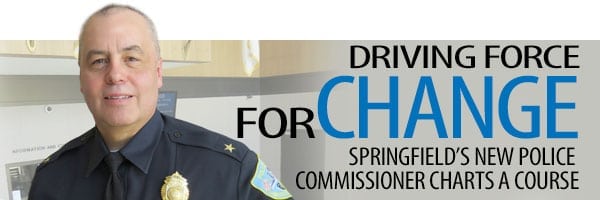
Environment and Engineering Sections
With the I-91 Viaduct, Future Prospects Are Up in the Air

91ViaductDPartNick Fyntrilakis, vice president of Community Responsibility for MassMutual and frequent spokesperson for the financial-services giant, urged the state to hit the ‘pause’ button when it comes to a planned $260 million project to replace the stretch of Interstate 91 that runs through the center of Springfield and is known as the ‘viaduct.’

He used that term at a well-attended public hearing on the massive public-works project late last month, and in reference to another, much broader possible plan for the stretch of I-91 that slices through the very heart of the city’s central business district — taking it down to street level or perhaps even below street level, thus facilitating the process of reconnecting the city with the Connecticut River for the first time since construction of the highway began a half-century ago.

“We see this as a possible game changer, a once-in-a-lifetime opportunity to fix a 60-year-old problem in the city of Springfield — being disconnected from the riverfront and the access to economic-development opportunities that exist there,” he told those assembled, and especially Michael O’Dowd, project manager for the Mass. Department of Transportation (DOT). “If this [repair] project proceeds as proposed, it’s going to be very difficult to see $260 million of work just go away based on another design that comes up through the planning effort.

“If we go down this road,” he went on, again referring to the repair project, “we’re going to miss an opportunity, and we’re going to have this viaduct for the next 40 or 50 years, which I don’t think the majority of the community is looking for.”

And therein lies the problem, or controversy, arising at a time when most would expect public officials and business leaders to be thrilled, or at least happy, with the prospect of the federal and state governments spending a quarter of a billion dollars to fix a very tired stretch of road.

repairs of the viaduct section of I-91 cannot wait

Officials with MassDOT say the proposed repairs of the viaduct section of I-91 cannot wait due to the deteriorating condition of the roadway and cost of continually patching it.

But there are other concerns as well. They include logistics — the proposed repair project, even on a planned accelerated construction schedule, would take probably three years to complete, and prolonged closings of several off-ramps and partial closures of the parking garages under the highway would be unavoidable — as well as timing. Indeed, the project could coincide with the now-likely construction of an $800 million casino between State and Union streets, just a block or so from one of those aforementioned off-ramps.

But the pause that Fyntrilakis and others are seeking — to study a potentially bolder endeavor involving the viaduct — is not likely, or even advisable, said O’Dowd.

That’s because this section of I-91 is deteriorating rapidly, and the state is spending about $2 million a year annually on what amount to patch jobs that do little but buy the city some time. And, in his opinion, it can’t buy any more.

“This is something that needs to be done now,” he said at the public hearing, putting the accent on that last word as he talked about the financial and safety considerations that he believes should deter any delays in getting started.

But beyond those aspects of hitting ‘pause’ on the viaduct work, there are also economic-development concerns, said Jeffrey Ciuffreda, president of the Affiliated Chambers of Commerce of Greater Springfield.

He told BusinessWest that discussions about an extensive ‘repair-in-place’ project involving the viaduct have been ongoing for some time. But they took a far more serious tone — and the initiative moved into a faster lane, if you will — after the second level of the I-91 South parking garage had to be closed for an extended period due to falling concrete from the deck above.

“That convinced people that this was serious — it really showed the economic impact upon Springfield,” he said, adding that there are several buildings downtown that don’t have attached parking and rely on the I-91 lots. “When they closed that floor of the parking garage and told everyone to park in I-91 North, that overloaded that system, and we started realizing how dependent downtown Springfield is on two or three parking facilities.”

Frank DePaola

Frank DePaola says accelerated bridge construction, or ABC, should allow crews to complete the repairs of the viaduct section of I-91 in three construction seasons.

So it appears that the repair project will proceed as planned, with a contract slated to be awarded later this year and work to commence possibly next spring. This will be a long and likely painful period for those who live, work, and do business in the downtown area, said Ciuffreda, adding that it will be his agency’s goal to help minimize the disruptions through planning and communication.

For this issue and its focus on environment and engineering, BusinessWest focuses on those steps and many other aspects of what is turning into a controversial project long before any work actually begins.

Concrete Examples

It’s called ‘accelerated bridge construction,’ another term simplified to the acronym ABC.

And, as the name implies, it involves processes and materials — such as pre-fabricated sections of highway decking — that enables projects such as the proposed I-91 initiative to be completed in less time than under more traditional methods, said Frank DePaola, MassDOT highway administrator.

Before elaborating on just what’s involved, he told BusinessWest that the state has already had some experience with ABC, and it’s due to get quite a bit more in the years to come, because there are many elevated sections of highway like Springfield’s I-91 viaduct, most of which were built about the same time — the mid- to late ’60s, as the Interstate Highway Project was reaching its zenith — and they’re in generally the same condition: poor.

A partial list would include the I-90 (Mass. Turnpike) viaduct in Boston, the Route 79 viaduct in Fall River, the McCarthy Overpass in Sommerville, and a section of I-93 North that also passes through Sommerville, he said, adding that some have been repaired and others are awaiting work.

Reiterating O’Dowd’s comments, he said the work in Springfield cannot, and should not, be put off much longer.

“Over the years, the water, the salt, and just the weather elements have weathered the deck, so that without predictability, sections of the deck fall out, and we have to go out there and patch holes in the deck,” he explained. “We’ve spent, on average, $2 million a year patching the holes in the deck.”

Beyond this cost, and the safety element driven home by the closing of the upper level of the parking garage, there is a “nuisance factor” as well, he said, noting these patch jobs he described entail shutting down lanes of the highway for sometimes long stretches at a time.

Rather than continue with this frustrating, Sisyphean approach, the state has proposed an ambitious, and expensive, plan to replace the decking on the 67 spans of northbound highway within the viaduct and the 62 spans on the southbound section.

If all goes as planned, the contract for the repair project will be awarded later this year, and work is expected to commence late this fall. The plan is to keep two of the three lanes in both the north- and southbound sections open at all times, said DePaola, noting that, while 14 sections of I-93 were replaced in 10 weeks by shutting that section of the highway down completely, a similar strategy is neither necessary nor recommended for Springfield’s viaduct.

Keeping two lanes of traffic open on both the north- and southbound sections of the highway will reduce the overall inconvenience from the project, but there will undoubtedly be an impact on commuters as off-ramps are closed and traffic is detoured onto East Columbus and West Columbus avenues and other arteries, said O’Dowd at the public hearing.

Exits 6 and 7 on I-91 South will be closed, and traffic detoured to a temporary ramp to be constructed north of exit 8 to provide access to downtown Springfield via West and East Columbus avenues. The on-ramps to I-91 North from both State and Union streets will also have to be closed, he went on. I-91 northbound access will be provided via East Columbus Avenue, with I-291 access provided via a detour off East Columbus Avenue to Liberty and Dwight streets.

Ramping Up

Ciuffreda, who has many not-so-fond recollections of the I-91 ramp-reversal project that accompanied the opening of the new Basketball Hall of Fame, said residents, business owners, and those who work downtown couldn’t be blamed for being skeptical about vows to minimize the disruption from the planned I-91 project.

Indeed, the ramp project took far longer than originally estimated, and the impact was considerable. And those same things can be said about the Memorial Bridge reconstruction that took place 20 years ago, and the more recent repairs to the South End Bridge.

But Ciuffreda believes there is also room for optimism with regard to the I-91 initiative.

“The state has come a long way with how they go about construction projects like this one,” he said, citing the I-93 repairs as one example. “It’s going to be a major, major construction project, but they feel pretty comfortable — and I feel pretty comfortable — that they can minimize the downside of it.

“Clearly there will be disruptions — you can’t do a major construction project without them — but I think they’ve learned enough to expedite it and to minimize the adverse effects.”

But the 17-day run of the Big E each fall will severely test the patience, and the abilities, of those trying to keep the traffic flowing, he added quickly, noting that construction might have to be shut down during the fair’s run, and other steps, such as shuttling visitors from remote locations, might have to be undertaken.

And if a license is granted for MGM’s proposed South End resort casino, as expected, and construction begins later this year — that’s the current timetable — two of the biggest construction projects in the region’s history would be going on at the same time, and within a few hundred feet of each other.

Overall, effective communication with the public about the project, specific phases, lane and off-ramp closings, and other considerations are vital to efforts to minimize disruptions and the impact on commerce, said Kevin Kennedy, Springfield’s chief development officer.

“My issue is to make sure there’s enough communication so that we know where they’re working so we can tell people who work and come to downtown Springfield and use our parking facilities what’s going on and what the best route to get here is going to be,” he said. “It’s going to uncomfortable for a while, and no one likes that, but the idea that we can get a good fix, rather than a patch job, is good for Springfield in the long run.”

As for that broader vision for the viaduct and improved access to the river that Fyntrilakis mentioned, there is a study, being conducted independent of the repair project, that is exploring options.

Springfield Mayor Domenic Sarno has repeatedly called for something “bold and visionary” in his public comments on the matter, and State Transportation Secretary Richard Davey said it might be possible to take some sections of the elevated highway down to grade level or just below.

But there are myriad questions that will be need to be answered, about everything from what the soils can handle to how other barriers to the riverfront, such as East and West Columbus avenues  and the rail line just east of the river would be negotiated; from how such a project would be funded to whether the state and federal governments would invest heavily again in a road they just paid $260 million to fix.

“Once the repair project starts, it will take some of the options off the table for getting to the riverfront, but I’m not sure it takes all of them off the table,” said Ciuffreda. “We may have to settle for a lesser connection than we ideally would like. That’s just the hand we’ve been dealt. It’s a crumbling road, and if it ever went down to one lane, that would just cripple the economy.”

Bottom Line

How that hand will be played remains to be seen, but it appears that the pause sought by Fyntrilakis and others is not in the cards.

And for that reason, projecting down the road, for the short and long term, will be difficult. That’s why, when it comes to Springfield and its controversial, half-century-old viaduct, so many things are still up in the air.

George O’Brien can be reached at [email protected]
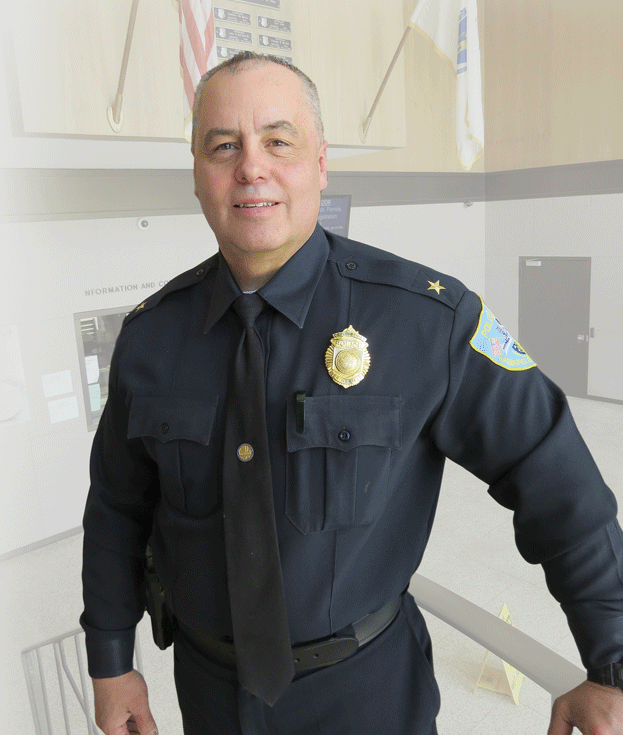
Sections Technology
New York Sound and Motion Invests in the Big Picture

Ed Brown

Ed Brown recently invested in the Sony F55 digital camera, and has targeted Hollywood film productions in Massachusetts as future clients.


When Ed Brown interned for a neighbor’s lighting and gaffing business during one of his college summers home on Long Island, it proved to be a turning point in his life.

He spent the summer of 1989 on the set of the movie Quick Change, starring Bill Murray, Geena Davis, and Randy Quaid. “I worked as a production assistant, and I caught the bug,” recalled Brown, who is now owner of New York Sound and Motion (NYSM), a West Springfield-based, high-end video, TV, and radio production studio.

With almost 25 years of experience under his belt in lighting, filming, and editing, Brown handles production for local clients such as Marcotte Ford, the Eastfield Mall, Rocky’s Ace Hardware, Gary Rome Auto Group, and UTC Aerospace (maker of spacesuits for NASA), as well as educational and healthcare systems, political campaigns, and specialty productions for events like the Naismith Memorial Basketball Hall of Fame’s enshrinement ceremony. He recently invested thousands of dollars in a state-of-the-art digital camera and the necessary support equipment in what he calls a “calculated move” that will bring him full circle, back to the movie-production process that started it all.

Indeed, NYSM is poised, and equipped, to position Brown as a cinematographer, in addition to offering elite production services to some of the largest companies in the world. As his NYSM promotional demo on YouTube states to prospective clients, “you can make it here in Western Massachusetts!”

“I’m going after all the big guns here, and I want them to realize that there is a lot of talent with the right equipment in their backyard; they don’t need to run to Boston or New York for ultra-high-end production,” said Brown, adding that his work is also his hobby, which means he’s always reading and researching the newest products, even on his limited days off.

“I’m able to talk the talk and walk the walk with the big boys,” he told BusinessWest, “but I’m just in a little pond.”

Coming from perhaps the biggest pond — New York City — Brown, like many entrepreneurs, started his production company in the basement of his home in 2002. After spending more than a decade on the road as a videographer shooting and editing for ESPN programs such as NFL Countdown, College Gameday, and Outside the Lines, which had him working mostly weekends, he said he was missing his children’s early years.

By 2006, he’d moved to an office with a large studio in Springfield, and his client base grew, just as technology in both cameras and editing software was advancing.

After a short-lived move to West Springfield, Brown is moving NYSM back to Springfield this spring to take advantage of more energy-efficient space as he embarks on a new chapter in his company’s history.

For this issue’s focus on technology, BusinessWest visited NYSM to gain some insight and perspective concerning the many breakthroughs in lighting, cameras, and editing software that will enable Brown get back to movies and attract the kind of corporate clients he covets.

Light Year

Superior lighting is one of the most important aspects of Brown’s business, and he admits that the biggest challenge in his industry is just keeping up with technology, which has advanced in just the last two years at the speed of, well, light.

He gets most of his education about the newest video-production technology at the National Assoc. of Broadcasters (NAB) convention, the world’s largest electronic media show covering filmed entertainment, video, and sound production, held each spring in Las Vegas.

“It’s the go-to place for technology; I keep up with what constitutes the latest and greatest, and this year, my main reason for attending is to convert all my studio lighting to LED lighting,” he said, noting that LED (light-emitting diode) systems require less power (from 20 amps to 2.5 amps) and produce near-zero heat, which helps with air-conditioning usage and, ultimately, his shop’s electricity expenses. “It’s the right move, and I want to see what’s out there.”

However, Brown explained to BusinessWest that LED lighting technology is still in its infancy; some inexact color-temperature differences, he explained, can seriously affect the cool or warm tinted outcome of a commercial shoot, both indoors and outdoors.

“Color temperature has to be so exact for television shoots, and I don’t care what fandangle camera you have; if the color temperature is off, you’re going to see it,” Brown explained.

New York City

Correct lighting, indoors as well as outdoors, is vital for a quality commercial production, as seen at one of Ed Brown’s recent commercial shoots on the streets of New York City.

The higher the color temperature, the bluer, or cooler, the light will appear, he explained, while the lower the temperature, the warmer the light will appear. When filming commercials indoors and outdoors, Brown’s cameras are extremely sensitive to light, which requires him to set his lights at the same temperature to keep the subject matter and background setting the same tone from edited frame to edited frame. It’s the reason for his concern about the advancements in precise LED lighting.

Brown’s meticulous attention to detail, talent, and accrued equipment add up to production costs that can run 20 times more that they would be for a small local TV-commercial producer, but the result is what he calls “New York-quality commercials.”

A recent shoot for a Connecticut-based bank ran $10,000 for a two-day shoot that involved more than $250,000 worth of equipment on set, and that’s before he hit his editing suite to cut the commercial, at $225 per hour.

However, he said those rates are far less expensive than what high-end production would cost in a large city, and he’s raising the bar even further with his recent purchases.

“I’ve been trying get that Madison Avenue thinking here in Western Mass.,” Brown noted in reference to a strategic initiative that he believes will put NYSM on par with any large-city production house.

Resolution Revolution

Brown’s new production-equipment package, which includes a single digital camera, a powerful new computer, upgraded editing software, and other accessories, cost him just under $80,000.

The main item is the Sony F55 digital camera, which boasts the ability to shoot in ultra-high definition, or what’s known as 4K, which is what ultra-high-definition televisions (UHDTV) require for excellent picture quality. The 4K resolution, he explained, is a generic term for display devices or content having horizontal resolution (DPI, or dots per square inch, which are distinct pixels in the smallest addressable visual element) on the order of 4,000 pixels. While many movies are still shot with 35mm cameras, more and more cinematographers are switching to digital cameras, like the Sony F55 and Red Epic (a competing brand).

But most television stations where Brown’s commercials air are currently high-definition (HD) only, as many home televisions are still only HDTVs.

So, does a 4K camera make sense? His answer is a quick and emphatic ‘yes,’ stressing that it’s all about quality compression — and the future of his industry.

Television broadcasts operate only in HD, or 1080×1920 pixels, but commercials shot in 4K, or four times larger, are compressed and reduced, and the picture quality is still extremely precise, meaning every pore and every hair of the person in the commercial is extremely obvious — “which produces a really big problem,” he said. “I now really need a great makeup artist.” But with makeup professionals experienced in film production working for him, Brown has that base covered.

However, he explained, commercials shot in HD lose their DPI quality every time they are saved in an edited format before being sent to TV stations. One hour of filming in 4K can result in 500 gigabytes of raw footage, which he then edits through a process called color grading. This process maintains the UHDTV integrity until the spot is completed and image size is finally reduced on a file (600 MB or less when sent to TV stations) for airplay.

“It’s why national commercial spots, which are the same quality as what I do, look so much more rich than what is typically regionally produced,” Brown explained.

Editing software has also advanced considerably. Three software programs are currently being used: Apple’s Final Cut Pro; Avid (with which 80% to 90% of all motion pictures are edited); and Adobe Premier Pro Creative Cloud, which Brown prefers. Deciding to spend more time developing smartphones, Apple recently suspended production of Final Cut, but the software and hardware giant isn’t out of the film-editing business, as it’s producing quality computers with power that is “screaming,” he said — “a ton of horsepower in a tiny little box.”

Brown’s newest purchase, the MacBook Pro with Retina Display, is more than a  “glorified iPad,” he noted. With almost no produced heat and 16 GB of RAM, an Intel i7 quad core (four central processing units), and terabyte solid-state storage, the slim machine has plenty of power, allowing Brown to process huge amounts of 4K raw video data in conjunction with the Pegasus R6 Raid System connected via Thunderbolt.

All these powerful pieces have Brown excited, but, at times, just a bit overwhelmed.

“It’s such new technology that is so new and so different … that I’m actually a little afraid of it,” he said, adding quickly that, since the holidays, he’s been working with it all daily, and his comfort level is about 100%.

Lights, Camera, Action!

Brown’s next purchase is what he calls the $9,500 trashcan, because it literally looks like a small black trashcan. The new 2013 Mac Pro, a sleek, cylindrical computer as tall as a typical coffee thermos and just a bit wider, offers 12 cores of processing ability (the typical MacBook Pro has only two cores), and even more RAM and processing power, assuring that no future project will be too massive.

He believes these investments will allow NYSM to secure more Fortune 500 clients and take on the brighter lights of Hollywood.

To that end, Brown has been rubbing shoulders with members of the Berkshire Film and Media Commission, which is closely tied to the Mass. Film Office. More than a dozen films were shot in Massachusetts last year, creating revenue of more than $359 million, and Brown, as a cinematographer, wants a piece of that action.

As his investments in expensive technology keep him ahead of the curve, he’ll also target one of the most interesting new prospective businesses in Western Mass. — MGM Springfield, which could become a constant source of high-tech 4K video productions.

“4K technology will be here sooner than you think,” Brown said as he pointed to his large UHDTV screen. “As fast as HD has taken over the market, that’s how fast 4K is going to take over the market … and I’m going after the big fish.” n

Elizabeth Taras can be reached at [email protected]

Class of 2014 Cover Story Difference Makers
The Difference Makers Will Be Celebrated on March 20 at the Log Cabin

DiffMakers750x250


Sponsored By:
Baystate Medical PracticesFirst American Insurance • Health New England • Meyers Brothers Kalicka, P.C.Northwestern Mutual • Royal LLP • Sarat Ford Lincoln • 6 Pt. Creative WorksDiffernceMakers0213sponsors


When BusinessWest launched its Difference Makers program in 2009, it did so with the knowledge that there are, indeed, many different ways in which a group or individual can make a difference and impact quality of life in this region.

Each class has emphatically driven that point home, with honorees ranging from a Holyoke police chief to the founder of the Rays of Hope fund-raiser to battle breast cancer; from the president of Holyoke Community College to the director of the Regional Employment Board; from the man who kept hockey alive in Springfield for the past 30 years to some law-enforcement officials implementing counterintelligence tactics to confront gangs in Springfield’s North End.

This year’s class of Difference Makers is no exception, and it adds several new wrinkles to the contention that there is no shortage of ways that people can change others’ lives — and for the better.

Let’s start with Paula Moore. A schoolteacher — in fact, a substitute teacher at the time — she started a program to help keep young people off the streets and out of trouble. She would eventually call it the Youth Social Educational Training (YSET) program, and when the church that originally hosted these after-school sessions told Moore she would have to move it elsewhere, she used her own money and credit to acquire a dilapidated former school and renovate it into what is now known as YSET Academy.

She wasn’t going to take that drastic step, but felt compelled to by overwhelming need in the community and an unrelenting desire to do something about it.

And these were the same sentiments that drove five members of the Sisters of St. Joseph and a partnering layperson to scrape together $500 and prevail at the public auction of a long-vacant, seriously rundown gray Victorian on Sheldon Street in Springfield’s North End in 1982.

Two years later, the Gray House opened its doors, and ever since it has been providing food, clothing, adult-education programs, and its Kids Club to a ever-widening group of constituents.

Improving quality of life for low-income individuals has also been the mission of a nonprofit called Rebuilding Together, which provides assistance to help people stay in their homes when, because of illness, old age, or simply a lack of resources, they cannot undertake needed repairs and upkeep.

In its early years, the Springfield chapter of this agency provided support one day in April, and only to a few homeowners. Under the guidance of its first executive director, Colleen Loveless, the Springfield office has expanded its reach in every way imaginable, and has put in place an ambitious 10-year strategic plan that will change the face, and the fortunes, of a large section of the city’s Old Hill Neighborhood.

Meanwhile, Michael Moriarty has committed much of his time and energy to taking on another societal challenge — early literacy.
An attorney and now director of Olde Holyoke Development Corp., he has taken the lead in Holyoke’s Third Grade Literacy Initiative, helping to put in place an infrastructure and a battle plan to dramatically increase the number of young people able to read by the fourth grade — the time when people stop learning to read and begin reading to learn.
And then, there’s the Melha Shriners. The first fraternal organization named as a Difference Maker, it’s changing lives in many ways, but especially through its efforts to help fund the many Shriners Children’s Hospitals across the country — and now Mexico and Canada — and, perhaps more importantly, raise awareness of the incredible work being done at those facilities.

The Class of 2014 will be honored at the annual Difference Makers Gala on March 20 at the Log Cabin Banquet & Meeting House in Holyoke. The event will feature butlered hors d’oeuvres, lavish food stations, introductions of the Difference Makers, and remarks from the honorees. Tickets are $60 per person, with tables of 10 available.
For more information, or to order tickets, call (413) 781-8600, ext. 100.

Cover Story
Yasir Osman Has Taken a Long, Twisting Ride to Entrepreneurship

COVER-0214bWhen Yasir Osman arrived in New York from his homeland of Sudan in 1989, he had $100 in his pocket and very limited knowledge of English.

“I knew ‘yes,’ ‘no,’ and had a good smile,” he said in a still-thick accent. “That was essentially it.”

Actually, he brought a few other things with him, although it would take several years before some would emerge. One was a basic understanding of business he gained while doing the books for his father, the owner of a butcher shop in Sudan’s capital city of Khartoum, starting at age 6. Another was an entrepreneurial spirit he believes he acquired from his time spent in that shop, watching his father work for himself, enjoy it, and take great pride in it.

And then, there were the business values that he would also take from his father, especially transparency and honesty, terms he would use early and often as he talked about how he runs what has become a multi-faceted operation.

Indeed, he has put all of the above to extremely good use as he’s made the shift from employee to business owner — and in a big way.

Osman, who would relocate to Springfield a few years after arriving in Brooklyn — only a few months after meeting his future wife, who grew up in the City of Homes — has taken an intriguing ride from being an attendant in a parking garage on East Court Street to working his way up with that enterprise to regional manager, to starting his own company, Executive Parking. That venture now manages more than a dozen garages and surface lots and hundreds of metered spaces for the parking authorities in Springfield and Holyoke. Osman also owns taxi operations that operate in both communities, and serves as a chaplain for the state Department of Corrections.

And he makes it abundantly clear that this entrepreneurial ride, which began just over five years ago, is really just getting started.

He wants to make Executive Parking more of a regional force, perhaps expanding it into Hartford, New Haven, and other New England cities, and then, perhaps, becoming a national player.

“There’s really no limit to where we can go from here,” he said, adding that he believes he has the know-how, the lean business model (more on that later), and the entrepreneurial drive to take this venture well beyond Springfield and the Northeast.

The Columbus Center Garage in downtown Springfield

The Columbus Center Garage in downtown Springfield is one of many facilities now managed by Executive Parking and its president, Yasir Osman.

But while casting a wide net in terms of hopes and aspirations, Osman is keeping a hard focus on his home of Springfield. In addition to basing two of his businesses here, he lives just a few blocks from downtown in the Hill-McKnight neighborhood, and is becoming increasingly vested in — and involved in — a city he believes is awash in potential and bound for better days.

“I love it here — I love being in Springfield,” he said. “I’ve been in the city for 22 years, and I’ve seen many ups and downs. But I’ve seen a lot of progress, and I think the city is heading in the right direction, especially with the economy; Springfield will see a lot happen in the next year or so.”

By that, he was referring to the casino slated to be built in the South End — a development that certainly has the potential to impact both of his business enterprises — but also other developments in and around downtown.

And as he looks ahead to a brighter future for the city, and himself, he has become one of the faces of a new breed of entrepreneur — minority business owners who are creating jobs as well as momentum in a city still trying to reinvent itself.

For this issue, BusinessWest talked at length with an individual who is still mastering English, but has become an entrepreneurial success story in any language.

His Lot in Life
As he wrapped up his talk with BusinessWest, and the conversation turned to the weather, as it often does in this winter that seemingly won’t end, Osman clicked on his phone to check the conditions in Khartoum, something he does regularly enough to have his device programmed to do so.

“It’s 72 degrees and sunny there,” he said with a nod of his head and a smile on his face, adding that he keeps tabs on much more than the forecast for the city he left 25 years ago. He still has family in Sudan, including his mother, whom he visited recently. In fact, his gray hair was mostly black from the dye job that his mother insists that he get before returning to what is still, in many respects, home.

By the late ’80s, though, it was a home that Osman knew he had to leave — and soon.

“The economy was very bad, and I was one of 10 children,” he said. “I saw my family struggling, I saw my father struggling, so I decided that something needed to be done.”

Osman Yasir

Osman Yasir says he has the team, and the experience, to take his parking venture regional and then national.

Picking up and leaving for the U.S. — something a growing number of people in that East African country were doing, or thinking about doing — was not an easy proposition, nor one without a good deal of risk. But it was certainly preferable to staying put.

Osman scraped together enough money to get a plane ticket to New York, and soon, with the help of a fellow countryman he connected with, was introduced to the city’s subway system. He would ride the train to Queens each day and actively pursue work, especially in realms where one could get by with just a little English — or very little, in his case — such as construction and security.

And while securing a succession of jobs, Osman was also working to gain a foothold with the English language. He took a few classes on the subject in New York, but has picked things up mostly from interacting with others — a broad constituency that has included everyone from his wife and children to customers in various parking garages.

“In my language [Sudanese], we move from right to left,” he explained. “In English, we move from left to right. That’s the hardest thing about learning the language; you have to think it in your mind before you speak it.”

He eventually saved enough money to buy a car, and was getting by in the Big Apple, when, through the intervention of another Sudanese native — a woman who was asked by Osman’s mother to help him find a wife — he met Asilla Eubanks. Five months later, they were married, and soon thereafter, the dateline for this story shifted to Springfield.

After relocating here, Osman soon took a job as a parking attendant at a small lot on East Court Street, working for a Hartford-based outfit called Professional Parking. He would stay with that firm for more than 15 years, serving in roles ranging from maintenance person to location manager; supervisor to city manager, meaning he oversaw all the lots and garages in Springfield.

The last title he had was regional manager, he noted, but in 2008 he was laid off from that post, a development that ultimately kick-started the next chapter of his career — as an entrepreneur.

The Space Race

He started by buying, at auction, a closed gas station with an accompanying convenience store on Allen Street in Springfield, and immediately began applying lessons in business not only from his youth and his father’s butcher shop, but also from the classroom, specifically the one at Cambridge College, where he earned a master’s degree in business management.

With a loan from NUVO Bank, he put the gas station back in operation and soon launched a taxi service and ran it out of a trailer on the Allen Street property. He now operates Ace Taxi, with eight cars, in Springfield, and Metro Taxi, with five vehicles, in Holyoke.

But the business he knew best was parking, and toward the end of 2008 he created Executive Parking.

“I just thought it was common sense to get into the business I understood most — and that’s parking,” he told BusinessWest, adding that his venture got a huge boost roughly a year ago, when it captured the contract to service the garages, surface lots, and metered spaces controlled by the Springfield Parking Authority (SPA) after submitting a bid $2.5 million lower than the company that previously had that assignment — Republic Parking.

When asked how he was able to submit such a number — and then convince the parking authority that service would actually improve — Osman laughed.

“Like I said, I know how to do parking,” he told BusinessWest. “Plus, I’m the owner of the company and the general manager of the company. I work … we don’t have a lot of overhead, like those other companies do.”

He’s also been applying those aforementioned lessons he learned while watching, and working for, his father all those years ago.

“You need transparency and to be honest in everything that you do — that’s what he taught me,” he explained, noting that his father passed away in 2007. “Communication is also important — communication with the people in the city, with your employees, with the managers, and with the public.

“Also, dedication — when you do something, give it 200%, not 100%,” he went on. “That’s another thing I learned from watching my father.”

Looking ahead, Osman is focused on what he called smart, controlled growth.

His first priority has been to bring stability to the lots and garages operated by the SPA, something he believes he’s done.

“We’ve stabilized the operation in Springfield — right now, things are going smooth,” he went on. “In the last year, since we’ve taken over the operation, we haven’t had even one complaint.

“Our plan is to take this operation to the next level and make it more customer-friendly, actually,” he went on. “We have training for our employees every three months, we talk to them about being more customer-friendly, and we talk to them about being sensitive to customers’ needs; we’re drilling into their heads the need to put customers first, and we’re getting results.”

The next challenge will be to expand regionally and, in essence, replicate the success registered in Springfield and Holyoke. And he believes there are opportunities to do so within New England.

“There are many possibilities with neighboring cities, such as Hartford, New Haven, Stamford — wherever we can help stabilize operations and make money for the city, we’ll be there,” he said. “We can do for them what we did in Springfield, where our low-cost, efficient operations enabled the Springfield Parking Authority to give $300,000 a year to the Springfield Police Department to put more officers downtown.”

Venturing Forth

Osman said he’s not sure how far he can take Executive Parking. But he is sure that, wherever this venture goes, Springfield will still be the base of the operation — and, more importantly, his home.

The Hill-McKnight neighborhood is nearly half the globe and worlds apart from the still-struggling country he left 25 years ago, but the same business principles that worked there are creating results — and opportunities — here.

In short, Osman has done quite a bit with that $100, those two words of English he knew, and those all-important lessons from his father.

And, as he said, the ride is really just getting started.

George O’Brien can be reached at [email protected]

Sales and Marketing Sections
Partners at chikmedia Say Marketing Shouldn’t Be Stressful

Meghan Rothschild, left, and Emily Gaylord

Meghan Rothschild, left, and Emily Gaylord, partners at chikmedia.

Meghan Rothschild was taken aback by how Bob Lowry, owner of Bueno y Sano, described her new marketing firm’s work: “zany things that make lasting impressions on people.”

“I said, ‘wow … that’s the best endorsement I’ve ever heard of our company since we started,’” said Rothschild, who partnered with Emily Gaylord to launch their business, chikmedia, about six months ago.

Perhaps some agencies would recoil from a word like ‘zany,’ but Rothschild and Gaylord embrace it.

“When we started, we made this silly video dancing in a frozen-yogurt shop, and we posted the thing on Facebook,” Gaylord said. “We figured, if we’re going to do this, if we’re going to be successful, we’re going to be ourselves from day one. Our clients know, from the first meeting, that this is who Meghan and Emily are — and that it’s going to be fun. That’s a huge part of our business. Being effective is the other part.”

Rothschild has been in marketing for eight years, first as marketing and promotions manager at Six Flags, then development and marketing manager at the Food Bank of Western Massachusetts, and, later, as director of marketing and communications at Wilbraham and Monson Academy (WMA). She and Gaylord worked together at those last two stops and found they hit it off in more ways than one.

Meghan Rothschild

Meghan Rothschild says chikmedia caters to women-run businesses, but serves plenty of male clients as well.

“We were constantly doing outside favors for folks — writing press releases, designing logos,” Rothschild said. “One day, I said, kiddingly, ‘we should start a company and start charging for this.’ She said, ‘OK, I’ll start today.’ She got a website up and running, we launched a Facebook page, and the rest is history.”

Said Gaylord, “we were both doing freelance work on the side. She was doing freelance marketing, and I was doing freelance design, and we thought, why not go into business together? It would be more productive, more lucrative, and, frankly, more fun, because we get a kick out of working together. About 48 hours later, chikmedia was born. I made a logo that day.”

With about two dozen clients, including Bueno y Sano, UMass Dining, Papa John’s, ArchitectureEL, Energia Fitness, SkinCatering, and Lioness magazine, to name just a few, “we got really busy very quickly, and we didn’t anticipate how successful it would be in such a short period of time,” Rothschild said. “We were just overwhelmed with how many people started reaching out to us and wanted our services.”

Gaylord said their strong relationship has contributed to their quick start. “I think a lot of businesses fail when friends start a business together. We’re different; we became friends because we work so well together. We’ve always had the same kind of vision, the same tastes. Honestly, it’s just been a very good, very positive relationship.”

By the end of 2013, Rothschild added, “we decided we either have to pull back and stop accepting new clients, or make this thing bigger. We decided there’s so much potential with the company, we had to pursue it.”

Girl Power

Rothschild said the company’s name reflects that vision. “We decided on chikmedia because we wanted to focus on women-run businesses and organizations, although we cater to both men and women.”

“The goal was to be a female-focused business,” Gaylord added. “We have plenty of male clients, but female entrepreneurs are becoming a force to be reckoned with, and we believe in that; we want to see more women in charge, and the only way that will happen is if women start taking leadership roles. But we have a wide variety of clients.”

That women-focused niche, Rothschild said, is attractive to both men and women. “Men feel a little special when we’re taking them on, and women know we get it; we get who they’re trying to market to. They know that women hold the purse strings in households. They’re the ones dictating the weekend plans, managing the books, dealing with finances — they’re making the decisions.”

Rothschild handles the PR and marketing end of the business, while Gaylord is the creative force, handling design work. “She’s a genius — it’s amazing what she comes up with,” Rothschild said.

Emily Gaylord

Emily Gaylord says chikmedia’s wide umbrella of services, including marketing, PR, and design, appeals to its clients.

“We worked together for years,” she added. “She was my intern at the Food Bank, and I recruited her at WMA. We work so well together — similar in some ways, but polar opposites in the way we do work. I’m more nuts and bolts — ‘here’s the deadline; let’s meet it.’ She’s more creative — ‘here’s what I envision for the client.’ We work incredibly well together because we complement each other.”

Part of chikmedia’s appeal, Gaylord said, is the broad umbrella of its services. “Some companies just do marketing, or just PR, or just design. We do it all. That way, everything is cohesive; everything matches. The message is the same.”

And if a client has design or marketing elements in place that are working, she added, chikmedia won’t try to toss those aside. “If the client likes red and black, we’re not going to introduce teal. But we look at the message and make sure the message is consistent. We’re not trying to change who you are; we’re trying to show you off — and it’s something we do very well.”

The firm offers flexibility for clients who hire it for only one element, Rothschild said. “A lot of our clients want us for public relations; they want us to be their publicist — that’s one of the most popular options.”

She particularly enjoys this side of the business, noting that she has built a large network of media contacts from her time at Six Flags and, more recently, as a spokesperson for the Melanoma Foundation; she’s a 10-year survivor of skin cancer and a passionate advocate for sun safety and against tanning beds.

“My favorite part is pitching people in a way that works for the source you’re pitching to. That’s the most fun — finding ways to both help the media source, which needs content, and help the client. To find synergy, you need to make this easy for the media; they’re being pulled in 15 different directions.”

“You’re paying for our reputation in this field,” Rothschild continued. “If a reporter gets 80 to 100 press releases a day, Joe Shmoe is going to get lost in the mix. But we send you something, you at least look at it. We genuinely care about our partners, both the media and the client, and we want everyone to be happy. That’s important to us. No one ever looks at us and goes, ‘oh, not these people again.’ They know it’s going to be something fun, something cool, that will get their attention.”

To reach the media and the buying public, she added, “there isn’t just one template. We have to determine, who’s talking about this product? Who are the decision makers buying this product? Who’s got a stake in this game? That’s how we develop campaigns for women. It’s acknowledging they’re the power in their households and finding fun ways to get them interested in our clients’ products.”

Not Laying an Egg

Gaylord is still somewhat surprised by chikmedia’s first six months of growth. “I’ve studied entrepreneurship in college, and there are so many failed businesses,” she said. “Not only are we not losing a ton of money, but we’re making money, and that’s kind of shocking.

“Part of that, I think, is that people were waiting for it,” she added. “Meghan and I both grew up in this community, so we have some very strong roots here. As soon as we started the business, a lot of people seemed to be waiting for us to take that step — ‘of course, if I’m going to hire somebody, it’s gonna be you guys!’ We owe everything to the clients who took a chance on us right off the bat.

“So far, we’ve had very positive results,” Gaylord continued. “At first, it was a lot of networking, people introducing us to other people. Lately, we’ve been getting more calls out of the blue. It’s really exciting.”

The partners have expanded chikmedia’s reach beyond Western Mass., with clients in the Boston and Hartford areas, and plan to break into the Providence market, too. That sounds ambitious, Rothschild said, but much of it is based simply on treating people right.

“I always try to leave a lasting impression on people, try to be cordial and accommodating. A lot of customer service is being pleasant and responsive and quick to get back to clients. These are people who only want their business to succeed, and need you to help them.

“We’re definitely taking it slowly,” she added. “But you reach this point of critical mass where you have to bring someone on board. We just hired an intern, and we have a new business-development individual. But we’re getting at least one new client a week, and there’s no way we’ll be able to sustain that without bringing more people on board.”

Gaylord said she tries not to think too far ahead, but it’s hard not to be excited.

“I don’t have kids right now; this is my baby, what I spend my time and resources on. I’m like any new parent who wants to see their child thrive and succeed. OK, maybe I’m taking that metaphor too far,” she said with a laugh.

“We see a real future in it,” she added, “but we’re thinking practically. We’re not thinking that, in 30 years, we’ll be the hippest company on the planet — which will probably be true — but just making sure our clients right now are cared for. That’s why we’ve been so successful in six months. We’re thinking from a practical place first.”

Well, practical and fun.

“One of the things that sets us apart is that we want you to have fun,” Gaylord said. “Working with us is a positive experience, and when people take that step and say, ‘I’m not a marketer; I want to invest in some marketing,’ we want them to have a good time with it. We’re silly, but in the most amazing way possible.”

Rothschild agreed. “We’re extremely passionate about what we do,” she said. “We have a lot of fun doing it and make sure our clients have a lot of fun doing it. If we’re just another stressor in their day, we’re not doing it right.”

Joseph Bednar can be reached at [email protected]

Features
Western Mass. Is Fertile Ground for Dog Businesses

Joanne Nunes, a therapist at Fitter Critters

Joanne Nunes, a therapist at Fitter Critters, helps Crash, an English springer spaniel who injured a leg last year, regain strength in the pool.

Twenty years ago, Beth Ostrowski-Parks’ career went to the dogs.

“I was in property management, and I hated it,” she said. “I hated everything about it.”

Around the same time, she and her husband, Wayne, had become involved in rescuing greyhounds. “That was my entry into the dog world. I had heard a lot of sad stories and did a lot of rescues. We went up to Hinsdale and took dogs out of the track who were ready to go.”

Her first greyhound was an obedient, extremely easygoing dog, but the second was the polar opposite. “She was in tough shape and full of traumas. We had to do some searching to figure out how to solve some of those problems. I knew nothing about dogs; I wasn’t one of those people who had been involved with dogs their whole life.”

The experience of training that dog, paired with her dissatisfaction with her job, led Ostrowski-Parks to start thinking about starting her own dog-training business. So she became certified at a training school in Connecticut, and she and Wayne started their enterprise in a 1,000-square-foot storefront in Easthampton, all the while looking for something more permanent.
“We looked for a property where we could build a small — a small — building to have a few classes a week,” she said, jokingly emphasizing that word because her current site, which features 5,000 square feet of training floor and additional space for grooming and day camp, is anything but. Today, the business — known as It’s PAWSible! — sits on a formerly undeveloped five-acre plot in Westhampton; they also built a home next door, where they board clients’ dogs overnight.

A few years before Ostrowski-Parks got the itch to change careers, Debbie Guntly and a friend were looking for an indoor area to train their own dogs. They came across a much bigger space than they needed, in a large industrial building in Chicopee, and decided to forge a business venture.

Beth Ostrowski-Parks

Beth Ostrowski-Parks has seen steady growth in her training, grooming, boarding, and especially day-camp services.

“We figured we could offer classes to pay the rent, and have a nice indoor facility to train,” she said. “What started as a place to train our own dogs ended up as a training center. In the beginning, it was beginner obedience and confirmation.”

Later, the business she called Exercise Finished was the first in the area to offer classes in puppy training, followed by forays into breed handling, agility, and, most recently, the scent-and-search activity known colloquially as nose work.

“It hasn’t grown as much as I would have liked,” Guntly said of the business, “but when we started, we were the only game in town. So many training centers have opened up since then — but we’ve held our share of the market.”

In fact, she said, demand for training services has grown in near-direct proportion to the number of enterprises cropping up across the region. “We wouldn’t be able to serve such a demand ourselves.”

Monica Percival has also seen interest surge in dog training — in her case, training for the sport known as agility, in which dogs navigate a timed obstacle course. During a sabbatical from her job in 1988, she signed her puppy up for a class in the then-obscure activity. Soon, she was competing in weekend trials and training other dogs on the side.

In 1995, that turned into a business called Clean Run Productions. At first, the business had a single revenue stream: a weekly newsletter — Xeroxed and hand-stapled — for agility enthusiasts. The initial subscription base totaled 30. “But we slowly built it into a magazine,” she said, serving well over 10,000 subscribers.

Soon after launching Clean Run magazine, Percival started producing books and DVDs, as well as a small-scale operation selling dog toys and other products at competitions. “We used to fit it all in a car, in little boxes. Then we got a little trailer. And when it didn’t fit anymore, we got a bigger trailer.”

In effect, she said, “we went from a wagon to a 20,000-square-foot warehouse” on Industrial Drive in South Hadley.

Percival is far from the only dog enthusiast to trod new business ground in Western Mass., however. In 1999, Jody Chiquoine launched the first canine rehabilitation facility in Massachusetts, and one of only a handful across the U.S.

Then a family nurse practitioner who had built a varied, 13-year career in various rehab settings in Greater Springfield, she, like Ostrowski-Parks, was actively looking for a career change.
“I wanted to step away from the healthcare system and see if there was something else I could do with the second half of my life,” Chiquoine said. “And I started spending more and more time with my dogs. I’ve had dogs all my life, and I’ve always been interested in the health aspects of dogs … I guess I really wanted to do something with dogs.”

One day, she had a brainstorm — “I told my husband, ‘I want to put an addition on our house, and put in a swimming pool and gym, and do rehab for dogs.’ It was a completely original idea for me.”

The growth of that endeavor, called Fitter Critters and based in Lee — and the success of the other business owners who spoke with BusinessWest — speak to a growing canine culture in the region over the past two decades, one that has brought with it some real opportunities for dog lovers willing to take a chance and turn their passion into a career.

Course of Action
Much of that culture centers around the sport of agility, which was born in England in the 1970s and gained a small foothold in America about 30 years ago, leading to the development of several governing bodies and an explosion in competitive events in all skill levels.

In agility, a handler guides a dog through a series of jumps, tunnels, tire jumps, weave poles, and ‘contact’ obstacles like a seesaw, dog walk, and A-frame. The sport’s rise certainly vindicated Percival’s decision to launch Clean Run magazine.

Still, “what caused the biggest leap in growth of this company was when we started to publish outside the magazine — DVDs and books that supported dog agility,” said Pam Green, the company’s accountant, noting that the late ’90s represented the sport’s most significant surge of interest. “People were reading any information they could get their hands on about the sport, then the magazine began to advertise products we were carrying in the store.”

Percival said agility clubs were popping up, but few people knew how to lead classes, and many clubs started relying on the magazine for lesson plans. “We started getting people in different parts of the country communicating with each other.”

That initial growth continues today. “We used to go to trials once a month. Now you can go to multiple trials on the same weekend in the same area,” she said, adding that the availability of open land in Western Mass. — as well as many rentable horse barns and indoor soccer facilities — has made the region especially fertile ground for the sport.

Aided by a robust Internet arm, Clean Run’s retail business has grown consistently each year — not surprisingly, as the average competitive agility handler enters between 12 and 18 events per year and spends more than $4,000 annually on their hobby. “Initially the magazine drove the business, and then we started to identify products that people couldn’t get easily elsewhere,” Percival said, “So now, really, the retail business drives everything.”

Green added that “most people come to this warehouse based on word of mouth, and of course, we have a great support system with all the pet-related companies in the area. In that respect, this has been a good location, because there are a lot of us around here.”
It’s PAWSible! is certainly one of those, and Ostrowski-Parks calls Clean Run her “idol,” noting that the two companies’ websites are hosted by the same company.

Before building the Westhampton facility, she and her husband traveled across the Northeast looking at different dog-training centers, adopting ideas such as her rubber flooring laid over tamped gravel. “I knew I wanted to have agility, but I didn’t know anything about it,” she said, so she eventually hired trainers.

“The agility, actually, is such a small part of this business. If I didn’t do agility with my dogs, I probably wouldn’t even have it anymore because it’s not a money maker — at least not here,” she said, noting that she teaches the classes herself these days. “Our main focus is the pet owner bringing their dogs for the day for our day camp; that’s well over 50% of our business. It feeds everything — the grooming, the boarding at our house, it feeds so many things.”

She said that business model has bred success beyond her expectations. “Every year, we’ve increased our income. Part of it is because I take it and put it right back into the business. We just did a computer upgrade for $2,000, and made an $85,000 purchase of a grooming van for our mobile grooming service. You have to keep spending money.”

She also credits a reputation for customer service and how she treats the staff — “I’ve got several people who have been here for five years or more” — as well as strict rules about which dogs are allowed at the day camp.

“For me, it’s safety first — we have packs of dogs playing, but we’ve never had a bad incident in 14 years. I think it’s pretty amazing. It’s all selection — no aggression, no problem behaviors.”

Human Touch
As a rehab professional, Chiquoine deals with different kinds of dog problems. She said the seed for Fitter Critters was actually planted five years before she decided to go into business.

“I had a Newfoundland who fractured her humerus. I remember the vet saying, after it was pinned, ‘take her home and give her good, supportive care.’ I said, ‘what supportive care?’” she recalled. “If you’re a rehab client, they tell you what to do. I thought, there should be therapists for dogs.”

Dogs train at Exercise Finished

Dogs train at Exercise Finished in sports like agility (pictured) and nose work, but also in basic manners, puppy obedience, and much more.

Intent on providing some kind of post-surgical therapy, she took her dog swimming and worked out some exercises based on her experience with people. The dog had a good outcome, and the idea was born.

Chiquoine visited a number of human rehabilitation facilities and envisioned through a dog’s eyes what her gym would need. Later, she found a canine rehab class in Concord, N.H. “I thought, ‘oh my God — there’s someone else on the planet who has thought about this.’ So I went to the class.” Later, she was certified, through programs based in Tennessee and Florida, as a certified canine rehabilitation therapist.

Fitter Critters helps dogs with medical conditions of all types, from hip, knee, and other joint issues to surgery recovery and early muscle development. In addition to the indoor therapeutic pool, which uses different levels of current for resistance, she installed a water treadmill three years ago, which is especially effective for dogs that fear being completely immersed. Clients are also given home exercises, like stretching and massage, to continue their dogs’ progress during the week.

“Our claim to fame — why people come here — is that we use water a lot differently than most places,” she said. “We use all the physical properties of water to affect the therapy of dogs. The dogs are not just swimming around the pool. We use the pool like other people use the gym. If we think doing circles will improve a limb, we’ll work on circles. We work on neurologically impaired dogs that can’t stand; we’ll do standing exercises in the pool, because they can do things easier in the pool than they can on land, which speeds recovery. It’s not like we get dogs in the water and just let them swim for awhile.”

Like the other company owners who spoke with BusinessWest, Chiquoine said people in Western Mass. do seem to be more dog-focused than they used to be, but she also credited a regional openness, at least in the Berkshires, to complementary therapies.

“As more and more people see the benefit of physical therapy for themselves, especially people who have had water therapy, they figure, ‘why wouldn’t you do this for your dog?’

“When we started, it was a very, very novel concept. Veterinarians would say, ‘why do they need rehab? We’ve done surgery like this for years.’ Well, it’s not like dogs won’t heal, but with therapy, there are fewer complications, less risk of injury,” she continued, noting that, when she began, data was largely anecdotal, but since then, plenty of research has backed up the value of canine rehabilitation. “Today, we have at least as many vets telling people to call us as people who find us by word of mouth.”

Building a Bond
Guntly said she also enjoys seeing dogs improve — in her case, improve their manners and sporting acumen. “I like seeing their relationships with their owners, especially when someone might be having a hard time, struggling, and then seeing them turn around and have a positive relationship with their dog.”

She cited one student — among many similar stories — who came to Exercise Finished to teach her Labrador retriever basic manners, then started playing around with agility just for fun. “The dog started doing well, and now she’s competing in agility and having a blast doing it.

“Dog sports, especially agility, are growing by leaps and bounds; you see it on TV and hear about it more,” she continued, adding that it’s not just agility growing in popularity, but also training of all types. “It seems like more people are getting involved just for the basic beginning obedience. Years ago, they didn’t think about going to places for training.”

Ostrowski-Parks agreed. “The world has changed; this region has changed,” she said. “It’s very dog-friendly.”

For a business owner, that breeds competition, but she’s survived so far. “I’ve seen three or four places in this area come and go. When at first somebody opens, you feel that gnawing in your stomach. But our reputation is stellar.

“Honestly,” she added, “it’s because Wayne and I are workaholics. We’re driven. We’re very proud when we look around here and think about how this place was just grass before. It’s pretty cool.”

Joseph Bednar can be reached at [email protected]

Law Sections
Clerk of Courts Laura Gentile Has a Lot on Her Docket

Clerk of Courts Laura Gentile

Clerk of Courts Laura Gentile

For almost two decades, Laura Gentile has been exposed to plenty of things she’d rather not think about — violent crimes, sex offenders, families torn apart, and much more. As a parent, it affects her.
“My son says I worry about him too much,” she told BusinessWest, “but it’s because I’ve seen so much over the years.”
That boy was just a toddler when Gentile left her position at her family’s law firm 18 years ago to become an assistant clerk in Hampden County Superior Court.
“That’s how I got my start in the field of law,” said Gentile, who earned her law degree at Western New England College. “I initially worked with my father and brother at a law firm called Santaniello, Posnik & Basile. It was great fun, but then the opportunity came up to be an assistant clerk. My son was 2 at the time, and it provided more regular hours. So I decided, even though I loved practicing law, that it was in his best interest that I take more stable hours.”
And 16 years later, she decided it was time for another change — this one rather unexpected — when Clerk of Courts Brian Lees decided in early 2012 not to run for that position again. Gentile believed her many years in that office qualified her for the clerk’s job, and those sentiments were supported by collegues who encouraged her to run.
She did, and eventually prevailed in a crowded Democratic primary before running unopposed in the November election. All through that often-contentious campaign, she said that experience — not just in managing an office, which some of her opponents had, but as a lawyer — was the key to handling the position effectively.
And 13 months into her tenure, she believes she’s more than validated that argument.
She said her experience both as a lawyer and in the clerk’s office has helped her make some needed changes — in matters such as cross-training personnel, for example — and with some issues that some might consider out of the clerk’s purview.
At the top of that list has been her recent, and persistent, efforts to convince the Legislature, the press, and anyone else who will listen that the 35-year-old Hampden County Hall of Justice must be replaced with a more modern, better-located facility.
In reference to the former, she said many courtrooms are too small and the technology being used is old and obsolete. As for the latter, she said the probable construction of a $1 billion casino across State Street from the Hall of Justice is a nightmare in the making.
“MGM is going to be built,” she said, adding that, between the probable highway reconstruction and then constant casino traffic, she worries about accessibility issues for the courthouse. “I think it will be very problematic. I’m not sure the powers that be have focused on that enough, to find out what our impact will be. Before they start to build the casino, I think somebody needs to look at that. That’s my first concern.”
For this issue’s focus on law, BusinessWest sits down with Gentile to talk about the expansive responsibilities of her office, the physical limitations of the courthouse, and the kinds of cases she has dealt with closely over the years — and have caused her so much parental anxiety.

Face of the Court

Hampden County Hall of Justice

Laura Gentile has been busy persuading legislators and others that the 35-year-old Hampden County Hall of Justice would be seriously and negatively impacted by a Springfield casino, and should be replaced.

Looking back over her first year at the helm of the clerk’s office, Gentile said her transition has been a relatively smooth, easy one, and for those reasons she mentioned earlier.
“I knew what the job entailed,” she explained. “What has been challenging for me, but in a good way, an exciting way, is dealing with the administrative, managerial aspect of it. And I know that my experience as an assistant clerk for 16 years provided me with the skills to effectively manage this office.”
It’s an office that those with law degrees understand and greatly respect, but one that most not in that profession need a primer on. So Gentile offered one.
“The Superior Court clerk’s office in Springfield is, essentially, where every case, criminal and civil, begins and ends,” she explained. “If it’s a civil case, it begins with the lawyer filing a complaint and us taking it over the counter. We keep all the records, anything that goes into the court or comes out of the court. On the criminal side, it begins with an indictment; we take the indictments and we process them. Again, we start a file, and anything that goes into court or out of court comes through us.
“Once the case goes to trial, we are responsible for assisting the court, and we’re the conduit between the court and the jury for many things,” she continued. “We keep all exhibits, all evidence; we’re responsible for storing it. When the case is concluded, whether it’s civil or criminal, we close it up. And we’re always a conduit between the lawyers and the court. We’re the face of the court, basically.”
When she moved into the clerk’s office, she recognized some things that needed changing.
“One thing I set about doing was cross-training employees,” she said, noting that this initiative was launched out of sheer necessity — there are currently nine assistant clerks doing the work once handled by 12.
“Over the years, I realized that work came to a halt if someone was on vacation or out sick because only that person did that particular job,” she explained. I didn’t think that was an effective or efficient way to run an office, so one of the first things I did was cross-train employees, so now the work continues to flow.”
Another problem, she explained, was that bail monies were not always accounted for when transferred between courts. “For instance, bail that should be in Superior Court was still in the outlying district court, and there was no procedure in place to make sure that bail got transferred to this office. So I completely revamped that procedure.
“Again, it’s the knowledge I had being in this office for many years that gave me the skills to do all those things and make these different changes,” she added. “I hardly consider myself any kind of bookkeeper or anything like that, but just knowing the procedure and the legal aspect of how bail goes from one court to another made it very easy for me to come up with a procedure and policy to follow to make sure we’re getting the bail money that needs to be transferred here.”
Those are just two examples, Gentile said, in a job that offers something new to tackle every day.
“That’s what I like about the job. This morning, walking in, someone stopped me and said, ‘I can’t believe the way the office is being run.’ Everyone is so happy and more efficient, and it makes me feel good to hear that. From the feedback I’m getting, the people who work here seem much happier. My philosophy is, if you’re happy at work, you’re going to come to work and do a good job. And I think that’s what’s happening here.”

Assisting the Assistants
Gentile said she can still do the work of an assistant clerk, in a pinch, but they have their own broad set of responsibilities. There are eight courtrooms in Superior Court — six criminal and two civil — and a judge is assigned to each courtroom. “I assign an assistant clerk to each judge for the month, or a session; a session begins the first Monday of the month. Each clerk is responsible for his or her session.”
Assistant clerks prepare cases for trial, work with the judge to select and empanel the jury, and handle all the evidence and exhibits — and the paperwork attendant to all these roles.
These days, “I spend most of my time in the office because there are duties I have to attend to every day for the managerial, administrative aspect of the job. In the courtroom, you’re primarily dealing with the judge,” Gentile said, noting that the assistant clerk is responsible for bringing motions for the judge to rule on, then getting the responses back to the office so they can be processed.
Cases run the gamut — including serious crimes such as murder, home invasion, assault and battery, and robberies.
“We deal with life felonies all the time,” she said, noting that last year’s murder trial involving a Domino’s pizza driver wound up in both criminal and civil court, when the victim’s family sued the pizza chain for wrongful death. “In that case, the criminal case is the underlying basis for bringing the civil action against Domino’s; in their contention, Domino’s was negligent in carrying out their responsibility to their employee.”
Civil cases can include some serious matters as well, including ‘Mary Moe’ cases involving minor girls seeking the permission of the court to have an abortion. “We talk them through that procedure,” Gentile said.
Superior Court also processes SDPSs, or sexually dangerous person cases, which deal with the question of releasing someone convicted of a sexual crime back into the community, and a judge must determine whether that person is still a public risk. “Even though it feels like a criminal case, and it’s sort of administered as a criminal case, technically it’s a civil case,” Gentile explained.
Often in such cases, the district attorney’s office is the plaintiff, trying to block an impending release, but many times, the convicted individual initiates the process. “They’re entitled to ask for a review periodically to have their case presented, and they hope to have some new information that would allow them to be released.”

A Gamble for the Court?

Gentile has recently added a new line to her job description — that of being a vocal advocate for building a new Hampden County Hall of Justice. She’s working with state Sen. Gale Candaras and other legislators to bring courthouse issues to the state’s attention, and has won considerable attention in the local press.
“There are some really compelling issues that I feel warrant us getting a new courthouse,” she told BusinessWest. “I know people say, ‘this courthouse is only 30 years old; why do we need a new courthouse?’ What people don’t understand is, the money is there for new courthouses; it’s just a matter of, is it going to be built someplace where they need it more than we do, or built someplace where it’s not needed as much as we do? That’s the reason for advocacy — not because, ‘hey, we need a newer, prettier building.’”
To Gentile, the question comes down to MGM’s plans to build a casino across the street. If the plan is approved by the state’s Gaming Commission — and most observers believe it will — there will be traffic problems during a construction process expected to take at least two years, and then more when the resort casino opens.
But it’s not her only issue. Space has become a problem as well; five of the six criminal courtrooms aren’t big enough by modern standards, a dearth of elevators leads to waits of 15 to 20 minutes in the morning, and security isn’t state of the art.
“Our court officers are not allowed to carry guns or weapons, and there’s really no mechanism in place, no technology in place, to be able to alert other officers when there’s a problem. They have to rely on these antiquated radios,” she said.
“And there’s no technology in the building as far as wi-fi and things of that nature. In the courtroom, we still have a DVD player with knobs on it,” she said, adding that modern courthouses rely much more on cutting-edge, wireless technology, rather than grappling with cords and plugs.
In addition, “the lockup facility is way too small, and that segues into constitutional issues; there’s really no place a lawyer can have a private conversation with his client,” she said, while space to store evidence is tight as well.
But the casino remains her number-one concern. “I like it here, but I just don’t think anyone has taken a look at what the impact of the casino is going to be if we remain in this location.”

Great Escapes

Modern courtrooms are designed for safety for a reason, Gentile said, noting that it’s a running joke among her colleagues that she always seemed to be the clerk when a defendant totally lost his composure.
“I’ve been in the courtroom on a number of those occasions when a defendant was found guilty,” she said. “Two cases come to mind immediately, both murder cases, where the defendant flipped out. Both times it was because he heard his mother crying, and that was the trigger, and he went crazy.
“I remember one case where it took something like three court officers and two police officers that had been in the courtroom because they were involved in the case, plus the defendant’s lawyer, to subdue this man, who was a really big guy,” she recalled. “He was literally right next to me, and I had nowhere to go; I was basically trapped, unless I wanted to jump over the desk — and I would have, had he gotten any closer to me.
“In these situations,” she continued, “you need to know how to act quickly and calmly, and you have to know how to assist the judge and how to assist the jurors, who are very, very frightened. You need to look out for the court staff and make sure that you can get help.”
She praised her courthouse’s officers as being particularly adept at analyzing situations and recognizing when additional security needs to be on hand.
“We don’t have nearly as many melees as we would if we didn’t have such good court officers,” she said. “But as an assistant clerk, your responsibility is to the entire courtroom.”
She doesn’t get the same opportunities these days, of being in the courtroom and making sure proceedings run smoothly and justice is done — a role that extends from responding to those occasional melees to informing the judge if a juror is falling asleep.
“The clerk is a conduit between the judge and everyone else in the courtroom,” Gentile said. “Everything goes through the clerk.”
And now, the whole office goes through her. It’s a challenge she courts every day.

Joseph Bednar can be reached at [email protected]

Autos Sections
Auto Dealers Expect Sales to Accelerate in 2014

By MICHAEL REARDON
CarSalesDPartWith the recession in the rear-view mirror, the automobile industry is poised for another successful year fueled by a stronger economy and high demand.
While sales and leasing were strong last year, 2014 is predicted to be even more robust, according to local auto dealers and industry analysts. The good news for buyers is that they are still clearly in the driver’s seat.
“This will be a great year to be a consumer,” Mike Balise, vice president of Balise Auto Group, told BusinessWest. “There’s a real battle for market share. The price of cars will go down this year. The interest rate is the only area that will make things more expensive, but probably not this year.”
According to Don Pion, owner of Bob Pion Buick GMC in Chicopee, January is traditionally a slow month at his dealership because of the wintry weather, holiday credit-card bills arriving in the mail, and people curtailing their shopping. This year was different, though.
“Our numbers in January of this year were substantially ahead of January 2013,” Pion said. “From everything I see, 2014 will be a very good year for the auto industry. Last year was the first real strong year we had in a number of years; it was a good year for the auto industry in general, and 2014 will be better.”
Indeed, industry analysts J.D. Power’s Power Information Network and LMC Automotive teamed up on a study which predicted that new-vehicle sales would rise 3% in January 2014. The joint study stated that consumers purchased 847,000 new vehicles last month, the most January sales since 2004. According to the J.D. Power and LMC Automotive forecast, consumers are spending an average of $29,500 on new cars and trucks, approximately $300 more per vehicle compared with the same time period last year.
Based on January sales, analysts believe the coming year will be strong. LMC Automotive is predicting 16.2 million light-vehicle units will be sold in the U.S. in 2014, an increase of 600,000 vehicles over 2013, and the most overall since 2007. More than 85 million vehicles were sold worldwide last year, with Toyota taking the lead.

Chip Gengras (right, with shop foreman Alan Riccardone)

Chip Gengras (right, with shop foreman Alan Riccardone) says the recession hit every car dealer, but he expects sales at BMW of West Springfield to surge this year.

The average age of cars on the road is 13 years, as consumers largely stopped buying new cars when the recession hit. Local auto dealers believe 2014 will be the year when buyers open their wallets and replace their older models.
“There’s a little bit of a pent-up demand,” said Rob Pion, Don’s son and the dealership’s service manager. “For awhile, people were not buying vehicles. They were waiting for the economy to turn around. Sales this year will be somewhat based on need.”
Chip Gengras, president of Gengras Motor Cars, is so confident in the strength of the auto industry that he is setting a sales-increase goal at his BMW of West Springfield dealership higher than the one set by BMW of North America.
“BMW sold 309,000 units in the United States last year,” Gengras said. “The U.S sales increase goal for this year is 10%. Our goal is a 15% increase in sales.”
This is quite a contrast to where Gengras started when he bought BMW of West Springfield in August 2008, two weeks before the banking collapse ushered in the economy-crushing Great Recession.
“The recession impacted every car buyer and dealer,” he said. “People who bought BMWs stopped. People held onto their cars longer.”
Analysts predict new-car sales will rise 5% in 2014, but Balise believes sales in the Northeast will go up about 1% or 2%.
“North America is still the world’s biggest new-car market,” he said. “You will see growth this year.”
On Jan. 12, Jim Lentz, CEO of Toyota North America, told the Society of Automotive Analysts Automotive Outlook Conference in Detroit that the industry will begin a  “leveling off” period in sales, but an increasingly stronger economy will make 2014 another great year for the auto industry.

Buy the Buy
Balise, Don Pion, and Gengras are all owners of long-established area car dealerships and have weathered many ups and downs. Balise’s grandfather, Paul, started the family’s first dealership in 1919 in Hatfield. The business then moved to Front Street in Chicopee, where it was called Balise Motor Sales. Balise Chevrolet opened in Springfield, across the street from its current location, in the 1930s.
Today, Balise Auto Group sells a variety of domestic and foreign vehicles at more than 20 locations in Massachusetts and Rhode Island, and employs 1,050 people.

Mike Balise

Mike Balise says a heated battle for market share makes this a good year to be a car buyer.

Don’s father, Bob, started Bob Pion Buick GMC in June 1977 on Front Street in Chicopee in what was formerly Charapek Pontiac. The business added GMC to its line in 1990 and Buick in 1995. Bob Pion Buick GMC moved to its present location at 333 Memorial Dr. in Chicopee in 1991.
Today, Gengras Motor Cars is operated by Chip and his brother Jonathan. The company was launched in Hartford as a Lincoln dealership in 1937 by their grandfather, E. Clayton Gengras. E. Clayton (Skip) Gengras Jr. took over the business in the early 1970s.
The company currently boasts seven dealerships that sell a variety of domestic and foreign vehicles, and has 350 employees.
All three of the local auto dealers are confident that used-car sales are also slated to remain strong this year, although it is harder to find quality pre-owned vehicles. Don Pion said he has seen significant growth in the sales of certified used cars. Certified used-car features such as maintenance packages and extended warranties offer the customer a level of comfort that the vehicle is of good quality and will be well taken care of.
“It’s a nice product to offer customers with a lot of protection for them,” Pion said. The challenge with used cars is availability. Nice used cars are at a premium now.”
Gengras agreed, saying that reconditioned, certified vehicles that meet the manufacturers’ standards will be attractive to buyers looking for quality at lower prices.
However, while “leasing will stay hot and is a great value,” Balise said, finding an inexpensive used car “is almost impossible.”
Leasing became popular during the recession when people who would normally buy a new car instead opted to lease for a lower price. This trend is also expected to remain popular this year, as leasing options continue to remain affordable.
These days, customers can get a one-price lease package that not only includes the vehicle, but also features like OnStar and maintenance and service. Because leasing is affordable and is for a finite period of time, it is a good way for dealers to showcase an automobile and for consumers to drive something out of the ordinary.
“Leasing entices people to try the product,” said Pion, noting that Bob Pion Buick GMC averages about 50 units of sales and leases per month, and roughly half of those are leased.
Gengras said the numbers are about the same at his dealership.
“It gives you the opportunity to take advantage of cars that maintain their value,” he said. “You’re getting more vehicle for less money.”
Several trends have emerged in the auto industry over the past few years, and many will continue in 2014. Among them is a movement toward more and more people going online, not just to research different cars they might be interested in purchasing, but to visit a dealership website and select a vehicle, figure out payments, choose accessories, and more. “Customers have more power than ever to make these choices,” Balise said.
The car-buying experience is going mobile in another way, as customers are increasingly using their smartphones to do their shopping.
“It used to be people used their desktop computers; now it’s more mobile,” Gengras said. “Texting is starting to become prevalent; it’s the easiest way to get in touch with customers. But I can’t imagine a day when people won’t come into the showroom. Buying a car is such an emotional and significant purchase. People want to come in and feel the acceleration, feel the leather, hear the stereo.”
Another trend Pion has witnessed is customers who are willing to move to a smaller vehicle than in the past, but are not willing to sacrifice luxury. Manufacturers have responded.
“Over the past two or three years, things have been trending that way,” he explained. “You see a high level of content and luxury in smaller packages today.”
Rob Pion (right, with Evan Stoddard, business manager, and Joe Soucy, sales manager)

Rob Pion (right, with Evan Stoddard, business manager, and Joe Soucy, sales manager) says Bob Pion Buick GMC is seeing some pent-up demand.

Fuel economy is an ongoing priority that has become deeply rooted in the car-buying experience. While hybrid vehicles have become very popular, electric cars have not caught on.
“Electric cars are less popular because there are certain limitations to those vehicles that technology has not solved yet,” Balise said. “Performance is great, but length of travel and how long it takes to charge electric vehicles are an issue.”
Active safety features are constantly improving, as manufacturers are now including items that stop the vehicle when it is in danger of crashing into the car in front of it, or side-hazard-monitoring systems that lets the driver know when a vehicle is in his blind spot.
And customer service has become a major selling point for car dealers over the past few years. Customers have myriad ways of finding information about vehicles, so auto dealers must offer them a great experience when they come through the door, from attractive showrooms that offer amenities like wi-fi to extended hours for sales and service departments, to servicing cars quickly.
An example is BMW Genius, a program that includes highly informed client advisors that provide information about the products in a no-pressure way, especially high-tech features, Gengras said.
“We want to be friendly, efficient, and informative. We’re respectful of people’s time. We’re customizing the experience around what the customers want more today than ever before.”
Since vehicles are much more sophisticated these days, Balise noted, it is incumbent on dealers to make sure their employees in all departments are highly trained and up to date on the latest technology.

Drive Time
In the end, it all comes down to the quality of the cars in the showroom or on the lot, said those we spoke with. In this highly competitive environment, dealers cannot lure customers onto their lots and close a deal unless their manufacturers produce highly desirable vehicles.
“The most important thing is the product; the second-most important thing is customer service,” Pion said.
With those two elements of the equation standard, dealers are expecting 2014 to be another banner year.

Features
Riverfront Club’s Mission Blends Fitness, Teamwork, Access to a ‘Jewel’

Jonathon Moss (left) and Jim Sotiropoulos

Jonathon Moss (left) and Jim Sotiropoulos, founder and director, respectively, of the Pioneer Valley Riverfront Club.

Jonathon Moss says he found the item on eBay.
It’s a framed copy of an engraving and short story in Frank Leslie’s Illustrated Newspaper that chronicles the International Regatta, which took place on a stretch of the Connecticut River in Springfield on Sept. 11, 1867 — and, more specifically, the marquee event that day, a race between a crew from Newburg, N.Y. and another from St. John, New Brunswick, Canada.

Moss, the president and co-founder of the Pioneer Valley Riverfront Club (PVRC), says he can’t tell from this artwork where, exactly, on the river the action is taking place — although he suspects it was at or near the site of the current Riverfront Park near the Memorial Bridge. But he can easily discern that this was, in fact, an event.
“There were 10,000 people on hand for this,” he said, citing the account of the regatta as his source for that number. “At the time, the population of Springfield was 15,000 to 20,000 — so the equivalent of half the city showed up on the riverbanks to watch the event. You can see the sundresses and the pomp and the circumstance surrounding this gathering; this was immediately after the Civil War, and folks were looking for a competitive outlet. This was something to celebrate as the country healed.”

‘International Regatta’ in 1867.

An engraving chronicling the ‘International Regatta’ in 1867.

Moss, a rower who competed at Wesleyan University, has no delusions about recreating what is depicted in that engraving in 2014, or even 2034. But making history repeat itself isn’t exactly what the PVRC is all about.
Instead, it’s about recapturing some of the river’s great history in rowing — and there is, as that engraving shows, much more of it than most would think — while also reconnecting area residents with a waterway that most know only from driving over it. And it’s also about introducing people of all ages to the sport of rowing and promoting fitness and well-being.
That’s a rather broad mission, he acknowledged, adding quickly that the club is growing into it, and fairly quickly. And it is doing so by focusing on five words that sum up what this organization is all about: activity, diversity, access, health, and team.
These have been the focal points since the PVRC was created in 2007 and operated programs and competitions at the Pioneer Valley Yacht Club (often taking participants from Springfield by taxi to competitions there). And things have only gained speed since 2012, when the club took up residence in what’s known as North Riverfront Park in Springfield, in the shadow of the North End Bridge, and, more specifically, in the 113-year-old facility (long owned by the city of Springfield) known originally as the Rockrimmon Boathouse that was most recently home to Bassett Boat’s showroom.
That framed engraving now hangs in the PVRC’s conference room in the boathouse, one of many rooms in an ongoing state of transformation that will give a nod to the past, but with some 21st-century amenities (more on that later).
And while the restoration and reconstruction work continues, so too does the club’s efforts to introduce people to the river while also stressing the importance of everything from fitness to teamwork.
It does so through a variety of programs and competitions staged throughout the year, including rowing classes for people of all ages, indoor community fitness, youth fall and spring racing teams, the annual Rockrimmon Regatta staged each fall, dragon-boat racing (20-person teams), running and bicycling programs that make use of the bike trail along the river, kayak rentals, and, perhaps most notably, group team building.
Elaborating on that last bullet point, both Moss and Jim Sotiropoulos, PRVC’s executive director, said that perhaps the club’s greatest success comes in putting young people from different communities — and different backgrounds — together in the same boat, where they can row, compete, and grow together.
A big part of the PVRC’s broad mission

A big part of the PVRC’s broad mission is to introduce — or reintroduce — area residents to the Connecticut River.
(Photo by Jonathan Moss)

“It builds a sense of community, and you can see it in our high-school program,” said Sotiropoulos, referencing an initiative involving a number of area schools. “We have kids coming from the inner city of Springfield, as well as the suburbs — Longmeadow, West Springfield, and Somers. These kids get in a boat together, and while the economic divide between them is enormous, they become best friends; they just get in the boat together and want to go fast.”
For this issue, BusinessWest takes an indepth look at the PVRC and what could be called current events. This is an ongoing story with no finish line — at least in a figurative sense — because the hope is that this work will continue with the next several generations of area residents.

Past Is Prologue
It’s called the ‘great room.’
When asked why, Sotiropoulos, with tongue firmly planted in cheek, said “because everyone who goes in it says, ‘this is great.’”
Actually, no one really knows why it’s called that, said Moss, adding quickly that this large room with a vaulted ceiling on the second floor of the boathouse was once very likely the focal point of fellowship at the facility.
At the moment, it is in the midst of the slow-moving process of deconstruction and then restoration, led in large part by students at Springfield’s Putnam High School. It is currently a museum of sorts for rowing machines. Indeed, there’s a collection of them, representing perhaps each of the past five or six decades of products, as well as a few (donated by Smith College) that are more than a century old.
What will become of the room for the long term is not yet known, said Moss, adding that a more pressing matter is renovating the first-floor space to accommodate showers and lockers, a repeated request (if not demand) from the growing numbers of people enjoying frequent workouts at the facility. And then, there’s that ongoing mission and those five words that define it.
But before telling that story, Moss wanted to first go back in time — to when Springfield could truly be called a mecca for rowing — because relating that history goes a long way toward explaining the PVRC’s reason for being.
“Springfield, at the crossroads of New England and with a beautiful riverfront, featured prominently in rowing from very early on,” he said, noting that there are accounts of regattas going back to the 1850s. Crews from Ivy League powerhouses Harvard and Yale raced on the Connecticut River in Springfield because they considered it an attractive neutral site, he went on, even though the work to transport boats and people here from Cambridge and New Haven was rather involved back then.
Rowing was, by most accounts, the first intercollegiate sport, said Moss, and a number of colleges and universities competed on the Connecticut River and in Springfield. By the end of the 1800s, many area public high schools were involved as well.
“And that was extraordinarily unusual,” he told BusinessWest, “because it was only 50 years earlier that it was introduced at all, and it was completely an Ivy League, gentleman’s sport. For there to be public high-school rowing was very unusual, and it was during those Industrial Revolution years that it became very prominent.”
The 20th century would be marked by a number of highs and lows when it came to rowing on the river, said Moss. One of the highs was a huge regatta that accompanied the opening of what was known then as the Hampden County Memorial Bridge in 1922, he noted, adding that the lows were precipitated by world wars, economic downturns (rowing programs are capital-intensive propositions), and, most recently, the dramatic decline in the river’s cleanliness in the ’60s and ’70s.
“People referred to it as America’s most beautifully landscaped sewage system, or something like that,” said Sotiropoulos, who relayed an anecdote about a traveling team beating a unit from Technical High School in the early ’70s, but foregoing the long-standing tradition of throwing the coxswain into the river after a race amid fears for his health.
“They waited until they got back home and then threw him in a nearby lake; they didn’t dare throw him in the Connecticut River,” he went on, adding that, by the mid-’70s, competitive rowing was all but dead on the river, even as work funded by the Clean Water Act began the process of reversing the river’s fortunes.
Fast-forwarding a few decades, Moss said the Greater Springfield YMCA, at the urging of some area businesspeople, introduced a rowing program, which he eventually joined as a volunteer at the start of this century.
“They were teaching middle-aged adults how to paddle and recreate on the river,” he recalled. “I said, ‘this is great, but there’s more to this.’”

The so-called ‘great room’ at the boathouse at North Riverfront Park

The so-called ‘great room’ at the boathouse at North Riverfront Park is currently a museum of sorts for rowing machines, but PVRC officials envision a grander future.

Elaborating, he said there were team aspects of rowing that were missing from the equation that he wanted to add. Shortly thereafter, though, the Y experienced both funding challenges and a leadership change, and the rowing program was cast adrift.
It was then that Moss and several supporters launched the PVPC, a nonprofit agency that eventually bought some larger boats and incorporated a youth program, as well as an initiative for teen mothers working to get their GEDs, and staged programs and competitions in Longmeadow.

The Current Is Strong
Soon, it was decided that, instead of bringing program participants to the yacht club, the more prudent course would be to bring the program to Springfield, said Moss, adding that the PVRC’s fortunes changed considerably when Springfield officials issued a request for proposals for the old boathouse property.
“Their thinking at the time was, ‘we don’t have great access to the river, and we don’t have great recreational activities on the river in Springfield — let’s do something more than allow someone to have a retail establishment here,’” he went on. “The program that we were running — and planned to run — met their needs.”
The club moved into its new home in 2012, said Moss, and soon became one of many organizations, with the Pioneer Valley Planning Commission taking the lead, to collaborate on an application for a two-year, $2 million Community Transformation Grant (CTG) from the Centers for Disease Control and Prevention.
With its share of that award — roughly $350,000 — as well as donations from several area businesses and foundations and revenue in the form of membership fees, the PVRC has been able to take large strides to renovate and repurpose the boathouse and move aggressively to meet its core mission.
“We want to help people make positive lifestyle choices,” said Moss. “This includes exercise, the bike path, experiencing and exploring the river, training indoors in the winter, things like that.”
Going back to those five mission-defining words — activity, diversity, access, health, and team — Moss and Sotiropoulos said a number of programs have been created to address one or, as is usually the case, several of them.
For example, the Healthy Prescription Program is described as a community outreach undertaken in conjunction with the nearby Brightwood Health Clinic, part of Baystate Health System. When a physician prescribes exercise for a patient, that prescription can be filled at the club, and without co-pays, said Sotiropoulos.
“It’s a very unique endeavor that we fund ourselves, and it’s one of the programs I’m most hopeful for, he said, adding that this is an effort born from the CTG grant.
Another initiative with great promise is the Ready, Set, Row program, which takes some of the club’s many rowing machines and deploys them to area middle schools for use in curricula that promote team building and mindfulness.
“What we’ve seen from some of the surveys that we do before and after the program is that it has a positive impact on kids, and teachers can see it,” he noted. “The kids are getting along better amongst themselves, and the teacher-student dynamic is also improved. But we would like to see this expanded to where it’s not done in a vacuum, and we’re able to do this throughout the year and not in a school for a short period of time.”
Moss agreed, and noted that rowing is a sport with benefits not readily apparent to many people. It is a non-contact activity, he said, and one that people can start when they’re young and continue with for a lifetime. Meanwhile, it’s an activity where people are responsible for their own success.
And in the larger boats, as Moss and Sotiropoulos mentioned, rowing has great potential to build responsibility, camaraderie, and teamwork, while also bridging cultural divides.
“They all started out not knowing anything about rowing,” said Moss, “so it’s a very level playing field in there.”

Wave of the Future
Moving forward, there are a number of challenges facing the PVRC, said Sotiropoulos, starting with the still-lingering perception of the Connecticut as a polluted river not fit for water sports such as rowing. That’s if people have opinions on the river at all.
“That’s one of our barriers to reaching people — there’s the belief that the river still is dirty. Because of the Clean Water Act and people changing their lifestyles, the river has become significantly cleaner, and I don’t believe people fully realize that yet,” he said. “And people don’t have the same association with the river they did years ago; if you look at the way Springfield is built, it’s all turned from the river, and I-91 cut off everyone from the river. So part of our mission is to not only promote healthy lifestyles, but also to reintroduce people to the river and let them know it’s a viable resource and that they should be enjoying it — it’s a jewel.
“We’re in the North End in Springfield; we’re in the middle of a city,” he went on. “And I will guarantee you a bald eagle sighting if you spend more than a couple of days on the river in the spring, summer, or fall. If you run north of here [the boathouse], you won’t know you’re in the North End of Springfield, and people are taken aback by that; it gives you a different perspective on the city. But you need to get people out there.”
The boathouse is another challenge, said Sotiropoulos, adding that the facility is old and has undergone a significant amount of work over the years. The deconstruction process has revealed a lot about the structure’s past — including the last vestiges of a wrap-around porch on the second floor — but also some tests that lie ahead. The first-floor renovations top on the priority list, with the great-room renovations to follow.
And funding will certainly be an issue moving forward, he went on, adding that the grant funding will run out next year, and the club will become more reliant on revenues from memberships and gifts from area businesses and foundations.
Thus, one of the club’s ongoing priorities is to tell its story, said Moss, adding that awareness of the club’s multi-faceted mission will help generate support from both public and private sources.
Meanwhile, the organization must be focused on smart, controlled growth, said Sotiropoulos, adding that the Community Transformation Grant certainly accelerated the club’s pace of growth, and the challenge is to manage this opportunity effectively.
“We want to make sure our business is growing at a reasonable rate,” he explained. “Sure, we want the river flooded with canoers, kayakers, rowers, and stand-up paddleboaders, but if 1,000 people show up at the door, we want to be prepared for that. We don’t want to be that organization that grew too fast, with people saying, ‘that could have been a great idea.”

Paddle to the Metal
Moss told BusinessWest that he can’t recall exactly what he paid for the engraving that captured the International Regatta, but believes it wasn’t more than $50.
The item needs a little work and maybe a better frame, and it will likely get both, he went on, adding quickly that, while he and all those associated with the PVRC want to recognize — and honor — this city’s glorious past when it comes to rowing, it is far more focused on the present and future.
In time, he said, the historic boathouse will feature photos from three centuries, and probably more from the 21st, because, while this organization has a number of missions, at the top of that list is a commitment to see that there is a lot more history written at — and on — the Connecticut River.

George O’Brien can be reached at [email protected]

Cover Story
Amherst’s ‘Biddy’ Martin Puts the Focus on Inclusion

COVERart0114bIt’s called the ‘Committee of Six.’
That’s the name attached to an elected — and quite powerful — group of professors at Amherst College, who continue a tradition that is said to be as old (193 years) as the institution itself.
Tasked primarily with making recommendations on tenure and promotions, this group, an executive committee of the faculty whose influence is said to extend to all manner of administrative matters, meets with the president of the college and other administrators every Monday morning, often for three hours or more.
For Carolyn “Biddy” Martin, who took the helm at Amherst in late 2011, these sessions, which take place at a round table in the front of her spacious office in Converse Memorial Library, have constituted a learning experience on a number of levels, and comprise just one of many reasons why she summoned the word intense to describe both the college and the task of leading it.
“Those meetings are always interesting,” she said, noting that, while this panel is not entirely unique, it is unusual. “There are other places where there are tenure and promotion committees, but I don’t know of another place that has a committee of this sort that meets as regularly and at such length with the president, the provost, and the dean of the faculty of the institution. It was a godsend when I first came, because the extent of the contact, and the intensity of it, allows a new administrator to learn a lot about the college in a very short period of time.”
When asked what she’s learned, Martin — who came to Amherst after stints as provost at Cornell and then chancellor at the University of Wisconsin at Madison — paused for a moment as if to indicate this would be a lengthy answer. And it was, one that focused primarily on the faculty and its commitment to teaching, research, service to the community, and, in general, meeting or exceeding very high standards.
“The students are extraordinary, and the faculty is stronger than I could have even imagined it to be,” she told BusinessWest, “because of the way they combine high expectations for research with the incredible amount of intellectual capital they invest in teaching.
“And after working at research universities for most of my career, that investment in the art of teaching is a boon,” she went on. “I love seeing it, I love supporting it; I believe it’s essential.”
Among her many current initiatives, Martin told BusinessWest, is the drafting of a new strategic plan for the institution. While she generally used broad terms to discuss what will likely go in that plan, she said the school will continue to accelerate current work to create greater diversity on campus by aggressively recruiting and then supporting lower-income individuals and those with what would be considered non-traditional backgrounds.
This strategic initiative, launched more than 15 years ago, saw Amherst become the first college in the nation to eliminate loans for low-income students and one of the first to replace all loans with scholarships in financial-aid packages and extend need-blind admission to international students.
“This is a place that has put its money where its values are,” said Martin, adding quickly that the next challenge, and it’s a sizable one, is achieving progress in what she called “the really hard work, and maybe the hardest work.”
By this, she meant efforts to not merely bring such individuals onto the campus, but create cultural changes to ensure what Martin called “genuine inclusion.”
“We want an environment where no students feel as though they’ve been added on to a culture that has its core, its center, somewhere else,” she explained. “I can’t think of a more worthy project, but it’s not an easy project to change culture. But I love doing it.
“I admired what was accomplished here, and wanted to work at a place where, on a daily basis, or even an hourly basis, it’s possible to see the enlivening difference it makes to have people from so many different backgrounds learning together,” she continued. “I thought it would be an extraordinary challenge to see how that can be made into the educational advantage that it ought to be.”
For this issue and its focus on education, BusinessWest talked with Martin, the school’s first woman president and first openly gay president, about everything from these efforts to promote inclusion to the sometimes-difficult career transition from teaching to administration, and the different kinds of rewards in each realm.

Teaching Moments
Among the many items occupying space in a large bookshelf in one corner of Martin’s office is a white football helmet with a large red ‘W’ that instantly identifies it as being from the University of Wisconsin.
It was a gift from colleagues at the school where she served as chancellor for three years and became well-known for, among other things, her support of the sports teams (a pattern that has continued at Amherst) and her controversial and ultimately unsuccessful efforts to essentially separate the Madison campus from the rest of the University of Wisconsin system (more on that later).
It was in Madison where she earned a Ph.D. in German literature, with a dissertation titled The Death of God, the Crisis of Liberal Man, and the Meanings of Woman: A Study of the Works of Lou Andreas-Salome, and then an embark on a career that would take her from teaching into administration.
This was a path that would have seemed highly unlikely a decade earlier.
Indeed, Martin, who grew up in Northern Virginia, told BusinessWest that she can easily relate to many of those students at Amherst who fall into that non-traditional category, or who didn’t expect to ever be part of that school’s culture.
“My parents didn’t believe that girls should — or needed to — attend college,” she explained, adding that it was only because of the intervention of some teachers and advisors that she wound up attending the public school William & Mary in the early ’70s.
There, she earned a degree in English Literature and, during her junior year, studied abroad at Exeter University in England, where she met a number of German students and became fascinated by the divide between East and West Germany and how it had affected literature and culture.
When she returned to William & Mary for her senior year, she studied German extensively, and went to Germany to earn her master’s degree. One intriguing career stop while there came at a nursing home, where she served as a nurse’s aide.
“It was one of the most interesting — and hardest — jobs I ever had,” she explained, adding that she needed the work to support her studies, but also desired to learn German from people who were not academics. “It was a fascinating experience. This was a nursing home for women; most of them were in their 80s and 90s, so they had lived through both world wars. I learned a lot.”
Fast-forwarding a little, Martin said she began a career in teaching (both German and Women’s Studies) at Cornell, and eventually shifted into administration, a path she says she probably couldn’t have imagined even a few years earlier.
“But I’ve enjoyed it, and I find it conceptually and intellectually challenging,” she said, adding that she finds administration as rewarding as teaching, but obviously in different ways. “There’s almost nothing as rewarding as teaching, but administration also involves teaching — it’s just of a different sort and with different people. I think the biggest reward, obviously, comes from facilitating the success of students and faculty.”
At Madison, that process became more difficult due to budget cutbacks that forced reductions in faculty that brought about larger class sizes and other consequences, she told BusinessWest, adding that, eventually, she led an effort, which came to be known as the New Badger Partnership, to put in place a new business model for the school. Specifically, the plan would gain for the university status as a public authority reporting to its own board of trustees, a distinction already held by the University of Wisconsin Hospital and Clinics.
Martin eventually struck a deal with Gov. Scott Walker to separate UW-Madison from the rest of the system in this fashion, but the proposal met with staunch opposition from the University of Wisconsin regents and, later, from state legislators, many of whom feared the measure was the next step in making the school private. The Legislature would later pass a series of administrative and fiscal reforms that would apply to the entire system.

Course of Action
Choosing her words carefully, Martin said she didn’t necessarily feel compelled to leave the Madison campus, but understood it would be rather difficult to be impactful in that environment.
“I was worried, given the controversy about the initiative we’d tried, that I might be not be able to push as hard at Wisconsin as I needed,” she explained. “And I feel the reward from these jobs comes when you feel you can make a difference. And while I feel I made a difference while I was there, there would have been a limit to how much more I could have done, given the boldness of our initiative.”
She said she wasn’t necessarily looking for a job when she was approached about succeeding Anthony Marx as president of Amherst, but soon became intrigued by the prospect of leading one of the nation’s premier private schools — and again being in a position to make a difference.
In essence, she traded the financial woes and political turmoil at Madison for the scrutiny, internal politics, and, yes, the Committee of Six at Amherst. And she’s found it to be a good swap.
In a February 2012 piece about her transition to Amherst that appeared in the Chronicle of Higher Education, Martin referenced an unnamed former president of Dartmouth who had some thoughts on her new post. “Being president of Williams is fun,” he’s alleged to have said. “Being president of Dartmouth is a hard job. Being president of Amherst is an impossible job.”
Martin said it’s far from impossible, but it is challenging and — here’s that word again — intense.
And with that, she returned to her discussion about the faculty, and those high standards she mentioned.
“In ordered to get tenured here, you have to be doing cutting-edge work in your field, and you have to have been productive at the level of publication,” she explained. “But if your teaching isn’t also outstanding, it’s highly unlikely that you’ll get tenure.
“Unfortunately, that’s not true at all research universities, where research has priority,” she went on, adding that she and others consider Amherst a ‘research college,’ a phrase that the faculty, and students, have readily adopted. “And this signals that the expectations for scholarship and scientific research at Amherst exceed those you might expect at a liberal-arts college both in terms of productivity and the visibility and impact of the work.
“It’s an intense place,” she continued. “It’s intellectually very intense, because people don’t let themselves off the hook in teaching or in their participation in the governance of place just because they’re expected to do research.”
And while Amherst is, indeed, intense, the word that is being used increasingly to define it is diverse, a development that brings, as Martin said, both great promise and extreme challenge as she endeavors to build on the progress achieved by her predecessors and others at the school.
“The past few presidents and the faculty have done an incredible job of assembling a very diverse student body,” she told BusinessWest. “Given my own background, the fact that Amherst has done what it’s done to attract low-income students and support them is remarkable and quite inspiring.
“Tony Marx made it his highest priority that Amherst was aggressively recruiting and supporting low-income students and students from what would be considered non-traditional backgrounds,” she went on, adding that initiatives have included everything from community-college transfers to the recruitment of students from high schools. “And while the amount of financial aid is a key, so too are the very innovative and aggressive strategies that our admissions office has used to attract students who might otherwise think that Amherst is unaffordable, inaccessible, or not a place where they could succeed.”
At a recent White House summit devoted to improving access and success for low-income students nationally, Martin today announced four new initiatives aimed at providing low-income students access to college and fostering their success in higher education at Amherst and beyond. She said they will:
• Boost the number of Native Americans who go to college;
• Help low-income and disadvantaged students in Western Mass. get into college;
• Increase the proportion of low-income Amherst students who major in science and math fields; and
•  Close the college experience gap between low-income students and the student body as a whole.
The retention and graduation rates for low-income students are as high as they are for students overall, she continued, adding that the challenge moving forward is to be even more aggressive with this tack and, as she said, to move boldly on the bigger challenge — true inclusion.
“We have created a critical mass of diversity,” she went on. “But we have a lot of work to do before we get to a place where every student on this campus would say, ‘I feel as much at the center of the culture of the place as anyone else.’ We’re not there yet, at least in my opinion, but we’re going to work hard to get there.”

George O’Brien can be reached at [email protected]

Banking and Financial Services Sections
Planned United, Rockville Merger Has the Industry’s Attention
Jeff Sullivan, left, and William Crawford

Jeff Sullivan, left, and William Crawford will be the president and CEO, respectively, of the ‘new United Bank.’

They’re called MOEs, or mergers of equals.
And while neither the phrase nor the acronym is new to the banking industry, they have become far more prevalent in this sector’s lexicon in recent months as institutions of like size and character have come together to take advantage of many benefits of scale in the currently challenging economic and regulatory climate.
And one of the most watched of these mergers — or mergers in progress, as the case may be — is the one involving West Springfield-based United Bank and Glastonbury, Conn.-based Rockville Financial, which was announced late last fall, and will, if everything goes as planned, be finalized by the end of the first quarter.

The deal, which would create a $4.8 million community institution with more than 50 branches in Massachusetts and Connecticut, is similar to others consummated in recent months in that the banks are of similar size (United has $2.5 billion is assets, Rockville has $2.2 billion), there has been considerable give and take in the negotiations, and the ‘selling’ bank — United, in this case — is actually the one keeping its name, because those involved believe it will ultimately travel better.
But in some respects, this transaction is resetting the bar when it comes to the MOE.
Indeed, expectations are quite high, and industry experts are predicting that this ‘new United,’ as it’s being called, could become a powerful force in the Springfield-Hartford corridor — and beyond.
“This creates a scalable franchise with a competitive advantage among the small to mid-sized banks,” Damon Delmonte, an analyst with Keefe, Bruyette & Woods, recently told American Banker. “There is a real lack of $5 billion-asset banks in Southern New England.”
Meanwhile, David Englander, a columnist with Barron’s, wrote recently that “the merger looks like a good one. When it closes in 2014, the combined bank will have $4.8 billion in assets and more than 50 Massachusetts and Connecticut branches, positioning it well to compete with larger banks. It will also have lots of excess capital to fund growth.”
Bill Crawford, president and CEO of Rockville, and Jeff Sullivan, COO of United, would agree with all that.
They will become CEO and president, respectively, of the new United, if the merger clears the remaining hurdles, and both believe this merger represents a huge step forward for both institutions and an opportunity to do something together that they certainly couldn’t do apart — at least not for a long time.
MergerMap“We’ll have great strategic options,” said Crawford, noting that the entity created by the merger will have $150 million in excess capital that can be deployed in a number of ways. “We’ll have the ability to grow organically and later look at partnering with other banks through acquisition. Each bank, independently, could have grown, and would have done reasonably well, but how long would it have taken Rockville, with $2.2 billion in assets, to get to $5 billion? This deal puts us ahead six or seven years, and it’s the same for United.”
But while MOEs bring many potential benefits to the parties involved, they are in many ways more complicated than traditional acquisitions, where the acquiring firm sets the tone, takes the name, and dictates most of the terms.
“What’s challenging for us — and really interesting for us — is that this is a merger, not an acquisition,” Sullivan explained. “We have to reinvent almost every business process we have at the bank. In an acquisition, the acquiring bank says, ‘welcome to the family, this is how we do things, get on board.’ We’re building a new company in a lot of ways by taking the best practices of both banks, or, in some cases, saying, ‘neither one of us is an all-star at this — and we need to think about a different way of doing business.’
“So we’re spending a lot of time in the weeds looking at all business processes and all of our technology,” he went on, “and looking at how to do things better. If this were an acquisition, it would be a lot easier.”
While hammering out these details, officials with both banks, but especially those at Rockville — who use the marketing slogan ‘Rockville Bank … That’s My Bank’ and whose customers will experience a name change — are explaining that little, if anything, else will be different when this new institution makes its debut.
“The United name stands for the same things the Rockville name stands for,” Crawford noted. “That’s what I’ve told the Rockville customers — we’re merging with someone who’s very similar to us; the main differences are they’re in a different state, and their logo is green. That’s where the differences end.”

By All Accounts
Crawford and Sullivan both acknowledged that, until fairly recently, it would be hard to imagine putting the number $5 billion and the phrase ‘community bank’ together in the same sentence.
But the times — and the numbers — are changing.
Indeed, when Bank of America and Wells Fargo have more than $2 trillion in assets and many institutions have several hundred billion, $5 billion represents a “rounding error” for such banks, said Crawford. Meanwhile, he added, given current trends and challenges, community banks need to be far more concerned about being too small than what some might perceive as too big to be worthy of that designation.
“It’s very difficult to do what you need to do from a risk-management-compliance perspective, and in terms of technology investments to serve your customers,” he explained. “That’s why you’re seeing these mergers of equals across the country.”
Richard Collins, president and CEO of United, who will retire when the merger deal closes, agreed. “Increased scale is important in a number of ways,” he said. “It’s getting harder to go a good job these days; the regulatory thrusts are omnipresent, and having the funds available to get the technology you want to keep up with what’s happening today is critical, and that means getting bigger is important.”
And United has been getting bigger in recent years, expanding its footprint through two significant mergers. The first came in 2009, when the bank acquired Worcester-based Commonwealth National Bank, taking the United name east, almost to Route 495. And in 2012, United acquired Enfield-based New England Bancshares, bringing the brand as far south as New Haven County.
As it eyed further expansion, United focused its attention on Rockville, as well as the trend toward MOEs, which, analysts say, have enormous potential for the stakeholders, but also come with a high degree of difficulty when it comes to putting the deal together.
There have been several MOEs in recent months, including the pairing of SCBT Financial and First Financial Holdings in South Carolina, Home BancShares and Liberty Bancshares in Arkansas, Heritage Financial and Washington Banking in Washington State, and Provident New York Bancorp and Sterling Bancorp in New York.
It was the proximity of that last merger, not to mention the positive response from investors, that caught and held the attention of those at United and Rockville, who by that time were in serious discussions about a deal of their own.
“This was a strategic merger of equals, and when we saw how investors responded and how that deal was put together, it was very instructive of what we could do that would make a lot of sense for both banks and their customers,” Crawford noted. “What was interesting about that deal is that they announced it, and both stocks went up, which almost never happens in any kind of acquisition or merger; usually one goes up and one goes down.”

Richard Collins, president and CEO of United Bank

Richard Collins, president and CEO of United Bank, who will retire when the merger is finalized, says there are many advantages to being bigger in today’s banking climate.

Collins told BusinessWest that the banks, similar in size and other characteristics, have had mostly informal talks about a merger for several years, but moving forward wasn’t possible until Crawford, who took the helm at Rockville in early 2011, completed the process of converting the institution from a mutual bank to a stock institution.
“United was growing very nicely and had just done an acquisition, and we were growing organically, and we just sort of hit this intersection point,” said Crawford, adding that, when the merger deal involving the banks was announced in November, both stocks went up.

United in Their Vision
The ‘new United’ will include 55 branches, 18 in Western Mass. (what would be considered the original United footprint) as well as seven in the Worcester area added through United’s acquisition of Commonwealth National, nine in Connecticut added through the merger with New England Bancshares, and 21 Rockville branches. There are also two loan-production offices.
The branches in Western Mass. and Connecticut are clustered along the I-91 corridor, said Sullivan, adding that the Rockville branches essentially fill in a gap between United locations in the northern and southern areas of the Nutmeg State. The new footprint (see map, page 17) closely approximates what economic-development leaders in both states call the Knowledge Corridor.
And this is a very attractive, stable market, said Crawford, one with strong potential.
“While these markets don’t grow rapidly, they are dense, they have high population, and they’re relatively high-income markets compared to a lot of the United States. These are good markets to be in, and ones where we can take share from the large banks; that’s how we grow both companies.”
There was considerable give and take in the negotiations between the two institutions, said Crawford, which involved everything from where the bank would be headquartered to what it would be called.
With the former, the decision was made to base the bank in Glastonbury, although there will be an operations center in West Springfield, and Crawford, Sullivan, and other officials will have offices in both states. As for the name, it was decided that United would travel better than Rockville, which is associated with a community and region, while United has no geographic reference point.
“The Rockville name has been there since 1958, and the Rockville directors, employees, and customers have a lot of pride in that name,” said Crawford. “But at the end of the day, when you think about which name will travel better, United made the most sense; if they were the Bank of Springfield and we were United, I think United still prevails.”
Moving forward, while there is still considerable work to do with integrating the banks, Sullivan and Crawford said, the ultimately bigger challenge will be to take full advantage of the opportunities that come with the scale this merger creates.
“It’s easier to say bigger is better,” said Sullivan. “The challenge is proving it.”
Elaborating, he said the merger positions the new United effectively — it will be exponentially smaller and far more nimble than the large regional and national banks, such as BOA, but also considerably larger than most of the community banks in that Hartford-Springfield market. This size should enable the emerging bank to be both high-tech and high-touch at the same time, and with a large lending capacity. All that amounts to a rare and enviable combination that has certainly caught the attention of the industry.
In addition, the merger will generate economies of scale and efficiencies — the deal is expected to generate approximately $17.6 million in fully phased-in cost savings (15% of the expected combined total) that should enable it to better navigate the turbulent conditions in which banks currently operate.
“This merger will give us the ability to better deal with the costs of operating a business in our industry right now,” said Sullivan. “The compliance costs, the regulatory stuff that’s going on, are changing the game at a very rapid rate.”

The Bottom Line
Time will tell if the ‘new United’ can take full advantage of the opportunities created by scale and become the powerhouse that some analysts are predicting.
But for now, the future certainly seems bright for two banks that were doing fine on their own, but are expected to do much better through this merger of equals.
“As we put the companies together, we’re trying to think about how we not just get incrementally better,” said Sullivan in summation, “but whether we can leapfrog two or three steps in our development as individual companies and come out with something better than the sum of its parts.”
Right now, that sounds like something this new entity can bank on.

George O’Brien can be reached at [email protected]

Construction Sections
Integrity and Accountability Are Central to Barr & Barr’s Business Philosophy

Stephen Killiam

While the volume of work is not up to pre-recession levels, Stephen Killiam says, state-agency work and private work are starting to come back.

Stephen Killian was asked to put the Great Recession and its many — and still-lingering — consequences into perspective, with regard to both his company, New York-based Barr & Barr, which has had a presence in Western Mass. for a decade now, and the construction industry in general.
He paused for a minute and exhaled as if to indicate there would be a lengthy, multi-faceted answer (and there was), before summoning an analogy to a large, powerful, fast-moving storm that leaves damage in its wake. Those in the construction sector, and many others, could see the storm approaching, he told BusinessWest, and did their best to prepare. But few could have predicted just how big a wallop it would pack and how deep the impact would be.

“We’d had multiple discussions about it,” said Killian, Barr and Barr’s COO, of the downturn. “It was too fast and too big, and we started to reduce internal costs. By 2008, when the economy really hit the skids, we lost hundreds of millions of dollars of contracts that were ready to go, but then the owners pulled the plug. But we’d already pared down … so we weathered it.”
Translating that phrase with more detail, he said Barr & Barr saw a 30% drop in volume, or construction in place, over the next 18 months, and experienced a reduction in project backlog from $350 million to $80 million. But the now-85-year-old company hung in, doing more with less and successfully fighting for a limited number of contracts, and emerged from the storm battered, like everyone else, but resilient.
That’s one of the adjectives that have defined Barr & Barr, a construction management (CM) firm that has gained a reputation in recent years as a leading CM at risk, or CMaR, a firm that takes on the risk in a bid number (hence the name) by essentially guaranteeing that price and then partnering with the customer to ensure that the number is hit. Success in that realm, as well as a problem-solving approach and a reputation for innovation, have earned the company an 85% repeat-business rate, one of the many factors that has enabled it to weather a number of downturns.
But while the big storm has passed, the company, and all its competitors, are still dealing with the aftereffects — and there are many.
Indeed, while the economy has improved in some respects, players in the many sectors Barr & Barr serves, including healthcare, higher education, and commercial, remain wary about building in what is still considered an unstable climate. Meanwhile, the competition for available work is growing, and margins are becoming increasingly thin.
“I think the construction industry is coming around, but the amount of construction managers around — even some of the small ones that were doing development and commercial work — is growing,” Killian said. “There are more people getting into the healthcare sector and education, so instead of a normal job having six to eight competitors, you have 14 to 20.”
Bill Aquadro, vice president and senior project manager of Barr and Barr, agreed. “Firms are coming out of the woodwork,” he said, adding that, to win projects, companies are bidding low — sometimes lower than reality dictates they should — and customers are being overwhelmed by those numbers.
In this climate, companies have to stand out and be able to offer more than price, said Aquadro and Killian, noting the CM-at-risk model has helped Barr & Barr, as has an ability to stay at the cutting edge of technology, especially with a process known as building information modeling (BIM), which, as the name suggests, allows contractors and architects to build a computer-generated  3-D model of a project before and during the building process, which saves time — and, therefore, money — by reducing errors and eliminating problems (more on this later).
For this issue and its focus on the construction sector, BusinessWest takes an in-depth look at a company with a deep and diverse portfolio — which includes everything from Rockefeller Center to the latest addition at Cooley Dickinson Hospital in Northampton — and a track record for excellence and partnership building that has enabled it to weather a number of storms throughout its history.

Building on a Legacy
Recognized by Engineering News Record as one of the nation’s top 400 construction companies, Barr & Barr’s New England annual volume during the recession seesawed between $135 million and $190 million, said Killian. Company-wide (in New York, New Jersey, Connecticut, and Massachusetts), the annual volume is finally back over the $300 million mark — with $70 million of that in Western Mass. last year — or what amounts to pre-recession levels.
A look at recent projects undertaken in the Bay State reveals the level of diversity within the company’s portfolio, and its ability to stay busy during difficult times. That list includes the $80 million Bridgewater State University Science and Mathematics Center, the $25 million Greenfield Community College Student Center, the $24 million Creighton Hall at Mount Holyoke College, the $23 million Hanover Theater in Worcester, and the $45 million addition at Cooley Dickinson.

Bridgewater State University Science and Mathematics Center

Barr and Barr has earned high praise for its work in healthcare and higher education, including the $80 million Bridgewater State University Science and Mathematics Center.

From the beginning, Killian noted, the company has been a CM firm, meaning it forms a contractual and collaborative effort with the owner and architect that allows them the ability to handle time, cost, and quality management; human resources; and decision making.
Transparency is the key, Aquadro added, because the CM is involved from the start of the design-build process. When an owner or developer contracts with a general contractor (GC), the money for anything that is not in the initial construction document — say, a sewer line — comes from the owner. The no-surprises relationship with a CM is the difference between a job staying on budget and, in Aquadro’s words, “a pile of change orders waiting to happen.”
By the time the construction process begins, everything is vetted out, said Aquadro. “We’re not fighting with the owner or the architects, and subcontractors aren’t fighting with us — we’re just one big happy family,” he explained. “That’s what you try to achieve; that’s the CMaR process — getting everybody on board.”
In recent years, Barr and Barr has gained a quality reputation as a CMaR, which has differentiated Barr & Barr from other CMs and GCs, because it is essentially taking on risk and guaranteeing a bid price. With “skin in the game,” as Killian called it, Barr and Barr becomes partners with the client, the architect, and subcontractors.
“A general contractor is not going to get involved in the pre-construction process or work with the design team like we do,” Aquadro added. “He’s going to bid on it and try his best to work with it, and fight about it at the end. But with us, it’s a collaborative effort from the start.”
Killian has seen more general contractors venture into the CM delivery method over the last six years. This trend is another after-effect of the recession, and it has prompted struggling GCs to venture into markets they’d never been involved in before.
Barr & Barr’s main Northeast competitors — such as Gilbane, Turner Construction, Bond Brothers, and Daniel O’Connell’s Sons — are large, experienced corporations, Killian said, but the process for bidding jobs now, especially for healthcare and state-agency jobs with the Division of Capital Asset Management and Maintenance (DCAMM), has far more entities at the bidding table than ever before, and not all of them are qualified to be there, in his estimation.
This saturation of the market, he went on, is affecting the request-for-qualifications (RFQ) and request-for-proposals (RFP) process, bringing not only more players into the mix, but more challenges for those who will award contracts.
A typical RFQ, which is meant to pre-qualify firms for work, usually results in five qualified firms. At that point, the firms are asked to prepare a full RFP, said Killian, who pointed to an RFQ that Barr & Barr had been short-listed on the day before. “We were one of 14 firms … and, realistically, what agency or what owner wants to go through 14 RFPs?”
The tough part for an experienced group like Barr & Barr is that GCs, or those now calling themselves CM companies, are bidding low, and developers and owners are being swayed more by those bid numbers than they are by a company’s track record.
And often, they’ve lived to regret it, said Killian, adding that, as contractors move out of their comfort zone, there are often consequences in terms of quality and meeting budgets and deadlines.

No Suspense
Other surprises lurk for those CMs, GCs, or subcontractors that have not kept pace with technology, specifically BIM, which is becoming a revolutionizing industry standard for the design/build process, said Killian, one that has been evolving for years.
And while it was first marketed to save 25% in hard construction costs, Killian shook his head as he talked about that number. “That’s unrealistic; what it does do is it saves you time, and time is money, bottom line.”
Through BIM, the architect generates a 3-D rendering of the building that can eventually encompass literally every last nut and bolt, as all players involved in a project add layers to that rendering to create a full-scale virtual replica.
Killian cited, as an example, a 50,000-square-foot floor plate that years ago would have taken three to four months of old-school, back-and-forth coordination to conceptualize — even with 3-D modeling, which was new more than a decade ago. Now, those floors can take shape in a month using the BIM model, said Killian, adding that this process has evolved to such a degree that as steel is being erected, two to three floors are concurrently being built out below, faster than ever before.
BIM 360, the next generation of BIM, allows Killian or Aquadro to stand with the developer in a partially constructed building, mark their location on an iPad, and peel away the wall on the visual image and see what structures and utilities are behind it.
“It’s accelerated the building process in the sense that we’re working with the designers during the development of the construction documents with the BIM model, and once a week or so, our BIM coordinator will work with the designers, mechanical people, and electrical contractors to get the model right where we need it to be, so when we turn it over, some of the steel companies will actually bring that BIM model to fabrication to verify a couple of things,” said Killian.
But the BIM model is only as strong as each user updating their changes, Aquadro said, adding that, if changes are not recorded and the model remains outdated, everyone after that is working with outdated plans, which results in what are known as ‘clashes,’ such as steel beams running through doorways.
During a recent BIM model meeting, more than 1,100 clashes were found and reported to team members; by the time the model went to final construction documents (CD), the clashes were down to six. The input by Barr & Barr over that four- to six-month process saved considerable time and money in future conflicts that could have resulted in multiple work stoppages or lost materials.
“In the past, we would have found a good percentage of those clashes, but not in that time span, and not all of them; that’s perfection,” Killian said. “BIM is not a panacea for the entire project, but it’s such a great tool.”
And by staying on the cutting edge of new developments in BIM, the company is positioning itself to better compete for projects moving forward, he went on, adding that, increasingly, bid specifications are mandating BIM. “And it’s not cheap, so those GCs and subcontractors that want to stay in the game are going to have to make that investment.”

Collaborative Effort
With the cyclical nature of large-scale construction, a good backlog was created in 2011 and 2012, and while 2013 wasn’t as big a year in New England as company leaders would have envisioned, Killian said Barr & Barr is definitely healthy, and the outlook is positive.
“The healthcare reform made some of the hospitals shy away from any major projects, but some are starting to come out now,” he said, noting that one of the jobs in the BIM process now is the Sisters of Providence Health System’s new $15 million expansion of the Sr. Caritas Cancer Center at Mercy Medical Center.
It’s a job that will require talent, technology, and teamwork, he said, adding that these have been the company’s calling cards throughout its history, enabling it to weather all manner of storms — even one as large as the Great Recession.

Elizabeth Taras can be reached at [email protected]

Features
City Tire Wants to Build on an 85-year Legacy

Peter Greenberg

Peter Greenberg in the showroom at City Tire’s Avocado Street location.

It was the Thursday after New Year’s Day.
A Nor’easter was slowly moving its way through the region, blending light but persistent snow with temperatures well below freezing, a combination that made the roads exceedingly slick and difficult to traverse.
Personally, Peter Greenberg, like the rest of us, doesn’t much like this kind of weather. But as a businessman, well, let’s just say he’s pragmatic.
“We haven’t had a good winter in a couple of years,” he said, using the language and tone typically reserved for frustrated ski-area operators and snowblower dealers, as he looked out the window. “You have people who have bought cars over the past few years who don’t even realize they may need snow tires. You get weather like this, and they understand that they need to do something.”
Elaborating, he said that while the extreme conditions that day kept the bays at City Tire’s flagship Avocado Street location in Springfield relatively quiet, they also provided that effective education for drivers. And this knowledge would certainly help Greenberg reduce an inventory of snow tires that hadn’t been substantially dented until very recently.
Coping effectively with what Mother Nature has dished out — good, bad (however those terms are deployed), or “good snow-tire-selling weather,” as he called it — has been one of many reasons why City Tire has survived to be a three-generation company and recently celebrate 85 years in business.
The original store

The original store in downtown Springfield, where the Civic Center parking garage now stands.

Peter, the company’s president, and his brother, Daniel, vice president of sales, comprise that third generation. Today, they preside over an operation far different than the one started in 1927 by their paternal grandfather, Irving, a Russian immigrant, with a small shop on the corner of Dwight and Harrison streets in Springfield. There are now 11 wholly owned locations, stretching from Vermont to Connecticut and from Pittsfield to Worcester, and they offer complete car care, not simply tire replacement and repairs.
And while their grandfather probably had to stock a handful of different sizes and competitors were few, Peter and Daniel have to stock (or provide) hundreds of different sizes and brands and face many types of competitors.
But some things about this business haven’t changed since Calvin Coolidge was in the White House, said Peter. Chief among them is the fact that this is, first and foremost, a service business, one where the successful players are the ones who can perhaps take some of the sting out of something he places firmly in the grudge-purchase category.
“This isn’t like selling diamonds; no one really likes buying tires — it’s just not fun,” he explained, adding that the simple mission of the company has always been to make that experience, and others involving automobiles that are equally disagreeable, a little more tolerable.
Greenberg said there have been many keys to the company’s success over the years, particularly an ability to keep up with both the times and the competition.
When it comes to the latter, there is an ever-increasing amount of it, and it’s coming from many different directions, including national and regional tire chains (Town Fair is the most prominent one in this area); company stores, such as those operated by Goodyear and Firestone; wholesale clubs (Costco and BJ’s); Internet suppliers; and, increasingly, auto dealers.
Indeed, while once that constituency had a reputation for being too expensive or offering inferior service when it came to tires and other services, it has closed those gaps in recent years, said Greenberg. City Tire has responded by renovating and upgrading a number of its locations to make them better able to compete with the spacious and well-appointed dealerships that now dominate the landscape (more on this later).
Meanwhile, after more or less standing pat for the past few years, the company is looking to add more locations, he said, adding that one of his informal New Year’s resolutions is to be more aggressive in scouting new locations and taking the City Tire name to more cities and towns in New England and perhaps beyond.
“My goal would be to at least double the size of the company over the next five years, to 25 locations,” he said, adding that this is an aggressive goal, but one he believes is also realistic.
For this issue, BusinessWest takes a look at a regional business with considerable miles on it, but one with plenty of tread left and an entrepreneurial outlook about what could happen down the road.

In a Groove
The screen saver on Peter Greenberg’s PC is a picture definitely worth more than a thousand words — at least to Springfield history buffs.
It’s a shot looking north on Dwight Street in Springfield, circa late ’40s or early ’50s (he’s not sure). Prominent in the left-center of the photograph is the store his grandfather got things started with, located on the property later taken by the city to build the Civic Center parking garage. The City Tire sign is actually dwarfed by others hyping the products sold there — namely U.S. Royal (United States Rubber Co.) tires, later known as Uniroyals, manufactured just a few miles away at a plant (closed decades ago) in the center of Chicopee.
Greenberg, who said he often finds himself explaining the geography, as well as the signage, noted that his daughter put it on his computer recently in recognition of just how much this company values its past.
Indeed, on one wall in the main lobby is a large collage of photos spanning several decades. Meanwhile, in Peter’s office there are a number of pictures, including one featuring all three generations (the only one he’s been able to find), and another depicting his grandfather at work. And on the wall behind his desk is the original site plan for the current Avocado Street facility; the business was relocated to the former landfill situated across from the old Pynchon Park by the Springfield Redevelopment Authority as it was reshaping downtown Springfield in the early ’70s.

The three generations of ownership at City Tire

The three generations of ownership at City Tire: founder Irving Greenberg (second from right), his son, Larry (left), and grandsons Peter and Daniel.

Retelling the company’s history, as he’s done so many times, Greenberg said his grandfather, eventually nicknamed ‘Greenie,’ was an employee of the Bob Weiner Tire Co. in downtown Springfield when he decided to go into business for himself.
He set up shop on Dwight Street at a time when car ownership was exploding across the country — and when tires needed to be replaced far more often than they do now.
“This has always been a good business — people always need tires and service — but it was a lot simpler back then,” he said. “There weren’t that many kinds of vehicles or brands of tires. It’s much more complicated now.”
Irving Greenberg was eventually joined by his son, Larry, who would begin an expansion process, continued by the third generation, which would take the enterprise to Chicopee, Pittsfield, Greenfield, Wilbraham, Amherst, and Worcester, as well as Waterford, Conn., Williston, Vt., and Keene and West Lebanon, N.H.
Peter told BusinessWest that, while he did consider, and actually start down, some other career paths — he spent two years doing pre-med work before shelving his plan to be a doctor, then ventured out west to be a “ski bum,” and later worked for Uniroyal selling tires wholesale — there was a certain manifest destiny attached to his birth announcement. It told of the “latest U.S. Royal Master” — a top-of-the-line model in the late ’50s — “bouncing out of the maternity ward,” or words to that effect.
Greenberg, who returned to the family venture in 1983, said he grew up in the business, handling tasks ranging from sweeping floors to changing tires to retreading work, and believes he benefited from those experiences because they exposed him to all aspects of the industry.
Today, he and Daniel split most of the administrative duties, with Daniel focused primarily on sales, and Peter on purchasing, advertising, inventory control (an important assignment in this and any other business), and further expansion opportunities.
But in the bigger-picture scheme of things, they share the assignment of constantly sharpening the company’s competitive edge and responding to change, which has come in many different forms.
“There are fewer and fewer independent tire dealers because it just costs a lot more to operate a business,” he said, noting that players must keep large inventories and be able to quickly provide virtually any size and make of tire through regional wholesalers. “You have to buy more tires, you have to stock more tires, and you need to have people who know what they’re doing, so you have to pay people better. It’s a much more complicated business than it was in the ’20s or the ’60s or the ’70s.”

Where the Rubber Meets the Road
Summing up the accomplishments of the second and third generations of the company’s ownership and management, Greenberg said they’ve expanded geographically, but also in terms of service.
He used the phrase “one-stop shopping” early and quite often as he talked with BusinessWest to drive home the point that customers can stop at the company’s locations for much more than new rubber or to get a slow leak plugged.
And this is an important consideration from a competitive standpoint, he went on, adding that consumers value convenience as well as quality service, and operations that can package both — and he believes this chain does — will fare well.
“We provide full auto care, and that’s what makes us different from a lot of our competitors,” he said, specifically referencing independent tire sellers such as Town Fair. “And our managers are local — when someone walks in the door, they know the people — and most of our staff have been here for a long time.
“We come across as local people who are here to stay,” he went on. “We’re easy to do business with.”
Looking ahead — something the brothers do more than looking back, despite their company’s rich history — Greenberg said City Tire must continually respond to new trends and challenges within the industry.
At or near the top of that list is escalating competition and the emergence of auto dealers as a viable threat when it comes to market share.
“Our fiercest competitor on the horizon is the car dealers,” he explained. “For years, they were known as the most expensive place, and we were able to essentially pick their pockets.
“But they finally realized that they need to keep their customers,” he went on. “So they’ve changed their cost basis so now they can afford to compete with us. Because of the number of tires they buy as original equipment, they’ve gone ahead and cut deals with the tire manufacturers. And even though they don’t have the space for the tires, they’ve worked things out with the wholesalers to get product.”
And the dealers have been able to couple this new math with large, comfortable showrooms, he went on, adding that, in response, City Tire has renovated the showrooms in six of its 11 locations over the past few years to make them more inviting and more comfortable, and others will be redone in the near future.
“We have to be more presentable to the public when they walk in the door — they need to feel comfortable,” he said, adding that such renovations are an example of how the company has historically been quick to respond to changes within the industry to stay ahead of the curve.
And then, there’s that New Year’s resolution to scout for new locations.
Greenberg said the company would like to undertake additional expansion, and will target markets where the City Tire name doesn’t exist, and also existing businesses for acquisition rather than start-up ventures.
“When you buy an ongoing business, the day you open, you have customers,” he explained. “When you start your business from scratch, you have to drive people in the door. So my first choice is to buy an existing business.”
Another component of the strategic plan is to continue to aggressively market the City Tire brand, he said, adding that the goal of such activity — including the well-known jingle “the best place by far for your car” — is to simply drive traffic to those 11 locations.
If those efforts are successful, he believes the company’s track record for quality service and providing a pleasant experience — or at least as pleasant as possible given the grudge-purchase nature of this work — will create repeat customers.

Getting a Grip
“But with weather like this, I don’t need any marketing,” he said with a laugh as he again gestured out the window to the accumulating snow.
Turning serious, he said that, through more than 85 years in business, the three generations of this family have learned that the formula for success involves much more than a well-timed nor’easter or two.
It comes down to staying ahead of marketing trends and treating customers like Irving Greenberg did, even when he worked with the third generation of ownership a half-century after getting started.
“I don’t know how many times customers would come in and he would say, ‘you don’t need new tires — they’re fine,’” Peter recalled. “He would say, ‘come back in six months when you really need them.’
“That’s how you build up trust with customers,” he went on, adding that this has essentially been the business plan for the first nine decades, and it will continue to be that way in the years to come.

George O’Brien can be reached at [email protected]

Cover Story Sections Top Entrepreneur
Tim Van Epps Fuels Growth at Sandri

COVER0114aMike Behn was in Boston, “on a mission.”
His assignment in that spring of 2005 was to essentially finish the work started by his boss, Bill (W.A.) Sandri, the previous Christmas to recruit Sandri’s son-in-law, Tim Van Epps, to be the next leader of the Greenfield-based Sandri family of companies. At the time, the enterprise was known for its gas stations stretched across Western Mass., New York, Vermont, and New Hampshire, but was also dabbling in everything from golf courses to real estate.
Behn, who was then running the motor-fuels division for the company and is now COO, didn’t believe this would necessarily be a hard sell, but he understood that he had some work to do to bring Van Epps west. After all, the then-29-year-old had a highly lucrative job managing a portfolio for Mellon Financial, and was clearly enjoying life in New England’s largest city.
“I was out in Boston finding my way, and I think I was doing pretty well,” Van Epps recalled. “My wife and I just bought our first condo right in the Back Bay — we were right where we wanted to be. And I had the best job in the world; I was probably putting in a total of 30 hours a week, and I had things on autopilot. Everything was going great.”
But Van Epps was admittedly getting bored with this life, and this mindset dovetailed nicely with the two things Behn said he had to sell to his recruit: lifestyle — meaning both quality of life and the rewards that would eventually come to the president of such a company — and, especially, opportunities.
Elaborating, he said the latter came in the form of waking up a company that he called a “sleeping giant.”
Indeed, while Sandri was, by most accounts, doing well, with more than 100 gas stations in its portfolio and an exclusive agreement with Sunoco that covered New York and New England, it was not growing, said Behn, adding quickly that, in this business, that means it was going backward.
“We were in a corporate coma,” he told BusinessWest. “I told Tim there were so many things we could do to make more money for this company and make it bigger and better than it was; it had been sleeping for years. I think that kind of talk definitely had an impact.”
So much so that Van Epps took his father-in-law’s offer, which amounted to a 60% pay cut — “I thought my wife was going to kill me at the time” — and came to Sandri as executive vice president.
To say that he woke up the company — and that he was certainly not bored as he did so — would be huge understatements.
He grew Sandri from an oil company into a $250 million, full-service energy firm, dealing in everything from wood pellets to photovoltaics. He has also expanded the main businesses, gas stations, through imaginative initiatives that have produced a 60% increase in the total number of gallons sold (the main measuring stick in this industry) to more than 70 million, with plans to get to 100 million in the near future.
One of his latest endeavors has been a push into the highly competitive convenience-store market. The Sandri name is now on five such facilities, and the ambitious goal is to increase that number to 25 or 30 over the next five years.

convenience-store market

Movement into the convenience-store market, including this location in Orange, is one of the many new business ventures launched by Tim Van Epps since he joined Sandri nearly a decade ago.

Not everything has worked according to the script, though. For example, a foray into car washes was scuttled when Sandri officials came to the conclusion that those facilities, while profitable, were ultimately less valuable to the company than the parking spaces they took up. Meanwhile, another investment in tire-pressure valves that would light up when the pressure was low produced only boxes of unwanted inventory and was quickly halted.
And there has been some divestiture in recent years, most notably selling off Fox Hollow, the company’s golf course in Tampa, Fla. — “it just didn’t fit into the portfolio anymore,” said Van Epps — as well as its lubricants business and some underperforming real estate, with the proceeds from those sales funneled into other ventures, or “redeployed,” as he put it.
But overall, Van Epps has brought needed energy, of a different kind, to this company, and for his efforts he has been chosen as BusinessWest’s Top Entrepreneur for 2013, thus joining an eclectic mix of business leaders and organizations that have received the award since it was launched in 1996.
“Like those honored before him, Tim personifies the entrepreneurial spirit that has defined this region for more than 200 years,” said BusinessWest’s publisher, John Gormally. “He has fueled the imagination of the Sandri company and positioned it for continued growth.”

Entrepreneurial Drive

Van Epps said his grandfather-in-law, Acilio Remo (A.R.) Sandri, was a colorful character with a keen mind for business, a healthy appetite for real estate, and a way with words.
“One of the things he used to say to me was, ‘we don’t sell dirt, son,’” recalled Van Epps, adding that A.R.’s M.O. was to buy property — he acquired a lot of it on or near Route 91 in the ’60s and ’70s, for example — and hold onto it, on the theory that someday it would prove itself worthy of the investment.
Well, Van Epps does sell dirt — he’s unloaded a number of parcels in recent years, on the theory that the proceeds from unused or underutilized property, on which the company had been paying taxes, could help Sandri grow some of its other ventures.
And that’s just one of the ways he’s distinguished himself from previous generations of company leadership. Van Epps said that, when he arrived, he had little appetite for standing pat — which is essentially what the company had been doing for several years — and went about his business with what he called a “day trader’s mentality.”
Before getting into what he meant by that, it’s necessary to set the stage for his arrival and chronicle the first 78 years of the company.
Our story starts with A.R. Sandri, who was born in Barre, Vt., but grew up in Greenfield. Soon after graduating from high school, he took a job working as a clerk for the Pan-Am Oil Co., and in 1930, he was offered a lease on a gas station at 155 Main St. in Greenfield, and subsequently started the A.R. Sandri Co. Recently renovated, that station is still in the company’s portfolio, and a landmark of sorts in a service area created and then greatly expanded by A.R. and W.A. that came to be known within the corporation simply as ‘Sandri Land.’
Its borders were broadened greatly in the ’40s, ’50s, and ’60s, as A.R. began buying up real estate along what would become the I-91 corridor. At the same time he was bulking up his portfolio, A.R. was expanding the company into a fuel distributor and seller of heating oil, lube oil, and other related products. In 1964, he inked a deal with Sunoco to fly that company’s flag exclusively over the stations he was acquiring, and by 1969, he had 50 stations, as well as 2,200 heating-oil customers and 230 commercial and farm gasoline accounts.
In 1973, W.A. took the reins of the company, and within a few years he would launch initiatives that would achieve explosive growth. The most significant of these came in 1976, with the buyout of all Sunoco’s stations in Vermont and Southern New Hampshire, as well as New York, making Sandri, then with about 140 stations, the largest distributor of Sunoco gasoline, fuels, and lubes in the country.
Under W.A., the company bought a number of home-heating-oil companies, while also growing the lubricants business and developing some related ventures. And in 1987, he took Sandri in a completely new direction — golf.
Bernardston’s Crumpin-Fox

While the company has sold its golf course in Florida, it remains an aggressive player in the golf business and plans more improvements to Bernardston’s Crumpin-Fox, seen here.

He purchased the Crumpin-Fox Club in Bernardston from a friend when it was still a nine-hole layout, built a second nine, and then eventually added more layouts to what became known as the Fox family of courses within the company. Fox Hollow was opened in 1993, and in 2001, Fox Hopyard, in East Haddam, Conn., was added to the portfolio.
A few years into the new millennium, W.A., who passed away just over a year ago, started to get serious about succession planning and transitioning the company to the next generation of ownership, whomever that might be. Behn said there was no one in the Sandri family ready or willing to take over, and as a result there was actually talk of selling the enterprise. But eventually, W.A. set his sights on his son-in-law.
Van Epps remembers Christmas 2007 and, in particular, a discussion with W.A. over a single-malt scotch.
“We were sitting by the fire, and he said, ‘it’s becoming very common for in-laws to join family businesses,” he recalled. “He asked me if I would be interested in having a chat about the Sandri family of companies. And then he dropped it. A few weeks later, I was out skiing at Tahoe, and he called and asked if I wanted to come to Florida and meet his team.
“I liked what they were doing — I was curious about it,” he went on, adding that this curiosity turned into hard interest. “Then Mike came out, and we talked brass tacks.”

Burning Desires
Van Epps said the ensuing transition in leadership was a somewhat difficult time for both him and the company. “Stressful” was a word he used more than a few times to describe it, and “culture shock” was a phrase he borrowed to sum up what both he and most of his employees were going through.
He said the company was pretty set in its ways by the time he arrived, which meant, in his estimation, that it had lost a good bit of its entrepreneurial zeal.
He didn’t waste any time trying to find it again, and admits that this abrupt shifting of gears didn’t sit well with everyone. Meanwhile, Van Epps wanted to create his own team, rather than inherit one, and this resulted in some additional stress.
“You had people who were used to working for the former COO, and they were used to doing things their way,” he said. “I came in, and I wanted to change pretty much everything in the company, and when you have new blood that comes in and you have change, it’s stressful.
“From 2005 to 2008, it was pretty stressful to work at Sandri with all the changes that were happening,” he continued. “We lost some employees — I wanted some new blood in here, and I knew, when I came in here as an in-law, that I was going to have to operate this company as if it was my own money, and that’s exactly what I did.
“I had the mentality of a day trader — I guess I wanted instant gratification,” he went on. “And then you come to a company that’s been around for 80 years, and that’s not how it works.”
Moving quickly amid this culture shock, Van Epps put most of his focus on transitioning Sandri into a diversified energy company, a move that might seem to run counter to logic if one of the main products it sold was heating oil, but Van Epps believed it made perfect sense.
And he cited the move into the wood-pellets business — the company is now the largest marketer of bulk and bagged wood pellets in the country — as one example.
“In 2009, when the price of fuel oil went to $5 a gallon, we saw a runoff of our gallons of about 20%,” he recalled. “We wanted to know where those folks were going, and we soon discovered they were going to wood pellets, so we decided to get into that business.”
In March 2010, the company was awarded a $3.2 million grant from the Mass. Department of Energy Resources, which has been used for a variety of purposes, including the purchase of a small fleet of wood-pellet delivery trucks and the installation of several institutional, commercial, and residential renewable-energy systems, including facilities at Greenfield Community College, the Greenfield fire station, and other locations.
The company has made similar forays into solar and geothermal systems, and has met Van Epps’s goal of becoming what he called a “one-stop shop and energy company of the future.”

Getting Pumped
Beyond this diversity, though, Van Epps and his team have also fueled growth of the company’s core business — gasoline and gas stations — and recorded that aforementioned surge in the number of gallons sold.
That jump has come through some imaginative initiatives, including a partnership with the grocery store chain Price Chopper, which is a major player in New York and has a few stores in Massachusetts and other New England states.
Price Chopper teamed with Sunoco in one of the early rewards programs that have become prevalent in recent years, said Behn, adding that the lure of becoming one of the redemption stations for the program has prompted a number of formerly competing distributors to become Sandri partners.
“People could get 10 cents a gallon off for every $50 in groceries they purchased, with no limit on how much this could accumulate,” he explained. “We did a test in Keene, N.H., and the results were phenomenal. At that point, Tim and I went to Sunoco and said, ‘can we expand this program throughout our marketing area?’”
Sunoco agreed, and the program expanded first into New York state and then other regions, including Western Mass.
“We said, ‘we’ll give you coverage wherever you have a Price Chopper store; if we don’t have a Sunoco station, we’ll find one,’” Behn went on. “Tim and I hit the road, and in 2008, we convinced a number of distributors that are similar in structure to Sandri to take down their existing brand sign and put up a Sunoco sign, because they saw the power of the Price Chopper program.
“We’d go in with a PowerPoint and say, ‘here’s the program … you’re our first choice, and if you don’t want it, we’ll go to our second choice,’” he continued. “We didn’t miss on one, and now we have several distributors that used to be competitors that we’ve made into partners; it’s been a win-win for both of us.”
Another contributor to that surge in volume for the company has been its ability to convince independent station owners to take down rival fuel company flags and convert to Sunoco, said Behn, adding that, while the Price Chopper program is certainly a factor in the company’s success with conversions, Sandri’s quality of service and the fact that station owners can get the president of the company on the phone also play a big part in what is an ongoing source of growth.
Meanwhile, the company has been changing the nature of its portfolio in some respects, said Van Epps, as he returned to A.R.’s quote about dirt — and how he doesn’t agree with that sentiment.
Over the past several years, Sandri has sold many of its gas stations, redeployed that capital into other pursuits, and gained new wholesale customers in the process. In so doing, the company that once owned 140 stations now owns roughly 80 and supplies another 80, said Van Epps, adding that this shift toward becoming more of a wholesale company creates greater balance of fixed and variable margins.

A Matter of Convenience
Looking ahead, Van Epps said he still has that day-trader mentality, and is looking at ways to both geographically expand Sandri Land and, especially, make it more densely populated with business opportunities.
One of those ventures is the push into the highly competitive world of convenience stores, he said, adding that the company began to explore options in this realm roughly two years ago.
The initial thought was to embrace what Van Epps called the “urban model” of convenience stores, with the company leasing out its locations to a regional or national operator.
“We had meetings with some of these people, but at the 23rd hour, I decided that we could do this ourselves, and do it better ourselves,” he explained, adding that the Sandri name first went on such a facility early last year, and the current business plan calls for investing $25 to $30 million in what might eventually be 35 to 45 more stores.
“We’re calling these our ‘convenience stores of the future,’” said Van Epps, with four now operational — in Orange, Lee, Greenfield, and West Lebanon, N.H. — and more in the pipeline, with both new construction and rehabbing of existing facilities planned.
The challenge moving forward is to differentiate these stores in a very crowded market, said Behn, adding that Sandri intends to do that with such amenities and programs as free ATMs, 99-cent coffee, and customer-service representatives that reflect the company’s values.
And while the company sold its Florida golf course, it is by no means getting out of the golf business, said Van Epps, adding that it is essentially regrouping at a time of growing competition and challenge in this industry.
Elaborating, he said that when Crumpin-Fox was launched, there was very little competition in the high-end side of the business, both in this region and across the state, and as a result, golfers from around New England found remote Bernardston and made at least once-a-year pilgrimages.
But over the next two decades, the landscape changed considerably, with new courses such as the Ranch in Southwick and clusters of layouts — in Plymouth, for example — that gave the golfing public more options, which they have exercised.
This new environment has prompted Sandri to invest more than $1 million in the course, said Van Epps, adding that the immediate goal is to prompt golfers to “rediscover Crumpin-Fox.” Meanwhile, the company will look to sell more of that aforementioned dirt — some of the 600 acres the course sits on — for housing developments.
Looking back, and also ahead, Van Epps believes he and his team have the company positioned for stability and steady growth.
“Did we do everything right in the beginning? Absolutely not, but we’re at the point where I think we’re on the right track,” he told BusinessWest. “There’s no question that this company, which is operating in Franklin County, is going to be a lot bigger and a lot more successful than it’s ever been.
“We’re able to do some things now that we weren’t able to do in the past,” he went on. “We have a lot of pretty neat things going on here.”

Pedal to the Metal
Returning to that mission he went on in Boston to both recruit and “vet” Van Epps, Behn remembers meeting him at a Back Bay restaurant for lunch.
“This was his turf — it was a really exciting restaurant with a lot of young executives going in and out,” he recalled. “I said to myself, ‘I don’t think he’s going to want to leave this.’”
To make a long story short, he did. And the rest, you might say, is history very much still in the making.
Indeed, this is a story where some of the chapters have been written, but many are still in Van Epps’s imagination, waiting for the day trader to bring them to fruition.
“Bill and A.R. both wanted to see this company go on for five or six generations, probably more,” he said. “Five years from now, this company may not look like it does today, and that excites me; it gets me out of bed every morning and keeps me coming in here — the ability to go in any direction that we see fit to create growth and vibrancy.”
In other words, the sleeping giant is now wide awake.

Previous Top Entrepreneurs

• 2012: Rick Crews and Jim Brennan, franchisees of Doctors Express
• 2011: Heriberto Flores, director of the New England Farm Workers’ Council and Partners for Community
• 2010: Bob Bolduc, founder and CEO of Pride
• 2009: Holyoke Gas & Electric
• 2008: Arlene Kelly and Kim Sanborn, founders of Human Resource Solutions and Convergent Solutions Inc.
• 2007: John Maybury, president of Maybury Material Handling
• 2006: Rocco, Jim, and Jayson Falcone, principals of Rocky’s Hardware Stores and Falcone Retail Properties
• 2005: James (Jeb) Balise, president of Balise Motor Sales
• 2004: Craig Melin, president and CEO of Cooley Dickinson Hospital
• 2003: Tony Dolphin, president of Springboard Technologies
• 2002: Timm Tobin, then-president of Tobin Systems Inc.
• 2001: Dan Kelley, then-president of Equal Access Partners
• 2000: Jim Ross, Doug Brown, and Richard DiGeronimo, then-principals of Concourse Communications
• 1999: Andrew Scibelli, then-president of Springfield Technical Community College
• 1998: Eric Suher, president of E.S. Sports in Holyoke
• 1997: Peter Rosskothen and Larry Perreault, then-co-owners of the Log Cabin Banquet and Meeting House
• 1996: David Epstein, president and co-founder of JavaNet and the JavaNet Café

George O’Brien can be reached at [email protected]

Health Care Sections
Advances, Challenges Are Changing the Patient Experience

Dr. Kevin Hinchey

Dr. Kevin Hinchey says a shortage of primary-care doctors is partly driven by a gap in pay and prestige compared to many specialists — but those factors may be improving.

It’s a story of opposing trends colliding across the healthcare landscape.
For example, on one hand, the population is aging rapidly; on the other, medical costs (notoriously high for senior citizens) are soaring. On one hand, the Affordable Care Act is attempting to add tens of millions of Americans to health-insurance rolls; on the other, persistent physician shortages, particularly in primary care, have threatened access to care even for individuals who already have insurance. Meanwhile, hospitals are being asked to provide better care for less money, making efficiency more than a buzzword.
What does this mean for patients? Lynn Ostrowski thinks they need to start managing their care long before they ever have to see a doctor.
“If we want to curb the cost of healthcare in this country, people have to take control, or accountability, over their own health,” said Ostrowski, director of brand and corporate relations at Health New England. “Seventy percent of chronic conditions are the direct result of people’s own life choices — some experts say as high as 90%. It’s probably somewhere in between, depending on the individual.”
There are plenty of good health reasons for emphasizing preventive wellness, but there are also practical reasons to keep people away from the doctor. Specifically, there aren’t enough doctors.
According to an annual workforce study conducted by the Mass. Medical Society, while several types of specialists have been in short supply in the Commonwealth in recent years — among them psychiatry, dermatology, general surgery, neurology, and urology — family and internal medicine pose the most severe access problems, with shortages reported for eight consecutive years.
“Primary care is still the big area of concern,” said Dr. Kevin Hinchey, chief academic officer at Baystate Medical Center, adding that, while the teaching hospital has ramped up efforts to attract people into primary care, the pay and prestige that go along with the discipline continue to lag behind other specialties — a definite consideration for graduates leaving medical school with heavy indebtedness.
“When you look at per-capita doctor-to-person ratio in this country, we’re, I believe, 23rd or 24th; we just don’t have as many doctors per capita as other countries do,” he said. “And I know we don’t have as many primary-care doctors as some others.”
The stress and burnout of managing a practice — primary care in particular — are factors as well, writes Dr. Steve Adelman, director of Physician Health Services for the Mass. Medical Society (MMS), on the agency’s blog. “The practice of medicine these days is inherently stressful. The so-called healthcare system is more complex than ever, and the practice lives of most physicians are replete with all manner of acute and chronic stress.
“We are victims of our own success,” he adds. “As life expectancy increases in the face of more and more administrative overload, reimbursements are decreasing. The art and craft of medical practice are gradually giving way to an industrial model of care that runs against the grain of many of our best and brightest. Our profession is in the midst of a painful transition, and legions of physicians feel as though they are wandering in the desert, with no view of the promised land in sight.”
All of this could pose significant changes in the way patients receive care, and how much treatment they may access. For this issue’s focus on the future of healthcare, BusinessWest takes a look forward into this challenging new world.

Crisis Management
Hinchey said the issues of pay and professional respect in the primary-care world have improved slightly, but the problem of shortages extends into other areas as well.
“There has been an acknowledgement from all quarters that there will be a doctor shortage, so the medical schools have been asked to increase the size of their classes, and that has happened,” he said. “The problem is, after graduating from medical school, the training slots have not increased.”
As a result, he said, over the next three to five years, the international graduates who train in the U.S. and set up practices here, many in underserved areas, won’t stay here because they’ll be pushed out by U.S. graduates, and that displacement will do nothing to solve the doctor shortage. Meanwhile, the federal government has been decreasing funding for medical education.
“We seem to do better in crisis management, unfortunately,” Hinchey said, “so when this gets close to a crisis, I think it will be better addressed.”
A doctor shortage — at a time when Americans are living longer and more of them are receiving insurance coverage — could have several effects, writes Dr. Ronald Dunlap, president of the Mass. Medical Society, on the MMS blog.
One is a rise in retail clinics, many run by nurse practitioners (NPs), which are expanding beyond basic services into activities like lab services and managing chronic diseases.
“Research shows that patients like the convenience of retail clinics, particularly when they have difficulty getting to their primary-care provider,” Dunlap notes. “Given the limited resources and no on-site physicians, most patients may not regard them, at least for now, as a place for primary care. As they add more sites, services, alliances, and advertising, however, they are likely to play a bigger role in healthcare.”
However the idea that NPs can fill the physician gap falls short, because nursing shortages exist, too. A large percentage of nurses are expected to age out of the workforce soon, and nursing schools are having trouble recruiting faculty to train a new generation.
“Further, with an emphasis on cost containment, replacing high-salaried providers (physicians) with lower ones (NPs) with less training will likely not result in savings,” Dunlap argues. “We have seen that less-experienced providers tend to order more tests and procedures, raising costs. Cost control will result best from the team approach of coordinating care and avoiding unnecessary referrals, testing, and procedures.”
He added that a rise in NPs, who tend to work in urban settings, won’t ease the shortfall in rural environments and other underserved areas. Doctors also tend to flock to cities, Hinchey noted, but he said telemedicine might become a significant part of the solution in the coming decade.
“There is some of this telemedicine going on now. But what if you could actually Skype your doctor? He or she gets a look at you, gets your blood pressure through a USB port, gets some other data from you. You don’t have to go to the office when you feel miserable,” he told BusinessWest. “Is that technology coming? I think yes. And I think that would be a a benefit, and a lot of patients would like that. That could increase capacity. And if I’m sick and I want to be seen, I could be seen.
“For some aspects of what we do, the laying on of hands will never be replaced,” he continued, referring to trips to the doctor’s office. “For many issues, from an urgent-care perspective, I’m going to want to be seen. But I just think we can be a lot more creative about this.”

To Your Health
Much of that creativity will come on the preventive-health side, Ostrowski said, which is why Health New England has long promoted wellness initiatives in the workplace.
“Most people consume most of their calories at work, during the work day,” she told BusinessWest. They get to work and get coffee or breakfast, then a mid-morning treat, they eat lunch at their desk, then have a mid-afternoon snack. For many people, work is also the time when they’re the least active because they’re at a computer at their desk or sitting at the conference-room table.
“So we believe the workplace has a really unique position in assisting with creating healthy employees and families, and employers have a unique interest in that because they’re bearing the burden of healthcare costs for that population in many ways — they pay for insurance for employees and families, and they also lose productivity to sickness or disability. So it’s extremely important to have a culture of health, so to speak, and engage people throughout the day in healthy behavior and healthy activities.”
Through its Healthy Directions program, Health New England engages with companies through an assessment process, including health screenings and lifestyle-focused interviews, then helps employees set goals for healthier habits. “We’re concerned with small steps, not everything at one time. Most people won’t be a success if they try to do it all.”
For instance, HNE promotes a graduated ‘jump start’ concept to better health; participants are encouraged to increase their water intake the first week, walk 10,000 steps a day the second week, eat five servings of fruits and vegetables per day for the third week, then bring it all together in week four.
“It’s reinforcing healthy lifestyle habits, and hopefully some of it will stick,” Ostrowski said. “You spend eight hours of each day at work, so if you have a supportive health culture in the workplace, odds are your health will improve. That’s really the basis our program.”
A parallel trend in health insurance, she said, is a shift toward high-deductible health plans, which tend to work best for people who take preventive wellness seriously. “The healthier you are, the more appealing that is, because there’s less out-of-pocket expense from the monthly premium. If you couple that with health savings accounts, it’s a great benefit. But if you’re not healthy, that’s a difficult plan to manage.”
The full impact of the Affordable Care Act on the medical and insurance landscape has yet to be felt, but Hinchey expects changes in the way providers are paid as it relates to the ‘medical home’ concept, also known as accountable care, by which a team of providers — doctors, nurses, specialists, therapists, etc. ­— share in the treatment of a patient and also share in the reimbursement.
“People are starting to think in terms of a medical home,” he said. “What if I had a nutritionist? I don’t have diabetes or high blood pressure, but I’m a little bit overweight; can I talk to a nutritionist about it? Or maybe someone for exercise, or other things that could help me be a little bit healthier, that are not presently covered by insurance.”
Dunlap maintains that physician satisfaction with the profession — not necessarily the administrative stresses — remains high, especially as they grow comfortable with such innovations. “More physicians are becoming familiar with reform initiatives, such as global payments and accountable-care organizations, and more physicians indicated they are likely to move to global payments to reduce healthcare costs.”

Bridging the Gap
Hinchey said there’s a long way to go to rectify the conflict between cost and access, but it might take a “quasi-crisis” or two to really move the needle.
“We have to be creative to meet these needs,” he said, referring again to the promise of telemedicine versus the barriers posed by the current reimbursement structure. “I can Skype at people if I want to, or spend 100% of my time talking to people on the phone, but if I only got paid for when they come into my office, I wouldn’t last very long.
“But as payment reform starts to come around,” he added, “it will cause kind of a domino effect. None of these things happen in isolation.”
Clearly, the future is still being written.

Joseph Bednar can be reached at [email protected]

Sections Women in Businesss
Carol Campbell Thrives in the Male-dominated Construction Field

CampbellAs she spoke with BusinessWest last week, Carol Campbell was preparing to head down to Walt Disney World to run in her fourth half-marathon.
“I have to be competitive in business, but I’m not a good runner,” she laughed. “You’ll never see me in the top 100; my goal is to finish. But the training keeps me healthy, which allows me to do everything else I do. And it’s a good time for thinking.”
Of course, a few days in Florida in January — while much of the northern U.S. deals with something ominously called the polar vortex — isn’t a bad thing in itself. Or, as Campbell put it, “I’ll go run anywhere that’s flat and warm.”
But running isn’t the same thing as running a company, and she’s thrilled that her firm, Chicopee Industrial Contractors (CIC), has largely recovered from a very flat period that began in late 2009 and lingered through a crippling recession. “We’re good,” she said. “We’ve had better years, but I’m happy that we’re on a nice, steady incline.”
To get to this point, however, the company endured what she called the first crisis of morale in its 22-year history.
“We have had great years, and we have had OK years. Then, in 2009, I experienced something I had never seen in business — we just hit a brick wall,” Campbell said. While other types of businesses had been struggling since early 2008, CIC — whose services include rigging, millwrighting, plant and machine relocation, and structural steel installation — benefited, sadly, from a number of area plant closings.
“We were quite busy. We had a great year in 2008 and most of 2009, and then in December, I knew what everyone else was talking about.”
That began a period of downsizing and relative inactivity so severe that CIC essentially had to return to the infancy stage of its business to recover.
“We still had an infrastructure, but it had been chipped away because we had dealt with layoffs, dealt with downsizing, and lost some positions to attrition, and then, as the market started to increase, we were expected to do everything we had done before. We had the bones, but just the bones.”
And she’s not talking about the milk bones that Abigail, her 10-year-old llasa apso, snacks on when she accompanies Campbell to work every day. She’s long joked that Abigail has a role at CIC just like any other employee, even if it’s just providing stress relief through a few moments of therapeutic petting.
Hopefully the next several years will bring less stress than the last few, but if not, well, she and her team have overcome plenty of challenges before.

Moving Parts
Before launching CIC in 1992, Campbell was working as director of marketing and development for the UMass Fine Arts Center, but looking for an entrepreneurial challenge.
The recession of the early ’90s had taken a toll on various sectors of the economy, and three area rigging plants had shut down. CIC was a way to rescue many of those workers — including Campbell’s now-ex husband — and hit the ground running with a skilled team and equipment bought on the cheap.
“Some other businesses were not surviving, so there was a ready workforce for us. We were also able to get a lot of equipment at 50 cents on the dollar because of the auctions happening in the companies that closed,” she recalled. “So our entry into the market was a reasonably easy one.”
The economic landscape was still challenging, though, and Campbell faced personal trials as well, including a difficult divorce. But she gradually grew CIC’s client base to close to 1,500, with the majority of work coming form a core of a couple hundred repeat customers.

invest more heavily in personnel and equipment

Carol Campbell says CIC’s rebound from the recession has allowed it to invest more heavily in personnel and equipment.

“We have some good strategic alliances with local businesses that share our same vision of quality and how we treat employees, and they’ve been long-standing relationships,” she said. “We do a lot of repeat work, and we don’t sell based on price, but we give the highest level of service.” But the recession that exploded in 2008 taxed that business model.
“We had the same customer base, but they were dealing with their own issues from the recession,” she said. “All of a sudden, price just became the number-one driver in sales — whoever could provide the best price. Also, some businesses were trying to do their own rigging in house, as opposed to taking on that extra cost.”
She said it was “many months” before CIC got to the point where it could start investing in new equipment and regrowing the business — and to start rebuilding morale.
“One of the hardest things that came from the recession — and you find a thread of this with everyone you talk to — is, when there’s such uncertainty about work, there’s a change in morale,” she told BusinessWest. “We never had issues with morale prior to this; we had always been very solid. That’s why we spend so much of our resources on our workforce, training our workforce and keeping them at the level they need to be able to perform.”
That focus on rebuilding from within, Campbell said, has helped coax CIC back onto a steady incline of growth.
“We’ve been working with a grant from the Commonwealth of Massachusetts to educate our workforce on computers — we’ve had a big difference in the level of knowledge about computers — and we’ve brought in outside facilitators and also had training from within,” she explained. “We’ve invested in a lot of new equipment, too; over the last couple of years, we’ve really increased our equipment inventory.”
Campbell repeatedly came back to the value she places on her workers — “we’ve been very fortunate, and many of our employees have stayed here many years,” she noted — partly because such a specialized field of construction faces a regional skills gap.
“We need to find programs to educate the workforce,” she said. “Having the desire to do this is not enough. You have to have experience. We do a lot of on-the-job training, but you still have to come in with years of experience.”
To that end, she’s teaming with other firms to develop more training programs in the community, as well as trying to create smoother career paths from technical schools into her industry.
“It all comes back to the same thing — we want to expand the company and offer new services, but we still need the workforce,” she said. “They say unemployment is high, but we don’t see that here.”

Growth Plans
That said, rigging, millwrighting, and CIC’s other specialties don’t tend to follow a specific business cycle, as evidenced by the flurry of plant-shutdown activity of 2008 and that figurative brick wall in late 2009. “It’s a feast-or-famine type of business,” Campbell noted.
But while the Great Recession might have changed the bar, she told BusinessWest she’s happy with where the company is right now, despite the fact that major expansion plans in Louisiana several years ago didn’t come to fruition — partly because of the difficulty penetrating a stubborn old-boys network.
“Our goal had always been to open up down south,” she said. “But we’re looking at some other opportunities up here for expanding our services. In the ’90s, everyone was, ‘do what you do best and outsource the rest.’ Now, everyone is looking for that one-stop shop. We’re pretty turnkey — from concrete and foundation installation to some structural steelwork to rigging and assembling — but we want to expand on that.”
She says being a female CEO in a male-dominated industry is neither the challenge nor benefit some might believe. Rather, what Campbell brings to the table is far more than her gender, as evidenced by an embroidered pillow in her office bearing the expression, “behind every successful woman is … herself.”
“There’s certainly no advantage to being a woman in this business,” she said. “Certainly we have all the certifications [as a woman-owned company], but I can count on one hand how many times we were hired because of those. It’s just not part of the hiring process for us. When they need our skills, they need our skills.”
And companies really do need those skills. She recalled one recent project where the client said CIC made the work look easy.
“But the next time they try it themselves, they get in trouble, and we get a last-minute call,” she said. “It’s a skill, and it’s an art. Sometimes it can be enjoyable to watch, like a ballet, watching someone set this large, awkward, heavy piece almost on a dime. I saw someone today who did not have an eighth of an inch of clearance as he moved the piece around. It’s a touch; it’s a feel.”
At the same time, she has a feel for the community around her, long making civic involvement a key part of her life.
“I feel Chicopee Industrial Contractors has an obligation to give back to the community,” said Campbell, who serves on the board and executive committee of Westmass Development, the executive board of the Women’s Fund of Western Mass., the board of Associated Industries of Mass., and the board of directors for the Chicopee Chamber of Commerce, as well as recently being invited to the Dress for Success board of directors, just to name a few activities.
“It’s a way I can give back, but I’d be foolish not to say it’s a good way to network, too,” she told BusinessWest. “There’s a good feeling of pride and self-worth in being able to use the skills and knowledge and experience that you just take for granted to help your peers, to help their organizations meet their goals.”

Bottom Line
It’s not much different, after all, than helping CIC’s clients reach their goals.
“The follow-up calls with customers are always positive,” Campbell noted. “That’s because we work hard to meet and exceed our customers’ expectations, and I think we’ll continue to do that.”
After all, running a successful business is a marathon, not a sprint. Well, a half-marathon, at least.

Joseph Bednar can be reached at [email protected]

Health Care Sections
Casino Buzz Puts Spotlight on Gambling Addiction

GambleAddictArtThe casino age may be underway in Massachusetts, causing some to worry that large, flashy gaming resorts will introduce the scourge of gambling addiction in the Bay State.
Too late, says Dr. Baxter Chandler. Compulsive gambling is already a widespread problem.
“Massachusetts has one of the most successful lotteries in the world, and we have keno, and two large casinos within easy driving distance,” said Chandler, director of Behavioral Health Services at Holyoke Medical Center (HMC). “So problem gambling is not a new problem, but it is more recognized now as an issue.
“It’s a really tricky thing,” he continued. “A lot of people out there do scratch tickets or keno, and they don’t have the finances to do that. It’s easy to say, ‘Uncle John? All he does is scratch tickets.’ But if Uncle John is spending $400 a week on scratch tickets and only gets $600 in Social Security, then it’s a problem.”
But with the prospect of a casino resort in Springfield’s South End — the state’s Gaming Commission will choose one Western Mass. site for a casino early in 2014, and the $800 million MGM Springfield proposal is the only one on the table after voters in West Springfield and Palmer rejected casino bids — the issue of gambling addiction is certainly taking on a higher profile.
It’s timely, then, that the entire outpatient behavioral-health staffs of HMC and one of its affiliates, River Valley Counseling Center, recently earned the MA-PGS (Massachusetts Problem Gambling Specialist) certificate administered by the Mass. Council on Compulsive Gambling (MCCG).

Dr. Baxter Chandler

Dr. Baxter Chandler says health professionals typically don’t consider gambling a vice in itself, but are concerned about its effect on people’s lives when it spins out of control.

“Sometimes we get calls from health professionals asking us what we can do,” said Sasha Russell, program specialist in communications for the MCCG. “We can offer training to get them certified.”
The agency has also ramped up its efforts to get more behavioral-health professionals into the certificate program through a ‘training institute’ being set up in cities around the Bay State; Springfield will host one of those eight-week programs in April. “That will be done to get more people in Western Mass. on track toward getting the Massachusetts Problem Gambling special certificate.”
At the heart of the council’s efforts is the reality that, although there are some similarities between compulsive gambling and other addictions, such as alcoholism and substance abuse, problem gamblers have their own set of problems.
“Walking into this, a lot of us thought we could apply everything we know about addictions to problem gambling — how different can it be?” Chandler said. “And there are a lot of similarities, that’s true, but there are things that can set it apart.”
That’s why Holyoke Medical Center and River Valley Counseling have been working to expand and enhance their addiction-treatment services to cater specifically to this clientele.
“If someone comes in who’s never had a problem with alcohol or drugs,” Chandler said, “and you put them into a group where they’re the only gambler and everyone else is using substances, it can work, but a lot of times they don’t feel connected — they think, ‘I don’t do cocaine; I do keno.’ A lot of times, relatability is an issue. One thing we’re working hard to do is meeting people where they’re at.”

Risk and Reward
Still, Chandler and Russell were quick to clarify that gambling addiction is no mere loss of control, but has physiological similarities to substance abuse.
“Many times, people, depending on their background, feel like it’s a control thing; they think they just don’t know how to control themselves,” Russell said. “But people don’t realize the effect that gambling has. They don’t realize that, when you gamble, it releases the same dopamine in the brain as if you did drugs — as if you did cocaine.”
Although a gambler isn’t actually putting a chemical into his body, Chandler added, “according to the brain studies they’ve done on compulsive gamblers, similar areas of the brain light up, as if someone is using a substance.”
Science author and blogger Steven Kotler breaks down some of this research in an article titled “High as Hell: the Evolution of Our Gambling Addiction.”
“Scientists long believed that dopamine was pure pleasure,” he notes. “It was thought of as the reward portion of the body’s need/reward system. You wanted something fundamental to survival — like a next meal or a sexual partner — and when you got that thing, the brain released a little dopamine, so the next time you were faced with a similar situation (like being hungry), you would remember that feeding yourself felt damn good.”
But Kotler cites the work of several scientists, including Greg Berns, associate professor of Psychiatry and Behavioral Sciences at Emory University, suggesting that dopamine is actually released not when one receives the desired reward, but when one takes the risk to do the thing that leads to the reward.
In other words, a gambler doesn’t have to win at slots to get the dopamine ‘hit’; simply pulling the lever will do that. “And associating risk with reward is a gambler’s bread and butter,” Kotler writes.
The initial consequences of compulsive gambling are different than substance abuse, in that they’re largely financial, Chandler said. But physical and psychological effects tend to follow — as well as a proclivity toward other addictions.
“Problem gamblers are prone to having suicidal thoughts; their suicide rates are higher,” he explained. “If they feel trapped, that can trigger a higher rate of substance abuse. We fully expect to be treating a lot of people with dual diagnoses here, people with depression, anxiety, co-morbid anxiety disorders, all associated with problem gambling.
“For some people, once they get their problem gambling under control, maybe the other symptoms go away. For others, there may be biological depression. Either way, we focus on treating it all at once, not compartmentalizing it.”
According to the MCCG, between 2% and 3% of the population has experienced ‘disordered gambling’ in their lifetimes, a loose umbrella term for gambling behaviors that disrupt an individual’s family, social, or vocational life in some way. By that estimation, up to 185,000 Massachusetts residents have likely engaged in disordered gambling at some point.
“When they come in for treatment, you’re asking them to abstain from gambling. For most people, it’s not about cutting back, but ceasing gambling, similar to someone coming in for alcohol,” Chandler said. “We support groups like Gamblers Anonymous and encourage a lot of people to check that out.”
HMC offers a three-week partial-hospitalization program for more serious cases, typically those involving dual diagnoses, such as severe depression or other addictions. Chandler said the hospital works closely with River Valley to match each patient with the appropriate type of care, from group counseling to individualized work.
“For many years, gambling has been sort of lumped in with all addiction,” Chandler said. “When someone comes in for treatment, we’ve always asked, ‘do you have an issue with gambling?’ Now we’re paying even more attention, making sure we’re asking the right questions.”

Upping the Ante
Gambling addiction accounts for some $7 billion a year in added healthcare and criminal-justice costs, according to the National Council on Problem Gambling, and a significant portion of that has nothing to do with casinos. But the issue certainly has taken on a higher profile in Massachusetts over the past two years.
“Casino gambling has been legalized, so now it’s much more in the forefront in Western Mass.,” Chandler said of his dealings with the MCCG. “For many years, we had contact with them. But now that Western Mass. is looking to get a casino, everyone is sort of scrambling to respond to that.”
Russell described the council as largely a referral service. “When people call our helpline, we try to connect them to an outpatient service in their area or a Gamblers Anonymous meeting. We have packets of information we send to support them and get them on a path to recovery.”
The MCCG also hosts an annual weekend retreat for people in recovery, offering various workshops on how to stay on track. And, of course, it has ramped up efforts to bring behavioral-health professionals into its certificate program.
“One thing I’m really proud of is, prior to us doing this training, there were probably three or four people with this certificate in Western Mass.,” Chandler said. “We were able to train nearly 25 people.”
He was quick to note that gambling in itself is not necessarily a vice. “One thing I respect about the Mass. Council on Compulsive Gambling is that they’re neutral on the issue of gambling itself. And as treatment providers, we’re not pro or against gambling, but we’re concerned with the impact it has on people’s lives.
“The same is true of alcohol,” he continued. “Alcohol by itself is not an evil thing. But if it impairs a person’s life, there are consequences. We can say the same about food, exercise, anything.”
Russell agreed. “It’s just like with any sort of drug or alcohol,” she said. “Some people can take a drug or drink alcohol and be fine and cut themselves off. Same thing with gambling — some people do it just to be social, and it’s not a cause for concern.”
One challenge is for people to recognize they have a problem, Chandler said, and the first signs are always the financial repercussions.
“If someone has to borrow money or obtain money in a way that gets them into trouble, just to cover gambling debts or continue gambling, that’s a big sign,” he told BusinessWest. “If people lie about their gambling, where they were, or how much they won or lost, withholding that information from people, that’s a sign, too. In a lot of cases, other people recognize the problem long before the individual does.”
Theoretically, Western Mass. could see a rise in problem gambling from locals who join the ranks of casino addicts — typically, 10% of a casino’s patrons account for 90% of its revenue — but Russell stressed that the lure of gambling is as close as the nearest convenience store, and has been for decades.
“A lot of people don’t think about it because gambling is such a big part of society in general,” she said. “It’s even in the everyday vernacular — like when people say, ‘wanna make a bet?’ So they don’t realize how many people can’t control themselves. They just don’t understand it.”

Joseph Bednar can be reached at [email protected]

Commercial Real Estate Sections
Business Growth Center Lives Up to Name Change

Marla Michel

Director Marla Michel says the name change from the Scibelli Enterprise Center to the Business Growth Center represents a sharpening of the facility’s mission.

Owning a business can be an isolating existence, Marla Michel said. But it doesn’t have to be.
“Being a business owner can be very lonely and scary, and sometimes, even with your peers, you don’t want to let your hair down, to let your guard down,” she said. “You always have to project confidence as a business owner, because nobody wants to buy a product from a non-confident business owner.”
But that’s no excuse not to seek help when it’s needed, Michel added. As director of the Business Growth Center at the Springfield Technology Park, she’s been busy expanding the center’s programs, including its mentoring outreach to business owners.
“The way we do mentoring is, I build a team of professionals — three or four people who have experiences and skills and connections in areas relevant for that business owner — and we meet on a regular basis, anywhere from six to eight to 10 weeks, depending on where the company’s at; younger companies tend to need to meet more often.
“And we dialogue,” she continued, “about things that, for lack of a better word, are keeping the owner up at night. If we need to bring in other competencies and skills not on the team, we do. We allow it to be flowing because we have resources we can pull in at different times. And this development team serves as an informal advisory board for entrepreneurs and business owners.”
But for a mentoring program to work, she said, the business owner has to be honest and willing to accept advice.
“These mentoring teams allow a business owner to be himself or herself, and receive advice from people who know what they’re talking about, whether it’s an insurance expert, lawyer, accountant, or operations expert. Getting advice at the right time is very helpful, and time is money,” Michel said. “But, again, a company owner has to be willing. It’s easier to implement when you’re the kind of person who recognizes you don’t know it all.”
The fact that the Business Growth Center positively teems with knowledge, from the array of economic-development organizations, small businesses, and other agencies that populate the center, is one of its key strengths, she noted, and one that the center is actively marketing, not just to lease space at the center, but through a series of new programs and outreaches aimed at helping small businesses throughout the region grow and thrive.
To reflect that emphasis, what was originally called the Scibelli Enterprise Center — named for former Springfield Technical Community College President Andrew Scibelli, who shepherded the development of the Technology Park — changed its name to the Business Growth Center in October, although Scibelli’s name will continue to grace Building 101 in the complex, where the center is located.
“We felt that, for the program to reach its full capacity, we needed to change the name and embellish some of our programming,” Michel said. “The name ‘Business Growth Center’ speaks to businesses more than the Scibelli Enterprise Center. Now, the Business Growth Center is still a destination for space, but also a destination for programs, a destination for business owners to come when they’re thinking about growing.”
And that’s exactly what they should be thinking about, Michel said. “There was a growth study done by the UMass Donahue Institute that reinforces the reality that our region is dominated by very, very, very small companies, and they don’t know how to access capital.”
Why is that important? Consider the probability that MGM Resorts International will soon break ground on an $800 million casino in Springfield’s South End.
“If you have an operator like MGM that publicly says that, if it’s awarded a casino, it wants to commit $50 million to local businesses, you have to ask the question, do we have businesses that can bid on $50 million of business?” Michel asked. “Stated another way, can we keep that $50 million here? So we need to make sure that the companies that will bid for work for the casino have that capacity.”
In many ways, the facility is doing just that. In this issue, BusinessWest examines the changing face of the Business Growth Center, and the many ways in which it’s living up to its new name.

Growth Patterns

Dan Tuohey

Dan Tuohey says locating at the center and accessing its resources has been a factor in the growth of psi 91.

The Scibelli Enterprise Center was created as a program of STCC, Michel said, but in 2012, due to a round of budget cuts, the college decided not to support it in the same way; instead, it would continue as an administrative division of the Technology Park.
“We had been thinking a lot about where we wanted to go, and that accelerated the conversation about our community mission,” she said. “The Technology Park, although it was created to support the community in the interests of the college, didn’t have the programming — just the space.”
So the conversation turned to boosting the programming offered by the center. “This is a real opportunity for the Technology Park to expand its mission of economic development beyond creating space for good jobs, which is a very good component of economic development, to adding programming to support the growth of businesses implicitly.”
The new offerings include the Stronger Businesses program, an eight-week initiative aimed at leaders of both for-profit and nonprofit enterprises. Each week’s three-hour session focuses on a specific area — from growing a self-sustaining customer base to focusing on the right products and markets — with the goal of helping participants assess their operations, gain new tools for solving problems and pursuing opportunities, and better align their operations, marketing, human resources, and executive management. A new series of sessions begins Jan. 7.
“This is a great example of the state’s embrace of the new Business Growth Center,” Michel said. “We received a grant from the Mass Growth Capital Corp. to help fund this program to help companies build capacity through self-assessment and learning about strategic marketing and operational improvements.”
Then there’s Capacity Building for Growth, a two-day workshop (next dates: Jan. 21 and 28) that helps small businesses develop core skills for scaling up their companies, as well as learning how to secure contracts from larger corporations — all with the goal of increasing small-business activity in Greater Springfield while helping company owners move to the proverbial next level.
“We did a lot of research,” Michel said regarding all the new initiatives. “We didn’t just say we’re going to do this. We talked to Babson College, talked to the Federal Reserve, talked to many of our community partners, and we looked at our community and our organizations that were already here in our building. We have great service providers doing a lot of good work.”
The new mentoring program is one way to leverage those assets for the benefit of the community.
“To have the kind of economic impact we’re hoping to, we had to reach more than just companies located here at the center,” she said. “For those not based here, we give them access to the best assets of the building, from the huge conference-room space to the community itself.”
The mentoring program has helped a range of companies at various stages of growth, she added, from those who haven’t yet seen revenue to growing firms that mentors have encouraged to tap new markets.
“Others need a legal sounding board,” she noted. “It’s not legal advice, but it helps you prepare for when you talk to professionals, so you ask better questions, so you have thoughts about things you didn’t have thoughts about beforehand. In some cases, it helps you make decisions, but it’s always your decision.”

Space Program
Of course, while the Business Growth Center works to expand its programming, its tenant space continues to be a key asset. Current tenants range from small-business training and counseling entities (including the Mass. Small Business Development Center Network, the U.S. Small Business Administration, New England Business Associates, SCORE, and the National Assoc. of Minority Contractors) to well-established businesses (such as Square One and the Achievement Network) to incubator tenants, or small businesses at various stages of getting off the ground.
Dan Tuohey joined the incubator in 2010 to launch his company, psi 91, which develops and distributes products for sports apparel maker Under Armor. That manufacturer’s foray into inflatable balls for various sports has given psi 91 myriad opportunities to grow, and being in the Business Growth Center has helped the startup — now boasting eight employees — do just that.
“It’s been a great benefit,” Tuohey said. “Before we were a revenue-generating business, we were meeting in conference rooms here, planning our launch. Marla was really helpful to us at that stage. We were taking our meetings from Dunkin’ Donuts and Panera Bread to an actual office environment.”
In addition, he said, “Marla put together a great advisory staff for us to meet with quarterly, area business executives to bounce ideas off — and shoulders to cry on when needed.”
Since its inception, psi 91 has gradually needed additional space, so it expanded into an adjoining suite to double its square footage. “That went very smoothly for us. We can use the conference room, too. It’s just a great place for a company our size as we have our initial growth.”
With space still available, Michel and her team are actively recruiting businesses and organizations to locate at Building 101, promoting both the physical space and amenities (including a state-of-the-art fiber-optic network), but also the community of economic-development resources that has given the center its reputation. More details are available at www.businessgrowthcenter.org.
“The park makes the region’s fiber footprint possible, and our collection of tenants enhances regional workforce and economic development,” said Ricky Swaye, chairman of the STCC Assistance Corp. board, which owns the Technology Park. “The Business Growth Center is a natural extension of our mission.”

Bottom Line
The overarching goal, Michel reiterated, is to help businesses — both inside and outside the Business Growth Center — succeed and expand, thereby raising the economic health of the entire Pioneer Valley.
“It’s really those businesses under 10 people that don’t quite have the capacity,” she said. “What I always like to say is, we need more medium-sized businesses here in the Valley. When we believe businesses contribute to our economic prosperity, they do it by employing people and paying taxes, but also through their philanthropic activity. If we have all tiny companies, they don’t have the capacity to give back to the community.
“We want to grow the next MassMutual, the next Smith & Wesson — well, maybe not on that scale, but we need to support our businesses so they can grow,” she continued. “We need to support them in learning how to be the acquirers as opposed to being acquired.”
After all, she explained, the main goal isn’t more large companies that are headquartered elsewhere, but businesses with deep roots in the Valley that grow, become significant employers, and maintain their local operations.
“We have family businesses that have been here for generations and generations, and all of a sudden the people who own the company aren’t here, and they don’t care as much,” Michel concluded. “I think we really need to support our small businesses and help them grow. It’s a cultural thing — we need to teach them that growth doesn’t have to mean greed. Growth is good.”

Joseph Bednar can be reached at [email protected]

Cover Story
LED Technology Could Be a Game Changer for Zasco Productions

COVER1213cMike Zaskey says LED (light-emitting diode) technology has been on his radar screen for more than a decade now.
He understood its vast potential to open new doors for the company he founded, Chicopee-based Zasco Productions, by enabling it to contend for projects — and there are many of them — that could benefit from the technology’s ability to produce a sharp, bright, high-quality video display image, even in direct sunlight, a considerable improvement over projection technology.
But he also understood its high price tag and how difficult — especially years ago, when this technology was considerably more expensive — it would likely be to recover it. “Virtually unattainable” was the phrase he used to describe the product for most of that decade.
Indeed, he and Barry Gadbois, manager of Operations and Business Development and also video director for the company, would spend countless hours at a whiteboard in Gadbois’ office crunching numbers and trying to get them to work.
Finally, last spring, they were confident that they could.
So Zasco proceeded with the purchase of Oracle LED Systems’ Black Widow HD9 indoor/outdoor display modules — 80 2-by-2-foot tiles, to be exact, which can be joined to create two 10-by-16-foot screens or a host of other configurations. The company’s marketing piece to prospective customers calls it “New England’s premier visual display system,” and then goes into much more detail, with bullet points such as these:
• “True 9mm resolution, 3-in-1 SMD LEDs for superb clarity”;
• “7,000 nits of brightness so that every image leaps off the screen, even in direct sunlight”;
• “Weather-resistant to shine through the toughest conditions!”;
• “Ability to create curved surfaces, plus an innovative frameless flex kit, and other features, make virtually any scenic application possible”; and
• “A network of nationwide cross-rental partners means that we can build nearly any size or number of displays!”

Rays of Hope event

Barry Gadbois says the LED display used at the Rays of Hope event last fall is a good example of how the technology allows groups to make “eye contact” with large audiences.

Slicing through all those numbers, letters, exclamation points, and technical terms (a nit, by the way, is a unit of visible light intensity, and ‘9mm resolution’ means the dots, or pixels, are just 9 millimeters apart, creating very high resolution), Zaskey said this roughly $300,000 acquisition has the vast potential to be a “game changer” for Zasco,  which started nearly 25 years ago as a wedding-video operation and has morphed into a multi-faceted event-production company that has handled everything from college commencement ceremonies to annual meetings for major corporations, to BusinessWest’s 40 Under Forty gala.
“This technology puts us on a different playing field,” he said, noting that the technology was used for concerts at this year’s Big E, the 20th annual Rays of Hope walk in October, and other events. “It’s a door opener for us.”
Gadbois agreed.
“There’s a certain level of client that requires service on a large scale that was inaccessible to us because we couldn’t meet the largest part of their needs, which was display technology like this,” he explained. “Now, we can go to clients who were inaccessible before and tell them, ‘not only can we cover your display needs, we can do it with the best stuff on the market, and we’re also a turn-key provider for all the other services you need.
“It’s a game changer for us,” he went on, “because it gives us a chance to introduce ourselves, and our core services, to customers who may have passed us over before because we didn’t have these displays.”
Zasco said the Black Widow system also gives Zasco an opportunity to fill out its calendar and provide a more level revenue stream, an important consideration for any business. He noted that the company is most busy in the late spring and early summer, with college commencements, corporate meetings, and other events, “but in July, we’re often sitting here waiting for the phone to ring. This will hopefully make it ring more often.”
For this issue, BusinessWest takes an indepth look at the Zasco company, its latest investment in technology, and how it has taken Zaskey and Gadbois from their work at that whiteboard to a new assignment — aggressively rewriting the business plan to reflect new opportunities.

Nit Withstanding
As he talked about the Black Widow, and LED technology in general, Zaskey drew a number of comparisons to HD televisions.
They’ve been around for years, he noted, and the technology has greatly improved while the price has come down considerably. In other words, the first person on the block to get one paid considerably more than someone who waited a few years. Meanwhile, that first one in has a set that today isn’t exactly obsolete, but it’s not as good as the newer editions.
“Like everything else that’s technology-driven, the quality increases and the price comes way down,” he explained, referring to LED systems. “And that gives us a competitive advantage, especially over some companies in the eastern part of the state that invested in this technology in the late ’90s and are possibly still trying to recoup those very large investments. It’s older technology, and they have to charge a premium for it.”
This phenomenon essentially explains what all the work with that whiteboard was all about, said Zaskey, adding that, while an investment in this kind of technology is always somewhat of a gamble, especially for a company of this small size, he and Gadbois were researching and waiting for something that they could consider a relatively safe bet.
And they believe they’ve made one, with the purchase of a system that is versatile, affordable (or at least much more so than what was on the market years ago), and won’t be obsolete before the end of next year, or this decade.
“We bought a product that’s very mature — this is as high a resolution value as we’ve seen in an outdoor display, and it’s probably as high a resolution value as anyone is going to bother to make,” said Gadbois. “The expense of developing something better than we have is probably prohibitive.”
The LED technology ushers in a new chapter in the life of an intriguing local company, one that got its start when Zaskey was in middle school learning how to handle a video camera.
What started as a hobby — videotaping weddings for family and friends of the family — eventually became a business, thanks to startup financing from his father. By the time he graduated from high school, Zaskey was starting to diversify into corporate work, such as training videos.
Eventually, companies that hired him started asking about how to display those videos at events. He saw an opportunity and invested in projection, lighting, and audio equipment, and essentially changed the course of what by then had become Zasco Productions.
Over the past 20 years, growth has been consistent, averaging about 10% annually, he said, and while most of the company’s work is in this region, it has been involved in projects in Las Vegas and other major cities, mostly east of the Mississippi.
Fast-forwarding to when LED technology came onto his radar screen, Zaskey said that, business-wise, the need for such an investment was growing because large-screen displays were now commonplace at corporate events and gatherings such as commencements, and projection technology has its limitations.
“The challenge has always been displaying video outside, in direct sunlight, or where ambient lighting conditions cannot be controlled. LED technology makes that possible. Projection outside is simply not an option — there’s just no projection that can compete with sunlight.”

Barry Gadbois

Barry Gadbois says consumers are becoming more demanding when it comes to video presentations, and LED technology is now an expectation.

Meanwhile, a discerning public, now quite used to HD television and 150-foot-wide LED scoreboards in sports stadiums, has come to increasingly expect — and, more importantly, demand — such high-quality visual displays.
“People have become accustomed to a very high level of technology, especially when it comes to video and audio,” Gadbois explained. “No one would now consider it acceptable to go to a major-league baseball game and see a scoreboard with little white lights. We’ve come to expect a very immersive, very technically advanced experience, and the natural extension of this is that it’s trickling down; it’s not just major-league ballparks or the biggest concerts or the biggest events. People have high expectations for their experience.”
As an example, he pointed to the Big E, which had essentially gotten by with projection technology at its concerts for years, but had, with its vendor, KMJ Video (a Zasco client), reached the conclusion that the target audience wanted, and deserved, something better.
“They [KMJ] were ready to make a move and enhance the experience for their customer,” said Zaskey, “and the timing was perfect, because we had just acquired this new technology.”
That aforementioned trickle-down effect has now reached college commencements — “parents want to see their son or daughter on a big screen in a sharp, high-definition image,” said Gadbois — as well as corporate gatherings and many other kinds of events, and this phenomenon was one of the factors that led the company to invest in LED technology, and to believe it will prove to be a very fruitful investment.

Shedding Light on the Subject

Now that Zasco has made this leap forward, said Zaskey and Gadbois, the obvious challenge becames making the most of the opportunity it presents.
“Equipment like this has to be in use,” said Zaskey, underscoring the assignment that faces any business that makes a large capital investment aimed at driving new business.
Elaborating, he said the work now facing the company involves everything from aggressive marketing to educating potential customers about how LED technology can add value, as well as quality, to their events, to expanding their horizons geographically.
And when it comes to the marketing and educational components of this assignment, there are inherent challenges, said Gadbois, adding that people need to see and experience the technology to understand what it can do.
“This isn’t a product you can put in your briefcase, bring to a client, and show it to them on their conference table,” he explained. “You can’t always build a 16-foot-wide wall for people. But if they can see it … there hasn’t been anyone, including us, who hasn’t looked at this for the first time and said, ‘wow, this really looks incredible.’
“Once we realized that we had a product that showed itself so well,” he went on, “we quickly understood that we had to get this in front of people.”
Zasco had a huge display of the LED technology at the Western Mass. Business Expo in November, and has marketed the technology in many other ways as well, said Zaskey, adding that perhaps the most effective promotional vehicles have been the recent events that have put the Black Widow system to the test.
Most of the 20,000-plus participants in this year’s Rays of Hope event were able to see for themselves, said Gadbois, adding that the LED technology (one 10-by-16 screen positioned near the starting line) gave organizers an opportunity to connect with the walkers and runners more effectively than in years past, when they had only a microphone with which to communicate.
“We changed their audience experience,” he explained. “Previously, they had a stage and sound. They have a crowd of thousands of people stretched over a large area. This technology enabled people to see and also hear, which is important.
“If you’re attending this event and not visually engaged — maybe you hear parts of what’s going on, but you’re talking to people around you because you’re distracted — that’s a completely different audience experience than if you can literally make eye contact and create a little bit of a relationship with a speaking subject typically talking about something that’s powerful and designed to motivate the audience,” Gadbois went on. “When you can make eye contact with 20,000 people, that’s a pretty neat experience, and we try to help our clients understand and leverage the value of that kind of power.”
And value can come in ways beyond this eye contact, said Zaskey, adding that nonprofits can use an LED display to provide creative and highly visible exposure to sponsors, a reality that could enable the technology to essentially pay for itself in such instances.
Looking ahead, he said the company’s investment should provide opportunities on a number of levels. As he said earlier, it will open doors that had previously been closed, and, once those doors are open, enable Zasco to present its full roster of services to those clients.
It could also make the company a bigger player in the Boston area and other large municipal markets where competitors may have older LED technology and, very possibly, a higher price tag for their services.
Meanwhile, because of the growing demand for high-quality video displays, Zasco could become a vendor, or partner, with competitors who don’t have LED technology but need it to satisfy increasingly demanding clients. Zaskey called such opportunities “good consolation prizes,” meaning Zasco didn’t get the contract but did get a chance to rent out its equipment, and said these could become a new and possibly lucrative revenue source.
“If you’re not going to win the whole pie, it’s always nice to have a piece of the pie,” he explained. “And this technology will give us many more opportunities to do that.”

A Bright Future
Zaskey told BusinessWest that the term LED has gone well beyond buzzword status in recent years. It has become, in many respects, a standard and an expectation for an increasingly demanding public.
“Anything LED sparks an emotion in people,” he said. “You have LED uplighting, LED lighting in your home that’s more energy-efficient. So when people say they have LED visual displays at their event, that elicits a response from their audience and gets people excited.”
The hope at Zasco is that this emotion grows stronger in the years to come. If it does, then this investment will certainly bring a return for a company that is now, more than ever, focused on the big picture.

George O’Brien can be reached at [email protected]
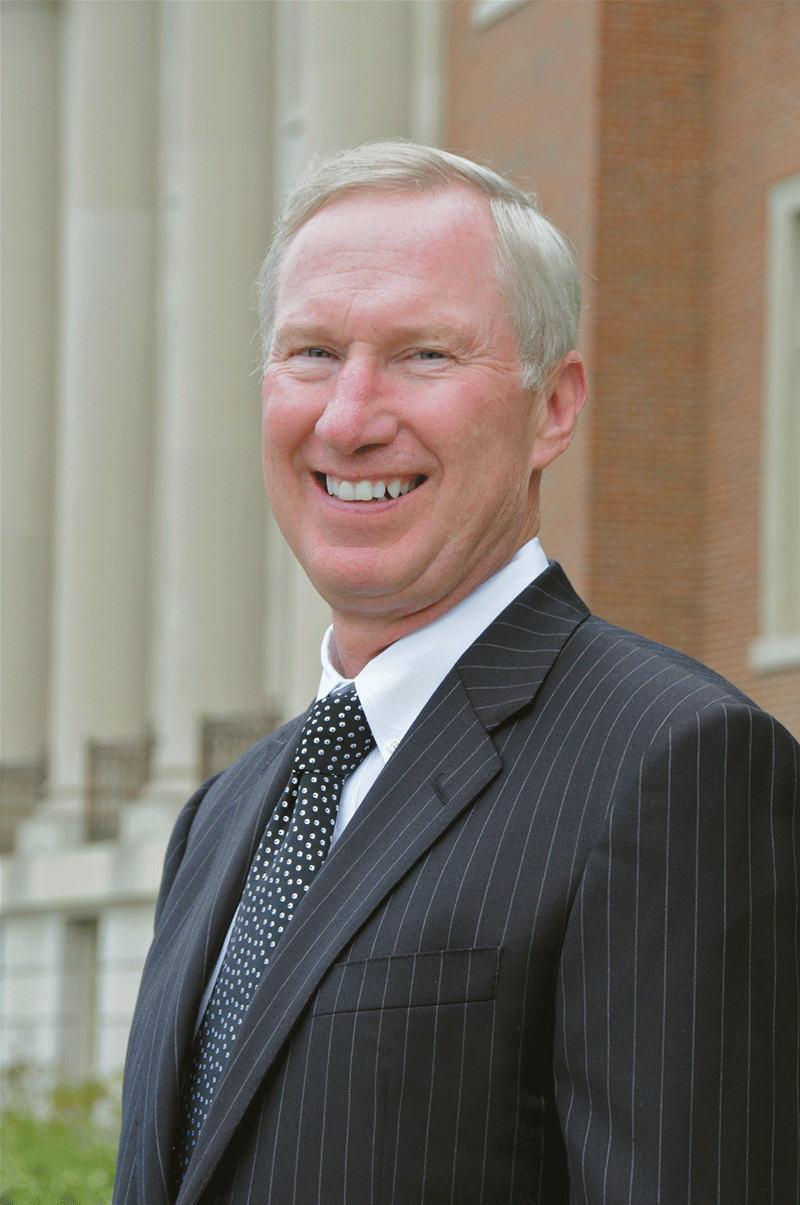
40 Under 40 Events
Nominations Are Being Accepted for the 40 Under Forty Class of 2014

40under40-LOGO2012Jeff Fialky called it “quality control.”
That’s how he chose to describe the third and final phase of his process for scoring the more than 100 nominees for BusinessWest’s 40 Under Forty Class of 2013.
Fialky, a member of the Class of 2008 and one of five judges of last year’s candidates, said he started his assignment by simply reading each of the nominations in their entirety, without assigning any scores, to get what he called a “flavor, and basis of comparison.”
“I then flipped the stack back over and went through them again,” he went on, adding that he did so with some gauges, or barometers, that would help him assign a number — 1 through 10 — to each of those nominations. The so-called quality-control work came the following morning, after a good night’s sleep and with some fresh perspective, when he went through the pile one more time to assess the numbers he assigned to each candidate to make sure he was totally comfortable with each one.
“I think I probably changed a dozen scores — not significantly, maybe one number up or down, based upon comparisons with the other nominees,” he said, adding that he’s not sure how the other judges went about their work last February, but he’s quite sure that the subjectivity that is part and parcel to the judging process is one of the things that makes the 40 Under Forty competition unique and what he called a “perfectly imperfect” undertaking.
“This 40 Under Forty program is about distinguishing oneself in the community,” he noted. “Whether it’s personally or professionally, it is truly a comparative exercise, and the fact that judges come at it in different ways makes it more compelling.  And while those approaches are different from each other, the end result is a great compilation of leadership in the Valley.”
Mark O’Connell agreed. The managing partner of Wolf & Co., with offices in Boston and Springfield, he also judged the Class of 2013, and took a decidedly different tack, what he called a more “analytic approach.”
Elaborating, he said he assigned hard numbers to certain aspects of candidates’ résumés — with a specific total of points awarded for such things as owning one’s business, getting involved with area nonprofits, and earning acclaim within one’s profession. The process, he said, took some of the subjectivity out of the equation.
“It became a mathematical process, essentially, and I was able to draw a line under the first 40,” he said, noting that, while his method may have been different from those used by others, he believed it worked, because only a handful of “his” top 40 were not eventually identified as winners.
By mid-February, another group of five judges (they’re profiled on page 18) will be developing their own strategies for assigning scores for what will likely be another 100 or so candidates in this, the eighth edition of the 40 Under Forty competition.
It all began in late 2006, said BusinessWest Associate Publisher Kate Campiti, when the magazine decided to embrace a concept used by a number of business publications across the country to identify, profile, and celebrate rising young stars in a given community.
Over the years, individuals from nearly every sector of the economy — from healthcare to retailing; technology to law; banking to nonprofit management — have made the list and climbed to the podium in late June to accept their plaque and the applause of friends, family, colleagues, and fellow recipients past and present.
The Class of 2013 was especially diverse, with the list of winners including a charter school founder, a construction company owner, several lawyers, an environmental scientist, and the vice president of sales for a company making next-generation hand dryers.
It was a class that surprised Fialky in some respects, and in a positive way.
“What I really enjoyed about my experience judging was seeing all the talent potential in the valley,” he explained. “You know that there’s been so many honorees over the prior years, and you intuitively think that the talent pool has been exhausted. But then you look at all the nominations, and you realize that it’s only the tip of the iceberg that’s been tapped.
“Some years favor service providers, some years favor nonprofit managers, some favor entrepreneurs, and some favor strength of character,” he went on, referring to the general makeup of the previous six classes. “I think last year’s class had an element of all four of those things.”
O’Connell concurred. “I think this was a great class — I came away very impressed,” he said, “and also feeling very good about the future of this region.”
There are now 280 people in the unique fraternity that is 40 Under Forty, said Campiti, noting that many of them have moved on to different jobs and different challenges, and some of them now have a different area code on their cell phones, but their 40 Under Forty plaque usually goes with them wherever they go.
Fialky agreed.
“It’s become a symbol of excellence, a symbol of leadership, if you will,” he said, adding that 40 Under Forty has become both a brand and something to aspire to.
The popularity — and importance — of the 40 Under Forty program has been driven home by the steady growth and evolution of the annual 40 Under Forty gala, this year to be staged on June 19 at the Log Cabin Banquet & Meeting House in Holyoke. Last year, the event drew a sellout crowd of more than 650 people, who were treated to fine food, perfect weather, and an eclectic array of music, chosen by the winners to accompany their ascension to the stage.
“The gala has become a happening, a not-to-be missed gathering that is also the year’s best networking opportunity,” said Campiti, adding that those who wish to attend must act quickly, because the gala traditionally sells out weeks before the event.
Before anyone can move to the stage to get their plaque, however, they must be nominated. And both Campiti and Fialky, who has been on both sides of the equation — as both candidate and judge — stressed repeatedly that 40 Under Forty is a nomination-driven process, something that is still lost on many who wish to forward a name and résumé for consideration.
“That’s where it starts, with the nomination,” said Campiti. “It needs to be complete, it needs to be thorough, and it needs to essentially answer the question, ‘why is this individual worthy of a 40 Under Forty plaque?’”
The nomination form requests the basic information on an individual, said Campiti, and can be supported with other material, such as a résumé, testimonials, and even press clippings highlighting an individual’s achievements in their chosen profession or within their community.
Nominations must be received by the end of the business day (5 p.m.) on Feb. 7. Judges will then score those nominations, and the winners will be notified by mail by the end of the month.
The chosen 40 will be profiled in the magazine’s April 21 edition, with gala tickets going on sale soon thereafter. For more information, call (413) 781-8600, ext. 100.

Fast Facts
What: The 40 Under Forty nomination process
Deadline: Feb. 7 at 5 p.m.
How to Nominate: Use the form in BusinessWest (it will also appear in subsequent editions), or go here.
For More Information: Call (413) 781-8600, ext. 100, or visit www.businesswest.com.
The 40 under forty Gala: June 19
Where: The Log Cabin Banquet & Meeting House
Tickets: They’ll go on sale in late April and will first be made available to winners and their families and employers.

Law Sections
Social Media Poses a Legal Minefield for Employers

SocialMediaLegalityDPartThe missive on Facebook reads like a typical workplace rant.
“It’s pretty obvious that my manager is as immature as a person can be, and she proved that this evening even more so. I am unbelievably stressed out, and I can’t believe NO ONE is doing anything about it! The way she treats us is NOT okay, but no one cares, because every time we try to solve conflicts, NOTHING GETS DONE!”
The poster worked in a San Francisco clothing store, and this message, and comments like it from fellow employees, led to numerous firings once the employer found out about them. But one of the booted employees filed an unfair-labor-practice charge with the National Labor Relations Board (NLRB) — which sided with the workers.
Why? Well, the store was located in a rough neighborhood of the city, and stayed open an hour later than other stores in the vicinity. The employees had complained to their manager about being harassed by “street people” upon leaving late at night. When the manager refused to change the store hours, the workers took to social media.

John Gannon

John Gannon says the National Labor Relations Board has recently taken a keener interest in making sure companies’ social-media policies aren’t too vague to be enforced.

“They went online and complained about their supervisor,” said attorney John Gannon, an associate with Skoler, Abbott & Presser in Springfield. “The NLRB said they were complaining about working conditions and were concerned about safety, and as a group, they were trying to get their supervisor or store manager to close that store earlier.”
And that, the board maintains, falls under the umbrella of ‘protected, concerted activity’ which employees are allowed by law to undertake. The fact that the complaints were posted very publicly and could have embarrassed the employer did not limit their rights.
“One issue that arises with respect to social media is, can we fire somebody for comments they have made online that may not be favorable to us, or that we perceive as disparaging?” said attorney Amy Royal, owner of Royal LLP in Northampton. “Before they take such adverse action, companies need to take a careful look at whether the comments are expressing an individual gripe or if the employee is trying to induce other employees to undertake group action that could potentially be seen as concerted activity.”
The difference is crucial, and gets to the heart of what employers need to know about their workers’ private use of social media.
“If it’s collective, and more than one employee is complaining online, is the complaint about the terms and conditions of employment?” Royal asked. “For employers, the frustrating piece is that the NLRB has a broad view of what constitutes terms and conditions of employment.
“If I read, ‘it’s pretty obvious that my manager is as immature as a person can be,’ human nature being what it is, if I’m the manager, I’m not going to happy with that, and I might want to take action because I feel slighted or slandered. But in this case, other employees joined in and made comments, and the NLRB said this is protected.”
That’s different, she said, than someone lashing out randomly at their employer with no such context, and no support from fellow workers.
“The number-one issue when talking about social media in the employment-law context is whether or not an employee’s activity, whether on Facebook or elsewhere, is protected by the National Labor Relations Act,” said Gannon, adding that the NLRB periodically issues ‘advice memorandums,’ examining about a dozen recent cases and discussing whether the employers’ conduct violated the act, or whether their policy on social media is too broad to be enforced.
“Through all those advice memorandums, they distinguish between someone’s individual gripes and somebody complaining about workplace conditions,” he said. “That’s the bright line — and it’s actually more of a gray line. Is somebody actually talking about improving workplace conditions, or is the employee just complaining about his supervisor? In a recent case, an employee said, ‘hey, my supervisor needs to back the f— off. If he wants to fire me, go ahead, make my day.’ The board said that’s your classic individual gripe; they weren’t talking about other employees or referencing any working conditions.”
Kate O’Brien, an attorney with Springfield-based Sullivan, Hayes & Quinn, noted that the NLRB has been busy assessing cases decided by administrative-law judges. “For the most part,” she said, “they’ve affirmed the approach of evaluating them for the potential chilling of employees’ right to engage in protected, concerted activity.”

Group Think

Amy Royal

Amy Royal says screening job applicants on social media can be helpful — but poses certain legal risks.

None of this, however, applies to employee use of social media on work time. Companies have long been well within their rights to police what their staffers do while on the clock, and routinely bar the recreational use of the Internet during work hours.
“Companies can and should have a policy that prohibits employees from using social media at work, and it should also extend to the use of their own devices,” Royal said. “In the real world, it becomes difficult for companies to police that, or they may not want to have a total prohibition, but they need to know that, if they allow some level of use of social media, employees can use it for union-organizing purposes.”
But when it comes to off-the-clock activity, she said, many employers — especially those with non-unionized workforces — still aren’t aware of workers’ rights when it comes to freedom of expression, laid out in Section 7 of the National Labor Relations Act.
“Section 7 applies to both union and non-union workforces and gives employees the right to come together and complain about the terms and conditions of their workplace,” Royal noted. “That particular section is implicated when we’re talking about social-media issues in the workplace.”
However, Gannon noted, although the NLRB remains engaged in complaints about unjust firing, it has also taken proactive steps to examine various companies’ social-media policies and determine which ones too broad to withstand scrutiny.
“They’ve reviewed a lot of policies dating back to 2010 and 2011 that prohibit certain kinds of behavior — prohibitions against inappropriate comments or unprofessional comments or misleading comments on Facebook — and they’ve come out and said that’s overly broad and not specific enough, that it could chill somebody’s Section 7 rights, so they’d be afraid to speak out.”
One recent case involved Giant Foods, which had a policy prohibiting employees from discussing confidential, non-public information on social media.
In an advice memorandum issued in July, “the board came out and said that’s overbroad, that they need to be more specific,” Gannon explained. “A lot of people were surprised by that; they think an employer has a right to protect its confidential information. But the board’s point was that, yes, you need to protect your confidential information, but make sure employees understand what that confidential information is.”
In another case — an actual decision, not just a memorandum — the board determined that Costco’s policy, barring employees from posting things that might damage the company’s reputation, was also overbroad.
In yet another case, Royal noted, an employer’s policy said workers must be courteous, polite, and friendly to customers and fellow employees, and not use language that injures the image or reputation of the company. “That sounds like a policy any company would want to implement, but the NLRB said that policy is problematic because it’s too vague,” she said. “They want specifics in these policies.”
So how should employers craft a policy that stands up to the law? “One thing I recommend is to link it to other policies,” Gannon said. “For example, I’ll recommend that the employer, in their social-media policy, reference the anti-harassment policy and make it clear that employees have to follow the anti-harassment policy in social media, and can’t post things that are harassing in nature.”
The same applies to confidentiality policies, he added. “You have to treat it as if it happened in the workplace.”

Searching for Clues
Still, O’Brien said, while overbroad policies are certainly a consideration, “I think a more prevalent consideration is the discipline or termination of employees for their comments and activity in social media.”
And it’s not just current workers employers must be concerned with. Job applicants pose their own kind of minefield. Specifically, employers who use sites like Facebook to gauge an applicant’s character often discover information about his or her beliefs or race or sexual preference — issues that shouldn’t be used in hiring decisions, but sometimes are.
“It’s a double-edged sword,” Royal said. “You want to investigate an unknown commodity before you invest in them. We know that bringing someone into a workplace is a huge investment, and social media is a great way to find out information about a person’s character, their reputation, their likes, and their interests. But on the flip side, you may be given information that you wouldn’t otherwise have in the application process, that could then be used as ammunition against you.”
Importantly, even if a decision not to hire is based solely on job qualifications and experience, simply knowing certain things about an applicant can open an employer up to the perception of discrimination — and lawsuits can follow.
“That’s not to say you shouldn’t use social media as part of background check into an applicant — I think you should — but you need to know the parameters,” she said. “And if you use social media inconsistently, you open yourself up to attack as well. If you’re going to use it, then use it for all applicants when they reach a certain point in the application process.”
Gannon said much of the strategy depends on what sites employers are checking.
“Generally speaking, I think there’s a lot of information out there that would be valuable to employers in their recruiting efforts. LinkedIn is a very good place employers can use to double check what their employees say in an interview; you can find out if there’s some conflict there.”
However, he added, “some other sites present problems stemming from learning too much information. Even visiting someone’s Facebook page and learning information that isn’t part of an application — information about an applicant’s religion, disability, genetic information — all of that can lead to an unlawful-hiring lawsuit, claiming the information learned through social media was the reason the individual wasn’t hired.”
Gannon agreed that hiring managers need to be consistent about what searches they perform, and then document those efforts.
“But the most important thing an employer can do is have a gatekeeper perform the search, an individual who is not connected to the hiring decision itself,” he said. “If they find any negative characteristics, they report back to the hiring manager.”
That way, he continued, “if someone brings a failure-to-hire lawsuit, you can defend the hiring — management didn’t know you were Muslim, for instance. That’s really the key in recruitment.”

Media Messages
Royal stressed the importance of keeping tabs on the NLRB’s evolving thought process on social media as it relates to Section 7 of the National Labor Relations Act and other factors.
“A lot of employers do have social-media policies, and now that we’re coming up on a new year, it’s a good time to revisit those policies to make sure they’re still compliant with NLRB decisions that have come in over the past year,” she said.
For example, “a semi-pro-employee decision came out of the NLRB that basically said that, if an employee is publicly critical in a way that the comments are maliciously untrue, then you can fire them — but employers need to be able to demonstrate that the comments were made with knowledge of their falsity or with a reckless disregard for their truth. That’s a high threshold to meet under those circumstances.
“Because this area is still emerging,” she added, “employees need to connect with their counsel to sort through these issues before they take action. You can’t unring that bell.”
Another potential shift in current thought involves the ‘like’ button on Facebook — specifically, whether simply liking a comment on Facebook is enough to be considered concerted activity, Gannon noted. “That’s something the NLRB is currently looking at. It’s kind of an interesting issue.”
O’Brien agreed that the picture is far from settled. “The board has provided a little more guidance on what’s acceptable or not acceptable. But it’s still constantly evolving, and an area employers need to stay on top of.”
Part of the reason social media has become such a scrutinized issue is the sheer volume of personal information being revealed on public websites.
“It’s a different world, but an interesting world, and employers really have to rely on outside counsel to keep them up to speed on what’s changing,” Gannon said.
“A policy that was OK in 2010 might not pass muster in 2013 based on advice memorandums that have come out from the board,” he continued. “Those policies might need to be revised. Employers need to be aware that this is an area of the law that’s constantly in flux. I’d be reviewing those policies in some way, shape, or form at least on an annual basis.”

Joseph Bednar can be reached at [email protected]

Giving Guide Sections
Regional Philanthropic Opportunities

GivingGuideArtWhile philanthropy is a year-round activity, the holidays are a time when many think about those who are in need, and how, in general, they can help make Western Mass. a better community for all who call this region home. To help individuals, groups, and businesses make effective decisions when it comes to philanthropy, BusinessWest presents its annual Giving Guide. On the pages that follow are profiles of 13 area nonprofit organizations, a sampling of this region’s thousands of nonprofits, including groups dedicated to everything from providing early-childhood education to finding homes for stray or unwanted animals; from filling the shelves of area school libraries to creating needed services for area senior citizens. These profiles are intended to educate readers about what these groups are doing, and also to inspire them to provide the support (which comes in many different forms) that these organizations and so many others desperately need.

George O’Brien, Editor
John Gormally, Publisher
Kate Campiti, Associate Publisher

To download a flip book of the 2013 Giving Guide click here