Home Posts tagged Insurance (Page 23)
Law Sections
Rulings Blur the Lines on Associational Disability Discrimination

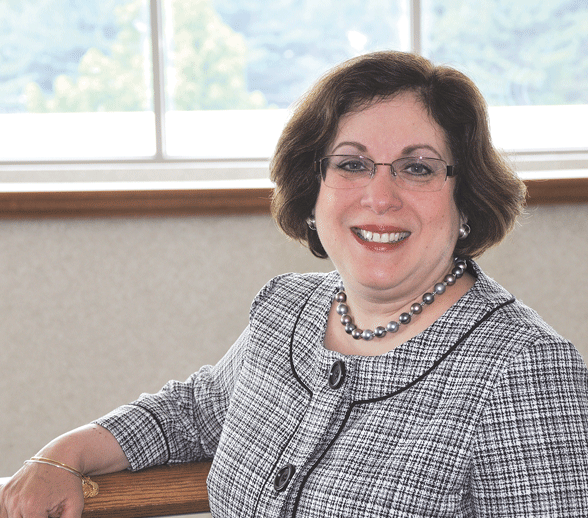
SUSAN G. FENTIN

SUSAN G. FENTIN

Two recent rulings by Massachusetts appellate courts have both confused and clarified the state’s anti-discrimination statute, Mass. Gen. L. Ch. 151B, which bars employers from discriminating against employees based on their handicap/disability.
In July, the Massachusetts Supreme Judicial Court (SJC) ruled, in Flagg v. AliMed, that Ch. 151B can, under certain circumstances, protect an employee when the employee himself is not actually disabled but instead is associated with a disabled individual. Then, in August, the Massachusetts Appeals Court dismissed a similar lawsuit brought by an employee who claimed that he was terminated because of his association with his autistic son.
In Flagg, the employee had worked for AliMed for 18 years with good performance appraisals. Flagg was a salaried employee entitled to benefits under AliMed’s health-insurance plan. Unfortunately, his wife had to have surgery to remove a brain tumor, and Flagg then became responsible for caring for the couple’s children. Flagg asked for permission to occasionally be briefly absent from work to pick up his daughter from school, and his manager told him to do whatever he needed to do to take care of his family.
AliMed later terminated Flagg, however, allegedly because he had failed to punch out and had, therefore, been paid for hours he had not actually worked. Apparently, the real reason for the decision to terminate Flagg was that his wife had again been hospitalized, and AliMed did not want to be financially responsible for the enormous medical bills. Flagg sued, but the trial court dismissed his suit on the grounds that the plain language of the statute protects only a handicapped employee, not an employee who is associated with a handicapped person.
Flagg appealed, and the SJC overturned the trial court’s decision. The SJC concluded that, when an employer takes action against an otherwise satisfactory employee because of his spouse’s impairment, it is targeting the employee as the direct victim of its discriminatory attitude, punishing the employee as if he were the handicapped individual himself. Accordingly, the SJC ruled that Ch. 151B could be read to incorporate the concept of handicap discrimination based on association.
The Massachusetts Appeals Court’s decision in Lashgari v. ZOLL Medical followed the SJC’s decision in Flagg, but reached the opposite result. In Lashgari, the employee claimed that he was forced to resign because of mistreatment by the employer. The employee alleged that he told his supervisor in February 2010 that he could not work overtime because his autistic son required constant care. He was subsequently demoted by a different member of management and placed on a performance-improvement plan.
This demotion apparently led to severe emotional distress, and ultimately, the employee felt he had no choice but to resign. In its decision, the Appeals Court affirmed the trial court’s decision dismissing the case. Citing Flagg, the court ruled that Lashgari’s complaint did not allege any facts that would show that he was fired because of his association with his handicapped son. The court found no connection between Lashgari’s conversation about his son’s autism and the subsequent adverse employment actions imposed by another supervisor, and the timing of the demotion, by itself, was not enough to support a claim of associational disability discrimination under Ch. 151B.
Significantly, in a concurring opinion to Flagg, two justices raised their concern that the decision might be interpreted more broadly than the SJC had perhaps intended. Although the Flagg decision, in a footnote, states that it is not intended to address reasonable accommodations for employees who are associated with disabled individuals, the concurring opinion cautioned that this ruling should be strictly limited to cases where a spouse’s disability could, for example, increase the employer’s health-insurance expenses or where the employer might fear that an employee could contract a disabling or contagious disease through his association with a disabled person.

Bottom Line
The SJC’s decision in Flagg makes it clear that an employer may not terminate an employee because of fears that its health-insurance premiums will go up, even if those expenses will not increase because of an employee’s own disability but instead because of a disabled individual associated with the employee. It is unresolved at this point whether the SJC’s Flagg decision will impact the ability of an employee to claim he is entitled to a reasonable accommodation for the disability of someone with whom he is associated.
Following the SJC’s decision, this case was returned to the Superior Court for trial, and we can imagine that the damages here will be hefty if the jury finds for Flagg.

Susan G. Fentin is a partner at the firm Skoler, Abbott & Presser, P.C., and editor of the Massachusetts Employment Law Letter; (413) 737-4753; [email protected]

Community Profile Features
Business, Family Roots Run Deep in South Hadley

CommunityProfilesMAPSoHadleyWhen asked for his thoughts on the fire that recently gutted the Dockside restaurant at Brunelle’s Marina, Michael Sullivan paused for a moment to collect his thoughts.

“The Brunelle family has been a cornerstone of the South Hadley business community for a long time,” the town’s administrator said. “It’s important to the community; people come to South Hadley to cruise on the Lady Bea or access the Connecticut River, and the Brunelles have built quite a reputation — and quite a business — there.”

It was a fitting thought, as several of those words — business, community, reputation, long time — were summoned again and again in discussing the economic character of South Hadley, a town where small, multi-generational family companies dominate a commercial sector that’s relatively tiny compared to neighboring communities like Chicopee, Amherst, and Hadley.

And it’s that deep-seated community identity that has the Brunelles firing up lunch and dinner under an outdoor pavilion while their eatery overlooking the marina is rebuilt.

“They’re resilient,” Sullivan said. “They’ve got all their permits reprinted up, everything is in place, and they’re looking to get back at it in quite an aggressive fashion — and we’re looking to do everything we can to support them.”

Dr. Steven Markow, owner of Village Eye Care and president of the South Hadley & Granby Chamber of Commerce, also expressed sympathy after the fire, noting that the Brunelles have been part of South Hadley’s business picture for a long time, but they’re far from alone.

“Carey’s Flowers has been around here for decades. All Star Dairy is a long-time, long-standing family business. There’s Chapdelaine’s Furniture, Jubinville Insurance, Ryder Funeral Home, and many others … there has been a lot of stability in that way. It’s a generational town in a sense, and the same is true of many businesses.”

That stability extends to residential life in what Markow calls a bedroom community. He said he recently consulted a world atlas from 1960 that listed South Hadley’s population at around 15,000; today, it’s just over 17,500.

Dr. Steven Markow

Dr. Steven Markow says South Hadley is a generational town in many ways, for both families and businesses.

“I’ve been here for 17 years, and I’m just starting my 13th year in business — so, by South Hadley standards, I would be considered a newbie,” he said. “But as president of the chamber, I’d say we have a very diverse membership, and it’s that diversity that helps keep the economy somewhat stable and strong here. Of course, that’s true of the whole region. I think, relative to how things are in other parts of the country, we’re doing fairly well here, although we could do a lot better.”


Reversing the Fall

With a thriving town center driven by the bustling Village Commons — with its 100% occupancy rate and mix of retail, restaurant, service, and office tenants — and the more than 2,300 students at Mount Holyoke College, the challenge for South Hadley is to focus on more-challenged areas of town, such as the Falls, just across the Connecticut River from downtown Holyoke.

“We’re moving on with some new tools we think will be advantages for economic development,” Sullivan said, noting that the town recently invited John Fitzgerald, urban development coordinator from the state Department of Housing and Community Development, to talk about the usefulness of a redevelopment authority, which would have the power of eminent domain to seize private property. “We think, particularly in an older community, you need to amalgamate properties to make it viable or attractive to developers to come in and make investments. The redevelopment authority can be a wonderful tool.”

Sullivan said such a move is long overdue. “The Falls is an area that has been unintentionally neglected for a long period of time, and we need to be a little more dutiful and pay attention to it.”

the fire-gutted Dockside

The Brunelle family has kept food service going under an outdoor pavilion while they make plans to rebuild the fire-gutted Dockside.

The Falls will benefit next year from a new, $10 million public library overlooking the Holyoke Dam, and the neighborhood also received a profile boost this summer with the first Falls Fest, a free, all-day music event at the Beachgrounds, the recently renovated park beside the river.

“We got the buzz out, and everyone who was there had a great time,” said Markow, adding that the neighborhood has the potential for more such events. “The idea was, what can be done to revitalize the economy of the Falls? This was a wonderful step in the right direction. The bands who performed there thought it was the best place they had ever performed, because it provided everything one would need for a venue — food vendors, craft vendors, shade for a summer day, kids got to play in the splash park … it’s a great place to come listen to music.”

Sullivan also welcomes a multi-faceted approach to boosting the Falls. “That’s really our focus; we’re trying to revitalize and find adaptive reuses for the area, and we’re looking at having more events there. Some people say that the way cities get rediscovered is through those types of events. People come in and say, ‘wow, I never knew this was here; I want to invest.’”


Success Stories

Decades of investment are clearly visible at the Village Commons, across Route 116 from the college, home to six restaurants, Tower Theater, and a host of retail shops and other businesses.

“When I moved here 17 years ago, there were more retail shops in the Village Commons, but retail has gone through some tough times,” said Markow, whose eye-care practice neighbors the complex. “What’s evolved is more food and service, which probably is a microcosm of the whole economy in general. It’s the center of town, and it’s thriving; they’re doing very well there, and a couple of new food places went in recently. People like coming there; it’s a good, central location.”

Mount Holyoke itself provides much of the energy in that neighborhood, he added. “In my opinion, South Hadley is extremely lucky to have Mount Holyoke College in its midst because it’s a world-class higher-education institution, the first all-women college in the country that’s still in operation. It has a world-class art museum, outstanding faculty, and a first-class equestrian center that brings equestrian shows here and helps the economy. The college just brings the town to a higher level.”

Although South Hadley receives just 8% of its tax revenues from businesses, Sullivan noted, “what’s not listed in that statistic is Mount Holyoke College, a nonprofit business. If you put that into the valuation formula, as an economic-development engine, that is quite significant — the jobs it creates, the investments made by the college.”

A prestigious college is just one piece of the community’s education strengths, Markow added, which includes the new public library and plans for a new Plains Elementary School. “It’s this kind of development which helps to attract families to the community. When they see investment in the school system, that’s very important to new families coming into town.

“I try to work with the schools because I think having a high-quality school system is part of the formula that makes a community strong and stable,” he continued. “The new superintendent of schools here, Dr. Nick Young, has been a very willing partner. He wants to cultivate a mutually beneficial relationship with the business community, and he’s really reached out to us.”

Despite the town’s strong points, however, commercial vacancies remain, Markow told BusinessWest, and there’s plenty of room for improvement in the town’s overall economic outlook.

“I don’t know what the answer is. How do you bring in new business when everyone is still holding back?” he pondered. “From the chamber’s perspective, we’re limited by our resources, and we could do more with more resources. My pitch is trying to get more businesses on the chamber; a large group has more clout than a small group. That’s one of our missions, to increase membership, increase resources, and be more effective in improving the quality of life in town and supporting the business environment.

“Personally,” he went on, “my mission as president is to see what we can do to improve quality of life in town because that’s going to attract new people to come live here, help stabilize the property values, and just make it a nicer place to live. What can we do to make it a nicer place to live? That, in turn, will trickle down and make the economy better.”


Coming Back

Markow noted that the town’s economic strengths are tempered by losses like the Big Y on Newton Street, which the property owner has no plans to retenant in the near future.

“That was a very disappointing occurrence because it had been a grocery store for quite a long time, and as New Englanders, we’re used to not changing. But what’s really disappointing is keeping the place vacant for a number of years, which I find unhelpful to the economic health of the town.”

On the other hand, Sullivan noted, “Village Commons is in discussion about expansion of their retail and mixed-use development. That’s exciting. So there are a lot of good things happening in a lot of different ways from an economic-development standpoint, but we still have a long ways to go.”

As for the Dockside, he applauds the Brunelles’ efforts to bring the restaurant back to life.

“That’s one of the places people go to recreate and spend money,” he said, including the Ledges and Orchards golf courses, McCray’s Farm, and the college area in that category. “It’s all about destinations in the community.” n


Joseph Bednar can be reached at [email protected]

Chamber Corners Departments
ACCGS

www.myonlinechamber.com
(413) 787-1555

Sept. 4: Business@Breakfast, 7:15-9 a.m., at the Sheraton Springfield. Charles Schewe, Ph.D., professor of Marketing at the UMass Isenberg School of Management, will present “The Millennials are Coming! Can You Hear the Flapping of Their Flip-Flops?” Some label them narcissistic, ungrateful, and entitled, while others note them as tech-savvy, family-centric and achievement-oriented. No matter the label, the Millennial, also known as Generation Y, worker is the fastest-growing segment of today’s workforce. By 2025, they will make up 75% of the world’s workforce.As businesses compete for available talent, employers cannot ignore the needs, wants, and attitudes of these young professionals, and bridging the generational gap is critical to running an effective organization.Schewe will take attendees on an entertaining journey through the generations to help organizations better understand the characteristics and values of today’s generation and how employers can adapt to successfully integrate these workers into the workforce.The ACCGS will also salute Friends of the Homeless on its 25th anniversary, welcome Kelly Services to the neighborhood as it moves into its downtown Springfield location, and introduce attendees to Audrey Szychulski, the new executive director at the Springfield Symphony Orchestra. Reservations are $20 for members, $30 for general admission. Reservations may be made online at www.myonlinechamber.com or by contacting Cecile Larose at (413) 755-1313.

• Sept. 9: “Federal Health Care Reform and Your Company,” 8:30-11 a.m., at the Delaney House in Holyoke. The Massachusetts Health Care Connector is offering a unique opportunity to hear from and speak with executives for key regulatory agencies on National Health Reform and its implementation in the Commonwealth. The program is presented in collaboration with the Associated Industries of Massachusetts. Reservations are complimentary but required by visiting www.aimnet.org/thesolution.

• Sept. 11: After 5 – MillFest, 5-7 p.m., at Ludlow Mills. The ACCGS is bringing back After 5 networking events bigger and better than ever with MillFest. This event will feature live music, great food, lots of fun, and, of course, networking. Sponsored by Chicopee Savings Bank with support from HealthSouth and Westmass Area Development Corp., this event is presented in collaboration with the East of the River Five Town Chamber of Commerce, an affiliate of the ACCGS. Reservations are $15 for members, $25 for general admission. Proceeds will benefit the ERC5 Scholarship Fund. Reservations may be made online at www.myonlinechamber.com or by contacting Cecile Larose at (413) 755-1313.

• Sept. 18: Western Mass. Business Forum, 8:30 a.m.-noon, at Holyoke Community College. Businesses operating today are often overwhelmed by state and federal environmental, health, and safety requirements. It’s especially tough for small and mid-size businesses to keep up to date. Join the EPA, DEP, and other state agencies and the state’s leading business organizations for a half-day briefing where you’ll be given the tools to run your business safely and in compliance with the law — and maybe save some money in the end. Presented in collaboration with Associated Industries of Massachusetts, Pioneer Valley Planning Commission, Partners for a Healthier Community, and the Commonwealth of Massachusetts. Reservations are $25 for the first employee per company, $15 per employee thereafter. Reservations must be made online at www.myonlinechamber.com.

• Sept. 24: “Pastries, Politics, and Policy,” 8-9 a.m. at the TD Bank Conference Center, 1441 Main St., Springfield. For those political and policy junkies. Join us for our debut event featuring a policy expert and member of Gov. Deval Patrick’s administration for a breakfast and roundtable discussion. Reservations are $15 for members, $25 for general admission. Reservations may be made online at www.myonlinechamber.com or by contacting Cecile Larose at (413) 755-1313.


AMHERST AREA CHAMBER OF COMMERCE

www.amherstarea.com
(413) 253-0700

• Sept. 13: Amherst Area Chamber Luncheon, 12:30-2 p.m., at the Lord Jeffery Inn, 30 Boltwood Ave. Amherst. Sponsored by the UMass Five College Credit Union. Celebrate the growth and impact of local agriculture and the 20th anniversary of Community Involved in Sustaining Agriculture (CISA). Guest Speaker: Phillip Korman, executive director of CISA, who will discuss the economic impacts and growth of the “Local Hero” movement in the Pioneer Valley. Tickets are $15 for members and $20 for non-members. RSVP to [email protected].

• Sept. 25: Chamber After 5, 5-7 p.m., a block party at Florence Savings Bank, 385 College St., Amherst. Explore the whole group of businesses at Amherst Crossing: Amherst Pharmacy, Coldwell Banker-Upton Massamont Realtors, and Pioneer Valley Ideal Weight Loss. Enjoy tasty treats from Portabella Catering. Admission: $5 for members, $10 for non-members. RSVP to [email protected].


CHICOPEE CHAMBER OF COMMERCE

www.chicopeechamber.org
(413) 594-2101

• Aug. 22: Part 4 of a five-seminar series: “Marketing Strategies that Lead to Growth,” 8-10:30 a.m., at the PeoplesBank Conference Room, 330 Whitney Ave. in Holyoke. Concerned about delivering your profit? Unsure how to reach your target audience? Overwhelmed with all the media options available? Smaller businesses often lack the time to execute their marketing tasks and are challenged with budgetary constraints. This workshop, presented by Mary McCarthy, is designed for businesses seeking cost-efficient and effective marketing strategies that lead to growth and seamless communication with their customers. Join us and learn:
•Branding strategies that will effectively convey your marketing messages;
•How to distinguish your marketing plan from your competition;
•Effective ways to reach your target audience and foster loyal relationships;
•How to connect with today’s tech-savvy customers through social media; and
•Networking essentials that will help you get more business.


GREATER EASTHAMPTON CHAMBER OF COMMERCE

www.easthamptonchamber.org
(413) 527-9414

• Aug. 20: GRIST (Get Real Individual Support Today), 9 a.m., at the chamber office at 33 Union St., Easthampton. Are you a business of one? Are you a small-business owner without your own marketing department? Do you ever wish you had someone to toss around some ideas with about growing your business? The GRIST group can help. It’s a new chamber member benefit, an ongoing small group for business people who want to meet regularly to share ideas and get advice on the daily challenges of running a successful business. This small group of 10 to 15 people is limited to chamber members and those interested in joining the chamber. We welcome interested guests to attend one meeting to see what the group is all about. GRIST meets the first and third Tuesday of each month from 9 to 10 a.m. at the chamber office. RSVP by the Monday preceding each meeting to Fran Fahey at [email protected] or Derek Allard at [email protected] to join the group. Or, call Fahey at (413) 529-1189 or Allard at (413) 282-9957 to find out more.

• Sept. 3:  GRIST (Get Real Individual Support Today), from 9 to 10 a.m., at the Greater Easthampton Chamber of Commerce, 33 Union St., Easthampton. The GRIST group is a free member benefit, an on-going small group that meets regularly to share ideas and get advice on the daily challenges of running a successful business. RSVP to Derek Allard at [email protected] or (413) 282-9957, or Fran Fahey at [email protected] or (413) 529-1189. The program is free to chamber members and future members.

• Sept. 9: NCYF 2nd Annual Golf Tournament, 11 a.m., at Cold Spring Country Club, 336 Chauncey Walker St., Belchertown. The tournament benefits services for children and their families at NCYF and Tri-County Schools in Easthampton. Registration at 11, shotgun scramble start at noon. Cost: $110, including golf, cart, lunch, and dinner buffet. More than $3,000 in raffle prizes. Acura and hot tub hole-in-one prizes. Contact Suzanne Welch at [email protected] or (413) 313-2820.

• Sept. 12: Networking by Business Card Exchange, 5-7 p.m. Hosted and co-sponsored by Eastworks, 116 Pleasant St., Easthampton. Co-sponsored by Riff’s Joint. Hors d’ouevres provided by Riff’s Joint. Beer and wine available. Door prizes. Tickets: $5 for members, $15 for future members.

• Sept. 17: GRIST (Get Real Individual Support Today), 9-10 a.m., at the Greater Easthampton Chamber of Commerce, 33 Union St., Easthampton. The GRIST group is a free member benefit, an ongoing small group of folks who meet regularly to share ideas and get advice on the daily challenges of running a successful business. RSVP to Derek Allard at [email protected] or (413) 282-9957, or Fran Fahey at [email protected] or (413) 529-1189. The program is free to chamber members and future members.

HOLYOKE CHAMBER OF COMMERCE

www.holycham.com
(413) 534-3376

• Sept.10: “Grow Your Business with E-mail and Social Media Marketing,” 8:30-10:30 a.m., at the Greater Holyoke Chamber of Commerce Executive Conference Room, 177 High St., Holyoke. Sponsored by PeoplesBank and the Republican. Attendance is free. For reservations, call the chamber office at (413) 534-3376.

• Sept. 11: Legislative Coffee Hour, 7:45-9:15 a.m., at Sláinte, 80 Jarvis Ave., Holyoke. Sponsored by Dowd Insurance, Loomis Communities, and Resnic, Beauregard, Waite and Driscoll. Cost: $15 for members, $25 for non-members. Price includes a continental breakfast. Call the Chamber at (413) 534-3376 to sign up.

• Sept. 18: Chamber Annual Clambake, 5-7:30 p.m., at Holyoke Country Club, 1 Country Club Road, Holyoke. Sponsored by United Water and Pioneer Valley Railroad. The public is invited to attend. For reservations, call the chamber office at (413) 534-3376.

• Sept. 24: “The Power of E-mail Marketing,” with a bonus session, “Getting Started with Constant Contact E-mail Marketing,” 8:30-10:30 a.m., at the Greater Holyoke Chamber of Commerce Executive Conference Room, 177 High St., Holyoke. Sponsored by PeoplesBank and the Republican. Attendance is free. For reservations, call the chamber office at (413) 534-3376.


MASSACHUSETTS CHAMBER OF COMMERCE

(413) 525-2506

• Nov. 12: Massachusetts Chamber of Commerce Annual Meeting & Awards Luncheon, at the DoubleTree in Westborough. Registration is at 9 a.m. For more information on ticket sales and sponsorship opportunities, contact the chamber office at (413) 525-2506 or e-mail [email protected].


GREATER NORTHAMPTON CHAMBER OF COMMERCE

www.explorenorthampton.com
(413) 584-1900

• Sept. 11: Arrive@5 Monthly Chamber Networking Event, 5-7 p.m. Sponsored and hosted by Baystate Health Outpatient Center, Northampton Crossing, 325 King St., Northampton. Cost: $10 for members, $15 for non-members. RSVP to [email protected].

• Sept. 26: Business Planning Workshop, 3:30-5 p.m., at the Northampton Chamber, 99 Pleasant St., Northampton. Presented by the staff of the Franklin County Community Development Corp. This 90-minute session informs business owners about business planning, the loan process, where to get help, and how to launch a food product and use the Western MA Food Processing Center. Learn about available resources and walk out knowing your next step. Cost: free. RSVP required due to limited space. RSVP to [email protected].


NORTHAMPTON AREA YOUNG PROFESSIONAL SOCIETY

www.thenayp.com
(413) 584-1900

• August 15: Networking Social, starting at 5 p.m., at Sláinte, 80 Jarvis Ave., Holyoke. This month we’re venturing down to Holyoke in order to host a joint networking social with the Young Professional Society of Greater Springfield at Sláinte. Featured nonprofit: Pioneer Valley Habitat for Humanity.

• August 22: Bare Mountain Hike, 6 p.m. Join us for a Thursday-evening hike up Bare Mountain. The short but steep 0.62-mile hike will take us to the 1,014-foot summit with unobstructed views of the Pioneer Valley. Bare Mountain is home to a former Strategic Air Command bunker (featured in the movie Edge of Darkness) that is now owned by Amherst College. You will need a pair of sturdy shoes, water, and a flashlight to enjoy this hike. RSVP on Facebook so we know that you’re coming. Meeting spot: the Notch Visitor Center parking lot, 1500 West St., Amherst.


WEST OF THE RIVER CHAMBER OF COMMERCE

www.ourwrc.com
(413) 426-3880

• August 19: West of the River Chamber of Commerce 10th Annual Golf Tournament, at Springfield Country Club, West Springfield. Cost: $125 per golfer. Presenting sponsor: Hard Rock Hotel and Casino of New England. For more information on registration and sponsorship opportunities, contact the chamber office at (413) 426-3880 or e-mail [email protected].

• Sept. 4: Wicked Wednesday, 5-7 p.m., hosted By E.B.’s. Wicked Wednesdays are monthly social events hosted by various businesses and restaurants. These events bring members and non-members together to network in a laid-back atmosphere. Free for chamber members, $10 for non-members. Event is open to the public; you must pay at the door if you’re a non-member. For more information, contact the chamber office at (413) 426-3880 or e-mail [email protected].


GREATER WESTFIELD CHAMBER OF COMMERCE

www.westfieldbiz.org
(413) 568-1618

• Sept. 9: Mayor’s Coffee Hour, 8-9 a.m., at Noble Hospital, 115 West Silver St., Westfield. Guest speaker: Mayor Daniel Knapik, who will speak about all that is happening around Westfield and field questions. Cost: free and open to the public. To register, call Pam Bussell at the chamber office at (413) 568-1618 or e-mail [email protected].

• Sept. 11: September WestNet Connection, 5-7 p.m., at the Holiday Inn Express, 39 Southampton Road, Westfield. Sponsored by CityStage and Symphony Hall. An evening of networking; don’t forget your business cards. Complimentary hors d’oeuvres and cocktails. Walk-ins are welcome. Cost: $10 for members; $15 cash for non-members. To register, call Pam Bussell at the chamber office at (413) 568-1618, or e-mail [email protected].

• Sept. 13: Chamber Breakfast, 7:15-9 a.m. Hosted by the 104th Fighter Wing ANG, 175 Falcon Dr., Westfield. Platinum sponsor: Westfield Bank. Gold sponsors: Berkshire Bank and United Bank. Guest speaker: Evan Dobelle, president of Westfield State University. Cost: $25 for members, $30 for non-members. To register, call Pam Bussell at the chamber office at (413) 568-1618, or e-mail [email protected].

Court Dockets Departments

The following is a compilation of recent lawsuits involving area businesses and organizations. These are strictly allegations that have yet to be proven in a court of law. Readers are advised to contact the parties listed, or the court, for more information concerning the individual claims.


CHICOPEE DISTRICT COURT

Arnold & Eddie’s Foods Inc. d/b/a Arnold’s Meats v. Moriarty’s Pub and Grill Inc. and Michael Moriarty

Allegation: Non-payment of goods sold and delivered: $4,633.23

Filed: 6/2/13


Universal Am-Can LTD v. Diecutting Tool Services Inc.

Allegation: Breach of contract relating to transportation services rendered: $2,475

Filed: 6/2/13


GREENFIELD DISTRICT COURT

Kathryn Bridges and Gregory Kingsbury v. Cheryl Ingersoll d/b/a Yankee Realty

Allegation: Defendants damaged, destroyed, and lost personal possessions while charged with the duty of moving the plaintiff’s possessions: $44,000

Filed: 4/15/13


Terry J. Johnson and Yvonne Johnson v. PanAm Railways Inc., Joseph Yukl, James Rae, and Charles Steinmeyer

Allegation: Breach of contract, wrongful termination, and fraud: $220,000

Filed: 5/10/13


HAMPDEN SUPERIOR COURT

Edna Richards v. Michael J. Craig, M.D., Mercy Medical Center, and Mercy Inpatient Medical Associates

Allegation: Negligent administration of morphine despite documented morphine allergy, causing permanent injury: $136,551.56

Filed: 6/5/13


McLaughlin Paper Co. Inc. v. Durga, LLC d/b/a CoCo Key-Fitchburg, Courtyard by Marriot-Fitchburg, Holiday Inn-Fitchburg, Midas Hospitalty, LLC, and Great Wolf Resorts

Allegation: Non-payment of goods sold and delivered: $29,808.75

Filed: 6/12/13


Northern Land Clearing Inc. v. NASDI, LLC

Allegation: Non-payment of rental equipment: $35,126

Filed: 5/28/13


PALMER DISTRICT COURT

Stiller Distributors Inc. v. Earth First Flooring Inc.

Allegation: Non-payment of goods sold and delivered: $1,390.94

Filed: 5/21/13


SPRINGFIELD DISTRICT COURT

Arthur J. Stevens Fine Furniture v. Krent/Paffett/Carney Inc. and John Carney d/b/a Experience Design

Allegation: Breach of settlement agreement: $21,019.15

Filed: 5/22/13


National Union Fire Insurance Co. of Pittsburgh, PA v. Foley Transport Inc.

Allegation: Breach of contract and failure to pay: $15,442.76

Filed: 5/22/13


Sanford and Hawley Inc. v. James D. Hall d/b/a Jim’s Renovation & Repair Services

Allegation: Non-payment of goods sold and delivered: $6,829.50

Filed: 5/21/13


United Rentals Inc. v. Jeta, LLC and Steven A. DeLisle

Allegation: Non-payment for materials, equipment, and services: $11,754.90

Filed: 5/21/13

Law Sections
What the Changes in Obamacare Implementation Mean to Employers

ROSEMARY J. NEVINS

Rosemary J. Nevins

Not surprisingly, given the number of transitional and safe harbors included in the interpretive regulations related to the Affordable Care Act, a.k.a. ‘Obamacare,’ the most recent change is that involving the implementation of the ‘play-or-pay’ provisions applicable to large employers, which were to have taken effect Jan. 1, 2014.

The change provides for a one-year delay in the implementation of the employer-shared responsibility (ESR) provisions of the law.


Why the Delay?

According to White House business liaison Valerie Jarrett, “business owners expressed concerns about the complexity of the law’s reporting requirements,” and “businesses needed more time to get things right.” Apparently, the administration took heed of the many and varied concerns expressed by employers subject to the play-or-pay provisions and will use the one-year delay period to revamp and simplify the reporting process, and will convene employers, insurers, and experts to propose a smarter system, which, hopefully, will result in a more streamlined, workable system for large employers.


What Portions of the ACA Were Delayed?

• The ESR provisions. Under these provisions, large employers (those with 50 or more full-time employees, including full-time-equivalent employees) who choose not to offer health-insurance coverage to their full-time employees, or offer coverage that fails to provide a minimum level of coverage and/or is not ‘affordable,’ are subject to an ESR tax if even one of those employees qualifies for and purchases coverage on the state or federal exchange.

— Former deadline: this ESR provision was to be effective Jan. 1, 2014.

— New deadline: the ESR effective date is apparently Jan. 1, 2015.

• The reporting requirements. The ACA includes reporting requirements for insurers, self-insuring employers, and other entities of parties that provide health coverage. It also requires certain information from employers regarding health-insurance coverage offered to its employees.

— Former deadline: reporting was scheduled to begin in 2015 for coverage provided on on or after Jan. 1, 2014.

— New deadline: reporting is now apparently scheduled to begin in 2016 for coverage provided on or after Jan. 1, 2015.

What should employers take away from this reprieve? They will benefit from both the time extension and the potential revamping and simplifying of the originally imposed requirements under the employer-shared provisions of the law. The additional time will provide large employers the opportunity to:

• Get their written plan documentation and safe-harbor measurement rules in order;

• Organize and comply with employee-notice requirements;

• Develop operational implementation policies and procedures;

• Develop administrative procedures that will allow for seamless reporting processes;

• Consider the pros and cons of using existing health-coverage plans, get new ones, or determine whether it is more cost-effective to simply pay the regulatory tax (play or pay); and

• Decide if the company will hire an outside ACA-implementation specialist, designate the responsibility to an existing employee, or hire a full-time employee to be the ACA implementation point person.

Large employers should keep in mind that the delay in implementing the play-or-pay mandate also applies to the collection of otherwise applicable fines.


What Should Employers Do?

Since the revamping and simplification of the provisions will hopefully be less complicated than the existing ones, it would be wise for large employers to pay particular attention to notifications and information regarding the new changes as soon as they become effective.


Rosemary J. Nevins, Esq. specializes exclusively in management-side labor and employment law at Royal LLP, a woman-owned, SOMWBA-certified, boutique, management-side labor and employment law firm; (413) 586-2288; [email protected].

Education Sections
LTL Program Brings Businesses and Schools into Partnerships

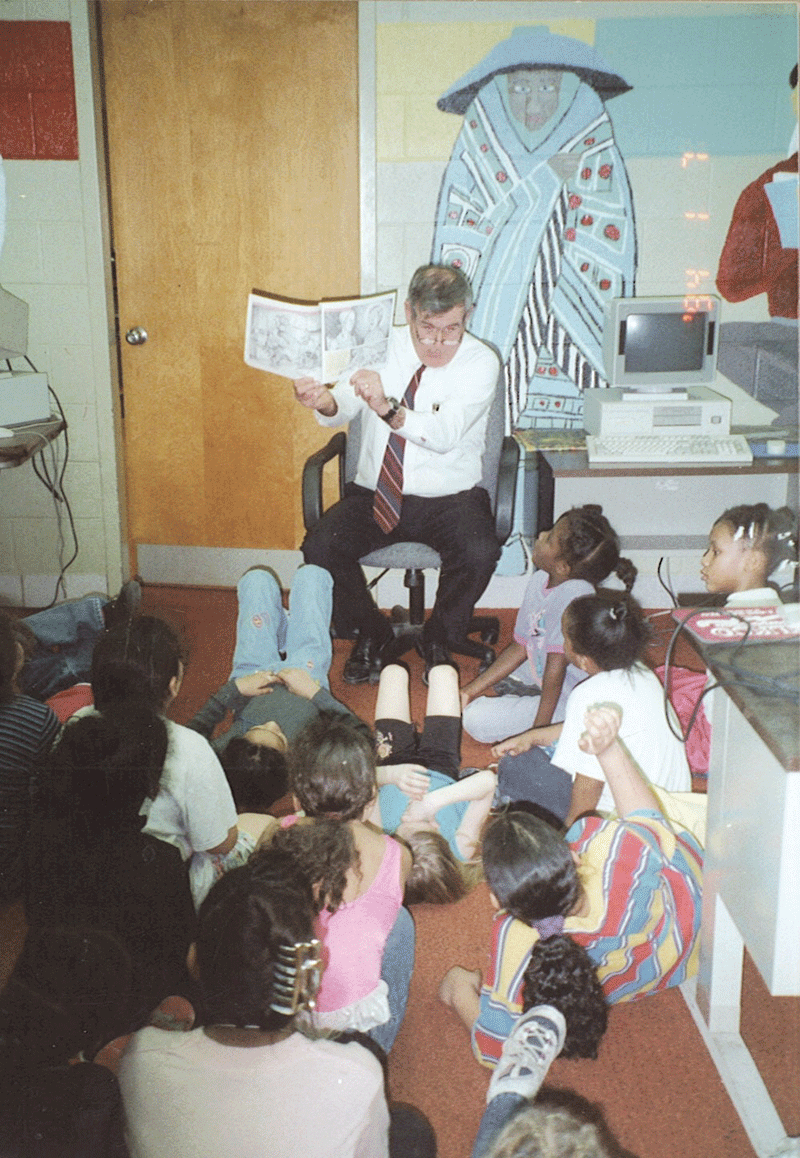
Washington School

Stephanie Fitzgerald, left, had her picture taken after a read-aloud assignment at the Washington School, which is being sponsored by Fitzgerald Attorneys at law.

Stephanie Fitzgerald called it a “pleasant surprise,” and then an “unexpected benefit.”

She was talking about the relationship, or partnership, that has blossomed since Fitzgerald Attorneys at Law, with which she is a partner, signed on last spring to sponsor the Washington Street School in Springfield as part of an ambitious program launched roughly a year ago by the nonprofit group Link to Libraries (LTL).

Sponsorship entails a donation of $1,200 per year for three years, with that money used to help provide the school in question with roughly 300 new books each year. But beyond the monetary donation, companies are also asked to become engaged with the school in some way, with the most common methods being donations of time and imagination for read-aloud work in the classroom.

However, in this case, the engagement process has gone well beyond reading, said Fitzgerald, who summed up what’s happened in four short months by saying simply, “that’s our school — that’s how everyone here feels. We’re not just donating books.”

Elaborating, she said that the firm and individual staff members have done everything from bringing in school supplies and snacks for students to fulfilling a request that landed at the top of a recently compiled wish list — some picnic tables that would enable outdoor activities at the century-old school in the city’s Forest Park neighborhood.

There are now more than 30 area companies using the phrase ‘this is our school,’ or words to that effect (one area bank can say ‘these are our schools’), said Susan Jaye-Kaplan, co-founder of Link to Libraries with partner Janet Crimmins, who noted that, in every case, the experience has been heightened because it involves much more than writing a check.

“Banks are providing lessons in financial literacy, a technology company [Paragus Stratetic IT] is teaching kids about computers, and professionals are talking about their careers,” she said. “People are tutoring, mentoring, providing kids with mittens and gloves and fruits and veggies … this goes well beyond books, but that’s where it all starts.”

Many of these relationships are in the developmental stages, including the one involving Holyoke Community College and the Morgan School, in the Flats section of the city.

Erica Broman, HCC’s vice president of Institutional Development, said the college signed on as a sponsor in late spring, but a number of reading assignments have been undertaken, including a few involving HCC President Bill Messner.

Looking ahead, she said the college will explore ways to deepen the relationship in the fall, with, among other things, field trips to the campus that will provide an introduction to higher education aimed at inspiring students to make that a life goal.

businesses sponsoring schools

Among the many businesses sponsoring schools is the Springfield Falcons AHL hockey team, represented here by Sarah Pompea, second adult from left, the team’s coordinator of Marketing & Promotions, and player Cam Atkinson.

Kaplan said LTL’s goal is to have at least 50 companies in sponsorship agreements by the end of this year. That’s ambitious, but doable, she noted, adding quickly that, while response to the program has been tremendous, there are still dozens of area schools — including more than 20 in Springfield alone — that need sponsors.

“There is still a great deal of need out there,” she said, adding that these links between businesses and schools do much more than fill bookshelves. “It’s important for businesses to get involved with these schools and nonprofits because there are rewards for all those involved.”

For this issue and its focus on education, BusinessWest talked with many of those taking part in LTL’s Business Book Link program to get a good read on the latest chapter in an ongoing and quite inspiring effort to connect children with books and create excitement for reading.


The Latest Word

Kaplan told BusinessWest that the book-link program was a natural extension of LTL’s efforts to stock area school and nonprofit libraries and get area students started on their own collections.

Since the organization was launched in May 2008, it has relied on grant funding and donations from area businesses and foundations, gifts that have helped enable it to donate more than 165,000 new books and 3,000 used volumes to area schools and nonprofits.

The concept of business sponsorships was embraced to enhance fund-raising efforts, and it has certainly done that, said Jaye-Kaplan, but there were many other goals as well, especially a desire to directly involve businesses with area schools, thus making them an integral part of the solution to a region-wide challenge — properly stocking school library shelves and generating enthusiasm for reading.

Dr. Susan Landry, a physician who has put her medical practice aside at least temporarily, accepted Kaplan’s invitation to serve as project director for the program. She described her assignment as linking businesses to schools, and said that, with this endeavor, there hasn’t been a high degree of difficulty.

“This program has taken on a life of its own — the response has been tremendous,” she said, adding that, once the pitch is made — usually following a lead provided by Kaplan or Crimmins — businesses quickly understand that participation amounts to a win-win proposition. “And from new business partners we’ll get names of other businesses that might be interested … it has really snowballed.

“The schools benefit, and of course the students directly benefit, but the businesses do as well,” she went on. “The check is nice — it helps buy the books — but what we were really hoping for, and what we’ve seen, is that the business feels like a part of the school.”

In many cases, businesses are sponsoring schools in the communities where they’re based. Monson Savings Bank, for example, has taken on a school in that community, as well as another in Ware, the location of its latest branch. Holyoke-based Meyers Brothers Kalicka, meanwhile, is sponsoring that city’s Sullivan School, Dave’s Pet and Soda City has embraced the James Clark School not far from the company’s headquarters in Agawam, and Springfield College is sponsoring the nearby Kensington School. Some businesses have chosen to sponsor area nonprofits, as is the case with FieldEddy Insurance, which has partnered with the YMCA of Greater Springfield.

Fitzgerald Attorneys at Law is based in East Longmeadow, said Stephanie Fitzgerald, but the Washington School is just over the line in Springfield, and is an institution in far greater need than the schools in East Longmeadow.

The extent of those needs became apparent as lawyers and employees of the firm became engaged with the school, she continued, adding that, for many, the experiences were eye-opening and inspiring.

“Everyone is involved — from Frank Fitzgerald [her father in law], whose name is on the wall, to the assistant office manager,” she explained. “Everyone loves to read, the kids are so much fun, and the questions they ask … it’s just been a great partnership for everyone.”

Fitzgerald said the firm signed on in March, well into the school year, but has been “making up for lost time” with twice-weekly reading assignments, on average (a pace needed to include every student in the school), and other initiatives, such as talking with students about careers in law and the hard work it will take to make one reality.

Steve Lowell, president of Monson Savings Bank, said his original career ambition was to be a schoolteacher, so he is partial to endeavors involving education, as is the bank. And when Kaplan and then Landry made pitches for a sponsorship, the institution, which had made a few monetary donations to LTL in recent years, was quick to embrace the concept — in two communities.

Monson, as home to the bank’s headquarters, was a natural fit, he explained, and the experience there inspired the decision to also take part in Ware.

“We saw this as a great opportunity for us to do something really positive in that community,” he explained, “and for us to get involved in a very meaningful way.”


Epilogue

Looking back over the past year, Kaplan said the response from the business community has been inspiring, if not exactly surprising.

“We’ve always had strong support from area businesses, and we knew that this wasn’t going to be a hard sell,” she explained, adding quickly that the program has enabled LTL to broaden its reach, while also giving area companies license to say ‘this is our school.’

And each time that happens, it adds another chapter to what has been one of this best region’s best success stories.


George O’Brien can be reached at [email protected]

Elder Care Sections
Mercy Life Aims to Keep Seniors in Their Homes

PACESenior citizens with health needs have plenty of options, running the gamut from home care to assisted living to nursing-home care.

But what about individuals who are struggling at home alone, but feel they’re not quite ready for residential care?

For such people, PACE — Medicaid’s Program of All-inclusive Care for the Elderly — could fill the gap.

“PACE is a program that’s designed for folks who would normally be living in a nursing home long-term, and provides everything they need to keep them at home,” said Joseph Larkin, executive director of Mercy Life, the PACE program recently established by the Sisters of Providence Health System (SPHS).

“The overall goal of PACE is to align the financial incentives of the PACE organization with the patient’s life goals — namely, to stay home and stay as independent as they possibly can be,” he explained, adding that the program relies on lower-cost preventive care to avoid higher-cost inpatient care. “The idea is to spend more money on preventive things and thereby avoid more expensive medication, hospital stays, and nursing-home placement.”

SPHS envisions Mercy Life — which will be housed, along with Mercy Home Care and Mercy Hospice, at the former Brightside for Children and Families campus in Holyoke — as a bustling facility, staffed by a host of medical professionals, where seniors can go to meet basic wellness needs. At the same time, PACE also provides in-home care when necessary.

Simply put, PACE programs serve individuals with long-term-care needs by providing access to the entire continuum of health services — preventive, primary, acute, long-term, and end-of-life care included. The model is centered around the concept that it’s better for the well-being of elders with chronic-care needs, and their families — to be served in the community whenever possible.

“PACE is a niche program,” Larkin said. “People who are doing well with home care or visiting nurses, or doing well with traditional adult day health programs, those aren’t necessarily good PACE enrollees.” On the other hand, people who find their needs aren’t fully met by such programs, yet don’t necessarily need to be in nursing-home care, are more likely to thrive in PACE.

Joe Larkin (right, with Chris McLaughlin)

Joe Larkin (right, with Chris McLaughlin) says Mercy Life will provide services both on site in Holyoke and in clients’ homes in an effort to keep them healthy and independent.

Christopher McLaughin, chief operating officer of the Mercy Continuing Care Network — which boasts a number of independent-living, assisted-living, and skilled-nursing facilities, as well as home-care, hospice, and adult day programs — says Mercy Life will fit well in that continuum when it opens later this year. “This gives seniors new options they have not previously had.”


Team Approach

Larkin noted that enrollment is open to anyone 55 or older who lives in the service area of a PACE organization, and who is also screened by Medicaid and determined to be eligible for nursing-home placement. An open house for Mercy Life coincided with a groundbreaking ceremony on June 17.

“People who enroll assign their Medicare and Medicaid benefits to PACE,” he said, “and the PACE organization provides everything they need, from hospitalizations to primary care to medications to help in the home — home modifications, pretty much anything the organization thinks makes sense to help people stay in their homes.”

Each client is typically served by an interdisciplinary team made up of a primary-care physician, the PACE center manager, a nurse, a social worker, a physical and/or occupational therapist, a home-care coordinator, a pharmacist, a dietitian, a transportation manager, a personal-care attendant, and other caregivers as appropriate.

If that sounds a lot like an accountable-care organization, it should, Larkin said, noting that PACE program fits well into the growing ACO movement in the healthcare industry, in which patient care is overseen by a similarly diverse group of providers.

The difference — and it’s a significant one — is who makes coverage decisions. While an ACO is still bound by payment limitations, PACE has none. In short, because the organization serves as both provider and insurer, the care team decides not only what services the patient needs, but which ones to pay for. There is no fee-for-service concept, as PACE takes on all the risk.

“That’s a huge difference from everything else; there’s not anything else I know of where that’s the case,” Larkin said, adding that PACE programs rely on a small-scale model of care, so enrollment is limited. “Once you get over 100, 120 patients, it’s harder. You need to know these people intimately to know what’s going to work for them. If you don’t, you underserve them, and they fail, or you overserve them, and PACE goes out of business. So it’s a real balancing act, and you have to know your patients well in order to strike that balance.”

But he emphasized that PACE does not scrimp on preventive services, which have been proven to save money over time. “Many times, the PACE organization pays for things that other insurance companies won’t pay for,” he noted, citing the example of a client whose dog’s flea dip was covered, because dealing with the health effects of fleas in the house would have been more expensive.

“The organization gets really creative in terms of what they do for people,” Larkin said. “They decide what is covered for each participant; there aren’t decision politics like you typically have with insurance. Decisions about what they pay for are made on a case-by-case, individual basis.”

To qualify, clients must dis-enroll from any managed-care programs and must meet Medicaid financial eligibility, or pay privately for that portion. They may also dis-enroll from PACE at any time, and PACE coordinates their insurance reinstatement.


Day and Night

During the day, Mercy Life will feature a host of wellness activities and morning and lunchtime meals, as well as offering treatments ranging from infusions to complex dressings, as well as routine medical appointments with doctors and nurses. “On average, people come to a PACE center 2.2 times per week — some every day, and some once a month,” Larkin said.

And sick people are welcome, he noted. “In adult day care, if you’re not feeling well, they tend to ask you to stay home. In PACE, if you’re not feeling well, that’s all the more reason to come in; they want to see you, to be able to help you.” In many cases, he added, “aides will go into the home, help people wash up, and bring them to the center.”

Indeed, “PACE also provides a lot of services in the home, as well as transportation,” Larkin said, adding that drivers often serve a critical role in observing and reporting clients’ unmet needs. And the level of services can change often; “there are no hard and fast rules, so it’s a negotiated process.”

PACE is not hospice care, he emphasized, but it’s a better fit for people who are focusing more on quality of life than for individuals who demand copious medical tests and workups for every physical symptom that arises. “It does tend to be people in the last four, five, six years of life who have made a decision to take this different approach. Having said that, there’s no limit to how long you can be with PACE.”

Clients are typically referred to PACE programs from a variety of sources, including healthcare providers, discharge materials, marketing materials, and word of mouth. “Some are people who have been calling their doctor with vague, non-specific complaints, and they’re lonely and scared,” Larkin said.

“Once people in a community get to know PACE, a lot of providers embrace it. It’s an opportunity to help those people providers know they’re not able to help anymore” in their current living situation, he added. “It’s an alternative to nursing-home placements for people who, if they just had a little more help, they could go on living in their own homes, where existing programs are not enough to fill that gap.”

Currently, Larkin said, there are 92 PACE organizations throughout the U.S., serving just over 200,000 people. “It actually started in the 1970s in San Francisco, where it was called On Lok,” he explained. “They did it as a charity, and then PACE regulations were developed, and by the ’90s, we started to see other PACE organizations. It’s really catch as catch can where you see PACE programs; there are six in Massachusetts, but none in Connecticut.”

McLaughlin said the Sisters of Providence — with its 140 years of local history — sees itself as a critical provider of senior care. Meanwhile, “our corporate parent, Catholic Health East, is the largest single provider of PACE programs in the country, so we had corporate support for this,” he added.

“When we think about this program, we think it complements other services we hold near and dear to us,” McLaughlin told BusinessWest, while also reflecting the Sisters’ philosophical emphasis on the dignity of the individual and the “spark of the divine” in each client.

“We feel this program does a really nice job providing services to people where they need it and respects their desire to live at home,” he said. “Basically, it allows them to live the fullest and most enriching type of life they can.”


Joseph Bednar can be reached at [email protected]

Elder Care Sections
Adult Day Health Spa Offers Elders, Caregivers a Healthy Option

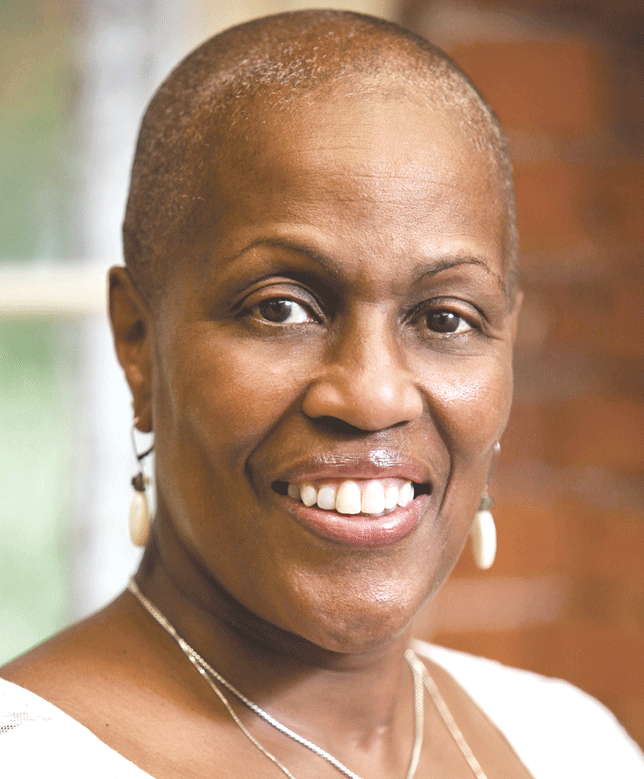
Sheryl Fappiano

Sheryl Fappiano says Golden Moments provides social and wellness services seniors need while giving their caregivers a measure of freedom.

When Shelley Parker and her husband, Jonathan Gottsche, took Parker’s elderly father into their home in Northampton last summer, it was a life-altering experience for all three.

A World War II Air Force veteran, the elder Parker had a two-year wait for placement in the Soldiers Home in Holyoke, a facility where all felt he would be comfortable for his remaining days, surrounded by other veterans. So the decision was made to make Parker’s and Gottsche’s home a bridge to that institution.

Richard Parker was 87 at the time and showing many symptoms of dementia, the same signs that other members of the family had shown in the past.  Shelley already knew what to expect, which would be eventual 24/7 care for her father, and the loss of freedom for her and her retired husband.

“I’d always considered myself a planner, and I did plan; I prepared the healthcare proxy, the living will, the power of attorney,” said Parker. “But I didn’t plan for the time in which my father would be living.”

And that is the lesson that Parker and her husband learned in just a few short months by having her father with them.

“Planning ahead is really key,” Parker went on, “because we learned very quickly that there was only so much we could do to keep him busy every day that first four months.

“And with the winter coming, we said, ‘OK, this isn’t going to work for very long; ‘somebody’ isn’t going to make it for these two years,’” Parker continued with a laugh, referring to the buildup of stress and anger among husbands and wives that is common when taking on an elder parent full-time.

What changed the equation for the caregivers and the elder Parker is an option that is becoming increasingly popular due to the growing numbers of family members caring for elderly parents.

It’s called ‘adult day care,’ and BusinessWest spoke with one such company that is adding some new and effective wrinkles to that concept.

The venture is called Golden Moments Adult Day Health Spa, which offers structured programs featuring more attentive and customized services than the typical senior center for those who are frail or suffering from dementia, and some unique offerings as well, from massage to Reiki, that explain the word ‘spa’ in the company’s name.

In doing so, it has given new meaning to the elder Parker’s life, and new freedom to his his younger caregivers.

Golden Moments is the creation of Sheryl Fappiano, a licensed social worker and care-management-certified geriatric-care manager, whose mission is to see elders remain safe in their homes — or their adult children’s homes — for as long as possible. She puts her skills to work to fashion a unique environment where seniors can socialize and remain active, physically and mentally.

Her parent company, a geriatric-care management and consulting firm, Elder Care Access LLC, just celebrated 10 years in business, providing alternatives for working families with elders that need to be safe, and feel safe, wherever home may be.

Over the years, Fappiano saw a need to go a step further than consulting through Elder Care Access and provide a physical place that would allow elders with a range of physical, mental, and social needs to go to during the day, which would in turn give caregivers their own freedom. And she also knew that a social fix for an elder would also be more desirable than living alone or with family, which could become unsafe at any point, or incurring the exorbitant costs of home care or an elder facility.

For this issue and its focus on senior living, BusinessWest visited Golden Moments to learn more about this emerging concept in elder care, and how Fappiano and her staff are adding new dimensions in service to seniors.


Home Away From Home

During the time that Elder Care Access has grown and evolved, Fappiano, who has been in the geriatric-care industry for two decades, has witnessed a somewhat disturbing trend involving caregivers and the frustration and burnout experienced by that constituency.

“I started doing a lot of work with protective services with Highland Valley Elder Services [a Northampton-area agency on aging], and its department is just swamped with people [seniors] who are being abused, neglected, and sometimes financially exploited for one reason or another, and need oversight,” Fappiano told BusinessWest, adding that it was her job to go into such situations, provide support, offer solutions and resources for both the senior and the caregiver, and monitor the situation.

And it was while doing so that she determined that a cutting-edge form of adult day care could be an effective answer for those on both sides of this equation. So she went about making this latest entrepreneurial urge a reality.

Just over a year ago, she and her husband acquired space in the Florence Medical Center building and opened Golden Moments Adult Day Health Spa, a rather long name, chosen because it accurately conveys all that goes on there.

The facility now boasts more than 20 clients, who attend anywhere from three to nine hours, one to five days a week. The service, which ranges in cost from $45 to $85 per day, is paid for by the client or family, or may be covered by long-term-care insurance. In any case, the cost is significantly less than for other elder alternatives, such as assisted living or home care.

“Not only do both parties do better on every level, but the cost is less than half what it would be to live in an assisted-living or nursing home,” said Fappiano, noting that 24/7 care at home with an agency costs more than $500 dollars per day, even more than a nursing home, which runs about $300 a day, or $9,000 to $10,000 a month.

Parker began her research online for a solution to her father’s care needs, but found Golden Moments through word-of-mouth referrals first.

She and her husband visited several adult day-care facilities in the Pioneer Valley, but determined that Golden Moments offered the best overall fit for all those concerned, especially her father.

While the Florence Medical Center building itself is fairly sterile in appearance, with its concrete walls, Golden Moments projects a warm, inviting look and feel.

The main room, with its flickering fireplace, multiple plush couches, and numerous interactive games like bowling, beanbag toss, and board games, resembles a typical American living room. Meanwhile, the open back room has large sunny windows, and is a gathering place for lunches, card games, storytelling, and interactive word trivia that Fappiano and her six employees say helps clients with memory retention.

But aside from all the fun and games, there is the primary prescription for elder depression that is the key to the adult day-care concept.

“It’s totally the socialization — it helps with depression, anxiety … it’s huge,” said Fappiano, adding that this element to elder care is often missing in the traditional caregiver situation.

Elaborating, she said that when she consults in clients’ homes for her Elder Care Access company, she will often find caregivers leaving the elder client to eat alone in their dining room or kitchen, while the caregiver busies themselves with some other chore.

“I would tell them they have to sit, eat with them, talk with the elder client,” said Fappiano. “But it is hard being with the same person for hour after hour, and they do run out of things to say and do.”

This problem doesn’t generally exist at Golden Moments, she went on, because clients have many comtemporaries with whom to talk and interact, and there are different faces on most days.

As if on cue, another client arrived at Golden Moments, dropped off by an adult child who offered an obvious smile of relief.

“Top of the morning to you,” Fappiano cheerily said to her client, who genuinely broke out into a wide smile and returned the greeting in an Irish brogue. As the client, who is near 90, passed by slowly leaning on his cane, he joined his friends in the back room, much as a young boy would join his friends in school.

In fact, Fappiano said the first time a caregiver, which is usually the adult child, drops off an elder client, it’s like dropping off a child at their first day of kindergarten.

“We give everybody a free, three-hour trial, and in the beginning, when the caregiver drops them off, they have that look in their eye, and I tell them, ‘a quick exit is better; trust me when I say they’ll be OK. Give me your cell number, and I’ll call if I have to.’”

The feeling for the elder client can be similar to a small child in kindergarten as well, but they soon adjust to a new way of life. In fact, Fappiano has never had a potential client not return for weekly visits.

Vicky Applebee, office manager at Golden Moments, is not one of the direct-care staff members, but from her point of view, the atmosphere exudes family, for both clients and employees.

“Sometimes, when people first walk in the door, they are lost, unsure, even worried,” she said. “But after a few visits, I see this stress on their faces go away after getting into a new routine; that’s the biggest joy for me.”


Alternative Options

Fappiano said one of the keys to success at Golden Moments is knowing and fully understanding each client’s needs, capabilities, limits, and expectations, and then personalizing care to reflect all this data.

A comparatively low client-to-staff ratio (5 to 1 is generally the norm) enables the facility to tailor exercises and programs to suit each individual’s needs, rather than implement something approximating one size fits all. This is one operating philosophy that appealed to Parker as she sought a solution to her father’s needs, and one that differentiates the facility from others she visited.

“If they were taking a walk outside and one of the people could only walk a few feet, then that’s all everyone would walk that day,” she said, referring to one facility she toured. “I said, ‘no, that doesn’t work for me; if my father wants to walk a mile, he should be able to walk a mile.’”

Golden Moments has an LPN or RN on duty a few times a week to take vitals, work with stroke patients and other clients with specific needs, and administer medications, injections, and wound care as ordered by a primary-care physician.

In addition to regular activities involving socialization, such as memory word games, singing, special outings, and physical exercises, Fappiano is integrating more spiritual and “energy-related” alternative treatments that are more commonly found in the typical health spa.

Some alternative treatments and healing modalities include massage (also available for caregivers), Reiki, foot care by a holistic foot nurse, weekly pet therapy, sound and aromatherapy, and meditation.

But she’s finding some generational kickback.

“Those in their 90s, they don’t tolerate it so much; they just don’t understand the whole pampering thing,” Fappiano explained. “The younger ones … they get it, and we do meditation together.”

But Fappiano knows that a very open-minded group of aging Baby Boomers is headed her way, and Golden Moments is prepared to accept them when they’re ready.

The overall feeling in Golden Moments, she noted, is one of family from the minute a client or staff member walks into the room.

“Everyone is smiling around here … not sometimes, but every day,” said Applebee. “It’s a happy place, even with the struggles some might have at home, because caregivers get a much-needed break, and their loved ones are safe, staying active, and socializing.”

For Parker and her husband, the decision to bring her father into their home is, by all accounts, working, but basically because this unique adult day-care facility provides both client and caregiver what they need most — socialization and room to breathe, respectively.

“People [caregivers] say they have no time for themselves; they’re too busy,” she noted. “And I just see that, if they don’t figure out how to make things work, these situations could destroy relationships and families. My father is here, and this is allowing me to have my life, too.”


Elizabeth Taras can be reached at [email protected]

Chamber Corners Departments

CHICOPEE CHAMBER OF COMMERCE

www.chicopeechamber.org

(413) 594-2101

• August 1: Part 3 of a five-seminar series: “Conquering the Challenge of Employment Law Compliance for Small Businesses: What You Need to Know and How to Stay in Compliance,” from 8 to 10:30 a.m. at the PeoplesBank Conference Room, 330 Whitney Ave. in Holyoke. Presenter will be Layla Taylor, Esq. This program will focus on:

• Identifying worker-classification issues (independent contractor versus employee);

• Wage-and-hour basics (minimum wage, overtime, exemptions, and child-labor laws);

• Immigration (I-9 compliance);

• Discrimination laws (federal and state, reasonable accommodation issues);

• Benefits (leave laws and health insurance);

• Communicating with employees without creating a contract; and

• How to stay in compliance (free resources and when to contact a professional).

• August 22: Part 4 of a five-seminar series: ‘Marketing Strategies that Lead to Growth,’ from 8 to 10:30 a.m. at PeoplesBank Conference Room, 330 Whitney Ave. in Holyoke. Presenter will be Mary McCarthy. Concerned about delivering your profit? Unsure how to reach your target audience? Overwhelmed with all the media options available? Smaller businesses often lack the time to execute their marketing tasks, and are challenged with budgetary constraints. This workshop is designed for businesses seeking cost-efficient and effective marketing strategies that lead to growth and seamless communication with their customers. Attendees will learn:

• Branding strategies that will effectively convey your marketing messages;

• How to distinguish your marketing plan from your competition;

• Effective ways to reach your target audience and foster loyal relationships;

• How to connect with today’s tech-savvy customers through social media; and

• Networking essentials that will help you get more business.


HOLYOKE CHAMBER OF COMMERCE

www.holycham.com

(413) 534-3376

• Sept. 18: Save the date! Chamber Annual Clambake, 5-7:30 p.m. Plan now to make the clambake your employee picnic or employee-appreciation event. Watch for more details.


MASSACHUSETTS CHAMBER OF COMMERCE

(413) 525-2506

• Nov. 12: Massachusetts Chamber of Commerce Annual Meeting & Awards Luncheon, 9 a.m., at the DoubleTree, Westborough. For more information on ticket sales and sponsorship opportunities, call the chamber office at (413) 525-2506 or e-mail [email protected]


WEST OF THE RIVER CHAMBER OF COMMERCE

www.ourwrc.com

413-426-3880

• August 19: West of the River Chamber of Commerce 10th Annual Golf Tournament, Springfield Country Club, West Springfield. Cost: $125 per golfer. Presenting Sponsor: Hard Rock Hotel and Casino of New England. For more information on registration and sponsorship opportunities, call the chamber office at (413) 426-3880 or e-mail [email protected].

• Sept. 4: Wicked Wednesday, hosted By E.B’s, 5-7 p.m. Wicked Wednesdays are monthly social events hosted by various businesses and restaurants. These events bring members and non-members together to network in a laid-back atmosphere. Cost: free for chamber members, $10 for non-members (event is open to the public; you must pay at the door if you’re a non-member). For more information, call the chamber office at (413) 426-3880, or e-mail [email protected].


GREATER WESTFIELD CHAMBER OF COMMERCE

www.westfieldbiz.org

(413) 568-1618

• Sept. 11: September WestNet, 5-7 p.m., at the Holiday Inn Express, 39 Southampton Road, Westfield. Come and meet chamber members and bring your business cards for a great networking opportunity. Cost: $10 cash for chamber members, $15 cash for non-members. Walk-ins are welcome. Call the chamber at (413) 568-1618, or e-mail Pam Bussell at [email protected]. Your first WestNet is always free.


Construction Sections
Rebuilding Together Helps Transform a Springfield Neighborhood

Frank Nataloni

Frank Nataloni says the energy created on Tyler Street and the way the project brought people together was a gratifying benefit.

Frank Nataloni compared the bustling scene to a film set. But what the throngs of people created was far more impactful than a lively matinee.
“It was like a movie,” he said of the day in April when more than 1,000 volunteers descended on Tyler Street, in Springfield’s Old Hill neighborhood, to renovate, repair, and refurbish 25 homes there. The ‘cluster rebuild’ was a project of the Springfield affiliate of Rebuilding Together, a wide-reaching organization that promotes a National Rebuilding Day every spring.
According to Nataloni, owner of Curio Kitchens & Baths in Springfield and president of the local Rebuilding Together board, the organization had long participated in that event by helping dozens of needy homeowners around the city on a single day to repair their homes. But the group had never tackled an entire street at once.
“This was the first time we had tried this,” he told BusinessWest. “The reality was, it went far beyond what we anticipated. And we feel like it’s something we will continue to do.”
Colleen Loveless, executive director of Rebuilding Together Springfield — which restores houses year-round, including 71 in 2012 — said the project was modeled after a similar effort in another part of the Northeast.
“The Philadelphia affiliate did an excellent job the year prior. We’d gone and attended a conference training on cluster rebuilds, and it really made a lot of sense to revitalize a neighborhood,” she explained. “I know we do it house by house, but with a cluster, you can have a sustainable, profound impact on the entire community. And by really focusing on one block, we were able to leverage funding and volunteers, and increase our economies of scale and savings.”
Nataloni agreed. “I think it was probably one of the best ideas we’ve had in quite awhile because it promoted a lot of energy. Before, we’d fix a house, but it was still in an area where the next house could have been twice as bad. When we did one street, all of a sudden, it changed the neighborhood.”
Rebuilding Together Springfield referred to the project as a Green-N-Fit Neighborhood Cluster Rebuild, emphasizing a goal of creating energy-efficient and healthy homes, not just better-looking ones. Major renovations included the conversion from oil heat to natural gas, with street hook-ups as part of an in-kind donation by Columbia Gas and A-Plus HVAC, as well as new and proper insulation of homes and apartments.
About 70 area businesses donated resources to the project, which included new roofs, energy-efficient windows and doors, proper ventilation, mold remediation, pest control, painting, ‘age-in-place’ modifications, electrical and plumbing repairs, smoke and carbon-monoxide detector installation, deadbolt locks, vinyl siding and ramps, and yard cleanup, fencing, landscaping, and planting of shrubs and flowers.
“We focused on healthy and energy-efficient homes, and also reduced the carbon footprint, which helps everyone, not just the people in the neighborhoods,” Loveless said. “We did the full gamut of work, from exterior to interior — repairs, modifications, making things handicapped accessible, age-in-place modifications. We really improved people’s quality of life.”

Meeting a Need

Before-and-after shots

Before-and-after shots of 171 Tyler St. represent one of the 25 Old Hill homes that benefited from the recent ‘cluster rebuild.’

After deciding to do a cluster rebuild — which was totally funded by private businesses, organizations, and individuals — the question became where.
“We spoke with the city and also MassMutual, our largest sponsor,” Loveless said. “Old Hill is the poorest neighborhood in Springfield; it may be the poorest in Massachusetts. As far as median income, it’s in the bottom 15% nationwide. We were able to reach out to plenty of people; we have a good base of volunteers and a good board of directors who supported this effort financially.”
She noted that several homeowners in the neighborhood had benefited in the past from restoration and rebuilding projects funded by HAPHousing, Springfield Housing Services, and Habitat for Humanity, but plenty of opportunity remained. “People had lived there 35, 40, 45 years, through some hard times, and their neighborhood has seen its struggles. These people were in need. A lot of senior citizens there are on Social Security, and the cost to repair or replace a roof, for example, was really prohibitive, something they could not afford.”
Rebuilding Together has been assisting homeowners since the early 1990s, one at a time, all over the city and throughout the year, but the idea of a one-street cluster revitalization appealed to the organization, said Nataloni, noting that the choice of street was a good one, and not just for its economic demographics.
“In hindsight, it was perfect. It’s a long, level street,” he explained, adding that it was easy to establish a staging area to coordinate volunteers and deliveries. Meanwhile, residents from Tyler and surrounding streets regularly walked down the street to see what was going on, generating palpable energy in the neighborhood. “It was such a good thing. When I think about all the work we did, some of the houses were in tough shape, and we were able to improve them. It’s a modest-income area, and now that’s one concern they don’t have to have.”
Loveless said volunteers were able to close down the whole street to traffic. “That was helpful, because we were able to bring our deliveries up and down the street, dump large piles of mulch and topsoil on the street. Volunteers came up with wheelbarrows and planted shrubs and flowers.”
The neighborhood benefited in other ways as well. Volunteers spruced up a neighborhood playground on nearby Pendleton Avenue and created a community garden for growing fresh fruits and vegetables. They also made improvements to the Old Hill Neighborhood Council office on Eastern Avenue and Quincy Street, and to the Masonic Lodge on Tyler Street. “We put black fencing in and actually gave the neighbors a whole new look right down the street.”
Loveless said about 80% to 85% of the work was completed on that one April day, which was followed by a week of ‘punch-list’ activity in June, featuring volunteers from the New England Lutheran Synod Church, the United Methodist Action Reach-Out Mission by Youth, and Liberty Mutual.
“It was a true community effort — church groups, individuals, community centers, the neighbors themselves,” she told BusinessWest. “So many were involved, along with businesses and organizations throughout Massachusetts and even outside the state. It made such a profound impact, and we were able to get so many resources to people.”

Raising All Boats
Rebuilding Together is no stranger to amassing resources; it enlisted 5,000 volunteers last year in rebuilding 71 homes — in the process earning the Booz Allen Hamilton Management Excellence Award as the top affiliate of the year among some 200 Rebuilding Together chapters nationwide.
“When I first got involved with this, I was looking for something to put some energy into that would make an impact,” Nataloni said. “My business is on Boston Road in Springfield, and I know the needs in the city, so to me, this was a good fit.
“The people that we help, we’re happy to be involved with them,” he added, citing examples like a woman who simply needed to replace her windows to keep her home insulated, but couldn’t because of health and financial issues. Nataloni also finds it gratifying that so many people from the area are willing to lend a hand. “We had kids from the Western New England football team, kids from Springfield College … they’re in the city, and this helps the entire city. It’s a really good feeling.”
He said the cluster rebuild impacted Tyler Street in social ways as well. “There were a lot of residents who never knew who their neighbors were, never talked to them,” he noted. “One gentleman, who hadn’t been on his front porch for five years, actually came out and introduced himself to the others. It went beyond my wildest dreams. I couldn’t have planned that. Even in situations where the house was a rental and the landlord wasn’t participating in the total program, the tenants came out on their own and fixed up their yard. You can’t buy that. That’s the type of impact; it was just exponential, really.”
Rebuilding Together tracks the impact of its work every year, and much of it is fiscal. For instance, the 71 home projects in 2012 — 37 of them damaged by the June 2011 tornado — generated $75,500 in tax revenue for the city when 23 homeowners paid back taxes prior to work being completed on their homes, and another $49,000 in property taxes from 14 homeowners who were able to remain in their homes after repairs were completed.
“All year long, we work on houses throughout the city, depending on what funding comes through,” Loveless said, noting that those funds are typically leveraged so that every dollar spent generates $4 in the local economy.
“Every single month of the year, we’re working on homes, although some months are busier than others,” she said, noting that volunteers are generated through schools, churches, businesses, and old-fashioned word of mouth.
“A lot of people hear about us and say, ‘hey, I’d like to participate,’” she said. “It’s great because we do a full range of volunteer work on homes, so you don’t have to have special skills; you can plant trees, lay down mulch, help paint a house, do cleanups, things like that. Then there’s skilled work like installing kitchens and new roofs.”
Nataloni said the goal was to impact as many homes at once as possible, but the individual stories resonate. For instance, one of the repaired homes is owned by Oscar and Carol Granado, who have lived in their home for 32 years and raised their children there. Oscar is a U.S. Marine Corps veteran who still works full-time at age 72 to provide good health insurance for his wife, who is undergoing treatment for breast cancer. For families like this, home repairs — including efforts to simply make their residences healthier — often fall by the wayside.
“Go down the list: there’s all kinds of issues, big and small, and, again, you’re doing something and seeing an immediate impact,” Nataloni told BusinessWest, again explaining why he values the hands-on nature of Rebuilding Together. “It’s not like, ‘OK, here’s a check,’ and you don’t know where it goes.
“One thing I’ve heard throughout all this is that, in our country, we spend billions of dollars all over the world and do a lot of great things in a lot of great places,” he said. “But the reality is, there are a lot of things that need to be done right here that fall under the current of what people are aware of. That’s why I enjoy being a part of Rebuilding Together.”

Joseph Bednar can be reached at [email protected]

Construction Sections
Northampton-based Builders Make a Living on the Cutting Edge

Mark Ledwell, left, and Jonathan Wright

Mark Ledwell, left, and Jonathan Wright stand next to the remains of the entrance pillars to the former Northampton State Hospital, where the Village Hill mixed-use complex is taking shape.

It’s called the “home of the future” by its designer, Bruce Coldham of Coldham & Hartman Architests in Amherst, but it’s being lived in today.
This would be the 2,700-square-foot structure in Hadley that was honored by GreenBuilder magazine with one of its ‘Home of the Year’ awards in 2011, the only house in the Northeast to be so recognized. There are many numbers associated with this dwelling — and that prestigious award — but the most significant is 33, or minus 33, to be more precise.
That’s what the house earned for a Home Energy Rating, or HERS, which means that it produced 33% more energy than it consumed for the previous year, said Jonathan Wright, founder and president of Northampton-based Wright Builders, which constructed the home.
“Through an extremely well-designed plan, a very tight building envelope, and PV [photovoltaic] panels, we went way past zero,” said Wright, referring to the term ‘net zero’ — a benchmark used to describe structures that don’t consume more energy than they create — and putting heavy emphasis on the word ‘way.’
The GreenBuilder award judges were suitably impressed, noting that “this home’s building science is well ahead of the curve.”
That term is one increasingly used in association with projects undertaken by Wright, a nearly 40-year-old company that specializes in residential, commercial, and institutional building, and has a hard-earned reputation for being on the cutting edge of new building processes and techniques, especially with regard to energy consumption and conservation.
“Before these certifications were around, we just considered it smart building,” said Mark Ledwell, Wright’s long-time partner and the company’s co-principal, referring to LEED (Leadership in Energy and Environmental Design) and other building benchmarks used today. “We’ve tried to keep abreast of the materials and new technologies and stay on the cutting edge; we want to make buildings that last.”
This philosophy has guided the company through every project in a broad portfolio that includes everything from a host of buildings at Smith College (one of the firm’s many clients in the education sector) to several components of the multi-faceted initiative taking shape on the grounds of the former Northampton State Hospital.
For this issue and its focus on construction, BusinessWest talked with Wright and Ledwell about the business they’ve built, the philosophies that shape it, and where they want to take in the future, which, in many respects, as mentioned earlier, is already here.

Framework for Success
Wright was a member of the first graduating class at Hampshire College in 1970. He liked to write and was contemplating careers involving that skill, but a number of summers spent doing carpentry work eventually took him down a much different path.
“It was supposed to be a pause on the way to some other career that never happened,” he told BusinessWest, “because this one [building] got really interesting really quickly.”
Indeed, soon after graduating from Hampshire with a liberal arts degree, he started Wright Builders and, soon thereafter, another, somewhat related venture called Wright Architectural Millwork, also in Northampton, which created custom wood interiors for offices and private residences.
While he operated them both successfully, Wright eventually realized that he needed to focus his time and energy on one or the other, and in 1994 he sold the millwork operation to employees Walt Price and Mike Buell and concentrated solely on Wright Builders.

The award-winning Cave family home in Hadley

The award-winning Cave family home in Hadley was designed by Coldham & Hartman Architects of Amherst and built by Wright Builders.

And he was joined in that venture a few years later by Ledwell, who had started his own company, Ledwell Woodworking and Building, in 1985, but 15 years later was ready for a change and a new challenge.
“I was getting a little tired of pushing my own rock up the hill,” said Ledwell, who was looking for high-quality product output in a larger establishment — and found that all that at Wright Builders.
The two have been partners since 2007, and they’ve established the company as an innovator, not only in building techniques, but in operating philosophy and policies for its 28 employees.
For example, Wright was one of the first builders to offer health insurance in 1976, and later added maternity leave for both men and women. Today, employees are allowed a week’s vacation in the summer, a rare perk in an industry that must make the most of this region’s comparatively short building season.
“Part of our job as leaders is to see not only where we’re going, but where we want the business to go and where the people who are crucial to our business are going with their careers,” said Wright.
But that term ‘innovator’ is most often used in reference to the company’s leading-edge work in building strategies and processes, especially with regard to the environment.
And this is hardly a recent phenomenon.

LEED by Design
When Wright started out in the ’70s, he was already working on passive solar homes, and was recognized by then Gov. Michael Dukakis in the area of energy efficiency and high-performance building. While the science and technology of the emerging green-building trend has been a consistent theme for the company, the world has in some ways caught up with Wright Builders, which is nonetheless commited to staying ahead.
“We’re really able to focus on building the best-performing and most environmentally friendly buildings that we possibly can,” said Wright, adding that this mentality crosses into all aspects of the company’s work, from residential to institutional.
Ledwell concurred.
“Water is the enemy in our business, and today our homes are tighter, healthier, and more comfortable, and use a lot less energy,” he said, “which is easier on our customers’ pocketbooks and good for the overall health of the environment.”
Referencing their broad portfolio, Wright and Ledwell said their projects fall into three main categories: personal, institutional, and what they call ‘performance.’
In the personal category, especially with Wright’s and Ledwell’s carpentry background, are projects that allow them to get involved with an individual’s or organization’s creative process.
Wright said that perhaps the most gratifying example of such work was a recent project for New York Times bestseller and Emmy Award-winning children’s-book author Mo Willem, who penned Don’t Let the Pigeon Drive the Bus! and the Knuffle Bunny books. He needed a complete renovation and a writing studio created in his roughly century-old Northampton home, and commissioned Wright to handle the work.
In the institutional realm, the company has carved out an effective niche, handling work for a number of area schools. Wright said the work is rewarding and uniquely challenging because the buildings stand for decades and often become symbols of the institutions in question.
“You’ve got to do a good job there because that building’s going to be in service for the next 30 or 40 years,” said Wright, noting that some on the campus of Smith College joke with Wright and Ledwell, calling the main gate of the college ‘Wright’s Corner,’ because three of the four corners are Wright Builders projects.
Meanwhile, the partners consider the performance category to be the most intriguing in many respects, because it’s based on the technology that is enabling them to build amazingly sustainable buildings.
The aforementioned home in Hadley falls into this group, said Wright, noting that GreenBuilder selected 10 outstanding projects displaying the best and most cutting-edge green residential building.
Wright and Ledwell point proudly to two other sustainable projects, one brand new, the soon-to-be-constructed net-zero Welcome Center at Hampshire College  — the school’s first new building in a decade — and the Village Hill project.
Wright and his wife, Meg Kelsey Wright, a professional musician, now call Village Hill home, making them one of many to be drawn to the attractive mix of townhouses and single-family homes that are a key component of the massive, mixed-use endeavor.
“It’s a source of satisfaction for Mark and I,” said Wright, noting that the company has worked with Kuhn Riddle Architects and Berkshire Design Group, both of Amherst; Goggins Real Estate; Florence Savings Bank; MassDevelopment; and the City of Northampton to bring the project to life. “To put together the financing, the vision, and work with the state agencies and bring together all the talent that is needed to pull it off is very rewarding.”

Finishing Touch
Wright, now in his early ’60s, understands that this is the age when many people in business start to think about slowing down.
But he’s having none of that.
“I’m not done,” he laughed, “because there’s just really interesting stuff to do now. It’s different than it was five years ago, and I just wake up every morning, and I can’t wait to work on it all.”
This is the way it’s been from the start for this company, which has always been on the cutting edge, and has no intention of being anywhere else.

Elizabeth Taras can be reached at [email protected]

Banking and Financial Services Sections
Sosik Succeeds Hogan at the Helm of Easthampton Savings Bank

Matt Sosik says he wasn’t looking for another job, and, in fact, didn’t have an up-to-date copy of his résumé at the ready.
“I didn’t need one — I loved what was I doing,” said Sosik, then CEO of Hometown Bank, formerly Webster Cooperative Bank, which he had guided to exponential growth since arriving in 1997. “We had a great professional family there that was certainly hard to leave, and frankly hard to even think about leaving behind.”
But when Bill Hogan initiated discussions with him several months ago about possibly joining the competition that would identify his successor as president of Easthampton Savings Bank, Sosik’s imagination took him to where he never thought it would.
And the reason was fairly simple, he told BusinessWest just a few weeks after assuming his new post at the institution on Main Street, in the shadow of Mount Tom.
“This particular opportunity caught my attention because I’ve known Bill for many years, and I’ve known others inside the bank for a number of years,” said Sosik, who took the helm on June 17. “And I’ve come to know a lot about Easthampton Savings Bank, and the cultural fit was perfect. Culturally, Hometown and Easthampton are very similar institutions.”
Sosik takes the helm at ESB at an intriguing time for the bank — and the region’s banking sector in general. “Hyper-competitive” was the word he used to describe the financial-services landscape in the region, noting that many communities are saturated with branches, if not oversaturated, and many institutions, including ESB, are flush with capital and looking for opportunities to grow in a region where there has been little economic growth.
Thriving in this climate will require a plan, said Sosik, who said that drafting a strategic initiative, or updating the one already in place, as the case may be, is at or near the top of his to-do list. But it will also require patience, he said, noting that this is one of the lessons he’ll take with him from his time at Hometown, were he shepherded the bank from a mere $33 million in assets to more than $340 million.
“This is a long-term process,” he told BusinessWest. “If you try to do this in six months, you will fail. I spent 17 years at Hometown building that balance sheet, and it’s a pretty attractive balance sheet. It’s going to take awhile, you have to be patient, and we have the business structure to be patient; we have a lot of things going for us.”
At present, Sosik is still in what he called “evaluation mode,” meaning that period when he comes to familiarize himself with the staff and the bank’s immediate goals — and strategies for reaching them.
“The next frontier here is really about leveraging the strengths of the institution,” he said, summing up what he’s learned — or already knew before he arrived. “We’re a well-capitalized bank, and we have plenty of growth opportunities because of that capital. Other banks of similar size in the Pioneer Valley don’t have that luxury.”

Person of Interest
Sosik began his career in financial services as a bank examiner with the Federal Deposit Insurance Corp., working in Massachusetts and Northern New England. In 1996, he joined Webster Cooperative, and a year later became its CEO.
Over the next 16 years, he implemented a wide-ranging strategic initiative that included a name change to Hometown Bank, as well as geographic growth (from one branch to six), acquisition of the Athol-Clinton Cooperative Bank in 2011, and more than tenfold growth in total assets.
When asked how all that was accomplished, he said simply, “from grinding it out.” He then elaborated, noting that the bank was very small when he arrived, and needed to grow simply to survive.
“That helps energize the team and yourself every day, knowing that you have to get to a certain place so that you can remain viable,” he said with a laugh. “It allowed the fire to remain well-lit, knowing that you were fighting for your long-term survival.”
The situation is much different at ESB, he acknowledged, adding quickly that there is still a strong need to grow, and the bank has the inclination, capital, and opportunity to do so.
And as he talked about what might come next, he said that, while he’s spent his entire banking career in Central Mass. and, more specifically, the Blackstone Valley (Webster is roughly 20 miles south of Worcester), he is quite familiar with the Western Mass. market, its challenges, and its opportunities.
He told BusinessWest that the Central Mass. and Western Mass. banking markets are similar in many respects — both regions have been experiencing relatively flat economic growth, he explained, while the respective banking sectors have been extremely competitive, with many players and some new arrivals in recent years.
But there are some distinctions, he said, adding that perhaps the most significant is that many of the community banks in this region are quite larger than the ones he encountered in Central Mass., with many at or well above the $1 billion mark in assets, a milestone ESB is now approaching.
And this makes them stronger competitors, he went on. “These larger banks simply have more resources, and they can make longer-term decisions and absorb more risk.”
Summing up the situation, Sosik said that ESB, like other banks in this region, must “manufacture their own market share,” which means, in essence, taking it from rivals.
And this ‘manufacturing’ is not easy, he said, noting both the amount of competition and the fact that many of the large regional and super-regional banks are becoming more effective competitors — a trend he expects to continue and accelerate.
“They got away from some of the things you need to do to be good competitors,” he explained. “And they recognized that, and now they’re seeing some of the value of banking on Main Street again, for a variety of regulatory and financial reasons. That shift has about run its course.”
But growth can be attained, he said, stressing again that whatever takes shape in ESB’s new strategic plan, the overriding philosophy will be slow and steady.
“We have to be the better competitor and the smarter competitor,” he said. “We have to do our job of serving the customers in the community better than the ladies and gentlemen down the street.”
When asked what direction the bank’s growth initiatives will take — meaning both strategically and geographically — Sosik was shy with specifics, as might be expected. He did say, though, that the bank, which has 10 branches stretching from Westfield to Belchertown, Agawam to Northampton, will be “open-minded” when it comes to future expansion, but also smart.
Elaborating, he said that means choosing potential branch locations carefully and, in general, avoiding those communities, or regions, that are already saturated — or worse.
“We’re certainly open-minded to going where we believe there are opportunities to leverage what Easthampton Savings Bank does best,” he said, leaving plenty to the imagination. “We won’t be relying on a strict geographic pattern — I don’t mind skipping over markets to get to a market we think we can find success in — but there are obviously places that are very much overbanked; we’re not going to stick our nose in there, but we go can beyond there and to places where we think we can do well with what we do best.”
And while likely expanding geographically, ESB will also be leveraging its capital to grow its commercial-loan portfolio, said Sosik.
He acknowledged that many other banks in the region, including those highly competitive community banks he mentioned, are looking to the same, but he said this represents one of the more solid growth opportunities at present, and a key element in bringing an effective mix to a balance sheet at a time of narrow margins.

By All Accounts
Summing up the challenge ahead for himself and the institution he now leads, Sosik said simply, “there is no quick fix for the hyper-competitive market, there is no quick fix for the fact that all of these bankers and banks are almost tripping over themselves.
“This is a long-term process to ensure that you stand out, and ensure that you are relevant in the marketplace,” he continued, hinting that his philosophy will be to attempt a slow-and-sure fix.
“Growth is definitely an important factor to running a community bank like Easthampton Savings successfully,” he said in conclusion. “It’s something we’re going to work hard to attain.”

George O’Brien can be reached at [email protected]

Banking and Financial Services Sections
Sumner & Toner Offers Generations of Insurance Expertise

The two generations of leaders at Sumner at Toner

The two generations of leaders at Sumner at Toner: From left, Warren Sumner, Bud Sumner, Bill Toner, and Jack Toner. Together, they’re charting a course for a company now 80 years old.

There’s an oversized postcard prominently displayed on the bookcase in the conference room at the Sumner & Toner Insurance Agency in Longmeadow. Its few words and accompanying photographs effectively tell the story of this enterprise and the recent history of the insurance industry in general.
Well, they begin to tell the story.
Pictured on one side of the missive is Warren Sumner, and on the other is William “Bill” Toner Jr. In between is a message, written in the form of a subtle warning: “Always treat your competitors with respect,” it reads. “You may end up sharing office space.”
That’s exactly what happened in 1998, when Sumner, a principal with the Sumner Spingler Insurance Agency, located on Williams Street, decided to join forces with Toner, a principal with Smith & Toner, located just a few hundred yards away on Bliss Road.
This merger, which came a few years after Richard Smith and Douglas Spingler both retired from the firms that bore their names, is typical of the many consolidation initiatives that have taken place in the insurance industry over the past few decades. Such unions have materialized with the knowledge that two companies can, theoretically, succeed better as one, with a shared office, computer network, telephone system — and philosophy about how to thrive in an increasingly competitive insurance landscape.
“We have me here, and Warren Sumner across the street,” said Toner, reflecting back on how and why the merger came about. “After three years of that, we said, ‘let’s merge.’ And when you put two businesses together, there are synergies — you don’t have to duplicate expenses.”
But what ultimately determines how successful such mergers are isn’t bottom-line savings on rent and utilities, said Sumner, but how well the new company melds the talents of the merged entities to effectively serve customers and negotiate the many challenges now facing those in a rapidly changing insurance industry.
And the company now known as Sumner & Toner — which sprung from an enterprise born 80 years ago — has been successful with this, Toner said, noting that his expertise in commercial products (especially with contractors’ needs), coupled with Sumner’s experience in personal lines and marketing, has given the company a competitive edge.
“There was and is good synergy between the two of us — we were able to bring our collective expertise to the table,” Toner noted, adding that the next phase of this process is greater use of social media to market the company and communicate with clients and potential clients.
And this is one of many assignments that will mostly fall to the next — and, in many respects, current — generation of leadership at the company, specifically Jack Toner (Bill’s son), and Bud Sumner (Warren’s son).
These younger principals have complementary skill sets as well, said the elder Toner, referencing Bud’s expertise in medical and professional offices on the commercial side of the ledger, and Jack’s work with younger individuals — both as an insurance executive and as current co-vice president of the Young Professional Society of Greater Springfield (YPS).
For this issue and its focus on banking and financial services, BusinessWest takes advantage of the recent milestone anniversary to offer an in-depth look at how Warren Sumner and Bill Toner came to be on that postcard, and what happens next for this enterprise, where things have certainly come together nicely, and in more ways than one.

Policy Makers
As he traced the history of the company, Bill Toner started with his transition from work within an insurance company to owning an insurance agency.
It’s a significant if not uncommon career shift, he said, noting that insurance companies, or carriers, assume the risk for the policyholder and pay the claim when something happens. The agency, or what he called the “intermediary,” helps to market the different insurance products and services of the insurance companies, selling on behalf of those corporations.
Toner said he was drawn to the agency side of the industry after working for one of the many large insurance companies in Hartford. After serving in the Army for three years, he acquired from his father the Angers Agency Inc., the Springfield-based entity founded in 1933 that the elder Toner purchased upon his retirement from the General Accident Insurance Co. in New York. (It is the 80th anniversary of that business venture that is being celebrated this year).
Bill Toner said he ran that agency for 14 years, before opting to merge with Smith in 1984, and then with Sumner in 1998.
Warren Sumner was a marketing and sales vice president for Milton Bradley for years, but, as with Bill Toner, the entrepreneurial bug was biting, and he decided to venture out on his own by purchasing the Spingler Insurance Agency in 1987. A few years later, he merged with his friendly competitor across the street to form Sumner & Toner.
“My father has the advertising, marketing, and sales background, which, with the product knowledge in insurance, makes him a great salesman and advocate for his clients when a claim arises,” said son Bud Sumner. Currently, the elder Sumner is starting to get a small taste of retirement by reducing his hours.
Bud Sumner, who started with Aetna but founded his own small agency in Needham, decided to merge that venture with Sumner & Toner in 2001, giving the company a foothold in Eastern Mass. and Rhode Island — geographical diversity that has benefited the company in a number of ways.
The current leadership team became complete when, after a brief stint as a leasing agent for a real-estate company directly after graduating from Georgetown University — his father’s alma mater — Jack Toner joined the company in 2007.
Together, the two generations of Sumners and Toners are doing what agency operators across the region are trying to do — maintain and ultimately grow market share at a time of change, heightened competition, challenge, and opportunity.
All of those dynamics come together amid the proliferation of online giants such as Geico and Progressive, said Jack Toner, adding that these companies present a challenge because their marketing pitches and promises of savings are alluring, and they essentially eliminate that intermediary role that agencies play.
But they also represent an opportunity, he went on, because those same agencies can let clients and potential clients know that they usually can’t click their way to solutions for their insurance needs. This is the message he’s imparting to many young professionals in YPS, some of whom are buying insurance for the first time.
“The product that we’re offering and the services that we promise to offer are sophisticated,” said Bill Toner, explaining his caution for online one-size-fits-all insurance products. “It’s a complex sale; people think that they can go online to buy auto and home insurance — and they can — but they don’t have the expertise to know what they are missing, and that sophistication of the sale brings us to the table because we can offer that advice.”
Bud Sumner agreed. “Anybody can save you 15%; just don’t call them when you have a claim, because all [national online companies] are doing is raising your deductible and lowering your limits.”
Or they’re taking away coverage, Bill Toner added. “We have the philosophy that we should take the time and labor, which is our capital, to invest in the relationship so that, six months to a year later, they’ll realize we’ve been something of value for them. That’s our general philosophy of business.”
The two terms ‘challenge’ and ‘opportunity’ could also be ascribed to other changes within the industry, said Bill Toner, specifically citing the deregulation of auto insurance in the Commonwealth in 2008, which allowed insurance companies to set their own rates, and agencies to offer package discounts for auto and home or auto and boat, Bill said.
“This was good for the consumer — they got discounts,” he explained. “But it was good for us because we were able to develop the entire account and develop relationships.”
But Sumner & Toner isn’t out to sell everything to everybody, he went on, noting that, with a client base that is 60% personal and 40% commercial, the agency would rather offer advice and good service instead of pushing what Bill calls the ‘horror-story’ campaign. That would be advertising by fear, as in, what would happen if someone came over to visit and fell down the stairs?
“Our proposition has always been a quality product and package that will fit into your financials, which you can afford and protects your assets,” said Jack Toner.
Still another challenge moving forward is creating a strategy for effectively using social media to promote the agency and its services and also communicate with clients and potential clients.
“That’s a whole other arena we’re entering into,” said Jack Toner. “I think that our industry has a place, or is finding a place, in social media, and while we’re not totally sure where we want to place ourselves, we’re very aware of it.”
Facebook, Twitter, blogging, and all the other forms of social technology have created new marketing avenues, but industry-wide, there is no clear consensus on how to best meld these vehicles, said Bill Toner, adding that the company is currently grappling with the question of whether to hire someone to devote specific time to social media.

Predicting the Future
Stating that he’s not an actuary or a meteorologist, Bill Toner explained that the future will only get more expensive for the consumer through property-insurance premium increases due to the many recent instances of Mother Nature’s wrath and the potential escalation of extreme weather globally.
“Obviously, the insurance companies set their rates contemplating catastrophic things, because no insurance company I know of went financially bankrupt or went out of business,” he said, referencing the recent past and its tornadoes, ice dams, freak October snowstorm, and more. “But they found that it was difficult and that, actuarially, they have to cover catastrophes like what we’ve all experienced, because they’re predicting scientifically that it’s going to happen moreso in the future.”
There is no crystal ball for Sumner & Toner to predict the weather, but putting clients together with the best products — and assisting them with their claims should catastrophes, large or small, happen — is the firm’s main mission.
And the effective way they’re varying that mission is proof positive of what’s written on that aforementioned postcard. Sometimes, companies do wind up sharing office space with their competitors, and, in this case, it brought together families, generations, and a shared formula for success.

Elizabeth Taras can be reached at [email protected]

DBA Certificates Departments

The following Business Certificates and Trade Names were issued or renewed during the month of and July 2013.

AGAWAM

Elite Transport
7 Mansion Woods
Dmitriy Patsera

Mariah’s Closet
417 Springfield St.
Robert Torte

Moon & Stars Daycare
148 Anvil St.
Michelle Moon-Smart

CHICOPEE

Avia Whole Body Center
309 Front St.
David Silva

D & C Granite & Marble
100 State St.
Luis Serrazina

Generations
233 Grattan St.
Lisa Carlson

Houle Property Services
42 Silivin Road
David Houle

Lemelin Photography
86 Lawrence Road
Ronald Lemelin

Lori L’s
1263 Granby Road
Loreen Lundrigan

Volcomm Corporation
176 Center St.
Mustafa Sayici

GREENFIELD

Container Gardens & Flora Designs
54 Congress St.
Martina Merrigan

The Stock Pot
22 Federal St.
Nathaniel Dillenback

HOLYOKE

Bamboo House
2223 Northampton St.
Neil Wong

Game Depot
1375 Dwight St.
Anthony Caldalda

Hollister
50 Holyoke St.
Robert Brown

PALMER

A-1 Custom Cleaners
34 North St.
Larry Hogan

Bob’s Small Engine Repair
106 Belchertown St.
Joyce Cain

Nightmare Engineering
17 Cleveland St.
Jeremy Griswold

Palmer Package Store
1615 North Main St.
Jorge Martins

SJB Stone Repair
34 Laurel Road
Adam Brewer

Steaming Tender Restaurant
28 Depot St.
Robin Lamothe

SOUTHWICK

Candlewood Inn
739 College Highway
William Najam

Lakewood Village, LLC
160 Point Grove Road
Mary Thayer

SPRINGFIELD

American Traditional
54 Lucerne Road
Thomas Edens

Andujar Maintenance
3 Glendell Terrace
Rafael B. Andujar

Axiom Insurance Agency
251 Boston Road
Lance D. Letourneau

Baker’s Landscaping
288 Centre St.
Kevin E. Baker

Baron Capital, LLC
1375 Carew St.
Patrick Charles

Borgatti’s Foreclosure
88 Tamarack Dr.
Justin Matthew

Browz Studio
520 Main St.
Mongali Gurung

Tascon & Company
219 Seymour Ave.
Mario J. Tascon

WESTFIELD

Backyard Bobcat Service
14 Mather St.
Michael Shaker

Great White Cleaning Company
10 Day Ave.
Scott Texeira

Mike’s Barber Shop
148 Elm St.
Mohamad Saleh

Swords Home Improvement
173 Highland Ave.
Keith Swords

TLC Insurance & Investments
156 Elm St.
Anthony L. Campbell

Westfield Equipment Services
11 Airport Dr.
Josh Toomey

WEST SPRINGFIELD

Fat Boyz Kustoms
168 Norman St.
Eric J. Cross

Mamma Mia’s Pizzeria
60 Park St.
Maria Alfarone

Northeast Laser Center
1132 Westfield St.
John P. Frangie

Spirit Halloween Superstore
935 Riverdale St.
Barry Susson

St. Ann’s Society
110 Winona Dr.
Nancy Tessier

Elegant Nail
632 Kings Highway
Lien Tran

Chamber Corners Departments

AMHERST AREA CHAMBER OF COMMERCE
www.amherstarea.com
413-253-0700
• July 15: Amherst Area Chamber of Commerce 10th Annual Golf Tournament, 10:30 a.m. to 6:30 p.m., at Hickory Ridge Golf Course, Pomeroy Lane, Amherst.
Registration and lunch: 10:30 a.m. to noon; shotgun start: noon; reception and dinner: 5 p.m. Cost: $125 per player. Presented by the Hampshire Hospitality Group.

CHICOPEE CHAMBER OF COMMERCE
www.chicopeechamber.org
(413) 594-2101
• August 1: Part 3 of a five-seminar series: “Conquering the Challenge of Employment Law Compliance for Small Businesses: What You Need to Know and How to Stay in Compliance,” from 8 to 10:30 a.m. at the PeoplesBank Conference Room, 330 Whitney Ave. in Holyoke. Presenter will be Layla Taylor, Esq. This program will focus on:
• Identifying worker-classification issues (independent contractor versus employee);
• Wage-and-hour basics (minimum wage, overtime, exemptions, and child-labor laws);
• Immigration (I-9 compliance);
• Discrimination laws (federal and state, reasonable accommodation issues);
• Benefits (leave laws and health insurance);
• Communicating with employees without creating a contract; and
• How to stay in compliance (free resources and when to contact a professional).
• August 22: Part 4 of a five-seminar series: ‘Marketing Strategies that Lead to Growth,’ from 8 to 10:30 a.m. at PeoplesBank Conference Room, 330 Whitney Ave. in Holyoke. Presenter will be Mary McCarthy. Concerned about delivering your profit? Unsure how to reach your target audience? Overwhelmed with all the media options available? Smaller businesses often lack the time to execute their marketing tasks, and are challenged with budgetary constraints. This workshop is designed for businesses seeking cost-efficient and effective marketing strategies that lead to growth and seamless communication with their customers. Attendees will learn:
• Branding strategies that will effectively convey your marketing messages;
• How to distinguish your marketing plan from your competition;
• Effective ways to reach your target audience and foster loyal relationships;
• How to connect with today’s tech-savvy customers through social media; and
• Networking essentials that will help you get more business.

GREATER EASTHAMPTON CHAMBER OF COMMERCE
www.easthamptonchamber.org
(413) 527-9414
• July 26: The 29th Annual Golf Tournament, starting at 9 a.m. at Southampton Country Club. Reserve now before it sells out. Team fee: $400. Tee sponsorships available for $75/$125. Would you like to donate a raffle prize and/or to the golfer’s gift bag? Contact the chamber to sign up a team, arrange a tee sponsor, or with your raffle prize or gift donation.

HOLYOKE CHAMBER OF COMMERCE
www.holycham.com
(413) 534-3376
• July 17: Chamber Business Connections, 5-7 p.m. at the Volleyball Hall of Fame, 444 Dwight St., Holyoke. Networking, refreshments, door prizes, and 50/50 raffle.
• Sept. 18: Save the date! Chamber Annual Clambake, 5-7:30 p.m. Plan now to make the clambake your employee picnic or employee-appreciation event. Watch for more details.

MASSACHUSETTS CHAMBER OF COMMERCE
(413) 525-2506
• July 22: Massachusetts Chamber of Commerce Golf Tournament at Tekoa Country Club, Westfield. Shotgun start at 11 a.m. Cost: $100 per golfer. For more information on registration and sponsorship opportunities, call (413) 525-2506 or e-mail [email protected]
• Nov. 12: Massachusetts Chamber of Commerce Annual Meeting & Awards Luncheon, 9 a.m., at the DoubleTree, Westborough. For more information on ticket sales and sponsorship opportunities, call the chamber office at (413) 525-2506 or e-mail [email protected]

WEST OF THE RIVER CHAMBER OF COMMERCE
www.ourwrc.com
413-426-3880
• August 19: West of the River Chamber of Commerce 10th Annual Golf Tournament, Springfield Country Club, West Springfield. Cost: $125 per golfer. Presenting Sponsor: Hard Rock Hotel and Casino of New England. For more information on registration and sponsorship opportunities, call the chamber office at (413) 426-3880 or e-mail [email protected].
• Sept. 4: Wicked Wednesday, hosted By E.B’s, 5-7 p.m. Wicked Wednesdays are monthly social events hosted by various businesses and restaurants. These events bring members and non-members together to network in a laid-back atmosphere. Cost: free for chamber members, $10 for non-members (event is open to the public; you must pay at the door if you’re a non-member). For more information, call the chamber office at (413) 426-3880, or e-mail [email protected].

GREATER WESTFIELD CHAMBER OF COMMERCE
www.westfieldbiz.org
(413) 568-1618
• Sept. 11: September WestNet, 5-7 p.m., at the Holiday Inn Express, 39 Southampton Road, Westfield. Come and meet chamber members and bring your business cards for a great networking opportunity. Cost: $10 cash for chamber members, $15 cash for non-members. Walk-ins are welcome. Call the chamber at (413) 568-1618, or e-mail Pam Bussell at [email protected]. Your first WestNet is always free.

YOUNG PROFESSIONAL SOCIETY OF GREATER SPRINGFIELD
www.springfieldyps.com
• July 18: July Third Thursday, 5-7 p.m. at the Sheraton Springfield, 1 Monarch Place, Springfield. Cost: Free for members, $10 non-members.

Court Dockets Departments

The following is a compilation of recent lawsuits involving area businesses and organizations. These are strictly allegations that have yet to be proven in a court of law. Readers are advised to contact the parties listed, or the court, for more information concerning the individual claims.

CHICOPEE DISTRICT COURT
Trustees of the Yorktown Condominium Trust v. US Bank National Assoc. Trustee RASC 2007 EMX1
Allegation: Claim to enforce a condominium lien for non-payment of common charges and for order of foreclosure of lien for non-payment: $5,000
Filed: 6/11/13

GREENFIELD DISTRICT COURT
Edwin C. Gray and Daniel Gray v. Feed Commodities International Inc.
Allegation: Breach of contract and breach of implied warranty pertaining to the sale of bird feed resulting in damaged game birds and eggs, lost profits, and physical and emotional harm: $532,511.55
Filed: 5/31/13

Lane Construction Corp. v. Northern Land Clearing Inc.
Allegation: Non-payment of materials and services rendered and breach of contract: $59,573.90
Filed: 5/24/13

HAMPDEN SUPERIOR COURT
Donna Berry v. NiSource/Columbia Gas of MA
Allegation: Employment discrimination: $25,000+
Filed: 5/17/13

Joan and Robert Blakeslee v. Main Street America Assurance Co.
Allegation: Insurer has failed to pay for losses under insurance policy: $106,000
Filed: 5/29/13

The Dollfus Mieg Co. Inc. v. The JannLynn Corp.
Allegation: Non-payment of goods sold and delivered: $27,746.67
Filed: 5/17/13

HOLYOKE DISTRICT COURT
Specialized Bicycle Components Inc. v. Competitive Edge Ski & Bike Inc.
Allegation: Breach of contract and non-payment of goods sold and delivered: $14,014.43
Filed: 5/6/13

PALMER DISTRICT COURT
City Electric Supply Co. v. Steven Soby, d/b/a Soby Electric
Allegation: Non-payment of goods sold and delivered: $17,645.98
Filed: 4/17/13

SPRINGFIELD DISTRICT COURT
Adelphia Graphic Systems Inc. v. W.S. Sign Design Corp.
Allegation: Non-payment of goods sold and delivered: $9,939.56
Filed: 5/8/13

Maria Tirado v. SJA Real Estate Investing, LLC
Allegation: Negligent maintenance of property causing injury: $5,774.32
Filed: 6/10/13

Nurses on Demand, LLC v. The Northeast Health Group Inc. d/b/a Chapin Center, Governors Center, Willimansett Center East, and Willimansett Center West
Allegation: Failure to pay for nursing services provided by plaintiff: $24,419.13
Filed: 6/3/13

WESTFIELD DISTRICT COURT
Martin Topor Oil Co. Inc. d/b/a Central Oil v. W & I Construction Inc.
Allegation: Suit on an unsatisfied judgment: $13,660.03
Filed: 6/5/13

40 Under 40 Events The Class of 2013
Celebrating the Class of 2013

untitled-40
IMG_0121More than 650 people flocked to the Log Cabin Banquet & Meeting House on June 20 to celebrate BusinessWest’s 40 Under Forty Class of 2013 and the many accomplishments of its members. Attendees enjoyed picture perfect weather, fine food, and perhaps the best networking event of the year. On the pages that follow, we offer a photographic look back at a memorable evening for all those in attendance, but especially those who walked out with the 40 Under Forty plaques, seen at left, just prior to the start of the gala.


The event was sponsored by:


Check out the intro video from Viz-Bang!


untitled-17From left, Robert Hogan, quality control supervisor for U.S. Tsubaki, and his wife Samalid Hogan, senior project manager for the City of Springfield, with her fellow Class of 2013 honoree, Annamarie Golden, manager of Community Relations and Community Benefits, Baystate Health, and husband Hunter Golden, owner of Write Stuff Copywriting.

untitled-10
Elizabeth Beaudry, senior commercial credit analyst and information technology administrator, and Shonda Pettiford, assistant director of Commonwealth Honors College at UMass Amherst, two members of the Class of 201,3 share a moment before the awards ceremony.


untitled-26Xiaolei Hua, credit analyst at PeoplesBank and fellow Class of 2013 honoree Geoffrey Croteau, financial advisor and managing associate sales manager at MassMutual Charter Oak Insurance and Financial Services network during the VIP hour in the Grand Edna Ballroom.


untitled-28Representing one of the evening’s sponsors, Hampden Bank, is Nora Braska, assistant vice president and training officer; Peg Daoust, branch manager; and Amy Scribner, assistant vice president and senior marketing administrator.


untitled-35From left, Jose Hernandez, machine operator for Rockbestos-Suprenant Cable Corporation; Alejandro Cameron, John Rivas, and Zydalis Zayas, WGBY-TV community engagement associates; Class of 2013 honoree, Vanessa Pabon, director of community engagement for WGBY-TV; Pabon’s daughter, Shayla Burge, and mother, Milta Franco, a case manager for Brightwood Health Center; and Veronica Garcia, WGBY community engagement assistant.

untitled-30Emily McArdle, left, physical therapist and Jeanne Coburn, audiologist, both of Baystate Rehabilitation Care, one of the evening’s sponsors.


untitled-37From left, Danielle Nicklas, an attorney with Cooley Shrair, and Jim Tinker, senior tax accountant, Burgess, Shultz & Robb, network with Amy Scott, president of Wild Apple Design Group, and Jennifer Schimmel Stanley, executive director of Greater Springfield Habitat for Humanity, both members of the 40 Under Forty Class of 2011.

untitled-36From left, Patrick Leary, Class of 2007, shareholder and vice president of Moriarity & Primack, P.C., an event sponsor, networks with Gwen Burke, senior advertising consultant with BusinessWest, her husband Chuck Burke, president of Action Marine and Water Sports, and Damon Cartelli, member of the Class of 2010, and president and general manager of Fathers & Sons, also an event sponsor.

untitled-38The team at UMass Amherst Isenberg School of Management, an event sponsor, gathers before the awards ceremony. From left, Trista Hevey, program information specialist; Michelle Rup, office manager; Jennifer Meunier, director of Business Development; Kyle Bate, academic advisor and program developer; Melissa Garrett-Preston, academic advisor; Allison Furkey, media PR liaison; and Rachel Trafford, director of Organizational Metrix.

untitled-39The NUVO Bank & Trust Company team supported Class of 2013 honoree, Elizabeth Beaudry (fifth from left), senior commercial credit analyst and information technology administrator. Front row, from left, Michael Buckmaster, vice president, commercial lending; Leslie Ross Lawrence, senior vice president/CCO and SOO; Beaudry; Jackalyn Guenette, loan deposit operations agent; Sue Fearn, assistant vice president, client sales and service; back row; Jay Caron, president and CEO, Bee-Line Corp., and NUVO board of director; Jeff Sattler, president and senior loan officer; Denise Perkins, corporate secretary; Dale Janes, CEO; Jay Seyler, vice president, commercial loan division; and Eric Jalbert, credit analyst.

IMG_0139Gary Popovich, left, and Daniel Duncan, accounting associates, chat with Rebecca Connolly, audit manager, all of Moriarty & Primack, one of the event sponsors.


untitled-22Brenna Murphy McGee, Holyoke city councilor and member of the Class of 2013, with her husband, Todd McGee, Class of 2011, director, E&B Planning at Mass Mutual, and fellow Holyoke city councilor.


untitled-45Delcie Bean, Class of 2008 and founder and CEO of event sponsor Paragus IT, spoke to the audience of more than 650 people about the need for a computer technology-mentoring program that will benefit local youths, create jobs, and attract businesses to the Pioneer Valley through the reorganization of Valley Technology Outreach. Here, Bean is assisted by children from the Westfield Boys and Girls Club, who demonstrated the national numbers that underscore the need for more educational support through computer technology.

untitled-7Caitlin Casey, occupational therapist with Hartford Healthcare, and husband Jeremy Casey, assistant vice president and commercial service officer, Westfield Bank, celebrate his standing as a member of the Class of 2013.


IMG_0122From left, Darren Couture, painting contractor; Erin Couture, Class of 2013, vice president and commercial loan officer, Florence Savings Bank; Jeremy Leap, Class of 2013, vice president of commercial lending for Country Bank; and Andy Robb, Class of 2013, president, Burgess, Schultz & Robb, P.C.


untitled-19Timothy Brunelle, employee of L-3 KEO, and wife Erin Fontaine Brunelle, realtor, Century 21 Hometown Associates, founder, co-chair of Buy Holyoke and a member of the Class of 2013.


IMG_0145From left, Evan Alberts, practice manager and financial services professional, MassMutual Charter Oak Insurance and Financial Services; Ian Vukovich, Class of 2010, director of product delivery, MassMutual-USIG; Erin Kates, Baystate Health; Matt Geffin, Class of 2011, vice president of business development, Webber and Grinnell Insurance; and Danny Kates, Class of 2013, managing associate, MassMutual Charter Oak Insurance and Financial Services.

IMG_0154From left, Michael Hayden, owner, Springfield Motors; Ashley Bernard, speech pathologist, Springfield Public Schools, Nick Zajac, loan officer, Top Flight Financial; Carla Cosenzi, Class of 2012, and Tommy Cosenzi, Class of 2013, co-owners of TommyCar Auto Group; Amanda Douglas, esthetician at Puffers Day Spa and Salon; and Trevor Wood, engineer, City of Westfield.

IMG_0146From left, Melissa Mattison, clinical assistant professor, Western New England University (WNEU); Kim Gallo, staff Assistant, WNEU College of Pharmacy; Kam Capoccia, Class of 2013, associate professor of pharmacy practice, WNEU; and Jill Popp, Department of Research, Connecticut Children’s Medical Center, network in the Southampton Room.


IMG_0155Chris Thompson, left, Class of 2009, vice president, business development, Springfield Falcons Hockey, networks with Jill Monson, Class of 2010, CEO, Inspired Marketing; and Alex Morse, mayor of Holyoke.


IMG_0160From left, John Roberson, vice president, Children & Family Services; Ja’net Smith, program director, Juvenile Programs, both with the Center for Human Development; Jennifer Root, Class of 2013, clinical director for the Center for Human Development; and Kate Blachfield, manager, HP Hood.


IMG_0171From left, Joe Bednar, senior writer, and Elizabeth Taras, staff writer at BusinessWest, co-introducers of the Class of 2013, and George O’Brien, the magazine’s editor, await the next winner’s walk to the stage to receive their plaque.


Check below for all photos from the event:

Court Dockets Departments

The following is a compilation of recent lawsuits involving area businesses and organizations. These are strictly allegations that have yet to be proven in a court of law. Readers are advised to contact the parties listed, or the court, for more information concerning the individual claims.

CHICOPEE DISTRICT COURT
Liberty Industries Inc. v. Diecast Connections Inc.
Allegation: Breach of contract: $16,690.15
Filed: 5/8/13

HAMPDEN SUPERIOR COURT
Goodless Brothers Electric Co. Inc. v. Kronenberger & Sons Restoration Inc. and Safeco Insurance Co. of America
Allegation: Claim by subcontractor against the general contractor and its bonding company: $9,681.50
Filed: 5/14/13

Lawrence K. Richmond v. The Janlynn Corp.
Allegation: Non-payment of goods sold and delivered: $27,746.67
Filed: 5/17/13

Susan M. Kinsella v. Lifetyme Exteriors, LLC
Allegation: Breach of contract: $53,500
Filed: 5/16/13

HAMPSHIRE SUPERIOR COURT
Colee Asia v. Rescare Inc. and Alutiiq Education & Training, LLC
Allegation: Employment discrimination: $57,000+
Filed: 5/28/13

Forty Pire, LLC v. Country Bank for Savings
Allegation: Disputed accrued interest on commercial note and prepayment penalties: $30,000
Filed: 5/10/13

James Malandrinos and PPC Contractors Inc. v. Saucier Construction, LLC
Allegation: Seeking damages for improper imposition of a mechanics lien: $25,000
Filed: 4/1/13

John G. Edwards v. Valley Industries, Inc. d/b/a Armstrong Nautical Products
Allegation: Product liability: $44,321
Filed: 4/13/13

SPRINGFIELD DISTRICT COURT
BDM + Furniture Inc. v. Boston Barstool & Contract Seating, LLC f/d/b/a/ The Chair Gallery, LLC and Sarah Jean Quiroga
Allegation: Non-payment of goods sold and delivered: $16,808.95
Filed: 5/8/13

Michael J. Stuart and Nicole R. Stuart v. Spartan Bobcat & Concrete Services d/b/a Spartan Services
Allegation: Breach of contract by installing exterior walkways and stairs in violation of code and failure to complete work: $21,400
Filed: 4/23/13

Security Engineering Inc. v. Veritech Corp.
Allegation: Non-payment of labor, materials, and services provided to maintain a security system: $6,617.67
Filed: 4/25/13

WESTFIELD DISTRICT COURT
Cosmo Films Inc. v. Ultimate Finishing, LLC
Allegation: Non-payment of goods sold and delivered: $14,315.84
Filed: 4/30/13

Departments Picture This

Send photos with a caption and contact information to:  ‘Picture This’ c/o BusinessWest Magazine, 1441 Main Street, Springfield, MA 01103 or to [email protected]

Lifetime of Dedication

Gary-McCarthy-with-Board-MembersGary-McCarthy-National-Boys-&-Girls-Club-RecognitionGary McCarthy, executive director of the Springfield Boys & Girls Club, was recently honored by the Boys & Girls Club of America for his 50 years of service to the organization. Top: McCarthy stands with the Springfield Boys & Girls Club board chairs who have served during his tenure: from left, William Fraser, Malcolm Getz, William Hadley, Diane Dunkerley, Jack Fitzgerald, Stacy Magiera (immediate past chair), Tim Gallagher (current chair), McCarthy, Vinnie Daboul, Timothy Crimmins, and Art Jones. Bottom: from left, Gene Bailey, director of organizational development, National Boys & Girls Club of America; McCarthy; and James Hurley, director of development, National Boys & Girls Club of America.
Photos courtesy of Michael Epaul

Branching Out

RibbonCuttingMonson Savings Bank recently conducted a ribbon cutting for its new branch at 136 West St. in Ware. Pictured, from left, are John Desmond of the Ware Board of Selectmen; Steve Lowell, president and CEO, Monson Savings Bank; and Greg Harder, chairman of the Ware Board of Selectmen.


Thought Process

photo[2]LVPOne of six teams of the Leadership Pioneer Valley (LPV) class of 2013, calling themselves the Next Generation Pioneers 2, celebrated their graduation with the presentation of a 10-month-long project on May 31. LPV strives to develop a network of emerging and existing leaders to address challenges and opportunities across the region. Bottom: from left, Christin Deremian, management, Human Resources Unlimited; Brittney Kelleher, commercial loan officer, Westfield Bank; Juli Thibault, talent acquisition marketing & operations manager, Baystate Health; Annamaria Golden, manager of Community Relations Benefits, Baystate Health; Alfonso Santaniello, president and CEO, Creative Strategy Agency; Jason Randall, director of Human Resources, Peter Pan Bus Lines; Peter Ellis, creative director, DIF Design; and Mark Sayre, actuarial consultant, MassMutual Financial Group.

Woman of the Year

DSC_8401DSC_8456DSC_8411The Professional Women’s Chamber (PWC) recently honored Jean Deliso, president of Deliso Financial and Insurance Services in Agawam, as its Woman of the Year. Deliso was feted at the chamber’s annual dinner on June 6 at the Cedars in Springfield. Top: Kristy Batchelor, branch manager, Hampden Bank; Laurie Cassidy, executive director, West Springfield Council on Aging; Amy Scribner, associate director of marketing, Hampden Bank; Peg Daoust, branch manager, Hampden Bank; Susan Dominick, branch manager, Hampden Bank; Debra Geisler, branch manager, Hampden Bank; and Nora Braska, training officer, Hampden Bank. Middle: Dave Demos, vice president, Complete Restoration Solutions; Deliso; Alika Hope, co-host, Connecticut Perspective TV; and Michelle Cayo, PWC president. Bottom: Anita Bird, office manager of the Community Outreach Office, MGM Springfield; Kelley Tuckey, vice president of public relations, Eastern Region, MGM Resorts International; Deliso; and Jane Albert , executive director of the Baystate Health Foundation and vice president of Development, Baystate Health.

Employment Sections
Colleges Work to Help Students Open Doors to Opportunity

Bay Path College’s Laurie Cirillo

Bay Path College’s Laurie Cirillo says the job market has improved, but there are still many challenges awaiting job seekers.

‘Marginal improvement.’
That’s the phrase one hears repeatedly from area college career-services professionals as they talk about the overall job market and the prospects for members of the class of 2013.
Roughly translated, those two words, or others used to convey the same sentiment, imply that conditions are certainly better than they were a few years ago, when, in the wake of the Great Recession, many sectors — including financial services, law, retail, and even healthcare — sharply curtailed their hiring, forcing many to stay in school or take jobs in fields other than the one they chose.
But while the skies have brightened slightly — moreso in the technical and healthcare-related fields than others — the job market is still challenging in many respects, said Laurie Cirillo, executive director of the Sullivan Career and Life Planning Center at Bay Path College. She noted that, while a large number (25% or more) of the school’s graduates go on to seek advanced degrees, those choosing to enter the job market are facing everything from stern competition — including many members of those classes that graduated during or just after the recession — to some lingering reluctance on the part of some employers to add to their payrolls.
“Given the fact that we have a positive job-growth outlook for the state, we’re preliminarily seeing our students have more success and find opportunities locally,” she said of the overall job market. “But there is a lot of competition for these opportunities.”
In this environment, said Cirillo and others we spoke with, candidates need any advantages they can get, and area colleges are becoming both diligent and imaginative in helping them find some.
These initiatives include everything from encouraging and creating experiential learning experiences — including internships, practicums, and co-ops — to networking events and career fairs designed to introduce students to employers, to programs providing help with résumé and interviewing skills.
Summing up these efforts, Jeanette Doyle, director of the Career Center at Springfield College, said they enable students to become better able to sell themselves to potential employers — a skill, or trait, that many need help with.
“Most students are too humble,” she noted, referring, generally, to how they respond to interviewers’ questions. “It’s always about selling your skills and qualifications. We have to remind them to go out and market themselves in the most positive light, and they have to remind themselves that they’re competing against other people for these jobs.”
Much of the focus today is on experiential learning, especially internships, which can bring a number of benefits for students and employers alike, said Candace Serrafino, interim director of Career Services at UMass Amherst, who noted that the school was recently ranked among the top 10 schools in the country by US News & World Report when it comes to students participating in internships.
For companies, she noted, interns can provide everything from technical skills to important generational perspective, to an additional hand when when many employers need one or more. For students, she added, they provide hands-on experience, insight into the working world, and an introduction to a company that might become an employer.
Jeanette Doyle

Jeanette Doyle says the primary objective of career center activities at Springfield College is to help students become more adept at selling themselves to employers.

“Every publication that we’re reading echoes the same message — that, in today’s market, students must have that career-related experience,” Serrafino said, noting that roughly 60% of the undergraduates at UMass do get some form of experiential learning experience, and, increasingly, they’re starting earlier in their college career. “Students are definitely getting that message.”
At Baypath, internships are required, said Cirillo, adding that, overall, the school has been successful in forging partnerships with area employers, such as Baystate Health, on a number of experiential learning opportunities that help prepare students for life after graduation.
For this issue and its focus on employment, BusinessWest talked with a number of area career-services professionals about both the state of the job market and ways colleges are working to open more doors for their graduates by making it easier to sell themselves to employers.

Degrees of Progress?
Those we spoke with said it will be perhaps six months or more before they’ll have anything approaching hard data on how well the class of 2013 is faring when it comes to entering the job market — and in their chosen field.
That’s when most surveys of graduates, revealing if, when, and where they’ve found employment, are compiled, said Maria Cokotis, career counselor in the College of Business at Western New England University. But she and others noted that there is plenty of anecdotal evidence to warrant the use of the phrase ‘marginal improvement’ or words slightly more positive.
And that aforementioned evidence comes in many forms, from the number of employers taking part in career fairs staged over the past several months to the wide range of companies that are hiring — from Enterprise Rent-a-Car to Health New England to a host of retailers, such as TJX.
“There are signs that the job market has gotten better since last year,” said Cokotis, adding quickly that there are caveats involving those who have found success, These include the field in question, flexibility with regard to geography — meaning those willing to relocate, especially to larger urban areas — experiential learning, and being realistic when it comes to expectations and a willingness to accept something less than the ideal job if doing so will start a career down the right path.
“If someone’s in information technology and is willing to relocate, there are a lot of opportunities that will present themselves,” she said, referring to one field along the spectrum.
“It’s also important for students to focus on the first job not as the ultimate career move, but a first step in their career,” she continued. “They should be thinking about where they can go to develop and apply some solid skills that will provide a stepping stone to the next position that they want to go to. Sometimes, students have a very idealistic outlook as to what they want in their first job, but they have to look at the realities of building on experience that will begin to carve a career path.”

Maria Cokotis

Maria Cokotis, a career counselor in the College of Business at Western New England University, says job seekers must be realistic in their expectations when it comes to that first job.

UMass Amherst’s Serrafino has also noticed an uptick in the job market, at least in certain fields.
“Anecdotally, what we’re seeing is that things are picking up slowly,” she said, putting some additional emphasis on that last word. “Certainly, some of the technical majors, such as our engineering students and our computer science students, are finding greater opportunities than our non-technical students, and our finance, operations, and accounting students are also faring well.
“We serve a lot of liberal-arts and sciences students, and for them, it’s a little softer market,” she went on. “But it certainly becomes firmer when a student has an internship or a co-op under their belt.”
Serrafino said that one of the more encouraging developments with regard to the market has been strong attendance among employers at the school’s four annual career fairs — one staged by the Isenberg School of Management, another for engineering students, the Alana fair (involving minority students), and the campus-wide Career Blast, staged in February, the largest of the events.
“We broke all records — the number of employers increased significantly, as well as the number of students participating,” she said, noting, as one example, that the engineering fair drew 91 employers and 1,350 students. A year ago, those numbers were 78 and 1,100, respectively. At the Career Blast, there were 141 employers and 2,000 students (most from UMass, but also others from surrounding schools). In 2012, only 98 employers showed up.
As impressive as the quantity of employers was the variety, she went on, noting that the list of participants included GE, ISO New England, Health New England, Liberty Mutual, Macy’s, General Dynamics, Hanover Insurance, and MGM Resorts International.
And while companies take part for several reasons — some are recruiting intern candidates or simply maintaining visibility, for example — many have been hiring this year.

Courses of Action
While the employment scene is brightening somewhat, entering the job market remains challenging, said Cirillo, adding that Bay Path, like other schools, is being aggressive in its work to help students better compete for jobs in their chosen field, and be prepared to succeed in those professions.
Internships and co-ops are a big part of the equation, she said, but the school goes further, with such initiatives as the Sullivan Center’s career and networking events that, as the name suggests, are designed to provide career education and networking opportunities customized to a major field of study. The sessions, staged throughout the spring, include keynote presentations, panelists discussing their careers, and structured networking.
There are sessions for legal studies, business, education, psychology, criminal justice, and science, said Cirillo, noting, for example, that speakers and panelists for the criminal-justice event included John Gibbons, U.S. marshal for the District of Massachusetts; Margaret Oglesby, assistant chief probation officer for Springfield District Court; Col. Timothy Alben, superintendent of the Massachusetts State Police; and Lucy Sotto-Abbe, Massachusetts Parole Board member, among others.
Another somewhat unique program at Bay Path is a career-shadowing program in which first- and second-year students go out into the field and spend some time with people in the profession they’ve targeted.
“It gives that first-year student a chance to really define the difference between what a job is like in their imagination and what it’s like in reality,” she explained, using forensic science, with expectations created by TV shows such as CSI, as one example. “We also encourage students to interview professionals working in the field and find out what their career stories are, and thus learn how they got to where they are, what kinds of career competencies they think are important for people in that field, and what their daily life and challenges are like.
“Getting in touch with professionals and being able to career shadow helps that first- or second-year student crystallize, or develop some confidence in, their major early on,” Cirillo continued. “Or, it might prompt them to say, ‘I thought I wanted to do this, but I don’t, so now I’ll do this instead.’ Developing confidence in the major early on is important.”
Meanwhile, it’s important for the student to have confidence as they go about their job search and take on those first job interviews. And that’s why many area schools have created programs to help them tackle those assignments.
Such initiatives range from UMass Amherst’s ‘Resumania,’ program, a four-day blitz during which career-services staff members prepare and update hundreds of résumés, to a host of efforts involving the art and science of interviewing, to seminars on the effective use of social media in a job search.
At Springfield College, said Doyle, the school brings alums back on campus to talk with seniors about what they’ll experience during a job search, at their first interview, and after they’ve been hired. It’s part of a larger effort to take learning beyond the classroom, she said, and prepare students for the workplace.
As part of this initiative, career-services staff members, sometimes working with alumni, conduct mock interviews with students, asking many of the tough, behavioral-based questions that are part and parcel to interviews today, and, overall, preparing them for something unlike anything they’ve experienced.
“Sometimes, students are surprised — they’ll say, ‘I was there for six hours; I had no idea it was going to be like this,’” she noted. “It’s still an employer’s market — there are a lot of candidates, and for them to pick the best one, they have to do their due diligence. We just want to help students be ready.”
At UMass, assistance also includes something that Serrafino called “job-fair prep workshops.” There were roughly a dozen conducted over the past year, she said, adding that they focused on everything from proper dress and body language to the questions they can expect.
“We teach the students to be able to market themselves in a 30-second infomercial,” she explained, “and focus on such things as how to greet an employer and how to put their best foot forward in a few moments, and not go up to someone and say, ‘so, what kind of jobs do you have here?’”

Happy Landing
Time will tell just how well the class of 2013 fares with its efforts to break into the job market. As those we spoke with said, there are many signs they will do better overall than those in many recent classes.
Meanwhile, the task at hand for area colleges is to continue to be imaginative with programs to help improve students’ odds and, overall, open more doors.

George O’Brien can be reached at [email protected]
Insurance Sections
Cyber Liability Is the Hot Trend in Business Insurance

Cyber TheftEven one electronic security breach is a headache for businesses that store their customers’ financial records. Millions of thefts? That’s much worse.
“They’re like mosquitoes,” said William Trudeau, president of the Insurance Center of New England in Agawam. “It’s one of those things where one or two bites isn’t too bad, with five bites, you’ve got an itch, but if you have 5,000 bites, you might die. For a small bank, if someone steals 100 ATM cards, it’s going to be not fun. But if, all of a sudden, they steal the records of 20,000 ATM cards and are withdrawing money all over the world for two days, it could get ugly.”
It’s not just banks that worry about such breaches. Large retailers, which keep the credit-card records of their customers on file, are at risk as well, as the TJ Maxx incident that came to light six years ago.
In that case, hackers gained access to company databases in 2005 and stole the personal information of more than 45 million credit and debit cards — but the company didn’t discover the theft until two years later. TJ Maxx later claimed that 75% of the cards were either expired at the time of the breach, or the personal information on them was masked. But the international ring of thieves did use much of the data to enrich themselves before they were arrested — and the various consequences of the incident eventually cost the clothing chain more than $130 million.
“After the TJ Maxx incident, Massachusetts law mandated self-reporting and potential fines per incident,” Trudeau said, but the costs stemming from such a breach can range widely, from PR work to restore brand reputation to individual and class-action lawsuits.

Bill Trudeau

Bill Trudeau says companies victimized by hackers can run up massive expenses even before customer lawsuits arrive.

“Say a company wants to rectify things, says that it won’t happen again,” he continued. “So they pay for two years of ID theft protection for anyone who wants it. Then you need to do notification by third-party certified mail to all customers. Say I’ve got 30,000 records, so I’ve got to send out 30,000 pieces of mail from a certified facility, costing maybe $90,000. Then, how many will take me up on two years of identity-theft protection? Maybe 10%?
“What you have here are first-party costs,” he went on. “It’s not someone saying, ‘OK, I lost 20 grand, and now I’m suing you.’ You’ve got a lawyer in your office saying you need to do certain things now, even though there’s no lawsuit yet. But who’s going to pay the $90,000 for mailings? Who’s going to pay for the ID-theft protection? There’s a huge potential for loss, even before the lawsuits arrive.”
As a result, cyber liability is one of the hottest terms in the insurance world, one that agents have been busy telling their clients about.
“We’ve been concentrating on this kind of insurance,” said Robert Gilbert, president of the Dowd Insurance Agencies in Holyoke. “I read four trade publications each week, and every single one, every week for the past year, has had an article about what we call cyber-liability insurance. That includes Internet liability, cyber-security … anything that can attack your computer and cause loss of data.”
And businesses make a mistake if they assume that large, national retailers are the only ones at risk. Verizon issued a report on data-breach investigations last year that analyzed data from 855 reported incidents that resulted in 174 million compromised records in 2011. That study revealed that 71% of breaches struck organizations with fewer than 100 employees.
Bob Gilbert

Bob Gilbert says his agency has been busy informing business-insurance clients of the need for cyber-liability coverage.

As a result, Gilbert said his agency has been busy notifying its clients about cyber threats and the insurance products available to protect them, noting that banks, retailers, restaurants, and medical businesses are among those with the most potential threat exposure. “We’re talking about businesses where customers are using credit cards. That data is capturable. Large retailers are constantly taking credit cards because that’s how most people pay for things. So it’s significant.”

Growing Concern
Earlier this spring, Best’s Review cited several recent surveys that shed light on the extent of the cybercrime problem and how it concerns businesses. For instance, a survey by American International Group found that corporate executives are more concerned about cyberthreats than any other major business risk, with 85% of the 258 surveyed saying they are ‘very’ or ‘somewhat’ concerned about it.
Meanwhile, a Deloitte Tech Trends poll of 1,749 business professionals found that 28% of those surveyed reported at least one known cyberattack in the past year; 9% reported more than one breach. And those are just the known cases.
According to the Ponemon Institute, which has been reporting on the cost of cybercrimes for the past three years, the average cost to a company from data theft is $194 per record breached — meaning it takes just 515 such records stolen to reach a six-figure loss, a tough pill to swallow for small to mid-sized companies.
That’s why cyber-liability insurance is so important. Trudeau cited one product his company promotes, Beazley Breach Response, which covers many of the first-wave expenses of cybercrime, including notification and credit-monitoring services for up to 5 million affected individuals, as well as forensic and legal assistance, PR costs, and other benefits, with separate coverage limits for third-party claims.
“Many policies offer first-party coverage — that is, they will pay you for things like business interruption, the cost of notifying customers of a breach, and even the expense of hiring a public-relations firm to repair any damage done to your image as a result of a cyber attack,” business-technology writer Minda Zetlin noted recently in Inc. magazine. “Having this cash available in the event of a crippling hack can keep the lights on until you’re able to resume your normal cash flow. A good policy can even cover any regulatory fines or penalties you might incur because of a data breach.”
Early response, aided by such coverage, can be critical, Trudeau said. “Depending on how good the response is, you don’t always get to the liability point if you self-report that you’ve had a breach.”
Considering the rate at which businesses are attacked and hacked, Gilbert said, it’s tremendously risky for companies that store sensitive data to ignore their need for cyber-liability coverage.
“When private data has been hacked, the expense to go through it is tremendous — you have notify all the people in the database, there are advertising expenses, possibly litigation,” he explained. “As technology has changed so rapidly, so has the expertise of criminals. The insurance marketplace never anticipated the seriousness of these crimes.”
But it’s certainly paying attention now. “When you’re hacked, and someone has access to everything in your computer, they can throw viruses in there or extort your business with the threat of viruses,” Gilbert added. “There are so many different areas of exposure, so it has become a very big issue.”
Customer notification alone can be a major hassle, considering that 46 of the 50 U.S. states have notification laws, the details of which vary by state — and many breaches affect customers in multiple states. “You should talk to your risk manager or agent,” Gilbert tells clients. “Do you have this coverage? What do you need to secure it? If nothing else, we make them aware of the exposures they face.
“It definitely interrupts your business. You have a loss of income, a loss of profits,” he added. “We talk to clients about what their exposures are today and what to do about it.”

Constant Threats

In a world where data theft is pervasive — from restaurant waiters carrying ‘skimmers’ in their pockets to lift debit-card information to international hackers hammering their way into large corporations — companies increasingly realize that it’s up to them to both better secure their data and seek out a realistic level of coverage, Trudeau said.
“When doing an assessment, ask, what’s the exposure risk? What exposures do we have, and how could we get in trouble?” he said, re-emphasizing that those risks run from the debit-card information stored at Big Y to the HIPAA-protected patient data at medical practices.
“It doesn’t matter if you’re a big company or a small company,” Kelly Bissell, who heads Deloitte’s Information Technology Risk Management Team, told Best’s Review. “It matters what data you have that’s valuable to them. The bad guys don’t discriminate.”
It’s also dangerous for businesses to assume they’re protected against data breaches of third-party vendors, experts say, since they provided them that information in the first place. Nor is there any guarantee a cloud provider will cover a company against a data breach in the cloud. It all comes back to speaking with an insurance agent to make sure all contingencies are accounted for.
“Every time you open the paper, another bank has gotten hacked,” Gilbert said. “Criminals today are pretty smart. They’re not using guns and knives anymore; they’re sitting somewhere in Russia or somewhere in Oklahoma — it doesn’t matter where.”
And that changing world has forced changes in the insurance realm, with the advent of products that are becoming an increasingly necessary part of companies’ risk-management strategies.
“This type of coverage has been developed to meet a need,” Gilbert said. “With what’s going on with cybercriminals, it’s very important that, every account we go out on, we’re bringing up things they don’t have. That way, at least we’ve done our job.”

Joseph Bednar can be reached at [email protected]

Insurance Sections
Understanding the Many Nuances of the Affordable Care Act

By MARC A. CRISCITELLI
The Affordable Care Act (ACA), commonly known as Obamacare, will help some people, but has definitely created confusion and concern for most.
There are several approaching deadlines dictated by the ACA that employers must comply with. Some of the deadlines mentioned below have few financial obligations, but require administrative tasks:
• Summaries of benefits and coverages (SBCs) must be distributed to employees for plans that renewed on or after Sept. 23, 2012.  Insurance carriers are producing the SBCs for employers, and they must be distributed to employees, new hires, and those continuing on state or federal continuation (COBRA).
• Employers issuing 250 or more W-2s must include the value of health-plan benefits provided to employees on the W-2s annually.
• Employers must provide notice to employees about the availability of state health-insurance exchanges, also known as marketplaces or the Small Business Health Options Program (SHOP), by Oct. 1, 2013. The deadline was formerly March 1, 2013, but it was delayed since the majority of states and the federal government were not ready to administer the health exchanges.
Unfortunately, there are many provisions of the ACA which may carry some significant cost increases directly to employers.
• Effective Jan. 1, 2013, flexible spending accounts must limit the annual contribution maximum to $2,500. This will lower tax savings for uncovered medical, dental, and vision expenses for employees and consequently employers.
• The comparative clinical effectiveness research fees pay directly to the newly created federal institution known as the Patient Centered Outcome Research Institute (PCORI). Employers with plans renewing Oct. 1, 2012 through Jan. 1, 2013 will have to pay $1 per insured person by July 31, 2013. It will increase to $2 per insured person the following year and will be indexed in years 3-8. Insurance carriers pay the fee on behalf of fully insured employers. Those employers that offer a healthcare reimbursement account (HRA), are self-insured, and/or fund at least $500 into their employees’ flexible spending accounts must file IRS Form 720 and pay the PCORI.
• All employers will be required to contribute to a transition reinsurance fund in 2014, 2015, and 2016. The annual fee is per covered life and is likely to equal $5.25 per month per covered life in 2014 and may decline in 2015 and 2016. This fee will be included in the premiums for employers who are fully insured, but self-insured groups will have to pay this fee directly. Reporting will be due in November 2014 and payable 45 days after reporting. Final rules have not been communicated as of yet.
• Employers with 50 or more full-time-equivalent employees must have waiting periods of no more than 90 days and must offer coverage to employees working an average of 30 hours per week starting in 2014. This will be extremely expensive to many employers, especially those in industries that historically did not offer health insurance to their employees.
• Starting in 2014, employers with 50 or more full-time-equivalent employees must offer ‘affordable’ coverage. This means that they cannot charge more than 9.5% of an employee’s income for the single level of coverage and must offer a plan that is considered ‘minimum value’ if the plan’s share of covered charges is at least 60%. If an employer does not offer coverage to 95% of its full-time employees, the penalty is $2,000 per full-time employee per year (excluding the first 30 employees) if one employee receives a premium tax credit though the SHOP exchange. Employers that offer coverage that does not provide minimum value or is not considered affordable will pay a penalty of $3,000 per year for each employee who receives a premium tax credit.
There are some other provisions of the ACA that cause a direct financial impact to employers and all employees that have private insurance.
The expansion of Medicare and Medicaid will be the biggest drivers. The largest contributing factor to the increase in healthcare costs — and, consequently, private health-insurance costs — has been and will continue to be the ever-increasing population of those covered by Medicare and Medicaid.
The economics are simple. Medicare and Medicaid reimbursement rates to healthcare providers are much lower than reimbursement rates from private insurers and HMOs. The more patients seen by a healthcare provider each year who are insured by Medicare or Medicaid, the more the provider needs to charge private insurers to make up for the low payments they receive from the government-funded healthcare plans.
As a final point, I only touched upon some of the negative effects of the ACA, but there are further responsibilities thrust upon employers, both financial and administrative, buried within the more than 2,700 pages of the law. I encourage all employers to contact their broker, consultant, and CPA for guidance to make sure they are prepared for the full effect of the ACA.
Even though there will be people who benefit from healthcare reform, it will be at the detriment of employers having to deal with and pay for the most daunting law passed in decades.

Marc Criscitelli is vice president of East Longmeadow-based FieldEddy Insurance; (413) 233-2134; [email protected]

Insurance Sections
Because Trips Are Sizeable Investments, the Answer Is Usually ‘Yes’

John E. Dowd Jr.

John E. Dowd Jr.

In many cases, vacations can involve thousands of dollars and months of advanced planning, organizing, and saving. So if you’re wondering if you need travel insurance, the answer is often ‘yes.’
Like any other investment of this magnitude, it’s important to make sure you have adequate insurance to protect yourself should the tour operation or cruise line you’ve booked with go bankrupt, you or a family member become ill, or some other unforeseen event upset your vacation plans.
Travel insurance can be purchased as a packaged plan with several different options, including travel delay, trip cancellation, baggage, accidental death, auto, 24-hour traveler assistance, dental, emergency medical, emergency medical evacuation, and so forth. The five main types of travel insurance — which are trip cancellation, baggage, emergency medical, auto, and accidental death — can each usually be purchased as an individual policy.

Trip Cancellation
This insurance policy protects you should certain factors prevent you from taking the trip. Look to the specific policy to determine what factors will be covered, but most will include circumstances like a tour operator or cruise line going out of business, personal or family illnesses, and the death of a family member. The policy may also reimburse you for any unused portion of your vacation should you become seriously ill or injured once on the trip.
The cost of trip-cancellation insurance is usually equivalent to between 5% and 7% of what the vacation costs, meaning a policy for a $2,500 trip would be around $125-$175. Keep in mind that trip-cancellation insurance isn’t the same as the cancellation wavier your tour operator or cruise line may offer you.
While the waiver is relatively less expensive, at around $40 to $60 dollars, it must be purchased when you book your vacation. These waivers also are usually accompanied by multiple restrictions, such as not covering a cancellation occurring near the date of departure or once the trip has begun. It’s important to remember that a cancellation waiver isn’t insurance and isn’t regulated by any agency, which means it might not be worth the paper it’s printed on if the business goes bankrupt or closes.

Emergency Medical Assistance
Ask your health-insurance carrier what type and degree of coverage you’ll have on a trip to a foreign country. If your health-insurance policy doesn’t cover you at all or leaves you underinsured while visiting a foreign country, then you might consider an emergency-medical-assistance policy to cover any emergency medical assistance that you might need during your vacation following an injury or illness. The policy would cover medical transportation to a hospital capable of treating your illness or injury, foreign hospital stays, and, should you be seriously ill or injured, transportation home.

Baggage and Personal-effects Insurance
This policy covers you should your personal belongings get damaged, stolen, or lost during the vacation. It usually costs about $50 to cover $1,000 worth of personal belongings for a seven-day trip. Depending on if and how much insurance is provided by your trip operator and/or airline, you may or may not need this coverage.
You’ll also want to determine if your homeowner’s or renter’s insurance covers off-premise thefts before you purchase this coverage. You might consider an endorsement or floater to your homeowner’s or renter’s insurance instead of personal-effects coverage if you’re traveling with high-value items like electronic equipment, sports equipment, or jewelry. Such an endorsement to cover a $1,000 necklace for a year would be about $10 to $40.
Additionally, you may want to contact your credit-card company to determine what, if any, travel-related coverage or services they provide.

Auto Coverage
A typical auto-insurance policy covers only your vehicle within U.S. states and territories and Canada. You can check with your auto-insurance carrier to determine how your auto insurance will apply to your vacation destination and mode of transportation — rental or personal vehicle. Should your trip include taking your personal or rented vehicle outside the areas specified in your personal auto-insurance policy, then you’ll need to purchase coverage applicable to your destination through either an insurance agent, car rental agency, or travel agency. Don’t forget to obtain both liability and physical damage if you’ve chosen to rent a car.

Accidental-death Coverage
An accidental-death policy usually isn’t necessary if you already have an appropriate life-insurance plan. Much like a typical accidental-death policy, this policy provides a benefit should the insured party die on the vacation.
As always, thinking ahead and reviewing your insurance protection before a loss occurs is the best advice anyone can offer. Even if you decide to self-insure, at least you have made a conscious decision so that, if something does happen unexpectedly, you will be more mentally prepared to deal with the consequences.

John E. Dowd Jr. is a fourth-generation principal of the Dowd Agencies. He is one of three partners at the oldest insurance agency in Massachusetts with operations and management under continuous family ownership. The Dowd Agencies is a full-service agency providing commercial, personal, and employee benefits. It has four offices in Western Mass.; (413) 538-7444; [email protected]

Departments People on the Move

Myra Smith

Myra Smith

The Springfield Technical Community College (STCC) Board of Trustees recently appointed Myra Smith to the position of Vice President of Student and Multicultural Affairs. Smith served as the college’s Vice President of Human Resources and Multicultural Affairs prior to this appointment. Since joining the college in 1978, Smith has helped transform the STCC community into one of inclusiveness that celebrates cultural diversity by creating the STCC Diversity Council and its event series, which brings national and international speakers and artists to the campus, and the STCC “Think Tank” series, which brings community leaders together to assist with the retention and graduation rate of young men of color. Smith has a BS from Springfield College and an ME from Cambridge College. She was recognized in 2010 with a Community Appreciation Award from the Business Network, earned a Women of Leadership Award from Unity First in 2007, and received a Woman of Vision Award from the Elms College Step Forward Program in 2005.
•••••
Hyman G. Darling

Hyman G. Darling

The Springfield-based regional law firm Bacon Wilson, P.C. announced the appointment of Hyman Darling, CELA, as Secretary of the National Academy of Elder Law Attorneys (NAELA) 2013-14 Board of Directors. Darling began serving as NAELA secretary on June 1. As NAELA secretary, he will serve in a critical role leading NAELA toward achieving its goals while ensuring that all notices follow the NAELA bylaws or as required by law. “After serving on the Massachusetts chapter for several years and on the national board for four years, this is an exciting opportunity to serve our members,” said Darling. “Our Massachusetts chapter is the largest in the association, and the direction and advocacy of NAELA have made a tremendous difference is assisting our elders.” Darling is chairman of the Estate Planning and Elder Law department at Bacon Wilson, and he is recognized as the area’s pre-eminent estate planner. His areas of expertise include all areas of estate planning, probate, and elder law. Darling is past president of the Hampden County Estate Planning Council and also a certified elder-law attorney. In addition, he is a past president of the Hampden County Bar Assoc., teaches law at Bay Path College, and is an adjunct professor at Western New England University School of Law’s LLM program, teaching elder law. He serves on the boards of many charitable entities, including the National Planned Giving Committee of the American Cancer Society, and is former chair of the Baystate Health Professional Advisors Committee. Darling is a frequent lecturer on various estate-planning and elder-law topics at both the local and national levels. He earned his JD from Western New England University School of Law and his AB from Boston University.
•••••
Werner Maiwald, Managing Director of the Renaissance Advisory Services and Financial Avisor of the Gaudreau Group in Wilbraham, achieved membership in the Million Dollar Round Table, an association of financial-services professionals. Maiwald, a qualifying member for many years, has 33 years experience in the financial-services sector. He holds numerous securities licenses, including Series 6, 33, 65, and 7, is a member of the National Assoc. of Insurance and Financial Advisors, and holds the certified fund specialist designation.
•••••
ERA M. Connie Laplante Real Estate recently named Joanne Laplante the newest member of its office. Laplante has been a professional real-estate agent for 28 years.
•••••
Historic Deerfield recently promoted David Lazaro to the position of Associate Curator of Textiles at Historic Deerfield. Lazaro received his master’s degree from UMass Amherst, where he studied fashion and textile history, with a concentration on European and American clothing and textiles from the 18th and early 19th centuries. Historic Deerfield’s fashion and textile collection includes more than 8,000 items from four centuries.
•••••
Noble Hospital in Westfield congratulates Janette Lough-Guilmette, PTA for her selection as this year’s recipient of the Brian R. Johnson Outstanding Business Award by the Business Education Alliance. She was honored for her many years mentoring Southwick High School seniors who are placed at Noble Hospital’s Sports and Rehabilitation Center by the Business Education Alliance. These young pre-professionals work at the business of their choice as part of their graded school curriculum. Those choosing the Sports and Rehabilitation Center have an interest in health care, but it’s often their first real exposure. After their time with Lough-Guilmette, most parlay this experience to further their education. Over the years, she has launched the careers of physical therapists, occupational therapists, nurses, and physician’s assistants.

Departments Picture This

Send photos with a caption and contact information to:  ‘Picture This’ c/o BusinessWest Magazine, 1441 Main Street, Springfield, MA 01103 or to [email protected]

Drive Time

BaliseRibbonCutBaliseLadiesAn official ribbon cutting marked the opening of the new, 27,000-square-foot Balise Ford of Wilbraham on the corner of Boston Road and Stony Hill Road, pictured below. After an eight-month construction effort, the dealership moved from its temporary setting a quarter-mile east. The new facility will offer a state-of-the-art sales and service department. Top, Jeb Balise (fourth from the left), president and CEO of Balise Motor Sales, officially cuts the ribbon, flanked on the left by Eric Fuller, member of Wilbraham Planning Board; Phil Podgorny, regional manager of New England for Ford; and Bob Russell, Wilbraham selectman; and on the right by Jason Perez, general manager of Balise Ford of Wilbraham; and Dick Butler, member of the Wilbraham Planning Board. Bottom, the Balise marketing team poses on the back of a 2013 Ford F-150. From left are Kristin Garini, digital marketing manager; Megan Boshuyzen, graphic designer; Dale MacDonald, media manager; and Crystal Childs, social media specialist.

Who Done It?

GrayHouseCastNine area ‘celebrities’ recently volunteered their time and talent to portray various suspects in a second annual murder mystery dinner titled Quicker Than The Eye. The interactive evening benefited the Gray House Inc., a nonprofit that provides food, clothing, and educational services to nearly 8,000 Springfield-area residents each year. Featured players included (from left) Chris Buendo, co-publisher, Reminder Publications; Ellen Freyman, attorney, Shatz, Schwartz and Fentin, P.C.; Korri Piper, development and communications director, Greater Springfield Habitat for Humanity; Karen Boyd, the Zito & Karen Morning Show, Mix 93.1; Anthony Cignoli, president of A.L. Cignoli Co.; Jill Monson, owner, Inspired Marketing; Brady Chianciola, assistant vice president and regional manager, PeoplesBank; Elizabeth Taras, staff writer, BusinessWest and the Healthcare News; and Kimberly Robinson William, diversity consultant, the Office of Diversity & Inclusion at Baystate Health.

Airing His Opinions

YPSmeetingYPSexcelDryerDenis Gagnon, president of Excel Dryer in East Longmeadow, and inventor of the XLERATOR hand dryer, spoke to members of the Young Professional Society of Greater Springfield for the May CEO Luncheon. After a tour of the manufacturing facility, Gagnon and son Bill, vice president of Marketing and Key Accounts, explained how the family’s investments in new products, especially the XLERATOR, which is now the industry standard, has enabled the company to grow exponentially since it was purchased in 1997. Pictured in the Excel plant, bottom, with Denis Gagnon (third from left), are YPS board members (from left) Jeremy Casey, assistant vice president and commercial service officer, Westfield Bank; Jack Toner, sales, Sumner & Toner Insurance Agency; Nick Gelfand, owner, NRG Real Estate Inc.; Sharon Czarnecki, assistant vice president and commercial loan officer/Small Business Development, Westfield Bank; and Bill Gagnon.

Dave and Dinosaurs

Dave Ratner at schoolDavid Ratner, CEO of Dave’s Soda and Pet City of Agawam and Hadley, recently read to students at the James Clark School in Agawam as part of the Link to Libraries Business Book Link program. Ratner shared a story about dinosaurs with the first-grade class of teacher Kathy Planzo, at right.

Departments Incorporations

The following business incorporations were recorded in Hampden, Hampshire, and Franklin counties and are the latest available. They are listed by community.

BRIMFIELD

Friends of the Brimfield Windmill Inc., 59 East Hill Road, Brimfield, MA 01010. Lee Santella, 19 Devils Hill Lane, Brimfield, MA 01010. Non-profit organization developed to preserve the historic and architectural character of the community through the reconstruction, restoration and preservation of a 19th-century windmill structure.

CHICOPEE

Fine Designs Inc., 1044 Chicopee St., Chicopee, MA 01013. Irina Podolyanchuk, same. Imprinting sportswear.

EAST LONGMEADOW

Chicopee Convenience Inc., 46 Center Square, East Longmeadow, MA 01028. Meroof Ahmad, same. Convenience store.

GREAT BARRINGTON

Cawing Crow Inc., 9 St., Great Barrington MA. 01230. Anthony Chojnowski, 17 Colt Road, Pittsfield, MA 01201. Clothing, footwear and related accessories retail store

GREENFIELD

Chic Therapy & Skincare Mobile Spa Inc., 14 Carol Lane, Greenfield, MA 01301. Michelle Allenby, same. Mobile spa.

Friends of Greenfield Dance Inc., 401 Chapman St., Greenfield, MA 01301. Val Labelle, 106 Allison Lane, Vernon, CT 05354. Non-profit organization offers educational programs designed to promote and support the development of cultural programs of music and dance.

HOLYOKE

D Hotel & Suites Inc., 500 Easthampton Road, Holyoke, MA 01040. Peter Rosskothen, same. Hotel.

Fly Kicks Inc., 354 High St., Holyoke, MA 01040. Donghyun Yoo, same. Retail shoe store.

INDIAN ORCHARD

DLK Co., 565 Main St., Indian Orchard, MA 01151. Dilek Oncu, same. Pizza shop.

PITTSFIELD

Get Away Clean Inc., 154 Stoddard Ave., Pittsfield, MA 01201. Christopher Kittle, same. Residential and commercial cleaning and maintenance.

SOUTH HADLEY

DJ Mix Inc., 52 Boynton Ave., South Hadley, MA 01075. Jane Janovsky, same. General food and restaurant business.

SPRINGFIELD

Emmanuel Market Corp., 344 Orange St., Springfield, MA 01108. Eddy Filpo Batista, same. Grocery store.

Gax Insurance Education Foundation Inc., 1500 Main St., Suite 2316, Springfield, MA 01115-5727. Richard St. Jean, 62 Barton’s Way, Concord, MA 01742.

WARE

Gauthier Home Services Inc., 31 High Street, Ware, MA 01082. Lee Gauthier, same. Property preservation for banks and other entities.

Chamber Corners Departments

ACCGS
www.myonlinechamber.com
(413) 787-1555

• June 5: ACCGS June Business@Breakfast, 7:15-9 a.m., at the Richard B. Flynn Campus Union at Springfield College, 263 Alden St., Springfield. Guest speaker will be Kirk Smith, president and CEO of the YMCA of Greater Springfield, speaking on “A New Way of Doing the Business of a Nonprofit: The Importance of Being VIVID!” Salute to Richard Flynn for his service as president of Springfield College as he leaves the college after 14 years to enjoy retirement. Also to be saluted will be O&G Industries, celebrating 90 years in business. Chief Greeter: John Doleva, president and CEO of Naismith Memorial Basketball Hall of Fame. Season Pass Sponsor: Freedom Credit Union; Season Sign Sponsor: FastSigns; Speaker Sponsor: Jewish Geriatric Services; Coffee Bar Sponsor: Skoler, Abbott & Presser, P.C.; Table Sponsor: La Quinta Inn and Suites. Cost is $20 for members, $30 general admission. Tickets are available at www.myonlinechamber.com or by e-mailing Cecile Larose at [email protected].
• June 7: “Small Business and the Affordable Care Act — What’s Coming?” noon-1:30 p.m., at Ludlow Country Club, 1 Tony Lema Dr., Ludlow. A panel of experts will discuss the impact of the Affordable Care Act on the regional business community and economy at the East of the River Five Town Chamber of Commerce (ERC5) Annual Meeting. Panelists will include Rick Lord, president of Associated Industries of Massachusetts; Peter Straley, president of Health New England; Steven Bradley, vice president of Government, Community Relations, and Public Affairs for Baystate Health; and David Leslie, controller for Glenmeadow Retirement Community. Cost is $20 for members, $30 general admission. Tickets are available at www.myonlinechamber.com or by e-mailing Cecile Larose at [email protected].
• June 12: Viva Las Chamber!, the June After-5, 5-7 p.m., at Chez Josef, 176 Shoemaker Lane, Agawam. Cost is $5 for members, $10 general admission. Tickets are available at www.myonlinechamber.com or by e-mailing Cecile Larose at [email protected].
• June 26: ACCGS Annual Meeting, 11:30 a.m.-1 p.m., at the Sheraton Springfield, 1 Monarch Place, Springfield. Featured speaker will be James T. Brett, president and CEO of the New England Council, New England’s voice of business on Capitol Hill. The chamber will also announce this year’s Richard J. Moriarty Citizen of the Year. Cost is $40 for members, $60 general admission. Tickets are available at www.myonlinechamber.com or by e-mailing Cecile Larose at [email protected].

CHICOPEE CHAMBER OF COMMERCE
www.chicopeechamber.org
(413) 594-2101

• June 5: Annual Golf Tournament, 10 a.m. start, at Chicopee Country Club. Cost is $125 per golfer; $100 for tee sponsorship. Hole-in-one sponsors: Curry Honda-Curry Nissan and Teddy Bear Pools & Spas. Cart sponsor: Pilgrim Interiors Inc.

FRANKLIN COUNTY CHAMBER OF COMMERCE
www.franklincc.org
(413) 773-5463

• June 21: 94th Annual Meeting and Legislative Breakfast, 7:30-9 a.m. at Eaglebrook School in Deerfield. State representatives and senators have been invited to speak. Cost is $12 for FCCC members, $15 for non-members.

GREATER EASTHAMPTON CHAMBER OF COMMERCE
www.easthamptonchamber.org
(413) 527-9414

• June 13: Networking By Night Business Card Exchange, 5-7 p.m. Hosted by Freedom Credit Union and Wireless Zone, 422 Main St., Easthampton. Enjoy hors d’ouevres, host beer and wine, and door prizes. Tickets are $5 for members, $15 for future members.
• July 26: 29th Annual Golf Tournament, starting at 9 a.m., at Southampton Country Club. Reserve now before the event sells out. Cost is $400 per team. Tee sponsorships available for $75 and $125. Contact the chamber to sign up a team or arrange a tee sponsor, a raffle prize, or gift donation.

GREATER HOLYOKE CHAMBER OF COMMERCE
www.holycham.com
(413) 534-3376
.
• June 19: Chamber Business Connections, 5-7 p.m., Massachusetts Green High Performance Computing Center, 100 Bigelow St., Holyoke. Sponsored by Northeast IT Systems and Westfield Bank. If you are in the IT/computer equipment, software, or sales industry, please attend as the chamber’s guest. Cost is $10 for chamber members, $15 for non-members. Join your friends and colleagues for this informal evening of networking.
• June 20: Ask a Chamber Expert Series: Blueprint Reading, 8:30-10 a.m., Greater Holyoke Chamber of Commerce Conference Room, 177 High St., Holyoke. Cost: $10 for members, $25 for the public, includes a continental breakfast. Call the chamber at (413) 534-3376 to sign up, or register at holyokechamber.com.
• June 26: Summer Recognition Breakfast, 7:30-9 a.m., Yankee Pedlar, 1866 Northampton St., Holyoke. Cost: $20 for members, $25 for the public. Call the chamber at (413) 534-3376 to sign up, or register at holyokechamber.com.

MASSACHUSETTS CHAMBER OF COMMERCE
massachusettschamberofcommerce.com
(413) 525-2506

• June 26: Manufacturing Matters Lunch Meeting, at Storrowton Tavern, West Springfield. Tickets are $30 for members, $40 for non-members. For more information on ticket sales, call (413) 525-2506 or e-mail [email protected].
• July 22: Massachusetts Chamber of Commerce Golf Tournament, at Tekoa Country Club, Westfield. Shotgun start at 11 a.m. Cost is $100 per golfer. For more information on registration and sponsorship opportunities, call (413) 525-2506 or e-mail [email protected].
• Nov. 12: Massachusetts Chamber of Commerce Annual Meeting & Awards Luncheon, 9 a.m., at the Double Tree, Westborough. For more information on ticket sales and sponsorship opportunities, contact the chamber office at (413) 525-2506 or e-mail [email protected]

GREATER NORTHAMPTON CHAMBER OF COMMERCE
www.explorenorthampton.com
(413) 584-1900
• June 6: June Arrive @ 5, 5-7 p.m. Hosted and Sponsored by Florence Savings Bank, 85 Main St., Florence. Help us celebrate Florence Savings Bank’s 140th anniversary. Cost is $10 for members. RSVP at [email protected].

NORTHAMPTON AREA YOUNG PROFESSIONAL SOCIETY
www.thenayp.com
(413) 584-1900
• June 12: Nonprofit Board Fair, 5 p.m., at the  Smith College Conference Center. Part of NAYP’s mission is to promote leadership and volunteerism in the next generation of community leaders. The Nonprofit Board Fair will feature more than 20 organizations that are actively seeking the next generation of leaders, and provide opportunities to showcase board, committee, and volunteering opportunities that exist at their nonprofits. The fair offers attendees a chance to hold discussions with more than 20 local nonprofits in one location. Sponsored by Gage-Wiley & Co. Inc. This free event will take the place of NAYP’s June Networking Social, and is open to all community members.

PROFESSIONAL WOMEN’S CHAMBER
www.professionalwomenschamber.com
(413) 755-1310
• June 6: Women of the Year Celebration Banquet, 5:30-8 p.m., at the Cedars Banquet Hall, 375 Island Pond Road, Springfield. Celebrate the accomplishments of Jean Deliso, president and owner of Deliso Financial and Insurance Services. Cost is $55 per person. For tickets, visit www.myonlinechamber.com or e-mail Cecile Larose at [email protected].

WEST OF THE RIVER CHAMBER OF COMMERCE
www.ourwrc.com
413-426-3880
• June 5: Wicked Wednesday, 5-7 p.m., at Lattitude. Wicked Wednesdays are monthly social events hosted by various businesses and restaurants. These events bring members and non-members together to socially network in a laid-back atmosphere. Free for vhamber members, $10 for non-members. This event is open to the public. Guests must pay at the door if they are non-members. For more information, contact the chamber office at (413) 426-3880 or e-mail [email protected].
• June 20: West of the River Chamber of Commerce Annual Breakfast Meeting, 7-9 a.m. at Chez Josef in Agawam. Tickets are $25 for members, $30 for non-members. Featured speaker: Mark Darren Gregor, business and career coach. Presenting sponsor: Hard Rock Hotel and Casino of New England. For more information on registration and sponsorship opportunities contact the chamber office at (413) 426-3880 or [email protected].
• August 19: West of the River Chamber of Commerce 10th Annual Golf Tournament, at Springfield Country Club, West Springfield. Cost is $125 per golfer. Presenting sponsor: Hard Rock Hotel and Casino of New England. For more information on registration and sponsorship opportunities, contact the chamber office at (413) 426-3880 or email [email protected].

GREATER WESTFIELD CHAMBER OF COMMERCE
www.westfieldbiz.org
(413) 568-1618
• June 10: Mayor’s Coffee Hour, 8-9 p.m., at the Arbors, 40 Court St., Westfield. Mayor Knapik will speak about all that is happening around Westfield and field questions. The event is free and open to the pubic. To register, call Pam Bussell at the chamber office at (413) 568-1618 or e-mail [email protected]
• June 12: June WestNet Connection, 5-7 p.m. Hosted by Westfield Bank of Southwick, 462 College Highway, Southwick. An evening of networking; don’t forget your business cards. Complimentary hors d’oeuvres and cocktails. Walk-ins are welcome. Tickets: $10 for members, $15 cash for non-members.  To register, call Pam Bussell at the chamber office at (413) 568-1618 or e-mail [email protected].
• June 14: June 2013 Chamber Breakfast, 7:15-9 a.m., at Shaker Farms Country Club, 866 Shaker Road, Westfield. Platinum Sponsor: First Niagara. Guest speaker: Steven Grossman, treasurer and receiver general. Anniversary salutes: the Carson Center, 50th; East Mountain Country Club, 50th. Tickets: $25 for members, $30 for non-members. To register, call Pam Bussell at the chamber office at (413) 568-1618 or email [email protected].

Features
For a Half-century, Gary McCarthy Has Been True to the Boys & Girls Club Mission

McCarthyBoysClubGary McCarthy was asked how the City of Homes and the institution known now as the Boys & Girls Club of Greater Springfield have changed since he first started hanging out there almost 60 years ago.
He leaned back in his chair, looked skyward, and gave a slight sigh as if to indicate that this exercise was going to test his memory. As things turned out, it didn’t. The memories, and the perspective, seemed to flow.
And he started with some history/geography lessons, specifically in the form of a fond look back at what was known as the Chestnut Street Club — the precursor to the facility on Carew Street where he’s served as executive director for the past 26 years and in some capacity for more than four decades — and the neighborhood around it.
“The front door would be in the middle of what is now Liberty Street Extension,” he said of the old club, which was one of dozens of buildings leveled in the mid- to late ’60s as part of a sweeping urban-renewal effort that forever changed the city’s North End. “There are a lot of people with some very special memories of that place; I’m one of them.
“That whole area was residential — there were a lot of apartment buildings,” he said of the blocks to the west of Chestnut Street, while flashing back five decades or more. “There were a lot of kids from that area that came to the club.”
As for the city itself, McCarthy, who grew up in Hungry Hill, said Springfield’s neighborhoods were much more “ethnically defined,” as he put it. “When I lived on the Hill, it was still the white, Irish, Catholic neighborhood; the North End had a large African-American population. A lot of the kids came to the club together because they lived on the same street.”

Gary McCarthy

Gary McCarthy has been associated with the Springfield Boys & Girls Club in some capacity for close to 60 years.

And the Boys & Girls Club? Some things have changed there, too, he said, noting, for example, that what is now the computer lab was, for decades, a wood shop. And at one time the organization netted $200,000 annually from bingo, between the game it ran in the gym on Monday nights and the one operated in the club on Sunday nights by a local synagogue, which paid a generous rental fee. Bans on smoking in public places, coupled with the expansive Massachusetts lottery and casinos in Connecticut, closed the bingo gold mine, leaving the club to find new and different ways to fund its budget, from a golf tournament to the hugely successful Festival of Trees, to more aggressive grant-writing efforts.
But after all that talk about what has changed, McCarthy wanted to focus most of his time and energy on what hasn’t — the simple fact that young people in Springfield still need a place to go after school, on Saturdays, and in the summer — a place that’s safe, accessible, affordable, and can help shape their lives in the right ways.
Despite some considerable fiscal challenges, the Springfield club has always been all those things, he said, adding that, as he looks back on his career, this is the achievement to which he attaches the most satisfaction.
“We’re obviously very proud of how we protected that mission of being a drop-in center, an open door,” he explained. “If a kid needed his or her Boys & Girls Club, they came in, they gave us a little information, if they had a dollar, we’d take it, and if they didn’t, we didn’t care. They came in, and they really earned their membership by being a good citizen — a good Boys & Girls Club citizen, and trying to understand what this organization stood for.
“Kids need a safe place to have fun — it’s that simple,” he continued, knocking the organization’s reason for being down to just a handful of words. “Some nonprofits, and even ones like ours, are starting to think this is something you don’t want to say and shouldn’t be saying. But I happen to think that’s still a big part of why we’re here; young people still need a place where they can work with good, responsible, caring adults, and have a place where they can enjoy their lives.”
For this issue, BusinessWest took the opportunity to talk with McCarthy just weeks from his scheduled retirement. It was a learning experience served up by someone for whom the club has generated a lifetime of memories — quite literally.

Mission: Statement
There was a small fire at the Chestnut Street Club in the 1960s, started, according to local legend, when a popcorn maker was left on inadvertently.
McCarthy laughed off some jokes — at least he thinks they’re jokes — from current club staffers (probably preparing material for an elaborate retirement party on June 8) who believe he might have been the one responsible for the calamity. But he admits he was there, on concessions duty, that night.
Of course, he’s been there, handling some manner of duties, almost every day since he was 15 years old — with the notable exception of a six-year run as director of the Westfield club in the early and mid-’80s. He started as a CIT (counselor in training) at the club’s summer camp, but took on a number of jobs through high school and beyond, from handling concessions to working in the game room; from running the projector on ‘movie night’ to running the second-floor gym at the old club.
And as he moved from the old Technical High School, where he was in what amounted to a college-prep program, to American International College, where he majored in sociology, he essentially made the decision that the Boys Club (‘& Girls’ was added officially in the mid-’80s) was going to be more than a place where he earned a paycheck; it was going to be a career.
When asked how and why he came to that conclusion and became what’s known within the organization as a ‘Boys Club guy,’ he said that, through all those years of being a member and then serving members in all those capacities, he had simply become enamored not only with the mission, but the prospect of leading a team that carried it out.
“The club was a very important part of my life; while I had some nice teachers in the public school system and had some fine role models, the club was the place that really shaped my life,” he said, noting that the phrase has many meanings; he met his wife, Eileen, there while she was teaching economics. “And we think we still do that today; people just reached out, they accepted you, they nurtured you, they were friendly to you, although they made you toe the mark — if you screwed up, you paid.
“The club was instrumental in helping me gain discipline and character,” he continued. “I have a family, and I’d like to think that I’m a good husband and a real good dad, and the club had a lot to do with that. You lived it every day; they made you live it every day. And when the job experiences came along, and that demand was there to set the standard for the younger people, that was very rewarding.”
Fast-forwarding through all the lines on McCarthy’s résumé — it’s fairly easy, because he’s never drawn a paycheck from an organization other than the Boys & Girls Club — one sees that he moved up the ranks fairly quickly, eventually serving as program director at the club and its summer camp and then as assistant director under longtime director Mike Pagos.
Having gone as far as he could, other than the corner office, in Springfield, and with Pagos still years from retirement, McCarthy made what he considered a necessary career move by taking the helm of the much smaller Westfield club. There, he gained important administrative experience (while also calling more bingo), and made himself the logical successor to Pagos when he stepped down in 1988.
“In those days, it was very hard for a person to move on to the next step at a club this size without having received some administrative experience elsewhere,” he noted. “I was fortunate to have that great learning experience in Westfield.”
And once he returned to Springfield, he knew he’d be in that position for as long as the board wanted him there. “I never seriously thought about leaving; this was the club that developed me, and it’s always had a great reputation for serving people. I never wanted to be anywhere else.”

Time Passages
The door to the closet in McCarthy’s office was ajar — just enough to bring the Santa suit hanging there into view.
He’s played that part for many years during the Festival of Trees, and it has become just one of many lines, official and unofficial, on his job description. Others have included everything from bingo caller — he did a lot of that when the game was the club’s principal fund-raiser — to acting as a spotter for one of the closest-to-the-pin competitions at the annual golf tournament, which he was preparing for as he talked with BusinessWest, with tee-sponsorship signs scattered about his office.
But mostly, his job has been to set a tone for this organization, and in many respects it hasn’t been difficult, because it was the same one he encountered when he first walked into the Chestnut Street Club in the early ’50s.
It’s all about meeting that mission of what amounts to being a safe haven for young people, he said, a place where they can learn, forge friendships, and build character.

 The old Chestnut Street Club, where Gary McCarthy was first introduced to the Boys Club mission as a member.

The old Chestnut Street Club, where Gary McCarthy was first introduced to the Boys Club mission as a member.

But carrying out that mission is in many ways more challenging than it was two or four decades ago, said McCarthy, who will invariably use the word ‘we’ in such discussions, referring to the team handling this assignment, which includes both staff and board members. He noted that, while need has been constant — and in many ways has escalated — meeting the club’s $1.5 million annual budget has become more daunting.
The Springfield club still charges only $10 a year for membership ($25 for year-round activities) in an effort to remain accessible for families, many of whom live at or below the poverty line, he said, adding that the process of closing the gap between the cost of programs and operations and what memberships generate in revenue has become more difficult.
“You could run a club for a lot less years ago — just look at health insurance,” he said with laugh, citing just one example. “In those days, a lot of your people were young and single, and medical insurance would cost you $300 per person; now, it’s $16,000 for someone with a family.
“Those types of expenses — utilities, insurance, all those things — escalated dramatically,” he went on. “And that’s why we’re proud that we’ve been able to maintain the foundations of our club and be that safe place to go.”
As he mentioned, fund-raising has changed dramatically from the days when a large disbursement from the United Way, supplemented by bingo revenues, pretty much covered expenses. Today, the club relies much more on fund-raisers such as the golf tournament and the Festival of Trees, as well as its endowment and direct solicitations.
But while many fiscal issues have changed over the years, young people, by and large, have not, said McCarthy, noting that, while technology provides more distractions, and there are more things to do than when he was an adolescent, the same basic needs exist, and it is more important than ever to meet them.
“When you’re talking about gangs and other issues like that, any time you can give kids an alternative that’s easy to get to and that can get them engaged quickly, that’s critical,” he said. “And it’s as important, if not more important, than when I was a kid.”
When asked what he’ll miss most when he turns off his office light for the last time, he said it will be the kids — generations of them who were instructed to use ‘Gary’ and never ‘Mr. McCarthy’ when addressing him.
“One of the most fun parts of my job, even though I’m tucked back here most of the day, is when I get antsy and take a walk along the halls while the kids are here,” he explained. “Hearing them say ‘hey, Gary’ or ‘hi, Gary’ and moving on their way … I’m going to miss that a lot.”

Life’s Work
When asked if, and in what ways, he would be involved with the Boys & Girls Club after August, McCarthy, who probably can’t remember a day when he wasn’t associated with this organization in some way, paused for a moment before using humor to say that he really will be moving on.
“When you’ve hung around this long, you start wondering, with all these new fads and ways of doing things, if you’re getting to be a dinosaur,” he said. “And besides, I didn’t have some senior old timer looking over my shoulder, and whoever comes next doesn’t need me doing that, either.”
Maybe not, but whoever the next leader of this organization is, he or she could do a lot worse than getting counsel from someone who has made the club his life’s work — in every way that phrase can be used.

George O’Brien can be reached at [email protected]

Cover Story Sections Travel and Tourism
Holyoke’s Happiness Machine Marks a Milestone

CoverBW-0513bThe Holyoke Merry-Go-Round marks 20 years in operation at Heritage Park this December.
Thus, this is a time of reflection and celebration in Holyoke, concerning both the remarkable story of how residents and businesses in the city rallied to keep the attraction within the community, and the success enjoyed since: more than 1 million riders, hundreds of events staged at the facility, restoration of nearly half the ride’s hand-crafted wooden horses, and the creation of untold memories for generations of area residents.
There will be many opportunities to rejoice and look back this year, with the highlight being a huge fund-raising gala at the Log Cabin Banquet and Meeting House on Sept. 19, an event that is expected to severely test the facility’s fire-code capacity.
But for those most closely involved with this landmark, known to them as PTC 80 (the 80th carousel built by the Philadelphia Toboggan Co.), this is a time for much more than celebrating — although they will do plenty of that. It’s an occasion to do some strategic planning and take important steps that will ensure there are many more anniversaries to celebrate down the road.
And it’s a time, said Angela Wright, to do some difficult, yet very necessary, succession planning when it comes to management of what those in the city call the ‘happiness machine.’

HolyokeMerryGoRound

Friends of PTC 80, as it’s called, will mark its milestone anniversary with an eye toward ensuring that there are more of these celebrations for decades to come.

Difficult, noted Wright, who was co-chair of the group that raised the money to keep the carousel in Holyoke and has been its volunteer director since it opened, because that’s the only word to describe what it will be like to “let go.”
“We’re reluctant to give up something that is close to all of us, and something that we worked so hard at —  it’s been a labor of love for all of us,” she said, referring to a strong corps of volunteers that has been with this project from the beginning and seen some of their ranks pass away in recent years. “We don’t want to let go of this, but it’s something we know we have to do.”
Elaborating, she said the Friends of the Holyoke Merry-Go-Round, as this group is called, is engaging in discussions about hiring a full-time executive director for the facility, an individual who will assume many duties currently carried out by those volunteers, from fund-raising to marketing, while also taking on the primary assignment — maintaining the relationships that have enabled this city treasure to survive and thrive, and creating new ones.
Hiring a director is one of many suggestions forwarded during strategic planning sessions staged recently with a consultant, Jeff Hayden, former city development director and current director of the Kittredge Center, said Maureen Costello, administrative manager of PTC 80.
Others include everything from recruiting additional board members to developing and implementing a marketing plan; from multi-faceted efforts to increase visitation to a host of initiatives to increase revenues, especially the scheduling of more birthday parties and other events.
These steps are in various, but mostly early, stages of implementation, said Costello, noting that one important step — a doubling of the price of a ride to $2 after more than 18 years — was undertaken in 2012.
“That was a difficult decision for us, because we had prided ourselves on keeping the ticket price at a dollar since we opened in 1993,” she explaned. “But it’s been very well-received by our visitors; many people said, ‘it’s about time you did this.’”
There will be more difficult and far-reaching steps taken in the months and years to come, said Jim Jackowski, business liaison and customer service and credit manager for Holyoke Gas & Electric and current president of the Friends board. He noted that, while the attraction’s first two decades in operation could be deemed an unqualified success, these are tenuous times for independently operated carousels like this one.
The challenges are many, and include everything from the high cost of insurance (carousels have historically had high mishap rates, although this one hasn’t recorded any) to the escalating competition for the time of young children (the ride’s lifeblood) and their parents.
“There are just a lot more things for kids and families to do today,” said Jackowski. “We have to respond to that by promoting ourselves and doing what we’ve always done — providing a truly unique experience.”
Wright agreed. “Many carousels are closing — hardly a week goes that we don’t hear of one of them shutting down,” she said, noting that she and others read about such casualties in industry publications like the Carousel News & Trader and Merry-Go-Round Roundup. “These things are becoming very expensive … our liability insurance is extremely high. Between insurance, staffing, maintenance, upkeep, promotions, and marketing, they’re becoming simply too expensive for many operators to run.”
For this issue and its focus on travel and tourism, BusinessWest takes a quick look back at how PTC 80 remained a Holyoke institution, but a more comprehensive glance ahead to the challenge of making sure the happiness machine will be there to create memories for future generations of area residents.

Turns for the Better

‘Middle horse #5’

‘Middle horse #5’ is next in line for a complete restoration. To date, nearly half of the horses on the carousel have been refurbished.

It’s known simply as ‘middle horse #5.’ And that says it all — if you know this carousel.
It has three rows of horses (there are 28 in all, both ‘standers’ and ‘jumpers,’ with two chariots), with the largest animals on the outside and the smallest on the inside. This particular specimen is fifth in a sequence known only to those intimately involved with this attraction. And it is showing some definite signs of wear and tear, much of it caused by the buckle on the stirrup, which has knocked off badly faded paint in several areas.
As a result, it is next in line for restoration work that will make it look like the much shinier and newer ‘middle horse #4’ just ahead. This work, to be carried out at the New England Carousel Museum in Bristol, Conn., will cost roughly $5,000, said Costello. To help pay that cost, the merry-go-round is staging a raffle this summer, with the winner gaining the right to give the horse a real name — like ‘Lancelot,’ ‘Flower Power,’ and others that have been assigned to other animals on PTC 80.
Restoring horses, staging raffles, and giving names to the stars of this attraction have been some of the many aspects of that labor of love which Wright described, made possible by the truly inspiring story of how Holyoke came together to keep its carousel a quarter-century ago.
Most in this region are now at least somewhat familiar with the saga, which began with Mountain Park owner Jay Collins’ decision to shut down the popular tourist attraction after the 1987 season ended.
After unsuccessful efforts to sell the park, the 300 acres it sat on, and all the equipment and inventory as one package (asking price: $4 million), Collins opted to start selling off the pieces. He had some attractive offers (up to $2 million, according to some accounts) for PTC 80, which was in extremely good condition. And while he was considering them, John Hickey, then manager of Holyoke’s Water Department, approached him with a plan to keep the carousel in the city.
The two agreed on a price of $875,000, and Collins gave Hickey one year to raise the money.
The rest, is, well, history.
An elaborate ‘save the merry-go-round’ campaign was launched, complete with a request for pledges with rhetorical calls to action that included ‘stop them from riding off with Holyoke’s mane attraction’ and ‘if you care about Holyoke’s future, put some money down on her past.’
In the end, residents, business owners, and schoolchildren heeded those calls, raising enough money to buy the carousel and build it a new home in Heritage State Park. Thus, PTC 80’s second life began in December 1993.
To say that it’s been a smooth ride since then would oversimplify things, said Wright, who noted that there have been many challenges over the first two decades, from getting people to come to downtown Holyoke to attracting revenue-generating events, such as birthday parties and weddings, to overcoming the loss several years ago of the four-day Celebrate Holyoke event that gave the carousel much-needed exposure and ridership.
“The real business challenge for us has been to replace the revenue from the Celebrate Holyoke festival, which was probably 10% to 15% of our annual revenue,” said Jackowski. “We’ve done it largely through the promotion of the birthday parties, the private functions, and the corporate functions, and spreading the word through an extended Pioneer Valley area.”
The attraction has managed to remain in the black throughout and meet its annual budget of roughly $100,000, he noted, largely through perseverance, imagination, and resourcefulness.
But if PTC 80, one of only 100 antique classic wooden merry-rounds still operating in North America, is to keep its Holyoke address, it must continue to act as a small business would, and that means strategic planning and, as Wright and Costello said, succession planning.

Round Numbers
That later assignment is a difficult one for many small businesses to even acknowledge, let alone address, said Wright, adding that it’s the same with the merry-go-round, where this exercise takes a number of forms.
For starters, it means active recruiting of younger professionals within the community to join the board and become involved with the carousel, she said, adding that a new generation of leadership must eventually take the reins — literally and figuratively — from the group that waged the campaign to save PTC 80 a quarter-century ago.
Succession planning also means developing and advancing a plan to hire a full-time executive director, said Costello, adding that the merry-go-round has a part-time operations manager (15 hours per week), and there are others who have held that position in the past.
Hiring a full-time manager would be a big step, one that would dramatically alter the budgetary picture, Wright told BusinessWest, but such a move is necessary given the current challenging climate. But the broad “transition,” as she called it, will nonetheless be difficult for the carousel’s older ‘friends.’
“We’ve all been here 25 years,” she said. “And we’re all somewhat reluctant to let anything happen to this merry-go-round. We all have a personal investment in this, and it’s a sizable investment.”
Succession planning is just part of the discussion when it comes to securing the long-term future of the merry-go-round, said Costello, adding that strategic planning initiatives involving the attraction, like those staged for businesses of all sizes, have focused on that acronym SWOT — strengths, weaknesses, opportunities, and threats.
Clearly, the 20th-anniversary celebrations fall into that third category, she said, adding that the attraction’s leadership intends to use the many events and special programs on tap this year to introduce (or re-introduce) people to the carousel, with several goals in mind. These include everything from increasing direct ridership to booking more special events involving both children and adults; from recruiting more supporters to simply raising more funds.
“The 20th anniversary is a time to reflect on the many things that we’ve accomplished here and be proud of those accomplishments,” Costello said. “But it’s also an opportunity to re-connect with our supporters and make more friends.
“We recognize that, while our merry-go-round was the crown jewel at Mountain Park, the people who remember the park are older now,” she went on. “We understand that those people are not going to be able to share their memories of Mountain Park, so we need to attract a new generation of riders and supporters, and we’re cognizant of that as we make our plans for the future.”
As it did 25 years ago, the Friends group is reaching out to the community for donations, she said, adding that donors can become members of the merry-go-round’s Ring of Honor, a collection of brass plaques that bear the names of supporters ranging from Holyoke schoolchildren to businesses across all sectors.
Beyond fund-raising, one of the main goals moving forward is to maximize other revenue resources, said Costello, adding that the increase in ticket prices resulted in a roughly 70% increase in total revenue in 2012, “which made a huge difference.”
But long-term, the merry-go-round must be more successful with scheduling events, she continued, because they are both solid revenue generators and vehicles for generating future ridership and more get-togethers.
Overall, the ongoing assignment for the merry-go-round’s leadership team is to make the attraction — and downtown Holyoke in general — more of a true destination for families with children, said Jackowski, adding that there are many developments that are moving the city closer to that designation.
“We hope, by keeping this building as attractive as it is, and this park as attractive as it is, that the future looks bright,” he told BusinessWest. “We have our new neighbor, the computing center, we’re hopeful that the canal walk comes to fruition in the next five years, and there is more development down here that creates optimism. We want to be the focal point of all that.”

The Ride Stuff
John Hickey, who passed away in 2008, once wrote of carousels, “man, and high tech, has not yet devised a better way to illuminate the faces of children and parents with pure joy. The lights, the music, the kids dashing for the right horse, the clang of the starting bell, and the motion … you don’t really understand human nature unless you know why a child on a merry-go-round will wave every time around … and their parent will wave back. It never fails … it never will.”
PTC 80 has lived up to those words for more than eight decades, and especially in its new home in Holyoke’s downtown. Its first two decades there have been an extraordinary ride in every sense of that word.
And that’s why this anniversary will be a time to celebrate, but also a time to make sure that the ride will continue for decades to come.

George O’Brien can be reached at [email protected]

Health Care Sections
Hemophilia Poses Numerous, Lifelong Challenges

Dr. Richard Steingart

Dr. Richard Steingart says hemophiliacs have a shorter average lifespan than those without the disorder, but more meticulous care these days has allowed many to live normal, often-lengthy lives.

Mark Zatyrka’s passion is in his blood — blood that won’t clot.
He’s one of about 20,000 Americans living with hemophilia, a rare condition that prevents blood from clotting normally. But he’s turned his challenges into a gratifying career as vice president of American Homecare Federation, a company that provides services to patients with blood disorders. He also educates young people about HIV, which he contracted from a blood transfusion in the 1980s — a decade when AIDS killed many of his friends.
“I have severe hemophilia, so I know the challenges I grew up with, and I have a personal relationship with a lot of our patients,” he said. “I can mentor the younger kids and show them that disease does not need to define them; this disease does not have to hold them back, and they can still create great things with their lives.”
Dr. Richard Steingart, medical director of Adult Hematology at Baystate Medical Center, agrees.
“The average lifespan is definitely less than normal, although we’re finding that, with meticulous care, these people are living longer and longer,” he said. “Every ethnicity can get it — black, white, Hispanic, Pacific islanders, Asian, it doesn’t matter — and the incidence is about the same throughout the world.”
People born with hemophilia have little or no ‘clotting factor,’ which is a protein needed for normal blood clotting. Normally, when blood vessels are injured, clotting factor helps platelets — blood-cell fragments that form in the bone marrow — stick together to plug cuts and breaks on the vessels and stop bleeding.
People with hemophilia A — which accounts for about 90% of all hemophilia — are missing, or have low levels of, what’s known as clotting factor 8. The rest, who have hemophilia B, are missing or have low levels of clotting factor 9. Hemophiliacs ‘infuse’ themselves with pharmaceutical clotting factor; while those with a mild version of the disease may infuse only before an operation, dental visit, or potentially risky activity, many with severe hemophilia must infuse as often as every day, to prevent dangerous internal bleeding.
“A lot of different drug companies make a lot of different factors,” Steingart said, but noted that they can cost upwards of $3,000 every other day.” Home-care companies like Zatyrka’s exist partly to help patients navigate and access insurance. Overseas, however, that cost often becomes a dangerous challenge. “The product is so expensive that it’s much harder to treat in third-world countries.”
In this issue, BusinessWest takes a look at an often-misunderstood blood disorder and how those who struggle with it are able to find some measure of normalcy despite the ever-present danger.

Blood Simple
The hazards of hemophilia are clear; patients may bleed for a longer time than others after an injury, and may also bleed internally, especially in the knees, ankles, and elbows — all of which can cause long-term damage to organs, joints, and tissues. With rare exceptions, hemophilia is a male disease — about one in 5,000 boys are born with it — and it’s usually (but not always) inherited genetically.
“About a third of the cases are spontaneous mutations; that’s not an insignificant amount,” Steingart said. “It can show up even in a family with no history of hemophilia at all.”
The lack of clotting factor in severe hemophiliacs, like Zatyrka, is dramatic; people without hemophilia have factor 8 activity of 100%, while it’s often less than 1% in those with severe hemophilia. So, while a mild hemophiliac might need clotting factor infusions only on rare occasions, like before dental surgery, those with severe hemophilia may be constantly at risk of internal bleeding and joint bleeds, which can lead to arthritis, skeletal deformities, and even an inability to walk.
The disease often first presents in a childhood operation, often circumcision; today, children born in families with a history of hemophilia will typically undergo a screening for clotting factor 8, which can then be infused before they are circumcised. Meanwhile, some babies first present for hemophilia in the form of large bruises or welts incurred simply from rolling around a crib.
Although most hemophiliacs can live a relatively normal life, some activities — contact sports, for example — are typically not recommended. “But I have hemophiliacs who go skiing carefully, and swimming is perfectly fine, although diving is probably not a good idea,” Steingart said. “Obviously they don’t play football, and they’re not allowed to be in law enforcement or go into the Army.”
For lower-contact sports and other activities that pose slight risk, hemophiliacs will typically infuse themselves with clotting factor before the activity, “so they can get banged around and not have bleeding problems,” he noted.
“It’s really important to streamline these people into normal activities,” he was quick to add. “They don’t have learning disabilities, and they’re just as smart as everyone else — in fact, they’re probably smarter because they know how to live with this lifelong chronic illness.
“Sometimes their joints can hurt when they do have a bleed, so there’s concern about pain medications and addiction,” Steingart explained, “but most of them take pain medications for a certain amount of time, then get off of them. They’re not drug-seeking addicts.”
Better management of hemophilia — and thus longer life — has led to some ironic problems, he added, like the onset of heart disease and other conditions that strike older people. “How do you do a stent in a person with a blood disorder, who needs a blood thinner when, in fact, their hemophilia is a blood thinner, and it’s not protective? That’s becoming extremely challenging.”

Sad Chapter
Perhaps the biggest challenge for hemophiliacs in recent decades — and easily the most tragic — was the AIDS epidemic that tripled the death rate of the hemophiliac population during the 1980s due to infected blood transfusions, before the medical community fully understood what was happening.
Zatyrka, who lost many childhood friends during those years, feels fortunate to have a career that resonates so personally with him and that allows him to shape other people’s lives for the better, and he has gradually become a public advocate for hemophilia, HIV, and AIDS issues, partnering with a number of local organizations and regularly speaking to young people.
The hemophilia community “was devastated by HIV and AIDS back in the early ’80s; about 90% of severe hemophiliacs contracted HIV,” he said. “I’m HIV-positive, and I do my best to help educate others in the community.”
That includes his co-founding of the AIDS kNOw More Project, an initiative of the AIDS Foundation of Western Mass. that trains young people to educate their peers about HIV and AIDS, around which there’s plenty of misinformation.
“Unfortunately, a stigma still exists around HIV. That drives me nuts,” he said. “And a lot of the stigma comes from uneducated, unknowledgable people.”
Thankfully, the plasma-derived infusions of clotting factor common in the 1980s have been replaced by genetically engineered products that do not require plasma, which has eliminated the risk of AIDS from a transfusion.
In any case — mild, moderate, or severe — patients simply learn to live with the challenges, Steingart said, adding that, typically, “around age 7 or 8, a child learns how to self-infuse with help of mom or dad.”
There’s no cure for hemophilia — although hepatitis patients who receive liver transplants have often been able to generate enough clotting factor 8 in the new liver to eliminate both the hepatitis and hemophilia — but scientists continue to work on ways to improve current treatments.
An increase in the length of time an infusion is effective would be a major breakthrough; currently, it’s only about 12 hours. “What they’re looking for is a long-lasting factor 8,” Steingart said. “Wouldn’t it be cool if people could take a shot once a month rather than taking it every day?”
Until then, patients manage as they always have. Some of them, like Zatyrka, are doing more, working to change perceptions and help others cope.
“Sometimes I have a hard time labeling what I do,” he told BusinessWest. “Is this work, or is it personal? It just means so much to me.”

Joseph Bednar can be reached at [email protected]

Departments People on the Move

Royal LLP recently announced the addition of Tanzania Cannon-Eckerle to the Northampton-based management-side only labor and employment law firm. Cannon-Eckerle will focus her practice in labor law and complex employment litigation, counseling companies on the multitude of state and federal employment laws impacting them, including employment discrimination and harassment, wage and hour, disability and leave, workplace safety, OSHA, affirmative action, and contract negotiations. Cannon-Eckerle is a graduate of Indiana University School of Journalism and Southern Illinois School of Law.
•••••
American International College announced that Heather Cahill has been promoted to Vice President for Institutional Advancement. Cahill has served as the executive director for the same department for the past three years, where she organized fund-raising and alumni operations.
•••••
The Center for Human Development (CHD) has appointed Kirk Woodring, a licensed social worker, as Vice President of Clinical Services. Woodring will oversee several programs, including CHD’s outpatient behavioral-health clinics, the Institutes of Dynamic Living, early intervention, in-home therapy, and other program clinical services.
•••••
FieldEddy Insurance announced the appointment of Lauren Lanza as an Account Executive for employee benefits. Lanza brings more than six years experience as a sale account executive or a Fortune 500 employee benefits provider, and as an associate underwriter for an insurance agency network.
•••••
North Brookfield Savings Bank recently announced the appointment of Bryan Kaye as Vice President and Commercial Loan Officer. Formerly a commercial loan officer at Freedom Credit Union, Kaye holds a bachelor’s degree from Bluffton University and Omega Performance Group’s CU Business Lending School, and is involved in the Western Mass. Chapter of SCORE.
•••••
Jessica Lapinski recently joined Kathy Borawski’s real-estate team at RE/MAX Hill & Valley in Northampton. Lapinski, formerly an agent with Trailside Realty, has been a realtor in the Pioneer Valley for 12 years.

Chamber Corners Departments

ACCGS
www.myonlinechamber.com
(413) 787-1555
• June 5: ACCGS June Business@Breakfast, 7:15-9 a.m., at the Richard B. Flynn Campus Union at Springfield College, 263 Alden St., Springfield. Guest speaker will be Kirk Smith, president and CEO of the YMCA of Greater Springfield, speaking on “A New Way of Doing the Business of a Nonprofit: The Importance of Being VIVID!” Salute to Richard Flynn for his service as president of Springfield College as he leaves the college after 14 years to enjoy retirement. Also to be saluted will be O&G Industries, celebrating 90 years in business. Chief Greeter: John Doleva, president and CEO of Naismith Memorial Basketball Hall of Fame. Season Pass Sponsor: Freedom Credit Union; Season Sign Sponsor: FastSigns; Speaker Sponsor: Jewish Geriatric Services; Coffee Bar Sponsor: Skoler, Abbott & Presser, P.C.; Table Sponsor: La Quinta Inn and Suites. Cost is $20 for members, $30 general admission. Tickets are available at www.myonlinechamber.com or by e-mailing Cecile Larose at [email protected].
• June 7: “Small Business and the Affordable Care Act — What’s Coming?” noon-1:30 p.m., at Ludlow Country Club, 1 Tony Lema Dr., Ludlow. A panel of experts will discuss the impact of the Affordable Care Act on the regional business community and economy at the East of the River Five Town Chamber of Commerce (ERC5) Annual Meeting. Panelists will include Rick Lord, president of Associated Industries of Massachusetts; Peter Straley, president of Health New England; Steven Bradley, vice president of Government, Community Relations, and Public Affairs for Baystate Health; and David Leslie, controller for Glenmeadow Retirement Community. Cost is $20 for members, $30 general admission. Tickets are available at www.myonlinechamber.com or by e-mailing Cecile Larose at [email protected].
• June 12: Viva Las Chamber!, the June After-5, 5-7 p.m., at Chez Josef, 176 Shoemaker Lane, Agawam. Cost is $5 for members, $10 general admission. Tickets are available at www.myonlinechamber.com or by e-mailing Cecile Larose at [email protected].
• June 26: ACCGS Annual Meeting, 11:30 a.m.-1 p.m., at the Sheraton Springfield, 1 Monarch Place, Springfield. Featured speaker will be James T. Brett, president and CEO of the New England Council, New England’s voice of business on Capitol Hill. The chamber will also announce this year’s Richard J. Moriarty Citizen of the Year. Cost is $40 for members, $60 general admission. Tickets are available at www.myonlinechamber.com or by e-mailing Cecile Larose at [email protected].

CHICOPEE CHAMBER OF COMMERCE
www.chicopeechamber.org
(413) 594-2101
• May 22: Business After Hours, 5-7 p.m., at Berkshire Bank, 1339 Memorial Dr. in Chicopee. For more information, contact the chamber at (413) 594-2101 or e-mail [email protected].
• June 5: Annual Golf Tournament, 10 a.m. start, at Chicopee Country Club. Cost is $125 per golfer; $100 for tee sponsorship. Hole-in-one sponsors: Curry Honda-Curry Nissan and Teddy Bear Pools & Spas. Cart sponsor: Pilgrim Interiors Inc.

FRANKLIN COUNTY
CHAMBER OF COMMERCE
www.franklincc.org
(413) 773-5463
• June 21: 94th Annual Meeting and Legislative Breakfast, 7:30-9 a.m. at Eaglebrook School in Deerfield. State representatives and senators have been invited to speak. Cost is $12 for FCCC members, $15 for non-members.

GREATER EASTHAMPTON CHAMBER OF COMMERCE
www.easthamptonchamber.org
(413) 527-9414
• June 13: Networking By Night Business Card Exchange, 5-7 p.m. Hosted by Freedom Credit Union and Wireless Zone, 422 Main St., Easthampton. Enjoy hors d’ouevres, host beer and wine, and door prizes. Tickets are $5 for members, $15 for future members.
• July 26: 29th Annual Golf Tournament, starting at 9 a.m., at Southampton Country Club. Reserve now before the event sells out. Cost is $400 per team. Tee sponsorships available for $75 and $125. Contact the chamber to sign up a team or arrange a tee sponsor, a raffle prize, or gift donation.

GREATER HOLYOKE
CHAMBER OF COMMERCE
www.holycham.com
(413) 534-3376
• May 21: Chamber Business Connections, 5-7 p.m. Sponsored and hosted by Sovereign Consulting, 4 Open Square Way, Suite 307. If you are in the architecture, engineering, or development industry, please attend as the chamber’s guest. Cost is $10 for chamber members, $15 for non-members. Presented by the Greater Holyoke Chamber of Commerce Ambassadors Committee. Join your friends and colleagues for this informal evening of networking.
• May 29: Greater Holyoke Chamber of Commerce Annual Meeting, 5 p.m., at the Delaney House in Holyoke. Program followed by grand reception, including the Fifield Awards. Sponsored by the Greater Holyoke Chamber Corporate Leaders. Cocktails from 5 to 5:30; annual meeting, 5:30; dinner begins at 6. Admission: $30 in advance, $40 at the door. Open to the public. The chamber will also honor chamber member retirees Rosalie Deane, Holyoke Housing Authority; David Dupont, superintendent of Holyoke Public Schools; and John Kelley, People’s United Bank.
• June 19: Chamber Business Connections, 5-7 p.m., Massachusetts Green High Performance Computing Center, 100 Bigelow St., Holyoke. Sponsored by Northeast IT Systems and Westfield Bank. If you are in the IT/computer equipment, software, or sales industry, please attend as the chamber’s guest. Cost is $10 for chamber members, $15 for non-members. Join your friends and colleagues for this informal evening of networking.
• June 20: Ask a Chamber Expert Series: Blueprint Reading, 8:30-10 a.m., Greater Holyoke Chamber of Commerce Conference Room, 177 High St., Holyoke. Cost: $10 for members, $25 for the public, includes a continental breakfast. Call the chamber at (413) 534-3376 to sign up, or register at holyokechamber.com.
• June 26: Summer Recognition Breakfast, 7:30-9 a.m., Yankee Pedlar, 1866 Northampton St., Holyoke. Cost: $20 for members, $25 for the public. Call the chamber at (413) 534-3376 to sign up, or register at holyokechamber.com.

MASSACHUSETTS
CHAMBER OF COMMERCE
(413) 525-2506
• June 26: Manufacturing Matters Lunch Meeting, at Storrowton Tavern, West Springfield. Tickets are $30 for members, $40 for non-members. For more information on ticket sales, call (413) 525-2506 or e-mail [email protected].
• July 22: Massachusetts Chamber of Commerce Golf Tournament, at Tekoa Country Club, Westfield. Shotgun start at 11 a.m. Cost is $100 per golfer. For more information on registration and sponsorship opportunities, call (413) 525-2506 or e-mail [email protected].
• Nov. 12: Massachusetts Chamber of Commerce Annual Meeting & Awards Luncheon, 9 a.m., at the Double Tree, Westborough. For more information on ticket sales and sponsorship opportunities, contact the chamber office at (413) 525-2506 or e-mail [email protected]

GREATER NORTHAMPTON CHAMBER OF COMMERCE
www.explorenorthampton.com
(413) 584-1900
• June 6: June Arrive @ 5, 5-7 p.m. Hosted and Sponsored by Florence Savings Bank, 85 Main St., Florence. Help us celebrate Florence Savings Bank’s 140th anniversary. Cost is $10 for members. RSVP at [email protected].

NORTHAMPTON AREA YOUNG PROFESSIONAL SOCIETY
www.thenayp.com
(413) 584-1900
• June 12: Nonprofit Board Fair, 5 p.m., at the  Smith College Conference Center. Part of NAYP’s mission is to promote leadership and volunteerism in the next generation of community leaders. The Nonprofit Board Fair will feature more than 20 organizations that are currently and actively seeking the next generation of leaders, and provide opportunities to showcase board, committee, and volunteering opportunities that exist at their nonprofits. The fair offers attendees a chance to hold discussions with more than 20 local nonprofits in one location. Sponsored by Gage-Wiley & Co. Inc. This event will take the place of NAYP’s June Networking Social, and is open for all community members at no cost.

PROFESSIONAL WOMEN’S CHAMBER
www.professionalwomenschamber.com
(413) 755-1310
• June 6: Women of the Year Celebration Banquet, 5:30-8 p.m., at the Cedars Banquet Hall, 375 Island Pond Road, Springfield. Celebrate the accomplishments of Jean Deliso, president and owner of Deliso Financial and Insurance Services. Cost is $55 per person. For tickets, visit www.myonlinechamber.com or e-mail Cecile Larose at [email protected].

WEST OF THE RIVER
CHAMBER OF COMMERCE
www.ourwrc.com
413-426-3880
• June 5: Wicked Wednesday, 5-7 p.m., at Lattitude. Wicked Wednesdays are monthly social events hosted by various businesses and restaurants. These events bring members and non-members together to socially network in a laid-back atmosphere. Free for vhamber members, $10 for non-members. This event is open to the public. Guests must pay at the door if they are non-members. For more information, contact the chamber office at (413) 426-3880 or e-mail [email protected].
• June 20: West of the River Chamber of Commerce Annual Breakfast Meeting, 7-9 a.m. at Chez Josef in Agawam. Tickets are $25 for members, $30 for non-members. Featured speaker: Mark Darren Gregor, business and career coach. Presenting sponsor: Hard Rock Hotel and Casino of New England. For more information on registration and sponsorship opportunities contact the chamber office at (413) 426-3880 or [email protected].
• August 19: West of the River Chamber of Commerce 10th Annual Golf Tournament, at Springfield Country Club, West Springfield. Cost is $125 per golfer. Presenting sponsor: Hard Rock Hotel and Casino of New England. For more information on registration and sponsorship opportunities, contact the chamber office at (413) 426-3880 or email [email protected].

GREATER WESTFIELD CHAMBER OF COMMERCE
www.westfieldbiz.org
(413) 568-1618
• June 10: Mayor’s Coffee Hour, 8-9 p.m., at the Arbors, 40 Court St., Westfield. Mayor Knapik will speak about all that is happening around Westfield and field questions. The event is free and open to the pubic. To register, call Pam Bussell at the chamber office at (413) 568-1618 or e-mail [email protected]
• June 12: June WestNet Connection, 5-7 p.m. Hosted by Westfield Bank of Southwick, 462 College Highway, Southwick. An evening of networking; don’t forget your business cards. Complimentary hors d’oeuvres and cocktails. Walk-ins are welcome. Tickets: $10 for members, $15 cash for non-members.  To register, call Pam Bussell at the chamber office at (413) 568-1618 or e-mail [email protected].
• June 14: June 2013 Chamber Breakfast, 7:15-9 a.m., at Shaker Farms Country Club, 866 Shaker Road, Westfield. Platinum Sponsor: First Niagara. Guest speaker: Steven Grossman, treasurer and receiver general. Anniversary salutes: the Carson Center, 50th; East Mountain Country Club, 50th. Tickets: $25 for members, $30 for non-members. To register, call Pam Bussell at the chamber office at (413) 568-1618 or email [email protected].

Law Sections
That’s the Basic Mission When Weighing Business Exit Strategies

Michael Gove

Michael Gove

When starting a business venture, owners of a closely held business entity (i.e., shareholders, partners, members, etc.) do not usually think about what will need to occur when dissolving the business, or when one owner decides (or is forced) to step away from the business.
But if not properly planned for, sudden changes like these may put the business at risk or threaten the value of the owners’ interests in the entity. As you think about planning for inevitable changes in ownership, here are some things to keep in mind.

Control Your Emotions
Many small-business owners find the thought of no longer owning, operating, or being a part of their business hard to comprehend. Requiring an inordinate amount of time, commitment, and personal attention, a small business can envelop the identity of its owners, and thinking about losing that identity can be difficult.
Sometimes, when owners work closely together on their business, grievances or complaints can arise, making it even more difficult to think about fairly splitting up their interest in the business. Nonetheless, it’s important to put these emotions aside so that you and your co-owners can be clear about what each of you expect if you were to leave, involuntarily or not.

Start a Discussion Now
The dissolution of a business can be a potentially emotional time, which is a good reason to have this discussion now. Another good reason is that an owner could become disabled or otherwise unable to continue work at any time. Making these decisions when there is no crisis, and there are no immediate consequences to each choice, allows the parties to look at the business — and its operation, management, assets, and liabilities — dispassionately.
This will make it easier for each owner to evaluate and discuss his or her needs, or to agree on the value of (or method of valuing) business assets, in case their situation changes and dissolution becomes necessary.

Discuss Your Plan with Advisors
After you have an initial discussion with your co-owners, contact your business advisors, including your accountant, insurance agent, and attorney, so they can help you find the most effective way to reach your goals.
You may need to determine the valuation of business assets, put in place insurance or disability policies to help fund the planned actions, or draft buy-back or buy-sell agreements to ensure that the business interest can be transferred with a minimum of disturbance.

Put Your Agreement Into Writing
Once you have settled on a plan for dissolution, have it written up by your attorney and incorporated within your business records. This will ensure that the plan is accessible and clear whenever it may be needed. Intend to review the plan every three to five years to ensure that it continues to reflect the needs of the business and each owner.

Michael S. Gove is an attorney with Cooley, Shrair P.C. focusing his practice on assisting clients in the areas of corporate/business, banking, and bankruptcy law; (413) 735-8037; [email protected]

DBA Certificates Departments

The following Business Certificates and Trade Names were issued or renewed during the month of April 2013.

AGAWAM

Kieffer Real Estate
181 Tobacco Farm Road
Rosemarie Kieffer

Main Street Automotive
395 Main St.
Brad Collins

Sisters Daycare
204 Line St.
Shannon McKay

AMHERST

College Pizza
150 Fearing St.
Basem Fam

Learning Lab for Resiliency
93 Southpoint Dr.
Stephanie J. Kent

Shake It Off
218 Harkness Road
Amika Wiemokly

South Amherst Veterinary Hospital
660 West St.
Marci Lowi

White Birch Massage
479 West St.
Cameron Gallant

CHICOPEE

East Street Cleaners
423 East St.
Chong K. Choi

El Chicharron Restaurant
108 West St.
Rafael Marte

HGT Child Development & Learning Center
660 Broadway St.
Leroy Stovall

M, E, & A Investment
90 Fernhill St.
Miguel A. Roldan

Royal Maintenance & Cleaning
78 Rimmon Ave.
Artur Poplawski

Unlimited Landscapes
167 Dale St.
Jameson Glanville

HADLEY

Bibliotechnica
119 Middle St.
Robie Grant

Intsitute of Human Res.
108 Russell St.
Ileaba Miranda

Midas Muffler
397 Russell St.
Barry Drucker

River Valley Chiropractic
245 Russell St.
Spencer Burling

Ronkese Insurance
245 Russell St.
Christopher Ronkesa

Vital Milk
245 Russell St.
Dawn Kennedy

HOLYOKE

Avinu Property Management
24 Lawler St.
Rebecca Rivera

Cake Detailing
1384 Dwight St.
Charles Benard

Cavanaugh, Sale, and Associates
114 Hillview Road
Daniel P. Cavanaugh

Dr. Vonnahme & Associates
98 Lower Westfield Road
Hans J. Vonnahme

Journeys
50 Holyoke St.
Danette Garrett

Lumbra & Lumbra
15 Shepard Dr.
Jon D. Lumbra

Quilt Works
37 Clark St.
Martha J. May

Umbrella Roofing
80 Hitchcock St.
Joseph Sarkoff

Uno Chicago Grill
50 Holyoke St.
Steven J. Hurwitz

NORTHAMPTON

Credit Market Intelligence
109 High St.
Ali Usman

Gnomon Education
55 Lincoln Ave.
Meg Eisenhauer

Hampden Zimmerman Electrical Supply
440  Pleasant St.
U.S. Electrical Services Inc.

J.J.’s Tavern
99 Main St.
Jonathan Neumann

Lia Kia
263 King St.
Michael Lia

Ocana Consulting
68 Ridgewood Terrace
Stephanie J. Arvai

PYFB Properties
98 Nonotuck St.
Marnie Ryan

SOUTHWICK

Bruce’s Masonry
51 Will Palmer Road
Bruce Iglesias

Cities in Ruin
50 Berkshire Ave.
Brian Dagostino

Southwoods Media
148 Hillside Road
Nelson Caron

Ted’s Property Services
200 Berkshire Ave.
Terrance Mountain

SPRINGFIELD

7 Eleven
425 Springfield St.
Scott Sphon

Artistik Cypher, LLC
836 St. James Ave.
Kya Petris

Balise Chevrolet Buick
440 Hall of Fame Ave.
Michael J. Dubois

Bizzy Landscaping
95 Cliftwood St.
Berge Bernadeau

Bonilla and Company
15 Driftwood Road
Wilfred I. Bonilla

Bounce King, LLC
181 Chestnut St.
Arthur W. Cheney

BWF Inc.
354 Main St.
Joseph M. Pafumi

C12 Hi-Fi
147 Hancock St.
Ethan G. Contaste

Chinese Qi Gong Tui Na
1655 Boston Road
Shao H. Chen

Clayton Commons Management
7 Clayton St.
Ernest D. Harris

Coleman’s Cleaners
62 Adams St.
Donald Coleman

Cupcake A Licious
223 Fernbank Road
Roxanie M. Cabrera

D & P Repair
424 Albany St.
Cesar Del Rio

Denise & Friends Salon
908 Belmont Ave.
Denise C. Olszewski

Destiny Auto Detailing
284 Lexington St.
Miguel Garcia

Economy Motor Sales Inc.
824 Berkshire Ave.
Robert Pafumi Jr.

Ed’s Custom Muffler Shop
100 Verge St.
Edwin O. Garcia

Edward J. Parent Photography
1655 Main St.
Edward J. Parent

Edwards Computer Repair
1923 Page Blvd.
Thomas E. Carney

Ennis Bell & Associates
166 Tamarack Road
Cornell W. Lewis

Erich Mann Design
204 Abbott St.
Erich Mann

Final Cleaning Services
68 Euclid Ave.
Lee Antoinette

Flynn’s Auto Sales
813 Berkshire Ave.
Gregory A. Skinner

Geg Auto
145 Michon St.
Gil Gomes

Hayes Development Service
1441 Main St.
Maureen C. Hayes

I Can Help You
99 Grover St.
Donald E. Fredman III

Ivan Hot Diggity Dogs
68 Cleveland St.
Ivan E. Arroyo

J & R Auto Sales
201 Berkshire Ave.
Jose M. Rijo

Jennifer Nieves
876 Sumner Ave.
Jennifer Nieves

Kevin’s Painting & Wallpaper
10 Rollins St.
Kevin Dowe

KM Operations, LLC
405 Armory St.
Kim McCarthy

La Marketa Fruit Grocery
306 Belmont Ave.
Ruddy Reynoso

Lawn Works Mowing Services
116 Cherokee Dr.
Heriberto Rodriguez

WESTFIELD

Affordable Affairs
166 Hillside Road
Linda Ligsukis

Andrea York Photography
52 Murray Ave.
Andrea J. York

Community Substance Abuse Centers
125 North Elm St.
Steven Kassels

Permagraphics Inc.
35 Orange St.
James Burek

Pete’s Handyman Service
163 Franklin St.
Peter Newman

Trendy Right Now
91 Ely St.
Robert G. Boyd

WEST SPRINGFIELD

Absolute Fire Protection
87 Lowell St.
David Knapik

American Home Care Association
440 Main St.
Svetlana Gorovets

Cross Point Clinical Services
117 Park Ave.
Rodney Allen

Dmemanual
1111 Elm St.
Jon S. Jasperson

Faith Transportation
65 Craig Dr.
Peter N. Gitau

GBS Brows & Skincare
1313 Riverdale St.
Pramod K. Sarraf

Gospel Music Studio
407 Park St.
Anatoly Atamansky

West Side Pet Sitting, LLC
75 Kelly Dr.
Alexandra Irish

Chamber Corners Departments

CHICOPEE CHAMBER OF COMMERCE
www.chicopeechamber.org
(413) 594-2101.
• May 15: Salute Breakfast, 7:15-9 a.m., at Elms College, 291 Springfield St. in Chicopee. To reserve tickets, contact the chamber at (413) 594-2101 or [email protected].
• May 22: Business After Hours, 5-7 p.m., at Berkshire Bank, 1339 Memorial Dr. in Chicopee. For more information, contact the chamber at (413) 594-2101 or [email protected].

GREATER EASTHAMPTON CHAMBER OF COMMERCE
www.easthamptonchamber.org
(413) 527-9414
• May 9: Networking by Night Business Card Exchange, 5-7 p.m., at Amy’s Place Bar & Grill, 80-82 Cottage St., Easthampton. Sponsored by Easthampton Savings Bank; hors d’ouevres; door prizes; cash bar. Tickets are $5 for members, $15 for future members.
• May 17: Wine & Microbrew Tasting,  6- 9 p.m., at Wyckoff Country Club, 233 Easthampton Road, Holyoke. Enjoy more than 50 wines and microbrews, fine food, and an extraordinary raffle. Major Sponsor: Easthampton Savings Bank; Event Sponsor: Five Star Building Corp.; Wine Sponsor: Westfield Spirit Shop; Microbrew Sponsor: Big E’s Supermarket; Food Sponsor: Log Rolling @ The Log Cabin/Delaney House. Tickets are $35 in advance, $40 at door. Call (413) 527-9414, or visit or www.easthamptonchamber.org.

GREATER HOLYOKE
CHAMBER OF COMMERCE
www.holycham.com
(413) 534-3376.
• May 10: Ask a Chamber Expert Series: Hiring the Right Talent, 8:30- 10 a.m., at the Greater Holyoke Chamber of Commerce Conference Room, 177 High St. Join us for our second ACE (Ask a Chamber Expert) event with guest speaker Peter Brunault, senior professional in Human Resources (SPHR) of Employers Association of the NorthEast. Admission: $10 for members, $25 for non-members. Price includes a continental breakfast. Call the chamber at (413) 534-3376 to sign up or register at holyokechamber.com.
• May 15: Legislative Luncheon featuring State Treasurer Steven Grossman, starting at 11:30, at the Log Cabin Banquet & Meeting House, 500 Easthampton Road. Sponsored by Dowd Insurance and Goss & McLain Insurance. Admission: payment in advance, $30; payment at door, $40. Open to the public. For reservations call the chamber office at (413) 534-3376, or register online at holyokechamber.com.
• May 20: 45th Annual Chamber Cup 2013 Golf Tournament, at Wyckoff Country Club, 233 Easthampton Road, Holyoke. Registration and lunch at 10:30 a.m. Tee off at noon (scramble format); dinner following the golf with elaborate food stations catered by the Log Cabin. Cost is $125 per player, and includes lunch, 18 holes of golf, cart, and dinner. Dinner only, $25. Winner awards, raffles, and cash prizes follow dinner. Tournament Sponsors: Log Cabin and PeoplesBank. Corporate Sponsors: Dowd Insurance, Goss & McLain Insurance Agency, Holyoke Gas & Electric, Mountain View Landscapes, Holyoke Medical Center, People’s United Bank, and Resnic, Beauregard, Waite & Driscoll. For reservations call the chamber office at (413) 534-3376 or register online at holyokechamber.com.
• May 21: Chamber Business Connections, 5-7 p.m. Sponsored and hosted by Sovereign Consulting, 4 Open Square Way, Suite 307. If you are in the architecture, engineering, or development industries, attend as the chamber’s guest, Cost is $10 for chamber members, $15 for non-members. Presented by the Greater Holyoke Chamber of Commerce Ambassadors Committee. Join your friends and colleagues for this informal evening of networking.
• May 29: Greater Holyoke Chamber of Commerce Annual Meeting, starting at 5 p.m. at the Delaney House in Holyoke. Program followed by a grand reception, including Fifield Awards. Sponsored by the Greater Holyoke Chamber Corporate Leaders. Cocktails from 5 to 5:30 p.m.; annual meeting at 5:30 p.m. Dinner begins at 6. Admission: payment in advance, $30; payment at door, $40. Open to the public. The chamber will also honor chamber member retirees, Rosalie Deane, Holyoke Housing Authority; David Dupont, superintendent of Holyoke Public Schools; and John Kelley, Peoples United Bank.

MASSACHUSETTS
CHAMBER OF COMMERCE
(413) 525-2506.
• July 22: Massachusetts Chamber of Commerce Golf Tournament at Tekoa Country Club, Westfield. Shotgun start at 11 a.m. Cost: $100 per golfer.
For more information on registration and sponsorship opportunities, contact the chamber office at (413) 525-2506, or e-mail to [email protected].

PROFESSSIONAL WOMEN’S CHAMBER
www.professionalwomenschamber.com
(413) 755-1310.
• June 6: Women of the Year Banquet, 5:30-8 p.m., at the Cedars Banquet Hall, 375 Island Pond Road, Springfield. Join us as we honor our Woman of the Year, Jean Deliso, Deliso Financial & Insurance Services To reserve tickets, contact Cecile Larose at [email protected].

WEST OF THE RIVER
CHAMBER OF COMMERCE
www.ourwrc.com
(413) 426-3880
• August 19: West of the River Chamber of Commerce 10th Annual Golf Tournament at Springfield Country Club, West Springfield. Cost: $125 per-golfer. For more information on registration and sponsorship opportunities, contact the chamber office at (413) 426-3880, or e-mail to [email protected].

GREATER WESTFIELD
CHAMBER OF COMMERCE
www.westfieldbiz.org
(413) 568-1618.
• May 6: Mayor’s Coffee Hour, 8- 9 a.m., at the Holiday Inn Express, 39 Southampton Road, Westfield, MA 01085. Join the chamber and Mayor Dan Knapik for a meet-and-greet about the city. Free and open to the public. To register, call Pam at the chamber office at (413) 568-1618, or e-mail to [email protected].
• May 8: May WestNet Connection, 5- 7 p.m., at Amelia Park Children’s Museum, 29 South Broad St. Sponsor: Westfield YMCA. Cost: Members, $10, non-members, $15cash at the door. To register, call Pam at the chamber office at (413) 568-1618, or e-mail to [email protected].
• May 13: Greater Westfield Chamber of Commerce’s 52nd Annual Golf Tournament, at the The Ranch Golf Club, 65 Sunnyside Road, Southwick.
Schedule: 10 a.m., registration/lunch; 11 a.m., shotgun start; 11 a.m.-5 p.m., on-course refreshments; 4 p.m., cocktail hour; 5 p.m., dinner Great Sponsorship opportunities still available. Cost: foursome with dinner, $600; tee sign, $150; dinner only, $35. For sponsorship opportunities, to register or to donate a raffle, contact Pam at the Chamber office at (413) 568-1618, or e-mail to [email protected].

YOUNG PROFESSIONAL SOCIETY OF GREATER SPRINGFIELD
www.springfieldyps.com
• May 16: May ‘Third Thursday,’ 5-7 p.m. at Lattitude Restaurant, 1338 Memorial Ave., West Springfield.

Features
Accountable Care Associates Continues to Expand Its Reach

Dr. Philip Gaziano

Dr. Philip Gaziano

As Dr. Philip Gaziano and his partners were incorporating the company they would call Accountable Care Associates in 2010, the consultants hired to advise them on the venture told them they should be ready for what would likely be rapid and profound growth.
As things turned out, they might actually have been understating the growth potential of this management-services organization, a spin-off of Hampden County Physicians Associates (HCPA) that markets itself as “national pioneers and leaders in managed-care tools and services.”
“We and they [the consultants] were looking at the changes taking place in healthcare delivery and saying, ‘this might be just the right recipe,’” said Gaziano, referring to the company’s suite of products and services, and adding that those words have certainly proven to be prophetic.
Indeed, in late 2010, ACA, as it’s called, counted 120 primary-care physicians (PCPs) as clients, and 17,000 members (patients) being managed by its systems. By January of this year, ACA networks, which are set up for global capitation programs, have grown to include roughly 2,000 PCPs and 20,000 physicians, and about 100,000 members. The company also boasts 20 partner hospitals and medical systems, including Mercy Medical Center, and is now doing business in 10 states, with more territorial expansion planned for this year.
ACA, which moved its main operations center from Birnie Avenue in Springfield to the 10th floor of downtown Monarch Place roughly a month ago, is effectively doubling its size every four to six months, said Gaziano, who told BusinessWest that such growth is certainly no accident.
Instead, it’s a function of having the right mix of products and services — specifically an IT infrastructure and a comprehensive support system behind it — at the right time, when the healthcare system is moving from the traditional fee-for-service delivery and payment model to what’s known as an accountable-care organization model, which Gaziano describes with the broad phrase ‘population management.’
This is not necessarily a new term in healthcare, but until very recently, it was used by, and in reference to, those on the insurance side of this sector. Now, it is increasingly being used by providers, he explained.
“Under these new systems of care delivery and payment delivery, the management functions are shifting to the providers,” he told BusinessWest, adding that these providers generally can’t manage this shift by themselves. “They need a support system, and we became one of the best in the country at providing that support.”
Gaziano described ACA as a “Swiss Army knife” type of service provider, offering everything from management support to technology and data; care management to provider education and training.
On the data side, the company’s products facilitate collection, sharing, and analysis of relevant information, he explained, which enables providers to tailor high-quality care programs more effectively. ACA’s data warehouse, for example, offers a comprehensive view of each patient’s medical history, offering providers real-time access to the details of when, where, and why patients receive care. This information is used to generate regular reports on patient care, allowing those providers to identify areas of improvement.
ACA, which now employs more than 140 people in three offices (the others are in Auburn, Mass. and Connecticut) and is in what Gaziano describes as a “nearly constant” hiring mode, is one of several business success stories unfolding in downtown Springfield. It is also a venture on the cutting edge of change in healthcare, enabling providers to reduce costs, improve quality of care, and help improve the overall health and well-being of communities.
In this issue, BusinessWest takes an indepth look at why those consultants were predicting such profound growth for ACA, how it came about, and also how the company was not only ready for that growth, but is primed for much more.

Off-the-charts Success
The home page on ACA’s website includes imagery showing light coming from the end of a tunnel.
It’s a simple yet powerful way of communicating what the company provides for its many different kinds of clients — help with finding that light, said Gaziano, adding quickly that the changes now taking place within the healthcare sector, while obvious and irreversible, are nonetheless confusing to some and daunting to many.
In the simplest of terms, ACA is a support system created to help providers navigate these changes and, while doing so, implement methods to improve outcomes in the most efficient ways possible, said Gaziano, adding that ACA is essentially taking the success first enjoyed by HCPA to a much larger stage.
Tracing that history, Gaziano started with his own career shift, from work as an internist, geriatrician, and teacher into population management in the mid-’90s.
“At that time, the first Medicare Advantage [managed Medicare] contracts were coming out here from the Boston area,” he explained. “They had started in L.A. in the late ’80s, moved up and down the East Coast and then to Boston by the early ’90s, and then worked their way out to Springfield.
“I applied my geriatric and internal-medicine training to managing 1,000 seniors in the valley,” he went on, adding that HCPA started to record solid outcomes, meaning improved quality and reduced cost to Medicare, and eventually achieved national best-practice ratings. And when the other six physician groups in the county decided to try and follow suit, but couldn’t because they didn’t have the IT infrastructure, they came under HCPA management, growing the network from 1,000 members to 5,000.
For a decade, that network served seniors, but in 2005, the membership base broadened significantly when Blue Cross Blue Shield approached HCPA about entering into a global payment contract.
“Blue Cross came to us and said, ‘we’d like to start this alternative quality contract,’ which is a globally managed commercial plan for young people,” Gaziano explained. “They said, ‘we know you’re among the best in the country with outcomes regarding quality and cost-saving outcomes for Medicare, but can you do it commercially as well?’ And I said, ‘I think we can.’”
Success with that contract eventually led to requests for support systems for groups outside the Pioneer Valley, first in Central Mass. and more of New England, and eventually to other parts of the country. With territorial expansion came a broadening of services, beyond Medicare Advantage and alternative quality contracts, to also include a growing number of accountable-care organizations (ACOs) as done for Medicare.
ACOs are essentially groups of caregivers — doctors, nurses, specialists, therapists, case managers, nutritionists, and assorted others — who collectively take on patients for a set fee. The model aims to curb unnecessary tests and procedures, saving money, but with patient safeguards built in — if they don’t achieve healthy outcomes, no one gets paid.
It’s a challenging new paradigm, and ACA is setting up these organizations in 10 states, with more to follow, and, in the process, is expected to add 1,000 to 3,000 new PCPs by the end of July. It is now managing more than 100,000 members, half of whom are Medicare, and the other half families.
The company’s success can be traced back to that notion of being in the right place at the right time, and with the right mix of products and services, said Gaziano, adding that this means both clinical-support systems and tools — such as case management, disease management, training of the medical director and the hospitalist, among others — as well as data tools, which can assist PCPs even if they’re still using paper charts or simple forms of electronic medical records (EMR) and are not integrated with anyone else.
“Our data tools give them web access to manage an entire population that they couldn’t otherwise,” he explained. “Because we have a combination of clinical and data support, we’ve never had a group, no matter how big or small, not be successful in population management.”
Physician groups don’t have to be large to become part of an ACA network, or have an extensive EMR system in place, or even have any managed-care experience, said Gaziano, adding that the only real prerequisites are an open mind and a willingness to trust a company with a proven track record.
“What we need are physicians — and it could be a sole practitioner or a 1,000-member group — to be willing to take a chance and turn our tools on,” he noted. “If they’re willing to try and let us work together, then we can bring these new groups of providers into this new age of population management, with better outcomes, better satisfaction of the members we serve, and better satisfaction among physicians and their office staff, because the system rewards them and pays them for some of that management function.”

The Bottom Line
Looking ahead, Gaziano said that ACA, because it was prepared for the strong growth curve that has ensued, is well-positioned to continue its current rate of expansion.
The company is currently operating in Massachusetts, Connecticut, New York, New Jersey, Pennsylvania, Illinois, West Virginia, Ohio, Iowa, and California, he said, and is eyeing opportunities in other states. Meanwhile, ACA will physically expand, he said, adding that plans are being developed to open an office on the West Coast.
The only real barrier to growth is a lack of knowledge about what the company does and how it can help a provider, regardless of size, he noted, and building such awareness is one of the priorities moving forward.
“What holds providers back is a lack of knowledge of how it works, and fear that the system may change again,” he explained, adding that ACA has a firm grip on what may change down the road.
And it can also provide a path to that light at the end of the tunnel, which is perhaps the best, and simplest, way to sum up this burgeoning success story.

George O’Brien can be reached at [email protected]

Architecture Sections
Architecture EL Seeks a Balance Between Beauty and Function

Kevin Shea

Kevin Shea says his firm has stayed busy in its first five years with a very diverse roster of jobs.

Kevin Shea says many kids grow up watching their dad build a garage or repair a shed. In his case, helping out around the house inspired him to pursue an equally hands-on career.
“I remember seeing old blueprints, and that was of interest to me,” said Shea, owner of Architecture EL Inc. in East Longmeadow. “Architecture actually ended up fitting my personality, that blend of hands-on and creative, mechanical and artistic. It worked out to be a good balance.”
After graduating from Roger Williams University in Rhode Island, he took a job with a small architecture firm for 18 years before deciding in 2008 to strike out on his own.
“I grew up in the Hampden-Wilbraham area, so this is pretty much my region,” he said. “Basically, we’re a small office built on the idea of direct design. The final product is never far from my hands.”
Architecture EL — the acronym stands for Environment Life — is essentially a two-person operation, though the firm will contract to bring on a handful of others for big jobs. “We’re trying to grow to the point where we can bring in some additional staff,” Shea said. “It’s just a matter of waiting for the economy to stabilize.”
In fact, the company has never operated in a thriving economy, launching in 2008, just before the financial crash kicked off the Great Recession, from which the region and nation are still trying to recover. But Shea — who repeatedly used the word ‘fortunate’ to describe the past few years while speaking to BusinessWest — said he has kept consistently busy, with dozens of projects on the docket now, albeit most of them small.
“Our work is commercial, municipal, residential … in Western Mass., most architects are jacks of all trades. And with the economy the past few years, you do whatever comes along.”

Built for Success
Shea has weathered an uncertain economic climate, he said, by focusing on personal service — working closely with clients from design conception through construction and occupancy — but also on that flexibility and diversity he mentioned.
“Historically, my base was strongly commercial. It started with medical and multi-family residential projects,” he said, adding that Architecture EL will take on most any type of proposal. “We’re small, so we’re pretty fortunate to have a nice volume of work and some good diversity.”
He detailed some of the firm’s recent and ongoing work to demonstrate that variety, from a demonstration center alongside the jet-engine fabrication facility at Pratt & Whitney in Middletown, Conn. to the Wilbraham Grange building on Main Street, which is being retrofit into a single-family residence.
In addition, “we’re currently bidding for improvements to the Hatfield Town Hall; we’re expanding their primary town offices and meeting rooms, and we also did a study for an elevator and accessible entry throughout the building. We also did a study for the Historical Society in hopes of fitting out the upper level for a museum.”
He also cited work for the Westfield Museum, which is moving into a historically registered building that once housed a whip manufacturing company. “We’re in the first phase — building envelope improvements, masonry restoration, windows, slate roof — and heading toward the next phase, which will really define the museum space. There’s a mix of historical elements, and it has its own host of issues, but it’s a neat little project.”
Almost all the firm’s assignments come from direct referrals, “people who are actually interested in doing the work, not just guys fishing.” The project log is mostly private work, but there are some public projects as well.
“It’s something different all the time,” he said, “but, at the end of the day, it’s all about solving a problem. Sometimes it’s the budget, sometimes it’s technical, sometimes it’s historical or accessibility … the reality is, it’s all about solving problems with a design solution.
“I think we do a pretty good job pulling everything together — the artistic and the technical sides,” Shea added, noting that some firms specialize in the technical side of the industry, while others were trained at universities that stress esoteric design concepts over functionality.
“My background is strongly rooted in creative design, but also supported by buildability and what will serve the client,” he explained. “And, of course, we look to be as forward-thinking as possible in energy-efficient design solutions.”
‘Green’ design is, of course, a hot trend in architecture and construction these days, but not only on large projects. For instance, homeowners and small businesses affected by the freak weather events of 2011 were also looking to rebuild in greener ways.
“There was a definite uptick with the hurricanes, tornadoes, and snowstorm; people were looking at better insulation, generators, better fuels; solar is certainly making inroads.”
The firm designed a few rebuilding jobs in Monson after the twister devastated that community, Shea recalled. “I felt fortunate to help people rebuilding their house or their business. Those were great jobs because people were really struggling, fighting with their insurance companies, and I felt good coming in and helping them, being part of the solution rather than part of the problem.”

Early Inspiration
As he works to meet client needs and eventually grow Architecture EL into a larger company, Shea recalled that his early life inspired not just his career choice, but his work ethic in general.
“Growing up, we were a small family that lived modestly. We used to fix everything that broke; we didn’t call people,” he said. “If we needed something built, we built it. Now, everyone hires someone to mow their lawn.”
He said a “Berkshires can-do mentality” was instilled in him early on. “It helped me all the way through my career. In college, I worked construction in the summer. They told me I was the first college kid who knew how to work. I’ve been working all my life, building and fixing things, very hands-on, and that just translated to how I tackle my business.”
And that work ethic is paying dividends today. “We get hired based on who we are, our experience, and our contacts,” he said. “We provide a great level of service and quality control. That’s what people are looking for.”

Joseph Bednar can be reached at [email protected]

40 Under 40
The Seventh Annual 40 Under Forty Competition

This year’s nominations were scored by a panel of five judges, who accepted the daunting challenge of reviewing more than 100 nominations and scoring individuals based on several factors, ranging from achievements in business to work within the community. BusinessWest would like to thank these outstanding members of the Western Mass. business community for volunteering their time to the seventh annual 40 Under Forty competition. They are:

Jeffrey Fialky

Jeffrey Fialky

• Jeffrey Fialky, a member of the 40 Under Forty class of 2008 and a shareholder of the regional law firm Bacon Wilson, P.C., and member of the firm’s corporate, commercial, and municipal departments, where he specializes in all aspects of corporate and business law, banking, commercial real estate, and sophisticated commercial transactions. He joined the firm in 2006 after nearly a decade of living in Eastern Mass., where he held senior commercial attorney positions within some of the country’s most prominent publicly traded telecommunications and cable television companies. He previously served as an assistant district attorney in Hampden County.

Fialky is also active in the community, having served on a number of nonprofit and economic-development-related organizations. They include the Springfield Chamber of Commerce, Springfield Museums, the United Way of Pioneer Valley, the Jewish Federation of Pioneer Valley, the Springfield Technical Community College Scibelli Enterprise Center Advisory Board, the Alden Credit Union board of directors, the Community Foundation, the American Cancer Society, the Young Professional Society of Greater Springfield, Leadership Pioneer Valley, OnBoard, the YMCA of Greater Springfield, the Mason Wright Foundation, the EDC Tourism Development Committee; and the American Red Cross Pioneer Valley Chapter.

Brendon Hutchins

Brendon Hutchins

• Brendon Hutchins, CFP, a member of the 40 Under Forty class of 2012, and senior vice president of Account Management for St. Germain Investment Management. Prior to joing the firm in 2003, he was vice president and financial advisor for the FleetBoston Financial Corp. Private Clients Group in Springfield. His prior experience includes eight years with Fidelity Investments as a vice president in the retirement division, with responsibilities across multiple locations during his tenure there.

In addition to being a certified financial planner, Hutchins holds NASD series 7 and 65 licenses for securities representation and investment-advisor services. He currently serves on the board of directors for the New England office of the March of Dimes, the Greater Springfield YMCA, and the Basketball Hall of Fame, and has also served on the board for the Springfield School Volunteers.

Mark O’Connell

Mark O’Connell

• Mark O’Connell, president and chief executive officer of Wolf & Co., providing audit and financial reporting services to both privately held and publicly traded financial institutions and holding companies across New England, including community banks and mortgage banking institutions. In his current capacity, he is responsible for the strategic direction of the firm, while also providing audit and advisory services to financial institutions. His experience also includes consultation on audit and accounting issues related to mergers and acquisitions and with respect to debt and security offerings filed with the Federal Home Loan Bank Board, the Federal Deposit Insurance Corp., and the Securities and Exchange Commission.

O’Connell has been involved with a number of industry and nonprofit organizations, including the American Institute of Certified Public Accountants (AICPA), the Massachusetts and Connecticut Societies of Certified Public Accountants, and the Children’s Study Home in Springfield. In 2010, he won the Human Services Forum Board Member Award.

Myra Smith

Myra Smith

• Myra Smith, vice president of Human Resources and Multicultural Affairs at Springfield Technical Community College (STCC). Joining the college in 1978, Smith has helped transform the STCC community into one of inclusiveness that celebrates cultural diversity. Among her many accomplishments is the creation of the STCC Diversity Council and its event series, which brings national and international speakers and artists to the campus. Smith also was responsible for the creation of the STCC “Think Tank” series, which brings community leaders together to assist with the retention and graduation rate of young men of color.

Smith is also active in the community, serving on many local boards, including People’sBank, the National Conference for Community Justice of Western Mass., and the STCC Foundation. Smith is a founding trustee of the Martin Luther King Charter School of Excellence and a trustee for the Non-Unit Health and Welfare Trust Fund for the Commonwealth of Massachusetts. Smith was recognized in 2007 by Unity First with a Women of Leadership Award, and received a Women of Vision Award from the Elms College Step Forward Program in 2005.

Jeff Sullivan

Jeff Sullivan

• Jeff Sullivan, executive vice president and chief operating officer of United Bank. In that capacity, which he assumed Jan. 1, Sullivan is responsible for the bank’s retail deposit and operations division, advancements in technology and electronic banking, and franchise expansion efforts. In addition, he also oversees the Information Systems and Facilities Departments and the United Wealth Management Group, and is also responsible for the company’s enterprise risk management program. He previously served the bank as executive vice president and chief lending officer and, prior to arriving at United, served in commercial-lending capacities for the Bank of Western Mass. and BayBank.

Sullivan has been involved with a number of area nonprofit and economic-development-related organizations, including DevelopSpringfield, Better Homes Inc., Martin Luther King Jr. Family Services, Briana Fund for Children with Physical Disabilities, OnBoard, the Pioneer Valley Plan for Progress, the Holyoke Chamber of Commerce, and the Economic Development Council of Western Mass.

40 Under 40 The Class of 2013
Financial Advisor and Managing Associate Sales Manager, MassMutual Charter Oak Insurance and Financial Services, age 33

Croteau-GeoffreyLike many 40 Under Forty honorees, Geoff Croteau found success in a far different field than he studied in college — in his case, graphic design. “I couldn’t find a career in that field to save my life,” he said with a laugh.
So, about a decade ago, he switched gears and became a real-estate agent in Florida, eventually moving up to partner of the firm and recruiting and managing more than 80 agents. But in 2008, he moved back to his hometown of Chicopee and took a job soon after with Charter Oak.
Today, as a managing associate sales manager, he serves as a role model and mentor to new financial-services professionals — in effect, recruiting, training, and developing new agents while running a successful financial-services business of his own.
It makes for a diverse career with plenty of personal interaction. “I would consider myself a people person; all I do all day is talk to people and help people plan for their future. It’s rewarding. I help parents plan for their kids’ education, I help people plan to be able to retire, and I help protect families with life insurance.”
Croteau brings the same passion to his community involvement, notably as president of the Beavers Club, a nonprofit French businessmen’s organization that donates time, money, and resources to projects throughout Western Mass; recent beneficiaries include Sunshine Village, Lorraine’s Soup Kitchen, Holyoke Children’s Museum, the Volleyball Hall of Fame, Kane’s Krusade, Providence Ministries, and Relay for Life. “We have a lot of fun doing what we call work projects,” he said.
In addition, he’s vice president of the Holyoke Community College Alumni Assoc., raising scholarship money and helping students gain work experience through internships, and he also gives time and energy to the Marine Corps League, a service organization that helps disabled veterans and widows, raises scholarship money for veterans’ children, spends time with veterans at the Holyoke Soldiers Home, and helps Toys for Tots collect gifts for the less fortunate at Christmas. “I’m very proud of being a Marine, and I’m passionate about that,” he said.
That’s an impressive palette of work for someone who decided graphic arts wasn’t in the grand design.

— Joseph Bednar