

Home Posts tagged Insurance (Page 27)
Banking and Financial Services Sections
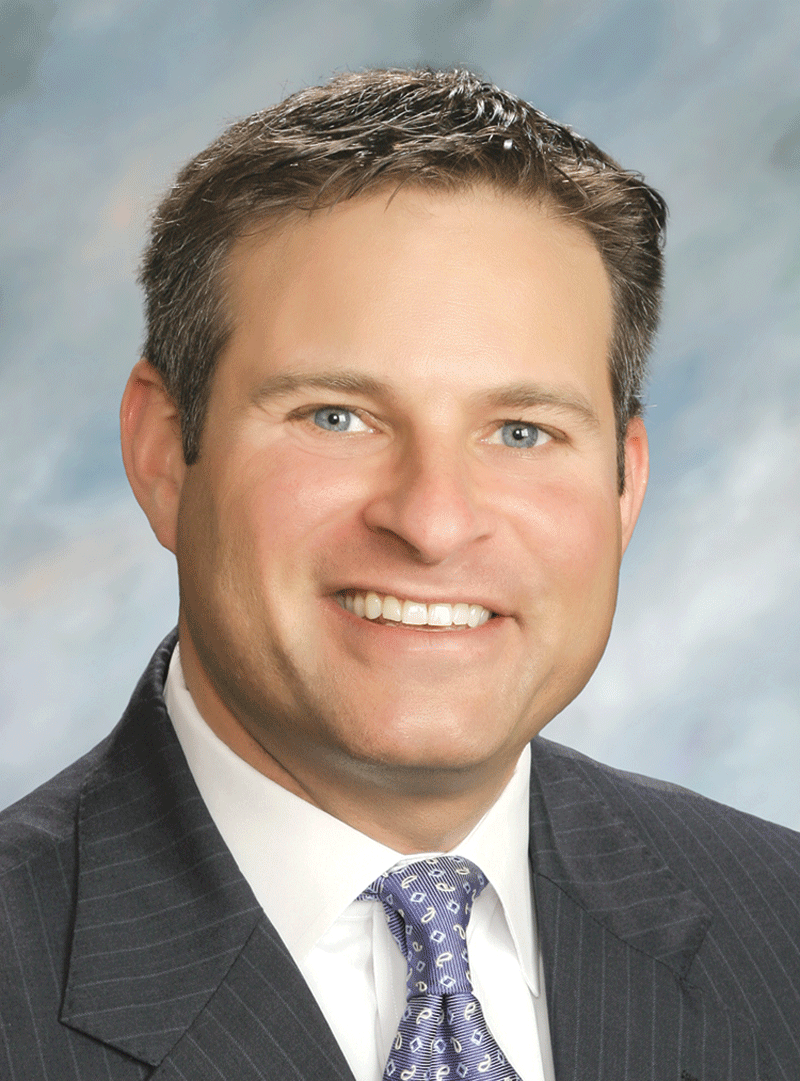
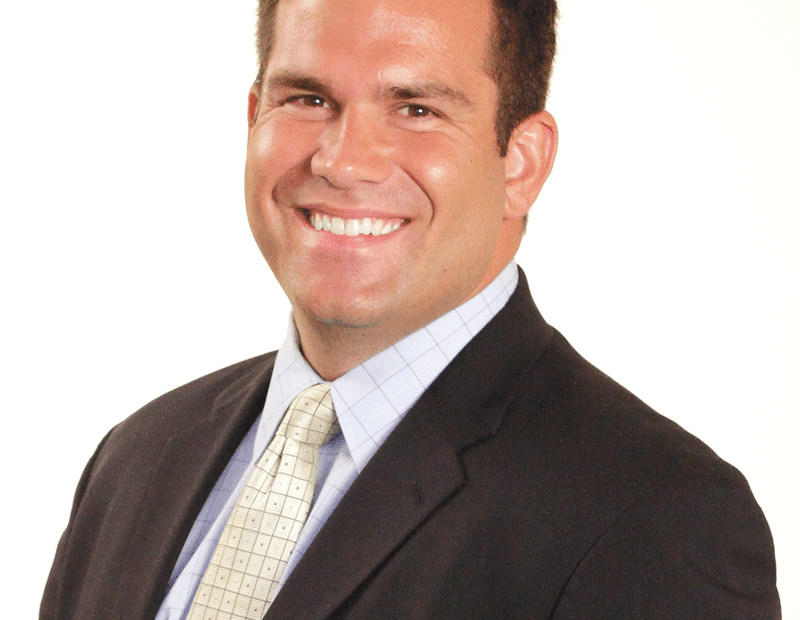
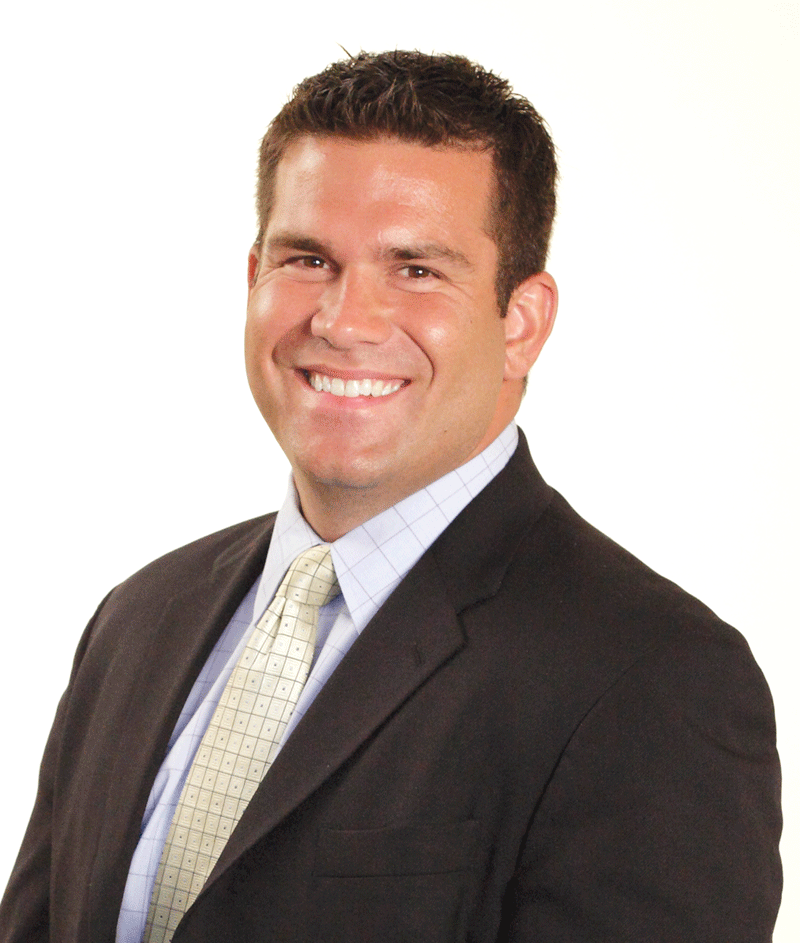
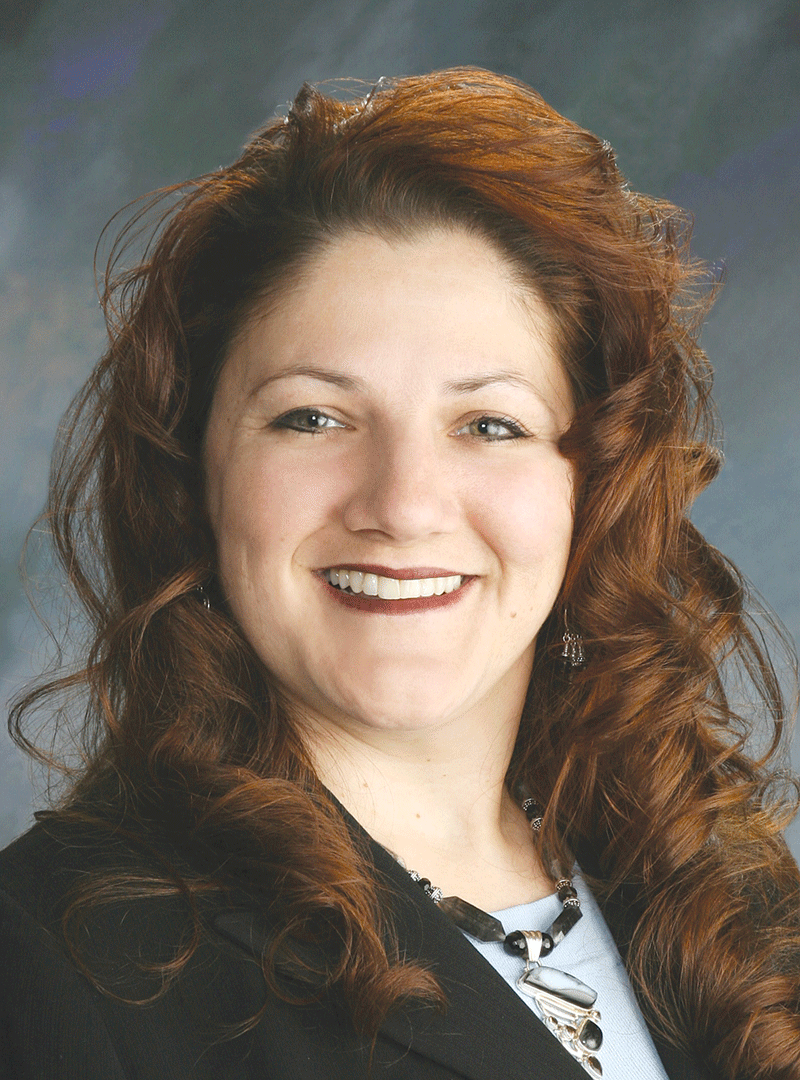
Bob Annon says Webster makes an effort to become partners with their customers, offering financial counsel and services for all stages of life.

Bob Annon says Webster makes an effort to become partners with their customers, offering financial counsel and services for all stages of life.

Webster Looks to Expand Its Footprint, Deepen Relationships

When Webster Bank opened branches in West Springfield and Westfield five years ago, it made a bold move into a region which many consider overbanked.
But this longtime major player on the Connecticut scene — it celebrated its 75th birthday last year and boasts 176 locations, most in the Nutmeg State — felt it could keep pace in the Western Mass. region. And, indeed, it has since expanded to locations in Springfield, Longmeadow, and East Longmeadow, with further growth expected down the line.
“When we decided to go in there, we felt that our approach to banking would serve us well competing in a highly competitive environment,” said Bob Annon, Webster’s regional president for Northern Conn. and Greater Springfield.
“We still find it competitive, but we’re pleased with the progress we’ve made,” he told BusinessWest. “We have, as clients, one of the largest and oldest manufacturers in the market, and also some fairly new companies, so we’re pleased with the penetration we’ve made. A lot of credit goes to our people in our branches who deal with people in our communities on a daily basis; they represent us extremely well.”
Annon knows a relatively new player on the region’s banking landscape, even one with the cachet of Webster — an $18 billion commercial bank with extensive retail and wealth-management services — needs to make a positive splash in any way it can.
“We offer a full range of services for individuals, families, and businesses,” he said. “We think that, at our size, we have the capacity to deliver the types of services — and quality of services — that national and even multinational banks offer, but still retain a strong commitment to valuing each customer, from individuals to larger businesses. We think we’re good at that, at staying close to them and treating them well in good times and in bad.”
And there’s been plenty of the latter during the past few years of economic hardship — which, to Annon, presents not just challenges for customers, but opportunities for the bank to help them overcome hardships.
For example, Webster earned national publicity earlier this fall in a Wall Street Journal article headlined “For Lender, Foreclosure Is a Dirty Word.” The article details the bank’s mortgage-modification efforts, citing examples like a couple, struggling with reduced employment hours, who were able to shrink their monthly payments by 17%, lower their interest rate, and shorten their term.
In fact, despite rampant consumer complaints about loan workouts and foreclosures nationally, Webster has been the subject of just 16 such complaints since 2006, which the Connecticut Department of Banking calls “a very small number.”
“We recognized that’s the best way we can serve our customers,” Annon said, “and that it’s in the best interest of the bank to work with customers and keep them in their homes, rather than having more adversarial relationships with them.
“And we’re not just working with residential mortgage modification; it’s what we’ve done with our business customers for awhile,” he continued. “There have been some big bumps in the road during this Great Recession, and we’ve had to amend or modify some relationships and agreements.
“It’s part of the culture of the company when someone does business with us,” he went on — a culture that is gradually drawing new adherents in a region that offers plenty of competition as well as opportunity.

Five Alive
Annon said Webster likely won’t stop at five branches in Greater Springfield.
“I think we’re where we want to be for the time being,” he said, “but we’re always looking. We know five branches isn’t the market density we’d like to have, so we’re always looking for opportunities to find new locations and opportunities to expand in a desirable market like Greater Springfield. It’s been five years now, and so far we’re pleased.”
Founded in 1935 in Waterbury, Conn. as First Federal Savings Bank, Webster Bank has been on an aggressive expansion path in recent years, opening almost 40 branches in four states — it also has a presence in Rhode Island and New York — since 2002 alone.
At a time when many large, national banks are trying to recoup lost profits through more aggressive fee policies (see story, page 39), Webster’s revenue model has long been based on the concept of a lifetime customer, from the initial, basic checking account to a suite of wealth-management services fully customized according to assets and need.
“Our chairman has gone on record saying we have no interest in charging for debit cards,” Annon said. “Having said that, when someone does business with us, it’s important to do as much business as we can with those customers on a personal and business basis. We’re not only selling credit products, but state-of-the-art cash-management products and investment products as well. Rather than have someone just have a checking account with us, we want to deepen that relationship with them, so that they’re a Webster customer for a long time.”
Through those services, and others, such as online bill pay, “we can really establish many different venues for customers,” he said. “Our commitment has always been to be, not a transactional company, but a relationship-oriented company; customers can look to us for advice, and we can counsel them as well as provide them with banking services.”
To that end, Webster boasts certain specialties in its lending and cash-management programs, including health care, not-for-profits, professional firms (such as lawyers and CPAs), and condo and homeowners’ associations.
“For example, in health care, we have people with intimate knowledge of third-party payers — Medicare, Medicaid, and insurance companies — who are critical if the goal is to become involved with hospitals, nursing homes, and people who rely on those third-party payers,” Annon said.
That expertise was recognized by the Massachusetts e-Health Institute, which named Webster its preferred provider of financing for electronic health records. “This is the program to get medical and health care providers using electronic health records,” he said — a major issue facing health providers over the next several years. “We have programs that can provide 100% financing for that hardware and software.”
Webster also has an asset-based lending specialty, as well as a program that specializes in equipment financing. “Our people really come to understand equipment values and, in many cases, are able to lend 100% of the purchase price of equipment,” he explained. “It’s delivered by people who have been in the market for a long time and who have done this a lot.”
Other specialties are in Small Business Administration loans — Webster is the number-one SBA lender in Connecticut — and check fraud and electronic fraud, “which is becoming more and more pervasive,” Annon explained. “We’ve been conducting seminars on what companies can do to protect themselves from this fraud.”
It’s another way to provide value to a community, he said, and to market the bank to people who might eventually be Webster customers.

Community Focus
It’s all part of an overall strategy to make Webster part of the community fabric. That includes philanthropic efforts, such as the bank’s support of organizations like the Food Bank of Western Mass., Open Pantry, the Urban League, and the capital campaign at Baystate Medical Center. “We’re determined to give back to the community wherever we can,” Annon said.
And, by all accounts, the communities of the Pioneer Valley are starting to see some economic growth, albeit slowly, and that improvement is starting to register in increased business lending at Webster.
“I think it’s starting to loosen up,” he told BusinessWest. “The results we’re seeing, with some third-quarter financial statements starting to dribble in, are generally fairly good, and the market might be starting to turn in confidence, which is where we really need to change. Banks are ready and willing to lend money, but there’s been reluctance by companies to borrow.”
As that confidence begins to take hold, he said, Webster will be ready to become not just a lender to growing businesses, but a partner.
“We are committed to to our customers’ success,” he said. “If they come to Webster, they’re going to find a bank that can fulfill all their banking and investment needs. They’re going to find a banker who is going to be candid and forthright from the first meeting on, and a banker who will deliver what they say they can deliver.”
Perhaps more importantly, during an era of such turmoil in financial services, Annon added, “they can expect a bank that’s going to stay around — that wants to stay part of their banking picture for a long time.”
For life, actually.

Joseph Bednar can be reached at [email protected]
Accounting and Tax Planning Sections
Understand the Many Ways It Can Impact Your Bottom Line

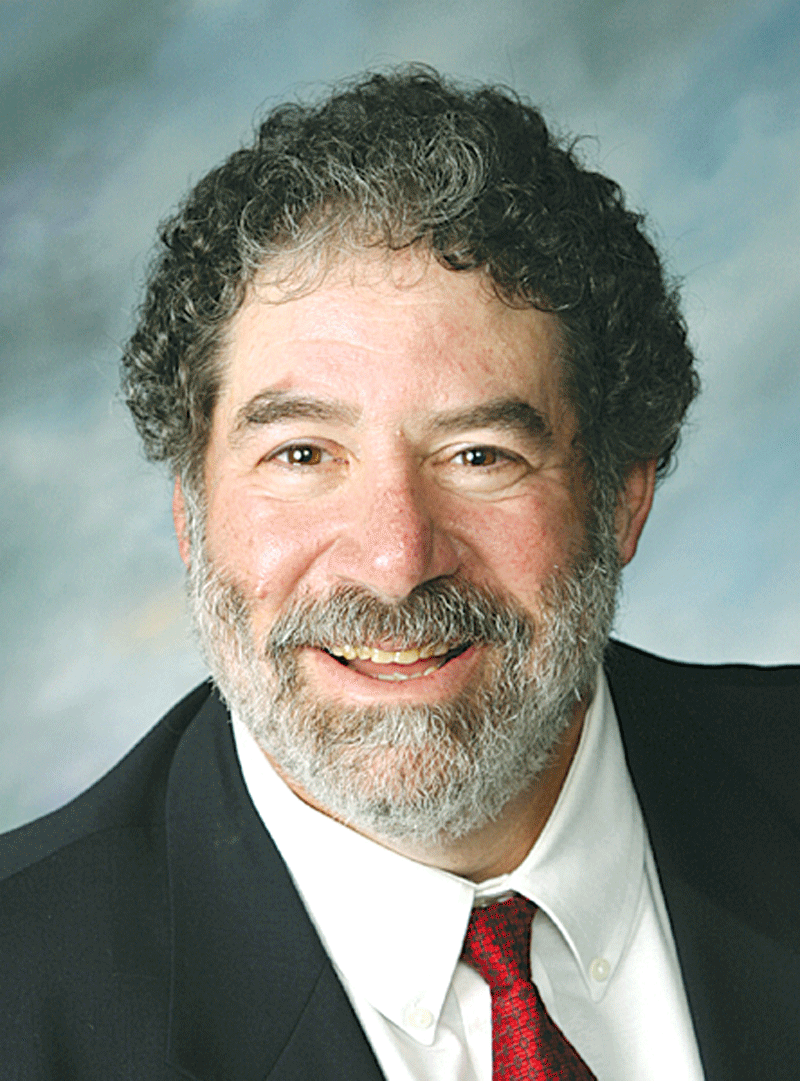
Bruce Fogel

Bruce Fogel

Everybody knows that the government is out of money and needs to raise cash. However, do you understand the financial impact that the 2010 health care legislation will have on your family?
This isn’t just about everybody being required to carry health insurance. It is much more. The government is using this legislation as a revenue builder, and you will be paying the bill. So what will your cost be?

Individual Mandate
The new federal law requires that non-exempt individuals must maintain qualifying health-insurance coverage for themselves and their dependents or face a tax penalty after 2013. Similar to Massachusetts law, those without qualifying health coverage will be required to pay a tax penalty. The federal penalty will be the greater of: (a) $695 per year, up to a maximum of three times that amount, or $2,085, per family, or (b) 2.5% of household income over the threshold amount of income required for income-tax-return filing.
The penalty will be phased in according to the following schedule: $95 in 2014, $325 in 2015, and $695 in 2016 for the flat fee; or 1.0% of taxable income in 2014, 2.0% of taxable income in 2015, and 2.5% of taxable income in 2016. Beginning after 2016, the penalty will be increased annually by a cost-of-living adjustment.
Exemptions will be available for a variety of reasons, including but not limited to, financial hardship,  those without coverage for less than three months, illegal aliens, prisoners, those for whom the lowest cost plan option exceeds 8% of household income, and those with incomes below the tax-filing threshold (in 2011 the threshold for taxpayers under age 65 is $9,500 for singles and $19,000 for couples).

Premium Assistance Tax Credits for Purchasing Health Insurance
A refundable tax credit is available to certain individuals who are not eligible for Medicaid, employer-subsidized health insurance, or other acceptable health coverage, and who get health insurance by enrolling in a qualified health plan through a state-run insurance exchange for tax years after 2013. While the credit generally will be payable directly to the insurer, individuals can elect to purchase health insurance out of pocket and then claim the credit on their Form 1040.
Based on the information provided to the exchange, the individual receives a premium-assistance credit based on income, and IRS pays the premium-assistance credit amount directly to the insurance plan in which the individual is enrolled. The individual then pays to the plan in which he or she is enrolled the dollar difference between the premium-assistance credit amount and the total premium charged for the plan. For employed individuals who purchase health insurance through an exchange, the premium payments are made through payroll deductions.
The premium-assistance credit will be available for individuals and families with incomes up to 400% of the federal poverty level ($43,320 for an individual or $88,200 for a family of four, using 2009 poverty level figures) who are not eligible for Medicaid, employer-sponsored insurance, or other acceptable coverage.

Higher Medicare Taxes on
High-income Taxpayers
High-income taxpayers will be subject to a tax increase on wages and a new levy on investments as well.

Higher Medicare Payroll Tax on Wages
Under current law, wages are subject to a 2.9% Medicare payroll tax with employees and employers paying 1.45% each. Self-employed people pay both halves of the tax, but are allowed to deduct half of this amount for income-tax purposes. While the payroll tax for Social Security applies to earnings up to an annual ceiling ($106,800 for 2011 and increasing to $110,100 for 2012), the Medicare tax is levied on all earnings without limit.
Under the provisions of the new law, which goes into effect in 2013, most taxpayers will continue to pay the 1.45% Medicare hospital-insurance tax, but single people earning more than $200,000, and married couples earning more than $250,000, will be required to pay an additional 0.9% (2.35% in total) on the excess over those base amounts. Self-employed individuals will pay 3.8% on earnings over the threshold.

Medicare Payroll Tax Extended to Investments
As part of the revenue-generation aspect of the new laws, beginning in 2013, a Medicare tax will, for the first time, be applied to net investment income. A new 3.8% tax will be imposed on such income of single taxpayers with adjusted gross income above $200,000, and joint filers over $250,000. Net investment income includes interest, dividends, royalties, rents, gross income from a trade or business involving passive activities, and net gain from disposition of property (other than most property held in a trade or business) reduced by properly allocable deductions to such income.
The new tax is intended to apply only to income in excess of the $200,000/$250,000 thresholds. For example, if a couple earns $200,000 in wages and $100,000 in capital gains, $50,000 will be subject to the new tax ($300,000 minus $250,000).
Additionally, while not directly applicable to individuals, this new tax is also applicable to estates and trusts. In such situations, the tax is 3.8% of the lesser of (a) undistributed net investment income, or (b) the excess of AGI over the dollar amount at which the highest estate- and income-tax bracket begins.

Threshold for Medical-expenses Deduction Raised
Under current law, taxpayers can include in their itemized deductions unreimbursed medical expenses for regular income-tax purposes (not AMT) only to the extent that those expenses exceed 7.5% of the taxpayer’s AGI.
As noted, the new law raises the threshold for itemized medical expense deductions from 7.5% of AGI to 10%, effective for tax years beginning after Dec. 31, 2012. However, it should be noted that the threshold for individuals age 65 and older (and their spouses) will remain unchanged at 7.5% through 2016.

Reimbursement Limited for Some OTC Medications
Qualified medical expenses, which are expenses that can be reimbursed tax-free through a health reimbursement account (HRA), health flexible savings account (FSA), health savings account (HAS), or Archer Medical Savings Account (MSA), no longer include over-the-counter medicines (except for insulin, which continues to qualify), unless prescribed by a doctor, effective for tax years beginning after Dec. 31, 2010.

Increased Penalties on Non-qualified Distributions
from HSAs and Archer MSAs
The penalty tax on distributions from a health savings account or an Archer MSA that are not used for qualified medical expenses has been increased to 20% (from 10% for HSAs and from 15% for Archer MSAs) of the disbursed amount, effective for distributions made after Dec. 31, 2010.

FSAs Limited to $2,500
An FSA is one of a number of tax-advantaged financial accounts that can be set up through a cafeteria plan of an employer. It allows an employee to set aside a portion of his or her earnings to pay for qualified expenses as established in the cafeteria plan, most commonly for medical expenses, but often for dependent care or other expenses. Under current law, there is no limit on the amount of contributions to an FSA. Under the new law, however, allowable contributions to health FSAs will be capped at $2,500 per year, effective for tax years beginning after Dec. 31, 2012. The dollar amount will be indexed for inflation after 2013.

Dependent Coverage in Employer Health Plans
Effective as of March 30, 2010, the new law extended the general exclusion for reimbursements for medical-care expenses under an employer-provided accident or health plan to any child of an employee who has not attained age 27 (whether they qualify as a dependent or not) as of the end of the tax year.
This change is also intended to apply to the exclusion for employer-provided coverage under an accident or health plan for injuries or sickness for such a child. A parallel change is made for voluntary employee benefit associations (VEBAs) and 401(h) accounts. Also, self-employed individuals are permitted to take a deduction for the health insurance costs of any child of the taxpayer who has not attained age 27 as of the end of the tax year.

Excise Tax on Tanning Services
The new law imposes a 10% excise tax on indoor tanning services. The tax, which will be paid by the individual on whom the tanning services are performed, but collected and remitted by the person receiving payment for the tanning services, will take effect July 1, 2010.

Liberalized Adoption-credit and Adoption-assistance Rules
For tax years beginning after Dec. 31, 2009, the adoption tax credit is increased by $1,000, made refundable, and extended through 2011. The employer-provided adoption-assistance exclusion is also increased by $1,000.

Bottom Line
These are some of the highlights of the 55-page health care legislation that was signed into law by President Obama on March 30, 2010. It affects every American citizen to varying financial degrees and phases, in different aspects, at various timeframes. If you have questions about how it will affect your family, it would be wise to consult with your tax advisor.

Bruce M. Fogel, Esq. is a partner with Bacon Wilson, P.C. in Northampton. He is a member of the firm’s estate-planning, elder, real-estate, and business departments. He has extensive experience in matters relating to income, gift, and estate taxes, and he focuses on the tax implications of all legal transactions. He also co-hosts the “Taxes and Assets” radio show on WHMP-AM; (413) 584-1287;
[email protected]

Accounting and Tax Planning Sections
Effective Tax Planning Is a Saving Grace

April is generally regarded as ‘tax time,’ but experts say that tax planning is a year-round exercise, if people want to do it right. With that in mind, year end is a time to look at strategies that can minimize your tax burden and put an effective game plan in place.

As the end of 2011 approaches, now is a good time to start year-end tax planning to minimize your individual and business tax burden. Generally, year-end tax planning involves considering at least two years — in this instance, 2011 and 2012. With tax changes on the horizon, you should consider the likelihood of future changes. Tax planning is a dynamic process and is best accomplished with forethought and assistance from your tax adviser.
Before going into more specific, detailed planning tips, here are two basic principles that can help guide your overall thinking:
• If you expect your tax rate will be higher in 2012, you may benefit from accelerating income into 2011 and deferring deductions into 2012; and
• If you think your tax rate might be lower next year or will be unchanged, consider deferring income to 2012 and accelerating deductions into 2011.
Remember, the focus is on yours or your company’s marginal tax rate. That is the highest rate at which your last, or marginal, dollar of income will be taxed. Even though overall tax rates may rise in the future, if your income will be substantially lower in 2012 than in 2011, your marginal tax rate may decrease because of our graduated tax-bracket system.
In this article, we will focus on tax-planning opportunities that involve actions you can take during the remainder of 2011. This article does not include every tax-planning opportunity that may be available to you, and it is advised that tax projections confirm planning strategies.
First, some business tax-planning strategies.

Retirement Plans for Your Business
Retirement plans have significant tax advantages. Employer contributions are deductible from the employer’s income, employee contributions are not taxed until distributed to the employee (for plans other than Roths), and investments in the program grow tax-free or tax-deferred. Further, the tax law offers a small incentive of a $500-per-year tax credit for the first three years of a new SEP, SIMPLE, or other retirement plan to cover the initial setup expenses.

Depreciation
Certain enhancements to business-depreciation provisions are scheduled to expire on Dec. 31, although President Obama has proposed an extension through 2012.
Section 179: A $500,000 expensing election limit applies to qualifying property purchased and placed in service during 2011. As a result, many businesses will receive an immediate tax writeoff for the cost of most new and used tangible personal property. Unless Congress acts to further extend the higher limit, it will drop to about $134,000 in 2012. Companies that purchase more than $2 million of qualifying property during 2011 have their deduction amount reduced, dollar for dollar, for purchases in excess of $2 million.
Bonus depreciation: Property that does not qualify for an immediate tax write-off under the expensing election may qualify for an increased first-year depreciation deduction under bonus depreciation rules. Unlike the Section 179 deduction, there are no restrictions on the amount of qualifying property, and there is no taxable-income limit. The deduction is 100% of the cost for new property purchased and first placed in service during 2011. Unless Congress acts to extend the bonus depreciation (now proposed by the president), it will not be available for 2012.

Cost Segregation
Buildings and other real estate generally do not qualify for bonus depreciation or the expensing election. However, a cost-segregation study may be able to identify qualifying property within the overall project, which can often significantly increase your deduction.

Research and Development Tax Credit
Many business owners in nearly every industry are unaware that federal and state research and development (R&D) tax-credit programs exist that may reward their day-to-day efforts aimed at producing an improved product. Consider consulting an R&D expert. This credit applies to more than manufacturers.

Health Insurance Tax Credit
To encourage smaller businesses to offer medical insurance coverage for their employees, the law offers a tax credit to offset all or part of the cost. If your business qualifies as a small employer, meaning fewer than 25 employees and average annual wages of less than $50,000, you could be eligible for a credit of up to 35% of non-elective contributions you make on behalf of your employees for medical-insurance premiums. The credit requires minimum non-discriminating contributions and varies based on the numbers of employees and average compensation.

Credit for Hiring New Employees
Businesses that hire workers who are members of certain target groups, such as disabled veterans, food-stamp recipients, and ex-felons, can claim a credit up to 40% of the first $6,000 of wages paid to each such employee.

Losses from Pass-through Entities
If the business entity is operating as a partnership, LLC, S corporation, or trust, and the business will incur a loss in 2011, you may need to plan ahead to be sure the owners can take advantage of that loss on your personal tax return. These rules can be complicated, and you should consult with your tax adviser; there are steps you can take to deduct passive losses or increase your basis.

Paying Corporate Dividends
Profits of traditional C corporations (those that have not elected S-corporation pass-through status) are taxed twice: once when earned by the corporation, and again when distributed as a dividend to the shareholders. Many have seen the current 15% tax rate on qualified dividends as an opportunity to pay out accumulated earnings at relatively low tax rates. It is likely that the tax rate on dividends will increase in the future, so you may wish to discuss with your tax adviser the possibility of distributing profits to lock in the current 15% rate.

Compensation and Billing
Compensation earned in 2011 can sometimes be paid in early 2012, and the business may be entitled to the tax deduction in 2011. If your business operates on the cash method, you can delay (within reason) sending out bills for 2011 work until late in the year, so payment comes in 2012. Alternatively, you can offer a discount to a client who prepays if you are trying to increase 2011 income.

Next, we’ll consider some personal tax strategies.

Capital Gains and Losses
• Long-term capital gains from the sales of assets with a holding period greater than one year are taxed at 15%;
• Short-term capital gains are taxed as high as 35%;
• Sales at a loss can reduce other capital gains;
• Excess capital losses can be deducted to offset up to $3,000 of other income, with the balance carried forward. When selling to recognize a loss, be careful of the wash-sale rules; and
• Consider any capital-loss carry-forward that may be available to you in 2011.

Installment Sales
Selling an asset at a gain and collecting the proceeds in future years may allow you to defer part of the income until the years in which you receive the payments. Consider the fact that you will be financing the sale yourself and may face the risk of collection problems.
Also, consider the possibility that capital-gains tax rates could be higher in future years when you collect the payments because those gains are taxed at the rates in effect the year the gains are recognized. You may wish to elect out of the installment-sale method in the year of sale to lock in the 15% rate.

Credit-card Payments
Paying tax-deductible expenditures — including charitable contributions — with a credit card secures the deduction, even if you do not actually pay the credit card company until the following year.

Suspended Passive Activity Losses
If you own a passive activity with a suspended loss, and you do not have sufficient passive income in 2011 to allow you to deduct the suspended loss, consider disposing of the activity before Dec. 31.

Appreciated Assets Given to Charity
Consider fulfilling your charitable goals by contributing appreciated assets instead of cash. You can deduct the fair market value of long-term capital gain property, such as stock, contributed to charity, and you avoid paying taxes on the appreciation.

Tax Credits for Home Improvements
A tax credit for qualifying home improvements may be available for improvements placed in service during 2011 but not in 2012. The credit applies to energy-efficient improvements such as insulation, exterior windows, and heating and air conditioning systems. You will need to complete your purchase before Dec. 31 to qualify for the credit in 2011. The new energy-efficiency tax credit is a 10% credit, up to a lifetime maximum of $500. The prior cap had been up to $1,500, so check to see whether you have claimed this credit in prior years.

Income-tax Prepayments
If your estimated tax payments and withholding are not high enough to avoid penalties, increase payments. Even better, if you receive wages, IRA distributions, annuity payments, or other payments, have the additional taxes withheld because withholding is deemed to be ratable throughout the year.
If you have a fourth-quarter state estimated tax payment due Jan. 15, 2012, consider making the payment late in December if you need additional itemized deductions in 2011.

Alternative Minimum Tax
An increasing number of middle-income earners, especially retirees, are subject to the AMT. High itemized deductions (other than charitable contributions), high personal exemptions, and large capital gains, among other items, can trigger the AMT. Be sure to consider the effect of AMT in your year-end planning. For example, if you know you’ll be in AMT, prepaying state taxes or real-estate taxes will not give you any benefit.

Your Retirement Plans
Roth IRA Conversion: Roth IRAs have a number of advantages over traditional IRAs, including no tax when the money is withdrawn. Consider the following:
• The conversion results in taxable income;
• The benefits of tax-free withdrawals in the future may be greater than the current tax you will pay;
• There is no longer an income limitation prohibiting high earners from converting; and
• If you are expecting a business loss or have high itemized deductions in 2011 that could offset the income effect of the conversion, your tax consequences may be minimized.

Additional Taxes Coming in 2013
Some future tax changes have already been enacted but have yet to take effect:
• Effective Jan. 1, 2013, a new Medicare Hospital Insurance (HI) tax applies to high-income individual taxpayers:
— The tax is 0.9% of earned income in excess of $200,000 for single filers ($250,000 for joint returns); and
— A 3.8% tax applies to investment income (including dividends, annuities, royalties and rents, etc.) for the same individuals.
Consider talking with your tax adviser about strategies for minimizing this tax.
• In 2013, the threshold for the itemized deduction for unreimbursed medical expenses is increased to 10% of adjusted gross income from the current 7.5%. You may want to plan for unreimbursed medical procedures in 2011 or 2012 to maximize your tax benefit. There is a break for older taxpayers. If an individual or spouse is age 65 or older, the threshold remains at 7.5% of adjusted gross income through 2016.

Finally, let’s discuss some estate- and gift-tax planning strategies.

Estate Planning
The estate- and gift-tax exemption amount for 2011 is $5 million — essentially $10 million for a married couple. Again, there is uncertainty in the future about where the estate-tax exemption and tax rates will end up. And with the recent changes, it is a good idea to review your plan to ensure it is up to date.
Because the estate and gift tax exemptions were recently reunified, now may be an appropriate time to make gifts to take advantage of the $5 million/$10 million lifetime exemption. Making large gifts under the exemption amount removes not only the value of these gifts from your estate, but also future appreciation of the gifted assets.

Gift Tax
The annual gift-tax exclusion for 2011 remains at $13,000 per person. If you are married, you can gift up to $26,000 per donee per year by using the gift-splitting rules, without any federal gift-tax ramifications. Gifting reduces your taxable estate and may be important in an effective estate plan.

Conclusion
When Congress dealt with the Bush tax cuts at the end of 2010, the effect was to delay a ‘permanent’ decision for another two years. These provisions, originally enacted in 2001, reduced marginal tax rates for all taxpayers, provided relief from the marriage penalty, increased child tax credits, expanded education-related tax benefits, and phased out the estate tax.
The current laws, including the recently enacted estate-tax changes, are now set to expire, or sunset, on Dec. 31, 2012. If Congress does not act, most of these tax benefits will disappear, and taxes will automatically increase to pre-2001 levels on Jan. 1, 2013. Although we have covered a number of topics in this article, we undoubtedly did not address every issue relating to your specific situation. Tax projections are recommended to determine your greatest tax savings.

Kristina Drzal-Houghton, CPA, MST is the partner in charge of Taxation at Holyoke-based Meyers Brothers Kalicka, P.C.; (413) 536-8510.

Departments People on the Move

Yuki Cohen

Yuki Cohen

Yuki Cohen has been named Vice President and Wealth Advisor for the Wealth Management Division of Berkshire Bank in Pittsfield. Cohen will work with a variety of clients and institutions throughout the Berkshire County and Pioneer Valley markets, providing trust-administration and asset-allocation services to wealth-management clients.
•••••
Attorney Karina L. Schrengohst has joined Royal LLP, based in Northampton, focusing her practice in labor law. She will represent unionized employers in court, defending them against unfair labor practice charges, and before administrative agencies, such as the National Labor Relations Board. Also, she will assist clients at arbitrations in matters involving contract interpretation and employee discipline or discharge and advise non-union clients on developing the best practices for maintaining a union-free workplace.
•••••
Shefali Desai has been appointed National Sales Leader of Emerging Markets for MassMutual’s Retirement Services division, based in Springfield. Desai is responsible for leading the division’s 15 sales directors, as well as third-party administrator channel managers targeting small-market retirement plans.
•••••
Ralph F. Abbott Jr.

Ralph F. Abbott Jr.

Skoler, Abbott & Presser, P.C., with offices in Springfield, Worcester, and Meriden, Conn., has announced that Ralph F. Abbott Jr. has been named the 2012 Springfield Employment Law-Management Lawyer of the Year by Best Lawyers, a peer-review publication in the legal profession. Abbott has been a member of the firm since 1975. In addition to providing employment-related advice to employers, he assists clients in remaining union-free and represents employers before the National Labor Relations Board.
•••••
Heather Bosworth has joined Park Square Realty’s Westfield office as a Sales Associate.
•••••
Johanna M. LaClair has joined the Insurance Center of New England as a Personal Lines Sales Representative.
•••••
James E. Vinick has been named Treasurer of the Naismith Memorial Basketball Hall of Fame in Springfield.
•••••
Chicopee Savings Bank announced the following:
• Martha M. Rickson has been named Branch Officer of the West Springfield branch office; and
• Maribel Torres has been named Assistant Vice President of Retail Lending.
•••••
Western New England College in Springfield announced the following:
• Nuno C. Alves has been named Instructor of Electrical and Computer Engineering;
• Anthony E. English has been named Associate Professor of Biomedical Engineering;
• Joe A. Riofrio has been named Assistant Professor of Mechanical Engineering; and
• Brian K. Smith has been named Assistant Professor of Industrial Engineering.
•••••
Joseph DaSilva has been named Vice President of Administration at Springfield Technical Community College.
•••••
Florence Savings Bank announced the following promotions:
• Susan A. Pepin-Phillips has been named Vice President of Marketing;
• Shelley M. Daughdrill has been elected Assistant Vice President and Branch Manager;
• Michele Z. Lawrence-Bennett has been named Assistant Vice President and Security Officer;
• Sharon C. Malouin has been elected Audit Officer; and
• Robert E. Teto has been elected Virtual Branch Manager.
•••••
Western New England University in Springfield recently appointed new members of the faculty at the College of Arts and Sciences:
• Eric L. Clark has been named Assistant Professor of Mathematics;
• William R. Force has been named Assistant Professor of Sociology;
• Jacob L. Krans has been named Assistant Professor of Neuroscience;
• Sean P. McClintock has been named Assistant Professor of Chemistry;
• Alexander S. Rosas has been named Assistant Professor of Political Science and Director of the Law and Society program; and
• Heather Stassen-Ferrara has been named Assistant Professor of Communication.

Health Care Sections
There Are Many Such Matters Involved with ‘the Long Goodbye’

Todd C. Ratner

Todd C. Ratner

November is National Alzheimer’s Disease Awareness Month as well as National Family Caregiver Month. To appreciate the breadth of these issues, it is helpful to understand that, according to the Alzheimer’s Assoc., 5.4 million people live with the disease, as well as about 15 million unpaid family caregivers; $183 billion in annual costs are associated with it.
Alzheimer’s disease, the most common form of dementia, is a physical and terminal illness that causes difficulties with memory, thinking, and behavior. It is not a normal part of aging.
According to the Alzheimer’s Assoc., there are 10 common warning signs of Alzheimer’s disease:
• Memory changes that disrupt daily life;
• Challenges in planning or solving problems;
• Difficulty completing familiar tasks;
• Confusion with time or place;
• Trouble understanding visual images and spatial relationships;
• New problems with words in speaking or writing;
• Misplacing things and losing the ability to retrace steps;
• Decreased or poor judgment;
• Withdrawal from work or social activities; and
• Changes in mood and personality.
Alzheimer’s gets worse over time; however, one advantage of a timely diagnosis is that the person living with the disease can often participate in their own estate planning. This allows them to decide who will make medical and financial decisions on their behalf in the later stages of the disease, provided, of course, that they still have the legal capacity — the level of judgment and decision-making ability — needed to sign legal estate-planning documents.
As such, it is imperative that someone diagnosed with Alzheimer’s begin making legal and financial plans as soon as possible, to the extent that they can. If there are any questions as to whether or not your loved one has the necessary legal capacity, a medical provider should be consulted.
The following should be considered immediately in the event that your loved one does not have a current or updated plan in place.

Estate Planning
Estate planning, in its most basic essence, is a process for nominating a trusted person to make medical and financial decisions and planning for the disposition of your assets upon death. Regardless of the size of your estate, there are several essential considerations.
Everyone needs a will, the most basic estate-planning document. It provides for the orderly distribution of your estate upon your death. In Massachusetts, the state has already drafted a will for you, designating that your assets pass in proportions of 50% to your spouse and 50% to your children, so if you want any customization, you’d better have an attorney draft a personalized version for you.
Another essential estate-planning tool is a health care proxy. This document allows a designated person, called a health care agent, to make health-related decisions for you if you become incapacitated and cannot make them yourself. This becomes especially prevalent when Alzheimer’s disease progresses, as your loved one will understand your wishes regarding care and end-of-life decisions.
Another critical estate planning tool is a durable power of attorney. This document gives a person called the attorney-in-fact the ability to handle your financial affairs during your lifetime when you are incapacitated. This will prevent your loved ones from having to go to court and obtain the legal right to pay your bills and handle your finances on your behalf when your disease progresses.
Estate planning is a broad term that can encompass many things, and there are more estate-planning choices available today than ever before. You may also consider various trusts to provide for the continued financial support of your family members after you lose the ability to care for them yourself.

Long-term Care Financing
While most families prefer to keep their loved one at home as long as possible, it is common for an individual with Alzheimer’s to have to go to a nursing home when family members can no longer provide the necessary round-the-clock care. Due to the characteristics of the disease, Alzheimer’s residents typically reside in nursing homes longer than other residents. Since the average cost of a nursing-home placement in Massachusetts is approximately $10,000 per month, long-term care financing is a critical component of the planning process for a loved one with Alzheimer’s disease. As such, effective planning for long-term care financing is a must to preserve your family’s assets against being drained by a nursing home.
The available options to pay for nursing-home care include private payment, long-term care insurance, and Medicaid. Private payment can quickly evaporate a lifetime of savings and significantly limit the amount passed to designated heirs, so it is generally preferred to find an alternative form of payment.
Long-term care insurance is a wonderful way to pay for a nursing home stay, but one must be insurable in order to be eligible to purchase such insurance, which precludes most people living with Alzheimer’s. It may also be expensive, thereby making it an unaffordable option.
Many people think that they can simply give away their money to family and friends freely. They often don’t understand that complicated Medicaid laws include a specific look-back period on all assets, and such transfers will delay Medicaid eligibility, requiring you or your loved one to find alternative financial resources until the waiting period is satisfied. Without proper planning, this delay could financially devastate your family, but Medicaid planning or asset preservation can be accomplished by properly transferring assets in accordance with Medicaid laws, and an estate or elder-law attorney can guide you through that process. It may be your best way to prepare for an anticipated nursing-home stay.
Even if a loved one is afflicted with Alzheimer’s disease and does not have an updated plan, it may not be too late. However, it is important to see a qualified estate-planning and elder-law attorney as soon as possible to ensure that the ever-changing and intricate laws and requirements regarding estate planning and long-term care planning are followed. Such an advisor is the best resource for determining how to effectively draft an effective estate plan that can help preserve your family’s resources.
You can be a voice and an advocate for the 5.4 million Americans living with Alzheimer’s disease. The local office of the Massachusetts/New Hampshire Chapter will be hosting events throughout the month of November to celebrate and promote awareness of the disease. Log onto alz.org/manh to find out more.

Todd C. Ratner is an estate-planning, elder-law, business, and real-estate attorney with the regional law firm Bacon Wilson, P.C. He serves as the co-chair for the Alzheimer’s Assoc. Tri-County (Hampden, Hampshire, and Franklin) Partnership and is a member of the National Academy of Elder Law Attorneys and the Estate Planning Council of Hampden County. He is also a recipient of Boston Magazine’s Super Lawyers Rising Stars distinction from 2007 to 2010; (413) 781-0560; baconwilson.com

Cover Story
From the Editor and Publisher

For nearly 30 years now, BusinessWest has been shining a spotlight on the business community of Western Massachusetts and, at the same, serving as an invaluable resource for this large, diverse constituency. It’s been our mission to inform, educate, inspire, and make those all-important connections between area businesses and the communities they serve. And over the years, the methods for doing all this have evolved and expanded.

Indeed, we’ve moved beyond the printed word and also into electronic media and a host of events, including the hugely successful Forty Under 40 and Difference Makers programs, enabling us to say that we make connections in print, on line, and in person.

And this fall, BusinessWest takes things to an even higher level as producer of the inaugural Western Mass Business Expo, on Oct. 18 at the MassMutual Center in Springfield. We decided to take the leadership role in making this event reality because we believe, first and foremost, that the business community truly deserves an event of this magnitude and quality. What’s more, we are dedicated to finding new and exciting ways to carry out that aforementioned mission, and the Expo is the perfect vehicle for doing so.

In conjunction with the event-planning firm Rider Productions, BusinessWest has assembled an all-star lineup of area business leaders, elected officials, and experts in several fields to lead more than two dozen seminars, panel discussions, and special presentations on the pressing issues confronting all business owners today.

We’ve also brought together more than 135 companies representing every sector of the economy — from health care to information technology; from higher education to ‘green’ energy.’ Together, they illustrate the strength and diversity of our business community and a wealth of talent and experience with which attendees should want to do business.

We’ve billed the inaugural Western Mass Business Expo as the “place to be” on Oct. 18, and it is exactly that. There, exhibitors and guests will be part of a large audience of decision-makers, contributing to a room filled with energy and excitement.

This is the event that business owners across our region have been asking for, and it is our privilege to be able to present it.

Enjoy!

George O’Brien, Editor
John Gormally, Publisher
Kate Campiti, Associate Publisher

Event Schedule

Tuesday, Oct. 18, 2011

Kickoff Breakfast
7 a.m.; Registration
7:30-8:50 a.m.; Program; keynote speaker,
John Morse, president, Merriam-Webster

Ribbon Cutting
9 a.m.; Show Floor Theater

Exhibition Hall
9 a.m. to 4 p.m.

On the Expo Floor:
• The Whalley Computer and Valley
Communications Technology Corridor
• The HealthcareNews Health Corridor
• The DiGrigoli Artistic Team

Show Floor Theater:

Session One: 9:15-10 a.m.
Thriving in a Wildly Changing Market Place

Session Two: 10:15-11:15 a.m.
The Forecast: A Look at What’s Ahead for the State and Regional Economy

Session Three: 11:30 a.m.-noon
The Anti Resume Revolution

Session Four: 12:15-12:45 p.m.
Laugh For No Reason

Session Five: 1-1:45 p.m.
Blood From A Stone: How to Get Motivated and Do More Business in Any Economy

Session Six: 2-2:30 p.m.
The 401(k) Coach

Session Seven: 2:45-3:15 p.m.
Empower Your Workforce

Session Eight: 3:30-4 p.m.
You Don’t Have to Be Perfect to Be Great

Educational Seminars,
Meeting Rooms 1, 2, and 3
Continuously, from 9:15 a.m. to 4 p.m.

ACCGS & BBB Torch Awards Luncheon
11:30 a.m.; Registration
Noon-1:30 p.m.; Program; keynote speaker,
Michael Kittridge II, founder and former chairman,
Yankee Candle Corp.
Special presentation: the Better Business Bureau’s Torch Awards honoring: • Baystate Dental P.C., Springfield;
• St. Germain Insurance Inc., Ware; and
• Amy Alaimo of Agawam, Student of Integrity Award Winner

2011 Expo Social
presented by Meyers Brothers Kalicka P.C.
4-6 p.m.; Atrium

Show Floor Presentations

Click Here to Download the PDF: WMBEshowFloorPresentationsBW1011a

Educational Seminar Schedule

Click Here to Download the PDF: WMBEseminarSchedulesBW1011a

Floor Plan and List of Exhibitors

Click Here to Download the PDF: WMBEFloorPlan

Banking and Financial Services Sections
Many Alternative and Supplemental Financing Sources Exist for Business

Gary G. Breton

Gary G. Breton

So, you’re looking for financing for your business to allow it to remain viable through these difficult and volatile economic times. But you find that all your traditional sources of financing have dried up. What can you do, and where can you look for such needed funding?
There are several non-traditional avenues of obtaining needed business capital that can be complementary to any existing financing that you may already have in place for your business. These alternative sources may include quasi-public bond financing, several federal and state tax-credit programs, and private financing. They each have certain advantages, but in order to receive them, you must relinquish something in return.
In the area of quasi-public bond financing, the Mass. Development Finance Agency (MassDevelopment) has a number of available programs that can be utilized to provide financing for both for-profit and not-for-profit business entities. For example, tax-exempt bonds, which are exempt from federal taxes and, in certain cases, state taxes, can provide the lowest-interest-rate option for certain types of projects, including real-estate development and new equipment purchases. In better economic times, these bonds were traditionally bundled into large-denomination packages and sold on Wall Street to institutional investors.
The more likely scenario in today’s marketplace is that such bonds would be purchased directly by your company’s current bank or possibly another area financial institution. The fact that the interest income received by the holders of these bonds is exempt from federal and (in many cases) state tax allows for a lower-than-market interest rate to be offered, which, depending on the amount of such bonds, can provide a substantial savings over the life of the bond.
According to information contained on MassDevelopment’s Web site, such financing must be eligible for tax-exempt financing under the federal tax code, which can include 501(c)3 nonprofit real estate and equipment, affordable rental housing, assisted living and long-term-care facilities, public infrastructure projects, manufacturing facilities and equipment, municipal and governmental projects, and solid-waste recovery and recycling projects.
Additionally, MassDevelopment has other available loan and guaranty programs, as well as specialty programs, that include financing for companies that either currently export or will be exporting their products or services internationally, and technology companies that may be commencing or expanding their business operations in Massachusetts; visit the Web site for further information.
A second alternative source of non-traditional financing is in the area of available federal and/or state tax-credit programs, which are available for certain projects and industries. For example, Low-income Housing Tax Credits (LIHTC) are dollar-for-dollar tax credits benefiting developers undertaking affordable-housing investments. This program was created under the Tax Reform Act of 1986, which provided incentives for the utilization of private equity in the development of affordable housing aimed at low-income Americans, and it accounts for the majority of all affordable rental housing created in the U.S. today. Tax credits are more attractive than tax deductions because they provide a dollar-for-dollar reduction in a company’s federal income tax, whereas a tax deduction provides only a reduction in its taxable income. In Massachusetts, LIHTCs are administered by the state Department of Housing & Community Development.
A second type of tax-credit program that has seen increased activity over the past several years is the New Markets Tax Credit (NMTC) Program, which was established in 2000 as part of the Community Renewal Tax Relief Act of 2000. The goal of this tax-credit program is to spur revitalization efforts of low-income and impoverished communities across the U.S. The NMTC initiative provides tax-credit incentives to business investors for equity investments in certified Community Development Entities, which have a primary mission of investing in projects located in low-income communities. The scope of the NMTC program can include the development of projects that could provide funding for project components, including real-property acquisition, building construction, and machinery and equipment purchases.
A third type of tax-credit program, which has provided fertile ground for available alternative financing, is the Federal Historic Preservation Tax Incentives program, which has been the largest, most successful, and most cost-effective federal community-revitalization program in recent memory. It seeks to preserve historic buildings, stimulate private investment, create jobs, and revitalize communities. This program has leveraged more than $58 billion in private investment to preserve and reuse more than 37,000 historic properties nationwide since 1976. This program is administered by the National Park Service and the Internal Revenue Service in conjunction with the Mass. Historical Commission.
Each of the above programs can provide either needed alternative financing or real incentives that will attract the necessary funding to undertake various types of projects. These projects, by their very nature, will generate activity for a multitude of allied businesses, such as general contractors, subcontractors, equipment vendors, insurance agents, accountants, attorneys, appraisers, and so on.
Finally, a company can seek the infusion of private capital, which will generally be provided as a mezzanine-type loan or equity investment. Depending on the nature of your business, you can seek out and, in many instances, obtain a private investor or group of investors that will provide what is essentially a commercial business loan normally secured by a junior lien position on certain specific collateral behind the company’s primary senior lender. Since taking a junior position results in a greater degree of risk for such investors, the rates of interest charged on such credit facilities is generally higher than a commercial business loan from a conventional bank lender, and any applicable financial covenants are more stringent.
Alternatively, such a private investor may elect to contribute its funds by way of an equity injection into your company so as to provide additional working capital, in return for which the investor will require an equity/ownership interest in the company. This equity interest may require certain perquisites, such as a preferential return on its investment to be made prior to any distribution to the holders of non-preferential equity interests; or perhaps take the form of a stock option, which will allow the investor, in its discretion, to convert such options to an equity/ownership interest at a future date; or an option whereby the investor has the right to require the company to repurchase its equity/ownership interest at a time of its choosing, based on an agreed-upon repurchase price formula.
The bottom line in undertaking such private financing is that it traditionally results in your relinquishing a certain degree of sovereignty in your control of your company.
One final suggestion is that, while it behooves you to research and fully evaluate any number of possible sources of alternative financing, once you have determined which you feel would be most beneficial for your company, you need to ask for it. Many times, business owners are reluctant to initiate a request for credit based on what they perceive are insurmountable obstacles to obtaining a favorable response, when in fact many such alleged obstacles may be able to be satisfactorily addressed and overcome by working in concert with professional advisers who can provide you with sophisticated counsel and bring both creative and fiscally responsible alternatives to the table.

Gary G. Breton, Esq. is a partner with Bacon Wilson, P.C. and a member of its banking and finance department. His major emphasis of practice includes representation of financial lending institutions, as well as both individual and business borrowers. He also represents numerous business clients in startup and ongoing business operations as well as the purchase and sale of businesses; (413) 781-0560; [email protected]

Construction Sections
Nick Riley Builds His First House — in One Week

Nick Riley, president of N. Riley Construction

Nick Riley, president of N. Riley Construction, during the build week at Sirdeaner Walker’s home.

Nick Riley launched his construction company about five years ago, focusing on residential remodels but eager to move into total home builds. He’s not likely to forget the first house he finished from the ground up, because he — and a large crew of volunteer builders and tradespeople — managed to complete it in one week. Riley said the opportunity to tear down and rebuild a house for ABC’s Extreme Makeover: Home Edition is one he’s glad he didn’t pass up — not only for the experience, but for the chance to impact the lives of a very deserving family.

Kate Riley said her husband had a few goals when he planned his career — “to have his own business, to have his name get big, and to build houses. This is his first house.”
She — along with several other Riley family members and dozens of area builders and tradespeople, all volunteering their time — stood on Springfield’s Northampton Avenue, absorbing what had happened in the first few days since Ty Pennington and his team of designers from ABC’s Extreme Makeover: Home Edition knocked on the door of Sirdeaner Walker and informed her she would have a new house by the following week.
“The Extreme Makeover producer contacted me about four weeks before we started the project,” said Riley, president of N. Riley Construction in Chicopee, noting that he was recommended by the Home Builders Assoc. of Western Mass. and other contractors. “I ended up meeting with them the day after. I sat down and spoke with them, and they told me the story of this family.
“That’s when I made my decision,” he continued. “Being able to do this for this family … you never get a chance like this, to be able to do a project like this. It’s not too often that you can say you were able to gather an entire community to help one family.”
Walker is no stranger to the spotlight, but it’s a light she never would have asked for, obviously. Her 11-year-old son, Carl Joseph Walker-Hoover, took his own life in 2009 after being incessantly bullied by peers at the New Leadership Charter School in Springfield.
In the months following the tragedy, Walker became a strong advocate against school bullying, successfully pushing for anti-bullying legislation in Massachusetts, meeting with federal lawmakers and President Obama, and establishing a foundation in her son’s name that raises awareness of the bullying issue and scholarships for area students.

Nick Riley’s wife, Kate, and mother, Lisa

Nick Riley’s wife, Kate, and mother, Lisa, were among many family members pitching in with Extreme Makeover.

Her house, in the Upper Hill neighborhood close to Springfield College, was run-down and riddled with plumbing and electrical issues, according to ABC producers. She lives there with two daughters, a sister, her mother, and her grandmother.
“We started planning about four weeks before the build week,” Riley said. “I approached a couple of good friends of mine in the trades to help me. I also started planning right away as far as gathering materials, manpower, and tradespeople. The Extreme team sent in a couple of project managers to help us do that, but it was ultimately my responsibility to provide the help.
“I had, at the beginning, some very good responses. I had a lot of people who wanted to participate, but didn’t think they could at the time because of how everything has been” with the economy, he told BusinessWest. “So it was a little bit of both: I had people who were very positive about it, saying, ‘yes, we’ll do it,’ and on the other hand some who wanted to do it but couldn’t afford to at the time, or were just too busy.”
Riley’s glad he wasn’t too busy, though, calling the experience one of the most rewarding of his life.

From the Ground Up
Riley corrected his wife’s first-house assertion to a point, noting that he’s currently building a house in Chicopee, and his company, which he launched about five years ago, has done some major home renovations that were very close to whole-home jobs. But this month’s makeover was, indeed, the first house he has completed from the ground up.
The build week itself was every bit as long and intense as viewers of the show might imagine. “On Sunday, we knocked on the door and surprised the family, and on Monday we ripped the house down. On Tuesday we started the foundation,” Riley said.
By midweek, a newly framed house had gone up in its place, followed by repaving of the driveway, complete landscaping of the yard, and of course, all those personal touches the designers are known for. “On Sunday, they brought the furniture in and surprised the family with their new home.”
The days, not surprisingly, were long. “We had 12-hour shifts set up, but the nighttime shifts started to roll into the daytime shifts,” said Riley. “The demolition of the house went really well, and when we dug out the foundation, that went really well,” he recalled. “Framing went pretty well, too. We had framers there for 40 hours, then we started losing them, and it was a challenge to get people back there.”
Inclement weather, always a concern on these one-week builds, wasn’t a factor; temperatures were mild all week, with a little rain passing through on Wednesday, but nothing to slow down the progress, as the house was weathertight by that point. But the occasional unexpected challenge emerged during construction.
For example, “when we started to set the concrete walls, we noticed that we hit a little bit of water. That caused a bit of a problem; we had to set up a pump and pump out the water while we were setting these concrete walls.”
But any problems encountered during the build paled in comparison to the joy the Walker family felt at receiving so much community support. In addition to the army of volunteers and dozens of companies — in the construction trades, home supplies, marketing, and other fields — who lent their time and resources, Walker had more surprises coming at the reveal. Notably, UMass presented her with four-year scholarships — tuition, room, board, and fees at any of the four campuses — for each of her youngest children, now age 7 and 8.
Details about the home’s interior will have to wait until the show airs, at the request of ABC. But Riley said the designers came up with some special touches to match the work he and his crew did on the house itself.
“Seeing people come together to help other people in such a big way, giving up their days and money to help people they don’t even know, it was an amazing experience,” he told BusinessWest. “It just shows how good people are. And just seeing the faces of the family when they moved that bus — it was a once-in-a-lifetime opportunity.”
He said he was also fortunate to meet many people from different businesses he might not otherwise have met, and the participation of his own family members was another personal highlight.
“I asked a couple people in my family to help me out with the planning process, and before I knew it, the whole family was helping out in some way,” particularly helping at the various support tents set up around the neighborhood. “That was rewarding.”
His wife agreed. “This is unbelievable,” Kate said that afternoon midway through the project. “It’s amazing to be able to help a family like this.”

Making a Name
If Riley’s goal was to make a name for his business, he’s well on his way. He started out in the construction business working for his uncle, Andrew Crane, president of A. Crane Construction in Chicopee.
“I ended up leaving because I wanted to start my own company, and things have been great the whole time,” Riley said. “I haven’t had one minute of downtime — it’s been amazing.”
That’s a striking account of success in what has been a decidedly downbeat atmosphere for builders, many of whom have struggled to keep employees busy during the past few years of recession and sluggish recovery. But Riley, most of whose work is residential, has focused largely on home remodels and renovation work, one of the few sectors of construction that has consistently shown some life.
“Right now, because of the recent disasters, we’ve done a lot of insurance repairs, from the ice damage from the winter to work from the tornadoes and the microburst.”
And he’s looking forward to plenty more work as the economy improves — with the experience of that one-week build under his toolbelt.
Still, “we don’t want to grow too big,” he said. “We want to stay a smaller company and keep it personal, make sure we continue to provide a quality product.
“I like the hands-on work of going into someone’s home and putting a smile on the face of the owners,” Riley continued. “There aren’t a lot of other jobs where you can do that, where you can go in make an impact by changing their homes.”
Or, in extreme cases, their lives.

Joseph Bednar can be reached at [email protected]
Cover Story
Why Area Businesses Need a Disaster Recovery Plan

There’s no doubt that the summer of the tornado, hurricane, and earthquake in Western Mass. got more businesses thinking about the importance of a disaster-recovery plan. But the truth is, it doesn’t take a natural disaster to suddenly shut a company down; a freak fire or flood will do the trick, too. Employers who have developed business-continuation strategies in case of an adverse event — and those who wish they had done so sooner — agree that there’s plenty of value in preparing for the worst.

No one goes to work expecting the roof to come off. Gretchen Neggers certainly didn’t.
She’s the town administrator in Monson, and she recalls the fateful late afternoon of June 1, when a tornado cut a path right through downtown.
“It passed right over our town offices and police station, causing significant damage to that structure,” she told BusinessWest. “It essentially blew the roof off.”
The initial concern, of course, was to see if anyone was physically hurt. The next was how to keep municipal services running at a time when residents would need them more than ever.
“Obviously, that facility houses critical operations,” she said. “All the town’s vital data, our permanent records, everything was housed in that building, and all the essential functions we perform as a town happen there. So it was a challenge to respond to the needs of residents in the community, and at the same time deal with the disaster within our own building.”
One of the town’s first calls was to CMD Technology Group in East Longmeadow, which handles a variety of information-technology services for Monson.
“We said, ‘we need to get our servers out of here,’” Neggers said. In the meantime, someone had the sense to do what they could to protect them before CMD was able to move them — in this case, covering the equipment with a tarp and setting up a fan to blow cool air at it.

Charlie Christianson

Charlie Christianson says disaster-recovery plans should have many facets, from IT to relocation to communication plans if the phones go down.

“We were very fortunate that our data survived,” she told BusinessWest. “There was some blessing in that; had we lost our data, the recovery would have been much harder. We did have some limited backup, but we didn’t have any off-site backup, which is something I now strongly recommend. It was a lesson learned.”
The town offices were relocated, and the town undertook what she called “an intense effort” to get operations up and running in a few days. Importantly, no municipal employees had any paychecks delayed.
“It was something you say, ‘that’ll never happen,’” Neggers said. “Unfortunately, what we learned is that the unthinkable can happen, and you do have to be prepared for it.”
After a summer when Western Mass. was hit with a tornado, the remnants of a hurricane (and plenty of flooding), and even a minor earthquake, companies, municipalities, and nonprofit agencies are looking more seriously at having a plan in place to keep their business operating even if their place of business is no longer usable.
Joan Kagan knows what that’s like. The president and CEO of Square One, whose Springfield headquarters was demolished by the tornado, did indeed have a disaster-recovery plan in place, meaning luck was less of a factor than it was at Monson’s town hall.
“We had completed the first phase of our plan, which was focused on our financial data, which we backed up every night on computer servers down in Connecticut, far from any of our facilities,” she said. “All our our financial data was backed up every night. That allowed us to get back into business right away, and we didn’t lose any of our data. That was critical to us.”
Why? For one thing, “we bill the state electronically for 1,200 kids every month,” Kagan said. “What if we had to go back and recreate the ID numbers and what the services are that we provided that month, so we could bill the state for it? We’d probably still be working on it now. Instead, we were able to get back in business right away.”
For a business like child care, where so many clients depend on those services every day, that continuity is particularly important, she added.
Joan Kagan (center, with Sarah Smith, vice president of Finance, and Phil Klimoski, director of IT)

Joan Kagan (center, with Sarah Smith, vice president of Finance, and Phil Klimoski, director of IT) says Square One not only had a disaster plan, but actively practiced it.

“These are critical services for families, and also, our employees depend on us for their paychecks,” she said. “Some are single or heads of household. You’re talking about hundreds of people who could be impacted if they go without paychecks. But we were able to get payroll out three days after the tornado because we had a backup system. A lot of people lost jobs because of that storm, but we were able to keep everyone employed.”
In this issue, BusinessWest examines the issue of disaster response, and how having a plan — and, just as important, making sure employees understand it and train on it — can make the difference between being helpless and staying in business when there’s no longer a physical business to go to.

Banking on Trouble
Paul Scully knows a little about disaster planning. That’s because Country Bank, of which Scully is president and CEO, has long had such a plan, and trained on it often — which turned out to be extremely fortunate the day a fire broke out at its main office in Ware in 2008, causing no injuries but significant smoke damage.
“It doesn’t matter what the size of your company is; if you could potentially have an interruption in cash flow and business, you have a problem,” Scully said. “You should never think you’re too small to prepare, even if you’re just a two-person company.”
With 44,000 square feet of space rented nearby, stocked with dozens of spare computers, and plenty of server redundancy, every bank office except the one affected by the fire (which had to be cleaned and renovated) was open for business the following morning (a Saturday), with no loss of data for any customer.
“The real key to having a plan is testing it — on an annual basis at mininum — but, in addition to testing it, updating it,” he said. “We do a mock disaster drill every year; we literally make the switch over as if we had just had a disaster. Not only do we switch the operating system over to backup, but we have people come in and do testing at the backup site that day.”
The reasons for repeating the training often are obvious, he said.
“A lot of folks wear different hats, their job responsibilities might change, or they might leave the organization,” he explained. “If Joe was in charge of making sure everyone is accounted for, and suddenly Joe’s gone, then who is the person responsible for that?”
Kagan also stressed the importance of having staff trained in disaster-recovery procedures — “particularly, in our case, with safety measures, evacuating children, which allowed us to avoid any tragedies or having anyone injured. We practice that in our centers and have fire drills once a month, so the staff are trained in how to safely evacuate, and children know how to go to a safe place. That worked to our advantage.”
She emphasized the need for a communication plan after an event. “We make sure that people have their cell phones, that people are in communication and identifying what the needs are,” she explained. “We were able to do that, and the next morning we were able to use our contacts in the community to help us identify space [to set up shop]. The community was very responsive, and from day one people offered us space.”
Dave Delvecchio, president of Innovative Business Systems in Easthampton, recently opened a data center in Marlborough that acts not only as a remote office, but as a disaster-recovery suite for clients. If a customer’s place of business is suddenly rendered unusable, IBS can transfer the contents of the client’s entire network to the Marlborough office, which is equipped with four workstations, in effect providing a location for that customer to continue to operate.
It’s not just disasters business owners should worry about, he said, but everyday mishaps. For tenants in a mixed-use, multi-tenant building, he explained, the odds of a localized disaster — anything from a candle fire to a knocked-out sprinklerhead — go up by a factor of 10. But the past summer’s weather events have really got clients talking.
“We’ve definitely received some cold calls from a few folks about disaster response this year,” he said — as well as a humorous moment the day the Valley trembled. “I was talking with a client one day about potential solutions, and he said, ‘is the floor moving?’ As soon as the earthquake ended, he said, ‘all right, you’ve made the earth move — I’ll sign anything!’”
On a serious note, though, sometimes it takes a disaster for people to realize the importance of their computer infrastructure.
“They don’t have paper-based forms to fall back on anymore. A hotel can’t make a reservation without going online. Insurance companies can’t process claims without going online. Whether you’re a large, regional bank, a single-location business with 10 employees, or a nonprofit agency, we’re finding that disaster planning is meaningful to businesses.”

In Touch and in Business
Charlie Christianson, president of CMD and its sister company, Peritus Security, which offers risk-management services to businesses, echoed the importance of backing up data off-site.
“A lot of people just plug a USB drive into the server and create another hard drive — but all the hard drives are sitting on one site,” he said. “What if the building gets crushed? It’s great on a day-to-day basis if a file gets lost, but it certainly doesn’t protect against catastrophic failures. If a catastrophic event comes through, or an electrical event occurs, you run the risk of losing it all.”
And that means possibly losing business — permanently. After the tornado, the CMD/Peritus offices had no phone connections or Internet access; even cellular service wasn’t active. So the team “triaged,” Christianson said, at a local coffee shop where service was available.
“We started going down the customer list and calling our clients, letting them know how to get hold of us, finding out what they needed, and we started slapping priorities on things,” he said. “You could have people who have been customers for years, and when they can’t get hold of you during an event like this, instead of thinking, ‘maybe there’s a problem with the phones,’ it’s ‘oh, we hope you’re not out of business.’ That’s how quickly people turn nowadays.
“You have to have systems in place on the technology side,” he added, “and it’s equally important to have this stuff written down. Because as calm and cool as people think they’re going to be when stuff hits the fan, that’s not a good time to be figuring things out.”
Scully agrees with the importance of a business-continuity plan. “What do you do if the building isn’t accessible for months? How would you operate? Sure, you may have business insurance, and that may help with cash flow, but what it doesn’t do is satisfy your customer base, and that’s a risk you can’t quantify.”
Some customers would go elsewhere, he said, while competitors would have no problem exploiting the situation and reaching out to welcome them. “I don’t think you can underestimate the the impact of not having a disaster-recovery plan or a business-interruption plan. It’s worth its weight in gold.”
That goes for all kinds of operations, Neggers said.
“A lot of business are regulated — like banking — and are required to have disaster-recovery plans, but I can see why it’s something that everyone should put a lot more attention into,” she told BusinessWest. “It’s not something you want to develop after a disaster happens.”
And just having a plan isn’t enough, she said. “Your plan needs to be precise, it needs to be comprehensive, and you need to train on it. What are you going to do if you can’t go to the office tomorrow, if you don’t have your computer, don’t have your files, don’t have your phone? How are you going to perform the essential functions of your business?
“I hope our experience is something that other entities can learn from,” she continued. “We were lucky in many ways because we didn’t lose our server, but you can’t have your critical functions reliant on luck. It’s something I know we’ll take a lot more seriously moving forward.”

Shelter from the Storm
Christianson still marvels at the sudden outburst by Mother Nature.
“Western Mass. never used to have such radical swings in weather. Maybe once in a great, great while,” he said. “But during the course of the summer, we had a tornado, an earthquake, a hurricane, multiple borderline tornadic events — it seemed like every two weeks we were having a windfall of activity.
“It certainly kept us busy,” he added. “You don’t like to see it happen to people, of course. But no sooner than we’d get one mess cleaned up, the next thing you know, another storm ripped through, causing damage or flooding.”
It shouldn’t take a natural disaster to get employers preparing for the worst, he said, but it’s an effective reminder.
“You need to step back and think outside your box,” he said. “You can’t just say, ‘oh, it’ll never happen,’ because we saw it happen.”

Joseph Bednar can be reached at [email protected]

Company Notebook Departments

Girls Inc. Benefits From Comedy Night
HOLYOKE — The Women Business Owners Alliance of the Pioneer Valley (WBOA) recently presented Girls Inc. of Holyoke with a check for $2,950, proceeds from a Women’s Night of Comedy. The spring fund-raiser featured comediennes Tina Giorgi, Julie Barr, and Jenny Zigrino. “We are delighted to receive this gift,” said Suzanne Parker, executive director of Girls Inc. “In addition to the generous donation from the WBOA, some members of our board of directors were so inspired at the check presentation that they made additional gifts of their own as well. These donations will help us to continue to offer the cutting-edge, educational, and fun programs that inspire girls to be strong, smart, and bold.”

United Bank Aids
Tornado Relief
WEST SPRINGFIELD — With its partnership in the ABC40/FOX6 Tornado Relief Fund as well as grants awarded by its foundation, United Bank recently announced that a total of $89,500 in donations has supported local tornado relief and recovery efforts. The amount is in addition to the bank’s earlier gift of $25,000 to the Red Cross immediately following the June 1 tornado. The ABC40/FOX6 fund raised $40,000. Individual grants of $10,000 each were awarded to the American Red Cross, Pioneer Valley Chapter; the Salvation Army, Springfield Corps; the Community Foundation of Western MA Tornado Relief Fund; and United Way of Pioneer Valley Tornado Recovery Fund. Also, the United Bank Foundation awarded $49,500 to nine organizations that were impacted by the tornado and those providing immediate relief to the community. The recipients were: Dakin Pioneer Valley Humane Society, $2,000; DevelopSpringfield Corp., $10,000; Holyoke Chicopee Springfield Head Start, $4,000; Pioneer Valley Montessori School, $2,500; Rebuilding Together Springfield, $10,000; South End Community Center, $2,500; Springfield Rescue Mission, $2,000; Square One, $12,500; and Westfield Public Schools, $4,000.

Johnson & Hill Donates to Link to Libraries
PIONEER VALLEY — Johnson & Hill Staffing Services and Link to Libraries Inc., have joined forces for its inaugural Welcome to Kindergarten “Read Together” Literacy Bag Project. The newest initiative for Link to Libraries is the donation of more than 2,000 literacy kits to children entering kindergarten in Springfield and Holyoke public schools. The literacy bags include new bilingual books, bookbags, bookmarks, and parent educational materials supplied by the Irene and George Davis Foundation. “It is most important that our local children have the tools they need to start the school year on the right foot and to help them achieve their intellectual potential,” said Susan Jaye-Kaplan, co-founder of Link to Libraries. “We hope that these literacy kits will stimulate interest in reading and provide books to begin their own home library. We greatly appreciate the support of Andrea Hill-Cataldo and the staff of Johnson & Hill Staffing. It is community partners like this that help us reach our goals.”

Big Y to Eliminate
Self-checkouts
SPRINGFIELD — Big Y Foods Inc. has announced it will eliminate all self-checkout lanes in all its stores by the end of the year. Big Y first implemented self-checkout lanes in 2003. After extensive research, Big Y noted that the self-checkout lanes not only do not save customers time, but usually take them even longer to check out than customers in standard checkout lanes. Big Y concluded that the self-checkout technology could neither improve nor replace the value of a friendly cashier who is able to personally help each customer in their lane, according to Michael Tami, vice president for information resources and technologies. “Our self-checkout technology could not deliver on the service needs of our customers,” he said. “In short, we were not able to provide the exceptional customer service through them that has made Big Y what it is today.”

ACC Bistro Open for Cooking Classes
ENFIELD, Conn. — Hands-on cooking experiences are available to students this fall at Asnuntuck Community College (ACC), led by chef Bill Collins. Collins, a personal chef in Western Mass. and a professional chef for more than 18 years, provides a variety of course options to students looking to enhance their culinary prowess at ACC’s Bistro. Experience in the kitchen is not a prerequisite for the classes. The only requirements are that students bring a chef’s knife, a paring knife, a dish towel, and storage containers to bring home leftovers. All classes will include copies of the recipes Collins will be teaching. Classes are being offered at a variety of lengths ranging from one to four evenings. For more information on classes, visit www.acc.commnet.edu or call (860) 253-3034.

TNR Global to Attend UMass Career Fair
AMHERST — Karen Lynn, director of business development, and Natasha Goncharova, co-founder and managing director of TNR Global, will be representing the firm at UMass Amherst’s Career Fair for Engineering, Natural Sciences & Technology students on Sept. 28. “The University of Massachusetts offers a comprehensive computer science program where students emerge strong candidates for the kind of technical work required of TNR software developers,” said Michael McIntosh, vice president of search technologies. TNR Global is a systems design and integration company focused on enterprise-search and cloud-computing solutions for publishing companies, news sites, Web directories, academia, enterprise, and SaaS companies.

Banks Announce
Merger Plans
ADAMS — Adams Co-Operative Bank and South Adams Savings Bank, both headquartered in town, have agreed to combine their two institutions to form a new community bank serving Berkshire County. A joint announcement of the plan was made recently by Joseph Truskowski Jr., president and CEO of Adams Co-Operative Bank, and Charles O’Brien, president and CEO of South Adams Savings Bank. The combined bank will consist of seven full-service offices located in Adams, Cheshire, Lanesboro, Lee, Williamstown, and North Adams. Truskowski and O’Brien emphasized that both banks are committed to creating jobs in Berkshire County, and no jobs will be eliminated as a result of the merger. The two bank headquarters, which bookend downtown Adams, will also remain fully used. The new bank will be formed under a Massachusetts savings bank charter, with Truskowski serving as president and O’Brien as CEO. The managing boards of the two banks will be merged to create a new board of trustees. In addition, all deposits will continue to be insured in full at the new bank through a combination of coverage from the Federal Deposit Insurance Corp. and the Depositors Insurance Fund of Massachusetts. The merger is subject to approval by the depositors of Adams Co-Operative Bank, corporators of South Adams Savings Bank, and regulatory agencies. The merger is expected to be completed during the first quarter of 2012.

United Rentals Supports Extreme Makeover
SPRINGFIELD — United Rentals in Ludlow worked around the clock in early September providing construction equipment and services to the latest project in Springfield chosen by the ABC show Extreme Makeover: Home Edition (see related story, page 36). The build benefits Sirdeaner Walker, who has become a national voice against bullying in schools after surviving the loss of her son. The build is also part of United Rentals’ fifth year of partnership with the award-winning television show, which has relied on the company for equipment and volunteers on more than 80 new-home constructions. “Over 80 projects and more than 5,000 pieces of equipment, United Rentals has come through for us every time,” said Diane Korman, senior producer of Extreme Makeover: Home Edition. “Even in remote locations, United Rentals always has a branch close enough to arrange all the equipment we need, ensure its reliability, and deliver it within a three-hour window. Most importantly, they share our ‘safety first’ philosophy.” The episode featuring the Walker family will air on ABC on a date to be announced.

Chamber Corners Departments

Greater Easthampton Chamber of Commerce
www.easthamptonchamber.org
(413) 527-9414

•  Oct. 8: Casino Night, 6-11 p.m., One Cottage St., Easthampton. Come try your luck and win prizes at an array of gaming tables. Hors d’oeuvres and cash beer and wine bar throughout the evening. Sponsored by Easthampton Savings Bank and Finck & Perras Insurance Agency. Cost: $25 in advance, $30 at the door.

• Oct. 13: Networking by Night Business Card Exchange, 5-7 p.m., Easthampton Fore Department, 32 Payson Ave. Sponsored by Greater Easthampton’s Jr. Miss Program. Hors d’oeuvres by Glory Days Restaurant, door prizes. Cost: $5 for members, $15 for non-members.

• Oct. 24: Celebrity Bartenders Night, 6-9 p.m., Opa-Opa Steakhouse and Brewery, 169 College Highway, Southampton. Join us for a night of fun with local celebrities mixing your drinks. Tips benefit the chamber’s Holiday Lighting Fund. Raffles and fun. Cost: free.

Greater Holyoke Chamber of Commerce
www.holycham.com
(413) 534-3376

• Oct. 12: Autumn Salute Breakfast, 7:30-9 a.m., the Log Cabin. Sponsored by Holyoke Medical Center. Cost: $20 for members, $25 for non-members. Call Wanda Zabawa at (413) 534-3376 to reserve tickets or register online at holyokechamber.com

• Oct. 18: Mine Your Business Two-on-Two Networking Event, 2-4 p.m., MassMutual Center, Springfield. Sponsored by the Greater Holyoke Chamber of Commerce, BusinessWest, Chicopee Chamber of Commerce, First American Insurance, Holyoke Community College, Log Cabin-Delaney House, Marcotte Ford, and Meyers Brothers Kalicka. To take place at the Western Mass. Business Expo. Make your reservation by calling Wanda Zabawa at (413) 534-3376. Cost: table fee of $350 includes a buffet.

• Oct. 19: Holyoke Chamber After Hours, 5-7 p.m., hosted and sponsored by Country Inn & Suites, One Country Club Road. Cost: $10 for members, $15 for non-members. Call the chamber at (413) 534-3376 to sign up, or register online at holyokechamber.com

• Oct. 20: Holyoke City Council Candidate Forum, 6:30-9 p.m., Dean Technical High School Cafetorium, 1045 Main St.

• Oct. 26: Holyoke City Council Candidate Forum, 6:30-9 p.m., Dean Technical High School Cafetorium, 1045 Main St.

Northampton Area Young Professional Society
www.thenayp.com
(413) 584-1900

• Oct. 5: October Arrive @5, chamber’s annual open house, 5-7 p.m., Greater Northampton Chamber of Commerce, 99 Pleasant St. Sponsored by Crocker Communication, Pioneer Training, and Innovative Business Systems. The must-go networking event of the year. Cost: $10 for members.

• Oct. 7: October Meet & Eat Breakfast, 7:30-9 a.m., hosted and sponsored by the Hotel Northampton. “Beyond Sound Bytes: What Is Really Going On with the Economy,” featuring Owen Ullman, news editor of USA Today. Sponsored by Dietz & Company Architects and Calvin Coolidge Nursing & Rehabilitation Center for Northampton. Cost: $20 for members, $30 for non-members.

Greater Westfield Chamber of Commerce
www.westfieldbiz.org
(413) 568-1618

• Oct. 3: Mayor’s Coffee Hour, 8-9 a.m., Elm Street Diner, 266 Elm St. Cost: free. To register, call the chamber office at (413) 568-1618 or e-mail Carrie Dearing at [email protected]

• Oct. 12: WestNet after-5 “Oktoberfest” networking event, 5-7 p.m., East Mountain Country Club. Speed connecting (a business card exchange), cash bar, and complimentary food. Cost: $10 for members, $15 for non-members. Walk-ins always welcomed. To register, call the chamber office at (413) 568-1618 or e-mail Carrie Dearing at [email protected]

Court Dockets Departments

The following is a compilation of recent lawsuits involving area businesses and organizations. These are strictly allegations that have yet to be proven in a court of law. Readers are advised to contact the parties listed, or the court, for more information concerning the individual claims.

CHICOPEE DISTRICT COURT
Daniel Leblanc v. Travelers Insurance of MA
Allegation: Refusal to pay benefits arising from motor-vehicle accident: $25,000
Filed: 7/28/11

Kathleen Riebesehl v. Elliot Beals & Sons General Contracting Inc.
Allegation: Defendant took payment from plaintiff for construction services and never performed: $15,000
Filed: 8/3/11

FRANKLIN SUPERIOR COURT
Ace Fire and Water Restoration Inc. v. the Box Car Restaurant
Allegation: Non-payment of services rendered: $37,081.13
Filed: 8/11/11

Joann E. Rees v. D.H. Enterprises and Daniel Hescock
Allegation: Breach of contract for home improvement services: $400,000
Filed: 8/11/11

HAMPDEN SUPERIOR COURT
Kirk C. Bryant v. Crossglobe Transport, LTD
Allegation: Breach of employment contract: $100,000
Filed: 8/1/11

Laurie A. Vadnais, administratrix of the estate of Judith A. Moran v. Marc Linson, M.D.
Allegation: Medical malpractice in the death of a 64 year-old woman following surgery: $25,000+
Filed: 8/3/11

Ted Ondrick Co., LLC v. Patriots Environmental Corporation
Allegation: Non-payment of services and materials: $52,496.07
Filed: 8/10/11

HOLYOKE DISTRICT COURT
Alberto Cruz v. Save-a-Lot
Allegation: Plaintiff sustained injuries while shopping when an employee transporting boxes of goods negligently caused boxes to fall on plaintiff: $4,405
Filed: 5/16/11

The Darcy Co. v. Prism Builders Inc.
Allegation: Non-payment of goods sold and delivered: $8,310.10
Filed: 7/1/11

SPRINGFIELD DISTRICT COURT
United Rentals Inc. v. Lunus Construction Inc.
Allegation: Non-payment of materials, equipment, and services for a construction project: $12,135.74
Filed: 6/30/11

Vion Holdings LLC v. Mastex Industries Inc. and Jeffrey Stream
Allegation: Non-payment of monies loaned: $5,096.53
Filed: 7/13/11

Westfield Bank v. Protemps Inc.
Allegation: Non-payment of monies loaned: $10,158.28
Filed: 7/14/11

WESTFIELD DISTRICT COURT
Barbara A. Cohen v. Tip Top Nails
Allegation: Negligence in cutting the skin around a nail causing a fungus to be introduced in the bloodstream and subsequent hospitalization: $24,999.99
Filed: 7/19/11

Departments Picture This

Send photos with a caption and contact information to:  ‘Picture This’ c/o BusinessWest Magazine, 1441 Main Street, Springfield, MA 01103 or to [email protected]

United Way Day of Caring

The United Way of Pioneer Valley recently conducted its annual Day of Caring, organizing volunteers from area businesses who performed needed projects around the region.
Below, from top: front to back, Diane Haggerty, Linda Vela, and Nicole Bryar of MassMutual volunteer at the West Springfield Council on Aging; from left, Rebecca Barlow, Tricia Parolo, Gail Couchon, and Sue Gendron of MassMutual work at Abner Gibbs Elementary School; from left, Narinder Kaur, Kathy Giordano, Jennifer Saltis, Cathy Lafortune, and David Woytowicz of MassMutual volunteer at Stanley Park; from left, Lauren Bouvier, Amy Martin, Andrew Conner, and Christine Landry of PeoplesBank pitch in at Chicopee Child Day Center.
Photos courtesy of Ed Cohen


More Caring
More from the United Way of Pioneer Valley Day of Caring, below from top: Christine Warren of the Davis Foundation volunteers at Wistariahurst Museum; Angel Diaz-Mangiafic of MassMutual lends a hand at the Children’s Museum of Holyoke; Donna Bernard of Jubinville Insurance pitches in at Wistariahurst Museum; Michelle White of MassMutual works at the Children’s Museum of Holyoke; Corey Tomlinson of MassMutual volunteers at the YMCA of Greater Springfield.

Photos courtesy of Joe Aberdale


Chamber Corners Departments

CHamber corners: Upcoming Events

ACCGS
www.myonlinechamber.com
(413) 787-1555
• Sept. 14: After 5, 5-7 p.m. at Mama Iguana’s, Mai• Street, Northampton. Members, $10; non-members, $20. To reserve tickets, contact Cecile Larose at (413) 755-1313 or [email protected].
• Sept. 15: ACCGS board of directors meeting, 8-9 a.m., TD Bank Conference Center, Springfield.
• Sept. 19: ACCGS Golf Tournament, Ludlow Country Club, Tony Lema Drive, Ludlow. Shotgu• start at noon. Cost per golfer, $150. Contact Cecile Larose, [email protected].
• Sept. 21: ERC board of directors meeting, 8-9 a.m., the Gardens of Wilbraham, Community Room, 2 Lodge Lane, Wilbraham.
• Sept. 21: ACCGS ambassadors meeting, 4-5 p.m., EDC Conference Room, Springfield.
• Sept. 21: PWC Luncheon, “Up the Ladder: The Power of Education.” Special guest speaker: Carol Leary, president, Bay Path College. Reserve tickets through Lyn• Johnson, [email protected].
• Sept. 30: Hampden/Wilbraham Golf Classic, Country Club of Wilbraham. Shotgu• start at noon. Cost per golfer: $110. Contact Sarah Tsitso, [email protected].

Amherst Area Chamber of Commerce
www.amherstarea.com
(413) 253-0700
• Sept. 21: Chamber breakfast, 7:15-9 a.m. Hosted by: Applewood at Amherst. Topic updates o• North and South Amherst and Kendrick Park. Sponsored by Elite Home Health Agency. Tickets: $15 for chamber members; $20 for non-members.
RSVP at (413) 253-0700 or [email protected].

Chicopee Chamber of Commerce
www.chicopeechamber.org
(413) 594-2101
• Sept. 21: Salute breakfast, 7:15-9 a.m. at the MassMutual Learning & Conference Center, 350 Memorial Dr., Chicopee. Tickets: $19 for members; $26 for non-members.
• Sept. 27: Rake i• the Business Table Top Expo & Business Networking Event, 4:30- 7 p.m. at the Castle of Knights, 1599 Memorial Dr., Chicopee. Presented by the Chicopee, Greater Holyoke, Greater Westfield, and the North Central Connecticut Chambers of Commerce. Exhibitor fee: $100 per table. Admissio• fee: $5 pre-registered, $10 at the door. Sig• up online www.chicopeechamber.org, or call (413) 594-2101

Greater Easthampto• Chamber of Commerce
www.easthamptonchamber.org
(413) 527-9414
• Sept. 24: Recycling Day, 8:30 a.m-1 p.m. Responsibly dispose of your old computer, monitor, television, stereo and/or home and office appliances. Ope• to all members of area communities. Location: Valley Recycling, 245 Easthampto• Road (Route 10), Northampton. Contact the chamber office at (413) 527-9414 or [email protected] for recycling fees. Recycling services courtesy of Duseau Trucking, Hatfield. Proceeds to benefit chamber community programs.

Holyoke Chamber of Commerce
www.holyokechamber.com
(413) 534-3376
• Sept. 14: Holyoke Chamber Clambake, 5 to 7:30 p.m., Holyoke Country Club. Presented by United Water and sponsored by Kittredge Center at Holyoke Community College, Reidy Heating & Cooling Inc., Weld Management. and Westfield Bank. A seafood feast: lobster, steamers, clam chowder, make your ow• strawberry shortcake bar, and much more. Raffle prizes, cash-prize putting contest, discounted golf, 50/50 raffle. Cost: $30. Call (413) 534-3376 to reserve tickets, or register online at holyokechamber.com
• Sept. 16: Legislative Coffee Hour, 7:45 to 9:15 a.m., Yankee Pedlar Inn, 1866 Northampto• St. Sponsored by Dowd Insurance Agency and Loomis Communities. Featuring Sen. Michael Knapik and Rep. Michael Kane discussing the challenges and opportunities facing the Commonwealth, Holyoke, and local businesses i• the months ahead. Cost: $20 for members, $25 for non-members. Call Wanda Zabawa at (413) 534-3376 to reserve tickets, or register online at holyokechamber.com
• Sept. 21: 2011 Pacesetter Awards Recognitio• Breakfast, 7:30 a.m., the Log Cabin. Sponsored by Ferriter & Ferriter, Attorneys; Lester Halper• & Co., P.C.; People’s United Bank; and Ross Insurance Agency. The Pacesetter Awards go to exceptional small businesses and nonprofit agencies, entrepreneurs, and advocates who make other businesses successful. Cost: $20. Call (413) 534-3376 to reserve tickets, or register online at holyokechamber.com
• Sept. 27: The 14th Annual Rake i• the Business Table Top Showcase, 4:30 to 7 p.m., Castle of Knights, 1599 Memorial Dr., Chicopee. Presented by the Greater Holyoke, Chicopee, Greater Westfield, and North Central Connecticut chambers of commerce. A cost-effective networking opportunity for one’s business, with opportunities to meet potential new customers and clients. Cost: $100 for chamber member exhibitors, $5 for the public. Call (413) 534-3376 to reserve tickets.

Northampto• Area Young Professional Society
www.thenayp.com
(413) 584-1900
• Sept. 15: Vote the Valley, 5-7 p.m., Springfield Country Club, West Springfield. YPS (Young Professional Society of Greater Springfield) i• Partnership with NAYP (Northampto• Area Young Professionals) bring back Vote the Valley.

Quaboag Hills Chamber of Commerce
www.qvcc.biz
(413) 283-2418

South Hadley/Granby
Chamber of Commerce
www.shchamber.com
(413) 532-6451
• Sept. 13: Skinner Museum Stroll, 5-7 p.m. Sponsored by Mount Holyoke College. Special guest: Lyn• Pasquerella, president of Mount Holyoke College. Highlights: tours of Skinner Museum collection; refreshments under the tent. Tickets: $5 for chamber members.

Greater Westfield Chamber of Commerce
www.westfieldbiz.org
(413) 568-1618
• Sept. 12: Mayor’s Coffee Hour, 8-9 a.m. Hosted by the Holiday In• Express, Barnes Meeting Room. Complimentary coffee and Danish. Call the Chamber office at (413) 568-1618 if you pla• o• attending.
• Sept. 16: Chamber September Breakfast. Registratio• begins at 7:15 a.m. Hosted by 104th Fighter Wing Air National Guard Base, 175 Falco• Dr., Westfield. Guest speaker will be Alla• W. Blair, President and CEO of the Economic Development Council of Wester• Mass. Cost: members, $20; non-members, $25. Contact Carrie Dearing at (413) 568-1618 or at [email protected].
• Sept. 27: 14th Annual Rake i• the Business Table Top Showcase. The Greater Westfield, Chicopee, Greater Holyoke, and North Central Connecticut Chambers of Commerce will hold a multi-chamber trade show. Members may purchase a table for $100; purchase includes four complimentary admissio• tickets. Admissio• for the public is $5 for anyone who pre-registers, $10 at the door. Sponsorship opportunities are also available at a platinum, gold, or silver level. Call the Carrie at (413) 568-1618 or e-mail, [email protected].

YPS – Young Professional Society of Greater Springfield
www.springfieldyps.com
• Sept. 15: Vote the Valley, 5-7 p.m. at Springfield Country Club, West Springfield. YPS (Young Professional Society of Greater Springfield) i• Partnership with NAYP (Northampto• Area Young Professionals) bring back Vote the Valley.

Court Dockets Departments

The following is a compilation of recent lawsuits involving area businesses and organizations. These are strictly allegations that have yet to be proven in a court of law. Readers are advised to contact the parties listed, or the court, for more information concerning the individual claims.

CHICOPEE DISTRICT COURT
William Leahy v.Wal-Mart Inc.
Allegation: Negligent maintenance of premises causing slip and fall: $45,717.18
Filed: 4/5/11

HAMPDEN SUPERIOR COURT
Cherokee Enterprises v.Northeast Contractors Inc.
Allegation: Breach of contract: $25,000
Filed: 6/6/11

Ernie Hernandez v.Poolman Pool & Spas
Allegation: Negligence in pool installation: $34,194
Filed: 3/30/11

Edward T. Koczur v.Daniel J. O’Connell and Plumb & Mackinnon, P.C.
Allegation: Employment retaliation: $25,000+
Filed: 6/10/11

Pioneer Valley Concrete Services v.
AM Lithography Corp.
Allegation: Non-payment of materials and labor on a construction project: $25,414.50
Filed: 4/15/11

Standard Plating Co. v.Specialty Loose Leaf Inc.
Allegation: Failure to pay for services: $80,850.75
Filed: 4/11

HAMPSHIRE SUPERIOR COURT
Kapiloff’s Glass Inc. v.Ralph’s Blacksmith Shop
Allegation: Breach of contract against subcontractors for labor and materials: $69,733.37
Filed: 7/12/11

NORTHAMPTON DISTRICT COURT
C&S Trucking Inc. v.Northeast Mesa, LLC
Allegation: Breach of contract for failure to pay amounts due: $21,745
Filed: 7/6/11

Nadim Kresmid v.C&S Wholesaler Inc.
Allegation: Plaintiff was run over by a forklift at C&S Wholesaler: $229,815.76
Filed: 6/28/11

Paul Bacon v.Lockwood Construction
Allegation: Breach of contract for failure to pay purchase price: $15,000
Filed: 7/6/11

SPRINGFIELD DISTRICT COURT
Chase Glass & Allied Products Inc. v.Miller Development and US 1 Construction, Inc.
Allegation: Breach of contract for labor and materials on a construction project: $12,591.30
Filed: 6/1/11

Liberty Mutual Fire Insurance Co. v.Mula Materials Corp.
Allegation: Non-payment on two workers’ compensation policies: $11,147.73
Filed: 6/20/11

Meravic Inc. v.Floral Fantasies by Lois Inc.
Allegation: Breach of contract and unjust enrichment: $5,385.20
Filed: 6/17/11

Optimum Building & Inspection Corp. v.Lizotte Glass Inc.
Allegation: Breach of contract for labor and materials on a construction project: $13,198.67
Filed: 6/20/11

The Professional Agency Protective Services v.HP Waterford Inc. and Waterford Hampden, LLC
Allegation: Breach of contract for security services: $14,083.50+
Filed: 6/17/11

WESTFIELD DISTRICT COURT
Western Mass Electric Co. v.Sander Family, LLC
Allegation: Non-payment of utility services: $14,084.79
Filed: 5/17/11

Health Care Sections
Understanding the Pros and Cons of This Handy Estate-planning Tool

Todd C. Ratner

Todd C. Ratner

Your home is typically the most valuable asset that you own. Estate-planning and elder-law attorneys are frequently asked how one’s home can ultimately be transferred to a client’s children without the necessity of probate or exposure to long-term care expenses.
One particularly useful and common document for this is called a deed with life estate. It has many advantages; however, there are some issues that must be discussed and resolved prior to the transfer to ensure that it will be in the best interests of all those involved.

Demystifying the Deed
A deed with a reserved life estate is used when you wish to both pass your real property to someone upon your death and also protect the property from nursing-home liens. This document may also make it possible for you to live in and maintain control of the property until your death.
The individual or individuals reserving the life estate are referred to as life tenants. The individual or individuals that receive a future interest in the property are referred to as remaindermen. The procedure to complete this transaction involves the execution of a deed, which is recorded in the appropriate Registry of Deeds.
The life tenant has certain duties and obligations to fulfill, including responsibility for paying real-estate taxes and homeowner’s insurance, and making all repairs and performing all maintenance required to keep the property in good working order.

Potential Benefits
There are significant potential benefits when utilizing a deed with life estate.
• Probate avoidance: Upon the death of the life tenant, the life estate is extinguished. The remaindermen become the full owner(s) of the property, thereby avoiding probate. Avoiding probate saves the estate the expense, time, and publicity of the probate process.
• Protection from nursing home liens: A deed reserving a life estate is a gift that triggers a five-year waiting period for Medicaid benefits. Five years after the transfer, the penalty period expires, and Medicaid benefits can be obtained without having to sell the home. Therefore, this technique is best-utilized when it is unlikely that you would be admitted to a nursing home within five years.
• Stepped-up basis: Since your home remains an asset in your estate for estate-tax purposes, at the time of your death, the remaindermen will receive a ‘stepped-up’ basis in the real estate that is equal to the fair market value of the real estate at the time of your death. This means that, when the remaindermen sell the property, they should be able to avoid capital-gains tax if the property does not appreciate in value prior to the sale. This typically helps reduce or eliminate your heirs’ potential tax liability.

Inherent Risks
As attractive as this transaction sounds, there are some potential pitfalls and risks that you should carefully consider prior to executing a deed with life estate. When you sign this document, you give an actual interest in your property to the remaindermen. From that point onward, should you ever wish to sell or mortgage the property, you and all of the remaindermen must agree to do so, and all of you would need to sign the necessary documents.
In addition, in the event that any of the remaindermen experience financial or legal difficulties, such as divorce or bankruptcy, their interest in your property will be considered an asset in the proceedings. As such, you should assess the risk for these potential difficulties prior to transferring your property.
A deed reserving a life estate is not an option to be undertaken without serious consideration. There are other options available when it comes to protecting your home from nursing-home costs or avoiding probate. When determining your best course of action, it is highly recommended that you consult an experienced estate-planning or elder-law attorney so that you understand all considerations, options, and alternatives.

Todd C. Ratner is an estate-planning, business, and real-estate attorney with the law firm Bacon Wilson, P.C. He is a member of the National Academy of Elder Law Attorneys and the Estate Planning Council of Hampden County. He is also a recipient of Boston Magazine’s Super Lawyers Rising Stars distinction from 2007 to 2010; (413) 781-0560; baconwilson.com/attorneys/ratner_2

DBA Certificates Departments

The following Business Certificates and Trade Names were issued or renewed during the month of August 2011.

AGAWAM

Bonavita Law Office
1775 Main St.
Anthony Bonavita

Jack Patterson Medical Sales
77 Debra Lane
Jack Patterson

Pondside Garage
704 Springfield St.
John Warren

Pure Power RF
50 Witheridge St.
Fred Stefanik

Silver Leaf Enterprises, LLC
36 Danny Lane
Bradley Wright

AMHERST

Game Central Station
220 North Pleasant St.
Younis Ghulam

Minuteman Cleaners Inc.
5 Pray St.
Moon J. Chang

V.I.D. Nail
181B University Dr.
Huy N. Thai

Winsome Smiles
50 Autumn Lane
Danielle Intile

CHICOPEE

Accounting Solutions
64 Robin Ridge Road
Traci Hopkins

Cosmo Cut & Style Salon
1890 Memorial Dr.
Viet N. Nguyen

Royal Coach Limousines, LLC
658 Fuller Road
John Garcia

HADLEY

Easy Mattress Stores, LLC
206 Russell St.
Paul Neto

Gomes Homes Health Care
18 New Lane
Ester Gomes

HOLYOKE

All in One Plus
92 Suffolk St.
Javier Rosa

B & V Automotive
101 North Bridge St.
Robert S. Vogel

M & L Car Audio & Clothing Accessories
119 High St.
Miguel A. Vega

Points East Accupuncture and Herbal Medicine
4 Open Square Way
Mark Mamuszka

The Hair Place
103 Chapin St.
Ronald E. Holland

NORTHAMPTON

L & T Respess Books
136 West St.
Linwood Respess

Pilar’s Cleaning Service
51 Con St.
Pilar Serpa

Kelli @ Continuous Creations
30 North Maple St.
Kelli Richardson

SOUTHWICK

Dang Shades
45 Rosewood Lane

Jimmy’s Pizza
81 Point Grove Road
K & S Restaurant Group, LLC

NWST, LLC
267 Hillside Road
Ralph Depalma

Silvercrest Farm
233 Mortvining Road
Paul Gregoire

Splatter Room
108 Congamond Road
Jeffrey Caron

SPRINGFIELD

M & P Cleaning Services
49 Ranney St.
Michely Acevedo

Omar’s Fashion
469 Main St.
Djibrilla Bonkano

Orchard Medical Associate
835 Worcester St.
Kevin Epstein

P & J Rentals
31 Florida St.
Jack Rodrigues

Pea Soup Catering
183 Emerson St.
Dianna Lemieux

Quick Pic Convenience Store
1343 Carew St.
Amir M. Paracha

Radiance Wellness Center
108 Dartmouth St.
Will G. Llewellyn

Santos Home Repair
76 Edgement St.
Jesus M. Santos

Smartalk
351 Bridge St.
Leonard Weitz

The Onlinebiz
55 Revere St.
Ormond Husbands

Town Pizza
459 Main St.
Waqar S. Khokhar

Travel Adventures
26 Hanson Dr.
Yelena Vatnikova

Wicked Tan
1760 Boston Road
Anna M. Major

WESTFIELD

DAS Alarm Systems Inc.
845 Airport Industrial Park Road
David Schenna

Debbie Reynolds Dance Academy
132 Elm St.
Debbie Reynolds

Guidance for Inner Peace
509 Southwick Road
Janice Pagano

Mayflowers at Pilgrim Candle Market Place
16 Union Ave.
Melissa Fouche

Menard Construction & Design
46 Stuart Place
Dennis Menard

P & C Group
50 Castle Hill Road
Paul Byrne

Patriot Freightliner Western Star, LLC
910 Southampton Road
Deborah Barss

Real China
116 Elm St.
Bizhen Zhu

Roberts Construction
31 Valley View Dr.
Jeffrey Roberts

Salvador’s Engraving and Awards
22 North Cherry St.
Bernadette Salvador Toomey

Shaker Farms Country Club
866 Shaker Road
Daniel Kotowicz

Tina Escalante Cleaning Service
80 George St.
Tina F. Escalante

TSC International
20 Camelot Lane
Todd S. Cieplinski

Western Mass Alliance
21-25 Montgomery St.
Brandon Palmer

Yellow Stonehouse Farm
354 Root Road
Constance Adams

WEST SPRINGFIELD

Absolute Transportation
59 Day St.
Ismat Niyazov

Agawam Melody Band
181 Park Ave.
George W. David

Anthony Wheeler Real Estate
116 Cedar Woods Glenn
Anthony Wheeler

Avada Hearing Care Center
459 Riverdale St.
Edbar Corporation Inc.

Capital Enterprises
172 Harwich Road
Arthur A. Arena

Discount Medical Depot, LLC
70 Windsor ST.
John Crean

Entre Computer Center
138 Memorial Ave.
P.C. Enterprises Inc.

HGL Transport
59 Lowell St.
Latipsha Kaimov

Kozar Realty, LLC
70 Greystone Ave.
Steven Kozar

LTG, Inc.
41 Oleander St.
Rachel L. Aibee

Mass Trans Insurance Agency
54 Oleander St.
Roman Shtetan

Music Tuitions
66 Irving St.
Mera Goroshit

Quality Appraisal Company
73 Rogers Ave.
Donald C. Pinkerman

The Friendly Barber Shop
90 Elm St.
Daniel V. Dineen

The Klassic Beauty Spot
2003 Riverdale St.
Sukhpal Kaur

Departments People on the Move

Nicolle Cestero

Nicolle Cestero

has been named Associate Vice President of Human Resources at American International College in Springfield. Her role includes overseeing recruitment, employment relations, compliance with governing regulations, HR process and procedures, classification and compensation services, and performance management. Cestero will also focus on benefits administration, training and development, and contract negotiations.
•••••
Big Y Foods Inc. in Springfield announced the following:
Guy McFarlane

Guy McFarlane

• Guy McFarlane has been appointed Senior Director of Fresh Foods.
Gary Bolduc
Gary Bolduc

Gary Bolduc

• Gary Bolduc has been appointed Director of Meat and Seafood.
•••••
Allan Costello has joined Berkshire Bank as Senior Vice President and Audit and Compliance Manager. He will lead the internal audit and compliance teams throughout the company.
•••••
Fallon Community Health Plan has named Attorney Gerard Campbell as Privacy Officer and Compliance Manager at its Worcester headquarters. He will serve as the company’s primary resource for questions related to privacy and confidentiality as they pertain to FCHP and its employees, customers, vendors, and business partners.
•••••
Chicopee Savings Bank announced the following:
Anthony Antonopoulos

Anthony Antonopoulos

• Anthony Antonopoulos has been promoted to Vice President of Compliance and serves as the bank’s Security Officer;
Henry Downey

Henry Downey

• Henry Downey has been promoted to Vice President of Commercial Lending; and
Elizabeth Maroney

Elizabeth Maroney

• Elizabeth Maroney has been promoted to Vice President of Loan Administration.
•••••
The Western Mass Wellness Center in West Springfield announced the following:
Kelley Hamaoui

Kelley Hamaoui

• Tai Chi instructor Kelley Hamaoui has begun offering tai chi classes;
Bonnie Coopersmith

Bonnie Coopersmith

• Bonnie Coopersmith, LMFT, a licensed Individual and Relationship Therapist, has begun offering consultation services;
• Carleen Eve Fischer Hoffman, owner of the Clutter Doctor, has formed the Western Mass. Clutter Support Group through the wellness center; and
Lynn LaDuke

Lynn LaDuke

• Lynn LaDuke has joined the wellness center as a presenter and speaker on holistic options for pain relief for fibromyalgia sufferers. Her program is titled Restoring Quality of Life.
•••••
Bevan Brunelle has been appointed Marketing Manager at CityStage & Symphony Hall in Springfield.
•••••
MassMutual Retirement Services in Springfield announced the following:
• Garrett Carlough has joined MassMutual as Sales Director. He is based in New York City and is providing additional coverage for New York City, Long Island, Westchester County, Rockland County, and Northern New Jersey; and
• Andrew Hanlon has been appointed Sales Director. He is based in Boston, increasing coverage for eastern Massachusetts, Rhode Island, New Hampshire, and Maine.
•••••
Danielle Goldaper has been named Director of Alumni Relations and Annual Giving at American International College in Springfield.
•••••
Best Tile of Springfield announced the following:
•  Walt Sawa, Manager, has announced his retirement after 44 years of service with the company.
• Karen Belezarian-Tesini has been promoted to Branch Manager. She has served as Showroom Manager since 1996.
•••••
Mark Haynes, President and Chief Operating Officer of Environmental Compliance Services in Agawam, has been elected to the Board of Directors of the Massachusetts  Chamber of Business and Industry.
•••••
Karen Stonehouse has been invited by the U.S. Department of Justice’s Office for Victims of Crime to take part in establishing a national curriculum to train new protective-service caseworkers. This initiative is part of a nationwide pilot program to develop standardized competency trainings that can be used as a framework by other states to adapt to fit their regulations. In most states, the protective-service caseworkers are the first responders to report elder abuse, neglect, and financial exploitation. Stonehouse will conduct a course titled “Working within the Criminal Justice System” in September. She is a Supervisor in the Protective Services Unit at Greater Springfield Senior Services Inc., based in Springfield.
•••••
Wayne Budd, a longtime member of AAA Southern New England’s Board of Directors and most recently the Vice Chairman of AAA’s National Board of Directors, will now serve as Chairman of the national board. A Springfield native, Budd is a Senior Counsel at the Boston law firm of Goodwin Procter, and is a former U.S. attorney and former U.S. associate attorney general.
•••••
Michael Tucker, President of Greenfield Co-operative Bank, has been elected Treasurer of the Mass. Bankers Assoc.
•••••
Keith G. Roy Construction of Westfield announced the following:
• Keith Roy, President, has completed the Vinyl Siding Institute’s certified installer program; and
• Joshua Roy, Crew Leader, has also completed the certified installer program.
The firm has been in operation since 1946 and is a second-generation, family-owned company that provides siding and roofing installation and repair as well as other home-construction services.
•••••
Linda Carfora has been named Assistant Director of Educational Services for the Willie Ross School for the Deaf in Longmeadow. She is responsible for coordination of the school’s two campuses, the management of the center-based home campus in Longmeadow as well as the partnership, mainstreaming campus in the East Longmeadow Public Schools.
•••••
Shanda Reynelli has been appointed Clinical Director of Children’s Services for the Center for Human Development, based in Springfield. Reynelli, a licensed mental health counselor, will oversee clinical services for all CHD programs serving children and adolescents.
•••••
Thomas Devivo has joined the Charter Department sales team at Peter Pan Bus Lines in Springfield. Devivo handles outside charter sales business for Peter Pan throughout the Greater New York and Northeast areas.
•••••
Western New England University in Springfield recently announced new members of its Board of Trustees. They are:
∙ Stephen J. Rourke, Vice President of System Planning for ISO New England.
∙ Neville S. Bogle, Senior Financial Consultant with Travelers Insurance Co. in Hartford, Conn.
∙ Robert W. Dobek, Pharmacist, in Massachusetts and Connecticut.

Law Sections
Autism Legislation: What It Means for Your Child

By MELISSA R. GILLIS, Esq. and DENNIS G. Egan Jr.

Melissa R. Gillis

Melissa R. Gillis

Imagine this: an issue so big that when the governor signs a much-anticipated bill into law so many parents and families want to view the historic event that the signing has to take place at Fenway Park in Boston, instead of the State House, to accommodate the crowd.
Well, that’s exactly what happened on August 3, 2010 when Gov. Deval Patrick signed House Bill 4935 (an Act Relative to Insurance Coverage for Autism Spectrum Disorder, or ARICA) into law. As the crowd cheered, Massachusetts, finally having recognized the unfair and unreasonable burden imposed on families with children diagnosed with autism, became the 23rd state to pass such legislation.
Effective Jan. 1, 2011, private health-insurance plans, employees and retirees under the state plan, hospital service plans, and HMOs are now required to provide coverage of evidence-based, medically necessary autism therapies for diagnosed persons of all ages. After being deemed medically necessary by a doctor, coverage will include habilitative and rehabilitative treatments, psychiatric and other therapeutic care, diagnostic tests, applied behavioral analysis and health treatments, pharmaceuticals, and other care provided, prescribed, or ordered by a licensed physician or psychologist for a person on the autism spectrum, including speech, occupational therapy, and physical therapy. There is no age restriction for any of these treatments to begin or end.
Additionally, insurers cannot establish dollar-amount, annual, or lifetime service limitations on the required coverage that are less than that for other physical conditions, and they are prohibited from limiting the number of visits an individual makes to an autism-service provider. Implementation of ARICA is, however, based on each policy’s specific annual renewal date, so coverage goes into effect only when your company’s insurance plan renews after Jan. 1, 2011.
Dennis G. Egan

Dennis G. Egan

There are several types of plans, however, that are not subject to ARICA. These include self-funded plans, which are regulated by ERISA and therefore subject to federal laws, unless they comply with state laws as a matter of practice. Importantly, services received under MassHealth and CommonHealth are also not subject to ARICA.
Contacting your employer is the easiest way to determine if they are subject to this new law, and for those covered by MassHealth and CommonHealth, families with autistic children under the age of 9 can apply for the Mass. Children’s Autism Medicaid Waiver through the Department of Developmental Services. Additionally, if your plan is regulated by ERISA, the recently enacted federal health care reform contains language that will eventually cover autism treatment. Other caveats to the new law include a clause wherein insurers can opt out of providing coverage for three years if their costs rise by more than1% per year. However, this determination is to be made based on an independent review and not by the insurers themselves.
Opponents of ARICA and small-business owners argue that the cost of providing health care benefits to employees will become even more difficult for businesses already struggling to absorb rising plan premiums. Concerned that increased costs will ultimately cause business owners to offer less-quality health care packages or be reluctant to hire new employees who would be eligible for health insurance, they may have no alternative but to pass the cost along to employees.
ARICA leaves those who are skeptical asking, ‘what’s the catch?’ Many suspicious parents believe the insurance companies will use it as a way to deny claims and force parents to jump through a number of hoops before agreeing to cover services, or that some will simply give up trying. Others don’t want their children to be forced into a label of being on the autism spectrum disorder, and urge everyone to make sure there are proper medical assessments and treatments prior thereto, which seemingly is a catch-22 scenario in and of itself.
Yet advocates, including Autism Speaks, say this law is one of the most comprehensive in the nation, and will finally provide families with the relief desperately needed so that children can receive the therapies they deserve in order to meet their full developmental potential. Your child will no longer be denied, and parents will no longer have to pay out of pocket for health treatment if it’s deemed medically necessary because of an autism diagnosis. Other ARICA proponents argue that, until now, many parents were prevented from actually getting a diagnosis of autism for their child because of a lack of proper insurance coverage.
Under ARICA, educational services provided under an individualized education plan are unaffected. But while insurers are not required to pay for in-school services, studies show that, in other states that have similar legislation, towns and the states themselves end up actually saving money because, when children with autism receive appropriate treatment, more of them are likely to be able to participate in regular classes, thereby reducing the cost of expensive special-education services.
That said, as with any new law or significant change, time is required to work out the kinks, but generally speaking, Massachusetts has certainly made a huge step in the right direction with the acknowledgement that autism is a growing national health crisis, if not an epidemic, and that the time is now for insurance companies to assist families in ensuring their children get the proper treatment and care, just as they would for the flu or common cold.

Melissa R. Gillis, Esq. is an associate with Bacon Wilson, P.C. in the special education, family, and real estate departments; (413) 781-0560; [email protected]. Dennis G. Egan Jr. is an associate with Bacon Wilson, P.C, concentrating in special education, business, and corporate law; (413) 781-0560; [email protected]

Entrepreneurship Sections
Amherst Engineer Creates Pressure Vest for Children with Autism

Tina Champagne

Tina Champagne says not every patient responds to deep pressure, but for those who do, the Vayu Vest is groundbreaking.

The power of a hug can work wonders in relieving anxiety and stress. But many children with autism spectrum disorder are overly sensitive to touch and cannot tolerate the comforting gesture.
However, they do need something to quell their anxiety, which can result from their heightened response to sounds and sights most people don’t even notice.
And thanks to a groundbreaking new medical device, children with sensory processing disorder are being soothed and comforted by a lightweight, therapeutic vest that can be inflated to produce the exact amount of pressure the child needs at a given moment.
It’s called the Vayu Vest, and it has taken mechanical engineer Brian Mullen years of collaboration, research, and trial and error to create. “About 87% of people with autism have sensory processing issues,” said Mullen. “They experience the world and respond to it differently than typical people.”
Tina Champagne agrees. “Children with autism are often oversensitive to touch, sounds, visual stimulation, and even temperature,” said the program director for the Center for Human Development’s Institute for Dynamic Living in Springfield.
The launch of the vest, which is named after a Hindu wind god, took place in May and was initially inspired by Champagne’s work as an occupational therapist at Cooley Dickinson Hospital in Northampton.
Champagne and Mullen have collaborated on the project for seven years, doing research and clinical trials to develop a product that not only helps children with autism, but may have other applications in mental health treatment.
Two years ago, Mullen and his business partner, Chris Leidel, started a business named Therapeutic Solutions to market the vest. The duo and their Amherst-based operation were recently named as finalists in the prestigious Mass Challenge competition in Boston that runs through the end of September. They are hoping to win a portion of the $1 million in cash awards, as well as generate interest in their product.
They have received help and won awards along the way for their work, which they are grateful for, and Mullen says their business is growing, thanks to support from the Western Mass. community. Their hope is to get the cost of the $2,000 device reimbursed by insurance companies. If they succeed, it will be the first medical device for autistic children paid for by insurance.
“This was and is all-consuming,” said Mullen. “It’s an incredibly important thing to do, and we are getting calls and e-mails from people thanking us.”

Research Project
The story of how the vest came to be begins when Mullen was a student at UMass Amherst. At the time, Champagne was working as group program director in Cooley Dickinson Hospital’s acute inpatient behavioral unit and was focused on collaboratively incorporating healing and nurturing interventions into clients’ treatment plans.
“I was working in conjunction with the state Department of Mental Health to find tools to help decrease the need for seclusion and restraints,” she said, explaining that people were sometimes put into mechanical restraints or injected with medication when their behavior spiraled out of control. “It was and continues to be an international initiative, and part of my job was to help staff learn new approaches and interventions that were safe and nurturing.”
One of the tools she incorporated was a weighted blanket, traditionally used to help calm people with autism when they became anxious. “The clients would wrap themselves in them,” she said. “The belief is that the pressure helps to decrease the autonomic nervous-system response of overarousal connected to anxiety.”
Research had been done in the field by Temple Grandin, an author, engineer, seven-time Emmy award winner, and well known woman with autism, who has spoken and written about autism for more than 20 years. Grandin, a professor of animal science at Colorado State Unversity, created a so-called “squeeze machine” for herself as well as for livestock waiting to be slaughtered.
Mullen began his documented collaboration with Champagne when he was in graduate school at UMass Amherst, and was looking for a project for his thesis. They had been introduced by his professor, Sundar Krishnamurty.
Mullen was fascinated by the subject, and soon became immersed in research himself, learning how weighted blankets and vests were being used with people with autism to help them self-soothe and regulate anxiety. “I saw a real need for this,” he said.
Champagne said other students had tried developing inflatable sleeping bags and vests, but the sounds they made as they inflated, and the feel of the fabrics used, upset children with autism.
And although Mullen was completely committed to his research project, he said it was a risky and unconventional topic for someone in the mechanical engineering program.
“I was taking a non-traditional path, the path less traveled,” he explained. “This was something different and new, and it appealed to me. I knew that what I was doing could have a large impact on people’s lives and I figured, ‘why not help when I have the opportunity?’”
Mullen said great progress has been in the field of autism research over the past seven years, “but the population is still drastically underserved. And it became compelling for me to help reduce the use of restraints and seclusion and come up with better solutions for people. After I saw and heard about this and was exposed to it, I felt I had to take action.”

Trial and Error
After earning his graduate degree, Mullen decided to continue to work toward a doctorate. In 2006, a feature story was written in the Boston Globe about the research he and Champagne were conducting. “We received a lot of very positive feedback from people in this country as well as on the international level,” he said.
About that time, he met with a parent who asked him to make a vest for her daughter to help curb her anxiety. Although he had interacted with others via e-mail, “it was very different when I had to sit across from a parent. It was very moving, and I decided to make sure that our research got to the people who could benefit from it.”
At that point, Mullen decided to start his own company with the goal of creating an inflatable vest that was portable, comfortable, and would allow pressure to be adjusted to an individual’s needs. He entered a 2006-07 UMass business-plan competition and lost in the finals.
“But I learned a lot from mentors and the judges who gave me a crash course in how to develop a business,” he said. He re-entered the 2007-08 competition and won the grand prize.
At that time, Leidel and Mullen joined forces. They had been in the same class as undergraduate students, but after graduation, Leidel had worked in an industrial setting before deciding to return to get a master’s degree in business administration.
He helped Mullen write an essay for an entrepreneurial competition, which won them a monetary award. In addition, they also received a grant from the National Collegiate Inventors and Innovators Alliance in Hadley. “It was a very important grant, as it helped us do some consulting work to further the idea and develop it to see if could actually become a business,” Mullen said.
The money also allowed them to work with Dielectrics in Chicopee, which specializes in medical devices. “They helped us to make a prototype and really took an interest in the product,” Mullen said.
After graduating in 2009, he and Leidel were able to raise seed funding for their business from local investors who were following their work.
Feedback has been integral to product development, and the duo continues to collaborate with local organizations. Champagne has found the vest works well for some children who have attention deficit disorder with hyperactivity, children with autism, and those who have suffered trauma.
However, she and Mullen stress that it is not for everyone. “Studies show that 75% of individuals like deep pressure, but 25% don’t,” Champagne said, citing results obtained from the first study they conducted and published, using the modality with adults aged 19 to 64 who had no mental health issues.
But for those who respond to pressure, the vest is groundbreaking, Champagne said. “And Brian and his staff have taken it on themselves to meet the highest possible standards for medical equipment.”
Today, vests have been donated by sponsors for use at the OTA Watertown Clinic, which is one of the largest occupational therapy facilities in the country, and also at River Street School in Windsor, Conn. and at the Center for Human Development, where it is used under Champagne’s direction. Mullen and Leidel are also renting out the vests on a individual basis.
The Vayu Vest was registered as an FDA Class I exempt medical device with the U.S. Food and and Drug Administration last fall, and Mullen and Leidel hope to get it reimbursed by insurance.
“We think we have a significantly better solution than anything that has been tried in the past to apply pressure on a personal level whenever and wherever it is needed. It’s our passion to get it to children who can benefit from it,” Mullen said.
So that they can be held and comforted in a way that is personalized, safe, discreet, and makes a lasting difference in their reaction to the world. n

Court Dockets Departments

The following is a compilation of recent lawsuits involving area businesses and organizations. These are strictly allegations that have yet to be proven in a court of law. Readers are advised to contact the parties listed, or the court, for more information concerning the individual claims.

CHICOPEE DISTRICT COURT
The Levato Supply Co. v. Theroux’s Plumbing & Heating Inc.
Allegation: Non-payment of plumbing and heating goods: $6,755.67
Filed: 3/17/11

FRANKLIN SUPERIOR COURT
Paula Denton v. Northeast Foundation for Children Inc. and Roxanne Kriete
Allegation: Breach of contract for employment: $84,307.75
Filed: 5/25/11

Stephanie Nace and Jordan Carriere v. Salon 107 and Debra Mathey
Allegation: Breach of employment contract for services, labor, and materials: $30,000
Filed: 6/8/11

GREENFIELD DISTRICT COURT
Capital One Bank v. Piano Service
Allegation: Monies owed for credit advanced: $12,405.90
Filed: 4/7/11

HAMPDEN SUPERIOR COURT
Geodesign Inc. v. Purcell Associates, et al
Allegation: Collection for the value of design services rendered on a construction project: $1,090,295
Filed: 5/16/11

Imedicor Inc. v. MassMutual Life Insurance Co.
Allegation: Non-payment of goods sold and delivered: $520,000
Filed: 4/18/11

Peter Mayberry v. Allcare Dental Management, LLC
Allegation: Medical malpractice: $50,000
Filed: 4/27/11

Six Flags New England v. Air Shield Inc.
Allegation: Defendant designed, constructed, and erected a canopy structure, which later collapsed: $66,000
Filed: 5/5/11

HOLYOKE DISTRICT COURT
Barbara Stone v. Macy’s at the Holyoke Mall
Allegation: While shopping at Macy’s, plaintiff was thrown to the ground by two Macy’s employees, causing personal injury: $2,479.43
Filed: 5/3/11

PALMER DISTRICT COURT
Sentry Services Inc. v. RB Enterprises
Allegation: Non-payment of loam and fill supplied: $24,611.77
Filed: 5/24/11

SPRINGFIELD DISTRICT COURT
Bradco Supply v. CDC Custom Exteriors and Home Improvement Inc.
Allegation: Non-payment of goods sold and delivered: $7,049.51
Filed: 4/28/11

Capital One Bank v. Craftsmen’s Corner
Allegation: Monies owed on credit account: $5,196.90
Filed: 5/11/11

Capital One Bank v. Bannon & Ferrari Granite Inc.
Allegation: Monies owed for credit advanced: $18,278.56
Filed: 5/2/11

Liberty Mutual Insurance Co. v. RPM Restoration & Waterproofing Inc.
Allegation: Non-payment on two workers’ compensation policies: $44,615.88
Filed: 4/28/11

Banking and Financial Services Sections
The Tax Implications of Casualty-loss Deductions

Kevin Hines

Kevin Hines

The significant tornado-related damage caused to homeowners and business owners across Western Mass. has generated numerous tax-related questions. Property owners are asking if there is any economic relief by way of income-tax deductions for the casualty losses that they have incurred.
What follows is a general discussion of the income-tax rules regarding casualty-loss deductions and possible taxable gains. A review of these rules is a useful launching point for you to review your own situation with your tax professional, since each situation will be unique.
For starters, there are different rules for deducting damage losses depending on whether the loss is incurred on business property or non-business (personal-use) property.

Business Property
If the damage was caused to business property (i.e. income-producing property), the loss is the smaller of the decrease in fair market value (FMV) caused by the casualty and the adjusted tax basis (investment less depreciation deducted over time). The lower of the two numbers then must be reduced by insurance reimbursements.
This calculated value represents the casualty loss. Other expenses such as clean-up costs and temporary replacement costs are not part of the casualty loss. You may be able to consider these costs as other deductible business expenses, but they are not part of the deduction for the loss.
In order to establish the amount of the loss, you may need to contact an appraiser (real estate, machinery/equipment appraiser, or other qualified person) to determine the value both before and after the casualty loss in order to determine the decrease in FMV. Documentation (pictures, reports, replacement costs) should be kept at least three years beyond the sale of the property to establish the loss and prove the adjusted tax basis of the investment.
All casualty gains and losses are to be netted in any calendar year.

Non-business Property
Personal property losses follow similar loss rules as business property to determine the amount of the loss. However, there are two additional hurdles to jump through in order to take the loss deduction. The loss must exceed $100 and 10% of the taxpayer’s adjusted gross income. By completing federal form 4684, you can determine the amount of the deduction, which then becomes one of your itemized deductions in the year of the loss.
The bottom line is that many taxpayers who suffered a loss may not have a tax deduction since the loss must exceed the reimbursement of insurance proceeds, the $100 threshold, and 10% of the taxpayer’s adjusted gross income.

Tax Deferral of Gain
A casualty event may result in a gain rather than a loss. For business property, this often happens when insurance proceeds exceed the adjusted basis of the property lost. If a net gain does occur, the taxpayer generally has two years to replace the property with like-kind property of equal value in order to defer the gain.
For example, if the casualty loss was rental property, it must be replaced with similar property, but it does not have to be at the same location, just the same use of the property (income-producing property). The replacement property cannot be a vacation home, since it is not of similar character.
With non-business property, gain is less likely. However, if someone has owned their residence for a long period, it is possible there will be a gain. Again, you generally have two years to replace the property with like-kind property. However, there is another opportunity if the home is considered your principal residence. Each individual can exclude gain on the sale of a principal residence of $250,000 ($500,000 for a married couple) if they had used the home as the primary residence for 24 out of the last 60 months and the ownership of the property is relinquished.
Once this principal residence exclusion is used, it usually will reset so that, 24 months down the road, you will again have an additional exclusion available to you. This may provide a unique planning opportunity for some individuals to exclude a portion of the gain rather than defer the gain.

Reduction in Basis
When a casualty loss is deducted, the taxpayer is required to reduce the basis in the property by the amount of the loss deduction. This will prevent a double deduction when the property is sold later.

Federal Disaster Area Designation
For Hampden and Worcester counties, the June 1 tornadoes were declared a federal disaster event by the president. There are a few additional rules affecting taxpayers in these two counties.
First, there will be an extension of time to pay certain taxes and file certain returns to give taxpayers some time to recover and prepare returns. Any returns or tax payments due from June 1 through Aug. 8 were given an extension to file until Aug. 8. There was also a waiver of penalties and interest. Second, the replacement period is extended from two years to four years when replacing property or reinvesting within the disaster area. Third, taxpayers are allowed to choose between the prior year (2010 tax year) and the current year to take the casualty-loss deduction. This may be advantageous for two reasons: to speed up a tax refund and allow a taxpayer to maximize the tax benefit of the loss deductions.

Additional Information
Additional information can be obtained by consulting the Internal Revenue Service Publication 547 at www.irs.gov/publications/p547, instructions for Federal Form 4684, Casualty and Theft Losses, or by contacting your tax preparer. It is wise to consult with your preparer well in advance of the tax-filing deadline so that you may take full advantage of any elections and planning opportunities.

Kevin E. Hines, CPA, MST, CVA, CSEP, is a partner with Meyers Brothers Kalicka, P.C., with specialties in business valuations, estate planning, and taxes;  (413) 536-8510.

Banking and Financial Services Sections
An Annual Insurance Review Is a Must for Any Business

Corey Murphy

Corey Murphy

Many new business owners carefully consider what steps are needed to ensure the protection and success of their new enterprise. This exercise includes performing due diligence when it comes to obtaining a well-thought-out insurance plan.
As that enterprise evolves, changes, and adjusts to its competitive environment and growth opportunities, that same discipline of conducting timely insurance reviews is, regrettably, not always on the top of the to-do list. All too often, success and longevity can breed complacency when it comes to performing an annual insurance review.
Yet, an annual review is a crucial component to an evolving business. The need for policy updates and evaluations is essential. If you have the same insurance policies from five years ago, you likely are woefully underinsured or carrying insurance coverage that no longer suits your business. Circumstances change, and these changes may require different types of coverage.
With recent disaster experiences in mind, we don’t have to look far to find examples of business people who were crippled by a local disaster — fire, explosion … yes, even a tornado. The aftermath of such a catastrophe is not the time to find out how well your insurance planning has kept pace with your business. There are all too many vivid examples of cases in which some business people got their coverage plans right and others did not.
While the list of specialty insurance policies is lengthy, a thoughtful review will help you anticipate your insurance needs. Business policies can be customized in many different ways, and there are several additional coverages that can be incorporated. It is important that you and your insurance agent spend the time to calculate the right limits and select the correct coverages to build a policy that will financially support you and your business during a crippling disaster.
A critical element of your insurance program should be business-interruption insurance. An insurance program that includes a business-interruption policy could provide the resources for a business to survive the scenario we recently witnessed in our region.
In its simplest description, a business-interruption policy is designed to financially support your business should it be temporarily shut down due to a covered event.
Should a catastrophe shut your business down, it is a sad but true fact that your company’s bills will continue. A business-interruption policy can be structured to cover these bills along with the lost profit that your company is no longer generating. It also may allow your company to continue to meet payroll obligations while your employees are not working. It can be customized to provide reimbursement of above-normal expenses necessary to get the business to normal operations as soon as possible.
Make sure to coordinate a business-interruption policy with your existing property-protection policy.  As an example, check the ‘causes of loss’ covered on your property policy. The interruption segment will respond if the loss occurs as a result of a covered cause of loss listed on the property policy. So you need to make sure to review these policies together. The result of your effective review will ensure that your property coverage will cover the property of your business, while the business-interruption policy covers the operation of your company.
Unlike most insurance policies that have a monetary deductible, the business-income section of the policy has a time deductible; typically the wait period is 72 hours. It is important, when selecting the limit of insurance, to consider your past financial performance, the co-insurance clause on the policy, and your actual potential loss. If the limit of insurance that is purchased does not equal the co-insurance amount of the actual potential exposure, a reduction in the settlement could result. Fortunately, there are optional coverages that could be included to negate the co-insurance clause.
To get it right, take the time and work closely with your agent to find what best works for your circumstance. It is a process of thinking through risk and options, and then ultimately making an informed business decision.
With insurance, it is important to realize that you have to get it right before things happen.

Corey Murphy is a certified insurance counselor and president of First American Insurance Agency in Chicopee; (413) 594-8118; [email protected]

Banking and Financial Services Sections
Berkshire Bank Continues Its Ambitious Pattern of Expansion

Sean Gray says Berkshire Bank has become adept at mergers in recent years — not only executing them, but choosing the right ones.
“Acquisition is one of our core competencies. We’re very focused on growth,” said Gray, executive vice president of retail banking for the Pittsfield-based institution.
Indeed, late last month, Berkshire Hills Bancorp Inc., the bank’s parent company, completed the acquisition of Legacy Bancorp Inc., also based in Pittsfield, and merged the two banks under the Berkshire Bank banner. The deal leaves Berkshire Hills with more than $4 billion in assets and a branch network of 63 locations in Western Mass., New York, and Vermont. With the Legacy additions, the institution now employs about 845 people.
As part of its overall expansion strategy, Gray said, Berkshire Bank looks to organic growth first — as he put it, “getting the most out of our existing footprint.”
Still, with numerous acquisitions in the past several years — including Woronoco Bancorp of Westfield in 2005 and New York-based Rome Bancorp earlier this year  — “we’re very much seen as a consolidator in our market,” Gray said. “And Legacy was just what we look for in a partner. We always ask, do we share a similar culture? Legacy is a very community-based institution, very customer-centric. And because of their proximity to us, we’re very familiar with them and the talent there.”
Michael Daly, president and CEO of Berkshire Hills, said the merger will benefit not only the bank’s bottom line, but customers, through strengthened retail and business services.
“This acquisition results in improved market share and an expanded footprint in our attractive northeastern markets,” he said. “It contributes to our strong momentum in revenue and earnings growth. This partnership enhances our resources to support the needs of our regions and to provide exceptional, locally based service.”

Growing Footprint
Berkshire Bank had been in a strong position in its market well before acquiring Legacy, boasting $3.2 billion in assets and 48 branches in Massachusetts, New York, and Vermont before adding 15 of Legacy’s 19 branches in the Bay State and Eastern N.Y.
As part of federal approval of the merger, the two banks agreed to sell four Legacy branches — in Pittsfield, Great Barrington, Lee, and North Adams — to a third institution, NBT Bank, to resolve anticompetitive concerns in those markets. Those four branches, with deposits totaling $158 million, will operate as usual under the merger until being transferred to NBT by the end of October.

Sean Gray

Sean Gray

“When we announced our merger agreement with Legacy last December, we indicated that we expected to conduct a branch divestiture, and we are pleased with the financial terms we have achieved,” Daly said.
With 85% of Legacy’s branches located in Berkshire County, “there’s a lot of synergy” between the two institutions, Gray said. When you have someone so close, you have an intimate knowledge of the players and processes. We can take the best of both worlds from each company and deliver better, faster services to our customer base” — especially people who bank at Legacy.
For example, “Berkshire Bank is a larger institution than Legacy, and this [merger] affords us the ability to invest in things like larger insurance operations for our Legacy customers,” he explained. “We have more cash-management sophistication that Legacy customers can take advantage of. With this partnership, we can bring those things to their membership.”
As the eighth-largest bank in Western Mass. by assets, “Berkshire has all the services and sophistication of a large bank,” Gray said. “Some of the larger institutions are foreign-owned, and you see what’s going on in the global economy, the volatility on that front. But a bank of our size has all the products and services you’d need and a tremendous amount of talent — people with large-bank experience — at a community bank with local decisioning.
“So any customer can get what they need,” he added, “but we’re very active in the community and very committed to the communities we serve. Everything a big bank can do, we can do; we have big-bank services but the feel of a small institution.”
Even after the merger, the Berkshire Bank Foundation and the Legacy Banks Foundation will continue to provide charitable contributions to communities served by Berkshire Bank.
“We’ve got our foundation, and in this economically troubled time, we continue to invest in our communities,” Gray said. “We’re on pace to give out more than $1 million to charitable organizations this year, and we’ll continue that very active pace.”
Berkshire Bank officials saw some of those needs up close this year when tornadoes struck the region; the institution was one of the initial wave of companies — many of them banks — that quickly responded with financial relief efforts.
“And, unbeknownst to a lot of people, our Springfield branch was directly hit, and we suffered through some of that alongside the community and the customers we serve,” Gray noted.
The bank’s emphasis on community involvement extends to the employee level as well.
“One of the things we’re most proud of is the very distinct volunteer culture in the bank,” he said. “If an employee wants to take a day off and is really passionate about volunteering for a charitable organization, we’ll pay them for the day and let them out to work. We’ve contributed more than 17,000 hours in that way, and that’s a definitive value; we’re paying those folks, and they’re making an impact on the organizations they’re helping.”

Loan Stars
Like many locally based banks in Western Mass., Berkshire touts its strong bottom line and healthy lending capabilities, even as demand for new loans remains suppressed by a lingering economic downturn — one that might be further roiled by the recent debt crisis in Washington and the downgrade in the country’s credit rating.
“Demand has definitely slowed for much of commercial real estate, and we have seen a slowdown in the market,” Gray said. “But we’re proud that we’ve organically grown our commercial loans by double digits for the last three years,” through acquisitions and by attracting customers from other banks.
“That’s a tribute to the people we have and our value proposition, that we’re seeing good assets come from larger institutions to a bank where they’re going to have more of a relationship,” Gray said. “We’ve been able to to steal our share of business and grow and expand the portfolio by double digits although we’ve seen a slowdown.
National analysts sound a similar chord. “Revenue growth really is a challenge if you are not growing your loan portfolio organically,” Bob Ramsey, an analyst at FBR Capital Markets, told BankDirector.com. “If you don’t grow your assets, it’s difficult to grow your earnings unless you are able to do acquisitions.”
Berkshire Bank has managed to both successfully, and Gray said that all comes back to a strategy of finding partners that mesh with the institution’s culture.
“We bring an organizational foundation [to acquisitions] and base them on similar cultures and local decision-making,” he reiterated. “We’re very much community-oriented, and from a financial perspective, we look for partners believe in the Berkshire Bank story and understand the value of our currency and their future value as a part of it.”
And that’s a legacy that only continues to grow.

Joseph Bednar can be reached at [email protected]
Opinion
What’s Behind the State’s ‘Big Shrink’

Massachusetts has lagged behind the rest of the country in job creation since the 2001 recession. While the rest of the country grew, we shrank.
Two interlocking factors explain a significant portion of our stagnation — Massachusetts is failing to create new businesses at the same rate it did in the ’90s, and the new businesses we manage to create are much smaller in size. The Pioneer Institute’s latest study, “The Big Shrink,” seeks to understand how the dynamics of firm size have changed.
Average establishment size dropped from 16 employees in 1990 to 9.7 employees by 2007. This decline has several causes. Large establishments in Massachusetts are disappearing, particularly branches of more than 100 people. Headquarters have actually grown in average firm size over the period studied. Unfortunately, we lost an astounding 5,000 of them from 1990 to 2007.
The most important changes have occurred at stand-alone, single-location firms that make up the vast majority of establishments in the state. The number of stand-alone businesses has increased by almost 150,000 establishments over the 17-year period. But most of that growth is from single-person or non-employer service companies, particular business services. That has resulted in a drop of average firm size at stand-alone companies from 8.38 employees to 5.48.
To be sure, small businesses are crucial to the economy, and we should support them.  There’s also a case to be made that high-value-added service businesses are a durable source of employment that is strongly resistant to outsourcing. But a job-creation dynamic that results in fewer, smaller businesses is incompatible with long-term economic growth.
What is precluding Massachusetts establishments from growing and, in the process, hiring more people? Given that firm shrinkage is pervasive across industries, the answer may lie in the general business environment, as opposed to our current economic-development focus on specific industry niches. Put simply, we need a broad-based effort to address those factors that make the costs of growing and hiring outweigh the benefits. These costs include taxes, unemployment-insurance charges, and the legal and regulatory environments, to name a few factors other studies have highlighted. Massachusetts regularly falls below average in studies that rank states based on their tax and regulatory environments.
Relative to the rest of the U.S., Massachusetts’ inability, long-term, to grow jobs suggests that our economic policies are not effective. To create jobs requires that Massachusetts dramatically increase its rate of business creation and reverse the firm-size trend. Reigniting the Bay State’s job engine will require a systematic approach that takes into account the real dynamics of employment in this state and makes the Commonwealth an attractive place to start and grow businesses.

John Friar is the Pioneer Institute’s senior fellow on Jobs and the Economy and executive professor of Entrepreneurship and Innovation at Northeastern University’s College of Business Administration.

Court Dockets Departments

The following is a compilation of recent lawsuits involving area businesses and organizations. These are strictly allegations that have yet to be proven in a court of law. Readers are advised to contact the parties listed, or the court, for more information concerning the individual claims.

CHICOPEE DISTRICT COURT
Ted Ondrick Co. Inc. v. Bruschi Brothers Inc.
Allegation: Breach of written agreement: $14,608.90
Filed: 6/13/11

FRANKLIN SUPERIOR COURT
Kevin Bonfilio v. Main Street Bar & Grille, et al
Allegation: While at the defendant’s tavern, plaintiff was beaten by two intoxicated patrons, suffering permanent injuries: $235,840
Filed: 5/16/11
Patterson Farm, LLC v. Agronomic Field Services, LLC and Allan Smith
Allegation: Failure to pay for trucks purchased and services rendered: $51,380.41
Filed: 5/27/11

GREENFIELD DISTRICT COURT
Veronica Willard v. Fisher Express Inc.
Allegation: Breach of partnership conversion: $25,000
Filed: 5/27/11

HAMPDEN SUPERIOR COURT
Concrete Services Inc. v. Bruschi Brothers Inc., et al
Allegation: Breach of contract and unfair and deceptive trade practices: $6,161.52
Filed: 5/6/11

Barbara Ostrowski v. Robert S. Wool, M.D. and Women’s Health Group of Western Mass. Inc.
Allegation: Medical malpractice: $80,000
Filed: 5/5/11
Ted Ondrick Co., LLC v. Green River Development, LLC and John Christopher
Allegation: Non-payment of paving services rendered: $25,350.30
Filed: 5/6/11

HOLYOKE DISTRICT COURT
Falcetti & Clark Electrical Supply v. Specialty Loose Leaf Inc.
Allegation: Non-payment of electrical services supplied: $5,000
Filed: 4/22/11

PALMER DISTRICT COURT
Irene Spring v. Mass. Central Railroad Corp.
Allegation: While traveling in a car under a train-track overpass, part of the railroad support structure fell and struck the plaintiff’s vehicle: $9,576.33
Filed: 5/24/11

SPRINGFIELD DISTRICT COURT
Heritage Electric Inc. v. Lexington Development
Allegation: Non-payment of electric labor and materials: $5,470
Filed: 5/2/11

Liberty Mutual Fire Insurance Co. v. NIHEN Construction Co. Inc.
Allegation: Non-payment on two workers’ compensation policies: $16,925.34
Filed: 5/16/11

Nassau Lens Co. Inc. v. Occhali Eye Boutique, LLC
Allegation: Non-payment of goods sold and delivered: $10,115.11
Filed: 4/11/11

The MVA for Rehabilitation v. Commerce Insurance Co.
Allegation: Denial of payment for medical bills: $3,870.52
Filed: 4/18/11

DBA Certificates Departments

The following Business Certificates and Trade Names were issued or renewed during the month of June 2011.

AGAWAM

Healthy Homes
430 Main St.
Walter Thorne

Michael’s Home Improvement
88 Chestnut Lane
Michael Gregory

Noel E. Brown & Sons Farm
443 North West St.
Mark G. Brown

OCS Outstanding Customer Service
9 Henry St.
Albert McLean

Peppo’s Pizza
421 Springfield St.
Guiseppe Odierna

Primewickerfurniture.com
490 Southwick St.
Eleanor Stepanik

AMHERST

Amherst Media
246 College St.
Edward Severance

Auction Shipper Inc.
330 College St.
Aytac Candleviren

Buddhist Cultural Encounters
37 South Pleasant St.
Mark Hart

Ginger Garden
351 Northampton Road
Amherst Gourmet Inc.

Roger Magnus Research
19 Trillium Way
Roger Magnus

HOLYOKE

Bebe’s Pawn Shop
123 High St.
Ramon A. Gracia

Colly’s Barbershop
153 Sargeant St.
Rolando L. Pabon

Diamond Light
63 Jackson St.
Igor Poltalets

Ghost Armor
50 Holyoke St.
Justin Lomelivgen

Golden China
455 South St.
Dan J. Pan

NORTHAMPTON

Autumn Inn, LLC
259 Elm St.
Sheila Somers

Northern Lights
53C Hatfield St.
Daniel Ogrypziak

Outside Inn
50 Chapel St.
Gerard Sodano, Jr.

Purple Rose Healing Arts
245 Main St.
Chaya Aronson

The Collared Scholar
557 Easthampton Road
Debra Wysocki

Turnkey Imaging Consultants
161 Crescent St.
William Orr

SOUTHWICK

Gia Professional Service
1 Granaudo Circle
Virginia Schwarzenbach

Keenkut Landscaping
146 Vining Hill Road
Lailonnie Keene

Splatter Room
108 Congamond Road
Jeffrey Caron

SPRINGFIELD

Mass Food Safety Alliance
217 Cabinet St.
Gisela Elias

Metropcs & Connective Wire
296 Cooley St.
Barry Zenstein

Michael James Photography
24 Puritan Road
Michael W. Mettey

Mommasboyz Customs
256 Laconia St.
Andrea Weller

New Tech Wireless
135 State St.
Larry Beckett

Nu Yu Hair Studio
1366 Allen St.
Stacy Harris

Rodriguez Family Mart
119 Wilbraham Ave.
Jose O. Rodriguez

Royal Seasons Restaurant
339 Boston Road
Carlos A. Pereira

San Lorenzo Social Club
895 Carew St.
Alberto Medina

Savers
1277 Liberty St.
TVI Inc.

Soca Sweat
64 Denver St.
Kafi A. Martin

Son’s Landscaping Services
392 Page Boulevard
Sarinh P. Son

T & S Associates
668 Dickinson St.
Son T. Vo

The Cozy Cottage Garden
39 Lorimer St.
Kathleen M. Caban

Why Not Pen Pals
53 Lester St.
Morning Bambi

Your Best Accessories
180 Massachusetts Ave.
Perla Quioto

Zumba With Shelly
24 Arcadia Blvd.
Shelly A. Sankar

WESTFIELD

Friends of the Columbia Greenway Rail Trail
55 Franklin St.
Don Podolski

Gregory
356 Valley View Dr.
Grigoriy Ruge

LTW Custom Cosmetics
32 White St.
Lyn Wegiel

Northeastern Exterior Makeovers
2 Klondike Ave.
Michael Forrett

Street Hair Company
32 Main St.
Nancy Whittier

Tiny Paws
362 Montgomery Road
Eileen M. Scully

Union Mart
420 Union St.
Meet Patel

Wizard Cycle Supply
8 Schumann Dr.
Paul E. Jaeger

WEST SPRINGFIELD

Bertera Mitsubishi
526 Riverdale St.
Bertera Automotive Corporation

Chili’s Grill & Bar
1175 Riverdale St.
John McGlone

Family Dollar Stores of Massachusetts
1120 Union St.
Christal D. Powell

Handi-Hands
617 Dewey St.
Jeffrey D. Paquin Sr.

Public Employees Retirement Insurance
37 Elm St.
Owen Freeman-Daniels

Smiling Stars
59 Irving St.
Catherine Well

Western Mass Chimney Service
103 Craiwell Ave.
Robert Boido

BANKRUPTCIES

The following bankruptcy petitions were recently filed in U.S. Bankruptcy Court. Readers should confirm all information with the court.

American Inventories
Graveline, Ronald G.
PO Box 1111
Sturbridge, MA 01566
Chapter: 7
Filing Date: 05/22/11

Anthony, Aryn A.
a/k/a Breveleri, Aryn A.
40 Fredette St.
Chicopee, MA 01022
Chapter: 13
Filing Date: 05/17/11

Atlas Appraisal
Brayton, Peter J.
Brayton, Claudine A.
53 Amostown Road
West Springfield, MA 01089
Chapter: 13
Filing Date: 05/24/11

Bailey, John Guy
172 Highland Ave.
Greenfield, MA 01301
Chapter: 7
Filing Date: 05/27/11

Barnes, Gordon W.
592 Stony Hill Road
Wilbraham, MA 01095
Chapter: 13
Filing Date: 05/19/11

Bigos, John S.
Bigos, Sally A.
44 Russell Ter.
Chicopee, MA 01020
Chapter: 7
Filing Date: 05/20/11

Birchem, Mark A.
6 Cowdry Lane
Wakefield, MA 01880
Chapter: 13
Filing Date: 05/20/11

Biskup, Robin H.
22 Enfield St.
Indian Orchard, MA 01151
Chapter: 13
Filing Date: 05/18/11

Blankenship, Rush G.
Blankenship, Diane G.
141 Thayer Road
Monson, MA 01057
Chapter: 13
Filing Date: 05/19/11

Bonafilia, Joan M.
610 County Road, Unit 3
Holyoke, MA 01040
Chapter: 13
Filing Date: 05/19/11

Boyle, Francis Joseph
Boyle, Tammy A.
1369 Page Blvd.
Springfield, MA 01104
Chapter: 7
Filing Date: 05/24/11

Bradley, Scott E.
51 Garfield St., Apt 1
Greenfield, MA 01301
Chapter: 7
Filing Date: 05/23/11

Cardin, Dennis Michael
Cardin, Debra Claire
22 Sanford St.
Chicopee, MA 01013
Chapter: 7
Filing Date: 05/18/11

Castilla, Johanna M.
75A Wells St.
Greenfield, MA 01301
Chapter: 7
Filing Date: 05/16/11

Chaplin, Valerie R.
376 King Road
Athol, MA 01331
Chapter: 7
Filing Date: 05/25/11

Civilian Staff
Walton, James G.
1760 Westover Road, Trail
Chicopee, MA 01020
Chapter: 7
Filing Date: 05/25/11

Clark, Lynn Ann
63 Oakridge Dr.
Belchertown, MA 01007
Chapter: 7
Filing Date: 05/20/11

Clow, Sandra L.
47 Basil Road
Chicopee, MA 01020
Chapter: 7
Filing Date: 05/19/11

Coblentz, Linda S.
200 Wisdom Way
Greenfield, MA 01301
Chapter: 7
Filing Date: 05/16/11

Collette, Jason A.
Collette, Nikki S.
PO Box 310
Sturbridge, MA 01566
Chapter: 7
Filing Date: 05/19/11

Colson, Raymond W.
Colson, Joan L.
138 Lucerne Road
Springfield, MA 01119
Chapter: 7
Filing Date: 05/27/11

Complete Construction
Dave’s Painting
O’Brien, David P.
O’Brien, Veronica L.
a/k/a Orlich, Veronica L.
P.O.Box 1245
East Otis, MA 01029
Chapter: 7
Filing Date: 05/26/11

Cote, Keith D
Cote, Patricia M.
769 Allen St.
Springfield, MA 01118
Chapter: 7
Filing Date: 05/25/11

Coughlin, Brian
Coughlin, Laura J.
80 Milford St.
Hanson, MA 02341
Chapter: 13
Filing Date: 05/16/11

Dassat, William P.
Dassat, Susan M.
22 Egremont Ave.
Pittsfield, MA 01201-7208
Chapter: 13
Filing Date: 05/16/11

David Wood Electrician
Wood, David C.
Wood, Julie M.
325 Fenn St., #1
Pittsfield, MA 01201
Chapter: 7
Filing Date: 05/22/11

DeSimone, Richard D.
DeSimone, Stephanie L.
a/k/a Spence, Stephanie L.
4M Culdaff St.
Easthampton, MA 01027
Chapter: 7
Filing Date: 05/23/11

Deuso, Nicole
200 Narragansett Blvd.
Chicopee, MA 01013
Chapter: 7
Filing Date: 05/20/11

DiNicolantonio, Robert P.
DiNicolantonio, Jean M.
178 Legate Hill Road
Charlemont, MA 01339
Chapter: 7
Filing Date: 05/19/11

Dones, Felipe
233 Denver St.
Springfield, MA 01109
Chapter: 7
Filing Date: 05/16/11

Downer, David A.
18 Lynn Dr.
Southampton, MA 01073
Chapter: 7
Filing Date: 05/27/11

Downer, Tertia M.
18 Lynn Dr.
Southampton, MA 01073
Chapter: 7
Filing Date: 05/27/11

Dupee, William F.
32 Greylock Ave.
Adams, MA 01220
Chapter: 7
Filing Date: 05/20/11

Egan, Richard C.
90 Harris St.
Granby, MA 01033
Chapter: 7
Filing Date: 05/24/11

Fortier, Russell James
575 Bridge Road
Florence, MA 01062
Chapter: 13
Filing Date: 05/17/11

Funari, Bethany Alice
16 Vermont St.
Greenfield, MA 01301
Chapter: 7
Filing Date: 05/26/11

Gambrell, James Oakley
61 Langevin St.
Chicopee, MA 01020
Chapter: 7
Filing Date: 05/27/11

Gates, Justina M.
2 Balance Rock Road
Pittsfield, MA 01201
Chapter: 7
Filing Date: 05/20/11

Gelinas, John P.
136 Amherst Road
Granby, MA 01033
Chapter: 7
Filing Date: 05/19/11

Gonzalez, James
42 King St.
Westfield, MA 01085
Chapter: 7
Filing Date: 05/20/11

Gray, Shain Edwin
65 Gilbert Ave.
Springfield, MA 01119
Chapter: 7
Filing Date: 05/16/11

Griffin Spirito, Donna M.
9 Feeding Hills Road
Southwick, MA 01077
Chapter: 7
Filing Date: 05/17/11

Haesaert, Daniel L.
Haesaert, Carol J.
62 Eddy St.
Springfield, MA 01104
Chapter: 7
Filing Date: 05/18/11

Harris, Kim M.
a/k/a Gauthier, Kim M.
59 Cote Road
Monson, MA 01057
Chapter: 7
Filing Date: 05/25/11

Haueisen, Nathan P.
519 East River St. Lot 33
Orange, MA 01364
Chapter: 7
Filing Date: 05/17/11

Haymes, Michele L.
36 Fowler St.
Westfield, MA 01085
Chapter: 7
Filing Date: 05/31/11

Hennessey, Sean T.
3 Valentine Ter.
Agawam, MA 01001
Chapter: 7
Filing Date: 05/20/11

Houghton, Brian R.
Houghton, Kerry Ann M.
9 Baltic Ave.
Chicopee, MA 01020
Chapter: 13
Filing Date: 05/25/11

Humphrey, Ellen G.
155 Marble St., Apt. 42
Lee, MA 01238
Chapter: 7
Filing Date: 05/26/11

Jablonski, Alan P.
47 Hillcrest St.
Chicopee, MA 01020
Chapter: 7
Filing Date: 05/20/11

Jediny’s Doggy Bed Breakfast
Jediny, Todd J.
Jediny, Julie
a/k/a Smith, Julie
4 Waterman Ave.
East Longmeadow, MA 01028
Chapter: 7
Filing Date: 05/19/11

Jeffery, Barbara E.
5 Weymouth St.
Springfield, MA 01108
Chapter: 7
Filing Date: 05/23/11

Johnson, Erik Raymond
Johnson, Erin Leslie
94 Marble St.
Athol, MA 01331
Chapter: 7
Filing Date: 05/19/11

K C Air Duct Cleaning
Engley, David M.
14 Western Ave., Apt. 2
Westfield, MA 01085
Chapter: 7
Filing Date: 05/25/11

Kelley, Gail S.
659 Nassau Dr.
Springfield, MA 01129
Chapter: 7
Filing Date: 05/23/11

Kendall, Jennifer A.
55 Searles St.
Chicopee, MA 01020
Chapter: 7
Filing Date: 05/31/11

Kimball, Lee H.
P.O. Box 450
Granby, MA 01033-0450
Chapter: 7
Filing Date: 05/20/11

Lassiter, Leslie
15 Shaw St.
Belchertown, MA 01007
Chapter: 7
Filing Date: 05/16/11

Lavalley, Lisa Jean
a/k/a Kibbie, Lisa J.
8 Dewey St.
Chicopee, MA 01020
Chapter: 7
Filing Date: 05/19/11

Lewis, Wesley F.
75 Cuff Ave.
Springfield, MA 01104
Chapter: 7
Filing Date: 05/16/11

Lindemann, Richard J.
Lindemann, Rita B.
421 Turners Falls Road
Montague, MA 01351
Chapter: 7
Filing Date: 05/23/11

Lippman, Amber L.
16 Knightville Dam Road
Huntington, MA 01050
Chapter: 7
Filing Date: 05/16/11

Llewellyn, James D.
108 Dartmouth St.
Springfield, MA 01109
Chapter: 7
Filing Date: 05/24/11

Lockett, Chekesha S.
15 Fern St.
Springfield, MA 01108
Chapter: 7
Filing Date: 05/30/11

Lone Wolf Design
Yost, Colleen R.
P.O. Box 801
Becket, MA 01223
Chapter: 7
Filing Date: 05/26/11

Love, James J.
59 Park St.
Lee, MA 02138
Chapter: 13
Filing Date: 05/18/11

Love, James J.
59 Park St.
Lee, MA 02138
Chapter: 13
Filing Date: 05/18/11

Lyons, Kevin A.
19 Evergreen Dr.
Holyoke, MA 01040
Chapter: 7
Filing Date: 05/17/11

Madeen, Mohammed Hassim
Madeen, Nona Lifthika
34 Meadow St. Apt #45
Westfield, MA 01085
Chapter: 7
Filing Date: 05/20/11

Malin, Stephen W.
2 Dewey Way, Apt. 3
Sheffield, MA 01257-9603
Chapter: 7
Filing Date: 05/18/11

Mandel, Harvey S.
P.O.Box 60907
Longmeadow, MA 01106-5907
Chapter: 7
Filing Date: 05/17/11

Marek, Jennifer Jean
a/k/a Lastowski, Jennifer I.
3 Claren Dr.
Holyoke, MA 01040
Chapter: 7
Filing Date: 05/25/11

Market America
Arond, Daniel Joshua
a/k/a Lord-Arond, Daniel J.
Lord, Heather Amara
10 Deep Woods Dr.
Amherst, MA 01002
Chapter: 7
Filing Date: 05/18/11

Martinez, Juan
PO Box 2735
Springfield, MA 01105
Chapter: 7
Filing Date: 05/29/11

Martins, Katrina
70 Main St., Apt. 3
Monson, MA 01057
Chapter: 7
Filing Date: 05/19/11

Mattern, Elizabeth C.
4 Veterans St.
Millers Falls, MA 01349
Chapter: 7
Filing Date: 05/16/11

McDonnell, Meaghan M.
225 Pelham Road
Amherst, MA 01002
Chapter: 7
Filing Date: 05/16/11

McManus, Kirk W.
McManus, Marsha E.
108 Monson Turnpike Road
Ware, MA 01082
Chapter: 13
Filing Date: 05/27/11

McPheters, Stephen R.
153 Amherst Road
Sunderland, MA 01375
Chapter: 7
Filing Date: 05/25/11

Messier, Robert C.
281 Chauncey Walker St., #546
Belchertown, MA 01007
Chapter: 7
Filing Date: 05/23/11

Miller, Christopher
PO Box 209
Brimfield, MA 01010
Chapter: 7
Filing Date: 05/17/11

Moran, Angel
82 Edbert St., Apt. D.
Chicopee, MA 01020
Chapter: 7
Filing Date: 05/31/11

Muzzy, Susan M.
25 Clyde Ave.
West Springfield, MA 01089
Chapter: 7
Filing Date: 05/17/11

Naginewicz, David J.
116 John St.
Ludlow, MA 01056
Chapter: 13
Filing Date: 05/23/11

Nevue, Marie A.
16 High St.
South Hadley, MA 01075
Chapter: 7
Filing Date: 05/24/11

Newton, Josephine Catherine
66 Plain St.
Easthampton, MA 01027
Chapter: 13
Filing Date: 05/27/11

Nimtz, Kurt D.
Nimtz, Suzanne G.
5 Second St.
Palmer, MA 01069
Chapter: 7
Filing Date: 05/23/11

Nitri, Michael A.
161 Hartford Ter.
Springfield, MA 01118
Chapter: 7
Filing Date: 05/23/11

O’Connor, Sean Patrick
13 Pomeroy St.
Easthampton, MA 01027
Chapter: 7
Filing Date: 05/17/11

Orlandi, Michael J.
811 East St.
Ludlow, MA 01056
Chapter: 7
Filing Date: 05/25/11

Ortiz, Irma E.
75 Balis St.
Springfield, MA 01109
Chapter: 13
Filing Date: 05/25/11

Ouimette, Timothy J.
41 Sawmill Road
West Springfield, MA 01089
Chapter: 7
Filing Date: 05/22/11

Owczarski, Karl M.
Owczarski, Ellen J.
179 Newbury St.
Chicopee, MA 01013
Chapter: 13
Filing Date: 05/30/11

Pelchat, Thomas C.
51 Belleclaire Ave.
Longmeadow, MA 01106
Chapter: 7
Filing Date: 05/23/11

Pereira, Ramiro Santos
Pereira, Cynthia Anne
34 East Palmer Park Dr.
Palmer, MA 01069
Chapter: 7
Filing Date: 05/25/11

Perez, Lisa Marie
1157 Sumner Ave.
Springfield, MA 01118
Chapter: 7
Filing Date: 05/26/11

Pires, Alberto
Pires, Yvette C.
22 Wilson St.
Pittsfield, MA 01201
Chapter: 13
Filing Date: 05/19/11

Powers, Pamela J.
298 New Boston Road
Sturbridge, MA 01566
Chapter: 7
Filing Date: 05/19/11

Quirk, Alice Mary
281ChaunceyWalker St.
Belchertown, MA 01007
Chapter: 7
Filing Date: 05/19/11

Radiance Wellness Center
Llewellyn, Will G.
a/k/a Vance, William G.
108 Dartmouth St.
Springfield, MA 01109
Chapter: 7
Filing Date: 05/24/11

Reyes, Gladys
70 Alexander St.
Springfield, MA 01107
Chapter: 7
Filing Date: 05/24/11

Robinson, Terez C.
31 Pomona St.
Springfield, MA 01108
Chapter: 7
Filing Date: 05/29/11

Robles, Maria
49 Plante Circle
Chicopee, MA 01013
Chapter: 7
Filing Date: 05/25/11

Roman, Andrea L.
47 North Main St., Apt. 1B
South Hadley, MA 01075
Chapter: 7
Filing Date: 05/18/11

Ross, Alyssa N.
785 Williams St.
Longmeadow, MA 01106
Chapter: 7
Filing Date: 05/16/11

Roughley, Cynthia A.
15 Mead Ave.
Pittsfield, MA 01201
Chapter: 7
Filing Date: 05/27/11

Roy, Alfred J.
46 Van Horn St.
West Springfield, MA 01089
Chapter: 7
Filing Date: 05/19/11

Roy, Eric M.
369 Old Enfield Road
Belchertown, MA 01007
Chapter: 7
Filing Date: 05/18/11

Sayres, Ronald M.
176 Columbus Ave. #415A
Pittsfield, MA 01245
Chapter: 7
Filing Date: 05/18/11

Schilling, Rolf G.
248 Amherst Road
Sunderland, MA 01375
Chapter: 7
Filing Date: 05/24/11

Scott, Lorraine H.
18 Amore Road
Springfield, MA 01109
Chapter: 13
Filing Date: 05/24/11

Scruggs, Cheronique S.
49 Montrose St.
Springfield, MA 01109
Chapter: 7
Filing Date: 05/24/11

Seeling, Holly Anne
a/k/a Nipson, Holly Anne
68 Lake George Road
Wales, MA 01081
Chapter: 7
Filing Date: 05/20/11

Seymour, John W.
Seymour, Colleen M.
1608 North Main St.
Palmer, MA 01069
Chapter: 7
Filing Date: 05/19/11

Smith, Stephen C.
Smith, Elizabeth M.
29 Kulig St.
Springfield, MA 01104
Chapter: 13
Filing Date: 05/24/11

Soares, Elizabeth J.
290 State Road
North Adams, MA 01247
Chapter: 7
Filing Date: 05/16/11

Spaulding, Robert N.
Spaulding, Julie A.
177 Kerry Dr.
Springfield, MA 01118
Chapter: 7
Filing Date: 05/29/11

St. John, Michael P.
St. John, Darcy L.
28 Wellington Ave.
Pittsfield, MA 01201
Chapter: 7
Filing Date: 05/16/11

Summers, Latasha R.
443 Newbury St.
Springfield, MA 01104
Chapter: 7
Filing Date: 05/26/11

Sweet, Jennifer L.
27 Royal Ave.
Holyoke, MA 01040
Chapter: 13
Filing Date: 05/20/11

Swierzewski, Paul J.
17 Western View Road
Holyoke, MA 01040
Chapter: 7
Filing Date: 05/23/11

Tatta, Louis T.
Tatta, Ellen F.
36 Highland St.
Orange, MA 01364
Chapter: 7
Filing Date: 05/31/11

Tolzdorf, Debra A.
90 Hamilton St.
Belchertown, MA 01007
Chapter: 7
Filing Date: 05/17/11

Tremblay, Karen A.
2 Montgomery Ave.
Holyoke, MA 01040
Chapter: 7
Filing Date: 05/20/11

Turcotte, Teresa A.
11 Sherwood Ter.
Holyoke, MA 01040
Chapter: 13
Filing Date: 05/16/11

Vega, Jacquelyn
92 San Miguel St.
Springfield, MA 01104
Chapter: 7
Filing Date: 05/25/11

Vincent, Gerard Joseph
9 Plantation Dr.
Agawam, MA 01001
Chapter: 13
Filing Date: 05/20/11

Ward, Victoria Jeanne
12 Williams St.
Shelburne Falls, MA 01370
Chapter: 7
Filing Date: 05/23/11

Warren, David J.
4 Isabella St.
Northampton, MA 01060
Chapter: 7
Filing Date: 05/17/11

Wetherby, Jennifer J.
PO Box 395
Orange, MA 01364
Chapter: 7
Filing Date: 05/25/11

Wiles, Barry David
Wiles, Marguerite Bessie
78 Colrain-Shelburne Road
Shelburne Falls, MA 01370
Chapter: 7
Filing Date: 05/19/11

Williams, Roger A.
Williams, Inez
37 Grover St.
Springfield, MA 01104
Chapter: 7
Filing Date: 05/19/11

Wilson, Frederick L.
54 Mathieu Dr.
Chicopee, MA 01020
Chapter: 7
Filing Date: 05/19/11

Winter, Paula A.
43 Garfield Ave.
Easthampton, MA 01027
Chapter: 7
Filing Date: 05/24/11

Wood, Edward M.
Wood, Kathleen E.
174 Ellendale Circle
Springfield, MA 01128
Chapter: 7
Filing Date: 05/20/11

Yando, Donna L.
61 Mark Dr.
Agawam, MA 01030
Chapter: 7
Filing Date: 05/16/11

Yeomans, Katherine L.
179 Eddy St.
Springfield, MA 01104
Chapter: 7
Filing Date: 05/29/11

Zebrowski, Martin P.
122 Main St.
South Hadley, MA 01075
Chapter: 7
Filing Date: 05/18/11

Chamber Corners Departments

ACCGS
www.myonlinechamber.com
(413) 787-1555

• July 8: ACCGS Legislative Steering Committee, 8-9 a.m., TD Bank Conference Center, Springfield.
• July 11: ACCGS Annual Golf Tournament, Ludlow Country Club, 11 a.m. to 7 p.m., $150 per person.
• July 20: ACCGS Ambassadors Meeting, 4-5 p.m., EDC Conference Room, Springfield.

Amherst Area
Chamber of Commerce
www.amherstarea.com
(413) 253-0700

• July 18: 8th Annual Amherst Area Chamber of Commerce Golf Tournament, 11:30 a.m. to 7 p.m., Hickory Ridge Golf Course, Amherst. Sponsors: Hampshire Hospitality Group, Cooley Dickinson Hospital, Applied Mortgage Services, Blair, Cutting & Smith, J.F. Conlon, Blue Cross Blue Shield, the Mass. Business Assoc., MetLife, Health New England, and Fallon Community Health. Cost: $125 per player, $500 per foursome, includes lunch, tournament, dinner, gift, and goody bag. Register at [email protected] or (413) 253-0700.

Greater Easthampton
Chamber of Commerce
www.easthamptonchamber.org
(413) 527-9414

• July 14: Networking By Night Business Card Exchange, “Waterski Show Night,” 5-7 p.m., hosted by Oxbow Water Ski Show Team, 100 Old Springfield Road, Northampton. Sponsored by Columbia Gas of Massachusetts. Gala waterski show, door prizes, hors d’ouevres, host beer and wine. Cost: $5 for members, $15 for non-members.
• July 29: 27th Annual Greater Easthampton Chamber of Commerce Golf Tourney, 9 a.m. shotgun start – scramble. Hosted by Southampton Country Club, College Highway, Southampton. Major sponsor: Easthampton Savings Bank. Golf with cart, lunch, dinner, gift, contests. Win a Buick hole in one sponsored by Cernak Buick; $10,000 hole in one sponsored by Finck & Perras Insurance. Cost: $100 per person, $400 per foursome.

Greater Westfield
Chamber of Commerce
www.westfieldbiz.org
(413) 568-1618

• July 14: 34th Annual Pancake Breakfast, 7-11 a.m., Westfield South Middle School, rain or shine. Cost: $5, $4 for seniors, $2 for children. Vendor tables available for $75 for members, $100 for non-members. Call chamber office at (413) 568-1618 for tickets.

DBA Certificates Departments

The following Business Certificates and Trade Names were issued or renewed during the month of June 2011.

AGAWAM

Commonwealth Cannon
1063 Main St.
Michael Mercadante

Francis Kelly Massage Therapy
1 South End Bridge Circle
Kathy Porcello

Sophia’s Nail Care
854 Suffield St.
Viet Q. Nguyen

The Sand Trap
1399 Suffield St.
Nicholas Ventrice

AMHERST

High Horse Brewery and Bistro
24 North Pleasant St.
Jason Dicaprio

Painting Unlimited Wood Carving
233 North Pleasant St.
Alvaro Ramos-Jaco

Rhys Davies Design
41 Blue Hills Road
Rhys Davies

Vici Hair Studio and Beauty Bar
189 North Pleasant St.
Maria Amarosa

HOLYOKE

Chris’ Cut & Design
910 Hampden St.
Kenneth A. Adams

Fashion Nails
293 High St.
Quynh Dao

Fish-on Tackle
98 Nonotuck St.
Elsa D. Tenczar

Old Navy
50 Holyoke St.
Thomas Croston

Strum’s Deli & Meats
502 Westfield Road
David Amedeo

The Creative Strategy Agency
4 Open Square Way
Alfonso Santaniello

NORTHAMPTON

Brewmaster Jack
13 Market St.
Tyler Guilmette

Champaca Journeys
35 New South St.
John Leupold

Country Comfort
153 Main St.
Eva Trager

Creative Roots Landscape Design
39 Matthew Dr.
Anthony Medeiros

Honeybee Reflexology
68 Cherry St.
Jeanell Innerarity

Kevin’s Haircuts
128 King St.
Kevin Ovitt

SOUTHWICK

Fox Den Restaurant
161 Sheep Pasture Road
Paul Bshara

LDLTS
18 Sheep Pasture Road
John Parker

Moo-Licious Farm
258 Feeding Hills Road
Joseph Deedy

SPRINGFIELD

AWU
41 Somerst St.
Germain Anthony Bryan

ACE Taxi
295 Allen St.
Yasir E. Osman

Apartment Listings
180 Massachusetts Ave.
Raja S. Akbar

Cathy’s Food Consulting
807 Worthington St.
Perla Quioto

Dales’ Corner
142 Dickinson St.
Tazeen Rafiq

Dearprisoner.com
53 Lester St.
Morning Bambi

E.T.K’s Nothing Fancy
65 Dickinson St.
Eugenia M. Finnell

Enoch Construction
118 Cornell St.
Clive L. Ryan

Finishing Touch
69 Clayton St.
Alfred Shattelroe

Glamorous Canine Salon
258 Main St.
Julie Slatton

Highly Blessed Entertainment
44 Prospect St.
Jennifer Ray

J & R Mowing Service
98 Orange St.
Roberto Vicente

Jenny Beauty Solon
618 Belmont Ave.
Jose J. Vargas

Larry’s Landscaping
410 Grayson Dr.
Larry Croteau

Law Office of Nancy Louise
83 State St.
Nancy Louise

Lazy Valley Winery
30-40 Front St.
Scott D. Santaniello

WESTFIELD

All-Stars Dance Center
209 Root Road
Kim Starsiak

DAS Alarm Systems, Inc.
845 Airport Industrial Park Road
David Schenna

Mama Cakes
31 Elm St.
Kimberly McNutt

Menard Construction & Design
46 Stuart Place
Dennis Menard

New Corner Variety
2 Crown St.
Laura Parker

Professional Handyman
20 Old Feeding Hills Road
Keith Meyer

Swayger Plumbing & Heating
18 Llewellyn Dr.
Michael Swayger

Yellow Stonehouse Farm
354 Root Road
Constance L. Adams

WEST SPRINGFIELD

Balise Collision Repair Center
1800 Riverdale St.
Balise Motor Sales Company

Balise Honda
400 Riverdale St.
Balise Motor Sales Company

Kohl’s
935 Riverdale St.
Cheryl Oswald

Masstrans Insurance Agency
54 Oleander St.
Roman Shtefan

New York Sound & Motion
180 Doty Cir.
Edward Brown III

Superior Cuts
450 Main St.
Ricardo Guzman

Top of the Line Goalkeeping
65 Craig Dr.
Matthew Andrea

Departments Incorporations

The following business incorporations were recorded in Hampden, Hampshire, and Franklin counties and are the latest available. They are listed by community.

BLANDFORD

Blandford Police Association Inc., 1 Russell Stage Road, Blandford, MA 01008. Dennis Flores, same. Nonprofit organization developed to purchase equipment for police officers.

EASTHAMPTON

Fluery’s Outdoor Power Equipment Inc., 126-L Northampton, St., Easthampton, MA 01027. Stephan Fleury, 9 Campbell Dr., Easthampton, MA 01027. Power equipment sales and service.

FEEDING HILLS

Asha Krishna Inc., 121 Elizabeth St., Feeding Hills, MA 01030. Rameshbhai  Patel, same. Package store.

FRANKLIN

Chez Mieux Inc., 140 Wachusett St., Franklin, MA 02038. Patricia Dowd, same. Domestic animal boarding facility.

GRANBY

Abelson Medical Career Advising Inc., 134 Gold Hill Road, Granby, MA 01033.Herbert Abelson, same. Advising and consultation for applicants applying to medical school.

GREAT BARRINGTON

Camille’s Market Inc., 389 Stockbridge Road, Great Barrington, MA 01245. Frank Savino, same. Food market for specialty food products.

GREENFIELD

Chabad Jewish Center of Franklin County Inc., 25 Haywood St., Greenfield, MA 01301. Menachem Hecht, same.  Community Center for worship.

HADLEY

Ethan’s Eden Landscape and Design Inc., 21 North Maple St., Hadley, MA 01035. Nikkie, Laforte, same. Landscape and landscape design services.

HOLYOKE

Farm Chef Corporation, 40 Mackintosh Terrace, Holyoke, MA 01040. Daniel Ross, same. Business networking.

Final Expense Insurance Services Corp., 10 Woodbridge St., Holyoke, MA 01040. Henry Smith, same. Insurance products and services.

LEE

Chapel River Inc., 1370 Pleasant St., South Lee, MA 01260. Philip Pryjma, 301 Great Barrington, MA 01230. Retail sales.

MIDDLEFIELD

Ezmereld Inc., 16 Bell Road, Middlefield, MA 02143. Adair Laurel-Cafarella, 48 Chester Road, Middlefield, MA 02143. Community recreation and activity center.

PITTSFIELD

BCC Engineering Scholarship Committee Inc., 85 Ridge Ave., Pittsfield, MA 01201. Dirk Peterson, 128 Georgetown Road, West Newbury, MA 01985. Engineering Alumni scholarship fund.

SOUTH HADLEY

Ari Automotive Inc., 609 Newton St., South Hadley, MA 01075. Jeffrey Beaulieau, same. Auto repair services.

Colonial Carpentry Innovations Inc., 566 Amherst Road, South Hadley, MA01075. Jennifer Deforge, same. Design and building construction.

SPRINGFIELD

All Stars Youth Soccer Inc., 123 Patricia Circle, Springfield, MA 01119.Ozzie Alban, 215 Jasper St., Springfield, MA 01109. Youth soccer league.

Cogic Family Service Corporation, 35 Alden St., Indian Orchard, Springfield, MA 01109. Silena Kearse, 85 David St., Springfield, MA 01104. Nonprofit organization committed to the education or men, women and children; to assist those in the community in need; to promote social activities and promote public and human resources in the community.

Eternal Nail Salon Inc., 1195 Sumner Ave., Springfield, MA 01118. Nicole Chen, 19 Abbott St., Springfield, MA 01118. Nail salon.

WEST SPRINGFIELD

ASG Seamless Gutters Inc., 76 Merrick St., West Springfield, MA 01089. Yuri Grechka, 77 Nicole Terrace, Feeding Hills, MA 01030. Home construction and remodeling.

First Choice Transportation Inc., 249 Main St., West Springfield, MA 01089. Mustafa Gusenov, same. Commercial transportation of foods, specialty goods, vehicles, and other commodities via flatbed, container and heavy hauling trailers.

WESTFIELD

Direct Auto Promotions East Inc., 300 East Main St., Westfield, MA 01085. Michelle Dicienzo, 90 Southwood Dr., Ludlow, MA 01056. Motor vehicle and recreational vehicle sales and service.

Direct Auto Realty East Inc., 300 East Main St., Westfield, MA 01085. Michelle Dicienzo, 90 Southwood Dr., Ludlow, MA 01056.

WILLIAMSTOWN

Bamboo Star Inc., 412 Main St., Williamstown, MA 01267. Lan Ying Lin, same.  Chinese Restaurant.

Chamber Corners Departments

ACCGS
www.myonlinechamber.com
(413) 787-1555

• July 8: ACCGS Legislative Steering Committee, 8-9 a.m., TD Bank Conference Center, Springfield.
•July 11: ACCGS Annual Golf Tournament, Ludlow Country Club, 11 a.m. to 7 p.m., $150 per person.
•July 20: ACCGS Ambassadors Meeting, 4-5 p.m., EDC Conference Room, Springfield.

Amherst Area Chamber of Commerce
www.amherstarea.com
(413) 253-0700

•July 18: 8th Annual Amherst Area Chamber of Commerce Golf Tournament, 11:30 a.m. to 7 p.m., Hickory Ridge Golf Course, Amherst. Sponsors: Hampshire Hospitality Group, Cooley Dickinson Hospital, Applied Mortgage Services, Blair, Cutting & Smith, J.F. Conlon, Blue Cross Blue Shield, the Mass. Business Assoc., MetLife, Health New England, and Fallon Community Health. Cost: $125 per player, $500 per foursome, includes lunch, tournament, dinner, gift, and goody bag. Register at [email protected] or (413) 253-0700.

Greater Easthampton Chamber of Commerce
www.easthamptonchamber.org
(413) 527-9414

• July 14: Networking By Night Business Card Exchange, “Waterski Show Night,” 5-7 p.m., hosted by Oxbow Water Ski Show Team, 100 Old Springfield Road, Northampton. Sponsored by Columbia Gas of Massachusetts. Gala waterski show, door prizes, hors d’ouevres, host beer and wine. Cost: $5 for members, $15 for non-members.
• July 29: 27th Annual Greater Easthampton Chamber of Commerce Golf Tourney, 9 a.m. shotgun start – scramble. Hosted by Southampton Country Club, College Highway, Southampton. Major sponsor: Easthampton Savings Bank. Golf with cart, lunch, dinner, gift, contests. Win a Buick hole in one sponsored by Cernak Buick; $10,000 hole in one sponsored by Finck & Perras Insurance. Cost: $100 per person, $400 per foursome.

Greater Westfield Chamber of Commerce
www.westfieldbiz.org
(413) 568-1618

• July 14: 34th Annual Pancake Breakfast, 7-11 a.m., Westfield South Middle School, rain or shine. Cost: $5, $4 for seniors, $2 for children. Vendor tables available for $75 for members, $100 for non-members. Call chamber office at (413) 568-1618 for tickets.

Health Care Sections
The Roots of Hampden County’s Health Problems Run Deep

Dr. Andrew Balder

Dr. Andrew Balder says the socioeconomic data behind Hampden County’s health ranking is impossible to ignore.

Hampden County residents may have been surprised to see a national survey rank it last among all Massachusetts counties in the broad category of health, simply because of the many high-quality hospitals and other care providers in the region. But the ranking has little to do with those services, and much to do with socioeconomic factors, starting with pervasive poverty, that have been endemic to the county’s cities, particularly Springfield and Holyoke, for a long time. Those factors do influence public health — and they won’t be easily reversed.

Is Hampden County the least-healthy county in Massachusetts?
Well, the numbers don’t lie, but they also point to factors that run well beyond — and much deeper than — access to quality care.
That’s the message conveyed in a recent survey of every U.S. county. The 2011 County Health Rankings — produced for the second straight year by the University of Wisconsin Population Health Institute and the Robert Wood Johnson Foundation — ranks Hampden County 14th among 14 counties in Massachusetts in overall health.
Initially, that might seem like a slap in the face to a region that’s home to many high-quality hospitals and other health care providers, but a closer look reveals issues that can’t be solved by the medical establishment.
“You can always question the data, but there’s reality behind it,” said Dr. Andrew Balder, attending physician at Baystate Mason Square Neighborhood Health Center and medical director of the Boston Medical Center HealthNet Plan.
He noted that socioeconomic factors played heavily into the rankings, putting many urban centers — which tend to be home to significant pockets of poverty — at an immediate disadvantage (Suffolk County, containing Boston, ranked 13th). The survey gave 10% of its weight to a county’s physical environment, 20% to clinical care, 30% to health behaviors, and 40% to social and economic demographics.
“It does take a village,” Balder said. “This is a direct reflection of Hampden County, of the difficulties of a county dominated by one poor city — Springfield — and a second, smaller, poorer city, Holyoke.”
Dr. Franklin Robinson, executive director of Baystate Health’s Partners for a Healthier Community, agreed. “If you look at the urban core on this county — Springfield and Holyoke — those two centers probably account for the majority of the county’s bad report, because these are problems that really concentrate in urban centers,” he said.
“That tells me this county is really healthier than we suspect, but the urban centers are that much more dramatically challenged, and that brings down the entire report,” he added. “It also signals that these are population-level problems that require much more than tinkering.”
The survey ranks Hampden County well below the top duo of Nantucket and Dukes counties, which represent the islands south of Cape Cod, but that’s not a useful comparison, said Dr. Garry Bombardier, medical director of the Work Connection at Holyoke Medical Center.
DowngradedConditionBW0611b“I know everyone wants to compare us to Dukes County, but that’s a very different part of the world,” he said. “It’s more helpful to take a look and compare us to the next county over — Hampshire County, which turned out to be fifth.”
And some of the comparisons are striking. The premature death figure — which calculates total years of life lost before age 75 — is 44% higher in Hampden County than in its northern neighbor, owing partly, of course, to the much higher rate of violent death in young people endemic to many cities like Springfield.
On the other hand, Bombardier said, “low birth weight in babies is very often an indirect measure of health care, nutrition, and economic status.” On that count, 8.6% of Hampden County babies are born underweight, as opposed to 6.4% in Hampshire County.
He cited other disparities between the two Pioneer Valley counties — a teenage birth rate of 4.5% in Hampden County and 0.7% in Hampshire County; high-school graduation rate, 65% and 85%; unemployment, 9.7% and 6.6%; single-parent households, 42% and 25%; children in poverty, 24% to 10%; and a violent-crime rate three times higher in Hampden County than in Hampshire County, to name a few.
“Again, this is taking a look at the fiber of our society, and it has to do with education, with social and economic factors, do you have jobs, things like that,” Bombardier said. “It’s a very big difference, and we should really be paying attention to it.”
The authors of the study recognize that they’re casting a wide net. “The rankings really show us with solid data that there is a lot more to health than health care,” said Dr. Patrick Remington, the project’s director, when the report was released earlier in the spring. “Where we live, learn, work, and play affect our health.”

Many Miles to Go
The report comes as no surprise to Mark Fulco, vice president for Strategy and Marketing for the Sisters of Providence Health System, who conducts a detailed community-needs assessment as part of the system’s overall planning and resource allocation.
The Wisconsin study “really deals with a lot of those issues,” he explained. “One of the things we look at is a community needs score; we look at each ZIP code and come up with a score from 1 to 5, with 5 representing the highest needs, based on factors like poverty rate, unemployment, and insurance coverage.”
Springfield, Holyoke, and parts of Chicopee all score very high on that scale, Fulco noted, adding that populations in this range are more likely to wind up in the hospital for conditions, like pneumonia and congestive heart failure, that people in communities with better socioeconomic scores are more likely to handle through primary care.
“If poverty influences health to a significant degree, then the [last-place] ranking is appropriate,” Balder said. “It’s part of the underlying environment that creates an unhealthy physical and social environment. It makes individual healthy behaviors more difficult to attain, and when you make the barriers higher and stack the decks, it becomes harder and harder to act on healthy decisions.”
Fulco cited a survey conducted by the Mass. Executive Office of Health and Human Services, which asked residents to rate their own health, and 21% of Springfield residents rated it ‘fair’ or ‘poor’; the state average was just over 12%.
“No wonder the report ends up where it does,” Fulco said, also citing asthma rates, tobacco use, inadequate prenatal care, and other factors in which Hampden County posts numbers nearly double the state average. “The magnitude of the problem is substantial. We’ve got a societal challenge, and it’s important to put public resources toward addressing these needs.”
As a health system, Fulco said SPHS is doing exactly that, from its mental-health programs run through Providence Behavioral Health Hospital to its participation in REACH programs in area schools; from its community health screenings to its Vietnamese Health Project that strives to reduce barriers to health care for the city’s Vietnamese population. “We know we are here to serve our community, and our services need to reflect that,” he said.
Robinson mentioned some community-based projects aimed at reversing some of the underlying factors highlighted in the report.
“The good news is that, in our local communities, there have been some neighborhood groups working together to affect some of these indicators,” he said, citing projects like the Mason Square Health Task Force, the North End Campus Coalition, and others that emphasize economic development alongside social needs.
“We’re beginning to look at the human social issues affecting residents,” he said. “In some of our most challenging neighborhoods, whole collections of people are trying to figure out how we can improve quality of life and the economic experience of our communities and, consequently, the health and well-being of the people who live there.
“It’s a public-health situation; it’s not just a health care problem,” he added. “To change our county’s health status, people need jobs, and they need housing. Essential to good health is the ability of a family to live in an economically self-sufficient manner.”
Some of the long-term statistics have been distressingly consistent, Robinson noted. For instance, infant mortality among African-Americans in the region is about three times that of white infants — the same gap that was present 30 years ago. “That’s a hard indicator that we haven’t been able to effectively organize our resources. We have not made an impact on changing that rate.”
And that’s just one of many stubborn trends, he said. “That’s what makes this so daunting — there isn’t a simple solution out there; there isn’t just one way to do it. How do we, as a community, work to achieve collective impact?”

A Call to Action
Like the others who spoke to BusinessWest, Balder believes the effort is worth it.
“Just because a community is poor doesn’t mean people have to be unhealthy,” he said. “A community can become healthier even though it’s poor. You can throw your hands up and be defeated, or keep working.”
The report’s authors claim that several communities across the U.S. have begun to take action in response to last year’s study, such as passing smoke-free laws, boosting educational opportunities for young children, and pushing for healthier grocery stores and farmer’s markets. But those who work with public-health issues in Hampden County have long been aware of the region’s needs.
“It’s more than the medical delivery system,” Bombardier said. “We’re definitely seeing more people dying younger and more low-birth-weight babies, who require lots more care, and many of them require special education later in life to get them back up to where they belong. We can see the results of poverty, of not having educated people, of not having enough primary-care providers. It’s an overall problem with our community.”
Dr. Risa Lavizzo-Mourey, CEO of the Robert Wood Johnson Foundation, noted that “it’s hard to lead a healthy life if you don’t live in a healthy community.” But the inverse is also true — communities don’t get healthy unless their residents start living healthy lives.
And despite the well-documented barriers, “we have a very bright community with some very active people,” Bombardier said. “My hope is that this will spur people to look at what we can do to make a difference.”

Joseph Bednar can be reached at [email protected]

Opinion
Region Displays Resolve, Resourcefulness

Since June 1, we have experienced the devastation of a natural disaster unprecedented in our region. But as stunned as we all were by the damage to residences and businesses alike, we take comfort in the responses to this tragedy at every level.
Whether it is businesses in West Springfield, the South End of Springfield, Watershops Pond, or Six Corners; or residents in East Forest Park, Wilbraham, Westfield, West Springfield, or Monson, the community of Western Mass. rallied behind those affected. The spirit and resilience of the people in our region are what make it special, and examples of those attributes are all around us.
The initial government response and follow-up has been and continues to be remarkable. At the local level, disaster-response teams kicked into action immediately, assessing damage and seeing to the public safety. Who will forget the images of Springfield Mayor Sarno accompanied by Gov. Patrick and Sen. Kerry surveying the damage in the South End of Springfield immediately following the tornado, while Congressman Neal contacted the White House to invoke federal assistance?
Mayors Gibson in West Springfield and Knapik in Westfield, as well as the selectmen in Wilbraham, Monson, and East Longmeadow, all had challenges of their own that they handled with equal responsiveness and leadership.
The community response led by the Pioneer Valley Red Cross and supported by hundreds of individuals and businesses throughout the region has been equally impressive, and further evidence of the extraordinary spirit of our people.
The Economic Development Council and the Affiliated Chambers of Commerce of Greater Springfield have been working partners in the cooperative efforts since the tornado struck, staying abreast of details through daily conference calls with local, state, and federal entities; touring the destruction to assess its impact; and reaching out to members both affected and not, in an attempt to match needs with resources.
The challenges presented by this disaster are being met with hope and resolve, but no one expects the solutions to necessarily be swift. Instead, the rebuilding phase will break down into the short, medium and long terms. In the short term, residents and business owners are assessing the damage and working with their private insurers to understand their options. But more help will be on the way soon.
The U.S. Small Business Administration (SBA) has programs to assist residents and businesses and not-for-profit organizations alike in the medium-term rebuilding effort. Through the use of long-term, low-interest disaster loans, the SBA can provide funding to replace damaged real estate and/or personal property, and provide needed operating capital to compensate for business interruption and economic injury. Soon, the SBA will be providing specific details on how individuals and businesses can avail themselves of these services and resources (see related story on page 9). The combination of home loans, business loans, and economic-injury disaster loans, together with private insurance, should give those most affected many of the resources needed to rebuild.
The state has set up two resource centers in our region to help all people affected by the tornado. They are in the following locations:

• Springfield: Department of Transitional Assistance Office
95 Liberty St., Springfield
(413) 858-1000
• Palmer: Department of Developmental Service Central/West Regional Office
171 State Ave., Palmer
(413) 283-3411 or (800) 323-3123

The city of Springfield has established a special page on its Web site to assist as well:  www.springfieldcityhall.com
Rebuilding the physical damage in many cases will be the easy part. For those who lost everything they own, or whose school was damaged, forcing them to attend another, and for all the others whose lives were turned upside down by this disaster, the path to normalcy may be more difficult and take longer. There is help for them, too. United Way of Pioneer Valley has a special phone line for assistance, 211. And beyond the organized help will be the many acts of kindness shared neighbor-to-neighbor and community-to-community.
The resilience of our region is found in the strength and resourcefulness of our people. The long-term rebuilding of our communities will require all hands on deck in a thoughtful and hopeful process. The EDC and the ACCGS, together with our members, will be active participants.

Allan Blair is president and CEO of the Economic Development Council of Western Massachusetts; Jeffrey Ciuffreda is president of the Affiliated Chambers of Commerce of Greater Springfield.

Sections Supplements
Some Basic Steps for Taking Control of Your Money

Doug Wheat

Doug Wheat


If you are like most people, you are anxious and concerned about the economy, your job, and the future. While we may have a limited impact on the world around us, we can each take control of our own financial situation to ease our concerns. Whether you are wealthy or not, having specific financial goals and a plan for achieving them will help you be more in control of your financial life.
If you have a financial plan in place, make sure you review it on a regular basis. Life can take unexpected turns, and your financial planning may need to be appropriately altered. If you started implementing some changes to your finances but ran into a roadblock, got bogged down in the details, or your life got too busy, now is a great time to pick up where you left off.
Here is a challenge for you to complete this summer. Read through this article detailing nine basics of financial planning. Pick two action items that would be helpful to you, and implement them in June. In July, read a personal-finance book and pick two more action items to implement. You will be on your way to taking control of your finances for the next decade.
• Spend Less Than You Earn: While there are many different strategies for financial planning, no strategy will work unless you spend less than you earn. It doesn’t matter if you make $30,000, $100,000, or $250,000 per year; spending more than you take home each month will make all of your plans collapse. The amount you spend in a year is the result of hundreds of independent decisions. How are you making these decisions? Do you know the difference between your wants and your needs? If you have trouble spending less than you earn, it’s time for you to do some research and some experimentation to find a system that helps you have some money left at the end of every week. One alternative to a traditional budget is the ‘first-step cash management’ system that suggests dividing your money into separate bank accounts, each with a different purpose.
• Have a Cash Reserve: Having cash in the bank is a type of insurance against the unexpected. At some point everyone will face an unexpected large bill, possibly a car-repair bill or a hole in the roof. If you have cash on hand, you can pay the bill without going into debt. Should you lose your job, it is doubly important to have resources available until you can secure new employment. A good goal is to have three months of expenses available in cash; six months would be even better. It is helpful to put your cash reserve in a place that makes it difficult to spend, such as a separate bank.

• Pay Off Debt: Debt can be useful and sometimes unavoidable whether you are paying for college, a medical bill, or a new refrigerator. The average American household with credit-card debt owes $14,743 and pays nearly $2,000 in interest expense per year, according to creditcards.com. It is no surprise that 69% of people with credit-card debt find it difficult to save, according to a 2011 America Saves survey. Whatever the source, you will be better served by paying it off as quickly as possible. You might try the ‘snowball’ method of debt repayment. With this strategy, after you pay off one debt, you add its monthly payment to the next debt on your list until all debts are paid off. Unless you have no other choice, don’t use credit to make additional purchases.
• Establish Specific Goals: Too many people live on a day-to-day basis without thinking about their priorities and developing plans to reach them. The more specific you can make your goal, the easier it becomes to measure your progress. For example, instead of simply having a goal of paying off your credit-card debt, add a date by which you want to have a zero balance and figure out your monthly payment to make it happen.
• Multiply Your Money: We all know the best time to start saving is early, and the second-best time is now. There are lots of competing uses for our money, but the power of compounding is not available to us until our money is invested and earning money. When our money is earning money, then our wealth can build much more rapidly. A 25-year old who saves $1,000 per year for 40 years and earns 5% interest will have $133,880 at age 65. A 35-year-old who saves $1,000 per year for 30 years and earns 5% interest will have $74,083 at age 65. Starting to save early can give you a big jump on meeting a long-term goal.
• Understand Account Types: Tax-advantaged accounts are available to help all of us meet some of our most important goals. Understanding the difference between these accounts will help you minimize the taxes you pay and maximize the money you have available to reach your goals. There are essentially three types of accounts: tax-free, tax-deferred, and taxable. With tax-free accounts, both the money you put in the account and the money earned in the account can be taken out tax-free. Retirement Roth IRAs and 529 Educational Savings Accounts are two examples of tax-free accounts.  If you make a contribution to a tax-deferred account, it will reduce your taxable income this year, but withdrawals of both your contributions and earnings in the future are considered income, and you will owe income tax on it. Traditional IRA accounts, 401(k) accounts, and 403(b) accounts are examples of tax-deferred accounts. For a taxable account, you owe income tax and capital-gains tax each year based on your earnings. Taxable accounts include savings accounts and brokerage accounts.
• Invest in a Diversified Portfolio: Since we cannot predict the future, investing in a diversified mix of assets will help you weather economic storms or drops in the market while also having better growth potential than a savings account alone. Being diversified becomes more important as you get older and have accumulated money that you do not want to lose. There are many strategies for building a diversified portfolio. If you don’t have the opportunity to research the subject, a default choice can be either a retirement fund based on your age or an educational fund based on the age of your child. Try to find investment products with low fees.
• Prepare for Pitfalls: It is important to be prepared for unexpected events. Having a cash reserve is one way to be prepared. Having insurance and wills in place is another. Most people have health, automobile, and homeowners insurance because they are often mandatory and it is easier to see a relationship between risk and benefits. However, people often don’t realize their vulnerability to misfortune in other areas of their lives. According to the Social Security Benefit Administration, approximately 30% of 20-year olds entering work today will become disabled before they retire, and 1 in 6 Americans will die before reaching age 67. Finding cost-effective means to insure against the risks we all face will provide you and your family financial security if the unexpected happens.
• Expand Your Learning: Personal finance is a complicated subject with a number of different facets. There is a wealth of information available on the Internet as well as in publications such as Money, Kiplinger Personal Finance, and Smart Money. Basic books on financial planning include Personal Finance for Dummies by Eric Tyson, The Millionaire Next Door by Thomas Stanley and William Danko, and The 9 Steps to Financial Freedom by Suzy Orman. Even if you don’t like dealing with money, reading a few personal-finance items every year will help keep you up-to-date and better-able to plan for your future.

Early-Career (approx. age 23-35) Action Items:
• Establish a cash reserve equal to 3-6 months of expenses.
• Make a plan to pay off non-mortgage debt by a specific date.
• Invest in a 401(k) retirement account at least up to your employer’s match but hopefully 10% of your salary or more.
• Utilize a Roth IRA retirement account if you don’t have a retirement plan at work.
• Pay yourself first by setting up automatic transfers into a long-term savings or investment account.
• Watch your expenses. It is easy to burn through money on nights out or daily coffee. Make sure you are spending less than you are taking home.

Mid-Career (approx. age 36-50) Action Items:
• Make specific mid- and long-range goals and develop a plan to meet them.
• Pay off non-mortgage debt and kick the debt cycle by building up your savings.
• Step up your retirement savings in your 401(k) to 10% or 15% of your salary if you are not already doing so. The default investment option can be a target date fund based on your age.
• Review your insurance needs, including term life insurance and disability insurance.
• Establish a will, health care proxy, and power of attorney.
• Start saving for your kids’ college in a 529 account. The default investment option can be a target date fund based on your son or daughter’s age.

Pre-retiree (approx. age 51-64) Action Items:
• Review your long-range goals and adjust your spending and savings to meet them.
• Develop a realistic budget.
• Consider fully funding your 401(k) with $16,500 per year plus $5,500 per year in step-up contributions for people over age 55.
• Make sure your investments are diversified.
• Review your Social Security benefit information.
• Consider paying off your mortgage before you retire to increase your cash flow when you don’t have a job.
• Don’t sacrifice your retirement to pay for your kid’s college.
• Consider how you will pay for future health care costs, including long-term care.

Retiree (age 65 and up) Action Items:
• Determine your income, including pensions and Social Security.
• Set up your investments to transfer money to your checking account on a monthly basis. Starting with a 4% withdrawal rate can help make your money last.
• Finalize a realistic budget based on your income and asset withdrawals.
• Consider part-time work or delaying retirement if your numbers do not add up.
• Review your will, health care proxy, and power of attorney.

Doug Wheat, CFP is director of Family Wealth Management Inc. in Holyoke; www.fwmgt.com

Law Sections
You Should Prepare Now to Prevent Future Problems

Hyman G. Darling

Hyman G. Darling


Maintaining your estate plan is very important, regardless of your health or age. In fact, the Commonwealth of Massachusetts has already drafted a will for you, so if you want to make your own decisions about the distribution of your assets, the only way to do so is through your own will. But that’s just the first step.
This year has brought many state-specific changes in laws that require an update of your plan. For instance, in Massachusetts, there is a new homestead declaration law, which was enacted to provide an automatic exemption for homeowners. There is an additional increased exemption available if it is claimed; however, a document must be prepared, notarized, and recorded in order to become effective.
In addition, the federal law relative to estate taxes has changed so that the exemption is now $5 million per person, but only for two years. Then you must also consider your own state-specific tax laws and tax rates. Since no one knows what the law will be in two years, you shouldn’t count on the $5 million exemption forever, and therefore should plan around an anticipated reduction in the exemption.
Additional documents also need to be revised regardless of the size of your estate. One of the most important is the health care proxy, also known as a health directive, advance directive, or living will in some states. This is not just for the elderly. In fact, everyone over the age of 18 should have one, and this includes your college-age kids, because hospital privacy laws may actually prevent you from obtaining information about them if they become hurt or sick. Three of the most-highly publicized cases regarding the right to die included Karen Quinlan, Nancy Cruzan, and Terri Schiavo, all relatively young women who did not have a health care proxy in place.
This document allows you to designate who will be your decision maker in the unfortunate event of incapacity, as well as whether you wish to be kept alive by machines, and donate your organs. It also may include directives for funeral arrangements, such as cremation, burial, memorials, etc.
The power of attorney is another vital document that every individual should have. It nominates an individual or an entity, such as a bank or trust company, to make financial decisions for you when you become incapacitated and are unable to attend to your own financial matters. This would include paying bills, attending to investments, maintaining or selling a residence, paying a mortgage, filing tax returns, and all other financial matters.
Please note that the person nominated under the power of attorney does not have to be the same person who is serving for health-related decisions. This is an important concept, and the people that you nominate may serve different roles and have different strengths in performing various tasks. Care should be given when making these decisions to select the most appropriate, responsible, and trustworthy individuals to carry out these duties. If you already have a health proxy and power of attorney, it may be appropriate to review them at this time to be sure that the individuals named are still able and competent to make these decisions.
Your will should also be reviewed to be sure that the individuals who are named as executors and beneficiaries remain appropriate for the tasks. If your child or grandchild is named as a beneficiary and has financial or marital problems, or has been declared disabled, it may be appropriate to have their share held in a trust as opposed to providing an outright distribution for them. If a trust is being established, care should be given to choose a trustee who will be capable and willing to attend to all financial affairs.
Consideration for guardians to care for your minor children if you are unable to do so is another important consideration. Please also consider this if you are a grandparent caring for your grandchildren.

Financial Matters
Other areas of concern that must be considered include retirement planning and financial planning. It’s never too early to plan for retirement and provide funds for your children’s education. Setting up so-called 529 Plans, as well as establishing IRAs, Roth IRAs, and funding a 401(k) and other qualified plans, are a necessity. Funds that are contributed at an early age may contribute significant appreciation with compounding and will provide for additional retirement funds to augment whatever your private pension or Social Security may fund.
Other considerations in your planning process include verifying beneficiary designations of life insurance, annuities, and retirement plans. Be sure that the individuals named are still appropriate and listed in the correct percentages and amounts. Also, charitable planning is a major consideration if you want charitable deductions, either during your lifetime or upon your death. Long-term care insurance is also important if you want to alleviate the need to spend private funds for long-term care, be it institutionalized care or home care. The sooner and earlier a policy is purchased, the less costly the premiums, and the more likely you will be insurable, since medical issues may prevent coverage in the future.
In addition, preparing an inventory of your assets, making a list of your professional advisors, and also providing your login names and passwords to online accounts should be completed, so if you become disabled or pass away, there won’t be any delay or problems in accessing those accounts and paying your bills. This includes social-media sites, because your family may wish to create an online memorial or take your pages down.
Nobody likes to contemplate what the future inevitably holds, but it is critically important to follow through on the planning process and complete the necessary documents to minimize taxes, avoid probate, and preserve assets for the next generation.

Attorney Hyman G. Darling is chairman of Bacon Wilson, P.C.’s Estate Planning and Elder Law Departments. His areas of expertise include all areas of estate planning, probate, and elder law. He is a frequent lecturer on various estate-planning and elder-law topics at local and national levels, and he hosts a popular estate-planning blog at bwlaw.blogs.com; (413) 781-0560; baconwilson.com.

Law Sections
Law-school Graduates Find Evidence of a Soft Job Market

LawSchoolDPartThey entered law school just as the economy started to collapse and the legal field began to downsize in dramatic fashion. The members of the Western New England University School of Law class of 2011 knew early on in the pursuit of their degree that the job market wouldn’t be healthy when they graduated, and thus they are not surprised by what are generally meager prospects. Some have managed to find quality jobs, but many are looking at an immediate future clouded by question marks.

Peter Meggers described himself as one of the fortunate ones … and then quickly tacked on an adverb to punctuate that assessment.
“I’d guess I’d say I’m one of the extremely fortunate ones,” said Meggers, a member of the class of 2011 at the Western New England College School of Law, who will soon be carrying a business card that identifies him as an associate with the Hartford-based firm Halloran & Sage.
He told BusinessWest that he’ll be handling a diverse mix of duties, but probably a steady diet of insurance defense work to start, and will be earning a salary that exceeds expectations grounded mostly in anecdotal evidence about what he would likely find in the job market.
Much of that evidence came in the form of commentary from friends of colleagues who are simply not as fortunate as Meggers, and whose job-search results would more closely resemble the norm than the exception.

Art Gaudio

Art Gaudio says the laws of supply and demand clearly indicate a need for fewer law-school graduates for the foreseeable future.

“From what I hear, not everyone is having much luck,” he said, referring to classmates. “It’s pretty grim out there right now.”
Melanie Stevens, another of those in the ‘fortunate’ category, agreed. She has a job waiting for her at the Portland, Maine-based firm Friedman, Gaythwaite, Wolf & Leavit pending her passing the Maine bar exam. But most of her classmates are not faring as well.
“From what I’m hearing, it’s awful out there,” she said. “There are no jobs, and when you do find a job, the firm wants attorneys who have experience. I don’t know many people who have been able to find a job.”
Art Gaudio, dean of the law school, says he probably won’t have a very clear picture of just how the latest graduates of Western New England College School of Law are faring in their search for employment until next February. That’s when the results of a survey of that class, detailing where they are working and in what capacity, should be in. (The school waits nine months after commencement for this exercise because history has shown that this is a suitable timeframe to give graduates time to pass the bar and conduct a job search.)
But he has a pretty good idea what that survey will show.
Indeed, he predicts only slight improvement after this past February’s results, which revealed that 77% of all graduates and 83% of survey respondents had found work in the legal field. (When times are better, that first number is closer to 90%).
This modest trend northward shows that, while the recession is technically over, recovery has been slow, and many businesses still lack the wherewithal or confidence (or both) to add employees, said Gaudio, adding that law firms of all sizes fall into this category. Meanwhile, if firms are hiring, they are generally being more selective about who they bring on, simply because they can, with many experienced lawyers looking for a job, or a better one, after industry-wide downsizing at the height of the downturn.
As a result of all this, the employment picture remains fuzzy not merely for the class of 2001 but for the foreseeable future as well — so much so that the law school is cutting admissions for next fall by 20%, from 125 down to 100, a move consistent with what other institutions are doing, Gaudio continued, adding that the simple laws of supply and demand dictate such action.
“At least for the short term, the need for lawyers is down, and the faculty here is taking a proactive stance on this,” he said. “We’re going to reduce the number of people we’re admitting, at least for now, and the reason is what’s happening on the demand side. Why should we put out lawyers who can’t get jobs?”
Similar reductions have come during other severe economic downturns, Gaudio told BusinessWest, citing the early ’80s and early ’90s as examples. The duration of these challenging periods varies, he went on, but this one will likely be longer than normal because of the severity of the economic turmoil and the decline in demand for a number of legal services, from real estate to business transactions to simple wills, which people are apparently content to put off until their economic situation improves.
Eventually, though, the job market will bounce back, said Gaudio, as the economy inevitably improves and, perhaps more importantly, the huge numbers of Baby Boom-age lawyers begin to retire in large numbers.
For this issue and its focus on law, BusinessWest talked with several members of the class of 2011. Most of these individuals have jobs with firms or attractive clerkships lined up, but collectively, they relate a story of a still-lackluster job market.

Offering Testimony
Those who donned caps and gowns for ceremonies at Springfield Symphony Hall on May 21 began their journey through law school in September 2008, or just as the bottom was falling out of the U.S. economy.
By then, the stock market, which was still above 12,000 in early June, was moving south of 9,000 and seemingly losing a few hundred points a day. Financial giants were either going under — Lehman Brothers, for example — or getting bailed out by the federal government, like AIG.
The Great Recession that ensued took its toll on virtually every sector of the economy, including the legal profession, as firms of all sizes responded to sharp reductions in real-estate, transactional, and corporate work by laying off staff, cutting salaries, and imposing formal and informal hiring freezes.
Matters were worst for the class of 2008, said Gaudio, noting that, by the time they’d passed the bar, the job market was in tatters. Things weren’t much better for those graduating in 2009, but there was some improvement for last year’s class, and the needle continues to move in the right direction, but in modest increments, and certainly not fast enough for many of this year’s class.
With no hard data on the class of 2011 coming for another eight months, Gaudio based his projections for the most recent graduates on the experiences of the class of 2010 and commentary from several sources, including the National Assoc. of Law Placement, that matters are slowly improving.
“Many of them [members of the class of 2010] were able get jobs, and the kinds of jobs they were looking to get, but there just weren’t as many as in the past,” he said, again speculating that this year’s graduates will fare slightly better.
But testimony from some of the fortunate ones would indicate that, while the market may well have improved, finding a good job takes persistence, a varied résumé, and a little luck as well.
Meggers took what in better economic times would be considered a typical route to his job at Halloran & Sage, which has a number of offices in Connecticut. He applied at the firm at the beginning of his second year, and earned one of three highly sought-after summer associate’s positions. A month after that 12-week assignment was over, he was offered permanent employment.
For most members of his class, it’s been a longer, harder search, and one that is likely just beginning. “I’d have to say that only a small percentage of people in my class have solid jobs right now, and many of those who do have jobs had to settle for something less than what they wanted.”
And this has left more than a few second-guessing their decision to go to law school, he continued, adding that many members of his class have large amounts of debt and earning potential (for the immediate future, anyway) that doesn’t justify the advanced degree.
Stevens had a similar assessment.
“Most people I know don’t have jobs and don’t know what they’re going to do when they pass the bar,” she told BusinessWest, adding that many are already looking for work outside the legal field. “Everyone’s fear is that loans are going to come due in the fall and no one’s going to be able to pay them.
“Everyone thought that, if you went to law school, you’d have job offers — and that changed very quickly over the last years,” she continued, adding that while most are not surprised by the sluggish job market, they are nonetheless disappointed. “It’s scary right now; there are just no jobs. And that made commencement somewhat bittersweet; people were happy to be done with law school, but in the back of their minds they’re wondering where they’re going to find something and when.”
Rob Preziosi is another of the fortunate few. He’s been accepted into the Army Judge Advocate General (JAG) Corps, and will be attending JAG School in Charlottsville, Va. perhaps as early as next February. But while his path is clear, most of his classmates are confronting question marks.
“Unfortunately, I know of plenty of smart, capable colleagues that simply have no prospects,” he said.
Robin Gallagher, who has secured a clerkship in the Federal District Court in Hartford and is quite content with that assignment, said that, in this tough job market, those faring well, or at least better, managed to diversify their experiences in law school.
“Those who participated in a number of areas, like Moot Court, Law Review, externships [as she did, in Federal Court in Springfield], and public-interest opportunities, are the same ones that are finding jobs,” said the South Windsor, Conn. resident. “Some people are disappointed with the job opportunities that are out there, but I’ve found that the people who took greatest advantage of the opportunities available in law school are the ones finding work now.”

Degree of Difficulty
For the longer term, the job prospects for recent law-school graduates will eventually improve, said Gaudio, noting that, while the recession may push back the retirement date for many Baby Boomers in the legal profession, members of that large constituency will ultimately move on.
“And we’ll need to replace those people,” he continued, putting himself in that category, having graduated from law school 44 years ago. “Eventually, I think there’s going to be considerable improvement on the demand side.”
For now, though, good jobs are at a relative premium, and for many members of the class of 2011 — those outside the ‘extremely fortunate’ category — it may be a while before they can put to use those skills they’ve acquired over the past three years.

George O’Brien can be reached at [email protected]

Chamber Corners Departments

ACCGS
www.myonlinechamber.com
(413) 787-1555
n June 3: ERC5 Annual Meeting, 7:15-9 a.m., Twin Hills Country Club, Longmeadow.
Tickets: $20 for members; $30 for non-members . Speakers: Suzanne Strempek Shea and Tom Shea on “Keeping it Local.” For more information and to purchase tickets call (413) 787-1555
n June 15: ACCGS Annual Meeting, 11:30 a.m.-1:30 p.m., Marriott Springfield. Tickets: $40 for members; $60 for non-members. Speaker: Greg Bialecki, secretary of Housing and Economic Development. For more information and to purchase tickets call (413) 787-1555.

CHICOPEE CHAMBER OF COMMERCE
www.chicopeechamber.org
(413) 594-2101
n June 1: Annual golf tournament at Chicopee Country Club; 10 a.m. start. For more information, please contact the chamber at  (413) 594-2101
n June 10: Global to Local — A Workshop Series, Part 3 Growth Strategy: A New Approach, 8 a.m. to 11 a.m., Hampton Inn Chicopee, 600 Memorial Dr.  Cost: $65 for members, $75 non-members.

FRANKLIN COUNTY CHAMBER OF COMMERCE
www.franklincc.org
(413) 773-5463
n June 24: Annual Meeting and Legislative Breakfast, 7:30 – 9 a.m., Eaglebrook School.

GREATER HOLYOKE CHAMBER OF COMMERCE
www.holycham.com
(413) 534-3376
n June 8: Holyoke Chamber of Commerce Annual Meeting. Program at 4 p.m. followed by social hour and dinner; The Log Cabin Banquet & Meeting House, 500 Easthampton Road, Holyoke. Tickets: $25. For reservations, call (413) 534-3376 or register online at holyokechamber.com.
n June 15: Chamber After Hours, 5-7 p.m., Wistariahurst Museum. Sponsored by Sunshine Village. Admission is $5 for members; $10 cash for non-members. For more information, call (413) 534-3376 or sign up at holyokechamber.com.
n June 23: Job Fair, presented by the Greater Holyoke Chamber of Commerce, CareerPoint, Chicopee Chamber of Commerce, and Elms College. Hosted by Elms College, 291 Springfield St., Chicopee. Please check holyokechamber.com for details.

GREATER NORTHAMPTON CHAMBER OF COMMERCE
www.explorenorthampton.com
(413) 584-1900
n June 1: June Arrive @5, 5-7p.m. A casual mix and mingle with your colleagues and friends. Hosted by Hotel Northampton, A2Z Science & Learning Store & The Northampton Education Foundation, 36 King St., Northampton. Sponsored by: Calvin Coolidge Nursing & Rehabilitation Center for Northampton, Webber & Grinnell Insurance. Cost: $10 for members; $15 for non-members.
n June 21: June Meet & Eat Breakfast, 7:30-9 a.m., Smith College Conference Center, Elm St., Northampton. Cost: $15 for members.

NORTHAMPTON AREA YOUNG PROFESSIONAL SOCIETY
www.thenayp.com
(413) 584-1900
n June 9: Party with a Purpose, the NAYP Non-Profit Board Fair, 5-8 p.m., at the
Smith College Conference Center, Elm Street Northampton. Free for NAYP members as well as Easthampton, Northampton, and Amherst Chamber members;
$5 for non-members.

WEST OF THE RIVER CHAMBER OF COMMERCE
www.ourwrc.com
(413) 426-3880
n June 15: Table Top, 4:30-7:00 p.m, Fathers & Sons, 214 New Bridge St. West Springfield. This event will feature tabletop displays of various businesses. The WRC is looking for sponsors of this event. For more information, call (413) 426-3880.

GREATER WESTFIELD CHAMBER OF COMMERCE
www.westfieldbiz.org
(413) 568-1618
n June 8: WestNet, the after 5 networking event,  5-7 p.m. Hosted by the YMCA of Greater Westfield @ Camp Shepard. Come and shoot hoops to support the chamber’s Scholarship fund. Tickets: $10 for members; $15 for non-members. For more information, call  (413) 568-1618; [email protected].
n June 10: Chamber June Breakfast, hosted by: Tekoa Country Club, 459 Russell Road, Westfield. Registration begins at 7:15 a.m.; program, 8-9. Guest Speaker: Timothy Brennan, executive director, Pioneer Valley Planning Commission. Sponsors: Platinum Sponsor: First Niagara; Gold Sponsors: Westfield State University, United Bank, Noble Health Systems; Silver Sponsor Westfield Bank. Tickets: $25 for members; $30 for non-members. For more information, call (413) 568-1618; [email protected].
n June 20: 50th Annual Golf Tournament, 10 a.m. to 7 p.m., at Tekoa Country Club, 459 Russell Road, Westfield. Title Sponsor: United Bank. For morte information or to sign up, call Sandy Sorel at (413) 779-0075.

YPS-YOUNG PROFESSIONAL SOCIETY OF GREATER SPRINGFIELD
www.springfieldyps.com
n June 9: Martini Magic, 6-9 p.m., Max’s Tavern at The Basketball Hall of Fame, 1000 West Columbus Ave., Springfield. Join YPS at Max’s Martini Magic and help support the Ronald McDonald House. The event will include a creative selection of cocktails, exquisite hors d’oeuvres, carving stations, and live music. Tickets: $65 per person.
A $10 discount will be given to YPS members who purchase their tickets before May 27. Tickets are limited. For reservations please contact AnnMarie Harding at [email protected]; or by phone at (413) 746-6299, Ext. 381.
n June 19: Lighthouse’s 1st Annual ‘Cue it up for Employment’ Billiards Tournament,  3 p.m., Smith’s Billiards, Worthington Street, Springfield. Doors open at 3; match play begins at 4. Sponsored by: Mercy Medical Center, Burger King, Sisco, and YPS. Tickets: $20 for players; $10 for spectators. Player tickets are limited. For reservations please contact Jeff Trant at [email protected], or call (413) 736-8974, Ext. 101. All proceeds benefit Lighthouse, a division of Human Resources Unlimited, a 501(c)(3) not for profit organization serving disabled and disadvantaged adults.

Departments Incorporations

The following business incorporations were recorded in Hampden, Hampshire, and Franklin counties and are the latest available. They are listed by community.

CHICOPEE

Sophie Adam Inc., 1747 Westover Road, Chicopee, MA 01020. William Stetson, same. Restaurant and tavern.

Spectators Sports Bar & Grill Corp., 154 School St., Chicopee, MA 01013. Robert Scribner, 28 Beaumont Ave., Chicopee, MA 01013. Sports Bar & Grill.

EAST LONGMEADOW

TJI Enterprises Inc., 56 Sanford St., East Longmeadow, MA 01028. Todd Illingsworth, same. Painting, varnishing, shellacking, enameling, oiling, and staining of buildings, structures, vehicles, and machinery.

HOLYOKE

Moskal-Dowd Insurance Agency Inc., 14 Bobala Road, Holyoke, MA 01040. John Dowd, same. Insurance agency.

U.S. Heyichang Technology Engineering Co., Ltd., 16 Maple Crest Circle, Apt J, Holyoke, MA 01040. Xinya Liu, same. Provider of goods and services through technology applications.

NORTH ADAMS

Shaw Shambhala Inc., 66 Summer St., North Adams, MA 01247. John Shaw, 5338 Main Road, Route 100, Stamford, VT, 05352. Charitable organization for the purpose of physical, spiritual, and emotional self-healing.

OTIS

Mountainview Campground Inc., 1856 South Main Road, Otis, MA 01253. Philip Bignacki, 15 Birch Hill Road, Northborough, MA 01532. Seasonal family campground.

PALMER

R.O.D. Freight Management Inc., 21 Wilbraham St., Palmer, MA 01069. Scott Desantis, 224 Boston Road, Palmer, MA 01069. Shipper of general building products.

Seven Railroads Chapter HRHS Inc., 29 Flynt St., Palmer, MA 01069. Philip Johnson, 9 Ester Ave., Palmer, MA 01301. Nonprofit organization established for historical and educational preservation.

PITTSFIELD

Mickey Bubbles Inc., 105 Dalton Ave., Pittsfield, MA 01201. Pamela Veazie, 32 Gwenn Lane, West Stockbridge, MA 01266. Hand car wash and detailing.

RUSSELL

Northeast Roofing and Construction Inc., 862 Blandford Road, Russell, MA 01071. Joseph Ravosa, same. Roofing and construction services.

SPRINGFIELD

J & P Green Partners Inc., 173 Pine St., Springfield, MA 01105. Jonathan Fonseca, same. Educate consumers and businesses on green technology initiatives.

JC Wireless Inc., 135 Boston Road, Springfield, MA 01109. Ho Jeong Han, 9 Kimbell Ct., #811 Burlington, MA 01803. Retail wireless store.

L.V. Trucking Incorporated, 321 Orange St. Floor 2, Springfield, MA 01108. Luis Manuel Villa, same. Transportation, shipping, and delivery services.

Relevant Energy Concepts Inc., 1833 Roosevelt Ave., Springfield, MA 01109. Brian Tolliver, same. Smart energy practices and solutions for businesses and residents to create a smaller carbon footprint.

S.W.A.G.G.E.R. Corp., 94 Wilbraham Road, Springfield, MA 01109. Clarence Smith, 58 Berkshire St., Springfield, MA 01109. Retail clothing store.

Sky Home Improvement Inc., 27 Continental St., Springfield, MA 01108. Gregory Garcia, same. Home improvement services.

Sponsor a Student Ltd., 64 Denver St., Springfield, MA 01109. Kafi Akillah Martin, same. Charitable organization established to provide financial support to tax exempt 501 c(3) nonprofit organizations.

The Grime Fighters Corp., 57 Merrimac Ave., Springfield, MA 01104. Luis Adams, same. Air duct cleaning for the purpose of improved energy efficiency.

Y.L.S. Inc., 442 Page Blvd., Springfield, MA 01104. Yorky Santos, same. Bar and lounge.

WEST SPRINGFIELD

Shades of Jade & JB Studios Inc., 1138 Memorial Ave., West Springfield, MA 01089. Fanta Simmons, 120 Longhill St., Apt. 8, Springfield, MA 01108. Hair salon

WESTFIELD

Quotemule Inc., 8 Darby Dr., Westfield, MA 01085. Carlton Hale, same. Internet broker between contractors and engineers with materials suppliers worldwide.

Westfield Contracting Inc., 63 Country Club Dr., Westfield, MA 01085-5009. Richard Doiron, same. General contractor.

Chamber Corners Departments

CHamber corners: Upcoming Events

ACCGS
www.myonlinechamber.com
(413) 787-1555
* May 12: ERC5 Parking Lot Party, 5–8 p.m., Eastwood Shops, Boston Road, Wilbraham. Cost: $10 for members; $20 for non-members.For more information, contact Sarah Tsitso, (413) 755-1318 or [email protected].
* May 13: ACCGS Legislative Steering Committee,      8–9 a.m., TD Bank Conference Center, Springfield.
* May 18: ERC Board of Directors’ Meeting, 8–9 a.m., the Gardens of Wilbraham, Community Room, 2 Lodge Lane, Wilbraham.
* May 18: ACCGS Ambassadors Meeting, 4–5 p.m., EDC Conference Room, Springfield.
* May 18: Professional Women’s Chamber – Woman of the Year Banquet honoring Kate Kane, 6 p.m., Springfield Sheraton. Tickets: $50 per person. For more information or to reserve tickets, contact Lynn Johnson at (413) 755-1310; or [email protected].
* May 19: ACCGS Board of Directors’ Meeting, 8–9 a.m., TD Bank Conference Center, Springfield.

Amherst Area Chamber of Commerce
www.amherstarea.com
(413) 253-0700
* May 18: Chamber After 5, 5–7 p.m., Cherry Hill Golf Course, 325 Montague Road, Amherst. Cost: $5 members; $10 nonmembers. For more information, call (413) 253-0700.

Chicopee Chamber of Commerce
www.chicopeechamber.org
(413) 594-2101
* May 11: Global to Local;  a Workshop Series/Part 2 Reinventing Your Business Model, 8–11 a.m.,  the Hampton Inn, Chicopee. For more information and to purchase tickets, please visit www.chicopeechamber.org
* May 13: Annual Auction/Beer and Wine Tasting, 6–9 p.m., the Castle of Knights, 1599 Memorial Dr. in Chicopee. Presented by Chicopee Saving Bank. For more information and to purchase tickets, visit www.chicopeechamber.org.
* May 18: Salute Breakfast, 7:15–9 a.m., Elms College, 291 Springfield St., Chicopee. For more information and to purchase tickets, visit www.chicopeechamber.org.

Greater Easthampton Chamber of Commerce
www.easthamptonchamber.org
(413) 527-9414
* May 12: Networking by Night, Business Card Exchange, 5 to 7 p.m. Come see Easthampton’s Solar Net Zero community. Sponsored & hosted by Coldwell Banker Upton-Massamont Realty, Meadow River Valley Way, Easthampton. Hors d’ouevres, door prizes, host beer and wine. Cost: $5 for members, $15 for non-members.
* May 15: Easthampton’s 11th Annual Big Rig Day, 9 a.m. To 3 p.m., rain or shine. Family fun with trucks of all sizes, construction equipment, safety vehicles, specialty cars and trucks. New location: Easthampton Municipal Building and Public Safety Complex, 32-50 Payson Ave., Easthampton. Free admission and parking. For more information, visit www.bigrigday.com.
* May 20: Wine & Microbrew Tasting, 6 to 8 p.m., One Cottage St., Easthampton. More than 50 wines and microbrews, fine food, raffle. Wine sponsor: Westfield Spirit Shop. Microbrew sponsor: Big E’s supermarket. Food sponsor: the Log Cabin and the Delaney House. Benefactor: Finck & Perras Insurance Agency. Cost: $30 in advance, $35 at the door. For more information, call (413) 527.9414. Purchase tickets online at www.easthamptonchamber.org. Proceeds to benefit chamber community programs.

Franklin County Chamber of Commerce
www.franklincc.org
(413) 773-5463
n May 20: Monthly Breakfast Series, 7:30-9 a.m., Greenfield Grille, 30 Federal St., Greenfield. Member spotlight on the Sandri Company. Main speaker: Secretary of Executive Office of Housing and Economic Development Greg Bialecki. Sponsored by Greenfield Community College. Cost: Members: $12, Non-members $15.

Greater Holyoke Chamber of Commerce
www.holycham.com
(413) 534-3376
* May 16: 43rd Annual Chamber Cup Golf Tournament  2011, starting at 11 a.m., Wyckoff Park, 233 Easthampton Road, Holyoke. Registration and Lunch at 11a.m.; tee off at noon (scramble format); dinner following game with elaborate food stations catered by the Log Cabin. Cost: $125 per player includes lunch, 18 holes of golf, cart, and dinner. Winner awards, raffles, and cash prizes follow dinner. Tournament Sponsors: Log Cabin and PeoplesBank.
Corporate Sponsors: Dowd Insurance, Goss & McLain Insurance Agency, Holyoke Gas & Electric, Mountain View Landscapes, Holyoke Community College, Holyoke Medical Center, People’s United Bank, and Resnic, Beauregard, Waite & Driscoll. For reservations call  (413) 534-3376 or register online at holyokechamber.com.
* May 18: Chamber After Hours, 5–7 p.m., Pic’s Place/Highland Tap, 910 Hampden St., Holyoke. Sponsored by All Sales Consulting, LLC. Admission: $5 for members, $10 cash for non-members; (413)534-3376.

Northampton Area Young Professional Society
www.thenayp.com
(413) 584-1900
* May 12: Party with a Purpose, 5–8 p.m., the Delaney House, 1 Country Club Road, Holyoke. Free for members, $5 for non-members.

South Hadley/Granby Chamber of Commerce
www.shchamber.com
(413) 532-6451
* May 20: Legislative Breakfast, 7:30 a.m., the Orchards Golf Club, South Hadley. Guest speakers: state Sen. Stan Rosenberg, state Rep. John Scibak, and others. Tickets: $15 per person. Space is limited. Must RSVP by Tuesday, May 17 to (413) 532 6451.

Three Rivers Chamber of Commerce
www.threeriverschamber.org
(413) 283-6425
* May 21: Palmer Pick-Up Day,  9 a.m. to noon; [email protected]. Contact Chamber President Fred Orszulak, 413-283-7400. Following the pick-up, the Three Rivers Chamber is sponsoring a lunch cook-out at noon at Hryniewicz Park (AKA the Three Rivers Common).

West of the River Chamber of Commerce
www.ourwrc.com
(413) 426-3880
* May 12: 2011 Annual Meeting and Breakfast, 7 a.m., Carriage House at Storrowton Tavern. Speaker: Jason Freeman, president of Six Flags New England. Presenting sponsor: Easthampton Savings Bank. Coffee bar sponsor: Environmental Compliance Services.  Cost: Members $25, non members, $30. Highlights: introducing Chairman-elect Remo Pizzichemi. For more information, learn about sponsorship opportunities, or to RSVP call (413) 426-3880; or email [email protected].

Greater Westfield Chamber of Commerce
www.westfieldbiz.org
(413) 568-1618
* May 11: WestNet after 5:00 Networking, 5–7 p.m., Tekoa Country Club. Putting Contest to benefit  GWCOC Scholarship Fund. Cost: $10 for members, $15 for non-members.
* June 20: 50th Annual Golf Tournament. Register now by contacting Sandy Sorel at (413) 779-0075.

Young Professional Society of Greater Springfield
www.springfieldyps.com
May 19: Great Golf Escape 2011!, Tekoa Country Club, Westfield. The YPS Great Golf Escape sells out each year, attracting 144 golfers along with 100+ additional attendees at our Third Thursday social event immediately following the tournament; 10:30 a.m. registration;  11:30 shotgun start; scramble format. Price: $50 per player includes 18 holes of golf, cart, greens fees, YPS golf shirt, goody bag, lunch, refreshments on the green, beer ticket, and admission to YPS Third Thursday immediately following tournament. Presented by: St. Germain Investment Management.

Court Dockets Departments

The following is a compilation of recent lawsuits involving area businesses and organizations. These are strictly allegations that have yet to be proven in a court of law. Readers are advised to contact the parties listed, or the court, for more information concerning the individual claims.

FRANKLIN SUPERIOR COURT
Town Of Montague v. First Light Power Resources Inc. et al
Allegation: Breach of covenant to maintain, replace, and repair bridge: $1,000,000
Filed: 3/31/11

GREENFIELD DISTRICT COURT
Direct Energy Business v. Sonivya Inc.
Allegation: Non-payment of electrical services: $10,254.14
Filed: 3/21/11

HAMPDEN SUPERIOR COURT
Joseph Freedman Co. Inc. and the Excelsior Insurance Co. v. CJ’s Towing Unlimited Inc.
Allegation: The defendant is asserting a lien for towing recovery costs in an amount disputed by plaintiffs: $31,814
Filed: 2/7/11
The City of Westfield v. The Sun Life Assurance Co. of Canada and Global Benefits Strategies Inc.
Allegation: Negligence and breach of contract in connection with a health-insurance policy and negligence by an insurance consultant: $753,000
Filed: 2/7/11

Palmer Paving Corp. v. Phoenix Plaza Corp.
Allegation: Breach of contract for labor, materials, and services rendered: $49,596.14
Filed: 2/10/11

HAMPSHIRE SUPERIOR COURT
Eastern Wholesale Fence Co. Inc. v. Hadley Fence Company, LLC
Allegation: Non-payment of goods sold and delivered: $88,878.79
Filed: 3/3/11

Wells Fargo Bank v. RDT Associates, LLC
Allegation: Complaint to enforce foreign money judgment: $317,936.74
Filed: 4/4/11

Westfield Radiology Associates v. Valley Medical Group, P.C.
Allegation: Non-payment of radiological services provided: $200,000+
Filed: 3/22/11

NORTHAMPTON DISTRICT COURT

Hampden/Zimmerman Electric Supply Inc. v. S.E. Sulenski Roofing & Siding Inc.
Allegation: Monies owed for goods and services provided: $9,021.37
Filed: 3/23/11

Marianne P. Foster v. John Gil Inc.
Allegation: Breach of contract for paving services: $11,000
Filed: 4/8/11

PALMER DISTRICT COURT
City Electric Supply Company v. A & D Electric, LLC
Allegation: Non-payment of goods sold and delivered: $7,803.25
Filed: 1/28/11

FPC Financial, FSB v. Sentry Services Inc.
Allegation: Money owed on credit-card agreement: $19,636.45
Filed: 1/25/11

SPRINGFIELD DISTRICT COURT
Arrow Concrete Produsts Inc. v. J.D. Contracting Inc.
Allegation: Non-payment of goods sold and delivered: $15,485.48
Filed: 2/28/11
Agar Supply Company Inc. v. George’s Pizza
Allegation: Non-payment of goods sold and delivered: $8,506.97
Filed: 1/27/11

Global Environmental Services, LLC v. Tonertown, LLC
Allegation: Non-payment of goods sold and delivered: $22,400
Filed: 1/24/11

Public Service Mutual Insurance v. Gamoto, LLC
Allegation: Non-payment of commercial liability insurance premium: $1,713
Filed: 1/24/11

United Refrigeration Inc. v. Statewide Mechanical Contracting Inc.
Allegation: Non-payment of goods sold and delivered: $8,090.44
Filed: 2/23/11

WESTFIELD DISTRICT COURT
Capital One Bank, N.A. v. Two Little Guys Tree Farm
Allegation: Monies owed for credit advanced: $21,492.24
Filed: 3/11/11