Home Posts tagged Law (Page 28)
Accounting and Tax Planning Sections
Effective Planning Now Can Lower Your Tax Burden

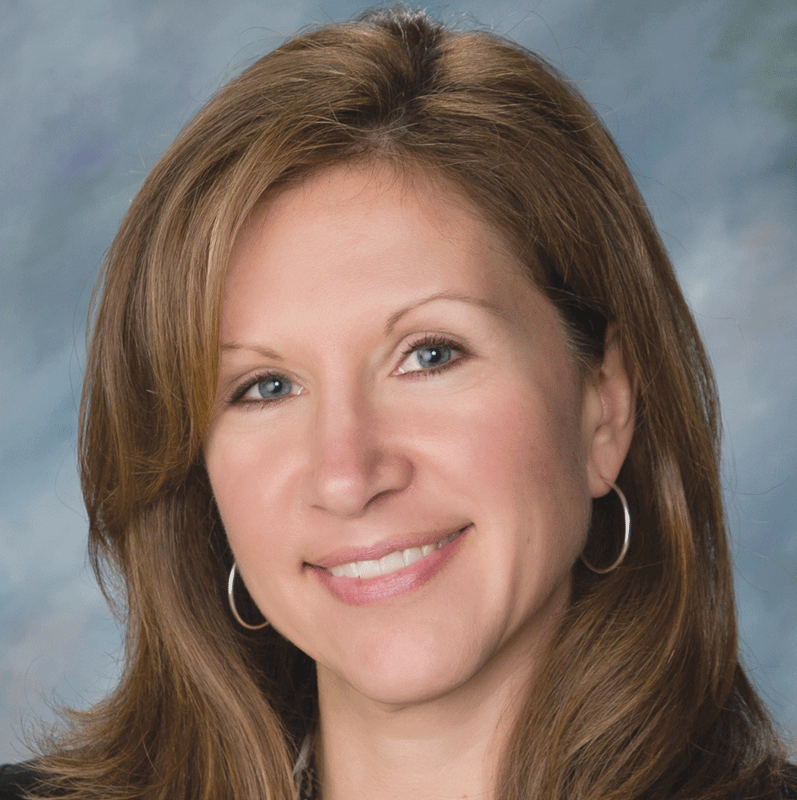
Kristina Drzal-Houghton

Kristina Drzal-Houghton

Tax planning is inherently complex, with the most powerful tax strategies often relying as much on clairvoyance as they do on calculations.
As 2013 begins to wind down, the need for a crystal ball lessens, and the ability to strategize with more certainty is upon us. This developing certainty provides opportunities for individuals and businesses to manage tax liabilities through tax-planning techniques.
Year-end tax planning has always been arduous, but early 2013 legislation complicated the tax structure by layering in new tax brackets and income buckets, bringing a multi-dimensional complication to tax planning this year.
In this article we focus on tax-planning techniques that can be executed during the remainder of 2013, but specific facts and circumstances may open up other opportunities or limit some of the tactics discussed.
Tax Strategies for Business Owners
Business equipment. Significant tax benefits remain available for business equipment purchases during 2013. A 50% bonus depreciation deduction is available for qualified property placed in service during 2013. The deduction is set to expire for 2014. To qualify for bonus depreciation, equipment must be new and placed in service by year-end.
Section 179 expensing rules provide full expensing for up to $500,000 of qualifying property placed in service during 2013. However, the full deduction is available only if the total amount of qualifying property placed in service in 2013 does not exceed $2 million. The Section 179 deduction limit is scheduled to be drastically reduced in 2014.
• Planning point: If you are planning to purchase a significant amount of machinery and equipment for your business in the next year or two, consider accelerating your order so the assets are delivered and placed into service by Dec. 31, 2013. To take full advantage of the Section 179 deduction, monitor total purchases to prevent its phaseout.
Deduction for qualified production activities income. Taxpayers can claim a deduction, subject to limits, for 9% of the lesser of (1) the taxpayer’s ‘qualified production activities income’ for the tax year (i.e., net income from U.S. manufacturing, production, or extraction activities; U.S. film production; U.S. construction activities; and U.S. engineering and architectural services), or (2) the taxpayer’s taxable income for that tax year, before taking this deduction into account. This deduction generally has the effect of a reduction in the taxpayer’s marginal rate and, thus, should be taken into account when making decisions regarding income-shifting strategies.
Net operating losses and debt-cancellation income. A business with a loss this year may be able to use that loss to generate cash in the form of a quick net operating loss carry-back refund. This type of refund may be of particular value to a financially troubled business that needs a fast cash transfusion to keep going.
There also are a number of different kinds of debt-cancellation or debt-reduction transactions that may generate taxable income in 2013 if not deferred until 2014.
Retirement Plans. Starting a small-business retirement-savings plan is easier than you think and offers significant tax advantages. Employer contributions are deductible from the employer’s income, employee contributions are not taxed until distributed to the employee, and investments in the program grow tax-deferred. Further, the tax law offers a small incentive of a $500-per-year tax credit for the first three years of a new SEP, SIMPLE, or other retirement plan to cover the initial setup expenses for certain small employers.

Individual Tax-rate Management
In prior years, the main concern was that, if you reduced your regular income tax too far, the alternative minimum tax (AMT) would step in to appropriate your hard-earned tax savings. There are now additional dynamics to consider, when certain thresholds are exceeded, in the form of a 3.8% net-investment-income (NII) tax levied on investment income, a 0.9% Medicare payroll tax levied on wages and self-employment earnings, and a multi-tiered, long-term capital-gains tax-rate structure.
These new taxes, beginning in 2013, apply when adjusted gross income exceeds certain thresholds ranging from $200,000 for single filers to $250,000 for married taxpayers. For these thresholds and most others mentioned in this article, married filing separate uses one-half the married threshold.
Additionally, the 39.6% tax bracket returns this year after a long hiatus for taxpayers above thresholds ranging from $400,000 of taxable income for single filers to $450,000 for married filers.
Net investment income tax. The 3.8% NII tax now applies to most investment income. For individuals, the amount subject to the tax is the lesser of (1) the net investment income; or (2) the excess of modified adjusted gross income (MAGI) over the applicable threshold amount.
NII includes dividends, rents, interest, passive-activity income, capital gains, annuities, and royalties. Passive pass-through income will be subject to this new tax, but non-passive will not. Self-employment income, income from an active trade or business, and portions of the gain on the sale of an active interest in a partnership or S corporation with investment assets, as well as IRA or qualified plan distributions, are not subject to the NII tax.
• Planning point: Weighing a decision about selling marketable securities to meet current cash needs? Consider using margin debt for replacement securities. The interest on the debt will be deductible, subject to the investment-interest limitation, which could reduce your NII for purposes of the new tax.
• Planning point: To the extent your NII is income from a passive activity, increasing your material participation in the activity between now and the end of the year can reduce the amount of income subject to the NII tax. Proceed with caution, though, because a change in participation level may impact other short- and long-term tax obligations.
• Planning point: As you near the applicable threshold, consider revising the timing of distributions from retirement plans to manage your net investment income. While the distributions themselves are not NII, the distributions increase your MAGI, which could subject more of your investment income to the NII tax.
Increased maximum tax rates on long-term capital gains. While avoiding or deferring tax may be your primary goal, to the extent there is income to report, the income of choice is long-term capital gain income thanks to the favorable tax rates available. The available rates differ depending on the taxpayer’s tax bracket.
Taxpayers in the 39.6% bracket will now pay a 20% long-term capital gains and qualified dividends rate. Additionally, those above the previously noted thresholds will pay the 3.8% tax in addition to the increased capital-gains rate.
• Planning point: The netting rules provide an opportunity to manage the net gain or loss subject to taxation, making it prudent to review your investment gains and losses before the close of year to determine whether additional transactions prior to year-end may improve your tax outlook.
Recognition of same-sex marriage for federal tax purposes. Beginning in 2013, legally married same-sex couples must file a joint or married-filing-separately return. The rules do not extend to cover domestic partnerships. The ruling is retroactive, opening up a refund opportunity in certain circumstances for those who were previously prohibited from joint filing. Amended returns may be, but are not required to be, filed for tax years still open by statute of limitations.

Year-end Timing Strategies
Managing the alternative minimum tax. The AMT applies when income, as adjusted for certain preference items, exceeds certain exemptions, but the rate applied to that income falls below the AMT rate, essentially acting as a tax-leveling mechanism. Residents of states with high income and property taxes, like Connecticut and Massachusetts, are more likely to be subject to the AMT because these state taxes are not deductible when computing AMT income.
The AMT exemptions are subject to phaseouts when AMT income exceeds $115,400 for single filers and $153,900 for married joint filers.
Delaying or prepaying expenses. As a cash-method taxpayer, you can deduct expenses when you pay them or charge them to your credit card. Payment by credit card is considered paid in the year the charge is incurred. Expenses that are commonly prepaid in connection with year-end tax planning include:
Charitable contributions. A tax deduction is available for cash contributions to qualified charities of up to 50% of adjusted gross income (AGI) and up to 30% (20% for gifts to private operating foundations) of your AGI for charitable gifts of appreciated property.
• Planning point: Consider contributing appreciated securities that you have held for more than one year. Usually, you will receive a charitable deduction for the full value of the securities, while avoiding the capital-gains tax that would be incurred upon sale of the securities.
State and local income taxes. Consider prepaying any state and local income taxes normally due on Jan. 15, 2014, or with the filing of the return if you do not expect to be subject to the AMT.
• Planning Point: If you expect to owe state and/or local income tax when you file your return for 2013, consider paying that amount before Dec. 31, 2013. Although you relinquish your cash in advance, the benefit from accelerating the tax deduction and lowering your current federal income tax could be significant. It is particularly powerful if the deduction could be lost through the AMT in 2014. Just be careful that your prepayment does not make you subject to AMT in 2013.
Real-estate taxes. Like state and local income taxes, real-estate tax levies due early in 2014 can often be prepaid in 2013. For real-estate taxes on your residence or other personal real estate, just be mindful of the AMT in both years. Real-estate tax on rental property is deductible whether or not you are subject to AMT, and it can be safely prepaid.
Mortgage interest. There are limits on your ability to deduct prepaid interest. However, to the extent your January mortgage payment reflects interest accrued as of Dec. 31, 2013, a payment prior to year-end will secure the interest deduction in 2013.
Other itemized deductions. Miscellaneous itemized deductions, like many deductions, are deductible only if you itemize your deductions and are not subject to AMT. Where miscellaneous itemized deductions differ is with the requirement that the total deductions exceed 2% of your AGI to be deductible.
Itemized deduction phaseout. After a three-year hiatus, 2013 marks the return of the phaseout of certain itemized deductions for higher-income taxpayers. For affected taxpayers, itemized deductions are reduced by 3% of the amount by which AGI exceeds thresholds ranging from $250,000 for a single filer to $300,000 for married joint filers.
However, deductions for medical expenses, investment interest, casualty and theft losses, and gambling losses are not subject to the limitation. Taxpayers cannot lose more than 80% of the itemized deductions subject to the phaseout.
Exemption phaseout. A personal exemption is generally available for you, your spouse if you are married and file a joint return, and each dependent (a qualifying child or qualifying relative who meets certain tests). In 2013, the exemption amount is $3,900, subject to a reinstated phaseout of the exemption for higher-income taxpayers. These phaseout thresholds begin at the same AGI limits discussed for itemized deductions above.
Retirement-plan distributions. If you are over age 59½ and your 2013 income is unusually low, consider taking a taxable distribution from your retirement plan, even if it is not required, to use the unusually low tax rate for the period. More powerful still, consider converting the funds to a Roth account.
• Planning point: If you expect to be in a higher tax bracket in the future, consider converting your traditional IRA into a Roth IRA during your lower-income years. You will be paying taxes early, but future appreciation of the assets in your account may escape income taxes entirely.
IRA distributions to charity. If you are over age 70½, you can make a tax-free distribution of up to $100,000 from your IRA to a qualified charity before Dec. 31, 2013. Under current law, this opportunity will not be available for 2014.
Note that this opportunity is doubly powerful beginning in 2013. In addition to prior tax benefits, now the IRA is not included in your MAGI, and thus this strategy may reduce exposure to the new 3.8% NII tax.
Worthless securities and bad debts. Both worthless securities and bad debts could give rise to capital losses. Since no transaction generally alerts you to this deduction, you should review your portfolio carefully.
• Planning point: If you own securities that have become worthless or made loans that have become uncollectible, ensure that the losses are deductible in the current year by obtaining substantive documentation to support the deduction.
Contributing to a retirement plan. You may be able to reduce your taxes by contributing to a retirement plan. If your employer sponsors a retirement plan, such as a 401(k), 403(b), or SIMPLE plan, your contributions avoid current taxation, as will any investment earnings until you begin receiving distributions from the plan. Some plans allow you to make after-tax Roth contributions, which will not reduce your current income, but you will generally have no tax to pay when those amounts, plus any associated earnings, are withdrawn in future years.
You and your spouse must have earned income to contribute to either a traditional or a Roth IRA. Only taxpayers with modified AGI below certain thresholds are permitted to contribute to a Roth IRA. If a workplace retirement plan covers you or your spouse, modified AGI also controls your ability to deduct your contribution to a traditional IRA. There is no AGI limit on your or your spouse’s deduction if you are not covered by an employer plan. If your modified AGI falls within the phaseout range, a partial contribution/deduction is still allowed.
• Planning point: If you would like to contribute to a Roth IRA, but your income exceeds the threshold, consider contributing to a traditional IRA for 2013, and convert the IRA to a Roth IRA in 2014. Be sure to inquire about the tax consequences of the conversion, especially if you have funds in other traditional IRAs.

Other Personal Tax-planning Considerations

Withholding/estimated tax payments. With higher rates in effect for 2013, more taxpayers may find themselves exposed to an underpayment penalty. Underpayment penalties can be avoided when total withholdings and estimated tax payments exceed the 2012 tax liability or, in the case of higher-income taxpayers, 110% of 2012 tax.
• Planning point: If you expect to be subject to an underpayment penalty for failure to pay your 2013 tax liability on a timely basis, consider increasing your withholding between now and the end of the year to reduce or eliminate the penalty. Increasing your final estimated tax deposit due Jan. 15, 2014 may reduce the amount of the penalty, but is unlikely to eliminate it entirely. Withholding, even if done on the last day of the tax year, is deemed withheld ratably throughout the tax year.
Losses from pass-through business entities. If your ability to deduct current-year losses from a partnership, LLC, or S corporation may be limited by your tax basis or the ‘at-risk’ rules, consider contributing capital to the entity or, in some cases, making a loan to the entity prior to Dec. 31, 2013, to secure your deduction this year.
• Planning point: If you anticipate a net loss from business activities in which you do not materially participate, consider disposing of the loss activity by Dec. 31, 2013. Assuming sufficient basis exists, all suspended losses become deductible when you dispose of the activity. Even if there is a gain on the disposition, you may still benefit from having the long-term capital gain taxed at 23.8% (inclusive of the NII tax) with the previously suspended losses offsetting other ordinary income.
American opportunity tax credit (AOTC). The AOTC for college costs has been extended for five years through 2017. A credit of up to $2,500 may be claimed during the first four years of college. The credit phases out for AGI in excess of $80,000 for single taxpayers and $160,000 for married taxpayers filing a joint return.
• Planning point: If your income is too high for you to qualify for the AOTC, consider gifting your children the funds necessary to pay the qualified education expenses, making them eligible to claim the AOTC.
Energy credit. The $1,500 credit for new windows and doors has expired, but a credit of up to $500 for residential energy property is still available if prior years’ credits were not taken.
Estate and gift taxes. For 2013, taxpayers are permitted to make tax-free gifts of up to $14,000 per year, per recipient ($28,000 if married and using a gift-splitting election, or if each spouse uses separate funds). By making these gifts annually, taxpayers can transfer significant wealth out of their estate without using any of their lifetime exclusion.
• Planning point: Consider making similar gifts early in 2014. Each year brings a new annual exclusion, and a gift early in the year transfers next year’s appreciation out of your estate.
• Planning point: Additional gifts can be made using the lifetime gift exclusion, which is $5.25 million ($10.5 million for married couples) in 2013. Future exclusions are indexed for inflation. The recent increases to the exclusion make it a good time to review any existing estate and gift plans to ensure they best meet your needs.
• Planning point: When combined with other estate and gift-planning techniques, such as Section 529 plans to help fund your children’s or grandchildren’s college education, the potential exists to avoid or reduce estate and gift taxes while transferring significant wealth to other family members.

Conclusion

The changes initiated during 2013 added layers of complexity to an already difficult tax system, but with a purposeful, informed plan in place, taxpayers can still reap significant benefits. Consult your tax advisor so they can best support you in building your plan for 2013 and beyond.

Kristina Drzal Houghton, CPA, MST is a partner with the Holyoke-based accounting firm Meyers Brothers Kalicka, and director of the firm’s Taxation Division; [email protected]

Accounting and Tax Planning Sections
Medicare Tax Implications of the Affordable Care Act

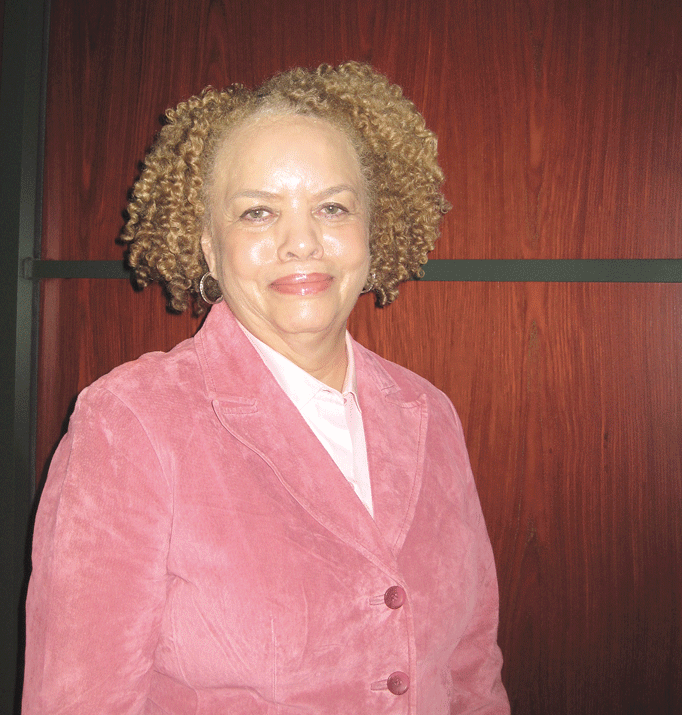
By MICHAEL J. ROWE, CPA

Michael J. Rowe, CPA

Michael J. Rowe, CPA

The Affordable Care Act (ACA), signed into law in 2010, made two significant changes to Medicare tax for high-income taxpayers for years beginning after 2012. This article will provide a broad overview of the changes, explain how to reflect the additional taxes on an individual’s personal tax returns, and provide possible strategies to mitigate these taxes.

New 3.8% Surtax on Net Investment Income
Before the ACA, there was no Medicare tax on unearned income. The ACA imposes an additional Medicare tax of 3.8% of the lesser of: (1) net investment income, or (2) the excess of modified adjusted gross income over a threshold amount ($250,000 for joint returns or surviving spouses, $125,000 for a married individual filing a separate return, or $200,000 for all other taxpayers).
The threshold amounts are not indexed for inflation, so as time passes, more taxpayers will be subject to the tax.
Modified adjusted gross income is adjusted gross income increased by any amount excluded from income as foreign earned income, net of deductions and exclusions disallowed with respect to the foreign earned income. As a practical matter, most U.S. residents do not have foreign earned income, so modified adjusted gross income would be the same as adjusted gross income.
Net investment income is the excess of the following items over deductions allocable to those items:
• Gross income from interest, dividends, annuities, royalties, and rents, unless they are derived in the ordinary course of a trade or business to which the 3.8% surtax does not apply;
• Other gross income derived from a trade or business to which the 3.8% surtax does apply; and
• Net gain attributable to the disposition of property other than property held in a trade or business to which the 3.8% surtax does not apply.
Gross income does not include items that are not included in gross income for income-tax purposes.
The 3.8% surtax applies to a trade or business only if it is considered a passive activity or if it is a trade or business of trading in financial instruments or commodities.
The additional Medicare tax is considered a tax for estimated payment purposes. An individual cannot request additional withholding specifically for the additional Medicare tax, but may increase his or her overall withholding using Form W-4.
The 3.8% surtax is calculated on Form 8960, which will be included in the individual’s tax return.
There are a few potential strategies to minimize additional net investment income in the current year:
• Consider taking taking capital losses to offset capital gains;
• Consider the installment method of reporting gains, if possible;
• If salary and other non-investment earnings plus net investment income approximate the threshold above, try to avoid, if feasible, additional income before year-end. This will defer, and possibly eliminate, the 3.8% surtax;
• If you have a one-time significant gain which brings you close to the threshold, try to defer, if possible, the recognition of additional income; and
• The surtax applies to passive activities, but not income from an activity in which a person is a material participant. It may be possible, with the advice of a tax advisor knowledgeable in the passive-activity rules, to increase participation in an activity in order to qualify as a material participant.

New 0.9% Medicare Tax on Wages and Self-Employment Income
The ACA increases the employee portion of the Medicare tax by an additional tax of 0.9% of wages and self-employment income received in excess of the threshold amounts as follows: $250,000 for joint returns, $125,000 for a married individual filing a separate return; or $200,000 for all other taxpayers.
As with the threshold amounts for the 3.8% surtax discussed above, these threshold amounts are not indexed for inflation, so as time passes, more taxpayers will be subject to the tax.
Unlike the current 1.45% Medicare tax on wages, the additional tax on a joint return is on the combined wages of the employee and the employee’s spouse.
The employer is required to withhold the additional 0.9% Medicare tax on wages in excess of $200,000, regardless of the person’s filing status or wages paid by another employer. It is possible that the person will owe more than the amount withheld. In that case, the employee should consider making estimated tax payments or increasing their withholding using Form W-4. If the person is self-employed, then he or she should consider increasing estimated tax payments.
If an employer withholds more than is required (for example, if an employee earns more than $200,000 but the joint return has total wages less than $250,000), then the excess withholding can be claimed as a credit on the employee’s income-tax return.
The 0.9% Medicare tax is calculated on Form 8959, which will be included in the individual’s tax return. To reduce or defer this 0.9% Medicare tax, consideration should be given to deferring income, if possible, to next year if income is above the threshold, especially if a non-recurring event occurred this year that increases wage and/or self-employment income above the threshold amount.

Conclusion
These new Medicare taxes will impact most high-income taxpayers. This has been a broad overview of the rules and planning strategies. There are more complicated rules and strategies beyond the scope of this article, especially with regard to investments in partnerships and subchapter S corporations.
For more information, you can go to www.irs.gov and search for “net investment income tax” or “additional Medicare tax,” or contact your tax advisor.

Michael J. Rowe is a principal with Wolf & Co., P.C., which has offices in Boston, Springfield, and other locations; (617) 428-5437; www.wolfandco.com

Health Care Sections
Effective Legal Planning for People with Alzheimer’s Disease

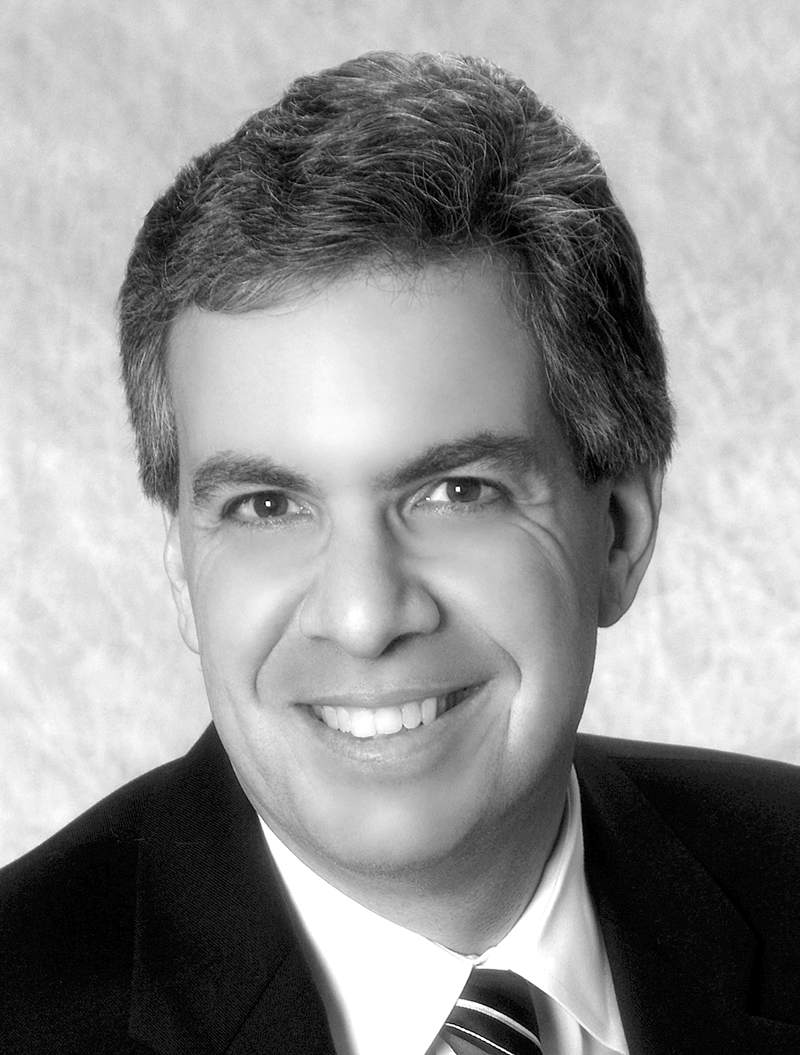
Todd C. Ratner

Todd C. Ratner

Although it is important for everyone to plan for their future, legal planning for those diagnosed with Alzheimer’s disease takes on heightened importance.
Alzheimer’s disease is a chronic, progressive illness and is the most common cause of dementia in our elder population. People with the disease are characterized with progressive intellectual deterioration together with a declining ability to perform the activities of daily living.
Early planning allows your loved one with the disease to be involved and express his or her wishes for future care, which eliminates the guesswork. Once an individual with Alzheimer’s disease has lost capacity, it is too late for him or her to designate the person or people they wish to make their healthcare, financial, and estate-planning decisions. It is imperative to note that most people in the early stages of Alzheimer’s disease have the requisite capacity to execute estate-planning documents.
As a threshold matter, when a client initially meets with an attorney, the attorney must determine whether or not the client has the requisite mental capacity necessary to reasonably articulate their wishes concerning their legal affairs. ‘Testamentary capacity’ is a legal term that refers to a person’s ability to be of sound mind in reference to altering or creating estate-planning documents. Unfortunately, legal testamentary capacity or competence is not a black-and-white determination.
The Massachusetts Supreme Judicial Court provides the following standard definition of capacity to execute wills:
“Testamentary capacity requires ability on the part of the testator to understand and carry in mind, in a general way, the nature and situation of his property and his relations to those persons who would naturally have some claim to his rememberence. It requires freedom from delusion, which is the effect of disease or weakness, and which might influence the disposition of his property. And it requires ability at the time of execution of the alleged will to comprehend the nature of the act of making the will.”
In general, the requirements of testamentary capacity are fairly simple. Your loved one with Alzheimer’s disease must meet only this minimal test at the moment the estate-planning documents are executed. Therefore, documents may be valid even if the testator is in the midst of delusion immediately prior and subsequent to execution, as long as he or she possesses the requisite testamentary capacity at the moment of execution.
Therefore, even if your loved one does not recall signing the document the day following execution, it does not invalidate the document if he or she understood it when signing. The mere existence of the onset of dementia caused by Alzheimer’s disease does not preclude the signing of estate-planning documents, provided that the necessary criteria for mental capacity are met. However, the drafting or revisions to current estate-planning documents should be considered in the early stages of the disease.
Assuming that your family member with Alzheimer’s disease has sufficient capacity to do so, he or she should execute documents to nominate another to make their health and financial decisions at their earliest opportunity. These documents include a healthcare proxy, durable power of attorney, and a living will, which are oftentimes referred to as ‘planning for incapacity documents,’ as they are legally binding only while a person is alive. Preparing for the possibility of Alzheimer’s disease impairing decision-making abilities makes incapacity planning a necessity.
For Alzheimer’s patients, empowering family members or trusted friends to make healthcare decisions (healthcare proxy and living will) and financial decisions (durable power of attorney) ensures that the caregiving effort will not be hindered by a lack of resources or the absence of a decision maker. In the event that your loved one with Alzheimer’s disease no longer has legal capacity and failed to execute the above documents, another person must petition the probate court for guardianship and/or conservatorship, which is a long, public, and expensive process.
Similarly, everyone needs to make a will. This provides for the orderly distribution of your estate upon your death. If you do not draft one, or use some other legal method to transfer your assets when you die, Massachusetts law will determine what happens to your property according to a predetermined legal formula that may very likely not adhere to your preferences.
It is very likely that those with Alzheimer’s disease will incur exorbitant health costs and may require very expensive, specialized nursing-home care. The average cost of a nursing home in Massachusetts is approximately $10,000 per month. Moreover, those with Alzheimer’s disease tend to stay in nursing homes longer than the average resident. Unless you are a veteran of the armed forces, the available options include private payment, long-term-care insurance, and Medicaid.
Since most of us cannot afford to pay $10,000 per month privately without exhausting our assets very quickly, and since long-term-care insurance is typically not available to someone who has already been diagnosed with Alzheimer’s disease, it is worthwhile to explore the Medicaid option. In order to qualify for Medicaid, the Alzheimer’s patient must meet an asset threshold and is subject to a five-year look-back period for any gifts or transfers they made. As such, timely Medicaid planning is essential to the preservation of assets.
It is critical to embark on a legal plan for the future medical and financial care of your loved one with Alzheimer’s disease at the earliest possible opportunity. Proper planning enhances the quality of care for an Alzheimer’s patient and also provides peace of mind for those caring for him or her. Most importantly, timely planning allows the Alzheimer’s patient to legally communicate his or her preferences for future financial and health-related decisions, even if they do not later have the capacity to make these choices.

Todd C. Ratner is an estate-planning, elder-law, business, and real-estate attorney with the regional law firm Bacon Wilson, P.C. He serves as the co-chair for the Alzheimer’s Assoc. Tri-County (Hampden, Hampshire, and Franklin) Partnership and is a member of the National Academy of Elder Law Attorneys and the Estate Planning Council of Hampden County. He is also a recipient of Boston Magazine’s Super Lawyers Rising Stars distinction from 2007 to 2011; (413) 781-0560; baconwilson.com/attorneys/ratner_2

Columns Sections
Creating Promotional Pieces that Attract Clients

By DAWN JOSEPHSON
Whether you’re creating a sales letter, brochure, newsletter, or any other business promotional piece, you need to write in a way that not only explains your product or service, but also compels your prospects to contact you.
Unfortunately, many promotional pieces miss the mark. Outrageous claims, weak calls to action, and boring text are common mistakes that plague most people’s writing. Such errors accomplish only one thing: they destine your promotional piece for the infamous round file. They also show prospects that you’re lazy, uncreative, and possibly incapable of delivering quality work.
In order to entice prospects to contact you based on your promotional mailings, you need to keep your writing both lively and factual. The following guidelines will help you write promotional pieces that even your toughest prospects can’t resist.

1. Write a headline that gets to the point. You have less than five seconds to impress your prospects to read on. And the first thing any prospect reads is the piece’s headline. So craft a compelling headline that immediately conveys why this information is important to your prospects. The four main headline formulas that work are:
How-to — the formula is ‘how to’ + verb + product/service/noun + benefit. Example: “How to create a store promotion that increases revenue.”
New — the formula is ‘new’ + product/service + benefit. Example: “New tax law saves you money.”
Power verb — the formula is power verb + product/service + benefit. Example: “Prepare a business plan that boosts company profits.”
Free — the formula is ‘free’ + product/service + benefit. Example: “Free booklet reveals the secret to lowering your interest rate.”
Since your headline determines if the prospect keeps reading, craft yours wisely.

2. Keep the hype to a minimum. Many people think that, in order to get people to read their promotional piece, they must write something outrageous. To some degree, this is true. Saying something outrageous is a great way to generate interest, as people naturally love controversy. Plus, if you can stir things up, you’ll get lots of exposure. The thing to remember, however, is that you must be prepared to answer questions and/or prove everything you write. So if you want to write something just for sensationalism but can’t back it up, don’t. You must be able to support everything you print.

3. Go easy on the posturing. While you may produce the best products or offer the most unique services in the world, that is for your prospects to decide. Every superlative you use in your promotional piece will reduce the prospect’s trust in what you say. So instead of telling prospects that your product is “the most extraordinary thing to ever hit the market” or that your service is “capable of revolutionizing the industry,” show your prospects how these claims are possible. Give the benefits of using the product or service as they pertain to your prospects’ lives so they can determine just how extraordinary or revolutionary the product or service really is.

4. Evoke images. As you write, evoke more than one of the five senses. Paint a picture with your words so prospects see, hear, smell, taste, and feel what you’re describing. Contrary to popular belief, the best promotional writers think in pictures, not words. They see the image they want to convey to their prospects, and that’s what they write. So if you’re a candy manufacturer or a florist, for example, write so that your readers smell the candy or the flowers, not just see what they look like. If you’re in the restaurant business, help your readers taste the food. If you’re writing about business productivity, help your prospects hear the hustle of productivity and feel the rush of a sales call. Do more than just tell prospects what’s going on.

5. Always make a compelling call to action. What do you want the person reading your sales letter, brochure, or other promotional piece to do? Buy your product? Call you for more information? Visit your website? Whatever action you want your prospects to take, state it clearly. Too many promotional pieces ramble on about all the features and benefits of the product, but they never tell the prospects to actually do anything. For example, in a sales letter, you could write: “Please call our office immediately for more information on how we can help.” A brochure could say: “Order the widget at our special introductory price today.” In a newsletter you could write: “Visit our website for more information about our new product line.” Tell prospects precisely what you want them to do.

Bottom Line
When your promotional pieces present your information in the most compelling and factual manner, your prospects will find them and your company irresistible. So as you write future sales letters, brochures, or other promotional pieces, keep these guidelines in mind. When you do, you’ll create a promotional piece that delights prospects and makes them eager to do business with you.

Dawn Josephson is a ghostwriter, editor, and writing coach who helps business leaders and professional speakers create engaging and informative books, articles, and marketing pieces; www.masterwritingcoach.com

Departments Picture This

Send photos with a caption and contact information to:  ‘Picture This’ c/o BusinessWest Magazine, 1441 Main Street, Springfield, MA 01103 or to [email protected]

Scientific Reality

ElmsSciBuildingMore than 100 Elms College students and faculty members attended a dedication ceremony last month for the school’s new 22,000-square-foot Center for Natural and Health Sciences (CNHS). The facility includes a research laboratory, multiple lecture halls, and several other labs for biology, chemistry, and nursing. Pictured at the ceremony are, from left, Paul Stelzer, vice chair of the Board of Trustees; Maxyne Schneider, SSJ, president of the congregation Sisters of Saint Joseph, Springfield; William Lyons III, CNHS Committee co-chair; the Most Rev. Timothy McDonnell, D.D., Bishop of Springfield; Cynthia Lyons, CNHS Committee co-chair; Elms President, Mary Reap; and Walter Breau, vice president of Academic Affairs.

Rays of Hope

20131020RaysofHopeWalk-181120131020RaysofHopeWalk2168The 2013 Rays of Hope Walk-A Walk and Run Toward the Cure of Breast Cancer, staged Oct. 20 in Forest Park in Springfield and Energy Park in Greenfield, raised $750,000 and celebrated a few milestones. This year marked the 20th year for the walk, which was created to raise funds to improve the breast health of the people in local communities with quality and compassion in partnership with Baystate Health Breast Network. The day also marked the five-year anniversary of the Franklin County event, and the fourth year for the Annual Run in Springfield. This year’s walkers and runners added to the nearly $12 million that has been raised by Rays of Hope since its inception. At top are Daffy Duck and Bugs Bunny, Warner Bros. mascots from Six Flags New England, and below, are some of the 24,000 participants walking at Forest Park.

Celebrating the Super 60

AM7J0292-6x4AM7J0349-6x4AM7J0221-6x4IMG_9065-6x4


The Affiliated Chambers of Commerce of Greater Springfield staged its annual Super 60 luncheon on Oct. 25 at Chez Josef in Agawam, an event that celebrates the region’s top-performing companies in the categories of total revenue and revenue growth. Top to bottom, left, David Mahan, estimator and sales manager of Mahan Slate Roofing Co. in Springfield, the top finisher in the revenue growth category, receives the company’s plaque from Maura McCaffrey, left, chief operating officer of Health New England, the program’s presenting sponsor, and Meghan Sullivan, a partner with the law firm Sullivan Hayes & Quinn, a platinum sponsor; Scott Berg, center, associate Vice President for Development at Springfield College, the top performer in the total revenue category, receives the school’s plaque from McCaffrey and Glenn Welch, president of Hampden Bank; Jessica Montana, left, and Angie Gregory, principals with Simple Diaper and Linen, present the luncheon’s keynote address; a sellout crowd takes in the proceedings.
(Photographs courtesy of Ed Cohen)

Court Dockets Departments

The following is a compilation of recent lawsuits involving area businesses and organizations. These are strictly allegations that have yet to be proven in a court of law. Readers are advised to contact the parties listed, or the court, for more information concerning the individual claims.

CHICOPEE DISTRICT COURT
Javier Morales v. PVTA
Allegation: Negligent operation of a motor vehicle causing personal injury: $4,883.51
Filed: 9/23/13

HAMPDEN SUPERIOR COURT
Eastfield Glass Company Inc. v. Fontaine Inc. and Federal Insurance Company
Allegation: Breach of construction agreement for new high school and monies owed: $80,912.50
Filed: 10/11/13

Fred L. Aaron v. Creating Comfort Outlet, LLP and Joshua Barina and Jose Barina Jr.
Allegation: Breach of lease agreement: $163,658.35
Filed: 10/4/13

RK Petroleum Inc. v. Arya Petroleum Corp.
Allegation: Breach of promissory note: $315,000
Filed: 10/9/13

University Driving School Inc. v. Anthony R. Gomez d/b/a Western Mass Auto Academy
Allegation: Violation of agreement not to compete: $2,500
Filed: 10/1/13

HAMPSHIRE SUPERIOR COURT
John Mesheau v. IKO Manufacturing Inc.
Allegation: Breach of contract and express and implied warranties and unfair and deceptive trade practices: $60,000+
Filed: 9/6/13

PALMER DISTRICT COURT
Paley, Rothman, Goldstein, Rosenberg, EIG, & Cooper, Chartered v. Hampden Structural Steel Inc. d/b/a Private Garden Greenhouse Systems
Allegation: Non-payment on previous judgment: $9,263.09
Filed: 8/26/13

SPRINGFIELD DISTRICT COURT
Ashaunti Lawrence v. Fara Leasing Inc.
Allegation: Negligent operation by a taxicab driver causing injury: $4,257.32
Filed: 9/20/13

Robert D. Manz v. Pioneer Valley Transit Authority
Allegation: Breach of contract: $2,400+
Filed: 10/7/13

Departments People on the Move

Bryan Moore

Bryan Moore

Country Bank recently named Bryan Moore Small Business Lending Officer, Commercial Lending Department. In this role, Moore will connect with regional business owners and assist small businesses with lending and business-banking needs, specifically through the SBA Express Program, which offers a quick turnaround and a fair-priced lending alternative to qualified borrowers. Moore began his banking career as a Personal Banking Representative for Sovereign Bank in 2006 and earned a BS with a double major in International Business and International Economics from Assumption College.
•••••


Keith Minoff

Keith Minoff

Springfield-based Attorney Keith Minoff has been selected for inclusion on the 2014 list of Massachusetts Super Lawyers. The Super Lawyers selection process is based on 12 indicators of peer recognition and professional achievement. Only 5% of the lawyers in each state are selected each year for inclusion. In practice for over 25 years, Minoff specializes in business and employment litigation.
•••••


Tonya Laird

Tonya Laird

North Brookfield Savings Bank announced the promotion of Tonya Laird to Branch Manager at the bank’s North Brookfield/Gilbert Street location from the her previous position of Assistant Branch Manager. Laird joined North Brookfield Savings in 2002 as a teller, and brings an employment and educational background in customer service, management, IRAs, and other facets of banking and finance.
•••••


Tanzania Cannon-Eckerle

Tanzania Cannon-Eckerle

Tanzania Cannon-Eckerle, Esq., an attorney at Royal LLP, a Northampton-based, woman-owned, management-side labor and employment law firm, has been elected to serve as a Member of the Board of Directors of the Hampshire Regional YMCA.
•••••
Skoler, Abbott & Presser, P.C., with offices in Springfield, Worcester and Meriden, Conn., announced that six of the firm’s attorneys have been selected for inclusion in the 2013 Super Lawyers list for their contributions to employment law. Each year, no more than 5% of the lawyers in the state are selected by the research team at Super Lawyers to receive this honor:


Ralph Abbott Jr

Ralph Abbott Jr

Ralph Abbott Jr., a partner since 1975, represents management in labor relations and employment-related matters, providing employment-related advice to employers, assisting clients in remaining union-free, and representing employers before the National Labor Relations Board. Abbott also has numerous credits as an author, editor, and teacher; boasts a record of civic and community involvement; has been ranked as one of the best labor and employment attorneys in Massachusetts by the prestigious Chambers USA rating service; and has been named Best Lawyers Management Lawyer of the Year in Springfield for 2014;


Marylou Fabbo

Marylou Fabbo

Marylou Fabbo, a partner in the Springfield office, joined the firm in 1995. Head of the firm’s litigation team, she practices in all areas of employment litigation and provides counsel to management on taking proactive steps to reduce the risk of legal liability that may be imposed as the result of illegal employment practices, and defends employers who are faced with lawsuits and administrative charges filed by current and former employers;


Susan Fentin

Susan Fentin

Susan Fentin, a partner in the firm, joined the practice in 1999 after spending several years working in the labor and employment department of a large Hartford firm. Fentin is editor of the Massachusetts Employment Law Letter and has been ranked as one of the best labor and employment attorneys in Massachusetts by the prestigious Chambers USA rating service. She teaches master classes on both the FMLA and the ADA and is experienced in both labor law and employment litigation;


John Glenn

John Glenn

John Glenn, a partner of the firm since 1979, has spent his career representing management in labor relations and employment-related matters. He assists clients in remaining union-free and represents employers before the National Labor Relations Board. Glenn has extensive experience negotiating collective-bargaining agreements and representing employers at arbitration hearings and before state and federal agencies. Prior to joining the firm, Glenn was employed by the National Labor Relations Board in Cincinnati. He has served as an Adjunct Professor of Labor Law at Western New England University School of Law and is a member of the American Academy of Hospital Attorneys;


Kimberly Klimczuk

Kimberly Klimczuk

Kimberly Klimczuk joined the firm in 2004 and concentrates her practice on labor law and employment litigation. Her experience includes negotiating collective-bargaining agreements and advising on contract interpretation, and successfully defending clients in state and federal court and before administrative agencies in a variety of areas of employment law, including wage-and-hour law, discrimination, harassment, wrongful discharge, breach of contract, and workers’ compensation claims. She has assisted employers in compliance matters involving the Office of Federal Contract Compliance Programs; and


Jay Presser

Jay Presser

Jay Presser has more than 35 years of experience litigating employment cases, has successfully defended employers in civil actions and jury trials, and has handled cases in all areas of employment law, including discrimination, sexual harassment, wrongful discharge, wage-and-hour law, FMLA, ERISA, and defamation. Presser has won appeals before the Supreme Judicial Court and the First and Second Circuit Courts of Appeals, and represented employers in hundreds of arbitration cases arising under collective-bargaining agreements.
•••••


Anabela Blake

Anabela Blake

TD Bank has promoted Anabela Blake to Assistant Vice President, Store Manager II in the store located at 60 Main St. in Westfield. She will continue to be responsible for new business development, consumer and business lending, managing personnel, and overseeing the day-to-day operations at the store. Blake has 25 years of experience in retail sales and banking and joined TD Bank in 2004 as an Assistant Store Manager before her most recent position as Store Manager I. Blake is a 1995 graduate of Western New England University.
•••••

The YMCA of Greater Springfield recently announced the advancement of two of the organization’s senior leaders:

Kristine Allard

Kristine Allard

Kristine Allard was named Chief Operating Officer and will oversee all operations for the association’s three family centers, as well as fund development and communications for the organization. Serving in the agency’s number-two position, Allard joined the YMCA of Greater Springfield in 2011 as Vice President of Development & Communications; and


Robin Olejarz

Robin Olejarz

Robin Olejarz has added the title of Chief Administrative Officer to her role as Chief Financial Officer. In addition to managing the association’s financial health, Olejarz, who joined the YMCA team in 2006, will provide oversight to the agency’s policies, standards and procedures, human resources, and projects, facilities, and risk management.

Briefcase Departments

State Moves Forward with Interstate 91 Study
SPRINGFIELD — State officials have chosen a consultant to study possible alternative alignments for Interstate 91 through Springfield, while highway officials proceed with a plan to replace decks on a deteriorating elevated portion of the highway in the city. The state Department of Transportation has selected the Cheshire, Conn.-based consulting firm Milone & MacBroom to evaluate alternatives for a section of Interstate 91, including possibly depressing the highway section to ground level or below ground. At the same time, the state highway division will be moving forward with a plan to replace decks on the crumbling Interstate 91 viaduct. Milone & MacBroom will study a section of Interstate 91 south of the most elevated portion of the viaduct near the Naismith Memorial Basketball Hall of Fame. At the same time, the state highway division will develop a plan for replacing the decks of the existing Interstate 91 viaduct, which raised safety concerns after a chunk of concrete fell from the section in April. The activity comes amid plans by MGM Resorts International to build $800 million casino in the South End of Springfield that would front Interstate 91 and would draw most of its traffic from the highway. MGM is competing with Mohegan Sun Massachusetts in Palmer for the single casino license to be awarded in Western Mass. The state is starting contract negotiations with Milone & MacBroom with a goal of starting work in January. The firm will coordinate with the state highway division as it moves forward with its proposal to replace the decks on the viaduct.

U.S. Manufacturing Gains 2,000 Jobs in September
WASHINGTON, D.C. — The latest monthly U.S. jobs report shows America’s manufacturing sector gained 2,000 jobs in September. However, for all of 2013, the U.S. has gained only 12,000 manufacturing jobs. Commented Scott Paul, President of the Alliance for American Manufacturing (AAM), “in manufacturing, we’ve been treading water for nearly 18 months now. Yet no one in Washington seems to care. The September jobs report shows that private-sector job growth, and manufacturing in particular, is too weak to put the U.S. on a sound fiscal footing or to get the middle class back on track. It’s time for Congress to stop manufacturing crises and deal with our real manufacturing crisis. Washington needs to put into place policies that will get America back to work. The neglect is glaring: 70,000 structurally deficient bridges. Math and science achievement down compared to other industrialized nations. And our economic competitors are not standing still. This is no way to run a country or to support the private sector’s efforts to create jobs. And here’s the kicker: the October numbers could be even worse.” President Obama set a goal of creating 1 million new manufacturing jobs in his second term. To follow the president’s progress, the AAM continually updates a jobs tracker based on monthly jobs data from the Bureau of Labor Statistics (BLS).

Student Debt Load Rising in Bay State
BOSTON — More students in Massachusetts public universities and colleges are incurring larger amounts of debt to finance their educations, the state higher education commissioner told lawmakers recently. “Let me sound the alarm on this issue,” Commissioner Richard Freeland said at the fourth in a series of hearings on college debt. “Make no mistake: the burden of student debt could derail us from achieving our goals.” The average debt for graduates of the University of Massachusetts system, other state universities, and community colleges increased 27% from fiscal 2008 through fiscal 2011, the last year for which data are available, Freeland said. And the percentage of graduates who accumulated debt rose across all levels, including a high of 64.8% at the state universities in 2011. The average graduate in the UMass system left with $26,844 in debt in 2011, an increase of $5,525 over three years earlier. At other state universities, the average figure was $22,362, a jump of $4,822. For graduates of community colleges, the average debt in 2011 ranged from $7,229 for graduates with associate degrees to $4,655 for graduates with one-year certificates or less. The percentage of graduates who left the UMass system in debt rose to 61.4% in 2011 from 57.9% in 2008. The biggest increase in public institutions, from 31.1% to 48.6%, was registered by community-college graduates with one- or two-year certificates.

Savage Arms, Cirtec Medical Win Grants
WESTFIELD, EAST LONGMEADOW — Firearms manufacturer Savage Arms in Westfield and Cirtec Medical in East Longmeadow, a maker of medical devices, have been awarded grants from the state’s Workforce Training Fund to expand their workforces and train employees in lean-manufacturing processes. Savage Arms was awarded $179,600, which will be used to train 400 employees, and 48 new jobs are expected to be created. Cirtec Medical was awarded $106,805, which will be used to train 63 employees, and three new jobs are expected to be created as a result of training. Lean manufacturing emphasizes on avoiding waste and improving quality, and is based on the Toyota manufacturing methods. The two awards are part of a package of 37 grants totaling $2.8 million. All told, the grants fund 3,106 current and newly hired employees. Savage Arms represents one-third of the total market for traditional firearms, with a particular focus on bolt-action rifles. Cirtec Medical is a contract design, development, and manufacturing firm focusing on medical devices, with a particular strength in active and passive implantable devices and minimally invasive systems.

State Increases Incentives for Hiring Veterans, Long-term Unemployed
BOSTON — The Executive Office of Labor and Workforce Development announced that it has more than doubled cash grants available to employers hiring Massachusetts residents who have been unemployed for six months or more, or Massachusetts veterans (regardless of length of unemployment). Increased grant funding is available through the state’s Hiring Incentive Training Grant (HITG), a program of the Massachusetts Workforce Training Fund. Any for-profit company or nonprofit organization that contributes to the Massachusetts Workforce Training Fund, a state fund enacted in 1998, is encouraged to apply. Eligible employers may now apply for grants of $5,000 for each new hire who meets the HITG program requirements. Employers may receive up to $75,000 each calendar year. Upon approval, payment will be available to the employer once the new hire has retained employment for at least 120 days. A copy of the Hiring Incentive Training Grant application, eligibility requirements, frequently asked questions, and other relevant materials are available at EOLWD’s website, www.mass.gov/hiringgrant. Grant awards are subject to funding availability, and applications are reviewed on a rolling basis.

Retailers Cautious About Seasonal Hiring Boosts
WASHINGTON — Facing economic wariness and wavering consumer confidence, retailers are approaching their holiday hiring with caution, forecasters say. Research firm Challenger, Gray & Christmas said it expects hiring will, at best, match the 752,000 retail jobs that were added last year between October and December, and the National Retail Federation projects retailers will add between 720,000 and 780,000 seasonal workers this year. Retailers are making their staffing decisions against a backdrop of uncertainty caused by tepid economic growth and, more recently, standoffs in Congress over funding the federal government and the debt limit. Toys R Us plans to hire 45,000 workers, about the same as it hired last year. Kohl’s is poised to hire 50,000 workers, also consistent with its 2012 hiring. Macy’s is set to add 83,000 seasonal workers, a slight increase from the 80,000 brought on the previous year. Wal-Mart says it will hire 55,000 holiday workers, a 10% increase from 2012. It will also transition an additional 35,000 temporary workers to part-time positions and yet another 35,000 part-time workers to full-time positions. Meanwhile, Target plans to pare back its seasonal staffing, expecting to add 70,000 workers in 2013 compared with 88,000 last year. The company said it will focus on giving existing staffers the chance to work extra hours. Foot traffic to bricks-and-mortar stores is taking a hit as more consumers buy online. That growth is reflected in Amazon.com’s hiring plans; the online giant expects to create 70,000 seasonal positions, a 40% increase from last year. While holiday retail hiring is expected to be somewhat flat, sales are expected to inch up. The National Retail Federation forecasts a 3.9% increase to $602.1 billion, an improvement over last year’s sales growth of 3.5% over 2011.

WSU President Files Suit Against Several Parties
WESTFIELD — Evan Dobelle, the embattled president of Westfield State University who was placed on paid leave of absence last month amid investigations of alleged improper spending and violations of university policies regarding travel and credit, has filed suit in U.S. District Court in Springfield against a number of parties directly or indirectly related to the action taken against him. Dobelle, who is suing the university, Higher Education Commissioner Richard Freeland, three trustees, the school’s accounting firm, a Boston law firm, and the university’s lawyers, is seeking an unspecified amount of money and legal fees. He claims that Freeland and the trustees are waging a “guerilla war for control of the university,” and that Freeland used extortion-like tactics in an attempt to force Dobelle from office. The suit also alleges that trustees Chairman John Flynn III conducted a “one-man investigation” into Dobelle’s travel between 2008 and 2013. Also named in the suit are trustees Kevin Queenin and Elizabeth Scheibel, the former Northwestern district attorney; the Braintree-based accounting firm O’Connell and Drew; Rudin and Rudman, a Boston law firm; and James Cox, lawyer for the Board of Trustees. The trustees voted on Oct. 15 to suspend Dobelle, following a 10-hou, closed-door meeting the president. The board also hired a Boston-based law firm to investigate Dobelle’s travel and spending, and report back by Nov. 25.

DBA Certificates Departments

The following Business Certificates and Trade Names were issued or renewed during the month of and October 2013.

AGAWAM

JW High School Academy
404 Barry St.
Trina Davis

Maximum Lawn Care
22 Vernon St.
Dean Molta

The Dirty Ash Cleaning Company
32 Rhodes Ave.
Paul Chenevert

Xpressions by Gigi
1192 Suffield St.
Gorete Goncalves

AMHERST

Amherst Machine Company
16 Cowls Road
James Bernota

GIS Matters
1 Tuckerman Lane
Christopher Duncan

Save Historic Cushman
400 Flat Hills Road
Ira Beyck

CHICOPEE

Chicopee Garden Club
16 Czepiel St.
Linda Perrault

Falon’s Hair & Nails
498 Britton St.
Falon Johnson

Partners in Prosperity
23 Trilby Ave.
Geoffrey Croteau

HOLYOKE

Banana Republic
50 Holyoke St.
Thomas A. Croston

Bodega 24, LLC
154 High St.
Hector Mangual

Fitzpatrick Snack Bar
575 Maple St.
Ann Lizak

Ikasa
231 South St.
Mohammed Sheikh

Spirit Halloween Superstores, LLC
50 Holyoke St.
Barry Susson

Zeus Refrigeration & Climate Control
409 Homestead Ave.
John Zantouliadis

NORTHAMPTON

Clarity Data Services
36 Wilson Ave.
Graham Ridley

Damon Road Rentals
96 Damon Road
William Mock

Hampshire House Publishing
8 Nonotuck St.
Stan Freeman

Incite
14 Maplewood Shops
Jonna Sciacca

Quantum Leap Dynamic Life Coaching & Hypnosis
2 Conz St.
Lillian Moss

The Word on Wood
342 Pleasant St.
Thomas Vassar

PALMER

Humble Abode Home Improvement
124 Chudy St.
Gregory Gibbs

Lawson Painting
370 Springfield St.
Michael Lawson

SPRINGFIELD

Just Communities of Western Massachusetts
640 Page Blvd.
Bliss Requa-Trautz

K & J’s Accessories
2 Chestnut St.
Karla Michelle

K & M Enterprises
123 Pondview Dr.
Kyle D. Callender

Kenny Tax Service & Co.
510 Armory St.
Eliana Taveras

King of the City Productions
385 Worthington St.
Anthony Joseph

L & S Fashion
1153 Main St.
Julie S. Soto

Law Offices of Michael J. Grilli
1 Monarch Place
Michael J. Grilli

Mar-Con
433 Nassau St.
Marcin Solowinski

Olive Garden Italian Restaurant
1380 Boston Road
GMRI, Inc.

Pretty Nails
786 State St.
Oanh Hoang

Skin Catering
1500 Main St.
Leanne Sedlak

Sophia’s Permanent Makeup
1188 Parker St.
Khoa H. Nguyen

T-Mobile
1655 Boston Road
Shaher Ismail

The Uppity Girl
522 Main St.
Jasmin Lowe

Vibra Nursing & Rehabilitation
1400 State St.
Vibra Hospital

Villa Electronics Repairs
31 Beauchamp St.
Leslye A. Rivera

Vinny’s Clothing Store
1611 Main St.
Vicente Gonzalez

Willow Tree Outdoor
1523 Wilbraham Road
Katie Pacheco

WESTFIELD

And the Beat Goes On DJ & Lighting
421 Northwest Road
Christopher J. DeGray

CFB’s Farrier Service
189 Honey Pot Road
Cary F. Bedor

Traveling Rosaries Apostolate
56 Grandview Dr.
Linda N. Gerlip

WEST SPRINGFIELD

Affordable Marine Service
58 Front St.
Jeffrey N. Netrault

Andrew Skroback and Association
117 Park Ave.
Andrew E. Skroback

Exceptional Property
108 Ely Ave.
David J. Pighetti

Green Valley Property
18 Church St.
Jeffrey Gagnon

K Brothers Construction
96 Kings Highway
Yuriy Krasnov

Community Profile Features
Wilbraham Embraces Vision of the Future

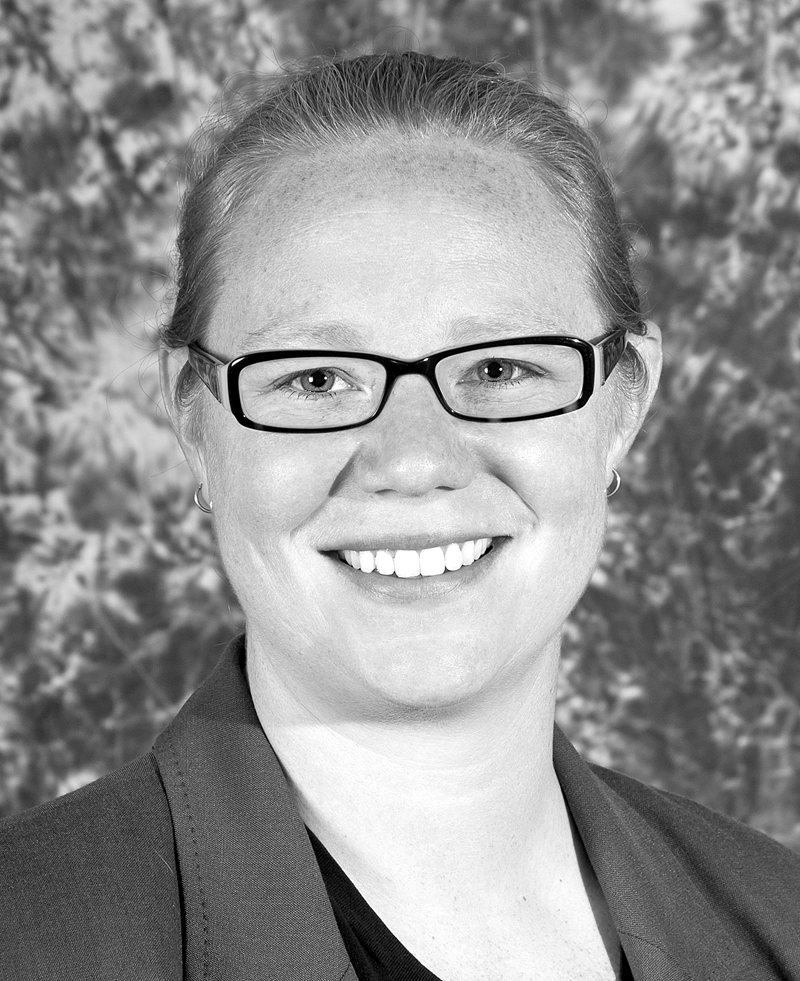
Amy Scott

Amy Scott says businesses in Wilbraham try to support each other whenever possible.

Amy Scott, principal of Wild Apple Design Group in Wilbraham, was heading out to look for a new car on the day BusinessWest spoke with her about the general business climate in that community.
The Hampden resident acknowledged that, like other Western Mass. residents, she has plenty of options when it comes to where to shop for a new ride, but she entered the search firmly committed to making sure it started and ended on nearby Boston Road.
“It’s part of the loyalty factor,” said Scott, who used that term to cover not only her buying habits but her willingness to serve the community in a number of roles. It’s an attitude that emerged not long after she took a gamble and leased more expensive space in Post Office Park in Wilbraham when she was searching for a new home for her venture two years ago.
She accepted that risk hoping that her services would appeal to the more than 50 businesses in the park and the hundreds of others in the community and just beyond it in Springfield — and the gamble has been rewarded. And she’s made it her policy to repay the loyalty shown to her.
“I feel like every time I have an opportunity to make a purchase, I look around at my neighbors, and they seem to be doing the same,” she explained. “It shows good faith on everybody’s part.”
Good faith is needed in this community that suffers, in many respects, when it comes to that old axiom about commercial real estate: location, location, location.
Indeed, Wilbraham is not exactly easy to get to from most anywhere in Western Mass. So, in recent years, those involved in town government and its business community have been actively involved in providing reasons for people to withstand the many traffic lights and stopsigns they encounter when trying to get here.
Post Office Park is part of that equation, but so are ongoing efforts, waged by the Boston Road Business Assoc. (BRBA), to make that thoroughfare a true destination for those looking for everything from a car to a major appliance to a good meal.
Scott has recently helped the group revamp its Best of Boston Road awards, which now has thousands of Wilbraham and Springfield residents voting for their favorite retailer, insurance company, dentist, restaurant, and more.
But while civic and business leaders work to help convince consumers that Wilbraham is a good place to do business, they’re also focused on quality of life for those who have chosen to live there — and also those who will join them in the decades to come.
The town christened its new, $65 million Minnechaug Regional High School just over a year ago, and also opened a new fire station, thanks to some imaginative financing. The next priorities, said Robert Boilard, vice president of Boilard Lumber and a selectman, are a new police station and senior center.
They are likely to be key components in a new vision, or comprehensive plan, for the town taking shape through the work of the recently formed Vision Task Force.
Working under the slogan “honoring the past, understanding the present, and imagining the future,” the group began work in early 2012 and gave its final report a few weeks ago, said its chairman, Charles Phillips, a long-time resident. “The Vision Task Force expected a largely positive response and received it,” he noted. “We were surprised, however, at some of the creative ideas that were expressed for improvement.”
For this, the latest installment of its Community Profile series, BusinessWest will look at some of those ideas, and also some of the ongoing — and generally successful — efforts to help people in this region, and sometimes from well beyond it, find Wilbraham.

School of Thought

“Tweedy” and “New Englandy.”
Those are two adjectives concocted by Rodney LaBrecque, head of school at Wilbraham Monson Academy, to describe the institution and help explain why it currently boasts students from 34 countries and several U.S. states, and is at full enrollment.
Those terms (the former is actually in the dictionary, while the latter is not) help paint a picture of the 209-year-old campus, one that is obviously appealing. “It’s certainly a selling point,” said LaBrecque, adding that this quaintness is only one reason for the institution’s success and current growth pattern; the diversity of its programs and the school’s emergence as a leader in such fields as entrepreneurship and business studies are more pertinent factors.
And they (or at least ‘New Englandy’) can also be used to describe Wilbraham itself, which was incorporated in 1763 and, like many neighboring communities, was largely agricultural until quite recently.
Robert Boilard

Robert Boilard says the Vision Task Force has helped define future goals for the town.

The town was once famous for its apple and peach orchards and several farms — including Pheasant Farm, Rice’s Fruit Farm, and Bennett’s Turkey Farm — that are no longer operating. In fact, the Wilbraham Peach Festival, a popular fall tradition for a quarter-century, was discontinued in 2010.
In its place, the Wilbraham Nature and Cultural Center (WNCC) — steward of Fountain Park, located off Tinkham Road, where the peach festival was held — has re-energized a summer music series on Thursday nights, which has drawn great reviews and strong attendance for regional bands such as The Kings, Trailer Trash, and The Frank Manzi Band.
This evolution, from peaches to rock music, mirrors other transformations in the town, from agricultural center to one of the region’s more popular bedroom communities, and from a business community that could only be described as sleepy to one that is growing — and diversifying.
Indeed, the tenant list at Post Office Park, which has seen explosive growth over the past decade, includes everything from marketing firms to the Scantic Valley YMCA; from medical facilities to law offices.
The park has helped make Wilbraham the business mailing address for many entrepreneurs who previously had little reason to give the community a look, and it is fueling the potential for more commercial development, albeit controlled, as civic leaders cope with some of the growing pains that come with the population surge recorded in recent decades.
The new high school is a manifestation of this growth, said Boilard, as is the need for a new police station and senior center — and the new vision plan itself, which was commissioned with the knowledge that the community needed to anticipate its future and properly prepare for it.
The Vision Task Force, with which Scott was involved through her work with the BRBA, completed phase one of the initiative, called the “Community Vision,” which laid the groundwork for the next step, creation of a comprensive plan, which will be the road map for the community, said Phillips.
The key priorities identified by respondents, he said, include the need to work harder alongside the business community, continue to insist on excellent education, preserve the feel and beauty of the community, place added emphasis on individual recreation, offer reasonably priced housing with excellent town services, and improve service on sidewalks and bikeways.
And while contemplating the future, the town is coping with the present, which in recent years has meant everything from the Great Recession to the tornadoes that caused extensive damage within the community in June 2011 to the ongoing budget challenges faced by all cities and towns and exacerbated by the state’s own fiscal turmoil.
Effective teamwork in Town Hall has been the most important ingredient in meeting these challenges head on, said Boilard.
“Our department heads are phenomenal, and no matter what our political affiliation, we’ve always been on the same page fiscally,” he said. “When you have a team that is running for that common goal, it makes the end result easier to get to, and we all work as slim as we can to get the job done.”

The Bottom Line
‘Getting the job done’ is a phrase used by a number of people in a many different contexts in this community.
For town officials, it means creating that roadmap for the future while dealing with current challenges. For LaBrecque, it means continuing to build WMA’s brand around the world while also strengthening an already-solid town-gown relationship. And for Scott and others in business community, it means growing their own ventures while working, collectively, to convince the world that Wilbraham really isn’t that far away.
“I love that I’m doing business with my neighbors and they’re doing business with me,” she said. “It’s a pretty healthy place to be.”

Elizabeth Taras can be reached at [email protected]

Law Sections
Royal LLP Helps Clients Get Down to Business

Amy Royal, founding partner of Royal LLP.

Amy Royal, founding partner of Royal LLP.

It’s an accepted trope that society has become more litigious, Amy Royal says, but not every business understands the implications of that fact.
“When someone loses a job, nine times out of 10, they don’t accept ownership or think it was anything they did, but it must be someone else’s fault,” said Royal, founding partner of Royal LLP, a Northampton-based, management-side labor and employment law firm.
“Unfortunately, our system makes it very easy for disgruntled employees to file claims against their former employer,” she continued. “You can go to a state agency and file for free. You can go to an attorney and engage their services without any real out-of-pocket costs. Because of that, numerous frivolous claims are filed every single day. A lot of people who may have engaged in misconduct are still able to take advantage of the system. It impacts everyone.”
Therefore, one service Royal provides its business clients is helping them to be proactive in a litigious world and develop practices that will save money and headaches in the long run.
“Documentation is key — and adequate documentation,” Royal told BusinessWest. “On the litigation end of things, when I get a case, I meet with the client and hear about how awful this employee was, stories of acts of misconduct, times they didn’t show up for work, and I think this is going to be a slam dunk. And I ask to see the personnel file, and there’s nothing in there to support that, or the documentation isn’t very good.”
So Royal teaches supervisors not only the importance of creating a paper trail, but how to write disciplinary actions that will stand up to scrutiny later on. “You’re writing it for the future — for courts, judges’ eyes, investigators’ eyes. What information do you want to put in there? It goes back to the journalistic principles of who, what, when, where … just stick to the facts.”
That’s one example of how Royal LLP aims to be a partner with its clients, not just a resource they turn to when they’re in legal hot water.
This month marks the five-year anniversary of the firm, which was launched first as Royal & Munnings — with Aimee Munnings, who now runs a large nonprofit organization in Washington, D.C. — and later as Royal & Klimczuk, with Kimberly Klimczuk, who currently works at Skoler, Abbott & Presser, P.C. in Springfield.
Since operating under her solo name, Royal has built a law firm of nine attorneys and has largely realized her initial goal “to create a pre-eminent management-side labor and employment law firm that would support the growth of women and minority attorneys.” Five full-time attorneys are women, and one is African-American.
“It’s really been my mission to provide these opportunities to women and minorities, primarily because, when I started my career, I didn’t see that support, or depth of support,” she recalled. “What prompted me in particular was a report that came out of MIT, around 2007 or 2008, that basically talked about the fact that women attorneys were leaving the private practice of law in large, startling numbers.”
She wondered why, then found the answer. “The women that MIT polled, who took part in the study, said there was no work-life balance in the law firms; they just didn’t support it. I thought, how can that be, especially with the technology today? With the way law firms are structured, a lot of the work can be done at any time, so why is that happening? There must be a solution.”
For this issue and its focus on law, BusinessWest takes an in-depth look at that solution and how this firm intends to stay on its current pattern of consistent growth.

Case in Point

Amy Royal (center, with Karina Schrengohst, left, and Tanzania Cannon-Eckerle)

Amy Royal (center, with Karina Schrengohst, left, and Tanzania Cannon-Eckerle) says she set a goal early on of establishing a law practice where women attorneys could succeed and still maintain a healthy work-life balance.

Royal said the economic downturn of the past few years caused many companies to scale back their budgets — in some cases, cutting out preventive work such as training, policy development, audits, and record keeping. But that’s not smart practice, she added.
“I’m a firm believer that, if you spend a little bit of money now, it goes a long way to prevent headaches later,” she said. “While I think I’m really good at putting out fires for clients and problem solving and coming up with innovative solutions immediately, from a business perspective, that’s not the way you want to operate. You don’t want to always be reacting.”
That applies to a wide variety of situations, not just dealing with disgruntled ex-employees.
“For example, fairly recently, I had a company that has always been union-free, and hopefully will continue to be union-free, but they’ve had some union chatter in their organization, and once that train gets going, it’s harder to stop.” So she worked with the client on strategies to reduce the risk of unionization.
“Obviously, there are steps you can take to prevent a union from successfully coming through the door,” Royal said, “but there are many steps you can take before they even arrive, and it’s so much harder to stop it once it’s already on that course than to think about the steps you want to take over the next year, two years, three years to prevent it from ever happening.”
The launch of her own law firm coincided with the financial collapse of 2008, and building a practice over the next five turbulent years has given Royal some strong ideas about what clients want.
“It got me thinking about the future of the law and trends in the law and the delivery of legal services,” she said. So, this year, the firm introduced a flat-fee system that can be structured in several different ways. “I do believe the trend is move away from traditional billable hours, because in what other field do you purchase a product without knowing what the price is going to be? It’s only human that people want certainty in their billing; they want to know what they’re paying for. So we’ve come up with different flat-fee programs; one is all-inclusive and encompasses litigation as well.
“Even some law firms that may be on the cutting edge and have decided to provide some flat-fee services, I don’t think they have done that in the context of litigation because litigation can be so unknown,” she continued. “However, since we have this niche in management-side labor and employment law, we’re able to predict the costs, and we’re able to provide a very reasonable flat-fee arrangement to clients, similar to what you get with insurance, where you share in the risk, so to speak.”

Navigating a Minefield
The risk for businesses comes in many forms, especially at a time when employment law is becoming more complex and tilting, in many ways, toward broader workers’ rights. For instance, the Americans with Disabilities Act of 1990 was amended in 2008 to define virtually anyone with any form of physical and mental impairment as ‘disabled,’ granting them added protection in the workplace.
“That has obviously created a lot of issues and uncertainties,” Royal said. “It’s also an area our state agencies and the Massachusetts Commission Against Discrimination have focused in on. They’ve taken the position that everyone is disabled, and therefore your company needs to be providing accommodations and engaging in dialogue with employees about what accommodations you can give them.”
Those issues can, frankly, be confusing for businesses, which often need a consultant like Royal LLP to train them in how to engage in that dialogue.
The training she and her fellow attorneys provide often takes the form of role-playing exercises with a company’s supervisory staffers, which can be a more effective learning tool than a dry lecture. “We’ve tried to make our trainings very practical and very interactive,” she said.
Other expertise the firm offers has nothing to do with litigation or employee grievance. For example, it helps companies create succession plans — not just for key executives, but for other critical staffers, such as a program manager for a nonprofit. “Do you have a plan in place to deal with the loss?”
The broad range of issues involved in employment law appeals to Royal, as do the long-term relationships she has built hammering out those issues for clients.
“We end up being their trusted business confidant, and that’s the really exciting thing,” she said. “We get to wear different hats — we get to be their advocate in court and litigate hard and aggressively for the client; we get to be their counsel that advises and helps them make plans that are both business-based and have legal implications; and we also get to be their educator, get to train them and their staff in how to stay out of trouble, or at least miminize their exposure to legal risk.”
The steps companies need to take might seem obvious, she told BusinessWest, but aren’t always followed in the day-to-day struggle to survive in a down economy.
“A lot of what I hear from management is there’s not enough time in the day to document issues, and I’m sensitive to that, because I run a business, too,” Royal said. “Again, if you go back to the training and the journalism approach of who, what, when, where, if you jot that down on a piece of paper, it’s not going to take you all that long, and it’s going to save you time in the long run, when you’re embroiled in litigation.”

Community Ties

As she builds the firm’s reputation in area communities — it has a second office in Springfield — Royal said it’s equally important to stay involved in civic life outside the workplace.
“Something I hope to instill in the other attorneys is being active in the community and giving back to the community,” she said. “It’s so important and so beneficial to everyone. So we do have a lot of our staff active in the community.”
Specifically, Royal serves on four different boards and chairs the United Way of Hampshire County, while the other attorneys are active on various boards or nonprofits. “It’s really important to me, and something that has really engaged the attorneys here and gets them to connect with our clients and the community in a different way.”
That’s the kind of work-life balance she knew was possible when she set out with a goal to establish, as she puts it, the pre-eminent labor and employment law firm in this region.
“I do expect additional growth, especially in the Connecticut arena,” she told BusinessWest. “Three of our attorneys are admitted to practice there, and I do have a Connecticut client base.”
Royal LLP has come a long way in just five years, but that doesn’t surprise its founder.
“That was my hope and my vision and my push. I’ve worked really hard to get the Royal name out there in every way I possibly could. So I’m really pleased, but I continue to make that push and want to continue to grow.”

Joseph Bednar can be reached at  [email protected]

Cover Story
Medical Marijuana Poses Business Opportunities — and Concerns

COVER1013bOne year ago, marijuana use was illegal in Massachusetts. Now, it falls under the category of economic development.
“It’s a business opportunity,” said Dr. Ronald Dunlap, president of the Mass. Medical Society. “In Maine, this is a more than $300 million industry, and that’s a small state.”

Those financial opportunities come in several forms. In January, the Mass. Department of Public Health (DPH) will choose up to 35 applicants — from a field of 158 — to open marijuana dispensaries for patients who have been certified by their physicians to use the drug.
At the same time, Internet entrepreneurs have been popping up as well.
“There are online services starting up where, if you pay $250, they will find you physicians who will certify you,” Dunlap said. “The people doing this are simply business people with money who are investing.”
But such activity poses issues with the medical-marijuana law, which was written to ensure that doctors can certify only patients with whom they have an established relationship.
And that’s just one point of confusion surrounding the new law, which is why at least 130 communities have placed moratoriums on marijuana dispensaries until they can work out the myriad zoning, housing, and public-health issues posed by such a sea change in the Bay State’s drug norms.
Helen Caulton-Harris, Springfield’s director of health and human services, explained that the city’s moratorium will give it time to develop a broad strategy for addressing the ancillary issues that have arisen with the legality of medical marijuana.
For example, “the law does not give immunity under federal law or obstruct federal enforcement of federal law,” she explained, nor does it supersede Massachusetts General Laws prohibiting the possession, cultivation, transport, distribution, or sale of marijuana for non-medical purposes. In addition, she noted, the new law requires no accommodation of the medical use of marijuana in any workplace or, in fact, accommodate smoking marijuana in any public place.
“The city must have the time to study the public-safety implications and whether additional resources are necessary,” she continued. “While I am appreciative of the thoughtful process of the state Department of Public Health and was a member of the state Public Health Council when these regulations were passed, the implications will directly impact our residents and perhaps our quality of life. In addition, on the local level, there must be a process to educate the residents about the potential impact of the regulations.”

Business Plans

Helen Caulton-Harris

Helen Caulton-Harris says Springfield needs time to grapple with the health, public-safety, and other issues that marijuana poses.

What is clear is that serious money is at stake, which is why the state has set significant financial barriers for entry into the marijuana market.
Specifically, a company that wants to open a dispensary would be subject to $50,000 in annual renewal and registration costs, as well as a yearly $500 registration fee for each of its employees. Applicants also had to make a $1,500 payment for the first phase of consideration, and a $30,000 payment for the second phase. In addition, the state is requiring potential business owners to have $500,000 cash on hand.
“This is a very competitive process, and we required applicants to meet high standards to advance,” DPH Commissioner Cheryl Bartlett said after the initial field of 181 applicants was trimmed by 23 earlier this month, mainly due to incomplete applications or insufficient capital. “We are fortunate that Massachusetts has a large field of serious applicants who are capable of making a significant investment to benefit qualified patients and safeguard communities.”
Each county in the state will be assigned at least one dispensary, but no more than five, with the total capped at 35 statewide. Twenty-two applicants are currently vying for sites in Hampden, Hampshire, Franklin, and Berkshire counties. Once licenses are approved early in 2014, it will take at least 120 days for a dispensary to open — hopefully giving cities and towns time to work out their issues and lift their moratoriums.
And those temporary moratoriums are now in place in at least 130 communities, including Agawam, East Longmeadow, Longmeadow, Ludlow, Hadley, Hampden, Hatfield, Palmer, Springfield, West Springfield, Westfield, and Williamsburg — and they typically apply to not only sellers, but home cultivation of marijuana, which will be permitted under certain circumstances for certified patients who lack easy access to a dispensary.
Unlike many of the other 19 states that allow medical-marijuana dispensaries, the Massachusetts law includes what’s known as ‘hardship cultivation,’ allowing certain individuals to grow their own marijuana — specifically, those who are physically unable to access reasonable transportation, demonstrate verified financial hardship, or lack a treatment center within a reasonable distance of their home.
“The city of Springfield needs to vet the potential impact of this section of the regulation on our residents as well as housing,” Caulton-Harris said. “Our thought process must include the impact on neighborhoods and mitigation strategies.”
To be assigned a dispensary license, entrepreneurs will have to prove to the DPH that their business plan is in compliance with all municipal regulations, ordinances, and bylaws. They are required to grow the marijuana they offer for sale, and they may also sell edible forms of marijuana.
The DPH noted that applicants will be evaluated on their ability to meet the health needs of patients, site appropriateness, geographical distribution of dispensaries, local support, and public-safety assurances.

Who Will Be Certified
?
Patient and physician eligibility rules run in the thousands of words, but at their heart, a patient may use marijuana for medical purposes only after receiving written certification from a doctor of a debilitating medical condition — defined as cancer, glaucoma, positive status for HIV, AIDS, hepatitis C, ALS, Crohn’s disease, Parkinson’s disease, multiple sclerosis, or another condition as determined in writing by the certifying physician.
‘Debilitating’ is defined as “causing weakness, cachexia, wasting syndrome, intractable pain, nausea, impairing strength or ability, and progressing to such an extent that one or more of a patient’s major life activities is substantially limited.”
As for physicians, they are required to conduct a clinical visit before issuing a certification, must complete and document a full assessment of the patient’s medical history and current medical condition, must explain the potential benefits and risks of marijuana use, and must have a role in the ongoing care and treatment of the patient.
In addition, physicians may not issue a certification for themselves or their immediate family members, and certifying doctors — as well as their family members and employees — may not have a financial interest in a dispensary, receive anything of value from a dispensary or any person related to the dispensary, or offer a discount to a qualifying patient for using a particular caregiver or dispensary.
If those standards are met, physicians may certify for up to a 60-day supply, which is defined as 10 ounces of marijuana. If a physician determines that a patient needs more than 10 ounces during that 60-day period, he must document the amount and rationale in the medical record and in the written certification.
It’s the language defining a bona-fide relationship that concerns Dunlap — or, rather, the potential skirting of that language, which the Mass. Medical Society (MMS) lobbied to include in the law.
“Let’s set aside the controversy over the indicators, and let’s assume there are five or six acceptable indicators,” he said, referring to medical conditions where marijuana would be an acceptable treatment. “People that I call Internet opportunists are essentially getting a doctor or list of doctors they feel will certify patients, and simply inviting patients to pay them money as a finder’s fee.”
Dunlap called it a “second level” of for-profit centers, which essentially say, “‘I will certify you, and you pay us $250.’ Most of it goes to the doctor, the rest to the center to find the physician.”
There are reasons why it’s important that a doctor and patient have an established relationship, he noted, the first of which is a knowledge of the patient’s medical history and the types of medications they’re already taking.
“That’s a big issue. If you wanted oxycodone and your doctor didn’t agree, we would have a problem with you going to one of the pill mills in Florida to get it. You’d be going around your primary-care physician to get a controlled substance,” he said. “There’s a lot of anxiety surrounding the fact that this is a parallel system to the treatment the physician might be aware of. We already have patients taking over-the-counter medications we don’t know about.”
Add to that the fact that marijuana has never gone through the rigorous clinical trials all other prescription drugs are subjected to — which is one of the reasons the MMS originally opposed the ballot question legalizing it — and it adds up to concern among doctors, not all of whom are expected to certify patients.
“Many doctors don’t feel there are indicators for marijuana and won’t want to certify patients, but there are doctors out there who will certify — if they have a real relationship with the patient,” Dunlap said. “If they don’t have that relationship, that will run afoul of the regulations we had adjusted.”
There is one other issue, he added, and that’s existing federal law, under which all marijuana use is still illegal. That affects its use, even medicinally, when federal funds are involved, such as in community health centers and government-subsidized housing.
“The federal government has not sued any physician in any state where marijuana has been legalized for medicinal purposes or medical use,” he said. “But it recently came to light that community health centers, which are federally funded, could lose their funding if they certify patients for marijuana. They have a conflict.”

Untangling the Knot
Conflicts, in fact, are at the heart of the moratoriums municipalities have set forth.
“The city itself has an internal team meeting on this,” Caulton-Harris said. “The Planning Department has issued a moratorium, and the Public Health Council has supported that moratorium, and we are going through the process now. We are thinking critically about some of the issues that might be before us as we think about dispensaries, as well as cultivation sites.”
Addressing all conceivable impacts — as well as the issues of fees, zoning changes, and municipal oversight — takes time, she added. For instance, while the law addresses the proximity of dispensaries and cultivation sites to schools, buildings that contain a doctor or pharmacy, motels, and hotels, other scenarios are less clear.
“While the regulations attempt to assure broad definition location exemptions, there are areas of concerns for the city of Springfield,” she noted. “For example, while we hope that all day-care facilities are licensed, we know that there are unlicensed facilities that exist with the city of Springfield. It is important that we have the time to think about and thoughtfully address those areas that are not covered in the regulations.”
She added that public-health officials have also expressed concern about the DPH’s strategy to inspect medical-marijuana treatment centers that dispense edible forms of the drug.
“The sanitary code does not currently have regulations in place to address inspection of medical-marijuana dispensaries,” she noted. “Depending on the number of centers in the city, additional staff may be required. The council felt it is critical that we are thoughtful about the implementation process as well as our responsibility to educate the residents about the potential impact of the legislation.”

Joint Concerns
When it comes to the Mass. Medical Society’s concerns about the health and legal risks of marijuana, Dunlap admits that ship has sailed, and today, he’s more focused on the role of physicians in the process.
“This is an opportunity to have a fast way to get marijuana to some people who need it, but they really would be better off just legalizing it as opposed to putting physicians in the pathway for potential liabilities,” he told BusinessWest. In short, he worries that some people — both doctors and business owners — might game the system.
“Again, we don’t have an issue if they have an existing relationship and the patient has one of the indicators,” he said of doctors issuing certifications. “But if you were the person who wrote 300 of those in your neighborhood, that will be an issue.”

Joseph Bednar can be reached at [email protected]

Construction Sections
Region’s Construction Activity Is a Mixed Bag

R.J. Chapdelaine

R.J. Chapdelaine says he’s busy with both remodeling jobs and new homes, like this one going up in West Springfield.

In the post-recession world of construction, when jobs are few and far between, diversity is a good thing.
“We’re on the upswing. It was a pretty solid year, a lot of phone calls,” said A.J. Crane, operations manager at A. Crane Construction in Chicopee. “It’s nice for us that we’re kind of diverse; we don’t specialize in any one thing. We’re interested in quality more than anything.
“A lot of guys do just kitchens and baths, or just additions, or just houses,” he continued. “But we had a really diverse year. We were all over the map — a lot of commercial work, a lot of residential work.”
The general consensus among the builders BusinessWest spoke with is that housing is rebounding from the recession faster than commercial building, but that’s not true for every contractor.
“We’re actually doing a little more commercial, which is different for us,” Crane said. “It’s typically like 60-40 residential, and it’s the other way around this year. It’s not that we’re doing less residential; we’re just doing more commercial. But it doesn’t matter to us who the property owners are — commercial businesses, government, homeowners — we’re interested in doing the work.”
Joe Marois, president of Marois Construction in South Hadley, said his workload picked up this year, but the near horizon is less encouraging.
“So far, we’ve survived the year,” he told BusinessWest. “We’ve been very busy, but we have very guarded profits we have to be careful about, because there’s not a whole lot of foreseeable work right now. Things have slowed down a little bit; my contemporaries are saying the same thing.”
Paul Ugolini, president of Western Builders in Granby, is one of them.
“We’re in the same predicament — we’re having a good year, not bad, we’re paying the bills, but it looks like it’s going to slump off,” he noted. “The way this market is, there’s just not much commercial work out there. It seems like the colleges and universities aren’t spending too much money these days, and that’s a problem for us.”
However, he noted, “we do have some housing backlog. We’re going to be doing four buildings in Holyoke, and there’s some housing in Easthampton we’ll chase — but you still have to land it.”
As for the commercial market, it tends to lag behind single-family homes, Ugolini noted, and builders hope activity starts to perk up soon. “The way this business is, it’s been rough the last few years. It’s just supply and demand — there are a lot of contractors, but not a lot of work.”

Moving Along
Crane said he’s gotten mixed messages from fellow builders. “From what we’ve heard, people are very busy or very slow — there aren’t a lot of guys in between.”
One rising trend has to do with next-generation housing, he noted — “older people moving back in with their kids, kids moving back in with their parents. We just finished one of those up.”
This is more than a localized phenomenon, according to Jed Kolko, chief economist for Trulia Trends.
During the recession, he notes at truliablog.com, fewer households were created than normal. Typically, 1.1 million new households are added each year in the U.S., mostly due to population growth. However, from the first quarter of 2008 to the first quarter of 2011, only 450,000 new households were created annually. “Slower household growth means less demand for homes, so annual construction starts dropped during this period from a norm of 1.4 million to below 600,000. Most recently, only 521,000 households were created between the first quarter of 2012 and the first quarter of 2013.”

Paul Ugolini

Paul Ugolini says his company has a residential backlog, but commercial projects remain frustratingly elusive.

A big part of this slowdown, he notes, is due to young people living with parents or doubling up with roommates rather than buying their own house. “Since most kids won’t live with their parents forever, these young adults represent pent-up demand for housing that the recovery should unleash. The problem is, the kids aren’t moving out yet.”
RJ Chapdelaine, president of Jos. Chapdelaine & Sons in East Longmeadow — which focuses largely on residential building and remodeling — said business is definitely on the upswing.
“Right now, we’re working on two new homes, and we’ve been working on quite a few additions and renovations,” he noted. “Our kitchen and bath renovations have been very solid, and we’re feeling as though things are heading in a more positive direction. We’re even anticipating starting a new 10-lot subdivision in East Longmeadow. We’ve had quite a lot of good feedback.”
Meanwhile, “I got three calls yesterday for new homes. That, to me, is a good sign — that people want to talk about new homes. It’s very refreshing. Hopefully, it’s a good sign; over the last few years, those calls were more rare, and the fact that we’re starting to get new-home calls and larger remodel jobs is nice.”
Chapdelaine credits a couple of colliding developments — an improving economy giving consumers confidence to make big purchases again, and still-low mortgage rates (and the fear that they won’t stay that low forever).
“I would say some of it is pent-up desire,” he said. “People have been sitting for awhile, and they’re starting to see the rates creep back up a little bit, and it puts them in a position where they feel they need to move because the rates are obviously still at historic lows, and they don’t want to see them creep up to where they were even two, three, five years ago. So they’re thinking it might be time to build or remodel.

Crisis of Confidence
Kolko notes, however, that the housing market has a long way to rebound, and it will — eventually.
“Jobs will help, but the job recovery for young people still has a long way to go,” he writes. “While more young adults are working now than a year ago, their employment rate is still much closer to the worst of the recession than to pre-recession levels. As late as mid-2008, 71% of adults ages 18-34 were employed. That dropped to a low of 65% in mid-2011 and has risen back only to 66.8%. But you don’t get a job one day and move out of mom and dad’s the next. It could still take years before young people have built up the savings and economic security to leave the nest.”
Meanwhile, the commercial sector is still feeling a distinct lack of security and confidence, Marois noted, partly driven by the chaos coming out of Washington, represented most recently by the federal shutdown, and lingering uncertainty over the Affordable Care Act, which will increasingly impact employers in 2014.
“You have to throw into the mix what’s going on in Washington,” he said. “The shutdown has had far-reaching effects, given the fact that we’ve got looming budget cuts, and the healthcare law is starting to look like it will be a problematic program to get initiated. I think it’s going to have an impact on everyone’s confidence going forward with projects. It’s affecting our psyche right now.”
All those factors, layered atop an economy that never returned to pre-recession levels, makes it difficult to generate building activity.
“I’m not too confident in the traditional way we used to do things,” Marois said. “Our way of thinking, running businesses and understanding the economy, seems to be different right now because it’s intermixed with uncertainty over new programs and new regulations. It’s a time like we’ve never seen before.”
In short, largely commercial builders are hoping that they soon begin to see the signs of life appearing in the housing-construction market.
“We’re pretty optimistic. Things seem to be a lot better than they were,” Chapdelaine said, echoing Crane’s perception as he added, “we hear there’s no middle ground; you’re either very busy or very slow. I’m glad to be on the busy side.”

Joseph Bednar can be reached at [email protected]

Construction Sections
Baystate Dental, Craig Sweitzer & Co. Mark 30 Years of Growing Together

Dr. Kevin Coughlin (center), with Craig Sweitzer (right) and Sweitzer’s son, Michael

Dr. Kevin Coughlin (center), with Craig Sweitzer (right) and Sweitzer’s son, Michael, says a welcoming dental environment and state-of-the-art technology are both important elements in a dental practice’s design.

Craig Sweitzer’s company has built more than 75 medical and dental practices over the past 30 years. The first of those clients — Baystate Dental — is also the most recent.
BusinessWest recently sat down with both Sweitzer and Dr. Kevin Coughlin, owner of Baystate Dental, at the practice’s 10th location, which opened last week in a restored house in downtown Westfield. Craig Sweitzer & Co. has built the last nine of those offices, with two more planned for the near future, and the two men have shared what they call a rewarding professional partnership over the past three decades.
The story begins in 1983, when Coughlin was getting ready to take over Baystate Dental from its founders, Drs. Gabriel and Milton Auerbach.
“As they retired, I felt it was necessary to renovate and expand, and I knew what I wanted to do — I just didn’t know how it could be done and who could help me do that,” Coughlin said. At the time, Baystate Dental operated at just one site, on Main Street in Springfield.
“At the time, my dad, my father-in-law, and I attempted to renovate that initial practice, and realized we were out of our domain. We needed an expert contractor, someone we could trust and someone we could hopefully grow with over the years.”
He was introduced by a mutual friend to Sweitzer, who was in a similar position — that of wanting to broaden his business beyond residential projects and professional buildings.
“We did office renovations, and Kevin was the first medical job we did,” Sweitzer said. “It was fascinating. In a dental office, there’s so much plumbing and medical piping, mechanical piping, medical gases, X-rays — it’s so much more complex, and it keeps you thinking. It was a lot more fun — and it’s still fun 30 years later.”
He’s seen plenty of advances in medical-office construction over the years. “The equipment has changed. We no longer need to use lead-lined sheet rock, and everything is more gentle, more comforting for the patient, and less clinical-looking, although the technology has just advanced in leaps and bounds.”
Coughlin jokes that he might not have hired Sweitzer if he had realized just now inexperienced the builder was in the medical-dental field, but he’s glad he had no misgivings at the time.
“I immediately liked him, trusted him, and believed in him,” Coughlin said. “He set out with plans and designs to renovate that initial practice, with the goal that we wanted to give our patients not just a warm and wonderful atmosphere, but efficient, effective, state-of-the-art care in that welcoming atmosphere.
“With the combination of his building expertise and knowledge, and my knowledge of medicine and dentistry,” he continued, “we’re now pushing toward 12 dental practices in Western Mass.”

Family Ties
The history of Baystate Dental is the recent history of two families. When Joyce Mercadante was growing up in Agawam, her family befriended the Auerbach family; later, two of the Auerbach children, Gabriel and Milton, would go on to become dentists, and the Mercandante family became early patients of the new practice in Springfield.
Mercadante later married Ralph Coughlin and had two sons, whom the Auerbachs encouraged to enter the field of dentistry. After part-time and summer work in the Baystate Dental lab during high school and college, Kevin enrolled in the dental program at Tufts University School of Medicine. He returned to the region and the Auerbachs’ practice, gradually broadening his responsibilities, helping the practice expand into evening and Saturday hours.
After Coughlin took over the practice in 1983, he embarked on an ambitious expansion plan and, in 2003, added two partners in Drs. Gary Circosta and Matthew Haluch. The practice now employs 120 staff members, including 18 dentists, at its 10 locations, making it the largest private dental practice in the state.
Sweitzer’s emergence in the construction field started equally humbly. “I actually owned a furniture business before I graduated college — designing, building, and selling furniture in East Longmeadow,” he told BusinessWest. After that, he went to work for a general contractor for a couple of years before setting out on his own with small projects, mostly kitchens and bathrooms.
“That evolved to additions, which evolved to new homes,” he said. “That was fun, but after 15 houses, it’s just not as challenging anymore. And residential work is really susceptible to ups and downs in the economy.”
So he gradually moved into commercial work, particularly office construction, before trying his hand with medical facilities. Eventually, he left residential building behind completely. As a small company, “I really can’t do both and serve those customers. Building a house takes six months, and when a doctor calls us up and wants an office built, he wants it started next week, so we can’t say, ‘come back and see us in six months.’ So we went to all commercial.”

The new Westfield office

The new Westfield office is the first Baystate Dental practice to occupy a remodeled house.

His long-standing professional relationship with Coughlin has included building new dental facilities in Springfield, Belchertown, Chicopee, East Longmeadow, Longmeadow, Ludlow, West Springfield, Westfield, and Wilbraham. Baystate Dental’s other long-time partner is Patterson Dental, a national resource for equipment, supplies, and expertise in industry trends.
“With each project, we continue to find things to improve from the previous project,” Coughlin said. “And I trust him, so I don’t have to be there every week worrying, ‘is this getting done?’ It’s an enormous benefit to have that relationship, almost like a family member, where I don’t have to worry about it.”
Sweitzer agreed. “Our goal is to do the best possible project with the best possible products for the money. I know what Kevin wants; I don’t have to call him all the time. He trusts in me and gives me the confidence to make decisions I think are best for this practice.”
For example, at the new Westfield office, Sweitzer became concerned about the way the ceiling tiles in the operatories, or procedure rooms, reflected sound. Feeling that it created too loud an environment, he researched materials and softened the noise.
“I’m not always concerned about the best value or what’s easiest to build,” he said. In the case of the ceiling tiles, “we knew what we wanted, so it was easy for us to switch gears during construction without getting the architects or the designer involved in a big series of endless meetings.”

That’s a Mouthful
Coughlin said the dental public demands much more than it used to, both in technology and a pleasant practice environment.
“People want the best value, the best care, and the best service in the best surroundings,” he said. “But in the end, what they want is to trust their provider, and that comes from their first impression, what the facility looks like. Is it too glitzy, over the top, cold, and impersonal? Is it private?”
The look of a practice is just the beginning. “Thirty years ago, most practitioners wore no masks and gloves, no surgical scrubs. Infection control was almost non-existent,” he recalled. “Privacy matters, like with HIPAA, weren’t even an issue. Today, all of these things are not just important, but necessary.”
Sweitzer said the Westfield site reflects a commitment to both aesthetics and substance. “If you look in each of these operatories, the windows overlook a landscaped area, there’s soft music, everything is brand-new, extremely clean, extremely comfortable. Yet, behind the patient’s head is the most modern equipment imaginable — the most modern X-rays, medical gases … these operatories really do just about anything.”
Likewise, Baystate Dental has strived to do almost anything to get treatment to patients, providing services at home for non-ambulatory individuals and offering a broad range of sedation options even for routine treatments.
“Thirty-five percent of people refuse to see the dentist out of fear, and another 15% for financial reasons. That’s 50% of the marketplace that’s avoiding you,” Coughlin said. “By creating an efficient, effective environment and by offering these medical gases — oral sedation, inhalation sedation, intravenous sedation, or anesthesia — we can take these patients who have high anxiety and give them a level of care they don’t normally expect or get.”
He cited one boy with severe autism who was non-verbal and could not tolerate a normal dental setting and had to be sedated. “This young man hadn’t had dental care in 14 years. Who provides that care?”
But both Coughlin and Sweitzer couldn’t help but come back to the design of the new Westfield office — the first Baystate Dental practice in a renovated house, not a new building.
That wasn’t the original plan; the project was originally drawn up and approved as a new, three-story, 30,000-square-foot building with a footprint extending very close to Broad Street. But they decided a remodel of the original building was sufficient for the practice’s needs and blended much better with Westfield’s reconstructed downtown. “Everyone who goes by here, they love it,” Sweitzer said.
Added Coughlin, “I don’t think this detracts at all from the center of Westfield, and I think it actually adds to it. People know we could have done something else, but we took what I like to think is the higher ground.
“At least once a week,” he continued, “we get a nice personal letter from someone in this town I don’t know — hopefully they’ll become patients — who are thrilled with what we’ve done.”
“That’s where the fun of construction is,” Sweitzer added. “We’re not building a sterile high-rise with glass and concrete, but recreating something that you can really be proud of.”
Indeed, while state-of-the-art technology is critical, after 30 years and 10 offices — with more on the way — Coughlin doesn’t underestimate the power of a welcoming atmosphere.
“We have roughly 56,000 patient visits a year across all our locations, and we’ve never had anyone say anything but, ‘this is one of the nicest dental offices I’ve ever been in,’” he told BusinessWest. “That’s not just for the aesthetics of it, but the intangibles — the layout, the efficiency. I often get credit for it, but honestly, the credit should go to the construction company.”
As befits their mutually beneficial relationship, he and Sweitzer are happy to share the credit.

Joseph Bednar can be reached at [email protected]

Opinion
The Mandate for Medical Marijuana

One year ago, the Mass. Medical Society (MMS) was busy lobbying against a ballot question that proposed to legalize marijuana in the Commonwealth for medicinal purposes.
Its leaders argued that marijuana has never been subjected to clinical trials like every other prescription. That its benefits are unproven on a large scale. That doctors are concerned about violating federal law.
All valid arguments. But after voters overwhelmingly approved medical marijuana at the polls, the MMS didn’t just rehash the same complaints. Rather, over the next several months, doctors found a seat at the table with the state Department of Public Health (DPH), contributing to the regulations being hammered out.
For example, when the state laid out certain conditions for which marijuana would be an acceptable treatment, the society argued for language that the condition must be ‘debilitating.’ And it insisted that physicians certifying patients for the drug must have a real, established relationship with those individuals.
In short, despite its concerns — and the MMS remains vocal about the lack of clinical trials — it recognized that, like in 19 other states and the District of Columbia, the ship of public opinion had sailed. Marijuana was now legal for medicinal purposes. At that point, the goal was simply to craft as solid a set of rules as possible to govern its use.
It’s an example worth noting by the many Commonwealth residents and municipal officials who retain serious qualms about introducing pot into their neighborhoods. But arguing against medical marijuana now is as ineffectual as arguing against casinos. They’re both definitely coming to this area.
That said, communities like Springfield and dozens of others in Western Mass. are right to establish temporary moratoriums on any economic activity related to marijuana. Why? Because the DPH’s guidelines — it will award up to 35 licenses across the state to sell the drug — don’t address every issue that cities and towns might have.
Questions abound. Are there public-safety concerns arising from new drug use in neighborhoods, even if it’s legally prescribed? What if a patient certified by a doctor to use marijuana lives in federally subsidized housing? Will marijuana be sold, as Springfield’s top health official posed, near unlicensed day-care centers? How will marijuana dispensaries be regulated on the local level? What privacy and security issues might arise?
But anyone who thinks medical marijuana is still a question of if, not when, might as well get elected to Congress and try to repeal Obamacare, to name another controversial piece of legislation that’s not going anywhere. The states that have legalized the drug for medicinal purposes have not imploded in a hazy stupor, and polls show that most people feel the benefits far outweigh the drawbacks.
Those drawbacks should be considered, though, and cities have the right to do so. But at the end of the day, like casinos, this is one bet the state — and a majority of its voters — are willing to make, and that mandate should be respected.

Opinion
A Good First Step at Westfield State

The Westfield State University board of trustees voted to place embattled President Evan Dobelle on paid administrative leave last week, a decisive move that we hope will be the first step in ending a tenure that has become a serious distraction for the college and, more importantly, a burden for the state’s public higher-education system at a time when it doesn’t need one.
Recapping the recent events in what has been an ongoing saga, the board’s action came several hours after the faculty and librarians (at least those who participated) voted by a wide margin to issue a vote of no confidence in Dobelle, who has come under unrelenting fire from the media and Board of Higher Education Commissioner Richard Freeland for his lavish spending and misuse of university credit cards.
The board, which has also come under fire from Freeland for a lack of leadership on this matter and essentially doing too little far too late, put Dobelle on ice until at least late November, when the law firm it hired to investigate Dobelle’s spending habits is expected to issue its findings.
In doing so, the board essentially disregarded repeated threats from Dobelle’s lawyer and hired public-relations specialist that disciplining the school’s president would result in a federal lawsuit claiming, among other things, that Dobelle’s constitutional rights were violated because an investigation launched into his spending earlier this year was done illegally.
While we understand why Dobelle’s team would focus on the procedural aspects of that investigation — there are questions about whether rules, such as open-meeting law provisions, were violated — we prefer to side with Freeland and his ongoing contention that it is what’s in the report that is at the heart of this controversy.
Slicing through it all, the accounting firm that conducted the inquiry found that there were violations regarding school policies involving use of credit cards, but also, in the interpretation of Freeland and others who have seen the results, blatant irresponsibility when it comes to spending taxpayer and Westfield State Foundation funds.
The headlines and the controversy that has ensued — including allegations from Dobelle that there is essentially a statewide conspiracy against him and that Freeland is out for his job — prompted the commissioner to write the trustees recently and say “it seems to me highly questionable whether President Dobelle can or should continue to provide leadership to Westfield State University.”
We concur, but must note that Freeland has much more on his mind than the Westfield campus when he makes such statements. Indeed, Freeland is quite concerned about the impact of the Dobelle controversy on perception of the state’s public higher-education system and possible future funding. And he should be concerned.
As we’ve said many times over the years, this is a state that has historically underfunded public higher ed, consistently ranking well below the national average in this category. There are several possible reasons for this, including the widely held theory that, historically, the Legislature hasn’t made public higher education a priority in a state rich with esteemed private institutions.
Whatever the reason or reasons for this poor track record, the last thing this state needs is another one. That’s because now, perhaps more than ever, the Commonwealth’s public colleges and universities are critically important to the task of making this state competitive in the high-stakes contest for what is now arguably the world’s most precious commodity: jobs.
Dobelle’s recklessness with other people’s money — not to mention his absurd allegations against anyone who questions him — present a serious threat to the public higher-education system.
And that’s why the university board’s vote last week must be just the first step in the process of ridding the state of what has become an annoying problem.

Court Dockets Departments

The following is a compilation of recent lawsuits involving area businesses and organizations. These are strictly allegations that have yet to be proven in a court of law. Readers are advised to contact the parties listed, or the court, for more information concerning the individual claims.

FRANKLIN SUPERIOR COURT
Amcor Inc. v. HI-DE Liners Inc.
Allegation: Non-payment of goods sold and delivered: $96,491.28
Filed: 9/4/13

Kronenberger & Sons Restoration v. Greenfield Community College, et al
Allegation: Construction dispute regarding the Energy Neutral Greenhouse: $500,000
Filed: 8/16/13

HAMPDEN SUPERIOR COURT
Aleksandr Chuduk v. Maxim Avraamov, Oleysa Avraamova, Konstantin Avraamov, AK Diagnostic, and Pilot Travel Centers, LLC
Allegation: While acting as business partner and accountant, Avraamov committed breach of fiduciary duty, fraud, and negligence: $970,000
Filed: 8/28/13

Kevin Wales v. Ballard Truck Center, a/k/a Ballard Mack Sales and Services Inc.
Allegation: Breach of contract, negligence in required repairs and maintenance, and breach of warranty: $175,000
Filed: 8/19/13

Monson Savings Bank v. Turbine Systems, LLC and Joseph and Kathleen Gendreau
Allegation: Default on commercial promissory note: $133,022.64
Filed: 8/8/13

Palatium Realty Inc. v. Berkshire Bank, Berkshire Insurance Group Inc., and Michael Smith
Allegation: Misrepresentation and breach of contract: $110,000
Filed: 8/9/13

273 State Street, LLC v. Saia Law Firm, LLC, et al
Allegation: Action for damages as a result of a breach of a lease agreement: $54,656.97
Filed: 8/22/13

HOLYOKE DISTRICT COURT
Marisol Marcano v. Government Employees Insurance Co. (GEICO) and Raymond Zayas Serrano
Allegation: Unfair and deceptive insurance claims and failure to effectuate a prompt, fair, and equitable settlement: $24,999.99
Filed: 7/26/13

SPRINGFIELD DISTRICT COURT
ABC Supply Co. Inc. v. Boardwalk Contractors and Thomas J. Dean
Allegation: Balance remaining on previous judgment: $6,447.52
Filed: 9/6/13

Employers Mutual Casualty Cos. v. ASG Seamle Gutters Inc.
Allegation: Failure to pay insurance premiums: $3,048
Filed: 8/12/13

Granite State Insurance Co. v. Nick’s Affordable Home Improvement
Allegation: Suit on non-payment of previous judgment: $37,185.23
Filed: 8/8/13

WESTFIELD DISTRICT COURT
Boys and Girls Club of Greater Westfield v. New England Transit Sales Inc.
Allegation: Breach of contract and breach of express and implied warranties regarding sale of bus: $7,570.84
Filed: 9/4/13

Robert Johnson v. Valley Motorsports Inc.
Allegation: Negligent maintenance of property causing trip and fall: $6,162.41
Filed: 9/11/13

Company Notebook Departments

Berkshire Bank Ranked Among Most Charitable
PITTSFIELD — Berkshire Bank was recently named one of the state’s most charitable companies by the Boston Business Journal at its annual Corporate Citizenship Summit in Boston. Berkshire Bank ranked fourth for its employees’ volunteer efforts, with more than 22,000 hours of service, and ranked 36th for total cash giving, with more than $1.1 million donated in Massachusetts. Berkshire joined national and international companies honored at the event, including AT&T, IBM, Microsoft, New Balance, Verizon, and Walmart. The Top Charitable Contributor award recognized Berkshire Bank and Berkshire Bank Foundation’s employee volunteer program; its philanthropic investments in the community through its charitable grants, corporate giving , and in-kind donations; as well as as its Recycle, Reuse & Renew Technology Partnership Program.

Financial Partners Raises Funds for Open Pantry
AGAWAM — Financial Partners Inc. (FPI) in Agawam recently hosted its annual food drive to help raise money for Springfield Open Pantry. The 185 employees were able to raise $8,219. Each year, FPI employees come up with new and creative ways to raise money for Springfield Open Pantry. As a technology company that provides business support to farm credit associations from coast to coast, this year FPI stayed true to its agricultural ties by introducing ‘animal herds’ as a means of fund-raising. Employees donated money to have herds of stuffed animals placed on the desks of colleagues each morning. Along with ‘herding,’ employees also sponsored a variety of raffles, a bake sale, a pitch tournament, and even a ‘best beard’ contest.

MMWEC Earns A Ratings on Power Projects
LUDLOW — Three major credit-rating agencies have affirmed the A-level credit ratings of of Massachusetts Municipal Wholesale Electric Co. (MMWEC) power supply projects. The agencies — Fitch Ratings, Standard & Poors, and Moody’s Investors — cited the financial and competitive strength of MMWEC and its municipal utility project participants. MMWEC project ratings are all in the A category, reflecting a strong and stable financial profile for the nonprofit, joint action agency that provides services to the Commonwealth’s consumer-owned municipal electric utilities.

Gove Opens Solo Legal Practice
NORTHAMPTON — Attorney Michael Gove has announced the opening of his solo legal practice under the name Gove Law Office, providing services in corporate and business law, estate planning, real-estate matters, and special education law to clients throughout Western Mass. and Connecticut. A Western Mass. native, Gove has developed a diverse practice assisting businesses owners and families in planning for the future. Gove is a 2001 cum laude graduate of UMass Amherst, where he received a BA in political science. In 2004, he earned his JD from Boston College School of Law. He is admitted to the Massachusetts and Connecticut bars, and to the U.S. District Court in both states as well. He is a member of the American Bar Assoc., the Massachusetts Bar Assoc., the Hampden County Bar Assoc., the Hampshire County Bar Assoc., the Connecticut Bar Assoc., the Young Professional Society of Greater Springfield, and the Northampton Association of Young Professionals. In 2007, he was honored by BusinessWest as a member of the inaugural 40 Under Forty class, in part for his work with the Pioneer Valley Planning Commission. In 2007, Gov. Deval Patrick nominated him to serve as the Connecticut Valley representative on the Massachusetts Water Resources Authority, a position he held until 2012. He presently serves as a corporator of the Horace Smith Fund. Gove volunteers with the Hampshire County United Way and Cooley Dickinson Hospital, and previously served as president of the Advisory Board for Big Brothers Big Sisters of Hampshire County. In 2012, he was selected as a Massachusetts Rising Star by Super Lawyers, a professional achievement earned by no more than 2.5% of lawyers in Massachusetts.

Westfield Bank Rated Outstanding in CRA Exam
WESTFIELD — Westfield Bank, a wholly owned subsidiary of Westfield Financial Inc., received an outstanding rating as a large institution with total assets of $1.3 billion as of March 31, during the recent Community Reinvestment Act (CRA) exam conducted by the Office of the Comptroller of the Currency, the bank’s primary regulator. “The outstanding rating is the highest rating a bank can receive and represents the bank’s commitment to our communities in several performance areas, which includes lending, investments, and services,” said President and CEO James Hagan. The CRA is intended to encourage depository institutions to help meet the credit needs of the communities in which they operate, including low- and moderate-income neighborhoods. Some of the major factors that support the rating were the bank’s level of lending activity within its assessment area, the distribution of small loans to businesses and home-mortgage loans by income level of the borrower and geography, as well as community-development lending. The bank had an excellent level of qualified investments and donations totaling $7.4 million in the areas it serves during the timeframe and evaluation of the CRA exam, and exhibited excellent responsiveness to credit and community economic-development needs.

Departments People on the Move

Christine McCormick

Christine McCormick

Christine McCormick, Dean of the College of Education at UMass Amherst, was elected a fellow in Division 15 Educational Psychology of the American Psychological Assoc. (APA), the premier scientific and professional organization representing psychology in the U.S. The APA is the world’s largest association of psychologists, with more than 134,000 researchers, educators, clinicians, consultants, and students as its members. Fellow status is an honor bestowed upon APA members who have shown evidence of unusual and outstanding contributions or performance in the field of psychology. With UMass Amherst since 2005, McCormick is the author or co-author of publications on a variety of topics in child development and education. In 2012, she was elected to serve a three-year term on the executive board of the Council of Academic Deans from Research Education Institutions, an assembly of deans of education from research and land-grant institutions throughout North America. She was also elected to the executive committee of the American Educational Research Association’s Organization of Institutional Affiliates, which provides a forum for academic institutions, non-university-based research institutions, and professional associations to share information about federal education research issues, people, and events, as well as to be engaged in shaping policy with regard to significant research issues. She was appointed by Gov. Deval Patrick to the Mass. Special Commission on Civic Engagement and Learning, which completed its work last January, and also served on the editorial boards of two major journals in her field: the Journal of Educational Psychology and Educational Psychology Review. She received her Ph.D. in educational psychology, with a minor in measurement and statistics, from the University of Wisconsin-Madison.
•••••
The Springfield-based regional law firm Bacon Wilson, P.C. announced that Francis Mirkin, Esq. has been named 2013 Top Rated Lawyer in Real Estate by lawyer-ranking service Martindale-Hubbell. This distinction will appear in the December issue of American Lawyer & Corporate Counsel magazine. Mirkin is a shareholder and a member of the firm’s real-estate and banking and finance departments. He is also member of the Mass. Real Estate Conveyancer’s Assoc. and a frequent speaker on commercial real-estate and foreclosure-related matters. He is a multi-year recipient of the SuperLawyer distinction and is rated AV by Martindale-Hubbell, which is the highest ranking achievable. Mirkin earned his BA from the University of Massachusetts and his JD from Suffolk University School of Law.
•••••
Teresa Parker

Teresa Parker

Mortgage Originator Teresa Parker is now located at United Bank’s Ludlow branch. Parker had served as the personal banker at United’s Longmeadow branch for nine years before transitioning to her new position as mortgage originator in the bank’s Springfield region. She joins Ludlow personal banker Yvonne Santos and her staff at the 528 Center St. location.
•••••


Angela Lussier

Angela Lussier

The BrunoFox Group recently named Angela Lussier its Chief Strategy Officer. Lussier is an award-winning speaker, TEDx alumna, author, and business consultant whose advice has been featured on Yahoo!, NBC, ABC, Virgin.com, the Ladders, About.com, CBS Money Watch, and other outlets. Within this role, Lussier will serve as lead developer for the organization’s Innovation Unit, which is producing Consulting 2.0 services for entrepreneurs and young professionals. Lussier has worked with individuals, as well as Fortune 100 companies, who have used her successful strategies to achieve unprecedented results.
•••••


Erin Catharine

Erin Catharine

Erin Catharine, copywriter with the Lenox-based creative agency Winstanley Partners, has been named Young Careerist of the Year by Western Mass. Women magazine. The award is part of the magazine’s annual Women to Watch competition, which recognizes local women working in a variety of careers. Winners were decided by nominations and votes from the public. The honor is celebrated with a special issue of Western Mass. Women and an awards banquet. The Young Careerist award was added this year to recognize a professional woman in the region between the ages of 20 and 26 who has a college degree, has been working for less than three years in her profession, and has excelled in her position through contributions to the organization, continued professional development, volunteerism, and more. A graduate of Virginia Commonwealth University, Catharine joined the Winstanley creative team in 2012 following stints with Howell Creative Group in Williamsburg, Va. and Taradel LLC in Richmond, Va. She is a past recipient of the Advertising Women of New York scholarship, a Student Silver Addy award, a Richmond, Va. Ad Club Bronze Student Cannonball Award, and the Judge’s Choice Award at the Dallas Society of Visual Communications National Advertising Student Show and Conference.
•••••
Daniel Sullivan

Daniel Sullivan

The Martin J. Clayton Insurance Agency, based in Holyoke, recently named Daniel Sullivan President. Sullivan has worked at the agency since 1990 and holds the Charter Property Casualty Underwriter (CPCU) and Certified Insurance Counselor (CIC) designations. Sullivan works extensively in the commercial property and casualty arena, serving the needs of local businesses. The full-service agency provides personal and commercial insurance and financial services to clients throughout Massachusetts and Connecticut.
•••••
The Loomis Communities recently announced the appointment of Dr. Charles Hines as Medical Director at the Loomis House Nursing Center in Holyoke. Hines has been a geriatric medical practitioner for 20 years and is board-certified in gerontology and internal medicine. Hines, who graduated from St. George’s University School of Medicine, is a certified medical director through the American Medical Assoc.
•••••
Beth Raffeld was named Vice President for Development at Smith College. Raffeld, a Senior Executive at Massachusetts Institute of Technology, has a 30-year career in educational fund-raising and, as the new chief development officer, will over seen an organization that raised $39 million last year and direct a staff of more than 60.
•••••
The Young Professional Society of Greater Springfield (YPS) recently welcomed the following new members to its Executive Board:
Jeremy Casey

Jeremy Casey

Peter Ellis

Peter Ellis

Elizabeth Ginter

Elizabeth Ginter

Edward Nuñez

Edward Nuñez

Jeremy Casey, Assistant Vice President and Commercial Services Officer at Westfield Bank, takes the reins as President. Casey is also on the board of the Springfield Rotary Club and a member of BusinessWest’s 40 Under Forty class of 2013;
Peter Ellis, Creative Director at DIF Designs, is the new Vice President. Ellis is a member of BusinessWest’s 40 Under Forty class of 2011;
Elizabeth Ginter, Attorney with Ellis Title Co., returns to the board as Clerk. Ginter is a member of BusinessWest’s 40 Under Forty class of 2012 and Western Mass. Women magazine’s Women To Watch for 2013-14;
Edward Nuñez, Assistant Vice President of Business Development at Freedom Credit Union, joins the board as Treasurer. Nuñez is a member of BusinessWest’s 40 Under Forty class of 2012 and is the 2012 recipient of the Bankers & Tradesman Credit Union Hero Award.
Ashley Clark, Commercial Service Officer at Westfield Bank, also serves on the YPS Marketing Committee. Clark is a board member of the Greater Springfield Habitat for Humanity.
Juli Thibault

Juli Thibault

Juli Thibault, Talent Acquisition Marketing & Operations Manager at Baystate Health, is Co-Chair of the YPS Marketing Committee and Strategic Plan Task Force.

Briefcase Departments

Westfield State Trustees Place Dobelle on Leave
WESTFIELD — Westfield State University trustees voted unanimously last week to place President Evan Dobelle on administrative leave with pay. Trustee chairman Jack Flynn said Dobelle would remain on paid leave until at least Nov. 25, when the law firm Fish & Richardson is expected to complete an investigation into Dobelle’s lavish spending habits. Thomas Frongillo, a principal in the firm, has been representing the trustees in their negotiations with Dobelle. While Dobelle, who spent hours with trustees at their closed-door session, left without comment, his publicist, George Regan, said Dobelle plans to file a federal lawsuit against the trustees for the “egregious” violation of his rights. “We are disappointed that the board has acted unlawfully and has obviously buckled to the intense political pressure surrounding this issue,” said Regan in a statement. “The board has defamed President Dobelle and allowed him to be defamed, and there will be major consequences to these actions.” The vote to place Dobelle on leave came following a vote of no confidence by faculty and librarians at WSU. Specifically, 64% of the 215 faculty and librarians who voted agreed with the statement that “I have no confidence that Dr. Evan Dobelle can continue to effectively serve as president of Westfield State University,” according to the executive committee of the Mass. State College Assoc. The trustees’ action also comes in the shadow of a fresh investigation by Attorney General Martha Coakley’s office into whether Dobelle made illegal false claims to obtain reimbursement for his expenses. The trustees called the special meeting in the face of mounting pressure to take action after an August report by accounting firm O’Connor & Drew found that Dobelle had repeatedly violated university policy by charging personal expenses to university credit cards, and also questioned the documentation for many claimed expenses. Since then, state Inspector General Glenn Cunha has raised questions about Dobelle’s extensive business travel, luxury hotel stays, high-end restaurant meals, and entertainment charged to the school. Meanwhile, state Higher Education Commissioner Richard Freeland has frozen some state funding to WSU because he’s concerned about Dobelle’s ability to manage money. “It seems to me highly questionable whether President Dobelle can or should continue to provide leadership to Westfield State University,” Freeland wrote to the trustees.

Springfield City Council Boosts Mayor’s Salary
SPRINGFIELD — The Springfield City Council recently gave first-step approval to a $40,000 pay raise for the mayor, which, if granted final approval at the Oct. 21 council meeting, will increase the mayor’s annual salary from $95,000 to $135,000 effective in January 2014. Mayor Domenic Sarno has two years left on his four-year term. Supporters of the raise noted that the current salary has not increased in 17 years and is low when compared with other cities. The increase was proposed in May by the Springfield Chamber of Commerce, which cited the need to attract the best candidates and pay a wage that reflects the responsibilities of the job and the size of the city. The council voted to grant first-step approval for increasing councilors’ own annual salary from $14,500 to $19,500, a change that will also will take effect in January, if granted final approval. The council has not had a raise in 18 years.

Mama Iguana’s Closes at Springfield Site
SPRINGFIELD — Mama Iguana’s owner Claudio Guerra closed down that restaurant’s Springfield location, neighboring the Naismith Memorial Basketball Hall of Fame, earlier this month after just over two years in operation.
The restaurant opened in June 2011 in the location of the former Onyx Fusion Bar and Restaurant. Onyx had closed in April 2011 after three years operating in space once occupied by the Hall of Fame. Guerra’s latest venture boasted 350 seats indoors and 150 on an outdoor patio.
Mama Iguana’s had 50 employees, and Guerra said he will try to absorb as many of them as possible at his four other eateries — the Spoleto restaurants in Northampton and East Longmeadow and Mama Iguana’s and Pizza Paradiso in Northampton. Gift cards are redeemable at those other locations. Guerra told the Republican that the concept behind his Springfield restaurant, and his execution of that concept, led to the closing, not a general reluctance to dine out in the city. He added that the right restaurant with the right concept would succeed there.
Competition tightened at the site when Plan B Burger Bar opened in September 2012 in the Hall of Fame building. Guerra said he’d been trying to sell the restaurant or bring in a partner to help run it, but any possible partner or buyer balked at investing money on a new concept with the possibility of MGM Resorts International opening a South End casino.

Nov. 21 Deadline Set for Marijuana Licenses
BOSTON — The state Department of Public Health has set a Nov. 21 deadline for nonprofit companies to submit final applications for medical-marijuana shops and cultivation facilities (see story on page 6). The DPH will announce an award of licenses on Jan. 31, despite the fact that more than 130 communities have instituted temporary moratoriums on medical-marijuana dispensaries.
Last month, the DPH approved 158 preliminary applications for medical marijuana, clearing the applicants to continue to a second and final phase of bidding. Of those, 22 companies are proposing to set up shop in one of the four counties of Western Mass. Each county in Massachusetts will be granted at least one and no more than five dispensaries, with the statewide total capped at 35.
A selection committee will evaluate final applications on factors including ability to meet the health needs of registered patients, site appropriateness, geographic distribution of dispensaries, local support, and public-safety plans.

Education Sections
Diocese of Springfield Wins Cathedral High School Insurance Fight

Ann Southworth (right, with Mark Dupont)

Ann Southworth (right, with Mark Dupont) says the “thousand details” of tornado recovery interrupted her broad vision for Cathedral, but her strategy is back on track.

When Ann Southworth became president of Cathedral High School, she was excited to implement a new plan to invigorate the school and increase enrollment.
A longtime educator and assistant superintendent in Springfield Public Schools, she was also a member of Cathedral’s board, and had helped shape some new ideas for the school.
But that was in May 2011, one month before devastating tornadoes tore a 39-mile path of destruction through Western Mass., and the 52-year-old Cathedral High School, which had also housed middle-school students since a 2009 merger with St. Michael’s Academy, was directly hit.
Southworth’s excitement over her new professional endeavor was quickly overshadowed by multiple challenges, starting with finding a temporary home for Cathedral’s grade 6-12 population — in less than two months.
“My first thought was, ‘we’ll overcome this; we’re going to keep going,’” she recalled, “and I found the principal, picked him up in the parking lot of Holy Cross, and we starting planning that next day.”
That summer, “a thousand details” had to be addressed, Southworth said, and administrators put on new hats — as realtors, searching for temporary quarters; as facilities managers, to move all offices to various buildings in and around Springfield; and as transportation coordinators, for getting students to wherever the new temporary home, or homes, would be.
Other church properties, including the St. Michael’s Priests Residence building and Our Lady of Mt. Carmel, were damaged as well, while the St. Jude Mission property in Springfield was hit hard by a microburst a month and a half later, and remains closed.
To diocesan leaders, pictures of Cathedral’s splintered roof and shattered windows spelled out an obvious need for major repairs, if not complete reconstruction. So, like many other commercial and residential property owners in the twister’s path, the diocese filed insurance claims in the millions for all four properties. Language in the policy with Catholic Mutual, the insurance company of which the Diocese of Springfield is a member, guided the determination of what the school believed to be ‘replacement value,’ Southworth said.
But that summer of a thousand details turned into a two-year difference of opinion between the insurance company and the property owner, because the initial settlement offer was unexpectedly — and jarringly — low.
“You try to work things out internally, especially when you have close relationships, but with our cost estimates as high as $70 million, for the worst-case scenario, and their $13 million response, it was just too great a gap to make up,” said Mark Dupont, director of public affairs and co-secretary for communications for the Diocese of Springfield, detailing how, when it came to questioning literally every element of the claim, Catholic Mutual didn’t give up.
But neither did the diocese.
The long journey to work through a process called a ‘reference procedure’ (more on this later) finally culminated this past Sept. 10, when the Diocese of Springfield and Catholic Mutual announced an amicable resolution of all claims, totaling $60 million for tornado damage to all four properties. A final step with the Federal Emergency Management Agency (FEMA) still looms for potentially more storm-related compensation, but the major battle is now over.
“When you’re facing challenges and hardships, you rise to the occasion,” Southworth said. “You come out of it better … and we did.”
For this issue’s focus on education, BusinessWest met with members of the Diocese of Springfield to learn more about their two-year insurance battle to secure what they felt Cathedral was entitled to, proving that patience is only one of their virtues.

Survival Mode
Bishop Timothy McDonnell explained to BusinessWest that the tornado that destroyed Cathedral High School and the other properties caused him many a sleepless night.
“But I couldn’t forget the words I had so often quoted to others, Mother Teresa’s words: ‘there’s nothing so bad that God can’t bring a greater good out of it — if we let him,’” he recalled.
Looking over the past two years, McDonnell said Mother Teresa’s words have been prophetic in the case of Cathedral, but the situation has been trying nonetheless for students, teachers, and parents. School choice and charter schools have affected the academic marketplace across the country, and specifically enrollment at Cathedral, which now stands at 236, said Dupont. The current goals are 300 high-schoolers and 200 in the middle school, but those figures could change as the school’s final footprint emerges.
“The school is struggling,” he said. “It’s fine to have a life raft, but you don’t want to live in the life raft.
“The tornado would have been devastating anyway,” Dupont went on, “but it came at such a pivotal point when we were ready to take that next step with Ann. And next thing you know, it was ‘where are they going to have classes in September? Where are we going to put the students we have?’”
Many of the options the diocese investigated involved undeveloped vacant space or non-academic space. Creative solutions were pitched by the city of Springfield, commercial realtors, and Springfield Technical Community College, but state regulations for using the college space would take far too long into the year to wait.
They received a call from the superintendent of schools in Wilbraham, a Cathedral alum, who suggested the diocese look at Memorial Elementary School. While it made a difficult situation even more trying for students and their parents, due to school busing, after-school programs, and other issues, said Dupont, the diocese still had to spend $750,000 to upgrade the school. With little time to widen the search, Memorial became the life raft for Cathedral, while the middle-school students went to the diocese-owned Holy Cross campus on Eddywood Street in Springfield. Dupont said the location has worked, and the lease in Wilbraham will be extended for as long as necessary.
But ‘as long as necessary’ is difficult for parents to hear when they want answers as to why the diocese can’t make a decision on whether to repair or rebuild. Yet, until engineers are allowed to venture into the damaged building, the extent of the damage is unknown.
“When you’re engaged in negotiations with an insurance company, you have to be prudent in how you proceed,” Dupont explained. “Because we were holding them [Catholic Mutual] to the full commitment of the policy, we weren’t going to give them any sort of ‘out’ to get around it — replacement cost is replacement cost.”
A total of $20 million was initially advanced to the diocese for preliminary cleanup and other expenses that were incurred, considering the magnitude of destruction, Dupont explained. But the initial low-settlement response persuaded the diocese to utilize the aforementioned ‘reference procedure,’ a Massachusetts law afforded in settlement claims, allowing both parties to appoint representatives for each side and a mutually agreed upon ‘referee.’
“That referee listened to months and months of testimony and reviewed data to determine what the real damage was that they could see,” said Dupont, likening the parading of engineers on both sides to a “battle of the experts.”
Due to the claims being challenged on almost every point, the process dragged for months, but the decision upholding $60 million worth of claims was finalized in September, with no more debate.

Cathedral justified far more

Diocesan officials knew the damage to Cathedral justified far more than the $13 million initially offered by its insurance company.

The settlement, Dupont said, brings all disputes with Catholic Mutual to an ultimate conclusion, without the possibility of further legal challenges, and allows the diocese to build whatever is in the best interest of all to update a 1950s school to the standards of the 21st century.
However, the next hurdle involves FEMA, which coordinates the federal government’s role in preparing for and responding to all domestic disasters, natural or man-made. The diocese is hoping to recoup some of its tornado-related costs, but that remains to be seen, said Dupont.
“Their regulations are daunting and very strict, and rightfully so, but we couldn’t go to FEMA until the claim was resolved,” he explained. “And any potential outcome is predicated on whether you’ve aggressively pursued your claim with your insurance carrier first.”

Valuable Assets
During the insurance battle, work on the new strategic plan never slowed, said Southworth.
The plan calls for more of a day-school curriculum and an extended day, where students stay from 8 a.m. to 5 p.m., with regular academic classes followed by experiential learning such as fine and performing arts, community service, internships, and sports.
A focal point in the school’s strategic plan will be the International Baccalaureate Diploma Program, which will set Cathedral apart from other schools, she said. Even as a pilot program, 71% of seniors and 61% of juniors are enrolled in one or more classes.
Tuition for Cathedral is now $9,300, but McDonnell has charged the administration to find ways to make Cathedral more affordable for lower-income families. Currently 57% of students receive some form of tuition assistance through the diocese, alumni, and donors, but to grow the school’s population, something more is needed. Another part of the plan, the Cathedral Tuition Foundation, as it is called, will answer that important issue.
“Since the tornado, the alumni have rallied in support of Cathedral, and it’s leading to a campaign to endow tuition funding so that future generations of Panthers may benefit from the same first-class education that has always been Cathedral’s hallmark,” said McDonnell. Simultaneously, St. Michael’s Academy has been able to undertake its own plan to ensure its growth and stability.
“The connections that Cathedral has are really powerful,” Southworth added, mentioning just a few of the noteworthy alums, including Michael Ashe (’57), the current Hampden County sheriff; Richard Monaghan (’66), research biologist with the patent for the first cholesterol-reducing drug; and Derek Kellogg (’91), head basketball coach for UMass.
The word is out regarding the foundation, but Dupont likened it to a chicken-and-egg scenario, since donors don’t currently know what Cathedral High School is going to look like. But that isn’t deterring the diocese from testing the waters.
“We’re a people of faith,” he said, “and this is going to require people digging into their reserves of faith and saying, ‘I’m going to make this commitment, even though I’m not sure how the site is going to play out.’”

Challenge Accepted
To this day, books and other educational materials remain in the damaged Surry Road school that teachers have not been able to retrieve, Southworth said. But not one lesson has been missed, even from the first day of classes in September 2011.
She said she’s committed to continuing that ‘show must go on’ mentality, adding that, as the FEMA process unfolds, she will continue implementing the invigorating plan that was her mission before disaster struck from the sky.
All agree that, whether the school is rebuilt or repaired, this new plan and new energy will help create a bright future for even more students of Cathedral High School — who are, after all, among the most valuable of the diocese’s assets.

Elizabeth Taras can be reached at [email protected]

Departments Incorporations

The following business incorporations were recorded in Hampden, Hampshire, and Franklin counties and are the latest available. They are listed by community.

AGAWAM

Agawam Transportation Inc., 178 Regency Park Dr., Agawam, MA 01001. Elvan Ozcelik, same. Transportation services.

AMHERST

Green Cross Inc., 85 Whitney St., Amherst, MA 01002. Martin Moore, same. Provide service and support to nonprofit organizations.

BELCHERTOWN

H&D Trade Inc., 55 North Main St., #41, Belchertown, MA 01007. Zhuangping Yi, 96 Tianyao Xincun, Shanghai, SH, 200000. Videoconferencing and international trade.

CHICOPEE

Avia Whole Body Inc., 23 Hillside Ave., Chicopee, MA 01020. Donna Silva, same. Beauty salon.

Bloo Solutions, 621 Grattan St., Chicopee, MA 01020. Jeremiah Beaudry, 63 Ludger Ave., Chicopee, MA 01020. Information-technology support and service.

Elmadina Inc., 411 East St., Chicopee, MA 01020. Charlene Coelho, 203 Hannoush Dr., West Springfield, MA 01089. Restaurant, café, cabaret.

EAST LONGMEADOW

Eastern Seaboard Accoutrements Inc., 5 Ruffino Road, East Longmeadow, MA 01028. John Pantera, same. Clothing and apparel.

HOLYOKE

Holistics Specialty Care Inc., 54 North Canal St., Holyoke, MA 01040. Chirag Amin,  8447 Dunham Station Dr., Tampa, FL 33647. Civic, educational, benevolent activities per Mass. General Law, Chapter 180.

Iglesia Cristiana No Descuides Tu Salvacion Inc., 131 Sargent St., Suite 2R, Holyoke, MA 01040. Francisco Santiago, same. To help people and give services to all humanity and preach the word of God.

NORTHAMPTON

C Care Inc., 7 Armory St., Northampton, MA 01061. Donald Chase, 39 Timber Ridge Road, West Springfield, MA 01089. To promote and support activities for the treatment of debilitating medical conditions.

Farm House Compassionate Care Inc., 13 Trumbull Road, Northampton, MA 01060. Susan Stubbs, same. Healing and wellness.

Hampshire Health Inc., 58 Belmont Ave., Northampton, MA 01060. Brian Paul Foote, same. Furtherance of medical, educational, civic, and charitable purposes.

SPRINGFIELD

365 Freight Solutions Inc., 1 Florentine Gardens, Springfield, MA 01108. Cecilio Cunningham, 3543 Woodlake Road, Hephzibah, GA 30815. Transportation of goods.

AhmetAndersin Inc., 27-29 St. James Blvd., Springfield, MA 01104. Ahmet Citlak, 81 Bluebird Circle, Ludlow, MA 01056. Pizza and sandwich shop.

Changmu Corp., 1655 Boston Road, Springfield, MA 01129. Chang Ho Kim, same. Clothing retail.

Departments People on the Move

Kenneth Albano, a shareholder and a member of the Corporate, Finance, and Healthcare departments for the Springfield-based Bacon Wilson, P.C. was recently elected Chairman of the Board of Directors for the Western Mass. Division of the March of Dimes. Albano is a member of the Mass. Municipal Law Assoc., and currently serves as Town Counsel to the communities of Monson, Southwick, and Holland. Albano earned his BA from Providence College and his JD from Western New England University School of Law.
•••••

Jean Deliso

Jean Deliso

Jean Deliso, Principal of Deliso Financial Services, has been elected a member of the 2013 Chairman’s Council of New York Life Insurance Co. Members of the elite Chairman’s Council rank in the top 3% of New York Life’s sales force among more than 12,250 licensed agents. A New York Life agent since 1995, Deliso is an associate with the Connecticut Valley General Office in Windsor, Conn. She is chairman of New York Life’s Agents Advisory Council and is a consistent qualifying member of the Million Dollar Round Table and currently a 2013 Court of the Table Member. Deliso currently serves on many boards in her community, including the Pioneer Valley AAA Auto Club, Pioneer Valley Refrigerated Warehouse, and the Community Music School of Springfield.
•••••

Keith Minoff

Keith Minoff

Keith Minoff has been selected by his peers for inclusion in the 20th edition of The Best Lawyers in America in the practice areas of commercial litigation and corporate law. Minoff is a trial attorney specializing in business and employment litigation and has been in practice for more than 25 years.
•••••


David McBride

David McBride

Erica Flores

Erica Flores

Skoler, Abbott & Presser, P.C. recently announced the addition of two new associates, David McBride and Erica Flores. Flores joined Skoler Abbott after relocating to Mass. from Pennsylvania, where she was an associate at the office of Morgan Lewis. She is a 2005 graduate of the University of Pennsylvania Law School and received her BS from the University of Colorado, Boulder, in 2001. In addition to her litigation practice, Flores regularly advises clients with respect to day-to-day employment issues, including decisions regarding adverse employment actions and litigation avoidance. From 2005 to 2006, she served as a clerk to the Russell Nigro, associate justice of the Supreme Court of Pennsylvania. Flores is a member of the American Bar Assoc. and the Pennsylvania Bar Assoc. McBride is a 2013 graduate from the Cornell Law School and received his BA in Economics from the University of Notre Dame in 2008. His practice is concentrated in labor law and employment litigation. His experience includes work on labor and employment-law issues, including employer compliance with federal laws at a major labor union in New York.

Agenda Departments

Wicked in Pink Motorcycle Ride
Oct. 13: The Wicked In Pink Run, a motorcycle event created by Bob Kaine Alves, a local motorcycle magazine and shop owner who recently fought his own battle with cancer, will raise much-needed funds for the Sr. Caritas Cancer Center Patient Services Fund at Mercy Medical Center. The event will also show support for all those battling cancer, cancer survivors, their caregivers, family, and friends. Registration for the run will begin at 9:30 a.m. at Harley-Davidson of Southampton. Participants will leave at noon from the dealership and end at the outdoor pavilion at Summit View Banquet & Meeting House in Holyoke, where there will be food and entertainment. Tickets cost $20 per person. Kaine Alves, owner of Throttle Rocker magazine, recently battled cancer of the head and neck and made it his mission to pay forward the compassionate treatment he received from the staff of the Sr. Caritas Cancer Center. All riders are encouraged to wear pink, whether it be hats, wigs, shirts, or shoes — creativity is appreciated. Sponsors include Throttle Rocker magazine, Haymond Law, American Medical Response, Harley-Davidson of Southampton, Allen Media Inc., 94.7 WMAS, FSC Insurance Agency, and Bertera Fiat West Springfield. For more information, visit www.wickedinpinkrun.com or www.facebook.com/wickedinpinkrun.

Rays of Hope Walk
Oct. 20: When this year’s 20th annual Rays of Hope – A Walk Toward the Cure of Breast Cancer steps off, it will be a celebration of two decades of women, men, and children walking together to fight breast cancer. Since its inception in Springfield in 1994 by Lucy Giuggio Carvalho, Rays of Hope, the most successful fund-raising walk and run in Western Mass. for breast cancer, has grown from 500 participants raising $50,000 to some 22,000 walkers and runners in an expanded event that includes a second walk in Greenfield, as well as this year’s 4th annual Run Toward the Cure 8K in Springfield. As in past years, the Springfield walk with some 600 teams — who may choose either a two- or five-mile route — and run begin at Temple Beth El on Dickinson Street, where registration is set for 9 a.m. The Springfield walk steps off at 10:30 a.m., preceded at 10:15 a.m. by the 8K run. The walk in Greenfield — either a two- or three-mile route — begins at Energy Park on Miles Street at noon, with registration at 10 a.m. All monies raised through Rays of Hope — more than $11 million since 1994 — remain local and are administered by the Baystate Health Foundation. Those who want to support the Rays of Hope but are unable to walk due to other commitments can participate in the 10,000 Steps Toward a Cure program. Participants receive a pedometer to keep track of their steps throughout the month of October, while raising donations similar to other walkers. This year’s Rays of Hope major sponsors are Health New England, Gale Toyota, Balise, Baystate Breast & Wellness Center, Baystate Breast Specialists, Chicopee Savings Charitable Foundation, Doctors Express, Kinsley Power Systems, Lia Auto Group, Radiology & Imaging, and Zasco Productions. A listing of all sponsors can be found on the Rays of Hope website. For more information on the event, call (413) 794-8001 or visit www.baystatehealth.org/raysofhope, where walk or run participants may also register online.

Art in the Orchard
Through October: Park Hill Orchard, at 82 Park Hill Road, Easthampton, will play host to 22 sculptures by 22 artists through Oct. 31. Art in the Orchard 2013 is a multifaceted sculpture exhibition and festival taking place on the grounds of a working apple orchard. The core project is a sculpture trail showcasing three-dimensional outdoor works and installations created by local and regional artists. Additional events (such as music, moonlight walks, dances, and school field trips) will be programmed on most weekends. See parkhillorchard.com/art for more information on the artists, their works, and an event schedule. Art in the Orchard is building on the success of the first exhibition in 2011, which came to existence thanks to the desire of Park Hill Orchard owners Alane Hartley and Russell Braen to have their farm play an active part in the local cultural economy, and a dream of Easthampton gallery owner Jean-Pierre Pasche to recreate an outdoor sculpture exhibit like the one set in meadows near his hometown in Switzerland. The success of the 2011 event exceeded expectations, with thousands of visitors discovering the sculpture trail and Park Hill over the 10-week period, many returning more than once. This achievement was recognized by the Mass. Cultural Council, which awarded Art in the Orchard one of its three annual Gold Star Awards, out of more than 5,000 projects funded annually by local cultural councils statewide.

Western Mass. Business Expo 2013
Nov. 6: Planning is underway for the Western Mass. Business Expo 2013, a day-long business-to-business event to take place at the MassMutual Center in downtown Springfield. This fall’s show, the third edition of the Expo, which is again being produced by BusinessWest, will feature more than 100 exhibitors, seminars on timely issues of the day, special Show Floor Theater presentations, breakfast and lunch programs, and the wrap-up Expo social, which has become a not-to-be-missed networking event. The breakfast speakers will be Jim Koch, founder of Samuel Adams, the lunch speaker will be author, activist, and marathon runner Kathrine Switzer. Other details about specific programming will be printed in upcoming editions of BusinessWest and can also be seen online at www.wmbexpo.com or www.businesswest.com. For more information on the event or to reserve booth space, call (413) 781-8600, ext. 100.

Court Dockets Departments

The following is a compilation of recent lawsuits involving area businesses and organizations. These are strictly allegations that have yet to be proven in a court of law. Readers are advised to contact the parties listed, or the court, for more information concerning the individual claims.

CHICOPEE DISTRICT COURT
Diane Bynum v. Metro Auto Sales, d/b/a Metro Chrysler Dodge Jeep Ram
Allegation: Deceptive and unfair practices: $24,000
Filed: 8/20/13

FRANKLIN SUPERIOR COURT
Eliza Greene Smith v. Farm Table Inc. and Brent Menke
Allegation: Plaintiff seeks restitution for full share of proceeds from tips earned: $25,000+
Filed: 8/2/13

Vermont Mutual Insurance Co., as subrogee of Derek Berkquist v. Frigidaire, Inc.
Allegation: Subrogation action where a defective water valve in a new washing machine caused substantial property damage: $40,635.26
Filed: 7/11/13

GREENFIELD DISTRICT COURT
Freedom Credit Union v. Woods and Lawns Inc. and William A. Woods
Allegation: Default on promissory note: $9,712.74
Filed: 8/16/13

HAMPDEN SUPERIOR COURT
Absolute Construction, LLC v. G.M. Crisalli & Associates, Wal-Mart Stores Inc., and W/S Westfield Properties Inc.
Allegation: Construction claim and mechanics lien: $221,548.80
Filed: 9/12/13

Batesville Casket Co. Inc. v. Robert E. Cusack Funeral Home Inc.
Allegation: Breach of contract and failure to pay on promissory note: $24,530.95
Filed: 8/22/13

Connecticut Pie Inc. v. Connecticut Packaging Inc.
Allegation: Breach of contract by providing plaintiff with defective product: $750,000
Filed: 8/27/13

Cypress Financial Recoveries, LLC, as subrogee of Wells Fargo Bank v. Watson Building/Remodeling and Prescott Watson
Allegation: Breach of credit agreement: $32,544.78
Filed: 7/22/13

People’s United Bank v. Connecticut Valley Block Co. Inc., James L. Delgrego, and Hubert White
Allegation: Failure to pay promissory note: $451,638.76
Filed: 8/6/13

Rebecca Budd v. Mary Kay Cosmetics
Allegation: Plaintiff seeks relief for injuries sustained while using a defective product: $105,000
Filed: 9/13/13

SPRINGFIELD DISTRICT COURT
Beacon Sales Co. v. TLC Exterior, LLC and Thomas J. Leonard
Allegation: Non-payment of goods sold and delivered: $5,492.92
Filed: 8/1/13

Liberty Mutual Fire Insurance Co. v. New England Plumbing & Heating Inc.
Allegation: Non-payment of workers’ compensation policy: $8,540.34
Filed: 8/27/13

Universal Recycling Technologies, LLC v. Marc A. Brown, d/b/a Total Tech Recycling Co.
Allegation: Non-payment of services rendered, unjust enrichment, and account annexed: $17,085.25
Filed: 8/27/13

WESTFIELD DISTRICT COURT
HIBU Inc. f/k/a Yellow Book Sales and Distribution Inc. v. Gold Star Restorations Inc.
Allegation: Money due for previous judgment: $66,789.46
Filed: 8/12/13

Opinion
Physician Labor Markets Remain Tight

By LEIF BRIERLEY
The Mass. Medical Society’s 12th annual Physician Workforce Study found that physician labor markets continued to be tight, with four physician specialties — family medicine, internal medicine, gastroenterology, and neurology — experiencing significant shortages.
The study, released last month, showed, as in previous years, that physician shortages continue to influence labor-market conditions statewide. Several regions of the state, including the Springfield and Pittsfield areas, had a majority of respondents reporting inadequate pools of physicians were available to fill needed positions.
The percent of physicians reporting that “the current pool of applicants is inadequate” and the percent of respondents “having difficulty filling vacancies” both increased several percentage points from 2012 to 2013. While the adequacy of the physician labor pool and the ease of physician recruitment have shown a dramatic improvement over the past five years, this year’s data broke from the previous five-year trend of improving conditions in terms of filling vacancies and adequacy of the applicant pool.
Other findings indicate some dissatisfaction with physician practice issues, but also indicate familiarity with several key healthcare reform initiatives.
Among practicing physicians, dissatisfaction with the time spent on administrative tasks versus time spent on patient care increased, with more than half of physicians in 2013 either “very dissatisfied” or “dissatisfied” with the tradeoff between patient-care hours versus administrative tasks.
Massachusetts physicians also remained concerned about professional liability and liability costs, which continue to cause physicians to alter or limit the scope of their practice, impacting patient access to care.
However, physicians are becoming more familiar with the healthcare reform initiatives occurring both nationwide and locally. Overall, almost half of respondents were familiar with Chapter 224, the state’s cost-containment law passed in August 2012.
More physicians indicated in 2013 that they would be likely to participate in a voluntary global payment system than did in 2012, and 32.4% of physicians indicated that their medical practice is currently reimbursed through global payments.
Finally, nearly three-quarters of physicians were “very familiar” or “somewhat familiar” with accountable-care organizations, with 42% of respondents indicating their practice participated in this type of care-delivery model.
The Mass. Medical Society (MMS), with the assistance of prominent labor economists, completed this year’s study, which builds upon the results of the previous 11 years of physician-workforce studies. The most recent survey was mailed to 7,212 practicing Massachusetts physicians in January 2013. The recipients included both MMS members and non-members who were randomly selected from 18 specialties. A total of 748 physicians responded to the survey. The full report can be downloaded at Physician Labor Markets Remain Tight.

Leif Brierley is a health-policy analyst for the Mass. Medical Society.

Education Sections
Bay Path Looks to Carve a Niche in Emerging Field of Cybersecurity

Larry Snyder

Larry Snyder says positioning Bay Path College as a hub of cybersecurity expertise is an ambitious, but attainable, goal.

Larry Snyder says his broad goal is to help position Bay Path College as a “hub of cybersecurity in Western Mass.”
That’s a somewhat ambitious but certainly attainable goal, he said, noting that there are many aspects to the process of getting there, starting with the school’s decision to create what is believed to be the first master’s degree program in cybersecurity management in New England, which will be led by Snyder and launched later this month. There is also the Cybersecurity Management Summit, which the college will host on Oct. 11, featuring Robert Milton, retired commander of the Metropolitan Police Service, or New Scotland Yard (more on that later).
And in the fall of 2014, the school will launch an undergraduate program in cybersecurity, said Snyder, who has held titles ranging from director of the CyberSecurity Research Center at Herkimer Community College in New York to manager of fraud operations at First USA Bank in Wilmington, Del.
If all goes as planned, he told BusinessWest, Bay Path could soon join schools such as UMass, Utica, the University of Maryland, Stonybrook, and Champlain College as recognized leaders in academic programs and research in the emerging field of cybersecurity.
More importantly, though, it will be training individuals for a growing number of jobs in this emerging field, and thus helping to meet one of the recognized challenges moving forward — making sure there is an adequate supply of talent to enable the business community and society in general to cope with a security problem that grows larger and more ominous each year.
And the new master’s program will address one of the more pressing and immediate needs, said Snyder, citing a documented lack of management-level individuals to lead programs and individuals in the fight against cyberthreats.
“This program grew out of the sense that there was an opportunity — something was missing,” he explained. “Cybersecurity had been around for a while — there are lots of technical cybersecurity programs in academia — but what was missing, at the master’s level, was this cybersecurity management focus.”
Bay Path’s new 36-credit, online program will address this void, he said, by training people for some of those positions he’s held — in both academia and business — and a host of others.
And there will be great demand for such individuals, he said, enough to give graduates choices and some clout.
“The really great part about this — and what I tell students when I meet with them — is that they can really write their own career path,” he noted. “Typically, you’d expect them to fall into that chief information security officer level, but you’ll also see them as compliance officer, senior auditor in an accounting firm, and many others. It’s so wide open right now, and it really depends on the industry you’re interested in.
“This is a great time to get into the field,” he went on. “It’s been a great time for about 10 to 15 years, and it’s going to be a great time for another 20 years, I expect. These graduates are going to be able to take this field in a whole new direction.”
For this issue and its focus on education, BusinessWest takes an in-depth look at Bay Path’s new master’s program and its broader efforts to take a leadership position in a field where the prospects are bright and the job opportunities are expected to be plentiful.

Technically Speaking
“Digital Forensics.” “Financing, Cost Control, and Project Management of Cybersecurity Organizations.” “Information Assurance Manage-ment and Analytics.”
These are just a few of the 12 courses currently planned for the Master of Science in Cybersecurity Management program, said Snyder, noting that about 10 students have signed up for the program, and he expects probably double that number by the time it is launched at the end of this month.
And these individuals come from a number of industry sectors, he said, listing everything from accounting to gaming; from banking to law enforcement. This diversity provides more evidence of both the scope of the issue of cybersecurity moving forward and its promise when it comes to jobs in this field.
“President Obama calls it one of the most serious economic and national-security issues we face as a nation,” said Snyder, noting also that some of the nation’s leading industries are vulnerable to the ever-expanding threat of online attacks, cybercrime, and digital espionage. “Our financial systems, power grids, telecommunications, water supplies, flight operations, and military communications are all online, making them vulnerable to this growing, global form of cyberwar.”
Snyder has been on the front lines of this war, as someone both fighting the threats directly and teaching those who will join the swelling ranks of those hired to keep their employers’ interests safe.
A former military police officer in the U.S. Army, he would later serve as loss prevention/operations manager for Jamesway/Ames in New Jersey, manager of Fraud Operations for First USA Bank, and senior information systems auditor for NBT Bank in Canajoharie, N.Y., before shifting into academia.
He’s served as an adjunct professor focusing on crime investigation and cybersecurity at Utica, but his more recent, and far-reaching, work came at Herkimer County Community College, where he received accreditation for a cybersecurity program from the Committee on National Security Systems (CNSS), developed a curriculum, and handled ongoing assessment of the program and individual courses to meet standards set by the industry, the State University of New York, and the Middle States Commission on Higher Education.
At Bay Path, his first assignment is the get the new master’s degree program off the ground and win accreditation for it. He described it as a much-needed vehicle for training individuals for mid-level management positions in a host of sectors that will “bridge the gap between upper management and technologists that will be working for them.”
But his broader mission is to make the school that “cybersecurity hub” he described.
And the upcoming Cybersecurity Management Summit is one of many initiatives being undertaken with that goal in mind.
Subtitled “The Human Side of Cybersecurity Management,” the event will feature thoughts from Milton about the global challenges associated with this emerging specialty, and provide first-hand examples of what he has learned about human nature and its relationship to cybercrimes and cyberterrorism in particular.
The summit will also include a panel featuring, among others, Snyder and Marisa Viveros, vice president of IBM Corp. and leader of something called the Cyber Security Innovation Initiative. She will discuss efforts to create a pipeline of talent in cybersecurity and encourage collaboration between industry, government, and academic institutions.
Meanwhile, the undergraduate program in cybersecurity, currently on the drawing board and slated to begin a year from now, will represent another step forward in the process of gaining regional and national prominence in this field of study.
That program will have two focal points, or majors, he explained. One will be in ‘cybersecurity and information assurance,’ which will involve computer programming, and the other will be in ‘digital forensics,’ an emerging field that holds significant promise for Bay Path because there are currently very few degree programs in this realm.
“Digital forensics involves treating the computer, cell phone, or other electronic device as a crime scene,” he explained, noting that there will be demand for people trained to do this work. “Students will learn how to conduct a search for evidence on that particular device, and process it in the same way they would if they were at a more traditional crime scene collecting fingerprints or blood.”

Keys to Success

Summing up his outlook — and his assignment moving forward — Synder said that, in time, and perhaps not much of it, Bay Path could become a center of academic excellence in cybersecurity.
“We want to make an impact in this area,” he told BusinessWest. “This is a new endeavor for Bay Path, and something not typically connected to the school — this is not a technical school. But the management focus really hits home; we have a good business program here, and a good criminal-justice program. This is going to be a real growth program for Bay Path.”
That’s because ever-improving technology has fostered new types of crime and breeds of criminals — and a steadily growing need for people to fight it.

George O’Brien can be reached at [email protected]

Features
Western Mass. Business Expo Features a Full Slate of Programs

1_WMBEstevensSilverSponsor24x18.inddWhen she registered to run in the 1967 Boston marathon, she signed her name ‘K.V. Switzer,’ as she always did. Thus, it wasn’t until the race began that fellow runners, spectators, the press, and race officials realized that the individual wearing bib number 261 was, in fact, a woman.
And when they did so, some of those race officials tried to stop her and rip that number off of her, because no woman had ever run in the Boston Marathon, and none were invited to run in this one.
Kathrine Switzer refused to step off the course, and by persevering and finishing the race, she ran her way into history.
Switzer, known as the ‘Marathon Woman,’ will tell her story — and also convey her inspiring message about creating success in a difficult environment, turning negatives into opportunities, and implementing social and cultural change — during a luncheon hosted by the Professional Women’s Chamber at the Western Mass. Business Expo, slated for Nov. 6 at the MassMutual Center.
And this won’t be the only long-running success story to be highlighted that day. Indeed, Jim Koch, founder of Boston Beer Co. — maker of Samuel Adams — will be the keynote speaker at the Expo breakfast, hosted by the Affiliated Chambers of Commerce of Greater Springfield.
When Koch (pronounced ‘cook’) started his venture, he had a dream, a generations-old family recipe, and a large supply of determination — which he would need, because he didn’t have any bank financing or distributors to carry his product.
He overcame those obstacles to create one of most intriguing success stories in American business history. Today, while continuing to add to the portfolio of flavors his brewery produces, Koch is a motivational speaker and ardent supporter of small-business owners.
The breakfast and lunch programs are just part of an impressive slate of programs now coming togther for the Expo, which will again be produced by BusinessWest, managed by Rider Productions, and presented by Comcast Business.
Also on the schedule is a pitch contest and ‘demo day,’ being presented by Valley Venture Mentors (VVM) and BusinessWest.
Formed more than two years ago, VVM, as the name suggests, matches entrepreneurs with mentors to help businesses get off the ground or to that proverbial next level. VVM leaders will field applications for the pitch contest, selecting as many as 10 to make their cases in front of a panel of experts.
There will be cash prizes for the top three finishers, and also the ‘audience’s choice’ among the contestants.
“One of the keys to the future vitality of this region is its ability to cultivate new businesses, and Valley Venture Mentors is doing inspiring work in this regard,” said Kate Campiti, associate publisher of BusinessWest. “The pitch contest to take place at the Expo will feature some of the promising new ventures taking shape in our region in what will be spirited competition for both the approval of the judges — and prize money.”
After the competition, those businesses that made pitches will have their ideas on display at the event-capping Expo Social, which is one the region’s premier networking events, said Campiti.
In addition to these programs, the Expo will also feature a number of educational seminars, she noted, adding that subjects will range from the future of sales and marketing to the best and worst uses of social media.
The full slate of seminars has been assembled, and detailed information is available for viewing at www.wmbexpo.com. Here’s what’s on tap:

Sales and Marketing
• “The Art and Science of Cold Calling,” presented by Jim Mumm, CEO of Sandler Training;
• “The Future of Sales: How to Achieve Extraordinary Sales Results in Today’s Crowded Markets,” presented by Duane Cashin, president of Cashin & Co.;
• “Make an Impact with Multi-channel Marketing,” presented by Tina Stevens, principal and creative director of Stevens 470; and
• “Building Smart Websites,” presented by Peter Ellis, president of DIF Design.

Social Media

• “How TV and Social Media Have Affected Media Consumption,” presented by Jay Frogameni, senior director of sales for New England Local, Comcast Spotlight;
• “YouTube SEO,” presented by Alphonso Santaniello, president and CEO of the Creative Strategy Agency;
• “Am I Wasting Money and Time Doing Social Media?” presented by Paul Stallman, the ‘web guru’ at Alias Solutions; and
• “The Emdees: The Best and Worst in Social Media,” presented by Carie Schelfhaudt, director of digital marketing at McDougall & Duval Advertising.

Business Management
• “Leading Change,” presented by Ravi Kulkarni and Lynn Whitney Turner, business growth strategists and executive leadership coaches with Clear Vision Alliance, LLC;
• “The Emerging Workforce,” presented by Sandy Mazur, division president for Spherion Staffing Services;
• “Understanding Immigration Law: Immigration and International Employment Issues,” presented by Joseph Curran, Esq., Curran & Berger LLP; and
• “The New Business of a Nonprofit,” presented by Kirk Smith, president and CEO of the YMCA of Greater Springfield.

And That’s Not All

Other programming for the Expo is being finalized, said Campiti, who urged those interested to visit the website regularly and check for updates.
To register for the seminars, visit www.wmbexpo.com. To register for the breakfast, call the ACCGS at (413) 787-1310 or visit www.myonlinechamber.com. To register for the luncheon, call (413) 787-1310 or visit www.professionalwomenschamber.com.
In addition to Comcast Business, the Expo is also being sponsored by ABC 40/Fox 6 (gold sponsor), and silver sponsors DIF Design, Health New England, Johnson & Hill Staffing Services, and MGM Springfield.

Expo Fast Facts

What: The Western Mass. Business Expo
When: Nov. 6
Breakfast: 7:30 a.m.
Show Floor: 9 a.m. to 4 p.m.
Luncheon: 11:30 a.m.
Expo Social: 4 to 6:30 p.m.
Where: The MassMutual Center, Springfield
Highlights: Breakfast and luncheon programs; pitch contest; educational seminars; Show Floor Theater presentations; free educational seminars; Expo Social; more than 150 exhibitors
For More Information: Visit www.wmbexpo.com or call (413) 781-8600

Opinion
And Then, There Were Two

Voters in West Springfield sent a loud, clear message on Sept. 10.
Not only did they become the first residents of a community to defeat a casino at a public referendum under the state’s casino law, they did so convincingly, with 55% of those who went to the polls saying ‘no’ to Hard Rock’s proposal to create a casino at the site of the Big E.
This outcome, and especially the margin of the defeat, was a surprise to many, but in hindsight, perhaps it should not have been. While West Springfield is not an affluent community, it does have more affluent neighborhoods than Springfield — and they are, by and large, less prone to support gaming facilities. Meanwhile, this community has displayed its resistance to change before, especially when it comes to traffic and convenience issues; it took several attempts to win support for a proposal to extend the Big E to its current 17 days.
Perhaps the defeat can be summed up best by one of the leaders of the opposition — Nathan Beech — who told the press that he believed the vote showed that the city simply never believed that it needed Hard Rock, the $18 million it pledged to give the community annually, and the thousands of jobs it would create.
Time will probably tell if the voters were right — those jobs will go somewhere in Western Mass., and perhaps just over the Memorial Bridge — but the West Springfield vote showed the merits of the casino legislation passed nearly two years ago. That measure gave individual communities the right to control what goes on within their borders, at least, and the voters in West Springfield took full advantage of that caveat.
And while we won’t back off our general philosophy when it comes to casinos — that, if someone wants to spend $800 million in your community, you let them — we’re inclined to think that the voters in West Side made the right decision.
Their vote means that the race for the Western Mass. casino license, which once featured four players and the possibility of others, is now down to two. Springfield endorsed MGM’s proposal to build a casino in the city’s South End early this past summer, and Palmer is set to vote on Nov. 5 on Mohegan’s Sun’s plans to build on a tract just off exit 8 of the Mass Pike; passage there is expected, and by a wide margin.
These are two communities where most residents do see a need for the dollars and jobs a casino would bring, and if Palmer votes as expected, it will set up an intriguing final chapter in the contest for the Western Mass. license.
Indeed, this will be a classic urban-versus-rural casino tussle that will give the members of the state’s Gaming Commission plenty to think about. Both proposals have merit, and, assuming all other things are equal, the commission will have to decide whether the best option for the Commonwealth is a casino in the middle of the state’s second-largest city — one that certainly needs an economic stimulus of some sort — or a more remote outpost that might better fit the term ‘resort casino.’
In the meantime, the West Springfield vote creates a stern challenge for the Big E, which considered a casino within its borders not only a tremendous revenue source that would ensure long-time economic survival, but a business partner of sorts, rather than a competitor potentially threatening its existence.
A casino in Palmer or, especially, one across the Connecticut River in Springfield, would certainly be considered the latter. So the focus must shift at the Big E, from being a landlord for a casino to somehow forging partnerships with the entity that wins the casino license to ensure the long-term viability of the Western Mass. landmark.
We hope they succeed in that mission because, while the Big E probably would not have been an effective location for a casino, in the minds of many, it remains a potent economic force in the region, and not just for those 17 days each fall when the fair dominates the landscape.

Banking and Financial Services Sections
FieldEddy Aims to Continue Its Impressive Growth — from Within

Sam Hanmer

Sam Hanmer says FieldEddy has switched gears from expanding by acquisition to growing organically.

FieldEddy spent much of the past decade growing a local insurance company into one of the industry’s top regional names.
EO Samuel Hanmer says he has no plans to stop growing, but the current strategy is much different than the game plan that saw FieldEddy acquire numerous small firms over the past 10 years, essentially tripling its sales volume.
“We’ve created a new five-year plan, which is to grow organically, as opposed to acquisitions. And that’s ongoing,” Hanmer said. “We’ve hired nine people — not all in sales, but primarily sales, because that’s how you grow an organization, with feet on the street.”
The firm looks much different today than it did when Hanmer came on board during the early 1990s, when the company was still known as Field, Eddy and Bulkley. His father was the majority owner, and Hanmer took a sales job with the firm. Over time, he also played a role on the financial side of the business, and when his father retired in 1995, he stepped into a leadership role.
Over the next several years, Hanmer formulated a growth strategy based on an industry trend — small insurance operations struggling to adjust to changes and technology and looking for exit strategies — and decided to grow the firm largely by acquisition. Starting in the early 2000s, FieldEddy acquired a number of such agencies, including the Curtis and Hodskins agencies in Monson, Aliengena in Palmer, LDS in Three Rivers, Meadows in East Longmeadow, BPI in Springfield, Remillard in South Hadley, Buckley Bridge in Windsor Locks, and Lawson, Marino & Bertera in Springfield.
“Back then, we had a five-year plan to double in size, and most of that was going to be through acquisition, along with some organic growth,” Hanmer told BusinessWest. “And we did better than double in those five years; we hit our goal and then some.”
Today, the agency that started as the Springfield Fire and Marine Insurance Co. in 1849 has grown to 70 employees, with offices in East Longmeadow, Monson, Ludlow, and South Hadley and a growing number of products for personal and commercial insurance lines and other financial services. And Hanmer expects more growth — although some of it might not be as visible as yet another acquisition target.

New Focus
Specifically, President Timm Marini said, “we’ve become internally focused a little bit more on process excellence,” which has included bringing in a human-resources director and a chief operations officer within the last year, as well as hiring people with specific expertise in areas like Affordable Care Act compliance, one of the major insurance issues on the horizon.
“We’ve also invested in our technology,” Marini said. “We’re revamping the website, and we’re building the physical hardware for new agency-management system software. It’s a whole one-year process to get everyone moved over. Like Sam said, we’ve grown significantly over the past 10 years, and now we’re piecing some of the parts back together.”
Hanmer said the agency is staffing up with a particular focus on three growth areas, or what he called “verticals.”
“One is health and human services; we’re going to get more aggressive around that,” he told BusinessWest. “Another is energy, which is another very strong and very fast-growing area — basically recycled energy, green energy, biomass. And the interesting part is, it’s taking us everywhere but Western Mass. — out to California, Chicago, Pennsylvania, New York, Tennessee. That’s very, very cool and a very interesting strategy for us.”
The third vertical, he noted, focuses on transportation-related businesses. All three have been targeted for their major growth potential, and FieldEddy is working on a revamped website to reflect these focus areas.
“We’re targeting niches,” Hanmer said. “We were very much generalists for years, so this is a big change, to be singularly focused on a few niches and be experts in those niches.”
Marini said some of the firm’s recent sales-staff additions are experts in those specific industries, who will then be able to provide mentorship within the company in those niches.
That’s not to say the personal (home, auto, life, and the like), commercial, and employee-benefit lines that have been the agency’s bread and butter won’t continue to grow as well. In addition, FieldEddy has expanded its financial-services offerings.
“A year ago, we hired a guy to do some financial services for us — 401(k)s, 403(b)s, life, high-end life insurance, variable annuities, buy-sell agreements, estate planning,” Hanmer said. “It’s kind of a natural transition for us. We had been resistant because of licensure aspects and oversight, but we got our arms around that.”
Added Marini, “it was very much something we always referred to others, but we came to a realization that, if we find the right people fit within our team, it could be a natural resource internally.”

Care Concerns
Like all insurance agencies, FieldEddy is well aware of the Affordable Care Act, or Obamacare, many provisions of which will come online and begin to affect employers over the next year.
“The challenge in the marketplace is responding to the Affordable Care Act,” Marini said, noting that many insurance companies have been scaling down their employee-benefit services because of uncertainty over how the law will be implemented and funded. “We’ve done the opposite and hired more support.”
Massachusetts may be less affected than other states, he added, because it went through its own health-insurance reform nearly a decade ago. In addition, FieldEddy belongs to United Benefit Advisors, a leading employee-benefits advisory organization and a key educational resource on the changing health-insurance climate. It’s the only agency in Western Mass. and one of just four in the Bay States to belong to UBA.
“It’s something we have to qualify for and re-qualify for every three years for recertification,” Marini said. “For us, it’s a huge leg up from an education standpoint and communication to our customers.”
Another intriguing development in the insurance industry centers on capacity, or the supply of insurance available to meet demand, and the way it has stayed surprisingly high in recent years, largely keeping rate increases at bay.
“We’re seeing a significant amount of capacity,” Marini said. “In the past, tough economic times saw a lot of consolidation of carriers and shrinking of capacity — folks not wanting to take risks, not wanting to insure. But even in this tough economy, we’re seeing a lot of carriers, a lot of capacity, which means they’re being aggressive.”
Added Hanmer, “there was a lot of talk industry-wide of rate increases, but because of capacity, we’re not necessarily seeing rate increases forthcoming.”
Customers regionally did see increases over the past couple of years stemming from the freak weather year of 2011, which began with damaging ice storms, followed by the June 1 tornadoes, a tropical storm in August, and a late-October snowstorm.
“We saw increases because [insurers] had significant losses,” Marini said. “Now we’re a couple of years away from the tornado; it affected all our business, both commercial and personal, but we’re seeing all of that kind of level off.”

Community Ties
Part of FieldEddy’s growing reach, Hanmer said, has been increasing involvement in the communities where it does business. That means supporting a host of agencies, including Cancer House of Hope, Holyoke-Chicopee Head Start, Human Resources Unlimited, the Ludlow Boys & Girls Club, and the YMCA of Greater Springfield, just to name a few.
The threads running through such organizations, Marini said, are health, education, and human services, reflecting the firm’s growing work in those sectors. “It makes sense. Those are our core values. You can’t serve those industries and not live them.”
He and Hanmer have been active on a number of boards, and they have also cultivated a culture where employees are encouraged to volunteer as well, even on work time.
“From museums to hospitals and clinics to Boys & Girls Clubs and YMCAs, we’re involved with a lot of these segments, and a lot of it started from our own volunteerism — kind of giving back and not forgetting our roots,” Marini said. “We’re local guys with a local business serving local people, and even as we branch out and do different things, we can’t forget the core of who we are.”
That culture of helping others is, in fact, a core value of the business itself, he said, crediting the team at FieldEddy with effectively communicating with clients about how they’re affected by the ever-shifting insurance landscape.
“We don’t get to execute these plans that Sam comes up with — sometimes in the middle of the night — without some talented folks on the team,” Marini told BusinessWest. “We don’t do anything alone.”
That kind of teamwork, Hanmer said, has helped guide FieldEddy to remarkable growth in the past decade, with more to come.
“There will be some acquisition along the way, but not as aggressive as we’ve been,” he said. “We doubled in five years, and our plan is to double again in five years, just in a different way, through organic growth.”

Joseph Bednar can be reached at  [email protected]

Architecture Sections
Demand for Architectural Services Grows in Private Sector

Siegfried Porth

Siegfried Porth says he has seen an upswing this year in additions, renovations, and new homes.

John Kuhn says the number of projects on his firm’s books has increased over the past year. However, “I don’t expect to go back to the glory days,” added the president of Kuhn Riddle Architects in Amherst, adding that clients today are more cost-conscious, conservative, and careful than they were prior to the economic downturn in 2008. “But, lately, business has been good.”
Walter Cudnohufsky of Walter Cudnohufsky Associates Inc. in Ashfield agrees, and describes the upturn in business as noticeable and positive. “We have a number of new residential projects,” he said, noting that the jobs are significant because work in real estate dried up for a long period of time. “Things began to pick up last year and have gotten better this year, and our work now also includes municipal and industrial projects.”
After weathering a difficult period, Tom Douglas of Thomas Douglas Architects Inc. in Northampton is also busy again. “Things started to even out about six months ago and really improve, and we have more work now than we can handle,” he said. “People are more willing to spend, and it seems as if access to money has become easier. It takes longer to get funding in place, but people are doing it. We’ve done design work for a lot of restaurants, and there has also been a significant increase in residential work.”
Siegfried Porth of Porth Architects in Easthampton concurred. “Right now I am straight out,” he said. “There has definitely been a big upturn in demand in the last year for new residences, additions, and reconstructions. And some of the jobs I have are major — $300,000 or $400,000 home additions. Ultimately, it’s cheaper to add on if you like where you live and have enough land.”
Bruce Coldham said that, although housing has always been his firm’s mainstay, jobs at local colleges have helped sustain the workflow over the last year. There have also been renovations of homes and office space, as well as projects requested by institutional investors who own multi-family dwellings and want to improve energy efficiency or stay in compliance with changing building codes.
“They are not all poster projects,” said the principal of Coldham & Hartman Architects in Amherst. “But business has been improving slowly and steadily, and we keep getting clients. Some of our colleagues were hit harder than we were, and many architects have had to move from one firm to another.”
Kuhn agrees. “Some people were hit worse than others,” he noted. “We felt the effects of the downturn, but not that severely. Work has been steady, but it’s very competitive.”

Staying Solvent
Indeed, the uptick in project volume hasn’t come about overnight. Several years ago, Porth said, there was so little work that 60% of the architects in Boston were laid off, and many firms went out of business.
And Douglas referred to 2009 and 2010 as “pretty lean times. We had to lay off one person and reduce some employees to part-time, but we had enough work to make ends meet. We were fortunate to get a few new jobs back then.”
One project, involving the renovation of three buildings in Greenfield, was made possible due to historic and new-markets tax credits. Others combined volunteer labor and paid work, including Northampton’s Academy of Music and Forbes Library. “I helped them raise money,” Douglas said.
His firm has also done much work at Smith College, although those jobs dwindled in 2009 and 2010. But the situation wasn’t disastrous, as Douglas used the time to renovate the building he purchased in 2009 that houses his business today.
In 2010, he was hired to design a renovation of the Garden Theater in downtown Greenfield. “Unfortunately, they were unable to pay the bulk of the fee,” Douglas recalled. “It was a very difficult year.”
The picture was similar across the board.
“It was like being on a rollercoaster,” said Douglas. “We would have an incredibly heavy workload for six months, then spend six months not knowing if we would get work. It was very, very difficult to project further than four to six months out.”
There were also an untold number of architects seeking employment. “They were willing to work part-time, and there was a lot of great talent out there. But it was very difficult to project how much work you would have,” Douglas said.
Cudnohufsky also suffered. He had to let several employees go and said it took “heroic efforts” to save his company.
Kuhn said the entire construction industry was hit, and in addition to the loss of any work in certain sectors, many projects were put on hold.

Tom Douglas

Tom Douglas says business is increasing, and so is the diversity of projects his firm is tackling.

Coldham said he is happy that he was able to retain employees, thanks to programs that allowed them to collect partial unemployment benefits. “It meant we could keep everyone until work resumed,” he said, adding that the extra time off allowed at least one employee to complete a graduate degree, and once things improved, he was able to add two people to his staff.
And although the outlook is brighter, many architects feel it is too early to project whether demand will continue to rise.
“But people are building and investing in their properties again,” Porth said. “Things didn’t look very good last Christmas, but this has ended up being a very fine year. Business has been slowly picking up, and right now I have 40 jobs in process.”
Douglas agreed. “The work is slowly starting to pick up,” he said, adding that his firm is now doing a lot of design work for restaurants and hotels.
Still, there are no guarantees. “There has been a definite improvement, but it is not meteoritic by any means,” Coldham said.
Kuhn concurred. “When people take a big hit, it takes years for confidence to come back,” he said.
“Everyone is a little more gun shy.”

Varied Workplace
Today, architectural services are being sought for diverse projects, another trend that bodes well for an industry that saw many sectors fall back or nearly shut down during the recession.
“We just bid on a renovation in North Adams for a group of railroad warehouses,” Douglas said. “We’ve also done three or four restaurant interiors in the past six months, and are wrapping up a new conference-center building in Hadley. We designed a new restaurant in Worcester, and are working on the renovation of a conference center for Smith College and a project for Northampton Arts Trust, which will include a new theater, performance space, and galleries in a building they are purchasing.”
Porth’s working portfolio includes projects in Holyoke and the conversion of an Easthampton tractor-trailer building into a multi-use structure. “We’re also converting an old warehouse into multi-use space and renovating a five-story factory building for commercial purposes,” he said, adding that the projects are large and include new walls, electrical, heating, and other improvements.
Porth is also the architect for the Eastworks Mill in Easthampton. “Half the residential units on the top floor are rented, and we’re starting phase 2,” he said, explaining that the units were designed as live/work spaces so entrepreneurs can operate home-based businesses in them.
Porth is also involved with ongoing projects for Open Square in Holyoke and has four major residential projects — additions and renovations — on the books as well.
“A lot of people are adding in-law apartments or family rooms, and we’re building a huge wine cellar in one home,” he said. “Plus, we just got work today on a new office building in Easthampton. There will be offices on the first floor and residential space on the second floor.”
Other jobs include designing a 160-by-120-foot metal building in Holyoke that will be used to service trucks and a new, two story office building in Florence.
Cudnohufsky is also busy. He began work on Main Street in Great Barrington in 2009, and that project has been ongoing. Other large regional projects include Monument Mills in Housatonic, which consists of several buildings totaling 250,000 square feet, and the design of a major structure in Fitchburg. He also has jobs in New York and Boston. “We have a whole range of work on historic properties, which gives us a really nice mix.”
Markets that have undergone a revival include the restaurant business. “We’ve seen a real upswing in people wanting to put money into them recently,” Douglas said.
And other sectors are growing as well, Porth said. “People are buying commercial buildings in Northampton, Westfield — everywhere in the Valley. Holyoke is up and coming, and people are buying mill buildings in Easthampton, so there is a lot of ongoing activity.”
Coldham’s firm tends to work with clients creating spaces heavily populated by people, such as schools, libraries, and offices. “If people like the space they are in, they tend to stay at their jobs longer and are more productive, which are benefits that come from high-performance buildings,” he said.
His company’s projects range from a new development with more than 20 homes to the transformation of a 100-year-old, five-story mill building in Lawrence into 60 residential units.

Moving Forward
Designs today almost always involve green-building concepts, and one noteworthy trend is the demand for reasonably sized, energy-efficient homes.
“The new generation wants to be green, and we are drawing a lot of smaller houses, due to the cost,” Porth said. “We used to design McMansions that were 5,000 or 6,000 square feet, but today the trend is to go smaller. People want energy-efficient homes that are no larger than 2,500 square feet.”
Cudnohofsky founded and ran the Conway School of Landscaping Design for 20 years and says his firm has always been at the forefront of sustainable ideas and projects. He told BusinessWest that green building has been fueled by revisions in building codes that keep the technology moving forward.
Douglas agreed, adding that salespeople tout how much recycled material their products contain or where their furniture was made. “Material suppliers volunteer the information. You don’t even have to ask about it.”
Kuhn said the combination of new stretch codes and people’s sensitivity to energy conservation has resulted in a new norm. “The standards keep getting much more stringent,” he said, adding that new developments have gone from LEED to net-zero building to the Living Building Challenge, which encompasses the most rigid green-energy initiatives that can be put into place. However, few projects that meet those standards have been done locally, because the work is complex and not financially feasible for most clients.
Coldham & Hartman has completed several co-housing projects and earned recognition for innovative work across the nation. It is one of the only local firms that has built zero-net-energy homes, which generate as much energy as they use. “We’ve done four or five of them,” Coldham said.
However, some jobs continue to be expansive as Baby Boomers seek modifications to their homes. For example, Porth designed a 2,000-square-foot addition for an aging couple who wanted a master bedroom on their first floor. “People are also putting in elevators so they can stay in their homes,” he said, noting that some families are selling their parents’ homes and creating space for them via renovations or additions.

Changing Climate
Kuhn believes changing trends will continue to shape the architectural industry. They include a focus on building within walking distance of downtowns, which has occurred in communities and cities such as Amherst and Northampton. “It’s a more green way to develop,” he said.
It’s also one that promises ongoing work for architects who have weathered the storm of the past few years and are now reaping the rewards for their perseverance and resourcefulness.
For a sector that feels the swings in the economy perhaps more than any other, times are better, and the arrow is pointing up — and firms are intent on making the most of their opportunities.

Health Care Sections
Take Steps Now to Keep the Court out of Your Personal Decisions

Gina Barry

By Gina M. Barry, Esq.

If you were to become incapable of making your medical and financial decisions, do you know who would handle your affairs? Failing to plan for incapacity may mean becoming subject to guardianship and/or conservatorship proceedings in the probate court.
Ideally, you have executed formal legal documents naming someone to make those decisions for you, but many people remain unaware of the consequences of failing to establish a plan for incapacity as well as the steps to take to avoid having the court involved in their personal decisions.
If you were to become unable to make your decisions, whether due to mental illness or physical incapacity, and you have not executed a durable power of attorney and healthcare proxy, it would be necessary to petition the court in order to have a guardian and/or conservator appointed to make your decisions. A guardian is appointed to make personal and medical decisions, while a conservator is appointed to make financial decisions. In some cases, only a guardian or a conservator is needed, but often both must be appointed. While a person under guardianship is deemed ‘incapacitated’ and a person under conservatorship is deemed ‘protected,’ for clarity in this article, all will be referred to as incapacitated.
The guardianship and/or conservatorship process begins with the completion of a lengthy petition that details the incapacitated person’s biographical and personal information, as well as a medical certificate, which must be completed by qualified medical personnel, setting forth the medical basis for the individual’s inability to handle their own affairs. Since the incapacitated individual has never set forth their wishes as to whom they would want to make decisions for them, the person seeking guardianship or conservatorship over the incapacitated person may be someone other than whom the incapacitated person would have selected.
Once the petition is filed, notice must be given to all interested parties, including the incapacitated person, their heirs-at-law, and, in some cases, state agencies. It is also often necessary to publish a notice in the newspaper that the petition has been filed. This notice informs the interested parties of their ability to object to the petition if desired. If an objection is filed, a trial may be needed in order to determine whether a guardian and/or conservator is necessary, as well as to determine who should be appointed.
After the date for objections has passed, and assuming there is no objection, the decree will issue, appointing the guardian and/or conservator. Having a guardian or conservator appointed takes approximately two months, even if no objections are filed. If an objection is filed that cannot be resolved without resorting to a trial, resolution could take many months. Fortunately, a temporary guardian and/or conservator can be appointed while the process is pending.
Even if the court process proceeds without objection, this is fraught with emotion and a loss of privacy. The majority of the papers filed with the court, as well as any hearings, are open to the public. Evidence is presented regarding the nature of the incapacity, and matters very personal to the incapacitated individual are discussed, including their financial situation. The court process is also expensive. In addition to filing fees for most cases, there will also be costs associated with providing proper notice, such as certified mailing and publication expenses. Generally, there is at least one attorney involved, although many times, there are more.
After appointment, a guardian or conservator must file an initial care plan and an additional care plan each year thereafter, detailing their ongoing service as guardian or conservator and their plans for the upcoming year. A conservator must also file an inventory of all the real and personal property that they are managing on behalf of the incapacitated person and must render an annual account detailing all income and expenses.

Avoiding the Court Process
Fortunately, with proper planning, it is possible to avoid the court process. If a durable power of attorney and healthcare proxy have been signed, the individual has named someone who can make all financial and/or medical decisions on their behalf. A durable power of attorney is a legal document that names someone to make financial decisions in the event of incapacity. A healthcare proxy is a legal document that names someone to make medical decisions in the event of incapacity. You must be competent to execute these documents, and thereafter, upon incapacity, there is no need for a guardian or conservator because individuals are already in place to make those decisions. Having both a durable power of attorney and a healthcare proxy is absolutely crucial to avoiding guardianship.
While you are competent, you have the ability to name the people that you would want to make decisions for you if you could not make them for yourself. By doing so, you will eliminate the loss of privacy, money, and time that is associated with the guardianship and conservatorship process. Establish proper documents now, and keep the court out of your personal decisions.

Gina M. Barry is a partner with the regional law firm of Bacon Wilson, P.C., Attorneys at Law. She is a member of the National Association of Elder Law Attorneys, the Estate Planning Council, and the Western Mass. Elder Care Professionals Association. She concentrates her practice in the areas of estate and asset protection planning, probate administration and litigation, guardianships, conservatorships and residential real estate; (413) 781-0560; [email protected].

Commercial Real Estate Sections
Former Tambrands Complex Becomes Home to an Eclectic Mix of Businesses

the Palmer Technology Center

On the banks of the Chicopee River, the Palmer Technology Center hasn’t exactly lived up to its name, but it has become home to a wide array of businesses — and jobs.

Having grown up in Palmer, Lisa Murray lived in the shadow of the massive Tambrands plant, built in 1872.
It was the epicenter of economic development since as far back as she can remember. It kept the downtown of Three Rivers, one of four villages in Palmer, buzzing, especially at lunchtime. But when the plant closed for good in 1997, a few years of vacancy and stillness prevailed on Main Street, and the mill became another symbol of what once was in this blue-collar region.
Today, however, the sprawling, 325,000-square-foot complex is a different kind of economic driver, and small-business owners like Murray have become the face of the landmark — even if their faces are not seen by many people.
Several years ago, Murray’s company, Transportation Advisors, which offers nationwide consulting for trucking-industry compliance through Federal Department of Transportation regulations — specifically drug and alcohol testing — needed accessible, affordable space in which to grow.
She found all that and more at what is now called the Palmer Technology Center, a name that is somewhat of a misnomer — there are not many technology-related businesses in the complex — but that speaks to how the reinvention of the old mill has been a slow, steady battle that hasn’t exactly gone according to script.
Indeed, the original plan for the mill, said John Morrison, a former employee at Tambrands who later started his own construction and landscaping business and then acquired the mill, was to attract the technology-related businesses that were emerging in huge numbers with the dot-com boom. But while these intentions were good, the timing and location were not.
The Technology Park at Springfield Technical Community College was opening at the same time (1999), and it and other properties in urban centers such as Boston and Worcester were proving to be much more attractive locations than the former manufacturing town off exit 8 of the Turnpike.

Palmer native Lisa Murray

Palmer native Lisa Murray has made her growing transportation business part of the revival of the PTC.

So Morrison and his team widened their sights, and, over the past 15 years, the mill has become home to everything from a library-relocation service to a business selling caskets and urns to a chocolatier. And, for the most part, there is a decidedly local flavor — figuratively, and in at least one, literally — to this mix of ventures.
“It’s a great old building, and I’m a Palmer girl, so I like to keep it local,” said Murray, who became one of the first tenants on the fifth floor of the main manufacturing building and still lives in town. “There’s not a lot of industry left in the area, so if you have a business and you can hire people and house your company locally, it’s good.”
At present, there are 22 businesses in the mill that together employ more than 200 people, said Morrison, noting that, while this number represents a fraction of the workforce at Tambrands at the height of that operation, it is significant to a community that needs jobs, as well as a spark to support other service- and hospitality-related businesses in the community.
And the mill has become just that, said Lenny Weake, who wears two hats, one as the executive director for the Quaboag Hills Chamber of Commerce and the other as the owner of Alternative Options, Affordable Caskets and Urns in the PTC. He said the center has become a hub of economic development that is successful, even if it isn’t visible to many in the community.
“Because there isn’t a lot of retail here, the average person doesn’t even know all that’s going on, because you can’t see the parking lot from the road,” he explained, adding that the vibrancy at the mill has translated into new opportunities for Palmer and especially its rebounding downtown.
With less than 8,000 square feet of office space and 30,000 square feet of light warehouse space left to be leased, Morrison said, the mill complex is close to 90% occupied. That means the PTC has become a success story on a number of levels, especially when it comes to the property being referred to in the present and future tenses, instead of the past.
“We’re finally getting people to stop calling it the ‘old Tambrands building,’” he said with a laugh, noting that while ‘Palmer Technology Center’ doesn’t exactly roll off the tongue, it is gaining traction.
For this issue and its focus on commercial real estate, BusinessWest goes inside the PTC to chronicle the progress made there, and also to learn how this eclectic mix of business ventures has come together to create a unique success story.

Time and Space
Known originally as the Otis Mills, which processed cotton, the complex on the bank of the Chicopee River was home to Tambrands for 50 years, producing cotton products of a very different sort: tampons.
Procter & Gamble (P&G), Tambrand’s main competitor, purchased the corporation in 1992, ceasing the manufacturing operations, but converting the plant to its technical research and development center, which was eventually shut down in 1996.
“During Tambrand’s heyday, a woman could buy a box of tampons anywhere in the world, and it would say ‘manufactured in Three Rivers, Mass.,’” said Morrison. At that time, Tambrands had $662 million in global sales and just under 50% of the U.S. market.
Morrison’s knowledge of the building and the company’s history is understandable — they’ve both played a big part in his life, and his family’s. Not only did both of his parents work all their lives at Tambrands, but Morrison himself worked in the shipping department 25 years ago, before launching his landscaping company. He secured contracts with Tambrands for mowing, snow plowing, and scrap-metal collection, eventually evolving into a commercial and residential construction company.
It was that entrepreneurial spirit that caught the attention of P&G’s in-house broker; soon, Morrison was acting as the on-site broker for the corporation, showing potential buyers the mill complex.
And while he took a number of parties on tours, the building failed to generate much interest, despite roughly $20 million in renovations that were undertaken in the late ’80s. Frustrated by their inability to move the property at anything approaching their requested price of $3 million, P&G officials eventually reached out to Morrison and asked if he would be interested.
“I was just a landscaper, and I never say no to business, so I told him, ‘I’ll see what I can do,’” Morrison recalled, adding that he and some partners — Sid Covitch (now deceased), Len Jolles, and members of Covitch family — scraped together the capital to buy the complex for $685,000.
The original plan, as noted earlier, was to ride the tech wave sweeping through the nation and especially the Bay State. The thinking was that Palmer would be an ideal location because it was halfway between Springfield and Worcester. In reality, it turned out to be a little too far from both.
Meanwhile, the Technology Park at STCC had become a very visible, and formidable, competitor for the attention of tech companies.
“We had several come and look at the building because there was a lot of lab space, but they all had their eyes on either Worcester, Boston, or Springfield, and the STCC park was our main competition,” said Morrison. “We were trying to get the overflow from that, but people were very committed to Springfield at the time.”
So Morrison started keying in on more local businesses from a host of industry sectors. The common denominator was a need for accessible, affordable space, and, in many cases, large amounts of it. In meeting such needs, Morrison has been creative in putting specific facilities at the Tambrands plant to new uses.
For instance, the old kitchen of the Tambrands cafeteria is now occupied by Rogue Chocolatier, a small, award-winning cocoa-bean-to-bar manufacturer. Meanwhile, Alternative Options, Affordable Caskets and Urns is in the old computer-lab area, which has ramps that enable heavy caskets to be delivered and then shipped out.
Morrison’s two largest tenants are Mustang Motorcycle Products, which produces after-market motorcycle seats for all brands of motorcycles (it’s the second-largest venture of its kind in the world), and Wing Memorial Hospital’s Wing VNA and Hospice, specifically its billing department and file-storage facilities.
Filling the mill was a slow, sometimes frustrating process, said Morrison, who noted that confidence in his business plan eventually paid off.

John Morrison

When technology companies opted for Boston and Springfield, John Morrison said he targeted local businesses that would best fit the unique spaces in the old Tambrands mill.

“At one time, my partners didn’t have a lot of faith in it, but when I landed Mustang, things started to change,” he said, noting that the company recently moved its corporate headquarters from Connecticut to the PTC, signing a lease for the next seven years.
Other tenants include Tony Valley Entertainment, DJ services and guitar lessons; Halpern Titanium, precision manufacturers of titanium cutlery and other metal products; Palmer Monson Family Network, a nonprofit counseling network; the Learning Factory, a children’s day-care center; Stan-Allen Co., a steel-rule die maker for cutting plywood for board games; National Library Relocations, full-service movers; and Sunshine Village, adult day care for the mentally challenged.
That nonprofit’s clientele has recently doubled due to the closing of the nearby Monson State Hospital, and now occupies almost 13,000 square feet.
“You would think, with so many different types of businesses, it would be more difficult to manage the property,” said Morrison. “But it all works together.”

Milling About
One of the newest tenants at the PTC, Weake said he landed there for one reason.
“I looked all over the place, and in all honesty, it’s the price,” said Weake. “John had the best price for the space that I could find anywhere.”
Currently, Weake’s casket and urn business is on the second floor, and while he’d rather have the frontage of a first-floor Main Street location, his showroom and reasonable rent offers the low overhead he needs to grow a business that was spawned by what he perceived as a recognized need within the community.
“I had a death in the family, and I was stunned to see the prices for all the funeral costs,” said Weake.  “So I got into this business because I found that you don’t have to purchase directly from the funeral home; there is a Federal Trade Commission law that states that consumers have the right to shop for caskets and urns competitively.”
And while Weake is impressed with the success story unfolding within the old mill, he said the influence of those businesses extends beyond those walls and out onto Main Street and beyond.
“It’s very important from the chamber’s standpoint,” he said of the mill’s revival . “Palmer has a neat little downtown with New England charm. People are out and about, and if you think about it, in its heyday, 500 people were down here.”
Another unique business, EP Floors — which applies industrial seamless flooring for food-processing plants across the country, like National Fish & Seafood and King Cove Alaska — and its sister company, EPF Polymer Floors Electro Static Dissipating (ESD), which installs anti-static floor coatings for manufacturers of electronic items on concrete flooring, sought space in the mill for similar reasons.
“A dozen years ago, when it was pretty much empty, the office space drew us in because it was very affordable,” said Sean Mitchell, EP Floors and ESD operations manager. “And then there was the convenience of putting our shop here. We now have four offices and 5,000 square feet of shop space downstairs.”
Price and location were also paramount for Jim Hoag, president of Floormart Inc., a full-service flooring and installation business that was the first full-time business in the former mill. Now occupying 3,800 square feet, more than double the original footprint, Hoag cites the location, his family roots in the area, and the low overhead that the business and his headquarters afford him as reasons for his success.
“Word of mouth is a big thing in Palmer; people want to buy locally and not gravitate towards the big-box stores,” said Hoag. “I have a great local following and repeat customers.”
Morrison sticks to the ‘buy local’ theme by hiring as many of his tenants, like Hoag, as possible to provide their products and services to the PTC.
“To run the building, they use in-house people, and I do all the flooring here,” Hoag told BusinessWest. “He’s not going out and getting other contractors, and essentially that pays for my rent here; one hand washes the other.”

Room with a View
Like many of the repurposed mills in Western Mass., the PTC has not made people forget about the past. Indeed, this will still be the ‘old Tambrands plant’ to many, despite Morrison’s claims of putting that phrase to pasture.
And the businesses inside will likely never be able to match the employment activity at the former mill, which provided good jobs at good wages for generations of Palmer-area families, like Morrison’s.
But the technology center has brought a large dose of vibrancy back to an area that had lost thousands of manufacturing jobs and badly needed a spark. Murray summed up the development succinctly.
“Isn’t it wonderful that a building that was designed for one particular use back in the day to support the manufacturing of Tambrands has been recycled, and has all these great uses, and it’s really helping to revive the area?” she said. “Having grown up here and seeing all the empty buildings and manufacturing that has left, it’s nice that there’s something to replace it all with.”

Elizabeth Taras can be reached at [email protected]

Court Dockets Departments

The following is a compilation of recent lawsuits involving area businesses and organizations. These are strictly allegations that have yet to be proven in a court of law. Readers are advised to contact the parties listed, or the court, for more information concerning the individual claims.

CHICOPEE DISTRICT COURT
Lancer Insurance Co. a/s/o GB Express Inc. v. Jasmine International Corp. and Robert E. Smith Jr.
Allegation: Trespass of property and negligence resulting in property damage to plaintiff’s trailer: $14,500
Filed: 7/17/13

HAMPDEN SUPERIOR COURT
Amy Hollowell v. C&S Wholesale Groceries and Hector Rivera
Allegation: Employment discrimination: $25,000
Filed: 6/21/13

KV Mechanical Construction and Restoration Co. v. Built Inc., Polymer Corp., and Manchem, LLC
Allegation: Non-payment of goods and services provided: $79,545
Filed: 7/10/13

Stephen A. Denoia v. Sears Holding Corp.
Allegation: Product liability. Stationary bike collapsed causing injury: $11,243.28
Filed: 7/17/13

HAMPSHIRE SUPERIOR COURT
Carrie Lagoy v. Cooley Dickinson Hospital
Allegation: Employment discrimination: $ 25,000+
Filed: 8/6/13

Derick Campbell v. Northampton Housing Authority
Allegation: Negligent maintenance of property causing slip and fall: $45,000
Filed: 8/9/13

NORTHAMPTON DISTRICT COURT
Integrys Energy Services Inc. v. William M. Collins, II d/b/a Spoleto Restaurant Group
Allegation: Breach of agreement, services rendered, unjust enrichment, and account annexed: $15,907.62
Filed: 8/13/13

PALMER DISTRICT COURT
Maple Crane Realty Inc. v Dorothy Fleishman d/b/a What’s Cooking Kids
Allegation: Unpaid commercial rent: $60,000
Filed: 7/11/13

SPRINGFIELD DISTRICT COURT
Ball Publishing Co. Inc. v. Joseph Hickson Jr. and Katherine Hickson d/b/a Private Garden Greenhouse
Allegation: Non-payment of advertising services rendered: $14,263.20
Filed: 7/17/13

Daniel Austin v. Pride Convenience Inc.
Allegation: Failure to pay wages: $25,000
Filed: 6/27/13

Reinhart Food Service v. George Eskander d/b/a/ Franklin Pizza
Allegation: Non-payment of goods sold and delivered: $6,860.01
Filed: 7/11/13

TBF Financial Inc. v. Puerto Rican Cultural Center
Allegation: Breach of lease agreement: $6,628.64
Filed: 6/27/13

Timothy Scott v. Vonage America Inc.
Allegation: Defendant breached contract without prior notice: $24,000
Filed: 7/27/13

Western Mass Electric Co. v. Safety Insurance Co. and Bryan Pasco
Allegation: Repair and replace electrical facilities: $7,376.78
Filed: 7/16/13

Agenda Departments

Publishing Fair
Sept. 28: Amherst Area Publications will present a publishing fair from 10 a.m. to 2 p.m. at the Masonic Hall at 99 Main St., Amherst. Learn how to find an agent, coach, editor, artist, trainer, or printer. Learn about self-publishing, marketing your work, publishing locally, and more. The $10 admission includes workshops. Pre-registration for workshops via e-mail is strongly suggested. They include: 10:15 a.m., “Do-it-yourself Book Marketing” by Shel Horowitz, author and international speaker; 11:30 a.m., “Intro to Self-publishing” by Sean Cleary, owner of CopyCat;
12:30 p.m. “Memoirs” by Kitty Axelson-Berry, owner of Modern Memoirs Inc. and White Poppy Press; 1:30 a.m., “What Small Presses Do” by Steve Strimer of Levellers Press. To register, contact [email protected] or Amherst Area Publications, P.O. Box 3389, Amherst, MA 01004. This program is supported in part by a grant from the Amherst Cultural Council,

a local agency which is supported by the Mass. Cultural Council. Amherst Area Publications Inc. is a member of the Amherst Chamber of Commerce.

Wicked in Pink Motorcycle Ride
Oct. 13: The Wicked In Pink Run, a motorcycle event created by Bob Kaine Alves, a local motorcycle magazine and shop owner who recently fought his own battle with cancer, will raise much-needed funds for the Sr. Caritas Cancer Center Patient Services Fund at Mercy Medical Center. The event will also show support for all those battling cancer, cancer survivors, their caregivers, family, and friends. Registration for the run will begin at 9:30 a.m. at Harley-Davidson of Southampton. Participants will leave at noon from the dealership and end at the outdoor pavilion at Summit View Banquet & Meeting House in Holyoke, where there will be food and entertainment. Tickets cost $20 per person. Kaine Alves, owner of Throttle Rocker magazine, recently battled cancer of the head and neck and made it his mission to pay forward the compassionate treatment he received from the staff of the Sr. Caritas Cancer Center. This event will show support for all types of cancer. All riders are encouraged to wear pink, whether it be hats, wigs, shirts, or shoes — creativity is appreciated. Sponsors include Throttle Rocker magazine, Haymond Law, American Medical Response, Harley-Davidson of Southampton, Allen Media Inc., 94.7 WMAS, FSC Insurance Agency, and Bertera Fiat West Springfield. For more information on the event, visit www.wickedinpinkrun.com or www.facebook.com/wickedinpinkrun.

Rays of Hope Walk
Oct. 20: When this year’s 20th annual Rays of Hope – A Walk Toward the Cure of Breast Cancer steps off, it will be a celebration of two decades of women, men, and children walking together to fight breast cancer. Since its inception in Springfield in 1994 by Lucy Giuggio Carvalho, Rays of Hope, the most successful fund-raising walk and run in Western Mass. for breast cancer, has grown from 500 participants raising $50,000 to some 22,000 walkers and runners in an expanded event that includes a second walk in Greenfield, as well as this year’s 4th annual Run Toward the Cure 8K in Springfield. As in past years, the Springfield walk with some 600 teams — who may choose either a two- or five-mile route — and run begin at Temple Beth El on Dickinson Street, where registration is set for 9 a.m. The Springfield walk steps off at 10:30 a.m., preceded at 10:15 a.m. by the 8K run. The walk in Greenfield — either a two- or three-mile route — begins at Energy Park on Miles Street at noon, with registration at 10 a.m. All monies raised through Rays of Hope — more than $11 million since 1994 — remain local and are administered by the Baystate Health Foundation. Those who want to support the Rays of Hope but are unable to walk due to other commitments can participate in the 10,000 Steps Toward a Cure program. Participants receive a pedometer to keep track of their steps throughout the month of October, while raising donations similar to other walkers. This year’s Rays of Hope major sponsors are Health New England, Gale Toyota, Balise, Baystate Breast & Wellness Center, Baystate Breast Specialists, Chicopee Savings Charitable Foundation, Doctors Express, Kinsley Power Systems, Lia Auto Group, Radiology & Imaging, and Zasco Productions. A listing of all sponsors can be found on the Rays of Hope website. For more information on the event, call (413) 794-8001 or visit baystatehealth.org/raysofhope, where walk or run participants may also register online.

Western Mass. Business Expo 2013
Nov. 6: Planning is underway for the Western Mass. Business Expo 2013, a day-long business-to-business event to take place at the MassMutual Center in downtown Springfield. This fall’s show, the third edition of the Expo, which is again being produced by BusinessWest, will feature more than 150 exhibitors, seminars on timely issues of the day, special Show Floor Theater presentations, breakfast and lunch programs, and the wrap-up Expo social, which has become a not-to-be-missed networking event. The breakfast speakers will be Jim Koch, founder of Samuel Adams, the lunch speaker will be author, activist, and marathon runner Kathrine Switzer. Other details about specific programming will be printed in upcoming editions of BusinessWest and can also be seen online at www.wmbexpo.com or www.businesswest.com. For more information on the event or to reserve booth space, call (413) 781-8600, ext. 100.

Departments People on the Move

Burkhart Pizzanelli, P.C. a certified public accounting firm in West Springfield, announced that Deborah Penzias and Julie Quink have been admitted as partners to the firm. They join partners Richard Burkhart, Salvatore Pizzanelli, and Thomas Pratt.  Penzias, who joined the firm in 1998, is a graduate of the State University of New York at Oswego with a BS in Accounting, and has more than 25 years of experience in public accounting. She services a diverse client base and specializes in the taxation, accounting, consulting, and information-technology areas of the practice. She serves on the finance committee of Beit Ahavah, and was formerly on the board of directors and the finance committees of Congregation B’nai Israel and the Lander Grinspoon Academy — the Solomon Schechter School of the Pioneer Valley. Quink has more than 20 years of experience in public accounting and three years in private, corporate accounting. She joined the firm in 2011 and is a graduate of Elms College with a BS in Accounting. She specializes in the accounting and auditing, financial-reporting, and litigation-support segments of the practice.
•••••
Florence Savings Bank recently announced the promotion of Michelle Bennett to Vice President. Bennett has been the bank’s Security Officer since 2007, where she oversaw all aspects of security for the bank’s offices and ATM locations, including fraud prevention and mitigation for customers’ accounts. In that position, Bennett implemented a number of programs designed to protect customers, including FraudWatch Plus, a state-of the art fraud-detection and protection system for debit cards that electronically monitors transactions looking for suspicious or fraudulent actively, and she initiated programs to train bank staff on the recognition and detection of fraudulent situations, including elder exploitation. Bennett also created a number of education programs to help customers and members of the public prevent fraud; the most notable of these programs is FSB Shred Days. She attended Westfield State University, where she earned a BA in English with a concentration in literature.
•••••
Janet Casey, Principal of Marketing Doctor, a full-service advertising agency in West Springfield, was recently selected for a two-year term as a National Delegate from Massachusetts to Vision 2020, a national organization based in Philadelphia that is committed to achieving women’s economic and social equality through specific goals. Casey will join Carla Oleska, Executive Director of the Women’s Fund, as a Massachusetts delegate, leading projects in the Commonwealth and across the country to accelerate leadership among women and men to reach a new dimension of American excellence by the year 2020, the centennial celebration of the 19th Amendment, which granted women the right to vote. Vision 2020 is comprised of 100 delegates from across the country.
•••••
Monson Savings Bank recently announced the promotion of Karen Cartier to Assistant Vice President, Collections, and Fraud Officer.  Cartier, who joined Monson Savings in 2001, has served the banking industry for more than 20 years, beginning her career as a part-time collector. She was promoted to Collections & Fraud Officer in 2006. She currently serves as president of the Security Loss Prevention Assoc. of Massachusetts and is a River East School to Career student mentor. Serving on The March of Dimes board of directors, she has been the chair or co-chair of the Chef’s Signature Auction for the March of Dimes for several years, and is the co-founder of the Forever in Our Hearts Charity Fund to benefit Shriners Hospitals for Children.
•••••
The Springfield-based law firm Robinson Donovan P.C. announced that the following attorneys were recently named by their peers to Best Lawyers in America 2014:
James Martin — franchise law, real-estate law;
Jeffrey McCormick — personal injury litigation (plaintiffs), personal-injury litigation (defendants);
Carla Newton — family law;
Nancy Frankel Pelletier — personal-injury litigation (defendants);
Patricia Rapinchuk — employment law (management), litigation labor, and employment;
Jeffrey Roberts — corporate law, trusts and estates; and
Richard Gaberman — corporate law, real-estate law; tax law; trusts and estates. Gaberman was also named a Best Lawyers’ 2014 Springfield, Mass. Lawyer of the Year for trusts and estates.
•••••
Amy Royal, founding Senior Partner and head of the litigation department of Royal LLP, the woman-owned, management-side labor and employment law firm in Northampton, has been appointed to the board of the Mass. State Council, the state chapter of the national organization Society for Human Resource Management. SHRM is the world’s largest association devoted to human-resource management, serving the needs of HR professionals and advancing the interests of the HR profession.
•••••
Skoler, Abbott & Presser, P.C., a Springfield-based labor and employment law firm, announced that four of the firm’s attorneys were recently selected by their peers for inclusion in The Best Lawyers in America 2014. Additionally, Ralph Abbott was named the Best Lawyers 2014 Springfield, Mass. Labor Law – Management Lawyer of the Year for the second time in three years, succeeding Jay Presser, who was named best in that category last year.
• Ralph Abbott Jr., a partner since 1975, represents management in labor relations and employment-related matters, providing employment-related advice to employers, assisting clients in remaining union-free, and representing employers before the National Labor Relations Board;
Jay Presser has more than 35 years of experience litigating employment cases and has successfully defended employers in civil actions and jury trials and handled cases in all areas of employment law, including discrimination, sexual harassment, wrongful discharge, wage and hour, FMLA, ERISA, and defamation;
• John Glenn, a partner since 1979, represents management in labor relations and employment-related matters. In addition to providing employment-related advice to employers, he assists clients in remaining union-free and represents employers before the NLRB; and
• Timothy Murphy, partner in the firm, joined Skoler-Abbott after serving as General Counsel to an area labor union and serving as an Assistant District Attorney for the Hampden County District Attorney’s Office. His practice includes labor relations and employment litigation, as well as employment counseling.
•••••
Springfield College announced the following:
Pam McCray was named Assistant Director of Sports Communications and will help facilitate all aspects of media and sports information relating to the 26 intercollegiate men’s and women’s sports teams at the school. McCray joins the Springfield College Athletic Department after a tenure as a sports reporter for the Republican masslive.com. Along with her print media experience, McCray served as a production assistant for ABC 40/Fox 6 in Springfield. McCray is currently working on her MS at Springfield College, majoring in physical education and athletic administration. Prior to enrolling at SC, McCray earned a BS in communications and mass media from Western New England University in 2010.
Richard Wood, who has been a faculty member since 2007 in the Department of Exercise Science and Sport Studies, was named the new Director of the Center for Wellness Education and Research (CWER), which is housed in the Springfield College School of Health, Physical Education and Recreation. During his tenure, Wood has been educating in the area of nutrition and conducting research related to lifestyle modification in the treatment of chronic metabolic disease. Prior to his time at SC, he served as a postdoctoral research associate at the University of Pittsburgh School of Medicine in the Division of Endocrinology and Metabolism. Wood earned a Ph.D. in nutritional science from the University of Connecticut in 2006, his MS in applied exercise science in 2001, and BS in 1999 in athletic training from Springfield College.

Briefcase Departments

West Springfield Voters Kill Hard Rock Casino
WEST SPRINGFIELD — West Springfield residents made a strong statement against a resort casino there, with 55% of referendum voters saying no, and killing the chances of Hard Rock International developing the project on the grounds of the Eastern States Exposition. That trims the number of competitors for the sole Western Mass. casino license to just two; Springfield voters have already approved (by a 58-42 margin) a proposal by MGM Resorts International to built a casino in the city’s South End, while Palmer residents will vote in November on whether to approve Mohegan Sun’s project there. The Mass. Gaming Commission is expected to issue a license for one of these projects early in 2014. In West Springfield, 7,578 residents, or 45.7%, turned out to vote, with the proposition losing by 752 votes. According to campaign finance documents filed with the city, Hard Rock and the pro-casino movement spent $936,920 trying to get the project approved, while opponents working with No Casino West Springfield Inc. spent $1,765 — totals which do not reflect a surge of late spending by both sides in the campaign’s final days.

Four Sites Offered for UMass Facility in Downtown Springfield
SPRINGFIELD — Four sites in downtown Springfield have been offered as potential locations for a satellite facility of UMass Amherst, the Republican reported earlier this month. The offers came in response to a request for proposals issued by the university in August. School officials stipulated that they were interested in leasing approximately 25,000 square feet of space in the downtown area and have the ability to double that space at a later date. The four companies that sumitted bids, and their proposed sites, are:
• 1350 Main St., LLC, which is offering space at One Financial Plaza;
• JGT Mass LLC, which is offering space at 1391 Main St. (Harrison Place);
• Massachusetts Mutual Life Insurance Co., which is offering space at 1500 Main St. (Tower Square); and
• Opal Real Estate Group, which is offering space at the Peter Pan Bus Station on Main Street.

Cathedral High School Tornado Claims Settled
SPRINGFIELD — The Diocese of Springfield and Catholic Mutual have announced an amicable resolution of all claims for June 1, 2011 tornado damage to Cathedral High School (CHS); St. Michael’s Academy (SMA), including the preschool and middle-school facilities; and the St. Michael’s Priests Residence building. In addition, other claims relating to damage to property owned by the diocese, including the Our Lady of Mt. Carmel and St. Jude Mission properties in Springfield, have been resolved as part of the agreement. When experts for Catholic Mutual and the diocese did not agree on the cost to repair damage from the tornado to the CHS/SMA middle-school building and other properties, the parties agreed to submit their disagreement to a reference procedure outlined in Massachusetts law to resolve such disputes. That process began in September 2012 and concluded in July 2013. Under the terms of this settlement agreement, within 30 days of its execution, Catholic Mutual will make a payment of $40 million. This amount will be in addition to the $19.9 million previously advanced to the diocese by Catholic Mutual and another $2 million paid directly by Catholic Mutual to Service Master for their initial cleanup services at the site. The diocese will add an additional $200,000 from insurance reserves. This settlement brings all disputes regarding property damage to a final conclusion, without the possibility of further legal challenges. Mike Intrieri, president and CEO of Catholic Mutual, said he is “happy that the process led to this complete settlement without the need for further legal proceedings. We wish the Diocese of Springfield well.” The diocese has already announced plans for partial demolition at the Surrey Road site.

Economic Gulf Grows Between Rich, Poor
WASHINGTON, D.C. — The gulf between the richest 1% and the rest of America is the widest it has been since the 1920s, according to an analysis of Internal Revenue Service figures dating to 1913 by economists at the University of California Berkeley, the Paris School of Economics, and Oxford University. The wealthiest 1% of Americans earned more than 19% of the country’s household income last year — their biggest share since 1928, the year before the stock-market crash — while the top 10% captured a record 48% of total earnings last year. One of the analysts, Berkeley’s Emmanuel Saez, said the incomes of the richest Americans surged last year in part because they cashed in stock holdings to avoid higher capital-gains taxes that took effect in January. In 2012, the incomes of the top 1% rose nearly 20% compared with a 1% increase for the remaining 99%. The richest Americans were hit hard by the financial crisis; their incomes fell more than 36% during the Great Recession of 2007-09 as stock prices plummeted, while incomes for the bottom 99% fell just 11.6%. But since the recession officially ended in June 2009, the top 1% have enjoyed the benefits of rising corporate profits and stock prices, with 95% of the income gains reported since 2009 going to the top 1%. The top 1% of American households had pre-tax income above $394,000 last year, while the top 10% had income exceeding $114,000. The income figures include wages, pension payments, dividends, and capital gains from the sale of stocks and other assets. They do not include so-called transfer payments from government programs such as unemployment benefits and Social Security. The income share of the top 1% bottomed out at 7.7% in 1973 and has risen steadily since the early 1980s, according to the analysis. Economists point to several reasons for widening income inequality, including competition with lower-wage labor in China and other developing countries, resulting in outsourcing of jobs, while technology continues to replace workers in performing routine tasks.

Law Sections
Genetic Information, Employment Discrimination, and the Law

Karina L. Schrengohst

Karina L. Schrengohst

In May 2013, actress Angelina Jolie announced that she underwent a preventive double mastectomy after learning through genetic testing that she carries a genetic mutation (BRCA1), which significantly increases her risk of breast and ovarian cancer. The very same month, the Equal Employment Opportunity Commission (EEOC) brought the first lawsuits it ever filed alleging genetic discrimination under the Genetic Information Nondiscrimination Act (GINA).
This relatively new federal law, which was passed in 2008, prohibits employers with 15 or more employees from discriminating against applicants or employees because of their genetic information. Massachusetts’ anti-discrimination law, which applies to employers with six or more employees, also prohibits discrimination on the basis of genetic information. Genetic information includes, for instance, information about an individual’s genetic tests and the genetic tests of family members, as well as information related to an individual’s family medical history. This means that employers cannot request genetic information of applicants or employees and cannot use genetic information as a basis for employment decisions such as hiring, firing, pay, promotion, and other terms or conditions of employment.
GINA protects individuals, like Jolie, from being discriminated against because an employer believes they are at an increased risk of developing certain medical conditions, such as cancer. Jolie’s genetic information, however, can be found in publicly available sources, which falls within one of GINA’s narrow exceptions.
On May 7, 2013, the EEOC filed its first-ever lawsuit under GINA against fabric distributor Fabricut Inc., which had offered a temporary employee, Rhonda Jones, a permanent job subject to a pre-employment drug test and physical. As part of her medical examination, which was conducted by a third-party medical examiner, Jones was required to fill out a standard questionnaire, which asked her to disclose family medical history, such as whether there was a history of heart disease, hypertension, cancer, diabetes, arthritis, or mental disorders in her family. Fabricut rescinded its job offer after Jones’ medical examination resulted in the conclusion that she needed further evaluation to determine whether she suffered from carpal tunnel syndrome.
The EEOC filed a lawsuit claiming that Fabricut violated GINA when it asked for Jones’ family medical history in its post-offer medical examination (and violated the Americans with Disabilities Act when it refused to hire her because it regarded her as disabled). Fabricut immediately settled the case for $50,000.
In its press release about the Fabricut settlement. The EEOC noted that one of the six national priorities identified in its strategic enforcement plan is emerging and developing issues in equal-employment law, which includes genetic discrimination. Thus, it came as no surprise when, on the heels of this lawsuit, on May 16, 2013, the EEOC filed its first-ever class-action lawsuit under GINA against Founders Pavilion Inc., a nursing and rehabilitation center. Similar to the Fabricut situation, the EEOC claimed that Founders violated GINA by requesting family medical history from prospective and current employees as part of its pre-employment, annual, and return-to-work medical exams. The EEOC also alleges that Founders violated the Americans with Disabilities Act by withdrawing offers of employment based on the results of post-offer medical exams.
In light of the EEOC’s recent heightened interest in enforcing employee rights under GINA, employers should take steps to reduce their risk of liability. Obviously, employers should be careful to ensure that they do not inquire about an applicant’s or an employee’s genetic information.
Another way employers can reduce their risk is to include the following cautionary language on all forms requesting medical information about applicants or employees: “The Genetic Information Nondiscrimination Act of 2008 (GINA) prohibits employers and other entities covered by GINA Title II from requesting or requiring genetic information of an individual or family member of the individual, except as specifically allowed by this law. To comply with this law, we are asking that you not provide any genetic information when responding to this request for medical information. ‘Genetic information,’ as defined by GINA, includes an individual’s family medical history, the results of an individual’s or family member’s genetic tests, the fact that an individual or an individual’s family member sought or received genetic services, and genetic information of a fetus carried by an individual or an individual’s family member or an embryo lawfully held by an individual or family member receiving assistive reproductive services.”
This safe-harbor provision from the GINA regulations provides a level of protection because genetic information received in response to a request for medical information, such as those pursuant to the Americans with Disabilities Act or the Family Medical Leave Act, will be deemed inadvertent and, thus, not a violation of GINA. Finally, the two recent cases filed by the EEOC illustrate the importance of employers working with their third-party medical providers to ensure that the providers’ practices do not violate GINA by requesting family medical history or other genetic information.
Just as Angelina Jolie took preventive measures to reduce her risk of cancer, employers can take preventative steps to reduce their risk of facing a lawsuit for genetic discrimination.

Karina L. Schrengohst, Esq. is an attorney at Royal LLP, a woman-owned, SOMWBA-certified, boutique, management-side labor and employment law firm; (413) 586-2288; [email protected]

Law Sections
10 Things You Should Know About Reverse Mortgages

ANN I. WEBER, Esq.

ANN I. WEBER, Esq.

If you watch TV these days, it’s hard to avoid Fred Thompson, Robert Wagner, and a host of other actors encouraging you to consider a reverse mortgage if you are strapped for cash.
Although these financial tools can be useful, they are expensive, both in terms of bank fees and interest payments, and they can put your financial health, your home ownership, and your children’s inheritance at risk.
Because of these problems, the default rate on reverse mortgages has been significant. In response, Congress recently passed the Reverse Mortgage Stabilization Act of 2013, which gives new powers to federal regulators to change the rules of the program “to improve … fiscal safety and soundness.” As a result, most homeowners will no longer have access to large lump-sum payments up front, they may be required to set up escrow accounts for insurance and property taxes, and financial assessments will be required.
If you are thinking about applying for a reverse mortgage, here are 10 things you should know before proceeding.

1. A reverse mortgage is a loan, which accumulates interest over the life of the loan. The homeowner remains responsible for ongoing taxes and home insurance.
A reverse mortgage is similar to a purchase mortgage in that it is a loan from a bank or mortgage company to an individual. However, instead of using the funds advanced by the bank for purchase of a residence, a senior homeowner (62 or older) can use a portion of his or her home equity as collateral and receive cash in return. Reverse mortgages have fees due upon origination and servicing fees annually, and the loan will have to be repaid with interest, which accumulates over the life of the loan. The principal and accumulated interest are due when the homeonwer dies or no longer lives in the home as their principal residence.
There are three types of reverse mortgages:
• Single-purpose loans for home repair, handicap access, etc. issued by state, local, or charitable agencies. These are usually the least expensive;
• Home Equity Conversion Mortgages (HECMs), issued by banks or mortgage companies that are approved Federal Housing Authority lenders. They are federally insured and regulated. These are the most common and have some consumer safeguards due to federal regulation; and
• Proprietary loans backed by the companies that develop them. You are on your own here, but greater amounts are frequently available from these lenders.
The home is still owned by the borrower, who remains responsible for upkeep, real-estate taxes, and insurance on the home. Failure to maintain these payments can result in default and foreclosure, and as a result, escrow accounts may be required under the new law.

2. Reverse mortgage loans can be structured in a variety of ways.
The loan can be structured to make equal monthly payments to the homeowner for as long as the homeowner lives in the home or over a fixed number of years. Alternatively, the loan can create a line of credit that the homeowner can draw down at any time until the line of credit is exhausted. Some reverse-mortgage companies offer a combination of the above options. The loan plus accumulated interest is due when the homeowner dies or leaves the home for 12 months or more.
Note that, as of April 1, 2013, the federal government will no longer allow standard fixed-rate HECM mortgages to offer a lump-sum payment. Smaller lump-sum payments are still available under the HECM Saver program, which pays out a smaller percentage of the equity value of the home.

3. The amount available depends on several factors.
The older the homeowner, the more the homeowner can borrow against the value of their home. HECM loan maximums are determined based on the age of the borrower, the equity in the home,  and the current interest rate. Under federal law, loans may not exceed $625,500. However, under the new law, amounts available will be based on a lower percentage of equity, and borrowers with credit issues or little income may find that reverse mortgages are no longer a viable option for them because a financial assessment is now required.

4. Interest rates and fees are significantly higher than for conventional mortgages.
Interest rates for reverse mortgages are higher, sometimes significantly so, than for conventional mortgages, and reverse mortgages have frontloaded fees such as points, origination fees ($2,000 or 2% of the value of the home, regardless of the loan amount, whichever is higher), mandatory counseling, appraisal fee, financial-assessment fee, credit-report fee, pest inspection, flood insurance if applicable, as well as mortgage insurance. There may also be annual servicing fees charged over the life of the mortgage;  $10,000 in fees is not unusual for an upfront fee even for a relatively modest loan.

5.  The home should be mortgage-free.
While you may be able to borrow enough money to pay off an existing mortgage depending on your age and the amount of the existing mortgage, this will reduce the amount of cash that you can receive under the reverse mortgage. Consequently, it is generally more cost-effective to utilize a reverse mortgage with a home that is mortgage-free.

6. A reverse mortgage is not a good option if you are planning to sell or move in the foreseeable future.
Most reverse mortgages are not used over a short-term period due to the upfront fees. Therefore, a home-equity line or conventional mortgage may be more appropriate to provide liquidity over the short term. Also remember that the state or local government may have lower-cost loans for specific purposes.

7. Reverse mortgage payments are not taxable, nor are the payments considered countable income for purposes of MassHealth (Medicaid) eligibility.
However, lump-sum payments or any part of a monthly payment retained after the month of receipt will be part of countable assets. If you or your spouse are facing the possibility of long-term or nursing care, the monthly payments you receive under a reverse mortgage do not affect MassHealth eligibility. However, if you receive a lump sum or do not spend the entire monthly payment, the amount remaining after the month of receipt will be considered a countable asset.
Also, if you vacate your home for an extended period of time, usually 12 months or more for any reason, including a stay in a nursing home, the reverse mortgage may be called by the bank or mortgage company. If you do not have the funds to pay off the mortgage, the home can then be foreclosed upon and lost to the homeowner should he or she later be able to return home.

8. If the borrower is married, both spouses should be listed on the mortgage.
If only one spouse is listed on the mortgage, should the borrower spouse die, the survivor can be evicted if his or her name is not on the mortgage. In addition, problems have arisen for surviving spouses when only the deceased spouse is listed as a property owner on the deed. This situation can arise when couples opt to put a reverse mortgage in the name of the older spouse in order to maximize the loan’s proceeds. The federal government is considering instituting provisions later this year to address this problem.

9. This probably should be the option of last resort.
If you have other sources of funds for your living expenses, it is generally better use those first before moving to the reverse mortgage because of the outlay in fees and accumulating interest. You may want to consult with an attorney to be sure you understand the rules and review all your options.

10. If a reverse mortgage seems right for you, calculate all the fees and shop around.
Closing fees can vary significantly among lenders, so vigilance in comparing vendors can really pay off.

Attorney Ann (Ami) I. Weber is a partner with Springfield-based Shatz, Schwartz and Fentin, and concentrates her practice in the areas of estate-tax planning, estate administration, probate, and elder law, and she has a particular interest in creative estate planning for authors, artists, farmers, and landowners. She is a board member and past president of the Estate Planning Council of Hampden County Inc., and is a former (and founding) board member and current member of the Massachusetts Chapter of the National Academy of Elder Law Attorneys. She has recently been named one of the Top Fifty Women Lawyers in New England by Super Lawyer magazine. She is a frequent author and speaker on issues regarding estate planning, (413) 737-1131; [email protected]

Law Sections
Understanding the New 3.8% Investment Income Tax

Richard Gaberman

Richard Gaberman

The new 3.8% tax on ‘passive’ income known as the Medicare tax, which was included in the Patient Protection and Affordable Care Act, will now affect individuals whose adjusted gross income, depending on marital and filing status, is more than $125,000, $200,000, or $250,000.
However, it does affect trusts and estates with adjusted gross income in excess of $11,950. Thus, it is more important than ever for the executor or trustee to determine the adjusted gross income for the individual beneficiaries in order to determine whether to distribute income from the estate or trust to such beneficiary to avoid the 3.8% tax if that beneficiary’s modified adjusted gross income is below his or her applicable threshold.

Some Basic Information
• This new tax was effective as of Jan. 1, 2013.
• The tax applies to all taxpayers whose income exceeds a certain ‘threshold amount.’
• With respect to individuals, the NIIT is equal to 3.8% of the lesser of (a) net investment income (NII) or (b) the excess (if any) of the modified adjusted gross income (MAGI) less the threshold amount. This is basically adjusted gross income but increased for certain items of an income and for the earned-income exclusion. The threshold amounts for individuals are $250,000 if married and filing jointly, $200,000 if single, and $125,000 if married but filing separately. These are not inflation-protected.
• With respect to estates and trusts, the NIIT is equal to 3.8% of the lesser of (a) the undistributed NII or (b) the excess (if any) of the adjusted gross income over the dollar amount at which the highest tax bracket begins for that taxable year. For 2013, the highest tax bracket applicable to estates and trusts starts at $11,950. The estate and trust threshold amount is inflation-protected.
• NII includes interest, dividends, annuity distributions (if taxable), rents, royalties, income derived from passive activity, and net capital gain derived from disposition of property. It does not include salary, wages or bonuses, distributions from IRAs or qualified plans, any income taken into account for self-employment-tax purposes, gain on a sale of an active interest in a partnership or S corporation, and items that are otherwise excluded or exempt from income under the income-tax laws, such as tax-exempt bond interest, capital gain excluded under IRC §121, and veterans’ benefits.
• The NIIT will be paid with Form 1040 or Form 1041. The NIIT is subject to estimated tax penalties.
• NII includes income and gains from trades and businesses that are either passive activities (within the meaning of IRC §469) or a trade or business of trading in financial instruments or commodities. Note that, under IRC §469(c)(1), passive activity is any activity involving a trade or business in which the taxpayer does not ‘materially participate.’ Thus, one needs to review the passive-activity rules. If the taxpayer does materially participate in the activity, then NIIT will not apply to that income. The IRS regulations describe material participation for individuals, but not for an estate or trust.
• Dispositions of an interest in partnerships and S corporations require advanced planning. If the taxpayer is not active in the business, the 3.8% tax will apply to the capital gains. Note that there are ways to avoid (or defer or reduce) the 3.8% tax. Examples would involve a charitable sale, an installment sale, a 1031 real-state exchange, and a sale to family members in lower tax brackets provided the later sale to a third party occurs after two years.
Also, with respect to estates and trusts, how does an estate or trust become active in a trade or business? The executor or trustee must be active in the trade or business. An active beneficiary (who is not a trustee) will not cause the estate or trust to be ‘active.’ For example, a mother is the trustee of the trust that owns a business, but the business owned by the trust is managed by her child, who is the beneficiary of that trust.

Estates and Trusts
• The estate trust that accumulates income will pay the income taxes attributable thereto unless and to the extent that such income is distributed to any beneficiaries thereof. Note that, if a beneficiary is below his own applicable threshold, then the estate/trust may avoid the 3.8% NIIT to the extent the NII is distributed to such beneficiary who, after that distribution, is still below his threshold.
• However, note that if an irrevocable trust is a ‘grantor trust,’ then all of the income of that trust is reportable by the grantor on his or her personal income-tax return.
• Trusts not subject to NIIT generally involve split-interest charitable trusts and grantor trusts. However, distributions from a charitable trust to a non-charitable beneficiary may carry out NII subject to the 3.8% tax.
• What about electing small-business trusts (ESBT)? Although the proposed regulations recognized the ESBT as separate trust funds for each beneficiary, it does require consolidation into a single trust for determining the adjusted gross income threshold amount.

Planning for Reducing NII
• Consider municipal bonds, a 1031 exchange, an installment sale, tax-deferred annuities; life insurance; ROTH IRA conversions (helps to reduce MAGI), rental real estate (due to the benefit of the depreciation deduction), and oil and gas investments (helps reduce MAGI).
• Regarding estate/trust distributions, principal issues include the executor and trustee fiduciary duties and liability when making distributions to one or more beneficiaries. From an income-tax-planning point of view, consider distributions to lower-income-tax-bracket beneficiaries to save income taxes that would otherwise be payable by the estate or trust which may be in a higher income-tax bracket. Consider distributions to beneficiaries who may not have to pay the 3.8% NIIT. You need to read the applicable provisions of the will or trust that governs the executor’s or the trustee’s right to make distributions to the beneficiaries. Also, although accumulated pre-2013 NII is exempt from the 3.8% NIIT, under the proposed regulations, the first NII being distributed to beneficiaries does not come from the pre-2013 NII income. It is deemed to come from 2013 or later NII first.
• The gain on the funding (pecuniary bequests) of a marital deduction and bypass trust may be subject to the 3.8% tax. The tax planning for estates and trusts is now more complicated due to the new 3.8% tax, the high 39.6% income tax rate, and the huge spread between the low $11,950 threshold for estates and trusts and the high threshold for individual beneficiaries. At the same time, the fiduciary must be aware of potential fiduciary liability when making or not making distributions to the beneficiaries. Read the will and trust documents, and seek the advice of a qualified attorney and accountant.

Richard M. Gaberman, Esq. is of counsel at Springfield-based Robinson Donovan, P.C. He has been recognized for 20 consecutive years by Best Lawyers in America in the practice areas of tax law, trusts and estate, real-estate law, and corporate law. He has also been recognized for 10 years by Super Lawyers for New England in the practice area of estate planning; (413) 732-2301; [email protected]