Home Posts tagged Law (Page 27)
Law Sections
State Creates a Hospitable Environment for Photovoltaic Developers

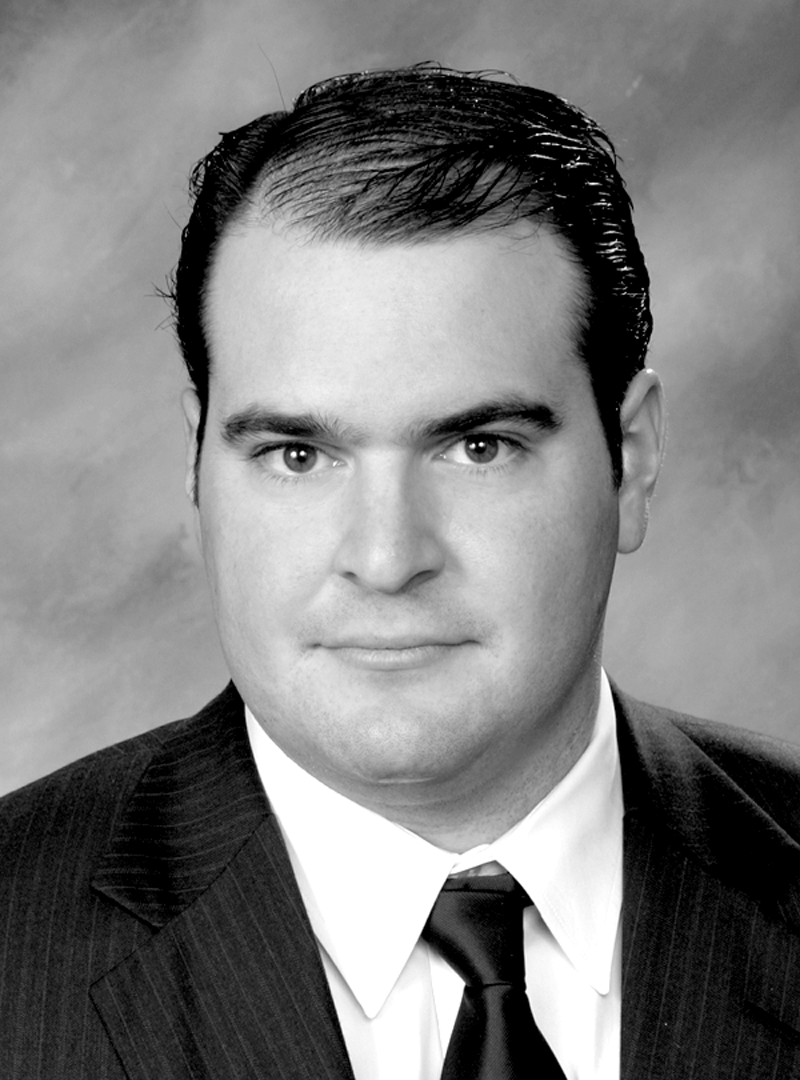
Michael Fenton

Michael Fenton

All across the four western counties of Massachusetts, solar farms are popping up on previously unutilized or underutilized land. This green technology that was once seen as an energy source of the future is thriving in Massachusetts because the Commonwealth has created financial and permitting incentives that have created a growing solar industry.
Massachusetts has become a leader in the nation for the development of solar facilities because of increased by-right zoning in municipalities, solar renewable-energy certificates, net-metering credits, federal tax benefits, and local payment in lieu of tax agreements.
What follows is a primer on these solar-power incentives, and the apparently bright future of this technology.

By-right Zoning
Massachusetts General Laws Chapter 40A, Section 3 prevents all municipalities from “prohibiting” or “unreasonably regulating” small solar-energy systems such as those commonly installed atop a home or business. However, it is not clear whether ths section applies to the construction of large-scale, ground-mounted systems which are commonly developed for private commercial purposes.
Purportedly to make up for this discrepancy and to promote green technology, the Commonwealth has made it financially lucrative for municipalities to remove zoning barriers for commercial solar developments.
In order to satisfy the Massachusetts Green Communities Act of 2008 and to be eligible for millions of dollars in state grant funding, municipalities must enact as-of-right zoning for solar photovoltaic  (PV) installations that utilize ground-mounted systems which individually have a rated name-plate capacity of 250 kW (DC) or more. Cities and towns across the Pioneer Valley that are anxious to become eligible for these state funds have enacted the expedited ‘by-right’ zoning process for large-scale PV installations.
As a result, the permitting environment is now more certain for solar developers who have long seen Massachusetts as an untapped market. To sweeten the pot even more for solar developers, the state has passed legislation allowing for the solar companies to re-sell the energy it harnesses from solar developments.

Solar Renewable-energy Certificates
Massachusetts retail electric suppliers are required to buy solar renewable-energy certificates (SRECs) for an increasing portion of the electricity that they deliver each year. SRECs are created as qualifying solar installations generate electricity.  One SREC is created for every 1,000 kHn (1 MWH) of electricity generated by a qualifying Massachusetts PV array. This has created a market demand for SRECs.  The owner of a solar PV array can sell SRECs generated by the project directly to the retail electric supplier or work with a broker who will help them identify buyers of the SRECs.

Net Metering
Additionally, customers of Massachusetts’ investor-owned utilities — National Grid, NSTAR, Western Massachusetts Electric Co., and Unitil, have the option of selling net excess electricity generated from a qualifying solar project via net metering. Net metering allows a project host to offset its electricity usage with electricity generated on site, reducing the amount of electricity the customer must buy from the distribution company. Electricity produced which is greater than the amount used by the PV facility can be sold in the form of a credit to another customer.

Federal Tax Benefits
Qualified solar PV projects are eligible for a federal investment-tax credit of up to 30% of eligible system costs if installed by Dec. 31, 2016. Additionally, under the federal Modified Accelerate Cost Recovery System (MACRS), businesses are able to recover investments in eligible solar PV through a six-year accelerated depreciation schedule. Moreover, for systems that were installed in 2012, bonus depreciation is available — businesses were able to depreciate 50% of the value of the system in the 2012 tax year.

Property-tax Benefits
Some Massachusetts towns have provided property-tax relief for large-scale solar arrays through payment in lieu of tax (PILOT) agreements. Under current Massachusetts law, municipalities have the discretion to tax energy-facility equipment or to negotiate PILOT agreements. However, the future of state law on this matter is uncertain, as there have been recent attempts to mandate a PILOT system for solar developments.
Recently proposed energy legislation on Beacon Hill would have exempted certain renewable-energy facilities, including commercial solar facilities, from local property tax, leaving communities with tax revenues equal to only 5% of electricity sales. After aggressive lobbying from the Massachusetts Municipal Assoc., that provision of the bill did not make it into the final law; however, the attempt to further incentivize solar developments through mandated local property-tax relief appears to be an ongoing discussion in Massachusetts.
The Commonwealth has emerged as a leader in the nation for the development of solar facilities; however, navigating the complex and ever-changing regulatory environment for solar development requires the assistance of experienced legal counsel. Interested renewable-energy businesses and private investors, as well as potential landlords and sellers of land for solar facilities, should speak with an attorney before pursuing a solar development in Massachusetts.

Attorney Michael A. Fenton is an associate with the Springfield-based firm Shatz, Schwartz and Fentin, P.C. He concentrates his practice in the areas of business law, real-estate development, and estate planning. He has served on the Springfield City Council since 2010, and was elected president in 2014; (413) 737-1131; www.ssfpc.com

Law Sections
Make Sure Your Heirs Can Access Your Online Information

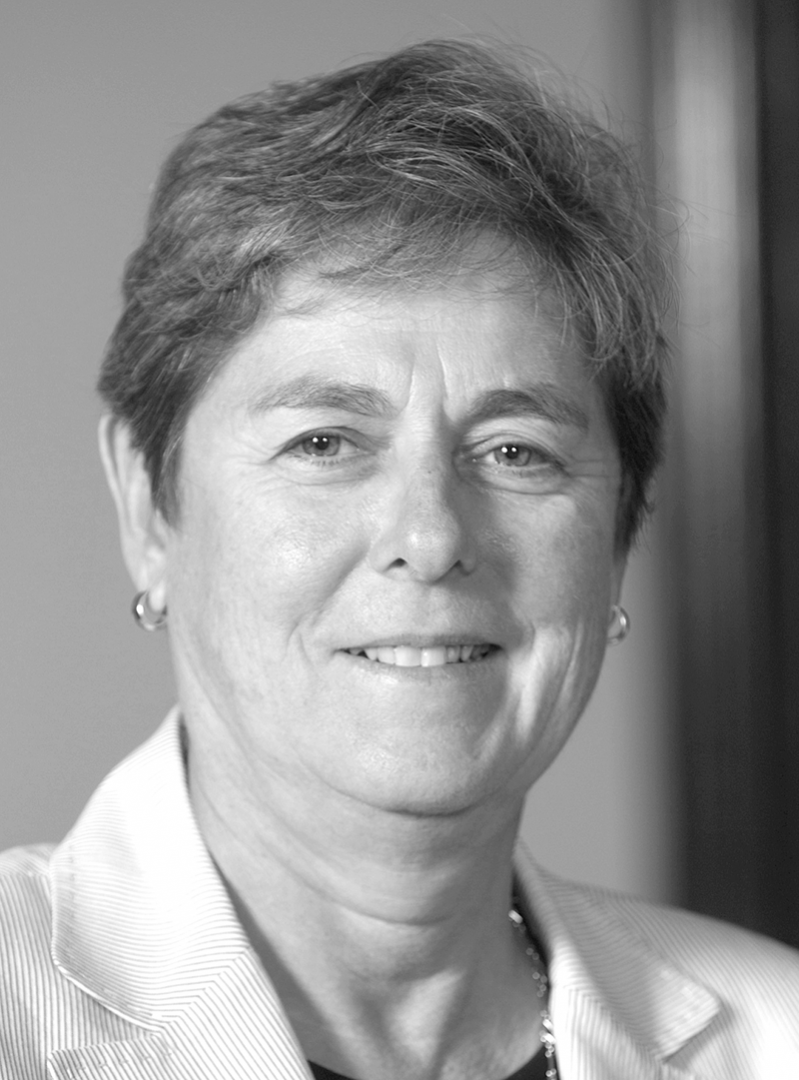
Todd C. Ratner

Todd C. Ratner

As a society, we have become more reliant on the Internet as a mechanism to keep in touch with family members and friends, share photographs, pay bills, and store other personal types of information. Digital assets are emerging as a new category of personal property.
They include digital images, electronic bank and investment account statements, e-mail records, and associated passwords, as well as social-media accounts such as Facebook, LinkedIn, Twitter, Pinterest, and YouTube. The use of digital assets will only continue to grow and evolve, and estate planners must recognize the emergence of digital assets when advising clients relative to their estate plans.
Many people erroneously believe that their spouse or next of kin may automatically step in to administer digital assets upon their incapacity or death. Although discussions have increased among legislatures regarding administration of digital assets, federal privacy laws prohibit service providers from knowingly divulging the contents of electronically stored documents, and only seven states (not including Massachusetts) have enacted statutes relative to the administration of digital assets. The validity of these state laws is unclear, since they sometimes conflict with federal law. In most cases, the user and their estate will be governed by the service-provider agreement provided by the online site.
Service-provider agreements play a large role in determining what happens to a decedent’s digital assets. Many times the user is made aware, or at least has the opportunity to be made aware, of these policies upon registering for an online service, typically by clicking a box signifying that they agree to the provider’s terms of use. However, these agreements greatly vary:
• Yahoo! explicitly provides within its agreement that the account may not be transferred, and Yahoo! retains the right to delete the content within the decedent’s e-mail account upon receipt of a death certificate.
• Gmail has a policy for potentially releasing e-mails to the personal representative of a decedent’s estate, but the agreement makes it clear that there is no guarantee that the e-mail content will be released, and a court order may be required.
• In April 2013, Google became the first service provider to offer a solution to obtaining access to a user’s account upon their death or incapacity. The feature, called the ‘Inactive Account Manager,’ may be accessed by the user during their lifetime on the user’s profile page. The Inactive Account Manager will become ‘activated’ after the user’s account is inactive for a period of three, six, nine, or 12 months, as determined by the user. The user may also determine what will happen to their data upon becoming inactive. For instance, the user may elect to delete the data, or some or all may be sent to a specific individual.
• Facebook, upon receiving notice that the user has passed away, will place the user’s profile in a ‘memorial state’ so that certain profile sections are available for viewing. That is, only the decedent’s confirmed Facebook friends may locate and post on the decedent’s profile. Facebook will also remove a decedent’s account from the site upon request by verified family members.
• Twitter will remove the decedent’s account from its ‘Who to Follow’ suggestions upon verification of death. And family member can contact Twitter to delete the decedent’s account entirely. However, Twitter will not allow family members access to a decedent’s account.
• YouTube will allow a power of attorney to access the decedent’s account.
• LinkedIn prohibits transferring a LinkedIn account to another party and provides that California law will govern all disputes.

Steps to Take
A personal representative has the fiduciary responsibility of administering a decedent’s estate, which includes discovering, protecting, and facilitating the transfer of all of the decedent’s property. Even in the event that the personal representative takes possession of a decedent’s tangible technology device, the personal representative may still face the challenge of accessing the digital assets. Therefore, it is recommended that the following steps be undertaken to facilitate access by your loved one to your digital assets:
• Create a list of your digital assets, including related account numbers, user names, and passwords. It is imperative to continually update this list every time you create a new digital asset or change a password.
• Keep that list in a secure place. There are a number of paid service companies that will retain this list for you and, upon your demise, provide the list to your designated beneficiaries. You may also use your own computer or a secure cloud-based service, such as Dropbox, to store your list. Just make sure that your decedents know where it is and how to access it. You do not want to place any passwords within your will, since a probated will becomes a public document. However, you may, alternatively, request that your estate-planning attorney retain this list within your estate-plan file.
• Leave deailed instructions regarding your wishes regarding how to use, terminate, or distribute your digital assets.
Our world has evolved. Instead of sending letters and keeping photo albums on a bookshelf, people are increasingly sending e-mails and loading pictures to social-media accounts. Currently, privacy laws and limited government interaction are hindering families of decedents from gaining access to a decedent’s online assets without prior planning, as the laws have not yet caught up with the practical issues and values that we now face relative to our digital assets. As such, proper planning and contemplation of digital assets in an estate plan will help your personal representative successfully administer your estate.

Todd C. Ratner is an estate-planning, elder-law, business, and real-estate attorney with the regional law firm Bacon Wilson, P.C. He serves as co-chair for the Alzheimer’s Assoc. Tri-County (Hampden, Hampshire, and Franklin) Partnership and is a member of the National Academy of Elder Law Attorneys and the Estate Planning Council of Hampden County. He is also a recipient of Boston Magazine’s Super Lawyers Rising Stars distinction from 2007 to 2012; (413) 781-0560; baconwilson.com/attorneys/ratner_2

Departments People on the Move

Christopher Marini

Christopher Marini

Theresa Glod

Theresa Glod

Teresa Perkins

Teresa Perkins

Meyers Brothers Kalicka, P.C. recently hired two new Associates, Christopher Marini and Theresa Glod, and announced the promotion of Teresa Perkins. Marini and Glod will work closely with clients in the firm’s Accounting and Auditing department.  Before coming to MBK, Marini interned for two years at Pignatare and Sagan, LLC, Certified Public Accountants, and earned a BBA from UMass Isenberg School and Commonwealth Honors College. He is currently pursuing his MSA at UConn, and is a member of the Mass. Society of CPAs. Glod worked previously at PricewaterhouseCoopers in New York City, and holds a BBA in Accounting and an MS in Accounting from Western New England University. She is currently sitting for her CPA exam.  Perkins was promoted to Senior Associate in the Audit and Accounting division; she was previously a Staff Audit Associate and, before coming to MBK, was a staff accountant at Big Y Foods. Perkins is a graduate of Western New England University, earning a bachelor’s degree in 2006 and an MS in Accounting in 2009. She is currently studying for the CPA exams.
•••••
Lori Gazzillo

Lori Gazzillo

Berkshire Bank recently announced that Lori Gazzillo has been promoted to Vice President and Director of the Berkshire Bank Foundation. Gazzillo will oversee the bank’s two foundations, one of which provides grants to nonprofit organizations in the communities served by Berkshire Bank, and the other in which the foundation administers the bank’s extensive employee volunteer program and scholarship program. Gazzillo has served for the past year as the foundation’s Assistant Director and assumed the key leadership role with the retirement of Peter Lafayette as former director after eight years of service on Dec. 31, 2013. Lafayette will continue in an advisory capacity. Gazzillo joined Berkshire Bank in July 2011 from Legacy Banks after Berkshire Bank and Legacy merged. While at Legacy, she served as Vice President of Community Relations. Prior to her banking career, Gazzillo worked for nine years at Massachusetts College of Liberal Arts (MCLA), overseeing the institution’s public relations. Currently she serves on the Berkshire Chamber of Commerce Board of Directors, Multicultural BRIDGE, and Berkshire Business and Professional Women. She holds a BA in Journalism from Keene State College and a M.Ed. from MCLA.
•••••
The Westfield-based engineering firm Tighe & Bond recently promoted five employees who have demonstrated exceptional performance, client service, and leadership. Three of the five have been promoted to Associate within the firm’s stock ownership program; they are:
Briony Angus

Briony Angus

• Briony Angus, AICP, a project manager who joined Tighe & Bond’s Westfield office in 2008. Angus is an environmental and land-use planner with 15 years of experience managing development projects that require approvals from local, state, and federal regulatory agencies. A certified land-use planner, Angus is a member of the American Planning Assoc., and Chair of the Amherst Conservation Commission. Angus has a BA from McGill University and a MA in Urban and Environmental Policy and Planning from Tufts University;


Susan Guswa

Susan Guswa

Susan Guswa, P.E, a senior engineer who joined Tighe & Bond’s Westfield office in 2003. She has more than 18 years of experience, serves as a project manager and design engineer for major wastewater upgrades throughout New England, and is Tighe & Bond’s Wastewater Technical Practice Group Leader. Guswa holds a BS in Civil and Environmental Engineering from Duke University and a MS in Civil and Environmental Engineering from Stanford University. She is a member of the Water Environment Federation and the New England Water Environment Assoc., and


David Popielarczyk

David Popielarczyk

David Popielarczyk, P.E., a senior engineer who joined Tighe & Bond’s Westfield office in 1986, and has more than 27 years of experience in the planning, evaluation, design, and construction management of water resources and wastewater projects. Popielarczyk received his BS in Civil Engineering from the University of Hartford, and a MS in Environmental Engineering from UMass Amherst.  He is a member of the American Society of Civil Engineers, the New England Water Works Assoc., the New England Water Environment Assoc., and the Water Environment Federation.
Also promoted into the stock ownership program were:
• Gary Roberts, an environmental scientist in the firm’s Westfield office; and
• Joseph Persechino, P.E., LEEP AP, a project manager in the firm’s Portsmouth, N.H. office.
•••••
The Springfield-based regional law firm of Bacon Wilson, P.C. announced the following:
Benjamin Coyle

Benjamin Coyle

Benjamin Coyle has been named a shareholder. He is a member of the firm’s business and corporate, estate planning and elder, litigation, municipal departments, and is a five-time recipient of the SuperLawyers Rising Stars distinction and a board member of the Western Mass. Council of the Boy Scouts of America. Coyle earned his J.D. from Western New England University School of Law and his B.S.B.A. from Western New England University.


Adam Basch

Adam Basch

Adam Basch has been named a shareholder of the firm. He is a member of the litigation department, practices in the areas of construction litigation, personal injury, general litigation, and commercial litigation. He is the former secretary of the Hampden County Bar Association, a six-time recipient of the SuperLawyers Rising Stars distinction, and serves as a member of the Wilbraham Planning Board and the United Way Allocation Committee. He teaches litigation and business law at Bay Path College and is the author of numerous construction and general litigation articles. Basch earned his J.D. from Western New England University School of Law and his B.A. from Union College.

Court Dockets Departments

The following is a compilation of recent lawsuits involving area businesses and organizations. These are strictly allegations that have yet to be proven in a court of law. Readers are advised to contact the parties listed, or the court, for more information concerning the individual claims.

CHICOPEE DISTRICT COURT
Harold J. King Jr. v. Community Healthcare Inc. and Cynthia Wiere
Allegation: Violation of confidentiality and discrimination: $5,000
Filed: 12/30/13

GREENFIELD DISTRICT COURT
Stephanie Dudos v. Riteway, LLC
Allegation: Negligence in operation of a transit bus, causing damage to the plaintiff’s parked vehicle and personal injury: $24,999
Filed: 11/25/13

Thomas Drilling & Blasting v. Colrain Sand & Gravel Inc. and Orrin W. Isles
Allegation: Breach of contract for blasting and drilling services rendered: $22,605
Filed: 12/30/13

HAMPDEN SUPERIOR COURT
Deborah Conners v. Pride Convenience Inc. and Robert Bolduc
Allegation: Employment discrimination: $30,000
Filed: 12/2/13

F & C, LLC v. Praise & Glory Church of God in Christ Inc.
Allegation: Defendant converted plaintiff’s personal property to its own use and breached covenant of good faith and fair dealing: $150,000
Filed: 10/1/13

John E. Smith v. Edwin Skowyra, Cumberland Farms Inc., and V.S.H. Realty Inc.
Allegation: Breach of duty of care to eliminate dangerous conditions when plaintiff was struck by a vehicle that hit the Cumberland Farms store: $170,000
Filed: 11/29/13

TD Bank v. Mobile Uniforms, LLC, Douglas H. Genaske, and Kathleen M. Genaske
Allegation: Breach of promissory notes: $35,104.54
Filed: 12/2/13

HAMPSHIRE SUPERIOR COURT
Sheila Lagrenade v. Lincoln Financial Group
Allegation: Denial of benefits and unfair and deceptive trade practices: $30,000
Filed: 11/13/13

PALMER DISTRICT COURT
The Endorphin Group Inc. v. Edward L. Walulak d/b/a Ski Haus
Allegation: Non-payment of goods sold and delivered: $3,411.11
Filed: 1/2/14

SPRINGFIELD DISTRICT COURT
Affordable Shoes, LTD v. Express Kitchens Holdings, LLC
Allegation: Violation of lease agreement: $56,925.45
Filed: 12/20/13

Beacon Sales Co. v. Steven Dimeo d/b/a Classical Details
Allegation: Non-payment of goods sold and delivered: $11,926.53
Filed: 12/17/13

Reindeer Logistics Inc. v. Vitaliy’s Auto Sales Inc. d/b/a Vitaliy’s Auto Transportation
Allegation: Defendant breached contract to transport vehicle: $2,719.36
Filed: 12/18/13

Education Sections
University Without Walls Offers Alternative Options for Adult Students

Orlando Ramos

Single father Orlando Ramos has been able to fit his degree work around his full-time job and his new role as a Springfield city councilor.

When Orlando Ramos of Springfield sits down to do his homework at the kitchen table, he’s often joined by another student — his 9-year-old daughter, Ariana.
As she completes her fourth-grade studies, Ramos, 31, is completing his concentration in Public Policy at the University Without Walls (UWW), a degree that will allow him to reach his next goals of a law degree and a future in public policy making.
Ramos is attending UMass Amherst’s adult degree-completion program, but, as the name implies, the classroom is one without walls, other than the walls of his home, due in part to his choice of completing his first degree completely online. The name conveys the fact that this is not a traditional university in terms of everything from physical structures to the hours spent in the ‘classroom.’
Adults like Ramos who want to change careers or never completed their degree programs, for whatever reason, need flexible support in the way of process and cost. As the nation pulls out of the Great Recession, President Barack Obama recently challenged colleges and higher-education leaders to adopt promising practices that include functions like ‘competency-based learning’ and ‘experiential learning.’ Such practices award college credits based on what students have learned in life and work experience, and offer more opportunities for adult students to get financial aid based on how much they learn, rather than the amount of time they’ve spent in class.
As one of the oldest alternative adult-education programs in the country, UWW is already at the forefront of meeting Obama’s challenge. Serving students in most fields available at the university, the unique program offers individualized degrees or course plans, 100% online, on-campus, or blended. UWW students earn a bachelor of arts or bachelor of sciences degree depending on the program they personally design, based on what credits they are able to transfer and what credits are attributable to experiential learning.
As a single father with a full-time job, it hasn’t been easy, Ramos admits, as some of his study sessions end with him waking up with a textbook stuck to his face. After years spent in construction and as a union steward with the United Brotherhood of Carpenters Local 108, a back injury just before the recession started had him considering his future options. After earning his associate’s degree in Liberal Arts from Springfield Technical Community College, he was accepted at another school to continue his education.
“But it just wasn’t for me … being in a classroom with students who were 10 years younger,” said Ramos, recalling a trying semester at a local university. “And it didn’t fit my schedule, so I really felt out of place.”
He soon found that right place at the right time in his life with UWW, and will graduate this May, according to a timeline he created.
And timelines are important, said Cynthia Suopis, a senior lecturer in Health Communications at UWW.  With the program for 12 years, she’s seen students like Ramos, as well as those in their 70s, who seek the degree that eluded them decades earlier.
For Angie Boris, 47, of Grafton, a career change from a $60,000-per-year job to her own business that she sold after the birth of a second son led to pursuing her dream of becoming a teacher through UWW online — again, on a timeline that fit her changing lifestyle.
All students, regardless of their story, enter into a process that allows them to evaluate and receive valuable credit for past experience; it’s called the ‘portfolio,’ and according to Suopis, it’s what sets UWW apart from all other online programs (more on this later).
For this issue and its focus on education, BusinessWest visited UWW to learn about this 45-year-old program, which offers a customized and affordable plan for adult students who want and need alternative means to earn a degree, and academically sound credit reflecting what they’ve truly learned in life — and on the job.

Degree by Design
Founded in 1971, the UWW program was considered fairly radical when it was rolled out, said Suopis.
“The movement was about the idea that education is more than going to classes for four years and getting a degree,” she noted. “It was started by a group of graduate students from all over the country, and the thinking was that adults have a lot of experienced work in their background; why couldn’t they get academic credit for that?”
With students ages 22 to 82, Suopis said the program has been a lifeline to individuals who have started and stopped school for families, experienced dramatic job changes, or endured hard times financially. But the philosophy of UWW is that, in addition to transferable courses from other schools, past work is honored, if it can be qualified.
While other schools may look at a student’s résumé and check off the list what is comparable to the school’s academic requirements, the UWW curriculum requires the student to spend an entire semester dissecting their résumé and other life experience; that process is called building the portfolio. It’s a reversal of the term ‘service learning,’ which means learning that starts in the classroom is then put into practice in the community. At UWW, students are bringing the practical experience with them to learn more, but receive academic credits for that past expertise.
Suopis explained that students with a minimum of 12 past college credits and a minimum 2.0 grade point average, once accepted, are required to accumulate 120 credits to earn a degree, or a ‘concentration,’ as the program labels it, and this can mean a focus on business, education, health, human services, or other fields such as journalism, criminal justice, public policy, sustainability, and applied psychology, all interwoven with their past experience.
Up to 75 of those 120 credits can go toward the selected concentration, and they are accumulated through two means: transferred credits from another school (up to 30 credits for the portfolio), or experiential learning outside the classroom.
Ramos transferred 47 credits and earned 21 more through his portfolio; Boris had 17 transferred, and her portfolio gained her another 18. Both have finished the four specific courses required of students, which entail writing the portfolio and designing their degree plan. The finished thesis is then evaluated by UWW faculty members, and not having to take classes for those credits saves not only money, but valuable time, Suopis noted.
The revenue from the four courses, either online or blended, allows UWW to be self-sustaining; the revenue from the additional online courses through UMass goes to the university.
The curriculum courses include:
• “Frameworks for Understanding,” where students design their course plan;
• “Reflections,” where they pick two subjects out of four: technology, organizations, leadership, and public policy; and
• The portfolio class, which involves a semester of critically analyzing what they’ve learned on many levels in their past.
The Reflections courses are not about content, said Suopis, adding that they are discussion points that impact students’ lives and help them write their portfolio. The first step is for the student to identify what they are good at, what they claim they know, and write about it. The writing process is a critical analysis that forces the students to pull out every minute detail of their past history and what they’ve learned, and in many cases, Suopis said, they are shocked to realize that they really did learn, and retain, a great deal of information and viable skills.
For Boris, the portfolio process was overwhelming but quite revealing.
“I consider myself fairly self-aware,” she told BusinessWest. “However, I learned that I had accomplished much more in my life than I had originally thought, and the portfolio process gave credibility to what I had done for my past career; basically my life experience was now worth college credit, and that was a big eye- opener for me.”
Suopis said this is a common reaction, and one that helps build the confidence needed for the remaining work to attain a degree.
“What we’ve found is that the sooner we get the student to write that portfolio, the better their chances are of graduating,” added Suopis, “because they see this huge number of credits coming to their transcript, and they’re like, ‘I can do this.’”

Personal Investment
But what about those students who are not skilled writers?
“There are two phobias at UWW — math and writing,” Suopis said with a laugh. “We’re not teaching them grammar, but if they can start at where they’re at and give us just five pages as we ask them a series of questions, we can get them to a place to be more comfortable with their writing.”
By the end of the semester, after numerous revisions and edits, those fearful writers are proud of their accomplishments in the past, Suopis said, and their newfound ability to record it all for credits saves hundreds, if not thousands, of dollars and valuable time.
The impact of the Great Recession is what prompted Ramos to alter his career plans. After his third back injury on the job kept him home for five months, and unemployment that followed due to a recession-prompted slowdown in the industry, he knew he needed to pursue a different, more stable path.
When writing his portfolio, Ramos learned that his past was a foundation for his future.
As a union steward, his main responsibility was to look out for the best interests of his union brothers, and little did he know back then that he was performing ‘constituent services’ — taking care of their issues and needs as a leader on the job site. And there were situations that weren’t all that easy to handle.
“As a steward, you’re not there to be friends,” he explained. “so there were a lot of situations where I had to build up the courage to stand up for my guys, and that’s a skill I know I’ve transferred to my current positions.”
Now as a district director for state Sen. James Welch, who represents the 1st Hampden District, Ramos stands up for Welch and his constituents. And as an newly elected Springfield city councilor, he’s standing up for the residents in Ward 8, which includes Indian Orchard and parts of Pine Point and Sixteen Acres, as well as all city residents with the entire council.
“I learned about what I really learned in the past,” Ramos said as he recalled the portfolio process. “It was interesting to link my experience and previous career to my current career positions because on the surface, it doesn’t look like it’s something that matches, but it does, and it’s helped me in public policy, legislation, and being elected.”

I Can Do Anything
UWW serves between 750 and 800 students each semester, with fully integrated UMass graduations of 150 per year at three different times: February, May, and September.
The stories of why students of all ages come to UWW are numerous. For some, it may be their last, best chance to earn a degree. But when a student speaks of future opportunities and self-worth, Suopis knows she’s succeeded in guiding another student in their journey to what could be their perfect job.
“We’re now having two and three generations that have gone though UWW — mom, daughter, and granddaughter — and as a 45-year old program, that’s pretty cool to see that happen.”
True to UWW’s website slogan, “we get adult students,” Ramos and Boris are good examples of non-traditional students who ‘get’ UWW, and are on their way to a future where doors will be opening because of their time spent at a university without walls.

Elizabeth Taras can be reached at [email protected]

Court Dockets Departments

The following is a compilation of recent lawsuits involving area businesses and organizations. These are strictly allegations that have yet to be proven in a court of law. Readers are advised to contact the parties listed, or the court, for more information concerning the individual claims.

CHICOPEE DISTRICT COURT
Stephen Pinero v. 17 Sumner Avenue Associates Inc.
Allegation: Negligence in property maintenance causing injury: $2,335
Filed: 12/27/13

GREENFIELD DISTRICT COURT
Denis Menard v. Rick Ward d/b/a Quality Builders
Allegation: Breach of contract for failure to construct a roof in a good and workmanlike manner: $20,630
Filed: 11/12/13

Weslee Secard v. GE Capital Retail Bank
Allegation: Negligence in opening fraudulent charge account: $8,321.57
Filed: 11/20/13

HAMPDEN SUPERIOR COURT
Clinton v. Carroll v. PAB Management Co., LLC and Hugo S. Bernal
Allegation: Breach of contract for property management: $75,000
Filed: 11/25/13

Jordan Picot ppa Gabriella Diaz and Andres Picot v. Jennifer Lemelin and Giggle Gardens Inc.
Allegation: Jennifer Lemelin, while in the course of her employment, physically abused Jordan, causing serious physical and emotional harm: $75,740.30
Filed: 12/10/13

Michael D. Goldberg and Mill Street Innovations Housing v. Morrill Stone Ring, Lauren Ring, Attorney David Farka, Attorney Alan Vanaria, and Gold & Vanaria, P.C.
Allegation: The defendants interfered with plaintiff’s existing contract with a reach and apply, causing contract to be terminated: $1.3 million
Filed: 12/20/13

Theresa Perrault v. BJ’s Wholesale Club Inc. and True Innovations Inc.
Allegation: Plaintiff attempted to sit in a display chair, and the seat of the chair tipped, causing injuries: $500,000
Filed: 12/16/13

HAMPSHIRE SUPERIOR COURT
David Pinkham v. 11 South Gallery Workshop and Pamela Pieropan Adorro
Allegation: Plaintiff sustained personal injuries as a direct result of exposure to toxic fumes and exhaust from the use of ceramic kilns in his place of residence: $30,000+
Filed: 12/26/13

SPRINGFIELD DISTRICT COURT
Beacon Sales Co. v. Keith Hutchings d/b/a Old Harbor Homes, LLC
Allegation: Non-payment of goods sold and delivered: $4,030.07
Filed: 12/18/13

Edna Tart v. Aqua-Matic Lawn Sprinkler & Irrigation Inc. and Steven McCombe
Allegation: Negligent operation of a motor vehicle: $7,795.15
Filed: 12/19/13

Liberty Mutual Insurance Co. v. Ned G. Terault d/b/a NGT Carpentry
Allegation: Non-payment on workers’ compensation policy: $8,478.76
Filed: 11/27/13

Cover Story Sections Top Entrepreneur
Tim Van Epps Fuels Growth at Sandri

COVER0114aMike Behn was in Boston, “on a mission.”
His assignment in that spring of 2005 was to essentially finish the work started by his boss, Bill (W.A.) Sandri, the previous Christmas to recruit Sandri’s son-in-law, Tim Van Epps, to be the next leader of the Greenfield-based Sandri family of companies. At the time, the enterprise was known for its gas stations stretched across Western Mass., New York, Vermont, and New Hampshire, but was also dabbling in everything from golf courses to real estate.
Behn, who was then running the motor-fuels division for the company and is now COO, didn’t believe this would necessarily be a hard sell, but he understood that he had some work to do to bring Van Epps west. After all, the then-29-year-old had a highly lucrative job managing a portfolio for Mellon Financial, and was clearly enjoying life in New England’s largest city.
“I was out in Boston finding my way, and I think I was doing pretty well,” Van Epps recalled. “My wife and I just bought our first condo right in the Back Bay — we were right where we wanted to be. And I had the best job in the world; I was probably putting in a total of 30 hours a week, and I had things on autopilot. Everything was going great.”
But Van Epps was admittedly getting bored with this life, and this mindset dovetailed nicely with the two things Behn said he had to sell to his recruit: lifestyle — meaning both quality of life and the rewards that would eventually come to the president of such a company — and, especially, opportunities.
Elaborating, he said the latter came in the form of waking up a company that he called a “sleeping giant.”
Indeed, while Sandri was, by most accounts, doing well, with more than 100 gas stations in its portfolio and an exclusive agreement with Sunoco that covered New York and New England, it was not growing, said Behn, adding quickly that, in this business, that means it was going backward.
“We were in a corporate coma,” he told BusinessWest. “I told Tim there were so many things we could do to make more money for this company and make it bigger and better than it was; it had been sleeping for years. I think that kind of talk definitely had an impact.”
So much so that Van Epps took his father-in-law’s offer, which amounted to a 60% pay cut — “I thought my wife was going to kill me at the time” — and came to Sandri as executive vice president.
To say that he woke up the company — and that he was certainly not bored as he did so — would be huge understatements.
He grew Sandri from an oil company into a $250 million, full-service energy firm, dealing in everything from wood pellets to photovoltaics. He has also expanded the main businesses, gas stations, through imaginative initiatives that have produced a 60% increase in the total number of gallons sold (the main measuring stick in this industry) to more than 70 million, with plans to get to 100 million in the near future.
One of his latest endeavors has been a push into the highly competitive convenience-store market. The Sandri name is now on five such facilities, and the ambitious goal is to increase that number to 25 or 30 over the next five years.

convenience-store market

Movement into the convenience-store market, including this location in Orange, is one of the many new business ventures launched by Tim Van Epps since he joined Sandri nearly a decade ago.

Not everything has worked according to the script, though. For example, a foray into car washes was scuttled when Sandri officials came to the conclusion that those facilities, while profitable, were ultimately less valuable to the company than the parking spaces they took up. Meanwhile, another investment in tire-pressure valves that would light up when the pressure was low produced only boxes of unwanted inventory and was quickly halted.
And there has been some divestiture in recent years, most notably selling off Fox Hollow, the company’s golf course in Tampa, Fla. — “it just didn’t fit into the portfolio anymore,” said Van Epps — as well as its lubricants business and some underperforming real estate, with the proceeds from those sales funneled into other ventures, or “redeployed,” as he put it.
But overall, Van Epps has brought needed energy, of a different kind, to this company, and for his efforts he has been chosen as BusinessWest’s Top Entrepreneur for 2013, thus joining an eclectic mix of business leaders and organizations that have received the award since it was launched in 1996.
“Like those honored before him, Tim personifies the entrepreneurial spirit that has defined this region for more than 200 years,” said BusinessWest’s publisher, John Gormally. “He has fueled the imagination of the Sandri company and positioned it for continued growth.”

Entrepreneurial Drive

Van Epps said his grandfather-in-law, Acilio Remo (A.R.) Sandri, was a colorful character with a keen mind for business, a healthy appetite for real estate, and a way with words.
“One of the things he used to say to me was, ‘we don’t sell dirt, son,’” recalled Van Epps, adding that A.R.’s M.O. was to buy property — he acquired a lot of it on or near Route 91 in the ’60s and ’70s, for example — and hold onto it, on the theory that someday it would prove itself worthy of the investment.
Well, Van Epps does sell dirt — he’s unloaded a number of parcels in recent years, on the theory that the proceeds from unused or underutilized property, on which the company had been paying taxes, could help Sandri grow some of its other ventures.
And that’s just one of the ways he’s distinguished himself from previous generations of company leadership. Van Epps said that, when he arrived, he had little appetite for standing pat — which is essentially what the company had been doing for several years — and went about his business with what he called a “day trader’s mentality.”
Before getting into what he meant by that, it’s necessary to set the stage for his arrival and chronicle the first 78 years of the company.
Our story starts with A.R. Sandri, who was born in Barre, Vt., but grew up in Greenfield. Soon after graduating from high school, he took a job working as a clerk for the Pan-Am Oil Co., and in 1930, he was offered a lease on a gas station at 155 Main St. in Greenfield, and subsequently started the A.R. Sandri Co. Recently renovated, that station is still in the company’s portfolio, and a landmark of sorts in a service area created and then greatly expanded by A.R. and W.A. that came to be known within the corporation simply as ‘Sandri Land.’
Its borders were broadened greatly in the ’40s, ’50s, and ’60s, as A.R. began buying up real estate along what would become the I-91 corridor. At the same time he was bulking up his portfolio, A.R. was expanding the company into a fuel distributor and seller of heating oil, lube oil, and other related products. In 1964, he inked a deal with Sunoco to fly that company’s flag exclusively over the stations he was acquiring, and by 1969, he had 50 stations, as well as 2,200 heating-oil customers and 230 commercial and farm gasoline accounts.
In 1973, W.A. took the reins of the company, and within a few years he would launch initiatives that would achieve explosive growth. The most significant of these came in 1976, with the buyout of all Sunoco’s stations in Vermont and Southern New Hampshire, as well as New York, making Sandri, then with about 140 stations, the largest distributor of Sunoco gasoline, fuels, and lubes in the country.
Under W.A., the company bought a number of home-heating-oil companies, while also growing the lubricants business and developing some related ventures. And in 1987, he took Sandri in a completely new direction — golf.

Bernardston’s Crumpin-Fox

While the company has sold its golf course in Florida, it remains an aggressive player in the golf business and plans more improvements to Bernardston’s Crumpin-Fox, seen here.

He purchased the Crumpin-Fox Club in Bernardston from a friend when it was still a nine-hole layout, built a second nine, and then eventually added more layouts to what became known as the Fox family of courses within the company. Fox Hollow was opened in 1993, and in 2001, Fox Hopyard, in East Haddam, Conn., was added to the portfolio.
A few years into the new millennium, W.A., who passed away just over a year ago, started to get serious about succession planning and transitioning the company to the next generation of ownership, whomever that might be. Behn said there was no one in the Sandri family ready or willing to take over, and as a result there was actually talk of selling the enterprise. But eventually, W.A. set his sights on his son-in-law.
Van Epps remembers Christmas 2007 and, in particular, a discussion with W.A. over a single-malt scotch.
“We were sitting by the fire, and he said, ‘it’s becoming very common for in-laws to join family businesses,” he recalled. “He asked me if I would be interested in having a chat about the Sandri family of companies. And then he dropped it. A few weeks later, I was out skiing at Tahoe, and he called and asked if I wanted to come to Florida and meet his team.
“I liked what they were doing — I was curious about it,” he went on, adding that this curiosity turned into hard interest. “Then Mike came out, and we talked brass tacks.”

Burning Desires
Van Epps said the ensuing transition in leadership was a somewhat difficult time for both him and the company. “Stressful” was a word he used more than a few times to describe it, and “culture shock” was a phrase he borrowed to sum up what both he and most of his employees were going through.
He said the company was pretty set in its ways by the time he arrived, which meant, in his estimation, that it had lost a good bit of its entrepreneurial zeal.
He didn’t waste any time trying to find it again, and admits that this abrupt shifting of gears didn’t sit well with everyone. Meanwhile, Van Epps wanted to create his own team, rather than inherit one, and this resulted in some additional stress.
“You had people who were used to working for the former COO, and they were used to doing things their way,” he said. “I came in, and I wanted to change pretty much everything in the company, and when you have new blood that comes in and you have change, it’s stressful.
“From 2005 to 2008, it was pretty stressful to work at Sandri with all the changes that were happening,” he continued. “We lost some employees — I wanted some new blood in here, and I knew, when I came in here as an in-law, that I was going to have to operate this company as if it was my own money, and that’s exactly what I did.
“I had the mentality of a day trader — I guess I wanted instant gratification,” he went on. “And then you come to a company that’s been around for 80 years, and that’s not how it works.”
Moving quickly amid this culture shock, Van Epps put most of his focus on transitioning Sandri into a diversified energy company, a move that might seem to run counter to logic if one of the main products it sold was heating oil, but Van Epps believed it made perfect sense.
And he cited the move into the wood-pellets business — the company is now the largest marketer of bulk and bagged wood pellets in the country — as one example.
“In 2009, when the price of fuel oil went to $5 a gallon, we saw a runoff of our gallons of about 20%,” he recalled. “We wanted to know where those folks were going, and we soon discovered they were going to wood pellets, so we decided to get into that business.”
In March 2010, the company was awarded a $3.2 million grant from the Mass. Department of Energy Resources, which has been used for a variety of purposes, including the purchase of a small fleet of wood-pellet delivery trucks and the installation of several institutional, commercial, and residential renewable-energy systems, including facilities at Greenfield Community College, the Greenfield fire station, and other locations.
The company has made similar forays into solar and geothermal systems, and has met Van Epps’s goal of becoming what he called a “one-stop shop and energy company of the future.”

Getting Pumped
Beyond this diversity, though, Van Epps and his team have also fueled growth of the company’s core business — gasoline and gas stations — and recorded that aforementioned surge in the number of gallons sold.
That jump has come through some imaginative initiatives, including a partnership with the grocery store chain Price Chopper, which is a major player in New York and has a few stores in Massachusetts and other New England states.
Price Chopper teamed with Sunoco in one of the early rewards programs that have become prevalent in recent years, said Behn, adding that the lure of becoming one of the redemption stations for the program has prompted a number of formerly competing distributors to become Sandri partners.
“People could get 10 cents a gallon off for every $50 in groceries they purchased, with no limit on how much this could accumulate,” he explained. “We did a test in Keene, N.H., and the results were phenomenal. At that point, Tim and I went to Sunoco and said, ‘can we expand this program throughout our marketing area?’”
Sunoco agreed, and the program expanded first into New York state and then other regions, including Western Mass.
“We said, ‘we’ll give you coverage wherever you have a Price Chopper store; if we don’t have a Sunoco station, we’ll find one,’” Behn went on. “Tim and I hit the road, and in 2008, we convinced a number of distributors that are similar in structure to Sandri to take down their existing brand sign and put up a Sunoco sign, because they saw the power of the Price Chopper program.
“We’d go in with a PowerPoint and say, ‘here’s the program … you’re our first choice, and if you don’t want it, we’ll go to our second choice,’” he continued. “We didn’t miss on one, and now we have several distributors that used to be competitors that we’ve made into partners; it’s been a win-win for both of us.”
Another contributor to that surge in volume for the company has been its ability to convince independent station owners to take down rival fuel company flags and convert to Sunoco, said Behn, adding that, while the Price Chopper program is certainly a factor in the company’s success with conversions, Sandri’s quality of service and the fact that station owners can get the president of the company on the phone also play a big part in what is an ongoing source of growth.
Meanwhile, the company has been changing the nature of its portfolio in some respects, said Van Epps, as he returned to A.R.’s quote about dirt — and how he doesn’t agree with that sentiment.
Over the past several years, Sandri has sold many of its gas stations, redeployed that capital into other pursuits, and gained new wholesale customers in the process. In so doing, the company that once owned 140 stations now owns roughly 80 and supplies another 80, said Van Epps, adding that this shift toward becoming more of a wholesale company creates greater balance of fixed and variable margins.

A Matter of Convenience
Looking ahead, Van Epps said he still has that day-trader mentality, and is looking at ways to both geographically expand Sandri Land and, especially, make it more densely populated with business opportunities.
One of those ventures is the push into the highly competitive world of convenience stores, he said, adding that the company began to explore options in this realm roughly two years ago.
The initial thought was to embrace what Van Epps called the “urban model” of convenience stores, with the company leasing out its locations to a regional or national operator.
“We had meetings with some of these people, but at the 23rd hour, I decided that we could do this ourselves, and do it better ourselves,” he explained, adding that the Sandri name first went on such a facility early last year, and the current business plan calls for investing $25 to $30 million in what might eventually be 35 to 45 more stores.
“We’re calling these our ‘convenience stores of the future,’” said Van Epps, with four now operational — in Orange, Lee, Greenfield, and West Lebanon, N.H. — and more in the pipeline, with both new construction and rehabbing of existing facilities planned.
The challenge moving forward is to differentiate these stores in a very crowded market, said Behn, adding that Sandri intends to do that with such amenities and programs as free ATMs, 99-cent coffee, and customer-service representatives that reflect the company’s values.
And while the company sold its Florida golf course, it is by no means getting out of the golf business, said Van Epps, adding that it is essentially regrouping at a time of growing competition and challenge in this industry.
Elaborating, he said that when Crumpin-Fox was launched, there was very little competition in the high-end side of the business, both in this region and across the state, and as a result, golfers from around New England found remote Bernardston and made at least once-a-year pilgrimages.
But over the next two decades, the landscape changed considerably, with new courses such as the Ranch in Southwick and clusters of layouts — in Plymouth, for example — that gave the golfing public more options, which they have exercised.
This new environment has prompted Sandri to invest more than $1 million in the course, said Van Epps, adding that the immediate goal is to prompt golfers to “rediscover Crumpin-Fox.” Meanwhile, the company will look to sell more of that aforementioned dirt — some of the 600 acres the course sits on — for housing developments.
Looking back, and also ahead, Van Epps believes he and his team have the company positioned for stability and steady growth.
“Did we do everything right in the beginning? Absolutely not, but we’re at the point where I think we’re on the right track,” he told BusinessWest. “There’s no question that this company, which is operating in Franklin County, is going to be a lot bigger and a lot more successful than it’s ever been.
“We’re able to do some things now that we weren’t able to do in the past,” he went on. “We have a lot of pretty neat things going on here.”

Pedal to the Metal
Returning to that mission he went on in Boston to both recruit and “vet” Van Epps, Behn remembers meeting him at a Back Bay restaurant for lunch.
“This was his turf — it was a really exciting restaurant with a lot of young executives going in and out,” he recalled. “I said to myself, ‘I don’t think he’s going to want to leave this.’”
To make a long story short, he did. And the rest, you might say, is history very much still in the making.
Indeed, this is a story where some of the chapters have been written, but many are still in Van Epps’s imagination, waiting for the day trader to bring them to fruition.
“Bill and A.R. both wanted to see this company go on for five or six generations, probably more,” he said. “Five years from now, this company may not look like it does today, and that excites me; it gets me out of bed every morning and keeps me coming in here — the ability to go in any direction that we see fit to create growth and vibrancy.”
In other words, the sleeping giant is now wide awake.

Previous Top Entrepreneurs

• 2012: Rick Crews and Jim Brennan, franchisees of Doctors Express
• 2011: Heriberto Flores, director of the New England Farm Workers’ Council and Partners for Community
• 2010: Bob Bolduc, founder and CEO of Pride
• 2009: Holyoke Gas & Electric
• 2008: Arlene Kelly and Kim Sanborn, founders of Human Resource Solutions and Convergent Solutions Inc.
• 2007: John Maybury, president of Maybury Material Handling
• 2006: Rocco, Jim, and Jayson Falcone, principals of Rocky’s Hardware Stores and Falcone Retail Properties
• 2005: James (Jeb) Balise, president of Balise Motor Sales
• 2004: Craig Melin, president and CEO of Cooley Dickinson Hospital
• 2003: Tony Dolphin, president of Springboard Technologies
• 2002: Timm Tobin, then-president of Tobin Systems Inc.
• 2001: Dan Kelley, then-president of Equal Access Partners
• 2000: Jim Ross, Doug Brown, and Richard DiGeronimo, then-principals of Concourse Communications
• 1999: Andrew Scibelli, then-president of Springfield Technical Community College
• 1998: Eric Suher, president of E.S. Sports in Holyoke
• 1997: Peter Rosskothen and Larry Perreault, then-co-owners of the Log Cabin Banquet and Meeting House
• 1996: David Epstein, president and co-founder of JavaNet and the JavaNet Café

George O’Brien can be reached at [email protected]

Employment Sections
Vacation Time Isn’t a Benefit If Workers Don’t Use It

Patti D’Amaddio

Patti D’Amaddio says employees at area companies earn vacation milestones faster than they did a decade ago.

When it comes to vacations, Patti D’Amaddio said, there’s good news and bad news.
The good news is that employees are being offered more time off than in years past.
“It used to be that you earned two weeks after a year of work, but not so much anymore,” said D’Amaddio, director of Strategic HR Services at the Employers Assoc. of the NorthEast. “A lot of companies are now giving time off during the initial period of employment, as opposed to waiting a year.”
Not only that, but EANE surveys show that the average employee in the region gets bumped up to three weeks off after five years on the job. “It used to be 10, but that’s come down.”
The bad news? Too many workers today are leaving vacation on the table, unused, because they feel like they can’t afford to take time off.
According to an online poll by Right Management, a division of ManpowerGroup, 69% of respondents did not take all their vacation time in 2013 — consistent with the 70% who reported the same in 2011 and 2012 — while just 31% said they maxed out their time.
“No question every company is doing more with less. They have to remain as competitive as they can with foreign countries. It’s not easy for businesses, and it isn’t easy for employees,” said D’Amaddio as she explained why employees might be loath to take earned time off.
“A company really has to look in the HR department, look at the numbers, look at the facts, and figure out what the utilization is,” she continued. “They need to ask, ‘are our people using their time? Do we have a problem or not? If so, is it a company-wide problem or a department problem?’ If the president of a company wants a culture that encourages people to take rest and relaxation, he has to know whether this is happening.”
Richard Goldstein, vice president of Benefits at MassMutual, said his company, one of the region’s largest employers, emphasizes the value of time off.
“We periodically send notes out to the managers, reminders to encourage their employees to take their time. And, for the most part, the people in my group do. I have a conversation with them around November — ‘make sure you take all your vacation time.’”
Many American workers aren’t hearing this message, or are choosing to ignore it. U.S. workers left an average of 12 vacation days unused this year, double the number from 2011, according to a survey conducted by travel website Hotwire. Some of these days can be rolled into the following year, but that’s no guarantee they will be used.
“Financial pressures often put a burden on travel plans, and this is causing an alarming increase in Americans leaving vacation days unused,” said Henrik Kjellberg, president of the Hotwire Group. “This is a trend I am hoping will soon change.”

All They Ever Wanted
What is changing is the way companies are structuring vacation time, D’Amaddio told BusinessWest. For one thing, fewer employers allow employees to take their entire allotment of vacation right away.
“A lot of companies have gone to the accrual formula, accruing time each month or each pay period,” she said, noting that this makes sense in Massachusetts, where employers are legally obligated to pay out unused vacation time as wages when an employee is terminated. “Instead of giving somebody two full weeks of vacation, then having them leave the next day, the accrual formula avoids that.”
Vacation laws vary substantially from state to state, she said. Connecticut’s employment laws don’t require companies to pay unused vacation time as wages, but they are typically required to honor their own handbook. So it comes down to how a policy is written.
“If a company says vacation time is not payable at the time of termination, it’s not payable,” D’Amaddio said. “Now, that doesn’t mean companies don’t often provide better benefits than the law requires. A lot of companies in Connecticut will pay out vacation, but they don’t legally have to.”
In addition to a shift toward accrued time off, she noted, many employers are beginning to blend vacation time, sick days, and personal days into one pot, simply calling it ‘paid time off.’
“Again, there are benefits for some parties, like people who are never sick,” she said, as well as people who don’t enjoy lying to their bosses. “Why make employees call in sick when their kid is sick? Or if they suddenly got tickets to the Patriots, and they have to schedule their vacation days in advance? This gives people more flexibility.”
In some cases, however, blended time off actually reduces the total package. In Goldstein’s 11 years at MassMutual, he’s seen the benefit program morph in some ways, but the time-off package has remained divided into different buckets.
“What we offer here is fairly generous,” he said, noting that new employees start with 15 days vacation — five of which can be carried over into the following year — plus five sick days and four personal days for unplanned absences. “Say you wake up in the morning and your kid’s sick; that’s an unscheduled day off.

Richard Goldstein

Richard Goldstein says managers at MassMutual encourage employees to use the vacation time they’ve earned.

“It’s a pretty generous program, but you have to consider it in its entirety with retirement, medical benefits, and holidays,” Goldstein added. “There are bump-ups for longevity and seniority, but that’s what our new hires get.”
MassMutual, as an organization, has long expressed a philosophy of valuing work-life balance, and making sure employees take time off is one aspect of that, he noted. That can be difficult during peak times and major projects, but he doesn’t consider leaving time on the table to be a rampant issue.
“If we’re stuck on a big project, I’m sure the people working on those transactions can’t carve out a lot of time,” he told BusinessWest, “but for the most part, we encourage people to take time off.
“We don’t believe in making it mandatory,” he added. “As with anything in life, it’s all about balance between peak production times, with all hands on deck, and slower times. For the most part, it works. I personally think vacation is healthy, and I encourage my folks to make sure they’re not leaving days on the table. I think it’s important to recharge.”

Have to Get Away
Matt Norquist, general manager at Philadelphia-based Right Management, agrees that spending significant time away from work carries many benefits, including increased productivity.
“Every employee at every level should be encouraged to take time to re-energize, recharge, and relax to be more satisfied and productive on the job,” he said in a post on the company’s website. “The importance of vacation cannot be understated in today’s workplace when companies are doing more with less and adding workloads to their teams.”
According to Norquist, taking vacation time is a vital part of maintaining job satisfaction, and employees who take time off are more inspired and motivated to do their best work. “Ultimately, vacations contribute to engaged, loyal, and satisfied employee teams and build a positive workplace culture that not only reduces turnover, but also creates a stronger brand image in the market.”
The catch, Goldstein said, is that some employees never really stop working, even when they’re on vacation, because of e-mail and cell phones. “They never check out in today’s work world. With their remote devices, they’re always in tune.”
D’Amaddio cited one EANE-client company that requires every employee to take at least one full week off, and to shut off all e-mail and cell-phone access to work during that time. “That’s because there’s time off, and then there’s really time off,” she said. “Many people never shut down. When you’re engaged at work with smartphones and e-mail and everything else, you’re not really off.”
It all comes down to what kind of work-life culture an employer is really trying to create, she explained.
“The company and HR should really ask, ‘do we have a problem? Are our people using their time, or are a lot of people carrying it over? If they are, why? Is it just this year, or is there a history, and why? What kind of culture do we want to set?’
“If they want to set a culture stressing morale and work-life balance, they will want people to take vacation time,” D’Amaddio continued. “The culture is set at the top, whether that’s the top of the department or the top of the company.”
A major part of that is making sure department heads clearly express the importance of taking time off, she said. “And your HR department should be measuring the impact in terms of turnover and retention. Why are employees leaving? It’s great to have time off, but what if you can’t take it?”
If the tide turns and employees start taking more of the vacation time they’ve earned, she added, it will likely be the Millennials, the youngest generation in the workforce, who lead the charge.
“They want that. As Baby Boomers, we’re more willing to give up time, but Millennials are not going to be so inclined. So the paradigm is going to switch, and we need to understand that.”

Joseph Bednar can be reached at [email protected]

Court Dockets Departments

The following is a compilation of recent lawsuits involving area businesses and organizations. These are strictly allegations that have yet to be proven in a court of law. Readers are advised to contact the parties listed, or the court, for more information concerning the individual claims.

CHICOPEE DISTRICT COURT
Capital One v. Walter E. Gazda, DMD
Allegation: Breach of credit agreement: $5,055.16
Filed: 12/3/13

David Pepin v. NCR Corp.
Allegation: Defendant failed to pay accrued vacation and personal pay: $5,786.84
Filed: 12/4/13

HAMPDEN SUPERIOR COURT
Laura E. Gormally v. William F. Milbier, Northeast Grounds Management Inc., Donald F. Anderson, Markdon Realty, LLC, Anderson Services, LLC, and Hampden Bank
Allegation: Defendants Northeast Grounds and Milbier are in default on an $800,000 promissory note. All other defendants conspired with Milbier and Northeast Grounds to avoid paying amounts due under the note so as to enrich themselves at the plaintiff’s expense: $629,683.66
Filed: 11/27/13

HAMPSHIRE SUPERIOR COURT
Amara Davis v. Karen Judge d/b/a Marche for Hair
Allegation: Negligence in property maintenance causing injury: $12,958.50
Filed: 12/9/13

NORTHAMPTON DISTRICT COURT
Easthampton Savings Bank v. Brian Burrows General Contracting & Home Improvement
Allegation: Breach of credit agreement: $10,567
Filed: 11/26/13

Jose Baez v. Beaudry Home Inspections
Allegation: Mold remediation to the basement of a home: $26,920.71
Filed: 10/25/13

TBF Financial v. Metal Mammoth Inc. d/b/a Heavy Metal
Allegation: Breach of lease agreement: $8,715.39
Filed: 10/22/13

SPRINGFIELD DISTRICT COURT
Jane A. Brooks v. West Springfield Fish and Game Club
Allegation: Negligent maintenance of property causing trip and fall: $5,141.29
Filed: 11/12/13

Jaya Lodgings, LLC d/b/a Candlewood Suites v. Iron Horse Preservation Society Inc.
Allegation: Defendant owes for room charges for 392 nights at Candlewood Suites: $17,945.75
Filed: 12/2/13

Kasson & Keller v. Interstate Products
Allegation: Non-payment for services rendered: $20,097.36
Filed: 11/15/13

WGGB Inc. v. Donald D. Stowers Jr. d/b/a D&L Fence Co.
Allegation: Non-payment for advertising services rendered: $5,713.75
Filed: 11/19/13

Agenda Departments

Training for Real-estate Sales
Jan. 21: Springfield Technical Community College’s Workforce Development office will offer “Preparation for the Real Estate Exam,” a state-approved course for those interested in becoming licensed real-estate salespeople. This course is designed to acquaint the prospective real-estate salesperson, as well as the potential buyer or seller of a home or investment property, with the fundamentals of real-estate law and procedures in Massachusetts. The program begins on Jan. 21 and will convene on Tuesday, Wednesday, and Thursday evenings from 6 to 9 p.m. Space is limited. To register, visit www.stcc.edu/wd or call (413) 755-4502.

Nonprofit Marketing Roundtable
Jan. 28: Struggling to gain visibility with your target audience? Are your marketing materials producing tangible results? Are your best messaging ideas living only in your head? The Nonprofit Marketing Roundtable 2014 Workshop will be held from 8 to 9:30 a.m. at the Greater Northampton Chamber of Commerce, 99 Pleasant St., Northampton. Three women business owners — Janice Beetle, Ruth Griggs, and Maureen Scanlon of the Creative, a marketing and communications collaboration in Northampton — will lead a nonprofit Flash marketing workshop. They will meet with business owners, listen to your marketing and communications concerns, and help you brainstorm practical, professional solutions on the spot. Learn more about how to strategize, advertise, brand, and promote your business; reach the media; and maximize your message in person, in print, and online. The workshop, presented by the Creative Marketing Group, is free, but pre-registration is required, and space is limited. To register, contact Jasmin Tomic at (413) 584-1900 or [email protected].

Ad Club Luncheon
Jan. 29: In the toughest of times, smart marketing is a must. Join John Chandler, chief marketing officer of MassMutual Financial Group, for the Advertising Club of Western Mass. Luncheon, starting at 11:45 a.m. at the Springfield Sheraton, 1 Monarch Place. Learn how this Fortune 100 financial-services company has used a straightforward, results-driven marketing strategy to help create six straight years of record sales results and expand into new markets, all during the worst economic downturn in more than a half-century. Chandler will share the company’s marketing principles and examples of its work that are driving marketplace success.
Registration begins at 11:45 a.m., and the program runs from noon to 1:30 p.m. Cost: $25 for members, $35 for non-members, and $15 for students. Parking is free in the Springfield Sheraton garage (bring your ticket or coin for validation). To reserve a seat, call (413) 736-2582 or e-mail [email protected] by Jan. 24.

Difference Makers 2014
March 20: The sixth annual Difference Makers award program, staged by BusinessWest, will be held at the Log Cabin Banquet & Meeting House. Details on the event will be published in upcoming issues of the magazine. Difference Makers is a program, launched in 2009, that recognizes groups and individuals that are, as the name suggests, making a difference in this region. The editors and publishers of BusinessWest have examined this year’s stack of nominations and have chosen the class of 2014, and the winners will be announced in the magazine’s Feb. 10 issue. For more information, call (413) 781-8600.

Court Dockets Departments

The following is a compilation of recent lawsuits involving area businesses and organizations. These are strictly allegations that have yet to be proven in a court of law. Readers are advised to contact the parties listed, or the court, for more information concerning the individual claims.

CHICOPEE DISTRICT COURT
Arnold’s & Eddies Food Inc. v. West Street Bar & Grill Inc. d/b/a Maximum Capacity
Allegation: Breach of contract and monies owed: $7,054
Filed: 12/4/13

Gwendolyn A. Corden v. Family Dollar Store
Allegation: Negligent property maintenance causing injury: $3,640
Filed: 11/15/13

Ondrick Natural Earth, LLC v. Connecticut Valley Landscaping Inc. and Steve E. Bercume
Allegation: Breach of contract and monies owed: $5,516.49
Filed: 11/18/13

HAMPDEN SUPERIOR COURT
American Express v. Brent J. Bertelli and Bertelli Holdings
Allegation: Breach of contract: $39,000
Filed: 11/26/13

HAMPSHIRE SUPERIOR COURT
Blake Group Holdings Inc. d/b/a Blake Equipment v. Richard A. Baker d/b/a Geosun Design
Allegation: Non-payment of goods sold and delivered: $41,497.13
Filed: 12/10/13

NORTHAMPTON DISTRICT COURT
Donald F. Kelloway Jr. v. Core Security Technologies
Allegation: Suit on previous judgment: $3,337.24
Filed: 10/17/13

John P. O’Rourke v. The Hampshire Council of Governments
Allegation: Failure to pay wages: $3,859.24
Filed: 11/5/13

Sesac Inc. v. Cutting Edge Broadcasting Inc. d/b/a WEIB-FM 106.3
Allegation: Breach of performance license agreement: $16,867.64
Filed: 10/7/13

SPRINGFIELD DISTRICT COURT
Board of Trustees Wentworth Condominium Trust v. J.W.O. Realty Inc. and Tallage, IMR
Allegation: Unpaid condominium common-area charges: $4,669.50
Filed: 12/2/13

East Baking Co. Inc. v. Papa’s Bread & Snack Co.
Allegation: Non-payment of goods sold and delivered: $33,880.50
Filed: 12/4/13

Goodless Electric Co. Inc. v. Target Restoration Inc.
Allegation: Non-payment for electrical goods and services rendered: $8,852.90
Filed: 11/22/13

Jaya Lodgings, LLC d/b/a Candlewood Suites v. Energy Smart Resources Inc.
Allegation: Breach of contract, misrepresentation, and monies owed: $57,600
Filed: 12/2/13

Skyworks, LLC v. Optimum Building and Inspection Services Inc.
Allegation: Balance remaining for rental equipment provided: $4,928.50
Filed: 11/20/13

40 Under 40 Events
Nominations Are Being Accepted for the 40 Under Forty Class of 2014

40under40-LOGO2012Jeff Fialky called it “quality control.”
That’s how he chose to describe the third and final phase of his process for scoring the more than 100 nominees for BusinessWest’s 40 Under Forty Class of 2013.
Fialky, a member of the Class of 2008 and one of five judges of last year’s candidates, said he started his assignment by simply reading each of the nominations in their entirety, without assigning any scores, to get what he called a “flavor, and basis of comparison.”
“I then flipped the stack back over and went through them again,” he went on, adding that he did so with some gauges, or barometers, that would help him assign a number — 1 through 10 — to each of those nominations. The so-called quality-control work came the following morning, after a good night’s sleep and with some fresh perspective, when he went through the pile one more time to assess the numbers he assigned to each candidate to make sure he was totally comfortable with each one.
“I think I probably changed a dozen scores — not significantly, maybe one number up or down, based upon comparisons with the other nominees,” he said, adding that he’s not sure how the other judges went about their work last February, but he’s quite sure that the subjectivity that is part and parcel to the judging process is one of the things that makes the 40 Under Forty competition unique and what he called a “perfectly imperfect” undertaking.
“This 40 Under Forty program is about distinguishing oneself in the community,” he noted. “Whether it’s personally or professionally, it is truly a comparative exercise, and the fact that judges come at it in different ways makes it more compelling.  And while those approaches are different from each other, the end result is a great compilation of leadership in the Valley.”
Mark O’Connell agreed. The managing partner of Wolf & Co., with offices in Boston and Springfield, he also judged the Class of 2013, and took a decidedly different tack, what he called a more “analytic approach.”
Elaborating, he said he assigned hard numbers to certain aspects of candidates’ résumés — with a specific total of points awarded for such things as owning one’s business, getting involved with area nonprofits, and earning acclaim within one’s profession. The process, he said, took some of the subjectivity out of the equation.
“It became a mathematical process, essentially, and I was able to draw a line under the first 40,” he said, noting that, while his method may have been different from those used by others, he believed it worked, because only a handful of “his” top 40 were not eventually identified as winners.
By mid-February, another group of five judges (they’re profiled on page 18) will be developing their own strategies for assigning scores for what will likely be another 100 or so candidates in this, the eighth edition of the 40 Under Forty competition.
It all began in late 2006, said BusinessWest Associate Publisher Kate Campiti, when the magazine decided to embrace a concept used by a number of business publications across the country to identify, profile, and celebrate rising young stars in a given community.
Over the years, individuals from nearly every sector of the economy — from healthcare to retailing; technology to law; banking to nonprofit management — have made the list and climbed to the podium in late June to accept their plaque and the applause of friends, family, colleagues, and fellow recipients past and present.
The Class of 2013 was especially diverse, with the list of winners including a charter school founder, a construction company owner, several lawyers, an environmental scientist, and the vice president of sales for a company making next-generation hand dryers.
It was a class that surprised Fialky in some respects, and in a positive way.
“What I really enjoyed about my experience judging was seeing all the talent potential in the valley,” he explained. “You know that there’s been so many honorees over the prior years, and you intuitively think that the talent pool has been exhausted. But then you look at all the nominations, and you realize that it’s only the tip of the iceberg that’s been tapped.
“Some years favor service providers, some years favor nonprofit managers, some favor entrepreneurs, and some favor strength of character,” he went on, referring to the general makeup of the previous six classes. “I think last year’s class had an element of all four of those things.”
O’Connell concurred. “I think this was a great class — I came away very impressed,” he said, “and also feeling very good about the future of this region.”
There are now 280 people in the unique fraternity that is 40 Under Forty, said Campiti, noting that many of them have moved on to different jobs and different challenges, and some of them now have a different area code on their cell phones, but their 40 Under Forty plaque usually goes with them wherever they go.
Fialky agreed.
“It’s become a symbol of excellence, a symbol of leadership, if you will,” he said, adding that 40 Under Forty has become both a brand and something to aspire to.
The popularity — and importance — of the 40 Under Forty program has been driven home by the steady growth and evolution of the annual 40 Under Forty gala, this year to be staged on June 19 at the Log Cabin Banquet & Meeting House in Holyoke. Last year, the event drew a sellout crowd of more than 650 people, who were treated to fine food, perfect weather, and an eclectic array of music, chosen by the winners to accompany their ascension to the stage.
“The gala has become a happening, a not-to-be missed gathering that is also the year’s best networking opportunity,” said Campiti, adding that those who wish to attend must act quickly, because the gala traditionally sells out weeks before the event.
Before anyone can move to the stage to get their plaque, however, they must be nominated. And both Campiti and Fialky, who has been on both sides of the equation — as both candidate and judge — stressed repeatedly that 40 Under Forty is a nomination-driven process, something that is still lost on many who wish to forward a name and résumé for consideration.
“That’s where it starts, with the nomination,” said Campiti. “It needs to be complete, it needs to be thorough, and it needs to essentially answer the question, ‘why is this individual worthy of a 40 Under Forty plaque?’”
The nomination form requests the basic information on an individual, said Campiti, and can be supported with other material, such as a résumé, testimonials, and even press clippings highlighting an individual’s achievements in their chosen profession or within their community.
Nominations must be received by the end of the business day (5 p.m.) on Feb. 7. Judges will then score those nominations, and the winners will be notified by mail by the end of the month.
The chosen 40 will be profiled in the magazine’s April 21 edition, with gala tickets going on sale soon thereafter. For more information, call (413) 781-8600, ext. 100.

Fast Facts
What: The 40 Under Forty nomination process
Deadline: Feb. 7 at 5 p.m.
How to Nominate: Use the form in BusinessWest (it will also appear in subsequent editions), or go here.
For More Information: Call (413) 781-8600, ext. 100, or visit www.businesswest.com.
The 40 under forty Gala: June 19
Where: The Log Cabin Banquet & Meeting House
Tickets: They’ll go on sale in late April and will first be made available to winners and their families and employers.

Events

Editor’s Note: Again this year, five individuals have been chosen to score the nominations submitted for the 40 Under Forty Class of 2014. In keeping with past practice, BusinessWest has chosen two former winners to be part of this panel — in this case, members of the classes of 2011 and 2013. In addition, BusinessWest has sought out individuals with experience in business and entrepreneurship. This year’s judges are:

Jim Barrett

Jim Barrett

• Jim Barrett, CPA/PFS, MST is the managing partner of Meyers Brothers Kalicka, P.C., the largest regionally based public-accounting firm in Western Mass. He is a certified public accountant licensed in Massachusetts and Connecticut, and holds a personal financial specialist credential. In the taxation practice, he works with privately held commercial companies, partnerships, and individuals. In addition to tax compliance, his engagement experience includes consulting on accounting periods and methods, review of corporate tax provisions, computation of corporate earnings and profits, and mergers and acquisitions. In the financial-planning and wealth-management services practice, Barrett assists clients in integrating and managing issues concerning life and wealth. These issues include pre- and post-retirement planning, estate- and gift-tax planning, income-tax planning, investment planning, education planning, insurance planning, and charitable giving.
Barrett joined the firm in 2002. Prior to that, he was a senior tax manager for KPMG, LLP. He is a member of the AICPA and the MSCPA, and serves as treasurer of the Massachusetts Chamber of Commerce. He also serves as the treasurer of the Young Presidents Organization of Western New England.

Shonda Pettiford

Shonda Pettiford

• Shonda Pettiford, assistant director of Communications for Commonwealth Honors College, a program for academically talented students at UMass Amherst. A member of the 40 Under Forty class of 2013, Pettiford builds the brand of the Honors College through strategic communications, marketing, social media, website development, and event publicity. Before entering that role, she helped direct community-service learning at the university.
For more than 12 years, Pettiford has been involved with the Women’s Fund of Western Mass. She has channeled her passion for advancing social justice for women into myriad volunteer roles within the organization, from co-chairing the grant-making committee to participating on the development, governance, and executive committees, to serving as president of the board of directors.


Peter Rosskothen

Peter Rosskothen

• Peter Rosskothen, co-owner and president of the Log Cabin & Delaney House. A veteran of the hospitality industry, Rosskothen has also been a serial entrepreneur, and a former BusinessWest Top Entrepreneur. After working as restaurant manager at the Holiday Inn in Holyoke, food and beverage manager at Twin Hills Country Club, and director of food services at Classic Foods in Greenfield, he became owner and president of three Boston Chicken locations in Western Mass. and manager of 65 across the Northeast. Later, he was a partner in a venture to convert the former Log Cabin restaurant into a banquet and meeting facility, and, several years later, acquired the Delaney House restaurant. His most recent venture has been the opening of two Mt. Joe coffee shops.
Rosskothen has been involved with the Holyoke Chamber of Commerce, the Holyoke Rotary Club, the Greater Springfield Convention & Visitors Bureau, the Holyoke Health Center, the Economic Development Council of Western Mass., the Volleyball Hall of Fame, and other organizations.

Meghan Rothschild

Meghan Rothschild

• Meghan Rothschild, co-owner of the marketing and public relations firm chikmedia. A member of the 40 Under Forty class of 2011, she and chikmedia partner Emily Gaylord put an emphasis on female-run organizations and women business owners, and offer full design, strategic marketing planning, and creative PR. Current clients include SkinCatering and Papa John’s Pizza.
For the past seven years, Rothschild has worked closely with the Melanoma Foundation of New England as a board member and spokesperson. She is a 10-year melanoma survivor who started her own awareness organization, Surviving Skin, seven years ago. She advocates for skin health through interviews with media across the New England region and by appearing as a speaker at various engagements across the state. She also acts as host of Skin Talk, a local talk show focused on melanoma awareness and skin care. She was recently the keynote speaker at the Melanoma Foundation’s Shades of Hope event in Boston.

Jim Sheils

Jim Sheils

• Jim Sheils, partner at the Springfield-based law firm Shatz, Schwartz and Fentin, P.C., where he concentrates his practice in commercial finance, representing banks and private lenders in the Pioneer Valley and the Berkshires. He also represents clients in the acquisition or sale of businesses. Currently the town moderator of East Longmeadow, he has also served on a number of charitable and civic boards, including the Dunbar Community Center, the Mass. Moderators Assoc., Goodwill Industries of the Pioneer Valley, and the St. Vincent de Paul Society.
Sheils has also been a member of the Mass. Advisory Council for the U.S. Small Business Administration, a director of the Smaller Business Assoc. of New England (SBANE), and a member of the Commercial Law League of America. He was the first program director at WICN Radio, Worcester’s NPR radio station. Sheils is a graduate of the College of the Holy Cross, where he received the Presidential Service Award, and Boston College Law School.

Events

Lists of the previous seven 40 Under Forty classes

Class of 2013

Timothy Allen, South End Middle School
Meaghan Arena, Westfield State University
Adrian Bailey Dion, Harold Grinspoon Foundation
Jason Barroso, Tighe & Bond
Elizabeth Beaudry, NUVO Bank & Trust Co.
Melyssa Brown, Meyers Bothers Kalicka, P.C.
Kam Capoccia, Western New England University College of Pharmacy
Jeremy Casey, Westfield Bank
Tommy Cosenzi, TommyCar Auto Group
Erin Couture, Florence Savings Bank
Geoffrey Croteau, MassMutual Charter Oak Insurance and Financial Services
William Davila, The Gandara Center
Ralph DiVito Jr., Yankee Candle Co.
Shaun Dwyer, PeoplesBank
Erin Fontaine Brunelle, Century 21 Hometown Associates
William Gagnon, Excel Dryer Inc.
Allison Garriss, Clinical & Support Options Inc.
Annamarie Golden, Baystate Health
L. Alexandra Hogan, Shatz, Schwartz and Fentin, P.C.
Samalid Hogan , City of Springfield
Xiaolei Hua, PeoplesBank
Mark Jardim, CMD Technologies
Danny Kates, Wealth New England and MassMutual Charter Oak Insurance and Financial Services
Jeremy Leap, Country Bank
Danielle Letourneau-Therrien, Big Brothers Big Sisters of Franklin County
Isaac Mass, Law Office of Isaac J. Mass
Kelvin Molina, HAPHousing
Brenna Murphy McGee, Commonwealth of Massachusetts/City of Holyoke
Vanessa Pabon, WGBY-TV
John Pantera, Fitness Together Franchise Corp./Elements Therapeutic Massage
Justin Pelis, North Country Landscapes & Garden Center
Shonda Pettiford, Commonwealth Honors College, UMass Amherst
Shannon Reichelt, S. Reichelt & Co., LLC.
N. Andrew Robb, Burgess, Schultz & Robb, P.C.
Stacy Robison, CommunicateHealth Inc.
Rachel Romano, Veritas Preparatory Charter School
Jennifer Root, Center for Human Development,Terri Thomas Girls Program
Jonathan Stolpinski, Westfield Electroplating Co.
Walter Tomala Jr., TNT General Contracting Inc.
Mark Zatyrka, American Homecare Federation Inc.

Class of 2012

Allison Biggs, Graphic Designer
Christopher Connelly, Foley/Connelly Financial Partners
Scott Conrad, Center for Human Development
Erin Corriveau, Reliable Temps Inc.
Carla Cosenzi, Tommy Car Corp.
Ben Craft, Baystate Medical Center
Jessica Crevier, AIDS Foundation of Western Mass.
Michele Crochetiere, YWCA of Western Mass.
Christopher DiStefano, DiStefano Financial Group
Keshawn Dodds, 4King Edward Enterprises Inc.
Ben Einstein, Brainstream Design
Michael Fenton, Shatz, Schwartz, and Fentin, P.C.
Tim Fisk, The Alliance to Develop Power
Elizabeth Ginter, Ellis Title Co.
Eric Hall, Westfield Police Department
Brendon Hutchins, St. Germain Investment Management
Kevin Jennings, Jennings Real Estate
Kristen Kellner, Kellner Consulting, LLC
Dr. Ronald Laprise, Laprise Chiropractic & Wellness
Danielle Lord, O’Connell Care at Home & Staffing Services
Waleska Lugo-DeJesus, Westfield State University
Trecia Marchand, Pioneer Valley Federal Credit Union
Ryan McCollum, RMC Strategies
Sheila Moreau, MindWing Concepts Inc.
Kelli Ann Nielsen, Springfield Academy Middle School
Neil Nordstrom, Pediatric Services of Springfield
Edward Nuñez, Freedom Credit Union
Adam Ondrick, Ondrick Natural Earth
Gladys Oyola, City of Springfield
Shardool Parmar, Pioneer Valley Hotel Group
Vincent Petrangelo, Raymond James
Terry Powe, Elias Brookings Museum Magnet School
Jennifer Reynolds, Meyers Brothers Kalicka, P.C.
Dan Rukakoski, Tighe & Bond
Dr. Nate Somers, Center for Human Development
Joshua Spooner, Western New England University College of Pharmacy
Jaclyn Stevenson, Winstanley Partners
Jason Tsitso, R & R Windows Contractors
Sen. James Welch, State Senator, First Hampden District
Karen Woods, Yankee Candle Co.

Class of 2011

Kelly Albrecht , left-click Corp.
Gianna Allentuck , Springfield Public Schools
Briony Angus , Tighe & Bond
Delania Barbee , ACCESS Springfield Promise Program
Monica Borgatti , Pioneer Valley Habitat for Humanity
Nancy Buffone , University of Massachusetts
Michelle Cayo , Country Bank
Nicole Contois , Springfield Housing Authority
Christin Deremian , Human Resources Unlimited/Pyramid Project
Peter Ellis , DIF Design
Scott Foster , Bulkley, Richardson and Gelinas, LLP
Stephen Freyman , Longmeadow High School
Benjamin Garvey , Insurance Center of New England
Mathew Geffin , Webber and Grinnell
Nick Gelfand , NRG Real Estate Inc.
Mark Germain , Gomes, DaCruz and Tracy, P.C.
Elizabeth Gosselin , Commonwealth Packaging
Kathryn Grandonico , Lincoln Real Estate
Jaimye Hebert , Monson Savings Bank
Sean Hemingway , Center for Human Development
Kelly Koch , Bulkley, Richardson and Gelinas, LLP
Jason Mark , Gravity Switch
Joan Maylor , Stop and Shop Supermarkets
Todd McGee , MassMutual Financial Group
Donald Mitchell , Western Mass. Development Collaborative
David Pakman , Vivid Edge Media Group/The David Pakman Show
Timothy Plante, City of Springfield/Springfield Public Schools
Maurice Powe , The Law Offices of Brooks and Powe
Jeremy Procon , Interstate Towing Inc.
Kristen Pueschel , PeoplesBank
Meghan Rothschild , SurvivingSkin.org
Jennifer Schimmel , Greater Springfield Habitat for Humanity
Amy Scott , Wild Apple Design Group
Alexander Simon , LogicTrail, LLC
Lauren Tabin , PeoplesBank
Lisa Totz , ITT Power Solutions
Jeffrey Trant , Human Resources Unlimited
Timothy Van Epps , Sandri Companies
Michael Vedovelli , Mass. Office of Business Development
Beth Vettori , Rockridge Retirement Community

Class of 2010

Nancy Bazanchuk , Disability Resource Program, Center for Human Development
Raymond Berry , United Way of Pioneer Valley
David Beturne , Big Brothers Big Sisters of Hampden County
Maegan Brooks , The Law Office of Maegan Brooks
Karen Buell , PeoplesBank
Shanna Burke , Nonotuck Resource Associates
Damon Cartelli , Fathers & Sons
Brady Chianciola , PeoplesBank
Natasha Clark , Springfield School Volunteers
Julie Cowan , TD Bank
Karen Curran , Thomson Financial Management Inc.
Adam Epstein , Dielectrics Inc.
Mary Fallon , Garvey Communication Associates
Daniel Finn , Pioneer Valley Local First
Owen Freeman-Daniels , Foley-Connelly Financial Partners and Foley Insurance Group
Lorenzo Gaines , ACCESS Springfield Promise Program
Thomas Galanis , Westfield State College
Anthony Gleason II , Roger Sitterly & Son Inc. and Gleason Landscaping
Allen Harris , Berkshire Money Management Inc.
Meghan Hibner , Westfield Bank
Amanda Huston , Junior Achievement of Western Mass. Inc.
Kimberly Klimczuk , Royal, LLP
James Krupienski , Meyers Brothers Kalicka, P.C.
David Kutcher , Confluent Forms, LLC
James Leahy , City of Holyoke and Alcon Laboratories
Kristin Leutz , Community Foundation of Western Mass.
Meghan Lynch , Six-Point Creative Works
Susan Mielnikowski , Cooley, Shrair, P.C.
Jill Monson , Adam Quenneville Roofing & Siding Inc. and Inspired Marketing & Promotions
Kevin Perrier , Five Star Building Corp.
Lindsay Porter , Big Y Foods
Brandon Reed , Fitness Together
Boris Revsin , CampusLIVE Inc.
Aaron Vega , Vega Yoga & Movement Arts
Ian Vukovich , Florence Savings Bank
Thomas Walsh , City of Springfield
Sean Wandrei , Meyers Brothers Kalicka, P.C.
Byron White , Pazzo Ristorante
Chester Wojcik , Design Construction Group
Peter Zurlino , Atlantico Designs and Springfield Public Schools

Class of 2009

Marco Alvan, Team Link Brazilian Jiu Jitsu
Gina Barry, Bacon Wilson, P.C.
Maggie Bergin, The Art of Politics
Daniel Bessette, Get Set Marketing
Brandon Braxton, NewAlliance Bank
Dena Calvanese, Gray House
Edward Cassell, Park Square Realty
Karen Chadwell, Doherty, Wallace, Pillsbury and Murphy, P.C.
Kate Ciriello, MassMutual Financial Group
Kamari Collins, Springfield Technical Community College
Mychal Connolly Sr., Stinky Cakes
Todd Demers, Family Wireless
Kate Glynn, A Child’s Garden and Impish
Andrew Jensen, Jx2 Productions, LLC
Kathy LeMay, Raising Change
Ned Leutz, Webber & Grinnell Insurance Agency
Scott MacKenzie, MacKenzie Vault Inc.
Tony Maroulis, Amherst Area Chamber of Commerce
Seth Mias, Seth Mias Catering
Marjory Moore, Chicopee Public Schools
Corey Murphy, First American Insurance Agency Inc.
Mark Hugo Nasjleti, Go Voice for Choice
Joshua Pendrick, Royal Touch Painting
Christopher Prouty, Studio99Creative
Adam Quenneville, Adam Quenneville Roofing
Michael Ravosa, Morgan Stanley
Kristi Reale, Meyers Brothers Kalicka, P.C.
Amy Royal, Royal & Klimczuk, LLC
Michelle Sade, United Personnel
Scott Sadowsky, Williams Distributing Corp.
Gregory Schmidt, Doherty, Wallace, Pillsbury & Murphy, P.C.
Gretchen Siegchrist, Media Shower Productions
Erik Skar, MassMutual Financial Services
Paul Stallman, Alias Solutions
Renee Stolar, J. Stolar Insurance Co.
Tara Tetreault, Jackson and Connor
Chris Thompson, Springfield Falcons Hockey Team
Karl Tur, Ink & Toner Solutions, LLC
Michael Weber, Minuteman Press
Brenda Wishart, Aspen Square Management

Class of 2008

Michelle Abdow, Market Mentors
Matthew Andrews, Best Buddies of Western Mass.
Rob Anthony, WMAS
Shane Bajnoci, Cowls Land & Lumber Co.
Steve Bandarra, Atlas TC
Dr. Jonathan Bayuk, Hampden County Physician Associates
Delcie Bean IV, Valley Computer Works (Paragus Strategic IT)
Brendan Ciecko, Ten Minute Media
Todd Cieplinski, Universal Mind Inc.
William Collins, Spoleto Restaurant Group
Michael Corduff, Log Cabin Banquet and Meeting House
Amy Davis, New City Scenic & Display
Dave DelVecchio, Innovative Business Systems Inc.
Tyler Fairbank, EOS Ventures
Timothy Farrell, F.W. Farrell Insurance
Jeffrey Fialky, Bacon Wilson, P.C.
Dennis Francis, America’s Box Choice
Kelly Galanis, Westfield State College
Jennifer Glockner, Winstanley Associates
Andrea Hill-Cataldo, Johnson & Hill Staffing Services
Steven Huntley, Valley Opportunity Council
Alexander Jarrett, Pedal People Cooperative
Kevin Jourdain, City of Holyoke
Craig Kaylor, Hampden Bank / Hampden Bancorp Inc.
Stanley Kowalski III, FloDesign Inc.
Marco Liquori, NetLogix Inc.
Azell Murphy Cavaan, City of Springfield
Michael Presnal, The Federal Restaurant
Melissa Shea, Sullivan, Hayes & Quinn
Sheryl Shinn, Hampden Bank
Ja’Net Smith, Center for Human Development
Diana Sorrentini-Velez, Cooley, Shrair, P.C.
Meghan Sullivan, Sullivan, Hayes & Quinn
Michael Sweet, Doherty Wallace Pillsbury & Murphy
Heidi Thomson, Girls Inc.
Hector Toledo, Hampden Bank
William Trudeau Jr., Insurance Center of New England
David Vermette, MassMutual Financial Services
Lauren Way, Bay Path College
Paul Yacovone, Brain Powered Concepts

Class of 2007

William Bither III, Atalasoft
Kimberlynn Cartelli, Fathers & Sons
Amy Caruso, MassMutual Financial Group
Denise Cogman, Springfield School Volunteers
Richard Corder, Cooley Dickinson Hospital
Katherine Pacella Costello, Egan, Flanagan & Cohen, P.C.
A. Rima Dael, Berkshire Bank Foundation of Pioneer Valley
Nino Del Padre, Del Padre Visual Productions
Antonio Dos Santos, Robinson Donovan, P.C.
Jake Giessman, Academy Hill School
Jillian Gould, Eastfield Mall
Michael Gove, Lyon & Fitzpatrick, LLP
Dena Hall, United Bank
James Harrington, Our Town Variety & Liquors
Christy Hedgpeth, Spalding Sports
Francis Hoey III, Tighe & Bond
Amy Jamrog, The Jamrog Group, Northwestern Mutual
Cinda Jones, Cowls Land & Lumber Co.
Paul Kozub, V-1 Vodka
Bob Lowry, Bueno y Sano
G.E. Patrick Leary, Moriarty & Primack, P.C.
Todd Lever, Noble Hospital
Audrey Manring, The Women’s Times
Daniel Morrill, Wolf & Company
Joseph Pacella, Egan, Flanagan & Cohen, P.C.
Arlene Rodriquez, Springfield Technical Community College
Craig Swimm, WMAS 94.7
Sarah Tanner, United Way of Pioneer Valley
Mark Tanner, Bacon Wilson, P.C.
Michelle Theroux, Child & Family Services of Pioneer Valley Inc.
Tad Tokarz, Western MA Sports Journal
Dan Touhey, Spalding Sports
Sarah Leete Tsitso, Fred Astaire Dance
Michael Vann, The Vann Group
Ryan Voiland, Red Fire Farm
Erica Walch, Speak Easy Accent Modification
Catherine West, Meyers Brothers Kalicka, P.C.
Michael Zaskey, Zasco Productions, LLC
Edward Zemba, Robert Charles Photography
Carin Zinter, The Princeton Review

Law Sections
Social Media Poses a Legal Minefield for Employers

SocialMediaLegalityDPartThe missive on Facebook reads like a typical workplace rant.
“It’s pretty obvious that my manager is as immature as a person can be, and she proved that this evening even more so. I am unbelievably stressed out, and I can’t believe NO ONE is doing anything about it! The way she treats us is NOT okay, but no one cares, because every time we try to solve conflicts, NOTHING GETS DONE!”
The poster worked in a San Francisco clothing store, and this message, and comments like it from fellow employees, led to numerous firings once the employer found out about them. But one of the booted employees filed an unfair-labor-practice charge with the National Labor Relations Board (NLRB) — which sided with the workers.
Why? Well, the store was located in a rough neighborhood of the city, and stayed open an hour later than other stores in the vicinity. The employees had complained to their manager about being harassed by “street people” upon leaving late at night. When the manager refused to change the store hours, the workers took to social media.

John Gannon

John Gannon says the National Labor Relations Board has recently taken a keener interest in making sure companies’ social-media policies aren’t too vague to be enforced.

“They went online and complained about their supervisor,” said attorney John Gannon, an associate with Skoler, Abbott & Presser in Springfield. “The NLRB said they were complaining about working conditions and were concerned about safety, and as a group, they were trying to get their supervisor or store manager to close that store earlier.”
And that, the board maintains, falls under the umbrella of ‘protected, concerted activity’ which employees are allowed by law to undertake. The fact that the complaints were posted very publicly and could have embarrassed the employer did not limit their rights.
“One issue that arises with respect to social media is, can we fire somebody for comments they have made online that may not be favorable to us, or that we perceive as disparaging?” said attorney Amy Royal, owner of Royal LLP in Northampton. “Before they take such adverse action, companies need to take a careful look at whether the comments are expressing an individual gripe or if the employee is trying to induce other employees to undertake group action that could potentially be seen as concerted activity.”
The difference is crucial, and gets to the heart of what employers need to know about their workers’ private use of social media.
“If it’s collective, and more than one employee is complaining online, is the complaint about the terms and conditions of employment?” Royal asked. “For employers, the frustrating piece is that the NLRB has a broad view of what constitutes terms and conditions of employment.
“If I read, ‘it’s pretty obvious that my manager is as immature as a person can be,’ human nature being what it is, if I’m the manager, I’m not going to happy with that, and I might want to take action because I feel slighted or slandered. But in this case, other employees joined in and made comments, and the NLRB said this is protected.”
That’s different, she said, than someone lashing out randomly at their employer with no such context, and no support from fellow workers.
“The number-one issue when talking about social media in the employment-law context is whether or not an employee’s activity, whether on Facebook or elsewhere, is protected by the National Labor Relations Act,” said Gannon, adding that the NLRB periodically issues ‘advice memorandums,’ examining about a dozen recent cases and discussing whether the employers’ conduct violated the act, or whether their policy on social media is too broad to be enforced.
“Through all those advice memorandums, they distinguish between someone’s individual gripes and somebody complaining about workplace conditions,” he said. “That’s the bright line — and it’s actually more of a gray line. Is somebody actually talking about improving workplace conditions, or is the employee just complaining about his supervisor? In a recent case, an employee said, ‘hey, my supervisor needs to back the f— off. If he wants to fire me, go ahead, make my day.’ The board said that’s your classic individual gripe; they weren’t talking about other employees or referencing any working conditions.”
Kate O’Brien, an attorney with Springfield-based Sullivan, Hayes & Quinn, noted that the NLRB has been busy assessing cases decided by administrative-law judges. “For the most part,” she said, “they’ve affirmed the approach of evaluating them for the potential chilling of employees’ right to engage in protected, concerted activity.”

Group Think

Amy Royal

Amy Royal says screening job applicants on social media can be helpful — but poses certain legal risks.

None of this, however, applies to employee use of social media on work time. Companies have long been well within their rights to police what their staffers do while on the clock, and routinely bar the recreational use of the Internet during work hours.
“Companies can and should have a policy that prohibits employees from using social media at work, and it should also extend to the use of their own devices,” Royal said. “In the real world, it becomes difficult for companies to police that, or they may not want to have a total prohibition, but they need to know that, if they allow some level of use of social media, employees can use it for union-organizing purposes.”
But when it comes to off-the-clock activity, she said, many employers — especially those with non-unionized workforces — still aren’t aware of workers’ rights when it comes to freedom of expression, laid out in Section 7 of the National Labor Relations Act.
“Section 7 applies to both union and non-union workforces and gives employees the right to come together and complain about the terms and conditions of their workplace,” Royal noted. “That particular section is implicated when we’re talking about social-media issues in the workplace.”
However, Gannon noted, although the NLRB remains engaged in complaints about unjust firing, it has also taken proactive steps to examine various companies’ social-media policies and determine which ones too broad to withstand scrutiny.
“They’ve reviewed a lot of policies dating back to 2010 and 2011 that prohibit certain kinds of behavior — prohibitions against inappropriate comments or unprofessional comments or misleading comments on Facebook — and they’ve come out and said that’s overly broad and not specific enough, that it could chill somebody’s Section 7 rights, so they’d be afraid to speak out.”
One recent case involved Giant Foods, which had a policy prohibiting employees from discussing confidential, non-public information on social media.
In an advice memorandum issued in July, “the board came out and said that’s overbroad, that they need to be more specific,” Gannon explained. “A lot of people were surprised by that; they think an employer has a right to protect its confidential information. But the board’s point was that, yes, you need to protect your confidential information, but make sure employees understand what that confidential information is.”
In another case — an actual decision, not just a memorandum — the board determined that Costco’s policy, barring employees from posting things that might damage the company’s reputation, was also overbroad.
In yet another case, Royal noted, an employer’s policy said workers must be courteous, polite, and friendly to customers and fellow employees, and not use language that injures the image or reputation of the company. “That sounds like a policy any company would want to implement, but the NLRB said that policy is problematic because it’s too vague,” she said. “They want specifics in these policies.”
So how should employers craft a policy that stands up to the law? “One thing I recommend is to link it to other policies,” Gannon said. “For example, I’ll recommend that the employer, in their social-media policy, reference the anti-harassment policy and make it clear that employees have to follow the anti-harassment policy in social media, and can’t post things that are harassing in nature.”
The same applies to confidentiality policies, he added. “You have to treat it as if it happened in the workplace.”

Searching for Clues
Still, O’Brien said, while overbroad policies are certainly a consideration, “I think a more prevalent consideration is the discipline or termination of employees for their comments and activity in social media.”
And it’s not just current workers employers must be concerned with. Job applicants pose their own kind of minefield. Specifically, employers who use sites like Facebook to gauge an applicant’s character often discover information about his or her beliefs or race or sexual preference — issues that shouldn’t be used in hiring decisions, but sometimes are.
“It’s a double-edged sword,” Royal said. “You want to investigate an unknown commodity before you invest in them. We know that bringing someone into a workplace is a huge investment, and social media is a great way to find out information about a person’s character, their reputation, their likes, and their interests. But on the flip side, you may be given information that you wouldn’t otherwise have in the application process, that could then be used as ammunition against you.”
Importantly, even if a decision not to hire is based solely on job qualifications and experience, simply knowing certain things about an applicant can open an employer up to the perception of discrimination — and lawsuits can follow.
“That’s not to say you shouldn’t use social media as part of background check into an applicant — I think you should — but you need to know the parameters,” she said. “And if you use social media inconsistently, you open yourself up to attack as well. If you’re going to use it, then use it for all applicants when they reach a certain point in the application process.”
Gannon said much of the strategy depends on what sites employers are checking.
“Generally speaking, I think there’s a lot of information out there that would be valuable to employers in their recruiting efforts. LinkedIn is a very good place employers can use to double check what their employees say in an interview; you can find out if there’s some conflict there.”
However, he added, “some other sites present problems stemming from learning too much information. Even visiting someone’s Facebook page and learning information that isn’t part of an application — information about an applicant’s religion, disability, genetic information — all of that can lead to an unlawful-hiring lawsuit, claiming the information learned through social media was the reason the individual wasn’t hired.”
Gannon agreed that hiring managers need to be consistent about what searches they perform, and then document those efforts.
“But the most important thing an employer can do is have a gatekeeper perform the search, an individual who is not connected to the hiring decision itself,” he said. “If they find any negative characteristics, they report back to the hiring manager.”
That way, he continued, “if someone brings a failure-to-hire lawsuit, you can defend the hiring — management didn’t know you were Muslim, for instance. That’s really the key in recruitment.”

Media Messages
Royal stressed the importance of keeping tabs on the NLRB’s evolving thought process on social media as it relates to Section 7 of the National Labor Relations Act and other factors.
“A lot of employers do have social-media policies, and now that we’re coming up on a new year, it’s a good time to revisit those policies to make sure they’re still compliant with NLRB decisions that have come in over the past year,” she said.
For example, “a semi-pro-employee decision came out of the NLRB that basically said that, if an employee is publicly critical in a way that the comments are maliciously untrue, then you can fire them — but employers need to be able to demonstrate that the comments were made with knowledge of their falsity or with a reckless disregard for their truth. That’s a high threshold to meet under those circumstances.
“Because this area is still emerging,” she added, “employees need to connect with their counsel to sort through these issues before they take action. You can’t unring that bell.”
Another potential shift in current thought involves the ‘like’ button on Facebook — specifically, whether simply liking a comment on Facebook is enough to be considered concerted activity, Gannon noted. “That’s something the NLRB is currently looking at. It’s kind of an interesting issue.”
O’Brien agreed that the picture is far from settled. “The board has provided a little more guidance on what’s acceptable or not acceptable. But it’s still constantly evolving, and an area employers need to stay on top of.”
Part of the reason social media has become such a scrutinized issue is the sheer volume of personal information being revealed on public websites.
“It’s a different world, but an interesting world, and employers really have to rely on outside counsel to keep them up to speed on what’s changing,” Gannon said.
“A policy that was OK in 2010 might not pass muster in 2013 based on advice memorandums that have come out from the board,” he continued. “Those policies might need to be revised. Employers need to be aware that this is an area of the law that’s constantly in flux. I’d be reviewing those policies in some way, shape, or form at least on an annual basis.”

Joseph Bednar can be reached at [email protected]

Law Sections
Many Pending Bills Will Have a Significant Impact on Employers

By ANNIE E. LAJOIE, Esq. and KARINA L. SCHRENGOHST

Annie Lajoie

Annie Lajoie

Karina L. Schrengohst

Karina L. Schrengohst

As we usher in the new year, employers should be mindful of pending legislation that has the potential to impact their businesses. Here are some things to keep an eye on.

Independent Contractors
One piece of legislation related to independent contractors potentially offers game-changing good news for employers. There are several bills proposed that would make independent-contractor status more feasible, one of which is universally germane. With the change of one word, this proposed legislation would make a previously insurmountable hurdle less challenging.
The proposed bill would change the ‘and,’ which currently requires satisfying an essentially impossible three-prong test, to an ‘or,’ which would allow categorizing an individual as an independent contractor even though he or she performs services that are within the company’s usual course of business.  While there would still be a presumption of employment, it would be phenomenally easier to establish an independent-contractor relationship.
In more good news for franchisors, another proposed bill would clarify that franchisees are independent contractors and not employees. A third bill would allow freelance writers, editors, proofreaders, artists, and similar persons who work out of their own residence whose work constitutes intellectual property, to which copyright laws apply, to be classified as independent contractors.
Massachusetts independent-contractor law is long overdue for a change. The proposed changes would allow employers to maintain independent-contractor relationships where previously the burden was virtually impossible and misclassification was a large risk with hefty penalties.

Non-compete Agreements
Our governor would like to do away with non-compete agreements. The first step toward this is proposed legislation that would further limit the enforceability of non-compete agreements between employers and employees. Pending bills seek to limit the duration of these restrictive covenants to as little as six months.
In addition, pending legislation would limit use of non-compete agreements to employees with a minimum salary of $75,000 per year. Similar to California employers, restrictive covenants may eventually be a thing of the past for Massachusetts employers.

Raising Minimum Wage
One challenge employers may face in the next year is an increase to the minimum wage. The Massachusetts Senate has already voted to raise the state’s minimum wage from $8 per hour to $11 per hour over a three-year period, and future increases would be tied to the rate of inflation.
Restaurant owners should take note that this legislation could have a detrimental impact on their business. This pending bill would increase the minimum wage for tipped employees from $2.63 per hour to half the minimum wage.
If this legislation passes, employers would see an increase as early as July 1, 2014.

Paid Sick Time
Pending legislation would mandate that employers provide sick time to full-time, part-time, and temporary employees. Here’s a breakdown:
• Employers with 11 or more employees would be required to provide up to seven paid sick days per year;
• Employers with six to 10 employees would be required to provide up to five paid sick days per year;
• Employers with five or fewer employees would be required to provide up to five unpaid sick days per year; and
• Employees would earn one hour of sick time for every 30 hours they work.
Unlike accrued vacation time, employers would not be required to pay unused sick time at separation. Also, seasonal employers would be exempt from these requirements. Finally, employers would still be able to require proof of need for the sick time, such as a doctor’s note.

Parental Leave Act
Legislators have set out to make the Massachusetts Maternity Leave Act gender-neutral. The Parental Leave Act would expand coverage to men. Significantly, under this bill, employers would be required to give written notice to employees prior to the commencement of the leave that taking longer than eight weeks of leave may result in the loss of rights and benefits or denial of reinstatement.

Domestic Violence Bill
Finally, under proposed legislation, employers with 50 or more employees would be required to provide up to 15 days of job-secured leave per year for victims of domestic violence, sexual assault, or stalking to take time off to attend to court, housing, health, or other issues related to the abuse.
With new legislation comes new challenges. Consequently, employers would be wise to consult with employment counsel to stay abreast of new legal obligations to ensure compliance.

Annie E. Lajoie, Esq. specializes exclusively in management-side labor and employment law at Royal LLP, a woman-owned, SOMWBA-certified, boutique, management-side labor and employment law firm; (413) 586-2288; [email protected]. Karina L. Schrengohst, Esq. is an attorney at Royal LLP; (413) 586-2288; [email protected]

Law Sections
Are You Up to Speed on the Advantages and New Regulations for 2014?

Hyman G. Darling

Hyman G. Darling

More and more people are starting to realize that reverse mortgages aren’t just for those struggling to keep their homes. These loans can also work for affluent retirees as a tax-savings strategy (using income-tax-free funds to pay off traditional mortgages rather than using taxable retirement-savings income) and for those who are looking for a cushion to keep them from selling investments at the wrong time. In prior years, it was fairly expensive to get a reverse mortgage, because the fees were considerably higher than those of a typical mortgage or home-equity loan, but that has changed. A reverse mortgage, also known as a home-equity-conversion mortgage, becomes a good solution for people who may wish to cash in on the equity in their house.
If you (or your parents) need additional funds for home care or possibly to pay the costs of living, including heat, taxes, insurance, etc., then a reverse mortgage is a valuable alternative, since it does not need to be paid back during your lifetime. One of the problems, however, is that, once the limit is reached on the withdrawal amount of the loan, further funds are not available, and you may have to either sell the house or attempt to obtain a new reverse mortgage if the value of the home has increased sufficiently.
A reverse mortgage is similar to a regular mortgage, except that the bank advances funds to you, either in a lump sum or on an annuity basis, or possibly merely on a credit basis, which means that you can withdraw funds as desired up to the allowed maximum. The loan does not have to be paid back unless you die or live out of the house for at least six months, possibly in a long-term-care facility. As long as at least one spouse lives in the home, however, no payments need to be made, nor does the house have to be sold.
In most cases, your assets and income are not considered for a loan to be approved or denied, as the bank is merely funding it based on the equity in your house. Also, in most cases, the funds received from a reverse mortgage do not adversely affect your eligibility for any governmental benefits, since it is not construed to be income, but rather, merely the withdrawal of equity from your home.
Many retirees have already transferred their houses to their children and reserved a life estate. In these cases, provided that they (the homeowners) are at least 62 years old, many banks will consider providing them with a reverse mortgage, but their children will have to sign off on the mortgage also. If this is a concern for your kids, they could deed the house back to you, but this may trigger an additional five-year waiting period, in the event that you wish to re-transfer the property to your children, in order to protect the asset from long-term-care expenses.

What’s New in 2014?
Created by the Consumer Financial Protection Bureau, one of the most important new regulations that go into effect Jan. 1, 2014 prohibits banks from approving mortgages for anyone whose debt-to-income ratio is higher than 43%. This means that borrowers’ total debt liability, including housing, should not be more than 43% of their income. A qualified mortgage is one that would be eligible for resale on the secondary mortgage market.
The other new rule requires banks to limit the fees for originating mortgages to no more than 3% of the loan amount. This could discourage many institutions from pursuing loans for lower-priced houses.
While the ability-to-repay rules, effective in January 2014, will now apply to most mortgage loans, they exclude certain types of loans, such as home-equity lines of credit, time-share plans, and reverse mortgages.
Until the new rules become effective, almost any homeowner who had equity in a home could qualify for a reverse mortgage. However, starting Jan. 13, 2014, there will be new underwriting standards for new applications to ensure that borrowers have the ability to continue to pay taxes and insurance on an ongoing basis. Additionally, homeowners may be able to draw only 60% of the available principal limit, unless there are mandatory obligations, such as mortgage payoffs or liens. Credit-card debt is not considered a mandatory obligation.

Conclusion
Prior to obtaining a reverse mortgage, the federal government requires that you be counseled as to its pros and cons. This counseling is free, and you may obtain information from the AARP Reverse Mortgage Education Program by calling (800) 209-8085. You may also wish to contact an elder-law attorney who is also skilled in advising clients as to the benefits and detriments of obtaining a reverse mortgage.

Attorney Hyman G. Darling is chairman of Bacon Wilson, P.C.’s Estate Planning and Elder Law departments. His areas of expertise include all areas of estate planning, probate, and elder law. He is a frequent lecturer on various estate-planning and elder-law topics at local and national levels, and he hosts a popular estate-planning blog at bwlaw.blogs.com/estate_planning_bits; (413) 781-0560; [email protected]

Departments People on the Move

Scott Pasquale

Scott Pasquale

Berkshire Bank recently announced that Scott Pasquale has assumed the new role of Vice President and Commercial Relationship Manager. In this position, Pasquale will be responsible for the Pioneer Valley and will be based out of the East Columbus Avenue location in Springfield. Pasquale will manage commercial relationships in Western Mass., providing a high level of expertise in commercial lending.  Hewill also provide a dedicated relationship between commercial customers and Berkshire Bank’s other lines of business and financial services. Prior to coming to Berkshire, Pasquale worked for TD Bank in commercial lending and has more than 25 years of experience in the financial-services industry. Pasquale has worked for financial institutions in the Pioneer Valley and Connecticut, including UPS Capital and Glastonbury Bank & Trust Co. He attended the College of Wooster and earned a BA in Economics. Pasquale is on the board of the Western Mass. chapter of the National Tooling & Machining Assoc., which he serves as Treasurer. He also is an active participant in fund-raising for the Boy Scouts of America.
•••••
Katherine Coolidge

Katherine Coolidge

Katherine Coolidge, a Law Librarian at Bulkley, Richardson and Gelinas, LLP, was recently chosen by the American Assoc. of Law Libraries as its new Executive Board Secretary. Coolidge has a JD from the Western New England University School of Law.
•••••


Kyle Sullivan

Kyle Sullivan

Kyle Sullivan, a Commercial Lines Coverage Specialist with the John M. Glover Insurance Agency, has been named the Western Mass. Regional Member of the Year Award recipient for BNI, an international business-networking group. The award recognizes a member who is actively involved in running the chapter and has gone beyond expectations to help other members achieve new levels of success through BNI. Sullivan, a member of the BNI Mill River Chapter in Northampton since March 2011, is currently vice president of that chapter. Sullivan has worked for the Glover agency for five years and is a third-generation insurance agent. He works with businesses to educate them about the types of risks associated with their business, helping them reduce the chances of a loss through policies. Last year, he was voted ‘most valuable participant’ by class members at the Hartford School of Insurance when he was designated the commercial lines coverage specialist. Sullivan is also part of the Leadership Pioneer Valley class of 2014, a program that trains emerging leaders from the community, including nonprofits, business, and government, through a nine-month leadership-development program, and is a new board member of Junior Achievement of Western Massachusetts.
•••••
Jules Gaudreau, President of the Gaudreau Group Insurance and Financial Services Agency in Wilbraham, was recently elected Secretary of the National Assoc. of Insurance and Financial Advisors (NAIFA) and will assume the office in September 2015, serving a one-year term. NAIFA, an association that serves and represents insurance and financial advisors, has a mission to advocate for a positive legislative and regulatory environment, enhance business and professional skills, and promote the ethical conduct of its members. Gaudreau is a Chartered Financial Consultant, a Certified Insurance Counselor, and a Licensed Insurance Advisor, and works primarily in the corporate market with a focus on employee benefits, estate, and business applications of life insurance and commercial property/casualty lines. Gaudreau is also a Million Dollar Round Table member and Top of the Table qualifier. A frequent speaker, Gaudreau is a past president of both the state and local affiliates of NAIFA and, on numerous occasions, has provided both written and oral testimony to the Massachusetts Legislature and other regulatory authorities.  He has been a director of the Mass. Assoc. of Insurance Agents and was president of Independent Insurance Agents of Hampden County, as well as the Estate Planning Council of Hampden County.
•••••
Shirley Simolari

Shirley Simolari

Keller Williams Realty of the Pioneer Valley recently added Shirley Simolari to its team. Simolari — an integral part of the startup of the newest bank in Springfield, NUVO Bank and Trust Co., where she served as Senior Vice President and Director of Creative Solutions — has an extensive knowledge of the banking industry and is licensed in both Massachusetts and Connecticut.
•••••


Michael Buckmaster

Michael Buckmaster

Springfield-based NUVO Bank & Trust Co. announced that Michael Buckmaster, Vice President of Commercial Lending, has been appointed President of the Big Brothers and Big Sisters of Hampden County board of directors. Buckmaster previously held the role of president from 2007 to 2009 and will serve another two-year term. Additionally, he is on the board of directors of the Hartsprings Foundation, which is responsible for the collection of donated clothes and personal items that benefit the Big Brothers and Big Sisters of Hampden County. Big Brothers and Big Sisters of Hampden County has been in operation since 1967 and is a nonprofit, nationally affiliated agency that matches children and youth to caring adult volunteers in consistent one-to-one mentoring relationships.
•••••
Pioneer Valley Planning Commission (PVPC) Senior Planner Jayne Bernhard-Armington received the 2013 Young Planner Award, which recognizes a junior or mid-level young practicing planner who has excelled in leadership, increased the impact of planning in public and private decision-making, or enhanced the American Planning Assoc. Massachusetts chapter (APA-MA). Bernhard-Armington, who specializes in housing and land-use planning, has been with the PVPC since 2008. In addition, the PVPC was selected to receive a Comprehensive Planning Award by the APA-MA. The awards were recently presented at the 2013 APA-MA/Massachusetts Assoc. of Planning Directors Annual Awards in Cambridge. The Pioneer Valley Regional Housing Plan was recognized in the Comprehensive Planning Award’s Regional category. This award was created to honor a plan, program, or process of unusually high merit.
•••••
Jean Wyld

Jean Wyld

Jean Wyld, Vice President for Academic Affairs at Springfield College, was recently presented with the Jacob Ludes III Leadership Award during the New England Assoc. of Schools and Colleges (NEASC) annual conference. The award is named after long-time leader and supporter of the NEASC Jacob Ludes III, and recognizes volunteers within NEASC who demonstrate leadership qualities that further the goals and objectives of the association. Wyld was recognized for her committed work as chair of NEASC’s Commission on Institutions of Higher Education (CIHE). As chair of the CIHE, Wyld provides leadership for the commission in its work of developing and applying the standards for accreditation that govern the nearly 300 public and private colleges and universities in New England and abroad accredited by NEASC. She also joined the NEASC board of trustees to represent the needs of higher education in the New England region and to external groups. Wyld has served as Vice President for Academic Affairs at Springfield College since 2001. Prior to this role, she served as the Chief Academic Officer and Dean of Academic Affairs at York College of Pennsylvania, and as Senior Vice President for Academic Affairs at Colby-Sawyer College in New Hampshire. While at Colby-Sawyer, she was selected as an American Council of Education fellow, and served her fellowship year at Boston College.

Sections Technology
Jeremiah Beaudry Colors in a Successful Story of Entrepreneurship

By MICHAEL REARDON

Jeremiah Beaudry

Jeremiah Beaudry took his youthful passion for computer repair and turned it into a successful business.

By the time Jeremiah Beaudry was 10 years old, he was building computers.
By the time he was 14, he was running his uncle’s computer repair shop, and by the time he turned 15, he had started his own computer business.
Call him a prodigy. Call him a wunderkind. The bottom line is, the owner of Bloo Solutions in Chicopee knew exactly what he wanted to do in life, and was very good at it from a young age.
“My uncle, Len Beaudry, had his own computer shop in Leominster called Computer HMO,” Beaudry told BusinessWest. “He would drop off broken computers at our house, and my Dad would put them in the basement, and I would go down there and play with them. They were like Lego sets to me.”
When he was 13, Beaudry worked summers repairing computers in his uncle’s shop. The next summer, he ran the business while Len was away. Beaudry mostly taught himself about computers, as he scoured the Internet for instructional videos and any other resources he could find.
“I broke things constantly,” he said. “I’d spend days figuring out what I did wrong. I learned by getting my hands on it and why I did what I did.”
At 15, he opened his business, initially called CBOS Computers, out of his basement at home.
“It was a silly name; it stood for Can’t Beat Our Service,” Beaudry said with a chuckle.
Beaudry, now 30, recently sat in his small computer shop on Grattan Street in Chicopee, surrounded by computers in various stages of assembly and repair, to talk about his business and his formula for success. He was relaxed in blue jeans and a T-shirt, and takes a genuine interest in other people, asking a visitor how he got started in his business.
The choice of the name Bloo Solutions, with the unconventional spelling of the word ‘blue,’ was simple. Beaudry loves the color and designed many websites using different variations of blue. When he went to register the domain name, he found another company called Blue Solutions existed, so he simply changed the spelling.
The venture has carved out a niche as a resource for small businesses throughout the region seeking information-technology solutions. Beaudry provides a wide range of services, including website design, repairs and troubleshooting, virus removal, network and security setup, and more.
He has also offered advice to clients on the right computer or entertainment center to buy, and even on how best to market their products or services.
“What I like most is solving problems for people,” Beaudry explained. “I like to know I’m doing something to make a positive difference in somebody’s business.”

Web of Intrigue
A native of South Hadley, Beaudry graduated from South Hadley High School in 2001. Before earning that diploma, though, he was earning a salary with his own business, one focused mostly on repairing computers owned by clients of his father, an independent financial manager.
“I learned a lot … they were patient with me,” he said, adding that having a father who worked for himself had a big influence on him. “Having flexibility is more important than having stability sometimes.”
In the beginning, Beaudry would make cold calls to area business owners trying to  grow his client roster. In 1999, he scored his first big website-design job when he was hired by Tekoa Country Club in Westfield.
“I got a $4,000 contract to do their website,” he said. “It was unbelievable to me. Since then, I’ve never advertised. Business has been all word of mouth. It’s grown organically.”
Beaudry took a break from the business to attend Bentley College in Waltham. While at school, he worked at a local Radio Shack, which he hated. Indeed, that experience only reinforced his resolve to work for himself and enjoy both the freedom and responsibilities that come with being an entrepreneur.
“I was working someone else’s schedule,” Beaudry said of his time at Radio Shack. “It was the same thing every day. I wasn’t helping anyone; I was just selling things. I probably lasted there only four to six months.”
Bentley College didn’t take either. Beaudry found a client in Hingham, a retail store called Beauty and Main, that was expanding and needed help with updating its computer system to accommodate the move.
“They expanded from one to eight stores, and my job was to install software in all of their stores all over New England,” Beaudry said. “They were 80% of my revenue. I had a couple of people working for me at the time, helping with that project.”
That’s when Beaudry decided to leave Bentley behind and move back to South Hadley. He worked out of his house for 10 years before getting married and starting a family. Beaudry, his wife Chelsea, and son Daxton, who was born in June, live just over a mile away from his shop.
“Having a home office did the trick for a long time,” he said. “But then you start a family, and the office becomes the baby’s room. Plus, I needed a place to meet clients or where they could drop off their computers.”
Bloo Solutions has been at the Grattan Street location for about three and a half years. Beaudry has one employee, his South Hadley High School friend, Joshua Charland, an IT consultant, and more than 100 clients, about 25 of them steady.
“We try to be a one-stop shop,” Beaudry explained. “We target small businesses. We can be their outsourced IT department; they can come to us with all of their questions.”
Chicopee attorney Robert Lefebvre of Gelinas & Lefebvre has been a client of Bloo Solutions for about 10 years, from the time he met Beaudry through a marketing group. At the time, his four-attorney office needed help replacing equipment and updating its system. Since then, Beaudry has been like the office’s own IT department.
“Jeremiah has provided many services for us,” Lefebvre said. “He’s been phenomenal in helping our practice.”
The services provided by Bloo Solutions to Lefebvre’s law firm have evolved over the years to everything from designing the website to updating equipment; from installing backup systems to online marketing, and more.
“Jeremiah is indispensible,” Lefebvre said. “I’ve referred him to many different clients and businesses, and they’ve gotten the same great results that we have. For what he does, you usually have to hire a larger company that would cost you much more money. He provides a unique service to small companies.”
According to Lefebvre, what really impressed him about Beaudry was his commitment to getting to know how the law firm was run so he could better determine exactly the kind of services it would need.
“He’s reliable,” Lefebvre said. “He would research what other, similar firms are doing on issues involving security, and he would come back with recommendations so he could adequately structure our systems.”
Another Chicopee client, A. Crane Construction, retains Bloo Solutions for several IT projects, including the redesign of the company’s website, social-media marketing, IT solutions, and other work.
“Jeremiah is extremely detail-oriented,” said A.J. Crane, owner of the company. “He’s very serious about his business, which is not a common trait among many young business people. He treats his business like we treat ours. He’s very personable, very respectful.”
If Beaudry doesn’t have the answer, he has other experts he can recommend to do the job, he noted. And he is willing to refer his clients to someone who can help with a problem that is out of his area of expertise.
“He always finds the solution for us, even if it doesn’t make money for him,” Crane said.

Technically Speaking
Beaudry told BusinessWest that he’s diligent about keeping up with the ever-changing high-tech landscape. Computer viruses and other destructive bugs are getting more sophisticated and stealthy, and that keeps him busy educating his clients and installing or updating preventative solutions.
“One of the biggest things we do is to make sure clients’ network and security protocol are consistent so viruses won’t infect their computers,” he said. “It’s important to put protections in place so that, if a virus gets into your system, you won’t have much downtime. Downtime costs money, so we try to minimize it so you’re up and running in hours, not days. Nothing is more vital than having backups to your computer system.”
By providing such solutions, Beaudry has kept his clients from feeling blue — or, in this case, bloo, which has become the color of success.

Court Dockets Departments

The following is a compilation of recent lawsuits involving area businesses and organizations. These are strictly allegations that have yet to be proven in a court of law. Readers are advised to contact the parties listed, or the court, for more information concerning the individual claims.

CHICOPEE DISTRICT COURT
Baystate Elevator Co. v. CDM Properties, LLC
Allegation: Breach of written elevator maintenance agreement: $10,000
Filed: 10/25/13

Mary Lou Sanborn v. Lapinski Electric Inc. and Christopher Lapinski
Allegation: Breach of settlement agreement: $15,000
Filed: 11/7/13

GREENFIELD DISTRICT COURT
Emily Bauer v. ServiceNet Inc. and Micah Matthia
Allegation: Negligent operation of a vehicle causing injury: $24,999
Filed: 11/6/13

Yvette Ramirez v. Holyoke Mall Co., L.P.
Allegation: Negligent maintenance of property causing injury: $3,634.86
Filed: 10/17/13

HAMPDEN SUPERIOR COURT
Jack Clemente v. Gary Martinelli and Martinelli Descenza PC
Allegation: Unfair and deceptive acts in representation as a personal attorney: $700,000
Filed: 10/25/13

Jose Feliciano v. Basketball League of Western MA, Roman Catholic Diocese of Springfield, Holy Name Parish, and Springfield Heat Youth Basketball
Allegation: Negligent hiring, failure to provide adequate security, assault and battery by a coach: $8,440.32
Filed: 10/23/13

Pioneer Valley Hotels Inc. v. Set in Concrete Inc.
Allegation: Breach of contract and negligence: $31,425
Filed: 11/5/13

William Wessig v. Edward Desarkis d/b/a Deluxe Limousine Service
Allegation: Defendant misclassified plaintiff as an independent contractor and failed to pay wages and overtime: $30,000
Filed: 11/8/13

HAMPSHIRE SUPERIOR COURT
Amcor Inc. v. Hi-De Liners Inc.
Allegation: Non-payment of goods sold and delivered: $96,491.28
Filed: 9/4/13

CNH Capital America, LLC v. Scott Hutkowski d/b/a Long Plain Farm
Allegation: Action for redelivery and repossession of certain goods and money damages as a result of default under the terms of a security agreement: $25,847.96
Filed: 9/13/13

HOLYOKE DISTRICT COURT
Inter-Ocean Investments d/b/a Fine Writing, LLC v. Jaishri J. Singh d/b/a ABC Gifts
Allegation: Unpaid credit-card charges: $2,115.79
Filed: 11/8/13

Juan C. Arevalo v. Philip B. Rayder, the Martin-Brower Co., LLC, CJ Transportation, LLC, and Reyes Holding Inc.
Allegation: Negligent operation of a motor vehicle: $13,173.49
Filed: 9/26/13

SPRINGFIELD DISTRICT COURT
Liberty Mutual Insurance Co. v. DB Installation Inc.
Allegation: Balance due on workers’ compensation policy: $6,990.17
Filed: 9/25/13

The Travelers Indemnity Co. v. Thomas Engwer III d/b/a Thomas Engwer Trucking
Allegation: Breach of contract and monies owed: $10,821.00
Filed: 10/16/13

Departments People on the Move

A. Hazel Mugo

A. Hazel Mugo

The law firm Bulkley Richardson announced that A. Hazel Mugo has joined the firm as Counsel. A member of the Business and Finance Department, she focuses her practice on general corporate, business, and financial law and commercial transactions. Mugo works principally in Bulkley Richardson’s Springfield office, and is also a member of the New York Bar. She has advised borrowers and lenders on all aspects of financing, including secured and unsecured debt financing, and venture-capital and acquisition financing. She has also advised financial institutions on private placements and securities-law matters. Mugo teaches mutual-fund and hedge-fund law at the University of Connecticut School of Law on an adjunct basis, and serves as a fellow at the school’s Insurance Law Center. She earned her doctorate and LL.M. from Harvard Law School, and LL.B., magna cum laude, from the University of Nairobi in Kenya, and practiced as a corporate associate at major international firms.
•••••
Caron LaCour

Caron LaCour

West Springfield-based Burkhart, Pizzanelli, P.C. announced that Caron LaCour has joined the certified public accounting firm. LaCour’s prior experience includes six years with J.M. O’Brien & Co., P.C. as a Senior Tax Specialist and 11 years as a Staff Accountant for Kostin, Ruffkess & Co., LLC. LaCour received her BS in Accounting from Western New England University.
•••••
David Chase

David Chase

The Gray House recently inducted David Chase, Vice President/Commercial Lender at Hampden Bank in Springfield, to its board of directors for a three-year term. The nonprofit organization is a small neighborhood human-services agency that assists neighbors facing hardships in meeting their immediate and transitional needs by providing food, clothing, and educational services in a safe, positive environment in the North End of Springfield. Chase, who has more than 20 years of banking experience, also serves on the Agawam Planning Board, is a member of the Board of Directors of the West of the River Chamber, and is a member of the Rotary Club of Springfield.
•••••
Hampden Bank recently announced the following:
Amy Scribner

Amy Scribner

Amy Scribner has been promoted to Vice President and Director of Marketing. She joined Hampden Bank in 1990 and has worked in the Marketing Department since 2002. She is now responsible for the support of the bank’s strategic marketing initiatives as well as all marketing and advertising; and
Tara Corthell

Tara Corthell

Tara Corthell has been promoted to Senior Vice President and Director of Finance. She joined Hampden Bank in 2005 as the Financial Manager; she previously worked at Investors Bank & Trust in Boston as a Reporting and Compliance manager. Corthell will oversee all of the organization’s financial functions.
•••••
The Greater Holyoke Chamber of Commerce announced its first-ever Chamber Ambassador of the Year Award, honoring Darlene Morse, Business Account Representative at CareerPoint. Morse received the award after volunteering the most hours of any ambassador this past year. Since becoming an ambassador in 2006, Morse has attended and assisted in over 100 events. Morse and her manager, CareerPoint Executive Director David Gadaire, will be honored at the chamber’s Holiday Business Breakfast on Dec. 11 at the Delaney House in Holyoke.
•••••
Ralph Abbott Jr.

Ralph Abbott Jr.

Skoler, Abbott & Presser, P.C., a Springfield-based labor and employment law firm serving the Greater Springfield area, announced that Ralph Abbott Jr. was named to the Best Lawyers 2014 Springfield, Mass., as Labor Law-Management Lawyer of the Year. A partner in the firm since 1975, Abbott represents management in labor relations and employment-related matters, providing employment-related advice to employers, assisting clients in remaining union-free, and representing employers before the National Labor Relations Board. Those honored as Lawyers of the Year have received particularly high ratings in surveys by earning a superior level of respect among their peers for their abilities, professionalism, and integrity. This is Abbott’s second win in three years.
•••••
Allison Chen has been named Manager of Great Ideas at Springfield Technical Community College (STCC). Formerly with Fidelity Investments in Smithfield, R.I., Chen brings her experience in business analysis, customer experience, satisfaction planning, and service delivery with her to STCC, where she will serve as Manager of Great Ideas, a ‘Voice of the Associate’ program implemented at the college in 2011 to better serve the campus community. The Great Ideas program has implemented more than 1,500 employee ideas with a projected cost savings to the college of more than $700,000. Chen earned her BS in 1997 from the UMass Amherst and her MBA from Boston College in 2011.
•••••
Elvira Loncto

Elvira Loncto

Elvira Loncto, a Service Line Manager of Geriatrics and Extended Care at VA Central Western Massachusetts Healthcare System, was recently honored at the 11th annual Excellence in Government Awards luncheon, hosted by the Federal Executive Assoc. of Western Massachusetts (FEAWM) at the Log Cabin Banquet & Meeting House.  The FEAWM recognizes the best and the brightest employees in federal service in the region in 15 categories. Loncto supervises staff in seven community-care programs, is the local administrator of the Community Living Center, and oversees a substantial budget, which impacts older enrolled veterans from Berkshire County to Fitchburg.
•••••
The Springfield Group of Northwestern Mutual recently appointed Cathy Hunter, Nico Santaniello, and Timothy Barnes as Financial Representatives. They will join a network of specialists offering a wide array of products including business-continuation planning, business risk management, financial planning, retirement planning, and more. Before joining Northwestern Mutual, Hunter was a Real Estate Broker at Goggins Real Estate in Northampton, and received a bachelor’s degree from West Chester University of Pennsylvania. Previous to joining Northwestern Mutual, Santaniello was a Teller at TD Bank in Longmeadow, and received a bachelor’s degree in Finance from Western New England University. Prior to his new position, Barnes was Life Enhancement Director at Loomis Communities, and received an associate’s degree from Holyoke Community College and a Community Health certificate from Springfield Technical Community College.

Company Notebook Departments

HCC to Receive $20.3M to Renovate Campus Center
HOLYOKE — Holyoke Community College will receive more than $20 million over the next few years to renovate its Campus Center. Massachuetts Gov. Deval Patrick announced a plan earlier this month to spend $1.8 billion on capital-improvement projects throughout the state. HCC’s share will be $300,000 in the current fiscal year, FY 2014, and an additional $20 million over the next few years. “We are most appreciative of this commitment by the state,” said HCC President William Messner in a message to the HCC community, “as it will address a critical need and be a significant step in alleviating deferred maintenance issues on our campus.” The $300,000 will be used for planning, with the $20 million to be spent on renovations and improvements. The main priority for the Campus Center project is to waterproof the building, said Bill Fogarty, vice president of Administration and Finance. The Campus Center, or G building, was the last of the original campus buildings to be constructed after HCC moved to Homestead Avenue, opening in 1981. The third floor was renovated in 2009 and turned into a center for Electronic Media Arts. The building has long been plagued by leaks, and makeshift internal drainage systems constructed from aluminum, housing gutters, garden hoses, and buckets, are evident throughout the building. “There is a serious water-infiltration issue that needs to be addressed,” Fogarty said. “We have plastic bags over expensive equipment over there. It’s ridiculous.” Beyond the waterproofing, administrators are considering a number of different options for renovations, including possible expansion. One idea is to move the Campus Bookstore from the first floor to the second floor and the Student Activities Office from the Donahue Building to be closer to the Food Court, “so we can have some synergy and build more instructonal space on the first floor,” said Fogarty. Another option is to move the HCC Welcome Center, which houses Admissions and Student Account Services, from the second floor of the Frost Building to the Campus Center. Fogarty said he favors moving the Culinary Arts program from the Frost Building to the Campus Center to be closer to HCC’s food-service operation. Expanding kitchen space would allow HCC to offer an associate degree in Culinary Arts. Currently, HCC offers Culinary Arts as a one-year certificate program.

Monson Savings Bank Is SBA Lender of the Year
MONSON — Monson Savings Bank has been named the Western Mass. “7a Lender of the Year” by the Small Business Administration (SBA). Robert Nelson, SBA district director for Massachusetts, and Anne Hunt, SBA lead lending specialist, presented Steve Lowell, president of Monson Savings Bank, with the Lender of the Year Award at the bank’s Loan Center on Nov. 18. Monson Savings earned the award by closing on more of the SBA’s flagship small-business 7a loans in Western Mass. than any other bank during the SBA’s 2013 fiscal year. The bank made these loans to a wide variety of retail, professional, and consumer-service-oriented businesses in more than 10 different industries from transportation to construction; childcare to healthcare. “This is a very exciting award for us,” Lowell said, “because it goes to the heart of our brand promise to help small businesses prosper. These are the businesses that drive our local and regional economies, and it feels great to play a role in this economic activity.” Lowell accepted the award on behalf of the entire commercial-lending and loan-servicing departments at the bank, most of whom were present at the ceremony.  “It was great for the SBA officials to come to our offices to present the award because it’s so important to recognize the people who work so hard for and care so much about our business customers,” said Lowell.

Chick-fil-A to Open Restaurant in Chicopee
CHICOPEE — Chick-fil-A will open its first restaurant in Chicopee in early 2014. To be located at 501 Memorial Dr., the 4,976-square-foot restaurant is project to open in the first quarter of the year, and create roughly 80 new jobs. The restaurant will seat 135 people and offer wi-fi, a drive-thru, and an indoor play area. As it does at every grand opening, Chick-fil-A will celebrate its arrival in Chicopee by giving away a one-year supply of free Chick-fil-A meals (52 certificates) to the first 100 adults in line on opening day. Owner/operator Robert Hewes has been selected to operate the Chicopee restaurant.

MGM Springfield, Ludlow Announce Surrounding-community Agreement
LUDLOW — MGM Resorts International announced that it has finalized the first surrounding-community agreement for its MGM Springfield proposal with the town of Ludlow. Earlier this month, members of the town’s board of selectmen unanimously endorsed the agreement. Mike Mathis, MGM Resorts Vice President of Global Gaming Development, said that “the first agreement is an important one. It has energized us, and demonstrates that, with good communication and an open mind, there is a way forward for all parties involved. We thank the Ludlow town leaders for their hard work and cooperation leading up to today.” The agreement will pay Ludlow $50,000 upfront and a minimum of $100,000 annually based on a third-party impact analysis. Collaboratively, MGM and designated surrounding communities will work to select a third-party analyst. Additionally, the agreement includes a look-back period on the first- and fifth-year anniversaries so that the actual impacts can be measured and addressed. In addition to the mitigation dollars that have been agreed upon between Ludlow and MGM, the company will contribute, through state-tax payments, to certain funds set up by the Massachusetts gaming law. Surrounding communities can go through the Mass. Gaming Commission to draw upon these funds for additional unforeseen impacts. MGM has been working with officials from eight communities to better understand their questions and concerns around the MGM Springfield project. As a result of these meetings and communications, the MGM team hopes to come to similar agreements before its application is due on Dec. 31. MGM Springfield, an approximately $800 million resort, is proposed for 14.5 acres of land between Union and State streets, and between Columbus Avenue and Main Street. MGM is seeking the sole gaming license in Western Mass.

FSB Receives SBA Award for Lending Program
FLORENCE — Florence Savings Bank has received the 2013 Western Massachusetts SBA 504 Lender of the Year by Dollars Award from the U.S. Small Business Administration (SBA). The SBA 504 Loan Program is available to help startup and existing businesses with a wide range of activities, including working capital and to purchase, renovate, or construct real estate. The award was presented at a ceremony at the SBA offices in Boston in mid-November. We are very proud to have won this award,” said Joseph Traczynski, senior lending executive and senior vice president of FSB. “Our bank is committed to helping local business get access to the resources they need to grow and compete, and the SBA loan programs allow us to expand our lending to more businesses and help create jobs for our area.” Massachusetts small-business owners received 1,869 loans supporting $605 million from the SBA in fiscal year 2013 (Oct. 1, 2012 through Sept. 30, 2013), according to an announcement made by Massachusetts SBA Director Robert Nelson. More than 18,000 jobs were supported across the state, including 8,375 newly created jobs, as a result of SBA’s lending activity. “We are very fortunate to have lending partners like Florence Bank that are so committed to the communities they serve and utilize the SBA programs to service the needs of their small-business customers. Congratulations to Florence Bank on this award,” Nelson said. Previously, Florence Savings Bank received an SBA award for the most loans to women-owned businesses in Massachusetts. Florence Savings Bank was founded in 1873 and has nine offices in Hampshire County, as well as loan offices in Greenfield and West Springfield. The bank currently employs 200 people.

Departments Incorporations

The following business incorporations were recorded in Hampden, Hampshire, and Franklin counties and are the latest available. They are listed by community.

AMHERST

New Energy Regeneration Inc., 173 Pondview Dr., Amherst, MA 01002. Irvin Rhodes, same. Management of companies and enterprises.

CHICOPEE

Performance Mechanical Inc., 944 Sheridan St., Chicopee, MA 01022. John S. Dickson, 145 Stonehill Road, East Longmeadow, MA 01028. HVAC.

EASTHAMPTON

Easthampton Dollars For Scholars Inc., 34 1/2 Clark St., Easthampton, MA 01027. Stephen J. Zavisza, same. Charitable and educational purposes.

EAST LONGMEADOW

Landmark Management Group Inc., 444A North Main St., Suite 234, East Longmeadow, MA 01028. Matthew J. Kearney, same. Management and consulting.

FEEDING HILLS

Heather-Jill Williams Family Law, PC., 850 Springfield St., Suite 3, Feeding Hills, MA 01030. Healther-Jill K. Williams, same. Law office.

HADLEY

Valley Construction Company Inc., 39 Shattuck Road, Hadley, MA 01035. Peter A. Gelinas, same. Invest, hold, develop, renovate, and sell real estate

NORTHAMPTON

Drozdal Funeral Home Inc., 120 Damon Road, Northampton, MA 01060. Lindsey A. Akers, 27 Ladd Avenue, Florence, MA 01062. Funeral home.

Lyme Disease Resource Center Inc., 37 Butler Place #1F, Northampton, MA 01060. Maria T. Malaguti, same. Non-profit providing education and information to individuals with Lyme Disease

PITTSFIELD

Barnaby Plumbing & Heating Inc., Wabasso Street, Pittsfield, MA 01201. Timothy P. Barnaby, same. Plumbing and heating service.

SPRINGFIELD

Betty Laws Fights Back Inc., 120 Fenwick St., Springfield, MA 01109. Aleana M. Laster, same. To write, publish, and distribute educational materials to benefit young people.

JR Cummings Corp., 56 Margerie St., Springfield, MA 01109. James Richard Cummings Jr., same. Corporate holding company.

Miramar Quick Service Restaurant Corp., 603 Sumner Ave., Springfield, MA 01108. Khalid Drihmi, 22 Sorrento St., Springfield, MA 01108. Quick service food and restaurant business.

Springfield Auto Recyclers Inc., 148 Temby St., Springfield, MA 01119. Allan M. Bartlett, same. Motor vehicle recycling and sales.

Veterans In Packaging Inc., 48 Zypher Lane, Springfield, MA 01128. Ed
Peplinski, same. To construct, acquire, sell, and convey packaging and packaging supplies.

WEST SPRINGFIELD

The Friends of the Springfield Vet Center Inc., Springfield Vet Center 95 Ashley Street, West Springfield, MA 01089. Diane Marie Snow, 13 Country Club Dr., Westfield, MA 01085. Promote interest for veterans associated with Springfield Vet Center

WESTFIELD

Safety Restore Inc., 45 Meadow St., Westfield, MA 01085. Artem Martynyuk, 111 Pineview Dr., Springfield, MA 01119. Auto parts repair.

Sections The Business of Aging
Businesses Eye Potential in a Growing Over-65 Population

Don Anderson

Don Anderson says older people enjoy cruises, but not necessarily the same ones younger travelers do.

More than a half-century later, the Baby Boom has become the retirement boom — and the numbers are striking.
At the turn of the century, just over a decade ago, the U.S. was home to 35 million people age 65 or older. Since then, the number has risen to almost 42 million — a nearly 20% increase — and the 65+ crowd in America is expected to soar to 79.7 million by 2040, according to the U.S. Census Bureau.
“All our health and science advances mean people are living longer,” Jason Harris said. “Many are healthy and don’t foresee any kind of health traumas, or maybe they’ve already had that hip-replacement surgery, and they look at that as a wake-up call — ‘we’re getting there, but we’re healthy … what if we live another 15 or 20 years? What will our quality of life be?’”
As founder and lead carpenter at Baystate Accessibility Remodelers, Harris takes that question seriously. His firm specializes in creating safe and accessible residential spaces for seniors and people recovering form injury or living with a disability.
The modifications run the gamut from bathroom fixes such as grab bars, modified toilet heights, and walk-in showers to widening doorways and building ramps and chair lifts for people using wheelchairs, all the way up to completely remodeling kitchens for wheelchair accessibility or building additions for in-law apartments so an older person can move back in with their children.
“Our job really runs the gamut from minor modifications to full-blown remodeling,” Harris said. “The Baby Boomer generation is a working generation, and a lot of them have assets, and a lot of them have over time invested in retirement and other things, including their homes. When they start getting into that age category, people might consider aging in place, rather than moving into institutional care. They own their home, and they want to put one more investment into their home and stay there because all the things important to them are around them.”
Harris’ company is just one example of a business that stands to benefit from the rapidly aging population. According to the monthly marketing report Selling to Seniors, people 50 and over control 77% of all financial assets in the U.S., own almost 50% of all credit cards, and account for more than 50% of discretionary spending power.
With that in mind, here are just a few of the kinds of businesses that stand to benefit from the proliferation of America’s golden-age population.

Living Well
Harris and his wife, Cindy (Baystate’s president), don’t cater only to the elderly with their home modifications; many times, their services help patients readjust to home life after an injury or disability.
“Many times we’re following the path of the occupational therapist or physical therapist who comes into the home when someone’s been in a rehab situation. They check the person’s medical history and come up with a roadmap and say, ‘these are the things they need,’ and when we get in there and do the home evaluation, we can talk to them and make sure we get the medical side of it, make sure we understand their issues,” Harris said.
But in many cases, customers are relatively healthy, yet recognize a coming need to upgrade their home to keep them safe living in it.
“They’re really looking at the value of what they could potentially invest into their home,” he told BusinessWest. “They’ve already made a commitment, and now they’re just saying, ‘this is just the next level of investing in the house.’”
Millions of seniors and their families struggle with the decision of whether to stay in their home or move to a residential-care setting, he noted.
“There’s a lot of expense that goes into moving into any kind of institution — whether they like that environment or not, there’s a lot of costs,” Harris said. “They need to decide whether the financial investment is something that’s possible, and also, do they want to move away from everything they’re comfortable with, or make some modification to their home? That’s what we have to consider to when we talk to potential clients; we understand that a lot of emotion goes into making that decision to stay home or move into an institution.”
For seniors who are healthy and ambulatory, the Boomers are known as a generation that wants to remain active, and they’re increasingly seeking out fitness and wellness options to help them stay in shape.
Take yoga, for instance. Karoun Charkoudian opened a yoga studio in Springfield in 2009 and will soon celebrate the one-year anniversary of her business, Karoun Yoga, in its new West Springfield location. From day one, she said, seniors have made up a solid percentage of her business.
“We’ve had a lot of retired folks in here, and definitely more and more seniors, especially for our gentle classes,” she told BusinessWest. “That’s definitely been the case.”
She said older people tend to enjoy yoga because it brings fitness benefits without a high impact on their joints. “It really helps alleviate a lot of arthritic pain and joint pain, that kind of thing. In my opinion, it’s a safer way to get stronger — and they definitely get stronger, and they work on their balance. It’s a better way for the senior population to do that.”
As general awareness of yoga continues to increase, Charkoudian said, studios like hers will continue to benefit from a growing older population.
“With our beginner class or gentler class, at that level it absolutely works,” she added. “It’s effective for all the benefits they’re looking for.”

All Aboard

The retirement years are often synonymous with travel, and today’s seniors have some specific ideas of where they want to visit. To hear Don Anderson, owner of the Cruise Store in East Longmeadow, tell it, they’re not flocking to Caribbean beaches.
“Certain types of trips lend themselves more to seniors,” he said. “For instance, on Alaskan cruises, typically much of the clientele — but certainly not all — are seniors. There’s more awareness of Alaska; it’s on people’s lists — ‘one day I want to see the glaciers, see Alaska, travel inland.’”
Another hot choice among senior clients are river cruises. “Older people don’t necessarily want the flashy, 2,000-ton cruise ships, but maybe something that handles 100 or 200 people, tops. They might want to spend overnights visiting the beaches of Normandy, overnights in Paris, Budapest, Prague,” Anderson said.
“Other big items on the bucket lists are national parks — and we were impacted by the government shutdown,” he continued. “Older people also want to travel overseas to Europe or Ireland, but don’t want to drive on the opposite side of the road and contend with that sort of stuff, so they like escorted trips.”
When seniors travel, they often do so alone or in pairs, but a growing trend involves larger groups and cross-generational travel — where older customers arrange to cruise with their children and, sometimes, their grandkids.
“They have disposable income, but their kids go where the jobs are, so the kids live in different parts of the country. So, as a coming-home type of event, they pick a cruise ship, which caters to different generations. They can spend quality time with their kids and kids’ spouses or significant others, and the ships have kids’ programs. Some seniors with disposable income put their money toward getting everyone together on board, doing things together, eating as a family together. We’re seeing an increase in that, with multi-generational trips initiated by the parent or grandparent.”
In any case, with family or not, “seniors are saying, ‘now is our time; now is the time to do it,’ and they like the idea of a company like ours, where we set it up but don’t charge service fees; they love that.”
But, like other types of businesses that cater to different generations, Anderson said, “you can’t sell the wrong product to the wrong people; certain trips lend themselves to certain clientele.”
As tens of millions of Baby Boomers sail into retirement, that bit of wisdom will continue to ring true.

Joseph Bednar can be reached at [email protected]

Employment Sections
Neutrality Agreements Under the Gun at Supreme Court

By TIMOTHY MURPHY, Esq. and DAVID McBRIDE, Esq.
Unions have increasingly turned to ‘corporate campaigns’ to pressure larger employers not to resist efforts to unionize their workers.  Corporate campaigns are concerted and sophisticated efforts to publicly embarrass for-profit and nonprofit employers among their stakeholders and within their communities so that they acquiesce to union demands.
What is happening now at Wal-Mart is a corporate campaign. These efforts have become more prevalent as unions’ traditional grassroots organizing efforts, especially at larger employers, have become less successful. For unions, the holy grail of the corporate campaign quest is the ‘neutrality agreement,’ in which the employer promises not to oppose unionization. The future of neutrality agreements lies in the balance as the Supreme Court is set to decide their legality.

Background
Neutrality agreements are promises between employers and unions about what employers will — or will not — do in response to a union-organizing campaign.  While the terms of neutrality agreements vary, they generally consist of employer promises not to oppose unionization. Sometimes, such agreements also contain waivers of employee rights, like secret-ballot elections.
The effect of neutrality agreements is that employers stand on the sidelines while the union campaigns, usually without organized opposition, for employee support for unionization. Neutrality agreements are powerful tools that increase the likelihood of a successful union campaign.
However, federal labor law contains an anti-bribery statute (Section 302) which makes it criminal for an employer “to pay, lend, or deliver … any money or other thing of value” to a labor union that seeks to represent its employees, and prohibits unions from accepting the same. The purpose of Section 302 is to keep employers from tampering with the loyalty of union officials and to deter union officials from extorting employers.
A lawsuit was filed in Florida challenging the legality of neutrality agreements under Section 302. Martin Mulhall, who was opposed to unionization, sued his employer and a local labor union, claiming that the neutrality agreement they signed violated Section 302 because the employer’s neutrality and other cooperation constituted a ‘thing of value.’
The case wound its way to the U.S. Supreme Court, where oral arguments were recently heard. The Supreme Court is very selective about the cases it decides, but it probably decided to review this case because several federal courts of appeals had disagreed on whether a neutrality agreement was a ‘thing of value’ under Section 302. The Supreme Court will now settle those disagreements.

The Mulhall Case

Mulhall worked for a casino company, which entered into an agreement with a union, UNITE HERE Local 355, to:
• Provide Local 355 with employee contact information;
• Allow the union on company property so it could organize employees; and
• Remain neutral during the union’s organizing effort and conduct a card check instead of a secret-ballot election to determine whether there was majority employee support for the union.
In exchange, Local 355 promised that it would not strike, picket, or pressure the company, and would give more than $100,000 to help pass a slot-machine ballot initiative benefiting the company.
The Eleventh Circuit Court of Appeals, which handles federal appeals from Florida and surrounding states, ruled that Mulhall’s claim could go forward. It held that “organizing assistance can be a thing of value that, if demanded or given as payment, could constitute a violation of Section 302.” Local 355 appealed to the Supreme Court.

What Will Be Decided

The case is now teed up for the Supreme Court to decide whether neutrality agreements are legal. The question to be decided is “whether an employer and union may violate Section 302 by entering into an agreement under which the employer exercises its freedom of speech by promising to remain neutral to union organizing, its property rights by granting union representatives limited access to the employer’s property and employees, and its freedom of contract by obtaining the union’s promise to forego its rights to picket, boycott, or otherwise put pressure on the employer’s business.”
The Supreme Court oral arguments focused on whether the types of promises employers make in neutrality agreements are ‘things of value’ and whether Section 302 should apply to these types of agreements at all.
Based on the justices’ questions to the lawyers, the court was troubled by the union’s promise of $100,000 to pass the slot-machine ballot initiative to help the company in exchange for its neutrality. Mulhall’s lawyer argued that Section 302 bans any employer cooperation during union organizing campaigns not required by law. Local 355’s lawyer countered by arguing that neutrality agreements have been around for many years and promote labor peace, a goal of national labor policy. It is always hard to predict the outcome just from the justices’ questions, but a unanimous decision either way seems unlikely.

Biggest Labor Case at the Supreme Court in a Generation?
Neutrality agreements have become commonplace in union-organizing campaigns as the number of secret-ballot union elections have steadily declined, so the Supreme Court’s decision on their legality will have a dramatic impact on the future of union organizing.
If the Supreme Court decides that neutrality agreements are not a form of illegal bribery, it will boost union organizing by stamping the court’s approval on them.  On the other hand, if the Supreme Court decides that neutrality agreements are illegal, unions will have to rely on the grassroots organizing campaigns of years past to recruit new members. Unions’ ability to engage in ‘top-down’ organizing through corporate campaigns then will suffer a serious — and maybe fatal — blow, and employers will be far less likely to cooperate during unionization efforts.
A decision is expected before July 2014. No matter which way the case comes out, it will impact employers and unions for years to come.

Timothy Murphy, Esq. and David McBride, Esq. are attorneys with Skoler, Abbott & Presser P.C., Springfield; (413) 737-4753.

Employment Sections
Why An Addiction to Work Is Hurting Our Careers

By Dr. TASHA EURICH
Kmart’s recent decision to open its doors at 6 a.m. on Thanksgiving Day sent shockwaves throughout the nation. Though bargain seekers were thrilled, many are questioning the retail chain’s decision. In recent years, such ‘Thanksgiving creep’ has inspired multiple protests from employees, with one petition calling it “inhumane and inconsiderate.”
Unfortunately, this problem doesn’t exist only in retail establishments around the holidays. Across all job types and industries, Americans are working more than ever.
According to a recent Workforce Management study, since the Great Recession, 55% of employees have seen their workload increase, and 27% say it’s doubled. The constant pressure to do more with less, coupled with the belief that being busy means we’re important, is creating an unsustainable pattern.
For many workers, taking time away from their jobs feels like an untenable luxury. Most European countries provide workers at least four weeks of vacation each year — Germany and Sweden are particularly generous with seven weeks. But a Center for Economic Policy and Research study reveals that 25% of U.S. employees don’t take any vacation at all — either because they don’t use their accrued time or their employer doesn’t provide it.
Why would anyone choose not to take the time away that they’ve rightfully earned? For many, fear is a factor — fear of missing out on promotions, topping the layoff list, being judged by bosses or co-workers, or the work that will inevitably pile up.
Certainly, anyone can work 50, 60, or 80 hours per week — and take little time off — if they choose. But as it turns out, there are some profound consequences. Here are just some of them:

1. Working too much makes us stupider.
Research has shown that long hours affect our brains. An American Journal of Epidemiology study followed British civil servants over five years to understand the relationship between long hours and brain functioning. Compared to those who worked 40 hours per week, participants who worked more than 55 hours showed poorer vocabulary and reasoning skills. In plain English, working too much actually makes us stupider.

2. Working too much makes us depressed.
Research has shown that long hours are also a significant risk factor for depression. A study published in PLoS ONE examined more than 2,000 workers in the United Kingdom over six years. They found that employees who worked more than 11 hours per day had more than twice the risk of depression than those who worked seven to eight hours per day. The relationship remained even when researchers statistically removed the influence of socio-economic factors, chronic physical disease, smoking, and alcohol use.

3. Working too much hurts our career advancement.
When people think about how to get ahead in their career, most have a ‘more is better’ approach. Just look at the hours worked at many law firms, tech companies, and Wall Street. However, more hours does not always equal better performance, and human beings have an upper limit for productivity on any given day. Somewhat counterintuitively, a 2006 Ernst & Young study found a positive relationship between vacations (i.e., fewer work hours overall) and performance; for each additional 10 hours away from the office employees took, their performance reviews were 8% higher the following year.

4. Working too much can actually kill us.
In August of this year, a 21-year-old Bank of America intern was found dead in his London dorm room. During the course of Moritz Erhardt’s demanding seven-week internship, he had pulled eight all-nighters in two weeks. Although Erhardt’s case is as rare as it is tragic, it drives home the general point that working too much is simply not healthy. Luckily, when we take time away, these effects are mitigated. For example, the Framingham Heart study (a massive longitudinal research program started in 1948) reported that when workers take annual vacations, their risk for a heart attack is reduced by 30% in men and 50% in women.

How to Take Time Off Without Paying for It When You Return

Hopefully, cashing in some of that vacation time feels more important than it did a just few minutes ago. But if the idea of taking time off still feels difficult or stressful, here are a couple of tips.
First, it’s okay to start small. Short vacations have positive effects similar to long ones. One study from Radboud University Nijmegen in the Netherlands found that even vacations of just a few days increased health and well-being. And because benefits from most vacations fade after five days, frequent, shorter vacations may actually be better. So instead of blocking off two weeks and paying for it when you return, try a long weekend every month or two instead.
Second, it’s OK to check e-mail a few times while you’re away. The above study also revealed that people who worked during vacations still showed increases in health and well-being, albeit smaller ones. For many workers, being able to check in at work eases anxiety. So, within the bounds of reason, go for it! Just don’t let things get out of hand, lest your spouse or partner lock your iPhone in the hotel safe.
Whether you’re being forced to work this Thanksgiving or not, the holidays are a great time to re-prioritize. It’s important to remember that family and friends are life’s true gifts. After all, on their deathbeds, few people are likely to say “I wish I had spent more time at work.”
So, for goodness sake — take some time off!

Dr. Tasha Eurich is the author of the new book Bankable Leadership: Happy People, Bottom Line Results, and the Power to Deliver Both. She also helps organizations succeed by improving the effectiveness of their leaders and teams; www.bankableleadership.com.

Departments Incorporations

The following business incorporations were recorded in Hampden, Hampshire, and Franklin counties and are the latest available. They are listed by community.

AMH2ERST

From A Birdie Inc., 87 East Pleasant St., Apt. B, Amherst, MA 01002. Agustin Schapira, same. Development, marketing and sale of consumer goods.

CHICOPEE

Confraternidad De Iglesias Del Salvador: Nueva Jerusalen, 237 Hampden St., Chicopee, MA 01013. Saul Ramos, 4711 West 125th St., Cleveland, OH 44135. A fraternity of churches.

EAST LONGMEADOW

Jelescheff Law, P.C., 337 Somers Road, East Longmeadow, MA 01028. Scott Jelescheff, same. Law office.

FEEDING HILLS

Bluestone Insurance Inc., 1325 Springfield, St. Unit 15(6), Feeding Hills, MA 01030. Brett Ralph, 233 North Stone St., West Suffield, CT 06093. Insurance agency.

HOLYOKE

Bialas Custom Interiors Inc., 68 Winter St., Holyoke, MA 01040. Adam Bialas, same. Interior construction and finish work.

NORTHAMPTON

Mayflower Naturals Corp., 10 Highland Ave., Northampton, MA 01060. Joshua Bell, same. Antiquarian, historical, literary, scientific, medical, chiropractic, artistic, monumental or musical purpose.

Mayflower Organix Corp., 10 Highland Ave., Northampton, MA 01060. Jana Edelbaum, 17 East 80th St., New York, 10075. Antiquarian, historical, literary, scientific, medical, chiropractic, artistic, monumental, or musical purpose.

PITTSFIELD

MPS Media Inc., 75 Sherwood Dr., Pittsfield, MA 01201. Andrew Schneider, same. Television production, management, and consulting.

Pittsfield Engineering Corporation, 777 West St., Pittsfield, MA 01201. Christine McCrery, same. Industrial services.

Star Tag Inc., 26 Dunham Mall, Pittsfield, MA 01201. Bi Wang, same. Transportation.

SOUTH HADLEY

Construction Labor Unlimited Inc., 17 Forest Dr., South Hadley, MA 01075. Jesus Rodriguez, 273 Roger St., South Hadley, MA 01075. Commercial construction contractor.

SOUTHAMPTON

Pizza 99 Co. Inc., 15J College Highway, Southampton, MA 01073. John Diamandakis, same. Bar and restaurant.

SPRINGFIELD

The Law Offices of David J. Lemasa P.C., 83 State St., Springfield, MA 01103. David Lemasa, 1409 Sunfield Dr., South Windsor, CT 06074. Law.

TSMD Consulting Inc., 73 State St., Suite 310, Springfield, MA 01103. Thomas Spencer, 22 Myrtle Ave., Holyoke, MA 01040. Consulting for horticulture industry.

Way Community Baptist Church, 18 East Alvord St., Springfield, MA 01108. Rev. Viola McCoy Pastor, same. To preserve the Baptist faith, through worship service, Christian education, choir, and community outreach ministry.

World Concrete Contractors Inc., 1655 Main St., Springfield, MA 01103. Santos Rodriguez Gonzalez, same. Concrete solution and construction.

Xtrem Radio Victoria Inc., 26 Haskin St., Springfield, MA 01109. Wilfred Hernandez, same. Civic social education of religion.

WEST SPRINGFIELD

Pioneer Flooring Solutions, 116 Grandview Ave., West Springfield, MA 01089. John Spano, same. Construction and flooring contractor.

Wise Truck Inc., 202 Day St., West Springfield, MA 01089. Sergey Mudry. 900 Morgan Road, West Springfield, MA 01089. Truck service.

WILBRAHAM

Paramount Construction ABC Inc., 35 Springfield St., Wilbraham, MA 01095. John Pappanikou, same. Construction and contractor.

Departments People on the Move

Freedom Credit Union, which has nine branches throughout the Pioneer Valley, recently announced the following:

Patricia Carbee

Patricia Carbee

Patricia Carbee, Freedom’s Assistant Vice President of Internal Auditing, has been promoted to Vice President and Director of Enterprise Risk Management. Carbee, with more than 33 years of experience in the finance industry, including expertise in regulatory auditing, compliance auditing, lending, and management, will manage risk management, guide the development of a risk-based culture throughout all product lines, and oversee the Compliance Department, loan-litigation matters, and business continuity. Most recently, she was an Auditor with New England Credit Union Services, LLC, a division of the Massachusetts Credit Union League. Carbee earned her bachelor’s degree in Business Administration from Nichols College. She is also member of the Assoc. of Credit Union Internal Auditors and the Mass. Bankers Internal Auditors Assoc.;
Jeffrey Smith

Jeffrey Smith

Jeffrey Smith joined Freedom as Chief Lending Officer and will manage commercial, mortgage, and consumer lending activities. Smith has 30 years of lending experience in the financial-services industry and has held several senior management positions throughout his career, including his most recent position as Vice President at Florence Savings Bank. Smith earned his bachelor’s degree from the University of Maine at Orono and his MBA in Finance from Western New England University. He is currently President of the Northampton Rotary Club and a member of the Realtor Assoc. of Pioneer Valley. Smith has also been an instructor for the Center for Financial Training since 1994, teaching courses on subjects such as real-estate finance, marketing, accounting, and analyzing financial statements; and
Nora Braska

Nora Braska

Nora Braska was named Freedom’s Training and Development Officer. She is responsible for managing employee training of Freedom’s staff and overseeing their professional development. Braska has more than 20 years of experience in the financial-services industry, including her most recent position as Assistant Vice President and Training Officer at Hampden Bank. She is a board member of the Center for Financial Training – Springfield Regional Council, and is a member of the Professional Women’s Chamber of Western Mass.
•••••


Jonathan Goldsmith, Esq

Jonathan Goldsmith, Esq

Jonathan Goldsmith, Esq., a partner in the Springfield-based law firm Goldsmith, Katz & Argenio, P.C., was selected as the first recipient of the Massachusetts Bankruptcy Court Pro Bono Award for Western Mass. Goldsmith received the recognition from the U.S. Bankruptcy Court for the District of Massachusetts. Goldsmith was presented the award by at a special reception held at the John Joseph Moakley Courthouse in Boston on Oct. 23. The program honors those in the legal professions who have improved the availability of and delivered volunteer legal services in Massachusetts, and recognizes those who have served their local communities as well as assisted in the administration of justice in the U.S. Bankruptcy Court. For more than 25 years, Goldsmith, a specialist in bankruptcy and commercial law, has represented debtors, secured and unsecured creditors, trustees, financial institutions, and creditors’ committees. Goldsmith received his bachelor’s degree from Boston College and his juris doctor degree from Western New England University School of Law.
•••••
Jewish Geriatric Services (JGS), a healthcare system serving seniors and their families for more than 100 years, recently announced the following:
Alta Stark has been named Director of Marketing & Public Relations and is responsible for ongoing marketing, public relations, and corporate communications for JGS and its affiliates. Stark comes to JGS from Baystate Health, where she spent more than six years as a senior communications specialist. Stark holds a master’s degree in Television, Radio & Film from the S.I. Newhouse School of Public Communications at Syracuse University and graduated from SU’s College of Visual and Performing Arts with a bachelor’s degree in Advertising Design.
Darlene Francis has been named Executive Vice President of Wernick Adult Day Health Care Center, located on the Harry and Jeanette Weinberg Campus of JGS. Francis is responsible for directing, supervising, and coordinating daily activities for participants at Wernick. Most recently, Francis was the practice manager of the JGS Family Medical Practice, which closed in June 2013. Francis received an associate’s degree in Medical Assisting from Springfield Technical Community College, and is certified by the AAMA. She also holds a bachelor of science degree in Business Administration from American International College, where she earned the Martha Wilson Memorial Award.
•••••
Jonathan Goldsmith, Esq

Jonathan Goldsmith, Esq

Amy B. Royal, Esq., Founding Partner of Royal LLP, the woman-owned, boutique, management-side labor and employment law firm, has been elected to serve as the Vice Chairperson of the Board of Directors for the Center for Human Development Inc.
•••••
TD Bank has promoted Lauren Winters to Store Manager of the 412 Boston Road store location. Winters is responsible for new-business development, consumer and business lending, managing personnel, and overseeing day-to-day operations. Winters has six years in banking centered on the customer experience, operations, and training. She joined TD Bank in 2011 and most recently served as an Assistant Store Manager in Chicopee.

Court Dockets Departments

The following is a compilation of recent lawsuits involving area businesses and organizations. These are strictly allegations that have yet to be proven in a court of law. Readers are advised to contact the parties listed, or the court, for more information concerning the individual claims.

CHICOPEE DISTRICT COURT
Harold Sanabria v. Ainsky D. Smith and B & R Leasing Inc.
Allegation: Plaintiff was a bicyclist negligently struck by the defendant’s taxi: $10,198.26
Filed: 10/25/13

GREENFIELD DISTRICT COURT
Stanley S. Boron v. Aubuchon Hardware and Lorenz Family, L.P.
Allegation: Negligent maintenance of premises causing fall: $2,000+
Filed: 10/1/13

Lou Giramma v. Peter Sheperd d/b/a Sheperd Masonry and Roofing
Allegation: Breach of contract to perform work at the plaintiff’s home: $22,180
Filed: 10/21/13

HAMPDEN SUPERIOR COURT
Kent W. Pecoy v. Glen R. Hanson and Colony Hills Capital, LLC
Allegation: Claims for breach of contract, breach of covenant of good faith, and fair dealing: $500,000
Filed: 10/22/13

Nestor M. Sostre, as personal representative of the estate of Nestor E. Sostre v. 272 Worthington Street Inc. d/b/a Glo Ultra Lounge
Allegation: Wrongful death caused by negligent service of alcohol: $8,000
Filed: 11/7/13

QVC Inc. v. Renaissance Specialty Products Inc.
Allegation: Suit on previous judgment for breach of contract: $36,904.84
Filed: 10/16/13

Robert and Annie Jennings v. Wal-Mart Inc.
Allegation: Plaintiff, Robert Jennings, was given the wrong heart medication by Wal-Mart Pharmacy causing hospitalization: $125,000
Filed: 11/15/13

HAMPSHIRE SUPERIOR COURT
Gail Hescock v. Franklin Eye Care Associates, LLC and Pierre Alfred, M.D.
Allegation: Employment discrimination: $198,000
Filed: 9/1/13

Shirley L. Waterhouse v. Amsoni Inc. and Bucklin Neighbors
Allegation: Negligent maintenance of property: $17,643.42
Filed: 11/7/13

Sheila Lagrenade v. Lincoln National Corp. d/b/a Lincoln Financial Group
Allegation: Unfair and deceptive trade practices and non-payment of disability benefits: $30,000+
Filed: 11/13/13

HOLYOKE DISTRICT COURT
Kelsie Pinto v. Bruce Transportation Inc.
Allegation: Negligent operation of a bus causing injury: $3,515
Filed: 9/23/13
SPRINGFIELD DISTRICT COURT
Miguel A. Rodriguez v. Transportation Options Inc. and Sig Marie Colon
Allegations: Negligent operation of a motor vehicle: $24,999.99
Filed: 10/9/13

Nicholas A. Sacoio v. BSC Realty Inc. and Mardi Gras Entertainment Inc.
Allegation: Negligent failure to properly train, educate, and supervise employees causing injury to patron: $4,543.10
Filed: 10/17/13

WESTFIELD DISTRICT COURT
United Service Co., LLC v. Redevco, LLC
Allegation: Default on decontamination and asbestos-removal contract: $20,170
Filed: 10/29/13

Departments Picture This

Send photos with a caption and contact information to:  ‘Picture This’ c/o BusinessWest Magazine, 1441 Main Street, Springfield, MA 01103 or to [email protected]

Gala of Lights
GroupToskyTablesCadetsThe Spirit of Springfield held its 18th annual City of Bright Nights Ball Nov. 16 in the Grand Ballroom of the Springfield Sheraton in downtown Springfield. The black-tie event, with the theme ‘Under th Sea,’ raised money to support the award-winning Bright Nights in Forest Park, taking place through Jan. 5, and the many events presented by the nonprofit organization.
 From top, left to right: from left, Springfield Mayor Domenic Sarno and wife Carla, Patti and Daniel Moen, president and CEO of Sisters of Providence Health System, Patrick Leary, shareholder and vice president of Moriarty and Primack, P.C., Kelley Tucky, Bright Nights Ball chair and vice president of Community and Public Affairs for MGM Springfield, and Richard Ross; Noreen and Mark Tolosky, president and CEO of Baystate Health; the Grand Ballroom is ready for guests; from left, Maj. Matthew Mutti, Col. Kenneth Lute, Col. James Keefe, and Brigadier Gen. Paul Smith salute the military after the singing of the National Anthem. (PHOTOS BY PAUL SCHNAITTACHER)

Lunch Money

DuvalIMG_9476The Affiliated Chambers of Commerce of Greater Springfield (ACCGS) recently hosted a Lunch with Gov. Deval Patrick, left, at the sold-out Springfield Marriott Grand Ballroom, right. The special event was an occasion for the governor to announce a $200 million investment in Phase 1 of the I-91 Springfield Viaduct project and $1.2 million to create a permanent home for Camp STAR Angelina at Forest Park. The investments are expected to be a catalyst for additional economic and community-development opportunities in the region.(PHOTOS BY DRISCOLL PHOTOGRAPHY)

Legislative Voices
SarnoCohenBreyerSullivanGovReceptionReplaceOn Nov. 21, the Affiliated Chambers of Commerce of Greater Springfield (ACCGS) held its annual Government Reception at the Carriage House, Storrowton Tavern in West Springfield. The event provides a forum each year for attendees to meet with area legislators to make their voices heard. Left to right from top: Springfield Mayor Domenic Sarno, left, and Agawam Mayor Richard Cohen speak with an attendee; Carl Breyer Jr., left, managing partner of Park Place Realty, and Ed Sullivan, mayor-elect of West Springfield; Chris Thompson, left, vice president of Business Development for the Springfield Falcons, converses with state Rep. James Welch.(PHOTOS BY DRISCOLL PHOTOGRAPHY)

They Honor Us Whom We Honor
AM7J3389AM7J3591The Advertising Club of Western Massachusetts recently celebrated the latest class of the Order of William Pynchon, the 98th annual awards event which honors distinguished civic service in the name of Springfield’s founder. Pictured, left, at the banquet held at Chez Josef, are 2013 Pynchon medalists, from left, Joan Kagan, president and CEO of Square One; Jean Caldwell, writer for the Boston Globe and American Baby magazine; Jean Gailun, advocate for reading education and the children of Springfield’s Kensington Avenue Magnet School; and Sirdeaner Walker, mother of 11-year-old bullying and suicide victim Carl Walker Hoover and now an advocate for bullying awareness, who was instrumental in the drafting and passage into law of the state’s 2011 anti-bullying bill. Right: from left, Susan Kline, chair of the Jewish Geriatric Services (JGS) board of directors; Sally Fuller from Cherish Every Child; Alta Stark, Pynchon trustee and event chair and director of marketing and public relations for JGS; Richard Halpern, JGS board member; Martin Baicker, president and CEO of JGS; and Susan Halpern, vice president of philanthropy for JGS. (PHOTOS BY ED COHEN)

Spa Night

chairmassagemayorleanne1SkinCatering, a massage and skin-care spa for men and women, recently celebrated its grand opening on the second floor of Tower Square in downtown Springfield. The spa, whose team is Skin-Safe Certified by the Melanoma Foundation of New England, offers body and facial services as well as yoga and numerous specials. An open house welcomed the public to indulge in a few of the most popular services, including chair massages, at left, with massage therapists Ariel Gignac, left, and Amy Pearson. Right, Springfield Mayor Domenic Sarno, center, congratulates Leanne Sedlak, owner and massage therapist, to his right, at the ribbon cutting. Holding the ribbon, from left, are Sedlak’s husband Scott, roofing specialist for Adam Quenneville Roofing and Siding; Don Courtemanche, executive director of the Springfield Business Improvement District; Sarno; Sedlak; and Kim Brunton Auger, lead esthetician.

Company Notebook Departments

NUVO Announces Third-quarter Results
SPRINGFIELD — NUVO Bank & Trust Co. recently announced net income of $2,268,000, or 96 cents per basic share and 95 cents per fully diluted share, for the nine months ended Sept. 30, 2013, compared to $514,000, or 28 cents per basic and fully diluted share for the nine months ended Sept. 30, 2012. Net income was $100,000, or 4 cents per basic share and 3 cents per fully diluted share for the three months ended Sept. 30, 2013, compared to $207,000, or 11 cents per basic and fully diluted share for the three months ended Sept. 30, 2012. The bank’s book value per share increased from $4.72 per share at Dec. 31, 2012 to $5.17 per share at Sept. 30, 2013. The $107,000 decrease in net income from $207,000 for the quarter ended Sept. 30, 2012 to $100,000 for the third quarter ended Sept. 30, 2013 primarily reflects the fact that the bank was fully taxable in the third quarter of 2013 with a tax provision of $67,000, while in the third quarter of 2012, the bank recognized a tax benefit of $53,000 when it was able to utilize a portion of its deferred tax benefit for federal tax purposes. Pre-tax income during the quarter ended Sept. 30, 2013 was $167,000, as compared to $154,000 for the quarter ended Sept. 30, 2012. In addition, non-interest expense increased to $885,000 from $742,000, primarily due to increased personnel expense relating to new hires since Sept. 30, 2012 to service the bank’s growth. The $1,754,000 increase in net income, from $514,000 for the nine months ended Sept. 30, 2012 to $2,268,000 for the nine months ended Sept. 30, 2013, primarily reflects the bank’s recognition of its full $2,084,000 deferred tax asset during the nine months ended Sept. 30, 2013 in view of its continuous quarterly profitability and its successful capital raise completed April 30, 2013. As a result, the net income-tax benefit for the nine months ended Sept. 30, 2013 was $1,869,000 compared to a net tax benefit of $101,000 for the nine months ended Sept. 30, 2012. Pre-tax income for the nine months ended Sept. 30, 2013 was $399,000, as compared to $413,000 for the nine months ended Sept. 30, 2012. In May 2012, the bank was paid off in full on one non-accrual loan including $87,000 of past-due interest, which is reflected in the pre-tax income for the nine months ended Sept. 30, 2012. The decrease in pre-tax income reflects an increase in non-interest expense to $2.7 million from $2.2 million, which was primarily due to an increase in personnel expense in the nine months ended Sept. 30, 2013 related to new hires, performance bonuses, and expenses related to its equity incentive plan. Total assets at Sept. 30, 2013 were $133.1 million, compared to $110.9 million at Dec. 31, 2012, which is an increase of $22.2 million (20%). Cash and cash equivalents increased $3.1 million (39.8%) to $10.8 million at Sept. 30, 2013, from $7.7 million at Dec. 31, 2012. Investment securities increased $2.2 million (50%) to $6.7 million at Sept. 30, 2013, from $4.5 million at Dec. 31, 2012. Total loans increased $14.9 million (15.4%) to $111.6 million at Sept. 30, 2013, from $96.7 million at Dec. 31, 2012. Deposits increased $14.2 million (14.3%) to $114.0 million at Sept. 30, 2013, from $99.8 million at Dec. 31, 2012. Total borrowings increased to $4.0 million at Sept. 30, 2013, from $2.0 million at Dec. 31, 2012. Stockholders’ equity increased $5.9 million (69.9%) to $14.5 million at Sept. 30, 2013, from $8.5 million at Dec. 31, 2012.

Big Y Completes Renovations at Two Stores
SPRINGFIELD — Big Y Foods Inc. announced the completion of renovations at two stores in Northern Berkshire County. Big Y recently invested more than $1.4 million in its stores at 45 Veterans Memorial Ave. in North Adams and at 1 Myrtle St. in Adams. Both stores have been serving their communities as Big Y supermarkets since 1984. This dual renovation effort began last September and included renovations in every department. In addition, in North Adams, customers have been enjoying the new pizza and sandwich shop along with many more meals to go, both hot and cold. There is a new café seating area along with a new organic section, expanded gluten-free foods, along with new areas in meat, seafood, delicatessen, fruits and vegetables, floral, dairy, olive bar, Stonewall Kitchen products, and in-store bakery, breads, and muffins. Lastly, new paint, fixtures, signage, aisle markers, and other equipment add to the new look of the market. The 27,786-square-foot Adams Big Y’s renovations include expanded deli, seafood, meat, bakery, and organic foods, along with extra space in produce to offer more fresh greens and organic items.

Skoler, Abbott & Presser Honored by Publication
SPRINGFIELD — Skoler, Abbott & Presser, P.C., a Springfield-based labor and employment law firm with offices in Worcester and Meriden, Conn., has been awarded a Tier 1 Metropolitan ranking in the 2014 Edition of U.S. News – Best Lawyers “Best Law Firms” in five areas of practice: arbitration, employment law (management), labor law (management), litigation (labor), and employment and mediation. “We are so honored to be a part of this prestigious list of firms,” said Ralph Abbott Jr., partner and attorney. “Best Lawyers is well-respected by the legal community as a valuable resource of best-in-class practices, and recognition in five areas is quite an achievement for us.” The U.S. News – Best Lawyers “Best Law Firms” rankings are derived from a rigorous evaluation process consisting of collected client and lawyer evaluations, a peer review from leading attorneys in the firm’s field, and a review of additional information provided by law firms. A firm’s eligibility for a ranking is contingent on having at least one lawyer listed in the 19th edition of the Best Lawyers in America list for that particular location and specialty, which recognizes the top 4% of practicing attorneys in the U.S.

Court Dockets Departments

The following is a compilation of recent lawsuits involving area businesses and organizations. These are strictly allegations that have yet to be proven in a court of law. Readers are advised to contact the parties listed, or the court, for more information concerning the individual claims.

HAMPDEN SUPERIOR COURT
Brixmor/IA Points West SC, LLC v. PCX Corp. and Steven Lee a/k/a Soo Bong Lee
Allegation: Breach of contract relating to lease for commercial property: $28,766.71
Filed: 9/26/13

Geeleher Enterprises Inc. v. RIV Construction Group and Home Depot, LLC
Allegation: Non-payment of construction services rendered: $62,242.93
Filed: 10/4/13

U-Name It Self Storage, LLC v. Vertrolysis, LLC
Allegation: Breach of commercial lease for failure to pay rent: $36,476.93
Filed: 9/26/13

HAMPSHIRE SUPERIOR COURT
Nancy and Robert Carrier v. Circle B Inc. and Phelan Engineering, LLC
Allegation: Improper construction design and failure to comply with building codes: $166,527.54
Filed: 10/4/13

NORTHAMPTON DISTRICT COURT
Alexander and Fay Gaspari v. TommyCar Corp. d/b/a Country Nissan
Allegation: Breach of contract for failure to provide remote truck release and failure to compensate: $1,500.
Filed: 9/18/13

PeoplesBank v. Ryder Funeral Home
Allegation: Money owed on note and guaranties: $98,866.07
Filed: 9/5/13

SPRINGFIELD DISTRICT COURT
Hale Trailer Brake & Wheel Inc. v. MEF Transportation, LLC
Allegation: Non-payment of rental equipment: $8,434.23
Filed: 9/23/13

J & E Roof Systems v. Craig McCarthy d/b/a Quality Renovations
Allegation:  Failure to pay and breach of construction agreement: $5,502
Filed: 10/3/13

Rose M. Groce v. F.L. Roberts & Co. Inc.
Allegation: Negligent maintenance of property causing slip and fall: $24,999.99
Filed: 10/7/13

Features
A photographic look back at the Expo

IMG_2038The third annual Western Mass. Business Expo, produced by BusinessWest and again presented by Comcast Business, was staged Nov. 6 in downtown Springfield. More than 2,200 attendees passed through the doors at the MassMutual Center, and they had an opportunity to visit more than 120 exhibitor booths, take in a dozen educational seminars, and watch several special presentations on the Show Floor Theater. The day’s programming started with the ACCGS November breakfast, featuring Jim Koch, founder of the Boston Beer Co. and the Samuel Adams Brewing the American Dream Program. Other highlights included the Professional Women’s Chamber November Luncheon featuring Kathrine Switzer, the first women to run in the Boston Marathon, as well as a Pitch Contest and Demo Day presented by Valley Venture Mentors, the day-capping Expo Social, and the announcement of the winner of the Greater Springfield Extreme Website Makeover contest.

AM7J1177AM7J1218AM7J1258Far left, Kate Campiti, associate publisher of BusinessWest, looks on as Springfield Mayor Domenic Sarno welcomes the crowd and kicks off the Expo. Left, members of the Young Professional Society of Greater Springfield represented the nonprofit networking organization at the show. From left are Kristin Foley, senior employment coordinator at Human Resources Unlimited; Stephanie Killian, event coordinator/marketing assistant at Inspired Marketing; Ashley Clark, commercial services officer at Westfield Bank; Jill Monson, owner of Inspired Marketing; Claudine Gaj, owner of Magic Spoon Catering; and Jeremy Casey, assistant vice president/commercial services officer at Westfield Bank. Below left, Wendy Bryne, left, strategic sourcing manager at MGM Resorts International, speaks with Sophia Sarno, office manager and sales at WhiteStone Marketing Group, at the MGM booth.

AM7J1752AM7J1226AM7J1400More than 120 businesses and nonprofits exhibited at the Expo. Among those seeking the attention of attendees were (clockwise from far left): QualPrint in Pittsfield, represented by, from left, Karen Vosburgh, head estimator, Michael Lennon, account executive, and Audrey Procopio, director of Marketing and Human Resources; Comcast Business, represented by, from left, Adam Dubilo, sales leader, Tina Peel, business account executive, Tim O’Brien, client solutions engineer, Charlie Tzoumas, regional vice president, Stephanie Bedard, marketing communications and operations specialist; Jessie Horne, commercial technician, Tim Paige, business account executive, and Jody Hart, business account executive; and Bay Path College, represented by Sheryl Kosakowski, director of Graduate Admissions (left), and Heather Bushey, associate director of Graduate Admissions.

AM7J1419AM7J1362AM7J1350AM7J1320AM7J1358AM7J1448Left to Right from top left: Eric Harlow, broker relations manager with Health New England, speaks with Kyle Seesman, community relations at ProEx Physical Therapy, at the HNE booth; Jill Tower, associate at Johnson & Hill Staffing (left), and June Liberty, director of Operations for the company, meet Albert Rivers, employment specialist with the Department of Elder Affairs in Springfield; attorneys David McBride and Amelia Holstrom await visitors to the Skoler, Abbott & Presser, P.C. booth; Representing the Isenberg School of Management at UMass Amherst were, from left, Kyle Bate, academic advisor, Judith Miller, director of Undergraduate Online Programs, Jennifer Meunier, director of Business Development and Promotional Strategies for Professional Programs, and Trista Hevey, business development analyst; John Veit, marketing and recruiting coordinator with Meyers Brothers Kalicka, and Teresa Perkins, senior associate for the firm, talk with Susan Smith, director of Business Development for We Care Computers; Brendan Fontanello, promotions manager, and Christine Moauro, marketing and web advertising specialist, staff the abc40/FOX 6 Springfield booth.

AM7J1741SwitzerAM7J1267AM7J1210IMG_2117-7x5AM7J1522AM7J1291AM7J1135AM7J1238The Expo featured entertainment, informative seminars, special presentations, and other highlights that gave attendees plenty to see, learn, and do. Left to right from top left: Kirk Smith, CEO of the Greater Springfield YMCA, presents a seminar titled “The New Business of a Nonprofit”; Luncheon speaker Kathrine Switzer relates the story of how she was the first woman to run in the Boston Marathon; Hector Bauza, president of Bauza & Associates, presents a seminar titled “Effectively Reaching the Hispanic Community”; from left, panelists Audrey Morse Gasteier, deputy director of Policy and Research and director of Employer Policy at the Health Connector; Elin Gaynor, Esq., complaints and appeals manager at Health New England and leader of the company’s Affordable Care Act implementation team, and Marc Criscitelli, vice president at FieldEddy Insurance, lead a presentation titled “Understanding Obamacare”; Peter Ellis, creative director/vice president of DIF Design and organizer of the Springfield Extreme Website Makeover contest, presents a ceremonial $25,000 check to La Esperanza: The Hope of the Pioneer Valley Inc., an organization that provides comprehensive breast-health education and support services to Latina women in Springfield, Holyoke and Chicopee. Beside Ellis, from left, are Linda Cooper, a member of La Esperanza’s board of directors, Jeanette Rodríguez, the organization’s executive director, and Kate Campiti, associate publisher of BusinessWest; Alysia Cutting Cosby (above), a vocalist and actress from Dream Studios of Springfield, leads a group in a performance on the Show Floor Theater; John Maguire, president and CEO of Friendly’s Corp., talks about ongoing efforts to revitalize the company’s brand; Jim Koch, co-founder and chairman of the Boston Beer Co., the breakfast keynote speaker, uses some of his own product to gets his points across; Duane Cashin, president and CEO at Cashin & Co., presents a seminar titled “The Future of Sales.”

AM7J1699AM7J1705IMG_2098A special Pitch Contest & Demo Day showcased local entrepreneurs and those looking to get businesses off the ground. Left to right from far left: Dave (left) and Mike Mullen from KloudBook make their two-minute pitch. Bottom left: judge Ryan Walsh, operations manager from MassChallenge, makes some comments to one of the presenters. The other judges were Paul Peter Nicolai, principal of Nicolai Law Group P.C. (also pictured); Linda Peters, with the Isenberg School of Management at UMass; Stephen Davis, with the Irene E. and George A. Davis Foundation; and Joel Vengco, vice president and chief information officer, Information &  Technology, for Baystate Health. Above: the pitch contestants contestants included, from left, Daniel Ross of Mission Control, Mike Mullen from KloudBook, Kacey Clark from PeopleHedge, MJ Jang from Voncierge, Natasha Clark of Lioness magazine, Richard Stevens from Worksafe Technology, Diane Pearlman from Berkshire Film and Media Commission, Dan Koval from Worksafe Technology, Dede Wilson from Bakepedia, Marcie Muehlke from Celia Grace, Dave Mullen from Kloudbook, and Dino Larouche from KnowledgeWare21.

IMG_2129AM7J1883IMG_2132AM7J1893The Expo Social, the day-capping networking event, drew a large crowd. Left to right from far left: from MGM Resorts International, from left, Gerri Harris, director of Contract Administration, Frank Scharadin, executive director of Strategic Sourcing, Michelle Reichert, strategic sourcing manager, and Mark Stolarczyk, vice president of Global Procurement; from left, Kristi Reale, senior manager of Meyers Brothers Kalika, P.C.,Teresa Utt, senior account executive for Andrew Associates, and Joanne Haley, senior associate, and Anthony Gabinetti, senior manager, audit and accounting, both with Meyers Brothers Kalicka; from left, John Gormally, publisher of BusinessWest and owner of WGGB abc40/FOX 6 Springfield, Jeff Ciuffreda, president of the Affiliated Chambers of Commerce of Greater Springfield, John Garvey, president of Garvey Communication Associates and board member of Valley Venture Mentors, and Dawn Creighton, regional director of AIM; David Condon, owner of Northern Security Systems (left), and Jim White, co-owner of Go Graphix.

Accounting and Tax Planning Sections
Effective Planning Now Can Lower Your Tax Burden

Kristina Drzal-Houghton

Kristina Drzal-Houghton

Tax planning is inherently complex, with the most powerful tax strategies often relying as much on clairvoyance as they do on calculations.
As 2013 begins to wind down, the need for a crystal ball lessens, and the ability to strategize with more certainty is upon us. This developing certainty provides opportunities for individuals and businesses to manage tax liabilities through tax-planning techniques.
Year-end tax planning has always been arduous, but early 2013 legislation complicated the tax structure by layering in new tax brackets and income buckets, bringing a multi-dimensional complication to tax planning this year.
In this article we focus on tax-planning techniques that can be executed during the remainder of 2013, but specific facts and circumstances may open up other opportunities or limit some of the tactics discussed.
Tax Strategies for Business Owners
Business equipment. Significant tax benefits remain available for business equipment purchases during 2013. A 50% bonus depreciation deduction is available for qualified property placed in service during 2013. The deduction is set to expire for 2014. To qualify for bonus depreciation, equipment must be new and placed in service by year-end.
Section 179 expensing rules provide full expensing for up to $500,000 of qualifying property placed in service during 2013. However, the full deduction is available only if the total amount of qualifying property placed in service in 2013 does not exceed $2 million. The Section 179 deduction limit is scheduled to be drastically reduced in 2014.
• Planning point: If you are planning to purchase a significant amount of machinery and equipment for your business in the next year or two, consider accelerating your order so the assets are delivered and placed into service by Dec. 31, 2013. To take full advantage of the Section 179 deduction, monitor total purchases to prevent its phaseout.
Deduction for qualified production activities income. Taxpayers can claim a deduction, subject to limits, for 9% of the lesser of (1) the taxpayer’s ‘qualified production activities income’ for the tax year (i.e., net income from U.S. manufacturing, production, or extraction activities; U.S. film production; U.S. construction activities; and U.S. engineering and architectural services), or (2) the taxpayer’s taxable income for that tax year, before taking this deduction into account. This deduction generally has the effect of a reduction in the taxpayer’s marginal rate and, thus, should be taken into account when making decisions regarding income-shifting strategies.
Net operating losses and debt-cancellation income. A business with a loss this year may be able to use that loss to generate cash in the form of a quick net operating loss carry-back refund. This type of refund may be of particular value to a financially troubled business that needs a fast cash transfusion to keep going.
There also are a number of different kinds of debt-cancellation or debt-reduction transactions that may generate taxable income in 2013 if not deferred until 2014.
Retirement Plans. Starting a small-business retirement-savings plan is easier than you think and offers significant tax advantages. Employer contributions are deductible from the employer’s income, employee contributions are not taxed until distributed to the employee, and investments in the program grow tax-deferred. Further, the tax law offers a small incentive of a $500-per-year tax credit for the first three years of a new SEP, SIMPLE, or other retirement plan to cover the initial setup expenses for certain small employers.

Individual Tax-rate Management
In prior years, the main concern was that, if you reduced your regular income tax too far, the alternative minimum tax (AMT) would step in to appropriate your hard-earned tax savings. There are now additional dynamics to consider, when certain thresholds are exceeded, in the form of a 3.8% net-investment-income (NII) tax levied on investment income, a 0.9% Medicare payroll tax levied on wages and self-employment earnings, and a multi-tiered, long-term capital-gains tax-rate structure.
These new taxes, beginning in 2013, apply when adjusted gross income exceeds certain thresholds ranging from $200,000 for single filers to $250,000 for married taxpayers. For these thresholds and most others mentioned in this article, married filing separate uses one-half the married threshold.
Additionally, the 39.6% tax bracket returns this year after a long hiatus for taxpayers above thresholds ranging from $400,000 of taxable income for single filers to $450,000 for married filers.
Net investment income tax. The 3.8% NII tax now applies to most investment income. For individuals, the amount subject to the tax is the lesser of (1) the net investment income; or (2) the excess of modified adjusted gross income (MAGI) over the applicable threshold amount.
NII includes dividends, rents, interest, passive-activity income, capital gains, annuities, and royalties. Passive pass-through income will be subject to this new tax, but non-passive will not. Self-employment income, income from an active trade or business, and portions of the gain on the sale of an active interest in a partnership or S corporation with investment assets, as well as IRA or qualified plan distributions, are not subject to the NII tax.
• Planning point: Weighing a decision about selling marketable securities to meet current cash needs? Consider using margin debt for replacement securities. The interest on the debt will be deductible, subject to the investment-interest limitation, which could reduce your NII for purposes of the new tax.
• Planning point: To the extent your NII is income from a passive activity, increasing your material participation in the activity between now and the end of the year can reduce the amount of income subject to the NII tax. Proceed with caution, though, because a change in participation level may impact other short- and long-term tax obligations.
• Planning point: As you near the applicable threshold, consider revising the timing of distributions from retirement plans to manage your net investment income. While the distributions themselves are not NII, the distributions increase your MAGI, which could subject more of your investment income to the NII tax.
Increased maximum tax rates on long-term capital gains. While avoiding or deferring tax may be your primary goal, to the extent there is income to report, the income of choice is long-term capital gain income thanks to the favorable tax rates available. The available rates differ depending on the taxpayer’s tax bracket.
Taxpayers in the 39.6% bracket will now pay a 20% long-term capital gains and qualified dividends rate. Additionally, those above the previously noted thresholds will pay the 3.8% tax in addition to the increased capital-gains rate.
• Planning point: The netting rules provide an opportunity to manage the net gain or loss subject to taxation, making it prudent to review your investment gains and losses before the close of year to determine whether additional transactions prior to year-end may improve your tax outlook.
Recognition of same-sex marriage for federal tax purposes. Beginning in 2013, legally married same-sex couples must file a joint or married-filing-separately return. The rules do not extend to cover domestic partnerships. The ruling is retroactive, opening up a refund opportunity in certain circumstances for those who were previously prohibited from joint filing. Amended returns may be, but are not required to be, filed for tax years still open by statute of limitations.

Year-end Timing Strategies
Managing the alternative minimum tax. The AMT applies when income, as adjusted for certain preference items, exceeds certain exemptions, but the rate applied to that income falls below the AMT rate, essentially acting as a tax-leveling mechanism. Residents of states with high income and property taxes, like Connecticut and Massachusetts, are more likely to be subject to the AMT because these state taxes are not deductible when computing AMT income.
The AMT exemptions are subject to phaseouts when AMT income exceeds $115,400 for single filers and $153,900 for married joint filers.
Delaying or prepaying expenses. As a cash-method taxpayer, you can deduct expenses when you pay them or charge them to your credit card. Payment by credit card is considered paid in the year the charge is incurred. Expenses that are commonly prepaid in connection with year-end tax planning include:
Charitable contributions. A tax deduction is available for cash contributions to qualified charities of up to 50% of adjusted gross income (AGI) and up to 30% (20% for gifts to private operating foundations) of your AGI for charitable gifts of appreciated property.
• Planning point: Consider contributing appreciated securities that you have held for more than one year. Usually, you will receive a charitable deduction for the full value of the securities, while avoiding the capital-gains tax that would be incurred upon sale of the securities.
State and local income taxes. Consider prepaying any state and local income taxes normally due on Jan. 15, 2014, or with the filing of the return if you do not expect to be subject to the AMT.
• Planning Point: If you expect to owe state and/or local income tax when you file your return for 2013, consider paying that amount before Dec. 31, 2013. Although you relinquish your cash in advance, the benefit from accelerating the tax deduction and lowering your current federal income tax could be significant. It is particularly powerful if the deduction could be lost through the AMT in 2014. Just be careful that your prepayment does not make you subject to AMT in 2013.
Real-estate taxes. Like state and local income taxes, real-estate tax levies due early in 2014 can often be prepaid in 2013. For real-estate taxes on your residence or other personal real estate, just be mindful of the AMT in both years. Real-estate tax on rental property is deductible whether or not you are subject to AMT, and it can be safely prepaid.
Mortgage interest. There are limits on your ability to deduct prepaid interest. However, to the extent your January mortgage payment reflects interest accrued as of Dec. 31, 2013, a payment prior to year-end will secure the interest deduction in 2013.
Other itemized deductions. Miscellaneous itemized deductions, like many deductions, are deductible only if you itemize your deductions and are not subject to AMT. Where miscellaneous itemized deductions differ is with the requirement that the total deductions exceed 2% of your AGI to be deductible.
Itemized deduction phaseout. After a three-year hiatus, 2013 marks the return of the phaseout of certain itemized deductions for higher-income taxpayers. For affected taxpayers, itemized deductions are reduced by 3% of the amount by which AGI exceeds thresholds ranging from $250,000 for a single filer to $300,000 for married joint filers.
However, deductions for medical expenses, investment interest, casualty and theft losses, and gambling losses are not subject to the limitation. Taxpayers cannot lose more than 80% of the itemized deductions subject to the phaseout.
Exemption phaseout. A personal exemption is generally available for you, your spouse if you are married and file a joint return, and each dependent (a qualifying child or qualifying relative who meets certain tests). In 2013, the exemption amount is $3,900, subject to a reinstated phaseout of the exemption for higher-income taxpayers. These phaseout thresholds begin at the same AGI limits discussed for itemized deductions above.
Retirement-plan distributions. If you are over age 59½ and your 2013 income is unusually low, consider taking a taxable distribution from your retirement plan, even if it is not required, to use the unusually low tax rate for the period. More powerful still, consider converting the funds to a Roth account.
• Planning point: If you expect to be in a higher tax bracket in the future, consider converting your traditional IRA into a Roth IRA during your lower-income years. You will be paying taxes early, but future appreciation of the assets in your account may escape income taxes entirely.
IRA distributions to charity. If you are over age 70½, you can make a tax-free distribution of up to $100,000 from your IRA to a qualified charity before Dec. 31, 2013. Under current law, this opportunity will not be available for 2014.
Note that this opportunity is doubly powerful beginning in 2013. In addition to prior tax benefits, now the IRA is not included in your MAGI, and thus this strategy may reduce exposure to the new 3.8% NII tax.
Worthless securities and bad debts. Both worthless securities and bad debts could give rise to capital losses. Since no transaction generally alerts you to this deduction, you should review your portfolio carefully.
• Planning point: If you own securities that have become worthless or made loans that have become uncollectible, ensure that the losses are deductible in the current year by obtaining substantive documentation to support the deduction.
Contributing to a retirement plan. You may be able to reduce your taxes by contributing to a retirement plan. If your employer sponsors a retirement plan, such as a 401(k), 403(b), or SIMPLE plan, your contributions avoid current taxation, as will any investment earnings until you begin receiving distributions from the plan. Some plans allow you to make after-tax Roth contributions, which will not reduce your current income, but you will generally have no tax to pay when those amounts, plus any associated earnings, are withdrawn in future years.
You and your spouse must have earned income to contribute to either a traditional or a Roth IRA. Only taxpayers with modified AGI below certain thresholds are permitted to contribute to a Roth IRA. If a workplace retirement plan covers you or your spouse, modified AGI also controls your ability to deduct your contribution to a traditional IRA. There is no AGI limit on your or your spouse’s deduction if you are not covered by an employer plan. If your modified AGI falls within the phaseout range, a partial contribution/deduction is still allowed.
• Planning point: If you would like to contribute to a Roth IRA, but your income exceeds the threshold, consider contributing to a traditional IRA for 2013, and convert the IRA to a Roth IRA in 2014. Be sure to inquire about the tax consequences of the conversion, especially if you have funds in other traditional IRAs.

Other Personal Tax-planning Considerations

Withholding/estimated tax payments. With higher rates in effect for 2013, more taxpayers may find themselves exposed to an underpayment penalty. Underpayment penalties can be avoided when total withholdings and estimated tax payments exceed the 2012 tax liability or, in the case of higher-income taxpayers, 110% of 2012 tax.
• Planning point: If you expect to be subject to an underpayment penalty for failure to pay your 2013 tax liability on a timely basis, consider increasing your withholding between now and the end of the year to reduce or eliminate the penalty. Increasing your final estimated tax deposit due Jan. 15, 2014 may reduce the amount of the penalty, but is unlikely to eliminate it entirely. Withholding, even if done on the last day of the tax year, is deemed withheld ratably throughout the tax year.
Losses from pass-through business entities. If your ability to deduct current-year losses from a partnership, LLC, or S corporation may be limited by your tax basis or the ‘at-risk’ rules, consider contributing capital to the entity or, in some cases, making a loan to the entity prior to Dec. 31, 2013, to secure your deduction this year.
• Planning point: If you anticipate a net loss from business activities in which you do not materially participate, consider disposing of the loss activity by Dec. 31, 2013. Assuming sufficient basis exists, all suspended losses become deductible when you dispose of the activity. Even if there is a gain on the disposition, you may still benefit from having the long-term capital gain taxed at 23.8% (inclusive of the NII tax) with the previously suspended losses offsetting other ordinary income.
American opportunity tax credit (AOTC). The AOTC for college costs has been extended for five years through 2017. A credit of up to $2,500 may be claimed during the first four years of college. The credit phases out for AGI in excess of $80,000 for single taxpayers and $160,000 for married taxpayers filing a joint return.
• Planning point: If your income is too high for you to qualify for the AOTC, consider gifting your children the funds necessary to pay the qualified education expenses, making them eligible to claim the AOTC.
Energy credit. The $1,500 credit for new windows and doors has expired, but a credit of up to $500 for residential energy property is still available if prior years’ credits were not taken.
Estate and gift taxes. For 2013, taxpayers are permitted to make tax-free gifts of up to $14,000 per year, per recipient ($28,000 if married and using a gift-splitting election, or if each spouse uses separate funds). By making these gifts annually, taxpayers can transfer significant wealth out of their estate without using any of their lifetime exclusion.
• Planning point: Consider making similar gifts early in 2014. Each year brings a new annual exclusion, and a gift early in the year transfers next year’s appreciation out of your estate.
• Planning point: Additional gifts can be made using the lifetime gift exclusion, which is $5.25 million ($10.5 million for married couples) in 2013. Future exclusions are indexed for inflation. The recent increases to the exclusion make it a good time to review any existing estate and gift plans to ensure they best meet your needs.
• Planning point: When combined with other estate and gift-planning techniques, such as Section 529 plans to help fund your children’s or grandchildren’s college education, the potential exists to avoid or reduce estate and gift taxes while transferring significant wealth to other family members.

Conclusion

The changes initiated during 2013 added layers of complexity to an already difficult tax system, but with a purposeful, informed plan in place, taxpayers can still reap significant benefits. Consult your tax advisor so they can best support you in building your plan for 2013 and beyond.

Kristina Drzal Houghton, CPA, MST is a partner with the Holyoke-based accounting firm Meyers Brothers Kalicka, and director of the firm’s Taxation Division; [email protected]

Accounting and Tax Planning Sections
Medicare Tax Implications of the Affordable Care Act

By MICHAEL J. ROWE, CPA

Michael J. Rowe, CPA

Michael J. Rowe, CPA

The Affordable Care Act (ACA), signed into law in 2010, made two significant changes to Medicare tax for high-income taxpayers for years beginning after 2012. This article will provide a broad overview of the changes, explain how to reflect the additional taxes on an individual’s personal tax returns, and provide possible strategies to mitigate these taxes.

New 3.8% Surtax on Net Investment Income
Before the ACA, there was no Medicare tax on unearned income. The ACA imposes an additional Medicare tax of 3.8% of the lesser of: (1) net investment income, or (2) the excess of modified adjusted gross income over a threshold amount ($250,000 for joint returns or surviving spouses, $125,000 for a married individual filing a separate return, or $200,000 for all other taxpayers).
The threshold amounts are not indexed for inflation, so as time passes, more taxpayers will be subject to the tax.
Modified adjusted gross income is adjusted gross income increased by any amount excluded from income as foreign earned income, net of deductions and exclusions disallowed with respect to the foreign earned income. As a practical matter, most U.S. residents do not have foreign earned income, so modified adjusted gross income would be the same as adjusted gross income.
Net investment income is the excess of the following items over deductions allocable to those items:
• Gross income from interest, dividends, annuities, royalties, and rents, unless they are derived in the ordinary course of a trade or business to which the 3.8% surtax does not apply;
• Other gross income derived from a trade or business to which the 3.8% surtax does apply; and
• Net gain attributable to the disposition of property other than property held in a trade or business to which the 3.8% surtax does not apply.
Gross income does not include items that are not included in gross income for income-tax purposes.
The 3.8% surtax applies to a trade or business only if it is considered a passive activity or if it is a trade or business of trading in financial instruments or commodities.
The additional Medicare tax is considered a tax for estimated payment purposes. An individual cannot request additional withholding specifically for the additional Medicare tax, but may increase his or her overall withholding using Form W-4.
The 3.8% surtax is calculated on Form 8960, which will be included in the individual’s tax return.
There are a few potential strategies to minimize additional net investment income in the current year:
• Consider taking taking capital losses to offset capital gains;
• Consider the installment method of reporting gains, if possible;
• If salary and other non-investment earnings plus net investment income approximate the threshold above, try to avoid, if feasible, additional income before year-end. This will defer, and possibly eliminate, the 3.8% surtax;
• If you have a one-time significant gain which brings you close to the threshold, try to defer, if possible, the recognition of additional income; and
• The surtax applies to passive activities, but not income from an activity in which a person is a material participant. It may be possible, with the advice of a tax advisor knowledgeable in the passive-activity rules, to increase participation in an activity in order to qualify as a material participant.

New 0.9% Medicare Tax on Wages and Self-Employment Income
The ACA increases the employee portion of the Medicare tax by an additional tax of 0.9% of wages and self-employment income received in excess of the threshold amounts as follows: $250,000 for joint returns, $125,000 for a married individual filing a separate return; or $200,000 for all other taxpayers.
As with the threshold amounts for the 3.8% surtax discussed above, these threshold amounts are not indexed for inflation, so as time passes, more taxpayers will be subject to the tax.
Unlike the current 1.45% Medicare tax on wages, the additional tax on a joint return is on the combined wages of the employee and the employee’s spouse.
The employer is required to withhold the additional 0.9% Medicare tax on wages in excess of $200,000, regardless of the person’s filing status or wages paid by another employer. It is possible that the person will owe more than the amount withheld. In that case, the employee should consider making estimated tax payments or increasing their withholding using Form W-4. If the person is self-employed, then he or she should consider increasing estimated tax payments.
If an employer withholds more than is required (for example, if an employee earns more than $200,000 but the joint return has total wages less than $250,000), then the excess withholding can be claimed as a credit on the employee’s income-tax return.
The 0.9% Medicare tax is calculated on Form 8959, which will be included in the individual’s tax return. To reduce or defer this 0.9% Medicare tax, consideration should be given to deferring income, if possible, to next year if income is above the threshold, especially if a non-recurring event occurred this year that increases wage and/or self-employment income above the threshold amount.

Conclusion
These new Medicare taxes will impact most high-income taxpayers. This has been a broad overview of the rules and planning strategies. There are more complicated rules and strategies beyond the scope of this article, especially with regard to investments in partnerships and subchapter S corporations.
For more information, you can go to www.irs.gov and search for “net investment income tax” or “additional Medicare tax,” or contact your tax advisor.

Michael J. Rowe is a principal with Wolf & Co., P.C., which has offices in Boston, Springfield, and other locations; (617) 428-5437; www.wolfandco.com

Health Care Sections
Effective Legal Planning for People with Alzheimer’s Disease

Todd C. Ratner

Todd C. Ratner

Although it is important for everyone to plan for their future, legal planning for those diagnosed with Alzheimer’s disease takes on heightened importance.
Alzheimer’s disease is a chronic, progressive illness and is the most common cause of dementia in our elder population. People with the disease are characterized with progressive intellectual deterioration together with a declining ability to perform the activities of daily living.
Early planning allows your loved one with the disease to be involved and express his or her wishes for future care, which eliminates the guesswork. Once an individual with Alzheimer’s disease has lost capacity, it is too late for him or her to designate the person or people they wish to make their healthcare, financial, and estate-planning decisions. It is imperative to note that most people in the early stages of Alzheimer’s disease have the requisite capacity to execute estate-planning documents.
As a threshold matter, when a client initially meets with an attorney, the attorney must determine whether or not the client has the requisite mental capacity necessary to reasonably articulate their wishes concerning their legal affairs. ‘Testamentary capacity’ is a legal term that refers to a person’s ability to be of sound mind in reference to altering or creating estate-planning documents. Unfortunately, legal testamentary capacity or competence is not a black-and-white determination.
The Massachusetts Supreme Judicial Court provides the following standard definition of capacity to execute wills:
“Testamentary capacity requires ability on the part of the testator to understand and carry in mind, in a general way, the nature and situation of his property and his relations to those persons who would naturally have some claim to his rememberence. It requires freedom from delusion, which is the effect of disease or weakness, and which might influence the disposition of his property. And it requires ability at the time of execution of the alleged will to comprehend the nature of the act of making the will.”
In general, the requirements of testamentary capacity are fairly simple. Your loved one with Alzheimer’s disease must meet only this minimal test at the moment the estate-planning documents are executed. Therefore, documents may be valid even if the testator is in the midst of delusion immediately prior and subsequent to execution, as long as he or she possesses the requisite testamentary capacity at the moment of execution.
Therefore, even if your loved one does not recall signing the document the day following execution, it does not invalidate the document if he or she understood it when signing. The mere existence of the onset of dementia caused by Alzheimer’s disease does not preclude the signing of estate-planning documents, provided that the necessary criteria for mental capacity are met. However, the drafting or revisions to current estate-planning documents should be considered in the early stages of the disease.
Assuming that your family member with Alzheimer’s disease has sufficient capacity to do so, he or she should execute documents to nominate another to make their health and financial decisions at their earliest opportunity. These documents include a healthcare proxy, durable power of attorney, and a living will, which are oftentimes referred to as ‘planning for incapacity documents,’ as they are legally binding only while a person is alive. Preparing for the possibility of Alzheimer’s disease impairing decision-making abilities makes incapacity planning a necessity.
For Alzheimer’s patients, empowering family members or trusted friends to make healthcare decisions (healthcare proxy and living will) and financial decisions (durable power of attorney) ensures that the caregiving effort will not be hindered by a lack of resources or the absence of a decision maker. In the event that your loved one with Alzheimer’s disease no longer has legal capacity and failed to execute the above documents, another person must petition the probate court for guardianship and/or conservatorship, which is a long, public, and expensive process.
Similarly, everyone needs to make a will. This provides for the orderly distribution of your estate upon your death. If you do not draft one, or use some other legal method to transfer your assets when you die, Massachusetts law will determine what happens to your property according to a predetermined legal formula that may very likely not adhere to your preferences.
It is very likely that those with Alzheimer’s disease will incur exorbitant health costs and may require very expensive, specialized nursing-home care. The average cost of a nursing home in Massachusetts is approximately $10,000 per month. Moreover, those with Alzheimer’s disease tend to stay in nursing homes longer than the average resident. Unless you are a veteran of the armed forces, the available options include private payment, long-term-care insurance, and Medicaid.
Since most of us cannot afford to pay $10,000 per month privately without exhausting our assets very quickly, and since long-term-care insurance is typically not available to someone who has already been diagnosed with Alzheimer’s disease, it is worthwhile to explore the Medicaid option. In order to qualify for Medicaid, the Alzheimer’s patient must meet an asset threshold and is subject to a five-year look-back period for any gifts or transfers they made. As such, timely Medicaid planning is essential to the preservation of assets.
It is critical to embark on a legal plan for the future medical and financial care of your loved one with Alzheimer’s disease at the earliest possible opportunity. Proper planning enhances the quality of care for an Alzheimer’s patient and also provides peace of mind for those caring for him or her. Most importantly, timely planning allows the Alzheimer’s patient to legally communicate his or her preferences for future financial and health-related decisions, even if they do not later have the capacity to make these choices.

Todd C. Ratner is an estate-planning, elder-law, business, and real-estate attorney with the regional law firm Bacon Wilson, P.C. He serves as the co-chair for the Alzheimer’s Assoc. Tri-County (Hampden, Hampshire, and Franklin) Partnership and is a member of the National Academy of Elder Law Attorneys and the Estate Planning Council of Hampden County. He is also a recipient of Boston Magazine’s Super Lawyers Rising Stars distinction from 2007 to 2011; (413) 781-0560; baconwilson.com/attorneys/ratner_2

Columns Sections
Creating Promotional Pieces that Attract Clients

By DAWN JOSEPHSON
Whether you’re creating a sales letter, brochure, newsletter, or any other business promotional piece, you need to write in a way that not only explains your product or service, but also compels your prospects to contact you.
Unfortunately, many promotional pieces miss the mark. Outrageous claims, weak calls to action, and boring text are common mistakes that plague most people’s writing. Such errors accomplish only one thing: they destine your promotional piece for the infamous round file. They also show prospects that you’re lazy, uncreative, and possibly incapable of delivering quality work.
In order to entice prospects to contact you based on your promotional mailings, you need to keep your writing both lively and factual. The following guidelines will help you write promotional pieces that even your toughest prospects can’t resist.

1. Write a headline that gets to the point. You have less than five seconds to impress your prospects to read on. And the first thing any prospect reads is the piece’s headline. So craft a compelling headline that immediately conveys why this information is important to your prospects. The four main headline formulas that work are:
How-to — the formula is ‘how to’ + verb + product/service/noun + benefit. Example: “How to create a store promotion that increases revenue.”
New — the formula is ‘new’ + product/service + benefit. Example: “New tax law saves you money.”
Power verb — the formula is power verb + product/service + benefit. Example: “Prepare a business plan that boosts company profits.”
Free — the formula is ‘free’ + product/service + benefit. Example: “Free booklet reveals the secret to lowering your interest rate.”
Since your headline determines if the prospect keeps reading, craft yours wisely.

2. Keep the hype to a minimum. Many people think that, in order to get people to read their promotional piece, they must write something outrageous. To some degree, this is true. Saying something outrageous is a great way to generate interest, as people naturally love controversy. Plus, if you can stir things up, you’ll get lots of exposure. The thing to remember, however, is that you must be prepared to answer questions and/or prove everything you write. So if you want to write something just for sensationalism but can’t back it up, don’t. You must be able to support everything you print.

3. Go easy on the posturing. While you may produce the best products or offer the most unique services in the world, that is for your prospects to decide. Every superlative you use in your promotional piece will reduce the prospect’s trust in what you say. So instead of telling prospects that your product is “the most extraordinary thing to ever hit the market” or that your service is “capable of revolutionizing the industry,” show your prospects how these claims are possible. Give the benefits of using the product or service as they pertain to your prospects’ lives so they can determine just how extraordinary or revolutionary the product or service really is.

4. Evoke images. As you write, evoke more than one of the five senses. Paint a picture with your words so prospects see, hear, smell, taste, and feel what you’re describing. Contrary to popular belief, the best promotional writers think in pictures, not words. They see the image they want to convey to their prospects, and that’s what they write. So if you’re a candy manufacturer or a florist, for example, write so that your readers smell the candy or the flowers, not just see what they look like. If you’re in the restaurant business, help your readers taste the food. If you’re writing about business productivity, help your prospects hear the hustle of productivity and feel the rush of a sales call. Do more than just tell prospects what’s going on.

5. Always make a compelling call to action. What do you want the person reading your sales letter, brochure, or other promotional piece to do? Buy your product? Call you for more information? Visit your website? Whatever action you want your prospects to take, state it clearly. Too many promotional pieces ramble on about all the features and benefits of the product, but they never tell the prospects to actually do anything. For example, in a sales letter, you could write: “Please call our office immediately for more information on how we can help.” A brochure could say: “Order the widget at our special introductory price today.” In a newsletter you could write: “Visit our website for more information about our new product line.” Tell prospects precisely what you want them to do.

Bottom Line
When your promotional pieces present your information in the most compelling and factual manner, your prospects will find them and your company irresistible. So as you write future sales letters, brochures, or other promotional pieces, keep these guidelines in mind. When you do, you’ll create a promotional piece that delights prospects and makes them eager to do business with you.

Dawn Josephson is a ghostwriter, editor, and writing coach who helps business leaders and professional speakers create engaging and informative books, articles, and marketing pieces; www.masterwritingcoach.com

Departments Picture This

Send photos with a caption and contact information to:  ‘Picture This’ c/o BusinessWest Magazine, 1441 Main Street, Springfield, MA 01103 or to [email protected]

Scientific Reality

ElmsSciBuildingMore than 100 Elms College students and faculty members attended a dedication ceremony last month for the school’s new 22,000-square-foot Center for Natural and Health Sciences (CNHS). The facility includes a research laboratory, multiple lecture halls, and several other labs for biology, chemistry, and nursing. Pictured at the ceremony are, from left, Paul Stelzer, vice chair of the Board of Trustees; Maxyne Schneider, SSJ, president of the congregation Sisters of Saint Joseph, Springfield; William Lyons III, CNHS Committee co-chair; the Most Rev. Timothy McDonnell, D.D., Bishop of Springfield; Cynthia Lyons, CNHS Committee co-chair; Elms President, Mary Reap; and Walter Breau, vice president of Academic Affairs.

Rays of Hope

20131020RaysofHopeWalk-181120131020RaysofHopeWalk2168The 2013 Rays of Hope Walk-A Walk and Run Toward the Cure of Breast Cancer, staged Oct. 20 in Forest Park in Springfield and Energy Park in Greenfield, raised $750,000 and celebrated a few milestones. This year marked the 20th year for the walk, which was created to raise funds to improve the breast health of the people in local communities with quality and compassion in partnership with Baystate Health Breast Network. The day also marked the five-year anniversary of the Franklin County event, and the fourth year for the Annual Run in Springfield. This year’s walkers and runners added to the nearly $12 million that has been raised by Rays of Hope since its inception. At top are Daffy Duck and Bugs Bunny, Warner Bros. mascots from Six Flags New England, and below, are some of the 24,000 participants walking at Forest Park.

Celebrating the Super 60

AM7J0292-6x4AM7J0349-6x4AM7J0221-6x4IMG_9065-6x4


The Affiliated Chambers of Commerce of Greater Springfield staged its annual Super 60 luncheon on Oct. 25 at Chez Josef in Agawam, an event that celebrates the region’s top-performing companies in the categories of total revenue and revenue growth. Top to bottom, left, David Mahan, estimator and sales manager of Mahan Slate Roofing Co. in Springfield, the top finisher in the revenue growth category, receives the company’s plaque from Maura McCaffrey, left, chief operating officer of Health New England, the program’s presenting sponsor, and Meghan Sullivan, a partner with the law firm Sullivan Hayes & Quinn, a platinum sponsor; Scott Berg, center, associate Vice President for Development at Springfield College, the top performer in the total revenue category, receives the school’s plaque from McCaffrey and Glenn Welch, president of Hampden Bank; Jessica Montana, left, and Angie Gregory, principals with Simple Diaper and Linen, present the luncheon’s keynote address; a sellout crowd takes in the proceedings.
(Photographs courtesy of Ed Cohen)