Home Posts tagged Law (Page 31)
Opinion
Developing a Skilled Workforce

Gov. Deval Patrick recently disclosed plans to include $112 million in the state budget for the MASSGrant college-scholarship program. It was no surprise he chose to make the announcement during a visit with students at Springfield Technical Community College’s Smith & Wesson Technology Applications Center. The center teaches precision machining and other skills needed in modern manufacturing.

The governor has strongly stated his intention to support the state’s fifth-largest employment sector, manufacturing. As states struggle with limited budgets, he recognizes manufacturing education as an investment in long-term growth. And that is why the Society of Manufacturing Engineers (SME) is especially pleased to return to West Springfield this May for EASTEC, the largest manufacturing event in the Northeast.

Manufacturing education is in crisis. While the national unemployment rate remains near 8% (Massachusetts was at 6.7% in December), as many as 600,000 manufacturing jobs have gone unfilled because of a shortage of skilled workers. The question for state government executives is how to replace retiring skilled workers with the next generation of workers who can operate and maintain sophisticated machinery designed to speed production times and cut costs.

Massachusetts is already taking many of the actions SME outlines in its Workforce Imperative: A Manufacturing Education Strategy, including:

• Partnering with business. The state’s Advanced Manufacturing Collaborative is an excellent example of how business, government, and educators can identify the skills that are needed, understand and update the curriculum, and engage students in real-world projects through design-build competitions and internships.

• Access to education. The governor signed into law last year reforms of the state’s community-college system. The goal is to make community colleges “more responsive to the needs of businesses and help fill the skills gap that can often leave employers with a shortage of well-trained job prospects.” We hope the reform will also include national accreditation for schools and skills certification for students.

• Supporting STEM. The SME education strategy calls for building a strong foundation for science, technology, engineering, and mathematics. Earlier this year, Lt. Gov. Timothy Murray announced the expansion of five programs across the state to prepare workers for careers in STEM fields. In addition to approximately $428,000 from the state’s STEM Pipeline Fund, the programs will leverage more than $1.3 million in matching funds from participating corporations, private foundations, and federal government sources.

A major challenge is to dispel the antiquated stereotypes students may have about manufacturing and STEM programs. A major focus of EASTEC will be a new “Dream It Do It” manufacturing student challenge. It gives students and educators the opportunity to see and experience the ‘wow’ factor in modern manufacturing — new, cutting-edge technologies that are transforming how we make things.

Massachusetts is leading the way on building a workforce prepared to tackle the challenges ahead of us. We hope other states will follow.


Mark C. Tomlinson, CMfgE, EMCP, is executive director and CEO of the Society of Manufacturing Engineers (SME). SME, the organizer of EASTEC, is a leader in workforce-development issues in manufacturing, working with industry, academic, and government partners to support the current and future skilled workforce.

Features
And Five Judges Will Now Score the 40 Under Forty Hopefuls

40under40-LOGO2012A flurry of last-minute nominations has produced a near-record number of entries for BusinessWest’s 40 Under Forty program.

A total of 99 individuals have been nominated for the honor of joining the class of 2013, the seventh since the program was initiated in 2007.

The daunting, yet rewarding, task of scoring these individuals now falls to five judges (including two previous winners), who represent fields ranging from law to accounting; from education to financial services. They will be returning their scores later this week, and the winners will be notified in the days that follow.

The class of 2013 will be profiled in the April 22 issue of BusinessWest, one of the most popular issues of the year, and the annual 40 Under Forty gala is scheduled for June 20 at the Log Cabin Banquet & Meeting House. Here are those who will be scoring this year’s nominees:

Jeffrey Fialky

Jeffrey Fialky

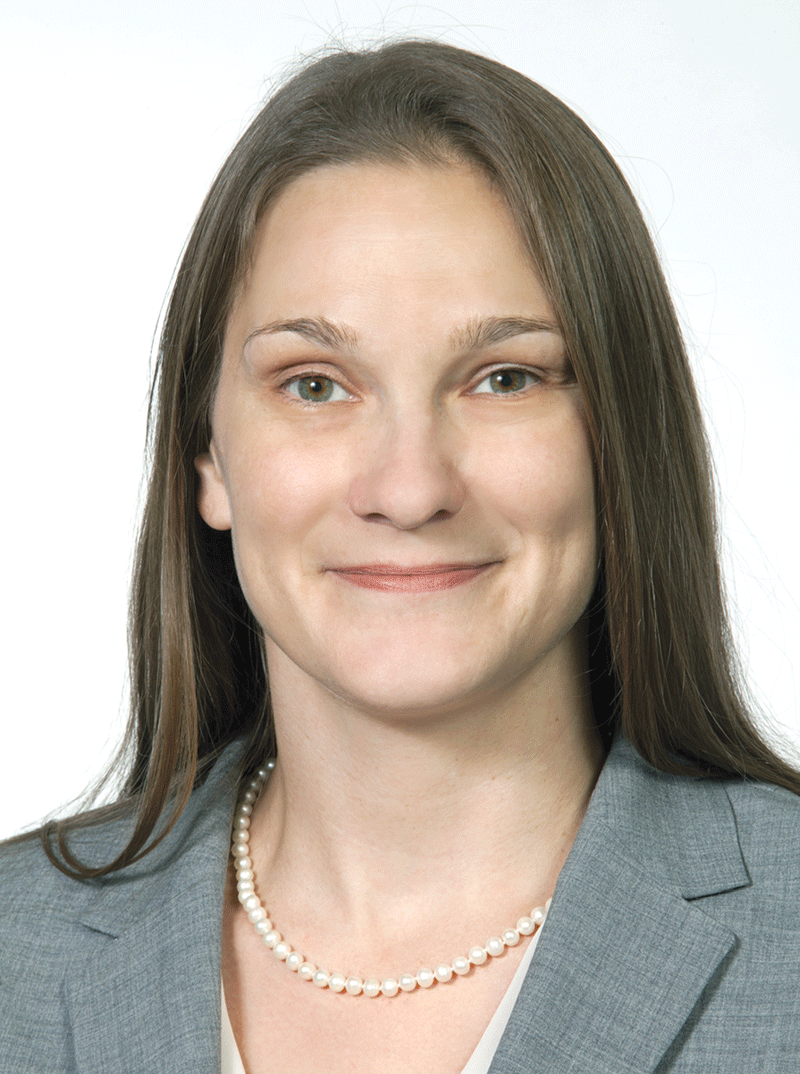
• Jeffrey Fialky, a member of the 40 Under Forty class of 2008 and a shareholder of the regional law firm Bacon Wilson, P.C., and member of the firm’s corporate, commercial, and municipal departments, where he specializes in all aspects of corporate and business law, banking, commercial real estate, and sophisticated commercial transactions. He joined the firm in 2006 after nearly a decade of living in Eastern Mass., where he held senior commercial attorney positions within some of the country’s most prominent publicly traded telecommunications and cable television companies. He previously served as an assistant district attorney in Hampden County.

Fialky is also active in the community, having served on a number of nonprofit and economic-development-related organizations. They include the Springfield Chamber of Commerce, Springfield Museums, the United Way of Pioneer Valley, the Jewish Federation of Pioneer Valley, the Springfield Technical Community College Scibelli Enterprise Center Advisory Board, the Alden Credit Union board of directors, the Community Foundation, the American Cancer Society, the Young Professional Society of Greater Springfield, Leadership Pioneer Valley, OnBoard, the YMCA of Greater Springfield, the Mason Wright Foundation, the EDC Tourism Development Committee; and the American Red Cross Pioneer Valley Chapter.

Brendon Hutchins

Brendon Hutchins

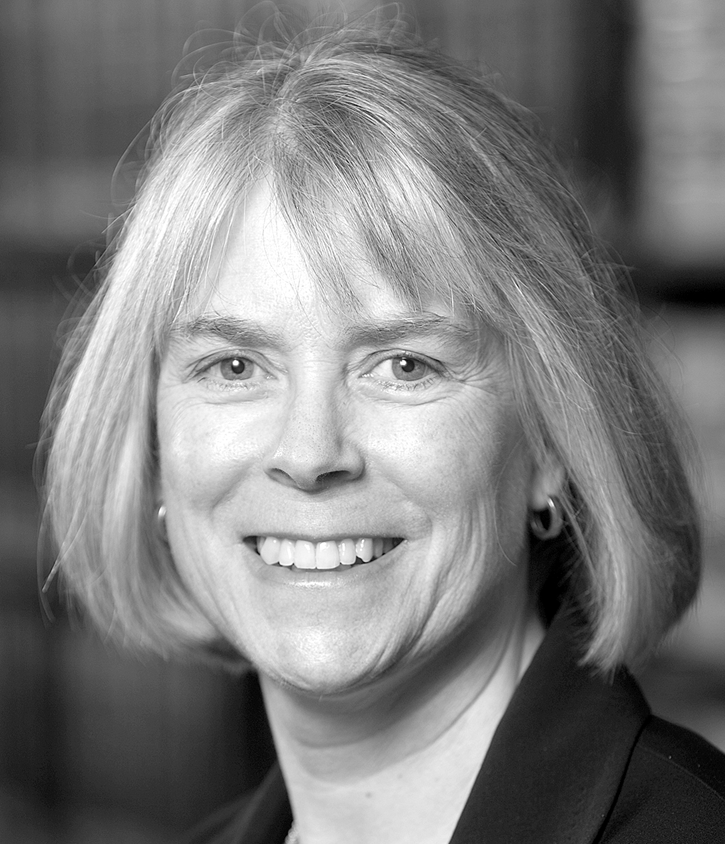
• Brendon Hutchins, CFP, a member of the 40 Under Forty class of 2012, and senior vice president of Account Management for St. Germain Investment Management. Prior to joing the firm in 2003, he was vice president and financial advisor for the FleetBoston Financial Corp. Private Clients Group in Springfield. His prior experience includes eight years with Fidelity Investments as a vice president in the retirement division, with responsibilities across multiple locations during his tenure there.

In addition to being a certified financial planner, Hutchins holds NASD series 7 and 65 licenses for securities representation and investment-advisor services. He currently serves on the board of directors for the New England office of the March of Dimes, the Greater Springfield YMCA, and the Basketball Hall of Fame, and has also served on the board for the Springfield School Volunteers.

Mark O’Connell

Mark O’Connell

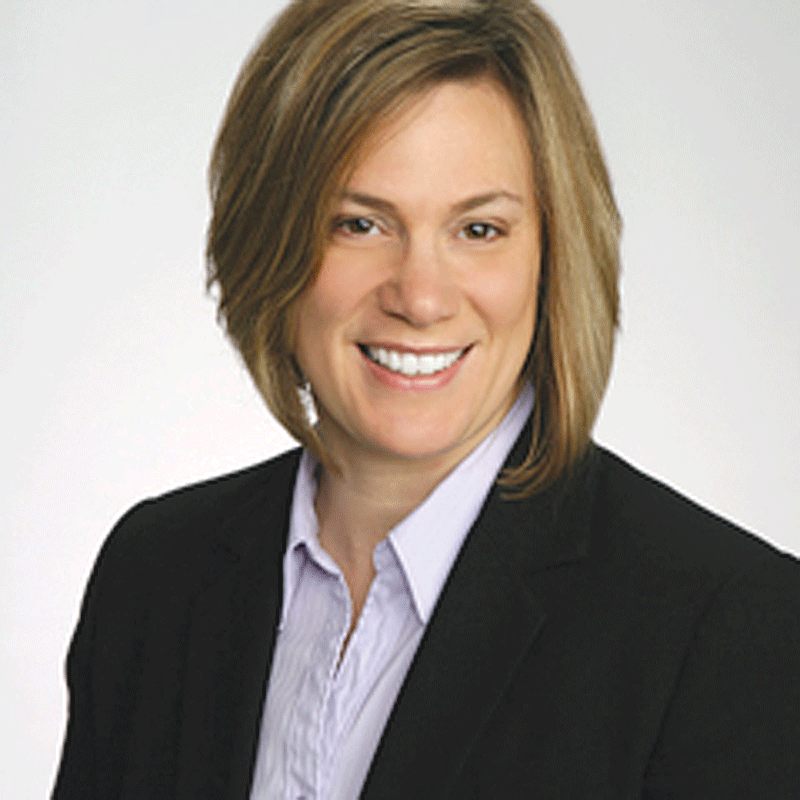
• Mark O’Connell, president and chief executive officer of Wolf & Co., providing audit and financial reporting services to both privately held and publicly traded financial institutions and holding companies across New England, including community banks and mortgage banking institutions. In his current capacity, he is responsible for the strategic direction of the firm, while also providing audit and advisory services to financial institutions. His experience also includes consultation on audit and accounting issues related to mergers and acquisitions and with respect to debt and security offerings filed with the Federal Home Loan Bank Board, the Federal Deposit Insurance Corp., and the Securities and Exchange Commission.

O’Connell has been involved with a number of industry and nonprofit organizations, including the American Institute of Certified Public Accountants (AICPA), the Massachusetts and Connecticut Societies of Certified Public Accountants, and the Children’s Study Home in Springfield. In 2010, he won the Human Services Forum Board Member Award.

Myra Smith

Myra Smith

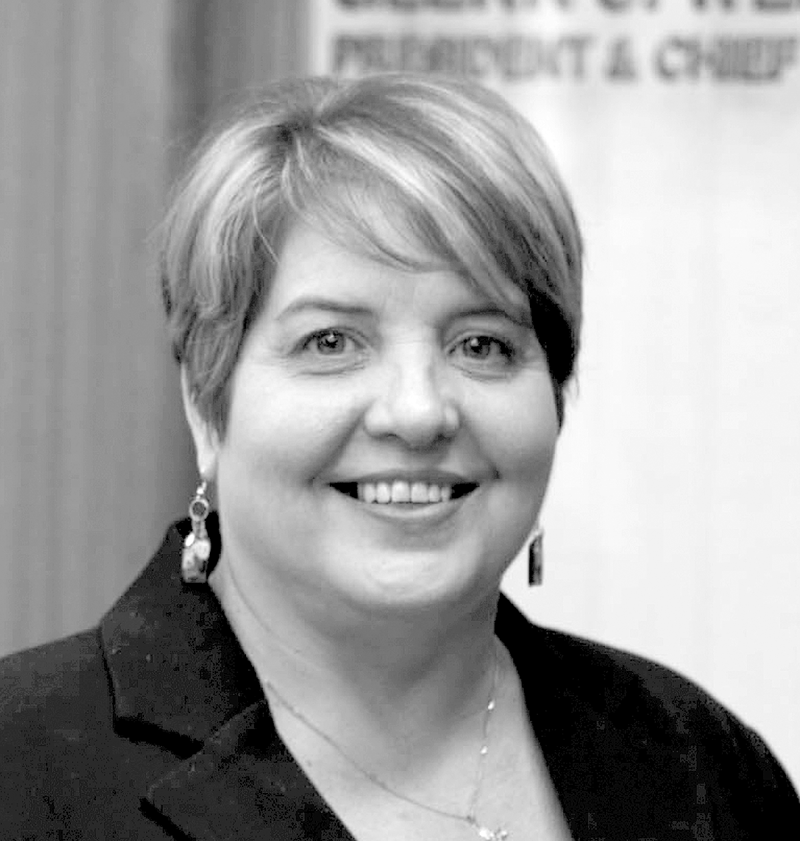
• Myra Smith, vice president of Human Resources and Multicultural Affairs at Springfield Technical Community College (STCC). Joining the college in 1978, Smith has helped transform the STCC community into one of inclusiveness that celebrates cultural diversity. Among her many accomplishments is the creation of the STCC Diversity Council and its event series, which brings national and international speakers and artists to the campus. Smith also was responsible for the creation of the STCC “Think Tank” series, which brings community leaders together to assist with the retention and graduation rate of young men of color.

Smith is also active in the community, serving on many local boards, including People’sBank, the National Conference for Community Justice of Western Mass., and the STCC Foundation. Smith is a founding trustee of the Martin Luther King Charter School of Excellence and a trustee for the Non-Unit Health and Welfare Trust Fund for the Commonwealth of Massachusetts. Smith was recognized in 2007 by Unity First with a Women of Leadership Award, and received a Women of Vision Award from the Elms College Step Forward Program in 2005.

Jeff Sullivan

Jeff Sullivan

• Jeff Sullivan, executive vice president and chief operating officer of United Bank. In that capacity, which he assumed Jan. 1, Sullivan is responsible for the bank’s retail deposit and operations division, advancements in technology and electronic banking, and franchise expansion efforts. In addition, he also oversees the Information Systems and Facilities Departments and the United Wealth Management Group, and is also responsible for the company’s enterprise risk management program. He previously served the bank as executive vice president and chief lending officer and, prior to arriving at United, served in commercial-lending capacities for the Bank of Western Mass. and BayBank.

Sullivan has been involved with a number of area nonprofit and economic-development-related organizations, including DevelopSpringfield, Better Homes Inc., Martin Luther King Jr. Family Services, Briana Fund for Children with Physical Disabilities, OnBoard, the Pioneer Valley Plan for Progress, the Holyoke Chamber of Commerce, and the Economic Development Council of Western Mass.

Commercial Real Estate Sections
Unique Sports Facility May Become a Game Winner for Agawam Site

Sean Provost

Sean Provost says the Stick Time Sports training facility will meet a recognized need in the region.

A little more than two years ago, Sean Provost, a local software salesman, was sitting in his car having lunch on the road between sales stops when he looked over at a ‘for-lease’ sign on a building in the Agawam Towne Center complex.

He remembers thinking to himself, “hmm … I wonder if that could work?”

‘That’ was a 20,000-square-foot space adjacent to the Dave’s Soda & Pet Food City facility in the former Ames department store location. When Provost saw it, it was being used as warehouse space for dog food and other products, but he immediately saw the potential it presented as the home for a dream he’d been trying to make reality for roughly a decade.

This dream involved creating what he called a “sports training center,” focused on hockey, which he’s played and coached, but also other sports. The concept calls for a facility where young people can learn a sport and develop their skills through practice. This vision required a large amount of open space, a good deal of flexibility, and an affordable price — three things he couldn’t find at dozens of other sites he considered, but a combination he encountered at the Agawam location.

Fast-forward those two years, and Provost, recently laid off from that sales job, is set to take a dramatic career turn as president of something called Stick Time Sports (STS), which will feature two mini-ice rinks — both 45 feet by 82 feet — as well as two 45-by-85-foot synthetic turf fields that can be used for a variety of sports, including lacrosse and field hockey. There is also an area for strength training and conditioning with machines and weights; a facility for conferences, birthday parties, and other events; locker  rooms; and space for additional expansion.

All this fulfills one of Provost’s ambitions, but also creates some needed momentum in a large retail center that has struggled to reinvent itself since a FoodMart supermarket closed after its roof collapsed more than a decade ago. There are some new tenants moving into the complex, including a satellite facility for the YMCA of Greater Springfield, and it is hoped that those initiatives and Stick Time Sports can create greater vibrancy in that location.

Those were some of the sentiments expressed by Dave Ratner, owner of the former Ames building and Dave’s Soda & Pet City.

“I had to get some new warehouse space,” he said with a laugh in reference to the new development, “but this [venture] increases the value of the building, it will bring more potential customers to my store, and it will make the center more viable so new people might want to move in to the other side of the center. So all in all, it’s a win-win.

“Traffic gets traffic,” Ratner added. “The more places we get there, the more people will say, ‘I want to be there.’”

Meanwhile, STS is one of many sports-related business ventures taking shape in Agawam. In addition to STS and the Y’s facility, there are plans for something called the Plex Sports Park, a $7 million, indoor-outdoor complex to be built at the former Crowley’s Sales Barn and Stables site off Shoemaker Lane.

For this issue and its focus on commercial real estate, BusinessWest takes a look at the STS project and how it may help bring more life to a once thriving retail section of Agawam.


Goal-oriented Venture

Using some of his trademark humor, Ratner described his efforts over the past several years to lease out the 20,000 square feet next to his retail operation.

“The fact of the matter is, we had a lot of interest, but because the real-estate market isn’t real strong, people thought they were going to come in and we were going to pay them to take the space,” he told BusinessWest, adding that, while he wanted to find a tenant, he also liked having the space as a warehouse facility, so he wasn’t going to pull the trigger on a deal unless it really worked for both sides.

And in many ways, STS fits that description.

Ratner said it won’t be a huge revenue source, but it will potentially drive more traffic to his store while creating more momentum in the still-struggling retail plaza. “This is a huge deal,” he noted. “I think his business is going to explode more than he thinks it’s going to explode, and I think he’s going to need every bit of space over there.”

And that’s why he worked with Provost to not only ink a lease, but get his venture off the ground.

“I sat down with him and I said, ‘I think it’s a home run, but you have to get your business plan together,’” said Ratner, adding that he ran though the lengthy process of taking a concept from the drawing board to reality, essentially becoming Provost’s ‘Mr. Murphy,’ a reference to Murphy’s Law.

“Whenever you do anything in business, Murphy’s Law — Mr. Murphy — moves in right next to you,” said Ratner.

Having been a partner years ago in a group that owned and operated the Mushie’s Driving Range on Main Street in Agawam, Provost said he learned a good bit about what not to do in business, and eventually got out of that relationship (that property is now being turned into a solar farm).

And for his second foray into commercial real estate, Provost began working with the Mass. Small Business Development Center Network in Springfield, where he received assistance to finalize his business plan, along with help to secure two business partners: Daryl Devillier, associate vice president with Raymond James, and partner Sal LaBella. The partners eventually secured bank financing for the estimated $1 million buildout of the property.

Provost said STS is going to be dedicated to providing athletes of all ages from Western Mass. and Northern Conn. the opportunity to practice, train, improve their skills, and just have fun in a positive atmosphere.

Provost explained that there’s really no facility in the region where parents or coaches can rent some ice and enable young people to get some invaluable practice time and hone their skills. “For instance, baseball players can warm up anywhere, but hockey is different, and now, two kids can share a half-hour to shoot a few hundred pucks at $15 apiece.”

He added that the site will also fill a void in the region for full-year, under-14 and under-16 boys hockey, and its location, just a few miles from both the Connecticut line and several Western Mass. population centers, enables it to tap into both markets.

Richard Cohen, Agawam’s mayor and also an avid former hockey player and coach, is a strong supporter of the STS concept, and told BusinessWest it’s a perfect fit for the town’s growing inventory of sports-related businesses.

“It goes along with what we’re trying to put together … a sports complex that was originally going to go in Chicopee” but couldn’t get special permit approval for a site there, said Cohen, referring to the Plex Sports Park, an indoor-outdoor facility with an 80-foot-high, inflatable dome.

Cohen also noted that one of the other Agawam Towne Center building owners is looking into indoor karting as an addition to the retail area that now includes Dave’s and STS, Slot Car Speedway, Friendly’s Restaurant, and the soon-to-open, 8,500-square-foot Y Express Wellness & Program Center.

And just a few hundred feet from Agawam Towne Center, the long-vacant Games and Lanes building is in the subject of a $50,000 site assessment, funded by MassDevelopment, to determine the scope of needed environmental remediation, an important first step in putting the property back in use.

“There is a developer who wants to do business retail there,” said Cohen, “so my goal is to help get that project finalized for that entire area.”


Winning Approach

Looking to the future, Provost and his partners purchased a ‘chiller,’ the compressor that makes and maintains the ice, which is larger than they actually need and will allow them to build a third mini-rink on a portion of the turf area.

Meanwhile, the idea of expansion elsewhere is also being discussed.

“There’s no room to physically expand, but we think if this works here, it can certainly work in other places,” he said, adding that there is still a sizeable inventory of former warehouse and retail facilities that could become home to such ventures.

For now, though, he’s focused on making STS the win-win proposition that he, Ratner, Cohen, and others believe it can become. And he believes there will be net results in many forms.


Elizabeth Taras can be reached at  [email protected]

Commercial Real Estate Sections
Springfield Offers Substantial Tax Incentives to Residential Developers

The ability to attract developers of market-rate housing to Springfield has just been made easier thanks to a new tax-incentive program being administered by the Mass. Department of Housing and Community Development.

This effort, known as the Housing Development Incentive Program (HDIP), allows developers to apply for local and state tax incentives for the rehabilitation of multi-family properties for sale or lease primarily as market-rate units if located within a ‘housing development incentive zone,’ or HDIP zone. The program is available only in ‘gateway municipalities’ that have successfully registered as an HDIP zone with the Commonwealth. Springfield is now one such municipality.

On Dec. 3, 2012, the Springfield City Council approved an HDIP zone pursuant to a housing development zone plan, as recommended by the Springfield Office of Planning and Economic Development. The plan establishes a zone encompassing sections of the city’s downtown, North End, and South End. Included in the HDIP zone are three projects that the city believes could potentially have a market-rate housing component: Chestnut Street School, the Student Prince, and State Street Lofts.

The plan is purported to be consistent with the Urban Land Institute plan of 2006, which encouraged more downtown middle-income housing; the Zimmerman Volk Downtown Market Rate Housing Study of 2006, which indicated a market demand for such housing; and the 2012 UMass Medical District Report, which indicated that there is a significant number of medical professionals currently choosing to live outside of the city.

The Commonwealth’s recent approval of the Springfield HDIP zone represents a significant business opportunity for developers and a possible rebirth for the city’s struggling downtown.

The HDIP provides two major tax incentives for developers of multi-unit market rate housing:

• A local real-estate tax exemption in an amount not less than 10% and not more than 100% of the incremental value of the market-rate units for a period of not fewer than five years and not more than 20 years. Previously, these agreements could only be offered to commercial developments; and

• A state investment tax credit of up to 10% on all qualified expenditures in creating and constructing new market-rate housing units.

To qualify for these tax benefits, the development must have between two and 50 units, 80% or more of which are targeted for market-rate residential use and priced for households with incomes above 110% of the area’s household median income. Preliminary estimates for Springfield indicate the median income to be around $49,084 per year. There are no ceilings on the pricing of sales or rents or for the income of occupants.

Qualifying projects can be proposed in the Springfield HDIP zone, and require approval from the city and the Commonwealth.

The approval by the Commonwealth is a three-step process. First, based upon an application containing basic information about the property, the developer must seek preliminary approval that the building meets the standards of a certified housing-development project.

After receiving preliminary approval, based on a more extensive application, which includes construction documents and a marketing plan, the Commonwealth will consider the issuance of a conditional certification of the project. Once all of the certificates of occupancy have been issued for the housing-development project and 80% of the market-rate units have been leased or sold, the Commonwealth will consider issuing a final certification which designates the project eligible for the tax incentives.

According to the plan, the city envisions that the implementation of the HDIP will help to eliminate vacancy and blight conditions of some of the city’s commercial buildings by converting underutilized upper floors to attractive market-rate apartments; increasing foot traffic, which is a critical component for neighborhood viability; retaining local talent as well as recruiting talent from other areas by providing attractive housing opportunities for young professionals who work in and around the HDIP zone; promoting historic preservation; and strengthening the city’s ability to attract high-quality development to Springfield.


Ellen W. Freyman is a partner with the Springfield-based law firm Shatz, Schwartz & Fentin, P.C., who concentrates her practice in all aspects of commercial real-estate acquisitions and sales, development, leasing, and financing. She has an extensive land-use practice that includes zoning, subdivision, project permitting, and environmental matters; [email protected]. Michael A. Fenton is an associate with Shatz, Schwartz & Fentin who concentrates his practice in the areas of business planning, commercial real estate, estate planning, and elder law. He represents principals in business formation and succession planning, businesses in the purchase and sale of enterprises, developers in the acquisition and permitting of projects, and high-net-worth individuals in establishing comprehensive and sophisticated estate plans; [email protected]

Court Dockets Departments

The following is a compilation of recent lawsuits involving area businesses and organizations. These are strictly allegations that have yet to be proven in a court of law. Readers are advised to contact the parties listed, or the court, for more information concerning the individual claims.


HAMPDEN SUPERIOR COURT

Kimball Brothers Realty, LLP v. Genco Cable, LLC Seminole Wire and Cable Company Inc., and Michael Genzel

Allegation: Breach of commercial lease: $500,000

Filed: 1/8/13


People’s Bank v. Stockbridge Bowl Affordable Acquisition Corp., et al

Allegation: Failure to pay on commercial loan: $856,131.32

Filed: 1/18/13


Westfield Auto Parts Inc. v. Auto Service Inc. d/b/a Brake King

Allegation: Non-payment of goods sold and delivered: $97,929.35

Filed: 1/8/13


HAMPSHIRE SUPERIOR COURT

Richard S. Paton Jr. and Bonnie Paton v. Robert C. Randin and GMTBP Inc. d/b/a Antonio’s Pizza

Allegation: Motor-vehicle negligence causing personal injury: $95,778.

Filed: 1/14/13


West Cummington Congregational Church v. Chase, Clark, Stewart, and Fontana Inc., James H. Stewart, and Utica Insurance Group

Allegation: Inadequate coverage caused by agent negligence and misrepresentation: $200,000

1/8/13


HOLYOKE DISTRICT COURT

Berlin Industries, LLC v. Motherwear International Inc.

Allegation: Non-payment of goods sold and delivered: $14,450.59

Filed: 11/19/12


NORTHAMPTON DISTRICT COURT

Jon Kostek and Jennifer B. Margolis v. D. Jondrow Landscaping Inc.

Allegation: Failure to complete work, performance in an unworkmanlike manner, and unfair and deceptive trade practices: $15,000; Filed: 1/25/13


Peter Wilson and Harold Wilson d/b/a Wilson Construction v. Bowl New England Inc.

Allegation: Non-payment of snow-removal services provided: $22,650

Filed: 1/9/13


SPRINGFIELD DISTRICT COURT

Douglas Industries Inc. v. New England Upholstery and Design and Paul Vento

Allegation: Non-payment of goods sold and delivered: $6,279.58

Filed: 1/25/13


Forbo Flooring Inc. v. Complete Flooring Solutions and Kenneth G. Matthews Jr.

Allegation: Non-payment of goods sold and delivered: $5,805.21

Filed: 1/22/13

Francisco Ortiz v. Vinnie Shah d/b/a Super Convenience Mart

Allegation: Negligent maintenance of property causing slip and fall: $24,999.99

Filed: 1/25/13


Preferred Mutual Insurance Co. as subrogee of James and Julie Jaron v. Home Depot, USA Inc. and Giagni Enterprises, LLC

Allegation: Negligent design and manufacture of faucet sold at Home Depot causing extensive water damage to the plaintiff’s property: $27,985.74

Filed: 1/17/13


Soaring Capital, LLC v. Dey Homeworks and Daniel Torres

Allegation: Unpaid balance due for money loaned: $3,494.09

Filed: 1/8/13


WESTFIELD DISTRICT COURT

TBF Financial, LLC v. Pavel Shevchuk d/b/a Seven Colors Painting

Allegation: Breach of promissory note: $12,506.55

Filed: 1/14/13

Departments People on the Move

Audrey Rome

Audrey Rome

Audrey Rome has joined the Springfield-based law firm Cooley Shrair as a real-estate paralegal. Providing support in the Western Mass. real-estate field for more than 30 years, Rome will help to expand the firm’s real-estate department.

•••••

The Greater Springfield Convention & Visitors Bureau (GSCVB) announced the following:

• Michael Hurwitz has been appointed as Chairman of the board of directors, and will serve a two-year term. Hurwitz, a hospitality-industry veteran, has managed several restaurants in Western Mass., including Uno Chicago Grill, with locations in Springfield, Holyoke and Worcester; and Sonic in Springfield. He served on the GSCVB’s board of directors and executive committee in addition to his previous duties as Chairman of the Howdy Awards for Hospitality Excellence Committee.

• John Parsons has been named Sales and Marketing Coordinator. Parsons, a 2011 graduate of Western New England University, will promote membership within the GSCVB and assist with a number of marketing initiatives, with a special emphasis on sports.

Other officers were named by the GSCVB to serve a three-year term on its board of directors. They include:

• John Doleva, President of the Naismith Memorial Basketball Hall of Fame, to serve as vice chairman;

• Barry Crosby of Freedom Credit Union to serve as treasurer;

• Robert Schwarz of Peter Pan Bus Lines, Inc. to serve as secretary; and

• Robert Gilbert of Dowd Insurance to serve as compliance officer.

New members of the board to serve a three-year term are:

• William Messner, President of Holyoke Community College; and

• James Woolsey, Superintendent of the Springfield Armory National Historic Site.

•••••

Melanie Skroski

Melanie Skroski

Northampton-based Royal LLP recently welcomed Attorney Melanie Skroski to the management-side-only labor and employment law firm. With practical experience in management, Skroski counsels companies on the myriad state and federal employment laws impacting them, including employment discrimination and harassment, wage and hour, disability and leave, workplace safety, and affirmative action. Her other preventive work includes drafting employee manuals; preparing non-disclosure, non-solicitation, and non-compete agreements; and conducting management training. Skroski is a graduate of Trinity College and Western New England University School of Law.

•••••

TD Bank recently promoted Peter Simko to Store Manager of the branch located at 40 Springfield St. in Agawam. An Assistant Vice President, he is responsible for new-business development, consumer and business lending, and managing personnel and day-to-day operations at the store, serving customers throughout the Greater Springfield area. With 13 years experience in banking, investments, real estate, and mortgages, Simko joined TD Bank in 2011. He most recently served at TD Bank as an Assistant Store Manager in Agawam. Prior to joining the bank, Simko served as an Investment Consultant at TD Waterhouse in Boston, Registered Principal at Scottrade Financial Services in Springfield, and General Partner at Center Exchange Associates, a realty-consulting firm in Chicopee.

Law Sections
Law Students and Graduates Gain Valuable Experience as Clerks

Kevin Maltby

Kevin Maltby says clerkships offer educational experiences that law students don’t necessarily get in the classroom.

“There’s a reason,” Kevin Maltby said, “that it’s called the practice of law.”

He was referring specifically to the role of clerk — specifically, law students or recent law-school graduates who work for a short time, typically one or two years, in a law firm or court system to gain valuable career experience. Or, as he put it, practice.

“I think clerking is one of the best opportunities students can have, in terms of learning by actually being in the law practice,” said Maltby, an associate with Bacon Wilson, P.C. who helps oversee the firm’s efforts to bring in clerks each year. Typically the firm hires four individuals each spring for a one-year clerkship; they come from many different schools, but the current crop are all students at Western New England College School of Law.

“They are excellent students, excellent writers, great researchers,” he told BusinessWest, “and we get to use those skills in exchange for teaching them and exposing them to things they might not be exposed to in law school.”

Jared Olinski agrees. A 2011 graduate of WNEU, he is on his second clerkship; after working for a year at the Connecticut Appellate Court, he’s now clerking in the U.S. District Court in Springfield.

“I think it’s kind of a prestigious thing to have on your résumé,” he said. “You’re getting great experience but also seeing the inside of the court system, seeing how the judges make their decisions, meeting lawyers, possibly making some connections … so I think it’s very beneficial for a recent law graduate.”

In many ways, the advantages of clerking haven’t changed much over the years. Sandy Dibble, partner at Bulkley Richardson in Springfield, graduated from Suffolk University Law School in 1974. Around that time, he worked as a summer clerk both at a Boston law firm and at the Massachusetts Supreme Judicial Court for respected judge Francis Quirico; he also served unpaid stints with the consumer protection division of the Massachusetts Attorney General’s office and with a legal-aid clinic outside Boston.

“All those positions, including the volunteer positions, help you learn and expose you to people who have a lot of experience, so you see how they do things,” Dibble said. “If it’s a law firm, you see how law firms operate; if it’s the judicial system, you see how the court operates. And you get evaluated all the time. You’re in an environment where people function at a very high level, and expectations are high.”

Dibble noted that the word ‘clerk’ covers a lot of territory, including the full-time workers who perform the administrative tasks of a court system; that’s a different class of law professional altogether. As for young, temporary clerks, Dibble explained, they fall into two categories: those who work during the school year, and summer clerks.

“Our firm may be different from some others, but we don’t hire a lot of clerks during the school year,” he said. “We have, and sometimes do — usually somebody who can do a lot of things, or somebody who has a particular skill set we need.

“Summer clerks tend to be more of a formalized thing,” he continued. “I was a summer clerk at a big law firm in Boston a long time ago, and a lot of lawyers here worked as summer clerks in law school. That’s usually a pretty desirable position. Most firms use the law-clerk program as a kind of extended interviewing process on both sides.”

In addition to the obvious connections and career opportunities the experience can open up, Maltby said, the clerks at Bacon Wilson are constantly learning, from the time they arrive, in ways they can’t from the vantage point of a classroom desk.

“Whether in a law firm or clerking for the court system or for the DA’s office, they’re learning from day one to practice law,” he explained. “They’re getting some good experience here, and there are other things they learn as well about the practice in terms of client relationships, as we sometimes bring them on client meetings and so forth.”

For this issue’s focus on law, BusinessWest explores the world of law clerks, discovering in the process that, while practice doesn’t make perfect, it can often make for better career opportunities in what has become a very tight market for today’s law-school graduates.


Different Worlds

Olinski said his two very different judicial clerkships have provided him with a wide range of experiences. On the appellate level, “in Connecticut, almost all cases have an automatic right of appeal; if the losing party chooses, it can appeal to the appellate court, which then has to take the case. The parties submit a brief and the reason why they think the trial court got it wrong.”

Here, he explained, the clerks often work with judges to research cases, write internal memos, and, depending on the judge, perhaps help produce decisions. “It’s very substantive work, very fulfilling.

“It’s different dealing on the trial level,” Olinksi said of his current role in Springfield. “You’ll deal with all types of cases, and it’s kind of rare that cases go to trial, so you’re usually dealing with pre-trial stuff — like if one of the parties is trying to get the case dismissed before trial for whatever reason. Or you may research, do some writing, and help the judge prepare for trial.”

When Nancy Frankel Pelletier attended law school in the early 1980s, she chose George Washington University “because it was one of the only schools in the country that had a clinical program that allowed law students to gain real-life experience while in law school,” she explained. “It was a pretty unusual situation back then.”

Now, many schools have clinical programs, said Frankel Pelletier, an attorney with Robinson Donovan in Springfield. “As a result of changes in the law over the past five to seven years, law schools have been expanding in terms of programs for clerkships, programs that are now called externship programs.”

She said there are significant pros and cons for law firms that employ clerks. “The upside, obviously, is that it provides you someone to work for you, but the downside is that taking somebody brand new in and training them takes an enormous amount of work.”

She cited Northeastern University’s program that places students in law firms full-time for a full semester. “We had one, who was outstanding. You spend time educating them and training them, but they are working under the auspices of an American Bar Assoc. program, and they have to meet certain criteria. These programs can be pretty flexible — anywhere from working a few hours a week to the extensive Northeastern model.”

At Bacon Wilson, Maltby said, clerks are able to “pick from the whole buffet” when it comes to the experience they gain.

“They provide litigation support, which means helping the litigation department with legal research and writing, helping prepare discovery materials,” he explained. “On the corporate side of things, they assist in transactions, maybe shooting over to a governmental agency or to the register of deeds to look things up. In family law or probate practice, there are a lot of documents we may need help with, and they’ll witness signings, and sometimes they come to court to get some experience in that regard.

“Or they’ll do research for us in conjunction with our own legal research,” Maltby continued. “We have them do the initial legal research and then work with them, a lot like a mentor-mentee relationship. For me personally, I have them give it their best shot and come back to me and show me what they’ve done, and I work with them on what I would like to see on the final product.”

Frankel Pelletier said clerkship can result in a hire afterward, in which case it operates as a sort of temp-to-perm work experience. “We have the opportunity to see the person at work and make a determination whether it’s the right fit from both perspectives.”

Even clerks who move on to other opportunities have a leg up, which is critical in today’s tight job market; only 55% of the class of 2011 at American law schools landed a job within nine months of graduation.

Those who have clerked, however, “can say they’ve had an opportunity to work,” she noted. “Having real-world work experience obviously puts a student in a much different category than a student who has not had that experience.”


Tough Competition

Naturally, that tight job market has also made clerkship opportunities far more competitive.

“The legal market has not been very kind for recent graduates,” Olinski said. “I think, even before this downturn, clerkships were very competitive, and they’re even more so now. Generally judges want someone who has done very well in law school, someone who has done law review, top of the class. Some people send applications across the country, especially for the federal courts, which are even more competitive.

Paula Zimmer and Harris Freeman

Paula Zimmer and Harris Freeman say a lack of funding at the state trial-court level has curtailed clerking opportunities, in turn slowing down the work of the courts.

Paula Zimmer, assistant dean and director of Law Career Services at WNEU School of Law, said clerkships are becoming increasingly popular for a variety of reasons. “People love clerking because it puts all their legal education into play — the research, the writing, the first-hand look at courts and what it’s like to practice law.

“It’s a great opportunity, but a competitive opportunity as well,” she continued. “There are always more people interested in clerking than there are clerks. We have a judicial clerkships committee comprised of faculty, and we keep all kinds of materials on clerkships and deadlines, and we send recommendations.”

Zimmer, like Olinski, noted that the intensity of competition for clerkships varies depending on the venue. For instance,  “it’s very, very competitive to get one at the federal level, at the state supreme court level, even at the state appellate level. It’s still competitive to get into the superior trial-court level, but the trial-court level tends to be open to a broader range of good students.

“Clerkship is a really good credential for someone after law school; it adds a certain prestige to someone’s résumé,” she added. “It’s particularly helpful, especially in this environment, to make connections at law firms and with judges. Often judges will serve as a recommendation for you, and it helps you when transitioning into the workforce.”

She noted, however, that not every qualified student wants to do a clerkship. “Some people have a job at a firm and are offered a clerkship, but they’d just as soon go to work. Most large firms will defer your offer — they’ll say, ‘come to us in a year,’ and they’ll often give a bonus to make up for the fact that a clerkship pays less than a large firm’s salary.”

Still, Zimmer said, “because there are fewer jobs, more people are applying to clerkships at every level of law school. One of our sweet spots has been at the appellate-court level.”

Harris Freeman, a professor of Legal Research and Writing at WNEU Law School — and a former clerk at the federal district-court level — told BusinessWest that a persistent lack of state funding has curtailed the number of clerkships at the trial-court level, although the appellate level and federal courts don’t have the same problem.

The result, he and Zimmer noted, is not only a decrease in opportunities for students, but a slowing of judicial proceedings, which affects businesses as well as individuals seeking redress in the courts.

In law firms, Dibble noted, whether hiring school-year or summer clerks, practices are looking for top students, as well as those with at least a couple of school years under their belts. “There are a couple of reasons for that: one, they know more, they’re older and a little more mature; and also, it’s closer to the time when they’ll decide what they’re going to do.”

If the firm is using a clerkship to gauge whether an individual will be invited back for a job, he added, “it’s a lot easier for everyone to think about that when they’re only a year away from graduation.”


Options Open

Maltby is pleased with the two-way benefits of clerkships. “I would like to think when these students move on to their next job, they’re very well-qualified and prepared to handle a variety of different things.”

At the same time, the experience of clerking can help someone figure out what to do. They might say, ‘you know, I really don’t want to do litigation; I want to do transactional work.’ They’re seeing options and talking to lawyers in the firm and coming to an understanding of what they’d like to do, and that’s good.”

Frankel Pelletier agreed. “Sometimes they grow up wanting to be a trial lawyer, then they see what we do and say, ‘no, I don’t want to do that at all.’ You don’t get that kind of experience in law school, seeing exactly what it’s like. This affords you that opportunity.”

Dibble values his time clerking in the 1970s, but said the experience can vary for a student or graduate depending on the firm or judge.

“These kinds of positions are sought after by law students for the experience, the contacts, the possibilities,” he said. “Some judges are known for spending a lot of time with law clerks, helping them advance and supporting them, and others are a little more standoffish about it.”

As for Olinksi, his experiences have been overwhelmingly positive, and have helped him keep his options open. He is interested in litigation and has considered career paths in private practice, appeals, government work, even nonprofit practice.

“So it’s good for someone like me to see so many different areas of the law, not really getting focused on one or specializing in one,” he told BusinessWest. “Clerking is great if you haven’t picked which area you want to be in.”

And that’s true no matter how much law practice you need.


Joseph Bednar can be reached at [email protected]

Law Sections
Department of Labor Issues New Guidance on Area of Confusion

Karina L. Schrengohst

Karina L. Schrengohst

The Family Medical Leave Act (FMLA) presents many challenges for employers because of its complexities. And one area of confusion employers have faced arises in the context of requests for leave to care for adult children.

Generally, the FMLA entitles an eligible employee to take up to 12 weeks of unpaid, job-protected leave during a 12-month period to care for a son or daughter with a serious health condition who is under the age of 18. Once an employee’s son or daughter turns 18, a parent is entitled to take FMLA leave only if the adult son or daughter (1) has a mental or physical disability as defined by the Americans with Disabilities Act (ADA); (2) is incapable of self-care due to that disability; (3) has a serious health condition; and (4) is in need of care due to the serious health condition.

One issue employers have struggled with is whether the disability had to occur before the child turned 18 years of age. Recent guidance issued by the Department of Labor’s (DOL) Wage and Hour Division answers this question.

On Jan. 14, the Wage and Hour Division issued a new Administrator’s Interpretation (No. 2013-1) that clarifies the definition of “son or daughter” under the FMLA, and addresses whether an employee is entitled to FMLA leave to care for an adult child who does not become incapable of self-care because of a disability until after the child turns 18. DOL guidance clarifies that whether an adult child’s disability arises before or after the child turns 18 is not relevant in determining a parent’s entitlement to FMLA leave. Therefore, an otherwise eligible employee is entitled to take leave under the FMLA to care for an adult child with a serious health condition who is incapable of self-care because of a disability regardless of when the disability commenced.

This means that employers should focus on the adult child’s condition at the time of the requested leave when determining eligibility for FMLA leave.

The administrator’s interpretation also demonstrates how the significantly expanded definition of ‘disability’ under the Americans with Disability Act Amendments Act of 2008 (ADAAA) has impacted the FMLA.

The DOL has historically adopted the ADA’s definition of disability for purposes of defining a son or daughter 18 years of age or older. And the DOL notes, pursuant to the clear language of the ADAAA and the EEOC’s position, that the definition of disability “should be construed in favor of broad coverage” and “should not demand extensive analysis.”

Therefore, when the ADAAA broadened the definition of disability, it similarly broadened the scope of this definition under the FMLA. Thus, the number of adult children falling under the FMLA’s definition of son or daughter has increased, which enables more parents to take FMLA-protected leave to care for an adult child who is incapable of self-care because of a disability.

As an illustration, the administrator’s interpretation provides the following scenario: An employee requests leave under the FMLA after his or her 37-year old daughter is injured in a car accident. The daughter suffers a shattered pelvis in the accident, which substantially limits her in a number of major life activities (i.e., walking, standing, sitting, etc.). As a result of this injury, the daughter is hospitalized for two weeks and under the ongoing care of a healthcare provider. Although she is expected to recover, she will be substantially limited in walking for six months. If the daughter needs assistance with three or more daily living activities, such as bathing, dressing, and maintaining a residence, she will qualify as an adult child under the FMLA because she is incapable of self-care due to a disability.

The daughter’s shattered pelvis would also be a serious health condition under the FMLA, and her parent would be entitled to take FMLA-protected leave to provide care for her immediately and throughout the time that she continues to be incapable of self-care because of the disability.

In addition, the DOL guidance addresses an employee’s request for FMLA leave to care for an adult child who has been injured during military service.  Under the military-caregiver provision of the FMLA, an otherwise eligible employee may take up to 26 weeks of leave in a single 12-month period to care for an adult son or daughter injured in the line of duty. The administrator’s interpretation notes that the service member’s injury may last longer than a single 12-month period. Thus, the DOL clarifies that the service member’s parent, if otherwise eligible, would be entitled to take 12 weeks of FMLA leave in subsequent years for the purpose of providing care to an adult child.

As an illustration, the administrator’s interpretation provides the following scenario. A father has exhausted his 26 weeks of military-caregiver leave to care for his 20-year old son, a returning service member who sustained extensive burn injuries to his arms and torso. In the next FMLA leave year, the father seeks leave from his employer to care for his son as he undergoes and recovers from additional surgeries and skin-graft procedures.

The father will be entitled to take up to 12 weeks of FMLA-protected leave to care for his son because his son’s burn injuries, which substantially limit his ability to perform manual tasks, constitute a disability under the ADA — the son is incapable of self-care due to a disability (i.e., he needs active assistance or supervision in bathing, dressing, and eating), the son’s burn injuries are a serious health condition because they require continuing treatment by a healthcare provider, and the father is needed to care for the son.

Employers should review the way they determine FMLA eligibility to account for this recent guidance. In addition, supervisors and managers should be trained to ensure they are prepared to handle requests for leave in light of this new interpretation. Further, when faced with requests for leave to care for an adult child, employers will have to make a case-by-case determination of whether the adult child qualifies as a son or daughter under the FMLA and the employee qualifies for leave under the FMLA.


Karina L. Schrengohst, Esq., an attorney at Royal LLP, a boutique, management-side-only labor and employment law firm, specializes exclusively in management-side labor and employment-law litigation and preventative practices to avoid litigation. Royal LLP is SOMWBA-certified as a woman-owned business with the Mass. Supplier Diversity Office (formerly known as the State Office of Minority and Women’s Business Assistance); (413) 586-2288; [email protected]


Law Sections
Is Bankruptcy an Alternative for Relief from Student Loans?

L. Alexandra Hogan

L. Alexandra Hogan

A college education should increase a person’s earning capacity over a lifetime.  Unfortunately, many graduates are finding that the value of their education is outweighed by heavy student-loan debt. This may be the reason that the delinquency rate on student loans has surpassed that of other types of consumer loans, such as credit cards and car loans.


The New York Fed reports that student-loan debt has exceeded $956 billion and estimates that 21% of these loans are in default.

Financial blows caused by events like loss of employment, medical issues, or divorce are catalysts for personal bankruptcy filings. Bankruptcy is meant to give a fresh start to honest debtors by providing a mechanism of relief from most types of debt, such as credit cards, personal loans, medical bills, and foreclosure deficiencies. Although it is not impossible to discharge student loans in bankruptcy, it is difficult to do, and just recently got even harder. Although seemingly harsh, this law is meant to protect the solvency of the educational-loan system and to prevent people from abusing the system by receiving a free education.

Relief from student-loan debt is not generally available in bankruptcy, unless failure to discharge the debt would lead to an “undue hardship” on the debtor, under §523(a)(8) of the Bankruptcy Code. Courts use different tests to determine what constitutes an undue hardship. In Massachusetts, bankruptcy courts generally evaluate undue hardship on a case-by-case basis by considering (1) a debtor’s past, present, and reasonably reliable future financial resources; (2) a calculation of the debtor’s and their dependents’ reasonable necessary living expenses; and (3) any other relevant facts and circumstances.

Some examples of debtors’ circumstances that led to findings of undue hardship include the following: student loans exacerbated by the debtor’s mental illness; the debtors reaching their maximum earning capacity in worthwhile, but low-paying, teaching jobs; the debtor being homeless and unemployed; the debtor being unable to complete her doctorate degree program and suffering from depression; and the debtor suffering from a variety of medical illnesses, making employment almost impossible. The takeaway is that circumstances must be dire to obtain relief.

A recent court case closed a loophole in the law, making discharge even more unlikely. Typically, a general unsecured loan like a line of credit is dischargeable in bankruptcy. The case of In re Belforte, decided on Oct. 1, 2012 in the U.S. Bankruptcy Court for the District of Massachusetts, Eastern Division, held that the debtor’s line of credit could not be discharged. The debtor made a handwritten note seeking an increase in her line of credit to pay for her children’s tuition and expenses. Liberty Bay Credit Union increased and rewrote the debtor’s line of credit under a new unsecured loan agreement — not through Liberty Bay’s educational-lending program.

Liberty Bay neither inquired from the debtor what the loan would be used for, nor did it exercise oversight as to how the debtor utilized the loan proceeds, as a traditional student lender would. Notwithstanding this, the court construed the bankruptcy statute broadly and ruled that, since the loan was used for an ‘educational benefit,’ it was not dischargeable. Under this ruling, it is now clear that an individual with a regular personal loan used for an educational benefit must establish undue hardship as well.

Those with unusually difficult situations should consult with a bankruptcy attorney to determine whether their circumstances would qualify as an undue hardship. But otherwise, where does this leave the average person struggling with high student-loan debt and low or non-existent income?

Avoid the potentially harsh consequences of defaulting on student loans, including wage garnishment, tarnished credit, and offset tax refunds. There are options to avoid defaulting on federal student loans. Deferment, forbearance, and repayment plans may be available. The U.S. Department of Education has announced a new option that may greatly benefit newer graduates, called “Pay as You Earn.”

This plan may apply to those with partial financial hardship who have certain types of federal direct student loans. Under this plan, 10% of a person’s annual discretionary income is paid, and after 20 years of participation, the loan is forgiven. To learn more about Pay as You Earn, visit www.studentaid.ed.gov.

L. Alexandra (Alex) Hogan is an associate with the Springfield-based form Shatz, Schwartz and Fentin, P.C., and concentrates her practice primarily in business, litigation, and bankruptcy law; (413) 737-1131.


Law Sections
Ruling on Appointments Creates More Controversy at NLRB

Tim Murphy

Tim Murphy

Staying In for RecessPresident Obama violated the constitution when he made three recess appointments to the National Labor Relations Board (NLRB) on Jan. 4, 2012, according to the U.S. Court of Appeals for the District of Columbia in a decision issued on Jan. 25.

Because the three recess appointments were invalid, the NLRB lacked the requisite three-member quorum when it rendered the Noel Canning decision. Although the D.C. Circuit ruling governs only this one case, its decision throws hundreds of NLRB decisions made since Jan. 4 into uncertainty.


Background

The NLRB is the five-member panel that enforces federal labor law and the National Labor Relations Act. The president appoints NLRB members to staggered terms generally subject to Senate confirmation in accordance with the Constitution. Traditionally, the NLRB consists of three members from the president’s political party and two from the other. Since President Obama took office, the NLRB has been on the front lines of the partisan war to control federal labor policy. With several of the president’s nominees too controversial to earn sufficient Senate support to overcome a filibuster, the nominations suffered long delays and were effectively blocked by objecting senators.

To counter that, Obama sought to make appointments to the NLRB while the Senate was in recess, a power contained in the Constitution. In the early history of our country, Congress was often in recess for six to nine months a year. Though recess appointments were little used until after World War II, they did enable presidents to staff executive-branch vacancies during periods when the Senate was not in session and, thus, could not exercise its ‘advise and consent’ power over presidential appointments.

On Jan. 4, 2012, the Senate was away for the holidays and conducting no business. The Senate remained in ‘pro forma’ session (gaveled in and out every few days) because it had not been formally adjourned into an official recess. This was a strategy designed to block the president from making recess appointments. He was undeterred. But the Senate strategy proved effective, according to the D.C. Circuit.

The constitution’s recess appointments clause provides that “the president shall have power to fill up all vacancies that may happen during the recess of the Senate by granting commissions which shall expire at the end of their next session.” Pursuant to that clause, Obama made three appointments on Jan. 4, one day after the Second Session of the 112th Congress began. However, the D.C. Circuit interpreted the recess appointments clause to permit only ‘intersession’ appointments (those made between distinct sessions of the Senate) and not ‘intrasession’ appointments made during recesses in the midst of a session.

Next, analyzing the language “vacancies that may happen during the recess,” the D.C. Circuit found that the clause limits the president’s intersession-recess appointment power to filling vacancies that first arise during the recess in which they are filled, which was not the case here. Thus, recess appointments are unconstitutional unless made to fill vacancies that arose while the Senate was in recess. If it stands, this particular ruling could virtually eliminate a president’s ability to make recess appointments.

The court’s ruling rejects presidential practice of both parties dating back many years, and raises questions about how a president’s inability to fill vacancies could impact government functioning in an age of partisan gridlock in Washington, D.C.

The NLRB disagrees with the decision and intends to continue issuing decisions (while its presumptive appeal is pending). Right now, the NLRB has only three members, as one resigned, and the other’s term expired. Of the three remaining members, two are recess appointees involved in the Noel Canning case. Only Chairman Pierce was confirmed by the Senate.


The Bottom Line

It seems inevitable that the U.S. Supreme Court will ultimately decide these issues, especially because there are numerous similar appeals pending in circuit courts of appeals around the country.

In the meantime, the NLRB will likely remain a lightning rod of controversy. Republicans and business groups will continue to oppose the perceived pro-labor decisions and initiatives of the current NLRB at every turn. It would appear that they believe a non-functioning NLRB is preferable to a functioning one.

This is surely not the last word on recess appointments.


Timothy F. Murphy is a partner in the Springfield labor and employment law firm Skoler, Abbott & Presser, P.C., which represents employers exclusively and specializes in helping employers understand their obligations under state and federal employment law; (413) 737-4753; [email protected]

Departments People on the Move

The Business Networking International (BNI) Western Massachusetts Executive Team recently chose Jason Turcotte, owner of Turcotte Data & Design, a website design and development business in Ware, as the 2012 Director of the Year for Western Mass. at the organization’s annual banquet at the Delaney House. The award recognizes one director for commitment and dedication to the organization and for accomplishments within the chapters each oversees. In June 2012, after two years as a director consultant, Turcotte became the managing director of the Western Mass. BNI region, which encompasses Hampshire, Hampden, Franklin, and Berkshire counties. In that part-time role, he oversees and provides continued structure, training, and support to the region’s chapters and members in Western Mass. to ensure that every chapter is following the BNI system, establishing goals, and keeping pace to achieve them.

•••••

Hector Toledo

Hector Toledo

Gov. Deval L. Patrick has reappointed Hector Toledo to the Springfield Technical Community College board of trustees, effective Jan. 16, 2013 through March 1, 2017.  Toledo, an alumnus of STCC, is Vice President and Sales Director at Hampden Bank and has served on the STCC board of trustees since 2008.  In June 2012, Toledo was appointed by Patrick to serve as the chair of the board of trustees.

•••••

Doherty, Wallace, Pillsbury & Murphy, P.C. recently announced that attorney Rebecca Thibault has joined the Springfield-based firm as an Associate. Her practice areas include general corporate, real estate, and environmental law. She was an intern of the Massachusetts Department of Environmental Protection’s Office of Appeal and Dispute Resolution (Western Region) and was managing editor of Washington University Global Studies Law Review while in law school.

•••••

Felicity Hardee

Felicity Hardee

Felicity Hardee, a Partner with the regional law firm Bulkley Richardson who chairs its Real Estate and Environmental Law departments, has been elected President of the Valley Community Development Corp. The nonprofit corporation addresses the growing needs of low- and moderate-income people in the Pioneer Valley through developing and preserving affordable rental and ownership housing, cultivating economic self-sufficiency, and fostering community leadership. Hardee previously served as the organization’s vice president.

•••••

First Niagara Bank recently announced that First Vice President of Small Business Banking John Delgadillo and Vice President of Commercial Lending Allison Standish Plimpton have each been recognized as a New Leader in Banking by the Connecticut Bankers Assoc. and Connecticut Banking magazine. Delgadillo manages small-business relationships in the New England Region for the bank, while Standish Plimpton manages commercial relationships in the Greater Hartford and Greater Manchester area. The New Leaders In Banking awards recognize bankers who show promise and potential in the local banking industry. Honorees are chosen by an independent panel, which considers Connecticut bankers under the age of 50 who are judged to be outstanding employees, managers, or business leaders and who make a notable impact within their banks or their community.

•••••

Amherst-based New England Environmental Inc. (NEE) announced that Jack Jemsek has joined the company as a Senior Hydrogeologist. Jemsek is a Massachusetts licensed site professional, a Connecticut licensed environmental professional, a professional geologist in New Hampshire, and a certified geologist in Maine. He has a bachelor’s degree in Earth Science from the University of Notre Dame, and a Ph.D. in Marine Geology and Geophysics from the Massachusetts Institute of Technology and Woods Hole Oceanographic Institution Joint Program in Oceanography. With more than 24 years of conducting environmental assessments, remedial investigations, hydrogeologic studies, and environmental permitting, Jemsek has been responsible for overseeing technical and regulatory aspects of environmental projects and project teams, directing and managing site investigations and risk characterizations, and designing and evaluating remedial actions for hazardous-waste disposal and brownfield sites throughout New England.

•••••

Craig Melin, President and CEO of Cooley Dickinson Hospital, will join the founding board of the Hampshire County Regional Chamber, while the hospital has pledged a two-year, $15,000 investment to the developing initiative. Melin has been a longtime supporter of the idea of a Regional Chamber, saying it can help Northampton, Amherst, and Easthampton avoid duplication of economic-growth efforts. Melin said he brings to the board a perspective on improving the health of the community, continuously improving the quality of the broader care system and helping to make healthcare more affordable.

Agenda Departments

Dress Down for Animals

Feb. 15: Employers, are you looking for a fun way to engage your staff while helping local shelter animals? By participating in Dress Down for Animals Day, your business can help provide life-saving care to dogs, cats, and other small animals at the Thomas J. O’Connor Animal Control and Adoption Center in Springfield. Through this program, employees will make a minimum donation of $5, $10, or whatever level the employer sets for the privilege of wearing whatever they wish to work on Feb. 15, with proceeds donated to the shelter. Prizes will be awarded based on donation total and number of employees participating. Businesses can compete for a a chair yoga session for up to 50 employees, a catered dessert party, a chance to introduce a business to 7,000 people on the Thomas J. O’Connor Facebook page, and more. To request a form to fill out and return with donations, call (413) 533-4817 or e-mail [email protected]. For more information about the adoption center, visit www.tjofoundation.org.


Business-law Basics

March 12, April 16: Get the business-law basics that every small-business owner and entrepreneur needs to know from the legal experts at the Center for Innovation & Entrepreneurship at Western New England University. This series of free information sessions is focused on key topics to help plan and grow a small business. Sessions will be held from 5 to 7 p.m. at Western New England University School of Law, in the Blake Law Center. The events are free and open to the public. Light refreshments will be provided. The dates, topics, and presenters are: March 12, “Intellectual Property Law Basics,” with attorneys Peter Irvine of Peter Irvine Law Offices, Leah Kunkel of the Law Offices of Leah Kunkel, and Michelle Bugbee of Solutia Inc.; and April 16, “Bankruptcy,” with attorneys George Roumeliotis of Roumeliotis  Law Group, Justin Dion of Bacon Wilson, and Kara Rescia of Eaton & Rescia. To learn more about upcoming events hosted by the Center for Innovation & Entrepreneurship, visit www.wne.edu/cie.


Women’s Fund Celebration

March 14: The Women’s Fund of Western Massachusetts will celebrate its 15th anniversary by honoring 16 local women with the first-ever Standing on Her Shoulders Awards. The celebration, at the MassMutual Center in Springfield, begins at 5 p.m. with a cocktail hour and photographic exhibit of the award recipients and a showcase of the Women’s Fund grantees. The dinner begins at 6:30 p.m. with a musical performance, presentation of the Standing on Her Shoulders Awards, and a speech by Luma Mufleh, founder and coach of a soccer team called the Fugees, short for refugees.  An immigrant from Jordan and a Smith College graduate, Mufleh has created several businesses to employ refugees and immigrants in her community. That will be followed by an after-party and dancing from 8:45 to 10:30 p.m. Tickets cost $100. RSVP by March 7 to Julie Holt at (413) 529-0087, ext. 10, or register online at www.womensfund.net. The Women’s Fund is a public foundation that has reached over 80,000 people through $2 million in grant awards. More than 100 women have participated in the Women’s Fund Leadership Institute for Political and Pubic Impact. The 16 Standing on Her Shoulders Award recipients include Elaine Barkin, Ethel Case, Claire Cox, Verda Dale, Ruth Hooke, Vera Kalm, Gail Kielson, Susan Lowenstein Kitchell, Gloria Lomax, Ruth Stewart Loving, Ruth Moore, Venessa O’Brien, Lorna Peterson, Linda Slakey, Marlene Werenski, and Angela Wright.


Difference Makers 2013

March 21: The annual Difference Makers award program, staged by BusinessWest, will be held at the Log Cabin Banquet & Meeting House starting at 5 p.m. Details on the event will be published in upcoming issues of the magazine. Difference Makers is a program, launched in 2009, that recognizes groups and individuals that are, as the name suggests, making a difference in this region. Several dozen nominations for the award were received this year, and the winners have been chosen. They will be announced in the magazine’s Feb. 11 issue. For more information, call (413) 781-8600.


Not Just Business as Usual

April 4: The Springfield Technical Community College (STCC) Foundation will host its fourth annual Not Just Business as Usual event at the Naismith Memorial Basketball Hall of Fame. A cocktail and networking reception will be held from 5:30 to 7 p.m., followed by the dinner program and keynote speaker from 7 to 9 p.m.
This year, in celebration of 40 years of excellence in nursing at STCC, speakers include ‘The Three Doctors’ — Drs. George Jenkins, Rameck Hunt, and Sampson Davis — who are well-known for their work delivering messages of hope and inspiration. As teenagers growing up on the inner-city streets of Newark, N.J., the three friends made a pact to stick together, go to college, graduate, and achieve their dreams of becoming medical doctors. They have been lauded by Oprah Winfrey as being “bigger than rock stars” and have been featured as medical experts on the Tom Joyner Morning Radio Show and CNN. The Three Doctors received the Essence Award in 2000 for their accomplishments and leadership, and a BET Honors Award in 2009. Over the past two years alone, the Not Just Business as Usual event has provided the STCC Foundation with more than $100,000 to support college and student needs. Funds help to provide STCC students with access to opportunities — through scholarships, technology, and career direction — to be successful future employees and citizens. A variety of sponsorship opportunities are available. Individual tickets cost $175 each. If your business is interested in purchasing a table, contact Robert LePage at (413) 755-4477 or [email protected].


40 Under Forty

June 20: BusinessWest will present its seventh class of regional rising stars at the annual 40 Under Forty gala at the Log Cabin Banquet & Meeting House in Holyoke. The gala will feature music, lavish food stations, and introductions of the winners. Look for event details in upcoming issues of BusinessWest — including the must-read April 22 issue in which the class of 2013 will be profiled — or call (413) 781-8600 for more information.

Court Dockets Departments

The following is a compilation of recent lawsuits involving area businesses and organizations. These are strictly allegations that have yet to be proven in a court of law. Readers are advised to contact the parties listed, or the court, for more information concerning the individual claims.


FRANKLIN SUPERIOR COURT

Business Loan Center, LLC v. Hoop Mountain Academy, LLC and 202 Entertainment Ltd. Liability Co. and Catherine White

Allegation: Non-payment of remaining balance due on note: $617,301.12

Filed: 11/26/12


Catherine Kilgallen v. PNC Bank, N.A.

Allegation: Negligent property maintenance causing injury: $237,700.65

Filed: 11/7/12


GREENFIELD DISTRICT COURT

Soaring Capital, LLC v. Spuds in Buds Flower and Debra A. Pasienik

Allegation: Unpaid balance due for monies loaned: $7,879.77

Filed: 11/27/12


HAMPDEN SUPERIOR COURT

American Express Bank, FSB v. C-Tours and Walter D. Witholt

Allegation: Breach of contract and unjust enrichment: $63,300.78

Filed: 12/20/12


Margaret Bielen v. Depuy Ortho Inc. and Johnson/Johnson Services

Allegation: Plaintiff was implanted with a defective Depuy ASR hip: $63,216.88+

Filed: 12/20/12


Tighe & Bond Inc. v. 200 Tillary, LLC

Allegation: Mechanics lien for amount owed: $41,567

Filed: 1/2/13


SPRINGFIELD DISTRICT COURT

Zainab Abdi v. Academic and Behavioral Clinic Inc.

Allegation: Breach of contract and unpaid wages: $1,985

Filed: 12/24/12


WESTFIELD DISTRICT COURT

Harty Law Offices v. C.E. Pratt and Sons

Allegation: Non-payment of legal services: $14,000

Filed: 12/4/12

Class of 2013 Difference Makers

Organizers of Springfield’s C3 Policing Program

C3Policing

Michael Cutone, left, and John Barbieri. (Note: Tom Sarrouf was on assignment with his SF units and not available to be photographed.)

Michael Cutone was asked how he could tell if the C3P, or Counter Criminal Continuum Policing program, in Springfield’s North End was succeeding with its various goals in the manner that organizers anticipated when they commenced the initiative roughly three years ago.

The Massachusetts State trooper and master sergeant in the U.S. Army Special Forces (the Green Berets) paused for a second and nodded his head a few times, as if to indicate that he gets that question often, and that he had an answer.

Actually, he had several.

For starters, he told BusinessWest, there is statistical evidence showing often-dramatic reductions in what would be considered gang-related crime in the Brightwood neighborhood since this program, based on tactics used by the Special Forces in Iraq and Afghanistan, went into effect. Comparing 2010 statistics with those from 2009, before the initiative started, there was a 76% decrease in larceny, a 66% drop in weapons violations, a 55% reduction in burglary, and a 47% decline in motor-vehicle thefts.

But there is also anecdotal evidence concerning what is being called a counterinsurgency, or COIN, program, he said, listing everything from reports of gang members throwing their cell phones into the nearby Connecticut River because they believe the police must have them bugged — so accurate is their information about gang activities past and planned — to other reports of gang operatives offering to pay neighborhood residents for information on what those leading the C3P operation are up to.

Meanwhile, there’s the rising number of communities and police departments looking to emulate this model — officials have come from as far away as the Netherlands to observe the concept and talk with its organizers — and the growing volume of press it’s generating; the New York Times and Boston Globe have done stories, and 60 Minutes will present a report on the program later this winter.

Still, with all that, Cutone prefers to sum things up with what he calls the “non-traditional answer,” a summation of what residents and neighborhood activists are saying about C3P at what amounts to the heart of the program, regular Thursday community meetings designed to share information and ideas and continuously strengthen the relationship between the police and area residents. Or what they aren’t saying, as the case may be.

“No one’s saying, ‘you guys suck, and we don’t want you here anymore — this is a all a bunch a crap,’” he explained with a laugh, noting that such sentiments work as effectively (for him, anyway) as the crime stats, media attention, and cell phones in the river.

Collectively, they tell him that the COIN operation is meeting its overriding goal — to make things very uncomfortable for the gangs that once ruled these streets through intimidation, so much so that they’ll want to get out of the various businesses they’re in, especially selling drugs. And this happened because the program has succeeded in getting residents involved in making their streets safer, where once they were “inured, apathetic, and afraid.”

Those are three words that John Barbieri, deputy chief of police in Springfield, used early and often as he talked with BusinessWest about C3P. He is the official within the department with whom Cutone and Tom Sarrouf, a fellow state trooper and team commander of Cutone’s Special Forces (SF) unit, worked most closely to get this program implemented.

“The problem with the communities we’re talking about is that there’s very little involvement with the police,” he said, adding that the gangs in the North End had thrived in part due to what amounted to passive support from the community. “And there are myriad reasons for this, but a lot of this boils down to them not being stakeholders — these people are, for the most part, very poor, and they’d become inured to gang violence, violence in general, and drug dealing.”

In very simple terms, the C3P program has succeeded in making people claim a stake, he went on, and by doing so, they are considerably weakening that base of passive support.

Sarrouf agreed. “The residents there are now engaged in their community, where before they were not, plain and simple,” he said, referring to the most tangible and far-reaching benefit derived from what has become known in SF circles as the “Avghani Model,” named after the small town in Northern Iraq where these tactics were employed successfully to gain the trust and support of the local population and make them a resource in the fight against the enemy.

For their success to date and the promise of much more, Cutone, Barbieri, Sarrouf, and all those people in the community who work with them are truly Difference Makers.

Joining the Force

As he talked about how the COIN program works, Cutone offered a few analogies to help get his points across.

The first is what he calls the “seagulls and the Labrador retriever on the beach” scenario. Elaborating, he said that, while the dog will scare the birds away, they will merely hover or fly off, eventually to return; their lifestyle is interrupted, but not changed. The same is true, he said, with a typical police crackdown, or increased police presence, in an area like Springfield’s North End.

Another analogy involves a water balloon. When one pushes a finger into a full water balloon, it compresses that area, he said, noting that, when the finger is removed, the balloon returns to its original shape. What C3P is designed to do is apply several pressure points and not relieve that pressure, thus permanently altering the shape of balloon, or, in this case, a neighborhood. And a third analogy references a farmer battling weeds; unless one gets to the root of the problem and removes the weeds, they will keep coming back.

Using such effective visuals, Cutone, Sarrouf, and Barbieri explained how a COIN operation, and this one in particular, goes well beyond most traditional police tactics and the community-policing concept as a whole to involve a neighborhood in efforts to reduce crime.

And such extreme tactics are necessary, said Cutone, because gangs, like insurgents in foreign countries, are clever opponents not usually thwarted by what would be considered conventional approaches.

“Gang members and drug dealers are very savvy; they exploit the fact that people don’t want to engage with the police,” he explained. “They exploit that passive support. Just like insurgents, they move into areas where people are not going to report on them. Terrorist training camps don’t set up shop in Longmeadow or Belmont, Mass. They set up in Yemen, Afghanistan … failed states. Well, gang members and drug dealers will move into a failed neighborhood for the same reasons.”

‘Failed’ would be one effective way to describe Brightwood in the early fall of 2009, said Barbieri, adding that it was, at that time, the scene of heightened gang violence and activity, punctuated by several murders, including one “finished off” near the entrance to the trauma unit at nearby Baystate Medical Center.

In response to the surge, Springfield police countered with heightened patrols and a spate of arrests. “We were carrying assault rifles because they were carrying assault rifles,” he recalled, adding that, while police were diligent in their work, the results were basically similar to that of the retriever on the beach.

It was about this time that Cutone — who had attempted to initiate a counter-insurgency program in Brightwood based on tactics used by the SF, but seen it back-burnered — made another push. And the reason was obvious to those fighting crime in that neighborhood at that time, he said.

“It was clear that, just as we couldn’t kill our way out of insurgency in Iraq, we weren’t going to arrest our way out of this gang and drug problem,” he said.

Instead, the answer lay with intelligence, said Barbieri, returning to his thoughts about making residents stakeholders.

“It’s the community involvement that separates these neighborhoods from the suburbs and even the more affluent areas of Springfield, such as 16 Acres and Forest Park,” he explained when talking about the attitude that existed in Brightwood three years ago. “If there’s a crime in those neighborhoods, people become involved. If there’s drug dealing, they don’t tolerate it. When they call the police, they demand results — they go out and take pictures of the people involved; they take down license plates.

“In Brightwood, we were working like animals, but it all boils down to intelligence, and no one was telling us what was going on,” Barbieri continued. “No matter how long I work your neighborhood, no matter how much patrolling I do down there, I don’t know your neighborhood like you do — you know who’s dealing drugs and who’s hanging out in front of your house all day. It’s a community that keeps a community safe.

“Trooper Cutone comes up to me at a meeting and says, ‘I just got back from Iraq; there’s a counterinsurgency model to target gangs where we get the community involved and committed, and we try to change the conditions and build capacity in the neighborhoods,’” he went on. “I was the right target audience, and this was the right target location.”

For Your Information

Cutone recalls that the COIN initiative got its unofficial start with what he described as “dismounted patrols,” where he would get out of his cruiser and walk into shops and engage the owners and employees.

“That’s something we would do in Army SF when we were deployed in remote areas — we would live amongst the villagers and get to know them,” he explained. “Using that principle that I was taught, I would walk into a lot of these Hispanic shops, using my limited supply of Spanish to simply say ‘hello.’ These folks would look at me like a hog staring at a wristwatch, saying, ‘why is this trooper in my shop having coffee and asking me how I’m doing?’ So I got the cold shoulder in a lot of places.”

Changing attitudes and generating the steady flow of information, or intelligence, that the program needs to succeed took the better part of year, said those we spoke with, adding that the process of building trust and a working relationship with the neighborhood’s residents was difficult, and it is in many ways ongoing.

There are many moving parts within the program, but its heart and soul is the regular Thursday community meetings, staged at a few different locations, such as the apartment complex at 101 Lowell St.

At these sessions, updates are given, information is shared, and ideas are launched, such as the so-called ‘walking school bus’ concept — teachers chaperoning groups of students as they walk to school in the morning — which was offered by an employee of the Baystate Brightwood Health Center.

Overall, trust is built and momentum is generated through these meetings and other initiatives, such as regular Saturday neighborhood walk-throughs during which police officers will knock on doors and engage residents, other types of outreach efforts, classes on how to report crimes and spot gang activity, and ‘text-a-tip,’ which enables residents to forward information anonymously, said Cutone and Barbieri, adding that the results have been dramatic when it comes to the residents of the neighborhood taking that stake they once resisted and becoming an invaluable resource.

“We gave them our work numbers, our work cell numbers, our e-mail addresses, we gave them classes in how gangs recruit youths and how to identify if your child is in a gang — those types of things,” said Cutone. “And what happened, little by little, is that, between the Thursday meetings, the walk-throughs on Saturdays, and these classes, the amount of criminal information started increasing exponentially.”

And this volume represents a radical departure from what the police are accustomed to, and normally forced to subsist on.

“Typically, narcotics units and gang units get their information from criminal elements — I arrest a bad guy, he’s looking at X number of charges and X number of years, so all of a sudden, he wants to cooperate with the police, so he gives me another bad guy,” Cutone explained. “That’s a good technique, and we still use that technique; the problem with it, though, is that you’re minimizing your information flow, because 95% or more of the people in a community are law-abiding citizens. If you’re only dealing with the criminal element, you’ve eliminated 95% of your information flow.

“So now I have all this intelligence coming into my work computer — I’ve had guns and drugs located because informants would send material to my work cell phone and we’d be able to make arrests and recover stolen weapons,” he continued. “None of that would have happened if we hadn’t built this rapport with the local population.”

This steady flow of information has changed life for gang members to the extent that there are reports that some are buying new cell phones every month because they believe the police are somehow tapping the lines, said Barbieri, adding that there have been other reports of residents trying to chase away undercover police officers working the neighborhood, believing they’re there to buy drugs.

As for the neighborhood as a whole, there has been palpable change, said Sarrouf.

“When you ask people what’s different about living there now as opposed to before the program started, they’ll tell you very candidly that it’s safer, they feel more engaged in their own community, and they feel more empowered to be able to participate in the direction their community takes with respect to the issues that they had prior to this.

“Before, the North End was just truly chaotic; that’s the only way to describe it,” he went on. “Is there still crime there today? Of course, but it is at a much more manageable level, where there’s trust built between the community, city government, and law enforcement where they can respond more accurately, in a more timely fashion, and with a better approach.”

State Rep. Cheryl Coakley-Rivera, who represents that neighborhood, used different words to say essentially the same thing.
“There’s a renewed sense of hope — that’s the word I keep coming back to,” she explained. “But there’s also a sense of action and responsibility. If I’m a resident and I go to one opf these meetings, I come away thinking, ‘what can I do? — I have a team behind me now. What is my responsibility when it comes to working with that team?’ Is it just to fix my fence or clean up my yard, or is it call text-a-tip because I saw a guy put a gun in his trunk?’ There is a new sense of responsibility.”

To a Different Beat

Despite the gains in Brightwood, Sarrouf said, there is still much work to be done in this neighborhood.

“We’re not trying to fool anyone and present this as any kind of quick fix,” he explained. “Right up front, we said that this is a very long-term project, one that will take years to accomplish all its goals. Are we there yet? No, but we’re seeing incremental dividends with respect to the fact that the community is getting better over time.

“And what we’re not seeing is a fallback to what it was — which is a very good thing,” he continued.

In other words, there is more than sufficient evidence — both hard and anectodal — to suggest that this program is working, and that those who have put it in a position to succeed are worthy of being called Difference Makers.

George O’Brien can be reached at [email protected]

Banking and Financial Services Sections
How Do I Know If My Business Should Be Filing in Multiple States?

Jennifer Reynolds

Jennifer Reynolds

With the speed at which technology is changing and the borderless environment in which we now live, businesses often find themselves unknowingly doing business in states other than the one they call home.

In fact, in today’s business environment, very few companies do business in only one state. Further, it is not unusual to find that small to medium-sized closely held companies are doing business in several states — or even all 50. And it’s no secret that states are struggling financially. As such, they are all competing for your tax dollars.

A review of your company’s interstate activities can help comply with the various tax laws and identify valuable tax-saving opportunities.


So, how do you know if your business should be filing in other states?

A state’s power to tax your business depends on its connection (or nexus, as it is referred to in the world of accountants and attorneys) with the state. The level of nexus required, however, may vary depending on the tax involved. The four most prevalent state taxes are:

• Sales and use taxes;

• Corporate income taxes;

• Franchise taxes; and

• Payroll taxes.

Many early nexus cases involved sales and use taxes. Technically, the consumer is responsible for those taxes, but because of the impracticality of collecting them from individuals, states have placed this burden on the seller.


Do you have an economic presence?

Going back to the founding fathers, the Commerce Clause prohibited states from imposing tax on out-of-state businesses unless that business had a ‘substantial nexus’ with the taxing state. Substantial nexus, as you can imagine, can be interpreted differently by each person. So how do we know what constitutes substantial nexus?

Well, as with all interpretations of the Constitution, the courts interpret the meaning. Here, U.S. Supreme Court decisions have determined that, for purposes of applying the commerce clause, ‘substantial nexus’ means physical presence. Thus, states cannot constitutionally tax an out-of-state business unless that business has some form of physical presence in that state.

In its landmark 1992 decision in Quill v. North Dakota, the U.S. Supreme Court ruled that a state cannot require an out-of-state seller to collect sales or use taxes unless it has a substantial physical presence in the state. Again, the meaning of ‘physical presence’ depends on the facts and circumstances. But, in general, you have a physical presence if you maintain offices, stores, manufacturing or distribution facilities, property, or employees in the state.

In the age of e-commerce, it’s extremely easy for companies to do business remotely with customers in states or countries where they have no physical presence. Many courts and state legislatures believe that economic presence is a more relevant indicator of a business’s connection with a state.

Over the last few years, there has been a trend in the courts toward eliminating the physical-presence requirement, at least for purposes of income and franchise taxes. But for now, physical presence is still required today to trigger sales and use tax-collection obligations, but many states require only a very minimal presence to establish nexus, and the courts are agreeing.

However, under Federal Public Law 86-272, states are prohibited from taxing a company’s income if its only activity in that state consists of the solicitation of orders or the sale of tangible personal property that is approved and shipped from outside of that state.

One caveat, though: this law does not apply to intangible property. Hence, several recent cases have allowed states to tax an out-of-state firm’s income on intangibles such as credit cards or trademark licenses, even though the firm had no physical presence in that state. A substantial ‘economic’ presence was sufficient.

For example, Connecticut has now instituted a ‘bright-line’ economic nexus test. A taxpayer is deemed to have substantial economic presence if it generates receipts of $500,000 or more attributable to the purposeful direction of business activities toward the state, examined in light of the frequency, quantity, and systematic nature of a company’s economic contacts with this state, without regard to physical presence, to the extent permitted by the U.S. Constitution.

However, Public Law 86-272 will continue to restrict Connecticut’s ability to impose a tax on income derived within its borders from interstate commerce if that activity was only the solicitation of orders of tangible personal property, and where those orders are sent from outside of Connecticut for acceptance and subsequently shipped from outside of Connecticut. And Connecticut is not alone. More states are pushing for economic presence in lieu of a required physical presence.


Am I doubling my tax obligations by crossing state lines?

You might think that establishing nexus with a state increases your tax exposure, but in some cases it does the opposite.

Consider corporate income taxes. Many states determine the portion of your income subject to their tax using a three-factor formula based on the percentage of your sales, property, and payroll attributable to the state. (In some states, the sales factor is double-weighted.) Others use a single-factor formula based on sales. If you’re able to apportion some of your income to a state with a lower tax rate, it can actually reduce your company’s tax bill.


Taking the ‘I’ll take my chances and let them find me’ approach can be a gamble.

Revenue-hungry states will continue to extend the geographical reach of their tax laws, and state agencies will continue to communicate with each other about state taxes. Along with companies, state revenue departments are also becoming more sophisticated.

For example, many states are starting to query vendor files of customers within the state. In-state auditors are looking at invoices to ensure that proper sales and use taxes are being paid for the out-of-state businesses with potential nexus in their state. From there, the states are generating nexus questionnaires to businesses that appear in their audits but are not showing as being registered in their state.

States are not only going after current taxes, but targeting businesses and individuals for back taxes from the date they first started doing business in that state. In addition to the tax, states are imposing penalties for not registering to do business in the state (which itself requires a fee and generally requires the company to file annual reports). The penalties for not registering, and penalties and interest for late filing and payment of taxes, can be substantial.


How can I be proactive to determine my company’s exposure to other states?

To ensure compliance with all applicable laws, be sure to periodically review your business’s interstate activities either internally with your accounting staff or with a qualified tax or legal advisor.

A nexus study may help you to understand your company’s obligations in the various states. It helps to identify your company’s normal business activities in relation to the various nexus standards, based on the type of tax (i.e. income, franchise, payroll, sales and use, or even a ‘privilege tax’ imposed by some states) and the states with which you may have connections.

Having the information up front before you begin a job or do business in another state can help you manage your company’s bottom line. Managing and planning for potential filing and tax obligations in advance can mean the difference between a profitable job and an unprofitable job.

This article is intended to provide a general overview of the multi-state tax environment. As always, you should consult your tax and/or legal advisor regarding the applicability of this general information to your business’s specific situations.


Jennifer Reynolds is a tax manager with the Holyoke-based certified public accounting firm Meyers Brothers Kalicka, P.C.; (413) 322-3542; [email protected]

Departments People on the Move

Jeffrey McCormick

Jeffrey McCormick

Jeffrey McCormick, a Partner at Robinson Donovan, P.C. in Springfield, who concentrates his practice in the area of civil litigation, has been named the 2013 President of the Massachusetts Chapter of the American Board of Trial Advocates (ABOTA). Formed in 1958, ABOTA is dedicated to the preservation of the Seventh-Amendment right to civil trial by jury, to the promotion of the legal profession and civility among the trial bar, and to the support of an independent judiciary and the rule of law. Applicants must have tried at least 20 civil cases to verdict and must practice with the highest ethical and professional standards of conduct. Massachusetts was the first colony in America to guarantee a right to a civil jury trial with the adoption of the Bodie of Liberties in 1641. McCormick, a past president of the Mass. Bar Assoc., is a fellow in the American College of Trial Lawyers. He has taken more than 100 trials to conclusion and has settled, mediated, and arbitrated hundreds of other cases. Among other appointments and honors, he has served on the Mass. Judicial Nominating Commission, the Mass. Board of Bar Overseers, and the Supreme Judicial Court Committee on the Rules of Professional Conduct. He has consistently been listed in The Best Lawyers in America, and in the past has been named a Best Lawyer of the Year in the area of personal-injury litigation in Springfield. He has also been named a Massachusetts and New England Super Lawyer and has received the Super Lawyer designation of one of the top 100 lawyers in Massachusetts. He has been inducted as a fellow in the Litigation Counsel of America.

•••••

Bacon Wilson, P.C., with law offices in Springfield and Northampton, recently announced that Mark Tanner, Esq. has been named a Partner. Tanner, a trial lawyer, works predominantly out of the Northampton office and represents clients in court cases involving business disputes, serious personal injury, land use and zoning, will and estate disputes, and criminal defense. He is currently the president of the Northampton Soccer Club and serves on the Board of Directors of the People’s Institute Inc., the Franklin County Community Development Corp., and the Hampshire County Bar Assoc. A former president of the Hampshire County Bar Assoc. and recipient of the SuperLawyers Rising Stars award for five years, Tanner is also an author of numerous local articles and a member of BusinessWest’s 40 Under Forty class of 2007. Tanner earned his J.D. with honors from the University of Wyoming, his M.B.A. from University of Colorado, his B.S. cum laude from UMass, and his A.A. from New Mexico Military Institute, where he was commissioned as an officer in the Army Reserves.

•••••

Susan Kelly

Susan Kelly

Susan Kelly, CPC, was recently honored as the 2012 Corporate Consultant of the Year by Management Search Inc. (MSI), one of the largest privately held executive-search firms in New England. As Managing Partner, Kelly specializes in placing professional positions within manufacturing and service companies in the Northeast and has been instrumental in the company’s growth. She joined MSI in March of 1987, swiftly developing her client base in the manufacturing and service industry throughout Massachusetts and Connecticut.

•••••

David Cameron has joined the Northampton office of engineering and design firm Stantec. An environmental scientist with more than 20 years of experience, Cameron has particular expertise in evaluating and permitting the natural-resources impacts of land development related to electric generation and transmission projects. Cameron will serve as a Senior Project Manager on environmental permitting projects across New England and help support Stantec’s power projects across the country. Stantec employs more than 120 employees across Massachusetts.

•••••

Jessica Ridley

Jessica Ridley

TransFluenci Interpreting and Translations Services recently promoted Jessica Ridley to Partner. Ridley was formerly the Operations Manager and has been instrumental in the company’s growth and expansion over the past six years. She previously worked at Meadowbrook as Director of Admissions and Director of Marketing. Ridley will continue to add new customers, provide more languages, and oversee the selection of high-quality interpreters and translators who provide service to state agencies, hospitals, community clinics, school districts, and legal services.

•••••

The UMass Donahue Institute (UMDI), the public service, outreach, and economic-development unit of the UMass President’s Office, recently named Daniel Hodge as the new Director of Economic and Public Policy Research. An applied economist and lifelong resident of Massachusetts, Hodge brings to his position more than 18 years of experience assessing local, regional, state, and multi-state economies in terms of economic impacts, competitiveness, target industries, strategic plans, and infrastructure investments. Most recently, he was the principal and owner of Hodge Economic Consulting, and he has held prior positions at HDR Decision Economics, Cambridge Systematics, and Regional Economic Models Inc. His unique background combines rigorous, data-driven, quantitative economic analysis with significant experience developing strategic plans and policy initiatives, and his work has impacted major projects in Massachusetts, New England, and nationally. He was the project manager for the widely praised Innovation-based Economic Development Strategy for Holyoke and the Pioneer Valley, as well as a study for the Boston Redevelopment Authority on the Economic and Sustainability Benefits of Boston’s ARRA Investments. Most recently, he served as the on-call economist for the Appalachian Regional Commission and the Florida Department of Transportation. Hodge earned his master’s degree in Applied Economics and master’s in Public Policy from the University of Michigan, and holds a B.A. in Economics and Business from Lafayette College.

Court Dockets Departments

The following is a compilation of recent lawsuits involving area businesses and organizations. These are strictly allegations that have yet to be proven in a court of law. Readers are advised to contact the parties listed, or the court, for more information concerning the individual claims.


FRANKLIN SUPERIOR COURT

Donna M. Billings v. Rick Greenfield, UC c/o Arin Realty Inc. and Walgreen Eastern Co. Inc.

Allegation: Negligence in property maintenance causing injury: $21,323.89

Filed: 11/26/12


Faye Ainsworth and Charles Chandler v. Vermont Mutual Insurance Co. Inc., Servpro Industries Inc., et al

Allegation: Unfair insurance-claims practices, unfair business practices, theft of property, and damages to home: $1,440,000

Filed: 12/5/12


GREENFIELD DISTRICT COURT

Matthew Boron v. Burt’s Bees Inc., the Clorox Co., and Target Stores Inc.

Allegation: Plaintiff purchased Burt’s Bees Almond Milk Beeswax Hand Crème and sustained injury after using the product, which contained glass shards: $8,443.02

Filed: 11/20/12


HAMPDEN SUPERIOR COURT

Acme Site Work Inc. v. Geeleher Enterprises Inc.

Allegation: Non-payment for services, labor, and materials provided: $112,239

Filed: 12/14/12


Christine Greco v. Microtest Laboratories Inc.

Allegation: Plaintiff seeking damages for back pay: $27,592.80

Filed: 12/12/12


Philadelphia Indemnity Insurance Co., as subrogee of Springfield Library and Museums Assoc. Inc. v. Western Mass Electric Co.

Allegation: Defendant negligently failed to maintain, inspect, and update the distribution lines to the Elijah Blake House, resulting in a fire: $353,534.19

Filed: 12/17/12


SPRINGFIELD DISTRICT COURT

Donna Jacobs v. the Stop & Shop Supermarket Co., LLC, and the TJX Companies Inc., d/b/a AJ Wright Stores

Allegation: Negligent maintenance of property causing injury: $7,105.94

Filed: 12/21/12


WESTFIELD DISTRICT COURT

Midland Funding, LLC, as assignee of GE Money Bank/Toro Consumer v. Mario Landscaping

Allegation: Unpaid balance for monies loaned: $13,527.19

Filed: 12/17/12

Commercial Real Estate Sections
New Property Owners Can No Longer Opt out of These Programs

Michael Fenton

Michael Fenton

Business Improvement Districts (BIDs) are special districts in which owners of real property vote to initiate, manage, and finance supplemental services in addition to those services already provided by their municipal governments.

In the past, owners of real property located within a BID were allowed to convey their property interest without saddling the new owner with an absolute obligation to pay annual BID fees. These new owners were allowed to ‘opt out’ of their respective BIDs; however, this opt-out power was recently extinguished by state law and replaced with a mandatory BID-renewal procedure. The new law significantly impacts the rights of property owners in BIDs across the state and deserves the attention of any entity or individual with a current or future interest in such property.

On Aug. 7, 2012, Gov. Deval Patrick signed into law an “Act Relative to Economic Development and Reorganization,” which substantially amended Mass. General Laws (M.G.L.) chapter 40O, dealing with BIDs. Under the new law, purchasers of real property located within a BID no longer have 30 days to opt out. Instead of the opt-out power, all participating owners of real estate located within a BID are able to take part in a renewal vote on the BID every five years.

The renewal meetings are to be called by the BID board of directors or its designated agent on or before the fifth anniversary of a newly created BID and then again on or before each fifth anniversary of the date of the most recent renewal vote. If a majority of the eligible participating property owners present at the renewal meeting, in person or by proxy, vote to renew the BID, then the BID will continue for an additional five-year term.

If, on the other hand, said eligible participating property owners vote not to continue the BID, the BID will proceed to conclude its business in accordance with M.G.L. chapter 40O. This renewal procedure is a simple proposition for BIDs created after the effective date of the new legislation on Aug. 7, 2012, but it presents serious complications for property owners in BIDs created prior to said effective date.

BIDs formed prior to Aug. 7, 2012 are also required to have renewal meetings every five years. As specifically provided in M.G.L. c. 40O, the initial renewal vote for BIDs in existence prior to Aug. 7, 2012 may be held at any time on or before Jan. 1, 2018. Accordingly, an existing BID may hold its first renewal meeting at any time on or before Jan. 1, 2018, subject to the giving of notice to the BID’s participating property owners at least 30 days prior to the meeting.

Property owners who opted out of participation in a BID prior to Aug. 7, 2012 will remain non-participating owners until the date of the first approved renewal vote, at which point such property owners automatically become participating property owners. However, since property owners who previously opted out of the BID are non-participating owners at the time of the first renewal vote, they are not entitled to notice of the initial renewal meeting, and are not permitted to participate in the initial renewal vote.


What Does This Mean?

As a result, it is likely that existing BIDs will be motivated to call for the first renewal vote far in advance of 2018 in the interest of collecting revenues from previously non-participating owners in the near future. This could prove to be frustrating for property owners who opted out of participation in the BID when they acquired their property interest.

After the initial renewal meeting of an existing BID, if the participating property owners vote to continue the BID, the BID will no longer have any non-participating property owners, and, accordingly, all property owners in the district (including owners who had previously opted out) will be entitled to notice of, and have the right to participate in, future renewal meetings.

With Western Mass. serving as home to four BIDs that were in existence prior to Aug. 7, 2012 (Springfield, Amherst, Westfield, and Northampton), the impacts of this legislation hit close to home. Property owners who previously opted out of participating in a BID can be forced into participating without notice at any point between Aug. 7, 2012 and Jan. 1, 2018. If renewal votes are passed by participating property owners, then an owner who previously opted out of the BID will have to wait up to five years before being able to vote on the renewal of the BID.


Attorney Michael Fenton is an associate with the Springfield-based firm Shatz, Schwartz and Fentin, P.C. He concentrates his practice in the areas of business law, real-estate development, and estate planning. He has served on the Springfield City Council since 2010; (413) 737-1131;

www.ssfpc.com

40 Under 40
Nominations Are Now Open for the 40 Under Forty Class of 2013


Since BusinessWest launched its 40 Under Forty program in 2007, we have recognized 240 young professionals who have made their mark across Western Mass. — not only for their career success, but their commitment to their communities. Several winners who later made the transition to judge — last year, that meant poring over a thick stack of almost 120 nominations — say that dual perspective gives them an even greater appreciation for the depth and breadth of talent that continues to make 40 Under Forty a coveted badge of distinction in this region.

Five years ago, Hector Toledo was chosen for an exclusive fraternity in Western Mass. — the BusinessWest 40 Under Forty.

Three years later, he relived the experience from the other side, when he was asked to be one of the judges selecting the class of 2011.

“It was pretty difficult,” said Toledo, vice president and retail sales director at Hampden Bank. “So many of them had multiple nominations, and it was tough, not having been through the process before, to get a sense of what was exceptional and what was ordinary.”

Fortunately, he said, the ‘exceptional’ side was well-represented. He was especially struck by the quality of very young talent in the region — those honorees who are nowhere close to pushing 40. Indeed, while many winners over the past six years had been in the professional world for a decade or more, some were just starting out when BusinessWest came calling.

For instance, in 2008, Toledo’s fellow honorees included both 20-year-old Brendan Ciecko, president of Ten Minute Media; and 21-year-old Delcie Bean, president of Valley Computer Works, now known as Paragus Strategic IT. Perhaps more strikingly, in 2011, the year Toledo served as a judge, the class included 16-year-old Stephen Freyman, whose volume of community service sets a high bar for other high-school students to match.

“That was fascinating to see,” Toledo said of the region’s youth movement. “This area is just so full of high-quality young individuals, it gives you a lot of hope for Western Mass.”

Each year’s nominations — typically well over 100 — are carefully examined by an independent panel of judges. Over the years, several of those have come from the ranks of former winners, like Toledo.

Jaimye Hebert, an honoree in 2011 and a judge last year, said she looked for nominees with a strong work-life balance.

“That was the biggest thing — someone with success in their career, maybe raising a family, but also contributing to their community on top of that,” said Hebert, vice president at Monson Savings Bank.

She noted that she was impressed by people equally committed to where they live and work — “for example, somebody who lives in Belchertown and works in Springfield, and they’re not just involved in Springfield because they work there, but also involved in the town where they live.

“I’m also big on helping children, community sports, things like that,” said Hebert, who counts coaching soccer among the many ways she stays invested in others. “I think it was really apparent, looking at the nominations, which people are really putting themselves out there, which is fantastic.”


We Are Young

The 40 Under Forty program was launched in 2007 as a way to spotlight the accomplishments of younger professionals throughout Western Mass. — not only their on-the-job achievements, but their often-extensive volunteer work with organizations that benefit their communities.

There were many motivations for creating the program, said BusinessWest Editor George O’Brien, listing everything from a desire to identify rising stars to encouraging individuals to get involved in the community and, in short, do the things needed to become a 40 Under Forty winner. And while the bar was set high, expectations have been exceeded, he said, noting that there was a record number of nominations last year, and the annual June gala to salute winners has been sold out well in advance for the past several years.

“In six short years, 40 Under Forty has become a brand, as well as a goal for many young people in the business community, nonprofit sector, and public-service realm,” said O’Brien. “It’s become a benchmark, if you will, a symbol of excellence that, above all, identifies someone as a leader.”

Over the years, the program has highlighted individuals from a wide range of businesses and industries, including nonprofits. In addition, a healthy number of honorees each year are true entrepreneurs, individuals who have taken risks, developed their own business plans, and built companies that in turn create jobs.

Fairly ranking each nominee was a challenge, Hebert said, but one she welcomed.

“I did a three-part process,” she explained. “The first night, I read everything — every single page. The second night, I scored them all. Then, on the third night, I rescored them to make sure the scores were consistent. I know how important it is to a lot of people. It’s an overwhelming honor and a distinguishing mark people want on their résumé. So I took it very seriously.”

Toledo took his time as well. “I had to go through a few times to make sure everyone got a fair shake,” he recalled, noting that he’d be impressed by an entry, then would have to go back and adjust his scale when he saw the “extraordinary” work of nominees further down the pile.

Toledo said community service was a very important factor in judging nominees. “I was really impressed with some of the individuals who were doing things before work, after work, on the weekends … spending time doing things they were passionate about, that often have little or nothing to do with their jobs.”

Toledo’s own involvement in the community — he serves on multiple boards and committees — was noted when he was honored in 2008, and he’s gratified to see that so many young professionals share the same enthusiasm.

“I do a good amount of nonprofit activities, some work-related and some that’s important to me on a personal level,” he told BusinessWest. “That means a lot to me, so it’s good to see so many people giving up their private time, their family time, to help out in the community.”

Michael Vann, a 2007 honoree who judged nominations for the class of 2011, said he built a spreadsheet to rank nominees according to the criteria that mattered most to him, including leadership and entrepreneurship.

By taking a completely objective approach, Vann,  president and CEO of the Vann Group, was surprised when some nominees he was familiar with — and that he assumed would rank high — were surpassed in his ratings by others he was just learning about. “I didn’t play favorites,” he noted.


Set the World on Fire

Although he enjoyed his experience as an honoree six years ago, “I actually enjoyed being a judge even more,” Vann said, comparing it to being asked to be a baseball Hall of Fame voter.

Indeed, others who have transitioned from winner to judge say they took on the challenge partly because they’re proud of their association with the region’s most prestigious award for young professionals.

Hebert is especially gratified that not many financial-services professionals were chosen for her 40 Under Forty class in 2011, a year when, instead, many individuals from the nonprofit sector were chosen. Indeed, the makeup of each class is very different, but there’s usually at least some representation from fields including education, law, finance, media, medicine, creative arts, nonprofits, government, retail, restaurants, and green business, among others.

“We definitely have an abundance of talent, and we have a great network of people coming up in this area, who have chosen to stay here and really contribute to this region as a whole,” she added. “That’s huge; not every region in the country has that, so we’re fortunate here.”

As with the past six installments of 40 Under Forty, this year’s winners — chosen, again, by a judging panel of area business leaders and previous honorees — will be profiled in the April 22 issue of BusinessWest (always a must-read edition) and toasted at the annual gala reception on June 20.

The nomination form can be found HERE. It will appear in upcoming issues as well. The deadline for entries is Feb. 15.


Joseph Bednar can be reached at [email protected]

40 Under 40

It’s an event, says Kate Campiti, that’s long overdue.

“I’ve had conversations with many 40 Under Forty honorees who’ve said they wish there were a way they could get together with other winners for a networking opportunity,” said Campiti, associate publisher of BusinessWest, adding that many of these individuals value their standing in what has become a highly desirable club throughout Western Mass.

“They include their status as a 40 Under Forty winner on résumés, in e-mail signatures, and when talking with clients and potential clients,” she noted. “Not only does this honor open doors for them, but they also give other honorees a preference on business relationships over other individuals and companies without a 40 Under Forty title.”

Given that reality, a reunion event was only a matter of time.

“After having these conversations and realizing the fraternity that has been made of 40 Under Forty honorees, we decided to give them what they asked for with a reunion exclusively for the 40 Under Forty winners,” Campiti said.

That event will take place the evening of Feb. 7 at the Log Cabin Banquet and Meeting House in Holyoke, which has hosted several 40 Under Forty events. This high-energy networking event is exclusively for the 40 Under Forty winners from the classes of 2006 through 2012, as well as judges and sponsors. The evening will include hors d’oeuvres and entertainment, as well as a high-profile speaker, Health New England CEO Peter Straley. Overall, said Campiti, this will be an ideal venue for the 240 past honorees to meet each other and build relationships.

Jaimye Hebert, a 2011 honoree who served as a judge for the class of 2012 (see story, page 13), plans on attending, adding that she’s grateful for the opportunity to be a part of the 40 Under Forty legacy.

“It’s such a great event,” said Hebert, vice president at Monson Savings Bank, of the annual June gathering celebrating the year’s winners. “I call it the best networking event of the year for the region.”

Campiti said the Feb. 7 reunion, which is being sponsored by Bacon Wilson, Fathers & Sons, Moriarty & Primack, Northwestern Mutual, and Paragus Strategic IT, will take that annual opportunity to make connections to the next level by assembling an elite who’s who of Western Mass. professionals.

“We’ve said this before,” she noted, “but the 40 Under Forty program has become a status symbol and level of achievement that many of the young professionals in our region aspire to. Each year, we’ve seen an increase in the number of nominations we receive, and those nominations span every sector and industry.”

With the support of groups like the Young Professional Society of Greater Springfield and Northampton Area Young Professionals, which have both encouraged nominations from their ranks and seen many members achieve the award, the 40 Under Forty program has even created a competition of sorts for young up-and-comers.

“We’ve heard directly from previous winners and those vying for the honor who said they had increased — or are increasing — their volunteerism on various nonprofit boards, as well as their business skills, by taking courses and working with mentors, in an effort to be worthy of a 40 Under Forty award,” Campiti said. “This healthy competition only helps our region by strengthening our young professionals and future leaders.”

The reunion also coincides with nomination season for the class of 2013. Nomination forms may be found on page 17 of this issue or at businesswest.com, and entries will be accepted through Feb. 15.

“Each year, not only does the number of nominations increase,” Campiti said, “but so do the breadth and depth of the nominees, their skill sets, the industries they work in, their volunteerism, and their commitment to the health and vitality of our region. I think we’re all a little surprised, and pleasantly so, that the nominations we’ve seen come in show no sign of dwindling in quantity or, more importantly, quality.” n


Class of 2007

William Bither III Atalasoft

Kimberlynn Cartelli Fathers & Sons

Amy Caruso MassMutual Financial Group

Denise Cogman Springfield School Volunteers

Richard Corder Cooley Dickinson Hospital

Katherine Pacella Costello Egan, Flanagan & Cohen, P.C.

A. Rima Dael Berkshire Bank Foundation of Pioneer Valley

Nino Del Padre Del Padre Visual Productions

Antonio Dos Santos Robinson Donovan, P.C.

Jake Giessman Academy Hill School

Jillian Gould Eastfield Mall

Michael Gove Lyon & Fitzpatrick, LLP

Dena Hall United Bank

James Harrington Our Town Variety & Liquors

Christy Hedgpeth Spalding Sports

Francis Hoey III Tighe & Bond

Amy Jamrog The Jamrog Group, Northwestern Mutual

Cinda Jones Cowls Land & Lumber Co.

Paul Kozub V-1 Vodka

Bob Lowry Bueno y Sano

G.E. Patrick Leary Moriarty & Primack, P.C.

Todd Lever Noble Hospital

Audrey Manring The Women’s Times

Daniel Morrill Wolf & Company

Joseph Pacella Egan, Flanagan & Cohen, P.C.

Arlene Rodriquez Springfield Technical Community College

Craig Swimm WMAS 94.7

Sarah Tanner United Way of Pioneer Valley

Mark Tanner Bacon Wilson, P.C.

Michelle Theroux Child & Family Services of Pioneer Valley Inc.

Tad Tokarz Western MA Sports Journal

Dan Touhey Spalding Sports

Sarah Leete Tsitso Fred Astaire Dance

Michael Vann The Vann Group

Ryan Voiland Red Fire Farm

Erica Walch Speak Easy Accent Modification

Catherine West Meyers Brothers Kalicka, P.C.

Michael Zaskey Zasco Productions, LLC

Edward Zemba Robert Charles Photography

Carin Zinter The Princeton Review

Class of 2008

Michelle Abdow Market Mentors

Matthew Andrews Best Buddies of Western Mass.

Rob Anthony WMAS

Shane Bajnoci Cowls Land & Lumber Co.

Steve Bandarra Atlas TC

Dr. Jonathan Bayuk Hampden County Physician Associates

Delcie Bean IV Valley Computer Works (Paragus Strategic IT)

Brendan Ciecko Ten Minute Media

Todd Cieplinski Universal Mind Inc.

William Collins Spoleto Restaurant Group

Michael Corduff Log Cabin Banquet and Meeting House

Amy Davis New City Scenic & Display

Dave DelVecchio Innovative Business Systems Inc.

Tyler Fairbank EOS Ventures

Timothy Farrell F.W. Farrell Insurance

Jeffrey Fialky Bacon Wilson, P.C.

Dennis Francis America’s Box Choice

Kelly Galanis Westfield State College

Jennifer Glockner Winstanley Associates

Andrea Hill-Cataldo Johnson & Hill Staffing Services

Steven Huntley Valley Opportunity Council

Alexander Jarrett Pedal People Cooperative

Kevin Jourdain City of Holyoke

Craig Kaylor Hampden Bank / Hampden Bancorp Inc.

Stanley Kowalski III FloDesign Inc.

Marco Liquori NetLogix Inc.

Azell Murphy Cavaan City of Springfield

Michael Presnal The Federal Restaurant

Melissa Shea Sullivan, Hayes & Quinn

Sheryl Shinn Hampden Bank

Ja’Net Smith Center for Human Development

Diana Sorrentini-Velez Cooley, Shrair, P.C.

Meghan Sullivan Sullivan, Hayes & Quinn

Michael Sweet Doherty Wallace Pillsbury & Murphy

Heidi Thomson Girls Inc.

Hector Toledo Hampden Bank

William Trudeau Jr. Insurance Center of New England

David Vermette MassMutual Financial Services

Lauren Way Bay Path College

Paul Yacovone Brain Powered Concepts

Class of 2009

Marco Alvan Team Link Brazilian Jiu Jitsu

Gina Barry Bacon Wilson, P.C.

Maggie Bergin The Art of Politics

Daniel Bessette Get Set Marketing

Brandon Braxton NewAlliance Bank

Dena Calvanese Gray House

Edward Cassell Park Square Realty

Karen Chadwell Doherty, Wallace, Pillsbury and Murphy, P.C.

Kate Ciriello MassMutual Financial Group

Kamari Collins Springfield Technical Community College

Mychal Connolly Sr. Stinky Cakes

Todd Demers Family Wireless

Kate Glynn A Child’s Garden and Impish

Andrew Jensen Jx2 Productions, LLC

Kathy LeMay Raising Change

Ned Leutz Webber & Grinnell Insurance Agency

Scott MacKenzie MacKenzie Vault Inc.

Tony Maroulis Amherst Area Chamber of Commerce

Seth Mias Seth Mias Catering

Marjory Moore Chicopee Public Schools

Corey Murphy First American Insurance Agency Inc.

Mark Hugo Nasjleti Go Voice for Choice

Joshua Pendrick Royal Touch Painting

Christopher Prouty Studio99Creative

Adam Quenneville Adam Quenneville Roofing

Michael Ravosa Morgan Stanley

Kristi Reale Meyers Brothers Kalicka, P.C.

Amy Royal Royal & Klimczuk, LLC

Michelle Sade United Personnel

Scott Sadowsky Williams Distributing Corp.

Gregory Schmidt Doherty, Wallace, Pillsbury & Murphy, P.C.

Gretchen Siegchrist Media Shower Productions

Erik Skar MassMutual Financial Services

Paul Stallman Alias Solutions

Renee Stolar J. Stolar Insurance Co.

Tara Tetreault Jackson and Connor

Chris Thompson Springfield Falcons Hockey Team

Karl Tur Ink & Toner Solutions, LLC

Michael Weber Minuteman Press

Brenda Wishart Aspen Square Management

Class of 2010


Nancy Bazanchuk Disability Resource Program,

Center for Human Development

Raymond Berry United Way of Pioneer Valley

David Beturne Big Brothers Big Sisters of Hampden County

Maegan Brooks The Law Office of Maegan Brooks

Karen Buell PeoplesBank

Shanna Burke Nonotuck Resource Associates

Damon Cartelli Fathers & Sons

Brady Chianciola PeoplesBank

Natasha Clark Springfield School Volunteers

Julie Cowan TD Bank

Karen Curran Thomson Financial Management Inc.

Adam Epstein Dielectrics Inc.

Mary Fallon Garvey Communication Associates

Daniel Finn Pioneer Valley Local First

Owen Freeman-Daniels Foley-Connelly Financial Partners and

Foley Insurance Group

Lorenzo Gaines ACCESS Springfield Promise Program

Thomas Galanis Westfield State College

Anthony Gleason II Roger Sitterly & Son Inc. and

Gleason Landscaping

Allen Harris Berkshire Money Management Inc.

Meghan Hibner Westfield Bank

Amanda Huston Junior Achievement of Western Mass. Inc.

Kimberly Klimczuk Royal, LLP

James Krupienski Meyers Brothers Kalicka, P.C.

David Kutcher Confluent Forms, LLC

James Leahy City of Holyoke and Alcon Laboratories

Kristin Leutz Community Foundation of Western Mass.

Meghan Lynch Six-Point Creative Works

Susan Mielnikowski Cooley, Shrair, P.C.

Jill Monson Adam Quenneville Roofing & Siding Inc.

and Inspired Marketing & Promotions

Kevin Perrier Five Star Building Corp.

Lindsay Porter Big Y Foods

Brandon Reed Fitness Together

Boris Revsin CampusLIVE Inc.

Aaron Vega Vega Yoga & Movement Arts

Ian Vukovich Florence Savings Bank

Thomas Walsh City of Springfield

Sean Wandrei Meyers Brothers Kalicka, P.C.

Byron White Pazzo Ristorante

Chester Wojcik Design Construction Group

Peter Zurlino Atlantico Designs and Springfield Public Schools

Class of 2011


Kelly Albrecht left-click Corp.

Gianna Allentuck Springfield Public Schools

Briony Angus Tighe & Bond

Delania Barbee ACCESS Springfield Promise Program

Monica Borgatti Pioneer Valley Habitat for Humanity

Nancy Buffone University of Massachusetts

Michelle Cayo Country Bank

Nicole Contois Springfield Housing Authority

Christin Deremian Human Resources Unlimited/Pyramid Project

Peter Ellis DIF Design

Scott Foster Bulkley, Richardson and Gelinas, LLP

Stephen Freyman Longmeadow High School

Benjamin Garvey Insurance Center of New England

Mathew Geffin Webber and Grinnell

Nick Gelfand NRG Real Estate Inc.

Mark Germain Gomes, DaCruz and Tracy, P.C.

Elizabeth Gosselin Commonwealth Packaging

Kathryn Grandonico Lincoln Real Estate

Jaimye Hebert Monson Savings Bank

Sean Hemingway Center for Human Development

Kelly Koch Bulkley, Richardson and Gelinas, LLP

Jason Mark Gravity Switch

Joan Maylor Stop and Shop Supermarkets

Todd McGee MassMutual Financial Group

Donald Mitchell Western Mass. Development Collaborative

David Pakman Vivid Edge Media Group/The David Pakman Show

Timothy Plante City of Springfield/Springfield Public Schools

Maurice Powe The Law Offices of Brooks and Powe

Jeremy Procon Interstate Towing Inc.

Kristen Pueschel PeoplesBank

Meghan Rothschild SurvivingSkin.org

Jennifer Schimmel Greater Springfield Habitat for Humanity

Amy Scott Wild Apple Design Group

Alexander Simon LogicTrail, LLC

Lauren Tabin PeoplesBank

Lisa Totz ITT Power Solutions

Jeffrey Trant Human Resources Unlimited

Timothy Van Epps Sandri Companies

Michael Vedovelli Mass. Office of Business Development

Beth Vettori Rockridge Retirement Community

Class of 2012

Allison Biggs Graphic Designer

Christopher Connelly Foley/Connelly Financial Partners

Scott Conrad Center for Human Development

Erin Corriveau Reliable Temps Inc.

Carla Cosenzi Tommy Car Corp.

Ben Craft Baystate Medical Center

Michele Crochetiere YWCA of Western Mass.

Christopher DiStefano DiStefano Financial Group

Keshawn Dodds 4King Edward Enterprises Inc.

Ben Einstein Brainstream Design

Michael Fenton Shatz, Schwartz, and Fentin, P.C.

Tim Fisk The Alliance to Develop Power

Elizabeth Ginter Ellis Title Co.

Eric Hall Westfield Police Department

Brendon Hutchins St. Germain Investment Management

Kevin Jennings Jennings Real Estate

Kristen Kellner Kellner Consulting, LLC

Dr. Ronald Laprise Laprise Chiropractic & Wellness

Danielle Lord O’Connell Care at Home & Staffing Services

Waleska Lugo-DeJesus Westfield State University

Trecia Marchand Pioneer Valley Federal Credit Union

Ryan McCollum RMC Strategies

Sheila Moreau MindWing Concepts Inc.

Kelli Ann Nielsen Springfield Academy Middle School

Neil Nordstrom Pediatric Services of Springfield

Edward Nuñez Freedom Credit Union

Adam Ondrick Ondrick Natural Earth

Gladys Oyola City of Springfield

Shardool Parmar Pioneer Valley Hotel Group

Vincent Petrangelo Raymond James

Terry Powe Elias Brookings Museum Magnet School

Jennifer Reynolds Meyers Brothers Kalicka, P.C.

Jessica Roncarati-Howe  AIDS Foundation of Western Mass.

Dan Rukakoski Tighe & Bond

Dr. Nate Somers Center for Human Development

Joshua Spooner Western New England University

College of Pharmacy

Jaclyn Stevenson Winstanley Partners

Jason Tsitso R & R Windows Contractors

Sen. James Welch State Senator, First Hampden District

Karen Woods Yankee Candle Co.

Departments Incorporations

The following business incorporations were recorded in Hampden, Hampshire, and Franklin counties and are the latest available. They are listed by community.


AMHERST


Lincoln Management Company Inc., 25 North Pleasant St., Amherst, MA 01002. Kathleen Grandonico, 4011 Bayside Road, Fort Meyers Beach, FL 33931. Real estate management and leasing.


CHICOPEE


Renkie Enterprises Inc., 21 Reed Ave., Chicopee, MA 01020. Scott Rooney, same. Drywall installation.


MONTGOMERY


Newstate Inc., 50 Newstate Road, Montgomery, MA 01085. James Wall, same. General contractor in vertical construction.


NORTH ADAMS


Optimization by Design Methods Inc., 31 Bracewell Ave., North Adams, MA 01247. Stephen Thomas Potvin, same. Software consultation.


NORTHAMPTON


Qiang Feng Inc., 261 King St., Northampton, MA 01060. Yi Qiang Chen, same. Food service.


Queen Bee Cupkakery Inc., 150 Main St., Suite 29, Northampton, MA 01060. Lawrence Macari, same. Bakery.


PITTSFIELD


Lake Onota Village Tenant Association, 2 Cypress Lane, Pittsfield, MA 01201. Rosario Cantoni, same. Provides a variety of administrative and organizational support to the landlords and tenants of the Lake Onota Village.


Lotus Salon and Spa Inc., 770 Williams St., Pittsfield, MA 01201. Constance Luttrell, 146 Karen Dr., Pittsfield, MA 01201. Salon and day spa.


SPRINGFIELD


La Campesa Seafood Restaurant Inc., 2550 Main St., Springfield, MA 01107. Rafael Dominguez, 72 Lebano St., Springfield, MA 01109. Restaurant.


Law Office of Robert Rzeszutek, P.C., 824 Liberty St., Springfield, MA 0104. Robert Rzeszutek, same. Law practice.


Legend Care Inc., 74 Grover St., Springfield, MA 01104. Mariam Saleh, same. Facilitates relationships between patients from overseas and hospitals here in the USA.


Marian Apostolate Ministries Inc., 55 Maple St., Suite 8, Springfield, MA 01105. Jayson Brunelle, same. Charitable organization designed to fund food banks and soup kitchens; to fund shelters for the homeless; to purchase and ship religious literature (specifically, bibles) to Christian missions in third-world nations; and to funding crisis-pregnancy centers.


MSF Financial Inc., 47 Hollywood St., Apt. 21, Springfield, MA 01108. Marcus Foster, same. Small business credit counseling and consulting organization to help small business owners with alternative methods to save money and establish a business credit line to help grow their business.


Rise and Shine Coach Services Inc., 229 Frenbank Road, Apt. 11 Springfield, MA 01129. Janell Caldwell, same. Transportation of school children.


WESTFIELD


Road Jet Transport Corp., 87 Southwick Road, Westfield, MA 01085. Maksim Zhuk, same. Provides dedicated services of transporting foods, commercial goods, vehicles, and other commodities via flatbed, container, and heavy hauling trailers on a for-hire basis.

Court Dockets Departments

The following is a compilation of recent lawsuits involving area businesses and organizations. These are strictly allegations that have yet to be proven in a court of law. Readers are advised to contact the parties listed, or the court, for more information concerning the individual claims.


HAMPDEN SUPERIOR COURT

D1 Mold & Tool, LLC v. Diecast Connections Co. Inc.

Allegation: Complaint on unpaid judgment: $79,964.82

Filed: 12/3/12


David A. Ratner and Ellendave, LLC v. Lampert, Hausler, & Rodman, P.C.

Allegation: Failure to discover restrictions while performing title search of land purchased by plaintiff: $500,000

Filed: 11/28/12


Kim Kauri v. Eastern Connection Operating Inc.

Allegation: Wrongful classification as independent contractor: $55,000

Filed: 11/26/12


Marr Scaffolding Co. v. Capco Steel Corp., NEI & FRC Construction, City View II, LLC, Northeast Interiors Inc., and City View Commons II, L.P.

Allegation: Breach of contract: $49,428.36

Filed: 11/9/12


Ralph Ridgeway v. Sang Ho Lee, DDS and Aspen Dental Management

Allegation: Negligent performance of a root canal causing injury and disfigurement: $161,500

Filed: 11/29/12


HAMPSHIRE SUPERIOR COURT

TTLR Inc. d/b/a Treasures and Thomas C. Kirkpatrick v. Charter Communications, Inc. and White Mountain Cable, LLC

Allegation: Damage to a sprinkler in a warehouse where plaintiff had stored property causing extensive damage: $100,000+

Filed: 12/10/12


NORTHAMPTON DISTRICT COURT

Catherine Durie, M.D. v. Clinical and Support Options Inc.

Allegation: Misrepresentation made by the plaintiff’s employer that it would provide Dr. Durie with professional liability insurance: $23,190.00

Filed: 11/19/12


Joseph Barron v. Walmart Inc.

Allegation: Negligence in property maintenance causing injury: $20,500

Filed: 12/13/12


SPRINGFIELD DISTRICT COURT

Biomaxx Inc. d/b/a/ PA Pellets v. George E. Dupuis d/b/a Turnpike Acres

Allegation: Breach of contract: $15,910

Filed: 11/23/12


EJ Associates Inc. d/b/a/ Auth Fuels v. Giggle Gardens Inc.

Allegation: Non-payment of heating oil and other services rendered: $8,890.44

Filed: 11/30/12


Jenny Rios v. United Plastics Group Inc.

Allegation: Negligent maintenance of property causing slip and fall: $4,366

Filed: 11/5/12


John Kostek and Jennifer B. Margolis v. D. Johndrow Landscaping Inc.

Allegation: Failure to complete work, performance in an unworkmanlike manner, and deceptive trade practices: $15,000

Filed: 11/15/12


Kenneth Polastry v. HP Hood, LLC

Allegation: Failure to repair steel doors on a truck causing injury to the plaintiff while he was performing security services: $7,700

Filed: 11/5/12


Nelson Noyes v. Solutia Inc.

Allegation: Breach of employment agreement: $25,000+

Filed: 11/21/12


U.S. Foods Inc. v. Chef Lou’s Gourmet Foods, LLC d/b/a Abudanza, and Luis Maravilha

Allegation: Non-payment of goods sold and delivered: $23,641.96

Filed: 11/12/12


WESTFIELD DISTRICT COURT

Christopher Pighetti v. Tommy D’s Court Yard Pub

Allegation: Negligence in property maintenance causing slip and fall: $24,500

Filed: 11/9/12

Columns Sections
A Primer on What the Compromise Means for All Taxpayers

Kristina Drzal-Houghton

Kristina Drzal-Houghton

After much back-and-forth negotiation — fraught with the possibility of a deadlock and failure — the terms of a fiscal-cliff resolution have finally been successfully negotiated.

Early on Jan. 1, the Senate, by an overwhelming vote of 89 to 8, approved H.R. 8, the “American Taxpayer Relief Act.” Late the same day, the House of Representatives followed suit and passed the bill by a vote of 257 to 167. The President quickly signed and enacted the bill into law on Jan. 3.

Understand that the American Tax Relief Act is nowhere close to the sweeping legislation envisioned by the president after the November election. It is effectively a stopgap measure to prevent the onus of the expiration of the Bush-era tax cuts from falling on middle-income taxpayers. The Budget Control Act of 2011 imposed sequestration (across-the-board spending cuts), effective after 2012. The American Taxpayer Relief Act temporarily postpones sequestration for two months. Congress is likely to revisit tax policy and spending cuts when it tackles the expected increase on the nation’s debt limit in February.

The American Taxpayer Relief Act of 2012 makes permanent for 2013 and beyond the lower Bush-era income-tax rates for all, except for taxpayers with taxable income above $400,000 or $450,000, depending on tax-filing status. Income above these thresholds will be taxed at 39.6%.

While this means that the federal tax-payroll withholdings for most taxpayers will not be changing, nevertheless, all taxpayers will find less in their paycheck in 2013. The tax relief act effectively raises taxes for all wage earners (and those self-employed) by not extending the 2012 payroll-tax holiday that reduced the OASDI part of Social Security taxes from 6.2% to 4.2% on earned income up to the Social Security wage base of $113,700 for 2013.

While the individual marginal tax rates of 10%, 15%, 25%, 28%, 33%, and 35% will remain, for those individuals with income above the $400,000/$450,000 threshold, the bracket ranges for the 35% rate now cover only a relatively small sliver of what constituted the upper-income range. On the positive side, taxpayers who find themselves in this higher 39.6% tax bracket will continue to benefit from the extension of the Bush-era rates below the 39.6% amount.


Other Changes

The American Taxpayer Relief Act also extends the beneficial Bush-era tax rate of 15% for capital gains and dividends. However, these same taxpayers will find themselves subject to a higher capital-gains and dividends rate of 20%, up from the previous 15%. All others will continue to enjoy the old, preferential rates, including the zero-percent rate, if their total income does not exceed the 15% bracket. Installment payments received after 2012 are subject to the tax rates for the year of the payment, not the year of the sale.

Also effective for 2013 and later is the Patient Protection and Affordable Care Act’s (PPACA, better known as Obamacare) 3.8% additional tax on net investment income for taxpayers with taxable income exceeding the thresholds of $200,000 or $250,000, depending on filing status. Therefore, starting in 2013, capital gains for these high-income taxpayers will effectively become 23.8%. In anticipation, many taxpayers completed transactions in 2012 to benefit from these lower rates. If any of these transactions are eligible for installment reporting, careful consideration should be given to the effect of such an election.

Short-term capital gains remained taxed at the ordinary income marginal rates. The 28% and 25% rates for certain long-term gains also remain unchanged.

The American Taxpayer Relief Act ‘patches’ the alternative minimum tax (AMT) for 2012 and subsequent years by increasing the exemption amounts and allowing non-refundable personal credits to the full amount of the individual’s regular tax against AMT. Without the patch, the AMT exemption amounts for 2012 would have been significantly reduced as compared to 2011. This patch saves more than 60 million taxpayers from being subject to AMT on returns filed in 2012.

The American Taxpayer Relief Act officially revives the phaseout of itemized deductions and personal exemptions for higher-income taxpayers.  This phase-out, known as the ‘Pease’ limitation, was eliminated by the 2010 Tax Relief Act. However, its return will impact fewer taxpayers since the thresholds have increased to $300,000 for married taxpayers and $250,000 for single taxpayers. These thresholds are approximately 165% of the inflated thresholds under the previous sunset rules.

In summarizing the phaseout thresholds for the various changes, you should note that, in almost all cases, if a married couple elects to file separately, most of the thresholds are cut to one-half of the higher married threshold, which is lower than the stated single thresholds.

The recently passed legislation retained the $5 million exclusion for decedents dying after Dec. 31, 2012 and permanently provides for a maximum tax rate of 40%. Of course, ‘permanent’ is a very relative term.

Also retained and made permanent is the ‘portability’ between spouses. This allows a surviving spouse to use any unused exclusion of their previously deceased spouse. These rates and exclusions apply to gifts made after Dec. 31, 2012 as well.

Other noteworthy extensions for individual income tax payers include:

• Permanently extending the $1,000 per-child tax credit, subject to comparable phase-out provisions;

• Earned-income credit provisions in the Bush-era and subsequent legislation are extended through 2017, while some provisions are made permanent;

• Adoption credit/assistance provisions were extended permanently, subject to comparable phase-out provisions;

• The child and dependent-care credit amounts and expenditure caps from Bush-era enhancements are permanently extended;

• The American Opportunity Tax Credit for qualifying tuition was extended through 2017, subject to comparable phaseout provisions;

• Provisions related to above-the-line tuition deductions and certain student-loan interest deductions have been extended;

• The teacher classroom-expense deduction for up to $250 was extended through 2013;

• The exclusion from income of up to $5,250 of qualifying, employer-provided education assistance was extended permanently; and

• Tax-free distributions of up to $100,000 (per taxpayer, per year) to charities from IRAs by individuals over age 70 1/2 was extended through Dec. 31, 2013.

Many popular but temporary tax extenders relating to businesses are also included in the American Taxpayer Relief Act. Among them is Code Section 179 small-business expensing, research credit, and the Work Opportunity Tax Credit.

The American Taxpayer Relief Act extends through 2013 the enhanced $500,000 Code Section 179 dollar limitation for 2012 and 2013. The rule allowing off-the-shelf computer software is also extended. Also extended is the 50% bonus depreciation through 2013; the limitation was previously set at $139,000 for 2012 and $25,000 for 2013.

The act extends through 2013 the Research Tax Credit. This credit had expired at the end of 2011, but continues to enjoy bipartisan support in Congress, and President Obama has called for making the credit permanent.

The measure also extends through 2013 the Work Opportunity Tax Credit, which rewards employers that hire individuals from targeted groups with a tax credit.

Many other business provisions and credits with extremely narrow application were also extended through 2013. Perhaps the most notable is the reduced recognition period of five years for S corporations with built-in gains.


Bottom Line

To properly evaluate how this tax act affects you or your business individually, you should consult with your tax adviser. However, you should keep in mind that, since the passage of the 2010 Tax Relief Act, several proposals for comprehensive tax reform have been unveiled in Washington that may hold promise for a more permanent solution.

For example, a presidential panel developed the so-called Simpson-Bowles plan. Also, the GOP has put forward several proposals for comprehensive tax reform, also calling for reduced individual income-tax rates, while both parties struggle to strike a grand bargain.

Later in 2013, a broader, more permanent solution may be found.


Kristina Drzal-Houghton, CPA MST is the partner in charge of Taxation at Holyoke-based Meyers Brothers Kalicka, P.C.; (413) 536-8510.

Features Getting Down to Business
Casinos Add to Full Slate for Springfield Chamber

Springfield Chamber leaders (from left) Jeff Ciuffreda, Jeff Fialky, and Patrick Leary

Springfield Chamber leaders (from left) Jeff Ciuffreda, Jeff Fialky, and Patrick Leary all say that casinos are just one of many issues on the agency’s crowded plate.

Patrick Leary acknowledged that much of the current discussion involving casinos in Springfield is centered on where and who — meaning the location and the chosen operator.

But the Springfield Chamber of Commerce isn’t focusing on those specific matters, and it probably won’t, said Leary, a partner with the Springfield-based accounting firm Moriarty & Primack and current president of the chamber’s board. But that doesn’t mean the organization isn’t getting involved in what would be the largest development project in the city’s history if it comes to fruition.

Instead, the chamber is taking a more global view, one that can best be described as providing a voice for its membership on this all-important issue, said Leary.

“North End, South End … regardless of who it is and where it is, we’re more concerned that the chamber’s members aren’t forgotten in this whole process,” he told BusinessWest. “It would be very easy to have a casino move into the North End or South End and start siphoning business away from the central business district and pulling employees away from our membership; we need to look at all those issues that are going to affect our membership.”

Jeffrey Ciuffreda, executive director of the 550-member Springfield Chamber, as well as the larger Affiliated Chambers of Commerce of Greater Springfield, agreed.

He said the chamber has thus far decided, as an organization, to endorse the concept of a Springfield-based casino — with some stated suggestions, or requests, designed to protect the interests of existing businesses in the city.

These include:

• “A preferential procurement program for gods and services from Springfield businesses with measurable goals”;

• “Employing those unemployed and underemployed,” with an emphasis on those residing in Springfield now or in the future in market rate housing; and

• “Enhancement of downtown Springfield and the city as a whole,” among others.

The wording on the chamber’s measure sums up the charge for the group during the casino fight. The organization voted to “support a Springfield-based casino development that adequately addresses the issues and concerns of the membership of the Springfield Chamber of Commerce.”

So, in many respects, the chamber is taking the same approach with casinos that it does with other issues impacting the local business community, said Ciuffreda, listing everything from tax classification and efforts to lower the commercial rate to zoning policy and matters involving the compensation and term length of Springfield’s mayor.

The common denominator, he said, is creating an environment in which the city and its business community can succeed.

“We have a very large and diverse membership base in Springfield,” said Ciuffreda. “Our mission is to effectively represent these businesses, advocate for them, and, in general, create a business-friendly environment in the city.”

For this issue, BusinessWest concludes its Getting Down to Business series with an in-depth look at the Springfield Chamber, which finds itself in the middle of a hotly contested battle for the Western Mass. casino license, but also has a number of other matters on its plate.


Playing Their Cards

When asked about the chamber’s role with casinos moving forward, Ciuffreda said the time for debate about whether expanded gaming is something the state wants or needs is over — legislation passed just over a year ago allows up to three casinos and a slots parlor — and the chamber’s current assignment reflects this.

“Now, the issue of ‘do you want a casino?’ is off the table,” he said, while acknowledging that city residents must still approve a referendum on a casino plan or plans. “The issue now is ‘how does this benefit Springfield?’”

Elaborating, he said the chamber’s official role is to communicate the desires and concerns of its membership and the business community as a whole, and to secure itself a seat at the table in discussions with casino operators — both literally and figuratively.

Concerning the former, Kate Kane, managing director of the Springfield office of Northwestern Mutual Financial/the Zuzdo Group, and a former Springfield Chamber board member, has been appointed to an ad-hoc committee appointed by mayor Domenic Sarno to review competing casino proposals; she will, in essence, represent the chamber and its membership on the panel. As for the latter, the chamber intends to be quite visible and vocal as negotiations continue with casino operators, said both Leary and Ciuffreda.

And to carry out that assignment, the chamber has appointed its own casino subcommittee, one that has met several times and thoroughly researched other urban centers with casinos, including Detroit, Kansas City, Mo., and Biloxi, Miss.

“We discussed the good and the bad of having a casino, how they [operators] negotiated, and whether they even negotiated,” said Leary, “and the board voted to endorse the Springfield-based casino with the provision that we’re going to have certain items that we need to have addressed before we’ll fully endorse and advocate for casinos.”

Both Ciuffreda and Leary said they’re impressed with the plans of both casino operators (MGM and Penn National) proposing facilities in Springfield, just as they were with Ameristar’s concept for the former Westinghouse site before that company withdrew from the competition. But both also added that some of the promises to hire minorities and women are already part of the state’s gaming legislation.

While other chambers had to reach out and call for the casino developers to do something specific on that front, “it’s already built into ours,” Ciuffreda said.

“Not taking anything away from MGM or Penn National; there’s a minimum standard [through the legislation], and they’ve exceeded those standards,” he continued. “But it’s a compliment to Gov. Patrick and the Legislature for writing a very solid measure that protects what we have right now and adds to it.”


East Meets West

Yet, as the pitched casino battle plays itself out, the Springfield chamber will have other matters to address, which collectively fall under the category of giving its membership a strong, clear, united voice in both Springfield City Hall and Beacon Hill.

Indeed, advocacy is one of the most visible and impactful ways that the chamber brings value to its members through the long reach of the ACCGS, said Ciuffreda, adding that there are many ways in which this aspect of the group’s mission is carried out.

For starters, there’s the ACCGS’s annual bus trip to the State House every April, a program that brings 65 area business and nonprofit leaders to Boston to meet with delegation members, gain insight into pressing issues impacting the business community, and express their view on such issues.

“Boston just doesn’t see that many people in that building at one time from Western Mass.,” said Leary. “And that translates to 65 business leaders who represent literally thousands of people.”

And while the chamber brings its members to Boston, it has also succeeded in bringing Boston-based elected officials to Springfield. Indeed, Ciuffreda secured Jay Gonzalez, secretary of the Executive Office of Administration and Finance, as a speaker for a recent luncheon program, and has consistently brought top officials within the Patrick administration — and the governor himself — for area events.

“I see it as a win-win situation,” he said of such high-profile speaking engagements. “Area business owners and managers get to hear directly from these officials, and we can provide a large audience for them.”

Chamber visibility in Springfield City Hall is far more constant, obviously, said Ciuffreda, adding that the chamber has been, and continues to be, vocal on issues ranging from tax classification to city-wide zoning policy; from tornado recovery to the mayor’s salary.

That last item is still a matter to be settled, he continued, adding that it is one of many action items to result from the 2007 Urban Land Institute study on Springfield, which took place as the city was struggling to fight its way out of receivership and blueprint an economic-development strategy for the years ahead.

The report’s recommendations for City Hall included lengthening the mayor’s term in office from two to four years, adding a chief financial officer (those steps have already been taken), and raising the mayor’s salary above its current $95,000, in an effort to consistently attract top talent to that position.

“It’s a sensitive issue when you talk about a pay increase for a mayor,” said Jeffrey Fialky, a partner with the law firm Bacon Wilson and chamber board member, as he talked about why the chamber is involved in such matters. “But it’s such an important part of the ability to retain strong serving mayors as well as the ability to attract new mayoral candidates.”

Tim Murphy, a partner with the law firm Skoler, Abbott, & Presser, P.C., represented the chamber on the compensation committee, and explained its recommendations. “The pay has been $95,000 since 1997,” he explained. “What the committee was able to agree on was immediately increasing the mayor’s pay to $110,000 and having an annual cost-of-living increase of 2.5% going forward.”

Ciuffreda said the pay issue is slated to be resurrected in 2013, and is an important consideration for the city as it looks to ensure strong leadership in the corner office in the years and decades to come.

Education is another matter the chamber, and the ACCGS as a whole, is addressing in many ways and on many levels, said Ciuffreda, adding that it is involved in everything from early education to efforts to reduce the city’s disturbingly high dropout rates, to initiatives involving training and retaining key members of the workforce.

One stated goal is supporting efforts to close the so-called skills gap in the region, a factor contributing to difficulties for many companies with filling open positions, even at a time of high unemployment, and stifling growth efforts for some ventures.

One such initiative is the Precision Manufacturing Training Program (PMTP), a pilot program aimed at providing individuals with the skills needed to succeed in today’s technology-oriented precision-manufacturing sector.

“There’s a big emphasis on the veterans returning from Iraq and Afghanistan,” said Ciuffreda, adding that the state is looking to expand the program based on the success of an initial thrust involving more than 130 participants.

The PMTP is funded by a $750,000 grant from the Executive Office of Housing and Economic Development through the work of the chamber, the Regional Employment Board of Hampden County, and the Economic Development Council of Western Mass., and will take place at Springfield Technical Community College and Westfield Vocational Technical High School.


Odds Are

Ciuffreda said a series of circumstances — from geography to what is perceived to be a more open competitive landscape in the Western Mass. region — has made Springfield ground zero in the casino fight.

This development has added new challenges and more layers of involvement to the Springfield chamber’s itinerary. But casinos are just one of many issues that will compete for the group’s energy and attention.

The bigger assignment is to keep providing that aforementioned voice for its members, something it has done for more than a century now, and will keep doing long after the casino is built — wherever it winds up.


Elizabeth Taras can be reached at [email protected]

Sections Women in Businesss
Unity First’s Janine Fondon Mixes Diversity and High-tech Savvy

Janine Fondon

Janine Fondon says she’s always managed to stay atop trends in communications.

In the spring of 1946, Irene Morgan, a black woman, boarded a bus in Virginia headed to Baltimore. She was ordered to sit at the back of the bus, as Virginia state law required, but she objected, saying that, since it was an interstate bus, the law did not apply. Morgan was arrested and fined $10.

Attorney Thurgood Marshall and the NAACP took on the case … and won, thus striking down Jim Crow laws in interstate travel. In 1955, Rosa Parks refused a bus driver’s order to move for white riders on a city bus, which initiated the Montgomery Bus Boycott and eventually a precedent-setting win in the Supreme Court.

Irene Morgan — whose bravery and tenacity paved the way for Rosa Parks to become an icon of the Civil Rights movement — was Janine Fondon’s aunt.

Fondon is now the successful president and CEO of Unity First Direct Inc., a marketing and public-relations consultancy business, which she founded with her husband, Tom Fondon, in 1996. That business was soon followed by its website counterpart, UnityFirst.com — a national distributor of diversity-related e-news — that grew, as the world grew, with the explosion of workplace computer technology and the burgeoning Internet.

Her ability as a young African-American woman to forge a career in what are mostly male-dominated industries stems from that same bravery and tenacity that her Aunt Irene demonstrated more than 65 years ago. With each new position, all involving communications of some form, Fondon has deepened her public-relations and communications abilities, while picking up emerging technology skills.

Looking back at her family history and career, she noted that, somewhere along the road, she realized she’d been ahead of the curve at almost every point. A persistent focus on the future and an ever-growing skill set that she acquired in various positions — and a particular interest in computers, which she repeatedly referred to as ‘fun’ — ensured that she showed up at the doorstep of each new opportunity with confidence.

For this issue’s focus on women in business, BusinessWest spoke at length with Fondon about her intriguing background. Her keen eye for concrete workplace skills, mixed with an awareness of different cultures and human behavior, has enabled her to launch a small consultancy group that has evolved into a growing, diversity-focused web destination targeting African-Americans and others seeking information of interest to multicultural communities.


Right Time, Right Place

Straight out of Colgate University, young New York native Janine Fondon landed her first job with ABC-TV New York in the public relations department as a broadcast analyst. In that position, she would hear viewer responses about programming content, news personalities, and sports analysts, and report back to the network.

“Working for ABC Sports … every time they mentioned things like ‘Hail Mary’ passes, the Catholic Church would not be too happy,” Fondon laughed. But strong miniseries like ‘The Winds of War’ and docudramas with controversial topics were great introductions to a broad variety of perspectives — and watchdog groups that were concerned about how the network was representing women, culture, or some specific issue, Fondon said. WJLA in Washington, D.C. helped expand her work in large metropolitan areas, especially the promo coverage she did in January 1987 when the space shuttle Challenger exploded after takeoff, just one of the milestones that helped her hone her writing skills.

“Those days of writing good stories, getting to the heart of the message … it was really exciting figuring out what the real story was,” she explained. “Those positions made me think how I might pursue something else in the communications field, and honestly, that field has changed every two years since I’ve been involved in it.”

A move to Boston for a PR job with the Unitarian Universalist Assoc. wasn’t a great fit, but with the New England area going though high-tech growth, she was thinking, as always, of the future. She targeted Digital Equipment Corp. and landed in its Corporate Communications department as the associate editor of Digital’s worldwide internal publication, Decworld.

“At Digital, we were communicating internally and with the world, much like we do with Facebook and other forms of communication today, but we were doing it before the mainstream,” Fondon told BusinessWest.

The jump from religion to technology wasn’t an issue. “This was a global company, and I would be able to see what it was like to build this global effort,” she said. Later, with the eventual demise of Digital, her communications and technology skills made her a solid fit in the financial industry which was entering a new age of online sharing of highly confidential financial information.

Working for BankBoston, she was writing not only for the internal print magazine but online vehicles as well — the early development of online communications for the masses. People were using WordPerfect, and everyone still wanted hard copies, and her co-workers were resistant to online bulletin boards and new computer programs. Fondon thought they were great. “I don’t know about you, but IBM Selectric was not my idea of fun, so anything that made it easier, I was all for it,” she laughed.

“Everybody was asking, how are we going to deal with all this change — change in management, change in technology, and the efforts to bring more women into the workplace?” she continued. Meanwhile, she was experiencing major changes in her own life — a husband who came from the world of IBM, and a baby daughter, had her reevaluating her path.


Worldwide Change

Fondon can remember people saying that newsrooms weren’t diverse. “I said, ‘if you think newsrooms aren’t diverse, you should enter into corporate communications!’”

Merging her past positions, her skills, and what she saw as a need in all workplaces, Fondon created a small consulting company that she named Unity First Direct. Her husband, Tom, with his IT skills, joined her soon after. She kept busy with magazine writing, brochures, reports, and the like, and within that same year, she and her husband noticed that diversity really was becoming a buzzword, and more venues for community outreach were needed.

So she launched the Unity First newspaper and built a small following, but discovered a growing need for different avenues of diversity awareness. Through e-marketing, outreach, and public relations, Fondon could help clients engage new audiences and build their brands with diverse, emerging markets, including people of all backgrounds, experiences, and geographic locations.

“As we moved from being a print publication to online, and more diversity consulting,” she said, “we saw companies had all the pieces, so we would work to help them connect the dots.”

Eric Gouvin, director of the Center for Innovation and Entrepreneurship at Western New England University, has worked with Fondon on many occasions, having used her as an expert panelist and through co-sponsored events. “We’ve had diversity events that focus on inclusive management,” he said. “Your workforce has its own sets of traits and properties: the way you manage young folks versus old folks, women versus men, people of color versus other races … there are ways of handling all that, not heavy-handed, but sensitively.”

As Fondon described this aspect of her work, “if a company has a project and they want to develop it to meet this 21st-century approach through demographics, content, and tone, then we can help them shape that project.

She explained what she means by ‘tone.’ “Companies that are trying to position themselves in today’s workplace need to reflect diversity inclusion in their internal communications, external communications, community relations, and media approach, and they need people like us to help them sharpen those skills.”

She prefers to not spend energy on the negative, which includes all the things that can happen when a proper approach to tone is ignored — everything from diminishing one’s culture to lawsuits — but to focus on positive outcomes, the companies that make a respectful and educated difference and, thus, enhance their own success.

Today, UnityFirst.com is a growing voice on the Internet and one of the most in-depth resources for connecting with diverse communities and press across the U.S. and beyond. Engaging more than 2 million readers from corporations and boards to cross-cultural business leaders striving for new bottom-line success, the site is a content driver of news, with more than 4,000 national press members, including top mainstream business publications; television, Internet, and radio sources; and press from the African, African-American, Caribbean, Hispanic/Latino, and Native American communities.

In addition, UnityFirst.com delivers content to ForbesDiversity.com, an outgrowth of Forbes.com that offers special sections with comprehensive subject matter from different perspectives.


Driven to Success

In addition to a multitude of speaking engagements, Fondon is an adjunct professor at Baypath College and Westfield State University. She and Tom are also targeting young local middle- and high-school students through two projects, the Digital Ambassadors Program and the Common Ground Leadership Forum and Awards.

“It’s our initiative to work with young people around the technology and diversity topics,” said Fondon. “Both programs emphasize the importance of digital learning, inclusion, and leadership.”

Part of her work with students is to keep the dialogue applicable to young people’s interests. Considering the speed at which technology and young people’s interests evolve, Fondon said, “as a teacher, when you think you’re making it relevant and interesting, revisit what that means, because either you got it right, or you didn’t.”

Gouvin agrees, and praises Fondon’s ability to consult with employers. “If you want to be effective, you’ve got to find a way to connect with the people who are working for you,” he said. “It’s not a matter of being PC [politically correct], or doing it because that’s what everyone’s doing; there is sense to it. Janine has always made a case for diversity that is compelling.”

Along with her tenacious and pioneering qualities — like those that spurred her Aunt Irene to such groundbreaking action — Fondon will continue to assist clients with marketing, educate communities about diversity awareness through digital, print, and verbal communication, and help individuals and corporations realize their full potential.

In short, she’s keeping them ahead of the curve.


Elizabeth Taras can be reached at [email protected]

Law Sections
Divorce Mediation Growing in Popularity

Bruce Clarkin (seated, with Michael Frazee and Kathleen Townsend)

Bruce Clarkin (seated, with Michael Frazee and Kathleen Townsend) says mediation empowers a divorcing couple in ways litigation cannot.

Michael Frazee has a pithy way of explaining the benefits of divorce mediation.

“When two people divorce, they live in the problem,” he said. “In mediation, they live in the solution.”

If that’s true, then more divorcing couples than ever are living in the solution, turning not to a judge to hammer out their finances and parental rights, but to an impartial, certified mediator, who guides the couple, through face-to-face conversations, to a negotiated settlement of their issues.

“There’s an old saying that one way a judge evaluates the success of a divorce is if both clients are equally unhappy,” said Bruce Clarkin, founder of Divorce Mediation Group in Springfield, where he partners with fellow attorneys Frazee and Kathleen Townsend.

“Our perspective in mediation is just the opposite,” Clarkin told BusinessWest. “We’re not looking for unhappy clients; we’re looking for our clients to put together a functional arrangement that meets their needs and the needs of their kids. It’s a totally different perspective.”

It’s important to remember, he said, that divorce isn’t just the end of something, but a beginning for at least two  — and often more — individuals. “We’re helping people transition to the next phase of their lives in such a way that they’re meeting their goals.”

In 1990, the first year Clarkin began offering this innovative service, he had just two or three cases. “The concept just clanged off people’s consciousness,” he said. “It was such a foreign concept. When the phone rang, it was an act of God.”

It turns out Divorce Mediation Group was ahead of its time; over the past 22 years, awareness of the mediation model has grown, and academic programs in the field have become entrenched at law schools.

“In the beginning lawyers were resistant to the idea; they potentially saw us as competitors for the same consumer expenditure,” he said. “But as the idea became appealing to consumers, they encouraged their lawyers to be open to it as well — and give the bar credit; they’ve become increasingly open to mediation as a way to help people resolve cases.”

Attorney Carla Newton knows that well; divorce mediation — alternative dispute resolution in general, actually — is a significant part of her family-law work at Robinson Donovan in Springfield. She said mediation carries a number of benefits over traditional litigated divorce.

Carla Newton

Carla Newton says the benefits of divorce mediation range from control to privacy to cost.

“The parties have more control over the calendar of the mediation process,” Newton said, “so if they want to try to get things resolved in a way that accommodates their personal, family, or business needs, they can do that much more easily through mediation.

“Second,” she continued, “there’s a substantial issue of privacy, and in many cases you’re dealing with families that have either personal issues surrounding the divorce or personal financial issues, or just a general desire to not have to stand in front of a courtroom of 20 to 30 people and talk about their income or assets or other personal details. In mediation, you can deal with all those issues, but they’re not played out in a public venue.”

Finally, Newton said, mediation almost always costs less than a traditional divorce, again due partly to the fact that the splitting couple can plan it according to their own schedule and not that of the court or the opposing party. “You have much more control over how much time you want to spend in mediation, and that helps people better manage the cost of going through a marriage dissolution — which can be pretty substantial.”

In fact, Clarkin said, the cost is also typically well under half that of a traditional proceeding. “And in terms of timing, you can do a divorce mediation in a couple of months, although sometimes they’ll take longer for various reasons. It’s hard to do a litigated divorce in less than a year.”

For these reasons and others, he said, “you can see why it’s appealing to a lot of people. For the most part, people’s first instinct remains to get a lawyer, but increasingly, we’re seeing their first impulse being to go to a mediator.”


Impaired State

One reason mediation is appealing, Clarkin said, is that the anger and alienation common to divorcing couples is often exacerbated by the contentious nature of a court fight.

“When you’re in a divorce, you’re in an impaired state; common emotions are fear, anger, and pain,” he said. “And when they’re in that state of mind, people don’t make the best decisions. Often, they’re emotionally driven, and they’re thinking, ‘I need to protect myself.’

“But what people have learned,” he continued, “is that part of our job as mediators is to create this very safe environment where they can be heard and have their needs recognized, and they can come up with a resolution that makes sense.”

And one of the ways where mediation beats slugging it out before a judge, he added, is that the couple can begin implementing parts of that resolution right away — selling a house, for instance — instead of freezing finances until the end of legal proceedings.

“To a large extent, divorce is a huge planning opportunity,” Clarkin said. “And it’s not unique or terribly complex: where is each parent going to live? Where are the kids going to live? How will the couple support themselves and divide their property? Mediation helps people answer these questions in a common-sense, intelligent way. We’re trying to help people make proper decisions about their lives, decisions that are quality — and enduring.”

Those decisions are often complicated, Frazee said, by the fact that the stagnant economy has increasingly forced couples to live together while going through a divorce, and often their mortgage payments aren’t up to date, or the house is underwater because of depressed market values.

Particularly in painful situations like these, he noted, the speed of mediation helps a divorcing couple move efficiently into their new lives at a time when finances must be dealt with quickly. “It’s very important how a couple transitions from one house to two, and to consider how that affects everyone, especially the children.”

That said, mediation isn’t for everyone, Newton noted. For instance, “generally, you should probably screen out mediation in a case where there had been any kind of abuse issue.”

Even absent such traumas, mediation isn’t always the best path. “When acting as a mediator, you need to evaluate, when the parties first meet with you, whether or not they have the ability to communicate appropriately in mediation,” she said. If not, “it’s not going to accomplish anything, and their objectives aren’t going to be realized.”

Still, Clarkin said, divorcing couples don’t have to come to the table with any particular level of warmth or even civility — as long as they’re serious about working toward an agreement.

“It’s a misconception that the only people who can be successful in mediation are people with a low conflict level,” Clarkin said. “I find that mediation can work for people with a low, moderate, or high conflict level, provided there is a desire to succeed and a willingness to participate in the process. My experience is working with couples who can’t agree. My sense is that my job begins when each person says ‘no.’”

And a couple doesn’t have to show up with a great deal of trust in each other, he added, calling the very concept of trust “overrated” in any divorce proceeding.

“Everyone has a level of mistrust. Everyone’s been hurt, violated, or degraded in some way. Everyone we work with has a reduced trust threshold,” he explained. “At the same time, each of these people has a capacity to agree. They have a history that includes both agreement and disagreement. Our job is to find the ability in them to agree. The trust comes along with that. We’re not asking people to trust each other, but we do ask them to take small steps toward agreement — and then keep their word.”


Let’s Talk

By all accounts, attorneys who specialize in mediation are hearing their phones ringing more often these days.

“Certainly, more people are doing mediation than in the past,” Newton said, adding that all divorce attorneys are now instructed to advise their clients about the option of mediation.

“It’s on the mind of every attorney who does domestic work: should this case go to mediation? Is that the best route for this family in terms of finances and other issues involved? Will this be the best opportunity for a prompt resolution? The courts want us to be mindful of utilizing mediation where that’s appropriate.”

Another wrinkle in the mediation trend is what Newton called “attorney-assisted mediation.” Simply put, the divorcing couple attends mediation sessions accompanied by their own attorneys. “Sometimes that’s appropriate when you have a case with complex financial issues, or where one party might not otherwise participate in mediation because they feel they’re not as well-equipped to advocate for themselves as their spouse might be.”

Whatever the case, Frazee said, there’s an element of satisfaction in mediation work that can be tough to come by amid an ugly courtroom divorce.

“It’s extremely gratifying when you know you’ve put people on the path to agreement, while also laying the groundwork for parenting and cooperating with each other,” Frazee said, noting that there’s an element of anxiety in letting a third party make critical decisions about parental rights and finances.

“In litigation, they are giving their authority to their attorney and the court system — authority over their finances, authority over their children. In mediation, they retain that authority.”

Clarkin characterized mediation as empowering, and litigation as disempowering. “After all, who knows your kids any better than you?”

While divorce is usually sad on some level, Frazee said the mediation process itself often brings a little healing, or at least understanding.

“Many times, even if they’ve lived under the same roof with three children, the mom will turn to the dad and say, ‘I never knew you felt that way.’ In the dissolution of their relationship, they hadn’t discussed these issues; they went to their separate rooms and stewed about it.

“Mediation is not therapy, but there are therapeutic aspects to it,” he continued. “They’re finally sitting down in a room together, in a safe environment, and even in the midst of a very difficult time, they’re able to discuss these things with each other.”

It’s gratifying, he told BusinessWest, to get two people started on the road to better communication and better parenting, adding that divorces increasingly involve children under age 10, and both parents typically want to stay involved in their children’s lives and plan for a healthy future.

“They’re laying the groundwork for when they become teenagers — college and the financial planning that has to go on,” Frazee said. “They want these things to remain as intact as possible, so we work with the divorcing couple to make sure that happens.”

To put it another way, Clarkin noted, “sometimes mediation can be so mellow, it can replicate times in their marriage when things were good. That’s amazing to me.”

To an increasing number of soon-to-be-exes, it certainly beats being equally unhappy.


Joseph Bednar can be reached at [email protected]

Law Sections
Reduce Your Income Taxes Without the Help of Congress

Ann I. Weber, Esq.

Ann I. Weber, Esq.

Everybody knows what income is, right? It’s what you get in your paycheck, and it’s what you don’t get from your CDs, and you pay tax on it like everyone else. But sometimes income (and the tax you have to pay on it) can sneak up on you when you least expect it, like when you sell something that wasn’t worth as much when you bought it.

When that happens, it can be expensive because you have to pay all of the tax on the gain from the sale in the year of sale.

Even though you will pay at capital-gain rates which are relatively low (maximum 15% under current law and a fiscal-cliff rate of 23.8% in 2013) compared to the rates for ordinary income (maximum 36% this year and maybe 39.6% next), the capital-gains tax must be paid in one lump sum. To add insult to injury, if you are receiving Medicare, the taxable gain can also increase your Part B premium.

However, if you have charitable inclinations, you may be able to structure your gifts through a charitable trust or annuity and reduce your taxes significantly. Following are some examples.


Charitable Remainder Unitrust (CRUT)

Mrs. Gotrocks owns the stock her great-aunt Eunice gave her in 1990 when Auntie’s company was just starting out. Now it’s worth $100,000, but it was valued at zero at the time of the gift. If Mrs. G sells it this year, she will pay capital-gains tax of $15,000 this year and maybe $23,800 in 2013.

Instead, if she gives it to a 5% CRUT, the trust can sell the stock and pay no capital gain because the trust is a charitable entity. Mrs. G will receive 5% of the value of the trust each year for the rest of her life, and she will also receive a charitable deduction of $55,250 this year, which translates to a cash value of $19,388 in her pocket as a result of the deduction against her ordinary income.

Thus, in year one, she will receive $5,000 plus the $19,388 reduction in taxes. The next year, if the trust is worth more, her payment will be 5% of the increased value or, if less, 5% of the reduced value. But if the trust principal goes down significantly, so does her payment.

She will pay tax on what she receives each year over the lifetime of the trust at the rate based on the type of income generated. Because most of her annual payment will be from capital gain, she will pay at that rate on the bulk of each payment. At her death, the charity gets the remainder, and any accumulated capital gain remaining in the trust is never taxed.

As a result, Mrs. G will have (a) deferred capital-gains tax on the sale of her stock over her lifetime, (b) eliminated income tax on the remainder, (c) acquired a substantial deduction against her current income, (d) created a nice income stream for herself for her lifetime, (e) provided for an estate-tax deduction at her death of the amount remaining in the trust, and (f) created an eventual gift to the charity of her choice. That’s a nice deal all around.


Net Income Make-up Charitable Remainder Trust (NIMCRUT)

Suppose Mrs. G wants to be sure the trust principal is preserved and her payment stays relatively level. In a higher-interest-rate environment, she could have created a charitable annuity trust, but, because the current income rate assumed by the government is 1.2% and the minimum payout is 5% of the original gift to the trust, this type of trust is not economically viable and is prohibited by the IRS.

However, a NIMCRUT would provide Mrs. G with the greater of trust income (which can include certain realized capital gain) or 5% of the trust principal. If income is low one year and higher in a later year, the deficit can be ‘made up’ in the higher-income year. This can result in a relatively stable income stream for the rest of her life. In addition, she receives the same income-tax deduction and cash value as with a CRUT.


Charitable-gift Annuity

These annuities are offered by many charities and can be a cost-effective way of making a charitable gift and retaining an income stream for life. Mrs. G could donate her stock to a charity, which sells it and pays her a 5.4% annuity of $4,383 annually for her lifetime. This payment will be taxed primarily at capital-gain rates, and Mrs. G will get a $36,697 income-tax deduction with a tax benefit of $12,844. At her death, the charity gets whatever is left.

So, consider a charitable trust or annuity, and do well by doing good.


Ann I. Weber is a partner with the Springfield-based law firm Shatz, Schwartz and Fentin, P.C., and concentrates her practice in the areas of estate-tax planning, estate administration, probate, and elder law, and has a particular interest in creative estate planning for authors, artists, farmers, and landowners. She is a board member and past president of the Estate Planning Council of Hampden County Inc., and is a former (and founding) board member and current member of the Massachusetts Chapter of the National Academy of Elder Law Attorneys. She has recently been named one of the Top Fifty Women Lawyers in New England by Super Lawyer magazine. She is a frequent author and speaker on issues regarding estate planning.

Law Sections
National Labor Relations Board Takes Aim at Employer Policies

John S. Gannon

John S. Gannon

Recently, the National Labor Relations Board (NLRB) has been attacking workplace policies that are common in both union and non-union workplace settings.

Previous BusinessWest articles have discussed the NLRB’s intrusion into social-media polices and at-will disclaimers. Unfortunately, more common employer practices are under siege, including internal workplace investigations and policies and rules that limit off-duty employee access to the workplace.


Non-union Employers Are Fair Game

Employers are often surprised to learn that the National Labor Relations Act (NLRA) applies in a non-union environment. The NLRA is considered by many to be a federal law that regulates only employer-union relations. However, you may be surprised to learn that the law covers a wide range of employer activities, both in companies that are unionized and in companies where there are no unions at all.

In particular, Section 7 of the NLRA protects the right of all non-supervisory employees to engage in “concerted activities” for the purpose of collective bargaining or other “mutual aid or protection.” This gives employees the right to come together to discuss any terms and condition of employment, including wages, benefits, or working conditions. Employer actions that impede or “chill” an employee’s exercise of these rights violate Section 7.


Discussion of Internal Investigations

Employers often initiate a workplace investigation when an employee brings a report or complaint of misconduct to management. The first step is to interview the complainant and employees who may have witnessed the allegedly inappropriate or unlawful conduct. Employers often discourage employees from discussing the substance of these interviews with others, particularly to protect the integrity of the investigation.

Employers that routinely require employees to keep investigative discussions confidential might need to alter their practices. The NLRB recently concluded that a blanket rule requiring employee confidentially during internal investigations violates Section 7. According to the board, requiring employees to keep quiet during investigations conflicts with their right to openly discuss their working conditions with co-workers. Although the board recognized that employers may have a legitimate interest in keeping investigative discussions under wraps, this does not outweigh their employees’ Section 7 rights to engage in concerted activities.

The NLRB did, however, outline circumstances that could justify a request for confidentiality by an employer. To lawfully implement — and justify — a confidentiality request, employers should determine at the outset of an investigation whether confidentiality is truly needed. To make this determination, employers must examine whether: (a) witnesses are in need of protection; (b) evidence is in danger of being destroyed; (c) testimony is in danger of being fabricated; or (d) there is a need to prevent a coverup. Satisfying this standard is no small task, and failure to properly consider these or other factors could result in an unfair-labor-practice charge.

Employers should consult with labor and employment counsel before asking employees to keep the substance of internal workplace investigations confidential.


Employee Off-duty Access

Employers frequently institute policies prohibiting off-duty employees from entering the workplace. These rules help ensure employee or customer safety and ease administrative burdens on supervisors. They also have particular importance during union-organizing drives. Off-duty rules help to keep off-duty employees who might support a union from disrupting the workplace during non-working hours.

For more than 35 years, the NLRB has considered off-duty employee access rules to be permissible, as long as the restriction (a) limits access solely to the interior of the facility; (b) is clearly disseminated to all employees; and (c) applies to off-duty access for all purposes, not just union activity. However, in another controversial decision from the NLRB, the board determined that an employer policy prohibiting off-duty employee access to the workplace was unlawful.

In that case, a hospital restricted hospital employees from entering the interior of the hospital except to visit a patient, receive medical care, or conduct “hospital-related business.” Employees were occasionally permitted to return to work to pick up a paycheck under the hospital-related-business exception, but other than that, they were typically disciplined for entering the facility for non-work purposes.

The board took issue with the hospital-related-business exception to the hospital’s off-duty rule. It ruled that this exception gave management too much discretion to permit or deny off-duty employees to enter the facility. Conceivably, it could be used to limit union-organizing activities, but permit other activity at the employer’s discretion. This violated the NLRA’s stance on off-duty access.

Notably, this ruling was consistent with a recent decision where the board concluded that a rule permitting off-duty access to attend employer-sponsored events, such as retirement parties and baby showers, but barring other access, violated the NLRA because it was an impermissible chilling of the employees’ Section 7 rights.


Bottom Line

By taking aim at workplace investigations, off-duty access rules, at-will statements, and social-media polices, the board is clearly seeking to regulate employer practices that go beyond the traditional unionized environment. Employers need to carefully evaluate existing practices to ensure compliance with NLRA.

If you have concerns about how these decisions could impact your workplace, you should contact experienced labor and employment counsel for assistance.


John Gannon is an associate at the management-side labor and employment firm Skoler, Abbott & Presser, P.C.; (413) 737-4753; [email protected]

Law Sections
A New Entity Has Been Created for Socially Responsible Businesses

Jeffrey Fialky

Jeffrey Fialky

While businesses continue to move forward through difficult and uncertain fiscal times, some companies have chosen to ensure that their growth and prosperity is directed not only toward the benefit of their stockholders and owners, but also toward the general public good.

For those companies, a new Massachusetts law that became effective earlier this month provides a new form of legal entity that permits companies to form as, or convert to, a ‘benefit corporation.’ This means that it has the purpose, in addition to pursuing the company’s underlying business, of creating a ‘general public benefit.’

The way a benefit corporation is formed, operated, and managed is similar to that of traditional for-profit corporations. In fact, the true distinction between the two is the concept of the benefit corporation focusing on the general public benefit, which the statute defines as “a material, positive impact on society and the environment, taken as a whole, as measured by a third-party standard, from the business and operations of a benefit corporation.”

The enabling legislation creating the new benefit-corporation entity was due in part to the work of B Lab, a Pennsylvania-based nonprofit whose mission is to “solve social and environmental problems.” Massachusetts was the 11th state to enact legislation permitting benefit corporations, and Pennsylvania has subsequently become the 12th.

A benefit corporation should not be confused with, and must be distinguished from, a nonprofit corporation. Nonprofit corporations are formed pursuant to a different section of Massachusetts law and permit the further application to the Internal Revenue Service for tax exemption. While there are many types and forms of nonprofit and charitable corporations, such entities generally exist either for the greater good of the general public or, in the case of membership-driven nonprofit organizations, such as trade organizations, chambers of commerce, and religious institutions, for the benefit of congregational and other members.

The primary distinction between nonprofit companies and benefit corporations is that, unlike benefit corporations, whose stockholders would still be entitled to pecuniary benefit from the success of the business, participants in nonprofit entities are prohibited by law from the ability to receive distributions of business profits. In addition, a benefit corporation would not be permitted to tax exemption at the state or federal level.

One of the most significant elements of the new business-corporation law pertains to the duty and standard of care to which corporate officers and directors are held. In a traditional corporation, officers and directors are held to the so-called ‘business-judgment rule,’ which holds such individuals liable for unfavorable business outcomes to the extent that such individuals did not act in good faith and as a reasonable person would have acted under those circumstances.

Through the new legislation, however, the scope of what can be considered by officers and directors in discharging their duties has been greatly expanded to include the public-benefit concept. In discharging their respective duties with respect to the benefit corporation, both officers and directors of the company would be obligated to consider not only the effects of their decisions upon shareholders of the corporation, but also:

• Employees and suppliers;

• Customers and clients as beneficiaries of the general public benefit of the corporation;

• Community and societal factors, including those of each community in which the business operates;

• The local, regional, and global environment, and

• The ability of the benefit corporation to accomplish its general public-benefit purpose.

Importantly, and unlike similar legislation in other jurisdictions, the statute specifically protects officers and directors from personal liability for monetary damages arising out of claims for the failure of the benefit corporation to pursue or create a general public benefit.

The practical effect of the expanding consideration of officers and directors is that they may not be subject to a stockholder derivative action as a result of taking actions that, while more costly to the business, would benefit the greater public.

For instance, a board of directors may elect to lease or purchase a more expensive facility in which to house the business, with such a decision having been based upon environmentally friendly and renewable-energy determinable factors, as opposed to pure utility and cost. Under such circumstances, stockholders would likely not prevail in a derivative action against the board.

However, while officers and directors have relief from liability for pursuing these general public benefits, the legislation nonetheless includes mechanisms to ensure that the corporation fulfills its obligations as a benefit corporation.

Specifically, benefit corporations may appoint an officer as a designated ‘benefit officer,’ and charge him or her with the duty to oversee the public benefits provided by the corporation, as well as to prepare an annual benefit report setting forth the company’s successes or challenges in pursuing its specific or general public benefits goals. Much like the annual report of a traditional corporation, the annual benefit report will be filed with the Secretary of the Commonwealth, in addition to being sent to stockholders and posted on the company’s website.

Parties, including shareholders, directors, and beneficial-interest owners who believe the company is not fulfilling its obligations in this regard, may initiate a benefit-enforcement proceeding as their sole remedy, but may neither bring an action against officers and directors nor claim damages for failure of the benefit corporation to pursue or create a general or specific public benefit.

Not only can new companies form as benefit corporations, but existing companies may also convert from their existing status to take advantage of the benefit-corporation status. Likewise, companies formed and operating as benefit corporations would nonetheless have the subsequent ability to terminate this status via an amendment to their bylaws.

If you think that a benefits corporation may suit your business, or if you have questions in this regard, it would be wise to consult your corporate attorney.


Jeffrey Fialky is a shareholder with the regional law firm Bacon Wilson, P.C, specializing in business, corporate, municipal, and real-estate law. A former assistant district attorney in Hampden County, Fialky joined the firm after a decade of holding senior attorney positions within some of the country’s most prominent telecommunications and cable-television companies, where he negotiated large-scale licensing, acquisition, and distribution agreements; (413) 781-0560; baconwilson.com/attorneys/fialky

Company Notebook Departments

Bulkley Richardson Recognized for Professional Excellence

SPRINGFIELD — Bulkley Richardson was recently named a 2013 Top Ranked Law Firm by Lexis-Nexis Martindale-Hubbell for having more than one-third, or a total of 15, of its attorneys identified by their peers as AV Preeminent, the highest ranking for professional excellence in the peer-review rating system. The firm was also included in the 2013 edition of Best Law Firms published by U.S. News – Best Lawyers. It was ranked in the top tier in eight practice areas, the most of any Springfield law firm.


Freedom Credit Union Reaches Out to Latinos

SPRINGFIELD — Freedom Credit Union, a full-service financial cooperative with online banking and nine branches throughout the four counties of Western Mass., announced it has launched its first marketing campaign to extend brand awareness and loyalty to the Latino community throughout in the region. The new campaign is called “Juntos Por Tu Libertad Financiera” (Together for Your Financial Freedom), and reflects the value Freedom Credit Union brings through its many products and services that help people realize their dreams through financial freedom. The Latino community now comprises almost 39% of Springfield’s population, up from 27.2% in 2000, according to the U.S. Census. The census also reported that the region’s Latino population grew 40% from 2000 to 2010. “The Latino community has always been a very important part of our membership base, and the recent and rapid growth of the Latino population in the region provides Freedom Credit Union a unique opportunity to demonstrate that we value the diverse community in which we live,” said President Barry Crosby. “The theme ‘Juntos Por Tu Libertad Financiera’ echoes this sentiment and reinforces that we are a collaborative partner in helping the Latino community realize their dreams through financial freedom.” The campaign, created by Bauzá & Associates, consists of a TV, radio, and print advertising campaign as well as financial literacy and public relations. “Freedom Credit Union is very proud of the relationship we have established with our Latino members. We are now looking to expand our efforts by enhancing our communication and servicing our membership in a more culturally relevant manner,” Crosby added. “As a local and cooperative institution that believes in elevating the community, we are focused on consistently delivering the highest-quality value to all of our members.”


Innovative Business Systems Wins Accolades

EASTHAMPTON — Innovative Business Systems, a technology-solutions company, was recently chosen as one of the top three technology companies in the state in the banking industry in the Warren Group’s annual readers poll for Banker & Tradesman’s Best of 2012. In the survey, readers are asked to vote on their favorite companies in several categories. The Warren Group publishes Banker & Tradesman and the Commercial Record.


Baystate Earns Distinction as Leapfrog Top Hospital

SPRINGFIELD — Baystate Medical Center has, for the fourth consecutive year, joined an elite group of 60 urban hospitals in the U.S. named Top Hospitals in the Leapfrog Group’s 2012 survey of more than 1,200 hospitals. Leapfrog’s Top Hospital designation is the most competitive national hospital quality award in the country and recognizes hospitals that deliver the highest-quality care by preventing medical errors, reducing mortality for high-risk procedures such as heart bypass surgery, and reducing hospital readmissions for patients being treated for conditions like pneumonia and heart attacks. University and other teaching hospitals like Baystate, children’s hospitals, and community hospitals in rural, suburban, and urban settings were all represented in the 2012 rankings. Leapfrog also identified Baystate Medical Center in the top 5% of hospitals that completed the survey in 2012. “Patients deserve to be in the safest hospital possible. Our superior performance, recognized in this prestigious survey for the fourth consecutive year alongside our many other awards and accreditations, confirms for our patients that we meet the highest quality and safety standards among an elite group of top-ranked hospitals in the United States,” said Dr. Evan Benjamin, senior vice president of Healthcare Quality at Baystate Health. The Leapfrog Survey provides a broad look at a hospital’s quality, safety, and efficiency, and uses some of the most widely accepted and nationally validated measures of hospital performance. Leapfrog also offers healthcare consumers and purchasers unique information not available anywhere else. For example, Leapfrog is the only national source of information on a hospital’s rate of early elective newborn deliveries (Baystate Medical Center has taken a leadership role in working with all Massachusetts birthing hospitals to stop all elective preterm births), adoption of computerized physician order entry to prevent medical errors (Baystate began CPOE back in 1991 and has long been a national leader in that area, with virtually 100% compliance), and several other important measures of inpatient care. In addition to making the Top Hospitals list, Baystate Medical Center, as well as its sister hospital, Baystate Franklin Medical Center (BFMC) in Greenfield, received ‘A’ grades from Leapfrog on its latest Hospital Safety Score released on Nov. 28. Dr. Gerda Maissel, BFMC’s chief medical officer, noted that “the Leapfrog Group is an important and objective national organization that has done great work to ensure that the public is informed about hospital quality and safety. Quality is a top priority at Baystate Franklin Medical Center, and I am proud of everyone involved in this achievement, including those who provide direct care to our patients and those who work behind the scenes to keep us on track and moving forward.”


O’Connell Care at Home and Healthcare Staffing Marks 25th Anniversary

HOLYOKE — O’Connell Care at Home and Health Care Staffing,

a regional provider of personal aid and nursing services, recently marked its 25th year in business. O’Connell has been providing Western Mass. and Northern Conn. individuals and families with a holistic approach to care since its founding in 1987. O’Connell’s holistic approach factors an individual’s social wants and needs into his or her personalized care plan. The company states that, by doing so, its staff is able to provide more emotionally supportive experience for the individual, as well as address his or her physical limitations and medical conditions. According to President Fran O’Connell, this approach grew out of his personal experiences and became the founding principal of the company. “In my youth, I saw firsthand what a difference it made when things that are important to people are still part of their lives,” he said. “Little things, like lunch with friends or talking baseball with someone, helps individuals feel whole — like they are still loved and respected. It’s something all of us deserve.” The company’s services range from transportation and home-companion services to geriatric-care management and hospice care. The company also provides staffing solutions for some of the region’s assisted-living facilities, rehabilitation centers, and visiting-nurse associations.

Court Dockets Departments

The following is a compilation of recent lawsuits involving area businesses and organizations. These are strictly allegations that have yet to be proven in a court of law. Readers are advised to contact the parties listed, or the court, for more information concerning the individual claims.


FRANKLIN SUPERIOR COURT

Curtis Pecor v. Hart & Cooley Inc., d/b/a Heat-Fab Inc.

Allegation: Negligent training and supervision of employees and failure to adhere to proper safety and energy-control procedures causing loss of plaintiff’s fingers on both hands: $245,714.95

Filed: 9/20/12


Joachin Neteler v. Nex Performance Films Inc.

Allegation: Breach of employment contract: $83,333.36

Filed: 10/18/12


Kamela Christara v. Amerigas Propane, L.P. and Sirius Inc.

Allegation: Negligence causing acute CO exposure: $102,546.78

9/14/12


Kevin C. Dodge v. James M. Douglas, Jocelyn M. Keech,  Jimmy E. Hillock, Hillock’s Logging Co., and Hanover Insurance Co.

Allegation: Wrongful removal of trees: $27,050

Filed: 10/31/12


GREENFIELD DISTRICT COURT

American Express Bank, FSB v. Robert S. Reid III a/k/a Robert S. Reidaka and Stewart’s Nursery Inc. a/k/a/ Stewart Nursery

Allegation: Monies due for breach of contract, monies loaned, and services rendered: $21,845.94

Filed: 9/17/12


HAMPDEN SUPERIOR COURT

Akin Odutola v. Northern Educational Services Inc.

Allegation: Breach of purchase-and-sale agreement for property: $52,050

Filed: 10/26/12


HAMPSHIRE SUPERIOR COURT

Maura Whalen v. Town of Granby Public Schools

Allegation: Employment discrimination: $25,000+

Filed: 10/25/12


NORTHAMPTON DISTRICT COURT

Cheryl Maffie v. Northampton Motor Classics, LLC

Allegation: Breach of warranty and misrepresentation regarding sale of a motor vehicle: $14,924.88

Filed: 11/2/12


WESTFIELD DISTRICT COURT

American Zurich Insurance Co. v. Carlos Professional Deliveries

Allegation: Monies due for breach of contract: $7,543.00

Filed: 8/29/12


The Glidden Co. v. King Brothers Painting and Staining Inc. d/b/a King Brothers Decorating

Allegation: Money due for breach of contract, monies loaned, and services rendered: $8,303.08

Filed: 10/24/12

City2City Sections
City2City

Allentown’s new, $230 hockey-arena development

Allentown’s new, $230 hockey-arena development also includes a 220-room hotel, office space, restaurants, and other retail uses.

Mayor Ed Pawlowski lost the battle to host the Lehigh Valley area casino, but he believes he may have won an even bigger prize for Allentown in something called a neighborhood improvement zone, or NIZ.

The concept, which became reality only after a prolonged battle in the state Legislature and then several court fights, stipulates that all state and city tax revenue, except real-estate taxes, collected by businesses within the NIZ will be used to repay 30-year bonds issued by the Allentown Economic Development Corp. to fund various development projects in the zone.

That list is topped by a new, $230 million arena that will host the Lehigh County Phantoms (the displaced affiliate of the Philadelphia Flyers), but also includes a new 220-room hotel, perhaps 2 million square feet of new office space spanning two initiatives, new restaurants, and other forms of retail development.

The NIZ has spawned considerable debate about what the lost tax revenue — perhaps $15 million annually, by some estimates — will mean for the Commonwealth of Pennyslvania, and also whether the NIZ activity represents new development or simply moving business from one side of Allentown to the other.

But what can’t be debated is how the zone has changed the landscape in this city in Eastern Pennsylvania, visited by the City2City Springfield delegation late last month.

Indeed, there is now a 30-foot-deep hole at Seventh and Hamilton streets, covering roughly three city blocks of what had been vacant or underutilized properties taken by eminent domain for the creation of what will be known as City Center.

This was the site of an elaborate groundbreaking ceremony for the arena project on Nov. 29, at which city officials and Phantom executives used special hockey-stick-handled shovels to move some dirt around.

“We are breaking ground on the future of Allentown,” said Pawlowski at the event, using that phrase to describe both the ceremony and the NIZ itself, which is a novel concept and unique to Allentown.

In a later interview with BusinessWest, he said the zone, and the broad City Center project, came about as Allentown was searching for ways to spark new development in a community struggling to recover from both the recession and a region-wide loss of manufacturing jobs to other parts of this country and other nations.

Allentown was one of a handful of communities in Lehigh County that were targeted by casino operators after enabling legislation was passed roughly a decade ago, and eventually became a finalist in the contest won by neighboring Bethlehem.

The 130-acre NIZ and what is taking shape within its boundaries is not officially described as ‘plan B,’ said the mayor, but that’s what it amounts to, and he believes it has the potential to be as much of a game changer as a gaming facility would be.

“It’s a huge economic-development tool,” he told BusinessWest, suggesting that officials in Springfield look closely at trying to do something similar. “It’s something that would be incredibly viable and help attract business from other states if it’s done right.”

Pawlowski said city officials looking for alternative financing models needed to build an arena and bring the Phantoms to Allentown, researched tactics used in other cities, and eventually focused on a strategy used in Arizona involving state-tax revenues — in ways similar to how tax-increment-financing, or TIF, packages involving local property taxes are utilized — to finance public and private initiatives.

The NIZ is in many ways better than a TIF project or zone, said the mayor, because local property taxes are not lost to the community or its school department. “It’s a cost-neutral proposal for the state, but a net-plus for the municipality and for economic development.”

And in the case of the Allentown’s NIZ, it encouraged development across many sectors, expanding the project well beyond the arena.

“We realized that just putting in an arena wasn’t going to be the end-all answer for development,” he explained. “It could be a key anchor to bring people and resources back into the urban core, but we needed other elements to also occur around it.”

The eventual legislation passed in Pennsylvania works on a simple theory — that state and local taxes essentially deferred to cover bonds floated for redevelopment projects will be recovered, and perhaps far surpassed, by taxes generated by new development taking place within the neighborhood-improvement district.

It’s a noble experiment that was met with some initial skepticism and opposition, said Pawlowski, as well as some concerns from institutional investors involved in the project about whether the Legislature could someday repeal the measure.

That led to follow-up legislation with a clause stipulating that the law couldn’t be repealed, and then eventually another modification involving earned income tax, an issue that spawned several lawsuits that delayed work within the zone.

“It actually passed the Legislature three times and was signed by two governors,” said Pawlowski. “It was no easy task — it was a monumental task — but we were able to pull it off, and it’s generated lots of revenue: all state taxes, all incremental taxes, for the next 30 years, for both public and private development.”

The arena, first office complex, and hotel are slated to be completed by 2014, said the mayor, adding that other components will be in place within a few years after that. And much of it represents what he considers new development.

That includes a new division, involving sports medicine and orthopedics, for Lehigh Valley Hospital; a consolidation initiative involving Penn National Bank; a new headquarters facility for Lehigh Fuels; and new office facilities expected to bring many law firms and accounting firms.

Adding all this up, Pawlowski believes the NIZ will likely have more long-term benefits for Allentown than a casino.

“I think it’s better than plan A,” he said. “They can have the casino; the casino has helped, but it is not a catalyst for other economic development.”


— George O’Brien

Education Sections
WNEU’s Mini Law School Program Helps Small Businesses Avoid Pitfalls

Eric Gouvin

Eric Gouvin said the Mini Law School program is meant to provide area business owners with a working understanding of many aspects of the law.

It’s called ‘Mini Law School.’

And while that name doesn’t exactly say it all, it says more than enough.

It aptly describes a program created by Western New England University Law School to provide area business owners with a working understanding of many aspects of the law.

And by ‘working,’ Eric Gouvin, professor of Law and director of the Center for Innovation and Entrepreneurship at WNEU, meant basic knowledge of the legal system and many aspects of the law — enough to help business owners hopefully stay out of trouble, especially with the many complex aspects of employment law, and also to help them decide when it is appropriate to invest in legal assistance.

“Sometimes, people in business are very cost-conscious; they’re a little reluctant to call an attorney,” said Gouvin. “So one of the things we hope this series does is give people a sense of when making that call is probably money well-spent, because it can add up.”

Patterned after a decade-old initiative created by Baystate Health called Mini Medical School, which provides the general public with a very basic understanding of the human body, the WNEU program consists of seven two-hour sessions (presented free of charge) spread over two semesters. Those sessions feature panels of area legal experts who not only present information, but also engage participants in discussion on the points addressed.

Gouvin told BusinessWest that the program brings a legal focus to a series of informational sessions being offered by the school called “The 1, 2, 3s of Financial Literacy,” with classes focused on subjects ranging from accounting to marketing to banking relationships.

Trinda Nehmer, a freelance designer of children’s apparel, textiles, and fabric designs for more than 30 years, was one of the recent attendees of Mini Law School. She took in the October session, primarily because of its title — “Current Tax Issues Facing Small Businesses and How to Handle an Audit” — and some issues she was facing.

She’d heard about the series from a friend, and having received a letter from the Internal Revenue Service a few years ago that had her questioning her next moves tax-wise, she knew she needed to be more “up” on areas that could become problems for her business.

“It turned out not to be an issue, but at the time I wasn’t sure if I should get legal advice or at least listen to how other small businesses would handle such a matter,” said Nehmer of her motivation for attending the session.  “Because I get a 1099 at the end of the year, not a W-2, I feel I have to keep myself educated in all areas.

“I really enjoyed listening to Paul Mancinone [of Paul L. Mancinone Co., P.C.] because he was to the point and extremely helpful,” she continued. “He explained very simply all the new tax laws, and he was very thorough. Over the years, I found I had to go back and get up to speed on some of these tax issues because I’d been getting a little lax in the tax area; this was a great way to educate myself.”

From hiring to firing and everything in between, there’s an important legal dimension to all aspects of running any size business. For this issue’s focus on education, BusinessWest takes a closer look at WNEU’s free Mini Law School program and how it can make a vast difference in the busy day-to-day life of a small business owner.


Cutting Through the Clutter

The stated mission of Mini Law School is to give small-business participants enough understanding of the law that they don’t make some common mistakes that can land business owners in court and cost them hundreds or thousands of dollars in fines.

Having offered the ‘small-business clinic,’ as it’s known in-house, for 10 years, and serving more than 250 business owners, Gouvin and his team understood the needs and concerns of the business community, and clearly saw both a need for a program specifically focused on legal issues and an opportunity to meet it.

The next matter at hand was determining a curriculum, he continued, adding that current events and prevailing issues within the broad spectrum of business law would essentially set the tone.

“There are a million things that we could be talking about in law,” said Gouvin. “But we’ve been working with small businesses long enough to see recurring patterns and things that crop up over and over again, and we identified our focus areas for these sessions based on that need.

“They almost always have problems with choices of entity, intellectual property, problems with employees,” he continued, “and the sad fact of life is that some of these businesses will fail.”

Thus, the April session of Mini Law School was devoted to bankruptcy issues, a depressing but necessary topic for discussion.

“Good planning would require that you at least think about it,” Gouvin said of bankruptcy relief, “because things that you do early on might affect how painful the process is or how productive it is.”

He added that, while he and his team know what areas are most relevant to small businesses, matters such as securities law, anti-trust law, mergers and acquisitions, and issues that pertain more to much larger companies might be touched upon during some of the sessions, but will not be a hard focus of the Mini Law School.

One thing that all businesses must be concerned with, regardless of size, is employment law, and as a result, the November session was devoted to many aspects of that broad speciality, and was, as expected, very well-attended.

The program focused on many timely issues, especially the often-complicated matter of classifying workers as employees or independent contractors, a question that has caused headaches for many employers.

“A lot of people think they know, but in Massachusetts it’s very hard to be an independent contractor,” said Gouvin. “That’s a sad fact, or an awakening moment for many owners when they think they can just give someone a 1099 and hope that nobody challenges them, because if they are challenged, under Massachusetts state law, they’ll owe back all that withholding they haven’t done, and all the interest and penalties — and it typically unfolds in a very unpleasant scenario.”

Gouvin added another, intriguing layer to the discussion by offering the example of a perceived independent contractor being in an accident and seriously injuring another person. That injured party will probably find out the connection to the business owner and then seek damages from the employer, he explained, adding that, at that point, it doesn’t matter what the business owner wants to call the worker; in the eyes of the law, if the worker really is an employee, not an independent contractor, serious problems will ensue.


Not Lost in Translation

Gouvin said the overriding goal of the program is not to throw information at participants, but to have them understand it and use to run their businesses more efficiently and in a manner that will keep them out of the courts.

“To go it alone, without having someone looking over a business owner’s shoulder, can be a very scary situation,” he said, adding that legal matters are often complex. And Mini Law School Law school was created to give business owners power through knowledge.

And that’s why the experts providing information and initiating discussions are instructed to do so using simple, straightforward language that participants can comprehend, which is one of the keys to avoiding legal problems.

Gouvin added that some of the participants are law-school students, who can benefit from hearing experienced legal professionals giving this type of talk.

“It’s different from the way they are used to hearing a law professor talk,” he noted. “But it’s a skill that any good lawyer should develop: the ability to translate legalese into English in a way that they can really communicate and connect with their future clients.”

Response to the simplicity and direct nature of the Mini Law School has been one of gratitude and a literal wipe across the forehead for some.

“People are always expressing thanks that they got so much information delivered in a way that is no fooling around,” said Gouvin. “The information is not legalese, but in a list form — ‘you need to know this, this, and this’ — and if you’re someone just trying to focus on running a business, the legal things are just a pain in the neck.”

With 32 participants for the November session on employment law, up from the 20 attendees at the October tax-issues session and the handful in attendance for the September class on risk management and legal entities, Gouvin told BusinessWest that the series does appear to be growing.

“The trend is that we are building an audience, and while we’d be very happy with 25 to 30, we can handle up to 60.”

Organizers also found that the timing in the spring, on Tuesdays from 4 to 6 p.m., was not conducive to busy business owners, so the time has been adjusted this year to the same day but later by an hour, from 5 to 7 p.m.


Justice Served

Gouvin said the plan moving forward is likely to involve rotating Mini Law School with the financial-literacy program on an annual basis. Such a schedule would give participants needed updates on legal matters, which they could then follow-up with a curriculum he described as “self-education.”

But he’s already seen enough to convince him that this program is needed, worthwhile, and certainly capable of meeting its primary mission — to help business owners avoid trouble, rather than rely on legal help after they get into trouble.


Elizabeth Taras may be reached at [email protected]

Opinion
The Casino is a Citywide Issue in Springfield

The Springfield City Council is apparently still gathering information and formulating a decision on whether the vote to support a specific resort-casino proposal in the community should be citywide. We understand the need to be thorough and to hear different voices on this subject, but in our opinion, this is a no-brainer, a decision that should have been made a long time ago.

This is a matter that impacts every section and every citizen of Springfield, no matter where the casino is built, so it should certainly be an issue for the entire city to decide.

This has become even more clear over the past several weeks as details have emerged on the three dueling casino plans — in some cases more than others. When one looks at the size and scope of the proposals, it becomes evident that a casino will alter the look, the feel, the perception, and, most importantly, the future of the city.

The phrase ‘game-changer’ has come into vogue in recent years — mayors seem to love it — and it is often overused and used incorrectly. But in this instance it fits; a casino will definitely change the game in Springfield and in surrounding communities as well.

There are some who would argue that, because a casino will be located in a certain neighborhood, only that ward, or precinct, should be able to vote on the matter, because those residents will be the ones most affected by such a development. Boston’s Mayor Thomas Menino seems to be in that camp, because he’s fearful that residents who don’t live in Revere or East Boston might not support a huge casino proposed for Suffolk Downs.

And such thinking probably explains why the state’s new gambling law permits large cities like Boston and Springfield to limit a casino vote to a host ward.

But Springfield’s officials shouldn’t take advantage of that provision. Whether a Springfield casino is built off Page Bouvelard, in the South End, or in the North End, it will have implications that will reach into Sixteen Acres, Forest Park, Mason Square, and Indian Orchard. There will be jobs, tax revenue, and donations from the chosen casino operator to groups and causes that represent the entire city. There will also be inconveniences from construction, traffic problems, and a negative impact on many different kinds of businesses because of the dollars that will instead be flowing into a casino.

Springfield will become the destination that people have long wanted it to be, and because of that, it will change in every way that an urban center can change. Such a decision can’t be left to a small fraction of the city’s population.

There are many decisions that have to be made in Springfield over the next several months on the casino issue. Most, including the ultimate decision on which plan or plans will go before the voters on a referendum, will involve a high degree of difficulty.

Indeed, as details on the proposals emerge, it becomes clear that they all have merit, question marks, and potential. Choosing a finalist or finalists will be a hard decision.

What shouldn’t be hard is deciding who gets a voice on this matter. Everyone who calls Springfield home should have a say.

Accounting and Tax Planning Sections
And with It Come Questions and Uncertainty for Taxpayers

Nicholas LaPier, CPA

Nicholas LaPier, CPA

On Jan. 1, the country may find itself falling back into recession, personal income taxes will go up, federal government spending will be cut, and unemployment most surely will rise. The good news, however, is that the federal deficit will undoubtedly be somewhat reduced.

This fiscal cliff, as it’s called, refers to a frenzy of fiscal changes that, collectively, have a far-ranging impact on all taxpayers and the economy. These changes in law are a result of a dizzying variety of tax laws enacted, altered, modified, or extended during the past 10 to 12 years. Congress’s failure to agree on its own budget cuts last summer forced the automatic spending sequestration of approximately $1.2 trillion in non-discriminatory spending cuts, across all line items, to be made over the next decade.

The Congressional Budget Office (CBO), a non-partisan arm of the U.S. Congress, estimates that the federal government could collect more than $200 billion more in personal income taxes in 2013 as a result of the changes in the personal income-tax laws. In addition, the CBO estimates that the expiration of the currently popular payroll tax cut of 2% on Social Security taxes will generate another $90 billion in revenue.

Obviously these gains are desperately needed to help balance the books of the U.S. government. However, they, in conjunction with the automatic spending sequestration, which is estimated to save the government $109 billion in 2013, will still fall well short of balancing the budget.

Other fiscal changes include the return of the 55% estate-tax rate. This item is actually a popular topic of discussion among most legislators, and has better curb appeal in getting reversed. However, the discontinuance of federally extended unemployment benefits is a hot potato, and their expiration could have a more serious impact on the U.S. economy, which relies heavily on consumer spending.

Other than a possible recession, the biggest impact of the fiscal cliff would be felt by individual taxpayers as the infamous Bush tax cuts are all reverted back to levels not seen since 2000. Gone would be the 10% income-tax rate and the imposition of a maximum 39.6% personal income-tax bracket. Also set to expire is the maximum 15% tax rate on long-term capital gains and qualified dividends.

In 2013, long-term capital-gains tax could be as high as 20%, and qualified dividends would be taxed at an individual’s ordinary tax rate, which could be as high as 39.6%. Both of these items, otherwise known as unearned income, would also be subject to an additional 3.8% surtax for taxpayers with adjusted gross income over certain levels.

The alternative minimum tax (AMT) will come into play for another 30 million taxpayers. The AMT is an archaic part of the tax code, first enacted in 1969 to increase the effective tax paid by taxpayers who, for a variety of reasons, were not paying any personal income taxes. The AMT basically increases the effective tax you pay by disallowing certain deductions that are allowed under the regular tax code.

Ironically, ever since the Bush tax cuts, more people became subject to the AMT because the built-in minimum tax rates of 24-26% had essentially wiped out the 10% and 15% tax brackets for higher earners. The CBO estimates that, even with the increase in the regular tax rates, the reduction in AMT income thresholds will still increase overall personal tax revenues. Taxpayers who reside in states where they pay higher real-estate taxes and a state income tax tend to be the victims of the AMT.

For residents in Massachusetts or Connecticut, it is very probable that an average married couple whose combined income is more than $100,000 will have the AMT.

Another area of concern is on the new 3.8% Medicare tax surtax that will be payable on unearned income, mostly by taxpayers in higher tax brackets (for example: a married couple with combined income of more than $250,000). This new tax could cause many people to shift their taxable investments, which may have an impact on financial markets.

With the expiration of the 2% Social Security tax cut, which was first enacted in 2011 and extended into 2012, an employee or self-employed individual should expect to pay up to an additional $2,202 more in Social Security tax in 2013.

So what does all this really mean? The fiscal cliff is getting nearer as Dec. 31 approaches, and without congressional action, the economy could very well give back the gains it recently made after the last recession from December 2007 to June 2009. Many experts suggest that, even though the country is not in a recession, the Jan. 1 fiscal changes will have a negative effect on the economy.

Government spending cuts will increase unemployment, higher income taxes will decrease consumer spending, and small-business owners may cut or curtail hiring. Meanwhile, investors may start shifting their portfolios to avoid the higher taxes on unearned income like capital gains and dividends. Basic uncertainty over fiscal policy and taxation is enough to make citizens pause and maintain the status quo; that alone will stymie an already semi-stagnant economy.

As a professional tax practitioner, I have learned to plan based on the tax code currently in effect. That code is complex and ever-changing. Changes in tax rates are a large part of careful tax planning, so making rash decisions or no decisions at all could increase your total tax burden.

We last saw major tax law changes at the end of 2010, but 11th-hour politics prevailed, and some tax relief was had as we headed into 2011. All taxpayers should stay abreast of the tax law changes, now and in the future, through self-awareness and professional support. Cautious optimism is my rule of thumb; the tax code is always in flux, and only over the long haul will proper tax planning really be effective, cliff or no cliff.


Nicholas LaPier, CPA, is the principal at Nicholas LaPier CPA P.C. in West Springfield; (413) 732-0200; www.lapiercpa.com

Court Dockets Departments

The following is a compilation of recent lawsuits involving area businesses and organizations. These are strictly allegations that have yet to be proven in a court of law. Readers are advised to contact the parties listed, or the court, for more information concerning the individual claims.


HAMPDEN SUPERIOR COURT

Audette Group, LLC v. Concord Heights, LLC, et al

Allegation: Failure to pay for construction services: $118,945

Filed: 10/11/12


People’s United Bank v. A.D. George Construction Inc. and Andrew D. George

Allegation: Non-payment and default on two promissory notes: $138,631.67

Filed: 9/28/12


HAMPSHIRE SUPERIOR COURT

Financial Pacific Leasing, LLC v. Atkins Construction, LLC, Kenneth G. Atkins, and Maureen A. Atkins

Allegation: Suit on previous judgment: $39,802.28

Filed: 8/13/12


Gary Kendall v. Colvest/Belchertown, LLC

Allegation: Negligent property maintenance causing injury: $28,763.43

Filed: 9/25/12


Krishnamurti Rao, M.D. v. Michael Dillon, M.D.

Allegation: Action to recognize the judgment of a different state: $226,293.68

Filed: 8/29/12


HOLYOKE DISTRICT COURT

Diana Rodriquez v. Kmart Corp.

Allegation: Negligent maintenance of property causing slip and fall: $3,908.31

Filed: 7/26/12


NORTHAMPTON DISTRICT COURT

Western Mass Environmental, LLC v. Corbett Home Improvement and Edward Corbett

Allegation: Non-payment of services rendered: $8,735

Filed: 9/27/12


PALMER DISTRICT COURT

Larry G. Cusing & Sons Inc. v. Papesh Excavation and Alan R. Papesh

Allegation: Non-payment of well-drilling services and materials: $5,499.07

Filed: 8/6/12


SPRINGFIELD DISTRICT COURT

Pioneer Chiropratic Inc. and Pain Management and Rehabilitation Inc v. The Premier Insurance Co. of Massachusetts

Allegation: Breach of contract and failure to pay PIP: $3,719.08

Filed: 9/12/12


Robert Gossman v. Szczebak Realty Trust, et al

Allegation: Breach of contract when defendant failed to return refundable deposit pursuant to a formal offer to lease: $8,000

Filed: 9/20/12


WESTFIELD DISTRICT COURT

American Zurich Insurance Co. v. Carlos Professional Deliveries and Carlos Cosmo

Allegation: Monies owed for insurance services rendered: $7,543

8/29/12


Correction:

A court listing in the Oct. 22 issue of BusinessWest was incorrect due to a transcription error. The item should have read:


HAMPDEN SUPERIOR COURT

Hanibal C. Tayeh, Hanibal Technology, LLC, and Spectrum Analytical Inc. v. Vanessia Petroleum of Doha, Qatar and Cheikh Abdul Aziz Al Thani

Allegation: Breach of loan agreement: $1,500,000

Filed: 8/27/12

Agenda Departments

Employment Law and Human Resources Update

Nov. 8: The Employers Assoc. of the NorthEast will stage its annual Employment Law and Human Services Practices Update at the Holyoke Hotel and Conference Center (formerly the Holiday Inn). The conference, sponsored by Johnson & Hill Staffing Services, will address the challenging state and federal legal and regulatory environment for employers, and present practical solutions and information to guide employers in their day-to-day employment decisions. The conference is designed for all levels of management — executives, corporate counsel, human-resource professionals, managers, and supervisors — who need practical and timely information to help negotiate ever-evolving employment issues. Conference presenters will include Joel Berner, chief of Enforcement for the Mass. Commission Against Discrimination; Charles Krich, principal attorney for the Connecticut Human Rights Organization; attorney Elaine Reall; and attorneys from Skoler Abbott & Presser, P.C., and EANE. For more information, contact Karen Cronenberger at (877) 662-6444.


40 Under Forty Reunion

Nov. 8: BusinessWest will stage a reunion featuring the first six classes of its 40 Under Forty program at the Log Cabin Banquet & meeting House inn Holyoke. The event, open only to 40 Under Forty winners, event judges, and sponsors, will begin at 5:30 and feature a talk from Peter Straley, president of Health New England, about leadership and community involvement. For more information on the event, call (413) 781-8600 or e-mail [email protected].


Innovators and Inventors

Nov. 12: In a historical lecture titled “Innovators and Inventors: Mary Woolley and the City Beautiful,” Sara Jonsberg will visit the Wistariahurst Museum in Holyoke at 6 p.m. to discuss the mutually supportive relationship in the early 20th century between the city of Holyoke and Woolley, who was president of Mount Holyoke College from 1901 to 1937. The event is sponsored by the Kittredge Center at Holyoke Community College. The suggested donation is $5.


Starting a Business

Nov. 12: The Scibelli Enterprise Center is hosting an event for individuals who are interested in starting a business. “SEC Emerging/Growth Seminar Series: Making the Most of Licenses and Commercial Contracts” will run from 5:30 to 7:30 p.m. at the Scibelli Enterprise Center, One Federal Street, Bldg. 101, Springfield. This seminar will help business owners learn how to enter into license agreements and contracts to make them work for the business. Admission and parking are free. For more information, contact Bev Kelleher at (413) 755-6112 or [email protected].

Departments People on the Move

Dietz & Co. Architects Inc. announced the following:

• Michael Burgess has joined the firm as Job Captain. He holds a bachelor’s degree from Virginia Polytechnic Institute’s College of Architecture and Urban Studies;

• Richard Dobrowski has joined the firm as an Architectural Associate. He earned a bachelor’s degree in Art and Architectural History and a master’s degree in Architecture from UMass Amherst. He studied abroad at the University of Copenhagen, Denmark through an exchange program with UMass; and

• Jason Newman, an Architectural Associate, recently earned a master of Architecture degree at UMass Amherst. He has been with the firm since May 2011.

•••••

Keith Minoff

Keith Minoff

Keith Minoff, principal with of the Law Offices of Keith A. Minoff, P.C., was recently listed in Massachusetts Super Lawyers 2012 as being among the top 5% of practicing attorneys in the state. Minoff specializes in business and employment litigation, and has an office in downtown Springfield. Super Lawyers is a rating service of outstanding lawyers who have attained a high degree of peer recognition and professional achievement. The selection process is multi-phased, and includes independent research, peer nominations, and peer evaluations.


•••••


Kathy Petris

Kathy Petris

Kathy Petris has been named Executive Assistant to Glenn Welch, president and COO of Hampden Bank. Petris will be responsible for senior-level administrative support, report and document preparation, and workflow management. Petris, formerly with Sovereign Bank, brings more than 20 years of banking experience, having served as the commercial loan administration supervisor and senior relationship administrator, in addition to previous positions at BankBoston and BayBank.


•••••


Jeffrey Roberts

Jeffrey Roberts

Patricia Rapinchuk

Patricia Rapinchuk

Nancy Frankel Pelletier

Nancy Frankel Pelletier

James Martin

James Martin

Richard Gaberman

Richard Gaberman

Jeffrey McCormick

Jeffrey McCormick

David Lawless

David Lawless

Michael Simolo

Michael Simolo

Jeffrey Trapani

Jeffrey Trapani

The Springfield-based law firm Robinson Donovan announced that several of the firm’s attorneys were recently named Super Lawyers, and three attorneys were named Rising Stars, by Super Lawyers magazine, a rating service of outstanding lawyers from more than 70 practice areas who have attained a high degree of peer recognition and professional achievement. Rising Stars recognizes top up-and-coming attorneys, those who are under 40, or those who have been practicing for 10 years or fewer. Those recognized as Super Lawyers are Jeffrey Roberts, Patricia Rapinchuk, Nancy Frankel Pelletier, James Martin, Richard Gaberman, and Jeffrey McCormick.  The up-and-coming Rising Stars include David Lawless, Michael Simolo, and Jeffrey Trapani.

•••••

Bill Lucardi

Bill Lucardi

The West Springfield-based, full-service advertising agency Marketing Doctor recently announced the addition of Bill Lucardi as Agency Director. Lucardi has more than 30 years of sales experience and more than 10 years in advertising in the Hartford and Springfield markets. He will cultivate new advertising and marketing ideas for clients, as well as introduce new businesses to the vast array of services the firm has to offer.

•••••

TD Bank recently announced the following:

• Molly McLaren, Assistant Vice President, has been named Store Manager of the 693 Memorial Dr. location in Chicopee. McLaren, who has five years of retail banking experience, is responsible for new-business development, consumer and business lending, managing personnel, and overseeing the day-to-day operations; and

Steven Gardner

Steven Gardner

• Steven Gardner has been named Store Manager of the 465 North Main St. location in East Longmeadow. He is responsible for new-business development, consumer and business lending, managing personnel, and overseeing the day-to-day operations at that location. Garner has more than 10 years experience in banking and residential home lending and joined TD Bank in 2011. He previously served as an assistant store manager in Great Barrington and East Longmeadow.

Columns Sections
How to Survive Scrutiny of Social-media Policies

Karina L. Schrengohst

Karina L. Schrengohst

Does your company have a provision in its employee handbook that prohibits employees from publicly posting content on social-media sites that damages or defames your company or your employees? If you do, it is important to know how to tailor such a policy to survive the National Labor Relations Board’s scrutiny.

This is particularly important because, over the past year or so, the NLRB has taken an interest in social-media policy discipline and discharge cases.

As an increasing number of employees are using social media, many employers have found it necessary to include a section in their employee handbooks that prohibit certain electronic postings. Accompanying this growth is a rise in litigation involving such policies. Therefore, the importance of a carefully drafted social-media policy cannot be overstated.

The NLRB issued its first formal ruling on the legality of social-media policies on Sept. 7, 2012, finding language in an employee handbook that employers commonly use unlawful. Although this is the first NLRB decision addressing this issue, the topic of social media has received much attention from the NLRB and by administrative-law judges around the country. This recent decision reaffirms the board’s position that the National Labor Relations Act (NLRA) is broad enough to provide protection to employees who make comments about their employers via social media such as Facebook posts.

This decision is also consistent with the guidance the NLRB’s acting general counsel has issued in the past year or so that overly broad restrictions on negative statements about the workplace may make employees feel that they are prohibited from using social media to discuss job-related concerns such as wages, hours, and working conditions, and, therefore, such restrictions violate the NLRA.

In the recent case in question, the NLRB found Costco Wholesale Corp.’s social-media policy unlawful, in part, because it broadly prohibits electronic statements “that damage the company, defame any individual, or damage any person’s reputation or violate the policies” in its employee handbook. This language should look familiar to many employers, as it is commonly used in employee handbooks.

Specifically, the rule in Costco’s employee handbook stated that “any communication transmitted, stored, or displayed electronically must comply with the policies outlined in the Costco Employee Agreement. Employees should be aware that statements posted electronically (such as [to] online message boards or discussion groups) that damage the company, defame any individual, or damage any person’s reputation, or violate the policies outlined in the Costco Employee Agreement, may be subject to discipline, up to and including termination of employment.”

The board found that Costco’s policy could be construed as prohibiting concerted communications, such as speech critical of the company’s treatment of employees or working conditions, and such restriction on Section 7 rights violates the NLRA. Section 7 of the NLRA guarantees employees, whether in a union or non-unionized work environment, the right to engage in concerted activities for the purpose of mutual aid and protection. In other words, all employees have the right to discuss the terms and conditions of their employment.

Although the board failed to articulate any criteria to assist employers in crafting social-media policies, this decision is important because it suggests that employers might avoid liability by including appropriate disclaimers in their social-media policies and restrictions on its application. As part of its reasoning, the NLRB criticized Costco’s policy for not having disclaimer language that the policy did not apply to communications protected under the NLRA. This suggests that express language excluding Section 7 communication from the scope of the policy might have survived the board’s review. And it is likely that the board will find policies without language that explicitly excludes protected activity under the NLRA unlawful.

In addition, as part of its reasoning, the board criticized Costco’s policy for not having language which restricts its application. This suggests that a policy that provides context to restrictions by giving specific examples of prohibited conduct that is not protected by the NLRA, such as the use of profane language; malicious, abusive, or unlawful statements; or unlawful harassment, would be more likely to survive NLRB scrutiny.

The takeaway from this decision is that, even in a non-unionized work environment, vague and overbroad social-media policies restricting disparaging comments about the company or its employees will be found unlawful by the NLRB. Furthermore, disciplining an employee under such a policy could potentially lead to unfair-labor-practice charges and wrongful-termination claims.

In light of this decision, and given the fact that the language at issue is commonly found in employee handbooks, employers should carefully review their social-media policies and consult with their employment counsel to ensure that their policies do not contain broad prohibitions on employee conduct and are tailored to survive NLRB scrutiny.


Karina L. Schrengohst, Esq. specializes exclusively in management-side labor and employment law at Royal LLP, a woman-owned, SOMWBA-certified, boutique, management-side labor- and employment-law firm; (413) 586-2288; [email protected]

Court Dockets Departments

The following is a compilation of recent lawsuits involving area businesses and organizations. These are strictly allegations that have yet to be proven in a court of law. Readers are advised to contact the parties listed, or the court, for more information concerning the individual claims.


CHICOPEE

DISTRICT COURT

LVNV Funding, LLC, assignee of FIA card Services, N.A. v. Sweetwater Cycles

Allegation: Unpaid balance due for monies loaned: $27,629.29

Filed: 9/5/12


GREENFIELD DISTRICT COURT

Trans River Marketing Co., L.P. v. Whitney Trucking Inc.

Allegation: Non-payment of waste disposal services provided: $188,160.50

Filed: 8/29/12

HAMPDEN

SUPERIOR COURT

Hanibal Technology, LLC v. Spectrum Analytical Inc.

Allegation: Breach of loan agreement: $1,500,000

Filed: 8/27/12


Ocean State Job Lot v. Cobalt Industries Inc.

Allegation: Defendant has failed to pay subcontractors: $116,459

Filed: 9/4/12


SPRINGFIELD

DISTRICT COURT

Perlman Recycling Inc. v. Tri County Recycling

Allegation: Non-payment of goods sold and delivered: $9,874.99

Filed: 8/28/12