Home Posts tagged Manufacturing (Page 11)
Education Sections
Greenfield Community College Emphasizes Collaboration

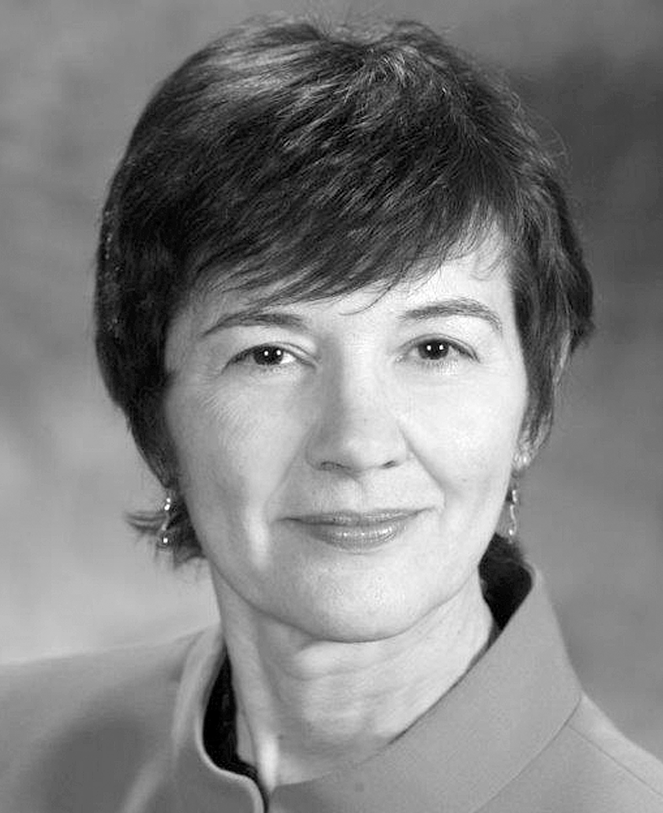
Robert Pura

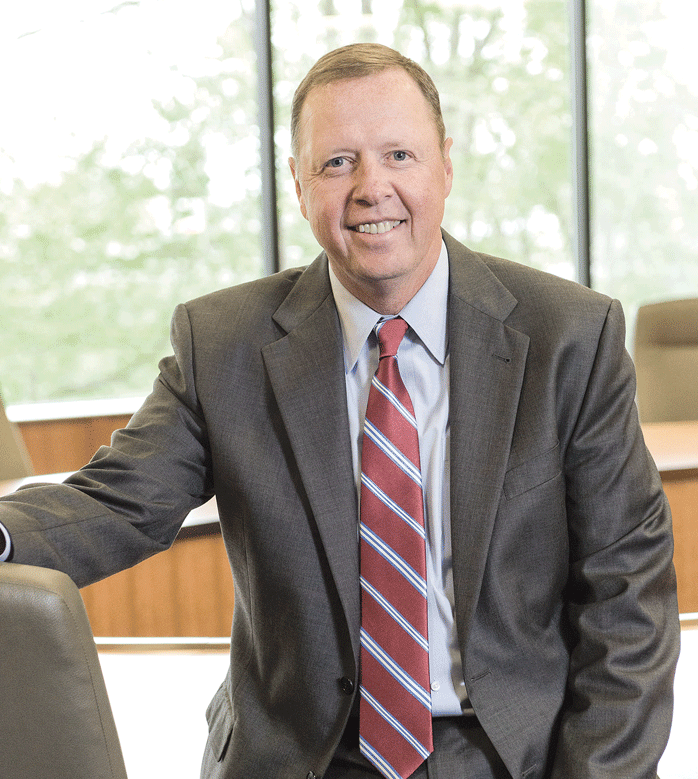
Robert Pura touts a number of GCC’s notable academic departments, from art to nursing to a unique program in renewable energy.

They’re called ‘studios.’

While they vary slightly in design across the Greenfield Community College campus, they all have some features in common, most importantly tables and couches at which students work and talk, in a space surrounded by that department’s faculty offices.

“About 13 or 14 years ago, the math department convinced us they wanted to have a space near the faculty offices for students to come, to ensure there wasn’t a long wait to see a faculty member,” said GCC President Robert Pura. Since then, virtually every department has followed suit in creating a common study area surrounded by those office doors.

“It’s a space with tables and chairs, where students can learn from each other and support each other, and the faculty are right there,” he explained, recalling a time when a maintenance worker questioned a mass of students sharing pizza and studying in one of the studios late at night.

“They didn’t want to leave. I laughed and said, ‘that isn’t a problem.’ That’s the spirit we want to see — a community where people are encouraged to work together and learn independently, but also from each other. That’s the kind of attribute that will serve them well, whether they transfer to another school or head into a career right away.”

The studios are one of the more notable examples of a culture of connectivity fostered at GCC, Pura told BusinessWest — one further enhanced by an extensive renovation of the campus’s core building three years ago, which better connected each department and brought in much more natural light to boot.

“You can see our commitment to community in the design of the building, our commitment to interconnectivity,” he said. “You’re always feeling like you’re connected to people as you’re walking around — you feel those relationships and sense of community among students and faculty and staff.

“I’ve talked to a lot of alumni over time,” Pura added. “It’s not a lecture they remember; it’s not a formula or that one piece of poetry. It’s the relationships they had with people that makes a long-term impact. As a smaller college, we have an opportunity to make that the strength of the institution.”

Hand in Hand

The main role of an institution like GCC, of course, is to prepare people — both young learners and older career transitioners — for jobs in a still-difficult economy.

To that end, and perhaps more than ever before, the state’s community colleges are working closely with area economic-development bodies and local businesses to bridge the gap between education and career opportunities, to ensure that their graduates have the skills and training required to meet companies’ needs.

That’s especially important for GCC, Pura said, because of its position as the only community college in Franklin County — or neighboring Hampshire County, for that matter.
Robert Pura

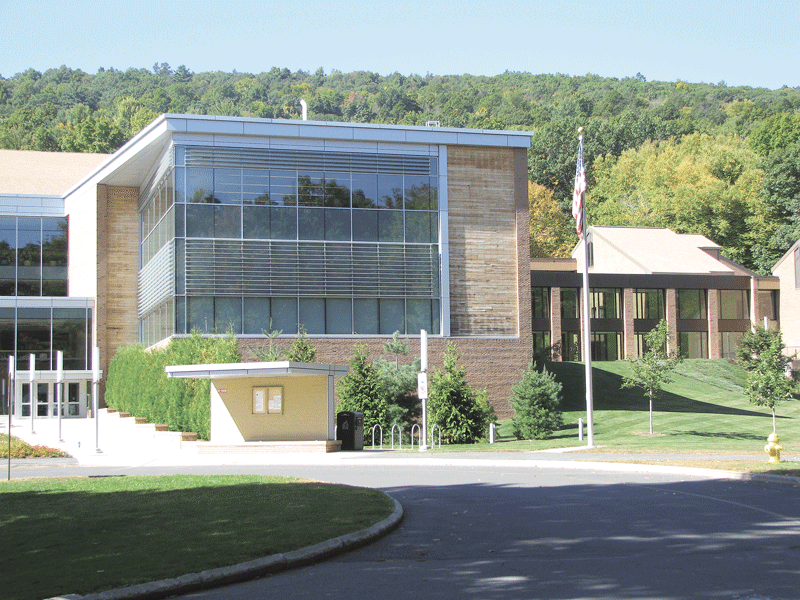
Robert Pura says GCC’s recently remodeled core building is designed with both access and connectivity in mind.

“It is essential, especially up here in Franklin County, that we collaborate with regional employee boards, the Literacy Project, the Center for New Americans, Franklin County Technical School, Smith Vocational School … the more we’re able to collaborate, the more we’re able to do collectively.”

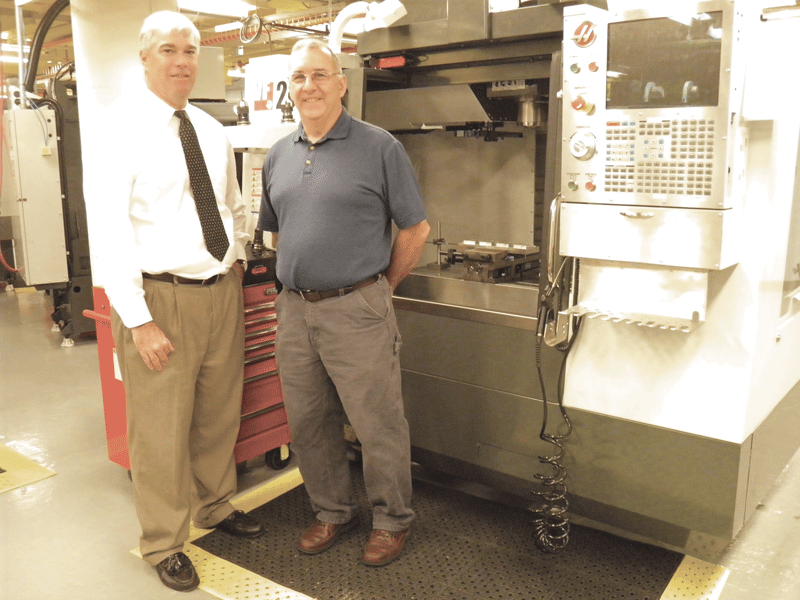
One notable collaboration involves Steve Capshaw, the owner of Greenfield-based Valley Steel Stamp, who raised $250,000 from private industry for new manufacturing tools for Franklin Technical School, then got legislators to match it. The result was an effort involving both Franklin Technical School and GCC to boost opportunity in the manufacturing sector.

“With Steve’s commitment, we developed a state-of-the-art lab. The technical school developed a curriculum for their students, and we developed curriculum to reach the worker in transition,” Pura said. “Steve Capshaw is really the reason that happened; he’s certainly a local hero.”

Noting that the Franklin Hampshire Regional Employment Board was involved as well, Pura said he is “proud of the way folks in Franklin County and Hampshire County understand collaboration. We really do more with less.

“Collaboration happens to the be the way of life up here,” he added. “I don’t know if it’s because we have an agricultural base, and farmers collaborate as a way of life. But the same is true of the industrial base here, the banks and healthcare, the education folks up here — we really know how to collaborate well.”

Having those ties, he went on, helps the college in terms of program and curriculum development. “We listen to business leaders, healthcare leaders, agricultural leaders of the community. They want people who can communicate effectively, think critically, and work well with others — and these are the outcomes of a GCC education.”

Those are skills, of course, that translate to a multitude of fields, which is important at a time when many graduates wind up shifting gears into fields they didn’t major in, or return to school later in life to learn a new career.

“Coming here gives folks the opportunity to change direction without significant cost to their family or themselves,” Pura said. “Changing careers is a hard decision because of the investment they’ve already made. It shouldn’t cost another $200,000 to figure out what they want to do.”

Signature Programs

Like most colleges, Greenfield has differentiated itself in several academic areas, including its programs in renewable energy and energy efficiency. Those caught the eye of Congress, which invited Pura and associate professor Teresa Jones to speak at a subcommittee hearing last spring titled “American Energy Jobs: Opportunities for Education.” Lawmakers in Washington were interested in hearing how to link education with the growing need for a solar-energy workforce.

“There is a great deal of opportunity for economic growth, job creation, and job attainment in the sustainable-energy field,” Jones said at the time. “There is a huge potential for domestic jobs in the area of energy-efficiency upgrades, but people need knowledge and advanced skills to do those jobs.”

The field, she added, is already much different than it was only five years ago, “so businesses and workers need to be able to adapt. The key piece for us is figuring out where the best job opportunities are and what people need to know to succeed in getting those jobs or starting businesses. We look to our business and other community partners to help guide that process.”

On a related note, Pura also touted the college’s farm-to-food program. “What it’s really about is how to get local farming into the restaurants and refrigerators of the community and make that a more mutually beneficial system,” he said. Meanwhile, the American Assoc. of Community Colleges recently gave GCC an award for its sustainable systems on campus, including an energy-neutral greenhouse built two years ago, which supplies produce to both the school’s dining service and local food pantries.

“That comes from our commitment to not wanting to see the work being done in the classroom and the work we’re doing on campus being too far apart,” Pura said. “We learn from students, and we all learn from each other. These are powerful programs.”

As is the college’s well-regarded graphic arts program, which decorates campus buildings with paintings, sculptures, and other installations, and attracts some of the top art schools in the country to an annual ‘portfolio day,’ Pura said. “The combination of our students’ life stories with the strength of their fundamentals makes them highly sought-after artists.”

He also talked up GCC’s nursing program, noting that its graduates are typically among the top scorers in their licensure exams and snatch up jobs quickly in a market that’s starting to ramp up demand for quality nurses again.

But other programs that don’t get as much press are just as key to the college’s success, Pura added.

“At the core of our institution, two departments that are not as recognized as many are English and math. But these two departments teach the communication skills and critical-thinking skills that are so sought after. For all the wonderful acknowledgement of some of our signature programs, it is really the English and math departments that are fundamental to our school’s success.”

Room to Grow

GCC is helping its students succeed in other ways as well, including a new child-care center currently being built, which will be staffed by Community Action’s Head Start program.

“It’s hard to focus fully on academics with a child in your hands,” Pura said with a laugh. “So having child care on campus will help our students succeed, and it is a great start for kids; the data about the number of children who start in college-based child care and go on to college is pretty strong.”

It’s just one more way Greenfield Community College is forging connections and giving students the foundation to succeed, no matter their stage of life.

“There’s no distance here between students, and the teaching space embraces that philosophy,” Pura said, referring not only to those studios but to the classrooms, where students typically sit together in groups, not at separate desks.

“Those students come in with dreams of what they want to do with their lives,” he added. “We give them an opportunity, and if they work hard, they can be successful in their career aspirations.”

Joseph Bednar can be reached at [email protected]
Daily News

PITTSFIELD — Tooling U-SME, a leader in manufacturing training and development, presented its Platinum Education Center designation to six community and technical colleges nationwide, including Greenfield Community College.

The Tooling U-SME Platinum Education Center (TUPEC) awards are presented to educational facilities that serve as models in the manufacturing industry when it comes to developing an outstanding learning culture. Schools are selected based on adoption of Tooling U-SME’s online training program and strong utilization rates of online training in a blended learning format. These six schools join 21 other past TUPEC awardees.

GCC partnered with Tooling U-SME for a new training program for entry-level CNC operators, targeting unemployed and underemployed workers. In addition, to meet the demand for skilled workers in its community, GCC has worked with area manufacturers to pilot classes for incumbent workers. According to the Institute for Supply Management, the U.S. manufacturing industry is growing at its fastest pace within the past three years. However, according to the Boston Consulting Group, without aggressive action, the next decade is expected to bring a potential shortfall of 875,000 machinists, welders, industrial-machinery mechanics, and industrial engineers. As demand for skilled workers continues to increase, community colleges and technical schools are striving to provide training that meets the needs of manufacturers.

“The schools that we honor with the TUPEC designation demonstrate an exceptional commitment and dedication to preparing students for a successful career in the manufacturing industry,” said Toni Neary, education specialist for Tooling U-SME’s government and education group. “Instructors at these schools are finding innovative ways to effectively use both online and hands-on training to help students develop critical skills and become strong candidates for employment at local manufacturing facilities.”

The other schools that received the 2014 TUPEC designation include Atlantic Technical College in Florida, Fayetteville Technical Community College in North Carolina, Kellogg Community College in Michigan, Southern Oklahoma Technology Center, and the Arizona Advanced Manufacturing Institute of Mesa Community College in Arizona. For more information about Tooling U-SME, e-mail [email protected] or visit tooling.com.

Daily News

SPRINGFIELD — Skoler, Abbott & Presser, P.C., an employment-law firm serving the Greater Springfield area, announced that the firm is celebrating its 50th anniversary by donating a $5,000 ‘Skolership’ to the Community Foundation of Western Massachusetts.

Since the firm’s founding in 1964, Skoler, Abbott & Presser has exclusively represented management and employers in the fields of labor relations and employment law. Partner Ralph Abbott Jr., who has been with the firm since 1975, said, “our mission has always been to educate local businesses about workplace law, so it makes sense to celebrate a momentous anniversary with a scholarship. By donating to the Community Foundation of Western Massachusetts, our gift will benefit the community that has helped us succeed for half a century. We have deemed our donation a ‘Skolership’ in honor of our founding partner, Martin J. Skoler.”

With two offices in Massachusetts — the main office in Springfield and a branch office in Worcester — and an additional office in Meriden, Conn., Skoler, Abbott & Presser is one of the largest law firms in New England specializing in the practice of labor relations and employment law solely on behalf of management. Skoler Abbott’s clients range from small, nonprofit agencies to national Fortune 500 companies, and include businesses in the healthcare, manufacturing, higher-education, and banking industries.

Attorneys are also approved defense counsel for many insurance companies that provide employment-practices liability insurance coverage to employers. In addition, attorneys regularly practice before administrative agencies in other states. Skoler, Abbott & Presser attorneys are admitted to practice in state and federal courts in Massachusetts, Connecticut, and New York, as well as federal courts in other jurisdictions, including the U.S. Supreme Court.

To apply for scholarships and loans at the Community Foundation of Western Massachusetts, all eligible applicants must complete an online application that will be available on the foundation’s website as of Jan. 1, 2015. In addition to completion of the online application, applicants must arrange for the submission of their most recent official academic transcript and submit a 2015-16 student-aid report. All required documents must be mailed or postmarked no later than March 31, 2015. The Community Foundation’s scholarship application will be available at www.communityfoundation.org/scholarships/application.html.

Last year alone, the Community Foundation of Western Massachusetts attracted approximately 2,500 applicants for scholarships and loan funds totaling $2 million, and 700 recipients benefitted from donations. The foundation’s scholarship and interest-free student-loan funds support students seeking access to the opportunities offered by higher education and play a substantial role in providing an educated citizenry. Some of the funds help students from a particular schools or areas; others provide financial assistance to those pursuing a specific field of study; still others assist students that are most in need. Scholarships and interest-free loan awards are reviewed by volunteer committees and approved by the board of trustees. Awards are made subject to availability and the policies of the Community Foundation.

Daily News

BOSTON — A consortia proposal submitted collectively by the 15 community colleges in Massachusetts, led by Massasoit Community College, has been selected by the U.S. Department of Labor (DOL) for the fourth and final round of federal funding from the Trade Adjustment Assistance Community College and Career Training Grant (TAACCCT).

The community colleges are advancing a comprehensive approach to addressing the training and educational needs of workers and employers statewide with a focus on articulated pathways to careers in high-growth STEM sectors (science, technology, engineering, and math, as well as advanced manufacturing and healthcare). The $20 million grant is the highest-funded of the 66 awarded in the country by the DOL.

The project, titled Guided Pathways to Success in STEM (GPSTEM), will use the national Complete College America Guided Pathways to Success model to assist eligible students in obtaining degrees and certificates in STEM fields. The model focuses on reducing the time to completion of certificates and degree programs, resulting in more students entering employment in the Commonwealth and/or transferring into baccalaureate programs to add to their credentials.

During the three-year grant period, 24 STEM degree options and 58 certificate programs will be newly created or significantly enhanced in partnership with business and industry, the Commonwealth’s workforce system, the state universities, and the University of Massachusetts. The project will also build capacity on the highly successful Career & College Navigator model the Massachusetts community colleges designed and implemented during the round-one TAACCCT grant award in 2011. An important part of the round-four initiative will focus on creating collaborative pipelines for students to seamlessly transfer to baccalaureate programs to meet industry demand in certain STEM industry areas.

“Creating key pipeline collaborations in the STEM fields in conjunction with the state universities and UMass will serve as a new model for creating comprehensive higher education and industry partnerships in the Commonwealth,” said Bill Hart, executive officer of the Mass. Community Colleges Council of Presidents.

The focus is primarily on helping TAA-eligible, unemployed and underemployed workers and veterans enter STEM programs and obtain high-skill, high-wage jobs. However, the funding to implement Complete College America’s GPS model will assist community colleges in infusing additional comprehensive student supports throughout the 15 campuses that will benefit all student populations.

“This grant will help our college better prepare students in high-growth areas such as IT, engineering technology, and science,” said Springfield Technical Community College President Ira Rubenzahl. “Working together to secure this significant federal funding is an incredible accomplishment. It’s a wonderful example of how the collaboration and partnerships between the 15 community colleges can benefit our students and the region.”

Daily News

SPRINGFIELD — The Economic Assistance Coordinating Council (EACC) approved seven projects for participation in the Economic Development Incentive Program (EDIP), which are expected to create 433 new jobs and retain 460 existing jobs, in addition to leveraging more than $61 million in private investment and supporting construction projects across the Commonwealth.

Among the approved projects are five manufacturing companies and three projects located in gateway cities, including one involving Freedom Credit Union and a new branch in Springfield. The EDIP program will facilitate the growth of these businesses, which will contribute to job creation and private investment in the state. The EACC meets on a quarterly basis to review applications.

“Supporting companies that are choosing to grow in Massachusetts is an important part and one of the administration’s key economic-development objectives to create economic opportunity in every region of the Commonwealth,” said Michael Hunter, executive director of the Mass. Office of Business Development. “These investments will help these companies expand and continue to enhance the Massachusetts economy by making our communities stronger in the long term.”

The EDIP is the Commonwealth’s investment tax-credit program for businesses. In 2009, Gov. Deval Patrick and Housing and Economic Development Secretary Greg Bialecki, along with the Legislature, reformed the program, and, as a result, the EDIP has become one of the most effective programs helping business grow in Massachusetts. EDIP tax credits and other incentives are available to companies that make qualifying investments in new facilities and create new jobs. Those benefits can be recaptured if a company does not make the investments or create the jobs it projected.

Since these changes, 204 projects have received approval, leading to the potential creation of 14,416 new jobs, the retention of 40,911 existing jobs, and the leveraging of more than $5.5 billion in private investment. The EACC has assisted 111 manufacturers through the EDIP and has supported 94 projects in gateway cities.

The new facility in Springfield will be Freedom Credit Union’s 10th branch. As a result of the growth of the credit union, along with increased federal banking regulations, the organization is seeking to consolidate it’s two leased administrative facilities totaling approximately 7,000 square feet into a 12,000-square-foot facility in Springfield. The tax-increment-financing-only project will require an investment of approximately $2.2 million to consolidate back-office administration into a single location. The project will create 13 new full-time jobs in Springfield, and 16 employees will be transferred from Agawam to Springfield. The city of Springfield is supporting the project with a five-year tax-increment-financing agreement valued at $90,100.

Banking and Financial Services Sections
Greenfield Savings Bank Emphasizes Community Ties

Rebecca Caplice

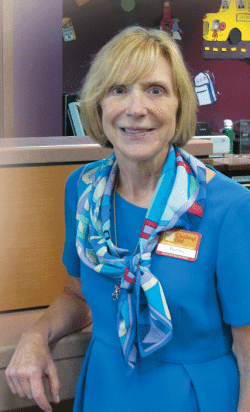
Greenfield Savings Bank President Rebecca Caplice

Rebecca Caplice laughed when asked whether Greenfield Savings Bank had seen growth of its online and mobile services among younger customers.

“You’d be surprised at the acceptance across the board,” said Caplice, the bank’s president. “My father is 87 years old, and he’s on Facebook and Twitter every day. It’s really not just young people asking for these things; we are all attached to those mobile devices. I can hardly remember what it was like when someone in a group of people had a question, and no one knew the answer. Now we just look it up.”

In other words, Caplice said, banks had better offer robust options in electronic banking if they want to attract new customers — of all generations, not just Millennials. It’s one of many ways the banking world has evolved, and continues to do so.

“We have all kinds of ways to access your banking services. And we’re seeing growth in those electronic channels,” she told BusinessWest — but that growth has not come at the expense of branch traffic. “You read the industry press and see all these articles — ‘the branch bank is dead.’ But in our experience, our branch traffic hasn’t declined, even as other types of traffic have increased. We’re seeing people use several channels interchangeably, depending on what they’re doing.

“Sometimes a single transaction might use more than one channel; they might start someplace and end up somewhere else. That has been a real change,” she added. “Take mortgage applications, for example. More than half of our mortgage applications use an online channel to do part of the process electronically; then they’ll come in. I guess that speaks to people wanting to do things on their time, not the bank’s time.”

If there’s any difference between older and younger customers when it comes to technology, it’s not comfort with the tools, but with security fears.

“That’s where the separation occurs,” Caplice said. “It’s not the technology that’s frightening, but the younger people have less of a concern about security and privacy. I guess being brought up in a world where technology is all around you gives you a certain comfort level with that. I think those of us who have been on the planet a little longer don’t have that ease of comfort.”

Making Change

Caplice has seen plenty of change in the banking industry since arriving at GSB in 1991, and even since taking the reins as president in 2007. But her 23-year arc at the bank has also given her some deep roots in Franklin County, where the bank enjoys a 50% market share in savings deposits and is also the county’s number-one lender.

But GSB — which, along with Greenfield Cooperative Bank, is one of only two institutions located in Greenfield 20 years ago that are still around today — has expanded gradually over the years. It merged in 1967 with the Crocker Institution for Savings in Turners Falls, making that office its first branch outside of Greenfield, and added another branch in South Deerfield in 1972.

Additions during Caplice’s time at the bank include branches in Shelburne Falls and Conway; the opening of the Amherst Financial Center in 2002, marking the bank’s first physical presence in Hampshire County; and the recent opening of its first Hampshire County branch, in Northampton.

Greenfield Savings Bank

Greenfield Savings Bank has been a fixture in its namesake town for 145 years.

“When we made that next step into Hampshire County, it was almost like we were following a growing customer base there — Franklin County customers work there and said, ‘boy, I wish I had a branch in Northampton.’ So we saw an opportunity there, even though we’re still the dominant player here. You can’t take your eyes off that; you have to look outside your boundaries.”

As the region gains more distance from the Great Recession — although the economy can hardly be described as booming — commercial loan volume is up at GSB as well. “We’ve seen a lot of growth in commercial loans in the last four or five years. Ask any banker, and they’ll tell you the same thing.”

Rising demand for commercial loans runs the gamut, she said, including a manufacturing base in Franklin County that has suffered in recent years but is slowly gaining steam. “This region has a history and legacy of skilled blue-collar workers, and as those workers have transitioned into more precision machining, those industries have been doing very well.”

Meanwhile, the bank has differentiated itself in the market with unique products, like its trust business, which GSB started to cultivate during the 1990s when other banks with strong trust divisions, particularly Bank of New England and Shawmut Bank, left the Franklin County landscape. It now offers the region’s only in-house trust and investment department — a business most small banks don’t normally delve into.

“These are really high-touch banking services; we can manage people’s money, pay their bills, take care of their property, or take care of their estate. Sometimes a trust is set up for a child with special needs. It’s all kinds of high-touch financial management,” Caplice said. “And there is no bank in the Valley that has a locally controlled trust department. We’re at about $200 million under management, which gets us to a size that is respectable in the industry.”

It’s an interesting time for investment services in general, she added, especially with the massive wealth transfer from the GI Generation to their Boomer children. “The Baby Boomers’ parents are dying, so we’re seeing this transfer.

“There’s also a shift in what people’s goals are financially,” she continued, particularly at the other end of the generational spectrum, with the Millennials, and their relationship with banking institutions.

“In community banks, we’ve always emphasized our role in the community — that’s important,” Caplice said. “And we’ve got this generation that’s eventually going to be in charge, and they care deeply about causes. Yes, they want to earn money on their investments, but they also ask, ‘what are your values, and are those values the same as my values?’ I think that was not so much the case in other generations. It will be interesting to see how that impacts our business.”

Local Flavor

With a 145-year history in Greenfield, GSB has certainly cultivated strong bonds with the towns it calls home.

For example, about five years ago, the bank partnered with institutions ranging from the Economic Development Council of Western Mass. to Greenfield Community College in spearheading a project to revitalize a series of downtown buildings. The development model brought together several property owners, representing more than a dozen buildings, who used tax-credit financing, facilitated by GSB, to fund renovations of the vacant sites.

“Taking on those projects individually wouldn’t have been cost-effective, but the project resulted in the renovation of those buildings in the core of the downtown,” Caplice said.

Before that, almost a decade ago, the bank launched an initiative called ‘civic action accounts,’ by which GSB donates money to school districts and other organizations based on how often customers use their debit cards.

Meanwhile, bank employees regularly set out to perform random acts of kindness. “I think that’s one thing that makes this place special,” Caplice said. “Each branch office plans its own events, and for the most part, they have nothing to do with banking. Maybe they’ll go up and down the street putting money in everyone’s meters, or wash every car that comes through the lot, to handing out free ice cream in Dixie cups. If you go to work proud of what’s going on in the organization and you’re having a good time, I think that resonates with customers, even though the activity itself has nothing to do with the business.”

Caplice was quick to add that Greenfield Savings Bank employees sit on many nonprofit boards, and the bank offers resources to various causes, but the smaller acts of kindness are often what customers, and prospective customers, notice. It’s part of a culture at the bank that the Massachusetts Chamber of Commerce honored several years ago with its Employer of Choice Award.

“If we create an atmosphere where the people who work here want to come to work, because they have fun and are permitted to do things they know change people’s lives, that attitude is infectious. You can feel it when you walk into a place,” she said. “We pay a lot of attention to culture; we think that’s really critical.”

After all, even in today’s fast-paced, high-tech banking landscape, there’s still room for kindness — and maybe a little ice cream.

Joseph Bednar can be reached at [email protected]
Departments Incorporations

The following business incorporations were recorded in Hampden, Hampshire, and Franklin counties and are the latest available. They are listed by community.

AMHERST

Living Arts Farm, Inc., 45 Schoolhouse Road, Amherst, MA 01002. Alisande Cummingham Sweney, same. Provide educational programs on sustainable agriculture, gardening, optimal health, the natural world, and the arts.

GRANBY

Munsing Ridge Inc., 118 Munsing Ridge, Granby, MA 01033. Thomas R. Hill, same. Tavern.

GREENFIELD

Meadows Café & Golf Center Inc., 398 Deerfield St., Greenfield, MA 01301. Constant S. Poholek Jr., 30 Washington St., Attleboro, MA 02703. Golf center with café.

LUDLOW

Leary Masonry Solutions Inc., 31 Armand St., Ludlow, MA 01056. Martin D. Leary, same. Masonry, landscaping.

Limelight City Café, Inc., 893 Center St., Ludlow, MA 01056. John R. Pereira, same. Restaurant/bar.

Moreau Masonry Inc., 215 Holyoke St., Ludlow, MA 01056. Wendy Moreau, same.

NORTHAMPTON

Northampton Jewelers Inc., 104 Main St., Unit C, Northampton, MA 01060. Kendall Nicole Knapik, 76 Vernon St., Northampton, MA 01060. Light manufacturing and selling of jewelry/art.

One Bar & Grill Inc., 1 Pearl St., Northampton, MA 01060. Matthew Gibbs, 21 Viola St., Springfield, MA 01109. Restaurant/bar.

OTIS

Mass Media Marketing Inc., 138 Gibbs Road, Otis, MA 01253. Stephen Graves, same. Advertising agency.

SOUTH HADLEY

Nick Gardner Inc., 399 Newton St., South Hadley, MA 01075. Nicholas Gardner, same. Mechanical services.

SPRINGFIELD

Open House Evangelistic Outreach Industry, 22 Maryland St., Springfield, MA 01108. Everton Francis, same. To preach the gospel of God and the bible.

Nevadarcy Red Telecom (NRT) Copy & Secretarial Inc., 661 Main St., Suite 1A, West Springfield, MA 01089. David H. Lim, same. Network telecommunications, mobile network, secretarial, fax service, photo copying.

WESTFIELD

Michael’s Auto Transportation Inc., 93 South Maple St., Apt. 20, Westfield, MA 01085. Sergh Bonchukov, same. Trucking.

WEST SPRINGFIELD

Multicultural Resource Center of Massachusetts, Inc., 425 Union St., West Springfield, MA 01089. Polina Bodner, same. Providing assistance to immigrants and refugees as they integrate into American society.

Agenda Departments

Craft Brewer Lecture
Sept. 25: Dan Kenary, co-founder and president of Harpoon Brewery, will speak about the history and success of New England’s largest craft brewery at Old Sturbridge Village (OSV). His appearance is part of the village’s continuing OSV Overseers’ Distinguished Speaker Series. Kenary, a Worcester native, will host a fun-filled evening of beer tasting paired with food samples and will share the story of Harpoon’s success. Doors open at 6 p.m., a cash bar is available, and Kenary’s program will begin at 7 p.m. In his talk, “How Passion, Continuous Improvement, and Grassroots Marketing Have Made Harpoon Brewery the Largest Craft Brewer in New England,” Kenary will recount how Harpoon introduced fresh, local craft beer to Boston in 1986, becoming the first brewery to commercially brew and bottle beer in Boston in more than 25 years. “The big beer companies are like factories. What craft beer has done is to bring some local flavors,” he noted. “I’m bullish on better beer. We don’t believe in making beer we don’t like.” Tickets are $45 per person, $40 for Old Sturbridge Village members. Attendees must be at least 21 years old. Seating is limited, and pre-registration is required. The event is sponsored by Spencer Bank. For more information, visit www.osv.org or call (800) 733-1830. Old Sturbridge Village celebrates New England life in the 1830s and is one of the largest living-history museums in the country. The museum is open daily from 9:30 a.m. to 5 p.m. OSV offers free parking and a free return visit within 10 days. Admission is $24, or $22 for seniors; $8 for children ages 3-17, and free to children 2 and under.

Great River Challenge
Sept. 28: The only town in Massachusetts located on both sides of the fourth-largest river in the U.S., Northfield will be the scene of the first annual Great River Challenge Triathlon. The event will begin at Northfield Mountain Recreation and Environmental Center’s riverfront park and extensive trail system located on Route 63. Classified as a ‘non-traditional’ triathlon because it involves paddling rather than swimming, the Great River Challenge will be the first event of its kind in the Upper Pioneer Valley to use the broad Connecticut River. The Northfield Mountain recreational facility offers a number of advantages for racers and spectators, including a comfortable lodge, convenient parking, and a food-vendor area, amenities that most other race locations lack. The race features a canoe/kayak/SUP leg, a trail run, and an off-road mountain-bike leg on scenic Northfield Mountain. The paddle leg will be a mass start from the center’s riverfront park, paddling out and back and around Captain Kidd’s Island over 5.2 miles. The running leg is a challenging 3.5 miles of single-track trails and groomed trails, followed by a 6.5-mile mountain-bike ride on mixed single-track and open trails. Individuals and two-, three-, and four-person teams are welcome, and there is a junior division. Registrations start at $65 for individuals, with discounts for teams and half price for junior competitors (age 20 and under), plus a small sign-up fee at runsignup.com. Detailed information about the race, pre-registration and on-site registration, and pre-race activities can be found at www.greatriverchallenge.com. Organizer David Thomas — an athlete, coach, and owner of Stellar Kayaks in Northfield — expects 150 racers and 500 spectators at the first of what he hopes will be an annual event. “We are excited to launch this event in Northfield, showcasing the unusual beauty and abundant natural features we have here, from the river to the surrounding mountains,” he said. Proceeds from the event will support Northfield Kiwanis programs for children and needy families and visitor programs produced by the Northfield Area Tourism Assoc.

ACCGS Breakfast
Oct. 1:
Menck Windows Chairman Bodo Liesenfeld will be the keynote speaker at the Affiliated Chambers of Commerce of Greater Springfield’s October Business@Breakfast at 7:15 a.m. at Twin Hills Country Club, 700 Wolf Swamp Road, Longmeadow. The event will be hosted by WGBY Director of Public Affairs Jim Madigan and sponsored by United Personnel. Liesenfeld will present “Looking from the Outside In,” and discuss the benefits and strengths the region has to offer businesses interested in locating and relocating to Western Mass. Menck Windows, a joint venture of Menck USA Inc. and Menck Fenster GmbH, of Hamburg, Germany, a 130-year-old, fourth-generation business that provides custom windows and doors in Europe, the Far East, and the U.S., recently opened the doors to its first U.S. manufacturing operation here in Western Mass. Liesenfeld is managing partner of Liesenfeld International GmbH, a private investment enterprise. For nearly 30 years, he was CEO and chairman of German-based Rohde & Liesenfeld, an international air and sea freight-forwarding group with global presence. He is the honorary representative of the city of Hamburg to the Northeast region of the U.S. and serves as chairman of the German Latin America Business Assoc. Since making his home in Boston in mid-2009, he became a fellow at Harvard’s Weatherhead Center for International Affairs and chairman of the advisory board of the Berklee Global Jazz Institute. He is chairman of the board of the Latin America Business Assoc. and a board member of the Hamburg Chamber of Commerce, among other board positions in the U.S., Germany, and Latin America. Reservations are $20 in advance for ACCGS members ($25 for member walk-in registration) and $30 for general admission. Reservations are suggested and can be made online at www.myonlinechamber.com.

Amherst Area Chamber Annual Awards Dinner
Oct. 2: The Amherst Area Chamber of Commerce announced the upcoming Farm to Table Annual Awards Dinner, to be held Oct. 2 at Hadley Farms Meeting House in Hadley. The dinner, a yearly celebration that is a highlight of area businesses’ community social calendar, is expected to sell out. This year’s award winners reflect a celebration and acknowledgement of a number of community partners and leaders. The “A+” Award Winners include the Rotary Club of Amherst, which will receive the chamber’s Community Service Award, recognizing the many contributions that this group of volunteers has made to the Amherst area, in addition to its work dedicated to the global eradication of polio; Stephanie O’Keeffe, who will receive the chamber’s Legacy Award, a celebration of what this individual has accomplished, specifically in her role on the Amherst Select Board; and Tony Maroulis, former executive director of the organization, who will receive the chamber’s Most Valuable Player award for all of his hard work elevating the chamber’s stature and involvement in the community. “It was a daunting task to sift through the nominations for this year’s batch of award winners, because as there are so many individuals and organizations in this community worthy of recognition,” said Don Courtemanche, Amherst Area Chamber of Commerce executive director. “We feel that the recipients that we have selected represent the best, the brightest, and the most outstanding of the terrific partners that the chamber is fortunate to be associated with.” Tickets for the dinner will be available Sept. 2. Reservations for the dinner or for the program book may be made by contacting the chamber at (413) 253-0700.

Stroke Lecture at CDH
Oct. 2:
Stroke is a major cause of death and disability in the U.S. Stroke occurs when a blood vessel that brings blood and oxygen to the brain gets blocked or ruptures. When this happens, brain cells don’t get the blood they need, and deprived of oxygen, nerve cells can stop working and die within minutes. In “Stroke Prevention and Treatment,” a Cooley Dickinson/Massachusetts General Hospital lecture, stroke neurologist Dr. Scott Silverman will discuss ways to reduce the risk of stroke and how to recognize stroke warning signs. He will also discuss treatments for stroke. Community members are invited to attend the lecture, from 6 to 7 p.m. in the Dakin Conference Room at Cooley Dickinson Hospital. Silverman is an instructor of neurology at Harvard Medical School and an assistant in neurology at Massachusetts General Hospital, where he works on the stroke service. He received his undergraduate degree in neuroscience from Bowdoin College, and received his medical degree and completed his neurology residency at UMass Medical School. He then completed a fellowship in vascular and critical-care neurology at Massachusetts General Hospital and Brigham and Women’s Hospital. Silverman is board-certified in neurology, vascular neurology, and neurocritical care, and is director of Outpatient Stroke Services at Mass General. He has a strong interest in medical education and is currently the director of the Partners Vascular Neurology Fellowship. Silverman’s research and clinical interests are in ischemic stroke, specifically intracranial atherosclerotic disease and stroke in the young. Also participating in the lecture will be Dr. Tor Krogius, an emergency department physician at Cooley Dickinson and medical director of the Cooley Dickinson Hospital Stroke Program, as well as the telemedicine programs for stroke, neurology, and burn. He earned his medical degree at McGill University Faculty of Medicine and completed his internship and residency training at Baystate Medical Center.

BMLH Tag Sale and Electronics Recycling Day
Oct. 17: Recent building renovations and office upgrades at Baystate Mary Lane Hospital have resulted in a quantity of usedchairs, tables, desks, file cabinets, and other office equipment. As a result, a tag sale will be held from 9 a.m. to 2 p.m. in the parking lot near the back of the Medical Office Building, off Marjorie Street. Combined with the tag sale, the hospital will also sponsor a community-wide recycling event. Old and/or non-working electrical devices such as radios, air-conditioning units, toasters, phones, light fixtures, etc. will be collected at no cost,with the exception of TVs and CRTs, for which there will be an $8 fee. The community recycling event will also take place in the parking lot near the back of the Medical Office Building. All items collected will be trucked away to a recycling center shortly after the event. All proceeds will benefit community-benefit programs sponsored by the hospital. For more information, contact Ryan Moore at (413) 967-2140.

Western Mass. Business Expo
Oct. 29: The fourth annual Western Mass. Business Expo will be presented by BusinessWest at the MassMutual Center in Springfield. The event is a business-to-business show featuring more than 150 booths, seminars, breakfast and lunch events, Show Floor Theater presentations, and a day-capping Expo Social. Details about events, programs, and featured speakers will be printed in future issues of BusinessWest. Comcast Business will again be Presenting Sponsor, while the social will be sponsored by Northwestern Mutual and MGM Springfield. Silver Sponsors are Health New England, DIF Design, Johnson & Hill Staffing, and MassMutual Financial Group. Education sponsor is the Isenberg School of Management at UMass Amherst. Additional sponsorship opportunities are available. In 2013, more than 2,200 business professionals attended the expo, and between 2,500 and 3,000 are expected in 2014. For more information on sponsorships or booth purchase, call (413) 781-8600 or visit www.wmbexpo.com.

Community Spotlight Features
West Springfield Takes Active Approach to Growth

Mayor Edward Sullivan

Mayor Edward Sullivan says the quality of life in West Springfield helps attract new businesses to the town.

Mayor Edward Sullivan says the city of West Springfield has changed its tactics toward economic development, and is moving forward “like a battleship,” which is a significant development.

“In the past, we moved like an aircraft carrier,” he said, meaning more deliberately. “But we are no longer sitting back on our heels. Instead, we have taken a proactive approach and are moving from a passive role to an active role. We’re doing a better job of marketing through our website and collaborations with regional agencies and commercial brokers. Nothing happens overnight, but we’ve laid the groundwork and put a strategic plan in place.”

To that end, Tara Gehring has been hired as the town’s first economic-development coordinator and assistant planner. She grew up in West Springfield, completed an internship in town, has a master’s degree in regional planning, and is part of a new team Sullivan created that meets with him weekly to brainstorm ideas to promote economic development. Members include Mark Noonan, the town’s conservation officer and assistant planner, and Douglas Mattoon, director of planning and development.

“We call ourselves the ‘crossroads of New England,’” said Sullivan. “And we have a lot to offer, including access to Interstate 91, Route 90, and Route 5, which meet in West Springfield, along with the CSX rail yard, which is the largest rail yard in Southern New England. And we believe that new investments by business owners will add to the quality of life.”

However, the mayor told BusinessWest the town is also investing in itself. He pointed to its new, $107 million high school, which opened in February; a $16.1 million library reconstruction and renovation project that is underway; and recent infrastructure improvements. He said they are all important because when communities are rated, these things, along with public safety, recreation, and access to highways, are taken into account.

Sullivan’s team meetings have resulted in marketing initiatives that include a redesign of the town’s website, which now contains links to commercial banks and business opportunities. “If someone is looking for commercial property, they can visit the website instead of having to look on their own. In the past, the town did not have a listing of available commercial sites,” Gehring said.

New guidebooks have also been created that are available online or at Town Hall. The first is titled “Business and Residents’ Guide to Permits and Licensing,” and lists the town’s departments and the permits they handle. There is also a more comprehensive version called the “West Springfield Permitting Guidebook.” It is more detailed and includes the names and contact information of the employees in each town department, as well as office hours and other pertinent information.

In addition, monthly open houses will begin Sept. 9. They will be held on the second Tuesday of each month from 10:30 to 11:30 a.m. for people hoping to open a new business or expand an existing one. The sessions will be attended by the heads of every department involved in the permitting process and will give people the opportunity to discuss their projects in a group setting.

“We wanted to remove any hoops or hurdles that businesses face, so we’re trying to streamline the process,” said the mayor. “It’s all part of our new, proactive approach.”

Mattoon noted that people who attend the meetings will have instant access to critical information, such as zoning laws and parking regulations. “In the past, there was no way to get representatives from every department to discuss a project. People had to go to each individual department, and in some cases, they were not aware of what was going on in other departments.”

Noonan added that these sessions will allow town officials to work more cohesively. “We want to change the way we operate as a municipality, and these meetings will provide us with business owners’ concerns so we can address them in a faster and more efficient manner.”

Sullivan concurred. “Time is money, and people would rather get a quick ‘no’ than a six-month ‘yes,’” he said.

Dedicated Measures

This summer, a team of experts began the preliminary work needed to create a new use for the former Southwick Paper Co. mill site at 150 Front St.

“We hope to revitalize the property and have it serve as an economic-development catalyst; it’s situated on the Westfield River and has an old canal on it,” Sullivan said, noting that Fibermark’s world headquarters are located in a separate building on the property.

From left, Mark Noonan, Tara Gehring, and Douglas Mattoon

From left, Mark Noonan, Tara Gehring, and Douglas Mattoon meet with Mayor Edward Sullivan every week to brainstorm ideas to promote economic development.

The project began about three months ago when Gehring requested help from John Mullin in assessing the site. An economic-development expert at UMass Amherst, he complied by assigning three graduate students to conduct a complete inventory of the property, including zoning and whether easements will be needed to move forward.

A public forum was held on Aug. 14 by the UMass researchers to gain input from neighbors and interested parties on what they would like to see built on the multi-level site, which includes several buildings.

“The district has vast potential because access to the river has not been taken advantage of, and there was discussion about using the site for small light manufacturing, condominiums, retail shops, and even a micro-brewery,” said Mattoon, adding that rezoning may be required to bring the plan to fruition. “All of the ideas had merit, and once we get the final report, the next step will be to implement the goals and objectives.”

In addition, improvements to other areas of the town are changing the landscape. They include an initial plan unveiled in June for a $650,000 Mittineague Park Gateway Project. The work is expected to be finished next year and will include a new pedestrian bridge along the nature trail and improvements to the park’s entranceway, the community garden, a horseshoes tournament pit, and parking facilities. In addition, accessibility to areas around the park, such as the Ezekiel Day House, commonly known as Santa’s House, will be improved.

Traffic flow to the UNICO building located within the park will also be modified, and a $1.4 million renovation of that structure, which began a year ago, has just been completed.

“Now it can be used year-round as a recreational facility,” said Mattoon, noting that the building, which was as constructed by volunteers from the nonprofit service club in the 1970s, was outdated and had never been insulated, so heating costs prohibited using it during the winter.

Improvements include a new kitchen, outdoor playscape, pool, picnic area, and parking lot as well as handicap accessibility.

“It can hold 100 to 150 people, and our plan is to have it become a meeting space for groups such as the Garden Club; the Senior Center will also use it as an ancillary building,” Mattoon said.

Sullivan added that “these things are important because people who do site reviews look at a town’s amenities. We’re investing in West Springfield in hopes that businesses will, too.”

The lack of parking in the Merrick Memorial District and downtown area is another obstacle officials are working to remove, as it has been a roadblock for business owners who have expressed interest in these sections of town but felt the problem was significant enough to settle elsewhere.

“Our zoning is not consistent with the needs of small businesses, especially in the Merrick section,” Noonan said, adding that the district now includes several empty storefronts.

He noted that the regulations were adequate when they were created in the ’50s because, at that time, people who lived there were able to walk to work at nearby companies such as Gibarco, and do the majority of their shopping in the neighborhood. “So many families didn’t own a car,” he told BusinessWest.

Sullivan said efforts are being made to expand the restrictive regulations, and measures may include shared parking space. For example, a business that is open during the day might share space with a restaurant that opens in the evening.

“Things that functioned for the 20th century are being re-examined or built anew for the 21st century,” Noonan added.

To that end, Gehring is exploring areas of town that haven’t been examined for a while to determine if business owners in these locations need help. For example, she recently visited the large industrial section behind Century Plaza on Memorial Avenue, but was happy to report that the business owners didn’t need any assistance from the town.

In addition, Gehring is working closely with the West of the River Chamber’s economic-development team to open lines of communication. “And in June, West Springfield had a table at the Western Mass. Developers Conference in Springfield — it was the first time the town was represented,” Gehring said, adding that she narrated a bus tour through the town in which she highlighted several neighborhoods.

“I want to help move our community forward for the next generation by assisting businesses and improving investment in West Springfield,” she added.

Infrastructure improvement is also ongoing, and West Springfield has undertaken more road repairs this year than it has in the last three or four years. In addition, the town put in a new water main from the Southwick Well Fields to the tanks and feeder system, and purchased additional land to protect the water supply.

The town also enacted a zone change in July in the Memorial Corridor Overlay District. “It was adapted to achieve economic stimulus as well as a means of protection from adverse uses that may or may not be associated with a casino built 800 yards from the West Springfield border,” Mattoon said. “It prohibits businesses such as pawn shops, but opens up opportunities for small businesses operating in 900 square feet or less that were previously not allowed, as it had industrial zoning.”

Multiple Offerings

Sullivan says the improvements West Springfield has made and continues to make, coupled with its focus on helping business owners succeed, should result in growth.

“Why wouldn’t a business want to come here?” he asked rhetorically. “We have everything they could want, and we plan to continue to invest money to enhance the quality of life in town. There is a lot going on here, and it all adds up to what government can do to help promote economic development.”

West Springfield at a glance

Year Incorporated: 1774
Population: 28,391 (2010)

Area: 17.5 square miles

County: Hampden

Residential Tax Rate: $16.41

Commercial Tax Rate: $31.99
Median Household Income: $40,266 (2010)

Family Household Income: $50,282 (2010)

Type of Government: Mayor, City Council
Largest Employers: Northeast Utilities; Brightside for Families and Children; Home Depot; Itt Exelis; UPS
* Latest information available

Bankruptcies Departments

The following bankruptcy petitions were recently filed in U.S. Bankruptcy Court. Readers should confirm all information with the court.

Allen, Barbara Jean
Allen, Vergial Ross
419 East River St., #1001
Orange, MA 01364
Chapter: 7
Filing Date: 07/31/14

Bedinotti, Riccardo L.
P.O. Box 5682
Agawam, MA 01001
Chapter: 13
Filing Date: 08/13/14

Callands, Mary A.
626 White St.
Springfield, MA 01108
Chapter: 7
Filing Date: 08/15/14

Canedy, Russell Rene
796 River Road
Deerfield, MA 01342
Chapter: 7
Filing Date: 08/14/14

Carpenter, Thomas L.
Carpenter, Ann F.
10 Dana Hill Road
Belchertown, MA 01007
Chapter: 7
Filing Date: 08/13/14

Collins, Christine M.
900 Pleasant St., Apt #1
Lee, MA 01238
Chapter: 7
Filing Date: 08/13/14

Cummings, James F.
Cummings, Barbara A.
99 Willowbrook Dr.
Springfield, MA 01129
Chapter: 7
Filing Date: 07/31/14

Daigle, Sammy
45 Faywood Ave., Apt. 1
Boston, MA 02128
Chapter: 7
Filing Date: 08/05/14

Dolma, Lobsang
47 Brierwood Dr.
Florence, MA 01062
Chapter: 7
Filing Date: 08/07/14

Dorobisz, Dorothy B.
86 Westfield Road
Holyoke, MA 01040
Chapter: 13
Filing Date: 08/05/14

Faulconer, Steven J.
43 Reed St., Apt. 2
Pittsfield, MA 01201
Chapter: 7
Filing Date: 08/11/14

Frenier, Todd Thomas
PO Box 605
Goshen, MA 01032
Chapter: 7
Filing Date: 07/31/14

Gause, Kimberly
28 Hobson St.
Springfield, MA 01109
Chapter: 7
Filing Date: 08/13/14

Gearl, Michael J.
Gearl, Brenda H.
724 Silverlake St.
Athol, MA 01331
Chapter: 7
Filing Date: 08/03/14

Godlew, Timothy P.
7 Pomeroy St.
Wilbraham, MA 01095
Chapter: 13
Filing Date: 08/14/14

Greenwood, Thomas E.
228 Main St.
Williamstown, MA 01267
Chapter: 7
Filing Date: 08/11/14

Guilmet, Andre L.
Guilmet, Suzette M.
764 Brattleboro Road
Bernardston, MA 01337
Chapter: 7
Filing Date: 08/12/14

Hanson, Susan M.
62 Euclid Ave.
Pittsfield, MA 01201
Chapter: 7
Filing Date: 08/13/14

Johnson, Donna E.
P.O. Box 1380
Sandwich, MA 02563
Chapter: 13
Filing Date: 08/05/14

Kincade, Mark Ryan
PO Box 1556
Northampton, MA 01061
Chapter: 7
Filing Date: 08/07/14

King, Christopher
15 Coronet Road
Holyoke, MA 01040
Chapter: 7
Filing Date: 08/13/14

Lamson And Goodnow Manufacturing
45 Conway St.
Shelburne Falls, MA 01370
Chapter: 11
Filing Date: 08/15/14

Lamson And Goodnow Retail
45 Conway St.
Shelburne Falls, MA 01370
Chapter: 11
Filing Date: 08/15/14

Lamson and Goodnow, LLC
45 Conway St.
Shelburne Falls, MA 01370
Chapter: 11
Filing Date: 08/15/14

Leblanc, Philip E.
PO Box 693
Westfield, MA 01086-0693
Chapter: 7
Filing Date: 08/01/14

Liptak, Kelly A.
a/k/a Strycharz, Kelly A.
1 1/2 Allen Ave., Apt. B
Westfield, MA 01085
Chapter: 7
Filing Date: 07/31/14

Locke, Richard H.
160 Dwight Road
Springfield, MA 01108
Chapter: 7
Filing Date: 08/15/14

McCarthy, Michael P.
McCarthy, Jenifer M.
182 Fairview Ave.
Athol, MA 01331
Chapter: 7
Filing Date: 07/31/14

Mulcahy, Darrel M.
238 Monson Turnpike Road
Ware, MA 01082
Chapter: 7
Filing Date: 08/14/14

Oquendo, Myrna
a/k/a Berrios, Myrna M.
293 Tyler St.
Sringfield, MA 01109
Chapter: 13
Filing Date: 08/13/14

Ortiz-Ortega, Ada
311 Tokeneke Road
Holyoke, MA 01040
Chapter: 7
Filing Date: 08/05/14

Ramos, Wenda E.
PO Box 1526
Stockbridge, MA 01262
Chapter: 7
Filing Date: 08/06/14

Riel, Michael L.
Riel, Sue L.
105 Shepard Road
Sturbridge, MA 01566
Chapter: 7
Filing Date: 08/07/14

Rivard, Linda Gladys
198 Wilbraham Road
Monson, MA 01057
Chapter: 7
Filing Date: 07/31/14

Roach, Patricia A.
262 Little Alum Road
Brimfield, MA 01010
Chapter: 7
Filing Date: 08/13/14

Salazar, Maria Y.
110-112 Tyler St. #1
Springfield, MA 01109
Chapter: 7
Filing Date: 08/14/14

Santiago, Carmen E.
73 Lyman St.
Holyoke, MA 01040
Chapter: 13
Filing Date: 08/03/14

Shambala Treasures
Kunsang, Tsultrem
47 Brierwood Dr.
Florence, MA 01062
Chapter: 7
Filing Date: 08/07/14

Shanley, Peter D.
Shanley, Mary Anne C.
239 Oblong Road
Williamstown, MA 01267
Chapter: 7
Filing Date: 08/11/14

Sherwood, Adam
68 Bracewell Ave.
North Adams, MA 01247
Chapter: 7
Filing Date: 08/08/14

Smith, Richard A.
121 Dorchester Ave.
Pittsfield, MA 01201
Chapter: 13
Filing Date: 08/11/14

Stenberg, Jeffrey A.
55 Pleasant St., Unit
Granby, MA 01033
Chapter: 13
Filing Date: 08/08/14

Sullivan, Michael A.
77 Hall Road
Sturbridge, MA 01566
Chapter: 7
Filing Date: 08/12/14

Sutter, James A.
Sutter, Rebecca A.
a/k/a Gamache, Rebecca A.
30 Fairfield Ave.
Holyoke, MA 01040
Chapter: 7
Filing Date: 08/12/14

Tracy, Renee
315 Acadia Blvd.
Springfield, MA 01118
Chapter: 7
Filing Date: 08/08/14

Williams, Tyrone T.
319 Tremont St.
Springfield, MA 01104
Chapter: 7
Filing Date: 08/12/14

Yeskie, Kathy A.
116 Oak St.
Florence, MA 01062
Chapter: 13
Filing Date: 08/11/14

Daily News

HOLYOKE — There are still spots open for a free manufacturing production technician training program that begins Sept. 15.

The 10-week accelerated program is a joint effort between Holyoke Community College and Springfield Technical Community College, with support from the Mass. Community Colleges and Workforce Development Transformation Agenda, which is funded through a $20 million grant from the U.S. Department of Labor, Employment and Training Administration.

The program begins on Sept. 15 and runs Monday through Thursday, from 3:30 p.m. to 8:30 p.m., until Nov. 20. Classes are split between HCC’s Picknelly Adult & Family Education Center, 206 Maple St., Holyoke, and Dean Technical High School, 1045 Main St., Holyoke. Students will spend 160 hours in the classroom learning subjects such as machining, workplace math, measuring, instrumentation, communication, and production. Those who successfully complete the program will receive a certificate as a manufacturing production technician.

To register, contact Paul Sheehan at (413) 755-6504 or [email protected].

Daily News

SPRINGFIELD — Menck Windows Chairman Bodo Liesenfeld will be the keynote speaker at the Affiliated Chambers of Commerce of Greater Springfield’s October Business@Breakfast on Oct. 1, at 7:15 a.m. at Twin Hills Country Club, 700 Wolf Swamp Road, Longmeadow.

The event will be hosted by WGBY Director of Public Affairs Jim Madigan and sponsored by United Personnel. Liesenfeld will present “Looking from the Outside In,” and discuss the benefits and strengths the region has to offer businesses interested in locating and relocating to Western Mass.

Menck Windows, a joint venture of Menck USA Inc. and Menck Fenster GmbH, of Hamburg, Germany, a 130-year-old, fourth-generation business that provides custom windows and doors in Europe, the Far East, and the U.S., recently opened the doors to its first U.S. manufacturing operation here in Western Mass.

Liesenfeld is managing partner of Liesenfeld International GmbH, a private investment enterprise. For nearly 30 years, he was CEO and chairman of German-based Rohde & Liesenfeld, an international air and sea freight-forwarding group with global presence. He is the honorary representative of the city of Hamburg to the Northeast region of the U.S. and serves as chairman of the German Latin America Business Assoc. Since making his home in Boston in mid-2009, he became a fellow at Harvard’s Weatherhead Center for International Affairs and chairman of the advisory board of the Berklee Global Jazz Institute. He is chairman of the board of the Latin America Business Assoc. and a board member of the Hamburg Chamber of Commerce, among other board positions in the U.S., Germany, and Latin America.

Reservations are $20 in advance for ACCGS members ($25 for member walk-in registration) and $30 for general admission. Reservations are suggested and can be made online at www.myonlinechamber.com.

Briefcase Departments

Ludlow Riverwalk Moves Forward
LUDLOW — The Westmass Area Development Corp. has announced that it is seeking bids for phase one of the Riverwalk project, part of the approved Ludlow Mills Preservation and Redevelopment Master Plan, and has advertised for bids from contractors. Bids will be opened on Aug. 21, with construction expected to begin in the fall. The Riverwalk is one of the early commitments that Westmass made to the town of Ludlow and its residents, and is being funded through a partnership between HealthSouth and Westmass. The Riverwalk will offer public space for foot traffic and passive recreation, opening up the Chicopee River to Ludlow Mills businesses and residents of Ludlow. This phase of the project will start near Center Street, just east of the town common, run along the river toward the new HealthSouth Hospital, and then return through the proposed future park and reconnect with the recently installed municipal sidewalk system on State Street. This initial phase of construction is expected to cost more than $500,000. “The solicitation of bids to construct the Ludlow Mills Riverwalk represents another important development as the project begins to realize its potential as a significant mixed-use economic resource for Ludlow and for all of Western Mass.,” said Kenn Delude, president and CEO of Westmass. He noted that the Ludlow Mills project would not have been possible without the support of the Western Mass. legislative delegation, particularly the efforts of state Rep. Tom Petrolati and state Sen. Gail Candaras. Together, the proposed Riverwalk and future public park will cover approximately 52 acres, or roughly one-third of the Ludlow Mills project site. Westmass intends to convey that entire area to the town so that it will remain in public use. These open spaces and recreational areas are intended to integrate the Ludlow Mills project into the neighborhood and community, said Delude, and also support the many existing and new businesses that are attracted by the vibrancy of the Ludlow Mills. Redevelopment of the Ludlow Mills complex over the next 15 to 20 years will create and retain more than 2,000 jobs and stimulate up to $300 million in private investment, he said, adding that the initiative is a mixed-use project with a primary focus on commercial and industrial development.

Business Confidence Index Climbs in July
BOSTON — The Associated Industries of Massachusetts (AIM) Business Confidence Index showed further strength in July, adding 2.5 points to 56.2. “Business confidence in Massachusetts, after sliding into the neutral range for more than a year, has climbed back to within a point of its post-recession high of 57.1 in April 2012,” said Raymond Torto, chair of AIM’s Board of Economic Advisors (BEA) and lecturer at the Harvard Graduate School of Design. The index was up 3.7 points compared to July 2013. Last year, Torto noted, uncertainty arising from political deadlock in Washington and the threat of financial crisis in Europe, plus fiscal drag from tax increases and unsteady economic growth in the U.S. and globally, held down confidence. “However, this year, we have seen rising business confidence and, not coincidentally, more robust job creation,” he went on. “The biggest year-to-year gainers among our sub-indices are those tracking general business conditions in the state and nation, which appears to reflect a growing sense among employers that they are operating in something like a normal economy.” AIM’s Business Confidence Index has been issued monthly since July 1991 under the oversight of the Board of Economic Advisors. Presented on a 100-point scale on which 50 is neutral, its historical high was 68.5, attained in 1997 and 1998; its all-time low was 33.3 in February 2009. All but one of the sub-indices based on selected questions or respondent characteristics were up from June to July, and all were above their levels of a year before. The Current Index, tracking employers’ assessment of existing business conditions, added three points from June to 55.8, while the Future Index, measuring expectations for the next six months, rose two points to 56.6. “Since its stumble in the first quarter, the economy has rebounded well, and employment has been trending up,” remarked BEA member Michael Tyler, chief investment officer at Eastern Bank Wealth Management. “It is gratifying to see more people returning to the workforce and finding jobs. If this trend continues to gain momentum, the Federal Reserve will need to rein in overly optimistic expectations by raising interest rates sometime next year.” The U.S. Index of business conditions prevailing nationally rose 3.7 points in July to 51.9, and the Massachusetts Index of conditions within the Commonwealth gained 4.9 to 55.8. Compared to last July, these sub-indices were up 5.9 and 6.4, respectively. “The state indicator is higher and has risen more, but was at this level as recently as April 2012,” said Tyler. “The U.S. Index, by contrast, has not been this high since August 2007, or above 50 since October 2007, before the recession. The national economy faced something of a stress test in the first quarter of this year, and passed it.” The Company Index, which measures survey respondents’ overall confidence in the situations of their own operations, rose 1.5 points in July to 58.0. The Employment Index added 1.4 points to 56.0, and the Sales Index edged up three-tenths to 57.9. Each was up between two and three points on the year. “Many Massachusetts employers added staff in the first half of the year, with additions outweighing reductions by almost three to one (34% to 12%), and expectations for the next six months are similar,” said Sara Johnson, senior research director of Global Economics at IHS Global Insight, a BEA member. “Greater confidence in the stability of the economy is at last making employers more willing to hire.” Confidence was up in July among manufacturers (+5.1 to 56.6) and off slightly among other employers (-0.8 to 56.0). There was a similar small difference in confidence levels between employers outside Greater Boston (56.6, +3.8) and those within the metropolitan area (56.0, +1.8). Large employers were somewhat more confident than small ones, but all size groupings were on the positive side. “We have been seeing greater consistency in our survey responses across sector, geography, and size for several months, and that continued in July,” Johnson noted. “In Massachusetts, as in the country as a whole, some regions and industries came back from the recession much more quickly than others, but as time goes on, the differences are evening out, or at least becoming less stark.”

Attorney General Files Suit Against Evan Dobelle
WESTFIELD — Massachusetts Attorney General Martha Coakley filed a lawsuit against former Westfield State University President Evan Dobelle on Thursday, alleging that he improperly spent nearly $100,000 in university resources on personal expenses. Filed in Suffolk Superior Court, the suit alleges that Dobelle, who resigned his position in November 2013 amid searing controversy about his lavish spending, filed false reports to Westfield State to justify $59,000 in personal expenses and $39,000 in personal travel. The suit said Dobelle claimed to be attending conferences, raising money, or doing other university business when he was primarily there on personal business. “We allege the former president of the university blatently misued public funds for trips that were nothing but week-long vacations with family and friends,” said Coakley in a statement. “This pattern of inappropriate spending of state funds is unacceptable, as leaders of public schools should be enforcing their policies instead of knowingly violating them for their own personal benefit.”

State Labor Secretary Visits Tech Foundry
SPRINGFIELD — Labor and Workforce Development Secretary Rachel Kaprielian recently sat in on the first class of students at Tech Foundry, a new workforce-development program that will recruit, train, and place urban high-school students, unemployed college graduates, and veterans in jobs within the high-tech industry in the Pioneer Valley. Tech Foundry is just one of a number of organizations participating in the Commonwealth’s YouthWorks program, which subsidized jobs and training for more than 4,800 at-risk teens and young adults in 31 communities this summer. “This is the kind of innovative use of YouthWorks funding that the Patrick Administration would like to see replicated across the state,” said Kaprielian. “Tech Foundry partnered with the Hampden Regional Employment Board (REB) and New England Farm Workers’ Council, which operates the YouthWorks program in Springfield, to introduce these students to in-demand careers and fill the shortage of computer-science professionals in Western Mass.” Kaprielian shadowed 17-year-old Arian Richardson, one of 22 students in the inaugural class who is taking classes and earning ‘badges’ in hard and soft skills to set them up for entry-level jobs in the tech industry. The high-school students are learning how to dress professionally and interview, as well as basic computer science like scripting and network management. In between classes, the students intern at local tech firms. “I know that successful business leaders have to know much more about technology than ever before to be competitive in their industry,” said Richardson. “I want to learn technology so that I can be a better leader down the road.” Added Delcie Bean, president of Tech Foundry and owner of Paragus Strategic IT, “we believe our approach to badge-based learning combined with a curriculum that is 100% driven by regional employers is a unique model that is not only going to someday make Springfield a large employer of IT talent in the country, but also serve as a model for other industries. We are incredibly grateful to have such a great relationship with the REB and Farm Workers’ Council.” David Cruise, executive director of the Hampden Regional Employment Board, noted that “Tech Foundry represents an innovative opportunity for students to experience a summer of work and learning that exposes them to educational and career pathways in a high-demand industry. The REB is excited about this partnership with Tech Foundry and looks forward to expanding its partnership going forward.”

Patrick Signs Bill to Stimulate Growth
BOSTON — Gov. Deval Patrick has signed H.4377, “An Act to Promote Economic Growth in the Commonwealth,” building on his administration’s economic-development strategy of investing in education, innovation, and infrastructure. The economic-development package provides new tools and training to ensure the Massachusetts workforce meets the needs of employers, invests in Gateway Cities to promote development across the entire state, and provides incentives to create jobs and stimulate the economy. Patrick also refiled legislation that limits the use of non-compete agreements and adopts the Uniform Trade Secrets Act to ensure that government acts to retain talented entrepreneurs, supports individual career growth, and encourages the development of new, innovative businesses to drive future economic growth. The legislation also includes a provision to give local governments across Massachusetts control over the number of liquor licenses in their jurisdiction. Placing the authority to approve liquor licenses in the hands of municipal officials will allow local communities to make responsible decisions regarding their economic development and growth, helping to free the Legislature from time-consuming local issues. “In important ways, this legislation improves existing tools and provides a few new ones to continue our strong job growth, and I thank the Legislature for being so responsive,” said Patrick. “At the same time, we have unfinished business, so I am filing further legislation today to give innovators and municipalities all the tools they need to grow jobs and opportunity.” The act bolsters the economic revitalization of the Commonwealth’s Gateway Cities with $15 million for the Gateway Cities Transformative Development Fund and encourages the reuse of brownfields in economically distressed areas of Massachusetts with $10 million in funding. “This legislation makes many targeted investments in our emerging industries, like big data and advanced manufacturing, that are necessary to create a competitive environment here in Massachusetts and grow our status as a leader in the world economy,” said Senate President Therese Murray. “By capitalizing on our state’s existing and developing industries, as well as investing in a strong, educated workforce, we are outlining a path to success for our residents and promoting economic development throughout the entire Commonwealth.” Added House Speaker Robert DeLeo, “this comprehensive bill will help ensure that residents, businesses, and communities are able to compete and excel in a dynamic economy. We’ve made substantial gains in strengthening our economy and must now focus on broadening the circle of prosperity beyond Greater Boston to all regions of the Commonwealth. This bill does just that while preparing future leaders through provisions like MassCAN, a computer-science-education partnership, and the Talent Pipeline Initiative.” In the area of workforce development and training, the act includes $12 million for the Middle Skills Job Training Grant Fund to support advanced manufacturing, mechanical and technical skills at vocational-technical schools, and community colleges. Also, the Workforce Competitiveness Trust Fund will receive $1.5 million to prepare Massachuse tts residents for new jobs in high-demand occupations, helping close the middle-skills gap and creating a seamless pathway to employment. The economic-development legislation also includes a number of initiatives to expand the Commonwealth’s world-class innovation economy, including $2 million for a Big Data Innovation and Workforce Fund to promote the use of big data, open data, and analytics, and $2 million for the Innovation Institute Fund at the Massachusetts Technology Collaborative. The legislation also creates a $1 million talent-pipeline program that will provide matching grants aimed at increasing technology and innovation internships, and another $1 million for a startup mentoring program to connect early-stage entrepreneurs, technology startups, and small business with experienced business enterprises and capital financing.

Berkshire Museum Wins Energy-incentive Grants
PITTSFIELD — Berkshire Museum has been awarded energy-incentive grants totaling $83,600 from Berkshire Gas and Western Massachusetts Electric Company (WMECo) in partial funding for a project to incorporate energy-efficiency measures into the museum’s heating, ventilation, and air-conditioning (HVAC) building systems. Berkshire Gas awarded $50,000, and WMECo provided $33,600 for an innovative solution to control humidity, which is necessary to protect the museum’s collections of art, historical objects, and natural specimens. The design innovation recycles the heat byproduct from a new high-efficiency chiller, thereby saving energy while providing humidity control. The HVAC improvements were implemented over the past year as part of the museum’s 21st Century Energy project, which included changes to the building envelope and lighting systems, also with the aim of reducing energy consumption. An engineering study determined that the museum will reduce both electricity and gas use for an annual savings of $60,000 at current prices. Lead funding for the museum’s 21st Century Energy project was provided by a $1 million award from the U.S. Department of Energy’s National Energy Technology Laboratory in September 2012. “We are thrilled to have contributed in this way to the important mission of the Berkshire Museum,” said Berkshire Gas President Karen Zink. “Innovative energy-management technologies and practices will allow visitors to experience the treasures of the past and present well into the future.” Berkshire Museum Executive Director Van Shields said that “the representatives from WMECo and Berkshire Gas played a critical role in helping us sort through different approaches to control temperature and humidity, while improving energy conservation. Having their expertise on the design team from the very beginning helped us create the innovative solution to meet our needs. We are very grateful to our energy providers for their proactive participation in helping design systems to conserve energy, and for the grants that helped us implement our plans.” Located at 39 South St. in downtown Pittsfield, Berkshire Museum is open from 10 a.m. to 5 p.m. Monday through Saturday, and noon to 5 p.m. on Sunday. Admission is $13 for adults, $6 for children, and free for members and children age 3 and under. For more information, visit www.berkshiremuseum.org or call (413) 443-7171.

Commercial Real Estate Features Sections

Springfield Unveils Blueprint for Downtown Innovation District

From the wreckage of a natural-gas explosion in Springfield almost two years ago has emerged a revitalization plan — one that encompasses far more than the immediate blast zone.

The “Worthington Street District Plan,” as the plan’s creators title it, contains an overarching vision of transforming much of downtown Springfield into an ‘innovation district,’ characterized by entrepreneurial businesses, expanded market-rate housing, new dining and entertainment options, and a raft of infrastructure and traffic-flow improvements.

It is, in a word, ambitious, said Kevin Hively of Ninigret Partners of Rhode Island, which produced the study in conjunction with Utile Inc. of Boston. The firms were hired by DevelopSpringfield, using part of an $850,000 settlement between the city and Columbia Gas stemming from the natural-gas explosion that rocked the Worthington Street-Chestnut Street area the day after Thanksgiving in 2012.

Base-Model“We want to create an innovation district with a lot of energy and momentum taking place, but the fact of the matter is, innovation districts are driven by talent, and talent is driven by job opportunities and quality of life,” Hively told an assembly of municipal and economic-development officials and other neighborhood stakeholders.

“If you’re going to have an innovation district, you have to create a strong, robust, urban lifestyle environment,” he added. “The reality is, they are related.”

A key example is Kendall Square in Cambridge, which boasts, by far, the nation’s highest density of biotech and IT firms — 163 per square mile, to be precise. (Palo Alto, Calif. comes in a distant second, with 36.) Yet, Kendall Square developers have also been focused on quality of life, as evidenced by the emergence of outdoor cafés, charging stations for electronic devices, and lively kayak and canoe activity along the Charles River.

To develop such an environment in Springfield, the report notes, Worthington Street and its environs is the best place to start.

The key is the neighborhood’s pre-existing assets, including the architectural character of the building stock, public ownership of a number of parking lots and other empty parcels, existing housing stock that can be upgraded, proximity to Union Station, and pre-existing places — like Stearns Square, Apremont Triangle, and Matoon Street — that can serve as anchors for activity.

Once demand for an urban lifestyle — and development in response to that demand — lift the profile of this neighborhood, businesses will hopefully become interested in the neighborhoods northeast of Chestnut Street, producing a cascade effect of development, public improvement, and general buzz across the entire district.

Mayor Domenic Sarno noted that the plan isn’t unlike the city’s efforts over the past three years to bring large-scale improvements to Springfield in the wake of the June 2011 tornado. “From a potentially devastating tragedy, an opportunity has come forth,” he said. “As we did with the tornado, we have an opportunity to define this area as an innovation district.”

Jay Minkarah, president and CEO of DevelopSpringfield, said his organization commissioned the study to establish a vision for how the downtown area should be developed. “We have a tremendous opportunity to create a truly vibrant, urban district, one that is walkable, with an innovation-based economy and market-rate housing — those are exactly the things we’d like to do.”

After all, Sarno added, “if we want to move the city forward, we have to be bold and innovative.”

Food for Thought

As one example, Sarno emphasized repositioning the city’s entertainment district as a restaurant district, because a neighborhood known for catering solely to large clubs and their patrons detracts from its universal appeal.

The Utile/Ninigret report highlighted several ways this can be accomplished, including placing size limits on venues to discourage large clubs; requiring all venues to have full kitchens; and using façade-improvement program funds to improve the aesthetic appearance of the district.

Another key is drawing an eclectic mix of retail businesses to the district, a goal, Hively noted, that Springfield officials can’t just wish into reality.

“It’s very hard to create a successful retail business,” he noted. “It’s out of the hands of the city. It cannot create a successful retail business, but it can create an environment that allows people to come in; then it’s up to the retailers to get people to come in and convert those people from shoppers to buyers.”

But downtown revitalization is about more than making it a destination for diners and shoppers; attracting people to live there is equally important, which is why the city is also looking at ways to develop more market-rate housing downtown. Officials believe a growing network of young entrepreneurs and residents want to see downtown become more livable, and that future rail service to the area will bring new opportunities, both to attract residents and encourage further development around Union Station.

It may sound a dizzying exercise in chickens and eggs, but the report highlights several improvements Springfield can undertake to make the district more attractive for both walkers and motorists. These include upgrading Stearns Square; redesigning Apremont Triangle’s open space and streetscape; converting Dwight and Chestnut streets to two-way streets; restriping travel lanes on cross streets; retrofitting Worthington and Bridge streets; improving Lyman Street, especially at the entrance to Union Station; and incorporating public art and lighting into underpasses.

This stretch of Worthington Street, which includes the site of the natural-gas blast, is among the areas the city hopes to revitalize as part of a broad innovation district.

This stretch of Worthington Street, which includes the site of the natural-gas blast, is among the areas the city hopes to revitalize as part of a broad innovation district.

The good news, Hively noted, is that the innovation district has plenty going for it already, from the neighborhood’s pre-existing geographic assets to economic-development success stories such as the Baystate Innovation Center, a business accelerator that creates an anchor and partner for health technology startups; the entrepreneurial support system of entities like Valley Venture Mentors, Springfield Angels, and River Valley Investors; and Tech Foundry, which acts as a training ground for building career skills and filling job openings.

“Everyone in the world wants an innovation district, but not everyone can have one,” Hively said, adding that the key questions are, does it have to be created from scratch, and are there people willing to make it happen? Clearly, he added, the answers in Springfield are no and yes, respectively. “You don’t have to create this from whole cloth.”

Added Sarno, “we are thinking big, thinking bold, thinking innovative. But the bones are already here, where other cities are sinking millions of dollars into that.”

Still, while those foundational elements exist, the study notes, they are still nascent and the lack critical mass necessary to have a major impact — yet. Other efforts are necessary, among them the potential conversion of the Willys-Overland Building on Worthington Street, which was damaged in the explosion, into a catalytic project featuring a mix of business uses, small-scale manufacturing, and housing.

Sarno said he envisions a neighborhood of revitalized properties featuring retail, dining, and business on ground level, parking on the second floor, and market-rate housing on the third. “It is extremely important that we continue to make downtown Springfield vibrant.”

Safety First

Kevin Kennedy, Springfield’s chief development officer, said the study is valuable in the way it outlines development concepts and encourages residents and businesses to generate more. “For some ideas, the city would have to help with some infrastructure, and that’s what we would do.”

The city has also been focused on public safety and raising people’s confidence in walking downtown — efforts that include everything from a lighting-improvement project along some of the city’s main thoroughfares, including the downtown club district, to police strategies to more effectively patrol the area. Public perception of crime and safety, after all, are “the 900-pound gorilla in the room,” said the mayor.

However, Evan Plotkin, president of NAI Plotkin, told Sarno and others gathered at the study presentation that the best way to make the innovation district safe is to make it vibrant. “Bringing foot traffic to these neighborhoods will do more to create a sense of safety than anything else you can do,” he said. “Having a police plan will augment that, but there’s nothing better for public safety than foot traffic.”

As for the Utile/Ninigret report, Plotkin said he hopes the city moves forward with some of the ambitious plans, and that the study doesn’t just sit on a shelf. “I think we can get it done.”

He’s not alone, judging by the sentiment of Herbie Flores, executive director of the New England Farmworkers’ Council and, like Plotkin, someone invested in the future of Springfield’s downtown.

“There are always going to be negative people in Springfield,” Flores told Sarno at the end of the presentation. “The hell with them. We’re behind you.”

Joseph Bednar can be reached at [email protected]
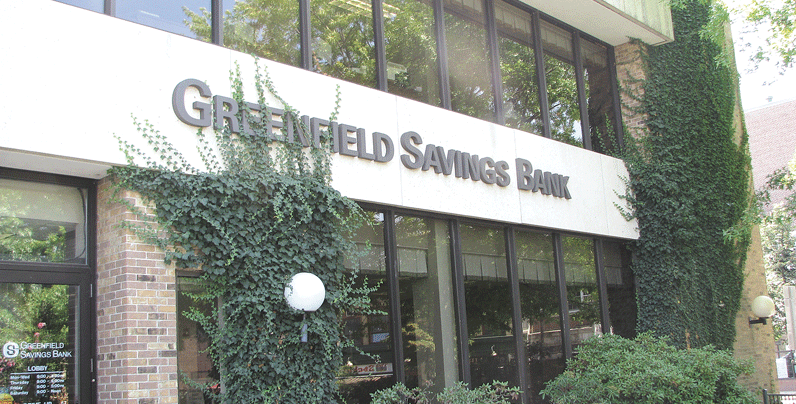
Back to School Sections

New Programs Prepare People for Careers in Manufacturing

Several weeks ago, Bob LePage met with a fourth-generation manufacturer who is having problems finding new employees with the right skills to fuel his company’s growth.

“He told me his competitors were also having a difficult time and he gained new customers when another fourth-generation manufacturing company went out of business because they could not find enough talent,” said Springfield Technical Community College’s vice president of Foundation & Workforce Training.

In response to the growing need for skilled workers in the manufacturing sector, STCC launched several new programs this summer and expanded existing programs that provide training and retraining for careers in the field.

Specifically, STCC’s associate-degree program in precision machining doubled in size last September from 40 to 80 students, thanks to a $2 million upgrade of the school’s Smith & Wesson Technology Applications Center. “We have all new CNC machines, computers, high-end computer workstations, and software. We also hired two new faculty members as well as technicians,” said STCC President Ira Rubenzahl, adding that there will be a total of about 250 students in non-credit and for-credit manufacturing-related programs this fall.

From left, West Springfield High School students Lexi Pastore, Jared Schelb, and Chris Brown prepare to make key fobs under the direction of STCC Professor John LaFrancis.

From left, West Springfield High School students Lexi Pastore, Jared Schelb, and Chris Brown prepare to make key fobs under the direction of STCC Professor John LaFrancis.

And on Aug. 28, a class of 15 students who were carefully honed from a field of 60 applicants will graduate from a free, 10-week, intensive accelerated manufacturing technician production program. It was created collaboratively by STCC and Holyoke Community College, with input from more than 50 manufacturers. Participants range from recent high-school graduates to an individual in his 50s returning to the field after years away from the industry.

The accelerated program includes a combination of classroom and hands-on training in machining, and will continue this fall, with a class at STCC’s Smith & Wesson Center and another sponsored by HCC. The latter will consist of evening sessions held at Dean Vocational Technical High School, with hands-on training there and in the Smith & Wesson Center.

“The program provides students with production, foundational machining, and fabrication skills,” said LePage. It includes classes on machinery, instrumentation, LEAN production, blueprint reading, teamwork, and manufacturing math. Students are also given exposure to the industry via speakers and field trips.

When the first class graduates later this month, members will receive certificates of completion, OSHA 10-hour cards, and mechanical-aptitude certificates. Companies have already interviewed them in anticipation of the upcoming commencement, and LePage said starting salaries should between average between $35,000 and $40,000.

The program was funded by the Massachusetts Competitive Partnership, MassMutual, Suffolk Construction, and Smith & Wesson.

LePage said the college has weekly meetings with administrators at Smith & Wesson, who invested more than $200,000 in the center five years ago and continue to support it.
“Our plan is to expand the program; we want to offer it at UMass Amherst and in two other communities in addition to Holyoke,” he explained. “We need to grow capacity so we can meet the volume needs for the region.”

Other measures to fill the gap include an increase in the number of training sessions for employees of manufacturing companies, accomplished through a partnership with the Regional Employment Board of Hampden County (REB). It allows individuals and small groups working in the field to update their skills at the Smith & Wesson Center. Larger manufacturers with six or more employees have the option of sending them to the center or having instructors from the college conduct on-site trainings in their locations.

Credit and certificate programs are also part of the mix, and STCC offers a CNC certificate in design, a CAD-CAM certificate, and an associate’s degree in mechanical engineering technology. Classes are held four nights a week to meet the needs of people already employed who want to step up their careers, as well as those in traditional degree programs.

Early Exposure

STCC and its partners are also looking to the future, and this summer, the REB paid for a group of 10 students from West Springfield High School to attend a new, two-week summer session called “Pathways to Prosperity” at the Smith & Wesson Center.

The teens, who will be entering their sophomore year this fall, were selected by the school and were among a group of 60 students who toured the center in the spring. “The program gave us the opportunity to expose students from a non-vocational high school to manufacturing,” said John LaFrancis, professor of Mechanical Engineering.

The students learned how to design parts using computer software programs, then took the design for a small bottle-style container with four sides to a rapid prototyping machine.

LaFrancis said they worked as a group to decide what to emblazon on two sides of the container, and chose their high-school Terrier logo for one side and put their names and/or a quotation on the other.

“This was an additive process which required them to add material to manufacture their bottles,” said LaFrancis. “Each student got to keep their container, and they will make good holders for pens and pencils.”

The students also chose a design for a brass key fob, and emblazoned ‘STCC’ on one side and their name or something else on the flip side. “The key fob was a subtractive process in which they removed material to reveal their individual designs,” LaFrancis explained. “The program has been a real success, and we would like to hold it again. But we want to expand it to two campuses so we can expose more students to manufacturing.”

STCC and its partners are doing all they can to meet that goal and interest young people in manufacturing. “The program was part of a strategy to build awareness about career opportunities,” LePage said.
Rubenzahl added that exposure to opportunities in manufacturing should start in middle school. “Students can have careers as engineers, run CNC machines, do design work, programming, quality control, or go into sales and marketing,” he noted. “Manufacturing is a hot field for employment in the Pioneer Valley, and, given the economy, it’s important for people to understand this and take advantage of it, because if there are not enough new employees, companies won’t survive.”

One reason for the shortage of skilled workers is the number of Baby Boomers who are retiring. “We believe the region will need 300 to 400 workers in the next few years,” said LePage. “One company that recently partnered with us told me they expect to lose two-thirds of their staff to retirement.”

The need has echoed throughout the Valley, and the new programs have been created through proactive collaborations with the REB, Holyoke Community College, and high schools with vocational technical programs, as well as information elicited from local manufacturers.

“We’ve been working to improve our ability to educate students for the manufacturing sector for 10 years, and people are wowed by what we are doing,” said Rubenzahl. “Manufacturing is the most important sector for revitalization in the Pioneer Valley; the area was a center for manufacturing during the 19th century, and there are many legacy companies, new companies, and a lot of skill in terms of business acumen to build on. An expansion of manufacturing will be the basis for building a robust economy here. Plus, these jobs pay well, and the college wants to provide the education students need to get good-paying positions.”

He added that STCC’s partnerships with manufacturers are growing in number, which heightens the school’s ability to link graduates to jobs while raising awareness about career opportunities through tours and informational sessions.

Solid Foundation

LePage said many people are unaware of the number of small manufacturers in the region who provide specialized products for the medical, auto, and aerospace industries. Pay for entry-level positions averages from $12 to $17 an hour; people with a one-year certificate earn between $40,000 and $50,000, and those with an associate degree gross about $50,000, or $70,000 with overtime.

Bob LePage, left, and John LaFrancis show off one of the new machines in the Smith & Wesson Technology Application Center at STCC.

Bob LePage, left, and John LaFrancis show off one of the new machines in the Smith & Wesson Technology Application Center at STCC.

“Machinists, highly skilled machine operators, and those who support the process are in demand, and we now have training for all three levels,” LePage said.

Although STCC and HCC have created new programs, Rubenzahl said economic-development agencies and department heads need to place more emphasis on manufacturing. “I believe they need to make it an important priority because there is a huge potential future in terms of jobs and industry growth if we can all get on the same page,” he told BusinessWest.

He cited, as one example, the $1.5 billion appropriated by the Legislature to replace rail cars on the Mass. Bay Transit Authority Orange and Red lines, since it has been mandated that they must be manufactured in the state.

“We would like Western Mass. to become so prominent in the manufacturing sector that it would be the logical and most cost-effective place to do this work,” LePage said. “But we need to raise our game to be able to attract that type of business.”

This requires an educated workforce, especially since the manufacturing sector is very dynamic and large capital investments are required for companies to be successful. “We can’t compete with Mexico and India in terms of labor, but we can compete by making high-end devices, which are some of the key products which companies in this region specialize in,” Rubenzahl said, adding that he spoke to a manufacturer who showed him a $1 million machine and said he would be happy to pay someone $50,000 to $60,000 a year to run it.

“Companies have made huge investments in order to be successful, but they need highly educated people,” he went on. “And there are a lot of small, local companies here doing tremendously sophisticated work.”

Future Outlook

LePage argues that long-term planning has been critical in developing the new programs. “No one institution can solve the problem — it takes a collaborative regional approach,” he said. “But we plan to continue to add new components to our program at STCC meet the region’s needs.”

Gary Masciadrelli, chair of the Mechanical Engineering Technology Department, agreed.

“STCC is fully supportive of supplying the manufacturing industry with current and future workers today, evidenced by our programs in the high schools and for adult learners,” he said. “We look forward to continuing them in the future to meet demand.”

Daily News

BOSTON — Gov. Deval Patrick has signed H.4377, “An Act to Promote Economic Growth in the Commonwealth,” building on his administration’s economic-development strategy of investing in education, innovation, and infrastructure.

The economic-development package provides new tools and training to ensure the Massachusetts workforce meets the needs of employers, invests in Gateway Cities to promote development across the entire state, and provides incentives to create jobs and stimulate the economy. Patrick also refiled legislation that limits the use of non-compete agreements and adopts the Uniform Trade Secrets Act to ensure that government acts to retain talented entrepreneurs, supports individual career growth, and encourages the development of new, innovative businesses to drive future economic growth.

The legislation also includes a provision to give local governments across Massachusetts control over the number of liquor licenses in their jurisdiction. Placing the authority to approve liquor licenses in the hands of municipal officials will allow local communities to make responsible decisions regarding their economic development and growth, helping to free the Legislature from time-consuming local issues.

“In important ways, this legislation improves existing tools and provides a few new ones to continue our strong job growth, and I thank the Legislature for being so responsive,” said Patrick. “At the same time, we have unfinished business, so I am filing further legislation today to give innovators and municipalities all the tools they need to grow jobs and opportunity.”

The act bolsters the economic revitalization of the Commonwealth’s Gateway Cities with $15 million for the Gateway Cities Transformative Development Fund and encourages the reuse of brownfields in economically distressed areas of Massachusetts with $10 million in funding.

“This legislation makes many targeted investments in our emerging industries, like big data and advanced manufacturing, that are necessary to create a competitive environment here in Massachusetts and grow our status as a leader in the world economy,” said Senate President Therese Murray. “By capitalizing on our state’s existing and developing industries, as well as investing in a strong, educated workforce, we are outlining a path to success for our residents and promoting economic development throughout the entire Commonwealth.”

Added House Speaker Robert DeLeo, “this comprehensive bill will help ensure that residents, businesses, and communities are able to compete and excel in a dynamic economy. We’ve made substantial gains in strengthening our economy and must now focus on broadening the circle of prosperity beyond Greater Boston to all regions of the Commonwealth. This bill does just that while preparing future leaders through provisions like MassCAN, a computer-science-education partnership, and the Talent Pipeline Initiative.”

In the area of workforce development and training, the act includes $12 million for the Middle Skills Job Training Grant Fund to support advanced manufacturing, mechanical and technical skills at vocational-technical schools, and community colleges. Also, the Workforce Competitiveness Trust Fund will receive $1.5 million to prepare Massachusetts residents for new jobs in high-demand occupations, helping close the middle-skills gap and creating a seamless pathway to employment.

The economic-development legislation also includes a number of initiatives to expand the Commonwealth’s world-class innovation economy, including $2 million for a Big Data Innovation and Workforce Fund to promote the use of big data, open data, and analytics, and $2 million for the Innovation Institute Fund at the Massachusetts Technology Collaborative. The legislation also creates a $1 million talent-pipeline program that will provide matching grants aimed at increasing technology and innovation internships, and another $1 million for a startup mentoring program to connect early-stage entrepreneurs, technology startups, and small business with experienced business enterprises and capital financing.

Daily News

BOSTON — The Executive Office of Labor and Workforce Development reported that preliminary estimates from the Bureau of Labor Statistics (BLS) show Massachusetts added 13,800 jobs in July for a total of 3,422,100 jobs, and the total unemployment rate edged up 0.1% to 5.6% from the June rate. The rate is still the lowest since August 2008 and is below the 6.2% national unemployment rate.

Since July 2013, Massachusetts has added a net of 67,300 jobs, with 66,400 jobs added in the private sector. The total unemployment rate for the year is down 1.6% from the July 2013 rate of 7.2%. BLS also revised its June job estimates to a 2,500-job gain from the 3,700 previously reported for the month. Here is the July employment overview:

• Professional, scientific, and business services added 5,000 jobs (+1.0%) over the month. Over the year, professional, scientific, and business services added 13,300 (+2.6%) jobs.

• Education and health services gained 3,800 jobs (+0.5%) over the month. Over the year, education and health services gained 24,000 (+3.3%) jobs.

• Construction added 1,900 jobs (+1.5%) over the month. Over the year, the sector has added 2,400 (+2.0%) jobs.

• Trade, transportation, and utilities added 1,900 jobs (+0.3%) over the month. Over the year, trade, transportation, and utilities gained 12,800 (+2.3%) jobs.

• Financial activities gained 1,000 jobs (+0.5%) over the month. Over the year, the sector added 2,500 (+1.2%) jobs.

• Other services added 800 jobs (+0.6%) over the month. Over the year, jobs are up 3,300 (+2.7%) in this sector.

• Leisure and hospitality gained 600 jobs (+0.2%) over the month. Over the year, the sector added 4,300 (+1.3%) jobs.

• Manufacturing added 500 jobs (+0.2%) jobs over the month. Over the year, manufacturing lost 600 (-0.2%) jobs.

Departments People on the Move

Freedom Credit Union announced the promotion of three officers within the credit union and the appointment of a new Mortgage Loan Originator.

Karen Chauvin Katsanos

Karen Chauvin Katsanos

Karen Chauvin Katsanos has been promoted to Vice President of Human Resources at FCU. She will continue to manage the human resource and training activities for the credit union, which employs a staff of 130. Katsanos joined the credit union in 2012 and has 20 years of HR experience in several industries, including healthcare and manufacturing. She has held a number of senior-management positions throughout her career. Katsanos earned her bachelor’s degree from the UMass Amherst and has earned two master’s degrees — one in psychology from Westfield State College and the other in business administration from Western New England College. She holds an SPHR designation that she earned from the Human Resource Certification Institute. She is a board member for the Human Resource Management Assoc. of Western New England and the Ronald McDonald House of Springfield.
Cheryl Podgorski

Cheryl Podgorski

Cheryl Podgorski has been promoted to Vice President of Operations. She joined the credit union in 2012 and has more than 26 years of operations experience in both the banking and credit-union industries, holding several senior-management positions throughout her career. In addition to her responsibilities in the credit union’s Operations Department, Podgorski has been managing Freedom’s Loan Servicing Department for the past year. She earned her master’s degree in business administration from Western New England College and holds a Six Sigma Green Belt certification. She is a past certified treasury professional through the Assoc. for Financial Professionals.


Lisa Astley

Lisa Astley

Lisa Astley has been promoted to Branch Officer of Freedom’s Ludlow Branch. In her new position, she oversees the financial and lending operations of the branch, develops new business opportunities with individuals and businesses, and promotes financial literacy at area schools. Astley has been employed at Freedom for five years and has 12 years of experience in the banking and financial-services industries. Prior to joining Freedom, she was customer-service supervisor at Randall’s Farm in Ludlow for 15 years. Astley is currently working toward a financial services degree with the Center For Financial Training.


Antonio Sanches

Antonio Sanches

Antonio Sanches has joined Freedom as a Mortgage Loan Originator and is responsible for real-estate origination throughout Hampden and Hampshire counties. As he helps expand Freedom’s mortgage services to its members in Hampden and Hampshire counties, he will offer his expertise in conventional, FHA, MassHousing, Massachusetts Housing Partnership’s One Mortgage, and USDA loans. He has 10 years of experience in the finance industry, including expertise in residential mortgage origination, first-time home-buyer assistance, and secondary market sales. Most recently, he was assistant vice president at Florence Savings Bank. Currently, Sanches is president of the Rotary Club of Ludlow and a corporator at the Randall Ludlow Boys and Girls Club. In June, he was named “Affiliate of the Year” by the Realtor Assoc. of Pioneer Valley.  Sanches is working at the Freedom branch on Center Street in Ludlow.
•••••
Maria Koutroubila

Maria Koutroubila

FieldEddy Insurance announced that Maria Koutroubila has joined the firm as a personal-lines account manager. She brings more than 10 years of insurance-related experience to the position, and is a member of the National Alliance, holding the CISR designation and working toward CISR Elite designation. Koutroubila will be responsible for educating and ensuring that clients have the proper insurance coverage. As part of the personal-lines team, she will work to implement daily operations and ensure that that standard working procedures, key performance indicators, and other account metrics are achieved on a regular basis.
•••••
Berkshire Bank announced that Thaddeus Welch III has been hired as Portfolio Research Analyst and Trader, joining its Wealth Management team. In this position, Welch will be responsible for managing all trading activities and performing fundamental, economic, and sector research to assist in generating overall investment strategies. In addition, Welch will work with clients to customize their portfolios for appropriate risk-reward allocations and to achieve their long-term goals. His areas of specialization are trading,
equity research, and portfolio management. Welch will be working out of Berkshire Wealth Management’s office at 25 Main St. in Lenox. Previously, Welch worked for Spinnaker Trust in Portland, Maine, where he was a member of the investment committee. He received his bachelor’s degree in Economics from Bowdoin College and is a CFA level II candidate.
•••••
The Massachusetts Nonprofit Network (MNN), the statewide organization that unites and strengthens the nonprofit sector through advocacy, public awareness, and capacity building, announced that it has appointed James Ayres, CEO and Executive Director of United Way of Hampshire County, to its board of directors. “We are honored to welcome Jim Ayres, whose passion and considerable experience at the community and state level will help strengthen our state’s vast nonprofit sector,” said Rick Jakious, CEO of the Massachusetts Nonprofit Network. “MNN’s board of directors reflects the rich geographical and organizational diversity of the state’s nonprofit sector and is the voice of a strong, united nonprofit sector in Massachusetts.” Said Ayres, “the Massachusetts Nonprofit Network is an invaluable organization for promoting public policy, support, and public understanding of the not-for-profit sector. A vibrant and well-equipped nonprofit sector, in turn, profoundly impacts quality of life thoughout theCommonwealth. I’m excited to join the MNN board and to work with other statewide leaders to shape the direction of the organization.” Prior to his role at United Way of Hampshire County, Ayres served for 12 years as executive director of the Northampton-based Center for New Americans, an education and resource center for immigrants, refugees, and other limited-English speakers in Western Mass. In these roles, he has worked extensively with local and state governments, community coalitions, workforce boards, and NGOs to develop policy and programming. Ayres holds master’s degrees from the Fletcher School of Law and Diplomacy at Tufts University and the Isenberg School of Management at UMass Amherst.

Opinion
UMass Center Is Yet Another Puzzle Piece

It was with considerable fanfare that Gov. Deval Patrick, UMass administrators, and Springfield city officials announced last fall that the university would be greatly expanding its presence in downtown Springfield with a 26,000-square-foot learning center to be built in Tower Square (see related story, page 6).

And there will be much more hype roughly a month from now when most of the same people — plus many others, we’re sure — will gather to mark the opening of that gleaming facility, less than a year after it was announced.

Indeed, expectations are high when it comes to this center and its potential impact on Springfield and especially its central business district. Maybe too high.

For years now, city officials have been urging the university, one of this region’s largest employers and arguably the economic engine with the greatest horsepower, to takes its brand and influence to downtown Springfield. The school has responded with a number of smaller-scale initiatives, involving everything from the arts to precision manufacturing to relocation of the university’s Design Center into a building in Court Square.

The facility now known as the UMass Center at Springfield represents a far more significant investment in terms of dollars — the cost of this complex is more than $5 million — and commitment to the city. And as it prepares to open its doors to students on Sept. 2, with more than 30 classes covering a host of subjects, there is a great deal of hope and anticipation when it comes to what the center will mean for the city.

It is expected to provide a huge shot in the arm for Tower Square, which, as everyone knows, has a first floor defined largely by empty storefronts and sparse foot traffic. The UMass Center, which may have 200 to 300 students taking classes there this fall, could help re-energize the once-thriving retail center.

The facility is also expected to provide a spark for downtown, in terms of that aforementioned foot traffic, but also psychologically. After all, if UMass Amherst is willing to make that kind of investment in Springfield’s central business district, then things must be getting better. Right?

As we said, maybe the expectations are a little too high.

Overall, we believe that William Dávila, the recently named director of operations, has the right perspective as this highly anticipated experiment gets underway.

Rather than focus on enrollment numbers for this fall — which appear solid, by the way — Dávila and his staff seem more concerned with getting this facility off to a good start and making sure that the students coming there have a good experience.

This is important, because no one really knows if people will want to come to downtown Springfield for classes, given the city’s lingering image problem and perceptions regarding safety. Other schools, most notably Western New England University, have created satellite facilities downtown, only to see them fail.

If these first students at the UMass Center come away satisfied with their experience, it will be that much easier to sell the facility — and Springfield itself — to others down the road.

Meanwhile, this first year is a time to build partnerships and foster collaborative efforts that will make the UMass Center much more than a place to take classes. It can — and needs to be — a community resource.

There is now a large UMass sign on the east side of Tower Square. It proclaims the arrival of the university and the start of what could be an exciting new era downtown.

Let’s hope it’s a sign of progress and a sign that better times lie ahead.

Daily News

HARTFORD, Conn. – Whittlesey & Hadley, P.C., one of the area’s largest regional CPA firms, announced its plan to diversify geographically and grow in size, services and staff, beginning with a merger with Lester Halpern & Company, P.C., of Holyoke, a leading regional CPA firm providing a broad range of accounting, audit, tax and management consulting services to closely held business, nonprofit and governmental sectors of Western Mass. and throughout New England. The merger is effective August 1. Whittlesey & Hadley provides accounting, audit, tax, technology and business consulting services to clients primarily throughout the northeast, with access to a worldwide network of resources through PKF North America. For more than 50 years, the firm has served closely held businesses, including manufacturing, construction and distribution, real estate, financial institutions, healthcare, government and technology industries, as well as the nonprofit sector, the firm’s largest niche focus. The firm has 100 professional and administrative staff located in downtown Hartford. “We moved to a larger office space in downtown Hartford, providing us with the resources to begin our future growth,” said Drew Andrews, managing partner of Whittlesey & Hadley, P.C. “It is a common vision, philosophy and dedication to provide a superior client experience that we are seeking when merging with CPA firms. Lester Halpern & Company brought that to the table. This merger represents our first step in an aggressive plan to grow our services and staff throughout the northeast, while retaining our valued reputation as having the expertise of a national firm but the responsiveness of a local firm that clients expect and deserve from its professional services partner.” Established in 1959, Lester Halpern & Company’s 25 employees will continue to serve their client base out of the Holyoke office, while acquiring the Whittlesey & Hadley brand. “Whittlesey & Hadley, P.C.’s presence and extensive resources offer an opportunity for Lester Halpern & Company to greatly expand the services available to our clients,” said Thomas Terry, the managing partner of Lester Halpern & Company, P.C. “Integrating our abilities and our experiences will result in a stronger base for future growth.”

Features
Is This as Good as the Recovery Is Going to Get?

Mike Oleksak

Mike Oleksak says positive things are happening with the economy, but many business owners don’t believe what they’re seeing and hearing.

Andre Mayer says business owners who are still waiting for what would be considered a real economic recovery should probably stop waiting.

That’s because, in his view, this is about as real as it’s going to get.

“At this point, we’re really past the recovery phase; the recession ended five years ago,” said Mayer, senior vice president for communications and research at Associated Industries of Massachusetts. “We never had the recovery we were hoping for and expecting — that big burst of growth where GDP goes up quickly and rejoins the prior trend line. It never happened.”

And it’s very likely that it just won’t happen, at least not any time soon, he said, adding that business owners would be wise to accept this state of the economy and get on with hiring people, expanding their ventures, and moving forward rather than waiting for that aforementioned burst.

And he believes many are doing just that.

“We have been adding quite a few jobs in the first quarter of this year, when the national economy was contracting,” he said, adding that ‘we,’ in this case, refers to the state as a whole, but includes Western Mass. “And that, to me, seems to reflect a change of attitude. In other words, employers, instead of hunkering down and going all out to preserve productivity and not dilute it, because that’s what got them through the recession, are now taking a more sustainable path and sort of coming to the realization that this is the economy we have to live with.”

Bob Nakosteen, professor of Economics at the Isenberg School of Management at UMass Amherst, agreed, and pointed to the latest unemployment figures as evidence of what he considered progress, at least in some respects.

Indeed, while the state’s jobless rate fell to 5.5% in June, the lowest since August 2008, and 3,700 jobs were added, the manufacturing sector lost more than 1,000 jobs, and the construction industry lost more than 900, what Nakosteen called “hidden disappointments.”

And he said they may provide more evidence of something that many are now calling ‘secular stagnation,’ or ‘economic immobilism,’ terms that aren’t new — they go back at least as far as the Great Depression — but are being summoned with greater frequency by many economists to help describe and explain the phenomenon that Mayer touched on: a recovery that certainly doesn’t look or feel like one.

“There are a number of factors in our economy, some of them demographic, some of them technological, some of them stemming from globalization, that imply that we’re simply not going to experience the growth in this economy that we have in the past, especially job growth,” said Nakosteen while explaining secular stagnation, which he said is now being hotly debated in the “economics blogosphere.” “The workforce is getting older and large numbers are retiring, technology is developing quickly — but it’s doing so in a way that seems to be removing jobs rather than adding jobs — and globalization continues to put great pressure on our domestic workforce, especially the blue-collar occupations and manufacturing.

“And the prospects for any of this changing are simply not good,” he went on, adding that some economists believe it may be decades before the current scene improves markedly.

Meanwhile, the tepid state of the recovery is being reflected by ongoing caution on the part of area business owners, said commercial lenders we spoke with, who noted that many, perhaps still waiting for that burst they have seen following other downturns, such as the ones in the mid-’90s and just after 9/11, are hesitant about pulling the trigger on expansions or new hiring.

“I don’t see anybody really jumping in full force to bring people back or undertake plant expansion,” said Michael Oleksak, executive vice president and chief lending officer at Holyoke-based PeoplesBank. “Everyone is still pretty hesitant.”

Luke Kettles, senior vice president and chief lending officer at Hampden Bank, agreed, summoning a phrase that has been given a thorough workout over the past several years.

“People are guardedly optimistic,” he said, adding that, in this case, that means they often lack the confidence to move ahead with expansion plans or new hiring.

“Employers are not adding people unless they really need to,” he explained, adding that most are still looking to improve efficiency and trim fat rather than add to their workforces.

For this issue, BusinessWest takes an in-depth look at the state of the recovery, such as it is, and whether any change in the forecast can be expected any time soon.

Dollar Signs

While secular stagnation, if that’s what the region is experiencing, is a mostly negative term, there are some positives to be gleaned from recent economic statistics and trends, said both Nakosteen and Mayer.

Perhaps the most important of these is that the recovery — and job growth — has finally extended beyond the Greater Boston area, said Nakosteen, adding that both Central and Western Mass. are enjoying better unemployment numbers of late.

The June jobs report provides more evidence of this, he noted, but real signs of improvement started appearing earlier in the spring.

“Over the past few months, unemployment rates have come down dramatically in metropolitan areas in the Berkshires and Springfield, where they were the highest,” he noted. “This is a really good thing. It doesn’t mean they’re low enough to make you feel you’re in a true recovery, but for the first time since the recovery began, it now seems to be extending past Route 495.”

Mayer agreed. “Growth has evened out a good deal,” he told BusinessWest, adding that the Greater Boston area recovered quickly and profoundly after the recession while most of the rest of the state lagged well behind.

“Over the past year, the jobs have been added in the Worcester and Springfield metro areas at the same rate as in the Boston and MetroWest areas,” he noted. “At this point, we’re seeing growth, albeit modest growth, on the labor-market side almost everywhere.”

Luke Kettles

Luke Kettles says some sectors, such as senior housing, are experiencing growth, but by and large, many business owners are hesitant about expanding or new hiring.

Still, the recovery being witnessed in this region — and many other parts of the country, for that matter — is atypical of what is generally seen after prolonged downturns, said Mayer, citing a lack of growth in GDP and describing what much of the country, and this region, have experienced as a “watered-down version of a boom.”

“One reason, maybe the main reason, why this recession was such a bad one is that it seems to have knocked our GDP down a few percentage points long-term — we haven’t just bounced right back to that point where we left off,” he said. “And by now, waiting for that to happen doesn’t seem realistic, although we are on an upward track.”

Nakosteen concurred. “Sometimes after a recession, we’d have 9% or 10% gross-domestic-product growth for a year or two — it was just stunning,” he said. “We haven’t done better than two or three percentage points the past several years, and I just don’t think you’re going to see that big figure ever again.

“That’s a dangerous thing for me to say,” he added quickly, reflecting on the gravity of his own words. “But I’m buying into this secular-stagnation argument, and I don’t know what to tell people except that, however they have to adjust to the idea that there may not be a pot of gold at the end of the rainbow, they’d probably better at least think that through.”

Referencing the declines in both manufacturing and construction jobs, he said those numbers, if they don’t change, are ample evidence that the recovery lacks “oomph,” and that this is as good as it is likely to get.

“I thought manufacturing, and construction as well, were on very positive trajectories, and that this might continue more or less unabated,” he noted. “Now, there’s been an abatement.”

That said, both Mayer and Nakosteen anticipate further improvement in the economy, especially if business owners and managers can somehow gain the confidence needed to expand operations and add to their workforces — and consumers can buy again — possibly by recognizing the new economic reality for what it is, and making it better than it’s been.

“It’s time for us to not wait for magic, but to think hard about what we can do to continually make our economic climate better,” Nakosteen said.

Lending Credence

But Oleksak and Kettles said there are still a number of factors holding area business owners back when it comes to hiring and borrowing to expand.

And many are still continuing to do what essentially got them through the recession, said Oleksak, referring to everything from better inventory control to improving production efficiencies to controlling or, in many cases, reducing salary.

Uncertainty about health-insurance costs is one of the factors leading to hesitancy, he noted, adding that these expenses have been a drain on hiring for some time because they keep going up and there is little, if anything, to indicate that this trend will not continue.

Meanwhile, interest rates, which are still historically low but moving back up and projected to continue rising, are another impediment to progress.

“We’ve had such low interest rates for so long that’s there’s also concern about over-leveraging yourself in light of the fact that we’re going to see some higher interest rates down the road,” he explained. “And when interest rates start increasing, there’s more concern about the economy, with people asking if we’re going to fall backward again.”

Kettles said that some sectors, such as senior living, medical office facilities, social services, and even self-storage, are doing well, and Hampden Bank is having a solid year in commercial lending, due in part to the many bank mergers in recent years.

Still, he also sees hesitancy among many business owners, especially when it comes to hiring.

“Benefit costs are increasing, and healthcare costs are pretty significant, so people do not hire unless it’s really necessary,” he said. “Profit margins may be improving, nationally as well as locally, but I think it’s through improving efficiencies and doing more with less. People aren’t going out and adding a position unless they really need to, and a lot of times they’ll try to use part-time labor until they really need a full-time position.”

Kettles noted that many of the manufacturers the bank does business with have been willing to make investments in new equipment and technology, but these purchases often translate to fewer jobs, not more of them.

Overall, confidence, or the lack thereof, remains a factor as well, said both Kettles and Oleksak, noting that, while the June jobs report is generally positive, business owners aren’t necessarily buying into such reports.

“There is some improvement going on,” said Oleksak, “and people are being cautiously optimistic, but I’m not sure they’re really believing what they’re seeing.”

As evidence of this, he cited the residential real-estate market. While those at PeoplesBank and other institutions were expecting the refinancing market to slow this year, mainly because most everyone who could refinance already has, they were expecting sales to pick up, but they haven’t.

“If you look at the numbers, we’re about 5% to 10% behind last year,” he said, adding that an overall lack of confidence is the primary reason.

Whether confidence improves in the near future is likely a function of whether the news continues to improve, and whether it can actually convince people to believe what they see, said those we spoke with.

Nakosteen, for one, believes conditions will continue to improve.

“I think the next 12 months are going to be pretty good,” he told BusinessWest. “A lot of things, especially at the national level, but also at the state level, are getting better. Households are just in a much better position than they’ve been in for years to make healthy consumption decisions, and therefore employers will be making more job offers, buying more equipment, and so on. Over the next year, we’re going to see reasonable economic growth.”

Bottom Line

But what does ‘reasonable’ mean?

It probably doesn’t mean the kind of burst that traditionally accompanies the end of a recession, or the kind of oomph that economists expected and business owners are in many respects still waiting and hoping for.

As Mayer explained, that kind of jolt simply isn’t realistic a full five years after the recession was declared over.

This is the economy this region may have to deal with — like it or not.


George O’Brien can be reached at [email protected]

Opinion
Adjusting to a New Economic Reality

Andre Mayer appears to be right, but we sure hope he’s wrong.

Mayer, senior vice president for communications and research at Associated Industries of Mass., was talking with BusinessWest about the economy and, more specifically, the recovery and why it really hasn’t materialized (see story, page 6).

And he proffered the opinion that, five years after the recession ended, it might be time to say this just might be as good as the recovery is going to get.

Like we said, we hope he’s wrong about that.

The regional economy has really seen only modest growth since the end of the Great Recession, maybe a percentage point or two each year, and many business owners are still waiting for that surge, boost, spurt, whatever one chooses to call it, that officially signals the end of a downturn and the start of real recovery.

What Mayer is saying, and he’s apparently not alone in this thinking, is that what we’re seeing is real recovery, or at least the new reality when it comes to the economy.

It comes with modest growth in jobs (and even that has arrived mostly in recent months) and only slight gains in gross domestic product. These are just some of the defining elements of something called ‘secular stagnation,’ an economic theory supported by former Treasury Secretary Larry Summers and many others, which contends that a host of factors, from advancing technology to globalization, are keeping this recovery from gaining any real steam in many sections of the country.

Secular stagnation might indeed be real, but our regional economy should be doing better. As Bob Nakosteen, professor of Economics at UMass Amherst, pointed out, conditions for pronounced growth are there, especially an improvement in the financial situation in many households, and businesses as well. Many have reduced debt and righted balance sheets that certainly contributed to the severe downturn at the end of the last decade.

What’s still missing, in many cases, is that all-important commodity known as confidence. A lack of it is still holding a number of business owners back when it comes to expanding their ventures and adding to their workforces. Some sectors are experiencing modest growth, including education and healthcare, the pillars of the local economy, but many are still treading water.

And while the state’s June employment report was encouraging — the jobless rate was at its lowest point since 2008, and another 3,700 jobs were added — there were disturbing declines in the manufacturing and construction sectors, two areas that were supposedly on the upswing.

As area commercial lenders told BusinessWest, business owners read and hear about improving conditions, job gains, and an uptick in business confidence, but don’t necessarily believe what they’re seeing or hearing.

Thus, many are still hunkering down and continuing to do the things that got them through the recession — tightening their belts, creating greater efficiency, and hiring only when they have to.

Mayer believes that some attitudes may be changing when it comes to the economy and the recovery. He believes that some business owners are recognizing that maybe that surge everyone is waiting for simply isn’t going to happen, and that it doesn’t make sense to continue waiting for it. Better still, he believes that some are coming to the conclusion that, by not waiting, they may actually help facilitate that surge.

On this point, we hope he is correct.

If he is, then maybe the current state of the recovery doesn’t have to be the new reality, and this is not as good as it’s going to get.

Entrepreneurship Sections
MassMutual Invests in Springfield’s Entrepreneurial Future

Nick Fyntrilakis

Nick Fyntrilakis says economic growth in Western Mass. is more likely to spring from a culture of startups than by attracting large employers.

Nick Fyntrilakis says economic growth in Western Mass. is more likely to spring from a culture of startups than by attracting large employers.
[/caption]It’s not inconceivable, said Nick Fyntrilakis, for a company to set down roots in Springfield and advertise for 300 or 400 jobs. It’s just not likely.

“When you look around here, the idea of getting one company to show up with 300 jobs, that’s an old notion,” Fyntrilakis, vice president of Community Responsibility at MassMutual, told BusinessWest. “That’s gone, at least somewhat, the way of the dinosaur, although I hope it’s not totally gone.”

Rather, he said, “the economy is being driven by small businesses, grass-roots growth, and entrepreneurialism — not 300 people at one firm, but maybe 30 10-person firms.”

But even if that is the new paradigm in Western Mass., communities can’t sit around waiting for those companies to spring up, he added, which is why MassMutual, the region’s largest employer, is investing $6.5 million into efforts to inspire the next generation of entrepreneurial success stories.

MassMutual is pouring $5 million of that money into the creation of the Springfield Venture Fund, attempting to cultivate high-potential startups in Springfield. Over the next five years, the fund will invest in startups with business operations currently located in or willing to relocate to Springfield. Target companies will have a defined product or service, be no more than three years old, and boast strong management teams, well-defined and scalable business plans, and high growth potential.

In addition, MassMutual will invest more than $1.5 million over the next three years in a startup accelerator managed by Valley Venture Mentors (VVM), an entrepreneur-mentoring network based in Springfield. The first class of the accelerator will feature 30 startups to be selected through a competitive application process later this summer. DevelopSpringfield, a nonprofit dedicated to revitalizing the city, has been tasked with building out the physical location for the accelerator in the Tower Square building downtown.

“We’re building off a mentorship program that we’ve been running now for three and a half years,” said Scott Foster, an attorney with Bulkley Richardson and president of VVM. More than 45 startups have gone through that program, and more than 350 established entrepreneurs, business owners, and professionals have volunteered as mentors at its monthly meetings.

“We had 25 people at the first meeting, and 150 at the most recent one,” he added, noting that the gathering began in a conference room at his law firm but soon had to relocate to the Tower Square food court. “We’ve really built a great community of mentors and people supporting entrepreneurship. The accelerator is just a natural extension of what we’re already doing.”

For this issue’s focus on entrepreneurship, BusinessWest talks to Fyntrilakis and Foster about why MassMutual’s investment makes sense in the long term, and why they believe the Springfield Venture Fund and the VVM accelerator will generate some needed energy and forward momentum in the City of Homes.

Driving Growth

MassMutual’s decision to invest $6.5 million in efforts to nurture entrepreneurship didn’t come about overnight, Fyntrilakis said, but after many conversations with Valley Venture Mentors, River Valley Investors, and other regional organizations dedicated to giving startups the resources they need to succeed.

“I was really excited to learn how much they had achieved, really organically,” he said of VVM. “They started in some vacant office space and grew this thing into a successful operation in which more than 150 people show up once a month, either to participate themselves or be a mentor — or sometimes just listen in and learn.”

Impressed, MassMutual provided a small grant to VVM, but didn’t stop there. “We started having more robust conversations over time, and I started to learn more and more about the entrepreneurial community that exists in this region, and other folks, like River Valley Investors, who are out there making investments in companies,” Fyntrilakis said.

“One thing that struck me is that you could dictate geography based on angel investments,” he added. “You could drive growth to a particular region based on the capital being there. That was exciting.”

With that in mind, the Springfield Venture Fund will target companies that will either locate or relocate in Springfield, he said. “We want them to plant roots here. It’s about being in the city of Springfield.”

Although the nuts and bolts of distributing $5 million over several years is still being worked out, Fyntrilakis said MassMutual doesn’t envision a traditional application process, but a more organic effort to connect with, and receive referrals from, the existing entrepreneurial community, which includes entities like VVM as well as large, for-profit companies.

“As for criteria, the startup has to have some infrastructure in place, a proven product or service, and a scalable market. This is that initial seed capital that can really get them off the ground and up to the next level,” he explained, adding that, if the fund is successful, MassMutual might have conversations down the road about continuing and increasing the investment.

Scott Foster

Scott Foster joins other entrepreneurship and economic-development leaders during Gov. Deval Patrick’s visit to the new accelerator space.

Meanwhile, the accelerator will accept applications from mid-August through September. The 30 accepted startups will be notified in November, and will operate from January through April in a co-working space being developed at the former Mad Maggies pool hall in Tower Square.

At the end of the four months, VVM will award $200,000 to the six startups that have shown the greatest success, judged according to how well they met their goals — and how ambitious those goals were to begin with. “There’s a degree-of-difficulty factor,” Foster said. Several startups will be invited to continue using the accelerator space rent-free for the rest of 2015.

He noted that the accelerator draws plenty of inspiration from MassChallenge, an annual, Boston-based startup competition and accelerator program. “There had been a discussion among business people here to have some kind of business-plan competition, some kind of program to help out new businesses in this area. Once MassChallenge started having success, people saw the economic impact on Massachusetts.

“We’re unabashedly copying what MassChallenge has done,” he added. “We’ve even reached out to MassChallenge, they’re very excited about what we’re doing.”

Foster stressed that the accelerator program will be “industry-agnostic” when considering applicants.

“We know there are strengths in this area; precision manufacturing, healthcare, and financial services are fairly strong,” he said. “But we don’t want to pre-emptively discourage anyone from applying. Teams that come through our mentorship program really run the gamut, from food-based companies to tech firms to Internet companies moving to a more bricks-and-mortar type of service. We’ve seen a wide variety of companies on the mentorship side, and we expect similar variety in the accelerator.”

Meanwhile, nonprofits are just as eligible to apply as for-profit enterprises.

“MassChallenge emphasizes diversity of ideas, diversity of talent, diversity of perspectives,” he noted. “It just adds to the strength and creative ideas there. If you only hang out with people who act like you, think like you, and agree with you, it can be a recipe for disaster.”

Buzz Words

The give-and-take cultivated in a vibrant accelerator creates a buzz that shouldn’t be underestimated, Foster said.

“It creates an energy. People want to be in the space, or want to be involved as mentors,” he said, noting that he expects participants to reflect a similar demographic mix as VVM’s mentorship program, which attracts entrepreneurs from their 20s to their 50s.

And mentors don’t have to be industry-specific, he added. “They have private-sector experience with things all startups need — how to make connections with customers, how to deal with employee issues, how to divide up equity with partners … these are common themes across all businesses.”

No matter how big or small, Fyntrilakis said.

“This really is where job growth is coming from; growth in the economy is coming from the entrepreneurial sector and small-business sector; it’s not coming from the old-line companies adding thousands of employees. Even beyond this region, it’s mostly smaller firms.

“We wanted to capitalize on that, so we’re helping them with capital, helping them with mentoring,” he continued. “Our hope is that, in the next five years, we’ll create at least 100 jobs as a result of this capital being available. In addition to that, we want to support Valley Venture Mentors in their work.”

Foster said MassMutual’s major investment is further validation of what the organization and others like it have been doing. “It reminds people of the importance and reward of supporting entrepreneurs. They’re seeing VVM as a very positive force in this area, something they want to support.

“It also gives us a much bigger megaphone to announce our support of entrepreneurs here in the Pioneer Valley as a whole, and to encourage more and more people to explore their dreams and ideas, see if they can launch them and grow them. It’s pretty darn exciting.”

Smiling, Fyntrilakis laid out a vision of teams of entrepreneurs clustered downtown, working all hours of the night, drinking coffee, and creating something new — and perhaps providing a lift to further economic development in Springfield’s center.

“I think the accelerator can be an epicenter, stimulating other activities, like a chicken-and-egg thing, whether it’s restaurants or retail shops,” he said. “Hopefully we get enough chickens and eggs.”

Joseph Bednar can be reached at  [email protected]

Departments People on the Move

Royal LLP, a management-side only labor and employment law firm, announced the following:

Channez Rogers, Esq.

Channez Rogers, Esq.

Channez Rogers, Esq. has joined the firm as an Associate Attorney. Prior to joining Royal LLP, Rogers worked in the general counsel’s Office at Western New England University, handling employment matters. In her role at Royal, Rogers represents companies in myriad employment-law cases in state and federal court and before administrative agencies. She also counsels companies on the multitude of state and federal employment laws impacting them, including employment discrimination and harassment, wage and hour, disability and leave, workplace safety, OSHA, affirmative action, and contract negotiations. Her other preventive work includes drafting employee manuals; preparing non-disclosure, non-solicitation, and non-compete agreements; and conducting management training. Rogers is a summa cum laude graduate of Western New England University and a cum laude graduate of Western New England University School of Law.
Crystal Boateng

Crystal Boateng

Crystal Boateng has joined the firm as a Law Clerk. Boateng is a cum laude graduate of Mount Holyoke College with a bachelor’s degree in French and political science. She is in her final year of studies in a four-year program for obtaining her juris doctor at the University of Connecticut School of Law and her MBA at the University of Connecticut School of Business.


•••••
Drew McNary

Drew McNary

Meredith-Springfield Associates Inc., a plastics manufacturer specializing in extrusion blow molding and injection stretch blow molding, announced the addition of Drew McNary as Director of Engineering at the Ludlow-based manufacturing facility. McNary has more than 30 years of broad-based industry experience driving the development of highly successful, market-leading consumer products, packaging, and medical devices. In his new role at Meredith-Springfield, he will oversee all technical functions and staff.
•••••
The Berkshire Museum announced the addition of Britney Schline to the staff as Collections Manager. Berkshire Museum, a Smithsonian affiliate, holds encyclopedic collections comprised of more than 30,000 objects, including art, artifacts, decorative arts, ethnography, natural specimens, and living collections. In her new role, Schline will oversee the museum’s permanent collections as well as work closely with the exhibition team led by Maria Mingalone, the museum’s director of interpretation. “Britney’s approach to collections management is in line with our institutional goals to bring collections alive for our visitors. She has a fresh perspective on how collections can leverage the 21st-century museum as a place where people have meaningful experiences with one another around objects,” said Mingalone. “Schline also brings a passion to finding innovative means to connect our visitors to our collections and to one another, whether it is in the galleries, through special programming, on our website, or through social media.” Schline is a recent graduate of the Cooperstown Graduate Program and holds a master’s degree in museum studies. Before completing her graduate degree, she held the position of decorative arts collections assistant at the Berkshire Museum, assisting the museum in cataloguing its ceramic and Asian art collection under an IMLS grant. Most recently, she served in the collections department at the Fenimore Art Museum and the New York State Historical Assoc. Last summer, Schline was an Edward I. Koch fellow at the Historic House Trust of New York City, where she coordinated the Roof Raisers Curatorial Brigade volunteer program. She has also previously interned at Wadsworth Atheneum and the Schoharie County Historical Society.
•••••
David Pickart

David Pickart

David Pickart, Senior Environmental Scientist at Vanasse Hangen Brustlin, has relocated to the firm’s Springfield office. In his role, he will continue to manage projects that address the identification and assessment of natural resources. Pickart will oversee the preparation and processing of permit applications to local, state, and federal environmental regulatory agencies. Additional responsibilities include growing and leading a team of environmental scientists to service existing and new clients located in Western Mass. and Central Conn. Pickart has 28 years of experience working on complex projects throughout the Northeast.
•••••
Massachusetts College of Liberal Arts (MCLA) announced that Gov. Deval Patrick recently appointed Lisa Chamberlain, Managing Partner of the Chamberlain Group, based in Great Barrington, as the newest member of the MCLA board of trustees. She succeeds outgoing trustee Steve Crowe, who recently completed his term of service. Founded in 1999, the Chamberlain Group is a Massachusetts-based studio that designs and builds mimetic organs for surgical and interventional training. It is a collective of sculptors, designers, fabricators, engineers, and model makers who work collaboratively with medical-device manufacturers, leading surgeons, and teaching hospitals worldwide. A graduate of Princeton University with graduate work at Yale, Chamberlain later joined the Academy Award-winning, New York City-based design and effects studio R/GA, where she met and collaborated with Eric Chamberlain. Together, they were instrumental in building R/GA’s reputation for work in feature films, graphic design, computer graphics, and digital video. Their combined film credits include effects, opening titles, and feature campaigns for Superman, The World According to Garp, Zelig, Predator, Predator II, The Big Chill, Tootsie, Gandhi, Body Double, Ghostbusters, Judge Dredd, Eraser, and The Matrix.
•••••
New England Environmental Inc. (NEE) announced that Michèle Grenier has joined its Amherst office as a Senior Scientist. Grenier is a professional wetland scientist, certified wetland scientist, and associate wildlife biologist, and is also OSHA 40-hour HAZWOPER certified. She has bachelor’s and master’s degrees in biology from Cornell University. Grenier has more than 20 years of experience in environmental consulting. Her experience includes state and federal wetland and riverfront delineation, wildlife-habitat evaluations, functions and values assessment, vernal-pool identification, and municipal, state, and federal permitting. She currently serves on the Conservation Commission in the town of Dracut. With offices in Amherst and Middlefield, Conn., NEE is a full-service environmental-consulting firm.
•••••
Karen Curran, Financial Consultant at Thomson Financial Management, has received her CFP (certified financial planner) designation. The CFP mark distinguishes those individuals who have met the rigorous experience and ethical requirements of the CFP board, successfully completed financial-planning coursework, and passed the extensive CFP certification examination. Curran has worked at Thomson Financial since 2008 and is a registered representative, with securities and financial planning offered through LPL Financial, a registered investment advisor, member FINRA/SIPC.
•••••
William Crawford IV, CEO of United Bank and United Financial Bancorp Inc., announced that David Reynolds Jr. recently joined United Northeast Financial Advisors, a division of United Bank, as Assistant Vice President. United Northeast Financial Advisors, located at United Bank and Rockville Bank, provides customized investment solutions to customers. As United’s newest financial advisor, Reynolds will be responsible for covering the bank’s branches in Suffield, Agawam, Feeding Hills, and Windsor Locks. He is based at Rockville Bank’s Suffield branch located at 275 Mountain Road. Reynolds comes to United Bank with more than 20 years of experience in investment and securities-related organizations, including expertise in investment-product and brokerage-industry knowledge and defined contribution, pension, and investment-product sales experience. Most recently, he was regional sales director for American United Life Insurance Co. in Glastonbury from 2007 to 2014, where he was responsible for half of the company’s New England territory, earning recognition for top-10 sales performance. From 2000 to 2007, Reynolds was regional vice president for Wachovia Bank/Evergreen Investments in Hartford, and was vice president and principal of USI Consulting Group in Glastonbury, an employee-benefit consulting firm, for 11 years. His extensive career in financial services also includes his role as vice president of Finance and treasurer for North American Holding Corp., a diversified financial-services firm.
•••••
Kandace Kukas

Kandace Kukas

Kandace Kukas has joined Western New England University School of Law as the Assistant Dean and Director of Bar Admissions Programs. Kukas will design, administer, and oversee the law school’s bar-examination preparation efforts and activities, including teaching classes, counseling bar applicants, and working with students on an individual and group basis. The position was created to assist Western New England School of Law students with the increasingly complex process of applying to and preparing for the bar examination. Working closely with faculty, staff, and commercial bar-preparation companies, Kukas will be responsible for implementing a comprehensive bar-passage program commencing in a student’s first year of law school and continuing throughout the law-school program.
Kukas has worked in test preparation for the Kaplan and Pre-Multistate Bar Review organizations for 18 years, specifically focusing on bar review for nearly 10 years. She has created curricula for bar-preparation courses, taught bar-review programs at several law schools, and tutored and lectured in commercial bar classes. She practiced law for five years before moving into academic-support roles. Kukas received her juris doctor with honors from Suffolk University School of Law, and a bachelor’s degree in social work, also with honors, from Salem State University.
•••••
Janet Casey

Janet Casey

At its annual meeting in June, the Professional Women’s Chamber (PWC), an affiliate of the Affiliated Chambers of Commerce of Greater Springfield, elected Janet Casey President of its board of directors, serving a two-year term. Casey is the Principal at Marketing Doctor in West Springfield, a marketing and advertising agency. Before establishing Marketing Doctor, she was a senior sales account executive for LIN Media and advertising account executive for Guy Gannett Broadcasting. She is a Massachusetts delegate to Vision 2020, a national coalition united in the commitment to achieve women’s economic and social equality, and is a corporate committee member for the Women’s Fund of Western Massachusetts. A graduate of the UMass Isenberg School of Management, Casey has served on the PWC board since 2007, most recently as its vice president.

Daily News

SPRINGFIELD — Barry Crosby, president and CEO of Freedom Credit Union (FCU), announced the promotion of three officers within the credit union and the appointment of a new mortgage loan originator.

• Karen Chauvin Katsanos has been promoted to vice president of Human Resources at FCU. She will continue to manage the human-resource and training activities for the credit union, which employs a staff of 130. Katsanos joined the credit union in 2012 and has 20 years of HR experience in several industries, including healthcare and manufacturing. She has held a number of senior management positions throughout her career. Katsanos earned her bachelor’s degree from UMass Amherst and has earned two master’s degrees — one in psychology from Westfield State College and the other in business administration from Western New England College. She holds an SPHR designation that she earned from the Human Resource Certification Institute. She is a board member for the Human Resource Management Assoc. of Western New England and the Ronald McDonald House of Springfield.

• Cheryl Podgorski has been promoted to vice president of Operations. She joined the credit union in 2012 and has more than 26 years of operations experience in both the banking and credit-union industries, holding several senior management positions throughout her career. In addition to her responsibilities in the credit union’s Operations department, Podgorski has been managing Freedom’s Loan Servicing department for the past year. She earned her master’s degree in business administration from Western New England College and holds a Six Sigma Green Belt certification. She is a past certified treasury professional through the Assoc. for Financial Professionals.

• Lisa Astley has been promoted to branch officer of Freedom’s Ludlow Branch. In her new position, she oversees the financial and lending operations of the branch, develops new business opportunities with individuals and businesses, and promotes financial literacy at area schools. Astley has been employed at Freedom for five years and has 12 years of experience in the banking and financial-services industries. Prior to joining Freedom, she was customer service supervisor at Randall’s Farm in Ludlow for 15 years. Astley is currently working toward a financial services degree with the Center for Financial Training.

• Antonio Sanches has joined Freedom as a mortgage loan originator and is responsible for real-estate origination throughout Hampden and Hampshire counties. As he helps expand Freedom’s mortgage services to its members in Hampden and Hampshire counties, he will offer his expertise in conventional, FHA, MassHousing, Massachusetts Housing Partnership’s One Mortgage, and USDA loans. He has 10 years of experience in the finance industry, including expertise in residential mortgage origination, first-time homebuyer assistance, and secondary market sales. Most recently, he was assistant vice president at Florence Savings Bank. Currently, Sanches is president of the Rotary Club of Ludlow and a corporator at the Randall Ludlow Boys and Girls Club. In June, he was named Affiliate of the Year by the Realtor Assoc. of Pioneer Valley. Sanches is working at the Freedom branch on Center Street in Ludlow.

Freedom Credit Union was chartered in 1922, and anyone who lives, works, or attends a college or university in Hampden, Hampshire, Franklin, or Berkshire county can become a member. Freedom consists of nine branches throughout the Pioneer Valley in Chicopee, downtown Springfield, Easthampton, Feeding Hills, Greenfield, Ludlow, Northampton, Sixteen Acres in Springfield, and Turners Falls. Freedom’s 10th branch — in the Roger L. Putnam Technical Vocational Academy — is slated to open in September.

Daily News

LUDLOW — Meredith-Springfield Associates Inc., a plastics manufacturer specializing in extrusion blow molding and injection stretch blow molding, announced the addition of Drew McNary as director of engineering at the Ludlow-based manufacturing facility.

McNary has more than 30 years of broad-based industry experience driving the development of highly successful, market-leading consumer products, packaging, and medical devices. In his new role at Meredith-Springfield, he will oversee all technical functions and staff.

“We are pleased to welcome Drew to our team of plastics professionals and trust that he will apply his knowledge of manufacturing technologies to allow Meredith-Springfield to offer both new and existing customers high-quality and sustainable packaging,” said Mel O’Leary Jr., president and CEO of Meredith-Springfield. “Since manufacturers today are cognizant of the environmental benefits that sustainable packaging offers, it is imperative that, as we grow, we increase our talented team of engineers, all of whom have hands-on experience and problem-solving capabilities.”

Architecture Sections
Jablonski DeVriese Architects Strives to Preserve the Past

Steve Jablonski, left, and Brian DeVriese

Steve Jablonski, left, and Brian DeVriese say the Northeast offers a rich lode of opportunity in preservation and renovation work.

Their business cards read ‘preserve, adapt, renew.’ That’s the philosophy Stephen Jablonski and Brian DeVriese bring to each of their architectural projects — whenever possible, anyway.

Take, for example, the Clifford A. Phaneuf Environmental Center at Forest Park, which has housed the Environmental Center for Our Schools (ECOS) program — utilized by thousands of Springfield public-school students and teachers annually — since 1970.

The structure was built in the 1930s as a warming house for ice skaters, Jablonski said. “It was built by the Springfield DPW, right after the Depression, but it’s basically sat there for 70, 80 years without any renovation whatsoever.”

Hence the $2.5 million expansion and renovation expected to go out to bid to contractors soon. The plan is to update the building and bring it up to safety codes; provide space for revenue-generating activities during after-school hours, weekends, and the summer months; and incorporate ‘green’ technologies such as a hydro-geothermal HVAC system; cutting-edge insulation; and energy-efficient windows, all of which will contribute to the project’s LEED Silver rating.

“It’s a fairly major expansion and renovation,” Jablonski said before detailing how the design reflects all three elements of Jabonski DeVriese Architects.

“We’re preserving it, maintaining its character; we had to submit documentation to the Mass. Historical Commission,” he explained. “We’re adapting it because it wasn’t originally designed as an educational facility. And we’re renewing it by adding on and preparing for the future.”

Nearby, however, another project at Forest Park does none of those things. The firm has designed a new storage facility for the Bright Nights displays, which Spirit of Springfield had been keeping in a ramshackle horse barn.

“Preserve, adapt, renew isn’t practical in this case because all the posts are rotted, and there aren’t any character elements to this horse barn,” Jablonski said, although the new structure will include classrooms for a skills-training center for the manufacturing and contstruction trades, part of a federally funded workforce-training program that will involve local unions, Springfield Technical Community College, Roger L. Putnam Vocational Technical Academy, and the Regional Employment Board of Hampden County.

So, yes, there is some ‘adapting’ going on.

“It’s kind of a niche market that’s prevalent in Western Mass., and in the Northeast in general — historical-preservation projects, adapting, preserving, renewing,” Jablonski told BusinessWest. When he and DeVriese merged their solo practices in 2011, “we figured, well, everyone seems to have a specialty. We were trained to do anything. But people want to know if you have a specialty now.”

Simply put, he said, “we preserve old buildings. It’s something that’s really starting to grab hold in society. Preservation is good. People are moving back to urban areas. Mid-size cities that have architectural character, like Springfield, are on their way up, no matter what people say about the city. I live in Springfield, I was born here, and I’m a big fan of Springfield. That’s not to say that problems don’t exist, but it’s on its way up. ”

When some people see a neglected building, DeVriese added, their first instinct is to knock it down, but he and and his partner see potential — not just to maintain and enhance the strucutre’s architectural heritage, but to improve its environmental impact. “After all,” he said, quoting noted architect Carl Elefante, “the greenest building is the one already standing.”

For this issue’s focus on architecture, Jablonski and DeVriese talked with BusinessWest about some specific ways in which they’ve preserved some of the region’s heritage by putting their names to some truly unique projects.

Together Again

Jablonski had been working as a sole practitioner in Springfield since 1995, and DeVriese had managed a solo practice in Shelburne Falls since 1997, when they began collaborating on projects, notably the design of the Museum of Springfield History at the Quadrangle — a classic adaptive-reuse project, since it’s housed in a former Verizon office building.

“Steve approached me about helping with the Springfield Museums project, and that was a significant project for both of us,” said DeVriese. “We started doing more and more together over the years, and in 2011 we incorporated as partners. We were very, very busy at the time.”

For example, the museum project led to Springfield College hiring the firm for its complete renovation of Judd Gymnasia, renamed the Stitzer YMCA Center. For that design, Jablonski DeVries received the Paul E. Tsongas Award from Preservation Massachusetts, as well as the Springfield Preservation Trust Award for restoration and stewardship.

“For me, there was a lot more activity in this area than in Franklin County, an opportunity to work on larger projects with a longer duration,” DeVriese said. “I like Steve, and he’s great to work with.”

As for Jablonski, he said he’d occasionally been frustrated by a reluctance by state and municipal officials to award large contracts to solo architects — and he wanted an occasional day off. “For me, taking on a partner made a lot of sense, just having the ability to take a vacation and share the burden of production.

“To be honest, a lot of people advised me not to do it,” he continued. “To them, it was counterintuitive: ‘you started it, you should keep it to yourself and benefit from it.’ What they don’t realize is keeping it to yourself is not strategic; sure, you can keep it to yourself, and not get bigger projects, or run yourself into the ground because you can’t take vacations. You can have it all to yourself, but life isn’t as good.”

The pair made headlines soon after their merger when Springfield College — a long-time Jablonski client — tapped the firm to work with Erland Construction of East Windsor, Conn. to repair three residence halls hard hit by the June 2011 tornado.

The pair went through every room in every dorm and itemized all the damage to help the contractor develop a repair estimate. Once they decided the structures were salvageable, the architects and contractors had a significant challenge: to complete the work in 10 weeks, in time to house returning students.

Clifford A. Phaneuf Environental Center at Forest Park

A rendering of the new Clifford A. Phaneuf Environental Center at Forest Park, which houses an environmental-education program for Springfield students but hasn’t been renovated in more than 70 years.

The goal was not just to repair, however, but to improve the dorms where possible. After seeing several architectural renderings, in addition to replacing windows and doors torn apart by the twister, the college decided to replace the original building exteriors with higher-quality, better-insulated panels than what had existed before.

Ten weeks and $5 million after the twister ripped through, little evidence remained of anything other than a summer remodeling job. That project earned a Rebuilding Project of the Year Award in 2012 from the New England chapter of the Construction Management Assoc. of America, which selected the effort from all renovation and modernization projects under $10 million.


College Try

Architectural design for college campuses is nothing new for the firm. “We’re identified really strongly with three or four sectors,” Jablonski explained, including higher education; municipal and government work, which includes schools, libraries, park buildings, and museums; and historical buildings of all kinds, which can cut across many sectors.

“It’s been harder than Brian and I ever thought to break into new markets,” he said, “but we both decided that we can’t put all our eggs in one basket — like the city of Springfield — especially when we have an economic downturn.”

That said, “I’d say about 90% of our clients are repeat customers,” he noted, citing Springfield College and the city of Springfield as two of the most long-standing, going back 20 years. “That says we have to be doing something right. It’s not just what drawings you do; it’s showing up on time and having some flexibility, because there’s always an issue, always some problem, so you have to be flexible. When we get repeat customers, we’re pretty sure we’re doing something right, or they’d go somewhere else. There’s definitely competition in the Valley.”

Jablonski said the firm is willing to do residential restoration, although they don’t actively market in that arena, but there isn’t enough of such work to make a living doing it exclusively. Still, “when someone approaches us, obviously we do it. We recently got a really nice, very large total rehab in Longmeadow.”

And they don’t limit themselves to high-profile jobs, recently taking on, for example, several dentistry offices and small projects for the city of Northampton, as well as preparing to tackle a cold-storage warehouse with a commercial kitchen on Warehouse Road in Springfield for the city’s school system, which recently expanded its free-lunch program to all students.

“I enjoy working with municipalities professionally and appreciate the quality of people involved in local government,” said DeVriese, who has been a selectman in Heath for 15 years. “I’ve done a lot of work with small towns over the years, so it’s nice to know they can come to us to get their problem solved.”

Meanwhile, the Springfield Museums project caught the attention of the Coast Guard Academy in New London, Conn., which tapped Jablonski DeVriese to design an addition to its athletic hall of fame.

“It’s not the first time someone called us up because they’d seen our work, but it is a good example of how we must be doing something right,” Jablonski told BusinessWest. “There is a lot of complexity in this business, and it’s nice to get some confirmation from someone looking at something and saying, ‘ooh, that’s nice.’”

Building for the Future

Things are looking equally good at the Springfield offices of Jablonski  DeVriese, where the partners are growing a promising future.

For one thing, they’ve hired two junior architects. Nirati Shukla, who earned a bachelor’s degree from the Center for Environmental Planning & Technology in Gujarat, India, and a master’s from the New Jersey Institute of Technology, is certified as LEED AP and specializes in sustainable design.  Marcel Alvarez immigrated from Ecuador and is currently a U.S. citizen. He is a graduate of Holyoke Community College and the architecture program at UMass Amherst.

And, as both Jablonski and DeVriese repeatedly stressed, there’s no shortage of opportunities to turn inadequate or neglected buildings into something that will reflect the future while respecting the past.

“Smart people are finally putting two and two together,” Jablonski said. “Instead of a continuous cycle of building new, let’s preserve it, adapt it, renew it.”


Joseph Bednar can be reached at [email protected]

Daily News

WEST SPRINGFIELD — Market Mentors, LLC, a full-service marketing, advertising, and public-relations firm, announced the grand opening of its new office located at 30 Capital Dr. in West Springfield.

The grand opening of the new Market Mentors office comes on the heels of the company’s 10th-anniversary celebration last summer. Clients of the firm represent a broad range of industries, including banking, financial planning, healthcare, higher education, insurance, law, political, nonprofit, retail, as well as manufacturing and industrial — many of which contributed to the design of the new office space, said company President Michelle Abdow.

She added that environmentally friendly business practices are becoming more than just an initiative, and the ‘green’ movement has created an entirely new set of industry standards that were included in the construction. “Working with our clients to build our new space was a natural extension of our professional relationship,” Abdow said. “For example, our new offices feature high-efficiency and energy-saving lighting from Hampden Zimmerman and appliances including high-speed, energy-efficient XLERATOR hand dryers from Excel Dryer.”

Daily News

SPRINGFIELD — William Dávila, a Springfield native and longtime executive at nonprofit institutions, has been named director of operations for the UMass Center at Springfield.

A 1996 graduate of UMass Amherst who holds advanced degrees from Boston College and the University of Hartford, Dávila said he is excited to help bring opportunity to his hometown. “I want people to feel this is a center that is welcoming to them. My message is that this is a gateway to opportunity.”

The UMass Center at Springfield is a new facility housed in Tower Square in downtown Springfield. Its 26,000 square feet of space includes classrooms, specialized nursing classrooms, conference rooms, and a computer lab. A welcome center where prospective students can learn about courses is already open. Classes begin Sept. 2.

UMass President Robert Caret noted that, “with this appointment, the campuses of the UMass system, in partnership with the local community colleges, are ready to deliver important, life-improving educational programs to the people who need them most. The UMass Center at Springfield will fuel the economic well-being of the entire region.”

Added UMass Amherst Chancellor Kumble Subbaswamy, “as we consolidate the university’s Springfield-area programs in this central location, I know William Dávila will be a well-respected and active advocate in the community who will help residents take advantage of these opportunities. As the Commonwealth’s flagship campus, UMass Amherst will play a leadership role in creating new career paths in the region.”

Through the UMass Center at Springfield, the UMass campuses in Amherst, Boston, Dartmouth, and Lowell, as well as Holyoke Community College, Springfield Technical Community College, and UMass Online, are able to bring their strengths to a variety of programs. The 40 initial course offerings draw on key industry needs in the region, including advanced manufacturing, management, cybersecurity, information technology, and casino management.

“This matches up perfectly with the needs of the area,” Dávila said. “These are professional skills that the community needs.” As the Springfield center develops more courses and certificate programs, Dávila expects to see more cooperation with the community colleges and area private colleges as well.

Daily News

WASHINGTON, D.C. — Total construction spending edged higher for the third straight month in May, as solid increases in private non-residential and public construction outweighed a downturn in residential projects, according to an analysis of new Census Bureau data by the Associated General Contractors of America. Association officials cautioned that the pickup in highway spending is in jeopardy of reversing sharply unless policy makers act urgently to shore up the federal Highway Trust Fund.

“The May figures show that construction activity continues to expand, but with lots of variability by month and project type,” said Ken Simonson, the association’s chief economist. “These uneven patterns seem likely to continue for the rest of the year.”

Construction put in place totaled $956 billion in May, 0.1% above the upwardly revised April total and 6.6% higher than in May 2013. For the first five months of 2014, total spending rose 8.2% from the January-May 2013 total. Private residential construction spending in May retreated 1.5% from April, when homebuilders may have put in extra hours to make up for adverse winter weather in many regions. The May total was 7.5% above the May 2013 level, representing an 11% increase in single-family spending, a 31% boost for multi-family, and a 2.4% decline in improvements to existing housing.

Private non-residential spending rose 1.1% in May and 11% over 12 months. The largest private segment, power construction — comprising work on oil and gas fields and pipelines as well as electricity projects — rebounded 4.3% from a sharp drop in April and was up 30% year-over-year. Among other major private nonresidential segments, commercial construction — retail, warehouse, and farm projects — climbed 6.5% over 12 months, manufacturing construction rose 6.7%, and office work jumped 23%. Public construction spending rose 1.0% for the month and 1.2% year over year.

The largest public segment, highway and street construction, expanded 2.3% from a year before. The second-biggest category, educational construction, gained 1.7% since May 2013.

Daily News

BOSTON — The Associated Industries of Massachusetts (AIM) Business Confidence Index recorded a reading of 53.7 in June, making for a second-quarter average of 53.8.

“The positive quarterly average reflects the diminution in recent months of major economic-policy conflict in Washington, which has contributed to stronger business confidence,” said Raymond Torto, global chairman of research at CBRE and chair of the AIM Board of Economic Advisors (BEA). “With less ambient uncertainty, employers are becoming more positive about adding personnel, a sign of confidence that is reflected in our survey. The other notable improvement is in responses from small employers, those with 25 or fewer employees, who are now about as optimistic as mid-size firms.”

The AIM Index has appeared monthly since July 1991. It is calculated on a 100-point scale, with 50 as neutral; a reading above 50 is positive, while below 50 is negative. The index reached its historic high of 68.5 on two occasions in 1997-98, and its all-time low of 33.3 in February 2009. In June 2013 it stood at 48.9.

Nearly all of the sub-indices based on selected questions or categories of respondent were down from May, but all were up from last June. The Massachusetts Index, assessing business conditions within the Commonwealth, was up 3.3 points on the year to 50.9, and the U.S. Index of national business conditions was 7.6 points ahead of last June at 48.2. “Massachusetts has generally outperformed the nation economically since the onset of the recession,” said Alan Clayton-Matthews, professor at the School of Public Policy and Urban Affairs at Northeastern University, and a BEA member. “Our state is well-positioned to continue to thrive, but is inevitably standing out less as the rest of the country returns to normal performance.”

The Current Index, which assesses overall business conditions at the time of the survey, was 4.1 points above last June’s level at 52.8, and the Future Index, measuring expectations for six months out, was up 6.7 points from a year before at 54.6. “The consensus of economic forecasts calls for faster growth through the rest of this year and into 2015, and most respondents to our survey agree,” Clayton-Matthews noted. “Small and large employers are more optimistic about the near future than mid-size companies; manufacturers rate current conditions lower than other employers, but have similar expectations for the second half of the year.”

The Company Index, reflecting survey respondents’ assessments of conditions for their own operations, was up 5.3 points on the year to 56.5. The Employment Index was up the same amount at 54.6, and the Sales Index gained even more, 7.6 points to 57.6. All three were off fractionally from May. “The employment results, even with a marginal loss for the month, continue to reflect a moderate upward trend,” said BEA member Elliot Winer, chief economist for Northeast Economic Analysis Group LLC. “Among employers responding to the survey, 41% expected to add personnel in the next six months, while only 10% foresaw staff reductions, a marked improvement from the already positive 38%-23% split for the prior six months.”

Confidence fell in the manufacturing sector (down 2.9 to 51.5) but rose among other employers (up 2.8 to 56.8), and lower outside Greater Boston (52.8, down 1.5) than within the metropolitan area (54.1, down 0.2). Small employers (25 or fewer employees) were about as confident as mid-size firms (26 to 100 employees), while employers of more than 100 were more positive. “Responses on employment were, however, remarkably uniform,” Winer noted, “by region, for manufacturers and other employers, and for companies of all sizes.”

Community Spotlight Features
Lenox Strives to Become a Year-round Destination

Channing Gibson, left, and Christopher Ketchen

Channing Gibson, left, and Christopher Ketchen want Lenox to become a year-round tourist attraction.

When Channing Gibson envisions what the town of Lenox will look like in the future, he sees a vibrant, year-round destination with a wide array of recreational activities that appeal to young people, along with the cultural attractions that have drawn tourists to the area for generations.

“Recreation could range from birding to biking, hunting, horseback riding, and cross-country skiing,” said the chair of the town’s Board of Selectmen. “We have a town beach on Laurel Lake, and although the traditional tourist comes here for relaxation and culture, there is an opportunity to attract people for recreation as well.”

Right now, the town is packed with tourists whose typical goal is to relax and enjoy the wealth of cultural events offered during the summer. In the coming months, many guests will also attend weddings, because the pastoral setting and large number of historic inns and hotels have made Lenox a popular place to get married. “There are so many places to stay that range from modest accommodations to high-end inns and hotels,” Gibson said.

But during the winter, business dies down, and many storefronts close their doors. In addition, young people in Lenox, as well as in other towns in the Berkshires, are leaving the area, and the town’s demographics reflect an aging population.

So the community is looking to create new recreational venues that would attract tourists year-round and appeal to young people. To that end, officials are waiting for the final report from a study conducted by the Conway School of Landscape Design. It is titled “Lenox’s 2013 Open Space and Recreation Plan,” and provides recommendations to improve existing natural and recreational resources.

In order to understand why the town has chosen this focus for its economic-development plan, Gibson said, it’s necessary to look at its past. He explained that the General Electric manufacturing plant in Pittsfield and the tourist industry played vital roles in the town’s economy for generations, and although GE closed its doors in 1986, Lenox continued to thrive, thanks to tourism.

“The Berkshire Visitors Bureau says that Lenox accounts for 40% of the tourist dollars spent in the Berkshires. Our geography works for us, and our hardworking innkeepers and people in the hospitality business make sure that visitors who come to the Berkshires want to stay in Lenox,” he said, adding that Canyon Ranch, Cranwell Resort and Spa, and Tanglewood, whose offices are in Lenox, are among the town’s leading attractions. “But even though we are in the right place, it’s something we can’t take for granted. We have to do things to improve revenues from tourism, and there is a lot of land available that is presently underdeveloped that can be put to good use.”

Town Manager Christopher Ketchen concurs, and says putting a new spin on tourism offers great potential. “We specialize in hospitality and making folks feel welcome, and the town offers picturesque natural beauty in winter as well as in spring, summer, and fall. Plus, we have been designated by the state as a green community and are starting to become known as a center for health and wellness.”

Gibson said the Conway report contains many suggestions, including the fact that existing trails, parks, and other natural resources could be linked by a pathway which would give residents and tourists easy access to recreational resources.

“There are lots of little pieces of land that could also be developed and linked by a trail that could be used for walking, biking, and more; it’s something we can do ourselves,” he told BusinessWest, adding that there is plenty of open space available for new recreational venues, which could increase the town’s vitality and help change its demographics. “Our goal is to find a way to take what worked in the past and bring it into the future.”

Need for Growth

When town officials created the FY 2015 budget, it included a fiscal-impact analysis. Gibson said it had been suggested by a consultant who did some free work for the town, and the Planning Board thought it was an excellent idea. “There are a lot of people with different ideas about what should be done in terms of economic development, and we were told it was important to understand what was needed and what was realistic.”

Unfortunately, it was eliminated from the budget due to cost. But since that time, several things have put a positive spin on the future.

The first is that Ketchen was hired in April; the town had been without a manager for almost a year. He had served as finance director in Hopkinton and deputy director of general government in Wellesley before moving to Lenox, and town officials are optimistic that his enthusiasm and ideas will result in concrete gains.

Ketchen says his plans include hosting open houses so interested builders and developers can meet town officials from different departments.

In addition, a concerted effort is being made to market the attractions in Lenox via the Internet. “In the past, the Select Board did very little in the way of marketing, other than maintaining our infrastructure,” Gibson said. “But now the Berkshire Visitors Bureau is promoting Lenox as a year-round destination with a Google display ad.”

Some businesses have also started their own marketing campaigns, and Gibson said they have been successful. “But we want to maximize the success and continue to promote the town and bring more tourists here,” he explained.

The Conway report will help facilitate that goal. Its recommendations take into consideration the results of two community forums, in which residents overwhelmingly stated that one of their top priorities was to protect the town’s natural resources. But although they want to maintain the pastoral views and ecological richness found in Lenox, the initial report showed that many do not know where the town’s parks are or where they can access hiking trails.

This needs to be remedied, and town officials hope they will also be able to add new recreational offerings. Collaborative efforts will be required to make the vision a reality, but if the plan is approved, it will allow the town to apply for competitive grants from the state as well as from other entities. In addition, Lenox will be able to use monies set aside beginning in 2006 when the town approved the Community Preservation Act. “The Conway report is timely, as last year the state added recreation to the areas in which Community Preservation funds could be used,” Ketchen said.

Although most people think of the Berkshires as a summer destination, he added, marketing will focus on events held during other seasons, such as the Apple Squeeze Festival in the fall; Shakespeare and Co., which hosts performances year-round; and the summer cottages built by wealthy individuals during the Gilded Age. “Some have been reused and turned into hotels and museums,” Ketchen said, citing Canyon Ranch and Ventford Hall Mansion and Gilded Age Museum as examples.

In addition, Lenox continues to maintain its infrastructure and retain the town’s reputation as a safe, beautiful community. “The majority of our efforts are aimed at tourism,” Gibson said. “We make sure the roads are well-paved, the town is run well, and we have good police and fire departments. It helps the community at large, but is also good for our tourist industry.”

Gibson says every town in the Berkshires is focused on bringing new business to the area, but they have different things to offer. For example, Pittsfield ranks high in terms of size and capacity of building space, while North Adams appeals to lovers of the arts. “So we needed to create our own fertile seed bed, because we don’t have the Mass Turnpike nearby or a lot of industrial space.”

Breaking Ground

Plans for a small, high-end boutique hotel and spa within a Gilded Age mansion were recently permitted, and a new Courtyard by Marriott hotel has received approval from the Zoning Board.

Both will add to the town’s character, but “the Marriott’s demographics are slightly different than our other inns and represent a young, energetic clientele,” said Gibson. “It’s exciting and could relate well to our plan to create new recreation and change our demographics.”

Ketchen agrees. “We have a lot to offer young people in terms of lifestyle. There is a small-town familiarity here that lends itself to a deep and meaningful sense of community, and this feels like fertile ground for businesses,” he said. “Focusing on year-round amenities will give us an opportunity to bring new vitality to the community, and our creativity will drive our economy in the future.”

Gibson is looking forward to bringing the vision to fruition. “I’m very excited about the potential represented in the Conway plan,” he said. “It’s still pie in the sky, and we are not there yet, but we have a good chance for success.”

Lenox at a glance

Year Incorporated: 1767
Population: 5,025 (2010)
Area: 21.7 square miles

County: Berkshire
Residential Tax Rate: $12.07
Commercial Tax Rate: $14.91
Median Household Income: $45,581 (2010)
Family Household Income: $61,413 (2010)
Type of government: Open Town Meeting, Board of Selectmen, Town Manager
Largest Employers: B Mango & Bird, Canyon Ranch, Boston Symphony Orchestra Inc., Cranwell Resort Spa & Golf
* Latest information available

Opinion
Early-childhood Education Is Important

By Steve Grande

There’s a perception that manufacturing is a dying industry in Western Mass., but the reality is quite different. In fact, a fundamental challenge faced by manufacturing companies in the region is finding enough qualified employees who can apply math, science, and critical thinking to do the technical jobs that are the backbone of manufacturing operations today.

The challenge is increased because the industrial workforce is aging, and there are not enough qualified younger workers to replace the older ones who will be retiring soon. Companies planning their long-term survival need new generations of skilled workers. My company, Meridian Industrial Group, is one of those companies.

Meridian has deep roots in Holyoke, where it was established in 1890 as The J&W Jolly Co. We manufacture large parts used in aerospace, defense, commercial, and medical applications for customers across the country as well as overseas. Our workers make this business possible, and from a practical standpoint, I know we need a pool of qualified candidates to perform skilled manufacturing jobs.

There are existing regional efforts that help supply the pool of workers to fill manufacturing jobs, but I have concluded that preparation must start sooner. Building the necessary skills — how to think clearly, focus attentively, and apply concepts of math and science to solve problems — has to begin early in life. When I say early, I mean years before a child enters kindergarten.

Companies like Meridian Industrial need people who are ready to learn, know how to learn, excel at learning, and enjoy learning, now more than ever. That’s why I decided last year that I would make a concerted effort to support the success of Square One. It intrigued me when I learned that Square One, which provides early education and care for mostly poor, inner-city children, was founded back in 1883 specifically to provide child care for young mothers so they could go to work and support themselves. Now, as then, the children see their parents going to their job each day, so work and self-reliance are considered the norm.

Children at Square One spend their day learning in a quality early-education and care environment that prepares them to enter school and be successful. Their lessons transfer directly to their experience in school and helps make children who went to preschool at Square One much more likely to graduate from high school, continue their education past that, and contribute productively to the community. Any business person can appreciate the long-term value of such an investment.

It also intrigued me that Square One was smart enough to figure out that you can’t just educate and inform a child; you have to educate and inform their family so the culture of personal responsibility for one’s own success is reinforced on a daily basis. It’s a ‘hand-up’ philosophy that makes sense on many levels.

So I decided to support Square One. Speaking practically, I understand that what I’m doing now to support the organization will impact my ability to be successful as a business owner over the long term. That’s why I call on my colleagues, customers, and community to get on board with Square One and the whole concept of early education and care. Take time to educate yourself about the impact of early education and care. Go visit a Square One preschool and meet the children. Stay for the morning and read them a story. Meet the teachers and the staff.

I don’t run a large foundation that can afford to give away millions of dollars. I run a manufacturing business that I want to be profitable for a long time. That’s why I am proud to be an ambassador who talks to others about the important work that Square One is doing.  Look into what Square One is doing because it matters, and support early-childhood education. v

Steve Grande is president of the Meridian Industrial Group, LLC.

Departments People on the Move

Kristina Drzal Houghton

Kristina Drzal Houghton

At its recent annual meeting, the Springfield Boys & Girls Club board of directors elected Kristina Drzal Houghton as its new Chairman. Houghton has been an active member of the Springfield Boys & Girls Club’s board of directors since 2003, serving on the club’s finance, Festival of Trees, and resource-development committees. Houghton is a partner and director of taxation services for the Holyoke-based public accounting firm Meyers Brothers Kalicka, P.C. She has extensive experience in tax-exempt organizations and unrelated business-income tax issues, as well as tax compliance and planning for closely held businesses. Her clients include those in the service, retail, transportation, medical, construction, manufacturing, education, insurance, and not-for-profit industries. Houghton received her bachelor’s degree in business administration from American International College and her master’s in taxation from Bentley College, and she has more than 30 years of experience in the area of taxation. She was a former tax manager with Coopers & Lybrand. Her professional affiliations include the AICPA and the MSCPA. She is the immediate past president of the board of the Springfield Symphony, served as the former treasurer of Spirit of Springfield, and was a troop leader for more than 12 years for the Girl Scouts of Central and Western Mass. Houghton is licensed as a certified public accountant in Massachusetts and Connecticut.
• • • • •
The Columbus Blue Jackets have named Jared Bednar Head Coach of the Springfield Falcons, the club’s American Hockey League affiliate. Bednar has served as an assistant coach of the Falcons since 2012, helping the club capture consecutive division titles since his arrival. “Jared has been instrumental in the development of several of our prospects in Springfield while serving as an assistant coach, and was a big part of the team’s recent success,” said Blue Jackets Assistant General Manager Chris MacFarland. “He’s very well-respected throughout the hockey community, and we’re confident he will excel in his new role within our organization.” Bednar served as the head coach of the AHL’s Peoria Rivermen from 2010 to 2012, amassing a record of 81-63-12 over the course of two seasons. He joined the Rivermen after serving as an assistant coach with the AHL’s Abbotsford Heat during that club’s inaugural 2009-10 season.
• • • • •
Susan Seaver

Susan Seaver

Florence Savings Bank, a mutually owned savings bank serving the Pioneer Valley through nine branch locations, announced that Susan Seaver has joined the bank as Vice President and Mortgage Originator, responsible for mortgage originations in Hampden, Hampshire, and Franklin counties. Seaver comes to FSB with a strong résumé of service in the banking industry. Most recently, she was vice president and mortgage officer with People’s United Bank. Her experience includes training and supporting a staff of in-house originators, and she has been a multi-year recipient of the top producer award for success in closing residential loans. Her professional activities include serving as a member of the Realtor Assoc. of Pioneer Valley, the Professional Women’s Chamber of Western Mass., and the National Mortgage Licensing System and Registry. In the community, she has volunteered with a number of organizations, including the Michael J. Dias Foundation, Big Brothers Big Sisters, and Western Mass. Eldercare. In announcing the appointment, FSB President and CEO John Heaps Jr., said that “we are very pleased to have Susan join our team here at Florence Savings Bank. She comes to us with extensive banking experience. I am confident our customers will be well-served by her contributions.”
• • • • •
Loomis Communities announced that Gabrielle Thomes has been appointed Director of Social Services at the nursing center at Loomis Lakeside at Reeds Landing. In this role, she will plan and implement social services and help individuals and their families find the correct level they need for care and recovery or, when necessary, hospice. Thomes is a licensed social worker who previously worked at Wingate in East Longmeadow.
• • • • •
Joseph Malmborg

Joseph Malmborg

FSB Financial Group, the investment division of Florence Savings Bank, announced that Joseph Malmborg of Springfield has joined its team as a Financial Services Representative. In this capacity, he will work with individuals and business owners to develop strategic, long-term financial plans to help customers achieve their financial goals and objectives. Malmborg comes to FSB Financial Group with a résumé of 25 years of banking and investment-management experience. Most recently, he was an investment advisor with United Bank, where he managed and developed a $30 million investment portfolio. He is additionally a former investment advisor at Banknorth, registered investment advisor with MassMutual, and business development manager at Fleet Financial. Malmborg began his career as a branch sales manager at SIS Bank. The Westfield State College graduate is a licensed investment advisor representative with Commonwealth Financial Network, holding the Series 7 (General Securities) and Series 65 (Uniform Investment Adviser Law) licenses. He is also licensed to sell both life and health insurance. Malmborg is a past director of the East Longmeadow Chamber of Commerce. His other community activities include teaching Junior Achievement and being involved with Cursillo of Western Mass. “We are pleased to welcome Joe to our investment team. He will work closely with Jean Kelley and Nicole Domnarski to ensure that every FSB Financial Services client receives the highest degree of service and best possible investment advice in the Pioneer Valley,” said John Heaps Jr., president and CEO of Florence Savings Bank. “Joe’s extensive background and strong community involvement will make him an invaluable part of our team.”

Daily News

At the Western Mass. Developers Conference last Thursday, MassMutual President, CEO, and Chairman Roger Crandall announced that the corporation will be investing $6.5 million in initiatives to assist fledgling businesses in Springfield. This is a major step forward in the ongoing efforts to promote entrepreneurship and job creation in Springfield, and a commitment that could create considerable momentum in a city that needs some.

The company announced that it will create a $5 million Springfield Venture Fund (SVF) to invest in high-potential startups in Springfield, and also commit $1.5 million over the next three years to support the creation of a startup accelerator by Valley Venture Mentors (VVM), an entrepreneur-mentoring network in Springfield which will manage the program, and DevelopSpringfield, a nonprofit organization dedicated to driving development in Springfield, which will build out a physical location for the accelerator.

The VVM Accelerator, modeled after MassChallenge, will provide startups with the space, training, connections, and opportunities they need to succeed, while creating a pool of potentially investable candidates for SVF and other seed funds. Startups accepted into the accelerator will be competing for more than $200,000 in grants to be awarded at the end of the four-month program.

These two initiatives will help provide entrepreneurs with what they need most — access to capital, and access to the support that is usually necessary to help good ideas become sound, profitable business ventures.

To be realistic, these investments probably won’t start paying dividends, in terms of large numbers of jobs, for several years, if not decades, but they are important economic-development initiatives for a city that has been historically entrepreneurial, but not in recent memory.

Indeed, the City of Homes, also known as the City of Firsts (everything from the ice skate to the monkey wrench to the parking meter was developed here), hasn’t added to that list in some time. MassMutual’s significant investments may change that equation.

More importantly, though, they will help stimulate development of what has become the most valuable commodity in any city, region, state, or country: jobs. And we’ve said on myriad occasions and in many ways, this city can’t count on recruiting major employers, such as a casino, to create the jobs that are needed. There must be organic growth, such as the developments in the 19th and early 20th centuries that made Springfield a vibrant manufacturing center and a place where people wanted to live, work, and operate a business.

MassMutual, inarguably Springfield’s leading corporate citizen, should be lauded for recognizing the importance of new-business creation, and for making the sizable investments needed to create a much-needed spark in the city.

Opinion
State Must Think Big on Gateway Cities

The Patrick administration recently announced that it will seek $100 million from the Legislature to spur business growth in the state’s so-called gateway cities, which include several communities in Western Mass. The four-year plan calls for everything from job training to loans for small businesses, all in an effort to spark progress in communities that, for the most part, have missed out on the economic progress the Commonwealth has seen in recent years.

But while that may sound like a big number, it really isn’t, not when you consider that there are now 24 of these cities — there were an original 11 designated in 2008, with 14 more added in 2010 — and that the problems facing them are large and quite stubborn.

For those reasons, we ask the governor and his administration to think and act bigger — make that much bigger — when it comes to these cities. Otherwise, progress will come slowly and unremarkably, if at all.

Backing up a bit, the state’s stated desire to help gateway cities, also called ‘legacy cities’ by some, is laudable, because help is clearly needed. These are, for the most part, old, industrial cities, with the industries varying from paper to shoes to fishing, that have tried in recent years to reinvent themselves as something else, but mostly have come up well short in those efforts.

The original 11 gateway cities are Brockton, Fall River, Fitchburg, Haverhill, Holyoke, Lawrence, Lowell, New Bedford, Pittsfield, Springfield, and Worcester. Those later added include Attleboro, Barnstable, Chelsea, Everett, Leominster, Lynn, Malden, Methuen, Peabody, Quincy, Revere, Salem, Taunton, and Westfield.

Some of these cities are doing better than others — Lowell has made a stunning turnaround over the past decade or so, for example — but most are still burdened with high unemployment and poverty rates, underperforming school systems, struggling neighborhoods, moribund downtowns, old mills that haven’t found new uses, and a lack of new business development.

The Gateway Cities program was launched to provide assistance to these communities — many of which, like Springfield, Worcester, New Bedford, and Pittsfield, anchor the regional economies surrounding them — because it was clear that they were not rebounding on their own.

One of the biggest reasons why is jobs, or, more precisely, a lack thereof. To create more, these communities must become more entrepreneurial — a theme we’ve stressed before — while also assembling workforces that can compete in this knowledge-based economy and embracing new industries and the cultural economy.

All that will take a lot more than $100 million over the next four years.

The Patrick administration’s plan calls for spending $20 million in job training in technology and advanced manufacturing careers at vocational schools and community colleges; $5 million to be spent on loans for small businesses; another $25 million to renew annual tax credits for companies that commit to adding jobs; a $15 million fund to jump-start commercial development projects; tax credits for housing construction; and $10 million in grants and loans to clean up contaminated industrial sites, among other considerations.

In our view, this represents a good start.

But if the Patrick administration is serious about enabling cities like Springfield, Holyoke, Lawrence, and Fall River to share in the prosperity enjoyed by Boston, Cambridge, and other communities, it must adequately fund programs to get the job done.

As we said, the state must think and act bigger when it comes to making investments in these legacy cities.

Green Business Sections
Amherst Farmer Refines Method of Growing Plants Without Soil

Joseph Swartz

Joseph Swartz shows off the roots of lettuce plants growing hydroponically in his greenhouse at Swartz Family Farm in Amherst.

Imagine growing 120,000 pounds of food each year without any soil on top of public housing in the Bronx.

Although the idea may sound farfetched, it’s not a fantasy. Instead, it’s one of many projects that Joe Swartz of Swartz Family Farm in North Amherst has accomplished in recent years.

Swartz is a master hydroponic gardener who has taken the industry to new heights. In fact, the New York City farm he designed for Skytop Vegetables was the first in the nation to be grown on top of a public-housing structure. “I did the early sketches on my kitchen table in Amherst,” he said, as he talked about the 8,000-square-foot rooftop farm that opened in February 2013, and provides fresh, nutritious vegetables to residents of the building and neighborhood as well as patrons of nearby restaurants and markets.

Swartz has gained international recognition as an expert in hydroponics, which is a method of growing plants without soil. They are planted from seeds in holes set in plastic containers and thrive on a nutrient solution dissolved in water that runs beneath them and is recycled after the plants take what they need from it.

Swartz has 28 years of experience in operating a year-round, pesticide-free, hydroponic vegetable-and-herb facility in Amherst. It’s a field he entered long before most people thought about where their produce came from and environmental concerns created a demand for locally grown vegetables and fruits.

As a result, Swartz has become a leading expert in hydroponic system design, high-end crop production, biological pest control, system troubleshooting, and much more, and has spoken all over the U.S. and in many foreign countries about his groundbreaking work.

“It’s very gratifying, and when I think of the evolution of all that has happened in the industry since I began my farm, it’s mind-boggling,” he said, adding that he gave a recent lecture at a national conference in Las Vegas and was just invited to speak at a major agricultural conference in England.

The concept of transforming unused rooftop space into a hydroponic garden has many environmental benefits, which include water conservation. “All rainwater that strikes a flat roof has to be channeled into the city’s stormwater systems, and most systems in U.S. cities are completely overwhelmed; one inch of rain that falls on an acre equates to 27,000 gallons of water,” Swartz explained, adding there are more than 15,000 acres of rooftop space in New York City alone.

“But a rooftop greenhouse has gutters on all sides, and rainwater is sent into an underground tank, where it is filtered, cleaned, and used for farming,” he went on. “So it allows us to take a waste product and convert it into food in a very sustainable manner.”

Benefits also accrue from the fact that a rooftop greenhouse shares synergy with the building. Sun that hits the roof and requires the building to be cooled is absorbed by the crops, which also absorb heat from the building in winter, preserving it rather than having it simply go into the atmosphere, Swartz said.

In addition, the system takes heat from the building’s smokestack and uses it to heat the greenhouse. “It capitalizes on heat that is normally wasted. Plus, the greenhouse has thermal curtains that hold the heat in at night. So it’s a win-win situation for the building owner and the owner of the garden,” he told BusinessWest. “It also produces jobs for local residents without many job skills and allows people in the neighborhood to get fresh, nutritious food that doesn’t have to trucked in from thousands of miles away.”

And rooftop gardens, which are rapidly expanding across the country, also provide inner-city children with agricultural knowledge. “We worked with a local school in the Bronx, and a frightening number of children thought milk was made in a manufacturing plant. They had no concept that it came from an animal,” Swartz said. “And most of the people in the neighborhood got their food from a small convenience store and did not have access to nutritious, locally grown vegetables and herbs until the garden was created.”


Growing Venture

Swartz Family Farm has been in business for 100 years, but Swartz likes to keep a low profile, and there are no signs to mark the entrance to his home, greenhouses, and acreage on 11 Meadow St.

“My grandfather Joseph and his wife Anastasia purchased 40 acres and started this farm after they came here from Poland in 1919,” he said. The couple grew mixed vegetables and tobacco and raised their family on the site.

Swartz’s father and uncle took the farm over in the ’50s and turned it into a large-scale potato-growing operation. In addition to growing potatoes on their farmland, they rented land in Hadley, Amherst, Sunderland, Hatfield, and South Deerfield; at the peak of their business, they were raising 300 acres of potatoes.

But his uncle died in 1970, and in the ’80s, the price of land became exorbitantly expensive due to extensive residential development in the area. “As my father got older, he scaled back to the 40 acres here.”

Swartz was in high school when he realized farming his family’s land on a seasonal basis was not a viable option because the economy was booming and seasonal help and additional farmland for crops were unavailable. “So I decided I had to look at a small-scale, very intensive type of agriculture,” he said.

His interest in controlled environmental agriculture, or hydroponics, began in 1985 when he was a student at the Stockbridge School of Agriculture at UMass Amherst. He learned the system had been pioneered in Holland and had expanded to the United Kingdom and Spain, where hydroponic greenhouses were operational year-round.

“The same nutrients you would normally apply to a field are dissolved in water,” he noted. “The plants take what they need, and the rest is recaptured and reused. It only requires 10% of the water needed for conventional agriculture, so it is a very environmentally friendly form of agriculture.”

However, the university did not have a program where Swartz could learn how to implement this growing method on a large scale. But he was fortunate enough to meet a retiree living in Ashby, Mass. who was running a small greenhouse growing hydroponic flowers. He had been the lead associate at Cornell University’s research center on Long Island, was originally from Holland, and had pioneered a large portion of the hydroponic technology that was being implemented in the U.S.

Swartz received valuable guidance from him on how to produce a premium product year-round inside a greenhouse on his property.

But when he began building a greenhouse on his family’s land and shared his plan with local farmers, they thought the idea was ridiculous.

“I was considered a crackpot. We have a very tight-knit agricultural community in the Valley, and no one understand why I would grow produce in water when there was beautiful soil here,” he recalled. “But for me, it was a necessity.”

The day after Swartz graduated from UMass, he began working in his new, 5,000-square-foot greenhouse. “At that time, there were 13 hydroponic farms in the state, and today we are the only one of them that is still in operation — we have the longest-running hydroponics farm in the Commonwealth,” Swartz told BusinessWest, adding that he also grew seasonal vegetables on the farm’s 40 acres and sold them to traditional markets.

But his greenhouse thrived. “In my first year, I produced more than 80,000 heads of Boston lettuce in it. In a field, you only get 5,000 heads per acre, and you can only plant one crop. But I was able to plant year-round,” he said, explaining that he devised a system where he was continuously harvesting and reseeding in different sections of the greenhouse.

Paradigm Shift

Swartz has continued to produce hydroponic crops at Swartz Family Garden for 30 years. Lettuce has always been a staple, but after his initial success, he built two other greenhouses and soon was shipping 300 cases of sweet basil a week to 42 Whole Foods stores across the Northeast.

About 15 years ago, when hydroponics became more well-known, Swartz delved into consulting work, which was a natural transition, although he continued farming his own greenhouses. “There were very few experts in the U.S. back then, and there wasn’t much information about how to grow hydroponically on a sustainable, commercial scale,” he said.

Over the past five years, as awareness and concern about the environment escalated, the demand for local products began to rise.

“Public awareness changed buying habits, and the demand for urban agriculture began to grow,” Swartz said. “It was a paradigm shift because, before that, food was produced on large commercial farms which were often not even in this country.” In fact, when he first began to sell Boston lettuce, there was nothing but iceberg lettuce in the stores, and there was no demand for any other variety.

About four years ago, Swartz was approached by two men who were starting a company called Sky Vegetables. “They wanted to take the concept of urban agriculture one step further and build commercial farms on flat city rooftops, because there is so much of that space that is unused,” he said.

He became their director of farming, and in 2009 began designing a hydroponics rooftop garden for a new LEED Platinum-certified building in the Bronx that would be used for public housing. Arbor House was completed in 2012, and the rooftop farm opened in February 2013.

“The space was leased for $1 for 99 years, and lettuce and cooking greens such as chard, kale, sweet basil, upland cress, and baby bok choy are grown there. Sky Vegetables operates the farm independently, and the building’s residents have the opportunity to get food from it via a community-supported agriculture program,” Swartz said.

Today, his wife, Sarah, operates their hydroponic farm in Amherst, which sells produce to local vendors such as Atkins Market. Swartz left Sky Vegetables six months ago to consult full-time with growers across the globe. He just finished an ongoing project in Kuwait and is going to Dubai to assist a large-scale farm in replicating a hydroponics system in Singapore. “I need to fine-tune the system before they can expand and replicate it,” he explained.

Limitless Potential

Swartz has more than 49,000 hours of greenhouse production time and has also done consulting work in a variety of settings. This year he has already been to Nassau, Bahamas; Santa Cruz, Calif.; Atlanta; Halifax, Nova Scotia; and Las Vegas.

“Hydroponic gardens range from simple, home-built systems that are outside, to conventional greenhouse systems, to very high-level, computer-controlled greenhouses, to a garden in Nova Scotia that grows without sunlight inside a warehouse, using LED lighting,” he explained. “It’s a 100% controlled atmosphere — and the final frontier is space.”

Indeed, he noted that a colleague, Gene Giachumelli, professor of Agricultural and Biosystems Engineering and director of the Controlled Environment Agriculture Center at the University of Arizona, is designing a hydroponics food-production system for outer space, where one of the challenges is zero gravity.

“It’s a very interesting industry, and hydroponics is the safest food-production method possible,” Swartz said, as he stood on his family farm, gazed at his greenhouse, and recalled his own history.

“My father and many other people thought I was crazy when I started this. But I have taken the farming techniques I developed in the Valley and am working with growers across the globe today,” he said, adding that pesticides are not needed, and “you cannot get safer food products.”

That endeavor has no limits, and Swartz will continue to grow his own business as well as help other people across the world create farms without soil, sunlight, and other factors — in the process transcending what any farmer could have imagined several generations ago.

Briefcase Departments

DevelopSpringfield Touts Rebuild Springfield Work
SPRINGFIELD — DevelopSpringfield hosted an event on May 29 to mark the two-year anniversary of the Rebuild Springfield Plan release and to commemorate the third anniversary of the June 1, 2011 tornado. City officials, volunteers, contributors, residents, and other stakeholders gathered on Central Street to hear remarks highlighting Rebuild Springfield Plan progress. Attendees were provided an opportunity to tour newly rebuilt homes in the severely tornado-damaged Central Street corridor. The Rebuild Springfield Plan is a city-wide master plan designed to provide a framework for addressing the redevelopment needs of neighborhoods impacted by the June 2011 tornado. Additionally, the plan serves as a guide for addressing a wide range of issues relevant to the city as a whole. DevelopSpringfield, in partnership with the Springfield Redevelopment Authority, facilitated the planning process, which included the input of city residents and stakeholders and was published in the spring of 2012. The recent gathering featured remarks by Springfield Mayor Domenic Sarno; Jay Minkarah, president and CEO of DevelopSpringfield; Nick Fyntrilakis, DevelopSpringfield board chair and vice president of Community Responsibility for MassMutual Financial Group; Bishop Bruce Shaw, pastor of New Hope Pentecostal Church; Melvin Edwards, city councilor and Maple High/Six Corners Neighborhood Council president; Tim Allen, city councilor; Steven Bradley, DevelopSpringfield board member and vice president of Government and Community Relations and Public Relations for Baystate Health; Jose Claudio, DevelopSpringfield board member and director of Community Development for the New North Citizens’ Council and speaking on behalf of the North End Housing Initiative; and Alberto Ayala, speaking on behalf of VIVA Development. All of the speakers played a role in planning and rebuilding efforts in the city. They noted that the new homes and cleanup in the Central Street corridor are clear signs of rebirth in that neighborhood, with construction of the new Elias Brookings School in the background. With the assistance of federal, state, and city investment, progress is being made on several other key projects, including plans for construction of a New South End Community Center at Mason Wight Park. Trees have been planted, parks rehabilitated, and the Dryden Memorial School rehabilitated, among many other signs of physical improvements since the tornado. Beyond the response to the challenges brought on by the tornado, the plan also provides a framework to advance other important community priorities throughout the city. Progress on these fronts is also evident in many ways, including work in addressing educational and workforce-training priorities; efforts to highlight cultural assets, including the designation of the Springfield Central Cultural District downtown; enhanced public safety programs; and cohesive and collaborative economic-development initiatives to attract business and permanent jobs to the city. The full plan is available at www.developspringfield.com. DevelopSpringfield also announced the publication of the Rebuild Springfield Progress Report 2014. Developed in collaboration with many volunteers who participated in the Rebuild Springfield planning process, the report highlights many of the plan’s priorities. It is available online at www.developspringfield.com and in print at DevelopSpringfield offices at 1182 Main St. in Springfield, and was distributed in the Republican on June 5. A Spanish-language version will be available soon and distributed throughout the community and also online.

Construction Spending Rises Modestly in April
WASHINGTON, D.C. — Total construction spending rose modestly for the third straight month in April as a mix of increases and declines in public and private categories showed the sector’s recovery remains fragile and fragmented, according to an analysis of new Census Bureau data by the Associated General Contractors of America (AGC). Association officials said the industry could benefit from new federal investments in infrastructure to offset declining public-sector demand. “Residential, private non-residential, and public construction spending all have areas of strength but also pockets of weakness,” said Ken Simonson, the association’s chief economist. “While the overall trend remains more positive than last year, growth is likely to be spotty for the foreseeable future.” Construction put in place totaled $954 billion in April, 0.2% above the revised February total and 8.6% higher than in April 2013. The year-over-year growth so far in 2014 has exceeded the full-year increase of 5% recorded from 2012 to 2013. Private residential construction spending inched up 0.1% in April to a six-year high. The latest total exceeded the year-ago level by 17%. Single-family construction rose 1.3% in April and 14% year-over-year. Multi-family spending soared 4.4% and 31%, respectively. Improvements to existing single- and multi-family structures slumped 2.2% for the month but increased 17% from a year ago. Private non-residential spending dipped 0.1% in April but climbed 5.6% over 12 months. Most major categories increased from year-ago levels. However, the largest private segment, power construction — comprising work on oil and gas fields and pipelines as well as electricity projects — slipped 0.6% for the month and 3.9% over the year. The fastest-growing private type was office construction, which jumped 3.1% in April and 26% since April 2013. Public construction spending rose 0.8% for the month and 1.2% year-over-year. The largest public segment, highway and street construction, declined 1.1% in April but increased 4.9% from a year before. The second-biggest category, educational construction, gained 3% and 4.9%, respectively. “The outlook for the rest of 2014 remains uneven,” Simonson predicted. “Demand for apartments appears to be very strong, but there are several warning signs about home building. Despite dropping last month, power and manufacturing construction should remain the leading private non-residential categories, with hefty growth for the year as a whole. The rebound in public construction that occurred last month may not be repeated soon.”

<strong>State Seeks $100 Million for Gateway Cities
BOSTON
— Gov. Deval Patrick is asking the Legislature to approve a bill that would make $100 million available to the state’s 26 so-called Gateway Cities, including Springfield, Holyoke, Chicopee, Westfield, and Pittsfield, for a host of economic development initiatives. Included in the bill are provisions for: $15 million for commercial development projects; $10 million in grants and loans to clean up contaminated industrial sites; $5 million for loans for small businesses; $25 million in annual tax credits for companies that commit to adding jobs; and $20 million for ‘middle-skills’ job training in manufacturing and information technology. “We are trying to make sure every resident — and not just residents of Boston — have access to economic opportunities,” said Alex Zaroulis, a spokeswoman for Patrick’s office of Administration and Finance. However, some legislators said the proposed spending was not enough to make a real difference in the struggling cities. “The level of funding proposed by the governor is simply insufficient,” said Rep. Antonio Cabral, a New Bedford Democrat. “The surest way to undermine faith in the Commonwealth’s programs is to fund them at a level that we know won’t solve the problem.”

April Trade Gap Widens to $47.2 Billion
WASHINGTON, D.C. — The U.S. trade deficit jumped to a two-year high in April, as exports declined and imports surged to a record high. The deficit rose to $47.2 billion in April, up 6.9% from an upwardly revised March deficit of $44.2 million, the Commerce Department announced this week. Exports dropped for the fourth month out of the past five, falling 0.2% to $195.4 billion. Meanwhile, imports climbed 1.2% to a record high of $240.6 billion.

Daily News

SPRINGFIELD — At its recent annual meeting, the Springfield Boys & Girls Club board of directors elected Kristina Drzal Houghton, CPA, as its new chairman. Houghton has been an active member of the Springfield Boys & Girls Club’s board of directors since 2003, serving on the club’s finance, Festival of Trees, and resource-development committees. Houghton is a partner and director of taxation services for the Holyoke-based public accounting firm Meyers Brothers Kalicka, P.C. She has extensive experience in tax-exempt organizations and unrelated business-income tax issues, as well as tax compliance and planning for closely held businesses. Her clients include those in the service, retail, transportation, medical, construction, manufacturing, education, insurance, and not-for-profit industries. Houghton received her bachelor’s degree in business administration from American International College and her master’s in taxation from Bentley College, and she has more than 30 years of experience in the area of taxation. She was a former tax manager with Coopers & Lybrand. Her professional affiliations include the AICPA and the MSCPA. She is the immediate past president of the board of the Springfield Symphony, served as the former treasurer of Spirit of Springfield, and was a troop leader for more than 12 years for the Girl Scouts of Central and Western Mass. Houghton is licensed as a certified public accountant in Massachusetts and Connecticut.

Daily News

BOSTON — The state Department of Energy Resources (DOER) announced it is providing $3.5 million to nine businesses — including two in Western Mass. — to help grow renewable thermal markets in Massachusetts and strengthen infrastructure development. “The Patrick Administration is committed to growing our economy and supporting local businesses,” said DOER Commissioner Mark Sylvia. “By developing the infrastructure needed to support the adoption of renewable heating and cooling technologies, we will increase consumer options to reduce both the use of fossil fuels and the amount of money spent by Massachusetts homeowners and businesses to heat and cool their buildings.” These are the first grants from the new Massachusetts Renewable Thermal Business Investment Financing Program, which is designed to provide financial support for businesses seeking to establish or expand distribution, manufacturing, or marketing of renewable thermal technologies or supply-chain infrastructure. A variety of technologies are eligible, including woody biomass, grass pellets, advanced biofuels, biogas, solar thermal, and inverter-driven air and ground source heat pumps. The two Western Mass. grants were awarded to Rocky Mountain Wood in Wilbraham, $1 million to develop a community-scale wood-pellet-manufacturing facility; and to Northeast Biodiesel in Greenfield, $540,000 to complete a biodiesel plant and expand waste vegetable-oil collection and biodiesel distribution.