Home Posts tagged Opinion (Page 4)
Opinion

Opinion

By Cheryl Fasano

Workplaces that welcome the talents of all people, including people with disabilities, are a critical component in efforts to build an inclusive community and a strong economy. In my role as president and CEO of MHA, I see the impact that doing meaningful work can have on those we serve. Our participants include people with developmental or intellectual disabilities, people dealing with the life-changing effects of a stroke, people struggling with their mental wellness, and those with other disabilities.

This topic is timely because October is National Disability Employment Awareness Month. This annual observance educates the public about disability employment issues and celebrates the many and varied contributions of America’s workers with disabilities. The U.S. Department of Labor’s Office of Disability Employment Policy leads the observance nationally, but its true spirit grows from local communities through the individual determination of people who overcome barriers and do meaningful work. It also grows from the vision of employers who provide access and reasonable accommodations so persons with disabilities can contribute to their organizations and our economy as part of the workforce.

As a local, nonprofit provider of residential and support services, MHA works with people who are impacted by mental illness, developmental disabilities, substance use, and homelessness. For those whose disabilities are not so severe and medically challenged, MHA does its part to ensure that participants who want to work are ready to work. Consider two examples.

Erik, who suffered brain injury as a child, works at the CVS store in Ludlow. He has a job coach who guides him, but Erik does the work himself — as he has consistently and reliably more than 20 years. Work is part of his identity, and he will tell you he is proud to have a job. Erik resides at an MHA residential home. Our staff ensures he is well rested, eats a healthy breakfast, and is dressed in his work clothes and ready for his shift at CVS.

After Allen sustained a serious injury, he was prescribed opioid pain killers. He became addicted, and when couldn’t get more pills, as too often happens, he resorted to heroin. An overdose left him with acquired brain injury, but with support from MHA, he is making steady progress. In time, he may be able to ‘graduate’ from residential care and live independently. That is the goal. One step toward that goal is a job. Allen is just a few short weeks away from starting to work again, something he has not done in recent years. He is ready to work.

MHA also has participants who work for nonprofits as volunteers, serve meals at Lorraine’s Soup Kitchen, and clean at East Longmeadow Public Library and the Zoo in Forest Park. While they are not paid, they do meaningful work. They also make social connections, learn transferable skills, and contribute to organizations that gain from having committed, loyal, pleasant, and productive workers.

MHA encourages local businesses to consider offering employment opportunities to those we serve. Our program participants are ready to work — are you ready to hire? If your organization can provide an opportunity for someone who is ready to work, contact Kimberley Lee, MHA’s vice president of Resource Development and Branding, at (413) 233-5343 or [email protected].

Cheryl Fasano is president and CEO of MHA.

Opinion

Editorial

Sept. 17 was a huge day for Springfield and this region. It was, as they say, a ground-breaking moment, both literally and figuratively.

As for the literal part of that equation, ground was broken for the $14 million Educare early education school to be constructed adjacent to the Brookings School, on land provided by Springfield College, and operated by Holyoke, Chicopee Springfield Head Start. This is the 24th Educare School to be built in the United States and the only one in Massachsetts. This was a typical ground-breaking ceremony with a host of local and state leaders, including Lt. Gov. Karen Polito.

As for the figurative part, this development is potentially ground-breaking on a number of levels. Educare represents what is truly cutting edge when it comes to practices in early education, and Educare Springfield represents an enormous opportunity for city residents to help break the cycle of poverty that has existed for decades.

Educare, which represents a national collaboration between the Buffett Early Childhood Fund, Ounce of Prevention Fund, and hundreds of other public-private partners across the country, offers an early education model designed to help narrow the achievement gap for children living in poverty. This model, which involves a full-day, full-year program for up to 141 children from birth to age five, incorporates embedded and ongoing professional development of teachers, intensive family engagement, and high-quality teaching practices, and utilizes data to advance outcomes for students in the program.

In other words it focuses on all three of the critical elements involved on the early-education process: Children, their families, and their educators. And all are equally important.

The students? Their participation in this program is obvious. Study after study has shown the importance of early education in setting young children on a course for life-long learning and providing them a far better chance to stay on that course. The year-long, all-day model translates into a more comprehensive — and more impactful — learning experience.

As for families, they are also an integral part of the early education process. Parents must become invested in the process and in their child’s education, and the Educare model ensures that this is the case.

And the educators? They are often the forgotten piece in this equation. Historically underpaid and seemingly underappreciated, early education teachers have a vital role in putting young children on a path to life-long learning. Ongoing professional development is an important component in this process.

Irene E. and George A. Davis Foundation, a long-time supporter and advocates for early education, played a lead role in making the Educare center a reality. But there were many other supporters as well, including the the Gage Olmstead Fund and Albert Steiger Memorial Fund at the Community Foundation of Western Massachusetts; the MassMutual Foundation; Berkshire Bank; MassDevelopment; MassWorks Infrastructure Program at the Massachusetts Executive Office of Housing and Economic Development; the Early Education and Out of School Time Capital Grant Fund through the Massachusetts Department of Early Education and Care in collaboration with the Community Economic Development Assistance Corporation (CEDAC) and their affiliate, the Children’s Investment Fund; the George Kaiser Family Foundation; Florence Bank; Capital One Commercial Banking; and anonymous donors.

All these businesses and agencies understand the importance of early education, not only to the children and to the families, but to the city of Springfield and the entire region. As we’ve said on many occasions, early education is an education issue, but it is also an economic development issue.

And that’s why this is a ground-breaking development for this area, in all kinds of ways.

Opinion

Opinion

By Kathleen Scoble

This November, voters will make one of the most critical decisions regarding the future of patient care in the Commonwealth of Massachusetts when they vote on Question 1, which would institute government-mandated nurse staffing levels at all hospitals statewide. On the surface, it might appear that using legislation to set registered-nurse-to-patient ratios would benefit patients, nurses, and hospitals, but that is not the case.

If approved, the law would require every hospital to adopt rigid registered nurse-to-patient ratios at all times — without consideration of a hospital’s size or location, and regardless of individual patients’ specific care needs. If this legislation is enacted, the impact will be devastating to hospitals, to the quality and safety of patient care, and to the much-respected role of the professional nurse.

Legislating nurse-staffing ratios is an illogical, unproven approach to providing nursing care to hospitalized patients. In essence, this practice broadly assumes that professional nurses and their nursing leadership are incapable of determining and providing the levels of nursing care required by the patients in their care at any given day or time. It also assumes that lawmakers know better how to care for patients than the professionals to whom these patients entrust their lives.

A far deeper concern is that, if nurse staffing ratios are enacted, nurses will be rendered powerless to step in and do what they know is right — what they know is needed — in caring for patients. A nurse will not be permitted to exceed the legislated nurse-staffing level by assuming the care of another patient arriving on the unit, even if the nurse determines that it is feasible and necessary to do so. How can that be considered safe or high-quality care?

Professional nurses are prepared and committed to coordinating and providing the care of seriously ill patients. I hope to give voters the assurance that nurses do not need a government-regulated staffing ratio to provide excellent care. As the dean of a long-standing and well-respected nursing program, I can confidently report that nurses are educated to be flexible, quick, and competent thinkers, and are capable of independent decision making based on the immediate situation and the circumstances presented.

Finally, it is projected that legislating staffing ratios will drive up costs, which would force hospitals to make deep cuts to critical programs, close patient-care units, and in some cases close down. This legislation could be especially devastating for communities with small hospitals, especially in rural locations where resources are less accessible. Patients in these areas might be forced to travel farther and wait longer for medical care. Again, how can that be considered safe or high-quality care for the citizens of the Commonwealth?

Your vote on this is critically important. I ask you to join Massachusetts nurses, hospitals, and leading healthcare organizations in opposing this costly and unproven proposal. Please vote no on Question 1.

Kathleen Scoble, Ed.D., MA, M.Ed., RN, is dean of the School of Nursing at Elms College.

Opinion

Editorial

What’s in a name — or a brand?

Sometimes, very little, especially when it comes to government agencies, state or federal offices, or administrative programs. Changes in names and titles undertaken to eliminate confusion and generate progress rarely succeed in those missions.

We don’t believe that will the case with the state’s decision to rebrand, if you will, its many workforce-oriented agencies under the umbrella name MassHire. For example, the Regional Employment Board of Hampden County is now the MassHire Hampden County Workforce Board; CareerPoint in Holyoke is now the MassHire Holyoke Career Center. Springfield-based FutureWorks is now the MassHire Springfield Career Center; you get the idea.

There are 29 career centers and 16 workforce boards across the state, and they are now all unified under the MassHire brand, replacing what were 45 different names.

It sounds like a simple bureaucratic initiative perhaps designed to save money. But it’s much more than that; it’s an effort to simplify matters for job seekers and employers alike and bring more focus and energy to what is easily this state’s biggest and most vexing ongoing issue when it comes to business and economic development — creating and sustaining a large and effective workforce.

Rebranding to MassHire won’t solve all the problems, but it will make the system that’s been created — and it is a very good system, to be sure — far more user-friendly and reduce a great deal of confusion about where employers, employees, and job seekers should turn for help.

And a good deal of help is needed when it comes to each of those constituencies.

For employers, these are very intriguing times, as we’ve noted on many occasions and in several different ways. The economy is chugging along and doing very well in most respects. Many companies across a number of sectors are in a growth mode, but they are challenged — as in severely challenged — to find talented help that will enable them to achieve that growth.

Rebranding to MassHire won’t solve all the problems, but it will make the system that’s been created — and it is a very good system, to be sure — far more user-friendly and reduce a great deal of confusion about where employers, employees, and job seekers should turn for help.

It’s a numbers game, and it’s reaching a critical stage as unemployment rates continues to fall, even in urban markets such as Springfield and Holyoke, where they have been consistently higher than the state and national averages. In fact, in many states, and in this one, according to most accounts, we’re at what’s known as full employment.

That’s a technical term to describe a situation where, by and large, everyone who needs a job, and is qualified to hold one, has one. Full employment is a good thing, in most respects, but it’s also a dangerous state, because employers are under more duress as they look to fill their ranks.

Meanwhile, this situation is made much worse by the huge numbers of Baby Boomers that are retiring each year.

The phrase you hear most often these days, whether it’s the manufacturing sector (that’s probably where it’s heard most) or healthcare, or even financial services, is that candidates ‘lack the skills’ companies require. The career centers and workforce boards were created to help people acquire those skills and make them workforce-ready.

But because each one had a different name, there was often confusion about just where employers and employees should turn to get the help they needed.

As we said, rebranding to MassHire is not, by itself, going to solve the many workforce challenges facing this state. But it is a big step forward in many respects.

What’s in a name? In this case, plenty.

Opinion

Opinon

By Suzanne Parker

Politics affects nearly every aspect of our daily lives. But for some groups, including women and girls, what happens politically has a disproportionate impact on their health, safety, and well-being.

Many of the issues heavily debated right now — the economy, healthcare, gun control, and education — carry tremendous consequences for those most vulnerable and with the least amount of political power due to factors such as gender, age, race, and ethnicity.

This is why it’s so important for girls to be civically engaged as early as possible. Through the Girls Inc. ‘She Votes’ initiative, girls realize the power of their voices, learn about the structure and role of the U.S. government, and are inspired to lead and become future female leaders.

Through ‘She Votes,’ girls research candidates, hold mock debates, meet with elected officials, visit polling places, and even help register voters.

Building a more equitable society means educating and empowering girls to be actively involved in civics and the political process. Three key reasons why it matters right now:

1. Starting early means greater likelihood of voting

We know there is a relationship between youth civic education and their political engagement and future voting. When we help young people understand early on why voting is important, how the political process works, voting rights, and their local government, they build a lifelong commitment to being civically engaged. During the 2014 midterm elections, only 12% of eligible 18- to 21-year-old college or university students voted.

2. Women are still very underrepresented in public office

Women remain underrepresented among state governors, in Legislatures, and in local office. Women of color are further underrepresented as elected officials. While women make up more than half the U.S. population, they are represented by a Congress made up of 80% men. Educating girls and young women about this reality can empower them to change it. A government cannot represent the will of the people unless it reflects their diversity.

3. The 2018 midterm elections

On average, voter turnout is about 60% in a presidential election years, but only 40% during midterm years. Yet Congress (as well as local leaders) determines many of the policies that impact our daily lives. With a number of key issues affecting women and girls on the legislative agenda, this year’s election will play a critical role in determining whether girls in this country have the rights and opportunities they need to grow up healthy, educated, and empowered.

At Girls Inc., we believe the recruitment of women into political and other forms of leadership must start with girls. We encourage area residents and business leaders to use this year’s election season to engage and empower the girls in your lives — and make sure you vote, too.

Suzanne Parker is executive director of Girls Inc. of Holyoke; [email protected]

Opinion

Editorial

With MGM Springfield dominating the 24-hour news cycle like nothing that came before it in local business history, it’s sometimes easy to momentarily forget about all the other positive, even transformational things going on within the local economy.

We said ‘momentarily,’ because this issue should help readers put the new casino aside for just a moment and appreciate, again, the depth and diversity of the region’s economy and all it takes to make this region as special as it is.

Specifically, we’re talking about the Healthcare Heroes for 2018. And there’s plenty to talk about.

Healthcare Heroes is a recognition program created by BusinessWest and its sister publication, the Healthcare News, and launched last year to shine a bright spotlight on a sector that is sometimes overlooked. Indeed, BusinessWest has other recognition programs — Forty Under 40 and Difference Makers — but, historically, those working within the broad realm of health and wellness have not been well-represented by those programs, making it clear that something distinct for that sector was needed.

One of the goals with Healthcare Heroes was to create a vehicle for relaying some of the many amazing stories taking place within this industry, stories that convey energy, compassion, innovation, forward thinking, and, above all, passion — for finding ways to improve quality of life for those that these people and agencies touch every day.

It was that way in 2017 with the inaugural class of Heroes, and it’s the same this year with the winners of seven carefully crafted categories. The stories are many things, but most of all, they’re inspiring, which was yet another goal of this program. Each story is different, but the common denominator is the passion brought to what they do.

That’s what Mary Paquette brings to her role as director of Health Services at American International College. She has completely transformed that service, once one of the lowest-rated in surveys of students, into one of the highest.

It’s also what Celeste Surreira, winner in the ‘administration’ category, brings to the Soldiers’ Home in Holyoke every day. She’s spent most of her long career in healthcare working the emergency room, but made this dramatic career shift because it represented a chance to be on the front lines dealing with the larger issues emerging in healthcare today.

And it’s what Dr. Matthew Sadof has brought to his pediatric practice for decades now. A passionate advocate for the underserved and the marginalized, he has dedicated his career to healing patients and — through his work with the Community Asthma Coalition and other initiatives — making the Springfield community a better, healthier one.

Peter DePergola II is the Hero in the Emerging Leader category, and fittingly so. He has emerged as not only a leader but a true pioneer in the field of bioethics. There are many facets to his work, especially those incredibly hard talks he must have with patients, families, and healthcare providers about end-of-life issues.

Speaking of pioneers, that term also applies to Robert Fazzi. He likes to say he’s spent his entire career — nearly a half-century of work — in the ‘helping professions,’ culminating in his work with company, which, for 40 years, has been on the cutting edge of developments in the home-care and hospice sectors.

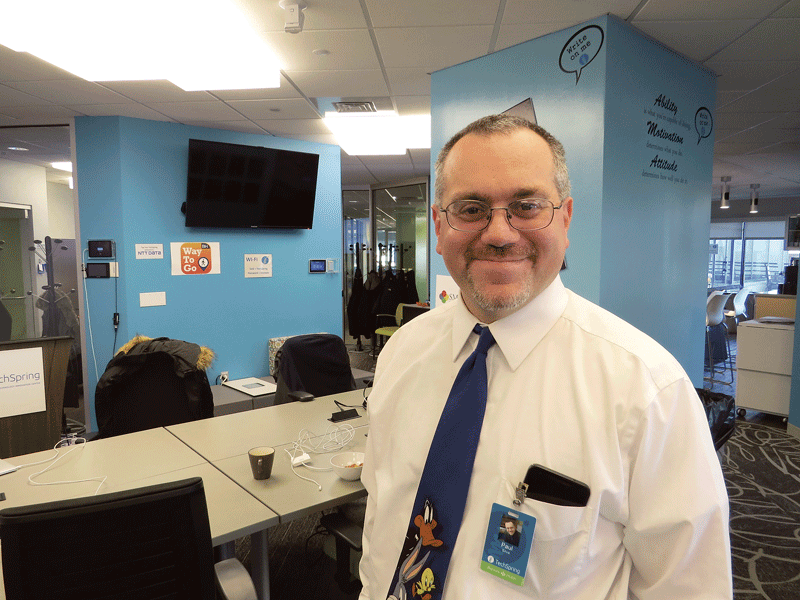
That phrase cutting-edge also applies to the winner in the Innovation category, TechSpring. Launched more than three years ago, this venture, in the words of its co-founder Christian Lagier, exists at the intersection of healthcare and technology, and has forged unique collaborative efforts between innovators, healthcare providers, and even patients to bring new developments to the market.

Lastly, in the category called Collaboration in Health/Wellness, a large, powerful collaboration led by the Western Mass. Training Consortium and the Opioid Task Force of Franklin County and the North Quabbin Region has been changing — and saving — lives through a host of innovative initiatives.

Together, and also individually, these stories are powerful — powerful enough to take your eyes off the new casino for a minute and understand just some of the many other awesome things taking place in this region.

Opinion

Opinion

By Cheryl Fasano

Last year alone, drug overdoses killed 72,000 Americans. According to the Centers for Disease Control and Prevention, that record number reflects a 10% increase from the year before. In Massachusetts alone, there were more than 2,000 deaths due to overdose in 2017. It’s an epidemic that we, as a community, must fight.

Gov. Charlie Baker recently signed into law new legislation that expands opioid-addiction treatment in Massachusetts. The new law has been described as “the most aggressive and progressive” in the country, and, given the crisis of opioid abuse in the Bay State, this approach is most welcome.

One aspect of the law that Mental Health Associates (MHA) believes deserves special recognition is a new set of standards and an established credentialing process for recovery coaches. A recovery coach is someone who has received specialized training to provide guidance and support for people who are just beginning their recovery and are especially vulnerable to relapse. Importantly, a recovery coach also has lived experience with addiction and is in long-term recovery.

When it comes to getting clean and staying clean, a recovery coach has ‘been there’ and ‘gets it’ in a way only someone who has experienced addiction understands. A recovery coach is a critical resource for an individual in recovery.

“You’ve got to find some way to help people stay in the game and stay clean once they get clean,” Baker said. “Creating a credentialing framework and making it possible for services to be reimbursed [by insurance] is a huge part of how we ultimately win this fight.”

MHA applauds the governor and state Legislature on the passage of this crucial new legislation. It makes us even more hopeful for the people we are helping through our recovery-support programs, which, for years, have included the very type of recovery coaches state law now recognizes and standardizes with regard to training and credentialing. The law’s provisions should help make the services of a peer recovery coach available to more people struggling to overcome their addiction.

So, overall this is great news, but it doesn’t mean we are in the clear. To win the war against opioid addiction, we must fight every battle relentlessly. We must improve education so people of all ages understand the life-threatening risks involved with opioids.

We must help people struggling with addiction to get the help they need to get clean and stay on their road of recovery. By working collaboratively, we can challenge the opioid epidemic and prevail — but we can’t let up.

Cheryl Fasano is president and CEO of Mental Health Associates.

Opinion

Editorial

‘Palpable.’

That’s an adjective that means, among other things, that something is noticeable, perceptible, or tangible.

People all over the region have been using that word in reference to what’s happening in downtown Springfield as the buildup to MGM Springfield’s opening reaches its climax. They’re deploying the term with regard to the excitement level, the energy, and the anticipation for what is to come.

They’re right to do so, because all of those things are clearly noticeable and tangible. And while it’s more so in the downtown area, there are similar feelings in neighboring cities and across the region for that matter.

This is a good feeling, one we haven’t felt around here in a long time — or ever, really. People don’t know what’s going to happen on August 24 and the days to follow, but the sense is that something transformational will occur. And, like we said, when have we seen that lately?

BusinessWest attempts to capture these sentiments — and this palpable energy and excitement — in a special section. In it, we talk to area business and civic leaders, business owners who have become MGM vendors, area residents who will now put on an MGM nametag every day, and other constituencies. The common denominator in each case is genuine excitement about what is already happening and what will happen in the weeks, months, and years to come.

At BusinessWest, we share the excitement because we’ve not only been recording this all-important development for the past seven years or so, but we’ve talked directly with people who have, well, seen their lives changed because of this.

A few months back, we talked with many young people who were all looking for some kind of opportunity, job-wise or career-wise, several years ago, and came to MGM, either by walking in the door of their small office at 1441 Main St. or wandering to the MGM booth at a job fair. One thing led to another, and they wound up joining the company and playing important roles in bringing MGM Springfield to this day.

We’ve talked with more young people, and some who are not so young, who have joined the MGM workforce as dealers, cashiers, and chefs. And for some, the job represents much more than a job.

And we’ve talked with people like Dennis King, president of King Ward Coach lines who have seen the trajectory of their company changed in a profound way by earning a contract with MGM.

In each case, the emotions are real and the excitement (here comes that word again) is palpable.

But beyond individuals and companies, we’re excited for the region. In a few days, people will be getting into cars, buses, vans, and limos and telling people they’re heading to Springfield, Massachusetts. That’s not something they were likely to say 20, 10, five, or even two years ago.

Yes, it took a casino to get them here, but once here, they’ll have a chance (hopefully) to maybe see all the other great things we have in this region. Before, unless they were coming to the Big E (and in most cases, they were just coming for the Big E) they never had a chance to do that. Springfield has always been on the map in a literal sense, but now, it’s really on the map, and, more importantly, people will find it.

In a few days, people will be getting into cars, buses, vans, and limos and telling people they’re heading to Springfield, Massachusetts. That’s not something they were likely to say 20, 10, five, or even two years ago.

There’s talk that a few businesses in downtown Springfield will actually be closed on August 24. The thinking is that traffic will be heavy, parking spaces will be hard to come by, and it might just be easier to give everyone the day off. The fact that it’s a Friday in late August probably made the decision a little easier.

But still, businesses closing for a day because their employees would likely have a hard time getting to work and then finding a place to park? That should tell you something.

It tells us that something special is happening. And everyone can sense it; the word, again, is palpable.

Opinion

Editorial

Talk about a good problem to have.

There are so many women running for the Merrimack-Valley-based congressional seat being vacated by the retiring Niki Tsongas that women’s advocacy groups don’t really know what to do.

In the past, they would know exactly what to do — endorse the one woman who might be running for the post amid a crowded field of men.

This year, though, they have to choose which woman to endorse, and there were five of them at one point. Like we said, that’s a good problem to have. Actually, it’s a great problem to have, and women’s advocacy groups across the region, the state, and the country, are now facing it.

Indeed, women are running for political offices of all kinds, and at all levels, in record numbers, according to the Center for American Women and Politics at Rutgers University. In fact, people are calling this the ‘year of the woman,’ and with very good reason.

It’s a stunning development in some ways and a very positive one on many levels. Sparked by the #MeToo movement as well as by the ineffectiveness of leaders in Washington to accomplish much of anything, women are stepping off the sidelines and into the political fray, if you will.

And it’s about time.

Indeed, while one can argue the degree to which women have broken through the glass ceiling in business — some would say they have; others would contend that they still have a ways to go, especially when it comes to seats on corporate boards — there is no debating that when it comes to politics, the ceiling remains.

There has been some progress over the years, but the governing bodies in this country are still dominated by men — white men to be more specific.

And while many of them represent their constituents well, it just makes sense that governing bodies are more effective — and address the wants and needs of all people — when they are truly diverse.

And that means more women.

Throughout history, women have been involved in politics, but in most cases, that meant working on behalf of men seeking office. There’s nothing wrong with that, but in many cases, these women were selling themselves short. They were working for someone they thought could listen, act on what they were hearing, and lead effectively. And if they wanted to find someone who could do all that, all they need do was look in the mirror.

But, quite obviously, they needed to do more than that. They needed to find the courage — because that’s what’s required — to put themselves out there, defend their views, and be willing to handle the personal attacks and all the other forms of mud that are part and parcel to running for office.

This year, thousands of women are finding that courage, and it is certainly the most positive development — politically speaking — that we have seen in some time.

Not all these women will win office, obviously. But that’s a secondary consideration at this point. They are winners simply because they are running, and the country wins as well.

Opinion

Editorial

As the final countdown to the Aug. 24 opening of MGM continues, many in this region are circling that date and wondering just what life in downtown Springfield and beyond will be like.

And much of the speculation is somewhat negative in tone, focusing on such things as increased traffic, difficulty with finding parking spaces, longer and more difficult commutes, and how all of the above might keep people from coming into Springfield to do business.

Maybe some of that will happen — to one degree or another — especially in the first days and weeks that the casino is open for business. But even if it does, we choose to view these as only positive developments for this region.

Positive because these are all signs of vibrancy, indicators that a community or region is on the rise, qualities of a very healthy economy.

We’ll take them over the alternative any day of week.

And around here, we’ve had the alternative every day of the week — except when the I-91 viaduct was being rebuilt or the Big E is open for its annual 17-day run — pretty much for the past 40 or 50 years or so.

So this will be a welcome change. Sort of.

Again, people around here are used to breezy commutes. With rare exceptions, they don’t know what traffic jams are. They can’t relate to what their friends in Boston, New York, Chicago, or Atlanta are talking about. And unless Northampton is the destination, people around here have no problems whatsoever with finding cheap (often free) and very plentiful parking.

And they like it that way. It’s one of the reasons people come to live here. It’s quieter, there’s less traffic, and you don’t have to leave home an hour before work starts to commute 20 miles or even 10 miles, as some people do in Greater Boston.

But none of those things we like are indicative of a healthy, vibrant region, at least from an economic standpoint. Being able to breeze through Springfield at almost any hour other than 5-6 p.m. — which we can all do most weeks — is just not a good thing.

Ask anyone who lives in Boston, Cambridge, New York, or even Northampton, and they will tell you that traffic on your streets, parking shortages, and people complaining about how hard it is to get in and out of your city are all good problems to have. Really good problems to have.

They’re all signs that your community is relevant, which, for a long time, this region hasn’t been.

Think about it. Whenever there’s something happening in downtown Springfield, be it a college commencement at the MassMutual Center, induction ceremonies for the Basketball Hall of Fame, or a random Friday night when there’s something going at all the venues downtown — the MassMutual Center, Symphony Hall, and CityStage — people will complain about the traffic and congestion, but they don’t really regret it.

In fact, they’ll usually say something like ‘it’s good to see that many people downtown,’ or ‘Springfield was really hopping tonight … it took me a half-hour to get out of downtown.’ They’re not exactly happy, but they know there’s a good reason for their unhappiness.

People in the Northampton, Amherst, and Hadley area know this feeling well. Traffic on Route 9 can be very heavy at times (most times, in fact), but the businesses along that route and the communities themselves wouldn’t have it any other way. People know when it’s going to take forever to get over the Coolidge Bridge; it’s part of life there.

Will such traffic become part of life in downtown Springfield? Maybe. We might be in the minority here, but we hope so, especially if it’s traffic that will spread the wealth well beyond the casino, which it is likely to do.

We don’t have a crystal ball, certainly, and there has never been a resort casino in this region, so we don’t know exactly what’s going to happen here. But we think the expected changes will be for the better.

Again, they beat the alternative, which is all many of us have ever known.

Opinion

Opinion

By Robyn Alie

This summer, the Massachusetts Medical Society (MMS) will launch a multi-year campaign to promote public awareness of the link between the health of the environment and the health of our patients. 

Recent polls have shown stark differences between the public’s understanding and scientists’ understanding of the relationship between humans and the environment. They also show that the public’s understanding is heavily influenced by politics. 

For example, while studies show that 97% of scientists believe global warming is occurring and related to human activity, a Gallup poll conducted in March found that only 64% of the public believes this. Among Democrats polled, 89% agreed with scientists, compared to 35% of Republicans. Overall, however, a record-high percentage of Americans — 45% — think global warming will pose a serious threat in their lifetime, and 43% — including 91% of Democrats — report being fairly or greatly worried. 

The upcoming campaign is a directive of the MMS house of delegates, which adopted policy recognizing the “inextricable link between environmental health, animal health, and human health, and the importance of scientific research in informing policies that protect human health from environmental toxins.” Delegates directed the society to initiate a public-health campaign promoting public awareness of pollutants and their impact on human health.

The MMS committee on public health recommended the policy, noting recent federal actions. These actions included heavy cuts to the federal programs that study and monitor potential environmental toxins, and legislation that would promote industry representation on environmental advisory boards and limit the types of scientific research, including epidemiologic studies, that could guide EPA policy.

The campaign is an opportunity for physicians to help clarify the issues and promote safer policy and behaviors, said Dr. Louis Fazen, a member of the MMS committee on public health. It will primarily use the MMS Facebook and Twitter channels and website as a cost-effective means of disseminating simple information designed to raise awareness of the links between environmental health and human health. Physicians and others can find more information and a link to the campaign at massmed.org/environment. u

Robyn Alie is manager of Health Policy and Public Health for the Massachusetts Medical Society. This article first appeared in Vital Signs, an MMS publication.

Opinion

Editorial

Normally in this space, we have nothing but high praise for Gov. Charlie Baker and his administration.

Indeed, since taking office in 2015, he has proven to be an effective, entrepreneurial governor, a good friend to the business community (for the most part), and a great friend of Springfield and the surrounding region.

The governor is fond of saying — and we mean fond, because he tells this story every chance he gets — that, while Mayor Domenic Sarno didn’t support him in that 2014 race for governor, one of his first visits after winning that election was to Springfield City Hall to find out what he could do to help.

And help he has, on fronts ranging from economic development to workforce development; from promoting entrepreneurship (his administration is very fond of Valley Venture Mentors and its efforts, for example), to simply helping to promote this region and some of its businesses (he likes the Student Prince so much they named a burger after him).

And it’s not just Springfield. Last week, the governor and Lt. Gov. Karyn Polito were both on hand to announce a $21 million award to Westfield State University to bring its Parenzo Hall into the 21st century and make it a true resource for the school and the region.

Albano’s appointment to the Board of Review … is a real slap in the face to everyone who has worked so hard to pull Springfield out of its decline. The governor, who may or may not have been directly involved in this appointment, probably doesn’t realize that, but he should understand that rewarding the former mayor — and that’s what he’s doing, make no mistake about it — represents really bad optics and equally bad policy.

Like we said, the governor has been a good friend to this region.

Which makes his administration’s recent appointment of former Springfield Mayor Michael Albano to a six-figure job as a member of the Board of Review at the Department of Unemployment Assistance a real head-scratcher.

Albano, as most everyone knows, was essentially the architect of Springfield’s precipitous decline into finance-control-board management more than a decade ago. His administration was defined by incompetence and corruption, with several of his appointees being sent to prison.

Springfield’s brand suffered a terrible hit, and it has taken years of hard work, considerable assistance from two governors (Deval Patrick being the other), and a good amount of luck in the form of MGM Springfield, CRRC, and other recent arrivals, to pull the city back from the depths and to a point where optimism prevails and the sky is the proverbial limit.

Albano’s appointment to the Board of Review won’t impact any of that, obviously, but it is a real slap in the face to everyone who has worked so hard to pull Springfield out of its decline. The governor, who may or may not have been directly involved in this appointment, probably doesn’t realize that, but he should understand that rewarding the former mayor — and that’s what he’s doing, make no mistake about it — represents really bad optics and equally bad policy.

We think it’s great that Albano wants to continue working and has been energetic in his pursuit of employment that will bolster the sizable pension he already receives. Indeed, he ran for sheriff of Hampden County, and thankfully lost, and has applied for a host of jobs, including director of the Cannabis Control Commission.

However, that doesn’t mean the governor and his staff have to skip over the dark paragraphs on Albano’s employment history and reward incompetence.

Overall, the governor just doesn’t seem to take appointments of this nature as seriously as he does other matters. Remember, soon after he was elected, he decided that the best, and apparently only, qualification needed to assume one of the jobs with the Mass. Office of Business Development was to be a Republican who fought hard but lost a race for the state Senate or House of Representatives.

He should take these matters more seriously. And that’s especially the case here.

Springfield would like to put Albano and his corruption-riddled administration behind it. This appointment certainly doesn’t help it do that.

When it comes to appointments like this, it’s not just whether a candidate is qualified that matters. Sometimes, there’s a message being sent when someone gets a job like this. In this case, it’s the wrong message.

Opinion

Editorial

Westfield city officials and leaders with Westfield Gas & Electric, the city’s municipal utility, unveiled a new marketing campaign recently called ‘Go Westfield.’

The slogan might not fall into the categories of ‘highly imaginative’ or ‘cutting-edge,’ but the campaign itself is a worthy initiative and an example of what more cities and towns in this region need to be doing — building their brands.

This is a tricky subject for some industry sectors and especially municipalities — ‘why are they spending money to hype the city when there are roads that need paving and sidewalks to be fixed?’ is an often-heard refrain.

Westfield’s story is a very good one. It has ample land on which to build, a turnpike exit of its very own, an airport, a municipal utility offering attractive rates and high-speed Internet service, a downtown that’s coming back after years of decline, Stanley Park, a great ice rink, a state university, and much more.

But brand building is as important an exercise for municipalities as it is for businesses in every sector. If you have a good story to tell and you want to grow your business — or if you want to bring more businesses and residents to your city, as is the case here — you need to tell that story.

And Westfield’s story is a very good one. It has ample land on which to build, a turnpike exit of its very own, an airport, a municipal utility offering attractive rates and high-speed Internet service, a downtown that’s coming back after years of decline, Stanley Park, a great ice rink, a state university, and much more.

‘Go Westfield’ will tell that story through a new website, a promotional video, and some advertisements in regional outlets and industry journals. As with any branding campaign, one never knows what the results will be, but it’s safe to say that this proactive step is far better than trying to let the city sell itself.

Meanwhile, the campaign provides another example of the important role played by the region’s utilities, and especially the municipal utilities, in economic development.

Energy costs are among the many important items to be considered when a business looks to relocate — or expand within its current location — and the Westfield G&E, like its counterpart in Holyoke, continues to play a key role in helping the community attract and retain companies and jobs.

There’s a reason why Coke continues to pound the airwaves with ads even though everyone knows that brand. The same with McDonald’s, Ford, and Geico. If you want to grow your brand, you have to promote it and keep it in the public eye.

“It’s critical that we communicate our strengths,” Westfield’s mayor, Brian Sullivan, said at the unveiling.

He’s right about that, and there are lessons there for all area cities and towns.

Opinion

Editorial

As you read this, the countdown clock at MGM Springfield is inside 50 days.

Which means that, in essence, the nearly $1 billion project that has dominated the local landscape, literally and figuratively, for the better part of seven years, is essentially done. Just as Union Station is done and the massive I-91 reconstruction project is done.

And soon, there will be a number of other initiatives in the proverbial ‘done’ pile, including Stearns Square, the innovation center, Riverfront Park, an extensive renovation of the Basketball Hall of Fame, and others, with the acknowledgement that ‘soon’ is a relative term.

That’s a lot of things to get done, and the city should be proud of all that has been accomplished and how the landscape has been dramatically altered for the better — much better.

The question of ‘what now?’ has been tossed around for a while now, and while such talk might be a little premature — after all, it will take some time for MGM Springfield, Union Station, and other initiatives to really be done and have those facilities fully assimilated — but in most ways, it isn’t.

There are certainly things the city has to do to as part of that assimilation process and as part of building off the momentum that’s been generated. That list includes everything from creation of new market-rate housing in the downtown to a remaking of Tower Square into something much more vibrant and relevant, to some aggressive marketing of the city and its comeback story.

And in some ways, work on all those initiatives is already underway.

But Springfield has another big and important challenge facing it, and that is to revitalize many of its proud neighborhoods — to take the progress beyond downtown, if you will.

This is, in many ways, more difficult than any of the projects undertaken thus far, and that’s with the acknowledgement that it took 40 years or more to revitalize Union Station and for the largest development project in the city’s history (MGM) to revitalize the South End.

That’s because rejuvenating neighborhoods like Old Hill, Mason Square, the North End, and the South End are difficult undertakings, especially in these changing times and continued rough going for most old manufacturing centers, like Springfield.

There has been some progress made, though the efforts of local, state, and national initiatives and the of work nonprofit agencies ranging from DevelopSpringfield to Wayfinders, from Revitalize CDC to ROCA. But many of Springfield’s neighborhoods still rank among the poorest in the state, and progress has come very, very slowly.

This isn’t exactly a news flash, but Springfield’s neighborhoods are truly the city’s next big challenge. If this community is to make a real comeback, the good news has to extend beyond Main and State streets.

For the comeback to spread to those neighborhoods, there must be opportunites — or more opportunities, as the case may be — for employment, home ownership, and new-business development. As we said, there has already been some progress made on these fronts, but more extensive efforts are required in order to keep these neighborhoods from being left behind.

A few paragraphs ago, we referred to Springfield’s proud neighborhoods. You almost always see that adjective used in that context, and for a reason. Residents of these areas are proud of their neighborhood, although in many cases, they’re proud of what they once were, not what they are now.

Creating far greater use of the present tense when it comes to these neighborhoods and ‘good times’ is clearly the next big challenge for Springfield.

Opinion

Editorial

Sports all-star games have been enduring somewhat of a public-relations crisis in recent years.

Indeed, the NFL’s game, now played the week before the Super Bowl, has become almost a farce, with players opting not to play, fans opting not to show up, and viewers opting not to tune in. The NHL and NBA games, meanwhile, have become circus shows where no one plays defense, and in the latter case, the game is actually upstaged by the slam-dunk contest the night before. Major League Baseball still has the best game, but that league, too, has struggled to make the so-called midsummer classic captivating and relevant, especially to younger audiences.

No, it’s not the best of times for these games.

But the narrative is a little different with the American Hockey League and its decision to play next year’s game in Springfield. Here, the story isn’t about the game, the gimmicks, or the weekend’s supply of festivities that may or may not work.

Instead, it’s about what the game means to the city and its hockey team, and what it symbolizes in terms of what comes next. All of that came together late last month when the logos for the event and the official corporate partner, Lexus, were unveiled.

Don’t forget, 27 months or so ago, this city didn’t even have a hockey team. And when a group of area business people came together, bought a franchise, and brought it to Springfield, there were many who doubted whether this franchise would fare any better than the one that just departed for Arizona.

To say those doubts have been dispelled would be a huge understatement. The team has become one of the best business stories of the past few years, and BusinessWest chose the team’s owners and managers, collectively, as its Top Entrepreneurs for 2017.

But the AHL All-Star Game coming to the City of Homes next February is not just about the Thunderbirds and the remarkable work done by President Nathan Costa 2018 40 Under Forty’s top honoree to revitalize hockey in Springfield and make the team part of the fabric of the community.

It’s also about the city’s resurgence and the arrival of MGM and its $950 million casino, MGM Springfield, which will serve as presenting sponsor of the all-star game. MGM now manages the MassMutual Center, and it no doubt played a prominent role in effectively bringing Springfield into the discussion when it comes events like this All-Star Game.

To say that it wasn’t in those discussions for the past decade and more would be another understatement. It is now, because of its resurgence, the team’s incredible surge, and MGM’s ability to help put on a good show.

And this combination bodes extremely well for the city moving forward. The game came to Springfield as a result of effective partnerships and strong teamwork, and these potent forces can bring more shows and meetings and conventions to this city and this region.

As we said at the top, all-star games have suffered some bad press and some tough times lately. In many respects, the games are no longer a big deal.

This is a notable exception, and one the city should be proud of.

Opinion

Despite the occasional major project landing in the region — that casino opening is only two months away — the Pioneer Valley’s economy is still driven far more by the myriad small businesses that dot the landscape.

That’s why it’s important to give entrepreneurs the tools, inspiration, and resources they need to make the risks they take in launching their enterprises worthwhile.

Our story on page 40 is always a fun assignment — our annual writeup on the winners of the Valley Venture Mentors Accelerator Awards. This year, we sat down with the entrepreneurs behind the three top winners, who received, through this program, significant funding for their projects, but, just as important, key guidance and support in taking their businesses to the next level.

Because those enterprises deal in such critical matters as clean water, continuing medical education, and equipping low-income youth to write their own entrepreneurial stories, that next level, as you’ll see by reading these accounts, may turn out to be life-changing for many — and even world-changing,

Then there’s our page 26 story on Click Workshop — perhaps a less splashy story, because no one is handing out giant checks. Rather, they’re handing over monthly payments (rather reasonable ones, at that) to participate in a community of 98 small (mostly solo) businesses that share resources and network in a refurbished former warehouse in downtown Northampton.

One of the region’s growing number of co-working spaces, Click is supporting economic energy in its city while also boosting the profile of another type of entrepreneur: the local artists and musicians to whom it offers exposure and a place to promote their creations.

These two articles may seem unrelated at first, but they both speak to the importance of creating a supportive community of entrepreneurs who understand that the success of each contributes to the success of all, by establishing Western Mass. as a place where ideas can turn into viable businesses.

“You have a lot of ups and downs. The wins are big wins — they’re really high highs,” said Barrett Mully, one of the VVM Accelerator Award winners. However, “it’s just so intangible at times, it’s like you’re feeling your way through the dark a little bit.”

Programs and organizations that support the region’s startup culture are making that journey a little bit brighter.

After all, countless entrepreneurs are taking calculated gambles every day that have nothing to do with a casino. When those risks pay off, everyone benefits.

Opinion

Opinion

By Tom Jones

The recent decision by the U.S. Supreme Court upholding the use of arbitration agreements to prohibit class-action lawsuits generated widespread cheering in the business community. But employers would be well advised to hold their applause.

That’s because this Supreme Court decision is unusual in that it does not draw a bright line making it clear what employers may or may not do. It simply opens the door for employers to pursue mandatory arbitration as an option.

Most importantly, the decision does not allow employers to use arbitration agreements to escape the “onerous” aspects of legally established remedies.

The court has made clear that, while arbitration involves a change of forum from the courts to the private arbitration arena, and an elimination of class actions, it does not change workers’ substantive rights. Arbitrators must apply the same law that a court would apply and award the same substantive remedies for proven violations.

Employees will still be able to file a claim for non-payment of wages, sexual harassment, or other adverse consequences at work. They just won’t be able to do it as a class action.

The best advice to employers any time they face a new legally justified option is to take time to weigh the options before moving ahead.

The Supreme Court ruled that companies may use arbitration clauses in employment contracts to prohibit workers from banding together to take legal action over workplace issues. The vote was 5 to 4, with the court’s more conservative justices in the majority. The court’s decision could affect some 25 million employment contracts.

Writing for the majority, Justice Neil Gorsuch said the court’s conclusion was dictated by a federal law favoring arbitration and the court’s precedents. If workers were allowed to band together to press their claims, he wrote, “the virtues Congress originally saw in arbitration, its speed and simplicity and inexpensiveness, would be shorn away, and arbitration would wind up looking like the litigation it was meant to displace.”

The ruling does not necessarily invalidate Massachusetts law on the topic of arbitration. For example, a Massachusetts case from a few years ago centered around an arbitration waiver agreement that prohibited plaintiffs’ recovery of multiple damages in any arbitration proceeding — a provision that directly conflicted with the Massachusetts mandatory treble damages law.

In 2013, the Massachusetts Supreme Judicial Court (SJC) declared the waiver of multiple damages in the arbitration agreement unenforceable, ruling that the FAA (Federal Arbitration Act) did not preempt the SJC from holding that waiver of multiple damages in these circumstances is void as contrary to Massachusetts public policy.

Given that arbitration is really a procedural strategy, there are many questions you should consider before adopting a change in your company’s practices. Some questions to ask yourself as a company include: how will arbitration be a benefit to us? How much will it cost to use it? What is the potential cost vis-a-vis the likely benefit? Will we be better off as an employer with such a policy in place? If so, how? How often do we get sued? What issues do we get sued for? Wages? Discrimination? If or when we do get sued, what is our success record under the current rules?

Consider that, in discrimination cases filed at the Massachusetts Commission Against Discrimination (MCAD), the agency found “lack of probable cause” (i.e. the case was dismissed) in 87% of the cases filed, according to its most recent annual report. Are you likely to do any better with an arbitrator?

One other thing to keep in mind is that federal and state administrative agencies, such as the Equal Employment Opportunity Commission or MCAD, are not bound by private arbitration agreements; they are able to sue over statutory rights where private claimants may not bring a case.

Before jumping on the bandwagon of arbitration, you need to engage in due diligence to see if it makes sense for your company.

Tom Jones is vice president of Associated Industries of Massachusetts.

Opinion

Opinion

By Bob Rio

A shortage of natural-gas capacity during the December-January cold snap added $1.7 billion to the electric bills of business and residential customers in New England while erasing all the environmental benefits from solar energy in Massachusetts during 2017.

Now you know why Massachusetts employers support the idea of expanding natural-gas infrastructure in the region.

New data released this month by the Massachusetts Coalition for Sustainable Energy (MCSE) and compiled by Concentric Energy Advisors underscores the economic and environmental damage wrought by our energy status quo.

Natural-gas supplies in the region are tight during the winter. Despite abundant supplies just a few states away, pipeline infrastructure to get it here is inadequate, and efforts to address this issue have been stymied by those who believe upgrading our natural-gas infrastructure will stall progress on transitioning to clean energy.

Electricity generators simply don’t have enough natural gas to operate during the bitter cold because most of the available gas is used to serve businesses and homeowners.

To satisfy the increased demand for electricity, power plants burn stored backup oil and coal. The lights stay on, but greenhouse-gas emissions increase exponentially since oil and coal emit more carbon than natural gas. The cold-weather shortage of natural gas has become so common in recent winters that power generators are paid to store oil, whether or not it is needed, as sort of an insurance policy funded by ratepayers through higher electric rates.

According to the Concentric report, the amount of coal and oil burned during just a two-week period generated 1.3 million tons of extra greenhouse-gas emissions over what would have been emitted if gas had been available. The ratepayer cost was $1.7 billion higher than the previous winter — most of which will show up in next winter’s energy bills. In fact, Eversource recently sought a 15% increase in electric rates for customers in Western Mass. for the period July through December.

How much is 1.3 million tons? The extra greenhouse gases negated all the greenhouse-gas savings from all the solar energy produced in Massachusetts throughout 2017. It’s a problem that cannot be solved by adding more solar capacity, since the highest need for natural gas is in the winter, when solar output is at its lowest.

Had the cold period continued (or if another came later in the year), brownouts would likely had occurred. ISO-NE, the regional power-grid operator, reports that the system was about three days away from crashing, as some plants were running out of oil and had to curtail their output.

This dangerous mix of rising costs, rising emissions, and potential brownouts comes at a time when other states are dangling low energy costs in front of Massachusetts employers to persuade those companies to expand elsewhere. It’s not a tough sell — our energy costs are nearly double those of states in other regions of the country.

Associated Industries of Massachusetts, along with other members of the Coalition for Sustainable Energy, support a balanced approach to address the region’s energy problems. That approach embraces renewables — AIM has supported the development of both hydro power and offshore wind — while at the same time acknowledging the stresses on our current system and the economic and environmental damage that is occurring.

Bob Rio is AIM’s senior vice president, Government Affairs.

Community Spotlight Features

Community Spotlight

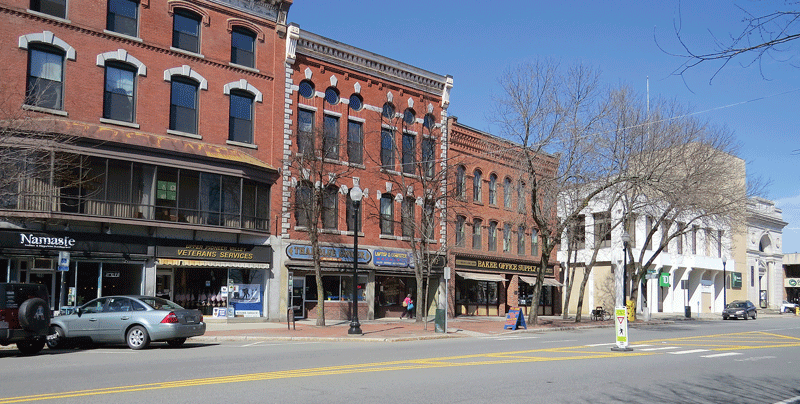
Downtown Greenfield may look the same as it did decades ago, in many respects, but it has evolved considerably and morphed into a true neighborhood.

Downtown Greenfield may look the same as it did decades ago, in many respects, but it has evolved considerably and morphed into a true neighborhood.

Greenfield Mayor William Martin acknowledged that it isn’t exactly a scientific measure of either his downtown’s vibrancy or the efficiency of his long-term strategic plan for the central business district. But it certainly works for him.

He’s being told there’s a parking problem downtown. Actually, he’s been told that for some time. Until recently, the commentary involved the east end of that district by Town Hall, and the chorus was so loud and so persistent that the community is now building a 272-lot parking garage in that area, due to open in the fall.

But now, he’s also hearing that complaint about the east side of downtown, and he’s expecting to hear it a lot more with the opening of the Community Health Center of Franklin County on the site of the old Sears store on Main Street, a facility that will bring more than 100 clients and employees to that location every day.

In the realm of municipal government, parking problems generally, but certainly not always, fall into that category of the proverbial good problem to have, said the mayor, adding that a far worse problem is to have no parking woes — not because you have plenty of parking, but because no one is coming to your downtown.

And that was more the state of things in Greenfield for some time, Martin intimated, putting the accent on ‘was.’

Indeed, while Main Street may look pretty much the same as it did a few decades ago, at least at a quick glance, it is vastly different, and in some very positive ways, said the mayor, adding that his administration’s broad strategy has been to bring people downtown for goods and services and let this critical mass trigger economic development on many levels. And it’s working.

“We thought that, if we can bring people downtown and provide what they need, the free market will take care of people want,” he said, adding that the theory has been validated with everything from new restaurants to live entertainment to offices providing acupuncture and cardiology services.

Jim Lunt agreed. Now the director of GCET (Greenfield Community Energy and Technology), a municipal high-speed Internet provider, and formerly director of Economic Development for the community, he said the downtown has evolved considerably over the past decade or so.

Getting more specific, he said it has morphed from a traditional retail district, as most downtowns are, into more of a combination entertainment district and home for small businesses and startups.

“We’ve focused on small businesses that we can bring in, and we’ve worked a lot to build up the creative economy; our downtown, like many downtowns, looks a lot different now than it did 10 years ago,” Lunt told BusinessWest. “There are a lot more restaurants, a lot more opportunities for more social gathering, as opposed to what people would think of as traditional shopping.”

In addition to social gathering, there is also vocational gathering, if you will, in the form of both new businesses and also a few co-working spaces that are bringing a number of entrepreneurs together on Main Street.

To get that point across, Lunt, sitting in what amounts to the conference room in Town hall, simply pointed toward the window, a gesture toward the building next door, the Hawks & Reed Entertainment Center, which, in addition to being a hub of music, art, and culture, is also home to Greenspace CoWork.

That space, on the third floor, is now the working address for writers, a manuscript editor, a few coaches, a social-media consultant, and many others, and has become, said Lunt, maybe the best example of how Greenfield has put the often long-unoccupied upper floors of downtown buildings back into productive use.

MJ Adams, who succeeded Lunt as director of Economic Development, agreed, and she summoned another term to describe what downtown has become: neighborhood.

She said it has always been that to some extent, but it is now even moreso, with more living options and other amenities in that area.

“We’re starting to look on downtown as more of a neighborhood,” she explained. “We’ve always looked at it as the civic and service center for the county, but people are starting to perceive downtown Greenfield as a neighborhood that has a mix of housing styles, is attractive to a wide range of people, especially young people, has a lot to offer, and is very walkable.”

Greenfield didn’t get to this state overnight, said those we spoke with, noting that the process has been ongoing and more strategic in nature since the official end of the Great Recession and the arrival of Martin in the corner office (both of which happened in 2009).

Mayor William Martin says his broad strategy since being elected a decade ago has been to transform downtown into a hub for a wide range of services and make it a true destination.

Mayor William Martin says his broad strategy since being elected a decade ago has been to transform downtown into a hub for a wide range of services and make it a true destination.

That strategy has involved a number of tenets, everything from creation of GCET, which gives downtown Greenfield an important asset in a county where high-speed Internet access is a luxury, not something to be taken for granted, to a focus on making downtown a destination for a wide gamut of services, from education to healthcare.

For this, the latest installment of its Community Spotlight series, BusinessWest examines how these pieces have come together, and also at how they have positioned Greenfield for continued growth, vibrancy, and maybe even some more parking issues — the ‘good-problem-to-have’ variety.

Hub of Activity

To explain his broad strategy for Greenfield’s downtown, Martin essentially turned the clock back more than 200 years. Sort of.

Back in those days, he explained, Greenfield, anointed the county capital, was a supplier of goods and most services to the many smaller communities surrounding it.

Small steamships and rail would bring goods north on the Connecticut River to Greenfield, he explained, and residents of surrounding towns would make their way to the center of Franklin County to get, well, pretty much whatever they needed.

“I consider that a tradition and also a responsibility,” said Martin, now serving his fourth term. “And that’s what we’ve based our downtown on — providing what people need.”

It also has always done that with regard to government functions, he said, citing everything from the county courthouse, post office, and jail to Greenfield’s library, the largest in Franklin County. But Martin’s goal was to broaden that role to include education, healthcare, and more.

And specific economic-development initiatives, technology, societal changes, the community’s many amenities, and some luck have helped make that goal reality.

In short, a large number of pieces have fallen into place nicely, said those we spoke with, enabling downtown Greenfield to become not only a destination, or hub, but also a home — for people and businesses across a diverse mix of sectors.

These pieces include:

• A burgeoning creative economy that features a number of studios, galleries, and clubs featuring live music;

• A growing number of restaurants, in many categories, that collectively provide a critical mass that makes the city a dining destination of sorts. “There are 13 different ethnic restaurants, there’s some really good bars, several places for live music that weren’t here just a few years ago, and art galleries,” said Lunt. “I think that’s the biggest change downtown”;

• Greenfield Community College, which has steadily increased its presence downtown with a campus that brings students, faculty, administrators, and community leaders to the Main Street facilities;

• The community health center, which will bring a host of complementary services, including primary care, dental, and counseling for emotional wellness together under one roof in the downtown, where before they were spread out and generally not in the central business district;

• Other healthcare services. In addition to the clinic, a cardiologist has taken over an old convenience store downtown, said the mayor, noting that there is also an acupuncturist, a holistic center, a massage therapist, and other healthcare businesses in that district; and

• Traditional retail, of which there is still plenty, including the landmark Wilson’s Department Store.

Actually, these pieces haven’t just fallen into place by accident, said Martin, noting, again, that they have come into alignment through a broad strategic plan and specific initiatives designed to make the downtown more appealing and practical for a host of businesses, as well as number of existing qualities and amenities.

“We decided that we should do everything we can to provide the infrastructure necessary to attract people and entities when the economy turned,” he explained. “And we worked on a number of things that were real problems.”

High-speed Internet access was and is a huge component of this strategy, said Lunt, noting that it has been directly responsible for a number of businesses settling in the city.

Meanwhile, other parts of that strategic initiative include renewable-energy projects that have helped bring down the cost of energy; creation of a Massachusetts Cultural District, which has made the community eligible for certain grants; a façade-improvement project that has put a new face on many properties downtown, and many others.

Destination: Greenfield

The community already had a number of strategic advantages when it came to attracting both businesses and families, said Lunt, noting that, overall, while Greenfield’s location in rural Franklin County is limiting in some ways — contrary to popular opinion, there are actually few available parcels for large-scale developments, for example — it brings advantages in many others.
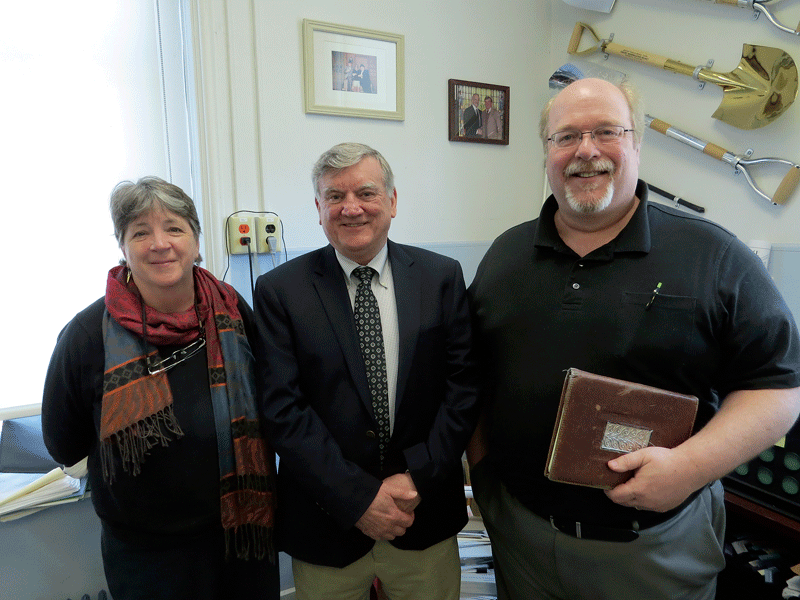
From left, MJ Adams, Mayor William Martin, and Jim Lunt all see many positive signs in Greenfield’s downtown.

From left, MJ Adams, Mayor William Martin, and Jim Lunt all see many positive signs in Greenfield’s downtown.

Elaborating, he said that many younger people prefer a rural setting to an urban one — for both living and working — and can find most of what they’re looking for in Greenfield.

That list includes a lower cost of living than they would find in Boston, Amherst, or Northampton; outdoor activities ranging from hiking to whitewater rafting; culture; a large concentration of nonprofits serving the county; and, yes, high-speed Internet access, something people might not find 20 minutes outside of downtown.

“It’s a beautiful area, and real estate is quite affordable compared to much of the rest of the state,” said Lunt. “And the Springfield-Hartford metropolitan area is now 1.2 million, and that’s not that far down the road; a lot of people would happily commute for 45 minutes to live here and get to jobs there.”

This combination of factors has attracted a number of young professionals, many of whom may have gone to college in Boston or another big city and started their careers there, but later desired something different, said Adams.

It has also attracted entrepreneurs, said Lunt, including several video-game developers, many of whom now share a business address — co-working space known as Another Castle.

Located on Olive Street in space that until recently housed the Franklin County registry of Deeds, it became home to the video-game developer HitPoint, which was located in Greenfield, relocated to Springfield, and has now moved back. And it has created a co-working space that enables other small game designers to take advantage of shared equipment and facilities, effectively lowering the cost of doing business.

Moving forward, the town’s simple goal is to build on the considerable momentum it has created through a number of initiatives. These include work to redevelop the former First National Bank building, vacant for decades and the last of the properties on the stretch as Bank Row to be given a new life.

The town’s redevelopment authority has site control over the parcel, said Lunt, adding that the next steps involve working with the state, private grant writers, and the city to acquire funds to convert the property into a downtown cultural center to be used for everything from a farmers’ market to perhaps a museum of Greenfield history.

If all goes according to plan, all the properties on Bank Row will be back in productive use for the first time in 40 years, he told BusinessWest.

Another initiative is the parking garage, which has been years in the making, noted the mayor, noting that it took several attempts to secure funding help from the state for the project.

The facility will ease a well-recognized problem, exacerbated by the new county courthouse in that area, and provide yet another incentive for people to come to downtown Greenfield.

As for parking at the other end of Main Street … well, that’s a good problem to have. For now, anyway.

George O’Brien can be reached at [email protected]

Sections Sports & Leisure

Game On

Dr. Scott Cooper, one of PSSP’s managing partners

Dr. Scott Cooper, one of PSSP’s managing partners

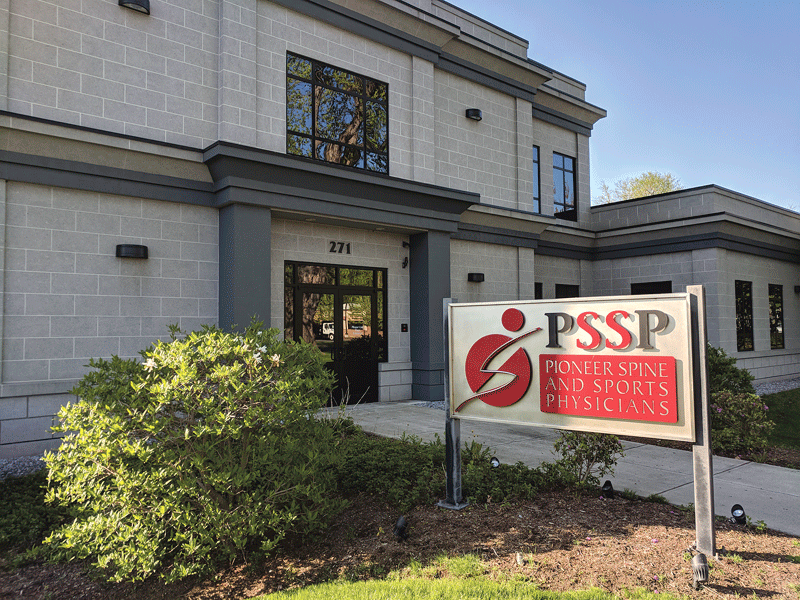
No one is totally immune from a sports injury, from kids on the playground to serious college athletes to ‘weekend warriors’ in middle age. Treating those injuries — and helping reduce the risk of sustaining them — is one of the key niches of Pioneer Spine & Sports Physicians, which has been helping patients return to full function for more than a quarter-century.

No one is totally immune from a sports injury, from kids on the playground to serious college athletes to ‘weekend warriors’ in middle age. Treating those injuries — and helping reduce the risk of sustaining them — is one of the key niches of Pioneer Spine & Sports Physicians, which has been helping patients return to full function for more than a quarter-century.

The first weeks of spring — not spring in name only, like the bouts of snow and 20-degree weather that dotted late March and early April this year, but actual spring weather — typically send weekend warriors, after a long winter indoors, scurrying for their golf clubs and tennis rackets.

And sometimes, they’re a little too enthusiastic.

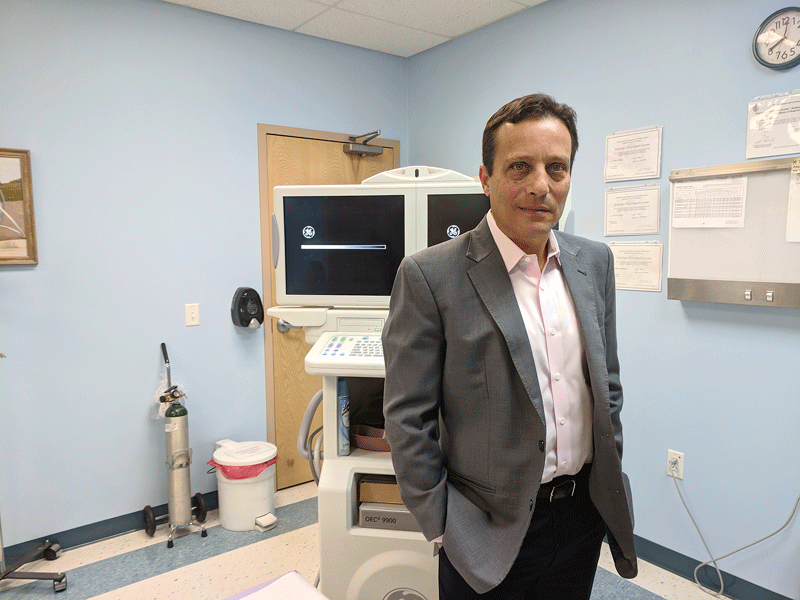
“We see a lot of that this time of year — golfers getting the clubs out, only to develop back pain. But we also see hockey players from the over-40 league come in with all kinds of injuries,” said Dr. Scott Cooper, one of the managing partners of Pioneer Spine and Sports Physicians (PSSP), the largest private physiatry practice in the Northeast.

“I had one guy who was probably in his mid-50s, and he had recurrent tennis elbow, and I could not get him to stay off the court,” Cooper told BusinessWest. “I treated him for probably six months for tennis elbow, and I don’t think he ever missed a match — whereas, if he was on a team, I could tell his coach, and his coach would say, ‘you’re going to sit out two weeks until this thing clears up.’ Sometimes the weekend warriors can be determined.”

Cooper and his team should know, seeing a broad range of patients every day, from high-school and college athletes nursing knee and shoulder injuries to the inpatient clients PSSP manages in acute-care settings like Weldon Rehabilitation Hospital and Bronson Rehabilitation, recovering from spinal-cord injuries, neurologic conditions, and amputations.

Physiatry, also known as physical medicine and rehabilitation, is a specific type of practice, he explained, but one with a wide range of applications.

“One of the nice things about physiatry is it’s a very broad specialty, and one of our primary goals is to provide state-of-the-art care in all facets of physiatry,” Cooper explained.

That includes the acute rehab setting at Weldon and Bronson, where Pioneer treats people who have conditions that cause a loss of function, so they can’t return home, but no longer need to be in a medical/surgical unit of the hospital.

“These are people who have had strokes, for example, or spinal-cord injuries or head injuries or complex medical conditions or amputations or other neurologic conditions like multiple sclerosis or ALS — things that cause them to lose function, but they’re now medically stable so they can tolerate rehabilitation.

“We manage those patients, and we’re also involved in pain management, both acute pain and chronic pain, in all our offices,” he added, adding that the practice’s physiatrists also deal with spinal conditions, back pain, herniated disks, pinched nerves, and much more. “We have procedure suites in most of our offices where we can do X-ray guided procedures on people’s spinal conditions, and we are also involved with the Surgery Center of New England; we do procedures there that are not office-based, things that are a little bit more invasive and require anesthesia.”

In short, it’s a one-stop shop for a host of conditions, with one goal in mind — to return patients to the highest function possible — in both their work and play.

The Sporting Life

That ‘play’ factor — sports medicine — is a niche PSSP is well-known for, and around 90% of sports injuries require no surgery at all, Cooper noted.

“If they do require surgical treatment, we work closely with some of the orthopedists in the area who provide those services. But for the other conditions, we’re able to treat them very effectively, and we do that with a lot of recreational athletes, weekend warriors, and we also work with several of the high schools in the area.”

PSSP’s West Springfield location is one of seven offices spanning the Pioneer Valley from East Longmeadow to Brattleboro.

PSSP’s West Springfield location is one of seven offices spanning the Pioneer Valley from East Longmeadow to Brattleboro.

Pioneer also provides team doctors for area colleges including Springfield College, American International College, and Westfield State University, both during and between games.

“For example, hockey and football are the two main ones where they need to have someone on the sidelines according to the rules of their conference, so we provide game coverage in case of an injury during the game,” he explained. Meanwhile, if an athlete is injured in practice, they’re seen in a PSSP office as soon as possible.

“We recognize that one tenet of physiatry is quick return to function,” he said. “So we focus on getting athletes in quickly, diagnosing their condition, treating them, and returning them to the field as quickly as is safe.”

They take the same approach to occupational medicine, working with client businesses — Pioneer has a therapist at MassMutual full-time, for example — on job-site injury prevention and treatment. “We focus on them just the same way we focus on athletes — get them in quickly, diagnose their condition, determine what they can and can’t do in a rapid manner, and treat them comprehensively so they can return to full function.”

While about 70% of all occupational injuries involve the spine, that’s not the case with athletes, Cooper noted. “They have a whole different set of issues. The majority of what we see with athletes involve the knee or the shoulder. And most of those we treat non-operatively. We establish a diagnosis, and if that diagnosis requires a surgical evaluation, we facilitate that, and the surgeons we work with are very accommodating and allow us to get that done very quickly.”

Beyond treatment, though, the team at Pioneer emphasizes prevention. As an example, its physical therapists attended an educational program, developed at Syracuse University, that works to prevent ACL injuries in female athletes, who have a much higher predilection to those injuries than men.

“It’s almost an epidemic,” Cooper said. “Some of the reasons are unclear, but female soccer players and lacrosse players, will come in with ACL injuries, and once you have that kind of injury, it can be devastating, and it generally does require surgery, and requires a long course of rehabilitation.

“So this program has been shown to prevent those injuries,” he went on, explaining that Pioneer’s PTs were certified through the week-long course to teach a group of specific exercises to area sports teams, who come in during the preseason for a week of intensive training, and then continue on a regular basis. The exercises focus on stabilizing the knee and have been shown to prevent injuries.

“That’s one way we try to head off injuries and reduce their likelihood,” he added. “Unfortunately, there’s no way to eliminate them.”

No Slowing Down

That goes for young athletes and older weekend warriors, who often arrive at PSSP with a combination of a sports injury and something more degenerative, such as an arthritic condition.

“It’s something they can normally get by with, but if somebody with an arthritic shoulder is doing OK, but he goes and plays some tennis, now he’s got a rotator-cuff problem. The springtime is definitely a big time for those types of injury, but we see them year-round. And sometimes they can be the hardest to treat because these people are very determined to get back out there.”

With America’s senior population surging, Cooper’s team sees patients from that age group as well.

“We’re definitely seeing an older population that is increasingly active, but we encourage that; we want our patients to be active. There’s good data in the medical community that one of the ways to increase longevity and reduce morbidity in the population as a whole is to have an active lifestyle,” he told BusinessWest, adding that one of the mottos in his profession is that “physiatry adds years to life, and life to years.”

“That’s the idea — we want people to stay active, and it almost doesn’t matter what activity; we want them to engage in exercise, and when they do that, they may encounter some injuries and have some problems, and we’re here to address that.”

Because injuries are often an inevitable speed bump in an active lifestyle, he went on, it’s encouraging that treatments have evolved to allow people to return to full activity much sooner than before.

“Injuries that once may have been considered incompatible with continued competition, we now see as being treatable — and treatable with less-invasive means,” he said. “That can be anything from tendinitis to things like arthritis. In fact, arthritis of the knees is something that used to be, ‘you can take Advil, or you can have a knee replacement’; there wasn’t a whole lot else you could do for it.”

Now, however, physiatrists may tackle the issue with anything from orthotics to new types of bracing; from new exercise methods to injections that go far beyond what traditional cortisone could achieve. “So there are definitely more options to treat those conditions with different means that don’t necessaily require surgery, and allow people to be more active.”

It helps, he said, that Pioneer provides a comprehensive, multi-disciplinary, holistic model of care, where physiatrists, physical therapists, and other team members work together and consult with each other on troublesome conditions. If a patient with a spine injury isn’t progressing quickly enough or has too much pain, the providers aren’t afraid to work together to find a solution.

“Basically, anything that’s needed to treat the conditions we treat, we have under one roof,” Cooper said. “We have specialized nerve testing, guys who focus on different areas … we have all kinds of talent and skill to bear.

“I think that really serves to benefit the patient,” he went on, “because they’re not just getting one doctor and one opinion; they’re getting a team approach. I think that is unusual in a private-practice setting, and I think that’s one of the main reasons we’ve been so successful.”

Bottom Line

When asked what he enjoys about his job, Cooper paused for a moment and smiled.

“We think we have the best specialty in the world,” he said. “Whether I’m treating an 80-year-old patient with a stroke or an amputation or I’m treating a 16-year-old with a sports injury, I’m working with people who want to be here, who want to be treated, who have definite goals. And it’s very satisfying when they reach those goals.”

Joseph Bednar can be reached at [email protected]

Features

Changing Expectations

Mikki Lessard, left, and Nancy Feth

Mikki Lessard, left, and Nancy Feth say they’ve created a ‘retail-tainment district,’ one that is bringing people from across the region to downtown Springfield.

Like most people who grew up in and around Springfield in the ’60s and ’70s, Mikki Lessard has fond memories of getting on a bus and spending an entire Saturday afternoon downtown.

She said most of those visits would start, and a good number would also end, at Johnson’s Bookstore, but there were plenty of other stops as well.

“We would go to Johnson’s, and Steiger’s, and many other stores. There was always something happening; it was positive, and it was fun,” said Lessard, adding that, while she acknowledges that things won’t ever be exactly like that again given changes in how and where many people shop, it can be, well, something like that again.

And she and business partner Nancy Feth are a huge part of that ‘something.’

They are the founders of an intriguing enterprise called Simply Grace, which now operates a growing portfolio of businesses operating under the name the Shops at Marketplace in downtown Springfield — almost exactly where Johnson’s Bookstore was operating until it closed 20 years ago.

There are shops, but this is also a gathering place for events ranging from Thunderbird Thursdays to a farmer’s market to a Dress for Success graduation ceremony.

The two partners have a name for what they’ve created — a ‘retail-tainment district,’ blending both retail and entertainment. They didn’t invent the phrase — it’s been in use for a while and is often summoned when the discussion turns to what traditional shopping malls must become if they want to survive — but they believe they have the first in downtown Springfield, arriving ahead of MGM Springfield.

It all started with the Simply Grace Serendipity Boutique, and ‘the Shops’ has grown to include a yoga studio, a restaurant, a new store that just opened its doors, and another now being built out.

As they tell the story — and they love to tell the story, often finishing one another’s sentences and providing complementary commentary as they do so — these entrepreneurs note that they came to downtown Springfield as one of what was supposed to be several small retailers that agreed to set up shop as part of the initial Springfield Holiday Market in 2015, a strategic initiative designed to put some underutilized space in the Marketplace complex to work in a way that would bring people downtown and generate some momentum as well as foot traffic.

As things turned out, there were only a few pop-up shops, as they were called, on that location, but they did well collectively, and the public responded to this bid to bring some retail back to Main Street.

When the holidays were over, Glenn Edwards, owner of the property, asked Feth and Lessard if they would like to stay on for a while. They said yes, but without giving any real indication of a what ‘a while’ might or should become.

“We said, ‘we’ll stay for a few more months; we’ll stay ’til Valentine’s Day,’” said Feth, before Lessard picked up for her.

“And then, we asked to stay ’til Mother’s Day,” she explained. “And then we decided we wanted to stay for the year.”

But with some conditions, specifically that they could take space one of the retailers was vacating for yoga classes in an effort to attract more people and different constituencies to the downtown.

And, overall, the two entrepreneurs have been continuing that pattern, or mindset, ever since, adding new components to Simply Grace; bringing more events, vitality, and energy to the Marketplace area; and also, for those efforts, earning an award from the Small Business Administration to coincide with Small Business Week (April 29 to May 5).

Indeed, Feth and Lessard will be at the Sheraton Needham Hotel on May 4 to accept the Microenterprise of the Year Award, one of the few enterprises from Western Mass. to win such an honor in recent years.

But before, and after, all their focus will be on Springfield, the Marketplace, and new developments for Simply Grace.

These include a recent addition called Brick & Mortar, what Lessard calls a “mercantile, apothecary, and more,” which actually has some exposed brick for effect. There’s also Alchemy, a manicure and pedicure salon now being built out; Dharma, the yoga studio; and the boutique that got things rolling.

Those four businesses, along with Nosh, an eatery across the way from the boutique, now comprise a critical mass of small, diverse shops that the two partners believe will bring more foot traffic and momentum to an area that was once the pulse of downtown Springfield a generation ago — and can, they believe, take that role again.

“Do we have mall traffic? Heck no,” said Lessard. “But it’s working. It’s always about creating curiosity and then converting that into customers, and that’s what we’re doing.”

The only downside to all this is that the space once devoted to the holiday pop-up markets is now gone, absorbed by what could be called permanent fixtures, said the partners, adding that, in most all ways, this constitutes a very good problem to have.

For this issue, BusinessWest talked with Feth and Lessard about their venture and how in some ways it constitutes turning back the clock, but in most others, it’s symbolic of the downtown’s future.

What’s in Store

‘Walk. Pause. Browse. Shop. Experience.’

Those are the words the two partners have placed before ‘the Shops at Marketplace’ in their branding of the facility. And both collectively and individuality, those terms speak to what this venture is all about — as well as to some of the elements that have largely been missing from downtown since those days when Lessard and countless others would get on a bus and take it to Main Street.

The partners at Simply Grace say they carry brands with unique stories that resonate with their customers.

The partners at Simply Grace say they carry brands with unique stories that resonate with their customers.

There was far less walking, pausing, browsing, and shopping going on, and therefore there was less to experience.

Feth and Lessard weren’t exactly out to change that equation when they were first invited to bring a taste of the Simply Grace Serendipity Boutique, a shop they opened in Monson, to downtown Springfield for the holidays. But that’s what has happened.

It’s been an intriguing journey, a learning experience on many levels, said the partners, adding that they are still writing new chapters to this story.

That first Holiday Market was so successful that the BID asked the new partners to manage and staff that project moving forward, said Feth, adding that they did so, providing an opportunity for a number of new businesses to become part of the experience and gain some critical visibility. And through that work, the partners came to understand the many layers of significance to their efforts. Indeed, this wasn’t simply retail, it was economic development.

“A lot of what we do is build community and work on economic development,” Feth explained. “These are the value adds we feel we bring to Springfield in addition to our own businesses.”

Lessard agreed, and referred to Simply Grace’s broad efforts as “collaborating and incubating.”

As for their own businesses, the partners say they are doing well and succeeding in their primary mission. That would be to bring people, but especially women, downtown. Or back downtown, as is often the case.

They’re getting that done by providing reasons to do so, said Lessard, adding that these vary and include yoga, the shops — which sell products made by vendors with unique, community-minded stories — and events.

Elaborating, Lessard said the partners will utilize their indoor spaces and walkways during winter and schedule a variety of gatherings for women, and when the weather gets warmer, they will fully “activate” the indoor and outdoor space, using it to host everything from flea markets to White Lion Wednesdays; from farmers markets to live music.

In fact, the space has become a popular venue for fundraising for groups that include Rays of Hope, Unify Against Bullying, Dress for Success, and many more.

“We just want to have this lively, quintessential, unexpected experience in downtown Springfield,” Lessard explained, adding that the key word there, and perhaps unfortunately, is ‘unexpected.’

Indeed, Feth said that many of those who come to the Shops at the Marketplace will offer commentary that makes this point.

“We’ll often hear people say, ‘I don’t feel like I’m in Springfield,’” said Feth. “Or ‘I feel like I’m in New York or San Francisco.’”

Which Lessard followed with, ‘and we gladly say, ‘you’re in this wonderful city called Springfield.’”

The unofficial mission moving forward, for the partners at Simply Grace and the city as a whole, is to generate fewer of these comments and to make a fulfilling trip downtown something that’s expected, not unexpected.

And the partners believe they and the city are moving closer to that goal through their lively mix of retail, events, things to do, and things to experience.

And the retail is a big part of it, said Feth, adding that, contrary to what is becoming popular opinion, traditional retail is not dead, and not everyone wants to buy everything on Amazon and have it shipped to their home.

“What we’re finding is that customers are actually hungry for experiences where they can see the product, talk to people, feel seen and acknowledged, and have a real experience instead of just a virtual experience,” she explained, before Lessard picked up on that ‘feel seen’ comment and ran with it because of its significance.

“We have women who come in here that pause, then browse, then shop, just to be seen,” she told BusinessWest. “They feel like they’re in this hustle and bustle of life and no one’s acknowledging them. So they come in, they share stories, we give them hugs; we actually care about them as people.

“We get a lot of pushback from people from who say, ‘you should be in East Longmeadow’ or ‘you should be in Hampden or somewhere other than downtown Springfield,’” she went on. “But we’re exactly where we’re supposed to be, because the women we’re connecting to that work or live or play downtown are very stressed out, and when they come to our store, it’s a breath of fresh air, an unexpected experience.”

Bottom Line

There’s that word again — unexpected. Soon, perhaps, it can be retired, and downtown Springfield will move closer to the one Lessard remembers from her youth, a time, she recalled, when there was always something positive and fun happening.

The partners at Simply Grace are doing their part to bring those phrases back into use. They’ll soon have an award from the Small Business Administration to show for their efforts, but they’ve already received something perhaps even more significant to them.

That would be all those comments from people who say they don’t believe they’re in downtown Springfield. Such comments tell them they’re doing the right thing and in the right place.

And to think they were only going to stay a month.

Good thing they didn’t.

George O’Brien can be reached at [email protected]

Opinion

Opinion

By Brad McDougall

The Massachusetts Legislature recently passed a criminal-justice reform bill that narrows the ability of employers to research the criminal records of job applicants, but also provides legal protection from negligent-hiring claims to companies that are unable to view a sealed criminal record.

The state Senate and House of Representatives both passed the measure with overwhelming majorities. Gov. Charlie Baker must now decide to sign or veto it.

Inclusion of the negligent-hiring provision grew out of discussions brokered by Associated Industries of Massachusetts (AIM) last summer between sponsors of the bill and employers who rely upon criminal background checks through the state Criminal Offender Records Information (CORI) system. The provision protects employers that conduct background checks and end up hiring individuals with criminal records that are sealed, expunged, or no longer available to employers.

Among its key elements, the reform bill:

• Accelerates the ability of offenders to seal records from 10 years to seven years for felonies and from five years to three years for misdemeanors;

• Raises the threshold that defines felony larceny from $250 to $1200, thus classifying more cases as misdemeanors that can be quickly sealed or expunged;

• Assures that cases dismissed before arraignment do not appear on criminal records;

• Assures that youthful-offender cases tried in juvenile court are treated as juvenile instead of adult CORI;

• Allows expungement of non-serious cases up to age 21 (both juveniles and young adults); and

• Prevents employers from inquiring about sealed or expunged cases.

Organizations that serve vulnerable populations, such as school systems or nursing homes, would continue to have broader access to criminal records.

Brad McDougall is vice president of Government Affairs for Associated Industries of Massachusetts.

Opinion

Opinion

By Dr. Henry L. Dorkin

It was only a few short years ago that the opioid crisis emerged across the country, with particular ferocity here in the Commonwealth. In retrospect, we realize the signs were clearly there. Unfortunately, many of them were missed.

Looking back, the role of the physician in this was clear. While our goals were laudable in trying to assuage our patients’ pain, some wrote too many prescriptions and, in those prescriptions, authorized too many pills.

This is not to cast blame. This is to focus on the problem and appreciate just how far we have come since the epidemic was first noted. The medical community quickly recognized that we had a more important role to play moving forward — as part of the solution. The Massachusetts Medical Society led the charge.

We have improved our prescribing practices. Data from the state show a 23% reduction in opioid prescriptions since 2015 and a nearly 50% reduction in prescribing to patients who had not previously received an opioid script.

We are working to improve patient access to life-saving care, from naloxone to medication-assisted treatment. Of course, we are looking to ensure that those in need of pain management are able to get the help they require.

Now, while law enforcement tackles the larger issue of non-prescription illicit narcotics, we physicians must continue to address the numerically smaller, yet no less critical, issue of overprescribing opioids for pain, and the diversion of medications. Progress has been made; more needs to be accomplished.

We all know the value of lifelong learning as physicians. This crisis, and our response to it, shows how quickly we can learn and how much we can change. May we continue to do so until this epidemic is over.

Henry L. Dorkin, MD, FAAP is president of the Massachusetts Medical Society. This article first appeared in the MMS publication Vital Signs.

Daily News

NORTHAMPTON — In honor of its 30-year anniversary, Valley Community Development will hold a celebration on April 12 at Hadley Farms Meeting House, and Executive Director Joanne Campbell announced that the organization’s $400,000 anniversary fundraising goal has been met.

“Many donors this anniversary year are institutions, small businesses, and individuals who have been long-time contributors to Valley Community Development,” Campbell said. “They stepped up to a higher level this year, and we are pleased and honored to have their support, which will strengthen the agency financially and programmatically.” She noted that $32,000 was also raised from first-time donors to the nonprofit.

Campbell said the celebration is one new way to educate community members about the nonprofit’s mission to empower people with low and moderate incomes to manage and improve the quality of their lives through the development of affordable housing, economic opportunity, and small-business development.

The event is open to the public and will kick off with a cocktail reception from 6 to 7 p.m. Dinner and the keynote speaker, Charles Blow, an op-ed columnist for the New York Times, will follow from 7 to 9 p.m. Tickets cost $125 and are available online by visiting valleycdc.com.

Blow writes about politics, public opinion, and social justice. He is a CNN commentator and was a Presidential Visiting Professor at Yale University last year. He is also the author of the best-selling memoir Fire Shut Up in My Bones, which tells his story of growing up in the Deep South with a fiercely driven mother and four brothers, and his escape after a trauma. At the celebratory event, Blow will speak on the general theme of social justice.

“It will be very timely and appropriate for the work we’re doing right now,” said Campbell. “Valley Community Development is involved in navigating the crisis in housing and serving people with very low incomes. We collaborate with regional and local organizations to work on these local issues.”

She noted that financial giving this year is almost double that of a typical year, with many donors taking advantage of the Massachusetts Community Investment Tax Credit program, which allows state and federal tax incentives for giving. Increased support comes as the organization is expanding its reach.

“We are hopeful that we will be able to expand and sustain our small business program, which is now staffed by a part-time coordinator. The money we’re raising is also helping small businesses, and first-time and existing homeowners,” she added, noting that donations are still encouraged. “It’s a way to continue the programming we have and look for new ways to give to the population we serve as well as reach out to underserved populations, immigrant communities, and households of color. We’re always looking for new ways to reach these groups.”

Since 1988, Valley Community Development has created 224 units of affordable housing in Northampton, Easthampton, and Amherst. It has counseled more than 8,000 homebuyers and homeowners and educated more than 1,500 businesspeople.

Opinion

Opinion

By Sen. Eric Lesser

How should we — here in Massachusetts, and across the U.S. — prepare for autonomous vehicles taking over our roads or for artificial intelligence replacing manufacturing jobs on a massive scale? We may want to look across the pond for some answers.

Last fall, the British government published an ‘industrial strategy’ to address these two major challenges and two others: advancing economic growth while curbing pollution, and meeting the needs of an aging population.

The strategy is more a call for proposals than a top-down list of recommendations for cities, towns, and businesses to follow. In a nationwide public-private partnership, Britain is inviting organizations and companies to submit designs for the streets of the future that would pave the way, so to speak, for autonomous vehicles to join its roads. The winner will see their blueprints built, serving as prototypes for the rest of the country.

Instead of fearing tectonic shifts in technology, the U.K. is embracing them as opportunities to position their workers and industries at the forefront of the future economy. Here in America, and specifically in Massachusetts, we could take a page out of Britain’s book.

Training workers for the jobs of the 21st century often makes a good sound bite, but there are already thousands of unfilled high-tech manufacturing jobs in Western Mass. alone.

That is why I have made high-tech job-training a focus of my work at the State House, including a bill to study vocational education across the Commonwealth and establish programs where access to that education is inadequate.

Fortunately, some local companies and schools have stepped in to fill the gap. Tech Foundry trains young people and adults in computer science, and Springfield Technical Community College has formed a partnership with the Massachusetts Institute of Technology to host one of the premier laser manufacturing programs in the country.

Not only is Britain embracing high-tech development; it is localizing that development in places that have fallen behind. Investing in regional cities is one of the five foundations of the industrial strategy.

Through its Transforming Cities Fund, Britain is funding infrastructure projects — such as high-speed rail — that improve connectivity between cities for the express purpose of driving growth across the country. The construction of HS2, a major high-speed rail project, is expected to support 25,000 jobs.

Here in America, President Trump unveiled his long-promised infrastructure plan in February. But it was essentially a mirage. It claimed to create $1.5 trillion in repairs and upgrades, but actually invests only $200 billion — expecting the states to pick up the rest of the tab. States and major cities have been waiting for injections of federal funds that will help them push their shovel-ready projects across the finish line — projects like railroad upgrades, bridge and school repairs, and other improvements that put people to work and rebuild our forgotten cities and towns.

Meanwhile, places that have fallen behind are, in many ways, the core of Britain’s strategy itself. That strategy has served to focus attention on the challenges the world’s changing economy poses to cities and regions. We need a similar focus here.

In America, former manufacturing towns should be the focus of our redevelopment as well. One solution is giving incentives to those who choose to live there — and the companies that choose to employ them. In the state Senate, we introduced bills offering student-loan-repayment plans to young people who move to former industrial cities after college and to those who invest in high-tech businesses based in those cities.

We can — and should — look to other countries’ efforts at rebuilding industrial areas and maintaining a skilled and educated workforce. Britain is not alone in offering lessons. Germany has long had a vocational education and training system that turns high-school-aged students into apprentices ready to take manufacturing jobs right after graduation. This is one reason why Germany is able to maintain trade surpluses while other western economies have faltered: Each year, workers trained in the latest manufacturing techniques step in to fill the open jobs.

The U.K.’s industrial strategy offers a template for how to spur economic growth and prepare our workforce for the future. It also offers a warning: if we fail to develop our own strategy, we will all be left behind.

State Sen. Eric Lesser is co-chair of the Joint Committee on Economic Development. He represents the First Hampden & Hampshire District in Western Mass.

Modern Office Sections

Getting Ahead at Work

By Susan Bellows

You went to college and did well. You got an entry-level job and moved up in the company. Yet, for some reason, your advancement has plateaued.
You’re not getting the respect, recognition, and rewards your hard work deserves. What are you doing wrong, and what can you do to turn the situation around?

Let’s Start with the Don’ts

• Don’t complain, gossip, or blame others. All of these behaviors devalue you.

• Don’t make up an answer if you don’t know it. Instead, say something like, “let me get back to you with the most accurate information.” This will avoid jeopardizing your long-term credibility.

• Don’t bring your personal problems to the office.

• Don’t be afraid to ask for more details on a project you’ve been assigned. The president of a bank once said to me, “I worry if they don’t come back and ask questions.”

• Don’t try to hide mistakes. Own up to them and learn from them. You’ll earn more respect from others when you take ownership.

• Don’t be a know-it-all. A little humility goes a long way in building rapport with your colleagues.

Now for the Do’s:

• Behave positively and professionally both inside and outside the company. This includes the Christmas party, networking events, and posting on social media. You’re always being evaluated. Inappropriate pictures or statements made on social media can and will be used against you.

• Have a can-do attitude. Be proactive about saying ‘yes’ to new opportunities and challenges. Your willingness to step up will make you more valuable to the company and enhance your reputation as a team player.

• Build mutually beneficial relationships with vendors, colleagues, department heads, and your boss. Some of the best job referrals come from vendors. An adversarial relationship with a department head could easily sabotage your ability to get your job done.

• Be proactive about your career development. Invest in things like additional training and technology. These actions will increase your value as an employee. They will also make you a more marketable candidate for jobs inside and outside your company.

• Continue learning once you get a job. Go to other departments that involve the work you do, such as marketing if you’re in sales, and ask questions that’ll help you understand their challenges. Read about your industry. Join outside professional groups to learn more about your field and to build a network of peers.

• Learn communication skills to build rapport with others. Dale Carnegie’s classic book How to Win Friends & Influence People is a good place to start. Anything you can do to understand yourself and others will be valuable at work and in your personal life.

• Listen attentively and take notes, if appropriate, when gathering information. Ask for clarification if needed. Nobody wants to spend time explaining something and then realize the listener was just nodding, but not retaining the details.

• Offer fact-based solutions, not just your opinion, when making suggestions for improvements in a process.

• Contribute constructively at meetings and listen to what others have to say. It’s important to understand the perspective of others. The only way this is possible is to be receptive and listen.

• Avoid challenging, questioning, and criticizing how things are done when you’re new. Later, learn to say these things in a way that doesn’t alienate others. Try using softening statements, such as “could I ask you something that might be sensitive?” or “you probably already know this, but…”

• Volunteer for high-visibility projects when you believe you’ll be able to contribute. Doing this exposes you to the attention of upper management, who may later offer you a position that leverages the talents they observe you demonstrate.

• Be aware of what you say and how you say it. Your tone of voice can enhance or destroy the message you want to deliver. Avoid asking a question starting with “why.” Folks get defensive when they hear this word. It’s preferable to say something like, “Tell me more about…” in a soft, non-confrontational tone of voice.

• Be prepared for inevitable change. This includes changes in ownership of the company, the economy, business competitors, co-workers, and your boss. Plan for change and be ready for it.

This is lot to think about. But being strategic about getting ahead is a little like starting a new job. It’s hard at the beginning, and then it becomes second nature. In the long run, it’s well worth the effort.

Susan Bellows is a business consultant specializing in empowering middle-management women to attain the recognition, respect, and rewards they deserve; (413) 566-3934; [email protected]

Opinion

Opinion

By William A. Dávila

“A silent epidemic.” “The great unspoken health issue of our time.” “An invisible illness.” “A hidden crisis.” From the World Economic Forum (WEF) annual meeting in Davos, Switzerald to New York Times Magazine, the issue of mental health and its impact on human lives is getting lots of attention — and it’s well-deserved.

A mental illness is defined as a mental, behavioral, or emotional disorder and can vary in impact, ranging from no impairment to mild, moderate, and even severe impairment. In 2016, there were an estimated 44.7 million adults aged 18 or older in the U.S. with a mental illness, and up to one in five children living in the U.S. shows signs or symptoms of a mental-health concern in any given year. Yet, nearly 80% of the children who need services won’t get them. That has to stop.

When not feeling well physically, we don’t delay our need for medical treatment or advice. So when we are not feeling well emotionally, or our children may not be feeling their emotional best, why is the decision to seek assistance less than expeditious?

It was over a casual lunch recently that a colleague of mine shared a story of her teenaged son who was having a difficult time managing anxiety related to school. He has friends and gets good grades, but anxiety was keeping him from feeling right. It got to the point where my colleague and her spouse realized it was time to seek help from of a professional. The problem was not ‘just going away.’

Her son immediately objected. Why? He was worried that other people would think he was weak if they found out he was seeing a therapist. He didn’t want to believe that asking for help is actually a sign of strength. It took some parental persuasion, but he agreed to talk with a therapist — an objective professional who isn’t a family member — and it helped right away. The young man learned more about what he was feeling and why, which has made him more confident and at ease. Working with a therapist has been a game-changer.

So, how do we collectively build a supportive community where young people feel comfortable having open and honest conversations about their emotional well-being? There are things we all can do:

• Educate ourselves and our communities. Invite local mental-health experts — CHD will happily visit — to speak at a school group, a parent meeting, your congregation, or any community gathering.

• Ask your children, your students, the young people in your life, “how are you?” and then really listen to their response. If you’re sensing something might not be right, trust your instincts and probe. Ask again.

• Set a positive example. Take care of yourself and make your own emotional fitness a priority in your life.

• Be inclusive. Mental health does not discriminate; it can affect all of us.

The sooner we de-stigmatize mental health, the sooner more who need help will seek and find it.


William A. Dávila, Ed.D., MSW, LICSW is vice president of CHD Clinical Services.

Opinion

Opinion

By Steven Kravetz and Patricia Crosby

The news will tell you the unemployment rate is down just about everywhere, and Massachusetts is no exception. Currently, the official rate in the state-designated Franklin Hampshire workforce-development area, which includes the two counties plus the North Quabbin region, is 2.7%, a level economists call ‘full employment,’ since there is always a certain amount of churn in the labor market, with some people leaving jobs and other people entering them.

A cause for celebration, right? And why not save some state and federal dollars by reducing funds now for public employment services and using them to address some more urgent critical need?

There are many good reasons we should be more guardedly optimistic and cautious in our response to those labor-market numbers.

First, if you’re one of the 3,659 local citizens in that 2.7% — someone abruptly laid off through no fault of your own, unable to find a job even roughly equivalent in pay — then you’re not celebrating. Or if you’re someone who’s been unemployed for a long time due to inadequate skills, education, transportation, or childcare, then you’re not celebrating. In fact, a significant portion of both those groups of people eventually give up and don’t even identify themselves as looking for work anymore, getting by somehow, but barely. When they do that, they’re not represented in our official ‘low’ unemployment rate at all. They fall instead into an uncomfortably large and too-often-invisible portion of our population called ‘discouraged workers.’

Then there are the ‘under-employed’ and ‘mal-employed,’ people working two or even three low-wage jobs to hold a family together, or multiple part-time jobs when they’d rather be working full-time, or working in positions far below their appropriate skill and wage levels, representing a tremendous waste of talent in our economy. Bureau of Labor Statistics research suggests that the Massachusetts unemployment rate is as high as 7.4% if you factor those people in.

All these people need help — good, solid, professional employment assistance from experienced people with employment expertise, using a continuously-evolving array of strategies that keep up with the times and show people how to prepare for, search for, secure, and hold onto jobs that will support them and their families. With that kind of help, these dislocated, unemployed, under-employed, or discouraged workers get beyond those labels and become taxpaying contributors to the systems that once helped them.

It happens every day at places like the Franklin Hampshire Career Center in Greenfield and at 30-plus other career centers across the state. Even in ‘good’ times, there are people — as the above indicates, probably many, many more than one might think — who use these services successfully and gratefully.

But those services must be funded, in good times as well as bad. The Commonwealth has not increased its funding substantively for public one-stop career centers since the ‘stimulus’ year of 2008, The system receives less funding now — to support a much higher level of service, expertise, technology, and facilities — than it did in 2010. It cannot continue to provide the quality service that citizens across our region and others have a right to, without the state recognizing and appropriately supporting these career centers as the critical regional economic assets that they are.

Steven Kravetz is co-owner of the Arbors at Amherst. Patricia Crosby is executive director of the Franklin Hampshire Regional Employment Board.

Daily News

It wasn’t so long ago when people were questioning MassMutual’s commitment to Springfield.
In fact, by last summer, the drumbeat that the financial-services giant was in some ways turning its back on the city were getting pretty loud.


That was after a number of workforce reductions and the departure of its Barings subsidiary, leaving considerable vacant space in Tower Square, and then the announcement that Tower Square itself, the office tower and retail center that MassMutual built nearly a half-century earlier, was going on the market.


MassMutualThe company, which has had a presence in the city for more than 160 years, pretty much put all that speculation to rest on Thursday when it announced a major expansion in Massachusetts, including a $50 million expansion of its facilities in Springfield. The company will close its Enfield facility and move the 1,500 or so people there to Springfield; overall, the number of people the company employs in Springfield will rise from 3,000 to 4,500.


MassMutual is closing other offices in North Carolina, New Jersey, Tennessee, and Pennsylvania, and plans to build a new Boston campus on Fan Pier that will employ about 500 people.


It’s not Amazon and its second headquarters facility (Boston is still in the running for that), but it’s major victory for both Massachusetts and Springfield.


Indeed, MassMutual’s bold announcement says a lot about the attractiveness of the Bay State as a home for business (it has gone a very long way toward losing the tag ‘Taxachusetts’), and also about its commitment to the city and its future.


On one level, the company’s moves come down to consolidating, cost-cutting, and making the most of its existing infrastructure. But it could have done this in many ways and in any one of several states and cities.


It chose the Bay State and Springfield for a host of reasons, from the quality of the workforce to incentives provided by the state, to a commitment to the city (Springfield) where it was founded.


Moving forward, this move will become still another strong selling point for Boston and the state as it pursues Amazon and a host of other corporate giants (it landed GE two years ago). And it will give Springfield something else to boast about as it continues its revitalization and prepares to move aggressively to tell that story to the rest of the world.


Like we said, those questions about MassMutual and its commitment to Springfield have been put to rest in dramatic fashion.


Opinion

Opinion

By Dr. Deborah Happ

Asurvey recently released by the National Safety Council reveals that more than 70% of workplaces are feeling the negative effects of the opioid-abuse epidemic. Nearly 40% of employers said employees are missing work due to abuse of painkillers, with roughly the same percent reporting employee abuse of the drugs on the job.

However, only a small percentage of those with opioid or other substance use disorders ask for help or receive it. And that’s costing employers around $10 billion annually from absenteeism, according the American Society of Addiction Medicine.

Here are four ways you can address substance addiction in your workplace:

• Create a non-stigmatizing workplace. One way to influence more people to seek help is to convince them that getting treatment is the smartest thing to do. By talking about addiction like any other disease, you silence the stigma and allow people to realize it’s all right to ask for help.

Finally, it’s important to remember that employees struggling with opioid misuse or substance addiction are not weak or morally corrupt. Drug addiction is a disease and needs to be treated and talked about like any other disease — with compassion and quality care.”

• Equip staff to recognize the signs of addiction. It’s important that management and staff be trained on the early signs of opioid and substance addiction — irritability, poor concentration, and declining performance — so they can intervene before the situation deteriorates. Train managers to address performance issues, because that often opens up the dialog to talk about sensitive matters.

• Offer support to employees and family members. Just as you would with an employee who has a medical condition, such as cancer or heart disease, offer non-judgmental support to employees with a substance-use disorder. Remember, employees who have family members struggling with substance addiction suffer at work too. Those who are affected by a loved one’s addiction can have increased absenteeism, lack of focus, and health problems related to stress. If you don’t already have one, consider providing a confidential employee-assistance program (EAP) for your employees.

• Help employees access treatment. Ensure that your employees have access to quality treatment for substance addiction. Consult with your health-plan provider about a comprehensive plan that covers inpatient and outpatient services. Employees with opioid addiction can often benefit from medication-assisted treatment, which reduces the cravings for opioids and allows employees to work while in treatment.

Finally, it’s important to remember that employees struggling with opioid misuse or substance addiction are not weak or morally corrupt. Drug addiction is a disease and needs to be treated and talked about like any other disease — with compassion and quality care. Opioid misuse impacts much more than workplace performance: overdoses killed more than 64,000 Americans in 2016, up 21% over 2015.

That’s why creating a safe work environment is key. There’s nothing more important than sending a message to your employees that you care about their health and well-being. v

Dr. Deborah Happ is a senior vice president for New Directions Behavioral Health in Kansas City.

Opinion

Opinion

By Rick Lord

The first half of the 2017-18 legislative session in Massachusetts was dominated by the issue of healthcare costs and the role employers should play in helping to close a budget gap in the state Medicaid program.

But larger battles await during 2018 as progressive activists seek to place three questions on the Massachusetts election ballot that would together impede economic growth for a generation. The initiatives would impose an 80% surtax on incomes more than $1 million for pass-through businesses, establish a $1.3 billion-per-year paid-leave program, and increase the minimum wage to $15 per hour. The three potential ballot questions would represent an unprecedented potential policy crisis for Massachusetts.

The constitutional tax amendment would raise from 5.1% to 9.1% the levy on income of more than $1 million per year, including income generated by subchapter S-corporations, LLPs, LLCs, partnerships, and other pass-through entities. The $1.9 billion tax increase would be paid by roughly 19,500 filers, 80% of whom are anticipated to file with some business income.

The paid-leave question would mandate 16 weeks of paid family leave and 26 weeks of paid medical leave for employees for a total projected cost of $1.3 billion.

The minimum-wage question would raise the wage from the current $11 per hour in annual $1-per-hour increments starting in 2019 until it reaches $15 an hour in 2022. That amounts to a projected increase of 36%.

Supporters of the paid-leave and minimum-wage questions filed the requisite number of signatures last month to move a step closer to the ballot. Massachusetts lawmakers now have until the end of April to consider and pass the initiatives. Any initiatives that are not adopted must gather and file an additional 10,792 signatures by July 3 to make the 2018 ballot.

The income-surtax constitutional amendment qualified for the ballot in 2016. In October, I joined four other prominent business leaders in filing a suit challenging the validity of the proposal, asserting that the amendment is riddled with constitutional flaws and would make the new tax essentially permanent and unchangeable.

“It is impossible to overstate the potential threat that these three ballot questions pose for Massachusetts employers.  The advocates supporting the questions are well-funded and are prepared to spend millions of dollars to get their message across to voters,” said John Regan, executive vice president of Government Affairs at Associated Industries of Massachusetts.

The ballot battle will take place just as employers begin to comply with the new Massachusetts Pay Equity Law on July 1. The law prohibits employers from discriminating based on gender in the payment of wages and other compensation for ‘comparable’ work. Many employers are already undertaking the internal wage studies that provide a safe harbor from litigation under the statute.

Rick Lord is president and CEO of Associated Industries of Massachusetts.

Banking and Financial Services Sections

Adding Things Up

Nicholas LaPier, CPA

Nicholas LaPier, CPA

By Nicholas LaPier

Ah, tax reform.

As long as the U.S. has had a federal tax, candidates running for office have promised to simplify and make reforms to the tax code. These promises always fall positively on the ears of the electorate, but often end up on the cutting-room floor.

President Trump campaigned that he wanted to reform the tax code, which, in his opinion, would bring back business, and jobs, to America. In Trump’s opinion, reducing the corporate tax rates would entice American businesses to stay here and not move operations and jobs overseas. Trump also believes that reducing personal taxes that individuals pay would translate into enhanced consumer spending, which is an important element of economic growth. Finally, making sweeping reforms to the federal tax code would also simplify it, and allow for many taxpayers to easily understand and file their own taxes.

True, the federal tax code is complicated. It is hard to read and harder to understand. It may even be unfair or inequitable to some. Its many pages of rules, regulations, and interpretations require many taxpayers to hire professionals to assist them in preparing and filing their required annual tax returns. After all, it is a living document more than 100 years in the making.

But what is this they call tax simplification and reform? Is it something governance does to keep busy between the dog days of summer and the winter solstice? Is it an honest intention to create a simpler, fairer system for all of us to understand and employ? Or is it a necessary act to adjust a system of taxation that will boost our economy and create jobs?

I proffer that it is all of that. The Tax Act signed by president Trump on Dec. 22 is the most comprehensive piece of tax legislation enacted in more than 30 years. Almost all of the provisions began last week, on Jan. 1.

Here’s a quick primer.

Corporate Taxation

First, let’s address the reforms and simplification of the federal corporate tax laws.

Although not in its truest form, the new law does create, for the first time, a virtual flat tax. Strange how this nomenclature never got any media attention. After 2017, U.S. corporations will now have a flat 21% corporate tax rate, truly reform, which Washington believed would be commensurate with, or at least fairly attractive compared with, corporate tax rates around the globe. Further, the act eliminates the corporate alternative minimum tax, which goes hand in hand with the concept of a flat corporate tax rate..”

Although not in its truest form, the new law does create, for the first time, a virtual flat tax. Strange how this nomenclature never got any media attention. After 2017, U.S. corporations will now have a flat 21% corporate tax rate, truly reform, which Washington believed would be commensurate with, or at least fairly attractive compared with, corporate tax rates around the globe. Further, the act eliminates the corporate alternative minimum tax, which goes hand in hand with the concept of a flat corporate tax rate.

Other notable changes include expanding the bonus-depreciation rules, which, unlike many other parts of the act, became effective for assets purchased after Sept. 27, 2017.  The act also significantly enhances the amount of depreciation allowed on business vehicles, which, prior to 2018, was limited. An interesting non-publicized change was the full elimination of the business deduction for meals and entertainment, compared to the previously allowed 50% deduction.

All of these changes are, in fact, tax reforms, but not necessarily tax simplification. The actual process of preparing a corporate tax return is still complex, with numerous calculations, add-backs, subtractions, credits, etc. that didn’t go away with the act, as well as other sundry forms that are still required to be attached to a corporate tax return.

Since these new changes all took effect on Jan. 1, the real economic effect won’t be felt for years to come. Some pundits argue that many U.S. corporations don’t pay the maximum rates anyhow, and the reason why jobs were shifted over the borders and overseas was because of business opportunities and the lower cost of wages. Others believe that the tax savings will either transfer to shareholders as additional dividends, or, if corporations hold onto the cash, will increase the market value of their stock.

Washington wants us to believe otherwise, suggesting that overall surplus corporate money (saved vis-a-vis lower taxes) will be spent here on economic development and used to hire more people. This may be closer to the truth when you consider that smaller, closely held, and non-public corporations do not necessarily worry about shareholder value, nor have the benefits of tax credits and creative tax accounting that publicly traded corporations may have.

Personal Income Tax

In regards to personal income taxes, there were numerous changes made, but, in the interest of brevity, I will highlight those with the most impact.

Congress did give all tax filers a year-end gift by reducing the personal income tax rates, and brackets thereon, across the board. As an added bonus, the act made no changes in the tax rates for qualified dividends or long-term capital gains, keeping those lower rates in place.

At first glance, the reduced rates and other sundry changes should have a positive impact on almost everyone.

Except for the income tax-rate reductions, the biggest reform in the new Tax Act is the significant increase in the standard deduction that all filers will get. The act almost doubles the amount of the standard deduction, which will result in many taxpayers no longer itemizing their deductions. Some state senators lobbied heavily against putting a cap of $5,000 ($10,000 for a married couple) on the state and local tax (SALT) deduction, and among others, the National Assoc. of Realtors hit Congress hard against the mortgage-interest cap, and the possible change to the tax exemption on the gain on the sale of a home (which didn’t get changed). Thus, the much-publicized debates on the limits on state and local tax deductions and the mortgage-interest deduction became mostly moot points.

Additionally, filers will no longer be able to deduct unreimbursed employee expenses, which, if in excess of 2% of their adjusted gross income, would have otherwise been allowed for other itemized deductions. These few changes alone result in tax-filing simplification for millions of filers because they may now qualify for the traditional short-tax-form filing. Expect the IRS to amend the filing rules for who qualifies to use the short-form 1040-EZ compared to the long-form 1040.

The act has eliminated the personal exemptions, which in 2017 filers still have a deduction of up to $4,050 per person. To help counter the tax hit for this, the act has doubled the child tax credit from $1,000 to $2,000, and increased the amount that was refundable to a maximum of $1,400. This is a good tax benefit to qualified low-income filers with dependents. The benefit to other filers is an increase in the threshold of adjusted gross income before the child tax credit is eventually phased out entirely. This new limit is at $200,000, compared to $75,000 under prior law; for a married couple, these amounts are now $400,000, compared to $110,000 in 2017.

Aside from the adjustment to the standard deduction and the reduced tax rates, most of the other changes are far from simple, nor do they qualify as tax reform. For example, the act has a complicated formula to calculate how much of the child tax credit can be refundable, with specific criteria including what type of earned income qualifies, family size, and maximum income limits. Also, deductions that are allowed on page one of the long form, called above-the-line deductions, are still voluminous, and tricky.

Alternative minimum tax (AMT) is still in play, albeit with some minor increases to the limits thereto. Finally, if you are a shareholder in a flow-through business like a partnership or S-corporation, how you calculate the 20% deductible portion, combined with rules on limitations on owner wages and business type, is very complex.

In the end, how much each person and family saves as a result of all these reforms will vary, until an actual tax return is prepared for 2018.

Estate Taxation

Included in the Tax Act is the doubling of the estate- and gift-tax exclusion, as well as the generation-skipping tax (GST) exemption. This can also be deemed a year-end gift because, for federal tax purposes, the scope of taxpayers subject to this tax has been significantly reduced. This change alone is pure tax reform.

Affordable Care Act

Call this reform or political posturing (or both); the first major modification of the original Affordable Care Act (ACA) has become law. As part of the Tax Act, filers who do not have health insurance will no longer be assessed the healthcare penalty, otherwise known as the individual shared responsibility requirement, after 2017. Not only will this save some filers money (reform), it will definitely make their tax filing simpler, removing the very difficult-to-prepare Form 8965 from the return.

State Tax

This article has focused on the new federal Tax Act without taking into consideration the possible impact on your own state income tax. For individual filers, unless you live in one of the last seven states that have no income tax (Alaska, Florida, Nevada, South Dakota, Texas, Washington, and Wyoming), the many changes to the federal tax code will most likely have an impact on your own state taxes.

Many states are ‘piggyback’ states, meaning they take your federal adjusted income as a base, then have various add-backs and subtractions, before getting to their own taxable income. For example, Massachusetts never recognized the principles of bonus depreciation, which results in federal-to-state tax differences. As far as the new federal deduction for flow-through income, it will be interesting if any of the states will allow for that; it may already be provided for under existing state law, or it may take specific legislative action to adopt.

Regardless, you should take into consideration how any of the new federal provisions will impact you on your own state tax return. When in doubt, always consult a professional tax advisor.

By the time the ink has dried on this article and published, the new Tax Act will be law, and government lawyers will be putting the finishing touches on the official final regulations. Interpretations and minor fixes will surely follow, well into 2018.

Many of the new tax-law changes will expire after 2025, so expect that the next round of tax simplification and reform will be here before long.  Stay tuned.

Nicholas LaPier, CPA is the principal at Nicholas LaPier CPA PC in West Springfield; (413)732-0200; [email protected]

Education Sections

The Plot Thickens

An architect’s rendering of the new branch library to be built in East Forest Park.

An architect’s rendering of the new branch library to be built in East Forest Park.

As she talked about libraries, and borrowed (that’s an industry term) from Mark Twain when she said their death was greatly exaggerated, Molly Fogarty used some words and phrases that definitely brought her argument home.

That’s because these are not the kinds of things that would have been said about these institutions a century ago, or perhaps even a decade ago.

“Libraries help level the playing field,” said Fogarty, director of the Springfield City Library. “They help people cross the digital divide; they’re technology hubs.”

Elaborating, he said that, in this computer age, access to the Internet isn’t anything approaching a luxury. It’s a necessity, for those who want to learn, apply for a job, or fact-check a work project.

And providing that access is just one of the ways libraries have changed over the years, from when they were mostly, but not entirely, book repositories.

“Books are still a big part of what we do, but there’s so much more,” she said. “Libraries are the one place where you can get help, get questions answered, use a computer, borrow materials, attend a program … and it’s all free. We have 700,000 visitors a year, and if we weren’t here, where else would they go?”

Molly Fogarty

Molly Fogarty stands in Wellman Hall at the main branch of the Springfield City Library. It’s empty at this moment (the library was closed at the time), but within five minutes of opening each day, she said, each computer is occupied.

Which brings us to the planned new East Forest Park branch of the Springfield Library. This is a facility that has been talked about for decades, and it’s been on the proverbial drawing board for a few years now. Funding has been secured from the city and state that will cover a good deal of the $9.5 million price tag, and a capital campaign, titled Promise Realized, has been launched to raise the remaining $2 million.

Matt Blumenfeld, a principal with Amherst-based Financial Development Agency (FDA), which has coordinated fund-raising campaigns for new libraries and additions across the state and beyond, said the Springfield project provides an intriguing tutorial, if you will, on the changing and expanding role of libraries and their continued importance to individual communities.

Library-building projects contribute jobs and additional vitality to downtowns and specific neighborhoods, he told BusinessWest, but the libraries themselves act as community resources vital to residents.

“It’s much more than the children’s room and a lending library,” he said, adding quickly that these components are obviously still part of the equation. “It’s a community information hub, and that’s so important in communities where there is a lot of need.”

For this issue and its focus on education, BusinessWest looks at the East Forest Park branch project and the many ways in which it captures the changing landscape for libraries and shines a bright spotlight on their growing, not waning, importance to those who walk through their doors.

A New Chapter

Blumenfeld calls it his cubicle.

This is the small office cleared for FDA on the fourth floor of Springfield’s Main Library on State Street, one of the city’s enduring landmarks.

Two desks have been shoehorned into the space, which is a command post of sorts for the Promise Kept campaign, which was launched in September and will continue for the next 15 months or so.

Blumenfeld, who has operated out of such spaces at more libraries than he can count, will be in his cubicle at least two days a week by his estimates as he coordinates the campaign and makes the case for individuals, families, and businesses to donate.

It’s a strong case, and, as noted earlier, one he’s made often in this region over the past several years. Indeed, FDA coordinated the campaigns for new libraries or expansions in West Springfield, Chicopee, and Holyoke, among many others.

He said Springfield’s campaign, already off to a solid start, is similar to many others in that many of those being asked to contribute have questions about the future of both books and libraries.

“The challenge we always have in a campaign is to get donors to understand that the library of the future serves many of the same functions as the library they think about,” he explained. “The Holyoke Public Library was founded with the motto ‘the People’s College,’ and that’s really the sense of what a library is. It’s a learning commons for everyone, and all you have to do is walk through the door.”

The case for libraries is best summed up in those phrases used by Fogarty earlier. Indeed, while libraries will always be a place to borrow a book, video, or piece of music, and also a place where people can find quiet and a place to read, study, and conduct research (often with others), these facilities now level that playing field Fogarty mentioned.

And this role takes on new meaning in communities like Springfield, where many families live at or below the poverty level and Internet access is often beyond their budget and, therefore, their reach.

To get her points across, Fogarty talked about what would be a typical day at the main branch, and specifically the computer room.

Matt Blumenfeld

Matt Blumenfeld says that today, libraries are community information hubs, and, therefore, vital resources for cities and towns.

“When we open the central library, within five minutes, all of the computers are being used,” she said, adding that there are 45 of them currently, and they will be used by roughly 100,000 visitors over the course of a year.

“People are waiting to get in,” she went on. “And we have a reservation system; if a computer isn’t available when they arrive, they can make a reservation for later in the day — and they do.”

There’s a reason for this — actually, several of them, she said.

“There is a digital divide in this country; if you have a computer at home and you have sufficient Internet access, your children are able to do their homework at home, you’re able to do research at home, you can apply for a job at home. If you don’t…”

Her voice tailed off as if to say, before she actually said it, that those on the wrong side of this divide are at what would have to be considered a societal disadvantage.

“You can’t apply for a job right now unless you do it online,” she went on. “That’s the way you can do it. So we’re bridging that digital divide for a large number of people.”

And this bridge involves more than a computer and a mouse, she went on, adding that library staffers will assist patrons with setting up an e-mail account, with writing a résumé, and in countless other ways.

They’ve been doing all that in what has passed as the East Forest Park branch for the past 15 years or so. This would be the small storefront, a former video store, actually, on Island Pond Road. There are six computers at that facility, said Fogarty, adding that there will be 56 at the new, 17,000-square-foot, single-story branch to be built on the grounds of the Mary Dryden School on Surrey Road.

The new facility will feature a so-called ‘teen zone,’ a children’s area, and “quiet study rooms,” said Blumenfeld, adding that now, perhaps more than ever, libraries have become gathering spots and resources for all members of a family.

Fogarty agreed, adding that the Springfield City Library has literally thousands of programs for young people and adults alike, and they are focused on everything from workforce training to adult literacy; from poetry to creative writing. And many of them have waiting lists.

The Last Word

The tagline for the Springfield City Library reads “All Yours, Just Ask.”

Those four words speak volumes — in every way, shape, and form — about this institution and all those like it. There is so much there for the visitor, and all he or she has to do is ask.

It’s always been that way, but today, when there is a digital divide that represents an extremely deep crevasse, the importance of libraries, contrary to what may be becoming popular opinion, has never been greater.

And in that respect, ‘Promise Kept’ is more than a slogan attached to a fund-raising campaign — it’s an operating mindset.


George O’Brien can be reached at [email protected]

Sections Travel and Tourism

‘Time to Step Forward’

An architect’s rendering of the renovated lobby area at the Hall

An architect’s rendering of the renovated lobby area at the Hall, complete with lockers bearing the names of some of the game’s greats.

The Naismith Memorial Basketball Hall of Fame will soon commence work on an ambitious, $15 million renovation and expansion that will dramatically change the look and feel of the shrine. While the project represents the future, it also speaks loudly to just how far the Hall has come since the dark days — and years — earlier this century.

John Doleva calls it a “spaceship.”

That’s what he and others at the Naismith Memorial Basketball Hall of Fame have come to call the individual lights that sit atop the dome that defines the shrine on West Columbus Avenue and change color with the seasons and the occasions.

That’s because they look like one, at least that ’50s sci-fi-movie take on what a spaceship looks like, a flat, roundish base with a circular bubble on top. There are 860 of these lights affixed to the dome, and maybe a quarter of them are in a condition approximating that of the one that Doleva has in his office — cracked, with the seals damaged, allowing water to get in and cause serious trouble.

This is the same ‘spaceship’ he takes with him when he talks to gatherings large and small about the planned $15 million to $16 million renovation of the hoop Hall. That’s because these fixtures will be removed and replaced with projection lighting that is, well, light years ahead of the old bulbs in terms of what can be done with the surface of the giant sphere.

“You can do incredible things with projection lighting,” said Doleva. “It will give us so much variability it terms of bringing the building alive, and the maintenance is so much easier.”

But the lights are really just a small, though highly visible, part of the ambitious undertaking at the Hall, noted Doleva, its president for nearly two decades now. Indeed, he said the current facility, opened in 2003, was designed and built just before digital technology was about to explode and change forever the way information is presented and stories, like those of the hall’s inductees and of the history of the game itself, are told.

John Doleva

John Doleva holds up one of the ‘spaceships’ that are soon to be history at the Hall.

“We have a lot of printed word here — exhibits that don’t necessarily interact and entertain, especially when you’re talking to a 12- or a 14- or a 17-year old,” he explained. “With the advent of all the digital content that’s out there now, we can bring Hall of Famers alive, and that’s what we intend to do; instead of a plaque on a wall and two and a half paragraphs of information, we’re going to bring James Naismith alive; we’re going to bring Bob Cousy alive.”

The renovation project will take part in two stages, with the dome lighting, a main lobby area overhaul, and significant renovation of the Hall’s theater comprising stage one. Work on it will start next month (the museum will remain open during construction), and it will all be finished in June, a few important months before MGM Springfield opens its doors in September 2018.

Phase two involves a substantial overhaul of the museum itself, what’s under the dome, said Doleva, noting that state-of-the-art, digitized presentations are currently being blueprinted. Phase two is slated to begin in January 2020, to be finished six months later, with the museum obviously closed for those six months.

And while this project and the campaign that will fund it — called “A Time to Step Forward” — represent the future of the Hall, they also embody just how far it has come in the years since the current building was put on the proverbial drawing board roughly two decades ago.

Indeed, the existing facility was built without a considerable amount of support from what Doleva collectively calls the “basketball community,” and it was opened with a large amount of debt that left the Hall in precarious financial condition for a number of years.

It has ridden out that storm, if you will, and has regrouped on many levels. The Hall has forged much stronger relationships with that basketball community and its many subcomponents, including inductees themselves (as we’ll see), and, as a result, the capital campaign has far exceeded initial expectations. Because of this, goals have been recalibrated.

“The initial goal of the campaign, $20 million, has been exceeded, and it now stands at $26 million,” said Doleva, adding that more than 90% of this total comes from the basketball community. A new goal of $30 million has been established, he went on, to not only fund the renovations to the galleries and visitor area, but also adequately fund an endowment.

For this issue and its focus on travel and tourism, BusinessWest takes an in-depth look at the Hall’s renovation project, and also at the forces that have made it — and a much more secure future for this Springfield landmark — possible.

Net Gains

There are a great deal of numbers associated with the Hall’s renovation project, its capital campaign, and its comeback from those dark years after the new shrine was opened 14 years ago.

And while all of them are significant, from the number of lights to be taken out to the projections on increased visitation — from the improvements, MGM’s opening, and other factors — maybe the place to start is with the number 5.

That’s how many of the Hall’s previous inductees turned out for the enshrinement ceremonies in 2000. (Actually, eight committed to come, and three of them backed out). And in many respects, Hall officials were lucky the number was that high.

That’s because the Hall didn’t pay to fly any of those inductees in, didn’t pay for their hotel rooms, and didn’t pay for anything, really, except their admission to the show — largely because it couldn’t afford to do so.

“We quickly concluded that, if we don’t have Hall of Famers on our side, if they’re not our ambassadors across the country and around the world, then we really don’t have a Hall of Fame,” said Doleva, adding that the Hall now pays such expenses, and the results of such a sea change have been dramatic.

Fast-forward to this past September, and there were 65 former inductees in attendance, a number that certainly helps explain the large number of autograph collectors camping out in front of the downtown Springfield hotels.

These Hall of Famers are now truly ambassadors, said Scott Zuffelato, vice president of Philanthropy for the Hall, adding that they regularly make appearances at Hall-produced events such as fund-raising golf tournaments and basketball events.

“They’ve become our foot soldiers,” he explained. “And this stronger relationship with the Hall of Famers has led us to stronger relationships with others in basketball as well, such as college coaches who take part in our events, and the NBA as well.”

And these improved, much stronger relations, resulting in part from getting coaches and officials in pro and college basketball more engaged in the Hall at many levels, has helped the institution secure a higher placed within the game, Doleva told BusinessWest.

Scott Zuffelato says the Hall has strengthened relationships

Scott Zuffelato says the Hall has strengthened relationships with many constituencies within the basketball community, including the Hall of Famers themselves, which is reflected in giving for the current capital campaign.

“We took the organization from a museum in Springfield where the game was invented,” he said, “to a global basketball brand with the mothership located in Springfield.”

This transformation, if you will, has certainly played a huge role in the enormous — and ongoing — success of the Hall’s capital campaign, which was launched more than two and a half years ago. Those who originally met to plan it did so with the initial mission of retiring lingering debt from construction of the new Hall at the start of this century — the roughly $2 million left from an original figure that approached $12 million.

But soon, the vision — and the campaign — took on new meaning.

“It soon became clear that we had a grander plan — and that was to redo the museum and bring it into the 21st century to again be the world’s finest sports museum,” said Doleva, adding that the campaign will raise far more than is needed for the planned renovations, which will enable the Hall to undertake those projects in a manner that couldn’t have been imagined back in 2000: by paying cash.

“The original goal was $21 million, and we saw that as a big challenge based on where we had been with the 2000 campaign,” he went on. “But very quickly, probably within 14 or 15 months, we hit $21 million. And like any good organization, with so many asks that were out there and so many opportunities that hadn’t been harvested, we decided to raise it to $30 million.”

As noted, the basketball community has responded to the Hall’s bid to step forward in a big way. The donor list is replete with the names of players, coaches, executives, and contributors to the game in various ways.

Zuffelato credited Jerry Colangelo, the Hall’s chairman, former owner of the NBA’s Phoenix Suns and WNBA’s Phoenix Mercury, and currently a special adviser to the NBA’s Philadelphia 76ers, with inspiring many within the basketball community to give to the campaign.

Imagination on Display

What those traveling to the renovated Hall will encounter is a more modern, more visitor-friendly facility and museum that tells stories on a number of levels — both literally and figuratively.

Indeed, the renovated ground-floor lobby, the entry point for visitors, will feature a new, far less imposing ticket area (Doleva has a name for that, too — the ‘tugboat’ — and, more importantly, a number of new displays and attractions.

Overall, the lobby work, a significant portion of phase one, isn’t an expansion in the technical sense, said Doleva. Rather, it is a concerted effort to capture and make much better use of existing space in the lobby area.

“That concourse could really be any retail mall in America — when you walk into it, you don’t know that you’re in the Basketball Hall of Fame; you wouldn’t know until you look through the glass,” he said, adding that the renovations will make it clear to visitors just where they are. “This will be a very high-energy area.”

It will be dominated, he went on, by lockers bearing the names of some of the game’s greats, including Michael Jordan, Larry Bird, Grant Hill, Jerry West, and others, who have donated to the capital campaign. These lockers — there are 16 planned, with the ability to expand to 24 — will highlight not only achievements on the court, but the work done by these players within their community.

Meanwhile, a renovated theater in the lobby area, complete with digital technology, surround sound, and an actual stage, will play a more prominent role in the typical Hall visit — and in the Hall’s operations in general.

“Many people don’t know there’s a theater there,” he said. One reason for this, he noted, is that the Hall has never had what he and others in this business call a “signature film” to show to visitors upon their arrival. But it will have one soon, and Doleva said this work in progress will set the emotional tone for one’s visit.

As for the museum, it will see all its galleries renovated and modernized. Doleva explained that such work is necessary not only to keep pace with other museums and sports halls, but to set a new, higher bar.

“We want to present Bob Cousy in a way that will enable people in their teens or 20s to know who he was, and know who Oscar Robertson was, or Kareem,” he explained. “We want to make sure we celebrate all the Hall of Famers, whether they played in recent times or way back; we want to make sure they get their fair share of digital education to the fans.”

Another key addition to the Hall’s lineup, if you will, is the 1891 Gallery, so named because that’s the year James Naismith invented the game.

The gallery will provide area companies that donate specified amounts to the campaign with an opportunity to gain visibility in that space, a company statement that links Naismith’s core values to their company’s values, and a host of other benefits.

Many area businesses have already signed on, including MassMutual, Balise Auto Group, Excel Dryer, Florence Savings Bank, the Chicopee Savings Foundation, and the Davis Foundation.

These renovation project, coupled with MGM’s opening and other forms of momentum at the Hall and across Springfield, are inspiring Hall officials to set some ambitious goals for visitorship — for 2018, and especially for 2020 and beyond.

“I would expect a 20% to 25% increase in attendance,” said Doleva, adding that MGM should have a huge influence on the facility simply by introducing it to people who may not have known it was there.

Court of Opinion

The name affixed to the capital campaign — “It’s Time to Step Forward” is simple, yet has meaning on a number of levels.

On one of them, it speaks to potential donors, inviting them to step forward and play a role in modernizing a Springfield landmark and helping it secure a solid future in a way it never really has.

On another, that name speaks directly to what the Hall is doing — stepping forward — in terms of everything from building a facility truly worthy of the phrase ‘state of the art’ to forging stronger, long-lasting relationships with the basketball community.

These are, indeed, big steps forward, and, to borrow a phrase from the game itself, they comprise a winning formula for years and decades to come.

George O’Brien can be reached at [email protected]

Entrepreneurship Sections

Venturing Forth

Paul Silva

Paul Silva says Launch413 one of two new startups he has launched himself, will fill a recognized gap in the region’s entrepreneurial ecosystem.

Paul Silva uses the word ‘retired’ when he references his departure (at least as a full-time employee) from Valley Venture Mentors (VVM), the groundbreaking nonprofit he co-founded to assist startups and next-stage companies.

And he acknowledged that he gets some strange looks when he does, not simply because he’s only 40 — and people that age usually aren’t retired from anything other than professional sports — but also because they can’t fathom why he would leave the organization he has helped lead to great success.

As for that word ‘retire,’ he said it sounds better than most all of the alternatives he could use, like ‘moved on,’ or ‘left,’ or even ‘transitioned from,’ all of which, or at least the first two, have largely negative connotations, at least in his opinion.

“Unfortunately, we really don’t have a good word for when you hand your startup off to the next group of people,” he explained. “Maybe someone will come with one; I’m open to suggestions.”

Meanwhile, as to why he retired, that will take a lot longer to explain. There is a short answer — that he considers doing so beneficial for him (ultimately), VVM, and the region as a whole — but one couldn’t possibly leave it at that. One would need to explain why that’s the case, and we’ll do most of that in a bit.

First, though, we’ll get to that ‘better for the region’ part.

In short, Silva said he can now focus his efforts — or a good portion of them, anyway, because his time will now be split in a number of ways — on filling what he called the next “gap” in the region’s entrepreneurial ecosystem.

That would be the one between organizations like VVM and the services they provide, and investing groups like the one Silva leads, River Valley Investors (RVI).

“For the past three years, VVM has been kicking ass at graduating startups, and good ones,” he explained. “And they come to my angel group and…”

His voice tailed off a bit as he noted that some come to angel investors ready, willing, and able to get to the next stage, and thus have relatively little trouble gaining all-important financial backing. Many others are willing, but not exactly ready or able. And this is where Launch413 comes in.

“Most early-stage investors don’t want to pay for the entrepreneur’s education in the many aspects of running a business, like selling and financials,” he explained. “So they don’t know how to operationalize and execute their business model. They graduate from VVM with a great business model, with evidence that it’s the right business, but they’re often missing great chunks of skills on how to get there; Launch413 parachutes in and fills the gap.”

But such skydiving will only fill part of Silva’s calendar. Indeed, as noted earlier, he is splitting his time between a number of different endeavors, including not one, but two new startups.

You have to know what your strengths and weaknesses are professionally. I know what I love to do; I love to teach and work with the entrepreneurs, and I’m really good at that. To be the CEO of an organization that’s scaling up is a very different set of skills.”

“I’m a glutton for punishment,” he said, adding that the second is called the Lean Innovation Institute (LII).

In simple terms, this initiative is an adaptation, and expansion, of VVM’s manufacturing accelerator, initiated last year, but orphaned by that agency (Silva’s word) because it didn’t exactly meld with its mission.

Sensing an opportunity, he essentially took ownership of that initiative with the intention of selling it to a host of sectors. And he’s already making headway with one he didn’t exactly expect — nonprofits, as we’ll see later.

The new adventures of Paul Silva — yes, he’s the one who wears the ties patterned with the likenesses of cartoon characters — are all spelled out on the back of his new business card — if you should happen to get one and have the time to read everything on it.

On the front, it declares he’s a startup advisor, angel-group leader, and innovation accelerator. For this issue and its focus on entrepreneurship, BusinessWest talked with Silva about those various talents and how he’s developed them into his own intriguing startups.

In Good Company

Getting back to why he was phased out of VVM at his request — that’s another way he phrased what’s happened — Silva said it’s beneficial for VVM because the agency is growing, expanding, and moving in new directions, and he is not exactly suited to lead an agency at that stage. By retiring, others more suited to that work can step in, he said, mentioning Liz Roberts, VVM’s CEO, by name.

As to why it’s better for him … well, if he stayed in a role he wasn’t really suited for, he said he wouldn’t enjoy it much, if at all.

“You have to know what your strengths and weaknesses are professionally,” he told BusinessWest. “I know what I love to do; I love to teach and work with the entrepreneurs, and I’m really good at that. To be the CEO of an organization that’s scaling up is a very different set of skills.

“I knew I had reached my limit,” he went on. “And if I wanted VVM to keep growing, either it was going to grow slower while I learned, or it could grow faster with Liz, who had already been there, done that, and been successful. And even if I could learn, I don’t think I would like it.”

So, after some due diligence and explaining to people that he was soon to be a ‘free agent,’ as he put it, Silva moved on to some things he does like.

Such as the broad mission of Launch413.

That name pretty much says it all — it’s focused on helping companies in Western Mass. get well off the ground — but its method of operation needs some explaining.

Working with several venture partners, Silva will parachute in, as he put it, and act as a venture fund in many ways, but the investment is in time and expertise, not dollars. In exchange for those investments, Launch413 gets a piece of the company’s future revenue.

This concept is called royalty financing, and while not exactly new, it has been gaining traction in recent years. That’s because entrepreneurs don’t want to give up a piece of their business, as in equity financing, but are more willing to part with a percentage of future revenues.

But royalty financing has benefits for both sides in this equation, especially in a smaller market like Western Mass., Silva explained.

“If I take equity in a company, the only way I get paid is if the company sells,” he said, adding quickly that there are other ways investors can reap dividends in such cases, but the company in question would have to be doing very well. “With a royalty deal, my incentive is in line with helping the company succeed; if they make money, I’ll get paid faster.”

Launch413 is currently working with one company, and Silva expects to soon be working on a batch of up to four. He will limit the number and start small, he said, to learn about what works and what doesn’t.

“We’ll figure out how much larger we can make the batches over time,” he said, adding that, given the great amount of entrepreneurial energy in the region, he expects Launch413 to flourish.

As for LII, as noted earlier, it is solidly based on VVM’s manufacturing accelerator, which was different from a traditional accelerator in that it focused on established companies rather than those just getting off the ground, which is why it became a business opportunity for Silva.

“VVM wants to focus on startups, which makes sense, because one of the great dangers with nonprofits is mission creep and losing focus,” he explained.

But the manufacturing accelerator was very similar to the traditional model in the way it prompted participants to identify who their customers were, what they wanted and needed, and how this should drive change moving forward.

And the LII (so named because it will hopefully involve companies in all sectors) will do all of the above with established entities, including a constituency Silva wasn’t exactly expecting when he launched: nonprofits.

He’s working with one at present — Pathlight, formerly the Assoc. for Community Living — and running pretty much the same curriculum put to use with the manufacturers at VVM.

Elaborating, Silva said Pathlight, which helps intellectually disabled individuals lead full and productive lives, developed a curriculum to help it meet that mission, one that could be adopted by other nonprofits doing similar work.

“They see this as an opportunity to create revenue from something they built that would help further their mission,” he explained, adding that the accelerator he’s running is focused on developing and maximizing this opportunity — one that amounts to a startup business.

“It looks like we have something that might make a difference here,” he went on, adding that he believes there is potential to add many more nonprofits to the portfolio moving forward because of changing dynamics within that sector, which has a huge presence in this region.

“The competitive pressure to raise grant dollars is intense,” he explained, “especially because Western Mass. has more nonprofits than just about anywhere else. So they need to find new ways of generating revenue; they need to think differently and in more innovative ways. It’s shocking how many of them don’t actually think about their customers and what they really need because they believe they know already.”

Meanwhile, he’s had discussions with Ira Bryck, director of the Family Business Center of Western Mass., about possibly running similar accelerators for groups of that agency’s members.

Overall, he said his business plan, like LII’s website, is very much a work in progress because, at the moment, he’s busy practicing what he preaches — meaning he’s figuring out who his potential customers are and what they want.

“If you asked me a year ago if nonprofits would be excited by this curriculum, I would have said ‘no,’” he explained. “But it turns out, among the sectors I’ve talked to, nonprofits are the most excited about this.”

Transition Game

Summing up the many changes in his life, career-wise at least, over the past several months, Silva acknowledged that he has taken a fairly sizable risk when it comes to leaving the steady employment provided by VVM.

But with the blessing of his wife — “she said, ‘this is the right thing for VVM; I’m proud of you’” — he gladly accepted that risk and moved on to something different and, in his opinion, at least equally rewarding, only in different ways.

This is what entrepreneurs do, and anyone who knows Silva is quick to grasp that he not only mentors and motivates such individuals; he is one himself.


George O’Brien can be reached at [email protected]

Opinion

Opinion

By Henry Dorkin, M.D.

The opioid crisis, which is taking the lives of friends, neighbors, and family members across the country, should rightly be declared a public health emergency. However, in order to truly stem the tide of this epidemic, the declaration must be matched by a coordinated federal effort that is equivalent to what is already being done at the state level.

This crisis knows no borders, and it impacts people from all walks of life, of all ages, across the U.S. Here in Massachusetts, despite having had a wide range of public and private efforts underway for several years, we saw roughly 2,000 opioid-related overdose deaths just last year.

Our experience has demonstrated the value of patient-focused partnership between the medical community and elected officials at all levels. The Commonwealth’s 2014 declaration of the opioid epidemic as a public health crisis helped lead to a dramatic increase in the use of the state’s prescription drug-monitoring system, MassPAT.

Gov. Charlie Baker’s commitment to make the system a true clinical tool for physicians has had a major impact. According to data from the Department of Public Health, while MassPAT searches increased by 500% between the first quarter of 2015 and the first quarter of 2017, the number of Schedule II opioid prescriptions written dropped by 23%, and the number of individuals receiving prescriptions dropped by 24%.

But there is still much work to be done in implementing change that saves lives — a goal we should all share.

Massachusetts has been an innovator and a leader in identifying and implementing state and federal policies that slow the spread of opioid-use disorder and improve the ability of affected patients to get the care that they need in pursuit of recovery. For this, we thank our elected leaders, including local officials; Gov. Baker, state lawmakers and public health officials; and members of our Congressional delegation, who have fought successfully for legislation that has addressed the crisis nationally.

The data from Massachusetts confirm that policy changes can help make a difference in slowing the growth of the crisis and the countless tragic deaths that it causes. While we appreciate the effort from the Trump administration to bring to bear the strength of the federal government, we also believe that this crisis requires the allocation of adequate federal resources to make a meaningful difference in the lives of the people impacted by opioid-use disorder.

Dr. Henry Dorkin is president of the Massachusetts Medical Society.

Opinion

Opinion

By Michael Rudman

One of the most highly anticipated changes with the transition in Washington from one political party to another involves the makeup of the National Labor Relations Board (NLRB). Once known exclusively for its oversight of unionized workplaces, the agency has in recent years expanded its scope to include decisions and actions favoring unions and people trying to organize unions.

Traditionally, the board is composed of five members, three of which, including the chair, are from the president’s party, and two from the opposition party. Political fights over the years have led to nominees not being confirmed for long periods of time, leaving the board without a majority or sometimes without even a working quorum.

With Senate action this summer, the NLRB now has two Republicans and two Democrats. The status of the president’s final nominee is currently on hold within the Senate confirmation process, with no firm date for a vote. Given the likely tie vote on contentious matters until the final board member is approved, employers can expect that existing case law and precedents established over the past administration will remain in effect for the foreseeable future.

Does the NLRB matter now that there is a Republican administration? The answer is yes. NLRB still has a great deal of power in shaping some aspects of the American workplace. Employers must still be cautious about running afoul of the National Labor Relations Act (NLRA) if they engage in unfair labor practices.

To help minimize the risk of getting in trouble anytime an employer may be dealing with a union organizing drive, it is handy to remember the acronym TIPS. It serves as a reminder that, when an employer has a union or is facing a union drive, mistakes can be costly.

• An employer may not THREATEN employees with reprisals or other negative actions for discussing, supporting, or voting for a union. An employer may not threaten to close or relocate a business in the face of union activity.

• An employer may not INTERROGATE an employee about union activity, discussions, meetings, or any other events or activities relating to a union.

• An employer may not PROMISE rewards, different working conditions, new benefits, or other changes in status, compensation or employment in an attempt to discourage an employee from considering a union.

• An employer may not SPY on employees or union organizers for the purposes of gaining insight into union sympathizers, union promises, union activities, and the like. An employer cannot request or require an employee to act on the employer’s behalf in monitoring or reporting on union activities.

Michael Rudman is senior director at Associated Industries of Massachusetts. This article first appeared on the AIM blog.

Health Care Sections

The Best of Both Worlds

Dr. Lindsey Rockwell, left,

Dr. Lindsey Rockwell, left,  says the Mass General Cancer Center at Cooley Dickinson Hospital offers patients and their families the best of both worlds.

Opened almost two years ago, the Mass General Cancer Center at Cooley Dickinson Hospital is a stunning example of collaboration in motion, if you will.  The center brings a host of services together under one roof, but it also brings the vast resources of Mass General to CDH and the people it serves. The collaboration that created and designed the center is rock solid, but it also continues to evolve and add new layers to a unique partnership.

Dr. Lindsey Rockwell calls it “the gift that keeps on giving.”

As she spoke those words, she acknowledged that they form a somewhat old, well-worn cliché used, to one degree of effectiveness or another, in a wide array of forums.

But when it comes to the Mass General Cancer Center at Cooley Dickinson Hospital, it works, said Rockwell, a medical oncologist and hermatologist now affiliated with the center.

She told BusinessWest that when the center was conceptualized several years ago, it was envisioned as a facility where a host of specialists and services would come together under one roof, bringing higher levels of convenience and lower levels of stress to both patients and their families.

It was also blueprinted to become a truly unique asset for the region, one that would essentially make the vast resources of Massachusetts General Hospital and its oncologists available to individuals in this region — often without them having to travel to Boston.

And the center has become all of that and much more, said Rockwell as she talked about the facility nearly two years after it officially opened its doors. This is what she meant by that ‘gift that keeps on giving’ comment, before elaborating and reshaping her thoughts.

“Part of the beauty of this relationship is the idea of creating a new paradigm in oncology care where the patient can have their care in their backyard, with a world-renowned academic and research hospital at their fingertips when and if they need it,” she said. “And as a community oncologist, I believe this allows the patient to have the best of both worlds.

“They can have the intimacy and ease of a community hospital,” she went on. “And they can have access to the experts that are writing the data and doing the research in the field of their disease. They can get that here and not have to drive to Boston every week.”

 Dr. Lindsey Rockwell

Dr. Lindsey Rockwell

As she talked about the $5 million, 16,400-square-foot facility center and its first few years of operation, Rockwell came back repeatedly to that subject of stress — an all-important matters wen it comes to diagnosing and treating cancer — and how those at the center work collaboratively and effectively to reduce it.

“The patient doesn’t have to go see ‘A,’ ‘B,’ and ‘C’ — ‘A,’ ‘B,’ and ‘C’ come to the patient,” she went on. “And I think part of what that allows is for less stress. If the patient has a new cancer diagnosis, which obviously a terribly stressful time for them … by creating a system that works toward them, the intention is to alleviate the stress, their stress, and organize around them.”

For this issue and its focus on cancer care, BusinessWest talked at length with Rockwell about the center, the collaboration that created it and continues to fuel it, and this system designed to work for the patient.

Center of Attention

Rockwell said the seeds for the cancer center were planted perhaps as early as 2009, when a dialogue was generated with specialists at Mass General about what such a facility could and should look like — and how it would operate.

She called these the “courting stages.”

“Our go-to consultations to experts became our colleagues at Mass General,” she explained. “I think they had us on their radar for consideration for a satellite facility, and we had them on our radar for a replacement for Dartmouth Hitchcock (the former parent company for Cooley Dickinson Hospital).

“The oncology program was really the pilot program to establish a rapport with our colleagues in Boston,” she went on. “And it went really well.”

Elaborating, she said those both side of this pilot program developed a very fluid process of discussing patients, getting patients to Boston if they needed to be seen in Boston, and opening up a fast-track discussion of appropriate clinical trials.

“That groundwork was set over several years, and it led to the formal dialogue that created the actual affiliation,” she explained, adding that all this what not what she would call a natural process, but rather a “natural evolution” of a relationship or collaboration.

“It was like … ‘OK, we like you, and you like us, this is working — let’s do it,” she told BusinessWest. “‘And let’s broaden it and deepen it, and make it more specific, and define it — and agree to agree and create a relationship.”

And this process of evolution has continued, meaning it certainly didn’t end when the cancer center opened its doors in the fall of 2015, she said.

As an example, she cited a growing platform of videoconferences staged at the center and involving colleagues at Mass General.  There are now three of them; one is a weekly breast cancer conference, another is focused on multiple myloma and takes place roughly every other month with the goal of eventually becoming monthly, and the third is a broader tumor conference staged monthly.

These conferences provide unique opportunities for both the oncologists based at Cooley Dickinson and their patients, Rockwell explained.

“It’s an informal way of getting a second opinion with more complicated cases, she said, adding that this is just one of many ways of bringing everything that Mass General offers to patients in this region, and just one example of ongoing evolution.

Radiation therapists treat a patient in the Mass General Cancer Center at Cooley Dockinson Hospital.

Radiation therapists treat a patient in the Mass General Cancer Center at Cooley Dockinson Hospital.

As for the center itself, Rockwell said its creation, specific design elements, and roster of services was, in itself, an exercise in collaboration.

“We met regularly — every month as the go-live time got closer — and discussed things as a group,” she explained. “That means everything from operations — where should the exam rooms go? And the infusion suite? Where is the waiting room? What is the flow process, from a patient coming in the door to the exam room to the infusion suite? Needless to say, that was an extraordinary amount of collaboration, and our colleagues were an intimate part of those decisions.

“And what’s interesting is that, while they were an intimate part of those decisions, they want us as a community hospital to have our own voice and have our own autonomy,” she went on. “And this is a big part of why I think this works — knowing that we have them in our back pocket if we want advice or counseling on a certain issue.”

Beyond access to the resources at Mass General, convenience is at the heart of the center’s creation and design, said Rockwell, adding that cancer care is now centralized at the facility.

“They have their labs done in one place, see their oncologist at that same place, and also have their scans done and their chemotherapy at the same place,” she explained, adding that radiation is one flight below the cancer center, and a new, multi-disciplinary breast clinic now in the planning stages will just one hallway away.

And this brings her back again to that broad mission of alleviating stress — for patients, obviously, but also for physicians as well, because of the ‘one roof’ nature of this facility and the manner in which it improves communication between members of a patients’ team.

“All the doctors are talking to each other in real time,” she explained. “That alleviates a lot of stress on the physicians, because having each other right there cuts back on phone calls and not being able to reach people; we get to sit down and have the conversations, and come to an agreement on the patient’s plan as a team.”

Coming Together

As she talked about life before the center was created and contrasted it with operations now, Rockwell said that before, things were ‘separate’ — a word she eventually preferred over ‘fragmented,’ although she used them both —and now they are integrated.

And the change is significant for all parties involved — specialists delivering care, their patients, and the patients’ families — because integrated translates directly into “more patient centered,” she explained, which is the quality that those who orchestrated this collaboration and the cancer center itself had in mind when they did so.

“Because we’re all under one roof, the plan for the patient’s care is driven by the patient, the diagnosis, and the team taking care of them.”

This is what she meant by the center being a gift that keeps on giving — a development will continue, just as the center and the collaboration behind it continue to evolve.

George O’Brien can be reached at [email protected]

Daily News

Over his four decades of selling pet food, soda, and a lot of other things, Dave Ratner has proven himself to be a very good retailer and an extremely smart businessperson.

Smart enough to know that it’s never, ever a good idea to mix business with politics.

He didn’t think he was doing that when he went to the White House recently to attend the signing of a measure he pushed hard for as a member of the National Retail Federation, one that would give small-business owners more flexibility in purchasing health insurance.

Ratner went to the White House not knowing this would be far from the only matter to be commemorated on a day when President Trump would sign an executive order peeling back portions of the Affordable Care Act (ACA).

The measure backed by the National Retail Federation had really nothing to do with the executive order on the ACA, but that doesn’t matter in these days of almost unprecedented polarization among Americans. Ratner was standing right behind the president on a day when health insurance for millions of Americans became clouded by question marks.

And that was more than enough to convince some people they had to buy their dog food somewhere else — or buy it at the same place, but not before giving Ratner and his staff an earful.

In a letter to the Republican recently, Ratner claimed he was duped by the White House and called himself an “idiot” for putting himself in what was obviously the wrong place at the wrong time — at least if you claim, as Ratner does, that he doesn’t support the president or the changes to the ACA.

He can be hard on himself on himself if he wants, especially amid his contention that he was only being respectful to the office of the president in showing up in the first place.

We prefer to view this episode as a clear sign of the times. Americans are divided, they are angry, and they want to vent. And often, they vent before they know the whole story or before they really listen to what is being said.

This is the way it is now, and the way it’s going to be for quite a while. We’d like to say there is a lesson in here somewhere, but we’re not sure there is. Like we said, Ratner wasn’t trying to mix business with politics, but they got mixed anyway.

Daily News

We can’t say with any degree of certainty whether Theodor Geisel would appreciate all the controversy that’s been swirling about his work recently. But we think he probably would.

Throughout his career, he never shied away from politics or controversy, and, more than anyone else, he understood that his works were always a matter of interpretation and that people often saw in them what they wanted to see.

Don’t forget, it was Geisel, a.k.a. Dr. Seuss, who, in 1974, just a few days before President Richard Nixon resigned in the wake of the Watergate scandal, sent columnist Art Buchwald a copy of his book Marvin K. Mooney Will You Please Go Now! — with ‘Marvin K. Mooney’ crossed out and replaced with ‘Richard M. Nixon.’ Buchwald asked if Geisel if he could reprint it, and despite warnings from his publisher that this was probably not a good idea, Geisel gave his blessing to do so.

And that’s just one example of how the author eschewed the ‘play it safe’ and ‘let’s be careful not to offend anyone’ theory of the universe, one that has pretty much taken over life as we know it in 2017, where political correctness — or the endless pursuit of it — is the order of the day.

Which brings us to the recent controversy about Seuss and his work. First, a librarian in Cambridge refused to accept Dr. Seuss books given to her by the current First Lady, claiming that the author was a “tired and worn ambassador for children’s literature” and that his illustrations are “steeped in racist propaganda, caricatures, and harmful stereotypes.”

Next, three children’s authors said they would boycott a festival at the recently opened Seuss museum in the Quadrangle because of an image of a Chinese man on a mural at the museum, complete with chopsticks, one they said was a “jarring racial stereotype.”

In response, the museum’s leaders have said they will replace the mural with “a new image that reflects the wonderful characters and messages from Dr. Seuss’ later works.”

That decision didn’t sit well at all with Springfield Mayor Domenic Sarno, who called on the museum to consider leaving the offending mural in place. Meanwhile, restaurateur and developer Andy Yee, the son of Chinese immigrants, took offense at the proposed removal and, along with business partner Peter Picknelly, offered to buy the mural to display elsewhere.

“Where do we draw the line?” the mayor asked in his statement. “This is political correctness at its worst, and this is what is wrong with this country?”

As we said at the top, Theodor Geisel probably would have liked all this — and we’re just going to guess that he would be right there with the mayor on this one, saying, in essence, ‘my work is my work; interpret it how you will, and discuss it as you will.’

But we’re just speculating.

Actually, what Ted Geisel would do is not the issue here. It’s what the museum should do in this matter, and this is not an easy question to answer.

The new facility in the Quadrangle is called the Amazing World of Dr. Seuss Museum. His world was different from this one, and his world (and his works) certainly included a number of stereotypical images, many of which would be considered harmful to those who see them.

Does the museum present this world unvarnished, or does it take pains — as it looks like it will — to only show the parts of this world that probably (that’s probably) won’t offend anyone?

While we completely understand why the museum would take out the mural in question — this image may indeed be offensive to some Asians (if not Yee), and there are plenty of ‘safer’ images, for lack of a better term — this is a very slippery slope to start down, or continue down, because we started down it a long time ago.

If museums start removing art (and that’s what this is) that offends someone, anyone, then soon we’ll be looking at blank walls. It’s the same with books, statues, monuments, and buildings named after people.

Let the discussion continue. Theodor Geisel would have liked it, and he probably would have joined right in.