CHICOPEE — Buffalo Wild Wings will soon be opening a restaurant at 490 Memorial Dr. Franchisees Martti Matheson and Aaron Miller (a 15-year NHL veteran and Olympian) will open the doors to their restaurant at 11 a.m. on August 18. The eatery will host a charity fundraising event to support Chicopee youth sports Saturday night prior to opening to the public. “We are passionate about youth sports and we make it a priority to get involved when we enter a new community” said Matheson. The new Buffalo Wild Wings features more than 60 flat screen TVs and three projection units for the ultimate sports viewing experience. The restaurant will carry all major sports packages, as well as PPV UFC fights. Its menu includes boneless wings, specialty burgers and sandwiches, finger foods, wraps, salads; and Naked Tenders, non-breaded, all white meat chicken tenders lightly seasoned and served with a choice of one of 21 Buffalo Wild Wings sauces and seasonings. However, the main attraction is Buffalo-style chicken wings. The menu also offers 30 beers on tap and other bar beverages.
“We want to become the neighborhood gathering place,” said Matheson. “Buffalo Wild Wings is a restaurant where guests can pull their tables together, watch sports on TV and share good food and good times.” Buffalo Wild Wings Inc., founded in 1982 and headquartered in Minneapolis, Minnesota, is an established and growing owner, operator, and franchisor of restaurants. The company now has more than 1,000 restaurants in the United States and Canada.
Hadley Takes Steps to Enhance Commercial Growth

David Nixon says Hadley’s mix of open space, farmland, commerce, and homes has positioned it well for the future.
“We admire and respect people who are trying to establish and maintain a business. It’s a very difficult thing to do and takes a lot of sacrifice,” said Town Administrator David Nixon. He added that building lots are available on Route 9 and the town has been approached by a number of business owners who want to expand, particularly in the shopping-mall area of the roadway.
“There is a lot of new construction taking place,” he told BusinessWest, listing several expamples. “Texas Roadhouse is in the permitting process, a Starbucks store is under construction, and other businesses are being built or are under design. It’s good for the community and good for America, so we are doing whatever we can to support them and give owners the opportunity to flourish.”
A major milestone was reached several months ago when the state granted the town 12 new liquor licenses it applied for last fall. “The restaurant/hospitality trade is very important to our local economy, and last November, the town reached its quota of liquor licenses,” Nixon explained. “We knew there was a market for them, and we wanted to be able to provide opportunity for new restaurants and stores that would address the need for dining and entertainment. As a result of our petition, six new licenses for malt and wine and six for all-alcohol were granted.”
The licenses are for establishments on Route 9. One has already been applied for, and interest has been expressed in the remainder. “We expect more applications for them in the near future,” he said.
Hadley has also been proactive in helping 13 small businesses recover from losses suffered in a fire last October that leveled the strip mall at 206 Russell St. that housed them. “We developed a coalition to help the owners get back on their feet and find new locations to re-establish their businesses. It includes the Chamber of Commerce, United Way of Hampshire County, the town of Hadley, and our legislative delegation, as well as banks and charitable institutions,” Nixon said.
The coalition worked to make sure the owners received insurance money and any benefits available to them, he explained, adding that some of the businesses were quite successful and had been established by immigrants who realized the American dream through hard work and sweat equity put forth by their families.
The coalition also helped the owners create business plans and document their history so they could receive bank loans and apply for grant money. “Some have reopened, and others are still looking for the right location, but our work with them is ongoing,” Nixon said.
For this, the latest installment of its Community Spotlight series, BusinessWest looks at how this town strategically positioned between Northampton and Amherst is certainly the right place at the right time for commercial development.
Setting the Stage
Nixon said the town has also been proactive in taking steps to ensure that existing and potential business owners have the infrastructure they need to thrive. To that end, town officials partnered with the Mass. Department of Transportation to improve travel along Route 9 for vehicular traffic as well as for pedestrians and bicyclists.
Progress is being made, and new walking paths will be installed within the next year that will connect residential neighborhoods to shopping areas. In addition, a plan to widen and recondition the road is in the design stage and is expected to be complete next summer. It includes bicycle lanes, which will be enhanced by an upgrade of the Norwottuck Rail Trail by the Department of Conservation Resources.
Nixon said promoting bicycle use is part of the town’s ongoing strategy to reduce energy consumption, and officials have collaborated with the Pioneer Valley Planning Commission to realize that goal. The project includes a study paid for by a Community Innovation Challenge grant received last year, and the final report is expected in the near future.
“We also just received grant money to purchase three bicycle racks,” Nixon said. Two will be installed on municipal property along Route 9, and the third will be stationed at a local business chosen by the Select Board.
Town officials are also working with the state Department of Transportation to install safe pedestrian crossings along Route 9. Nixon said this is critical because the town common, which stretches a mile and a half and is the longest intact town common in New England, is being used for an increasing number of events.
Over the past year, these have included a farmer’s market, a 5K road race, and the town’s annual Asparagus Festival, which was held in early June. The festival kicked off for the first time last year at the Seven Sisters Market Bistro & Long Hollow Bison Farm at 270 Russell St., and this year, it was moved to the town common.
“It was extremely successful,” said Nixon. “People came from as far away as Brooklyn, and a story about it was published in Yankee magazine.”
But parking and walking to the common is problematic. People who attend such events often park in the Hopkins Academy lot or along Route 9, which means they have to cross the busy road on foot. “If they park on the south end of the road, they have to walk across four lanes of traffic,” Nixon explained, adding that the new crossings will be a boon to pedestrian safety.
The problem of aging water lines is also being addressed. “The lines we have are about 75 years old and will be replaced with higher-capacity ones and better materials,” he noted. The town plans to borrow money to finance the project, and officials are working with legislators to procure state funding to help pay for the improvement. Nixon said the preliminary cost for phase 1 is $400,000, and an additional $500,000 will be needed to complete phase 2.
A program to upgrade the town’s fire hydrants is also underway, and water valves are being tested by the Fire Department and Department of Public Works.
“We are also repairing our wastewater lines because we want to be sure there is enough capacity for our wastewater-treatment plan to handle an expansion,” he said. “It’s important to have this infrastructure in place and working properly so business owners know there is abundant water for their needs as well as enough to put out fires.”
Growth Patterns
Agriculture has always been an important part of Hadley’s economy, and the steps taken to bring new business to Route 9 and support firms already there have the potential to spur economic growth, since the town’s agricultural profile includes enterprises such as Carrs Cider, which is sold in package stores and restaurants; Valley Malt, which provides ingredients to make locally produced beer; and V-One Vodka, which can be purchased in Hadley and has plans to expand.
“Many Hadley restaurants support local agriculture, and we have six dairy farms and thousands of acres used to grow vegetables and fruit, such as strawberries, asparagus, corn, potatoes, squash, and pumpkins. So opportunities for new restaurants are linked to an opportunity for growth in both commercial and agricultural areas,” Nixon said.
He told BusinessWest the town is a leader in land preservation and has thousands of acres protected for agriculture and wildlife.
“But we also want to have the right kinds of commerce to provide people with employment as well as services they need, want, and enjoy,” he said in conclusion. “The commercial base helps to keep our taxes affordable, and the mix of open land, commerce, and residences in small villages and neighborhoods has provided Hadley with a very stable and vibrant community that is well-positioned to handle the challenges of the future.”
Hadley at a glance
Year Incorporated: 1661
Population: 5,520 (2010)
Area: 24.7 square miles
County: Hampden
Residential Tax Rate: $10.64
Commercial Tax Rate: $10.64
Median Household Income: $51,851 (2010)
Family Household Income: $61,897 (2010)
Type of government: Open Town Meeting, Board of Selectmen
Largest Employers: Super Stop & Shop, Evaluation Systems Group Pearson, Elaine Center at Hadley, Home Depot, Lowe’s Home Improvement
* Latest information available
MassMutual Invests in Springfield’s Entrepreneurial Future

Nick Fyntrilakis says economic growth in Western Mass. is more likely to spring from a culture of startups than by attracting large employers.
[/caption]It’s not inconceivable, said Nick Fyntrilakis, for a company to set down roots in Springfield and advertise for 300 or 400 jobs. It’s just not likely.
“When you look around here, the idea of getting one company to show up with 300 jobs, that’s an old notion,” Fyntrilakis, vice president of Community Responsibility at MassMutual, told BusinessWest. “That’s gone, at least somewhat, the way of the dinosaur, although I hope it’s not totally gone.”
Rather, he said, “the economy is being driven by small businesses, grass-roots growth, and entrepreneurialism — not 300 people at one firm, but maybe 30 10-person firms.”
But even if that is the new paradigm in Western Mass., communities can’t sit around waiting for those companies to spring up, he added, which is why MassMutual, the region’s largest employer, is investing $6.5 million into efforts to inspire the next generation of entrepreneurial success stories.
MassMutual is pouring $5 million of that money into the creation of the Springfield Venture Fund, attempting to cultivate high-potential startups in Springfield. Over the next five years, the fund will invest in startups with business operations currently located in or willing to relocate to Springfield. Target companies will have a defined product or service, be no more than three years old, and boast strong management teams, well-defined and scalable business plans, and high growth potential.
In addition, MassMutual will invest more than $1.5 million over the next three years in a startup accelerator managed by Valley Venture Mentors (VVM), an entrepreneur-mentoring network based in Springfield. The first class of the accelerator will feature 30 startups to be selected through a competitive application process later this summer. DevelopSpringfield, a nonprofit dedicated to revitalizing the city, has been tasked with building out the physical location for the accelerator in the Tower Square building downtown.
“We’re building off a mentorship program that we’ve been running now for three and a half years,” said Scott Foster, an attorney with Bulkley Richardson and president of VVM. More than 45 startups have gone through that program, and more than 350 established entrepreneurs, business owners, and professionals have volunteered as mentors at its monthly meetings.
“We had 25 people at the first meeting, and 150 at the most recent one,” he added, noting that the gathering began in a conference room at his law firm but soon had to relocate to the Tower Square food court. “We’ve really built a great community of mentors and people supporting entrepreneurship. The accelerator is just a natural extension of what we’re already doing.”
For this issue’s focus on entrepreneurship, BusinessWest talks to Fyntrilakis and Foster about why MassMutual’s investment makes sense in the long term, and why they believe the Springfield Venture Fund and the VVM accelerator will generate some needed energy and forward momentum in the City of Homes.
Driving Growth
MassMutual’s decision to invest $6.5 million in efforts to nurture entrepreneurship didn’t come about overnight, Fyntrilakis said, but after many conversations with Valley Venture Mentors, River Valley Investors, and other regional organizations dedicated to giving startups the resources they need to succeed.
“I was really excited to learn how much they had achieved, really organically,” he said of VVM. “They started in some vacant office space and grew this thing into a successful operation in which more than 150 people show up once a month, either to participate themselves or be a mentor — or sometimes just listen in and learn.”
Impressed, MassMutual provided a small grant to VVM, but didn’t stop there. “We started having more robust conversations over time, and I started to learn more and more about the entrepreneurial community that exists in this region, and other folks, like River Valley Investors, who are out there making investments in companies,” Fyntrilakis said.
“One thing that struck me is that you could dictate geography based on angel investments,” he added. “You could drive growth to a particular region based on the capital being there. That was exciting.”
With that in mind, the Springfield Venture Fund will target companies that will either locate or relocate in Springfield, he said. “We want them to plant roots here. It’s about being in the city of Springfield.”
Although the nuts and bolts of distributing $5 million over several years is still being worked out, Fyntrilakis said MassMutual doesn’t envision a traditional application process, but a more organic effort to connect with, and receive referrals from, the existing entrepreneurial community, which includes entities like VVM as well as large, for-profit companies.
“As for criteria, the startup has to have some infrastructure in place, a proven product or service, and a scalable market. This is that initial seed capital that can really get them off the ground and up to the next level,” he explained, adding that, if the fund is successful, MassMutual might have conversations down the road about continuing and increasing the investment.

Scott Foster joins other entrepreneurship and economic-development leaders during Gov. Deval Patrick’s visit to the new accelerator space.
At the end of the four months, VVM will award $200,000 to the six startups that have shown the greatest success, judged according to how well they met their goals — and how ambitious those goals were to begin with. “There’s a degree-of-difficulty factor,” Foster said. Several startups will be invited to continue using the accelerator space rent-free for the rest of 2015.
He noted that the accelerator draws plenty of inspiration from MassChallenge, an annual, Boston-based startup competition and accelerator program. “There had been a discussion among business people here to have some kind of business-plan competition, some kind of program to help out new businesses in this area. Once MassChallenge started having success, people saw the economic impact on Massachusetts.
“We’re unabashedly copying what MassChallenge has done,” he added. “We’ve even reached out to MassChallenge, they’re very excited about what we’re doing.”
Foster stressed that the accelerator program will be “industry-agnostic” when considering applicants.
“We know there are strengths in this area; precision manufacturing, healthcare, and financial services are fairly strong,” he said. “But we don’t want to pre-emptively discourage anyone from applying. Teams that come through our mentorship program really run the gamut, from food-based companies to tech firms to Internet companies moving to a more bricks-and-mortar type of service. We’ve seen a wide variety of companies on the mentorship side, and we expect similar variety in the accelerator.”
Meanwhile, nonprofits are just as eligible to apply as for-profit enterprises.
“MassChallenge emphasizes diversity of ideas, diversity of talent, diversity of perspectives,” he noted. “It just adds to the strength and creative ideas there. If you only hang out with people who act like you, think like you, and agree with you, it can be a recipe for disaster.”
Buzz Words
The give-and-take cultivated in a vibrant accelerator creates a buzz that shouldn’t be underestimated, Foster said.
“It creates an energy. People want to be in the space, or want to be involved as mentors,” he said, noting that he expects participants to reflect a similar demographic mix as VVM’s mentorship program, which attracts entrepreneurs from their 20s to their 50s.
And mentors don’t have to be industry-specific, he added. “They have private-sector experience with things all startups need — how to make connections with customers, how to deal with employee issues, how to divide up equity with partners … these are common themes across all businesses.”
No matter how big or small, Fyntrilakis said.
“This really is where job growth is coming from; growth in the economy is coming from the entrepreneurial sector and small-business sector; it’s not coming from the old-line companies adding thousands of employees. Even beyond this region, it’s mostly smaller firms.
“We wanted to capitalize on that, so we’re helping them with capital, helping them with mentoring,” he continued. “Our hope is that, in the next five years, we’ll create at least 100 jobs as a result of this capital being available. In addition to that, we want to support Valley Venture Mentors in their work.”
Foster said MassMutual’s major investment is further validation of what the organization and others like it have been doing. “It reminds people of the importance and reward of supporting entrepreneurs. They’re seeing VVM as a very positive force in this area, something they want to support.
“It also gives us a much bigger megaphone to announce our support of entrepreneurs here in the Pioneer Valley as a whole, and to encourage more and more people to explore their dreams and ideas, see if they can launch them and grow them. It’s pretty darn exciting.”
Smiling, Fyntrilakis laid out a vision of teams of entrepreneurs clustered downtown, working all hours of the night, drinking coffee, and creating something new — and perhaps providing a lift to further economic development in Springfield’s center.
“I think the accelerator can be an epicenter, stimulating other activities, like a chicken-and-egg thing, whether it’s restaurants or retail shops,” he said. “Hopefully we get enough chickens and eggs.”
Joseph Bednar can be reached at [email protected]
WASHINGTON, D.C. — The nation’s largest retail trade group has lowered its annual sales forecast because of slower-than-expected growth during the first half of the year tied to winter storms and some lingering economic woes. The National Retail Federation said Wednesday that it now expects retail sales to rise 3.6% this year to $3.19 trillion, instead of its original projection of a 4.1%, released in early February. The figures include sales in stores and online, but exclude automotive sales and sales at gas stations and restaurants.
HATFIELD — James Beard Award-winning Chef Sanford D’Amato and his wife, Angie D’Amato, are getting ready to teach cooking classes in the newly built kitchen in their Hatfield home later this month.
After 24 years of owning and operating Sanford Restaurant, Coquette Café, and Harlequin Bakery in Milwaukee, the D’Amatos moved to Hatfield, on the banks of the Connecticut River. The large, custom-designed kitchen, where the classes will be held, includes a wood-burning pizza oven, a Tuscan-style cooking fireplace, and a 48-inch, eight-burner BlueStar range. Just under two acres of land on the couple’s Good Stock Farm will help supply the classes with vegetables, fruit, and berries, and the couple will also draw from the bounty of neighboring farms and artisanal producers.
The informal cooking classes are for everyone from the beginner to the most experienced cook. Three cooking experiences will be offered: Hands-on, Demonstration, and Demo Dinners. The first class is a Hands-on Dinner Summer Grilling class on July 26, and the classes for 2014 — listed at www.goodstockfarm.com/classes — will run through November. A new class schedule for 2015 will be posted later in the year.
Sanford D’Amato has been cooking and teaching for more than 40 years in New York City, France, Italy, and Mexico City. He was one of 12 chefs chosen by Julia Child to cook for her 80th birthday in Boston, and in Madison, Wis., he prepared lunch for the Dalai Lama. He has taught classes as a guest chef on bike tours and cruise lines all over the world, and between 1991 and 2012, he conducted cooking classes at the D’Amatos’ restaurants in Milwaukee. His skills range from homestyle to professional. Although he is a French-trained chef, his dishes are influenced by cuisines worldwide. At the cooking classes, he will draw from his repertoire of more than 1,000 recipes, including those from his memoir, Good Stock: Life on a Low Simmer.
Reservations may be made for classes by calling (413) 247-6090 and leaving a name, phone number, e-mail address, and credit-card payment.
Balanced Growth Continues in East Longmeadow

Paul Federici says a favorable business climate bodes well for further economic development in East Longmeadow.
“The town has been fortunate to have new developments in both our residential and commercial areas,” said the clerk of the Board of Selectmen. “Real estate has picked up tremendously in terms of new construction as well as sales of existing homes, and there has also been a steady increase in commercial growth.”
He attributes the upswing to the availability of property, East Longmeadow’s favorable business climate, and the town’s many amenities. “Businesses and individuals like what we have to offer, and our single tax rate is a big incentive for businesses to move here. We’ve never had a serious discussion about changing the rate because town officials want to keep business owners happy and give them the ability to grow without additional tax burdens. Plus, residents and employees can take advantage of our restaurants, shops, and businesses.”
Robyn Macdonald agrees. “The school system is great, and the town is very safe. The crime rate is very, very low,” said the director of Planning, Zoning, and Conservation. “The single tax rate has a lot to do with the increase in business.”
This business growth is important because East Longmeadow suffered a loss of tax revenue during the recession. “We had a severe slowdown of residential building after the downturn in the economy,” Federici said. “A number of businesses moved out of our industrial area or ceased to operate, and the Appropriations Committee had to tighten their purse strings.”
Although the town fared better than others of its size, Macdonald added, foreclosures occurred for the first time in years. “There were also fears that other businesses would be forced to leave.”
But that has changed, and a surge in balanced growth has helped to improve East Longmeadow’s financial outlook. “Last year, the town was given a triple-A rating by Standard & Poor,” Federici said, referring to the upgrade in long-term bond rating from AA to AA+.
Federici credits the strong fiscal rating in part to dedicated efforts by the Appropriations Committee and town department heads to adhere to tight budgetary constraints while retaining high standards, which include working closely with new businesses to minimize the pain of relocating to the community or opening new.
“Building Commissioner Dan Hellyer does an outstanding job of helping builders get permits and other things they need, which range from utilities to curb cuts,” he said.
As a result, the landscape continues to evolve. “I’ve lived here since 1996, worked in East Longmeadow since 1986, and have witnessed tremendous growth over the years,” said Federici. “We foresee it continuing because we have a favorable business climate.”
Altered Landscape
Roughly 70% of the town is zoned for residential use, and a number of new, high-end housing developments have taken root over the past few years.
“It’s good to see so many developers have confidence in East Longmeadow and are willing to put their shovels in the ground and build houses in anticipation of selling them,” Federici said.
Al Joyce, president of Rose Bud Builders of East Longmeadow, said his company has a new subdivision on Wisteria Lane, off Somers Road (Route 83). “It contains eight lots. Five homes have been built and sold, and the remaining three are under construction,” he said.
In addition, the Great Woods development of single-family homes on Shaker Road and Prospect Street continues to expand. “Phase 11 is almost complete, and we are anticipating Phase 12,” Macdonald said.
Meanwhile, Kent Pecoy & Sons Construction Co. also has a new subdivision called Bella Vista that contains 30 lots, and Macdonald said the homes are all large, with five bedrooms.
“A ribbon-cutting ceremony was held after the first one was completed about 18 months ago, and they are selling as fast as they are built; prices start at about $500,000, and demand continues to be strong,” Federici said.
“Families see East Longmeadow as a good place to live and buy a home. It is a growing community with a great school system and a busy rotary area filled with shops and restaurants,” he added, noting that a new high school has been proposed as well.
Town officials are also happy that Bay Path University in Longmeadow has chosen to expand its campus to East Longmeadow. It is building a new, two-story, 56,000-square-foot structure that will be called the Center for Graduate Studies in Health Sciences; construction is underway, with a completion date expected in early 2015.
“It will be prestigious to have their graduate-studies program here, and it’s also nice to see a parcel of land that sat vacant for many years put to such a good use,” Macdonald said. “The building will be absolutely gorgeous and fits in well with the neighborhood, as there is a residential area across the street and subdivisions on the other side of it.”
Federici agrees. “It’s wonderful that they have chosen to expand from Longmeadow to East Longmeadow, and the college is already doing a lot for us,” he said, noting that Bay Path has made a commitment to provide the town with an annual payment (as a nonprofit, it is exempt from paying taxes), and plans to offer scholarships to East Longmeadow High School graduates and town employees.
Growth is also occurring a short distance away in the town’s Industrial Garden district. A vacant building on 126 Industrial Dr. was given new life when it was purchased by the Arbors Kids two years ago. “They renovated it and have been very successful. They offer full-time day care, after-school care, and summer camps, which is a great addition to the town,” Federici said, adding that, a short distance away, a new self-storage facility is also in the initial phase of construction.
Go Graphics is another firm that finds East Longmeadow attractive. It relocated from a shopping plaza on North Main Street to a 5,000-square-foot space on Benton Drive in the industrial park. “The company that was in the space before them left because they downsized, and Go Graphics took advantage of the opportunity to move there, which gave them room to expand,” Federici said.
Nearby, he added, the Deer Park section of the Industrial Garden district is also growing. “GMH Fence relocated from Parker Street to a space on Benton Road as they needed more space.”
Change has also taken place in the town center. “Bentley’s Bistro on North Main Street just celebrated its one-year anniversary, and Baystate Rug opened next door about a month ago,” Federici said, adding that the side of the building that houses Bentley’s had been vacant for close to a year, and the portion that is home to Baystate Rug had been empty for almost two years.
The former Spoleto’s restaurant building at 84 Center Square has also changed hands. It was sold to its long-term managers, has reopened as Center Square Grill, and has a staff of about 75 employees.
And Macdonald said a new gas station and convenience store have been approved at the corner of Chestnut Street and Shaker Road on an empty piece of property. “It will contain a 6,500-square-foot building,” she told BusinessWest.
Housing options for older adults are also expanding. The Fields at Chestnut, a condominium association with individual homes for people age 55 and over, continues to grow. “It’s in Phase 5. Most of the homes contain 2,200 square feet, and they are sold as fast as they are built,” Macdonald said.
The town also boasts a new assisted-living facility. Emeritus at East Longmeadow opened a few weeks ago on the grounds of the former Bluebird Acres apple orchard on Parker Street. The property had been vacant for a number of years, and Federici said it offers assisted-living apartments as well as a unit for people with dementia. “It is a well-staffed facility,” he told BusinessWest.
Solid Base
Federici is happy about the surge in residential and commercial activity, especially since East Longmeadow does not have an economic-development director and the marketing budget is limited.
“The town is definitely on the upswing, and the growth is balanced,” he said. “New businesses and families are moving here, and we still have our stalwarts — Lenox and Hasbro. Lenox has been growing and has spent tens of millions of dollars on their facility and training for their employees in the last decade.
“There is still plenty of open land and space available,” he went on. “The town has a lot to offer, and the future looks bright.”
East Longmeadow at a glance
Year Incorporated: 1894
Population: 15,720 (2010)
Area: 13 square miles
County: Hampden
Residential Tax Rate: $20.47
Commercial Tax Rate: $20.47
Median Household Income: $62,680 (2010)
Family Household Income: $70,571 (2010)
Type of government: Open Town Meeting; Board of Selectmen
Largest Employers: Hasbro Games, Lenox, Lower Pioneer Valley Educational, Redstone
* Latest information available
Hotel Northampton Blends Location, History, and Amenities
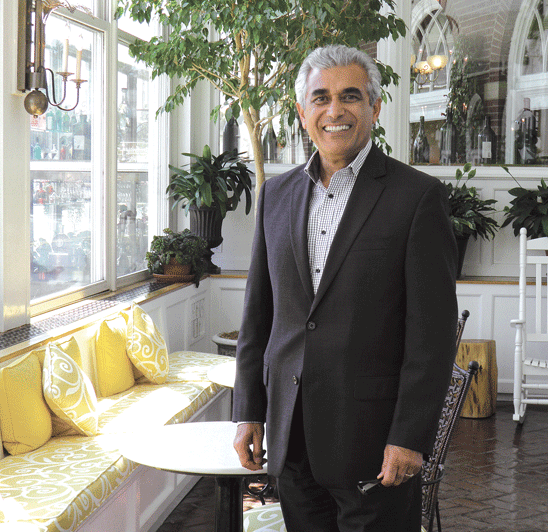
Mansour Ghalibaf says the key to his success at the Hotel Northampton is listening to guests and always striving to meet their needs.
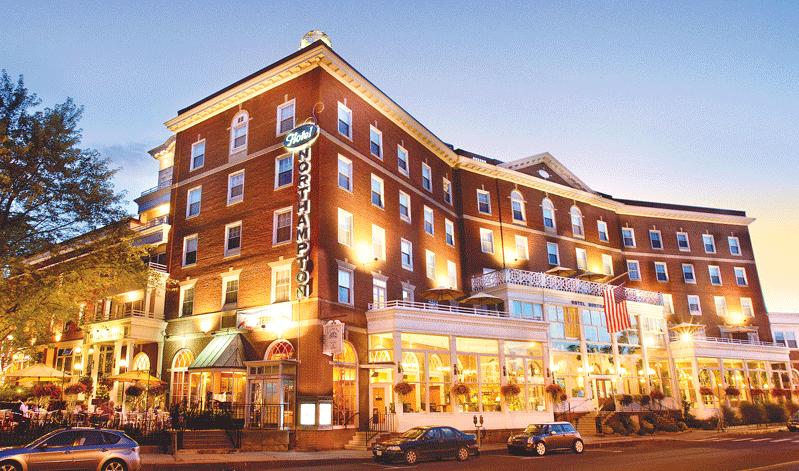
First, there is the old-fashioned historic charm of the hotel itself, which was built in 1927 with great attention to detail and an elegant ballroom designed for formal affairs. Next is the advanced technology available to meeting planners, including state-of-the-art sound systems and audio-visual equipment.
Then there’s a third fundamental — the hotel’s location.
It is set in the heart of Northampton’s thriving downtown, which allows people who attend business retreats, meetings, and conferences to season their stay with visits to eclectic shops, restaurants, museums, and art and entertainment venues.
But perhaps the most critical ingredient is owner Mansour Ghalibaf’s belief about the importance of catering to clients and surpassing their expectations.
“Everything we do is for our guests,” said Ghalibaf, who has 33 years of experience in the hotel business, began working at Hotel Northampton in 1990, and purchased it in 2006. “We listen to our customers, and whatever they want … they get.”
That extends to unusual ethnic foods. “We have had people who are planning weddings ask for foods that are not on our menu. Our chef has gotten recipes from them, and we have prepared the food under their guidance and had them taste it to be sure we got it right,” he told BusinessWest.
He added that many people who come to the hotel to stage a social event such as a retirement party need help with the planning process. “We know it’s something people don’t do often, and we want their event to be successful, so our staff members act as consultants and advise them on what they need to do,” he said. “We want them to be happy.”
In fact, Hotel Northampton’s service and amenities have caused it to be featured in more than one edition of Yankee magazine, and the hotel and Ghalibaf have also won a number of awards.
But he doesn’t seek that type of publicity. He prefers to go about his business quietly, showing due respect to guests and conference planners whose events range from meetings that take half of a day to itineraries that last up to a week.
“Every group needs a different type of setup, and we have a lot of repeat business from groups who come here and appreciate the high quality of our food as well as the service,” he said. “We conduct a follow-up survey which is sent to all of the managers who attend a conference, then review the results. It’s important to listen to your customers, and it’s something we have done for a long time.”
Staying Power
The hotel has 6,000 square feet of meeting space for event planners to choose from, with offerings that range from the formal to the informal. There are also 196 rooms for overnight stays, which include a cottage with two suites and two large rooms.
The hotel’s insider boardroom, which Ghalibaf describes as “elegant,” is often used for meetings of 18 people or fewer, while the executive boardroom can hold up to 20.
The T.K. Room is larger and can accommodate up to 45 meeting participants, while the Northampton Room holds 50 to 55. “It has windows on three sides and is a very bright room,” he said.
The Hampshire Room holds up 80 people, but large groups often prefer to stage meetings in the ballroom, where tables and audio-visual equipment are set up according to need.
 “The hotel has a lot of the technological equipment that groups need, and we also work with a local company, so we are able to provide everything from lighting to a closed-circuit camera,” Ghalibaf noted. In addition, wireless and wired Internet access is available throughout the hotel.
Meeting planners also have their choice of two award-winning restaurants on the premises — the historic Wiggins Tavern and Coolidge Park Café, which offers seasonal outdoor dining.
But there is a wide variety of other eateries within walking distance, and the hotel’s location definitely adds to its appeal.
“Northampton is a vibrant city with theaters, restaurants, and shops with welcoming merchants, which helps to make our hotel exclusive and very unique,” said Ghalibaf, adding that many firms that host retreats for their managerial staff look for a place where they can enjoy local comedy, restaurants, and other attractions, and Hotel Northampton gives them that option. “We’ve had groups that also schedule activities such as whitewater rafting or golf; the atmosphere and number of things to do here allows participants to enjoy each other’s company and build camaraderie.”
The food is also a source of pride, and Ghalibaf said the hotel has received an untold number of letters from guests who rave about the cuisine. “Most of our ingredients are fresh. We don’t try to save money on food.”
The menu is enhanced by the fact that he is serving his second term as chair of the Mass. Restaurant Assoc., which gives him access to a variety of chefs. “The hospitality community is close-knit, and everyone helps each other,” said Ghalibaf, adding that restaurants in Northampton have borrowed food from other nearby eateries if they run out of an item. “These things all make a difference, and our guests reap the benefits.”
On Location
The Hotel Northampton was built in 1927, thanks to funding by the chamber of commerce and local businesses that felt the city needed an upscale place for guests to stay.
Three years later, entrepreneur Lewis Wiggins moved the Wiggins Restaurant from Hopkinton, N.H. to Northampton, where it was attached to the hotel’s lower level. The tavern had been built in 1786 by his grandfather, Benjamin Wiggins, and the move was tricky.
In order to accomplish it, the building had to be disassembled, then carefully reconstructed, using the carved paneling, hand-hewn beams, and stone and brick hearths brought to the site from New Hampshire.
When the restoration was complete, Lewis, who was a renowned antique collector, filled the tavern with antiques from the original building as well as others purchased throughout New England.
He continued to add to the collection, and by 1937, two staff members were assigned to mingle with guests and discuss the hotel and its antiques. Many of these pieces still grace the hallways, restaurants, and lobby of the hotel, which went through a number of owners over the years.
Ghalibaf was hired in 1990 to handle the hotel’s operations and budget, and in 2006, he purchased it with partner and hotelier Tony Murquett from the United Kingdom. Since that time, Ghalibaf has worked to improve the property and provide noteworthy service in the historic setting, which appeals to wedding planners as well as conference planners.
In fact, the hotel hosts about 75 weddings each year, and many are held in the ballroom. “Discriminating couples appreciate its atmosphere. There is nothing like it in Massachusetts — it’s very elegant and was designed for balls,” said Ghalibaf, as he talked about the room’s arched windows and historic charm.
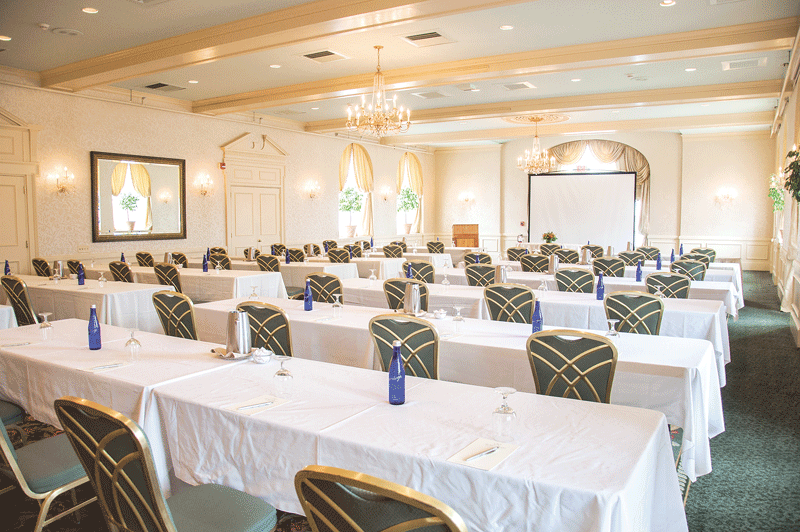
The Hotel Northampton hosts about 75 weddings per year, many of them in its sumptuous ballroom.
Event planners also find the space attractive, and in some instances, classroom-style tables are set up for a morning or afternoon meeting. When it ends, participants are given a break, while employees, including members of the management staff, rush to replace the long tables with round ones so lunch or dinner can be enjoyed beneath the enormous crystal chandelier in the room’s unusual setting. However, some groups choose to eat in Wiggins Tavern, while others dine downtown.
“The ability to enjoy downtown Northampton also makes our hotel exclusive and very unique,” said Ghalibaf. “But the bottom line is that, if people have a good experience, they will come back.”
This pattern extends to Hollywood actors and actresses. Indeed, Ghalibaf noted an instance where word of mouth, which has increased the hotel’s business exponentially, made a difference.
It occurred when actor Michael Caine was staying at Hotel Northampton during the filming of the movie The Cider House Rules — several scenes were shot on the grounds of the former Northampton State Hospital.
“He was in our cottage for two weeks and no one knew it,” said Ghalibaf. “The staff kept it quiet, and we did a lot of work behind the scenes because we wanted to respect his time and privacy. As a result, he was able to put on a hat and sit in the café without anyone bothering him.”
When Caine returned to Hollywood, he told his peers about the experience, and later, actor Mel Gibson stayed at the hotel during the filming of Edge of Darkness.
Tom Cruise and Nicole Kidman also stayed there during the first days of the filming of Malice. In addition, the Dalai Lama was a guest at the hotel in 2007 when he came to the city to speak at Smith College. Ghalibaf said his hotel stay required unusual security measures, but everything possible was done to secure his privacy. “We try our best to provide comfort and relaxation and fill every need.”
Landmark Decision
Other factors play into the success of the hotel, which is listed in the National Trust for Historic Preservation’s Historic Hotels of America. They include the fact that General Manager Essie Motameni has more than 40 years of experience in the hotel business, as well as frequent upgrades to the property, such as new locks installed last month that work when a guest holds an electronically programmed card in front of the door of their room.
“We take care of our guests and all of their needs and provide 21st-century technology and convenience with the charm of yesteryear,” said Ghalibaf, recounting ingredients in the recipe that is responsible for the Hotel Northampton’s award-winning success.
Six-Point Creative Works Is Doggedly Determined to Help Clients Grow
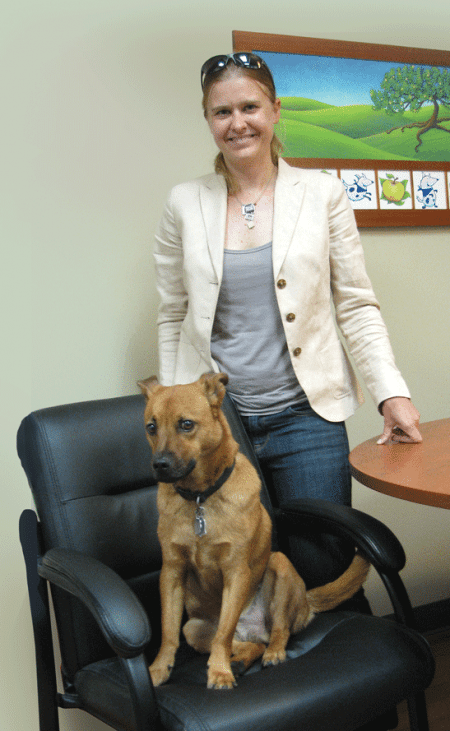
Meghan Lynch, president and CEO of Six-Point Creative Works, and her colleague, Dexter
“You can create a brochure, but if it’s created in a vacuum, it’ll be used in a vacuum,” said Lynch, president and CEO of Six-Point Creative Works, a seven-year-old advertising, branding, and marketing firm in Springfield that goes well beyond that simple description. “You want to make sure you’re giving people the tools that will serve them well in the field.”
Elaborating, she noted that “lots of companies tend to think of marketing in terms of the physical item that is produced, or a website. But the jobs that really excite us, and I think the jobs where we bring the most value, are open-ended questions like, ‘we are trying to enter a market we’ve never been in before; how do we tap into that?’ or ‘how do we make sure this product launch is successful?’ or ‘we’re going through a merger; how do we make sure we don’t lose the value of our brand while getting new value from this new business?’
“Very rarely is the answer to those questions a brochure,” Lynch went on. “It’s usually a complex strategy and a lot of different messages hitting at different times and in various ways.”
And that means becoming a true partner with its client businesses.
“I think we work really well with clients who either don’t have their own marketing department, or might have one or two people in marketing, but don’t have a full, large department, and feel like they need some creative support,” she explained. “For companies with no real marketer or just a small, limited marketing department, we can almost serve as their marketing department.”
Moreover, she added, “we like to think of ourselves as part of the company, which means we can get into aspects of their business that aren’t usually our business. We’ve helped industrial companies spec and source products; we will help companies design products, get into their product development, how does something feel in your hand, how is it packaged on the shelf? Companies trust us to collaborate with us on all aspects of the organization.”
That’s pretty serious business for a firm whose mascot is a cute, exuberant cartoon dog, and an office where every day is take your dog to work day; while she spoke with BusinessWest, Lynch occasionally petted her brown mixed breed, Dexter, who had curled up on a chair next to her. Nearby, another employee’s dog, a black Swiss mountain mix named Quincy, wandered about, occasionally sniffing at the visitor.
“We found that having dogs as part of the work environment is really a positive thing,” Lynch said. “If somebody’s having a stressful day or dealing with some stuff at home, they might just need to hug a dog or need somebody to show them some attention; it’s definitely a good balancer.
“And if you start to get too caught in your own head, a dog will do something funny and pull you out of it,” she added. “It reminds you that life is short. Marketing, while certainly important, is not the Baystate ER. It helps you keep things in perspective, keep that work-life balance I also think is so important in having a happy, productive team.”
For this issue’s focus on sales and marketing, we visit an agency that has gone to the dogs in all the right ways while helping its clients reach the audience they need to succeed and grow.
Shedding Expectations
Speaking of going to the dogs, the economy was about to do just that when Lynch joined co-founders David Wicks, chief creative officer, and Marsha Montori, chief creative strategist, in launching Six-Point in 2007.
“We felt like, if we can make it when things are bad and companies aren’t spending money, then when things turn around, we should be OK,” Lynch said. “Even though it was a risk to start a business, it was something we felt so strongly about, and something we were so excited about, that it didn’t seem like a risk to us; it felt natural.”
All three founders came from both strategic and creative marketing backgrounds, “and we wanted to have an agency that was a perfect balance between strategy and creative, instead of prioritizing one over the other, because they really go hand in hand,” she explained. “We had a few loyal clients in the beginning — most of whom are still with us — and we really grew from there.”
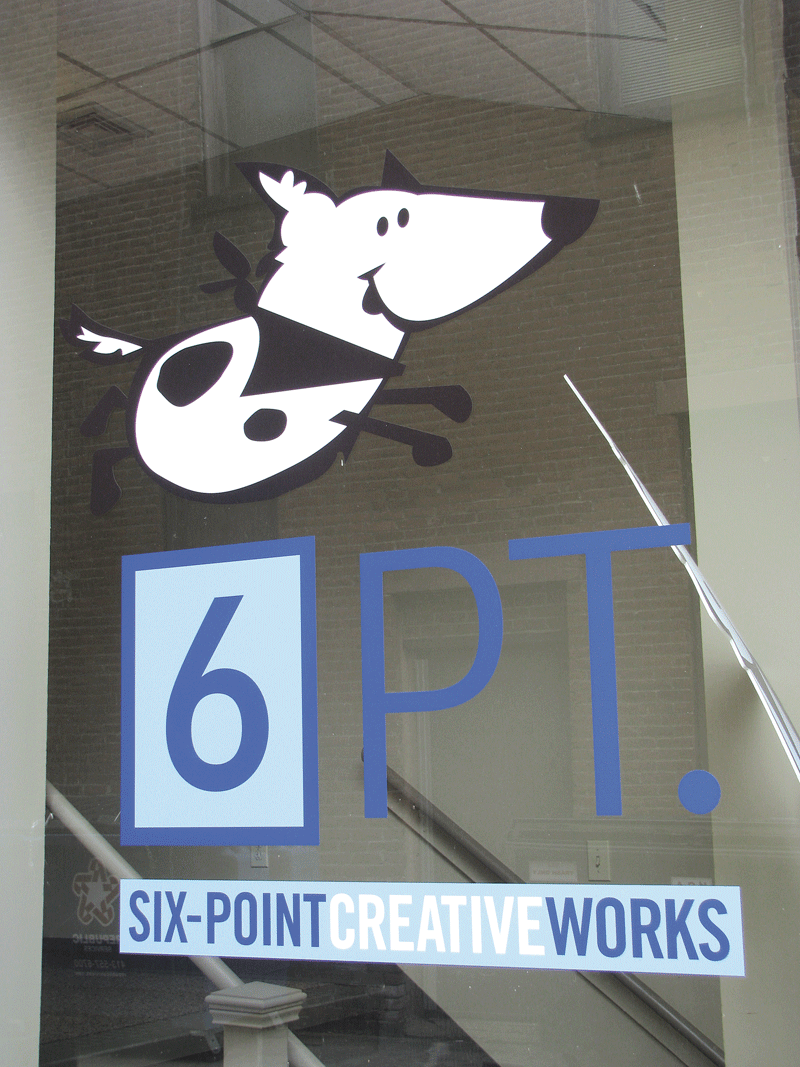
Meghan Lynch says Six-Point’s cartoon canine mascot reflects the loyalty, exuberance, and energy the company wants to bring to its clients.
The six points in the company name are based on six basic stages of creating a strategy for clients: rapid ramp-up and coming to basic decisions about goals and strategy; creation of a detailed communications action plan; creative development and turning goals into effective concepts; execution of the plan; tracking return on investment; and future evolution of brand strategy.
Most of Six-Point’s clients are nonprofits, consumer brands, and industrial or business-to-business companies.
“Once in a while, the discussion comes up, ‘do you specialize in a certain market?’ I think sometimes there’s a certain power in that, but with the team we have in place, our clients really benefit from the fact that we work in a number of markets,” Lynch said.
“If you only do nonprofit work, or only do industrial work, or only do consumer work, you can get tunnel vision and don’t become an asset to clients,” she went on. “They’re already in that industry; they already have that expertise. They’re counting on us to bring that outside perspective … we get people to think outside of their day-to-day environments. We’re not caught up in their jargon or other things unique to their market.”
For example, “consumer marketing tends to be on the cutting edge, pushing the envelope, and we bring some of that mentality to industrial companies, bring some of that emotional branding, which can be really powerful and not usually seen in those industries,” she explained.
“A lot of those clients want to talk about features and benefits, and sometimes forget that, at the end of the day, the decision to do business with a company is an emotional one. It’s about trust, and not always a logical argument, but a gut feeling — ‘I like that company; they look like they have their act together. I want to do business with them.’ We work hard to create those emotional connections, regardless of industry.”
Paws and Effect
When it all clicks, Lynch said, it’s a gratifying feeling.
“Whether it’s renaming a company or creating a new logo or doing a product launch,” she went on, “when you see the client start to feel that energy, we know we’re hitting it right, and we don’t have to convince them of it.”
Six-Point’s recent work with Hot Table, a small but growing chain of panini restaurants, is a good example. The firm designed the eatery’s new logo — a simple, stylized sandwich with the signature grill marks of a panini press — in addition to other branding and marketing services.
“That was really fun because [owner John DeVoie] came in with a big vision,” she told BusinessWest. “He has the bones of greatness in his company, and a very clear vision about what he wants Hot Table to mean; he wants to make it synonymous with panini.
“It’s really fun to work with somebody who comes in with energy and a big vision and just trusts you to execute it with him,” she added. “I showed him a lot of logos, and when he saw the grill marks we created, he said, ‘that’s it.’ He sees the potential that has as a brand mark. He got excited, we took his vision seriously, and we also see his potential.”
But marketing isn’t only an outreach to potential customers, Lynch stressed; it’s also a process of buy-in from employees of the client company.
“One thing a lot of companies are realizing is that they have an internal audience as well, and in order to create a successful brand, you need your employees to be on board as well,” she said. “Brand launches and product launches that aren’t internally launched properly do not do as well as those where everyone internally is on the same page, speaking the same message, excited about what’s happening.”
Take Bay Path College, another long-time Six-Point client, which recently became Bay Path University.
“They’re an example of a well-kept secret that’s starting to get out,” Lynch said, adding that university President Carol Leary has long had a clear vision for what becoming a university would bring to the table. “There’s a lot going on there, and not everyone grasps the good work they’re doing.”
So Six-Point created an internal video shown at a recent convocation of professors.
“We interviewed students on what they felt like as freshmen and what they feel like as seniors and the changes these women have undergone; some started out as shy and unsure and are now successful, confident women,” Lynch said. “I left the interviews thinking, ‘I need to keep track of these women; I might want to hire them.’ They were changed, and the stories they told were amazing.”
The video was powerful, and an effective marketing piece in its own right, even though it would never be seen outside the campus community, because it inspires people to be ambassadors for their own organization, and empowers them to better articulate the importance of what they do.
“It hones the power of the brand and storytelling to make people feel good about the work they do every day. They get a strong sense of why they show up for work every day,” Lynch said. “Sometimes it takes somebody from outside to remind you, ‘holy cow, we’re amazing.’ When you get into the day-to-day, you can lose that excitement.”
Telling Tails
Lynch enjoys the “rush” of hitting the sweet spot in a marketing campaign or branding effort, and credited her staff with those successes.
“We have a group of very like-minded, curious, creative, and really brilliant people,” she said, noting that only about half the agency comes from an advertising-agency background; everyone else comes from other industries. “Even though we all have marketing in common, we’re not lifetime agency people. And the whole team shares that sense of excitement when we hit it right. I don’t feel like I have to rally the team; we do that for each other. It’s just a really, really nice environment to work in.”
A literature major in college, Lynch said she considers herself more analytical than creative, but added that Six-Point has several people in each category. “What we have in common are a love of good work and a love of problem solving. We bring our different skills, and there’s room for both here, which I really appreciate. There’s not a sense that the creative types, the artists, get special recognition. All are important for who they are and what they bring to the client.”
The idea, she said, is to come up with concepts that fit the client’s needs, not the personal taste of the team. “There’s no ego here, which makes me happy. I feel like we truly foster collaboration and appreciation of the good idea and the right solution over my point of view or my creative preference.”
It makes for an energetic, upbeat environment that any dog — real or cartoon — would appreciate.
“Our mascot reminds us not to take ourselves too seriously,” Lynch said. “We try to embody that loyalty and exuberance a dog brings to everything; he’s always excited to see you, always brings energy to whatever he’s doing. Every time he sees a tennis ball, it’s like the first time. We want to bring that to the client, that sense of refreshment and enthusiasm. That’s often what people count on us for.”
Joseph Bednar can be reached at [email protected]

Region Sees Economic Potential in Rail Service
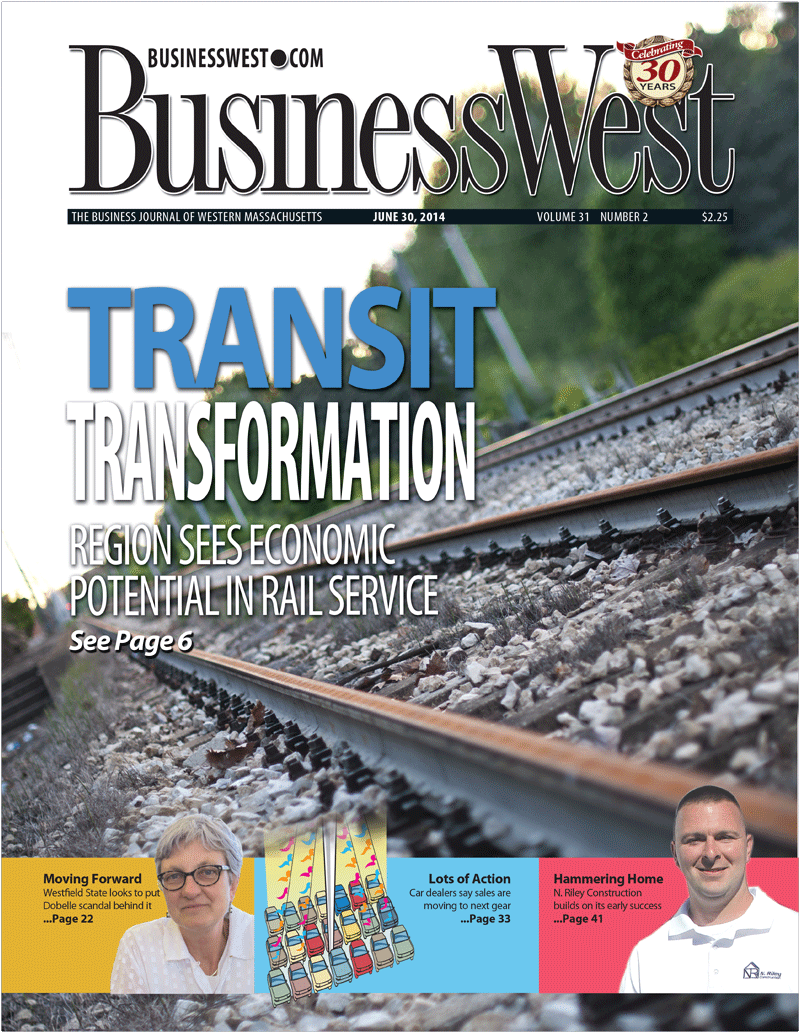 Timothy Brennan calls the return of passenger rail service to the Pioneer Valley a “new frontier.”
That’s a phrase that has been used in other cities across the nation where revitalization has occurred as a result of the introduction or expansion of commuter rail service, which caters to the growing demand among young people and Baby Boomers for housing in downtowns complete with shops, restaurants, entertainment, and a good transportation system. And Brennan, executive director of the Pioneer Valley Planning Commission, believes it applies here.
Next year, after more than a decade of planning and infrastructure work, Amtrak’s Vermonter passenger train will run again along a direct route from Springfield to St. Albans, Vt., with stops in Holyoke, Northampton, and Greenfield. In addition, beginning in 2016, there will be more than 25 trips a day between Springfield and Hartford.
“We think this will be a game changer,” said Brennan. “There is a palpable sense of excitement about it, and the Valley has the disposition to be very supportive of this endeavor.”
Kevin Kennedy, Springfield’s chief development officer, agreed.
“As vehicular and truck traffic grows, it may become more relaxing to take a train with wi-fi service where people can use their cell phones and tablets or sit with a coffee, muffin, and their laptop and get some work done,” he said, pointing to the congestion that will be caused by the Mass. Department of Transportation’s three-year rebuild of the I-91 viaduct between State Street and the I-291 ramps as just one of many reasons why rail service may see a surge in popularity.
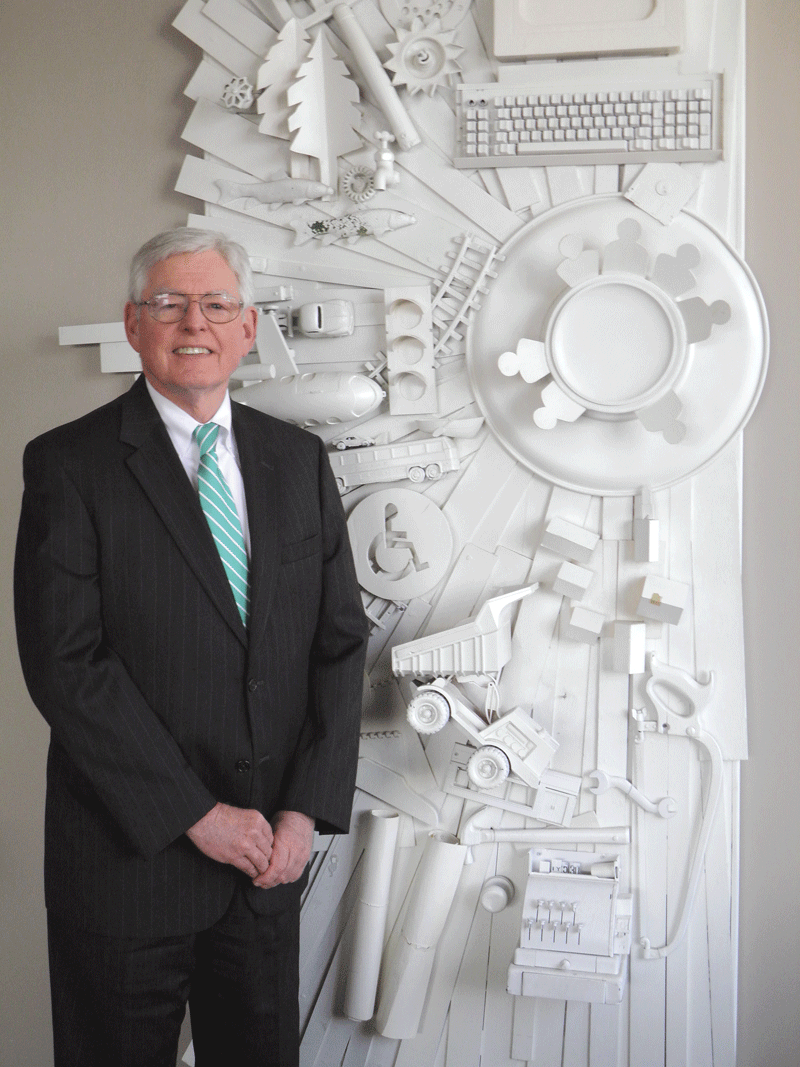
Tim Brennan says expanded rail service could be a game changer for the region.
“Working from home is a growing phenomenon, and people could have a job in New York City, live here, and take the train to meetings,” he told BusinessWest, adding that, in some parts of California, employers allow employees to log into work via their laptops during their commute.
Marcos Marrero, Holyoke’s director of Planning and Economic Development, says it’s critical to keep up with societal change, and commuter rail service is part of this equation.
“Rail is the future for the Hartford-Springfield metropolitan area, and rail service is key to economic development in the Pioneer Valley,” he said. “Interconnected cities offer fertile ground for economic activity, as it allows them to prosper through the movement of people, products, and services. It’s important to go beyond our parochialism and understand globalization, and if we want to be part of what we know is successful in so many other metropolitan areas, we have to be interconnected and part of that fabric.”
This belief reverberates in Greenfield, and Linda Dunlavy says Franklin County has recognized the importance of restoring rail service to the area for more than a decade.
“We haven’t had a rail stop here since about 1985, but have always known that travel by passenger rail is really important to our economic development and quality of life,” said the executive director of the Franklin County Council of Governments (FCCG). “It has been one of the goals in all of our long-term planning, even though a decade ago it seemed like wishful thinking.”
Experts also hope commuter rail will boost local tourism, as it has in Vermont and other states. “Tourism is an export business, and Vermont does a very good job of marketing packages to people in New York that include Amtrak and hotel stays,” said Marrero. “Having a rail system allows that to happen.”
For this issue, BusinessWest looks at the reasons behind the reopening of the rail line, and also at the hopes and expectations of communities that find themselves on what is being called a path to progress.
On the Right Track
Passenger rail service existed to and from Springfield for decades before it was halted in 1989. At that time, Amtrak deemed the 49 miles of track running to the Vermont border through Greenfield in too great a state of disrepair to continue using.
 Although some freight traffic continued, train speed was limited to 10 mph. “The principal reason the track was used was to deliver coal to the Mount Tom power plant in Holyoke, which will soon be closing,” Brennan said.
But Vermont found the rail service, which extends today from St. Albans to Washington, D.C., so lucrative that it chose to make a sizable investment to continue it. “The Vermonter is enormously popular, especially during ski season and during the summer,” Brennan said, adding that Vermont views it as an economic-development vehicle.
However, in order to keep the train running, it had to be diverted from Springfield to the east in Palmer, where a switchback sends it north. That switchback has always been problematic, as it takes 30 minutes, and passengers cannot leave the train.
As a result, more than a decade ago, Vermont approached the Pioneer Valley Planning Commission asking for help in restoring the deteriorated track. “Congressman John Olver was enthusiastic about it and was able to get an earmark for a study,” Brennan said.
At that point, the PVPC became the custodial agency responsible for moving the project forward, and a consultant was hired in December 2009 to determine what it would take to revitalize the track and analyze its return on investment.
The timing proved serendipitous, as the PVPC had the plan ready when President Obama allocated $8 billion in grant money for high-speed, inner-city rail projects.
The state’s application for a $73 million grant to rebuild the aging rail corridor, which would allow trains to travel in excess of 75 mph, was accepted, and a construction plan began to take shape.
“The work is being implemented as we speak and is scheduled to be completed by the end of the year,” Brennan said.
Although he is optimistic about the return of passenger rail service in the area, he said it will need to be expanded down the road to satisfy expectations.
“It will be great to get the Vermonter back, but there will only be one train a day in each direction, so we are working in earnest with partners to get more service up and down the valley to attract commuters,” Brennan said.
Still, experts predict that, if the MGM casino is built in Springfield’s South End as planned, it could generate an enormous amount of traffic. This development, coupled with construction work on the I-91 viaduct, which will begin in 2015 and take at least three years, could prompt people to use the train.
“If there is more north and south rail service, it could serve as a relief valve; our challenge now is how to add more trains between Springfield and Greenfield,” Brennan continued, explaining that an expansion will cost $30 million, but the PVPC is working with the Mass. Dept of Transportation and the Massachusetts Bay Transit Authority (MBTA) on that goal, and funding could come from the state transportation bond bill passed in April.
“The biggest issue is that the rail corridor is owned by Pan Am Rail, which is a division of Norfolk Southern Rail,” he explained. “The state reached a verbal agreement to buy it for $17 million, but it hasn’t happened yet.”
Still, action is underway, and a letter has been sent to the secretary of Transportation, asking if the MBTA could donate locomotives and passenger cars that are being retired to the Pioneer Valley Transit Authority. They could be refurbished, Brennan said, and the final step would be to find an operator to run them. He added that a connection from Vermont to Montreal is also on the drawing board, and there is keen interest in making that happen, but it is not a priority.
Accelerating Growth
Meanwhile, progress has been made in the form of new, multi-million-dollar intermodal transportation stations, and Union Station in Springfield is undergoing the first phase of its long-awaited restoration.

Kevin Kennedy says MGM Springfield, if it comes to fruition, would be one of many factors that could drive use of rail service in Western Mass.
MGM represents the first element in that equation, and if the casino is built, it is expected to create 2,200 construction jobs and 3,000 permanent jobs, in addition to vendor activity. “People could work in Springfield and live in Windsor Locks, Conn. or Northampton, but we will need to be able to get all of the workers in and out of the city,” said Kennedy, adding that rail service could help address that need.
The third element (housing) is also expected to come to fruition. “We anticipate a major housing announcement for downtown soon,” Kennedy told BusinessWest, adding that MGM’s plans include a trolley system with stops throughout downtown Springfield, which ties into the entertainment factor that makes a downtown attractive.
“Rather than focusing on MGM as a gaming place, think of it as an outdoor skating rink and place of entertainment which ties in with venues already in Springfield — the MassMutual Center, City Hall, and CityStage,” Kennedy said.
But he added that the rail system will eventually need to connect to New York City as well as the north for revitalization in Springfield to be successful.
Marrero also views the restoration of commuter-rail service as a key factor in Holyoke’s economic development.
“The Vermonter route runs along a major spinal cord, and the realignment will cut down on the time it takes to get to Vermont while providing service to Holyoke, Northampton, and Greenfield; Chicopee could also have a stop in the future,” he said, adding that he believes rail service will make the area more attractive as a place to live, work, or establish a business.
Holyoke is already moving in that direction, said Marrero, citing the success of Open Square in the city’s Innovation District, which is home to 50 businesses located a block from where the new rail station will be built.
“Vertitech Corp. moved into Open Square last fall, and they have plans to open in the New York metropolitan area,” he noted, adding that employees could take the train to meetings to and from either site. “We also have a lot of investment opportunity nearby in architecturally attractive buildings, which could lead to a walkable, dense neighborhood rich in interaction, which all fits together with rail service.”
Research on transit-oriented development shows that property within a one-mile radius of a rail station tends to be popular for mixed-use development. “So, rail has been my highest priority in terms of projects in the past two years,” Marrero said.
In May 2012, the city procured an architect to design a new, 12,000-square-foot rail station at the corner of Main and Dwight streets, which is the site of the first rail stop in Holyoke. It is expected to be complete by the end of July, and the next step will be to hire a contractor with MassWorks funding to build the $2.4 million structure, which will include new sidewalks leading into the station.
Economic Engines
Today, the $12 million John W. Olver Transit Center in Greenfield, located a few blocks from the heart of downtown, sits ready for rail service. It is the first zero-net-energy transit center in the nation and home to the Franklin County Regional Transit Authority and the FCCG.
Dunlavy and other Franklin County officials are also looking to the future and hope to expand the number of rail trains that stop there.
“When we first envisioned rail service, we only thought about Amtrak,” she explained. “But we hope to add a shuttle service to help employers expand workforce opportunities and help residents expand their opportunities for employment. Not everyone who lives here has a car.”
Passenger rail service is also expected to help with Greenfield’s revitalization, which got a boost a few years ago when new market tax credits and historic tax credits were approved for redevelopment of the upper stories of buildings.
Today, about 10 buildings have added office or residential space to their second floors and have also made aesthetic improvements to their first floors. In addition, the Franklin County Courthouse is undergoing a major renovation, and with the intermodal transit center as an anchor, “our long-term plan is finally coming to fruition,” Dunlavy told BusinessWest.
Pittsfield is also hoping to improve its rail service, and Mayor Daniel Bianchi believes rail “will be great for the area.”
The city’s primary goal is an east-west connection with New York City, and he believes reinstating rail is a viable form of transportation. “But it’s a huge project that involves a multitude of states. It’s a large, complicated issue, and we have to be realistic,” he said, suggesting that, since Connecticut already has good commuter rail service, the state might not be as willing as Massachusetts to make further investments in rail expansion a priority.
However, Community Development Director Douglas Clark envisions people from New York City who don’t own cars taking the train to Pittsfield to enjoy its cultural attractions.
That belief was enhanced when the results of a study conducted by Williams College Economics Professor Stephen Sheppard were made public, showing that the Berkshires could reap $344 million in the first 10 years of passenger train service to and from Gotham.
Unknown Potential
Brennan said Worcester is connected to Boston via rail service run by the MBTA, and it has made a significant difference in the city’s growth and revitalization.
“Worcester is now thought of as an attractive, affordable alternative to living in Boston,” he explained. “It has been an effort that has taken about 15 years, but it has really come together over the past few years. So our feeling is that we should anticipate a similar outcome once there is a high level of rail service available here.
“There will be talent shortages in the next decade, and we need to be connected so we can leverage these connections,” Brennan concluded. “We have to make sure we are well-positioned for the 21st century.”
With expanded rail service, he believes the region will have the right economic-development vehicle to meet that goal.
SPRINGFIELD — The Student Prince Cafe and the Fort Dining Room will close on Monday, June 30, and is expected to reopen in about a month, most likely under new ownership. Managing Partner Rudi Scherff told the Republican that he and his sister, fellow Managing Partner Barbara Meunier, haven’t made money with the downtown landmark for some time. He added that several prospective buyers are interested in the 79-year-old German restaurant, which has a staff of 79 and seats 240 patrons. Scherff also noted that a combination of age, declining business, and a major construction project nearby on Interstate 91 — potentially disrupting downtown traffic and keeping away diners from Connecticut — contributed to the decision to sell. He added that business has generally declined as fewer people are willing to shop or eat downtown, partly because of a perception of crime. He said lunch business, dependent on office workers, has also declined, which led to his decision to close a storefront deli on Main Street three and a half years ago. The Student Prince Cafe opened in 1935, followed by the Fort in 1946. Rudi Scherff and Rupprecht Scherff, Meunier’s father, began working there in 1949, and the elder Scherff bought the establishment in 1961. He died in 1996. In 2008, Gourmet magazine listed the Fort as one of the “21 Legendary Restaurants You Must Visit.”
Amherst Farmer Refines Method of Growing Plants Without Soil

Joseph Swartz shows off the roots of lettuce plants growing hydroponically in his greenhouse at Swartz Family Farm in Amherst.
Although the idea may sound farfetched, it’s not a fantasy. Instead, it’s one of many projects that Joe Swartz of Swartz Family Farm in North Amherst has accomplished in recent years.
Swartz is a master hydroponic gardener who has taken the industry to new heights. In fact, the New York City farm he designed for Skytop Vegetables was the first in the nation to be grown on top of a public-housing structure. “I did the early sketches on my kitchen table in Amherst,” he said, as he talked about the 8,000-square-foot rooftop farm that opened in February 2013, and provides fresh, nutritious vegetables to residents of the building and neighborhood as well as patrons of nearby restaurants and markets.
Swartz has gained international recognition as an expert in hydroponics, which is a method of growing plants without soil. They are planted from seeds in holes set in plastic containers and thrive on a nutrient solution dissolved in water that runs beneath them and is recycled after the plants take what they need from it.
Swartz has 28 years of experience in operating a year-round, pesticide-free, hydroponic vegetable-and-herb facility in Amherst. It’s a field he entered long before most people thought about where their produce came from and environmental concerns created a demand for locally grown vegetables and fruits.
As a result, Swartz has become a leading expert in hydroponic system design, high-end crop production, biological pest control, system troubleshooting, and much more, and has spoken all over the U.S. and in many foreign countries about his groundbreaking work.
“It’s very gratifying, and when I think of the evolution of all that has happened in the industry since I began my farm, it’s mind-boggling,” he said, adding that he gave a recent lecture at a national conference in Las Vegas and was just invited to speak at a major agricultural conference in England.
The concept of transforming unused rooftop space into a hydroponic garden has many environmental benefits, which include water conservation. “All rainwater that strikes a flat roof has to be channeled into the city’s stormwater systems, and most systems in U.S. cities are completely overwhelmed; one inch of rain that falls on an acre equates to 27,000 gallons of water,” Swartz explained, adding there are more than 15,000 acres of rooftop space in New York City alone.
“But a rooftop greenhouse has gutters on all sides, and rainwater is sent into an underground tank, where it is filtered, cleaned, and used for farming,” he went on. “So it allows us to take a waste product and convert it into food in a very sustainable manner.”
Benefits also accrue from the fact that a rooftop greenhouse shares synergy with the building. Sun that hits the roof and requires the building to be cooled is absorbed by the crops, which also absorb heat from the building in winter, preserving it rather than having it simply go into the atmosphere, Swartz said.
In addition, the system takes heat from the building’s smokestack and uses it to heat the greenhouse. “It capitalizes on heat that is normally wasted. Plus, the greenhouse has thermal curtains that hold the heat in at night. So it’s a win-win situation for the building owner and the owner of the garden,” he told BusinessWest. “It also produces jobs for local residents without many job skills and allows people in the neighborhood to get fresh, nutritious food that doesn’t have to trucked in from thousands of miles away.”
And rooftop gardens, which are rapidly expanding across the country, also provide inner-city children with agricultural knowledge. “We worked with a local school in the Bronx, and a frightening number of children thought milk was made in a manufacturing plant. They had no concept that it came from an animal,” Swartz said. “And most of the people in the neighborhood got their food from a small convenience store and did not have access to nutritious, locally grown vegetables and herbs until the garden was created.”
Growing Venture
Swartz Family Farm has been in business for 100 years, but Swartz likes to keep a low profile, and there are no signs to mark the entrance to his home, greenhouses, and acreage on 11 Meadow St.
“My grandfather Joseph and his wife Anastasia purchased 40 acres and started this farm after they came here from Poland in 1919,” he said. The couple grew mixed vegetables and tobacco and raised their family on the site.
Swartz’s father and uncle took the farm over in the ’50s and turned it into a large-scale potato-growing operation. In addition to growing potatoes on their farmland, they rented land in Hadley, Amherst, Sunderland, Hatfield, and South Deerfield; at the peak of their business, they were raising 300 acres of potatoes.
But his uncle died in 1970, and in the ’80s, the price of land became exorbitantly expensive due to extensive residential development in the area. “As my father got older, he scaled back to the 40 acres here.”
Swartz was in high school when he realized farming his family’s land on a seasonal basis was not a viable option because the economy was booming and seasonal help and additional farmland for crops were unavailable. “So I decided I had to look at a small-scale, very intensive type of agriculture,” he said.
His interest in controlled environmental agriculture, or hydroponics, began in 1985 when he was a student at the Stockbridge School of Agriculture at UMass Amherst. He learned the system had been pioneered in Holland and had expanded to the United Kingdom and Spain, where hydroponic greenhouses were operational year-round.
“The same nutrients you would normally apply to a field are dissolved in water,” he noted. “The plants take what they need, and the rest is recaptured and reused. It only requires 10% of the water needed for conventional agriculture, so it is a very environmentally friendly form of agriculture.”
However, the university did not have a program where Swartz could learn how to implement this growing method on a large scale. But he was fortunate enough to meet a retiree living in Ashby, Mass. who was running a small greenhouse growing hydroponic flowers. He had been the lead associate at Cornell University’s research center on Long Island, was originally from Holland, and had pioneered a large portion of the hydroponic technology that was being implemented in the U.S.
Swartz received valuable guidance from him on how to produce a premium product year-round inside a greenhouse on his property.
But when he began building a greenhouse on his family’s land and shared his plan with local farmers, they thought the idea was ridiculous.
“I was considered a crackpot. We have a very tight-knit agricultural community in the Valley, and no one understand why I would grow produce in water when there was beautiful soil here,” he recalled. “But for me, it was a necessity.”
The day after Swartz graduated from UMass, he began working in his new, 5,000-square-foot greenhouse. “At that time, there were 13 hydroponic farms in the state, and today we are the only one of them that is still in operation — we have the longest-running hydroponics farm in the Commonwealth,” Swartz told BusinessWest, adding that he also grew seasonal vegetables on the farm’s 40 acres and sold them to traditional markets.
But his greenhouse thrived. “In my first year, I produced more than 80,000 heads of Boston lettuce in it. In a field, you only get 5,000 heads per acre, and you can only plant one crop. But I was able to plant year-round,” he said, explaining that he devised a system where he was continuously harvesting and reseeding in different sections of the greenhouse.
Paradigm Shift
Swartz has continued to produce hydroponic crops at Swartz Family Garden for 30 years. Lettuce has always been a staple, but after his initial success, he built two other greenhouses and soon was shipping 300 cases of sweet basil a week to 42 Whole Foods stores across the Northeast.
About 15 years ago, when hydroponics became more well-known, Swartz delved into consulting work, which was a natural transition, although he continued farming his own greenhouses. “There were very few experts in the U.S. back then, and there wasn’t much information about how to grow hydroponically on a sustainable, commercial scale,” he said.
Over the past five years, as awareness and concern about the environment escalated, the demand for local products began to rise.
“Public awareness changed buying habits, and the demand for urban agriculture began to grow,” Swartz said. “It was a paradigm shift because, before that, food was produced on large commercial farms which were often not even in this country.” In fact, when he first began to sell Boston lettuce, there was nothing but iceberg lettuce in the stores, and there was no demand for any other variety.
About four years ago, Swartz was approached by two men who were starting a company called Sky Vegetables. “They wanted to take the concept of urban agriculture one step further and build commercial farms on flat city rooftops, because there is so much of that space that is unused,” he said.
He became their director of farming, and in 2009 began designing a hydroponics rooftop garden for a new LEED Platinum-certified building in the Bronx that would be used for public housing. Arbor House was completed in 2012, and the rooftop farm opened in February 2013.
“The space was leased for $1 for 99 years, and lettuce and cooking greens such as chard, kale, sweet basil, upland cress, and baby bok choy are grown there. Sky Vegetables operates the farm independently, and the building’s residents have the opportunity to get food from it via a community-supported agriculture program,” Swartz said.
Today, his wife, Sarah, operates their hydroponic farm in Amherst, which sells produce to local vendors such as Atkins Market. Swartz left Sky Vegetables six months ago to consult full-time with growers across the globe. He just finished an ongoing project in Kuwait and is going to Dubai to assist a large-scale farm in replicating a hydroponics system in Singapore. “I need to fine-tune the system before they can expand and replicate it,” he explained.
Limitless Potential
Swartz has more than 49,000 hours of greenhouse production time and has also done consulting work in a variety of settings. This year he has already been to Nassau, Bahamas; Santa Cruz, Calif.; Atlanta; Halifax, Nova Scotia; and Las Vegas.
“Hydroponic gardens range from simple, home-built systems that are outside, to conventional greenhouse systems, to very high-level, computer-controlled greenhouses, to a garden in Nova Scotia that grows without sunlight inside a warehouse, using LED lighting,” he explained. “It’s a 100% controlled atmosphere — and the final frontier is space.”
Indeed, he noted that a colleague, Gene Giachumelli, professor of Agricultural and Biosystems Engineering and director of the Controlled Environment Agriculture Center at the University of Arizona, is designing a hydroponics food-production system for outer space, where one of the challenges is zero gravity.
“It’s a very interesting industry, and hydroponics is the safest food-production method possible,” Swartz said, as he stood on his family farm, gazed at his greenhouse, and recalled his own history.
“My father and many other people thought I was crazy when I started this. But I have taken the farming techniques I developed in the Valley and am working with growers across the globe today,” he said, adding that pesticides are not needed, and “you cannot get safer food products.”
That endeavor has no limits, and Swartz will continue to grow his own business as well as help other people across the world create farms without soil, sunlight, and other factors — in the process transcending what any farmer could have imagined several generations ago.
Zone Change Spurs New Growth in Agawam
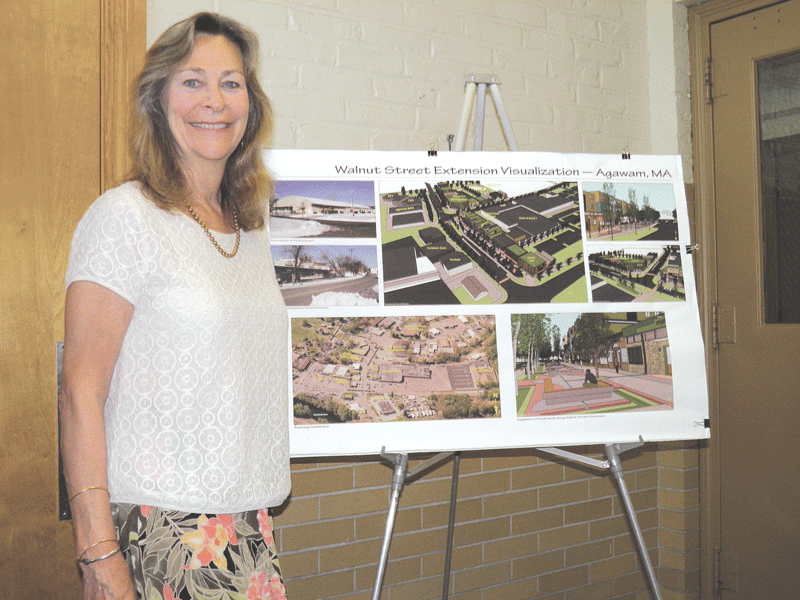
Deborah Dachos says a recently approved ordinance for mixed-use zoning in the Walnut Street Extension area will promote revitalization.
The idea is to make the area into an attractive, walkable, downtown-style location with venues that enhance quality of life for residents of the city, he told BusinessWest, adding that the plan received a major boost early this month when city councilors approved a mixed-use business C zoning change for the area. It relaxes dimensional requirements for buildings and is aimed at encouraging the development of new restaurants, cafés, family-oriented enterprises, and second-story residences.
“Agawam is a great place to live, work, and play, and we want to maintain those attributes and continue to develop them. Our goal is to create an environment that is friendly and can be used by families for entertainment. We don’t have a downtown, and need a place where people can walk and have things to do,” said Cohen, adding that the Walnut Street Extension area had been declining for years, and prior to the zone change, there was no incentive for business owners to improve their property because they were uncertain as to whether they could realize a return on their investments.
Deborah Dachos, director of Planning and Community Development, agreed, and said the new zoning offers an ideal setting for growth and is in line with what business owners and residents want in that section of the city. “The zoning change has finally passed,” she said. “It involved a concerted effort to work with businesses to make the area more user-friendly and less restrictive. We worked hard on the plan, which includes the old Food Mart site and former Ames store building.”
She explained that the downturn in this commercial area began when Food Mart and Ames moved out, leaving both structures in the Springfield Street shopping plaza vacant. The decline was exacerbated after a fire led to the closing of the former Games and Lanes building, which housed a bowling alley. “The Walnut Street commercial area was developed in the ’50s, and the decline occurred over a 10-year period. But the mayor and I made a concerted effort to revitalize the area 12 years ago.”
Progress began after the city sought and gained acceptance from the state to designate the location as an exceptional-opportunity area. The designation made tax-increment financing possible, allowing the city and businesses to agree on a property-tax exemption for up to 20 years, based on a percentage of value added through new construction or significant improvements.
In 2010, city officials also completed an economic-development plan that made the Walnut Street Extension neighborhood a priority. It included the provision for mixed-use zoning, which was refuted by the city council last December before being passed this month.
Parking has been problematic for business owners in the district, but that obstacle is being addressed. The Pioneer Valley Planning Commission accepted the city’s application for district technical assistance, and has plans to study parking and pedestrian issues in the area. “Their report will provide the town with the information we need to seek a MassWorks grant of up to $1 million to address the deficits and construct new parking areas. It’s important because business owners have complained that there is inadequate parking,” Dachos said, adding that the study was contingent on getting mixed-use zoning passed.
Inroads to Success
New venues for family entertainment have begun to crop up in the Walnut Extension Street area in the past few years, and several new businesses are expected to open in the future.
Revitalization began when Dave’s Pet Food City purchased the former Ames building about six years ago. The company used about half of the space and put the remainder up for lease.
Stick Time Sports Inc. opened its doors last fall in a portion of the building, offering training for hockey, field hockey, and lacrosse in its complex, which includes two 45-by-85-foot synthetic turf fields, a strength and conditioning space, a fully equipped pro shop, and a birthday party/conference room for special events.
And a new YMCA is scheduled to open in early August in the old Food Mart building. It is under construction, and will be called the Agawam YMCA Wellness and Program Family Center.
“It will offer everything included in a traditional YMCA, with the exception of a swimming pool and basketball gym,” said Kristine Allard, chief operating officer for the YMCA of Greater Springfield. “There will be a fitness center, café, community space, group exercise area, and technical center, as well as a child-development center with projects and activities for children whose parents are exercising or participating in other programs.”
The facility is being built in response to need expressed by residents and city leaders, and will be the first YMCA in New England without a pool and gym. “It’s a groundbreaking concept, and we are extremely excited about it; it will be beautiful and functional and will contribute to the community,” Allard said.

Mayor Richard Cohen says the Walnut Street Extension area is becoming a center for family recreation.
Another major improvement is also anticipated. The former Games and Lanes site at 346-350 Walnut St. Extension, which has been an abandoned eyesore for 13 years, may soon be sold and revitalized, thanks in part to an environmental study completed in March that provided the city with a cost-assessment and remediation plan for the 2.3-acre brownfields site. The building on the property was occupied by Standard Uniform Corp. from 1969 through the late ’80s, and when an underground gasoline tank was removed in 1989, contamination was discovered.
“In the past, developers were reluctant to purchase the property because the cost of cleaning it up was unknown,” Dachos said. “The current owner invested $1 million to do the work, but it was not enough. So in 2012, the city applied for a MassDevelopment grant so prospective buyers would have a better understanding of what needed to be done.”
She told BusinessWest that four parties recently expressed interest in the site, and a Ware couple is pursuing a purchase-and-sale agreement. “They want to make the property into a family entertainment center with a racing theme,” she said, adding that go-kart racing would not have been possible before the mixed-use ordinance passed because the site had been zoned for industrial use.
“Their plan is consistent with other new businesses in the shopping center, which include a tae kwon do training center that opened about 18 months ago and a new Napa Auto Parts store,” Dachos said. “The theme of the Walnut Street Extension area has become family-oriented entertainment and services. A new Dollar General store opened a few months ago at 53 Springfield St., and a Salvation Army Family Store opened about two years ago at 65 Springfield St.”
Cohen said fulfilling his dream plan has taken years of effort, but the vision is finally being realized.
“We have been diligent in pursuing our goal of making this area into a beautiful place for families to enjoy, and we are finally going to be able to see the fruits of our labor,” he explained. “Many people become critical when they see empty buildings, but they don’t know the passion and time it takes to get something to happen. Now that the economy is turning around, there is money for mixed-use zoning from state, federal, and private investors, and a private-public partnership is beginning to take shape.”
Infrastructure improvements that will advance the plan include widening the Morgan Sullivan Bridge from four lanes to five. The bridge connects West Springfield and Agawam, and MassHighway has deemed it structurally and functionally deficient. It approved $12.3 million for bridge reconstruction and remediation of three intersections neighboring the span.
“The bridge is the gateway into the Walnut Street shopping-center area,” Cohen said.
Dachos added that the state has assigned the project to a consultant and it is in the design stage, with construction expected to begin in the winter of 2016-17.
The mayor said these improvements are needed to promote the area and give new businesses the easy commuter access they need to thrive. “There were a lot of pieces of the puzzle that had to be put into place. But everything is finally coming together.”
Other changes are also being made to enhance quality of life in the city. Agawam’s 50-acre School Street Park will undergo a $2 million expansion this year that will include a splash park, disk golf, a volleyball area, a picnic area, walking trails, and a band shell, where open-air concerts can be held during the summer. And a 1.7-mile stretch is being added to the 3.7-mile Connecticut River Walk and Bike Path, which will make the park accessible from the pathway that runs from Springfield into Agawam.
The city will also begin construction on a new dog park this summer, said Cohen, adding that funding for that project comes from a variety of sources. The city received a $237,000 grant from the Stanton Foundation, which was supplemented by $14,000 in Community Preservation Funds and another $10,000 raised by the Agawam Dog Owner’s Group.
In addition, the city recently saw completion of a $4 million project on Main Street that includes new curbing, lights, signs, sidewalks, and traffic signals.
“There are a lot of nice things going on here,” the mayor said, noting that Agawam was designated the second-safest city in the Commonwealth and the 11th-safest in the U.S. in January, based on data from police reports.
Future Outlook
Cohen is happy the City Council voted in favor of mixed-use zoning in the Walnut Street Extension area, and says the future outlook is bright.
“Agawam is a beautiful place, and our convenient location, affordable land and buildings, and low tax rate allow us to build good lives for ourselves and our children. We are proud that this is a safe community with family values and great schools, and the year 2014 bodes very well for Agawam residents,” he said.
“We have learned to be patient and never give up,” the mayor added, “and I hope our dream and vision for the Walnut Street Extension will become a reality that the community will be proud of in the near future.”

Holland & Bonzagni Helps Clients Protect Their Intellectual Property

Partner Donald Holland
For example, back in the 1970s, Holland — who has an aerospace engineering degree in addition to his law degree — was employed at the U.S. Patent and Trademark Office, working on rotary pumps and turbines for jet engines.
“It’s amazing to think there are 230,000 patents in that area alone,” he told BusinessWest — representing a tiny sample of all the patents issued by the U.S., across all industries.
It doesn’t help, he added, that patent examiners almost always reject an application on first submittal, because they want to build a record of diligence and avoid the impression that they’re not doing their job. “So it’s not a smooth road.”
But it’s a fascinating one for Holland, who left the Patent Office in 1981 to launch his own intellectual-property law firm. He was joined in 1989 by a partner, Mary Bonzagni — a former student from his teaching days at Western New England College School of Law — to form Longmeadow-based Holland & Bonzagni.
Although they’re registered as ‘patent attorneys’ (the only term technically allowed by the American Bar Assoc.), their work runs much deeper than that, encompassing patents, trademarks, copyrights, trade secrets, product licensing, litigation, and general counseling — in other words, just about anything a client needs to bring new products to market and then zealously safeguard those products.
“In this field,” Holland said, “I like to say that nobody dies, and nobody goes to jail. Instead, you do everything you can to help clients succeed with their products and services without impediments from copycats.”
He detailed one memorable case involving a manufacturer of household items who took action against Christmas Tree Shops. The discount chain had bought seconds from the client one year, then wanted firsts at seconds prices the following year. When the client refused, the chain commissioned Asian manufacturers to create cheaper knock-offs of his products.
Holland & Bonzagni did some investigating, then assembled a team of sheriffs to seize 117,000 items from the stores to assess the level of damage to the plaintiff. Within six weeks, Christmas Tree Shops ceased its knockoff sales, wrote the plaintiff a six-figure check — and then became its best customer.
Another high-profile case involved Yankee Candle, which successfully sued New England Candle Co. for copying the look of the Yankee Candle storefronts at its Enfield store.
Those types of cases might make news, Holland said, but they only scratch the surface of a broad palette of services — and a rich education in intellectual-property law — that the firm brings to its clients. For this issue’s focus on law, BusinessWest sat down with Holland to learn more about a field that continues to challenge and gratify him today, 33 years after taking on his first client.
Stock in Trade
The firm has expanded its client base significantly since then, he noted, working with between 100 and 200 companies every year and dealing with patent and trademark issues in between 50 and 75 countries.
“We’re no different than any other intellectual-property firm,” he said. “Most patent attorneys are either engineers or have strong science backgrounds. Recently, there are patent attorneys who are computer programmers, too. I’m an aerospace engineer, and Mary is a chemist.” In fact, she was working with a solid-waste management firm on a sludge-recycling project in Detroit when she started to consider other career paths for her organic-chemistry background, and pursued her law degree at WNEC.
The firm’s clients are generally industrial corporations, both foreign and domestic, and include manufacturers of aircraft, food, paper products, biomedical equipment, computer software, chemicals, electronic components, and other high-tech items. It also services chains of restaurants, hospitals, and other businesses. Bonzagni does a good deal of work for paper companies, including one area firm that makes security threads for currency.
“My work is 50% trademark work, which is a lot of fun,” Holland said, adding that the firm has a long-standing policy of representing only companies it admires, from regional names like Yankee Candle and Friendly’s to much smaller firms. “We’ve said we don’t do work for anyone we don’t like, and we stand by that. Early in our practice, we wanted to work for people we respect and enjoy, and that’s what we still try to do.”
The first step in trademark work, he explained, is determining which brands are the most sacred to a company — “the brands a company would be ticked if someone else copied.” Why not protect all of them? It comes down to budget, as each action costs money and time.
“If you say, ‘you have 40 trademarks, and you need to register all of them,’ you’re not going to get the work,” he said. “They don’t want to spend that kind of money. Typically, you take a look at the top three to five trademarks, and analyze which can be protected and to what extent. We suggest to them which marks should be registered.” Trademarks, he added, are applied to products, and service marks to services.
This work to protect trademarks becomes critical when another company copies a product name or look.
“If a client has registered its name and the registration has become incontestable, that’s one half of the lawsuit; you don’t have to prove who owns your name,” Holland said. “So when you go to court, you’ve already proven one of two things. The second is whether someone has infringed that trademark, or has used a mark confusingly similar.” Generally, consumers are surveyed as part of the legal action, and if 35% of them are confused by the similar names or logos, the plaintiff has proven his case.
Litigating a trademark violation can take one to three years and cost upwards of $200,000, but patent litigation — a claim that a company has copied a patented product design — can be much more involved, lasting four to eight years and costing between $500,000 and $2 million, depending on the type of case and the parties involved.
Knowledge Is Power
Beyond litigation and consulting with clients on how to bring their products to market and grow their business, education is a large part of Holland & Bonzagni’s mission.
After teaching intellectual-property law for 23 years at WNEC, Holland now teaches in the Paralegal Studies program at Bay Path College. “I have a lot of fun teaching,” he said. “My patent professor was able to get a patent job for anyone in class who wanted to go into the patent profession, so it has been my pleasure to teach students about the fun and rewards of being intellectual-property attorneys.”
The firm also presents seminars on a number of subjects in the broad realm of trademarks, trade secrets, counterfeit goods, licensing technology, Internet piracy, and more.
“We have 10 different seminars tailored for different clients, which we give at no charge after we establish a relationship with the client,” he said, before adding, “I typically will tell the owner or president of the company that there will be no charge for the seminar — if somebody will give me a tour.”
Holland has also authored a booklet titled Corporate Guide to Patents, Trademarks, Copyrights, and Trade Secrets, and the firm posts industry news on its website, www.hblaw.org. Currently, visitors can read about the America Invents Act passed by Congress last year that shifts the U.S. from a first-to-invent to a first-to-file system, meaning only the first person to file a patent application can receive a patent, unless the first inventor publicly disclosed the invention beforehand and filed a patent application within 12 months after that disclosure.
In other words, there is no longer a one-year grace period for an inventor to keep an invention totally secret before deciding to file a U.S. patent application. Someone with knowledge of the invention could conceivably beat the earlier inventor to Patent Office and prevail.
“A lot of companies don’t know this until they’ve been burned,” Holland said. “Under the old system, you had a grace period. Now, if you’ve invested $2 million, $3 million, $5 million in a product, competitors could copy the product and don’t have to spend the millions you did in research and development.”
Other challenges exist for inventors, he added. For instance, there’s no such thing as a worldwide patent, meaning if someone wants to market a product in, say, Europe, Canada, and Australia, they need to pay separate fees and go through individual processes in each country. Fortunately, 2015 will see the emergence of a single European patent, covering most European Union members and reducing filing costs by more than 75%.
Meanwhile, the Internet age has produced its own raft of trademark issues, including the practice known as ‘typosquatting,’ where someone will create a website almost named after a real company — www.smythandwesson.com, for instance, with the ‘i’ replaced with a ‘y’ — to draw in users who misspell a URL.
Back to the Drawing Board
Holland continuously came back to how impressed he is with the clients he works with, and how much he learns from them.
“People are brilliant at what they do, but sometimes too humble to recognize it,” he said, citing as one example the man who created the x-ray arm that moves around a patient. “Previously, the table moved. His invention is now in 5,600 hospitals.”
Then there’s another favorite client, a company that claims roughly 10% of the U.S. market share for beef. “It was fun going out to visit them and represent them in all sorts of trademark matters and patent matters.”
When it comes to fascinating clients, however, “everyone has them,” he told BusinessWest. “I’m not alone. Go to any intellectual-property firm, and they have clients as good as ours or better.”
And, as a general rule, those clients are not in the mood for lengthy legal battles. They just want to get on with their business.
“Some law firms are all about wins and losses,” Holland said. “But I’ve learned that our clients just want to solve a problem and move on to the next matter. They just want to sell their product or service and not get involved in a lawsuit.”
He laughed when he recalled his fastest-ever litigation, a copycat case where the documentation was clear and the case was settled in two weeks — and the defendant ended up purchasing work from the client. Most cases are much more complex, keeping the staff at Holland & Bonzagni — which also includes two paralegals and four support staff — busy.
Holland said the firm wants to grow, but it’s difficult to get lawyers to commit to Springfield. “We’ve been looking for three or four years. If you graduate law school, do you want to go to Boston or New York, or Springfield? Unless you grew up here and know how great the area is, it’s tough to see it.”
So hiring, like patent law, isn’t a smooth road, either. But it’s all part of the challenge for an engineer and a scientist who found, in the broad realm of intellectual-property law, a far more satisfying path. n
Joseph Bednar can be reached at [email protected]
Restaurateurs Must Take Steps to Avoid Costly Penalties
By MARK A. TANNER, Esq.

Mark A. Tanner
These unintended consequences may include the imposition of multiple damage awards and civil and criminal penalties for unwary restaurateurs who violate Massachusetts General Laws c. 149 § 152A.
The far-reaching impact of this law is demonstrated in the 2012 case of Matamoros v. Starbucks Corp. In this class-action lawsuit, a group of coffee baristas brought and won a lawsuit against Starbucks over the distribution of tips from the jar placed alongside the store’s cash registers. Under Starbucks’ policy, tips from the collective tip jar were distributed to workers, including workers who had managerial responsibilities for Starbucks such as ‘shift supervisors.’ In finding for the baristas and against Starbucks, the federal appellate court held under Massachusetts law that no employee with managerial responsibilities could participate in Starbucks’ tip-sharing procedure, even though the lion’s share of the shift supervisors’ day-to-day work involved the same job function as the baristas, serving Starbucks’ guests.
As applied to restaurants in Massachusetts, the law mandates that management may not keep, demand, request, or accept any portion of a tip given to waitstaff or a service bartender, and prohibits management from distributing tips or service charges to anyone who does not fall into one of these two categories. Restaurant management may, however, require that waitstaff and service bartenders pool or share tips or service charges with other employees who fall into one of these categories, but all tips or service charges must be paid by the end of the same business day.
A tip under Massachusetts law is broadly defined as “a sum of money, including any amount designated by a credit-card patron, a gift, or a gratuity, given as an acknowledgment of any service performed by a waitstaff employee or service bartender.” Most mandatory service charges imposed by restaurants must be treated the same as tips.
Under the law, ‘waitstaff’ is a broad category of employees that includes servers, bus people, and counter staff, who: (1) serve beverages or prepared food directly to patrons, or who clear patrons’ tables; (2) work in a restaurant, banquet facility, or other place where prepared food or beverages are served; and (3) have no managerial responsibility. ‘Service bartenders’ are employees who prepare alcoholic or non-alcoholic beverages for patrons to be served by another employee, such as a waitstaff employee. Stated plainly, the law allows tip pooling or sharing or ‘tipping out’ between servers, counter people, bus people, and all bartenders, but specifically excludes any individual with managerial responsibility, no matter how slight, as well as those individuals not specifically included, such as doormen, cooks, hostesses, and expediters.
As evidenced in the Starbucks case and a number of other recent lawsuits and settlements, restaurateurs who violate this law are subject to far greater liability than the wrongfully withheld tips. Under the law, an employee, and often an entire class of employees (say, your entire front-of-house staff for the past three years) may seek up to three years worth of prior unpaid tips, multiple damages equal to three times the wrongfully withheld tips, as well as their attorneys’ fees and costs. Additionally, any restaurateur who violates the act, even if it does so innocently, may be liable to the Commonwealth for fines of up to $25,000 and criminal penalties. Put into context, the judgment against Starbucks in the barista case was slightly over $14 million.
Courts have ruled that the Legislature’s intent in passing the act was to ensure that service employees receive the tips, gratuities, and service charges that customers intend them to receive. With the potential for huge judgments and onerous civil penalties, unless the law is amended, restaurant management should, at a bare minimum, implement these practical suggestions for tips and service charges:
• Do not allow restaurant employees with supervisory responsibility, no matter how slight, to share in tips earned by waitstaff or service bartenders;
• Have a written tip pooling/sharing policy that excludes individuals who are not waitstaff or service bartenders, and ensure it is followed by all employees;
• Pay out pooled tips only to eligible employees and on the same day the tips were earned; and, finally,
• Hold regular trainings with managers, supervisors, and employees to ensure compliance with the law and your individual restaurant’s tip-sharing policies.
Mark A. Tanner is a shareholder in the Northampton office of Bacon/Wilson, P.C. Prior to practicing law, he graduated from the Hotel Restaurant Management program at UMass Amherst, received an MBA from the University of Colorado, and managed numerous restaurants throughout the country. Tanner currently advises restaurateurs and other businesses in litigation and business-planning matters. This article is provided for information purposes only and does not constitute legal advice; (413) 584-1287; baconwilson.com/attorneys/tanner
SPRINGFIELD — MGM Resorts International received a unanimous vote Friday from the Massachusetts Gaming Commission (MGC) approving an agreement to award MGM Springfield a license to operate a resort casino in downtown Springfield. This is the first approval of a casino license in the Commonwealth. The commission’s decision comes after an extensive, two-year process of hearings and background investigations culminating in a final week of hearings and deliberations. MGM formally announced its interest in a resort casino in Springfield in August 2012. At one time there was a field of five companies vying for the sole Western Mass. casino license. The MGM Springfield site is located on approximately 14.5 acres of land between Union and State streets, and between Columbus Avenue and Main Street. Jim Murren, chairman and CEO of MGM Resorts, called it “a great day for Springfield, the Commonwealth of Massachusetts, and MGM. We’re proud of what our talented team and our many dedicated city and community partners have accomplished together. We thank the Massachusetts Gaming Commission for its thorough vetting process and look forward to continuing our work with Springfield Mayor Domenic Sarno and other Springfield and Western Mass. elected officials and governmental leaders, along with residents and businesses of Springfield and the region, as we move this project forward.” Murren was joined by MGM Resorts President Bill Hornbuckle and MGM Springfield President Michael Mathis for the decision at the MassMutual Center. The crowd gathered included elected officials; civic, business, and community leaders; and MGM Springfield supporters. MGM Springfield, an $800 million investment, is designed to ignite an urban revival. MGM and its professional partners worked painstakingly to put together a design that celebrates the history of Springfield while moving the Gateway City into a new era of commerce and economic opportunity. The integrated resort casino is designed to enhance the entire urban center of Springfield. The mixed-used development project calls for a 25-story, 250-room hotel with world-class amenities, including a spa, pool, and roof deck; 125,000 square feet of gaming space with 3,000 slot machines, 75 gaming tables, a poker room, and a high-limit VIP gambling area; about 55,000 square feet of retail and restaurant space that will accommodate 15 shops and restaurants; and a multi-level parking garage. Plans also envision a high-energy dining, retail, and entertainment district with an eight-screen cinema, bowling alley, and outdoor stage. This will be developed by Davenport Properties of Boston, in partnership with MGM on land now occupied by the tornado-ravaged South End Community Center and Howard Street School. Michael Mathis, MGM Springfield president, said, “MGM is very grateful to the MGC and, most importantly, to our supporters. Today’s decision says yes to jobs, yes to downtown revitalization, and yes to opportunity and hope. We have been, and will continue to be, a committed partner to the city and the Commonwealth. We have worked hard to develop the strong relationships necessary to create a world-class urban casino resort proposal that will anchor a renaissance for an important gateway city and the region around it. We now look forward to that becoming a reality.” MGM Springfield will bring 3,000 permanent jobs and 2,000 construction jobs to downtown Springfield. MGM has established a hiring goal of 35% of the workforce from the city of Springfield and 90% from a combination of Springfield and the region. Additionally, MGM Springfield has entered into surrounding-community agreements with neighboring communities providing for tens of millions of dollars. However, all casino projects in the Commonwealth still face the threat of a ballot repeal of the casino law. Attorney General Martha Coakley ruled last year that the repeal question is unconstitutional. Following an appeal by advocates of the repeal effort, the Supreme Judicial Court is expected to decide by July if the question may appear on the November ballot. Because the repeal effort hangs in the balance, the MGC and MGM entered into an agreement to award the single Category 1 (resort-casino) license available for Region B (Western Mass.) contingent on the outcome of the repeal matter. The future date allows the postponement of the licensing and related fees until the repeal question is resolved. “The City of Springfield deserves a brighter economic future,” Mathis said. “Its residents spoke loudly when they voted yes for MGM Springfield in a July 2013 referendum. A successful repeal would mean the loss of good jobs, new economic development, and a needed revenue stream. It would also eliminate the opportunity to recapture billions of dollars currently lost to neighboring states. MGM is ready to help the Commonwealth achieve these worthy goals.”
Partnerships Anchor Easthampton’s Development
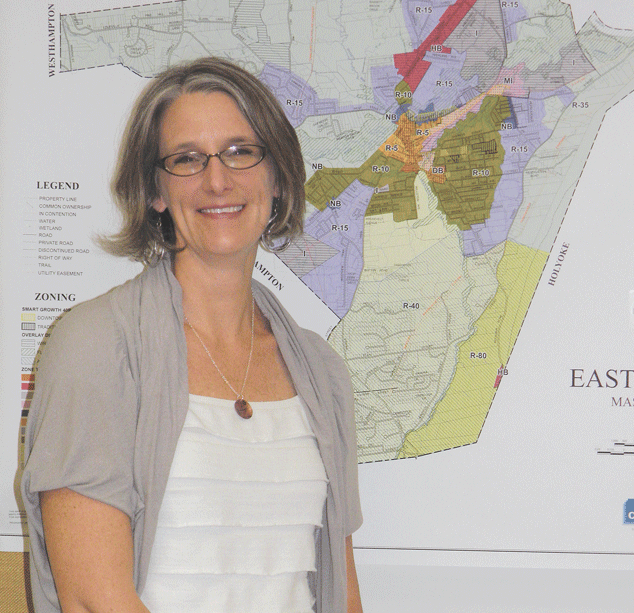
Jessica Allan says Easthampton will soon have three breweries, thanks to the quality of its water and improvements in infrastructure.
“One hand helps the other here, and partnerships between the city and private business owners have spearheaded revitalization,” she explained. “Public funding has encouraged business owners to make investments, which is how our story began.”
Town Planner Jessica Allan agrees.
“The city finds money through grants for infrastructure, and as a result, private business owners use their own money to make improvements to their property,” she noted. “Things have happened in Easthampton because the community and city have worked together to improve different areas. Our arts community has also formed collaborations to help Easthampton gain recognition in and outside of the Pioneer Valley.
“In the past, Easthampton had a really strong manufacturing base. It is still happening within the mills, but in a creative way,” she continued, citing enterprises that include furniture makers and a high-end wrapping-paper business whose clients include New York City boutiques.
She pointed to the Pleasant Street mills project that is now underway as a good example of a public-private partnership. Several years ago, Michael Michon, who owns Mill 180; Will Bundy, who owns the Eastworks Mill; and James Witmer, who owns the Brickyard Mill, approached the city for help. “They told us they had tenants who wanted to move into their buildings but were hesitant due to the lack of parking,” Allan said, adding that the trio had the idea of connecting their buildings and flipping the entrances, so they would open facing the Manhan Rail Trail instead of on Pleasant Street, because there was space there for a new parking lot.
The owners paid for the design, which includes 440 parking spaces, trees, and lighting. “The city did its part by applying for a MassWorks grant. The city received $2.75 million in October 2012 for the first phase of the project, and a second $1.5 million a year later to increase the parking capacity,” Allan said.
Money from the first grant will pay for an upgrade of the water lines as well as burying the electric lines. “We’re really dealing with safety issues,” Allan said. “The original water lines are still there, and the fire-suppression system doesn’t have enough pressure. There will also be new lateral connections to each building, so, if there is a problem in one building, it won’t affect the others. And burying the electric lines is helpful to the fire department.”
All those involved said Western Mass Electric Co. is a key player in the undertaking and that the utility made additional investments outside the area to some of their substations so the mills can get the power they need.
Cadieux says the project has been challenging, and Allan has held weekly construction meetings with representatives from city departments, the mill owners, the design consultant and engineering team, WMECO, and the construction contractor.
“The project is really complex, and a number of easements were needed,” she said. “But the end result will be rewarding and will spawn new economic activity. And the mill owners have spent millions on their buildings in anticipation of being able to fill in their empty space.”
Cadieux agrees. “It’s absolutely fantastic to have all these groups working together,” she said. “The project is very important to everyone involved.”
Ongoing Collaborations
Cadieux said the city’s history of partnerships began 15 years ago on Cottage Street when a buyer wanted to purchase the former 9,000-square-foot Majestic Theater, which was an eyesore that had been closed for years.
“But the owner of the theater insisted that he would not sell to the man unless he also bought the parking lot across the street. He couldn’t afford both properties, but the city was able to help by purchasing the lot with state funds,” she explained. “It was advantageous to both sides because the city needed more parking. And since that time, the city has received a great deal of state funding for infrastructure improvements. As a result, many restaurants and businesses have gone into space on the street.”
The city’s next major project is aimed at helping downtown businesses as well as providing people with a new recreational outlet. It’s called the Nashawannuck Pond Promenade Park, and will finally bring to fruition an idea that was born about a decade ago. The park is in the design stages, and, thanks in part to a $400,000 grant from the state, construction is expected to begin this summer.
“The 30-acre pond is in the heart of the community and will provide a gathering space for residents and visitors,” Allan said, as she viewed the peaceful body of water from the mayor’s office windows.
“The park will be the gateway to the cultural district on Cottage Street and will make Easthampton a destination location. We want to attract tourism and bring foot traffic downtown,” she told BusinessWest, adding that this is another example of how public funding spurs economic development in the city.

Mayor Karen Cadieux says Easthampton is flourishing due to its diverse economy.
She added that the city is also looking at streamlining its permitting process and has partnered with the Greater Easthampton Chamber of Commerce to develop a workshop for first-time business owners. “In the past two years, ten new businesses have applied for permits downtown, and we are filling in vacant storefronts,” she said.
Allan explained that increased interest in space downtown is related to Easthampton City Arts+ and the events it sponsors, such as monthly art walks, which are very popular.
The formation of that organization resulted from yet another collaboration, this one between Easthampton City Arts and the Easthampton Cultural Council, which shared office space and coordinated events at Old Town Hall with a shared mission before they merged and became ECA+.
The group has worked with the city on a variety of occasions, and last year it was successful in its bid to have Cottage Street designated by the state as its 16th cultural district. “The effort was spearheaded by ECA+,” Allan said, adding that the city applied for the designation from the Mass. Cultural Council in January 2013.
The mayor says these partnerships are beneficial. “It’s exciting to have all of this happening in one community, and the growth that is taking place due to partnerships between the city, private businesses, and the arts community makes Easthampton unique.
“Again, it’s a matter of people working hand in hand,” Cadieux continued. “The arts community stimulates art growth, which attracts businesses to the city, and that results in our diversity.”
Fifty affordable-housing units called Cottage Square Apartments are also under construction in a long-abandoned building at 15 Cottage St. “It was our largest tax title and was purchased by a developer three years ago. The city supported the developer’s idea, and the project was permitted under special zoning,” Cadieux explained, referring to Easthampton’s so-called “smart-growth zoning,” which allows for denser development downtown. The mayor added that the city procured $200,000 in Community Preservation Act monies, which has helped the owner leverage additional state and federal funding.
Improvements to infrastructure, as well as the city’s pure water, which comes from the Barnes Aquifer, have also played a role in attracting three breweries to the city over the past three years. The Abandoned Building Brewery was created through a renovation of 2,700 square feet in the Brickyard Mill; the Ford Hill Brewery and Hop Farm, located in a 9,500-square-foot building on three acres less than a mile away, is expected to be operational by the end of the year; and New City Brewing, which is not yet open, has chosen Mill 180 as its home.
Bright Future
Cadieux said partnerships will continue to take center stage in Easthampton. “Things have happened here because the business community and the city have worked together. We are committed to working collaboratively with our business and arts community and do all we can to foster partnerships.
“As a result,” she concluded, “we are flourishing — which is exciting, especially during these economic times.”
Planned Growth Boosts Great Barrington’s Vitality

Betsy Andrus says Great Barrington culture and art venues draw thousands of people to the town each year.
“It’s a really exciting time, and things are just going to get better with all of the projects and investments that are being made here,” said the town planner, noting that the community’s walkable downtown — featuring a Main Street that bustles with business in small shops and eateries — has been extended in the past year, thanks to businesses and developers who purchased and are renovating and moving into historic buildings.
Meanwhile, the village of Housatonic, just outside downtown, is also experiencing growth as small businesses expand, restaurants open their doors, and old mills become sought-after locations for commerce.
But the vitality that the hub of the Southern Berkshires is known for has been carefully crafted.
“Economic development is very important to Great Barrington, but the way we define it is particular to our community,” said Town Manager Jennifer Tabakin. “People really value local businesses and the quality of life here. We have a beautiful environment with conservation land and natural resources, so it’s a matter of keeping things balanced while supporting sustainable growth that is appropriately scaled.”
The town created a so-called master-plan framework three years ago, which was passed by the Board of Selectmen and earned the prestigious American Planning Assoc. Masssachusetts Chapter Award. “It is a very comprehensive vision that came about after hundreds of meetings with town staff members and community members who looked at our strengths, our weaknesses, our challenges, and our values,” said Tabakin, adding that anyone who wants to start a business in Great Barrington can access the document on the town’s website, www.townofgb.org. “It’s a wonderful resource that defines where we want to go.”
Rembold agreed and said the key element in the plan is promoting locally based growth.
“Many of our buildings and downtown businesses are owned by people who live in Great Barrington, and although they may not employ a lot of people individually, together they employ a great number,” he said. “These business owners are active in our civic organizations and contribute to our nonprofits and our award-winning Fairview Hospital. Small businesses tend to be resilient, and almost every business has relationships with other businesses and with our banks, which makes for a tight-knit community.
“We hope to attract more activity in line with that,” he went on. “Great Barrington is not looking for large corporations.”
However, Tabakin said opportunities to establish new businesses or expand still exist in publicly and privately owned property. “We hope to attract companies that will employ younger people,” she added, noting that the town’s population contains a high percentage of retirees, and officials would like to attract more members of the younger generations to the community.
For this, the latest installment of its Community Spotlight series, BusinessWest examines the many positive developments in Great Barrington, and how that wave Rembold described is just starting to build.
Right Place, Right Time
The success of the local businesses that dominate the Great Barrington economy is fueled by a number of factors, which include an active arts community, the town’s location — near the New York border and not far from many other destinations in the Berkshires — and its plethora of small shops and boutiques.
Many of these ventures have expanded, and some have earned national recognition.
McTeigue & McClelland is one of them. The jewelry store plans to move from its location on 597 South Main St. into the former Christian Science church on Main Street. “They purchased the structure last year and are renovating it and expanding their business,” Rembold said. “It is a real success story because they are also protecting and preserving an historic building. The company is nationally known, and we are lucky to have their business here.”
He added that Salisbury Bank is another example of a business that has chosen to invest in Great Barrington’s downtown. “They opened a new branch on Main Street last week. They renovated an old structure because they wanted to be downtown in a historic building. And the Barrington Boutique, a bed and breakfast with an artistic look, also just opened. It covers the entire third floor of an historic building, and they put in an elevator.
“I could go on and on with examples like this,” he continued. “There are so many businesses who want to be in Great Barrington and Housatonic.”

Jennifer Tabakin says the town’s master-plan framework earned the prestigious American Planning Assoc. Massachusetts Chapter Award.
Shoppers appreciate the fact that the town issues its own currency, called Berkshares, which can be purchased at local banks. “It’s popular because it gives people a 5% discount when they are shopping. The program has recently expanded, and architects, printers, and other business people also accept Berkshares,” Tabakin said.
Andrus said the walkable downtown area, which is intersected by side streets housing small businesses, is always bustling with activity. “Nothing stays vacant for every long. Things move very quickly, and in the past year Main Street has seen huge renovations,” she told BusinessWest.
The former Betros Market on the north end of the street, which was a blighted property for many years, was purchased a year ago and has been completely renovated. “It is fully permitted for a 2,500-square-foot, 90-seat restaurant, and the owner is looking for businesses who want to lease space in it,” Rembold said. “And a year ago, Cumberland Farms redid the look of their structure. There has been a lot of progress in that area, and the street is expanding north and south. Our downtown is no longer limited to a small area.”
Opportunity Abounds
Although most downtown storefront space is occupied, space zoned for business use is available in a number of other locations, including three former schools on the Searles/Bryant campus on Bridge Street. “The river runs behind the buildings, and Iredale Mineral Cosmetics, which is one of our biggest companies, is in the former middle/high school. The complex is noteworthy because it’s LEED-certified,” Tabakin said, adding that it was the first project of its size to receive the LEED Gold designation in Southern Berkshire County.
She said the Bridge Street corridor, which the complex sits on, is a prime location. “Iredale is the anchor company, and the property is adjacent to other successful businesses on Main Street. But the big news is that Main Street is being reconstructed. It is long overdue, and work on the curbs, sidewalks, catch basins, and lighting will start this summer.”
The $5 million project is being funded by the state, and will include a large number of new plantings and trees. “Both community and town officials contributed to the design, which will make the street easier to cross,” said Tabakin. “The design has already created excitement and helped expand the streetscape on both ends.”
Andrus agreed. “In the past, people didn’t go past the post office. Now the walkability of downtown has been extended with the new bank, another new jewelry store, a new gallery, and the Prairie Whale Restaurant, which buys from local farms and is a farm-to-table operation.”
The village of Housatonic has also witnessed development activity, as businesses have chosen to locate or relocate in three former mills in the Monument Mills Complex.
“All of the mills are partially occupied by businesses that are leaders in their field, such as Country Curtains and Berkshire Pulse,” Rembold said, adding that the latter is an arts center that serves 650 students. It leased the first two stories of the former Barbieri lumber operation for six years, but moved into larger studios in the Rubin Mill building across the parking lot from its former location earlier this month.
A new restaurant called Pleasant and Main also opened last month in Housatonic, and Rembold tells businesses who are contemplating a move to Great Barrington not to hesitate if they find a suitable spot. “It is so vibrant that, if anyone waits, the space may be taken,” he told BusinessWest.
Town officials are also taking measures to stimulate economic growth. For example, Rembold said they are working to assess the cost of cleaning up the former Reid Dry Cleaners building by the post office, which is a contaminated site. “It is a privately owned, beautiful building with parking for at least 30 vehicles,” he explained. “We’re working with the owners to get funds from a federal grant program to pay for the assessment and cleanup.”
Tabakin said town officials continually look for opportunities to tap into state and federal monies, and do their best to alert business owners and nonprofits about available programs.
Andrus said the former St. James Church on the south end of Main Street was recently purchased and will become a performance space, thanks to a grant from the Massachusetts Cultural Council.
The arts community is thriving in Great Barrington, and thousands of visitors are drawn to the town each year due to its cultural attractions, which include the renowned Mahawie Performing Arts Center. “There are an endless number of cultural organizations within a mile of downtown, including the Daniel Arts Center at Bard College, the Berkshire Playwright Lab, and the Community Access to the Arts,” Andrus said.
Great Barrington is also breaking new ground in the emerging farming and agriculture sector of the Southern Berkshires, and Rembold said the town’s more than 70 restaurants provide an important outlet for farmers selling produce.
Meanwhile, Wired West, an organization focused on expanding fiber-optic broadband, also expanded into Great Barrington within the past year.
“The town already has cable, but fiber optic is 100 times faster, which is great for filmmakers and the healthcare industry,” Rembold said, adding that the service has already been installed in anchor institutions such as Town Hall and Fairview Hospital. “The trunk lines are up, and the next step will be to expand to individual homes and businesses.”
In addition, demand for housing is on the rise, especially for single-floor living. A new development called Barrington Brook, which will be made up of 44 single-floor condominiums and homes, was permitted last year, and the model unit is expected to open soon.
Bright Future
Tabakin said the town’s popularity and desirability continues to grow.
In addition to drawing tourists and people from the Southern Berkshires who do their shopping and business there, “we have had six calls this year to do film shoots here,” she noted.
They include the seven-minute film “Selfie,” which has gone viral and is a testament to the life and people who work and reside in a town whose name and reputation continue to rise.
Great Barrington at a glance
Year Incorporated: 1761
Population: 7,003 (2012)
Area: 45.2 square miles
County: Berkshire
Residential Tax Rate: $13.56
Commercial Tax Rate: $13.56
Median Household Income: $50,882 (2012)
Family Household Income: $75,508 (2012)
Type of government: Open town meeting
Largest Employers: Butternut Ski Area and Shop, URJ Eisner Camp, Fairview Hospital, Berkshire Hills RSD, Berkshire Meadows, Simon’s Rock College
* Latest information available

Our annual look at the region’s dining landscape
 Click here to download a PDF chart of restaurants in the region.
Hofbrauhaus Continues Traditions, Creates Some New Ones
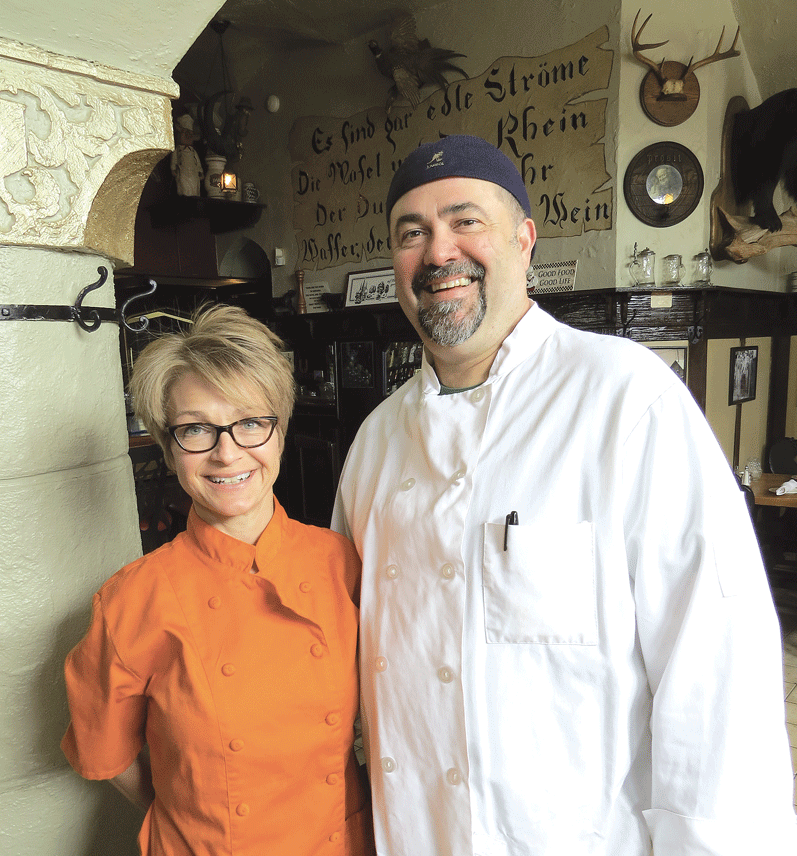
Joe and Liz Stevens are now in their 20th year as owners of the Hofbrauhaus, which opened its doors eight decades ago.
It was given that name because Gene Sapelli, a regular customer at the Hofbrauhaus, liked his crustacean prepared a certain way, said Joe Stevens, the establishment’s long-time owner and chef.
“This is a two-and-a-half-pounder … we take all the meat out and then put it back in the shell, so all you need is a knife and fork,” he said. “We’ve been doing it this way since the ’70s.”
You won’t find Sapelli lobster on the printed dinner menu at this West Springfield landmark, but it’s always there, and the regulars know to ask for it. It’s more than a specialty, it’s a traditiom — and there are many of them here.
And there should be, considering that this is the establishment’s 80th year in business, and Stevens and his wife, Liz, are in their 20th year as owners.
There are also the many holiday buffets at the Hofbrauhaus. The place was packed for Easter, and Stevens is expecting the same for Mother’s Day, although he’s anticipating some late reservations because Mother’s Day (May 11) is coming hard after Easter, which was late this year, and “it might sneak up on people.” Meanwhile, Thanksgiving is a different kind of tradition. Indeed, while many eat at the restaurant, a number of regulars will give Stevens and his staff their order for a full dinner, and they’ll pick it up at a pre-arranged time at the back door (more on that later).
There’s also the annual game dinner each winter, the German outfits on the staff, the dozens of steins on the walls, and other culinary mainstays, such as a huge veal shank, which, like the lobster, isn’t on the menu, but regulars with a healthy appetite know all about it.
But this is a different and far more challenging time for restaurant owners than the landscape that existed in 1935, when the Hofbrauhaus opened, or when Joe and Liz Stevens took over in 1995. By his estimation, Joe said, 85 or 90 restaurants have opened in West Springfield alone since he assumed ownership — but who’s counting? And the list keeps growing; yet another burger restaurant is opening on Route 20 in a former Friendly’s location.
Meanwhile, the economy, while improved, remains sluggish, and discretionary spending is still undertaken with caution. And then, there was the tornado of 2011, which passed right over the restaurant and deposited new furniture acquired for the outdoor dining area, the so-called beer garden, into the Connecticut river.
The juxtaposition of all these challenges has necessitated the creation of some new concepts and programs, some of which are on their way to becoming traditions, said the couple. These include the ‘beer-of-the-month dinner,’ at which attendees can get a large stein of beer and dinner for $15. The featured libation at the May 7 event is something called Workers Comp Saison from Rhode Island-based Two Roads Brewery, and slow-roasted beef brisket and pan-blackened cod are on the menu for the buffet dinner.
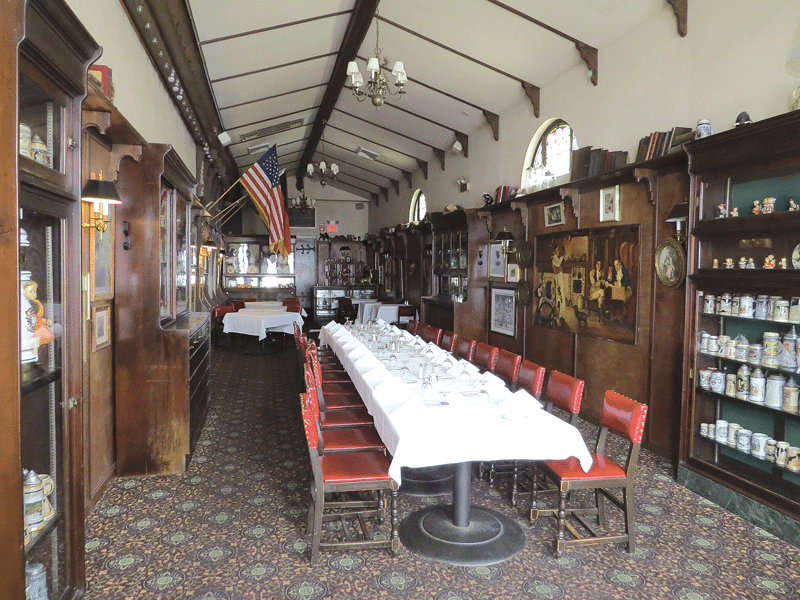
The Stein Zimmer, used for small groups and special functions, is one of the many unique aspects of the Hofbrauhaus.
“I try to feature someone fun, interesting, and who doesn’t cost them anything,” she said of the lineup of speakers. “We’ve had massage therapists, nutritionists, a life coach … it runs the gamut. It’s a fun night out, and the women look forward to it.”
The couple has even gone so far as to change, or amend, the name of the establishment, to make it clear that it serves much more than traditional German food. While ‘Hofbrahaus’ remains over the door, ‘Hofbrau Joe’s German Steakhouse’ has been added to the menu and most marketing materials.
This mix of and new and old, traditional, and different is enabling this landmark to add some new chapters to its rich history, said Joe Stevens, adding quickly that creating such blends is the challenge facing all restaurants today, and especially those that have been part of the landscape for decades and need to attract the younger generations.
High-steaks Venture
Stevens said there’s a beer cooler in the basement with walls that are a foot and a half thick.
That’s where he ordered everyone to go late in the afternoon on June 1, 2011, when it became clear that there was a tornado moving southeast through West Springfield, and the Hofbrauhaus was apparently in harm’s way.
“We had everyone wait in that refrigerator,” he recalled, adding that the twister apparently “bounced” across the property, touching down in the parking lot, damaging the beer garden, roof, and other parts of the building, while also taking down a house behind the landmark.
“It did not discriminate,” he said while reciting the damage and putting an estimate at $400,000. “It picked up some of the tables and chairs from the beer garden, deposited them in the river, and then went over the [Memorial] Bridge. We saw them floating there for a couple of days before they got carried away in the current.”
Using some humor to help get across his frustration, he said the insurance company “could not get me that money fast enough.” In reality, the last check came just a few weeks ago, after the matter went to court.
Looking back, Stevens said the tornado has been one of many challenges the institution has had to weather the past several years, including a recession that seemed without end, especially for a sector that feels downturns perhaps more than any other, and a crush of new competition along the I-91 corridor he serves.
“We’ve taken a few lefts and rights recently, but we’ve bounced back,” he told BusinessWest. “We’ve recarpeted, redecorated, and taken some steps to bring more people to our door. And business has been good.”
Taking lefts and rights is certainly part of being in the ultra-competitive restaurant business, said Stevens, who should know — he’s been doing this for more than 30 years now as chef and owner.
His first foray was the Glass Lily, located in the Longmeadow Shops, which he owned and operated for eight years — a time he called a great learning experience.
When the Krach family, which assumed ownership of the Hofbrauhaus in the early ’70s, decided to put the landmark on the market a quarter-century later, Stevens took what he considered to be a calculated entrepreneurial risk.

The main dining room reflects the many traditions and rich history at the Hofbrauhaus.
The name alteration is part of all that, said Stevens, noting that, with the addition of the words ‘German Steakhouse,’ the institution is generating new business by making the breadth and depth of the menu more apparent to all.
Indeed, while the restaurant serves German favorites such as weiner schnitzel, bratwurst, and beer-battered shrimp, it also offers a variety of steaks (some cooked tableside), Scottish salmon, rack of lamb, and, yes, lobster.
The popular holiday buffets continue to draw several generations of area families, he told BusinessWest, while the Thanksgiving tradition of cooking whole dinners for pick-up, which goes back to his days at the Glass Lily, represents a higher level of customer service.
“People order a whole turkey with me, I cook it, they get stuffing, vegetables, potatoes, whatever they want for sides, and off they go,” he said, adding that the nearby Dante Club makes its ovens available so Stevens can meet 60 or more orders a year. “People know the drill — they come in the back door, their times are set every year. We work through the night, but have a great time doing it.”
Meanwhile, some of the new initiatives are expanding the customer base, he went on.
The beer-of-the-month dinner is helping to make a traditionally slower night, Wednesday, less so, he told BusinessWest, while the Fraulein Fun Nights are attracting crowds averaging about 40 women.
Many of them are business professionals, said Liz Stevens, adding that she has regular groups from Baystate Health and MassMutual, but also new faces every month.
But beyond the new initiatives, new carpeting, and a larger, lighted parking lot, the basic ingredients in the recipe for success haven’t changed, Joe said. “It’s still all about offering good, consistent service and good food. It’s as simple as that.”
Art of the Matter
Joe Stevens said there’s a lot of history at the Hofbrauhaus, from the old, art-deco neon clock in the kitchen, which dates back to when this was a dinner and dancing hall in the ’30s, to the stained-glass windows in the dining room (used for small groups) called the Stein Zimmer, to the mural depicting scenes from Germany that wraps around the main dining room.
The Krach family uncovered it while cleaning one day — it was buried under decades of accumulated grease, dirt, and tobacco smoke — and spent months restoring it, said Stevens, adding that it is one of many topics of discussion for long-time customers who know the history and can point to the small patch that was left uncleaned to show how dark and deep the filth was.
“We have so many customers that come in and tell us stories about this place from when they were growing up,” he said, “ because it’s been here their whole lives. They talk about how their fathers and grandfathers and great-grandfathers have been there, and all the weddings this place has done.”
The challenging assignment moving forward — one that Joe and Liz Stevens have undertaken with determination and imagination — is simply to write more history.
And they’re doing just that.
George O’Brien can be reached at [email protected]
Tavern on the Hill Owners Are Providing Much More Than Scenery
By KEVIN FLANDERS
Lawrence and Amy Guyette say they take pride in making not just good food, but strong community connections.
That was a line from a Republican review of the Tavern on the Hill restaurant from several years ago. Many other things were written, of course, about this establishment located in the shadow of Mount Tom near the Easthampton-Holyoke line — regarding the food, the service, and the experience.
But that single line has lived on at this landmark, and over the years it has become equal parts unofficial slogan, rallying cry, and mission statement.
That’s because the view is, well, spectacular. It’s a draw, and it’s probably what people will remember most from a visit to this eatery on Route 141. But, while powerful, the scenery is generally not enough to bring people back, said Lawrence Guyette, a long-time restaurateur who bought the property — operating then as a sandwich and ice-cream shop — with his father-in-law, Jim Cooper, in 2005.
“Growing up in Easthampton, I knew this location was different than anything else in the area, a really cool place for a restaurant. When we found out it was available, we were really excited to purchase it,” said Guyette, who serves as owner-chef. From the beginning, he added, he understood that quality food and service, not the view out the windows or from the parking lot, would generate repeat business.
And because he’s been able to provide those tangibles, the tavern has enjoyed solid success over the past decade, despite a mostly sluggish economy and a host of other challenges.
Cooper died in 2013, but his legacy is carried on each day by his son-in-law and his daughter, Amy Guyette, the restaurant’s general manager. Running the business as a family gives them a great deal of pride, but most rewarding to the Guyettes are the community connections the restaurant has enabled them to make, a reflection of Cooper’s mentality.
“He was always really active with the restaurant,” Amy said of her father. “He loved helping the guests with anything they needed, even parking their cars in the lot. He always wore Hawaiian shirts, so our staff will have a special day coming up where we all wear Hawaiian shirts to work.”
Like most local restaurant owners, the Guyettes have faced challenges over the last few years in competing for customers. With new establishments recently opening in the area and national chain restaurants continuing to benefit from massive marketing campaigns, the competition is exceedingly stiff in the restaurant industry.
“Two years ago was a peak for us, the best we’ve done so far; everything was firing on all cylinders, and business was fantastic,” Lawrence said. “Since then, we’ve seen a dip in the last year. A few new restaurants have opened lately, which makes it a little tougher for everyone in the business. Overall, things seem to be starting to improve again lately, especially for dinner.”
A restaurant-business veteran for nearly 30 years, he understands the importance of constantly adapting and improving to provide guests with a quality experience year after year. Oftentimes, those improvements appear on the menu, especially when special requests are made. Guyette has been experimenting with smoked ribs in recent months, much to the delight of those who’ve tried them, and he also added burgers to the dinner menu a few weeks ago.
“We had so many requests for burgers that we decided to put them on the dinner menu,” he said. “It’s a new addition that has worked out really well for us.”
The Guyettes are also contemplating a weekly steak night, with various selections available to guests. They are still in the process of working out the details, but it’s likely the concept will become reality.
For this issue and BusinessWest’s annual Restaurant Guide, we ventured up Route 141 for the view, but, more importantly, for an in-depth look at an evolving entrepreneurial success story.
Peaking Their Interest
Depending on when they grew up in town, Easthampton residents have differing childhood memories of the property where Tavern on the Hill stands.
Way back in the Roaring Twenties, a small establishment called the Green Candle Inn served as a popular stop for travelers navigating up the mountain. Two decades later, in 1944, The Old Mill became a local favorite for its sandwiches, its pinball machine, and, of course, the panoramic view.
The Guyettes know the view from their restaurant is an initial draw for some, but food and service keep patrons coming back.
“We used to always talk about what it would be like to own the place and have our own restaurant up here,” she said. “Anyone in this area knows about the place and the view, so that’s definitely a big plus.”
Operating on a minimal budget, Cooper and the Guyettes spent two months renovating the building before opening the restaurant to guests.
Over the years, the menu has evolved somewhat, but has focused on what’s known in the business as ‘creative American.’ Dinner options include everything from grilled salmon to pasta jambalaya; blackened beef tips to several burger options, including one named after the mountain next door. Prices range from $11 to $27.
In addition to its lunch and dinner service, the restaurant also regularly hosts private functions, with about 50 such events augmenting business each year. Lawrence said he’s seen a rise in the number of private events booked in recent years, particularly after-funeral functions.
“It’s always helpful when individuals or business owners recommend us to their family and friends. That really helps us secure additional events,” he said.
The view certainly helps with the task of filling the dining room with people and the calendar with events, but the Guyettes stressed repeatedly that much more is needed to succeed in an ultra-competitive marketplace where an ever-more-demanding dining public has myriad options.
Thus, they put the accent on building relationships and earning the trust of customers — as well as repeat business — through consistently reliable service.
“The relationships are definitely the best part of the business,” Amy said. “I love having relationships with our customers and getting to see their kids grow up. Maintaining great relationships with the staff is huge as well; we’re all a family here.”
Indeed, one tenet of this industry is that no establishment can survive for very long without a solid staff. The Guyettes recognize the importance of not only hiring experienced staff members, but keeping them in the Tavern on the Hill family.
One server and almost the entire kitchen staff have remained with the restaurant since 2005, a difficult feat to accomplish in an industry known for frequent turnover. Amy described hiring qualified, dependable staff members as one of the lesser-known challenges in the business, a challenge she prefers to avoid by aiming to keep the staff intact.
“It definitely isn’t easy to find people you can really count on. You want to hang on to those people when you get them,” she said.
Tavern on the Hill boasts a staff of up to 50 people during its busiest summer months, including bartenders to work the indoor bar and the outdoor setup on the deck.
In addition to relationships with customers and staff, the Guyettes also believe in establishing them with the community as well. They believe restaurant owners have a responsibility to be active in civic life, a belief evidenced by their continued commitment to community service.
Tavern on the Hill has served as a sponsor for several area sports teams in the past decade, in addition to donating raffle prizes to the Southampton Athletic Assoc. and Boys and Girls Clubs in Chicopee and Holyoke.
Moreover, as the president of Easthampton Friends of Football — an organization that has been striving to build a new football field for high-school and youth teams — Amy has been committed to working with city leaders to help secure Community Preservation Act funding for the project.
“I feel like it’s an obligation for us to support the community that supports us every day,” she said. “If people come out and spend their money here, then we have an obligation to put money back into their communities.”
As both the owner of the restaurant and a chef who prepares meals there, Lawrence Guyette has been thrilled by the support Tavern on the Hill has received from the community. He sees it every day, from the lunch regulars to a sometimes surprising dinner guest.
“You never know who’s going to come through those doors,” he said. “You always meet different people — firefighters, police officers, the mayor, people who have dinner here with their families or a quick lunch meeting — and it’s pretty special to have a chance to get to know so many members of the community. We really appreciate all of the support we get.”
View to the Future
One can certainly see a long way from the tavern, out over Easthampton and other towns to the west.
One thing you can’t see, obviously, is the future; no one in any business can do that.
What the Guyettes are trying to do is anticipate it, and be ready for the likelihood that it will include an increasingly challenging environment in which to operate and even more choices for the dining public.
Which means they have to work even harder on that unofficial mission statement and make sure the line from that aforementioned restaurant review remains as true as the day it was written.
Simply put, the view must always be just gravy.
Convention & Visitors Bureau Sees Regional Potential in Casino
Mary Kay Wydra says a casino will draw people to downtown Springfield, but will also boost tourism across the entire region.
“We have 260 members, and not all of them are for it,” said Wydra, president of the Greater Springfield Convention & Visitors Bureau (GSCVB). “Big brands like Six Flags and Yankee Candle are very much for it, but among the smaller businesses, many of them remain concerned about what a casino will do to business.”
However, well before MGM Resorts International staked its claim with the only viable, community-supported casino proposal remaining in Western Mass., Wydra and her bureau were enthusiastically on board, choosing to focus on what MGM could do for the region’s tourism, convention, and entertainment industry, not to it.
“The Convention & Visitors Bureau has been looking at the whole gaming issue for years, watching it and seeing how things would unfold, and we were really proactive in making sure that any of the applicants being considered for Western Mass. were willing to work collaboratively with the bureau,” she told BusinessWest. “We’re thrilled that MGM is the last man standing, if you will, because we see the value of their brand coming into our region.”
The two parties recently formalized this sense of optimism by entering into a marketing partnership. Essentially, both the GSCVB and MGM Springfield have hammered out a written agreement aimed at bolstering tourism-related businesses across the Pioneer Valley.
“This is an incredibly exciting time for tourism in the Pioneer Valley,” Wydra said. “A partner with the brand recognition and resources of MGM can really help change the landscape when it comes to tourism promotion in our region. We’re delighted to have them as partners; the MGM team has been extremely professional and clearly dedicated to establishing a working relationship that is mutually beneficial. It’s going to be a powerful, productive partnership, and we’re eager to get started.”
Mike Mathis, president of MGM Springfield, was equally enthusiastic. “This is an organic partnership between entities that understand each other,” he noted. “The GSCVB drives tourism throughout the Pioneer Valley, and MGM Springfield is primed to be an anchor attraction in the region’s urban core.”
While it’s not a done deal — the state Gaming Commission is expected to approve MGM’s license this month, but casino opponents are waging a fight to overturn the state’s casino law in a November referendum — the probability of a Springfield casino has Wydra and her team excited, and MGM’s willingness to establish a partnership with the bureau is just another positive development.
Inside Out
Early in the game, the GSCVB reached out to all four casino developers that proposed detailed projects in Western Mass. However, a proposal by Penn National Gaming for Springfield’s North End died when Mayor Domenic Sarno backed MGM’s South End development, and Hard Rock International’s West Springfield proposal and Mohegan Sun’s plan for a Palmer casino were both killed in voter referendums last fall.
Wydra said she was delighted that MGM was the sole remaining player, due partly to its basic concept, which has been referred to as an ‘inside-out’ or ‘outward-facing’ casino.
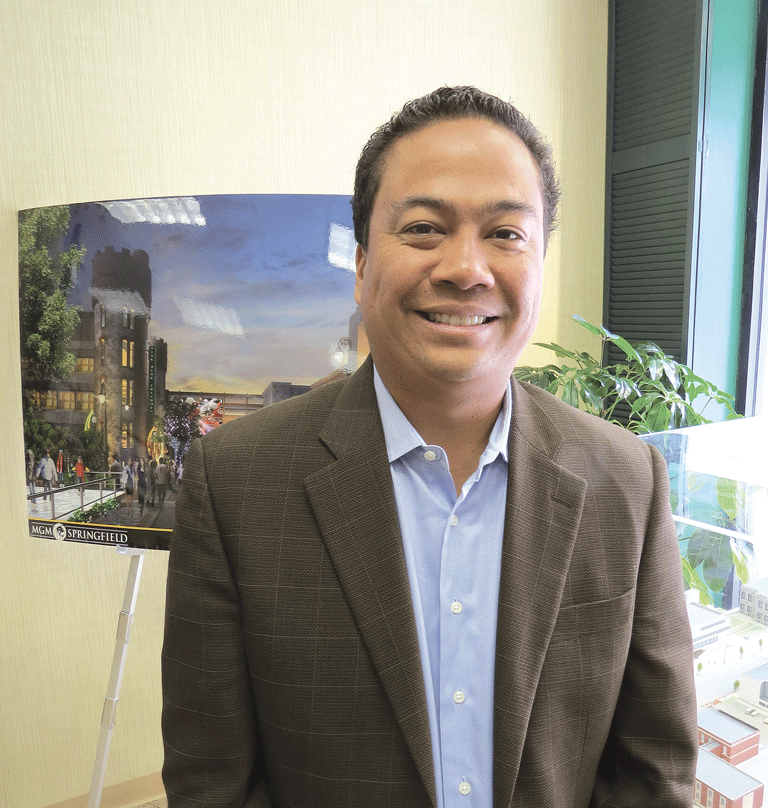
Mike Mathis says MGM’s marketing partnership with the GSCVB makes sense because they share a goal of drawing visitors to the region.
The Springfield model — a smaller version of MGM’s successful City Center flagship property in Las Vegas, which is especially popular with families — puts the amenities around the gaming floor, with multiple points of entry, and will tie in neighboring venues like Symphony Hall and the MassMutual Center, so that casino visitors can enjoy the restaurants and entertainment without having to enter the actual gaming hall.
“What we like about the MGM product is that inside-out casino, and we like their brand,” Wydra said, even though she needed to learn about it first. “When I first heard MGM was coming into the market, I didn’t know they were a casino company. I thought they were an entertainment company.”
The more she learned, the more intrigued she was, and she preferred a Springfield location to a casino in Palmer. “The fact that it’s right in the heart of our service area is very appealing,” she said. “Palmer is a bit more removed and more of a trek to get there.”
But a Springfield-based casino, even one that actively tries to connect with its downtown community, isn’t an end in itself, she told BusinessWest, which is why the bureau forged a marketing agreement with MGM, in an effort to raise all boats in the local tourism industry. Included in that agreement are:
• Cross-promotion. MGM has committed to marketing efforts coordinated through the GSCVB that will identify and promote other Pioneer Valley tourism entities via on-site signage, exposure on social media, newsletter mentions, reciprocal home-page web links, and more.
“Honestly, we see a casino coming here as a way to extend people’s stay,” Wydra said. “If they’re coming for two or three days, maybe they can stay three or four, and see other things the area has to offer.”
• Additional circulation of a visitor guide. MGM will undertake the costs of printing thousands of additional copies of the bureau-produced Guide to the Pioneer Valley for placement in its hotel rooms, concierge desks, and other key locations.
“It’s a 110-page publication that lists other attractions, hotels, restaurants, and a calendar of events,” she said. “So we’ll be working with them to let their visitors know what else there is to do.”
• Enhanced marketing efforts. MGM has agreed to provide resources dedicated to promoting Springfield and the overall region through active participation on ‘TEAM Springfield,’ a cooperative convention-sales effort with the MassMutual Center.
“We meet every two to three weeks, trying to get meetings and conventions to come into the region,” Wydra explained. “I really see a tremendous benefit to bringing MGM into that equation. They dominate the convention market in Vegas; they’re attracting national conventions there based on the infrastructure they have.” Ideally, she added, TEAM Springfield could tap into that database and connect with the New England or northeast affiliates of those organizations.
Just the Start
In short, Wydra said, “we see great opportunity to co-promote and leverage their brand and marketing assets to benefit the Pioneer Valley’s entire hospitality industry, especially our many small businesses.”
Handled correctly, she added, the region should see an influx of new visitors, who will come here to do more than just gamble. And all four of the bureau’s areas of emphasis — leisure, conventions, tour operators, and sports — could share that benefit.
Take tour groups, for example. “Casinos are ideal for the group tour market, so we’re very confident we can sell MGM to that market.” As for sports, casinos often host billiards and darts tournaments, boxing matches, and other competitions.
The partnership agreement — which was hatched out in a series of meetings between MGM Springfield officials and the GSCVB’s gaming subcommittee — will take effect one year prior to the casino’s formal opening, and lays out only the bare bones of marketing possibilities, said Wydra, who said the parties will also consider some kind of regional shuttle service between attractions if they see potential in such an effort.
“Really, the agreement we put in place is the minimum,” she told BusinessWest. “As we start working together and determine the demand and demographics coming in, new opportunities will unfold.”
Some of those opportunities may be difficult to predict now; dropping an $800 million development onto 14.5 acres in downtown Springfield will certainly open some unexpected doors. And Wydra is confident that the entire Pioneer Valley will benefit from opening them.
“From the meetings I’ve had with them, I know they’re savvy professionals and dedicated people, and we’re looking forward to having the opportunity to work closely with them,” she said.
While it’s natural for some tourism businesses to be anxious about the project, she said, the bureau has long looked at it simply as a new attraction — albeit a significant one. She sees MGM as much more than that now, thanks to its cross-promotion potential and national convention clout.
“A lot of people, when this thing didn’t move through the Statehouse quickly, got negative about it,” she added. “But I think the legislators did a great job creating the legislation, and this will work for all businesses in the region, encouraging the casinos to have deals with other entertainment venues.”
Those connections are critical, Wydra said, if a region wants a casino to be a regional tourism engine, and not just a gaming island to itself.
“I presented at a Mass. Gaming Commission meeting when there were still three applicants in the Western Mass. area,” she said. “While all that was getting figured out — the host community agreements, the referendum questions — we were also talking to the Gaming Commission make sure tourism was a priority when they were evaluating all the proposals.”
Even then, she liked what she was hearing from MGM. “We know tourism is important to this developer. And we really do believe they’re going to reach into the community and the whole region.”
Joseph Bednar may be reached at [email protected]
Sheraton Springfield Excels at Helping Groups Get Down to Business
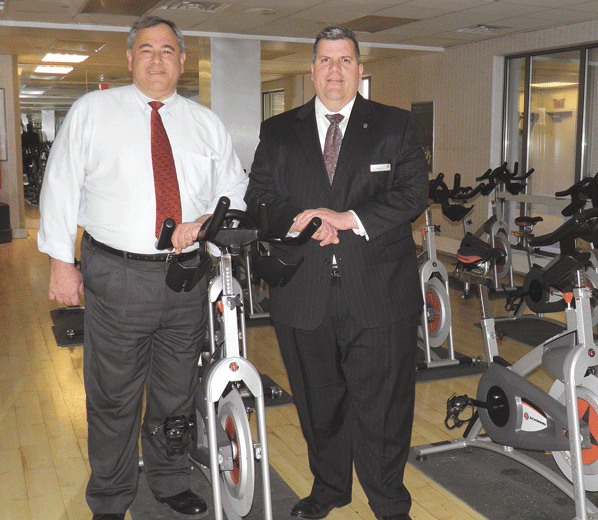
Ernie Taddei, left, and Paul Marcelina say business travelers appreciate the 18,000-square-foot 4 Fitness Health Club at the Sheraton Springfield.
But general manager Paul Marcelina says that what sets its apart from its competitors is the fact that every hotel associate is steeped in the “five human truths,” which allow them to meet the basic emotional needs that all human beings share.
“Our goal is to create an emotional connection with our guests. We all want to belong, feel special, be understood, reach our fullest potential, and be in control,” said Marcelina, citing the results of a study conducted by Starwood Hotels and Resorts Worldwide in 2009 that changed the hotel’s culture.
“We consider ourselves to be friends of our guests, which is reflected back to us every day in our guest-comment cards. Every guest and every trip is different, and we are aware of the needs and time constraints of weekday business travelers as well as the needs of social travelers here on weekends,” he added.
Although the hotel has its share of tourists, about 60% of its annual revenue comes from business groups, whose members travel from throughout New England and beyond. “We’re the largest hotel west of Boston, north of New Haven, and south of Montreal,” said Peter Picknelly, president of Monarch Enterprises and owner of the Sheraton Springfield.
The hotel is part of the Monarch Place complex, which includes a 25-story tower that contains 400,000 square feet of office space as well as a parking garage for 200 vehicles. “It adds to our appeal,” said Ernie Taddei, regional director of sales and marketing for the hotel, explaining that many business travelers who stay at the Sheraton have meetings scheduled in Monarch Place.
But there are other features that make the hotel a sought-after location for business gatherings. “We have 30,000 square feet of meeting space, and everything a business needs is under one roof, which is difficult to find outside of Boston or New York City,” Marcelina said. “We know we are competing with hotels in Hartford, Boston, and Philadelphia, so we spend time figuring out how to attract businesses to Springfield and this hotel.”
He told BusinessWest that meetings can be held concurrently in spaces that can accommodate from two to 1,000 people, or 100 8×10 pipe-and-drape booths. In addition, the Grand Ballroom can serve dinner to 1,000 people at one time, while cocktail hours for up to 2,100 people can be held on the first three floors of the atrium.
Other perks include state-of-the-art audio-visual equipment, as well as LCD projectors and specialty AV items available from hotel vendors. “Our vendors stay on the property during the entire convention, to make sure everything is done correctly,” Taddei said, adding that the hotel’s recently upgraded sound system “allows people to hear perfectly from one end of a convention space to the other.”
The Sheraton has also developed close relationships with many local attractions, which allows guests to purchase discounted tickets to basketball games or other events, and Taddei said these tickets are often made available to people staying there for several nights.
“It’s not just about the rate and meeting room, it’s about what we can do to make a stay more enjoyable,” he said. “We don’t want our guests to be bored.”
In addition, the hotel’s full banquet kitchen allows event planners to customize menus and match the décor of the dining room to a chosen theme. Food offerings are also frequently expanded, and hotel salespeople sample dishes on the menu and provide input. For example, after a recent sampling of hors d’oeuvres created for a wedding party, officials decided to offer them to business groups.
The Sheraton, which averages about 200,000 guests per year, has also made major upgrades to its Internet technology, which allows guests to operate several devices at the same time in their rooms. There is also ‘the Link,’ an area found in all Sheraton hotels that offers guests computer use and a copier and printer at no cost in a comfortable setting.
Staying Power

Bartender Carmine Capuano says cocktail hours for up to 2,100 guests can be held on the first three floors of the Sheraton Springfield’s atrium.
But due to its architectural design, changing the environment was no easy feat.
“Our atrium is visible from all floors, and it was very challenging to complete the renovations without bothering our guests,” Marcelina said, explaining that scaffolding had to be built from the second to 12th floors.
But today, people delight in looking up to the top of the glass ceiling or down to the lower floors, depending on where their room is located. The view is enhanced by special lighting along the outer wall of every floor, which is programmed to change colors every few seconds.
“It’s a special visual effect, and large conventions or parties can select colors that match the theme of their convention,” Taddei said. “Lighting is important, and we can also splash colors on the ballroom floor to match a business’ taste, which is nice for a company meeting and also nice for social functions such as a wedding.”
Another bonus is the hotel’s 18,000-square-foot 4 Fitness health center. “It’s the largest hotel health center in Massachusetts and has state-of-the-art equipment, a sauna, racquetball courts, and spinning classes,” Taddei said.
A large swimming pool beneath a domed glass ceiling and adjacent outdoor sunbathing area add to the appeal, and as a result, the hotel also caters to annual meetings and events held by religious groups, sports groups, youth groups, and other groups that often take part in competitions at the nearby MassMutual Center.
But despite outstanding physical amenities and a good location, hotel officials say what separates them from their competition, and results in repeat business, goes back to their focus on “human truths” and the behavior of hotel associates.
“We can say that we have nicer artwork or a warmer pool, but that is not going to make the difference between a good or exceptional experience,” Picknelly said. “What we do starts from the time a person arrives at the front desk and continues until they leave. But getting to that point is not an easy task. It takes a collaborative effort by all of our associates.”
To that end, great attention is paid to detail. Each employee’s name tag includes a hobby or interest, which often sparks conversations with guests. And associates are schooled to notice things such as a guest wearing a Red Sox cap and ask questions related to such items.
“We don’t consider the check-in process part of a transaction; it’s a welcome service that is all about engagement and interaction and is part of the warmth connected to our core values,” said Marcelina, adding that, when guests leave, they are asked about their stay and invited to return. “The connection we make is what separates us from our competition.”
Employees are also trained to take notice of details in guest rooms. For example, Marcelina said, if someone from the cleaning staff notices a guest has an empty Diet Coke in their trash can or an empty Hershey’s candy wrapper, he or she can replace the items with a note that tells the guest to enjoy them and their stay.
Taddei has been with the hotel since 2009 and said many guests come to Springfield to enjoy local attractions, which range from the Basketball Hall of Fame to Six Flags New England and the Big E.
“We are lucky to have them in our backyard,” Picknelly agreed.
But the atmosphere in the hotel changes in response to the day of the week and who is staying there. In fact, Picknelly likens it to a transformer.
“Monday through Friday, we cater to a business clientele,” he explained. “But on Friday afternoon, we transform into a leisure hotel, which means we adopt a different culture.”
That includes offering breakfast later in the morning for guests who want to sleep in, longer pool hours with more attendants on duty, and other measures designed to make hotel stays memorable and relaxing for guests of all ages.
Picknelly said small things are important and uses the example of newspapers to make his point. “My son gets all of his news from the Internet, while I prefer a real newspaper,” he said. So, newspapers are delivered to each guest’s room early each morning.
The hotel’s theme is the fall season in New England. “The artwork was commissioned, and every guest room has a piece twice the size that you would normally find in a hotel room,” Picknelly said. There is also a large mural over the main entrance to the grand ballroom depicting three scenes that reflect Springfield’s history and attractions.
But hotel executives stress that the reason people choose the Sheraton and return there is because of the service, and all new associates participate in the Sheraton Service Culture Training.
“It allows our associates to understand the diverse needs of our guests and also allows them to exceed their expectations,” said Marcelina. “We listen to the people who stay here because we want them to feel they belong, which goes back to the human truths.”
For example, when the hotel stopped serving dinner in the sports lounge, it was quickly reinstated due to demand, as was popcorn in the bar when another snack was substituted.
Meaningful Interactions
Marcelina said people have many choices when it comes to choosing a hotel. “But when you know the person behind the desk cares about you and looks forward to seeing you again, it makes a difference. And we feel this way about everyone who stays here.”
Indeed, the culture, combined with recent upgrades, have proven to be a recipe for success. “A lot of our conventions are repeat business, and we are already holding space as far out as 2017,” Taddei said. “We are selected over other places even when our location isn’t as convenient. People choose us because of our consistency and because our staff is trained to make sure they have a memorable experience.”
Marcelina said the formula is simple. “It goes back to the human truths,” meaning every guest leaves feeling special and cared about.
Friendly’s Restaurants Honored for Commitment to Easter Seals Programs
WINDSOR, Conn. — Easter Seals Capital Region & Eastern Connecticut recently honored Friendly’s Restaurants with the Corporate Leadership Award. The presentation was made at a Friendly’s restaurant in Springfield on April 15. Enfield and Manchester, Conn. stores were also recognized for their fund-raising success to benefit Easter Seals programs and services. Friendly’s has been raising money for Easter Seals since 1981 through coupon promotions featuring Valentine- and Halloween-themed offers and special events. Cumulatively, the Cones for Kids campaign has raised more than $28 million for Easter Seals, supporting recreational and social programs that give children with disabilities a sense of independence and accomplishment. The staying power of the program is testament to the commitment of both Friendly’s employees and customers, the company said. This year’s campaign featured two new elements. For a $2 donation to Easter Seals, children could receive a kid’s meal served on a Friendly’s Frisbee, and for a $1 donation, guests could get a discount card good for 10% off all purchases through May 18. Friendly’s restaurants also funded the update and redesign of Easter Seals’ award-winning disability-awareness curriculum, Friends Who Care. The program gives students the opportunity to learn what is involved when someone has a disability and how they adapt to live life, go to school, or work as independently as possible. “We’re proud to partner with Easter Seals and engage our employees, restaurant guests, and local communities in our cause,” said John Maguire, CEO and president of Friendly’s Ice Cream, LLC. “We know that contributions to Easter Seals create life-changing solutions so that children with disabilities can live, learn, work and play.” Added Allen Gouse, president and CEO of Easter Seals Capital Region and Eastern Connecticut, “Easter Seals recognizes Friendly’s Restaurants’ generosity, caring, and commitment, and that is why they are so deserving of this year’s Corporate Leadership Award.”
Big Y Donates $30,000 to Wounded Warrior Project
SPRINGFIELD — Big Y Foods Inc. announced that it has donated $30,000 to the national Wounded Warrior Project 2013 Believe in Heroes campaign. Wounded Warriors of Jacksonville, Fla. is a national, non-partisan, non-profit organization founded in 2003 to honor and empower wounded soldiers. Its Believe in Heroes campaign provides financial and emotional support and tools to the more than 44,000 servicemen and women who have been wounded in recent military conflicts. Its ultimate goal is to provide assistance so that these soldiers can thrive and achieve personal and professional success. This is the third year that Big Y has been part of Wounded Warriors. To date, it has donated a total of $100,000. Through a partnership with the Acosta Food brokerage company, Big Y promoted the Believe in Heroes campaign through weekly specials in its ads and stores last fall. This initiative helped to raise the public’s awareness of Wounded Warriors’ unique and direct programs and services that meet the needs of those injured in service to their country. “Being an American-owned company, it is important for us to support our military in their fight to preserve our freedoms,” said Michael D’Amour, the supermarket chain’s executive vice president. We’re grateful to Big Y’s employee and customer families for their support of this important campaign.”
1550 Main Named Building of the Year
SPRINGFIELD — The Building Owners and Managers Assoc. (BOMA) has presented 1550 Main in Springfield with its Outstanding Building of the Year award in the Government category of the Middle Atlantic Conference. This is the second consecutive year the redevelopment of the former federal building has won the award. MassDevelopment purchased and undertook the renovation of the former federal office building in 2009 as part of a strategy to revitalize downtown Springfield. The redevelopment of 1550 Main, completed in 2010, included the creation of 130,000 square feet of office space; renovation of the central plaza with new plantings and seating; new entrances, lighting, and signs; lobby and atrium renovations; elevator modernization and replacement; restroom upgrades; and exterior envelope repairs. The building is more than 90% leased. “We are grateful and honored that BOMA has recognized our efforts to transform 1550 Main into a vibrant part of downtown Springfield,” said MassDevelopment President and CEO Marty Jones. “The building has played a key role in the city’s business and arts communities and will continue to increase economic activities in Springfield.”
STCC Introduces Interpreter Program
SPRINGFIELD — The need for medical and community interpreters is rapidly increasing, and so is the demand for trained professionals in the field. The Center for Business and Technology at Springfield Technical Community College will offer a nine-week certificate program designed to prepare individuals for an entry-level career as a medical and community interpreter. The program, developed and offered in collaboration with TransFluenci, a regional leader in translation and interpretation services, will prepare new and experienced interpreters to work in hospitals, health clinics, law offices, governmental agencies, and more, following the standards and ethics of the profession. The program meets the requirements of the International Medical Interpreters Assoc. for national certification. The program is open to all languages, but students must be able to fully comprehend and communicate in both English and at least one other language. Because a selective interview is required before acceptance, students must register well in advance. The college will issue the Medical and Community Interpreting Certificate upon satisfactory completion of this program, and participants receiving the certificate will be given the opportunity to interview with Global Link Translations & Interpreting Services for potential employment as interpreters. Classes will be held on Mondays and Wednesdays from 6 to 9 p.m., starting May 28. Space is limited, and applications are now being accepted. Interested individuals should visit www.stcc.edu/wd or call (413) 755-4502 for details and registration information.
The following Business Certificates and Trade Names were issued or renewed during the month of and April 2014.
AMHERST
Amherst Survival Center
138 Sunderland Road
Mindy Domb
Head Games Beauty Supply
67 North Pleasant St.
Erica Wilson-Perkins
The Homestead
500 Sunderland Ave.
Peter Emmet
Woodland Associates
67 Hulst Road
Michael Hutton-Woodland
CHICOPEE
4 Quality Home Construction
116 Hampden St.
Denis Borisov
Bottle in the Smoke
76 Meadow St.
Jonathan Fannin
Greenski Contracting
188 Irene St.
Jeremy Greene
R & J Transport, LLC
106 Fletcher Circle
Robert Craig
LUDLOW
Chicago Pneumatic Construction Equipment
151 Carmelina’s Circle
Mining, Rock Excavation & Construction, LLC
Liberty Tax Service
61 East St.
Steven Kowalski
Massachusetts Refrigerant Abatement
100 State St.
Thomas Washer
Monark Complementary Health
110 Clearwater Circle
Monica Gagnon
Moonlight Café
387 East St.
Ten-Go, Inc.
NORTHAMPTON
Ann Xtra Hand
33 Roe Ave.
Patricia A. Rick
Couples Center of the Pioneer Valley
182 Main St.
Katherine Waddell
Greg’s Auto Repair
376 Easthampton Road
Jeffrey Tenczar
Leading The Way Doggie Daycare
18 Chestnut St.
Melissa Mehlman
Mike’s Along For The Ride
157 Prospect Ave.
Michael Cahill
R & L Healthcare Consulting
35 New South St.
Robin Lango
Room 6 Salon
140 Pine St.
Melanie Burnett
Steady Pine Publishing
8 Hockanon Road
Kerim May
System Technology RX
19 Whittier St.
John Celentano
SOUTHWICK
Diversified Technical Products
6 Pearl Brook Road
David Thompson
G.J. Battles Remodeling
49 Point Grove Road
Gregory Battles
LJ’s Unlimited Landscaping
10 Lexington Circle
Leonard Allen III
Ming House
648 College Highway
Shuming Chen
Our Community Food Pantry Inc.
220 College Highway
Pauline Cebula
SPRINGFIELD
K & S Wholesaler
258 Main St.
Warren Costa
Kevin Conway Auto Sales
200 Orange St.
William McCarthy
Kimi, LLC
38 Kingoke Lane
Kimberly K. Weaver
Maidpro
527 Belmont St.
Heewon Yang
Majestic Barber Shop 2
322 St. James Ave.
Misael Colon
Mi Antojito Bakery
126 Walnut St.
Marilyn Gali
Mobile Welding
74 Joan St.
Michael Skrabely
My Sister’s Stuff
143 Main St.
Angela M. Enos
Mylrose Lawn Care
9 Flint St.
Anthony Brown
NEFW Pro Wrestling
61 Starling Road
Shileen L. Gallerani
No B.S. Property Maintenance
261 Oakland St.
Corey J. Scott
North End Pizzeria
2550 Main St.
Daniel E. Ojeda
One Stop Mart
477 Boston Road
Ramchandra Parekh
Pioneer Valley Industries
16 Esther St.
William J. Kern II
Protemp
24 Hiawatha St.
Sean Gould
Red’s Variety, LLC
1196 St. James Ave.
Natalie A. Henry
Rhino Linings of Springfield
50 Verge St.
Michael T. Dancy
Rumba Music Shop
2633 Main St.
Felix Perez
S & K Distribution, LLC
165 Avocado St.
Ray Steele
United States Veterans
1350 Main St.
Luann Beaulieu
Uno Chicago Grill
1722 Boston Road
Uno Restaurants, LLC
Unstoppable Auto Club
511 East Columbus Ave.
Zenita Roman
WESTFIELD
Big Big Box, LLC
66 Industrial Park Road
Anthony Gleason
CZ Power Body Work
31 Elm St.
Hong Zhang
John Guagliardo’s American Dream
100 Steiger Dr.
John Guagliardo
Millrite Machine Inc.
587 Southampton Road
Robert F. Valcourt
Noble Medical Group
115 West Silver St.
Ronald Bryant
Step by Step Cooking
21 Sunflower Lane
Patrice Mercier
WEST SPRINGFIELD
Allied Heating & Air Conditioning
101 Circuit Ave.
Gary Giordano
Bathcrest of Western Mass.
176 Labelle St.
James E. Belle-Isle
BBC Trucking
58 Amherst St.
William C. Della
Drollett Plumbing & Heating
1 High St.
Jamie L. Drollett
ER Portal Software Group
59 Interstate Dr.
Edward Garibian
Father & Son Home Improvement
65 Verdugo St.
Peter Dzhenzherukha
J.I.S. Roofing Company
103 Ashley Ave.
Justin Grimm
Safaribudget.com
71 Craig Dr.
Aloyce C. Assenga
Sam’s
96 Southworth St.
Ivan Banari
Spartan Auto Care Center
865 Memorial Ave.
Nicholas Katsoulis
Thistle Security Products
78 Mercury Court
Angus Rushlow
Trinity Fitness Options
50 Thomas Dr.
Jessica Benchin
BANKRUPTCIES
The following bankruptcy petitions were recently filed in U.S. Bankruptcy Court. Readers should confirm all information with the court.
Albrecht, Susan A.
79 Talbot Road
Springfield, MA 01119
Chapter: 7
Filing Date: 03/13/14
Andrews, Sandra E.
3 Field Dr.
Sturbridge, MA 01566
Chapter: 7
Filing Date: 03/13/14
Berthiaume, Nathan
413 Belchertown Road
Ware, MA 01082
Chapter: 7
Filing Date: 03/12/14
Bourgeois, Michael
15 1/2 North St.
South Hadley, MA 01075
Chapter: 7
Filing Date: 03/14/14
Butler, James M.
70 Ruthven St.
Springfield, MA 01128
Chapter: 7
Filing Date: 03/11/14
Celestial Visions Inc.
Kopec, Celeste A.
61 Parallel St.
Springfield, MA 01104
Chapter: 7
Filing Date: 03/13/14
Cronin, John M.
22 Carol Lane
Holyoke, MA 01040
Chapter: 7
Filing Date: 03/12/14
Dockum, Thelma G.
Phins Hill Manor
50 West State St., AP
Granby, MA 01033
Chapter: 7
Filing Date: 03/14/14
Dubois, Holly Beth
76 Monroe St.
Chicopee, MA 01020
Chapter: 7
Filing Date: 03/15/14
Fondon, Tommy L.
Fondon, Janine
189 Braeburn Road
East Longmeadow, MA 01028
Chapter: 7
Filing Date: 03/11/14
Fontaine, Gregory J.
37 Steuben St.
Indian Orchard, MA 01151
Chapter: 7
Filing Date: 03/15/14
Gay, Albert T.
Gay, Tanya L.
94 Jacob St.
Chicopee, MA 01020
Chapter: 7
Filing Date: 03/13/14
Goff, Jeffrey M.
Goff, Amy R.
64 Biddle St.
Springfield, MA 01129
Chapter: 7
Filing Date: 03/13/14
Hamade, Yasser M.
127 Woodcrest Circle
Springfield, MA 01020
Chapter: 7
Filing Date: 03/13/14
Hojnowski, Krista A.
17 Adams St., Apt. 6
Chicopee, MA 01013
Chapter: 7
Filing Date: 03/13/14
Kronoff, Charles R.
Kronoff, Mary Beth
577 Suffield St.
Agawam, MA 01001
Chapter: 7
Filing Date: 03/11/14
McCann, Shawn P.
3 Oakwood Road
Brimfield, MA 01010
Chapter: 7
Filing Date: 03/13/14
Murray, Erin N.
68 Knollwood Road
Brimfield, MA 01010
Chapter: 7
Filing Date: 03/14/14
Pashko, Joseph M.
53 West School St.
West Springfield, MA 01089
Chapter: 7
Filing Date: 03/13/14
Penoyer, Curtis J.
Penoyer, Sonya C.
P.O. Box 528
Bondsville, MA 01009
Chapter: 7
Filing Date: 03/13/14
Raffloer, Evelyn
417 Springfield St., #140
Agawam, MA 01001
Chapter: 7
Filing Date: 03/14/14
Rivera, Albert
Murphy-Rivera, Kimberly A.
245 Allen Road
Belchertown, MA 01007
Chapter: 13
Filing Date: 03/14/14
J. Polep Distribution Services Evolves with the Times

Jeff Polep, president of J. Polep Distribution Services
The adjoining office of Jeff Polep, fourth-generation president of this 116-year-old family business, is also strewn with kitschy memorabilia from the past century, but it’s that wooden Indian who tells the most significant story — one that starts with Polep’s great-grandfather launching a small-time enterprise, Polep Tobacco Co., in Salem, Mass.
“He started with candy and tobacco, but we diversified into groceries to survive,” Polep said. “Since then, we’ve kept diversifying.”
Today, J. Polep ranks among the top 12 convenience-store distributors in the country, servicing about 4,500 chain and independent retailers in New England, New York, and — most recently — Pennsylvania and New Jersey.
Much of that expansion has come in just the past several years, with the addition of alcohol products and an ice-cream and frozen-food division in 2007, and the purchase of Springfield Smoked Fish in 2011 and two Connecticut meat-processing plants, Mucke’s and Grote and Weigel, in 2012. Meanwhile, “we recently went into produce, both fruits and vegetables, and we’re carrying about 200 items,” Polep said.
All of this reflects the fourth generation’s constant focus on diversification.
“That’s where most of the growth has come,” Polep said, adding that some product additions have worked out better than others. “We’ve had exceptional growth in the ice-cream business; we sell a lot of ice cream.” Meanwhile, he added, alcohol products haven’t been as lucrative, although they do turn a profit.
In the past decade, J. Polep also launched Rachael’s Food Corp., named after Polep’s daughter. The Rachael’s line includes candy and other snack foods, but also a number of refrigerated products — from sandwiches and salads to meat products — that comprise the only foods that the Polep company produces on its own.
J. Polep also tries to find synergies among the Rachael’s products, such as putting smoked salmon from Rachael’s Springfield Smoked Fish on the sandwiches it makes in its commissary — which, like its meat-processing plants, is a USDA-inspected facility. “Anything we can cross-merchandise is pretty good for us.”
Meanwhile, the company’s salespeople, armed with iPads and other modern devices, are constantly restocking stores and tracking how each product is selling. “Our main function was always convenience stores,” Polep said, “but over the past few years, we’ve gone into fresh foods, healthy foods, natural foods. That’s been really good for us.”
Back from the Dead
Polep likes to show visitors a photograph hanging in the lobby, probably from around 1910. It shows his grandfather, Charles, standing on the running board of a truck driven by his great-grandfather, Sam. He says that photograph — and the hard work and legacy it represents — has inspired him to keep growing the company, even during dark days like the mid-1980s.
“In 1984, my father and uncle sold the business,” he said, adding that they believed the sale, to Trade Development Corp. (TDC), would bring security as well as access to the larger corporation’s expertise and buying power. They were wrong. “Within two years, the company that bought us went bankrupt.”
Polep, who managed the Chicopee operation for TDC, was determined to keep the business alive, but he had a non-compete agreement in his contract that barred him from restarting the company after TDC filed Chapter 11. After a week hashing out the issue in a Texas bankruptcy court, however, a judge released him from the contract. But that was only the beginning.
“We had to start all over again,” he said, adding that this included a name change from Polep Candy & Tobacco Co. to J. Polep Distribution Services. Many of the first employees he brought back worked for free for the first couple months, enabling him to hire about 50 more. And keep growing, steadily, for almost 30 years.
“We went from zero business to almost $1 billion; we’re over $900 million now,” he said, adding that J. Polep currently employs about 630 people, with distribution centers in Chicopee and Woburn, as well as Providence, R.I. and West Haven, Conn. “I’m glad it worked out the way it worked out. It was a lesson learned. We have a good, successful business, and we know that’s because of our employees. They’re loyal. We can’t do it without them.”
Speaking of hardships, much of the company’s recent growth coincided with the Great Recession. Asked whether those years, which impacted so many industries in the Northeast, affected his company, Polep offered a simple “yes … and no” — and for a perhaps surprising reason.
“We didn’t really get hurt too badly by the recession because tobacco items sell better when there are economic issues out there,” he explained.
While it has been a core product for J. Polep since the beginning, tobacco sales have been shaped by a number of different trends.
“There have been a lot of changes in the tobacco business alone. It’s gone way beyond cigarettes, pipe tobacco, and other tobacco products,” Polep said. “The biggest diversification lately has been e-cigarettes. Right now, we sell a lot of e-cigs. A lot.”
At a time when government taxes tobacco heavily and society increasingly frowns on its use — bans in restaurants, workplaces, and a host of other public spaces are simply making it more inconvenient to smoke — e-cigarettes, a smokeless product that uses nicotine vapor, have been widely embraced, particularly by the younger generation.
“Some people are trying to quit smoking, no doubt, and this is a vehicle that helps them achieve that result,” Polep said. “But many people are smoking e-cigs who never smoked cigarettes because it’s an enjoyment for them.”
Healthy Sales
While cigarettes — which are still J. Polep’s top product — may not be in vogue, healthy and organic food is, and the company is starting to take advantage of that trend.
“We’ve now gotten into about 450 colleges with good, healthy alternatives, all the different food groups,” Polep said. “That’s a very, very successful business — although our slow season for colleges is coming up within the month.”
That’s OK, he added, because convenience-store sales rocket up during the summer, more than making up for summer break on campuses. When the weather turns warmer, he explained, people are out driving more, and more apt to make a quick stop for a soda or a snack. “In the winter, they go to the supermarket, load up, and stick it in the fridge or freezer.”
The college crowd may be a solid market for healthier foods, but stores are following suit, he said. “A lot of convenience stores have taken on the organic and natural products we have for the colleges, and they’ve set up healthy sections. And they’re selling.”
While J. Polep has thrived by staying atop trends and making savvy acquisitions of other companies — about two dozen in the last 30 years — it’s ramping up geographic expansion as well. The most recent moves, into Pennsylvania and New Jersey, represent a significant step for the company, but a necessary one if it expects to grow in ways other than diversification.
“If you think about it, in New England, we’re on a peninsula, so we can’t really go much further — we’ll eventually run into the ocean,” he said with a laugh. “The only way we can grow geographically now is by going south to pick up new business.”
He sees the potential of J. Polep to expand beyond its current territory to become an even bigger presence in the eastern half of the U.S., but any growth will have to be gradual and sustainable. “I think it will take us a little while to be satisfied with Pennsylvania and New Jersey. But we’ve grown tremendously through acquisition over the years, so territory growth makes sense.”
The company will continue to take a multi-pronged approach to growth, especially as the recession fades into the past and competition heats up. “We did have an advantage selling certain types of products during the recession,” Polep said. “But things have gotten better, and our industry is looking for more business, so the competition is fierce.”
J. Polep doesn’t seem primed to make the mistakes of the mid-’80s anytime soon, though — not with the fifth generation so firmly entrenched. Polep’s son, Eric, who was a district manager in Boston, returned to Chicopee to learn more of the business. Meanwhile, daughter Rachael works in human resources, and his son-in-law, Adam Kramer, works in food service. They’re all interested in preserving the 116-year legacy and moving it forward, he told BusinessWest.
“And they can have it, at this point. I’m just doing it for them,” he said, expressing pride that his family has continuously grown what has become one of the nation’s most prominent distribution companies — “except for that hiccup of two years, of course.”
Distributing the Wealth
For now, he says, being president gives him something interesting to do every day until the next generation takes over, and he’s fine with that.
“It’s really simple,” he said when asked what he enjoys most about his role. “It’s something new and different every day. We have 600-plus employees, 80 drivers, 100 sales-type people — they all make business interesting and fun. I never walk into the same situation two days in a row.”
That’s easy to see, with hundreds of different products rolling off the conveyer belts every day and being shipped to thousands of destinations. J. Polep has come a long way indeed from that old, black-and-white photo in the lobby, and that 116-year-old dream of making a living selling candy and cigarettes. n
Joseph Bednar can be reached at [email protected]
Wilbraham Carefully Crafts a Plan for Growth
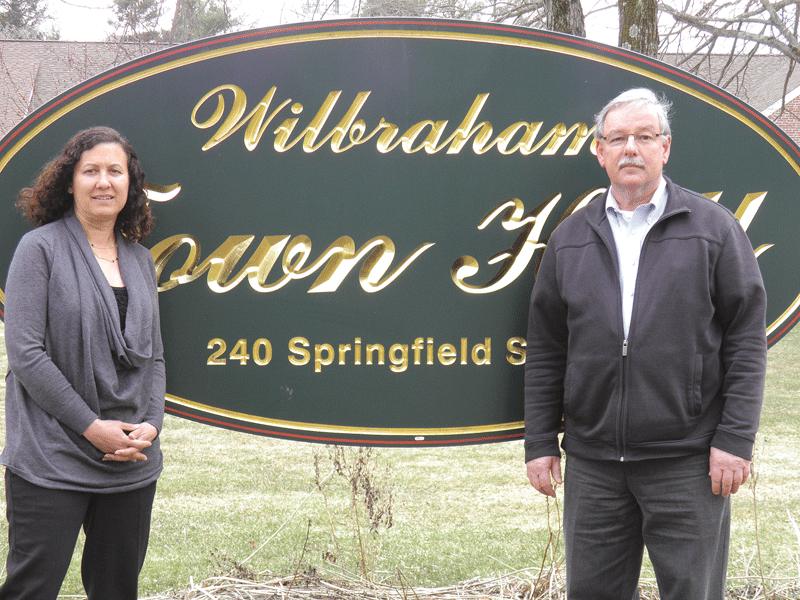
Tracey Plantier and John Pearsall say Wilbraham residents want to maintain the town’s historic New England charm.
“Wilbraham is primarily a residential community, and what attracts people here is the quality of life,” said the town’s planning director. “But people are also comfortable with the idea that Boston Road is very commercial, and they want growth there to continue.”
These opinions were voiced repeatedly in studies contained in a report released last September titled “Wilbraham Looks Forward.” It documents the results of surveys and focus-group meetings conducted by an all-volunteer vision task force over an 18-month period. Members of the panel were appointed by the Planning Board, and their goal was to solicit opinions from residents and business owners about what they appreciate about the town as well as change they would like to see in coming years.
“Our mission was to generate a consensus-based guiding vision to address Wilbraham’s current and evolving challenges and opportunities,” said vision team chair Tracey Plantier, who is a member of the Planning Board and volunteer for the Open Space and Recreation Plan Committee (more about the report later).
Wilbraham was devastated by the tornado that swept through Western Mass. in 2011, but the majority of that damage has been repaired. And although commercial and residential growth has been slow since 2008, Pearsall said, “last year, things started to rebound.”
In December, Lumber Liquidators opened on 2148 Boston Road, and two auto dealerships made significant investments in their properties. Balise Ford held a grand-opening ceremony to welcome the public to a new, 26,000-square-foot, $4.2 million dealership about 11 months ago. The expansion added about 20 new jobs and helped strengthen the town’s tax base.
“Officials from Balise told us they were impressed by the town’s streamlined permitting process,” said Pearsall. “They described it as effortless compared to other communities.”
In addition, Lia Toyota’s showroom on 2145 Boston Road got a $300,000 facelift last year. “And Baystate Self Store LLC on 2350 Boston Road is expected to open in June with 73,125 square feet of available storage space,” said Pearsall, adding that some of it will be climate-controlled.
Growth is also occurring in the residential sector, as 18 new homes and/or condominiums were built in 2013 at a cost of $4.74 million. “The majority were in the Gardens at Wilbraham and in Cedar Ridge, which are both on Boston Road,” Pearsall said.
Eric Fuller, the town’s planning director, told BusinessWest that the three-mile strip of Boston Road that runs through Wilbraham is zoned for commercial and industrial use and contains land and buildings available for purchase or for lease. “Properties for sale include the former Medeiros Williams Chevrolet Co. building and lot.”
Pearsall agrees that opportunity abounds on Boston Road, home to a significant amount of underutilized and/or vacant space. “The former Taylor Rental property next to Home Depot is available, and on a smaller scale, there is space for lease in a number of strip malls,” he said. “Plus, the site across the street from Post Office Park has been cleaned up and is for sale.”
Post Office Park is a horseshoe-shaped, planned commercial development on Boston Road with two entrances and traffic signals. The back of the property is home to many businesses that are attractive to families, including the YMCA’s Wilbraham branch, All American Gymnastics, a dance academy, some small retail shops, and a pediatric medical office.
But land is still available at the front of the park, which Pearsall said is suitable for a high-profile retail business, due to its visibility from Boston Road and the fact that 40,000 vehicles travel up and down the busy thoroughfare each day.
“It is a significant commuter route, with Springfield to the west, Palmer to the east, and the entrance to the Mass Turnpike in Palmer,” he said. “Jake’s Restaurant across the street feeds off the traffic from the people who attend recreational and sporting events at Post Office Park, and Eastfield Mall, just down the road in Springfield, attracts shoppers.”
Enhanced Value
Education is important to Wilbraham residents, and the town boasts three secondary schools, including the private Wilbraham-Monson Academy; the parochial Cathedral High, temporarily housed in the old Memorial School building; and the new, $50 million, state-of-the-art Minnechaug Regional High School, which serves students from Wilbraham and Hampden.
“When people come into my office, they always ask about our schools, and the high quality we offer is a really big draw,” Pearsall said, explaining that the new high school has a day-care facility, and the grounds of the old building have been turned into athletic playing fields.
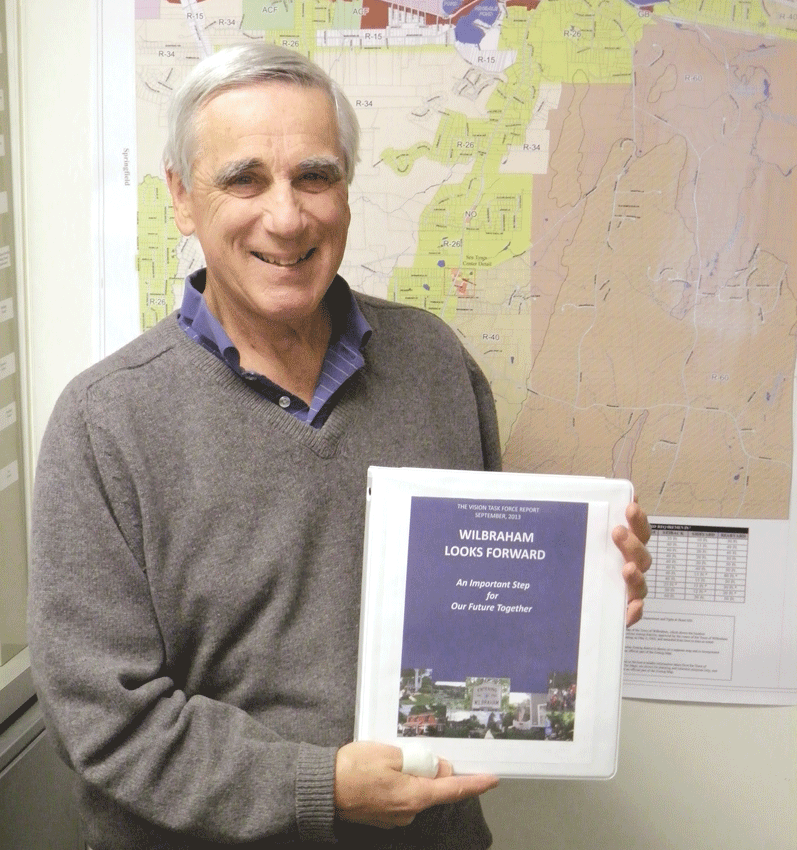
Eric Fuller shows off a copy of “Wilbraham Looks Forward,” which documents opinions solicited from residents and business owners.
Major investments have also been made at Spec Pond, which is home to a summer day camp run by the Parks and Recreation Department. “More than $1 million has been spent in the park over the last few years,” said Fuller. “We have new pavilions, a new playground, and new playing fields for youth baseball, lacrosse, and softball. It’s a very large complex with lights that can also be used for night football. Plus, a spray park is being installed and will be ready by the time summer arrives.”
In another section of town, the iconic Rice Fruit Farm building is undergoing a major renovation. “The Rice family ran their farm for many generations and grew their fruit stand into a retail store,” Pearsall explained. But the storefront has been vacant since the family closed the business about five years ago.
Fuller said there was some interest in redeveloping the site, but its residential zoning was a stumbling block. However, that changed recently when the Planning Board revised the zoning based on the fact that the building had been operated as a farm stand. “It allowed the new owner to repurpose the structure and make it into a viable business,” he explained.
The retail establishment, called Heritage Farm Stand, is expected to open within the next few months. “They’ll sell fruit, ice cream, pies, and baked goods, and will have indoor and outdoor seating,” Pearsall said. “This is an adaptive reuse of a building that everyone in town wanted to reopen.”
Vision Quest
The town is comprised of a number of neighborhoods — Wilbraham Center, North Wilbraham, East Wilbraham, Wilbraham Mountain, South Wilbraham, the Boston Road Corridor, and the Pines section — and during the past year, residents and business owners from all sectors had the opportunity to voice their opinions about what type of change they would like to see in the future via surveys conducted by the Vision Task Force.
“We created subcommittees that did in-depth studies on education, land use, livability, and town services,” Plantier said. “The study was unique and something that few towns do, but we wanted to create a focused vision strategy.”
To that end, the task force developed an extensive questionnaire titled “Community Insights,” and residents were given the opportunity to respond online or in writing at town meetings, at concerts in Fountain Park, and during tours of the new high school held at the beginning of the 2012-13 school year.
The study was designed to provide input on what Plantier refers to as “the dynamics of change,” and answer the questions, “where are we going?” “what are we in the process of becoming if we follow the current course?” and “what will Wilbraham look like in 20 years and beyond if current trends continue?”
The task force also held focus-group sessions with business owners, members of the Boston Road Business Assoc., the Rotary Club, the East of the River Chamber of Commerce, and other organizations. In addition, a survey was mailed to 200 businesses.
The final event was called Imagine Wilbraham Day, which was attended by 100 people who had the opportunity to express or reiterate their opinions about what works well in town and what changes could prove beneficial. The results have been compiled in a report titled “Wilbraham Looks Forward,” and a new committee has been created to facilitate ways to implement desired change.
However, two items that emanated from the surveys are already on the town’s agenda and will be voted on during the May 12 town meeting. The first involves signage and would allow new businesses to erect temporary signs welcoming customers.
The second would permit an expansion of land use in Wilbraham Center. Pearsall explained that every plot of land in the neighborhood is currently zoned as either neighborhood/office space or neighborhood/shopping space. “We are not changing the zoning; we are homogenizing it,” he said, adding that the proposal would give property owners the ability to create food establishments or small shops in that section of town.
However, Plantier reiterated that, although residents want more shopping and restaurant options, they are deeply committed to maintaining the look and feel of Wilbraham, which she described as “a scenic, small New England town.”
“One of the biggest challenges to our economic development is balancing the change that residents want while keeping the look and feel of a scenic, historic small town with green, open space,” she said, adding that two requests voiced repeatedly in the survey are for additional sidewalks and bike lanes along the roadways.
The May town meeting will also give residents the chance to learn about volunteer opportunities with the town’s nonprofit organizations. Booths will be set up by representatives who will be ready and willing to share information. “This is important, as many people who responded to the survey expressed an interest in becoming more engaged in town, and said they want to see more events held in our community,” Plantier said.
Wilbraham also has two active committees pushing for a new safety complex and senior center. Although financial resources are limited, the Fire Department completed a $2.8 million renovation of its main fire station last year. “It was brilliantly done in a manner that didn’t require the town to borrow any money,” Fuller said. “It was a collaborative effort, and the fire chief was committed to adapting what he had to the needs of the department through the use of available funds.”
Pearsall added that the project set a precedent “to be creative and try to get the best results at the lowest cost to the taxpayers.”
Home-based Help
One thing that makes Wilbraham unique is the willingness of its residents to share their time to improve life in town.
“Many people own businesses or have professional expertise and are happy to contribute their talents or make donations to programs here,” said Pearsall. “There is a lot of community support to improve the quality of life.”
That trend is sure to continue as “Wilbraham Looks Forward,” paying due diligence to the opinions of residents who take great pride in the place they call home.
Wilbraham at a glance
Year Incorporated: 1763
<strong>Population: 14,868 (2010); 13,473 (2000)
Area: 22.4 square miles
County: Hampden
Residential Tax Rate: $20.44
Commercial Tax Rate: $20.44
Median Household Income: $90,670
Family Household Income: $102,557
Type of government: Open Town Meeting
Largest employers: Friendly Ice Cream Corp.; Town of Wilbraham; Wilbraham and Monson Academy; Life Care Center of Wilbraham
* Latest information available
The following business incorporations were recorded in Hampden, Hampshire, and Franklin counties and are the latest available. They are listed by community.
AGAWAM
Elite Appliance Inc., 172 School St., Agawam, MA 01001. Richard G. Melloni Jr., same. Appliance repair.
Amherst
New England Charter Service Inc., 150 Fearing St., Suite 3, Amherst, MA 01002. Hui Luo, 13825 31st Dr., #5H, Flushing, NY 11354. Bus touring and travel service.
Belchertown
Little Friends Child Care Center Inc., 58 Daniel Shays Highway, Belchertown, MA 01007. Elizabeth Sawyer, same. Child care.
Easthampton
Miranda Design Studio Inc., 281 Main St., Easthampton, MA 01027. Jason Miranda, same. Publishing service and graphic design.
Feeding Hills
Nesen Trucking Inc., 95 West View Lane, Feeding Hills, MA 01030. Nikolay Nesen, same. Trucking.
Granby
Premier Irrigation Inc., 49 Taylor St., Granby, MA 01033. Colby Nugent, 55 Taylor St., Granby, MA 01033. Installation and maintenance of irrigation systems.
Hampden
Earth Movers Excavation Inc., 65 Allen St., Hampden, MA 01036. Kara J. Hatch, same. Excavation services and site work for residential, commercial, and municipal projects.
Hadley
Wheel Equal Inc., 44 North Maple St., Hadley, MA 01035. Michelle Moore, same. To conduct scientific research to further the development, production and provision of wheelchairs and adaptive equipment for persons with disabilities.
Hinsdale
Frontline Service Solutions Inc., 81 New Windsor Road, Hinsdale, MA 01235. Anthony E. Hyte, same. Consulting.
Holyoke
Ministerio Evaniglistico El Reino De Los Cielo Se Ha Acercado Inc., 339 Hampden St., First Floor, Holyoke, MA 01040. Keilyn M. Betancourt, same. Religious church.
Morales Xpress Inc., 50 Holy Family Road, Holyoke, MA 01040. Noel Morales, same. Transportation of goods (trucking).
Lee
Piretti Tennis Inc., 625 Chapel St., Suite 1C, Lee, MA 01238. Richard F. Piretti, same. Tennis court construction and maintenance.
Monson
Main Street Restaurants Inc., 216 Main St., Monson, MA 01057. Paul S. Stone Jr., same. Restaurant.
Monson Fire Department Assoc. Inc., 121 Fenton Road, Monson, MA 01057. Mathew Walch, same. To provide a relief fund for any active member of the Monson Fire Department, honorary member of the association, and their immediate family who are in need of financial aid.
Developments Strengthen Northampton’s Economy
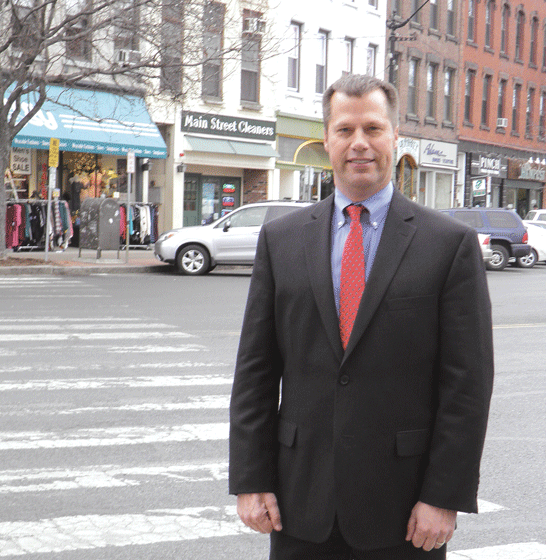
Mayor David Narkewicz says new projects in Northampton range from redevelopment of blighted buildings to new construction.
Mayor David Narkewicz said the dealerships are among a bevy of exciting new projects that will increase vitality in Paradise City. “There is a lot of investment going on right now, which we are very pleased about,” he told BusinessWest.
Terry Masterson agreed. “There are 13 projects with a total value of $88.6 million that will add 203,000 square feet of office/professional floor space, 110 new hotel rooms, 73 housing units, and 83 assisted-living units,” said the city’s economic development director.
He and the mayor then offered a tour, figuratively speaking, of the community and its many commercial and residential developments. And there were stops in virtually every corner of the city.
They started on King Street. The auto dealerships were a $6 million investment, and were built by TommyCar Auto Group on the site of the former Kollmorgen Corp. Electro-Optical Division (now L-3 KEO), which moved to Village Hill. They will add about 50 jobs and generate about $85,000 in tax revenue, Narkewicz said, adding that there is a significant amount of activity happening in the King Street area.
This includes the redevelopment of the blighted former Price Chopper supermarket property by Colvest Inc. It is now called Northampton Crossing, and a new building has become home to Greenfield Savings Bank, while the existing Firestone building has been expanded.
The most significant change, however, is the conversion of 70,000 square feet of retail space into medical offices. Baystate Health moved a medical practice into the renovated building and added a laboratory, MRI and imaging services, and obstetrics and gynecology. “They leased about 60,000 square feet of the facility,” Narkewicz said. “This is a great reuse of the property and gives area residents additional medical options in one of our key commercial areas.”
The former Mobil station at 300 King St. was also redeveloped last year by PeoplesBank in Holyoke, which purchased the site and built a LEED-certified, green banking center. “This is a commercial corridor, and we are excited about all of the investment here,” Narkewicz said.
Meanwhile, another project slated to change the landscape is the construction of a 108-room Fairfield Inn on Conz Street. Narkewicz said developer Mansour Ghalibaf, who owns Hotel Northampton, has been challenged to meet the demand for hotel rooms at commencement and other times of the year.
“This will increase the city’s hotel-room inventory from 358 rooms to 470 rooms,” said Masterson. “And multiplying it by the current occupancy rate will equate to 100,000 people staying overnight each year when it is complete.”
Activity is also occurring south of the site on Route 5 in Atwater Business Park, where space in two, new 40,000-square-foot office buildings has been leased. “The first building is occupied, while the second is expected to be finished by the end of the year,” Narkewicz said, adding that Cooley Dickinson Hospital’s medical offices and Community Support Options are consolidated into one building, and the hospital plans to move additional medical practices into the second.
There are also plans to tear down the former Clarion Hotel and Conference Center and build a new hotel with 100 rooms. “The property has a big footprint, and there is a separate retail pad that could become a restaurant as well as room for an 80,000-square-foot office building in the back,” he said.
Moving north, to the site of the former Northampton State Hospital, residential and commercial development is escalating (more on that later), and downtown continues to thrive.
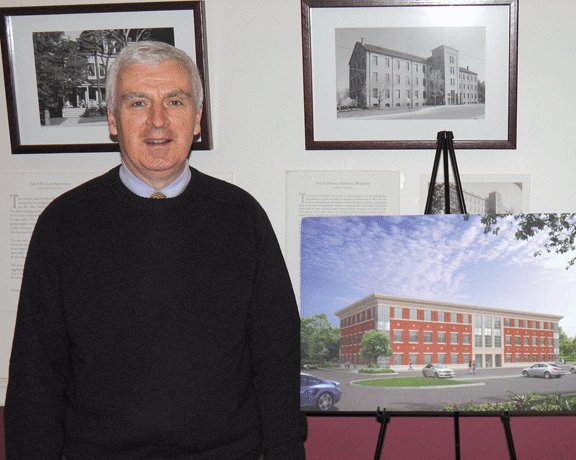
Terry Masterson says the majority of space in two new office buildings in Atwater Business Park has been leased by Cooley Dickinson Hospital.
And long-term planning continues to redevelop the Three County Fairground into a year-round exhibition facility for agricultural and cultural shows. “A new, 80,000-square-foot exhibition facility will be built, and renovations will be made to the existing buildings,” he noted. “In the coming years, the expanded facility will become a regional attraction for shows and exhibits with the potential to generate $50 million in commerce.”
For this, the latest installment of its Community Spotlight series, BusinessWest continues that tour of Northampton, which reveals that an already-thriving city is building additional momentum in every sense of that phrase.
Grounds for Optimism
At Village Hill, the canvas that developers started filling in 15 years ago is fast becoming a masterpiece of mixed-use development, with more initiatives in progress or on the drawing board.
The Gatehouse, a 16,000-square-foot structure that integrated the former gates to the state hospital into its design, opened its doors last year. It hosts office and retail space, and is the first commercial building on the north side of the campus.
Fazzi Associates, a Northampton-based healthcare services firm, relocated to the Gatehouse from King Street and expanded into 20,000 square feet of office space, Masterson noted, adding that the building also contains a Liberty Mutual claims office, and a small coffee shop is being planned.
Although the Gatehouse is the first commercial structure on the north side of the development, it already was home to a number of residential developments that cross all price brackets.
“It’s impressive to drive through Village Hill and see the different types of housing and how balanced it is,” Masterson said, noting that Wright Builders Inc. built a six-unit subdivison of single-family homes last year and started the first phase of Upper Ridge, a four-unit townhome building. The company is expected to begin the second phase of its Upper Ridge at Village Hill project this spring.
That development will include a duplex as well as one three-story, six-unit, elevator-equipped apartment building. Each unit will have three bedrooms and two bathrooms.
Pecoy Builders is also developing homes in Village Hills, said Narkewicz. The company has completed roughly half of a 24-unit subdivision of single-family homes that offers homebuyers nine plans to choose from in varying price ranges.
MassDevelopment, for Hospital Hill Development LLC, has invested more than $18 million in planning and infrastructure construction, and created the master plan for Village Hill, which is being marketed and developed in sections. In addition to the land currently out to bid on the back property, additional acreage remains to be developed, the mayor noted.
Overall, said Masterson, commercial, retail, and residential development occurring in the city is well-balanced. “We have hotel and retail space, along with senior housing,” he noted as he spoke about the new Christopher Heights project, a $13.4 million, 50,000-square-foot, 83-unit assisted-living facility being built at Village Hill by the Grantham Group.
“Half of the units will be affordable,” Narkewicz said, explaining that the master plan includes mixed-income development.
Meanwhile, many other developments are underway or in the planning stages in and around downtown.
Northampton Community Arts Trust has found a new home at 33 Hawley St. “They purchased a former health club [Universal Health and Fitness] and plan to create 12,000 square feet of exhibition space and a 250-seat black-box theater in it,” said Narkewicz. “Northampton Center for the Arts will be the key tenant.”
Also, the former Clarke School campus on Round Hill Road is slated to undergo a transformation. The Springfield-based OPAL Real Estate Group purchased 12 acres, which contain eight buildings, and plan a historic conversion of the structures that will include residential apartments and retail and office space.
“It’s a significant development because the campus was never on the tax rolls,” said Narkewicz, adding that efforts to bring more housing stock onto the market are critical, because officials believe more healthcare professionals will want to live in Northampton due to the expansion of Baystate Health and the fact that Cooley Dickinson Hospital has become an affiliate of Massachusetts General Hospital.
The Northampton-based hospital and Mass General’s Cancer Center have also entered into an agreement to expand oncology services to Pioneer Valley residents, with plans to build a new cancer center in the city.
On the Right Track
Coinciding with the many commercial and residential developments are infrastructure initiatives designed to improve traffic flow and, overall, make it easier for people to commute to and live in Northampton.
For example, improvements are in the works for the fork in the road that drivers encounter when they take Exit 18 off I-91 and head into Northampton.
“The intersection is owned by the state, and it plans to redevelop it and turn it into a roundabout,” said Narkewicz, noting that design work is 75% complete. “It’s a much safer and more efficient way to move high volumes of traffic through a complicated traffic pattern.”
The city is also in discussions with the Greater Northampton Chamber of Commerce about the many new businesses that have opened at the juncture where Pleasant Street becomes Route 5.
“Several commercial buildings have been redeveloped, and this is an area we are trying to grow as a way of extending our downtown,” the mayor explained. “It’s evidence of an emergence of positive small business and retail growth, and the city is working with the chamber to improve parking to support the growth, traffic, and other pedestrian issues to extend the walkable district of Main Street. All these changes are bearing fruit.”
State officials also want Northampton to take over the section of Route 5 that turns into Pleasant Street. There are some environmental challenges, said Narkewicz, adding, “we’re looking at how we can create a better transition from the state highway to downtown. We have put in some traffic islands to demarcate the point when you leave the highway and enter the city zone to encourage new commercial development.”
City officials are also looking forward to the return of Amtrak service, which will transport passengers along the west side of the Connecticut River. It is part of a larger, $73 million federal project and calls for a shift in Amtrak’s Vermonter route, which will include new stations in Greenfield, Northampton, and Holyoke. “The state is working with us on plans to build a new railroad platform next to the track,” Narkewicz said.
Local businessman Jeremiah Micka has purchased the old rail station building with plans for its conversion, which will include a new sports bar on the north side of the structure, as well as a 200-seat banquet hall. The Tunnel Bar underneath the building will remain open, and the mayor said he is happy that the rest of the building will be redeveloped, as it was empty and on the market for several years.
Moving Forward
Masterson calls Northampton a leading city in Western Mass. “It has many diverse economic and demographic assets that generate economic strength locally and within the Pioneer Valley Knowledge Corridor region.”
Narkewicz agreed, and said Village Hill is a model development because it is close to downtown and residents can walk there, ride their bikes, or use PVTA buses. “Plus, it contains open space and community gardens. It’s an example of the sustainable growth Northampton is focusing on,” he said.
Growth that is taking place in every corner of the city.
Northampton at a glance
Year Incorporated: 1884
Population: 28,592 (2012)
Area: 35.8 square miles
County: Hampshire
Residential Tax Rate: $15.39
Commercial Tax Rate: $15.39
Median Household Income: $48,864
Family Household Income: $56,844
Type of government: Mayor, City Council
Largest employers: Cooley Dickinson Hospital, Smith College, City of Northampton
Economic Transformation Continues in Pittsfield
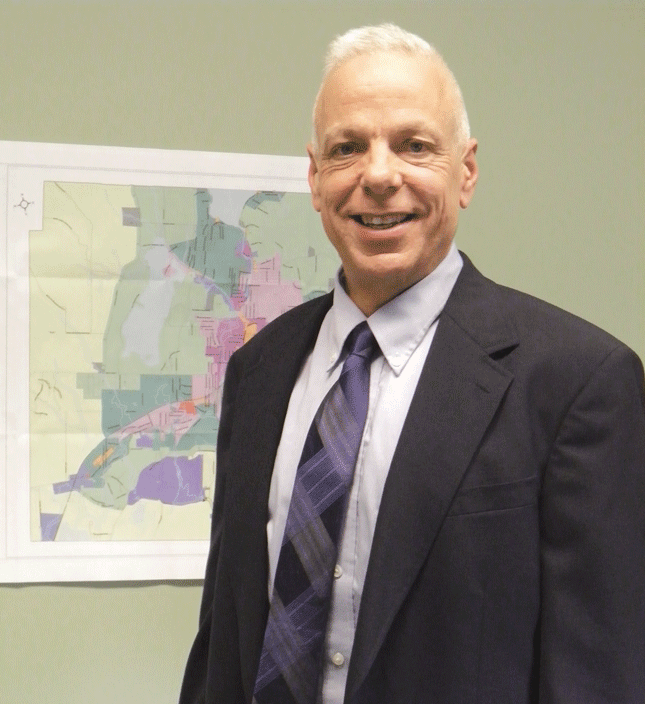
Community Development Director Douglas Clark says diversity is the key to sustained growth in Pittsfield.
“We have a lot of good things going on and are progressing nicely,” he told BusinessWest.
Douglas Clark concurred. “We want to be diverse. You have to grow on multiple fronts,” said the city’s community development director.
The Innovation Center holds real promise, and $6.5 million has already been earmarked for the project as part of the Commonwealth’s Life Sciences Bond Bill. It will be built in William Stanley Business Park, which encompasses 52 acres on the grounds of the former General Electric Pittsfield Works. The park opened in the summer of 2012 with a ribbon-cutting ceremony for its first tenant, Mountain One Financial Center, but since that time, plans for the Innovation Center have taken center stage.
Clark said the original plan called for a ‘life science center,’ but the name was changed to reflect the fact that Pittsfield has more plastic and advanced-manufacturing companies than life-science companies.
The 20,000-square-foot center will provide space for the development of new products, support services, and specialized equipment. Companies will pay a membership fee to use the facility, and will be able to lease space for first-stage commercialization.
“It will provide them with access to new, expensive equipment such as a 3-D printer. Plus, we envision support services with intellectual-property rights, patents, and a range of other things a startup might need,” Clark said. “We also hope to foster connections with one or more research universities, such as UMass or RPI [Rensselaer Polytechnic Institute], and become connected to high-speed computer service through the Mass Broadband Initiative. Our hope is that, if a company’s first-stage commercialization is successful, they might move into their own building.”
The center will contain a clean room with a controlled level of contamination, which advanced-manufacturing companies require to produce medical devices and other sensitive equipment.
However, Clark said the room will also offer educational opportunities. “Berkshire Community College could run training in the clean room and tie it into their curriculum.”
Progress has been fueled through a number of groups. Bianchi created a Life Science Task Force to develop ideas for the site, New England Expansion Strategies was hired to conduct outreach and feasibility studies, and Pittsfield Economic Development Authority (PEDA) is doing everything possible to move the project forward via loans and technical assistance. “We are not lying idle,” said the mayor.
Clark agreed. “The task force meets to discuss initiatives, including how Pittsfield can capitalize on life-science industries. They are a strategic focus of the Commonwealth, and we are hoping not to be left out of the discussion,” he said, adding that PEDA has commissioned a study of advanced manufacturing in the Berkshires.
An example of a success story is Nuclea Biotechnologies Inc., which develops and makes diagnostic tests for cancer and diabetes. It moved to Elm Street about a year ago, and recently received a $510,000 state tax incentive from the Massachusetts Life Sciences Center to develop more manufacturing in Pittsfield and create 25 jobs.
The city and PEDA have also joined forces to entice a rail-car manufacturer to the business park.
“The MBTA [Massachusetts Bay Transportation Authority] has issued a request for proposals for an $850 million contract to build railway cars for their Orange and Red Line trains,” with the stipulation that they must be assembled within the state, Clark said. “So a few weeks ago, the city put forth an offer of $1 million, and PEDA offered another $1 million incentive to try to bring a rail-car manufacturer here.”
Proposals are due in May, and any firm coming to Pittsfield will need to develop a parcel and erect a new building in the park, which could cost up to $20 million. But Clark said PEDA has a foundation suitable for construction, and the offer has led to meetings with a number of rail-car manufacturers. “It could bring 200 to 250 jobs to the city,” he added.
Potential for development also exists in Downing Industrial Park, and city officials are in discussion with a high-tech company about the former Meadwestvaco Resource building there, which has been unoccupied for years. If the company decides to settle in the city, Bianchi said, it will add about 100 scientifically oriented jobs to the area.
And although GE closed its transformer and aerospace operation in Pittsfield more than two decades ago, its presence is still evident. GE Advanced Materials, now owned by SABIC Innovative Plastics, has made Pittsfield its North American headquarters, and General Dynamics occupies many of the old GE buildings and is a major employer for the area.
Expanding Metropolis
The city’s downtown, which has undergone a transformation over the past decade, continues to evolve. Pittsfield has received $1.7 million to complete work on its main common, which Bianchi describes as “the largest, most centrally located urban block in the city,” and an additional $2 million in grants has been allocated for Phase 3 of the downtown streetscape-improvement project.
Community Development Specialist Laura Mick noted that infrastructure improvements have been ongoing since 2005, when a concerned citizens advisory committee told city officials the area needed more aesthetic appeal, better lighting, and improved pedestrian safety. “So we updated the master plan. We wanted to create a new image.”
To that end, new sidewalk treatments and LED decorative lighting have been installed; bump-outs were shortened, which makes it safer to cross the streets; and benches, bike racks, new trees, and a rain garden have combined to change the landscape.
Mick said Phase 3 of the plan, which will kick off this spring, will continue the improvements and include a bicycle lane.
The project has brought new restaurants and retail shops to the area, and Bianchi said there is not much vacant space left as developers continue to take advantage of tax credits and repurpose buildings that had sat abandoned for years.
They include the former Berkshire Bank building on 54 North St. Last month, NBT Bank opened a full-service location on the first floor, which will serve as the central location for its Berkshire County presence. Office space on the second floor has also been leased out and is being rented by attorneys. “The building is unique, and the bank fills a gap downtown,” Bianchi said.
A block away, Allegrone Construction is converting the old Goodrich House behind City Hall into about 20 market-rate apartments. That project is nearing completion, but Allegrone has plans for a similar makeover in the nearby Onota building.
In addition, Tierney Construction recently announced construction of a new boutique hotel with 43 rooms and space for meetings. It will occupy 68,000 square feet in two connected brick buildings that run from 273 to 297 North St. “Tierney will also maintain the two restaurants that are there now, and hope to get started on the hotel in 12 to 18 months,” Bianchi said.
Other efforts to promote vitality include a parking-management study commissioned by the city to ensure it is using available space wisely. “These things all work together to create a vibrant downtown,” Clark said.
Change is also occurring nearby. “We are seeing little restaurants, shops, and ethnic markets opening,” Bianchi said, adding that they offer Polish, Far Eastern, and Columbian products.
In addition, an architect hopes to put greenhouses inside the former Eagles building in the Morningside neighborhood, located a few blocks from downtown. “It would complement the farmers’ market that opened last year,” Bianchi said.
The arts community is also thriving. “Pittsfield used to be the ‘hole in the donut’ as far as the arts went, but with the Colonial and Berkshire theaters, Great Barrington Stage, the Beacon Cinema, and our First Friday Art Walks, we have filled that hole,” Clark said.
Bianchi said Barrington Stage opened a second venue about three years ago in a former Veterans of Foreign Wars hall, and the city’s newest art project, which is in the works, is a retrospective that will show how art and industry intertwined throughout Pittsfield’s history.
“The GE plant created glass bushings that were almost a crossover between art and industry,” the mayor said, citing one example. The undertaking will include televised interviews of residents who will recall the heyday of the mills.
In addition to arts and entertainment, Clark said the city offers recreation in the form of a state forest, a ski area, three golf courses, and two large lakes within city limits. But the arts overlay district and these venues are not enough to attract and retain skilled workers, so city officials are working in conjunction with other groups on workforce development.
To that end, a new vocational technical high school will be built on the grounds of Taconic High School, where enhanced programs to prepare people for careers in advanced manufacturing can be developed with partners such as Berkshire Community College.
Bianchi said the city is working with the Mass. School Building Needs Authority on the high school. DAR Associates in Waltham was selected to do the design, and it expects to have several concepts to choose from that will result in either a renovation and expansion of the existing building or a brand-new school. “The new school is integral to helping businesses grow,” the mayor said.
Moving Forward
Progress is expected to continue as people from many walks of life continue to join forces.
“We have a community that knows how to work together and really pull together for mutual purposes, and we are able to turn to the state and federal government and show them investments downtown which inspire them to invest in us,” Bianchi said. “We also have had good public and private partnerships for the last 10 years, and Mass Business Development is interested in helping us with a lot of these projects.”
Clark concurs. “Things don’t change in a linear, predictable fashion,” he said. “They spiral up or down, and right now, Pittsfield is in a good upward spiral.”
Pittsfield at a glance
Year Incorporated: 1761
Population: 44,737 (2010); 45,793 (2000)
Area: 42.5 square miles
County: Berkshire
Residential Tax Rate: 16.70
Commercial Tax Rate: 34.47
Median Household Income: $35,655
Family Household Income: $46,228
Type of government: Mayor, City Council
Largest employers: Berkshire Health Systems, General Dynamics Advanced Info Systems, SABIC Innovative Plastics
* Latest information available
Local Enterprises Look to Do Business with MGM Springfield
Joe Frigo’s family has done business in the South End of Springfield for 65 years.
“We’ve seen a lot of good and a lot of bad, and the South End is in a bit of a lull right now,” said Frigo, owner of Frigo’s Foods, a restaurant and catering business.
That said, “I’m fully in support of MGM,” he told BusinessWest. “For the last 10 or 15 years, everyone has been saying, ‘we need some type of influx.’ We’re not going to get any type of industry down here at this point, so everyone is leaning toward entertainment, and it’s now in our lap. If we don’t take advantage, it’s going to be a big mistake.”
Frigo is one of a number of South End business owners who welcome MGM Resorts International’s plan to build an $800 million casino in their neighborhood — not just because of the expected street improvements and foot traffic, but because MGM offers an uncommon business opportunity.
“They have made a proposal to us, though nothing is written in stone,” Frigo said. “They did extend an invitation for us to open up a shop within the casino, and still have a store in the South End. Hopefully, we land the deal and make it happen.”
MGM’s host-community agreement with Springfield calls for, among many other concessions, a commitment to spend $50 million per year with local and regional vendors. “That represents about 50% of what we would spend annually,” said Mike Mathis, president and CEO of MGM Springfield.
Some business partnerships are national by nature, he noted. “We have our Coke and Pepsi deals; that’s something we can’t source locally.” But for providers of many other types of goods and services, the casino giant typically makes an effort to strike partnerships in its host communities. “That’s just good business.”
Local vendors run the gamut from food providers to accounting, legal, and engineering services; from office and industrial equipment to building maintenance and facilities; from cleaning to groundskeeping. “We do some of these things in house, but a lot of it is outsourced,” Mathis said. “In each of those categories, there are a host of line items.”
Frigo isn’t the only one who sees growth potential in this local commitment. Brent Bertelli, owner of Langones Florist, also welcomes the MGM development.
“There are opportunities for many businesses thinking outside the box,” he said. “If I were selected as a vendor, naturally, with the size of their resort, it would be a benefit to my bottom line and help me hire more local people, because I’d need extra staff.”
Game Changer
Bertelli said a casino will provide an economic and confidence lift for the entire downtown area. “It’s going to bring a cleaner image back to the South End, and some diversified retail. And, of course, it will lead more people to my front doors; that’s just common sense.
“I have heard they’re really open to using a diverse collection of local business, whether it be a florist or a tuxedo-rental place in the area or a few of the local restaurants,” he added. “But even if I wasn’t a vendor, I’d still get a boost from it, absolutely.”
Jeffrey Cuiffreda, president of the Affiliated Chambers of Commerce of Greater Springfield (ACCGS), has been busy preparing chamber members to interact with casino decision makers.
“We’ve been working with MGM. We worked with all three applicants, actually, but more closely with MGM because they seemed, quite frankly, more outgoing with some of these things,” he said, noting that, in addition to the $50 million commitment, the casino has determined to use the chamber as a vehicle to reach out to businesses.
The ACCGS surveyed its members recently to gauge interest, and about 70 companies responded. “Without a whole lot of information, they were interested in pursuing those options — which range, literally, from sharpening knives to producing the meats and vegetables and the linen services. Conservatively speaking, there are about 60 different categories of goods and services.”
Mathis noted, however, that many local vendors will have to engage in capacity-building efforts to do business with MGM.
“As part of that, we’ve reached out to the Affiliated Chambers and the local chambers, and we’ve reached out regionally to the four counties, working with different organizations to assess the market.
“In addition, we’ll bring our procurement department out from Las Vegas and walk [businesses] through the different products and services we need, get them enrolled in the system, get them pre-qualified,” he added. “We want to make sure they understand we’re a Fortune 500 company with different requirements, compounded by the fact that we’re in a heavily regulated industry.”
Indeed, Cuiffreda said, doing business in the gaming industry requires clearing a number of hurdles, and part of his goal in sitting on a state advisory board is to try to minimize the hoops vendors will need to jump through. “The state came out with some draft regulations for procurement, and the chamber commented heavily on that,” he said, noting that some of the requirements are so onerous that many small businesses might not bother to apply.
“MGM is looking for quantity, quality, and price,” he said. “But the state is going to be looking for an awful lot of financial data and information that, quite frankly, could turn some vendors away. We’re hopeful that, when the final regulations come out, they turn out to be more user-friendly.
“We’re a relatively small-market city, and they are obviously a massive business that’s going to require large quantities of goods and services,” Cuiffreda went on. “Our concern is that they do not overlook the smaller businesses here.”
Ramping Up
Among the small businesses that intrigue MGM are local agricultural enterprises.
“On the food side, we’re really taking advantage of the farm-to-table movement, and we’ve reached out to different vendors in the region, particularly in the Berkshires, for some of the great things they’re doing with local food processing. That’s one area we’re really excited about,” Mathis said.
Cuiffreda said the chamber has already begun connecting companies of all kinds with programs to help them ramp up to do business with MGM.
“We do have concerns that some small businesses out there may not be ready right now — they have a product, but may need some capacity building, may need help with accounting or backroom work or whatever, and they need to comply with some of these regulations.
“The chamber is looking at that as well,” he continued. “If [MGM] needs 10,000 widgets, and someone has a capacity of only 8,000 or 9,000 now, we don’t want to see that contract go elsewhere. We want to work with those businesses. The chamber has some technical assistance programs in place, and we’re doing all we can to help these small businesses that might be a little too small, to get them to where they can get these contracts.”
He doesn’t think 70 is the ceiling on how many local businesses are interested in being MGM vendors, however. “I think a lot more are interested, but it seems to have taken a back burner right now. When it becomes more real and the license is awarded, a lot of people will jump off the sidelines and get involved. But we want to get them involved early.”
Mathis noted that companies that strive to build capacity and meet MGM and state requirements will be better off for the experience no matter how much business they do with the casino. “If you can meet our requirements, you’ll be well-positioned to meet the requirements of other blue-chip companies.”
Frigo is among those who expect to be in that position. “I’ve been to markets in other states that have riverfronts or a Faneuil Hall or market areas, where a well-established business opens in a high-traffic spot with signage saying, ‘visit our main location,’ or ‘this is a flavor of what we have; if you like it, visit our original store,’” he said.
“I think it’s a way to expand my name to thousands of people coming through the casino every day, and we think that’s a positive thing all around,” Frigo added. “And it’s not just food; if you make pencils or linens, they want to do business with you. If you’ve got the right product and want to do business with MGM, they want to do business with you.”
Joseph Bednar can be reached at [email protected]
Region’s Tradespeople Anticipate Casino Construction Opportunities
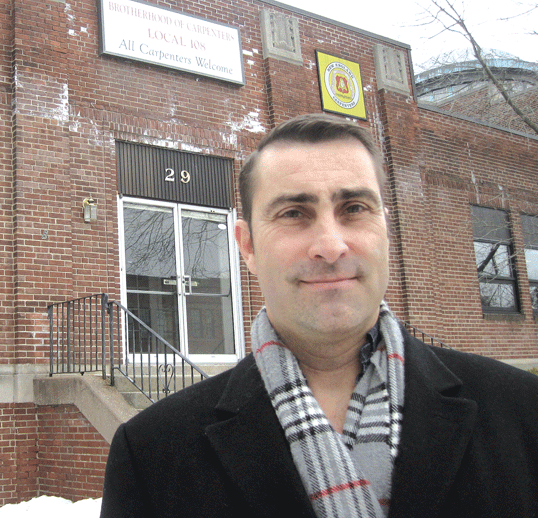
Jason Garand says MGM has a track record of using local labor for its projects, and he expects Springfield to be no exception.
“We do almost all the big work — I would say 99% of the biggest work,” he told BusinessWest. “And this one is going to be the biggest of all.”
He refers, of course, to a plan by MGM Resorts International to develop an $800 million casino in Springfield’s South End, which is awaiting final approval by the Mass. Gaming Commission — and which, if it moves forward, promises to put thousands of the area’s construction tradespeople to work.
“MGM has been, from the beginning, very forthright and open about how they plan to build this,” Garand said. “They have a track record of construction in other states, and in Las Vegas and Atlantic City, where they are committed to all the right things. And not only are they committed, but they’ve done so in writing, with the host-community agreement.”
That agreement, hammered out with Springfield municipal leaders last year, calls for the construction phase of the casino project to incorporate mostly local labor, potentially to the tune of 2,000 construction jobs, followed by 3,000 permanent jobs in the casino once it opens.
“Springfield — and Holyoke, too — have higher unemployment than other cities in the state,” Garand said, “so we want to create those jobs right here.”
Jeffrey Ciuffreda, president of the Affiliated Chambers of Commerce of Greater Springfield, praised the way MGM has reached out to the area’s unions, and suggested the project might incorporate a handful of large contractors from the eastern part of the state, but will source most of the subcontracted work locally.
The end result will be an uncommon style of casino, one that will face outward onto the streets of the South End, allowing tourists to enjoy its shops and restaurants without having to navigate through the gaming area or hotel. This design will encourage local business growth (see story, page 19), and link visitors to other Springfield attractions, including the MassMutual Center, Springfield Museums, and Symphony Hall.
“Their model is really unique,” Garand said. “And, if this model works, Springfield will be the first of many projects in the country with this new casino style. For example, they’re not building a convention center of their own; they’re tying it into the MassMutual Center.”
From the start, he said, local labor leaders, contractors, and tradespeople hope that community outreach begins with the construction phase. So far, they like what they’re hearing.
From the Ground Up
The level of expectation varies, however, between individual businesses and niches. For instance, landscape-architecture opportunities might be limited in an urban casino, said Stephen Roberts, president of Stephen A. Roberts Landscape Architecture & Construction in Springfield.
“There might be some exterior construction in regard to pavers and maybe water features, but I don’t see there being a lot of green space available to create pocket parks,” he said. “From the plans I’ve seen, there’s not a whole lot of landscaping — it’s mostly a kind of urban cityscape.”
He said landscape architects, perhaps more than any construction trade, are hurt by the Springfield project’s status as the last proposal standing for the Western Mass. license.
“If there were a casino like the one proposed in Palmer, on a large, open area of land, you’d see better opportunities for landscape architects, for planning, different plantings, and landscape features,” he added. “In Springfield, space is tight; the buildings will take up 90% of the site. I don’t see there being some huge, open landscaping there. I don’t see this as a huge opportunity, but I might be wrong.”
Still, opportunities abound across the construction trades when one considers the sheer scope of the MGM development.
“From the perspective of local contractors, it’s a little problematic,” Garand said. “Even large companies like O’Connell and Fontaine could never do a single project at $400 million, never mind $800 million. This is a monster.”
He said what Baystate Medical Center did recently, with its $250 million ‘Hospital of the Future’ expansion, is a good example for MGM to follow. Even though the main contractor for the 640,000-square-foot project was from the Boston area, Baystate crafted a project labor agreement with local unions to ensure that much of the work would be performed by local talent.
As a result, of some 300 workers on site daily at the project, which wrapped up two years ago, about 70% of them were based in Springfield or the Pioneer Valley. “We’ve been able to keep these jobs,” Stanley Hunter, Baystate’s project executive at the time, told BusinessWest back then. “Especially in these times, we know there’s an interest in keeping work local in such an important project for the area.”
That certainly hasn’t changed with the MGM development.
“There is a fear out there, because contractors here are smaller, that they would come in with basically big contractors from Boston or Eastern Mass., set up, then leave, without much in value locally,” Garand said. “MGM has said, ‘absolutely not; we are going to make sure we get as many contractors from the 413 area code as possible. We are maybe going to chop up some of the contracts, break them up so it’s feasible.’”
That means that, while no company is going to take on an entire $800 million project, a $5 million hotel wing or $50 million in electrical or plumbing work are big prizes in themselves, and there should be plenty of such opportunity to go around.
Holding Pattern
Not only is MGM committing to some 2,000 construction jobs, it will strive to ensure that 35% of those go to Springfield residents, and that no more than 10% of the workforce is made up of people who live outside the Greater Springfield area. In addition, it has set goals of hiring 15.3% minorities, 6.9% women, and 8% veterans on the construction phase.
These goals have produced anticipation in the local construction industry, but the project has also hindered companies in a significant way — by putting many Springfield landlords in a holding pattern.
“So far it’s hurt us,” said Peter Allum, president of McCormick-Allum Co., a Springfield-based HVAC firm. “There are projects that haven’t happened because of what might happen.”
That’s because many downtown Springfield property owners are in a kind of holding pattern, waiting for the casino to become official before making any moves involving their buildings.
“In several cases, landlords have not renovated their buildings because they’re taking a wait-and-see attitude,” said Allum, who recently saw two potential projects downtown pushed to the back burner. “One is a four-story building that needs a new heating system. Depending on the casino outcome, [the owner] might move out. Whether he renovates the space or moves out depends on what happens.”
Still, Garand believes the project is an overall benefit to the region, and his union has already begun to partner with MGM on job fairs and is promoting its apprenticeship program for teens at area vocational schools, so they can find work opportunities right after graduation.
“When Baystate did its $250 million expansion, they had a firm commitment to use a certain percentage of local labor, and they exceeded that number by almost 50%,” Ciuffreda said. “It’s clear from the finished project that the quality of local workmanship is high. I think MGM knows that was the last big building project done in the area, and my sense is, they’re committed to local labor.”
Joseph Bednar can be reached at [email protected]
TommyCar Auto Group Expands with Two New Dealerships

Carla Cosenzi says new, state-of-the-art showrooms and large service bays await customers at the Country Hyundai and Northampton VW dealerships.
The numbers come in the form of monthly markdown specials, which attract customers … and more customers mean growth. A trip down Northampton’s King Street is proof of the significant growth that Cosenzi and her brother, Tommy Cosenzi — president and vice president, respectively, of TommyCar Auto Group — have experienced since formally taking the reins of the company when their father, Thomas E. Cosenzi, succumbed to brain cancer in 2009.
Reflecting that growth are $13 million and 36,000 square feet of new commercial construction on King Street in Northampton, for two brand new state-of-the-art dealerships: one for the former Northampton Volkswagen, which TommyCar purchased and moved from Damon Road, and the other for Country Hyundai, recently relocated from Greenfield. They join two other dealerships in the family chain, Country Nissan on Route 9 in Hadley and Patriot Buick GMC in Charlton.
Carla, who has long been the face of all the TommyCar brands, uses numbers to her advantage in her quirky, sometimes edgy, always model-specific TV, radio, and Internet commercials. She’s currently promoting the move of Country Hyundai to its 347 King St. address with a deal for a brand-new Hyundai Accent for only $11,347 — the 347 a reminder of the new address — and spicing up the offer with 0% down, no trade required.
Proclaiming that “our move is done and it’s time for fun,” Cosenzi, her brother, and the TommyCar team — which has grown by 30 more employees between the two new showrooms and expanded services bays — officially opened the doors on Jan. 13, with Northampton Volkswagen expected to open Feb. 14, followed by a month-long grand-opening celebration starting March 1 for both new showrooms.
The barrage of advertising that has already begun will make clever use of wordplay and specific car-sale numbers, all to grab viewers’ and listeners’ attention, Cosenzi said — a function of the TommyCar business plan that has served it well, even through the toughest of times.
“You saw a lot of people in the [automobile] industry completely cut back advertising, where we stayed aggressive to that,” she said. “We stayed very true to our beliefs, our own business plan, and kept our name out there, and I think that helped us.”
With Carla handling spokesperson duties and the customer sales side, and Tommy working as the automobile buyer, they’re forecasting 2014 to be the best year since 2006. For this issue’s focus on auto sales, BusinessWest visited the Cosenzi team’s brand-new Hyundai and VW dealerships in Northampton to see what state-of-the-art looks like when coupled with the team’s focus on customer service — and a few unique new perks.
Road Trip
While some industries — including auto sales — struggled with ups and downs between 2009 and 2013, Cosenzi said unrelenting advertising and partnerships with strong manufacturers helped TommyCar weather the tough times, but a physical move in 2007 of the Nissan store from Greenfield to Hadley, followed by the 2012 acquisition of Northampton Volkswagen, really made a difference. But the process to acquire the VW dealership was one neither sibling expected to be so comprehensive.
Cosenzi told BusinessWest that she and her brother understand the Western Mass. market and believed in the VW brand, so they attempted to purchase the struggling dealership from the owners. When that didn’t work out, they reached out to Volkswagen to secure the franchise. Under the microscope for more than six months — including a thorough dissection of all their books — they were finally offered a visit to the New Jersey headquarters of VW, where they were interviewed.
“There were a lot of people in this area that wanted that franchise, so we were competing with local dealers,” Cosenzi added. “And I have to say, they believed in our enthusiasm, in Tommy and I as a team, and what we foresaw for growth of that franchise in this market.”
Just two years later, Cosenzi said, Volkswagen management is “ecstatic” with VW’s growth under the TommyCar name. Part of the promise in that interview process was that TommyCar would not only exceed sales goals, but build a brand-new facility. To accomplish that, they purchased the five-acre Kollmorgen property for $1.8 million — $2.2 million less than the asking price, due to demolition and possible remediation needs.
“We knew it was the right property for us, but it doesn’t support just one manufacturer, so we spoke with Hyundai, because our dealership was in Greenfield. They also believed in our business plan and agreed in letting us move,” she said.
The move of the Nissan store from Greenfield to Hadley in 2007 wasn’t difficult for the siblings because Hyundai remained, but moving Hyundai to Northampton this year was bittersweet, Cosenzi said. “We’ve had a presence in Greenfield since my grandfather [Thomas A. Cosenzi] was there, long before I ever got into the business. But the opportunity for us to build this type of facility on King Street was too great,” she explained, adding that it fell into their five-year growth plan.
Abatement of asbestos and PCBs on the former defense manufacturer’s site set the complex construction project back just a few weeks.
“You don’t realize how much work it is, especially when you’re as involved as Tommy and I are,” Cosenzi recalled. “We wanted to make this building really efficient, customer-friendly, and a great work environment for our employees, so we paid attention to every single detail.”
The service areas in both dealerships expanded significantly, and the typical comfortable couches and large-screen TV in most dealerships are present in both lounges, along with free coffee and light snacks, and they’ve also added ‘Internet bars’ for customers who want to work or surf as they wait.
Meanwhile, close proximity to the amenities of Northampton is another way the Hyundai, Volkswagen, and nearby Nissan dealerships benefit customers.
For instance, Cosenzi noted, the Norwottuck Rail Trail bike path passes directly in back of the Hadley Nissan dealership and very near the King Street stores, so the auto group installed bike racks and will offer free bicycles for pleasure riding during the warmer months while customers are waiting for service. In addition, a year-round shuttle service between the three stores will transport those same customers to Northampton’s highly regarded restaurants; later, a call or text will let them know their vehicle is ready, followed by a shuttle pickup.
“We spend all this money on advertising to get customers to come through the door,” she said. “Now we need to treat them right and take care of them — not only when they buy the car, but when they service it. It’s a life cycle.”
Dealer Incentives
The two new brands on King Street, Cosenzi said, are helping transform the stretch into an ‘auto row’ that now includes five large, competing dealerships. But “competition is great for us,” she added.
As she was speaking with BusinessWest, a gong echoed through the brand-new building to signal another happy customer. “Someone sold a car,” Cosenzi said, smiling, just as a customer looked suddenly surprised to see her behind the counter — which is typical.
“People are shocked when they come in and I’m standing there,” she said, laughing. “It’s what sets us apart from a lot of our competitors. We have really aggressive advertising, and when the customers come in the dealership, the owners are approachable.”
For those who are new to Cosenzi’s style of advertising, the ‘I’m teasing’ wink, the metaphors regarding topical news, and the smart use of social media and contests to involve customers have produced a legion of new fans, many of whom competed in a popular jingle contest a few years ago, and, more recently, a commercial contest that garnered each winner a new car.
“Sometimes, I think advertising is taking over my life,” she said as she slumped her head into her hands — especially since manufacturers don’t announce each month’s incentives, rebates, and other programs until the first of the month. Then the rush is on to get scripts written — sometimes based on the season, current news, or whatever’s in Cosenzi’s head at the time — and get into the studio to record the ads and disseminate them to local TV and radio stations. The publication goal is always the fifth of the month, or the first weekend.
“A lot of other dealers will be out there just branding themselves with a generic message and leave the message on for two or three months, and you’ll see their prices aren’t as aggressive as ours because they don’t update them every month,” she explained. “But we go in every single month with a fresh idea and fresh prices on a specific car.”
While other dealerships might scoff at the price customers say they’ve heard Northampton Volkswagen advertise, claiming TommyCar will never honor that price, Cosenzi and her team do. She knows her advertising push for a certain Volkswagen model helps other Volkswagen dealers — a fact she confirms in shared monthly reports — but said her dealership definitely shows the largest spike in sales for that model. It’s a good feeling, but short-lived.
“We work so hard all month, and then you’re cut off, and you start back at zero the next month; it’s a constant struggle, and it rules my life,” she said. To be successful in auto sales today, she went on, her team has to understand customer service — and the rise of the online shopper who often knows the exact price a dealer paid for a car. “So it all goes back to customer service, because we all pretty much have the same cars.”
Gearing Up
Investment in customer service and giving back to each dealership’s local community is all part of the TommyCar business plan. Annually, TommyCar Auto Group holds the Thomas E. Cosenzi “Driving for the Cure” charity golf tournament, now in its fifth year, which helps to underwrite brain-tumor research at the Dana-Farber Cancer Institute in their father’s name, and has raised more than $400,000 since 2009.
The Cosenzi family also gives to many other charitable and civic organizations, and for the past three years, it has aided talented numerous high-school seniors with the $1,000 Tom Cosenzi Scholarship.
Considering all of that, Cosenzi is satisfied with where she and her brother have taken the TommyCar business.
“We’re not looking to be a mega dealer and grow too fast and lose what we have now,” she said as she gestured to her sparkling new surroundings. “This is our growth.”
Elizabeth Taras can be reached at [email protected]
The Race to Pick MGM’s Pockets
As the process for awarding the only Western Mass. casino license moves into its final, critical stages, there is an interesting subplot emerging — area communities trying to swing generous deals from the presumptive winner of that contest, MGM Resorts International.
Many communities have already negotiated what are known as ‘surrounding-community mitigation agreements’ with the casino operator, winning both upfront payments and yearly awards, with both averaging something close to $100,000 per community. Holyoke, for example, recently struck an accord that calls for $50,000 upfront and an additional $1.275 million over the next 15 years, or $85,000 annually. Some cities and towns have negotiated more, others less.
Holyoke isn’t an abutter, and isn’t likely to be impacted much by the casino, but these payments essentially amount to compensation for having a casino in the same county, and many other communities have shamefully followed suit. MGM, understandably, has seemed more than willing to strike such deals, on the premise that they are a cost of doing business. Extracting dollars from MGM, or any other business for that matter, however, sets the wrong tone for doing business in the state.
Where things get interesting is with two communities — Longmeadow and Northampton — that are seeking large amounts of cash (or likely will). Longmeadow, one of the most prosperous towns in the Commonwealth, fears its community will be adversely affected by traffic to and from the South End casino, and is seeking $1 million upfront, followed by annual payments of $500,000, along with annual escalators. We hope MGM tells them enough is enough.
What will Longmeadow do with that money ? Widen Route 5? Build a flyover? Put in a monorail? No. It’s probably going to get a new fire truck or new snow-clearing equipment, acquisitions that won’t improve the commute from downtown Springfield. So what’s the point, other than to extort money from MGM, which seems to be the new parlor game?
Northampton, meanwhile, hasn’t specified an amount, but a petition submitted by the community after it failed to reach a settlement with MGM anticipates “grave and substantial impact on finances and local businesses due to the erosion of its status as the sole destination market in the Pioneer Valley.” In other words, officials and business owners in Paradise City fear that individuals and groups will choose the casino and its various attractions rather than their community’s restaurants, clubs, and cultural attractions.
Is this a logical fear? Is someone who frequently attends the Paradise City Arts Festival or the Iron Horse Music Hall going to ditch that in favor of a day at the slots or roulette wheel? Of course not. And if they do, so what? Isn’t that the way free enterprise is supposed to work? Yes, the casino will have shows, but those shows would likely not have come to Northampton.
It’s a ‘let’s get ours’ mentality, and even remote Hampden, three towns away from Springfield, is thinking about seeking some compensation. Who’s next, Goshen? West Brookfield? Why stop there? This sentiment is poisonous to all businesses, especially the ones thinking about locating here.
Indeed, while many are still wary about a casino and its potential impact on Springfield and surrounding communities, they should be more wary of a casino that opens and then struggles — or, far worse, fails.
A Western Mass. casino will face a number of challenges, including a still-tepid economy and intense competition from casinos in this state and others. MGM doesn’t need to be further challenged by unreasonable requests for compensation from area communities, many of which will not be directly impacted by the gaming complex.
Instead of trying to pick MGM’s pockets, area communities should be trying to work with the company to make sure that this nearly $1 billion project is one that starts strong and builds momentum. If that happens, maybe then nearby cities and towns, which will have a better understanding of the casino’s impact, can share in the wealth that resorts like MGM bring.
ACCGS
www.myonlinechamber.com
(413) 787-1555
• Jan. 28: ACCGS Pastries, Politics, and Policy, 8-9 a.m., at the Roger L. Putnam Vocational Technical Academy, 1300 State St., Springfield. Join us for a roundtable discussion with Springfield Schools Superintendent Daniel Warwick. Reservations are $15 for members, $25 for general admission, which includes continental breakfast. Reservations may be made online at www.myonlinechamber.com or by contacting Cecile Larose at [email protected].
• Feb. 5: ACCGS Business@Breakfast, 7:15-9 a.m., at the Carriage House, Storrowton Tavern, 1305 Memorial Ave., West Springfield. Speed networking is a high-octane way to work the room. Attendees get 60 seconds to make their best elevator pitch in a round-robin format. This is a members-only event. No breakfast served after 7:45 a.m., and no admittance after 7:55 a.m. Reservations are $20 and may be made online at www.myonlinechamber.com or by contacting Cecile Larose at [email protected].
• Feb. 12: ACCGS Lunch ’n’ Learn, 11:30 a.m. to 1 p.m., at Lattitude, 1338 Memorial Ave., West Springfield. “Yabba Dabba Doo: the Art of the Brand.” The creative team at the full-service marketing and advertising agency of Andrews Associates will take attendees through a comprehensive look at branding, best practices to create an effective and compelling brand, and how to win customer loyalty through branding. Reservations are $20 for members, $30 for general admission, and may be made online at www.myonlinechamber.com or by contacting Cecile Larose at [email protected].
• Feb. 24: ACCGS Outlook 2014, 11:30 a.m. to 1:30 p.m., at the MassMutual Center, 1277 Main St., Springfield. Featuring Ed Henry, Fox News Channel’s chief White House correspondent. Reservations are $50 for members, $70 for general admission. Deadline for reservations is Feb. 17. Presented by Health New England and sponsored by Eastern States Exposition, MassMutual Financial Group, PeoplesBank, United Personnel, and Western Massachusetts Electric Company. Reservations may be made online at www.myonlinechamber.com or by contacting Cecile Larose at [email protected].
AMHERST AREA CHAMBER OF COMMERCE
www.amherstarea.com
(413) 253-0700
• Feb. 12: Chamber Breakfast, 7:15-9 a.m., at the Hadley Farms Meeting House, 41 Russell St., Route 9, (in the Hampton Village Barn Shops). Sponsored by the Franklin Hampshire Career Center. Cost is $15 for members, $20 for non-members. To register, e-mail [email protected], or call (413) 253-0700.
• Feb. 26: Chamber After 5, 5-7 p.m., at Cowls Building Supply, 125 Sunderland Road, Amherst. Tickets are $10 for members, $15 for non-members.
CHICOPEE CHAMBER OF COMMERCE
www.chicopeechamber.org
(413) 594-2101
• Feb: 19: February Salute Breakfast & Annual Meeting, 7:15-9 a.m., at the MassMutual Learning & Conference Center. Cost is $20 for members, $26 for non-members. Reservations may be made online at www.chicopeechamber.org.
• Feb. 26: February Business After Hours, 5-7 p.m., at Elms College, 291 Springfield St., Chicopee. Cost is $5 for members, $15 for non-members. Reservations may be made online at www.chicopeechamber.org.
GREATER EASTHAMPTON CHAMBER OF COMMERCE
www.easthamptonchamber.org
(413) 527-9414
• Feb. 4: GRIST (Get Real Individual Support Today) meeting, at 9 a.m. Are you a business of one? Are you a small-business owner without your own marketing department? Do you ever wish you had someone to toss around some ideas with about growing your business? GRIST is a new chamber member benefit, an ongoing small group for folks who want to meet regularly to share ideas and get advice on the daily challenges of running a successful business. Like the proverb ‘all is grist for the mill,’ we feel that any idea or word of advice that one business person can share with another is of potential value in helping each other’s business grow. Hosted by the Greater Easthampton Chamber of Commerce, 33 Union St., Easthampton. RSVP to Fran Fahey at [email protected] or Derek Allard at [email protected] to join the group. Call Fahey at (413) 529-1189 or Allard at (413) 282-9957 to find out more.
GREATER HOLYOKE CHAMBER OF COMMERCE
www.holycham.com
(413) 534-3376
• Jan. 30: Marketing Roundtable Workshop, 8:30-10 a.m., at the chamber office. This unique roundtable event is designed to foster informative discussions among business owners and marketing professionals as well as brainstorm new ideas to help with revenue-producing initiatives. Cost is $10 for members, $20 for non-members. A continental breakfast is included in the price. Call the chamber at (413) 534-3376 to register or visit holyokechamber.com to sign up.
• Feb. 13: Chamber Table Top Workshop: “How to Get People’s Attention and Attract Them to Your Table,” 8:30-10:30 a.m., in the chamber conference room. A no-nonsense informational session on how to set up your booth, how to add visual interest, and what to do to keep potential customers engaged. Cost is $10 for members.
• Feb. 19: Chamber After Hours, 5-7 p.m., at Wistariahurst Museum, 238 Cabot St., Holyoke. Admission is $10 for members, $15 cash for non-members.
• Feb. 26: Holyoke Chamber Economic Development Breakfast, 8-10 a.m. (Save the date. Location to be determined.) Hear about local projects and how they will affect local businesses. Cost is $26 for members, $35 for non-members, which includes a buffet breakfast. Call the chamber at (413) 543-3376 to register, or visit holychamber.com to sign up.
GREATER NORTHAMPTON CHAMBER OF COMMERCE
www.explorenorthampton.com
(413) 584-1900
• Jan. 28: Nonprofit Marketing Roundtable 2014 Workshop, 8-9:30 a.m. at the Greater Northampton Chamber of Commerce, 99 Pleasant St., Northampton. Presented by the Creative Marketing Group. Struggling to gain visibility with your target audience? Are your marketing materials producing tangible results? Are your best messaging ideas living only in your head? The chamber has help on the way. Three women business owners — Janice Beetle, Ruth Griggs, and Maureen Scanlon of the Creative, a marketing and communications collaboration in Northampton — will lead a nonprofit flash marketing workshop. They will meet with business owners, listen to your marketing and communications concerns, and help you brainstorm practical, professional solutions on the spot. Learn more about how to strategize, advertise, brand, and promote your business; reach the media; and maximize your message in person, in print, and online. The workshop is free, but pre-registration is required, and space is limited. To register, contact Jasmin Tomic at (413) 584-1900 or [email protected].
• Feb. 18: Incite Information Lunch, 11:30 a.m. to 1 p.m., at the Delaney House, Grand Ballroom, 3 Country Club Road, Holyoke. Hosted by the Greater Northampton Chamber of Commerce and sponsored by United Personnel.
Guest Speaker: Richard Davey, secretary and CEO of the Mass. Department of Transportation. Introduction by state Rep. Joseph Wagner, and moderated by Tony Cignoli. Cost is $20 for members, $30 for non-members. RSVP to the chamber at (413) 584-1900 or [email protected].
GREATER WESTFIELD CHAMBER OF COMMERCE
www.westfieldbiz.org
(413) 568-1618
• Feb. 3: Mayor’s Coffee Hour, 8-9 a.m., at Mestek, 260 North Elm St., Westfield. For more information, contact the chamber at (413) 568-1618.
• Feb. 12: After 5 Connection, 5-7 p.m., at Armbrook Village, 551 North Road, Westfield. For tickets and more information, call the chamber at (413) 568-1618.
• Feb. 13: Men Are from Mars, Women Are from Venus, 6:30 p.m. Spend Valentine’s Eve at CityStage with your date — the chamber. Enjoy complimentary food and a cash bar in the CityStage Member’s Lounge, get great seats to the performance, and parking is free in the Columbus Center Parking Garage, all for the discounted price of $30 per ticket. Chamber reception, catered by Nora’s Restaurant of Southwick, begins at 6:30 in the CityStage Member’s Lounge. Show begins at 7:30. You can also take part in a drawing for a necklace, valued at $120, donated by Andrew Grant Diamond Center. Sponsored by Comcast Business and Andrew Grant Diamond Center. Thanks to our sponsors, 100% of the $30 ticket cost goes back to the Greater Westfield Chamber of Commerce. For tickets, contact Pam at the chamber office at (413) 568-1618, or e-mail [email protected].
NORTHAMPTON AREA YOUNG PROFESSIONAL SOCIETY
www.thenayp.com
(413) 584-1900
• Feb. 13: February Networking Social, 5 p.m., at the UMass Amherst Fine Arts Center.
PROFESSIONAL WOMEN’S CHAMBER
www.professionalwomenschamber.com
(413) 755-1310
• Feb. 11: Professional Women’s Chamber Ladies Night, 5-7 p.m., at
Kate Gray Boutique, 749 Maple Road, Longmeadow. Seize an opportunity to network socially with other female professionals in a casual and unique setting. Reservations are required; contact Dawn Creighton at [email protected]. The Professional Women’s Chamber is an affiliate of the Affiliated Chambers of Commerce of Greater Springfield.
WEST OF THE RIVER CHAMBER OF COMMERCE
www.ourwrc.com
(413) 426-3880
• Jan. 28: West of the River Chamber of Commerce tour of West Springfield High School and coffee with Mayor Edward Sullivan. The tour starts at 7 a.m., and coffee with the mayor starts at 8 in the school’s cafeteria. Please join us to hear first-hand from Sullivan about key issues and to get an update on important projects. The mayor also welcomes any questions you may have. Coffee with the mayor is free, informative, and open to the public.
• Feb. 5: Wicked Wednesday, 5-7 p.m. at Crestview Country Club. Wicked Wednesdays are monthly social events, hosted by various businesses and restaurants. These events bring members and non-members together to network socially in a laid-back atmosphere. Cost: free for chamber members, $10 for non-members. Event is open to the public, but non-members must pay at the door. For more information, contact the chamber office at (413) 426-3880 or e-mail [email protected].
• Feb. 26: West of the River Chamber of Commerce Legislative Breakfast, 7-9 a.m., at Storrowton Tavern’s Carriage House, West Springfield. Cost: $25 for chamber members, $30 for non-members. For more information, contact the chamber office at (413) 426-3880 or e-mail [email protected].
YOUNG PROFESSIONAL SOCIETY OF GREATER SPRINGFIELD
www.springfieldyps.com
• Feb. 20: Third Thursday, 5-7 p.m., at Samuel’s at the Hall of Fame. This is one of our most well-attended Third Thursdays. Check out the restaurant’s recently revamped menu, which now offers 51 tapas dishes to choose from, at samuelssportsbar.com. Community spotlight: Voices from Inside. For 15 years, Voices from Inside (www.voicesfrominside.org) has been helping women who are or were incarcerated to find their voice, connect with the community, and become leaders. This event is open to everyone. Feel free to invite your friends by clicking ‘Select Guests to Invite’ in the top left corner of the event page. This event, as always, is free for YPS members and $10 for non-members, which includes food and a cash bar.
Amherst Is Redefining the Phrase ‘College Town’
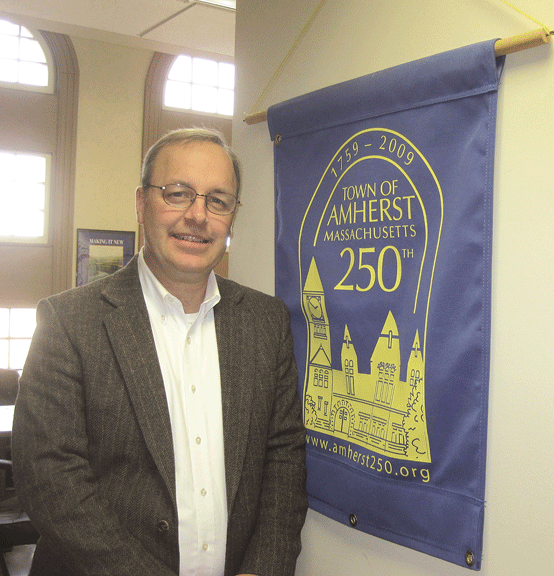
John Musante says Amherst’s market-rate housing issue is being addressed with two new private developments, targeting two different demographics.
He used that phrase to describe a community that not only hosts institutions of higher learning — in this case, UMass Amherst, Hampshire College, and Amherst College — but has a business community centered mostly on serving those who learn, teach, or are otherwise employed by those colleges and the university.
And while Amherst has certainly thrived in that role through the decades, said Maroulis, the long-time executive director of the Amherst Chamber of Commerce, it has, in relatively recent times, become much than that.
Indeed, it has become a center of arts, culture, and fine dining, with several museums, arts-related programs and events, and eateries that draw people from across the region, not merely across town.
Meanwhile, it has also become — at least partly, because of all those amenities — a popular retirement spot, ranking high on many recent lists of places for people to live out their golden years.
And while it desires to remain all of the above, Amherst is aggressively seeking to add more lines to its résumé by becoming home to start-up companies and research and development (R&D) facilities, said Maroulis, noting that, instead of just hosting service businesses for area students and faculty, the community is taking steps toward becoming an incubator for businesses in several sectors, but especially the life sciences.
Optimism for such a development stems in large part from the emergence of new programs and tens of millions of dollars in research projects at the university, said Maroulis, who pointed specifically to the new, $157 million Life Science Laboratories, part of the Mass. Life Sciences Center (MLSC), and one of many potential catalysts for economic development in the town.
Through the MLSC, the Commonwealth is investing $1 billion over 10 years in the growth of the state’s life-sciences supercluster. At UMass Amherst, the MLSC includes such facilities as the Biosensors and Big Data Center, the Healthcare Informatics and Technology Information Center, and the Models to Medicine Center.
Research at each of those facilities, and others representing many other fields, could translate into startup companies and jobs, said Maroulis, adding that one of the challenges for the community is to build an infrastructure that can support these new enterprises.
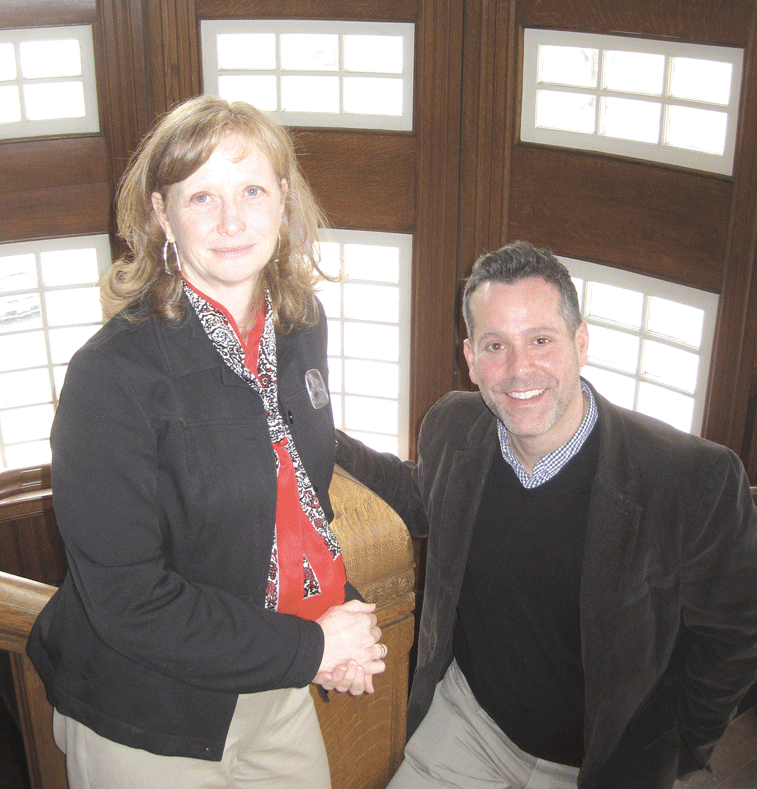
With the Amherst BID now up and running, Sarah La Cour (left) and Tony Maroulis are able to focus economic-development efforts on specific projects in each of the organizations they manage.
And already there is progress on these various fronts.
It comes in the form of initiatives like Kendrick Place, a 44,000-square-foot, five-floor, LEED-certified, mixed-use residential, retail, and incubator space on a parcel on East Pleasant Street, not far from downtown. And also in the form of a business-improvement district (BID) that is adding members and broadening its reach, as well as what is being touted as the fastest and largest outdoor wi-fi network in the state (more on those later).
“It’s going to be a really exciting next 10 to 15 years here,” said Maroulis, summing up both what’s happening and what he and others expect to happen over that time span. “It’s important for Amherst to establish this area as an R&D center, not just for this community, but for the rest of the region.”
For this, the initial installment of its Community Spotlight series, BusinessWest focuses on a community that is looking to redefine the phrase ‘college town.’
Work in Progress
John Musante, Amherst’s town manager, noted that the community has four distinct villages.
The first is the downtown center, or central business district, and common area, which Maroulis reports has a vacancy rate of only 3%. Another is called North Amherst Village Center, which includes the Cowls Land Co. and Cowls Building Supply, one of the town’s major employers. Meanwhile, Pomeroy Village Center is on Route 116, and Atkins Corner consists of the new double-rotary intersection of Bay Road and Route 116.
Together, these villages give Amherst a diverse mix of businesses and residential experiences, he told BusinessWest, adding that, with each village, the town is looking for smart growth that facilitates those stated goals of bringing new businesses, more tourism dollars, and more opportunities on many different levels to the town.
One of the most exciting new developments for the town is Kendrick Place, said Musante, noting that it will hopefully build on the success of Boltwood Place, a 12-unit, market-rate housing initiative built in the heart of downtown that also features retail and restaurant space.
Like the Boltwood project, Maroulis said, Kendrick Place, which is being developed by Archipelago Investments, LLC, was conceived with the notion that professionals want to live in the central business district to take advantage of all it offers, but require attractive, market-rate facilities.
“Archipelago is doing with science what other developers in the area have done with their gut,” added Maroulis. “People know that this is how others want to live … within walking distance from the café or to their jobs. An interesting factoid is that only 30% of UMass professors and staff live in town, so we can do better.”
Meanwhile, Archipelago is moving forward with another intriguing development, Olympia Place, a 100,000-square-foot LEED-certified, 262-bed private dormitory on taxable land next to the UMass campus.
Slated to open in the fall of 2015, the project will feature suite-style dormitory apartments and bring what Archipelago calls “condo-level quality to a prime Amherst location.” With the Kendrick Place endeavor, it will bring more people — and vibrancy — to the downtown area.
“Both are the first of multiple efforts to bring sorely needed residential units and retail space to the northern end of the downtown,” said Musante. “And there’s an active effort to reach out to the university in particular to fill the Kendrick incubator space for some of this off-campus research and development.”
Housing and economic development will be the twin focal points of a survey that will be conducted as a joint initiative between the town and the university, said Maroulis, adding that a request for proposals will be issued shortly. The results of that survey will provide some direction about what kinds of development are needed and where, he said, adding that there is vast potential for new business growth, given the town’s high quality of life and the research taking place at the surrounding colleges.
“I don’t think we have even touched the tip of the iceberg,” he told BusinessWest.
The community has already seen a number of ventures open in Amherst or move there over the past several months, he said. This list includes B. Home, where eco-friendly meets beautiful home furnishings; All Things Local Cooperative Market, a new food and crafts marketplace; and HitPoint, a video-game company that employs 35, which recently relocated from Hatfield.
The HitPoint owners, Maroulis noted, intentionally chose the artsy Amherst lifestyle and the constant source of nearby R&D advancements and tech-savvy talent that the local schools produce, and he expects others to follow that lead.
Right Time, Right Place
While developers explore opportunities in downtown and other areas of the city, the town is broadening its economic-development infrastructure in an effort to make this a better community in which to live and work — and also visit.
Indeed, the BID, still one of only a handful in this region, was created in 2012, and the Regional Tourism Council of Hampshire County (RTC) was launched last May.
The Amherst chamber, which was instrumental in the creation of both agencies, can now shift some of its responsibilities to them, said Maroulis, and focus more time and resources on getting new businesses off the ground and to the next level.
“This is allowing us to focus over the next 12 months on business development and, specifically, small businesses to make sure they’re sustainable,” said Maroulis, noting that the ability to step aside a bit while still supporting the municipality in strengthening town-gown relationships is enabling every organization to put energy into their own projects.
The BID is a legislatively approved nonprofit that collects a nominal tax, currently totaling $275,000, from property owners in a designated area to cover marketing, property cleaning, and beautification, and transportation services to the downtown.
“Creation of the BID has given the local individual businesses the opportunity to join forces and do things they might like to do but, on their own, didn’t have the resources or personnel to do,” said Sarah La Cour, who became executive director last fall after serving as interim head.
Like other BIDs across the state, Amherst’s benefited from a recent change in the rules included in the original legislation that enabled formation of these entities, said La Cour, adding that the controversial opt-out clause has been removed, resulting in a spike in membership from 67 to more than 100.
“The BID’s biggest challenge now is to show those new BID members that had to become members the value in what we do with their money,” she added, noting that the staff consists of herself and a part-time bookkeeper, but assistance and talent also come from the 13-member board.
One of the major initiatives in the BID’s first year was the downtown trolley, a bus that looks like an old-fashioned trolley car. It is underwritten by the BID and is seeing great ridership, not only from students, but also among residents and tourists.
The trolley sees heightened use during special events and the monthly Art Walk, which has been continuous since 2007, said Maroulis. Coordinated by Michelle Raboin, owner of the Hope and Feathers Gallery on Main Street, the event showcases local talent at a variety of galleries, businesses, and restaurants from 5 to 8 p.m. on the first Thursday of each month.
Assistance with tourism-related initiatives is coming from the RTC, the tourism partnership that includes Amherst, Northampton, and Easthampton, which launched in May 2013, located online at www.visithampshirecounty.com, La Cour added. Museums like the Eric Carle Museum of Picture Book Art, the Yiddish Book Center, and the Emily Dickinson Museum are being marketed with other cultural and tourism nonprofits and businesses.
“With more than eight museums that bring in a combined 120,000 people each year, noted Maroulis, “this is an amazingly rich place.”
Open for Business
That sentiment applies to much more than culture, he noted, adding that it also touches on everything from the scenery to the vast number of talented college students who currently call Amherst home and may want to make that arrangement permanent.
As he said, the quintessential college town is expanding the definition of that term, whih should make the next 10 to 15 years, and probably many more, a very exciting time.
Amherst at a Glance
Year Incorporated: 1759
Population: 37,819 (2010); 34,874 (2000)
Area: 27.8 square miles
County: Hampshire
Residential Tax Rate: 20.39
Commercial Tax Rate: 20.39
Median Household Income: $40,017
Type of government: Select Board, Town Manager, Town Meeting
Largest employers: UMass Amherst, Hampshire College, Amherst College, Atkins Farm Market, Cowls Building Supply
(Latest information available)
Elizabeth Taras can be reached at [email protected]
AFFILIATED CHAMBERS OF COMMERCE OF GREATER SPRINGFIELD
www.myonlinechamber.com
(413) 787-1555
• Jan. 8: ACCGS Business@Breakfast, 7:15-9 a.m., at Ludlow Country Club, 1 Tony Lema Drive, Ludlow. The program will be “Success of Small Business,” a moderated panel discussion. For more information, contact Cecile Larose at (413) 755-1310 or [email protected].
• Jan. 15: ACCGS After 5, 5-7 p.m., at the Melha Shrine Center, 133 Longhill St., Springfield. Come clown around with us! Cost: $5. For more information, contact Cecile Larose at (413) 755-1310 or [email protected].
GREATER EASTHAMPTON CHAMBER OF COMMERCE
www.easthamptonchamber.org
(413) 527-9414
• Jan. 23: Big Raffle Drawing, 6 p.m. Only 300 tickets are for sale each year. Grand prize: $5,000; second prize: $500; third prize, $200; fourth prize: $100, fifth prize: $50. The drawing takes place at the annual dinner meeting, Jan. 23, and you do not need to be present to win. For more information or to enter, visit www.easthamptonchamber.org.
GREATER NORTHAMPTON CHAMBER OF COMMERCE
www.explorenorthampton.com
(413) 584-1900
• Jan. 28: Nonprofit Marketing Roundtable 2014 Workshop, 8-9:30 a.m., at the Greater Northampton Chamber of Commerce, 99 Pleasant St., Northampton. Presented by the Creative Marketing Group. Struggling to gain visibility with your target audience? Are your marketing materials producing tangible results? Are your best messaging ideas living only in your head? The chamber has help on the way. Three women business owners — Janice Beetle, Ruth Griggs, and Maureen Scanlon of the Creative, a marketing and communications collaboration in Northampton — will lead a nonprofit Flash marketing workshop. They will meet with business owners, listen to your marketing and communications concerns, and help you brainstorm practical, professional solutions on the spot. Learn more about how to strategize, advertise, brand, and promote your business; reach the media; and maximize your message in person, in print, and online. The workshop is free, but pre-registration is required, and space is limited. To register, contact Jasmin Tomic at (413) 584-1900 or [email protected].
PROFESSIONAL WOMEN’S CHAMBER
www.professionalwomenschamber.com
(413) 755-1310
• Jan. 15: PWC Tabletop Business Expo/Luncheon, 11:30 a.m. to 1:30 p.m., at the Carriage House, Storrowton Tavern, West Springfield. Showcase your product or service. For more information about the Professional Women’s Chamber, contact Cecile Larose at (413) 755-1310 or [email protected].
GREATER WESTFIELD CHAMBER OF COMMERCE
www.westfieldbiz.org
(413) 568-1618
• Jan. 8: January After 5 Connection, 5-7 p.m., at the Westwood Restaurant & Pub, 94 North Elm St., Westfield. Sponsored by Northpoint Mortgage. Cost: $10 for members, $15 for non-members, cash at the door. Haven’t been to an After 5? Your first one is free. For more information or to register, contact Pam at (413) 568-1618.
• Jan. 13: Health Care Symposium (time to be announced), at the Dever Stage, Parenzo Hall, Westfield State University. Presenter: Lynn Nichols, president of the Mass. Hospital Assoc. Sponsored by Noble Hospital. For more information or to register, contact Pam at (413) 568-1618.
WEST OF THE RIVER CHAMBER OF COMMERCE
www.ourwrc.com
413-426-3880
• TBA: January Coffee with Mayor Cohen. Date and location to be announced. Keep checking website for updates, or e-mail [email protected].
• Feb. 5: Wicked Wednesday, 5-7 p.m., at Crestview Country Club, Agawam. Wicked Wednesdays are monthly social events hosted by various businesses and restaurants. These events bring members and non-members together to network in a laid-back atmosphere. Cost: free for chamber members, $10 for non-members. (Event is open to the public; attendees must pay at the door if they’re non-members.) For more information, contact the chamber office at (413) 426-3880, or e-mail [email protected].
• Feb. 26: West of the River Chamber of Commerce Legislative Breakfast, 7-9 a.m., at the Storrowton Tavern Carriage House, West Springfield. Cost: $25 for members, $30 for non-members. For more information, contact the chamber office at (413) 426-3880, or e-mail [email protected].
YOUNG PROFESSIONAL SOCIETY OF GREATER SPRINGFIELD
www.springfieldyps.com
• Jan. 16: January Third Thursday YPS Open House, 5-7 p.m., at the Colony Club, 1500 Main St., Springfield. Don’t miss this upcoming Third Thursday and the unique opportunity to become more involved with the YPS. Complementary parking in the Tower Square garage with elevator access directly to the venue. YPS is a guest of the Colony Club for this event. We ask that you please respect and follow their business-casual dress code; jeans will not be permitted. There will be a cash bar and hors d’oeuvres. Invite your friends and bring plenty of business cards. Cost: free for YPS members, $10 for non-members, including food and a cash bar.
AFFILIATED CHAMBERS OF COMMERCE OF GREATER SPRINGFIELD
www.myonlinechamber.com
(413) 787-1555
• Dec. 18: ERC5 Holiday Party, 5-8 p.m., at Spoleto, 84 Center Square, East Longmeadow. For more information, contact Cecile Larose at (413) 755-1310 or [email protected].
• Jan. 8: ACCGS Business@Breakfast, 7:15-9 a.m., at Ludlow Country Club, 1 Tony Lema Drive, Ludlow. The program will be “Success of Small Business,” a moderated panel discussion. For more information, contact Cecile Larose at (413) 755-1310 or [email protected].
• Jan. 15: ACCGS After 5, 5-7 p.m., at the Melha Shrine Center, 133 Longhill St., Springfield. Come clown around with us! Cost: $5. For more information, contact Cecile Larose at (413) 755-1310 or [email protected].
CHICOPEE CHAMBER OF COMMERCE
www.chicopeechamber.org
(413) 594-2101
• Dec. 18: December Salute Breakfast, 7:15-9 a.m., at the Log Cabin Banquet & Meeting House, 500 Easthampton Road, Holyoke. Cost: $20 for members, $26 for non-members.
GREATER EASTHAMPTON CHAMBER OF COMMERCE
www.easthamptonchamber.org
(413) 527-9414
• Dec. 17: Holiday Dinner Dance, 6 p.m., at the Delaney House, Holyoke. Menu: maple glazed turkey, roast loin of pork, tenderloin of beef carving station, sesame seared tuna, Asian vegetable medley, and more; seafood station; chef-attended pasta station; lavish greens, vegetables, and fruit-salad station; butler-style hors d’oeuvres; Viennese dessert table; cash martini and full-service bars. Dance the night away with D.J. Fred from B & B Entertainment. Cost: $50 per person inclusive. Purchase a table of eight for the price of seven. To order tickets, e-mail [email protected], or call (413) 527-9414.
• Dec. 17: GRIST (Get Real Individual Support Today) Meeting, 9 a.m., at the chamber office, 33 Union St., Easthampton. Are you a business of one? Are you a small-business owner without your own marketing department? Do you ever wish you had someone to toss around some ideas with about growing your business? The GRIST group can help. It’s a new hamber member benefit, an ongoing small group for folks who want to meet regularly to share ideas and get advice on the daily challenges of running a successful business. Like the saying ‘all is grist for the mill,’ we feel that any idea or word of advice that one business person can share with another is of potential value in helping each other’s business grow. This small group of 10 to 15 people is limited to chamber members and those interested in joining the chamber. We welcome interested guests to attend one meeting to see what the group is all about. GRIST meets the first and third Tuesday of each month from 9 to 10 a.m. at the chamber office. RSVP by the Monday preceding each meeting to Fran Fahey at [email protected] or Derek Allard at [email protected]. Call Fahey at (413) 529-1189 or Allard at (413) 282-9957 to find out more.
• Jan. 23: Big Raffle Drawing, 6 p.m. Only 300 tickets are for sale each year. Grand prize: $5,000; second prize: $500;
third prize, $200; fourth prize: $100, fifth prize: $50. The drawing takes place at the annual dinner meeting, Jan. 23, and you do not need to be present to win. For more information or to enter, visit www.easthamptonchamber.org.
GREATER HOLYOKE CHAMBER OF COMMERCE
www.holycham.com
(413) 534-3376
• Dec. 18: Chamber After Hours, 5-7 p.m., at the Delaney House, One Country Club Road, Holyoke. Cost: $10 for members, $15 cash for non-members.
GREATER NORTHAMPTON CHAMBER OF COMMERCE
www.explorenorthampton.com
(413) 584-1900
• Dec. 17: 2013 December Incite Breakfast, 7:30-9 a.m. Incite Information presenting speaker: Kathleen McCarthy, Smith College President. Series sponsor: United Personnel. Admission: $20 for members, $30 for non-members.
• Jan. 28: Nonprofit Marketing Roundtable 2014 Workshop, 8-9:30 a.m., at the Greater Northampton Chamber of Commerce, 99 Pleasant St., Northampton. Presented by the Creative Marketing Group. Struggling to gain visibility with your target audience? Are your marketing materials producing tangible results? Are your best messaging ideas living only in your head? The chamber has help on the way. Three women business owners — Janice Beetle, Ruth Griggs, and Maureen Scanlon of the Creative, a marketing and communications collaboration in Northampton — will lead a nonprofit Flash marketing workshop. They will meet with business owners, listen to your marketing and communications concerns, and help you brainstorm practical, professional solutions on the spot. Learn more about how to strategize, advertise, brand, and promote your business; reach the media; and maximize your message in person, in print, and online. The workshop is free, but pre-registration is required, and space is limited. To register, contact Jasmin Tomic at (413) 584-1900 or [email protected].
PROFESSIONAL WOMEN’S CHAMBER
www.professionalwomenschamber.com
(413) 755-1310
• Jan. 15: PWC Tabletop Business Expo/Luncheon, 11:30 a.m. to 1:30 p.m., at the Carriage House, Storrowton Tavern, West Springfield. Showcase your product or service. For more information about the Professional Women’s Chamber, contact Cecile Larose at (413) 755-1310 or [email protected].
GREATER WESTFIELD CHAMBER OF COMMERCE
www.westfieldbiz.org
(413) 568-1618
• Jan. 8: January After 5 Connection, 5-7 p.m., at the Westwood Restaurant & Pub, 94 North Elm St., Westfield. Sponsored by Northpoint Mortgage. Cost: $10 for members, $15 for non-members, cash at the door. Haven’t been to an After 5? Your first one is free. For more information or to register, contact Pam at (413) 568-1618.
• Jan. 13: Health Care Symposium (time to be announced), at the Dever Stage, Parenzo Hall, Westfield State University. Presenter: Lynn Nichols, president of the Mass. Hospital Assoc. Sponsored by Noble Hospital. For more information or to register, contact Pam at (413) 568-1618.
WEST OF THE RIVER CHAMBER OF COMMERCE
www.ourwrc.com
413-426-3880
• TBA: January Coffee with Mayor Cohen. Date and location to be announced. Keep checking website for updates, or e-mail [email protected].
• Feb. 5: Wicked Wednesday, 5-7 p.m., at Crestview Country Club, Agawam. Wicked Wednesdays are monthly social events hosted by various businesses and restaurants. These events bring members and non-members together to network in a laid-back atmosphere. Cost: free for chamber members, $10 for non-members. (Event is open to the public; attendees must pay at the door if they’re non-members.) For more information, contact the chamber office at (413) 426-3880, or e-mail [email protected].
• Feb. 26: West of the River Chamber of Commerce Legislative Breakfast, 7-9 a.m., at the Storrowton Tavern Carriage House, West Springfield. Cost: $25 for members, $30 for non-members. For more information, contact the chamber office at (413) 426-3880, or e-mail [email protected].
YOUNG PROFESSIONAL SOCIETY OF GREATER SPRINGFIELD
www.springfieldyps.com
• Dec. 19: Third Thursday, 5-7 p.m., at the Springfield Museum of Science, 21 Edwards St., Springfield. Join us as we take our monthly Third Thursday Holiday Party to the Springfield Museum of Science and its Magic of Gingerbread Exhibit. You will enter a realm of fanciful gingerbread houses created by local bakeries, schools, youth groups, individuals, and families as part of an annual competition. Contestants were inspired by favorite holiday stories, historic places, and their own imaginations to create these marvelous gingerbread displays. Come take a stroll through this magical world filled with gingerbread houses, decorated holiday trees, and scenes inspired by the classic holiday tale A Christmas Carol. Light hors d’oeuvres and cash bar will be provided by Elegant Affairs. Cost: free for YPS members, $10 for non-members.
• Jan. 16: January Third Thursday YPS Open House, 5-7 p.m., at the Colony Club, 1500 Main St., Springfield. Don’t miss this upcoming Third Thursday and the unique opportunity to become more involved with the YPS. Complementary parking in the Tower Square garage with elevator access directly to the venue. YPS is a guest of the Colony Club for this event. We ask that you please respect and follow their business-casual dress code; jeans will not be permitted. There will be a cash bar and hors d’oeuvres. Invite your friends and bring plenty of business cards. Cost: free for YPS members, $10 for non-members, including food and a cash bar.
Valley Gives Looks to Build on a Successful First Year
By MICHAEL REARDON
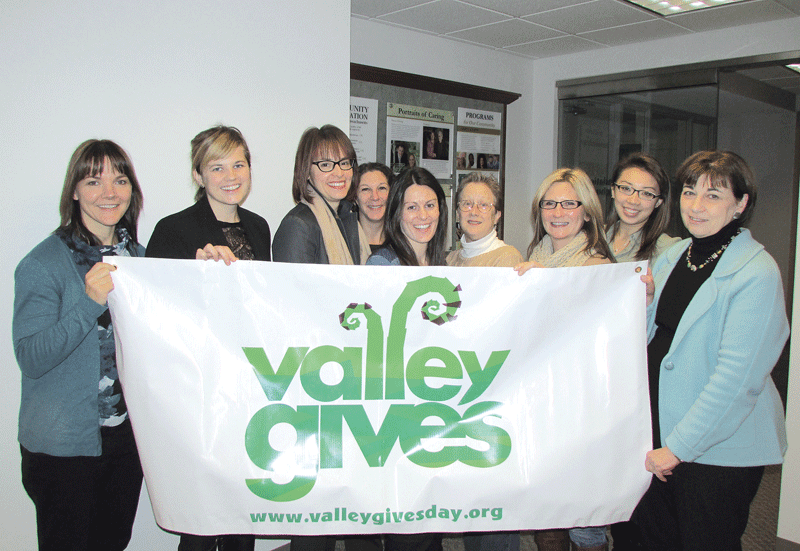
Valley Gives, which raised $1 million for area nonprofits and schools its first year, has set the ambitious goal of $2 million for the 2013 edition.
And they surpassed all of them.
More than 6,000 donors from across the Pioneer Valley pledged more than $1 million to 250 participating nonprofits, said Kristin Leutz, vice president of Philanthropic Services for the Community Foundation of Western Massachusetts, which helped orchestrate the program. This performance enabled the initiative to live up both halves of its name — it is, indeed, a region-wide effort, and people certainly did give — and prompt organizers to set the bar much higher for year two, slated for Dec. 12.
Indeed, the goal for 2013 is $2 million, said Leutz, adding that there are now more than 350 nonprofits and schools registered for the program, and newcomers and returning participants alike are looking forward to what promises to be an exciting day.
“When we raised $1 million in the first year of Valley Gives, it stunned everyone,” Leutz said, noting that the local effort surpassed the performance of a similar initiative in Boston. “The online-giving growth rate is growing twice as fast as traditional giving. This is an efficient and effective way to raise a large amount of money in a small amount of time.”
But Valley Gives is about much more than raising money, said Al Griggs, former chairman of the Community Foundation and, along with Springfield attorney Paul Doherty, an architect of the initiative.
“The idea is to allow people who are philanthropic to do what they naturally do, and that is to support organizations up and down the Valley,” said Griggs, adding that there is another component to the event. “Thousands of people across the Valley work for nonprofits, and we wanted to celebrate that.”
And the first Valley Gives was very much a celebration — in many respects, said Leutz.
A number of organizations created a party-like atmosphere around Valley Gives last year, she noted. One organization, Country Dance and Song Society, busted out a flash mob at Thornes Marketplace in Northampton. The Jewish Federation of Western Massachusetts brought a dunk tank.
Leutz said a Valley Gives wrap party will be held on Dec. 12 at the Galaxy restaurant in Easthampton.
“We’ll watch the total come in,” she said. “Valley Gives is a festival of generosity, and that’s what I love about it. This is truly a community event.”
For this issue, which also features the annual BusinessWest Giving Guide, we take an in-depth look at this community event and how it has enormous potential to become a powerful Western Mass. tradition.
The Power of Giving
Griggs said it was reports of the generosity of billionaires Warren Buffett and Bill Gates that prompted he and Doherty to start thinking of ways to increase philanthropic giving in the Pioneer Valley.
So two years ago, they sought the advice of the Community Foundation of Western Mass. to find ways to create opportunities for fund-raising in the area. The foundation took what Griggs calls their “germ of an idea” and did some research and came across an effort created in Minnesota called Give to the Max Day, a one-day online fund-raising event for nonprofits and schools that has spread to other parts of the country, including Boston and Miami.
The concept sounded like it could be successfully adapted to the Pioneer Valley, so the foundation decided to create a local event based on the Minnesota model and call it Valley Gives. The idea was to unite residents of Franklin, Hampshire, and Hampden counties in one massive online fund-raising effort for nonprofits up and down the Pioneer Valley.
To bolster the effort, the foundation recruited the Beveridge Family Foundation, the Irene E. and George A. Davis Foundation, the Jewish Endowment Foundation, the Jewish Federation of Western Mass., United Way of Franklin County, United Way of Hampshire County, United Way of Pioneer Valley, and the Women’s Fund of Western Massachusetts as partners.
Donations during Valley Gives are pledged entirely online. The event goes on for 24 hours, beginning at midnight and ending at 11:59 p.m. Donors can log onto valleygivesday.org to find the nonprofit they want to give to and make a donation.
Valley Gives donors don’t have to be a Gates or a Buffett to make a pledge. On the contrary, the minimum donation is $10, and there is no maximum.
Nonprofits registered to participate in Valley Gives in August and September, and went through training in October and November. Much of the training was focused on effective methods of marketing, with a major emphasis on social media and other online strategies like Facebook, Twitter, YouTube, blogging, and e-mail newsletters.
“A large percentage of nonprofits were not on social media, and there were others that were on social media, but didn’t do much with it,” Leutz said. “We convinced them to take social media to a new level. We’re creating the environment for nonprofits to market themselves successfully. For many of the nonprofits, they saw capacity in places that they did not see before. New opportunities were created for them. A lot of donors were new.”
Besides the pledges rolling in during Valley Gives, nonprofits will be eligible to win leaderboard prizes of up to $10,000 for being a top fund-raiser, as well as a Golden Ticket or Power Hour, which are prizes of up to $1,200 throughout the day.
Lisa Oram, marketing and communications director at Snow Farm: the New England Craft Program in Williamsburg, remembers the organization’s staff huddled around computers watching the money come in during the 2012 Valley Gives event, and posting on Facebook and Twitter throughout the day to keep momentum going.
“People were very engaged and enthusiastic,” Oram said. “I felt humbled by the amount of generosity of people across the Valley toward all of the organizations that participated. The day became all about Valley Gives.”
The team members at Snow Farm were floored when they won a prize worth $10,000 last year, especially since they first thought it was for $1,000. Last year, the organization raised $22,000 which paid for new computers for the organization’s digital photo lab and scholarships for its high-school program.
Other nonprofits that participated in last year’s event are looking forward to being involved again this year.
Safe Passage, the Northampton-based organization that addresses issues of domestic violence, was among the nonprofits that participated in Valley Gives in 2012. Marianne Winters, executive director of the organization, said money raised was used for programs to support children who are exposed to domestic violence, and to help fund its legal program in probate court.
This year, money will go toward a prevention initiative called Say Something, which offers training, education, and other skills for dealing with a potentially abusive situation.
“We have startup costs and need to generate publicity and other ways to get people involved,” Winters said.
Nonprofits that are first-time participants in Valley Gives are also eagerly awaiting the stroke of midnight on Dec. 12.
Team Jessica Inc. was formed in 2009 in honor of Jessica Martins of Belchertown, who died at 19 as a result of complications from Rett Syndrome, a neurodevelopmental disorder.
Although Martins was confined to a wheelchair, she was as active as possible, going to school dances, playgrounds, and riding horses. Team Jessica is striving to raise money to build a playground to be named after Jessica on 13,367 square feet of land at the Belchertown school complex.
“We want to build a new playground that’s 100% handicapped-accessible, with a poured rubber surface,” said Deanna Roux, the organization’s spokesperson. “The playground will cost $400,000, and we’ve raised $207,500 so far over the last three years through different events.”
Team Jessica wanted to be involved with Valley Gives last year, but had not achieved 501(c)3 charitable nonprofit status in time to do so.
Team Jessica is hoping to raise $10,000 through the Valley Gives event. Besides raising money to build the playground, Vicky Martins Auffrey, Jessica’s mother, hopes to continue developing handicapped-accessible projects.
On the day of Valley Gives, Team Jessica street teams will visit two Belchertown restaurants and will have postcards printed with a QR code that can be scanned by a smartphone to make a donation, as well as a computer to make a pledge.
“We’re hoping to expand our reach,” Roux said. “We heard all of the success stories from last year’s Valley Gives and felt we really needed to be involved. We signed up the minute it opened up.”
The Bottom Line
After signing on to participate in Valley Gives, Roux and Patti Thornton, Team Jessica Inc.’s grant writer, attended the training sessions and participated in a webinar to prepare them for the event. Roux said they learned a lot of valuable information about how to market themselves to get the word out to potential donors of their involvement with Valley Gives.
Team Jessica learned the importance of developing an e-mail newsletter, as well as posting on Twitter and other social media, and being more active online in general.
“I’m looking forward to 12/12/13,” Roux said. “All of the stuff you do beforehand matters. I’m excited, but nervous. We’ll see right away how dollars are moving.”
And with that, she spoke for everyone looking ahead to the second edition of Valley Gives.
Lenox Boasts More Than Just Seasonal Charms
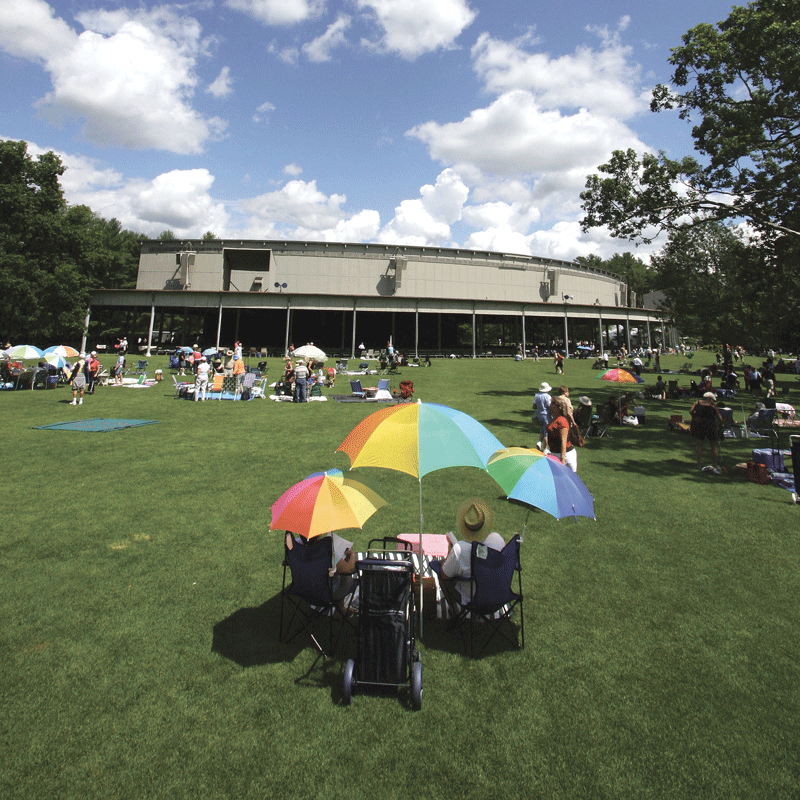
Tanglewood, which hosts the Boston Symphony Orchestra and other musical events, is one of the top tourism draws to Lenox.
“Predominantly, Lenox revolves around Tanglewood and Shakespeare & Co. and the multiple art venues in town, and as a result, we have a very productive summer. There can be a shortage of rooms in hospitality,” said Bortolotto, who serves on the Lenox Chamber of Commerce board of directors.
“If you talk to many of the local folks, you’ll find out that many have this preconceived idea that Lenox is busy from June through October, and then the town gets really quiet,” he added. “To an extent, that’s true.”
But he’s trying to get people to think about this small community — population just over 5,000 — in different ways, talking up its energy and recent commercial growth, and not just its many downtown inns and its high-profile performance spaces.
“From a chamber perspective, it used to be that, if you weren’t downtown, you kind of didn’t partake in all things Lenox,” he said. “What’s happening right now — what’s been happening for the last five years or so — is that Route 7, which is just outside downtown, connecting Pittsfield to Lee, has experienced growth of a different type. We now have three banks on that little stretch, where before there were only two downtown. We have multiple attorney’s offices, a fitness facility, a printing company, some retail.”
One notable success story has emerged in the Lenox Shops, a cluster of once-underutilized retail space along Route 7.
“It had a few stores, until a gentleman named David Ward bought the place and started revamping,” Bortolotto told BusinessWest. “He added condos out back and brought some non-retail businesses and restaurants to it. It’s going to be huge.”
In addition, Berkshire Health Systems, the largest employer in Berkshire County, will occupy a large portion of the complex, and healthcare services, from primary care to ob/gyn to yoga, will have a strong presence — and a flow of employees to support other businesses in the shops.
“So Route 7 has really come along, with more professional businesses and not just retail,” he added. “And, of course, we have Cranwell Resort, Spa and Golf Club nearby — a beautiful place to be.”
Growth Pattern
The character of fast-growing Route 7, with its chain hotels and motels, is different than downtown’s Main Street, Church Street, and surrounding roads, which play host to a number of inns, bed and breakfasts, and locally owned shops.
“Downtown is largely retail,” said Bortolotto, who is also branch manager of NBT Bank in town. “You have two banks, some attorney’s offices, a lot of realtors — that’s part of the makeup, some of the more profitable businesses — but the retail, they tend to close for a good part of the year. Church Street gets very quiet. Some restaurants choose to close for the whole winter season because they figure they lose less money by not adding staff and other expenses.”
Laura Shack has bucked that trend for two decades. She opened Roseborough Grill in downtown Lenox in 1993, then transformed it into Firefly, which she calls a “new American bistro,” 10 years later.
“Roseborough Grill had a great run, but that was because there were only 25 restaurants in Berkshire County, and now there are probably 125,” she said. “It got to the point where it was more of a struggle to maintain the antique, country feel, and I didn’t have a big bar. But I love what I do, so I reinvested and gutted the place, changed the name, and started over.”
Firefly features the huge bar she craved, and a décor that’s contemporary and rustic at the same time. “We changed the menu a little bit, did some tapas and light plates — just changing with the times — and it’s been a great run. There were times when the economy was struggling, but this is one of the few restaurants in Lenox that stays open year-round. We’ve created an extremely loyal clientele due to the fact that I cater to the locals tremendously. We went from having 10 people in the winter to 100. People come in, spend money, have drinks — and they come back.”
Shack partly credits a well-received series of daily specials, from a $5 burger to 50-cent chicken wings, a $16 prime rib, and $10 lobster rolls, which locals look forward to. She’s used a similar strategy at her new breakfast-and-lunch eatery, Kitchen on the Commons, located at the transformed Lenox Shops, and is a testimony, Bortolotto says, to the fact that local businesses can succeed year-round in town.
Our challenge as a chamber is to say, ‘look, if you build it, they will come,’” he said. “If you stay open, it won’t happen overnight, but people will come and spend. As they go ski in Great Barrington or Hancock, they may feel inclined to come to Lenox.
“The challenge is to get more people to downtown, yes, but Lenox is sort of changing that,” he added, noting that the chamber is actively trying to lure non-tourism-related business into its fold.
“Some of the professional service people say, ‘look, I’m not going to join the chamber because I really don’t see the benefit; the chamber revolves around the arts. But I work in a professional business, working with attorneys, electricians, and car businesses, and when I joined the chamber, one of my goals was to add value to those businesses. We’re trying to do some of that.”
Taste of Home
A New York City native, Shack said she came to Lenox for the summer 23 years ago and never left. “What I’ve learned is, you have to cater to the locals, and you have to be super warm and friendly and welcoming. I have staff who have been with me for 20 years; I’m known as Mama Shack, and I’ve raised a lot of kids out of there. They started at the age of 13 or 14, and some are still here. They started out busing tables, and I taught them how to cook or bartend.”
One of those, Zee Vassos, left Roseborough for college but decided the food industry was what he loved, Shack said, “so he came back and helped me open Firefly. Then, after being out in Boston for a few years, he came back again, and we just opened Kitchen on the Commons in May. We had a great summer. David Ward, who owns the complex, really turned it around.”
Bortolotto said the chamber has become more open to cooperating with local towns on events and marketing. “It’s one county, not ‘we’re Lenox, and you’re everyone else.’ We’re mixing more, and we’re more open-minded these days than we were 10 or 15 years ago, definitely.”
There’s more to Lenox than its downtown and Route 7, of course, including Lenox Dale, a blue-collar village straddling Lenox and Lee that used to be home to a cluster of paper mills and today still features some manufacturing.
But, overall, Lenox is mainly known as the home to arts destinations like Tanglewood — where the Boston Symphony Orchestra plays — and a knot of rustic inns, while Bortolotto and the chamber continue to raise the profile of the town’s other charms.
Shack certainly finds the town charming, and hated the early days when she closed for part of the time during the off-season. “I find continuity is really important, being open seven days a week, so people don’t ever question, ‘are they open?’
“I love the people. The town is great,” she continued. “Obviously, having Tanglewood around the corner is wonderful. But I’ve really gotten to know the local people, and the clientele makes it really nice. People are grateful I’m here for them, and I’m grateful to have them.”
Joseph Bednar can be reached at [email protected]
Max’s Restaurants Have Always Put the Accent on Giving Back
By MICHAEL REARDON

Rich Rosenthal, center, owner of Max’s Tavern, with John Thomas, managing partner of the restaurant, and AnnMarie Harding, public relations director.
As the lunchtime crowd filled the restaurant on this recent crisp, sunny afternoon, Rosenthal was hesitant to take credit for the millions of dollars the Max Restaurant Group has raised in the Hartford and Springfield areas over the years for charitable organizations and other worthy causes.
“I don’t think about it too much,” said Rosenthal when asked about the legacy he was leaving through his organization’s philanthropic efforts. “We do it because it’s the right thing to do. We don’t pat ourselves on the back. We just feel like we always want to raise more money for these worthy causes.”
Rosenthal believes that successful businesses like his should feel obligated to be involved in charitable giving. His restaurants have been successful, he said, so giving back is the natural thing to do. To Rosenthal, philanthropy is just part of being a responsible member of a community.
“We became involved in charitable giving because people asked,” he explained. “You want to help because the customer really believes in what they’re doing, and you respect that.”
If Rosenthal is reluctant to take credit for his charitable work, other people are happy to shower him with accolades. As he was talking, Jane Albert, vice president of Development fo Baystate Health and executive director of the Baystate Health Foundation, joined Rosenthal and immediately thanked him for his fund-raising efforts.
“We have a wonderful partner in Max’s, and they make a significant contribution to our fund-raising effort,” Albert said. “It says so much about your organization.”
Since Max’s Tavern opened 10 years ago, Rosenthal has been enthusiastically involved in raising money in the Greater Springfield area, especially with Baystate Children’s Hospital, and most recently with the new Baystate Children’s Specialty Center. The annual Max Classic International Golf Tournament, held every fourth Monday in July, the first few years at Crestview Country Club in Agawam and now at Twin Hills Country Club in Longmeadow, has raised $1.2 million for Baystate since it was launched in 2004.
“The Max Classic is our biggest event,” Rosenthal said. “We usually have approximately 175 or so golfers; we sell sponsorships and hold an auction. We try to guide our funds to Baystate’s Children’s Hospital and its neonatal intensive-care unit.”
The Max Restaurant Group sponsors a similar golf tournament in Connecticut to benefit charities in the Hartford area.
Since 2004, money raised from the tournament in Western Mass. has bought beds and equipment for the neonatal intensive-care unit, as well as funding the Baystate Children’s Hospital asthma program, equipment for the pediatric intensive-care unit, and the pediatric care unit’s family waiting room and sleep room.
Albert said the money raised through the golf tournament has made the work of doctors and nurses at the children’s hospital more effective.
“The money raised by Max’s has saved the lives of babies who would not otherwise survive,” she said. “The money has gone toward resources we would otherwise not be able to afford. We have 720 babies in our neonatal ICU every year. With this funding, doctors and nurses can do a lot more to help these babies. These things would not be possible without Max’s corporate support.”
Max’s raised $150,000 during this year’s tournament, which will be donated to the newly opened Baystate Children’s Specialty Center at 50 Wason Ave. The money will go toward paying for the 34,000-square-foot building’s reception area.
The center will house the hospital’s 15 pediatric outpatient specialty areas, including cardiology, gastroenterology, neurology, endocrinology, weight management, and more.
For this issue and its focus on restaurants, BusinessWest takes an indepth look at how Rosenthal and his restaurants have put the accent on giving back to the community.
Philanthropy on the Menu
Rosenthal’s philanthropic efforts began in the Hartford area. He was an original member of Hartford’s chapter of Share Our Strength, the nationwide culinary organization dedicated to fighting poverty and childhood hunger, an effort he is still involved in.
“The restaurant industry overall should be applauded,” Rosenthal said. “I’d say chefs and restaurant owners give more time and money to charitable causes than any other industry.”
Among the other organizations in the Hartford area that Rosenthal has raised funds for is the Connecticut Children’s Medical Center (CCMC). Working with that facility inspired him to become involved with Baystate Children’s Hospital when he opened Max’s Tavern.
“We found in working with CCMC that they were a terrific organization,” Rosenthal said. “You always felt good about working with them, and it was somewhat personal for me. I had small children at the time. When we opened in Springfield, our goal was to do something local, and Baystate Children’s Hospital was a natural fit. They’ve been equally great to work with as CCMC.”
Besides its major philanthropic endeavors, the Max Restaurant Group has a component called Max Cares, which hosts charitable events, like wine dinners, and gives away gift cards. The Max Cares link from the Max Restaurant Group website features a form to request a donation and the reason for the donation.
“Max Cares was started early in our operations,” Rosenthal said. “It was really a name we gave our donation arm because of the Internet. We get about 100 requests for donations a month company-wide.”
Rosenthal started working in restaurants when he was 16. He grew up in West Hartford and graduated from Hall High School, before attending Bentley University, graduating in 1981. He continued his education at New York Restaurant School in Manhattan, where he trained as a chef before graduating in 1983.
“I knew I wanted to be a restaurant owner, but I also realized I wanted to learn to cook,” he explained. “I worked as a chef for four years after I graduated, three in New York City and one as a chef and manager in Newport.”
Although not the owner, Rosenthal was involved with the opening of a restaurant called the Main Brace in Newport, R.I. He called the endeavor “extremely unsuccessful” because of a number of factors, including the location, lack of funding, and the timing of the opening. “Although the restaurant failed, I learned a lot,” he said.
While out of work in Newport, he decided to move back to Hartford to open a restaurant on familiar turf. “The Hartford area was booming at the time,” he said. “It was a town on the upswing. There was a lot of enthusiasm for the city. I had a base and contacts there.”
On Nov. 14, 1986, Rosenthal opened the first restaurant in what would become the Max Restaurant Group, called Max on Main, later to be renamed Max Downtown after it moved to Hartford’s business district in 1996. He now owns nine restaurants and will open his 10th in Palm Beach Gardens, Fla. in March.
When Rosenthal heard that the Basketball Hall of Fame was being built in Springfield, he decided to become involved in the project and opened Max’s Tavern in 2002.
Since expanding into the Springfield area, Rosenthal has become immersed in charitable giving beyond his organization’s efforts on behalf of Baystate Children’s Hospital. Besides sponsoring the Max Classic Golf Tournament, the Max Restaurant Group has raised $63,000 for Ronald McDonald House of Springfield, 14,000 for the Boys and Girls Clubs of Springfield, $11,000 for the Longmeadow Educational Excellence Foundation, and $3,100 for Massachusetts Special Olympics.
Springfield’s Ronald McDonald House has been supported by the Max Restaurant Group for nine years. Enix Zavala, house manager and associate director of planned giving for Ronald McDonald House, said Max’s contributed $15,000 for a room in the 22-room house.
Meanwhile, Max’s Tavern has been involved with fund-raising for Ronald McDonald House of Springfield in a couple of other ways for several years. The restaurant has sponsored fund-raising events like Martini Magic, a martini-tasting event that, up until two years ago, had gone on for seven consecutive years. AnnMarie Harding, Max’s Tavern’s public relations director, is a member of the Ronald McDonald House board of directors.
The current major event sponsored by Max’s Tavern to raise money for Ronald McDonald House is the Teddy Bear Brunch, an event that’s been held for the past four years. The popular event will take place this year on Dec. 8 and has long been sold out.
“All the children who attend the Teddy Bear Brunch bring an unwrapped toy, which is donated to Ronald McDonald House,” Zavala said. “We had 250 toys donated last year, and we expect to exceed that this year.”
The Teddy Bear Brunch is a family event that features a brunch buffet, candy buffet, face painting, crafts, and other activities, and children who attend go home with an 11-inch stuffed Max Teddy Bear. During the brunch, Max’s Tavern also sells 100 loaves of multi-colored Rainbow Bread for $5 each.
“We’re doing what we can to create revenue for this event in new and exciting ways that people can respond to,” Harding said. “All the money from selling the Rainbow Bread goes to Ronald McDonald House.”
Recipe for Success
According to Zavala, children sometimes stay at Ronald McDonald House for up to two years, and often miss celebrating big events like holidays and birthdays at home. She added that many families come from different parts of the U.S. or other countries and are unfamiliar with the area and sometimes have a language barrier. Having a partner like Max’s Tavern to help create a comfortable and welcoming place to stay while children get much-needed medical treatment is invaluable.
“Without the support of Max’s Tavern and other types of community support, we couldn’t be able to continue our efforts to support these families,” Zavala said.
Similar words have been spoken by the directors of several other area nonprofits. Their specific goals and needs vary, but the common denominator is that they’ve benefited in significant ways from a restaurant owner who has made philanthropy a house specialty.