A region-by-region chart of area restaurants
Click here to download the PDF



By PAUL McMORROW
Worcester’s downtown withered when city officials staked the neighborhood’s future on a silver-bullet development that missed its mark badly. Now the city is redeveloping downtown, albeit at a pace that seems impossibly slow.
But impatience misses two key points. The massive effort is advancing, even in the face of a weak real-estate market, and it’s advancing in the right direction. Worcester, once bedeviled by gimmicky real-estate developments, is sticking to its plan and refusing to take shortcuts. Given the downtown neighborhood’s history, that’s the most important development of all.
When developers broke ground on Worcester’s CitySquare project three years ago, the development was the largest post-urban-renewal downtown redevelopment effort in Massachusetts history. The 20-acre, $565 million project involves demolishing a massive failed downtown mall, laying out a new street network, and constructing millions of square feet of offices, retail storefronts, and residential space. Worcester is trying to move beyond its failed downtown mall by creating something that is, in both physical form and philosophy, the antithesis of an urban shopping mall.
Scores of American cities suffered from disinvestment and population loss in the 1960s and 1970s. Worcester wasn’t alone in throwing an expensive mega-project at its case of urban rot. But its results were especially disastrous. The city saw scores of shoppers abandoning downtown storefronts for suburban shopping malls, so it decided to drop a shopping mall in the middle of its downtown, sandwiched between City Hall and the train station.
The mall was an unmitigated disaster. It failed twice. Those failures became magnified because Worcester had bulldozed a huge swath of its downtown and erased key roads to accommodate the mall. The city had cut its downtown in two for a gimmick that didn’t even work.
The city is currently working on rebuilding a downtown that looks and functions like one. It’s a turnaround plan that celebrates the downtown, instead of suburbanizing it. It recognizes that good downtowns start with people, and once downtowns fill with people, business happens organically.
CitySquare began with addition by subtraction. Construction crews demolished the old mall and much of the garage parking connected to it. They leveled 80,000 tons of concrete and rebuilt the street grid the mall had erased. The project developer, Leggat McCall Properties, built and opened a pair of commercial buildings, including a new headquarters for the insurance company Unum, in the midst of a poor development market.
Plenty of work remains. More than 1.5 million square feet of buildings remain on the drawing boards. The city needs every one of them to create a downtown that hums with life. Worcester’s failed mall showed that cities can’t wish vibrant downtowns into existence. People need real reasons for coming, and staying, downtown. That’s why the residential component of Worcester’s CitySquare plan looms large — it shows the city understands the importance of incremental change.
CitySquare needs around-the-clock residents to anchor Worcester’s new downtown, not just office workers who punch the clock before driving home. It needs a critical mass of bodies who are vested in the neighborhood and who will attract the restaurants and coffee shops that will draw new visitors to the area, which will, in turn, allow the entire district to succeed. This critical mass needs to be large.
The city needs sizeable apartment and condominium complexes to deliver the number of bodies that will anchor the rest of the neighborhood. Large residential buildings are also very difficult to build in Worcester because they cost more to build than they’d generate in rent. Cheaper wood-frame apartments could have gone up a year or two ago, but these low-slung buildings wouldn’t generate anywhere close to the kind of residential density the CitySquare vision hinges on. It’s a sign that the city gets it, that it’s avoiding shortcuts and holding out for the kind of density it needs to create a downtown that isn’t just full of buildings, but actually feels alive.
Paul McMorrow is an associate editor at Commonwealth Magazine.
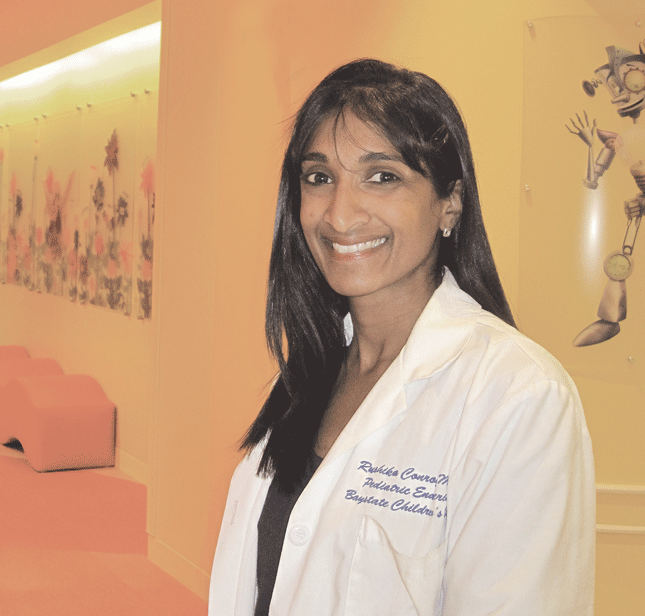
Dr. Rushika Conroy says parents should encourage their children to be active.
Delicate Subject
Massachusetts has been trying to get children — and parents — thinking about obesity for some time, including a controversial, recently ended program that measured children’s body-mass index (BMI) at school and sent notes home to the parents of kids classified as obese. Detractors of the program cited privacy issues and also argued that the notes could lead to bullying.
Specifically, schools said it was too expensive to mail the letters, so they often sent them home in students’ backpacks, which sometimes resulted in disclosure of the information to other students — and, often, teasing.
“There has been a lot of controversy about taking away these letters going out to parents or caregivers, saying, ‘your child is obese; please seek guidance or help from your physician,’” Conroy said, noting that other states had conducted similar programs and determined they were ineffective.
But despite such reports, and the understandable risk of teasing, she has mixed feelings about the decision to stop the letters, “because I do feel it’s important to have that awareness coming from the schools, and not just a medical professional.”
The state’s Public Health Council, an appointed body of academics and health advocates, called for an end to the letters, but still requires schools to conduct weight and height screenings in grades 1, 4, 7, and 10 to help officials gather data about obesity trends and identify possible solutions — a practice in place in 20 other states. Parents may request their children’s BMI information in writing if they wish.
And parents do seem to be more aware of the obesity problem, as evidenced by the declining rates among all age groups across the U.S. “As far as the nation goes, we’re overall more aware of what’s happening and what we as adults can do for our children,” Conroy said.
She noted that, while the medical community has always stressed lifestyle choices to prevent obesity, the alternatives for helping people rein in their weight have broadened significantly.
“From a treatment standpoint, there are more options available,” she said. “Lifestyle modification will always be the first line of defense, but now bariatric surgery and medications offer more options.”
Weight loss from lifestyle modification generally results in a loss of about 10% of total weight in a year, she noted, often not enough to combat the serious medical conditions that afflict many obese individuals. And the side effects of some weight-loss medications can be a deterrent to their taking those prescriptions. That leaves bariatric surgery as an effective last resort.
For example, Baystate Children’s Hospital now offers bariatric surgery to younger patients than ever before, in the form of sleeve gastrectomy, an increasingly common form of gastric surgery that removes all but a narrow ‘sleeve’ of the stomach, forcing patients to eat much less than before.
“Despite the fact that obesity has declined somewhat in the country, there are still many children whose weight remains dangerously high,” Conroy said. “For some of these adolescents whose weight exceeds 200 or 300 pounds, many are at risk for or already suffering from serious health problems such as diabetes, hypertension, heart disease, depression, sleep apnea, and liver disease, which can make it harder for them to lose weight.”
Studies on adolescents having bariatric surgery suggest the operation is as safe for them as for adults, but not enough teens have been followed after the sleeve gastrectomy to know if there are any long-term effects on their future growth or development. But Baystate has begun admitting 17-year-olds into the bariatric pre-op process, so they’re ready for the surgery at age 18 — with the potential to operate on younger teens down the road as more data emerges.
Go Outside
Of course, encouraging young people to eat right and exercise is still job number one, and that can be difficult, especially in an era when kids simply don’t play outside as much as they did decades ago.
“Parents say, ‘my neighborhood is not a very safe one; I wouldn’t want my children outside,’ or ‘I can’t afford a gym membership or a YMCA membership,’ or ‘I don’t have transportation to take them,’” Conroy told BusinessWest. “There are lots of different reasons why people to find it difficult to be active.”
One positive development, she noted, has been the popularity of video-game systems, like the Wii, that incorporate full-body movement. “Another thing we talk about is families doing chores around the house. That counts as exercise, too — helping mom with the sweeping or laundry, for instance.”
She also said both young people and adults should find ways to include more physical exertion in their daily routine, whether it’s walking to school (if possible) or not searching for the nearest parking spot when out shopping. “If you’re going to the mall, park farther away; instead of spending 15 minutes finding a spot closer to the entrance, park at the back and walk. These are ways of getting activity in.”
She understands, of course, that in an increasingly wired world, kids are going to spend time in front of their devices. So she suggests setting rules for their use. “Say, ‘you can spend an hour playing video games, but you have to spend an hour doing exercise first.’ The challenge is getting parents to enforce that rule, because we’re not going to be there to do it for them.”
Joseph Bednar can be reached at [email protected]
 When John Maquire spoke with BusinessWest late last year, a few months after taking the helm at a very troubled Friendly’s Ice Cream Corp., he was quite blunt when assessing what had happened to one of the region’s most well-known brands — and about what needed to happen next.
“In a nutshell, I would say that Friendly’s has lost its focus on what really makes it special,” he told the magazine. “It’s lost its perspective on who the customer is and what is the best way to deliver for that customer, and, most importantly, what gives us credibility with our customers.
“There is no quick fix to any of this business,” he went on, referring to the complex assignment of turning around the company’s fortunes. “It took a long time for Friendly’s to lose its way; it’s going to take some time for us to find our way back.”
At the Nov. 6 Western Mass. Business Expo at the MassMutual Center in downtown Springfield, Maguire will give a candid and in-depth look at how far he believes the company has come in those efforts to find its way back, initiatives that have included everything from new menu items to redesigned restaurants. He will be one of many area business leaders — and possible future leaders — to take center stage (officially known as the Show Floor Theater) at the Expo for special presentations designed to inform, entertain, and, most importantly, inspire.
Also on the schedule (see details on page 15) is a comprehensive look at the complex and potentially far-reaching legislation that has come to be known as Obamacare; a presentation from one of the region’s most colorful — and successful — business owners, Paul DiGrigoli, that he calls “Beyond an Entrepreneur”; and a pitch contest and demo day that will feature 10 aspiring entrepreneurs trying to sell a panel of judges on their ideas.
“It’s going to be a day of learning,” said BusinessWest’s associate publisher, Kate Campiti, referring to the Show Floor Theater presentations, but also a wide range of other programming slated for this, the third Expo. “There will be so much for business owners and managers to think about when it comes to running their ventures and taking them to the next level — whatever that may be.”
Indeed, the Expo will also feature 12 educational seminars, with titles ranging from “The Future of Sales” to “The Emerging Workforce”; from “Am I Wasting Money and Time Doing Social Media?” to “Effectively Reaching the Hispanic Community.” There will also be a breakfast program, hosted by the Affiliated Chambers of Commerce of Greater Springfield, featuring Jim Koch, founder of Boston Beer Company and the Samuel Adams Brewing the American Dream Program, and the November luncheon of the Professional Women’s Chamber, featuring Kathrine Switzer, the first woman to run in the Boston Marathon and now an author and motivational speaker.
“People will want to block off that entire day if they can,” said Campiti. “There will be exciting, informative programming going on all morning and all afternoon.”
The pitch contest is a new concept for the Expo, and it will present an opportunity for the attendees to understand the important work being undertaken by a group called Valley Venture Mentors, she added. Formed nearly three years ago, the VVM, as it’s called, was created to provide startups with much-needed mentoring and multi-faceted support aimed at helping them navigate the whitewater that often claims many business ventures trying to get off the ground.
The contest, which will feature current VVM participants and alumni, will showcase some of the many interesting new business concepts that may eventually be cultivated into successful, job-creating ventures, said Scott Foster, an attorney with Springfield-based Bulkey Richardson and co-founder of VVM. Judges will score the pitches, and the contest’s audience will have a chance to vote for their favorite online.
Meanwhile, DiGrigoli, a national motivational speaker, will target his remarks to those who are already in business and facing the challenge of getting to that proverbial next level. His talk will address everything from the “five major mistakes entrepreneurs make” to how to “murder your business.”
McGuire, who will take to the podium at the Show Floor Theater at 10:30 a.m., will discuss how Friendly’s lost its way — and eventually was forced to file Chapter 11 bankruptcy — but will mostly focus on the future and what he calls the “five key drivers of brand renewal.”
For more information about the Expo or to register for the event, visit www.wmbexpo.com or call (413) 781-8600.
Westfield State Trustees Place Dobelle on Leave
WESTFIELD — Westfield State University trustees voted unanimously last week to place President Evan Dobelle on administrative leave with pay. Trustee chairman Jack Flynn said Dobelle would remain on paid leave until at least Nov. 25, when the law firm Fish & Richardson is expected to complete an investigation into Dobelle’s lavish spending habits. Thomas Frongillo, a principal in the firm, has been representing the trustees in their negotiations with Dobelle. While Dobelle, who spent hours with trustees at their closed-door session, left without comment, his publicist, George Regan, said Dobelle plans to file a federal lawsuit against the trustees for the “egregious” violation of his rights. “We are disappointed that the board has acted unlawfully and has obviously buckled to the intense political pressure surrounding this issue,” said Regan in a statement. “The board has defamed President Dobelle and allowed him to be defamed, and there will be major consequences to these actions.” The vote to place Dobelle on leave came following a vote of no confidence by faculty and librarians at WSU. Specifically, 64% of the 215 faculty and librarians who voted agreed with the statement that “I have no confidence that Dr. Evan Dobelle can continue to effectively serve as president of Westfield State University,” according to the executive committee of the Mass. State College Assoc. The trustees’ action also comes in the shadow of a fresh investigation by Attorney General Martha Coakley’s office into whether Dobelle made illegal false claims to obtain reimbursement for his expenses. The trustees called the special meeting in the face of mounting pressure to take action after an August report by accounting firm O’Connor & Drew found that Dobelle had repeatedly violated university policy by charging personal expenses to university credit cards, and also questioned the documentation for many claimed expenses. Since then, state Inspector General Glenn Cunha has raised questions about Dobelle’s extensive business travel, luxury hotel stays, high-end restaurant meals, and entertainment charged to the school. Meanwhile, state Higher Education Commissioner Richard Freeland has frozen some state funding to WSU because he’s concerned about Dobelle’s ability to manage money. “It seems to me highly questionable whether President Dobelle can or should continue to provide leadership to Westfield State University,” Freeland wrote to the trustees.
Springfield City Council Boosts Mayor’s Salary
SPRINGFIELD — The Springfield City Council recently gave first-step approval to a $40,000 pay raise for the mayor, which, if granted final approval at the Oct. 21 council meeting, will increase the mayor’s annual salary from $95,000 to $135,000 effective in January 2014. Mayor Domenic Sarno has two years left on his four-year term. Supporters of the raise noted that the current salary has not increased in 17 years and is low when compared with other cities. The increase was proposed in May by the Springfield Chamber of Commerce, which cited the need to attract the best candidates and pay a wage that reflects the responsibilities of the job and the size of the city. The council voted to grant first-step approval for increasing councilors’ own annual salary from $14,500 to $19,500, a change that will also will take effect in January, if granted final approval. The council has not had a raise in 18 years.
Mama Iguana’s Closes at Springfield Site
SPRINGFIELD — Mama Iguana’s owner Claudio Guerra closed down that restaurant’s Springfield location, neighboring the Naismith Memorial Basketball Hall of Fame, earlier this month after just over two years in operation.
The restaurant opened in June 2011 in the location of the former Onyx Fusion Bar and Restaurant. Onyx had closed in April 2011 after three years operating in space once occupied by the Hall of Fame. Guerra’s latest venture boasted 350 seats indoors and 150 on an outdoor patio.
Mama Iguana’s had 50 employees, and Guerra said he will try to absorb as many of them as possible at his four other eateries — the Spoleto restaurants in Northampton and East Longmeadow and Mama Iguana’s and Pizza Paradiso in Northampton. Gift cards are redeemable at those other locations. Guerra told the Republican that the concept behind his Springfield restaurant, and his execution of that concept, led to the closing, not a general reluctance to dine out in the city. He added that the right restaurant with the right concept would succeed there.
Competition tightened at the site when Plan B Burger Bar opened in September 2012 in the Hall of Fame building. Guerra said he’d been trying to sell the restaurant or bring in a partner to help run it, but any possible partner or buyer balked at investing money on a new concept with the possibility of MGM Resorts International opening a South End casino.
Nov. 21 Deadline Set for Marijuana Licenses
BOSTON — The state Department of Public Health has set a Nov. 21 deadline for nonprofit companies to submit final applications for medical-marijuana shops and cultivation facilities (see story on page 6). The DPH will announce an award of licenses on Jan. 31, despite the fact that more than 130 communities have instituted temporary moratoriums on medical-marijuana dispensaries.
Last month, the DPH approved 158 preliminary applications for medical marijuana, clearing the applicants to continue to a second and final phase of bidding. Of those, 22 companies are proposing to set up shop in one of the four counties of Western Mass. Each county in Massachusetts will be granted at least one and no more than five dispensaries, with the statewide total capped at 35.
A selection committee will evaluate final applications on factors including ability to meet the health needs of registered patients, site appropriateness, geographic distribution of dispensaries, local support, and public-safety plans.


The wine-cellar room is just one of several intriguing and festive settings at Chandler’s.
Ups and Downs
Not every facility is reporting the same level of sales. For example, “two years ago, we were fine, and everyone else was struggling,” said Sandra LaFleche, sales manager at the Castle of Knights in Chicopee. “Well, I’ve been here 21 years, and this year is the quietest year we’ve seen.”
Bookings remains solid for December weekends, however. “Right now, we have most of our Saturdays and Sundays booked around the holidays,” she noted, adding that weekday bookings have been somewhat more discouraging.
Amy Bombard, sales manager for Max’s Catering, which handles events at the Basketball Hall of Fame, paints a similar picture. “I think [business] is going to be a little less than it has been,” she said. “Last year was a good year, previous years were not so great, and this year it’s looking like a little less as well.”
Other facilities thrive off the holidays every year. “It’s a high-volume time for us,” said Kristin Henry, assistant general manager at Chandler’s Restaurant at Yankee Candle — a retail destination well-known for celebrating the Christmas season. “People are looking to book parties from November into January.”
January has, in fact, become an increasingly popular time for holiday parties, particularly for companies that are very busy around the holidays — the restaurant industry, for instance. “We have our own holiday party in February; it makes sense,” Santaniello said. “So we do see some of that, but the most important dates are always the weekends in December. The Fridays and Saturdays for the first three weeks of December are always the first to fill up.”
He noted that years when Christmas falls midweek (it’s a Wednesday this year) add an additional weekend to those much-desired dates, since companies tend to avoid throwing parties too close to the holiday itself.
As for the type of party customers are asking for, the sky’s the limit.
“We offer banquet-style dinners with plated entrees, and then we do dinner stations or a buffet, for lack of a better word,” Santaniello said. “We’re also doing a lot more cocktail-type parties; people want circulating hors d’oeuvres or stationary hors d’oeuvres. They want to have people moving around and mingling — that’s always fun. People want a less formal atmosphere, and a cocktail party gives you that.”
Calvanese said Storrowton offers a similar variety. “We have sit-downs, we have buffets … a lot of people, for the holidays, actually prefer to go the sit-down route, rather than the buffets. But we also do a cocktail menu, and hors d’oeuvres parties as well. Plus we do a lot of lunches for older groups, like church groups, people who like to come in during the day.”
Whether it’s large banquets or smaller dinners, “we’re pretty busy during December,” he noted, adding that repeat customers are a big part of the facility’s success. “One business, they actually booked with us the first year, and they rebooked 10 years ahead. They’re a rather large group, and they like a specific date, so they get the same Saturday every year.”
Festive Fun
Bombard is among those seeing a gravitation toward more casual events. “I think people are moving more toward cocktail receptions. We’re trying to make it a more social event as opposed to formal dinners.”
LaFleche said customers’ preferences at the Castle of Knights have been running about 50-50 between plated meals and buffets. “It’s a good mix across the board.”
Henry noted that Chandler’s boasts a number of different rooms to accommodate different sizes and styles of parties. “We have private rooms Thursday through Sunday, and we do section off parties in the main dining room, or sell out the entire dining room, for larger parties. And we have three smaller rooms in back of the restaurant: the wine-cellar room and two smaller rooms, the vineyard rooms, for people looking for private spaces.”
She said the restaurant has revamped all of its banquet menus and is offering new menus for the holidays as well. “We do cocktail parties, and we have stationary setups for food. Some [companies] do formal sit-down dinners, but have an open or cash bar for an hour or two prior so people can mingle.”
One of Chandler’s most prominent draws is the Christmas theming that Yankee Candle sets up year-round, but especially highlights during the actual holiday season. That includes Christmas trees in the main dining room and some of the smaller party spaces, as well as ribbons on the wall sconces and a host of other decorations.
“When you’re coming through the door, everything is candlelit, which really does set the stage,” Henry said. “At Yankee Candle, once October ends, everything is lit up at night. Santa is a huge presence here, and they expand the store hours so it’s open later.”
As for Chandler’s, “we also do a dinner with Santa here, where kids can come and eat with Santa. That has always been fun.” Meanwhile, “we’d like to showcase our patio this year in the evening, too, which we really haven’t been doing in the past,” she said, noting that the area is also decorated with holiday lights, while a chiminea provides some heat.
Calvanese said the holiday décor at Storrowton is something customers enjoy, and this year, it seems they’re getting in the mood early. “Normally people will wait, but this year, people want to make sure they get their space, so we’ve been getting calls for Christmas parties, even in the summer. It’s first come, first served with us — you book the date, you’ve got it — and some people who are waiting might not have an ideal night left.”
Scaling Back
A holiday party survey conducted last December by BizBash and food delivery website Seamless indicated that, as the economy slowly recovers, companies increasingly see year-end festivities as an important part of employee productivity and morale.
Of the 1,500 event-planning professionals who took the survey, 67% reported improved team dynamics as a direct result of office holiday parties, and 75% said such events help improve office friendships. “Still,” writes Matthews, “while many companies are hosting holiday gatherings again, the recession has effected a lasting change in what those events now look like, with hosts valuing smart spending over freewheeling excess and designing more thoughtful affairs.”
Santaniello can vouch for that. “I wouldn’t say people are going crazy with their budgets,” he said. “We took a huge hit in 2008 and 2009, but we’re seeing it come back a little bit now. Companies are coming back.”
Sounds like yet another reason to celebrate.
Joseph Bednar can be reached at [email protected]
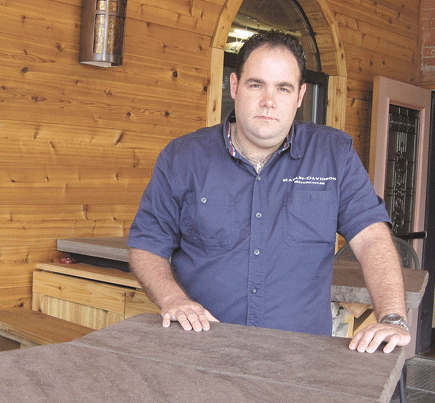
Jeff Daigneau says creativity and hard work have helped Lattitude grow, to the point where the restaurant thrives even during the challenging Big E weeks.
Keep the Party Going
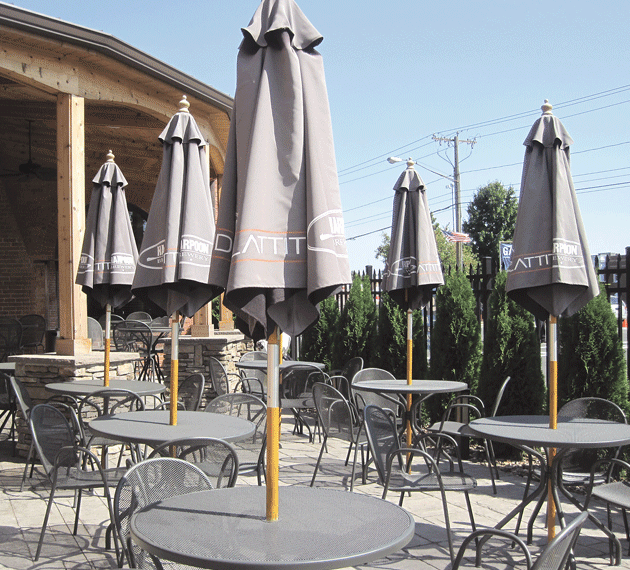
Lattitude added an outdoor patio bar this year, where patrons can enjoy live music.
Room For Dessert
Late last month, Daigneau served as the ‘celebrity professional judge’ for a Big E bread and dessert contest featuring creations fashioned from Fleischmann’s yeast.
That assignment speaks not only to his new outlook on the Big E as partner, not competitor, but also to just how far he has come in five years — from a chef with a dream to an entrepreneur with a dining destination in the midst of exploding growth.
The brussels sprouts on his business card have become a symbol of that success, and so has the new sign over his door.
“It’s finally gotten to the point where I can look up to that sign and say, ‘you know what? I did OK.’”
Actually, much better than OK.
Elizabeth Taras can be reached at [email protected].

Debra Flynn, right, and Jake Perkins say Sláinte’s party business has taken off beyond their initial expectations.
American Style
So, what is the menu like? Favorites range from appetizers like fried pickles and cod fritters to entrees like fried chicken, lamb shank, filet mignon, with a selection of burgers, sandwiches, and salads thrown in for good measure.
“Everything is made from scratch here,” Perkins said, from appetizers to desserts, salad dressings to pastrami.
“We use pork belly for bacon — everything is cured from scratch. There are no processed foods here,” Flynn added. “You’re not going to get processed pastrami or turkey here.”
Besides the fresh food, Flynn and Perkins are aiming for a certain casual vibe, not unlike that of the old Broadview. “It was fun — great wings, great sandwiches … it was a great place to go, a place where everyone went in Holyoke, where everyone knew everyone,” Flynn said.
With that in mind, “we were going for a warm, inviting feeling. We added more TVs so people can watch sports, any type of sports. And we have a 60-inch TV outside so they can be outside and watch TV, too.”
Flynn said the outdoor patio and bar is “to die for,” and bands play there on Wednesday and Sunday evenings during the warmer months.
But she and Perkins are equally proud of the upstairs banquet facility, which holds up to 100 people for cocktail parties and sit-down dinners. Sláinte has hosted baby showers, rehearsal dinners, and a host of other parties, including one wedding reception. The space is also ideal for breakfast meetings, and is equipped with audio-visual equipment for business functions.
“We’ve had surprisingly brisk business upstairs,” Perkins said. Flynn added that her connections in Northampton and Springfield — where she was general manager of Café Manhattan and the Colony Club earlier in her career — certainly haven’t hurt.
“It has been overwhelmingly successful. I was not expecting it to be as successful as it is this soon — it’s only been six months,” she said. “People remember me from the Colony Club and Café Manhattan.”
A location that effectively straddles Hampden and Hampshire Counties, just two minutes from I-91, doesn’t hurt, she added. “And the Northampton business community has been extremely positive in this new venture. A lot of people were like, ‘are you sure you want to do this? Why take on so much more work?’ But they come out and support me by coming here — I’ve had a few events from Northampton here.”
City on the Rise
Perkins said the goal has been to create an inclusive environment that draws customers back again and again. Flynn said she’s happy with business so far.
“I want to say it’s because of our quality and the service we provide and the friendly atmosphere,” she told BusinessWest. “That’s my philosophy. That’s the way you keep them coming back.
“This business is not about us; it’s about the customer,” she added. “You can never think it’s about yourself; you have to listen. It might pain you, but you have to listen and do whatever you can to make people happy, because if they’re not, they won’t be back.”
She and Perkins both live within a half-mile of Sláinte, and they believe they’ve opened a restaurant and banquet hall in a city that’s clearly on the rise.
“I’m proud to be in Holyoke. I believe Holyoke can come back,” she said. “It has a lot of the same qualities as Northampton, and the architecture is gorgeous.”
Added Perkins, “as businesses move into town, that’ll bring even more businesses in, and it kind of builds on itself.”
“We want to help set the tone,” Flynn continued, “so people say, ‘if they can do it, we can,’ and people will start to say, ‘wow, Holyoke has a lot to offer.’ Look at Northampton in the late ’70s and early ’80s, and look at it today. It can happen. You’ve got to believe it — and work hard.”
She said Eastside benefits from the walkability of its downtown Northampton location, where the streets teem with pedestrians. But Sláinte has its own advantages. “We’re right off the highway, and the people of Holyoke have been very supportive of us,” Perkins said. “It’s been fantastic.”
Flynn agreed. “We’re part of two really great towns. How lucky are we?”
Joseph Bednar can be reached at [email protected]

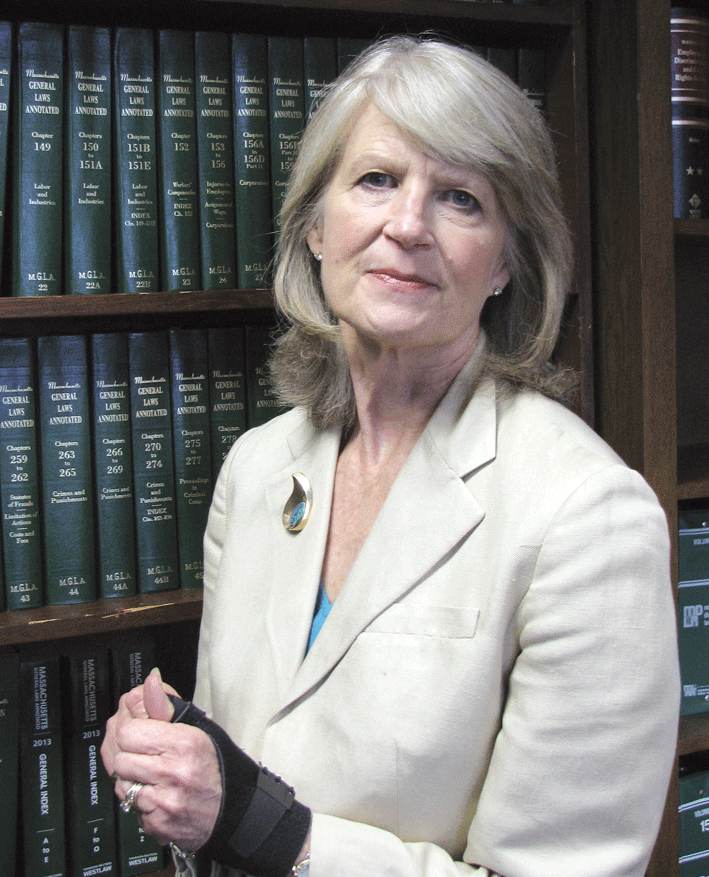
Susan Fentin says she much prefers helping clients sidestep employment-law pitfalls than defending them in court.
Union Labels
Since its inception in 1964, Skoler, Abbott & Presser has worked with employers in the realm of labor relations and collective bargaining, including all aspects of the National Labor Relations Act of 1935.
But that law, too, has evolved with the times. “One major change is that it’s starting to expand the concept of protected, concerted activity into areas where it was never utilized before,” Abbott said. “We’re seeing that they’re poking more into employment relationships than they have in the past.”
Take the brave new world of social media, for example. The National Labor Relations Board (NLRB), which administers labor law under the act, has made several high-profile rulings regarding the right of employees to complain about their jobs on Facebook and other sites.
Abbott cited the term ‘electronic water cooler’ when talking about the Internet and social media. “In the old days, when employees gathered around and moaned and groaned about their supervisor or what the company was going or not doing, they’d do it around the water cooler. Now it’s done online, and that has created problems for employers, who see all their dirty linen exposed to the world.”
The NLRB has stepped forcefully into this new paradigm, ruling on multiple occasions that such speech is protected. “The world has changed, and (so has) the way people communicate; people will say things on Facebook and not realize the implications,” Abbott said — and companies must understand and learn to deal with this reality.
This federal push for expanded workers’ rights comes at a time when only seven in 100 private-sector workers in the U.S. are in a union, Murphy noted.
“The NLRB is trying to establish some relevance in an environment where the standard labor relationship is not as predominant as it used to be,” Fentin added.
Abbott agreed. “We’re not seeing the uptick in union organizing — in New England and other parts of the country — that was expected with the present administration and its pro-labor view,” Abbott said of President Obama’s five years at the helm. “That hasn’t materialized into greater numbers of new members for unions or significant organizing drives, so the NLRB is now looking for relevance; they’re looking to expand their clout in the world.”
That’s evident in the recent strikes of fast-food restaurants by employees looking to significantly increase their wages. “That’s not related to a union,” he said, “but it’s clearly aided and supported by unions that want to pressure the fast-food industry on the wage issue.”
Meanwhile, unions are certainly not dead, Fentin said, which is why the firm continues to offer strategies to clients looking to remain non-unionized. “The manufacturing sector in Massachusetts has obviously shrunk over the years,” she noted, “but a fair number of clients in human-services agencies are now big targets for unions. We’ve had a couple of clients targeted by union-organizing drives.”
Educate and Connect
The firm’s client training goes well beyond union avoidance, however, encompassing seminars and briefings on topics such as personnel policies, sexual harassment, wage-and-hour laws, discipline and documentation, drug testing, workplace safety, and, of course, the broad implications of the aforementioned ADA and FMLA.
“The firm teaches master classes in both of those,” Fentin said. “The FMLA is a complicated statute to administer; it requires a lot of procedural paperwork.”
It also has a higher profile than it used to, she added. “More people are aware of it, and more likely to believe that they were treated wrongly because of their protected class.”
In addition, “we do a lot of training in discipline and documentation to make sure supervisors understand the importance of being fair and having a business-based reason” for firing, she explained. “We have an at-will law in Massachusetts, but, frankly, if you don’t give a good reason, people will feel they’re not being treated fairly.”
The firm’s educational efforts extend beyond its clients, she added. “We also write and edit the Massachusetts Employment Law Letter. That requires us to be constantly on top of what’s going on. It’s really written for the HR professional — it’s not esoteric; it’s written in plain language so anyone can take an issue we’re talking about and apply it to their own situation.”
Fentin said her work sometimes feels more like family law than business law because it often involves people with long-standing relationships, and when someone feels wronged, the process can get messy. “I had a mediation yesterday that failed because the employee wanted her day in court, and wanted to be vindicated,” she recalled. “It can be an emotional relationship.”
Murphy said the firm encourages clients to talk with a lawyer before they make any personnel decision that can lead to litigation.
“We walk through what the options are so the problem doesn’t happen,” he said. “We take a lot of pride in keeping people out of trouble, even though that’s not the most lucrative course. We’re building long-term relationships — we’ve had some clients since the 1960s. We don’t want to have one transaction with a client; we want to understand their business and be a partner with them, to help them thrive without having to worry about litigation or union problems.”
Abbott said a good result often comes down to simply treating people well and keeping the lines of communication open. “Unions aren’t going to get any traction in a company that treats their employees fairly. You don’t have to be the best-paying company in the world, but you do have to be focused on the employer-employee relationship. And that commitment starts at the top of the company.”
Fentin sees much of her role as trying to keep honest business people out of trouble. “All they’re trying to do is run their businesses. They don’t want to discriminate against anybody, and they want to make sure they’re doing things the right way.
“It is expensive if it ends up in court,” she added. “Talk about a drain on management morale, a time drain, a financial drain. It’s not fun. The better route is to develop strategies that keep you out of trouble.”
Something New
From anti-bullying policies in the workplace to regulations regarding the use of smartphones at work, “there’s always something new bubbling up,” Fentin said. “There’s never a dull month.”
Medical marijuana is another one of those new, hot issues, partly because of the rift between state laws, in states like Massachusetts where its use has been sanctioned, and federal law, which still maintains that it’s illegal. For instance, what if someone uses marijuana for health reasons at home, then fails a drug test at work because traces are still in his system?
“We’re still looking for court guidance on that,” she said. “Frankly, these decisions will take a long time to bubble through.”
Yet, such uncertainty isn’t frustrating to Fentin, but gratifying in a way, because she knows that clients have much at stake from such issues, and she and her fellow attorneys at Skoler, Abbott & Presser are equipped to help employers deal with them.
“This isn’t something abstract — I’m talking about people and how to help them keep their jobs and make their businesses more efficient,” she said. “I love my clients; my clients are my friends.”
Abbott had a similar take. “I believe a lot of people think of a company as a logo, a building, a product,” he said. “Our view of a company is of people — it’s managers, it’s HR people, trying to do the best they can under tough circumstances.”
Joseph Bednar can be reached at [email protected]

Eric Snyder says a small but healthy collection of businesses operate in Southampton, a town that values its rural character.
Resistant to Change
Southampton’s rural character is almost two centuries in the making, dating back to the mid-19th century, when manufacturing mills began to spring up across Massachusetts. In particular, communities along the Connecticut River and its tributaries developed thriving mill industries.
In the 1840s, a businessman named Samuel Williston proposed to build a mill in Southampton, but the town was reluctant to support such industry and the influx of immigrant workers that came with it. So, in 1847, Williston established his National Felt Mill in neighboring Easthampton, and Southampton focused mainly on agriculture as its primary economic base, in so doing maintaining a more rural character than nearby communities like Westfield and Holyoke.
Today, Southampton is still largely rural — only 1% of the town’s land is zoned commercial, virtually all of it along the Route 10 corridor — and serves primarily as a bedroom community for Greater Springfield and Northern Conn. In fact, of the town’s roughly 5,800 residents, close to 40% commute to jobs in Springfield, Holyoke, Westfield, Northampton, Easthampton, Chicopee, West Springfield, Amherst, or South Hadley, while only about 350 work in Southampton itself.
The town’s economy consists mainly of small stores, restaurants, and service businesses, many of them family-owned or home-based, with a smattering of chains, including Big Y, Rite Aid, and Tractor Supply.
When town officials were preparing a master plan for Southampton earlier this year, they solicited opinions from residents, who, for the most part, are interested in expanding the town’s municipal tax base, but at the same time eager to protect the community’s rural character.
“The greatest challenge in achieving this vision,” the planners wrote, “will be determining what type of economic growth should be promoted in the future and what type of public infrastructure, such as water and sewer service, will be feasible to support economic growth in areas where it is desired.”
In addition, the report noted, “residents expressed a preference for encouraging types of economic growth that maintain and expand the town’s existing and proposed recreational opportunities and amenities, especially those that are connected to Southampton’s natural, cultural, and recreational resources. This approach would benefit residents directly and also serve as an economic marketing attraction. Further, residents said they would also like to support small businesses and provide services that support home-based businesses, such as coffee shops, computer support, and meeting locations.”
Home-based enterprises — about 85 residents work from home — indeed make up a significant portion of the town’s business culture, while working farms, while not as numerous as they once were, are still prevalent, with 43 still in operation.
Among the businesses operating in the town’s tiny commercial zones, Big Y is by far the largest employer, with 170 jobs in Southampton, while other moderate-sized companies include Heritage Surveys, Marmon Keystone, Connecticut Valley Biological, and Lyman Sheet Metal, all of which employ between 10 and 25 people.
Nature’s Way
What Southampton lacks in commercial zoning, it makes up for in spades when it comes to open space. In fact, 87% of the land in town remains in a natural, undeveloped state, with about 22% of that, or some 4,100 acres, designated as open space or recreational lands, most of which is permanently protected from future development.
That natural character of the town’s geography is a treasured facet of Southampton life to many residents, and helps explain the slow pace of economic growth. In fact, a 2005 open-space survey revealed that residents enthusiastically support the development of bike paths, sidewalks, conservation trails, and playing fields, even as they’re less concerned with attracting an influx of businesses.
“While the market ultimately drives the types of businesses that will choose to locate in Southampton, the town can take active steps to encourage the preferred types of business through its zoning bylaws and infrastructure improvements,” the recent master plan states. “It is possible for this bedroom community to increase its commercial base and maintain its rural character, but town officials will need to be wise on where they place their investments.”
Away from his land-surveying business, Coombs is able to interact with a wide variety of residents on the weekends, when his bookstore is open for business (he also maintains a website offering access to 30,000 books). No matter which hat he happens to be wearing, “this is really a great town to live and work in.”
But it’s not always a town that embraces change, he added.
“I had been on the planning board for about 10 years, and also served on the Rural Lands Committee,” he said. “At one point, we did kind of a zoning review that was partially funded by the Forestry Service. It was a project that included some master planning, and we came up with proposed revisions to the bylaws. It was defeated.”
Added Snyder, “there is a certain amount of retail businesses in a couple of centralized areas — basically on the Route 10 corridor, College Highway — but, personally, I get the impression that residents would prefer to keep the character of the town as it is — primarily a rural-based community.”
Coombs called the growth he has seen — primarily on the residential side — normal, “non-offensive” growth.
“I think people like living here,” he told BusinessWest, “and they like to move to Southampton from other communities — more so than moving the other way.”
Joseph Bednar can be reached at [email protected]
 It’s been difficult for Doria Polinger to keep enough handmade chocolates on the shelves of the store she opened about a month ago on Railroad Street in Great Barrington.
“Almost everything I make has sold every day — business has been amazing, even though we are tucked away and many people find us by surprise,” she said about H.R. Zeppelin Fine Handmade Chocolates.
Polinger began looking for the right location for her specialty shop several years ago. The Stockbridge resident and New York City transplant chose Great Barrington because of its “urban feel” and the mix of people who pass through the town. “There are tourists, people who live here year-round, and people who have second homes,” she explained. “Everyone comingles well, which is nice.”

Doria Polinger says her business thrives in Great Barrington, even though many visitors find her by accident.
“Our infrastructure serves residents and people who come here in the summer as well as the surrounding communities,” he told BusinessWest, adding that Great Barrington gets a steady stream of traffic due to its central location.
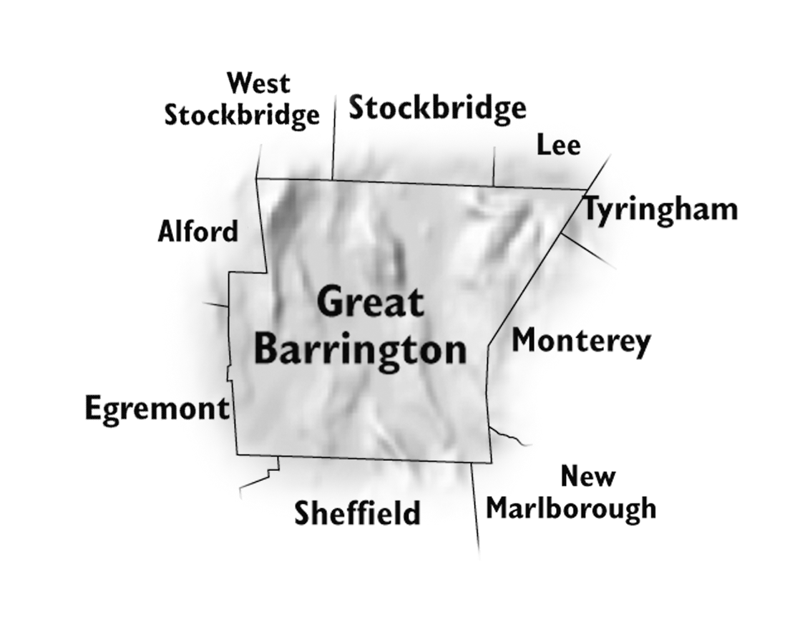
Route 7 is the town’s Main Street, and Route 23 passes west to east. It combines with Routes 7 and 41 in the western part of town and Route 183 in the eastern part, which also follows a section of Route 7 northward from Route 23, before splitting toward the village of Housatonic. As a result, people from Boston, Upstate New York, and the New York metropolitan area are among the many tourists who visit Great Barringtons’s bustling downtown, where streets are home to small storefronts that sell products ranging from clothing made from hand-woven fabric to homemade food products that include cheese, bread, barbecue sauce, and meat and produce from local farms.
Richard Stanley, who built the four-screen Triplex Cinema downtown and owns other real estate, said the extent of Great Barrington’s vitality can be understood by the fact that, although the town only has 7,700 full-time residents, it is home to 65 restaurants, a number of art galleries, and the well-known Mahaiwe Performing Arts Center, as well as many specialty stores and small businesses.
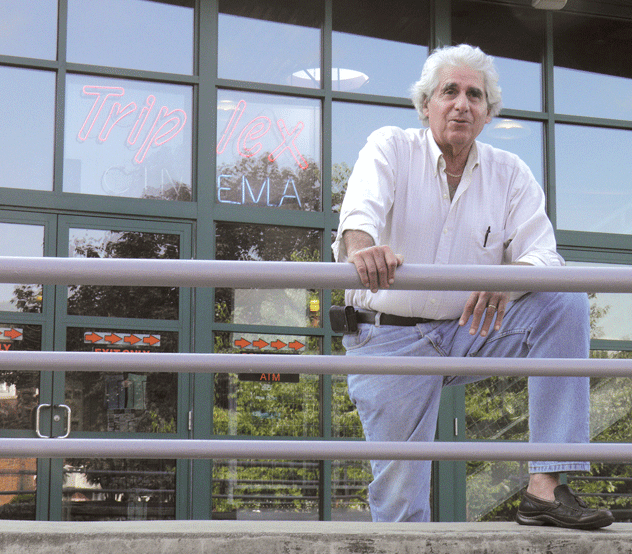
Richard Stanley says the Triplex Cinema he developed has helped to revitalize the town and turn it into a thriving resort destination.
Town Manager Jennifer Tabakin agrees. “We’re not only a residential community, we are an employment hub — 10,000 people come here to work,” she said, adding that many second homeowners enjoy Great Barrington year-round.
Stanley concurs. “We’re a second-home community for the New York metropolitan area.”
The agricultural community is also thriving. “Many young people are coming back to the area purchasing land to develop as farms, and people are also coming here to learn how to do organic farming,” Stanton said. “We have an internship program for sustainable agriculture, two garden centers, and a lot of landscapers.”
Stanton operates Blue Hill Farms, which is a mixed livestock operation, and says much of the town’s land is under conservation easement and/or agricultural-preservation restrictions.
“Although most of it is being used, there is other land which could be designated as agricultural,” he said, “which would reduce the property taxes on it by 75%.”
Logging Growth
Great Barrington has been honored with many accolades that attest to its character, which include being named the “number-one small town in the U.S.” last year by Smithsonian magazine.
Since its early beginnings, the town has been divided into two sections: the downtown area and Housatonic Village, located on its north side. In its heyday, Housatonic was a booming mill village that provided employment for generations of townsfolk, getting its name from the Housatonic Manufacturing Co. located there.
The village is important in Great Barrington’s history due to its mills, and today, the space within some of them has been transformed into offices, businesses, and apartments with ample room for growth. “There is a fair amount of vacant space available in two of the mill buildings,” Stanley said.
He purchased his first building in town in 1989. “It was just another sleepy place on the map then, and people thought I was nuts,” he told BusinessWest. “It was so quiet, you could shoot a cannon down most of the streets at 5 o’clock.”
But over time, New York residents discovered its beauty and began buying second homes there. In addition, a parking lot was constructed, Stanley built his Triplex Cinema, and the town that had served as a retreat for the wealthy during the Gilded Age was rediscovered. “Today, people come here for the town’s unique combination of beauty, for movies and entertainment, for its restaurants and stores, and for the local art galleries,” Stanley said.

Sean Stanton, a farmer and chair of the town’s select board, shows off one of the Great White Tomatoes he grows at Blue Hill Farms.
And while the community has staged a stunning turnaround, there are projects in various stages of development that could make it even more of a destination.
Topping that list is the $30 million redevelopment of the former New England Log Homes factory site at 100 Bridge St.
“The Community Development Corp. of Southern Berkshire County owned the property for about 20 years,” said Stanley. “It was a brownfields site, but nothing was migrating, so they felt no sense of immediacy to do anything with it.”
But in past few years that changed, and several weeks ago preliminary plans were approved for the eight-acre property that will offer public access to the Housatonic River and provide mixed-use opportunities for businesses, nonprofits, and new restaurants. The plan calls for 50 to 70 new housing units and 40,000 to 50,000 square feet of commercial space.
Stanley sits on the board of directors of the development corporation, and said the state Department of Environmental Protection worked with the panel to determine the best use for the property. “The plan is threefold: to foster commerce on the retail level and create higher-paying jobs and a residential environment,” he said.
The anchor tenant will be Berkshire Co-op Market, which generated $8.3 million in sales last year and has outgrown its current location on Bridge Street. The market is owned by 3,500 members and offers locally grown meat, produce, and other products. It is expected to open next fall in a 10,000-square-foot space, which will include a café.
“The co-op supports local farms and is very active in the community,” said Betsy Andrus, executive director of the Southern Berkshire Chamber of Commerce. “It helps entrepreneurs develop local products and was instrumental in creating a program in the schools after students reached out to them requesting better food. Plus, almost every restaurant in town is farm-to-table. They vary their menus according to the season.”
The redevelopment theme for the site, which is in line with the foodstuffs that will be sold there, includes a wellness center, and Stanley said doctors who practice alternative medicine have already expressed interest in office space.
He added that the site is within walking distance of the downtown, and the board of directors has agreed to think of it as an extension of Main Street because there are buildings available for business use in between.
One of them is the former Searles Middle School, which offers views of the Housatonic River and mountains and sits adjacent to the old Bryant School, which is being redeveloped. It will be the first project of its size to receive the LEED Gold designation in Southern Berkshire County and provides for a ‘destination’ mixed use of the property that respects the character of the historic buildings while enhancing public access of the Housatonic River and creating jobs.
Other development opportunities exist on the former Great Barrington Fairgrounds property. The 50-acre site was recently purchased by the Fair Ground Community Redevelopment Project Inc., a nonprofit group that plans to use it as a sustainable community resource for education, recreation, and agriculture, which would include community gardens and a greenhouse.
More opportunity lies at the Searles Castle, built in 1888, which has been on the market since 2007. The castle contains 40 rooms with more than 60,000 square feet of floor space and 36 fireplaces. After being converted from a private home, it was used as a private girl’s school, conference center, a golf course, and most recently was owned by the John Dewey Academy, which served troubled teens.
“The property has 80 acres of grounds with fountains and ponds,” Andrus explained. “The carriage house alone is beautiful and could be used for businesses.”
Destination Location
Overall, Great Barrington is flourishing. “The future continues to look bright as we get more diversity in terms of people and types of businesses and continue to support our farming community,” Stanley said.
Added Tabakin, “the quality of life here is wonderful. It’s a wonderful place to work, raise a family, and enjoy recreational activities.”
Stanton concurred, noting, “there is a lot going on here.”
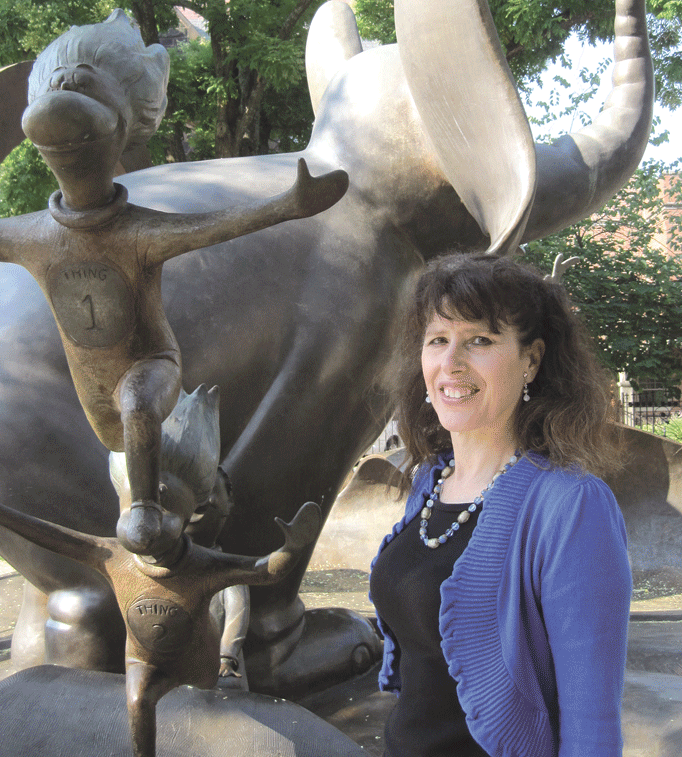
Kay Simpson says creation of a cultural district will help Springfield brand its many attractions, while spurring economic development.
Evan Plotkin equated it to a business hanging out a sign that reads “under new management.”
Though he quickly acknowledged that the analogy isn’t perfect — the city hasn’t actually changed leadership at the top, and won’t for at least a few more years — he went ahead with it anyway, because he considers it an effective way to talk about what the creation of a cultural district in Springfield can and likely will do for the community.
“Business owners put out an ‘under new management’ sign on a restaurant, for example, when they want to change the dynamic,” said Plotkin, president of NAI Plotkin and a prime mover in ongoing efforts to revitalize and promote the city’s downtown. “They do it because they want people to know that something has changed, something’s different, something’s better — that people should want to come there again.”
Creating a cultural district can do very much the same thing for Springfield, he went on, noting that it will help the city brand itself and its many cultural attractions and, in many ways, give people a reason to give the community a look — or another look.
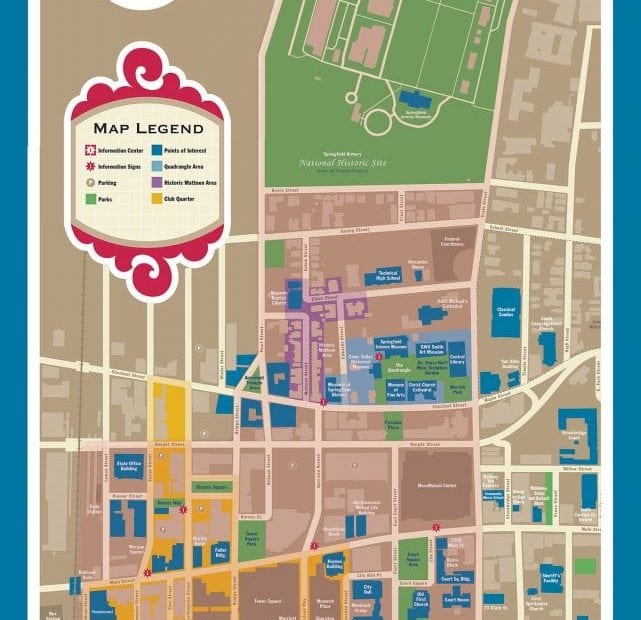
Kay Simpson agreed. She’s the vice president of Springfield Museums and one of the primary architects of a proposed cultural district that would cover several blocks downtown and include everything from the Armory Museum to the Paramount; from the Community Music School to the five museums in the Quadrangle; from Symphony Hall to the clubs on Worthington Street.
The formal application for creation of the district was sent to the Mass. Cultural Council (MCC) on Aug. 15, said Simpson, who literally knocked on some wood as she talked about what she considers decent odds that the city will join Pittsfield, Easthampton, Lowell, Gloucester, and other cities gaining state designation for a cultural district.
“This is a great tool for promoting the arts,” she said, adding that, beyond building awareness of the city’s attractions, creation of a cultural district will also better position the city for funding from such organizations as the National Endowment for the Arts, and also spur economic development. “A district can stimulate business, especially creative-economy businesses.”
Her optimism about the proposal’s chances is based on comments made by MCC officials who have walked the planned district already and provided input on the application and how it should be written, and also on the large volume of attractions and institutions packed into the multi-block area identified in the map to the right.
 “It’s remarkable when you consider how many major cultural institutions are located in the downtown area,” she said. “This is not a huge geographic area, but there is a dense concentration of cultural assets.”
David Starr concurred. The president of the Republican and chair of the city’s Cultural Coordination Committee described the planned district as a “true gem,” and said its creation will provide new and potent opportunities to increase awareness of the city’s cultural amenities and build on that foundation.
“The problem has always been that these institutions never got the outside recognition that they deserved,” he explained, referring to the museums in the Quadrangle, the symphony, and other organizations. “A cultural district will help sell them and help brand them to not just the local area, but people outside this region.”
For this issue and its focus on travel and tourism, BusinessWest takes an in-depth look at the proposed cultural district and what its architects believe it can do for the city and its ongoing efforts to revitalize the downtown area.
Mapping Out a Strategy
The MCC’s Cultural Districts Initiative was authorized by an act of the state Legislature in 2010 and launched in 2011.
It was inspired by mounting evidence that thriving creative sectors stimulate economic development, said Simpson, noting that the prevailing theory has been that such districts attract artists, cultural organizations, and entrepreneurs, while helping specific communities create or strengthen a sense of place.
“By having the cultural-district designation, you’re creating an environment where all kinds of businesses can come into an area,” she explained. “These creative-economy businesses include everything from art galleries to graphic-design enterprises to coffee shops and restaurants.
“You’re creating a brand for a community,” she went on, “so that people from outside that community know that, if they go to the cultural district in Springfield, there’s going to be a lot for them to do. They can go to museums, see historic monuments and sites, and have lots to do in terms of both the visual arts and the performing arts.”
There are currently 17 cultural districts across the state, with more being proposed. They have been established in Barnstable, Boston, Cambridge, Concord, Easthampton, Essex, Gloucester (which has two), Lowell, Lynn, Marlborough, Natick, Orleans, Pittsfield, Rockport, Sandwich, and Shelburne Falls.
Springfield’s proposed cultural district would be bordered by East Columbus Avenue, Bliss Street, Stockbridge Street, High Street, Federal Street, Pearl Street, Dwight Street, Lyman Street, and Frank B. Murray Street, according to a prepared summary.
That section is home to number of cultural attractions and institutions, including the Springfield Armory National Historic Site, the Quadrangle, the historic Mattoon Street area, the MassMutual Center, Symphony Hall, CityStage, the Paramount, and the Community Music School, said Simpson, adding that it also includes several parks, some retail areas, and a number of restaurants, clubs, and hotels.
One of the required traits of a district, as set down by the MCC, is that it be walkable, said Simpson, noting that, while this comparatively large area — which officials originally thought might encompass two districts — constitutes a “good walk,” it meets that stipulation.
Most of the existing cultural districts have names that identify a specific neighborhood, landmark, or street. Easthampton’s, for example, is called the Cottage Street Cultural District, a nod to the many former mills and storefronts on that thoroughfare that have become home to arts-related businesses and agencies. Meanwhile, Lowell’s Canalway District takes its name from an historic section of that former textile-manufacturing center, which has also become a center for the cultural community, and spotlights the city’s most enduring character trait — its canals.
Those leading the drive for Springfield’s district recently ran a contest to name it; submissions are currently being weighed by a panel of judges, and a winner is to be announced soon.
By whatever name the district takes, it is expected to become a point of reference for Springfield, a vehicle for branding the City of Homes, and a source of momentum as the community seeks to build its creative economy and, overall, bring vibrancy to a long-challenged section of the city, said Plotkin.
In a big-picture sense, the broad goal behind the cultural district is to change the conversation about Springfield, he went on, adding that, in recent years, most of the talk has been about financial struggles (the city was run by a control board for several years), crime, poverty, and high dropout rates in the city’s high schools.
“This cultural district will build a sense of community,” he noted. “It will help break down some of those walls that people have about Springfield, including the sense that we’re a broken city with low self-esteem.
“We have to break out of that and build some pride and some community,” he went on. “We have to start doing things that will really change the city, and I believe a cultural district will do that. Doing this can help to start changing the conversation about Springfield and about what we really are culturally and what we have here.”
It can also help make a community more visible — and attractive — to those looking for landing spots for a company or sites for everything from day trips to meetings and conventions, said Simpson, who said creation of a cultural district in Boston’s Fenway area has apparently done all that.
“In the Fenway, they’ve said they have seen an increase in occupancy rates in office buildings and storefronts since the cultural district was created,” she said, noting that the area, home to several museums and other attractions, is in many ways similar to downtown Springfield. “Meanwhile, it has created for them the sense that they’re more recognized in terms of gaining political support.”
Sign of the Times
Springfield will probably find out sometime this fall if its proposal for a cultural district has been accepted by the MCC, said Simpson.
If all goes as those behind this initiative believe it will, then the city will soon have a new vehicle for marketing itself and perhaps making some real progress in ongoing efforts to change some of the perceptions about the community.
In other words, the ‘under new management’ sign can go on the door. It will then be up the city to make the most of that development. n
George O’Brien can be reached at [email protected]
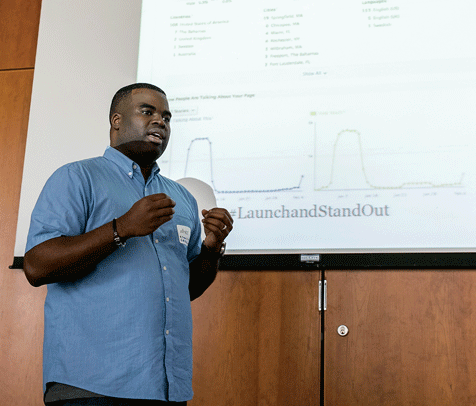
Mychal Connolly has turned his entrepreneurial success with Stinky Cakes into a vibrant speaking and writing career.
“We just wanted diapers — my son already had a crib and a playpen,” he recalled. “I said, ‘could we please have diapers?’”
As it turns out, no. Not as a gift, anyway. “Even though diapers were a practical gift, people want to give a fun gift; it’s not a one-sided experience.”
He found the solution to that dilemma in Stinky Cakes, the product he launched in 2009 with the express purpose of making diaper giving fun.
“My wife and I both love marketing, and we thought about how we could get baby-shower folks buying diapers,” he told BusinessWest. “We started thinking about what we could do to make diapers match the baby-shower theme, and one common item all baby showers have is a cake. So we thought, ‘OK if we made diapers look like a cake, it could be part of the theme.’”
The couple spent a few months trying to make the idea — essentially a bunch of diapers arranged in the shape of a cake and wrapped with decorative ribbon — work. When they had produced a prototype, they showed it to Connolly’s mother-in-law, who promptly bought one as a gift. When she returned from the party with several more orders in hand, Connolly knew he was onto something.
When they officially launched a business under the striking name Stinky Cakes — “people either love the name or hate the name,” he said, but they certainly remember it — the couple had two young boys and no reserve funds to tap, so they moved forward by making hard budget choices. “Instead of buying fancy clothes, we bought a website. Instead of going out to movies and restaurants, we bought business cards that sent people to the website. Eventually we saw revenue coming in from the website.”
Not knowing anything about media buying — and, again, with little initial money to work with — Connolly went to WMAS and worked out a deal for radio spots, and that helped, too. “We just worked our butts off. Most people who start business ventures quit after they don’t see any results, but the problem is not the product. It’s not the area. It’s not the consumers. It’s the entrepreneur.”
 To say Connolly is passionate about entrepreneurship is an understatement. Beyond his business selling Stinky Cakes, he has written two books on entrepreneurship and regularly speaks to audiences on the topic — both in person and through a pervasive social-media presence, including a blog centered on starting and running a business.
He’s not convinced anyone can be an entrepreneur, but “if it’s in you, it can be nurtured. Entrepreneurs see the world differently. They don’t see a problem, just something that hasn’t been solved yet. They solve the problem, and then plug people in to keep that system going.
“Entrepreneurship is a mindset that creates systems to solve problems,” he reiterated. “That’s what entrepreneurship is. If you don’t create systems, don’t call yourself an entrepreneur.”
Candy Crush
Growing up in the Bahamas, Connolly probably didn’t call himself an entrepreneur, but he certainly had the mindset.
“My stepfather had a little pest-control business,” he explained, and as a child, he’d tag along on jobs. “I’m very analytical, and I paid attention, and I saw that, in wealthy people’s homes, their coffee tables always had business publications.”
He started watching finance shows on television even though the concepts weren’t exactly pitched to kids. “I’d watch the shows with the ticker, and I didn’t understand what people were saying, but I knew I wanted to. That’s how I started falling in love with entrepreneurship.”
Then, at age 9, he started a candy company “by mistake.”
He recalled that his grandmother would go to Florida and return with “loads and loads” of candy that was unavailable on his island, and he shared it with his friends. But he eventually grew tired of people hounding him for treats, so he started saying they were for sale, not free, just to get them off his back. “Instead of leaving me alone, they said, ‘how much?’”
He knew about concepts like price markup from those business magazines, so he started earning money selling the candy and chilly treats he’d make by freezing Kool-Aid. “My grandmother had no idea this stuff was going on,” Connolly recalled — but soon after she found out, the two teamed up in the business, and she eventually left her own job to sell candy — and did so until her death in 2005.
He had caught the sales bug, and already recognized that his mind was suited to identifying needs and meeting them. “If you told me 25 years ago when all this was happening that I’d be in Western Mass. doing this, I’d say you’re crazy,” he said. “But I always knew I would be an entrepreneur; I just didn’t know what the product would be.”
Fast-forward to 2009, the first full year in the diaper business, and early sales were strong. But the following year raised some serious issues that had nothing to do with baby gifts.
“I ended up working so hard on the company that I wasn’t sleeping, and I was eating really badly,” Connolly said, noting that his weight, which had been around 220, shot up 70 pounds, and he ended up becoming diabetic, with high blood pressure and high cholesterol to boot.
He sought help — and it’s a good thing he did. “The ICU doctor said that, if I hadn’t come in, I would have ended up in a diabetic coma. I could have died. Fortunately, I survived, and that made me grow up mentally as an entrepreneur. I always had this goal that, when I was done [building a company], I would start a foundation to help kids become entrepreneurs. But when I was staying in the ICU, I realized time is really precious, and tomorrow is guaranteed to no one.”
So for the next year and a half, he took his foot off the gas and “let Stinky Cakes run on autopilot” while he instead focused his energies on working with young people through Westover Job Corps, teaching them entrepreneurship, marketing, and leadership skills, among other things.
Many of the questions they asked him became part of his book Launch + Stand Out, in which he breaks down 23 different business ideas and discusses how he would apply the Stinky Cakes model to each of them. Throughout, he never loses focus on the importance of marketing.
“It’s not about the diapers; it’s about marketing and branding; that’s where it all happens,” he said. “Companies don’t go out of business because of lack of capital; they go out of business because of lack of sales.”
Changing Times
But Connelly is a natural marketer, expressing his passion for entrepreneurship through various forms of media, old and new, and, by extension, keeping his identity as Mr. Stinky Cakes at the forefront.
His blog — mrstinkycakes.com, of course — is one mode of communication. Others include an active social-media presence (and a book, Going Viral Unlocked, about using social media to grow a business), his public speaking through the Empact Connect network, and his role as entrepreneurial correspondent for The Engine, a radio show on WHYN 560-AM launched by Junior Achievement.
Connolly emphasizes financial literacy on the show, noting that people often don’t realize its importance. “If you give an entrepreneur $1 billion to start a company but he’s not financially literate, be prepared to give him another billion in a year.”
And it’s still not something adequately addressed in schools, he added. “We go to school to learn to read and learn to write, but where do you go to learn how to make money? Nowhere.”
He said guiding young people toward their own self-created success stories is especially gratifying.
“That’s the reason I’m a spokesperson for Junior Achievement, being able to help a kid who wants to be an entrepreneur, when no one is able to answer his questions for him. He’s got a mindset that most people are never going to understand, and when I see the lightbulb go on — when he thinks, ‘I can do this’ — that’s the best feeling.”
He recalled another satisfying moment, this one before an adult audience at Holyoke Community College. “When I was done talking, this lady comes up to me, crying. I said, ‘why are you crying?’ She said, ‘because what you said about overcoming fear — that’s the same thing my grandfather used to tell me.’ I said, ‘that’s not me talking, and it’s not your grandfather talking. That’s the successful version of you telling you where you need to go.’
That said, “not everyone is built for the fast track. I think the best entrepreneurs see the path from point A to point B and follow it; they don’t allow any noise or distractions to deter them.”
Again, whether it’s an e-commerce venture or any other type of business, “honestly, the key to it is marketing, marketing, marketing,” Connolly told BusinessWest. “There’s a market for everything. There are grandmothers blogging and writing books on knitting and making $1 million, because they have 50,000 people buying their $20 book.”
It makes sense that he’d come back to grandmothers, since his own played such a key role in his development as an entrepreneur.
“I don’t have an MBA, none of that stuff,” he said. “But I had that 9-year-old entrepreneurship moment with my grandmother, so I knew it worked. If I didn’t have that moment, I don’t think I would have started Stinky Cakes.”
Living the Dream
Connolly was quick to add, however, that entrepreneurship isn’t easy, even for those who grow up with that passion.
“Entrepreneurship is a lonely, dark place at times,” he said. “You speak a different language, and if you’re not around people who speak the same language, you have to have a mindset where you know where you’re going, and just keep moving forward.”
Even as his writing and speaking roles continue to grow, Stinky Cakes will continue to be a big part of Connolly’s life, although he has shifted the business model to emphasize the residual income streams developed by forging partnerships with other companies.
“That’s my baby; that’s why I call myself Mr. Stinky Cakes,” he said. “But I’m a serial entrepreneur; I love being involved with fun startups and companies that are growing. To me, that’s like breathing.”
Joseph Bednar can be reached at [email protected]
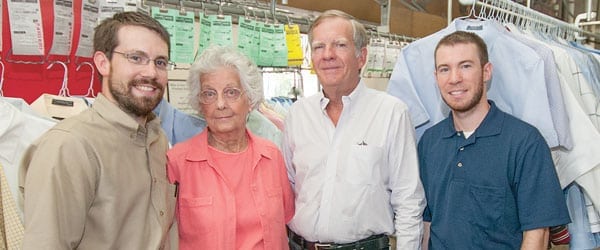
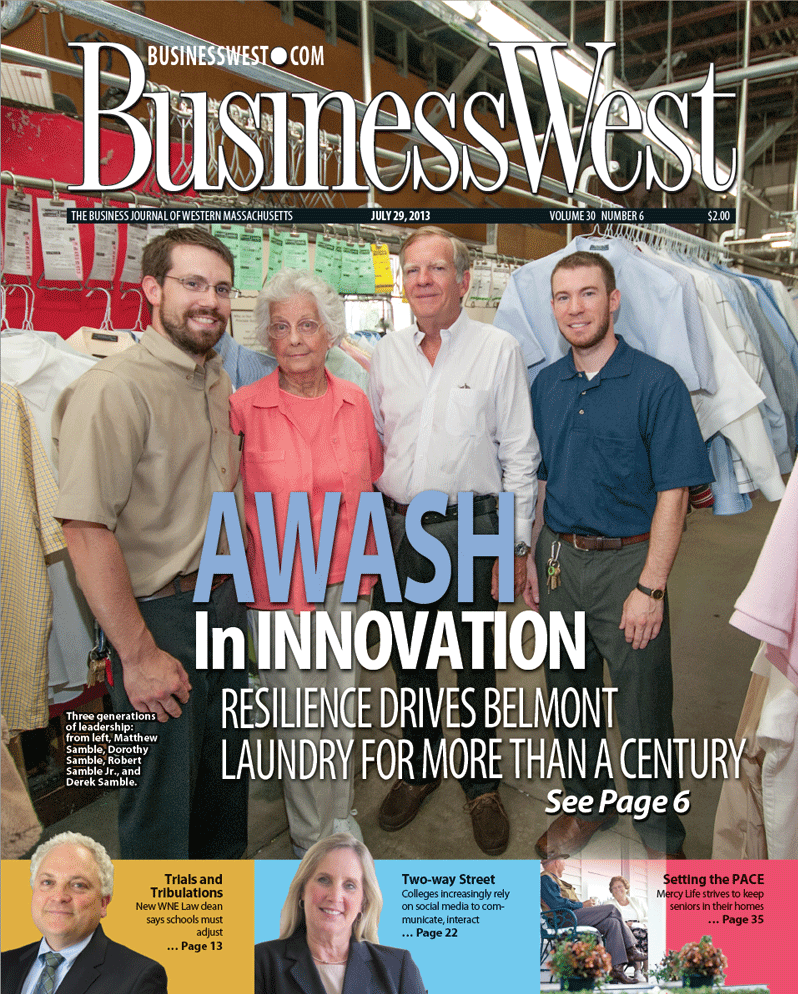 When Gaetano “Tommy” D’Amato was about 14, his mother became ill, and around that time, she began using Belmont Laundry to do the family’s heavy washing.
The centenarian, who celebrated his 100th birthday on May 8, remembers a horse and buggy — or horse and sled, depending on the weather — that came to pick up the family’s sheets from their home on the corner of Oakland and Orange streets in Springfield. “There weren’t any phones back then, but they told us they would be back every third day,” he said, adding that they couldn’t afford to have the laundry dried, so it was delivered wet, and his sister hung it on the clothesline. Over the years, D’Amato met many people who worked for the company, including one who retired after 47 years.

April McCarthy, who runs the Belmont Laundry Wilbraham Road store, shows off a 1912 wringer washing machine used when her great-grandfather ran the business.
The tragedies began when Harry died unexpectedly. At the time, his son Robert was 14, and his wife, Corrine, was forced to run the business. History repeated itself a generation later, when Robert, who had taken over the business, died at age 43 and his wife, Dorothy, had to run the laundry. Ironically, their son, Robert Jr., was also 14.
Today, 89-year-old Dorothy still spends Friday mornings at the business on 333 Belmont Ave., which is run by her son Robert (Rob) Jr. and his children, Matthew, Derek, and April McCarthy. The company has expanded and has two branches: Belmont Laundry and Custom Dry Cleaners, which has four storefronts — two in Springfield, one in Longmeadow, and one in West Springfield — as well as the Belmont Linen and Uniform Rental service, which comprises the majority of the business.
“There is a lot to this, and you have to be good at many things to survive, grow, and remain strong, because there is always something that needs attention and improvement,” Rob said. “But we have not only kept up with things, we’ve been pioneers in the latest advances.

Robert Samble, left, with his son Matthew, says the 106-year-old business has persevered through tragedy and calamity by keeping a constant focus on innovation.
“Every new idea that comes out gets evaluated, and if it’s feasible, we jump on it,” Rob continued, adding that Belmont is a green company and has recycled 23.5 million gallons of water over the past five years, recovered thousands of BTUs of energy, recycled thousands of hangers and garments each year, and uses environmentally friendly detergents and chemicals.
In the Beginning
Harry’s business began as a home-based operation. “The laundry was picked up on bicycles, washed in a tub in a barn behind the house, and brought back to people while it was still wet,” Rob said.
As the customer base grew, Harry graduated to a horse and wagon, then an electric truck, and, later, a gas-powered vehicle.
His wife Corrine ran the business after his early death, until the couple’s oldest son, Harry Jr., took over. He was joined by his younger brother Robert (Bob) when he returned from serving as a fighter pilot with the Army Air Corps during World War II. “By the early ’60s, my father had become president,” Rob recalled, explaining that his dad took the helm when Harry Jr. retired.
Competition had always been stiff, as there were more than 20 laundries in Springfield, but many of the owners were friends, and Bob’s cronies included Russ Dale of Dale Brothers Laundry on Union Street and Bill Hamilton of Royce Superior Laundry.
When Maytag began running coin-operated laundromats in low-income neighborhoods in 1958, they all signed on to the program. “They thought they would get rich,” Rob said. “But the laundromats were left open 24/7 without any supervision, which proved to be a bad idea.”
He remembers accompanying his father in the middle of the night when windows were shattered or money was stolen from coin boxes. It wasn’t long before Maytag’s experiment failed, and when the company switched gears and began selling washing machines to the public, many local laundries went under. The D’Amato family was one of millions who purchased a washer, which meant they could do their own laundry.
“The last nail in the coffin came when polyester was introduced, as it didn’t need ironing,” Rob said. “By the early ’70s, there were only two commercial laundries left in Springfield.”
As a child, he wanted to follow in his father’s footsteps. But during his teens, his interests shifted, and after graduating from high school, Rob attended Springfield Technical Community College for six months, worked as an auto mechanic, then moved to Arkansas, where he revived and ran a catfish farm.
In time, he returned to Springfield and was working as a refractory mason when his mother told him she was tired of running the struggling laundry. The year was 1974, the economy was floundering, and she said he either had to take over or the business would be sold. So Rob entered the family enterprise at a time when other laundries were closing their doors.
“I had held things together for eight years,” Dorothy said. “My youngest son was only 8 when my husband died. He was killed on Saturday, and I went to work the following Tuesday. It was a crazy time. I had had nothing to do with the business when my husband was alive, but my dad gave me advice, and everyone there was friendly and worked very hard.”
She also received help from her mother-in-law, who was in a nursing home. She was still very interested in the business and wanted to see an itemized expense sheet every week. “She had been treasurer at one time and signed all the checks,” Dorothy recalled. “I signed them too, once I took over, but the place was much smaller then. It was homey, and a lot of ladies worked there. I knew everyone by name.”
When clothes came into the laundry, they went to a ‘marker,’ who put a number on every garment. Each family was assigned their own number, which ensured they got their laundry back. “We used to wash wool blankets and hang them over a big board suspended from the ceiling, because they couldn’t go into the dryer. It was so different back then. Everything was done by hand. Now we use pulleys, lifts, and belts,” Dorothy said.
Although it was all she could do to keep the laundry operational, her husband had purchased new machines and rebuilt the structure before he died.
Rob said the company’s expansion began when his grandfather sought and received a variance to put an addition onto his building, which was in a residential zone. His father purchased adjacent properties as they became available, but by the time Rob became vice president, some of them had been sold to meet expenses.
New Ventures
The business took a new spin when Dorothy sent Rob to the National Institute of Dry Cleaning in Joliet, Ill. He returned with new ideas, but the manager immediately shot them down.
However, a short time later, the man had a stroke, and the trustees at Security National Bank named Rob vice president. “I was only 21 at the time,” he said.
His first coup was landing a contract after union workers walked off the job at the Worcester State School. “One day, the school showed up with a 53-foot trailer filled with sheets,” he said, adding that the Worcester operation also did the laundry for the Belchertown and Northampton state hospitals.
Belmont also served as a backup for Baystate Medical Center’s laundry and “they always had work for us,” Rob said. “The revenue we made from those accounts allowed us to grow into the textile-rental business.”
That venture was in line with the training he had received at the Institute of Dry Cleaning, because it did the laundry for a nearby prison. Rob’s work as an auto mechanic also came into play as he purchased old equipment and rebuilt it to keep up with the expanding business, which soon grew more competitive.
Large, national firms began vying for hospital accounts, and as a result, Belmont lost its contracts. But the company was already branching out into new territory, and in 1980 Rob hired two salesmen for the textile business. One didn’t last, but Ernest Gagnon, who stayed with the company for 20 years, helped make Belmont Laundry a recognized name in the uniform- and linen-rental industry.
The family laundry storefront also remained open, and in 1977, when Dale Brothers Laundry closed, Rob purchased its routes and customer list. “It was a good decision because we had done family laundry for so long, we were on automatic pilot, so although it was a dying industry, we were able to keep up with it,” he said. However, the business was threatened as one-hour cleaners were coming into vogue and Rob’s competitors were going bankrupt.
The next blow came in 1981 when Belmont Laundry was devastated by a fire. “We lost our offices and the store, but were so efficient, we delivered laundry and dry cleaning the next day,” Rob said.
He set up a temporary office and “scrimped and saved” until he had enough cash to build again, which was possible because he served as general contractor. “I only had enough money for a down payment and went back into debt. But I was able to rebuild with help from friends in the trades, who guided me,” he told BusinessWest.
In 1988, Rob purchased the Shea/Flair Dry Cleaning chain. “It made us the market leader in dry cleaning. We took over three plants with stores, which brought up us to seven locations. Then, in 1989, the economy tanked, and although we continued to invest in the stores and plants, it was a futile effort,” he said.
Today, four of those stores are still open, including one on Wilbraham Road in Springfield, which is run by Rob’s daughter, April McCarthy. The Main Street store is being used as a storage facility, and the former Flair location at the ‘X’ in Springfield, as well as another store, were sold.
“But our rental business continued to grow — we specialize in uniforms, sheets, and patient gowns,” Rob said, adding that the company’s accounts include restaurants and auto dealerships.
Rob’s sons began working at Belmont when they were about 10, and Matthew, now vice president, recalls straightening out hangers, then manning the counter when he was in high school. Derek, who is the dry-cleaning division manager, said he and Matt painted the roof of the building when he was 12.
They have followed the family tradition of implementing change. “I pushed for green cleaning, and by 2009, we were totally green; it was the right thing to do,” Derek said, adding that the company needed new machines, and he felt it was ready to handle more business.
“We put in a new shirt department and revamped it twice within five years,” he said. “Technology is changing so quickly, and I wanted to have the highest level of quality for our customers. The market has slowed, but we’ve held our own. We have tried different styles of marketing and spent time learning how to implement new ideas. I spend about 55 hours a week here and look forward to coming to work every day.”
April began working in the Longmeadow store when she was 14. “I had a lot of responsibility,” she said, adding that she closed the store at the end of the day.
When she went to Westfield State University, she worked in the West Springfield store, and although she earned degrees in elementary education and psychology, “I could never leave. I’ve been here almost 22 years, and it’s a great business. We depend on each other and have customers who have been coming to us since I started working as a teen. This is such a part of my life.”
Forging Forward
Matt and Rob plan to visit a laundry in Davenport, Iowa in August to evaluate the operation and see what they can learn from it. “We have to work to stay ahead of things. There are a lot of different angles to the business,” Matt said.
Rob agrees. “I’ve made mistakes, but it was diversity that put us on the map in the rental business, and it’s diversity that allowed us to stay in the retail business. We have a good product and take care of our employees. They are very good to us, and if it wasn’t for them, we wouldn’t be here today. They take care of our customers, who can rely on a consistent product.”
Which is exactly what D’Amato experienced when the centenarian called them a month ago for the first time in about 25 years. “They still do a good job,” he said.
 When Jonathan Carr and his wife Nicole Blum moved to the U.S., they spent time looking for a good place to farm. The couple had been growing gourmet vegetables in Ireland and selling them to restaurants, but wanted to establish themselves in a better climate, because it rained frequently there.
In 2002, they bought 38 acres of land with a large apple orchard in Hadley after relatives and friends in the Boston area steered them to Western Mass.
Last year, they opened Carr’s Ciderhouse and produced about 3,000 bottles of sparkling cider and dessert-style wine on their property. The business is growing, and Carr said they are happy to be situated on River Road.
“There is a network of farms that runs up and down the river for miles, and Hadley is a great place to raise a family and own a business because of the accommodating spirit within the town government,” said Carr, adding that the couple appreciates their central location, the vibrant local economy, and the beauty of the area, along with the fact that they can go hiking or canoeing on the Connecticut River without leaving town.
Town Administrator David Nixon says Hadley has the largest amount of preserved land in the Commonwealth.
The balanced mix of open land, agricultural enterprise, and retail business has been carefully orchestrated by town officials.
“It’s the reason for our success,” Nixon said. “We provide a high quality of life with lots and lots of open space that contains forests, grasslands, and farmlands. But we also have a strong commercial district that allows us to keep taxes low and provide the products and employment people need, coupled with small, family-owned businesses, particularly in agriculture.”
In addition, Nixon said, the town offers a central location, an affordable single tax rate, and space for new and existing businesses to grow. “We’re ideally situated between Northampton and Amherst, so we have the synergy of what these communities offer. We also live in a 30-campus community,” he told BusinessWest, explaining that one-quarter of the UMass Amherst campus is in Hadley and the other campuses are within an hour’s drive of the town, which sits off the Interstate 91 corridor, with the Massachusetts Turnpike a short distance away.
“Northampton Airport is just across the river, and we’re a 45 minute drive from Bradley International Airport,” Nixon continued, adding that, when the rerouting of the Amtrak Vermonter commuter train is complete, it will include a stop in nearby Northampton.
Fertile Imagination
Hadley is one of the oldest towns in Hampshire County, and thus it has lots of history, said Nixon, noting that it was incorporated in 1661 and was an agricultural center for hundreds of years.
Today, the town is still home to three operating dairy farms, a number of tobacco farms, and an untold number of farms that grow produce, ranging from corn to asparagus, strawberries to squash. “We have lots of little farm stands, and there are a number of small agricultural businesses developing here,” Nixon said. They include Sister’s Bistro, a restaurant and specialty food store that opened about a year ago, a vineyard under development, and Valley Malt, which opened about three years ago and has been very successful.
Although the farms have stood the test of time, town officials have been proactive in taking steps to insure the bucolic atmosphere is preserved and will remain that way. “We don’t want our population to grow too quickly,” Nixon said. “We lead the Commonwealth in preserved open space. We have about 3,000 acres of it, which doesn’t include the state parks or the land along the Connecticut River.”
He noted that these measures ensure that the high quality of life in Hadley will continue. “It gives us the ability to provide residents with the services they want at an affordable price and helps keep the town recession-proof. We may not see the highs that other places have experienced, but we also don’t see the lows.”
The town’s finances are also sound. “We have a strong financial base with an AA bond rating from Standard and Poor and are always looking to improve things,” Nixon said.
To that end, town officials recently asked the state Department of Revenue to conduct a commissioned study of its financial-management practices.
“We’re not content to sit on our laurels, and are always looking for ways to improve public services and reduce our costs,” he explained.
Commercial Growth
Although Hadley has plenty of open space, the town also contains a healthy mix of businesses. They include the Hampton Inn, which is adding a conference center with seating for 300 people that is expected to open this summer.
Building Commissioner Tim Neyhart said the inn was recently granted a liquor license, and the new center will have a kitchen for catering and provide the town with much-needed facilities for meetings, conventions, and events. “We didn’t have a place where people could hold large weddings,” he said, explaining that, although many couples use the Marriott Hotel, its capacity is limited to 125 people.
“There are already weddings booked in the new conference center, and the large space will also allow the U.S. Fish and Wildlife office to hold conventions there,” he told BusinessWest, adding that its District 5 office is in Hadley. “They use the Marriott for meetings all the time, but the space there is limited.”
There are also three solar projects in the works in Hadley. Neyhart said two are being reviewed by the planning board, while the third involves a pilot program with NexAmp Hadley Solar LLC, which has obtained permits to built a 2.9-megawatt facility on Mill Valley Road.
The solar company and the Hampshire Council of Governments have partnered to form an agreement that is still being reviewed. It would provide Hadley with a discount rate on electricity in lieu of taxes from NexAmp over a 20-year period. If it is passed, Nixon said, it could result in a 21% reduction in the cost of municipal electricity in Hadley, or about $600,000 over two decades.
He explained that the energy NexAmp will generate will be fed into a network that will earn the company credits from Western Massachusetts Electric Co. The credits would then be sold to the Hampshire Council of Governments, which would apply them to the town’s electric bill.
The town is also looking to widen Route 9, although that project is still in the feasibility stage. “We’re also taking concrete steps to improve our water and sewer systems. They will be upgraded over the next 10 years,” Nixon said.
And although there is available space for new business to be established along Route 9, many existing businesses have reinvented themselves to keep up with the times. Nixon cites the former Mountain Farms Mall as an example. “It was in pretty bad shape about 20 years ago, with vacant storefronts and a blacktop that was in terrible condition.”
But the former traditional mall has been transformed into a large strip mall, which is home to Whole Foods, Barnes & Noble, and other thriving businesses. “It has become a very, very vibrant shopping area,” he said.
Hadley also caters to many startup companies, which get help from the UMass Amherst Family Business Center on Venture Way. “They are able to thrive because we have an educated workforce, the infrastructure capacity for new businesses, and the zoning to develop it,” Nixon said.
Balanced Equation
Although the town welcomes business growth, the provisions its leaders have taken to ensure that the landscape remains unsullied is part of its character.
“The goal has always been about maintaining balance,” Nixon reiterated. “Hadley is blessed with a strong and vibrant commercial center, but also has wonderful residential villages and the bike path, which is 300 yards off of Route 9, that illustrates the balance of life here. One side has a view of open land, while the other is home to restaurants, auto-service stations, and stores.”
That combination is a proven recipe for success, making the town a place that honors its agrarian past while keeping pace with the future.
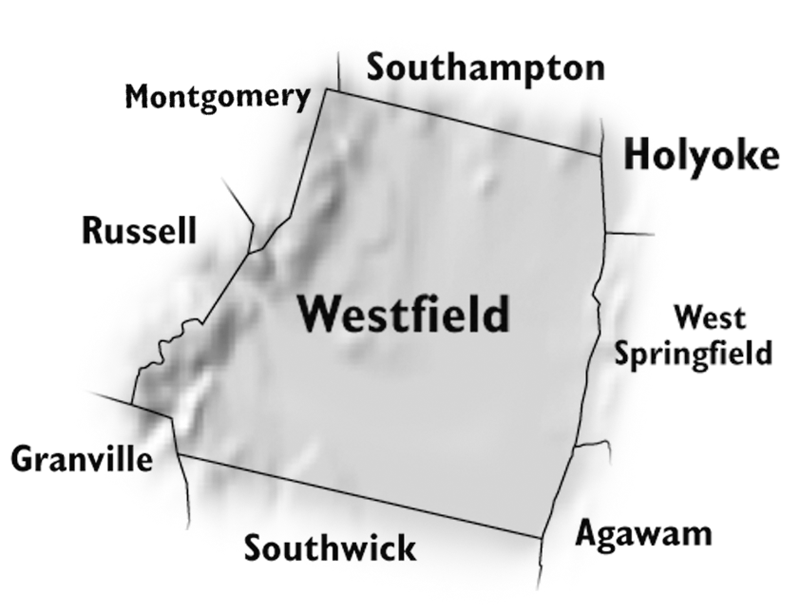 When BusinessWest sat down this month with Westfield Mayor Daniel Knapik and Kate Phelon, executive director of the Greater Westfield Chamber of Commerce, it was just one more connection in what has become a strong bond between the city and its chamber.
Take the monthly Mayor’s Coffee Hour the chamber launched to forge a stronger relationship between the city’s leaders and its business community.
“That gives businesses and residents first-hand access to city officials,” Phelon said. “We’re very proud that we have that kind of access to the mayor; not many cities can say they do that on a regular basis.”
The mayor agrees. “We really have opened the door to businesses,” said Knapik, noting that some companies had never before approached the city about their issues.
“Manufacturing companies have different needs than small operators,” Phelon said. “It’s good that we can have this open-door policy and bring these issues in and have dialogue.”

Mayor Daniel Knapik, left, and Jeff Daley say Westfield’s investments in its infrastructure have already begun to spur more development.
Ready for Takeoff
They might say the same about Barnes Airport on the city’s north side, which has leveraged millions of dollars in public and private investment in the service of infrastructure upgrades and development projects.
“We’ve had multiple funding sources, at the federal, state, and city levels, to get $14 million for a new runway,” said Jeff Daley, the city’s advancement officer. “The current runway is 28 years old, which is eight years past its life expectancy. They’ll be ripping out the entire 9,500 feet of runway and rebuilding it. A large portion of the north and south end of the runway will be concrete, and the middle section will be a specialized tar pavement that will allow the F16s and other planes not to rip it up.”
The 104th Fighter Wing of the Air National Guard has been relocated to Westover Air Reserve Base and Otis Air Force Base during the project, which is expected to be completed by Thanksgiving. Daley said the new runway will attract more commercial use of the airport. Meanwhile, Rectrix Aviation, which bought out Airflyte, is working to increase its investment at Barnes to bring a wider range of services to its clients.
Meanwhile, Daley said, “we obtained a grant from the state to redesign and rebuild Airport Industrial Park Road. It was a $2 million grant, and we’re returning $800,000 back to the state; we managed to do it with $1.2 million. We made it safer with a full redesign; the hairpin turn there was dangerous. We paved it, and we’ll have some new signage to alert people to come to the industrial park.”
That’s where the city is developing 80 acres — perhaps 12 to 15 subdivided lots — for light-manufacturing and aviation-supported businesses. “We’ve had serious conversations with four or five companies looking there, waiting for the road to be finished,” Daley said.
“Add to that Gulfstream’s expansion, and we think Barnes is in a position of growth, with the most action we’ve seen there in years,” Knapik said, noting that the airport is on the cusp of generating more revenue than the city is investing in it. “We’re close to breaking even now, and some of the other situations coming to light will add more revenue to the city. It took a long time to bring it to break-even status.”
Speaking of breaking even, the mayor said, one of the best stories in the city recently is the turnaround of Noble Hospital. After seven years running a deficit, it was able to turn a profit last year.
“It’s great what they’ve been able to do, to modernize the hospital and open up space that had been shuttered and really find niche services for our community, from gastroenterology to expanding the breast-cancer unit,” he continued. “When I came into office, it was pretty dire over there, but it’s been astounding. They’ve been able to invest in their physical plant and turn a profit, which is great news. They seem to be in position for a pretty strong future now.”
Bridges to Progress
So does the downtown area, following a $14.5 million reconstruction of Main and Broad streets and the Park Square Green, and the four-year Great River Bridge project that paired the renovation of that span, over the Westfield River, with the construction of a second bridge next to it.
Those successes will be followed by a significant commercial development at Elm and Arnold streets, featuring a 130,000-square-foot mixed-use facility, a 2,000-square-foot transportation center, and a five-story parking garage. Daley pegged completion of the project — which has been discussed in some form or other for decades — for 2015 or 2016.
“There have been lots of iterations to it,” he said, noting that the city would like the mixed-use facility to include retail, restaurants, and office space. As for the parking garage, “we’re fortunate to have parking problems, and we’re developing up to 500 new spaces to make it a more attractive prospect to come downtown and shop and have dinner.”
The mayor is excited by the prospects. “We’ve said for years that, if the city took care of its property and infrastructure, which we’ve been doing, the rest will follow,” Knapik said of the proposal, and the hope that it will continue a downtown revitalization that has already seen a number of new businesses open on that stretch of Routes 10 and 202.
Those include eateries and a copy center, businesses that will cater to a growing number of college students living downtown following the conversion of the Lansdowne building on Thomas Street into a 216-bed dormitory for Westfield State University. In addition, the former WSU training school building on Washington Street is being redeveloped into privately owned market-rate housing, which would add more student life to Westfield’s downtown.
“We’ve already seen the opening of many new downtown businesses that cater to the young folks living downtown,” Knapik said, including three restaurants with outdoor seating.
“With the City Council allowing outside seating, that’s a first for Westfield,” Phelon said. “I don’t think we’ve ever had that before. Now people will see people sitting and eating outside,” creating more energy downtown.
The city is also moving forward with plans for the riverfront area on the south side of town, which may include a mix of uses. “We’re reviewing four concepts now, and we’ll unveil those to the public over the next two months or so,” said Knapik, who would like to see that project connect with the Columbia Greenway Rail Trail. “These are all things that have been kicked around the city for 20 years or so, and they’re all starting to click now, so we’re happy about that.”
Challenges Remain
Knapik said the city’s unemployment rate, hovering between 6.5% and 6.8%, “isn’t bad, but we need it to be better to really knock us out of the economic slowdown we’re in. But we feel like, with the diverse base we have — including military, healthcare, precision machining, and warehousing — we’re seeing excellent growth in some areas.”
Daley noted that, since 2010, the city has attracted more than $120 million in private investment and has another $72 million in the pipeline. “Currently, 7,000 jobs have been retained by those efforts, and 800 new jobs over three years. There’s a pretty good story to tell there. We’re working very hard to keep retention up … and to make Westfield a place where people want to grow and stay.”
Phelon said the city is working to cultivate its creative economy in an organized way, as nearby communities such as Northampton, Easthampton, and Holyoke have done. “We’re in the infant stages of this. We applied for a grant to take inventory of the creative economy in the city. That can drive economic development, and the chamber is happy to be a part of that.”
The idea, Knapik said, is to bring different “puzzle pieces” that make up the city’s economy out of their individual silos and into an organized effort to promote Westfield’s vitality.
The mayor also touted the city’s efforts to keep property taxes lower than in some surrounding cities and towns. “We want to be that business-friendly community.”
It has tried to do so at a time when state aid to cities is low — in Westfield’s case, down about 30% since before the recession. Yet, plenty of investment continues, giving the mayor plenty to talk about at those coffee hours.
“It’s good,” he said of that communication. “A lot of times, policy is made in an echo chamber. This way, we ensure that both sides are heard. We hear them, and they hear us.”
Joseph Bednar can be reached at [email protected]

 More than ever, Susan Wilson says, people aren’t content to just get around. They want to get things done, even while moving from place to place.
“Everyone is on the go, and everyone’s got some kind of mobile device, whether it’s an iPad or an iPhone,” said Wilson, vice president of Corporate Responsibility at PeoplesBank. “Take a look out the window and watch people walking down the street.”
Indeed, smartphones and tablets have made it possible for individuals to e-mail and text friends, engage in social media, and play games while on the move. And, increasingly, get a little banking done.
“Right now, we have a mobile browser and mobile apps for both iPhone and Android,” said Mike Raposo, eChannel product manager at PeoplesBank. “They can use it for transaction history, transfers, and bill payments, and we have some graphs to track their expenses; these are the main components of the mobile app right now.”
Five years after introducing mobile products to customers, the bank has witnessed a dramatic rise in their use, he noted. “We typically see about 50% growth in mobile users each year, and that’s pretty consistent with what we’re forecasting going forward.”
Joan Klinakis, senior vice president of Operations at United Bank, said her institution also launched mobile banking about five years ago and has seen a steady increase in its use.
“It is definitely becoming more and more popular,” she told BusinessWest. “We have an app customers can use; you can find it in the iTunes app store or the Google Play shop if you have an Android.” Like most banks, United also has a text offering, where customers can text a code to check information like balance transfers.
The ubiquitous nature of mobile devices has most banks following suit, including Florence Savings Bank, which introduced what it considers a ‘basic’ mobile suite in March, said Becky Lynch, eproduct manager.
“The customer can either use the browser on their cell phone, use our app if they’re running iPhone or Android, and also do SMS texting to do basic functions like account history and transferring funds, as well as get the bank’s locations and that type of information.”
Becky Lynch says Florence Savings Bank will soon expand on its recently launched mobile platform.
Smart Response
Klinakis said use of United’s mobile platform continues to grow every month, a direct result of people becoming more reliant on their smartphones and tablets. “That seems to be where everyone is going; we see a steady increase month after month in adoption rates.”
And the shift seems to be occurring across all age groups, not just the younger generations who were the first to embrace online banking a decade ago. “It doesn’t seem to be age-related any longer,” she told BusinessWest. “It may have started out that way, but these devices are popular across the board, and everyone is following suit.”
United is no stranger to technological change, having delivered online-banking options since 1997. “Back then, we still had to mail floppy discs to customers,” Klinakis said with a laugh. “I think mobile is still something that’s still up and coming; it hasn’t plateaued yet. It’s still moving in a forward direction.”
Raposo agrees. “As more and more mobile phones and tablets get in people’s hands, the age doesn’t really matter. Whoever has mobile devices use them for their banking,” he said. “Especially over the last few years, people are feeling more secure using mobile devices for everything.”
Data security is, of course, a concern, but it’s one that customers are less anxious about, according to the banks we spoke with.
In fact, “they say nothing. They just forge ahead and use these services,” Lynch said. “We have a level of trust with them. We consider mobile part of our online channel, even though it’s not Internet-based, because the service goes through all the same security reviews and risk assessment that our online banking does. Customers don’t ask about it because they know we’re securing their online banking session, and they think of them similarly.”
Wilson agreed, noting that, “based on our adoption rates, we would say it’s not a primary concern.”
Those rates, she added, have been strong. “We’ve seen tremendous growth. We started this journey in 2008 when we introduced the mobile app, and since then we’ve been adding to it. Last year we introduced the mobile triple play,” which is a combination of browser, app, and text services on one platform.

Joan Klinakis says growth in mobile banking is largely related to Americans’ increasing reliance on their smartphones.
Making Connections
Chrissy Kiddy, eChannel specialist at PeoplesBank, told BusinessWest that even mobile users who don’t want to download an app can engage in commerce on their smart devices through a ‘responsive website.’
“In the past, PeoplesBank has always prided itself on offering customers the tools they need to be financially successful. In the case of mobile devices like smartphones and tablets, we’ve taken it upon ourselves to launch a new, responsive website that really optimizes to whatever mobile device you’re on, which makes navigation much simpler for our customers.”
The issue with many websites is that they’re optimized to be viewed on a PC screen, not on the smaller screen of a mobile device, but PeoplesBank has customized its website to be easily readable and navigable on any device.
“Whether they have a smartphone or tablet or desktop, they’re able to see all the information they need to see in order to make the transaction — do online banking, view products, view rates,” Kiddy explained. “No longer do customers have to pinch and zoom on mobile devices. Our customers are now able to receive accurate online information and view it on their mobile devices.”
She cited a report at mashable.com suggesting that many mobile users would rather use their browsers than an app, so providing both makes sense. “We’ve now optimized our website and app to cover all customer bases.”
Klinakis agreed that many customers still want to use a browser, and the banktech.com report suggested that online banking on desktops isn’t going away anytime soon.
“Smartphones are predominately used for transactional or quick access, such as looking up restaurants, products, or transit information. A consumer is more likely to use a tablet or a desktop for more analysis-based activity,” Sharma said. “In terms of banking, one can think of transactions being completed through mobile devices, but budgets or financial planning will still be done on desktops, potentially to be replaced by tablets.”
Klinakis added that more mobile features could be in the works, including the ability for customers to snap a photo of a check and send the image to the bank to deposit it. “That’s one of the key things I hear everyone moving toward. In general, customers seem to like that feature.”
As for Florence, it’s relatively new mobile platform won’t stay ‘basic’ for long.
“We will continue to enhance it, to offer solutions that will allow for some bill payments and mobile alerts — account alerts you set up yourself to deliver to your cell phone,” said Lynch. “You’ll eventually have the ability to deposit checks using the camera on your cell phone — what we refer to as ‘consumer deposit capture.’ That’s really kind of a next step. Big banks have been doing it for awhile. For us, we’re just trying to analyze risks and costs, and we’ll more than likely have more solutions soon.”
Rolling It Out
With only a few months under its figurative belt, Florence’s suite of mobile services are being used by only some 5% of customers, and the bank has tried to roll it out quietly as it evaluates user response and gauges what needs to be done next. But if the accounts of other banks hold true, the user rate won’t remain in the single digits for long.
“It really goes hand in hand with smartphone adoption, which isn’t surprising,” Lynch said. “If people are comfortable with a smartphone, they’ll want to get their banking done as well.”
Joseph Bednar can be reached at [email protected]

Mo McGuinness, center, has been a mentor to Karah Douglass, left, and Jillian Duclos since she hired them to work in Sylvester’s and Roberto’s restaurants.
Battling Barriers
Beth Lorenz owns the Vehicle Inspection Center Inc. in Greenfield and has been in the automotive industry for 27 years. “In 2010, I downsized my business life as an auto dealer and automotive partner so I could upsize my personal life,” she told BusinessWest. “It has been a journey that included selling a dealership, closing a dealership, separating from a family enterprise, divorcing, and re-establishing myself in a smaller business.”
Lorenz said she could not have achieved her goals without a few individuals who believed in her. She has had male and female mentors who have been younger and older than she is, but turned to the females when she was feeling unsure of herself.
One of them is retired Franklin County Clerk of Courts Eve Blakeslee. “She taught me how to be confident and strong and believe in myself,” Lorenz said.

Laurie Rosner, left, has been a mentor to Sue Rondeau, and was instrumental in her decision to return to the MBA program at Bay Path College after cancer treatment.
Shining Examples
Many women, including McGuinness, Lorenz, and Rondeau, have been successful in male-dominated industries. They were among a small group of female pioneers in Western Mass., and others look up to them today as their role models.
But these women say their journey was made easier due to their own mentors. Auto-dealer owner Lorenz was featured in Time magazine in 2009 when she was chosen to receive the Time Dealer of the Year Award for outstanding performance and being a valued member of the community. She called McDonald when she was in the airport on her way to speak to a crowd of 22,000 people at the National Automobile Dealers Assoc. Convention and had a case of the jitters.
“She has shown me how to be a very strong person,” Lorenz said, adding that the support she received was reassuring, even though they were in different industries.
Since that time, other women have sought her advice. “Women need to see other women who are confident and capable in their industry because they don’t have that opportunity very often. It gives them someone to talk to when they are not feeling that way and allows them to move forward,” Lorenz told BusinessWest.
McGuinness said it is still a struggle for women to rise to the top, especially if they are in male-dominated industries. In fact, people sometimes assume she is an employee of her two restaurants, while that never happens to her male co-owner. “It’s still a male-dominated world, and even though we have made it, young women struggle with the same issues that we did,” she said. “But today I won’t do business with someone if they don’t treat me the same way they would treat a man.”
Rosner concurred. “It’s about respect. We have had to fight the fight to stay on top internally within our organizations,” she said, adding that she started her banking career as a receptionist in 1984. “But you can do anything you believe you can do, and leading with compassion is what makes us amazing women as we help and mentor one another.”
Path to Success
Rosner continuously prods her students to realize their potential. At the end of every class she teaches and in e-mails, her message is the same. “I tell them, ‘now go and be great.’”
So, as more women step up to the plate to help themselves and others, their belief in what is possible continues to grow.
Rosner encourages all women to ask questions and do things even when they feel fearful. “The world is limitless, but you are only as good as the questions,” she said. “So, if you see a woman you admire, ask her, ‘Will you be my mentor?’”
 David Lamberto has witnessed the growth of the Brimfield Antique Show since he started participating some 30 years ago.
“It’s become known worldwide,” said Lamberto, who owns the Hertan’s ‘store’ (actually a field) where he started out parking cars for Jean Hertan decades ago; he later purchased the parcel before she died. “You don’t even have to call it the Brimfield Antique Show; just say ‘Brimfield,’ and people know what you’re talking about. It’s known worldwide just by that one name.”
In fact, few towns of Brimfield’s size (population 3,600) are known so widely for their main attraction. But this is no mere flea market. For six days three times a year — in May, July, and September — a mile-long stretch of Route 20 is ground zero for the largest outdoor market in the country.
“Prior to Six Flags — when Riverside Park was Riverside — Brimfield was the largest attraction in the region,” said Lenny Weake, president of the Quaboag Hills Chamber of Commerce, which includes Brimfield in its purview. “Six Flags has been quite competitive with that, but for years, the antique show was the only thing that filled all the hotel rooms in the area.”
It certainly helps fill the Yankee Cricket Bed & Breakfast, which former Ohio resident Bill Simonec built with his wife, Sherry, in 2001.
“I was downsized in 2000, so we moved here,” he said. “My sister-in-law lived in Sturbridge, and we loved the area.
“Bed and breakfasts are known either as destinations — 40 acres, a pond, and horseback riding, for instance — or for their location,” Simonec continued. “We picked location, three miles from the shows and three miles from Sturbridge Village. And we’ve been pretty fortunate.”
Bill Simonec, who operates the Yankee Cricket Bed & Breakfast with his wife, Sherry, said their choice of Brimfield was a wise business decision.
Show Time
If they travel to Brimfield, they’ll encounter a mostly rural town peppered with a variety of small businesses, from the B&B and several restaurants to a print shop, a brewery, and an apple orchard.
Still, “the culture revolves around the antique shows,” Weake said. “People from all over the world come to Brimfield to attend the shows.”
Added Lamberto, “it has a significant economic impact on the region. I feel like it’s an exciting event that brings variety and diversity and culture to the area. It gives character to the town.”
What is a major event today began humbly, when a local auctioneer named Gordon Reed decided to hold open-air auctions on his property, and it grew into a successful flea market. “That was the only show until the late ’70s, when neighboring properties began accommodating dealers that couldn’t fit on the property of the show’s original creator,” Lamberto said. “It expanded quite a bit in the ’80s and ’90s to a one-mile stretch of Route 20 on both sides, and each property became its own show.”
He explained that field owners — who draw some 6,000 dealers a year and close to 1 million total visitors over the three annual events — went through a period in the early ’90s when the shows were expanding up to 14 days long. “Each event caused considerable traffic and disruption in the residents’ eyes. Because Brimfield is such a small community with a town-meeting type of government, the residents were able to come up with a compromise — the selectmen set a six-day period three times a year during which we can operate our shows.”
Lamberto and other site owners also formed an organization, the Brimfield Show Promoters Assoc. “We work together to improve the shows, and we have staggered the opening schedule.”

Lenny Weake says the Brimfield Antique Shows fill hotel rooms across the region.
Joseph Bednar can be reached at [email protected]
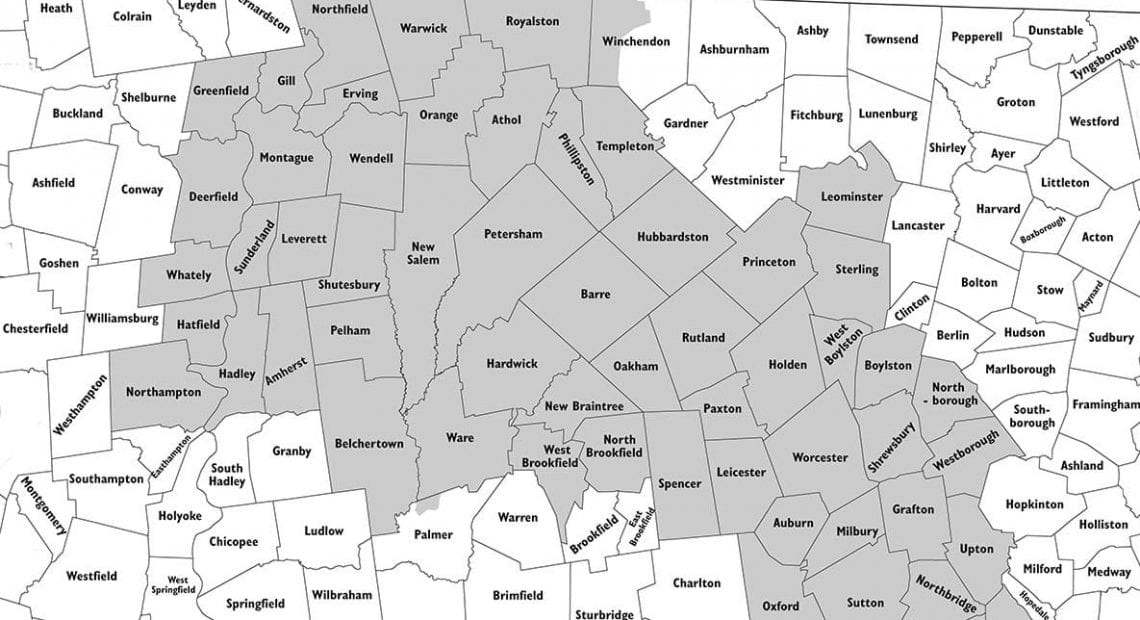

Rep. Jim McGovern, left, speaks with some of his new constituents in Amherst.
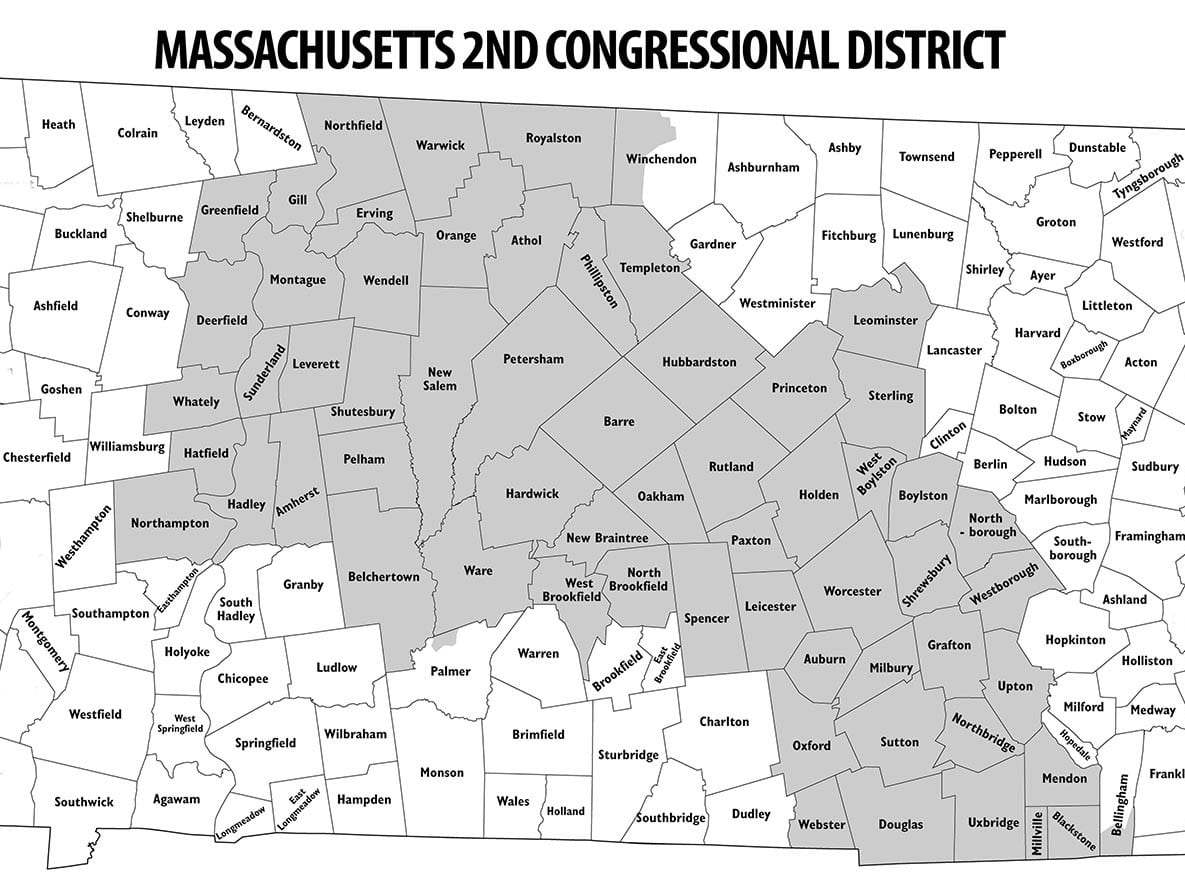
2nd Congressional District Map
Progress Report
It’s called Gateway Park at WPI.
That’s the name put on ambitious project in downtown Worcester that speaks, in general terms, to the progress made after McGovern’s aforementioned speech to the city’s Chamber of Commerce.
Originally developed as a joint venture with the Worcester Business Development Corp., the park is now solely owned by Worcester Polytechnic Institute. Now in stage 2 of development, its flagship complex is the 125,000-square-foot Life Sciences and Bioengineering Center, which opened in 2007 and is fully occupied with graduate research laboratories, life-sciences companies, state-of-the-art core facilities, and WPI’s Corporate and Professional Education division. The strategic plan eventually calls for five buildings on this site.
The park is perhaps the most significant of the many positive steps Worcester has taken over the past 15 years, said McGovern, adding that it exemplifies the basic approach he embraces when it comes to economic development and job creation. Summing it up, he said it comes down to putting a firm strategic plan in place — in this case, Worcester’s commitment to building its life-sciences sector — and creating partnerships to make it reality.
The same pattern was followed in Fall River and a property now known as the Narrows Center for the Arts, he said, referencing the 280-seat facility, built on the top floor of an old mill building, that hosts national and local performing and visual artists, musicians, writers, and performers.
“They took an abandoned factory and turned it into a spot where some of the top musicians in the country come to play,” he said. “People from all around the region come to attend these concerts, and when they do, they eat at the local restaurants, sometimes they spend the night, they might go shopping beforehand, they attend the local festivals; it all helps out.”
Successes of this magnitude will be difficult to replicate in rural Hampshire and Franklin counties, but McGovern believes he can take the same basic approach and spur economic development in some of the communities he’s now representing.
Getting to know and understand these communities — while also disproving that anonymous commentary mentioned earlier — is the latest career challenge for McGovern, who described his 1996 victory over Republican incumbent Peter Blute as “surprising.”
It came two years after his first bid for Congress while working as a senior aide to long-time Rep. Joe Moakley, in which he lost a crowded Democratic primary. He’s faced only sporadic opposition since, while cementing himself as one of Washington’s most liberal lawmakers and making a mark in areas ranging from transportation to education to nutrition. He currently serves on the powerful Rules Committee, and also on the House Committee on Agriculture.
Since last fall, McGovern has been spending significant amounts of time getting to know his new district and the people who call it home. “Trying to learn all that I need to learn and know all that I need to know is like drinking water from a fire hose — it’s a lot of stuff, and every community is unique.”
He said it’s been a learning experience on many levels.
“People out here take their politics seriously,” he said, referring specifically to the Hampshire and Franklin County portions of his district, which also includes one precinct in Palmer, which is in Hampden County. “They care passionately about the issues, and I’ve had some of the most candid and interesting conversations ever in this part of the district.”
He said his previous district was created to benefit a Republican (Blute), and was therefore more conservative than this new Second District, which includes, in Amherst and Northampton, some of the most liberal communities in the entire state, but also has many conservative pockets as well.
“There’s a little bit of everything — moderate, liberal, Tea Party,” he said with a laugh. “Between Worcester and Franklin County, there are pockets of everything, which keeps life interesting; every day is a learning experience.”
One thing McGovern said he’s already learned is that this region is, by his estimation, “a hell of a lot more coordinated than Worcester was 10 years ago.” Elaborating, the said the Economic Development Council of Western Mass. the Pioneer Valley Planning Commission, and other agencies have identified challenges and opportunities, and have undertaken a number of coordinated initiatives to spark economic development.
“There are good things happening here,” he said. “The challenge for me is to plug into what’s going on and figure out how I can help.”
The Job at Hand
With such a large, spread-out district (compared to everyone but Neal, who represents all of Berkshire County and all but the Palmer precinct in Hampden County), McGovern said he has to maximize his time and carefully plan out his schedule.
He explained that, if he has three days to spend in the district, for example, he’ll spend one in each area: west (Northampton), east (Worcester), and northeast (Leominster).
And while visiting Western Mass. cities and towns, McGovern said he’s learned that the challenges and concerns are pretty much the same as they are across the state. Specifically, the main priority is jobs, and in many communities that were former manufacturing centers, this means reinventing themselves into something else, while also looking at new kinds of manufacturing, different from the paper and textile making that once dominated the scene.
“The one common thread I see and hear in all parts of my district is people worried about their economic security,” he told BusinessWest. “They’re worried about jobs. There’s a good deal of support for reinvigorating our manufacturing base and also support for training programs for displaced workers in the region, because a number of people have lost their jobs in this difficult economy. There’s also a lot of talk about energy-efficiency and renewable-energy projects.”
In Worcester, the process of creating that proverbial something else would never be described as easy, and it is very much still ongoing, said McGovern, but it was greatly facilitated by planning and the many colleges and universities that call that city home, including Assumption, Clark, Holy Cross, Worcester State University, WPI, and UMass Medical School, among others. These collaborations have involved from biosciences to renewable energy.
“I’m proud of what we’ve accomplished in Worcester — we’ve established some collaborations that have made a difference,” referencing projects ranging from Gateway Park to a revitalized Union Station and the Canal District surrounding it; from the airport to reinvigoration of depressed neighborhoods. “A friend of mine who hadn’t been to Worcester in seven years visited recently and couldn’t believe how much had changed and how much new construction was going on; we’re building every day.”
The many colleges in the Amherst/Northampton area, and especially UMass Amherst, can play a similar role, said the congressman, adding that one of his goals is to continue to expand the relationship-building efforts between the university and the communities that surround it to stimulate new business opportunities — and jobs.
“In some states, the natural resources are the minerals in the ground,” he said. “Here, the natural resources are the educational institutions, the colleges. We have all these knowledge-based institutions in the Pioneer Valley that complement and coordinate very well with the schools we have in Worcester. There are opportunities for collaboration that would benefit both areas.”
Meanwhile, in the more rural areas of Hampshire and Franklin counties, agriculture remains a key component of the economy, and McGovern said this makes his seat on the Agriculture Committee more relevant and important. And while working to sustain and perhaps grow agriculture-related businesses, he wants to examine new business opportunities in some of these rural communities, including different options in manufacturing, reuse of the old mills still dominating the landscape, and bolstering tourism, much as Fall River has done through efforts to revitalize its waterfront district.
“It all begins with vision and thinking outside the box,” he said, referring specifically to finding new uses for old mills, but also to economic development in general. “There is a need for housing across the state, and maybe some of these old mills can be redeveloped for that purpose, but also for business development, a supermarket, light manufacturing, and more.”
When it comes to tourism, awareness of what this region and others have to offer, or lack thereof, is part of the problem — and the challenge moving forward, he said, adding that most other sections of the country do a much better job of promoting their tourism assets.
In each community, and with each initiative, the key is to have a plan, or specific strategic direction, said McGovern, returning once again to Worcester and Gateway Park.
“With that initiative, we all sat in a room together, had a conversation about what we were going to do, and then took assignments,” he recalled. “It takes a plan, and what Worcester was lacking was a vision; the ingredients were there to make incredible things happen — what was needed was vision and a plan.”
Summing Up
Those same ingredients are needed in many of the Western Mass. communities that McGovern now counts within his district. Helping put them together is one of the primary items on his to-do list, along with taking initiatives already in progress and moving them forward through partnerships.
“Most all of the challenges we’re facing are not going to be solved by the federal government alone, or the state government alone, or the local government alone, or the private sector alone,” he concluded. “It’s going to involve partnerships and collaborations, and I think I’ve been pretty good at those things.”
But perhaps the most pressing matter is to disprove the comments from that anonymous reader concerned about what a Worcester-based Congressman can do in the Pioneer Valley.
If he can succeed with the former, McGovern said, he knows that the latter will essentially take care of itself.
George O’Brien can be reached at [email protected]
 Mayor David Narkewicz says Northampton is a city on the move, leading the way in arenas that range from its energy-efficiency programs to its effort to increase the number of daily Amtrak shuttles when high-speed passenger rail service begins next year, to $67 million of new projects expected to add $3.1 million to the tax base.
“We’re moving in a positive direction, and my administration is committed to continuing to build on success,” he said. “We have a strong local economy with lots of businesses, and we want to support them, reach out to new companies, and maximize the use of our developable land.”
Terrence Masterson, the city’s economic development director, agrees. He said the city’s appeal results from its mix of industry, retail shops, and cultural, educational, and recreational opportunities.
“Northampton has a lot of assets which include the benefits of a living in a rural town as well as a large, livable city,” he told BusinessWest. “It has a culturally rich downtown, is well-positioned off Interstate 91, and hopefully will soon have passenger rail service. We also have a solid educational system, and our parks and open-network system is without peer. You can live in Florence and ride your bike downtown.”

Mayor David Narkewicz shows off a rendering of the new, upgraded passenger platform planned for the former Union Station on Pleasant Street.
Diverse Initiatives
Narkewicz said Northampton’s leadership is evident in its approach to eco-tourism. “We have one of the most well-developed rail trails in Massachusetts and are on the cutting edge of developing new segments,” he said, referring to the 12.5-mile route that runs through the city. “We have also done a lot of work to promote local agriculture.”
In addition to three farmer’s markets, the city has one of the largest community farms in the state. The endeavor known as Grow Food Northampton came to fruition in February 2011 when the organization purchased 121 acres of permanently protected farmland in Florence. The nonprofit is a collaborative effort, and its community garden was so successful in its first year of operation that it is doubling in size this year. The city provides funding to the Farm Education Collaborative, which presents workshops and programs at Crimson and Clover Farm in Florence to benefit schoolchildren and adults.
The mayor also notes the Connecticut River Greenway in Northampton, one of the Commonwealth’s newest state parks, which connects open spaces, scenic vistas, and archaeological and historic sites along the length of the Connecticut River.
“We’re a green community, and were among the first cities awarded green-community status by the state,” Narkewicz said. “We’re way ahead of everyone else, and our green initiatives add to what makes Northampton unique.”
He and other city officials recognize the importance of energy conservation, and to that end, the energy and sustainability initiative called Northampton Leading the Way was launched about two years ago.
“We worked with Columbia Gas and National Grid to create a business concierge program that allowed commercial property owners to make significant energy improvements to their facilities,” said Narkewicz. “It resulted in savings for them and helped add to the city’s overall sustainability.”
The city reduced its own energy costs by 27%, and the nonprofit Center for Eco-Technology conducted the outreach to businesses. The utility companies have continued to fund the program because it has proven to be a real success. “Utility costs are a major part of the bottom line for businesses, and this is also good for the environment,” Narkewicz said.
The city kicked off a second energy-efficiency initiative last month to help residents reduce utility bills and conserve energy through measures such as high-efficiency hot water and heating systems, added insulation, new thermostats, and other weatherization efforts. They can schedule free home energy assessments, and Narkewicz said the program “is another example of how the city of Northampton is helping people and the environment.”
New Projects

Terrence Masterson says the city’s appeal stems from its mix of industry, retail, and cultural, educational, and recreational opportunities.
Continuing Progress
Narkewicz said collaborations with residents, government agencies, other cities and towns, and a number of organizations, coupled with efforts to attract new business and spur economic growth, have had a positive result.
“We are moving forward,” he concluded. “There is a lot of activity here, and together, we are making a difference.”
 Even one electronic security breach is a headache for businesses that store their customers’ financial records. Millions of thefts? That’s much worse.
“They’re like mosquitoes,” said William Trudeau, president of the Insurance Center of New England in Agawam. “It’s one of those things where one or two bites isn’t too bad, with five bites, you’ve got an itch, but if you have 5,000 bites, you might die. For a small bank, if someone steals 100 ATM cards, it’s going to be not fun. But if, all of a sudden, they steal the records of 20,000 ATM cards and are withdrawing money all over the world for two days, it could get ugly.”
It’s not just banks that worry about such breaches. Large retailers, which keep the credit-card records of their customers on file, are at risk as well, as the TJ Maxx incident that came to light six years ago.
In that case, hackers gained access to company databases in 2005 and stole the personal information of more than 45 million credit and debit cards — but the company didn’t discover the theft until two years later. TJ Maxx later claimed that 75% of the cards were either expired at the time of the breach, or the personal information on them was masked. But the international ring of thieves did use much of the data to enrich themselves before they were arrested — and the various consequences of the incident eventually cost the clothing chain more than $130 million.
“After the TJ Maxx incident, Massachusetts law mandated self-reporting and potential fines per incident,” Trudeau said, but the costs stemming from such a breach can range widely, from PR work to restore brand reputation to individual and class-action lawsuits.

Bill Trudeau says companies victimized by hackers can run up massive expenses even before customer lawsuits arrive.
Bob Gilbert says his agency has been busy informing business-insurance clients of the need for cyber-liability coverage.
Growing Concern
Earlier this spring, Best’s Review cited several recent surveys that shed light on the extent of the cybercrime problem and how it concerns businesses. For instance, a survey by American International Group found that corporate executives are more concerned about cyberthreats than any other major business risk, with 85% of the 258 surveyed saying they are ‘very’ or ‘somewhat’ concerned about it.
Meanwhile, a Deloitte Tech Trends poll of 1,749 business professionals found that 28% of those surveyed reported at least one known cyberattack in the past year; 9% reported more than one breach. And those are just the known cases.
According to the Ponemon Institute, which has been reporting on the cost of cybercrimes for the past three years, the average cost to a company from data theft is $194 per record breached — meaning it takes just 515 such records stolen to reach a six-figure loss, a tough pill to swallow for small to mid-sized companies.
That’s why cyber-liability insurance is so important. Trudeau cited one product his company promotes, Beazley Breach Response, which covers many of the first-wave expenses of cybercrime, including notification and credit-monitoring services for up to 5 million affected individuals, as well as forensic and legal assistance, PR costs, and other benefits, with separate coverage limits for third-party claims.
“Many policies offer first-party coverage — that is, they will pay you for things like business interruption, the cost of notifying customers of a breach, and even the expense of hiring a public-relations firm to repair any damage done to your image as a result of a cyber attack,” business-technology writer Minda Zetlin noted recently in Inc. magazine. “Having this cash available in the event of a crippling hack can keep the lights on until you’re able to resume your normal cash flow. A good policy can even cover any regulatory fines or penalties you might incur because of a data breach.”
Early response, aided by such coverage, can be critical, Trudeau said. “Depending on how good the response is, you don’t always get to the liability point if you self-report that you’ve had a breach.”
Considering the rate at which businesses are attacked and hacked, Gilbert said, it’s tremendously risky for companies that store sensitive data to ignore their need for cyber-liability coverage.
“When private data has been hacked, the expense to go through it is tremendous — you have notify all the people in the database, there are advertising expenses, possibly litigation,” he explained. “As technology has changed so rapidly, so has the expertise of criminals. The insurance marketplace never anticipated the seriousness of these crimes.”
But it’s certainly paying attention now. “When you’re hacked, and someone has access to everything in your computer, they can throw viruses in there or extort your business with the threat of viruses,” Gilbert added. “There are so many different areas of exposure, so it has become a very big issue.”
Customer notification alone can be a major hassle, considering that 46 of the 50 U.S. states have notification laws, the details of which vary by state — and many breaches affect customers in multiple states. “You should talk to your risk manager or agent,” Gilbert tells clients. “Do you have this coverage? What do you need to secure it? If nothing else, we make them aware of the exposures they face.
“It definitely interrupts your business. You have a loss of income, a loss of profits,” he added. “We talk to clients about what their exposures are today and what to do about it.”
Constant Threats
In a world where data theft is pervasive — from restaurant waiters carrying ‘skimmers’ in their pockets to lift debit-card information to international hackers hammering their way into large corporations — companies increasingly realize that it’s up to them to both better secure their data and seek out a realistic level of coverage, Trudeau said.
“When doing an assessment, ask, what’s the exposure risk? What exposures do we have, and how could we get in trouble?” he said, re-emphasizing that those risks run from the debit-card information stored at Big Y to the HIPAA-protected patient data at medical practices.
“It doesn’t matter if you’re a big company or a small company,” Kelly Bissell, who heads Deloitte’s Information Technology Risk Management Team, told Best’s Review. “It matters what data you have that’s valuable to them. The bad guys don’t discriminate.”
It’s also dangerous for businesses to assume they’re protected against data breaches of third-party vendors, experts say, since they provided them that information in the first place. Nor is there any guarantee a cloud provider will cover a company against a data breach in the cloud. It all comes back to speaking with an insurance agent to make sure all contingencies are accounted for.
“Every time you open the paper, another bank has gotten hacked,” Gilbert said. “Criminals today are pretty smart. They’re not using guns and knives anymore; they’re sitting somewhere in Russia or somewhere in Oklahoma — it doesn’t matter where.”
And that changing world has forced changes in the insurance realm, with the advent of products that are becoming an increasingly necessary part of companies’ risk-management strategies.
“This type of coverage has been developed to meet a need,” Gilbert said. “With what’s going on with cybercriminals, it’s very important that, every account we go out on, we’re bringing up things they don’t have. That way, at least we’ve done our job.”
Joseph Bednar can be reached at [email protected]

Jason Mark of Gravity Switch says search engine optimization is important, but there are markets where it is impossible to rank high on a search list.

Dan Green says well written material is critical to the success of any website.
Climate Change
When someone types in words on a search bar, they are apt to call up the first websites listed by the search engine. But getting a top spot is not easy, and Ellis says many variables are involved in search-engine optimization, or SEO. They begin with how a website has been built, since search engines dramatically change the way they operate every three to six months. For example, Google started requiring a certain number of words on a page, and if a site contains only contact information, it may be deemed less important than others.
Still, having pertinent information on a home page is not enough. “It has to be placed strategically, which depends on what customers are seeking from a business,” Ellis said.
In addition, frequent updates are necessary. “We suggest doing an update monthly,” Ellis said, adding that “the shelf life of the average website is two to three years. A website may look good and work and function well, but not comply with current search-engine criteria.”
Shea agrees and advises companies to choose nine keywords their competitors are not using. And although a small business may not be able to compete on the wb with large companies, it can beat competitors by focusing on the local market, he said.
Green calls matching content to customer intent “context mapping,” and says the return on investment for businesses seeking leads that result in a purchase can take more than a year if their product costs thousands of dollars, which makes it critical to recognize the phases involved in decision making, which are very different for a coffeemaker and an automobile. “People really need to think about how complex the sale is, how competitive the marketing is in their industry, who they are selling to, and what they are selling,” he said. “These things must all be considered before you can design a website that is effective. It’s easy to create one that is pretty, but what people are seeking is a desirable outcome.”
So, although design, function, and content are important, small businesses may need to employ a different marketing strategy when competing for customers via the Web.
Ellis has a client who specializes in foreign car repair, and his strategy is to identify specific work he does, such as repairing BMW exhaust systems. “It’s absolutely critical to have a strategically designed website to be competitive. But there is no road map to success. There is just knowledge, best practices, and things to avoid. It is a journey that needs to be developed between a customer and a web designer based on overall goals and strategies,” he said.
Once a website is operational, it’s important to access the data connected to it. But although Green and other experts say statistics are important and many businesses have that information, they often don’t know how to analyze it or what to do with it. “Businesses need someone who can take the data and make recommendations in line with their goals,” he said, adding that companies are often using several marketing tools, so it becomes tricky to determine which one is getting the best results.
But once that has been identified, it can be translated into their website. “Once you have defined your goal or how you want your brand to appear online, you need to execute a plan,” Ellis said.
Mark agrees, and says analytic software is useful in determining how often people visit a page, then leave it. If it’s a high percentage, it means action is warranted. “But it really comes down to math and where to invest for profit. There are definitely cases in which to invest in the Internet, but you need a smart plan, and there are markets you can’t make inroads into by using the Internet,” he said.
In many cases, it is better to refine an existing website and drive more traffic there rather than investing in a new one, Mark added. For example, if a business generating less than $2 million annually is competing against an industry giant, there is an instant return on investment if they update a website that made them look like a mom-and-pop operation. The Internet can also be effective in generating leads, if used properly.
“We can consistently get people leads at almost half the cost of other methods, and those leads are better-qualified,” Mark said. “But it’s all about math, and people should not have their website redesigned until they understand how it will add value. It should never be done just because it is out of date.”
Effective Measures
Many business owners are concerned about the program a developer is going to use for their website. Mark said more than 75% of the top 1 million websites in the world run on WordPress, Drupal, or Joomla. “All three are very powerful, stable, and well-supported. In my mind, there is no reason to use anything but those three.”
Shea added that fads, such as using ribbons on a site, tend to have short lifespans, so it’s important to stick to things proven to improve the user experience. His specialty is e-commerce, and he says people using mobile devices often access a website because they want to make a purchase, so listing prices is useful.
“People will pay for branding and convenience, especially if they can do one-click buying,” he said.
However, security is critical for businesses engaging in e-commerce. “The last thing a company needs is to have their site hacked,” Shea said.
Social media can also play a key role in marketing. But some strategies are more effective than others, so knowledge is key. For example, the number-one reason people don’t open an e-mail is because they don’t recognize the sender, Ellis said.
Shea says a plug-in tool, such as the free Mail Chimp (for people who send fewer than 2,000 e-mails per month) may be needed to maintain a professional appearance and keep responses organized. However, rules must be adhered to even in this realm, because more than six e-mails sent to the same user each month can be dubbed as spam.
Green said blogging is another effective tool that is often left out of the mix. However, posts must be made frequently and must contain fresh content.
“It takes time, but if you put in the effort, it will pay off,” Shea added.
But, again, strategy depends on goals. “What’s right for your flower shop might not be right for the shop across the street from a college,” Green said.
Business owners may also not be aware of praise or criticism regarding their company on Facebook or other sites. “Most people have comments about their business on the Internet they don’t know about,” Green noted.
Ellis agreed. “It’s important to know both the positive and negative and filter them through your goal,” he said.
Green told BusinessWest that knowing whether or not to react to a post is important. “If someone says something bad about a business and has a small Internet presence, it may go away. But if you jump on it, it may escalate,” he said, adding that, if a business is not well-run, social media will amplify the negatives.
He advises business owners to study negative comments because the feedback can be valuable. They also need to know the statistics before launching a social-media marketing plan. “It’s very complicated to figure out the return on investment with social media. You can do well if your audience uses it, but you have to be honest, interesting, and run a reasonably good business.”
Still, only 5% of online business leads result from this medium, so focusing on other issues, such as the strength of one’s sales force and the search engine a website uses, may prove more fruitful.
However, good writing is something that makes a real difference, especially since a business has only three to five seconds to capture someone’s interest. “The most highly viewed content is the headline,” Green said. “But if you don’t have a starting point and a key-performance indicator that you plan to measure, it’s difficult to define success or know what to do in terms of improvement.”
Shea concurs. “Content is key, but presentation is also important,” he said. “It’s the first impression people have of your business.”
Bottom Line
Although some business owners feel pressured to update their website and use social media, Green said, it may not be relevant to their goals. “You need to measure what you are doing to determine if you are making progress.”
Mark agrees. “Think forward three years,” he advised. “Don’t get caught up in what’s new. You may need to talk to experts to determine the best path, but everything you do should be driven by your goals.”
ACCGS
www.myonlinechamber.com
(413) 787-1555
• June 5: ACCGS June Business@Breakfast, 7:15-9 a.m., at the Richard B. Flynn Campus Union at Springfield College, 263 Alden St., Springfield. Guest speaker will be Kirk Smith, president and CEO of the YMCA of Greater Springfield, speaking on “A New Way of Doing the Business of a Nonprofit: The Importance of Being VIVID!” Salute to Richard Flynn for his service as president of Springfield College as he leaves the college after 14 years to enjoy retirement. Also to be saluted will be O&G Industries, celebrating 90 years in business. Chief Greeter: John Doleva, president and CEO of Naismith Memorial Basketball Hall of Fame. Season Pass Sponsor: Freedom Credit Union; Season Sign Sponsor: FastSigns; Speaker Sponsor: Jewish Geriatric Services; Coffee Bar Sponsor: Skoler, Abbott & Presser, P.C.; Table Sponsor: La Quinta Inn and Suites. Cost is $20 for members, $30 general admission. Tickets are available at www.myonlinechamber.com or by e-mailing Cecile Larose at [email protected].
• June 7: “Small Business and the Affordable Care Act — What’s Coming?” noon-1:30 p.m., at Ludlow Country Club, 1 Tony Lema Dr., Ludlow. A panel of experts will discuss the impact of the Affordable Care Act on the regional business community and economy at the East of the River Five Town Chamber of Commerce (ERC5) Annual Meeting. Panelists will include Rick Lord, president of Associated Industries of Massachusetts; Peter Straley, president of Health New England; Steven Bradley, vice president of Government, Community Relations, and Public Affairs for Baystate Health; and David Leslie, controller for Glenmeadow Retirement Community. Cost is $20 for members, $30 general admission. Tickets are available at www.myonlinechamber.com or by e-mailing Cecile Larose at [email protected].
• June 12: Viva Las Chamber!, the June After-5, 5-7 p.m., at Chez Josef, 176 Shoemaker Lane, Agawam. Cost is $5 for members, $10 general admission. Tickets are available at www.myonlinechamber.com or by e-mailing Cecile Larose at [email protected].
• June 26: ACCGS Annual Meeting, 11:30 a.m.-1 p.m., at the Sheraton Springfield, 1 Monarch Place, Springfield. Featured speaker will be James T. Brett, president and CEO of the New England Council, New England’s voice of business on Capitol Hill. The chamber will also announce this year’s Richard J. Moriarty Citizen of the Year. Cost is $40 for members, $60 general admission. Tickets are available at www.myonlinechamber.com or by e-mailing Cecile Larose at [email protected].
CHICOPEE CHAMBER OF COMMERCE
www.chicopeechamber.org
(413) 594-2101
• June 5: Annual Golf Tournament, 10 a.m. start, at Chicopee Country Club. Cost is $125 per golfer; $100 for tee sponsorship. Hole-in-one sponsors: Curry Honda-Curry Nissan and Teddy Bear Pools & Spas. Cart sponsor: Pilgrim Interiors Inc.
FRANKLIN COUNTY CHAMBER OF COMMERCE
www.franklincc.org
(413) 773-5463
• June 21: 94th Annual Meeting and Legislative Breakfast, 7:30-9 a.m. at Eaglebrook School in Deerfield. State representatives and senators have been invited to speak. Cost is $12 for FCCC members, $15 for non-members.
GREATER EASTHAMPTON CHAMBER OF COMMERCE
www.easthamptonchamber.org
(413) 527-9414
• June 13: Networking By Night Business Card Exchange, 5-7 p.m. Hosted by Freedom Credit Union and Wireless Zone, 422 Main St., Easthampton. Enjoy hors d’ouevres, host beer and wine, and door prizes. Tickets are $5 for members, $15 for future members.
• July 26: 29th Annual Golf Tournament, starting at 9 a.m., at Southampton Country Club. Reserve now before the event sells out. Cost is $400 per team. Tee sponsorships available for $75 and $125. Contact the chamber to sign up a team or arrange a tee sponsor, a raffle prize, or gift donation.
GREATER HOLYOKE CHAMBER OF COMMERCE
www.holycham.com
(413) 534-3376
.
• June 19: Chamber Business Connections, 5-7 p.m., Massachusetts Green High Performance Computing Center, 100 Bigelow St., Holyoke. Sponsored by Northeast IT Systems and Westfield Bank. If you are in the IT/computer equipment, software, or sales industry, please attend as the chamber’s guest. Cost is $10 for chamber members, $15 for non-members. Join your friends and colleagues for this informal evening of networking.
• June 20: Ask a Chamber Expert Series: Blueprint Reading, 8:30-10 a.m., Greater Holyoke Chamber of Commerce Conference Room, 177 High St., Holyoke. Cost: $10 for members, $25 for the public, includes a continental breakfast. Call the chamber at (413) 534-3376 to sign up, or register at holyokechamber.com.
• June 26: Summer Recognition Breakfast, 7:30-9 a.m., Yankee Pedlar, 1866 Northampton St., Holyoke. Cost: $20 for members, $25 for the public. Call the chamber at (413) 534-3376 to sign up, or register at holyokechamber.com.
MASSACHUSETTS CHAMBER OF COMMERCE
massachusettschamberofcommerce.com
(413) 525-2506
• June 26: Manufacturing Matters Lunch Meeting, at Storrowton Tavern, West Springfield. Tickets are $30 for members, $40 for non-members. For more information on ticket sales, call (413) 525-2506 or e-mail [email protected].
• July 22: Massachusetts Chamber of Commerce Golf Tournament, at Tekoa Country Club, Westfield. Shotgun start at 11 a.m. Cost is $100 per golfer. For more information on registration and sponsorship opportunities, call (413) 525-2506 or e-mail [email protected].
• Nov. 12: Massachusetts Chamber of Commerce Annual Meeting & Awards Luncheon, 9 a.m., at the Double Tree, Westborough. For more information on ticket sales and sponsorship opportunities, contact the chamber office at (413) 525-2506 or e-mail [email protected]
GREATER NORTHAMPTON CHAMBER OF COMMERCE
www.explorenorthampton.com
(413) 584-1900
• June 6: June Arrive @ 5, 5-7 p.m. Hosted and Sponsored by Florence Savings Bank, 85 Main St., Florence. Help us celebrate Florence Savings Bank’s 140th anniversary. Cost is $10 for members. RSVP at [email protected].
NORTHAMPTON AREA YOUNG PROFESSIONAL SOCIETY
www.thenayp.com
(413) 584-1900
• June 12: Nonprofit Board Fair, 5 p.m., at the Smith College Conference Center. Part of NAYP’s mission is to promote leadership and volunteerism in the next generation of community leaders. The Nonprofit Board Fair will feature more than 20 organizations that are actively seeking the next generation of leaders, and provide opportunities to showcase board, committee, and volunteering opportunities that exist at their nonprofits. The fair offers attendees a chance to hold discussions with more than 20 local nonprofits in one location. Sponsored by Gage-Wiley & Co. Inc. This free event will take the place of NAYP’s June Networking Social, and is open to all community members.
PROFESSIONAL WOMEN’S CHAMBER
www.professionalwomenschamber.com
(413) 755-1310
• June 6: Women of the Year Celebration Banquet, 5:30-8 p.m., at the Cedars Banquet Hall, 375 Island Pond Road, Springfield. Celebrate the accomplishments of Jean Deliso, president and owner of Deliso Financial and Insurance Services. Cost is $55 per person. For tickets, visit www.myonlinechamber.com or e-mail Cecile Larose at [email protected].
WEST OF THE RIVER CHAMBER OF COMMERCE
www.ourwrc.com
413-426-3880
• June 5: Wicked Wednesday, 5-7 p.m., at Lattitude. Wicked Wednesdays are monthly social events hosted by various businesses and restaurants. These events bring members and non-members together to socially network in a laid-back atmosphere. Free for vhamber members, $10 for non-members. This event is open to the public. Guests must pay at the door if they are non-members. For more information, contact the chamber office at (413) 426-3880 or e-mail [email protected].
• June 20: West of the River Chamber of Commerce Annual Breakfast Meeting, 7-9 a.m. at Chez Josef in Agawam. Tickets are $25 for members, $30 for non-members. Featured speaker: Mark Darren Gregor, business and career coach. Presenting sponsor: Hard Rock Hotel and Casino of New England. For more information on registration and sponsorship opportunities contact the chamber office at (413) 426-3880 or [email protected].
• August 19: West of the River Chamber of Commerce 10th Annual Golf Tournament, at Springfield Country Club, West Springfield. Cost is $125 per golfer. Presenting sponsor: Hard Rock Hotel and Casino of New England. For more information on registration and sponsorship opportunities, contact the chamber office at (413) 426-3880 or email [email protected].
GREATER WESTFIELD CHAMBER OF COMMERCE
www.westfieldbiz.org
(413) 568-1618
• June 10: Mayor’s Coffee Hour, 8-9 p.m., at the Arbors, 40 Court St., Westfield. Mayor Knapik will speak about all that is happening around Westfield and field questions. The event is free and open to the pubic. To register, call Pam Bussell at the chamber office at (413) 568-1618 or e-mail [email protected]
• June 12: June WestNet Connection, 5-7 p.m. Hosted by Westfield Bank of Southwick, 462 College Highway, Southwick. An evening of networking; don’t forget your business cards. Complimentary hors d’oeuvres and cocktails. Walk-ins are welcome. Tickets: $10 for members, $15 cash for non-members. To register, call Pam Bussell at the chamber office at (413) 568-1618 or e-mail [email protected].
• June 14: June 2013 Chamber Breakfast, 7:15-9 a.m., at Shaker Farms Country Club, 866 Shaker Road, Westfield. Platinum Sponsor: First Niagara. Guest speaker: Steven Grossman, treasurer and receiver general. Anniversary salutes: the Carson Center, 50th; East Mountain Country Club, 50th. Tickets: $25 for members, $30 for non-members. To register, call Pam Bussell at the chamber office at (413) 568-1618 or email [email protected].
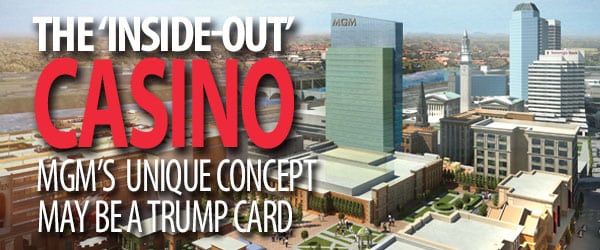
 Editor’s Note: This is the latest in a series of stories concerning the ongoing competition for the Western Mass. casino license.
Mike Mathis says the phrase ‘inside-out casino’ wouldn’t technically be considered an industry term within the gaming sector, although he believes it’s close to becoming an important part of the lexicon, especially in the context of the competition for the Western Mass. casino license.
‘Inside-out’ is an adjective being used liberally by officials at MGM Resorts International, including Mathis, who serves as vice president of Global Gaming Development, to describe the company’s $800 million proposal for Springfield’s South End.
It is being used interchangeably with ‘outward-facing’ to describe what this proposed resort complex is — as well as how it differentiates itself from most urban gaming facilities, as well as the other players in the contest for the 413 area code’s casino license.
“This is really about changing and evolving the model of the casino box,” Mathis explained, adding that this concept is quite unique for an urban gaming complex. “In the traditional model, there are a couple of points of entry, with the operation heavily driven by gaming, with the few amenities being offered sort of buried within the facility, forcing the traffic through the casinos to get to those amenities.
“What we’ve done with our design is put all the great amenities around the gaming floor, with multiple points of entry,” he went on. “So the customer could spend their entire day at our resort — whether it’s in our entertainment plaza, where we’re going to have free public entertainment, or at any of the restaurants we’re going to have along Main Street — without necessarily having to go through the casino.”
In this respect, the Springfield proposal is much like some of the so-called ‘neighborhood casinos’ in Las Vegas that are especially popular with families, he noted, and also like MGM’s ambitious City Center, its flagship property in Vegas.
Opened in late 2009, at the height of the recession, the center boasts a combination of retail, entertainment, convention facilities, and residential units, and is thus a truly mixed-use facility, he explained, adding that, while the scale will be exponentially smaller with MGM Springfield, the concept is essentially the same.
And it will represent a meaningful change from the approach taken with most all urban casinos.
Elaborating, Mathis said most inner-city gaming complexes end up becoming islands unto themselves, with little connectivity to the neighborhoods around them. The inside-out model is different, he went on, adding that, with this design, restaurants and other amenities such as a bowling alley, theaters, a skating rink, and others, face out to the community surrounding the gaming complex. This makes such facilities more attractive to families and adults who don’t gamble.

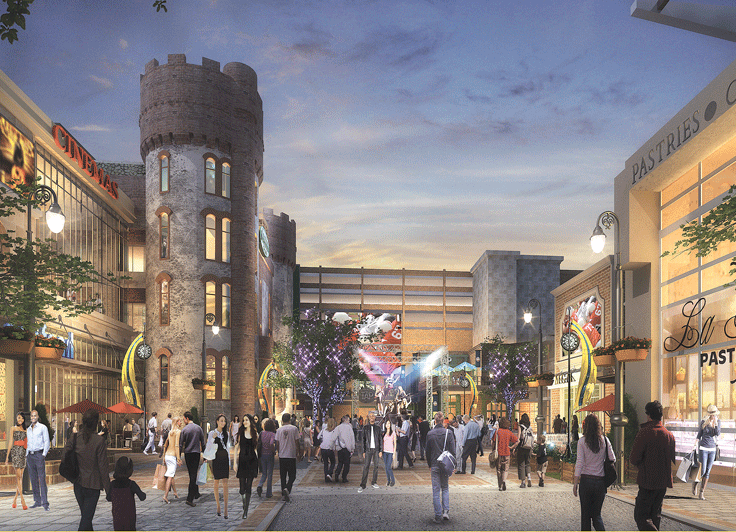
Top, Mike Mathis, seen near the tornado-damaged South End Community Center, says MGM’s conception of an inside-out casino is unique for an urban gaming facility. Above, an architect’s rendering of that same area as transformed by MGM Springfield.
Coloring Outside the Lines
Mathis told BusinessWest that he’s been involved in many aspects of the project known now as MGM Springfield, including the drafting of the host-community agreement that was inked just over a month ago.
Early on, though, one of his primary responsibilities was to identify a site for the company’s foray into the Massachusetts market. Like other developers, MGM targeted the Western Mass. sector — it was considered a more open competition than those in the Boston and Southeast regions — and initially set its sights on rural Brimfield.
But that plan was scuttled due to a number of logistical hurdles, not the least of which was the complex matter of building a new interchange on the Mass. Turnpike, without which the project didn’t make sound business sense.
So the company recalibrated and eventually focused on Springfield, as other developers did, because of its proximity to Northern Conn., accessibility (especially from I-91), and the likelihood that a ballot initiative would pass in the city.
And the search within the city eventually took the company to the four-block area in the South End, much of which was heavily damaged by the June 1, 2011 tornado.

MGM officials say the inside-out concept will give the company an edge in the competition for the Western Mass. casino license.
Outside the Box

Another view of the planned MGM Springfield, looking down Main Street.
Over and Out
MGM’s Springfield proposal has many more hurdles to clear before it becomes reality. The next challenge is a July referendum vote that will include the entire city. If that goes successfully — and most predict that it will — then the company must prevail over whichever Western Mass. proposals also make it before the state Gaming Commission.
But there is a quiet confidence among company officials, including Mathis, that the company is in a strong position to prevail, and the so-called ‘inside-out’ casino plan is one of the many reasons why.
The concept represents a fundamental change from how urban casinos have been built, he explained, and it brings potential benefits for the state, the city, the South End neighborhood, and the company.
“When they chose MGM a few weeks ago, Springfield officials said this proposal could set the standard for inside-out, or outward-facing, casinos, and we’re very proud of that,” said Mathis. “We intend to do just that.”
George O’Brien can be reached at [email protected]
We’ve written on many occasions about how the region’s economy has moved on from its strong manufacturing heritage, but is still very much searching for something else with which to create jobs and revitalize cities and towns. And we’ve said that this something else is actually many things — but especially both the development of new, potential-laden sectors, such as green energy and the biosciences, and the expansion of other, existing sectors, such as education, healthcare, retail, and, yes, tourism.
And so we are encouraged by the announcement that area tourism and hospitality leaders have joined other regions of the country in creating a sports commission dedicated to the assignment of bringing more and different sporting events and championships to the four counties of Western Mass. (see story on page 14). The commission, launched last month, will bring organization and sophistication to the work of hosting events, and if it succeeds — and we believe it will — the region’s broad hospitality sector should benefit greatly.
This commission is not a game changer when it comes to the regional economy — it’s not going to dramatically alter the fortunes of specific venues, like the MassMutual Center, business groups (such as restaurants or hotels), or individual cities and towns that host events. But it could well be an important contributor at a time when area economic-development leaders understand that there isn’t one answer to the region’s ongoing sluggishness, but several answers.
As the commission begins its work, though, it’s important to keep expectations in check. Greater Springfield is not going to play host to the 2024 Olympics, the 2022 World Cup, the Super Bowl, or any of the seemingly endless number of college football bowl games. And it probably won’t host another of golf’s major championships, as it did in 2004, when the U.S. Golf Association brought the U.S. Women’s Open to the Orchards in South Hadley.
It is far more likely that the region will play host to gymnastics events, cycling competitions, weightlifting, rowing, or other, less-high-profile events. But there is opportunity with these smaller tournaments to fill hotel rooms, bring more business to area restaurants, and give the region the exposure it needs to become a destination for still more events.
Attracting such events will not be easy, primarily because the competition for them is mounting — there are now roughly 300 sports commissions around the country, a phenomenon fueled by the vast potential of sports as an economic driver. But this region has some advantages as it prepares to compete with other regions.
These include location — Greater Springfield is easily accessible to many population centers — as well as affordability (this is a third-tier destination with rates to fit almost any budget) and a host of amenities and attractions that will give competitors and their families something else to do while they’re here.
The region also boasts 17 colleges and universities that help provide it with a strong portfolio of sporting assets (arenas, fields, tennis courts, among others) as well as resources ranging from several rivers and mountains to bicycle and motocross tracks.
Add it all up, and the sports commission can make a pretty strong case as it markets the four western counties to the National Collegiate Athletic Assoc. and myriad other event-staging organizations.
As we said earlier, the addition of a half-dozen or 10 carefully chosen sporting events is not going to dramatically change the picture here in Western Mass. But for many business sectors and communities, they can improve the picture, and become one of the many answers this region will need as it goes about bolstering and diversifying its economy.

 John Heaps says the Greater Springfield region has done quite well when it comes to hosting sporting events in recent years — everything from the MAAC (Metro Atlantic Athletic Conference) basketball tournament in recent years to the 2004 U.S. Women’s Open golf championship, staged at the Orchards in South Hadley.
And it’s done this without any real level of organization or a strategic plan for selling the area to those who stage such events, said Heaps, president and CEO of Florence Savings Bank, who told BusinessWest that he and others often wondered out loud what this region could accomplish in this realm if it put its collective mind to it.
And that’s probably the best way to sum up the creation of what’s called the Western MA Sports Commission, which Heaps now chairs.
It represents a concerted effort to research and then target sporting events that could take place across the four-county area, said Heaps, noting that this region is joining others across the country in recognizing the vast potential of sporting events to bolster an area’s tourism and hospitality sectors — and creating sports commissions to bring organization and sophistication to the assignment of attracting events.
John Heaps says the Western MA Sports Commission will work aggressively toward attracting events that are high-profile, high-impact, or, in the best-case scenario, both.
[/caption]“Communities large and small are coming to understand the scope of opportunities that sports represents,” he said, noting that even Chicago is making a more concerted effort to attract events through creation of a commission. “Sports can have a definite impact on our local economy, and we’re going to work aggressively to bring more events here.”
Mary Kay Wydra, exective director of the Greater Springfield Convention & Visitors Bureau, agreed. She told BusinessWest that the bureau, which was in what she called “survival mode” during and just after the Great Recession, when visitorship was down and the state was cutting back its contributions to such organizations, is now being much more aggressive in pursuit of conventions, meetings, and events — and sports can and should be a big part of that equation.
“When you look at how we can go about increasing tourism in our region and driving visitorship, sports is a niche we must explore,” she explained. “When we looked at what we can offer in terms of product, it seemed like a natural fit.”
Before elaborating on what the commission is all about, Heaps stated definitively what it isn’t about: simply bringing more basketball games and tournaments to the MassMutual Center in Springfield — although it may do that, too.
Instead, the commission will focus on the broad spectrum of youth, collegiate, amateur, and professional sports, and consider possibilities that range from rowing to ultimate Frisbee; from cycling and motocross to gymnastics; from badminton to Pop Warner football.
And as it does so, it will have several competitive advantages, said Steve McKelvey, associate professor and Graduate Program director of the Mark H. McCormack Department of Sport Management at UMass Amherst, and member of the commission. These include everything from affordability — Springfield and this region as a whole are considered a tertiary market, with hotel-room rates and other costs that are attractive to event planners on a budget — to the 17 colleges in the area and their collective sports facilities, to a line item that might simply be called ‘other things to do.’
“We have a lot of things that people can do while they’re here for a sporting event,” he noted, listing the basketball and volleyball halls of fame, area museums, Yankee Candle, and Six Flags New England, among many others. “We’re not in the middle of Oklahoma, where there’s nothing to do.”
Overall, those we spoke with said the Western Mass. region has vast potential as a host area for sporting events of varying sizes and shapes, but those tasked with putting more games and tournaments on the calendar will have to be selective with what they bring to the 413 area code, said Heaps, adding the phrases ‘high-profile’ and ‘high-impact’ to describe the types of events the commission will pursue.
For this issue and its focus on meetings and conventions, BusinessWest looks at the track soon to be laid by the sports commission, and how this group could significantly increase visitorship to the region through a host of games and tournaments.
Winning Attitude

John Heaps says the Western MA Sports Commission will work aggressively toward attracting events that are high-profile, high-impact, or, in the best-case scenario, both.
Scoring Results
One of the first steps in the process of pursuing events was to effectively inventory the region’s assets, meaning the venues that could host sporting events, said Heaps, adding that this is a deeper portfolio than most might realize.
It includes arenas such as the MassMutual Center and the Mullins Center on the UMass campus, but also the Connecticut and Westfield rivers, among other waterways, that may be suitable for many boating or waterskiing competitions; bicycle and motocross venues (there’s one of the former in Westfield and one of the latter in Southwick); and facilities at those aforementioned 17 colleges, suitable for hosting events involving everything from tennis to lacrosse to field hockey.
“It’s important for us to understand that inventory, and no one’s really done that before,” said Heaps, adding that knowing all the region’s assets will bring into focus the broad spectrum of possibilities.
Moving forward, the commission’s immediate challenges are to begin marketing these assets and forming an infrastructure for exploring opportunities and deciding which ones to pursue, said Wydra. She noted that the organizational structure will include the GSCVB and its board of directors, the sports commission, a sports advisory council (to be made up of representatives of several sectors, including sports venues, restaurants, attractions, area colleges, and hotels), and, when needed, local organizing committees for specific events.
The Mass. Convention Center Authority, the state Office of Travel & Tourism, and MassMutual (through a grant) have made three-year financial commitments to the commission totaling $130,000, she said, adding that these funds will be used primarily to hire staff, create promotional materials touting the region’s assets, and handle the costs of meeting with event planners and introducing them to the region.
Goals are being established, said Heaps, adding that, for now, the commission would like to target 25 to 30 events of various sizes and exposure levels and bring perhaps five or six to Western Mass. each year.
“We’re trying to create a buzz for this region,” he explained, “and our goal is to identify the best 25 within the framework of high economic impact and profile. We want to pursue what fits best and what works geographically; we’re not going to be focused on just Hampden and Hampshire counties, but Franklin and Berkshire as well.
“Rather than have them come to us, we’re going to go at them,” he said of the chosen events. “And we’ll be aggressive.”
The twin goals when determining which events to pursue are media exposure, especially through television, and business opportunities, such as hotel-room stays, said Heaps, adding that some events may provide both, and while these are prized, they are also the ones that draw the most competition.
And gauging the overall worth of an event can be a tricky proposition, he said, citing that 2004 U.S. Open as an example.
While the region did get some exposure from the four days of coverage on NBC and the Golf Channel — the name South Hadley was repeated often, and there were blimp shots of the Western Mass. landscape beamed to millions of viewers — the direct benefits were far fewer than many were projecting.
Indeed, most spectators were bused to the event from large parking areas and then returned to their cars at day’s end, with little business spread to other hospitality-related businesses. Meanwhile, most all players rented homes for the week, limiting the number of hotel stays.
McKelvey said a less high-profile event, such as an NCAA Division I field hockey championship, for example, would give the region some exposure — it would likely be carried on ESPNU — and perhaps several hundred hotel-room stays. And this area could host such an event at Warren McGuirk Alumni Stadium at UMass, to name one potential site.
“For an event like that, you’ll bring in all the teams, as well as the people who travel with them, and their parents,” he noted. “And, if you market it well enough, you’ll attract people from this area who follow women’s field hockey. You just have to do the math when evaluating these opportunities and look at how many people we’re talking about; if it will be on ESPNU, and whether that’s important; does it fit into the timetable; and are we giving up something else to get this?
“The perfect mix would be an event that has some television exposure, like the MAAC tournament,” he went on, “but one that will also allow us to fill some room nights, bring a lot of energy downtown, and, overall, gain some positive exposure that might make it easier to attract other events.”
Obviously, the region’s colleges and universities will play a huge role in any effort to bring more sporting events to the region, said Heaps, adding that the sports commission will be reaching out to area athletic directors and school presidents to enlist support and gauge the level of interest when it comes to hosting events.
Game On
Looking back on the region’s track record with hosting sporting events in recent years, Heaps said there have been many successes, despite what he termed a “reactive” approach to the opportunities that presented themselves.
With the Western MA Sports Commission, there can be a much more proactive approach to hosting such competitions, one that has the potential to markedly increase visitorship to the four counties and generate more hospitality-related business in an area where that sector is, out of necessity, becoming more of an economic driver.
“At the end of the day, we want to be on everyone’s radar screen as the place to go,” said Heaps. “If we can do that, we can make sports a much bigger part of tourism in this region.”
George O’Brien can be reached at [email protected]
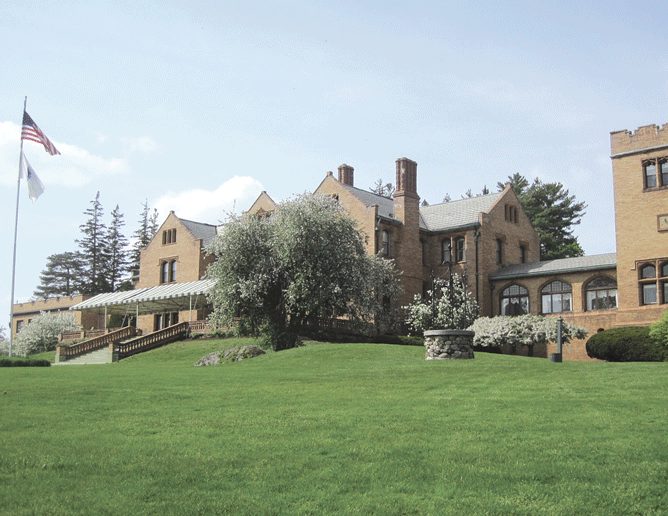
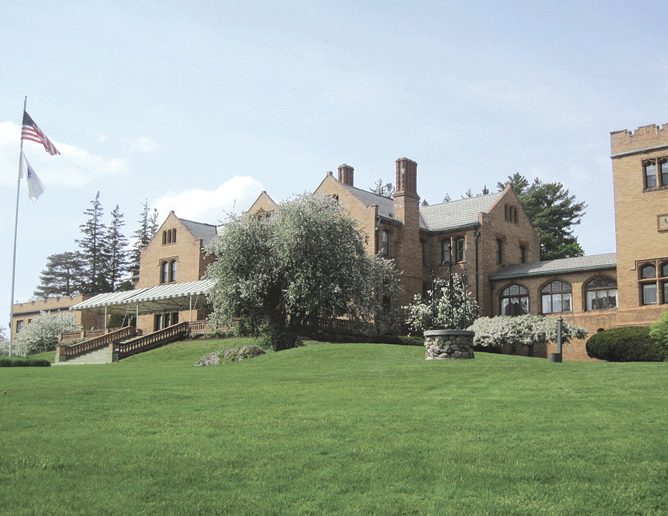
Cranwell Resort, Spa & Golf Club offers stunning views of the Berkshires and an off-site alternative for corporate meetings.
History Lessons
Norma Probst and Tim Paulus, in the newly renovated ballroom, credit Cranwell’s open-door policy for its continued success.
Trend Setters
After guests take in the stunning, 360-degree show of green in summer, harvest colors in the fall, or the winter’s snow-covered mountains, Cranwell offers many outdoor activities, including hiking, tennis, mountain biking, cross-country skiing, bonfires, and, of course, golf. And with Cranwell’s open-door policy, the resort caters to several markets.
“We have different sectors within each department,” Probst explained, referring specifically to golf. “For instance, we have golfers with full-season memberships, guests with golf packages, local residents who book a random tee time — so we are catering to quite a diverse group of guests.”
While the spa is also a strong local draw, and Cranwell’s overall market is global, 80% of leisure, banquets, weddings, and corporate meetings are booked from clients from Massachusetts, Connecticut, New York, and New Jersey.
“We do about 50 weddings a year,” said Probst. “which is a lot considering we have exclusivity; we don’t have two Saturday-night weddings going on at one time.”
About four years ago, Probst started promoting winter weddings, which has added to the hundreds of single- and multi-day meetings and conferences that Cranwell hosts.
But since the Great Repression, some trends have emerged, said Probst and Paulus, noting that, while companies are still willing to spend (perhaps not quite as much as before), there is a greater emphasis on value. Meanwhile, there is an accompanying demand for facilities and operations that are ‘green,’ and Cranwell is responding accordingly in both cases.
“From a meeting standpoint, I’ve seen more meeting planners wanting more content in their events that are away from the business part of the agenda, and then they can rationalize why they need to have an off-site meeting,” explained Probst, adding that she’s noticed that meeting planners’ jobs have become more difficult.
“They’re under a lot of pressure to deliver a full and robust meeting,” she said, “and they’re under budget constraints much more now than ever before.”
Some of the content that brings value includes Scotch and wine tastings, chef-assisted culinary demonstrations, Afro-Caribbean drumming (a personal addition by Probst), and other unique, interactive group activities.
“We’re trying to engage our guests more and help them come up with something that is more life-enriching that they can take with them,” she noted.
Meanwhile, in the ‘green’ realm, Paulus told BusinessWest that more attention is being paid to sustainability, on the part of both individual guests and corporate meeting planners.
“It’s a huge decision factor when it comes to choosing certain hotels and resorts,” he noted. “In fact, in my office, the last five or six trade journals [of the meeting and convention industry] have ‘green’ on the cover.
“So we’re undertaking more strides to be green here,” he continued. “We’re putting ourselves through some certification processes, which have to do with how we recycle things, how we buy locally, and how we maintain the golf course, reuse rainwater, and deal with electric usage.”
Paulus pointed to the Cranwell meeting rooms and their conference worktables as one example; there are no more tablecloths or skirting because it’s an excessive use of a product that will have to be washed and dried using electricity.
A very welcome trend both Probst and Paulus are starting to see is corporations opening their purse strings a bit more over the past few years.
Like all hospitality-related businesses, resorts suffered through the Great Recession as businesses cut back on discretionary spending, said Probst, adding that the resort sector was also set back by the negative publicity that accompanied lavish corporate outings staged by companies, such as American International Group (AIG), that eventually had to be bailed out by the federal government.
“We actually changed our promotional focus to ‘resort meetings at inn prices,’” she went on. “We wanted people to know that our meeting prices really weren’t any different than a cookie-cutter hotel down the street.”
Welcome Mat
Guests don’t find anything typical about Cranwell — no slightly stuffy attitude, no restrictive warnings or ordinary accommodations in the 114 rooms and suites spread between the mansion and the other buildings.
The mansion, for example, built in the late 1800s, has “a different configuration than a typical hotel downtown that is all stacked and every room is the same; it doesn’t quite lay out that way.”
And that unusual layout is what makes an historic Gilded Age Mansion so unique; the room shapes and the architectural detail, along with the 17 different fireplaces and elegant furniture, all add up to a memorable experience.
And that goes for all guests at the Cranwell, from corporate CEOs to those for whom the ‘public welcome’ sign was erected.
Elizabeth Taras can be reached at [email protected]
 Mark Teed has file folders — lots of them — each dedicated to a trend he’s spotted in the news or through his own observations.
As senior vice president of Investments at Raymond James & Associates in Springfield, he uses those folders in his everyday work, trying to spot market trends in an effort to help clients build wealth.
That’s not unusual. But the sheer breadth of the file topics might be, ranging from straightforward stock news to societal shifts that might not immediately seem to impact financial markets. They serve as individual brushstrokes on the canvas of his financial outlook; each may not seem to portend much, but together they lend clarity to what can be a very confusing landscape.
He focuses on ‘anomalies,’ such as the question of why many retailers are still struggling in the wake of the Great Recession, yet restaurants are packed. His answer is that consumers are still holding back somewhat on purchases, but they’re prioritizing the social element of eating out.
“We think maybe restaurants represent the anti-technology world, where we can spend time with people in real life. It feels like the antidote to the smartphone world, a way to get away from technology.”
And that opens many, many other folders on the societal impact — and, by extension, the market impact — of the social-media age and the burgeoning attitudes and habits (some promising, some disturbing) of its denizens.
“I don’t like numbers. I like symbols, colors, patterns,” Teed said, admitting that he’s a right-brain thinker in the left-brain world of financial analysis. What his folders full of trends, anomalies, and inferences represents is no less than an attempt to understand and connect all the disparate rumblings of a world of rapid change, and what that means for the future.
“In my work, I’m just trying to find some clarity in the numbers, trying to help people get into a good retirement,” he said. “I’m concerned about the average person’s savings rate. I want to help people get to the point where they save and invest and accumulate and believe in America’s future, because, warts and all, it’s still the greatest place in the world.”
And it’s a nation in transition. The folders tell the story.
Calm Down
If you ask Teed for a quick market analysis — and, as a regular commentator on financial matters for CNBC and other media outlets, he’s asked often — he has an easily understood answer that sticks to the financial basics.
“At this point, the markets are calm. Four year ago, they were volatile and chaotic,” he said, crediting the change to Federal Reserve Chairman Ben Bernanke’s commitment to bringing interest rates close to zero in an effort to protect and ease the markets. But Teed says that’s only a short-term, artificial solution.
“There’s a certain amount of calmness, but behind the scenes, a lot of these models are based on constants, and they are becoming more fragile,” he explained. “Today is a sunny day, but we’re concerned about the clouds in the distance. We’re not sure how it will all play out because it’s such a new, uncharted territory. Hopefully [Bernanke] could start to raise rates a little bit, and the markets will respond positively, but we’re not sure.”
The result, he said, is that “we’re on guard like we’ve never been on guard before. Intuitively, the average person here in Springfield feels it in their gut; their head tells them it’s OK, but in their gut, things aren’t right, and we’re seeing signs of fear out there — not as much as four years ago, but just that gnawing fear.”
It’s not eased, he said, by a flood of new regulations pouring into the financial world. In a trend he calls “10,000 commandments,” he noted that the Dodd-Frank legislation designed to prevent the next financial crisis is only 30% complete and already encompasses some 9,000 pages.
“It’s gotten to the point where people don’t know how to behave,” Teed said. “Those in power are pushing through what I call extreme regulations, which are not meant to create a fair playing field; they’re meant to punish. Our response to the crash was that someone did something wrong, and we’ve spent three or four years figuring out who did something wrong and punishing them. And now there’s a hesitancy to do business because no one knows what the rules are.”
Meanwhile, millions of individuals, many approaching retirement, are still reeling from the crash. “Someone who was 55 years old in 2007 is now 61, and six years have gone by, and even though the market has reached new highs, they don’t feel like they’ve made any progress,” he said. “Baby Boomers always thought the future would be wonderful for them, and now reality is setting in; they’re worried they won’t have enough money. They know people are living longer, and they can’t retire yet. The future doesn’t look as bright as it did for their parents.”
Teed repeatedly came back to a problem he calls “psychological deleveraging.”
“We’re such an optimistic country. When I was growing up, the future looked so bright and wonderful,” he noted. “But in the last 10 years of market selloffs and layoffs and outsourcing, people, psychologically, have deleveraged what life is going to get them, and they’re starting to settle for less. There’s a feeling, as a nation or as an individual, that they’re not going to get there.
“It almost leads to anti-consumption,” he went on. “You see it first in the rich; instead of getting a trophy house, they’re getting a trophy rental. They’re not putting capital out there. They’re starting to hoard cash. It’s the first time I’ve ever seen that.”
These discussions — of markets and regulations and retirement fears — are far from uncommon in Teed’s field. But for him, they’re a jumping-off point to explore the broader social anxieties that underpin those financial uncertainties.
Something Real
Take the hyperconnectivity of Americans today. Teed, at 55, says his generation tends to value privacy and are careful about with whom they share information. But the younger generations, who grew up in the computer age — and particularly Millennials, who are very comfortable abandoning their privacy on the web and social media — are a much different breed.
“They have an amazing cooperative instinct; they aren’t afraid to reveal themselves, and in many ways, they create peace through cooperation.”
Coincidentally — or perhaps not — violence levels are down nationwide, Teed noted. The national murder rate is the lowest since 1961, and New York City recorded 414 murders last year after averaging around 2,000 per year as recently as the 1990s. “The Internet and social media are the great equalizer; these kids are different than you and I — they’re cooperating; they just get along very well, and that’s good for the future of the stock market.”
At the same time, though, perhaps paradoxically, Americans are more politically polarized than ever, and the Internet tends to fuel that as well. “It’s modern tribalism. We’re forced to be a member of a tribe and have to define ourselves by that label,” he said. “I think it’s hurting us because everyone is so polarized, and polarization leads to paralysis; nothing gets done. It seems like the airwaves are full of people venting.”
What they’re looking for, Teed said, is authenticity, noting that audiences have responded enthusiastically to a string of films set in the 1920s, including Midnight in Paris, The Great Gatsby, and The Artist, the latter a silent film that won the Academy Award for Best Picture.
“That’s an extreme anomaly,” Teed said. “We’re seeing a tieback not to nostalgia, but to authenticity. People are searching for something authentic and real, and therefore the politicians, business leaders, and religious leaders who BS people are in trouble. People are looking for truth, and that ties into that cooperative instinct. People want people to tell them the truth.”
He said Apple’s stock soared for years under Steve Jobs’ leadership not only because people used and liked its products — which they certainly did — but because users saw Apple as an authentic company; there was a level of connection and trust. When Apple released a map application with serious flaws, that was big news, because it cut against that hard-earned reservoir of trust.
Cutting-edge technology collides with trust in other ways, too, such as the cyberwar that percolates beneath the surface of the business world every day.
“It’s a barbarians-at-the-gate mentality, but it’s a digital gate,” Teed said. “If you’re a Fortune 500 company in America, you’ve been hacked. You might not know you’ve been hacked, but everyone has been hacked by the Chinese.”
He said the U.S. government has been developing a 1 million-square-foot facility in Utah tasked with countering the threat, hoping to employ some 4,000 people with high-level hacking skills to fight back. “It’s total information awareness. We’ll have eyes and ears on every single thing happening in America. I think we’re at war, but it’s a cyberwar, and our cyberwarriors are hackers.”
That sort of unsettling prospect contributes to the perception of an authority void in America — or, at least, the collapse of the illusion that our leaders are in control.
“Hacker groups like Anonymous and LulzSec — they hack into companies, not to hurt them, but just to show them they aren’t the authority, but the power is in the hands of the hackers,” Teed said. “They’ll tap into the Department of Defense website and won’t do anything, just to show them they can do it. That’s an amazing anomaly.”
And it translates, in the consumer arena, with heightened fears of identity theft — just one more anxiety to deal with.
Easing Their Pain
And they’re dealing with their anxieties in new ways, such as the dramatic increase in the use of drugs like Adderall, and other forms of self-medication.
“People are on this cycle where they take sleeping pills to go to sleep at night, then take Red Bull to wake up in the morning, then take Xanax to calm down later on, and start the cycle all over again,” Teed noted. “That’s their response to how difficult daily life has been. That hasn’t gone away, and that worries me about the future, and the future of markets.”
He concedes that those difficulties are authentic, such as a real-estate market that has remained soft for longer than people expected, and graduates leaving college so laden with debt that they can’t afford a new house anyway.
“For the first time in my lifetime, education is being attacked at its core, which is the value proposition,” Teed said of the millions of college graduates emerging into a difficult job market and onerous student-loan burdens. “People are now questioning, ‘is a college degree worth it?’ With almost a trillion dollars in education loans out there, that could be the next subprime problem — defaults on student loans. And if people are not able to find jobs, it’s a problem for universities to try to find their value in this world.”
He cited a college in Florida advertising a $10,000 BA, placing the entire focus of its pitch on the low price. “That really attacks the core value proposition for education.”
Bernanke’s actions, Teed said, have pumped oxygen into the markets, and consumer confidence has been on the upswing. “I think that’s a real positive; that would give people hope. But in their gut, they’re just not feeling that great, so he needs to keep this going.”
Yet, Teed remains undiscouraged.
“Amazingly, most of these pressures are negative, but I’m incredibly optimistic about the future. It’s so bright,” he said. “We have many, many problems, but when 6 billion people are cooperating, great things can happen, and I’m very optimistic for this country in particular to solve our problems. This is still the greatest place to invest, to raise kids, to say, ‘I came from here.’”
That’s why he doesn’t hold with the crowd clinging to investments like gold as they await another crash. “People view gold as a hedge against disaster, and that’s almost unnatural because gold doesn’t pay dividends,” he said. “I understand it, but I don’t think gold is the best investment. People are going to be surprised how quickly we get back to normal in the next 10 years and people feel better.”
That trend, which he hopes is no anomaly, will be led, he believes, by an increasingly connected world that, at its heart, identifies problems and wants to solve them cooperatively, no matter our tribal differences.
“That’s very good for the future and very good for the stock market. The stock market is nothing more than a mirror image of how we feel. It’s a confidence game. When we’re feeling good, things go up, and when we’re feeling lousy and scared, they go down. It’s amazing how quickly they react,” Teed said.
The bottom line? “I think the markets will go on and set new highs,” he said. “We always underestimate how great we are at innovating.”
Joseph Bednar can be reached at [email protected]

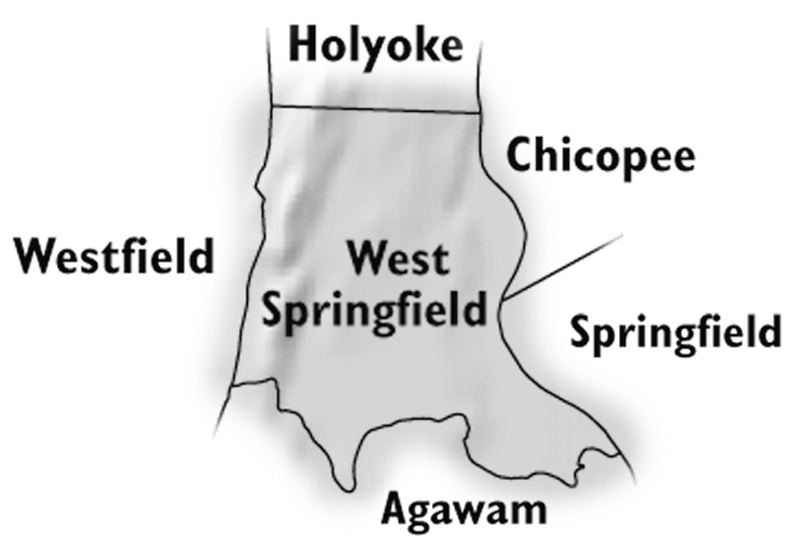 West Springfield Mayor Greg Neffinger says his city doesn’t need a casino.
But that doesn’t mean he and other municipal and economic-development leaders aren’t excited about the bid put forth by Hard Rock International to site a destination casino on the Eastern States Exposition grounds.
When asked what that would mean, however, Neffinger paused for a moment before bringing up a favorite topic.
“I’ve just lowered taxes for the second time in my budget,” he said, noting that the town, recently saddled with the fifth-highest commercial tax rate in the state, now ranks around 16th, and the mayor would like to drop it further in an effort to attract more companies. “So I feel that West Springfield doesn’t need a casino for its economic vitality.”
Instead, he makes a regional argument for a casino, one that would benefit surrounding communities, including Holyoke, Chicopee, Westfield, and Agawam. “I think the casino in West Springfield should be a regional benefit, and the money that’s generated by the casino should be seen as a benefit to all the communities around us. We’re hoping to partner with all our adjacent communities to see how everyone can see the various benefits from the casino.”
But, just as Springfield officials across the Connecticut River have vowed not to stop growing organically even while they promote a casino bid by MGM Resorts International, Neffinger said his town’s economic growth will not be dependent on a gaming resort.
“We are now developing plans that we feel will be beneficial to West Springfield whether a casino is sited here or not,” he said, noting that a small army of consultants, planners, engineers, and attorneys are discussing the potential of the Big E site.
For instance, “there’s a large, undeveloped industrial area adjacent to the casino site, going from the Big E all the way to the power plant along the Westfield River. We hired a planner, Sasaki Associates out of Watertown, to look at those adjacent properties and see what type of commercial, entertainment, or recreation potential they have — either to enhance the entertainment-destination theme, or things that could be done without a casino.”
Memorial Avenue is only one course on Neffinger’s plate these days. To boost growth across the city, particularly in key areas like Memorial, Riverdale Road, and Westfield Street, he has created new positions for a planning and development director (Doug Mattoon) and an economic development director (currently vacant since Michele Cabral resigned earlier this year), and made efforts to streamline the permitting process and make the town more business-friendly.
The growing West of the River Chamber of Commerce, which encompasses West Springfield and Agawam, has taken notice, said Debra Boronski, president of the Massachusetts Chamber of Commerce, which manages the West of the River chamber.
“The mayor has been very active, making sure he is present at every event we have, and I think that speaks volumes in regard to him wanting to be connected to the business community,” she said. “He has embraced our quarterly coffee hour with the mayor, and he is always available for those forums as well. He is quite candid about how he feels about West Springfield being a great place to live, work, and do business.”
Architect of Change

Mayor Greg Neffinger says the properties bordering the proposed casino have great potential whether or not West Springfield wins the bid.
Neffinger, a former architect, noted that each of West Side’s major commercial centers has its own character and set of needs. “Westfield Street is more neighborhood businesses, while Riverdale Road has a life of its own; it’s a very popular location, and restaurants, retail, and car dealerships seem to do well there because of all the traffic going through. Places like CVS, Home Depot, and Costco also do well there.”
He conceded, though, that most of the buzz on Riverdale occurs south of Interstate 91, while the northern stretch of the thoroughfare, between the highway and the Holyoke Mall area, could use more development. A number of chain restaurants — Outback, On the Border, Hooters, and Five Guys, to name a few — have succeeded there, and a tenant is looking to move into the former Piccadilly Pub location. “We think that part of Riverdale Road has lots of potential.”
Armed with a larger planning and development team than past administrations have enjoyed, Neffinger expects progress on other fronts as well. Further development of Agawam Avenue Extension is a key goal in a 2005 report on the Merrick-Memorial section of the city — one of many recommendations he wants to set into action.
“We’re doing a whole rezoning of the Merrick section. That was part of the Merrick-Memorial study,” he told BusinessWest. “When we brought in planners to begin looking at it, they found that virtually 100% of the Merrick section was non-conforming, and [developers] would have to go for a special permit, and it’s questionable whether they’d do that. As an architect, I felt that builders, developers, and entrepreneurs would be more attracted to areas of town that were conforming.”
As a result, a new zoning structure for the area should be completed by June, and virtually all the parcels will be conforming, said Neffinger, who said full development of the area could add $1 million to the tax base.
The mayor repeatedly stressed the importance of a robust planning and economic-development staff, and said the town wants to fill Cabral’s position with someone savvy in 21st-century communication.
“We spoke with a number of retired economic-development directors, and I think the way of reaching out to business is changing, with social media and websites,” he explained, “and so we’re hoping that we can get someone with more of a marketing background who can reach out to businesses and let existing businesses know we’re here and we care about them doing business in West Springfield.”
In addition, he and various planning officials are talking about ways they can improve the process by which businesses locate in town. “One of those is electronic permitting, and hopefully, that’ll be in place next month.”
Neffinger said the Town Council is also discussing exempting businesses from taxes on equipment up to $10,000 in value. “We don’t make much on it, and our administrative costs are almost equal to the money that comes in. There’s a lot of paperwork involved for small businesses, so they’ll save some money and time.”
Rolling the Dice
Of course, it’s hard to ignore the prospect of one decidedly large business — that’s Hard Rock — that wants to call West Springfield home.
Boronski noted that the West of the River Chamber surveyed members and non-members alike about their desire for a casino, and based on the results, just last week, the chamber officially endorsed the $800 million Hard Rock proposal.
“Around the state and locally, no chambers of commerce have come out publicly to support a specific casino,” she said. “For the West of the River Chamber board of directors to do this shows that they are willing to put themselves out there and take a position that’s right for economic development.”
Michael Beaudry, who chairs the chamber, said members “are excited about the potential of the Hard Rock project for its impact to our regional economy and to small business in particular. The job creation and payroll will reverberate throughout the area, alongside new tax revenues for property owners and local government.”
He noted that Hard Rock is committed to a buy-local approach to the project. To strengthen ties between a casino and the business community, the chamber is pursuing:
• Development of a small-business network to identify area businesses that may provide goods and services to the casino resort;
• Coordination on a series of vendor fairs to facilitate additional information and communication on goods and services for the gaming facility;
• Affinity programs for casino employees, by which Hard Rock will offer chamber members the opportunity to directly market their services to the anticipated 2,000-plus casino workers; and
• Promotion by Hard Rock of regional destinations, attractions, shopping districts, and hospitality venues. Those efforts might include cooperative group sales, local training for resort personnel, and marketing and advertising.
That emphasis on making sure small businesses benefit from a casino is a theme that hits home with Neffinger.
“I think small businesses are the backbone of all communities,” he said. “We’re fortunate to have some pretty large companies in West Springfield, but for our economy, employment, and the general well-being of the town, I think small businesses are the lifeblood of the community.”
Natural Appeal
Still, the mayor added, “the casino coming in to the Memorial Avenue area would bring in a whole new dynamic.” One of his missions is to make sure the town’s traditional appeals are not lost in the gaming hype.
“I think, when businesses think of relocating in Western Mass., they’re interested in what the quality of life is, what’s the education system like, what the recreation possibilities are,” he said. “We in West Springfield are surrounded by natural beauty — the Connecticut River, the Westfield River, the Holyoke mountain range, Bear Hole Reservoir … we’re pretty much surrounded by natural resources, and I’m really hoping to capitalize on those.”
To that end, “we’ve already begun to do work on Mittineague Park to fix it up, and we took tons of trash out of Bear Hole Reservoir and put a ranger up there. We want that to be a natural resource for the residents of West Springfield.”
Neffinger also considers education a key part of making West Springfield an attractive destination for businesses and families. The construction of a new, $107 million high school, set to open in 2014, is a big part of that. “We’re also working on improving our MCAS scores and our graduation rate,” he told BusinessWest. “These things are very important for people, especially young families, who are thinking of relocating.”
In addition, he said, “we’re not far from skiing, hiking, beaches, Boston, New York … we’re in a very good location.”
In other words, West Springfield has plenty to offer — whether or not Hard Rock gets the chance to light up Memorial Avenue.
Joseph Bednar can be reached at [email protected]


Paul Ducheney says the fishway was the culmination of years of study involving fish behavior, as well as considerable trial and error.
Current Events

This illustration shows how the fishway enables migratory shad, Atlantic salmon, and other species to be collected, lifted in buckets over the dam, and released.
Illustration by Robert Oxenhorn
Kate Sullivan says grassroots efforts have helped increase visitorship at the fishway, which is open only a few months a year.
Hook, Line, and Sinker
When HG&E purchased the Holyoke Dam to operate the hydroelectric facilities and the Holyoke Canal System, more improvements were made to the fishlift, Ducheney explained to BusinessWest.
“It’s automated now, so it runs without operator intervention, and it’s tripled in size, so we can accommodate many more fish,” said Ducheney. “In fact, this lift has become a model for others, including the Susquehanna River and in Japan, China, Brazil, and European countries. Holyoke is pretty well-known for fish passage.”
And the fishlift is a first for something else that’s important.
“Literally, every fish is counted,” said Sullivan, noting that the Holyoke Dam is the first that fish encounter as they move north from Long Island Sound, so keeping accurate inventory is critical to tracking what happens to fish before and after they get to the Paper City.
The counters are biology students from Holyoke Community College who click a designated counter for each species of fish in a special viewing room just past the public viewing windows; its another form of educational experience of which Barrett would be proud.
Since the official counts started in 1965, the most prolific years for fish passage were in 1985 and 1992, at more than 1 million fish. In 2012, more than 500,000, mainly shad, were lifted over the dam.
Shad, said Ducheney, is a river herring, and while that may not sound delectable, he noted that shad is actually on the menu at New York’s famous Tavern on the Green restaurant at this time of year.
But restaurants aren’t the only interested parties when it comes to shad. The annual HG&E Shad Derby, one of the region’s largest fishing events, is held on two weekends in May and offers nearly 600 anglers of all ages the opportunity to win cash prizes and write plenty of their own fish stories as they enjoy the recreational benefits of the Connecticut River.
Marketing funds are tight, Sullivan said, so getting the word out about the fishway is a struggle. But thanks to HG&E’s newsletter to 18,000 customers, as well as more comprehensive grassroots efforts over the past couple of years to increase awareness of the facility, visitation has increased.
In just a short window of six weeks, from late April to mid-June, more than 11,000 visitors came through the fishlift last year, 2,000 more than in 2011, said Sullivan, noting that many of them are students from across the region.
The fishlift is open Wednesday through Sunday, 9 a.m. to 5 p.m., until June 16, due to the spawning season each spring. Also open on Memorial Day, the facility offers visitors of all ages a unique combination of science through tourism, and a chance to tell a real fish story about the ones that got away — or at least further upstream.
Elizabeth Taras can be reached at [email protected]
Jessica Niccol says Museums10 helps raise the profile of what she calls “an extraordinary set of historical collections.”

Kevin Kennedy says Museums10 acts as a lens to focus the significant energy of its members.
Drawing on Expertise
Alix Kennedy, executive director of the Carle — which, with only 11 years under its belt, is the youngest of the 10 museums — said Museums10 is about far more than marketing the museums.
“It’s also about how we can leverage resources we have so we can have a greater impact in our own communities,” she told BusinessWest. “The days when organizations try to exist in silos is over. Thankfully, there’s a tremendous amount of professional rapport that everyone gets to benefit from.”
Niccol agreed, noting that, because the museums have small staffs, “there’s an incredible benefit to building this professional network within the five-college area. We’ve really developed strong ties as the curators meet each other, educators meet each other, the marketing staffs meet each other. There’s fantastic communication and support with problem solving.”
Shared resources are critical, she said, such as bringing in educators and workshops for the entire Museums10 system in specific subjects, rather than each of them sending staff members to conferences around the country.
“A lot of things happened,” Alix Kennedy said, “by taking like-minded groups and this variety of different museums, who all share this incredible passion for education, and figuring out ways to give people access to our resources.”
The 30-year-old Yiddish Book Center boasts a wide range of exhibits, lectures, conferences, and educational programs for both college students and adult learners — not to mention big events like Yidstock, an annual summer festival that brings in top names in the klezmer musical tradition and draws visitors from across the country.
“There’s no other place like it,” said Lisa Newman, the center’s director of communications. “Sometimes we refer to ourselves as the first Yiddish museum; there’s no other institution like this, with the breadth of what’s here and all the programs created to promote Yiddish culture. And it’s all rooted in the first mission of the center, which was the rescue of more than a million Yiddish books otherwise destined for the trash.”
Newman added that she has come to appreciate the collective power of Museums10 in supporting that mission.
“I think it’s a really interesting collaboration internally and externally,” she said. “It helps all of us professionally to engage with one another, but in terms of the community, it makes a strong statement that we have these 10 very unique museums — that we have tremendous resources as well as engaging, interesting, and surprising places to visit, and we’re right here in your backyard with a tremendous amount of programming going on.”
As director of marketing for Historic Deerfield, Laurie Nivison said it can be difficult to adequately communicate what such a large, multi-building facility has to offer.
“We say ‘opening doors to the past’ because we have 11 houses and an extensive museum collection for people to explore. We want to make it a destination, not just for people in the local area, but those from outside the area looking for a daycation — just looking to come and explore.”
Museums10, she said, helps get the word out by linking Historic Deerfield’s goals with those of the broader cultural community.
“This is a good group of people,” Nivison said. “As nonprofits, this sort of collective power is helpful, because something one museum might be able to do, another museum might not have the budget to do. Part of Museums10 is leveraging our power, helping us get into those markets we may not otherwise be able to reach.”
Next Phase
Alix Kennedy
Joseph Bednar can be reached at [email protected]

 While all restaurants are destinations in many respects, some locations are unique, not just for the food prepared in the kitchen, but because of the rich history of the setting in question. For this special section, the 2013 Restaurant Guide, we venture to three establishments that could truly be called landmarks.
Theodores’ Thrives with Its Blend of Music, Barbecue, and Tradition
Steaming Tender Mixes Hearty Food and Railroad Culture
The Whately Inn Has Come a Long Way Since it Hosted Burlesque
A list of the region’s finest restaurants
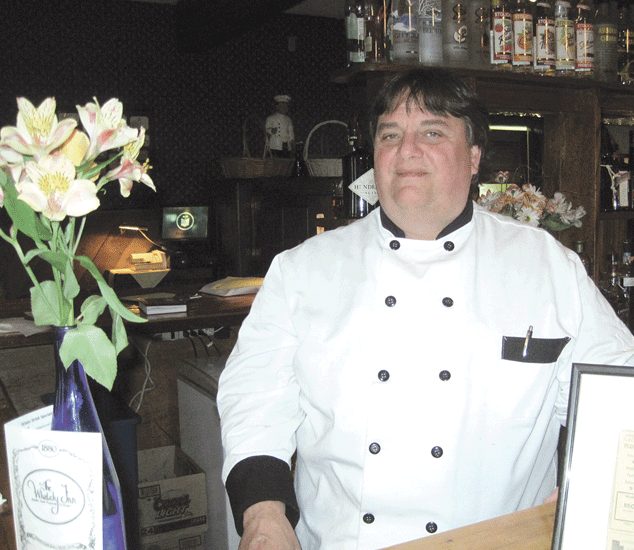
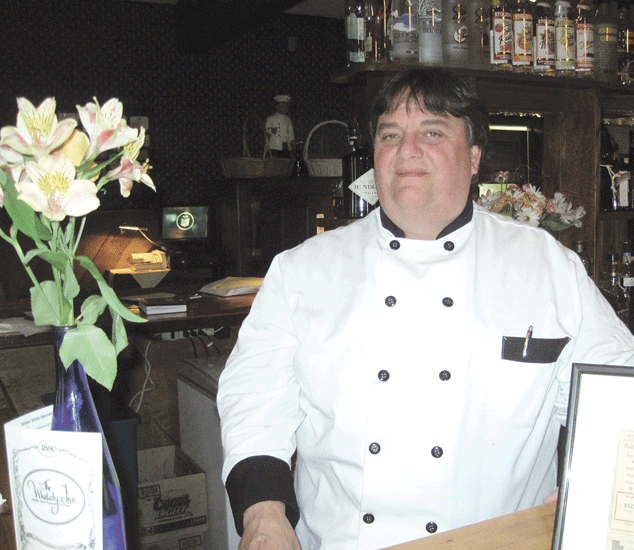
Chip Kloc says the fire in 1984 was disruptive, but it ultimately proved to be an important turning point for the Whately Inn.
Back in the Day
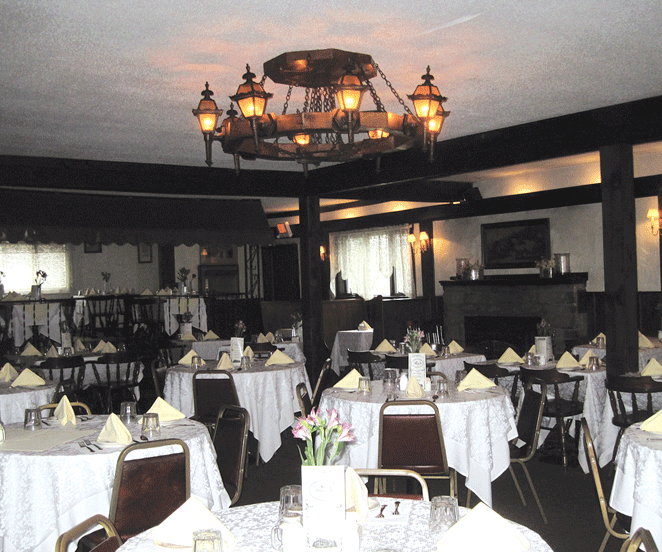
The Whately Inn’s historic dining room features a stage area that showcased burlesque dancers in the 1950s and 1960s.
Holding Steady
While the fire in September 1984 was in most ways a setback, Chip and Steve both described it as a blessing in disguise because it pushed them to make updates to decades-old electrical wiring, put in four larger hotel rooms where there had originally been six, and add a second-floor banquet room.
When it reopened in 1985, the inn was a more flexible and responsive player in the hospitality sector, with fine dining, a banquet facility, and a hotel. And it has taken full advantage of this attractive mix of services.
With most customers coming from within a 50-mile radius, the inn has thrived through its regulars, those who have heard about it though word-of-mouth referrals and want to experience it, and a growing banquet business. The main key to its success is repeat business.
“Many people come at least once a month, and one couple has been coming every Sunday since the fire,” said Chip, noting that, during the recession, when other hospitality-related businesses were suffering or closing, the Whately Inn held steady.
“There was a decline, but nothing that seriously affected us,” Chip explained. “We’ve built this business consistently over the years, and we’ve been growing little by little every year. After the fire, there was maybe a little bit of a rush, but overall it’s been consistent growth.”
Since the recession, however, Steve has seen customers give more attention to the value they are getting with everything they buy.
“Some people look at our menu and say we’re expensive,” he said, “but if you look at what you get, we’re very reasonably priced.”
Specifically, what the Whately Inn is known for, besides its popular French-American traditional-style cuisine, is a five-course, prix fixe dinner, including appetizer or soup of the day, salad, potato, vegetable of the day (usually in season, fresh, and local), gourmet entrée, choice of dessert, and coffee.
Historically, the two most popular dishes have been the 12-ounce filet mignon and the 18- to 24-ounce prime rib for $30.95. Meanwhile, there is one item generally not found anywhere else — frog legs from Bangladesh and Thailand.
“We sell 30 pounds per month,” said Chip. “No one sells them anymore so we have them for the customers that want them.”
“We’ve had the same menu since day one,” Steve added. “We add daily and weekend specials every week, but the old menu has been good for us; it’s what brings the people back.”
The dining room holds 120, and on an average Saturday night, Chip and his staff will serve between 250 to 300 patrons. On holidays, reservations are made months in advance, and a typical Thanksgiving, Mother’s Day, or Easter will attract 600 to 700 diners.
Just Desserts
In addition to consistent, quality cuisine, Chip said the Whately Inn’s employees are another key to success. One staffer has been with the Klocs since he was in high school, dating back to the Captain’s Table days in the 1970s. Chip’s mother, Fran, manages the bar, while his wife, Lisa, manages the dining room and schedules the waitstaff and any reservations. Chip’s brother Gary helps out as a waiter, and various other family members have pitched in over the years.
While Steve ‘officially’ retired this past January, when not in Florida, he still can be found helping out in the kitchen.
In his new role as the president of the family business, Chip said the goal is to keep the last three decades of fine dining and value steady, so loyal customers can continue to ‘eat greatly at the Whately.’
Elizabeth Taras can be reached at [email protected]
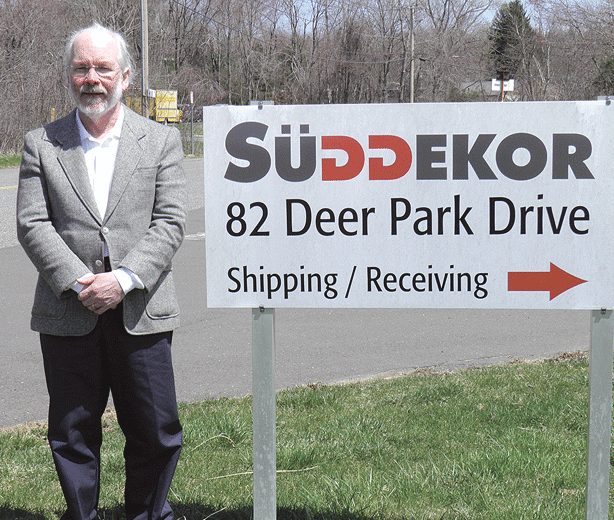
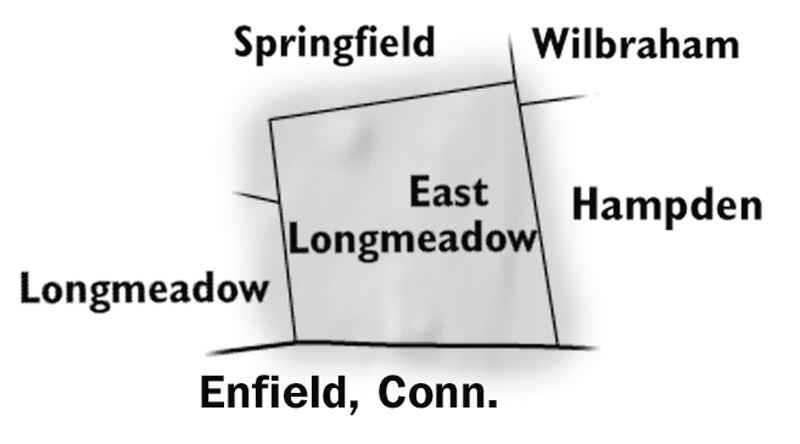 Robyn Macdonald says East Longmeadow’s popularity is growing, offering untold opportunities for businesses. “It’s a sleepy little town that’s starting to wake up,” said the town’s Planning, Zoning Board, and Conservation director.
George Kingston agrees, and says business plays an integral role in the economy. “When people think of East Longmeadow, they think of big houses with big lawns. We have those, but there are also important parts of the town that most people never see,” said the chair of the Planning Board. “And the voters recognize the importance of business and industry in supporting the tax base.”
The town has proved attractive to residential and industrial developers in recent years and has experienced a fair amount of growth. But its bucolic atmosphere, which dates back to its agrarian days, still remains, and even its Industrial Garden District and Deer Park Industrial Center are places where manicured lawns and flower gardens belie the scope of the commercial and manufacturing ventures there.
However, most businesses are small and located in and around the town center on Shaker Road and North Main Street. “The majority are owned by people who either live in East Longmeadow or live very close to town,” Kingston noted, adding that the wide variety of shops and services allow residents to get most of their needs met without leaving the town’s 13 square miles.
“We have grocery stores, 10 dental practices, Hampden County Physicians, a lot of salons, and many after-school programs, so people who move here can have a house on a half-acre and only travel a half-mile to take their kids to dancing or gymnastics. If they want to go out at night, they have their choice of 25 restaurants.
Robyn Macdonald calls East Longmeadow a sleepy little town that’s starting to wake up.
Business Opportunities
Center Square was built in recent years on property that had sat vacant for decades. Today, it is filled with a variety of shops and eateries which include upscale clothing stores, Spoleto’s restaurant, Starbucks, Sleepy’s, a dry cleaner, a card shop, and a law office on the second floor of one of the retail strips. There is also a Walgreens and a Webster Bank branch on the property, which boasts Rocky’s Ace Hardware as an anchor.
Macdonald said the first permits for the complex were taken out in 2004, but it took several years before construction began. “But it has really enhanced the center,” she told BusinessWest, adding that Bentley’s Bistro had just opened within walking distance on North Main Street.
Kingston concurs. “There is lots of parking, and businesses in Center Square are doing really well,” he said. In addition, La Fiorentina bakery and Zonin’s deli opened in late December after renovations on a building a short distance down the street were complete. Their main locations are in Springfield, but Kingston said the town’s uniform tax rate makes moving or expanding to East Longmeadow an attractive prospect.
Large commercial ventures are concentrated in the Industrial Garden District, made up of 530 acres that were former cornfields. When it was originally designed, town officials wanted to preserve its natural beauty, so parcels must be at least 75,000 square feet and must have 250 feet of frontage for every 75,000 square feet they occupy.
The area has been marketed in conjunction with Westmass Area Development Corp., and about 30 companies and commercial manufacturers have settled there, including Milton Bradley (Hasbro), Rubbermaid, and Suddekor.
But although a decided effort has been made to separate commercial and residential areas, there are a number of older industries located along what used to be the railroad, including a wood-processing plant and a large metal-fabrication facility. “But newer industry goes into the industrial park,” Kingston said, adding that there are a few vacant buildings ready for tenants, along with vacant land, particularly in the Deer Park area, which was added to the complex in the late ’80s and early ’90s.
The Arbors Kids recently received Planning Board approval to locate in the district, and will offer day and after-school care as well as a summer camp. “They will take over a vacant industrial building and have plans to renovate the interior; it’s a large facility and will have athletic fields and a swimming pool,” Macdonald said.
In addition to the space in the industrial park, Kingston noted, there are a few other parcels that town officials would like see developed. However, they have some challenges, including the former Package Machinery plant on Chestnut Street, made up of 41 acres and a large building, as well as the former Community Feed property, which contains about three acres and is within walking distance of Center Square. “It has great potential and is a great place for retail development. But there could be traffic problems in the morning and evening.”
He told BusinessWest that the town has also seen an “explosion” of home-based businesses over the past five years, which many people are operating via the Internet. “They don’t have any impact on our residential areas, but are everywhere in town,” he said. “And there are a number of businesses who do things like pet grooming at other people’s homes.”
Steady Evolution
After World War II, the Speight Brothers built hundreds of Cape Cod-style homes in an area that ran from Blackman’s Pond on North Main Street to the town center. The development brought young families to the community, which is a trend that continues today.
However, Macdonald would like to see more affordable-housing complexes built for seniors who have lived in town all their lives, but no longer need large homes.
Some developers have moved to fill the niche. Bluebird Estates, an independent-living facility, was built in 2006 on 11 acres of former Bluebird Acres farmland on the west side of Parker Street. And a new assisted-living facility is being built on acreage across the street. “East Longmeadow Senior Living is under construction,” Macdonald said, adding that its 89,287 square feet will contain 71 assisted-living suites and 32 for people with memory loss.
In addition, the Fields at Chestnut, built by Roulier Associates as an over-55 community with plans for 120 high-end, single family dwellings, is in its final building phase.
“But we still need more projects to satisfy the empty-nester needs of people 55 and over,” Macdonald said, adding that three farm properties for sale in residential districts could be developed.
Younger homeowners have more choices, and the demand for expansive homes has spurred recent growth. “We have seen a pickup in housing builds — there are several new subdivisions started and others being talked about,” Kingston said. “There are also plans for new houses on fill-in lots where homeowners divided their land and are putting up a second house.”
George Kingston says the Industrial Garden District boasts about 30 companies, including Suddekor.
Bright Outlook
Macdonald said companies looking to move or expand should consider East Longmeadow. “We still have plenty of room, and the opportunities here are great. The town welcomes large and small businesses, and our Industrial Garden District is a beautiful area which is easy to get to from I-91.”
But despite continuing growth, officials say, East Longmeadow will not lose its beauty. “We work hard in planning to try to maintain a good quality of life, but also make sure we have tax generation so we can fund our schools, infrastructure, and services,” Kingston said. “And East Longmeadow has achieved a pretty good balance.”

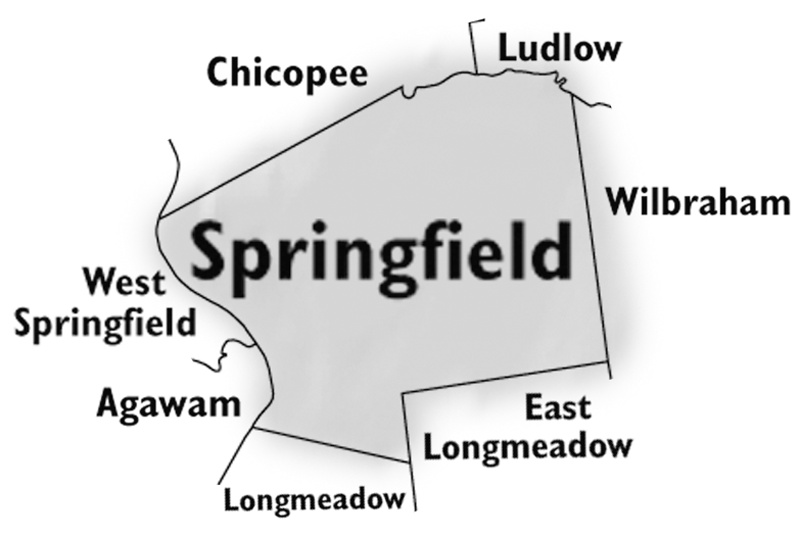 Domenic Sarno has been talking about a potential Springfield casino for a long time. But that’s not all he wants to talk about.
“We’ve handled the casino as a potentially $1 billion economic-development project with a gaming component,” the Springfield mayor said of the dual proposals put forth by MGM Resorts International and Penn National Gaming, “but we’re moving on three or four different other fronts besides the casino.”
Three or four would be a gross understatement. Those fronts range from ongoing tornado recovery to Union Station, which will begin its $78 million transformation to a multi-use transportation hub later this year; from the new data center at the former Technical High School — one of the final pieces of an ongoing revitalization of the State Street corridor — to continued efforts to draw more businesses and foot traffic downtown, among many other efforts.
Mayor Domenic Sarno says efforts to locate a casino in the city constitute one of many economic-development related initiatives taking place in Springfield.
City on the Move
When they sat down with BusinessWest, Sarno and Kevin Kennedy, the city’s chief development officer, enthusiastically ran through a deep list of recent and ongoing economic-development initiatives.
Take Union Station, for example. Sarno cited the impact of other Union Station projects undertaken in various cities, from New Haven, Conn. to Washington, D.C. “In D.C., it was a decrepit, crime-riddled, drug-infested area, but when Union Station was done, it changed the whole thing. It’s not only about transportation; it’s an economic catalyst.”

ACCGS Executive Director Jeff Ciuffreda says many downtown businesses no longer have the “bunker mentality” that prevailed after the recession.
Still Standing
Impressively, Sarno noted, all this is taking place in the wake of a devastating tornado that ripped through several city neighborhoods in June 2011. A strategic disaster-recovery plan has been in the works for almost two years, but now federal money is beginning to arrive — including $21.9 million from the Department of Housing and Urban Development and $1.3 million from the Federal Emergency Management Agency — to put the plan into action.
“We were dealing with the disaster 24/7 for three months. And in the first two weeks, we started to think about how this could be an opportunity to redefine the city,” Sarno said. “That’s when we started piecing together DevelopSpringfield; we wanted a vision not only for the affected area, but a chance to redefine the whole city — to highlight strong areas and make areas in need better. Now that the money is starting to come in, we’re seeing fruit from these projects.
“It’s tough enough for an urban center as it is, and we were hit with one disaster after another,” he said of the freak weather events of 2011 and the natural-gas explosion downtown last fall. “A lot of people thought the tornado was a haymaker, the knockout. But the exact opposite happened. After seeing our resiliency, people are taking a second look at Springfield. We’re not saying we don’t have urban challenges; we do, and we’ll conquer them. But people have their eyes on the city.”
Kennedy agreed. “Confidence is back in Springfield,” he said, adding that progress has been aided by the “reliable and predictable way of going about our business. We developed a strategy and stuck to that strategy, as opposed to being all over the lot.”
Yet, Ciuffreda was quick to add that some projects — from the next phase in a downtown parking study to a UMass Springfield campus — simply can’t move forward until the site of the casino is known.
“My feeling is, [UMass] wants to do something that won’t compete with the other colleges and universities, but until the casino is sited, it makes it difficult for them to figure out where they want to be,” he said. “The parking, the lighting, the UMass presence — they’re all being overshadowed. Now, you can’t rush an $800 million development, but these other things can’t wait in the wings forever.”
That said, “the mayor and Kevin (Kennedy) have an eye on all of this and haven’t been distracted by casinos,” Ciuffreda was quick to add. “All these other projects seem to be getting their due attention.”
Even the 2009 decision to increase the mayoral term from two years to four has had an impact on development, Kennedy said, because it means the mayor no longer has to spend more than half his term in campaign mode. “It gives you the time to sketch out the vision and, more important, implement and execute that vision. That’s what we’re in the midst of doing now.”
Added Sarno, “you’ll always get naysayers asking ‘why are you making that move?’ But it’s like a chess game. Each move sets up another move, although it might not always be obvious.”
Better Days
From the chamber’s perspective, Ciuffreda said, Springfield is on the rebound from the Great Recession.
“Starting three years ago, we could see some small and mid-sized companies leaving the chamber, for mostly economic reasons,” he said. “We haven’t seen that in the last year or so; our numbers show a firming up of the economy. We’re seeing more participation in our programs. Folks aren’t in as much of a bunker mentality downtown — they’re coming out, they’re moving forward. I think there’s some momentum there.”
How a potential casino impacts that progress, both positively and negatively, remains to be seen.
“I can’t lie to you; there will be small businesses that will be hurt if Springfield wins the gaming license,” he noted. “But our hope is that, through employment and other opportunities, we can minimize those losses. Our real concentration is on maximizing the upside, the spinoff that will occur in these other areas. On balance, the chamber decided there was more good than bad, more upside than downside. That’s why we’re supportive of it.”
Meanwhile, Kennedy said, it’s business as usual on the economic-development front, and city leaders aren’t about to sit around waiting for the Gaming Commission’s verdict.
“Everyone knew the downtown was a problem, and we had to do our homework and spadework before we could fix it,” he told BusinessWest. “Even without the casino, if you add up Union Station, Indian Motorcycle, different road projects, the new schools — those are real, and we’ll see more things happening over the next two years. So we are working really hard to make sure we are not casino-centric, because we may not get the casino.”
Joseph Bednar can be reached at [email protected]
ACCGS
www.myonlinechamber.com
(413) 787-1555
• April 10: April After 5, 5-7 p.m., at Twin Hills Country Club, 700 Wolf Swamp Road, Longmeadow. The event will feature the ERC5 Feast in the East. Join us for a culinary event sure to please your palate as dozens of local restaurants present their signature dishes. Proceeds benefit the ERC5 Scholarship Fund. Sponsorship opportunities are available. For more information and to purchase tickets, contact [email protected].
• April 3: ACCGS Business@Breakfast, 7:15-9 a.m., at the Springfield Marriott, 2 Boland Way, Springfield. Guest Speakers will be Carol Leary, president of Bay Path College, and Ira Rubenzahl, president of Springfield Technical Community College. They will speak on the subject “The Importance of Public and Private Higher Educational Institutions in Workforce Development.” Chief greeter: Sarah Tsitso, executive director of the Boys and Girls Club Family Center. Salute: the Horace Smith Fund, for its 115th anniversary. For more information and to purchase tickets for the breakfast event, contact [email protected].
AMHERST AREA
CHAMBER OF COMMERCE
www.amherstarea.com
(413) 253-0700
• April 10: Amherst Area Chamber Breakfast, 7:15-9 a.m., at Applewood at Amherst, 1 Spencer Dr., Amherst. Tickets: $17 for members, $20 for non-members. RSVP to [email protected] or register online at www.amherstarea.com.
CHICOPEE CHAMBER OF COMMERCE
www.chicopeechamber.org
(413) 594-2101
• April 17: April Salute Breakfast, 7:15-9 a.m., at the Kittredge Center, Holyoke Community College. Tickets are $20 for members, $26 for non-members. Sign up online at www.chicopeechamber.org.
• April 8: Meet Your Legislators, 5-8 p.m., at the Castle of Knights, 1599 Memorial Dr. in Chicopee. Meet the legislators who represent you and your business, and start a relationship and a partnership with the Commonwealth’s leadership. Your chamber membership affords you a valuable voice on issues that impact your bottom line. Sponsored by Mohegan Sun. Sign up online at www.chicopeechamber.org.
FRANKLIN COUNTY
CHAMBER OF COMMERCE
www.franklincc.org
(413) 773-5463
• April 19: Chamber Breakfast, 7:30-9 a.m., at the Franklin County Fairgrounds. Program to be announced. Sponsorship opportunities are available. For more information, contact the chamber at (413) 773-5463.
GREATER EASTHAMPTON CHAMBER OF COMMERCE
www.easthamptonchamber.org
(413) 527-9414
• April 13: REACH Fest Day, starting at 10 a.m. REACH invites local and national artists to show in a multi-city exhibition of contemporary practitioners working in a variety of non-traditional formats. REACH promotes visibility, aims to bridge the arts and spaces in neighboring cities, encourages collaborative experimentation, and invites community members to participate in experiencing an array of contemporary art practices that are exhibited in a variety of traditional, non-traditional, and underutilized spaces throughout participating cities and towns. With more than 25 artist installations and exhibitions, a series of events are scheduled for REACH Fest Day. There will be performances in Easthampton and Holyoke by contemporary movement and sound artists and the One-Minute Vidfest, a film festival at Popcorn Noir in Easthampton featuring one-minute short films submitted by more than 80 artists from Easthampton to Serbia. All exhibitions will be open for visitation in Holyoke from 10 a.m. to 4 p.m. and in Easthampton from 4 to 9 p.m., in conjunction with the monthly Art Walk Easthampton. For more information visit www.reachfest.com
GREATER HOLYOKE
CHAMBER OF COMMERCE
www.holycham.com
(413) 534-3376
• April 17: Chamber Business Connections, 5-7 p.m., Renaissance Manor on Cabot Street. members of nonprofit organizations may attend as our guest; limit two employees per organization. Tickets are $10 for members, $15 for non-members. For more information or to register, call the chamber office at (413) 534-3376 or visit www.holycham.com.
• April 18: Accessing Workforce Training Funds, 8-10 a.m., in the PeoplesBank Conference Room in Kittredge Center on the campus of Holyoke Community College. Learn if your company qualifies and what you have to do to get a piece of the pie. Price includes a continental breakfast. Tickets are $20 for members, $30 for non-members. For more information or to register, call the chamber office at (413) 534-3376 or visit www.holycham.com.
• April 25: Beacon Hill Summit. Buses depart at 7 a.m. and return at 7 p.m. Ticket cost of $180 includes transportation, breakfast, lunch with legislators, materials, and wrap-up reception. Call the chamber at (413) 534-3376 for more details or to sign up.
GREATER NORTHAMPTON CHAMBER OF COMMERCE
www.explorenorthampton.com
(413) 584-1900
• April 3: Arrive@5, from 5 to 7 p.m. at Smith Vocational and Agricultural High School, 80 Locust St., Northampton. Sponsored by King And Cushman Inc. and ACME Auto Body & Collision Center. Arrive when you can, stay as long as you can for a casual mix and mingle with your colleagues and friends. Tickets are $10 for members, $15 for non-members. To register, call the chamber office at (413) 584-1900 or visit www.explorenorthampton.com.
GREATER WESTFIELD
CHAMBER OF COMMERCE
www.westfieldbiz.org
(413) 568-1618
• April 10: WestNet Connection, 5-7 p.m., at Betts Piping Supply Co., 14 Coleman Ave., Westfield. Spend a couple of hours networking with local businesses. Tickets are $10 for members, $15 cash at the door for non-members. For more information or to register, contact Pam Bussell at (413) 568-1618 or e-mail [email protected].
YOUNG PROFESSIONAL SOCIETY OF GREATER SPRINGFIELD
www.springfieldyps.com
• April 18: Third Thursday, 5-7 p.m., at Adolfo’s Restaurant, 254 Worthington St., Springfield. Join YPS at Adolfo’s, an Italian restaurant and bar situated across from historic Stearns Square in the heart of Springfield’s Entertainment District. The menu features a selection of traditional Italian dishes along with creative house specialties and a wide choice of wines to match.
BID Strives to Improve, Promote Downtown Attractions
By KATHLEEN MITCHELL
Don Courtemanche lives in downtown Springfield. He walks to work and takes advantage of the cultural events, eateries, and other offerings readily available to him in the area.
“I think of downtown as a neighborhood. It’s a place where I want to live, stay, and raise my family,” said the executive director of the Springfield Business Improvement District, or BID, adding that he can walk to 40 restaurants from his home on Maple Street, which is not technically within the boundaries of the BID, but certainly impacted by the organization’s efforts.
BID board member Evan Plotkin says the ultimate goal of the organization is to make the downtown vibrant and culturally important to the region so it will attract new residents and businesses. “We want to see a return of the middle class and others who have left or abandoned the city,” said the president of NAI Plotkin on Taylor Street in Springfield, in the heart of the BID. “If you create a vibe that improves the perception of what downtown is, you will start to attract new retail businesses, restaurants, and a segment of the population that could move into apartments there.”
The boundaries of the 26-block BID stretch from the Connecticut River to Chestnut Street, and from Bliss Street to the railroad tracks. Union Station, which is undergoing renovation, is the northern bookend of the district. And although some people shy away from downtown because they think it’s unsafe, Cortemanche says that’s a false perception.
“People who are not familiar with the area tend to be skeptical in terms of its public safety,” he told BusinessWest. “But if you look at the statistics, the BID is the safest neighborhood in the entire city in terms of crime.”
The problem, he went on, is that, “since downtown is the face of the city, whenever anything bad happens, people associate it with Main Street.” For example, when the tornado hit, people watched it cross the southern part of the downtown area on their TV screens because that is where the weather cameras are situated. “As a result, business in the BID plummeted, not because the buildings there were destroyed, but because people assumed the streets were impassable since the media reported the news from the downtown area. The general consumer doesn’t know where the BID begins and ends.”
Plotkin agrees. “A lot happens downtown that is blown out of proportion,” he said.
Still, in spite of economic woes that have hurt urban centers across the country, the BID has held its own in recent years. Its focus now is to continue to collaborate with groups that stage cultural events, bring more people downtown, and, most importantly, take measures to make people feel safe when they visit the district.
This is going to become easier thanks to a recent change in the state’s BID statute, which was passed in July by the Legislature as part of a jobs bill. It no longer allows commercial properties to opt out of membership or paying a fee to an established BID, which they were able to do in the past, even though they benefited from services.
Those services range from keeping the area clean to upgrading streetscapes; from undertaking capital improvements to assigning representatives to act as ambassadors during conventions to help direct tourists and serve as extra security on the street, along with helping to beautify the area and promoting attractions and events.
Ongoing Maintenance
Courtemanche said Springfield’s BID, like others across the state, suffered when property owners opted out of the organization. “It became incumbent on us to do more and more with less and less,” he explained.
But, thanks to the new law, there will be more revenue with which to work. “The statute allowed property owners to reaffirm their faith in the BID,” Courtemanche said, adding that it has a 98% approval rating from its members. “We have had meetings with our members who had opted out to see what they want, and their number-one priority is clean and safe streets.”
To that end, the BID has purchased new cleaning equipment, which includes an additional street sweeper, and has also established two new lighting initiatives. One is the installation of LED lights in existing fixtures owned by Western Mass Electric Co., which will double the amount of illumination and reduce energy use by 25%.
The second is a pilot program that began in January on Worthington Street that allows property owners to install new light fixtures on their buildings, with the BID picking up 75% of the cost. “It contributes to the perception of public safety and will have a huge effect because it will light up the beautiful architecture we have downtown after dark,” Courtemanche said.
Keith Weppler, who co-owns Theodore’s Booze Blues & BBQ on Worthington Street with Keith Makarowski, said they chose to have the energy-efficient lights installed. “They really light up the whole building,” said Weppler, who is another BID board member.
He cited other benefits the organization provides. “I see how dirty the streets are early in the morning after a weekend and what a difference it makes after the BID’s cleaning crew comes by. I really appreciate it, and although belonging to the BID doesn’t directly affect my business, it helps the city. Their communication with the police department as well as their work with other businesses is part of the synergy that creates a positive downtown.”
He has also taken advantage of the BID’s affiliation with city officials. “They know who to call if you have a problem,” he said, citing an instance when he had an issue with outdated parking signage outside his establishment and the BID helped get the matter resolved.
The BID has 30 security cameras linked with the Police Department and Department of Public Works, which can spot someone illegally dumping trash or relay the news that a traffic light is out and creating a backup at an intersection, Courtemanche said. It also stages events, including the Stearns Square Concert Series, which brings 5,000 to 8,000 people downtown every week in the summer.
“It started with 10 concerts and has grown to 12, and the spinoff is huge for the parking facilities, businesses, and restaurants in the district,” Courtemanche added. In addition, the organization supports a multitude of events, ranging from those held at the Springfield Museums on the Quadrangle to the World’s Largest Pancake Breakfast, the annual Spirit of Springfield’s Big Balloon Parade, productions at CityStage, and basketball games at the MassMutual Center.
New Promotions
Recently, the BID launched a number of new promotions designed to bring people downtown.
These include giving away tickets to Falcons and Armor games via a weekly drawing for people who register on the BID Facebook page.
“While that might not seem like a huge move, these people park, go out to eat, may visit a bar after the game, have a great time, and become comfortable downtown,” said Courtemanche.
The BID also employs social media to keep people abreast of ongoing news, such as whether restaurants were open after a gas explosion in November that destroyed a downtown bar and sent glass and bricks flying down Worthington Street.
It also recently finished a promotion that began in December in which people who took photos of themselves in front of restaurants such as Nadim’s and Subway on Main Street, where sidewalk construction is underway, were entered into a drawing for restaurant gift certificates.
“It was hugely popular,” Courtemanche said. “And right now, we are gearing up for spring, which is arguably our busiest or second-busiest season.”
In addition to power-washing the sidewalks, BID employees also fill about 300 planters and 300 hanging baskets scattered throughout the zone with flowers. “We also want to generate a buzz about real -state property here,” he said.
The agency’s plan is to hold open houses in approximately a dozen empty storefronts over the next few months. The first will be in a 3,000-square-foot space beneath the Chestnut Park apartment complex that has sat empty for years. “We will have food and entertainment, and hopefully it will result in a new tenant,” Courtemanche told BusinessWest.
Although real-estate brokers are welcome, the hope is that people who live and/or work downtown will attend the events and convey information about these sites to people they know who may want to open or expand a business. “The downtown consumers have a built-in bias as to what type of retailer they would like to see,” he said.
However, BID officials admit that a lot needs to be done before the area becomes a thriving neighborhood. But they are steadily working toward that goal.
“We still have a lot of vacant space, but we are on the road to the day when we become an urban theme park, which is what successful cities do to attract entrepreneurs,” Plotkin said.
Courtemanche agrees, and says small things add up. “A rising tide floats all ships, and casino or not, the fact that the BID continues to make huge leaps during one of the worst economic climates in decades is telling,” he said. “Businesses are continuing to open, and the area continues to grow.”
Future Outlook
Courtemanche said the BID is doing well. “There is certainly room for improvement, but we are holding our own and seeing growth in terms of more employees and more foot traffic. The biggest elephant in the room is where the casino will go, but once it lands, there is a lot of pent-up development that will take place,” he said. “The BID really is a special place.”
Plotkin agrees. “Every downtown has problems from time to time,” he said, “but if we can populate our area with an eclectic mix of diverse people and promote the restaurants and businesses, we will be able to bring about a renaissance here.”