Features

Along for the Ride

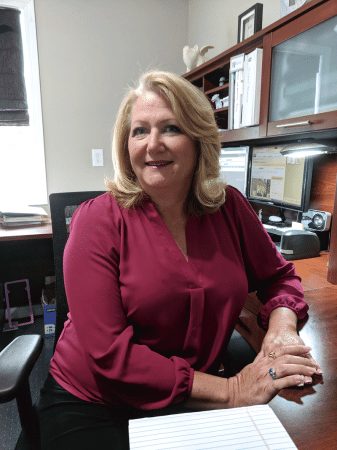
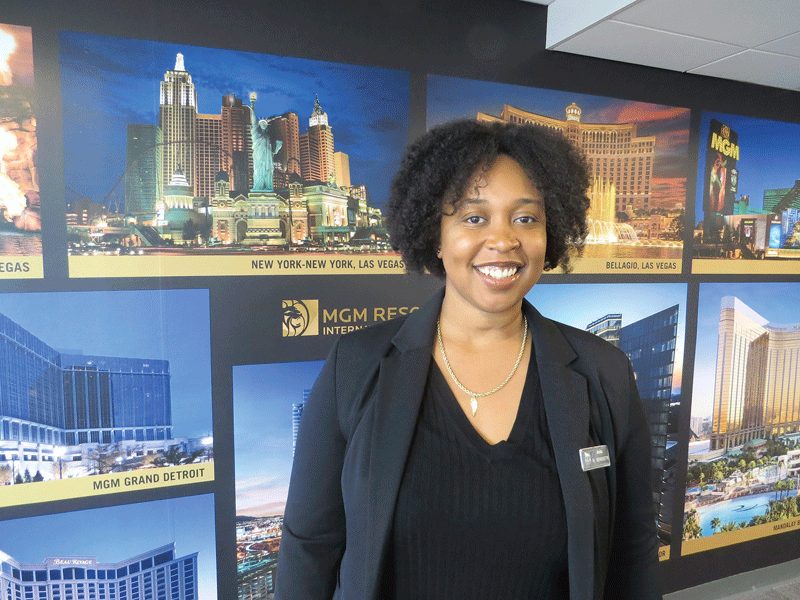
Anita Bird, now an HR coordinator for MGM Springfield, knocked on the door of the company’s office back in 2012 not knowing what to expect.

Anita Bird, now an HR coordinator for MGM Springfield, knocked on the door of the company’s office back in 2012 not knowing what to expect.

As the final, final countdown begins for MGM Springfield, the opening of the nearly $1 billion project offers a different level of poignancy for a small group of individuals. They are known as first-generation, or first-gen employees. In many cases, they were the boots on the ground, stuffing envelopes and staging letter-writing parties when this was only a concept, not even an architect’s rendering. Today, they’re no longer volunteers; in fact, they’re already casino-industry veterans who have found not only a job but a career.

Anita Bird remembers knocking on the door not knowing who or what might lie on the other side.

She had left Temple University in Philadelphia that fall of 2012, and come home to Springfield looking for … well, she wasn’t exactly sure what. A “restart” was how she phrased it for BusinessWest. She had heard that MGM was looking at Springfield as the possible site for one of the Commonwealth’s first resort casinos and also that the company had opened a small office at 1441 Main St.

“I was trying to figure out what I was going to do,” she recalled, “and I’d heard that MGM was here, and I wanted some more information, mainly because I was surprised and confused and was just looking to see what all this was about.”

So she knocked on the door.

Fast-forwarding considerably, she was met by Brian Bass, manager of the company’s casino-referendum efforts, who would offer her an opportunity to volunteer for the entertainment giant as it sought to clear what would be merely the first of many hurdles it would face to gain a casino license.

That stint as a volunteer would eventually lead to a job and what has all the makings of a career in the casino business. Her business card now declares that she is HR coordinator for MGM Springfield, handling a wide array of responsibilities, from events to make people aware of career opportunities at the casino to birthday parties for those already on the payroll.

What it will read several years, or even several months, from now, she doesn’t know.

“You get a glimpse of every piece, a little of everyone’s world,” she said of her time at MGM to date and her exposure to a wide array of career paths. “I’m open to the many opportunities that MGM has; we have so many great properties and great opportunities.”

Bird is what’s known within the company as a ‘first-generation’ employee of MGM Springfield, which means, in most cases, that she’s been here from the very start, long before the very first architect’s renderings of the $950 million casino now nearing completion in the South End were drawn. Back before Springfield voters had even approved a referendum that would allow a company to build a casino within the city’s borders. Back before anyone around here had ever heard of Mike Mathis or Bill Hornbuckle.

Amanda Gagnon may have lost the battle for Ward 6 in the casino referendum fight, but she’s won not only a job but what has the makings of a career in the gaming industry.

Amanda Gagnon may have lost the battle for Ward 6 in the casino referendum fight, but she’s won not only a job but what has the makings of a career in the gaming industry.

There are several of these first-gen employees, many of whom, like Bird, started as volunteers. Sometimes they knocked on that office door, other times they joined a line at the MGM table at a job fair.

After volunteering, they then earned jobs with a wide array of titles, and now are in what appears to be the early stage of a career in the gaming industry. Many of them tell stories of ‘letter-writing parties’ from the days leading up to the city’s referendum vote and then, a year later, a statewide ballot initiative to undo the Legislature’s approval of casino gambling. And of long days and nights working toward something that was then only a concept. And of doing ‘anything and everything that needed to be done,’ a phrase many of them used.

“We were the feet on the ground — this little army of recent college graduates just knocking on doors, making phone calls, having house parties and letter-writing parties; if there was a way to get the word out, we were going to do it,” said Amanda Gagnon, who, after her time volunteering, wound up serving on the community relations staff, then as exective assistant to both Mathis, president and chief operating officer of MGM Springfield, and Alex Dixon, the general manager, and now, as project coordinator on the operations side.

Some have seen their journey take them to Las Vegas for management training or to MGM’s National Harbor casino in Maryland, which opened roughly 18 months ago. But they are all in Springfield, or back in Springfield, as the case may be.

And now that it’s reality and just a few months from opening its doors, the casino has become for them not only a place of employment, but a source of pride, something they’ve helped bring to fruition, something that, for those who grew up in and around Springfield, has changed their outlook on the city and its future.

“Back when I was going to college at Western New England, I would never have patronized any of the outlets down here,” said Thuy Nguyen, a first-gen employee now working in HR. “I wouldn’t even think to set foot downtown because you always thought it was too dangerous to be down there. Fast-forward five years, and I’m downtown almost every week — outside of work. It’s a nice, very refreshing change.”

For this issue, and as the opening date for the casino draws ever closer, BusinessWest turns the spotlight on an intriguing group of MGM team members — those first-generation employees who knocked on the door of opportunity, sometimes quite literally, and found a fulfilling career on the other side.

Rolling the Dice

Gagnon can laugh about it now, but, for the most part, she still doesn’t. That’s because, on many levels, it remains a sore subject.

In the run-up to Springfield’s referendum vote on casino gambling in the fall of 2013, Gagnon, an East Longmeadow native, was essentially assigned Ward 6, the Forest Park area. As things turned out, that was the only ward to vote against the casino measure.

“I had a tough community, and I wore that scarlet letter for a while, but they didn’t hold it against me, obviously,” said Gagnon with a laugh. She took those numbers hard, but quickly focused on the much bigger picture — all the work that still lay ahead, including another campaign — the ballot initiative (which was defeated by a wide margin) — and she’s embraced all of it.

Gagnon’s story, like that of all of the first-generation employees, has its unique elements and fate-filled moments; there’s even what is now a husband-and-wife team that went to Las Vegas together for management training and now work on different floors of MGM’s headquarters at 95 State St. (we’ll meet them in a bit).

But there are many common threads as well. Most weren’t looking for a job with MGM per se when they started, just a job, or a restart, like the one Bird described.
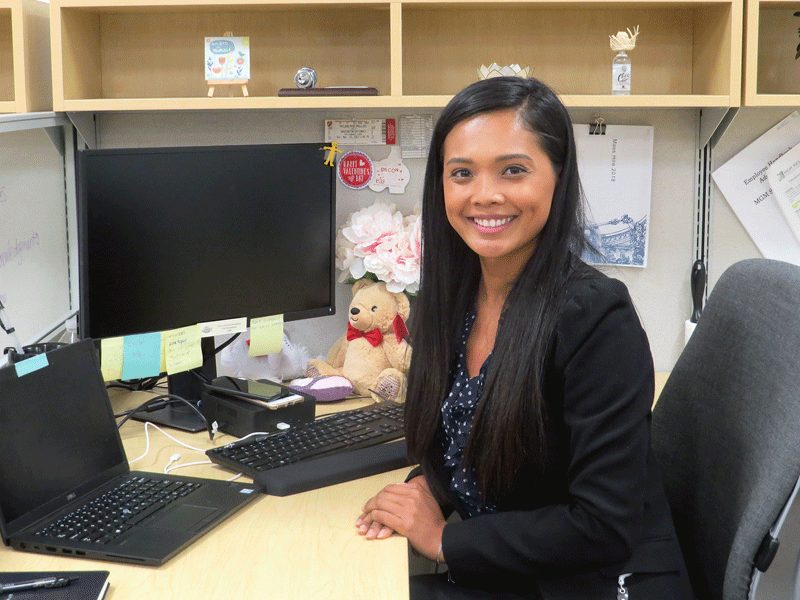
Thuy Nguyen says she never skipped school before attending that job fair where she connected with MGM Resorts. She certainly has no regrets now.

Thuy Nguyen says she never skipped school before attending that job fair where she connected with MGM Resorts. She certainly has no regrets now.

Gagnon was certainly looking for one of those after returning from New York — and a short stint on Broadway in company management and casting — as so many do who venture to the Big Apple, with big dreams mostly unfulfilled.

“I was working in entertainment because that’s my strongest passion,” she said. “But New York is expensive, and I came back with my tail between my legs, ready to reassess what my future should be. I felt defeated — but I heard that MGM was interested in coming to the area.”

But at first, the East Longmeadow native disregarded those reports as illogical, based largely on the city’s troubles at the time and her own perceptions of the community. “I said, ‘I know this area, and MGM and Springfield weren’t two words that went together at the time.’”

But she was pushed and prodded by family members to investigate the rumors and, more specifically, show up at a career showcase at the MassMutual Center and report back in detail on what transpired.

She did show up, and she did report back — that MGM had no job openings, per se, but it was looking for interns to help with the campaign.

She interned for about a month and then was brought on full-time to work on the referendum campaign — work that is far removed from the lights of Broadway and also from what most people think about when they sign on to work for MGM Resorts.
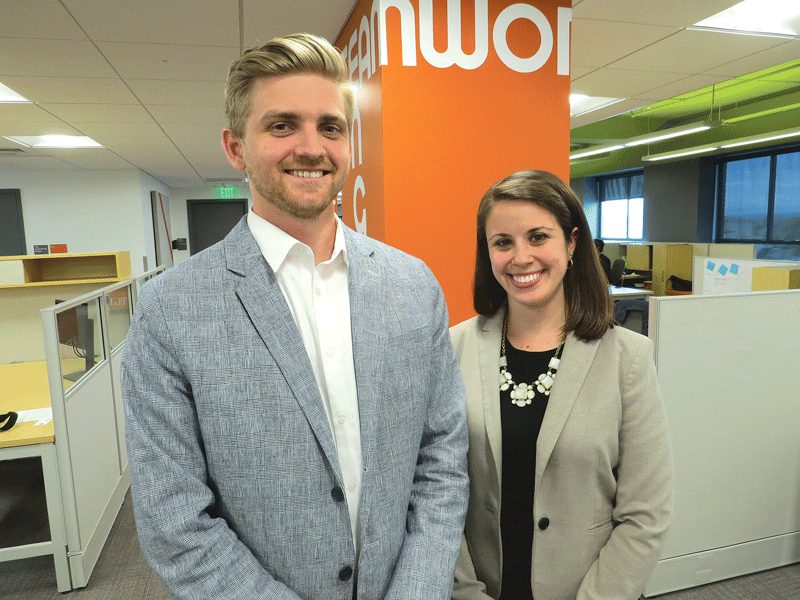
Derek and Jennifer Russell arrived at MGM Springfield by way of Las Vegas (management training) and an assignment to help open MGM’s National Harbor casino in Maryland.

Derek and Jennifer Russell arrived at MGM Springfield by way of Las Vegas (management training) and an assignment to help open MGM’s National Harbor casino in Maryland.

As noted, these first-gen employees weren’t working for a casino, but for a company with aspirations for building a casino in the City of Homes. In the late spring of 2018, it might be hard for some to remember how all this started — with a grassroots effort to garner support for casino gambling in the city.

Those who were there certainly can’t forget; the images, and memories, are embedded in their minds.

“By October, when I arrived, MGM was just sort of putting the feelers out,” said Bird, who would eventually be appointed manager of that office bearing the door she knocked on, the first of many steps up the ladder. “That’s when we sent out all those mailers asking people what their feelings were on casino gambling and what they thought about a casino here; that’s where we started, with those mailers, and eventually there were house parties, letter-writing efforts, and other things to feel out where the support was and what people thought about the project.

“We would do fireside chats, we would go to hockey games and sign people up, we’d do giveaways — anything we could to get to talk to people,” she went on, adding that the goals back then were to build support but also a large army of people to carry on the fight.

Joining the Army

And the recruitment process for that army was quite involved, and many would join by what could only be called the indirect route. Nguyen enlisted by way of a career fair in 2013 staged not by her school, Western New England University, but UMass Amherst.

“I didn’t know what I was doing with my life, and UMass has, historically, one of the largest career fairs in the area,” she recalled. “I was searching on their database to see what companies were going to be represented, and almost fell off my chair when I saw ‘MGM Resorts’ on the list.

“I swear that, prior to that, I had never skipped school,” she went on. “But I skipped on that day, took a chance, stood in line for what felt like hours, and once I got to the table and spoke to a representative, I found they were recruiting for their Las Vegas properties.”

That news left her feeling quite deflated — she remembers almost being in tears as she left the career fair — but the picture changed quickly and dramatically when Bass, who was forwarded her résumé by MGM colleagues at the career fair, gave her a call, inquiring about whether she’d like to join the campaign as an intern.

“He hired me on the spot, and it’s history from there,” she told BusinessWest before offering, when prodded, a much slower version of the story.

That account featured a dramatic shift in scenery as Thuy ventured off to Las Vegas and the MGM Grand, where she took part in the management-associate program, a stint that lasted three years.

For someone who grew up in Springfield and then moved to rural Maine, it was quite a culture shock — “life-changing,” as she called it.

But her goal was always to come back to Springfield and open the MGM property here, and late last year, she did. Her business card declares that she is an HR business partner, handling a wide array of responsibilities, from internal investigations to counseling to workers’ comp claims — “all the fun stuff” — for a workforce now numbering more than 200 and on its way to 3,000.

From left: Derek and Jennifer Russell, Amanda Gagnon, Thuy Nguyen, and Anita Bird.

From left: Derek and Jennifer Russell, Amanda Gagnon, Thuy Nguyen, and Anita Bird.

Among those 200 are Jennifer and Derek Russell. They have different jobs — she’s the manager of Talent and Acquisition, and he’s manager of Financial Planning & Analysis — and they work on different floors, but they took the same basic route here.

The same one Nguyen did.

Indeed, Jennifer, a graduate of the Isenberg School of Management at UMass, was at that very same career fair, also looking for a summer internship. She was thinking about Boston or Hartford as a landing spot, but was mostly focused on just getting some experience and making a little money.

“I talked to 18 companies, and saw this really long line at this last booth that turned out to be MGM,” she recalled. “I remember thinking, ‘this is a hospitality company; I don’t know much about it, but it seems really popular right now.

“I ended up waiting in line for a good 15 minutes just to talk with one person,” she went on. “I was asking if they had any HR positions or project-management roles.”

The person she spoke with was recruiting for Las Vegas, and she handed her over to the vice president of MGM Grand, who took one of Russell’s homemade business cards and dialed the number on it several days later, asking specifically if Russell would be interested in coming out to Las Vegas.

She was, went out for an initial 10 weeks, and “fell in love with all of it,” in her recollection.

She came back home to East Longmeadow and to Derek, whom she had started dating a few months earlier, and essentially talked him into going back out to Vegas with her.

As he recalls, it wasn’t exactly a hard sell.

“I spent the better part of a year in Boston doing something I probably wasn’t enjoying, and was looking for something different,” he said. “Jen decided she wanted to move to Vegas to take part in this management-associate program and wanted me to go with her.

“I said, ‘why not?’ — I wasn’t doing anything all that great for work,” he went on, adding that he applied for the MGM program, also known as MAP, and was accepted. “I told my boss at the time that I was moving to Vegas; he said, ‘you’re young … that’s probably not the craziest thing you’ll ever do.’ And I remember telling him, ‘I’m pretty sure moving to Vegas is one of the greatest things I’ll ever do.’”

Moving the story along, they spent a year in the MAP program, getting a holistic view of how a casino company like MGM operates, choosing a career path — again, his in finance and hers in talent acquisition — and then getting on with those careers.

While doing so, they were ever mindful of a pledge they made to each other that they would eventually return to Massachusetts and the families they left behind. They would do that, but first made a stop at National Harbor to be part of the team that opened that casino.

Today, like many of the other first-gen employees, their travels have taken them well beyond Greater Springfield, but they are happy to be here now at this pivotal moment in the city’s history.

It’s a moment they are part of on many levels. Indeed, the Russells not only work downtown, they live there, literally a few hundred yards from the front door of the casino’s hotel, in Stockbridge Court.

“It’s exciting to see the city come to life and be restored after so long,” said Derek. “The city is changing, and it’s great to be part of all that’s happening here.”

Others shared that sentiment and said they’re proud that the project they’ve been involved with for so much of their young lives is helping to transform the region they knew and make the memories — and sentiments — they had seem very distant.

“The Springfield we see now isn’t the same Springfield I left when I went to New York,” said Gagnon. “There’s new restaurants on Worthington Street, new events in Court Square. Springfield isn’t just a city people drive through anymore; we’ve become a place to stop, not just somewhere on the way.

Nguyen agreed.

“MGM is Springfield’s lifeline,” she told BusinessWest. “And I’m a true believer that, without MGM, we wouldn’t be anywhere near where we are today.”

In the Beginning…

Flashbacks.

All those we spoke with say they have them. Lots of them.

They flash back to selected moments in time that, for obvious reasons, have become indelible — because of the work being done, the time of day, the fatigue they were feeling, the emotions they were expressing, or, very often, the people they were working beside.

Many of those people are now on a different floor or, in some cases, just a few cubicles away. But they’re still ‘beside’ them, wearing MGM nametags and bearing business cards with the company’s logo. And that makes the flashbacks come more easily.

“I can think back on those nights when it was 1 o’clock in the morning and we were counting how many phone calls we had made,” recalled Gagnon with a heavy sigh. “That’s just one of many memories I have — and will always have. And every second of that is worth it to be able to be here today.”

With that, she certainly spoke for all of the first-gen employees.

George O’Brien can be reached at [email protected]

Daily News

SPRINGFIELD — MGM Springfield and the Pioneer Valley Transit Authority (PVTA) have joined forces to create the Loop — a new public transportation service linking downtown tourist attractions, hotels, restaurants, and arts and culture destinations to provide a more robust travel experience for Springfield visitors.

Debuting Aug. 24 as part of MGM Springfield’s opening day, the Loop will connect Springfield’s most storied landmarks, including Union Station, the Springfield Armory, Springfield Museums, the Naismith Memorial Basketball Hall of Fame, and MGM Springfield.

The Loop schedule is designed with visitors in mind. In addition to stops at cultural highlights, the shuttle also will make stops at MassMutual Center, Holiday Inn Express, Sheraton, Hampton Inn, and La Quinta Inn & Suites. The Loop will run Wednesdays through Sundays from Union Station from 10 a.m. to 10 p.m. and complete a full circuit in 60 minutes during the day and 40 minutes in the evening. Traveling on the Loop will be free.

“The Loop is yet another sign that the city of Springfield is on the rise, and tourism is a vital component to its revitalization,” said Alex Dixon, general manager, MGM Springfield. “The Loop will be a welcome boost for tourist-oriented businesses. It will allow us to package the whole area as a consolidated travel destination rather than just individual attractions.”

Sandra Sheehan, administrator with the Pioneer Valley Transit Authority, noted that the Loop will be operated with a zero-emissions electric bus as part of PVTA’s goal of providing sustainable transportation.

As part of its host-community agreement, MGM Springfield will provide PVTA with financial support to operate and maintain the Loop. This includes maintenance and insurance of the vehicle, as well as the costs associated with the hiring, supervising, and compensating the driver.

“For the hospitality community, the Loop has always been a key component of the MGM Springfield project,” said Mary Kay Wydra, president of the Greater Springfield Convention and Visitors Bureau. “The Loop introduces visitors to the many attractions that make Springfield special, provides access to MGM Springfield, and has the potential to increase visitor stays in the region.”

Daily News

HOLYOKE — The Greater Holyoke Chamber of Commerce announced its annual meeting breakfast will take place on Wednesday, June 13 at the Wherehouse?

The chamber’s agenda includes recognition of new members — Hadley Farms Meeting House, Bath Fitter, Dan’s Power Plant, Combined Insurance, Custom Identity Apparel, and VenYOU Events — as well as welcoming WestMass Eldercare’s new executive director, Roseann Martoccia, and celebrating the Holyoke Merry-Go-Round’s 25th anniversary and Holyoke Medical Center’s 125th anniversary.

Additionally, new board members will be confirmed while outgoing board members will be bid farewell; accomplishments and initiatives from the past year, together with goals for this upcoming year, including news on the Chamber Gift Card, will be revealed; and information on SPARK startups, Have a Ball in Holyoke, Grow Holyoke, Leadership Holyoke, the Women’s Leadership Luncheon Series, and Women and the Art of Risk will be shared with breakfast guests.

The chamber will announce the 2018 Business Person of the Year and the Fifield Volunteer of the Year award recipients at the breakfast. The honorees will be honored at a dinner reception on Wednesday, Oct. 24. More details will follow at a later date.

Tickets to the breakfast are $25 for members and $30 for non-members, and may be purchased online at holyokechamber.com/events.

Daily News

SPRINGFIELD — More than 200 golfers are expected to participate in the 38th Annual Brightside Golf Classic on Monday, July 23 at Springfield Country Club in West Springfield.

“This event raises funds to continue Brightside’s mission to support our community’s most vulnerable children and their families,” said Carrie Fuller, executive director of Fund Development for Mercy Medical Center and its affiliates.

Two tee times are available. Registration and breakfast for the morning session will begin at 6:45 a.m. with a shotgun start at 7:30 a.m. Lunch and registration for the afternoon session will begin at 11:30 a.m. with a 1 p.m. shotgun start. The evening reception will be held immediately following the tournament from 5:30 p.m. to 8 p.m.

Prices include green fees, golf cart, breakfast and/or lunch, a gift and swag bag, and reception featuring cocktails, food stations, auction, networking, and live entertainment. On-course food and beverages will be provided by event sponsors throughout the day. Golfers will also be eligible for a chance to win prizes and participate in raffles.

The 2018 Golf Classic chairs are John Kendzierski, founder and director, Professional Dry Wall Construction Inc.; Matt Sosik, president and CEO, Easthampton Savings Bank; Hank Downey, vice president, commercial loan officer, Florence Savings Bank; and Dan Moriarty, senior vice president, chief financial officer, Monson Savings Bank.

Brightside for Families and Children provides in-home counseling and family support to more than 650 children and their families throughout Western Mass. Services include resource coordination, parenting-skills development, behavioral-technique instruction, community support programs, and other programs tailored to prevent hospitalization from occurring. Specialized assessments such as neuropsychological evaluations and testing are also available. Each year, the Brightside Golf Classic attracts more than 200 business leaders from the Greater Springfield area who support the work and mission of Brightside.

For more information on sponsorships, donations, and attending the event, contact Suzanne Boniface at (413) 748-9935 or [email protected]. Information is also available at www.mercycares.com/brightside-golf-classic.

Daily News

HOLYOKE — Holyoke Medical Center will host a free discussion, “Venous Disease & You,” on Thursday, June 7 at 5:30 p.m. in the HMC Auxiliary Conference Center.

While often considered a cosmetic issue, have you ever wondered if spider veins could be cause for more concern? Join Dr. Sandip Maru, HMC vascular surgeon, to learn all about veins and how to prevent and treat venous diseases, such as varicose and spider veins.

This program is free and open to the public, and is part of Holyoke Medical Center’s community education programming. This is one in a series of workshops held throughout the year to help people learn about specific health issues, wellness, prevention, and treatment. To register, visit www.holyokehealth.com/events or call (413) 534-2789.

Health Care Healthcare Heroes Sections

Nominate a Healthcare Hero

Only a few minutes into the first meeting of an advisory board created by BusinessWest and its sister publication, BusinessWest, to provide needed insight as they launched a new recognition program called Healthcare Heroes, the expected question was put forward.

“How do you define that word ‘hero?’ asked one of the panel’s members, addressing the magazines’ decision makers.

The reply, and we’re paraphrasing here, was something to the effect of ‘how we define ‘hero’ is not important — it’s how you define it.’

And by ‘you,’ Kate Campiti, associate publisher of the two publications, essentially meant anyone who would nominate an individual or group to be named a Healthcare Hero in one of seven categories that first year.

Those who did so came up with their own definitions, used to highlight the nominations of a unique class of individuals and groups that would include Sr. Mary Caritas, SP, former president of Mercy Medical Center, in the Lifetime Achievement category; Dr. Michael Willers, owner of the Children’s Heart Center, in the Patient/Resident/Client Care Provider category; Dr. Andrew Dobin, an ICU surgeon, in the Innovation in Health/Wellness category; and the Healthy Hill Initiative in the Collaboration in Health/Wellness category.

“Generally, ‘hero’ means someone or some group that stands out and stands above others in their profession, in their service to others, and in the way their passion for helping those in need is readily apparent,” Campiti said. “And we saw this in our first class of honorees. If there was one word that defined all of them, beyond ‘hero,’ it was ‘passion.’”

A panel of judges will be looking for that same passion as they weigh nominees for the class of 2018.

Nominations are currently being accepted, and will be until the end of the day on June 15. Nomination forms can be found on both publications’ websites — www.businesswest.com and www.healthcarenews.com.

Nominations are being accepted in the following categories:

Those nominating individuals and groups are urged to make their submissions detailed and specific, giving the judges who will review them all the information they need.

The honorees will be chosen this summer and profiled in the Sept. 4 edition of BusinessWest and the September edition of BusinessWest.

The Heroes will then be honored at a gala set for Oct. 25 at the Starting Gate at GreatHorse in Hampden.

Rounding out the class of 2017 are:

Lifetime Achievement: Sister Mary Caritas, SP;

Patient/Resident/Client Care Provider: Dr. Michael Willers, owner of the Children’s Heart Center of Western Massachusetts;

Emerging Leader: Erin Daley, RN, BSN, director of the Emergency Department at Mercy Medical Center;

Health/Wellness Administrator/Administration: Holly Chaffee, RN, BSN, MSN, president and CEO of Porchlight VNA/Home Care;

Community Health: Molly Senn-McNally, Continuity Clinic director for the Baystate Pediatric Residency Program;

Innovation in Health/Wellness: Dr. Andrew Doben, director of the Surgical Intensive Care Unit at Baystate Medical Center;

Innovation in Health/Wellness: Genevieve Chandler, associate professor of Nursing at UMass Amherst; and

Collaboration in Healthcare: The Healthy Hill Initiative.

For more information on Healthcare Heroes, visit www.businesswest.com or www.healthcarenews.com.

Health Care Sections

Out of the Darkness

Daniel Zotos characterizes H.4116 as a workforce-training bill more than anything else.

Daniel Zotos characterizes H.4116 as a workforce-training bill more than anything else.

When Carolyn Mutcherson’s mother was diagnosed with Alzheimer’s disease, her family decided to care for her at home, even though they all worked full-time. It was a team effort, with family members alternating taking time off from work to give others a break.

“No one can care for someone, no matter what the illness is, alone,” Mutcherson told the audience gathered at a recent legislative breakfast of the Massachusetts/New Hampshire Chapter of the Alzheimer’s Assoc. “My sisters and I, along with our children, grandchildren, and spouses, helped care for my mother around the clock because she was home and my father wanted her to be home. She was our mother, but his wife. So whatever he asked us to do, we did.”

Mutcherson’s mom died at age 81, in her family’s care, but that care was often difficult, she recalled. She reached out to the Alzheimer’s Assoc. and to Baystate Health, where she worked, for help, but said too many family caregivers don’t know where to turn.

“We were fortunate to have a close-knit family, and as time went on, we found more resources in the community,” she said. “It’s very difficult caring for someone 24 hours a day when you don’t have resources or don’t know where the resources are.”

It’s a story playing out increasingly often in Massachusetts and across the U.S., as the senior population swells — around 10,000 Baby Boomers hit age 65 every day — and, with it, the number of Americans with Alzheimer’s and other dementias. In Massachusetts alone, about 130,000 residents age 65 and up have Alzheimer’s today, and that figure is expected to soar to 150,000 by 2025, a 15.4% increase.

It’s why advocates for a piece of legislation known as the Massachusetts Alzheimer’s and Dementia Act — unanimously approved by the state House of Representatives in January and now in the Senate Ways and Means Committee — are acting with a sense of urgency, said Daniel Zotos, director of Public Policy & Advocacy for the local Alzheimer’s Assoc. chapter.

“It’s always important to pay attention to these facts and figures and see where these numbers are going,” he told the local legislators, caregivers, and others at the April 27 breakfast. “We’ve been very active on the federal level and working with our members of Congress on Alzheimer’s disease research funding.”

On the federal level, Alzheimer’s research received a $414 million boost this year, bringing the total outlay to $1.8 billion — roughly quadruple what spending was in 2011, just seven years ago.

“Knowing we’re doing this advocacy work on the federal level is so important, but we’re also focused on people living with this disease now and families impacted by dementia, and that’s where I really see the state-level work — on the front lines of what is really a health crisis,” Zotos said.

Carolyn Mutcherson says caregivers often get frustrated and overwhelmed, and need to know where they can access resources and help.

Carolyn Mutcherson says caregivers often get frustrated and overwhelmed, and need to know where they can access resources and help.

The seeds of the bill known as H.4116 were sown at an event on Beacon Hill in October, featuring expert panels talking about Alzheimer’s disease from different perspectives — such as industry, research, and the care community — and that conversation went on for about five hours between two joint committees, he explained.

“The result of that conversation was a comprehensive bill that packaged together a lot of existing bills within the Alzheimer’s Association legislative platform, as well as other initiatives,” Zotos said — and the legislation has only picked up momentum since.

What’s in the Bill?

The Massachusetts Alzheimer’s and Dementia Act features four main components. First, it creates an integrated state plan within the Executive Office of Elder Affairs, and establishes a permanent advisory council to coordinate government efforts and ensure that appropriate resources are maximized and leveraged.

The second part deals with education and training, specifically requiring medical providers, including primary-care doctors, nurses, and physician assistants, to earn continuing-education credits in Alzheimer’s and dementia as a condition of license renewal.

The rationale, Zotos noted, is that an estimated 45% of individuals with Alzheimer’s are actually diagnosed, and far fewer are offered information and options. Patients with cognitive impairments going into variety of healthcare settings, he argued, need to be diagnosed and treated correctly.

State Rep. John Scibak, who serves the 2nd Hampshire District and has been heavily involved in Alzheimer’s issues, told breakfast attendees that this is a particularly critical part of the bill, even though doctors have told him they don’t support the additional mandatory training.

“They say, ‘we’re doctors. We went to medical school. We don’t need to be educated.’ Well, surprise. You now have to. I think it’s absolutely essential.”

The bill’s third element deals with dementia in the acute-care setting, ensuring that hospitals are better prepared to treat patients with cognitive impairments when they arrive for some other health issue. Statewide, individuals with dementia have a 22.5% readmission rate within a month of visiting the hospital — the sixth-highest rate in the nation.

“You can come at this disease from the heart, the impact there, but also the head when you think about the cost to the state,” Zotos said. “We can work to improve the experience in that setting. We’ve been having some really good conversations with hospitals about this.”

Finally, the bill establishes new protections from abuse and exploitation, including provider training with social workers from Elder Protective Services, and proper family notification, consistent with federal and state privacy guidelines, about incidents of abuse in care facilities.

Mutcherson says that element of the bill is not an attack on caregivers, but an acknowledgement that frustration is part of the daily experience. She said there were times she raised her voice inappropriately to her mother, only to be calmed down by family members.

“You do get frustrated, you do get angry; this is why you can’t do it alone,” she said, noting that even doctors sometimes don’t know how to communicate with patients with dementia and become flustered. “So education everywhere needs to take place — not just in hospitals, but in doctor’s offices and dental offices as well.”

Zotos said he characterizes H.4116 as a workforce-training bill more than anything else.

“If we focus on training our doctors and clinicians in recognizing Alzheimer’s and dementia, knowing the signs, it can really lend to improving that rate of diagnosis and getting folks into care-planning services much sooner,” he noted. “It’s a care-planning issue, it’s a financial-planning issue, and it’s also just a dignity issue to know you have a disease when you have it.”

One Step at a Time

Zotos said the bill, if passed, would be one development — albeit a significant one — in a long string of actions to improve quality of life for those with Alzheimer’s and other dementias in Massachusetts.

Those include legislation in 2012 mandating mininum dementia care standards in skilled-nursing and assisted-living facilities, and the establishment in 2010 of a Silver Alert system to help locate individuals who wander. Most recently, the Alzheimer’s Assoc. secured an additional $100,000 in state funding for Alzheimer’s public awareness.

“We’ve really focused on being in the community and talking about this issue,” he added. “And this budget item has really helped us focus on underserved populations across the Commonwealth, especially African-Americans and Latinos, who more than two times more likely to develop Alzheimer’s.”

Zotos noted that his grandmother had Alzheimer’s disease, and when he saw the impact of the advocacy movement, it encouraged him to get involved as well, leading to his current role. “We’ve had a lot of success in Massachusetts with Alzheimer’s and dementia, improving quality of care within in the care setting.”

Grace Barone, who chairs the association’s advocacy committee and works as director of community relations at Keystone Commons in Ludlow (see story on page 11), said she’s sometimes overwhelmed by the stories she encounters.

“I can’t walk away from this disease. It’s not me today, but it could be tomorrow. It could be any of us in this room. We need to share these stories; we need to be a voice for those who cannot speak any longer and share their experiences.”

Part of that message is educating those who deal directly with individuals with dementia, Zotos, and that’s the promise the legislation holds. He admitted it doesn’t include dramatic benefits like tax credits or respite grants for caregivers, but he’s determined to put families at the table with decision makers to improve quality of life.

“There’s a lot of good happening, but we have never seen a bill on a state level approach Alzheimer’s disease and dementia like this,” he said. “Massachusetts has really been known for healthcare, and this bill would put Massachusetts on the map in terms of helping families and reducing cost — but also helping our neighboring states get moving with legislation like this.

“This bill isn’t perfect; no bill is,” he concluded. “But the conversation continues; the fight continues. It’s a big step.”

Joseph Bednar can be reached at [email protected]

Health Care Sections

Mindful Connections

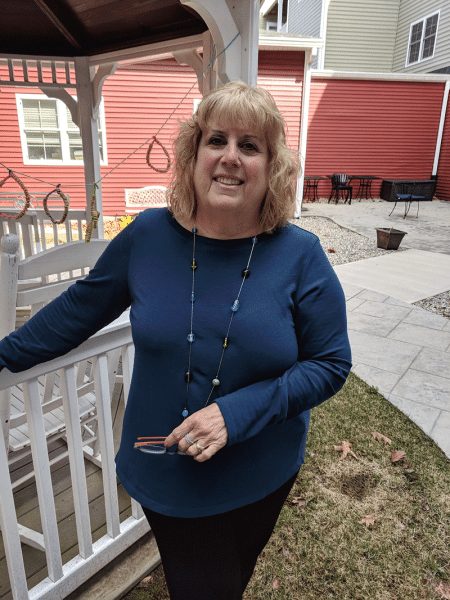
Allison Baker (right, with Cheryl Moran)

Allison Baker (right, with Cheryl Moran) says everything from the Atrium’s programs to its physical layout caters to individuals with cognitive impairment.

Over the past few decades, assisted-living facilities have increasingly opened dedicated memory-care units, and for good reason — a booming senior population is set to spawn sharp increases in Alzheimer’s disease and other dementias. These facilities stress safety, but more than that, they aim to keep residents active and engaged with life, while giving their loved ones much-needed peace of mind.

The guilt often associated with ‘putting mom in a home’ has never really gone away, even when the move makes sense, and those ‘homes’ — especially those which focus on memory care — aren’t what they used to be.

“It seems like a last resort sometimes,” said Allison Baker, director of Community Relations at the Atrium at Cardinal Drive in Agawam. “But what we’re able to provide in this community is care that is centered around their cognitive needs.”

Atrium — one of 56 communities in the Benchmark chain, which focuses solely on memory care — is celebrating its 20th anniversary this year, which allows its leaders to take a long view of how residential memory care has evolved.

“We care for individuals who have some form of cognitive impairment,” Baker explained. “Some of our residents are milder in terms of cognitive impairment, while some have end-stage, advanced dementia. We care for residents through the entire spectrum.”

It’s no secret that, as the senior population in America swells, so have instances of dementia. Alzheimer’s disease alone affects more than 5 million Americans — and, barring a cure, that figure might soar to 16 million by 2050, according to the Alzheimer’s Assoc.

That puts residences that specialize in memory care in a sort of sweet spot when it comes to meeting a growing need. In fact, that goes for assisted living of all kinds.

“The reality is, we’re all going to need help in the future,” Baker said. “It’s not something everyone wants to think about, but it’s reality. We try to educate families and provide them with guidance, whether or not someone moves into our community. Healthcare is not easy to navigate, but when families do come in, they see we’re not an institutional setting, but a homelike environment — yet, we can still meet their care needs.”

While giving BusinessWest a tour of Armbrook Village in Westfield, Executive Director Beth Cardillo noted the small size of the rooms in its Compass memory-care neighborhood, but there’s a reason for that — smaller spaces are easier to psychologically navigate, and residents spend most of their time outside the room anyway.

“Memory care is a smaller life in terms of space, but what we do there is no different than what we do in the rest of the building,” she said.

There are a few main reasons why families choose memory care, she noted. The first is that their loved one may be a flight risk, and families are worried their they might wander out of a building at 3 a.m. if the unit isn’t secured. “So, safety is obviously the number-one concern,” Cardillo said.

“The other piece, what people often don’t realize, is that, as someone’s world gets smaller, what we provide is a safe but very caring, normalizing environment. It’s a smaller world that’s a safer world. Often, people move to traditional assisted living and realize the world at large in this building is too big for them; they can’t negotiate the space. Sometimes less is more.”

Loved ones come to realize this too, she added. “When people move into memory care, for a lot of reasons, their families breathe a big sigh of relief, and it feels like a burden has been released off their shoulders. I always hear, ‘why didn’t I listen to you? It took me a while to get on the same page with this, but you were so right.’”

Kelly Sostre, executive director of Keystone Commons in Ludlow, which also boasts a dedicated memory-care neighborhood known as the Cottage, agreed that it can be difficult for families to come to terms with a growing need for help.

“It’s a hard hurdle for a child to get over, knowing her mom needs to be in memory care,” she told BusinessWest. “I definitely have to hold their hand through that process and explain the benefits of being in memory care.”

However, she went on, “just a week or two after they’re here, they’re like, ‘this is the best thing ever.’ They don’t have to worry anymore — they can come in and have a quality visit with mom, not worrying about medications or bathing her. They’re engaged, not tired, because they’re sleeping at night.”

Active Lives

Baker said the layout of Atrium is purposeful, catering to individuals with cognitive impairment.

“We don’t have long hallways with a lot of rooms coming off them, which can be confusing for residents,” she explained. “Instead, there are two wings with different neighborhoods in each wing, where apartments open into a common area.”

Beth Cardillo says families often find it difficult to choose memory care for their loved ones, but are typically relieved once they do.

Beth Cardillo says families often find it difficult to choose memory care for their loved ones, but are typically relieved once they do.

Meanwhile, each apartment is decorated with a shadowbox out front, which families can decorate however they wish, telling a story about their lives and interests and reaffirming the idea that the residents are individuals. But, as Cardillo said, the idea is to get residents out of those rooms.

“In our model of memory care, we don’t want residents sitting in their room alone,” Baker explained. “Part of the reason someone moves into a community like this is that engagement. Someone with cognitive impairment may not feel comfortable around those without cognitive impairment, but here, in a comforting space, they feel free to express themselves — we’ve seen that time and time again.”

Executive Director Cheryl Moran noted that, whenever a resident is admitted, the family is interviewed to learn about their interests, past hobbies, favorite foods, and more.

“That way, we can program our care and activities to what they enjoy,” Baker noted. “Some residents may enjoy playing bingo, while others may prefer trivia or want to join a garden club or a baking club. There are always multiple programs going on, so residents have the ability to decide whether to actively participate or just socialize and observe.”

The emphasis on personalizing the experience stems from an acknowledgement that these are people with long histories who led rich lives, and want to continue living. “Some were homemakers, some were doctors, some were journalists. It runs the gamut, so it’s about finding what each resident enjoys doing so they can have the highest quality of life they deserve.”

With residents ranging in age from 60 to 97, Baker noted — with birth years spanning almost four decades — even what music residents enjoy varies wildly, with tastes ranging from the 1920s to the 1970s.

“It’s about finding what each resident enjoys and appreciates,” Baker said. “And we count on families and caregivers to provide a lot of that information — and, to some degree, our residents. We want them to feel as they have control, making their own decisions on things and letting us know what programs they like and don’t like.”

With a packed daily calendar of activities like word games, reminiscing, Zumba, tai chi, yoga, art, and music, Sostre said, Keystone also tries to offer something for everyone. Shuttle trips into the community are especially popular, and they’re also a chance to educate establishments like restaurants — which are contacted in advance — on how to accommodate people with memory loss.

Back on campus, many Keystone activities are enjoyed by an integrated group, with residents from independent, assisted, and memory-care neighborhoods gathering together for exercise programs or a chef’s club in which they prepare and enjoy a meal together.

“The road to Alzheimer’s is different for each individual here, and we try to program for that individual. Sometimes their needs might be different than the general group,” said Grace Barone, director of Community Relations, adding, however, that Keystone tries to strike a balance between meeting individual needs and encouraging group interaction.

Good Nights

Many times, dementia affects sleep patterns, which means some residents keep odd hours, but that’s no problem in a unit that’s staffed 24/7.

“If I walked in here at 1 in the morning, I wouldn’t be surprised to see a resident or two in the common area having coffee with the care manager or doing a puzzle together because their sleeping patterns do get mixed up,” Sostre said. “But we have staff here, so if that happens, it’s OK.”

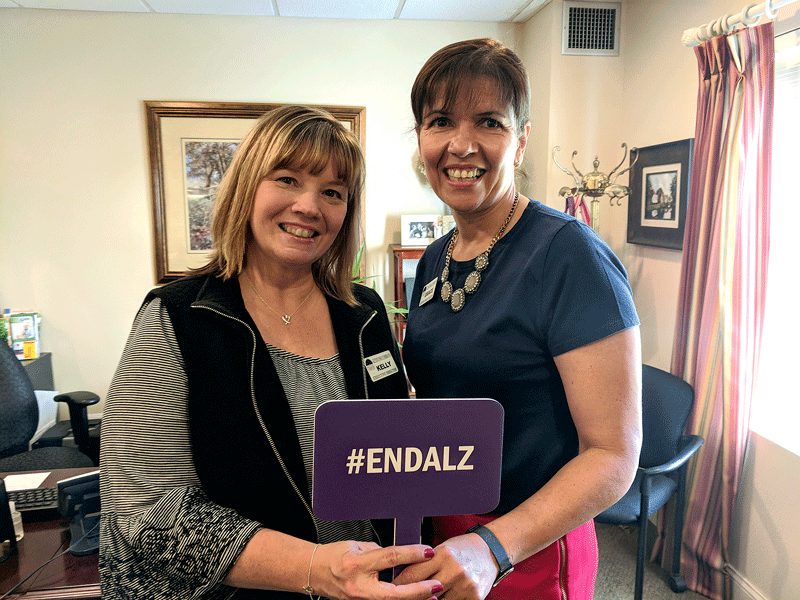
Kelly Sostre, left, and Grace Barone say many of Keystone’s activities integrate its independent-living, assisted-living, and memory-care residents.

Kelly Sostre, left, and Grace Barone say many of Keystone’s activities integrate its independent-living, assisted-living, and memory-care residents.

Cardillo agreed. “If you want to be up at 3 in the morning and have a cup of tea and toast, that’s fine. Want to dance in the living room at 4 in the morning? That’s fine, too. I don’t want to say anything goes, but the reason they’re here is not only to keep them safe, but to give them a robust life, not just keep them alive.”

Reminiscing is a big part of the activity program, she said, especially with a program called Reconnections, which is simultaneously a chance to learn new things and to generate conversation about the past.

“They remember going to USO dances or getting married the week before shipping out to war, or the Andrews Sisters singing ‘Boogie Woogie Bugle Boy.’ They’ll talk about art or where they went on their honeymoon. It brings up so much conversation.”

Such reminiscing has a clinical benefit, she added. “It keeps the synapses going — it’s a spark that increases dopamine in the brain. To see them sit and have discussions, it’s beautiful to watch.”

Music is a critical element as well — “it’s a window to the soul; it can bring you to your high-school prom or anyplace, really” — not to mention sensory activities from dancing and yoga to gardening. “It’s the regular world in a smaller place.”

And it’s often a place that remains meaningful to the family long after their loved one is no longer there, Moran said.

“The wife of a gentleman who passed came back to visit me maybe a month ago. She said she has a connection here and she likes to come visit, and she’s thinking about volunteering in our programs, which is very touching,” she told BusinessWest.

“It’s about love — when you walk in, I hope you feel a real sense of connection and family.”

Joseph Bednar can be reached at [email protected]

Insurance Sections

Seeing Eye to Eye

Bill Grinnell says the Ross Insurance purchase is essentially a match of similar cultures.

Bill Grinnell says the Ross Insurance purchase is essentially a match of similar cultures.

Bill Grinnell says he’s known Kevin Ross for years, both through the region’s insurance industry and socially as well.

“I got to know him better at the Springfield Country Club,” said Grinnell, president of Northampton-based Webber & Grinnell Insurance, recalling the start of conversations leading to his firm’s recent acquisition of Ross Insurance Agency in Holyoke.

“At one point several years ago, I sent him a letter that said, when he’s getting close to retirement, I’d love to talk to him because we’d love to have an office down in Hampden County,” Grinnell went on. “We write a lot of business down there, a lot of commercial business, and several of our salespeople are from that area — and we were interested in expanding and growing the business.”

But the purchase of Ross Insurance — a third-generation family business run for many years by the brother-sister team of Ross and Maureen Ross O’Connell — was also based on what Grinnell called a mutual respect between the firms and similarities in philosophy. As Ross did, in fact, contemplate retirement, he and Ross O’Connell — who is joining the Webber & Grinnell ownership team and will continue to oversee the Holyoke office, which will operate under the name Ross, Webber & Grinnell Insurance — narrowed their list of potential partners to a handful before deciding on whom they wanted to do business with.

“They approached those firms and interviewed them,” Grinnell noted, “and at the end of the day, we submitted an offer to them, went back and forth and ironed out some details, and we all agreed to do it.”

While Ross intends to transition out of the company in the next 18 months, Ross O’Connell will work with the Webber & Grinnell team to merge procedures and operations, Grinnell said, adding that the Northampton office will handle most of the commercial operations in Holyoke.

He added that having two locations will be a benefit to customers based in Hampden County. “If we station salespeople down there, it’s just easier to call on folks in the Springfield area.”

Meanwhile, he added, Webber & Grinnell has a benefits division for group life and group health insurance, “so we’ll be able to offer those services to those [Ross] accounts for those interested. That might provide some opportunities for growth for us.”

Community Ties

Both insurance agencies boast deep local roots, Grinnell noted. Ross Insurance was founded by George Ross in 1925 and has continuously served residents and businesses in Holyoke and surrounding communities for three generations. Meanwhile, Webber & Grinnell’s origin can be traced back to 1849, when E.W. Thayer opened an insurance and real-estate storefront on Pleasant Street in Northampton.

Once the acquisition is complete, the company will employ 41 people and serve more than 6,000 clients.

“They have a great name,” Grinnell said of the Ross family. “They’re as much involved in their community and supporting their community as we are up here. We’ve had a reputation for giving back to the community and helping a number of not-for-profits, and Maureen and Kevin are totally committed to the city of Holyoke, so they have the same kind of value system there. They’ve got some long-time customers, and they have a sort of family culture down there, which meshes well with what we’ve tried to create here as well.”

Both companies have also done extensive outreach to the community through social media, discussing topics of interest to both personal and commercial insurance clients. Ross in particular has developed a robust blog thanks to Jennie Adamczyk, the firm’s receptionist and social-media architect — a niche Grinnell has noticed.

“They’ve got a person down there who really focuses on that, and I think she’s going to be a big asset for us as well,” he said of Adamczyk. “Sometimes we have focused on that, but you get caught up in the day-to-day, and it gets pushed back a little bit, so we’re excited to have someone on our team to keep that going.”

For now, the companies will work to combine their communications, marketing, and other systems, and reconfigure roles, Grinnell said, “so there are some initial hurdles to get over. But it’s going pretty well so far. We’ve had positive comments from competitors who know both of us.”

Added Ross O’Connell, “we feel that we found the perfect partner to continue the Ross family legacy. Webber & Grinnell has a long history of generous community support and exceptional customer service.”

Perhaps just as important, Grinnell noted, many of his agency’s employees are in their 30s, making it a relatively young agency in an industry where many companies often struggle to replace retiring talent.

“A lot of guys are getting older in this business,” he said. “So I think Kevin and Maureen felt good about having local guys with a local presence be able to perpetuate their agency, because there are a million different options out there now. There are a lot of national players buying up agencies left and right, but they really wanted a local company that had that reputable, similar culture. So it worked out.” u

—Joseph Bednar

Insurance Sections

Matters of Policy

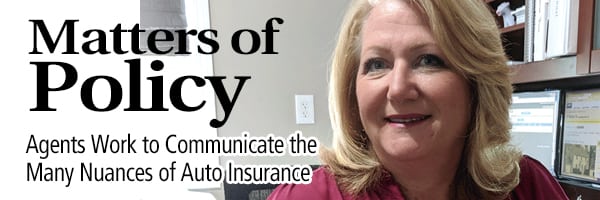
Regina Jasak says local agents can help consumers avoid some “really scary policies.”

Regina Jasak says local agents can help consumers avoid some “really scary policies.”

When Massachusetts opened up its auto-insurance landscape in 2008, switching from a one-price-fits-all approach to the current model known as managed competition, it created more challenges for independent agents, but much more opportunity for customers willing to take the time to examine the many options and credits available to them. The key, these agents say, is putting their expertise to use — a resource not available to those purchasing insurance from direct writers online.

Eileen Bresnahan is always amazed at what people will do for a low insurance rate — like one individual who was covered for $5,000 in property damage for his 2017 Camry.

“If I hit you and do $17,000 worth of damage, my company is going to pay you the five grand, and you’re going to have to try to get the rest out of me,” she said, putting herself in that individual’s shoes for a moment. But such is the world of direct insurance writers — like Progressive and Geico — that market themselves based mainly on price, and wind up skimping on, you know, actual coverage.

“We always say ‘buyer beware,’” Bresnahan, president of Bresnahan Insurance Agency in Holyoke, said of local independent insurance agencies like her own. “We’re all licensed and trained; we can look at a policy and can tell you the things you might not know.”

Regina Jasak, president of Regina Jasak Insurance in Ludlow, has seen the same cases cross her desk.

“Anything you might hit — a guardrail, a car, a house — after that $5,000, you’ll be paying for it as well. You can get a really cheap policy, but you get what you pay for. I’ve seen some really scary policies out there from the direct writers.”

The truth, she added, is that customers can get policies for not much more than the bare-bones pricing of the online marketers, but with much better coverage, explained in detail, simply because of the flexibility Massachusetts insurers have enjoyed over the past decade — flexibility that, for the most part, didn’t exist before.

Indeed, for much of the past century, auto-insurance rates in Massachusetts were set by the state Division of Insurance. Anyone who requested a premium quote for a certain level of coverage would receive the same price from any number of companies, unless they were eligible for a group discount.

Managed competition, which began in 2008, allows insurance companies to offer their own rates. Although these rates may vary, they must still be approved by the Division of Insurance — hence the term ‘managed.’ The result is that Massachusetts drivers are able to compare the different rates, benefits, and services offered by the insurance companies competing for their business.

“There’s a lot of flexibility in auto rates and coverages, and it really needs to be tailored to each client,” Jasak said. “Each company has its own appetites, so we really need to delve into the client to figure out what’s best for them in order to find the best company at the best rates.”

That changed landscape made life more complicated for local agents, but in a good way, Jasak added.

“I find it more entertaining. It used to be that auto insurance was auto insurance, and it didn’t really matter where you were insured, whereas now the consumer can consider things like the company’s billing process, how claims are settled, are their rates good for my circumstances, do they offer me a great bundle option tying the house and car together? Is that the best thing to do, or can I get a better rate if I split things apart?”

Shifting Gears

Trish Vassallo, personal and commercial lines director at Encharter Insurance in Amherst, agreed that managed competition has radically changed the automotive side of the insurance business in Massachusetts.

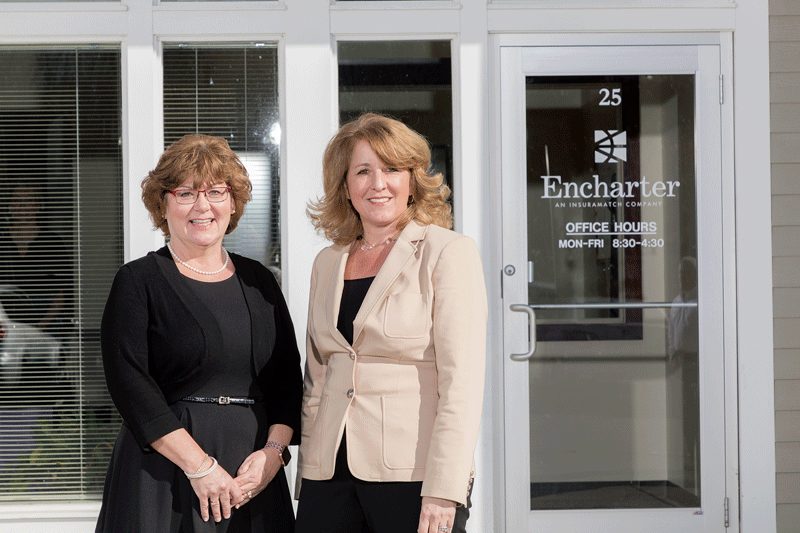
Trish Vassallo (left, with Tracey Benison) says customers should review their policy every year to make sure they’re taking advantage of all the credits available to them.

Trish Vassallo (left, with Tracey Benison) says customers should review their policy every year to make sure they’re taking advantage of all the credits available to them.

“Carriers have been able to offer add-ons and packages and rider endorsements and enhancements that are specialized per carrier,” she said, “so while the Geicos and Progressives talk about accident forgiveness and gap coverages and reward dollars, those are available with everyone operating in Massachusetts today. Independent agents offer these coverages, but they are an added expense, as they would be with any carrier. As a client, you need to look at your coverage every year to make sure you’re getting the right pricing for the right products.”

That’s where independent agents serve a role the direct writers online cannot, she went on. “Sometimes people aren’t aware of options available or never had them explained to them, or they just don’t care — they want the bottom-line price and don’t understand what they’re missing out on.”

Under the prior, regulated system, insurance providers were required to apply specific surcharges for certain accidents and traffic violations. Now, insurance companies are permitted to develop their own rules, subject to state approval, for imposing surcharges for at-fault accidents and traffic violations.

They can also include a raft of discounts, such as for students who attend school away from home, making it easier for their parents to carry them on their policies year-round, or for bundling auto and home insurance when both policies are bought from the same carrier.

“Different carriers all have their own model customers,” said Tracey Benison, president of Encharter Insurance. “Our job is to really know the carriers and try to find the right fit for the customer.”

For example, Jasak said, some carriers will look back at driving records over three years, some six, and they also vary in how they incorporate accidents — both at-fault and not at-fault — into their pricing.

Then there are the credits, and they are myriad, Bresnahan said. “There are good-student discounts, so if a student gets a 3.0 GPA or higher, that’s one of the credits on there. Let me tell you, it is a big savings — and it’s an incentive to get good grades, and it also pertains to college.”

She also mentioned the discount for students away at college, as well as low-mileage discounts, which can knock anywhere from 2% to 17% off the cost of a policy. “Just think — the lower the mileage you drive, the less chances there are of getting in an accident or having a moving violation.”

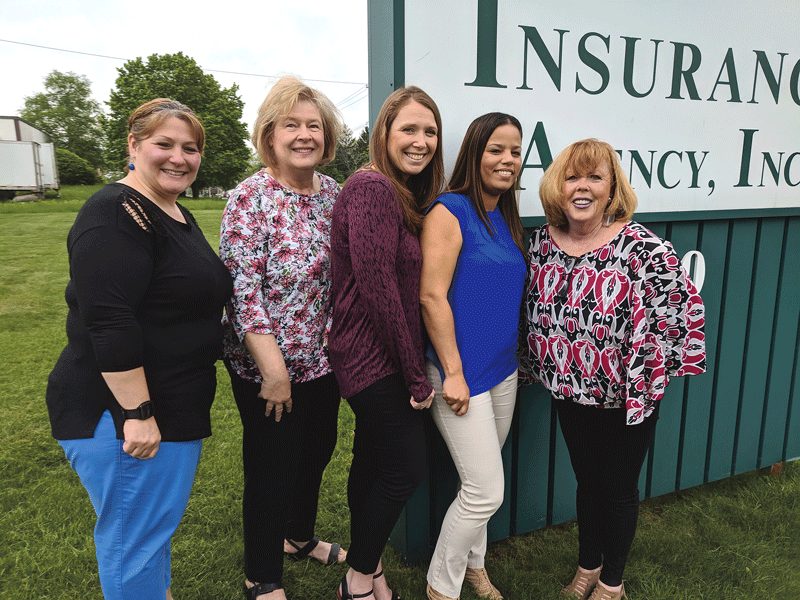
From left, Shelly Chantre, Judy Orlen, Nicole Shibley, Janet Fernandez-Santiago, and Eileen Bresnahan of Bresnahan Insurance.

From left, Shelly Chantre, Judy Orlen, Nicole Shibley, Janet Fernandez-Santiago, and Eileen Bresnahan of Bresnahan Insurance.

Carriers may also offer multi-car discounts, a AAA membership credit — with the discount increasing the longer a customer has been a member — and a discount for individuals who enroll in an advanced driver training course. “There’s also a disappearing deductible that wasn’t in effect before either, so if you don’t have an accident for a certain number of years, each year your deductible builds up.”

With each carrier using such incentives to attract their own version of a model customer, agents need to understand all the nuances and how best to match a driver with a policy, Bresnahan added.

“It’s just training your staff to know which credits to offer,” she said. “We have letters go out with renewals, and we highlight discounts and enhancements they currently have and other ones they don’t, and they can call if they’re interested in knowing more about those.”

More Than 15 Minutes

The direct writers have certainly made an impact on Massachusetts auto-insurance scene, but they’ve also brought some controversy, being fined multiple times by the state’s Division of Insurance for various deceptive or confusing practices.

“Some of the direct writers are very coy with prices or hidden deductibles, which the customer is not aware of until a loss comes into play,” Vassallo said. “It can be difficult to understand your coverage when you’re buying off the rack.”

The benefit of an independent agent representing multiple carriers, she said, is that she can work to generate the best product for each individual — and educate customers on various pitfalls, such as the importance of listing all household members as operators, as failure to do so can lead to a claim not being paid.

“It’s very, very important that parents list their children on their auto-insurance policy as soon they get their license,” Jasak added. “If they have no prior insurance, it’ll be very expensive when they need it. Parents say, ‘oh, they never drive my car,’ but if they kids are never insured, if they’re never listed on their parents’ policy, they’ll be paying an exorbitant amount of money when they get their own insurance.”

It’s all about relationships, Bresnahan said, not just a bottom-line dollar figure on a computer screen.

“When you’re a local, independent agent, you have to look people in the eye. With these direct writers, you’re not looking that gecko in the eye,” she said, noting that she has lost clients to the online companies dangling a cheaper rate. “Buyer beware. If it’s too good to be true, there’s usually something up.”

And also beware, she said, when a direct writer promises to produce a quote in 15 minutes.

“We educate our personnel, and we keep up with the changes in this business — because it’s forever changing. There’s so much information that it’s not possible to get a quote in 15 minutes. You’re not getting proper explanation of the coverage. There’s so much involved in getting a quote. It takes a long time.”

Joseph Bednar can be reached at [email protected]

Restaurants Sections

Taste of Italy

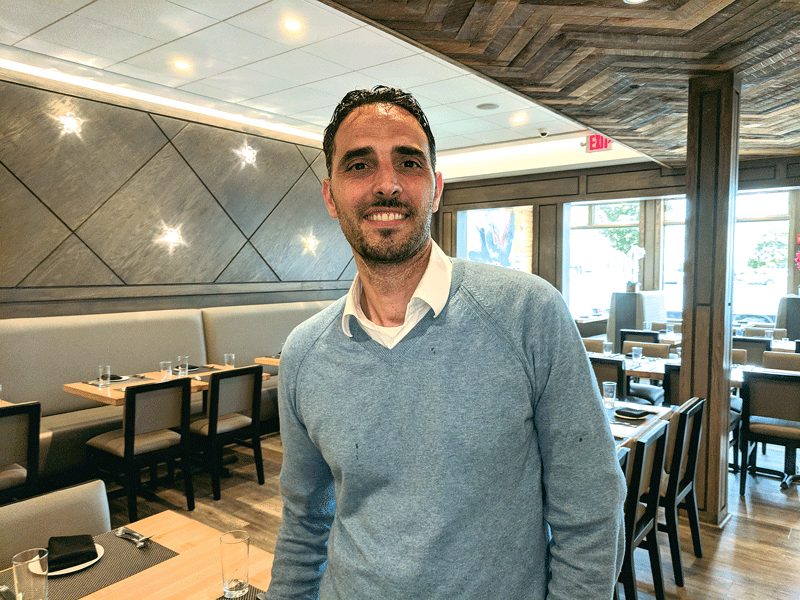
Jerry Moccia says his goal is to provide diners with an authentic Italian experience.

Jerry Moccia says his goal is to provide diners with an authentic Italian experience.

If today’s dining public has become more demanding, Jerry Moccia says, television may bear some of the blame. But he’s not complaining.

“People are very into food — they know flavors, they know a lot about food, and things like the Food Network have brought a lot of exposure,” he noted. “People are more into food than they were 15 years ago, and expectations are much higher — which makes it more comfortable for us.”

He referred generally to the world of upscale dining, and specifically the Italian restaurant, bNapoli, he opened almost two years ago on Elm Street in the heart of West Springfield’s downtown.

Moccia is no stranger to the location, having opened Bella Napoli Pizzeria next door in 2005, four years after arriving in the area from his homeland of Italy. He ran that establishment for almost a dozen years before moving into the larger, neighboring space vacated by Curry Printing several years ago and creating a higher-end eatery.

“This is more my background,” he told BusinessWest. “We did Italian-American next door, with delivery, and I just wanted to bring something more authentic to the area, less Italian-American and more authentic Italian. I want people to experience how people really eat in Italy, while many restaurants in surrounding areas offer more Italian-American food.”

Thomas Fawcett, who oversees bar operations at bNapoli, said the restaurant is the culination of Moccia’s long-term vision.

“He plugged away there day and night with the vision of doing this,” Fawcett said of the pizzeria. “He always knew he wanted to open this; it was always sort of in the back of his mind. It was hard work, and that’s what he wanted. He was growing something.”

The goal, he added, was to serve fare that was ahead of the curve for the region, but not jarringly different. It was a risk, considering the success of Bella Napoli, but one that has paid off.

“Originally, it was tough, because people knew Jerry for next door, for the pizza shop — red sauce, Italian-American food,” he said. “A few people walked in here out of the gate with that expectation. But people gave it a shot, and maybe it wasn’t somewhere they could eat every night, but they knew on a special occasion they could. Then they told a couple people, who told a couple people, who tried it and told a couple more people.”

They’re still coming — and still telling their friends.

Heart of the City

Stepping inside bNapoli, diners are greeted by elegant, modern décor — all clean lines and earth and grey tones — meant to reflect what they might experience in a trendy restaurant in a big city, Moccia said. Meanwhile, the extensive menu currently runs the gamut from a grilled octopus appetizer and a house beet salad to creative entrees featuring veal, short ribs, haddock, ribeye, and a broad range of pastas.

“It feels very urban, metro New York or Boston,” he said of the atmosphere. “As for the food, we have some traditional, authentic Italian dishes with a contemporary spin. Everything is farm to table. We change the dinner menu three times a year based on the seasons. Tom came in over a year ago and brought the same expectation from a bar point of view.”

Indeed, when Fawcett showed up, there was no bar program to speak of, and he went to work crafting a unique experience for diners based on his training in Boston, where he was mentored by cocktail notables like Patrick Sullivan, who put B-Side Lounge in Cambridge on the map starting in the late ’90s, and Jackson Cannon, Fawcett’s fellow B-Side alum, who went on to establish Island Creek Oyster Bar.

Fawcett, who grew up in restaurants — his first job was at age 13 at Wild Apples Café in East Longmeadow — eventually enrolled in Jackson’s bar protégé program and became bar director at the second Island Creek location. He said what Moccia is doing at bNapoli — and what he has developed with the drink service — is very much in the spirit of those establishments, but innovative for Western Mass.

“It’s just different for this area. What we’re doing with cocktails out here is unheard of,” he said. “We make everything we can possibly make. We infuse our own spirits; we blend spirits for house blends. Strawberries just came into season, so we purchased strawberries from a farm and made a puree with them, which we won’t do in December, because we’d have to buy strawberries from California.”

As a result, the bar is even more seasonal than the restaurant, with a cocktail menu that changes roughly every six weeks. “Guests can come in today for their anniversary, and then if their birthday is in three months and they want to come back, the drink menu is totally different,” Fawcett said. “It’s something to look forward to for the next season. Right now we have a blueberry-infused Campari in one of our cocktails.”

Thomas Fawcett (right, with bar manager David Lazaro) says he has applied the restaurant’s from-scratch ethos to its drink menu.

Thomas Fawcett (right, with bar manager David Lazaro) says he has applied the restaurant’s from-scratch ethos to its drink menu.

Meanwhile, he expanded the wine menu from 40 to 100 labels but also focused it almost exclusively on offerings from Italy and the American West Coast. “This was fun for me; I’d never written an Italian wine menu, and I have fallen in love with Italian wine. What a great area of the world to grow grapes.”

As for beer selections, don’t look for big names like Anheuser-Busch and Miller; the roster is dominated by craft breweries — local names like Iron Duke and Fort Hill, but also small-batch producers from Maine to Virginia. “We are just a small, local restaurant, and we want to honor other small, local businesses.”

And Moccia definitely wanted to start small, Fawcett added.

“We’ve taken a slow approach. We didn’t want to open and have 1,000 people here right out of the gate. We’re sort of feeling our way, and we put a ton of time into what we do. We don’t have to work this hard, but we do because we’re passionate about it. David, the bar manager, doesn’t have to be here at 9 a.m. on a Monday pureeing strawberries for the week when we could just purchase it for a nominal fee and be done with it. But we take pride in what we do, and we love this and want to share this with everyone else.”

The feedback Moccia and Fawcett get from customers tells them that going the extra mile is appreciated.

“When I talk to people, they feel our passion for it,” Fawcett told BusinessWest. “When we’re at the table talking to them about what we do and how we do it, it’s a little more than just reading a list of ingredients. We’re sharing more of an experience. We’re bringing guests into the restaurant life, if you will.”

A Risk Pays Off

That life is one Fawcett knows well, and that Moccia has known for even longer. “He grew up in restaurants, and he understands the kitchen; he plugged away in one for 15 years,” Fawcett said. “So he had the back of house nailed down.”

His vision captured Fawcett’s imagination during their first meeting.

“I did not move back here expecting to see this,” he said. “I thought, there’s not going to be a restaurant that’s looking to do what I was doing in the city. But I met Jerry, and he said, ‘this is what we’re about; this is what we’re trying to achieve.’ And it has not been for naught.”

In some ways, Mocchia has been a risk taker, Fawcett said, but he’s adapatable, too, willing to alter offerings based on customer feedback.

“We just want to offer something fun and different which is fresh, and something that we believe in as well,” Fawcett went on, adding that bNapoli has amassed a strong cadre of regulars the staff knows on a first-name basis.

“We’re building relationships,” he told BusinessWest. “We’re a small restaurant. We don’t have the freedom of some large restaurants to be distant to their guests. You can walk into any big-brand restaurant and then walk out, and get a hello and a goodbye, and that’s it — and you could be fine with that. But here, I want to know how they’re doing. I want to know how their week was. I want to know if there’s a small touch we can make.”

In short, the goal is a big-city-type restaurant with a connection to the neighborhood, he went on — and his definition of ‘neighborhood’ is expansive, with regulars coming from places like Northampton, Wilbraham, and West Hartford.

“People make that ride, and they’re happy to be here,” he said. “People out here, when they believe in something, they stick with it. When they feel like you’re advocating for them, building something on their behalf, they will stick with you tooth and nail as long as you’re producing a good product, not taking shortcuts. If you’re working in their best interest, they know that.

“We’re in the business of hospitality,” Fawcett concluded. “It’s so much fun coming in here. We have a really strong group of people who bring that passion to the table, and we just want people to enjoy themselves.”

Joseph Bednar can be reached at [email protected]

Restaurants Sections

There’s More Growth on the Menu


Andy Yee says his family’s goal is to create the region’s largest and best restaurant group. Some would argue that the Bean Group is already there.

Andy Yee says his family’s goal is to create the region’s largest and best restaurant group. Some would argue that the Bean Group is already there.

Andy Yee says he’s heard what he readily concedes is a truism pretty much his whole life.

‘The restaurant business is really hard.’

But while he acknowledges this commonly held belief, or the related opinion that this business is certainly harder than it looks, he quickly adds that such work is essentially all he’s ever known, at least since his father first brought him to work at the Hu Ke Lau in Chicopee as a teenager.

“People do say it, and I hear it in the finance world all the time, that the restaurant business is not for the faint of heart — that it’s a very difficult industry,” Yee told BusinessWest. “I don’t know what that means, because I was born into this business — I don’t know anything but restaurants, so ‘difficult’ is not a word I exercise all the time.

“Yeah, it’s difficult, but everything’s difficult — life’s difficult sometimes,” he went on. “You make it what it is; to me, it’s fun, challenging in a good way, and rewarding.”

Which is why Yee is not only still doing this roughly 40 years after he got his start in the family business, he’s somewhat consumed with a mission to create the largest and best restaurant group in the region.

“It’s a personal goal of mine that my family shares — we’re all united in this goal,” he said. “And that is to be the quintessential restaurant group in this area.”

Some would say he’s already accomplished that goal with a portfolio of eateries, operating under the corporate name the Bean Restaurant Group, that includes several entities bearing his father’s first name — Johnny’s Tavern, Johnny’s Bar & Grill, Johnny’s Tap Room, and Johnny’s Roadside — but also the venerable Student Prince (Fort), IYA Sushi and Noodle Kitchen, and the Hu Ke Lau, although that landmark is currently closed and with a future described with those three letters TBD (more on that later).

But like Johnny Yee, the principals in the Bean Group — Andy, his siblings Edison, Anita, and Nick, and aunt Bonnie — are seemingly always in a building, adding mode, and that’s why there will soon be a second IYA location, this one in downtown Amherst, and another addition on the banks of the Connecticut River.

Indeed, the Bean Group is joining the Rondeau family, long-time owners and operators of Masse’s Seafood in Chicopee, in a venture to write an exciting new chapter in the life of the Dockside Restaurant at Brunelle’s Marina. The landmark will be renamed the Boathouse Tavern, with the tagline ‘waterside dining.’

A new upstairs deck is planned, as well as some changes and additions to the menu, with the goal of making the popular eatery even more of a destination and a complementary piece to the other eateries within the Bean Group.

But there are certainly more additions to come, said Yee, who was vague as he talked about what specific opportunities might emerge for acquisition or new development, but quite specific, and determined, as he talked about that broad goal he described.

For this issue and its annual Restaurant Guide, BusinessWest talked with Yee about his future plans — to the extent that he was comfortable doing so — but more about his career in this business that’s harder than it looks (to other people), and what drives him to continually build upon his portfolio.

Stirring Things Up

Yee said the chosen closing date for the Hu Ke Lau was anything but random.

April 6 was also the date his father opened the restaurant 53 years earlier, he said, adding that his family chose to close the loop in a sentimental and powerful way.

“It was a fantastic run — I’m still in mourning, I’m still crying; I have my moments,” he told BusinessWest as he talked about the iconic landmark that brought generations of people to Memorial Drive in Chicopee, or ‘the drag,’ as he called it, which he saw transform itself several times over a half-century.

As sad and sentimental as that day was, there was also a considerable amount of order and logic to it as well, said Yee, adding that the family decided roughly two years ago that the aging property had seen its day and that pouring more money into made little, if any, sense.

“The family was united in shutting it down not because it wasn’t profitable, but because the building had run its useful life,” he explained. “We were putting Band-Aids on top of Band-Aids on top of Band-Aids; when it rains outside, it pours inside.”

As to what comes next, not only for the Hu Ke Lau restaurant but for a large property on that radically changed, now extremely vibrant ‘drag’ … Yee was non-committal on both matters. He would say only that the family has taken steps to protect the Hu Ke Lau brand until it decides what to do with and it, and that it will look at a wide range of options before deciding anything.

“The Hu Ke Lau brand has been in our community for a great amount of time, and my family doesn’t see it going away,” he said with conviction. “Will it be 27,000 square feet? I think big restaurants today are difficult to operate; dark rooms don’t produce income.

“There’s another chapter to begin with the Hu Ke Lau,” he went on. “We’re looking, but we’re not looking too hard because we have some other things we’re doing right now.”

The only other thing he said with finality in his voice is that the building will be coming down soon. “We’re packing up,” he said.

That was a reference to the fact that Hu Ke Lau property was not only home to the restaurant, but to the Bean Group’s corporate headquarters, if you will, which were on the second floor.

These offices will soon be relocated to Union Station in downtown Springfield, in space to be subleased from his business partner in the Fort venture, Peter Picknelly, who recently moved his family’s bus company, Peter Pan, into the recently reopened transportation hub.

Thus, that subleased space will now be home to what he called MMMs, short for Monday morning meetings, strategy sessions staged by Yee family members since as long as Andy can remember.

And there’s been lots to discuss and do as these meetings in recent months, including the finalization of plans for the second IYA Sushi and Noodle Kitchen location, a 2,000-square-foot location on East Pleasant St.

Yee said the setting is ideal given the proximity of UMass Amherst and the other institutions comprising what are known as the Five Colleges, and he sees plenty of opportunity despite the growing number of eateries with sushi on the menu.

“There’s plenty of sushi there, but we’re going bring a new and very unique eatery to the marketplace,” he explained. “We’re going to bring big-city flair and a higher caliber of execution to this area.”

Construction of the IYA facility is underway, and Yee anticipates a ribbon-cutting ceremony in September, coinciding with the return of students for the fall semester.

As for the new Boathouse Tavern, Yee will be partnering in that venture with his brother-in-law, Donald Rondeau, and other members of the Rondeau family. The Dockside has been a South Hadley institution for years, and the facility was famously rebuilt and expanded after a devastating fire in 2013.

The Brunelle family made the property available, he went on, and the new partnership is determined to take full advantage of what Yee sees as a tremendous opportunity.

“We’re going to change the brand and introduce waterside dining,” he said, adding that his team has closed on the property and already commenced work on everything from marketing to construction of the new deck to changes on the menu.

Food for Thought

While those MMMs at Union Station in the weeks and months to come will no doubt have packed agendas with just the two latest additions to the Bean Group’s portfolio, Yee said they are just a few of the items to be discussed.

Indeed, in addition to matters that fall into the category of old business, there will plenty of new business as well, as the group drives ahead with that broad goal of becoming, if it isn’t already, the quintessential restaurant group in the area.

Andy Yee isn’t ready to say what this new business — or new businesses, as the case may be — is just yet, but he knows that opportunities will continue to present themselves, and the group will take advantage of some of those opportunities.

And that’s because, as hard as this business is, it’s all they’ve ever known, and ‘difficult’ isn’t the first word they would choose to describe it.

George O’Brien can be reached at [email protected]
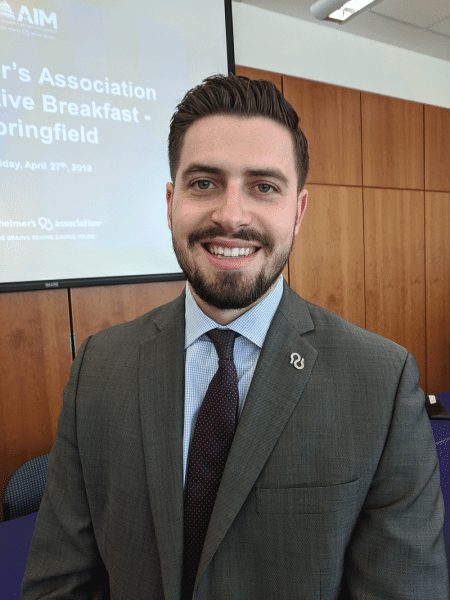
Cover Story Restaurants Sections

2018 Restaurant GuideThe region’s bevy of restaurants comprises one of the area’s most intriguing business sectors, one in which there is constant movement, new additions, and exciting stories unfolding. This year is no exception, and BusinessWest captures that movement, that excitement, in its annual Restaurant Guide.


There’s More Growth on the Menu

Bean Group has a number of intriguing plans coming to a boil


Taste of Italy

West Springfield’s bNapoli melds big-city style with local flavor


Who’s Cooking

A list of the area’s largest restaurants

Features

A Mindset That Pays Off

Amy Jamrog

Amy Jamrog says individuals, couples, and families make many mistakes when it comes to retirement planning. The biggest, perhaps, is not starting that planning soon enough.

‘Not practicing for retirement.’

OK, that’s not one of Amy Jamrog’s official 10 ‘mistakes business owners make before and after retirement,’ but it is certainly a related topic and one worth thinking about as that day approaches.

Practice for retirement? “Yes, definitely,” said Jamrog, a financial advisor with Northwestern Mutual as she delivered the second installment in a series BusinessWest calls Future Tense on May 17 at Tech Foundry in Springfield, using that word ‘practice’ loosely to describe how individuals and especially married couples should get ready for something they’ve never experienced before and are, in most cases, not really ready for.

“Practicing retirement is a big deal,” she said, relating a story about a couple intent on retiring and moving to Cambridge. She suggested they try before they buy when it came to that concept, and they did, spending quite a bit of time in that college town.

“They loved it in the summer and hated it in the winter,” Jamrog went on. “So they’re going to split their time — keep their house here and buy a condo there; they’re not going to move there.”

The moral to the story? Prepare — for everything you can possibly prepare for.

And this brings us to those ‘official’ mistakes. They’re listed in the box on page 19, and include everything from not understanding the impact of taxes on one’s retirement to not matching beneficiaries with the right assets, to what might well be the biggest of them — not planning early enough.

And that’s just a partial list, said Jamrog, who noted that, to the casual observer, most of the points on this list seem obvious, things that most people, and certainly successful business owners, would know about and be thinking about as they progress through their career toward retirement.

Future Tense

But the truth of the matter is that many don’t know about such matters. And what’s worse, she told her audience, is that they think they know.

Indeed, using quite a few hypotheticals — financial advisors rely on those — but even more true but sometimes scary stories (such as the one about the owner of a $10 million business who is still using TurboTax instead of a CPA) that come in the form of conversations she’s had with her clients over the years, Jamrog drove home the point that retirement isn’t something to be entered into lightly.

And with that overriding concept, she hit many of the same chords struck by Delcie Bean, founder of Paragus Strategic IT, in the first talk in the Future Tense series, titled “An Unprecedented Technology Disruption.” Slicing through that talk, which touched on the potential impact of everything from driverless cars to artificial intelligence, Bean told his audience that, while the future is difficult if not impossible to predict, business owners must nonetheless be proactive and energetic in their efforts to prepare for what is to come — whatever that may be.

Paraphrasing considerably, Jamrog said essentially the same in her ‘10 mistakes’ talk. And that idea will be conveyed once again in September with the final talk in this series, to be presented by Meyers Brothers Kalicka.

It will be titled “Change Considerations: An Examination of Lean Process, Market Disruption, and the Future of Your Business,” and will feature Mark Borsari, president of Sanderson McLeod, who will discuss change and innovation through lean concepts, and focus on resulting cultural considerations. The program will also feature commentary from Jim Barrett, managing partner at MBK, who will address already-active market disrupters that affect business processes in various industries.

But that’s in September. First, those mistakes that business owners make before and after retirement.

Taxing Situation

To show just how common these mistakes are, Jamrog started not with a hypothetical or a conversation with a typical client, but with a reference to her own parents, who began teaching her about money and how to manage it at a very early age.

“My parents taught us to balance a checkbook, we had small stock portfolios as kids … they did a really good job teaching us about money; it’s no surprise that I ended up being a financial advisor,” she said. “But we never talked about their money; we grew up in a private, ‘it-wasn’t-polite-to-ask’ kind of household.”

Fast-forwarding a little, Jamrog said that when, at the advice of her mentor, she brought her parents in for a financial review, she was shocked at how ill-prepared the people who taught her so much about money were for the retirement that was coming up on them fast.

“My father was co-owner of PolyPlating in Chicopee; he and his business partner started the business when they were 20, they had a handshake agreement, no buy-sell agreement, nothing in writing. They hadn’t done anything with their 401(k) in 20 years, they had no life insurance for other. They basically said, ‘we’ll take care of each other if anything happens.’

“The first thing I learned about business owners from working with my parents is to not assume, just because someone looks like they’re in good shape, that they’ve got it all figured out,” she said. “They had no ducks in order at all. My dad said, ‘all I do is work; the plan is to work and then retire, so I haven’t taken any time out to see if we’re doing it right.’”

That last comment — that one about not taking the time to out to see if he was doing it right — is the keeper in this discussion, the one Jamrog wanted her audience to remember as they walked out the door.

Amy Jamrog’s 10 Retirement Mistakes

• Not having the right people on your team;
• Not applying an accumulation strategy to your distribution plan;
• Not preparing your children for the future;
• Not understanding the impact of taxes on your retirement;
• Not prepping for important age milestones: 59½, 62, 65, 70½, and 85;
• Not understand the issues inherent in your IRA;
• Not having a philanthropic plan;
• Not matching your beneficiaries with the right assets;
• Not understanding the correlations between happiness and aging (this pertains to you and your parents); and
• Not planning early enough.

Those 10 mistakes are all common, they’re all important, and they offer specific thoughts to digest. But the common denominator and the overriding assignment is to take the time to make sure you’re doing it right.

That applies to specific issues such as taxes, distribution plans, issues with individual retirement accounts, matching beneficiaries with assets, having a philanthropic plan, and much more, said Jamrog, who encouraged those in the audience to embrace issues and discussions that are often difficult for married couples to engage in and then do some hard planning.

That’s because the worst-case scenario can and often does happen, and Jamrog, sadly, can go back to her family for solid evidence. Her father died at 50 after suffering a major heart attack. Jamrog was 26 at the time, and that incident created a passion within her to work with people in their 50s, and before that, to make sure they have their ducks in a row.

“I freaked out … I started calling all my parents’ friends and asked them to come in and meet with me,” she said, adding that, when they do come in, she often sees people making some of those common mistakes because, again, they think they know what they should be doing.

That is often the case when it comes to taxes and retirement, said Jamrog, who said mistakes in this realm can have serious consequences.

Elaborating, she said retirement plans, and specifically 401(k)s, constitute the most expensive money people have in retirement, meaning they are 100% taxable.

“And yet, I see it all the time — all people want to do is pre-tax, pre-tax, pre-tax everything they’ve got,” she explained, referring to the options for those looking to put money aside. “They don’t understand that, when they get to retirement, they have a growing tax problem, a deferred tax problem. And then that’s further compounded when people think they’re going to leave that to their kids.”

That wasn’t a direct segue into some of those other common mistakes — ‘not understanding the issues inherent in your IRA’ and ‘not matching beneficiaries with the right assets’ both came several items down on the PowerPoint — but it served that role.

“The worst thing you can leave your kids, besides nothing, is a 401(k) or an IRA,” she said. “It’s the most expensive money to leave behind.”

To get that point across, she related the story of a bank president who was, that’s was, very proud that he was going to leave a $2 million IRA to his four children.

“Good news/bad news, those four children are very successful and all in high tax brackets,” Jamrog told her audience. “So if he leaves $500,000 to each of these four kids, they’ll each lose about 45% of it to taxes; they can stretch it out over their lifetime, but they’re still going to lose almost half of it in taxes.

“When he found this out, he was angry,” she went on, putting heavy emphasis on that last word. “And did not understand how he did not know that. So we came up with a plan — a $2 million life-insurance policy, which gives each of those kids $500,000 in tax-free money, plus whatever’s left in the IRA.”

This is an example of people thinking they know what to do, but in reality not knowing, said Jamrog, adding that she could fill a talk that would last several hours with such examples.

Still another common mistake, and this is related to all of those listed above, Jamrog said, is parents not doing what her parents did — compelling their children to be both informed and responsible when it comes to money.

“I have clients whose kids are in their 40s and 50s, and the parents are still prepping their taxes for them,” she said in an effort to get her point across. “They just sign their tax return and have no idea what they’re signing.

“Teach your kids how to read a tax return, introduce your kids to your accountant,” she said. “If your kid is graduating from college and getting their first job, sit down and teach them what their benefits are, show them what a 401(k) is, and encourage them to enroll in a 401(k). And if your kids don’t listen to you, introduce them to your financial advisor.”

Bottom Line

Among the many anecdotes she shared, Jamrog said one in particular probably sums up the essence of her presentation better than any other.

“I had a man in my office last week, 62 years old, say to me, ‘I’ve been meaning to meet with you for six years, but I was afraid to meet with you because I was afraid you were going to tell me I was doing it wrong, and that it would be too late,’” she said. “And I said, ‘so you waited six more years?’”

Pride, insecurity, and ego all contributed to that six-year delay, she went on, adding that, while it’s difficult to remove those factors from the equation, individuals and couples should try and put their energy into planning.

And while they’re at it, they should try practicing retirement as well.

By doing so, they may just make the future less tense.


George O’Brien can be reached at [email protected]
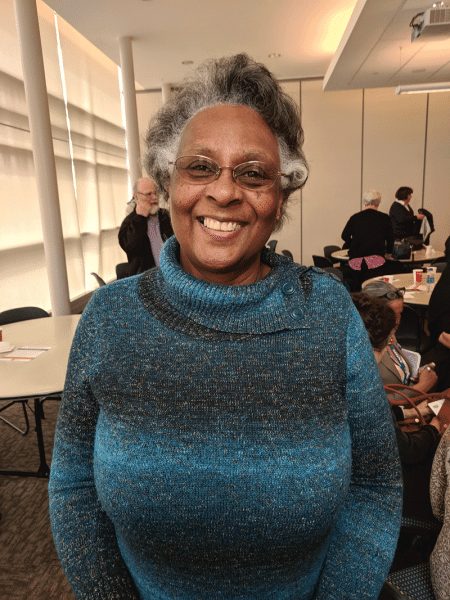
Women of Impact

Women of Impact

Women of ImpactThe name was chosen very carefully.

Actually, it was the last word that demanded the most time and attention, for reasons that will become obvious.

BusinessWest decided recently, after much consideration, to launch a new recognition program (yes, we already have several) to honor a specific segment of the local population.

Women.

More specifically, women making an impact in and on this region. Hence, Women of Impact. BusinessWest is currently accepting nominations for this honor HERE, and those who score the highest in the eyes and minds of three judges will be honored at a luncheon in December (date and venue to be determined).

More on all of that in a few minutes.

Fast Facts

What: The inaugural Women of Impact Awards

When: Nominations are due Aug. 3. The awards luncheon will be in December, date and venue to be determined.

Why: To recognize women who are making an impact in this region.

For More Information: Go HERE.

But first, why a special recognition program for women? Why not call it ‘People of Impact’ and honor anyone who fits that description? We asked that question ourselves. Kate Campiti, BusinessWest’s associate publisher and sales manager, provides a synopsis of the answer.

“We decided to create a special program recognizing women because, after careful consideration, we decided that this region needed one and that BusinessWest was the right organization to do it,” she explained. “While women have certainly made great strides over the past several decades, and many women have made great achievements and broken through that proverbial glass ceiling, doing so remains a stern challenge for many.

“We want to recognize those who have broken through,” she went on. “But, more specifically, we want to honor those who are making full use of their time, talents, and considerable energy to impact this region and improve quality of life for those working and living in this region.”

Elaborating, Campiti said ‘Women of Impact’ was chosen as the name for the program because, while nominees can be from the world of business, they can also be from other realms, such as the nonprofit community, public service, law enforcement, education, social work, the mentorship community, a combination of all these — any inspirational women on any level.

Nominations for this honor, due on Aug. 3, should be written with one basic underlying mission: To explain why the individual in question is, indeed, a woman of impact. Nominations should explain, when applicable:

• How the nominee has made impactful accomplishments or contributions that have positively influenced business or the community;

• How the nominee demonstrates unwavering passion and commitment for an issue that has made a difference in the lives of others;

• How the nominee has influenced other women through her actions and contributions;

• How the nominee exemplifies qualities of spirit, service, compassion for others, or professionalism to achieve accomplishments, and how she may have overcome adversity in order to give back to the community;

• How the nominee has applied innovative thinking to push the boundaries and find new and better ways to do things; and

• How the nominee has consistently demonstrated exceptional and progressive leadership.

For more information, go HERE.

“BusinessWest has consistently recognized the contributions of women within the business community,” Campiti said. “The Women of Impact Awards honor women who move the needle in their companies, are respected for their industry accomplishments, serve as mentors to other women, and give back to the community.”

Community Spotlight Features

Community Spotlight

Amy Cahillane says the DNA strives to promote and build on Northampton’s energy, understanding that it has competition from other area downtowns.

Amy Cahillane says the DNA strives to promote and build on Northampton’s energy, understanding that it has competition from other area downtowns.

Northampton’s downtown, Amy Cahillane says, is nothing if not eclectic.

“We have a great mix of businesses,” said the director of the Downtown Northampton Assoc., a two-year-old organization dedicated to boosting vibrancy in the city’s center. “We have a lot of different clothing stores, coffee shops, restaurants and bars — there’s a lot of room to find your niche here.”

She said business owners downtown are very much a network of mom-and-pop outfits that take pride in the district’s economic vibrancy and work hard to welcome new shop owners into the fold as they’re launching their enterprises.

“We’re a community that really works hard to make things attractive and make sure there’s stuff to do downtown, and welcome people in our downtown. We’re not just a Walmart and a Target and a parking lot.”

It’s a place, Cahillane said, where small-business owners, many of them first-time entrepreneurs, have no qualms about asking each other about the smallest details, from the best point-of-sale systems to how to keep customers coming in despite a raft of construction projects making it more difficult than usual to get around and find parking.

“All of our small businesses know it’s tough to take that risk and open your own business,” she said. “Business owners who have been around 30 years have had these conversations a million times — they’re very happy to share information, share stories, and lend support. Nobody wants to see a vacant storefront; people want to support other fellow business owners that are taking that gamble. And a lot of times, these business owners are our neighbors or friends, or kids of our friends.”

Aimee Francaes, who opened Belly of the Beast a year ago with her partner, Jesse Hassinger, can vouch for the support of downtown businesses, adding that such an atmosphere suits a restaurant that has forged some other important relationships — with local farms.

“The concept is ‘comfort food mindfully made,’ she said, noting that all meats are sourced from farms throughout the Northeast — and are smoked and cured on site — and 90% of produce in season comes from the Valley, or just over the border in surrounding states.

“We’re very much focused on being part of the community,” she went on. “And we feel like the community has really welcomed us and brought us into the fold. People tend to be very warm and welcoming, and happy to have us here, and happy to have us so active with local farms. Being on Main Street, right across from Thornes, gives us wonderful visibility.”

Speaking of Thornes Marketplace, which houses its own eclectic range of small businesses, it recently undertook a major renovation of its iconic front entrance, making changes both aesthetic and aimed at preserving the building’s historic elements.

It’s the sort of project that pleases the DNA, a voluntary organization open to property owners, businesses, and city residents, whose members work to improve the business and cultural strength of the downtown area through investments in programming, beautification, and advocacy.

The DNA handles such things as city plantings and holiday lights, and sponsors events that bring visitors to downtown, like the first Summer Stroll and Holiday Stroll, Arts Night Out, and sidewalk sales. The city has also given the DNA a full-time worker who cleans and maintains public property in the downtown business district.

Beyond that, Cahillane said, “we do advocacy, and we make sure the downtown community has a voice at City Hall, that people feel their voice is heard, and that there are public meetings and community forums on issues that will impact downtown, so everybody has a chance to voice their opinions and thoughts.”

The organization rose up after the dissolution of the Northampton Business Improvement District, and has since taken under its umbrella events and projects once handled by the BID and other entities.

“We’re always looking to do new events and create new partnerships,” she told BusinessWest. “We’re open to it all. The focus this year is to tighten up events we already do, but we’re always game to bring new stuff into the fold.”

Positive Trends

Several years into a strong regional economy, indicators such as property taxes, meals-tax revenue, and the number of visitors to the city show plenty of life, and Northampton’s downtown district, home to unique retailers, eclectic dining choices, and active arts organizations, reflects that health.

It can be slightly more difficult to navigate the area, however, thanks to a good reason — the city’s investment in infrastructure on Main and Pleasant streets, which includes ongoing roadwork and utility upgrades, supporting, among other developments, two housing complexes going up on Pleasant Street. Work along that thoroughfare also includes a small park, more parking spaces, and improved sidewalks and bike lanes.

Northampton
at a glance

Year Incorporated: 1883
Population: 28,483
Area: 35.8 square miles
County: Hampshire
Residential Tax Rate: $17.04
Commercial Tax Rate: $17.04
Median Household Income: $56,999
Median Family Income: $80,179
Type of government: Mayor; City Council
Largest Employers: Cooley Dickinson Hospital; ServiceNet Inc.; Smith College; L-3 KEO
*Latest information available

Cahillane said new businesses like Belly of the Beast have entered this landscape with aplomb, while occasional special events shine a spotlight on other businesses, like Sutter Meats on King Street, which ran a successful, two-day pop-up event in conjunction with the Little Truc food truck, serving up pho to sellout crowds.

Typically, she added, retail establishments participate enthusiastically in special events downtown — such as a fundraiser for Hampshire County Friends of the Homeless, in which music groups were stationed downtown, performing and passing the hat — but it’s harder for restaurants to do the same.

“The retailers are always game for everything. The restaurants, when we have events, are so busy with the people who come downtown for these events that it’s hard for them to also simultaneously staff a second, separate thing on that same day. So we try to bring the people downtown and then encourage them to eat at the restaurants. But they’re very supportive of our organization.”

Homestead, which set up shop in the former Ibiza Tapas location on Strong Avenue, is another fairly recent addition to the restaurant scene.

“They are doing very well and have made a lot of local relationships to bring products into their restaurant that are locally sourced,” Cahillane said, before adding that such a designation is par for the course in this city.

“I would say just about every restaurant in our downtown does some version of locally sourced,” she noted. “We have thought about ‘let’s do some sort of downtown festival where each restaurant could feature maybe a locally sourced dish,’ but that’s their whole menu at every restaurant. That’s not a Northampton festival; that’s an everyday reality. But some of them have had some really interesting or unique things that they have done with those local partnerships.”

Cahillane added that there should be more news of new businesses on the horizon. “They’re not ready to make it public yet, but I’d say, over the next six months, there will be some exciting storefronts popping up.”

That’s always a welcome development, she said, because even Northampton, known regionally and beyond for its downtown life, does grapple with occasional vacant storefronts. But in context, and relative to the struggles of many other communities, Paradise City is in a good place.

“I think it’s a great downtown,” she said, “and I think people are looking to come downtown.”

Making Contact

To cultivate that spirit, the DNA conducts monthly meetings with downtown businesses on a variety of topics.

“That’s a great opportunity for them do some networking with new businesses — and older businesses, too — and talk about things that might be mundane to the outside person, but are still important,” Cahillane said. “Recently, there was going to be construction, and some of them wanted to know how people dealt with the scaffolding outside and putting a banner on it. Other businesses were able to say, ‘make sure it’s really big, and make sure there’s not a lot of words on it, because no one’s going to stop and read it.’ So, things like that, which would not necessarily occur to me, are real issues, and we’re able to facilitate some of those conversations.”

Thornes Market

These connections are important in the big picture — one in which individual success stories become shared successes, she added.

“There is a feeling that all boats rise with the tide, that having a beautiful downtown can only help encourage people to come downtown, and there’s a recognition that is only going to happen if everybody pitches in.”

After all, Cahillane noted, Northampton isn’t the only downtown destination in the region, and shouldn’t rest on its laurels or take its visitors for granted.

“We’re fortunate to live in the Valley where there are a lot of great communities, and there are some, like Turners Falls and Easthampton, that are becoming up-and-coming, hip, trendy places to go and hang out,” she said. “Then there’s the casino that’s opening in downtown Springfield.

“We love our downtown,” she went on, “but we don’t want to just assume that everybody else knows and loves it, and I think you risk getting stagnant and a little boring if you don’t work to improve or at least maintain what you already have. So that’s what we’re trying to do.”

Francaes appreciates the effort, as she does the business owners downtown, from the owners of Thornes Marketplace to established restaurateurs, who acted as informal business consultants when she and Hassinger were getting ready to open their doors.

“We haven’t talked to anyone who hasn’t been supportive,” she told BusinessWest. “That’s part of the reason we chose Northampton — that vibe and warm, welcoming spirit.”

Joseph Bednar can be reached at [email protected]
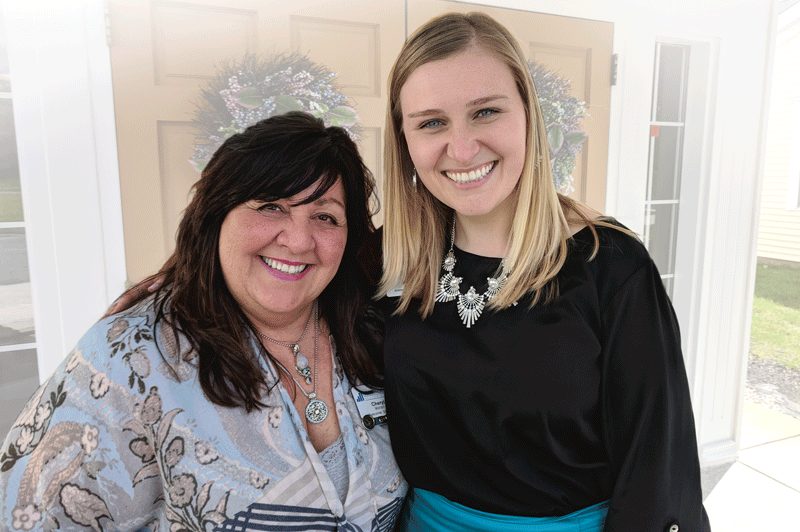
Opinion

Opinion

By the Employers Assoc. of the NorthEast

Is your company handbook in need of a checkup? While handbooks vary in scope and detail, below are five policy areas employers should review.

Sexual harassment. With the rise in social awareness about sexual-harassment and workplace respect in general comes the need for companies to review the scope and depth of their policies, not only to ensure their policies are current regarding the process and procedures for handling complaints, but also in the messaging being communicated by leadership.

Equal opportunity. With additional protected classes coming into effect into 2018 in some jurisdictions (such as state initiatives designed to expand pregnant workers), employers should ensure their EEO policies cover these new protected groups.

Pregnancy accommodation. Some states, including Massachusetts, have enacted pregnancy-accommodation laws that will provide expanded communications and policies to inform employees about their rights to pregnancy accommodations and what those might entail.

Standards of conduct or employee conduct. With a new composition of board members at the National Labor Relations Board come new interpretations on a variety of subjects like civility, social media, and confidentiality.

Leaves of absence. As states continue to adopt sick-leave legislation and/or paid family-leave legislation, companies will either need to add leave policies to comport with the new requirements or update their existing policies to ensure that they are properly aligned.

In addition to these hot topics, here are five more handbook pitfalls to avoid:

Gender-identifying pronouns. Avoid using language like ‘he’ and ‘he/she’ in policies. Rather use language like ‘they,’ ‘them,’ ‘employee,’ or ‘employees’ where possible.

Contract language. Avoid language or phrases such as ‘terms or conditions of employment,’ ‘in consideration,’ and ‘employer and employee agree’ that could potentially leave the door open for a court to construe the document as a contract.

Handbook versions and revisions. Failure to maintain revision dates, execute and maintain signed acknowledgement forms confirming receipt of the current handbook revision, or identify in the handbook that the current handbook supersedes prior editions all can raise questions of which policies apply..

Avoid legal and ambiguous terminology where possible. Your employees are not lawyers. Use easy-to-understand, objective language in policies, particularly in discipline and related matters. Provide clear examples of behavior to provide a better understanding of employer expectations.

Avoid automatic termination or ‘cliff’ language in leave-of-absence policies. Leave policies that dictate that termination will automatically result after a certain amount of time could be construed as unlawful by a court or agency because it disregards the employer’s obligation under the Americans with Disabilities Act to engage in a “good-faith, interactive process” and fails to consider whether an extended leave of absence would be an undue hardship on the employer.


Employers Assoc. of the NorthEast

Opinion

It was encouraging to see that work will be starting again soon on the Innovation Center in downtown Springfield. Very encouraging.

It’s been almost a year since the work stopped, creating a strange and at the same time troubling blip in what seemed like an otherwise uninterrupted flow of progress, good news, momentum, and positive vibrations.

The center is just one project, but the halt to work — the result of what has been called a severe miscalculation of just how much this project cost and a resulting cash-flow problem that prompted the contractor to cease and desist — was unnerving on a number of levels.

Indeed, while all those involved were confident that work would start again soon and the project would live up it to its considerable hype, as the months went by and the quiet continued on Bridge Street, doubts grew about whether this important link in the chain would become reality.

Now, it seems likely that it will. And that’s good news on many levels.

Let’s start with DevelopSpringfield, the agency that conceived this project and saw its reputation take a small hit when the venture ran aground, if you will, just as its former director was leaving to take another opportunity.

The optics weren’t just bad, they were terrible. But the agency has bounced back from this setback to a large degree, and we will remind people that, from the beginning, and from a projects standpoint, DevelopSpringfield has taken on what could only be called the ‘hard ones.’ Make that the ‘really hard ones.’

This portfolio includes the Gunn Block in Mason Square across from the Springfield Technical Community College campus, a building that may be beyond rehabilitation at this point. But it also includes sites such as 77 and 83 Maple St. and 700 State St. (the former River Inn) — properties that have been successfully rehabilitated.

These are projects that no one else would seemingly touch. When you target longshot projects like this, things are not always going to go smoothly.

But there is a bigger-picture perspective when it comes to the Innovation Center. As we said, it is an important link in the chain, or important ingredient in the recipe for a successful downtown, if that analogy works better.

Indeed, for a central business district to work, it needs many different constituencies coming together. It needs workers (downtown has always had those); it needs residents (downtown has many of those, but it needs more, especially those in higher income brackets, and it will likely get more if talks for more market-rate options become reality); and it needs visitors, and downtown should have a much larger volume of those given the opening of MGM Springfield, the rehabilitation of Union Station, some new restaurants, and the possible revitalization of a moribund Tower Square.

But it also needs startups and young entrepreneurs, people who can make Main Street or Bridge Street, or any number of other streets in the downtown, their mailing address. In cities ranging from Cambridge to Seattle to Brooklyn (OK, that’s a borough, not a city), startups have been a huge factor in the off-the-charts growth of those communities.

They bring jobs, residents, commerce for service business, vibrancy, and something else — more startups.

The Innovation Center won’t do that all by itself, but it will be a huge contributor to that movement as it serves as home to not only Valley Venture Mentors, but eventually some of the startup businesses VVM mentors.

Given everything else going on downtown and all the things that have gone right, the restart of work on the Innovation Center may seem like a minor story.

It isn’t.