Home Articles posted by George O'Brien (Page 19)
Law Special Coverage

Red Ink

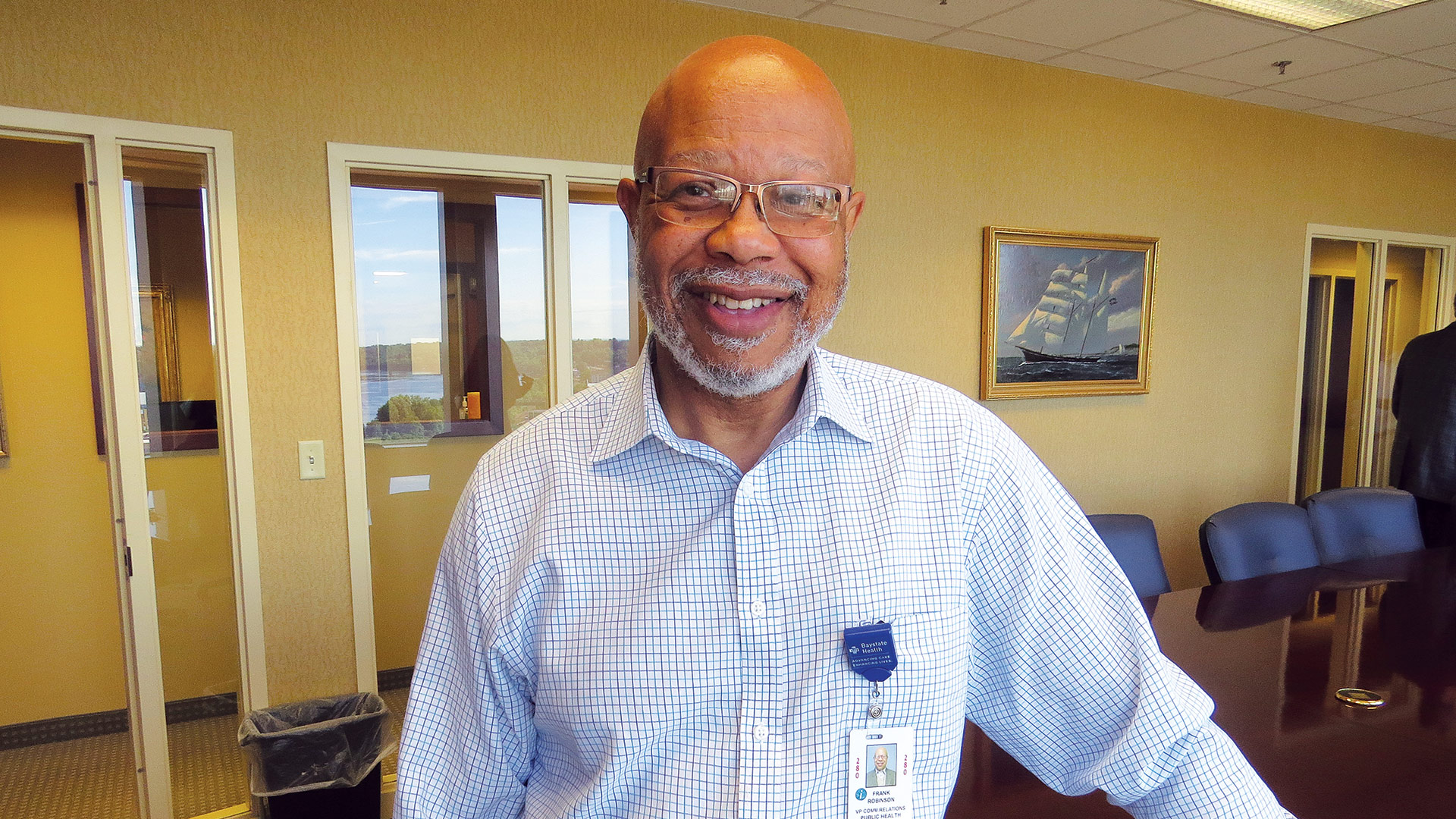
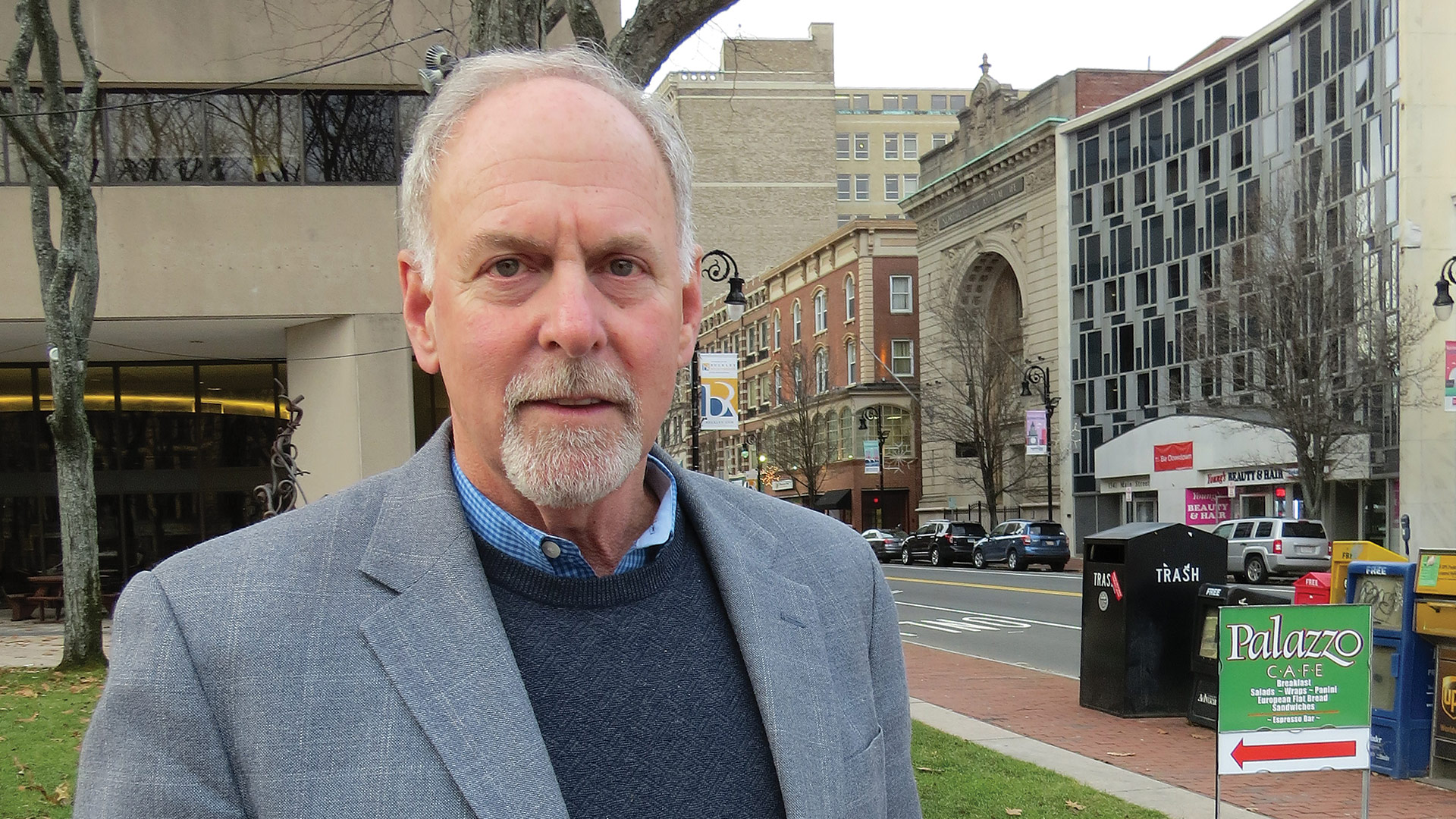
Steve Weiss

Steve Weiss says he’s getting a steady volume of calls from business owners with questions about bankruptcy or liquidation.

Steve Weiss says the wave of bankruptcies that he and others in his line of work are expecting certainly hasn’t reached shore yet, to use a phrase appropriate for this time of year.

“But you can definitely see it building out there — it’s coming; you can see it rolling in,” said Weiss, who specializes in bankruptcies and workouts for the Springfield-based law firm Shatz, Schwartz & Fentin.

This wave is comprised of both corporate and consumer (personal) bankruptcies, and it will be large and hit with considerable force, he went on, adding that a number of factors are colliding that will make it so.

On the corporate side, while many companies have been able to hang on and survive the pandemic to date, they have done so thanks largely to government stimulus initiatives that are due to be exhausted soon, leaving business owners and managers wondering how they will pay people and all their bills. And on the consumer side … it’s a very similar story.

Indeed, unemployment benefits and stimulus checks have helped many make ends meet, but those checks are projected to end soon for large numbers of people, if they haven’t ended already.

“My phone is starting to ring more with business owners who are either unsure how they’re going to make it, or are sure they can’t — the virus has just clobbered their business,” said Weiss, who said his next phone call after the one with BusinessWest was with a business owner looking to talk about bankruptcy or perhaps liquidation.

“My phone is starting to ring more with business owners who are either unsure how they’re going to make it, or are sure they can’t.”

Such calls are starting to come in with increasing frequency, said Mike Katz, a partner with the Springfield-based firm Bacon Wilson and one of the region’s pre-eminent bankruptcy specialists. He used a different, though similar, metaphor to describe what’s coming.

“I think the dam is about to break — we’re on the cusp of a tsunami of bankruptcies,” he said. “It hasn’t happened yet, but it’s going to happen.”

There have already been many, especially on the corporate side, he went on, noting that many large and famous names, many from the retail sector, have filed for Chapter 11 protection. That list, which continues to grow, includes Lord & Taylor, J. Crew, Brooks Brothers, Gold’s Gym, Neiman Marcus, JCPenney, Hertz, 24-Hour Fitness, Chuck E. Cheese, California Pizza Kitchen, and Men’s Wearhouse.

Those names reveal the types of businesses that are most in jeopardy, Katz continued, adding that, locally, many small businesses in the hospitality, retail, and fitness realms — but many other sectors as well — face severe challenges as they try to survive the pandemic.

For some in this category, an emerging option is what’s being called the ‘fast-pass’ small-business bankruptcy process, otherwise known as Subchapter V of Chapter 11 of the Bankruptcy Code. This new subsection, which became effective in February, is not a response to COVID-19, but certainly seems to be tailor-made for the economic crisis the pandemic has created.
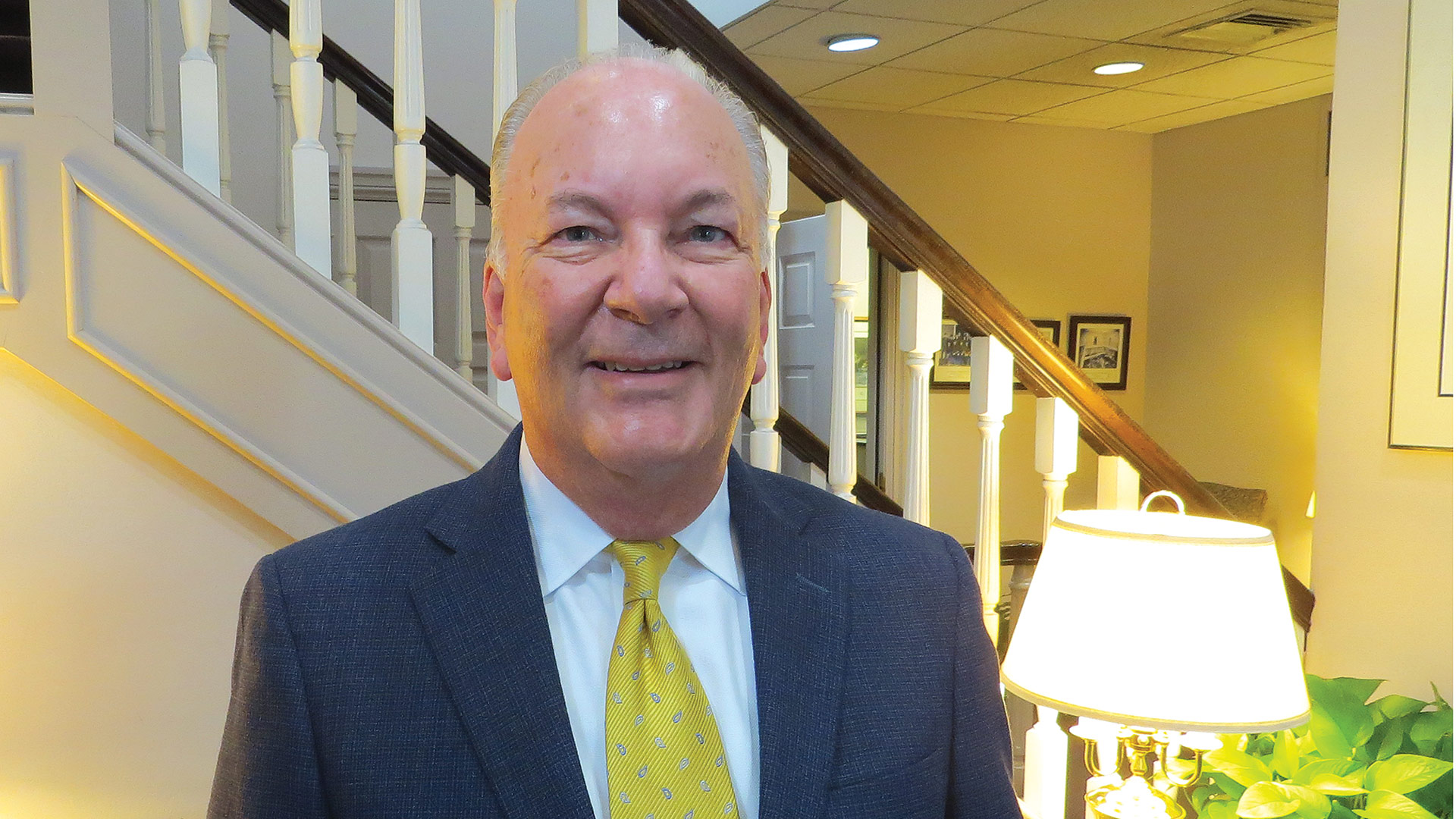
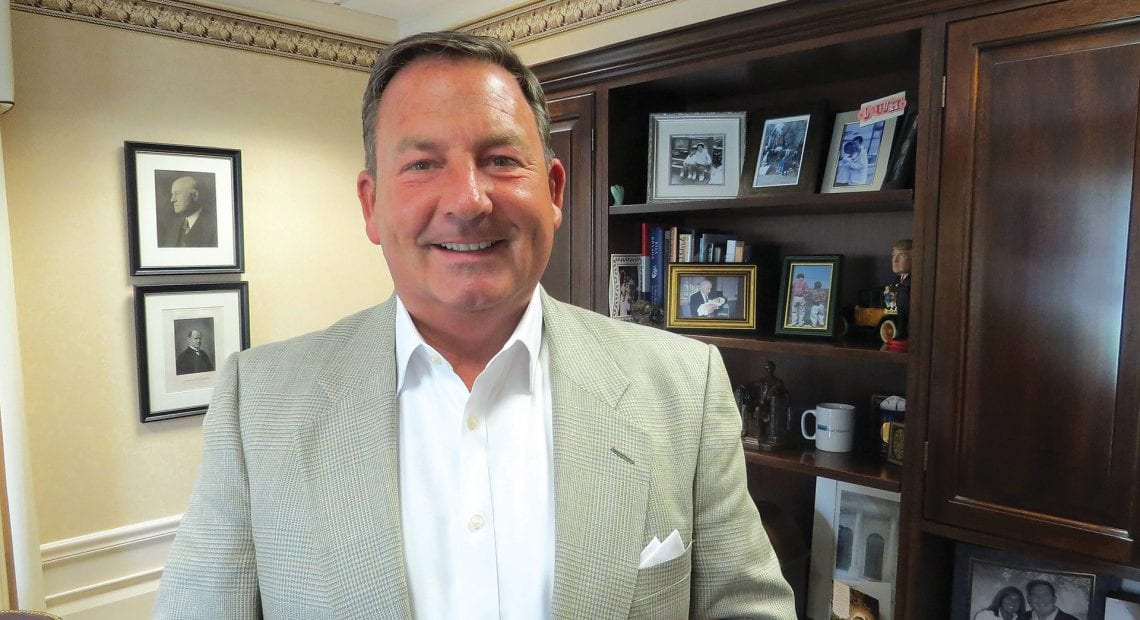
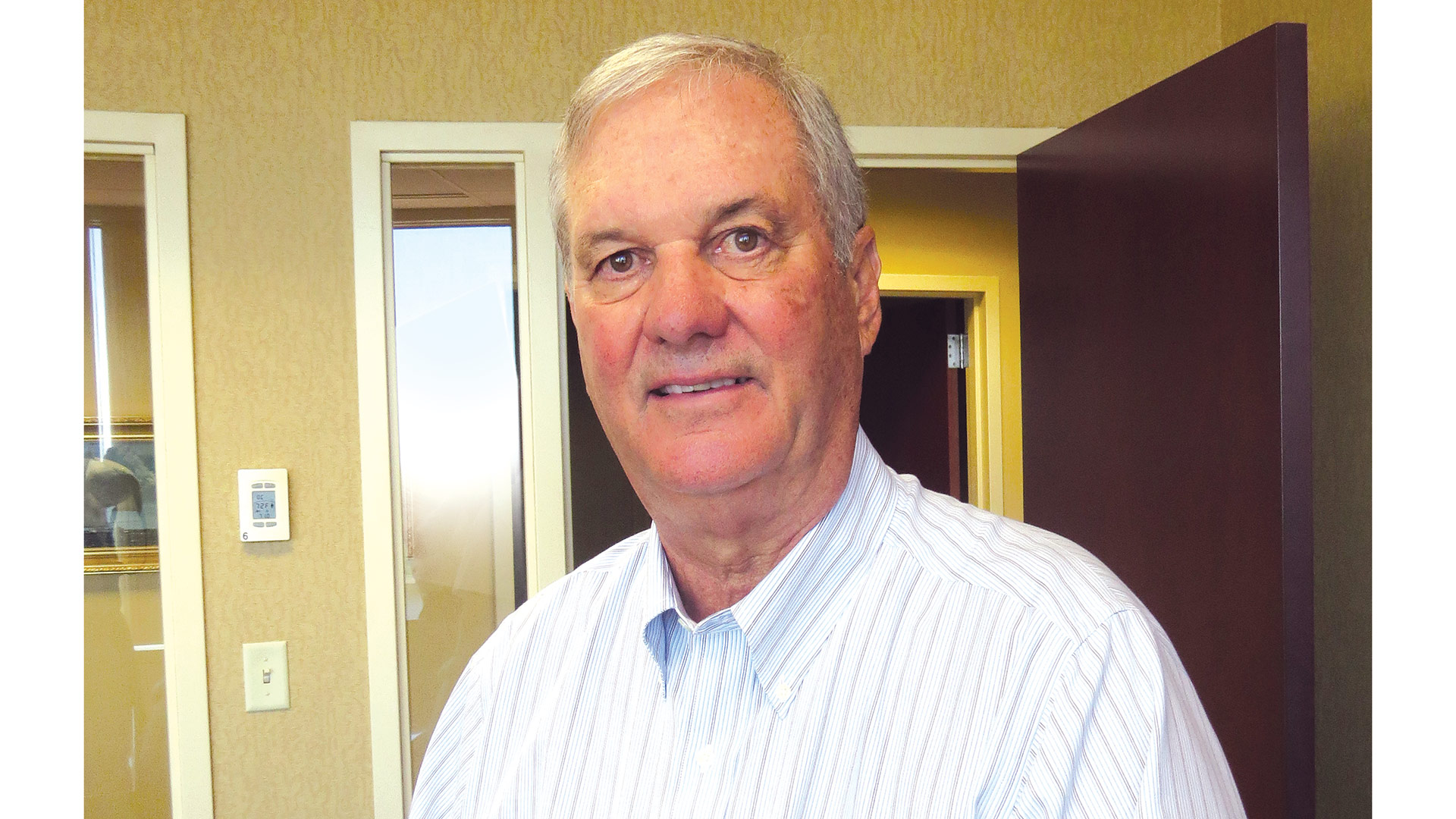
Mike Katz

Mike Katz is expecting a “tsunami” of bankruptcy filings. What he doesn’t know is when this wave will hit.

That’s because, as the name suggests, it is a faster, less expensive Chapter 11 reorganization path, designed specifically for much smaller businesses than those that seek the Chapter 11 route. To be eligible for Subchapter V, an entity or an individual must be engaged in commercial activity, and its total debts — secured and unsecured — must be less than $7.5 million, a new number (the old one was $2.725 million) resulting from provisions of the COVID-inspired CARES Act. At least half of those debts must come from business activity.

Katz and others we spoke with said the fast-pass option holds potential for some businesses, but there are challenges within its many provisions, including the need to come up with a reorganization plan within 90 days of the filing. Such plans may be difficult to develop given how difficult it is to see even a few weeks down the road, let alone several months, because of the pandemic.

“The one downside is you file your bankruptcy papers, and you’re required, within 90 days, to put a plan in place,” said Mark Cress, a bankruptcy specialist with the Springfield-based firm Bulkley Richardson. “That’s a short window, and a lot of small businesses are barely holding their own.”

For this issue and its focus on law, BusinessWest talked with these bankruptcy lawyers about what they can already see coming. They can’t predict when this particular surge will begin, but they say it’s almost unavoidable.

Chapter and Verse

While Katz and Weiss were crafting analogies to waves and tsunamis, Cress wanted to draw parallels to the Great Depression.

Indeed, he told BusinessWest that the current conditions rival, and in some cases (such as the quarterly decline in GPD) actually exceed those of the Great Depression that started roughly 90 years ago.

“This is worse than the Great Depression in a lot of ways,” he said. “The dip in the economy — it dropped by a third — was something we’ve never seen before. And but for the way the Fed has handled this, it would be devastating; those multi-trillion-dollar programs … they’re the only thing that’s sustaining us. Without that, the whole house of cards would collapse.”

To further state his case — that’s an industry term — Cress pointed to numbers contained in an analysis authored by Morning Consult economist John Leer, who noted that, without additional funding, millions of unemployed Americans are at risk of financial insolvency by the end of this month.

“The personal finances of workers who have been laid off or placed on temporary leave since the onset of the pandemic deteriorated in July,” Leer wrote. “The July survey found that 29% of unemployed and furloughed workers lacked adequate savings to pay for their basic living expenses for the month, up 16% in June. This monthly change contrasts with June, when the finances of laid-off and furloughed workers improved. At that point in time, many renters and homeowners took advantage of the rent-deferral and mortgage-forbearance options included in the CARES Act, thereby driving down their monthly expenses.”
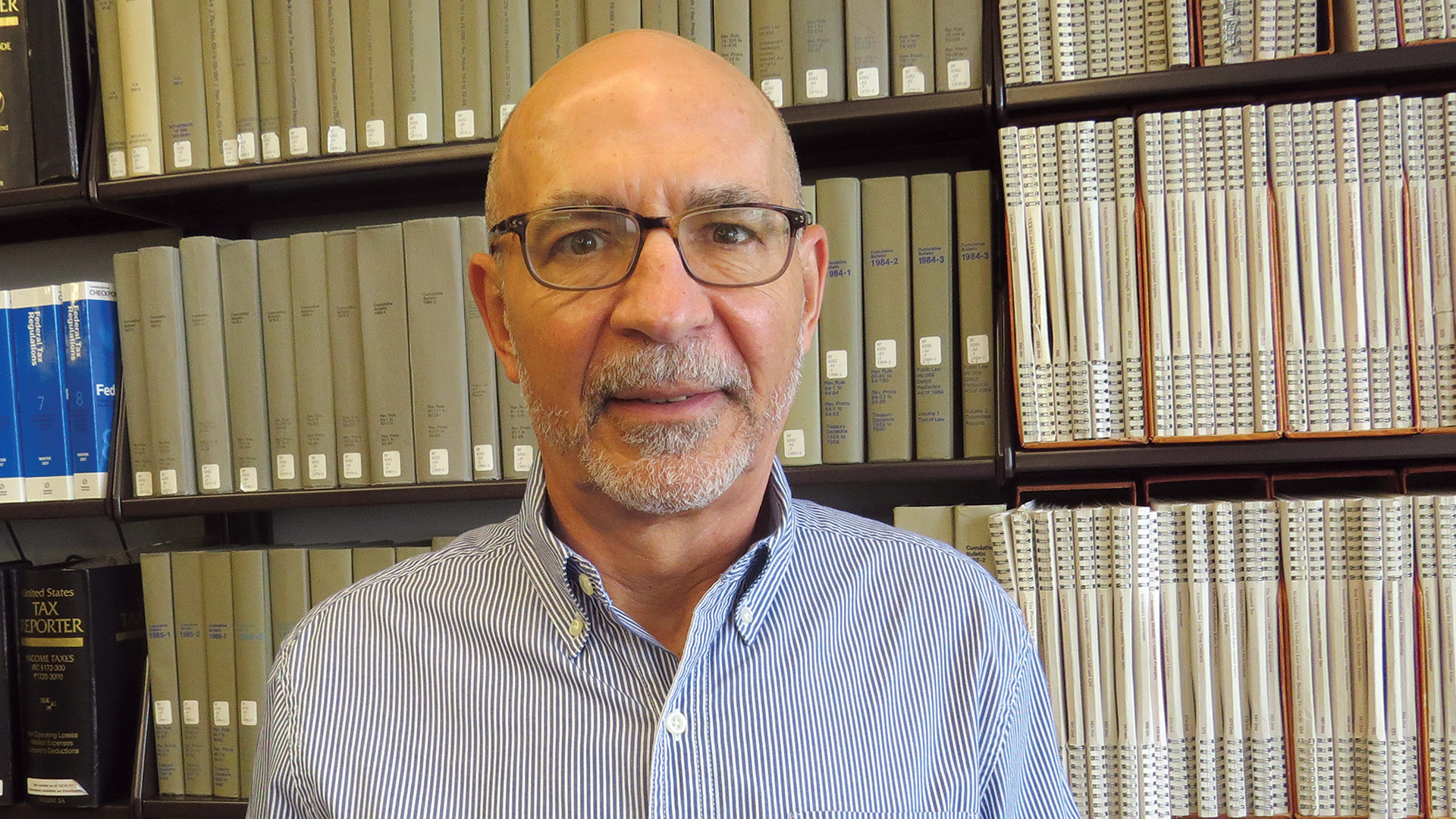
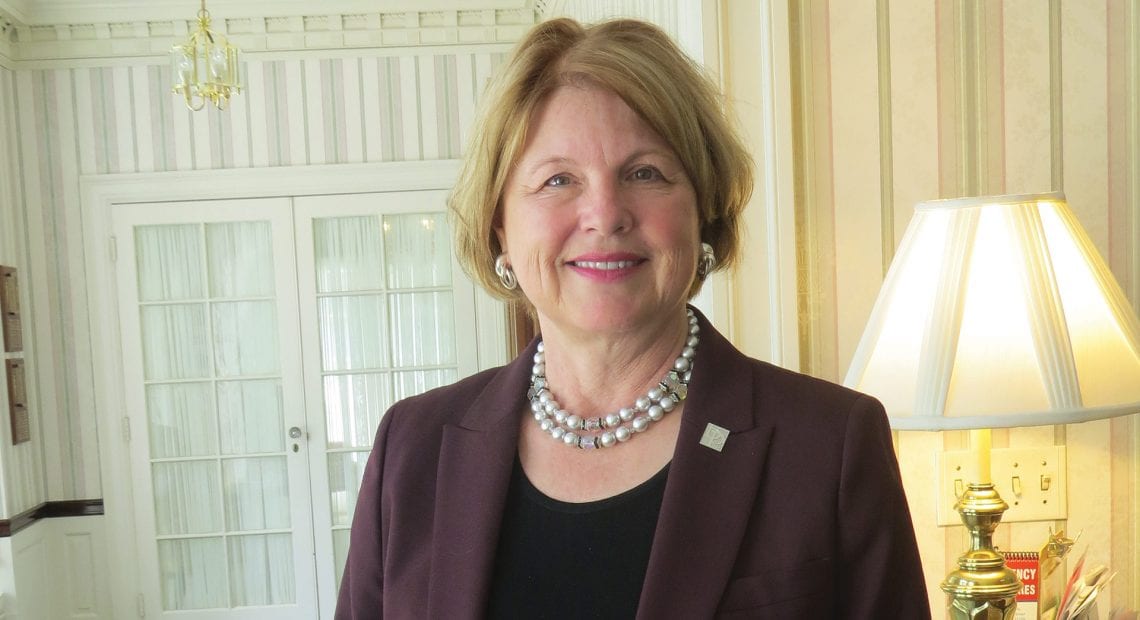
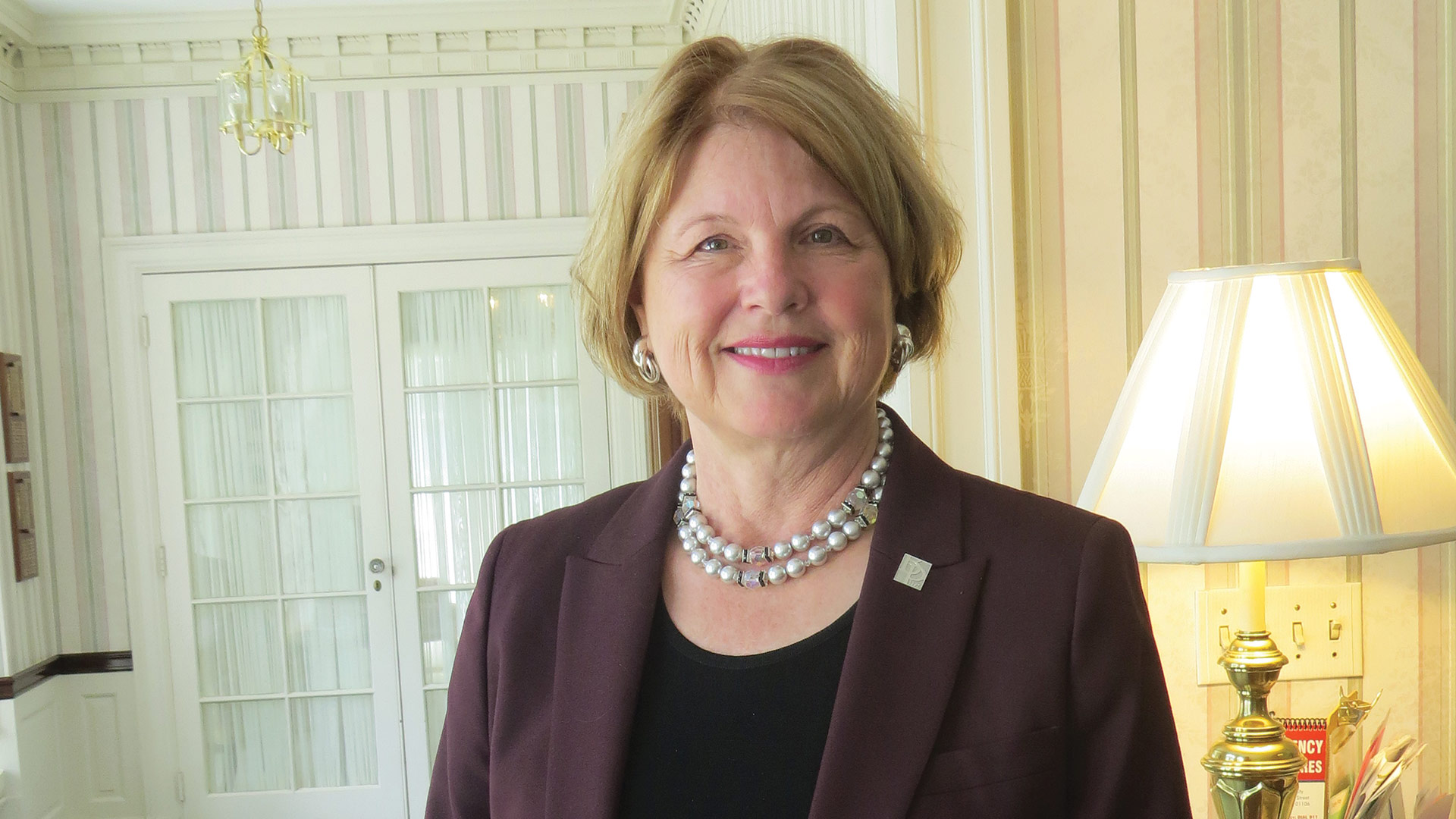
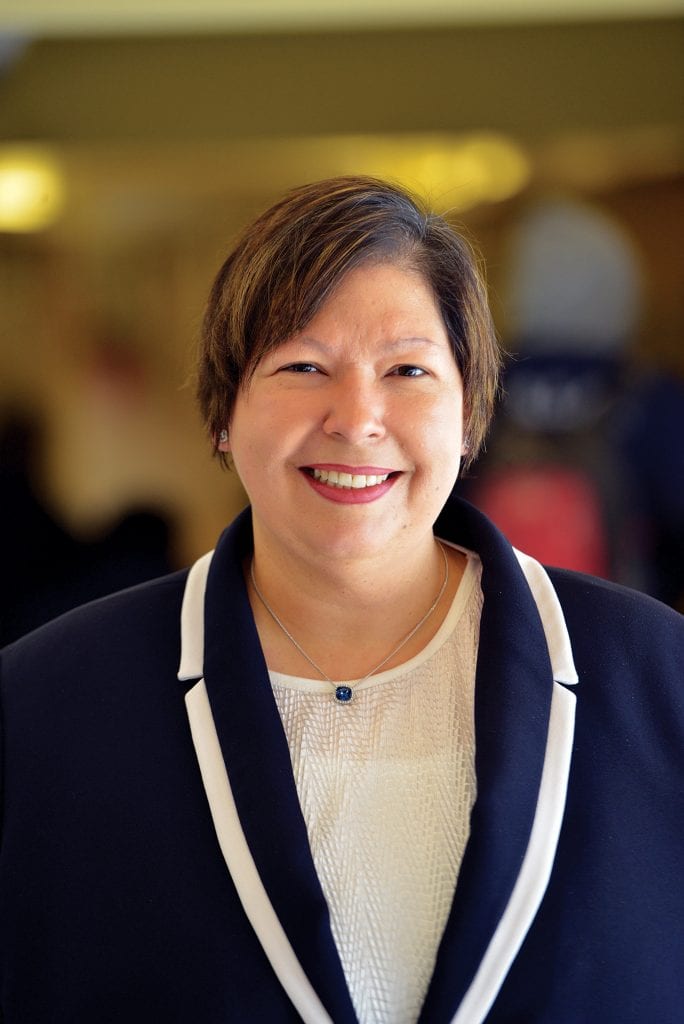
Mark Cress

Mark Cress says the new ‘fast-pass’ bankruptcy process may be a viable option for some, but the process doesn’t leave business owners much time to create a reorganization plan.

Cress backed up that commentary with some other, very sobering numbers regarding renters.

“One-third of all renters weren’t able to make their July rent,” he noted. “And more than 60% were concerned they won’t make August. So you can imagine the ripple effects this will have … many small-time landlords, with one or two tenants, may not be able to pay their mortgage.

“And you if get enough defaulted mortgages … then banks start to pull in their horns, and all of a sudden the credit markets freeze up, and you have a real disaster,” he went on, drawing analogies, again, to what happened nine decades ago.

Looking at these statistics and possible scenarios, it’s easy to see why bankruptcy lawyers are expecting a wave, or tsunami, of personal bankruptcies to hit this area — and the nation as a whole — soon, with ‘soon’ being a relative term.

“Some people are getting unemployment benefits, but it looks like that’s ending,” said Weiss. “There’s a foreclosure and eviction moratorium that’s ending in October, and there are already people living on credit cards and exhausting their savings just trying to get through this — and it’s going to be a while before jobs come back.

“So it’s a matter of sooner than later,” he went on. “And bankruptcy is something of a trailing indicator; it takes people a while to get the point where they need to file for bankruptcy — the credit-card bills don’t become unmanageable until several months go by.”

By the Numbers

But the wave will almost certainly involve corporate bankruptcies as well, said those we spoke with, noting that many businesses have struggled to merely survive the past five months. And with the state already pumping the brakes on its reopening plan as reported cases increase, and ever more uncertainty about the future, survival is becoming more of a question mark for many businesses.

That’s especially true within the restaurant sector, said those we spoke with, noting that, while many have been able to reopen, their revenues are still a fraction of what they were pre-COVID. And with fall and then winter coming — meaning far fewer opportunities to serve outdoors — some in this sector are wondering if, and for how long, they can hang on.

“I think the dam is about to break — we’re on the cusp of a tsunami of bankruptcies. It hasn’t happened yet, but it’s going to happen.”

“I’ve been contacted by a number of restaurants, in particular, over the past few months,” said Katz, adding that there have been inquiries from those in other sectors as well. “Some of these have managed to hold on, some have closed some locations while keeping others open … but the number of people I’ve talked to just today tells me that the dam is just teetering, and I think there’s going to be unprecedented times in the bankruptcy field.”

This speculation leads him back to the new fast-pass small-business bankruptcy process, and questions about just how many businesses may try to take advantage of this emerging option, and whether they can be successful with such bids.

“I think a lot of businesses will try doing this because you have a 90-day maximum to get in and get out — that’s how fast this Chapter 11 is going to go,” he explained. “And the whole thing is predicated upon the fact that you only have to propose a plan that provides more to the creditors than they would receive in a liquidation, with no voting.

“Under the current Chapter 11 process, there’s a whole voting process, where you have to get two-thirds of the dollar amount and a majority of the number of creditors to vote in favor of it,” he went on. “But with this process, there’s no voting — it’s a much more streamlined process, and it’s far less expensive.”

With the new ceiling of $7.5 million, many more businesses are now eligible to take this route. But that same 90-day in-and-out period, while attractive in one respect, is daunting when it comes to actually putting a reorganization plan in place.

“I’ve talked with a number of people about it because people are still trying to figure how it works — there isn’t a lot of legal guidance or precedence,” said Cress. “But having to put a plan together in 90 days is going to be very difficult for many small businesses. If you don’t have any profits or any cash and you’re living hand to mouth, it really places an undue burden on you to figure it all out and get creditor sign-off in 90 days.”

Katz agreed. “Most traditional Chapter 11 cases are multi-year, and reorganization is based in projections,” he told BusinessWest. “How do you project when this COVID situation is going to change? If you’re a restaurant, how can you project when people are going to come back to your restaurant and you can go back to something approaching capacity?”

The Bottom Line Is the Bottom Line

Those lawyers we spoke with all expressed a desire not to sound like an alarmist.

But as they talked about what they’re seeing, reading, and hearing on the phone calls they’ve already taken, they admit it’s difficult not to take that tone.

“For many businesses, it’s a matter of survival at this point,” said Cress, noting that survival is becoming more difficult in some sectors with each passing month. “It’s becoming apparent that the recovery is not going to happen as quickly as some had originally hoped, and the effect is going to be much deeper and longer-lasting than people are even letting on.”

And one seemingly unavoidable consequence of all this is bankruptcies, on both the corporate and consumer sides of the ledger.

As Weiss said, the wave hasn’t crashed ashore yet, but if you look — and you don’t have to look hard — you can see it building.

George O’Brien can be reached at [email protected]
Coronavirus Manufacturing

Current Events

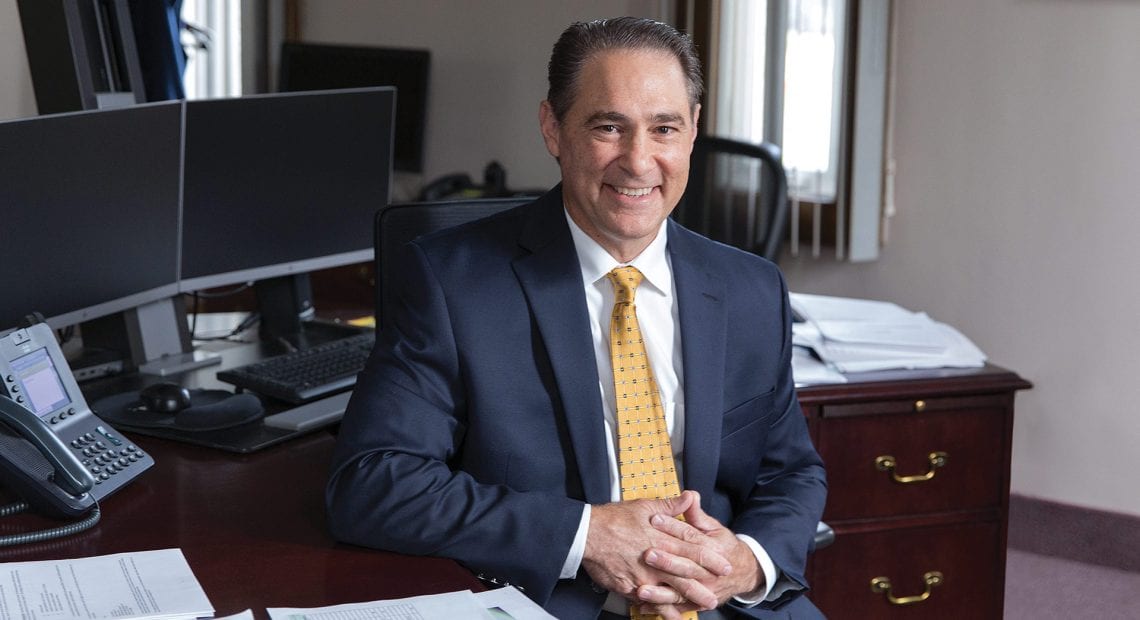
Tony Contrino

Tony Contrino says his utility’s extensive practice with preparing for weather events has certainly helped in its efforts to cope with the pandemic.


Tony Contrino says Westfield Gas & Electric, like all utilities, has considerable practice watching storms develop, getting ready for possible damage, and, as the old saying goes, hoping for the best but preparing for the worst.

The COVID-19 pandemic has been like that — sort of, said Contrino, general manager of Westfield G&E. It could be seen coming, and there were certainly efforts to prepare for it. But the pandemic is, in most all ways, not like weather events like Tropical Storm Isaias, which barreled through Western Mass. earlier this month, leaving sometimes days-long power outages up and down the Valley and creating huge headaches for utilities — and the customers they serve.

Indeed, those storms come and go, the damage is repaired, and life goes — until the next storm. This crisis is different, not only in its duration, but in its far-reaching effects — everything from a significant drop in electricity use (7% to 10% are the most often-given estimates), and its impact on the bottom line, to an equally sharp rise in delinquent payments, which also affects the bottom line, to changes in how work is carried out — right down to putting one person in each truck, rather than two.

But as with those weather events, area energy providers are working their way through this crisis, adapting and pivoting, as businesses in all sectors have, and encountering challenges and opportunities — again, like most all other businesses have. But, unlike many businesses, they’re providing a vital service, and thus they’re being diligent about working with, and communicating with, those they serve.

“It’s certainly a different, and very challenging, time — for us, but also for all our customers,” said Contrino. “We’ve made a real effort to communicate through all this, not only with employees but customers as well. We’re trying to keep people aware of what’s going on and what our plans are, and try to give them some assurance that we want to work with them.”

Craig Hallstrom, Eversource’s president of Regional Electric Operations for Massachusetts and Connecticut, agreed. He said the investor-owned utility has been working to keep the power on — yes, Isaias has certainly impacted those efforts — while keeping employees and customers safe.

“It’s been a very different year for us and for all utilities,” he told BusinessWest. “We have half our workforce working at home, and people have been very creative and able to adapt to their work at home. We’ve been able to work differently to do the things we need to get done. Everyone’s working differently — we’ve learned how to use videoconferencing very well — and, for the most part, we’re getting our work done.”

Craig Hallstrom

Craig Hallstrom

“It’s been a very different year for us and for all utilities.”

While making adjustments within their own operations, the utilities we spoke with said they’re working with clients, both commercial and residential, to help during this time of crisis.

Jim Lavelle, general manager of Holyoke Gas & Electric, observed that, while his utility is facing declines in revenue and sharp rises in delinquent payments — further impacting cash flow — these problems often pale in comparison to what customers are facing.

“If we were looking at our losses in isolation, we would be very alarmed, and we are concerned about the numbers,” he noted. “But when we look at the impact to the overall economy and what many of our customers are going through … we’ll figure out a way to manage and get through this.”

For this issue and our ongoing coverage of the COVID-19 crisis, BusinessWest shines a light, pun intended, on how the pandemic has impacted those in the energy business — and how they are responding.

Hitting the Switch

As he talked with BusinessWest, Contrino was just returning from a vacation — only he didn’t get as much relaxation time as he planned, or hoped. Isaias saw to that.

“I was very involved in the storm activity — I just took care of it all remotely,” he said nearly a week after the storm came through, leaving tens of thousands across the region without power for long stretches and “hitting Westfield hard,” as he put it.

That phrase is appropriate for the pandemic as well, obviously, and it applies to every community across the region. Indeed, large numbers of businesses, including some large users of electricity, such as colleges and universities and some manufacturing facilities, but mostly smaller ventures in the hospitality and service sectors, have been shut down for long stretches. And some, like the colleges, are, for the most part, still closed.

Jim Lavelle says Holyoke G&E

Jim Lavelle says Holyoke G&E was thinking about consolidating some facilities, but COVID-19 and a need to socially distance has prompted a re-evaluation of those plans.

Meanwhile, many businesses that are open are struggling and finding it difficult to pay all the bills, including the one from the utility company. And many individuals working for these businesses — or not, as the case may be — are in the same boat, with matters likely to get worse before they get any better (see related story on page 53).

All this has presented a number of challenges for utilities, who are responding, as all businesses are, with use of reserves, belt tightening, and sometimes delaying planned expenditures when possible.

While estimates on the decline in power usage vary — Lavelle also put it at roughly 10% — and the overall drop in demand has been mitigated to some degree by a very hot summer that has commanded more use of air conditioners, said Hallstrom, the bite is significant.

“Over the course of a year, a 10% reduction would mean an impact to us in the vicinity of $4 million to $5 million — and that’s a big number,” Contrino noted. “We’re cutting back, we’re not doing some of the work we would typically be doing, and we’re trying to control expenses as best we can and work our way through this.

“We anticipate that we’re going to be hit on the receivables side, and we’re planning for that,” he went on. “We’ve got funds in place to help us with that, and we’re thinking long-term — I don’t think this is going to end that quickly; I’m sure it’s going to extend into next year to some degree.”

Lavelle agreed, noting that, while Holyoke G&E is looking at a similar hit, it has been helped by some new businesses coming online, including a few involved in cannabis cultivation, which are typically large users of power.

“We’re seeing a few of those businesses start to ramp up, and that will offset some of the COVID impact,” he explained. “But the COVID impact is about 10% overall.”

And while that is, as Contrino said, a big number, it pales in comparison to what businesses across a number of sectors are facing, said Lavelle, adding that it’s important to keep things in perspective.

“We can’t compare to what some of the businesses and some of our residential customers are dealing with,” he went on. “Many of our business customers have shut down for months, and that’s been one of the frustrating things about this pandemic — seeing the customers we’ve worked with and that have worked so hard to build up their businesses go through this type of economic challenge.”

To help these businesses — and residential customers as well — Holyoke G&E, like other utilities, has been working with customers to help them through the crisis.

“Many of our business customers have shut down for months, and that’s been one of the frustrating things about this pandemic — seeing the customers we’ve worked with and that have worked so hard to build up their businesses go through this type of economic challenge.”

There is a moratorium on shutoffs for late payments — the governor put one in place for investor-owned utilities, and municipally owned operations have followed suit — and Holyoke G&E is working with individual customers to create payment plans, said Lavelle, adding that, overall, the utility has seen a 25% rise, roughly $1 million to date, in delinquent payments.

Like Contrino, Lavelle said his utility is handling the decline in revenue through reserves and some reductions in expenses, many of which are coming naturally as a result of the pandemic, such as those involving travel, training (some programs cannot be carried out remotely), and other areas.

Lines of Communication

While coping with the pandemic’s impact to their customers, and the bottom line, area utilities have, like other businesses, been forced to adjust and change how they do things.

This means everything from having some employees who can work remotely do just that, to putting one person in each service truck, instead of two; from closing offices, thereby compelling customers to pay online, to taking steps to make sure those in the pivotal control rooms are at minimal risk of exposure to the virus.

Overall, the goal, said those we spoke with, has been to keep people apart as much possible in order to keep operations moving as efficiently as possible. In fact, Holyoke G&E was thinking about consolidating some of its operations prior to the pandemic, and now, it is certainly rethinking that strategy.

“For a fairly small utility, we have several different buildings, and we had been looking at a consolidation plan,” Lavelle said. “But the distance between facilities and the number of facilities has actually helped us comply with social distancing and other recommendations associated with good COVID hygiene. So we’re revising that whole consolidation plan at present.”

Contrino said his utility’s experience in preparing for weather events like Isaias has been beneficial as it continually adjusts to life during the pandemic.

“We’ve had quite a bit of experience working through numerous storms and large-scale electric outages in the past, and have conducted various emergency-response drills over the years,” he explained. “So we were somewhat prepared to take action — although the duration of this pandemic is something we’ve never experienced before.”

Elaborating, he recalled that, as it became clear the pandemic was coming and there would be a significant impact, the Westfield G&E implemented an emergency-management plan, designated a COVID-compliance officer, and formed an incident-response team of key management personnel — a team that continues to meet regularly to discuss what’s happening and what is likely to happen in the weeks and months to come, although looking far down the road is extremely difficult.

“During this pandemic, we’re always concerned about the health and safety of our employees, our customers, and the general public,” Contrino told BusinessWest. “Although we have essential services to provide, we want to keep everyone safe; we have that balancing act going on — while we’re trying to provide our services, we’re also going to keep everyone healthy.”

Hallstrom concurred, also using the phrase ‘balancing act’ to describe how Eversource is working to keep the power flowing while keeping employees and customers safe.

He said roughly half the utility’s 8,000 employees‚ including those in finance, HR, accounting, and other business functions, have been working at home the past 20 weeks or so. Most of ‘his’ 2,800 employees, those who work to directly provide power and maintain service, have been coming to the office — in whatever shape it takes — every day.

Keeping these individuals safe has become a top priority.

“We’ve implanted many safety protocols — we promote face masks and washing hands, and instead of crews going out two per truck, we’ve had them going out one per truck,” he explained. “We’ve actually bought trucks and taken vehicles out of retirement to increase our fleet so that people can go out by themselves in a vehicle.”

Precautions also extend to service in individual homes and businesses — crews will go in only after ensuring there are no COVID-related issues at the address in question — and to the control centers, which are vital to managing the electric system.

“Day to day, we have a sufficient number of people to manage these facilities, but one of the fears from the pandemic is that if someone got sick and they passed it to fellow employees, that might quickly impact our people and make it so we couldn’t operate that system,” Hallstrom explained. “Those people are highly trained, and in the case of transmission, they’re certified, so that was a big concern.”

While some utilities had control-room personnel quarantine and stay in what amounts to a bubble, he noted, Eversource, which has several smaller control rooms, has been able to spread out its people so there are fewer individuals in a given control room, while some of these facilities were set aside as ‘sterile environments’ that employees not infected with the virus could be moved to in order to keep the system running properly.

Meanwhile, like banks, utilities have had to close their doors to their main offices, which have traditionally seen large amounts of traffic involving customers paying their bills or conducting other business. This business has now shifted online in many cases, said Lavelle, and for some customers, it’s been a big change.

“Being shut down has really impacted how we conduct business,” he explained. “We’ve had online services for some time, so a lot of it has been training customers how to pay online or sign up for a new account online; we’ve seen an uptick of more than 200% in online transactions.

“It’s been pretty seamless,” he went on. “There’s been a little bit of hand holding with some customers, but other than that, it’s gone quite well.”

Watt’s Next

Drawing one more analogy to Isaias — and all the other storms his utility has confronted over the years — Contrino said that, when it came to the pandemic, Westfield G&E prepared for the worst.

And this is the mindset that will continue as the crisis plays itself out, with certainly more questions about what’s on the horizon than answers.

“It’s been a difficult time for everybody,” he told BusinessWest. “However, we’ve put a lot of thought and effort into working through this and moving forward in a disciplined and measured manner.”

With that, he spoke for all the utilities that have been working to keep the power on — tropical storms and all — during a crisis that is testing them in every way and on every level.

George O’Brien can be reached at [email protected]
Features Special Coverage

Mission: Accepted

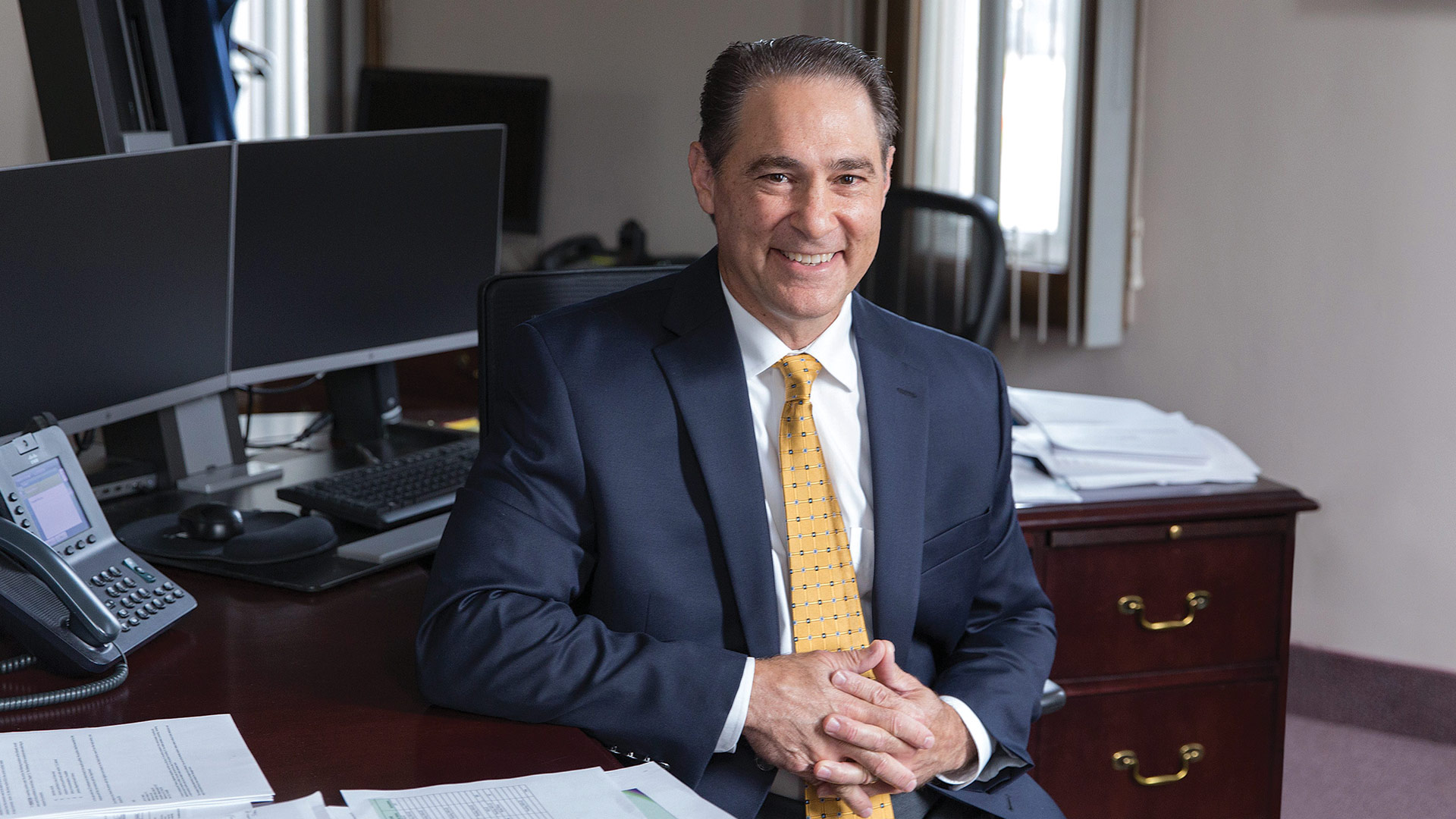
Paul Belsito

Paul Belsito

Paul Belsito admits he’s struggling somewhat with Zoom and conference calls — not the technology, but the nature of those forms of communication.

He’s a people person, and he likes meeting them face to face — and not on screen or over the phone.

“I enjoy going to events and networking — that’s how I meet people,” he said, noting that there haven’t been any opportunities like that since he’s arrived, and he’s looking to the day when they return. “Zoom is OK, and I’m getting good at it, but it’s not the same.”

But it is reality in the summer of 2020, and this is how Belsito, chosen late this spring to fill the rather large shoes of Mary Walachy as executive director of the Irene E. and George A. Davis Foundation, has been going about what will remain his primary assignment for the foreseeable future.

And that is to ‘meet’ as many people as possible and come to fully understand the many issues and challenges facing the Western Mass. community.

“This is a world built on relationships, and you have to understand people’s perspectives and listen actively so you can help build on the foundation that’s been laid,” he explained, adding that, since arriving in early June, he’s been doing a lot of listening, with the intention of acting — and collaborating with others — on what he’s hearing.

It’s an assignment he accepts with considerable enthusiasm, and one to which he brings an intriguing background, blending work in financial services, government (he was district director for state Sen. Edward Augustus), higher education (he was executive assistant to the president at Assumption College in Worcester, his alma mater), and philanthropy; most recently he served as president of the Hanover Insurance Group Foundation in Worcester and assistant vice president for Community Relations.

And he intends to draw on all that experience in a role that involves everything from community outreach to regional problem solving, but mostly comes down to what Belsito calls “impact philanthropy.”

“A lot of my work has been grounded in community work,” he said, using that phrase to describe many of his career stops. “Getting involved and influencing has always been part of my DNA, and it’s generational in many ways — my family was very involved in the community in Worcester.”

This devotion to community work, as well as an opportunity to continue and build on Davis Foundation initiatives in literacy, early-childhood education, improving the Springfield Public Schools, and other endeavors, drew him to the Davis Foundation, created by George Davis, founder of American Saw & Manufacturing, and his wife Irene, and the opportunity to succeed Walachy, whose work he has admired from Worcester.

“The work that Davis has done in literacy and specifically early education is well-known throughout the Commonwealth,” he noted. “I had known them from that lens of an active member in a peer community trying to work on the same issues; Mary is a household name in the early-education space throughout the Commonwealth, and her name is often brought up as someone to model in her guidance on how to pull these programs together.”

Coming to Springfield from Worcester, Belsito said there are many similarities between the state’s second- and third-largest cities (with Worcester being the former), and common challenges. These include everything from education to economic development and job creation. But they are different and unique communities with their own “personalities,” as he called them.

“This is a world built on relationships, and you have to understand people’s perspectives and listen actively so you can help build on the foundation that’s been laid.”

“Worcester and Springfield are not the same, although they do have similar traits,” he noted. “It’s my job to listen and maybe take some of my experiences from Worcester and share those with folks in Springfield. Maybe one in 20 will catch and improve the lives of children and families.”

Meanwhile, recent events have brought other priorities to the fore, including the plight of the region’s nonprofits, many of which have been severely impacted by the pandemic from the standpoints of revenue and sustainability, and the broad issue of racial justice, which the foundation has helped address through creation of the Healing Racism Institute, now a separate 501(c)(3), but still very much affiliated with the Davis Foundation.

Educare Springfield

Paul Belsito says his primary goal is to build on the foundation created by the Davis Foundation with initiatives such as Educare Springfield, a unique early-education facility that opened its doors last fall.

And these emerging issues are dominating many of those discussions he’s been having as he goes about listening and building relationships.

For this issue, BusinessWest talked at length with Belsito about his new role, but especially about the challenges facing Springfield, the region, and its large core of nonprofits — all of which have looked to the Davis Foundation over the years for not simply financial support, but also direction and leadership.

Moving forward, he said the foundation will be continuing in those roles and constantly looking for new ways in which to make an impact and move the needle.

Background: Check

Tracing the steps that brought him to the Davis Foundation’s suite of offices in Monarch Place, Belsito said his professional career started at Flagship Bank and Trust Co. in Worcester, where he served as a trust administrator, working with families to help manage their assets and trusts.

While in that role, he started doing volunteer work within the community, and before long, his career aspirations changed.

“All of a sudden, everything flipped, and the volunteer work became a career,” he told BusinessWest, adding that, in 2005, he started working for Augustus, now the city manager in Worcester. After a stint as a private consultant, he became executive assistant to the president at Assumption, which was, in many ways, a continuation of the work he did at the State House.

“I worked for a state senator who was very driven by policy, not politics,” he explained. “His mindset was, while we were in that building, how could we improve the lives of people not only in that district, but across the Commonwealth? The policy piece was very important to me, and it carried over to the higher-education piece.”

From Assumption, he went to Hanover Insurance, which, like MassMutual in this market, has historically been deeply involved in the community, often serving as a “catalyst for change,” as he put it.

He started in community relations and eventually became president of the Hanover Insurance Group Foundation.

“As we began to pivot on how to not only make the company a world-class company but also the city in which it was headquartered, I did a lot of work with the Worcester Public Schools, with the Hanover Theater, and various organizations within the community that really helped to round out the experience for children and families so that they would be successful out in the community,” he said, noting that perhaps the most significant initiative launched by the Hanover Foundation is the Advancement Via Individualized Determination (AVID) college-readiness program in the Worcester Public Schools.

“It was an honor to work for a company that was so committed to impact philanthropy,” he went on, “which is trying to move the needle and have outcomes and data that support the investment that you’re making.”

Slicing through his job description at Davis, he said it’s to generate this type of needle-moving philanthropy — or more of it, because the foundation has been involved in a number of potentially game-changing initiatives, including Cherish Every Child, a nationally recognized Reading Success by 4th Grade program, the advocacy group Springfield Business Leaders for Education, and, most recently, the effort to establish the innovative Educare Springfield early-education center, which opened last fall near the campus of Springfield College.

“One of the things that struck me about the Davis family was the humility with which they do their work. They want to be sure they’re supporting things that generate outcomes and improve the quality of education and quality of life for children and families in the region.”

The desire to continue such initiatives and create more of them brought Belsito to Springfield (via Zoom) to interview for the Davis job, a job posting that came about as he was looking for a new challenge after spending a short stint working for the city of Worcester on its COVID-19 response.

“I had known of Davis for a long time — and we actually used Davis and the work that Springfield was doing as one of the models as we were developing a reading-for-success program what would work best for our community.”

Forward Thinking

Looking ahead, Belsito said that, as the Davis Foundation continues its mission of service to the community, the specific direction of its initiatives will be determined by recognized needs within area cities and towns.

But he’s certain that education and a hard focus on young people will be at the heart of those discussions.

“One of the things that struck me about the Davis family was the humility with which they do their work,” he explained. “They want to be sure they’re supporting things that generate outcomes and improve the quality of education and quality of life for children and families in the region.

“And if you look at the legacy of the family, that’s been a consistent theme,” he went on. “And as we look to the next phase of where the Davis family’s impact will be, I believe that it will consistently be in education and literacy, but we also have a new generation of family members who are getting more active within the community, so how do we integrate some of their perspectives in making sure that we have a consistent, shared goal of improving the lives of children and families in Hampden County?”

Beyond this shared goal, there are new and emerging needs within the community, he said, noting, as one example, the mounting challenges facing the region’s large core of nonprofit organizations, many of which were struggling with finances before COVID-19.

“Many nonprofits are in a vulnerable state from a financial perspective,” he noted. “And this experience from the past few months has only exacerbated that. So we want to look at how Davis and organizations like the Community Foundation of Western Mass. can come together to help ensure that the mission-driven organizations that are needed for the community to be successful can thrive and be able to provide the services they need.

“Even from the start of my interview process at Davis to today, a lot has changed,” Belsito went on, referring not only to the pandemic and its repercussions, but also George Floyd’s death and the resulting focus on racial justice. “Perspectives have changed, and priorities have changed, and so we need to convene people at the local level and ask, ‘what does this community need to be successful?’”

What hasn’t changed are the many social determinants of health — from housing and transportation to food insecurity and job losses — that are impacting quality of life in the region, he continued, adding that COVID-19 has helped shine a light on inequities in the system and the need to initiate steps to address them.

And when it comes to such efforts and other initiatives, the key is listening to members of the community and creating a dialogue about to address these problems, he said, adding that the Davis Foundation has historically been a leader in such discussions, and it will continue to play that role into the future.

“I’m a believer that, when you pull people together, there’s usually a solution that can be found,” he said, using that phrase to refer to everything from the sustainability of nonprofits to improving public education.

‘Meeting’ the Challenge

Left with what he says is little choice, Belsito has become quite savvy with Zoom and other virtual methods for meeting and getting to know people.

It’s not as he would want it, but it is indeed reality. And so are the many challenges confronting Springfield and the region, many of them amplified or accelerated by a pandemic that has been relentless.

Belsito said his first assignment is to understand what makes Springfield Springfield, and it is ongoing. From there, his job is to pull people together — something the Davis Foundation has always been good at it — and, when possible, move the needle.

He’s made it a career to take on such work, and he’s more than excited about what the next chapter might bring.

George O’Brien can be reached at [email protected]

Community Spotlight

Community Spotlight

Mayor John Vieau

Mayor John Vieau says COVID-19 has put a damper on many of his plans for Chicopee, but he remains optimistic about the city and its future.

John Vieau wasn’t exactly planning on running for mayor last summer.

That’s because he was reasonably sure that incumbent and two-time Mayor Richard Kos would be seeking another two-year term — and Kos eventually did take out papers for re-election. And when Kos ultimately decided in February 2019 to return to his law practice instead of the corner office, Vieau, a Willimansett native and long-time alderman from Ward 3, didn’t exactly jump into the race.

Indeed, he had to think long and hard about this decision, especially the prospect of leaving a well-paying job with the Commonwealth — specifically, the Massachusetts Department of Transportation (MassDOT) — and take a pay cut to serve as mayor.

“I’m not a gambler,” said Vieau with a laugh, adding that he ultimately decided to run for mayor — and prevail over a crowded field — but take a leave of absence from his job with MassDOT so he can ultimately return when he’s finished with City Hall.

That careful due diligence notwithstanding, being mayor has been a long-time goal, if not a dream job, for Vieau, who said he fully understood everything that came with the territory … except maybe a global pandemic.

COVID-19 has changed virtually every aspect of municipal management — from greeting guests at City Hall (elbow bumps instead of handshakes) to making a budget — and made just about every facet of economic development, from maintaining the momentum that was building downtown to beginning the next stage in the life of the massive Cabotville Industrial Park, that much more difficult.

“It’s put a lot of things on pause,” said Vieau, who put the accent on ‘lot,’ noting that the pandemic has impacted municipalities as hard as it has hit specific economic sectors and individual businesses. It has affected how city business is conducted, sharply reduced revenues, and, as noted, put a number of projects on ice.

“We put guidelines in place that were more strict than what the governor rolled out initially with regard to stores. And other states, and businesses like Walmart, were adopting our rules, our guidance, and our procedures. We acted swiftly, and we saved lives.”

“All the ideas and things that were happening are sitting on the back burner as we combat this time of uncertainty and crisis,” he said while summing things up succinctly, before amending to say ‘most all’ the ideas and projects.

Indeed, there are some things happening, from a new Florence Bank branch at the site of the old Hu Ke Lau on Memorial Avenue to a new restaurant, Jaad, located downtown. But, as he said, the pandemic has certainly slowed the pace of progress at a time when he thought the downtown, and the city as a whole, were seeing a renaissance of sorts.

But Vieau, while not exactly welcoming the challenge of COVID-19, is embracing it to some extent and looking upon it as a stern test of his management and leadership capabilities — a trial by extreme fire, if you will.

He noted that he took his first full weekend off since March early last month, and said it felt good to get some rest. But he fully understands that the future is a very large question mark, and the pandemic certainly isn’t done making life difficult for the residents and leaders of the region’s second-largest city.

“We have to remain diligent,” he said, echoing the governor when it comes to the pandemic and how the city, the state, and the country, are far from out of the woods. “We have to do everything we can to keep this under control.”

For this, the latest installment if its Community Spotlight series, BusinessWest talked at length with the city’s relatively new mayor about life in the age of COVID-19 and how he’s trying to see his community through to the other side of this crisis.

Numbers Game

At one point in his talk with BusinessWest, Vieau paused and reached for some papers on his desk — the latest reports on the state of the pandemic in his city.

He didn’t have to consult the paperwork to know the numbers — he had already pretty much committed them to memory — but he did so to show just how much data he and others in municipal management have to keep track of, and just how committed he is to understanding everything he can about the spread of the virus on any given day — or moment, for that matter.

“I look at the numbers every day,” he said. “Unfortunately, we’ve had 10 deaths in the city, people with underlying conditions, ages 58 to 100. We have, today, 41 open cases of COVID-19, 399 people who have recovered, and we have 45 people in the N/A group, meaning they’re probably residents of the city that are now in assisted living, some form of nursing home, or other facility that’s not in Chicopee.”

This attention to detail is just part of managing the pandemic, or managing during the pandemic, to be more precise, he said, adding that he has a 10 a.m. conference call with his ‘COVID team’ every day, and these calls have led to some aggressive and ultimately effective efforts to slow the spread of the virus.

Indeed, Chicopee was among the first, and most vigilant, cities when it came to requiring masks in stores and other public places and putting other measures in place to slow the spread of the virus.

“We put guidelines in place that were more strict than what the governor rolled out initially with regard to stores,” he noted. “And other states, and businesses like Walmart, were adopting our rules, our guidance, and our procedures. We acted swiftly, and we saved lives.”

Redevelopment of the massive former Cabotville Industrial Park

Redevelopment of the massive former Cabotville Industrial Park into apartments is one of many projects in Chicopee now clouded by question marks as a result of the pandemic.

This is not exactly what Vieau signed on for when he took out papers for mayor last winter, soon after Kos opted not to seek re-election. What he did sign up for was a chance to take what has become a career of service to the city to a higher level.

That career started with a stint on the Planning Board — he was appointed by Kos during his first stint as mayor — and went to a different plane when he was talked into running for the open Ward 3 seat on the Board of Aldermen 16 years ago, not long after he took a job at MassDOT handling eminent-domain work.

“I saw this an opportunity to get more involved,” he told BusinessWest. “This was the area where I grew up; to have a chance to represent it as an alderman was one of the most rewarding experiences of my life.”

Vieau spent the last four of those 16 years as president of the board, and was content to go on representing his ward until Kos decided not to seek another term. Vieau said he received calls from the media within an hour of Kos’s announcement asking if he was going to run, and his quick answer was ‘no,’ for those reasons stated earlier. But after talking with family, friends, constituents, and his employer, and after learning he could take a leave of absence, he ultimately decided to run.

There were many planks to his campaign, from public safety to downtown revitalization to new-business development, and the pandemic has certainly made it more difficult to address any of them.

“Everything I ran on, all the ideas and things that we were hopeful to accomplish here in the city of Chicopee, have been put on hold as we get through this,” he said. “Instead, we’ve been focused on keeping people safe, first and foremost, and how you’re going to handle the budget gaps. It’s not something I’m unfamiliar with — I’ve been involved in the approval of 16 mayor’s budgets — but this is different.”

Elaborating, he said his administration has devoted considerable time and energy to assisting the small businesses that have been impacted by the pandemic — and there have been many of them.

For example, $150,000 in Community Development Block Grant monies were directed toward impacted businesses early on in the pandemic, said the mayor, and later, an additional CDBG grant of $706,000 was received and will be used to “turn the lights back on,” as the mayor put it, at businesses that have been forced to close in the wake of the crisis.

Holding Patterns

One of Vieau’s stated goals for his first term as mayor was to build on the recognizable progress registered in the central business district, where, through initiatives such as regular Friday-night ‘Lights On’ programs and other initiatives, downtown businesses were put in the spotlight, and area residents responded by turning out in large numbers.

The pandemic, which has hit hospitality-related businesses and retail especially hard, took a good amount of wind out of those sails, said the mayor.

“Things were progressively looking better for the future of our downtown — for reviving it. We want to continue these efforts — we just need to get through this period of uncertainty. We’re excited about what can happen, and I think everyone is.”

“We had the Cultural Council firing on all cylinders — we were going to have this amazing, new, energetic downtown that everyone would want to come to,” he said. “We were having Lights On events on Friday nights and had food trucks … all these fun things were happening, and … COVID-19 just put the brakes on it all.”

The hope is that businesses downtown can weather what could be a lengthy storm and emerge stronger on the other side, said Vieau, adding that, if they can, some building blocks can be put into place that might bring additional vibrancy to that once-thriving area.

These building blocks include the Mass Development-funded Transformational Development Initiative (TDI) grant that brought a TDI fellow, Andrea Moson, to the city for a two-year assignment to be dominated by downtown-revitalization efforts, a C3 Policing program aimed at making the area more safe and improving the overall perception of the downtown, and development projects, such as two planned housing initiatives downtown.

One involves the former Cabotville Industrial Park, where 234 units of one-bedroom and efficiency units of affordable housing comprise the first phase of that massive project, and the other involves an additional 100 units at Lyman Mills.

Chicopee at a Glance

Year Incorporated: 1848
Population: 55,298
Area: 23.9 square miles
County: Hampden
Residential Tax Rate: $17.46
Commercial Tax Rate: $33.93
Median Household Income: $35,672
Median Family Income: $44,136
Type of Government: Mayor; City Council
Largest Employers: Westover Air Reserve Base; J. Polep Distribution Services; Callaway Golf Ball Operations; Dielectrics; MicroTek

* Latest information available

These projects, which the mayor expects to proceed, are considered critical to the revitalization of the downtown area because of the vibrancy and foot traffic they will potentially create.

“We’re looking at young professionals and empty-nesters moving into these units,” he noted. “That influx of people will need goods and services.”

As for the TDI grant, it will be used to help new businesses locate in the downtown, fund tenant improvements, and, in general, bring more vibrancy to the area. Earlier this year, grant monies were funneled in $5,000 amounts to businesses impacted by the pandemic to help them through those perilous first several weeks.

“Things were progressively looking better for the future of our downtown — for reviving it,” he continued. “We want to continue these efforts — we just need to get through this period of uncertainty. We’re excited about what can happen, and I think everyone is.”

While most projects are being talked about in the future tense, some developments are already taking place downtown, said the mayor, noting the arrival of Jaad, a Jamaican restaurant; the pending relocation of the Koffee Kup bakery from the Springfield Plaza to East Main Street in Chicopee, and ongoing work to restore and modernize perhaps the city’s most recognizable landmark, City Hall.

Phase 1 of that project, which involves restoration of the auditorium, is ongoing, said the mayor, adding that this $16 million initiative also includes new windows, roof work, and other work to the shell of the historic structure. Phase 2, which is on hold, will involve interior renovations, modernizing the structure, and making it what Vieau called “active-shooter safe.”

Managing the Situation

As noted earlier, Vieau was happy to finally to get a full weekend off — not that mayors actually get weekends off, given the many events they must attend and functions they carry out.

But the weekends from March through early July were filled with more than ribbon cuttings, dinners, and school graduations. There was hard work to do to manage the pandemic and help control the many forms of damage it has caused.

This wasn’t exactly what he signed up for, and it has put a real damper on many of his plans for his first term. But COVID-19 is reality, and seeing his city through the crisis has become Vieau’s primary job responsibility. There’s no manual to turn to, but he feels he has the experience to lead in these times of crisis.

After all, he has made public service a second career.

George O’Brien can be reached at [email protected]
Coronavirus

Driving Forces

Ben Sullivan

Ben Sullivan says inventory has been an issue for many car dealers, but overall, the picture is much brighter than analysts were predicting in the spring.

Back in the earliest and darkest days of the pandemic (at least in this part of the country), analysts within the auto industry were predicting that overall sales for 2020 might be off perhaps as much as 80% from the year prior.

Those projections turned out to be well off the mark, as were some of the later estimates as well, said Ben Sullivan, chief operating officer for Balise Motor Sales, adding that a number of factors have made this year — and it’s a little more than half over, so a lot can still happen — much better than perhaps anyone could have imagined back in late March and early April.

These factors include stimulus checks that provided some disposable income for many people, as well as some extremely attractive incentives from the manufacturers, including 0% interest for as many as 84 months, job-loss protection, and no payments for six months.

“From an auto-dealer standpoint, I don’t think we were intended to be direct beneficiaries of any stimulus money,” Sullivan said. “But what the consumers are doing with the money has certainly offset what we expected to be a much steeper decline in the auto business than what we have actually experienced.”

But some of these same factors, coupled with pandemic-forced factory shutdowns, have created a slew of challenges for auto dealers as well. These include shortages of inventory for new cars, although there seems to be some improvement on that front, according to those we spoke with, and an even more pronounced shortage of used cars, which is spurring something almost historic when it comes to the prices offered to those willing to trade in vehicles or just sell them outright — something that’s happening with increasing frequency.

“There’s an unbelievable shortage of used cars,” said Sullivan. “There just weren’t as many cars coming into the system, for a variety of reasons, and that made used-car trade-in values go up. And people are recognizing that and saying, ‘if there if was a time to trade in a car, now’s the time’ — and that’s helping the new-car market.”

As for overall inventory, a drive by any dealership in the area would reveal fewer cars in the lot, a clear reflection of what’s happening with both new and used vehicles, said Peter Wirth, co-owner of Mercedes Benz of Springfield, noting that his store is typical in most respects. There’s a smaller supply of used cars (only about 12 days, as opposed to the 30-to 45 days that would be typical) and fewer new cars as well as the factories try to catch up for the time lost when they were closed or making other products, such as respirators, in the case of General Motors.

“There just weren’t as many cars coming into the system, for a variety of reasons, and that made used-car trade-in values go up.”

The situation is improving, though, and by late August, most expect a return to something approaching normalcy.

“We’re starting to see inventories coming back, which is exciting for all of us,” said Carla Cosenzi, president of TommyCar Auto Group, adding that, while the landscape may change and there remains a good deal of uncertainty, there is currently demand for those cars that will soon be filling the lots.

Which is good because, while sales of used cars (if dealers can get them) have been more than solid, new-car sales have been off — but, again, not as much as the experts thought they would be back when states were shut down and governors were rolling out phased reopenings.

“I’d say, on average, the sales pace for the new-vehicle industry in the Northeast is probably down 10% to maybe 15%,” said Sullivan, adding that these numbers could not have been imagined back in the spring, when it looked like the bottom might fall out of the market.

Looking ahead … well, looking ahead is something that’s difficult in any sector. But those we spoke with said that, overall, dealers are in decent position for quarters three and four. Inventories are improving, there is still some pent-up demand, there are still plenty of incentives, and new models are arriving on many lots.

But as they’ve seen already this year, things can change in a hurry, and projections — as those made way back in March can attest — are difficult to make.

Hitting the Accelerator

As he talked with BusinessWest at the Mercedes dealership on Burnett Road, just off turnpike exit 6, Wirth noted that, in many respects, a touch of normalcy has returned to this store, and the business of car selling in general.

Indeed, he noted there were several people sitting in the service waiting area, more than there would have been back in the spring, when ‘pickup and dropoff’ was the order of the day — and it’s still a popular option. Meanwhile, all employees are back at the dealership — many of those who could were working remotely in the earlier days of the pandemic — although there are now vacant workstations between those with people, and some sport plexiglass dividers between them. Perhaps most importantly, business is … well, perhaps not normal, but it’s certainly in the ballpark.

Peter Wirth

Peter Wirth says business is returning to something approaching normal at Mercedes-Benz of Springfield, and the summer and fall look promising as new models roll in.

In many respects, the dealership is well-positioned for a solid year, despite the pandemic and various negative forces it has created, Wirth said, listing everything from those aforementioned factory incentives — Mercedes has them as well — to lingering, pent-up demand; from new models arriving regularly to the mix of vehicles consumers are demanding.

“This might be the second year that we’re producing more SUVs than cars on the new-car side, and we’re almost at 60-40 now,” he explained. “It took us a couple of years to get there, but that’s what the market wants. So, maybe for the first time in five years, we’re actually in sync with what the market wants, and I think that’s going to help us.”

But while there are some signs of normalcy and even progress when it comes to sales volume, there are reminders everywhere that these are very different times — from the masks on the customers and employees to the deep cleaning that accompanies every car that leaves the service bay, to the cars in the lot, or the lack thereof, to be more precise.

Sullivan told BusinessWest that inventory has been an issue across the broad portfolio of makers within the Balise stable. Closed factories were a big contributor to the problem, he said, but supply-chain issues were, and still are, a factor as well.

“Next to the tsunami that hit Japan, the pandemic and everything it has brought has had perhaps the most impact the auto industry has seen since World War II,” he explained. “The supply chains got interrupted, and this is a global industry; there’s parts from Scandinavia, China, Japan, Mexico, Canada, the list goes on. And it really only takes one part to not be able to have a production line running.

“If you have a plant that goes down, and you’re missing that key component, you can’t build an F-150, or a Silverado, or a Camry,” he went on. “The industry has been absolutely disrupted from an availability standpoint. But the good news is that it’s a pretty resilient industry; they find other suppliers and ways to navigate through. But we are a low point of availability.”

Some makers were hit harder than others, he continued, noting that General Motors never fully recovered from the strike of last year before the pandemic hit, and the arrival of COVID-19 further complicated matters, especially when it comes to the production of trucks, one of the more popular items in recent years.

Unlocking Options

Overall, though, and especially as the summer has progressed, buyers have had a better time of trying to find the make, model, and color they want. Mercedes has a sister store in New York that effectively doubles the dealership’s chances of quickly supplying want the buyer wants, and Balise and TommyCar have similar relationships within the industry.

Some are settling for maybe their second-favorite color or a model with most but not all the options they were looking for, said those we spoke with, while others chooose to wait for exactly what they want. And the wait is getting slightly shorter.

“We’re lucky that we carried a good days’ supply of inventory before this happened, so we were in a good position as far as the number of units we were able to maintain through this, and now, we’re starting to see the manufacturers supplement the inventory back,” Cosenzi said. “But the biggest hurdle was being able to get the exact specifications a customer was looking for when it came to new cars.”

If the new-car market is getting somewhat back to normal, the same can’t really be said for used-car buying, which, as noted earlier, is in what would have to be called uncharted territory — or at least a place visited very infrequently.

Using words and numbers, those we spoke with said demand for used cars is through the roof — even for convertibles — and this is definitely a sellers’ market.

Carla Cosenzi

Carla Cosenzi says getting used cars has been a real issue for most car dealers, and that will continue to be a challenge for the foreseeable future.

Sullivan knows, because he recently was a seller — if you count trading in as selling.

“I traded my wife’s car in two weeks ago, but it really is the best time you could ever ask for,” he said, adding that prices are up, on average, almost $1,800 per car over the past few months. “With my car, I got $2,000 more than I would have two months previous — or two months from now. It just happens to be that timing in the market — the used-car market has defied every industry analyst’s predictions during COVID.”

Overall, a number of factors are contributing to the bustling used-car market in the 413, Wirth said. For starters, this is more of a used-car market than a new-car market, and from all he can gather — he’s been in it for four years — it always has been. What’s more, with the pandemic creating questions about the future and some economic uncertainty for many, used cars are being seen as an attractive, less risky option than buying new — even with all those incentives from the carmakers.

But supply, as it is with new cars, is perhaps the biggest driving force.

“I think that the used-car market will fall at some point, but you never know; it’s so hard to predict what’s going to happen given the circumstances.”

Sullivan told BusinessWest that most all of the auction houses where so many used cars are acquired by the dealers were closed for a long stretch early this year, removing those supplies. Meanwhile, many leases were extended due to the pandemic, taking those cars out of circulation. And some consumers simply decided that, given the conditions, they would hang onto their car for at least another year.

All this forced dealers to look elsewhere and explore options ranging from buying some of the suddenly unneeded rental cars cluttering lots across the country to buying cars off the street, a tactic Balise deployed.

And that imagination has been needed, because demand — fueled by cautiousness in the era of COVID-19 and other factors — has certainly spiked.

Bottom Line

As for what happens next … it’s hard to say with any certainty, because there are so many unknowns when it comes to the virus, the economy, additional stimulus, and other factors.

“There’s so much uncertainty, but especially when it comes to where the customer demand will settle in,” said Cosenzi. “And we’re prepared to adjust our operations accordingly. We’re starting to see a lot of the manufacturing plants open up and trucks pulling into the dealerships with the cars we’ve been waiting for. I think that the used-car market will fall at some point, but you never know; it’s so hard to predict what’s going to happen given the circumstances.”

Sullivan agreed.

“We’re not out of the woods yet,” he said. “And we’re incredibly grateful for being in as good shape as we are. When we looked at what the analysts were saying, that can really put a lump in your stomach. I’d like to say that we’re wildly optimistic, but we can’t be because we know there’s some choppy waters ahead.”

With that, he spoke for everyone in a business that has fared much better than most could have dreamed, but is still staring at some rather large question marks.

George O’Brien can be reached at [email protected]
Coronavirus

Developments of Note

SSO

The SSO hasn’t been able to perform live since the pandemic arrived, but it has found ways to keep the music coming.

Susan Beaudry called it a ‘stop the presses’ moment — quite literally.

Indeed, the program book for an adjusted, and truncated, 2020-21 season for the Springfield Symphony Orchestra (SSO) was at Hadley Printers back in April, and the presses were set to roll. But at the very last moment, the order was canceled.

“The tenor of our industry was … ‘I wouldn’t say anything, I wouldn’t announce a season,’” said Beaudry, adding that, back then, as the number of cases in this state and around the country were soaring, industry groups were advising that it didn’t make sense to put a schedule down in black and white. And it still doesn’t.

“When you’re selling, which is what we’re doing when we announce a season, it’s very difficult in this climate,” she told BusinessWest. “People are afraid, still, to make a commitment — they’re not sure they want to gather in large groups, or they’re not sure what their financial situation is going to be. They’re not going to pre-buy for a concert that may be months away; we just felt it was an awful lot to ask our patrons and the community to make that kind of commitment.”

This episode captures, in poignant fashion, the state of limbo in which the SSO, and most all other institutions of its kind, now resides.

In short, the future is unknown, and when it comes to live performances before real audiences — the absolute lifeblood of these orchestras — it comes down to a waiting game. A wait for a vaccine, most probably, or perhaps an effective treatment for the virus. Something that will prompt the governor of the state to give the green light for phase 4 of his reopening plan.

“We’re listening and waiting,” Beaudry said. “We’re not planning based on our needs or our desires; we’re just listening. And when it’s the right time, we have a season ready to rock and roll. We may have to move some dates around, we may have to move some soloists around … but we know what we’re doing when the time comes.”

“People are afraid, still, to make a commitment — they’re not sure they want to gather in large groups, or they’re not sure what their financial situation is going to be.”

Beaudry stressed that she and others at the SSO are not simply waiting. Far from it.

In fact, she said she’s probably working harder and longer than she would during a typical season, largely because of an even longer to-do list.

It includes providing music to an audience — not the typical audience and not in the typical way; the SSO is now offering the HomeGrown Series, a weekly (Wednesday) webcast featuring a performance, demonstration, or lecture. It also includes fundraising, creating a fund to pay musicians sidelined by the pandemic, planning — as much as that assignment can be carried out in the COVID era — and working ever harder to create ways to broaden the orchestra’s audience.

Indeed, those at the SSO were well aware, long before anyone had ever heard the term COVID-19, that it needed to expand its base of patrons and supporters, said Beaudry, adding that the pandemic has perhaps brought a greater sense of urgency to this work.

“What we’re not doing is waiting,” she explained. “We’re fully engaged, and we’re working very, very hard. We still have to raise money, we still have to market our brand, we have to keep our musicians in front of our patrons, we have budgetary issues, a strategic plan to undertake … I’m working harder and longer hours than ever, but it’s exciting, fun, and rewarding work.”

As BusinessWest continues its extensive coverage of the pandemic and its broad impact on the region and its business community, we take an in-depth look at the SSO and how it intends to not just weather the storm but use the time and this extreme challenge to examine how to change and become a stronger institution moving forward.

Working in Concert

As she and others at the SSO packed up their computers and whatever else they might need in mid-March and left the orchestra’s offices in downtown Springfield to work at home, the expectation was that it would be for just a few weeks, said Beaudry, adding that this was roughly the same mindset taken with regard to shelving events on the schedule.

Indeed, even before state and federal shutdown orders were put if effect, orchestras, knowing that their audiences are dominated by seniors, began postponing or canceling events — a few weeks or a month at a time.

“We were halfway through March, and we said, ‘let’s just cancel the rest of March,’” she explained, noting that there were several events impacted, from a show at Symphony Hall to a chamber-music performance at Twin Hills Country Club in Longmeadow. “The board agreed — ‘it’s prudent, it’s the right thing to do … let’s not worry about April yet.’”

Soon, though, those at the SSO had a lot more to worry about than just April. As the full scope of the pandemic became clear, the rest of the season was canceled — and soon it also became apparent that the new season, which traditionally starts in September, was now a huge question mark.

Susan Beaudry

Susan Beaudry says that, while waiting for the green light to start its new season, the SSO is busy with everything from fundraising to building its brand to undertaking a strategic plan.

Which takes us back to that order to stop the presses. The program book that was set to roll detailed a truncated schedule that would start with the popular Holiday Pops performance and include four or five other events, said Beaudry.

Now, as noted, even that shorter, simpler schedule is very much in doubt — but ready to go when and if the word — in whatever form it takes — is given.

In the meantime, there is much more than waiting to do — starting with the HomeGrown series, which started back in April with Maestro Kevin Rhodes performing some Brahms on the piano. Over the ensuing weeks, the program has presented a variety of short programs featuring individual artists and even the entire oboe section.

“It’s been very successful, and we’ve received some very positive feedback,” Beaudry said. “It redirects people to a less stress-filled subject and a little levity, a little beauty. As we’ve always said, the healing power of music is very real, and the longer this pandemic lingers, the more that rings true.”

But to provide that healing power, the orchestra must survive what will almost certainly be its most difficult financial test — although it has weathered many over the years, including recessions and even world wars. This one is different, because there are so many unknowns, said Beaudry, adding that the pandemic has already forced the orchestra to furlough some staff and reduce hours for those who remain; she personally volunteered to take a 30% pay cut.

“We’ve basically lost a season,” she said, referring to the second half of the 2019-20 season and the first half of the upcoming season — at least. “We have no box-office sales right now, and we still have expenses.”

A Paycheck Protection Program loan helped keep staffers employed for several months, but those funds ran out, she went on, forcing the furloughs that were announced several weeks ago.

Moving forward, and with no program book for the upcoming season and no concerts to sponsor at the moment, the SSO is looking for different ways to provide value for its sponsors, and for those sponsors to provide the continued support needed to propel the orchestra to the proverbial other side of the pandemic.

“What we’re hoping is that we can turn sponsorship into a sustainability partnership,” she explained, “where these sponsors are going to philanthropically help us get over the hump so that we’re solvent on the other side and ready to take our place in the community and on stage when this whole thing is done. And the only way we do that successfully is with the full support of the community around us.”

While sustainability is now the most critical issue, a related need — to change and broaden the audience base — takes on even more importance in this era of COVID-19.

“We need to remind ourselves that not everyone is going to get dressed up on a Saturday night and drive to downtown Springfield from wherever and sit for two or three hours through a concert,” she explained. “It’s a commitment to come, so we need to figure out what people want to come to and how we can morph — not that we’re going to change our mission; we’re a classical music organization, and we intend to remain that.

“There are lots of considerations for us to make what we do a better product,” she went on, adding that, in some ways, the pandemic is amplifying the need for change and perhaps accelerating the process. Meanwhile, it is also helping to move the SSO in directions it knew it needed to move, such as virtual offerings, like HomeGrown.

“What COVID did was prompt us to ask, ‘what can we do virtually — how can we reach bigger audiences with a stronger reach electronically and virtually?’” she told BusinessWest. “That is a new wave of performances. We’re a live-performance organization; that’s really how we’ve focused — how do we get people to Symphony Hall? But if we can figure out how to best use livestreaming, who can we reach? What does that do for our education programs and our performances, or even the snowbirds who are gone for half our season?”

On a Final Note…

“This music is not in the notes, but in the silence between.”

That’s a quote from Mozart, and it now graces the SSO’s home page in large, bold type.

Not nearly as large and bold as the words “When the Orchestra Returns, Your Seat Will be Waiting.”

That’s a confident pronouncement in itself, with emphasis on the word ‘when.’

“We’ve been around for 76 years, and we’ve been through wars and other disasters, and we’ll get through this, too,” Beaudry said in conclusion. “We’re here to serve; we’re mission-driven. That’s the priority, and we’ll be ready.”

George O’Brien can be reached at [email protected]
Coronavirus Special Coverage

Solid Proof

Mike Quinlan

Mike Quinlan says the pandemic has ratcheted up online orders and curbside pickup, while generating an increase in overall consumption of alcohol.

Some are calling it the ‘drinking at home’ phenomenon — a reference to how people who can’t go to bars, nightclubs, or (until recently) casinos have been doing all or most of their imbibing at their residence instead.

Others are calling it the ‘drinking while working at home’ phenomenon, and that’s another story, one that has a number of employers understandably concerned.

Whatever it’s called, it’s a fact that people are not going out to drink nearly as much as they did BC — before COVID. And they’re drinking more, by most all accounts — according to a Morning Consult poll of 2,200 U.S. adults conducted in the spring, 16% of all adults said they were drinking more during the pandemic, with higher rates among younger adults — and for reasons ranging from coping with all the additional stress from the pandemic to not being in the office for eight or nine hours a day, to being able to stay up later on ‘school nights’ because they don’t have to dress for or commute to work in the morning.

All this has created opportunities for some area business owners, especially liquor-store owners — always deemed essential by the governor — who have seen sales volumes rise (in some cases dramatically) and a number of trends emerge.

That list includes everything from more bulk purchases to buying less-expensive items to keep overall spending down; from ordering online to getting items delivered or picking them up at curbside.

“April, May, and June were just … crazy,” recalled Sean Barry, owner of Four Seasons Package Store in Hadley. “It was just constant — the phone ringing off the hook some days, and you never knew when your busy days would be.”

Mike Quinlan, fine wines manager at Table & Vine in West Springfield, agreed. He said overall business volume has increased, as have visits to the store, but what has really ratcheted up has been online ordering and curbside pickup. The company has always featured the former — it’s been especially popular with wine buyers — but not the latter until the pandemic created a huge need for it.

“April, May, and June were just … crazy. It was just constant — the phone ringing off the hook some days, and you never knew when your busy days would be.”

“The impact on our business for online orders went up dramatically — it was a huge increase in the number of orders we were getting,” he said last week, noting that, while it has tapered off lately as restaurants have reopened, recent holidays, such as the Fourth of July, saw huge volume, and orders continue to flow in. “There’s a stack of orders for us to pick today, and then we keep up with it throughout the day.”

For others, this trend, which would appear to have some staying power — because, in this state, bars won’t open until there’s a vaccine, and in others where they’ve opened, they’re closing down again — is simply shifting business from one type of client to another.

Indeed, Paul Kozub, founder of Hadley-based V-One Vodka, said that, while his sales to liquor stores are certainly up — 30% to 40% over last year, by his estimation — sales to restaurants and bars are way down. And the scale is not exactly balanced because the latter has traditionally been the source of more business than the former, especially at certain times of the year, like spring, when COVID-19 shut most everything down.

Paul Kozub

Paul Kozub says that, while the pandemic has certainly increased sales of his vodka in liquor stores, that hasn’t made up for the losses he’s incurred at bars, restaurants, and events.

“In March and April, I lost 50% of my business because I do so much in bars and restaurants during those months, while I do a lot more in liquor stores in November in December, so that was quite a shock,” Kozub said. “The package stores are up, but that certainly doesn’t make up for what we’ve lost in those bars and restaurants.”

Overall, as with most sectors of the economy, the pandemic has created some opportunities for those making and selling spirits, and also eliminated others. For this issue, we take a look at how the numbers provide some hard proof — yes, that’s an industry term — of how buying and consumption habits have changed.

Case in Point

Barry, like many liquor-store owners, reduced his hours early in the spring and closed earlier at night. There were many reasons for this, he said, listing fewer people being on the roads, the fact that almost all surrounding stores were closed, and a desire to limit the risk of exposure to customers and employees alike.

But there was also what he called simply the “fatigue factor.”

“My staff was just overworked, so we needed to cut back,” he explained, noting that, while things have settled down somewhat since then, with restaurants now open, many people are still wary about going to such eateries, and in the meantime, large numbers of people continue to entertain and, yes, work from home.

Which means they’re buying more at the liquor stores. And their buying habits are changing in all kinds of ways, said Barry and Quinlan, noting that in-person visits are still popular, but curbside is flourishing as an option, and delivery, offered by some but not all, has certainly gained significant traction as well.

And while business is up generally, there have been periods of especially heavy volume, including some holidays that have historically been dine-out occasions but are now, like most things, stay-at-home affairs.

“When Mother’s Day came, and Father’s Day … those are occasions where a lot of people go out to a brunch or something like that — but not this year,” Quinlan said. “And so we saw our business jump significantly during those weeks when people would be having meals at home instead.”

Barry noted that, while it’s logical to assume that the closing of the five colleges located near his store in the middle of the spring semester would certainly have impacted his bottom line, he said that’s not really the case.

That’s because the vast majority of students are underage, he noted, and also because his store, unlike some in that area, does not directly market to the college crowd.

But the crowd it does cater to is definitely buying more these days, adding that he’s seen several trends develop. One is that many people — meaning those who can — are buying in bulk, on the theory being that, as with trips to the supermarket, many are trying to make as few as possible.

“What’s of note to us is that, in the wine department, the average price of a bottle that we’re selling has gone down a little bit. People who would drink a bottle or two of wine a week were now drinking three or four bottles a week, so they’re spending less on those bottles.”

So they’re coming less often, and they’re also buying in larger quantities, which is better for them than it is for the liquor-store owner.

“Sales are up, customer counts are pretty flat, and overall, net profit is slightly down,” Barry said. “That’s because everyone is buying bulk items and taking advantage of case discounts and all that stuff.”

Quinlan concurred, to a point. He noted that, while buying the large, economy sizes, or full cases of products, is less profitable for the store, Table & Vine — and other stores, he presumes — have been able to sell more in fewer hours, thus yielding greater overall productivity and profitability.

But while consumption of alcohol is increasing — statistics nationally confirm that — overall spending in individual households may not be. People are buying in bulk, as noted, but they’re also buying less-expensive items in some cases.

“What’s of note to us is that, in the wine department, the average price of a bottle that we’re selling has gone down a little bit,” Quinlan said. “People who would drink a bottle or two of wine a week were now drinking three or four bottles a week, so they’re spending less on those bottles; the number of bottles we’re moving has increased significantly.”

Mixed Results

As for what people are buying … it’s generally across the board, said Barry, noting that wine and vodka probably represent the biggest increases.

Speaking of vodka, Kozub, while referencing the shifts in consumption and buying and some changes at his company as it expands nationally, said the pandemic has certainly helped his business in some ways — but definitely hurt it in others.

Indeed, while he’s done much better with liquor-store sales — in large part because the company is now working with a distributor, which has opened a number of new doors — he’s suffered greatly from not having bars, restaurants, and other gathering spots — from the Hadley American Legion to the South Deerfield Polish Club; from MGM Springfield to the Big E — open for business.

And there are other missed opportunities as well.

“We were going to be the official vodka of the Pro Football Hall of Fame,” said Kozub, noting the company’s current push into Ohio, where that shrine is located (in Canton). “And we were going to sell a lot at the induction ceremony and Hall of Fame Game, but that just got called off.”

As for his liquor-store business, he’s been helped by the work-from-home and stay-at-home trends, and also by ‘Zoom mixology’ sessions, as he called them, Zoom happy hours, and other vehicles to educate the public, bring them together (online, at least), and share experiences somewhat like being in their favorite bar.

Meanwhile, as noted, the distributor he’s hired has certainly reduced the profitability of each bottle he sells in his liquor store, but it has greatly increased volume.

“Without the change to a distributor, we would be down 40% overall for the year,” Kozub said, emphasizing, again, just how much he’s lost through restrictions on people gathering in large numbers or confined spaces.

And this ongoing trend — and even taking steps backward in some states, including Florida, Texas, and others — is slowing V-One’s efforts to go national.

“We’re going to do Ohio and Michigan next, but we’re going to wait a little bit for Florida, Texas, and California,” he said, adding that those states, among the current hot spots, are closing many of the bars and restaurants that were open just a few weeks ago. “The timing of us going national is good in some ways, but tough in others.”

Meanwhile, in the current climate, getting into new liquor stores and expanding that footprint, which is among Kozub’s many goals, is somewhat of a challenge.

“The liquor stores are so busy that they’re not necessarily excited about bringing in new products right now,” he explained. “Because they’re selling everything they have, they’re selling a lot of the staples — the brands people know.”

Beer with Us

This is yet another emerging trend at a time when there have been many changes when it comes to what people are buying, when, where, how, and in what quantities.

The pandemic has certainly changed the landscape in so many business sectors and aspects of society — and alcohol is just one of them.

For some businesses, this will be a vintage year — another industry term — while for others, like Kozub, it will be a mix of new opportunities and lost opportunities, with the former hopefully outweighing the latter.

And, as with those other sectors, it’s a matter of waiting and seeing what happens.

George O’Brien can be reached at [email protected]
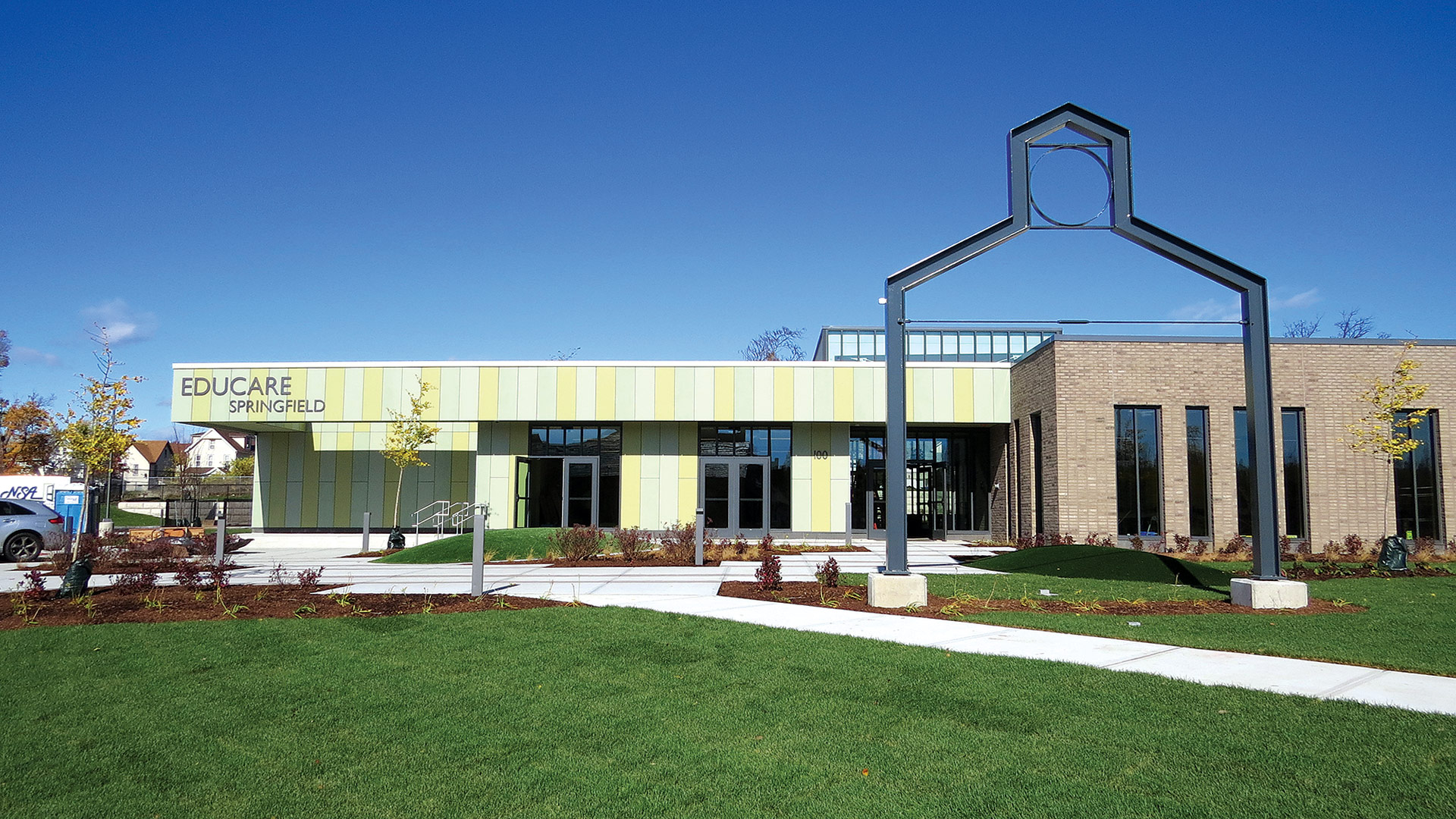
Coronavirus Special Coverage

Coping with a Lost Year

Gene Cassidy

Gene Cassidy says the Eastern States Exposition is much like the farmers it helps promote; one lost season can spell disaster.

As he talked with BusinessWest about the cancellation of this year’s Big E and how the Eastern States Exposition (ESE) will respond to that huge loss of revenue, Gene Cassidy stopped and pointed to a picture at the opposite end of the company’s large conference room.

“That’s J. Loring Brooks, son of Joshua L. Brooks, founder of the Eastern States Exposition,” said Cassidy, president and CEO of ESE. “He was the Big E’s chief development officer. When the Eastern States had rainy fairs or fairs where, for one reason or another, we didn’t make any money, he would get on the phone and fundraise; when we had difficult times, he would find the funding to make ends meet.”

J. Loring Brooks died in 1984, Cassidy went on, and it’s been a long time since the fair has needed to try to raise money in that fashion — and it would be difficult do it that way now. “That’s not an aircraft carrier you can turn on a dime,” he noted, adding quickly that he did hire a development officer last year, and is looking into various strategies to perhaps do some fundraising.

Action of various kinds — from a development campaign to borrowing to discovering new revenue streams — is needed because 2020 has been the rainiest of years — figuratively, if not literally — in the fair’s 102-year history, and the assignment of making ends meet, as he put, is going to be a very stern challenge.

“We’re not unlike the farmer — if he loses a season, he can go broke,” said Cassidy, who quickly went from that analogy to another one. “I cavalierly refer to the Big E as the church bazaar for this nonprofit; if you don’t have your annual fundraiser, how can you execute on your mission?”

The Big E, he noted — originally known as the Eastern States Industrial and Agricultural Exposition — was created to be that church bazaar, the method for raising money needed to support a mission of promoting agriculture.

Thus, the COVID-19 pandemic has done more than close the fair for the first time since World War II. It has put the Eastern States Exposition on precarious financial ground; put plans for rehabbing and modernizing some of the buildings on the grounds, especially the obsolete Coliseum, on ice; left large questions marks about how the ESE is going to respond to the agricultural community’s ongoing need for a platform; and even raised some doubts about the fate of the fair in 2021.

“We’re not unlike the farmer — if he loses a season, he can go broke. I cavalierly refer to the Big E as the church bazaar for this nonprofit; if you don’t have your annual fundraiser, how can you execute on your mission?’”

But while those at the Big E are certainly moving full steam ahead with planning for next year’s fair, they must also contend with a massive hole in the budget — the Big E accounts for 85% of the yearly revenue, and much of the remaining 15% (all the many types of shows on the books after mid-March) has been wiped off the calendar as well.

Grounds for Change

That makes this year decidedly different, said Cassidy, noting that, in a typical year, his staff would be on what amounts to cruise control as it enters the final six or seven weeks of lead-up to the Big E. This year, these employees are searching imaginatively for ways to generate revenue and close the budget gap.

“We’re in a phase now of trying to discover how we can do smaller types of events that can generate some resources in order for us to sustain ourselves through to next season,” he explained, noting that the fair, despite its wealth of space, buildings, parking, and amenities, is still limited in what it can do. Put another way, it’s limited by what it can’t do, according the governor’s reopening plan — bring large numbers of people together in close proximity to one another.

J. Loring Brooks

When he was the Big E’s chief development officer, J. Loring Brooks would get on the phone and raise money when the fair had bad years, usually as a result of weather.

Options, most of which involve keeping visitors in their cars and taking full advantage of the Big E’s sprawling, 59-acre main parking lot, include everything from a drive-in theater — a cost-benefit analysis is currently underway — to concerts to events like the recent ‘Taste of the Big E,’ a gathering that was eye-opening in a number of ways.
Indeed, the Taste, which involved visitors driving onto the Big E property and then staying in their cars to sample some of the food that would have been offered at this year’s fair, drew far more people than organizers were expecting, said Cassidy, adding that traffic was backed up the full length of Memorial Avenue. “People drove for hours to get here, and then they spent hours waiting in line to get in.”

Ultimately, the Taste helped convince Big E organizers that they simply couldn’t control the turnout for this year’s fair, said Cassidy, adding that the event showed that, if you open for the doors for something people want, they will come.

“When we saw the response to the food show, we knew there was no way to control the number of people on the fairgrounds for the Big E,” he explained. “And knowing that really helped make the decision that staging the fair would not in the best interests of the people who came.”

But the Taste also provided ample evidence that different types of revenue-generating events can possibly be staged at the fairgrounds during the pandemic. These won’t generate anything approaching the income the fair did, but they may help limit the flow of red ink in a year no one could have comprehended just five months ago.

“We’re in a phase now of trying to discover how we can do smaller types of events that can generate some resources in order for us to sustain ourselves through to next season.”

A drive-in theater is among them, said Cassidy, noting that, decades ago, there was one just a half-mile or so down Memorial Avenue, and other one on Riverdale Street. Drive-ins have staged something approaching a comeback during the pandemic, but the startup costs are considerable — $90,000 to buy the camera to project the movies, for example.

“We’ve done a lot of due diligence to discover if there’s a way we could actually turn a profit,” he noted. “That’s one of many things that are on the table.”

Another is the possibility of bringing carnival rides — which are not discussed anywhere in the reopening plan, according to Cassidy — to the fairgrounds. Others include finding new uses for the state buildings (or the grounds outside them), and staging concerts where attendees stay in their cars.

“There are some challenges to putting these on, and some limitations, but they’re a viable option for us,” he noted. “People want to get out to events like this, and a lot of entertainers are dying to work; they’ve lost a lot of opportunities, and they need to work.”

Daunting Challenge

While optimistic that some revenue streams can be created in the midst of the pandemic, Cassidy is also realistic and knows that, collectively, these efforts will generate only a fraction of what a solid Big E would.

“My goal is to get this organization through this very difficult time and run a Big E in 2021 that brings people together again,” said Cassidy, adding, again, that this will be a stern challenge not unlike that faced by a farmer who loses a year’s worth of crops.

Or a small fundraiser that loses its annual bazaar.

Those analogies might not seem appropriate for an organization, and an event, that brings 1.5 million people to the region every year. But for Cassidy, they work, and they illustrate just what he and his staff are up against.

—George O’Brien

Education

‘This Is Our Moment’

Sandra Doran

While the pandemic presents a number of challenges, Sandra Doran says, it might also create opportunities for Bay Path University.

Sandra Doran says her family has long been attracted to careers in education and the law.

One great-grandfather traveled from New York to Colorado and set up the first one-room schoolhouse in that state, she noted, while her grandfather was superintendent of a school district in New York City, and her mother was a music teacher. And her other great-grandfather was a bankruptcy lawyer, kept especially busy during the Great Depression.

So it’s logical she would take one of those career paths. Actually, she took both.

Indeed, after serving as chief legal officer for Shaw’s supermarkets, she later served as vice president, general counsel, and chief of staff at Lesley University in Cambridge. And it was that position that eventually inspired a full shift to higher education — although she always calls on her legal background — and put her on a path to … Bay Path University and its president’s office.

“At Lesley, I came to realize that higher education was my passion, and my calling,” said Doran, who’s been handed the attractive, but perhaps also daunting, assignment of succeeding Carol Leary and building on the strong foundation she built during a 25-year tenure that saw the college become a university and expand in every way imaginable.

She arrives at Bay Path at a critical juncture, when several powerful forces are colliding — stern challenges in higher education that started emerging years ago; the COVID-19 pandemic, which is exacerbating those challenges and creating new ones; a financial crisis; and a nationwide focus on racial justice.

“This is a historical leadership opportunity for all of us — how we lead through the months and years ahead is really going to define what kind of community we are, how resilient we are, and now adaptive and nimble we are.”

This collision of crises, as Doran called them, presents a real test — actually, several of them — but also opportunities for the school, and higher education in general.

“This is a historical leadership opportunity for all of us — how we lead through the months and years ahead is really going to define what kind of community we are, how resilient we are, and now adaptive and nimble we are,” said Doran, adding that she believes Bay Path is well-positioned to be a leader during this time of crisis, introspection, and profound change, and that she is looking forward to the challenge of helping it play that role.

As she talked with BusinessWest at a small table positioned on the lawn behind the college’s administration building, Deepwood Hall — a nod to social distancing and keeping safe during the pandemic — Doran talked about the college’s plans for reopening this fall. It will embrace what many are calling a hybrid model blending online and in-person classes, with far more of the former. The plan, overall, is to “de-densify the campus,” as she put it, with a limited number of students living on campus, all in single rooms.

But mostly, she talked about this convergence of crises and how, rather than be a roadblock or even a speed bump, it could serve to accelerate the process of Bay Path’s emergence as a leader not simply in remote learning — only she doesn’t call it that; she prefers ‘technology-assisted learning’ — but in guiding students to fulfillment of their goals and ultimate success in the workplace. And also accelerating the process of creating systemic change in how higher education carries out its mission.

For the school, this opportunity to further cement its reputation as a pioneer and frontrunner in remote learning has been confirmed by the large number of colleges and universities calling to seek assistance as they establish or build their own programs (more on that later).

And for higher education, the pandemic presents a unique if not entirely welcome (at some schools) opportunity to rethink and perhaps reinvent many aspects of a college education and put more (and much-needed) emphasis on cost, access, and pathways to success in the workplace, and less on the on-campus experience (more on that later as well).

For all of this, Bay Path is well-positioned, if not uniquely positioned, to grasp these opportunities.

“This is our moment at Bay Path,” she said with noticeable energy in her voice, “because we’ve always been that place where students come to further their career ideals, and we’re going to continue to provide that opportunity.”

For this issue and its focus on education, BusinessWest talked at length with Doran about what she ultimately called “an exciting moment in time,” and all the reasons that make it so.

School of Thought

When asked what appealed to her about Bay Path and its presidency, Doran said, in essence, that there was little, if anything, that didn’t appeal to her.

Indeed, she said the once-struggling two-year college that was resurrected and then taken to dizzying new heights during Leary’s tenure represents an opportunity that brings together her collective passions and many of the initiatives that have marked the latter stages of her career.

These include women’s education, technology and technology-assisted learning, entrepreneurship, and innovation.

Sandra Doran, seen here with a student

Sandra Doran, seen here with a student on Feb. 27, the day she was introduced to the campus community, embraces the challenge of building on the foundation built by her predecessor, Carol Leary.

“This opportunity is a perfect fit and really the culmination of all my professional work,” she explained. “I’ve had the opportunity to lead a women’s college, so I understand the value of a women’s education. But another part of my background involves adaptive learning and the power of online education to really bring out the best of everyone in terms of mastering the subject matter and ensuring that everyone has a voice. I’ve also led a software company and been an entrepreneur. This opportunity brings all that together, and that’s why it’s a perfect fit.”

A quick recap of her career to date will explain why she said that.

We start at Shaw’s, where Doran, in addition to her work as general counsel, oversaw the company’s portfolio of mergers and acquisitions, which included the acquisition of Star Market Inc.

Later, at Lesley, which she also served as general counsel, she came to that realization that higher education was a passion, one that led her to pursue and then garner the role of president of American College of Education, an online doctoral institution serving more than 3,500 students.

From there, while serving as an entrepreneur in residence at Stevens Institute of Technology in Hoboken, N.J., she served as the CEO of Castle Point Learning Systems, a Stevens Institute-supported educational technology startup that had developed an instructional framework for calculus, enabling students and teachers to develop a more robust foundation for higher-level mathematics.

Concurrently, she took a position as National Policy director for the New England Board of Higher Education, where, among other responsibilities, she created and implemented an innovative initiative for multi-state collaboration to increase educational attainment and access for students through online, hybrid, and distance education.

Her career then took another intriguing turn when she was appointed president of Salem Academy and College in North Carolina, the country’s oldest women’s college, founded in 1772. There, she put the school on firm financial footing, developed a strategic plan, and initiated several new programs, including an entrepreneurial makerspace in downtown Winston-Salem where students could work directly with the city’s innovation ecosystem.

As noted earlier, while education has become her career, she calls on her background in law on an almost daily basis, and finds that the two professions coexist effectively.

“One of the great roles of lawyers is to educate,” she explained. “It’s to educate clients, to educate themselves, to mediate, to bring people together, to critically analyze the data and synthesize the data, and communicate. Lawyers are problem solvers, except for the high-profile ones, which are litigators; most lawyers are solving problems.”

When a search firm called last year to gauge her interest in the Bay Path position, she responded enthusiastically, and for the reasons — and passions — mentioned earlier.

“I was familiar with the pioneering aspects of Bay Path — it was one of the first institutions to immerse themselves in the online education experience and understand what that could provide for our students,” she explained, adding, again, that she viewed this opportunity as the culmination of all the career work that had come before it.

Many schools don’t have an online presence at all, and so imagine their consternation when faced with this pandemic. It’s interesting that other liberal-arts colleges are reaching out to us and looking to us as being able to provide that kind of education.”

Since arriving on campus late last month, Doran, while working with staff on the reopening plan, has also been trying to meet with local leaders and the campus community alike — in COVID-mandated ways, especially phone calls and Zoom meetings.

It’s not the same as meeting people in person, but it’s been effective in that she’s getting to know and better understand the community the school serves. And this work continues with an initiative she calls “Let’s Come Together: Virtual Conversations with President Doran.”

“I’m eager to get to know my colleagues, and they’re eager to get to know me,” she said. “So these are conversations we’re conducting virtually, almost one a day — so faculty and staff have an opportunity to sit and talk and learn about each other. It’s a great opportunity for me to learn about our staff and faculty and what excites them about Bay Path, and, frankly, to learn about areas of strength and areas we need to improve.”

Course of Action

Doran was introduced to the Bay Path community on Feb. 27, just before the school sent its students home for the semester and essentially closed the campus. By the time of that announcement, it was already becoming clear that the approaching pandemic could alter the calendar and impact lives — but no one could really have predicted just how profoundly the landscape would change or how schools would be challenged by the virus.

As the story on page 17 reveals, schools have been spending the past several weeks carefully putting together reopening plans for the fall that incorporate a host of different strategies.

For Bay Path, the assignment, while not easy by any stretch, was made less complicated by what could be called the school’s head start when it came to online programs. Its first fully online graduate program was the MS in Nonprofit Management & Philanthropy, launched in 2007, followed by other online graduate programs for men and women and the fully online bachelor’s-degree program offered by the American Women’s College.

Bay Path’s plan, blueprinted with the help of a 75-member task force, calls for essentially cutting the number of students living on campus by half — down to roughly 200 — and conducting most courses, except those with some lab component, online. It’s a plan the school feels comfortable with because so many of its students were already learning remotely.

“It’s an environment where we’re making decisions with imperfect information — our environment is changing on a weekly basis, if not on a daily basis,” Doran noted. “So we’re going to be ready to pivot if we need to, but we feel strongly that we’ve got the right plan in place.”

This head start with remote learning has certainly caught the attention of others in academia, she added, noting those phone calls and e-mails seeking Bay Path’s assistance with online programming and inquiring about potential partnership opportunities.

“We’ve had several schools reach out to us to ask if they can enroll their students in our courses or think about ways we can partner,” she told BusinessWest, noting that inquiries are coming from institutions across the country. “Many schools don’t have an online presence at all, and so imagine their consternation when faced with this pandemic. It’s interesting that other liberal-arts colleges are reaching out to us and looking to us as being able to provide that kind of education.

“They want to learn from what we’ve learned,” she went on. “So it’s exciting to be in that position of being able to share what we know, what we’ve learned about how to provide the best opportunities for students.”

And these phone calls represent just one of the opportunities, a strange word to use in this climate, to arise from the pandemic, said Doran, adding that she chooses to look upon them in that light.

“We have an opportunity to rethink how we meet the needs of students whose ideals and thoughts around higher education are changing in the midst of everything that we’re dealing with,” she said. “So, just as the pandemic is impacting every single person in terms of how they think about their own career and their own lives, our students are doing the same thing.”

Elaborating, she noted that fewer than 20% of those attending college today are having what would be called a traditional college experience, meaning a four-year school and living on campus.

“The other 80% attend a very different — and have a very different — college experience,” she went on. “And one’s not better than the other, but I think there’s a new reality that higher education is embracing that’s focusing on the academic part of the experience, the part of the experience that enables students to have productive careers and move forward with their life goals and their life dreams.

“And that’s what Bay Path has always been — our mission is rooted in this idea that we want to provide career paths,” she continued, noting, again, that the school is well-positioned to embrace this new reality, as she called it, and this is reflected in enrollment numbers for the fall, which are quite solid at a time when many schools are struggling.

“We have — and this is another strength of Bay Path — a very diverse set of students,” she said. “We have students who are only online students, so they were never contemplating coming to campus, so we feel secure in those enrollments; we have graduate students, many of whom are online, so we feel secure in those enrollments; and our undergraduate enrollment is up for this fall in terms of deposits and commitments. We’re feeling very confident, and we’ve had a good response to our plan.”

Overall, the school is on solid financial ground, Doran said, and in a good position to withstand the challenges created by the pandemic.

“The finances around higher education are always challenging,” she explained. “The pandemic has certainly raised another level of gauze around all this, because it’s hard to see through and see what the next steps are. But we have a number of task forces looking at the long-term aspects, and, overall, we see some opportunities.”

Bottom Line

Looking ahead … well, Doran acknowledged it’s difficult to look very far ahead in the era of COVID-19.

Her immediate goals are to continue building on the foundation that Leary has built and develop new growth opportunities for a school that has come a long way in the past quarter-century.

And rather than somehow slow or stifle those efforts, this convergence of crises that greeted her upon her arrival may, as she said, actually serve to accelerate that process.

As she noted, “this is our moment.”

George O’Brien can be reached at [email protected]
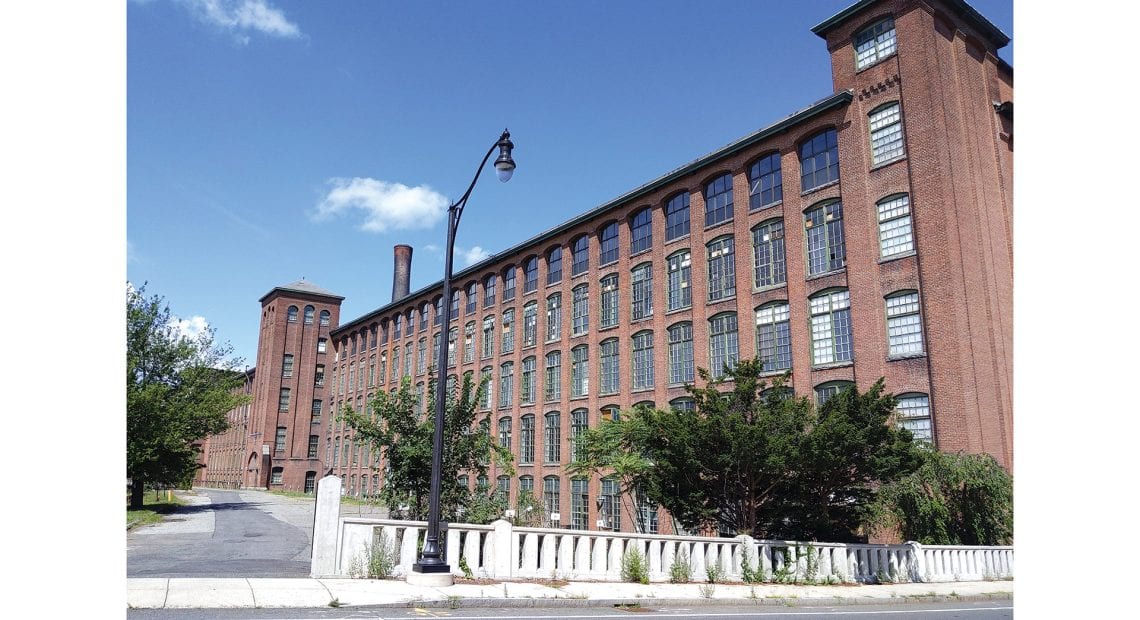
Health Care

Improved State

Dr. Andrew Artenstein

Dr. Andrew Artenstein says the state’s slow, cautious reopening has effectively blocked some of the paths COVID-19 might take, thus slowing transmission of the disease.

In many respects, Dr. Andy Artenstein says, the COVID-19 virus acts like water in the home in that, if there are leaks, it can go where you don’t necessarily want it to go and cause major problems.

“Water will always find a path,” Artenstein, chief physician executive and chief academic officer at Baystate Health, told BusinessWest. “But if you block off all the paths, you have a chance; it’s the same with the virus.”

With that, he worked to explain why it is that Massachusetts, more than most of the other 50 states at this particular moment in time, is seeing the number of hospitalizations and deaths stemming from the virus decline sharply. In short, and in his view, the residents of the Commonwealth are essentially, and somewhat effectively, blocking off the paths the virus might take.

“We live in a society where there’s free mobility — that’s one of the things we love about our society. But it’s also one of the things that puts us at risk when there’s a transmissible agent rooted in this society,” he explained. “And this one is clearly here; it’s clearly transmitted in our community. It has not gone away; it’s just that, if viruses don’t get transmitted from person to person … if the virus has nowhere to go, it puts a wall from that root of transmission. You start to block off transmission paths.”

This was Artenstein’s way of explaining why, as one looks at a map of the country charting cases, hospitalizations, and deaths from the pandemic, Massachusetts is colored or tan or pink, while so many other states, especially in the South and Southwest, are dark shades of red, indicating they are hot spots.

Robert Roose, chief medical officer at Mercy Medical Center, gave essentially the same account.

“Massachusetts, along with a few of the other states here in New England, like Connecticut, New Hampshire, and a few others, seem to be solid, if not shining, examples of how a state encompassing multiple different communities can effectively slow down the rate of transmission of the coronavirus,” he said. “More than 40 other states are seeing significant increases in numbers of new infections, while here, over the past several weeks, we have not seen that increase; rather, we’ve seen a plateauing at a very low level.”

“Massachusetts and other states now doing well have been cautious in giving guidance to residents about limitations on travel and quarantining of individuals who have come from other states where there are increasing numbers of infections.”

He punctuated those comments with some statistics from his facility. Indeed, he noted that hospitalizations stemming from COVID-19, which numbered in the 50s daily on average in April, the height of the surge in this region, were down in the 20s in May, then the single digits in June. Starting in early July, there were several days when there were no hospitalizations.

Clearly, the state is doing something right, or several things right, when it comes to blocking paths for the virus, and we’ll get to those. But this begs a number of questions — especially, ‘is this sustainable?’

The quick answer, said Roose and Artenstein, is ‘yes.’ But there are a number of caveats, especially as more segments of the economy reopen in more cities, including Boston, and as the new school year is poised to begin. In their view, the Commonwealth has acted prudently in not opening too much of the economy too quickly. Staying that course is essential, they said, adding that it appears the state is committed to the slow, steady, and safe method.

Meanwhile, travel is another key factor in this equation, both people from this state traveling to others and people from other states coming here — actions that create paths for the virus, rather than block them.

“Massachusetts and other states now doing well have been cautious in giving guidance to residents about limitations on travel and quarantining of individuals who have come from other states where there are increasing numbers of infections,” Roose said. “To me, that is likely to be the most significant factor going forward, because of the rates of infection in other parts of the country; interstate travel represents one of our most significant risks in terms of keeping our rates of transmission is this local community low.”

Dr. Robert Roose

Dr. Robert Roose says caution regarding travel will be one of many factors that will determine if the Bay State can continue its pattern of falling hospitalizations as a result of the pandemic.

But the biggest factor might be fatigue.

“It’s exhausting — for all of us; I’m not just talking about the healthcare side, I’m talking about life,” said Artenstein. “There are certain things that you just miss having as social human beings. But the longer you can sort of wait this out and stretch this out, the better off we’ll be.”

In other words, people can’t relax or think for a moment that maybe it’s time to start talking about the pandemic in the past tense.

As they talked about the state’s current status as a … let’s call it a cold spot for the virus, both Roose and Artenstein praised the Commonwealth’s approach to reopening, which has been described by both those supporting and criticizing it as slow and careful.

Pain Threshold

Artenstein had another word for it.

“It’s painful, because we all want to get back to a sense of normalcy,” he explained. “It’s exhausting that you can’t do what you like to do the way you used to do it, and eventually we will be able to. But this approach has paid dividends; you get used to a little bit of a new normal, but you also know that you’re moving toward something.”

Roose agreed.

“What I think Gov. Baker and the Executive Office of Health and Human Services have done very well is be cautious, rely very clearly and directly on the key data points, and move slowly but consistently through a phased reopening,” he explained. “In other states, governors had moved much more quickly, and we’re seeing the effects of that now; in many states, they’re seeing such significant increases that they’re moving backward and rolling back some aspects of their reopenings.

“It’s not to say that this same type of thing couldn’t happen here,” he added quickly. “But relying consistently on key data and reinforcing consistently the important public-health and safety strategies that we know are effective in reducing transmission — that has not wavered, and I think that has sent a very consistent and strong message to residents to continue to wear masks, be cautious with increasing your social circle, practice hand hygiene, and quarantine when you’re sick.”

As a result of the slow reopening plan and diligence with things like mask wearing, contact tracing, social distancing, and testing, the Commonwealth has effectively moved past the first wave of the pandemic — while other states have clearly not, said those we spoke with. It is now in what Artenstein called a “window,” where, he said, residents must be diligent about not backsliding when it comes to mask wearing, hand washing, keeping one’s distance, and other preventive measures, while also preparing for the second wave that most say is almost certain to come in the fall or winter.

“That’s just historically what pandemics do,” he explained. “They don’t all do that, but statistics will tell you that there will be at least a second wave if not more waves.”

What will those waves be like? It’s difficult to say at this point, said Roose and Artenstein, adding that a number of factors will dictate the level of infections and how well the healthcare community can respond to the next surge.

But in the meantime, and while still in this window, the state’s residents and business owners alike must continue to stay the course, the experts said.

“We still could do better in terms of how often people wear masks in pubic and follow the public-health recommendations,” said Roose, adding that state leadership must continue to reinforce those messages. “We know that when we give those recommendations and that guidance and it’s clear and connected to science, it helps, and it’s certainly important to be consistent about it, or people will have less inclination to follow them.”

Meanwhile, as the state proceeds with phase 3 of its reopening plan and eyes phase 4, testing will be another critical key to closing off paths the virus might take.

“I believe strongly that adequate capacity and widespread testing are critical for us to continue to move forward into phase 4 and into a state where the community is engaging as fully as it can,” Roose said. “That allows us to ensure that, if we do identify infections, we can mitigate the spread; widespread testing is really critical, and we’re not yet where we need to be, as state and as a country. We still could be doing more, and I think the ways we do testing will continue to get easier and more readily available, and that will help quite a bit.”

Artenstein agreed, but quickly noted that all the steps people have been taking — and hopefully will continue to take — only serve to slow or inhibit the spread of the virus. The virus is still there, and it will remain there until a vaccine is developed.

“You can temporarily shut down or limit transmission,” he said, “and then you have the chance for other things to kick in, such as therapies and better approaches to diagnosis and treatment. Those things take time, but they can get a chance to take root once you’ve already established those public-health principles.

“It’s pretty obvious that limiting public gatherings and staying the course has helped,” he went on, returning to the thought that, however painful and exhausting the last few months have been, the strategy moving forward for the state and all its residents has to be to continue to wait it out and, as he said, “stretch it out.”

Bottom Line

Turning the clock back 100 years, to the so-called Spanish flu, Artenstein said the second wave of that pandemic was more severe than the first in many parts of the country simply because communities eased off on restrictions and returned to what life was like before it struck.

“A lot has changed in 100 years — science, technology, people, etc.,” he told BusinessWest. “But one thing that hasn’t changed that much, in my opinion, is behavior. We may be able to further mitigate any future surge, just as we mitigated this surge, by adhering to public-health guidelines. If we can keep that up, and then get some help with testing, better contract tracing, better therapies, which will happen, and maybe a vaccine…”

He didn’t completely finish the thought and instead stressed that this ‘if’ is a very large one, and there are really no certainties when it comes to this strategy.

But the very best strategy at the moment, he stressed, is to string this out and close off those pathways the virus can take.

George O’Brien can be reached at [email protected]
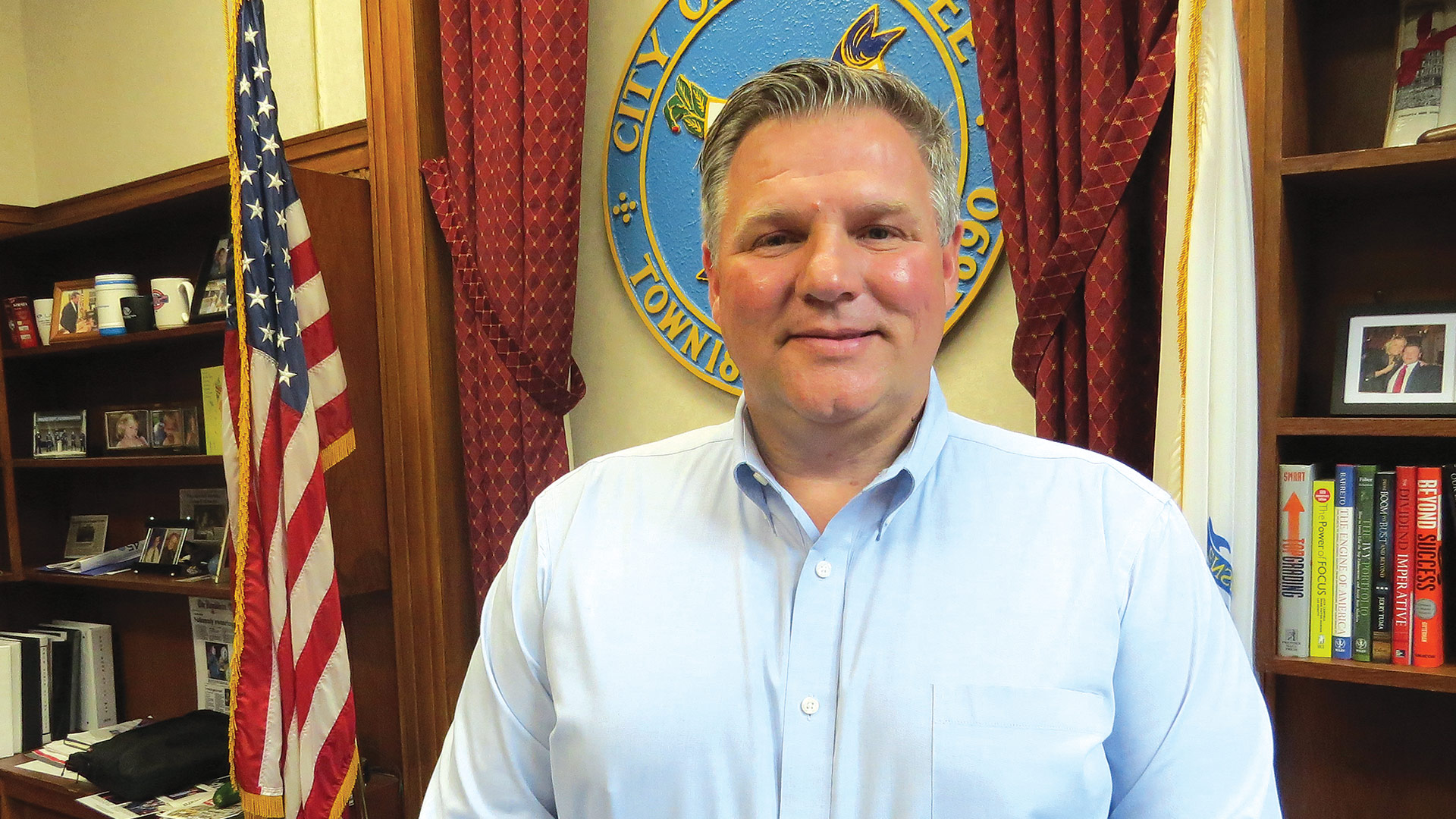
Sections Special Coverage

Reopen for Business

Cindy Olivio recalls the day in mid-March she and her colleagues left MGM Springfield after the governor announced that the state’s casinos would have to close as part of a general shutdown of non-essential businesses. At the time, she really thought it would be for just two weeks.

“That’s how people were talking — that’s what we all thought,” she recalled, noting that, by April, she was taking things week to week. And when the governor’s phased reopening plan was finally announced in mid-May, she fully understood that it would be early summer at the earliest before she was back at the casino — specifically, its South End Market, which she serves as assistant general manager.

“It was a long time to be out, and it’s good to be back,” she told BusinessWest Monday, as the casino reopened to the general public following a soft opening a few nights earlier.

With that, she spoke for most everyone on the floor that day, guests and employees alike.

It was a long time to be out, and while the casino looks very much the same as it did when it went dark back in March, there have been a number of significant changes, from plexiglass partitions on some of the games to signs on the floors and walls alerting people to stay six feet apart.

And they were on full display Monday as the media was given the opportunity to talk with some employees, and also some guests.

People like Darlene Lajeuneffe of Chicopee, who was there with her husband and other family members celebrating the couple’s 46th wedding anniversary. She was marking the occasion with a glass of champagne and some time on one her favorite slot machines.

“It was hard — we love it here,” she said of the nearly four-month shutdown of MGM Springfield, which she frequents maybe once a month, along with Mohegan Sun; she’s never been fond of Foxwoods. She told BusinessWest she was getting used to some of the new rules and protocols, especially distancing guidelines that generally prohibit people from sitting next to one another, which presented a dilemma.

Indeed, Lajeuneffe learned there was an area where family members could in fact sit together, but it did not include her favorite slot machine. So, faced with a choice, she was leaning strongly toward that machine and keeping family as least close by.

Such adjustments are part of the reopening, said Seth Stratton, MGM Springfield’s vice president and general counsel, who told BusinessWest on Monday that, so far, guests are noting the new rules, and adhering to them.

“We’re pleased with how willing customers are to understand and comply with the new measures,” he said. “There was some concern initially around the enforcement of mandatory facemasks when the discussion first came up several weeks ago. But things have evolved since, and customers are very willing to wear them. We’ve had virtually no enforcement issues with mask wearing.”

Stratton told BusinessWest that the company’s management team put a thoughtful plan in place for the reopening. First, there would be a soft opening, the weekend of July 11 and 12, to help ready staff for the full reopening on the 13th. And by staging that reopening on a Monday, this gave the staff several days to ramp up for the weekend, which has historically been the casino’s busiest time.

“The strategy we followed was to have a staggered opening so that, over the weekend, which might otherwise be a busy period, we had our invited guests so we could ramp up from Friday through Sunday, gradually increasing the capacity, and then open to the public on a Monday,” he explained. “That gave us the ability to stagger the opening and get folks back and employees back and get them comfortable in the new environment so that, by Friday or Saturday, our busiest period, everyone will have a week under their belt of the new policies and procedures.”

The casino reopened at one-third capacity, one of the stipulations set by the Masachusetts Gaming Commission, and while that number is limiting in many respects when it comes to revenue, it will help ensure the safety of guests and employees, which is the top priority at the moment, Stratton explained.

“It’s all about showing we can do this safely and responsibly,” he said. “We don’t want huge crowds right now; as we ramp up and as we get these protocols into place, we feel that, if the customers see it’s not that crowded, they will feel more comfortable and be more willing to return.”

—George O’Brien

Coronavirus Sections Special Coverage

Improved State

By George O’Brien

In many respects, Dr. Andrew Artenstein says, the COVID-19 virus acts like water in the home in that, if there are leaks, it can go where you don’t necessarily want it to go and cause major problems.

Dr. Andrew Artenstein

Dr. Andrew Artenstein

“Water will always find a path,” Artenstein, chief physician executive and chief academic officer at Baystate Health, told BusinessWest. “But if you block off all the paths, you have a chance; it’s the same with the virus.”

With that, he worked to explain why it is that Massachusetts, more than most of the other 50 states at this particular moment in time, is seeing the number of hospitalizations and deaths stemming from the virus decline sharply. In short, and in his view, the residents of the Commonwealth are essentially, and somewhat effectively, blocking off the paths the virus might take.

“We live in a society where there’s free mobility — that’s one of the things we love about our society. But it’s also one of the things that puts us at risk when there’s a transmissible agent rooted in this society,” he explained. “And this one is clearly here; it’s clearly transmitted in our community. It has not gone away; it’s just that, if viruses don’t get transmitted from person to person … if the virus has nowhere to go, it puts a wall from that root of transmission. You start to block off transmission paths.”

This was Artenstein’s way of explaining why, as one looks at a map of the country charting cases, hospitalizations, and deaths from the pandemic, Massachusetts is colored or tan or pink, while so many other states, especially in the South and Southwest, are dark shades of red, indicating they are hot spots.

Dr. Robert Roose

Robert Roose, chief medical officer at Mercy Medical Center, gave essentially the same account.

“Massachusetts, along with a few of the other states here in New England, like Connecticut, New Hampshire, and a few others, seem to be solid, if nt shining, examples of how a state encompassing multiple different communities can effectively slow down the rate of transmission of the coronavirus,” he said. “More than 40 other states are seeing significant increases in numbers of new infections, while here, over the past several weeks, we have not seen that increase; rather, we’ve seen a plateauing at a very low level.”

He punctuated those comments with some statistics from his facility. Indeed, he noted that hospitalizations stemming from COVID-19, which numbered in the 50s daily on average in April, the height of the surge in this region, were down in the 20s in May, then the single digits in June. Starting in early July, there were several days when there were no hospitalizations.

Clearly, the state is doing something right, or several things right, when it comes to blocking paths for the virus, and we’ll get to those. But this begs a number of questions — especially, ‘is this sustainable?’

The quick answer, said Roose and Artenstein, is ‘yes.’ But there are a number of caveats, especially as more segments of the economy reopen in more cities, including Boston, and as the new school year is poised to begin. In their view, the Commonwealth has acted prudently in not opening too much of the economy too quickly. Staying that course is essential, they said, adding that it appears the state is committed to the slow, steady, and safe method.

Meanwhile, travel is another key factor in this equation, both people from this state traveling to others and people from other states coming here — actions that create paths for the virus, rather than block them.

“Massachusetts and other states now doing well have been cautious in giving guidance to residents about limitations on travel and quarantining of individuals who have come from other states where there are increasing numbers of infections,” Roose said. “To me, that is likely to be the most significant factor going forward, because of the rates of infection in other parts of the country; interstate travel represents one of our most significant risks in terms of keeping our rates of transmission is this local community low.”

But the biggest factor might be fatigue.

“It’s exhausting — for all of us; I’m not just talking about the healthcare side, I’m talking about life,” said Artenstein. “There are certain things that you just miss having as social human beings. But the longer you can sort of wait this out and stretch this out, the better off we’ll be.”

In other words, people can’t relax or think for a moment that maybe it’s time to start talking about the pandemic in the past tense.

As they talked about the state’s current status as a … let’s call it a cold spot for the virus, both Roose and Artenstein praised the Commonwealth’s approach to reopening, which has been described by both those supporting and criticizing it as slow and careful.

Pain Threshold

Artenstein had another word for it.

“It’s painful, because we all want to get back to a sense of normalcy,” he explained. “It’s exhausting that you can’t do what you like to do the way you used to do it, and eventually we will be able to. But this approach has paid dividends; you get used to a little bit of a new normal, but you also know that you’re moving toward something.”

Roose agreed.

“What I think Gov. Baker and the Executive Office of Health and Human Services have done very well is be cautious, rely very clearly and directly on the key data points, and move slowly but consistently through a phased reopening,” he explained. “In other states, governors had moved much more quickly, and we’re seeing the effects of that now; in many states, they’re seeing such significant increases that they’re moving backward and rolling back some aspects of their reopenings.

“It’s not to say that this same type of thing couldn’t happen here,” he added quickly. “But relying consistently on key data and reinforcing consistently the important public-health and safety strategies that we know are effective in reducing transmission — that has not wavered, and I think that has sent a very consistent and strong message to residents to continue to wear masks, be cautious with increasing your social circle, practice hand hygiene, and quarantine when you’re sick.”

As a result of the slow reopening plan and diligence with things like mask wearing, contact tracing, social distancing, and testing, the Commonwealth has effectively moved past the first wave of the pandemic — while other states have clearly not, said those we spoke with. It is now in what Artenstein called a “window,” where, he said, residents must be diligent about not backsliding when it comes to mask wearing, hand washing, keeping one’s distance, and other preventive measures, while also preparing for the second wave that most say is almost certain to come in the fall or winter.

“That’s just historically what pandemics do,” he explained. “They don’t all do that, but statistics will tell you that there will be at least a second wave if not more waves.”

What will those waves be like? It’s difficult to say at this point, said Roose and Artenstein, adding that a number of factors will dictate the level of infections and how well the healthcare community can respond to the next surge.

But in the meantime, and while still in this window, the state’s residents and business owners alike must continue to stay the course, the experts said.

“We still could do better in terms of how often people wear masks in pubic and follow the public-health recommendations,” said Roose, adding that state leadership must continue to reinforce those messages. “We know that when we give those recommendations and that guidance and it’s clear and connected to science, it helps, and it’s certainly important to be consistent about it, or people will have less inclination to follow them.”

Meanwhile, as the state proceeds with phase 3 of its reopening plan and eyes phase 4, testing will be another critical key to closing off paths the virus might take.

“I believe strongly that adequate capacity and widespread testing are critical for us to continue to move forward into phase 4 and into a state where the community is engaging as fully as it can,” Roose said. “That allows us to ensure that, if we do identify infections, we can mitigate the spread; widespread testing is really critical, and we’re not yet where we need to be, as state and as a country. We still could be doing more, and I think the ways we do testing will continue to get easier and more readily available, and that will help quite a bit.”

Artenstein agreed, but quickly noted that all the steps people have been taking — and hopefully will continue to take — only serve to slow or inhibit the spread of the virus. The virus is still there, and it will remain there until a vaccine is developed.

“You can temporarily shut down or limit transmission,” he said, “and then you have the chance for other things to kick in, such as therapies and better approaches to diagnosis and treatment. Those things take time, but they can get a chance to take root once you’ve already established those public-health principles.

“It’s pretty obvious that limiting public gatherings and staying the course has helped,” he went on, returning to the thought that, however painful and exhausting the last few months have been, the strategy moving forward for the state and all its residents has to be to continue to wait it out and, as he said, “stretch it out.”

Bottom Line

Turning the clock back 100 years, to the so-called Spanish flu, Artenstein said the second wave of that pandemic was more severe than the first in many parts of the country simply because communities eased off on restrictions and returned to what life was like before it struck.

“A lot has changed in 100 years — science, technology, people, etc.,” he told BusinessWest. “But one thing that hasn’t changed that much, in my opinion, is behavior. We may be able to further mitigate any future surge, just as we mitigated this surge, by adhering to public-health guidelines. If we can keep that up, and then get some help with testing, better contract tracing, better therapies, which will happen, and maybe a vaccine…”

He didn’t completely finish the thought and instead stressed that this ‘if’ is a very large one, and there are really no certainties when it comes to this strategy.

But the very best strategy at the moment, he stressed, is to string this out and close off those pathways the virus can take.

George O’Brien can be reached at [email protected]
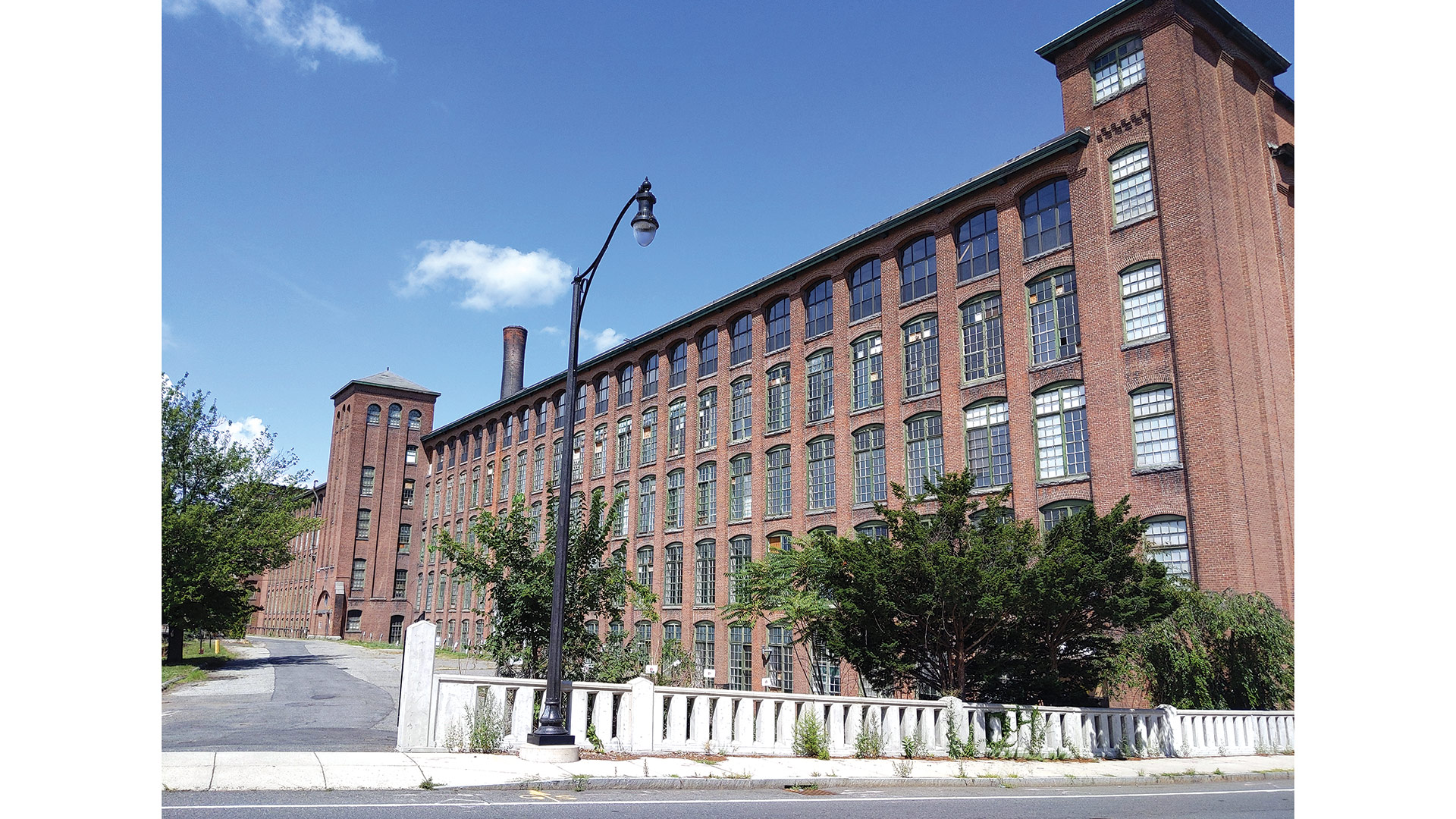
Cover Story Women in Businesss

In the Right Mold

Pia Kumar

Pia Kumar, ‘chief strategy officer’ at Universal Plastics.

Back in mid-March, Pia Kumar recalls, at the height of the first wave of the COVID-19 pandemic, there was a good deal of absenteeism at the five plants within the Universal Plastics fold — maybe 40% by her estimate, a number that spoke volumes about the high levels of fear and anxiety within the workforce.

So Kumar, who co-owns the Universal family of businesses with her husband, Jay, and has the title ‘Chief Strategy Officer’ printed on her business card, did what she says comes naturally to her.

She got on the phone.

“I called every single employee that was not here and talked to them about their concerns,” she told BusinessWest, noting that this was maybe 200 people across the five facilities. “In some cases, I talked to their wives, their husbands, their children; I wanted to understand what we could do together as a business to make sure they could come back in and do the essential work we were doing.

“We make the diagnostic machines used to test for COVID, so we needed to come back in and get working, but we needed to keep people safe,” she went on. “There was a lot of uncertainty, and we needed to establish trust.”

The company earned it by taking painstaking steps to comply with work regulations put in place in four different states — everything from masks and face shields to social-distancing measures and temperature checks, with most ideas coming from employees. And in a matter of a few short weeks, absenteeism all but disappeared.

“It’s strange — in some ways, I feel more connected to people these days. I think it’s because there’s been so much uncertainty and so many questions. There’s so many things we don’t know; it’s almost as if it [the pandemic] has given us a way to come together closer and talk about things more openly.”

Kumar’s phone calls, and those subsequent actions taken by the company, provide some valuable insight into not only her management style — although it certainly does that — but also into her approach to business and her specific, and very broad, role with the company.

Indeed, while she’s certainly involved with strategy, as that business card would indicate, and she is involved in virtually every aspect of the business, she’s predominantly focused on people and their well-being. And that goes for the community, as well as the Universal ‘family.’

This is evidenced by something she calls ‘office hours.’ These are the twice-monthly Zoom meetings she conducts with employees at each plant to help them feel more connected at a time when traveling to those plants is far more difficult and, well, people need a connection.

And she’s finding that, while Zoom is certainly a different experience than the in-person office hours she had been conducting until the pandemic (more on those later), they’re in some ways more effective.

“It’s strange — in some ways, I feel more connected to people these days,” she noted. “I think it’s because there’s been so much uncertainty and so many questions. There’s so many things we don’t know; it’s almost as if it [the pandemic] has given us a way to come together closer and talk about things more openly.”

It’s also on display in a number of programs and initiatives she’s helped introduce at the company that are designed to help individuals overcome barriers to employment and success in the workplace — and in life itself.

“We have someone in our HR department whose whole job is to make sure that we make people successful outside of work, so that they can be successful at work.” she said of efforts to help employees with everything from attaining a driver’s license to securing day-care services.

Pia Kumar shows off some of the company’s new face shields

Pia Kumar shows off some of the company’s new face shields with ‘skirts,’ one of many new products it has developed in the wake of the pandemic.

As for her own efforts in the realm of work-life balance, she said, simply, “I work at it.”

By that, she meant that she finds time for work, family, and to be alone for a few moments each day, early in the morning — time she spends meditating and planning, for the most part.

“I need to get my planning done to feel prepared for my day,” she explained. “I do a 10-minute meditation, then I spend 30 minutes planning, and then I take my dog for a walk; it works for me.”

For this issue and its focus on women in business, we talked at length with Kumar about her work with her husband to grow and expand Universal. But mostly, the talk was about people and helping them handle all that work and life can throw at them — even a global pandemic.

Clear Intentions

As she talked with BusinessWest in the company’s recently opened corporate offices, located next door to the Holyoke plant on Whiting Farms Road, Kumar showed off a display of one of the latest additions to the company’s portfolio of products.

These are face shields — which the company started making a few months ago to help meet demand for personal protective equipment within the region — that feature what she called ‘skirts.’

Designed specifically for teachers, these customized products allow for open communication without muffling the voice or hiding expressions — things masks can’t do — while providing more protection than a common face shield.

“You can wear it all day — you’re fully covered, you’re fully sealed,” she said while demonstrating the product, noting there are several styles, including models invoking Halloween and Christmas, and another promoting breast-cancer awareness. Response has been good, she noted, and there are ongoing discussions about perhaps making such shields for children.

These PPE products are part of the company’s pivoting efforts during the pandemic, she explained — a way to assist the community and especially the healthcare and education sectors while also keeping employees working at a time when many traditional customers, including those in aerospace and medical-device manufacturing, have scaled back as a result of the pandemic.

And such efforts are among the current focal points for the Kumars, who acquired Universal Plastics roughly eight years ago — she dates the transaction to the birth of their first child — from long-time owner Joe Peters. Flashing back to that purchase, Pia said the couple, who met while they were both working in finance in New York after graduating from college, were looking for a challenge they could undertake together.

“We had always had this dream to someday own and run a small business together,” she said. “We just liked the idea of building something, we liked the idea of having autonomy, we liked the idea of taking something, growing it, and making it our life’s work.”

Pia Kumar, seen here reading to children at the Morgan School in Holyoke

Pia Kumar, seen here reading to children at the Morgan School in Holyoke as part of the company’s Link to Libraries sponsorship, says her discussions with employees have helped her understand the many barriers that people face when it comes to succeeding in the workplace.

And that’s exactly what has happened with Universal, a company launched by Joe Peters’ father in Chicopee and eventually moved to Holyoke.

Indeed, the Kumars have added four other companies over the past several years, with the goal of attracting different types of customers and doing more for them. Expansion efforts started with the acquisition of a competitor, Mayfield Plastics in Sutton (since renamed Universal), an operation similar to the one in Holyoke.

“We offer a product called custom thermoforming,” she said of the Holyoke facility. “It’s good for small volumes, but as some customers ramped up, we would lose those customers. Then we started thinking about how we could keep that customer for a longer life cycle, and we started looking at injection molders.”

This led to the acquisition of Sajar Plastics in Middlefield, Ohio in 2018, and the subsequent addition of a blow-molding facility in Pennsylvania that had a strong focus on medical-equipment manufacturing — steps that have greatly diversified the corporation and opened the door to new types of opportunities.

While Pia is certainly involved with all aspects of the company, especially short- and long-term strategy, she told BusinessWest that people are her main focus, and it’s a role she believes she’s well-suited for.

“I try to spend a lot of time with employees; it’s part of what my focus is with the company,” she explained. “I like to really get out there and talk to people and really understand what our people are saying and thinking, and what their fears are.”

She traditionally did this through those aforementioned office hours — the in-person variety, especially in Holyoke, where she would walk the floor every day and talk with people. With the other plants, she would make a point of getting out to each at least once a month.

But COVID-19 changed all that, as it has many other aspects of this business — from the products being made, like those face shields with skirts and plastic dividers for automobiles (similar to those found in cabs), to the precautions being taken to keep employees safe.

Shaping Core Values

What hasn’t changed, especially during these trying times, is the company’s — and especially Pia’s — efforts to help employees overcome those barriers she mentioned.

And there are many of them, she went on, adding that a good percentage of the company’s employees are single mothers, who faced a number of hurdles before the pandemic and now face even more. She came to understand these hurdles over time, she said, and it was a real learning experience.

“Before we came here, we lived in New York City, we worked in finance, we worked in venture capital,” Kumar explained. “We were doing things with a group of people who had a lot of opportunities; they went to certain schools and had the right types of jobs and the right kind of résumés. Coming here and working in manufacturing gave me an understanding of the barriers that people face that I never had.

“I was in many ways taking for granted things like childcare and transportation and having access to affordable education,” she went on. “These are really, really good people who want to come in every day and do a really good job, but these are real barriers that they face. It’s not a question of how motivated they are or how ambitious they are — there are just structural barriers that people face that I became attuned to when I talked to my employees.”

“We had always had this dream to someday own and run a small business together. We just liked the idea of building something, we liked the idea of having autonomy, we liked the idea of taking something, growing it, and making it our life’s work.”

This understanding of the issues has translated into policies regarding attendance and other matters that Kumar considers worker-friendly.

Elaborating, she said the company has explored such things as ride-sharing and on-site day care and have encountered significant barriers to success. What has worked, she noted, is talking with people to understand their specific situations, and then making accommodations when and where they are practical.

“Our single mothers are some of our best workers,” she told BusinessWest. “And understanding that and working with that population to make sure that they have the tools they need to be set up for success became personally important to me.”

It was through her work with employees to understand and then help remove barriers that led to her involvement with a number of area nonprofits and institutions.

That list includes Link to Libraries, the nonprofit that fills school library shelves and encourages reading by placing area community leaders in the classroom to read — Universal Plastics sponsors the Morgan School in Holyoke, which many of the company’s employees attended — as well as the Women’s Fund of Western Massachusetts, Bay Path University, and Springfield Technical Community College, which she serves as a foundation board member.

She’s become so enamored with STCC manufacturing graduates that she has a standing rule with her operations manager: “if someone comes to us from STCC, you have to give me a reason not to hire them, because they’re all people who have pulled themselves up by their bootstraps, and they just need an opportunity. And that’s the kind of company we are; that’s the kind of company we need to be. We need to be the kind of company that gives people a chance, and we need to do it over and over again.”

As for her own professional development, Kumar said she doesn’t have a coach, per se, although her husband might count as one. But she does read quite a bit on the subject.

Pia Kumar, seen here with coworkers at the company’s Holyoke plant

Pia Kumar, seen here with coworkers at the company’s Holyoke plant, says that, while she’s focused on all aspects of the business, connecting with employees and helping them address challenges has become her primary focus.

What she does have are mentors. She listed Susan Jaye Kaplan, founder of Link to Libraries, and Dianne Fuller Doherty, retired business owner and director of the Massachusetts Small Business Development Center’s Springfield office — both winners of BusinessWest’s Difference Makers award.

“I’m not afraid to ask for help; I’m not afraid to admit I don’t know something,” she said, adding that she believes good managers share these traits. “Feedback is a gift, and I firmly believe, if you don’t want to know the answer, then don’t ask the question. But if you ask the question, you need to be able to stomach the answer.”

When asked about how she approaches the broad assignment of achieving work-life balance, she said simply, “I work at it.”

“These are really, really good people who want to come in every day and do a really good job, but these are real barriers that they face. It’s not a question of how motivated they are or how ambitious they are — there are just structural barriers that people face that I became attuned to when I talked to my employees.”

“I spend a lot of time planning, I delegate a lot, and I am very comfortable with having a list of things I wanted to get to but didn’t at the end of the day,” she explained. “There are days when the company is the most important thing — when COVID first happened, we needed to make our employees safe. And then, there are other times when it’s more important that we’re there for our children. My mother is having surgery next week, so that will be the focus then.

“I feel very lucky that I have a supportive partner who helps me manage all these things,” she went on. “But we also have a really great team. We’re not the experts — we didn’t come in with a deep background in manufacturing, and that’s why we keep people from our acquired businesses. Our job is to take all the information and provide the right vision.”

Parts of the Whole

Summing up her approach to her broad role at Universal Plastics, Kumar said, “my biggest failure as a leader is when someone can’t tell me what they really think; if they can’t tell me what they really think, we have a problem.

“I encourage people debating and saying ‘no, this is how we should be doing it,’” she went on. “And when there is that open communication, there’s trust, and that allows me to do more, and the more we can grow as a business.”

Open communication. Trust. Helping employees overcome barriers. These are the keys to success at this company — and any company, said Kumar, stressing, again, that four-word phrase she used in connection with all these matters: ‘we work at it.’

George O’Brien can be reached at [email protected]
Coronavirus

Responding to COVID-19 Has Been Hair-raising to Say the Least

Judy Puffer

Judy Puffer, founder and owner of Puffer’s Salon & Day Spa in Westfield

Judy Puffer knows she’s ready for a vacation. What she doesn’t know is whether she’s going to get one any time soon.

With that, she speaks for the vast majority of business owners and managers coping with everything the COVID-19 pandemic is throwing at them. In short, shutting down the economy was anything but a break for most people in business, reopening was exhausting on many levels, and doing business now is … well, anything but business as usual or what life was like before any of us heard of that now infamous name followed by a number.

“I was working hard behind the scenes — probably harder than when we were open,” said Puffer, founder and owner of Puffer’s Salon & Day Spa in Westfield, who told BusinessWest that the past three and a half months have easily been her most trying in business. And while most all aspects of that business are now open again, getting here wasn’t easy, and challenges remain.

Replaying the tape from the past 100 days or so, she recounted challenges ranging from shortages of needed supplies and encounters with price gouging to lack of guidance from the state and federal governments regarding how and when reopening would occur, to clogged phone lines once the ‘open’ sign was back on the door.

Some of this she could see coming, like those busy phone lines, but most of it she couldn’t, and as she retells her story, one can sense the exhaustion, exasperation, and, yes, relief in her voice now that most of the really hard stuff is in the past tense. Or so she hopes.

Turning the clock back to March 23, Puffer said from the day the shutdown order was given, the focus turned to reopening. And there were challenges everywhere, including this state’s slow, cautious approach — which actually turned out to be a kind of blessing in disguise, although she didn’t use those exact words.

“It was obstacle after obstacle after obstacle just trying to get set up to open. Governor Baker did a great job with all this, but he gave us very little notice; he said, ‘OK, you can open, but you have to have these protocols in place.’ It was like setting up a whole new way to do business, and we weren’t given much time to do it.”

“One of the things that really helped me was being part of the Aveda Corporation,” she said, referring to the Minneapolis-based supplier of high-end health and beauty products that has affiliated with salons across the country. “The company immediately started owner calls, two a week that ran for an hour to an hour and a half; what they would do is get people from a variety of states on these webinars. That was huge because we were getting feedback from people who were opening in Georgia about the challenges they were facing; we were getting people from California who were still closed, talking about what they were doing to get open; we heard from people in Florida, Colorado, Minnesota, New York.

“All this really helped me,” she went on, “because there wasn’t really any guidance from this state from anyone. Getting that help from Aveda was huge because I could then take what these states were doing and put it into my culture and kind of be prepared.”

Elaborating, she referenced everything from shampooing customers — some states allowed it, while others didn’t — to blow-drying hair (again, some allowed it, others didn’t); from taking customers’ temperatures when they walked in the door to learning about a company that came up with plexiglass dividers on wheels to place between stylists’ stations.

The goal was to be as prepared as possible, and all those webinars certainly helped.

What also helped was some advice to think outside the box when it came to needed supplies, which she did after finding that items she ordered in March were simply not going to arrive. She managed to buy some alcohol for cleaning from another business in Westfield, spray bottles from another business owner, and a timely referral from an area dentist on where to procure thermometers in just a few days.

“It was obstacle after obstacle after obstacle just trying to get set up to open,” she recalled. “And we started the minute we closed. Governor Baker did a great job with all this, but he gave us very little notice; he said, ‘OK, you can open, but you have to have these protocols in place.’ It was like setting up a whole new way to do business, and we weren’t given much time to do it.”

The company reopened its salon the day after Memorial Day, with the salon aspects of the businesses opening a few weeks later, under the second stage of phase 2 — again, with very little time to prepare. Now, all but a few of the many services are available, with the rest, like the sauna, to come in phase 4.

Puffer says she’s managed because she was able to learn from others through those webinars and by anticipating what would come next so she could be ready for it.

It’s been a trying — and very tiring — experience. And that’s why she’s more than ready for the vacation she’s not likely to get any time soon. u

—George O’Brien

Coronavirus

For This Springfield Business, Better Times Are on Tap

Ray Berry

Ray Berry, seen here at the site of White Lion’s new facility in Tower Square, now under construction, says the pandemic impacted virtually every aspect of his business.

From the beginning of the pandemic, Ray Berry’s White Lion Brewery was deemed an essential business by the state’s governor.

That means it was allowed to remain open when many others had to close amid efforts to flatten the curve and relieve the tension on the region’s healthcare system.

But as any other venture on that large list can attest, ‘essential’ does not mean free of challenges, headaches, anxiety, and uncertainty about what might come next.

Indeed, there’s been plenty of all of those things for this Springfield-based company that was looking toward 2020 as a watershed year, and still is in at least some respects.

Especially with plans for a much-anticipated taproom and accompanying restaurant in Tower Square — specifically the former Spaghetti Freddy’s site — now moving forward again after a halt to most forms of construction during the spring.

“Pre-COVID, we were really ramping up and starting to fire on all cylinders relative to sales and construction — we were about to onboard another salesperson and were also looking to obtain another vehicle and perhaps another part-time person to deliver our product,” he told BusinessWest. “And then … the pandemic hit.”

And it hit hard, impacting the company from “front to back,” as Berry put it.

“Pre-COVID, we were really ramping up and starting to fire on all cylinders relative to sales and construction — we were about to onboard another salesperson and were also looking to obtain another vehicle and perhaps another part-time person to deliver our product. And then … the pandemic hit.”

By that he meant virtually every aspect of the business, from the closure of the hundreds of bars and restaurants (as well as MGM Springfield) that sold White Lion to a halting of construction work on the brewery; from the canceling of high-profile events where the brand had a presence, such as the Holyoke Road Race, to the suspension of the beer gardens the company has hosted in downtown Springfield and Westfield during the summer and fall months.

“It was just like a crash — it all happened at once within a 48-hour period when the state and federal governments stepped in and put restrictions in place,” he noted, adding that, as sales plummeted (only liquor stores, also deemed essential, remained as a distribution point), the company had to lay off some of its employees in stages and figure out how to manage with those who remained.

White Lion has been helped by assistance programs on a number of levels, from the federal Paycheck Protection Program to the local Prime the Pump initiative created by the Development Department in Springfield, said Berry, adding that this help, coupled with the remaining business from liquor stores, enabled the company to stay on its feet during those brutal spring months.

And as the state continues to reopen businesses, the outlook for White Lion continues to brighten. Restaurants have reopened across the region, and the state’s casinos have been given the green light to open their doors, although MGM Springfield has not given a specific date when it might do so. And work has resumed on the project in Tower Square, and Berry is projecting that his crew can be in and brewing beer by the end of this month.

“The taproom component is under construction now,” he went on, “and we hope that by mid-August, the taproom piece, as well the kitchen piece, will be complete, and that by the end of August or early September we can start welcoming people into the space.”

Meanwhile, White Lion has recalled most of its seven employees and expects to be “whole” in that regard by late July, he said.

Projecting beyond the next few months is difficult, but Berry believes the company will be able to open its beer gardens in late August or early September, noting that these ventures will be part of phase 3 of the state’s reopening plan.

Looking back — and ahead — Berry, echoing countless other business owners across every sector of the economy, said the pandemic has provided a stern test, one he believes his team is passing through determination and imagination.

“It’s been a challenge in every way you can imagine,” he told BusinessWest. “It’s just a predicament that we’re in, and we have to pivot and continue to find ways to remain resourceful and efficient for the benefit of the sustainability of the company.

“I always said that we’re all resilient as people,” he went on. “And there’s always going to be a light at the end of the tunnel. We don’t know how long that tunnel may be, but there will be a light, and we’re starting to see some of that that now.”

—George O’Brien

Coronavirus

At This School, Pandemic Has Been a Real Learning Experience

Brian Easler says Wilbraham Monson Academy

Brian Easler says Wilbraham Monson Academy was perhaps better prepared for the pandemic than some other institutions, but pivoting to online learning was still a stern challenge.

Brian Easler still recalls the name of the briefing staged by the Centers for Disease Control in Washington, D.C. more than a decade ago: “The Impending Pandemic.”

Actually, what he remembers even more was the subtitle to the program: “It’s Not a Matter of If, It’s a Matter of When.”

He took the content to heart, and because of that, he believes Wilbraham Monson Academy (WMA), which he serves as head of school, was in some ways better able to handle the arrival of COVID-19 in mid-March.

“We had prepared pretty well for something like this, actually,” he told BusinessWest. “That was a three-day workshop I attended in Washington led by some of the country’s leading epidemiologists. I came back to the school with a lot of good information on how to prepare.”

Elaborating, he said that, because of that warning, the school was well-stocked with what everyone knows now as PPE, and there were plans already in writing for several different scenarios depending on when in the school year the pandemic actually hit.

Such preparation certainly didn’t make the closing of the campus to all but a few international students who simply couldn’t get home, or the transition to remote learning, easy. But it probably made it easier, said Easler, comparing what has transpired over the past several months to a military operation — and he should know, having served in the Army Airborne Rangers.

“You’re getting swept up in something bigger than yourself, where there’s risk involved and a degree of planning,” he explained. “And the decision making — the emergency decision-making process — is much different. During normal times, a decision might be very difficult to make; during an emergency, that decision becomes very easy. We wouldn’t normally turn our school meeting space into a second dining hall — that would be a big decision during normal times. But under these conditions, it was an easy decision to make.”

“We had prepared pretty well for something like this, actually.”

Flashing back to March — and then further back to what he heard all those years ago — Easler said the pandemic did not hit quite like those experts projected it would.

“What tripped up us a little bit is that the CDC was anticipating a pandemic that would be fast-moving,” he explained. “We were prepared for three weeks; that was fine when it came to PPE because all the students went home. But it didn’t help us with transition to an online education program; we had to literally make that up on the fly during spring break.

“In the end, it’s a good thing it wasn’t a fast-moving pandemic, because fast-moving also means really deadly,” he went on. “We were planning for a three- or four-week event, as opposed to a 12-month event, which is more like what we’re looking at. But as a school we saw the signs early, and we paid attention to the right things and the right information. When the students were getting ready for spring break, we told them to bring their laptops and books home with them and to be prepared in case we were not able to return for classes.”

Overall, that transition to remote learning went smoothly, he went on, because of the tight, close-knit nature of the WMA community and the hard work and dedication of staff and students. And these elements are also facilitating efforts to plan for the fall semester, which will start at its traditional time in early September and feature a hybrid model that mixes in-class and remote learning.

“We can simultaneously run classes on campus for the faculty and students who can be on campus, while students and faculty and who cannot be on campus can still synchronistically participate in the same program,” he explained. “It’s fluid, it’s very flexible, and, quite honestly, it’s the future of education anyway. We wish it didn’t take an event like this to move us in this direction, but we’re happy to be moving in this direction — it’s good teaching.”

Looking ahead to the fall, Easler said enrollment, which is traditionally roughly 400 students, remains steady, and, overall, the school may see its numbers rise due to uncertainty among parents about just what the public-school environment might look like come late August or September.

“We’re seeing a little bit of an uptick in local interest,” Easler noted. “I’m speculating, but I think the public-school systems are going to face some significant challenges, and they don’t necessarily have the space resources that we do — we’re structured much like a small college campus with multiple buildings, lots of outdoor space, and a number of spaces that, even though they’re not used as classrooms, can be used as socially distanced classrooms; we have a lot of advantages over public schools.”

Whether this interest locally translates into a bump in enrollment remains to be seen. But what is already clear is that early and effective planning has paid off for this venerable institution.

And it was necessary because the planners of that program in Washington all those years ago were right; it was a question of when, not if, a pandemic would arrive.

—George O’Brien

Coronavirus

Growing Need for Tents Is Helping Company Through a Trying Year

Greg Jerome stands by one of the tents

Greg Jerome stands by one of the tents his company supplied to the High Street Clinic in Springfield, an example of how the pandemic has created some opportunities while robbing the company of many others.

Greg Jerome didn’t want to get into any specific revenue numbers, but he made it clear that the COVID-19 pandemic has made this a year to forget for his business, Westfield-based Jerome’s Party Plus.

But he also made it clear that, if not for certain aspects of the pandemic, the numbers would be even worse.

Indeed, for this venture, and others like it, tent rentals are a big part of the portfolio. And while the pandemic has wiped all kinds of tent-worthy events off the calendar — from weddings to graduation parties to town gatherings like ‘taste of’ events — it has also driven considerable need for this item, especially over the past several weeks as sectors of the economy and specific types of businesses began to reopen.

That list includes restaurants, summer camps, and even churches, said Jerome, president of this family-run business that has 200 tents in its inventory, noting that his crews have been kept busy putting up tents in recent weeks, and not so much taking them down, because this year, when a tent goes up, it stays up for a while —perhaps the whole summer and beyond.

“We have more than 8,000 chairs, 800 tables, stages, dishware, glassware, flatware, linen, and many other items that have all been collecting dust for three months now.”

“And that’s just one of the things that makes this year very different,” he told BusinessWest, noting that going back to March, when he first installed a tent for Baystate Health for COVID-19 testing, the company has been involved with some unique undertakings.

However, he made it clear that, while he’s renting out tents, there is still a good supply available in the warehouse. Meanwhile, he’s not renting out much of anything else.

“We have more than 8,000 chairs, 800 tables, stages, dishware, glassware, flatware, linen, and many other items that have all been collecting dust for three months now,” said Jerome, adding that, while there is hope that some of these items may soon get back into circulation, the picture was further clouded by the cancelation of the Big E for 2020.

“The Big E cancellation will be our greatest loss of revenue this year,” said Jerome, noting that the Eastern States Exposition is his biggest customer and the fair is by far his biggest single event. “The cancellation of the fair certainly took the wind out of our sails; we always get excited during the push to install 150 tents and 3,500 chairs.”

For now, Jerome said his company is trying to make the most of the sudden, and still-surging, need for tents as businesses and institutions search for ways to carry on during the pandemic — often by moving activities and services outdoors. And his large inventory, especially when it comes to the bigger models, has certainly helped in this regard.

New and certainly non-traditional tent clients include several restaurants, including Shortstop Bar & Grill in Westfield, Tucker’s in Southwick, Captain Jimmy’s in Agawam, and Masse’s in Chicopee, among many others, as well as Blessed Sacrament Church in Westfield, which held services outdoors for several weeks and still uses a tent for those uncomfortable with going inside. The company has already supplied tents for several nonprofits with summer day programs, including the Greater Westfield YMCA and a few Boys and Girls Clubs, as well as the West Springfield Parks & Recreation Department.

It has also provided tents and other items for a number of drive-in COVID-testing sites operated by Baystate Health, including facilities in Westfield, Ware, Greenfield, and three locations in Springfield. This work goes back to mid-March when the company was hired by Baystate Health to create what Jerome called “cubicles” inside the new triage facility erected just outside the emergency room.

Elaborating, he said the company provided the piping, and another vendor supplied corrugated boards that were attached to the framework to create 33 private spaces.

For the drive-in sites, the company created a model that was eventually used at all six locations, facilities that also included a greeters’ tent and a heated tent-within-a-tent with clear sides that served as a type of nurses’ station.

These intriguing projects have certainly helped, but those thousands of items gathering dust and not seeing the light of day are the bigger story.

And they explain why this is certainly a different kind of year, when the pandemic has generated some business, but taken away so much more.

—George O’Brien

Coronavirus

Chicopee-based Company Is Still Trying to Get Out of First Gear

Dennis King

Dennis King says the pandemic brought bus travel to a near standstill, impacting every type of customer in the company’s portfolio.

Dennis King says he’s experienced a number of subtle, but mostly not-so-subtle, cruelties stemming from the COVID-19 pandemic.

Starting with those low gas prices from a few months back and the fact that no one could really take advantage of them.

“Gas was $1.25 … and you had nowhere to go,” said King, president of Chicopee-based King Ward Bus Lines, who used that statement in reference to individuals and families — and just about every one of his customers.

Indeed, ‘nowhere to go’ applied — and still applies — to college and high-school sports teams, an important client base in the company’s portfolio. And to people seeking to visit one of the region’s casinos. And to groups heading to Red Sox games. And to people looking to go to a show in the Big Apple. And to classes going on school field trips.

All those sources of revenue dried up, seemingly overnight, for this family-owned business, said King, adding that the last bus left King Ward’s garages on March 14, and the company’s busiest time of the year was essentially wiped off the calendar.

“And our July is kind of on hold, because we don’t have any trips booked, unless something happens with the casinos,” he told BusinessWest, noting that, while the Connecticut gaming palaces are open, they are currently not accepting bus groups. The Bay State’s casinos are set to open early this month, but it isn’t known if they will accept bus groups.

As for the future … it is a giant question mark, he said, noting that, while the Red Sox may start playing again, it’s not known if there will be any fans in the stands. Meanwhile, Saratoga Raceway in New York and countless other venues that people travel to by bus are closed for the summer or the rest of the year. Meanwhile, no one really knows if there will be any high-school and college athletics this coming fall, or any school field trips.

“Gas was $1.25 … and you had nowhere to go.”

And then, there’s the Big E, another important source of revenue for the company. It’s been canceled for 2020, leaving another huge hole in the budget that will be difficult to fill .

Faced with idle buses, King said he laid off or furloughed all but a few of his employees back in the spring. He’s looking to bring some office staff and mechanics back on Aug. 1 and hopes things get busier come September.

“We’re banking on college athletics coming back,” he noted. “If there is a light at the end of the tunnel — and that’s if — it would be schools getting back in session.”

As for the casinos, and especially MGM, King Ward was given what was at the time (the summer of 2018) thought to be a game-changing contract to bring people to the casino from various destinations across the region. To say things haven’t worked out as planned would be an understatement, said King, noting that the service — subsidized by MGM at the start — was scaled back only six months after the casino opened in August 2018, and it eventually evolved into a door-to-door service using vans rather than buses, with those choosing this option getting credits for the gaming floor and lunch — what amounted to what King called “a free ride to the casino.”

“But it never really took off,” he said, adding quickly that the service does have the potential to grow, and, like many others, he’s watching and waiting to see if and when the casino will reopen.

There will be a lot of watching and waiting for this company, which, like so many others, is dependent on other businesses and institutions for its livelihood. The pandemic has impacted all of them, and, as noted earlier, the trickle-down, in this specific case, was much more like a torrent.

So much so that King was one of many within the bus industry who ventured to Washington, D.C. several weeks ago to lobby elected leaders for financial assistance for a sector he said is often overlooked within the larger transportation industry.

“I don’t expect to be busy again until Labor Day, unless something happens and the casinos start accepting buses,” he told BusinessWest, adding that ‘busy’ is certainly a relative term in 2020, and there are myriad factors that will determine when, and to what extent, the buses start rolling again.

Still optimistic, despite a gloomy year to date, King said people are calling and asking about service to the casinos.

“People are ready to get out — they’ve been cooped up for a long time,” he said, adding that he hopes there will soon be places to take people.

Gas certainly won’t be as cheap as it was back in March, but all things considered, that’s certainly one of the more subtle cruelties stemming from the pandemic.

—George O’Brien

Coronavirus

‘The Place Where COVID Goes to Die’ Is Still in Recovery Mode

Rebecca Merigian

Rebecca Merigian says the pandemic, by canceling all kinds of events and shuttering businesses like MGM Springfield, put a huge dent in dry-cleaning volume.

Rebecca Merigian can’t find too many silver linings in this COVID-19 pandemic.

But at least people still need clean shirts for those Zoom meetings. Dress pants? Not so much.

“We’ve seen a lot of shirt business, and we’ve actually picked up quite a few new shirt customers,” said Merigian, owner of Springfield-based Park Cleaners, adding quickly that most of her other steady supplies of business have run dry or mostly dry over the past three and half months.

That includes MGM Springfield, which awarded her a lucrative contract just before it opened nearly two years ago — one that sends uniforms for all its employees her way — that effectively tripled her business volume. The casino closed in mid-March, as did a host of other businesses, and Park Cleaners was just one of many local vendors to take a huge hit when it did.

“We’ve heard from them … they’re starting to bring some employees back, so we’re on call,” she said, adding quickly that she’s not sure how many will be back and just how much work will be coming back in.

But the fallout goes well beyond the casino, said Merigian, second-generation owner of this family business. As large numbers of people continue to work at home she noted, there is far less need to get dress clothes cleaned and pressed. But beyond workplace clothes, the company has been hit by the almost complete stop to many types of events for which people needed clothes cleaned and pressed.

“There’s been no weddings, no funerals, no graduations, no work … no anything to prepare for,” she said, adding that overall, she projects that business if off a whopping 85% to 90% from a year ago, with MGM’s closure being easily the biggest hit.

She has been helped by the stay-at-home trend in a few respects, though; she reports that people are being more diligent about cleaning in general, and especially about cleaning linens, bedding, and other items. Meanwhile, some don’t want to spend their time doing the wash, so they’re sending it in to be cleaned and folded.

“There’s been no weddings, no funerals, no graduations, no work … no anything to prepare for.”

“Cleanliness has definitely been on people’s minds through all of this, and that’s helped keep us going,” she said, adding that she’s also noted an uptick in work cleaning uniforms for first responders, in part because there’s a nice discount forwarded to those frontline workers.

But even healthcare-related business is down, she noted, adding that many practices have only recently reopened and are seeing fewer patients. So if they dropped off items to be cleaned twice a week before the pandemic, now they’re down to once a week.

In the meantime, there are now a host of new protocols and safety precautions to follow at this business that has, informally, marketed itself as “the place where COVID goes to die,” Merigian said.

“It’s like starting over or starting a new business, with a very uncertain future — the risks are very high,” she said when asked to explain what the past several months have been like. “There are new rules, and we have to make sure that anyone who deals with contaminated laundry is fully prepared; we’ve had to change the way we do business, and that’s just one of the challenges.”

Like many business owners we spoke with, Merigian said that, while the focus has been on companies reopening — and that’s important — the issue isn’t whether they’re doing business, it’s whether they can make any money if they are. And for ventures in many sectors, the quick answers are either ‘no’ or ‘yes, but not enough.’

And there are obvious questions about when those answers will change.

Merigian says she’s heard from officials at MGM who tell her that some employees will be coming back ‘soon,’ and that some business will follow. But how much business remains to be seen.

Meanwhile, questions remain about when gatherings like weddings, business functions, and even funerals will return. And working from home may become a long-term proposition for many workers — if not something approaching permanent.

But, like most business we’ve spoken with in recent weeks, Merigian is looking optimistically toward fall and the possible return of something approaching ‘normal.’

“The fall definitely looks good, so long as COVID subsides or they find a vaccine,” she said. “I see a very good fall, but then I tend to be optimistic.

“It’s a waiting game,” she went on, referring specifically to MGM, but also to all those other events — and sources of business — she mentioned at the top. Until weddings and funerals resume and more workers return to the offices they left in early March, generating business will be a challenge.

In the meantime, at least people will need clean shirts for all those Zoom meetings.

—George O’Brien

Coronavirus

Supply Chain of Events

Supply chain.

That’s a two-word phrase that had rarely made its way into the lexicon of most area residents before the COVID-19 pandemic; it was generally assumed that the shelves in the stores would be crammed with product — because they always had been.

But in a year when there have been shortages of cleaning supplies, surgical masks, beef, fish, hair coloring, paper towels, ice cream, rice, frozen pizza, and, yes, toilet paper — a product that has become a metaphor for a crisis — people can no longer take supply chain, and full shelves, for granted.

This has been a learning experience — on a number of levels.

So too for those who work to keep the shelves stocked. For them, it’s a time of relationship building, finding new ways of doing things, and providing ongoing proof that, while the supply chain has been bent — severely and repeatedly — it hasn’t, in their minds, been broken.

“The supply chain has definitely been tested through all this, and there have been shortages of some things, as everyone knows,” said Michael D’Amour, chief operating officer at Springfield-based Big-Y, the fourth-generation, family-owned grocery chain. “But, overall, I think this crisis has shown just how resilient the supply chain is.”


Michael D’Amour

Michael D’Amour

“The supply chain has definitely been tested through all this, and there have been shortages of some things, as everyone knows. But, overall, I think this crisis has shown just how resilient the supply chain is.”


Doug Baker, vice president of Industry Relations for the Food Marketing Institute, (FMI) agreed.

“Almost weekly we’re getting back numbers, and we’re still seeing double-digit growth across many categories — and you can’t have double-digit growth if inventory is not available,” he said, referring to specific product lines ranging from cleaning supplies to frozen foods. “It’s just a matter of matching inventory with consumer demand, and that’s been the challenge.

“And that’s why we’ve seen shortages — because that inventory output hasn’t been able to rise to the level of consumer demand,” he went on, adding that recent numbers show a slowing of demand that is giving many producers at least a chance to catch up.

In March, on average, the industry was seeing 35% to 40% increases in overall sales volume, Baker said, while in late May, the number was closer to 20% to 25%.

“We’re seeing sales slow, which is helpful because it allows the supply chain to catch up to an extent,” he explained. “But we also have to understand that those are still pretty significant increases, and we’re not going to go back to pre-COVID days, because the public still has yet to engage in a livelihood that they engaged in before the pandemic, and that’s based on where you see them spending their food dollar.”

D’Amour agreed, noting that, as May turned to June, a good number of people were still in something approaching lockdown mode. They were eating most meals at home because restaurants were only open for takeout. They were also still working at home and, therefore, eating lunch at home. Meanwhile, children are home from school, and college students are home as well. This all adds up to people buying more at the supermarket.

As phase 2 of Gov. Charlie Baker’s reopening plan takes effect on June 8, restaurants will be opening for curbside dining, and preschools and day camps will be reopening. And as more and more people go back to their offices — the ones they left in March for space on their dining room table — the ratio of food dollars spent out of the home will start to rise higher.

How long it will take to reach pre-COVID levels — when 54 cents of each dollar was spent outside the home — remains to be seen, said Baker. However, what is certain is that the situation is fluid at best and it could change in a hurry if cases start to surge, a second wave arrives, and people start spending more time working — and eating — at home.

Doug Baker

Doug Baker

“We’re seeing sales slow, which is helpful because it allows the supply chain to catch up to an extent. But we also have to understand that those are still pretty significant increases, and we’re not going to go back to pre-COVID days, because the public still has yet to engage in a livelihood that they engaged in before the pandemic, and that’s based on where you see them spending their food dollar.”

Meanwhile, this new normal has essentially forced chains like Big Y to forge new alliances with suppliers, said D’Amour, noting that as restaurants, colleges, and schools of all kinds closed earlier this year, this created an enormous surplus of inventory, but put the demand on grocery stores, while also creating an opportunity to redeploy goods and resources to grocery retail to meet demand and reduce waste.

One such alliance, one that typifies how suppliers and grocers are working together to forge solutions, involves Little Leaf Farms in Shirley, a local partner and grower of lettuce that saw demand decline dramatically as schools and restaurants closed a few months back and was looking for new opportunities to sell product and reduce the kind of waste that was seen almost nightly on major news broadcasts.

“They’re one example of so many local partners who have sat down with us and worked to figure out how to maximize business between us and keep their stuff growing and moving through the pipeline when the restaurants were shut down,” D’Amour explained. “We worked with them on supply and hotter deals and pricing to keep it moving through the grocery channels.”

For this issue, BusinessWest talked with several players involved with supply chain about the lessons learned to date and how they will help the broad food industry through the uncertain months to come.

Food for Thought

As noted earlier, the laws of supply and demand generally take care of shortages on store shelves — in normal times.

But these are not normal times, said those we spoke with. Still, those laws have applied to items like surgical masks. Hard to find only six weeks ago, they are now seemingly everywhere, and in large quantities, as a number of companies started making them — and more of them.

“Everyone’s getting into the mask business now,” Baker explained, adding quickly that it’s much easier to convert machines to make those products than it is to supply more canisters of Lysol or make more rolls of toilet paper, as simple as that might sound.

“Paper manufacturers have been putting in additional lines,” he said. “But the challenge the industry is facing now is that there two types of fiber used to make toilet paper — there’s recycled fiber and there’s virgin fiber, and with recycled fiber, the supply is low, and not every machine can be converted to use virgin fiber, so you’re going to have less output if you can’t convert.”

And sometimes, because of the pandemic, producers simply cannot meet demand.

That was the case for several weeks — although matters have improved — when it came to supplies of meat and chicken, said Baker, noting that, early on, plants were shut down temporarily. And when they reopened, to keep workers safe, production lines were altered in ways that actually slowed production.

Such specific cases help explain shortages of particular items, said those we spoke with, adding that, overall, many of the empty shelves result from unprecedented demand and panic buying that is starting to wane in many instances. But as the year continues, more lessons will certainly be learned, said D’Amour, adding that there have been plenty of learning experiences already.

Elaborating, he said that, from the beginning, those at Big Y have been watching what’s happening globally, anticipating, and “trying to get on top of things” — a phrase he would use many times — when it comes to everything from employee and customer safety to creating efficient traffic flow in the stores, to keeping items on the shelves.

This has obviously led to new policies and procedures — from the directional arrows on the floors to special hours created for seniors to the plexiglass screens at the check-out counters.

“For us, the biggest component is the people part, and that continues to be stressed by our suppliers, wholesalers, and others,” he said, adding that, while much of that panic buying and hoarding is being talked about in the past tense, the need for diligence remains, and chains like Big Y can’t let their guards down.

Getting back to the supply chain, D’Amour said it has been a struggle in some well-documented areas, but suppliers are responding by trying to increase supply and also reduce the number of overall SKUs to help put some product on the shelves.

“Where people are used to walking down the paper aisle and seeing 150 different choices of bath tissue and paper towels, now they’re seeing far fewer,” he said. “But products are coming back; we’re working with all our partners to get them back in.”

Perhaps the biggest key to providing quality service to customers during the crisis has been efforts to forge new partnerships and stronger relationships with those within the food-service industry, said D’Amour. He mentioned ongoing work with Springfield-based Performance Food Group as one example.

“They’ve done a phenomenal job working with us, working together, to figure out what food they have stuck in the pipeline that we can use,” he explained, adding that, over the past several months, PFG, as it’s called, has even helped with trucking and labor for either Big Y’s warehouse or at wholesale partners. “Most of these partnerships we’ve had have been mutually beneficial, but there are strategies and tactics that we’ve never done before; everyone’s been very open and ready to fight the battle, work together, and think of new ways to partner for the benefit of the consumers.”

Which brings him to Little Leaf Farms. Paul Sellew, owner and founder of that facility, which began operations just four years ago, said it is now part of a larger local-food movement that not only puts fresher produce on the shelves, but in many ways helps ease flow of product through the supply chain.

“People don’t realize that 95% of the leafy greens that you see in the grocery store are grown in California and Arizona,” he explained. “And when you have this global pandemic, an unprecedented situation, that puts stress on the supply chain, so imagine managing a supply chain from Selinas, California to Springfield, as opposed to my supply chain, from Devens, Mass. to Springfield.”

Little Leaf has historically seen much of its business fall into the broad category of food service — restaurants, schools, and other institutions. But with the pandemic and the sharp decline of demand on that side, the company, like many other suppliers, has shifted into retail grocery, which has been a win/win/win, for those growers, the grocers, and, ultimately, consumers.

“When you get these unprecedented events, you really want to make this region stronger and more resilient, and food is such a strong, fundamental component of that,” he went on. “And that’s why we’re so grateful for partnerships like the one we have with Big Y, which has supported us from day one.”

Overall, there is a ‘new normal’ within the grocery/food-service industry, a phrase now being heard in virtually every sector of the economy. It involves a landscape that could change quickly and profoundly depending on the pandemic and its impact.

No one really knows when there will be real light at the end of the tunnel, said D’Amour, adding that Big Y, like all those it is partnering and working with, needs to remain nimble and flexible, and continue to work in partnership with others to not only keep the shelves stocked, but also keep people safe.

Bottom Line

Summing up the past several months, those we spoke with said it’s been a challenging and in many ways difficult time, where, again, many important lessons have been learned that will serve consumers, suppliers, and retailers well in the uncertain months still to come.

“The United States is a country of abundance, and the supply chain is a beneficiary of this abundance,” Baker said. “Yes, the supply chain is strained, and some shortages will be experienced, but it’s not broken — there are not critical disruptions in the supply chain.”

The hope, and the expectation, said D’Amour, is that things will stay that way.

George O’Brien can be reached at [email protected]
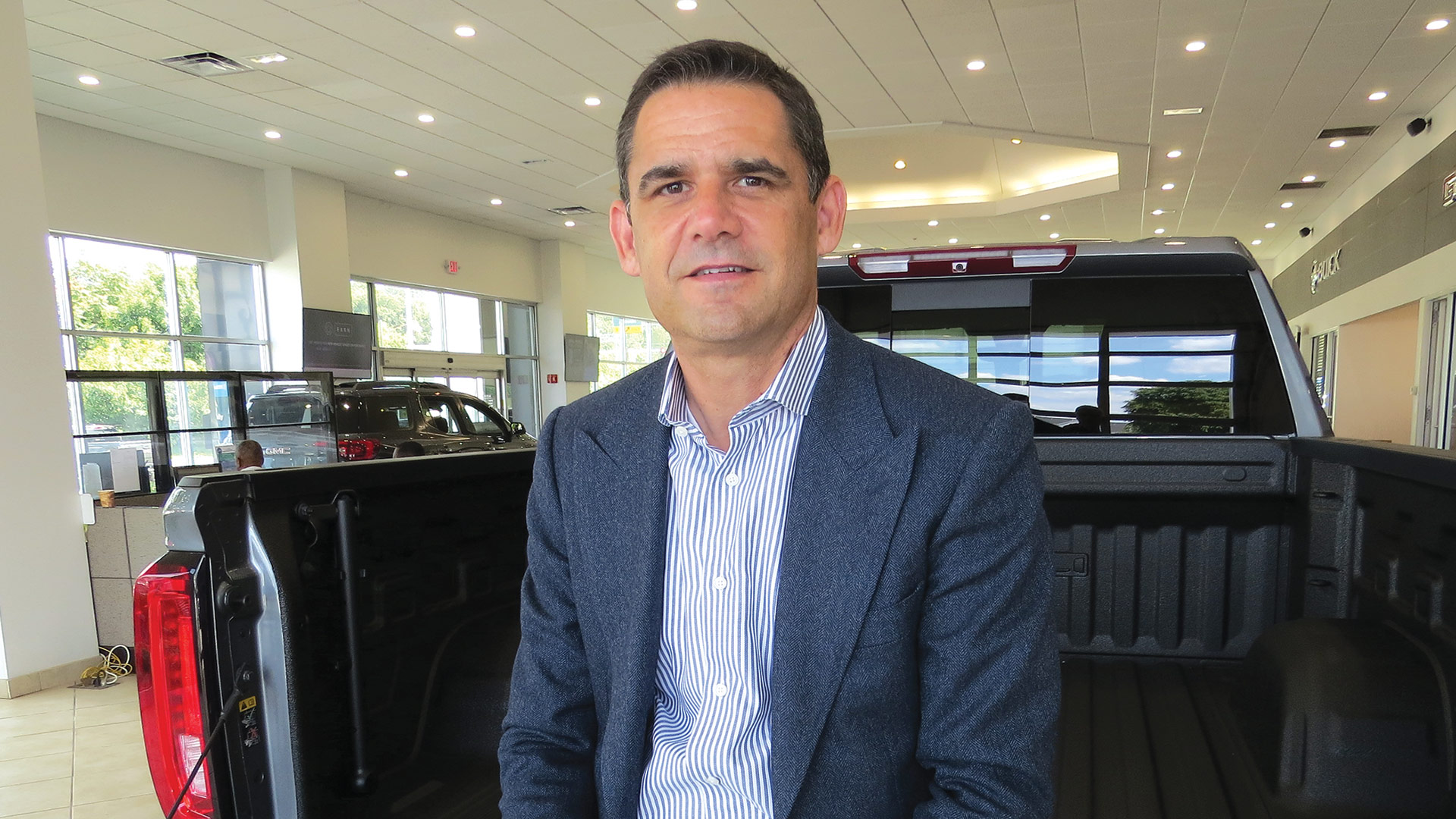
Cover Story

Seizing the Moment

Vanessa Otero

Vanessa Otero, interim director of the Healing Racism Institute of Pioneer Valley.

Vanessa Otero said the phone started ringing just a day or two after George Floyd was killed on a street in Minneapolis and the world, and this region, began to react to what it saw — and felt.

On the other end of the line were those in leadership positions at area businesses, institutions, and nonprofits who wanted to know what the Healing Racism Institute of the Pioneer Valley (HRIPV), the 501(c)(3) Otero now serves as interim director, could do to help not only educate those at these companies and agencies about racism — something it’s been doing for several years now — but take the conversation to a different, much higher plane.

And then convert the talk into far-reaching action.

“Every day, we have two or three organizations reaching out, people who have been through our two-day session, saying, ‘can we talk about what more we can do — the what now?’” she said. “And we’ve initiated a process to add that ‘what now?’”

Elaborating, she noted that, in response to these inquiries, HRIPV — which has seen more than 800 area residents and business leaders attend its signature two-day sessions, where participants learn, grow, and process the effects of racism within individuals and the community as a whole — is committed to formalizing and institutionalizing an expanded roster of services that includes everything from onboarding training for new hires at area companies and agencies to full- and half-day training sessions for staffs and boards (more on all this later).

These phone calls — and HRIPV’s commitment — provide just some of the many forms of evidence that George Floyd’s death, more than any similar incident before it or since, has created a real opportunity — as much as all those we spoke with regretted the use of that term in this circumstance — to bring about real and lasting change when it comes to systemic racism and equal access to opportunity.

“We’ve just reached a tipping point,” said Ronn Johnson, president and CEO of Martin Luther King Jr. Family Services in Springfield, who is being honored by BusinessWest as one of its Difference Makers for 2020. “We’ve reached that point where we’ve really grabbed hold of something that has the potential to change social policies.”

Frank Robinson, vice president of Public Health at Baystate Health, who has been actively involved with the Healing Racism Institute since it was blueprinted by John Davis, a director of the Irene E. and George A. Davis Foundation and others after they were inspired by a similar initiative in Grand Rapids, Mich., agreed.

Ronn Johnson

Ronn Johnson stands near a mural depicting the names of dozens of victims of police brutality. The art has become an inspiration to many visitors.

He told BusinessWest that the George Floyd killing, coupled with the way in which the pandemic has further exposed racial inequalities, has created a compelling opportunity to create a dialogue about not just racism, but the systemic racism that exists in many corporations and institutions.

“I call COVID the great magnifier,” he noted. “The pandemic has created an opportunity, if you look at the glass as half-full, to visit problems that have been magnified by its presence. Someone talked about COVID as a magnifier, and then they talked about the ongoing structural problems it has revealed as the virus of 1619, the beginning of slavery.

“We’ve done a good job of getting folks to understand racism and perhaps their role in it,” he went on, referring to the HRIPV specifically. “Now is the time to deepen that conversation so we look at some of the structural and systemic issues that perpetuate the problem — and that’s a slightly different conversation than the ones we’ve been having.”

But while there is general optimism that the confluence of events in this unforgettable spring of 2020 will indeed change the landscape in profound ways, those we spoke with acknowledged there is much work to be done, and none of it is particularly easy. So much work, in fact, that some are feeling overwhelmed by the assignment confronting them.

The place to start, said Christina Royal, president of Holyoke Community College (HCC), is with each business, each institution, and each individual asking what they can do to address this issue in their own way.

“And if they’re already taking some actions, they need to ask what more they can do,” she said, adding that this is exactly what HCC is doing. It already has a number of programs and initiatives in place to help level what has historically been an unlevel playing field when it comes to access to opportunities for individuals of color, but Royal acknowledged that more needs to be done.

Mark Keroack, president and CEO of Baystate Health, expressed similar sentiments.

“Just in the past few months, it’s become clear that it’s not enough to travel the personal journey yourself and get your head and your heart in the right place,” he said. “You also need to be aware of the fact that all around us is this system that tends to favor white people. And then the question is — what are you going to do about it? And it’s not straightforward; there’s a lot of thinking and learning, and trying this and trying that.”

“We’ve just reached a tipping point. We’ve reached that point where we’ve really grabbed hold of something that has the potential to change social policies.”

For this issue, BusinessWest takes an in-depth look at how the events of the past several weeks have indeed created an important opportunity to address the large and complicated issue of racism in this country — and how to maximize that opportunity.

Changing the Conversation

Tracing the history of the HRIPV, Davis turned back the clock almost a decade, to a trip to Grand Rapids that was part of the City2City program that also took leaders of this region to Greensboro, N.C., Bethlehem, Pa., and Chattanooga, Tenn. During that visit to Michigan, while hearing about efforts to drive economic development, revitalize the central business district, and improve schools, participants also heard about a program within the local chamber of commerce called the Institute for Healing Racism.

A small group of those participants returned to Grand Rapids to experience the two-day Facing Racism program firsthand, and upon returning, they established the regional anti-racism workgroup to gauge interest in pursuing the development of a similar initiative in Western Mass., said Davis, noting that, with the Grand Rapids program as a model, the Healing Racism two-day program and curriculum was established.

“The minute I saw it, I said, ‘we’ve got to get this going in Springfield,” said Davis, noting that this wasn’t the first effort to create such a program in Greater Springfield — others had been attempted in the ’90s — but it was the first that gained enough traction to get off the ground. And it was clearly needed, he noted.

“It was something I could see in the community — there was a clear lack of understanding about racism; no one wanted to talk about it,” he told BusinessWest. “Everybody talked about it in their own little worlds, but the conversations I witnessed were not the conversations that were needed. If you did a survey of the white population and asked them how many were racist, 99% would say they weren’t racists. But if you did a survey of people of color and asked them if they lived in a racist society, they’d all say ‘yes.’ So there was a huge disconnect that I could see.”

Frank Robinson

Frank Robinson says the COVID-19 pandemic has magnified issues of racism and inequality and helped provide a real opportunity to take the conversation to a higher plane.

In an effort to address this disconnect, two-day sessions, again modeled on those in Grand Rapids, were created where participants did a good amount of listening to those of other races. And by listening, participants, which included police, business leaders, nonprofit leaders, a district attorney, members of the media, and other constituencies, learned that issues of racism and inequality were real in the Pioneer Valley.

The challenge, and the assignment, moving forward is to continue the dialogue, but also take this initiative to a higher plane, Otero said.

“We’d like to get to the point where, as in Grand Rapids, we’re embedded in organizations so that we can leave them with capacity to train and have these conversations in institutions so that they become anti-racist institutions,” said Otero, who took the helm of this agency just a few weeks ago and is still awaiting her business cards. “Because the antidote to out-and-out racism is ‘I’m anti-racist,’ which means you’re taking action to address this issue and you realize your privilege within that system and are taking action against it.”

Elaborating, she circled back to those phone calls and e-mails and inquiries about ‘what now’ when it comes to educating people about racism, broadening the conversation, and institutionalizing new policies and ways of doing things.

“Building on what’s already there, we’ve created a menu of services that we could work with organizations to implement,” Otero explained, “to ensure that anti-racism conversations continue to happen and grow, to the point where the organization itself can make the decision to be anti-racist, because that’s the key to institutionalizing this kind of work and this kind of thinking.”

“We’ve done a good job of getting folks to understand racism and perhaps their role in it. Now is the time to deepen that conversation so we look at some of the structural and systemic issues that perpetuate the problem — and that’s a slightly different conversation than the ones we’ve been having.”

This ‘what now’ has been in place for some time, she went on, but it hasn’t been effectively “activated.” To provide this deeper roster of services, the HRIPV will need an infrastructure, she said, as well as a large cadre of trainers and facilities. And this will likely require funding in the form of a capital campaign.

But the need is real, and the agency is committed to having these programs in place later this year, she told BusinessWest.

Moving Beyond Words

Johnson acknowledged that, in the wake of the Floyd killing, statements condemning police violence and systemic racism have come from all corners of society — CEOs of major corporations, athletes, political figures, prominent actors and musicians, nonprofit leaders, and ordinary citizens.

These statements are appreciated, and do have value, he told BusinessWest, but the emphasis now must be on moving beyond words and into the realm of action to recognize, understand, and address actions and policies that contribute to systemic racism and inequality.

And this is starting to happen on a number of levels, he and others noted, citing everything from NASCAR’s decision to ban the confederate flag at its events to the NFL acknowledging it was wrong to discourage its players from kneeling during the national anthem to protest racial inequality and police brutality, to new bills aimed at banning police use of chokeholds.

But if the region and the nation are to fully seize this moment in time, they say, every business, institution, and municipality has to take a truly deep dive on this matter and make a commitment to effect real change.

And those we talked with expressed optimism there is now the requisite amount of momentum to do just that. And it has been created by what many described as a perfect storm of conditions — the incidents involving George Floyd, Rayshard Brooks, and many others over the years; the racial inequalities exposed by the COVID-19 pandemic; and the fact that so many were home watching these events unfold. Despite incidents of violence and looting, those we spoke with believe the protests and marches, such as those in Springfield and other area communities, have created mostly positive energy and, in many respects, resolve not to let this opportunity be lost.

“I give credit to the young people for doing this — they’re carrying the passion,” Johnson said. “I was talking to a vice president at one of the local colleges; he’s talking about meeting with students who are not even on campus and may not return to campus, but are intent on finding out what this particular college is going to have to do to change in terms of some of the social conditions they’ve experienced.”

John Davis

John Davis, one of the founders of the Healing Racism Institute, says the agency was created to start a much-needed dialogue about race and racism.

Others we spoke with agreed, but acknowledged that progress can only come if the words in those statements and advertisements that so many businesses and institutions have generated in recent weeks are backed up with action and a lasting commitment to change.

“I would to say to my colleagues at other nonprofits … ‘look at your organizational structures — you’re serving largely Latino and African-American families, but your boards are almost all white,’” said Johnson, adding that, at many of these agencies, diversity exists at the lower levels of the employment spectrum, but not at the top. “They need to take a look at the leadership and make sure it reflects the composition of the folks they are servicing; that’s important for us to do.”

Even before the events of these past few weeks, many area businesses, institutions, and nonprofits were already looking inward — at policies, practices, and procedures — with an eye toward making them more anti-racist, to borrow Otero’s phrase.

And now, this confluence of circumstances is compelling some to look harder and deeper at what they’re doing (or not doing) and how.

At Baystate Health, Keroack said, the events of past several weeks have brought greater urgency to the discussion about the many forms of systemic racism, especially when it comes to public health.

“Here, as in so many communities across the country, communities of color are disadvantaged in some very fundamental ways when it comes to chronic disease burden — more asthma, more diabetes, more obesity, more hospitalizations for mental health, more maternal mortality, more infant mortality,” he explained. “And a shorter life span at birth; in some neighborhoods in Springfield, the average life span is 70, versus other neighborhoods where it’s 80, and suburban communities where it’s over 80. Your zip code really affects your health status in a very fundamental way.”

In response to this, Baystate is working with accountable-care organizations to address the health concerns of an assigned group of people — in this case, 40,000 people who receive care at inner-city health centers.

“But practicing medical care is not going to get where you need to be,” he went on. “You need to address the social determinants of health — housing, nutrition, transportation, legal aid, and public safety … and there’s a ton of work to be done.”

Meanwhile, the company is looking internally, at its practices and systems, with an eye toward creating greater diversity at all levels.

“We need to look at the systems that are in place, both in society and for me in this large organization, around hiring, advancement, and representation around the table of diverse voices,” he told BusinessWest. “We’ve worked very hard to build diversity on our board of trustees, but we still have a long way to go in terms of our leadership ranks.”

At the Pioneer Valley Planning Commission (PVPC), there has been action in the form of new policies and procedures when it comes to hiring and posting positions, said the agency’s executive director, Kim Robinson.

These included the formation of something called the Race, Equity, Inclusion, and Social Justice Committee, which was formed by employees at the agency last year to address such issues within the organization. It was spawned in part by a housing study undertaken by the PVPC that revealed a number of disparities and what she called a “segregated community” across the region.

Christina Royal

Holyoke Community College President Christina Royal says racism is “structural and systemic,” so Band-Aid solutions are not going to fix root-cause issues.

“From that time on, we’ve been talking more and more within our organization about the need to do a race and equity plan for a region,” she said. “We think this is work that would be very interesting to undertake with other groups committed to this kind of work and seeing equity, social justice, and economic opportunity.”

While exploring when and how such a study might be undertaken, the PVPC has looked inward and seen a need to change language in its handbook and adopt several new policies when it comes to hiring.

“We’re going to require race, equity, and diversity training for every single one of our employees,” Robinson said. “And we’ve been evaluating where we post jobs to see if there was any inherent bias in that. We’ve added some additional avenues because we want to make sure we’re getting the word out to lots and lots of people.”

Looking Ahead — with Hope

At Holyoke Community College, Royal said the school continues to address issues of race and equality through initiatives designed to remove barriers and help see students through to completion of what they’re working to achieve. And it does so with the understanding that the problems are real and require lasting solutions.

“Racism is structural, and it’s systemic, so a Band-Aid solution is not going to fix the root-cause issues,” she explained. “It does start with having a commitment and an obligation to speak out against hatred, intolerance, and prejudice so we can really work toward building a truly equitable society.

“I feel a lot of pain with what’s happening in the world, but I also feel there’s a purpose to it,” said Royal, who is biracial and acknowledged that, five years before she was born, it would have been illegal for her parents to marry. “I do feel a sense of urgency and responsibility to contribute toward making our world better and our Pioneer Valley region better.”

She said equity remains a huge issue at her school and within society in general, and thus HCC has made it a priority to level the playing field when possible.

“We know that there are achievement gaps between our white students and our students of color,” she noted. “And we have a responsibility and a commitment to do better in this regard.”

She started with a town-hall meeting on June 3 to create dialogue about what was playing out on the news, but acknowledged that the school’s commitment goes beyond conversation.

“It starts with speaking out, but it doesn’t end there,” she said. “Authenticity of commitment to these issues is very important because, as I said, a Band-Aid approach isn’t going to work.”

Surveying the landscape around him, including a new mural at Martin Luther King Jr. Family Services that memorializes victims of police aggression and the people who have come to see it and take a selfie in front of it, Ronn Johnson reiterated his belief — and his hope — that real change is possible and perhaps even imminent, and that he feels privileged to be part of all that’s happening.

“I’m proud to be alive at this particular point in time,” he told BusinessWest. “I just feel that we’re at a place where we’ve really turned a corner; we’ve hit that tipping point where we’ll be able to look back two or three years from now and say, ‘that moment was worth it.’”

He’s certainly not alone in that sentiment — or the knowledge that much has to happen for people to be able to utter those words.

A seminal moment has arrived, and an opportunity has presented itself. It’s now incumbent on the businesses, institutions, and residents of this region to seize this moment.

George O’Brien can be reached at [email protected]

Modern Office Special Coverage

The Shape of Things to Come

Mark Proshan says predicting what’s coming next in his business — office furniture and design — has always been a difficult assignment.

But now … it’s even more of a complicated guessing game.

Indeed, in a sector where the landscape can change quickly and profoundly, and for a number of reasons — from a declining economy to changing tastes — the pandemic has produced an even greater sense of uncertainty about what lies around the bend, said Proshan, president of West Springfield-based Lexington Group.

“For the first time ever, I don’t even pretend to be smart enough to see what’s coming down the road,” he told BusinessWest, noting that this applies to both the short and long term. “We don’t know when bigger places of business will open back up, what their attitude is going to be toward spending money, and what things will look like down the road.”

Tyler Arnold, a principal with Holyoke-based Conklin Office, who spoke with BusinessWest from the company’s office in Northern New Jersey, agreed. He noted there are many variables that will affect decision making at individual companies when it comes to if and when employees return to work, how many return, and how much space they’ll take up when they do return.

“The number-one priority for people right now is to bring back fewer people, spread things out … and then see what happens,” he explained. “They might look at their footprint and say ‘we’ve got 1,000 employees, and we’re occupying 100,000 square feet.’ They may decide to only bring back 500 employees — but does that mean they need 50,000 square feet or 75,000 square feet? I think there will be a lot of that going on.”

But there are some things that are known. It seems certain that the collaborative, open spaces that companies have developed over the past several years will change — perhaps significantly.

Arnold said the old 10-by-10 private offices that dominated the business landscape years ago and are still favored by some banks and law firms won’t make an immediate comeback — they’re very expensive and still somewhat impractical. But there will certainly be a move to create more privacy and shield employees from one another and the public.

Mark Proshan sits at benching sporting a higher divider

Mark Proshan sits at benching sporting a higher divider than models popular just a few months ago. He says these units are among the items now in demand as businesses work to increase privacy in the workplace.

This has been made apparent by the number of calls both companies are taking from business owners and managers looking to adjust their spaces for a pandemic.

That’s especially true in New York City, said Arnold, where many financial-services companies and corporate headquarters had moved to benching to place as many people in as small an area as possible. Now, many of those benches are being outfitted with dividers, or higher dividers, as the case may be.

“Right now, the immediate demand is for adding privacy screens, be that acrylic material or fabric,” Arnold told BusinessWest. “So much that has been built out over the past 10 years has an open plan, open feel to it. What’s the easiest, quickest, least costly way to give people a sense of detachment from the person sitting next to them? It’s some kind of privacy screen.”

“A lot of people are continuing to stay home, and I’m not sure if that will continue to be the case.”

Proshan agreed. “We do have inquiries from people as to how to modify their spaces to make them more private, making walls higher, making plexiglass partitions and glass partitions, where possible,” he noted. “Meanwhile, a lot of people are continuing to stay home, and I’m not sure if that will continue to be the case. If it is the case, the need for higher-end furniture will likely not go hand in hand with staying at home; it may well be the Staples of the world and the Costcos of the world that will be selling those items because people might be paying for it out of their own pocket.”

As for companies bringing people back, the plan of action for many companies is not to put anyone immediately next to or across from someone else, even if there is a screen, said Arnold, adding that many businesses are ramping up slowly and in waves. How big the waves will get remains to seen.

Actually, that’s just one of many things that remain to be seen, as we’ll see as BusinessWest talks with these experts about how the pandemic might reshape the modern office as we know it.

Space Exploration

As he talked with BusinessWest about the physical changes that will come to the modern office in the wake of COVID-19, Proshan said it would probably be easier to do a little show and tell.

With that, he walked to the front lobby of the company’s spacious headquarters on Union Street. There, two workstations are outfitted with what would have to be called pandemic-era features.

Before discussing them, though, Proshan reached for his phone and scrolled to images of what used to be there, because this is where the discussion had to start (see photos, page 24). Before, there were fairly low structures that were wide open. They’ve been replaced by units of similar height topped by plexiglass panels on two sides, with narrow openings in front to keep those behind them safe.

“This is the kind of thing we’ll be seeing — this is the direction we’re going in,” said Proshan, adding that, for the foreseeable future, the focus will be on privacy and keeping people safe. Collaboration? Well, not so much.

Tyler Arnold

Tyler Arnold

“People will see where the economy goes; they’ll want to see how it comes back before they make any big decisions.”

At least not as much face-to-face collaboration, he went on, as he took BusinessWest on a walk to the showroom, where he sat down at benching that sports those higher walls that can’t be seen over and are designed with privacy and protection in mind.

While orders for such products come in, the larger questions looming over the industry concern the longer term. But while contemplating the future, those we spoke with are also coping with the present, which is challenging on many levels.

Indeed, Proshan said a number of projects that were in the pipeline have been paused as companies and institutions try to absorb what has happened and what it all means moving forward. He mentioned a $1.2 million library project at one of the area colleges and several other initiatives that have been put on hold because the plans that were blueprinted months ago may no longer be viable in the COVID-19 world.

“When you think about what may change when people go into a public space like that, you can certainly understand how and why these institutions might want to pause,” he said. “We have lots of repurchased and paid-for inventory that, because the colleges and universities are shut down, we can’t even get in to deliver this product.

“And the policy for a lot of these places is that they can’t pay for product until it’s delivered and installed,” he went on. “But, unfortunately, my manufacturers insist on getting paid once the product is received by me — so you can see the dilemma when you’re talking about a large volume of merchandise.”

There are other challenges to contend with as well, such as reopening their own offices, which were ‘essential’ in some cases — Lexington earned that designation in West Springfield because it delivers to healthcare providers — and also dealing with various employment issues, and trying to serve customers in remote fashion, a somewhat difficult task when many consumers like to see, touch, and kick the tires on the products they’re contemplating.

Arnold, like Proshan, said the phones essentially stopped ringing during the month of March. Then commenced a period of speculation and webinars about when offices would reopen and how. And then, things got busy again as companies started gathering information and proposals for those protective shields and dividers for benches, with a decent percentage of those proposals turning into orders.

The new workstations

The new workstations in the lobby at Lexington Group contrast sharply with what existed before, and speak volumes about current efforts to keep workers and visitors safe and increase privacy.

What concerns Arnold at this point is what happens when this ‘bubble,’ as he called it, is over and companies, now getting comfortable as employees slowly return to the office, contemplate their future needs, and their footprint.

Indeed, his company is currently working on projects involving leases that were signed months ago. The question is, will new leases be signed?

“I think that, when we get to the middle of the summer, there will be a pretty good slowdown at that point,” he said. “People will see where the economy goes; they’ll want to see how it comes back before they make any big decisions.”

There are already strong signs that some companies will not go back to their former offices, and if they do, they’ll probably do it gradually, with many seeking smaller footprints for fewer employees, which means less office furniture to be sold, said those we spoke with.

Arnold said he’s seeing a lot of this in New York, which is still very much in lockdown mode.

“Initially, people couldn’t wait to get back to work,” he noted. “But at this point, many corporations are taking their time and making decisions. The mentality is that, ‘we’re turning a profit, everyone’s working remotely, everybody’s safe; until we’re really comfortable that we can put them in an environment where we can minimize risk and people can focus on what they do, we’re in no rush to return to the office.’”

Mass transit certainly plays a big role in what’s happening — or not — with people returning to the workplace, he went on, adding quickly that, in many markets, and with businesses across many sectors, the question concerning such returns is increasingly ‘if,’ not ‘when,’ and also ‘how many will return?’

Whether this changes or not in the short or long term is yet another of those questions that are difficult to answer at this juncture.

Again, about the only thing that’s relatively certain is that the past will become prologue when it comes to privacy and how the office might look and feel moving forward.

“Ten years ago, everyone had tall walls, lots of privacy — people had their own space,” said Proshan. “‘Collaboration’ became the buzzword the last few years, and the walls came down, and shared space became the big thing. And while I think people will still have the need to collaborate, I think they’re going to be doing it in a much more enclosed environment.”

Bottom Line

Returning to the place where they started this discussion, Proshan and Arnold said that, while some things are known at this juncture, many more are not. And speculation might not be a fruitful exercise at this point.

“I don’t think there are whole lot of crystal-ball gazers who really know what’s going to shake out from all this,” Proshan said. “No one really knows.”

Arnold concurred. While the focus for now is on privacy and spreading people out, he noted, the landscape may be altered again. “All this can change on a dime if there’s good news about a vaccine or something like that. For now, everyone’s planning like this a year or so off.”

A year seems a long way off in a business where predicting the future is difficult — and has now become much more so.

George O’Brien can be reached at [email protected]

Coronavirus

Event Company Works to Pivot, Position Itself for the Long Term

Mike Zaskey says his ‘spreadsheet of doom’ includes more than $1.2 million in lost events for this year, but he’s pivoting with virtual events and other initiatives.

Mike Zaskey calls it his “spreadsheet of doom.”

And for good reason.

It chronicles what he estimates to be $1.2 million in lost business since early March, when the phone started ringing … and kept on ringing. On the other end were representatives of corporations, colleges and universities, and nonprofits calling Zaskey to let him know they were canceling or postponing — in most all cases, the former — the large events his company, Chicopee-based Zasco Productions, has come to specialize in.

“After a while, I was afraid to answer the phone, because every time I did there was a cancellation,” said Zaskey, noting that more than 40 major events, including 20 college commencements, have been erased from the calendar. In fact, when he talked with BusinessWest just after the Memorial Day weekend, he was lamenting how what was normally a very busy week for him — clients Holyoke Community College, Springfield Technical Community College, and the Rhode Island School of Design traditionally schedule their commencements for the final days in May — was now anything but.

Indeed, a business leader who rarely has time on his hands, especially at this time of year, now has way too much of that commodity. And he’s devoting it to everything from finding ways to somehow pivot — some more successful than others, as we’ll see in a minute — to advocating for an industry that is large and impactful, but often flies under the radar.

“The Live Events Coalition has put together some interesting statistics, and by their estimates, the live-events industry employs 12 million people and contributes more than $1 trillion into the U.S. economy,” he said, adding that few understand the size or importance of a sector that includes everything from venues to caterers to companies like Zasco. “If live events were a state, we’d rank seventh in population.”

Turning the clock back to early March, Zaskey said that’s when he first started getting calls from “six-figure clients,” as he called them, inquiring about cancellation terms in their contracts.

“It was around Friday the 6th,” he recalled, noting that some dates stick in his mind, for obvious reasons. “I got a few e-mails before that, but things really started to get scary on March 6. We had a team meeting at the end of that day, and I said, ‘something’s going on here, and we all need to be aware of this.’ And it just ballooned from there.”

The calls kept on coming, he went on, adding that the events, as noted earlier, have been canceled, not postponed.

“Most of these events are not being postponed — it’s revenue lost; it’s not coming back,” he told BusinessWest. “If there’s an annual event, a 2020 gala or conference, the 2020 event is not taking place, and they are going to have one in 2021. But the event in 2021 is the 2021 event.”

Despite these losses, one of the first decisions Zaskey made was to work with clients when it came to deposits and existing balances.

“A number of clients have multi-year contracts with us, so their deposits were paid two or three years ago, depending on the terms of the deal,” he explained. “Technically speaking, our contract says that, when an event is canceled, the deposits are non-refundable, and, in some cases, the client would still be liable for the cost of the event. But, in looking at the situation going on in the world, we decided that the right thing to do would be to apply those deposits to future events for clients, and that’s exactly what we did across the board.

“Most of these events are not being postponed — it’s revenue lost; it’s not coming back. If there’s an annual event, a 2020 gala or conference, the 2020 event is not taking place, and they are going to have one in 2021. But the event in 2021 is the 2021 event.”

“While it’s not the greatest for our financial position,” he went on, “it’s the best for our customers, and we’re looking to build long-term relationships with those customers and keep those customers.”

And a few customers have returned the favor by essentially paying balances due for next year’s event now, to help the company with cash flow.

Faced with its spreadsheet of doom, Zaskey said his company, which eventually had to lay off most of its 12 employees, looked to pivot in an effort to create some revenue streams. And upon taking a hard look around, he said one early option that presented itself was to put Zasco’s large fleet of trucks to work as couriers.

“But it doesn’t generate as much revenue, and we would probably actually lose money if we tried to turn into a delivery company — we’re not set for that,” he told BusinessWest. “We did actually try it — a friend of my owns a courier service, so we did a day of deliveries. But the revenue we generated versus the hassle of trying to pivot into an industry we weren’t suited for just didn’t work out.”

The company has had more success pivoting toward the staging of virtual events.

“A virtual event is more than just a video webstream or livestream,” he explained, adding that he’s now working with several clients on such initiatives. “We’re trying to capture the elements of a live event that can be held across multiple sites and make them feel like they’re at the actual event.”

Summing up what’s happened and what might happen moving forward, Zaskey summoned a phrase put to use by just about every business owner in Western Mass.: “we’ve never experienced anything like this before.”

Indeed, and while the short term (and that spreadsheet) looms ominously, this company, which put itself on the map by pulling off big events, continues to position itself for the long term — and, more specifically, a time when Zaskey won’t be afraid to pick up the phone.

—George O’Brien

Coronavirus

In a Sign of the Times, This Company Has Pivoted into New Products

Jim White says business at Go Graphix is down considerably

Jim White says business at Go Graphix is down considerably because major clients like MGM Springfield have shut down, but he’s managed to pivot and get work like these social-distancing signs.

Jim White says it took him 15 years to go from zero to 60 with his business. And 15 days to go from 60 to zero.

That’s how the co-founder of East Longmeadow-based Go Graphix, a maker of signs, vehicle wraps, and a host of other marketing products, described that two-week period back in March when business came to a near standstill.

That’s because most all of the company’s major clients — MGM Springfield, the MassMutual Center, sports teams like the Thunderbirds — came to a complete halt.

It seems like years ago now,” White said of those days in March. “It was tough — probably the toughest times I’ve experienced in business.”

With many of those businesses still shut down, Go Graphix has pivoted into other niche products that could be described as ‘COVID-related,’ said White, adding that it now has what could be called a line of ‘back-to-work’ products, including social-distancing graphics — those ‘Please Stay 6 Feet Apart’ signs now appearing across the region — as well as the protective barriers that are also appearing almost everywhere.

Still, revenues for April and May of this year are down roughly 80% from their levels of a year ago. The company, which had to lay off a few workers and cut most employees back to four days a week, has been helped by federal assistance, specifically the Paycheck Protection Program (PPP) — and White’s ‘save for a rainy day’ philosophy, passed down by his parents.

“That’s what you get with the son of a commission-only heavy-equipment sales rep,” he said. “We knew every recession, because it was a depression. And my parents saved, and I learned from them.”

Flashing back to early March, White said that’s when a number of major clients had to shut down operations, which brought operations at the Benton Road facility to something approaching a standstill.

Those clients include MGM Springfield, for which the company makes a wide variety of promotional items, from signage for upcoming events to the dasher-board advertisements for the skating rink.

“That’s what you get with the son of a commission-only heavy-equipment sales rep. We knew every recession, because it was a depression. And my parents saved, and I learned from them.”

“They’ve been one of our best customers,” said White, noting that his company was one of many fortunate local businesses to become vendors for the casino operator. “Throughout the casino, you see a lot of promotional graphics, and we were doing things on a weekly basis — work that came to screeching halt.”

But even clients that weren’t shut down and were actually doing well had put work given to Go Graphics on hold, said White, citing the example of beer distributors, for which the company provides vehicle wraps.

“They were so busy, they couldn’t leave the trucks with us for a day to be wrapped — they needed them on the road,” he explained. “They were hitting all the package stores, which were doing really well during all this. That was tough one for us; we’re thinking, ‘even the guys who are doing great can’t do any business with us.’”

Beyond the PPP loan, what has helped the company through the crisis has been its ability to adapt and create new product lines. White calls this the “great pivot.”

It involves making plexiglass shields for a number of clients, including Baystate Health, Monson Savings, J. Polep, Hartford Hospital, and others, as well as social-distancing signage now seen in virtually every sector of the economy.

As he talked with BusinessWest at the plant, he stopped to display the round ‘Please Stay 6 Feet Apart’ signs bound for Staples’ corporate headquarters, a contract that has provided a good amount of work for the company.

As for the plexiglass partitions, most of them are custom orders, and the work is intricate, which is why a number of businesses across several sectors have decided on Go Graphix for the work.

“We’re not just providing an off-the-shelf solution,” he said, while pointing to some models bound for Baystate Health. “And the orders keep coming in — we’ve pivoted, and we’re going for it.”

And White has to hope that the orders keep coming in, because plexiglass is now a commodity; amid fears that short supplies would become even shorter, he ordered a lot of it.

“It’s kind of toilet paper in the early days of this pandemic,” he said with a laugh. “Everyone’s looking to get it, and it’s becoming harder to find. But we have some good suppliers, and I’ve made the investment in a good amount, even though it scares me to the core. I figured, ‘I’d better be the guy who has it on hand,’ and just pray that we sell it.”

All indications are that he probably will as companies scramble to take the necessary steps to reopen, a process likely to play itself out over the next several months.

As White said repeatedly, this isn’t work he could have imagined doing just four months ago, but he’s very grateful to have it — an attitude that’s understandable after watching a company go from zero to 60 to 15 years, and 60 to zero in just a few painful weeks.

—George O’Brien

Coronavirus

Practice Owner Says Many Patients Still Wary of Returning to Her Office

Dr. Yolanda Lenzy

Dr. Yolanda Lenzy, like many healthcare practitioners, says many of her patients are reluctant to come to the office out of fear of contracting COVID-19, leaving overall volume down considerably.

Dr. Yolanda Lenzy admits to not knowing exactly what would happen when she officially reopened the doors to her Chicopee-based dermatology practice on May 18.

She knew what she was hoping to see — that patients who had put off coming to see her for more than two months out of fear of the virus would start scheduling appointments and getting their concerns and even routine checkups addressed.

And while that’s happening to some degree, the numbers are not what she hoped, although Lenzy would be the first to say that two weeks’ worth of data is probably not enough to make a definitive statement on what it all means.

“Last week was better than this week,” she said toward the tail end of May, adding quickly that she wasn’t sure just how this was attributable to the Memorial Day holiday or other factors. “We’re still not reaching the numbers we set as a goal — even the reduced numbers we established by limiting the number of office visits to half what they would be normally to allow social distancing.”

Lenzy, who opened her practice in 2014 and quickly built up a clientele of some 30,000 patients, believes her venture is typical of most others in the broad healthcare realm when it comes to the impact of the pandemic and the ways in which it has changed business — in some cases for the long term.

This is true of everything from the emergence of telehealth as a way to evaluate patients remotely (more on this later) to the manner in which the crisis brought the practice to a precarious place, where Lenzy, who has a staff of nine, wasn’t sure if she was going to able to make payroll.

With some relief from the CARES Act, specifically in the form of a Paycheck Protection Program (PPP) loan, Lenzy has been able to pay people and keep all her staffers employed — although that money can only be used for another few weeks.

She — like just about every small-business owner who has received such a loan — is already starting to think about what happens when that money runs out. That’s because normal, as in life in mid-February before the pandemic reached Western Mass., still seems a long way off.

Flashing back to the pre-pandemic days — that’s a phrase all business owners and managers have added to their lexicon — Lenzy said hers was a very busy practice. And while deemed essential because of the services it provides, the office closed on March 18 — again, like most all healthcare practices in the region — and shifted to seeing patients virtually.

And, for the most part, this move to telehealth went smoothly.

“It was definitely a generational piece,” she explained. “Some of our older patients had some difficulties, but they were able to get people to help them; some people don’t have smartphones or don’t have computers with cameras, so we did so some phone visits. But some people preferred to wait until we were back in the office.”

As for the business, while Lenzy she kept all her employees on, she cut back hours from 40 to 30 a week. “That was still a stretch,” she said. “But I wanted to keep everything going.”

“Even with seeing people virtually, we were barely able to meet payroll, let alone all our other expenses. That program did exactly what it was designed to do.”

The PPP money arrived her account in the beginning of May, and it provided some desperately needed breathing room.

“Even with seeing people virtually, we were barely able to meet payroll, let alone all our other expenses,” she said, adding that there are many of those, including rent and supplies. “That program did exactly what it was designed to do.”

The practice reopened exactly two months after it closed, but this was and is a phased reopening, she explained, noting that, to maintain social distancing, roughly half the staff works at home a few days each week and continues to see patients virtually.

“There’s always one provider in the offices at a time to see patients,” she said. “And we’re limiting the number of patients per hour that are in the office; with our specialty, we do a lot of procedures, like biopsies and freezing, so a lot of the patients that we’ve seen virtually needed to come into the office and have something done.”

They’re coming in, but, as noted earlier, not in the numbers this practice needs to get back on secure financial footing.

“We cut our volume in half, but we haven’t been able to even do that,” she said, adding, again, that she’s working with a small sample of data. “In talking to our front desk, we have some people who still don’t want to come out, so we’re trying to convert those people to virtual care.”

As for when things will get better and those numbers will improve, Lenzy said that will happen when and if more people feel comfortable enough to go back to the office.

“Our success and how we fare depends on peoples’ comfort levels,” she told BusinessWest. “And right now, it’s too early to say when people will reach this comfort level. My front desk is telling me that now, many people are saying, ‘I just want to wait.’”

—George O’Brien

Coronavirus

For This Photographer and Sock Maker, the Pandemic Is a Developing Story

Lenny Underwood

Lenny Underwood says both his photo studio and sock business have been greatly impacted by the pandemic.

Lenny Underwood started off by talking about how the COVID-19 pandemic has put a huge dent in both his businesses — a photography studio and an intriguing venture called Upscale Socks, which has become one of the many intriguing stories of entrepreneurship being written in the region. But then he put those losses into their proper context by changing the subject to his grandmother.

“She died from this virus,” he said slowly and deliberately for additional emphasis, as if it were needed. “Her name was Queeie Brown, and she died late last month [April] — it was awful.”

So Underwood, a member of BusinessWest’s recently announced 40 Under Forty class of 2020 — honored for his entrepreneurial exploits as well as his work within the community, such as donations of socks to area groups — has seen the virus alter his life in probably every way imaginable. Right down to his socks.

His designer socks, a venture he started dreaming about in 2014, became a reality the following year. He now has several dozen styles, including a popular ‘Springfield Firsts’ sock that came out last year and continues to draw orders. The products are manufactured by a partner in China, said Underwood, adding that production had to be halted for a time earlier this year when the virus was spreading through that country.

“I don’t foresee people having the kind of birthday parties they want to have — the sweet-16 parties or graduation parties they want to have with large amounts of people. Maybe down the road, but I’m not sure when.”

But as this year has progressed, that setback has turned out to be just one of many ways the pandemic has changed the landscape for Underwood — and perhaps one of the more minor ones.

Indeed, like most all photographers, Underwood has seen the virus rob him of a number of jobs and reliable revenue streams — everything from proms to weddings to family gatherings.

“Most of my photography is event-based, but I do some head shots and senior portraits as well,” he told BusinessWest. “Mainly, though, I’m on the scene, on location for different celebrations.”

And there certainly haven’t been many of those over the past three months, and those that have been staged have been smaller and decidedly different, he went on; after searching his memory bank, he determined that the last event he worked was the second Saturday in March.

The following Tuesday, he recalls getting seven cancellations for jobs that day alone. “I was looking forward to four proms, a lot of graduations, and weddings,” he went on, adding that he has one wedding still scheduled for late in July — and he’s somewhat dubious about that — but everything else has been wiped off the calendar.

Overall, he estimates that business is off 65% to 70% from what it was a year ago, a precipitous decline that has forced to him to seek — and eventually receive — unemployment benefits. However, they are due to run out in 20 weeks. He has also applied for a number of grants through various agencies, and is awaiting word on whether he’ll receive any.

Underwood has managed to find some work — a few of those ‘parade birthdays,’ for example, a photo shoot for a newborn, a few ‘senior-announcement photos,’ as he called them — where soon-to-be high-school grads announce where they’ll be going to college — and some other scattered assignments.

Meanwhile, the virus has generated some needed, but somewhat macabre work. Indeed, there has been a noted increase in funerals across the area, and for some of them, Underwood has been hired by families to scan photos of the deceased for slideshows and memorial tributes.

Still, like most photographers, he has seen his business devastated by the virus and doesn’t have any real idea when things might start turning around.

As for his socks … he’s still getting orders — someone recently purchased 20 pairs of the ‘Springfield Firsts’ style, for example — and some specials he’s been running have helped to generate more of them. But overall sales volume is down because he’s not able to sell them at large events, which generated a good deal of sales prior to the pandemic. Overall, sock sales are down by roughly 50%.

As he talked with BusinessWest near the tail end of May, Underwood said he had a few events on the books — an outdoor church service, for example. But the longer view is clouded by uncertainty and some doubts about whether the large events that have become his livelihood will be staged any time soon.

“I don’t foresee people having the kind of birthday parties they want to have — the sweet-16 parties or graduation parties they want to have with large amounts of people,” he said. “Maybe down the road, but I’m not sure when.”

For now, he’s maintaining his focus and looking for opportunities whenever and wherever he can find. For him, the pandemic is a developing story — in all kinds of ways. u

—George O’Brien

Coronavirus

Pandemic Poses Challenges, Opportunities for Flooring Company

Doug Mercier, right, with brother and partner Chuck

Doug Mercier, right, with brother and partner Chuck, says that, while business is off because of the pandemic, the crisis has led to some opportunities on the commercial and residential sides of the ledger.

Doug Mercier was talking about how sales for March, April, and May are off probably 30% from what they were a year ago at the flooring company started by his parents a half-century ago.

And while that’s certainly not what he had in mind for quarters one and two, he quickly put those numbers in perspective.

“Look at restaurants,” said Mercier, president of the company that bears the family name. “Many of them are down … 100%; they’re not seeing any business. This has hit us hard, certainly, but it’s actually created a few opportunities as well.”

Indeed, some institutions and businesses — from area colleges to some of those aforementioned restaurants, most already in the portfolio of clients, but some others as recent additions — have taken advantage of unwanted time and a closed building to do some work on those properties, including new flooring.

“We’ve done work for a number of restaurants in this area,” said Mercier, listing projects in several area communities. “They were sitting idle; the business was empty. Then they started cleaning and painting, and realized that the flooring really needed to be replaced.”

Meanwhile, several medical facilities have been forced to renovate or repurpose space, creating other opportunities, and on the residential side, time at home has convinced people that they need to move ahead with some planned projects, said Mercier, adding that, at this time, there are a good number of projects (again, not as many as in a typical year, but a good number) in the proverbial pipeline.

“Residential clients are calling — they’re trying to see what we can do to enable them to see samples online,” he said, noting another change in how business is being done as fewer people are willing or able to visit the showroom on Riverdale Street. “With people spending more time at home, they’re paying more attention to those jobs that need to be done.”

“We’ve done work for a number of restaurants in this area. They were sitting idle; the business was empty. Then they started cleaning and painting, and realized that the flooring really needed to be replaced.”

But, as noted, there have been a number of challenges to contend with, including the matter of taking on these commercial and residential assignments while keeping crew members safe, Mercier told BusinessWest, adding that social-distancing requirements necessitated some adjustments when it comes to when and especially how work is done.

There is also the matter of keeping those trained installers — valued employees that were a challenge to find and retain before the pandemic hit — on the payroll.

“We don’t want to lose installers,” said Mercier, noting that, thanks to a Paycheck Protection Program loan secured early last month, the company has been able to rotate crews in and out — as a safety measure, but also because there is less work overall — but still manage to pay everyone. “We’ve been doing a ‘week on, week off’ kind of thing and have kept everyone on.”

Meanwhile, Mercier, like many service businesses of this kind that are sending crews into the field, started offering employees hazard pay, an additional expense largely covered by the PPP loan funds.

Mercier was quick to note that a number of projects planned by commercial clients were shut down as the pandemic hit, including some at colleges and prep schools in this area and just outside it — Assumption College in Worcester, for example, as well as a large job at a housing project. And they are being handled now, creating more work for crews.

Meanwhile, new projects are coming into the pipeline, many in response to the pandemic itself. Indeed, he cited the example of a cafeteria in one of the area hospitals.

“They’re trying to rework the space so it will be more conducive to halting the spread of disease and bacteria,” he explained. “So they’re taking out the carpeting and putting in a more resilient surface. The pandemic has created some business for us.”

Looking ahead, Mercier sounded an optimistic note when he said he expects a relatively steady supply of work in the pipeline. He said the company recently took a few residential orders, and some on the commercial side as well.

“Since these businesses have been sitting idle, a lot of plans and blueprints have been worked on, and, looking forward, it seems like there will be an uptick in projects,” he said, adding quickly that there are number of question marks concerning the longer term, especially when it comes to the colleges.

Perhaps the best sign that better times are ahead comes in the form of the delivery trucks pulling in almost daily at the company’s storefront and showroom.

“They’re coming in fuller, and we know that’s a good sign with what’s going on with the economy,” Mercier told BusinessWest, referring to vehicles that would make several stops on a route delivering product that’s been ordered. “When the trucks arrive and there’s very little in them, you know no one is ordering. But when you see the trucks stacked pretty full … that’s a good sign.”

—George O’Brien

Coronavirus

Supply Chain of Events

By George O’Brien

Supply chain.

That’s a two-word phrase that had rarely made its way into the lexicon of most area residents before the COVID-19 pandemic; it was generally assumed that the shelves in the stores would be crammed with product — because they always had been.

But in a year when there have been shortages of cleaning supplies, surgical masks, beef, fish, hair coloring, paper towels, ice cream, rice, frozen pizza, and, yes, toilet paper — a product that has become a metaphor for a crisis — people can no longer take supply chain, and full shelves, for granted.

This has been a learning experience — on a number of levels.

So too for those who work to keep the shelves stocked. For them, it’s a time of relationship building, finding new ways of doing things, and providing ongoing proof that, while the supply chain has been bent — severely and repeatedly — it hasn’t, in their minds, been broken.

Michael D’Amour

“The supply chain has definitely been tested through all this, and there have been shortages of some things, as everyone knows,” said Michael D’Amour, chief operating officer at Springfield-based Big-Y, the fourth-generation, family-owned grocery chain. “But, overall, I think this crisis has shown just how resilient the supply chain is.”

Doug Baker, vice president of Industry Relations for the Food Marketing Institute, (FMI) agreed.

“Almost weekly we’re getting back numbers, and we’re still seeing double-digit growth across many categories — and you can’t have double-digit growth if inventory is not available,” he said, referring to specific product lines ranging from cleaning supplies to frozen foods. “It’s just a matter of matching inventory with consumer demand, and that’s been the challenge.

Doug Baker

“And that’s why we’ve seen shortages — because that inventory output hasn’t been able to rise to the level of consumer demand,” he went on, adding that recent numbers show a slowing of demand that is giving many producers at least a chance to catch up.

In March, on average, the industry was seeing 35% to 40% increases in overall sales volume, Baker said, while in late May, the number was closer to 20% to 25%.

“We’re seeing sales slow, which is helpful because it allows the supply chain to catch up to an extent,” he explained. “But we also have to understand that those are still pretty significant increases, and we’re not going to go back to pre-COVID days, because the public still has yet to engage in a livelihood that they engaged in before the pandemic, and that’s based on where you see them spending their food dollar.”

D’Amour agreed, noting that, as May turned to June, a good number of people were still in something approaching lockdown mode. They were eating most meals at home because restaurants were only open for takeout. They were also still working at home and, therefore, eating lunch at home. Meanwhile, children are home from school, and college students are home as well. This all adds up to people buying more at the supermarket.

As phase 2 of Gov. Charlie Baker’s reopening plan takes effect on June 8, restaurants will be opening for curbside dining, and preschools and day camps will be reopening. And as more and more people go back to their offices — the ones they left in March for space on their dining room table — the ratio of food dollars spent out of the home will start to rise higher.

How long it will take to reach pre-COVID levels — when 54 cents of each dollar was spent outside the home — remains to be seen, said Baker. However, what is certain is that the situation is fluid at best and it could change in a hurry if cases start to surge, a second wave arrives, and people start spending more time working — and eating — at home.

Meanwhile, this new normal has essentially forced chains like Big Y to forge new alliances with suppliers, said D’Amour, noting that as restaurants, colleges, and schools of all kinds closed earlier this year, this created an enormous surplus of inventory, but put the demand on grocery stores, while also creating an opportunity to redeploy goods and resources to grocery retail to meet demand and reduce waste.

One such alliance, one that typifies how suppliers and grocers are working together to forge solutions, involves Little Leaf Farms in Shirley, a local partner and grower of lettuce that saw demand decline dramatically as schools and restaurants closed a few months back and was looking for new opportunities to sell product and reduce the kind of waste that was seen almost nightly on major news broadcasts.

“They’re one example of so many local partners who have sat down with us and worked to figure out how to maximize business between us and keep their stuff growing and moving through the pipeline when the restaurants were shut down,” D’Amour explained. “We worked with them on supply and hotter deals and pricing to keep it moving through the grocery channels.”

For this issue, BusinessWest talked with several players involved with supply chain about the lessons learned to date and how they will help the broad food industry through the uncertain months to come.

Food for Thought

As noted earlier, the laws of supply and demand generally take care of shortages on store shelves — in normal times.

But these are not normal times, said those we spoke with. Still, those laws have applied to items like surgical masks. Hard to find only six weeks ago, they are now seemingly everywhere, and in large quantities, as a number of companies started making them — and more of them.

“Everyone’s getting into the mask business now,” Baker explained, adding quickly that it’s much easier to convert machines to make those products than it is to supply more canisters of Lysol or make more rolls of toilet paper, as simple as that might sound.

“Paper manufacturers have been putting in additional lines,” he said. “But the challenge the industry is facing now is that there two types of fiber used to make toilet paper — there’s recycled fiber and there’s virgin fiber, and with recycled fiber, the supply is low, and not every machine can be converted to use virgin fiber, so you’re going to have less output if you can’t convert.”

And sometimes, because of the pandemic, producers simply cannot meet demand.

That was the case for several weeks — although matters have improved — when it came to supplies of meat and chicken, said Baker, noting that, early on, plants were shut down temporarily. And when they reopened, to keep workers safe, production lines were altered in ways that actually slowed production.

Such specific cases help explain shortages of particular items, said those we spoke with, adding that, overall, many of the empty shelves result from unprecedented demand and panic buying that is starting to wane in many instances. But as the year continues, more lessons will certainly be learned, said D’Amour, adding that there have been plenty of learning experiences already.

Elaborating, he said that, from the beginning, those at Big Y have been watching what’s happening globally, anticipating, and “trying to get on top of things” — a phrase he would use many times — when it comes to everything from employee and customer safety to creating efficient traffic flow in the stores, to keeping items on the shelves.

This has obviously led to new policies and procedures — from the directional arrows on the floors to special hours created for seniors to the plexiglass screens at the check-out counters.

“For us, the biggest component is the people part, and that continues to be stressed by our suppliers, wholesalers, and others,” he said, adding that, while much of that panic buying and hoarding is being talked about in the past tense, the need for diligence remains, and chains like Big Y can’t let their guards down.

Getting back to the supply chain, D’Amour said it has been a struggle in some well-documented areas, but suppliers are responding by trying to increase supply and also reduce the number of overall SKUs to help put some product on the shelves.

“Where people are used to walking down the paper aisle and seeing 150 different choices of bath tissue and paper towels, now they’re seeing far fewer,” he said. “But products are coming back; we’re working with all our partners to get them back in.”

Perhaps the biggest key to providing quality service to customers during the crisis has been efforts to forge new partnerships and stronger relationships with those within the food-service industry, said D’Amour. He mentioned ongoing work with Springfield-based Performance Food Group as one example.

“They’ve done a phenomenal job working with us, working together, to figure out what food they have stuck in the pipeline that we can use,” he explained, adding that, over the past several months, PFG, as it’s called, has even helped with trucking and labor for either Big Y’s warehouse or at wholesale partners. “Most of these partnerships we’ve had have been mutually beneficial, but there are strategies and tactics that we’ve never done before; everyone’s been very open and ready to fight the battle, work together, and think of new ways to partner for the benefit of the consumers.”

Paul Sellew

Which brings him to Little Leaf Farms. Paul Sellew, owner and founder of that facility, which began operations just four years ago, said it is now part of a larger local-food movement that not only puts fresher produce on the shelves, but in many ways helps ease flow of product through the supply chain.

“People don’t realize that 95% of the leafy greens that you see in the grocery store are grown in California and Arizona,” he explained. “And when you have this global pandemic, an unprecedented situation, that puts stress on the supply chain, so imagine managing a supply chain from Selinas, California to Springfield, as opposed to my supply chain, from Devens, Mass. to Springfield.”

Little Leaf has historically seen much of its business fall into the broad category of food service — restaurants, schools, and other institutions. But with the pandemic and the sharp decline of demand on that side, the company, like many other suppliers, has shifted into retail grocery, which has been a win/win/win, for those growers, the grocers, and, ultimately, consumers.

“When you get these unprecedented events, you really want to make this region stronger and more resilient, and food is such a strong, fundamental component of that,” he went on. “And that’s why we’re so grateful for partnerships like the one we have with Big Y, which has supported us from day one.”

Overall, there is a ‘new normal’ within the grocery/food-service industry, a phrase now being heard in virtually every sector of the economy. It involves a landscape that could change quickly and profoundly depending on the pandemic and its impact.

No one really knows when there will be real light at the end of the tunnel, said D’Amour, adding that Big Y, like all those it is partnering and working with, needs to remain nimble and flexible, and continue to work in partnership with others to not only keep the shelves stocked, but also keep people safe.

Bottom Line

Summing up the past several months, those we spoke with said it’s been a challenging and in many ways difficult time, where, again, many important lessons have been learned that will serve consumers, suppliers, and retailers well in the uncertain months still to come.

“The United States is a country of abundance, and the supply chain is a beneficiary of this abundance,” Baker said. “Yes, the supply chain is strained, and some shortages will be experienced, but it’s not broken — there are not critical disruptions in the supply chain.”

The hope, and the expectation, said D’Amour, is that things will stay that way.

George O’Brien can be reached at [email protected]

Features

Into the Breach

Debbie Bitsoli

Debbie Bitsoli says her learning curve has been altered by COVID-19, but she’s made the most of the opportunity.

Debbie Bitsoli understood she was taking on a huge challenge when she accepted the role of president and CEO of Mercy Medical Center and its affiliates late last fall.

But she certainly wasn’t expecting anything quite like this.

Indeed, the first six months of her tenure have been dominated not only by a global pandemic that has tested hospitals, and especially smaller community hospitals, in every way imaginable, but also a painful and controversial decision to close inpatient beds at Providence Behavioral Hospital, one of Mercy’s affiliates (more on that later).

Overall, it has been a pressure-packed, greatly accelerated learning experience on innumerable levels, one that has left her knowing more about herself, and also about Mercy and its team; Trinity Health Of New England, the parent to Mercy Medical Center; and the community the hospital serves.

“This has given me the opportunity to learn more about the culture here at Mercy and its history,” she noted. “It’s allowed me to cherish that history more as I’ve understood it, and all the years the hospital has stood on these grounds. It’s been a different type of learning experience because I’ve had to do a lot of it virtually, but I’ve made the most of it.”

The pandemic arrived in this region just a few months after Bitsoli did, and, as noted, it has impacted the hospital and its staff on a number of levels — everything from combating shortages of personal protective equipment to the strain of treating those with the virus, to the financial trauma resulting from the inability to perform elective surgery and a sharp decline in emergency-room visits due to the public’s fear of contracting the virus.

“This has given me the opportunity to learn more about the culture here at Mercy and its history.”

All hospital administrators have been facing the same potent mix of challenges, but for Bitsoli, who came to Mercy from Morton Hospital in Taunton in early December, the pandemic has greatly accelerated but also profoundly changed the process of putting her stamp on the 147-year-old institution.

And it has left her calling on experience — and experiences — going all the way back to when she worked in the dietary department at a hospital, delivering meals to patients — a job her mother, an emergency room nurse, helped her land.

“My mother set an extremely high bar,” Bitsoli told BusinessWest. “And when she got me my first job, she said two things to me — first, ‘when you bring that tray in to that patient, you’re to think about the person in front of you, not yourself.’ And, second, ‘don’t embarrass me.’ I don’t think I ever have.

“The 12 years I spent on the front lines — in dietary, housekeeping, and ultimately in the intensive care unit by the bedside with the nurses — really helped to prepare for what it’s like in direct clinical care,” she went on. “It has provided me the empathy, respect, and admiration for the front-end work that all the caregivers — the nurses, the doctors, and all the medical staff and colleagues — contribute. I had that as background, which I think equips me very well for the future.”

While the first six months of her tenure have been difficult, Bitsoli said there have been some silver linings, if one chooses to call them that. She said the pandemic has enabled her to work with her team and her board on a level — and under circumstances — that could not have been anticipated when she arrived. Meanwhile, the crisis has enabled her to see first-hand — and in many different ways — the importance of Mercy within the community and the strong level of support the institution enjoys.

“The outpouring from the community, and the love, respect, and admiration that they feel for Mercy Medical Center, has been … I can’t describe in words how much it resonates for me and how much it means for the front-end staff,” she said. “All those contributions we received, and the prayers, respect, and recognition, have meant the world to people here and allowed them to move forward knowing they’re contributing significantly.”

For this issue, BusinessWest talked at length with Bitsoli about her brief but already memorable tenure at Mercy, and how this stern challenge has tested her and the medical center — and will keep doing so for months, if not years, to come.

Background — Check

Bitsoli brings a deep portfolio of experience in healthcare management to her role at Mercy — and the current crisis — with all of it coming in the Bay State.

As noted earlier, she came to the Springfield campus after a four-year stint as president of the 110-bed Morton Hospital. Prior to that, she served as chief operating officer and vice president of Saint Vincent Hospital in Worcester, a position she took after serving for three years as COO of MetroWest Medical Center in Framingham. Previously, she served as associate COO, chief administrative officer, and chief financial officer at Cambridge Health Alliance; administrator of Internal Medicine at Harvard Vanguard Medical Associates; and audit manager and project manager at Harvard Pilgrim Health Care.

She said she was drawn to the leadership post at Mercy by a number of factors, including the hospital’s somewhat unique mission as a Catholic hospital, its strong reputation for quality and caring, and its status as part of the larger Trinity Health Of New England system.

She took over a hospital that reported a $12.6 million loss for the 2018 fiscal year and had made a number of staff reductions and other cutbacks in the months prior to her arrival.

“The 12 years I spent on the front lines — in dietary, housekeeping, and ultimately in the intensive care unit by the bedside with the nurses — really helped to prepare for what it’s like in direct clinical care.”

But such challenges were common to most all smaller hospitals in Massachusetts and New England, and Bitsoli said this was part of the landscape when it comes to hospital administration in this era. And so was dealing with crises, she said, adding that she’s helped lead institutions through recessions, the fallout from 9/11, and even other epidemics, such as SARS.

But this pandemic? That’s another story, and it has changed that landscape quickly and profoundly. Indeed, in addition to treating those with the virus and safeguarding staff and the community from it, Mercy, like all hospitals, has been hit hard by the inability to perform elective surgeries and sharply declining revenues from declining visitation in the ER — conditions that have forced hospitals to trim staff and implement pay cuts, even to doctors.

To guide the hospital through the crisis and its many impact points, Bitsoli said she and the management team have been focused on three things — planning, preparing, and anticipating — to the extent that they are all possible with this fast-moving pandemic.

“We have twice-daily meetings with the executive team seven days a week, so we can plan and adjust accordingly based on what’s occurring,” she noted, adding that, in recent weeks, patient volumes related to COVID-19 have declined. “The key for me was planning, preparing, and anticipating as this unfolded so that we could make sure we had our structures and designs in place to keep our patients safe.”

Meanwhile, the decision to close the 74 inpatient beds — the pediatric, geriatric, and adult units — at Providence has brought its own set of challenges. Deemed necessary because of a lack of permanent psychiatrists, the planned closure of the units, with the intention of patients seeking care at other Trinity Health facilities in Connecticut, has been criticized not only for the level of inconvenience it imposes on area residents, but also for its timing.

Indeed, the pandemic has generated a sharp rise in the need for behavioral-health services as residents cope with everything from isolation-related issues to depression and other conditions related to job loss and financial pressures, promoting even greater need for beds at Providence.

But Bitsoli said that, for several reasons, and especially the lack of psychiatrists, the hospital cannot continue to operate those beds.

“It’s been a difficult but necessary decision in light of the fact that you need physicians to take care of the patients,” she explained, adding that the services are slated to be discontinued on June 30, although the state Department of Public Health has asked for a more detailed plan on how and where people can get help before it can approve the closure plan.

Vision Statement

When asked specifically about what is involved with leading a hospital through a crisis like the COVID-19 pandemic and difficult transitions like that at Providence, Bitsoli paused for a moment as if to convey that there is a lot that goes into that equation.

She mentioned everything from leading by example, something she strives to do every day, to communicating effectively with constituents ranging from patients and staff to the community to state and federal lawmakers about the many forms of help hospitals will need to weather this storm.

When Bistosli, a CPA, was working toward her MBA at Babson College in Wellesley, she did a considerable amount of reading on the subject of leadership, and is putting what she learned from that time — as well as at all the other stops on her résumé — into practice now.

“I read historical books about great leaders like George Washington and Abraham Lincoln, and I think that’s the learning there,” she noted. “One key element of leadership for me is trust and really making sure that the people who are on the direct team know that my vision for leadership is that we’re all in a boat together and we’re all united in that boat moving downstream, with the goal of looking at our workday to provide the maximum impact to patient safety and the colleagues we work with and for.

“For me, leadership is about trust and the ability to have a relationship with people to allow them to do the best work possible,” she went on. “To learn, to adapt, and to sometimes make mistakes, which is OK, because you learn from them. At the end of the day, you mature as a business owner and as a professional, and to me, that’s what leadership is all about.”

She said another key element to providing effective leadership — during a pandemic or any other time — is to inspire team members to reach a level they may have thought was beyond their reach, and then give them the support and the tools needed to get there.

“I want people to really aspire to greatness because, through my career, I’ve seen great, great people who didn’t know that they could get there, but with a little prodding and trust and a comfort zone, they’re able to rise above what they thought they were capable of,” she told BusinessWest. “They got there through a little support, mentorship, and really nudging — and that’s a the sign of a great leader; you invest in people, you mentor people, and you prod them because you know they can get to another level of performance.”

Moving forward during this pandemic, Bitsoli said Mercy, and all hospitals, for that matter, are summoning the same two-word phrase being used by every other business sector to describe the present and the near future: ‘new normal.’

Indeed, as COVID-19 cases decline — Mercy recently closed two of its COVID units — and the state slowly begins the process of reopening the economy, hospitals are, like all other businesses, looking to get back to what was normal.

But that won’t happen for some time, she said, adding that there are several factors that will determine when and if that state can be reached, including everything from possible new surges of the virus to the public’s appetite for returning to places like emergency rooms and doctor’s offices and fully addressing their health issues.

And, again, as at other businesses, the day to-day will certainly be different in this new normal.

“For Mercy and all the other hospitals nationally, there is going to have to be more state and federal funding allotted,” she said, referring to the fiscal challenges created by the pandemic. “It’s going to take a long time for hospitals to be able to open their doors as they did six months ago or even four months; it’s going to be a while.”

Elaborating, she said that so much depends on both the state’s reopening strategy and the ability of individual hospitals to convince the public it is safe to seek care at such institutions. The plan, released on May 18, allows hospitals that can meet specific capacity criteria and public-health and safety standards to resume a limited set of in-person services. These include high-priority preventive services, including pediatric care, immunizations, and chronic-disease care for high-risk patients, and urgent procedures that cannot be delivered remotely and would lead to high risk or significant worsening of the patient’s condition if deferred.

“Hospitals have to demonstrate to the public that they have sufficient areas that are COVID-free, which Mercy does,” she noted, “and demonstrate to the public through word of mouth that people are coming back, they’re seeing the signage, they’re seeing the care, they’re seeing that we’re going to great lengths to ensure that the public is safe and we’re screening at the door, handing out masks, and taking temperatures.

“It’s going to take the public seeing that continued structure in place to demonstrate that acute-care hospitals are safe for them to come back to,” she went on, adding that it’s difficult at this time to say when that day will come.

She said she couldn’t properly quantify the economic impact at this point, noting that April’s numbers are still being analyzed. What she does know, though, is that all hospitals are in the same boat, and that Mercy is fortunate to be part of the larger Trinity system. “The hospitals that are in the smaller systems that don’t have the leverage and the scale — they’re in a different bucket than a hospital that is based with a system nationally.”

Bottom Line

When asked when things might start to get better for hospitals, Bitsoli said matters are complicated by uncertainty about when elective surgeries may begin again and how a second wave of COVID-19 cases might impact that equation.

“There are criteria being established at the state level for when people can start to do more elective surgeries, and the key driver to that is your intensive-care unit and your number of staffed beds,” she explained. “As we look at the data, we do expect that there will be a second wave, so as they’re discussing opening up the doors to hospitals for elective surgeries, they are factoring in that second wave, which they think will be in the fall.

“Once the state establishes the criteria and we can start to do more procedures based on Governor Baker’s recommendations, we’re going to have a better sense of what the future projections are going to look like,” she went on.

At this time, it’s difficult to make projections about the future because there are simply too many unknowns. For Bitsoli, the plan is to continue planning, preparing, and anticipating, and to lead by example as Mercy confronts novel challenges on an unprecedented scale.

She has several decades of experience to call on, right down to the words of advice her mother gave her about how to focus on the patient when she was bringing in that tray of food.

And, like her mother, she sets a high bar, one that will be needed during this time of challenge and the ongoing work of meeting it head on.

George O’Brien can be reached at [email protected]

Coronavirus Special Coverage

Proceeding as Planned

Gene Cassidy

Even if the fair goes on as scheduled, Gene Cassidy says, crowd counts could be way down.

Gene Cassidy likes to say those at the Big E ‘manufacture’ the 17-day annual fair that is by far the biggest single event on the region’s calendar.

“It’s like putting an automobile together,” he told BusinessWest. “You really can’t cut components out and expect the vehicle to run; it costs ‘X’ number of dollars to produce the fair, and we’re still going to spend that — we have to produce a fair that people are going to want to come to.”

And so, those planning the 2020 edition of the Big E are proceeding with the mindset of including all the parts that typically go into the Big E, despite the COVID-19 pandemic that is currently decimating the local economy and wiping events off the calendar in wholesale fashion.

But while Cassidy is currently certain there will be a Big E — that’s currently — he’s less certain about a great many other things. Perhaps most importantly, he doesn’t know how many people will come to the fairgrounds this September. He quoted at least one poll showing that 50% of respondents said they would not let the pandemic impact their decision to attend an event like the Big E, but another 40% said they wouldn’t attend such an event unless there was a vaccine for the virus.

And if attendance is down 20%, 30%, or even 40%? “It’s going to be a heavy lift to overcome that, but we can’t afford not to go forward.”

And if the fair should have to be canceled? That has happened a few times during the history of the fair — during World Wars I and II, to be specific — but Cassidy isn’t thinking in those terms, because the economic hit would be extremely difficult to absorb.

“I don’t want to say we’d close, but it would be a difficult, heavy lift to figure out how we would sustain ourselves so we could reopen in the future,” he told BusinessWest, adding that such a decision won’t have to be made for some time, and he is obviously hoping, and projecting, that enough progress can be made that he won’t have to take that course.

“I have confidence that we’re going to learn from this bug faster than we’ve learned from anything in the past,” he said. “And I have confidence that, by the time we get to the summer, things are going to start to loosen up; we’ve learned a lot, and we’re going to learn a great deal more — and we will open.”

As he talked about this fall’s Big E and the prospects for it, Cassidy joked that, for a change, the ongoing reconstruction of the Morgan-Sullivan Bridge, which links West and Agawam and abuts the Big E property, will not be the main topic of conversation this summer and fall.

It will still be a topic — two lanes will be closed until late summer 2021, according to the current schedule — but certainly not the topic.

“I don’t want to say we’d close, but it would be a difficult, heavy lift to figure out how we would sustain ourselves so we could reopen in the future.”

Indeed, the bridge is now largely an afterthought as the Big E and the region cope with the global pandemic and questions about both the short term and the long term that simply cannot be answered.

Already, the virus has had a huge impact on the Big E, as it has on any venue that hosts large gatherings. Searching his memory banks — and it was hard to remember back that far because so much has happened, or not happened, as the case may be — Cassidy said the last event event staged at the Big E was an antique and crafts show on March 7 and 8.

Everything since has been wiped off the calendar, including the huge home show scheduled for late in March and the planned Hooplandia, a 3-on-3 basketball festival slated to make its much-awaited debut in June.

Everything is cancelled or postponed through June, he went on, adding that he was not aware of any cancellations for July at this time. Aside from the basketball tournament, this summer was to be dominated by a number of horse shows and a few other gatherings.

But most of the attention has now shifted to the fair, which annually attracts more than 1 million people to the region and contributes more than a quarter-billion dollars to the local economy. At this point in time, the expectation is that the show will go on, said Cassidy, adding that adjustments can and will be made to help maintain the safety of visitors and employees alike.

These will come in such realms as ticketing and accessing the property, he said, adding quickly that, given the nature of fairs — putting a lot of people in very close proximity to one another as they do everything from ride on rides to eat fried dough to watch concerts — there isn’t much more that can be done to facilitate social distancing.

“The fact is … a fair is not the place where you can enforce social distancing,” he said. “We can be suggestive, but that’s not what a fair is. It’s uniquely the American way of life, and it just doesn’t lend itself to social distancing.”

These sentiments explain why there are questions — and concerns — about just how many people will make that pilgrimage to West Springfield this fall, and how many times they’ll make it.

“Citizens are going to decide how close they want to be to other people,” said Cassidy. “And I suspect that there’s a segment of society that may never return to a fair again.”

For now, those planning the fair are proceeding to ‘manufacture’ a fair like those that have come before it — but with some adjustments for the pandemic, obviously.

“We’re building a comprehensive plan for cleaning and disinfecting,” he told BusinessWest, adding that, given the fact that the Big E is an agricultural fair, it has rigorous policies in place for disinfecting the various facilities on the grounds.

Other changes will come with ticketing — there will be print-at-home ticketing, for example — as well as with access to the grounds in an effort to create some distance between people. Employees will wear masks and gloves, and visitors will be wearing masks as well, he said.

As for planning for the fair, it is, in most all respects, right on schedule.

“We’re going at the same speed as we always do,” Cassidy noted. “All the entertainment is booked; the concessionaires are lined up, although many of them are not working currently, and and I hope they can make to September. We’re going full-speed ahead — at this point, the fair is more than 90% ready to go.”

And, as noted earlier, it has all the components that the fairs have had in recent years.

“It costs us about $20 million to run the fair, and we hope to gross about $23 million or $24 million from the fair’s operation,” Cassidy noted. “We can’t produce an event that’s compromised, because people won’t come back.”

That said, one of his biggest concerns moving forward is the massive workforce needed to put on the fair, and the generational nature of that workforce.

“We have grandparents, parents, and grandchildren, all of whom participate in the workforce,” he explained. “And we have hundreds of people who volunteer at the Eastern States, many of whom are over age 65. My job is to protect my 65-year-old as well as any patrons who are in that demographic. That’s what our plan is focused on — how do we protect people who are most vulnerable?”

—George O’Brien

Coronavirus

Analysis

By George O’Brien

As the Commonwealth begins the arduous task of turning its economy back on, the complicated situation conjures images from a scene in the movie Apollo 13.

That movie chronicled what became known as the ‘successful failure’ of that ill-fated flight to the moon almost exactly 50 years ago. Those familiar with the story know that, just over halfway to the moon, an explosion damaged the Odyssey spacecraft’s service module. Long story short, the crew had to abandon the Odyssey for the lunar landing vehicle Aquarius, and subsisted there while those at NASA figured out a way to get the crew home.

To get back to Earth safely, those at NASA had to eventually figure out a way to somehow start up the command module, which had been sitting idle for days, without power, in temperatures far below zero. If you’ve seen the movie, you remember a scene where one of the crew members, frustrated by the slow movement on a firm plan to restart the spacecraft, muttered ‘they don’t know how to do it’ to his colleagues.

At this precarious moment in history, many in the Commonwealth are tempted to say the same thing. Like the Odyssey, the state’s economy has been essentially frozen for several weeks now. Unthawing and restarting it will be a complicated process, and, just as with Apollo 13, there is no shortage of Ph.D.s working on the problem and trying to find a solution.

And, just as with that flight, there is obviously a lot at stake. With Apollo 13, it was three lives. With this pandemic … well, according to a report from the Massachusetts High Technology Council, the jobs of at least 40% of workers making less than $40,000 a year are at risk. Already, nearly 25% of the state’s workers have filed for unemployment benefits over the past six weeks. That’s right — close to one worker in four has sought relief. And the numbers could go higher still.

“It will be different, and it will be different for quite some time. Anyone who still believes a switch can be flipped and we can go back to where we were is sadly mistaken.”

Suffice it to say this will be an extremely complicated process, and those undertaking it have to get it right. If they go too fast or move improperly, a setback will likely prove even more devastating for the state’s economy — an economy that was, as we all know, humming right along.

Indeed, just a few short months ago, the Boston-area economy was absolutely bursting at the seams. Cranes were everywhere, major corporations were moving to the city, and people were looking to high-speed rail as a way to somehow possibly relieve the congestion, sky-high prices, and intolerable commutes that were defining life inside Route 128.

It seems like those public hearings in downtown Springfield on high-speed rail options were years ago, not several weeks ago.

And the same can be said of the employment picture across the state and even here in Western Mass. It was only a few months ago that we were all talking about the skills gap and how companies with vacancies couldn’t fill them. The word ‘ghosting’ became part of the vocabulary, a term used, in some instances, to describe someone who, between the time they were offered a job and was scheduled to start, found something better. Every employer had a ghosting story — or several of them.

Not to carry the Apollo 13 analogy too far (too late), but the state’s economy was absolutely soaring, a rocket ship bound for new heights. And then … the explosion.

Now, the task at hand is to restart the economy and get people back home, to where they were. But that’s where the analogy ends. Home is much different than it was when we left, and there’s no just going back to it.

The return to something approaching normal, or a new normal, will be slow, as in painfully slow, and gradual. It will be to workplaces where people wear masks, work at least six feet apart, and get tested for the virus regularly. It will be to a casino where the slot machines are spaced widely, one might use a long, plastic stick to press buttons on those slots, and where thermal cameras monitor the temperature of patrons. It might well be a phased-in return where those who are older and most vulnerable, as well as those most able to work remotely, return last. It will be to a business community where the vast majority of ventures are simply fighting for their lives.

It will be different, and it will be different for quite some time. Anyone who still believes a switch can be flipped and we can go back to where we were is sadly mistaken. This is made clear by the stubbornly high numbers concerning cases and deaths in Massachusetts, and the fact that, just a few days ago, the governor ordered people to wear masks in public.

The state has to find a way to reopen the economy — it can’t stay closed much longer — and also keep people safe, not overwhelm the healthcare system, and not present a scenario where we take one step forward and two or three back.

Apollo 13 had a happy ending — even if the crew didn’t get to moon. But this isn’t a movie, and we don’t know how it’s going to end.

George O’Brien is the editor of BusinessWest

Daily News Sections Special Coverage

Serving Up Some Good News

Those hungry for some good news in the midst of the COVID-19 pandemic — and that’s just about everyone — received some Thursday with the announcement that the iconic White Hut, a Memorial Avenue landmark since 1939, will reopen under new ownership.

Those owners, Peter Picknelly, chairman and CEO of Peter Pan Bus Lines, and Andy Yee, president of the Bean Group of restaurants, told BusinessWest they plan to start with a food truck slated to open on or soon after May 18 — the new date for possibly restarting the state’s economy — and eventually reopen the small but historic  restaurant, with a target date of July 1.

When it does reopen, it will have a slightly different look (see renderings below). Picknelly described the subtle but important changes this way: “it will be the exact same food in a nicer, cleaner, more modern environment.”

Picknelly and Yee, who, along with partners Michael and Kevin Vann, succeeded in rescuing another iconic restaurant, the Student Prince, in 2014, initially announced plans to do the same with the White Hut back in February, when the popular eatery abruptly closed. The pandemic slowed those plans — while also devastating both Peter Pan and the Bean Group (both large businesses have had to lay off or furlough hundreds of employees) — but they didn’t derail them.

That’s because the partners are committed to rescuing the landmark, said Picknelly, and they obviously see this as a sound business proposition.

“As with the Student Prince, we view the White Hut as an integral part of our community — it’s part of this region’s DNA,” he told BusinessWest, repeating an opinion he first expressed back in February. “Generations of the same family have gone there, just like with the Student Prince. It’s an iconic location in our area, and we wanted to save it for generations to come.

“Also, we’re bullish that business is going to come back,” he went on, “and we’re going to make the White Hut bigger and better than ever.”

As construction commences on the exterior and interior of the actual restaurant, the food truck will begin operating the week of May 18, said Yee, noting that restaurants can operate takeout and delivery business at present, and West Springfield, among other communities, is allowing food trucks to operate.

The truck will be open at least five days a week, serving lunch from 11 a.m. to 4 p.m., said Picknelly. By July 1, the restaurant should be open, he went on, adding that planned renovations will allow for more efficient use of existing space and provide more elbow room for patrons.

“There was a fair amount of dead space in there,” Yee explained. “We looked at it and said, ‘we can open this up and make it much more roomy,’ so we’re doing that.”

West Springfield officials have also given permission for a walk-up takeout window, which, in addition to the traditional fare served up at the White Hut — cheeseburgers with fried onions — will offer ice cream, an addition with considerable promise, said Yee.

When the restaurant does reopen, long-time manager Artie White and most all of the staff working there when the restaurant closed will return, Yee noted. “They’ll be providing the same food and same banter — that’s part of the experience — in a more modern, more efficient White Hut.”

Overall, the partners believe they have all the ingredients — from the name and location to the menu and their own track record for success with restaurants across the region — to script a real success story on Memorial Avenue.

“We’ve done a financial model, and we think, with our buying power and Andy’s family’s experience in running all kinds of restaurants, that we can make a go of it,” Picknelly said. “If the community supports us, then we’ll be successful, and we think they will; as with the Student Prince, you don’t really know what you’ve got until you lose it.”

—George O’Brien

Coronavirus Sections Special Coverage

Dropping Down a Gear

By George O’Brien

Steve Lewis spends a good amount of each winter in Florida, and this year was no exception. He was planning on returning to the Northeast in late February, but eventually saw little point in doing so.

As February turned to March, there was even less incentive.

“I figure if you’re going to work from home, you might as well do it where it’s warm and sunny, and where you can play golf,” said Lewis, owner of Steve Lewis Subaru in Hadley, whose Florida address is the Delray Beach area.

But, make no mistake, he is, like most people, WFH, and from Florida he has a very clear picture of what’s happening at his dealership — and within the auto industry itself — during this pandemic. As it is for most all businesses, this an ultra-challenging time that comes with some learning curves and a great deal of uncertainty about what’s going to happen over the next several months.

Sales for March and April of this year are down roughly 50% from what they were over this same period last year, said Lewis, echoing others we spoke with on that estimate. Meanwhile, service work is better, but not as good as in ‘normal’ times. Meanwhile, methods of doing business have changed, with both sales and a good amount of service being undertaken with the customer never visiting the dealership.

And as the pandemic continues, many in the industry, including those we spoke with, said these trends will continue, to one extent or another, even after people are talking about this virus in the past tense.

“We saw this coming — we slowly started to see this change,” said Carla Cosenzi, president of TommyCar Auto Group, referring to everything from online buying to pick-up and drop-off for service work. “We were one of the dealers that believed this this was going to be the future, and I believe this will train the consumer on just how easy it is to buy a car online. And I think this will push online buying to happen for car dealers sooner than it may have if the virus hadn’t happened. But this was coming.”

As for volume of sales, it is obviously down dramatically, as those projections for year-over-year numbers would indicate. But they’re actually better than some people thought they might be, and they might get better still if consumers gain the confidence to take advantage of a number of incentives now being offered.

“I don’t think I’ve seen a better time to buy in all the years that I’ve been in this business,” said Lewis, who has a roughly a half-century under his belt. Elaborating, he listed everything from lower sticker prices to deferred payments; from gas prices now under $2 a gallon (and likely headed lower) to lower insurance costs resulting from people driving less.

Peter Wirth, co-owner of Mercedes Benz of Springfield, agreed that these incentives might be enough to inspire some people who were thinking about buying or leasing and needed something to incite them to action.

“There are some people where it doesn’t matter what the incentives are, they won’t buy a car, and there are people who would have bought the car with or without the incentives,” he explained. “And then there this is middle piece where you can maybe push someone over the edge — they’ll buy if they think they’re getting a really good deal. That has happened, and it’s probably going to continue to happen through May and into the summer.”

And if these incentives aren’t enough, there’s ongoing speculation that, because many car manufacturers have shut down entirely or shifted to making respirators or other products, there may come a day — when, no one can really say — when getting the model you want might become more difficult.

For now, the lots are full, manufacturers and dealers are providing incentives to help clear that inventory, and the world waits to see if and when the economy improves to the point where more people gain the needed confidence to make such a large and important purchase.

That’s the view from Florida, and right here in Western Mass. as well, as this sector works to drive through something that no one currently working within it has dealt with before.

Hitting the Brakes

Lewis told BusinessWest his main role at the dealership with his name on it is to act as a type of cheerleader for his staff. And in the middle of a pandemic, if that’s where we are, there isn’t much need for a cheerleader.

“I get people up and running, but the people who are there are maxed out,” he explained. “We’re bringing people back bit by bit because our business is increasing on a daily basis, but we’re certainly not there yet.”

Elaborating, he said maybe half the company’s employees are back at the dealership, with the service department “insanely busy,” as he put it, and sales working its way back, but volume still well off last year’s pace during what is traditionally a good time for dealers.

On the service side, Lewis, like others we spoke with, said there’s a lot of recall work being done, and some routine, or scheduled, maintenance, but certainly not as much, because people aren’t driving as much, and they’re less inclined to visit the dealership for service — even those who drive the brand he sells.

“Subaru people are very diligent — if they’re 200 miles over their oil change, they think they’re going straight to hell,” said Lewis. “They say, ‘am I OK, is everything OK?’ And we say, ‘yeah, you’re OK.’”

Meanwhile, much of the service work being undertaken doesn’t involve visits to the dealership anyway, as those we spoke with said the pick-up/drop-off method is becoming increasingly popular, and it is likely to stick once this is over. And even those who do come to the dealership for service can’t hang out in the waiting room — at least to the extent they once did — so they’re given a loaner car, even if it’s only for a few hours.

To conduct this type of service, a dealership needs to build an infrastructure, meaning both staff to do the picking up and dropping off and the loaner cars to be left with customers while their vehicle is being worked on. And those we spoke with have been doing just that.

Indeed, Cosenzi said TommyCar saw this coming and put an operation in place. It’s called TommyCar Go.

“We had the infrastructure in place before COVID-19 struck, so it wasn’t a difficult transition for us,” she explained. “We already had the loaner fleet, we already had the personnel in place, we already had the advertising in place and the website organized; for us, we were ahead of the curve when many other dealerships were scrambling to get their operations in place.”

Wirth said Mercedes-Benz now has a fleet of 40 brand-new cars and a team of staff members he would like to grow that is assigned to picking up and dropping off, a service that was starting to catch on before the pandemic forced everyone into their homes, but now has become much more popular.

“Consumers are adjusting to a new normal — they’re not done adjusting, but they are getting more used to it,” he told BusinessWest. “We’re doing more pick-up and drop-off than we ever have before, and we were doing a fair amount before that. And on the flip side, we’re very active with reaching out to people to get service campaigns or recalls that were pending that we would ordinarily just take care of the next time the car comes in.

“And some of this is going to stay with us; consumer behavior will change — it won’t be 180 degrees, but it will be different, and more people will be comfortable with pick-up and drop-off,” Wirth said, adding that his dealership is working to improve the process and is currently researching an app that will enable customers to track where the driver is and when he or she will make that pick-up or drop-off.

Providing Incentive

Meanwhile, patterns are changing on the sales side, again out of necessity. Consumers are doing their shopping online, and increasingly, they’re getting into a new car without having to get into the showroom. And often without leaving their home.

Buyers are directed to the dealers’ websites, the paperwork is now handled via e-mail and DocuSign, and cars are either picked up outside the dealership or, increasingly, in their driveway. And in keeping with the times, the cars are thoroughly sanitized before the keys change hands.

“These are hermetically sealed — they’re like an operating room when people pick them up,” said Lewis, echoing the sentiments of others and speaking for them when he said that dealers are doing their best to make sure buyers get a full tutorial on how everything works, even if the sales associate isn’t sitting in the passenger seat explaining each feature, as has historically been the case.

“Through the internet, we go over the car as best we can,” he explained. “And we invite them back in when this is all over for a complete tour of their automobile.”

Cosenzi agreed. “We’ve done a lot of FaceTiming and Google conferencing, and we’ve set up every kind of conference, from Skype to Google — whatever the customer wants,” she said in reference to creating opportunities to learn all about their car. “There’s been a lot of Webexing.”

As for sales volume, as noted earlier, those numbers are well off last year’s pace, but in some respects better than some might have expected given the damage done to the economy, the huge numbers of people now unemployed, and the high degree of uncertainty when it comes to the future and when the region and the country can return to something approaching normal.

“The way we’re tracking now, April’s going to be about 50% of what it was last year, which is better than we thought,” said Wirth, noting that all the sales have been handled online. “In the beginning, people were thinking that there was no business to be had, but gradually things improved.”

Cosenzi agreed. “There was a lull at the beginning when this first happened,” she noted. “I think everyone was in shock and was really scared. But now, the manufacturers have come out with so many amazing offers, we’re seeing people want to take advantage of that.”

Indeed, the incentives have come in a number of forms, from lower prices, to deferred payments, to protection if the buyer loses their job to COVID-19, and they are commanding the attention of many consumers.

Because most sales are internet-driven, Lewis said, he’s drawing business from a wider geographic area as people shop for the best deal.

“People are really shopping for the best dollar now,” he explained, “because there’s no sales personality involved in the sale; it’s all through the internet, and it’s all about who has the best price, and our pricing is such that we need to move their cars.”

Indeed, his dealership, like most at the moment, has plenty of cars. Lewis said his dealership has a full lot, more cars stored elsewhere, and it’s currently holding up cars at Subaru’s port of entry in Rhode Island.

“We have 150 new cars in stock, and about 100 used cars in stock,” he noted. “That’s about a month’s supply normally, but now it’s a two-months’ supply; we’re paying interest on them, so we’ve got to move them once the floodgates open; I could probably have 300 cars on site right now that are either delivered and on the lot or allocated to us, and we’ve held their delivery up because we don’t have any place to put them.”

Lots of Questions

If sales pick up, as some project they might, and those inventories are depleted, getting new supplies of cars might become more difficult until the manufacturers ramp up production again, noted those we spoke with.

But that day is far off, and there is still a great amount of uncertainty about what can and will happen over the next few months or even the next few weeks, as the stay-at-home order has been extended to at least May 18.

For now, dealers are coping with lots of cars, lots of questions, new ways of doing things, and trends that might become the new norm.

It’s all part of life for a sector that was moving in the fast lane but has had to drop down a gear — or two. Or three.

George O’Brien can be reached at [email protected]
Commercial Real Estate Sections Special Coverage

Hitting ‘Pause’


Evan Plotkin calls it the “trickle-up effect.”

He was referring specifically to the pressures placed on the owners of multi-family dwellings and apartment complexes — and also to those landlords’ vendors — when, as a result of job losses forced by COVID-19, tenants cannot pay their rent, yet they’re protected from eviction by state and/or federal legislation.

“Multi-family property-management companies and landlords may be impacted disproportionately to the extent that there are forgiveness rules being discussed that would loosen rent-payment obligations and allow residential tenants to defer rent payments,” he said. “Clearly, unless there are provisions for the property owners to be made whole on the deferral or forgiveness of rent, it could create a variety of economic hardships to those property owners.”

But the trickle-up effect applies to virtually all types of commercial real estate and fallout from COVID-19, said Plotkin, president of Springfield-based NAI Plotkin, who tragically lost his mother to the virus earlier this month. He and other property managers who spoke with BusinessWest noted that the pandemic has forced the closure of all kinds of businesses and severely impacted the cash flow of almost all others. And this has obviously made it difficult for some to the pay the rent.

Some tenants have requested deferrals or other forms of help, but others didn’t exactly ask. They essentially just took them.

“I have some tenants, large, strong companies, that have sent letters saying they have stopped all payments to all vendors, landlords, etc. — period, without any time frame,” said Ken Vincunas, president of Development Associates, which has co-developed and now manages a number of office and retail properties in Western Mass. and Connecticut. “There was no explanation, really, just ‘we’re strong and we’ll be back, but … we’re not paying you.’”

Vincunas, who was in the process of writing e-mails to those at the top levels of those companies saying that such tactics were “un-American, like hoarding, and not the right thing to do,” said many other large companies have been far more diplomatic, with actual requests for 50% of rent payments, with offers to pay it back over the next six to 12 months.

Meanwhile, others we spoke with said they are working with tenants while also introducing, or reacquainting, them with the phrase force majeure (more on that later).

Ken Vincunas

Ken Vincunas

“There was no explanation, really, just ‘we’re strong and we’ll be back, but … we’re not paying you.”

But issues with collecting rent comprise just one of the many COVID-19-related challenges now facing commercial real-estate brokers and managers. Others include trying to do business differently, with many people working remotely; a dramatic slowing of activity within the market as companies pause to assess the damage and debate whether to move forward with planned deals; and emerging concerns that, as time goes by and companies see the advantages to having people work at home, companies may adjust their needs for space downward in the years to come, creating more problems for building owners.

“Businesses are getting a test run right now with working from home,” said Plotkin. “And if that works for them, there’s a strong possibility they might want to continue that, which would create havoc in the office-leasing market — and the office-investment market.

“Everything flows from the occupancy of your building,” he went on. “If your building becomes less occupied, it’s worth less, the market value goes down, and it triggers all kinds of things that are not necessarily good for the office-business market; that’s a clear fear that we have.”

Jack Dill, a principal with Springfield-based Colebrook Realty Services, which manages a number of properties across the region, agreed, but offered the hope that these ongoing experiments will lead some to conclude, as he has, that having people working in one place promotes collaboration.

“Work is a social enterprise — it’s about relationships, and it’s about trust,” he told BusinessWest. “It’s about the free flow of information, and that’s a lot harder when people are disbursed.”

Vacancy Signs

As he talked with BusinessWest in mid-April, Vincunas noted that he had recently sent in his application for relief from the SBA-administered Paycheck Protection Program.

The application was made to essentially cover the costs of keeping the staff at Development Associates’ small office in Greenfield — located at the Greenfield Corporate Center, which the company manages — on the payroll.

And that’s just one of a long list of COVID-19-related hardships that the company is coping with. Indeed, Vincunas noted that one staff member, concerned about the health risks associated with coming to work, abruptly retired several weeks back, prompting some shuffling of duties and leaving the company generally short-handed.

“She didn’t want to leave the house,” he noted. “And that really set us back. She retired, and that was that, leaving us to pick up the slack.”

The story is generally the same with other property managers and brokers, who are, like businesses in virtually every other sector, coping with new realities when it comes to where and how work is being conducted.

Evan Plotkin

Evan Plotkin

“Businesses are getting a test run right now with working from home. And if that works for them, there’s a strong possibility they might want to continue that, which would create havoc in the office-leasing market — and the office-investment market.”

As for business itself … on the brokerage side, things have slowed considerably, as might be expected given the vast amounts of disruption, fear, and general uncertainty caused by the pandemic.

But some deals have been completed. Vincunas said he signed on a new tenant at the beginning of the crisis, and some smaller build-out efforts — being undertaken “slowly and carefully to ensure social distancing” — are in progress.

Dill said the ‘deal flow,’ as he called it, is still moving, and his company closed on a few leases early in April. Properties are still being shown, he went on, albeit carefully, and while observing certain protocols, such as frequent use of hand sanitizer and sanitizing frequently touched surfaces.

But, like others we spoke with, he noted that, as the crisis has continued, the pace of business has slowed, and many who were in the exploratory stages of a potential move have backed off, waiting for the skies to clear.

“We’ve had some say, ‘interesting, attractive property, we’re interested, but things are so unsure, let’s let this settle down and we’ll re-engage at the other end of this.’”

Vincunas agreed. “At the beginning of this, I lost three hot deals that were going ahead, and none of them have come through,” he said, noting that one involved a building in Agawam he was going to buy and lease to an interested tenant. That interest is now gone.

“I had two other tenants who were going to lease space in a building we own already, and both of them said, ‘we have to slow down, things are changing … we don’t know,’” he went on. “Everyone has this uncertainty, and they’re thinking, ‘let’s not do anything for a while.’”

As for existing tenants, while some are experiencing something approaching business as usual — Vincunas has a kidney-dialysis venture and an ambulance company in his portfolio of tenants, and they certainly fall into that category — many have been forced to close their doors because they’re not essential, and most others are hurting to some degree.

Therefore, property owners are working with these tenants, offering some deferrals on at least a portion of their rent, Plotkin explained, noting that there is what amounts to a ‘base rent’ amount in each lease, as well as an additional amount to cover operating expenses, including security, cleaning, utilities, and others.

“The base-rent amount can be deferred, not abated, for a period of time,” he explained. “But the amount for operating expenses can’t, because we still have to keep the lights on, and we still have to pay the bills.”

Extraordinary Times

This brings us back to ‘force majeure,’ a common clause in contracts that essentially frees both parties from liability and obligation when an extraordinary event or circumstance — such as a war, riot, hurricane, or flood — prevents one or both parties from fulfilling their obligations under the contract.

A pandemic certainly fits that description because some businesses have been forced to close by state decree, and almost all others have been negatively impacted in some way. It’s the force majeure clause that no doubt prompted those letters that Vincunas described earlier.

Dill said Colebrook is working with clients on a case-by-case basis, and is working with tenants experiencing hardships. Like the others we spoke with, he referenced the trickle-up effect, or the ripple effect, that tenants not being able pay some or all of their rent will generate.

“When you go to the next circle out … if landlords have tenants who can’t operate and therefore don’t have the cash flow to pay rent and other changes, that immediately impacts landlords and their ability to meet their obligations, including debt service,” he explained.

While coping with the present, those we spoke with are also looking to the future, and they project that the pandemic will change the landscape in perhaps profound ways.

For starters, Vincunas believes that the current trend toward more purchases being made online, with items — from groceries to books to sporting goods — being delivered to the home will continue, and it will drive need for additional warehouse space.

“So many things are drop-shipped,” he explained. “The warehouse and logistics business is due for a big infusion of activity, just by the nature of a growing reluctance among people to leave the house.”

Conversely, this trend will negatively impact the retail side of the business, a trend that’s already playing out on Main Streets and in malls across the country.

But it’s the office sector that has those looking down the road most concerned. Indeed, those we spoke with said it’s possible, and perhaps likely, that companies will learn from this pandemic that there are advantages to having some people working at home and fewer people at the office. And, eventually, this will lead to downsizing and less overall demand for office space.

“The office market, and retail, are the two sectors of real estate that will be most impacted by this,” said Plotkin. “In the case of office, we were seeing some pretty good momentum right before COVID-19 — Springfield usually lags behind, but nationally, the office segment was doing very well. That has come to a complete standstill.

“And the fear amongst my colleagues is that people are starting to realize that this home-work model works for them, and will this replace the need for office space?” he went on. “It remains to be seen how this is going to play out, but that’s a real fear out there; as leases renew, those tenants might be evaluating whether they need the amount of space they occupied. They may do a home/office model that would reduce the amount of space they need.”

Those we spoke with are certainly hoping that, while businesses get this ‘test run,’ as Plotkin described it, they decide there are advantages to having co-workers in one place.

“That collaborative model is important for innovation,” said Plotkin. “Having people together in close proximity offers the sharing of ideas and collaboration in ways you can’t get with a Zoom meeting.”

Dill agreed. He said companies, and his is one of them, are experimenting with having workers dispersed and working from home, and some of the results are trickling in.

“It’s working pretty well,” he said. “But it’s not the same as having your people together, where they can meet casually, sit down in the same room, and solve a problem.”

Time and Place

Just what will come of the ongoing ‘test run’ of remote working remains to be seen.

What’s clear now, though, is that this pandemic is having a significant impact on the commercial real-estate market locally, and across the country.

The ‘trickle-up’ effect, as well as the trickle-down effect, are real, and as the crisis continues, the toll it is taking on this important sector continues to mount.

George O’Brien can be reached at [email protected]
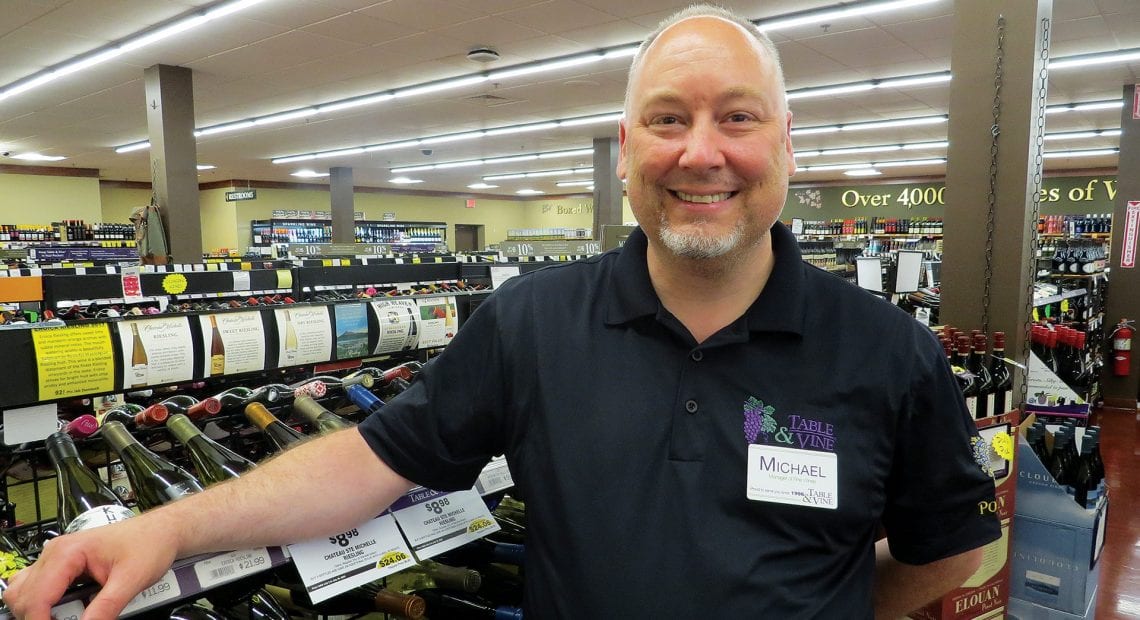
Coronavirus Sections Special Coverage

The New Math

Julie Quink noted that, at her accounting firm — as well as most others — it is tradition to have a large party on April 15, the tax-filing deadline, or perhaps the 16th.

Steve Erickson

Steve Erickson

Patrick Leary

Patrick Leary

Julie Quink

Julie Quink

Jim Barrett

Jim Barrett

These are celebrations of hard work well done, she told BusinessWest, adding that staff members who have been under a great deal of stress and working long hours and long weeks can take a deep breath and relax, knowing that the worst is over for another year.

This April 15, there was no party at Burkhart Pizzanelli, the firm she serves as managing partner, or at most other firms. And it’s not just because the filing deadline has been extended to July 15 by both the state and federal governments.

It’s because there is still a great deal of stress, and the long hours continue as accounting firms play a huge role in trying to help their clients get to the other side of the COVID-19 pandemic.

“On a personal level, I’ve probably never worked as hard in my entire career as I have this year,” she noted. “I’ve put in many more hours than I have other years, and I know others have as well.”

Quink was one of several area accounting-firm executives to speak with BusinessWest as part of the latest in a series of virtual roundtable discussions concerning COVID-19. Those at the ‘table’ said these are, quite obviously, different times for accountants. While some of the work hasn’t changed, like all those tax returns, some of it has, including efforts to help clients of all sizes and in virtually every sector file for disaster relief (especially through the Small Business Administration’s Paycheck Protection Program), and — now that the money has started coming in — properly manage those funds so that the loans granted are forgivable.

But the work goes well beyond helping clients fill out the necessary paperwork, said Steve Erickson, CPA, partner in charge of Whittlesey’s Holyoke office. He said clients need to carefully manage cash flow, and they also need plans for the short and long term as they address life during — and after — this pandemic, and his firm, like others, has stepped in to assist with this often-difficult work.

“The biggest concern we see is cash flow and advising clients on what’s coming down the pike and making good long-term plans for whatever they’re doing,” he told BusinessWest. “And each one of them is unique; I can’t say that there’s one that’s very similar to the other.”

Meanwhile, the manner in which work is being done is obviously changing as well. Many of those we spoke with are working at home — some or all of the time — while discussions with clients and co-workers are now done mostly by phone, e-mail, or Zoom. And since accountants are working with clients’ sensitive financial information while at home, proper protocols and security measures have been added.

There are lessons being learned. Summing up the comments offered, it seems that those in accounting work much more efficiently — and certainly communicate much better — when they’re together in the same office, sharing ideas and collaborating. As for clients … the remote meetings have worked well, for the most part, and they may be the preferred method moving forward.

“From a positive standpoint, this has shined a bit of a light on our firm as far as our processes, our policies, how we can do things better, and what we should be looking to do better, said Patrick Leary, CPA, a partner with Springfield-based MP CPAs. “Hopefully, we’re going to learn from this and everyone else will learn from this and make themselves a stronger firm.”

“The biggest concern we see is cash flow and advising clients on what’s coming down the pike and making good long-term plans for whatever they’re doing. And each one of them is unique; I can’t say that there’s one that’s very similar to the other.”

Overall, this has been, and will continue to be, an intriguing, challenging, and in most all ways rewarding time for accountants, said those at the virtual table. Clients are calling them — and leaning on them for help — like never before, and as a result, relationships are being strengthened, and new ones are being formed.

Jim Barrett, managing partner at Holyoke-based Meyers Brothers Kalicka, said that, for some time, his firm — and most all firms, for that matter — have been working to broaden the umbrella of services to clients and develop relationships that are more advisory and consultative in nature.

The pandemic has in some ways forced the issue.

“This crisis has spurred us to do more consultative and advisory work with clients, not only with navigating the stimulus package, but also navigating any changes in their business, be it with employees or costs,” Barrett explained, adding that this work is certainly ongoing and is likely to continue for some time.

Beyond the Numbers

All through her career, Quink told BusinessWest, she’s prided herself on having the answers when clients have questions.

She still has most of the answers, but COVID-19 has changed that equation as well, because now, the questions are, well, different — in many cases, much different.

“This is my 29th year doing this, and I can’t recall a time when I’ve said ‘I don’t know the answer to that’ as much as I have these past few months, and follow it up with ‘I’ll have to get back to you,’” she told BusinessWest, adding that, in many cases, the answers don’t come easily.

That’s because clients are asking about whether to furlough employees or lay them off; or about whether employees can be ordered back to work; or about how to handle a situation where a laid-off employee is making far more on unemployment than they would on the job — and, therefore, wants to stay laid off; or about what to do with employees who must stay on the payroll for the loan from the SBA to be forgivable, but have no work to do because the business can’t open yet because it’s not deemed ‘essential.’

“People who scrambled to apply for the loan as soon as they could for fear that the funds were going to run out are now starting to receive those proceeds, and they’re asking, ‘if I bring my employees back, what am I going to do with them?’” said Leary, noting that there are many types of businesses that fall into this category. “Do they paint the walls?

“If you’re a lower-wage earner, and you can make the same or more on employment, what’s the incentive to go back to work and help my employer have some of his loans forgiven?” he went on. “It’s a predicament that a lot of companies are facing, and we haven’t seen any real guidance on it.”

Coping with such questions is a new reality for accountants. Actually, it’s one of many new realities. And they all come on top of the oldest of realties — tax season.

Add it all up — pun intended — and this has been a very different start to the year for accountants. Things began as they generally do, with tax-return work starting to flow in during the winter months and building toward the annual late-March, early April crush. By mid-March, though, as the pandemic reached Western Mass., and especially after non-essential businesses were ordered closed on March 24, things changed dramatically.

Clients were suddenly thrust into a situation unlike anything they’d seen before, said Barrett, and they were calling their accountant in search of some answers and, more importantly, some guidance.

“There’s a lot of companies and medical practices who have never gone through this before, and they’re doing the appropriate thing … their financial people are going through their expenses, they’re going through what needs to be paid and what should be paid — basic business decisions that they’re trying to make under a period of duress,” said Barrett. “What we see is that either the company doesn’t have a financial person — it’s the owner asking us — or they do have a financial person, and that person is, for the most part, by themselves, and they’re looking for advice or just want to bounce their plan off someone to see that it makes sense.”

And as clients started calling with new and different needs, accountants were having to adjust to new ways to work.

Indeed, most have been working at home — another of those new realities that brings its own set of challenges — and thus communicating with clients and colleagues alike in ways other than face-to-face.

“We’ve instituted procedures and policies that we never had before because we’ve never had that many people working out of the office,” said Barrett, whose sentiments were echoed by others at the ‘table.’ “We’re still fine-tuning those moving forward, but it’s changing the way we work, without a doubt.”

Erickson agreed. He said Whittlesey closed its three offices on March 18 and went to remote access. Like everyone else who’s gone through it, he called it a learning experience.

“It was a little bumpy at first, just getting used to the whole thing and trying to stay out of the kitchen and all the snacks in there,” he noted. “But, overall, it’s gone smoothly.”

Quink noted that, while Burkhart Pizzanelli has closed its office to outside traffic, some staffers still come to the office most days, and carefully practice social distancing — while taking a number of other steps in the name of safety — while doing so.

“We’re not on top of each other; we have a nice layout so we can maintain the appropriate distance,” she explained. “At lunchtime, it might look like you’re looking at the royal family — there’s one on one end of the table and one at the other end, and we’re always going around and reminding each other about being safe and taking the steps to stay safe; we emphasize that, if one of us goes down, the entire firm is down.”

Forms and Function

But it’s the nature of the work, more than how it’s carried out, that has been the more dramatic, and impactful, change for accountants.

Much of it has involved filing for PPP relief and now helping clients carefully manage that money, but, as noted earlier, it goes well beyond that.

There are all those questions to answer, or try to answer, as the case may be, but there’s also the task of helping companies plan — something that’s very difficult to do in these times — for whatever might happen in the coming months.

“We have spent quite a bit of time with our corporate clients talking about cash-flow management and cash-flow projections,” said Leary. “We’re talking through ‘what-if’ scenarios with a range of clients that runs the gamut, from those in the cleaning-supply business who cannot get enough product in the door to those in the hospitality industry who have shuttered their doors.

“We’ve had some discussions with some distributors and manufacturers who are now being more cognizant of their suppliers and their inventory levels,” he went on, offering a specific example of the consultative work going on. “They’re looking at having redundant suppliers; instead of having just a West Coast supplier, they’re asking whether they should also have one from Canada or one in the Asia market. If borders get closed, do they have a redundant supplier, and what is the proper inventory level? There’s a lot of thoughtful planning going on.”

Erickson concurred, and noted that, while planning, clients of all sizes are grappling with the moment as well, and this means dealing with everything from cash flow to employment matters to discussions with the landlord and the bank about possible deferrals of payments.

Quink agreed and noted that, overall, there are important conversations to be had with clients. And while some of them, especially those with the cleaning companies that have more work than they can handle, are upbeat in nature, most are exactly the opposite.

“We’re having a lot of strategy conversations with clients, and the reality is that some of the clients we’re taking to … we know they’re not going to make it through this,” she said. “So we’re having the best conversations we can to position them so that when that happens — if it happens — they’re at least well-advised.”

While it’s difficult to see any silver linings to the current crisis situation, the accountants at the ‘table’ said they can find some in the way that clients are looking to learn from what’s happened and take steps to not only survive the pandemic but be a better, stronger company for the future.

“There are a lot of people proactively planning for the long term,” Leary said. “And to me, that’s positive; they’re not making impulsive decisions and thinking that this is going to close their doors permanently. It’s more, ‘when we come out of this, how do we do it better?’ And that’s encouraging.”

As for the accounting firms themselves, they’re dealing with the moment themselves, and it’s a challenging time. Most of the consulting work mentioned above is provided at the upper levels, by the partners, who, at the same time, are trying to manage younger staff members, many of them working remotely.

“We’re trying to juggle two things at once, and we’re frustrated that we can’t teach as much, and it’s difficult to manage younger people at home,” Barrett said. “Meanwhile, there’s that thought in the back of our minds … ‘boy, I hope we get paid for this.’”

Indeed, while firms are eager to help, they are advising clients knowing that the bills for their services may wind up at or near the bottom of the pile of those that get paid. Such fears are the basis for comments shared by many at the table that, while this will be a busy year, it may not be a good one when it comes to the bottom line.

This is just one of many stress-inducing matters to contend with during a year that will be unlike any other for the accounting firms in the region.

“The toll that this pandemic has taken on our team from the mental perspective is enormous,” said Quink. “It not just how it’s extended the season, but how it’s added a lot to our workloads.”

Bottom Line

Getting back to the annual April 15 celebration … Quink told BusinessWest there might be a party on July 15, when tax returns are now due. But maybe not.

Tax season will be over, but the work of helping clients navigate their way through COVID-19-generated whitewater will be ongoing.

That’s part of the new reality for accountants, and it will become the status quo for the foreseeable future. It will be a challenging time in many different respects, and one that gives new meaning to the phrase ‘taxing situation.’

George O’Brien can be reached at [email protected]
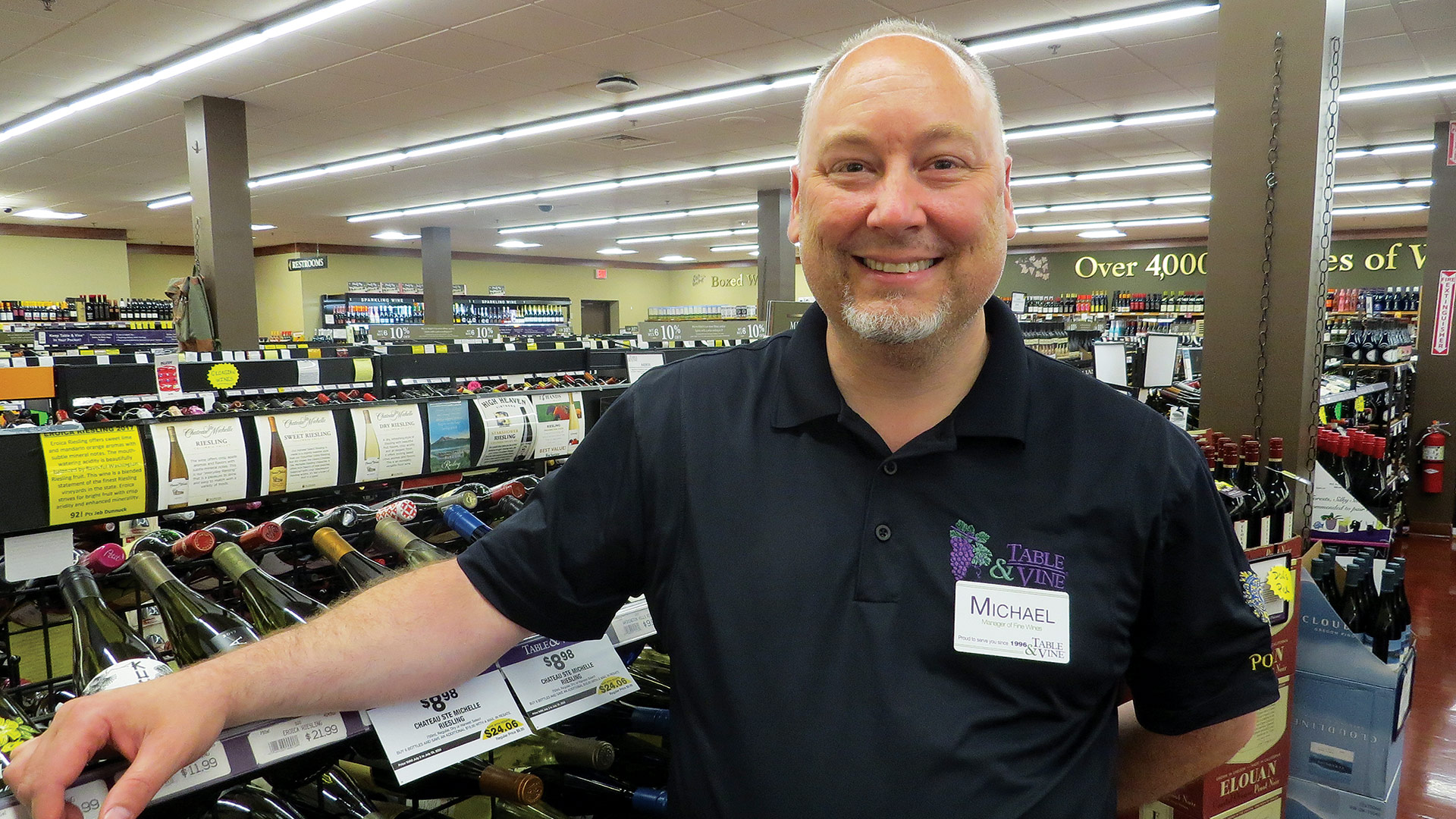
Coronavirus

Opinion

By George O’Brien

May 4.

Who would ever have known that so much importance would be attached to such a random date on the calendar?

But here we are in late April wishing that May 4 would come. It’s sort of like Christmas or your birthday when you were 5 years old. You couldn’t wait for it to get here, and you inevitably started counting down the weeks and then the days, wishing it would get here faster.

But this is much, much different.

May 4 is the slated end of Gov. Charlie Baker’s already-extended stay-at-home order, imposed to flatten the curve and slow the spread of the COVID-19 pandemic. Not that anyone uses an actual calendar anymore, but people have had that date circled for weeks now. That was the date that maybe, just maybe, things could start returning to normal.

People are still hoping that, but overall, there isn’t much hope May 4 will be that day. Massachusetts is still a hotspot for the virus, and the governor says the Bay State is still very much still in the ‘surge.’ Any day now, it’s likely he will announce the stay-at-home order has been extended. It might be a few weeks, it might be until June 1, it might be all the way to the end of the school year — not that school schedules should matter much. After all, the state’s economy does function in the summer, when children are out of school for 10 weeks.

No one knows, but what we do know is that soon there will likely be a new date to circle on the calendar, and a new date for wondering if that is when things will start getting back to normal.

This is no way for a state, for an economy, to function. But that’s the new reality.

Some states have decided they just don’t want to wait any longer. Their dates have already arrived. Time will tell if the proper decisions have been made.

Here, it’s almost certain that we’re going to wait a while longer. And with the waiting comes more anxiety, more questions, more uncertainty about how and when we’re going to turn the economy back on in the Bay State.

It would be easy — and also very tempting — to say, as many others have, that the cure can’t be worse than the disease, and that we need to get on with our lives and get on with the economy. But we can’t really turn the economy back on until people feel safe enough to go to a casino or a hair salon or a restaurant or even the emergency room. And right now, far too many people just don’t feel safe enough to do any of those things.

So, in that respect, these arbitrary dates don’t really have much meaning. It will be the consuming public that will ultimately decide when the economy gets turned back on, not a governor. And at the moment, we can’t exactly set a time for that.

Still, we’ve all looked at that momentarily magical date of May 4 with hope and anticipation — again like a 5-year-old during mid-December, wishing for that day to arrive and thinking time is moving much too slowly. April has been the longest month any of us can remember, and May 4 might be the date when we can start to put all this behind us.

But it seems almost certain that we’ll have a new magical date —  and the hope, and the anticipation, will begin anew.

It’s not like anything any of us have been through before, but, then again, that’s what this pandemic has been all about.

George O’Brien is the editor of BusinessWest.

Coronavirus Sections Special Coverage

The New Math

By George O’Brien

Julie Quink noted that, at her accounting firm — as well as most others — it is tradition to have a large party on April 15, the tax-filing deadline, or perhaps the 16th.

These are celebrations of hard work well done, she told BusinessWest, adding that staff members who have been under a great deal of stress and working long hours and long weeks can take a deep breath and relax, knowing that the worst is over for another year.

This April 15, there was no party at Burkhart Pizzanelli, the firm she serves as managing partner, or at most other firms. And it’s not just because the filing deadline has been extended to July 15 by both the state and federal governments.

It’s because there is still a great deal of stress, and the long hours continue as accounting firms play a huge role in trying to help their clients get to the other side of the COVID-19 pandemic.

“On a personal level, I’ve probably never worked as hard in my entire career as I have this year,” she noted. “I’ve put in many more hours than I have other years, and I know others have as well.”

Quink was one of several area accounting-firm executives to speak with BusinessWest as part of the latest in a series of virtual roundtable discussions concerning COVID-19. Those at the ‘table’ said these are, quite obviously, different times for accountants. While some of the work hasn’t changed, like all those tax returns, some of it has, including efforts to help clients of all sizes and in virtually every sector file for disaster relief (especially through the Small Business Administration’s Paycheck Protection Program), and — now that the money has started coming in — properly manage those funds so that the loans granted are forgivable.

But the work goes well beyond helping clients fill out the necessary paperwork, said Steve Erickson, CPA, partner in charge of Whittlesey’s Holyoke office. He said clients need to carefully manage cash flow, and they also need plans for the short and long term as they address life during — and after — this pandemic, and his firm, like others, has stepped in to assist with this often-difficult work.

“The biggest concern we see is cash flow and advising clients on what’s coming down the pike and making good long-term plans for whatever they’re doing,” he told BusinessWest. “And each one of them is unique; I can’t say that there’s one that’s very similar to the other.”

Meanwhile, the manner in which work is being done is obviously changing as well. Many of those we spoke with are working at home — some or all of the time — while discussions with clients and co-workers are now done mostly by phone, e-mail, or Zoom. And since accountants are working with clients’ sensitive financial information while at home, proper protocols and security measures have been added.

There are lessons being learned. Summing up the comments offered, it seems that those in accounting work much more efficiently — and certainly communicate much better — when they’re together in the same office, sharing ideas and collaborating. As for clients … the remote meetings have worked well, for the most part, and they may be the preferred method moving forward.

“From a positive standpoint, this has shined a bit of a light on our firm as far as our processes, our policies, how we can do things better, and what we should be looking to do better, said Patrick Leary, CPA, a partner with Springfield-based MP CPAs. “Hopefully, we’re going to learn from this and everyone else will learn from this and make themselves a stronger firm.”

Overall, this has been, and will continue to be, an intriguing, challenging, and in most all ways rewarding time for accountants, said those at the virtual table. Clients are calling them — and leaning on them for help — like never before, and as a result, relationships are being strengthened, and new ones are being formed.

Jim Barrett, managing partner at Holyoke-based Meyers Brothers Kalicka, said that, for some time, his firm — and most all firms, for that matter — have been working to broaden the umbrella of services to clients and develop relationships that are more advisory and consultative in nature.

The pandemic has in some ways forced the issue.

“This crisis has spurred us to do more consultative and advisory work with clients, not only with navigating the stimulus package, but also navigating any changes in their business, be it with employees or costs,” Barrett explained, adding that this work is certainly ongoing and is likely to continue for some time.

Beyond the Numbers

All through her career, Quink told BusinessWest, she’s prided herself on having the answers when clients have questions.

She still has most of the answers, but COVID-19 has changed that equation as well, because now, the questions are, well, different — in many cases, much different.

“This is my 29th year doing this, and I can’t recall a time when I’ve said ‘I don’t know the answer to that’ as much as I have these past few months, and follow it up with ‘I’ll have to get back to you,’”  she told BusinessWest, adding that, in many cases, the answers don’t come easily.

That’s because clients are asking about whether to furlough employees or lay them off; or about whether employees can be ordered back to work; or about how to handle a situation where a laid-off employee is making far more on unemployment than they would on the job — and, therefore, wants to stay laid off; or about what to do with employees who must stay on the payroll for the loan from the SBA to be forgivable, but have no work to do because the business can’t open yet because it’s not deemed ‘essential.’

“People who scrambled to apply for the loan as soon as they could for fear that the funds were going to run out are now starting to receive those proceeds, and they’re asking, ‘if I bring my employees back, what am I going to do with them?’” said Leary, noting that there are many types of businesses that fall into this category. “Do they paint the walls?

“If you’re a lower-wage earner, and you can make the same or more on employment, what’s the incentive to go back to work and help my employer have some of his loans forgiven?” he went on. “It’s a predicament that a lot of companies are facing, and we haven’t seen any real guidance on it.”

Coping with such questions is a new reality for accountants. Actually, it’s one of many new realities. And they all come on top of the oldest of realties — tax season.

Add it all up — pun intended — and this has been a very different start to the year for accountants. Things began as they generally do, with tax-return work starting to flow in during the winter months and building toward the annual late-March, early April crush. By mid-March, though, as the pandemic reached Western Mass., and especially after non-essential businesses were ordered closed on March 24, things changed dramatically.

Clients were suddenly thrust into a situation unlike anything they’d seen before, said Barrett, and they were calling their accountant in search of some answers and, more importantly, some guidance.

“There’s a lot of companies and medical practices who have never gone through this before, and they’re doing the appropriate thing … their financial people are going through their expenses, they’re going through what needs to be paid and what should be paid — basic business decisions that they’re trying to make under a period of duress,” said Barrett. “What we see is that either the company doesn’t have a financial person — it’s the owner asking us — or they do have a financial person, and that person is, for the most part, by themselves, and they’re looking for advice or just want to bounce their plan off someone to see that it makes sense.”

And as clients started calling with new and different needs, accountants were having to adjust to new ways to work.

Indeed, most have been working at home — another of those new realities that brings its own set of challenges — and thus communicating with clients and colleagues alike in ways other than face-to-face.

“We’ve instituted procedures and policies that we never had before because we’ve never had that many people working out of the office,” said Barrett, whose sentiments were echoed by others at the ‘table.’ “We’re still fine-tuning those moving forward, but it’s changing the way we work, without a doubt.”

Erickson agreed. He said Whittlesey closed its three offices on March 18 and went to remote access. Like everyone else who’s gone through it, he called it a learning experience.

“It was a little bumpy at first, just getting used to the whole thing and trying to stay out of the kitchen and all the snacks in there,” he noted. “But, overall, it’s gone smoothly.”

Quink noted that, while Burkhart Pizzanelli has closed its office to outside traffic, some staffers still come to the office most days, and carefully practice social distancing — while taking a number of other steps in the name of safety — while doing so.

“We’re not on top of each other; we have a nice layout so we can maintain the appropriate distance,” she explained. “At lunchtime, it might look like you’re looking at the royal family — there’s one on one end of the table and one at the other end, and we’re always going around and reminding each other about being safe and taking the steps to stay safe; we emphasize that, if one of us goes down, the entire firm is down.”

Forms and Function

But it’s the nature of the work, more than how it’s carried out, that has been the more dramatic, and impactful, change for accountants.

Much of it has involved filing for PPP relief and now helping clients carefully manage that money, but, as noted earlier, it goes well beyond that.

There are all those questions to answer, or try to answer, as the case may be, but there’s also the task of helping companies plan — something that’s very difficult to do in these times — for whatever might happen in the coming months.

“We have spent quite a bit of time with our corporate clients talking about cash-flow management and cash-flow projections,” said Leary. “We’re talking through ‘what-if’ scenarios with a range of clients that runs the gamut, from those in the cleaning-supply business who cannot get enough product in the door to those in the hospitality industry who have shuttered their doors.

“We’ve had some discussions with some distributors and manufacturers who are now being more cognizant of their suppliers and their inventory levels,” he went on, offering a specific example of the consultative work going on. “They’re looking at having redundant suppliers; instead of having just a West Coast supplier, they’re asking whether they should also have one from Canada or one in the Asia market. If borders get closed, do they have a redundant supplier, and what is the proper inventory level? There’s a lot of thoughtful planning going on.”

Erickson concurred, and noted that, while planning, clients of all sizes are grappling with the moment as well, and this means dealing with everything from cash flow to employment matters to discussions with the landlord and the bank about possible deferrals of payments.

Quink agreed and noted that, overall, there are important conversations to be had with clients. And while some of them, especially those with the cleaning companies that have more work than they can handle, are upbeat in nature, most are exactly the opposite.

“We’re having a lot of strategy conversations with clients, and the reality is that some of the clients we’re taking to … we know they’re not going to make it through this,” she said. “So we’re having the best conversations we can to position them so that when that happens — if it happens — they’re at least well-advised.”

While it’s difficult to see any silver linings to the current crisis situation, the accountants at the ‘table’ said they can find some in the way that clients are looking to learn from what’s happened and take steps to not only survive the pandemic but be a better, stronger company for the future.

“There are a lot of people proactively planning for the long term,” Leary said. “And to me, that’s positive; they’re not making impulsive decisions and thinking that this is going to close their doors permanently. It’s more, ‘when we come out of this, how do we do it better?’ And that’s encouraging.”

As for the accounting firms themselves, they’re dealing with the moment themselves, and it’s a challenging time. Most of the consulting work mentioned above is provided at the upper levels, by the partners, who, at the same time, are trying to manage younger staff members, many of them working remotely.

“We’re trying to juggle two things at once, and we’re frustrated that we can’t teach as much, and it’s difficult to manage younger people at home,” Barrett said. “Meanwhile, there’s that thought in the back of our minds … ‘boy, I hope we get paid for this.’”

Indeed, while firms are eager to help, they are advising clients knowing that the bills for their services may wind up at or near the bottom of the pile of those that get paid. Such fears are the basis for comments shared by many at the table that, while this will be a busy year, it may not be a good one when it comes to the bottom line.

This is just one of many stress-inducing matters to contend with during a year that will be unlike any other for the accounting firms in the region.

“The toll that this pandemic has taken on our team from the mental perspective is enormous,” said Quink. “It not just how it’s extended the season, but how it’s added a lot to our workloads.”

Bottom Line

Getting back to the annual April 15 celebration … Quink told BusinessWest there might be a party on July 15, when tax returns are now due. But maybe not.

Tax season will be over, but the work of helping clients navigate their way through COVID-19-generated whitewater will be ongoing.

That’s part of the new reality for accountants, and it will become the status quo for the foreseeable future. It will be a challenging time in many different respects, and one that gives new meaning to the phrase ‘taxing situation.’ 

George O’Brien can be reached at [email protected]

Coronavirus Sections Special Coverage

Dropped Shots

By George O’Brien

Ted Perez Jr. calls it a “non-winter.” And he’s seen more than a few during roughly a half-century of work at East Mountain Country Club in Westfield, where he’s now the president and head professional.

A non-winter is just what it sounds like — a winter that isn’t. And that’s what this region had in 2019-20, except for those few weeks in early December.

Thus, East Mountain, as it is whenever the weather allows, was open most days all through the first three and half months of this year, so much so that Perez said the club, built by his father in 1960, was on target for its best year in perhaps a few decades.

“Golf certainly isn’t what it was 25 years ago, and it’s been a long time since we’ve had a sustained good year,” he said, referring to a downturn that started with the Great Recession and has lingered since. “But we were on course to have as good a year as we’ve had in a very long time.”

Needless to say, the COVID-19 pandemic has certainly changed things in a hurry. All courses in the state were ordered closed in late March, as well as their 19th hole and banquet facilities. By then, pretty much every banquet and event through March, April, and May had been cancelled or postponed anyway.

All this is bad, but what makes it far worse is that Perez and other course owners and managers can’t understand the order — golf is played outdoors, and it’s relatively easy to socially distance — and they can’t plan because no one knows if or when the ban on play will be lifted.

“A golf course is almost like a public park,” said Antillio Cardaropoli, owner of Twin Hills Country Club in Longmeadow, a private club. “People can go out for a walk, and when you’re playing golf, the most people you have together is four, and they’re usually going in different directions on the course. This [ban] makes no sense to me.”

Perez agreed.

“I have 120 acres here — it’s very, very, very easy to maintain separation and keep six feet apart on the golf course,” he said. “I truly don’t understand why there’s even a discussion about it; there should be no debate about this whatsoever.”

To add insult to injury, if that’s the appropriate phrase, most other states, including neighboring Connecticut, have deemed that golf is essential. Well, they’re allowing the courses to open, let’s put it that way. And many in the Bay State are crossing over the line to play, said Cardaropoli.

“A golf course is almost like a public park. People can go out for a walk, and when you’re playing golf, the most people you have together is four, and they’re usually going in different directions on the course. This [ban] makes no sense to me.”

Overall, the pandemic has impacted every facet of the golf business, said Jesse Menachem, president of the Massachusetts Golf Assoc., adding that this is a long list. It includes greens fees and cart rentals, obviously, but also fundraising tournaments, leagues, food and beverages (a huge component of every club’s revenue stream), those banquets, retail (if people aren’t playing, they’re not buying clubs, balls, and new shoes), and more.

“Depending on how long this goes … if we cannot allow for golf operations to exist for another four, six, or eight weeks, that’s going to put courses in a very tough position,” said Menachem in early April, noting that the golf industry creates 25,000 jobs and is a $2.7 billion business. “This is prime time, not just for daily access, but for acquiring golfers and getting new members for private clubs.”

The best hope for course owners and managers is that, as the state begins to turn its economy back on — and that won’t happen before May 4 — golf courses will be on the list of businesses that can begin operating, with restrictions, to be sure. If that’s the case, courses will have lost several important weeks of on-course revenue and who knows how many weeks or months of banquet and food and beverage revenue.

“That’s certainly not ideal,” said Perez, “but we can cope with that.”

However, if courses can’t reopen on May 4 or soon thereafter, then what has been a challenging time for the golf industry will reach a new, unprecedented level of pain.

“From this point on, every week is critical to lose,” said Perez, noting that courses in this part of the country make more than 75% of their revenue between mid-April and mid-September. “This is revenue you just can’t make up.”

No Course of Action

It’s called ‘Good Friday, Bad Golf.’ It’s an annual event at East Mountain, a start-of-the-season gathering staged when most people have the day off from work and they’re eager to take the sticks out of the basement.

“It’s a huge golf outing — 140 players — and prime-rib dinner, the whole nine yards; when you add everything up, the golf, the bar, the snack bar, the dinner … it’s a huge day,” said Perez, noting that it obviously wasn’t a big day this year. “That’s gone; that’s been wiped out, and I can’t make it up.”

The question on everyone’s mind, and the question that can’t be answered, is how much more will be wiped out during the 2020 season?

Indeed, golf, like many other businesses, is in a state of limbo, or suspended animation. Courses can be maintained — that work has been deemed essential — but no one can play on them. Some still try, but such covert activities have drawn the ire of elected officials, if not the course owners themselves; Springfield Mayor Domenic Sarno’s very public threat to barricade the city’s two municipal golf courses to keep people off them made headlines across the state.

For those managing courses, they can deal with the present, and they are (more on that in a moment), but, as noted, they can’t plan for the future because they have no idea what it looks like.

Overall, it’s not a good place to be.

“You can’t give anyone any answers because no one knows what’s going to happen,” Cararopoli said. “The governor says it may be May 4. What it it isn’t? No one knows.”

Elaborating, he said the many question marks about the future are wreaking havoc on the banquet side of the ledger. “We’ve lost so many events already — weddings, bar mitzvahs, proms, showers, birthdays,” he noted. “And no one can rebook because they don’t know what’s going to transpire over the next few months.”

As for dealing with the present, club owners and managers are doing what they can to cope. Perez has filed an application for relief from the federal Paycheck Protection Program (PPP), and received initial approval. He was quick to note that this money can mostly be used for payroll, so when it comes to his myriad other expenses, he’s cutting corners in any way he can.

“I’m penny-pinching everything I can,” he noted, adding quickly that he’s not sure when he’ll be getting his PPP loan, adding to his cash-flow anxiety.

At Twin Hills, Cardaropoli has had to lay off a number of staff members — mostly on the banquet and food and beverage side of the house — and is unsure what to tell employees when it comes to if or when they might return.

As for the members … well, they are in a state of limbo as well, said Cardaropoli, adding that overall membership numbers are understandably down as some who might normally commit in the late winter or early spring — and that’s when a good number do — are waiting to see what happens before they sign on the dotted line and write a check.

“It’s made a big difference — March and April are the biggest months for having new members sign on,” he explained. “Now, because of the situation, fewer are signing on because they don’t know when they can start to play; membership is at a standstill.”

As for those who have signed up and started paying … if the season starts soon, fees may not have to be adjusted much or at all, Cardaropoli said. But if courses stay closed for several more weeks or months, that will certainly change, he went on, adding that it is unknown at this time just what services clubs will be offer to offer to members in 2020.

These scenarios are playing out at public and private courses across the state, said Menachem, adding that his organization continues to monitor the situation and diplomatically lobby the governor to let the courses open.

“We absolutely want to continue to advocate for our business and allow for access to golfers and enable these businesses to operate,” he said. “But we want to be respectful and realistic given what’s going on in this state, the country, and the world.”

Like Perez, Cardaropoli, and all other course owners and managers, Menachem sees golf as solid exercise and good release for those who are cooped up in their homes, and a business that should be open.

He said it would be easy to make adjustments that would enable people to play and stay safe. These include limiting carts to one passenger each — or eliminating them altogether and requiring people to walk; spacing out tee times to eliminate large gatherings at the first tee and reduce the number of people on the course at one time; limiting payments to contact-less options; pulling the cups out of the holes an inch or two to keep the ball from falling in; and keeping the flagsticks in the hole or eliminating them as well.

Perez agreed.

“Typically, we get eight foursomes an hour — a group goes out every seven and a half minutes,” he told BusinessWest. “Make it so you only have five tee times, one every 12 minutes, so you get a little more separation on the golf course. These are some of the things other golf courses are doing.

“I have a friend in Connecticut … this is what she’s doing. She’s gone with no carts, and she said it couldn’t have gone any smoother,” he went on, noting that more than 40 states allow golf courses to be open, with some restrictions. “And she’s getting 140 to 150 golfers a day. If I could get 100 players a day, I could weather this storm; zero a day just doesn’t work.”

Bottom Line

Indeed, it doesn’t.

That’s the reality for area course owners and managers today. They’re guardedly optimistic that things will change soon, but they simply don’t know.

Golf, the game, is hard. Golf, the business, has been just as hard for the past several years. And now, it’s become even more difficult.

Coronavirus

By George O’Brien

If one were to take a walk down Main Street — and I just did — it would be tempting to say that, if Springfield had any luck at all, it would be bad.

Yes, the pandemic is hitting every country, every state, every city and town, hard. As in very hard. But in Springfield, it seems worse, because things were — and I hope I don’t have to keep using the past tense — so much better. And the outlook was certainly bright and quite intriguing.

Now?

Now, we’re left to hope that, when this state gradually turns the economy back on again, the city can maybe pick up where it left off. That might be the best we can hope for at this point, but let’s stay optimistic.

After a quick walk around, it’s hard not to lament all that’s been lost, even though it’s clear that a shutdown was absolutely necessary to flatten the curve and put the region’s healthcare system in a position to do battle with this pandemic.

And it’s momentum that we’ve lost most of all.

Let’s start at MGM Springfield. It’s eerily quiet there, almost as if things are frozen in time. The doors that were never supposed to be locked are now locked. And who can say when they will open again? Likewise, who can say what business will be like when the doors do open again?

Casino floors are — in the best of times — crowded places with people sitting around blackjack tables, positioned just a few feet from each other at the rows of slot machines, jammed into the food court, and generally milling about, taking it all in. On a busy Friday or Saturday night, it’s difficult to find elbow room. When are people going to want to be in such a place again — especially the older population that makes up such a large part of this casino’s clientele? Indeed, the casino’s best customers are those most at risk.

But that’s just the casino floor. Perhaps the bigger contribution the casino has made has been to vibrancy in the downtown, the nightlife, through events in its ballrooms and shows at the MassMutual Center, Symphony Hall, and other venues. Who can say when there will be another concert, another convention, or even a fundraising dinner for a local nonprofit agency?

People are optimistically eyeing late summer or perhaps the fall as a time when we can return to something approaching ‘normal.’ But how realistic are those projections?

Walk around Springfield, and most of the signs of progress, the indicators that this was a city on the rise, are now as silent as the casino.

There’s the Amazing World of Dr. Seuss Museum, which was bringing families from every corner of the country to Springfield. It is now closed. So too is the Basketball Hall of Fame, which has undergone extensive renovations and was looking forward to a huge year as it inducts one of its most prestigious classes of honorees this fall.

The YMCA of Greater Springfield, which recently moved into Tower Square amid considerable fanfare as it started an intriguing chapter in its life, has seen both its fitness center and daycare center, its two largest revenue producers, shut down within just a month or two of opening.

At Union Station, the rail service that was starting to pick up steam has suffered a tremendous setback. People are now reluctant to get on trains, and even if they weren’t reluctant, there are really no places the train can take them — most workplaces are shut down, and so is every cultural attraction in New York.

Meanwhile, the restaurants that were such a big part of the city’s rebirth are now quiet, except for takeout, and many of the new businesses that had moved onto Bridge Street and other locations are locked down with their employees working from home — if they’re still working.

The lockdown, or shutdown, or whatever one wants to call it, isn’t even a month old yet. But it seems like an eternity. And for Springfield, it could not have come at a worse time — not that there’s ever a good time for a pandemic.

The pieces were starting to fall into the place, and the outlook was generally quite positive.

And now?

We have to hope that momentum is all we’ve lost, and that we haven’t lost too much of that precious commodity.

George O’Brien is the editor of BusinessWest; [email protected]
Coronavirus

Coping with a Changed Landscape

Kate Phelon says she misses her members.

Claudia Pazmany recalls the early days of this crisis, when she was bought to tears on an almost daily basis by the stories related to her by devastated business owners.

Nancy Creed says it’s become her mission to provide members with comprehensive and reliable information as they try to navigate their way through a crisis the likes of which they’ve never seen before.

Collectively, these chamber of commerce directors — Phelon in Westfield, Pazmany in Amherst, and Creed with the Springfield Regional Chamber — spoke not only for each other, but for colleagues across the country as chambers confront COVID-19.

And ‘confront’ is certainly the right word.

Indeed, as individual chambers work to keep members informed and assist them with the task of keeping the doors to their businesses open (figuratively if not literally — many of them have been ordered closed), they are in what amounts to survival mode themselves, especially since they are not at present eligible for federal stimulus money, though they’re lobbying to be included in the next stage of funding. And some of them may not, in fact, survive.

“I was on a call recently with our national association,” Creed recalled. “And they were saying that they expect 25% of the chambers not to survive this.”

The reasons for such dire predictions are obvious. Indeed, to serve their members, chambers rely on revenue from two primary sources — membership fees and events. And both are imperiled in some ways, the latter far more than the former, although overall membership and simply collecting fees that are due are certain to be impacted by this crisis.

Nancy Creed

Nancy Creed

“I was on a call recently with our national association. And they were saying that they expect 25% of the chambers not to survive this.”

As for those events, they range from the small — monthly after-5s, for example — to the large — the annual golf tournament in Westfield or Amherst’s Margarita Madness are in that category — to those in between, like regular breakfasts and legislative luncheons. Some events have been rescheduled for later in the year, but others have simply been lost, like Westfield’s popular St. Patrick’s Day breakfast — the first time it hasn’t been held in 40 years.

“At the same time as we’re worried about our members, we’re also worried about our chambers,” Phelon said. “There’s a huge concern for the chambers — we’re not having our events, which generate much of our revenue, and many of our members are really struggling.”

On March 6, the Springfield Regional Chamber staged its annual Outlook lunch at the MassMutual Center in downtown Springfield. For many business leaders in the Pioneer Valley, that was the last large gathering they attended. Everything since has been wiped off the calendar; BusinessWest has no need to publish its Chamber Corners section dedicated to listing upcoming chamber events because there are none for at least several more weeks.

But while chambers work to maintain their own bottom lines, their primary function of late has been a conduit of information to members who desperately need it.

They’re doing it through their websites and webinars, through polls — the Springfield Regional Chamber has conducted a number of them — and through conference calls with state and national leaders, during which they relay questions from their members, such as a Tele-Town Hall with U.S. Rep. Richard Neal, staged by the Springfield Regional Chamber on April 7.

Kate Phelon

Kate Phelon

“At the same time as we’re worried about our members, we’re also worried about our chambers. There’s a huge concern for the chambers — we’re not having our events, which generate much of our revenue, and many of our members are really struggling.”

Phelon said she and other chamber leaders have taken part in regular conference calls with Lt. Gov. Karyn Polito; Mike Kennealy, secretary of Housing and Economic Development; and a host of other officials. It started with one call a week, and now there are two, she noted, adding that such sessions have not only provided information to the chamber leaders, but provided them a chance to convey what’s on their members’ minds.

“They want to hear from us — they want to know what the issues are,” she said. “They take all our questions, and it’s been very helpful for us.”

Meanwhile, chamber leaders have been doing a lot of listening — and that in itself has been hard.

Pazmany said Amherst, a college town with no college students and restaurants, taverns, and museums that can’t open, has been particularly hard hit.

“It’s like summer here — only it’s far, far worse than summer,” she said. “No one needed for summer to arrive this soon; many businesses in this community have been just devastated by this.”

Overall, most chambers are experiencing what their members are experiencing — an ultra-challenging time dominated by questions that are often difficult to answer.

Plain Speaking

Since the pandemic fully arrived in Western Mass., and especially since the governor ordered all non-essential businesses to close, the primary function for area chambers has been to act as a combination sounding board and conduit for information.

And the emphasis has always been on providing information that is accurate and reliable, said those we spoke with, adding that there is plenty of news, if it can be called that, which does not fall into that category.

Claudia Pazmany

Claudia Pazmany

“It’s like summer here — only it’s far, far worse than summer. No one needed for summer to arrive this soon; many businesses in this community have been just devastated by this.”

“We’re trying, on a daily basis, to grab credible sources, and we really rely on the administration, because that takes rumor out of it — it comes straight from the horse’s mouth,” said Creed. “Our polls are just to get a pulse of the community so we can see what’s going on and pivot as we need to and gauge the sentiment of the business community — so it’s by no means scientific.”

Elaborating, she said her chamber has been partnering with other groups, such as the Employers Assoc. of the NorthEast, in an effort to inform business owners, but without overwhelming them.

“If there are other subject-matter experts out there, we want to partner with them instead of recreating the wheel,” she explained, “because there’s so much information, so much activity, that we certainly don’t want to overwhelm members — they already have enough on their plates.”

Pazmany said her chamber has created a ‘Resources for Business’ page on its website that is updated daily in an effort to help keep members informed at a time when they cannot gather in a room for a breakfast or educational seminar.

Phelon said her chamber, like all others, has been focused on providing information and connecting members to resources, which is what it has always done, except now it’s doing more of it, and that role has perhaps never been more important.

“Some chambers are putting information out daily, and we’re doing it at least weekly,” she said, adding that chambers are doing all this under unique circumstances.

“Most of us are dealing with reduced staff, some of us are working at home, some of us are in the office,” Phelon went on, noting that chambers are considered ‘essential.’ She does go into the office, but remains at least six feet away from her assistant and sanitizes the space on a daily basis.

Pazmany said her chamber, located on Main Street in downtown Amherst, has closed that office and has staffers working at home, in a nod to edicts concerning social distancing.

“We have a very small space, and we’re used to getting a lot of people in the door, and we thought that keeping the office open wasn’t the right thing to do given the circumstances,” she explained. “We like to say that, while the door may be locked, we’re open for business.”

While life has changed for chambers, it has for their members as well, certainly, and chambers are adjusting as these members struggle to keep their own doors open.

“We’re giving our members options on payments, and we’re even deferring it for 60 days,” Phelon explained, noting that many chambers are doing the same. “We understand the impact this is having on their business, and we want to be sympathetic.”

She noted that one additional challenge for chambers is that the needs of the members vary, generally with the size of the venture, and there isn’t a one-size-fits-all formula for providing assistance.

“We’ve got our very small micro-businesses that really need the help — it’s overwhelming for them; they’re struggling, and they don’t know if they’re going to make it,” she explained. “We also have major corporations that have an HR department and have significant resources, and everything in between. So it’s challenging.”

Lost Days

Beyond providing information, the other major role for chambers, historically, has been to provide networking opportunities for members. And it is this role that has been most impacted by the pandemic.

Indeed, gatherings of more than 10 people have been banned, which effectively eliminates after-5s, breakfasts, tabletop events, golf tournaments, annual meetings, legislative luncheons, and more — events staged to inform, bring members together, and generate revenue.

While some events have been pushed back or canceled altogether (like the St. Patrick’s Day breakfast in Westfield), chambers are looking to create what are being called ‘virtual networking events.’

They’re not exactly like the real thing, said those we spoke with, but they do enable people to see one another and interact, even if it’s on a computer screen, rather than in a local restaurant, golf course, banquet hall, or the showroom at Mercedes-Benz of Springfield. That was the site of a large after-5 involving a number of chambers early in March, said Pazmany, adding that, in a number of ways, that seems like a long time ago.

“We had 300 people there — it was a great event,” she recalled. “Who could believe that we’re now all sequestered in our homes?”

While looking to stage some events virtually, chambers are pushing their spring events further back into the calendar year. Phelon had a legislative luncheon slated for later this month and is now eyeing June. Meanwhile, her golf tournament, that chamber’s largest fundraiser, slated for East Mountain Country Club, was set for May, but it’s now rescheduled for June 22, with the hope that this is far enough out.

Pazmany said all of her chamber’s events into June have been canceled or moved back. Margarita Madness has been rescheduled for Sept. 24, but she’s not sure if that will work.

“We thought it was a safe date, but you just don’t know,” she said. “Every day I look at all the statistics, and I can’t tell you that date is safe.”

Creed told BusinessWest that the Springfield Regional Chamber is fortunate in several respects. For starters, it was able to stage perhaps its largest fundraiser of the year, the Outlook event, before the ban on large gatherings was put in place. Also, the chamber has reserves that it has not had to tap into as yet, and it has been able to “repurpose” staff members — its events coordinator has been shifted to member-engagement duties, for example — rather than lay them off, as some chambers have.

While the Outlook lunch went on as scheduled, the Springfield Regional Chamber has been forced to move its Fire & Ice signature cocktail event, which gave area bars and restaurants a chance to shine, said Creed, noting that it was scheduled for March. The next large fundraiser is the Super 60 event, which is scheduled for mid-fall and thus has not been impacted yet.

“Our events are so diversified that, if we lost one, we would still be in good shape,” she noted.

It remains to be seen if other chambers can say the same.

Spreading the Word

Summing up the situation for the business community and the chambers serving it, Phelon again spoke for all her colleagues.

“We’re all feeling … I wish I knew the right word; we’re all feeling the pressure and the concern,” she told BusinessWest. “We’re trying to stay positive, too, thinking ‘this will pass.’ But there are so many unknowns. This is unprecedented.”

It is, and for chambers, it’s an extreme challenge that comes when they already had their full share of challenges.

Like their members, to come out on the other side, they’re going to have to be resourceful, persistent, and willing and able to find new ways to do business.

George O’Brien can be reached at [email protected]