

Home Archive by category Sections (Page 25)

Sections

Commercial Real Estate Special Coverage

Building on a Solid Foundation

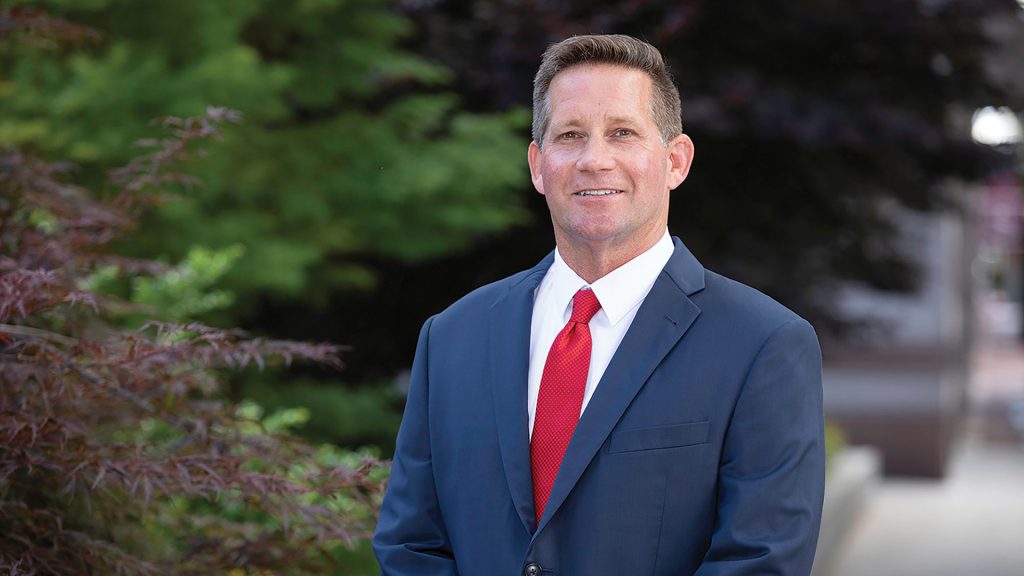
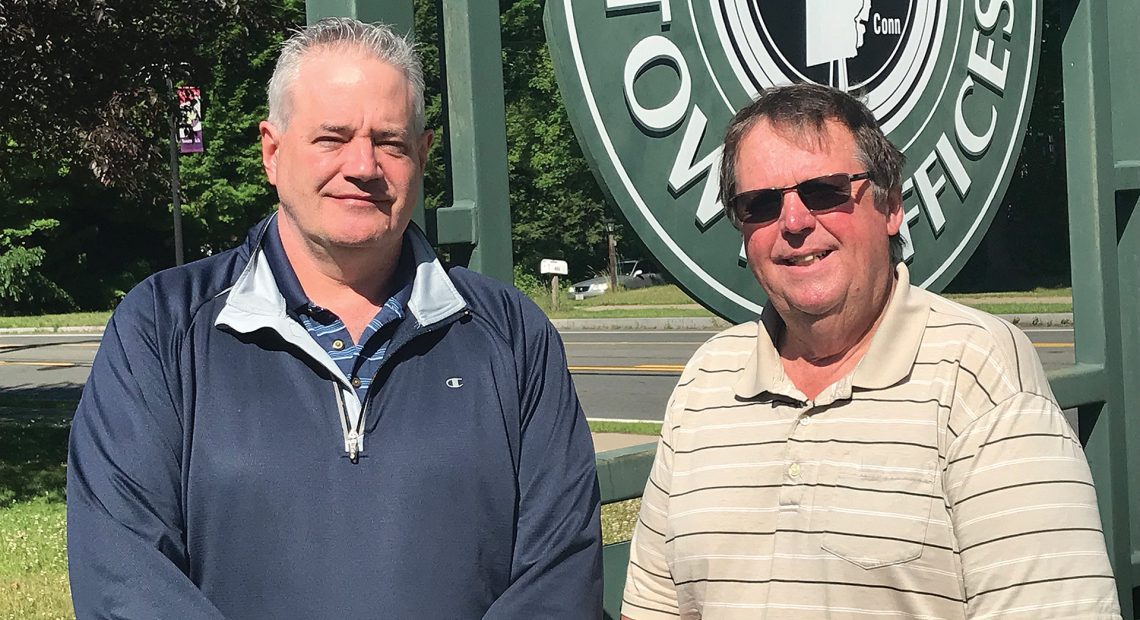
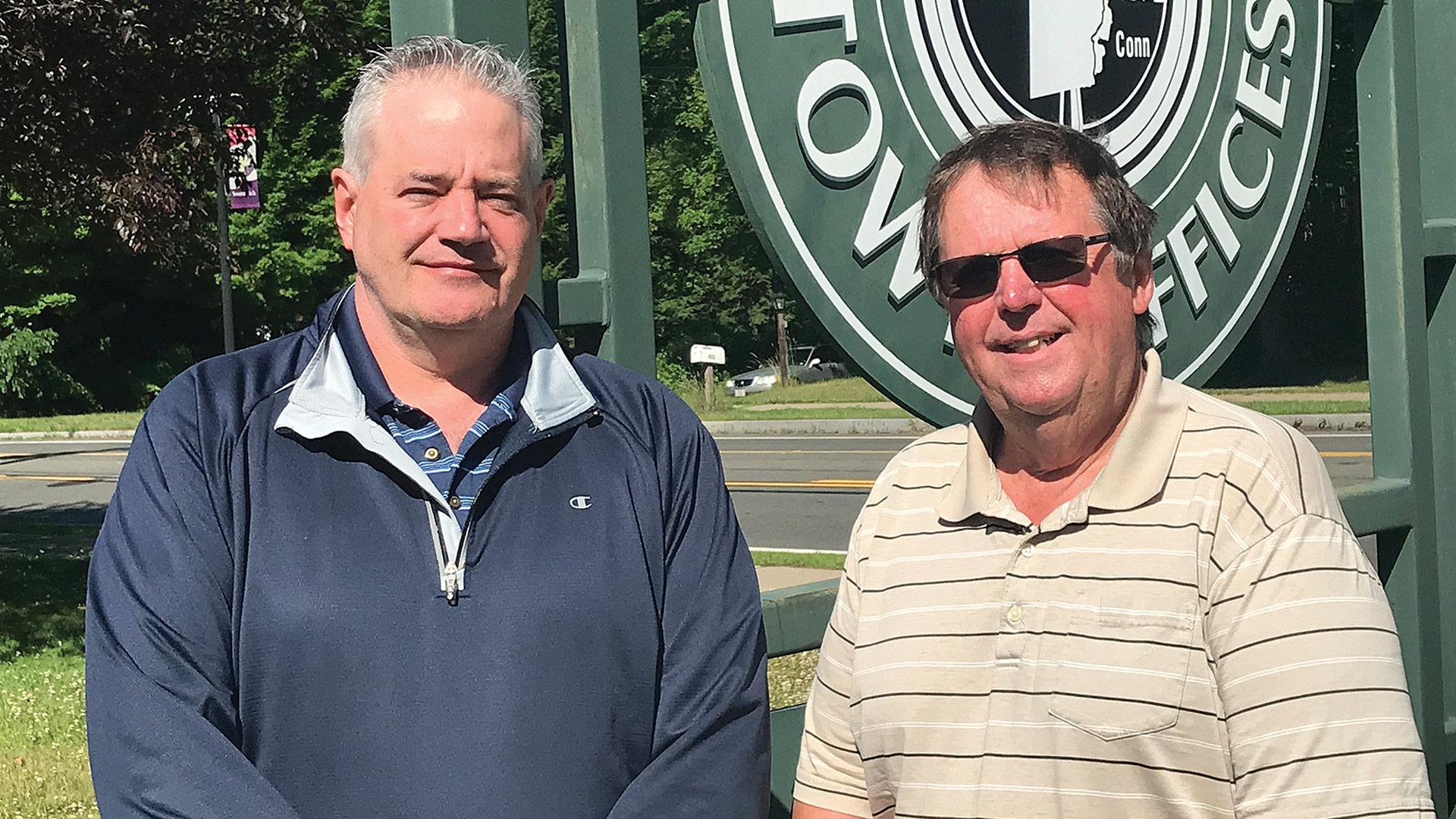
Matt Flink was recently named president and CEO of Appleton Corp., the real-estate and property-management arm of the O’Connell Companies. He brings with him considerable experience in this field — and the football field, as a coach. He intends to lean on both as he takes the helm of the company with a solid foundation and opportunities for growth in a number of established niches.

Matt Flink enjoys going to the office every day.

But he especially likes Thursdays. That’s the one day of the week when all employees at the O’Connell Companies are asked to be in the office, with most of them working remotely at least a few of the other four days.

“I love Thursdays — all my friends are there, my colleagues are there — there’s a sense of energy and a liveliness and a vitality that I don’t necessarily get the other days of the week,” he explained, before adding a large-sized ‘but.’

“It’s not about me and what I want, it’s about what’s in the best interest of the company and the best interest our employees,” he went on, adding that remote work is popular, it has become a benefit — and an expectation — at O’Connell, and, as he put it, “the work gets done.”

This same dynamic is playing out in businesses large and small across the region and across the country, and that’s just one of many issues and challenges Flink is facing as he takes the helm at Appleton Corp., the division of Holyoke-based O’Connell Companies that provides property-, facility-, and asset-management services, along with accounting and financial services, to managers and owners of commercial and residential properties across a wide swath of New England.

“We can’t get caught up in old-school thinking that says, ‘it’s always been this way, so it has to continue to be this way.’”

He now presides over a portfolio of managed properties that includes everything from several transportation centers, including Springfield’s Union Station, to the Springfield Technology Park, retail shopping centers, medical offices, and industrial properties. It also includes a number of residential properties, including senior-living facilities.

The broad goal moving forward, said Flink, who was named successor to the now-retired Paul Stelzer last month, is to maintain and grow that portfolio and specific niches within it, such as those transportation centers. There are now several in the portfolio, including 12 in Connecticut, he noted, and the company will aggressively work to build on its track record of success in that realm.

As for the phenomenon of remote work and what it means to office properties here and elsewhere, Flink said property owners and managers, including Appleton, must be imaginative and open to alternative uses for those facilities, because he just doesn’t see things going back to the way they were.

“We can’t get caught up in old-school thinking that says, ‘it’s always been this way, so it has to continue to be this way,’” using that phrase to describe both the office setting and remote work, and how property owners should be looking to fill their spaces.

Flink brings more than 30 years of experience to his new role, a diverse résumé that includes work in Illinois, Colorado, Florida, and 10 years with O’Connell, during which he has served in various roles, including director of Capital Project Management.


He intends to tap that reservoir of experience, which includes work in construction, real-estate development, property management, and sales and leasing, while leading O’Connell to what he expects will be continued growth in an evolving, highly competitive marketplace that is acting and reacting in response to a number of forces, everything from shifting dynamics in the workplace to a still-changing retail landscape to the aging of the population and the need for more senior housing.

He also intends to borrow from his experience coaching youth football, especially when it comes to management and helping team members “understand that they’re probably even better than they think they are,” as he put it (more on that later).

“This opportunity with O’Connell gives me an opportunity to bring all that experience to bear in one location and participate in leading not only what we do Appleton, but in the larger effort that we make with our parent company, the O’Connell Corp.,” he said. “To me, it’s the most logical place for me to land at this point in my career.”


Space Exploration

The Appleton Corp. is approaching its 50th birthday, said Flink, noting that it was launched in 1974 by the O’Connell Companies, a Holyoke fixture for more than 140 years now. The larger corporation also includes Daniel O’Connell’s Sons, a large regional general contractor; Western Builders; the O’Connell Development Group; and New England Fertilizer Co.

Appleton is the property- and facility-management company in what Flink called a “vertically integrated stack.” Appleton manages commercial properties, industrial buildings, warehouses, educational facilities, and multi-family housing properties, including many that are subsidized, especially to senior populations, although some are market-rate.

“We manage properties that we own,” he explained. “But we also manage a lot of properties for third parties that own buildings; we do a lot of management of facilities owned by government entities, such as the technology park and the rail stations.”

It’s a diverse portfolio, as he noted, and it includes everything from an Amazon ‘last-mile’ facility in Holyoke to a biotech research facility on the campus of Worcester Polytechnic Institute. There are some established niches the company has developed, he said, adding that senior housing has long been one of them.

“The things that I learned about coaching my players transfer so wonderfully to our life at the office. I learned that I can’t coach every player, and every employee, the same way; people respond to different types of motivation, different types of stimulation.”

Meanwhile, transportation-facility management has become another niche, he said, adding that there are unique qualities to managing such properties, including the “interface between the public and private,” as he called it.

“Springfield’s Union Station is a perfect example; you have users of the bus facilities here — the PVTA, Peter Pan, Greyhound — and you also have Amtrak and CT Rail bringing people in on the tracks overhead, and all the people using those facilities circulating throughout the concourse,” he explained. “At the same time, you have several businesses that function there, so you have private folks parking in the garage, walking through the concourse, grabbing something at Dunkin’ Donuts, and then going upstairs.

Springfield’s Union Station.

Matt Flink says Appleton has developed a solid niche managing transportation centers, including Springfield’s Union Station.

“Maintaining safe conditions, clean conditions, secure conditions, is an important element in managing those types of facilities,” he went on. “For us, it is a niche market, and one we will continue to pursue.”

Moving forward, and from a strategic perspective, Appleton is focused on two key areas — business development and continuous improvement of the service provided to customers.

Overall, Flink said he has inherited a strong foundation and healthy portfolio from Stelzer, so he doesn’t have to reinvent the wheel, just maintain and build what is in place, with a focus on people and giving them the tools they need to succeed.

“It comes down to keeping our current portfolio stabilized, looking for continuous process improvements along the way, making better use of technology to better serve our customers, and making better use of technology so we ourselves can become more efficient,” he said. “And, at the same time, continuing other lines of our business and, as with those transportation facilities, looking outside of our traditional windows of opportunity. I think we’re well-positioned and well-placed to do that kind of work.”

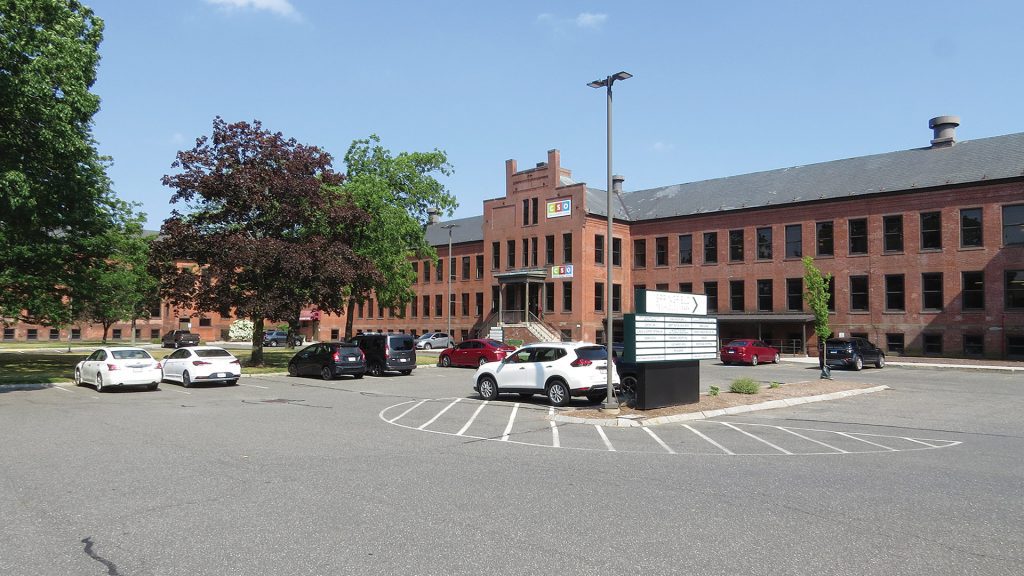
the Springfield Technology Park.

The Appleton portfolio includes a diverse mix of properties, including the Springfield Technology Park.

As he goes about all this, he will call on not only previous work experience — and there is plenty of that — but also time spent coaching, especially football, at both the youth and high-school levels.

“The things that I learned about coaching my players transfer so wonderfully to our life at the office,” he said, by way of explaining how his work on the sidelines has shaped his management style. “I learned that I can’t coach every player, and every employee, the same way; people respond to different types of motivation, different types of stimulation.

“Some just need me to sit and listen to them and hear them and not even comment much, but just know that I’m hearing them,” he went on. “Some want a really deep and intense dialogue and to take a deep dive into the issues, and want me to act as a sounding board and really spend time devoted to solving problems or envisioning problems and coming up with mitigation strategies. As much as anything, I’ll be a coach trying to help each of our employees find a better version of themselves every day, with the goal of being a little better today than I was yesterday. And tomorrow, I really hope I’m better than I am today.”


Changing Dynamics

Returning to the subject of the office market and what will happen moving forward, Flink said there are many unknowns when it comes to this issue, and it will certainly take some time for the market to fully shake out.

By that, he meant everything from whether office workers will return and when — some are back, but across the country, many are not back or are working in hybrid arrangements — to how properties might be repurposed if they are not used for offices moving forward.

It’s a complex matter, he said, using the O’Connell family of companies as an example of how businesses managed to get work done, and done well, during the pandemic with almost all employees working remotely.

“For 475 days, plus or minus a day or two, we were essentially shut down in our corporate offices with just a few of us there,” he recalled. “What we learned in that period of time is that we can do that very successfully. We can allow people to work at home, we can give them the time they need to attend to things in the middle of the day, but all of us got our work done; we paid bills on time, we responded to requests for proposals on time … we did everything we needed to.

“Our experience in that space is similar to what we’re seeing around the country in that space,” he went on. “The pandemic forced people to rethink how they deliver their work product, what vehicle they use to deliver their work product; at the same time, there began to be a demand, a desire, to stay home once the pandemic eased up and people could return to their office space.”

This concept of remote work has turned into a benefit, he told BusinessWest, much like a 401(k), a vacation, or health insurance. And there is an expectation for it among job seekers and existing employees alike.

These factors have collectively reduced the demand for office space, he went on, adding that there are a few cases within the Appleton portfolio where tenants, specifically large call centers, have contracted substantially.

In one case, space was successfully backfilled, largely with government entities, Flink noted, adding that this may prove to a blueprint for many properties moving forward.

“Repurposing some of those commercial spaces for other user groups is going to be important,” he said. “Going forward, owners and managers of commercial real estate, at least for the short term, and maybe for the long term, depending on how the market responds to this concept of remote work, are going to be clever in how they look at various user groups.”

Imaginative reuse has been the watchword in retail for some time, he went on, noting that, as more shopping is done online, there has been less need for bricks-and-mortar facilities. Larger properties such as indoor malls and strip malls have adjusted by repurposing space for bowling alleys, laser tag, trampoline facilities, and more. Meanwhile, the cannabis industry has had a profound impact on the commercial real-estate landscape, absorbing large amounts of different kinds of spaces, from old mills in Holyoke and Easthampton to storefronts in many communities to a portion of the Springfield Newspapers building.

“Whether it’s that [cannabis] or seeking government entities where you may have looked to place a private tenant before, all this speaks to the need to be clever and really think outside the box and be open to other possibilities in that commercial marketplace,” said Flink, noting that the tech park at STCC is an example of this dynamic. A large call center has moved out, but over the next few years, he expects those spaces to fill back to something close to pre-pandemic levels.


Goal to Go

Getting back to football coaching and how it influences how he manages people, Flink summoned that often-used saying — among coaches and business owners alike — about people needing to give 110%.

“You don’t have to be a math major to know that this is literally impossible — you can’t give more than 100%,” he told BusinessWest. “What it comes down to, whether you’re coaching young athletes or spending time with senior-level executives on our staff, is redefining for people what their true capacity is. Very rarely do we operate at our true capacity; we’re blocked at times by our own negativity or the negative thinking of others. But we’re all capable of being more than we think we are, and helping people to understand where their 100% exists, and how they can live in a world that touches on that more often, is something that I’m passionate about.”

That’s one of many passions, and lessons, from past experiences that Flink will bring to his challenge, one that, as he said, is the logical place for him to be.


George O’Brien can be reached at [email protected]

Special Coverage Technology

The Future Is Here

It’s striking to think that many young professionals entering the workforce today have never known a world without high-tech devices, many designed to be used on the go, that address every possible work and leisure need. And those devices have only become more powerful over time, with a wider array of options and price points. In its annual look at some of the most intriguing devices available, BusinessWest dives into what the tech press is saying about some of 2022’s hottest products for the home or … well, anywhere else.


Connecting and Computing

Among this year’s crop of smartphones, the Samsung Galaxy S22 Ultra ($1,199) has been getting plenty of raves. In fact, Spy calls it “the first true flagship phone to beat for 2022.” The site praises Samsung for bringing back the S Pen stylus, a popular feature with Samsung’s Galaxy Note series. “It’s also a beast when it comes to capturing photos and videos with its quadruple camera system, offering excellent image quality and low-light performance. You’ll have plenty of versatility with this package because you can get very close with its 100x space zoom telephoto lens.”


You’ll find no shortage of love for Apple’s newest models as well, the iPhone 13 Pro ($999) and 13 Pro Max ($1,099), which, boast the best cameras and battery life of any iPhone to date, CNET notes, as well as high-end features like the ability to record ProRes videos. “By packing the 13 Pro and 13 Pro Max with features many of us have wanted for years, including a display with a high refresh rate, Apple further defined the difference between its Pro and non-Pro phones. Three years ago, by comparison, the word Pro seemed more of a marketing term than an indication that the phone was any more professional than a regular iPhone.”


In the laptop world, the Dell XPS 13 Plus (starting at $1,449) “is a sleek computer that’s built around the latest and most powerful Intel Core processors,” Business Insider notes. “In lieu of click buttons, it uses a seamless glass touchpad surface and replaces the function keys with a top row of touch-sensitive function buttons.” In addition, Dell’s updated RapidCharge Express 2.0 technology can charge the battery up to 80% in under an hour. “Innovations like this,” the publication noted, “can benefit users and keep Dell ahead of rivals.”


Among today’s monitors, BBC Science Focus raves about the Samsung M8 smart monitor ($579). “With an affordable price tag, and an overkill of connection options, the Samsung M8 could be the perfect monitor for a lot of people. It doubles up as a TV and monitor, offering smart TV with Netflix, YouTube, and most streaming platforms, as well as connection options for most laptops, AirPlay for Apple products, and even DEX to connect your Samsung smartphone as a computer. Not enough? It also has built-in speakers, a 4K display and an added webcam.”


Need to keep your devices charged in the car? The Baseus USB-C Car Charger ($19) is an inexpensive device with a 65-watt USB-C port that can power up most laptops, according to bestproducts.com. A USB-A charging connector with a maximum power output of 18 watts is also included. “The product has a sleek design with translucent housing, a built-in voltage display, and onboard illumination. It has built-in tech to protect the connected devices from overcharging and overheating.”


That’s Entertainment

There’s no doubt that the explosion of entertainment choices we can stream on dozens of services has transformed the way we watch TV. At the same time, smart TVs have grown larger and less expensive over the past few decades. Among today’s models, Esquire praises the LG Electronics C1 65-inch OLED HDTV ($1,379). “With a beautiful picture and a sleek, stylish design, LG’s OLED TV is one of the best on the market. Plus, it can connect to Amazon Alexa devices so your whole house is hooked up.”


Most TVs aren’t built to survive the elements, but the SunBriteTV Veranda Series 3 ($2,899) is specifically designed for the outdoors. “In addition, it offers a few key advantages over previous Veranda models, including a brighter and much more colorful picture with support for Dolby Vision, as well as a full suite of Android TV features such as streaming media services, Google Assistant voice control, and the ability to mirror your phone,” PC Magazine notes, adding that, while the price tag is high, “you’re paying a premium for a TV you can use outside without worry.”


Gamers have more options than ever before as well, but for many, PlayStation still reigns supreme. Calling it “the best plug-and-play gaming platform available,” Digital Trends says the PlayStation 5 ($499), boasts “lightning-fast load speeds, a new controller, and a phenomenal lineup of launch titles (including fan favorites and new exclusives).” In fact, the magazine noted that the PS5 not only easily bests the Xbox when it comes to game selection, Sony has now brought backward compatibility into the fold, so the PS5 will be able to play most PS4 games. “The PS5 simply has the best game library out there right now.”


Speaking of new ways to play, “virtual reality might take its time to have its ‘iPhone moment,’ but it is still very much the next big thing for the coolest gadgets,” Spy notes, and no VR device flashes that promise more than the Meta Quest 2 ($299). Without the need for a powerful computer or special equipment, users can simply strap the Quest 2 (formerly Oculus) to their head, pick up the controllers, and move freely in VR space, thanks to its inside-out technology, which uses cameras placed outside the headset to track the users’ movement in the space around them.


Then there’s the Samsung Freestyle ($799), a new portable entertainment device that combines a projector and smart speaker into one compact package. It supports 1080p projection at up to 100 inches, offers access to a wide variety of streaming apps, and delivers 360-degree sound with built-in Alexa voice control. “The Freestyle stands out from other compact projectors thanks to its rotating cradle that makes it look like a portable spotlight,” Business Insider notes. “It also has automatic picture adjustments that could make it a breeze to set up virtually anywhere. It can even plug into an overhead light socket so you can project onto the floor or a table.”


Life on the Go

Smartwatches are all the rage, and the Apple Watch Series 7 ($329) ranks highly across most rating sites. With a bigger case and a larger screen than its predecessor, “the product also has best-in-class health-, fitness-, and wellness-tracking capabilities, powered by accurate heart-rate and blood-oxygen sensors, according to bestproducts.com. Apple offers the Series 7 with a 41- or a 45-millimeter case in a multitude of finishes, optional cellular network connectivity is available, and wearers can customize the timepiece with a wide selection of bands. “New year, new Apple watch,” Esquire adds. “The 20% larger screen makes all the difference.”


In the category of hybrid smartwatch, which combines connectivity with traditional watch mechanics, bestproducts.com chooses the Everett Hybrid Smartwatch ($179), calling it a feature-packed device with a built-in, always-on display and heart-rate sensor. “We like that, instead of looking like a tech product, it resembles a classic chronograph timepiece with mechanical hands and a three-button layout.” The stainless-steel timepiece is waterproof up to 30 meters, and it is available in several finishes, with an easy-to-replace band or bracelet.


Need a pair of quality headphones and don’t want to splurge on Apple AirPods? Then the clunkily named but sleekly built Sony WH-1000XM5 ($399) may be the way to go, BBC Science Focus notes. “These, like their predecessors, are some of the best headphones around. In terms of specs and audio, these are extremely similar to Sony’s renditions from before. They offer market-leading audio across the lows, mids, and highs, excellent noise cancellation, and you get an array of smart ambient features.” The site also praises the lighter, more minimalist design.


In the market for a drone? “Every year,” BBC Science Focus notes, “the DJI’s Mini series gets smaller and yet more powerful, cramming high-end specs into a lightweight drone that you can chuck in your bag. But with all those improvements comes an eye-watering price, and an increasing fear for your financial status if you crash it.” The DJI Mini 3 Pro ($759) offers advanced obstacle avoidance features, a rotating lens to film in portrait or landscape, 4K video, smart flying features like automatic tracking, and the ability to follow a subject, the site notes. “Despite its higher price, this feels like the perfect drone for beginners, those who like to travel, or really anyone in the market for a lightweight, high-tech drone.”


At the end of an active day, why not wind down by grilling dinner — wherever you are? The BioLite FirePit+ ($249) is a small, efficient fire pit that burns charcoal and wood. More than 50 air jets deliver oxygen to the fire for a uniform temperature and reduced smoke, while a rechargeable battery runs a built-in fan for controlling the fire up to 30 hours, according to PC Magazine. “You can cook on top of the included grill grate for direct contact with the flames or pick up a cast-iron griddle accessory. Bluetooth lets you control the flame intensity and fan speed with your phone, for a smart grilling experience no matter where you are.”


Around the House

Home security systems are nothing new, but if you’re looking for an extra layer of security, the Ring Glass Break Sensor ($40 for one, $70 for two) can detect break-in attempts through glass windows and doors from up to 25 feet away, Wired notes. Users will need a Ring Alarm or Ring Alarm Pro to use it, and the sensor can be configured the sensor to trigger a siren when it detects broken glass.


Sometimes home security means being prepared when the power goes down. The Anker 757 PowerHouse generator ($1,399) is powered by a lithium iron phosphate battery, which is the same type of battery used to power various electric vehicles, and “it’s a beast,” Gear Patrol notes. “Its multiple ports and outlets allow will allow you to simultaneously charge various gadgets, including your laptop, smartphone, and tablets, as well as power larger appliances like a refrigerator, a TV, or multiple outdoor lights.”


Air purification is a different kind of home safety product, and Gear Patrol touts the Wyze Air Purifier ($135), which can be purchased with one of three different filters, among the best on the market. “The air purifier works with the Wyze app, and, once set up, it can send you real-time status updates and alert you as to when it needs cleaning.” According to the company, each purifier is capable of cleaning 500-square-foot room more than three times an hour.


Wired has some ideas for making life easier as a pet owner, like the Smarty Pear Leo’s Loo Too Litter Box ($600). “Veterinarians say automatic litter boxes, while convenient, make it tough for owners to keep tabs on their cat’s bathroom trips — which can be useful for flagging any potential illnesses. The Leo’s Loo Too solves this with a built-in sensor that tracks how often your cat goes, along with its weight, and syncs the data to a companion app on your phone.” The device comes with additional features like UV sterilization and radar to keep the box from self-cleaning while the cat is nearby.


Speaking of animals, Wired also recommends the Bird Buddy Bird Feeder ($200), which “gives new meaning to bird watching. Not only does this cute little home feed birds, but its battery-powered camera offers a live feed via the connected app. If that’s not entertaining enough, it’ll snap photos of said birds, identify the species, and present a ton of facts about each one.”

Manufacturing

Meetings of the Minds


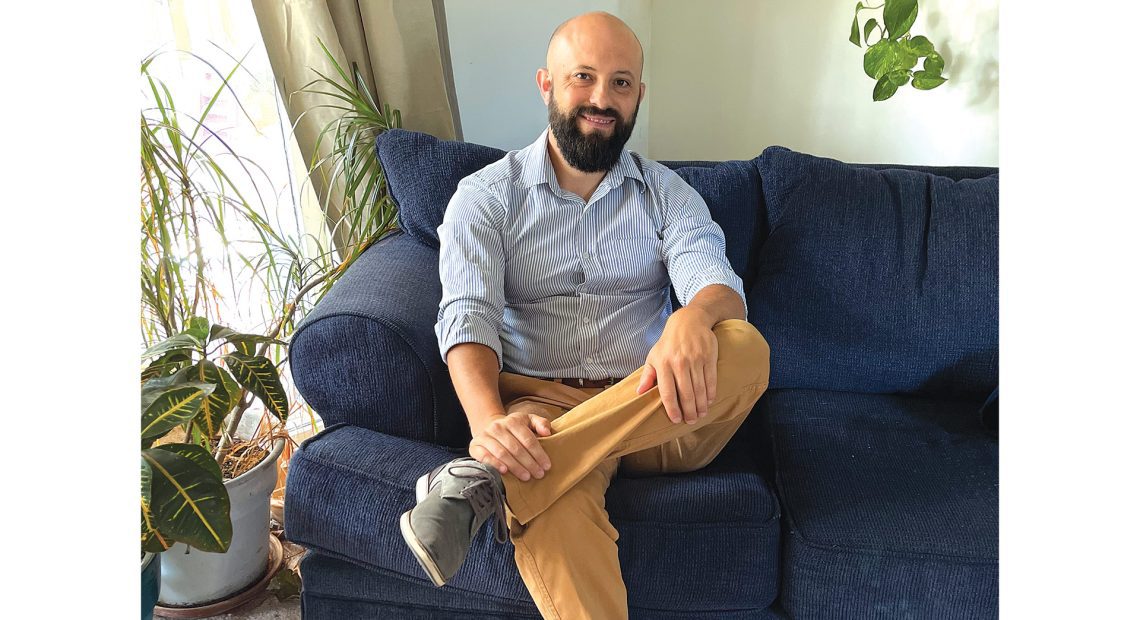
Kevin Moforte

Kevin Moforte says entrepreneurship helps build prosperous communities, and FORGE’s work is a big part of that.

Kevin Moforte has traveled an intriguing road to his new role as Western Mass. director of FORGE.

Before serving as executive director for EforAll Lynn, a nonprofit that mentors entrepreneurs on Massachusetts’ North Shore, he taught classes about entrepreneurship, innovation, and sustainable development at colleges in Chile. He spent his early career working in community development and emergency housing in slums across Latin America, particularly in Colombia and the Caribbean. And in 2015, he founded Esperanza Soaps, a company based out of Las Malvinas in the Dominican Republic, bringing good jobs to the women of a impoverished community.

So he’s well-versed in entrepreneurship, education, community development, and the links between them. And since October, he’s brought his connection-making skills to FORGE, which, since 2015, has connected innovators and startups with manufacturers in an effort to grow both ecosystems in Massachusetts.

“We’re really helping the success rate on the innovation side, and we’re driving a tremendous amount of economic value to the manufacturing side locally.”

“I love entrepreneurship. I think it plays a key role not just in building wealth, but in building healthy, prosperous, stable communities. So being engaged with entrepreneurs at different stages has always been a passion of mine,” Moforte told BusinessWest. “I started a business myself, and I understand the ins and outs of how difficult it is to build a business, how dependent you are on a community, and how much fun it is to have connections with people who will help you get to the next step, people who really cheer you on.”

And those connections are critical, he went on. “With startups, it’s a real pitfall when you transition to manufacturing. That’s why the work we do is really important.”

FORGE, the sister organization of Greentown Labs in Somerville, was formed because, according to its mission statement, startups making physical products are solving some of the world’s toughest problems, but face roadblocks to scale. By connecting them with right-fit manufacturers, FORGE addresses crucial gaps and accelerates the path to market for these startups’ products.

Laura Teicher

Laura Teicher says the survival rate of startups taking advantage of FORGE is more than 90%, a staggering improvement over the national average.

“There are over 7,000 manufacturers right here in Massachusetts. A lot of people don’t recognize that,” said Laura Teicher, executive director of FORGE, adding that the innovation economy has also long been one of the Bay State’s strengths. “Right here in Massachusetts, two of our economic powerhouses are innovation and manufacturing. And FORGE is really the first organzation to focus on bringing the two together to work collaboratively, which has a lot of fantastic impacts for both the innovator and the manufacturers.”

She was quick to clarify what she means by ‘startup,’ however. These aren’t solo inventors with a drawing scribbled on a napkin. In fact, the average startup FORGE works with has a prototype, a manufacturing budget, and, on average, eight employees and about $900,000 in funding. But that next steps — starting production and scaling up — are tricky.

“We help them get ready to manufacture; we educate around getting their materials together, look through their specs, and make sure they have the appropriate amount of funding before they’re connected with any manufacturers,” Teicher explained. “On the other side of the equation, we develop just as deep a relationship with the manufacturers themselves. So we’re able to educate both sides on preparing to work together and then make right-fit connections between the two.”

To date, FORGE has served more than 500 startups and innovators and has more than 450 manufacturers and suppliers in the network — and is always looking for more local shops.

The results of connecting the two parties has been striking, as the startups working with FORGE have more than a 90% survival rate, as opposed to the national average of around 10%.

“So we’ve essentially flipped the script,” Teicher said. “We’re really helping the success rate on the innovation side, and we’re driving a tremendous amount of economic value to the manufacturing side locally. We know of over $34 million in contracts resulting from our direct connections to manufacturing, and that’s definitely a tip-of-the-iceberg number. We’re serving about 300 startups and innovators annually at this point, so we’ve really accelerated.”


Forging Connections

FORGE was essentially created to help entrepreneurs building products to create prototypes and find manufacturers that can build the products they’ve developed and specific components for them — specifically, manufacturers in Massachusetts.

In doing so, Teicher said, FORGE has supported 4,500 jobs in innovation and manufacturing, providing unique, manufacturing-focused support across all sectors, including robotics, medical devices, cleantech, advanced materials, transportation, and much more. About 75% of the innovators FORGE has helped return to the organization as they scale for new and further support, and 20% are in full-scale production and deployment. Meanwhile, more than 40% of the startups are minority-led, and 28% have female or non-binary leadership.

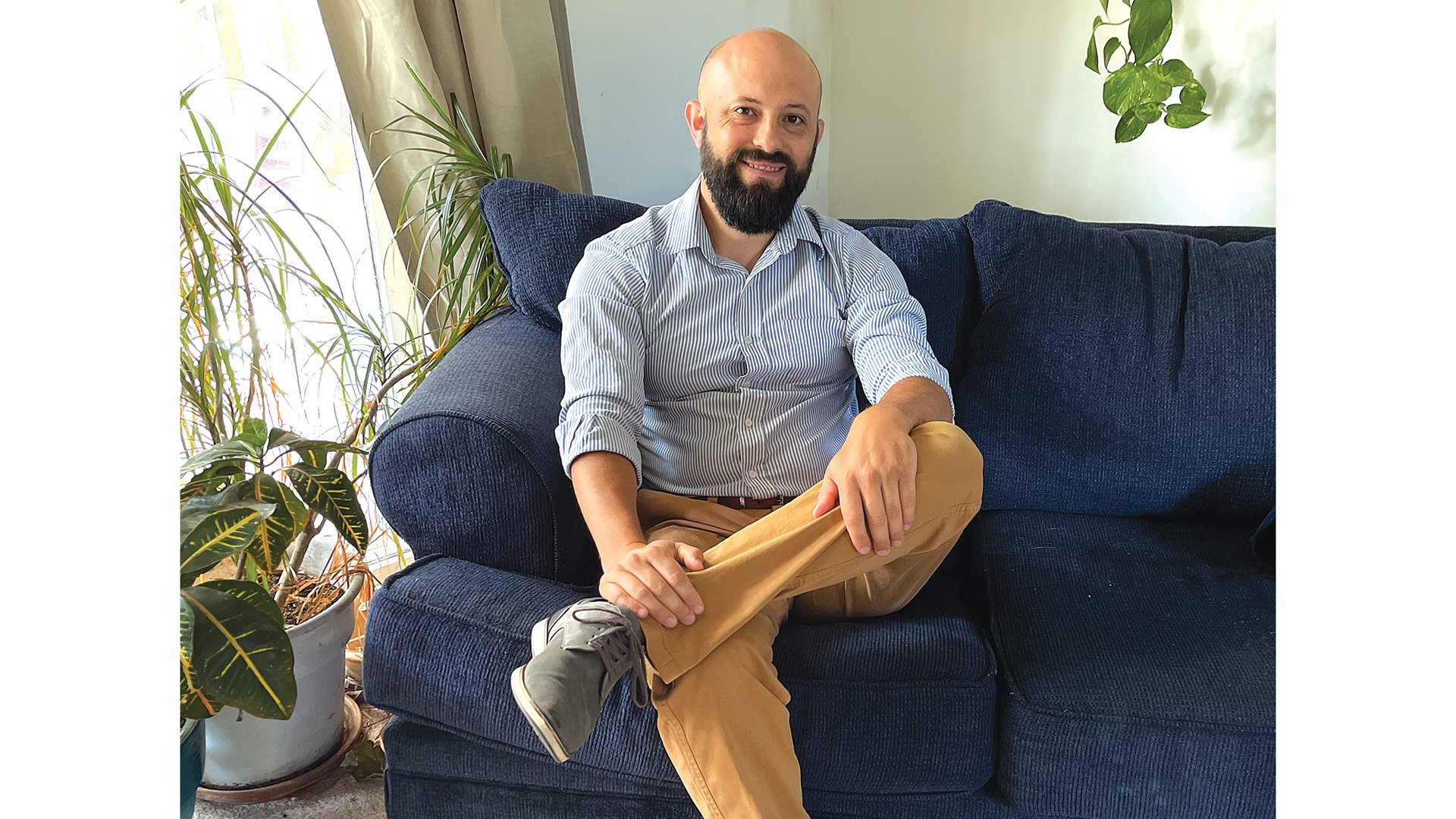
Kevin Moforte

Kevin Moforte

“How you design and manufacture your product can really make or break your product. There are a million pitfalls. So getting the right connections, getting the right advice, getting the right people on your side, is critical.”

“How you design and manufacture your product can really make or break your product. There are a million pitfalls,” Moforte said. “So getting the right connections, getting the right advice, getting the right people on your side, is critical. And that’s where FORGE comes in, with critical connections and really specialized knowldege.

Many entrepreneurs have no idea how to go about looking for a manufacturer, he added. “China is always in the back of their minds. They don’t realize Massachusetts is a powerhouse in manufacturing. There are things we make in Massachusetts that you can only make in a few other parts of the world, because that’s the depth of the specialty and expertise we have. Part of our role is showing them that someone 40 minutes down the road may be able to make this for you, and you don’t have to make a 40-hour trip across the world to find a manufacturer.”

On the flip side, Moforte said, the startup world isn’t on the mind of many manufacturers when it comes to procuring business.

“They’re used to working with long-term contracts, steady customers, when there’s so much innovation coming out of Massachusetts that could represent a new, steady stream of business for them,” he noted. “Those relationships just need a little greasing. We help these two groups that normally wouldn’t encounter each other, and we ease those conversations into something fruitful.”

FORGE’s role is especially relevant these days, Teicher added, specially since the pandemic and the resulting, and still ongoing, disruptions in global supply chains, which have caused some manufacturers to bring their production and material sourcing back home. That’s good for startups looking for a local manufacturing option.

“Global supply-chain disruptions have just been rocking the world, and that’s why we’ve seen such acceleration in demand to engage with us,” she said. “Sometimes innovators just assume they have to go overseas, and that may make sense for certain commodities, but there is such a wealth right here.

“On the flip side, the manufacturers that are thriving and getting creative in terms of new, forward-looking business opportunities are taking a closer look at innovation and realizing, ‘hey, if I work with FORGE, I can work with innovators who are prepared to engage with me, they’re right-fit for me, and they’re low-risk because they have this incredible survival rate.’ We are opning doors on both sides in a very timely way.”

Localizing the supply chain also reduces costs and carbon footprints, while driving jobs and economic value to the region, Teicher said. “There are so many benefits to making these connections.”


From the Ground Up

Moforte said he has been “completely blown away” by both the manufacturing capacity and innovative ideas emerging from Western Mass.

“We get all the crazy innovators — they come to us because they’re inventing the next solar technology, the next water treatment-technology; they have this new gadget that nobody’s thought of making before, and it has this complicated piece that connects with this little tube, and it’s made of this material, and getting that wrong can really tank their business, but getting it right can represent huge benefits.”

Indeed, the world is full of such ‘crazy’ ideas. With the right manufacturing connection, though, some of those can become the very smart next big thing. Like the UMass student who worked with FORGE to develop his idea for an insulin-delivery device, or the startup that created a new technology to pull toxins out of wastewater.

FORGE has helped hundreds of good ideas like those find fertile manufacturing ground, and only sees more opportunity in the future.

“During the pandemic, everyone was just in their shops, so we were calling and nudging and banging on doors and really re-establishing relationships,” Moforte said. “We want to understand what they do, how they work best, and how we can connect them with local innovators to bring more business into the region.”

Technology

How Old Is the Water?

Dr. LeeAnn Munk

Dr. LeeAnn Munk collects water samples in Salar de Atacama.


A groundbreaking new study recently published in the journal Earth’s Future and led by researchers at UMass Amherst in collaboration with the University of Alaska Anchorage, is the first to comprehensively account for the hydrological impact of lithium mining. Since lithium is the key component of the lithium-ion batteries that are crucial for the transition away from fossil fuels and toward green energy — as well as necessity in many of today’s high-tech devices — it is critical to fully understand how to responsibly obtain the precious element.

Previous studies have not addressed two of the most important factors in determining whether lithium is obtained responsibly: the age and source of the water the lithium is found in. This first-of-its-kind study is the result of more than a decade of research, and it suggests that total water usage in the Salar de Atacama, a massive, arid Chilean salt flat encompassing approximately 850 square miles, is exceeding its resupply — though, as the team also points out, the impact of lithium mining itself is comparatively small. Lithium mining accounts for less than 10% of freshwater usage, and its brine extraction does not correlate with changes in either surface-water features or basin-water storage.

Lithium, said David Boutt, professor of Geosciences at UMass Amherst and one of the paper’s co-authors, is a strange element. It’s the lightest of the metals, but it doesn’t like to be in a solid form. Lithium tends to occur in layers of volcanic ash, but it reacts quickly with water. When rain or snowmelt moves through the ash layers, lithium leaches into the groundwater, moving downhill until it settles in a flat basin where it remains in solution as a briny mix of water and lithium. Because this brine is very dense, it often settles beneath pockets of fresh surface water, which float on top of the lithium-rich fluid below. These freshwater lagoons often become havens for unique and fragile ecosystems and iconic species such as flamingos.

More than 40% of the world’s proven lithium deposits are located in the Salar de Atacama, the site of the research. The Salar de Atacama is host to a number of ecologically unique wildlife preserves and is also the ancestral home of several Atacameño indigenous communities, with whom the UMass team worked. Because the salt flats are so ecologically sensitive and depend on scarce supplies of fresh water, the use of water in the Salar de Atacama runs the risk of disturbing both the ecological health of the region and indigenous ways of life.

Yet, up until now, there has been no comprehensive approach to gauging water use or lithium mining’s impact in the Salar de Atacama.

“To understand the environmental effect of lithium mining,” says Brendan Moran, a postdoctoral research associate in Geosciences at UMass Amherst and the lead author of the paper, “we need to understand the hydrology in the region the lithium is found. That hydrology is much more complex than previous researchers have given it credit for.”

To illustrate the complexity, and the previous misconception about the Salar de Atacama’s hydrology, Moran and Boutt drew on the metaphor of a bank account. Imagine that you get a paycheck every month; when you go to balance your checkbook, as long as your monthly expenditures don’t exceed your monthly income, you are financially sustainable. Previous studies of the Salar de Atacama have assumed that the infrequent rainfall and seasonal runoff from the mountain ranges that ring it were solely responsible for the water levels in the salt flats, but it turns out that assumption is incorrect.

Using a variety of water tracers that can track the path that water takes on its way to the Salar de Atacama, as well as the average age of water within different water bodies, including surface waters and sub-surface aquifers, Moran and his colleagues discovered that, though localized, recent rainfall is critically important, more than half of the freshwater feeding the wetlands and lagoons is at least 60 years old.

“Because these regions are so dry, and the groundwater so old,” Moran said, “the overall hydrological system responds very slowly to changes in climate, hydrology, and water usage.”

At the same time, short-term climate changes, such as the recent major drought and extreme precipitation events, can cause substantial and rapid changes to the surface water and the fragile habitats they sustain. Given that climate change is likely to cause more severe droughts over the region, it could further stress the area’s water budget.

To return to the accounting metaphor, the paycheck is likely getting smaller and isn’t coming monthly, but over a period of at least 60 years, which means researchers need to be monitoring water usage on a much longer time scale than they currently do, while also paying attention to major events, like droughts, in the region.

Complete hydrological monitoring requires additional tools paired with these geochemical tracers. The UMass and UAA teams used water usage data from the Chilean government and satellite imagery, which allowed them to assess the changing extent of wetlands over the past 40 years, as well as rain gauges and satellite measurements to determine changes in precipitation over the same period.

Given how long it takes for groundwater to move within the basin, “the effects of water overuse may still be making their way through the system and need to be closely monitored,” Moran said. “Potential impacts could last decades into the future.”

Ultimately, this comprehensive framework, which was funded by BMW Group and BASF, is applicable far beyond the Salar de Atacama. “It’s a modern approach to water management,” Boutt said.

Daily News Events Sports & Leisure STUFF Made in Western Mass Tourism & Hospitality Travel and Tourism

SPRINGFIELD — The Springfield Jazz and Roots Festival will this year be staged over two days, August 12 and 13, with a broad mix of music, arts activities, talks on arts, culture, and social justice, local pop-up craft, food and beverages.

The internationally heralded festival is the city’s premier annual event, featuring national stars and local talent playing jazz, blues, funk, Latin, and African music. Admission is free, but donations are appreciated. This year’s full musical line-up can be found at springfieldjazzfest.com.

The festival will also offer a sneak peek (or an unveiling depending on its progress) of the iconic Worthington Street Mural project celebrating Springfield history. The mural is being painstakingly restored by Springfield artist John Simpson who has studied old photographs of the building’s wall in an effort to accurately recreate as much of the original mural as possible.

Musical performances on August 12 feature Shor’ty Billups, a soul and R&B living legend who played with Ruth Brown, Screaming Jay Hawkins, Jackie Wilson, and Wilson Pickett among others. Also performing are valley legends FAT with Peter Newland and their special guest Scott Murawski from Max Creek, Valley blues/rock icon Mitch Chakour (who was Joe Cocker’s music director) and friends, popular Valley blues rockers The Buddy McEarns Band, and soulful blues belter Janet Ryan and her band.

The festivities on August 13 commence at 12:30 at the Springfield Museum with a parade led by the New Orleans celebrated second-line ensemble The New Breed Brass Band starting from the Wood Museum of Springfield History, where attendees will have free access to the ‘Horn Man: The Life and Musical Legacy of Charles Neville’ exhibit. The parade will end at the stage for the kick-off performance. The complete Saturday performer line-up can be seen at springfieldjazzfest.com.

In addition to the musical performances, the multi-faceted festival will feature various arts activities and presentations and workshops. Puerto Rican jazz trombonist William Cepeda will lead a workshop about traditional Afro-Puerto Rican music on August 12 at 5 p.m., at the Hispanic American Library. Cuban jazz vocalist, Dayme Arocena, will lead a workshop about traditional Afro-Cuban music at the festival on August 13. Attendees can also participate in a mural paint party (separate mural project from the one on Friday) and a presentation by Puerto Rican mural artist Betsy Casanas, and conversations connecting arts with food and climate justice.

The annual festival is presented by Blues To Green, a nonprofit, using music and art to center the cultures of the African diaspora within American culture, nurture personal freedom, strengthen multicultural community, and catalyze action for racial and climate justice. Inspired by famed musician Charles Neville and founded by his wife, B2G is led by Black Springfield community leaders. Learn more about Blues to Green and how the festival helps achieve social change at bluestogreen.org.

This festival is made possible by a grant from Springfield’s Neighborhood Economic Recovery and Relief Fund, other grant funders and local business sponsors, and donors.


In addition to the musical performances, the multi-faceted festival will feature various arts activities and presentations and workshops. Puerto Rican jazz trombonist William Cepeda will lead a workshop about traditional Afro-Puerto Rican music on August 12 at 5 p.m., at the Hispanic American Library. Cuban jazz vocalist, Dayme Arocena, will lead a workshop about traditional Afro-Cuban music at the festival on August 13. Attendees can also participate in a mural paint party (separate mural project from the one on Friday) and a presentation by Puerto Rican mural artist Betsy Casanas, and conversations connecting arts with food and climate justice.

Conventions & Meetings Daily News Events Meetings & Conventions News Sports & Leisure Tourism & Hospitality Travel and Tourism

SPRINGFIELD — The Springfield Thunderbirds were recognized for their business excellence in a variety of departments at last month’s AHL Team Business Meetings.

For their season-long #WeAre413 campaign, the Thunderbirds organization took home the league award for Marketing Campaign of the Year. The Thunderbirds returned to the ice in 2021 after opting out of the 2020-21 shortened season. This campaign messaging’s goal was to speak to the pride felt by each and every resident of the greater Western Mass region, as well as the longstanding hockey history of the city.

This marks the second time the Thunderbirds have been recognized for having the Marketing Campaign of the Year. The club also received the award following the 2018-19 season for its #RiseUp campaign.

#WeAre413 got underway with the team’s return to the ice on Oct. 16, with legendary NHL broadcast voice Mike “Doc” Emrick narrating the journey the Thunderbirds and the Springfield community experienced to get back on the ice. The full video can be viewed here.

“We wanted to establish a campaign that would speak to the rallying of our community for our triumphant return to play in 2021-22,” said Thunderbirds President Nathan Costa. “#WeAre413 showcased our fans’ passion for hockey and our players’ shared goal of bringing the Calder Cup back to Springfield. By the time the Calder Cup Finals arrived, Springfield was the center of the AHL world thanks to the unwavering support of this community. This award further validates our belief that Springfield is one of the best hockey cities in this league.”

In addition to the Marketing Campaign of the Year, the Thunderbirds achieved a pair of milestones in both the ticket sales and corporate sales departments. As part of the award recognition at the Team Business Meetings, AHL member clubs that hit benchmarks pertaining to tickets sold and corporate sponsorship revenue were honored.

The ticket sales team received honors for reaching 600 new full season equivalents (FSEs) during the 2021-22 season, where one FSE equates to one

Berkshire County Daily News

LEE — Lee Bank Foundation has awarded $70,700 to 13 Berkshire area organizations for their second-round of 2022 community funding. Recipients were awarded grants ranging from $1,000 to $12,500 to support their local programming. Included in the awards are a series of Arts Access Grants for arts and culture organizations to expand access to programming for underserved audiences.

The following organizations received funding from Lee Bank Foundation:

• Berkshire Black Economic Council;

• Berkshire South Regional Community Center;

• Berkshire Bounty;

• Community Health Programs;

• Construct;

• Elizabeth Freeman Center;

• Flying Cloud Institute;

• Goodwill of the Berkshires and Southern Vermont;

• Link to Libraries; and

• South Community Food Pantry

Additionally, Arts Access Grants of $1,000 each were awarded to Berkshire Theatre Group, BODYSONNET, and Norman Rockwell Museum.

The deadline for the next round of 2022 Foundation funding is September 1st. The application and more information can be found on the Community Impact section of Lee Bank’s website (https://www.leebank.com/community-impact/donations-sponsorships.html)

To be considered for grant awards, applicants must be a (501)(c)(3) nonprofit organization. The Foundation is focused on funding programs that work to bridge income and opportunity gaps in our region. Funding requests should reflect one or more of Lee Bank Foundation’s primary focus areas:

• Education and literacy;

• Food security and nutrition;

• Economic growth and development;

• Health and human services;

• Mentorship, internship and “school to work” initiatives; and

• Arts and culture

Applicants are only eligible for funding once in a 12-month period.

Business Management Daily News Employment Women in Businesss

SPRINGFIELD — Tiffany Appleton has been named president of the board of directors at Dakin Humane Society in Springfield. Appleton joined the board in 2017 and served as its secretary from 2020–2022.

She is currently the associate director employer relations at the University of Massachusetts Amherst, a position she has held for the past two years. Prior to that, she Appleton was a director, accounting and finance division at Johnson & Hill Staffing Services in West Springfield from 2016-2020.

“I can’t imagine what my life would be like without my pets,” she said. “They provide so much value to my life and I joined Dakin initially as a volunteer to support that amazing human-animal bond. I quickly fell in love with Dakin and all the service offerings beyond adoption that further the mission of keeping people and their pets happy, healthy, and together. I can’t wait to see all the good we can do for the community in the future.”

Appleton earned both a master of Education, Science Education, and a bachelor of Science, Chemistry at the University of Massachusetts Lowell. She previously served as a board member at the Family Business Center of Pioneer Valley from 2018-2020.

Berkshire County Daily News Elder Care Events Sports & Leisure Tourism & Hospitality

NORTH ADAMS Last month, BFAIR staged its First Annual Summer Kick-Off Festival, which that raised more than $31,000. With support from 34 sponsors and 28 in-kind donations from local businesses, the agency able to offer a fun-filled day full of the musical stylings of Code Blue Duo, food from Adams Mason Food Truck, two mini-golf courses as part of the BFAIR-Way Mini Golf Tournament, and 15 games and activities. In total, more than $3,000 in prizes and raffles were distributed.

“Our first Summer Kick-Off Festival was an amazing way to get back into in-person events and further share the BFAIRmission with the greater community,” said Tara Jacobsen, Fundraising & Grants Manager. “Support that we receive through events like the Summer Kick-Off Festival and with other fundraising activities, helps us to provide essential and individualized care to persons with developmental disabilities, autism, and acquired brain injury. We are so grateful to all our generous sponsors for making this event possible, the volunteers who donated their time, and to all the guests who came out to the event. We are already gearing up for next year.”

Since 1994, BFAIR has been providing AFC, residential, in-home clinical services, employment and day services for adults and children with developmental disabilities, acquired brain injury and autism.

Community Spotlight

Community Spotlight

By Mark Morris

Karl Stinehart, left, and Russ Fox

Karl Stinehart, left, and Russ Fox say Southwick’s goal is preserve its high quality of life while also creating needed business tax revenue.


Southwick residents love the natural beauty and the many recreation choices their town offers but they also like reasonable tax rates.

Russell Fox, chair of the Southwick Select Board, said to accomplish both means business development must be part of the equation to ease the tax burden.

“It’s a balancing act that the Select Board takes very seriously,” said Fox, who has been a selectman off and on (mostly on) for more than 40 years. “I would not want to see families who have lived in town for generations say they can no longer afford to stay here.”

A balancing act indeed, as last year residents made it know that they will support some business development proposals, but not all. After the town’s planning board and select board had approved a $100 million project involving the online used car seller Carvana, residents expressed a number of concerns about the size of the project and its impact on the community.

The site where the Carvana project was proposed is a 90-acre parcel on College Highway near Tannery Road. After residents rejected Carvana, Karl Stinehart, chief administrative officer for Southwick said the owner of the property has since come up with a creative solution.

“The parcel will be broken into five lots,” Stinehart said. “We can now look to attract a retail store or a light manufacturer, something that won’t have the negative impact of a large facility.”

That’s the kind of progress that gets the attention of Eric Oulette, executive director of the Greater Westfield Chamber of Commerce.

“It’s a great idea for them to split up that parcel to make it more attractive for smaller businesses,” Oulette said. Currently, 13 Southwick businesses belong to the Greater Westfield Chamber.

Stinehart pointed to the town’s tax rate of $16.98 per thousand for both residential and businesses as another incentive for economic development in Southwick. Oulette agreed.

“Southwick’s tax rate is competitive and should help the town to attract more business there,” Oulette said.

Overall, there are many types of development happening in this recreational town, both commercial and residential.

“It’s a balancing act that the Select Board takes very seriously. would not want to see families who have lived in town for generations say they can no longer afford to stay here.”

That list includes Faded Flowers LLC, which has been cleared to build a cannabis-growing facility. Stinehart said town voters have approved this facility, which will grow and process cannabis for commercial distribution. At the same time, voters have rejected hosting any retail dispensaries in town.

“We are in the early stages of this project,” Stinehart said. “They have done some site work but have not yet built the facility. Once complete there will be a lag time before the business is productive, so we are a long way from seeing any revenue for the town.”

Meanwhile, the Greens of Southwick is a development of custom-built homes on the land that was formerly Southwick Country Club. Located on both sides of College Highway, the west side of the development features 25 lots, with only two still available. More recently work began on the east side of the property where 38 lots are planned. Phase one of the east side has only three lots available.

On the other side of town, a 100-unit condominium project near the intersection of Depot Street and Powder Mill Road has also been approved.

“When those are built, the people who live there will have close access to the Rail Trail and can easily walk to the center of town,” said Stinehart.

While all these new homes will create additional tax revenue, residents who live on Lake Congamond are begrudgingly contributing more to the town’s tax coffers due to improvements to their current homes.

For several years, many of the modest homes on the shores of the lake are getting major renovations by their owners. As a result, these lakefront residences are now assessed at a higher tax rate than before the reno work.

“People are very upset with us about their increased taxes and we tell them how the state sets the tax rate, we have nothing to do with it,” said Fox.

For this, the latest installment of its Community Spotlight series, BusinessWest takes an in-depth look at Southwick and the ongoing efforts to create that balance that Fox spoke of.


Work and Play

Calling the lake a tremendous asset to Southwick, Fox also noted that part of the American Rescue Plan Act (ARPA) funds the town received were used to install weir gates on Congamond.

“Weir gates help us address flood control and keep contaminated water from flowing into the lake,” Fox said. Every spring the town treats the lake with aluminum sulfate or “alum” to keep algae blooms down and improve water quality. Without the weir gates, contaminated water from flash floods would back up into the lake and negate the alum treatment. That affects the health of the lake, and the town budget, as Southwick spent $600,000 for the alum treatment.

Looking longer term, Fox said the town would like to dredge certain areas of the lake to keep it healthy.

“Lakes die naturally from sediment that keeps increasing over the years on the lakebed,” he explained. “Right now, there is an estimated six feet of sediment on the bottom of Lake Congamond.”

Because Congamond acts as a recharger for the aquifer, Fox is also hoping to start a dialogue with Westfield and West Springfield, as both communities get their water from the aquifer.

“It might be beneficial for all three towns to kick in to dredge the lake to make sure it keeps providing clean water,” he said.

Most of the $1.4 million Southwick received in its first allotment of ARPA funds was spent on a water project of a different sort, a new water pump and filtration station.

“This is a benefit to every water ratepayer and helps the town with improved water pressure,” said Fox.

Like nearly every town, Southwick has plenty of paving projects to tackle. Stinehart said town officials plan to use some of the ARPA money to fix roads in town but there’s a hitch. Budgets for road projects are set long before any paving happens.

“Because asphalt is petroleum-based, our paving projects now cost much more than we had planned,” Stinehart said. “The price inflation shortens the length of roads we can cover for that amount of money.”

As Southwick has an open-meeting form of government, big decisions are determined directly by residents.

“Everything we do must ultimately be approved by the voters at the Town Meeting,” said Fox. “I tell people all the time it’s the purest form of government.”

Stinehart explained several areas where voters have decided to make investments in their community.

“We continue to expand our paramedic EMS service which is run by the Fire Department,” he noted. “We’re adding more people so we can deliver that service at the highest level.”

Southwick is the lead community for a shared services grant to fund one full time and one part time nurse. In addition to Southwick, the nurses will cover Granville, Tolland, Blandford, Russell and Montgomery and serve in a visiting nurse-type of role. Stinehart explained that because of COVID, some people are still reluctant to go to medical facilities for routine treatment. With several towns taking part, the need for the service can be addressed at a more reasonable cost for everyone.

“It’s tough for one small community to budget for having a nurse on call, but with several towns paying it becomes more affordable for each town and it’s financially worthwhile for the nurse,” Stinehart said.

Southwick at a glance

Year Incorporated: 1770
Population: 9,502
Area: 31.7 square miles
County: Hampden
Residential Tax Rate: $17.59
Commercial Tax Rate: $17.59
Median Household Income: $52,296
Family Household Income: $64,456
Type of Government: Open Town Meeting; Select Board
Largest Employers: Big Y; Whalley Computer Associates; Southwick Regional School District
*Latest information available

When entering Southwick drivers are greeted with a welcome sign that brands the town as a “recreational community.” One notable recreation spot in town is The Wick 338, the motocross course that continues to grow in prominence in the sport. On July 9, the course will host the Southwick National Motocross Championship, which will be televised nationally on NBC.

“Based on ticket sales so far, the organizers are anticipating one of the largest events ever,” said Fox. “I hope they have good weather for it.”

The town also hosts two popular golf courses with The Ranch and Edgewood Country Club. Stinehart discussed a new golf game in town that has begun to take off: disc golf.

“The folks at the New England Disc Golf Center have told us people are playing hundreds of rounds of disc golf every week,” Stinehart said. “It’s a relatively new sport that’s gaining in popularity.”

Southwick is still basking in the glow of its 250th anniversary celebration. Though 2020 was the actual year of the anniversary, COVID forced the town to delay scheduled events and create new ones. In a “making lemonade out of lemons” kind of way, Fox remarked that they were able to celebrate the 250th for two years instead of just one.

“In 2020 we had a rolling parade where we drove floats into neighborhoods and then last year we held a traditional parade,” Stinehart said. “We’re still selling souvenirs from the event.”


Something to Celebrate

The anniversary celebration was so successful, the organizing committee had a surplus after all the costs were covered. That money will be used to make improvements to the town green and renovate the memorial to veterans who were Southwick residents.

“It’s a good use of the money and it will improve the municipal center of our community,” Stinehart said.

Reflecting on the anniversary, Fox said even with a two-year celebration, COVID prevented them from holding all the activities they would have liked to host.

At that point, Stinehart quipped, “Well, there will be a 275th anniversary.”

Women in Businesss

It Can Be Challenging, but It’s a Great Way to Take the Initiative

By Lauren Foley


After graduating college and entering the workforce there are endless opportunities and lessons to learn as a young woman in business. The expectations and opportunities of a first job are not always taught in the classroom.

While some of those expectations are directly related to skills and job functions, there are more intangible ones that are expected of people who enter the business world. Soft skills such as growing your outreach, building clientele, and developing relationships, are heavily valued and weighted in the career of business. As women in business, we want to empower ourselves to grow our careers and position ourselves for success. It is imperative that we advocate for our career path and grow our worth in our chosen professions. Well, how does a newly graduated woman enter the workforce and gain growth in these areas in their career? It is simple, networking.

Lauren Foley

“The purpose of networking is to gain connections with other business individuals to create working and professional relationships. Connections can provide many opportunities for young professionals ranging from cliental referrals, job offers, event sponsorships, achievement recognition, and even learning opportunities.”

Before jumping in, the first step is to understand the basic goal of networking. The purpose of networking is to gain connections with other business individuals to create working and professional relationships. Connections can provide many opportunities for young professionals ranging from cliental referrals, job offers, event sponsorships, achievement recognition, and even learning opportunities. The positive outcomes span even farther. By forming connections with other people in similar positions, you create a new network of people who can provide resources to each other, and connections that enable each other to grow.

Where are you networking, how do you do it, and why? Are you looking to create a connection with a specific person who has influence in your field or community? Are you looking to make an introduction within a specific service that would be necessary to advance your career? Are you looking to find more ways to get more involved in your community and be of service? It is important to understand why you are attending each event you attend before you engage. Networking can take place in many different atmospheres such as attending a BBQ, going to an awards’ ceremony, or attending a convention. Your choice in events to attend should be in alignment with your purpose of networking. When looking for a referral source, individuals should look for a working relationship. A working relationship refers to the idea that if the other person’s client needs a service you provide, then they would refer the client to you and vice versa. Those looking for a working relationship should attend a networking event that is sponsored or put on by a local organization where other business professionals associated with the field will also attend — think maybe a trade show, chamber of commerce, or specific public roundtables. If the purpose of networking is to find new clients, then attending a business event or local young professionals’ event where others are just starting their career is the perfect place to create ground-level relationships that could lead to gaining clients.

It is especially important for new professionals to feel empowered at networking event. It can sometimes feel easier to stick to the people you know at an event rather than to approach a stranger and strike up a conversation. A great approach to avoid this issue, is to scope the room, remember your purpose and use the buddy system to approach new people. When using the buddy system, it allows both individuals to have more confidence when starting to network because they can lean on each other while still being able to meet new people.

Remember, there are many ways to network, and some events might work better than others for you depending on your personality and your overall expectations. There are also events that will provide a more specific purpose of networking than others, so it is always important to note how the events went to determine if they are worth your time in the future.

It is great best practice to touch base internally with whoever went to the event to get their feedback. Who did everyone meet? What did they enjoy at the event? Were there any important follow-up tasks post event? What was the overall outcome? Having a quick internal conversation post event can increase the value your networking activities because you will remember who to follow up with, and as previously mentioned, weigh whether you would like to attend again in the future.

Overall, networking as a young women can be challenging but it is a great way to take the initiative to grow our own careers. It can help you advance your career faster while also improving your client service and relationship skills. While the benefits may not feel immediate in nature, networking is a terrific way to get your name out there, create learning points, and gain opportunities as a young professional. So, understand the value you could receive by meeting the right person, and start planning what is most important to you and your career. It is a skill that takes some time to learn, so practice makes perfect and get out there and grow your ‘Net.’


Lauren Foley is an associate at the Holyoke-based accounting firm, Meyers Brothers Kalicka, P.C.

Cannabis

The State of the Industry

Michael Kusek

Michael Kusek says the cannabis industry is in what he calls “a first bout of growing pains.”

“Our first bout of growing pains.”

That’s the phrase Michael Kusek summoned after being asked to describe the state of the cannabis industry in the Bay State more than five and a half years after its start.

“We’re still very much in the early stages of this industry,” said Kusek, who launched the quarterly publication A Different Leaf, with the subtitle ‘A Journal of Cannabis Culture’ to essentially chronicle this business and tell the many stories that define it. “It took over a year to sell the first billion-dollars-worth of cannabis, and then it took eight months to sell the second billion. Those billions are going to come faster; the market isn’t shrinking, it’s just being spread out over more locations.”

Elaborating, he said the numbers of dispensaries and other kinds of businesses is growing rapidly and profoundly, and soon — how soon remains to be seen — there will come an answer to the question ‘how many of these is too many?’

“Competition has come to the market — quickly,” he explained. “In some places, dispensaries that were the only game in town — those that had first-mover advantage — are no longer the only game in town. That has come quickly as the Cannabis Control Commission has become faster and more efficient at licensing businesses.”

Meanwhile, there will soon be more competition from other states, including New York and New Jersey, which will likely have their first dispensaries by the end of this year, developments that will certainly impact regions like the Berkshires. And there will be companies based in other parts of the country that will want to enter this state and likely partner with existing ventures to do so, he said, adding that all these factors go into that phrase ‘growing pains.’

Overall, the state’s cannabis business continues to grow, evolve, and influence the regional economy in many different ways, said Kusek, listing everything from the profound impact on commercial real estate, with dozens of formerly vacant or underutilized properties finding new life as homes to different kinds of cannabis businesses, to the introduction of new kinds of ventures, such as home delivery (see related story, page 20) and social-consumption sites, to the infusion of tax revenue from these various ventures.

And the stories in the latest edition of the publication — the Spring 2022 ‘Cannabis and Culture’ issue — speak to all this. They punctuate how the industry is evolving and influencing the region, and how there are many subplots to the larger story. Indeed, there’s a piece about how the cannabis industry can help cities and towns like Holyoke revitalize their economy. There’s another piece, in the ‘how-to section’ where experts talk about communicating with children about cannabis use. And then, there’s a story about entrepreneurs Phillipe and Ashlan Cousteau about their new line of “ocean-infused” cannabis products.

The past several issues and the one coming next provide more insight: winter 2021 was the ‘medical issue,’ while fall 2021 was the ‘annual’ (the third) ‘Edibles Issue.’ The summer issue, meanwhile will be the first devoted to ‘cannabis travel and tourism,’ said Kusek, noting that he’s always wanted to do one of these, but couldn’t until COVID subsided sufficiently.

“This is the first summer we thought we could do travel and tourism,” he said, adding that the issue will include pieces on traveling with cannabis — what’s legal and what isn’t, according to the Transportation Safety Administration; cannabis spas; and a broad piece on just what is cannabis tourism.

“There’s two ways of looking at it,” he explained. “People are going to destinations where there is cannabis, and that’s why they’re going there, places like Jamaica, where they may be able to visit a cannabis farm. Or, if people are traveling in California, they may want to visit dispensaries — like a brewery tour; cannabis becomes the destination.”

While cannabis is certainly changing the local and national landscape — literally and also figuratively — the overarching questions are: ‘what’s next?’ and ‘how big can this industry become?’

In a candid interview, Kusek, whose magazine is now national in scope but still pays close attention to what’s happening in this region and the Commonwealth as a whole, provided some perspective on the state of this emerging sector and what we can expect in the months and years to come.


Where There’s Smoke …

Kusek said there has been considerable change in the landscape since the cannabis industry was born in 2016, and also since BusinessWest last spoke with him, just as he was launching A Different Leaf in the summer of 2019.

Perhaps the biggest change, and this has led to more competition, has been quicker action on the part of the CCC when it comes to issuing licenses.

“Early on, the commission was taking their first tentative steps toward licensing, and licensed very slowly, from 2018 on,” he explained. “They were not licensing dozens a week; it was in the single digits. And that created some tension within the pool of people waiting for licenses, and there were many kinds of businesses within that pool of applicants — locally grown companies, businesses coming into Massachusetts from other states — MSOs (multi-state operators), and a pool of applicants under the social-equity provisions of the law.
“The state was not speedy in granting licenses, and you had a fair number of businesses who burned through their capital waiting for licenses. It’s not like opening a restaurant, where you find a space, and you rent it, and you go to the town and you get your food permits and then you acquire a liquor license; it could take a while, but it’s not that long a process,” he went on. “With cannabis, early on, you had people who had to rent a storefront, because you needed a license to get the host-community agreement with your town. There are people I talked with who had their host-community agreements and had rented a building, and they never opened their doors til three years later.”

He said there are more than a few examples of entrepreneurs who burned through their money, with an emphasis on their money, because one cannot get bank financing for such businesses, because cannabis is still illegal federally. But the situation is improving, he noted, and this is leading to more ventures opening their doors, thus changing the competitive landscape, at least in some communities.

Indeed, there are several cities and towns where cannabis has a huge presence and large impact on the local economy — Holyoke, Northampton, and Easthampton are on that list — and others where it has little if any, such as West Springfield, where a moratorium on such businesses still exists. Many lie somewhere in the middle, he said, adding that their status depends largely on how ‘friendly’ these communities are to the industry.

The varying degrees of friendliness leave entrepreneurs with some choices, said Kusek, adding that they may choose to wage a more difficult campaign to locate in a community where there are few such businesses, or choose to join the growing number of players in communities like Northampton.

“Do you try your luck with the city of Springfield and burn through all of your money on rent, or do you go to Northampton, where you can get a host-community agreement and hopefully get through the state process much quicker, and at least get your doors open?” Kusek asked rhetorically. “You may not make a dollar, but you might make 50 cents.”

Another interesting dynamic was the state’s willingness to grant licenses to dispensaries, but not to the cultivators that would provide product to those facilities, said Kusek, adding that over the past few years, it has essentially caught up, meaning that there is now both more competition and more product.

“In the fall and winter of 2021, I had more than a half-dozen phone calls from people asking me if I knew where they could buy flower — if I knew anyone who had cannabis flower to sell wholesale,” he explained. “I don’t grow cannabis, I don’t sell cannabis, I write about cannabis. But the marketplace was so tight, and people were having such a hard time finding product, they were calling people like me looking for product. That has stopped happening.”

And that is just one of the many developments contributing to the growth and evolution of the industry, adding that as the sector emerges here, takes root in other states, and becomes more national in scope and reach, there will be many fronts to watch.

These include the ongoing debate about whether to make cannabis legal on a federal basis, what Kusek calls “the next big shoe to drop,” because of the huge implications of such a development — on everything from inter-state commerce to use of the banking system and all those ramifications — should it come to pass and how it might come to pass.

“There are lots of competing and complementary interests helping to develop legislation, and there are advocates for smaller businesses who don’t want this legislation to be dominated by MSOs or Big Tobacco, or InBev, or whoever else wants to get into the cannabis industry when it becomes federally legal,” he explained, adding that it will be a very complicated process to take the regulations put in place by the three dozen or so states that have legalized medical or adult-use cannabis, and overlay that with federal policy. “They don’t want the federal regulations to squash small business, and they don’t want federal regulations to squash social-equity provisions at the state level.”

Overall, he said this White House has not made legalizing cannabis a priority, and he does not expect that to change anytime soon, although he certainly leaves the door open to that eventuality.


Joint Ventures

In the meantime, the local landscape continues to change, with new businesses, new business types, such as delivery and social-consumption sites (which Kusek predicts will be the next ‘big thing’), brands developing their identities, businesses identifying customers, and much more.

Kusek said these are all contributing to growing pains, which, overall, are a good thing to have. They convey that a sector is expanding and evolving, so much so that the growth and evolution are creating issues, and, in his case, things to write about it.

There will be no shortage of such things for the foreseeable future, which is good for Kusek, and very good for an industry that is, in most all ways, very much in its infancy.

Wealth Management

It’s Not Just About the Money

By Pat Grenier

We have a well laid out plan for how our wealth-building investment portfolios will provide us with the lifestyle we want, confidence in our financial strategy that we believe we deserve, and the legacy we want to leave our loved ones.

Inflation, rising interest rates, high gas prices, the war in Ukraine are non-trivial distractions that test our ability to stay calm and focused. As Mike Tyson once said, “everyone has a plan ‘till they get punched in the mouth.”

Pat Grenier

Pat Grenier

For many depending on their 401k plans, their IRAs and/or their investments, this is a gut-wrenching feeling. It certainly is painful to watch the value of our monies depreciate — especially in an inflationary environment. Emotions can take over and cause anxiety, nervousness, and fear. You are not alone. These feelings are real and may drive the person into a decision that may be irrational, absolutely the wrong one at the wrong time.

Until we address these feelings with facts and common sense, we will not be able to make rational decisions about our investments and the impact it will have on our lives.

As a start, let’s put the current market environment in perspective. As with any market decline, we don’t know when it will hit bottom or how long it will take for markets to come back. What we do know, and history has proven, is that market corrections occur periodically and have been short-lived:


As much as anyone would like to avoid these declines, they are an inevitable part of investing.

Looking back at the 15 largest single-day percentage losses in the S&P 500 since 1960, we see that investors are rewarded for staying the course:

Warren Buffett said it best “American magic has always prevailed, and it will do so again.” Can you think of a year where there was not an event that had a negative impact on the economy and investments? It is reassuring to know that despite these annual headwinds, the U.S. economy is resilient and has always recovered.

As much as the fearmongers want us to believe the world is falling apart, we should know better than to listen to the 24/7 negative news cycles. For our own sanity, we need to focus on the positive. Our economy continues to open after the closures due to the Covid pandemic, there are plenty of jobs for anyone that needs one and consumers are still spending. To our surprise many corporations for the first quarter of this year reported higher-than- expected earnings. In addition, in spite of higher mortgage interest rates, pending home sales rose in May. This should provide us with optimism for the economy, even if the ride is bumpy.

Famed British Banker, Sir Baron Nathan Rothchild, is credited with the phrase “buy on the sound of canons, sell on the sound of trumpets.” The old adage ‘buy low and sell high’ makes sense but is one of the most difficult principles to follow and act upon.

Markets decline on negative news. The negativity creates fear, but the decline presents an opportunity to reassess our investments, our allocation, our risk tolerance and to take advantage of quality investments that may have been beyond our reach. If time is on your side, buying on sale makes sense.

It is not just about the money. Investing is about having the right frame of mind to make our money work efficiently and effectively.


Pat Grenier, CFP® is president and founder of Springfield-based Grenier Financial Services; (413) 736-6712; [email protected]

Securities and advisory services offered through Cadaret Grant & Co., an SEC Registered Investment Advisor and member FINRA/SIPC. Grenier Financial Advisors and Cadaret Grant are separate entities.

Wealth Management

A Different Playing Field

By Jeff Liguori


When markets slide, investors’ knee jerk reaction is to draw parallels to difficult markets in the past.

The most recognizable episode in recent history is the Great Financial Crisis (GFC) of 2008-09. The S&P 500 peaked in October 2007, followed by a crushing sell off that bottomed out in March ’09 — but not before losing 56% of its total value, a near total collapse of the financial system, and several high-profile bankruptcies.

A significant contributor to that grueling bear market was the decline in home prices. Real estate was a bubble that overinflated; the ‘pop’ led to a meltdown in our financial system due to intricate investment products linked to mortgages, over-leveraged home buyers, and inordinate risk assumed by some large investment banks. When that very large balloon deflated, there was no place to hide until the buyer of last resort — our federal government — stepped in with a bailout.

Jeff Liguori

Jeff Liguori

“This is not that housing market. When it cools – and it will – there should be enough demand to maintain stability.”

There are some eerie similarities in today’s investment landscape. Home prices have trended drastically higher as pent-up demand, fueled by excessive liquidity and a strong economy, has caused a buying frenzy in many markets. Speculation, specifically in crypto currency and “meme” stocks, prompted unsophisticated and inexperienced investors to buy assets about which little was known. The quick success of those speculators was widely publicized through social media, which caused a feedback loop that then further inflated the bubble as it drew more neophytes into the ‘game.’ We’ve seen this movie before, and it doesn’t end well.

Following the playbook of the GFC, should we expect a high-profile bankruptcy of a major financial institution, or a collapse in the housing market, or — heaven forbid — both and maybe more? We keep hearing that we’re in a bear market and a recession is all but guaranteed, so what now?

First, from a macro economic standpoint, today’s economy is quite different than what we experienced 13 years ago. Take real estate. Yes, home prices have skyrocketed and the market for buyers is possibly as tight as it has ever been. But the number of homes being bought with cash is at the highest level since 2005; transactions not subject to financing by the buyer represent almost one quarter of all transactions. For perspective, cash transactions at the peak of the market in 2007 were almost 40% lower than they are today. Mortgage debt is almost always the greatest liability for a consumer; that liability was significantly higher during the 2008-09 recession. And bank-lending standards today have made it more difficult for less creditworthy consumers to take on mortgages because of the Great Financial Crisis. This is not that housing market. When it cools – and it will – there should be enough demand to maintain stability.

The number of first-time home buyers, or housing formation, declined during the 2010s, mostly due to a combination of younger adults living with their parents, and a move toward urban centers where renting is more prevalent. But one of the consequences of the pandemic, that was impossible to predict, was the spark in housing demand. Major employers allowed workers to work remotely, which enabled growth in desirable suburban and rural real estate markets. We may be on the doorstep of housing formation trend that persists for a very long time, a long-term positive for the economy. Prices should normalize in the near term, but demand for housing remains intact.

The real crisis may be a lack of supply. But that is an article for another time.

Second, speculative bubbles are a natural consequence of a strong economy. We have all seen or heard of the Tik Tok millionaires, who seemingly made their fortune overnight, then spread the get-rich-quick gospel on social media, thus influencing more risky behavior — the very definition of a bubble. However, when equity markets decline substantially in a short time — the tech-heavy Nasdaq was down nearly 32% for the year in June – this risky behavior gets flushed out.

Look at this statistic, courtesy of Sundial Research: On June 16, 90% of the stocks that comprise the S&P 500 were down on the day. This occurred five times in the in the seven trading sessions leading up to June 16. There are zero historical precedents for that level of selling over a seven-day period, which is a sign of capitulation by inexperienced investors, necessary for a bottoming process in stock prices.

Many variables contribute to economic weakness, and with the Fed raising rates to battle inflation, it may lead to a recession. How quick is hard to predict. But this is not 2008. Consumer balance sheets are much healthier, with manageable levels of debt relative to income. Stocks have already discounted many of the negatives associated with tighter financial conditions and higher inflation.

As investors we move from fear to greed and back again. Strong emotions that are exploited by the media. Perhaps the Fed can navigate through this, or some type of peaceful settlement occurs in Ukraine, relieving inflationary pressure, and the adjustment in all asset prices is just that — a necessary adjustment in a healthy economy. Perhaps we should instead be thinking of long-term opportunity. That scenario doesn’t seem to be the narrative today, which, as a contrarian, makes me think it is more likely than not.


Jeff Liguori is the co-founder and chief Investment officer of Napatree Capital, an investment boutique with offices in Longmeadow as well as Providence and Westerly, R.I.; (401) 437-4730.

Insurance

On the Rise

By Lisa Johnson


You have probably noticed higher prices in many areas of your life. From gas to groceries, prices are going up, with the U.S reaching inflation levels never seen before — and the insurance industry is not immune to this trend. Across the industry in most markets and with most insurance companies, whether you’ve had a claim or not, home-insurance premiums are rising due to a variety of factors.

Many of these factors are out of your control, as well as your agent’s and insurance company’s. Many current conditions, including increased costs of material and labor, as well as an ongoing shortage of workers, mean you may see a rise in your premiums at renewal time.

Home-insurance rates are determined by the likelihood of a homeowner filing a claim and the potential risks involved. Rates are driven by numerous standard factors, including amount of coverage needed, age of the home, location, liability issues, and previous claims. Other influences caused by national trends also contribute to rates.

Why are home-insurance rates going up? The biggest cause is the rise in inflation. When prices rise, the cost of living and owning a home increases, which in turn influences home insurance rates. These rate increases are happening in insurance companies across the country.

Home-insurance premiums can be affected by influences outside of your control. Various nationwide factors are impacting the cost to rebuild homes, leading to the need for more coverage in case of a claim. Some of the trends that are driving up costs include higher material costs and supply-chain issues. For instance, materials to rebuild homes are up 26%. Labor shortages are resulting in longer construction and claims-handling times, which also impact the cost of claims.


Higher Material Costs

From record high prices to shortages of materials, the home-building industry has seen lengthy delays, increased prices, and a large number of postponed projects. These higher prices for construction projects, renovations, and repairs lead to higher costs for homeowners.

With the price of building materials — such as drywall, shingles, lumber, and copper wiring — up an average of 26%, homes have become more expensive to fix and replace. According to a survey by the National Assoc. of Home Builders, this is the largest single-year increase in the survey’s history. Ninety-three percent of contractors are impacted by the increased price of materials, which leads to higher replacement costs when insurance claims are filed.


Increased Shipping Costs and Delays

The pandemic has impacted almost every part of the global supply chain, causing shipping delays and higher prices. When shipping ports get overwhelmed and backed up, it impacts the time it takes to get materials to homeowners and the cost of delivering the materials.

From appliances to plumbing fixtures, it’s taken weeks and months longer to get building supplies, which previously had taken days to procure. In fact, 94% of Fortune 1000 companies have reported supply-chain disruptions from COVID-19.

Globally, RBC Capital Markets reported that 77% of ports are experiencing abnormally long times to turn around traffic. In fact, Freightos.com marketplace data shows that, in September 2021, China-to-U.S. ocean shipments took an average of 73 days to arrive at their final destination, 83% longer than in September 2019.


Higher Labor Costs

Builders often hire subcontractors who handle electrical, drywall, plumbing, and other areas of construction. With the current labor shortages, higher costs are needed to secure skilled laborers or obtain the needed materials. This, in turn, has forced home builders to factor in higher costs for construction and remodeling work.

Eighty-nine percent of contractors are having a hard time finding craft workers, and 88% of firms are experiencing project delays. Additionally, the U.S. is seeing a drop in the number of Americans becoming tradespeople. The National Electrical Contractors Association reports that 7,000 electricians join the field annually, but 10,000 retire. This shortfall results in higher prices and longer wait times for home projects.


Auto Insurance Affected, Too

Home insurance isn’t the only coverage impacted by current trends. Auto insurance is also experiencing increases due to national trends. Used-car prices are up 40%, the cost of labor for repairs is up, car parts are costlier and harder to obtain due to supply-chain issues, and rental car costs are up 30%. These factors and others are contributing to a rise in auto-insurance rates.

It might be time to review your home and auto policies with an agent to make sure your coverages are appropriate in the current inflationary market.


Lisa Johnson is chief operating officer for Amherst-based Encharter Insurance; (413) 658-3410.


Sources: NAHB, AGC, Accenture, U.S. Bureau of Labor Statistics, AutoRentalNews, CCC Intelligent Solutions, CNBC. All products are underwritten by The Hanover Insurance Company or one of its insurance company subsidiaries or affiliates. This material is provided for informational purposes only and does not provide any coverage.


Insurance

Changing Rules of the Road

LexisNexis Risk Solutions recently released its 2022 U.S. Auto Insurance Trends Report, which aggregates annual market data about driving behaviors, auto-insurance shopping, underwriting, and claims to help insurers better navigate myriad evolving trends impacting the U.S. auto-insurance industry.

This year’s report analyzes 2021 data, detailing how the industry continues to navigate the aftermath of pandemic-induced supply shortages, inflation, and new driving behaviors, and provides insights for insurance carriers to help improve their workflows with an eye on streamlining consumer experience.

One of the big questions within the U.S. auto-insurance industry heading into 2021 was whether it would see a rebound to more normal driving and shopping patterns, or if the industry is undergoing a revolution in the wake of the pandemic that would compel insurers to think about the policy life cycle differently.

“The jury is still very much out on the long-term effects of these market trends impacting the auto-insurance industry,” said Adam Pichon, vice president and general manager of Auto and Home Insurance at LexisNexis Risk Solutions. “While we have seen some traditional patterns re-emerge with respect to miles driven and insurance shopping volumes, we saw another roller-coaster year due to volatile activity in claims severity, insurance switching, more serious traffic violations, and vehicle purchasing due to macroeconomic conditions.

“Add to that increasing consumer interest in telematics data and an active regulatory and legislative environment,” he went on, “and we are seeing more signs of a revolution in the industry than a rebound. Insurers who arm themselves with accurate and comprehensive data are poised to price and rate more accurately, handle claims more efficiently, and improve customer experience in the face of evolving market stressors.”


Another Turbulent Year

Auto-insurance shopping and new policy-growth numbers were volatile for the second year in a row, shaped largely by continued pandemic-related influences.

• Changes in driving behavior — including riskier driving behaviors such as distracted driving — created a notable shift in the driving-violation data mix reported. An abnormal rise in major speeding violations coincided with another yearly increase in traffic fatalities.

• Claims severity increased even as more normal driving patterns returned, particularly in the second half of the year. While severity of claims have increased, the number of ‘touches’ required to close a claim has not improved, with 29% of consumers reporting having to speak with three or more people to get their claim settled.

• Vehicle shortages and supply-chain issues led to reduced car sales and slowed the adoption of advanced driver-assistance systems after gains in recent years. And with fewer cars available, vehicle purchases were suppressed, which meant auto-insurance shopping was down, as vehicle purchases account for as many as one in three auto insurance shopping events.

• Miles driven, which is a strong predictor of loss cost frequency, rebounded to traditional seasonal patterns exhibited in 2019, and carriers could see a significant benefit in more accurate and frequent mileage readings from connected vehicles.

• According to a December 2021 LexisNexis Risk Solutions survey of U.S. consumers, 71% are interested in the of use telematics-enabled usage-based insurance for purposes of discounts. However, consumer adoption remains much lower, presenting a significant opportunity for both consumers and insurers.

• Changes in the regulatory environment are putting pressure on core rating variables as some states are introducing legislation designed to restrict the types of data used for risk-based insurance scoring. This could be harmful to consumers, as 85% of new U.S. consumer auto-insurance policies issued to consumers in 2021 benefited from products that leverage data and analytics.

“When you consider all the variables at play, I do think the assertion by LexisNexis Risk Solutions that we are in a revolution of sorts in the insurance industry is apt,” said Karlyn Carnahan, head of Insurance, North America at Celent. “Like no time I can ever recall, insurers are reliant on data and analytics to not only assess risk, but also to provide a more seamless experience for the customer from point of quote all the way through the claims process. Across the insurance continuum, data is oil that keeps the engine running.”


Considerations for the Road Ahead

We could be headed for another year of vehicle and insurance shopping volatility in year-over-year growth rates. Additionally, current economic uncertainty and continued risky driving behaviors suggest claims severity will remain high. Finally, LexisNexis Risk Solutions will continue to watch the regulatory environment closely in support of consumers and carriers.

“The insurance industry is in a critical phase,” Pichon said. “There are so many unknowns, and insurers, no matter the size, who adapt by using data and analytics to enhance their workflows and meet customers where they are will be positioned to make better, more informed decisions and gain market share.”

Health Care

A Tradition of Caring Lives On

Gov. Charlie Baker, Sarah Yee

Gov. Charlie Baker, Sarah Yee, center, and Mercy Medical Center President Deborah Bitsoli at last month’s announcement of plans for the Andy Yee Palliative Care Unit.

Sarah Yee recalls that, during her husband’s final stay at Mercy Medical Center before he succumbed to cancer — a week in the intensive care unit in late May 2021 — there was some subtle “bending of the rules,” as she called it.

Most of it involved visitation, and, more specifically, the number of people who could visit and the hours when people could drop in, she noted. But there was more to it, especially efforts to make his room more like home, she said, adding that steps involved everything from the music playing — Earth Wind & Fire — to the Disney movies he would watch with family members, to pictures of family and friends that were brought in and placed around the room.

Summing it all up, Yee said that it wasn’t long before she called for an ambulance to bring Andy to Mercy for that final stay, that she decided that she didn’t want him to die at home.

Andy Yee was a successful entrepreneur

Andy Yee was a successful entrepreneur known for his passion for giving back. The palliative care unit is a continuation of that legacy.

“We love our house and the memories that we made here … but I didn’t want these to be our last memories of him,” she said, adding quickly that she did want him to die in a setting that was as close to home as she and family members could make it.

And the desire to enable others to enjoy that same home-like setting has prompted members of the Yee family, working in concert with those at Mercy Medical Center, to conceptualize the Andy Yee Palliative Care Unit, which is slated to open its doors before the end of this year.

Eight rooms are planned in space on the fifth floor of the hospital that had been a med-surg unit. Plans call for those private rooms, family respite places, private meeting rooms, and an outdoor terrace.

“This will be a specialized unit with specialized care,” said Deborah Bitsoli, president of Mercy Medical Center. “The rooms will have a particular color scheme, there will be a garden for the families, there will be particular types of furniture so the patients can stay overnight, and we will also outfit the rooms so some of the hospital equipment is behind walls, so that the environment would almost be like a home setting.

“The ICU is very institutional-looking,” she went on. “These rooms will not be institutional-looking; they’re going to look like a family room; this will be a very unique model for Springfield.”

The center will take the name of a man known for his many business accomplishments — he was a serial entrepreneur known in recent years for partnering with Peter Picknelly and others to save the Student Prince restaurant and then the landmark White Hut eatery — but also for his philanthropy.

At an elaborate press conference to announce the creation of the palliative care unit, staged last month in Mercy’s courtyard, several speakers, including Gov. Charlie Baker and Lt. Gov. Karyn Polito, both of whom became friends with Yee in recent years, talked about how the facility would not only meet a need, but speak — and in dramatic fashion — to Yee’s passion for giving back.

Indeed, before talking about the new unit, what it would offer, and what it would mean for patients and their families, Bitsoli set the tone by first turning back the clock to the early weeks of the pandemic, when Yee arranged to bring a Peter Pan bus full of food for staff at the hospital.

“There was another time when I called Andy and said, ‘I need your help,’ and he immediately said ‘what can I do?’” she recalled. “I said ‘it’s been a tough day for the staff; I need 1,000 roast-beef sandwiches. He said ‘when?’ I said ‘tomorrow.’ He said ‘I’ll get them there.’ And he did get them there.”

This desire to give back to those at the hospital and to support employees continued until that last stay in the ICU, said Bitsoli, noting that before he fell gravely ill, Andy Yee and officials at Mercy were planning a large, thank-you-to-staff celebration that would take place in that same courtyard as the press conference. That celebration never happened, but the spirit that spawned it would inspire something with more-lasting impact on the hospital and the patients it will serve.

Indeed, in the latter stages of her husband’s battle against cancer, Sarah Yee said she had many conversations with Andy’s oncologist, Dr. Philip Glynn, Bitsoli, and others about how donations in Andy’s name to Mercy Medical Center might best be used. There was talk of funding additional infusion rooms, she said, referring to facilities where infusion therapy is administered to cancer patients.

But officials at Mercy identified a greater need — one for palliative care facilities that would cater to critically ill patients who are mostly at the end of their lives.

Such facilities are not common, said Bitsoli, noting that fewer than 20% of hospitals offer palliative care.

“There are not many units like this; it really takes a combination of a vision and particular type of expertise,” she noted, adding that the unit will be overseen by Glynn and Dr. Laurie Loiacono, chief of Critical Care at Mercy. “It also takes a particular type of administration that feels committed to providing that type of experience for patients and families. It’s a particular unit that is resourced and outfitted in a very unique way, and you have to be behind that vision — and we’re all behind that vision.

“As the population ages, there is considerable focus on palliative medicine, which focuses on how someone passes in a dignified way, in a setting where they are surrounded by loved ones and in a supportive manner,” she went on. “There is a level of expertise and specialty around that, and Dr. Glynn has that type of expertise.”

Those at Mercy have been involved with the project for several months now, said Bitsoli, adding that there have been meetings with architects and room designers to finalize color schemes and other aspects of overall design. A committee has been meeting every week to get updates and keep the project on track for a fall ribbon-cutting.

Tim Stanton, vice president of Philanthropy for Trinity Health of New England, Mercy’s parent company, agreed, and noted that there is clear need for such a facility in this region.

“Sometimes, a family may feel it is desirable to have the patient come home during those last days,” said Stanton. “But oftentimes, it’s not practical or logical. So we want to create an environment here that replicates many of the comforts of home.”

Stanton said Mercy has embarked on what he expects will be a six-month campaign to raise money to help defray the cost of the new unit, which he projects will cost between $500,000 and $1 million in its initial stage.

Those wishing to donate may do so by visiting https://give.mercycares.com/andy-yee-palliative-care-unit

Daily News Elder Care HCN News & Notes Health Care Healthcare Heroes News Retirement Planning Senior Planning Summer Safety

SPRINGFIELD — In the spring of 2017, Healthcare News and its sister publication, BusinessWest, created a new and exciting recognition program called Healthcare Heroes.

It was launched with the theory that there are heroes working all across this region’s wide, deep, and all-important healthcare sector, and that there was no shortage of fascinating stories to tell and individuals and groups to honor. That theory has certainly been validated.

But there are hundreds, perhaps thousands of heroes whose stories we still need to tell, especially in these times, when the COVID-19 pandemic has brought many types of heroes to the forefront. And that’s where you come in.

Nominations for the class of 2022 are due July 29, and we encourage you to get involved and help recognize someone you consider to be a hero in the community we call Western Mass. in one (or more) of these seven categories:

• Patient/Resident/Client Care Provider;

•  Health/Wellness Administrator/Administration;

• Emerging Leader;

• Community Health;

• Innovation in Health/Wellness;

•  Collaboration in Health/Wellness; and

• Lifetime Achievement.

Nominations can be submitted at

https://businesswest.com/healthcare-heroes/nominations/

For more information call Melissa Hallock, Marketing and Events Director, at (413) 781-8600, ext. 100, or email to [email protected]

Banking and Financial Services Business of Aging COVID-19 Daily News Employment News

FLORENCE — Florence Bank announced that president and CEO Kevin Day will retire on Nov. 25, and a focused search is underway for a new leader.

Day took over as president in January 2020 and became CEO in May of the same year.

When Day took the helm at age 64, he promised that nothing would change at the bank. Little did he know, he’d be called upon to usher Florence Bank through some of the most tumultuous times in history, including a pandemic and the resulting financial strife. Day led the bank in ensuring that countless homeowners and businesses were able to defer their payments during the pandemic and in helping business customers connect to grants and other available funding.

These measures helped customers navigate the financial turmoil and gave them much-needed time to adjust to new financial situations.

The bank also expanded over these past two years, opening a branch in Chicopee; creating a work-from-home program for employees; and granting hundreds of thousands of dollars to nonprofit organizations in the Valley.

Day takes pride in the bank’s stability but shares the credit with the full banking team.

“Our goal in this transition is to identify an individual to lead the bank into the future while preserving the values and mission of the past that have proven so successful here,” he said. “I am proud to say that Florence Bank is fundamentally sound in every way. We have an experienced executive management team, a solid officer team and a dedicated staff. I am confident that the bank will continue to prosper for many years to come.”

Day joined Florence Bank in 2008 as chief financial officer, responsible for finance, facilities and risk management. His responsibilities expanded to include compliance in 2013, residential lending in 2014 and retail banking in 2016. He was also promoted to executive vice president in 2016.

Berkshire County Business Innovation Business Management Daily News Economic Outlook Education Women in Businesss

The Berkshire Economic Recovery Project, a program of 1Berkshire and Berkshire Regional Planning Commission, with funding from the United States Economic Development Administration, announced the launch of its women- and minority-owned business enterprise (W/MBE) module.

The training module, available in both English and Spanish, provides a high-level overview of what it means to be a certified women- and/or minority-owned business enterprise, and how such a certification can help support the small businesses in the Berkshires. In addition to the short overview training modules, interested businesses will also find a direct link to schedule a free intake consultation with the Economic Development team at 1Berkshire.

These consultations will allow 1Berkshire to make direct referrals to technical assistance support to help guide interested women- and minority-owned businesses through the certification process.

“We know we have many incredible small businesses in the Berkshires owned and operated by women, immigrants, minorities, and LGBTQ community members, however we find very few businesses are certified as such,” said Benjamin Lamb, 1Berkshire’s director of Economic Development. “This effort aims to move the needle on helping our underserved business owners access the opportunities that W/MBE certification unlocks, including government contracting opportunities, specific loan and grant programs, tax incentives, and more.”

Businesses and business owners are invited to visit the W/MBE module page at https://bit.ly/3yff8zP for more information and to view the recordings.

Construction Daily News Environment and Engineering Landscape Design Meetings & Conventions News Tourism & Hospitality

WESTFIELD Tighe & Bond, Inter-Fluve, the Town of Falmouth (MA), and project partners have been recognized with two awards for the Coonamessett River Restoration and John Parker Road Bridge project.

The project team received the Bronze Engineering Excellence Award from The American Council of Engineering Companies of Massachusetts (ACEC/MA) and the Nicholas Humber Outstanding Collaboration Award from the Environmental Business Council of New England (EBC).

The awards recognize the successful transformation of 56 acres of abandoned cranberry bogs, which established a thriving, self-sustaining ecosystem supporting wildlife, increasing coastal resiliency, and providing educational opportunities. Numerous barriers to fish passage were removed including a dam, water control structures, a series of undersized culverts that were replaced with the new John Parker Road Bridge, and 5,560 feet of the river were reestablished to closely match the historic natural flow of the river. A river overlook is a gateway to miles of trail with interpretive signs about the natural history placed along the river that is protected by town and land trust conservation lands.

“The Coonamessett River restoration achieved its goals to be a nature-based solution to increase resiliency to climate change and community resiliency,” said Elizabeth Gladfelter, Falmouth Conservation Commission Member. “This project has increased awareness and stewardship of natural resources in Falmouth and both formal and informal educational programs.”

Project partners spanning local, state, and federal organizations collaborated with the technical engineering and construction teams to successfully complete this project. The restoration is serving as an example for other Cape Cod communities transforming former cranberry bogs across the region into thriving wildlife habitats and educational and recreational opportunities for all.

Creative Economy Daily News Events Luxury Living Sports & Leisure Tourism & Hospitality Work/Life Balance

SPRINGFIELD — After a three-year hiatus due to COVID-19, The Zoo in Forest Park is bringing back its popular Brew at The Zoo, presented by PDC Inc., on Aug. 6 from 1 p.m. to 5 p.m.

The 21+ event features beer samples from local craft breweries, a home brew competition, food trucks, live music, games, a raffle, and animal interactions.

“We haven’t been able to host Brew at the Zoo since 2019, and we’ve really missed it,” said Sarah Tsitso, executive director at The Zoo in Forest Park. “This event brings together our incredible craft beer community, who all come out to support the 225 animals that call our zoo their home.”

Attendees can choose from four ticket types: VIP, VIP Designated Driver, General Admission and Designated Driver. Attendees with a VIP ticket will enjoy an extra hour of sampling beginning at 12 p.m., the opportunity to participate in up-close animal encounters, and grain to feed the animals. All attendees must be 21+.

The current list of breweries attending the event include Loophole Brewing, One Way Brewing, Vanished Valley Brewing Co., Broad Brook Brewing Company, Connecticut Valley Brewing Company, Berkshire Brewing Company, Rustic Brewing Company, Iron Duke Brewing, Two Weeks Notice Brewing Company, Brew Practitioners and New City Brewery, in addition to nine home brewers.

The Zoo will be closed to the public on Aug. 6. Advanced tickets are required to attend this event and IDs will be checked at the door. Tickets are limited and on sale now at www.forestparkzoo.org/brew.

For more information, contact Gabry Tyson at (413) 733-2251 ext. 5 or [email protected].

Creative Economy Daily News Events Sports & Leisure Tourism & Hospitality Work/Life Balance

SPRINGFIELD — The historic grounds of Springfield Armory National Historic Site is once again the stage this summer for live music.
On July 16 at 6 p.m., the Bad News Jazz and Blues Orchestraled by Jeff Gavioli,  will perform. The Bad News Jazz and Blues Orchestra is a 19-piece orchestra that has been performing since 2012, playing swing music from the 1930s and 1940s.

Special Coverage Women in Businesss

The Right Ingredients

The staff at the Ekus Group

The staff at the Ekus Group in the reference library that Lisa Ekus has built over the past 40 years.

The Hatfield-based Ekus Group describes itself as a ‘full-service culinary agency.’ This is a unique niche obviously, one that has been successfully cultivated over the past 40 years, during which time the name Ekus, like the names of many of the authors the company represents, has become known across the country and around the world. Summing up the broad range of services, partners Lisa and Sally Ekus (mother and daughter) say they “bring chefs out from behind the stove.”

If one wanted to gain a full appreciation for how the company started by Lisa Ekus back in 1982 has grown, evolved, and emerged over the past 40 years, maybe the place to start is in what she calls her reference library.

It has become the centerpiece — although there are several of those — of the 250-year-old renovated farmhouse in Hatfield she calls home. She started with a small collection gathered in high school and college, and has grown it to 7,000 volumes, with more added seemingly every week; there’s a pile of books outside her office for reading and possible addition to the collection.

There are works of fiction placed in one small section, but the rest — much like Ekus’s career, and that of her daughter, Sally Ekus, now a partner in this venture — are devoted to food and cooking. The volumes are carefully cataloged and arranged by various subjects, meaning everything from food types to geographic regions, authors to individual countries; she recently added two volumes on Polish cuisine.

“There were agencies that did book PR. But we really honed in on chefs, cookbooks, food companies, and understanding the evolution and growth of what was happening on a very vast global stage.”

The library, like her work to create what have come to be known as ‘culinary celebrities,’ is a passion.

“It’s all organized physically, it goes around the globe by country, and then it goes through our country by region,” she told BusinessWest. “And there’s specialty, single subjects — soup, health and diet, wine … you name it. I’ve read maybe 75% of them and I’ve touched them all in some way.”

When asked what makes a book worthy of placement in the library, Sally answered for her mother. “It has to be … unique.”

That’s a word that could, and should, also be applied to this business, formerly known as the Lisa Ekus Group, but changed recently to reflect Sally’s more prominent role. Indeed, there are few companies like this anywhere, and probably only one in a rural setting like Hatfield. And while the library does a good job of conveying its growth and presence, it doesn’t … well, tell the full story — pun very much intended.

To fully understand, we need to visit other rooms of the house, which is adjacent to the company’s offices and plays a huge role in day-to-day activity.

Like the dining room and its massive table. Here, Lisa Ekus has hosted literally thousands of people for dinner over the years, including culinary celebrities such as Julia Child, Emeril Lagasse, and countless others.

Sally Ekus, left, with her mother and business partner, Lisa Ekus.

Sally Ekus, left, with her mother and business partner, Lisa Ekus.

Or the nearby kitchen, which doubles as a TV studio where many of these same chefs have mastered the fine art of cooking for a television audience, a business niche that the Ekus Group has cultivated over the years.

Or the large side porch that Ekus added on the property several years ago. Here, she does more entertaining with those who have become celebrities and those who want to gain that status.

Or the Airbnb that she recently opened with the appropriate name Cooks Chateau. As the pandemic has eased and leisure and business travel have returned, she has booked the space for the next several months, and projects that it will eventually become a solid profit center.

Together, these spaces in the Ekus home speak to a hugely successful business, one that continues to add new lines to its recipe for success, such as a virtual “How to Write a Cookbook” course that Sally considers a logical extension of what the company has done for the past four decades (more on it later).

Looking ahead, Sally said the company will continue to evolve and grow, but likely remain a boutique, as in “small” agency that can provide personalized service to its many kinds of clients.

“It’s not ‘here’s a book — let’s sell it. We want to identify the unique selling points and where in the marketplace this might fit; how can we help an author and a publisher articulate what the primary focus and goal of this particular book is. That’s what we do.”

“We have a desire to grow intentionally in a way that continues to support the work that our current team loves to do and also potentially bringing in a handful of new talent to grow things like our agent-representation program and our talent representation, and also continue to buildout our workshops and culinary expertise,” she said.

For this issue and its focus on women in business, we talked with Lisa and Sally Ekus about the first 40 years at this unique business and what may come next. Putting it in perspective, Lisa stated the obvious:

“We have so much fun with what we do; it’s one of the best industries to be in.”


Course of Action

For Sally Ekus, the phrase ‘growing up in the business,’ has perhaps more meaning than it does for most second-generation business owners and managers.

Indeed, since the Ekus home was — and is — also the office, but also the place where countless celebrities and celebrities in waiting came to meet with Lisa Ekus, cook, dine, and chat after meals with her, and Sally was part of all that; she literally grew up in the business — and around people like Julia Child.

And while she fondly remembers what she calls “the good old days,” she came of age, and became part of the business, as the scene was changing, with developments such as blog-to-book deals, online recipes, the rise of self-publishing, and much more.

From left, Lisa Ekus, Julia Child, and Irena Chalmers

From left, Lisa Ekus, Julia Child, and Irena Chalmers, a noted author and food commentator at one of many gatherings in the backyard of the company’s home in Hatfield.

Today, the company still celebrates the old while embracing the new, and Sally and Lisa are planning the next courses, if you will, for this venture, while continuing to provide the services that have made this company so successful over the past four decades. Summing them up, Lisa said she, Sally, and the assembled team “bring people out from behind the stove.”

By that, she means that the company helps those with culinary skills cultivate a brand while also helping them develop expertise in other areas required to become a true culinary celebrity — everything from writing a cookbook and getting it published, to learning how to cook for a television audience, to effective self-promotion.

While there have been cookbooks for perhaps a century now, there wasn’t, until recently, a focus on the chefs, the authors of these cookbooks, said Sally, noting that the Ekus Group devotes its energies to putting them front and center, and making them, as much as their recipes, the stars of the show.

It’s a package of services that, together, make the company unique and has enabled it to assemble a client list that is a veritable who’s who in the culinary world, with luminaries such as Haile Thomas, Toni Tipton-Martin, Davis Olson, and many others.

Turning back the clock 40 years, Lisa Ekus said she started her company to fill a need for a business that focused on book PR. She moved to the valley from New York City and brought with her an extensive portfolio of connections and experience.

“I developed the business because of, and through, my connections in New York publishing,” she explained. “So, I had a great base upon which to draw clients and get recommendations.”

In essence, she was doing remote work before anyone knew what remote work was, she went on, adding that she loved the lifestyle in Western Mass. and was committed to building a business here and traveling back to Gotham — or anywhere else she needed to go — when needed.

Over the next several years, the company would develop a culinary niche and become, in her estimation, the first and only culinary PR book agency in the country.

“There were agencies that did book PR,” she went on. “But we really honed in on chefs, cookbooks, food companies, and understanding the evolution and growth of what was happening on a very vast global stage. Our niche was putting it forward in book form.

“We worked to put our authors and their expertise out there through the covers of their books,” she went on. “No one had really focused on the personalities, the experts within the categories they wrote about — like Rose Levy Beranbaum and desserts; she wrote The Cake Bible, or Lynn Rosseto Kasper, who founded and was the host of Splendid Table for decades; she was an expert on the Emelia-Romagna section of Italy.

“Books were just put out there,” she continued. “And we really brought the expertise forward on a national level. And I really love personally to understand where someone comes from and what they write about. It’s not simply another book about cookies or Italy or wherever; it’s understanding and taking a deep dive into food.”


Stirring Things Up

While the Ekus Group remains grounded in the principles and services on which it was founded, it has certainly evolved over the years and changed as the times have.

The biggest change has simply been the emergence of food and cooking, said Lisa, noting that, 40 years ago, there were very few celebrity chefs, no television networks devoted to the subject, exponentially fewer cookbooks being written annually, few who knew what veganism was, and far fewer people who would say they are really into the culinary arts.

Starting in the early 90s, things started to change, she recalled, and today the landscape is much different.

“We’re willing to, and want to, explore food origins,” Lisa explained. “We want to say, ‘I’m going to cook an entire Korean meal this weekend, and I’m going to buy authentic ingredients and I’m going to make it from scratch. People have taken up cooking and food as a major hobby, and it’s a huge sector economically in the country.”

Elaborating, she said the food business has transformed itself into the food businesses — hundreds of different types, from importers to retailers to specialty food purveyors.

The Ekus Group has positioned itself to thrive in this environment, said the two partners, through the cookbook, but also a hard focus on serving those who want to be players in this movement, if it can still be called that, be they book writers, bloggers, podcast hosts, or simply those who want to take their culinary skills to another plane.

Ekus’s home

Top, the kitchen in Lisa Ekus’s home doubles as a studio for training chefs om how to cook before a TV audience. Above, one of the rooms in the Cooks Chateau.

Elaborating, Sally said the company is working with several hundred clients a year and perhaps a few dozen at any given time on specific book projects. Overall, the work involves building their brand, she said, and taking them beyond their first book, although they certainly help many get started.

“Oftentimes, it’s not just one book or the first book, although we love that it starts there,” she explained. “It’s the second, the third, fourth, fifth, and beyond; we help them build their brand through their publishing career.”

Lisa agreed, and said the company helps those at various stages of the book-writing process, from developing a concept, to finding a publisher, to shooting a photo for the cover.

The broad goal is to ‘position’ the book, she went on, adding the Ekus Group specializes in this value-added service.

“It’s not ‘here’s a book — let’s sell it,’” she told BusinessWest. “We want to identify the unique selling points and where in the marketplace this might fit; how can we help an author and a publisher articulate what the primary focus and goal of this particular book is. That’s what we do.”

Moving forward, the company is always looking for different ways to share its expertise in this large and growing market, she went on, adding that this mindset has led to new and different initiatives, such as the online How to Write a Cookbook course.

There are many such courses on the Internet, said Sally, but few if any that bring the Ekus Group’s level of expertise and understanding of what makes a book successful at a time when shelves are crammed with new titles, and more are written every week.

“I realized that we were getting the same questions about publishing, and cookbook publishing in particular, over and over again, whether they’re from our clients, the consults that we do, or just general curiosity in this industry,” she explained. “So a few years ago, I thought ‘how can we extend a core value of ours, which is to be a resource in this industry?’ And I put together this course, which is an extension of our expertise.”

Elaborating, she said it helps answer questions about self-publishing versus traditional publishing, how to stand out, the role of agents, and much more.

Thus far, the course, which features more than 20 “exclusive, insider tips” from Sally Ekus, has drawn considerable interest, said the partners, adding that it complements other services, such as training in culinary media, which ranges from cooking on TV or before a live audience, to conducting a radio interview. Cooking is one skill, said Sally, but media appearances are another … kettle of fish.

“There are a lot of people who say ‘I’m a food expert,’ or ‘I want to be famous and cook and talk on television,’” she said. “But there’s a very specific skill and personality that needs to be cultivated and trained, so we developed this program, which is the first of its type in this space.”

Over the past 40 years or so, hundreds, including celebrities like Lagasse, known for his mastery of Creole and Cajun cuisine, have had such training in that kitchen in the Ekus home.

As noted, countless cooking celebrities have come to Hatfield over the years, and now more are making the trek with the new Airbnb, which, as its name indicates, has a culinary focus.

“People can visit us, whether they’re a client or not, and be inspired, write, cook, visit the library, and more,” said Sally, adding that as more people become more comfortable with travelling, she expects that the space will become popular with those looking for a quiet spot to create — whether it’s with a laptap or on a stove.


Food for Thought

Summing up 40 years in business and the mindset that drives the Ekus Group, Lisa said, “some people eat to live; we live to eat and to celebrate the writers, the authors, the cooks who are doing it so brilliantly.”

And by celebrating them, it is helping them navigate the path to becoming celebrities — on one level or another.

This business is, like those books on the reference library shelves, unique. And as the business marks 40 years, those rooms in the Ekus home show just how far it has come and where it can still go.


George O’Brien can be reached at [email protected]
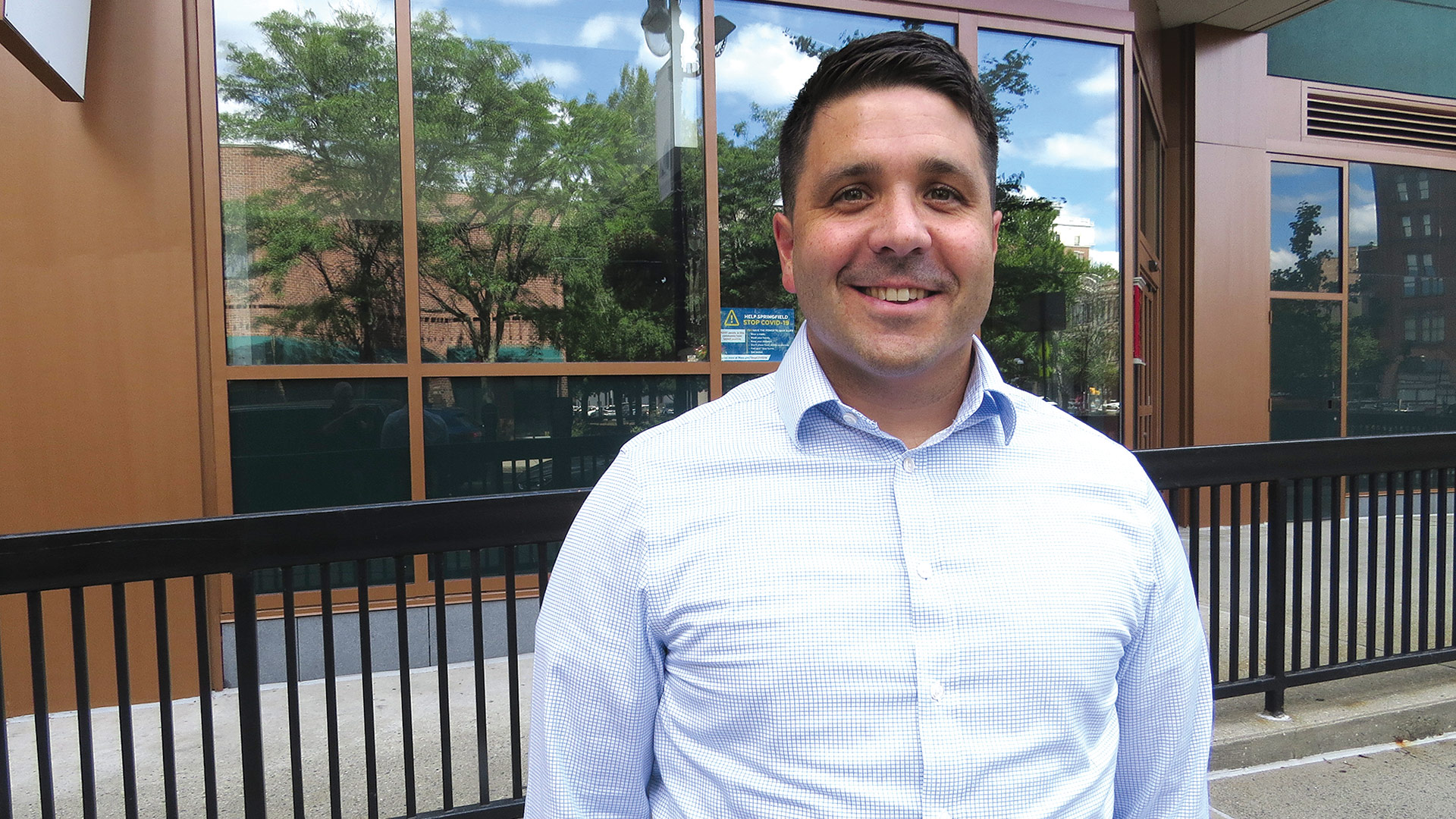
Cannabis Special Coverage

Delivering on Business Promise

partners in Budzee.

From left, Kevin Perrier, Volkan Polatol, and Erza Parzybok, partners in Budzee.

Volkan Polatol didn’t actually speak the words, but he strongly implied them: ‘If this was easy, then everyone would do it. Or at least try.’

The ‘it,’ in this case, is delivery of cannabis products — Amazon-style. Polatol, teaming with Kevin Perrier and Ezra Parzybok in a venture called Budzee, has created such a service, believed to be one of the very few in this region, and the country, for that matter.

As the partners talked about their business, they addressed that logical question about why they are the first and why there are not more ventures addressing what appears to be a logical need within the marketplace.

And the simple answer is that this isn’t as easy as it looks. And it doesn’t even look easy.

Indeed, there are complex licensing issues to overcome, software programs to develop, logistics, myriad expenses — from buying dedicated, unmarked vehicles to outfitting them with special equipment, to staffing each vehicle with two people (one of many requirements to be followed). And now, gas costs more than $5 a gallon.

“All of this is incredibly expensive, and it’s very difficult; we had to create the model,” said Polatol, who summed it all up by saying that a roadmap had to be in place for such a unique venture.

Parzybok agreed, and elaborated — on the many challenges facing this venture and all businesses in the cannabis sector.

“There’s a strain put on these businesses when the state invents all these rules that make it difficult to run a smooth, profitable business,” he explained. “The rules for cannabis are more strict than for pharmacies that sell opioids; they’re more strict than those for the delivery trucks that deliver alcohol. All that costs money.”

The partners who created Budzee, all veterans of this industry in one capacity or another, have chosen to take on all these challenges — they opened their doors this past spring. And that’s because, despite all these hurdles and expenses, they see real need for what they’re doing. They also see a path to profitability — not right away, but certainly some day, and perhaps soon as word of their venture grows and more people decide that it’s easier to have cannabis products delivered to their door than it is to travel to an area dispensary.

“There are people who can’t drive to a dispensary,” said Polatol. “Meanwhile, even though cannabis is legal in this state, there is still a stigma out there; some people don’t want to be seen in dispensaries. There’s still a great many people who want to be home, and they like the convenience of things being delivered to them.”

“There’s a strain put on these businesses when the state invents all these rules that make it difficult to run a smooth, profitable business. The rules for cannabis are more strict than for pharmacies that sell opioids; they’re more strict than those for the delivery trucks that deliver alcohol. All that costs money.”

And that brings the partners, who have invested more than $1.2 million to move Budzee off the drawing board, to the major challenge that remains for them — educating the public about this service and the convenience it brings.

“There’s considerable work to do to educate the public about this,” said Polatol, adding these efforts are ongoing. “Once we get established, people will understand; there are so many non-cannabis models out there — from Domino’s Pizza to Amazon. Once they understand it, it clicks. To get it out there, though, will require marketing, marketing, and more marketing.”

Parzybok agreed, and said that in time, consumers will come to understand, appreciate, and embrace the convenience just as they have in many other industries where home delivery has become an important part of the business model.

“It’s a new industry, so you assume that most licensed categories are going to be profitable,” he said. “You can look at the numbers for retail establishments or see the lines coming out the door when retail was opening, so you just assume that people will also embrace delivery. But when Amazon first came out, people were like ‘why should I buy something on the Internet when I can just go get it at the grocery store?’ But now they realize that they never have to bring it in from their car again.”

ideally situated off I-91

Budzee’s location in Easthampton is ideally situated off I-91

Getting the word out, and creating a comfort level with home delivery of cannabis products is essential, because with this model — where Budzee is charging the same price for products as one would pay if they went to a dispensary (there is a $100 minimum) — relies on volume. And creating it will be the primary assignment moving forward.

“It’s all about scaling up,” said Polatol, adding the goal is to eventually serve the entire state and build a large portfolio of new and repeat clients.

For this issue and its focus on the region’s emerging cannabis industry, BusinessWest talked with the partners at Budzee about the venture, what it took to get it off the ground, and how they anticipate that it will continue to gain altitude in the months and years to come.


Creating a Buzz

As they offered BusinessWest a quick tour of their facilities — dominated by signs that read ‘authorized personnel only’ or ‘Do Not Enter — Limited Access Area’ — on just about every door — the partners stopped in the large vault area where the various cannabis products are stored and then gathered for delivery.

There are literally hundreds of different products on the shelves — a selection larger than what is to be found at most dispensaries, said Polatol — with names ranging from Rootbeer Float to Blue Sunshine; Purple Pineapple Express to Sundae Driver.

Putting such a portfolio of products together has actually been one of the easier aspects of this enterprise, they noted, adding quickly that just about everything else — from the software to the business model; from the licensing to the logistics — is difficult and, in many ways, pioneering.

Turning back the clock roughly two years, Polatol said the three partners came together behind the idea that the region needed a service that would ‘bring cannabis to your house like a pizza,” as he put it, and conviction that this team had the expertise, determination, and patience (a key ingredient to be sure) to make this happen.

There were some courier-like businesses working on a DoorDash model, said Polatol, but the concept they had, for a warehouse, Amazon-like model, was totally unique for this region, and the country, as far as they knew.

The vault at Budzee

The vault at Budzee holds a wide variety of products for delivery to customers.

The partners already knew each other well. Polatol and Perrier are the owners of the dispensaries Dreamer Cannabis in Southampton, and Honey in Northampton, and Parzybok served as a licensing consultant on those ventures. United in their vision for this new kind of business, what they put together a checklist of everything that was needed, and then a roadmap for taking the concept from the drawing board to the marketplace.

The first item on the list was a license, which was somewhat problematic, because the state was, and still is, awarding cannabis-delivery licenses exclusively to those who qualify for the state’s social equity program — meaning they were previously harmed by the nation’s war on drugs.

Enter Parzybok, who was arrested in 2015 after federal agents raided his home in Northampton and eventually seized dozens of marijuana plants; he received probation for the offenses.

The license-application process was lengthy and complex, mostly because of the new ground being broken, but also because the Cannabis Control Commission has historically been methodical when issuing licenses, said Perrier, adding that this bridge would eventually be crossed.

The partners also needed a location, and realized that they actually had one in property that Perrier owned in Easthampton that was ideally situated less than a minute from an exit onto I-91, positioning the company to deliver to the four counties of Western Mass. and beyond.

They also needed software for taking orders, vehicles, specialized equipment, drivers (a challenge when all companies are looking for help), and a system for safely getting products into those vehicles and then into the hands of customers.

All those hurdles were cleared early this year, and the company commenced deliveries in early April.

Most of these have been in and around Springfield, but there have been some farther east; the territory attached to the license is essentially everything west of Worcester. And the two-person teams (one drives, the other brings the items to the door) are delivering the full spectrum of products, from flowers to edibles to accessories.

Deliveries come on three levels: ‘express’ (within two hours, but usually less than that); ‘same day,’ where the customer picks a time slot, and ‘scheduled,’ where the customer picks the day and time.

Thus far, business has been good, but the venture is still very much in the ramping-up phase as awareness of the service builds, the public becomes more comfortable with the notion of having cannabis delivered to their doorstep, and it understands (at least with this company) that delivery is not more expensive than going to the dispensary.

And there are obstacles to building this awareness, they said, adding that state and federal laws limit where and how such a venture can advertise its products and services. For example, cannabis companies can only advertise on vehicles that can prove that 85% of their audience is 21 or older, said Perrier. Meanwhile, because cannabis is still illegal federally, such platforms as Google, Instagram, and Facebook “won’t take our money,” he noted, adding that television stations will not take it, either. They can’t even advertise on the vehicles delivering the products — those must be unmarked for, presumably, security reasons; this is a cash-only business.

“You’re really handicapped in how you can advertise,” said Polatol, adding that the company is using some billboards and a digital campaign to draw people to the Budzee website. But that’s just half the battle. Once there, consumers need to become comfortable with the products and procedures, and place orders.

Despite these challenges, the partners believe they have the right concept at the right time, and as awareness and comfortability grow, they will achieve the volume they need to be profitable.

“Once Budzee becomes known as a household delivery option for cannabis, things will snowball and we’ll get bigger numbers,” said Polatol. “And we’re seeing that right now; the numbers are going up every week, and we’re getting a lot of regulars.

“There are some people who can’t leave their house for health reasons, and they’re ordering from us three times a week,” he went on. “They love it, and it’s rewarding for us; it’s a model that’s working.”

At present, the company is making maybe 20 to 30 deliveries a day on average, he said, with the goal being to take that number past 100. Other goals are to go statewide (more licenses will be needed for that) and then perhaps to other states, he told BusinessWest.


Budding Proposition

None of that will be easy, of course. But as these partners have shown, they are willing to assume challenges and clear some high hurdles to get where they want to be.

And right now, they are where they want to be — the first to be out the door (and to your door) with delivery of cannabis products.

They know that it will take some time to scale up, as Polatol noted, and reach the volume level they need to be successful, but they believe they have a model that works and a foundation to build on.


George O’Brien can be reached at [email protected]

Special Coverage Wealth Management

It’s a Time to Stay Focused and Think Strategically

By Barbara Trombley, CPA

If you have a retirement account, as many of us do, it is hard not to follow what is going on in the financial markets today. We are officially in a bear market, defined by a drop of 20% or more in a broad market index.

The Dow Jones Industrial Average crossed into bear market territory on June 13 of this year. Unfortunately, bear markets may plummet even deeper than the 20% threshold and may do so over a prolonged period. It is a tough time to be an investor during this scenario but, eventually, the market finds a bottom and investors feel comfortable once again to begin buying, putting an end to the bear market.

Bear markets are usually the result of a recession or some other financial strain. We are not officially in a recession, but many experts think that one is coming. A recession is defined as a significant decline in economic activity that lasts for months or years. This often means that unemployment rises as companies fail or shrink to control costs. Corporate profits fall causing a decline in stock market prices.

Usually, a bear market signifies tougher economic times ahead. Unfortunately, bear markets are ‘normal’ and happen periodically. We actually experienced a short bear market at the beginning of the pandemic. Bear markets tend to be much shorter than bull markets (when stocks rise over a period of time). They also tend to be less statistically severe, with average losses of 33% compared with bull market average gains of 159%, according to data compiled by Invesco.

“It is a tough time to be an investor during this scenario but, eventually, the market finds a bottom and investors feel comfortable once again to begin buying, putting an end to the bear market.”

What should an investor do during a bear market? Risk tolerance, asset allocation and your age really come in to play right now. The percentage of equities in your portfolio should match your risk tolerance and age. For instance, if you are in your thirties and forties and are investing in your 401(k), you could be very aggressive and have a large percentage of equities.

If this is the case, then you should be thrilled to make your monthly deposit into your account. You are buying stocks ‘on sale’ and you have many years to make up any temporary losses in your account. Even if you are a few years from retirement, and depending upon you situation, a bear market could be seen as an opportunity to purchase stocks at a discount.

A prolonged bear market for someone approaching retirement or a new retiree could mean making some changes to your lifestyle. For example, you could limit withdrawals from your investment account and/or eliminate panic selling. When you withdraw money or sell in a bear market it is considered “locking in the losses.” Perhaps you can cut spending or pick up an extra job for the short term, until the economy is on more stable footing.

There are financial products available that could potentially be suitable in many portfolios. In some cases when determined appropriate, an annuity could be used to create more stable income, a REIT (Real Estate Investment Trust) could be used to help diversity a portfolio and many insurance companies offer products with downside protection. Consult your financial advisor for different ideas to help address the volatility in your portfolio.

Perspective is key to a good night’s sleep when dealing with market volatility. Downturns are a normal occurrence in the stock market. Since 1932, bear markets have occurred, on average, every 56 months (about four years and eight months), according to S&P Dow Jones Indices. Make sure to keep emergency funds in the bank to keep market withdrawals to a minimum. Do not make rash changes to your portfolio. There is a saying that ‘time in the market beats timing the market.’ It is very hard to predict the exact best day to sell a stock or to buy a stock. Missing the best days in the stock market, over time, can seriously undermine your performance. Having a plan and sticking to it could yield the best results in the long term.

If you are a new investor, you may want to proceed cautiously. One potential strategy is to dollar cost average any funds that you have into the market (spread the investment over a period of time). This way you are buying at different price points in the market. Dollar cost averaging involves continuous investment in securities regardless of fluctuation in price levels of such securities. An investor should consider their ability to continue purchasing through fluctuating price levels. Such a plan does not assure a profit and does not protect against loss in declining markets.

No one is predicting when the market bottom will happen, and it is nearly impossible to time. I believe you should see to have a well-diversified portfolio with a mixture of asset classes, though there is no guarantee that a diversified portfolio will enhance overall returns or outperform a non-diversified portfolio. Diversification does not protect against market risk.

Always remember the adages “This too shall pass” and “Time is on your side.” Those people that have been investing for a while have been through many economic downturns and have survived and, most likely, thrived if they have stayed the course and stuck to their plan!


Barbara Tromblay is a financial advisor and CPA with Wilbraham-based Tromblay, CPA: (413) 596-6992. Securities offered through LPL Financial. Member FINRA/SIPC. Advisory services offered through Trombley Associates, a registered investment advisor and separate entity from LPL Financial. The opinions voiced in this material are for general information only and are not intended to provide specific advice or recommendations for any individual. All performance referenced is historical and is no guarantee of future results. All indices are unmanaged and may not be invested into directly.

Insurance Special Coverage

A Policy of Purpose

After a long career growing FieldEddy (later HUB International New England) into one of the region’s most notable insurance success stories, Sam Hanmer called it quits, figuring he’d enjoy an early retirement. But he didn’t, in fact, enjoy it. So, three years later, with a renewed sense of passion and purpose, he got back in the game, purchasing two local agencies, with the intention to grow them further, with an eye toward cultivating the next generation of leadership.

By Stephen Carter

If not for the pandemic, Sam Hanmer said, he might have stayed retired.

Or maybe not.

A long stretch when COVID-19 largely shut down the world certainly didn’t add to whatever enjoyment his retirement years — which began in the spring of 2018 — were bringing him, but the truth, he admitted, is that early retirement simply didn’t suit him.

“Quite honestly, I was hanging around doing nothing every day and had a lack of purpose in my life,” said Hanmer, whose more than three-decade career in insurance was highlighted by the rapid growth of FieldEddy in the early years of this century and its acquisition by Hub International in 2014. “I said, ‘OK, I have to go do something. This is crazy; I’m too young. None of my friends are retired. I’m a golfer, but not a passionate golfer.’ So retirement didn’t sit well with me.”

As noted, COVID didn’t help — Hanmer’s bulldog, Santino, was his “pandemic dog,” a companion during those isolating months — and not even the golf courses were open for a while. Simply put, he was restless.

“I figured, I’ve got plenty of earning years left, so I went back to what I know,” he said, noting that he honored his non-compete agreement with HUB before jumping back into the insurance business. After bidding on another agency and falling short, he purchased the two locations of LeBel, Lavigne & Deady Insurance (in Chicopee and Springfield) in May 2021, rebranding them as the Rush Insurance Group. Then, in November, he bought Towne Insurance Agency in Agawam, changing the name to Towne Insurance Group; it may eventually be part of the Rush name as well.

“I got back in the business,” he said. “I needed something to do, and it’s what I knew.”

Back in the 1980s, when Hanmer graduated from UMass Amherst, his father was the majority owner of a firm known then as Field, Eddy, and Bulkley, but Hanmer didn’t go to work for him right away. When he later joined the family business, he started in sales but moved to the financial side when the treasurer suffered a heart attack and had to leave the company for some time. After his father retired in 1995, Hanmer stepped into the role of CEO.

It wasn’t long before he started to capitalize on a trend within the industry — many small, mom-and-pop operations struggling to adjust to changes and technology began looking in earnest for exit strategies — to grow by acquisition.

insurance business with a new venture

Sam Hanmer tried retirement, but it didn’t suit him, so he returned to the insurance business with a new venture

Over the next two decades, the firm acquired a number of agencies, including the Curtis and Hodskins agencies in Monson, Aliengena in Palmer, LDS in Three Rivers, Meadows in East Longmeadow, Remillard in South Hadley, Buckley Bridge in Windsor Locks, and both BPI and Lawson, Marino & Bertera in Springfield.

The 160-year-old firm, later branded FieldEddy, was still growing its footprint when it became part of the HUB International family in 2014, where Hanmer remained in a leadership role for three and a half years, then retired.

For a while, anyway.


A Different Perspective

Looking back to his un-retirement decision early last year, Hanmer figures it was probably inevitable, pandemic or not.

“I’m very happy I made the call to do it. I’ve had people, friends in the business, say, ‘why did you get back into this business?’ But it’s a good business, it really is, and they know it.

“But after a while, it can get old,” he went on. “So for me, taking three years off and coming back was a like a recharge. I was in the business 30-something years, and after 30 years, anything can get a little tiring. You take a few years off and realize — in my case, at least — retirement wasn’t working, and you come back with a different lens because you had three years off. So I’m excited and having fun in the business — probably more fun now than I had back in the day.”

Hanmer has navigated a number of changes in the sector, including the rise of direct writers like Geico and Progressive, who poured into Massachusetts after state regulations were changed to stimulate competition. But Hanmer, like other independent agents, has always countered that evolution by emphasizing the value of relationships in his business.

“The direct writers have captured a fair amount of the Massachusetts business, and you saw a big pitch years ago about online sales from direct writers. Now you see Geico offices popping up because they finally understand it is a relationship business. Geico’s done phenomenally; they don’t have to put offices up, but they’re starting to build offices you can walk into. And Progressive probably does 80% of their business through independent agents. People don’t know that.”

The other factor that’s been affecting the insurance world over the past 20 years — and remains a factor today — is consolidation, and there’s a place, Hanmer said, for locally owned companies in that landscape.

“Consolidation has been happening in all sectors, and that’s very much the case in the insurance-agency world,” he noted. “Everything is going to the nationals, and the local insurance agencies are dwindling. But we’re still local people.”

The main challenge is one of scale, he said, noting that the size of HUB certainly helped the former FieldEddy grow its business because of the buying power of a national firm. “And they have a lot of what I would call specialty units that focus on a particular sector. It’s powerful. It served us well.

“But I still think there are a group of middle-market buyers, smaller businesses that get lost in the shuffle with the nationals, and I think there’s a big opportunity for smaller local agencies to capture that business,” he went on. “A lot of national players actually walk away from that business. And in Western Mass., that’s 90% of businesses.”

So, against the backdrop of continued consolidation and with his accumulated years of experience, Hanmer saw an opportunity to be successful.

“It certainly was a scary thought to get back in, and come up with some capital in order to get back in, knowing that things have changed in three years — although they didn’t change as much as I thought they would have.”

Elaborating, he said he discussed coming back with friends and colleagues, and they led him to believe the business had changed quite a bit, even in the three years he was away.

“And there is change in the system environment, in the software we use, some of the peripheral things, but the actual dynamics of the business didn’t change. Once I got back in, I said, ‘this is what I anticipated.’”

It’s a landscape where relationship building and the consultative approach still matter, he explained.

“That’s never gone away. I’d rather be your consultant than your salesman. If someone buys from me, great, but if they don’t, and I’ve helped them, that’s fine too, because at some point, that will come around. Maybe they’ll talk to a friend. Even if I don’t ever get their business, that approach works. It doesn’t necessarily work quickly, but this is a marathon, not a sprint.”

He paused for a moment. “Well, I’m sprinting a little bit, because there will be retirement at some point ahead of me.”


Leaving a Legacy

For now, though, Hanmer is focused on growing his three offices, which offer personal, commercial, and employee-benefit lines — the latter being new for both agencies.

“My makeup isn’t to sit back. I absolutely plan on growing it through organic growth and organic sales and through further acquisitions, for sure,” he told BusinessWest. But he wants to leave his enterprise in healthy shape when that second retirement does come around — and, presumably, sticks.

“I’m hoping this time around to create something where a perpetuation might be internal instead of selling it externally to a national brand. If I can get a few young guys — and women — in here who are passionate about the business and want to keep it going, I would definitely perpetuate it internally, just create a little annunity for myself, as opposed to just cashing out. That’s the plan. Plans change, but that’s the plan.”

Bringing in young professionals is a national challenge, however.

“It’s hard. This industry is struggling to attract young people who want to be in the insurance business. It’s hard to get young people energized or even want to talk to you. They’d rather be in a dot-com; they’d rather be in a startup in Boston. There’s all kinds of things they’d rather do than sell insurance.”

One reason is that insurance isn’t an instant-gratification career, he explained.

“It’s a recurring-revenue business, which means your first few years are tough because you have to build a book of business. It’s a commission-based business, so once you build your business, you can create a recurring-revenue compensation program. It can be lucrative if you stick it out, but most people won’t stick it out because the first few years are lean. If they can manage through their first few years and have thick enough skin not to worry about the public perception of insurance, it can be a very lucrative job.”

The negative perception arises, Hanmer said, because insurance is something everyone needs, but they don’t want to pay for it. “They love having it when they have a problem, but if they’ve never had a problem, they say, ‘I can’t believe I spent all this money on insurance.’”

Hanmer found he needed insurance, too — not the product, but the career. He needed it more, in fact, than putting on a green or puttering around a house, or whatever activities he and Santino — who now goes to work with his owner every day — might get up to.

In other words, Hanmer needed to feel the spark of working again, so that’s what he did. And he found that spark.

“I definitely made the right decision,” he said. “I’m really happy.”

Conventions & Meetings Daily News Events Meetings & Conventions

SPRINGFIELD — The Springfield College Board of Trustees recently announced the outcome of its 2022-23 board election results during its annual spring meeting.

William Burke III was re-elected as chair for the board of trustees. He earned a bachelor’s degree from Loyola College, and also received a master of Business Administration from Loyola College Sellenger School of Management.

The following individuals have been elected to serve a three-year term on the board of trustees (Class of 2025):

  • Mark Elgart is president and chief executive officer at Cognia in Alpharetta, Ga. He earned a bachelor’s degree from Springfield College, a master of Education from Westfield State College (now university), and a doctor of Education from the University of Massachusetts.
  • Pia Flanagan is chief of staff to the chief executive officer at MassMutual in Springfield. She earned a bachelor’s degree from the University of Texas at Austin and a juris doctor from Emory University School of Law.
  • Peter Pappas is a wealth management associate at Morgan Stanley in Springfield. He earned a bachelor’s degree at Kenyon College, a Master of Arts from Union College, and a master of Education from Springfield College.
  • Suzanne Robotti is the founder and president of MedShadow Foundation in New York, N.Y. She earned a bachelor’s degree from the University of Maryland.

The following individuals have been elected as new members to serve a three-year term on the Springfield College Board of Trustees (Class of 2025):

  • Terry Powe is principal of Elias Brookings School in Springfield, Mass. She earned a bachelor’s degree from Springfield College.
  • Anthony Sarage is a podiatrist and partner at Western Massachusetts Podiatry Associates in East Longmeadow, Mass. He earned a bachelor’s degree from Springfield College and a doctor of Podiatric Medicine from Temple University.

The following individuals have been elected to serve a five-year term on the Springfield College Board of Trustees (Class of 2027):

  • Denise Alleyne is a retired vice president for student services at Pine Manor College in Chestnut Hill, Mass. She earned a bachelor’s degree from Springfield College in 1973 and a graduate degree in 1974.
  • Douglass L. Coupe is the retired vice president of State Street Global Investor Services of Boston. Coupe has been a member of the Board of Trustees for more than 20 years serving as chair from 2011 to 2015. He earned a bachelor’s degree, master’s degree, and certificate of advanced studies at Springfield College, and he received an honorary doctor of Humanics degree from the College in 2016.

Samantha Hourihan, a native of Bridgewater, will continue to serve as a student trustee until January 2023. A physical therapy major, Hourihan has been named to dean’s list multiple times and is a member of the women’s basketball team.

Gizzelle Abanador, a native of Ludlow, will continue to serve as student trustee-Elect until January 2023 and then serve as student trustee from January-December 2023. She is a biology major.

David Henke, a native of Brookfield, Conn., was elected as student trustee-elect for January-December 2023. He is a secondary education major.

Berkshire County Daily News Education Events Tourism & Hospitality Travel and Tourism Work/Life Balance

LENOX — The Mount, Edith Wharton’s Home, announced its 2022 Summer Lecture Series line-up. Now in its 29th year, the Summer Lecture series brings leading biographers and historians to the Berkshires. This year’s series includes journalist and New York Times bestselling author Kati Marton, Pushcart prize-winning poet Ravi Shankar, and Syrian/Jordanian thought leader Luma Mufleh, among other notable speakers. 

Lectures will be held outdoors under an open-air tent on Mondays at 4 p.m. and Tuesdays at 11 a.m., beginning July 11 through August 30. To view the full line-up and purchase tickets, visit EdithWharton.org.

“We have a fascinating mix of narratives about historical figures and contemporary underrepresented voices in this year’s lineup,” said Patricia Pin, The Mount’s Public Program Director. “We are looking forward to welcoming our community back to The Mount for what promises to be an engaging season of meaningful storytelling.” 

  • July 11 and 12: Grace M. Cho, author of Tastes Like War; 
  • July 18 and 19: Victoria Kastner, author of Julia Morgan: An Intimate Biography of the Trailblazing Architect 
  • July 25 and 26: Luma Mufleh, author of Learning America: One Woman’s Fight for Educational Justice for Refugee Children.
  • August 1 and 2: Ravi Shankar, author of Correctional: A Memoir;
  • August 8 and 9: Susan Branson, author of Scientific Americans;
  • August 15 and 16: Chad Williams on “The Voice of W.E.B Du Bois”
  • August 22 and 23: Ann McCutchan, author of The Life She Wished to Live;
  • August 29 and 30: Kati Marton, author of Chancellor: The Remarkable Odyssey of Angela Merkel.

For more information, visit EdithWharton.org

Daily News Employment Health Care News Women in Businesss

HOLYOKEHolyoke Medical Center has announced the appointment of Lisa Wray-Schechterle, as the hospital’s director of Community Benefits.

Wray-Schechterle joins the hospital from Pyramid Management Group where she served as the marketing director of the Holyoke Mall at Ingleside, a position she held for more than 20 years.

Wray-Schechterle holds both a master of Arts in Communication and a Bachelor of Science in Business Administration from Western New England University. She serves as a marketing committee member for Girls Inc. of the Valley, a board member of the Holyoke Chamber of Commerce, and as an advisory board member for the Holyoke Community College School of Business.

“We are happy to welcome Lisa to our team,” said Spiros Hatiras, Holyoke Medical Center’s President and Chief Executive Officer. “Her proven ability to build collaborative partnerships coupled with her knowledge of Holyoke and the many community based organizations we work with throughout the region, will enable her to successfully manage and expand our Community Benefits program.”

Holyoke Medical Center Community Benefits provides programs and services to improve health in communities and helps to increase access to health care. This is done to advance medical and health knowledge in the community and relieve or reduce the burden of government and other community efforts. Wray-Schechterle has succeeded Kathy Anderson as the director of the department, following Anderson’s retirement. 

“I am excited to extend my knowledge and networking connections to help improve the health needs of the Pioneer Valley,” said Wray-Schechterle.  

“As the hospital has just completed their 2022 Community Health Needs Assessment, I look forward to creating the next implementation strategy based on the feedback we received and expressed needs identified by the community.”

Daily News Education Events Health Care

HOLYOKE – Holyoke Community College is now accepting applications for its free Community Health Worker training and apprenticeship program. 

The program begins in September and is tuition free thanks to a federal grant HCC received in 2020. 

The purpose of the four-year, $1.89 million grant, awarded in 2020 from the Health Resources and Service Administration (HRSA) is to increase the number of CHWs qualified to help children and families affected by opioid use.   

HRSA’s Opioid-Impacted Family Support Program supports training programs like HCC’s CHW program that enhance and expand paraprofessionals knowledge, skills, and expertise. 


The training involves college level coursework during the first year, as well as supervised field work experience at Behavioral Health Network in Holyoke. Classes are held in person at HCC and require basic computer proficiency and literacy skills. After the first year, students can apply for a full-time, paid apprenticeship placement — the first of its kind in Western Mass. 


During the pre-apprenticeship training at HCC, students take two core Community Health Worker classes across two consecutive semesters.


“The HCC Community Health Worker Apprenticeship Program is an initiative that offers free training for people interested in pursuing community health and human services,” said Tina Tartaglia, CHW project coordinator. “There is a specific focus on teaching students how to support children and families affected by opioid use and substance use disorders. Students with lived experience are encouraged to apply.”  


This is the third year of the four-year grant, which aims to train 25 individuals as CHWs each year. The grant also provides stipends to students as incentives to complete the program and seek employment in the field. Students who enter an apprenticeship after they finish training are eligible for an additional annual stipend of $7,500.


“COVID-19 has made clear how essential community health workers are in addressing the wide range of physical, behavioral and mental health issues faced by members of our community,” President Royal said in 2020 after the HRSA grant was awarded. “Through this program and with our partners, we will not only have the ability to support more families struggling with substance use, but we will also be creating more jobs in a sector central to our region’s economic growth.”


HCC’s partners in the grant include Behavioral Health Network, Holyoke Health Center, and the MassHire Hampden County Workforce Board.


For more information or to apply, please visit hcc.edu/chw-free

Biz Tips & Industry News Business Management Daily News News

Confidence among Massachusetts employers edged close to pessimistic territory in June as businesses struggled with surging inflation and concerns about a possible recession.

The Associated Industries of Massachusetts Business Confidence Index (BCI) fell 3.9 points to 50.8. The Index now rests 12.6 points lower than a year ago and marginally higher than the 50 mark that separates an optimistic from a pessimistic view.

The decline, which left the Index at its lowest point since December 2020, reflects particular concern about the course of both the state and national economies. The BCI’s US Index plummeted 9.1 points for the month and more than 20.3 points for the year.

The Central Massachusetts Business Confidence Index, conducted with the Worcester Regional Chamber of Commerce, fell from 57.5 to 49.0. The North Shore Confidence Index, conducted with the North Shore Chamber of Commerce, dropped from 61.8 in May to 52.6 last month.

The confidence numbers came at a time when 76% of CEOs globally tell The Conference Board that they expect a recession by the end of 2023 or believe it’s already here. The economy appears to be growing, but employers face growing struggles with soaring fuel prices, supply chain disruptions and financial market volatility.

“Central banks around the world are raising interest rates with new urgency, hoping to cool inflation by slowing growth of aggregate demand and achieving a closer balance with supply,” said Sara L. Johnson, Chair of the AIM Board of Economic Advisors.

“Capital markets remain open, but financing costs are rising for businesses, consumers, home buyers, and governments. The year ahead will bring a more difficult environment for builders and capital good producers.”

The constituent indicators that make up the Index were  uniformly lower in June.

The Massachusetts Index assessing business conditions within the Commonwealth shed 6.6 points to 47.2, down 16.4 points since June 2021. The US Index measuring conditions throughout the country fell to 38.6.

The Current Index, which assesses overall business conditions at the time of the survey, declined 3.3 points to 53.4. The Future Index, measuring projections for the economy six months from now, lost 4.6 points to 48.1.

The confidence employers have in their own companies declined 2.6 points to 56.0, ending the month 8.7 points lower than in June 2021.

The Manufacturing Index fell 5.2 points to 49.3, 11.6 points less than a year ago.

Small companies (52.6) were more optimistic than large companies (50.2) or Medium-sized companies (49.8).

Elmore Alexander, Dean Emeritus of the Ricciardi College of Business, Bridgewater State University, and a BEA member, said the Russian invasion of Ukraine and COVID-19 lockdowns in China have added to the supply chain woes experienced by Massachusetts employers.

“Elevated demand continues to collide with supply restraints and most economists believe inflation will remain above the Federal Reserve’s 2% target through the end of 2023,” Alexander said.

AIM President and CEO John R. Regan, also a BEA member, noted that recent polls find that among all of the vexing issues facing the commonwealth, Massachusetts residents remain most concerned about the economy and jobs, inflation, housing costs and taxes.

“The citizens of Massachusetts clearly understand that economic growth and jobs form the basis of their ability to establish a stable life and raise a family. The emphasis on jobs is especially notable at a time of an acute labor shortage that has allowed workers participating in the ‘Great Resignation’ to pretty much have their pick of new positions,” Regan said.

Daily News Education News

EASTHAMPTON — Matthew Sosik, president and CEO of bankESB, announced that the bank has pledged $30,000 over three years to Girls Inc. of the Valley.

The money will be used to help support the organization’s Her Future, Our Future campaign, a $5 million fundraising effort designed to help the organization better meet the needs of girls from under-resourced communities in Hampden County and beyond. Through this campaign Girls Inc. seeks to triple the number of elementary and teen girls served, reaching more than 1,000 girls annually. Efforts include renovating a new dynamic, state-of-the-art headquarters and program center in Holyoke, expanding geographic reach in public schools in Springfield, Chicopee, and beyond, and supporting their innovative Eureka! STEM program that prepares girls for college and career.

“This incredible gift from bankESB to support the Her Future, Our Future campaign shows their impactful commitment to community,” said Suzanne Parker, executive director at Girls Inc. of the Valley. “We are proud to have bankESB’s support as we aim to deliver our research-based, engaging programs to more youth across the Valley — and in our new headquarters.”

The donation was made as part of the bank’s charitable giving program, The Giving Tree, which reflects the roots the bank has in its communities, its commitment to making a real difference in the neighborhoods it serves, and the belief that everyone’s quality of life is enhanced when we work together to solve our communities’ biggest problems.

“Children are our future, and Girls Inc. of the Valley is helping to build that future for young girls with innovative, supportive, and life-changing programs that inspire them to be strong, smart, and bold,” said Sosik. “bankESB is pleased to do its part in supporting Girls Inc. and its efforts to provide a high-quality environment and programs that help elementary school-age and teenage girls unlock their full potential.”

Daily News Employment

SPRINGFIELD — The management of Big Y Foods Inc. has announced the following new appointments in Western Mass.:

Shane Lashway, store director, Amherst Big Y Supermarket;

Brian Cromack, store manager, Wilbraham Big Y Express;

Nadine Bransky, bakery sales manager, Palmer Big Y Supermarket;

Sarah Ashton, night manager, Southampton Big Y Supermarket;

Vito Guerino, night manager, North Adams Big Y Supermarket;

• Daniel Dufur, meat and seafood sales manager, Pittsfield, Big Y Supermarket;

• Raanan Hartman, district director, Springfield Big Y Supermarket;

• Jonathan Hubbard, assistant store director, Great Barrington Big Y Supermarket;

• Robert Masciulli, sales and merchandising mentor, Springfield, Big Y Supermarket;

• Keith Fronsceno, corporate senior produce sales manager, Springfield Big Y Supermarket;

• Mery Aviles, customer service manager, SpringfieldBig Y Supermarket;

• Angelo Cosme, employee services representative, Wilbraham Big Y Supermarket;

• Andrew Kubin, employee services representative, Southampton Big Y Supermarket;

• Alexander Deming, customer service manager, Southwick, Big Y Supermarket; and

• Corey Decker, store director, Westfield Big Y Supermarket.

Conventions & Meetings Daily News

SPRINGFIELDDowntown Springfield Toastmasters kicked off its 25th anniversary year by announcing its officers for 2022/23. They are:

President: Steve Lanning (eight-year member);

• Vice president, Education: Andrew Watt (nine-year member);

• Vice president, Membership: Mechelle Decouteau (one-year member);

• Vice president, Public Relations: Shera Cohen (18-year member);

• Secretary/Treasurer: Dave Anderson (14 year member);

• Sergeant-at-Arms: Steve Lanning (eight-year member)

Toastmasters is not a course that is graded, but a club in which members give impromptu and planned speeches. It is an opportunity to learn, practice, and be evaluated in a non-threatening setting.

Architecture Construction Daily News Real Estate

SPRINGFIELD — Developer Peter A Picknelly, along with Springfield city officials, on Thursday unveiled a proposal to build a new Hampden County courthouse on a 14.5-acre site along the Connecticut River north of the Memorial Bridge. The proposal, which also includes housing and a marina, comes with a pricetag of $475 million.

The plans, unveiled at a press conference, call for a four-story, 210,000-260,000-square-foot courthouse; an 11-story residential apartment building with 120-180 units; and a 50-slip marina on the waterfront and a space for an outdoor restaurant.

The proposal hinges on whether the state decides to replace the troubled Roderick L. Ireland Courthouse on State Street. The state is exploring potential new sites and the cost of building a new courthouse; the existing facility has been plagued by health concerns.

Springfield Mayor Domenic Sarno said that if the state decides to build a new courthouse, the proposed riverfront site would be the ideal location.

Sarno, Picknelly, and Tim Sheehan, Springfield’s chief development officer, all said that a development of this size and with its various components could be a catalyst for growth along the river and in the North End of the city, similar to what the Basketball Hall of Fame has done for the area south of the Memorial Bridge.

Commercial Real Estate Daily News News Real Estate Real Estate

SPRINGFIELD Colliers Capital Markets announced that it has been retained by MassDevelopment, to sell 1550 Main Street, the 128,900 square-foot office building in Springfield’s downtown corridor.

Colliers Executive Vice President Jeanne Pinado will lead marketing efforts of 1550 Main, with Vice President Rob Schlesinger providing additional support, and the firm will issue a call for offers in mid-July.

The five-story office building is 97% leased and underwent a complete $9 million renovation in 2010. Capital improvements included creating a high-quality building entrance with an open atrium with 70-foot ceilings, as well as building an outdoor plaza and improving landscaping, elevators, restrooms and more.

Formerly a federal courthouse, 1550 Main St. is home to tenants such as the administrative offices for Springfield Public Schools, the United States General Services Administration, and BayState Health. The building has a 103-space below grade garage and connects via a pedestrian skywalk to the 28-story Tower Square, an office, retail, hotel and parking complex. MassDevelopment purchased 1550 Main from the federal government in 2009 and revitalized the campus to position it as a Class A office building with an expansive public plaza as part of an economic development initiative.

Cannabis Daily News Events Luxury Living News Sports & Leisure The Cannabis Industry

NORTHAMPTON — HONEY, a recreational cannabis dispensary, located in the former home of Sierra Grille, will stage its grand opening on July 9 at 1 p.m.

Visitors can enjoy all day music, fresh popped kettle corn, and performances by the local hula hoopers, wing dancers, stilt walkers, and aerialists. There will be a fire performance at 8:30 p.m.

HONEY is owned and operated by Volkan Polatol and Kevin Perrier. In opening HONEY Northampton, Polatol and Perrier have teamed up with HONEY Brands, originally founded in California, which produces full spectrum, distilled cannabis oil in vape cartridges.

“We are thrilled to partner with the HONEY brand,” Perrier said. “It’s telltale black-and-gold packaging has become synonymous with the best cannabis hash oil on the market today. And now, consumers on the East Coast can try it for themselves. We’re also proud to be able to make the HONEY hash oils from our own facility at Wemelco Industries in Easthampton.”

In addition to HONEY vapes, the dispensary also carries the highest-testing flower and a huge selection of brands from across the state. The location’s innovative LED tunnel, color-changing displays, and chill playlist all create a relaxed, club vibe, and budtenders are on hand to give expert advice on all products.

Berkshire County Daily News Employment Real Estate Real Estate

LEE — Evan Collins has joined Lee Bank as a mortgage originator and will be working out of the Pittsfield branch.

Colins was previously employed as a sales associate at Piretti Real Estate and Stone House Properties. He has been involved in real estate sales in Berkshire County for seven years and said he is looking forward to exploring a different side of the local real estate market in his new position.

Daily News Education Environment and Engineering HCN News & Notes Health Care News Sports & Leisure Summer Safety Travel and Tourism

AMHERST — UMass Amherst has received a $10 million, five-year award from the Centers for Disease Control and Prevention (CDC) to create the New England Center of Excellence in Vector-Borne Diseases (NEWVEC).

The UMass-based center is one in a group of regional centers of excellence designated by the CDC to reduce the risk of vector-borne diseases – such as Lyme disease and West Nile virus – spread by ticks, mosquitoes and other blood-sucking arthropods across the U.S.

Stephen Rich, vector-borne disease expert and professor of microbiology, is the principal investigator on the project and will serve as the executive director of NEWVEC, whose three-pronged mission will integrate applied research, training and community of practice to prevent and reduce tick- and mosquito-borne diseases in New England. NEWVEC aims to bring together academic communities, public health practitioners and residents and visitors across the Northeast.

“We’re really excited about building this community of practice and embracing all the stakeholders in the region who need to know how to do things like reduce ticks and mosquitoes on school properties and public spaces. It is also important to inform the public on best practices to keep ticks and mosquitoes from biting people and their pets,” Rich said. “Part of that mission entails training public health entomologists — undergraduate, master’s and Ph.D.-level students — who are going to be the next generation of people confronting these challenges.”

Infectious disease epidemiologist Andrew Lover, assistant professor in the School of Public Health and Health Sciences, will serve as deputy director of the center, with co-principal investigator Guang Xu at UMass Amherst, and co-principal investigators at Northern Vermont University, the University of Maine, University of New Hampshire, University of Rhode Island and Western Connecticut State University.

“This center fills a critical gap in responses to vector-borne disease in the region,” said Lover, who aims to apply his prior work with regional malaria elimination programs to build strong networks across the Northeast region. “As pathogens and vectors don’t pay attention to borders, coordination across states is essential for public health response. Among other things, we’ll develop practical public health tools to understand how and where people are most likely to interact with ticks, which will then allow for well-targeted and efficient health programs.”

His lab also will provide technical assistance to directly support local health practitioners in optimizing vector surveillance strategies and designing operational research to improve program effectiveness.

Xu, research professor of microbiology, will be responsible for the center’s pathogen testing core and will conduct applied research in the evaluation of tick suppression approaches.

Rich notes that blood-sucking ticks transmit more vector-borne diseases than any other arthropod in North America, accounting for some 400,000 cases of Lyme disease alone every year. “And at least a half-dozen other pathogens are associated with the blacklegged tick,” commonly known as the deer tick, he adds. “It’s kind of a silent epidemic.”

The researchers say it’s critical to attack the problem on all fronts by using applied research projects to reduce tick populations and optimize personal protection and control products, and by training public health students and workers, as well as individuals.