Home Archive by category Sections (Page 26)

Sections

Business Management Daily News Employment

HOLYOKE —  The Dowd Agencies announced the promotion of Jack Dowd from account executive to vice president of personal lines. Dowd has been with the agency since 2016 and represents the fifth generation to join the family business.

“I am happy to announce the well-deserved promotion of Jack to this new position,” said John Dowd Jr., president and CEO of The Dowd Agencies. “For the past six years, he has been a very successful commercial producer as part of our sales team and in this new role, he will further develop the personal lines department including marketing, customer service, client retention and operating procedures.”

Jack Dowd graduated from Saint Michael’s College with a B.S. in business administration and received his MBA from the University of Notre Dame Mendoza College of Business. A licensed property and casualty insurance producer, he achieved his certified insurance counselor (CIC) designation in 2019. In addition, he has participated in the 18-month Agents Sons & Daughters Training Program for underwriting at Quincy Mutual Insurance.

In his community, he serves on committees for the Brightside Foundation and the Make-A-Wish Foundation. He is also a member of the board of directors for Boys Scouts of America, Western Massachusetts Council, where he serves as the risk management chair.

“I look forward to taking on more responsibility within the business,” said Jack Dowd. “Continuing the Dowd insurance tradition is important to me, and I am proud to be part of the fifth generation of this family-owned operation. I look forward to working with our team on the new challenges this position will bring, as well as the opportunity to continue to learn and grow here.”

Conventions & Meetings Daily News Women in Businesss

HOLYOKE — The Young Professional Society of Greater Springfield (YPS) welcomed Elizabeth Hillis, business development associate at WWLP 22 News, to its Board of Directors.

“I’m excited to share my skills with the board and learn new things about the area,” Hillis said. “I’m thrilled to be able to help with the amazing events our organization has to offer. Being a Springfield YPS member is a great way to develop your network, meet other professionals, and become more involved in your community. I can’t wait to get started!”

Daily News Events Security Sports & Leisure Summer Safety Travel and Tourism

SPRINGFIELD — In preparation for Star Spangled Springfield on Monday, the Springfield Police Department will be detouring traffic in and around the area of the Memorial Bridge and Riverfront Park where festivities will be held this weekend.

On Sunday, at 11 p.m., the Memorial Bridge will close to all traffic, vehicular and pedestrian, to allow for the set-up of the Star Spangled Springfield fireworks display. The bridge will open again around 11p.m. on Monday.

At around 7:30 p.m. on Monday, the Springfield Police Department will begin to close roads in the vicinity of the Memorial Bridge in anticipation of the 9:30 p.m. fireworks display. Massachusetts State Police will close Exit 5 (formerly Exit 7) off of I-91 South as needed. Pedestrians will be restricted from sitting on I-91 Exit Ramps.

For public safety, the Springfield Police Department will enforce no pets, alcohol, smoking, bicycles, skateboards, rollerblades, fireworks, sparklers, and drones in and around Riverfront Park.

Business Management Daily News Women in Businesss

CHICOPEE — Bk Investments Hotel Group announced the promotion of Karen Warren to regional director of Operations.

Warren will be responsible for the management of the hotel portfolio. She will have responsibilities for a range of brands, including Residence Inn Chicopee, Hampton Inn Chicopee, Tru by Hilton Chicopee, and Holiday Inn Express in Brattleboro, Vt.   

Vickie Maryou has been promoted to general manager of the Residence Inn Chicopee to succeed Warren.

Business Innovation Daily News Economic Outlook Events

CHICOPEE — The Donahue Institute at UMass Amherst issued a study Tuesday showing that the Westover Metropolitan Development Corporation (WMDC) industrial parks in Chicopee and Ludlow and the civilian airport generate an estimated $2.2 billion a year in direct and indirect revenues.

The report was released at a press conference at a hangar at the base attended by dozens of area economic development leaders. It states that the industrial parks and airport have increased the number of jobs in the region, employing 3,600 people across the Hampden County area. Also, 69% of workers in the airparks earn more than $3,333 per month, compared to 55% of workers across the state. Business activity at WMDC-developed areas generates almost 8,500 jobs around Massachusetts annually.

The WMDC is a quasi-public development corporation formed in 1974 to convert military property in the vicinity of Westover Air Force base to productive civilian uses. WMDC has developed more than 1,300 acres of land in the area and currently operates the Westover Civilian Airport and three industrial parks.

The report notes that businesses within the airparks and the airport also contribute more than $6 million in local taxes. Businesses in Chicopee paid a total of $4.32 million in local taxes, while businesses in Ludlow paid $1.87 million in local taxes.

Creative Economy Daily News Events Luxury Living Sports & Leisure Tourism & Hospitality

SPRINGFIELD — MOSSO, the Musicians of the Springfield Symphony Orchestra, will celebrate the film music of John Williams on July 21, at 7:30 PM in Springfield Symphony Hall. MOSSO will perform excerpts from Williams’ scores to ET, Schindler’s List, Superman, Star Wars, Jurassic Park, and more. Some popular classics, including Rossini’s Overture to The Barber of Seville, Massenet’s Meditation from Thaïs, and Stravinsky’s Firebird Suite open the program.

Maestro Kevin Rhodes was music director and conductor of the Springfield Symphony Orchestra for 20 seasons before the pandemic. He returned to Springfield to conduct his musicians last October in front of a packed house at Symphony Hall, featuring many musical highlights from his tenure as their music director.

Rhodes was recently appointed Chief Conductor of the Slovak National Opera and Ballet in Bratislava, the capital city of Slovakia. In this role he will have a leading artistic position in a European city noted for its cultural diversity, while he continues to serve as music director for the Traverse Symphony Orchestra in Michigan, and as principal conductor of Boston’s Pro Arte Chamber Orchestra.

Rhodes has been a presence in the major musical capitals of Europe for over 25 years, with credits including The Paris Opera, The Vienna State Opera, The Berlin State Opera, La Scala of Milan, The Dutch National Ballet, The Verona Ballet, The Stuttgart Ballet, and many others.

Tickets for the concert, a MOSSO benefit, are priced at $60, $45, $25, and $10, and are on sale at: SpringfieldSymphonyMusicians.com. MOSSO sponsors include BusinessWest and Healthcare News, the Republican/MassLive, WWLP-22News & the CW Springfield, the Sheraton Springfield at Monarch Place, New England Public Media, and the Bolduc Schuster Foundation.

MOSSO is a 501(c)(3) not-for-profit organization, which is not a subsidiary of nor affiliated with the Springfield Symphony Orchestra Inc.

Daily News Education Events News

SPRINGFIELD —   The Naismith Memorial Basketball hall of Fame has announced the return of “Hoophall Hangouts” which will replace “60 Days of Summer,” the museum’s annual summer program featuring family-oriented fun.

Starting on July 1 and running through August 31, the Hall of Fame will host various appearances from basketball players, personalities, and Hall of Famers.

“The hall is excited to bring summer programming back to Springfield starting in July,” said John L. Doleva, president and CEO of the Basketball Hall of Fame. “Paired with our newly renovated museum, Hoophall Hangouts will elevate the experience for our museum guests and will hopefully leave everyone with fantastic memories of their visit.”

On August 12, Bob Hurley Sr. (Hall of Fame Class of 2010) will accompany his son, Dan Hurley head coach for UConn’s men’s basketball team for a special father/son appearance. Throughout the summer, museum goers will also have the opportunity to hear from Class of 2022 Inductees Tim Hardaway, Bob Huggins, and George Karl, as well as hall of famers Grant Hill from the Class of 2018 and Jay Wright from the Class of 2021. Head coach Frank Martin from UMass will also be making an appearance.

“Hoophall Hangouts” appearances are free of charge to museum guests, however some appearances will have select VIP opportunities. “Hoophall Hangouts” will be scheduled throughout the summer and will occur at 1 p.m. For more information, visit www.hoophall.com/hoophallhangouts or follow @hoophall on Twitter, Facebook and Instagram.

Daily News Events News Sports & Leisure Tourism & Hospitality

AMHERST — The Amherst Business Improvement District has announced the lineup for the second annual Friday Night Summer Concert Series on the South Common. The series is sponsored by Encharter Insurance.

On July 22, the BID presents local artists Dawn Lepere and Jeff Starns opening for blues singer-songwriter Eric Lee (LINK). On July 29, UMass will return to the Common for the second year of Jazz in July in downtown Amherst, an event featuring UMass staff, students, and a couple of ‘ringers.’ On August 5, the Grammy-winning Children’s performer MISTER G will take the stage before The Soul Magnets appear. Wrapping up the series on August 12 will be the classic country act the Rosie Porter Trio, followed by the pop-rock Maxxtones.

These events will be free for all, starting at 6 p.m. These evenings will also host local brewery White Lion Brewing, local cider makers Artifact, and Black Birch Vineyards wine for the over-21 guests. Crème Bru.LA will be joining the fun, and there will have a charcuterie station.

Daily News Events Sports & Leisure STUFF Made in Western Mass Women in Businesss

SPRINGFIELD — Springfield Union Station is again hosting a music video of The Star-Spangled Banner sung by local talent Vanessa Ford, who is known as “The Songstress of Springfield.” Also this 4th of July, is a music video by Kayla Staley, a student at the Springfield Conservatory of the Arts.

Staley performs America the Beautiful in her video, which also includes interior drone video of historic Springfield Union Station.

The videos were planned, recorded and produced by Darcy Young and Mary Cate Mannion, both of whom are producers at New England Corporate Video, a division of GCAi Digital PR and Marketing. GCAi will run both videos for Springfield Union Station on its Social Media channels starting on July 1, and they will run through July 4.

“The 4th of July is very special for all of us in Springfield, and Union Station wanted to add to the celebration,” said Nicole Sweeney, property manager for Springfield Union Station. “Vanessa and Kayla are local treasures.”

Ford began singing in the church choir at the age of seven, and she loves every genre of music. She is an aficionado of classical music, jazz, pop, traditional hymns, and contemporary gospel music. She has performed the National Anthem for many local college sporting events, at Springfield Police Academy Graduations, and for a multitude of high-profile local and national events.

Staley is a 2022 graduate of Springfield’s Conservatory of the Arts and has been singing since she was 12. She enjoys singing at retirement communities and other public venues.

Daily News Hampshire County Super 60

SPRINGFIELD The Springfield Regional Chamber (SRC) is seeking nominations for its annual Super 60 awards program. Super 60 recognizes the success of the fastest-growing and privately owned businesses in the region. Nominations must be submitted by August 5.

Each year, Super 60 identifies the top-performing companies in this region, based on revenue growth and total revenue. In 2019, one-quarter of the Total Revenue winners exceeded $30 million, with all the winners combining for more than $720 million in revenue. In the Revenue Growth category, all winners had growth above 21%, and 50% of the top 30 companies grew by more than 50%.

“Small businesses are the backbone of our region and have been especially resilient throughout the pandemic,” said Springfield Regional Chamber President Diana Szynal. “We’re thrilled to bring this awards program back to honor our region’s businesses and recognize their successful navigation through the past two years.”

To be considered, companies must be independently and privately owned; based in Hampden or Hampshire counties or be a member of the Springfield Regional Chamber; have revenues of at least $1 million in the past fiscal year; and have been in business for at least three full years. Companies are selected based on their percentage of revenue growth over a full three-year period or total revenues for the latest fiscal year.

Companies may be nominated by financial institutions, attorneys, or accountants, or they can self-nominate. Along with an application, nominators must provide net operating revenue figures for the last three full fiscal years, signed and verified by an independent auditor. All financial information must be reported under generally accepted accounting principles and will be considered confidential.

Nomination forms can be found on the Chamber’s website and can be submitted by faxing to SUPER 60, Springfield Regional Chamber, (413) 755-1322. Nomination forms must be submitted no later than August 5. The Super 60 awards will be presented at the annual luncheon and recognition program on Oct. 28, at the MassMutual Center in Springfield.

The Super 60 award luncheon attracts more than 500 business leaders each year. Super 60 sponsorships are now available. For information, call (413) 755-1309 or e-mail Szynal at [email protected].

Biz Tips & Industry News Coronavirus COVID-19 Daily News Economic Outlook

BOSTON The echoes of the COVID-19 global health crisis were apparent in the latest edition of The Index of the Massachusetts Innovation Economya report that tracks the strength of the Commonwealth’s tech and innovation sectors.

Even with net job losses in nine of 11 key tech sectors in 2020, the Massachusetts tech and innovation economy continued to be a top state in terms of total R&D investment ($36 billion in 2018, second only to California), record venture capital investment ($15.8 billion in 2020), and increased investment in higher education per student (up 29.4% since 2015).

Despite the data capturing the worst of the COVID-19 recession, all three of the sectors below were well above their 2015 employment levels, with the first two having actually added jobs during 2020:

• Biopharmaceuticals and Medical Devices (+37.8% since 2015);

• Scientific, Technical, & Management Services (+25.4% since 2015); and

• Software & Communications Services (+16.8% since 2015).

The 2021 Index found the following areas were bright spots for the innovation economy:

Leading Higher-Ed:

• A marked increase in higher education investment, with appropriations per student up 29.4% since 2015, greater than any of the LTS save for California;

• Highest number of degrees conferred per capita among the LTS (18.1 per 1,000 residents);

• 47.6% of the workforce has at least a bachelor’s degree, higher than any other state and well above the U.S. average of 34.4%.

R&D and VC Investment Rising: 

• Massachusetts is one of the leading producers of patents per capita, with 1,275 utility patents per million residents in 2020, second in the LTS;

• Of the 5 LTS with more than $1 billion in annual investment in 2015, Massachusetts saw the fastest growth in VC funding, up 88.3 percent from 2015 to 2020.

Healthcare Research:  

• $3.3 billion in National Institutes of Health (NIH) funding in Massachusetts in 2020;

• $5,659 of NIH funding per $1 million GDP;

• 11 Massachusetts research institutions received more than $100 million in NIH funding in 2020.

“While the pandemic’s impacts were stark, the investments made by the private and public sectors continue to fuel growth in the areas that are driving our innovation economy,” said Pat Larkin, director of the Innovation Institute at MassTech. “On education, we’ve seen the clear rise in higher-ed investment by the state, which is a key driver for our talent development pipeline. The Index also points to the potential for further strengthening, as the state expands Innovation Pathways programs at the K-12 level, efforts which will further train students for careers in advanced manufacturing and robotics, which desperately need talent.”

All 10 leading tech states saw net job losses in key sectors during 2020, including in Massachusetts. Since 2015, the Commonwealth’s innovation job losses were concentrated in a few key manufacturing sectors, including: Diversified Industrial Manufacturing (- 6.9%); Advanced Materials (-7.4%); and Computer & Communications Hardware (-16.9%).

To download a copy of the Index of the Massachusetts Innovation Economy, or to access interactive copies of the graphs and charts from the report, visit masstech.org/index.

Community Spotlight

Community Spotlight

By Mark Morris

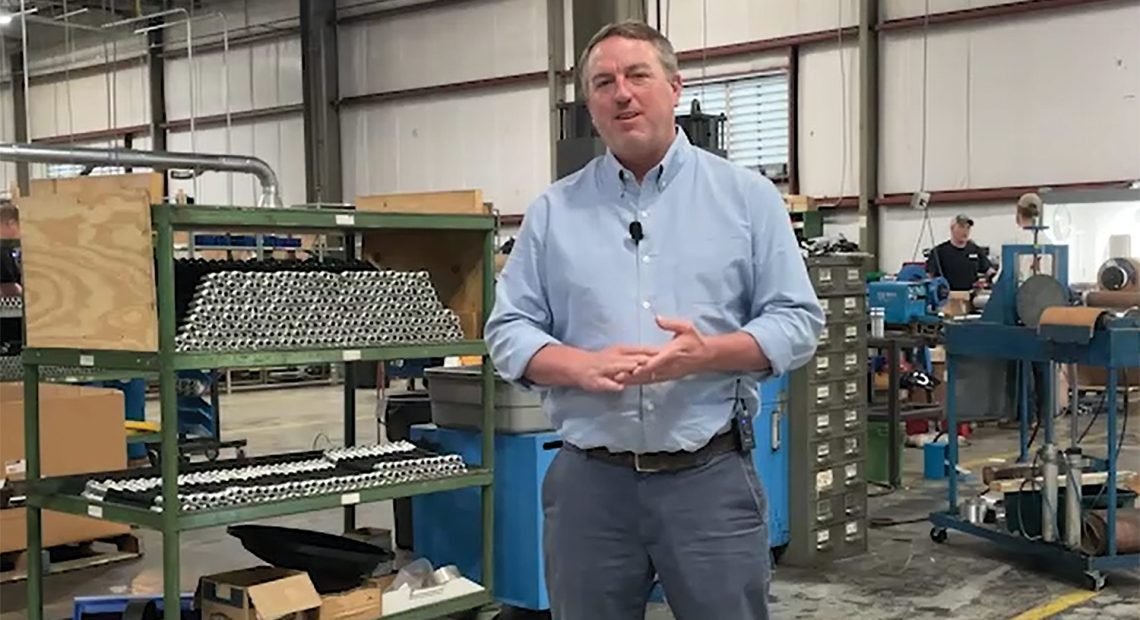
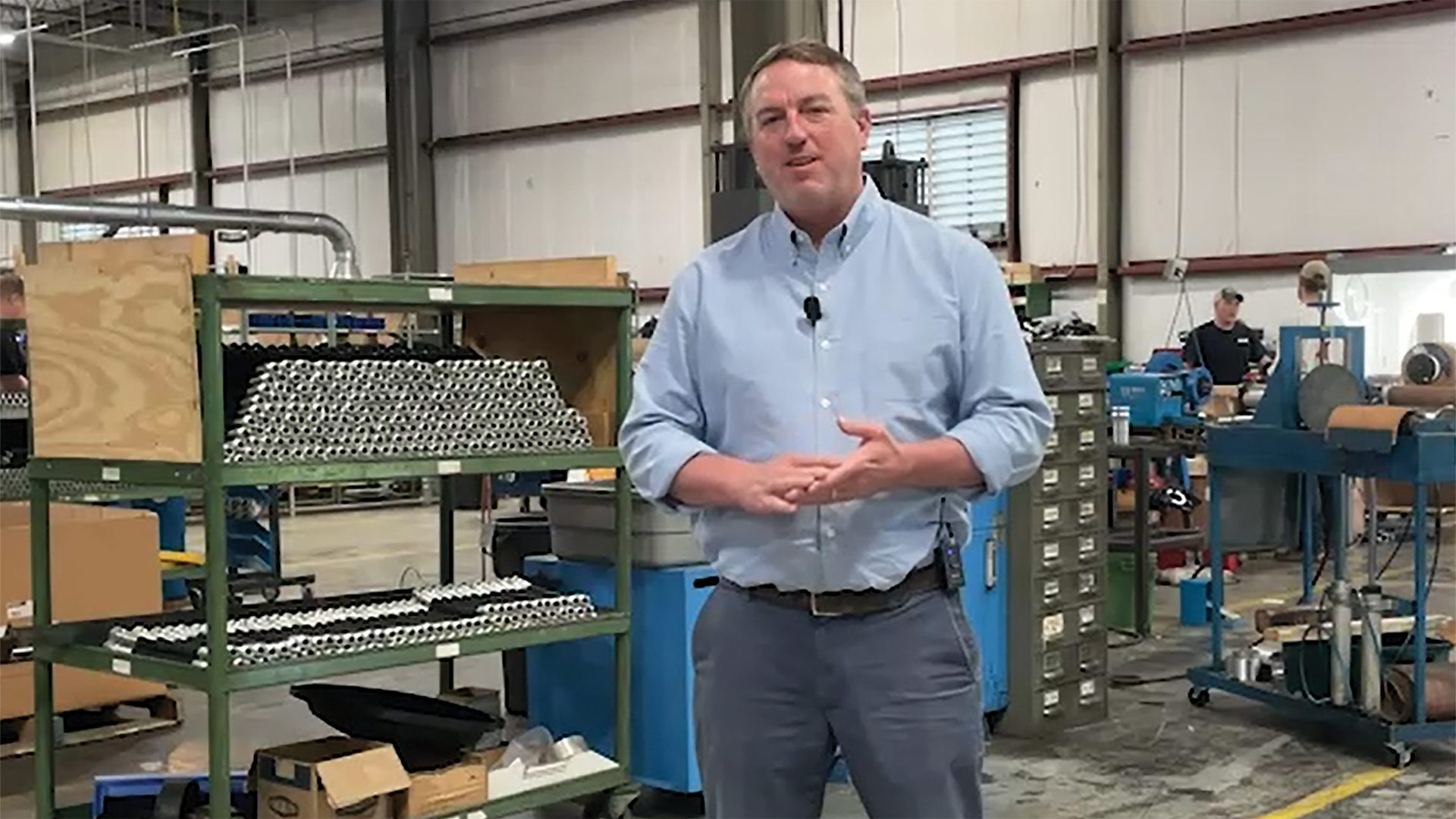
Alex McGill says his company considered other options, but decided it wanted to be in East Longmeadow

Roughly 60 years ago, McGill Hose and Coupling opened on Benton Drive in East Longmeadow. About six months ago, it moved into a new building around the corner on Industrial Drive that is more than double the size of its old location.

McGill is a custom fabricator of hoses and tubes for a wide variety of industries, everything from fuel delivery to food and beverage to pharmaceuticals. In short, any industry that requires hoses and tubing can be served by the company. Alex McGill, vice president at McGill, said the pandemic and supply chain challenges have caused some hiccups, but at the same time brought more business from pharmaceutical companies, especially in the Northeast.

“The opportunity came about because of the level of service we offer and because we are accessible to our customers,” McGill noted. “Our willingness to work around the clock to make sure customers get what they need has won us quite a lot of business over the years.”

While the company could be located anywhere, and could have moved anywhere when expansion became necessary, McGill has chosen to remain in East Longmeadow.

“We’ve grown to love the neighborhood and our neighbors,” he said adding, “we rely on our retail business where people can come in for their supplies. It’s also a friendly location for our employees.”

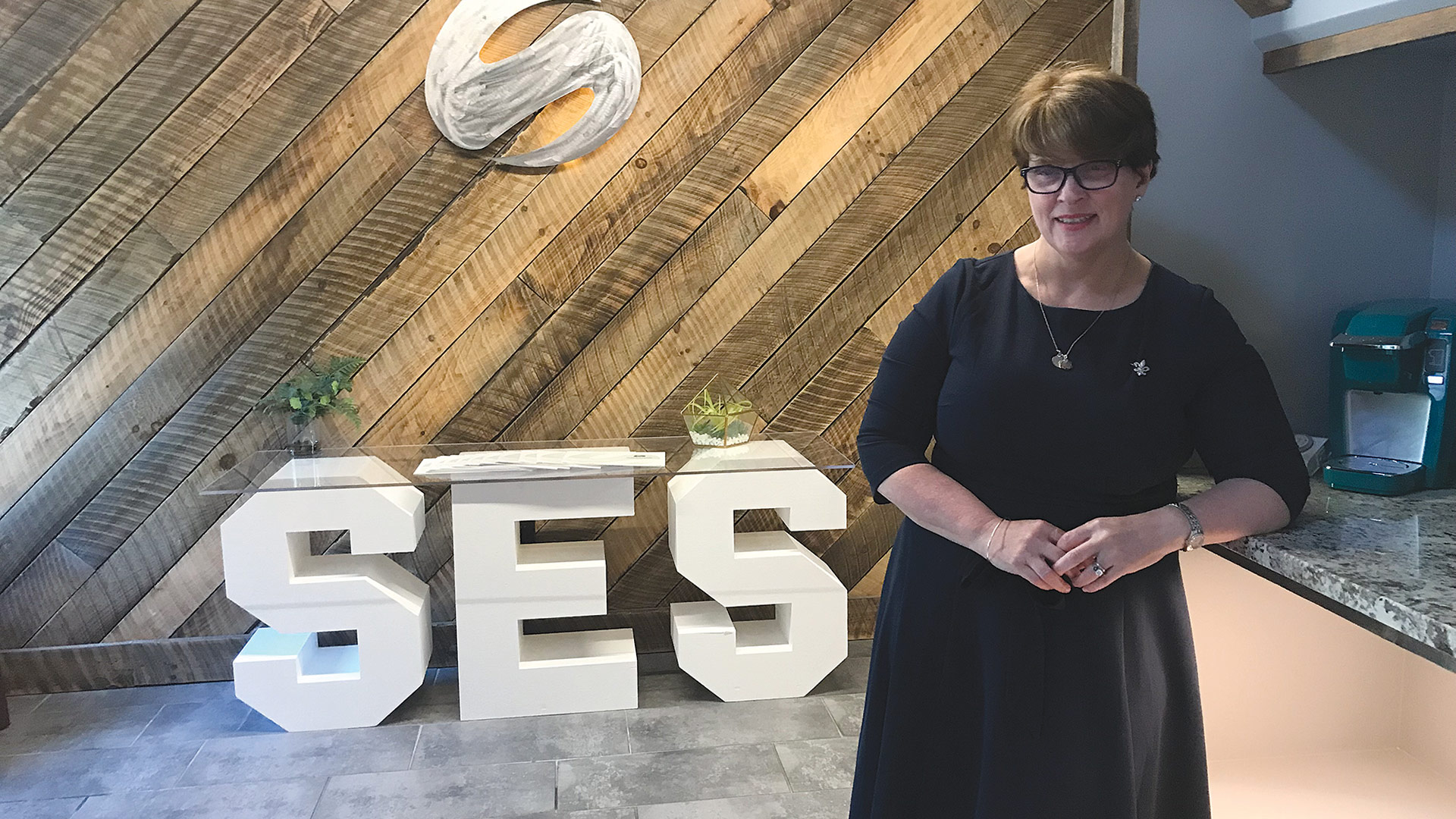
Secure Energy Systems has a story that is similar in many ways. The company was located on Somers Road until 2016 when a fire destroyed the company’s building. Nearby Cartamundi provided temporary space for Secure Energy while it sought out a new location.

“We’ve grown to love the neighborhood and our neighbors, we rely on our retail business where people can come in for their supplies. It’s also a friendly location for our employees.”

“The owners of the company had purchased a property in Enfield, but it just didn’t feel right to them,” said Erin Bissonnette, senior energy sales representative for Secure Energy. “They wanted to stay in East Longmeadow because they felt this was their home and they didn’t want to leave.”

So, in 2018 Secure Energy found the right space a few doors down from the manufacturer Cartamundi on Shaker Road and bought the building that formerly housed the laser company Biolitec.

These stories are among many others that relate how East Longmeadow has become an increasingly popular home for families and businesses alike. As for the ‘why’ this is happening — there are many reasons for that, including quality of life, a still-favorable commercial tax rate, available land and property, and, overall, a pro-business approach that is prompting new businesses to settle there, existing businesses to stay, and entrepreneurs to find space there to get started, as we’ll see.

And while businesses owners are choosing to invest in the community, East Longmeadow is making investments in itself.

The East Longmeadow Town Council recently passed the Fiscal 2023 budget, which includes funding for 19 capital projects in town. One prominent project involves a major redevelopment of Heritage Park. According to Town Manager Mary McNally, the initial design and permitting phase of the redevelopment will come from Community Preservation monies. Funding from the American Rescue Plan Act (ARPA) will cover the other 18 projects.

“They range from investing in the town’s IT needs to police cruisers, a fire engine and DPW trucks,” McNally said. “There are enough projects to stimulate lots of economic activity in town, providing we can get the contractors and the materials to get it all done.” 

For this, the latest installment of its Community Spotlight series, BusinessWest takes an in-depth look at how all these many kinds of investments are paying off for East Longmeadow.


Right Place, Right Time

After a renovation that Bissonnette described as “down to the steel beams” Secure Energy, which specializes in the procurement of natural gas and electricity for its commercial and industrial clients, now has a modern, airy office with amenities for employees such as a kitchen, large gym, and an outdoor gathering space. And there is plenty of room for growth.

“We negotiate with the same suppliers the utilities use and lock in the price and a term for the energy commodity, whether it’s for 6 months or 60 months,” Bissonnette said.

“These are women who have had certain passions and interests and now they are trying them out. They are exploring their ideas to see where it will all lead. It’s exciting to see.”

As a result, a business can know what their energy will cost for the length of the term, a service more valuable these days than ever before.

“Some clients will forget they extended their term beyond 2022 and will call us in a panic,” Bissonnette said. “Then we reassure them that our energy advisors grabbed the lowest prices months ago and locked in that rate. As a result, customers who were concerned are now very happy.” 

Secure Energy is part of a growing, very diverse business community in East Longmeadow, one that takes full advantage of many amenities, including a favorable location near population centers and the border with Connecticut, as well as land on which to build and grow.

McGill Hose and Coupling is another example.

Erin Bissonnette

Erin Bissonnette says Secure Energy wanted to stay in East Longmeadow, because it “felt like home.”

As McGill employees settle into its new location, Alex McGill said the company’s next goal involves growing the business and the team working in East Longmeadow.

“We’re putting more of an emphasis on our employees,” McGill said. “We’re building a team atmosphere that has become a real catalyst for our recent growth.”

Using the strategy “if you treat your employees right, they will treat your customers right” is already paying off.

“We are poised for a nice shot of growth,” McGill continued. “We are paying attention to the future and investing in our employee culture serves as the guiding light for our growth.”

The same sentiments apply to the town and many of the investments it is making.

Indeed, as part of the budget, the town council also approved hiring for 13 positions in various town departments. McNally said Town Hall is scheduled to get 5 full time and one part time position out of the total.

“The staff at Town Hall work very hard to get things done,” McNally said. “Life would be easier if we had more staff, so I’m very pleased the council saw fit to fund these positions.” The extra staff presents a challenge of finding room where the new hires can work. The town is currently trying to find a balance between locating a department or two to another building without spreading municipal offices all over the town.

Meanwhwhile, a new high school represents a longer-term investment that is moving through town and state approval processes. The town will host three visioning sessions to show residents what a new school could look like and to solicit ideas from the public on what they would like to see for a new high school.

“These will be hybrid meetings so the public can take part in person or virtually,” McNally said. “I hope we get a good turnout and that people will participate.”

One of those 18 ARPA projects includes roof repairs to the current high school.

“This is a fix that can’t wait for the years-long process of building a new school,” said McNally.

Another investment trend in East Longmeadow involves people investing in themselves.

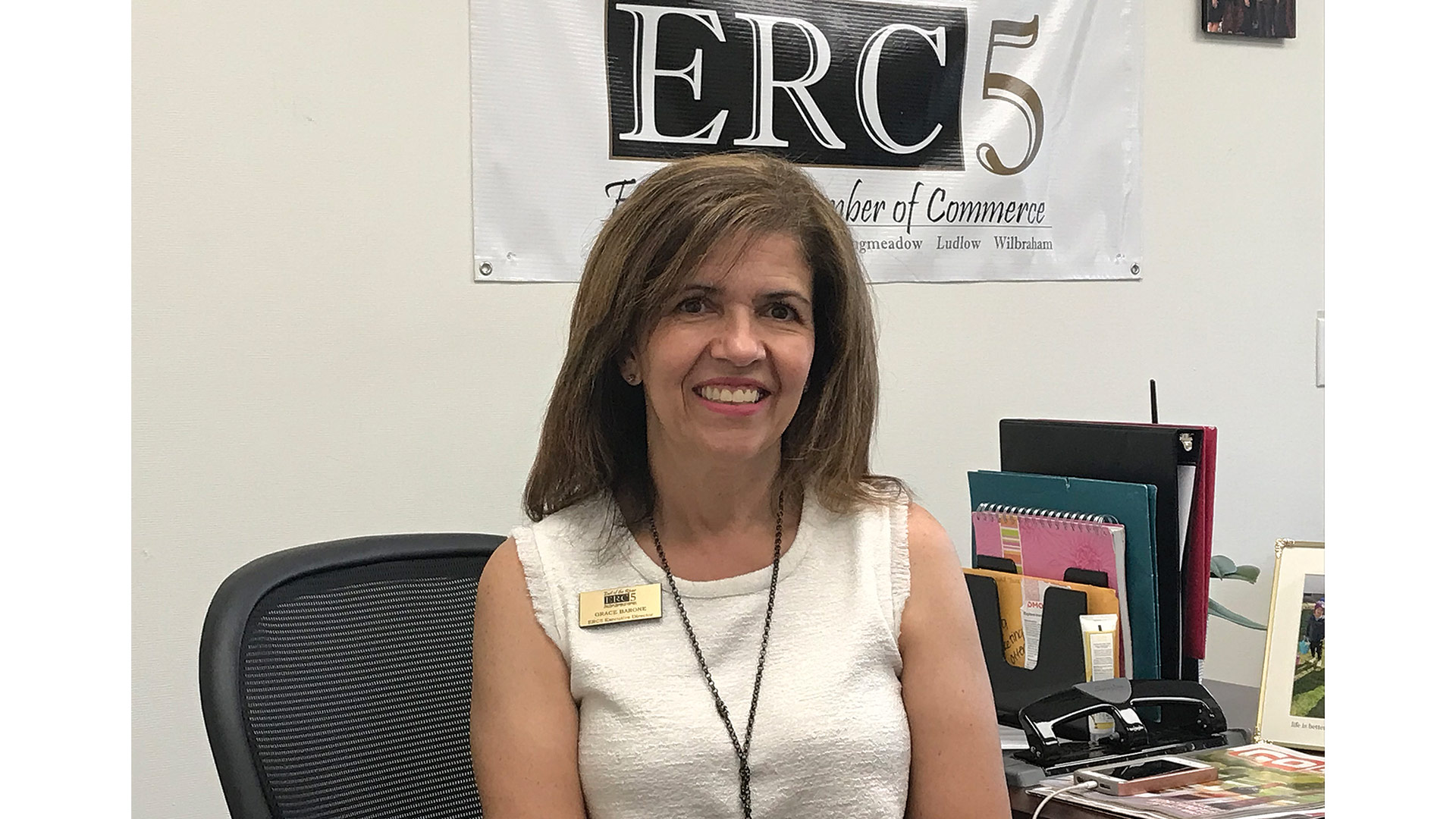
Grace Barone, executive director of the East of the River Five Town Chamber of Commerce, said recent networking events she has held are attracting many young entrepreneurs. Barone said new pop-up shops are beginning to appear and most of them are women-owned businesses.

Grace Barone

Grace Barone

“These are women who have had certain passions and interests and now they are trying them out,” said Barone. “They are exploring their ideas to see where it will all lead. It’s exciting to see.”

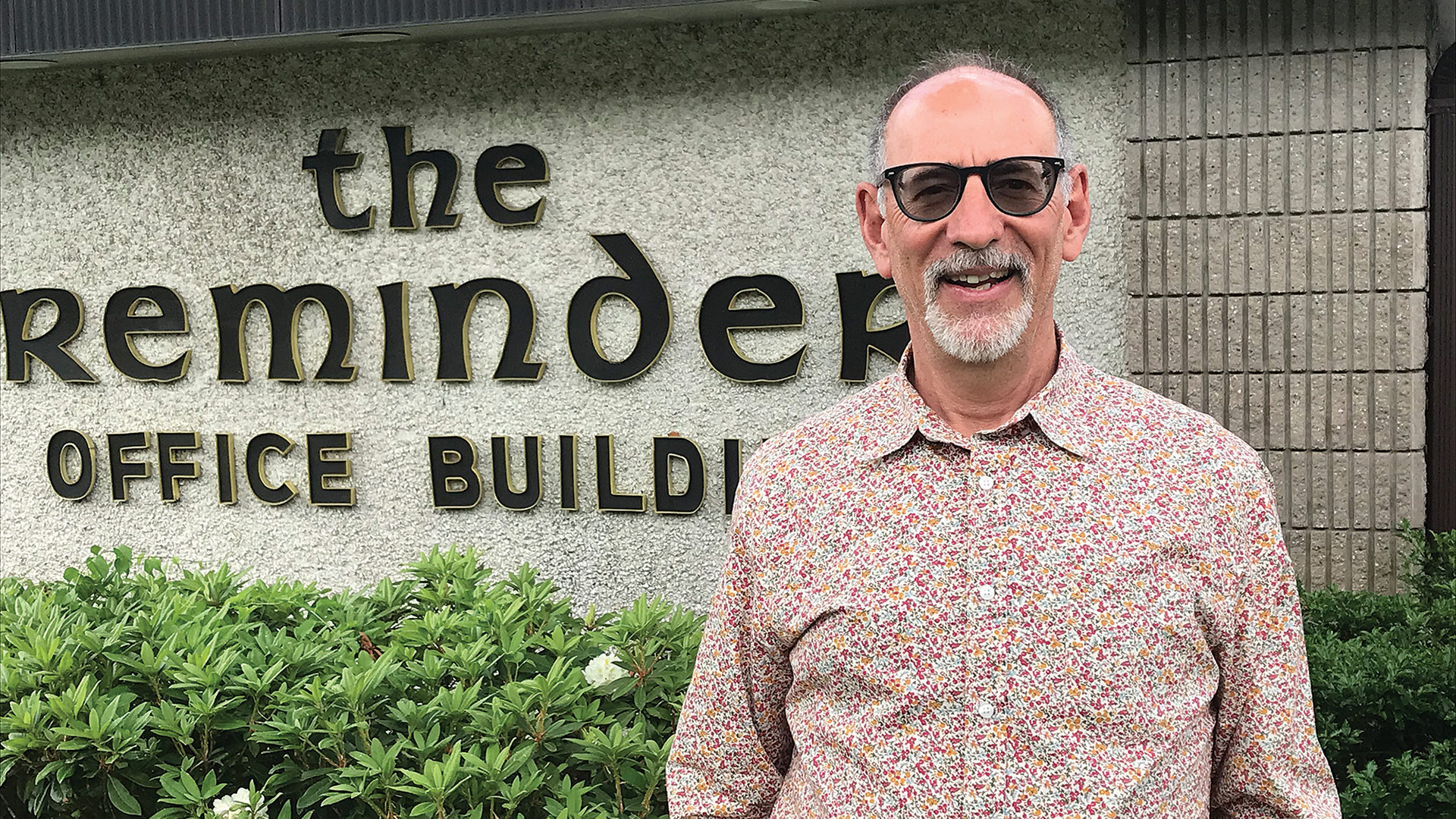
One of those entrepreneurs recently leased space in the Reminder Building, where the Chamber office is also located. Chris Buendo, owner of the building, said he has welcomed startups to the Reminder Building and now has an eclectic mix of tenants. In fact, he allows tenants to provide a 60-day notice to break their lease instead of holding them to a typical one year or longer term.

“The shorter notice takes a little pressure off a start-up company,” said Buendo. “Rather than signing a long-term lease that they may later regret, I have faith that what they are doing is going to work so I want to relieve some of that pressure so they can succeed.”

The height of the pandemic was a scary time for commercial real estate, and Buendo said he lost many tenants who abandoned their office space to work from home. As the world slowly emerges from COVID concerns, he said business has come back.

“The good news is I’m getting calls again,” Buendo said. “Working from home is nice but it’s not a perfect scenario, so people are calling me to say it’s time to return to the office.” And return they have, as Buendo noted he has only one available space in the Reminder building.

Chris Buendo

Chris Buendo says growing interest in office space in the town is a sign of progress.

At the town level, in addition to the new jobs approved by the council, several key positions have turned over because of retirements and career changes. McNally explained that over the last year the town has brought on a new planning director and a new library director. McNally herself plans to retire when her contract ends on June 30.

At press time the town had chosen a new town manager and was in the process of negotiating the final contract before announcing the new person.


The Bottom Line

As for McNally, her next move is well planned.

“I’ll be on the golf course, at the ocean, or with my family, not necessarily in that order,” McNally said. “I’m a lawyer by training so I could re-new my license if I get bored, but for now I’m ready to call it a day.”

As she prepares for retirement, McNally is pleased that thanks to investments from the private sector and the town, East Longmeadow is in solid financial shape going forward and in a position to continue the remarkable pattern of growth it has seen in recent years. u

Features

A Changing Dynamic

By Amy Roberts

It is no secret that the workplace has changed significantly over the past several years, requiring employers to adjust their operating principles to keep pace with what employees need and want. While many have labeled this time as the Great Resignation, this movement might better be explained by the term…the Great Re-evaluation!

For whatever the reason, and there have been plenty in these last few years, people are re-looking at how they work, what they do for work, and the impact their work has on the world around them. Employees expect that their job brings purpose to their lives and expect an employer to help them meet this need. If they review their current job and don’t find the connection with their own purpose, they are leaving for a role in an organization that they feel can provide them with this crucial requirement.

Amy Roberts

Amy Roberts

When attracting candidates and holding on to talent, Employers are being challenged to improve their impact on just about everything. The people they employ, the people they serve and the value they bring to the greater good. This challenge has led many employers to look at their impact on the world and revamp their entire value system in order to compete.

Attractive benefit programs and competitive pay will only get an organization so far in an evolution of their value. Organizations have to consider more broadly their impact on the lives of people. All the people! Not just the people who buy their products or services or their shareholders or the people that work for them. This means caring about the communities in which they are a part and also caring about the world beyond their headquarters, subsidiaries, and offices.

While there are many ways to create an employer value proposition that helps an organization stand out and compete for talent, perhaps the most impactful is to establish a corporate purpose that considers the company’s role and contribution to society. In the development and communication of this purpose an organization can articulate their value to an employee and in turn attract people who see value in being a part of the work being done by the organization.

Once established it is critical to provide employees with meaningful ways to reflect on the company’s efforts and their impact as well as ways to participate in these efforts. In other words, employees want to be a part of a company that strives to make the world a better place and they want to do the work that helps to make it so.

Another aspect for employers to consider is how work gets done within the organization and the systems and structure around work. While more a practical component of an employer value proposition than a corporate purpose, this area of work has become increasingly scrutinized by the workforce. People want to be challenged in their work, excited by the mission of an organization, and contribute to the outcomes of the organization in a way that makes sense for them.

In order to do this, an employer has to consider the person doing the work as an important aspect of how the work will be done. This represents a huge paradigm shift in workforce planning and it requires an organization to examine its policies and procedures of work to determine how to go about this in a consistent and sustainable way.

We all know it would be impossible for an organization to design its work structure to handle all of the elements of a person, so one approach an employer can take is to set some basic tenets of how work gets done, usually in the form of establishing goals and outcomes required of each role in the organization and then be flexible enough to meet people where they are when it comes to how that work gets done. This can look different depending on the organization type and can vary even within an organization depending on the position. Flexibility in the workplace isn’t new, but the fact that it is a requirement for many people in the workplace has caused many organizations to rethink work hours, days of work, and the location of work.

In different times companies were doing great things to provide an inviting and calm workspace with nice desks, décor that complimented the values of the organization and convenience amenities like a café, gym or dry cleaner. Now an employer is seriously considering four-day work weeks, 35-hour schedules, remote work, hybrid work, work from anywhere, and unlimited time off, just to name a few.

The stakes are higher than ever to implement programs that provide an organization with the desired outcomes to be successful in a way that allows employees to live a meaningful and well-balanced life. u


Amy Roberts is executive vice president and chief human resources officer at PeoplesBank.

Construction

Increase Pushes Level of Planning Above Most Recent Cyclical High

A measure of nonresidential building projects, the Dodge Momentum Index provides an analysis of the construction industry. Analysists delivered some bright news recently with the announcement that the Dodge Momentum Index increased 7% in May.

The index measures data about nonresidential building projects planned, to track spending in the sector. For May, the institutional component of the Momentum Index rose 9%, and the commercial component increased 6%.

May’s reading came in at 176.2, up from April’s 165.2.

According to Dodge Data & Analytics, May’s increase in the Dodge Momentum Index pushed the level of planning above the most recent cyclical high in November 2021.

During the month of May, commercial planning was led higher by an increase in office and hotel projects. Institutional planning saw a boost in education and healthcare projects entering planning. On a year-over-year basis, the Momentum Index was 17% higher than in May 2021. The commercial component was 24% higher, and the institutional component was 8% higher than one year ago.

A total of 19 projects with a value of $100 million or more entered planning in May.

The leading commercial projects were:

• $333 million Bitcoin Mining Facility (a large computing building) in Corsicana, Texas

• $300 million Gun Lake Hotel and Resort in Wayland, Mich.

The leading institutional projects were:

• $250 million Drexel University life sciences building in Philadelphia

• $160 million Colorado Research Exchange life sciences campus in Broomfield, Colo.

Despite higher interest rates and fear of recession, nonresidential building projects continue to steadily enter the planning cycle, according to Dodge. While higher prices and labor shortages may result in projects reaching groundbreaking later in 2022 or early 2023, they provide hope that the construction sector will be able to withstand a potential economic slowdown fed by higher interest rates.

Accounting and Tax Planning

And Why Does it Matter to My Business?

By Colleen Berndt, CPA


State tax nexus refers to the amount and type of business activity that must be present before the business is subject to the state’s taxing authority. Every state has its own set of tax laws and required filings. In recent years, the whole concept of state nexus for sales tax and income tax has dramatically changed.

Traditionally, state tax was based on more of a physical presence test. Thus, if your business did not employ people and property in a particular state, then most often the business would not be required to register or file in that state.

As with many laws, it takes time for states to address issues and make changes for how business is transacted in the modern world. How we conduct business is changing at a faster and faster pace. The COVID-19 pandemic generated unprecedented e-commerce growth in various economies across the globe and is anticipated to continue to grow at a rapid pace.

Colleen Berndt

Colleen Berndt

“While the Wayfair decision did not directly impact income-tax nexus, the removal of a physical presence requirement for sales-tax nexus has definitely encouraged more states to enact a sales threshold as an indicator for income-tax nexus.”

The pandemic also resulted in millions of people across the world to become remote workers, creating another major shift in how modern-day business is conducted. Remote working has become the ‘new normal,’ almost overnight.


The Wayfair case – a major shift in state taxation

On June 21, 2018, the United States Supreme Court ruled in South Dakota v. Wayfair Inc., et al, that states can require an out-of-state seller to collect and remit sales tax on sales to in-state consumers even if the seller has no physical presence in the consumer’s state. 

In doing so, the court overruled 50 years of its own precedent. The decision allows states to define a sales threshold (either by dollar amount or the number of transactions) that will trigger a sales tax collection requirement.  

Since the Wayfair case, Massachusetts enacted legislation to change the state’s economic thresholds to $100,000 in sales with no transaction threshold. Most states now employ a dollar and/or a number of transactions threshold for sales tax collection and remittance. The frequency in which the tax must be remitted also varies greatly from state to state.

While the Wayfair decision did not directly impact income-tax nexus, the removal of a physical presence requirement for sales-tax nexus has definitely encouraged more states to enact a sales threshold as an indicator for income-tax nexus.

The increase in states employing an economic nexus standard, combined with the change in how business is transacted, has opened the door for a migration toward market-based sourcing. Market-based sourcing is the idea of taxes being imposed on where the service is consumed, rather than the location where the service was performed.

Under Massachusetts law, “doing business” includes every act, power, right, privilege, and immunity exercised or enjoyed in the Commonwealth, as an incident or by virtue of the powers and privileges acquired by the nature of such organizations, as well as, the buying, selling or procuring of services or property. In addition, Massachusetts will presume that a business’s corporation’s virtual and economic contacts subject the corporation to the tax if the volume of the corporation’s Massachusetts sales for the taxable year exceeds five hundred thousand dollars. Again, each state has its own unique set of rules to determine nexus.


Remote employees’ impact on nexus

Generally speaking, a remote employee will create nexus for the employer for tax purposes. Many states provided relief for pandemic-related circumstances, but most of those provisions have since expired. Nexus created by remote-working employees can create significant tax liabilities in new jurisdictions, especially for income tax purposes where the company has significant receipts from the state and the state apportions using a single sales factor formula, as many do. Massachusetts still utilizes a three-factor formula (sales, payroll and property) for most businesses. Most states have transitioned to sales as a single factor to determine apportionment.


The impact on recordkeeping

In order to ensure state tax compliance, businesses must keep records that perhaps were not required in the past. Thankfully, most businesses have a computerized accounting system, however, it may require more detailed information then previously needed to determine filing requirements.

For instance, the number of transactions by state may not have been a standard reporting item in the past. Another consideration is that the invoicing state may not necessarily be the state where the product is being consumed. If that is true, then the shipping records must become integrated into the accounting records to provide accurate sales-by-state reports. Given the digital footprint left by any type of transaction, states are aggressively pursuing businesses looking for some type of economic presence requiring the business to register and pay various tax types.

Also, employers must keep track of employees who work remotely by state. This can be especially challenging for hybrid employees who may reside in a different state than which the employer is located. The record-keeping requirements and then complying with all state filings (employment, sales, income, gross receipts, and franchise taxes) can be complex, costly, and overwhelming for small businesses.

Not only can it be very complicated and costly to ensure that a business is complying with all state filing requirements, the rules are complex and subjective in nature. This is why it is always best to consult with your tax advisor.


Colleen Berndt, CPA is tax manager with Lapier, Dillon & Associates PC; (413) 732-0200.

Accounting and Tax Planning

It’s Always Important to Know the Rules of the Road

By Garrett Kelly, CPA


Garrett Kelly

Garrett Kelly

‘Can I deduct vehicle expenses on my tax return?’

This is one of the most frequent and open-ended questions a CPA will get. As a CPA, if you have been in the game for any period of time, you probably know that the answer is: “it depends.”

Here are some other commonly asked questions questions and scenarios regarding automobile deductions — and some answers.


‘I have a personal vehicle that I use in my business. Can I take an automobile deduction?’

Yes, if the vehicle is used in the business for business purposes, you are allowed a vehicle deduction. How you take the deduction, and receive the tax benefit, depends.

This is where a CPA can really add value. Maybe it should be a 100% write-off of the cost of the vehicle in the first year. However, many times the tax deduction comes in the form of a lease agreement, auto reimbursement from the company, or business mileage deduction.


“I bought a vehicle in my business that is used 100% for business purposes. How much can I deduct and/or depreciate?”

Weight and use of the vehicle matters. You can deduct the full cost of the vehicle. However, it is either 100% deductible in the first year, or it is deducted over multiple years. The answer depends on the weight and use of the vehicle.

An SUV or truck whose gross vehicle weight (GVW) is more than 6,000 pounds, or a special-use vehicle, can be 100% deducted in the year it is placed in service in the business. This is achieved through 100% bonus depreciation. A car, whose GVW is less than 6,000 pounds, is usually limited on how much can be deducted in the first year, resulting in the vehicle being depreciated/expensed over multiple years.

If your business owns a fleet, five or more vehicles that are used 100% in the business, you are able to fully deduct the purchased vehicle without consideration of the vehicle’s weight. This can be done through Sec. 179 expensing or 100% bonus depreciation.

This is just the tip of the iceberg, but it highlights the differences based on weight and use.


‘Should I deduct actual vehicle expenses or mileage?’

We typically lead with this follow up question: “is the vehicle expensive and/or do you drive a ton of business miles each year?” That’s not a very technical response but it gets the conversation started.

For example, in 2021 Mike purchases a $65,000 vehicle weighing more than 6,000 pounds that is used 100% for business purposes. Mike drove 30,000 business miles out of 30,000 total miles in 2021 and expects similar mileage in future years. He expects around $3,000 of vehicle expenses each year. He plans to utilize this vehicle in the business for another five years. We would recommend using actual-expense method in this situation.

A $65,000 deduction in the first year is about four times what the business mileage deduction would be in 2021 (see example below). It would take at least four years for Mike to achieve the same amount in tax write-offs. Not to mention the annual maintenance costs that are deductible each year under the actual expense method.

However, if this vehicle only cost $25,000, we would recommend deducting mileage. Yes, the actual method may achieve an additional $7,450 deduction in year one, but then Mike is limited to just deducting actual expenses in future years (around $3,000 a year). Mike is looking at around a $17,550 mileage deduction every year for the next 5 years, a total of $87,750 in write-offs, compared to a total $37,000 in write-offs with the actual expense method.

Now, all that being said, the IRS requires you to choose a vehicle-deduction method in the first year the vehicle is placed in service. If you choose to deduct actual expenses in the first year, you are stuck with this method for the life of that vehicle. If you choose mileage deduction the first year, you are able to switch to actual expense in later years.


‘What is the 2022 business mileage rate deduction?’

58.5 cents per business mile; 18 cents per mile for personal medical, military, and moving expenses; and 14 cents per mile for charitable driving.


‘I would like to start tracking and deducting my business mileage. What do you recommend?’

A logbook you keep in your vehicle is a classic method. If you have a smart phone, we recommend the app, TripLog. If you use QBO, then you have access to a free mileage tracker that you can access through your smartphone (see links below for details).

https://quickbooks.intuit.com/accounting/mileage/#mileage-app

TripLog: Automatic Mileage Tracker App


The IRS requires certain information when tracking mileage. Be sure you are recording the following:

• Beginning and ending destination;

• Business purpose of trip;

• Miles driven;

• Dates of trip;

• Odometer reading at the beginning and end of each tax year.


Hopefully this provides some insight into some of the more common questions on this often-confusing matter. Reach out to your tax advisor for more detailed information or individualized tax planning. Vehicle deductions are some of the largest tax deductions a business owner gets, and you want to be sure you are maximizing this tax write-off.


Garrett Kelly, CPA, Tax Manager, specializes in tax planning and compliance for residential and commercial real estate, pass-through entities, and family groups.

Construction Cover Story

History in the Remaking

Dave Fontaine Jr.

Dave Fontaine Jr.

Crews working on the $64 million initiative to transform the former Court Square Hotel in downtown Springfield into market-rate housing say the project takes them back in time. Actually, it takes them to several different periods of time — from the property’s days as prominent hotel to more recent days, when it hosted a popular tavern and several other businesses. While doing this time-traveling, these same crews are living in the present and confronting a number of challenges as they usher in the next chapter in this property’s intriguing history.

Dave Fontaine Jr. calls it a “cool memento.” Actually, it’s turned out to be more than that.

He was referring to a bid package submitted by his firm, Fontaine Bros. Inc., for redevelopment of the former Court Square Hotel in the heart of downtown Springfield. The date on the three-ring binder, crammed with interior and exterior photographs and other materials, is 2000.

And that wasn’t the first — or only — time the company had submitted a bid on a project to transform the property, now vacant for more than 25 years, for a different use — endeavors that never saw the light of day for one reason for another.

There have been so many in fact, that Fontaine, vice president of the company started by his great-grandfather and his brother, had some humorous material for use when he was asked to say a few words at one of the many ceremonies to mark milestones for the project that actually made it off the drawing board — a $64 million initiative to convert the property into 71 units of market-rate housing.

“I joked that I believe I’m the third generation of Fontaines to bid on the project,” he told BusinessWest, adding that both his father, Dave Sr., and grandfather, Lester, were involved with similar proposals. “We’ve been pricing it over decades, with at least a dozen iterations and many different planned uses.”

More than a quarter century after the first such bid, Fontaine is finally at work in Court Square, with one of its banners hanging on the front of the property. It’s an intriguing project, said Fontaine, one of many the company has handled that falls in the broad category of historical restoration. Others include the transformation of Classical High School into condominiums, Berkshire Hall at the Berkshire School in Sheffield, the public libraries in Holyoke and Shrewsbury, and even the conversion of 95 State St., visible out the windows of the Court Square property, into the home of MGM’s headquarters in Springfield.

Work at Court Square began early this year, he said, noting that the first phase involved weatherizing the property and making it structurally sound, significant steps for a building that was, in his words, in “terrible shape” when crews arrived and set up shop.

One of the original staircases at the Court Square Hotel.

One of the original staircases at the Court Square Hotel.

Actually it was in terrible shape in 2000, as photos in that bid package reveal, he said, adding that conditions only worsened over the past two decades as the elements took their toll on the structure.

“It had been vacant for 20 or 30 years,” he explained. “When we got there, the envelope needed work — and there are still areas where water gets into the building when the weather is poor — and historically there has been no heat in the building in the winter. The building was really on its last legs.”

Repairing and renovating what Mother Nature has damaged is just one of many challenges on this project, said Fontaine, noting that, like all construction projects undertaken at this time, this one has had to contend with everything from supply-chain issues to often dramatic increases in the prices of materials and labor.

“I joked that I believe I’m the third generation of Fontaines to bid on the project. We’ve been pricing it over decades, with at least a dozen iterations and many different planned uses.”

So much so that the Springfield City Council approved an 11th-hour request for $6.5 million in emergency funding to handle cost overruns for the project which came to fruition through a public-private partnership that includes a number of players, from the state, to Wynn Development and Opal Development, to MGM Springfield.

Another challenge is implied in that phrase ‘historical renovation.’ Indeed, the property, which dates to the 1890s, is on several lists of historic properties, said Karl Beaumier, on-site superintendent for the project, adding that, in many respects, crews from Fontaine are dismantling what was in place in the old hotel rooms and other spaces, storing those pieces, and putting them back after mechanicals, equipment, and appliances are installed and finishing work is completed. Everything that goes into the renovated structure, including new windows (600 of them) must be reviewed by the National Park Service.

“We salvaged a tremendous amount of the wainscoting on the corridors — some of it was left here, some of it came off and it’s going back on,” said Beaumier. “All of the doors were salvaged, the door frames, the door cases, the window cases on all the exterior windows, the baseboard, the chair rail, the crown molding — all of that stuff got saved; there are 10 40-foot conex boxes (shipping containers) completely full of salvaged woodwork that has to go back in the building.

“It’s been carefully removed, catalogued, and stored,” he went on. “It will all go back as part of the historical renovation.”

For this issue and its focus on construction, BusinessWest took a hard-hat tour of the property, and talked with Fontaine and Beaumier about the massive undertaking and the steps still to come.


Past Due

As they started their tour on the ground floor of the property, most recently home to several storefronts and eventually to be the site of a restaurant, Beaumier and Fontaine said that for the on-site crews, going to work each day also means going back in time.

Or to several different times, to be more precise.

view out one of the windows on the sixth floor

This view out one of the windows on the sixth floor explains why there has always been interest in converting the property for residential use.

Indeed, on the ground floor, the areas housing the storefronts bear evidence of their former uses, especially the space that was home to the tavern known as the Bar Association, a name chosen to reference the many clients from the legal community, many with offices within a block or so from the courthouse just south of the Court Square property.

“It was like things were stuck in time from the late ’80s,” said Fontaine, noting such items as the stained-glass window in the Bar Association and a door that still had the ‘R’ from owner Tony Ravossa’s name. “It’s cool seeing the old storefronts.”

From the ground floor, Beaumier took BusinessWest to the basement, where collected water provided evidence of still-ongoing work to shore up the property, and then to the second floor, where the next use of the property is starting to come into focus.

There, and on the remaining floors, long rows of what used to be hotel rooms —most all of them with doors to the rooms on either side — have been essentially gutted, with the masonry walls that divided them (see photo, page 30) taken down and the groundwork laid for what will become one- and two-bedroom apartments. In one hallway, rows of shower units were waiting for eventual installation.

While the property will have a completely different use than it did a century ago, it will look, in almost all respects, as it did back then, Beaumier explained.

“When we’re done, and we look down this corridor, it’s supposed to look just like it did in 1900,” he told BusinessWest as he gestured down the narrow hallway of the wing of the property that runs north-south toward State Street. “All these doors that went into the individual hotel rooms … we’ve opened up the spaces, so there will probably be two dummy doors for each unit; the doors that we took off have to get pinned back in the wall so that when you look down this corridor, it looks the same as it did historically; every third door will actually open into a unit, the rest will be dummy doors.”

Elaborating, he said that the actual walls to the units were pushed back a foot from where they stood originally, because the original corridor is too narrow for a wheel chair to turn in, an example of how some adjustments have to be made to enable a century-old building to comply with modern building codes and state and federal regulations.

The tour then provided more glimpses into the past as it went to and then down one of the original staircases to what was the lobby area of the former hotel, complete with the remains of a revolving door, marble-covered walls, and a ceiling, now in an advanced state of decay, that will be restored.

“Right now, we’re getting the building structurally back to where it needs to be so we can do the mechanicals and other systems,” said Fontaine adding that the initial phases of this project have involved demolition, structural work, and salvaging a number of features. When these have been completed, crews will move onto installation of those mechanical systems, replacing hundreds of windows, building out the individual apartments, and putting the salvaged items back in.

When the tour reached the sixth floor, Beaumier pointed out one of the north-facing windows to dramatic views of Court Square (see photo, page 26), looks that help explain why there has always been interest in redeveloping the property for housing, and why there has been a high level of interest in this project.

As they walked and pointed out specific areas of note in the sprawling property, Fontaine and Beaumier talked about everything from the significance of the project to Springfield and its central business district to the many challenges involved with undertaking a project like this at this time of soaring prices, supply-chain issues, and a workforce crisis that has affected all sectors of the economy including construction.

Photo by Joe Santa Maria, Kill the Ball Media

Work to convert the property into a mix of residential and retail spaces is expected to be completed in the early fall of 2023. Photo by Joe Santa Maria, Kill the Ball Media

Fontaine, whose family has developed or redeveloped many properties downtown, from the aforementioned State Street project to the expansion of what is now known as the MassMutual Center, to the creation of MarketPlace, said the Court Square is an important next step in the revitalization of that area.

“That downtown area means a lot to us, we’ve handled a lot of projects in that area,” he said. “I grew up in this area, we’ll stay in this area; I want my daughters to be able to stay around here and work and live here if they choose to, and I this is a big step toward making downtown attractive to working professionals and people who want to be downown.”

As for the many challenges that come with building at this time, Fontaine said there have been some adjustments to make.

That includes the emergency funding from the City Council, he said, adding that the amount allocated should cover the escalating cost of the project. But it also includes longer lead times for items and, in some cases, having to use different products or materials because the lead times are too long.

“As with every construction project going on right now, there have been a lot of items with long lead times — significantly longer than normal,” he explained. “We’ve been working through that with the designers to use some products that do what we need them to do, but also get here within the lead times. With the mechanical systems, one of the manufacturers that was specified for the unit heaters had a 52-week lead time; we found something we could get in the time frame in which we needed them.”


Finishing Work

The elaborate project is expected to be completed in the early fall of 2023, said Fontaine.

There will certainly be an elaborate ribbon-cutting ceremony at that time, one that will close the book on the long, often-frustrating efforts to create a new life for the historic property, and usher in the next chapter.

Fontaine can also close the book — figuratively but also quite literally — on more than 25 years of bidding on projects to transform the property.

That binder from 2000 is, as Fontaine said, a cool memento, but it’s also a symbol of this property and how long its fate has been a critical issue in Springfield.


George O’Brien can be reached at [email protected]

Features Special Coverage

Uplifting Spirits

For most in this region, the war in Ukraine is something to read about or see on the nightly news. For Paul Kozub, founder and president of V-One Vodka, who operates a distillery in Poland just a few hours from the border with Ukraine, the war hits much closer to home — figuratively, if not literally. He made a trip to Poland and then the border in March, and he’ll be going back in July, bringing cash for refugees and other types of support.

Paul Kozub says he’d like to forget some of the things he saw and heard while on his trip to Poland and its border with Ukraine in March, just days after the fighting began there. After all, he was seeing people in extreme distress — women and children, mostly, who were leaving their home country, sometimes with just on their clothes on their back, not knowing if they would ever be returning.

But these words and images, and there are many of them, are burned into his memory, he said, and they make him even more committed to doing what he can to help refugees who have made their way to Poland, where Kozub, founder and owner of V-One Vodka, owns a distillery.

“What I saw and what I experienced was mind-blowing, especially in 2022,” he recalled, adding that he wound up making three trips to the border in March, with each visit lasting seven or eight hours. “We saw the buses on the highway filled with women and children — martial law was declared in Ukraine, so no men under the age of 60 were allowed to leave the country. So you just saw women and children leaving, fleeing in buses on the highway — bus after bus after bus full of people.

“On the border, there were tents set up for food and a kind of transition spot,” he went on. “But you’d see women 70-or 80-years-old crossing with bags, and young women with strollers and children just walking over the border.”

Kozub told BusinessWest that he felt compelled to travel to Poland in March. He wanted to visit the distillery, located in the town of Lublin, something he’s done every few months over the past several years, although far less frequently since 2020 due to COVID, but also to support refugees if he could.

He left with several thousand dollars in cash, most of it in $100 bills, that he distributed to several different individuals and families knowing that the way exchange rates were moving, U.S. currency would buy much more than the Polish dollar. He made a few trips to the border, which is about a 90-minute drive from the distillery, and in doing helped bring the war to this country through a few interviews with a Boston television station that picked up his story and talked with him from his hotel room and at the border.

“I never thought I’d be a war correspondent, but there I was talking about what I saw and what I experienced,” he said. “To me there’s no more clear example of good versus evil, a country that’s invaded for no clear reason.”

Today, Kozub is planning a return visit to Poland and his distillery with his family — his wife and four children. He’s not sure if he will make it to the border, but does plan to visit some refugee centers and try to reconnect with several of the people he met three months ago.

He plans to visit the Help the Ukranian Children Foundation in Zyrzyn, Poland, which he is supporting through a special label for his vodka, one with the blue and yellow of the Ukranian flag; $2 from the sale of each bottle going to support refugees.

Paul Kozub displays one of the new-edition bottles bearing the color of the Ukranian flag

Paul Kozub displays one of the new-edition bottles bearing the color of the Ukranian flag. He is donating $2 from each bottle to help refugees.

For this issue, BusinessWest talked with Kozub about how the war in Ukraine — and the plight of those who have fled that country for Poland — have become personal for him, and how he continues to find ways to not only support those individuals and families, but also shed needed light on their situation.


Proof Positive

As noted earlier, Kozub has many indelible memories from his March visit, one that brought the war in Ukraine and its profound impact on its people, home in ways that can’t be appreciated by simply tuning into CNN.

He used the word ‘surreal’ more than a few times to describe what he saw, especially during those visits to the border.
“Poland was normal for the most part — there were a lot of Ukrainain flags,” he recalled, “But as we were driving toward the border, and as we got to within 10 miles of the border, there was nobody … no cars going in our direction; instead, we saw all the buses going in the other direction.

“What I saw and what I experienced was mind-blowing, especially in 2022.”

“That was the first time we got a little anxious,” he went on. “Once we got to the border, we befriended a few Polish police men and women who started telling us the stories they were hearing.”

One memory stands out for him. It involves giving a ride to a young girl and her parents to the city in Poland where he was staying.

“We didn’t notice until they got out that they had nothing,” he recalled. “No bags, no nothing, just the clothes on their backs. The way the man was dressed — he had a nice watch, nice clothes on, nice shoes — you could see that they just left so quickly they didn’t have time to pack a bag. Seeing stuff that like really hit home.

Kozub said he left for Poland with the expectation that he would bring a few thousand dollars to the border, maybe visit once and try to help people as they were coming into Poland during the first days of the war. But those expectations were altered by what he encountered, and also by contributions sent to him in advance of his trip, including $4,000 from his commercial lender, PeoplesBank — the most that can be sent via VENMO.

Paul Kozub, seen here with police officers at the border

Paul Kozub, seen here with police officers at the border, will be returning to Poland next month.

“That contribution really helped — while I was there, I was able to buy so much more,” he recalled, noting that he was able to buy a washer and dryer for an apartment building now housing 80 women and children, and also bring more needed food and water to the border.

He recalled one instance where he tried to help a woman with four young children.

“All these people didn’t want to accept money from me at first,” he recalled. “But I said ‘you have to — that’s why I traveled all this way.’

“That was back when there were tens of thousands of people coming over every day — that’s when most of the need was going on,” he recalled, adding that the sights from those days remain with him even though the scene has changed, as have the needs of the refugees that have made their way to Poland.

While what he saw was disturbing on many levels, so too was what he heard from some of those he encountered, he said, noting that he has come to understand the Polish language, which is very similar to what is spoken in Ukraine.

“As we were driving toward the border, and as we got to within 10 miles of the border, there was nobody … no cars going in our direction; instead, we saw all the buses going in the other direction.”

“We could understand most of what they were saying,” he noted. “We would see the cars of people driving into Poland, and they would have pieces of paper in the window with ‘ditya,’ which is ‘child’ in Russian written on them. We were hearing stories that the Russians were shooting at them; they were bombing these lines of cars as they were leaving.

“The stories of atrocities that we’re now hearing every day … I was hearing them in the beginning,” he went on. “It is so unbelievable that this is going on today; it’s very heartbreaking, and you just don’t want to believe that it’s true.”

While there are still some people leaving Ukraine for Poland, much of the activity is now moving in the other direction, with many returning to the country they fled. Still there are millions still in Poland forging a new life for themselves there, a challenge made simpler by the Polish government’s decision to change its law and allow people from the Ukraine (which is not part of the European Union) to come into that country and work and start businesses.

“In some of the major cities, like Warsaw and Krakow, they’ve seen a 30% to 40% increase in population,” said Kozub, adding that refugees are finding housing in the homes of Polish residents, in churches, camps, and other sites.

Paul Kozub says his trip to the border in March was surreal

Paul Kozub says his trip to the border in March was surreal in many respects and included work as a “war correspondent.”

As for his planned July trip back to Poland, Kozub said he plans to reconnect with some of the individuals and families he met at the start of this conflict, including a young man who renovated a 20-unit apartment building in Zyrzyn that is now home to 80 women and children.

“We’re continuing to raise money for them, so I’ll bring some money for that charity,” he said, adding that he also plans to visit — and bring some money to — an orphanage located near the distillery, one that he has been supporting for several years now, which is now housing orphans from Ukraine.

To further assist refugees, and, specifically, Ukranian Children Foundation, Kozub has created a special label for his original V-One vodka, a project that was fast-tracked, with the label being finalized in just a few months, rather than the full year that it normally takes.

It was undertaken as Kozub was introducing another new flavor — Double Espresso — to his growing portfolio, one that is ever-changing and expanding to keep pace in the ultra-competitive vodka market.

The March trip to the distillery was undertaken to finalize the recipe for that new flavor, he said, adding that the overall process has been slowed by supply-chain issues and huge increases in shipping costs and other expenses — challenges that are making it much more difficult to do business in this industry.

Despite these challenges, Kozub wanted to introduce his new label, a project that was conceived just before his March visit, with the expectation that there would be long-term needs among the refugees.

“It takes about a year to get things done, between the approvals and the printing time, and other issues, but we were able to get it done in three weeks,” he said, adding that the son of one of his employees at the distillery drove 10 hours each way to pick up the labels, which were affixed to 3,000 bottles overnight, in time to get on a container ship.

The special edition bottles should arrive by mid-summer, he said, and he expects them to be sold out by August.


His Best Shot

Like most everyone taking in what’s happening in Ukraine — from a few feet from the border or 4,500 miles away — Kozub has no idea when this conflict will end or how it will end.

What he does know is that there are many people still in need. They are an ocean and then a continent away from V-One’s headquarters in Hadley, but only 100 miles or so from where his vodka is made.

Since setting up shop in Poland, he has been active in that ‘community’ and a source of support for orphans and others in need. The landscape there has changed dramatically over the past three months, and Kozub has responded accordingly. As he said, it’s personal for him.


George O’Brien can be reached at [email protected]

Accounting and Tax Planning Special Coverage

Strategic Decisions Now Can Benefit You in the Long Run

It’s late June — time for, among things, thinking about your taxes. Actually, it’s time to do more than think about them. What’s needed is a hard look at matters ranging from business classification to expiring provisions to charitable donations, and then formulating strategies that will benefit you and your business for the long term.

By Kristina Drzal Houghton, CPA

Accountants spend a lot of time talking to clients during tax season about the importance of tax planning. Now is that crucial time. As we approach the halfway point of 2022, tax planning discussions should be underway for many businesses and individual taxpayers

Starting early is important but plans should consider that tax rules might change at the end of the year and businesses and individuals simply can’t afford to not prepare for those changes. Additionally, some COVID-19 relief programs are set to expire this year, therefore businesses should be ready to document appropriately and/or take advantage of potential savings. With so much probable change, it’s important to carefully consider your options and make strategic decisions that could benefit you in the long run.

As a small business owner, tax planning should be a key part of your overall financial strategy. By taking advantage of tax breaks and deductions, you can minimize your tax liability and keep more money in your pocket. Here are nine strategies you should consider:


Review your tax liability for the current year

EventTake a look at your tax situation for the current year and estimate how much tax you will owe. This will help you determine if you need to make any changes to your withholdings or estimated tax payments.Event

Consider a tax status changeEventYour entity type not only impacts how you are protected under the law but it also affects how you are taxed. If you’ve outgrown your current business structure, or if you previously set up a structure that wasn’t the best fit for your business, you can elect to change your structure. Each entity type has its own benefits and drawbacks, so it is important to make sure you have a full picture before committing to your decision.


Amortization of research and experimental (R&E) expenditures

Due to law changes, companies are no longer allowed to fully deduct their R&E expenses. Instead, these expenses are amortized over a period, based on where their services are provided. Classification of expenses as R&E should be renewed.Event


Review expired provisions

Some of the tax relief provisions in 2021 the American Rescue Plan Act (ARPA) were carried over into 2022 by the Build Back Better Act. Principal among them are ARPA’s increases and expansion of the child tax credit, including its monthly advance payments, which have now ended as of the December 2021 payment. The Build Back Better Act was signed into law this past March 11 and included a renewal of that provision for 2022. Beyond those expiring provisions, a number of pre-ARPA “extender” items lapsed at the end of 2021, such as the treatment of premiums for certain qualified mortgage insurance as qualified residence interest and multiple energy and fuel credits.Event


Review the new limit on state and local tax deductions

For individual taxpayers, one of the biggest potential changes being lobbied is the possible restoration of the deduction for state and local taxes (SALT). If this proposal becomes law, it could have a major impact on your tax bill. As such, it’s important to think about how you would adjust your tax planning if the SALT deduction is restored or remains limited. Additionally, there are a number of other proposed changes to the tax code that could impact individuals, so it’s important to stay up-to-date on the latest developments and plan accordingly.Event


Consider the Qualified Business Income (QBI) Deduction

The qualified business income (QBI) deduction, which provides pass-through business owners a deduction worth up to 20% of their share of the business’s qualified income. However, this deduction is subject to a number of rules and limitations. For example, owners of specified service trades or businesses (SSTBs) are not eligible for the deduction if their income is too high. SSTBs generally include any service-based business, such as a law firm or medical practice, where the business depends on its employees’ or owners’ reputation or skill. If a business is eligible for a QBI deduction, owners should carefully weigh salary vs. flow through income.Event


Budget for larger charitable donations

Finally, if you’re thinking of making a charitable donation, recently you may not have benefited as much from the deduction for your donation as you have in the past. Since the TCJA nearly doubled the standard deduction started effective 2018 and capped the SALT deduction, fewer people itemize their deductions on their tax return.

As a result, the tax benefits of charitable donations have been limited to those who itemize their deductions. If the SALT cap is increased or eliminated, the deduction for charitable contributions could be more beneficial. If you are considering more significant contributions, gifting appreciated stuck to qualified charities offers great benefits. You will get a tax deduction for the fair market value and not be taxed on the unrealized gain. Event


Remember, meals and entertainment are still 100% deductible.

For 2021 and 2022 only, businesses can generally deduct the full cost of business-related food and beverages purchased from a restaurant. (The limit is usually 50% of the cost.)


Review your accounting methods and records

It’s a great time to look at the books, and make a plan to adjust anything that should be changed while also planning for the future. Many times, unexpected changes come up that can impact your business and individual taxes that you may not have even considered. For example, will you have any major life changes, such as getting married or having a baby? Buying a house? Leasing a business vehicle? Hiring more employees? Relocating your business? Spending more than usual on talent acquisition? Investing or accepting cryptocurrency? These changes can have a significant impact on your tax liability.


No matter what changes are ultimately enacted into law, the key to successful tax planning is staying informed and being proactive. By taking the time to understand the potential implications of proposed changes and making strategic decisions now, you can help ensure a smooth tax season for yourself and your business in 2022.


Kris Drzal Houghton is a partner at the Holyoke based accounting firm, Meyers Brothers Kalicka, P.C

Education

The 18 Under 18

The 18 Under 18 Class of 2022.

The 18 Under 18 Class of 2022.

Junior Achievement of Western Massachusetts (JAWM) honored its inaugural 18 Under 18 Class of 2022, sponsored by Teddy Bear Pools, on May 19 at at Tower Square in Springfield. The event — which included poster board displays by the students, remarks, appreciation presentations and a buffet — recognized outstanding young people throughout Western Mass. who exemplify innovative spirit, leadership, and community involvement.

“We were impressed with the caliber of the nominations we received for this recognition,” said William Dziura, Development Director, JAWM. “It’s gratifying to know there are so many young people committed to making an impact on the world, and we are thrilled to be able to offer a forum through which they can be applauded for their efforts.”


The following 18 students comprise the 18 Under 18 Class of 2022:


Trinity Baush, Grade 11, Chicopee High School: A multi-sport athlete and member of the National Honor Society and Student Council, Bausch has shown leadership in all these groups by facilitating fundraisers and leading discussions about important issues. She maintains high academic standards and currently has a 4.0 GPA. Outside of school, she works in a leadership role at Applebee’s. Recently, she has helped increase awareness about the war in Ukraine through a fundraising program with money raised sent directly to a school in Ukraine.


Nevaeh Branyon, Grade 8, Marcus M. Kiley Middle School, Springfield: An outstanding student with a GPA over 4.0, Branyon is passionate about financial literacy and entrepreneurship because of the unique and innovative perspectives they provide. She serves as a Student Council liaison and is a member of the Yearbook, Math and Art clubs. In addition to being a student athlete, she participates in the FitZone after-school programs and is a member of Girls on the Run.


Nathaniel Claudio, Grade 12, Business Information Technology Program, Roger L. Putnam Vocational Technical Academy, Springfield: Claudio is president of the National Honor Society and the student representative to the Springfield School Committee. He has been involved with Junior Achievement since his freshman year, participating in the Stock Market Competition, the 100th Anniversary Gala and Parade, the Summer Accelerator and served as a High School Hero, teaching financial literacy to younger students. Outside of school, he is participating in a cooperative learning experience at Freedom Credit Union.


Chase Daigneault, Grade 10, Chicopee High School: Daigneault has participated in school leadership since middle school, where she served and still serves in various class officer positions. Recently, she was voted the class president of the class of 2024. In this role, she plans activities and monitors the social media presence for her class, in addition to organizing fundraisers for charity and scheduling volunteer opportunities for the class.


Ella Florence, Grade 11, Chicopee High School: As a member of the National Honor Society and Class Council, Florence leads many fundraisers, social projects and progressive initiatives. She is vice president of her school’s Best Buddies program, which involves students with autism into school events. Last year, she became a member of the Special Olympics Youth Activation Council and attended the statewide Winter Youth Summit, and she recently attended Capitol Hill Day with a Best Buddies peer. Outside of school, she volunteers at the Springfield Boys & Girls Club Family Center.


Elise Hansel, Grade 10, Business Information Technology Program, Roger L. Putnam Vocational Technical Academy: A longtime participant in Junior Achievement programs, Hansel was a student leader in JA’s internship program with the Springfield Thunderbirds, where she played a crucial role in the event’s marketing efforts, including designing the event flier, partnering with area schools to coordinate a group, and making cold-calls to area businesses to sell event business packages. Recently, she won first place for her marketing and design skills in a billboard design competition for the Stop the Swerve campaign.


Liberty Basora, Grade 10, Marketing/Retail Program, Roger L. Putnam Vocational Technical Academy: Known for her outstanding communication skills, fantastic aptitude for working with other students, and innovative mindset, Basora’s most recent project was bringing to life the dormant social media accounts for the school store: Putnam Vocational Beaver Lodge. She analyzed the problems faced by the Beaver Lodge, then created new content that allowed the site to reflect the Marketing Shop and open up two-way conversations with the store’s growing customer base.


Adyan Khattak, Grade 12, Chicopee Comprehensive High School: A member of Student Council, Business Club, sports teams, and the DA’s Youth Council Board, Khattak is passionate about creating opportunities for other students to connect with resources that improve and better their lives. As an intern at the Chicopee Comp College & Career Center, he has applied many creative and innovative approaches to help better answer student queries and needs. In addition to fluency in English, this first -generation American also speaks Urdu and Punjabi and reads Arabic.


Grace Kuhn, Grade 12, Westfield High School: A member of the cross-country team and vice president of the National Honor Society, Kuhn is also a member of the Best Buddies Club, which works with West Springfield’s preschool program, and the Reshaping Reality Club, which focuses on mental health and body image. She completed and published her first novel, Knox Hollow: Murder on Mayflower, during the pandemic and recently completed her second novel, Dalton Ridge: Homicide on Holiday Hill. She enjoys working closely with children and plans to be a speech pathologist.


Katelynn Mersincavage, Grade 12, Hampden Charter School of Science–East: Excelling academically, Mersincavage pushes herself with multiple advanced placement classes and college dual enrollment courses. She is a member of the National Honor Society, Student Council and the soccer team. Outside of school, she is an organizer and active participant in the Juvenile Diabetes Research Foundation, where she regularly participates in fundraising and awareness events for the cause, which hits close to home; her brother lives with type-1 diabetes.


Alondra Nieves, Grade 10, Business Information Technology Program, Roger L. Putnam Vocational Technical Academy: Academically, Nieves maintains a 4.0 GPA. Creatively, during the pandemic, she started teaching herself to play the guitar and write music, using her skills and talents as a poet to create songs. She is actively involved in the Hampden County District Attorney Youth Advisory Board with responsibilities on the Mental Health Teen Task Force. She also reads to elementary students, participated in the Stop the Swerve Campaign, and helped with a school-wide food collection.


Sean O’Dea, Grade 12, Mohawk Trail Regional High School: O’Dea is captain of his cross-country team, a member of the Student Council, secretary of the Key Club, a member of the National Honor Society and student representative to the School Committee. He was also selected by his teachers to represent the Town of Heath for Project 351, a non-profit lead by Governor Baker to develop the next generation of community-first leaders through youth service. For his AP language course, he wrote and produced a video essay highlighting local environmental issues in Franklin County.


Ricardo Ortiz, Grade 8, Marcus M. Kiley Middle School: Ortiz moved to Springfield from Guatemala at age 11, speaking only Spanish. He has since participated in the Empowerment Academy and the school band, where he plays clarinet. This year, he campaigned successfully to establish a Yearbook Club and inspired the idea of painting an 8th grade mural, so students can leave their mark for future generations. He aspires to be the first person in his family to graduate from college, with the goal of becoming an entrepreneur and opening his own flower shop to honor his late grandmother.


Het Parikh, Grade 12, West Springfield High School: Leader of the percussion section of the school band, Parikh is also a member of the National Honor Society and the Key Club, and serves as a student tutor and participant in the Innovation Pathways Program. He has maintained a 3.92 cumulative GPA while simultaneously earning more than 30 transferable college credits. Outside of school, he has volunteered at the Lions Club Food Kitchen at the Big E, the clean-up of Mittineague Park, and the local senior center, where he runs a smart phone clinic.


Parmila Sarki, Grade 12, Business Information Technology Program, Roger L. Putnam Vocational Technical Academy: Since her freshman year, Sarki has been involved with Junior Achievement, participating in the annual Stock Market Competition, the 100th Anniversary Gala and Parade and the Summer Accelerator. She also served as a High School Hero, teaching financial literacy to younger students. During the pandemic, she worked with her teacher to create videos to help younger students understand financial literacy concepts. After school, she helps first graders with schoolwork.


Jadyn Smith, Grade 11 Chicopee High School: This student activist works to make the school a better place by advocating on behalf of the entire student body. As a member of the National Honor Society, Smith helps facilitate fundraisers, including one for a school in Ukraine, and is also on the Student Council fundraising committee. Outside of school, she enjoys volunteering at her local church, helping to address food insecurity, and is an assistant manager at McKinstry Market Garden.


Kayla Staley, Grade 11, Springfield Conservatory of the Arts: An accomplished singer, Staley has been featured at events across the community ranging from school graduation ceremonies to the Union Station Tree Lighting Ceremony and the Western Massachusetts Chorus Festival. She also excels academically and is president of her class and a member of the National Honor Society. She was selected as a student representative for the Springfield Public Schools Portrait of a Graduate, and to receive private coaching from Broadway stars, college professors and other masterclasses.


Victoria Weagle, Grade 11, Frontier Regional High School: This exemplary student leader is passionate about her community and finding creative solutions to complicated problems. Weagle is greatly gifted in scientific research, and hopes to develop these skills in college and throughout her life. She is involved in Quiz Bowl and many extracurricular science projects, including a volunteer research trip to Dominica in 2023, for which she has saved up her own funds.


Nominations for the 18 Under 18 were open to anyone 18 years or younger who attends school in Hampden, Hampshire, Franklin, or Berkshire counties. Judging criteria was divided in three categories: innovative spirit, leadership, and community involvement.

Beyond the award recognition, the students selected will benefit from a meaningful new network of community leaders and peers and may receive additional opportunities through event partners. They will also be invited to participate in a virtual leadership workshop later in the year.

Women in Businesss

A Home Game

By Mark Morris

Jessye Deane, left, with  Diane Szynal.

Jessye Deane, left, with outgoing Franklin County Chamber director Diane Szynal.

While the specific job responsibilities are new, most everything else about Jessye Deane’s new assignment, as executive director of the Franklin County Chamber of Commerce, isn’t.

Starting with the region this agency represents.

Indeed, Deane is a native of Bernardston and a lifelong resident of the county. So she is quite familiar with the region’s many assets — as well as the considerable challenges it faces, and has faced for decades now.

“When I’m out grabbing a coffee or dropping my kids off for softball, I hear all about the challenges businesses are facing,” Deane told BusinessWest. “Because I live here and run a business here, I feel intertwined with the local economy.”

Those sentiments help explain that, while Deane is no stranger to she is also no stranger to the ins and outs, ups and downs, of running a business or nonprofit. In fact, she’s had experience with both.

In her current position, Deane is the director of Communications and Development for Community Action Pioneer Valley. In her 12 years with the anti-poverty agency, the $36 million non-profit has seen an increase in private funding of more than 1,600%. Deane said her experience with Community Action has given her an education on the various strengths and challenges in each community in the county.

“I plan to get out to meet with businesses and start work on a community needs assessment. An important part of this role is to always ask our stakeholders if we are doing a good job; are we supporting them and are we being effective?”

“Community Action primarily serves Franklin County as well as offering services in other parts of Western Mass,” Deane said. “In my time there, I have become familiar with the differences in each community and the unique economic landscape in Franklin County. So, I come into my new role with that background.”

And with her husband Danny, Deane owns two F45 Training fitness studios, located in Hadley and West Springfield.

“When I hear about the challenges local businesses are facing it’s not some abstract concept,” Deane said. “As a business owner I’m facing those same challenges.”

What’s more, she is certainly no stranger to this chamber, and chambers in general. She’s served on the Franklin County chamber’s board since 2019, and before that, she as an Amherst Area Chamber of Commerce ambassador.

It is this considerable wealth of experience — with the region and the fundamentals of business, and the chamber — that Deane will bring to her position; she will begin in July, when current executive director Diana Szynal takes on a similar challenge — as president of the Springfield Regional Chamber.

It is her intention to hit the ground running, and she already has what might be considered a solid head start.

When interviewing for the position at the chamber, Deane wanted to accurately convey her vision for the agency’s role in Franklin County as it relates to both tourism and as a business collective. So she presented a 14-page proposal.

“The best way for me to operate was to put it all on paper and say this is where I think we can go,” said Deane. “I also wanted to make sure that the vision I had in mind was supported by the board.”

While this vision provides a blueprint of sorts moving forward, Deane acknowledged that there is much that she has to learn — about chamber members and their current and anticipated needs, and about the chamber its role as well.

“With my transition into the role and this new business landscape in front of us, it’s a great time to take inventory of what’s working for the chamber and where we should add additional value,” Deane said, adding that, as someone who values numbers and metrics, she plans to gather qualitative and quantitative data to deliver on the objectives she has set for the chamber.

“I plan to get out to meet with businesses and start work on a community needs assessment,” she went on. “An important part of this role is to always ask our stakeholders if we are doing a good job; are we supporting them and are we being effective?”

Overall, this is an intriguing time for the chamber, which moved from Greenfield (and an office now occupied by Community Action Pioneer Valley) to Deerfield at the start of this year. The was made primarily for the chamber to locate its visitor center to a place where more people could access it. Prior to COVID, Historic Deerfield drew nearly 20,000 visitors every year.

Meanwhile, the chamber is building on experiences — and some confidence — gained during the pandemic, when it became, out of necessity, a greater resource to members and the business community in general, and also when it learned new and often better ways to do things.

Indeed, much of Szynal’s tenure at the chamber was spent helping businesses get through an unprecedented public health crisis, something Deane acknowledged and appreciated.

“Diana did an incredible job, and was able to provide growth and stability for our members during that time,” Deane said. “As a business owner I learned quickly that there is no playbook for doing business during a pandemic, which makes Diana’s accomplishments even more amazing.”

As for her own tenure, Deane said she is looking forward to putting all those many forms to experience to work — for the chamber and the county.

“I’m so honored to serve in this role because after growing up and now raising my family in Franklin County, I’m committed to the people here,” Deane said. “These folks are my neighbors and I’m going to do everything in my power to do right by them.”

Community Spotlight

Community Spotlight

By Mark Morris

Jaclyn Stevenson

Jaclyn Stevenson says Shakespeare & Company has extended its season into the shoulder months surrounding summer.


Jennifer Nacht describes the beginning of the summer season in Lenox as a light switch that clicks on to a time of “happy mayhem.”

Unofficially, the season begins after Memorial Day weekend, but Nacht, executive director of the Lenox Chamber of Commerce, noted that the weekends leading up to the holiday were plenty busy, as well. In fact, as early as January she first began to see a vibrant summer on the horizon for Lenox.

Back then, Nacht had begun planning the Lenox Art Walk event scheduled for this month. Her attempt to reserve hotel rooms for artists who planned to travel to the event was more difficult than anticipated.

“I was able to find only three rooms after calling several different hotels back in January,” Nacht said. “They were all so apologetic and said that because of weddings and other events, every place was booked full.” 

This difficulty with finding rooms is just one indication of what promises to be a sizzling summer for Lenox, which, because of its tourism-based economy, faced innumerable challenges during the past two summers of COVID, and is poised for a breakout year.

Indeed, ‘healthy’ and ‘robust’ are terms that Marybeth Mitts, chair of the Lenox Select Board, uses to describe tourism in her community as high season, the three months of summer, commence.

“We’re excited to welcome the first full season of Tanglewood since the summer of 2019,” Mitts said, adding that, with a full summer of Boston Symphony Orchestra performances as well as a Popular Artists series, Tanglewood’s economic impact on Lenox and the Berkshires is considerable.

As one small snapshot, Nacht pointed out that James Taylor’s annual shows on July 3 and 4 will bring more than 36,000 people to town over just those two days.

“We’re excited to welcome the first full season of Tanglewood since the summer of 2019.”

Shakespeare and Company is another Lenox-based arts institution projecting not just a solid summer, but a solid year.

Indeed the theater company has extended its season into the shoulder months surrounding summer. Jaclyn Stevenson, director of marketing and communications, said the longer season is experimental, and will incorporate performances both indoors and outdoors.

Last year when COVID numbers stubbornly stayed high enough to threaten Shakespeare and Company’s ability to stage indoor plays, plans for an outdoor theatre that was a “someday” project, moved on to the fast track.

“The Spruce Theatre was constructed in 90 days in the summer of 2021,” Stevenson said. Modeled after the amphitheaters of ancient Greece, the stage rests in front of several tall spruce trees that are incorporated into the design.

“When the idea for it was presented in the context of COVID, it was much easier for everyone to understand the vision Artistic Director Allyn Burrows had for the theater,” added Stevenson.

While the company already had its outdoor Roman Garden Theatre that seats 280, the Spruce Theatre is a 500-seat facility with room to stage larger productions. In fact, the opening play for the Spruce Theatre was a production of King Lear featuring actor Christopher Lloyd in the title role.

“Having Christopher Lloyd here to christen the stage was a real coup,” Stevenson remembered. “It was the kind of fanfare we would not have been able to create otherwise in a COVID world.”

For this, the latest installment of its Ciommunity Spotlight series, BusinessWest looks at how Lenox is well-positioned to further rebound from COVID and take full advantage of what is expected to be a big year for the tourism sector — and communities that rely on such businesses to fuel their economy.


Art and Soul

The Art Walk is a good example of an event that was created at the height of the pandemic after the town was forced to cancel its annual Apple Squeeze event. As an alternative to the town-wide festival, Nacht and others developed the Art Walk and scheduled it for the late-September weekend when Apple Squeeze would have taken place.

The first Art Walk consisted of 40 artists set up in different areas of town known as “artist villages.” These villages were arranged to accommodate only small groups of people with an emphasis on foot-traffic flow to keep everyone moving through the exhibits.

The event received great feedback and has quickly become a tradition in Lenox. Now in its third year, Art Walk features spring and fall editions. Meanwhile, the Apple Squeeze has returned, and will take place on Sept. 24.

Jennifer Nacht

Jennifer Nacht says the summer is looking very promising for Lenox and its many tourism-related businesses.

“It’s very validating to see these events that we put together on the fly are now becoming established,” said Nacht, noting that Lenox Loves Music is another event created during the pandemic that has had staying power.

In Lenox, music and entertainment are an important part of the town’s identity. When Tanglewood, Shakespeare and Company and the other entertainment venues shut down at the height of COVID, the chamber began working with the Berkshire Music School on a series of Sunday afternoon concerts, and Lenox Loves Music was born.

“The new events really help the merchants,” Nacht said. “Our real goal is to hold events that bring people to Lenox who will eat in our restaurants and explore our shops.”

Like the Art Walk, the popularity of Lenox Loves Music has made it a keeper, with concerts every Friday in June and September.

“We run all these events in the shoulder months of May and June then September and October,” Nacht said. “Once our high season hits, beginning the weekend of July 4, we’re packed with visitors so we don’t need to entice tourists because they are already here.”

Shakespeare and Company is another organization that has extended its season to the shoulder months. In years past, the company would stage three plays by the Bard and three contemporary works. With the expanded season, it is staging two Shakespeare plays along with five or six modern plays.

“The mission of our company is based on the work of Shakespeare,” Stevenson said. “We choose our plays thoughtfully to reflect the spirit of the Bard and to show people new things.”

In addition to staging plays, the company also has a robust actor-training program and a nationally recognized theatre-in-education program.

Stevenson noted that a high-school-age theater group had recently performed Romeo and Juliet on the Spruce Theatre stage.

“The new events really help the merchants. Our real goal is to hold events that bring people to Lenox who will eat in our restaurants and explore our shops.”

“It was so cool to see students on the same stage where actors from all over the world will be performing Much Ado About Nothing in July,” Stevenson said. “You could see the joy of them being in that space.”


Setting the Stage

To accommodate all the tourists visiting these attractions, and locals as well, Lenox has a number of projects in the works to refurbish some of its municipal buildings while plans are in the works to build several new structures for town departments.

Beginning with Town Hall, Mitts said improvements are underway to replace the carpet and curtains in the auditorium as well as install a new roof and gold leaf on the Town Hall cupola.

“The town has capital plans within the next five years to begin construction on a new wastewater treatment plant, and a new public safety structure to include the Lenox police and fire departments,” Mitts said.

In addition to roof and chimney repairs to the library, Mitts said a key project involves updating the HVAC system.

“We’re installing a new interstitial system to manage ventilation in the building,” Mitts said. “This is to ensure proper storage of the library’s collections including rare books and ephemera of the region.”

Meanwhile, a different kind of refurbishing project is taking place at Mass Audubon Society’s Pleasant Valley Wildlife Sanctuary, a popular destination for hikers at all levels. Last July a wind and rainstorm felled thousands of trees and severely damaged a boardwalk at Pike’s Pond. With $200, 000 of American Rescue Plan Act (ARPA) funds from the state and private donations, cleanup and renovations are in progress.

“Many of the trails and structures have been restored, however, there is on-going work to bring the facility back up to the full capacity it enjoyed in June 2021,” Mitts said.

As for the chamber of commerce, Nacht said that while the pandemic really challenged the agency in many different ways, it also presented an opportunity for the chamber to show what it could do to support efforts in town.

“People are now confident in the chamber and look to us for help with their events,” Nacht said offering the example of a proverbial ‘good problem to have’ at a recent farmers’ market.

“The farmers’ market brought so many people to town there weren’t enough lunch places for people,” Nacht said. The chamber arranged for a food truck run by someone who had worked in Lenox restaurants for 20 years. “He was excited to be back in Lenox and tells people he’s living his dream with his food truck.”

“It’s nice to feel that kind of energy coming back to Lenox,” she went on, adding that energy levels are expected to soar even higher during what is shaping up to be a very memorable summer.

Banking and Financial Services Special Coverage

Landmark Decision

Country Bank

Country Bank

The property on Main Street

The property on Main Street has always played an important role in the economic vibrancy of the town, and this is expected to continue with its new function as a police station.

Country Bank recently introduced a new marketing slogan — ‘Made to Make a Difference.’ There have been myriad examples of that mindset over the bank’s 172-year history, but perhaps none bigger than the recent announcement that the bank would gift its former headquarters property on Main Street, valued at more than $3 million, to the town, with the intention of it becoming the site of a new police station and perhaps home to other town offices.


Paul Scully says that, over the past few years, or since Country Bank started ramping up discussions about what to do with its vacant former headquarters building on Main Street in Ware, there had been talks with various real estate developers about the property.

But they didn’t go very far, said Scully, the bank’s president, noting that those making inquiries were “more speculators than investors,” as he put it.

“And we didn’t want to sell it on a speculative basis and then not have it maintained,” he explained. “Or have someone say ‘we bought this with the intention of having some office move in but it never came to fruition’ and now the property is abandoned.

“Yes, we were approached by some people,” he went on. “But we really weren’t interested. We really were driven by a desire to use this property to make a difference for the town; that was our guiding compass.”

With that, Scully poignantly described the mindset that ultimately led to the announcement on June 1 that the bank was donating the property at 75-79 Main St. to the town with the intention of it becoming the site of its new police station and perhaps other municipal uses.

Elaborating, he said there were multiple objectives in mind as the bank considered what to do with the property that had been its home until it moved its headquarters into renovated mill space on South Street in 2005.

These included a desire to help the police department find larger, better quarters — something it desperately needs — while also “energizing Main Street,” as Scully put it, noting that the town’s central business district has been hit hard by COVID and other factors and needs a spark. He believes that having the police department and perhaps some other town offices in that complex will provide one.

The decision to gift the property to the town comes, coincidentally, as the bank introduced a marketing tagline: ‘Made to Make a Difference.’

This tagline evolved from a series of focus groups with customers, team members, board members, and non-customers who had gathered to discuss their experiences with the bank and their knowledge of its impact on the people and communities it serves, said Scully, adding that the donation of the Main Street building is the latest example of this mindset at work.

“Yes, we were approached by some people. But we really weren’t interested. We really were driven by a desire to use this property to make a difference for the town; that was our guiding compass.”

“It’s what we’ve been doing for 172 years — we’re made to make a difference; make a difference in your loan, make a difference in the community, make a difference in your financial planning,” he said, adding that this mission has been carried out in countless ways over the years, including a recent project in Worcester to build 55 beds for children in conjunction with the Mass. Coalition for the Homeless, at which the new slogan was formally introduced to the bank’s staff.

“That was the first time they’d heard the slogan, and in the previous two hours, they had just made a difference in a child’s life, someone who did have a bed of their own,” he explained, adding that the donation of the Main Street property adds a new and an intriguing chapter to that long-running story of giving back.


Building Momentum

As he talked about the decision to gift the property to the community, a donation he described as rare for a private institution, Scully first set the stage in an effort to explain how this came about, why it makes sense for the town, and how it meets the bank’s ongoing commitment to the community embedded in its new marketing slogan.

He started by discussing Main Street and, more specifically, what was largely missing from it — vitality, or energy. Elaborating, he said that many retail businesses had moved over the past several years from Main Street to the new commercial hub on Route 32, near a Wal-mart. And in recent years, several fires, including one at the bank’s Main Street property, prompted more moves by businesses. Meanwhile, COVID and lengthy and very involved reconstruction of Main Street brought additional challenges to that part of downtown.

These forces coincided with Main Street property going quiet, as a result of the pandemic and forces resulting from it.

That property, valued at approximately $3 million, includes the former banking office located on the corner of Main and Bank Street along with the E2E building located at 79 Main St., the rear parking lot and bunker style garage, and rooftop parking situated behind the 65-71 Main Street location that was also donated by Country Bank to the Quaboag Valley Community Development Corporation back in 2016.

Country Bank president Paul Scully

Country Bank president Paul Scully

It has been vacant since the start of the pandemic, when the bank closed its branch there due to staff and customer safety concerns.

“Not maintaining a presence on Main Street was a tough decision that required months of consideration while assessing how this location might be best utilized to support the community,” said Scully. “The effects of the pandemic combined with a significant decrease in customer foot traffic over the years and a shift in banking habits to more customers adopting electronic delivery channels were all a considerable part of the decision. It is a massive building to be sitting empty. The decision to donate the building became evident as we weighed the usage of this location and discussed the opportunities it could provide to the town.”

Elaborating, Scully said that while there have been ongoing discussions about the fate of the building over the years, they took on new urgency with the pandemic and the bank’s decision not to have on presence on Main Street.

However, that urgency coincided with the large-scale construction work undertaken on Main Street, he went on, adding that nothing could really be done while that work was going on.

“Over the past year, and with more earnest, we’ve been saying ‘let’s figure out what we can do with this building a make a difference,” said Scully. “And it somewhat coincided with hearing about the need for a new police station.”

The pricetag for such a facility was pegged at $7 million to $9 million, he said, adding that a new station is clearly needed, with the department having outgrown its current quarters, the town’s former post office.

By gifting the town its former headquarters, the bank can help save the town much of that expense — it will still need to renovate the property for that new use, said Scully — while also helping to bring some new life to a downtown that is poised for a resurgence given the recent roadwork and an easing of the pandemic.

“We knew that now that the roads had been repaved and new sidewalks installed, there was more of an opportunity for a resurgence on Main Street than there had been during that construction process,” said Scully. “And we didn’t want to circumvent that by having someone buy the building who wasn’t going to be able to maintain it or have the financial resources to take care of it.

“We wanted it to be right formula for the town and for the other merchants on Main Street to allow them to get some foot traffic back,” he went on, adding that a police station, and other town offices that might eventually move into that space, will help accomplish many of those goals.

Although there is no specific timeline for the transfer of ownership, which needs approval from the town at a scheduled town meeting, the bank intends to work on a smooth transition with all parties involved and expects the transfer of the location to happen in 2023, said Scully.


The Bottom Line

Reflecting on the long history of the Main Street property, Scully said it has housed different banks, including Country, the Ware Trust Company, and Ware Savings, since before World War I.

It has long played a role in the economic vibrancy of the town, he said, adding that even though its function will change, it will continue to do so. This was that guiding compass the bank used as it went about determining a new use for the property.

“We look at this as a great investment in community — this is what community banking is all about,” he said. “We say that we exist for our customers, our community, and our staff, and this really is the community basis of it. We’re really excited that we can help make a difference downtown and help make a difference to the taxpayers.

“We met internally as a board and a senior management team, and our driving focus was to what’s right for the town,” Scully explained. “We’ve been in town since 1850, and we believed we’ve made a difference over all those years and wanted to continue making a difference.

Education Special Coverage

Marking a Milestone

The original home to HCC

The original home to HCC, the former Holyoke High School

The campus today

The campus, and its renovated campus center, today

Holyoke Community College, the state’s first community college, is marking its 75th anniversary this year. This has been a time to reflect on how the school has evolved to meet the changing needs of those living and working in the communities it serves, while remaining loyal to the mission with which it was founded — to open doors to opportunity.


It’s called the Itsy Bitsy Child Watch Center.

And the name says it all — if you know about this kind of facility. It’s not a daycare center — there’s already one of those on the Holyoke Community College campus. And it’s not an early education facility — the college has no intention of getting into that business, according to its president, Christina Royal.

Instead, it’s a … child-watch center, a place where students can bring young children for a few minutes or a few hours, while they’re attending classes, taking part in meetings, or perhaps huddling with advisors.

“In daycare, you drop your child off in the morning and you pick it up at the end of the day; it’s generally for full-time working parents,” she explained. “In a child-watch program, you’re dropping the child off for a short-term period that is very specific; you’re coming, you’re taking a class, you need to put your child in a child-watch program for that 50 minutes or an hour and a half that you’re in class.”

The presence of the Itsy Bitzy Child Watch Center is just one example of the profound level of change that has come to the institution now known as Holyoke Community College. There are many others, including the name over the door — the school was originally called the Holyoke Graduate School (a night program), and was later renamed Holyoke Junior College, before becoming HCC in 1964 — as well as the setting. Indeed, the college was originally located in the former Holyoke High School, which was totally destroyed by fire in 1968, to be replaced by the current campus, carved out of a dairy farm, which opened in 1974.

“We were birthed to create opportunities for working adults to be able to get a quality education, and that’s really important still today. Education is accessible to all — that’s the most important piece about community colleges; access is a tenet of a community-college education.”

But for perhaps the most dramatic change we need to juxtapose the picture of the first graduating class in 1948 with some statistics that Royal keeps at the ready, specifically those noting that more than half of the current students are women, and that during the most recent semester, 41 different countries were represented by the study body, and 33 different languages might be heard on the campus.

The first graduating class

The first graduating class (1948) was much smaller, and far less diverse, than the classes today.

But while celebrating all that has changed over the past 75 years, the institution is also marking what hasn’t. And there is quite a bit in that category as well.

Christina Royal, the college’s fourth president

Christina Royal, the college’s fourth president

Indeed, HCC has, seemingly from the beginning, been a place to start for those seeking a college education, but not a final destination, said Royal, noting that many have transferred to four-year schools to obtain bachelor’s degrees and then graduate degrees.

It’s also been a place for those for whom college is certainly not a foregone conclusion.,

“We were birthed to create opportunities for working adults to be able to get a quality education, and that’s really important still today,” said Royal. “Education is accessible to all — that’s the most important piece about community colleges; access is a tenet of a community-college education.

“No matter who you are, or where you’re at in your career, there is a place for you at HCC,” she went on. “This creates doors that open for many students, and it’s also why, when you look at our alumni, we talk about HCC being a family affair; we have many alums who say that either their parents had come here or their siblings or their cousins come here.” because you see many generations of students that continue to come back and have the next generation supported at HCC.”

Meanwhile, the school has always been known for the high levels of support given to its students, many of them being the first in their families to attend college. In 1946, and the years that followed, many of these students were men who had served in World War II and were attending college on the G.I. Bill.

Fire destroyed the college in 1968

Fire destroyed the college in 1968, leaving some to ponder whether HCC had a future.

Today, as noted, more than half are women and far more than half are non-white. Many arrive with specific needs — ranging from food insecurity to transportation to a child-watch facility — and HCC, while helping them earn a degree or certificate, has been steadfast in its efforts to address those needs and “meet students where they are,” as Royal likes to say.

Moving forward, the school is marking its first 75 years with a variety of ceremonies, a commitment to continue its tradition of being accessible, and a refreshed strategic plan, one that has put additional emphasis on academic success and meeting student needs.

“It’s important that we provide equitable opportunities and that there is an equitable chance of success no matter who walks through the door.”

For this issue and its focus on education, BusinessWest talked at length with Royal about where HCC has been, where it is today, and where it would like to be in the years to come.


School of Thought

As she talked with BusinessWest late last month, Royal was planning for, and very much looking forward to, commencement ceremonies at the MassMutual Center on June 4.

This would be the first in-person ceremony in three years, and members of the classes of 2020 and 2021 were invited to join this year’s graduates in the proceedings. Royal; said several dozen members of those earlier classes accepted the invitation to march.

The new Center for Health Education and Simulation

The new Center for Health Education and Simulation on Jarvis Avenue is one of many recent additions to the HCC landscape in recent years.

“We’ve heard from some members of those classes that they desire to have that traditional pomp-and-circumstance experience,” said Royal, noting that, beyond the canceled in-person commencement ceremonies, the pandemic has tested HCC in myriad other ways, from enrollment to helping students secure access to the Internet.

“We were impacted as intensely as everyone else in the world,” said Royal, adding that this has been a test that has left the school stronger and more resilient, in her estimation.

And looking back on HCC’s 75 years of service to the region, the pandemic is certainly not the first, or only, time the school has faced adversity of the highest order — and persevered.

Indeed, the fire of 1968, which broke out on Jan. 4, just before final exams, left the school shaken to its foundation — quite literally, with some wondering if it even had a future.

“Culturally, we have fewer students who start, finish their education, and then focus on work for the rest of their career.”

“Springfield Technical Community College had just opened,” said Royal, only the fourth president in the school’s history. “And there was a lot of conversation about whether we needed another community college in this region — and if so, do we want to build it in Holyoke? It was amazing that while all this debate and discussion was going on, we inherited the land from the Sheehan family, what was the Sheehan Dairy Farm, and be able to rebuild the college in a place that allowed us to continue to expand and grow to what you see today.”

And since opening its facility off Homestead Avenue in 1974, the college has certainly grown within that space, adding several new facilities, including the Bartley Center for Athletics and Education, the Kittredge Center for Business and Workforce Development, a new health sciences facility, and a renovated campus center. It has also returned to its roots with facilities in downtown Holyoke, including the HCC MGM Culinary Arts Center in the Cubit Building on Race Street, and the Picknelly Adult and Family Education Center.

Meanwhile, it has become far more diverse, said Royal, adding that, overall HCC has changed and evolved as the region, its host city, the local business community, and society in general have.

The Kittredge Center

The Kittredge Center for Business and Workforce Development is another of the many recent additions to the HCC campus.

“We are a reflection of the community,” Royal explained, adding that the Itsy Bitsy Child Watch Center is just one example of this phenomenon.

“When you look at the history of our communities and when you think about how these communities have changed, then we’ve had to grow and change with them to keep up with the changing demographics of our region — both in growth in numbers and in terms of the ‘who’ that we’re serving; we really serve a lot of student populations.”

Elaborating, she said that today, as always, the focus is on inclusion, empowering students, and creating an environment in which they can not only attend school, but achieve success, however they wish to define it.

“We’re really focused on equity,” Royal explained. “It’s important that we provide equitable opportunities and that there is an equitable chance of success no matter who walks through the door. And the data shows us that our BIPOC (Black, Indigenous, people of Color) students are not succeeding at the same rate as our white students.

“So our equity initiatives look to be able to provide the additional support and services so we can bring those numbers into alignment,” she went on, adding that, overall the school has become far more data-driven as it works to understand the changing demographics of those it serves — and usethat data to determine how it pivots and changes to better serve students and other constituencies.

Summing it all up, Royal said, “We have a reputation of being a place to come, to start your education at an affordable rate, with high-quality faculty, strong academic rigor, plenty of support services, and to set students up to transfer to any of the prestigious four-year institutions in our area or beyond.”


Course of Action

Looking at HCC today, and what she projects for tomorrow, Royal said the process of evolution at the school is ongoing. And that’s because change is a constant — change within the communities being served, change in the business community and the workplace, and change when it comes to the needs of the students coming to the Homestead Avenue campus.

The pandemic accelerated this process of change in some respects, said Royal, and it also brought a greater need for reflection on just what students need — and how those needs can be met.

Returning to the subject of the new child-watch center, she said it’s a reflection of how the school has been focusing on the basic needs of students and taking direct steps to address them, work that was part of the latest strategic plan, which was completed in 2017.

“We want to be a college of academic rigor, known for helping students overcome barriers to success,” she explained, adding that when discussions were launched on this matter, there were four barriers that were initially defined — food, housing, transportation, and childcare — with area focal points, such as digital literacy, mental health, and others, identified

Each has been addressed in various ways, she said, citing initiatives ranging from a program to house students in dorms at Westfield State University (which not only provides housing but provides exposure to potential next step in the higher education journey), to another program that provides 3,000 bus passes to students to help them get to and from the campus.

Childcare has taken longer to address, she went on, adding that collected data clearly showed the need for a facility where students could place children while they were attending class or accessing services at the college. With $100,000 in support from the state, HCC was able to become the second community college in the state (Norther Essex is the other) to offer child-watch services.

While addressing these needs, HCC is also focused on the changing world of work, what it will look like in the years and decades to come, and how to prepare students for that world.

“Our focus is on having students create life-long relationships with the college,” she explained. “Culturally, we have fewer students who start, finish their education, and then focus on work for the rest of their career. Now, the world of work has shifted, the future of work has changed a lot, and we know that people make job changes much more rapidly than they did in past decades, and so therefore, there’s a different interconnection and relationship between education and workforce.

“It’s not linear anymore,” she went on. “It’s integrated, and it changes depending on how a student’s path changes in life, how many career changes they make; they’ll come back and retool through short-term training or perhaps another degree, and then they make their way into a new career field.”


Class Act

Summing up both the first 75 years and what comes next, Royal said that while there has been tremendous change since HCC was founded, and there is much more to come, there is a constant:

“We believe in transforming communities through education; that is at the core of what we do,” she told BusinessWest. “We believe there are a lot of different ways that people can find their path and contribute to our local economy.”

Helping individuals forge a path is what this institution has been about since it was called the Holyoke Graduate School. And that is what is being celebrated in this milestone year. u


George O’Brien can be reached at
[email protected]

Special Coverage Tourism & Hospitality

Things Are Heating Up

It’s really happening. After a 2020 summer season in which most recreational and cultural venues were shuttered, and a 2021 that made halting progress toward normalcy, with a mix of in-person and virtual offerings, most area attractions are planning a 2022 summer season with few, if any, restrictions, worrying less about COVID this year than the gas prices tourists will be paying to visit them. For those willing to brave the pump, Western Mass. offers a whole lot to do, from live music to theater and dance; from sporting events to Fourth of July festivities; from agricultural fairs to multiple ways to enjoy the Connecticut River. Here are some suggestions to get you started.


Adventure East

11 Bridge St., Sunderland

www.adventureeast.com

Admission: Varies

Year-round: People enjoy being out in nature, but planning an outdoor adventure can be time-consuming and challenging. So Adventure East handles the logistics of outings involving hiking, biking, fishing, kayaking, canoeing, skiing, shoeshoeing, and more — as well as the equipment — so participants can take in the region’s natural beauty without the hassle of figuring out the details. Its activities take place throughout the region’s forests, mountains, and waterways, with guided tours geared at a wide range of skill and experience levels.

The Big E

The Big E

The Big E

1305 Memorial Ave., West Springfield

www.easternstatesexposition.com

Admission: $10-$15; age 5 and under, free; 17-day pass, $20-$40

Sept. 16 to Oct. 2: As regional fairs go, it’s still the big one, and there’s something for everyone, whether it’s the copious fair food or the livestock shows, the Avenue of States houses or the parades, the local vendors and crafters or the live music, which in 2022 includes Nelly and the Dropkick Murphys. But the Big E isn’t the only agricultural fair on the block. The Westfield Fair kicks off the fair season on Aug. 19-21, followed by the Blandford Fair and the Three County Fair in Northampton on Sept. 2-5, the Franklin County Fair in Greenfield on Sept. 8-11, and the Belchertown Fair on Sept. 23-25, to name some of the larger gatherings.


Bridge of Flowers

Shelburne Falls

www.bridgeofflowersmass.org

Admission: Free

Through Oct. 31: The Bridge of Flowers connects the towns of Shelburne and Buckland. The seasonal footbridge, once a trolley bridge, has a garden of flowers covering it, which has long drawn visitors from both near and far. While admission is free, visitors may express their appreciation by offering donations in the kiosks located at both entrances. The Bridge of Flowers was recognized as a Franklin Favorite tourist attraction four years in a row (2018-2021) in a contest sponsored by the Greenfield Recorder.


Brimfield Antique Flea Market

Route 20, Brimfield

www.brimfieldantiquefleamarket.com

Admission: Free

July 12-17, Sept. 6-11: After expanding steadily through the decades, the Brimfield Antique Flea Market now encompasses six miles of Route 20 and has become a nationally known destination for people who value antiques, collectibles, and flea-market finds. Some 6,000 dealers and close to 1 million total visitors show up at the three annual, week-long events; the first was in May.


Concerts at the Drake

44 North Pleasant St., Amherst

www.thedrakeamherst.org

Admission: Varies

Year-round: For decades, the Amherst community has clamored for a space for a live performance and music venue. The Amherst Business Improvement District and the Downtown Amherst Foundation listened, and the result is the Drake, a recently opened performing-arts venue in the heart of downtown Amherst, with a planned lineup of both legendary and emerging musical artists from Western Mass. and across the globe, as well as workshops and open-mic nights. Check out the website for a full lineup.


FreshGrass Festival

1040 MASS MoCA Way, North Adams

www.freshgrass.com

Admission: three-day pass, $54-$174; ages 6 and under, free

Sept. 23-25: The Massachusetts Museum of Contemporary Art is known for its musical events, and the FreshGrass festival is among the highlights, showcasing dozens of bluegrass artists and bands on four stages over three days. This year, the lineup includes Gary Clark Jr., Old Crow Medicine Show, Tanya Tucker, Trampled by Turtles, the Del McCoury Band, Taj Mahal, and many more.


Glasgow Lands Scottish Festival

300 North Main St., Florence

www.glasgowlands.org

Admission: $22; ages 6-12, $5; age 5 and under, free

July 16: Celebrating its 27th anniversary, the largest Scottish festival in Massachusetts, held at Look Park, features Highland dancers, pipe bands, a pipe and drum competition, animals, spinners, weavers, harpists, Celtic music, athletic contests, activities for children, and the authentically dressed Historic Highlanders recreating everyday life in that society from the 14th through 18th centuries. Featured performers this year include Enter the Haggis, Albannach, Sarah the Fiddler, and Charlie Zahm.


Green River Festival

Green River Festival

Green River Festival

One College Dr., Greenfield

www.greenriverfestival.com

Admission: Weekend, $170; Friday, $55; Saturday, $75; Sunday, $75

June 24-26: For one weekend every summer, Greenfield Community College hosts a high-energy celebration of music; local food, beer, and wine; handmade crafts; and games and activities for families and children — all topped off with hot-air-balloon launches and evening ‘balloon glows.’ The music is continuous on three stages, with more than 30 artists and bands — from Father John Misty to Waxahatchee to Asleep at the Wheel — slated to perform this year.


Independence Day Weekend at Old Sturbridge Village

1 Old Sturbridge Village Road, Sturbridge

www.osv.org

Admission: $14-$28

July 2-4: Old Sturbridge Village will celebrate Independence Day weekend with a citizens’ parade, fife and drum music, cannon demonstrations, and more. Attendees can join in a game of old-fashioned baseball, watch a toy hot-air balloon flight, listen to a stirring reading of the Declaration of Independence, and hear excerpts from Frederick Douglass’s 1852 address “What to the Slave Is the Fourth of July.” On July 4, a citizen naturalization ceremony will take place on the Village Common.


Jacob’s Pillow Dance Festival

Jacob’s Pillow Dance Festival

Jacob’s Pillow Dance Festival

358 George Carter Road, Becket

www.jacobspillow.org

Admission: Prices vary

June 18 to Aug. 28: Jacob’s Pillow has become one of the country’s premier showcases for dance. This season begins with the 90th anniversary gala on June 18, which precedes dozens of events, including “Eastern Woodland Dances” on June 22, Ted Shawn’s “Dance of the Ages” on June 23, Ronald K. Brown’s “Evidence” from June 29 to July 3, Caleb Teicher’s “Sw!ng Out” on July 6-10, Ballet Nepantla’s “Valentina” on July 13, and much, much more; check out the website for a full listing.


Lady Bea Cruise Boat

1 Alvord St., South Hadley, MA

www.brunelles.com

Admission: $18-$25; kids 3 and under, free

All summer: Interstate 91 is not the only direct thoroughfare from South Hadley to Northampton. The Lady Bea, a 53-foot, 49-passenger, climate-controlled boat operated by Brunelle’s Marina, will take boarders up and back on daily cruises along the Valley’s other major highway: the Connecticut River. If you don’t feel like sharing the 75-minute narrated voyage with others, rent the boat out for a private excursion. Amenties include a PA system, video monitors, a full bar, and seating indoors and on the sun deck.


Monson Summerfest

Main Street, Monson

www.monsonsummerfestinc.com

Admission: Free

July 4: In 1979, a group of parishioners from the town’s Methodist church wanted to start an Independence Day celebration focused on family and community. The first Summerfest featured food, games, and fun activities. With the addition of a parade, booths, bands, rides, and activities, the event — now in its 23rd year — has evolved into an attraction drawing between 10,000 and 13,000 people every July 4.


Shakespeare & Company

70 Kemble St., Lenox

www.shakespeare.org

Admission: Varies

This year marks Shakespeare & Company’s 45th season of performances, actor training, and education, taking place at two indoor venues and two outdoor spaces, including the 500-seat Spruce Theater, an amphitheater built just last summer. The two Shakespeare productions planned for 2022 include Much Ado About Nothing (July 2 to Aug. 14) and Measure for Measure (Aug. 19 to Sept. 18), while visitors can also take in plenty of contemporary plays, as well as comedy and other events.


Six Flags New England

Six Flags New England

Six Flags New England

1623 Main St., Agawam

www.sixflags.com/newengland

Admission: $34.99 and up; season passes, $59.99 and up

All summer: Unlike most seasons, Six Flags has not announced a new ride for 2022, but is touting an improved visitor experience, adding single-rider lines on some of its most popular rides, including Batman the Dark Knight, Harley Quinn Spinsanity, Supergirl Sky Flyer, and more; as well as upgrading its Flash Pass system to a mobile app, offering mobile food ordering, and unveiling new dining options. The main park and the Hurricane Harbor water park are both open now.


Springfield Jazz & Roots Festival

Stearns Square, Springfield

www.springfieldjazzfest.com

Admission: Free

Aug. 12-13: This year, Springfield’s biggest music festival moves to the Stearns Square neighborhood, and Worthington and Bridge streets will be closed to vehicles to create a pedestrian area. The Charles Neville Main Stage will be located near Stearns Square, and the Urban Roots Stage will be located near Tower Square Park. The music lineup will include Bomba de Aqui, Albino Mbie, Curtis Haywood, Dayme Arocena, and the Haneef Nelson Quintet, with more announcements to come.


Star Spangled Springfield

Downtown Springfield

www.spiritofspringfield.org

Admission: Free

July 4: What’s a better end to an Independence Day filled with food, family, and outdoor fun than taking in a spectacle of the skies? Springfield’s annual event will feature family-friendly entertainment, a flyover by the 104th Fighter Wing, and a dazzling fireworks display from the Memorial Bridge. But that’s hardly the only display on tap. Among the Western Mass. communities that have announced fireworks events are Holyoke (June 24); Chicopee and Northampton (June 25); Greenfield (July 1); South Hadley (July 2); Agawam (July 2-4); East Longmeadow (July 3); Amherst, North Adams, and Pittsfield (July 4); and Otis (July 9).


Summer Stage at Ski Butternut

380 State Road, Great Barrington

www.etix.com/ticket/v/23194/ski-butternut

Admission: $24 to $28

July 16, Aug. 27. Sept. 17: For the first time this summer, Ski Butternut will present a family-friendly concert series. The cover bands span a range of rock styles and time periods and include Dean Ford and the Beautiful Ones: A Tribute to Prince (July 16), The Machine: Dark Side of the Moon and Greatest Hits of Pink Floyd (Aug. 27), and The Breakers: A Tribute to Tom Petty (Sept. 17). A variety of food, beer, and wine will be available for purchase.


Tanglewood

Tanglewood

Tanglewood

297 West St., Lenox

www.bso.org

Admission: Varies

June 17 to Sept. 4: This summer, for the first time since 2019, Tanglewood, the summer home of the Boston Symphony Orchestra, will offer a full season of concerts and events. With Ozawa Hall and the Linde Center for Music and Learning reopening to the public alongside the Koussevitzky Music Shed, Tanglewood will present a wide range of programs, including eight world and American premieres and 28 works by living composers, as well as 21 artists making their Tanglewood or BSO debuts. See the website for a full listing.


Valley Blue Sox

MacKenzie Stadium, 500 Beech St., Holyoke

www.valleybluesox.com

Admission: $5-$7; flex packs, $59-$99

Through July 30: Western Mass. residents don’t have to trek to Boston to catch quality baseball. The Valley Blue Sox, two-time champions of the New England Collegiate Baseball League, play the home half of their 44-game schedule close to home at MacKenzie Stadium in Holyoke. Frequent promotional events like postgame fireworks and giveaways help make every game a fun, affordable event for the whole family.


Westfield Starfires

Bullens Field, Westfield, MA

www.westfieldstarfires.com

Admission: $10; flex packs, $99

Through Aug. 6: Still can’t get enough baseball? The newest baseball club to land in Western Mass., the Starfires, a member of the Futures Collegiate Baseball League, play a slightly longer schedule (56 games) than the Blue Sox. Now in its fourth season, the team plays at Bullens Field in a city with a rich baseball history, and peppers its games with plenty of local flavor and fan experiences.


The Zoo in Forest Park

The Zoo in Forest Park

The Zoo in Forest Park

293 Sumner Ave., Springfield, MA

www.forestparkzoo.org

Admission: $5-$10; children under 1, free

Through Oct. 10: The Zoo in Forest Park, located inside Springfield’s Forest Park, is home to a wide variety of species found throughout the world and North America. Meanwhile, the zoo maintains a focus on conservation, wildlife education, and rehabilitations. The Zoo is open seven days a week, weather permitting, and, unlike 2020 and 2021, guests no longer need a timed ticket to visit. u

Special Coverage Women in Businesss

Growing Desire


Tina D’Agostino

Tina D’Agostino

For many, the pandemic was a time for introspection, for thinking about what’s important in life, for finding what makes one happy. It was that way for Tina D’Agostino, who, after landing in the corporate world following two decades of work at CityStage, decided she wanted to “pursue a career I could love again.” That pursuit led to Blooms Flower Truck and Studio, a business that brings a passion for flowers and some entrepreneurial fire together in the same mobile venture.


Tina D’Agostino says she’s always been entrepreneurial, and has long had a desire to start a venture of her own. Until very recently, though, the timing just wasn’t right.

By that she meant that she was either busy raising children and working part time, a period much earlier in her career, or working full time, as in very full time, promoting and staging events for CityStage with Springfield Performing Arts Development Corp., until 2018.

“I think that fire, and that interest, was always there,” she said. “But life did not allow me to test those waters and jump in.”

And when it did allow her to jump in and eventually launch Blooms Flower Truck and Studio, the timing could hardly be considered ideal. Indeed, she opened the doors to the truck in the middle of the pandemic, when operating any business was a stern challenge.

In some important ways, however, the pandemic inspired this entrepreneurial gambit, she said, adding that, for her (and many others) that challenging, unprecedented period brought with it time, and reason, for introspection and a focus on what’s important.

And for her, this meant finding work that … well, isn’t really work. Flowers are more of a passion, she said, and working for herself brings rewards on many different levels.

“COVID forced a lot of people to focus on what motivates them and interests them and makes them happy,” she told BusinessWest. “That’s what happened to me, anyway. That, coupled with losing some friends and some family members and realizing that life sometimes is a lot shorter than it should be, I really just wanted to focus on pursuing a career that I could love again.”

In this case, it meant taking a life-long love of flowers and gardening and coming up with something different, specifically a flower truck — a tricked-out Mercedes Sprinter van to be more precise. It’s not a delivery van, but rather a flower shop on wheels, one that she takes to various locations, like the Longmeadow Shops, to sell flowers but also to stage workshops and other programs.

She opened on Mother’s Day — one of those big days for florists — in 2021, and officially opened her studio in the Mill at Crane Pond in Westfield last November. Just over a year in, she described what’s transpired thus far as a rewarding learning experience, one that has yielded all the emotions encountered by entrepreneurs and the normal amounts of highs, lows, doubts, convictions, and nights where she could have done with more sleep.

“It’s certainly stressful figuring out where the next check is coming from and how I’m going to make the next payment on the van,” she continued. “But it’s worth it; at the end of every day, I’m glad I made this move.”

“COVID forced a lot of people to focus on what motivates them and interests them and makes them happy. That’s what happened to me, anyway. That, coupled with losing some friends and some family members and realizing that life sometimes is a lot shorter than it should be, I really just wanted to focus on pursuing a career that I could love again.”

Overall, she has perservered and put down some solid roots in a highly competitive industry. And she has her business on a track to continued growth and new opportunities, while successfully returning to where she was — a place where she loves coming to work every day.

For this issue and its focus on women in business, we talked with D’Agostino about her still relatively new venture, where she wants to take it, and how she intends to get there.


Stem Class

D’Agostino calls this the fourth chapter in her career. The first three included an intriguing mix of career stops, all of which in some ways helped her prepare for this latest act.

During that first chapter, she worked for a direct-mail company, a treadmill manufacturer, and an elementary school, when her children were very young. After she divorced, she needed full-time employment with benefits, and found it at CityStage, where she would climb the ladder, advancing from director of marketing to general manager to executive director, the post she was in when the city announced it was closing the nonprofit agency in 2018.

From there, she worked at Mercy Medical Center in the office of Philanthropy, and, later took a community-engagement role with Health New England just days before the pandemic arrived in Western Mass.

“I was at Health New England for four days before we were sent home to work because of COVID, so the community engagement part of that never took off,” she noted, adding that she worked at the company into January of this year as she gradually transitioned out of that phase of her career and into this one.

“I realized that, after enjoying a pretty robust career in a nonprofit in a very unique industry, the entertainment industry, it was hard to make that shift to the corporate environment,” she explained. “I think that this, coupled with COVID, promoted me to pivot to this business and become an entrepreneur. To go to a job every day sent me into a bit of a depression.”

Her chosen field, pun intended, is a hobby and passion that goes back to when she was a child.

“My grandmother had the greenest of all thumbs,” she explained. “She was a gardener and had tons of flowers outside and inside; actually, both sets of grandparents had vegetable gardens. We grew up gardening and paying attention to flowers — when I was a kid, it was big outing to go to Stanley Park and look at the roses, and we used to go to flower shows with my mom and my aunts when I was a kid, so I’ve always been around flowers.

“My father died when I was very young, and after he died, my mom went to work part time in a flower shop, so I had that exposure,” she went on. “It’s always been an interest of mine, and I’ve always arranged my own flowers.”

But making flowers a business is challenging in the current marketplace, she told BusinessWest, adding that there are still plenty of traditional flower shops in the region and supermarkets in nearly every area community with huge floral departments.

Upon surveying this scene, she decided she needed something decidedly different, and by that she meant the experience of choosing and buying flowers. And she decided that a mobile model would set Blooms apart and provide that unique experience.

“Blooms has evolved, and it’s still evolving. I’m rewriting the business plan regularly.”

“It’s kind of like a food truck, but with flowers,” she said, adding that she does pop-ups at the Longmeadow Shops and other locations such as wineries and breweries, and will also appear at events like charity golf tournaments. She has also made appearances at businesses — the Big E was one of them — that are showing appreciation to employees by giving them flowers.

Her first real challenge, and maybe the biggest in her estimation, was simply finding a van in which to operate — a difficult task when inventory is short and prices have skyrocketed.

“When I was looking last year, there were zero; there was nothing out there for a few months,” she recalled, adding that at one point she was in line to get a used model but eventually scored a new one and in less time than she anticipated.

Last November, she went next level and opened the studio at the Mill at Crane Pond in space by the loading dock that was formerly occupied by a machine shop. There, she sees some foot traffic for flowers and also conducts some workshops.

Moving forward, she is shaping and reshaping the business model and working to create enough revenue streams to see the business through the months that don’t have those busy flower days, like Mother’s Day, Valentine’s Day, Easter, and even Thanksgiving, which was more lucrative than she imagined it would be.

Such streams include everything from event planning, something she has done for years, and providing flowers for such gatherings, to an array of gifts she sells at the studio — most of which are intended for marrying couples — to work helping area residents with their home gardens.

“Blooms has evolved, and it’s still evolving,” she explained. “I’m rewriting the business plan regularly; some things have worked, and some things haven’t. The latest incarnation is to focus on as much events business as possible, and try to book as many large events, such as weddings and corporate gatherings, as possible.”

Elaborating, she said she wants to create more added value at such events by providing take-away gifts such as bouquets, or staging workshops for attendees on making arrangements, an interactive experience she calls a “Blooms bar.”


Plant Manager

All this is part of an entrepreneurial experience that is, in many ways, what she expected. But in other ways, it’s been much more than she could have imagined.

“I knew it was going to be a lot of work, but it is a lot more work than thought it was going to be because I’m just one person,” she explained. “I have friends and family that help when I need it for larger events, but for the day to day, I’m handling all of it — managing the books, the buying, the marketing, the social media, and the delivery; it’s much more than I thought.

“I do have to remember that it’s good to put things down and put things away,” she went on. “I really have to focus on staying organized, planning my time, and budgeting my time so that it’s not completely taking over. But that’s also the blessing of being an entrepreneur, because you can make your own schedule.”

Overall, the highs and lows, up and downs, have certainly been palatable, because D’Agostino is in a place she wants to be, figuratively, but also quite literally.

“There aren’t really any bad days, but at the end of the worst day, I look next to me, and I’m delivering, or surrounded by, or working with, all this beauty, and that’s really important to me.”


George O’Brien can be reached at [email protected]
Community Spotlight

Community Spotlight

By Mark Morris

Carolyn Brennan

Carolyn Brennan says that while Hadley is a small town, the traffic and visitation it sees every day create some big-city challenges.

In some ways Hadley is a tale of two communities.

One is a small farming town, known locally — and even beyond — for its asparagus. The other Hadley exists on Route 9, the main artery running through town that can see up to 100,000 vehicles a day bringing people to shopping centers, universities, hotels — and neighboring towns.

This dual nature brings obvious opportunities and challenges — and many of both — to this Hampshire County community.

The opportunities are clearly evident all along Route 9 — retail outlets of every kind that bring people, and vital tax revenue, to the town. The challenges … they are clearly evident as well.

And one of the biggest is meeting the demands of those 100,000 vehicles using the town’s infrastructure with the staff and budget of a small town.

“The perception is that Hadley is a small town, but it really isn’t when you consider the number of people who are here during the day,” said Carolyn Brennan, town administrator.

In the first round of American Rescue Plan Act (ARPA) funding, Hadley received $1.5 million, which was used to address repairs to two culverts as well as repairs to the dike that runs next to the Connecticut River. The town sought separate funding for its largest infrastructure project, a 2¼-mile reconstruction of Route 9. When complete the road will be widened for additional traffic lanes and bus shelters, and storm drains will be upgraded.

Brennan said that because Route 9 is a state road, the Mass. Department of Transportation (MassDOT) is splitting costs with the town. Brennan explained that the town will open the road to fix the infrastructure below, and MassDOT will handle the widening and new pavement.

“The perception is that Hadley is a small town, but it really isn’t when you consider the number of people who are here during the day.”

“The initial phase of the work has begun, like clearing brush and marking utility poles that will be moved,” Brennan said. “There will be much more activity in the next few months as the town begins to replace storm water and sewer lines.” The project is expected to be completed by 2026.

According to Brennan, communication is essential to keep traffic flowing while construction is occurring. Baltazar Contractors stays in close contact with the town when road work is planned. This approach is already paying dividends, as Baltazar had initially planned road work for May 13, the day of the UMass commencement ceremony at McGuirk Stadium.

“We quickly notified them to not do any road work that day to avoid a traffic tie-up,” Brennan said. “It would have been insane.”

Claudia Pazmany

Claudia Pazmany says businesses and events in Hadley are returning to their pre-pandemic levels.

Brennan also shares the weekly construction schedule with Claudia Pazmany, executive director of the Amherst Area Chamber of Commerce.

“Hadley has been incredible with communicating when road work will be taking place,” Pazmany said. “It allows us to let businesses know what the traffic patterns will be.”

And lately, traffic has been heavier as the region returns to something approaching normalcy after two years of pandemic.

Indeed, business in Hadley is definitely picking up, with Pazmany reporting that more businesses are returning to pre-pandemic hours of operation and events like the Asparagus Festival (June 11) are back on the schedule.

“I’m hearing from our local hotels that weekends are booked solid from now through the end of the summer,” Pazmany said. “The hotel folks are also saying their receipts are back up to 2019 levels. That’s huge.”

For this, the latest installment of its Community Spotlight series, BusinessWest takes an in-depth look at a town that is much more than a bridge between Amherst and Northampton.


Fruits of Their Labor

Echoing Pazmany, Drew Perron, co-owner of Arizona Pizza at the Hampshire Mall said his business is vibrant, with numbers approaching those of 2019. He gave credit to his staff to help get through the worst of the pandemic.

“Many of our employees are long-termers and have been with us from seven to 12 years,” Perron said. “We made it through this entire ordeal thanks to their dedication.”

Once part of a chain, Arizona Pizza is now locally owned by Perron and his business partner. While its location is tucked around the back of the mall, customers have no problem finding it.

“I’m very thankful we have a number of regulars who kept us going through COVID and they continue to support us,” Perron said.

“I’m hearing from our local hotels that weekends are booked solid from now through the end of the summer. The hotel folks are also saying their receipts are back up to 2019 levels. That’s huge.”

With Cinemark theaters located next to Arizona Pizza, blockbuster movies help keep the restaurant busy.

“Doctor Strange came out last weekend, and that was a good weekend for us,” Perron noted. “I communicate with the general manager at Cinemark, because the more successful they are, the more successful we’re going to be.”

Perron and Cinemark working together is an example of the cooperative spirit that motivated Andrea Bordenca to locate two businesses in Hadley.

Bordenca is CEO for both Diversified Equipment Services & Consulting Organization (DESCO) and Venture Way Collaborative.

DESCO is a service company where technicians maintain and repair technology such as EKG machines, operating room tables, and similar equipment found in hospitals and other healthcare facilities. Founded by her father in 1970, Bordenca worked through the ranks of DESCO with positions in quality assurance and sales. While her dad taught her some basics of business, Bordenca realized she had no leadership skills and was motivated to enroll in the Institute for Generative Learning (IGL) an international leadership training and coaching organization.

“I wanted to create a higher leadership role for myself to carry on the legacy of my father and of DESCO,” she explained, adding that she credits IGL for teaching her how to be a leader and how to grow the company by centering DESCO’s focus on building and aligning teams.

“Over the past 15 years, we have more than doubled in size, doubled in revenue, and quadrupled in profitability,” Bordenca said.

Her training at IGL so inspired Bordenca that she now owns the U.S. affiliate for the training organization. Other affiliates are in Latin America, the United Kingdom and Asia, making her one of four owners and operators of IGL.

That brings us to her second business, Venture Way Cooperative in Hadley, where IGL is located. While DESCO had been in Eastern Mass since its founding, Bordenca moved the company’s headquarters to the Venture Way location in May 2020.

“When I came to Western Mass I saw lots of collaboration and a sense of commitment for each other to succeed,” said Bordenca. “I just didn’t see that kind of collaboration in Eastern Mass.”

The two organizations currently have 61 employees, with Bordenca serving as CEO for both entities. DESCO has a national presence with an office in Miami and field technicians who work from home in various states. She was able to coordinate the company’s move to Hadley without losing any employees.

“We’re looking to triple in size over the next five years,” Bordenca said. “We want to share our culture and our ability to build teams and create engagements to other states.”

When BusinessWest spoke with Bordenca she was planning a ribbon cutting and open house to introduce more people to IGL and DESCO. To illustrate what happens at DESCO, a service technician will hold a demonstration at the open house of how they service a sterilizing machine. The technician will also work with something more familiar to most people, an ice machine — DESCO also services ice machines for restaurants, hotels and surgery centers.

“On the training side of Venture Way, I’ve invited local speakers to talk about the work they’re involved in to begin a dialog about the ways community members can help affect change together,” Bordenca said. “This is the first of many events like this and we’ve begun lining up great local leaders to present in the coming months.”

One way Bordenca sees Venture Way helping DESCO is by training a more diverse workforce to step in as older workers retire. She admitted that technicians in the industry have traditionally been mostly white and male.

“We want to make sure our industry is visible to all genders and races,” she said. “At Venture Way we can expose people to what we do and even offer mini courses so more people can get a taste of this as a career.”

Large numbers of workers reaching retirement age is happening in all professions. Brennan said it’s an ongoing challenge for Hadley.

“In the next few years, we will see a significant number of highly skilled, intelligent workers retiring and leaving with lots of historical knowledge about the town,” Brennan said. “The real challenge is encouraging younger people to work in municipal government.”

Brennan is working on a more robust internship program between UMass and the town to introduce public policy majors to the workings of a municipality.

“Once people start working with a municipality, they’re hooked for life,” Brennan said, relating to her own experience where, after working in municipal government, she took a job in the private sector for a short time but could not wait to get back into municipal work. “I was hooked, and we just have to get new people hooked.”

Pazmany, who recently took part in a workforce-strategies panel, said a trend is emerging where modern workers want to be part of something bigger than just having a job and are more concerned about a community focus in their work.

In her role at the chamber, Pazmany makes many direct connections among area businesses and has found new ways to help employers fill positions.

“Members are allowed to upload job listings, which we then upload to our social media sites,” Pazmany said. “We’ve posted hundreds of jobs in the past several months.”


Experts in Their Fields

Bordenca said she’s excited about moving DESCO to Hadley, calling it the perfect location for what the company does.

“Hadley is more centrally located to serve customers throughout the Northeast in places like New York and Vermont,” Bordenca said. “This location makes us feel closer to our employees and our customers in lots of ways.”

Perron concurred, noting that Hadley is a town that works well for his restaurant. He also gave credit to the current Hampshire Mall management as the best he’s seen in well over a decade.

“I like being a tenant here because the mall managers are very good about working with us and caring about us,” Perron said.

He’s also encouraged by the continued growth of the Route 9 corridor and the number of people it brings to the town.

“I see an uptrend happening here,” said Perron, who is clearly not alone in that assessment.

Law

A Matter of Policy

By Michael Roundy


Since early in the COVID-19 pandemic, businesses small and large have been seeking insurance coverage for business losses incurred when the virus or governmental orders forced them to close their doors. Although policyholders have enjoyed mixed results, the outcome of insurance coverage lawsuits ultimately turns on the particular language of the policy at issue.

Two common provisions have become the primary focus of many of these suits: The physical damage requirement, and the virus exclusion. Cases continue to turn on the precise language used in these provisions, or on the absence of the provisions from the policy at issue. As more cases work their way through the state and federal courts, certain outcomes have become more predictable.

“Two common provisions have become the primary focus of many of these suits: The physical damage requirement, and the virus exclusion. Cases continue to turn on the precise language used in these provisions, or on the absence of the provisions from the policy at issue.”

Many cases have turned on the requirement, included in most but not all policies, that the coverage-triggering event must have caused “direct physical loss of or damage to” the property. Policyholders have argued that the physical harm or loss requirement is met in the COVID context because the virus itself is in the air at the business and physically changes the air, airspaces, property, and property surfaces, that require cleaning to remediate the harm, which has directly led to the loss of use of the property for its intended business purposes.

Insurers, on the other hand, have repeatedly argued that physical loss or damage must include some form of tangible damage or physical alteration to the property itself, rendering the property damaged or unusable such that it must be either discarded, replaced, or repaired.

For the most part, courts have agreed with the insurers on the interpretation of physical damage provisions, and have dismissed COVID coverage suits on the grounds that while the virus may contaminate surfaces, it does not damage them and therefore does not trigger the business interruption coverage that policyholders are seeking. Courts have held that even if the virus has contaminated certain surfaces, the contamination can easily be eliminated by ordinary cleaning and disinfection and the need for cleaning does not constitute a “direct physical loss.”

Even so, not all policies include the same “direct physical loss” language.

Courts, in their analyses, have placed emphasis on the immediacy of the word “direct” such that the absence of the term — a policy requiring only “physical loss” — may provide an opening for insured parties to argue for coverage despite the ever-expanding string of losses on the issue.

Other policies, less commonly, may lack the “physical loss” or “physical damage” requirement altogether. Careful and thorough analysis of policy language may reveal the availability of claims typically dismissed, depending on the specific language used.

However, even those cases that survive the physical-loss inquiry may often be dismissed by courts because of a so-called virus exclusion. In the wake of the SARS epidemic of 2002-2003, many insurers added specific virus exclusions to their policies, adopting language developed by industry groups.

Although SARS infected only a few thousand people, it led to millions of dollars of successful claims against commercial insurance policies for business-interruption coverage. Having been, in effect, forewarned, insurers were better prepared for the litigation arising from the COVID pandemic. Thus, even if a policyholder can demonstrate physical loss or circumvent the physical damage requirement, if there is one, many suits are also being dismissed on the basis of the virus exclusions that are now present in many policies.

Virus coverage cases have faced a particularly difficult time in federal courts, with almost half of them being dismissed on the basis of a lack of physical damage, the presence of a virus exclusion, or similar grounds. Roughly a third of the federal cases continue to work their way through the litigation process, and most of the remainder have been voluntarily dismissed. State courts have generally been more forgiving and provided policyholders with occasional victories.

For example, several state courts in Pennsylvania have either permitted claims to survive motions to dismiss or even granted plaintiffs summary judgment on the issue of the physical damage requirement, one finding that the loss of use was enough to satisfy the requirement. An Oklahoma court found that “direct physical loss” was satisfied where the property was rendered unusable for its intended purpose by the presence of the virus, without requiring any physical alteration of the property. Plaintiffs’ claims have survived dismissal in several California cases as well, where the courts concluded that the phrase “any physical loss” includes the loss of the ability to access or use the property.

Thus, it remains clear that the issues have not been definitively decided in all cases or all jurisdictions. Cases will still turn on the language used in the specific policy before the court and the court’s receptiveness to broader readings of the meaning of “loss.” Prosecuting and defending COVID coverage suits requires counsel adept at reviewing and interpreting policy contract language and conversant in the broader landscape of coverage suits playing out in multiple jurisdictions across the country. u


Michael Roundy is a partner in Bulkley Richardson’s litigation department; (413) 272-6200.

Innovation and Startups

Spinning Ideas into Gold

The three partners of the Alchemy Fund

The three partners of the Alchemy Fund, from left, Chris Bignell, Chris Sims, and Brett Gearing, say the Pioneer Valley has no shortage of entrepreneurs with ideas that can be turned into profitable companies.

When BusinessWest first spoke with the founders of the Alchemy Fund four years ago, their vision of helping entrepreneurs spin their ideas into profitable businesses by providing funds, advisory services, business acumen, and more, was itself just an idea.

And as the Alchemy partners started raising the fund, their idea was met with some skepticism, they recalled, noting that some wondered out loud if there would be real need for the services they wanted to provide — if there would be any deals to be made.

In the four years since, those doubts have largely been erased.

“It turns out there are a lot of people in this area who have the urge to innovate,” said Chris Sims, co-founder and partner of the Alchemy Fund. “We’ve found a bunch of people who are dreamers and ideas people, who saw opportunities and started to act on them.”

And with help from the fund and its founders, many are moving well beyond the concept state and into operation. Overall, Alchemy now has 13 portfolio companies across its two funds that together boast more 73 employees — the majority of which are local.

“It turns out there are a lot of people in this area who have the urge to innovate. We’ve found a bunch of people who are dreamers and ideas people, who saw opportunities and started to act on them.”

Holyoke-based Clean Crop Technologies, which produces technology that removes contamination from foods, is one of those companies. Clean Crop could have located anywhere — but chose to be in Western Mass. and is making it happen here through the help of many components to the region’s entrepreneurship ecosystem, including the Alchemy Fund.

“We were introduced through Forge, an innovation and manufacturing ecosystem support group with offices in Western Mass.,” said Dan White, the company’s CEO and co-founder. “They introduced me to Chris Sims. Chris and Alchemy were the first institutional capital commitment on Clean Crop’s seed-round raise.”

Alchemy helped Clean Crop create a battle plan to turn what it had, something that works in academic papers, into a working product — while also providing insight into how to bring it to customers. In the course of doing so, Clean Crop was able to do complete two rounds of major funding, both of which Alchemy participated in, from several investors, including the MassMutual Catalyst Fund.

“Chris is an extended part of the Clean Crop family; he has helped us sharpen our strategy at key intervals, and provides executive coaching and advisory office hours twice a month with our leadership team,” White explained. “He consistently helps sharpen our focus and prioritize resource deployment to the most relevant questions at that moment.”

There are several emerging success stories like Clean Crop in the Alchemy Fund portfolio, and together they confirm what the fund’s partners knew back in 2018.

“There’s some real validation to what we believed would happen,” said Brett Gearing, another of the founders. “We’re actually seeing and witnessing what we envisioned. It’s exciting for us for sure.”

Indeed, a lot has happened at Alchemy over the past years. For starters, its founders have launched two funds to invest in early-stage startups outside of the tech hubs of Boston and New York — with a focus on Western Mass. It has deployed all of the capital in the second fund, and will commence fundraising for its third fund soon.

“Within two years we will definitely have our third fund raised,” said Chris Bignell, Alchemy partner. “There might be some geographic expansion, and there might be a different mix of companies that we would invest in.”

Geographic expansions, yes, but Alchemy is keeping its focus local. Sims explained that in places like Boston or New York, venture capitalists typically end up chasing the same two deals as everyone else — in other words, they have an abundance of capital with a shortage of deals.

“Chris is an extended part of the Clean Crop family; he has helped us sharpen our strategy at key intervals, and provides executive coaching and advisory office hours twice a month with our leadership team. He consistently helps sharpen our focus and prioritize resource deployment to the most relevant questions at that moment.”

The reverse is true for Western Mass. Alchemy has run into what could be called a potentially good problem here — a situation where many companies are chasing a limited amount of capital. Competed deals like those in Boston are expensive, so by operating in Western Mass., Alchemy has been able to seize opportunities of the same caliber as those in major tech hubs for just a fraction of the cost.

Opportunities like Clean Crop, which has developed technologies that some are calling game-changers within the food industry.

“By definition, they are pushing the boundaries of something that hasn’t been done before,” said Sims, adding that as portfolio companies like Clean Crop grow and evolve, they attract top talent to the region.

“If you look at the folks we’re drawing into these companies, it’s not just the number — we’re creating a type of employment that literally didn’t exist here before,” he went on. “Now we’re saying you can go work at Clean Crop and help make Holyoke Massachusetts a stop on the road to the next green revolution.”

The seed-round raise White referred to was a start-up fundraising event in 2020 where Clean Crop Technologies raised $3 million — which was followed by a $6 million seed round in 2022, just two years later. He went on to explain that even before that commitment, Alchemy worked with Clean Crop for months to help sharpen its business strategy and target milestones in order to maximize its ability to raise capital.

This is an example of how the fund’s menu of services to portfolio companies extends beyond providing needed capital.

Similar to the way a sports coach would help out an up-and-coming athlete, Alchemy helps its clients upgrade their business model, assign veteran executives as mentors, add differentiating technology, and much more.

“It’s that first 10 yards that are the hardest for people who are disconnected from the norms that are obvious if you live in a major tech hub and everyone around you is doing this all the time,” Sims explained. “Here, it’s a pretty lonely experience because … who do you look to as an example?”

Alchemy has essentially bridged that gap. What the three Alchemy partners have found is that when they get entrepreneurs to the stage where their concepts can attract investments from a seed-round standpoint, they can then coach them all the way to the next level — and the next level, and the next. The companies they work with become competitive not just locally, but nationally.

“They are as good as anybody, which shouldn’t be a surprise,” said Sims.

And there’s another gap Alchemy is seeking to close. When Sims and Brett Gearing founded the Alchemy Fund, they identified a huge gap in venture dollars per capita in comparison to tech hubs like Boston and New York.

Sims, Gearing, and Bignell all concurred that startups like the ones they work with enhance and transform areas like Western Mass. into the type of place someone would want to live and do business. The Alchemy Fund sees the region between Boston and New York overflowing with opportunities, and aims to help make it just as alluring as those metro centers.

“There is something to be said for us getting in at the early stages so that these companies get a flag in the ground while it’s even harder for them to move to make the decision to go to Boston or New York at that point,” Bignell explained. “If we can get them in, get that flag in the ground… they start creating these jobs.”

And the jobs are generally well-paying jobs, he went on, the kinds of jobs that can bring people to an area like Western Mass. And as more of these jobs are created, and more people are drawn to the area, there is a snowball effect, seen in many areas around the country where startups flourish.

Yes, a lot has happened since the last time the Alchemy Fund and BusinessWest sat down together — and the story continues to generate new and exciting chapters.

“Whereas four years ago we got the reaction ‘there are no deals there, you’re wasting your time, you won’t find any entrepreneurs there,’ four years from now I hope we get the reaction, ‘of course there are deals there, why wouldn’t there be?’” Sims concluded.

Elizabeth Sears can be reached at [email protected]
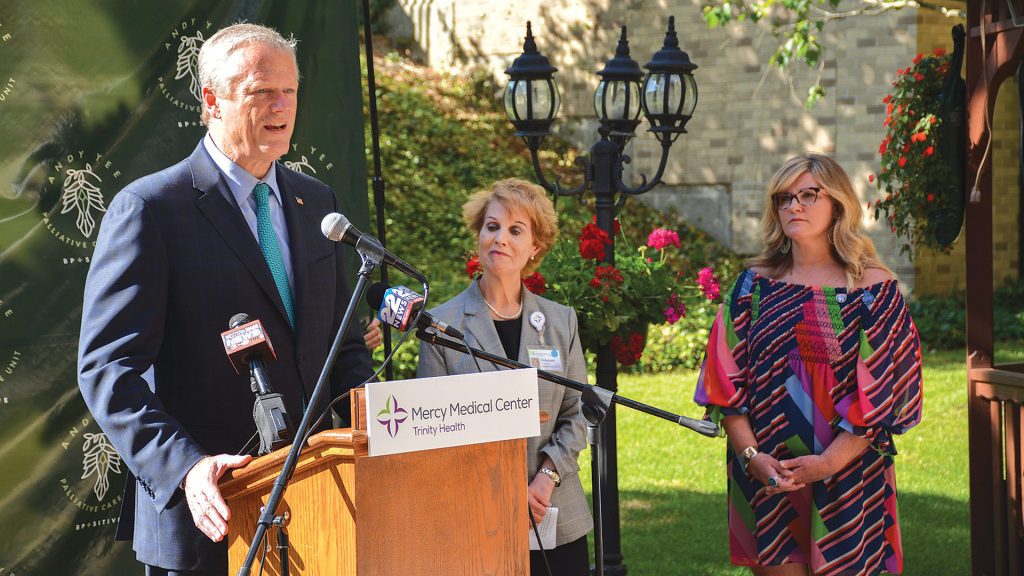
Innovation and Startups

Cooking Up Sustainability

By Kailey Houle


UMass Amherst Dining is serving up a new dish. Sort of. It’s called sustainability.

The dining program, long ranked among the best in the country, if not the best, is adding a focus on foods and their carbon footprint to what has been a steady diet of information provided to students about how to make smart choices about what to eat each day.

Ken Toong

Ken Toong says that by serving more plant-based dishes, UMass Dining is helping students on campus reduce their carbon footprint.

UMass Amherst Dining is teaming up with MyEmissions, a food carbon-label company, to bring a sustainability factor to the table, an initiative that could be considered part of a broader, campus-wide focus on carbon footprints — and how to reduce them.

Indeed, in April, UMass Amherst Chancellor Kumble Subbaswamy proposed a plan to be a net-carbon zero university by 2032. And a survey of UMass students conducted this spring shows 75% believing their food choices impact the environment, and 76% believing it is important to reduce their carbon footprint. But they didn’t know where to begin.

“We started incorporating kelp on the menu — talk about a superfood; it’s a carbon sink, meaning it puts carbon back into the atmosphere. We partnered with a group in Maine that works with off-season lobstermen to grow kelp, and it’s going really well. We’ve done research and development on it, and again, we’re educating students that not only is kelp a superfood for your health, but it’s also a climate superfood.”

Low-carbon dining — an experience UMass is striving to perfect — refers to making food choices that have low greenhouse gas emissions associated with their life cycle. Examples of low-carbon foods include nuts, soy products, local vegetables, and dairy alternatives; high- carbon foods include beef, lamb, cheese, chocolate, and coffee. To combat higher emissions UMass sources its high carbon foods locally, and all of the low-carbon foods offered are grown locally and, in some cases, on campus.

“My team and I researched the issue and we have partnered with MyEmissions,” said Kathy Wicks, director of Sustainability at UMass Amherst. “They analyze each recipe for its carbon footprint. So we export our recipe, they analyze it, and then they send it back to us so we can put it on the menu identifiers and on the app.”

Elaborating, Wicks said that such analysis involves giving a rating — A through E, with A being the highest, or best grade — to each individual recipe based on its carbon footprint. A carbon footprint, as it relates to food, is the amount of carbon emissions, methane, or carbon dioxide involved in the food’s production. It takes into account the life cycle of whatever one is measuring, its land use, processing, transportation, and packaging. UMass has been able to reduce some of its carbon emissions already by partnering with local farmers and facilities to feed their students.

MyEmissions has worked with European restaurants to help them reduce their carbon footprint, but UMass Amherst Dining is the first university program in the country to be introducing an initiative like this. And as an anchor institution in the region and a recognized leader and innovator among dining programs, UMass is looking to tell a story others will follow.

“Yeah it’s delightful that we did it first, but it’s a better feeling knowing we can help our students make a better choice,” said Ken Toong, executive director of Auxiliary Enterprises at UMass Amherst, which oversees the dining program. “Food matters and I think this is an important thing for the UMass community.”

Wicks agreed, and noted that through this new initiative, the university hopes to better inform students about foods and their impact on the planet and perhaps inspire them to consider options — like kelp.

“We started incorporating kelp on the menu — talk about a superfood; it’s a carbon sink, meaning it puts carbon back into the atmosphere,” she explained. “We partnered with a group in Maine that works with off-season lobstermen to grow kelp, and it’s going really well. We’ve done research and development on it, and again, we’re educating students that not only is kelp a superfood for your health, but it’s also a climate superfood.”

Overall, plant-forward dining, and that includes kelp, helps to reduce the overall carbon footprint. Low-carbon foods are able to be grown, prepared, sourced, processed, and transported in ways that emit minimal greenhouse gas into the atmosphere. Food production in the United States makes up 20% of overall greenhouse gasses and globally it’s about 30%. UMass Dining works with local fair-trade-certified farmers and rely on permaculture gardens to source their meals.

Kathy Wicks

Kathy Wicks says educating students on their food choices gives them the ability to take action to help the planet.

“We’ve been working with our local partners for a long time, we also work closely with companies around their practices and how they relate to sustainability,” Wicks said. “And this is a way we can help students practice everyday climate action with every food choice that they make.”

Wicks and others we spoke with stressed repeatedly that they are not trying to tell students what to eat. Rather, they are providing information that will help them make smart choices about what they might want to eat — information that goes beyond calories and ingredients and dives into a food’s overall impact on the planet

“We play a role in educating them on food literacy, but we also love to talk about food,” said Wicks. “We added this to the conversation because it is top of mind for so many people and the campus community as a whole.”

Carbon-use identifiers will be added to each menu, along with previous identifiers for allergies, ingredients, sustainability, plant-based, and locality.

“We have a very comprehensive menu system — we have identifiers for allergies, ingredients, and now they can assess it through the apps or on signs,” said Toong. “We just add it on the carbon calculator and put the rating on the menu.”

Toong said the Amherst campus is perhaps more diverse than ever, with many students, including those who are Asian, Latin, and Indian students seeking authentic cuisine that is mostly plant-based. More than 70% of the school’s menu items are already plant based, catering to vegetarians, vegans, and those with a more plant-driven diet.

“We’ve been working with our local partners for a long time, we also work closely with companies around their practices and how they relate to sustainability. And this is a way we can help students practice everyday climate action with every food choice that they make.”

“We know that plant-forward meals are going to be a trend; there is still meat, but smaller portions,” said Toong. “We only give three-to four-ounce red meat portions, and same thing with chicken. We’re selling more seafood and more plant-based dishes. This has really helped us make the decision to start the program.

“We’re not saying ‘don’t eat red meat,’ — we’re just suggesting smaller portion sizes,” he went on. “We don’t tell them what to eat — we provide them with information. But we want to promote more than just food, we want to promote culture and cuisine. Our goal is to work with students and the community to try to make the world a better place. We can do it by working together.”

Those we spoke with said the partnership with MyEmissions is merely another step in efforts to promote sustainability. They stressed the need to back up the information being provided with conversation about how to make smart choices.

“We’re not just going to put the information up there — we’re going to continue dialogue with our students about it and show them and give them tips that low-carbon dining is as easy as A, B, C,” said Wicks. “We’ve been dedicated to healthy, sustainable, delicious food for a long time. We always want to do more to enhance the student experience.

“We listen closely to what the students have to say,” she went on. “We listen closely to what they’re concerned about and what they are interested in and what their values are… the entire campus’ sustainability and the current issues with climate change are at the top of mind for everybody. So our expertise is food and customer service — that’s the area we want to do more. We know it has an impact on our environment.”

By making simple changes like trying out some new A-Rated dishes, anyone can help lower the carbon footprint — and those at UMass Dining know small changes like that can make a huge difference.

Technology

Protecting Yourself from IT Threats

By Charlie Christensen


As hackers, organized crime syndicates, and state-backed bad actors aggressively pursue ways to compromise the world’s data; business owners, leadership, and IT professionals continue to seek ways to counter these ever-growing threats to their information technology infrastructure. In this article, I will explore some of these threats, as well as the advancements in anti-virus/malware protection that are working to defend corporate and personal data every minute of every day.

Lastly, I will provide you with some key steps you should take to protect your business and data assets from attack.

Charlie Christensen

Charlie Christensen

The notion that you are just too small a company to worry about these threats, or that no one wants your data is a fallacy. Criminals are targeting small companies every day because they are easy targets.”

As someone who understands the threats we as IT professionals see every day, it is my hope that I can use this opportunity to provide the average businessperson with a better understanding of what they should focus on most urgently in today’s technology environment, and how they can better protect their business from being compromised.

• Ransomware: This is every company’s worst nightmare and is a topic that we could dedicate an entire article on. In short, ransomware is an extortion scheme that costs businesses billions of dollars per year. It most commonly spreads via malicious email attachments or links, software apps, infected external storage devices, and compromised websites.

Ransomware searches out every computer on the network and seeks to encrypt the data it finds. The only way to get the data back is to pay the extortion, usually via cryptocurrency which is largely untraceable. Not content with simple extortion, cybercriminals are now adding an additional element to the ransomware scheme.

Attackers will now download your data prior to encryption, and if you refuse to pay, they will threaten to release your data into the public domain. If the thought of this doesn’t lead you to a few sleepless nights, it should.

• Phishing, spear phishing, and whaling attacks: I think by now we all understand phishing. An attacker uses social-engineering techniques, like an enticing looking link, to get the end user to disclose some form of personal information such as a Social Security number, information, credentials, etc. Spear phishing, however, is a bit more focused and targeted. A spear-phishing message might seem like it came from someone you know or a familiar company like your bank or credit card company, shipping company, or a frequented retailer.

Whaling, on the other hand, goes after high-value targets such as C-level leadership or accounts payable. A whaling attack might look like an email from the CFO asking you to initiate a transfer to pay a large invoice. This is an incredibly common attack vector and one that relies on your team’s ability to identify it. Education and vigilance are your best defense.

• Advanced persistent threats: APTs happen when an intruder gains access to your systems and remains undetected for an extended period. They seek to quietly extract data such as credit card data, social security numbers, banking information, and credentials. Detection relies on the ability to identify unusual activity such as unusual outbound traffic, increased database activity, network activity at odd times. APTs also likely involve the creation of backdoors into your network.

• Insider threats: Although we are fixated on external threats, internal threats are more common and can be equally as damaging. Examples of intentional and unintentional threats include:

Intentional threats such as employees stealing data by copying or sending sensitive or proprietary data outside the company. This may occur via email/FTP, USB drive, cloud drive (One Drive, Dropbox, iCloud), or some other means. Often, these happen because someone fails to comply with security protocols because they are perceived to be inconvenient or “overkill.”.

Unintentional threats might include an employee clicking on a phishing email, responding to a pop up asking for credentials, not using a strong password, or using the same password for everything. It could also be a system that was not patched, a port that was left open on a firewall, or forgetting to lock a user account after termination.

• Viruses and worms: Frequently considered to be ‘old school’ threats, these still exist and can cause tremendous damage. Users should be careful about clicking on ads, file sharing sites, links in emails, etc. Their purpose is to damage an organization, systems, data, or network. However, traditional anti-virus software is usually effective at controlling them.

• Botnets: Simply put, a botnet is a collection of devices that have access to the internet like PCs, servers, phones, cameras, time clocks, or other commonly found networked devices. These devices are then infected by malware that allows criminals to use them to launch attacks on other networks, generate spam, or create other malicious traffic.

• Drive-by attacks: These are infected graphics or code on a website that gets injected into your computer without your knowledge. They can be used to steal personal information, or inject trojans, exploit kits, and other forms of malware.

While this list might seem exhausting, it only represents a few of the more common attack methods that we see daily. It also helps explain the emergence of a new generation of security products and platforms. To better understand how we look at information security, let me borrow one of the examples I commonly use when speaking to businesspeople and groups about building an effective Information Security Program.

Think of information security as an onion. Like an onion, information security programs are comprised of layers (firewall, backup, AV, email filtering, etc…) of protection surrounding the core (your data). As we build an information security program, we need to put layers of protection between the threat and the asset we are trying to protect. While the details of an information security program are outside the scope of this article, for the purposes of this discussion you only need to understand that there is no single magic product that can protect you from all threats. Anti-virus, or even the new generation endpoint detection and response (EDR) products are but one layer of protection in an over-arching strategy to protect your business from modern threats.

A brief history of antivirus (AV) products has them coming onto the scene in the late 1980s, with familiar names like McAfee, Norton, and Avast. These early products relied on signature-based definitions. Much like you look up a word in the dictionary, these AV products could catch defined threats, but they would easily fail to prevent attacks that had yet been discovered; or worse, that they had not yet downloaded an update for that would allow them to recognize the threat. Traditional AV changed very little until several years ago with the advent of Next Generation Antivirus. NGAV uses definitions coupled with predictive analytics driven by machine learning to help identify undefined threats.

The latest technology to hit the market is enhanced detection and response (EDR) or extended detection and response (XDR). These technologies continue to use traditional signature-based antivirus and NGAV, but they also introduce the use of artificial intelligence (AI).

AI is used to constantly analyze the behavior of devices so it can detect abnormal activities like high CPU usage, unusual disk activity, or perhaps an abnormal amount of outbound traffic. This new generation of software not only detects an attack and warns you that it is occurring, but it can also isolate the attack to the device(s) that are infected by automatically taking them off the network and protecting the rest of your network. Some EDR products like SentinelOne also have threat-hunting capabilities that can map the attack as it unfolds. This mapping aids IT professionals in the identification of devices involved in the attack; a process that can take days or weeks when performed manually. XDR even goes a bit further in that it looks beyond the endpoint (PC, laptop, phone) and looks at the network holistically.

A good example of how EDR systems are being used as a layer of protection is how SonicWall firewalls combine a physical firewall with a suite of security capabilities like content filtering, DPI-SSL scanning, geo-blocking, gateway antivirus, and more to filter traffic before it enters your network. Then, with the addition of their Capture Client product (a collaboration between SonicWall and SentinelOne), they integrate the power of SentinelOne EDR with the firewall’s rules. This allows you to extend protections beyond devices inside the network and include company devices outside the network as well. This helps to eliminate gaps in protection that can exist with remote users.

The notion that you are just too small a company to worry about these threats, or that no one wants your data is a fallacy. Criminals are targeting small companies every day because they are easy targets. Large companies have armies of highly educated and well-paid people protecting their networks. And while a large company might represent a big score, hackers can spend years trying to penetrate a large network. However, they know smaller organizations have limited budgets and staff to protect their network. This makes it far more lucrative to hit 50 or 100 small companies for $100,000 than a single large company for, say, $2 million.

Investing in modern security products, building a sound information security program, and educating your team will pay off in the long run, as the question is not if you will be attacked — but when. The cost of the systems to protect you is far less the frequently irreparable harm caused by a breach or infection.

Many people say, ‘I have cyber insurance,’ but fail to put the necessary precautions in place to protect their systems and data. Little do they know that when they filled out the pre-insurance questionnaire and answered ‘yes’ to all the questions, they gave the insurer the ability to deny the claim. If you do not have written policies, use EDR (or at least NGAV), have a training program in place, and use multifactor authentication to protect user logins, you could be sealing your own fate. Insurers are no longer baffled by today’s technology and are aggressively investigating cyber claims. In fact, we are seeing significantly increasing numbers of denied claims.

There is little you can do after the fact to offset missing protections or enforcement of policies. By taking the appropriate steps to protect your network and systems you can hopefully minimize the risk of falling victim to an attack and ensure that your insurer will cover such a claim. Insurance companies will go to great lengths to cover legitimate claims at great cost. In fact, they can be their own worst enemy. In many ransomware attacks, insurance companies will simply pay the ransom because it is more expeditious to do that than it is to pay for the actual remediation. This, of course, only encourages the criminals while leading to higher premiums and greater risk to our technology infrastructure.

To close, I’d like to leave you with a few things that you can do to better protect your systems, data, and network.

• Take the time to understand what protections you have in place and engage a professional to help you identify any gaps in your information security strategy;

• Educate your staff on information security best practices and the threat spectrum. An educated workforce is one of your best protections. There are several great training tools that are inexpensive and easy to implement, such as KnowBe4;

• Implement a next-generation firewall that utilizes deep packet inspection and take the time to dial in the suite of security features that are designed to stop threats before they get into the network;

• Move to an EDR system rather than relying on a traditional signature-based antivirus;

• Be sure that all systems with access to your networks (computers, network equipment, servers, firewalls, IoT devices, cameras, etc.) are patched regularly to eliminate vulnerabilities that can be easily exploited;

• Do not run unsupported operating systems, equipment, or applications;

• Establish a set of written information security policies, and make sure everyone understands that they need to live by them; and

• Limit those with administrative credentials on your network. If an administrative account is compromised, you have given away the keys to the kingdom. Make sure users only have permission to get to the resources they need to do their job.


Charlie Christensen is president of East Longmeadow-based CMD Technology Group; http://www.new.cmdweb.com/; (413) 525-0023.

Technology

The Best Defense Is a Good Offense

By Sean Hogan

In a recent study, Stanford University and a top cyber security organization found that more than 85% of all data breaches are caused by human error. The standard practice for prevention of breaches is enabling tools to detect and prevent breach attempts.

Most breaches are prevented with tools such as anti-virus, spam filtering, and edge protection. But what about the attempts that slip through these defense systems? That’s where education comes in to play.

Cyber criminals are constantly evolving and changing their methods for cyber-attacks. The best software and security tools can eliminate many of the known attack methods but there is no company, security, or software package that that can claim 100% success for eliminating threats. The game is constantly changing, and to keep up with unknown threats and techniques it is critical that we all educate and train ourselves to be hyper vigilant when it comes to cybersecurity.

Sean Hogan

“In a recent study, Stanford University and a top cyber security organization found that more than 85% of all data breaches are caused by human error.”

It is critical to teach your staff about cyber-attacks. I tell my clients to always question everything; if you aren’t expecting an email with a drop box link, then don’t open it, and certainly don’t click the link. Hackers have upped their game when it comes to disguising malicious content. Hackers will use credentials from sources on the dark web, and the more thorough hacker will do some social engineering and gather information about the targets on public websites and social media platforms.

The more believable they are, the more effective they can be. I recommend scanning tools to alert companies whenever there are credential breaches that have appeared on the dark web. This will allow security teams to know when credentials have been breached, where credentials were breached, and who will provide the credentials. These tools will reveal passwords, password policies, or lack thereof.

Common passwords are one of the easiest low hanging fruits to be used by hackers. Let’s pretend you use your business email to log into an online app like Uber. If Uber is breached, the hackers will have access to your Uber password, but if you use that same password or a similar password elsewhere, like in your banking app, the hacker can use scanning tools and password-hacking tools to easily get into your other accounts. The object is to make it as hard as possible to breach your accounts; don’t make it easy for a junior hacker to wreak havoc.

We recently had a client forward us an email that he thought might be a phishing attack. All the details were accurate, everything was spelled correctly. The ‘sent from’ address had one difference, it was sent from a registered .net domain not the company’s legitimate .com address. Other than that, everything was accurate. The hacker had the wherewithal to create a domain and register that domain as a .net. (Lesson learned, reserve all similar URL’s to prevent this from happening!)

This one example was a sophisticated attempt to convince the client to create a wire transfer; the client now has a policy of triple-checking and confirming any transactions with multiple steps.

The best way to teach your staff about attacks is to create a fake phishing attack. We create and run fake attacks to our staff and our clients. We have a library to choose from, and we can simulate a bank request, a Netflix credential reset, a credit card alert just to name a few. These attacks mimic real attacks. The recipient reactions are tracked, and reports are made available after the campaign has expired.

The email is delivered (allowed on purpose past our filters), the recipient can open, click, and provide data. We call this the trifecta! Normally opening an email is not malicious by itself; clicking the link can activate embedded malware. If a recipient does take the bait, then the training software will automatically play an educational video that teaches that staff how they were fooled and what to look out for in the future.

When the campaign has ended the results are tallied in a report. The report will tell you how many opens, clicks, and credentials. The report will also indicate whether the end-user sat through the educational video. This is a great tool to use from a cybersecurity perspective. Teach your staff, install best-in-class edge protection, spam filtering, end-point protection, anti-virus, dark-web scanning, and backup. Overall, don’t overlook the most important step: Promote awareness and create a strong anti-cyber culture in your office.


Sean Hogan is president of Hogan Technology Inc.; www.teamhogan.com; (413) 779-0079.

Law Special Coverage

Common Compensation Blunders

By John Gannon, Esq.

Wage-and hour-compliance is never easy for businesses, and a recent decision from the Massachusetts Supreme Judicial Court (SJC) just made things harder.

In ˆ, No. SJC-13121 (Mass. April 4, 2022), the Massachusetts Supreme Judicial Court (“SJC”) ruled that paying employees late is equivalent to not paying at all. This means employees are entitled to triple damages if they are not paid on time, because under the Massachusetts Wage Act, employers who fail to pay wages are liable for three times the unpaid wage amount (treble damages). With that case in mind, here are a few common compensation mistakes employers should avoid to ensure solid wage and hour compliance.

Failure to pay wages on time: The Massachusetts Wage Act requires employers to pay all wages, including any accrued, unused vacation time, to employees who are terminated on their last day of work. For employees who voluntarily resign, all wages are due on or before the next regularly scheduled pay date.

Too often, employers pay final wages a day or a week too late. This is especially common with unpaid commissions. The problem here is that under the Reuter v. City of Methuen case, those wages are not paid on time. Therefore, the employee is due triple damages under the Wage Act.

This is what happened to the City of Methuen; the city paid an employee her final paycheck of about $9,000 (including unused vacation time) about three weeks late. The court ruled that the employee was due almost $30,000 because the city paid the employee a few weeks late. Professional tip: Don’t make this same mistake. Make sure employees who are separated from work are paid all wages on their last day of work. If the final check is not ready the day you need to let someone go, have a process in place to suspend the employee while you work out cutting the final paycheck.

Misclassifying employees as independent contractors: It can be tempting to “contract” with an individual to provide services that are similar to what your employees do. This relationship has tax advantages, no need to worry about leave laws and other employment regulations, and a perceived sense of freedom to easily terminate the relationship if it does not work out.

“The Massachusetts Wage Act requires employers to pay all wages, including any accrued, unused vacation time, to employees who are terminated on their last day of work. For employees who voluntarily resign, all wages are due on or before the next regularly scheduled pay date.”

The problem is that classifying individuals as independent contractors (“I/C”) in this situation can be risky. This is because the I/C classification may violate the Massachusetts Independent Contractor statute, which requires workers to be classified as employees, not I/Cs, when the work being performed is similar to that of other employees.

The Massachusetts Independent Contractor statute also requires true contractors to: (1) be free from control and direction from the business (meaning, the contractors sets their own hours and performance standards); and (2) have their own independently established profession or business (meaning, the contractor has their own LLC, PC, or other established business entity). Even where an individual agrees to be classified as an independent contractor and paid via a1099, businesses run a risk of violating the Massachusetts Independent Contractor if all of the above-mentioned factors are not satisfied.

Travel time troubles: Both Massachusetts and federal law require employers to pay employees for non-commuting travel time during the day. This is commonly referred to as intraday travel. Here is the example provided by the federal Department of Labor: Barbara is a personal care aide providing assistance to Mr. Jones. Barbara drives him to the Post Office and grocery store during the workday. Barbara is working and the travel time must be paid.

What employers in Massachusetts might not know is that under state law you also have to reimburse Barbara for all “associated transportation expenses.” This means you need to pay her for costs like mileage, tolls, and parking (if applicable). It is unclear what employers have to pay for mileage, but the safe bet is paying in accordance with the IRS standard mileage rate, which is currently 58.5 cents per mile.

Meal break miscues: Massachusetts law requires employers to provide a 30-minute meal break to employees when they work more than six hours in a day. The break does not need to be paid; however, if an employee does any work during an unpaid break, the employee needs to be compensated for their time. This could be as little as answering a work-related phone call or making a few copies on the copy machine during a break.

Meal break time may be used by employees for activities other than eating, such as running an errand or taking a walk outside. The key here is that if the meal break is unpaid, workers must be allowed to use the time as they choose, including leaving the building/work premises.

Illegal deductions from pay: When it comes to paychecks, the general rule is that employers cannot make any deductions, with a few exceptions. Some deductions are federal or state mandated, such as any deductions for taxes or child support. Other deductions are consented to by employees, including money put toward insurance premiums and retirement benefits. Other than that, employers should not be deducting money from paychecks under almost any circumstances.

One common scenario where employers want to make a deduction is a situation involving a wage overpayment. In this case, a deduction might be ok if: (1) the employee agrees in writing to the overpayment and deduction; and (2) the deduction does not bring the employee’s earnings below minimum wage. Be sure to check in with employment counsel before making a deduction for an overpayment though, as it does have some potential risk. Also, be sure to never make deductions associated with damaging or failure to return company property (such as a cell phone or laptop). This is not allowed in any circumstances, and can lead to triple damages under the Massachusetts Wage Act.


John Gannon is a partner with the Springfield-based law firm of Skoler, Abbott & Presser, specializing in employment law and regularly counseling employers on compliance with state and federal laws, including the Americans with Disabilities Act, the Fair Labor Standards Act, and the Occupational Health and Safety Act; (413) 737-4753; [email protected].

Features Special Coverage

A Complicated Picture

John Regan says that, in many respects, it is difficult to reconcile the numbers from the latest Business Confidence Index (BCI) released by Associated Industries of Mass. (AIM) with recent headlines and the many strong headwinds facing business owners and managers today.

Indeed, the monthly confidence index continued an upward trend since the start of the year, rising to 58.1, a gain of 0.9 points, putting the index “comfortably within optimistic territory,” according to AIM, which Regan serves as president.

That optimism, though, comes as inflation remains at nearly historic levels, gas prices continue their upward climb, a stubborn workforce crisis continues, supply-chain issues persist, and the stock market is down double digits (almost 20%, in fact) from the start of the year. That’s why Regan acknowledges that the BCI’s trajectory seems illogical, if not contradictory to what’s happening.

“It’s hard to reconcile, but people feel confident,” he said. “And the Business Confidence Index is important because if you’re confident, you’re more willing to make investments in equipment, people, facilities, and new products.”

And a closer look at the landscape might reveal that there are, in fact, reasons for such optimism, he said, starting with a simple comparison to where things were two years ago — and even four months ago — with regard to the pandemic and its many side effects.

John Regan

John Regan

“Massachusetts is on track to end this fiscal year with more than $6 billion in the rainy day fund — it’s just incredible revenue performance.”

And then, there’s those soaring state revenues. The Department of Revenue took in more than $2 billion above what was expected in April, giving Gov. Charlie Baker cause to press his case for the Legislature to take up his proposals to provide roughly $700 million in tax relief to residents.

“Massachusetts is on track to end this fiscal year with more than $6 billion in the rainy day fund — it’s just incredible revenue performance,” he said. “If you match business confidence with the state’s own revenue performance, clearly positive things are happening.”

Overall, there are several factors, competing numbers, and varying opinions relative to just what is causing this record inflation that make it difficult to speculate about what will happen short- and long-term and whether the country is heading for a recession, as many are now projecting. GDP declined by 1.4% in the first quarter, and many economists are projecting that this trend will continue in Q2. And the matter is complicated further by the Fed’s ongoing efforts to slow the pace of inflation by raising interest rates — an aggressive strategy that is fueling speculation about a recession.

As Bob Nakosteen, a semi-retired professor of Economics at the Isenberg School of Management at UMass Amherst surveys the scene, he said it is largely without precedent, thus making analysis, let alone predictions, difficult.

“We live in complicated times,” he said, with a large dose of understatement in his voice. “It’s a complicated picture, more complicated than I’ve ever seen it.”

Brian Canina, executive vice president, CFO and treasurer at Holyoke-based PeoplesBank, agreed.

“This is a very unusual period of time,” he told BusinessWest. “Because there are so many different things going on, between supply chain issues driving costs up, the cost of gas being driven up by government regulation … it’s really hard to pinpoint whether it’s true economic growth that’s driving inflation or if it’s purely government-driven. So it’s hard to say exactly what’s going on.”

And even harder to project what will happen. Nakosteen does not anticipate continued decline in GDP for the second quarter, which, if it did happen, would be the technical definition of recession. But he’s not projecting strong growth, either.

Brian Canina

Brian Canina

“This is a very unusual period of time. Because there are so many different things going on, between supply chain issues driving costs up, the cost of gas being driven up by government regulation … it’s really hard to pinpoint whether it’s true economic growth that’s driving inflation or if it’s purely government-driven. So it’s hard to say exactly what’s going on.”

“My prediction is we’ll see growth in the second quarter,” he said. “Not robust growth, maybe 1% or 1.5%, but I don’t think you’ll see GDP decline again.”

Meanwhile, Regan said economists with AIM are projecting that recession is “more likely than not, but it won’t be a terribly long recession.”

For this issue, BusinessWest talked with these experts and asked them to slice through the complex confluence of issues and try to anticipate what will happen with the economy in the coming months and quarters.


On-the-money Analysis

It was the late U.S. Sen. John McCain who, in 2015, described Russia as “a gas station masquerading as a country.” Paying homage to that quote, Nakosteen, echoing others, said Russia is a “a gas station with an army.”

That classification, and the acknowledgment that Russia, and Ukraine, both export large amounts of wheat and fertilizer, speaks volumes about just one of the many forces — most of them unpredictable in nature — that are impacting the national and global economic scene. And they’re also making it difficult to determine what will happen in Q2, Q3, and well beyond, said Nakosteen, who, like Regan, said that despite those aforementioned headwinds, there are many positive signs when it comes to the economy.

Bob Nakosteen

“The job market is strong, retail sales are good … so the economy is actually pretty strong, and the Fed thinks it’s too strong.”

“The GDP decline in both the state and the nation was almost more a technical issue, because all the numbers that went into it, except those regarding inventory, were strong,” he explained. “The job market is strong, retail sales are good … so the economy is actually pretty strong, and the Fed thinks it’s too strong.”

Which prompted two interest-rate hikes this year, including a half-point increase late last month, designed to slow the economy. But with those rate hikes comes talk of inflation, said Nakosteen, adding that, historically, one has led to the other.

These factors add up to a lot of watching and analyzing for people like Canina, who said there is a lot to digest, including current loan activity, or the lack thereof, as well as inflation and the dreaded inverted yield curve — a successful predictor of many recent recessions — and the impact of rising interest rates on consumer spending as the cost of borrowing increases.

Starting with a look at loan activity, he said it has slowed markedly in recent months, with most all refinancing of home mortgages complete and commercial loans in the post-PPP era being relatively stagnant.

“For what should be a very robust economic environment, we’re not seeing the equivalent loan opportunities on either the commercial or residential side,” he said, adding that the rising interest rates, coupled with low inventory and soaring prices, are certainly impacting the latter. “We’re not seeing a lot of loan demand; we’re doing what we can to find it, but it’s challenging for us right now.”

And this lack of loan activity will certainly have an impact on interest paid on deposits, he said, noting that while one might assume that these rates will rise naturally as the Fed increases interest rates, they won’t if loan activity remains stagnant.

“We’re coming off a time when banks have a ton of cash because of all the government stimulus that’s been flooded into the market,” he explained. “So they have a ton of cash on their balance sheet and not a lot of loan demand, so it’s going to be very difficult for them to pay higher rates on deposits unless they can turn that cash into loans.”

And the loan market is just one of the many things to watch moving forward, he went on, adding that the sluggishness in that area is a symptom (one of many) that the inflation being witnessed is a product of government policy and other factors — supply chain issues, workforce shortages and resulting higher wages among them — rather than the economy being hot and in need of being cooled down.

“I don’t think gas prices or the cost of groceries are really being impacted by consumer spending,” he said. “I think those things have been impacted by government regulation, supply chain, and cost of wages — grocery stores paying $17 an hour for kids to bag groceries because they can’t hire people at lower wages because there’s no one to hire.”

“It’s all been reactionary to the pandemic — everything right now seems to be incredibly artificial,” he went on, adding that, for this reason, the Fed’s interest-rate hikes might provide a real, unfiltered look at what’s happening with the economy. “We have artificially driven rates on the short term, and the Fed also manipulating rates on the long end with their bond purchases. If they can start shrinking their balance sheet, and raising interest rates on the low end can normalize the yield curve, and then get out of the markets, then we can see what’s really going on.”

Still another thing to watch is how quickly and profoundly interest rates are increased, he said, adding that, in the past, when rates rise quickly and in large doses, the Fed has had to back off and reverse course in an effort to pick up a slowing economy.

Nakosteen agreed, and noted that there are many factors that go into inflation, some of which are likely to be impacted by rising interest rates — such as the spending spawned by government-awarded money in the wake of the pandemic — and some not.

“It’s a complicated picture,” he said. “And inflation is more complicated than I’ve ever seen it.”

Looking back to see if there was a time to compare all this to, Nakosteen said there were many similar attempts to slow the economy, but perhaps none at a time when there were so many issues clouding the picture.

“It’s a bizarre mixture of factors,” he said. “There’s COVID, the war in Ukraine, the aftermath of all the stimulus … it’s a strange mix.”

And despite this mix of factors, or headwinds, business owners are generally upbeat, as indicated in the upward movement of the BCI, which Regan explained this way:

“When things are going badly, the BCI usually predicts that. Despite all the negative stock market activity and the presence of significant inflation pressures, along with continuing supply chain issues and the challenge of securing a workforce, the index is in significantly positive territory.

“When you look at the BCI and some of the other things that are happening, it’s hard to reconcile, other than to say that the people who are responding to the survey feel very confident about how they are doing and how they perceive conditions for their own operation,” he went on, adding that the next reporting of the BCI will be watched with great interest.


The Bottom Line

Looking again at the complicated picture that is the national economy, Nakosteen said that, historically, efforts by the Fed to slow inflation by raising interest rates usually take six months or more to reveal their true efficacy.

But in this case, such initiatives have been designed to speed that process, he said, adding that he’s not at all sure whether they actually succeed in doing that — or whether they will succeed at all, given the many question marks concerning the nature of this historic inflation.

Overall, the always complicated task of projecting what will happen with the economy has become that much more difficult. In other words, stay tuned.


George O’Brien can be reached at [email protected]
Innovation and Startups Special Coverage

Celebrating Innovation

By Julie Rivers

The University of Massachusetts Donahue Institute (UMDI) turned 50 in 2021. It was a milestone, like many, that was marked in quiet fashion, and in this case, very quiet, because of the pandemic.

The actual celebration, in the form of an anniversary gala, came this year — May 3, to be precise. More than 150 people attended the event at the UMass Club in Boston, a gathering that offered UMDI and its supporters the long-awaited chance to reconnect, meet new people, and celebrate.

And there was, and is, much to celebrate.

Indeed, charged with social service, economic development, and community engagement, the Donahue Institute interfaces with many aspects of life in Massachusetts and beyond. In fact, UMDI has received global recognition for its economic research, program-evaluation capabilities, and workforce and educational initiatives.

Anticipating almost $25 million in revenues for fiscal year 2022, UMDI has about 175 employees with staff across the country, including all six New England states, Southern California, and Arizona. UMDI operates like a consulting firm, with 98% of its revenues being self-generated.

At the gala, recently appointed Executive Director Johan Uvin offered what amounted to a state-of-UMDI address, and in a Zoom call with BusinessWest that involved several leaders of the institute, he did the same, highlighting what’s changed over the years and, perhaps more importantly, what hasn’t for this vital resource.

“As someone coming in from the outside, this is a solid model — it’s not broken,” he said of the institute’s method of operation. “The Donahue Institute has the autonomy and intellectual freedom to pursue work that is meaningful to society but that also aligns with its mission and capabilities.”

Over the years, that work, has come in a variety of forms, including everything from housing to the national Census; economic data and ways to measure it, to office automation. And the institute’s work has often to led to changes in how things are done and how issues are addressed.

Johan Uvin addresses attendees

Johan Uvin addresses attendees at the recent gala marking the Donahue Institute’s 50th anniversary.

Slicing through it all, Mark Melnik, director of UMDI’s Economic and Public Policy Group, used terms not often applied to such an agency.

“We’re a dynamic organization, especially for a public-service institute,” he told BusinessWest. “While entrepreneurial mode can be exhausting, it allows us to push corners.”

This unique blend of public service and entrepreneurship provides the institute to recognize and seize what he called “opportunities that just make sense.”

For this issue and its focus on innovation, BusinessWest looks at these opportunities while reviewing the institute’s first 50 years of work and asking UMDI’s leaders what will likely come next.


History Lessons

In the beginning, the Donahue Institute focused on providing consulting services to state and local governments. Named for former president of the Massachusetts State Senate, the late Maurice A. Donahue, UMDI branched out in the mid-1980s by helping clients in the corporate and nonprofit sectors.

According to J. Lynn Griesemer, who served with UMDI for 31 years, including several as president, and still acts as a senior advisor, a breakthrough assignment in the early days of the institute was to assess how to most effectively introduce office automation into workplaces. While automation is incontrovertible today, back in the paper-laden manual task days of 1970s office life, the project was just one of many groundbreaking concepts the institute would help launch.

Another early assignment that would shape the future of the institute involved improving floor operations at the General Motors assembly plant in Framingham. However, while the project was underway, the plant began laying off shifts — but UMDI was already there as an implant that was well-positioned to lend a hand. Shifting focus, the institute helped the newly dislocated workers create resumes, get additional education, and ultimately find jobs or even start businesses of their own. Through this fortuitous timing, the institute quickly became the largest services provider to dislocated workers in the Commonwealth.

Donahue Institute

From left, former director of the Donahue Institute Eric Heller, former deputy director John Klenakis, former director Lynn Griesemer, Director Johan Uvin, and Associate Director Carol Anne McGowan

The federal government’s Department of Defense would then present the institute with an opportunity to help make systems uniform across military branches. This project allowed UMDI to develop the national credibility to successfully bid on the Head Start program, one of its core initiatives to this day.

From there, former Massachusetts Governor William Weld asked the UMass President’s Office to assist with an economic development initiative for the state. With the help of economic experts from across the UMass campus, UMDI worked with the Federal Reserve Bank of Boston to forge the MassBenchmarks project. To this day, MassBenchmarks assesses the Massachusetts economy through reports and analyses that it then produces and releases twice per year in journal form.  

These early projects laid the groundwork for UMDI to get approved as a vendor by the federal government’s General Services Administration (GSA). This designation allows the institute to bypass the lengthy bidding process usually required to win large federal contracts. 

Indeed, the institute’s keen eye for evaluating opportunities and strategically selecting those that will open doors has built the solid foundation it now stands on.

Today, the Donahue Institute is comprised of 10 business units. However, despite the ever-growing diversification of its core capabilities, a vibrant and robust research component remains at the backbone. This includes both UMDI’s Applied Research and Program Evaluation unit and its Economic and Public Policy Research group, led by Melnik.

This group operates as a project-oriented consulting firm, much like a think tank, bringing academic expertise and methods to real-world social problems. The group works with demographic, labor market, and economic data to help state and municipal governments, planning agencies, and nonprofits guide broad public policy discussions.

“Housing is the most central public policy question when we talk about Massachusetts.”

One current project examines how to leverage new apprenticeship models to minimize employee retention challenges. Another potentially groundbreaking study involves using data gathered for COVID-related purposes to develop new and more affordable ways of providing healthcare services to consumers instead of funneling people into highly complex systems that they have to navigate on their own.

A core assignment for Melnik’s group is its work with the Secretary of the Commonwealth preparing for census enumeration, which is the basis for federal funding allocation and congressional seats. With help from UMDI’s population- estimates program, the state’s census data is head of class in the nation. This is especially noteworthy since census data is relied upon heavily for resource allocations and predicting where jobs will be. It also informs decisions around population projections used by the MassDOT and Mass. School Building Authority for school district planning.

The group’s portfolio also includes a two-phase initiative with Way Finders that uses Greater Springfield as a case study on housing market affordability. With a focus on upward mobility and wealth creation, the study seeks to answer what it’s like for low- to moderate-income families to live in a high-cost state.

“Wages are so much lower in the Pioneer Valley that more than 54% of renters are housing cost-burdened,” Melnik says. Additionally, the majority of those burdened are people of color.

“Housing is the most central public policy question when we talk about Massachusetts,” he explains. This is because it tells the story needed to inform public policy, including the future of transportation.  

Another of the institute’s long-term projects is the Head Start program, which it has been involved with since 2003.

UMDI’s New England Head Start Training and Technical Assistance group is co-directed by Rosario Dominguez, M.P.A. Dominguez says that when people think of the Head Start program, early childhood education is often the only thing that comes to mind. However, that barely scratches the surface of what the program does, as it begins at pregnancy and continues to support families through college.

With this long-term intervention approach, the program addresses intergenerational poverty by using what goes on in the classroom as a lens for examining how families can reach their financial goals, ultimately strengthening entire communities. Through the partnerships it forms, the program has the reach to solve issues much larger in scale than early childhood development, including informing policies that move social equity and upward mobility forward by helping education and social service organizations improve their systems.  

Beyond its regional and national footprints, Ken LeBlond, Marketing Communications manager, said UMDI also handles international work. Funded by the United States Department of State, the institute has contributed to economic mobility at the global level since 2004.

This includes its exchange program in which groups of 20-30 people from about 60 countries, such as Argentina, Pakistan, and Eastern Europe, come to Western Massachusetts each summer. The groups travel the region engaging in active learning, helping at the Amherst food bank and senior center, and working on river cleanup projects.


A Look Ahead

In August 2021, the Donahue Institute welcomed Uvin as its executive director. Uvin had previously served as assistant secretary of Education under the Obama Administration. Working alongside Associate Director Carol Anne McGowan, Uvin holds the distinction of being the institute’s first executive director to be hired externally.

When asked what is ahead for UMDI, Uvin talked about alternative models for providing health care and exploring different educational models in challenged communities to lift entire neighborhoods through training and interventions.

Additionally, Uvin is interested in looking at both the supply and demand sides of regional economies to shape how employers and individuals work together to create wealth.

He explained that the engagement process might begin with going into neighborhoods and asking, ‘what are your aspirations?’ This is important because, according to Uvin, “we are moving headlong into a labor shortage with the babyboomers retiring,” making it critical to have intentional conversations around economic development across many different populations.

While this may be a current focus for UMDI, these issues are not new to the Pioneer Valley, where economists and policymakers have been wrestling with similar challenges for decades. Uvin says that while high-tech industry sectors have grown across the state, it has not been an equitable geographic or demographic spread, with Gateway cities such as Springfield and Holyoke — where nearly half of the region’s minority population lives — being left behind.

Part of Uvin’s vision for the future is to explore work in sectors such as life sciences, which play a key role in the success of Central Massachusetts’ biotech manufacturing and Greater Boston’s R&D and lab-based growth.

This, he says, would involve lifting up underserved communities, which is critical because, on the business side, there are simply not enough workers to grow unless we find ways to include all populations. Representation of people of color in the best-paying jobs of the higher-tech sectors lags severely. In terms of where UMDI is at this point in contributing to solving inequities that plague underserved populations, he says they are in the discovery phase, talking to others on the grassroots level.     

As for the future, the institute is positioned to make great strides. With an executive director from the outside, a new perspective brought on by the COVID pandemic, and an impressive 50 years of success to build from, the institute is at a nexus for bringing widespread change to the communities it serves.

“It’s an exciting time for reflection and renewal — to articulate what has happened, organically anyway, through the COVID crisis, which is the discourse around social equity and social mobility,” said Melnik. “This has been part of our work for a while now and has bubbled up even more.”

In reflecting upon how the institute has evolved over the past fifty years, Uvin and others said it is also important to highlight what hasn’t changed, especially the institute’s model and entrepreneurial approach to its work.

Dominguez adds that what was once called public service has evolved into economic mobility and social equity.

“Although we are further defining what we do, our core values will always be the same,” she said. “How can our work impact communities in need? That’s the core — and that won’t change.” 

Uvin concludes, “we’re not done evolving. COVID revealed what didn’t make sense, and business must respond.” Offering employee support, childcare, mental-health services, and other perks will be integral.

Perhaps what will carry the Donahue Institute forward another 50 years will be that which has stayed the same — a solid culture, a public service-focused mission, and the keen ability to find opportunities that align with core values while also having the potential to open doors.

Special Coverage Technology

Making IT Happen

By Mark Morris

Mike Sheil

Mike Sheil, president, Whalley Computer Associates

Mike Sheil says he enjoys his work because his business — information technology — is always changing. And he acknowledges that this is an understatement, as recent events have shown.

Sheil, president of Whalley Computer Associates in Southwick, began his career with the computer reseller right after graduating from North Adams State College, now Massachusetts College of Liberal Arts. After four years, he left for a medical device company where he stayed for another four years. Sheil returned to Whalley 24 years ago and rose through the sales ranks until being named president in June 2020.

His relatively new position comes with a lengthy job description, but, overall, he is charged with authoring the next chapters in what has become a long-term success story — a company that has grown exponentially from its humble roots over the past 43 years because of its ability to adapt to that constant change he mentioned.

The past two years, dominated in every way imaginable by the COVID-19 pandemic, provide a dramatic example of the company’s ability to respond to change, and, in many respects, lead clients through it.

“Before COVID you would get a quote, get a PO, order the product, it comes within a week and we can install it the next week. If we can get back to that type of normal business environment, I believe our company will experience tremendous growth.”

Indeed, a banner hanging in the production area reminds employees that, when in doubt, they are to do what’s right for the customer, the company, and the individual. This clear guidance turned out to be valuable when COVID hit and flooded Whalley with sudden demands for products and assistance. With millions of employees suddenly leaving the office to work from home, Whalley clients needed the resources to make that happen.

“We helped companies with thousands of workers to get their folks set up at home,” Sheil recalled. “Some needed monitors and docking stations, while others sought upgrades to their data center because so many more people were tapping into their bandwidth.”

In one instance, a higher education client was looking for 400 laptops to outfit staff members who had been sent home to work.

“I received the request on a Saturday,” Sheil recalled. A colleague found the product, provided a quote for what it would cost, and sent it to the client. “For the first time in my career, I received a purchase order from a public university on a Sunday.” By Monday afternoon, 400 laptops were shipped to the university.

Whalley Computer Associates’ new building

Mike Sheil, left, says Whalley Computer Associates’ new building will allow the company to better serve its clients.

Looking ahead, Sheil said Whalley will soon begin to grow its physical presence with a new 84,000-square-foot building next to its current headquarters in Southwick. Plans call for locating the OEM division in the new space as well as expanding warehouse storage and improving delivery options.

“The new building allows us to go to our clients and let them know we can do even more for them, so that’s exciting,” Sheil said. “This is an opportunity to grow our business in North America while showing our commitment to Southwick and Western Mass.”

For this issue and its focus on technology, BusinessWest takes an in-depth look at Whalley’s long and intriguing history, and at what’s next for a business that helps its clients get it — and IT.


Taking Big Bytes

Tracing that history, Sheil noted that, in the early 1970s, Agawam math teacher John Whalley purchased a small software consulting firm that had a few clients. Working out of his basement after school and during the summer months, Whalley began to add customers, and by 1979 established Whalley Computer Associates.

By 1984 he moved the business out of the basement and in 1985, left teaching to concentrate on growing his company. Whalley is now CEO of the company, which is located in a 62,500-square-foot state-of-the-art building where 200 employees provide products and services to more than 20,000 customers around the world.

Whalley customers range from small businesses to corporations, as well as educational institutions and healthcare organizations. Clients tell Whalley representatives what challenges they need to address in their computer systems. Whalley then orders the product, configures it to fit the client’s needs, then delivers and installs the product at the client’s site. There are other resellers who simply order the product and send it directly to the client, who usually don’t have the space to handle a computer system shipment. Sheil said Whalley is different because it takes a hands-on approach.

“Once we receive the product it’s completely handled by Whalley employees,” Sheil said. “From the engineers and technicians who configure the products, to the people who drive our trucks and install the systems, everyone has a vested interest in doing it right.”

And during the pandemic, the company’s resolve to do it right was certainly tested, a test Sheil said it has passed.

“COVID and supply chain issues have been challenging, yet we experienced growth during that period,” he told BusinessWest. “It’s all thanks to our people who were flexible and willing to respond to all these requests.”

The OEM division of Whalley provides custom design of technology systems for clients. When COVID hit and a major customer temporarily shut down, it affected several employees who worked directly with that customer. Instead of laying off those employees, they were sent home with a laptop and a project to work on to benefit the company.

Heather Kies was given the assignment to plan several events for the company. A project manager with OEM, Kies also had a marketing background and enjoyed getting back into this area. She handled the assignment so well, Sheil promoted Kies to Marketing Manager in January and asked her to run the company’s new marketing department, which previously existed only informally as part of business development.

Whalley Computer Associates has a long track record

Mike Sheil says Whalley Computer Associates has a long track record of adapting to change and being nimble in its efforts to serve clients.

These days Kies is working on various company events, including preparations for a major tech conference that takes place in December.

“I’m also busy getting the word out on who we are so people understand all the services we can provide,” Kies said.

While the height of COVID brought unspeakable horrors, it also forced companies to think differently about how to stay in business and meet customer needs. Sheil is one of many who believes that making the pivot and finding new ways to get the job done is a silver lining to the dark cloud that has been with us for more than two years.

“When COVID hit we had to patch different products together because we couldn’t get the materials we wanted,” Sheil said. “As a result, our people figured out how to get clients what they need despite supply chain issues.”

One of the most profound changes since COVID is the growth in hiring people who work far away from the company’s headquarters.

“Since the pandemic, we’ve brought on new employees in Tennessee, Florida, and Texas,”
Sheil noted. “We can now hire folks out of the region to grow our reach.” Whalley won a recent contract in Pennsylvania and is seeking a salesperson for that area.

“This makes sense for us because these folks live there, they know the area and we can support them from here.”

Whalley offers clients different options to store data on the cloud. Sheil explained some clients want to store all their data remotely in the cloud, others choose to split between the cloud and on-premise servers, while other clients prefer to keep their on-premise storage. Having expertise in cloud storage has helped Whalley clients get around some supply chain issues.

“When clients order a storage device and then learn it will be up to six months before they see it, we can offer them cloud storage while they wait,” Sheil said. “When their device finally arrives, they can take it off the cloud. It gives them flexibility.”

In addition to shipping products out the door, Whalley has seen growth in its managed- services area, which Sheil explained as the first line of defense for the client.

“With remote workers logging in at all hours of the day, internal IT staffs are straight out keeping their systems going,” Sheil said. “From our data center, our managed services staff may see a problem developing before it actually becomes a problem.” Using the example of a defective hard drive, Sheil said his staff would notify the client’s IT director and immediately replace the device.

“In many cases, before the client is even aware of a potential issue, there’s an overnight envelope on its way with a new hard drive,” Sheil said. “In this way we can be an extra set of eyes for them.”

Security is an area that continues to grow and remains essential.

“We’ve seen tremendous growth in the products we sell for cyber security,” Sheil said. “We also provide knowledge to our clients so they can prevent ransomware attacks and other threats.”


Screen Test

When he looks to the future, Sheil admits that as a sales professional for 34 years, he always sees the glass as half full. After Whalley found success despite a pandemic and a supply chain crunch that continues, he believes the company is now poised for explosive growth.

“Before COVID you would get a quote, get a PO, order the product, it comes within a week and we can install it the next week,” Sheil said. “If we can get back to that type of normal business environment, I believe our company will experience tremendous growth.”

In seven years, the company will celebrate its 50th anniversary. Sheil said he’s excited about the upcoming anniversary while he reflected on how far Whalley has come.

“It’s good to know that we’re a company where you can stay more than 30 years and have a career,” he said. “We want to keep on growing our business while at the same time remain a great place to work in the future.” u

Law

Case in Point

By Alexander Cerbo, Esq.


As most employers are aware, non-payment of wages claims can be made under both state law, the Massachusetts Wage Act (“MWA”), and federal law, the Fair Labor Standards Act (“FLSA”). Although similar in many respects, the MWA and FLSA have several important differences.

First, under the FLSA, either a two-or three-year statute of limitations applies, depending on whether the claimant can demonstrate that the employer acted “willfully.” On the other hand, the MWA provides for a strict three-year statute of limitations. Also, the FLSA allows a prevailing plaintiff to recover costs, attorney’s fees, and potential liquidated damages (i.e. damages collected as a result of a breach of the contract) equal to the amount of lost wages.

Essentially, employees can recover “double damages” or double the amount of back pay damages for unpaid overtime. On the other hand, remedies under the MWA are even greater. Plaintiffs can recover attorney’s fees and costs, both of which are subject to treble, or triple, damages.

When deciding which law to bring a wage claim under, Massachusetts plaintiffs often file under the MWA because of the greater remedies available to them under the MWA. However, this is not always the case.

In a recent matter before the highest court in Massachusetts, several restaurant workers asserted unpaid overtime claims under the FLSA. But these plaintiffs cannot assert these claims under the MWA because restaurant workers, as well as other service-industry employees, as a matter of law, are not entitled to overtime wages. Nevertheless, they attempted to argue that violations of the FLSA entitled them to damages under the MWA. The SJC disagreed, holding that remedies afforded under the state MWA are to be preempted by the federal FLSA where employees’ claims for unpaid overtime wages arise exclusively under federal law.

While this decision is good news for employers, the remedies available under the FLSA remain considerable. To avoid these substantial damages, employers should ensure internal procedures are in place, and consistently followed, so as to guarantee all employees are paid wages owed to them.


Alexander Cerbo is an attorney who specializes in labor and employment-law matters at the Royal Law Firm LLP, a woman-owned, women-managed corporate law firm that is certified as a women’s business enterprise with the Massachusetts Supplier Diversity Office, the National Assoc. of Minority and Women Owned Law Firms, and the Women’s Business Enterprise National Council.

Community Spotlight

Community Spotlight

By Mark Morris

Mayor Mike McCabe

Mayor Mike McCabe says he’s gained needed feedback from his visits with business owners and monthly coffee hours.

Four months into his new job, Westfield Mayor Michael McCabe says he loves his work.

“I’m able to make an impact in areas that I wouldn’t have thought I could; the job requires a lot of problem-solving, something I’m used to doing,”said McCabe, who, after serving for 36 years in various capacities with the Westfield Police Department, unseated incumbent Donald Humason in last November’s election.

The same two men squared off in 2019, to a different result, obviously. McCabe ran then, and tried again last year because he thought he could use his leadership skills and ability to build relationships to move the city forward in several key areas. Early in his first year in office, he can already point to some progress and the potential for much more.

He starts downtown, where he’s made a point of visiting every business from Park Square to the Great River Bridge. And as he did so, he visited some that opened just months and even weeks ago, a sign of resilience and growth in a central business district that has struggled for many years.

“I’ve spoken with all the store owners, and I take part in a coffee hour with the chamber every month,” said McCabe, adding that these listening tours are educational in many respects; they let him know what businesses are concerned about, a list topped by traffic.

That’s one topic in McCabe’s wheelhouse, as his last few years with the police department were as traffic commission chairman.

One major traffic issue involves entering and exiting the Mass Turnpike in Westfield. McCabe is working with the Mass. Department of Transportation (MassDOT) to create a new eastbound entrance to the turnpike known as a slip ramp. This would greatly benefit truck traffic while at the same time, relieve much of the backup at the turnpike entrance.

“I’m able to make an impact in areas that I wouldn’t have thought I could; the job requires a lot of problem-solving, something I’m used to doing.”

“The idea is that once you get to the top of North Elm Street, you take a right and you don’t have to stop until you get to Boston,” McCabe said adding that the ramp would reduce wait times for north bound traffic by 66%. “That’s a big number.”

It would also cut in half the wait times for vehicles trying to exit the turnpike from the west during rush periods, where vehicles are often lined up for a half mile trying to access the exit ramp.

While the slip ramp has not yet received formal approval, McCabe said feedback from the state so far has been good. “Fundamentally, there were no issues with what we are proposing,” he said.

Beyond downtown and the turnpike proposal, McCabe and other municipal and business leaders can point to progress on several other fronts, including plans to create a hyper-scale data center in the northwest corner of the city.

According to McCabe, the data center is still only in the planning stage, but if it comes to fruition, this campus of buildings could be the largest development ever undertaken in this region.

Tom Flaherty

Tom Flaherty, general Manager of the Westfield G&E says his internal goal is to see 99% of the city with fiber optic access by 2024.

The plan is for the data center to occupy some 155 acres in the northwest corner of the city and cost $2.7 billion when complete.It would serve as a clearinghouse of sorts for big data companies such as Google, Amazon and Facebook.

Overall, McCabe and other city leaders say Westfield’s bevy of assets — from its location off the turnpike to its abundance of developable land center; from its municipal airport to its municipal utility, which offers a potent mix of attractively priced energy and high-speed internet — are paying dividends for the community and making projects such as the data center feasible.

That much is made clear in this, the latest installment ofBusinessWest’sCommunity Spotlight series.


Things are Looking Up

Westfield Barnes Municipal Airport is one area of town where things are literally taking off.

According to Chris Willenborg, airport manager, nearly 50,000 takeoffs and landings occur at Barnes every year. A $4.7 million taxiway apron that was completed late in the fall allows the airport to accommodate larger aircraft and improves operations on both the civilian and military side of the airport.

“Neary 3,700 student athletes fly through Barnes on sports team charter planes,” Willenborg noted. “These flights are typically larger aircraft, which we can now accommodate.”

Three new hangars are currently under construction that will allow Barnes to have 12 to 15 more aircraft based there.

“Right now, there is a waiting list to store aircraft at Barnes,” Willenborg said. “The leases, fuel fees and other associated costs will all generate revenue for Westfield.”

With the Mass Turnpike and I-91 close by, Barnes has become an appealing airport for business aviation, which has Willenborg looking for even more hangar development. Work has also begun for what Willenborg called a “major project in the pipeline.”

“We have a $15 million to $20 million taxiway project going out to bid next year,” he said. “It’s in the design phase now and will involve relocating and widening one of our taxiways.”

On the military side of the airport, Westfield currently houses a fleet of F-15 fighter jets. Last year the Department of Defense invited air bases to make their case for hosting F-35 jets and Barnes made its bid. The DOD is expected to decide by May or June.

“The most important thing about this process is that Barnes will be getting a new fighter jet,” Willenborg said. “We will either bring the F-35 here or we will get the brand-new F-15 EX fighter. Either way, we are anxiously awaiting their decision.”

Developments at Barnes are just some of the newsworthy projects in the northern, industrial end of the city.

Indeed, another growth area for Westfield involves James Hardie Building Products, which will soon move into the former Old Colony Envelope building. Hardie manufactures construction siding products such as backer board, a drywall-type sheet used in wet areas such as bathrooms.

Meanwhile, off Route 202, both Home Depot and Lowe’s maintain distribution centers for the region. Another major retailer will soon join them as Target is planning a warehouse in the same area.

The city has been able to attract these large distribution centers — and become the preferred site for the hyper-scale data center — because of its location, inventory of land and available properties, and the abundance of cheap power and high-speed internet.

Those last two selling points come courtesy of the Westfield Gas & Electric and Whip City Fiber, a division of the G&E continues to install its fiber optic high-speed internet infrastructure in Westfield and many small towns. Tom Flaherty, general manager for the G&E, said Whip City is on track to have 85% of Westfield covered by this time next year.

Chamber of Commerce Executive Director Eric Oulette

Chamber of Commerce Executive Director Eric Oulette says nearly 20 new businesses have opened in Westfield during the pandemic, a sign of entrepreneurial energy in the city.

At the same time, the company is bringing high-speed internet to 19 towns in Western Mass where no internet infrastructure previously existed. For towns like Cummington, Windsor, Heath, and others, it’s an economic boom.

“Real estate agents are using access to Whip City Fiber as a selling point to sell homes,” Flaherty said. “Because they now have internet access, one town official told us they are building five new houses, where before they were lucky to build one house every other year.”

Critics of Whip City Fiber have complained about resources going to other towns while sections of Westfield are still without fiber optic internet. Flaherty said revenues from Whip City Fiber customers in Westfield and the hill towns will help pay for finishing the job in town.

“We have most of Westfield covered and we are tackling some of the more complex and costly areas now,” Flaherty said. Installing the fiber optic cables in apartment complexes and in areas with underground wiring is more complicated and expensive.

“Officially, we hope to see 99% of Westfield with fiber optic access by 2025,” Flaherty said. “My internal goal is 2024.”


What’s in Store

Meanwhile, back in downtown Westfield Chamber of Commerce Executive Director Eric Oulette reported that small businesses continue to open in Westfield.

“During the pandemic, nearly 20 new businesses opened; that blew my mind,” he said. “These folks had made the decision to pursue their vision and were undaunted by the pandemic.”

As COVID numbers get under control and the weather warms up, the chamber has returned to hosting in-person events.

“We thought that was important because it’s tough to network from behind a screen,” Oulette said. “When people can be present with each other it leads to more clients and more job opportunities. It even opens the door for us to meet businesses who might want to join the chamber.”

While membership dropped off during the pandemic, Oulette is hoping to grow from the current 230 members to 300 by the end of the year.

Several efforts are in place to encourage small business activity, such as a vacant-storefront initiative, where the city will subsidize a new business by covering half their rent payments for up to two years. There’s also a façade initiative that involves repairing and restoring building fronts for businesses in the city.

McCabe has a vision for downtown that emphasizes retailers who sell consumables.

“That means taking a chance on offering places with eclectic food and more diversity than what’s currently available downtown,” he said.

The mayor also made a promise to himself regarding the hole in downtown where the former Newbury’s store stood before it was destroyed by fire more than 30 years ago. McCabe has plans to turn that lot into a public green space.

“I’d like to see it used for farmers markets or tag sales, or just to have a nice place to eat lunch outside,” he said. “We could do a lot of different things with that space.”

He hopes the green space will be completed by the end of the summer.

“I want to bring the idea forward,” he said. “If it works — great, if it doesn’t, a green space is still better than what’s there now.”

Another goal for McCabe involves creating a sustained partnership with Westfield State University. Linda Thompson joined WSU as its new president just a few months before McCabe became mayor. Because they both began their respective jobs around the same time, McCabe is hopeful they can work together for their mutual benefit.

“President Thompson is a great person to work with and I’m looking forward to what we can do,” McCabe said. “My goal is to have Westfield State graduates consider staying here when they finish college.”

As Westfield pursues all its potential, there may be many new traffic issues in the future. That’s one challenge McCabe would gladly invite.

“I’m all about transportation,”said the man wearing a classic car pattern on his tie.

Home Improvement

Cover Story

Karen Belezarian-Tesini

Karen Belezarian-Tesini says the mood in the ‘coverings’ industry is one of cautious optimism.

Karen Belezarian-Tesini recently returned from Coverings 2022, the largest trade show for the ceramic tile industry in North America.

The four-day event was staged at the Las Vegas Convention Center roughly a month ago, and while there was a good crowd, things weren’t quite back to what they were in 2019, attendance-wise and otherwise, observed Belezarian-Tesini, who has been to quite of few of these as manager of Best Tile’s Springfield location on Belmont Avenue.

Summing up the show, she said that, as always, there were hundreds of thousands of square feet of new products on display, and an opportunity for her and other attendees to get a clear understanding of the latest trends and innovations — which include everything from tile products that “look like wallpaper,” as she put it, to ever-larger sizes of tile for walls and floors — up to 60 inches by 120 inches in some cases, to growing options in porcelain, marble, and glass mosaic products.

“When I started in this business. 8-by-8 was the nominal size, then it was 12-by-12, then 12-by-24,” she explained. “Now, we’re looking at 24-by-24 and 24-by-48; that’s what’s in demand now; it’s not a need, it’s a want, and there’s a lot of want.”

As for the mood at the show … Belezarian-Tesini, described it as one of caution laced with large doses of optimism. The caution part is understandable, she said, given the stories dominating the news lately, everything from runaway inflation and its impact on prices to ongoing supply chain issues; from war in Ukraine to recent talk about the possibility of recession. And then, there’s the stock market and its precipitous decline. In short, there are many colliding factors that may certainly impact large purchases.

“People are cautiously upbeat,” she said. Everyone was so concerned and consumed with COVID — it’s all anyone talked about,” she said. “Then, the economy started to crazy and inflation started to go crazy — so there is caution about what all this means.”

“Overall, 2020 was up and down, but 2021 … was very, very busy. From Jan. 2 on, people were just constantly coming in and calling because they were remodeling. They were stuck at home looking at their four walls. It started picking up in the fall of 2020, and then in 2021, we did crazy business — it was fantastic.”

The accompanying optimism results from ongoing and very upbeat patterns (that’s an industry term) of business, she went on, adding that while the first quarter or two of the pandemic was slow for the broad coverings sector, as both consumers and those in the industry figured things out and waited for some dust to settle, by that fall, things were ‘crazy,’ as she put it. And in many respects, they still are.

“We’re still incredibly busy — things haven’t really slowed down at all,” she told BusinessWest, adding that, despite some gathering clouds, there is general optimism that things will stay this way.

Indeed, the trends, and the mood, on display at the Coverings show in Las Vegas, pretty much echo what Belezarian-Tesini can see and hear at the Belmont Street facility, where the pace of business has been steady since the fall of 2020, when many of those who were essentially trapped at home and not entirely happy with what they were looking at decided to do something about it.

These solid times blend with host of challenges that range from longer wait times for some products to back-ups in the warehouse as ordered products sit and wait as customers wait for other needed items before they proceed with remodeling projects.

Members of the team at Best Tile

Members of the team at Best Tile; from left, Erika Andreson, Ariel Tatsch, Karen Belezarian-Tesini, Alyssa Belanger, and Sarah Rietberg.

“We have some purchase orders that we placed in November, and we still haven’t seen them,” she explained. “But what we have, we have plenty of.”

For this issue and its focus on landscaping and home improvement, BusinessWest talked with Belezarian-Tesini about what she saw in Vegas, what she can see in her own showroom, and what she foresees short and long term.


Off-the-wall Comments

The Best Tile location in Springfield is a place where the past, present, and future come together. Sort of. Certainly the past and the present.

This is where Harry Marcus, who, with his wife, Mollie, sold tile out of the back of a car at one point, planted the roots that would eventually grow into a business — known originally as Marcus Tile and eventually as Best Tile — with 28 locations across the Northeast and beyond.

As for the present, this is where those current trends are playing out, and where Belezarian-Tesini and her team are trying to contend with steady demand and those aforementioned challenges mentioned. And as for the future … well, it may not be at this location.

Indeed, Belezarian-Tesini said there has been an ongoing search for a new facility for nearly five years now. It has taken her and other team members across the region and especially to higher-traffic areas, including Riverdale Street in West Springfield and Memorial Avenue in Chicopee.

There have been some “near misses,” as she termed them, especially on Riverdale Street, but a new location has proven elusive. The search continues, because a larger, more modern facility is needed, she said.

Meanwhile, there is also some succession planning going on, said Belezarian-Tesini, adding that she and several other branch managers are approaching retirement, and this proactive, forward-thinking company wants to be ready for that day.

Getting back to the present, and the recent past, Belezarian-Tesini said these are intriguing times for this business and this industry.

Turning the clock back to the start of the pandemic, she said the business managed to stay open, but with some huge adjustments when it came to how business was done.

“We were open, but in the early days, the door was locked,” she explained. “We did everything virtually. Customers would either call in or email; we would gather samples that they saw on our website, we’d put them in a bag, we’d put them outside the front door, the customers would pick up the samples, they’d call in their orders, they’d return their samples back at the door, we’d disinfect everything and put them away, and then we’d start all over.”

Elaborating, she said that because of the reports that COVID could live on surfaces, every piece of tile in the showroom had to be disinfected regularly, at a time when disinfectant was hard to come by. Overall it was a trying time, but unlike many retailers, the company made it through without layoffs and without losing any employees.

“It was crazy,” she went on, adding that by that fall, there would be a different kind of crazy as homeowners, many of them with money to spend because they weren’t spending it on vacations or much of anything else, looked to make some improvements.

“Overall, 2020 was up and down, but 2021 … was very, very busy,” she recalled. “From Jan. 2 on, people were just constantly coming in and calling because they were remodeling. They were stuck at home looking at their four walls. It started picking up in the fall of 2020, and then in 2021, we did crazy business — it was fantastic.”

And, for most part, things have not slowed down to any large degree, she went on, adding that the only thing that has slowed down is the pace of products being shipped from the warehouse to customers, who can’t proceed with a remodeling project until they have everything they need.

“So many of the jobs that we have tile for are sitting in our warehouse, because the customer can’t get the refrigerator or the faucet or tun or the sink or the toilet,” she explained, adding that, overall, this is not a bad problem to have. “The jobs are taking an inordinate amount of time; for a while, it was lumber it was the issue, now it’s things like backer board or the foam board being used for walls now that are on back order. Or, when we get 600 to 700 sheets of it, and within a week, it’s gone — sold out. It’s crazy … we can’t keep up. No one can keep up.”

Because the company is a direct importer, it has not been as hard hit by supply chain issues as some of the smaller companies and stores, she went on, but all players in this industry are being impacted to some extent, whether it’s with delays or the spiraling cost of shipping containers.

“So many of the jobs that we have tile for are sitting in our warehouse, because the customer can’t get the refrigerator or the faucet or tun or the sink or the toilet. The jobs are taking an inordinate amount of time.”

“The cost of shipping has gone through the roof,” she said, uttering each one of those words slowly for emphasis. “What used to cost $4,000 or $5,000 now costs $20,000 to $25,000; it’s crazy.”

Thus far, the company has managed to mostly absorb these increases without passing them on the customer, she said, noting that there has been one increase, while other companies have had several.


Flooring Their Customers

As she offered a quick tour of the showroom, Belezarian-Tesini pointed to some of those newer, wall-paper-like patterns, different options in marble and porcelain, and two of those 60-by-120 tile panels that are now in demand — far more on the West Coast than they are here.

‘There are only a few companies around here that could even install something like this,” she told BusinessWest, adding that this may likely change because this is the direction this industry is moving in — or one of them anyway.

For 66 years, Best Tile, and Marcus Tile before that, has been at the forefront of such innovations and trends, she said, adding that this is one pattern that won’t ever change.

As for the rest of them, the company will continue to evolve as it has for the past seven decades and continue to have customers needs … covered.


George O’Brien can be reached at [email protected]

Health Care

Seizing the Moment

Dr. Ira Helfand

Dr. Ira Helfand says the war in Ukraine presents an opportunity to gain real progress in ongoing efforts to ban the use of nuclear weapons.

Dr. Ira Helfand notes that, since Russia became the second nation to produce nuclear weapons in the late 1940s, the threat of a global nuclear conflict has always been real.

To most, though, it has never really seemed real, except for the duration of the Cold War, which officially ended more than 30 years ago, and especially that two-week crack in time in 1962 that came to be known as the Cuban Missile Crisis, said Helfand, noting that for many, that event is only something to be read about, not something they lived through.

But the events in Ukraine are changing this narrative, and in a profound — and urgent — way, said Helfand, a retired emergency room physician at Mercy Medical Center and co-chair of the Physicians for Social Responsibility’s Nuclear Weapons Abolition Committee, a name that clearly speaks to its mission.

He told BusinessWest that recent events — not just those in Ukraine but also those in North Korea, as well — have made the threat of nuclear war as real as ever. And while this is certainly a scary time because of these threats, it might also be considered a time of opportunity when it comes to the Nuclear Weapons Abolition Committee and its stated mission.

“If there is to be any good that comes out of this terrible disaster in Ukraine, perhaps it will be an understanding of the need around the world to eliminate nuclear weapons,” he said. “Which will lead to effective political action to achieve that.”

In recent months, Helfand, who has, over the years, spoken to groups ranging from local Rotary clubs to special sessions of the United Nations General Assembly on the subject of preventing nuclear war, has been ramping up such efforts — through speaking engagements, op-ed pieces, and interviews with media out like this one — and using current events to bring more attention to a 75-year-old issue.

“If there is to be any good that comes out of this terrible disaster in Ukraine, perhaps it will be an understanding of the need around the world to eliminate nuclear weapons.”

The initiative is called the ‘Back from the Brink Campaign,’ which is based on the nuclear-freeze campaign of the 1980s, which brought about an end to the Cold War arms race, he said. Except this time, the goal is to get rid of the weapons altogether.

Those behind the effort are “organizing around a simple platform, a simple statement of what U.S. nuclear policy ought to be — a key part of which is a call for the United States to begin now to negotiate with the other eight nuclear-armed countries for a verifiable, enforceable, mutual timetable to eliminate nuclear weapons,” he said. “This is not unilateral disarmament, it’s a call for the United States to lead the negotiations to achieve universal disarmament.”

Organizers have brought resolutions embodying this platform to cities and towns, civic organizations, and faith organizations across the country, he went on, adding that more than 60 municipalities, including Springfield, Worcester, Boston, and others in Massachusetts have signed the statement, as well as several state legislatures.

The goal is to gain a national consensus on the matter, said Helfand, adding that he senses momentum in the ongoing efforts to ban nuclear weapons and the potential for much more.

“The current war in Ukraine is putting this issue before people again in a way that will lead to a good outcome,” he noted. “This issue is back where it ought to have been all this time — on the table and on the public agenda. We’ve been trying to use this occasion to educate people about the danger.”

For this issue, BusinessWest talked at length with Helfand about Back from the Brink and ongoing efforts to prevent a nuclear war by banning such weapons. He expressed the hope that current events may just provide inspiration to bring change on a truly global scale.


Understanding the Consequences

Helfand, who has published studies on the medical consequences of nuclear war in the New England Journal of Medicine, the British Medical Journal, the World Medical Journal, and other publications, said one challenge to banning nuclear weapons is a lack of clear understanding among many people about just what a nuclear conflict would be like.

Indeed, he told BusinessWest that many still think in terms of 1945 and the weapons used then when they contemplate nuclear war.

So, he isn’t at all shy about painting what he said is a much more accurate picture, and he did so for BusinessWest.

“If the United States and Russia go to war today, it’s not going to be one relatively small bomb used on one or two cities, as was the case in 1945; it’s going to be many bombs used against many cities, and these bombs will be 10 to 50 times more powerful than the one that destroyed Hiroshima,” he said. “If that were happen, within a thousandth of a second, a fireball would form reaching out two miles in every direction, four miles across. Within this entire area, everything would be vaporized — buildings, trees, people … the upper level of the Earth itself would disappear.

“To a distance of four miles in every direction, the explosion would generate winds of 600 miles per hour,” he went on. “Mechanical forces of that nature destroy anything that human beings can build. To a distance of six miles in every direction, the heat would be so great that automobiles would melt, and to a distance of 16 miles in every direction, the heat would still be so intense that everything flammable would burn — paper, cloth, wood, gasoline, heating oil, plastic … it would all ignite. There would be hundreds of thousands of fires, which over the next half hour, would coalesce into a giant firestorm 32 miles across, covering more than 800 square miles. Within this entire area, the temperature would rise to 1,400 degrees Fahrenheit, all the oxygen would be consumed, and every living thing would die.

“In the case of Boston, we’re talking about 3 million to 5 million people, depending on the time of day,” he continued. “In the case of New York, 12 million to 15 million people, and if we have a major war with Russia, that’s what’s going to happen to every major city in both countries. In addition, the entire economic infrastructure of the country would be destroyed; we would see 200 million to 400 million dead in the first afternoon, but those who survived would be living in an environment with no electric grid, no healthcare system, no internet, no food-distribution system — none of the things we rely on to survive.”

Beyond all of this, there would be enormous effects on climate, he said, noting that perhaps 150 million tons of soot would be deposited into the atmosphere, blocking out the sun, and dropping temperatures across the planet an average of 18 degrees Fahrenheit “which is much colder than the coldest moment of the last ice age.”

Preventing such a calamity has long been the goal of Physicians for Social Responsibility, a national organization of physicians, other health professionals, and others who are concerned about the medical consequences of nuclear war. Started in 1978, the organization has a stated mission to educate the public and decision makers about those medical consequences, “in the hope that a better-educated public and a better-educated body of decision-makers would make smarter decisions about nuclear weapons than they have been making, unfortunately,” said Helfand.

The group is part of an organization called the International Federation for the Prevention of Nuclear War (IFPNW), which has affiliates in 55 countries. In 1997, the IFPNW started a global campaign to abolish nuclear weapons, which, in collaboration with some state governments, led to the adoption at the United Nations in 2017 of the Treaty on the Prohibition of Nuclear Weapons, which entered into force in January 2021.


Marshalling Forces

In recent months, the IFPNW has been increasingly active in pushing toward its goal of bringing an end to nuclear weapons, and as noted earlier, it is using the crush of current events to state its case and bring the issue to the fore — or back to the fore.

“For the past 30 years, since the end of the Cold War, the biggest obstacle we’ve faced in doing our work has been the fact that people had thought the nuclear danger had gone away,” Helfand explained. “Back in the ’80s, everyone understood that nuclear war was a real threat; people were concerned about it, and they took political action to try to end the Cold War, work that was ultimately successful. But when the Cold War ended, everyone assumed that the danger had passed, and they stopped paying attention to the issue.

“If the United States and Russia go to war today, it’s not going to be one relatively small bomb used on one or two cities, as was the case in 1945; it’s going to be many bombs used against many cities, and these bombs will be 10 to 50 times more powerful than the one that destroyed Hiroshima.”

“That has changed dramatically in the past few months since Putin invaded Ukraine and issued a series of very explicit nuclear threats,” he went on. “Which, by the way, were responded to by NATO with equally inappropriate nuclear threats.”

Elaborating, Helfand said the current events in Ukraine bring new meaning to sentiments expressed in a quote he attributed to Robert McNamara, U.S. Defense secretary during the Vietnam War.

“He said, famously, ‘we lucked out — it was only luck that prevented nuclear war,’” noted Helfand, adding that have been countless times over the past 77 years when the world almost experienced nuclear war, but didn’t, for reasons that have little to do with the conventional wisdom regarding these weapons.

“There has been this myth, with enormous power attached to it, that nuclear weapons are so terrible that they will deter their own use — no one will ever make the mistake of using them,” he explained. “We know that over the decades, that has not been true.”

Elaborating, he said that over the years, the United States has threatened to use nuclear weapons repeatedly, in many circumstances involving countries that did not have nuclear weapons, and Russia has as well. And beyond these threats, there has always been the threat of something happening by accident.

“There have been many, many occasions when we have come within minutes of nuclear war because one side or the other received a false alert and believed they were under attack by the other side,” he explained. “On many of these occasions, we came within minutes of all-out nuclear war because of a computer glitch or some similar technical mistake.”

Given the immense amount of tension in the world now, another glitch of this kind may well lead to calamity, he said, bringing even more urgency to the matter of banning such weapons.

That course is the only logical choice for the planet, said Helfand, adding that the alternative, staying the current course, is not sound thinking.

“Our current policy — maintaining these enormous arsenals with the expectation that they will never be used — is nothing more than the hope for continued good luck,” he told BusinessWest. “And this is a fairly insane basis for national security policy. We need to plan for the future based on reality, not hopes and prayers.


Looming Questions

Returning to that question about whether he’s sensing any momentum on the IPPNW’s broad mission to prevent nuclear war by eliminating such weapons, Helfand said there are a few narratives that could flow from the present situation.

“Those who build nuclear weapons will argue that we need to have more of them — that argument will gain some traction,” he said. “They’ll say ‘the Russians are really bad — we need to be even stronger, as if the 6,000 nuclear weapons we already have are not enough to do what anyone could possibly want to do with them.

“But there will be another narrative as well,” he went on. “As happened after the Cuban Missile Crisis, when both Kennedy and Khrushchev recoiled in horror from what they had almost done, people around the world are going to look at this moment and say, ‘this was a world-wide near-death experience; we cannot keep rolling the dice and hoping that we’re going to be luck every time — we have to get rid of the weapons.’”

That’s why he looks on this very scary time in the history of the world as something else — an opportunity.