
Home Archive by category Sections (Page 61)

Sections

Entrepreneurship Sections

Pour Planning

sign

It’s one of the region’s most unlikely success stories — a brewery that doesn’t distribute its beers beyond the building where they’re crafted, yet has managed to amass a passionate following of enthusiasts who wait in long lines to buy that week’s selections. From humble beginnings in a Brimfield barn, Monson-based Tree House Brewing Co. will make its second big move later this year, into a 55,000-square-foot brewery in Charlton, which will dramatically expand its capacity, raise its profile, and put smiles on the faces of a lot more thirsty people.

It’s called Julius, and it’s a different type of IPA beer.

“Julius is a beer that is near and dear to our heart, both because we love it and because it is the embodiment of our identity: a brewery that makes carefully crafted, brightly flavored, contemplative, and pleasant-to-drink malt beverages,” said Nate Lanier, co-founder and head brewer at Tree House Brewing Co.

Describing it as robustly flavored, with notes of citrus, papaya, and mango, Lanier said Julius is typically available year-round at Tree House’s headquarters on Koran’s Farm in the rolling hills of Monson. “If you’re used to light-beer flavors, drinking a Julius will be a shock to the palate — in the most lovely way imaginable.”

No wonder, then, that the day BusinessWest visited, the line to purchase cans of Julius and other ales stretched a football field’s length from the door of the barn that currently houses the brewery’s entire production and retail space (but not for long; more on that later). In fact, fans surge into the farm’s parking lot and brave those sometimes hour-long lines every time the doors open to the public, like zealous fans who can’t find Tree House brews anywhere else.

Because they can’t.

“We’re 100% sold out of this building, and that is uncommon,” said Dean Rohan, one of the brewery’s three co-founders, along with Lanier and Damien Goudreau. But it’s not strictly by design, Rohan said.

“By Saturday, there is no beer left to put on a truck and bring somewhere. We brew 340 barrels of beer a week, and we sell every single drop of it every single week.”

beer
 

It was like nothing they’d had before. A lot of the guys out west were making big, hop-forward beers, and when Nate started brewing hop-forward beers, they were what we called ‘drinkable hops’ — they weren’t so bitter and in your face. People who don’t like IPAs say they like our beer.”


But the phenomenon wouldn’t exist were it not for Lanier’s wife, Lauren, who got him started in the craft of home brewing.

“He loved craft beer and would go on pilgrimages to his favorite breweries and stand in line,” Rohan said. “So she bought him a home-brewing kit as a gift. I call her the mother of this place; she started it all.”

The three knew each other through music — they’re all musicians who occasionally played together — but Tree House Brewing Co. was born from a different kind of gathering, when Lanier threw a craft-beer tasting party as his house. Everyone brought favorites, and Lanier tossed three of his own home brews into the mix; when attendees voted, his creations finished first, second, and third among some 25 selections.

That got the three of them talking about investing time and money into making beer together, which they did, in Goudreau’s backyard barn in Brimfield, after getting permission from his wife. In 2012, they applied for and received a license to sell to the public, filling growlers right from the barn.

Tree House Brewing Co. founders (from left) Damien Goudreau, Nate Lanier, and Dean Rohan

Tree House Brewing Co. founders (from left) Damien Goudreau, Nate Lanier, and Dean Rohan say the Charlton expansion will create opportunities for growth and perhaps broader distribution.

“Our business plan said maybe if we could get 25 people to come buy our beer, we’d be able to pay off the little loan we took to buy a 12-gallon, half-barrel system,” Rohan said. “Well, those 25 people came the first day, then 50, then 75. From the day we opened our doors, we had more people than we’d expected.”

That’s a story that would be repeated again and again, resulting in a move to Monson two years ago and the ongoing development today of a much larger brewing facility in Charlton. At its heart, it’s a story about the enthusiasm shared among folks who make beer, and those who seek it out and stand in long lines to buy it.

Word of Mouth

The initial response to that tiny brewery in Brimfield — and, really, much of the marketing ever since — was driven by social media, which has long been a fertile communications network for craft brewers. Beer enthusiasts like the idea of hunting down something new and different, and Lanier had already developed a reputation for his beer.

“It was like nothing they’d had before,” Rohan said. “A lot of the guys out west were making big, hop-forward beers, and when Nate started brewing hop-forward beers, they were what we called ‘drinkable hops’ — they weren’t so bitter and in your face. People who don’t like IPAs say they like our beer.”

Unable to meet the demand from people who were driving up to the barn, the partners quickly outgrew the 12-gallon system, and approached the bank for their first big loan. The funds helped purchase a five-barrel brewhouse — a 150-gallon system — from California.

“That was going to be it,” Rohan said. “We were going to be able to make enough beer in that little barn to keep people happy. But we couldn’t do it.”

Again, simply through word of mouth and social media, beer enthusiasts continued to cram into the Brimfield site. Clearly, it was time to find larger digs.

“After about a year and a half in that neighborhood, the neighbors decided it was getting to be too much, having 125 cars driving up their agricultural, residential road in Brimfield, and rightfully so. We didn’t have an inch to grow in that barn anyway, so we came here.”

The lines to buy beer at Tree House often stretch to an hour or more.

The lines to buy beer at Tree House often stretch to an hour or more.

The partners built the current brewery — a 7,000-square-foot building housing a 30-barrel brewhouse, which could pump out 13,000 barrels per year — at Koran’s Farm in Monson. During construction, they continued to sell beer out of a little red barn across the street.

“This is where we were going to retire,” Rohan said, adding that, at the very least, the farm would be the framework of a five-year plan. But, a year and a half into that plan, production still wasn’t keeping up with demand.

“We have these plans and goals for the future, and the future arrives much faster than we expect it to,” he went on. “Wait, that’s wrong — we actually expect it now.”

It was in Monson that the long-line phenomenon really took off, he added. “In the dead of winter, on days when the news people were saying, ‘coldest day of the year — stay home, don’t go out’ — we’d have 25 cars in the parking lot an hour or two before we opened.” So he started printing tickets with the line order and passing them out so people could stay warm in their cars and not lose their place.

There are benefits to selling on site only, starting with freshness, as everything patrons carry out has been very recently brewed. As the partners note on their website, people like the convenience of finding a favorite beer at the convenience store, but that convenience comes at a price. “The minute our beer leaves our loving hands, it is subjected to forces that seek to destroy it — temperature fluctuations, ultraviolet light, mistreatment, etc. These forces are especially destructive to the pale, hoppy beers we love so much.”

The no-distribution model hasn’t hindered the company’s recognition; Beer Advocate recently listed 14 of its offerings on a list of 100 favorite beers. Besides the ever-popular Julius, other brews in regular rotation include ‘That’s What She Said,’ a milk stout with elements of chocolate and coffee; ‘Sap,’ a piney IPA originally brewed as a Christmas beer; ‘Green,’ a citrus-heavy IPA with notes of pineapple, tangerine, and orange rind; and ‘Eureka,’ which boasts a delicate bouquet of passionfruit and a slight lemon flavor.

Nate Lanier crafts a brew at Tree House’s headquarters in Monson.

Nate Lanier crafts a brew at Tree House’s headquarters in Monson.

Occasional offerings may include ‘Tornado,’ which Lanier concocted in the aftermath of the June 2011 tornado that ripped through Monson and Brimfield, and features notes of pine, tropical fruit, and citrus; ‘Good Morning,’ which pours black in the glass with a creamy head and offers the flavors of milk chocolate, maple syrup, and coffee; and ‘Double Shot,’ a rich, decadent coffee stout.

Stay Awhile

Those beers and more will soon be brewed in Charlton — specifically, in a 55,000-square-foot brewery on a 68-acre parcel that was most recently considered for a Home Depot warehouse, and before that, a casino. Built with the help of a $7.7 million MassDevelopment bond, the facility will initially boast a 30,000-barrel annual capacity, with the potential to expand to 125,000 barrels. Customers will be able to sample beers, buy and fill growlers, and buy cans of Tree House beer.

“For the first time in our history, we will have a taproom where guests can enjoy pints and enjoy a self-guided tour from a mezzanine level of our new, state-of-the-art brewing facility,” Lanier said. “We were lucky to find an amazing property high on a hill off of Route 20 that will allow guests to explore the grounds and disconnect a bit from the world at large.”

The people who wait in line in Monson typically make their purchases and get back in their cars, as there’s no space inside for socializing. Lanier is excited that Charlton will provide that social space.

“Since our inception, we have never been able to make enough beer to keep up with demand. Charlton will solve that problem and allow us to focus more on curating a communal environment,” he said — a place where beer enthusiasts can sit, enjoy the selections, and pass time with friends.

With the much larger quantities Tree House will be able to produce in Charlton, it may be able to keep public hours every day, as opposed to the four days a week — and maybe 20 total hours — it keeps now. While the Monson facility will remain operational, both for testing new beers and probably a scaled-back retail presence, Charlton will become the main hub, potentially doubling the company’s 22 employees.

“Once we get up and running, we may even do a little bit of distribution,” Rohan said. “There are so many taps in Massachusetts that have been waiting for us to give them a keg since the first month we were open. We’d never be able to get kegs to all those bars and restaurants, and we wouldn’t be anything but hyper-local for the next five to seven years. The closer we keep the beer to us, the fresher it will be.”

He expects the long lines and early arrivals at the new facility as well, but said the phenomenon has grown to be endearing phenomenon. “We’re in awe that some people sit there for hours for no other reason than to be first or second in line.”

In a way, he told BusinessWest, customers have made themselves into a community and made new friendships over their shared passion for craft beer. “We’re seeing upwards of 5,000 people a week coming through the doors, and when I walk out and talk to the people in line — some of them have been here four or five times — I feel like we’re friends.”

equipment

It’s a vibe he, Lanier, and Goudreau try to maintain among their employees as well.

“We want to make sure everyone is happy and friendly and can answer questions and give people what they need. We want this to be more than just a place to come get beer — we want it to be an experience, and a good experience. That’s really important to us, and I think that started from the beginning, when they’d walk into the red barn in Brimfield, put a record on the record player, sit on the couch next to the pot-belly stove, and wait for their beer to get poured. I want to give everyone that vibe here, and I’m hoping that vibe comes back twofold or even tenfold in Charlton.”

Climbing Higher

When the founders first petitioned the state for a brewery license, they had to list a company name, and went through a few rustic-sounding options to match their surroundings.

“We thought maybe Red Barn Brewing, or Brimfield Brewing,” Rohan said. “Well, Damien had this beautiful treehouse in one of the trees right next to the brewery. We realized it had to be Tree House Brewing.”

The company’s logo — a treehouse stylized in a whimsical, flowing manner — has become a common sight on car bumpers throughout the Quaboag region, which he finds gratifying. “I can drive down the road and see the sticker in front of me and know they’re coming from the brewery or have been there. It’s recognizable.”

And it all started with a wife’s gift, a tasting party — and an idea.

“We’re riding a wave that is bigger than any of us imagined, for sure,” Lanier told BusinessWest. “We love Tree House — the beer, the community, the philosophy, and the brand — and our goal every day is to wake up and work our tails off to meet the very high standards we set for ourselves before we ever brewed a beer.”

In short, he concluded, “if the beer is good, and the attitude is right, everything else will fall into place.”

Joseph Bednar can be reached at [email protected]
Entrepreneurship Sections

Business Is Blooming

Christine Adams

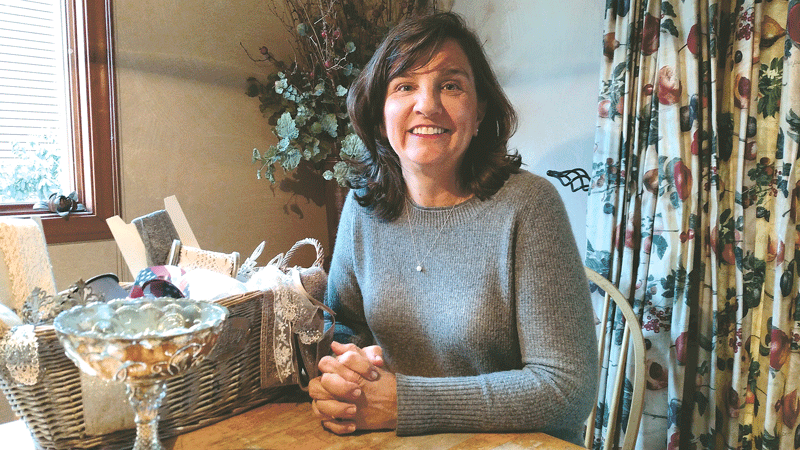
Christine Adams combined a long-time love of flowers, design expertise, and an entrepreneurial itch to create a success story in Florence.


Christine Adams tells of a trip she and her husband, Chip, took to the White Mountains in New Hampshire many years ago, and a sign that caught her attention along a scenic hike.

“We walked by this rickety old bridge, and I looked up and saw a sign that said ‘Badger’s Realty,’” she said, adding that the name struck her for some reason. “I said to Chip, ‘that’s going to be the name of my store someday.’ It wasn’t just the name — the look of the building was ratty, and I loved it. I just love rustic. And it just stuck with me.”

Fast-forward to Adams’ current business, Florence-based Badger’s Flowers & Co., where she creates floral arrangements for weddings and other events that are anything but ratty; in fact, she has won awards from WeddingWire and the Knot for her work with clients. But she took a circuitous route to entrepreneurship.

“I was a bookkeeper for an architecture firm in my single days,” she said. After she got married, her husband, a TV producer, wound up traveling quite a bit, and she stayed home with her two children. When they reached school age, she worked part-time — mother’s hours, as she put it — at a local florist for the better part of a decade.

“When the kids went off to college, it was time to reinvent myself,” Adams told BusinessWest, and she again looked to the world of flowers, but as her own boss this time. “I thought, why not try doing this? So, about three years ago, I had a website made, and a friend of a friend told a friend getting married, they called me, and it just slowly started trickling in.”

Helping clients decide on everything from bridal bouquets and boutonnieres to table centerpieces and outdoor arbors, in styles ranging from rustic to garden to classic elegance, Adams has taken her passion for design (she attended Rhode Island School of Design, and holds a degree in business management) and married it — pun intended — to a desire to provide brides and their families with what she calls ‘wow’ moments.

“I love the experience of meeting with people. I’ve had brides, grooms, moms, and dads spend hours here, chatting over coffee or wine,” she said, explaining that she takes on no more than one event per weekend, often traveling to New York or Boston during the week — as well as local flower farms — for some hard-to-find flower or specialty ribbon. “It’s a boutique style of business. I pride myself on bringing something with a specialty touch. I’m always looking at how I can make it a little different.”

Tech Savvier

Interestingly, it wasn’t the floral-design element of Adams’ business that challenged her at first. It was the decidedly 21st-century business models she had to get used to.

“It’s funny — at one point, I noticed I was getting nothing, so I hired a guy to take a look at my website. He said, ‘whoever did your website didn’t fill in your geographic information, so you’re located in New York.’ Since he tweaked it, I started getting hits again.


Flowers come easy for me. My learning curve has been social media and having to learn, at this point in my life, how Instagram works. I met with a marketing consultant, and as soon as I did what she suggested, my visibility doubled.”


“Learning technology and social media is so new to me, but it’s such an integral part of this business, because that’s where everyone goes for their information,” she went on. “Much of my demographic is out of state; I get calls from San Francisco, San Diego — people whose parents live here, or they went to college here, and they’re coming back to get married. I don’t feel like I’m competing with local businesses, with so much of my business coming from out of state.”

She did, however, recently join the Berkshire Wedding Collective, a group of wedding vendors that provides an online information portal for people seeking such services in Western Mass., and also got involved with the Greater Northampton Chamber of Commerce, through which she has taken classes in Google AdWords, Excel, and other business tools.

“Flowers come easy for me. My learning curve has been social media and having to learn, at this point in my life, how Instagram works,” she said, before opening up her account and scrolling through dozens of examples of her work that potential clients can peruse. “I met with a marketing consultant, and as soon as I did what she suggested, my visibility doubled. I wouldn’t have guessed that.”

Christine Adams makes effective use of Instagram

Christine Adams makes effective use of Instagram to display dozens of photos to inspire clients planning their own weddings.

As someone who was once very shy, business networking is new for her as well. “But at the same time, I can see the benefit, and I’m slowly growing more comfortable.”

It’s the one-on-one sessions with clients where she feels truly at ease, though. It’s in those discussions where she can formulate a vision. Sometimes the budget doesn’t match the wish list, but when everything comes together and the client gets that ‘wow’ feeling, it’s gratifying. “It’s a collaboration, and I want people to be happy.”

She told of a bride from San Diego coming back to Western Mass. to be married near her parents, who live in South Hadley. She loved patriotic colors, but didn’t want a bright, gaudy red, white, and blue design. Adams found a ribbon featuring a motif of American flag colors, but more subdued, and when she showed her the ribbon via Skype — and how it could match with ivory fabric — the client loved it.

That give and take is the heart of the business, but an element she wouldn’t have as much time for if she operated a storefront flower shop rather than working out of her home, a restored 1800s farmhouse that’s been in her husband’s family for five generations. “When you have a flower shop, you can’t take all this time with people.”

Bursting to Life

Adams delights in hard-to-find flowers to pepper arrangements of more traditional choices. “I might hit Boston or New York for those specialty stems that say, ‘wow.’ You don’t need a lot of them. Even few items like that gives it a special look, and really sets it apart.”

The challenge doesn’t always end with the order, however.

“It’s in my contract that Mother Nature is a variable,” she said, recalling one wedding where cafe au lait dahlias were a featured item. When she went to pick them from the wholesaler a few days before the wedding, inclement weather had rotted those particular flowers. But while her heart was racing, she called local farmers and ended up with smaller dahlias that were just as striking, and visited a market in Boston for some other unique pieces. “When I delivered them, there was a ‘wow,’” she said.

Indeed, weather that’s too hot, too wet, or too dry can mess with the best-laid plans, she said, but scrambling to replace an item and still coming up with something impressive is an oddly gratifying experience.

Adams’ satisfaction isn’t priority one, of course; her clients’ happiness is. And the comments on her website testify to that.

“She is truly a floral artist with an eye for design like I have never witnessed in my life,” one bride from Westfield wrote. “She is so extremely talented, but most importantly so extremely passionate about her work, and her clients. When I first saw her stunning work, I was truly taken back. I witnessed her hard work first-hand — the time, effort, and passion she put into every arrangement, like a piece of art.”

Reactions like that provide a ‘wow’ factor of their own.

Joseph Bednar can be reached at [email protected]

Community Spotlight Features

Community Spotlight

Denis and Marco Luzuriaga

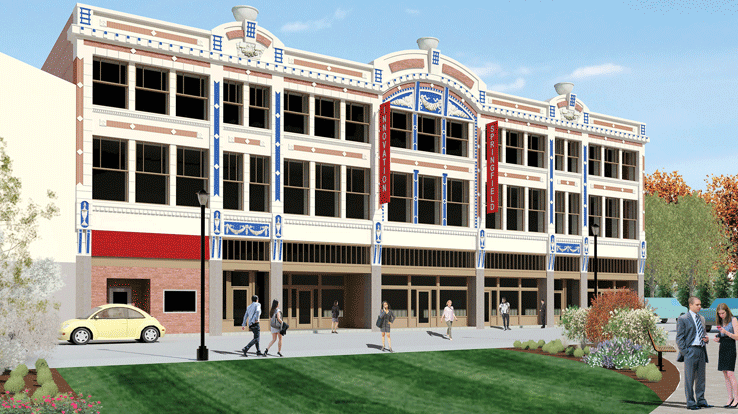
Denis and Marco Luzuriaga say more than 200 people have already expressed interest in the 18 market-rate apartments they are building on the upper stories of the Cubit building downtown.

Marco Luzuriaga and his brother Denis are betting on the future.

To be precise, that’s the future of Holyoke, a city where years of disinvestment led to vacant buildings with major environmental challenges that squashed any interest developers had in investing in them.

But a slow evolution has occurred over the past few years, and the landscape is undergoing marked change. The combination of Mayor Alex Morse’s proactive stance, support from the City Council, and work by other officials led to the creation of an urban-renewal plan four years ago that is finally coming to fruition.

Notable progress includes a focus on the Innovation District; the establishment of the Massachusetts Green High Performance Computing Center, a $165 million academic research facility between Cabot and Appleton streets that overlooks the first-level canal; major infrastructure investments; a growing number of artists and art venues; and other measures such as tax credits designed to spur revitalization and attract people of all ages.

When they realized the potential the downtown held and saw energy in the area increasing, the Luzuriaga brothers told BusinessWest, they made a decision to get in on the ground floor of the rebirth in both a literal and figurative manner.

Marco is an IT professional who lives in Maryland and was thinking about a career change, and his brother is a Holyoke artist. They decided to join forces, and after undertaking a feasibility study of the former Cubit Wire & Cable Co. Inc. building at 181 Appleton St., they purchased it for $325,000 and took on a challenge unlike anything they had ever imagined.

“But the amount of open space here in Holyoke is unparalleled, and we have seen a similar pattern of success in places like Soho and Jersey City, where artists moved into an area and they became vibrant, artistic communities,” Marco said, pointing to Gateway City Arts, the Canal Gallery, independent art studios, the Canal Walk, the computing center, Holyoke’s new $4.3 million rail platform, and other major projects within walking distance of the Cubit building, where their $5 million renovation will soon be complete.

The bottom floor will become home to the MGM Resorts HCC Center for Culinary Arts at Holyoke, while the two upper floors will be loft-style, one- and two-bedroom apartments with enormous windows and sweeping views of the area. In addition, the Luzuriaga brothers purchased three vacant lots that abut the Cubit building and will be used for parking.

“The Center for Culinary Arts will double the college’s prior teaching capacity and provide no-cost culinary training to 50 Holyoke residents every year, serving as a career pipeline into jobs from entry level to senior management in a top-employing industry of our region,” said Morse, adding that students are expected to start classes there next spring.

He added that the city has worked with developers and businesses to create solutions for some of its most challenging sites, and these efforts are yielding concrete results, with more than $100 million of investments in the pipeline.

Mayor Alex Morse

Mayor Alex Morse says the renovation of the Cubit building will provide more downtown housing and become home to the MGM Resorts HCC Center for Culinary Arts at Holyoke.

“We’re creating an environment that people want to be part of and are trying to reach the tipping point by putting together solutions for the most challenging sites,” Morse told BusinessWest.

Marcos Marrero, the city’s director of Planning and Economic Development, noted that, although vacant storefronts and shuttered buildings had become part of the downtown landscape and space ready for businesses to move right in is scarce, the situation has undergone a significant change.

“Our downtown is a different place than it was four or five years ago due to the availability of commercial space and opportunities to live and work here,” Marrero said.

Indeed, four major projects are underway, and interest and enthusiasm are exploding. “We have 200 people on a waiting list for the 18 apartments we are creating in the Cubit building,” Marco Luzuriaga said, noting that the list was created thanks to a Facebook posting about the new units, which will rent for $1,000 to $1,400.

For this, the latest installment of its Community Spotlight series, BusinessWest takes an in-depth look at Holyoke and the investments developers and businesses are making in the Paper City that will help shape and create a long-awaited and exciting new chapter in its history.

Repurposing Blighted Buildings

The Parsons Paper Co. facility, which was built in 1853 at 84 Sargeant St., was one of the most challenging properties in the city. The contaminated complex was abandoned in 2004, and in 2008 a fire caused extensive damage. Four years later, the city officially foreclosed on the property and took ownership for failure to pay taxes.

Aegis Energy Services Inc. is located next door to the old mill, and when the company expressed interest in the 4.7-acre site due to its desire to expand, the city did everything it could to make the cleanup and purchase possible.

“The Parsons site was one of 10 key areas that were designated as priorities for redevelopment in our 2013 Urban Renewal Plan,” said Morse. “Significant legal, environmental, and financial constraints had impeded progress for years, so we jumped when Aegis told us they were willing to entertain the idea that we would leverage resources to do the $3.6 million environmental cleanup that was needed.”

The work began last March thanks to funding from multiple levels of government, two private companies, and the involvement of every public corporation in the city. Although the majority of the 350,000 square feet of manufacturing space was demolished, Aegis was able to preserve about 40,000 square feet in one section of the structure.

In addition, the city provided Aegis with the most aggressive tax-incentive schedule in its history: a 100% property tax exemption for 10 years as a way to finance a $400,000 portion of the site cleanup costs.

“The financing framework for this project is probably the most complex that Holyoke has seen in decades,” said Marrero. “But the implications a year from now will be significant — blight reduction, building reuse, job creation, expansion of manufacturing, more renewable energy, and improved property values in the neighborhood.”

Aegis plans to do a major renovation to suit its manufacturing needs, which will allow the company to expand its footprint by 200% and almost double its workforce with the addition of 30 new jobs.

However, the project is being undertaken in stages. After the cleanup was complete, Aegis created a 2.5-megawatt solar farm on a portion of the acreage to help pay for its expansion. Holyoke Gas & Electric entered into a power-purchase agreement with the company, and the electricity is being used by property tenants of the Holyoke Housing Authority.

Progress will also soon be visible at 37 Appleton St., which was the second-largest vacant, blighted building in Holyoke. In the past, the site was home to businesses that included Worthington Compressor and the American Dream Modular Home manufacturing company.

Recently, American Environmental agreed to buy it from the city for $1 from the city’s Redevelopment Authority with the agreement that the company would undertake the $600,000 cleanup of the brownfields site.

“We’re about to close on the sale of the property,” Morse said, explaining that it will allow American Environmental to expand and add 50 new jobs.

There are also plans underway to reuse the third-largest blighted and vacant building, the former Farr Alpaca building at 216 Appleton St., for housing.


Our downtown is a different place than it was four or five years ago due to the availability of commercial space and opportunities to live and work here.”


Winn Development has partnered with the city’s Redevelopment Authority and forged an agreement to renovate the building and turn it into approximately 100 apartments. The company is hoping to get approved for historic tax credits, and if all goes well, Morse said, the estimated $38 million renovation will help fulfill the goal of creating dense housing downtown that will make it a safe, livable place for people of all income levels.

A $34 million rehabilitation of the 18-building Lyman Terrace public-housing complex also began last year. The buildings contain 167 units, and the first phase of work included excavating and building new roads and sidewalks, and installing new water and sewer lines and street lighting.

Morse said improvements to the housing units began this year, and he noted that the project is an example of how the city works closely with residents to respect and meet their needs.

When he took office five years ago, there was talk of demolishing the complex. But people had strong feelings about keeping the historic structure in the heart of downtown. As a result, the Housing Authority decided to renovate it, and after they held a number of public meetings, they were able to integrate recommendations made by residents into the final design.

“The residents had input on every part of the process,” said Morse. “The project is a real partnership that led to a great outcome, and has become a model to think about the way we do projects in the future.”

Another development that sparked controversy was the use of an 18-acre parcel on Whiting Farms Road. It sits across the street from a residential neighborhood, and although Lowe’s and Walmart had looked at the site, neighbors had objected to having a big-box store built there.

“We shepherded the use of the property, reset the conversation in a similar manner to Lyman Terrace, and talked to the residents to get input about what they wanted as well as the city’s goals and how we wanted to accomplish them,” Morse said, adding that the public meetings played an important role in determining a new use for the land. “If you want growth to take place, it needs to be possible, but you also need to build a sense of public support and common ground.”

The model worked well, and the City Council voted for a zoning change to allow Gary Rome to build a new, $10 million Hyundai dealership on 10 of the 18 acres. It opened last October, is the largest of its kind in the country, and led to the creation of 50 new jobs.

Collaborative Efforts

Economic development is also taking place in other areas of the city, including a $21 million project underway at Ingleside Square near the Holyoke Mall.

The former Holiday Inn is being replaced with a Fairfield Inn by Marriott, which will be completed this year. Half of the old hotel was demolished, the remainder is undergoing a major rehabilitation, and the remaining section of the footprint has been turned into pad sites for restaurants or retail stores.

“It’s the first time the city pre-approved a permit to help secure tenants,” Marrero said. “We worked with the developer and visually approved their site plan.”

So far, an Applebee’s and Chipotle have been built there, along with a Vitamin Shoppe and a stand-alone McDonald’s.

One pad site remains, and the mayor said it is a great example of what can be done with an underutilized property.

“For many years, the property was regarded as a homeless hotel because the state used it to house homeless families,” Morse noted. “But it is a prime piece of property located off of I-91, and in addition to creating at least 200 jobs, this reuse will result in hundreds of thousands of dollars in new tax revenue.”

Other projects in the pipeline include a new Easthampton Savings Bank branch, and redevelopment at the corner of Hampden and Pleasant streets with a planned Dunkin’ Donuts and an additional 2,000 square feet of move-in-ready retail-commercial space.

Morse said job growth continues to take place, and the city’s unemployment rate is 4%, which is the lowest it has been in 17 years.

“We certainly have more to do, but the wheels are constantly in motion,” the mayor told BusinessWest. “There is still plenty of vacant space in Holyoke’s historic mills. We also have the cheapest and cleanest energy source in New England, plenty of water, and the assets to continue filling our core with economic opportunity. Holyoke is increasing opportunity for its residents and strengthening its presence as an economic hub in Western Massachusetts.”


Holyoke at a glance

Year Incorporated: 1850
Population: 40,684 (2016)
Area: 22.8 square miles
County: Hampden
Residential Tax Rate: $19.17
Commercial Tax Rate: $39.72
Median Household Income: $37,372 (2015)
median Family Income: $40,559 (2015)
Type of government: Mayor, City Council
Largest Employers: Holyoke Medical Center; Holyoke Public Schools; Holyoke Community College
Latest information available

Manufacturing Sections

On the Cutting Edge

Marianne Halpern

Marianne Halpern displays the Thunderbird, one of the knives now being produced by Three Rivers Mfg., a subsidiary of Halpern Titanium.

Marianne Halpern says the company used to be called Custom Knife Supply because … well, that’s what it did — that’s all it did.

It supplied custom parts — blades, handles, hinges, and other components — to knife makers across the country, she said of the venture that she and her husband, Les, started out of their home in Monson, more as a money-making hobby than anything else.

When it became much more than that — the two eventually left their day jobs to pursue this full-time — and did much more than supply knife parts, a name change was certainly in order, Halpern told BusinessWest.

The search for something new and more accurate wasn’t exactly involved or scientific in nature, Halpern went on, adding that credit for what’s now in block letters on the business cards goes to the woman who handled that printing job.

“She asked what we did and what materials we worked with,” Halpern noted, adding that, when given a quick primer, the printer, desiring to make the principals’ name part of the equation, said, ‘how about Halpern Titanium?’

This question soon became the answer, said Halpern, because ‘Titanum,’ all by itself, says a quite a bit. “It has a definite ring to it.”

Indeed, this silver-colored, low-density, high-strength metal is practically synonymous with ‘cutting edge’ when it comes to its use in everything from artificial joints and dental implants to golf clubs; from eyeglass frames to Corvette engine parts.

Meanwhile, the metal itself is not exactly easy to fabricate into any of the above, Halpern went on, adding that, in many ways, this name connotes precision and expertise to those who read it.

Exactly how much the new name has helped the company is a matter of debate, but what isn’t is the fact that Halpern Titanium, now located in the Palmer Technology Center (the old Tambrands complex in Three Rivers) continues to grow and diversify itself into a major player within this industry.

The company, which also specializes in other materials, including carbon fiber, fiberglass, and stainless steel, now makes parts for a number of knife makers, many based in Oregon due to very liberal knife laws there (quite of the opposite of what are on the books in the Bay State), but manufacturers of other projects as well. And within the past 18 months or so, it has taken its expertise to a new and different label by introducing its own brand of knives, produced by a subsidiary named Three Rivers Manufacturing (TRM).

That venture has already produced several models, including the Nomad, the Class Action, the BT 1000, and the Thunderbird, which earned an enthusiast review from a trade publication called Knife News.

The Nomad Slipjoint

The Nomad Slipjoint, complete with titanium frames and royal blue G-10 handle, is one of several knives now bearing the Three Rivers Mfg. (TRM) name.

“Designed by company founder Les Halpern, the Thunderbird’s distinctive geometry injects some new life into familiar tactical knife attributes like a wharncliffe blade, titanium framelock, and sculpted pocket clip,” the magazine wrote. “The narrowing frame is embellished with deep milled-out grooves to create a look that harkens back to the tail fins found on the classic 1950s American-made automobiles.”

TRM, currently selling direct to consumers from its website, hopes to roll out several new models in the years to come, said Halpern, adding quickly that the parent company’s main purpose in life is to help a host of major knife makers earn similar platitudes for their products.

For this issue and its focus on manufacturing, BusinessWest takes an in-depth look at a company with a sharp — as in sharp — focus on controlled growth and further expansion of each of the many components within the business plan.

Cutting to the Chase

The printer who handled the Halperns’ business cards had more to do than help come up with a new name. Her eventual assignment was to pack a ton of information on that small space, while putting it all in something approximating titanium’s color on a black background.

In short, there’s a lot to read there.

Beyond the typical name, address, phone, and e-mail, the card provides a quick education into the services provided and materials used — at least to those versed in this field and the language associated with it.

Indeed, there are phrases like ‘dynamic waterjet cutting’ and ‘swiss turning,’ and listed materials including ‘titanium sheet bar and plate’ and the related ‘6AL/4V, CP Grades 1-4’ (an alloy of that metal), as well G-10 (fiberglass) and carbon fiber sheet. One could also note that free quotes are available and that this is a certified women-owned business.

Like we said, there’s a lot to read. And it all translates into the fact that this company has come a long way from the Halperns’ basement in Monson.

That’s where things started almost 20 years ago, said Marianne, noting that she was a teacher at Tantasqua Regional Senior High School and Les was a designer in the adaptive equipment department at the Monson Developmental Center when they started to fashion parts for knife makers on the side — and got really good at it.

So good, as noted, that they started thinking about this as a career move.

“I took a leave of absence from my job in 2000, and never went back — and I never looked back, either,” she told BusinessWest. “Les retired, and he never looked back.”

Instead, they’ve been looking both outward and inward with an eye on finding new ways to do what the company has essentially done from the very beginning — serve as a solution finder for many of the nation’s most prominent knife makers.

“Companies come to us with a specific need they need to address,” she said, adding that solutions include everything from parts to whole-knife manufacturing and assembly (although not much of that) to assistance with designing new products for the market.

When asked to list some of these customers for which solutions are provided, Halpern said those names are among the many things are kept confidential within this large, tight, and highly competitive business.

To effectively convey what the company does, Halpern had to repeatedly stop in mid-sentence, get up from her chair, and find a knife with which she could show the company’s contribution rather than explain it.

She picked up an elaborate multi-tool product assembled by one of those companies she couldn’t name to explain how it makes one small carbon-fiber piece that holds the tool bit in place. She picked up another knife to show off one of the many types of handles (a good number of them produced from G-10), and on it went.

Les Halpern

Les Halpern, seen here at the prototype CNC machining center, wears many hats for the company, including knife designer.

“For many customers, we’ll make one part, like the handle, and they’ll make the rest,” she explained. “We’re a team with that company, and we have many, many relationships like that. They don’t have to worry about that part of the knife.”

Getting to the Point

There are many visible signs of growth at Halpern Titanium, starting with its facility in Palmer.

The company started with roughly 3,000 square feet, a few machines, and the Halperns handling almost all the assigned duties. The footprint has expanded to 20,000 square feet, there are now 12 employees and 25 machines, and the Halperns, while they still work long hours, don’t have to do it all.

A growing client list is another measure of success, she said, adding that the company has staked out a position as one of the clear leaders in this field.

“There’s not a lot of competition out there — it’s not easy to do what we do,” she said, noting, again, the difficulty of working with titanium, G-10, and other materials.

The new subsidiary, TRM, is still another sign of growth and progress, she said, adding that she and Les decided roughly 18 months ago to take their acquired expertise and put the company’s name on its work instead of someone else’s.

“We had been making private-label knives for other companies for 18 years, and we often thought that it would be a good idea to do some of our own,” she explained. “And we recognized that making something for someone else that they sell is very different from making something yourself that you have to market, but we wanted to give it a try.”

Working in tandem with some noted custom knife designers, TRM brought a few products to the marketplace last year, she went on, including the Nomad, complete with an array of handle colors, such as ‘blaze orange,’ ‘cranberry,’ ‘forest green,’ and ‘battleship gray.’ The Thunderbird will be available online shortly.

Results thus far have been generally positive, said Halpern, and the company is learning the new elements of business associated with this venture, especially the marketing side of the equation and its various social-media platforms.

“It’s a whole different experience trying to market a product,” she explained. “I’m very active on social media — Twitter, Facebook, Instagram … and I’m gradually building a following for our company.”

She and others will attempt to expand this following in June at the Blade Show in Atlanta, billed as the largest knife show in the country, sponsored by Blade magazine. Attendees will include custom knife makers, manufacturing operations, collectors, and many more constituencies.

This means those representing both TRM and Halpern Titanium can multi-task, which is essentially what those at this corporation are now doing on a daily basis.

Indeed, Halpern noted, with the many different kinds of operations, including production of its own brands, now taking place, the company must conduct what she called a “balancing act” to ensure that each has the ability to thrive and grow.

“On the private label, we want to continue with those companies that want to add new products and grow with them,” she explained. “Meanwhile, we’re adding new customers selectively, making sure it’s a good fit, and we want to continue with our own models, introducing maybe a few new ones each year. Let’s see where that all takes us.

“It’s definitely a balancing act; we keep evolving as we need to,” she went on. “You can’t just stand still — in any kind of business, but especially this one. You have to be ready to add things to your repertoire.”

Getting a Handle

Things like the Thunderbird, with its narrowing frame and deep milled-out grooves, and the Nomad, with its blaze-orange, cranberry, and battleship-gray handles.

This company that was started in a basement continues to build upon its repertoire and its track record of excellence within the knife industry.

As the name suggested by that printer a while back suggests, this company is on the cutting edge — in just about every aspect of that phrase.

George O’Brien can be reached at [email protected]

Business of Aging Sections

Sight Restoration

Dr. John Papale says most patients who undergo cataract-removal surgery see a more than 95% restoration of vision.

Dr. John Papale says most patients who undergo cataract-removal surgery see a more than 95% restoration of vision.

As the population ages, eye problems will become an increasingly large healthcare issue for society. Fortunately, modern science and new surgical techniques are bringing improved vision — and better quality of life — to those suffering from a number of common ailments.

Several months ago during a routine eye exam, Louise Pugliano was told that she had cataracts in both eyes. The 84-year-old doesn’t drive at night and had no symptoms, but had worn glasses or contact lenses for more than 20 years, and agreed to have cataract-removal surgery.

The first procedure took place Jan. 8, and the second was done Jan. 23, and they were not only painless, but the Springfield woman was thrilled to find she no longer needs prescription eyewear.

“I’m so glad I did this; I had a great experience and wonderful results: I don’t need glasses anymore and can read the small print in the newspaper,” Pugliano said, adding that she had complete faith in her surgeon, Dr. John Papale of Papale Eye Center in Springfield.

Her diagnosed condition, treatment, and response to it are all typical of what’s happening within the broad realm of eye care today — as the population ages, more people are being diagnosed with problems, but modern science has created solutions, many of which are truly life-altering.

Papale told BusinessWest that cataract removal is the most commonly performed surgery in the U.S., and more than 3 million people have the procedure done every year. The 20-minute outpatient operation corrects vision and eliminates troublesome symptoms that affect many seniors, such as seeing halos or being bothered by the glare of oncoming headlights when driving at night.

“Most people have more than a 95% restoration of vision, assuming there are no other problems such as glaucoma and macular degeneration,” Papale said, as he spoke about conditions that affect aging eyes.

Indeed, they are common. The Mayo Clinic reports that about half of all 65-year-old Americans have some degree of cataract formation, and more than 30 million Americans are expected to develop them by 2020. In addition, more than 6.5 million Americans age 65 and older have a severe visual impairment, and rates of severe vision loss are expected to double by 2030.

Dr. Camille Guzek-Latka, an optometrist at Chicopee Eyecare, P.C., says many people use over-the-counter glasses to avoid getting an eye exam. “But the exam is important; we not only evaluate the need for glasses, we look for evidence of eye disease because, as people age, their risk of developing a problem increases.”

Annual eye exams are critical for people over the age of 60 because eye disease can cause irreversible blindness and there may be no symptoms until it reaches an advanced stage.

Dr. Andrew Jusko says an eye exam is needed to detect glaucoma, as there are no symptoms in the early or middle stages.

Dr. Andrew Jusko says an eye exam is needed to detect glaucoma, as there are no symptoms in the early or middle stages.

Although some people don’t have vision coverage on their insurance plan, Eye Care America has provided free exams to almost 2 million eligible seniors (visit www.aao.org), and health-insurance plans cover the cost if a minor medical problem is uncovered, which usually happens as people get older.

“It’s important to protect against damaging eye diseases; people are living longer today and want to maintain full visual functionality through the end of their lives,” said surgeon Dr. Andrew Jusko of Eyesight and Surgery Associates in Springfield and East Longmeadow.

Papale agrees. “The eye is our most important sense: 25% of all input to the brain comes from the eye and nerve endings,” he noted.

For this issue and its focus on the business of aging, BusinessWest examines problems that affect aging eyes and what can be done to prevent and correct them.

Cause, Effect, and Treatment

The lens of the eye consists of a flexible jelly that begins to stiffen as people enter their 30s and 40s. The condition is called presbyopia, and most people need reading glasses to compensate for the fact that their eyes can no longer shift focus easily.

“Many people in their 40s and 50s get by with over-the-counter reading glasses, but by the time they reach their 50s or 60s they usually don’t work well,” Jusko said, adding that early stages of other diseases such as diabetes or hypertension can be seen in the eyes during an exam.

Cataracts cause the lens to change from crystal clear to cloudy, and typically develop as people age. They don’t harm the eye but do affect vision, and surgery to correct the problem involves replacing the aging lens with an artificial one.

In the past, eye drops were always needed for a few weeks following the procedure, but Guzek-Latka said a newer approach is often used today called ‘dropless cataract surgery,’ which occurs when the surgeon injects a combination of antibiotics and steroids into the eye at the time of the procedure to reduce the need for drops after it.

“The surgery is safe and wonderful; it can restore sight, reduce the risk of falling, and people are thrilled with the results,” she noted, adding that, although cataracts are related to aging, prolonged use of steroids for conditions such as asthma can cause them to develop earlier.

Cataracts are a change that occurs as the eye ages, but glaucoma is an age-related disease that causes blindness as the peripheral or side vision is lost.

“It’s called the silent thief of sight because the vision loss occurs slowly and painlessly,” Guzek-Latka said, adding that the condition is linked to a buildup of pressure inside the eye, but it can take many years for the vision loss to occur.

The disease can start in the 40s, but risk increases with age. “People cannot tell if the pressure inside their eye is normal, so they can be going blind and not know it,” Papale told BusinessWest, noting that, since glaucoma frequently only affects one eye, the other eye compensates for it so the person doesn’t realize what is happening.

As a result, it’s critical to catch the disease before irreversible damage is done. “An eye exam will show whether the pressure is normal and if the optic nerves appear abnormal,” Jusko said.

Some forms of glaucoma can be cured, and treatment ranges from surgical procedures to prescription eye drops that control pressure inside the eye.

Jusko often uses eye stents during surgery, which are small devices implanted in the drainage area of the eye to help reduce the need for future medication.

“The average age for glaucoma is the 70s, which is about the same age that people need cataract surgery,” he said, noting that stents can also be used during that procedure.

Age-related macular degeneration, or AMD, is one of the most serious eye diseases and the leading cause of blindness in seniors. “The macula is the part of the retina that gives you the sharp vision you need to read, drive, and recognize faces,” Papale said.

More than 2 million Americans are afflicted with some form of the disease, and that number is expected to more than double to 5.4 million by 2050 due to the aging population.

“It’s the leading cause of irreversible vision loss in people age 50 and older, and treatment for it is limited,” Guzek-Latka said.

“There are usually no symptoms in the early stages, but the disease can be seen when the pupil is dilated during an eye exam,” she continued, adding that, as the disease progresses, it causes distortion in the central vision. “People can still see things on the side, but they can’t read, and faces often appear as dark gray areas. Most people think blindness means total blackness, but it’s very rare not to be able to see any light.”

The cause of AMD is unknown, but it’s important for people to be aware of risk factors. Smoking doubles the risk of macular degeneration, it tends to run in families, women are more likely to develop it than men, and it is more common among Caucasians than African-Americans, Hispanics, and other races.

“People might be able to reduce their risk of macular degeneration or slow the progression by making healthy choices such as regular exercise, maintaining normal blood pressure, quitting smoking, and eating a healthy diet rich in green, leafy vegetables and fish,” Guzek-Latka said.

The disease is divided into two categories — wet macular degeneration and dry macular degeneration. Although there are no symptoms associated with early dry macular degeneration, the vision becomes distorted over time, and once function is lost, it cannot be restored.

However, further damage may be prevented with special vitamins formulated for the eye. “But we don’t recommend taking them unless the person has been diagnosed with macular degeneration,” Jusko said, noting that studies show no definitive or preventive benefits for people without the disease.

Wet macular degeneration is caused by the growth of abnormal blood vessels under the macula that are fragile and prone to bleeding.

“The bleeding is not visible because the macula is in the back of the eye,” Papale said, adding that the dry form of the disease can progress to the wet type.

Treatment includes injections of medicine that block the growth of abnormal blood vessels and can lead to some improvement.

“It won’t cure the disease, but it’s definitely an advance; 10 years ago, there was less hope for people with wet macular degeneration then there is today,” Guzek-Latka said.

She added that FDA approval was granted for an implantable device in 2010 that is used at the end stages of the disease. It’s the size of a pea and magnifies images onto the retina.

“But it’s only used as a last resort. It will not restore vision, but might allow someone to identify faces, even if they are not clear,” she said.

Diabetes is another disease that affects the eyes. According to the National Eye Institute, 40% of Americans over age 40 have some degree of diabetic retinopathy, and one of every 12 people with diabetes in this age group has advanced, vision-threatening retinopathy.

That’s a condition that results when small blood vessels in the retina leak blood or other fluids that cause progressive damage to the retina, which is the light-sensitive lining at the back of the eye.

“Once someone is diagnosed with diabetes, they need yearly eye exams to detect it,” Jusko said.

Treatment ranges from the use of lasers to injections and surgical procedures, and primary-care physicians usually work closely with the person to ensure their blood-sugar levels and blood pressure are under control.

Hope for the Future

Dry eye is another condition that can affect people of any age, but is more prevalent in elders and post-menopausal women. It results from inadequate tear production and causes burning, stinging, itching, or the feeling that sand is in the eyes.

It can be alleviated with over-the-counter lubricating drops, fish-oil supplements, and vitamin C. But dry eye that is moderate or severe can cause damage, so people whose symptoms aren’t helped with over-the-counter remedies should see their eye doctor.

There is no doubt that eyesight is affected as people age, but there are things everyone can do to help to prevent disease. Eyes need good blood circulation and oxygen intake, and since both are stimulated by regular exercise, it ranks high on the list.

People should also do their best to maintain normal blood pressure and cholesterol levels, and wear sunglasses that block ultraviolet light.

But getting an annual eye exam is the most important measure anyone can take to preserve vision.

“Eyesight is our most important sense,” said Guzek-Latka. “We rely on it for so many things, and having good vision is a driving factor in people’s well-being as they age.”

Business of Aging Sections

The Write Stuff

By Gina Barry, Esq.

Gina Barry

By Gina M. Barry, Esq.

It should come as no surprise that the general population of the U.S. is aging. According to the Administration for Community Living, which was created by the U.S. Department of Health and Human Services, people who were age 65 or older represented 14.5% of the population in 2014, and that number is expected to grow to 21.7% of the population by 2040.

When aging, most people would prefer to have a plan in place to ensure that their needs and goals will be met, even if they are incapacitated or pass away. While many people believe they do not have enough money to need an estate plan, the need for an estate plan is not solely related to the amount of one’s wealth.

As explained below, a basic estate plan is comprised of four legal documents and is quite simple to establish.

Last Will and Testament

A will directs the disposition of the probate estate. The probate estate consists of assets held in the decedent’s name alone that do not have a beneficiary designated. When a person passes away without a will, their estate will be distributed as directed by the Commonwealth’s intestacy law, which may not be as they would have desired.

A common misconception is that a will is not needed if every asset is jointly owned or has a designated beneficiary. Of course, there must be a surviving joint owner for this plan to work. If both owners pass away simultaneously in a common accident, the estate will need to be probated, as there will be no surviving joint owner.

A will is also necessary in order to designate a personal representative, who will carry out the estate. The personal representative will gather the probate assets, pay valid debts, and make distribution of the estate to the beneficiaries as set forth in the will. Further, if the decedent leaves behind minor children, a guardian can be designated in the will to take custody of these children.

Likewise, a trust can be established in a will that would provide ongoing protection for minor children — or possibly for other beneficiaries who should not receive their inheritance outright, usually due to spendthrift concerns. When there is no will in place, the power and ability to make these designations and to direct the disposition of property is forfeited.

Healthcare Proxy

A healthcare proxy is a document that designates a healthcare agent, who would make healthcare decisions in the event of incapacity of the principal (person signing the proxy). The healthcare agent would step into the shoes of the principal and make decisions as they would if they were able. For example, they may decide whether a certain medication should be taken, whether a certain medical procedure should be done, or whether there should be an admission or discharge from a medical facility.


While many people believe they do not have enough money to need an estate plan, the need for an estate plan is not solely related to the amount of one’s wealth.”


‘Living will’ language is normally included within the healthcare proxy. The living-will language addresses end-of-life decisions and generally sets forth that the principal does not want extraordinary medical procedures used to keep them alive when there is no likelihood of recovery. This can be a difficult decision to carry out; therefore, care should be taken to name someone who would be able to honor that decision. Individuals who have an advanced illness may choose to establish medical orders for life-sustaining treatment (MOLST) in addition to a healthcare proxy.

A MOLST is a medical order form completed by a patient and their physician that relays instructions about a patient’s care, including stating which treatment should be given or otherwise withheld. A MOLST would eliminate the need for living-will language in a proxy, but the best practice would be to reference it in the proxy.

Durable Power of Attorney

A durable power of attorney is a document that designates someone to make financial decisions. This document is usually in full force and effect when it is signed, but it is expected that it will not be used unless you are unable to handle your own financial affairs. It is also possible to grant a springing power that does not take effect until incapacity arises.


Rehabilitation Facilities in Western Mass.


The power of attorney is a very powerful document that is as broad as the powers granted within it. It gives authority to the designated person to handle all financial decisions, not just pay bills. In most cases, the person named will be authorized to handle real estate, life insurance, retirement accounts, other investment accounts, bank accounts, and any other matters involving money.  As such, the person chosen to serve in this capacity should be someone with financial savvy who can be trusted without reservation.

Homestead Declaration

The homestead declaration, once properly recorded in the Registry of Deeds, declares a principal residence to be a homestead. The homestead declaration protects the equity in the primary residence up to $500,000 from attachment, seizure, execution on judgment, levy, or sale for the payment of debts.

In some cases, such as advanced age or disability, the equity protection can be up to $1 million. If a homestead declaration is not recorded, there is an automatic $125,000 of equity protection.  In addition to some other specific exceptions, a homestead declaration will not protect the real estate from nursing-home costs or tax liens.

Conclusion

With these four documents, most people can help their family members or trusted companions avoid expensive and painful legal hassles related to their ongoing care and their estate.

Individuals with more complicated estates may require different or additional documents to fully protect their interests and their beneficiaries, but for the majority of people, an estate plan is only four documents away.

Gina M. Barry is a partner with the law firm Bacon Wilson, P.C. She is a member of the National Assoc. of Elder Law Attorneys, the Estate Planning Council, and the Western Mass. Elder Care Professionals Assoc. She concentrates her practice in the areas of estate and asset protection planning, probate administration and litigation, guardianships, conservatorships, and residential real estate; (413) 781-0560; [email protected]

Creative Economy Sections

Broad Strokes

Springfield Central Cultural District Director Morgan Drewniany

Springfield Central Cultural District Director Morgan Drewniany

As director of the Springfield Central Cultural District, Morgan Drewniany doesn’t see the arts in a vacuum. Rather, they’re one of the connecting threads joining the realms of economic development, social justice, and a city’s walkability and livability, which are, of course, among the keys to any community’s future. To that end, the SCCD is raising the profile of the arts in and around downtown Springfield — and that of its myriad artists as well.

Morgan Drewniany recognizes the connections in her passions. That’s why she doesn’t think it strange that she went from studying soil chemistry at Hampshire College to leading the Springfield Central Cultural District (SCCD).

The specific connecting fiber is a passion for improving society. For example, to write a thesis on the political and physical environment in Northern New Mexico, she stayed on a reservation there, and later brought 200 soil samples — packed into the back of her Volvo — on a cross-country trek back to Amherst.

When she thinks back to her early interest in environmental health and social justice, “what I loved most was working with economically disadvantaged communities, those with lower education levels, lower income levels, communities of color in general. So, when I looked for a job, I didn’t look in the science field; I looked in art and nonprofits.”

The job Drewniany found was assistant director of the Springfield Business Improvement District. “It seemed like a good fit,” she told BusinessWest, explaining that the idea of lending her skills and passions to economic development appealed to her, particularly in the City of Homes. “I grew up in Westfield, and my parents brought me to Springfield all the time as a kid, to the museums or the symphony — I thought it was the coolest place ever. So to come back and help out during its revitalization was really gratifying for me.”

Violinist Anne Marie Messbauer

Violinist Anne Marie Messbauer plays in front of New England Public Radio during last fall’s Art Stop. NEPR will again host an Art Stop gallery next month.

But another opportunity would emerge that she’d find more intriguing. In 2013, the Massachusetts Cultural Council introduced the Cultural District Program as a way to brand areas densely populated with architectural, historical, and cultural assets. A consortium of cultural entities in Springfield applied for the designation, launching the SCCD in 2014. A year later, the organization sought a new director.

“When the opportunity came up, I knew the players, I personally have a passion for the arts, I have a lot of friends who are artists … it was a pretty natural fit,” Drewniany said, adding that she was drawn by the district’s untapped potential. “We were still applying for 501(c)(3) status, finalizing our bylaws and structure, a lot of internal stuff … it was a really exciting time. Now we know who we are. We want to be a unified voice for arts culture, not just within Springfield, but statewide, and even nationally.”

Today, the SCCD is supported by 55 members, ranging in size from the Mattoon Street Arts Festival, an annual weekend event, to larger players like Springfield Museums, New England Public Radio, the Community Music School of Springfield, and the Eastern States Exposition.

Representatives of these groups have long attended conferences on the state and national levels to advocate for the role of the arts, but the SCCD can represent the entire range of arts in Greater Springfield, Drewniany explained.

“We have a mission and vision — in short, to make Springfield a more friendly arts culture through civic engagement and arts engagement. That’s very broad, so it leaves us a lot of opportunities to interpret that.”

Forging Links

The district’s website explains its mission this way: “To bring more vitality to the city by highlighting its outstanding cultural offerings and adding new creative opportunities for artists and the greater community. We aim to make arts and culture in Springfield more accessible, while creating connections between artists, cultural landmarks, and visitors.”

One of those connections is the partnership known as Futurecity Massachusetts, a joint initiative of the Massachusetts Cultural Council and the Boston Foundation. Futurecity is working with mayors, urban planners, and arts and business leaders in Springfield, Boston, and Worcester on key real-estate projects in state-designated cultural districts in the three cities, targeting areas ready for development and job growth. The organization has created more than 200 such partnerships across the globe that reposition cultural assets from community amenities to marketplace drivers.

“We took on the Futurecity Massachusetts initiative with the Massachusetts Cultural Council with the idea of talking about a paradigm shift of art from nicety to necessity,” Drewniany said. “That has involved not just arts people but developers, city department heads, and city leaders talking about how, in order to create a 21st-century city, you have to integrate the arts. When you look at competitive cities right now, like London or Boston, developers are one-upping each other, saying, ‘we have art in our gallery.’ ‘Our building is totally made of art, and we have a huge sculpture outside!’”

She noted the example of London, where the developers behind a recent train-station project invested so much money in the building’s aesthetics that people started hanging out there because it was so beautiful. In short time, cafés started popping up, and adjacent vacant buildings were bought up and converted to lofts. “The revitalization of that neighborhood was based around the choice not to build a regular train station,” she said. “They didn’t just slap a mural on a wall and call it a day.”

The utility-box painting project

The utility-box painting project has brought splashes of color and whimsy to Springfield’s downtown.

That’s not to say public art of any size isn’t valuable. For example, starting last spring, the SCCD commissioned 26 artists to paint utility boxes around the district’s footprint, transforming the gray, bland boxes with a splash of bright color. The program was intended to both encourage walking downtown and provide a source of income to working artists, and was funded by matching local businesses and organizations to individual artists. The net effect has been increased feelings of positivity downtown, Drewniany said, which hopefully impacts pedestrian traffic.

“We’re so focused on walkability right now, and connecting spaces. If we have more people on the street, it portrays a more positive, friendly environment, and that affects public safety and also helps bring dollars to downtown businesses,” she explained. “And we advertised the times the artists would be painting so people could watch something be created right in front of their eyes, so it served a secondary purpose. We want people to interact with each other, even if it’s for a second. It’s a way to start building a bridge to a more connected community.”

Play and Pay

Other efforts to connect the district’s institutions through art include a new video map to accompany the Downtown Springfield Cultural Walking Tour, and the second annual Art Stop event slated for later this month.

The walking tour, first introduced in the summer of 2015, is a tool designed to be used by visitors or residents to learn more about the city’s architectural, historic, and cultural highlights. Printed maps are available at all downtown hotels, visitor’s centers, and cultural institutions.

The video map, available digitally on the SCCD website, springfieldculture.org, brings a new dimension to the walking tour. Viewers gain insight into the history of each location on the map and have the chance to learn an unexpected fact about the venue or building. Each short video (under two minutes, for easy viewing while out and about) is presented by a member of the SCCD on location.

The Art Stop initiative — essentially a pop-up gallery program — also encourages foot traffic downtown, while giving artists a chance to sell their work in one of three locations downtown: New England Public Radio, SilverBrick Lofts, and 1550 Main.

A request for proposals closes on March 8, and the exhibits will be displayed starting the first week of April. All pieces will be available for sale, with 100% of proceeds going directly back to the creators. Like last fall’s inaugural Art Stop, a joint reception will be held between the three locations on April 5, with artist talks, street art, and performances between the locations to encourage walking, and light food and drinks provided by the SCCD and artist hosts.

“Property owners had contacted me about how to activate a space, to get people interested in it, because it felt bland,” Drewniany said of the inspiration behind the program. “We felt we could provide economic impact for artists by creating galleries in these spaces, where the artists can actually sell their work. We also hire musicians and street performers and pay for their performances. That’s definitely a focus of ours — whenever artists are doing work, they’re getting paid like everyone else.”

Too many people, she went on, are too willing to ask artists to perform and produce work as a public service, when other industries don’t get treated that way. “You’d never invite an electrician into your house and say, ‘if you do this, I’ll tell my friends; it’ll be great exposure for you.’”

Other SCCD programs are one-off events intended to create buzz around often-unappreciated cultural genres. For example, in November, the district presented a free concert with three local organists in Old First Church in Court Square, playing the church’s full-size 1958 Aeolian-Skinner organ with its 56 ranks and 3,241 pipes.

The organizers hoped to both show how beautiful and versatile the Old First Church space is — demonstrating the potential in a historic building and encouraging future activity there — and, again, provide income to local artists.

Coming into Focus

While the district is prioritizing Springfield artists in its applications and trying to build a culture of artistic excellence downtown, Drewniany said, SCCD outreach includes artists from across the whole region, recognizing that Western Mass. is rich in cultural resources and individual artists. “But we want to make our downtown a place where artists want to be showing.”

Member fees fund roughly 75% of the district’s programs and expenses, she told BusinessWest, while most of the remainder is covered by grants, and a few projects, like the utility boxes, are sponsored. She treats her grant-application efforts like all her endeavors — in other words, seeking connections between art and community betterment.

“I’ve applied for public-health grants; I’ve applied for economic-development grants,” she said. “Really, the arts have such a unique way to reach people and solve problems — if you find the right partners and take the right approach. We want to make sure everyone has the opportunity to have their voice heard.”

That’s a vision worth painting — and it sure beats the cold gray of an unadorned metal box.

Joseph Bednar can be reached at [email protected]
Creative Economy Sections

Space to Create

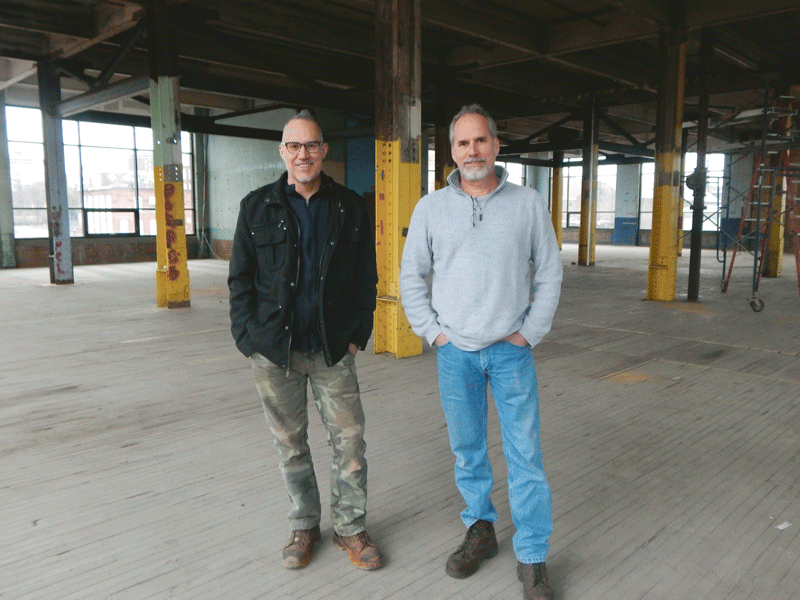
Mike Stone (left) of Cofab Design and Dan Battat of Battat Glass

Mike Stone (left) of Cofab Design and Dan Battat of Battat Glass, two of the founding members of Brick Coworkshop.

Dan Battat is a glassblower, and that can be a solitary art. But he prefers company.

“As someone who has worked in a solo shop setting, it’s awesome to look up from the bench and see someone pouring concrete into molds, or these guys in the machine shop cutting metal, all in my view from my workspace. Seeing them, it’s hard not to think of new ideas.”

That iron-sharpening-iron philosophy is one of the driving forces behind Brick Coworkshop in Holyoke, a co-working space that currently houses eight artists of varying disciplines — from glass, metal, concrete, and wood art and fabrication to ceramics, painting, and product design and engineering — who themselves represent six small businesses.

Battat said several of the players knew each other and were looking for this kind of shared space when an opportunity arose — 15,000 square feet of opportunity, to be specific — in the Wauregan Building on Dwight Street, along the downtown canal network.

“A lot of us had talked about this concept of an arts center before the space suddenly became available,” he said, noting that many of them knew each other through the region’s broad ‘maker’ community.

“We were all in the right place at the right time,” said Mike Stone, one of three members of Cofab Design who moved their operations to Brick. “There were zero days of downtime. The previous tenant got out, and we moved right in.

Aaron Cantrell of Cofab Design gets down to work at Brick.

Aaron Cantrell of Cofab Design gets down to work at Brick.

“Everyone had some kind of shop before that,” he added. “We all moved a lot of equipment in. It looked nothing like it does now. But we were intrigued by the idea of being able to share resources and inspire one another to work together on projects.”

Brick’s founders describe it as a shared work environment for artists, fabricators, engineers, and designers, where members work individually, collaboratively, and for the community in a variety of disciplines and mediums.

Besides Battat Glass and Cofab Design, Brick currently houses the creative entrepreneurs behind Kamil Peters Metal, concrete specialist Karmody Worldwide, Cog Ceramics, and Paul Palmgren, a fine-art painter. Other members have come and gone in the nearly four years since Brick opened, but most of the current ones have been there since the beginning.

Stone said the various members pursue their own business goals but also contribute energy to the collective, whether that’s through grant applications to fund educational programs or working with community groups on artistic projects. “We’ve let it develop as organically as possible, but we continue to formalize it.”

He sees more collaboration in the future, believing Brick has potential as a different kind of workspace — one where members from different disciplines work together as much as they do separately. “One of the things that differentiates us from the traditional model of co-working space, what makes us different, is that we don’t fit neatly into any category — maker space, co-work, incubator … we’re halfway between all of those.”

Building Momentum

Take, for example, a recent collaboration with Wistariahurst in Holyoke to create a traveling museum experience, comprised of installation space for interchangeable panels, protective cases for artifacts and objects, and a recording area where members of the community can document and share their memories. The idea, museum Director Kate Preissler noted last year, was to interact with people who’ve never heard of Wistariahurst and may never have visited the museum.

The traveling museum project involved many facets of what the artists at Brick do, Stone said, from preliminary research through design and fabrication of the actual exhibit infrastructure, and leveraging their collective expertise to benefit the community.

Brick Coworkshop

Brick Coworkshop has set up shop on the second floor of the Wauregan Building alongside Holyoke’s canal network.

“Kate was looking for an intriguing way to take the rich collection of history at Wistariahurst collection over the years, get that out of the bounds of the museum itself,” Stone said. “How do we take this great content and make it more accessible and more relatable to people? It was a great example of taking a project from concept to design to implementation.”

Meanwhile, Stone and Battat both say educational and community programming will be an increasingly more significant aspect of Brick. Some members, like Battat, offer private lessons in their specific discipline, while group classes are occasionally scheduled as well, in addition to school-group tours.

By bringing kids into the sprawling, open space where glass, metal, concrete, and more gets manipulated into both conceptual art and products they may use every day, Stone said, “maybe we can spark something in a young person’s mind.”

The collective is still working out strategies for a more robust educational program, perhaps in collaboration with the Holyoke Creative Arts Center, located downstairs in the Wauregan Building. Whether it’s a six-week course or a one-weekend session, Stone said he hopes each member can find the right niche to make education a bigger part of the Brick ecosystem.

“I like being able to teach here, having the space to do that, pulling in all the multiple disciplines we have,” Battat added. “We knew that aspect would become an important part of the picture.”

There’s also an element of sharing resources between members that makes their operations less capital-intensive, Stone said, and not just the common areas like the woodworking shop available to all. “It acts as a resource multiplier — if Dan’s got something I need, instead of running to Home Depot, I can borrow it from him, or vice versa.

“And if I ever need a tool that doesn’t exist yet,” Battat added, “we can probably make it within the hour.”

But it’s the sharing of expertise and inspiration that makes a bigger difference, Stone told BusinessWest.

Metalwork artist Kamil Peters

Metalwork artist Kamil Peters creates a mask, one of the many striking products he forges at Brick.

“It really comes down to the fact that it’s exciting and invigorating to share space with creative people. We all pick up knowledge with each other, have discussions, foster that crucible where ideas get bumped around — even just in passing each other in the hall. And when the time is right, we may work directly with each other. It’s a cool way to hone our individual disciplines and all work toward becoming a little more multi-disciplinary.”

Come Together

In the end, Battat said, not every artist or artisan will benefit from such a collaborative environment, but those with the right personality for it will find they accomplish more than working alone.

Stone agreed, calling the arrangement a creative multiplier effect. “Having eight to 10 people in the space as collaborators, we’re able to speak in a louder voice than one individual in a shop. Not that there’s anything wrong with that model; for the right type of person, it definitely works. But we’ve lucked out with a great group of people, sharing a similar mindset, that keeps the momentum moving forward.”

With more event and educational programming on the horizon and a better sense of how Brick fits into the Holyoke community, the organization is ready to increase its profile alongside the canals and beyond.

“We want to leverage our energy and potential down here and play off things going on in the community,” Stone said, “and keep all this moving forward.”

Joseph Bednar can be reached at [email protected]
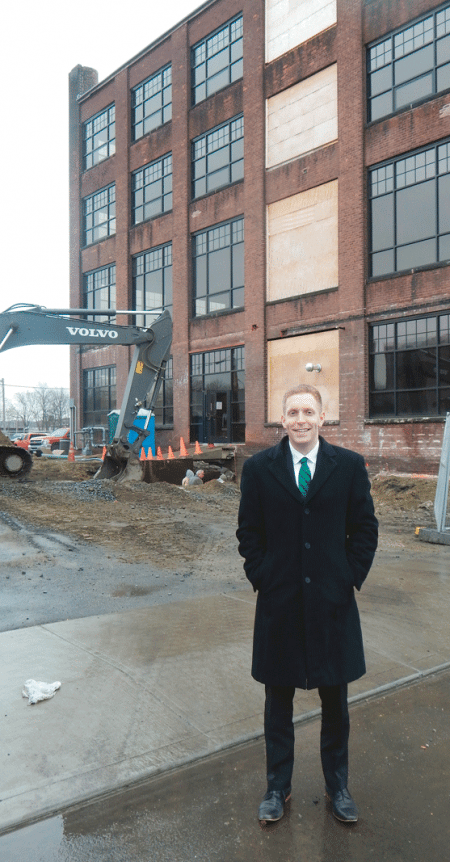
Cover Story Sections Tourism & Hospitality

Everyone’s Living Room

Main Street Hospitality Group CEO Sarah Eustis

Main Street Hospitality Group CEO Sarah Eustis

Sarah Eustis says the core mission of the Main Street Hospitality Group is to “create places that will enable people to connect in meaningful ways — not just to provide hospitality excellence.” The group is now doing that on a few Main Streets, with further expansion of the portfolio always on its mind.

The barstools in the Red Lion Inn’s rustic tavern creak a little, but Sarah Eustis says that’s part of the charm in a building that dates back to the late 18th century. The guests who crowded the place on a late weekday afternoon, as Eustis sat with BusinessWest and told the story of her family’s growing hospitality business, didn’t seem to mind.

It’s a story that actually begins almost 50 years ago, when Eustis’s grandmother, Jane Fitzpatrick, bought the Stockbridge hotel in 1969 with a couple of motivations in mind — to find a home for her growing curtain business, known today as Country Curtains, and to save the Red Lion from becoming a “parking lot.”

“It was a seasonal property — at the time, it was closed in the winter — and it was at risk of being taken down,” said Eustis, CEO of the Main Street Hospitality Group (MSHG). “She reopened the hotel and brought it to full operation, year-round, and the family has been running it ever since.”

Fitzpatrick had a specific vision for the 1773 landmark, Eustis added. “My grandmother set the standard of hospitality, maintaining the place as the ‘living room of the Berkshires.’ All our hotels have that identity and that spirit, meaning a place where all are welcome, a place where people can connect in meaningful ways, with the place and with each other.”

Those places now include four hotels around the Berkshires the MSHG currently owns or manages: the Red Lion Inn, Porches Inn in North Adams, Williams Inn in Williamstown, and, most recently, Hotel on North in Pittsfield, which collectively boast 350 rooms and almost as many employees.

Hotel on North was designed, like all of Main Street’s properties, to be the ‘living room’ of its community.

Hotel on North was designed, like all of Main Street’s properties, to be the ‘living room’ of its community.

“People are coming through the doors with an entire range of human emotions,” Eustis went on, “and they’re wearing invisible signs around their necks, and we have to figure out what they say: ‘I’m in the middle of a divorce.’ ‘I have to impress my girlfriend.’ ‘I’m here with my first big client.’ ‘I’m worried about my child.’ ‘I’m exhausted and hungry.’ We have to figure that out; it’s our job to connect with people in a way that makes the experience good for them, where they are, in that particular moment. We’re not perfect, but it’s what we work toward.”

When they succeed in that task, downtown hotels can be the lifeblood of a town center, she said. “They are the heartbeat that pumps blood to the arteries of cities. Hotels are always there; the lights are always on, and someone is always there.”

Independent hotels, with their unique charms that aren’t based on a corporate template, are even better, she went on. “The Marriotts and Hiltons are great, but I do think there’s something about an independently designed hotel that is unique and that people are willing to pay for.”

Third Generation

Fitzpatrick passed the business to her daughter, Nancy Fitzpatrick — Eustis’s stepmother — who has overseen the operation for the past 20 years.

“I grew up around this place and started working here as a housekeeper when I was 14,” said Eustis, who lived with her mother in Philadelphia but spent plenty of time in the Berkshires as well. “I will always stand behind hospitality training early in one’s career is a great way to start. We have so many young people come through our hotels and go into all kinds of things. If they want a hospitality career, that’s great, too. I was here every summer growing up, getting experience in every aspect of the operation. I’ve cleaned every toilet in the place, and I make a mean hospital corner.”

But she didn’t see it as her career at first, moving instead to New York City to pursue a career in retail operations, marketing, design, and brand development for big clothing labels like Polo Ralph Lauren, Banana Republic, and Limited Brands. “I got good experience working for family businesses, because that’s what those companies are. And that was appealing to me.”

mainstreetporches

Two of MSHG’s properties, Porches Inn opened in North Adams a decade and a half ago, followed by Hotel on North in Pittsfield in 2015.

Two of MSHG’s properties, Porches Inn opened in North Adams a decade and a half ago, followed by Hotel on North in Pittsfield in 2015.

When her father, Jack Fitzpatrick, passed away in 2010, Eustis started thinking about the family business, and decided to move back to Massachusetts in the summer of 2012, a time that unofficially began the family’s most recent chapter, with Eustis eventually setting in as CEO, and Nancy Fitzpatrick continuing as owner and chairman.

“The Main Street Hospitality Group did not exist before that point,” Eustis said. “My aim was to explore how we could evolve and take the resources we already had on the team and deploy them further — to take the ‘special sauce’ that happens here at the Red Lion, in terms of hospitality and graciousness, and spread it around, and also develop new revenue streams.”

The first expansion had already occurred a decade earlier in North Adams. Nancy Fitzpatrick and Jack Wadsworth were both founding board members of the Massachusetts Museum of Contemporary Art, and decided to strike a deal.

“As the story goes, they were in the main gallery of MassMoCA, looking out across the street at these derelict houses originally designed for workers at the Sprague Electric factory. Nancy is a really creative visionary, and she said to Jack, ‘why don’t we do a hotel there?’ He said, ‘that’s the craziest thing I’ve ever heard.’ But they signed on a napkin and did the project.”

The result was Porches Inn,  seven renovated Victorian-era buildings. Reflecting its artsy surroundings, the guest rooms and public spaces employ a synthesis of retro and contemporary designs, reflecting everything from the Mohawk Trail to paint-by-numbers art. Boston magazine praised its “hipster sensibility with downtown charm.”

“It’s been a remarkably successful venture,” Eustis said. “We wanted to instill part of our DNA into something that adds value to its landscape. It has to reflect the feeling of the place. It’s elegant, but with a sense of humor. Guests just rave about the place. We really haven’t changed it in 15 years; we just keep it polished and updated and fresh.”

City Life

Williams Inn came next, a 125-room hotel owned by Williams College that MSHG has managed for the past several years.

“The college bought it, but they don’t run hotels,” Eustis said. “They gave us our first big break as a management company. We provided return to the college on what I would call a tired asset.”

But that project, along with the Porches, gave Main Street experience working in educational and art settings, a niche it aims to further explore in the future. Hotel on North, on the other hand, became the company’s first foray into the city setting.

Around 2013, Eustis began talking with the family that owns Tierney Construction in Pittsfield, which had purchased the former Bessie Clark clothing store in the heart of that city. She’s intrigued by Pittsfield’s story as an industrial city that has struggled to reinvent itself but has launched a sort of renaissance over the past couple of decades.

“We’re very, very committed to Pittsfield. It’s right in the middle of our region — this urban center in this bucolic place — and it needs to thrive.”

A city’s renaissance is typically a 20-year process, she said, a cycle she believes Pittsfield is well into, starting with the Colonial Theatre renovation a decade ago.

“A lot has happened on North Street. We felt the momentum was there. Our partners bought the building and invited us to do a hotel with them; we worked on every aspect of the hotel together. We led the design, we staffed the hotel, we run the hotel … we’re accountable to the owners for agreed-upon results.”

Hotel on North was opened using historic tax credits in June 2015, with an eye toward being one of the key anchors downtown. Developers sought the same blend of local character, historical design flourishes, and modern amenities showcased at other MSHG properties, creating a place where, as Main Street’s marketing materials put it, “lightning-fast wi-fi beams through exposed brick from the 1880s.”


List of Airlines serving Bradley Aiport


Eustis said first-year projections may have been optimistic. “We really had to engage the community, engage the city, do a grass-roots sales campaign.” But, at the same time, the hospitality group was growing as an organization as well, and the family was learning how to leverage its economies of scale across the properties, including in Pittsfield. “We got stronger and stronger, and the hotel started to get its legs, too. Now it’s really thriving and making a lot of people happy.”

In fact, 15,000 people checked into the hotel last year as their home base to explore Pittsfield. “It’s a well-designed, thoughtful, genuinely hospitable face — it’s become the living room of Pittsfield,” she went on, again echoing her grandmother’s original vision for the Red Lion 15 miles south on Route 7. “You have to overcome the doubters and keep going and show them the positive outcomes that come from a project like this.

“Our core purpose, as we’ve developed it as a leadership group,” she went on, “is to create places that will enable people to connect in meaningful ways — not just to provide hospitality excellence, which we do anyway.”

What’s Next?

Beyond physical expansion, the company is branching out in other ways as well. Take food service, led by Brian Alberg, vice president of Culinary Development. A graduate of the Culinary Institute of America who has been with MSHG for about a dozen years, he was at the forefront of the farm-to-table movement in the Berkshires and created a culture around that philosophy at all the group’s properties, as well as a growing niche in event catering.

In addition, Main Street recently formalized a partnership with Hancock Shaker Village — and its new director, Jennifer Trainer, herself a MASSMoCA veteran with a rich culinary background — to establish a café (opening April 15) and manage it, along with working with her on all the facility’s culinary events.

“We’re also expanding the retail piece here at the Red Lion, which is my background,” Eustis added. While the hotel has a gift shop, she envisions creating a line of tasteful logo items — think the Black Dog on Martha’s Vineyard as an example — that will expand the Red Lion brand beyond the Berkshires. “We’re thinking of things that reflect the warmth and genuine feeling of being at the hotel, whether it’s food, accessories, or home-related things. This is a part of our business that’s growing slowly this year and will grow further in 2018.”

After almost 50 years in the Fitzpatrick family, the Red Lion Inn remains the heart of Main Street Hospitality Group’s operations.

After almost 50 years in the Fitzpatrick family, the Red Lion Inn remains the heart of Main Street Hospitality Group’s operations.

As for the next big property, the company is looking at a number of projects, representing both ownership and management models.

“A new project has to pass certain fundamental criteria for us — geography, size and scope, who are the people involved, is it a new build or a conversion,” Eustis said. “It’s not necessarily about rolling out the Hotel on North or Porches concept into different markets. I’m interested in responding to the needs of the community, the fact that there may be existing hotels that need to be refreshed or revitalized.”

Still, she went on, “the way Porches and Hotel on North, not to mention Red Lion, have resonated has led us to conclude that kind of hotel can be relevant in other places and can be successful and add value to landscapes like Springfield, like Buffalo, like Albany — cities that are re-emerging as secondary or tertiary cities and benefiting from migration out of big cities.”

Yes, Springfield is a possibility, reflected by the fact that Eustis has had conversations with planning leaders there.

“Springfield is right in our backyard, and the Pioneer Valley has been interesting to us for a number of years. There’s good stuff going on there, a lot of like-minded people collaborating. We’re looking for opportunities where we can add value and the city’s ready for it.

“It’s not a get-rich-quick scheme,” she added. “You do need patient investors that have some psychic investment in a place. You can make money; it just takes a while.”

In other words, Eustis noted, MSHG is not looking to become a 200-hotel group.

“Let’s be honest — we value our lifestyle and like to see our children from time to time. Our vision is to grow thoughtfully,” she said. “Hotels always used to be on Main Street. And we want to be the heart of a place.”

Joseph Bednar can be reached at [email protected]
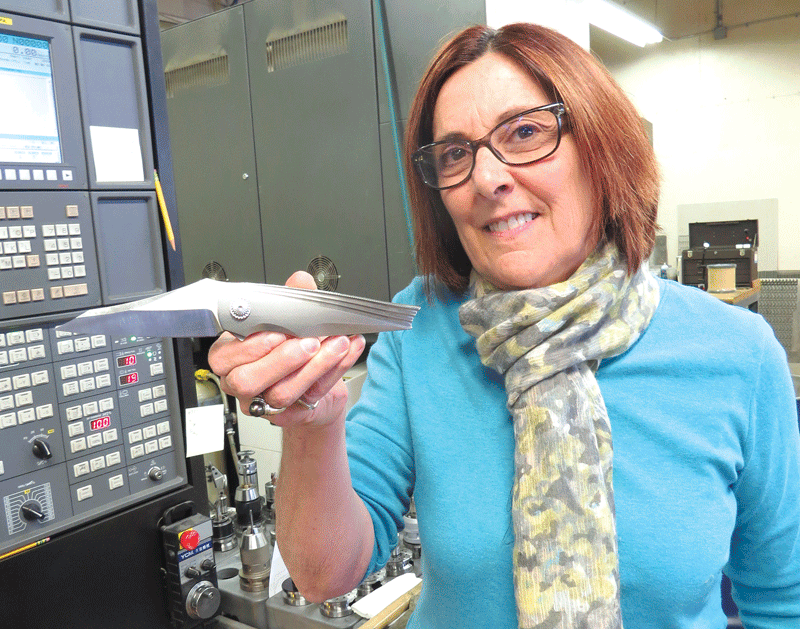
Community Spotlight Features

Community Spotlight

Frank DeToma and Mike Sullivan

Frank DeToma and Mike Sullivan say the Vietnam Veterans Memorial Bridge is the gateway into South Hadley Falls, where revitalization efforts are underway.

In two months, the Vietnam Veterans Memorial Bridge that leads from Holyoke into South Hadley Falls will be closed for a day for a “River Roll and Stroll” event.

The family festival is designed to promote healthy living and is being co-sponsored by the Holyoke Bike-Pedestrian Committee and the South Hadley Bike-Walk Committee, a grass-roots effort to help promote recreational opportunities for bicyclists and pedestrians.

“The River Roll and Stroll will give people a look at the Falls and allow them to see the potential that exists while providing an economic boost to businesses there,” said Mariann Millard, co-chair of the event steering committee and chair of the South Hadley Bike-Walk Committee.

One of their goals is to make people aware of the natural resources and hiking trails that wind through conservation land in the town, which will help to expand efforts by town officials who believe increasing recreational opportunities will foster the growth of economic investments.

“We don’t have a rail trail, but want to show the public what we have to offer,” Millard said, adding that the South Hadley Falls Neighborhood Assoc. has put together a walking map of the area that highlights historic buildings and the Bicentennial Canal Park that overlooks the Connecticut River.

The newly created map; River Roll and Stroll on May 7, which was initiated by Sean Condon of Holyoke; and upcoming annual FallsFest Music & Arts Festival on July 29 that attracts thousands of people are part of a growing force aimed at introducing newcomers to the Falls and promoting economic development there.

“We believe the strategic use of public funding and local enthusiasm will encourage more people to live, visit, and work in the Falls and become a catalyst for private investment,” said Frank DeToma, a selectman and chair of the Redevelopment Authority. “Our ultimate vision is to develop a ‘canal village’ that will consist of commercial and residential establishments that capitalize on our historic canal and adjacent riverfront as well as the architectural character of some of the original buildings.”

Town Administrator Mike Sullivan said that, although the Redevelopment Authority is concerned with the entire town, bringing new life to the Falls will provide a significant boost to South Hadley’s economy as a whole.

We believe the strategic use of public funding and local enthusiasm will encourage more people to live, visit, and work in the Falls and become a catalyst for private investment.

Ira Brezinsky agrees and says collaborative efforts that include work by government officials and businesses have coalesced to shine a light on the Falls and attract people who might not otherwise visit the area.

“It’s an ideal time for business people who want to get a taste of the community and neighborhood to come here, and we will put our best foot forward to welcome people from throughout the region,” said the selectman, co-chair for the River Roll and Stroll, and president of Music and Arts South Hadley, a grass-roots effort that became a nonprofit last year and hosts the FallsFest.

The town has also partnered with the Pioneer Valley Planning Commission to map out walking trails that need improvement and places where bike lanes and chevrons are needed to increase recreational opportunities.

In addition, a five-year, $5 million infrastructure project that involves improving parks, adding benches, new landscaping, crosswalks, traffic-calming devices, and new sidewalks in the Falls is well underway. So far, $2.7 million has been spent, and this year another $1.2 million will be poured into the redevelopment effort.

For this, the latest installment of its Community Spotlight series, BusinessWest looks at what the Falls has to offer, plans for its future, and why officials and residents are bullish on the idea of redeveloping the area.

Planned Progress

Sullivan says the Falls is overdue for attention, and holds unlimited potential. It is less than a mile from the $4.3 million Holyoke passenger rail platform, and has centralized sewers and great access to the Connecticut River. In addition, South Hadley has its own municipal light plant, and work is being done to be able to offer secure, high-speed Internet in the future.

The Falls is also rich in history: the first navigable canal in the U.S. was built there in 1795, which made Falls Village (then South Hadley Canal) a busy shipping center and tourist attraction.

Unfortunately, its former vibrancy has been greatly diminished, mirroring what has occurred in many towns and cities across Western Mass., where businesses along riverfronts shut their doors or moved, and disinvestment slowly occurred.

But revitalization efforts began in earnest after a study of the area that was completed about five years ago became a springboard for change. As a result of recommendations in the final draft, the Falls Neighborhood Assoc. was formed, and in 2014 two important advances were made. The first was the long-awaited construction of a new $12 million public library on 2 Canal St. It was dedicated a year ago and contains meeting and reading rooms, and large banks of computers that businesses can use to conduct training classes.

The second advance occurred when a town meeting approved the creation of an advisory board to develop a comprehensive plan for the area.

The final draft is almost complete and will be presented to the public by the Redevelopment Authority, which is the name the advisory board was given, at a special town meeting held expressly for that purpose on June 7.

“A tremendous amount of work has gone into this,” Sullivan said, noting that the committee members are all unpaid volunteers.

There are many components to the plan, which include a focus on the east-west core of the area that is part of a larger, recently established ‘Smart Growth’ overlay district in the Falls.

“Developers who wish to construct relatively high-density housing in Smart Growth districts can do so by right, thus eliminating their need to apply for special permitting from a local planning authority,” DeToma told BusinessWest.

The proposed plan contains many other elements, including repurposing some town-owned properties and redeveloping a number of industrial properties.

But progress is already occurring, and the first residential construction project in decades is underway. Orange LLC is building 12 condominiums in three units directly across from the new library on 1 Canal St. that will each have their own garage and extra parking.

“This is a beautiful spot, and the Victorian look of the buildings is expected to enhance the neighborhood,” DeToma said, adding that Orange LLC also has plans to develop six other condominiums in the old library building on 27 Bardwell St. “The design is very imaginative and interesting, and there will be a great room in every unit.”

Sullivan told BusinessWest that condominiums in South Hadley have appreciated significantly over the past six months. “New ones are selling more quickly than they can be built,” he said, noting that construction on the Rivercrest Condominiums on Ferry Street began last year, and 16 of the proposed 28 units have already been sold.

Business growth has also taken place in the Falls. Over the past 18 months, Mohawk Paper and E Ink Corp. moved there, and South Hadley Fuel scrapped its plans to move out and expanded in town instead.

Sullivan explained that the decision came about in large part because Town Planner Richard Harris alerted South Hadley Fuel owner Steve Chase to an existing but unused underground tank farm near E Ink Inc., which he described as an “opportunity found.”

“As a result, they have opened one of the largest propane storage and distribution facilities in Western Mass,” the town administrator said. “We do all we can to introduce businesses to opportunities that exist here.”

Brezinsky agreed. “South Hadley and particularly the Falls has been very welcoming and engaging to businesses that want to move or expand there. We were able to steer Mohawk Paper through town meeting very quickly to get them what they needed to move here, and there are other examples like this,” he said, explaining that Mohawk Paper moved to the Falls two years ago into a group of buildings formerly known as the U.S. Gaylord properties, and opportunities exist for professional space, retail businesses, manufacturing, and incubator space.

“I believe one of the benefits of the Falls is its scale,” he continued. “It has a small footprint and is very walkable, unlike some former industrial areas where there are blocks of old buildings. The Falls never rose to those heights, so I don’t believe it will take much to get it to the tipping point where it can become a vibrant place again where people live, work, and play.”

DeToma said the northwest corner of the gateway Bridge/Main intersection is a prime location for redevelopment. It consists of three parcels owned by three different entities, but each lot is too small to be of interest to a developer.

“Our proposed redevelopment plan calls for the consolidation of those properties in order to increase their potential for private development,” he said.

Forward Movement

South Hadley recently lobbied to have Pioneer Valley Transit Authority’s Tiger Trolley change its route. Today, it runs over the Vietnam Veterans Memorial Bridge on Route 116 rather than the bridge on Route 202. Sullivan said that was important because the Falls is densely populated and town officials wanted to provide access to jobs in Holyoke and South Hadley, especially since Mohawk Paper and Mount Holyoke College are two of the largest employers. He added that the X90A Route that runs from Chicopee to Main Street in South Hadley is one of the fastest-growing routes in the area and also goes over the Route 116 bridge.

Parks in the town are also receiving attention. The town administrator told BusinessWest that Bicentennial Park, which is situated a quarter-mile away from the new library, will be renamed Belsky Park after Ted Belsky, a longtime member of the Select Board, and $97,000 will be spent to install lighting and a deck that will overlook the Connecticut River.

In addition, the town is creating a one-mile loop called the River to Range Trail that will begin in a field near Brunelle’s Marina and offer access to people of different abilities.

“We worked with the Pioneer Valley Planning Council on this,” Sullivan noted, adding that, eventually, the trail will connect to the Summit House on top of Mount Holyoke. “We see it becoming part of a recreational economy. That market is exploding, and we are getting requests for groups for camping areas. Although we are not proposing to open any right now, we have to be cognizant of opportunities as they present themselves.”

The Buttery Brook area is another area of focus. It runs east-west and roughly parallel to Gaylord and Bridge streets, crosses under Main Street via a culvert, and empties into the Connecticut River. DeToma said it is overgrown, but the Redevelopment Authority hopes to restore it to its original, attractive condition and install a multi-use recreational path along its bank.

“There will be two benefits to this,” he explained. “First, it will be a major recreational attraction in our Canal Village central area. Secondly, because this area is part of our Smart Growth district, it should stimulate the interest of developers in constructing affordable, higher-density housing nearby.”

Plans are also in place to build a new bridge over Bachelor Brook as well as a parking lot for 12 cars. The estimated cost is $2.1 million, and South Hadley has already received almost $1 million toward that amount from state and federal grants.

Concerted Efforts

Sullivan said major efforts are taking place to help people rediscover, reconsider, and reinvest in the Falls, and the Redevelopment Plan is the underpinning of the future.

“South Hadley has many opportunities; a lot of cool things are happening here,” he told BusinessWest, noting that South Hadley Electric is planning to create a hub for data storage and hired a new manager to help develop its high-speed Internet plan. “Their rates were key in bringing Mohawk Paper here, and enthusiasm about the area is growing. It has become an organic movement with its own energy, all for the benefit of the Falls.”

DeToma concurred. “The grass-roots efforts are taking on a life of their own. As we point out the value and potential of moving here, many groups are getting involved, and events like the River Roll and Stroll will help South Hadley and Holyoke to grow.”

Which bodes well for the future as residents and officials work together to bring new life to South Hadley in a way that will benefit generations to come.


South Hadley at a glance

Year Incorporated: 1775
Population: 17,663 (2017)
Area: 18.4 square miles
County: Hampshire
Residential and Commercial Tax Rate: $20.12 (Fire District 1); $20.66 (Fire District 2)
Median Household Income: $64,610
Median family Income: $76,679
Type of government: Town Administrator, Select Board, Town Meeting
Largest employers: Mount Holyoke College, Loomis Communities, Mohawk Paper
* Latest information available

Sections Tourism & Hospitality

Past Is Prologue

Michelle Rondeau and Michael Glick

Michelle Rondeau and Michael Glick say the addition to the Chamberlain House includes a patio and suite for wedding parties or groups holding functions in the Garden Tent.

Michael Glick says the Publick House Historic Inn and Country Lodge in Sturbridge is two miles — and two centuries — away from the Mass Pike.

“We have every modern amenity, but when people come here, they step back to a period in time when things weren’t so fast-paced. It’s a place where they can really relax,” said the general manager.

Throughout its 246-year history, the Publick House has been known for its hospitality, excellent food, and New England charm, and has become a popular venue for weddings, celebratory events, and family gatherings. Part of the draw is its central location: it is in close proximity to Route 20 and Interstates 90 and 84 and easy to get to from all of the New England states as well as New York and New Jersey.

The historic inn was built in 1771, houses two restaurants and a pub, sits directly across from the Town Common, and offers a retreat from stress on its 43-acre campus that contains more than eight buildings.

Publick House

Michelle Rondeau says the multi-million-dollar investment in the hotel portion of the Publick House has led to an increase in corporate business.

During the fall and winter, guests lounge in comfortable chairs next to wood-burning fireplaces and spend hours reading or talking to co-workers, friends, or family members.

In the spring and summer, meanwhile, they stroll along meandering brick walkways through lush gardens, relax on patios with sweeping vistas, and enjoy outdoor fire pits.

Although its 11 event rooms can accommodate corporate gatherings of up to 200 people, in the past, marketing efforts were focused almost entirely on weddings and events in the dining room. The complex was never promoted as a place to stay overnight, and Glick says that was purposeful.

The reason was simple: the inn offered 17 rooms, and the Chamberlain House next door had six rooms outfitted with period furnishings and décor. But the remaining 80+ rooms were in the outdated Country Motor Lodge. It was built in the ’60s on a hill behind the inn, has drive-up entrances to each room, and falls short of offering the luxury and amenities people expect today.

Minor upgrades were made over the years, including installation of new hotel bedding, but the discrepancy between the rooms in the Motor Inn and the Publick and Chamberlain House next door was so great, they couldn’t market it as a place to hold multi-day business meetings or group gatherings.

“All of our rooms are sold out every weekend because we have so many weddings here,” said Rooms Division Manager Michelle Rondeau, adding that they hosted 183 weddings last year, and 179 nuptial celebrations have already been booked for 2017.

“But corporate groups were offended by the idea of having to put some of their participants in the old motor lodge,” she noted. “Everyone wanted to stay in the inn or the Chamberlain House, and in order to book multi-day events, we needed to be able to offer similar accommodations.”

In 2014 a decision was made to help resolve that discrepancy, and 15 months ago a $3.2 million renovation and addition to the Chamberlain House was completed that includes 20 new hotel rooms.

It has changed the focus of the Publick House from a quintessential New England restaurant to a charming hotel that can custom-tailor events for businesses and other large groups.

New jobs were created as a result of the project, and salespeople who were hired to market the rooms were successful in attracting businesses, craft-oriented groups, and more for multi-day stays.

The trend is continuing, and construction on a new $5 million to $6 million building is expected to start soon to replace more of the old rooms in the motor inn. It will be built on a site that houses an old barn originally built to store horse feed.

“We’re a boutique hotel, and we are not looking to grow larger,” Glick said, adding that town bylaws allow the facility to have only 125 hotel rooms on the campus. “We just want to replace the motel rooms with ones of a higher quality.”

For this issue and its focus on tourism and hospitality, BusinessWest looks at recent changes that have taken place at the Publick House Historic Inn and Meeting Lodge, what people can expect in the future, and the reasons behind the facility’s success.

New Focus

Glick said the Publick House first approached the town about six years ago with the idea of making changes, and in 2014 the architectural and landscape design firm Siemasko and Verbridge was hired to find a creative and appropriate way to add new guest rooms to the campus.

Its design plan involved retaining the exterior of the 1830 Chamberlain House with its wide columned porch, gutting the interior, replacing outdated plumbing and electrical wiring, adding a handicapped entrance, and building an addition onto the rear of the structure that would add 14 new rooms and blend in seamlessly with the neighboring historic buildings.

After the renovation and addition was complete, the rooms were decorated in a simple manner befitting the history of the home and Publick House. Window treatments were purchased from Country Curtains in Sturbridge, and the rooms were furnished with solid-wood bureaus and beds whose high wood posts are topped with pineapples, which are a sign of hospitality commonly seen at New England inns during the Colonial era.

In addition, an outdoor courtyard was built between the Chamberlain House and the Publick House that overlooks the bucolic area where the Garden Tent area is set up three seasons of the year. It can hold 200 guests and is a popular place for weddings.

historic building on the Publick House campus

The new hotel has been designed to meld with the architecture of the historic building on the Publick House campus.

A brick pathway leads directly from the Chamberlain House to the tent, and the suite that faces the area is used as a hospitality room for bridal parties, large gatherings, and corporate events, while the patio is often the setting for cocktails and hors d’oeuvres.

Two of the five buildings that make up the old motor lodge have been phased out, and more rooms will be closed when the new building is complete, but Glick said they plan to leave a few open for travelers seeking a modest price point.

“The addition and renovation of the Chamberlain House has definitely increased our corporate business,” Rondeau said, noting that companies that have held training sessions, seminars, meetings, and themed events in the country setting.

For example, a Hawaiian Luau in the Garden Tent was created for a business party and included carving a fully cooked pig in the patio area.

“We created a beautiful atmosphere. The outdoor fire pit was burning, tiki torches were lit around the perimeter of the area, and there were lush flowers blooming everywhere,” Glick said, explaining that the acreage allows the company to offer events that might not be possible in a downtown hotel in a large city.

He added that business guests who enjoy the atmosphere and hospitality the Publick House offers are returning for overnight stays with their entire families.

The investment in upgraded rooms proved so successful that Siemasko and Verbridge were rehired last year to create a design for the new hotel building. Its plans involve tearing down the white clapboard-style barn that sits next to the Publick House and replacing it with a 21,314-square-foot structure with 28 hotel rooms.

The building will face the street and resemble a Colonial home on a raised, red-brick foundation linked to a red-barn-style structure with a raised stone foundation.

“It will be nestled between the Publick House and Sadie Green’s,” said Rondeau, referring to the retail emporium, jewelry store, and curiosity shop housed in buildings on the property.

“The new lobby will become the hotel registration center and will feature a double-sided wood-burning fireplace with lots of comfortable seating,” she continued. “The design and layout have a lot of character that includes roof gables and a mock hayloft door. We can’t recreate the Publick House, but we’re doing our best to give the new building a historic feel.”

The town’s design review board approved the plan in November, and it will go before the planning board in April.

However, the project was delayed in December when the Historical Commission put the demolition of the existing barn on hold for a year, but Glick said they are working closely with the commission and hope to come up with a compromise that will allow them to move forward this year.

“But the Publick House will continue to serve as the hub of the property,” he said, noting that its two restaurants and historic pub are convenient for overnight guests.

Ongoing Traditions

The Publick House is known for its fine food, New England specialties, and bake shop, which does $700,000 in business annually.

Glick noted that the majority of dishes on the menu in the dining room never change and include pot roast, chicken pot pie, lobster pie, and a full turkey dinner with all of the fixings that is offered every day throughout the year.

“People come here and expect to be able to order the foods we’re known for,” he explained.

Indeed, families have been coming there for generations and expect things to stay the same. Glick told BusinessWest that the bakery offers a frosted sugar cookie with a smiley face, and when the chef altered the recipe to make it healthier, they received calls and letters of complaint even though there were no signs alerting people to the slight difference in taste. “So we went back to the original recipe,” he said.

Rondeau added that the Publick House is rooted in tradition, and many grandparents bring their grandchildren there to experience history in the same way they did when they were young.

But ultimately, what all of their guests look for and find is the service, attention to detail, and personal touch that Colonial New England inns were known for.

“We have all the luxuries of a downtown hotel, and the quality of our food drives business here. Until last year, we were never known as a hotel, but that is changing,” Glick said. “We’re targeting business groups of about 50 people, but no matter who our guests are, our focus will always remain on offering them true hospitality.”

Manufacturing Sections

Making a Name for Itself

From left, Frank Mitchell, Chris Brucker, Jack Mitchell, and Mark Mitchell

From left, Frank Mitchell, Chris Brucker, Jack Mitchell, and Mark Mitchell show off one of the company’s custom machines — one that will slice sapphire.

Since it was launched by John Mitchell in 1920, Mitchell Machine has grown and diversified — shifting from producing parts and tools for the Springfield Armory and Indian Motocycle to designing and manufacturing complex machines for the semiconductor industry. But since day one, the company has essentially been doing the same thing — producing solutions for its clients.


It’s called a ‘sapphire wafer slicer.’

And that’s exactly what the blue-painted piece of machinery is — a device that slices sapphire substrate into razor-thin wafers for use in the production of light-emitting diodes (LEDs) and other products.

As they gathered for a photo in front of this piece of equipment, which was due to be shipped out to an unnamed customer within a matter of days, those at Mitchell Machine were careful to position themselves so that they were shielding anything that might be the slightest bit proprietary in nature.

It has been this way — sort of, and in most respects — at this landmark Springfield company since it was started by Jack Mitchell’s grandfather, John Mitchell, in 1920.

Back then, said Jack, one of the third-generation owners (his brother, Frank, is the other), this was mostly a parts manufacturer, supplying several companies but especially two huge customers steeped in history and lore and located just blocks away from the Hancock Street plant — the Springfield Armory and Indian Motocycle.

Chris Brucker

Chris Brucker says Mitchell Machine has a long track record of providing solutions to its clients.

The second generation of ownership — John’s sons, Frank, John, and Richard — led the company through its first evolutionary process, into the tool and die business in the ’50s. Today, the company handles everything from production of special machinery — like the sapphire wafer slicer — to subcontract machining; from design and manufacturing of robotics equipment that can provide companies with cost-effective automation, to machine design and engineering services for companies that would prefer to outsource such important work.

The common denominator when it comes to everything that goes on in (or out of) the plant today, and what transpired decades ago, is the fact that Mitchell has always been in the business of providing solutions to many different kinds of customers.

“When people have problems in manufacturing — when they need to do something faster, they need automation, they need robotics — they require solutions, and we provide them,” he explained, adding that, as Baby Boomers retire and the task of replacing highly skilled workers becomes ever more daunting, manufacturers are increasingly looking at using technology to do (or help do) what people have traditionally done.


Chart of Largest Manufacturers in the region


Mitchell works with clients in a host of business sectors, including automotive, communications, machinery, electronics, plastics, printing, rubber, optics, and semiconductors.

Many of these solutions are one truly one-of-a-kind in nature, meaning the company won’t even make two of them, he went on, adding that such undertakings make the business unique and the work quite intriguing. But it also brings challenges, especially the need to keep a steady flow of projects in the queue.

“We rarely do the same thing twice — there’s not a lot of volume production — and this requires a lot of skill,” he said, adding that individual projects generally take anywhere from five to 18 months or more to complete. “So you need a lot of projects in the pipeline, and you need financial security, because it’s a long time between drinks.”

This need to continually bring in new work led Mitchell to become one of a handful of area companies to take part in Valley Venture Mentors’ first accelerator program for established manufacturers.

Mark Mitchell, Frank’s son, and thus a fourth-generation leader of the company, led Mitchell’s involvement in the intense, three-month accelerator program. He said it was helpful on many levels, but especially with marketing and raising the company’s profile, thus generating new clients.

“There was a lot of insightful reflection on the company, how we produce, and how can market ourselves,” he noted, adding that, while the company made some direct contacts that might lead to additional business, many of the takeaways involved operations and becoming more visible. And one of the first orders of business will be a new and improved website.

For this issue and its focus on manufacturing, BusinessWest takes an in-depth look at Mitchell Machine’s long history of providing solutions for customers, and how, as it approaches its centennial, it continues to find new ways to expand an already-impressive portfolio of projects.

Parts of the Whole

Jack Mitchell told BusinessWest that, when his grandfather arrived at his home in Springfield’s Hungry Hill section one afternoon in 1920, he had what amounted to good news and bad news for his wife.

“The good news was that he bought a building and was going to start a business,” he explained. “And the bad news was that he didn’t have his existing job anymore, and he had to rely strictly on himself. And he had six children; needless to say, my grandmother was quite alarmed.”

That job was as a toolmaker with Colt Industries in Hartford, he went on, adding that his grandfather’s story was typical of many machinists working for the Armory and other companies at the zenith of this region’s industrial age; individuals with an entrepreneurial bent who decided to take their assembled skills and go off on their own with a career turn (that’s an industry term) that would bring with it a whole host of risks, sacrifices, and unknowns.

To make ends meet, Mitchell noted, his grandfather would work at shops like Van Norman Machine Tool and Bosch Machine during the day, and work at the company with his own name on it at night, logging 16- to 20-hour days, usually six days a week.

What’s happened since that start, though, is far from typical.

Indeed, the company has, as noted, reached fourth-generation involvement (a rarity in any sector, but especially manufacturing) and continues to find new and different ways to grow, evolve, and, yes, manufacture solutions for clients across a wide range of business sectors.

Relaying some of the company’s rich history in Springfield, Mitchell noted that, during World War II, it made parts, gauges, and other equipment for essentially two clients — the Armory, which, by the war’s height, was employing more than 15,000 people in arms production, and Indian, which by then was producing motorcycles exclusively for the military.

“At that time, we had more than 100 people working in a very small section of our current shop,” he explained. “It was a 24-hour-a-day, seven-days-a-week operation during the war.”

After the war, the company acquired new, larger equipment, and subsequently diversified into the manufacturing of complete, custom machines, and for companies across the country, not simply across town.

Then, as now, it served a host of different sectors, many with a presence in this region, including the paper industry (many communities in the area had plants), tire making (those products were produced in both Chicopee and Springfield), and molded fiber, among others.

“To this day, Michelin is still a customer — we’ve been serving the tire industry since the ’50s,” said Mitchell, adding that many customers in the portfolio have been with the company for decades.

Mark Mitchell

Mark Mitchell says the company’s participation in the manufacturing accelerator has provided new business leads and insight into how to raise Mitchell’s profile in the marketplace.

The company’s next important step in diversification came in 1992 with the establishment of Mitchell Engineering, which took the company into the design-and-build realm when it came to custom machinery and robotics and to a new dimension in providing clients with solutions.

Today, such work represents roughly 60% of the annual revenues, with the rest coming in the form of subcontract machining.

As noted, Mitchell Engineering is in the business of providing solutions to problems, many of them workforce-related, he said, citing, as one example of the work it undertakes, an assignment involving Sanderson MacLeod, the Palmer-based manufacturer of twisted wire brushes.

“There’s an unusual brush that only one person could make,” Mitchell told BusinessWest. “And that individual was retiring. They came to us, and we designed and built a machine that could actually perform the task that this person did.”

Designs on Growth

There are dozens, if not hundreds, of similar stories in the portfolio, he went on, adding that the machine to slice sapphire — which is ideal for use in both LED and non-LED applications due to its high temperature resistance, high strength, and good electrical insulation — certainly falls into this category.

“Sapphire is harder than silicon, so it’s a more difficult thing to do,” Mitchell noted. “This is a prototype machine — nothing like it has ever been built before.”

Many of the products and solutions that roll out the door command similar language, said Chris Brucker, an applications engineer for the company, adding that the solutions are generated through intense collaboration, or interface, with the client concerning the problem and the best means of solving it.

“Our clients will have an application that they’re looking to automate, or generate better quality, less scrap, fewer direct labor hours … all those kinds of things to stay competitive, increase profits, all those good things companies want to do,” he explained. “I go in and talk to them, understand their process from their perspective, find out what they need to do,” he went on, “and then develop concepts for a special piece of machinery or automation.”

As noted earlier, projects of this nature generally take at least six months from start to finish, and many require much more time.

Thus, there is that heavy premium on constantly generating new work for the pipeline, said those we spoke with, adding that, as might be expected, it comes in two forms — additional work for existing clients, and attracting new clients.

And recent efforts have been focused on both, said Jack Mitchell, adding that this is a relationship business, and once one has been established, the goal is to grow it.

He said there are many examples where subcontracted machining has also led to work designing and manufacturing custom equipment or the promise of such work, including one case involving a medical-equipment manufacturer.

“It started with a small, complex part, and moved to a much more complicated assembly of parts, to creating a tool they could use,” he explained, adding that the next step could be work to design a production line for the company.

As for attracting new clients, word of mouth has always been and will always be the best form of marketing, said Mark Mitchell, and the company does take part in several large trade shows each year. Still, there are many who don’t know the Mitchell name and all that it stands for, and this nagging reality was perhaps the primary motivation behind participation in the manufacturing accelerator program, although connecting with new customers directly was also a goal.

“We’ve quoted on a number of projects as a result of the program,” said Mark, adding that the program reaffirmed the notion that original equipment manufacturers, including many in this area, are not fully aware of the resources (such as Mitchell’s expertise) that are available to them.

Slices of History

The small conference room at Mitchell Machine speaks to the company’s long history, and brings the past, present, and future together efficiently.
Indeed, along with a few golf pictures (which reflect a passion for the game shared by several generations of the Mitchell family), the walls feature a few framed replicas of World War II-era posters proudly touting the contributions of defense contractors toward victory in Europe and the Pacific.

“Your Work Means Victory — Build Another One” reads one poster depicting a shipbuilder.

There’s also a 10-pound block of silicon sitting on a base in the middle of the table. It’s there as a nod to the fact that Mitchell has designed and built machinery that will shape that silicon in the production of microchips.

As the company prepares to turn 100, it is still doing what it was doing when John Mitchell came home with that mix of good news and bad news — produce solutions. And along with those, it is making (and has always made) a proud name for itself.

George O’Brien can be reached at [email protected]

Features

The Time Is Now

Invalid Displayed Gallery

After roughly 40 years of being mostly relegated to Springfield’s past, Union Station is set to begin what will certainly be an intriguing new life. As the station sets to open next month, however, questions remain about just how viable it will be as a business and economic driver. The Union Station in Worcester provides some interesting parallels and talking points.

In many ways, the giant clock in the grand concourse at Springfield’s Union Station has served as a symbol, or metaphor, for that landmark and efforts to revitalize it.

Indeed, for the better part of four decades, time essentially stood still — for the clock (its ornate bronze hands never moved during that time) and for the station itself, which sat mostly idle and, like the timepiece, continued to deteriorate inside and out.

Today, though, the 54-inch-wide clock is functional again, having been repaired by a Medfield-based company that specializes in such work and returned to its place at the south end of the concourse. And the station will soon be functional as well; it is on schedule to be open and serving as a transportation hub next month.

And the comparisons continue. The clock required an extensive makeover, including replacement of its inner mechanism and a surface overhaul. The station? Its multi-faceted renovation has taken several years, and the price tag, when all is said and done, will be north of $80 million.

The clock in Union Station’s concourse before restoration

The clock in Union Station’s concourse before restoration

... and after the work was completed

… and after the work was completed

However, it is at this point that the story lines separate. The clock has been repaired, and its future is no longer in doubt.

The same cannot exactly be said of the station, although there is considerable optimism about what comes next, at least among city development leaders.

Train travel is becoming a larger part of the economic-development picture in the Northeast corridor, and Union Station is well-positioned to play an important part in such efforts. Meanwhile, the station will be a hub for inner-city and perhaps intra-city bus travel as well.

But the station has long been touted as a much larger piece of the economic-development puzzle than that of a mere train and bus station. It is being projected as both a catalyst to further development — of both businesses and residential facilities — as well as home to a number of businesses in its nearly 100,000 square feet of available retail space, a key to its ability to function as something approximating a break-even business.

Chris Moskal, president of the Springfield Redevelopment Authority (SRA), told BusinessWest that three vendors have already signed on the dotted line for spaces adjacent to the concourse, and there is considerable interest in some of the available office space above it.

There is more positive news in the form of language within the host-community agreement between MGM and Springfield, said Moskal. It calls for the casino company to pay $7.5 million over the next 15 years toward the costs of operating the station and fitting out space for tenants — an option MGM chose over actually locating at the station itself.

This $500,000 annually should help the facility stem whatever losses it might incur in meeting what is currently projected to be a $750,000 annual operating budget (a number certainly subject to change), with the bulk of that going toward maintenance and security, said Moskal.

But since the restoration of Springfield’s Union Station began, comparisons to the one in Worcester have been inevitable and seemingly constant, and in many ways, this has been unfortunate for the local landmark, because these comparisons serve as a counterweight to the expressed optimism.

That’s because Worcester’s station has mostly been described locally with terms such as ‘under-performing,’ ‘disappointing,’ and ‘unsuccessful.’ And these words are, in fact, accurate, at least when it comes to the real-estate and fiscal performance sides of the equation; the station is expected to run roughly $600,000 in the red this fiscal year, slightly more than the average lately due to some needed maintenance work, and by most accounts, only half its available commercial space is under lease.

They were attracted to that area because of the train station. People can live there, take the train to a job in Wellesley or Newton or Boston; this rail service shortens the distance to those communities.”

But from a bigger-picture perspective, the station (and the vastly improved commuter rail service that has come because of it) are succeeding in their primary role, that of spurring economic development, said Stuart Loosemore, general council and director of Government Affairs and Public Policy for the Greater Worcester Chamber of Commerce.

Elaborating, he spoke of concentric circles and how development, in the form of market-rate housing, a new hotel, additional restaurants, and more have emanated out from the station, if you will, as train runs from Worcester to Boston have increased to more than 20 a day, including the popular, non-stop Heart to Hub trip, which leaves Union Station at 8 a.m.

“And it gets to Boston in an hour or less,” Loosemore explained, adding that commuting by car will likely take half again as long and bring other inconveniences and expenses, including parking. “That makes it much easier to live in Worcester and get to work or school in Boston; it’s bringing that city much closer.”

Whether similar developments will take shape in Springfield remain to be seen, especially since there isn’t a logical destination for riders, as there is in Worcester with Boston. In keeping with the theme of this story, time will tell.

Soon, though, the speculation about this city’s Union Station — again, about 40 years of it — will soon end, and its next life will begin.

In other words, the time is now.

Hour Town

Tom Erb says the assignment to restore the concourse clock at Union Station, as well as others at that facility, was in most ways typical of those taken on by his family business, Electric Time Co. Inc. And its condition when it arrived at the shop was also typical of what the company has witnessed at several old train-station projects in its vast portfolio, including a recent one in Kansas City.

In short, water had leaked onto and into the clock, manufactured by the Springfield-based Standard Electric Time Co., he explained, requiring extensive repair work to its brass and marble components.

“They were very sad-looking,” he said of the group of clocks and especially the concourse timepiece. “A few of them were missing numbers, which we had to recreate using an oxidizing compound to make them look old … they needed quite a bit of work.

“We replaced the mechanism in the main clock, which was in very bad shape,” continued Erb, whose company has worked on many projects in Western Mass., from restoration of the clock on the Springfield Armory Museum to installation of the massive timepiece now gracing the entrance to the Great River Bridge in Westfield. “We reused the existing clock hands and gave it a small control along with a receiver that latches into atomic time, so the clock will always be absolutely perfect, which is important at a train station.”

The concourse clock is one of many examples of blending old with the new at Union Station, said Kevin Kennedy, Springfield’s chief development officer, as he gave a tour of the facility.

Kevin Kennedy

Kevin Kennedy says the renovated Union Station, and especially its grand concourse, will feature an intriguing blend of the old and the modern.

To get his points across, all Kennedy, who has been involved with redevelopment of the station for roughly 30 years now, needed to do was gesture with his arm across the concourse and just beyond. With that sweep, he pointed out the recently installed retail kiosks, the station’s original (and restored) terrazzo floor, modern exit lights juxtaposed against the original archways, original (and restored) sconces in the ceiling, and wi-fi hook-ups.

“This is an historical renovation,” he explained. “What stands out to me are two things — the neatness of that historical renovation, but also the modern codes of today that require these brightly lit exit signs. You have the 21st century coming together with 1926, and it’s pretty cool.”

The old and new will come together in dramatic and artistic fashion within the renovated tunnel linking the station with downtown Springfield, he went on, noting that there, elaborate murals depicting the history of the station and the city will be installed as part of a project being undertaken in conjunction with Springfield Museums.

While these murals will no doubt become a conversation piece and an attraction in and of themselves, those involved with the station project — especially U.S. Rep. Richard Neal — have stressed that $80 million hasn’t been spent in the name of nostalgia or to establish a museum.

Rather, it’s been spent to create a transportation hub — which the station was for decades before the decline of rail travel — as well as a business center and catalyst for further economic development.

There is little doubt that it will become at least the former. Indeed, 14 trains will soon be moving in and out of the station daily as part of expanded service in the northeast corridor, especially between Springfield and New Haven through what’s known as the Connecticut Line. Meanwhile, the Pioneer Valley Transit Authority will make the station its hub, with roughly 700 buses running in and out every day.

Intra-city bus service remains a question mark, however. Negotiations continue with Peter Pan Bus Lines, headquartered just a few hundred feet from the renovated station, about its possible presence at the facility, and there are other intra-city companies that may become tenants as well, said Moskal.

The business and economic-development sides of the equation involve more question marks, however, and the performance of Worcester’s Union Station since it was renovated in the late ’90s creates still more.

Up-to-the-minute News

As he gave BusinessWest a tour of the available commercial spaces at the station, Kennedy pointed to the large windows while listing several reasons why the assembled square footage might be an attractive landing spot. Actually, to the windows and beyond.

The windows themselves provide large amounts of natural light, which is preferred by many types of businesses, especially those in the creative fields, he said. Meanwhile, as one looks out those windows, they can see I-91, Route 291 (and signs for the Turnpike on both of them), and the point where they intersect, which translates into convenience for employees and customers alike.

Outside some windows, people can also see the 377-space parking garage, a critical component of the station project and another important amenity for a business located downtown, and from still others, people can see downtown and the many forms of progress there.

Thus, the windows reveal a lot, said Kennedy, who noted that the various spaces in the station, stretched across three floors, with one offering views of the station concourse itself, are already attracting interest, and should draw more once a few tenants settle there.

“I think people needed to see this building completed before they could really understand what we had here,” he explained. “Now that it is completed, I think people will take notice, and when we get a few tenants in here, word will start to spread.”

The concourse area itself is already filling in nicely, said Moskal, noting that agreements have been reached for three of the small retail spaces along its east side, with a convenience store, Dunkin’ Donuts, and Subway due to move in over the next few months. A fourth is still available, and there has been interest expressed in it.

Meanwhile, the convenience-store developer will also lease two of those aforementioned kiosks in the tunnel, said Moskal, adding that he isn’t sure what will be sold from them, but expects one will likely be dedicated to cell-phone accessories.

Also, a rental car company (the name was not disclosed, but Moskal said it is a major player in that business) has signed on to do business out of the station, with cars to be stored in the parking garage.

As for the office space above the concourse, Moskal said several parties have expressed interest, and he even added the adjective ‘strong’ to describe it.

“We have a number of interested parties, and one of them is very promising,” he said, referring specifically to space on the second floor, which, as noted, has windows with a view of the concourse. “That would be huge for us; this party wouldn’t take all of the second floor, but maybe 70% of it.”

And, like Kennedy, he said signing a tenant or two will likely create some needed momentum. “Once you start to spin that kind of positive news, hopefully, others will take note.”

Overall, the SRA has been “conservative,” a word Moskal used early and often, with regard to projections for tenants and resulting revenues so as not to create unreasonable expectations and disappointment if they are not met. And thus far, those goals are being met or exceeded.

“We set conservative goals — having 30% leased by the second year, and maybe 60% by the third year,” he explained. “And this is a positive for us, because we hope to have more than that under lease.”

The $7.5 million committed by MGM provides a cushion of sorts, especially for the first three years, he said, adding that the hope is that, by year four, that kind of cushion will be less necessary.

On Second Thought

But it is with the bigger-picture perspective that greater optimism likely prevails, and here, Worcester’s station should serve as an inspiration, rather than a cautionary tale, said those we spoke with.

To emphasize this point, Loosemore started with references to what was known as the Osgood-Brady Building, named for the company, which, ironically enough, manufactured railway passenger cars and streetcars there starting in 1914.

Today, it is home to more than 250 students living in more than 80 market-rate apartments carved out of the various spaces. Most of them are there, said Loosemore, specifically for the trains running out of Union Station just a few blocks away.

“They called it ‘purpose-built student housing,’ and I believe this was the first time it was done in Massachusetts,” he explained. “They’re marketing to college students, and part of what attracted them to it is students at the Worcester colleges doing internships in Boston; living next to Union Station, you can get into various areas of Worcester, because you’re right there, but you can also get to access to the train, which will get you to the Boston region and opportunities for jobs, internships, and other expanded learning opportunities.”

A new hotel is also going up in that area, and the developer has stated publicly that commuter rail is a big reason why the project went forward, and in that location. Meanwhile, across the street from the bus depot at the station, a company is building more than 350 units of market-rate housing, Loosemore continued. “They were attracted to that area because of the train station. People can live there, take the train to a job in Wellesley or Newton or Boston; this rail service shortens the distance to those communities.

Indeed, the train station and accompanying commuter rail are creating much stronger connections between New England’s two largest cities, said Loosemore, adding that many are now finding it convenient (and also far more affordable) to live in Worcester and work or go to school in Boston or one of its suburbs.

He added quickly that, while this isn’t the loftiest of goals for the city or its chamber of commerce — both would rather have people living and working in Worcester — such scenarios do bring a host of benefits.

“If I can’t have the jobs, how can I get the workers?” he asked while speaking for the chamber and noting that reliable commuter rail has become at least part of the answer to that question.

And having the workers come back to Worcester at the end of the day has certainly helped prompt growth of the city’s restaurant district, which borders Union Station.

“People come into the station, and they can go around the corner and get dinner or a drink,” he said. “People may work in Boston, but on Friday night, Saturday, and Sunday, they’re in Worcester.”

Loosemore, who has been with the chamber for roughly two years now, and has learned much of the history of Union Station and the area around it rather than experiencing it first-hand, said what’s happened there didn’t take place overnight. It came incrementally, and as commuter rail became better, faster (the Heart to Hub run, for example), and more frequent.

Tim Murray, president of the Worcester Regional Chamber of Commerce and former lieutenant governor, expanded on this thought in a recent op-ed in the Worcester Business Journal, in which he drew parallels between progress in that city and the recent success of the region’s pro football franchise.

“The ability to gain the crucial inch that determines victory often comes as the result of hard work, preparation, and never giving up,” he wrote. “These same principles apply to the progress we have made during the past 15 years to expand commuter rail service between Worcester and Boston … hard work, persistence, and preparation has allowed a team of public and private leaders to go from six round trips a day to 20.

“This progress has contributed significantly to the unprecedented private-sector investments in and around Worcester’s Union Station,” he continued. “Developers, property owners, and business owners including the City Square, Theater District, and Gateway Park projects all tout the presence of rail service as a major catalyst for their investments.”

Whether similar developments will come in Springfield remains to be seen, said Loosemore, noting that the City of Homes does not have a logical or potential-laden destination (like Boston) for commuters — yet, anyway.

In time, more routes going north-south and perhaps east-west (many officials are calling for a high-speed Springfield-to-Boston connection) may be added, and Springfield may see some of that growth in concentric circles that Worcester has.

“Having that commuter rail has certainly been a catalyst for development here,” he said in conclusion. “And it may prove to be the same in Springfield.”

Hands Down

Part of the restoration effort involving the clock in the main concourse was refinishing the words spelled out in the middle of the timepiece — ‘Eastern Standard Time.’

Erb told BusinessWest that, decades ago, it would not have been uncommon for train travelers to cross from one time zone into another in the course of their journey, and thus they might need a reminder as to just what the hour was in the City of Homes.

Such long trips, while still doable, are not a big part of the equation in this new era for Union Station. Meanwhile, cell phones automatically adjust for time zones, and that’s how most people note the time these days anyway.

But the clock still serves a very useful function, said Kennedy, adding that, for the first time in four decades, Union Station does as well. It is a transportation hub, as it was when it opened in 1926, but it is also an economic driver, perhaps one to be as successful in that role as Worcester’s.

Time will tell, but for the first time in a long time, the clock is running at Union Station, in every way, shape, and form.

George O’Brien can be reached at [email protected]
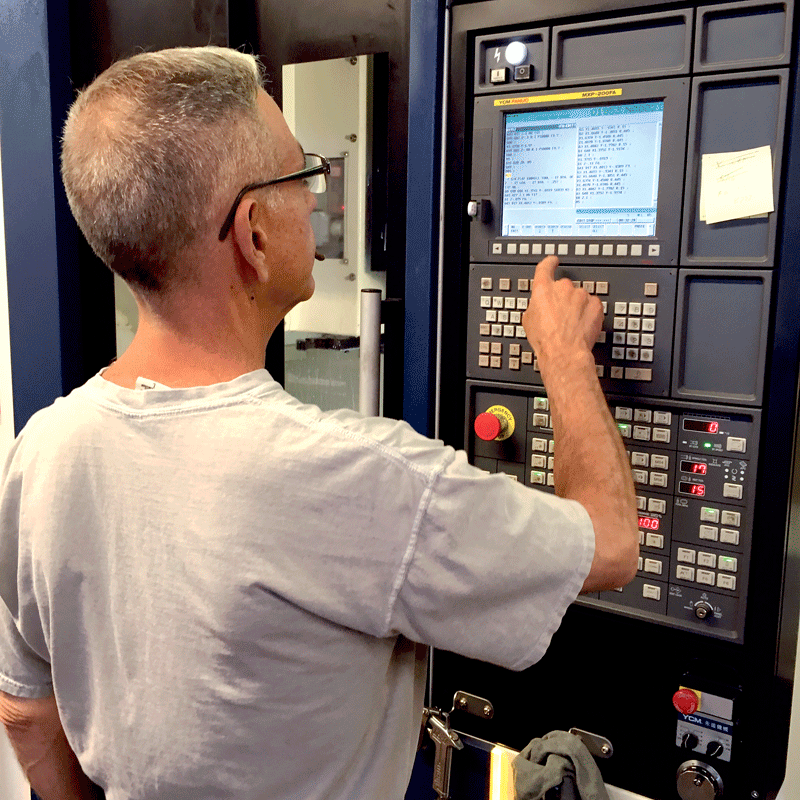
Employment Sections

Shifting IT’s Focus

By Joanna Smiley

Keyla Centeno

Keyla Centeno, team lead and graphic designer at Tech Foundry, teaches a class on soft skills.

When it was founded in 2013, Tech Foundry, a program conceived to create a steady pipeline of workers for the IT sector, focused primarily on area high-school students. But research — and experience — revealed that these young people were choosing other destinations (especially area colleges) rather than area technology firms. So today, the classrooms feature a much more diverse group of students.

Bruce Stoller is a 58-year-old displaced worker with aspirations to forge a new career in information technology. He holds a law degree, and has a background in facilities management.

Maura Kavanh, 29, used to study political science and women’s gender studies at UMass Amherst, but took a leave from college when she noticed an interesting trend: organizations she aspired to work at, like Planned Parenthood, had a far greater need for those with tech skills than policy work.

What do Stoller and Kavanh have in common?

Both are students in Tech Foundry’s class of 2017, a group far more diverse than those that came before it. And that’s by design and out of necessity.

Indeed, the Springfield-based workforce development program was launched in 2013 and designed to prepare job seekers — and not necessarily individuals like Stoller and Kavanh — for entry-level tech careers. But a year ago, the organization decided to shift its focus from a program designed for high-school students to one that has no age restriction. Tech Foundry’s current class is an eclectic mix of students ranging in age from 20 to 60.

Jonathan Edwards, director of Strategic Partnerships at Tech Foundry, notes that the organization’s shift was about responding to employers’ needs for a bigger pipeline of IT workers.

“We know that people in mid-career transition are the perfect candidates to expand that pipeline,” he explained. “They’re looking for something different; people who wake up and say ‘I want to do IT’ isn’t enough. Introducing people who already possess strong work backgrounds to a sustainable IT career is really a great match between the needs of employers and needs of our student population.”

Brandon McGee hopes to land a job in software sales

Brandon McGee hopes to land a job in software sales once he completes the Tech Foundry program in May.

Ann Burke, vice president of the Economic Development Council of Western Mass., agreed.

“The good-news, bad-news experience from the first class was that these young people became excited about fields in technology, but instead of going directly into the workforce, many decided to continue their education in community college or college,” she explained. “This was great for the students, but not for tackling the issue of developing a pipeline for entry-level technology employees.

“Tech Foundry has been piloting different approaches to finding those individuals interested in tech job opportunities,” she went on. “The student body has evolved to include a much more diverse group, including veterans, people with some community-college experience, women, and others with some work experience but not necessarily in the tech field.”

Tech Foundry still welcomes 18-year-olds who would like to go into a job in the tech field, she went on, adding that the program’s leaders found that many employers are looking for candidates with at least some work experience and soft skills, even if they do not have past technology experience.

“Tech Foundry is an innovative program that will continue to evolve to meet the needs of this growing sector,” said Burke. “It actually is interesting and exciting to see the diversity of age, gender, experience, and ethnicity in the most recent graduating class. I’m excited about how the organization is continuing to scale and prepare more candidates to be a part of the technology workforce. We know that there is a need for qualified, entry-level technology workers across industry sectors in the region.”

For this issue and its focus on employment, BusinessWest takes an in-depth look at this change in focus for Tech Foundry and its implications for the workforce, job seekers, and area companies.

Technically Speaking

Tech Foundry prides itself on partnering with a broad range of companies in the region, and Edwards said he has noticed a cross-section of employer size and industry. Partners range from Bay State Health to Smith & Wesson to startups that seek the type of talent Tech Foundry is producing.

Its success in meeting its important mission is made clear by several testimonials from area business owners and one elected official.

Andrew Anderlonis, president of Rediker Software, has been partnering with Tech Foundry for more than a year, and says the organization has helped him solve a major problem — finding passionate, talented, and committed professionals who can meet the continuously evolving workforce needs of the region’s tech community.

“Rediker Software has now hired four graduates from Tech Foundry, and all of them are performing exceptionally well, a testament to the strength of the program,” he noted. “Working with Tech Foundry has been a wonderful experience as they have put together a terrific program for the students.”

Michael Arian, co-founder and CEO of Prophit Insight, says Tech Foundry not only provides him with talented IT employees, but the opportunity to give back to the Springfield community.

“We’ve been working with Tech Foundry since their beginning. It has been a very important program for us,” he told BusinessWest. “Tech Foundry has allowed us to acquire talented IT employees in a more cost-effective manner, and it has been very successful so far.

“It also provides us the opportunity to give back to the Springfield community and help out some fantastic people who just need an opportunity, this is very important to us,” he went on. “We’ve hired three employees from Tech Foundry and currently have another who is interning, and we hope to bring him on full-time shortly.”

State Sen. Eric Lesser agreed, and said Tech Foundry’s model is one he is working to replicate statewide.

“In just three short years, Tech Foundry has shown itself to be very nimble and responsive to our region’s employment needs. Western Mass right now faces a substantial ‘skills gap’ between the available jobs in growing fields like technology and advanced manufacturing, and workers looking for employment. There is a particular challenge facing older workers who are already out of school, who either need to update their training or learn new skills to stay competitive as our region’s economy continues to shift toward fields dependent on technology and innovation. I’m glad Tech Foundry is taking this on. Their model has already proven very successful at getting workers the specific training they need quickly and efficiently for younger students, so expanding to older members of the workforce is welcome and desperately needed.”

Edwards said Tech Foundry’s goal is to eventually have twice the number of employers seeking candidates as there are students in the program. Currently, the agency partners with 60 companies in the area. Starting salaries for graduates of the program can range from $30,000 to $50,000 per year.

tech-foundry-logo

On a recent afternoon at Tech Foundry’s space in downtown Springfield, Keyla Centeno was teaching a roomful of students gathered around ping-pong tables how to hone their professional communication and interpersonal skills. They were taking part in a team-building exercise that required careful listening and negotiation.

“This is one of our most diverse cohorts,” she noted. “It’s a pleasure to see them help each other and come out of their shells. This older demographic we have tells me a lot of people want to change their careers and break off from what they’re doing right now; some employers even require tech training now.”

Stoller, 58, is the oldest student in this cohort. The Springfield native lived in Boston for 20 years and recently moved back to Western Mass. He practiced criminal law before retiring from his legal career to work in facilities management.

Stoller was let go during his company’s “reorg,” and because his position was eliminated, he qualified to be what’s called a displaced worker, meaning any training or schooling he attends is paid for in full for up to one year. His end goal? To land a new job at a help desk, not necessarily doing programming, but using his sales skills.

Brandon McGee, 29, was born and raised in Springfield. He found his calling in technology at the age of 13, when he would sit in his bedroom at 3 a.m. tinkering on his Dell computer. Currently enrolled at Springfield Technical Community College, he said he “took advantage of anything his professors gave me a heads-up on,” and that included a recent suggestion to look into Tech Foundry.

After working in the telecommunications industry for a number of years, McGee knew he needed an additional skill set to advance to his dream career — software sales.

“I knew I wasn’t coming from a top school, I didn’t have the greatest GPA, and I wanted to immerse myself in a way where I could be competitive and acquire transferrable skills; I want to work for a company where staying relevant is a priority,” he explained. “I started out thinking printers and passwords were IT — now I know there’s so many more avenues in the field.”

Bottom Line

McGee says he’s a “little nervous to leave the coop” in May when he graduates from Tech Foundry.

“The people at Tech Foundry have been immensely supportive — it’s a free program with huge opportunity,” he noted. “We’re all in different aspects of our life, and every opportunity here is one to get your name out there and go for it.”

Today, there is a more diverse group of people ‘going for it’ thanks to Tech Foundry, a development that bodes very well for the region, its workforce, and companies struggling to find needed IT workers.

Construction Sections

Driving Forces

An overhead view of work on the inner lanes of I-91’s Springfield viaduct.

An overhead view of work on the inner lanes of I-91’s Springfield viaduct.

In May 2015, the Massachusetts Department of Transportation signed a $148 million contract with the Joint Venture of JF White-Schiavone to overhaul the 1-91 viaduct in Springfield. The project is immense in scope, and although it has inconvenienced drivers, especially during peak hours, it is ahead of schedule and brings concrete benefits for the local economy and area businesses that manufacture or provide products needed for the repair and reconstruction of the 45-year-old section of highway.

Richard Masse says that, when the state Department of Transportation (or MassDOT, as it’s called) developed plans for reconstructing the 1-91 viaduct that runs through Springfield, it was well aware of the impact and inconvenience the project would have on drivers traveling north and south.

Indeed, state officials felt that completing the $148 million project on time or ahead of schedule was so critical that they built an attractive bonus into the contract to keep work moving along as quickly as possible.

“We established an incentive of $50,000 a day for up to 180 days to finish earlier than the contract specified,” said Masse, district project development engineer for MassDOT Highway Division District 2.

This equates to a potential bonus of $9 million for the Joint Venture of JF White-Schiavone if specific conditions are met. And those conditions are clearly outlined: the entire project does not have to be complete, but the ‘full beneficial use’ milestone has to be met, which means work on all lanes and ramps must be finished, and they must be open and functioning, before Aug. 6, 2018. This constitutes the majority of the work.

Such incentives are rare, and this is the largest ever offered by District 2, but it is tempered by a disincentive: There will be a penalty of $50,000 for every day the contractor is late in meeting the milestone.

But that’s not likely to happen. In fact, JF White-Schiavone, benefiting from mostly benign weather (the recent storm was a definite exception), is three months ahead of schedule, and workers continue to labor around the clock to get the project done.

The roadway under reconstruction is only eight-tenths of a mile in length, but the work involves far more than simply removing the old decking on the six traffic lanes and repaving them. There are 96 separate spans of bridge between the south abutment on State Street and the north abutment near the I-291 exit, and each span is supported by a pier that needs to be repaired.

Officials say the viaduct project is proceeding ahead of schedule

Officials say the viaduct project is proceeding ahead of schedule, thanks to relatively mild winters and some attractive incentives.

In fact, the $148 million contract holds enormous weight — literally and figuratively — and area businesses are benefiting due to the materials that are needed and will be used by the time the project is complete.

Specifically, crews will replace 44,000 tons of concrete with the new bridge deck and barriers, use 7.2 million pounds (3,600 tons) of steel reinforcement, install 134 drainage inlets on the bridge, erect 2.5 miles of snow fence on the barriers, and paint 28 acres, or 1.2 million square feet, of steel.

Concrete is being purchased from Construction Service in Wilbraham, asphalt paving comes from Lane Construction Corp. in Springfield, the 600-plus feet of noise-control curtains mounted in front of downtown hotels were purchased from Sound Seal in Agawam, and gravel and stone is being provided by Ginmar Enterprises in Ludlow.

In addition, Commonwealth Guardrail in Westfield is furnishing that product, all catch basins and manhole castings will be purchased from E.J. Prescott Inc. in West Springfield, and CJ’s Towing Unlimited Inc. in Springfield is part of the safety plan to remove vehicles involved in crashes as quickly as possible, which is important because traffic is already squeezed between the barriers on the viaduct.

The project has also had a positive effect on employment. The Federal Highway Administration has done studies on the impact of major undertakings and reports that every $1 billion in spending supports 13,000 jobs for a year. “Since this project will cost $148 million, that translates to more than 1,900 job years of employment that are either created or supported,” Masse said.

For this issue and its focus on construction, BusinessWest takes an indepth look at the I-91 project — what’s been completed, what’s still to come, and what the long-term benefits will be for Springfield and the region.

Route Geometry

Although some people think the $950 million MGM Springfield resort casino has affected work that is being done on the viaduct or the way the on and off ramps will be configured in the future, it’s not true and simply a coincidence that construction on both projects is taking place simultaneously.

“We identified the need for the viaduct project late in 2011 before expanded gaming was even signed into law, and the project was approved and initiated prior to any casino proposals,” said Masse.

The viaduct was constructed and opened in 1971, and no improvements were made to it other than a few limited repairs that took place between 1999 and the early 2000s. As a result, the decking deteriorated as millions of vehicles passed over it and chemicals, salt, and sand were used to combat ice and snow during frigid winter months.

“It had reached the point where emergency repairs of potholes were becoming routine. We had to go out on the road in the middle of commuter traffic without warning, and it became clear that it was time for a long-term fix,” Masse said.

MassDOT did its best to identify challenges that might occur as it developed a plan for the project. The agency determined it was critical to keep the public informed about what was happening on a daily basis, so the contract contained language that mandated hiring a public-relations firm for that purpose.

Regina Villa Associates in Boston was chosen, and the company issues frequent notices and updates about the work in progress to all local media outlines. There is also a project webpage (www.massdot.state.ma.us/i91viaductrehab/home.aspx) where people can sign up to get e-mail alerts about daily or weekly changes.

In addition, work on the project is discussed at biweekly meetings that include officials from MassDOT, the Springfield Department of Public Works, the Springfield Parking Authority (two of its main facilities are under the viaduct), and MGM Springfield.

Masse noted that the casino has initiated its own street closings and plans to install a detection system at the end of the exit 6 ramp to facilitate traffic flow and help prevent accidents; if traffic starts to back up toward the highway, the stoplight will change to allow vehicles to move off the ramp. Other work is also being done on streets around the casino, but that has no bearing on the 1-91 viaduct project.

However, MGM’s presence at the meetings is important. “It gives us an opportunity to coordinate work and exchange schedule updates,” Masse said. “Their cooperation has been an important part of the project and helped to limit disruption.”

Although some media outlets have reported that a number of drivers have avoided the viaduct and will continue to do so until the project is complete, Masse said everything possible is being done to reduce the impact on local businesses.

“We understand that our projects are generally an inconvenience, and we certainly appreciate that there can be some negative impact on local businesses. But we haven’t had any feedback of that nature,” he told BusinessWest, adding that business owners as well as the general public are invited to send comments, suggestions, or inquiries to MassDOT via the project website, and feedback has already resulted in things such as adjustments to signage.

the reconstructed viaduct will help make Springfield an attractive destination

Richard Masse says that, when it’s completed, the reconstructed viaduct will help make Springfield an attractive destination.

Another change that went live Feb. 1 was made in response to input from drivers who expressed concern about safety where lanes on I-91 South are reduced from two down to one.

The feedback led MassDOT to implement a pilot program for a ‘dynamic lane merge system,’ which is designed to make merging safer and alleviate congestion.

It’s the first time this system has been used in the Commonwealth, and it will help to ensure that vehicles familiar with the lane closure don’t bypass others and cause them to wait for a longer period of time than those who use the roadway on a frequent basis. The system works by using computer sensors to monitor traffic and letting drivers know what the best merge strategy is via electronic signage.

Paving the Way

The viaduct project has many goals, including replacement of the reinforced concrete bridge deck, painting of all structural steel, replacing the bridge bearings, improving bridge drainage and highway lighting on and under the structure, miscellaneous structural steel repairs, improving traffic signage on the structure, and other safety improvements in the immediate vicinity, such as installing new sprinkler systems and LED lighting on the upper levels of the 1-91 North and South parking garages, which are run by the Springfield Parking Authority in space leased from the state.

Masse said the project was divided into two main phases so half the decks could be replaced at a time. Last year, work was concentrated on the inside decks, and traffic was moved to the outside, and now that phase I is complete, the process has been reversed, and construction is taking place in the low-speed travel lane and shoulder portions of the viaduct, and on the I-91 northbound on-ramp to I-291 East.

The same ramps that were closed during phase I will remain closed, and the only change is that the exit 9 off-ramp from I-91 North to Route 20 West/Route 20A East will be closed until phase II is complete.

About 100 people show up to work at the site every day, and in addition to day and evening shifts, construction efforts often continue throughout the night. The noisy work of demolishing the existing decks is done during the day, and debris is carried away after dark.

“The crews use very large jackhammers mounted to excavating equipment to break up the deck,” Masse said, noting that saws are also used to cut portions of the material.

Workers recently began painting the steel girders, which is no small task — again, there are 1.2 million square feet of steel to repaint. But when the job is complete, it will help enhance the perception of that section of the highway.

“The beige paint that had reached the end of its useful life is being covered with a blue-green hue that will be much more attractive visually,” Masse said.

In addition to aesthetics, safety will be improved. “When we finish the deck replacement, the shoulder on the median side in the high-speed lane will be wider,” he continued, explaining that, in the past, there were two feet between the guardrail and the edge of the road, but a narrower concrete barrier will allow the inside shoulder to expand to four feet in width.

Other safety improvements include the construction of a barrier to stop I-291 traffic from shooting across several lanes on I-91 South to exit 7 at the Memorial Bridge.

When the project was in the development stage, Masse noted, input about this dangerous maneuver led MassDOT to make plans to install the new jersey barrier.

The number of drainage inlets will also be increased, which will reduce the amount of water that collects along the shoulder of the roadway.

Passing Thoughts

After the roadways are fully open, the remaining work will commence, and by the time the project is finished, the structural steel will be painted, municipal street lights will be installed, all final paving and traffic markings on local streets will be finished, temporary traffic signals will be replaced with permanent ones, and the temporary off-ramp from I-91 South to Birnie Avenue will be removed.

There is no doubt that the project is an inconvenience to drivers who have to schedule additional time to get to their destinations. But the benefits will be concrete: sales of products used in construction will help local companies to flourish, and drivers will have a safer and more appealing roadway to travel on between downtown Springfield and the Connecticut River.

“When everything is newly paved and painted and a modern lighting system is installed, the viaduct should help to make Springfield a more attractive destination,” Masse said. “When people see a highway that is well-cared-for, it will provide a welcoming gateway not only to Springfield, but to Western Mass.”

Commercial Real Estate Sections

Shop Class

Steve Walker

Steve Walker says the recently completed expansion at the Longmeadow Shops is an example of ongoing evolution at this retail destination.

The Longmeadow Shops recently completed an ambitious 21,000-square-foot expansion project, continuing a process of growth and evolution that has been ongoing for more than half a century.

Steve Walker says that, almost from the start, the Longmeadow Shops has had the location, the access, and a solid mix of retail that attracts both visitors and, well, more retail.

The ‘almost’ is because Interstate 91, or at least the Massachusetts portion of it, had not been completed by the time the shopping plaza, created at the east end of Bliss Road near the East Longmeadow line by Friendly’s co-founder S. Prestley Blake, opened its doors in 1963.

But even then, the location was still ideal, said Walker, partner and regional property manager for Grove Property Fund, LLC, current owner of what he called “a special piece of real estate.” That’s because the shopping complex is nestled in one of the region’s most affluent communities, sits less than a mile from the Connecticut border, and is a short ride from several other affluent suburbs, including East Longmeadow, Hampden, and Wilbraham.

I-91 simply made it more accessible, and therefore even more attractive, to a variety of retailers that are local, regional, and national in nature.

But the times have certainly changed since 1963, and the shops have changed right along with them, said Walker, citing, as examples, everything from the coming and going of Blockbuster Video to the eventual exodus of Friendly’s itself, to the demise of the Steiger’s chain of department stores, one of which was the anchor of the shops and left a gaping hole to be filled when it closed in 1994, coincidentally just a few days after Grove acquired the property.

“We got a letter two weeks after we bought the property informing us that Steiger’s was leaving,” he explained, adding that the roughly 20,000 square feet of space left vacant by Steiger’s, and other spots within the complex, have been filled in over the years, and in ways that reflect societal and retail changes.

Elaborating, he referenced developments such as gourmet coffee outlets (represented by Starbucks), specialty retail (as evidenced by several recent arrivals), and even the rise of the gourmet hamburger (embodied by the coming of Max Burger).

And the process of evolution continues today, Walker noted, citing, as exhibit A, the rise of pharmacy chains and the changing, growing needs of such enterprises.

Indeed, it was CVS’s dire need for more and better space (complete with a drive-up window and easier access) that gave rise to a recently completed, 21,000-square-foot addition to the plaza and expansion and redesign of its parking lot, said Walker.

Constructed after Grove eventually received the needed support for a zoning modification from residents at a town meeting (the process took a while), the expansion, at the east end of the property, welcomed its first tenant, J. Crew Mercantile, in late January. Verizon Wireless opened its facility just a few days ago, and CVS is expected to open its new doors on March 12, said Walker.

“It’s been a fun journey … it’s really rewarding to see our improved shopping center taking shape,” he said of the expansion effort, put on the drawing board in 2014, adding quickly that, while that project is nearing completion, the broader journey involving a constantly changing retail landscape continues.

For this issue and its focus on commercial real estate, BusinessWest takes an in-depth look at the Longmeadow Shops, the center’s evolutionary process, and how it is still ongoing.

More in Store

You might call it multi-tasking.

That’s certainly what Walker was doing as he left his office at the far west end of the shops for the walk — maybe a quarter-mile or so — to the addition at the other side.

He was getting some exercise (or more of it, to be exact; he’d already made this trek two or three times earlier in the day), posing (eventually) for some photos, giving a tour, serving up a chronology of the shops, and offering a tutorial of sorts on how retail has changed and the shops reflect those changes.

lmnshopsjcrew

He started by pointing to Max Burger, created partially out of the old Blockbuster Video and what once was a small courtyard/garden at the shops. He cited that business as an example of an emerging trend in retail (the aforementioned gourmet burger), as well as a growing regional chain (Connecticut-based Max’s), a business that scouted several area locations before deciding the Longmeadow Shops was where the search would end, and a tenant that the shops would work to accommodate.

“We took out the garden area and put in a 1,500-square-foot addition because they needed more space than we had available at the time,” he explained, adding that there was a major expansion (roughly 12,000 square feet) to the shops in the ’70s, and several minor ones in the decades since.

The multi-tasking, and especially the lessons in the history of the shops and the evolution of retail, would continue as Walker passed the storefronts and occasionally stopped ever-so-briefly to make some points.

He did so at the former Steiger’s footprint to show how it was filled with the Gap and Gap Kids, Ann Taylor, and other shops; at Delaney’s Market, to point out another of the more recent arrivals, a store created by the owners of the Delaney House restaurant to provide high-quality meals to go; at Oksana Salon & Spa to show how there are many locally owned ventures at the shops; and at Starbucks to show how the arrival of one retailer can create momentum and attract other tenants.

“We had a CVS and a Blockbuster, and that caught the attenntion of Starbucks,” he explained. “And once we had a Starbucks, we attracted interest from the Gap, and when we got the Gap here … Ann Taylor and Chico’s would follow the Gap around.

“It’s like a domino effect — these national retailers tend to follow one another,” he went on. “And the goal from the start was to get the best local, regional, and national tenants we could find.”

Dialogue continued at the storefront that will soon house Great Harvest, a bread bakery and sandwich shop, to show that there is nearly constant change at the facility; and at the current CVS, to explain, well, why there will be a new CVS.

“We recognized that this was a busy shopping center and there were some parking issues, because of the way the lot was laid out,” he explained. We approached CVS, and there was interest from them; CVS is a very busy tenant, and they draw a lot of foot traffic, so you want them at the end of the shopping center. And they were undersized, and a community like Longmeadow should have a first-rate CVS pharmacy.”

It will get one with the new, 13,000-square-foot facility, which will nearly double the size of the current store.

Walker said the expansion of the shops was considered both a necessary step and solid investment for Grove, which owns retail properties — many of them similar in scope and even look to the Longmeadow Shops — in several states, as well as a number of industrial holdings as well.

The retail portfolio includes Old Towne Village in Charlotte, N.C.; the Wharf Building and the Corner Block, both in Edgartown on Martha’s Vineyard; Portside Center and Bowman Place in Mount Pleasant, S.C.; Drake Hill Mall in Simsbury, Conn.; and what would be considered an outlier — the Powder Horn Building in Bozeman, Mont.

There are pictures of many of those facilities on the walls of the Grove office in the Longmeadow Shops, which is considered one of the jewels in the portfolio, said Walker, because of its location, consistently high occupancy rate, and steady demand for the spaces that do become available.

This is evidenced by the fact that there is already considerable interest in the existing CVS space, which will likely be subdivided into two spaces.

“I’m waiting to hear back from a national retailer on 5,200 square feet of it,” he said, adding that he doesn’t expect any of that space to be vacant for very long, even as Grove searches not just for a tenant, but one that will help create an even better mix.

Space Exploration

As he walked back to his office, thus getting still more exercise, Walker said the owners of the Longmeadow Shops have now filled out all the land available to them.

But the process of evolution and change within that footprint will continue unabated, he said, because society and retail are always changing, as anyone who has ever been in a Blockbuster Video can attest.

It has been this way since 1963, when S. Prestley Blake had a vision, he said, and it continues to this day, because now, as then, this is a truly special piece of real estate.

George O’Brien can be reached at [email protected]

Employment Sections

Value Proposition

From left, Phil Michaud, Alisa Feliberty, and Robert Raynor

From left, Phil Michaud, Alisa Feliberty, and Robert Raynor say PeoplesBank’s efforts to keep young professionals engaged with the company’s values and connected to the community are among the qualities their generation values in an employer.

It’s difficult to pigeonhole the Millennial generation — though many have tried — in terms of what they want in a job and a workplace.

But one recurring theme is a sense of purpose and meaning, one that goes beyond their list of duties. And on this front, employers are largely falling short.

In fact, according to a recent Gallup study, “How Millennials Want to Work and Live,” only about one-third of young professionals strongly agree that the mission or purpose of their organization makes them feel their job is important. And just 40% feel strongly connected to their company’s mission. This is a problem, the study notes, that leaders need to take seriously because Millennials currently make up 38% of the U.S. workforce, and that percentage will continue to rise.

They might do well to listen to three Millennials whose employer, PeoplesBank, seems to understand what makes them tick.

“As an employee, I feel appreciated, I feel heard, like my opinion actually matters,” said Alisa Feliberty, call center manager. “That’s a big thing for me, knowing I’m not just a body here, but a person considered for her thoughts and beliefs.”

Phil Michaud, a loan service associate, recalled being part of a meeting in which top bank officials candidly outlined their growth strategy for the next decade. “Having that kind of access to the direction the company is looking to grow, getting into the nitty gritty of all that, says they value you, and you’re worth telling.”

Then there’s Robert Raynor, who stumbled into banking after studying business management in college.

“I’d say the biggest thing for me is connection to the community,” said Raynor, now assistant vice president of Compliance. “To be able to work for a company that reaches out to the community, that makes a positive impact in the community and makes a difference, you know you’re working to help out the less fortunate in your area, not just coming in and making a widget and making a profit.”

These opinions aren’t happy accidents, said Janice Mazzallo, the bank’s chief Human Resources officer, but part of an overall strategy to create a culture that draws and retains top talent by making sure they feel connected.

“Values is something we get right in the organization,” she said. “Attracting Millennials isn’t just about having the right employee benefits, though we do that. We also recognize that Millennials — and all employees, for that matter — want to connect; when they go to work, they want to feel engaged, that what they do matters.”


List of area Employment Agencies


These efforts have drawn the attention of the Boston Globe, which has named PeoplesBank among its Top Places to Work five years running — in fact, the only company based in Western Mass. to be named to the most recent list.

“We put a lot of energy into that effort, and we don’t take it for granted,” Mazzallo said. “But it’s also not something that HR does in a vacuum.”

Rather, creating a workplace culture that keeps employees engaged and committed to the brand is an effort that requires buy-in across the organization. For this issue’s focus on employment, BusinessWest explores why PeoplesBank’s leaders feel the effort is worth it.

Making Connections

The benefits of engaging Millennials extends far beyond accolades in a magazine. In the coming years, employers must learn what makes this large, diverse group tick if they want to retain top talent.

The Gallup survey found that 67% of Millennials are engaged at work when they strongly agree that the mission or purpose of their company makes them feel their job is important. In contrast, just 14% are engaged when they strongly disagree with this statement. Because engagement leads to increased retention, fostering a connection to purpose can help companies fight Millennials’ propensity for job-hopping.

“When a company’s purpose is evident through its culture and brand, Millennials are better able to connect it to their role,” write Brandon Rigoni, associate director for Selection and Development at Gallup, and Bailey Nelson, a writer and editor at the polling company. “Leaders should strategically align the company’s purpose, brand, and culture to create an environment in which mission is something employees experience daily. By integrating purpose company-wide, leaders give employees the opportunity to own the company’s mission and transform it into enhanced performance.”

The values PeoplesBank tries to espouse, Mazzallo said, range from an extensive volunteerism culture to environmental awareness (which takes the form of an active committee that seeks out ways to make the bank and the surrounding community ‘greener’); from technological innovation to an emphasis on work-life balance.

Janice Mazzallo

Janice Mazzallo says creating a culture that has earned multiple ‘Top Places to Work’ accolades starts at the top but includes input across the organization.

“I think the fact that we’re an employer that cares about our community and gives employees opportunities to get involved in the community — whether it’s volunteerism or board involvement or the social aspect — that’s certainly important to them,” she went on. “We have a lot of opportunities here to get involved.”

The bank’s employee-driven committees tackle everything from wellness and the environment to organizing social events, such as bowling outings and trivia nights. A popular annual event called Employee Fest is another opportunity to make workers feel connected and appreciated.

“Everyone looks forward to Employee Fest; it’s a week where the company kind of caters to you, but you also realize how everyone contributes to our success,” Felberty said.

Michaud agreed, noting that various departments compete in contests, and it’s good to see people, especially those in far-flung branches, he doesn’t talk to on a regular basis. “At face value, it looks like we’re playing games, but I think about the connections we’re making and what that does for everyone in the bank. It’s more about building community and building relationships in this place where we spend the majority of our time.”

None of these efforts — the events or the committees — would happen if they didn’t have support at the top, Mazzallo stressed. “We have a senior management team that believes strongly that this is important, and support the idea that people want to feel engaged, and without that engagement, the high performance doesn’t come. We know that; we’ve seen it. Our financial performance over the last five years has been phenomenal, and that’s no coincidence — we have highly engaged employees.”

Getting Ahead

The three young professionals we spoke with also praised the company’s advancement efforts, from its management-development program to its support of continuing education and a willingness to move people around if they desire a new challenge.

“Management here supports us and allows us to take time to develop our skills,” Michaud said. “I started off as a less-than-part-time teller, and in a short period of time, I made this position. The opportunities are definitely there. You see people moving up in departments and transferring between them. If you find it’s not a great fit or you’re interested in something else, they’ll move you to another department.”

Feliberty agreed. “They’re interested in making sure you’re happy and successful. It’s important for them to retain you as an employee, and they’d rather move you from one department to another than keep you stagnant in one position.”

That flexibility is married, they added, to encouragement by bank leaders to communicate their goals and ambitions.

“I’m always surprised at the open doors to communication,” Raynor said. “I’ve had the opportunity to sit down with the then-CFO — now president — and talk about my career path, and what my interests are. With that busy schedule, to take time to sit down and talk about my thoughts and plans is pretty amazing to me. You don’t hear about that taking place that often.”

Michaud agreed, citing coffee events held with senior officials, who share their own paths to success. “The feeling is, they’re looking for you to ask questions and discover your own path to success, and then give you the tools to do that. They’re incredible at that. They’re giving you confidence that they’re here for you — you’re not on your own here.”

Added Raynor, “it’s not a canned message. It’s, ‘this is my story, this is what happened — the obstacles I faced, what happened in my personal life that helped me make this decision or that decision.’ It’s incredibly helpful.”

It’s also not the way most companies operate. According to the Gallup survey, only 26% of millennials say that, in the past seven days, they have heard someone talk about how their daily work connects with their organization’s mission and purpose. And just 34% of millennials report that they have heard a story in the past 30 days about how their company impacted a customer to improve their business or life.

PeoplesBank’s openness, Raynor added, breeds pride in the company and one’s place within it, which suppresses the natural urge to believe the grass is greener somewhere else. “Being at a place like Peoplesbank and having those conversations, I know where the grass is greener, and that’s a pretty good feeling.”

Just a Little Respect

Mazzallo called on one more word to describe the workplace culture at PeoplesBank: Respect.

“I’ve worked for a lot of organizations in my life, and there’s something about this bank that, I think, leads with respect. When you have that in place, there are so many lessons that can be learned,” she told BusinessWest. “When we have strategic initiatives, we want to hear from every level of the organization … I think there’s a healthy respect for the people who are directly involved in day-to-day projects.”

Feliberty said young employees definitely want to be heard. “It’s important to feel we’re included, that we matter, that what we think is considered when making decisions.”

There’s also a healthy regard for trying new ideas that arise from those discussions, Mazzallo said, whether it’s a new product or a new technological innovation.

“It’s OK to make mistakes,” she said. “I don’t think a lot of employers will say that. But if you want to have an innovative organization, you have to take risks — smart risks. I think people feel they can be creative and take risks, and, as a result, some very, very innovative ideas have been created.”

Like the brainstorm, cultivated over time, that clearly communicating the company’s values — and making employees feel connected to those values — will not only keep them around, but motivate them to new heights.

Joseph Bednar can be reached at [email protected]
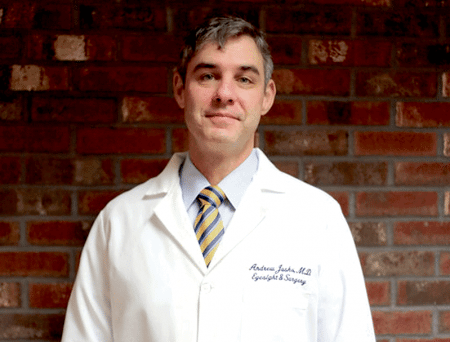
Employment Sections

Help Wanted

By AMELIA J. HOLSTROM, Esq.


In response to an increase in claims of workplace harassment, the U.S. Equal Employment Opportunity Commission (EEOC), the agency responsible for enforcing federal anti-discrimination laws including Title VII, issued a 75-page Proposed Enforcement Guidance on Harassment on Jan. 10.

Amelia J. Holstrom

Amelia J. Holstrom

The majority of the guidance deals with matters previously addressed by the EEOC, including the elements of harassment; the list of protected characteristics under federal law, including the EEOC’s interpretation that ‘sex discrimination’ includes one’s sexual orientation and gender identity; and the defenses available to an employer facing a harassment suit.

Although it has a long-standing practice of issuing harassment-enforcement guidance, the EEOC appears to take things a step further in this proposed guidance and makes suggestions for employers, including policy and training suggestions, among others. Before providing specific suggestions in the guidance, the EEOC begins by articulating that senior leaders are the “cornerstone of a successful harassment-prevention strategy,” and that they have to express frequently and with clarity that harassment will not be tolerated.

As part of that strategy, the EEOC notes that employers must allocate resources and time for harassment-prevention efforts and regularly assess harassment risks and take necessary steps to eliminate them. So, how might an employer implement and enforce such a strategy?

First, the EEOC suggests that employers adopt an anti-harassment policy. According to the EEOC, the policy should include an express statement that harassment on the basis of any protected characteristic is illegal; examples of harassment; details regarding the employer’s complaint system, including how to report; language that encourages employees to report any harassment; an indication that the employer will conduct a prompt and thorough investigation into the allegations and assurance that it will take appropriate corrective action; and a statement that retaliation is prohibited against those who file complaints and/or participate in investigations. Additionally, the EEOC recommends, among other things, that the policy be written and communicated to all employees.

Massachusetts employers should already have an anti-harassment policy that contains the criteria suggested by the EEOC. Under Massachusetts law, employers are required to have a sexual-harassment policy that includes a number of the same criteria. Employers are also required to distribute that policy to all employees both at time of hire and annually. As a practical matter, however, savvy employers have adopted and issued broader anti-harassment policies that include all types of unlawful harassment, as the EEOC suggests. Regardless, this proposed guidance should signal to employers that it is time to review their policies and consider whether changes would be appropriate.

Second, and in follow-up to its suggestion that details of the complaint system be included in the policy, the guidance makes recommendations regarding how an employer should structure its complaint system.  Under state and federal law, an employer has a duty to promptly and thoroughly investigate all allegations of harassment and discrimination.  As a result, every employer should already have a protocol in place for doing so. For example, some employers choose to hire a third party to conduct investigations, while others have an internal person or department such as Human Resources handle investigations.

In its guidance, the EEOC recommends that employers fully resource the complaint system; provide multiple avenues for filing the complaint, such as listing a male and female to which complaints may be brought; have a process to ensure that the alleged harasser is not presumed guilty before the investigation is complete; and have a procedure for informing the complaining party and accused of the outcome of the investigation or corrective action to be taken, to the extent appropriate.

The EEOC also notes that, among other things, those responsible for receiving and investigating the complaints need to be well-trained and neutral, have authority and the resources to investigate, have the ability to make people feel comfortable, and keep adequate documentation during the investigation.

Lastly, the EEOC notes that, even if all employees know about the policy and complaint system, those are only part of an effective strategy to eliminate harassment. To be sure that employees understand what constitutes illegal harassment, the EEOC recommends regular and interactive training that is promoted by senior leaders and conducted and revised regularly. The training should include examples of unlawful harassment, information about employees’ rights, details of the complaint process, and the range of consequences for someone who engages in prohibited conduct. Additionally, because managers and supervisors have additional responsibilities under federal law (and state law too) when it comes to harassment complaints and investigations, the EEOC suggests that managers and supervisors undergo additional training that includes training on recognizing risk factors, methods for addressing harassment, and clear instructions regarding reporting harassment.

The proposed guidance is available HERE. The EEOC recently sought public comment, and will next review all feedback and consider making revisions prior to finalizing its guidance.

Amelia J. Holstrom joined Skoler, Abbott & Presser in 2012 after serving as a judicial law clerk to the judges of the Connecticut Superior Court, where she assisted with complex matters at all stages of litigation. She is a 2011 graduate of Western New England University School of Law, where she was managing editor of the Western New England Law Review. Her practice is focused on labor law and employment litigation; (413) 737-4753.

Construction Sections

Building on the Past

Chris Jacobs

Chris Jacobs took the reins at Barron & Jacobs last year after more than 31 years with the company.

Chris Jacobs has construction in his blood.

“I’ve been with the company since it opened in 1986,” said Jacobs, who succeeded his father, Cecil Jacobs, last year as president of Barron & Jacobs Associates Inc. “I was 15 then, working summers, and I kept working summers through college.”

After graduation, he came on board full-time and worked his way up the chain, serving long stints as general manager of construction, then general manager of the whole company, before taking the reins from his father.

Growing up, he doesn’t recall a time when he didn’t want to work in the family business. “What young kid doesn’t like construction?”

But he also has an appreciation of history and tradition, and Barron & Jacobs is steeped in both, starting with its offices in an 1895 Victorian home in downtown Northampton, purchased from the city’s historical society and restored to its original look.

Behind that home sits a carriage house that once sheltered the first car-repair garage in Northampton — a garage visited frequently by Amelia Earhart early in her flight career, to learn about reciprocating engines.

That sort of history reflects the value that Cecil Jacobs, who’s known as “Jake,” places on the historical and architectural integrity of a building — a quality that has informed his company’s work and helped him forge a pioneering name in design-build construction — a tradition Chris Jacobs is excited to continue.

“We invented design-build back in the ’80s; previous to that, it was all general contractors,” he told BusinessWest. “Then everyone became design-build companies, even if they didn’t have designers and drafting people on their staff.”


Chart of General Contractors


His father established a philosophy at the company that whatever enhances a home should not take away from it — to have alterations and additions look like they’ve been there from day one, and to duplicate existing architecture and at the same time bring in modern conveniences.

“We’re doing a lot of the same: kitchens, additions, bathrooms, whole-house renovations,” the new president said. “The recession put a little slowdown on the bigger residential projects, but they are definitely coming back.”

Reconstructing History

Cecil Jacobs began laying the foundation for his future company in 1963 when he completed his tour of duty in Vietnam with the 6143rd Engineering Group, and went to work as a  designer for the Architectural Building Products Division of Reynolds Metals Co. (also known as Reynolds Aluminum). In the mid-’70s, he was appointed vice president of the division, overseeing the development, sales, and marketing of energy-conserving building products.

He loved working there. But his future started to shift when, in the early 1980s, David Reynolds, the company’s president, asked a question: is there another market for us other than remodeling and building new homes? In other words, is there something remodelers weren’t doing because it was too big, and that homebuilders didn’t want to do because it involved existing structures?

whole-house remodel in Longmeadow

This whole-house remodel in Longmeadow is an example of the way Barron & Jacobs updates homes while retaining their original character.

That was the birth of design-build. Jacobs was tasked with investigating the feasibility of a third major market that would encompass whole-home renovations and other major projects beyond the scope of smaller-scale remodeling. Over a two-year period, he conducted that study for Reynolds, establishing test locations in Springfield, Boston, and California, and became convinced there was a significant market.

However, Reynolds retired soon after, and the new president had virtually no interest in the project. Then, In 1986, the head of Jacobs’ division, Jim Barron, retired, and Jacobs, at age 45, felt that was a good time for him to leave as well. So after the company agreed that he could pursue and develop his design-build research on his own, Jake launched his own firm with his wife, Kathleen, putting Barron’s name on the door symbolically, to honor his mentor.

The company has benefited from the fact that Western Mass. isn’t a hotbed of new building, but there are plenty of older homes in need of renovation, meaning existing structures take on a higher value than they would in a more booming region for new construction.

As for individual projects, Chris Jacobs said, “it’s really up to the individual whether they want a European style or a traditional style. As full-service design-builders, we go shopping with them.”

That’s when many decisions are made, he went on. “The shopping is a crucial piece. Many homeowners don’t know a good cabinet from a bad cabinet, so the shopping is a crucial key to making sure the project goes correctly. We make sure they’re getting good appliances; the industry is plagued with bad appliances. We have people that we trust, that we’ve been shopping with for years.”

It takes not only skill to tackle whole-home remodels, he said, but also the personal touch and flexibility to interact with the homeowner, who may change their minds several times during a project. But, generally, detailed planning and productive shopping create a strong foundation for a successful remodel.

Steady Growth

In addition to home remodeling and whole-house renovations, Barron & Jacobs’ portfolio includes additions, add-a-levels, kitchen and bathroom remodels, screened porches and porch enclosures, three-season rooms, sunrooms and conservatories, garages and carriage houses, attic and basement conversions, as well as business renovations and expansions.

In the commercial realm, the firm recently did a rec-room project for Coca-Cola in Northampton, and is currently working on a financial building in West Springfield. While commercial building rebounded from the Great Recession quicker than residential construction, and most of Barron & Jacobs’ work is residential, the company managed to ride out those years successfully, thriving on its reputation. “It’s a tradition of building satisfaction,” Chris Jacobs said. “We’ve been doing it for over 30 years.”

In fact, the recession didn’t really hit the company until three or four years after it began in 2007,” he added. “We had a little bump in the road — as it turned out, bigger than a bump — but we could see it coming back last year, and this year is already looking good.”

As for new building, it’s not something the company pursues, although it recently built a house in New Hampshire for a past customer. “It’s usually a past customer who requests it. We don’t have our own building lots.”

Meanwhile, the firm has strived to develop a reputation as an environmentally friendly builder, both in its emphasis on energy-efficient insulation, windows, and other materials, and through an extensive focus on recycling building materials.

Through all of this, the company, which boasts 15 employees, continues to grow, with Jacobs and co-designer Adam Skiba — who comes from an architectural background and has been on board for a year and a half — looking to add another designer this year.

And, of course, the new president is already eyeing the third generation of leadership at the company, although that transition is far off — specifically, his 5-year-old adopted son.

“He’s already banged his first nail, and he’s good at it,” Jacobs said. “No pressure, though.”

Joseph Bednar can be reached at [email protected]

Architecture Sections

Come Together

By Joanna Smiley

The homes at the Pioneer Valley Cohousing community

The homes at the Pioneer Valley Cohousing community are tightly clustered around a pedestrian loop, fostering informal social interactions and preserving open space on the rest of the site.

It’s no understatement to say Laura Fitch has dedicated her life to the philosophy of cohousing — not only through her architecture career, but because she has lived in a cohousing community for nearly 20 years. The model, which encourages togetherness and elements of both private and communal living, is becoming more popular among young families, retirees, and students, making it an ideal opportunity for intergenerational connection.

It’s hard to miss Fitch Architecture & Community Design’s Amherst office.

The space is nestled inside a sun-drenched building at the entrance of Pioneer Valley Cohousing, a 22-acre stretch of private homes clustered around a communal space.

Laura Fitch, a principal with the company, helped design the community, which has garnered attention as the East Coast’s first cohousing development. Fitch herself has lived in Pioneer Valley Cohousing for nearly 20 years.

“I grew up in Concord, Mass.,” she explained. “We had Thoreau and Walden, and I lived in a sort of cluster subdivision where we shared green space and community land and resources. It left an impact on me.”

A past board member of the Cohousing Assoc. of the U.S., Fitch first learned about cohousing during a trip to Denmark in 1980, the country where the concept was first developed.


List of Architecture Firms in the region


That knowledge was followed by a stint with Peace Corps in Mali, West Africa in 1984, an experience that built in her a desire to seek out socially and ecologically responsible projects — and which partly explains why cohousing has become the heart and soul of her firm.

Laura Fitch (right, with intern architect Aviva Galaski)

Laura Fitch (right, with intern architect Aviva Galaski) says cohousing builds community ties that can enhance the health and well-being of residents.

Houses in most cohousing communities range anywhere from 600-1,400 square feet. A complex typically includes a shared community room, where group meals are served several times a month, prepared by community members on a rotating basis. At Pioneer Valley Cohousing, members are encouraged to eat together twice a week. A 4,200-square-foot common house includes a communal multi-purpose room, commercial kitchen, children’s playroom, two guest rooms, and additional recreational space.

Cohousing members are expected to participate in the work that needs to be done to keep the community running smoothly, and Fitch relies on what is called an ‘affinity work system.’ That means she ensures every member pitches in by giving them the option to choose a task they’d like to complete that will benefit the community as a whole. Fitch’s husband, for example, helps with the members’ plowing each winter.

For this issue and its focus on architecture, BusinessWest talks to Fitch about why the cohousing model is an ideal choice for certain people, and how she has crafted a career around her long-time passion for community.

Welcoming Environment

Since the first cohousing community was completed in the U.S. — Muir Commons in Davis, Calif., which recently celebrated 25 years — more than 160 such communities have been established in 25 states plus the District of Columbia, with more than 120 in process. Most cohousing communities are intergenerational, with both children and elders; in recent years, senior cohousing focused on older adult needs have grown. Small and large, urban and rural, newly built and retrofits, these communities have consistently been at the forefront of environmental and socially sustainable neighborhoods, according to the Cohousing Assoc. of the United States.

Cohousing units are intentionally designed to feel welcoming and comfortable to surrounding neighbors, so they may freely stop by each other’s homes to converse, share resources, or help watch young children. That said, families living in such proximity also have the potential to conflict. Fitch preemptively mitigates potential arguments by encouraging open lines of communication with fellow neighbors and peaceful negotiation. The complex also designates a ‘community life issue member’ who can facilitate classes for non-violent conflict resolution.

Fitch calls her cohousing community, and others like it across the country, “community at your doorstep, with privacy at your home.”

Young families, single working parents, retirees, professionals, and even students are among the demographics typically attracted to cohousing. Fitch believes cohousing offers a desirable model, one that is universal for people from all walks of life who, simply put, seek togetherness.

“If you went to summer camps, enjoyed undergrad time in dorms, if those were things you liked when you were younger, then I always tell people, you can naturally understand what it’s like to live in cohousing,” Fitch said.

She sees the senior cohousing movement exploding across the U.S. and believes that this trend will continue to grow in the coming years as a better alternative to costly assisted-living facilities or elderly people living in isolation.

“There are studies that show community is healthy for you,” she told BusinessWest. “People age faster and have more problems when they’re aging alone. Senior cohousing is becoming a real phenomenon.”

In addition to the social issues central to the design of a cohousing community, the ecological concerns of sustainability are a primary focus for cohousing groups. Many groups include sustainability as part of their vision statement, and Fitch’s firm has helped them to reflect these goals in the built community.

In general, she explained, site design is sensitive to land use. The buildings have solar access, and energy-efficient construction practices are employed. Materials and systems are specifically selected to minimize ecological impact and maximize indoor air quality. Units have front porches, which provide a bridge between public and private spaces in a cohousing community. Meanwhile, the houses are scaled to ensure they’re friendly to pedestrians.

Earth Friendly

Fitch’s specialized focus on sustainable design has earned the firm a spot in Natural Home & Garden magazine as one of the top 10 green-architecture firms in North America.

“People are recognizing now that it makes business sense … if you invest enough to reduce mechanical costs, that’s where you get to the sweet spot,” she said.

The new theater studio at Smith College

The new theater studio at Smith College was created by capturing space from a large and underutilized lobby at the Mendenhall Center for Performing Arts.

Fitch and her team have led hundreds of residential, commercial, and institutional projects, including net-zero-energy homes, educational facilities, and deep-energy retrofits.

In 2013, the firm received a Historic Preservation Award from the Northampton Historical Commission for its work at Smith College’s Dewey House. The 1827 building needed significant upgrades, so, after completing an initial feasibility study, Fitch’s firm was asked to complete full services for energy improvements and a new exterior lift. Working with energy consultants, it ultimately achieved a 65% reduction in air infiltration.

Meanwhile, the Hartsbrook School, a Waldorf educational facility in Hadley, chose to work with Fitch and her team for a project focused on creating a new early-education building.

The new classroom building at the Hartsbrook School.

The new classroom building at the Hartsbrook School.

But cohousing remains Fitch’s calling card, and she has earned national accolades for her work in this field. Alice Alexander, executive director of the Cohousing Assoc. of the U.S., calls Fitch a “real pioneer” in getting the nationwide cohousing movement off the ground.

“Laura Fitch is one of our outstanding cohousing professionals,” Alexander said. “Not only is she an outstanding architect, but also she is adept at group process — at working collaboratively with large numbers of folks who can come to the table with diverse views. That takes talent. Laura is also committed to environmental sustainability and nurturing community for health and resilience.”

Fitch’s fusion of professional and personal interest in cohousing has proved to be an asset to her firm’s clients. “It enables me to understand what early cohousing groups are going through when it comes to making tough decisions about their money and the future,” she noted. “I can answer questions on the architecture, process, and what its like to live there as a resident.”

One of Fitch’s best ideas so far? An outdoor ping-pong table at the cohousing development she calls home.

“It reinvigorated our community life,” she said with a smile. “We all sit around the courtyard after meals egging each other on in ping-pong matches.”

It’s just one more way she has made a career — and a life — out of creating connections and community.

Architecture Sections

Living Spaces

WASHINGTON, D.C. — Nearly three quarters of U.S. architects say the health impacts of buildings are influencing their design decisions. That finding parallels a strong market demand by building owners, with a solid two-thirds surveyed also reporting that health considerations affect how they design and construct buildings.

These findings and others were featured in a new report, “The Drive Toward Healthier Buildings 2016” by Dodge Data & Analytics, in partnership with Delos and the Canada Green Building Council, and with the participation of the American Institute of Architects (AIA) as a critical research advisor and partner.

The report documents the value and need for more of the research, education, collaboration, and outreach efforts that are hallmarks of the AIA’s Design and Health initiative. Since 2013, AIA has invested in expanding the body of knowledge on the connection between design and health, including professional continuing education and the 17-university Design & Health Research Consortium.

“As a society, we spend nearly 87% of our time indoors,” said AIA Chief Executive Officer Robert Ivy. “Designing and constructing healthy buildings is crucial to our own well-being.

“Working with architects, we can accelerate this need for healthier buildings and improve quality of life across the country,” he continued. “This report documents how architects can help clients have a positive effect on human health, through the built environment.”

That positive result includes increasing employee participation and fulfillment, the report found. Sixty-nine percent of owners who measure employee satisfaction and engagement reported improvement in both attributes due to their healthier building investments.

According to the report, the top five healthier building features implemented by architects include better lighting and daylight exposure, products that enhance thermal comfort, spaces that enhance social interaction, enhanced air quality, and products that enhance acoustical comfort. Use of nearly all of these is expected to grow considerably along with further pioneering approaches like the use of biophilic design features, spaces that enhance tenant mood, and opportunities for physical activity, the report found.

“The increased attention to building health impacts is just beginning,” said Stephen Jones, senior director of Industry Insights at Dodge Data & Analytics. “In a similar way several years ago, companies engaged in green construction because of the demonstrable business and financial benefits they were able to achieve. The findings of this report demonstrate that the focus on buildings that enhance the health and well-being of their occupants is likely to follow a similar trajectory, boosted by those who have committed to sustainability in their organizations.”

Additional highlights from the report include:

• Most owners are not aware how healthy building investments result in business benefits like leasing rates (52%) and asset values (58%). However, among those that report an effect, 73% report faster rates, and 62% report higher values.
• According to architects and interior designers, the top driver for greater investment in healthier buildings is improved public awareness of the health impacts of buildings.
• Public-health professionals report that the most common policies currently in place to support healthier building practices are requirements to avoid the use of hazardous materials in buildings (65%). The key policy areas that are currently being considered include incentives that encourage physical activity (47%) and requirements for ongoing building air-quality measurement (46%).
• Ninety-two percent of public-health professionals also report that their institutions are actively conducting research on the influence buildings have on occupant health and well-being.
• Architects are most aligned with their clients (owners) when it comes to understanding the goals of healthy-building investments, as compared to other industry players, recognizing that improved tenant/employee satisfaction and happier and healthier occupants is the primary focus for owners related to their investments.
• The largest percentage of owners, at 42%, identify that they are very interested in partnering with architects to help increase their ability to implement healthy-building practices. While low, it is notably more than the next two highest potential partners — facility managers and educational institutions, both at 31%.

The report also received key support from CBRE, Dewberry, and the U.S. Green Building Council, with additional support from Armstrong Ceiling Solutions and the Regenerative Network. Other organizations that participated in the research process include the American Society of Interior Designers, the National Assoc. of Real Estate Investment Managers, and the World Green Building Council.

This article was prepared by the American Institute of Architects, which works to create more valuable, healthy, secure, and sustainable buildings, neighborhoods, and communities.

40 Under 40 Features

Editor’s Note: Again this year, five individuals have been chosen to score the nominations submitted for the 40 Under Forty competition. In keeping with past practice, BusinessWest has chosen two former winners to be part of this panel (and a third owns a 40 Under Forty plaque from the Worcester Business Journal). As always, BusinessWest has sought out individuals with experience in business and entrepreneurship.

Ken Albano

Ken Albano

Ken Albano

Attorney Kenneth J. Albano is the managing partner of Bacon Wilson, P.C., and a member of the firm’s corporate, commercial, and municipal practice groups.

In addition to his legal practice, he is very active in the local community. He is chair of the board of the March of Dimes Western Mass Division, and serves on the Board of the New England Chapter of the March of Dimes. Albano is also a board member with Behavioral Health Network, where he has served for more than 20 years. He also works with the American Cancer Society, Make-A-Wish, and the ALS Association.

In June of 2015, Albano was honored with the Mass. Bar Association’s Community Service Award in recognition of his exceptional volunteer work.


Jean Deliso

Jean Deliso

Jean Deliso

Jean Deliso, CFP is president and owner of Deliso Financial and Insurance Services. She focuses on financial preparation for retirement as well as times of transition such as divorce or widowhood.

Deliso has been working in the financial field for 30 years, her first seven in public accounting and the balance working in the financial-services industry. She has been a member of New York Life Chairman’s Council since 2012 and a qualifying Member of the Million Dollar Round Table for the past 18 years.

She currently serves as chairman of the board of the Baystate Health Foundation, and is immediate past chairman of the Community Music School of Springfield. She is also past chairman of the board of the YMCA of Greater Springfield, past board member of Pioneer Valley Refrigerated Warehouse, as well as past trustee of the Community Foundation of Western Mass. and the Bay Path College advisory board. She is a supporting member of the National Assoc. of Life Underwriters and the Hampden County Estate Planning Council.

Samalid Hogan

Samalid Hogan

Samalid Hogan

A 40 Under Forty winner in 2013, Samalid Hogan is director of the western regional office of the Mass. Small Business Development Center (MSBDC) Network. She has more than 12 years of economic-development and project-management experience.

In 2015, she was the consulting project manager for the Holyoke Innovation District on behalf of the MassTech Collaborative and Pioneer Valley Planning Commission. Previously, she was the senior project manager and brownfields coordinator at the City of Springfield’s Office of Planning and Economic Development. Hogan also served as a senior economic-development and policy analyst at the Pioneer Valley Planning Commission, and founded CoWork Springfield, a networking organization and co-working space.

In 2016, Hogan was awarded a Grinspoon Entrepreneurial Spirit Award and recognized by the Massachusetts Latino Chamber of Commerce as a Woman Trailblazer and Trendsetter.

Patrick Leary, CPA

Patrick Leary

Patrick Leary

A member of BusinessWest’s inaugural 40 Under Forty class in 2007, Patrick Leary is a partner at Moriarty and Primack, an accounting firm with offices in Springfield and Lincoln, Mass., and Bloomfield, Conn., and directs accounting, auditing, and business-advisory services. His concentration is on closely held and family-owned businesses, as well as providing business-advisory services for a wide variety of industries.

He serves as the first vice chairperson of the Greater Springfield YMCA, chair of the board of directors of Human Resources Unlimited, a member of the of the board of directors and executive committee of the Springfield Regional Chamber of Commerce, treasurer of United Way of Pioneer Valley, and treasurer of the Colony Club.

Leary is a member of the American Institute of Certified Public Accountants and the Massachusetts Society of Certified Public Accountants. He is licensed to practice public accounting in Connecticut, Massachusetts, and New York.

Matt Sosik

Matt Sosik

Matt Sosik

Matt Sosik began his career in banking with the FDIC in Holyoke. In 1997, he became the CEO of Hometown Bank in Webster, Mass. After serving in that capacity for nearly 17 years and growing Hometown Bank almost 1,000%, he accepted the role as CEO and president at bankESB in 2013.

Since his arrival, he has overseen two mergers and has more than doubled the size of the parent holding company to more than $2 billion.

Sosik is a member or former member of numerous nonprofit boards, including United Way chapters, the Rotary, and hospital boards. He was a 40 Under 40 honoree in 2001 with the Worcester Business Journal.

Community Spotlight Features

Community Spotlight

Linda Leduc, Meena Patel, and Charlie Blanchard

Linda Leduc, Meena Patel, and Charlie Blanchard say the new Junction Variety store will include 1,800 square feet of space suitable for retail or office use.

A dozen years ago, Meena and Bharat Patel purchased Junction Variety store in Palmer. They established a loyal client base, but several years ago, the cost of operating the antiquated building, combined with the need for extensive repairs and inadequate parking, forced them to make a decision about whether to remain in town and build a new structure or move their business elsewhere.

“We decided to stay here; I love Palmer,” said Meena. “The people are very supportive, and we have good relationships with our customers.”

Last June, ground was broken on a new, 40,000-square-foot facility. It is expected to be completed within a few weeks, and once the store is moved, the old building will be demolished, and a parking lot with 20 parking spaces will take its place.

Junction Variety will occupy 2,200 square feet of the new structure, which will almost double its current size, and the remaining 1,800 square feet will be available for lease as office or retail space.

The project is part of a flurry of commercial activity that began last year and is rapidly accelerating, creating momentum in this community.

“It’s definitely a sign of the recovering economy. Things are happening a lot faster now than they did in the past, and we are very busy,” said Town Planner and Economic Development Director Linda Leduc, who explained that, a few years ago, projects were permitted that never moved forward, but today construction often begins months after the permitting process is complete.

The list of developments, moves, and expansions nearing completion or underway is lengthy, as Leduc and Town Planner Charlie Blanchard explained during a lengthy interview with BusinessWest. It includes four new solar farms (last year the town had five, which brings the total to nine), construction of a $17.2 million Emergency Department at Baystate Wing Hospital that will begin this year, a $2 million expansion of an advanced-manufacturing company that was recently finished, grassroots efforts in Three Rivers that are leading to change, and churches in residential neighborhoods being reused in creative ways.

Construction is also underway at Town Hall. A $400,000 heating and air-conditioning system was installed over the past two years and paid for with funds from the Green Community Act. And this year, renovations are being made to the entire building to make better use of space vacated by the Police Department when it moved into a new, $7.4 million facility several years ago.

Specifically, the public meeting room will be expanded and gain a new entrance; a new conference room and additional storage space will be created; the Board of Health, Conservation Department, Building Department, and Veteran’s Agent will move into larger offices; and new lighting, windows, and carpeting will be installed throughout the building.

“We have a lot of activity taking place for a town this size,” said Blanchard, attributing it not only to renewed confidence in the economy, but to the willingness of officials and the Town Council to work with businesses and make changes to accommodate their needs.

For this, the latest installment of its Community Spotlight series, BusinessWest takes a look at projects that were recently completed, underway, or on the drawing board throughout the four villages that make up the town of Palmer.

Diverse Undertakings

Change continues to take place in Depot Village, the first commercial district travelers pass through after they exit the Mass Turnpike.

Last year, Mark Baldyga of Baldyga Inc. stopped selling travel trailers and made the decision to focus on autobody work and used-car sales, which necessitated a move, because his 1221 South Main St. location didn’t provide the frontage and exposure he needed.

Finding a suitable property proved difficult, but he hoped to remain in Palmer because he grew up in the town, has spent more than 30 years on the Fire Department, and has an employee who is also a firefighter.

“I have a good reputation, and people here know me, which is one of the main driving forces for my business,” Baldyga said, adding that he has close ties with the community.

His search led to a two-acre parcel on Route 20 with the frontage he needed. However, before he purchased it, he petitioned the town to change the area from general zoning to highway business so he could move forward with his plan.

The petition was accepted, and Baldyga split up the acreage, which was needed because the rear portion of the plot contained a multi-family home.

Ground was broken last spring for a new, 5,500-square-foot building that is nearing completion; he expects to reopen in a few weeks.

He told BusinessWest that the neighbors were not only accommodating, but supported the zoning change, and it has worked out well for everyone involved.

“The town will get more taxes, businesses of a similar nature can move here now, and my tenants are happy because I made improvements to their apartments and cleaned up the property,” he noted, adding that, if the zoning change hadn’t been approved, he would have had to leave Palmer.

Michael’s Party Rentals purchased Baldyga’s former location, and President Michael Linton said the company moved from its Ludlow locations and did a substantial renovation of the 20,000-square-foot building, included the addition of a showroom, design center, and state-of-the-art tent-washing machine.

Other moves have occurred in Depot Village. Last year, the Fire Service Group purchased the former American Legion building on 1010 Thorndike St., which allowed the company to expand from a smaller location, and construction plans have been approved for a Dollar General store on the corner of Breckenridge and Park streets that will be built after the single-family home on the site is demolished.

Progress has also taken place at Detector Technology, a precision-manufacturing firm located in Palmer Industrial Park.  Blanchard said the company needed room to expand and purchased a building from Wayne Buxton, who was using it to house his ShedWorks Inc. business.

“Wayne needed to downsize but wanted to stay in Palmer, so he kept half of the lot and is building a new, smaller structure on it,” Blanchard noted, explaining that Detector Technology recently finished a $2 million renovation of the former Shedworks.

Baystate Wing Hospital is also building a $17.2 million, 37,000-square-foot Emergency Department on its Palmer campus. Ground was broken in November, and the institution is meeting all its timetables.

“They are a major employer and are making a big investment that will be beneficial to our residents as well as the region,” Leduc said.

The town’s capped landfill on Emery Street is another property that has been given new life. Leduc said a request for proposals was issued for the site several years ago, but nothing came to fruition until Syncarpha Solar, which owns and operates a solar farm on the adjacent former Palmer Metropolitan Airport, made the decision to build a second facility on the landfill.

“We were happy they were interested in generating additional solar power on the site,” Leduc said, adding that the town had five solar farms, and, in addition to the new one on the landfill, Nexamp, Nextsun Energy, and Beaumont Solar also built solar facilities last year.

“Two are operating, and the other two are waiting to be interconnected, but once that happens, Palmer will be generating almost 25 megawatts of electricity on its nine solar farms,” she noted.

The facilities will bring in new revenue and result in energy savings. Palmer will receive $121,000 annually for the next 25 years in lease payments from the solar farm on the capped landfill, and will begin getting net metering credits this year from Blue Wave Solar on Baptist Hill in Three Rivers, which Blanchard estimates will save the town 30% to 40% of the generated cost of electricity.

New Life

Two other projects Leduc describes as “exciting” involve the conversion and reuse of former churches.

Artist Bruce Rosenbaum and his wife, Melanie, recently purchased St. Mary’s Episcopal Church on Main Street in Thorndike. It had been vacant for several years, and will become their residence and the new home for Mod Vic Steampunk Design when the couple moves from Sharon.

“It was a perfect situation,” Leduc said, explaining that churches often are located in the middle of residential districts, and although the town is willing to rezone whenever it makes sense, it’s not always possible.

The Rosenbaums created the first functional steampunk house in the world, and their business repurposes and infuses modern technology and gadgets into period, relevant antiques and salvage objects.

“We work with clients in the U.S. and internationally to design one-of-a-kind pieces, creatively combining eras and ideas to transform the ordinary into incredible steampunk functional art,” Bruce said, adding that the couple has clients all over the world and looked throughout the Commonwealth and in Connecticut before deciding that St. Mary’s Church was a great place to expand their business.

The 1876 gothic structure, with 30-foot ceilings and tall stained-glass windows, three wooded acres, and 30 parking spaces in the middle of a residential neighborhood appealed to them, especially since they have clients in Amherst, Holyoke, Northampton, and Springfield, including MGM.

They worked with the town to get a home-occupation permit before purchasing the home earlier this month, and are looking forward to relocating and creating a showroom and gallery in the historic space, as well as holding steampunk workshops for families.

In addition, Amherst Railway Society purchased the Crossroads Christian Church on South Main Street in Depot Village and plans to move there on June 16.

“It’s a nostalgic reuse of a historic church and very fitting since Palmer is known as the Town of Seven Railroads,” Leduc said.

Collaborative efforts to revitalize Main Street in Three Rivers are also bearing fruit, thanks to work by the consortium On the Right TRACK (the acronym stands for Three Rivers Arts Community Knowledge), which has been working to build a cultural and creative economy in the village.

The Quaboag Valley Community Development Corp. was awarded a $13,500 Adams Art Grant for fiscal years 2016 and 2017, and the town completed a market-assessment and business-recruitment tool as well as a feasibility study showing that a building on 2032 Main St. obtained through the tax-title process has potential for redevelopment.

“The town will put out a request for proposals as soon as we have grants in place for the building,” Leduc said.

A number of property and business owners also began meeting 11 months ago in a grass-roots effort to help the revitalization effort, which includes changing the perception of the area and filling vacant storefronts.

Community Development Director Alice Davey said Nancy Roy, of Interactive Schoolhouse, was instrumental in starting the group. The agency received $35,000 from MassDevelopment and used the money to hire Union Studio in Providence, R.I. to design a conceptual plan for the center. The consulting firm held a public presentation several weeks ago to get input from residents, and the final report is expected in the near future.

Davey said suggestions put forth during the meeting included making the downtown more pedestrian-friendly, building a walking path with river access around the perimeter of Laviolette Park and upgrading the parking there, and expanding Hryniewicz Park, which is used for movie nights, concerts, and other events staged by the town’s recreation department and the Quaboag Hills Chamber of Commerce.

“It’s an exciting time for Three Rivers,” she noted. “The public meeting was well-attended, and residents and property owners eagerly anticipate the final plan and development of a course of action to implement some of the recommendations.”

Forward Movement

Bruce Rosenbaum says steampunk is more than just art: it’s a way to creatively problem-solve, learn how to adapt to a situation, and be resilient.

“You look at an object, know the purpose it was designed for is obsolete, then find a way to give it new life and make it beautiful and functional,” he said, adding that the idea translates to people and cities, and he is excited to work with Palmer “as the town re-imagines itself.”

That certainly applies to Three Rivers, and progress is indeed underway that will put the Town of Seven Railroads on the map as it moves forward on a fast track that is attracting new businesses and helping existing ones to expand and grow.


Palmer at
a Glance
Year Incorporated: 1775
Population: 13,050 (2015)
Area: 32 square miles
County: Hampden
Tax Rate, residential and commercial: Palmer, $21.57; Three Rivers, $22.25; Bondsville, $22.06; Thorndike, $23.01
Median Household Income: $51,846
median family Income: $68,200
Type of government: Town Manager; Town Council
Largest Employers: Baystate Wing Hospital; Camp Ramah of New England; Big Y World Class Market
* Latest information available

Health Care Sections

Meeting an Emergency Need

An architect’s rendering of Holyoke Medical Center’s new Emergency Department, set to open in May or June.

An architect’s rendering of Holyoke Medical Center’s new Emergency Department, set to open in May or June.

The numbers alone speak to Holyoke Medical Center’s need for a new Emergency Department, with the current ER designed for 25,000 visits per year but actually logging almost 43,000. But HMC’s new facility, set to open this spring, will do much more than better handle the traffic; it will also call on cutting-edge ideas in design and workflow — not to mention an innovative, dedicated behavioral-health area — to reflect a truly 21st-century vision of emergency care.

Running an emergency room is more than a numbers game for hospitals, involving a complex weave of triage and treatment to ensure that patients’ needs are met efficiently and effectively.

But the numbers at Holyoke Medical Center … well, they were simply unsustainable.

“The existing ER is designed to see about 25,000 patients per year,” said Carl Cameron, the hospital’s chief operating officer. “We saw almost 43,000 last year in that small area located in the back of the hospital, which is difficult to find.”

When Spiros Hatiras came on board as president and CEO of Holyoke Medical Center (HMC) in 2013, one of the first concerns brought to him by the board of directors was the existing Emergency Department, which desperately needed an overhaul and more space. They talked about expanding the existing ER, but the finances suggested building a new one would make more sense — not to mention that a construction project in a working ER would disrupt patients.

“We started the dialogue about what we are going to do with the ED in October of 2014,” Hatiras said. “We talked about the concept of expanding in place, but the exercise proved to be futile because we’d lose a lot of space with the construction. So we changed course and said, ‘maybe we need a completely new building.’”

The end result of those discussions will be unveiled this spring: A new Emergency Department that will expand the current space from 8,500 square feet to approximately 20,750 square feet. A second floor above the new ER will house a medical office building of 18,000 square feet.


List of Acute Care Hospitals in the region


The expansion will increase the ER’s treatment beds from 26 to 40, 12 of those designated as behavioral-health beds, part of a new Crisis Center for Psychiatric Services, segregated from the main ED to give those patients more privacy. The ED will also include two multi-patient trauma rooms, advanced life-saving equipment, six fast-track spaces, and a patient-navigation service as well. “It’s a large increase from where we’re currently at,” Cameron said.

Carl Cameron

Carl Cameron says capacity alone — the current ER is designed to see 25,000 patients annually, and saw almost 43,000 last year — is reason enough to build a new one.

The exterior space will be bigger as well, with room for four ambulances instead of the current two.

Meanwhile, the second floor will be the home of a comprehensive weight and health-management program, including services for bariatric surgery, general surgery, diabetes counseling, behavioral and nutritional education, as well as a patient fitness center.

“It’s a state-of-the-art space up there, with plenty of room,” Cameron said. “One of the rooms is a large auditorium where we can have sessions with bariatric patients.”

The weight-management program, launched last March, has “grown beyond anyone’s imagination,” Hatiras added, noting that it recently saw its 500th new patient. “It’s been amazing, and it continues to grow. This is the result of planning ahead, knowing we’re going to need more space for that program, and potentially more providers.”

With the new ED and medical office building ahead of schedule — the goal of cutting the ribbon in late June may be pushed up to late May — BusinessWest takes a peek into what is now a mesh of steel framing, but promises to become the state-of-the-art emergency area this community hospital has long needed.

Modern Design

Once the decision was made to build a new structure, Hatiras said, discussions began from a blank slate, incorporating current best practices in layout, workflow efficiencies, and design elements.

“Throughout the waiting area, we’re incorporating a lot of natural light and finishes that make it feel more like the lobby of a hotel than a medical space,” he told BusinessWest. “There’s a lot of glass. Most of the treatment rooms are going to have a window where the natural light comes in. And every single one of the treatment rooms is private — no more lying next to somebody else, separated by a curtain.”

Meanwhile, finishes in the behavioral-health area, including materials, colors, and lighting, are meant to promote a decrease in anxiety. “Behavioral-health patients come in to the hospital in an anxious state,” he explained, “and often the environment — the noise, light, colors ­­— amplifies that instead of toning it down.”

Planners convened a behavioral-health peer group, soliciting input from former patients, to improve their understanding of how behavioral health should be delivered, and those discussions influenced some of the design choices.

Speaking of design, there was also an effort to make the new building match architecturally with its surroundings, which include buildings that date back to the 1800s, so the exterior brick and metal façade will blend in with both HMC’s recently renovated front lobby and the older buildings on campus.

“Not only will this be a functional improvement,” Hatiras said, “but when we’re done, this will be the most beautiful campus in the Valley, and I can say that with confidence, because I know what it will look like, and I’ve seen the other ones.”

Of course, all this function and design costs money, which for years has been a stumbling block to progress, he went on. The current project began with a $13 million to $14 million price tag, which increased to $23.8 million when the second floor was added.

However, approximately $5.5 million is being provided through the federal New Markets Tax Credit program. Hatiras credits U.S. Rep. Richard Neal with helping secure those funds, which will reduce the hospital’s debt service on the project, allowing it to keep healthy reserves and invest in additional health programs.

Meanwhile, HMC also scored a Community Hospital Acceleration, Revitalization, and Transformation (CHART) grant, a state program that promotes care coordination, integration, and delivery transformation to enhance community hospitals in Masachusetts. The $3.9 million grant ­— the largest in CHART’s phase 2 round of funding — supports the integration of behavioral-health services in the Emergency Department. Additional financing partners for the project include Valley Health Systems, MassDevelopment, People’s United Bank, JPMorgan Chase, and A.I. Wainwright.

Spiros Hatiras

Spiros Hatiras says talk of expanding in place was quickly scuttled in favor of a plan that would provide more space, easier access, and no disruption of current emergency services.

“Our total cost is $15 million, which is fantastic because an independent community hospital doesn’t have access to capital,” Hatiras said. “So to be able to do this for 60 cents on the dollar with the rest being New Markets Tax Credits and grants is really fantastic.”

A recently launched capital campaign seeks another $3 million to further reduce the hospital’s project costs. More than $1 million has been raised to date, with campaign donations to support some of the new ED’s ancillary needs and additional equipment.

Raising the Bar

One of the late additions to the project, piling on some additional cost, is a second entrance from the main hospital via the second floor, which adds functionality and easier patient access to the new building, Hatiras noted. But the most innovative element in the new ED is the emphasis on behavioral health, which is a growing issue across Massachusetts.

“In our existing ED, we didn’t have enough capacity for private behaviorsal-health areas,” Cameron told BusinessWest. “The new location is going to include six private rooms and another six detox chairs. I can imagine those will be full on a daily basis.”

In addition to the new building and new equipment being purchased, Cameron added, the ER will employ a more efficient workflow system that moves patients more quickly through the triage station and into a treatment room. The nursing station will be centralized and have visibility to all the treatment areas, to better keep track of what’s going on with each patient and, again, promote better flow.

Parking has long been an issue at Holyoke Medical Center — really, at what area hospital is it not an issue? — and the new building took over a small parking lot. But at the same time, the hospital created 100 new spots elsewhere on campus and launched a valet service to get patients in and out quickly without having to look for parking, Cameron said. “All that has definitely improved parking for patients.”

Hatiras said hospital leadership is formulating some long-term solutions to the parking issue, but they’re solutions to a good problem — that is, how to create more access to a hospital that has been growing to meet the needs of its community. This fact, he said, should be considered by neighbors who might be annoyed at some of the parking spillover onto side streets while HMC strategizes to create more space on its campus.

“In the three years since we started the effort to revitalize Holyoke Medical Center, we’ve added more than $20 million in revenue and a couple hundred employees,” he said. “Even the neighborhood property values are affected positively by the new emergency room and a thriving hospital.”

That progress has been reflected in some of the hospital’s recent honors, he added, including a Top Hospital Award from the Leapfrog Group in two of the past three years, which is given to more than 100 institutions nationwide for their commitment to patient safety. Selection is based on many areas of hospital care, including infection rates, maternity care, and the hospital’s ability to prevent medication errors.

“We want to raise this institution to a level the neighborhood and the city can be proud of,” Hatiras said.

That the hospital earned such recognition while operating an ER in half its optimal space is a testament to the hospital’s providers, he noted, and the expansion will provide opportunities to further boost that performance.

Local Impact

Hatiras is proud that most of the construction has been subcontracted to local workers.

“We’ve made a huge effort so that most, if not everything, stays local,” he said. “That’s a big shot in the arm, an economic boost for the area, with that work flowing through here.”

There’s also a sense of pride that the expansion is on schedule and on budget, he added.

“We finished design plans in February 2015, and were bidding out to the general contractor and getting financing before Christmas 2015,” he said. “The whole thing was lightning-fast. Everyone worked really hard on something that can sometimes take a half-decade of planning before it even gets off the ground.”

That wasn’t an option at Holyoke Medical Center, where emergency patients had been feeling the squeeze for much too long.

Joseph Bednar can be reached at [email protected]

Health Care Sections

Healing Touch

Hazel Ferriter

Hazel Ferriter says massages by Saskia Cote at Bottom-Line Bodywork help her to relax before she starts a 12-hour shift.

Twice each week, the assisted dining room at the Life Care Center of Wilbraham is transformed into a quiet, relaxing oasis.

The blinds are drawn, and soothing music plays softly as employees enter the dimly lit room and are treated to a 15-minute massage designed to alleviate stress, treat aches and pains, and allow them to return to work feeling rejuvenated and ready to help the people they care for.

The service is provided by Body-Line Bodywork, LLC in Palmer, which brings massage therapy into the workplace with a focus on nursing homes, assisted-living facilities, hospitals, and doctors’ offices.

“We specialize in short, targeted sessions to reduce tension, relieve stress, and help prevent carpal-tunnel and other repetitive-motion injuries,” said founder and CEO Saskia Cote, explaining that all massages are done on a massage table as opposed to a massage chair, which allows people to lie down and completely relax.

Although Life Care Center Senior Executive Director Dennis Lopata says the free massages are a simple perk, the benefit is appreciated and important to employees whose work duties include lifting people, assisting them with ambulation, and helping with tasks necessary to daily living.

“The job can be really demanding, especially for certified nursing assistants, who use and abuse their bodies to meet everyday challenges,” Lopata told BusinessWest. “The signup sheets fill quickly every week, and employees tell me the service makes them feel like Life Care cares about their personal well-being. It’s a well-regarded service, and we are happy to have Saskia as part of our team.”

Life Care Center is one of a growing number of companies that are incorporating massage therapy into wellness programs. Studies show the alternative health practice is an effective treatment for stress and pain relief, and doctors and healthcare professionals endorse its benefits.

Research has demonstrated that, in addition to decreasing stress, anxiety, and depression, massage therapy relieves muscle tension and pain, improves sleep, helps headaches, lowers blood pressure, prevents repetitive-strain injuries, increases immune function, treats carpal tunnel and tendinitis, and increases focus, energy, and mental clarity.

A recent study by Beth Israel-Deaconess Center for Alternative Medicine Research and Education and the Center for Health Studies in Seattle concluded that therapeutic massage is an effective treatment for chronic low back pain, while other workplace studies show it results in reduced absenteeism and workers’ compensation claims.

Indeed, it has become a benefit that pays for itself. According to the “2015 Report on Corporate Wellness” by IBISWorld, corporate wellness programs that include massage therapy average a $3 to $6 return on every dollar of investment.

Life Care has not been able to quantify benefits in terms of a dollar amount, but Lopata believes workers’ compensation claims and sick days have been reduced as a result of  the massages that several dozen employees take advantage of each week.


Dennis Lopata says massage therapy provided by Saskia Cote

Dennis Lopata says massage therapy provided by Saskia Cote of Body-Line Bodyworks has proved to be highly beneficial to employees at Life Care Center of Wilbraham.

Restorative aide Deborah Rivera is a proponent of workplace massage and has donated her time to peers who are having a difficult day and aren’t on the schedule.

“We try to provide every resident with the utmost in care, but sometimes we can’t do everything we would like to. We see some heartbreaking situations,” she said as she spoke about dementia and other age-related illnesses. “But this takes us away from the unit and puts us in a different stage of mind. We are being cared for and attended to, which is very relaxing.”

She added that a single session has alleviated back pain that stemmed from lifting and transferring patients. “When I leave the massage room, I feel rejuvenated and ready to go back on the floor and be a super aide.”

Winsome Roberts is another massage advocate who signs up for massages at Life Care every week. “I used to get a lot of migraine headaches, but they stopped after several months of massage,” said the certified nursing assistant. “Fifteen minutes may not seem like much, but it helps me to be more relaxed and flexible. The job can be physically and mentally demanding, but this makes a real difference and helps me to help residents who need assistance.”

Healing Journey

Cote has been a licensed massage therapist for 25 years, and has taught massage therapy to students in the U.S. as well as seven foreign countries.

She grew up in the Netherlands and began bodywork training at the Upledger Institute Europe in 1990.

She moved to the U.S. following a spiritual retreat to Santa Fe, N.M., where she learned about the New Mexico Academy of Healing Arts and was accepted into the program.

“I fell in love with massage there,” she said, adding that, after graduation, she worked at Ten Thousand Waves Spa in Santa Fe, which has been consistently named one of the top 10 spas in the world.

In 2002, Cote and her husband left New Mexico and moved to Massachusetts because they wanted to live closer to his family in the Boston area. They settled in Palmer, and she began work as an independent massage therapist. She also taught massage therapy at the Muscular Therapy Institute in Watertown, which recently changed its name to the Cortiva Institute. She was promoted to director of the institute’s continuing-education program and continued in that role until three years ago, when she left to teach at the Massage School in Easthampton.

During a time when she was questioning what else she could do with her life, she received a phone call about a counseling program at Elfinstone College in Rockport. She enrolled and graduated in 2008 with a doctorate that proved to be an important adjunct to her career.

“People store emotions and memories of trauma in their bodies, which sometimes come out when they are touched with compassion,” Cote told BusinessWest, recalling people who received massages after 9/11 and began crying on the massage table.

Three and a half years ago, she was hired to replace a massage therapist working for the Life Care Center in Wilbraham, and the joy she found helping people in the workplace led Cote to found Bottom-Line Bodyworks in 2015.

In addition to massage therapy, she is trained in a number of other healing modalities that include craniosacral therapy, myofascial release, lymphatic drainage, Reiki, and Qi Gong. She also offers hot-stone massage and cupping, which is popular with nursing-home employees because it helps with pain and inflammation while providing a sense of well-being.

“People often think of massage as a luxury, but when they have the opportunity to get a massage at work, it becomes part of their self-care,” Cote said, adding that it helps employees in nursing homes alleviate stress and physical discomfort in their knees, backs, and shoulders that results from working on their feet all day or lifting residents.

Cote also enjoys being able to provide local therapists with work, especially since it can be difficult for them to maintain a steady flow of clients. She has two employees and plans to hire a third in the Foxboro area, as a company there has requested her firm’s services.

In December, Wingate at Wilbraham signed a six-month contract with Body-Line Bodywork, and employees began signing up for weekly massages last month.

Administrator Darryl LeCours said the money for the service came from an $11,000 Pay for Performance Award the facility received last year from the state. The award has to be spent on staff, and after taking a poll and holding meetings to see what employees preferred, it became evident that their top choice was massage.

“Things such as gift cards or food for the break room, which were suggested, have a very short-lived impact,” she noted. “Massage is therapeutic and something tangible we can do to help employees have a better week physically and mentally.”

LeCours added that certified nursing assistants and other front-line caregivers are often exhausted at the end of a shift. But she noted that everyone has a smile on their face when they come out of a session.

“We’re trying to bring happiness into the nursing home, and it’s important for our employees to feel good so they can provide compassionate care to our residents,” LeCours said.

Other companies have called upon Body-Line Bodywork to give massages at employee-appreciation days and similar events, and their numbers are growing.

Beneficial Effects

When Cote arrives at a nursing home, the signup list is always full, and on a recent day, employees at Life Care Center kept stopping by for shoulder or back therapy even though they weren’t on the schedule.

Although it’s difficult to quantify the therapeutic benefits of this service, people have reported they are less anxious, sleep better, and have enjoyed better health as a result of massage.

It also provides them with a refuge from stress in a temporary oasis created expressly for that purpose.

“It’s a nice 15 minutes of silence that allows me to put everything in perspective,” said Ann Caseldan, a speech-language pathologist at Life Care who has enjoyed massages for the past two years.

Hazel Ferriter agrees. She usually signs up for a massage before her 12-hour shift at Life Care Center begins. “It loosens up your muscles and has helped me with a migraine and back pain that comes from lifting. Massage makes you feel better,” said the certified nursing assistant.

Indeed, it’s a win-win situation. “People are always happy to see me, which brings me great joy,” Cote said. “When they receive a massage, they learn how to touch the residents in a healing and loving way and may be able to go the extra mile for a patient because they feel nurtured themselves. It’s a ripple effect of compassionate touch; once someone is touched with love and compassion, they are much more likely to be loving and compassionate towards others.”

Which is a priceless benefit, especially in settings where employees care for loved ones who can no longer care for themselves.

Features

A Real Page Turner

Diane Pikul

Diane Pikul, Northeast regional sales manager for National Library Relocations.

You might say this is a business that does things by the book. But that tells only part of the story. It also stores, moves, cleans, and inventories everything from maps to photographs; from pieces of art to railroad equipment. And if you called National Library Relocations a ‘volume business,’ that wouldn’t exactly be accurate, either. Here, they measure collections in linear inches and feet — lots of them. In fact, just last summer, the company, with a huge warehouse in Palmer, moved more than 20 miles of books.

As she walked among the seemingly endless rows of books, journals, and boxes of photographs, Diane Pikul stopped to admire what is easily one of the more intriguing items now in her care.

And one that, like those books on the shelves, tells a story. Well, sort of.

The old train lantern is from the collection owned by the National Railway Historical Society. Pikul, Northeast regional sales manager for National Library Relocations (NLR), looked for some clue as to how old this artifact was, and couldn’t find one. She did learn, however, that the lantern was put to use in Chicago.

It is stored next to a large wooden rack that once held dozens of train schedules, an indication of just how dominant that mode of transportation was a century ago and even 60 years ago. And it’s just one small part of a collection measured not in pieces, or volumes, as one might expect, but in linear feet, as will be explained later.

The story it helps tell? Well, it’s more the NLR story than anything else.

Indeed, the railway historical society’s library was kept in the Robert Morris Building in Philadelphia’s Center City, a handsome Gothic Revival structure built in 1914 by hotelier Rutherford Jennings that later served as a college dormitory and academic building and then as an office tower until 2007. That’s when it was acquired by 806 Capital with designs to remake it into a hotel, plans that were scuttled by the recession and later revamped to feature upscale apartments.

We’re unique because we can offer customers a unique blend of experience from the fields of architecture, library science, and transportation.”

To make a long story short, the NRHS needed a new home for its library collection — and it still needs one, although Pikul says it’s closing in on a site. The extended search for new quarters, which has featured a number of twists and turns, explains why this collection, which was supposed to be in NLR’s care for maybe a year or two, has now been at the company’s location in the old Tambrands complex in Palmer for close to a decade.

“It’s a really fascinating collection and a great client — they’re a joy to work with,” said Pikul, who deploys such language to talk about most every client — and means it when she says it.

Indeed, the client list includes some of the most famous and revered institutions in the world, from Harvard University to the Smithsonian to the Clark Art Institute. And what NRL provides to those clients is solutions to problems, or issues.

They range from renovations to fallout from natural disasters; forced relocations (like the NRHS’s) to simple space limitations, which many facilities are now facing.

That constituency includes Wellesley College, which currently stores thousands of books and journals at NLR. Collectively, these items fall into the category of “lesser-used,” said Pikul, which doesn’t mean not used. Indeed, requests from students and teachers at the renowned women’s college for items in the stacks at NLR come in almost daily — with the volume increasing during finals week, she noted, adding that they are overnighted and in the hands of those who requested them within 24 hours.

It also includes Bay Path College, Springfield Technical Community College, and a host of other clients, she said, adding that long-term (or what could also be considered permanent) storage is just one line on the company’s list of services.

Others include far more temporary storage for libraries dealing with some of those aforementioned issues, especially renovations and expansions, and also cleaning of collections, inventorying items, and, as the name of the business suggests, moving them as well.

“We’re unique because we can offer customers a unique blend of experience from the fields of architecture, library science, and transportation,” said Pikul, a former librarian at STCC, as she explained what sets the company apart.

And despite those rumors that the Internet will soon make books and libraries somewhat obsolete, Pikul is firmly of the belief that this is a growth industry. Indeed, as more books are published and institutions grapple with space limitations, storing lesser-used books, as Wellesley and other schools do, is far less costly than building an addition or a new library, she explained.

For this issue, BusinessWest takes an in-depth look at a rapidly growing company in a truly unique industry, a business that continues to add new chapters to a compelling success story.

Reading Between the Lines

Pikul has a large, well-appointed office within NLR’s 28,000-square-foot home in what is now known as the Palmer Technology Center, home to dozens of small businesses. But you won’t find her there much these days.

Instead, she’s on assignment, if you will, handling aspects of a massive initiative involving several of the Five Colleges in the Amherst-Northampton area to relocate parts of their vast library collections in a huge annex now being constructed on a 12-acre parcel in Hatfield.

Due to open in the spring, the facility will have the capacity to shelve 2.1 million to 2.5 million volumes, which is sorely needed because the space now being used by the colleges — the famous Cold War-era bunker built into the side of Bare Mountain in the Holyoke Range in 1957 — has now reached capacity.

The current schedule calls for starting to move things in May, said Pikul, adding that much of her time over the past several months has been spent on this project — “I go into the office on weekends to do payroll; people like to get paid,” she joked — in preparation for the move. NLR has been hired to clean items and get them ready for travel, storage, and, if needed, retrieval.

And in many ways, the annex project, although much larger in size and scope than most initiatives, is exemplary of what the company does and how it does it.

Diane Pikul shows off the train lantern

Diane Pikul shows off the train lantern, part of the collection amassed by the National Railway Historical Society, that is one of the more intriguing items now in her care.

NLR goes  — meaning Pikul usually goes — where its clients need it to go, be it to area libraries or to the University of the Pacific’s main campus in Stockton, Calif. (she and other team members will be going there next month to measure a collection in advance of a renovation project), or to Harvard’s campus in Cambridge, where NLR handled a number of projects over the years, including the relocation of one of the its collections to China.

“That was a fun project … that library was shipped to the Ocean University in Qingdao,” she said, searching her memory bank for details on a project undertaken a dozen years ago. “We packed the books into boxes and then used conveyor belts to put the boxes into sea containers; it took a few months for the books to get there, and they used a manual I wrote to put the collection back on shelves; everything is packed left to right and top to bottom.”

Such projects help explain why Pikul, who has been with NLR for nearly two decades now, talks repeatedly about just how much she enjoys what she does.

“I love my job — I think I have the best job in the world. We have terrific clients, and helping them with their collections is very rewarding work,” she said, adding that her role blends elements of library science, architecture, mathematics (adding up all those linear feet), and even antiquities. The company moved a Gutenberg Bible on one of its assignments, for example, and more valuable items stored at the Palmer site, including some pictures of trains owned by the NRHS, are kept in what’s known as the ‘inner-sanctum room,’ which features additional security and climate control.

Our story begins nearly 50 years ago with NLR President Scott Miller. He was working for a company that was part of the Allied Van Lines family in the mid-’60s when his unit was assigned the task of moving a library. Eventually, the company — and Miller — became good at this kind of work. After struggling to find employment after graduating from college with a degree in architecture, Miller returned to Allied (and moving libraries) before starting his own venture in 1985.

Then, as now, libraries comprised the main focus, said Pikul, adding that, from the beginning, there has always been a steady supply of work, because there are tens of thousands of school, college, and municipal libraries, as well as museums and archives, and eventually, most all of them will require some of the services offered by the company.

This is made clear by a look at NLR’s portfolio of projects. It’s broken down by year, and each one has dozens of bullet-pointed undertakings.

In 2011, for example, the company did work with almost every college in the Ivy League, including Harvard (a frequent customer, as noted), Columbia, Princeton, Yale, and the University of Pennsylvania. But the ledger also lists work with dozens of other colleges, several school libraries, nearly two dozen public libraries, a medical library, and several ‘special libraries,’ including those at the Metropolitan Museum of Art in New York, the Smithsonian Institution in Washington, and Travis Air Force Base in California.

The consistency and high volume of work is also reflected in Pikul’s comments about next summer — and the one after that, as well — because that is traditionally the busiest time of year as colleges and public schools try to get work done when students are on break.

“This coming summer is completely booked,” she said slowly and without acknowledging there was a decent pun within that explanation. “This past week, I’ve been telling people, ‘we’ve been booked for eight months now; I can’t even give you a quote.’ They call and say, ‘we’d like to move in May,’ and I say, ‘this May, really?’

“When things are really good, we’re booked a year in advance,” she went on. “I have several projects booked for 2018 already.”

Good Story Lines

As she talked about the various forms of work undertaken by NLR, Pikul said that, as one might expect, part of it is simple physical labor — loading books onto trucks (or shipping containers, as in that case involving Harvard mentioned earlier) and transporting them to and from the warehouse in Palmer, or to other locations, including China.

But the vast majority of this work would be described as both delicate and intricate, undertaken by people — a good deal of them retired librarians or educators — who have an understanding of books and library science itself.

Indeed, Pikul and those she works with (mostly on a project basis, although she is hopeful to add more permanent employees in the future) have a thorough understanding of not simply the Dewey Decimal System, but the many other library classification methods.

These include the Library of Congress System, the Cutter System, the Pettee, or Union Classification System, and many others, she said, adding that this cumulative knowledge enables the company to play an invaluable consultative role for clients and potential clients.

Elaborating, she said NLR representatives can provide advice on everything from how much space to leave for a collection or parts of it (not only for today but years and decades down the road) to how to design a library or expansion, to the best course of action when mold attacks a book or a collection — which it often does.

And Pikul, as you might expect by now, is well-versed on that subject as well.

“My staff is trained to recognize mold issues,” she said. “Sometimes, you get dead mold, which you can just wipe right off. But sometimes it can be colorful — black or psychedelic (I’ve seen some interesting things out there), and that’s when our staff knows enough to stop, recognize that there’s something wrong, and bring the item to me.

“If it’s a small thing, we can treat it with isopropyl alcohol, isolate the item, see how it dries, and then decide whether it can go back in the collection,” she went on. “If it’s really, really bad, those spores can spread and get into carpeting and curtains and upholstery.”

Meanwhile, simple cleaning of books is not exactly simple, she said, adding that great care is taken to preserve the materials, meaning no chemicals are used in these processes.

the company moved more than 20 miles of books last summer alone

At NLR, they measure volume of business not by volumes, but by linear feet of materials; the company moved more than 20 miles of books last summer alone.

Actually, there are several options for clients when it comes to cleaning, depending on how serious they want to get with such an undertaking.

“If they’re going from one building to another, and it’s a newer collection, we can do a reverse vacuum where we just blow the dust off the tops of the books,” she explained. “We can do a light cleaning where we’re doing the spines and the tops of the books just to get the surface dust off, and then there’s a really detailed cleaning we’ve done for some clients, especially special collections, where we clean all six sides of the book and wipe the shelf down using cloth treated with mineral oil so it’s anti-static and you’re not getting dust glomming back onto the shelf.”

The vacuums are triple-filtered, like those used in hospitals, and the brushes used are made of natural horse hair so as not to scratch the items, she went on, adding that attention to details like this has enabled NLR to become one of the top companies nationally in what is now a highly competitive field.

Looking forward, Pikul said the company is looking to grow, has the capacity to do it — there is considerably more space at the Palmer Technology Park for the company to rent if it so desires, and it has already expanded several times — and the need will certainly be there.

As evidenced by the massive project in Hatfield involving the Five Colleges, schools, public libraries, and other kinds of institutions will continue to add to their collections, and many will need help storing, cleaning, and moving items, or perhaps all of the above.

Part of the growth equation is education, said Pikul, adding that libraries need to understand that those assignments listed above are not — or should not be — do-it-yourself projects.

Thus, the best marketing strategy the company has is word-of-mouth referrals, and there have been hundreds of those over the years, she told BusinessWest.

“We rely on testimonials — they’re very important in this business because of the work that’s involved and the trust that clients are putting in us,” she explained, adding that the phone is ringing even more often these days thanks to the company finally earning placement on the state bid list for such projects involving the moving of libraries.

Tome-honored Practices

As for those references to linear feet, Pikul actually summoned a different unit of measure to convey how busy this company has been.

Indeed, just last summer — remember, that’s the busy season — it moved some 20 miles of books.

How many volumes is that? Pikul doesn’t know, and doesn’t really care, because that number is not particularly relevant; 500 children’s books would certainly take up far less space than 500 books from a law library.

This is just one of the many intriguing nuances in a business where things are done by the book — and the journal, map, microfilm box, and, yes, train lantern.

That’s what makes it so fascinating, and enjoyable, to Pikul, and why it’s a business story that has become a real page turner.

George O’Brien can be reached at [email protected]
Features

Looking Forward, Not Back

Nate Costa

Nate Costa says the first part of the T-Birds season was about paying tribute to the past; since Jan. 1, though, the team has been working even more diligently to forge its own identity.

Nate Costa was talking about how the eight months since the launch of Springfield’s new American Hockey League franchise, the Thunderbirds, has been both long and quick at the same time.

To get his point across, he pointed to his office in the team’s complex at the MassMutual Center and just how unlived in (or not ready for this writer’s camera) it is.

Indeed, while the credenza over his desk seems somewhat organized, complete with a good-sized bobblehead collection, a photo from his college commencement, and other mementos, the rest of it would certainly not fit that description. A dorm fridge sits on the floor unplugged, the energy-rating tag still attached to the door. Several photos, plaques, and other items, including a wooden clock commemorating the New York Giants’ victory in Super Bowl XXI (Costa’s a huge fan of that team), take up space on shelves or the floor, rather than the walls.

Meanwhile, there are several boxes of team replica jerseys stacked in one corner. They are destined, hopefully, for bars, restaurants, and clubs across the area in an effort to enlist their support — and wall space — in efforts to build momentum and a fan base (more on that later).

“This office … just hasn’t been a priority,” said Costa, the team’s executive vice president, uttering those words slowly for emphasis before going into great detail about what has been a priority. And this would be anything and everything that goes into building the Thunderbirds brand and making this AHL franchise part of the fabric of the community.

A long, quick eight months in, Costa believes he and his team have made significant progress on both scores, enough to imply strongly that he can already declare this inaugural season a success on many levels.

That list does not necessarily include the AHL’s Atlantic Division standings, where the T-Birds are firmly entrenched in sixth place, only a few points ahead of cellar-dwelling Hartford and nearly 30 points behind pace-setting Wilkes-Barre/Scranton.

But it would include average attendance (roughly 4,500, a marked increase over last year) and the demographic breakdown of those crowds (fans of all ages, but an encouraging number of young people), as well as a host of intangibles Costa noted, including ‘energy,’ ‘buzz,’ and ‘brand recognition.’ (A ‘swear jar’ placed at the T-Birds offices to store fines deposited by those who uttered the former franchise’s name, ‘Falcons,’ has been retired, because no one really does that anymore).

“The vision for this, right from the get-go, was creating a brand and creating an identity in Springfield that was centered not just on community involvement and hockey, but entertainment,” he explained. “That’s family-friendly entertainment that’s affordable and provides value. And I think we’ve accomplished much of that in terms of laying a foundation for something that’s consistent.”

Overall, Costa said his team, using its own imagination while also borrowing heavily from the success of other franchises, has succeeded in creating a game experience that is succeeding in drawing fans no matter what the team’s record happens to be. Perhaps the best example of this is Friday-night games, or the Friday 4-for-All, as the team calls them.

Live music featuring local bands precedes those tilts, which also feature free parking in the Civic Center Parking Garage (as all games do), $1 concessions (hot dogs, soda, and popcorn), and $4 Coors Light draughts.

The package has proven attractive enough to lure college students and families alike, said Costa, adding that the Friday-night games are becoming a fixture, if they haven’t crossed that threshold already.

“Friday nights … you can’t get a better value anywhere in town,” he said. “And it’s starting to spread in terms of awareness. Overall, there’s an atmosphere in the building that wasn’t there before.”

But there’s more, including so-called ‘winning weekdays’ — if the team wins one of those rare non-weekend games, attendees get a free ticket to the next one — as well as a host of on-ice game-day experiences created to attract young people and spur group-ticket sales, and an array of giveaways, special offers, and promotions.

And then, there’s Ric Flair, the former professional wrestler and consummate self-promoter, who will be the special attraction at the Feb. 10 (another Friday) tilt against Hartford.

“The Syracuse Crunch brought him in one night a few years ago, and it was a smash success — it was one of the biggest nights they’ve had in a long time,” said Costa, offering one of many examples of how the team is borrowing best practices. “We’re not sold out yet, but we’re on our way; he’s as topical as ever.”

For this issue, BusinessWest talked at length with Costa about the progress achieved to date with building a fan base for the T-Birds and the challenges that remain.

Changing Their Tune

Costa grew up in Springfield — he’s a Cathedral High School alum — and has many vivid memories of watching Springfield Falcons games with his father and grandfather at the old Springfield Civic Center.

Generations of people have such memories involving Springfield teams also named the Indians and Kings, he noted, adding that professional hockey in Springfield dates back to the Roaring ’20s. This legacy was certainly on Costa’s mind as he worked with a team of owners to launch the Thunderbirds franchise last spring, and in many ways, the first part of the season was dedicated to the tradition and those who kept it alive, he told BusinessWest.

“I wanted to pay tribute to the history, because I’m a product of that,” he explained. “It wasn’t necessarily the sport, it was the experience — it was getting to spend time with my dad or my grandfather, and it was time that really stuck with me. So the beginning part of our season was really spent celebrating that history.”

Right down to “Shake, Rattle and Roll,” the rally-the-crowd song that has been played before, during, and after AHL games in Springfield for decades, which also greeted the T-Birds as they took the ice or scored a goal.

But starting with the Jan. 4 tilt against the Bridgeport Sound Tigers (one of those weekday games the T-Birds won, thus sending attendees home really happy), there was a different sound being heard.

It was “Out of Our Heads” by the Dropkick Murphys, featuring the lyrics:

“Are we gonna make it
Or is this how we’ll go?
Are we gonna take it sitting down?
Hell no!
We’re going to cause a riot
We’re going to rip it up
We’re going to storm the gates
This place is going up.”

As he explained this choice and the retirement of “Shake, Rattle and Roll,” Costa said it was a well-thought-out decision that in many ways speaks to what his team (meaning the one in the backroom, not the one on the ice) is doing with this franchise across the board, or across the boards, as they say in this business.

“Our internal mindset was, once we get to Jan. 1, we’re going to flip that switch and embrace that new brand we’ve created in this market around the T-Birds,” he explained. “We switched to ‘Out of Our Heads’ because we were creating our own identity, and one that identifies with a young fan.

“We hear so much about people having memories with their parents and hearing ‘Shake, Rattle and Roll,’ he went on. “I want to create those same memories for a younger generation that may not identify with ‘Shake, Rattle and Roll,’ but does identify with something that’s more current. I’m trying to look forward, and not necessarily backward, and that’s what we’re trying to do continuously.”

That sentiment applies to basically every bullet-pointed item in the strategic plan, he continued, listing everything from marketing to the strategy for group sales to those on-ice promotions, to specific initiatives like Friday 4-for-Alls.

Starting with marketing, he said that, while the team still partakes in what would be considered traditional methods and platforms, its focus is on social media and the methods for reaching younger audiences.

“We’re doing a ton of marketing in a way that’s different from what we’ve seen in years past,” he told BusinessWest. “We’re putting a ton behind digital … being on Facebook and being intelligent about what we’re doing is exposing our product to a completely different fan; the majority of people who are on Facebook, who are on Instagram, who are on Twitter are young people.”

the key to success for all the teams in the AHL

Nate Costa says the key to success for all the teams in the AHL, and especially the T-Birds, is to focus on providing entertainment, not just hockey.

The same philosophy being applied to marketing also prevails with other strategies for attracting and retaining fans, he went on, citing the Win on Weekdays promotion as just one example.

“We had two Wednesdays; we won the first one and had a really good redemption on the people coming back to the next one,” he explained. “We were able to grow our revenue, and it was a positive. Hopefully, what happens is we win a couple of those, you create a buzz, and you give people something to talk about. It’s a fun promotion.”

Changing On the Fly

As he talked about hockey, the AHL, the mindset of looking forward, not backward, and the involved process of turning league games into can’t-miss happenings, Costa focused most of his time and energy on what’s happening in Springfield.

But to put things into perspective — and also to show that everything he was talking about was certainly doable — he started by discussing what has happened in some other AHL cities, including Grand Rapids, Mich., San Antonio, Texas, where Costa cut his teeth in group sales, and especially Utica, N.Y.

That city of 65,000 people in Upstate New York’s Mohawk County, known perhaps more for the beer that’s been brewed there since 1888 than anything else, had an AHL franchise (the Devils, an affiliate of the NHL team with that same nickname) in the late ’80s and early ’90s, but lost it essentially due to lackluster support.

So when there was movement to locate the Vancouver Canucks’ affiliate there in 2013, the plan was greeted with a good deal of skepticism, said Costa, who was then working for the league in its Team Business Services Department.

“I was there when they bought the franchise,” he recalled. “And there were a lot of doubters, a lot of people who laughed a bit and said, ‘why would they put a team back in tiny Utica with its 3,800-seat arena?’”

But former AHL and NHL player Robert Esh had a different vision, he went on.

“He took a major-league attitude toward it,” Costa explained. “And he had a vision for what a franchise could do for a small city like that.”

To make a somewhat long story short, the Comets have sold out every game for the last two or three years, said Costa, and tickets have become a hot commodity.

“A Comets’ game is now the thing to do in Utica,” he said. “You can’t get a ticket, you can’t sniff a ticket now, and it’s because of the brand that he’s built. The game-night experience is unbelievable; it’s NHL-quality.”

In some ways, the T-Birds management team has borrowed from the Utica franchise when it comes to the game-night-experience side of the equation, said Costa, but also from the specific mindset of making one of the team’s games the thing to do — on Friday night, yes, but really any night they’re playing.

And the team has borrowed from other franchises as well, he said, especially with regard to the focus and drive put on group sales, which, as noted, is where Costa got his start in pro hockey with the San Antonio Rampage.

When Costa started there, the team was at or near the bottom of the league in attendance. It quickly rose in the ranks through group sales and season tickets.

“We started selling youth-hockey experiences and selling to schools — showing them experiences at the building that they couldn’t get by going to a Spurs game,” he explained. “We found our niche. You could spend $12 and sit in the same building where you would spend $200 to see the Spurs, and get a great experience.”

Net Results

In a nutshell, the assignment is the same in Springfield, said Costa, adding that, while there isn’t an NBA franchise also playing at the MassMutual Center, there are four pro sports teams just 90 minutes down the Turnpike, as well as a host of other attractions vying for the time and attention of families and young people.

Creating an experience for a fraction of the cost of one of those other options is one key to success for the T-Birds, he said, adding that the team is currently taking advantage of several opportunities it has created.

Actually, one was created by the MassMutual Center and its still fairly open schedule. Indeed, there are no other primary tenants competing for prime nights, as in most other AHL cities (San Antonio and Cleveland, where the NBA champion Cavaliers are the lead tenant, are prime examples), so the T-Birds have more Friday and Saturday dates to play with than other teams.

Another opportunity that came about is free parking, achieved through prolonged negotiations with the Springfield Parking Authority, And still another is the $1 price tag put on the hot dogs, soda, and popcorn, and $4 for a cup of Coors, said Costa, adding that they resulted from lengthy talks with Spectra Food Management, which handles concessions at the MassMutual Center, about price points that will yield dividends across the board.

“We’re jointly looking at this as a chance to provide, on one day a week, Friday, an opportunity to expose our product to more people and different fans,” he said of that specific deal, but also the combination of factors that have come together, adding that the strategy is obviously working.

“If you come here on a Friday night now, or a Sunday night when we have an extreme value like for our Sunday Fun Days, you see a ton of kids,” said Costa. “That’s not to say that there weren’t kids before — I came here, and there were absolutely kids. But there’s a different energy in the building, and it’s continued to grow.

tbirdsrick


“And it’s not just young kids,” he went on. “We’re seeing more 21- to 35-year-olds than ever before; we’re seeing a lot more college kids coming out on Friday nights, because there’s value, and we’ve put a premium on our game-night experience.”

So much so that Costa and his team are trying to somehow replicate Friday’s energy and atmosphere on Saturday.

But when it comes to exposing the product to new audiences, the real key is group sales, said Costa, adding that they not only help fill the parking garage and the arena, but they create experiences — from listening to local bands to being chosen to sing the National Anthem, to getting on the ice with the team — that will bring people back.

“That’s how we’re going to fill this building,” he said of group sales. “We have to get out and grab people and bring them in. With groups, a lot of them are young people, and when you expose them to the product and bring them in en masse, you make fans for life. Those are the ones who are going to go to mom and dad and say, ‘I had a great time; can we come again?’”

As for those jerseys in the boxes in Costa’s office, he ordered them with the hope, and expectation, that they would be framed and find their way onto the walls of area bars, restaurants, and clubs.

Those establishments would be sold a package (still to be formalized) whereby they would get the framed jersey and thus become part of the efforts to build visibility and buzz for the team.

“My real vision is to have this team become part of the fabric of the community,” he explained. “This bar program is part of that; we can develop a price point that’s easy for them to get to, and then they become partners with us, and we can become partners with them.

“If people go to these places, they see a piece of what we’re about, and they feel that connection to us,” he went on, adding that building these connections is essentially his job description.

A Winning Attitude

When asked when he might get around to hanging his Giants clock or even plugging in his refrigerator, Costa didn’t even bother answering.

His office hasn’t garnered more than a tiny bit of his time and attention over the past eight months, and that isn’t about to change.

Instead, he’s focused on that ongoing challenge of creating a large, stable, committed fanbase for the T-Birds, an assignment he’s embraced with vigor, imagination, and a mindset he’s seen work elsewhere and that he knows will work here.

That philosophy is to celebrate the past, but focus on today and tomorrow, and, as the Dropkick Murphys shout in “Out of Our Heads,” ‘storm the gates.’

In other words, Springfield’s hockey team has changed its tune — in all kinds of ways.

George O’Brien can be reached at [email protected]
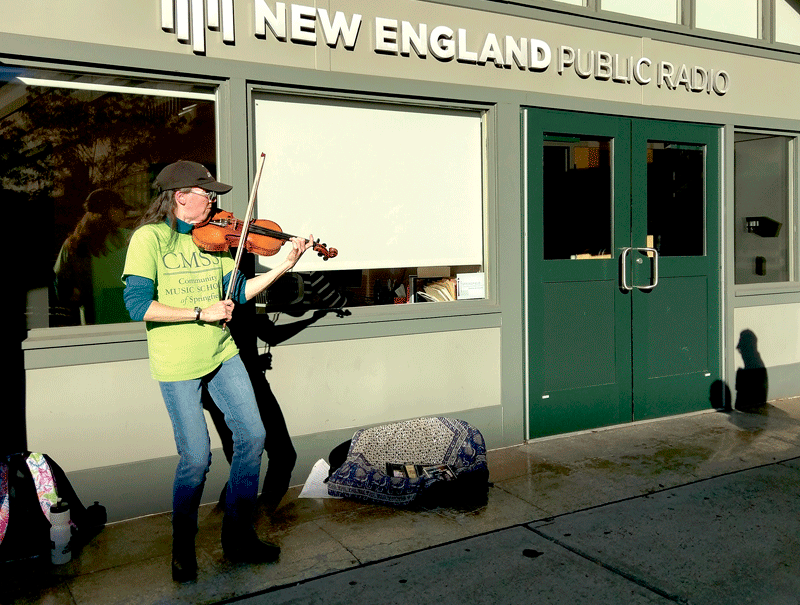
Community Spotlight Features

Community Spotlight

By Kathleen Mitchell

Mayor Linda Tyer

Mayor Linda Tyer says Pittsfield has made great strides in re-inventing itself and moving beyond its industrial past, dominated by General Electric.

Mayor Linda Tyer is a strong believer in the power of collaboration.

Several weeks ago, she gave the first State of the City address in Pittsfield’s history and outlined a myriad of multi-faceted projects that have come to fruition in the last year as a result of collaborative efforts.

Tyer told BusinessWest that investments designed to revitalize the city have taken root and change is occurring on a daily basis, which is good, because it’s needed as the city continues the process of reinventing itself.

“Pittsfield has a long history as an industrial town primarily because of GE’s large manufacturing facility,” she explained, referring to the massive complex that once employed more than 13,000 people. “The city relied on it for decades as its economic driver for real-estate taxes, employment, and community engagement.”

GE closed in the ’80s, which was a devastating blow and led to what Tyer refers to as a “grieving period that created self-doubt for the people who live here.”

Although a period of disinvestment followed, change began in 2000 when city officials decided to redefine Pittsfield’s identity.

Tyer was on the City Council at that time and recalled the city realized a robust cultural economy existed in the towns around them, but Pittsfield, which is the geographic and commercial hub of the area, was not participating in it.

Investments began downtown, and thanks to a collaborative effort by partners that included city officials, the community, state and federal legislators, and investors, today Pittsfield’s downtown boasts a thriving district that includes the Barrington and Colonial theaters, an independently owned movie theater, popular restaurants, and market-rate housing that followed as thousands of visitors flocked to the area.

“People want to live in our downtown, which is proof that the investments paid off,” Tyer said.

City officials have also helped local businesses, and the mayor said the belief that there are no jobs in Pittsfield is a myth. Indeed, numbers are rising: last January, the unemployment rate was 6.6%, which dropped to 3.3% by November.

“We strengthened workforce relationships last year and developed innovative training programs,” Tyer said, explaining that the workforce system generated $1.8 million that was used to train 1,250 people in healthcare, advanced manufacturing, STEM careers, finance, and customer service, and 70% of them found employment.

The city has also worked to retain local companies. Last July, after Covanta announced that it planned to close its Pittsfield facility, the City Council granted the waste-burning plant $562,000 to help with capital repairs and keep it open. The move saved 25 jobs and prevented a huge increase in trash-disposal costs, as a shutdown would have forced Pittsfield to have its trash and recyclables hauled away at an estimated annual cost of $462,000, in addition to losing $960,000 in property taxes, water and sewer user fees, and host-community fees over a four-year period.

Fiscal challenges lie ahead. But many steps will be taken to stabilize the issue, including cost containment, debt management, new revenue, and strategic investments that will prepare Pittsfield to not only survive, but thrive well into the future.”

The Hubbard Avenue facility incinerates 85,000 tons of waste per year and turns it into steam energy, which is then sold to Crane & Co. and Neenah Technical Materials. Republic Services hauls the city’s curbside collection to the site, including recyclables that are stored and later shipped in bulk to the Springfield Massachusetts Materials Recycling Facility.

The financial package Covanta received included state energy-tax credits, extended its contract with the city until 2020, and allowed the company to continue to sell steam energy to Crane and Neenah.

“But Covanta wasn’t the only company on our radar,” Tyer said, adding that five additional businesses were provided with assistance from a variety of incentive programs.

For this, the latest installment in its Community Spotlight series, BusinessWest looks at revitalization efforts in Pittsfield and what is being done to make it a place where Millennials want to live, which is one of the mayor’s goals. She noted they typically choose that place first, then look for a job, which is markedly different than past generations who moved to areas where they found employment.

“Millennials have a very different way of planning their lives,” said Tyer. “But we plan to capitalize on our growing art, culture, and entertainment economy; maximize our spectacular natural environment by updating our recreation and open space; invest in our housing stock; safeguard our educational institutions; and support small and mid-sized businesses and their aspirations for growth in new markets for the people who live here now as well as future generations that will call Pittsfield home.”

Neighborhood Focus

Over the past year, the Tyler Street business corridor has been the focus of combined energy, effort, and investment. The area is adjacent to North Street, Pittsfield’s downtown thoroughfare, and is bookended by Berkshire Health Systems, the city’s largest employer, and the William Stanley Business Park.

In December 2014, Pittsfield’s Community Development Department, the Pittsfield Economic Development Authority, and the Tyler Street Business Group applied to have the neighborhood become a state-designated Transformative Development Initiative (TDI) district.

The application was accepted, and the agencies have formed a core partnership in this program, administered by MassDevelopment, that leverages public dollars to stimulate private investment in selected neighborhoods in gateway cities.

“We are very privileged to have MassDevelopment as a partner,” the mayor said. “This will allow Pittsfield to receive enhanced technical assistance, real-estate services, and equity investments to support our vision for redevelopment. We’re learning what the citizens want, as well as working to understand the needs of small businesses there, and will develop a plan to help Tyler Street become a unique, thriving, working, residential neighborhood where typical day-to-day needs can be met within walking distance.”

Amewusika “Sika” Sedzro is the TDI fellow for Pittsfield, and she noted that MassDevelopment hired a consulting firm to conduct an assessment of the area and come up with recommendations for an action plan.

Two meetings were held to get public input, and a forum was staged for developers to find out what is needed to spur interest in structures that have been vacant for long periods of time.

The final report was due when BusinessWest went to press, but Sedzro said it quickly became clear that developers want easy access to data about available parcels, information about incentive programs, and a streamlined process to help bring submitted plans to fruition.

“There is a lot of property of this size available in the Tyler Street District, and we’re working with businesses and developers to understand the barriers to entry given current market conditions,” Sedzro noted, adding that she is available to talk about properties and incentives available from the city and MassDevelopment that include low-interest loans, access to capital, and technical assistance.

The Tyler Street neighborhood has a growing Latino and Asian population, and a number of new businesses have been opened by entrepreneurial immigrants.

“It’s a really positive indicator, especially since Berkshire Health, Sabic Innovative Plastics, and the William Stanley Business Park are in close proximity to the neighborhood,” Sedzro said, explaining that Pittsfield TDI plans to coordinate measures that could lead to an even more diverse economy.

The city is also working to expand the Housing Development Incentive Program into the Tyler Street District, which could benefit a developer who hopes to purchase the St. Mary’s Church campus and convert three of its buildings into market-rate housing. The campus has been vacant for more than two decades and contains the church, a school, a convent, and a rectory.

The developer is in negotiations with the Diocese of Springfield, and the city and state are working to provide incentives to move forward.

The Tyler Street TDI is part of the Morningside neighborhood, and last June that area received a $75,000 grant from the Kresge Foundation.

“It’s a grass-roots effort that includes efforts aimed at the arts, pride of place, and increasing food options and availability,” Sedzro said.

The money will be used to create a soup kitchen in the Berkshire Dream Center, an urban working farm in Springside Park, and an augmentation of community gardens that would allow their produce to be used by local businesses.

Continued Improvements

The cultural and entertainment district in Pittsfield’s downtown continues to grow as infrastructure improvements add to its attractiveness.

A four-phase streetscape project was recently completed, and North Street has a new look that includes street resurfacing, sidewalk improvements, decorative street lighting, increased seating, medians with plantings, and high-visibility crosswalks compliant with Americans with Disabilities Act standards.

New, solar-powered parking kiosks were installed last month as part of the city’s parking-management plan, and are equipped with a parking app that provides a simplified way to manage parking needs.

“Pittsfield’s parking is still friendly; the first 30 minutes are free, and so are nights and weekends,” Tyer said, noting that parking is also free for people with handicap placards.

A grass-roots movement led voters to approve the adoption of the Community Preservation Act in November, which will provide funds that can be used for public and private projects including historic preservation, recreation, open space, and housing.

“The next step is to establish a community-preservation committee that will develop a plan and identify priorities so projects can be funded early in 2018,” Tyer said.

She outlined other collaborations in her State of the City Address that include the revitalization of Willard and Rosemary Durant Park in the Westside.

Neighborhood volunteers installed a new playground and swingset paid for by Community Development Block Grant funds, and Greylock Credit Union has made a commitment to build a permanent pavilion there.

Other collective efforts aimed at youth include a free Sticks for Kids golf program and Dig This Volleyball initiative that have helped children learn new skills. In addition, donations from local businesses have led to innovative art and education programs, and grant money will pay for a strategic plan to provide high-quality education to more preschool children.

The city is also getting help with municipal finances due to a community compact that was formed with Lt. Gov. Karyn Polito’s office and gives officials access to financial expertise from UMass Collins Center.

Tyer said they hope to meet two goals as a result of the collaboration. The first is to create a comprehensive, five-year financial forecast that will serve as a guide in establishing budget priorities and matching them against projected revenues and funding obligations such as pensions, health insurance, and debt service.

The second is the development of a comprehensive budget document that will allow the City Council and residents to understand the mission of different city departments and the spending plan for the upcoming year.

“Fiscal challenges lie ahead. But many steps will be taken to stabilize the issue, including cost containment, debt management, new revenue, and strategic investments that will prepare Pittsfield to not only survive, but thrive well into the future,” Tyer said.

She added that the city is also addressing blight. Last summer, four vacant residential properties were demolished, and six additional properties were scheduled for demolition last month.

Bright Future

All of the economic-development efforts planned or underway have involved a collaborative effort between stakeholders that include community organizations, businesses, residents, and city, state, and federal officials.

“My administration respects and values cross-collaborations internally and seeks partnerships outside of city government that will help Pittsfield to thrive; we have turned the corner in terms of designing our future, and the city is on its way to becoming the vibrant, dynamic place it deserves to be,” the mayor said, noting that many well-attended events were held last year, including the municipal airport’s first air show, the 10th Third Thursday street festival, and the fifth Upstreet Arts Festival, which attracted more than 10,000 people.

Indeed, this former industrial city is on an upward trajectory. Its future is brighter than it has been for decades, and the positive forecast should continue as Pittsfield redefines its image and alerts developers and businesses to opportunities in its diverse neighborhoods.


Pittsfield at a Glance

Year Incorporated: 1761
Population: 44,737 (2016)
Area: 42.5 square miles
County: Berkshire
Residential Tax Rate: $39.78
Commercial Tax Rate: $19.63
Median Household Income: $50,765 (2015)
median family Income: $65,297 (2015)
Type of Government: Mayor, City Council
Largest Employers: Berkshire Health Systems; General Dynamics; Petricca Industries Inc.; SABIC Innovative Plastics
* Latest information available

Features

A Festival, Not a Concert

The Irish Tenors

The Irish Tenors will be coming to Springfield for what’s being described as a festival, not merely a concert.

Peter Salerno says the Springfield Symphony Orchestra (SSO) doesn’t merely want to present music to the people of this region.

Instead, it wants to be what he called “responsive and responsible” to the community — while also presenting music — and, in the course of doing that, become even more woven into its fabric.

And this mindset, if you will, explains not only why the Irish Tenors will be appearing at Symphony Hall on March 4 at 7:30 p.m., but why that performance is merely part of something much bigger.

“We wanted to celebrate this region’s Irish heritage, not just this year, but for many years to come,” said Salerno, executive director of the SSO, adding that this desire falls into that category of being responsive.

As for the ‘responsible’ part, he said it explains why the performance of the Irish Tenors will be accompanied by everything from an Irish dinner before the event to efforts to mark (and educate people about) the Irish Rebellion —  also known as the Easter Rising or the Easter Rebellion because it took place that week — in 1916.

“We wanted this to be a festival, as opposed to just a concert,” he explained, adding quickly that the ‘just a concert’ line was a figure of speech, and that performance will be momentous in its own right. Indeed, it will feature the world-famous group that has been performing around the world for nearly 20 years now, and 51 musicians from the SSO.

But it will be a true festival and celebration, he went on, adding that such efforts are part of an ongoing SSO strategic initiative to broaden its visibility and overall impact within the community and engage larger and more diverse audiences.

This strategy was certainly in evidence in early December, as the SSO presented not a holiday concert, but a holiday ‘extravaganza,’ which included the Children’s Chorus of Springfield, what is now an annual holiday silent auction, Santa Claus, and much more.

And it will be evidence at a number of other performances as well, including the season’s finale, “Video Game Live,” on May 13. Salerno described this as an immersive concert that features the musical scores from the greatest video games of all time, plus large-screen video footage, synchronized lighting, solo performers, and a host of pre- and post-concert attractions such as video-game demonstrations and competitions.

As for the Irish Tenors, Salerno called their agent last year and discovered that there was what could only be called a window of opportunity. This was an open date that would bring the group to the Springfield area for the first time in years — and thus give the region a performance that would complement, but not in any way compete with, the many St. Patrick’s Day activities taking place in Holyoke later in the month.

The concert will take place at 7:30 p.m. on March 4, but festivities will begin much earlier, said Salerno, noting that there will be a traditional Irish dinner at the Marriott Hotel at 4:30. At 6:30, at Symphony Hall, U.S. Rep. Richard Neal will make a presentation on the 101st anniversary of the Easter Rising.

Other elements of the festival, as he called it, are coming together, said Salerno, adding that he expects this will be a special day and night for Springfield and the entire region — one of many in the months and years to come as the SSO continues to find ways to be both responsive and responsible.

—George O’Brien

Banking and Financial Services Cover Story Sections
Jim Hickson

Jim Hickson, Berkshire Bank’s Springfield Regional President

Through organic growth and a series of acquisitions, Berkshire Bank has achieved the kind of size ($9 billion in assets at present) that is necessary to succeed in the challenging climate within this industry. But Springfield Regional President Jim Hickson says it blends this size with a small-bank feel and “attitude,” and this is why it has been able to improve its share of the local market.

Jim Hickson says the conference room at Berkshire Bank’s main Springfield offices have become a popular spot lately, seeing far more visitation than would be considered normal — in large part because the bank is certainly encouraging it.

The reason is the room’s windows, which feature northerly and easterly exposures and, more specifically, stunning views of the construction work going on at MGM Springfield, just a few dozen feet away in some cases. Indeed, the massive, 2,000-car parking garage now looms over that conference room — Hickson commented several times on how quickly the structure went up — and the windows at the north end provide views of much of the rest of the construction site.

What visitors obviously see is a casino taking shape, said Hickson, senior vice president and commercial regional president for the Pioneer Valley and Connecticut. What he sees — and what others probably see as well — is what the casino represents: regional momentum and additional growth opportunities, which could come in a number of forms, from large corporations coming to Springfield, like CRRC, to smaller businesses that may take advantage of what will be a growing need for services.

“Those cranes that you see … they translate into momentum for the region; it’s a very exciting time,” said Hickson, adding that he believes Berkshire Bank, a.k.a. America’s Most Exciting Bank (or AMEB, as is written on his zip-front fleece jacket), is very well-positioned to take advantage of the momentum that can now be seen out those conference-room windows, and also in some of the other offices in the bank’s large suite at 1259 Columbus Ave.

That’s because the Pittsfield-based institution has the requisite size — achieved through several acquisitions, including that of Springfield-based Hampden Bank early last year — to be a major player, but it doesn’t act like the proverbial ‘big bank’ you read and hear so much about.


List of Banks in Western Mass.


“We have big-bank resources, but with small-bank attention and approach,” he said, adding that, while this might sound like a line from the marketing department, it accurately conveys what goes on across what is now a huge Berkshire footprint, covering much of the Northeast, as we’ll see later.

And also in those offices on East Columbus Avenue, which comprise a regional headquarters, said Hickson, meaning that customers can avail themselves of a full slate of services, including commercial lending, residential lending, cash management, investment services, private banking, and more.

This combination of large-bank resources and small-bank attitude has enabled the bank to significantly grow its market share in the Greater Springfield area across the board, and especially in the highly competitive commercial-lending realm, said Hickson, adding that a variety of factors are spurring activity among area business owners.

“For the first few years after the recession, even up to three or four years ago, no one was really borrowing money; instead, people were paying down their lines of credit and getting rid of debt,” he explained. “But in recent years, many of our customers are finally saying, ‘I do need to invest in that piece of equipment’ or ‘I do need to put an addition on my building.’ People have been saying, ‘maybe we are finally out of this.’”

To effectively capitalize on these sentiments and this movement, banks need to be large, but also versatile, flexible, and ‘local,’ meaning local decision making, not simply lenders with phone numbers starting with ‘413,’ said Hickson, adding that he believes Berkshire is all those things, and thus well-positioned for what might come.

For this issue and its focus on banking and financial services, BusinessWest talked at length with Hickson about what can be seen out those conference-room windows, and how AMEB is poised to be at the forefront of it all — in every sense of that word.

By All Accounts

As he talked with BusinessWest about the bank, its recent pattern of growth, its growing presence in Greater Springfield, and its large-bank-with-a-small-bank feel, Hickson referred early and often to one ongoing project that underscores seemingly all of the above.

Springfield Innovation Center

Jim Hickson says Berkshire Bank’s involvement with the Springfield Innovation Center is an example of its commitment to the region.

That would be the construction of Springfield’s new Innovation Center on Bridge Street in two buildings acquired by DevelopSpringfield. The $2.7 million project represents a collaborative effort involving a number of partners, including the city, the state, DevelopSpringfield, Valley Venture Mentors, MassDevelopment, the Innovation Hub, and MassMutual. Funding is being provided by the state, through a MassWorks Infrastructure Program grant to MassDevelopment, MassMutual, the Beveridge Foundation, and the Berkshire Bank Foundation.

The bank itself is in the process of underwriting a construction loan to DevelopSpringfield for the renovation work and completion of the innovation center project, said Hickson, adding that final approval is expected within the next several days.

“It’s projects like this that exemplify that we’re here to serve everyone and have a vested interest in Springfield and this region,” he explained. “This a big project in the revitalization of Springfield, and we’re excited to be a part of it.”

Thus, as mentioned, that project checks many boxes when it comes to the bank’s operating philosophy and its goals for being a big part of the progress represented by the view out the back of the company’s offices on East Columbus Avenue.

Hickson arrived there — or back there, to be more precise — last October when he was named to his current post. Indeed, included in his nearly three decades of experience within the banking industry is a stint with Berkshire as senior vice president and asset-based lending relationship manager.

He’s also had tours of duty with People’s United, TD Bank, KPMG Consulting, and Fleet Capital. He is also chairman of the board for Common Capital.

With those accumulated business cards, he’s certainly had a front-row seat from which to witness an era of profound change in the local banking scene, with many new brands ariving, some old ones disappearing from the landscape, and a host of mergers and acquisitions.

Berkshire has been a part of that, he acknowledged, adding that the Pittsfield institution has greatly expanded its footprint in recent years. It now extends all the way from Syracuse, N.Y. in the western corner of the Empire State to Boston — a territory that includes three state capitals (Albany and Hartford are the others). And with the acquisition of New Jersey-based First Choice Bank, it now extends all the way to Philadelphia.

In the current banking climate, size brings a number of advantages — from larger lending limits to all-important economies of scale when it comes to operations in the face of rising technology costs and regulatory burdens — and Berkshire now possesses $9 billion in assets, 96 branches, more than $6.5 billion in loans, $6.6 billion in deposits, and $1.4 billion in wealth assets under management. Such growth has come organically, but also through those acquisitions, the latest of which involved First Choice, a $1.1 billion institution.

The Hampden Bank acquisition, completed in 2015, effectively doubled Berkshire’s presence in the Greater Springfield area, giving it 18 branches, while also doubling its commercial-lending portfolio within the region, said Hickson, adding that this strategic initiative is a good example of how the bank doesn’t simply grow for growth’s sake.

“That acquisition was a key development for the bank; Berkshire has always viewed the Pioneer Valley as a key strategic market,” he explained. “The bank’s not looking to grow to be the biggest in town; it’s looking for key strategic opportunities that fit our core values, and this acquisition was one of them.”

Points of Interest

Hickson said he doesn’t have to look out the conference-room window to know there is more activity in the commercial lending realm these days. He can see it in his office and with everything he sees as a member of the bank’s executive loan committee.

“The economy is better, and with a better economy comes more loan opportunities,” he said while summing up the landscape before getting into more specifics. “It may not be new entrants into the market, but maybe existing companies looking to grow either by diversifying into another product line or acquiring another company in the business sector they’re in.”

As one example, he cited the region’s large core of precision-manufacturing companies (one of Berkshire’s stronger specific niches), many of which are investing in new equipment, expanding facilities or building new ones, and diversifying product lines, largely as a result of greater confidence in the economy.

The next wave, he predicts, with both precision manufacturers and the local business community in general, will come in the form of mergers and acquisitions as smaller firms owned by retiring Baby Boomers face inevitable succession-planning issues.

“There are ways to finance those kinds of transactions,” he explained. “And we obviously want to keep as many of those firms local as we can.”

In the meantime, there is that increased optimism and subsequent lending activity that he mentioned earlier, adding that, to take advantage of it, banks need versatility and the ability to both develop specific niches and be generalists, said Hickson, adding, again, that Berkshire possesses such traits and skills, while some of the larger institutions don’t.

“As banks get bigger, they tend to lose sight of the local community they serve,” he explained, adding that Berkshire hasn’t done that, as evidenced by the Innovation Center and countless others in the portfolio.

This would include the large number of Small Business Assoc.-assisted loans the bank has participated in over the years.

“We’ve been very successful with SBA loans,” he explained, adding that this statement applies to this region, certainly, but also to the wide Berkshire footprint. Indeed, the institution has been top-rated in this realm by the SBA in several of the regions it serves, including the Pioneer Valley, Connecticut, and the Syracuse area.

“We’re very proud of that distinction — the SBA’s a great way to finance things, and we’re a big supporter of the agency,” he went on, adding that the SBA currently ranks the bank among the 100 most active in the country with such loans, with more than 110 transactions totaling more than $21.9 million.

However, those SBA loans are just a tiny fraction of the total portfolio, he went on, adding that, with the size generated by the acquisitions in recent years, Berkshire can make loans of all sizes and serve virtually every customer within the region’s business community, but with a small-bank approach.

Bottom Line

Rising from his chair, Hickson gestured out the conference-room windows and admired the view he and his staff regularly invite visitors to share.

“It’s such a beehive of activity; it’s exciting to take it all in every day and watch things progress,” he said. “It’s mesmerizing.”

He was talking about the MGM project, obviously, but he may as well have been referring to the region’s economy as a whole, although it is probably not worthy of such superlatives — yet.

But those cranes do translate into momentum and, hopefully, more progress and growth for area businesses. And Hickson believes AMEB is ready to be right in the middle of it all, just as it is in the South End.

George O’Brien can be reached at [email protected]
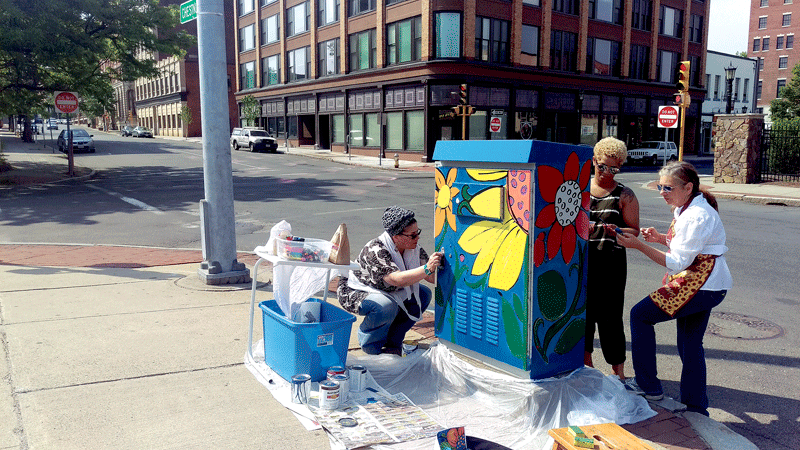
Banking and Financial Services Sections

Business at Hand

Steve Lowell

Steve Lowell says a surge in usage of Monson Savings Bank’s mobile offerings has coincided with a downturn in branch traffic.

You never know what will persuade any given customer to switch banks, Karen Buell says.

Buell, vice president of Customer Technologies at PeoplesBank, recalled a couple of non-customers who recently visited a branch to cash checks. When they saw the bank had recently introduced Apple Pay, Android Pay, and Samsung Pay for its customers, they returned — to open accounts.

“Wow. What a win,” said Buell, who has been tracking the usage rate of the bank’s electronic and mobile banking offerings for years. PeoplesBank launched its first mobile app for iPhones in 2009, one of the first 50 financial institutions in the U.S. to do so. Today, 34% of all the institution’s checking-account holders use mobile services. But it was still pleasantly surprising to see those services create a customer on the spot.

Maybe it shouldn’t be a surprise, particularly among the younger crowd. A study last year by the Federal Reserve reported that 67% of Millennials now use mobile banking, compared to 18% of consumers age 60 or over. This usage gap is projected to widen further as the youngest of the 85 million-strong Millennial generation enters the workforce.

Steve Lowell, president of Monson Savings Bank (MSB), says about half of that institution’s customers bank online, and of this group, more than half, about 60%, use the mobile app — up from 31% three years ago and 8% in 2011, the year the app launched.

Customers can perform a number of banking tasks on their mobile devices, Lowell said, including transferring funds between accounts, making loan and bill payments, taking pictures of their checks to make deposits online, and sending money to other banks through an app called Popmoney.

He said adoption has been strong by customers of all ages, but especially Millennials, who have come to expect robust online and mobile services in many areas of life.

“If you don’t have mobile banking, you won’t get the Millennial generation. That said, we have people in their 80s using their smartphones to do their banking. It’s definitely skewed toward the younger generation, but we see it across all age groups,” he said, noting that he uses the function himself. “It’s so easy to use.”

Buell reports similar momentum driven by younger customers at PeoplesBank, noting that 51% of Millennial customers use mobile check deposit, a service the bank began offering in 2014, compared to 24% of the bank’s Gen-X customers and 16% of Baby Boomers. Given those demographics, it seems like demand for mobile banking will only rise.

“Our customer base has enjoyed this for a while, and we’ve had great adoption of it,” Buell said. Specifically, mobile check deposit has grown 140% in overall usage between 2014 and 2016, and total checks deposited rose by 133%. At the same time, total dollars deposited through mobile check deposit went up 202%, partly because the bank increased the dollar-amount limits for that service for many customers based on their balances and relationship with the bank.

Karen Buell

Karen Buell, seen here in PeoplesBank’s Customer Innovation Lab, says the bank has made just about all its e-banking activities accessible on mobile devices, with more to come.

“We’re constantly looking at data to determine how to serve customers better,” said Buell, who also oversees PeoplesBank’s Customer Innovation Lab, which, as the name suggests, develops new products for retail and business customers. “We saw that some mobile-deposit users were still coming to the branch for larger items, so we made some changes and gave them significantly higher limits to accommodate their needs.”

Making Change

Industry analysts have long noted that adoption of mobile banking followed a path similar to online banking, with some customers enthusiastic early adopters, and others initially reluctant for a variety of reasons, often having to do with security, or perceptions thereof.

“I think that’s absolutely the case,” Lowell said. “You still have to have that discussion with people who are concerned about security. But once we run through the precautions we have, and the logins they have to go through, they get pretty comfortable with it. And once they’ve tried it for a while, they get hooked on it. It’s such a convenience; it makes life easier. Of course, people have the right to be concerned about cybersecurity. But the more they learn about it, the less of a concern it is.”

Surging use of mobile banking has, naturally, raised questions about the future of physical branches — or, at least, their rate of expansion — but these are the same questions that arose when desktop online banking was introduced, and institutions have long asserted there will always be a need for brick-and-mortar offices. But Lowell says it’s something to keep an eye on.

“It’s a really important consideration. From 2013 to 2015, we didn’t see a significant decline in branch traffic — maybe 5% year over year — but from 2015 to 2016, we saw a 19% decrease in branch traffic; we went from roughly 555,000 transactions at our branches in 2015 to 452,000 transactions in 2016,” he explained, noting that, at the same time, the overall customer base has increased.

“We definitely see a transition — not just in mobile banking, but in electronic banking in general — and we’ve adjusted our staffing levels as a result of that, and we’re looking at adjusting our hours. We may not need to be open as many hours as we used to be. It’s something we’re watching really closely.”

Industry analysis is mixed on this topic. The Federal Reserve study indicated that even regular users of mobile banking still want to use other banking channels, from visiting an ATM or branch to withdraw cash to speaking with a customer-service representative or loan officer.

Specifically, survey respondents were asked about their use of five distinct banking channels. In the previous 12 months, 83% of smartphone owners with bank accounts visited a branch, 82% used an ATM, 82% used online banking, 53% used mobile banking, and 29% used telephone banking.

But electronic channels have had an impact on branch growth across the U.S. More than 1,600 branches shut down during 2015, the last year for which full figures are available, and several large, national institutions continued to shed offices in 2016.

The branches that remain boast fewer staff as well, from an average of 13 full-time employees per branch in 2004 to fewer than six last year. A recent study by Citi, “Digital Disruption,” predicts that new technologies could cause up to 30% of branch positions to disappear by 2025.

“People find it more convenient to do their banking from home,” Lowell said. “Our strategy is to do whatever is easy for them — they’re the customer, and we want to develop our relationship with them and make things as easy as possible.”

More to Come

Still, despite the concerns, mobile technology has stirred plenty of excitement in the industry. Lowell is enthusiastic about some advances just around the corner for MSB customers, including CardValet, technology that allows users to turn a debit card on and off with their phones, rendering it useless if stolen, and set custom-designed alerts for things like low balances and cleared checks, instantly transferring money between accounts to protect against overdraws. Another upcoming function is the ability to pay bills by taking photos of the invoice and the check.

“At this point, we’ve really put most of what you can do from your desktop onto your phone,” Buell said, noting that 60% of all electronic-banking logins at PeoplesBank are now made from mobile devices. Last fall, the bank launched fingerprint authentication, which allows users to log in without needing a username or password. The bank is also looking to introduce technology that uses the GPS function on smartphones to shut down a debit card when it’s not in the vicinity of the phone, to combat use of stolen cards.

“We want to be first to market with these things for our customers,” she told BusinessWest. “We’re really committed to being early adopters of technology, so they can get all the functionality of of a national bank, but the personal customer experience of a local bank.”

Joseph Bednar can be reached at [email protected]
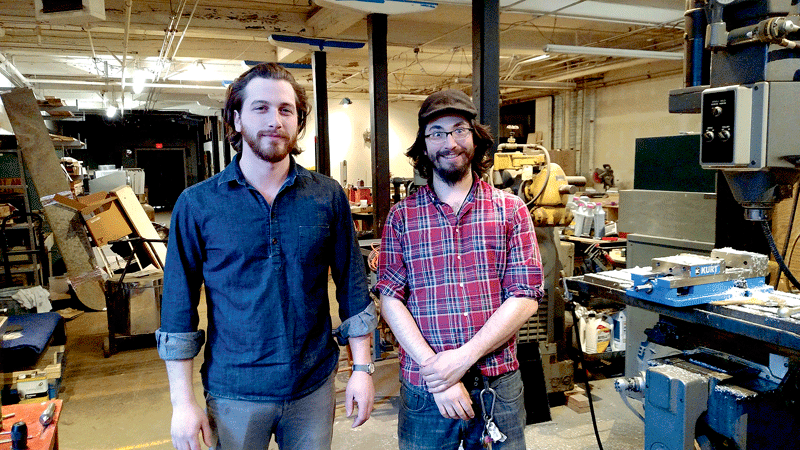
Law Sections

Value-added Proposition

Amy Royal

Amy Royal says her marketing strategy has long emphasized providing helpful resources through blogs, newsletters, and seminars.

There was a time when law firms simply didn’t advertise their services; it was considered unseemly. Those days are long gone, and marketing is now an accepted, even necessary part of the business. But for today’s practices, marketing goes well beyond print and radio ads. With the help of the Internet, firms are increasingly getting the word out by writing articles and blogs on important legal issues and connecting with the public through informational seminars — building credibility with the public and possibly creating clients down the road, but adding value for audiences in the meantime.

Generations ago, Michele Feinstein said, the legal profession’s code of ethics was simple when it came to promoting a law firm.

“It was, ‘thou shalt not advertise,’” said the shareholder attorney with Springfield-based Shatz, Schwartz & Fentin. “Then it changed, but it’s still a very regulated thing — the question of what constitutes appropriate advertising.”

To prove it, she dug out a thick volume of Massachusetts Supreme Judicial Court codes and eventually found the professional-conduct guidelines addressing marketing, or, to quote the section title, “Communications Concerning a Lawyer’s Services.”

This two-page-long rule governs appropriate outlets for advertising and what firms can and cannot promise in ads, among other minutiae. Feinstein is right: the rules are much more lenient today, with language conceding the importance of television and print media in reaching the public. But — aside from the more-strident messaging sometimes employed by personal-injury firms — it’s still an industry whose marketing echoes its restrained past.

Michele Feinstein

Michele Feinstein

When I started my practice, we never thought about marketing. Certainly, they never tell you about that in law school. But the practice has had to evolve with the modern-day realities of how people meet and connect, and how they find and talk with their lawyers.”


That’s not to say there aren’t other ways to stand out, however.

“When I started my practice, we never thought about marketing. Certainly, they never tell you about that in law school,” Feinstein said. “But the practice has had to evolve with the modern-day realities of how people meet and connect, and how they find and talk with their lawyers.

“Certainly, word of mouth is important, but these days, the modern equivalent is the Internet: search engines, blogs, newsletters, and other forms of Internet presence,” she went on. “That technology didn’t exist 20 years ago.”

Shatz, Schwartz & Fentin has employed the Internet like many other area firms have: not only to get its name out, but to do so in a way that provides value to clients and the public, she explained, such as an online newsletter that focuses on estate planning and elder law, and a blog that addresses issues in myriad areas of the law. Traditional print media is useful too, she said, as seen in the articles the firm writes for BusinessWest and other outlets.

Amy Royal also sees the benefits of a multi-pronged approach to marketing. Her Northampton-based employment-law firm, Royal, P.C., hosts a robust blog; the firm’s attorneys contribute articles to area press outlets (including, again, BusinessWest); and they also conduct seminars and trainings for the public and fellow lawyers alike.

“We stay abreast of developments in the law, both on the federal and state side, and we tailor our trainings as well as our blog posts to making sure our clients stay up to date,” she said. “There are a lot of moving parts, a lot of change happening on the federal side, going to an entirely different administration … on any issue, we want to demonstrate credibility for perspective clients, so hopefully people say, ‘they’re experts in that area.’”

That credibility and recognition often translates into more business, a philosophy shared by Michael Gove, who launched the Gove Law Office, LLC, in Northampton in 2013.

Michael Gove

Michael Gove

I think [our marketing efforts] ensure that we’re top of mind for people. Then, when someone has a legal issue, they may think of us, because they saw us recently in the paper, or online, or at a chamber event. We find we get referrals from those things.”


When it comes to marketing, he told BusinessWest, he has always focused on three areas: personal relationships with referral sources, trying to find reasons to be in the news as much as possible — for example, distributing press releases when the firm adds an attorney — and online marketing, which includes some paid advertising but more informational material, including a blog, providing resources to people who might then turn to Gove for legal services.

“I think it helps ensure that we’re top of mind for people,” he said. “Then, when someone has a legal issue, they may think of us, because they saw us recently in the paper, or online, or at a chamber event. We find we get referrals from those things.”

In a crowded market for law firms, those referrals and phone calls out of the blue are valuable, said the lawyers we spoke with about their marketing strategies. But laying the groundwork for that recognition doesn’t happen overnight.

Standing Out

Royal understands the importance of standing out in the Western Mass. legal community.

“There’s a lot of competition here in a small area; we’re saturated with lawyers in our region, and we have a law school here turning out new lawyers every year,” she said. “So what do you do to set yourself apart?”

The first step, she said, was focusing on a very specific niche — in her case, as a boutique firm that represents employers only — and building a brand around that niche in a number of ways.

“Our  niche provides a natural focus for our marketing strategies,” she explained. “Because of our defined services, we’re not everything to everyone, and maybe that’s a recipe for failure — to be too generalized. We’ve really focused on our marketplace and focused on developing a strong, recognized brand with targeted, consistent messaging.”

That messaging takes both active and passive forms, she added. Passive outreach includes the blog, newsletters, seminars, social-media outreach, trade shows, and anything that establishes the firm’s expertise in its field without being an actual, traditional advertisement — something Royal has largely eschewed, though both her firm and Shatz, Schwartz & Fentin utilize BusinessWest as part of their marketing efforts each year.

“We don’t do passive marketing thinking we’re going to have a direct sale from it, necessarily, but just to build brand awareness in the community,” Royal explained. “Then, of course, we do active marketing, direct relationship building. That happens in a variety of ways: through community involvement, business events, networking events, where we zero in on who our target is.”

Feinstein agrees that outreach that amounts to sharing information with the public brings marketing benefits that may not be realized right away.

“We write articles, we give seminars where we speak to the public, we do advanced trainings for lawyers — quite a bit of that. We feel that these sorts of marketing efforts, if they don’t immediately create a client — though they may — they certainly, at minimum, give us secondary recognition. People see our blogs, read our articles, hear our name when we’re giving a talk, and later on, if they need a lawyer and ask around and our name comes up, it’s familiar.”

In fact, it’s impossible to tell when such efforts will result in client work, she said. Sometimes it’s the next day, and sometimes it’s years down the road, when someone comes in with materials they’ve been saving since the event, and now they need help.

“The fact that they also see we’re doing trainings for other lawyers, which we do a lot of, I think confirms, or enhances, the fact that we are knowledgeable in a particular area and are recognized by our peers as such.”

While passive marketing has its benefits, Gove said, he’s not averse to paid ads as well. Most of his efforts in this area are targeted at avvo.com, a website with a national reach. “It’s a way for people who need answers to legal questions find lawyers. We’ve found a lot of success there.”

As for more traditional media advertising, Gove said he plans more narrowly targeted messaging. As a bilingual firm, he wants to expand more into Spanish-speaking communities, so he intends to approach media outlets that have inroads in that population.

“But, really, the three main pillars to our marketing are personal relationships, getting in the news, and being visible online. We’re definitely not advertising in the Republican or in the yellow pages. It’s not like it was 20 years ago.”

That said, the strategy has largely paid off for this growing firm, which expanded with a second office in Ludlow in 2014. “I think we’ve done a good job of growing, by making sure we’re visible and helpful.”

Word Up

Feinstein also considers her firm’s various passive marketing efforts to be a form of help, of public service.

“All we’ve ever done — writing articles, whether for legal journals or the Reminder or BusinessWest; lecturing and giving talks; that kind of stuff — gets our name out, gets the word out, but it also provides value, and we feel like that comes back to you in one way or another. It doesn’t have to be a one-to-one correlation. That’s fine with us; we have an obligation to serve the public by providing information, which we take seriously.

“People appreciate the difference between that kind of marketing and some general slogan, like ‘call us and we’ll fight for you,’ or ‘we’ll take your case seriously,’” she went on. “We provide real information and something to think about, and if people have concerns, we tell them to see their advisor. Whether that advisor is us or someone else, we’re still providing value.”

The Supreme Judicial Court’s rules on advertising state that “questions of effectiveness and taste in advertising are matters of speculation and subjective judgment,” which is a far cry from “thou shalt not advertise.” But lawyers should take their messaging seriously, Royal said.

“A lot of law firms maybe don’t think of themselves as a business first, which they are; they think of themselves as practitioners first,” she told BusinessWest. “But we treat this law firm as a business and attack our marketing that way. What we’ve done has been very strategic from the beginning.”

Joseph Bednar can be reached at [email protected]
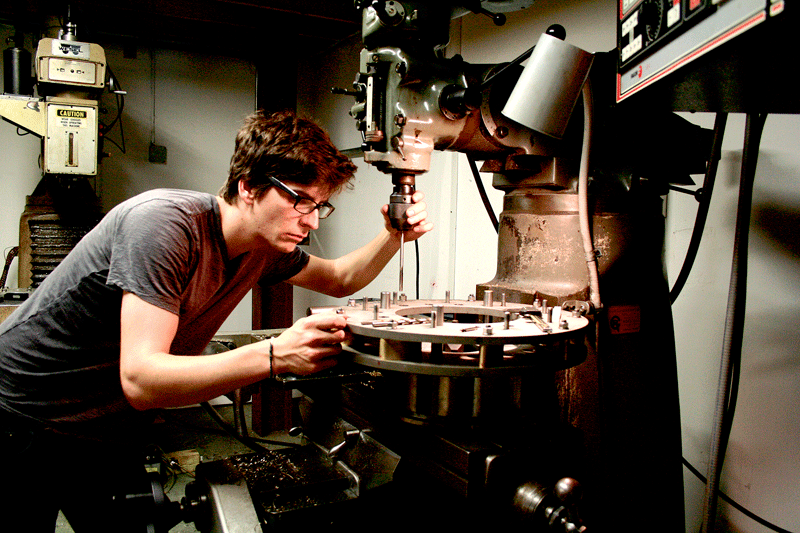
Law Sections

Durational Alimony-award Limits

By Katherine E. McCarthy

Katherine E. McCarthy

Katherine E. McCarthy

The passage of the Alimony Reform Act of 2011 brought about sweeping changes to the alimony laws in Massachusetts. One major change was the implementation of durational limits on alimony awards. For marriages lasting fewer than 20 years, a formula is available to determine the length of time general term alimony may be required.
The statute, M.G.L. c. 208 §48-55, contains language that allows the durational limits to be applied to alimony orders that predate the reform act, providing many alimony payors with hope that their alimony obligation will be terminated. However, the statute also contains language that allows the probate and family court to deviate beyond the durational limits based on an ‘interests of justice’ standard.

Since the passage of alimony reform, attorneys and clients alike have been left wondering how and when the ‘interests of justice’ standard would be applied and what factors a court will consider in deviating from the durational limits. A recent decision by the Massachusetts Supreme Judicial Court provides some limited answers.

Deviation Beyond Durational Limits

Alimony reform states that “alimony awards which exceed the durational limits established in [the law] shall be modified upon a complaint for modification without additional material change of circumstance, unless the court finds that deviation from the durational limits is warranted.” The court must then look to whether deviation is “required in the interests of justice.”

In a case of first impression, in November 2016, the Supreme Judicial Court decided in George v. George two important aspects of the deviation standard. First, the alimony recipient bears the burden of proving that deviation beyond the presumptive termination date is required in the interests of justice. Second, the judge must look at the circumstances of the parties at the time the termination of alimony is sought, as opposed to the circumstances of the parties at the time of the initial award of alimony.

Additional factors that may be considered are the same statutory factors that judges must consider in making an initial alimony award. Those factors include:

• Advanced age, chronic illness, or unusual health circumstances of either party;
• Tax considerations applicable to the parties;
• Whether the payor spouse is providing health insurance and the cost of health insurance for the recipient spouse;
• Whether the payor spouse has been ordered to secure life insurance for the benefit of the recipient spouse and the cost of such insurance;
• Sources and amounts of unearned income, including capital gains, interest and dividends, annuity, and investment income from assets that were not allocated in the parties’ divorce;
• Significant pre-marital cohabitation that included economic partnership or marital separation of significant duration, each of which the court may consider in determining the length of the marriage;
• A party’s inability to provide for that party’s own support by reason of physical or mental abuse by the payor;
• A party’s inability to provide for that party’s own support by reason of that party’s deficiency of property, maintenance, or employment opportunity; and
• Upon written findings, any other factor that the court deems relevant and material.


The court also made clear in its decision that it would not consider an alimony recipient’s argument that, had they known that the alimony laws were going to change, or that durational limits would be applied, they would have negotiated for a larger property division in the original divorce. The SJC reasoned that, if this argument were to be accepted by the courts, it would effectively prohibit any payors with alimony awards that predate alimony reform from terminating their alimony obligation under the terms of the law. In sum, accepting such an argument would nullify that portion of alimony reform in direct contravention of the Legislature’s intent.

Takeaways

As in most cases in the probate and family court, the individual facts of the case are extremely important. However, the George case has provided some clarification of the statute that can be utilized to argue either for or against termination of alimony based on durational limits.

In sum, if a payor has paid alimony beyond the durational limits, it is wise to consider the alimony recipient’s present circumstances in predicting how successful they will be in attempting to terminate the alimony obligation. Conversely, an alimony recipient must be cognizant that he or she will have the burden of establishing that deviation beyond the durational limits is appropriate in his or her case.

Katherine E. McCarthy is an associate with Robinson Donovan, P.C., where she concentrates her practice on domestic relations; (413) 732-2301; [email protected]

Autos Sections

A High-revving Engine

Carla Cosenzi

Carla Cosenzi says sales have been on the rise for several years at TommyCar Auto Group, and she expects this trend to continue at its dealerships.

Initial national projections for 2017 called for the recent rise in auto sales to level off and then perhaps slow down. But those forecasts have been adjusted recently. Indeed, the experts say a host of favorable factors, from low gas prices to a stable economy to the advanced age of many cars on the road, will continue to fuel increases in sales volume.

John Kupec III has been in the automobile-sales industry for 40 years. But he has never seen trade-ins with as many miles as the ones being brought to Gale Toyota in Enfield today.

“We’re seeing cars come in with more than 250,000 miles,” the general sales manager told BusinessWest.

Indeed, a poll conducted last month by market research company IHS Markit shows the average age of light vehicles on the road is 11.5 years, and the trend Kupec observed is mirrored at other dealerships.

“This week alone, I saw trade-ins with 160,000 miles, 180,000 miles, and 240,000 miles — vehicles last longer than they used to, but people have taken it to the extreme,” said John Lewis, general manager at Chrysler Jeep Dodge Ram and Bertera Fiat and Collision Center in West Springfield, as he spoke about reasons that led so many people to keep their vehicles for a decade or more.

John Kupec

John Kupec is optimistic about the year ahead, and says Gale Toyota of Enfield hopes to increase sales by 10% to 15%.

The practice began in 2008 when the economy crashed. Consumer confidence plummeted, 401(k) plans lost their value, and people worried about job security and began to realize they could drive their vehicles much longer than they had believed possible without incurring a lot of repairs.

“Today alone, we took in a 2001 with 160,000 miles and a 2005 with 155,000 miles,” said Craig Dodenstein, sales manager for Toyota of Greenfield, who noted that people usually upgrade to a new vehicle when the cost of repairs becomes prohibitive.

Sales began to rise a few years ago in line with a renewed confidence in the economy that has slowly taken root. But last fall, the National Automobile Dealers Assoc. predicted 2017 would be the year in which sales would reach their peak and begin to slow down. That projection was changed, however; now, sales of new vehicles in the U.S. are expected to remain above 17 million for the third straight year in a row, and even rise slightly toward the second half of the year.


Chart of area Auto Dealers


Aging vehicles still on the road have resulted in pent-up demand, and that factor, coupled with new models, aggressive manufacturer incentives, low interest rates, reasonable gas prices, and an upswing in the economy, are fueling optimism at local dealerships for the coming year.

“Last month, our sales were up 10% over January of last year, and we expect a 20% increase in 2017,” Lewis said, attributing the number not only to the company’s reputation and the service it offers, but the fact that Subaru sales have climbed and a new $5 million Chrysler Jeep Dodge dealership is under construction, which hindered sales last year when they started working from trailers.

Fathers & Sons in West Springfield also has a new dealership, an $18 million facility that is home to Audi and Volkswagen franchises.

“We want to grow, plan to grow, and have the tools in our arsenal to do it,” said Sales Manager Ethan Prentiss. “In December, Volkswagen had the best month in company history, and this year we expect a 10% to 12% increase in Volkswagen and Audi sales, and an 8% to 10% increase in Volvo sales,” he said, referring to the company’s other dealership on Memorial Avenue, which houses the largest dedicated Volvo dealership in the country in terms of square footage.

Ethan Prentiss

Ethan Prentiss says the demand for SUVs and crossovers such as the new Volkswagen Touareg continue to rise at Fathers & Sons Volkswagen.

Incentives are also boosting sales, and Kupec said Toyota’s are higher than they have been in decades. “The manufacturer is offering 0% interest on some models, which they have never done before; hefty rebates of $2,000 to $3,000; and bonus cash on leases,” he said. “We’re off to a great start and hope to have a 10 to 15% increase this year in sales.”

Bill Peffer concurred. “It’s a very exciting industry to be in, and our outlook for 2017 is very, very positive,” said the president and chief operating officer of Balise Motor Sales, which has 24 stores in three states. “The market is very strong, and any volatility has been offset by manufacturer incentives. There are tons of new choices for customers — it’s a very good time to buy a car, truck, or SUV.”

For this issue and its focus on auto sales, BusinessWest looks at the current landscape within the industry and what the road ahead might bring.

Getting into High Gear

Last June, Volkswagen agreed to buy back its 2.0L diesel vehicles after a lawsuit that proved it had used emissions-system-defeating software. The VW Group also agreed to pay owners $5,100 to $10,000 in additional compensation on top of a fix or buyback of their car.

The negative press that ensued made sales challenging for a period of time, but buybacks began last October and accounted for a quarter of the Volkswagen sales at Fathers & Sons in December.

“These people would normally not be in the market for a new car, and the projection is that we will be able to retain 25% of them; many of our customers love the way their Volkswagens drive and handle,” Prentiss said, explaining that this situation, coupled with the new dealership and a lineup of exciting new products, is not the only reason for the projected increase in sales.

“We are now a negotiation-free dealership, which is what customers want,” he continued. “Buying a vehicle here has become all about the experience. Our salespeople are non-commissioned, and customers can find what they are looking for and complete the purchase within two hours.

“We give them our best price up front and make it fun to buy a car,” he continued, adding that Volvo sales are also up, as the manufacturer broke records last year due to the launch of a new image and the release of new products.

Toyota of Greenfield is another dealership that has undergone change. It moved into a new, $7 million dealership last winter and held a grand opening last May, so 2016 was a year of transition as they were able to move out of the trailers they worked in during 2015 while construction was underway.

“We’re looking for a 5% to 10% increase in sales this year, and if January was any indication, we are headed in the right direction,” said Dodenstein, adding that January sales had almost tripled over last year’s numbers by the third week of the month.

Although the new dealership certainly makes a difference, manufacturer incentives and new products add to the enticements. The new electric Prius Prime is a leader in its class; it gets 133 miles per gallon, beat a preliminary 22-mile electric volt range estimate with 25 miles, and gets 54 mpg in hybrid mode.

Meanwhile, Carla Cosenzi said last year was a great one for TommyCar Auto Group, which includes Hyundai, Nissan, Buick, GMC, and Volkswagen franchises. Some stores did especially well, including Hyundai, which experienced strong demand for entry-level vehicles.

“Hyundai gives customers a lot of value for their dollar, including technology, safety, and the aggressive pricing people are looking for,” Cosenzi explained, noting that consumers are excited about the fact that new technology is standard in many brands of entry-level models and ranges from adaptive cruise control to lane assist, collision warning, and backup cameras.

TommyCar is expecting another excellent year, and the sales of the new Volkswagen Golf All Trac station wagon, which has all-wheel drive, accelerated right after it was released. In addition, SUVs and crossovers are becoming increasingly popular, such as the 2017 seven- passenger Nissan Rogue and Volkswagen Tiguan.

“People want the space, comfort, and luxury they provide. They are more expensive than compact cars, but with interest rates and gas at all-time lows. they’re affordable,” Cosenzi noted.

Other local dealers agree that the demand for trucks, crossover vehicles, and SUVs is growing. They point to the fact that unemployment rates are low, people use trucks to do business, and buyers of all ages want to be able to travel in the winter.

“The weather in New England is unpredictable, and people want mobility whether they are driving to the ski slope or have the kids in their vehicle during a snowstorm,” Peffer said, adding that today’s crossovers and SUVs offer that versatility.

He noted the trend has changed over the past few decades. “Station wagons were popular from the ’40s through the ’70s. But when Chrysler came out with a minivan in the ’80s, the evolution of SUVs began, and so did the way people chose to be mobile,” he told BusinessWest, noting that crossovers and SUVs are affordable, offer more utility than mid-sized cars, and get good gas mileage.

Prentiss said Fathers & Sons sells seven-seat vehicles as quickly as they get them, and Audi’s Q7 and Volvo’s XC90 SUV models are popular because they offer utility plus plenty of cargo space. In addition, Volkswagen’s Tiguan and Golf All Trac have made the brand competitive with Honda and Toyota.

Changing Landscape

Local dealers say leasing has increased and accounts for a good portion of their new-car transactions.

“Leasing allows people to move into cars with low payments without the hassle of long-term maintenance; they can lease them to drive what they want and turn in the car before the warranty is up, as opposed to incurring costs over a six-year loan period,” said Peffer, noting that, a decade or two ago, leasing was reserved for commercial buyers, but today it has gone mainstream, and a third or more of Balise’s new-vehicle sales are leases.

Leasing is also popular at Bertera and accounts for 38% of its new-car business. “Technology is moving so fast, and people want the latest advances. Plus, a segment of the population is always going to have a payment, and they can get a brand-new car every two to three years with a lease,” Lewis said.

He explained that the average payment on a purchased $40,000 vehicle is $500 a month for six years, but the same vehicle can be leased for $300 to $350 a month with very little money down, which makes it attractive.

Kupec noted that the appeal extends to different age and economic groups, especially since people who do a lot of driving can build additional miles into a lease.

“People are more receptive to leasing than ever before,” he said, adding that 40% of the store’s new-car transactions are leases.

Prentiss told BusinessWest that a large portion of Millennials would rather lease than buy a new vehicle. “It has to do with their psychology; they think a three-year lease is long enough.”

The market for electric vehicles is also growing. Cosenzi said the Hyundai Ioniq, which is scheduled to come out in the next month, will have a battery-only model with an electric driving range of 124 miles and an EPA rating of 136 miles per gallon.

Positive Signs

From a big-picture, national-economy perspective, the road ahead is certainly marked by unpredictability and guarded optimism.

In the auto industry, through, there would appear to be fewer potential bumps in that road and apparently smooth riding. As noted by all those we spoke with, a number of factors are contributing to greater confidence on the part of consumers, and this is translating into greater activity at area dealerships.

As they say in this business, there is plenty of tread left on those tires.

Autos Sections

Supply and Demand

Jennifer Cernak

Jennifer Cernak says technology and connectivity features often appeal to younger buyers.

With the Millennial generation quickly becoming a more powerful force in the economy — totaling around 85 million, they’re now in their 20s and 30s, and their spending clout is only growing — auto dealers have definitely taken notice.

“They’re becoming more influential in the purchase of durable goods, including vehicles,” said Bill Peffer, president and chief operating officer of Balise Motor Sales. “They’re buying for themselves as they get older, but many are still living with their parents, so they’re also influencing their parents’ decisions. That’s quite a reversal from the Baby Boomers, who wanted to break free of the Greatest Generation and develop their own tastes.”

One way Millennials are changing the car-buying process is in their reliance on technology, specifically the online experience of car shopping.

According to Automotive News, more than 90% of car shoppers begin the journey online, visiting an average of 18 sites, including Google, online shopping networks, and social media, before showing up at a dealership, usually unannounced. However, Millennials take this process further, visiting an average of 25 sites before buying a vehicle.

“They definitely use technology to find what they need before they come into the store,” Peffer said. “Not too many years ago, the average consumer visited four or five stores. Now, with the explosion of technology and social media and the Internet, they’re making visits to far fewer stores before they actually make their purchase.”

Most Millennials don’t like to negotiate. They have information; they know what the cost is. They do their negotiating online.”

The average, actually, is fewer than two, he said. “They go to one store, and if the experience isn’t pleasant, if it’s not to their satisfaction, they go to the next one. Particularly with Millennials, they know what they want; the question is, are you able to meet their needs? You have to arrive at a mutually acceptable price and respect the convenience of when they want to make the purchase.”

J.D. Power reports that Millennials — usually defined as the generation born between 1980 and 1998 — bought 4 million cars and trucks in 2015, their share of the new-car market jumping to 28% — a number expected to rise steadily each year, with some estimates having them accounting for 75% of all purchases by 2025. So dealers need to understand their habits and preferences.

“I think it forces everyone to be on their game. It forces dealers to adopt — and not only adopt, but utilize — technology to fulfill the dealer’s end of the process,” Peffer said. “This is how shopping has evolved, not just for vehicles, but for everything. You can shop from your house for a suit at 10 o’clock at night.”

As for car shopping, he continued, “the deal has to be completed in the store, but we can make it convenient as well. We can deliver the car to the house for a test drive. We help the consumers make the decision where and when they want to.”

It’s all about meeting demand — for a generation of car buyers that can be well, demanding.

What’s New?

Jennifer Cernak, co-owner of Cernak Buick in Easthampton, understands the demands placed on a dealership by a prepared shopper.

“Most customers have already spotted the car they want; they’ve seen it online, and they know what they’re looking for,” she said.

Young people tend to appreciate technology, she said, from smartphone apps that connect a smartphone’s navigation feature to the vehicle, and infotainment apps like Pandora, Apple CarPlay, and Android Auto.

“There’s definitely some cutting-edge technology,” she said. “People don’t always think of that when they think of Buick; they don’t realize we have some of the latest and greatest technology and features out there.”

Bill Peffer

Bill Peffer says young, Internet-savvy shoppers, armed with data before they arrive at the dealership, are changing the car-buying game.

While Millennials certainly appreciate infotainment and connectivity packages — features that make the car a sort of platform for all one’s personal tech — that’s only one part of what they’re looking for in a car, Peffer said.

The second big draw is safety features — everything from lane-departure sensors and active braking systems to multiple airbags and safety shields: in other words, components that both help avoid crashes and protect riders in the case of one.

The third attraction is, quite simply, value, a concept that goes beyond the bottom-line price, encompassing everything from how well a vehicle holds its resale value to how it will serve their lifestyle and needs. That explains the popularity of compact SUVs, or crossovers, because they tend to support the activities of families and outdoor enthusiasts at a more reasonable price than larger SUVs.

Cernak noted that the Buick Encore compact SUV has broad, cross-generational appeal, and that includes Millennials, who appreciate features like all-wheel drive, Bluetooth connectivity, in-car wi-fi, backup cameras, and being able to start the car from their phone — a mix of traditional and thoroughly modern amenities. “The younger generation seems to like these things — not that the older generation doesn’t like them too. But older buyers are looking for a more traditional luxury experience.”

She also said young buyers are increasingly leasing, but that’s true across the generations. “More and more people are leasing. If someone likes to get in a brand-new car every few years, it can be more affordable. Some people just want to keep up with the latest and greatest.”

Peffer likewise doesn’t see much difference in the popularity of leasing between the generations, but noted that, as a whole, the New England region leads the country, along with the West Coast, in the percentage of car shoppers who choose that option. “I don’t see that waning. No matter what the generation, it’s a great option.”

Jeff Sarat, president of Sarat Ford Lincoln in Agawam, said he sees plenty of crossover in what vehicles and elements of the car-buying experience appeal to the different generations, though he noted that some of the company’s outreach, particularly search-engine marketing, is created with younger, more tech-savvy consumers in mind.

One big difference, however, is the loyalty factor. Baby Boomers were far more likely to develop brand and even dealer loyalty and return for new product every few years for decades. Millennials, Sarat said, are less likely to forge those bonds, and are much more willing to switch models, brands, and dealerships if they see more value elsewhere.

“Millennials are apt to jump around a little bit, meaning they might go with a Volkswagen this time and then next time try a Ford,” Sarat said. “Maybe their friend recommended a car they thought was phenomenal, so they try that. They’re more likely to switch around, and they don’t have set buying habits, so you really have to work to make them a customer for life. We try to do that with everyone, of course, but with Millennials, if you don’t stay in contact with them, they’re more likely to move around.”

Unfounded Fears

According to Business Insider, there was some concern in the auto-sales industry about how enthusiastic the growing Millennial generation would be; among the questions were whether they’d reject SUVs and whether they would gravitate toward mass transit. But those fears proved unfounded, as young professionals and families were a key factor in the industry’s surge to its current sales pace, which has topped 17 million for two straight years, with the same expected in 2017.

Yes, Millennials are demanding, and their penchant for Internet research doesn’t make things easier on auto dealers, but it’s not a negative, Peffer said; it just means dealers have to know as much as buyers do, and be ready to clearly explain subtle differences in pricing and features, skills they should already have.

“Most Millennials don’t like to negotiate. They have information; they know what the cost is. They do their negotiating online. They come in knowing exactly what they want to pay,” he told BusinessWest. “This is how shopping has evolved in the overall economy. The question is, are you able to meet their needs?”

Joseph Bednar can be reached at [email protected]
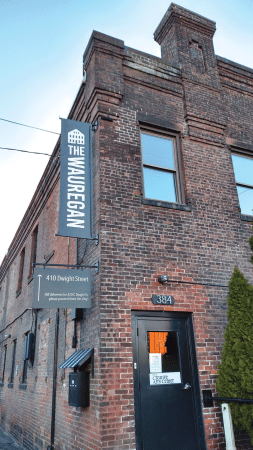
Features

Man of the People

Senate President Stan Rosenberg

Senate President Stan Rosenberg

Massachusetts Senate President Stan Rosenberg — one of the few legislators from Western Mass. who have held that position — began his career as an aide to then-Sen. John Olver, and has served as Olver’s successor for the past 26 years. During that time, he has worked on myriad issues important to his constituents, from education funding to energy policy; from labor matters to mass transit. The common threads, he said, are the importance of continually making investments in the state’s future, and his philosophy of government as a ‘helping profession.’

A leader in the Massachusetts State House with deep roots in Hampshire County. Passionate about issues ranging from wage equity to expanding rail service across the Commonwealth. Known for his lengthy career as a legislator, including election in ’15 as president of the Massachusetts Senate.

Meet Calvin Coolidge, the 30th president of the United States.

Or, alternately, current state Senate President Stan Rosenberg, considering how remarkably those careers intersect, a century apart.

“He was a Republican, but he was quite a progressive in some ways,” Rosenberg, a Democrat, said of someone he counts as a role model; in fact, when he gives State House tours, he always brings visitors to see Coolidge’s desk, which has a home in his suite of offices. “He was involved in the minimum wage, he was involved in rail — his goal was to get rail everywhere in Massachusetts. Then the automobile interrupted the progress they’d made, and the rail system started to diminish while highways expanded.

“Well, guess what?” he went on. “It’s 100 years later, and we’re still working on the same problems. We’re still talking about pay equity. We’re still talking about rail.”

For Rosenberg, 67, whose career as a state legislator stretches back to 1986, transportation issues are matters of access and opportunity for state residents, a concept he would return to several times during his recent talk with BusinessWest.

Sen. Stan Rosenberg arrived at the State House

Sen. Stan Rosenberg arrived at the State House as Sen. John Olver’s aide in 1980 and never left, succeeding Olver in 1991.

“These are 21st-century issues, whether we’re talking about transportation and connecting regions outside metro Boston, or talking about ensuring that everyone has access to higher education. Those are the kinds of issues where, if you don’t ensure availability statewide, then people’s economic opportunities get constrained.

“It isn’t just nice to have rail,” he went on, explaining that getting people back and forth to jobs means allowing them to work far from where they live, which helps fill up underused housing stock. Rosenberg was involved in efforts to secure $33 million to upgrade the Pan Am line from Connecticut to Vermont via Springfield and Northampton, as lawmakers continue to eye east-west rail service from Boston to the Pioneer Valley.

“The same with education,” he said. “If you don’t have access to quality education, you’re not going to line up with the jobs that are available. Even in the Pioneer Valley, we have vacant positions that don’t have people to fill them. The skills gap is a really big issue. The achievement gap is a big issue. We have 100,000 vacant jobs statewide, and 100,000 people looking, according to the unemployment numbers. We’ve got to match them up, and that means education, training, and retraining for opportunities.”

Two years ago, Rosenberg became the first senator hailing from Western Mass. elected president of that chamber since 1971, but he dismisses talk that his region’s issues are pushed to the side on Beacon Hill.

“There’s often a feeling about Western Mass. getting the short end of the stick, but all of the regions — north, south, and west — outside the metro Boston area have a similar feeling,” he said. “We’re not unique.”

One thing Western Mass. legislators have been adept at, he went on, is speaking with a unified voice to promote the region’s shared needs and hopefully impact policy.

“Our delegation in Western Mass. has been very nimble and adept at building coalitions to make sure, when there are opportunities, we have a seat at the table,” he said, citing a few examples, from the MGM casino opening in Springfield in 2018 — area legislators fought to ensure the region would win one of the projects — to ongoing life-sciences and research projects.

“The same thing with high-tech projects: the largest big-data center in the state is actually not in Boston; it’s in Holyoke,” he said of the Massachusetts Green High Performance Computing Center. “Having that center there is an enormous positive for the region.”

Rosenberg also touted the partnership between UMass Medical School and Baystate Health to bring a medical-school campus to Springfield later this year, forming a sort of medical-education and research triangle between Springfield, Worcester, and Amherst.

“We keep finding opportunities to develop things that are uniquely ours while also making sure we are not left out of the discussion when planning statewide initiatives, so the Pioneer Valley gets to be the beneficiary.”

Calvin Coolidge would undoubtedly be proud. But there’s far more to Rosenberg’s personal story and career.

Through the Ranks

Raised in foster care, Rosenberg graduated from Revere High School in 1967 before attending UMass Amherst, and embracing the region he would come to represent in Boston.

“I went to school part-time and worked full-time at UMass because of my financial situation in the late ’60s and early ’70s,” he told BusinessWest. “While attending UMass, he founded and headed the Arts Extension Service and then became director of Community Development and Human Service Programs in the Division of Continuing Education.

“As a result, I started to make a lot of connections with people and became politically engaged,” he explained. In 1980, then-state Sen. John Olver asked if he was interested in working in Boston as his aide. “I left my job on a Friday, and on Monday arrived at the State House for my first day of work.”


All across the country, we’re seeing declining state appropriations and higher education driving up student charges, driving up student debt. And when graduates get into the economy, they have no disposable income, so it’s harder to stay in state.”


Rosenberg went on to serve as executive director of the state Democratic party from 1983 to 1985, and as the district director for U.S. Rep. Chester Atkins from 1985 to 1986. He then sought and won a seat on the Massachusetts House of Representatives in 1986, representing Amherst and Pelham. In 1991, he won a special election for the state Senate seat being vacated by Olver, a role he has maintained for 26 years, representing 25 communities, mainly in Hampshire and Franklin counties.

While in the Senate, he has served as chair of the Election Laws Committee, the Banking Committee, and the Senate Ways and Means Committee, followed by assistant majority leader from 1999 to 2002 and Senate president pro tempore from 2003 to 2013. He was appointed Senate majority leader in 2013 and Senate president at the start of 2015.

The issues he cared about early on aren’t much different than what he prioritizes now, and reflected the mindset of his district. His interest in higher education dovetailed with the fact that the state’s flagship university is located in Amherst. With many environmentally minded residents in his district, he worked on recycling and the greenhouse-gas issue, now commonly known as climate change. And with the closings of Northampton State Hospital and Belchertown State School, social services to help people in need became a main concern as well.

“You can’t live in the Pioneer Valley without thinking about economic development, but also social justice,” said Rosenberg, who has had a personal stake in some of those issues, notably the Bay State’s first-in-the-union legalization of gay marriage a decade ago, a law he and his husband, Bryon Hefner, availed themselves of last year. “In representing that constituency, you’ve got to be prepared to work in both of those areas.”

He recognizes that businesses have concerns about employment regulations that favor workers, such as minimum-wage laws, equal-pay rules, and family-leave advances, but believes that, given enough time to adapt, companies always do. As one example, provisions of the equal-pay law passed last summer, aiming to ensure women are paid equally with men for equivalent work, don’t take effect until the summer of 2018.

“If a business or agency has time to adapt, it is clearly understood in the public-policy realm that you’ll have a very modest impact when you raise the minimum wage, for example. It may be different for individual businesses, but for the economy as a whole, there’s a very minor impact — and it’s even better when there’s warning and you can plan for it.”

Ideally, he said, the public and private sector works together for mutual benefit, as seen in the 2006 health-insurance law that provided tax credits and tools through the Health Connector to help employers ensure their employees were covered in an affordable way. “Not that there won’t be some pain in that or some dislocation in some situations, but by working together, we can minimize that pain.”

Creating a culture where the workforce has access to affordable healthcare, family leave, and other work-life benefits is critical, Rosenberg said, to retaining top talent in the state. “We have a knowledge-driven economy, and we want people to settle here, to locate their businesses here. By doing these things, we are making a difference.”

He noted that Massachusetts was among the first states, more than a century ago, to establish a minimum-wage law. “We were one of the innovators, and now it’s national practice. We have the third-highest per-capita income in the country, and by most measures, the balance between the strength of the economy and quality of life here is extremely strong.”

Providing that quality of life takes public investment, he insists, and public education is a good example. As a co-chair on the Senate Task Force on Public Higher Education and the Public Higher Education Caucus, he advocated for higher state appropriations for colleges, while holding institutions accountable for how they spend the money.

“All across the country, we’re seeing declining state appropriations and higher education driving up student charges, driving up student debt,” he said. “And when graduates get into the economy, they have no disposable income, so it’s harder to stay in state. If they don’t have disposable income, if it’s all going to pay rent and student debt, they don’t have money to go out and buy things. That hurts small businesses in particular.”

Again, it’s that concept, one of the defining ones in today’s Democratic party, that public investment benefits everyone, but Rosenberg doesn’t simply want to issue legislation from on high (well, high on Beacon Hill, anyway); he wants to engage constituents on what matters to them.

“You have to have a robust and open process for people to engage with you,” he told BusinessWest, “so they have a seat at the table and a voice in discussions that are going to affect them.”

Out and About

Rosenberg noted that each of the state’s 40 senators chairs a committee or acts in some other leadership position, and in the past two years, they have been working to “transform the organization” according to best practices of shared responsibility, shared leadership, teamwork, and engagement with constituents to identify solutions to key issues.

“We’re less hierarchical in the Senate than we used to be,” he noted. “Members are much more engaged at every level, and we’re trying to expand transparency within the body and engagement with the public.”

One concrete strategy for doing the latter is a practice known as Commonwealth Conversations. That project divides the state into nine regions, each with their own specific needs and priorities. Groups of senators spend a day in each region talking to constituents about projects they want to see accomplished, but also the community values they hold.

“We hear similarities of concern, but also differences,” he said. “Boston isn’t the Pioneer Valley, and Pittsfield isn’t Springfield, for that matter.”

Sen. Stan Rosenberg says transportation, education, and labor matters aren’t just political issues

Sen. Stan Rosenberg says transportation, education, and labor matters aren’t just political issues; they’re access points to a better quality of life for Massachusetts residents.

The idea, he explained, is to develop statewide policy that can be adapted for regional differences, such as meeting skills gaps that differ throughout the Commonwealth.

“For example, we’ve been rebuilding the machining industry sector in Western Mass. Not that it’s not going on elsewhere, but it’s a big priority in our area,” he said, noting initiatives from the Middle Skills Manufacturing Initiative to train manufacturing workers in Franklin County to efforts to attract the Chinese rail-car manufacturing giant CRRC to Springfield. “The pieces all seem disparate, but they’re all connected.”

Even though a heavily Democratic Legislature and a Republican governor in Charlie Baker make for divided government in the technical sense, those officials maintain strong working relationships, Rosenberg said, noting that he meets with Baker, the House speaker, the Ways and Means chair, and the minority leaders every Monday afternoon — the location rotates between their offices — to talk about current issues before the Legislature.

“Even if we don’t have a specific agenda, we always talk about the common ground we have to build solutions to the problems of the day. Those meetings reach back to Bill Weld, Billy Bulger, and Charles Flaherty, and that tradition has been maintained whether we have a unified or divided government. It really makes a difference when you’re communicating.”

There are issues that rankle one side or the other, of course, and the divisions between Democrat-dominated Massachusetts and the national arena will only grow following the improbable rise of President Trump, who seems poised to lead with the same bluster and scattershot style that proved a winner on the campaign trail — only, with the ability to do actual damage to policies progressives value, beginning with the Affordable Care Act.

“We have to be mindful of a lot of change coming out of Washington,” Rosenberg said. “I’m worried about what’s happening on the health-insurance front. We had a universal plan that was working and got disrupted by the federal plan, but we adapted. The administration signed a $53 million, five-year plan for health transformation in Massachusetts. Now, the question is, will the administration honor that commitment, or will they make so many changes in the universal federal health program that it disrupts the state program again?”

Other shifting priorities in Washington could cause disruption in the Bay State as well. When it comes to climate change, for example, Massachusetts, as a coastal state, is trying to plan for the future, including possible coastline impacts, in a “balanced but aggressive way,” the Senate president said. “Whether or not they upturn federal policies might have an impact on state policies.”

Then there’s marijuana, which is legal for medical use in 28 states and for recreational enjoyment in eight; both apply in Massachusetts. Although using the drug continues to violate federal law, President Obama’s administration took a hands-off policy when the will of the states went their own way.

“If Mr. [Jeff] Sessions is appointed attorney general, will he stick to the policies of the Obama administration, where, if it’s heavily regulated and you follow those regulations, we’ll leave you alone?” Rosenberg asked. “Or will Mr. Sessions follow federal law and say, ‘I don’t care if your voters voted for it; you can’t do it anymore’? If they do come in and start enforcing it, that could be a pretty big deal.”

Helping Profession

It’s clear that legislative matters of all kinds, and the way they impact people’s lives, are a big deal to Stan Rosenberg.

When asked what gratifies him most, though, he returned again to the work he and his colleagues are doing to, as he called it, “transform the Senate as an institution.”

After all, he told BusinessWest, it’s very easy for malaise to set in within legislative bodies. “What we’re doing in the Senate has empowered our members, and that empowerment has excited them, and that excitement leads to an enormous amount of energy around trying to produce quality legislation that moves our communities forward.

“This is a helping profession,” he went on. “Every day, you get phone calls and meetings that challenge your thinking and keep you on the cutting edge of life. Every day you find opportunities to help one person, one business, one institution, one community.”

He likens those opportunities to winning a bit of money on a scratch ticket. “And every so often, it’s like winning the lottery when you pass a big piece of legislation that affects the future of the whole Commonwealth.”

Calvin Coolidge certainly made his mark — eventually, well beyond the borders of the Bay State. For now, Rosenberg is happy to keep making a difference for his constituents at home.

“Every day, you’re presented with opportunities to be helpful,” he said. “That keeps me going.”

Joseph Bednar can be reached at [email protected]

Community Spotlight Features

Community Spotlight

Chicopee Mayor Richard Kos, left, and Michael Vedovelli

Chicopee Mayor Richard Kos, left, and Michael Vedovelli say the new, three-megawatt solar farm on James Street will benefit the city and reduce the cost of electricity at Westover Air Reserve Base.

Richard Kos says officials in Chicopee are doing all they can to foster good relationships with developers, government leaders, and local businesses, and their efforts have led to a strong surge in growth.

“In 2016 the building department issued $31 million in building permits, but we anticipate that, by the end of the first half of 2017, we will more than double that amount,” the mayor said.

Indeed, the list of projects in the planning stages or underway is not only lengthy but diverse in nature, ranging from new hotels to new and improved housing, a solar farm, business expansions, infrastructure improvements, and progress at the Uniroyal and Facemate properties. There’s also a new Mercedes-Benz dealership under construction on Burnett Road.


Chicopee has a can-do attitude, is business-friendly, and has officials who come up with optimal solutions to problems. All of the department heads have given us input to make the building process go smoothly.”


Peter Wirth is co-owner of that $12 million, 37,000-square-foot, state-of-the-art facility, expected to open in late summer or early fall. He and his partner took their time searching for a location in the metro Springfield area before choosing a site next to the entrance of Interstate 291 and exit 6 on the Mass Pike, and said city officials have done everything possible to help them meet their timetables.

“Chicopee has a can-do attitude, is business-friendly, and has officials who come up with optimal solutions to problems,” Wirth said. “All of the department heads have given us input to make the building process go smoothly.”

Other developments off exit 6 include construction of a $20 million Tru by Hilton Hotel by the owners of a Days Inn who demolished the outdated hotel on 450 Memorial Dr. to make way for the new structure.

“The project will include a Starbucks, a Wendy’s restaurant, an Irving gas station, and a sit-down restaurant that will be named later,” Kos said as he talked about reasons that make Chicopee a desirable place to live and operate a business.

“We’re the third-largest city west of 495 and are known as the ‘crossroads of New England’ because Interstate 91 and two exits of the Mass Pike intersect here,” the mayor noted, adding that the city’s financial stability and the traffic that runs through it add to its appeal.

But he attributes the rapid acceleration in growth to concerted efforts that began in 2014 after he was elected mayor for the second time.

“In a time when people are losing faith in government, Chicopee has seen unprecedented cooperation between its leaders, locally and on the state level,” Kos said. “We are working together to get things done and are excited about the industries that have chosen to invest here.”

For this issue, BusinessWest outlines some of the major projects that took place in Chicopee last year as well as those scheduled to begin in 2017.

Cooperative Efforts

A three-megawatt solar farm under construction on a 26-acre site off of Outer Drive and Goodwin Street is an example of how combined efforts have led to growth.

Last summer, the city was finally able to raze 100 units of military housing units on the site, which had sat unused for two decades and become problematic. Although Chicopee acquired the property from the Navy in 2011 after five years of negotiations, restrictions and their condition had prevented the city from renovating the structures or reusing the land for other purposes

“The housing was an eyesore, in a state of disrepair that had become a hazard to the neighborhood due to vandalism, vagrants, and other problems,” Kos said.

In 2015, he proposed putting a solar farm on the site, and after the City Council and neighbors endorsed the idea, Chicopee was awarded a $1 million MassDevelopment grant to remediate the property that was matched with funds from city coffers.

The money came from the state’s $5.9 million bond bill grant program to support the Clean Energy Assessment & Strategic Plan for Massachusetts Military Installations, and the housing was finally torn down.

In December, a lease agreement was signed with Chicopee Solar LLC, a subsidiary of ConEdison Development, to build a solar farm on 21 of the 26 acres.

“We gave the company permission to begin working at the site while the final details were being worked out,” Kos said, explaining that ConEdison had to have all mechanical components installed and ready for operation by Jan. 8 to meet a deadline set by the Mass. Department of Energy that would allow it to receive solar renewable-energy credits.

“They worked under a very tight timeline and brought in electricians from all over New England, but there was complete cooperation between the company, the city, and the state, and the installation was finished on time,” said Michael Vedovelli, the city’s director of Community and Economic Development.


Increasing a city’s market rate residential population is one of the real secrets of urban success.”


Kos added that the city’s investment will be recouped in 10 years through tax revenue and income from the lease agreement and the government will also benefit because Westover Air Reserve Base will receive a 5% discount each year on electricity that will amount to $100,000 in annual savings.

He noted that the remaining five acres on the property are available for industrial use and located adjacent to Air Park North and the former Avery Dennison building that is being used by Yankee Candle.

The project has been praised by residents of the Crossing at Ridgewood Village, a condominium association that sits across from the solar farm.

“It’s a wonderful reuse of the property that is great for the region,” said Dottie Sikes, a resident and member of the board of trustees, who recalled living in the former military housing with her husband in 1970 when Westover was an active military base. “The Crossing has always been a great place to live, but it will be much nicer now thanks to the new solar farm.”

The city has also reached an agreement with Mass. Alternative Care Inc. to open a medical-marijuana cultivation facility and dispensary near the Springfield line.

The company plans to convert the former Chicopee Engineering Associates building into a storefront, and the City Council approved a zoning change for a 3,270-square-foot piece of land on East Main Street so the business can begin its operation.

It will be the first of its kind in Hampden County, and Kos said the owners will be ready to plant by April. “The facility will provide patients with necessary treatment options and bring jobs and numerous tax benefits to the city.”

Ongoing work has also taken place at the Uniroyal site, and last year two of the remaining buildings on the 27-acre property were razed.

“We’ll try to repurpose four of the remaining 10 structures,” Vedovelli said, adding that the city has been aggressive in pursuing funds to remediate the brownfields and received three $200,000 grants from the Environmental Protection Agency last year.

“It is a tribute to our grant writer and our team,” he said, noting that only 53 projects in the country received the grants.

Previously, the City Council had appropriated $185,000 to make roof repairs, cover a broken skylight, and board up broken windows in the administration building on the Facemate property at Oak and Grove streets. A full abatement of that 62,000-square-foot structure will be completed this spring, and a request for proposals will be issued later in the year.

Interest in the Facemate property continues to grow, and David Spada from Lawrence has plans to build a $22.9 million, 92-room assisted-living facility on Lot 4 of a 3.85-acre parcel that has frontage on West Main Street across from the Chicopee Falls Post Office, and will be situated off a new road which leads to the RiverMills Senior Center.

Residential Growth

Two years ago, Mount Holyoke Development purchased the Lyman Mills in Chicopee Center, and plans are now underway to convert the former textile-manufacturing plant into 110 market-rate apartments. The buildings were unoccupied for four years, and the new units will be loft-style work/live spaces designed to appeal to young entrepreneurs.

Kos said the project was made possible in part by a $2.6 million MassWorks grant the city received last year that will be used to upgrade water, sewer, and storm-water lines in the area. Tighe and Bond is designing the project, and the work will begin this summer.

“Increasing a city’s market-rate residential population is one of the real secrets of urban success,” the mayor said, noting that such development becomes a catalyst for further growth as residents put feet on the street and increase business at local establishments and restaurants.

Change is also occurring at the former Kendall House in Chicopee Center as a result of collaborative efforts.  Valley Opportunity Council acquired the building from HAPHousing Inc. last year, and has plans for a $7 million renovation that will convert the rooming house, which housed Quicky’s restaurant on its first floor, into 39 affordable studio apartments.

“We’re working to improve the affordable-housing stock within the city, and by collaborating with the state, VOC received a $3.1 million grant to help restore the Kendall House,” the mayor said, adding that the nonprofit will cover the remainder of the renovation costs.

He told BusinessWest the city is also working to increase home ownership through two incentive programs. The first is the First Time Home Buyers Assistance Program, which helped 22 eligible families last year by giving each up to $5,000 toward the purchase of a new home.

The second initiative is aimed at people willing to purchase three-family homes and live in them, which ensures the likelihood that they will be kept in good condition. New homeowners in the program are given $1,000 each year for up to 16 years as long as they reside in the properties.

“The majority of these homes are in Chicopee Falls, Chicopee Center, and Willimansett, and the program continues to grow and pay dividends,” the mayor said.

Improvements are also being made to the city’s parks; a $225,000 spray park with other amenities was completed at Wisniowski Memorial Park last year, and $225,000 will be invested to make enhancements to Sarah Jane Park this year.

In addition, legislators are working to grant approval to use the former Chicopee Falls Library building as a home for a third Head Start program.

Work on a new parking lot downtown has also been completed. It features 15 designated public spaces as well as parking for patrons of Munich Haus restaurant. The city has also applied to become designated as a Green Community, which would make it eligible for grants for improvements to city buildings.

Continuing Progress

Last summer, Pilgrim Interiors Inc. expanded, and several weeks ago U.S. Tsubaki Automotive LLC held its formal groundbreaking ceremony for a $11.5 million, 100,000-square-foot expansion.

“It will preserve 348 jobs and result in 35 new ones,” Vedovelli said, adding that the company decided to remain in Chicopee after considering a move to either Tennessee or Mexico.

New businesses continue to be attracted to the city, and last year PV Sullivan Supply Co. Inc. and Holden Humphrey Co. were welcomed.

Growth is expected to continue as seeds that were planted take root, and the outlook for this year is exceptionally bright.

“Chicopee is still the biggest small town in Massachusetts,” said Kos. “We’re like the old Cheers bar where everyone knows your name, and are making great progress because we work together in a way that benefits our community as well as its residents.”


Chicopee at a glance

Year Incorporated: 1848
Population: 55,603
Area: 23.9 square miles
County: Hampden
Residential Tax Rate: $17.31
Commercial Tax Rate: $32.49
Median Household Income: $47,276
median family Income: $65,443
Type of government: Mayor; City Council
Largest Employers: Westover Air Reserve Base; City of Chicopee; J. Polep Distribution Services; Turbo Care Inc.
* Latest information available

Education Sections

RoyalChristina Royal recently took the helm at Holyoke Community College. She brings with her a phrase, or saying, that she contrived and uses often as she talks about higher education and her approach to it: “it takes a village to raise a student.”
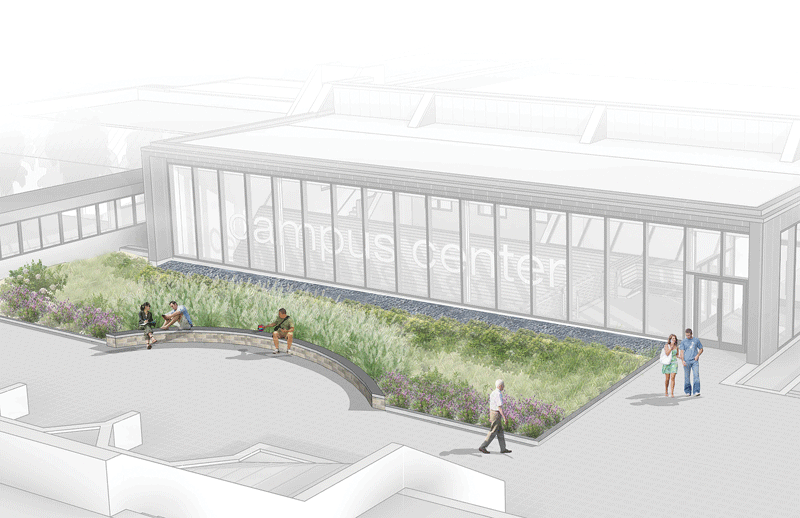
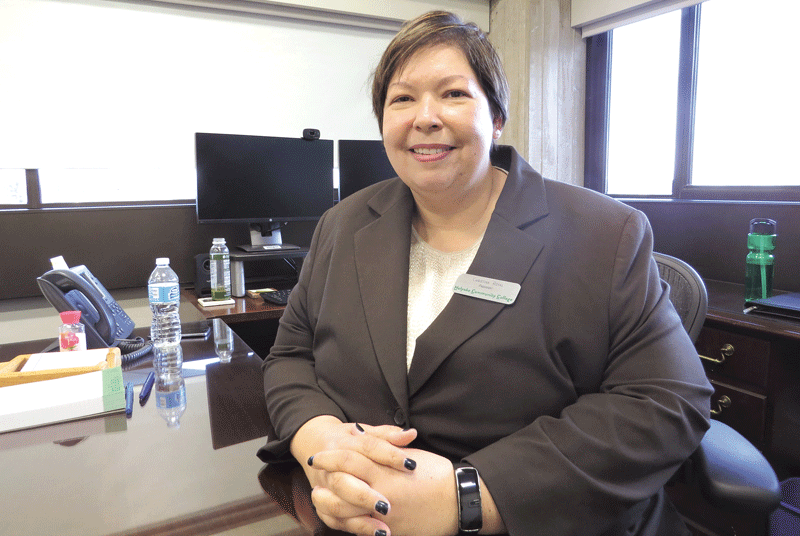

Before accepting the position of provost and vice president of Academic Affairs at Inver Hills Community College just outside the Twin Cities in Minnesota, Christina Royal first turned down an offer to become president of a school in Texas.

The stated reasons for that somewhat unusual career decision — many who have spent years working in higher education and believe they’re ready to apply for president positions yearn for that opportunity to lead their own school — speak volumes about Royal and her priorities. And also about the next school that would choose her to occupy the corner office: Holyoke Community College.

“I didn’t feel like it was going to be the best fit to get me the college experiences that I needed to prepare me ultimately to step into a college presidency and succeed,” she said in reference to job in the Lone Star State. “I’m a lifelong learner through and through, and when I look at my career to date, I tend to seek out positions where I see opportunities for growth and opportunities where I can make an impact.

“While it’s been helpful to be upwardly mobile in my career trajectory,” she went on, “it’s more important for me to feel that I can make a difference in that role and that I can learn something.”

Which says something about the provost’s job in Minnesota — and she did quite a bit of learning there, as we’ll see later — and also about the job she started on Jan. 9.


I really believe that having partnerships with business and industry and the community is essential for an institution of higher education to thrive.”


Starting with her visit to the campus on Homestead Avenue, she said she felt a “connection” — to the school, its mission, its current efforts to meet it, and the community as a whole. And the subsequent interviews and conversations with a host of constituencies, including students, faculty, and staff, only made the connection stronger.

At HCC, she saw an opportunity to forge an even stronger connection between the school and the community it serves, and thus make both stronger and more vibrant.

“I have a phrase that I’ve used often during my career — that ‘it takes a village to raise a student,’” she noted. “And I really believe that having partnerships with business and industry and the community is essential for an institution of higher education to thrive.

“Likewise, for a community with a community college to thrive, it needs to have a strong community college,” she went on. “I look at it as a bi-directional relationship and partnership.”

Royal arrives at HCC at an intriguing time for that school, community colleges in general, the ones in this state, and the four that serve this region. Indeed, those four institutions were chosen by BusinessWest as one of its Difference Makers for 2017, for their efforts to not only provide convenient, affordable access to higher education, but for becoming huge role players in regional economic-development efforts.

And, as that story goes on to note, the community colleges in this region have increasingly been working in collaboration among themselves and myriad other partners to address a host of workforce issues, including the skills gap plaguing virtually every sector of the economy.

Royal touched on some of these efforts when she talked with BusinessWest just a few days after her arrival — “nothing in this office is mine,” she said of what was in the credenza and on the walls — and noted that they fit right in with those basic criteria she was looking for in a move up the career ladder (and a college presidency) — opportunities to learn and grow professionally, and opportunities to make a difference.

As for community colleges as a whole, they are facing a host of common challenges, including enrollment — high-school graduation classes are getting smaller, and the economy is doing generally well, two factors that certainly don’t help drive individuals to community-college gates — and also financial pressures, and ongoing efforts to improve graduation rates, or ‘success rates,’ as many like to call them, because not all students are seeking a degree.


The $43 million renovation of HCC’s campus center

The $43 million renovation of HCC’s campus center is just one of many opportunities and challenges facing the school’s new president.

HCC is confronting these issues just as all schools are, said Royal, while it is also focused on some of its own specific challenges, including a soon-to-commence renovation of its campus center and a host of area workforce-development issues.

For this issue and its focus on education, BusinessWest talked at length with Royal about why she ultimately took this opportunity to become a college president, why she focused her career on the community-college community, as she called it, and what kind of learning opportunities she’s expecting at HCC.

Facing Stern Tests

Before getting into all that, though, Royal spent some time addressing the question often put to those putting ‘president’ on their business card for the first time — how and when did she know she was ready for that level of responsibility and challenge?

She said she recalls no specific morning when she woke up with that realization, but, rather, that it came with time, the accumulation of experience, the stockpiling of needed confidence … and confirmation from others in the industry that she was, indeed, ready to ascend to the top rung.

“I had a very well-rounded background, both in business and in higher education, that gave me a sense of the issues within higher education and the changing landscape of community colleges,” she told BusinessWest. “Given the number of college presidents that have been in these roles for many years and had started to retire, I was thinking this was a good time to be looking at pursuing one of those jobs.”

As for that accumulation of experience, it has come across the broad spectrum of higher education, starting in the private sector with CompUSA Inc. There, she provided instruction to more than 2,000 students for the Social Security Administration — and a host of other corporate clients — on various software-application programs.

From there, she went to the Beacon Institute for Learning in Florida, where, among other things, she was responsible for curriculum development, implementation, and assessment of technical training and certification programs for more than 20 colleges and universities, including Duke, Notre Dame, and Rutgers.

She then returned to her alma mater, serving from 2001 to 2006 as director of Technology-Assisted Learning in Marist College’s School of Graduate and Continuing Education in Poughkeepsie, N.Y.

In early 2006, she would take a job that would eventually inspire a career-path decision. It was executive director of Distance Learning at Cuyahoga Community College (CCC) in Cleveland, a massive school with four campuses, two corporate colleges, a $270 million budget, and roughly 52,000 credit and non-credit students. She would later become assistant vice president of eLearning & Innovation in 2010, a post she would hold until mid-2013.

It was during her tenure at CCC that Royal would first earn her doctorate in education (in 2007, at Capella University’s School of Education) a pre-requisite for most high-level jobs in higher education, especially president, and later achieve that aforementioned confidence and skill set also needed to ascend to those levels.

“My college president at the time said, ‘this is not for the faint of heart, but if you’re interested in this, then I’m going to send you to an executive-leader program focused on the job and the role of the president,’” she recalled. “She went on, ‘if you’re still interested when you come, let’s talk.’”

Christina Royal

Christina Royal says it take a village to raise a student, and this means more and stronger relationships between the college and the community.


She went, was interested when she came back, and the two did talk, she went on, adding that she considered herself ready for a presidency when there were “few surprises in the job,” and she had acquired a set of experiences that made her ready. She would cross that threshold at her next career stop — Inver Hills.

And it was also while in Cleveland, she said, that she began to focus on that aforementioned community-college community as her career ambition.

That mindset was only solidified at Inver Hills (which she chose over that Texas school), where she led a number of academic and workforce-development initiatives, including the South of the River Education Center, a workforce partnership with a host of other schools and economic-development-related agencies.


I had a very well-rounded background, both in business and in higher education, that gave me a sense of the issues within higher education and the changing landscape of community colleges.”


She told BusinessWest she has been looking at a number of president positions over the past several months, but made HCC the her main focus for a host a reasons, including geography (her family is still in the Albany area), but especially those aforementioned opportunities to grow professionally and make a difference — at the school and within the community it serves.

Grade Expectations

Since arriving on the campus during its winter intercession — students were not due back until late in January — Royal said she has taken advantage of that quiet time to meet with several of the constituencies she’ll be working with and beside.

These included staff and, later, faculty, as well as Holyoke Mayor Alex Morse, several state legislators, the school’s foundation, the Greater Holyoke Chamber of Commerce, and the other area community college presidents (through a photo shoot for the Difference Makers program).

She and Springfield Technical Community College President John Cook have already talked more than a few times, continuing a dialogue — and pattern of collaboration — forged by their respective predecessors, Bill Messner at HCC and Ira Rubenzahl at STCC, who retired within a few weeks of each other last summer. (You can read more about those collaborative efforts in the story on page A4).

Royal has also become acquainted with many of HCC’s current initiatives, and there are many of them, including:

• A $43.5 million renovation of the school’s campus center. The two-year project will change the look, feel, and orientation of the campus, and give it what administrators are calling “a new front door.”;

• The Mass. Casino Careers Training Institute, a joint effort among all the state’s community colleges to train people for careers at gambling facilities, including the $950 million MGM Springfield now taking shape in that city’s South End;

• The Cubit Building. That’s the name given to an old mill in downtown Holyoke that takes that shape. HCC will be moving its culinary-arts program into the first two floors of that structure, thus making it the anchor tenant in a building that will also feature market-rate housing and is touted as one of the keys to revitalization of the city’s Innovation District;

• TWO (Training & Workforce Options), a collaborative effort with STCC to provide training programs to help business sectors and individual companies close recognized skills gaps; and

• The school’s designation as an Hispanic Serving Institution, a federal designation from the U.S. Department of Education. Schools earn it when they have an enrollment of undergraduate full-time-equivalent students that is at least 25% Hispanic, a threshold HCC has reached. If it maintains that number for a year, it will be eligible to apply for certain grants that can be used to assist that specific constituency, Royal said.

As might be expected, Royal said one of her first priorities for the school will be to undertake development of a new strategic plan, which would be the first in decades, in her estimation.

She doesn’t expect that a new plan will yield many surprises in terms of recognized priorities, growth opportunities, and a specific strategic direction (although one never knows), but instead will provide needed affirmation of a host of agenda items.

These include the broad issues of access, enrollment, and how to grow it given the current, and lingering, challenges, and developing programs to improve students’ chances for success — whether they’re seeking a certificate, a two-year degree, or a pathway to a four-year degree.

And with that, we turn to what Royal wrote to the search committee that would choose HCC’s next president as she expressed her interest in the position.

“I have been intentional in my career about serving the community-college mission,” she said. “Growing up as a first-generation, low-income, biracial college student, I understand the community-college student and the challenges they face. Student success is most effectively achieved when an institution understands the unique support needs of students in two-year colleges.”

To further emphasize ‘unique,’ she would go on to discuss — with the search committee in that letter, and then, several months later, with BusinessWest — an initiative called the Mobile Food Pantry at Inver Hills.

As that name suggests, this program, created in partnership with a Minnesota-area nonprofit called Open Door, which has a mission to end local hunger, allows Inver Hills’ students in need of food support to receive healthy food on a bus that travels directly to the college.

And there were, and are, plenty of students in need, said Royal, adding that 60% of Inver Hills’ students were classified as low-income.

Whether HCC needs a mobile food pantry or something like it remains to be seen, said Royal, adding that it is merely one example of the ways community colleges can and should work to address the many obstacles standing in the way of students’ success.

“The reason programs like Food Pantry are important is that you cannot educate a hungry student,” said Royal in a firm, direct voice. “We do have students who are struggling, their food insecure, their housing insecure, there are transportation problems … these issues are real, and they impact their quality of focus as they try to concentrate on their studies and improve the quality of their life and the lives of their children.

“We have to look at how we’re able to address, or partner with someone who can address, some of these social-service issues that come with some of the students we serve,” she went on. “So I’ll be looking at community partnerships to address some of these issues.”

Food for Thought

As Royal noted, it takes a village to raise a student.

She is now in a leadership position within that village, and is intent on using that power and responsibility to make success less of a goal and more of a reality.

And, while doing so, she’ll be focused on creating more and different learning experiences — not only for the students, but for her as well.

That’s why she came to HCC, after all.

George O’Brien can be reached at [email protected]