Home Archive by category Sections (Page 62)

Sections

Health Care Sections

Meeting an Emergency Need

An architect’s rendering of Holyoke Medical Center’s new Emergency Department, set to open in May or June.

An architect’s rendering of Holyoke Medical Center’s new Emergency Department, set to open in May or June.

The numbers alone speak to Holyoke Medical Center’s need for a new Emergency Department, with the current ER designed for 25,000 visits per year but actually logging almost 43,000. But HMC’s new facility, set to open this spring, will do much more than better handle the traffic; it will also call on cutting-edge ideas in design and workflow — not to mention an innovative, dedicated behavioral-health area — to reflect a truly 21st-century vision of emergency care.

Running an emergency room is more than a numbers game for hospitals, involving a complex weave of triage and treatment to ensure that patients’ needs are met efficiently and effectively.

But the numbers at Holyoke Medical Center … well, they were simply unsustainable.

“The existing ER is designed to see about 25,000 patients per year,” said Carl Cameron, the hospital’s chief operating officer. “We saw almost 43,000 last year in that small area located in the back of the hospital, which is difficult to find.”

When Spiros Hatiras came on board as president and CEO of Holyoke Medical Center (HMC) in 2013, one of the first concerns brought to him by the board of directors was the existing Emergency Department, which desperately needed an overhaul and more space. They talked about expanding the existing ER, but the finances suggested building a new one would make more sense — not to mention that a construction project in a working ER would disrupt patients.

“We started the dialogue about what we are going to do with the ED in October of 2014,” Hatiras said. “We talked about the concept of expanding in place, but the exercise proved to be futile because we’d lose a lot of space with the construction. So we changed course and said, ‘maybe we need a completely new building.’”

The end result of those discussions will be unveiled this spring: A new Emergency Department that will expand the current space from 8,500 square feet to approximately 20,750 square feet. A second floor above the new ER will house a medical office building of 18,000 square feet.


List of Acute Care Hospitals in the region


The expansion will increase the ER’s treatment beds from 26 to 40, 12 of those designated as behavioral-health beds, part of a new Crisis Center for Psychiatric Services, segregated from the main ED to give those patients more privacy. The ED will also include two multi-patient trauma rooms, advanced life-saving equipment, six fast-track spaces, and a patient-navigation service as well. “It’s a large increase from where we’re currently at,” Cameron said.
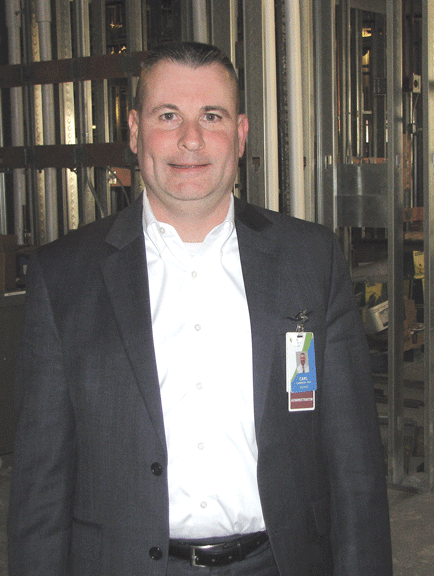
Carl Cameron

Carl Cameron says capacity alone — the current ER is designed to see 25,000 patients annually, and saw almost 43,000 last year — is reason enough to build a new one.

The exterior space will be bigger as well, with room for four ambulances instead of the current two.

Meanwhile, the second floor will be the home of a comprehensive weight and health-management program, including services for bariatric surgery, general surgery, diabetes counseling, behavioral and nutritional education, as well as a patient fitness center.

“It’s a state-of-the-art space up there, with plenty of room,” Cameron said. “One of the rooms is a large auditorium where we can have sessions with bariatric patients.”

The weight-management program, launched last March, has “grown beyond anyone’s imagination,” Hatiras added, noting that it recently saw its 500th new patient. “It’s been amazing, and it continues to grow. This is the result of planning ahead, knowing we’re going to need more space for that program, and potentially more providers.”

With the new ED and medical office building ahead of schedule — the goal of cutting the ribbon in late June may be pushed up to late May — BusinessWest takes a peek into what is now a mesh of steel framing, but promises to become the state-of-the-art emergency area this community hospital has long needed.

Modern Design

Once the decision was made to build a new structure, Hatiras said, discussions began from a blank slate, incorporating current best practices in layout, workflow efficiencies, and design elements.

“Throughout the waiting area, we’re incorporating a lot of natural light and finishes that make it feel more like the lobby of a hotel than a medical space,” he told BusinessWest. “There’s a lot of glass. Most of the treatment rooms are going to have a window where the natural light comes in. And every single one of the treatment rooms is private — no more lying next to somebody else, separated by a curtain.”

Meanwhile, finishes in the behavioral-health area, including materials, colors, and lighting, are meant to promote a decrease in anxiety. “Behavioral-health patients come in to the hospital in an anxious state,” he explained, “and often the environment — the noise, light, colors ­­— amplifies that instead of toning it down.”

Planners convened a behavioral-health peer group, soliciting input from former patients, to improve their understanding of how behavioral health should be delivered, and those discussions influenced some of the design choices.

Speaking of design, there was also an effort to make the new building match architecturally with its surroundings, which include buildings that date back to the 1800s, so the exterior brick and metal façade will blend in with both HMC’s recently renovated front lobby and the older buildings on campus.

“Not only will this be a functional improvement,” Hatiras said, “but when we’re done, this will be the most beautiful campus in the Valley, and I can say that with confidence, because I know what it will look like, and I’ve seen the other ones.”

Of course, all this function and design costs money, which for years has been a stumbling block to progress, he went on. The current project began with a $13 million to $14 million price tag, which increased to $23.8 million when the second floor was added.

However, approximately $5.5 million is being provided through the federal New Markets Tax Credit program. Hatiras credits U.S. Rep. Richard Neal with helping secure those funds, which will reduce the hospital’s debt service on the project, allowing it to keep healthy reserves and invest in additional health programs.

Meanwhile, HMC also scored a Community Hospital Acceleration, Revitalization, and Transformation (CHART) grant, a state program that promotes care coordination, integration, and delivery transformation to enhance community hospitals in Masachusetts. The $3.9 million grant ­— the largest in CHART’s phase 2 round of funding — supports the integration of behavioral-health services in the Emergency Department. Additional financing partners for the project include Valley Health Systems, MassDevelopment, People’s United Bank, JPMorgan Chase, and A.I. Wainwright.

Spiros Hatiras

Spiros Hatiras says talk of expanding in place was quickly scuttled in favor of a plan that would provide more space, easier access, and no disruption of current emergency services.

“Our total cost is $15 million, which is fantastic because an independent community hospital doesn’t have access to capital,” Hatiras said. “So to be able to do this for 60 cents on the dollar with the rest being New Markets Tax Credits and grants is really fantastic.”

A recently launched capital campaign seeks another $3 million to further reduce the hospital’s project costs. More than $1 million has been raised to date, with campaign donations to support some of the new ED’s ancillary needs and additional equipment.

Raising the Bar

One of the late additions to the project, piling on some additional cost, is a second entrance from the main hospital via the second floor, which adds functionality and easier patient access to the new building, Hatiras noted. But the most innovative element in the new ED is the emphasis on behavioral health, which is a growing issue across Massachusetts.

“In our existing ED, we didn’t have enough capacity for private behaviorsal-health areas,” Cameron told BusinessWest. “The new location is going to include six private rooms and another six detox chairs. I can imagine those will be full on a daily basis.”

In addition to the new building and new equipment being purchased, Cameron added, the ER will employ a more efficient workflow system that moves patients more quickly through the triage station and into a treatment room. The nursing station will be centralized and have visibility to all the treatment areas, to better keep track of what’s going on with each patient and, again, promote better flow.

Parking has long been an issue at Holyoke Medical Center — really, at what area hospital is it not an issue? — and the new building took over a small parking lot. But at the same time, the hospital created 100 new spots elsewhere on campus and launched a valet service to get patients in and out quickly without having to look for parking, Cameron said. “All that has definitely improved parking for patients.”

Hatiras said hospital leadership is formulating some long-term solutions to the parking issue, but they’re solutions to a good problem — that is, how to create more access to a hospital that has been growing to meet the needs of its community. This fact, he said, should be considered by neighbors who might be annoyed at some of the parking spillover onto side streets while HMC strategizes to create more space on its campus.

“In the three years since we started the effort to revitalize Holyoke Medical Center, we’ve added more than $20 million in revenue and a couple hundred employees,” he said. “Even the neighborhood property values are affected positively by the new emergency room and a thriving hospital.”

That progress has been reflected in some of the hospital’s recent honors, he added, including a Top Hospital Award from the Leapfrog Group in two of the past three years, which is given to more than 100 institutions nationwide for their commitment to patient safety. Selection is based on many areas of hospital care, including infection rates, maternity care, and the hospital’s ability to prevent medication errors.

“We want to raise this institution to a level the neighborhood and the city can be proud of,” Hatiras said.

That the hospital earned such recognition while operating an ER in half its optimal space is a testament to the hospital’s providers, he noted, and the expansion will provide opportunities to further boost that performance.

Local Impact

Hatiras is proud that most of the construction has been subcontracted to local workers.

“We’ve made a huge effort so that most, if not everything, stays local,” he said. “That’s a big shot in the arm, an economic boost for the area, with that work flowing through here.”

There’s also a sense of pride that the expansion is on schedule and on budget, he added.

“We finished design plans in February 2015, and were bidding out to the general contractor and getting financing before Christmas 2015,” he said. “The whole thing was lightning-fast. Everyone worked really hard on something that can sometimes take a half-decade of planning before it even gets off the ground.”

That wasn’t an option at Holyoke Medical Center, where emergency patients had been feeling the squeeze for much too long.

Joseph Bednar can be reached at [email protected]
Health Care Sections

Healing Touch

Hazel Ferriter

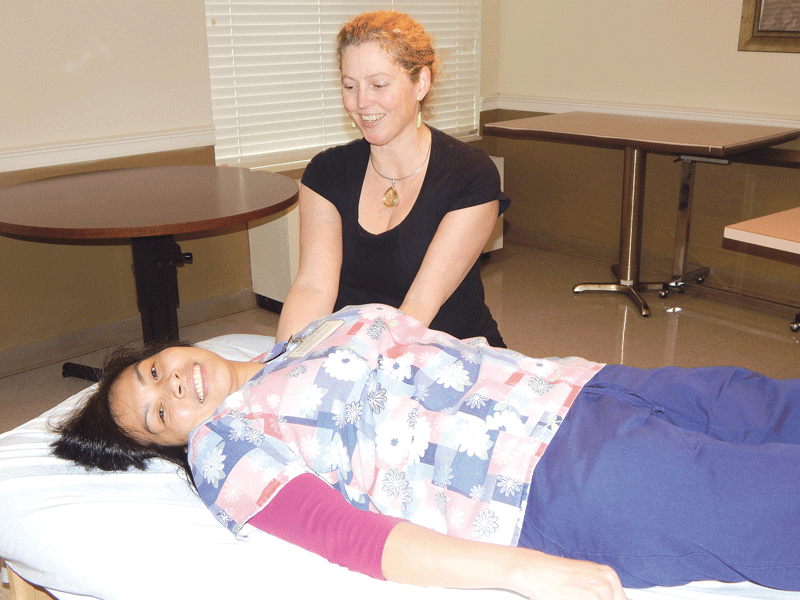
Hazel Ferriter says massages by Saskia Cote at Bottom-Line Bodywork help her to relax before she starts a 12-hour shift.

Twice each week, the assisted dining room at the Life Care Center of Wilbraham is transformed into a quiet, relaxing oasis.

The blinds are drawn, and soothing music plays softly as employees enter the dimly lit room and are treated to a 15-minute massage designed to alleviate stress, treat aches and pains, and allow them to return to work feeling rejuvenated and ready to help the people they care for.

The service is provided by Body-Line Bodywork, LLC in Palmer, which brings massage therapy into the workplace with a focus on nursing homes, assisted-living facilities, hospitals, and doctors’ offices.

“We specialize in short, targeted sessions to reduce tension, relieve stress, and help prevent carpal-tunnel and other repetitive-motion injuries,” said founder and CEO Saskia Cote, explaining that all massages are done on a massage table as opposed to a massage chair, which allows people to lie down and completely relax.

Although Life Care Center Senior Executive Director Dennis Lopata says the free massages are a simple perk, the benefit is appreciated and important to employees whose work duties include lifting people, assisting them with ambulation, and helping with tasks necessary to daily living.

“The job can be really demanding, especially for certified nursing assistants, who use and abuse their bodies to meet everyday challenges,” Lopata told BusinessWest. “The signup sheets fill quickly every week, and employees tell me the service makes them feel like Life Care cares about their personal well-being. It’s a well-regarded service, and we are happy to have Saskia as part of our team.”

Life Care Center is one of a growing number of companies that are incorporating massage therapy into wellness programs. Studies show the alternative health practice is an effective treatment for stress and pain relief, and doctors and healthcare professionals endorse its benefits.

Research has demonstrated that, in addition to decreasing stress, anxiety, and depression, massage therapy relieves muscle tension and pain, improves sleep, helps headaches, lowers blood pressure, prevents repetitive-strain injuries, increases immune function, treats carpal tunnel and tendinitis, and increases focus, energy, and mental clarity.

A recent study by Beth Israel-Deaconess Center for Alternative Medicine Research and Education and the Center for Health Studies in Seattle concluded that therapeutic massage is an effective treatment for chronic low back pain, while other workplace studies show it results in reduced absenteeism and workers’ compensation claims.

Indeed, it has become a benefit that pays for itself. According to the “2015 Report on Corporate Wellness” by IBISWorld, corporate wellness programs that include massage therapy average a $3 to $6 return on every dollar of investment.

Life Care has not been able to quantify benefits in terms of a dollar amount, but Lopata believes workers’ compensation claims and sick days have been reduced as a result of  the massages that several dozen employees take advantage of each week.


Dennis Lopata says massage therapy provided by Saskia Cote

Dennis Lopata says massage therapy provided by Saskia Cote of Body-Line Bodyworks has proved to be highly beneficial to employees at Life Care Center of Wilbraham.

Restorative aide Deborah Rivera is a proponent of workplace massage and has donated her time to peers who are having a difficult day and aren’t on the schedule.

“We try to provide every resident with the utmost in care, but sometimes we can’t do everything we would like to. We see some heartbreaking situations,” she said as she spoke about dementia and other age-related illnesses. “But this takes us away from the unit and puts us in a different stage of mind. We are being cared for and attended to, which is very relaxing.”

She added that a single session has alleviated back pain that stemmed from lifting and transferring patients. “When I leave the massage room, I feel rejuvenated and ready to go back on the floor and be a super aide.”

Winsome Roberts is another massage advocate who signs up for massages at Life Care every week. “I used to get a lot of migraine headaches, but they stopped after several months of massage,” said the certified nursing assistant. “Fifteen minutes may not seem like much, but it helps me to be more relaxed and flexible. The job can be physically and mentally demanding, but this makes a real difference and helps me to help residents who need assistance.”

Healing Journey

Cote has been a licensed massage therapist for 25 years, and has taught massage therapy to students in the U.S. as well as seven foreign countries.

She grew up in the Netherlands and began bodywork training at the Upledger Institute Europe in 1990.

She moved to the U.S. following a spiritual retreat to Santa Fe, N.M., where she learned about the New Mexico Academy of Healing Arts and was accepted into the program.

“I fell in love with massage there,” she said, adding that, after graduation, she worked at Ten Thousand Waves Spa in Santa Fe, which has been consistently named one of the top 10 spas in the world.

In 2002, Cote and her husband left New Mexico and moved to Massachusetts because they wanted to live closer to his family in the Boston area. They settled in Palmer, and she began work as an independent massage therapist. She also taught massage therapy at the Muscular Therapy Institute in Watertown, which recently changed its name to the Cortiva Institute. She was promoted to director of the institute’s continuing-education program and continued in that role until three years ago, when she left to teach at the Massage School in Easthampton.

During a time when she was questioning what else she could do with her life, she received a phone call about a counseling program at Elfinstone College in Rockport. She enrolled and graduated in 2008 with a doctorate that proved to be an important adjunct to her career.

“People store emotions and memories of trauma in their bodies, which sometimes come out when they are touched with compassion,” Cote told BusinessWest, recalling people who received massages after 9/11 and began crying on the massage table.

Three and a half years ago, she was hired to replace a massage therapist working for the Life Care Center in Wilbraham, and the joy she found helping people in the workplace led Cote to found Bottom-Line Bodyworks in 2015.

In addition to massage therapy, she is trained in a number of other healing modalities that include craniosacral therapy, myofascial release, lymphatic drainage, Reiki, and Qi Gong. She also offers hot-stone massage and cupping, which is popular with nursing-home employees because it helps with pain and inflammation while providing a sense of well-being.

“People often think of massage as a luxury, but when they have the opportunity to get a massage at work, it becomes part of their self-care,” Cote said, adding that it helps employees in nursing homes alleviate stress and physical discomfort in their knees, backs, and shoulders that results from working on their feet all day or lifting residents.

Cote also enjoys being able to provide local therapists with work, especially since it can be difficult for them to maintain a steady flow of clients. She has two employees and plans to hire a third in the Foxboro area, as a company there has requested her firm’s services.

In December, Wingate at Wilbraham signed a six-month contract with Body-Line Bodywork, and employees began signing up for weekly massages last month.

Administrator Darryl LeCours said the money for the service came from an $11,000 Pay for Performance Award the facility received last year from the state. The award has to be spent on staff, and after taking a poll and holding meetings to see what employees preferred, it became evident that their top choice was massage.

“Things such as gift cards or food for the break room, which were suggested, have a very short-lived impact,” she noted. “Massage is therapeutic and something tangible we can do to help employees have a better week physically and mentally.”

LeCours added that certified nursing assistants and other front-line caregivers are often exhausted at the end of a shift. But she noted that everyone has a smile on their face when they come out of a session.

“We’re trying to bring happiness into the nursing home, and it’s important for our employees to feel good so they can provide compassionate care to our residents,” LeCours said.

Other companies have called upon Body-Line Bodywork to give massages at employee-appreciation days and similar events, and their numbers are growing.

Beneficial Effects

When Cote arrives at a nursing home, the signup list is always full, and on a recent day, employees at Life Care Center kept stopping by for shoulder or back therapy even though they weren’t on the schedule.

Although it’s difficult to quantify the therapeutic benefits of this service, people have reported they are less anxious, sleep better, and have enjoyed better health as a result of massage.

It also provides them with a refuge from stress in a temporary oasis created expressly for that purpose.

“It’s a nice 15 minutes of silence that allows me to put everything in perspective,” said Ann Caseldan, a speech-language pathologist at Life Care who has enjoyed massages for the past two years.

Hazel Ferriter agrees. She usually signs up for a massage before her 12-hour shift at Life Care Center begins. “It loosens up your muscles and has helped me with a migraine and back pain that comes from lifting. Massage makes you feel better,” said the certified nursing assistant.

Indeed, it’s a win-win situation. “People are always happy to see me, which brings me great joy,” Cote said. “When they receive a massage, they learn how to touch the residents in a healing and loving way and may be able to go the extra mile for a patient because they feel nurtured themselves. It’s a ripple effect of compassionate touch; once someone is touched with love and compassion, they are much more likely to be loving and compassionate towards others.”

Which is a priceless benefit, especially in settings where employees care for loved ones who can no longer care for themselves.

Features

A Real Page Turner

Diane Pikul

Diane Pikul, Northeast regional sales manager for National Library Relocations.

You might say this is a business that does things by the book. But that tells only part of the story. It also stores, moves, cleans, and inventories everything from maps to photographs; from pieces of art to railroad equipment. And if you called National Library Relocations a ‘volume business,’ that wouldn’t exactly be accurate, either. Here, they measure collections in linear inches and feet — lots of them. In fact, just last summer, the company, with a huge warehouse in Palmer, moved more than 20 miles of books.

As she walked among the seemingly endless rows of books, journals, and boxes of photographs, Diane Pikul stopped to admire what is easily one of the more intriguing items now in her care.

And one that, like those books on the shelves, tells a story. Well, sort of.

The old train lantern is from the collection owned by the National Railway Historical Society. Pikul, Northeast regional sales manager for National Library Relocations (NLR), looked for some clue as to how old this artifact was, and couldn’t find one. She did learn, however, that the lantern was put to use in Chicago.

It is stored next to a large wooden rack that once held dozens of train schedules, an indication of just how dominant that mode of transportation was a century ago and even 60 years ago. And it’s just one small part of a collection measured not in pieces, or volumes, as one might expect, but in linear feet, as will be explained later.

The story it helps tell? Well, it’s more the NLR story than anything else.

Indeed, the railway historical society’s library was kept in the Robert Morris Building in Philadelphia’s Center City, a handsome Gothic Revival structure built in 1914 by hotelier Rutherford Jennings that later served as a college dormitory and academic building and then as an office tower until 2007. That’s when it was acquired by 806 Capital with designs to remake it into a hotel, plans that were scuttled by the recession and later revamped to feature upscale apartments.

We’re unique because we can offer customers a unique blend of experience from the fields of architecture, library science, and transportation.”

To make a long story short, the NRHS needed a new home for its library collection — and it still needs one, although Pikul says it’s closing in on a site. The extended search for new quarters, which has featured a number of twists and turns, explains why this collection, which was supposed to be in NLR’s care for maybe a year or two, has now been at the company’s location in the old Tambrands complex in Palmer for close to a decade.

“It’s a really fascinating collection and a great client — they’re a joy to work with,” said Pikul, who deploys such language to talk about most every client — and means it when she says it.

Indeed, the client list includes some of the most famous and revered institutions in the world, from Harvard University to the Smithsonian to the Clark Art Institute. And what NRL provides to those clients is solutions to problems, or issues.

They range from renovations to fallout from natural disasters; forced relocations (like the NRHS’s) to simple space limitations, which many facilities are now facing.

That constituency includes Wellesley College, which currently stores thousands of books and journals at NLR. Collectively, these items fall into the category of “lesser-used,” said Pikul, which doesn’t mean not used. Indeed, requests from students and teachers at the renowned women’s college for items in the stacks at NLR come in almost daily — with the volume increasing during finals week, she noted, adding that they are overnighted and in the hands of those who requested them within 24 hours.

It also includes Bay Path College, Springfield Technical Community College, and a host of other clients, she said, adding that long-term (or what could also be considered permanent) storage is just one line on the company’s list of services.

Others include far more temporary storage for libraries dealing with some of those aforementioned issues, especially renovations and expansions, and also cleaning of collections, inventorying items, and, as the name of the business suggests, moving them as well.

“We’re unique because we can offer customers a unique blend of experience from the fields of architecture, library science, and transportation,” said Pikul, a former librarian at STCC, as she explained what sets the company apart.

And despite those rumors that the Internet will soon make books and libraries somewhat obsolete, Pikul is firmly of the belief that this is a growth industry. Indeed, as more books are published and institutions grapple with space limitations, storing lesser-used books, as Wellesley and other schools do, is far less costly than building an addition or a new library, she explained.

For this issue, BusinessWest takes an in-depth look at a rapidly growing company in a truly unique industry, a business that continues to add new chapters to a compelling success story.

Reading Between the Lines

Pikul has a large, well-appointed office within NLR’s 28,000-square-foot home in what is now known as the Palmer Technology Center, home to dozens of small businesses. But you won’t find her there much these days.

Instead, she’s on assignment, if you will, handling aspects of a massive initiative involving several of the Five Colleges in the Amherst-Northampton area to relocate parts of their vast library collections in a huge annex now being constructed on a 12-acre parcel in Hatfield.

Due to open in the spring, the facility will have the capacity to shelve 2.1 million to 2.5 million volumes, which is sorely needed because the space now being used by the colleges — the famous Cold War-era bunker built into the side of Bare Mountain in the Holyoke Range in 1957 — has now reached capacity.

The current schedule calls for starting to move things in May, said Pikul, adding that much of her time over the past several months has been spent on this project — “I go into the office on weekends to do payroll; people like to get paid,” she joked — in preparation for the move. NLR has been hired to clean items and get them ready for travel, storage, and, if needed, retrieval.

And in many ways, the annex project, although much larger in size and scope than most initiatives, is exemplary of what the company does and how it does it.

Diane Pikul shows off the train lantern

Diane Pikul shows off the train lantern, part of the collection amassed by the National Railway Historical Society, that is one of the more intriguing items now in her care.

NLR goes  — meaning Pikul usually goes — where its clients need it to go, be it to area libraries or to the University of the Pacific’s main campus in Stockton, Calif. (she and other team members will be going there next month to measure a collection in advance of a renovation project), or to Harvard’s campus in Cambridge, where NLR handled a number of projects over the years, including the relocation of one of the its collections to China.

“That was a fun project … that library was shipped to the Ocean University in Qingdao,” she said, searching her memory bank for details on a project undertaken a dozen years ago. “We packed the books into boxes and then used conveyor belts to put the boxes into sea containers; it took a few months for the books to get there, and they used a manual I wrote to put the collection back on shelves; everything is packed left to right and top to bottom.”

Such projects help explain why Pikul, who has been with NLR for nearly two decades now, talks repeatedly about just how much she enjoys what she does.

“I love my job — I think I have the best job in the world. We have terrific clients, and helping them with their collections is very rewarding work,” she said, adding that her role blends elements of library science, architecture, mathematics (adding up all those linear feet), and even antiquities. The company moved a Gutenberg Bible on one of its assignments, for example, and more valuable items stored at the Palmer site, including some pictures of trains owned by the NRHS, are kept in what’s known as the ‘inner-sanctum room,’ which features additional security and climate control.

Our story begins nearly 50 years ago with NLR President Scott Miller. He was working for a company that was part of the Allied Van Lines family in the mid-’60s when his unit was assigned the task of moving a library. Eventually, the company — and Miller — became good at this kind of work. After struggling to find employment after graduating from college with a degree in architecture, Miller returned to Allied (and moving libraries) before starting his own venture in 1985.

Then, as now, libraries comprised the main focus, said Pikul, adding that, from the beginning, there has always been a steady supply of work, because there are tens of thousands of school, college, and municipal libraries, as well as museums and archives, and eventually, most all of them will require some of the services offered by the company.

This is made clear by a look at NLR’s portfolio of projects. It’s broken down by year, and each one has dozens of bullet-pointed undertakings.

In 2011, for example, the company did work with almost every college in the Ivy League, including Harvard (a frequent customer, as noted), Columbia, Princeton, Yale, and the University of Pennsylvania. But the ledger also lists work with dozens of other colleges, several school libraries, nearly two dozen public libraries, a medical library, and several ‘special libraries,’ including those at the Metropolitan Museum of Art in New York, the Smithsonian Institution in Washington, and Travis Air Force Base in California.

The consistency and high volume of work is also reflected in Pikul’s comments about next summer — and the one after that, as well — because that is traditionally the busiest time of year as colleges and public schools try to get work done when students are on break.

“This coming summer is completely booked,” she said slowly and without acknowledging there was a decent pun within that explanation. “This past week, I’ve been telling people, ‘we’ve been booked for eight months now; I can’t even give you a quote.’ They call and say, ‘we’d like to move in May,’ and I say, ‘this May, really?’

“When things are really good, we’re booked a year in advance,” she went on. “I have several projects booked for 2018 already.”

Good Story Lines

As she talked about the various forms of work undertaken by NLR, Pikul said that, as one might expect, part of it is simple physical labor — loading books onto trucks (or shipping containers, as in that case involving Harvard mentioned earlier) and transporting them to and from the warehouse in Palmer, or to other locations, including China.

But the vast majority of this work would be described as both delicate and intricate, undertaken by people — a good deal of them retired librarians or educators — who have an understanding of books and library science itself.

Indeed, Pikul and those she works with (mostly on a project basis, although she is hopeful to add more permanent employees in the future) have a thorough understanding of not simply the Dewey Decimal System, but the many other library classification methods.

These include the Library of Congress System, the Cutter System, the Pettee, or Union Classification System, and many others, she said, adding that this cumulative knowledge enables the company to play an invaluable consultative role for clients and potential clients.

Elaborating, she said NLR representatives can provide advice on everything from how much space to leave for a collection or parts of it (not only for today but years and decades down the road) to how to design a library or expansion, to the best course of action when mold attacks a book or a collection — which it often does.

And Pikul, as you might expect by now, is well-versed on that subject as well.

“My staff is trained to recognize mold issues,” she said. “Sometimes, you get dead mold, which you can just wipe right off. But sometimes it can be colorful — black or psychedelic (I’ve seen some interesting things out there), and that’s when our staff knows enough to stop, recognize that there’s something wrong, and bring the item to me.

“If it’s a small thing, we can treat it with isopropyl alcohol, isolate the item, see how it dries, and then decide whether it can go back in the collection,” she went on. “If it’s really, really bad, those spores can spread and get into carpeting and curtains and upholstery.”

Meanwhile, simple cleaning of books is not exactly simple, she said, adding that great care is taken to preserve the materials, meaning no chemicals are used in these processes.

the company moved more than 20 miles of books last summer alone

At NLR, they measure volume of business not by volumes, but by linear feet of materials; the company moved more than 20 miles of books last summer alone.

Actually, there are several options for clients when it comes to cleaning, depending on how serious they want to get with such an undertaking.

“If they’re going from one building to another, and it’s a newer collection, we can do a reverse vacuum where we just blow the dust off the tops of the books,” she explained. “We can do a light cleaning where we’re doing the spines and the tops of the books just to get the surface dust off, and then there’s a really detailed cleaning we’ve done for some clients, especially special collections, where we clean all six sides of the book and wipe the shelf down using cloth treated with mineral oil so it’s anti-static and you’re not getting dust glomming back onto the shelf.”

The vacuums are triple-filtered, like those used in hospitals, and the brushes used are made of natural horse hair so as not to scratch the items, she went on, adding that attention to details like this has enabled NLR to become one of the top companies nationally in what is now a highly competitive field.

Looking forward, Pikul said the company is looking to grow, has the capacity to do it — there is considerably more space at the Palmer Technology Park for the company to rent if it so desires, and it has already expanded several times — and the need will certainly be there.

As evidenced by the massive project in Hatfield involving the Five Colleges, schools, public libraries, and other kinds of institutions will continue to add to their collections, and many will need help storing, cleaning, and moving items, or perhaps all of the above.

Part of the growth equation is education, said Pikul, adding that libraries need to understand that those assignments listed above are not — or should not be — do-it-yourself projects.

Thus, the best marketing strategy the company has is word-of-mouth referrals, and there have been hundreds of those over the years, she told BusinessWest.

“We rely on testimonials — they’re very important in this business because of the work that’s involved and the trust that clients are putting in us,” she explained, adding that the phone is ringing even more often these days thanks to the company finally earning placement on the state bid list for such projects involving the moving of libraries.

Tome-honored Practices

As for those references to linear feet, Pikul actually summoned a different unit of measure to convey how busy this company has been.

Indeed, just last summer — remember, that’s the busy season — it moved some 20 miles of books.

How many volumes is that? Pikul doesn’t know, and doesn’t really care, because that number is not particularly relevant; 500 children’s books would certainly take up far less space than 500 books from a law library.

This is just one of the many intriguing nuances in a business where things are done by the book — and the journal, map, microfilm box, and, yes, train lantern.

That’s what makes it so fascinating, and enjoyable, to Pikul, and why it’s a business story that has become a real page turner.

George O’Brien can be reached at [email protected]

Features

Looking Forward, Not Back

Nate Costa

Nate Costa says the first part of the T-Birds season was about paying tribute to the past; since Jan. 1, though, the team has been working even more diligently to forge its own identity.

Nate Costa was talking about how the eight months since the launch of Springfield’s new American Hockey League franchise, the Thunderbirds, has been both long and quick at the same time.

To get his point across, he pointed to his office in the team’s complex at the MassMutual Center and just how unlived in (or not ready for this writer’s camera) it is.

Indeed, while the credenza over his desk seems somewhat organized, complete with a good-sized bobblehead collection, a photo from his college commencement, and other mementos, the rest of it would certainly not fit that description. A dorm fridge sits on the floor unplugged, the energy-rating tag still attached to the door. Several photos, plaques, and other items, including a wooden clock commemorating the New York Giants’ victory in Super Bowl XXI (Costa’s a huge fan of that team), take up space on shelves or the floor, rather than the walls.

Meanwhile, there are several boxes of team replica jerseys stacked in one corner. They are destined, hopefully, for bars, restaurants, and clubs across the area in an effort to enlist their support — and wall space — in efforts to build momentum and a fan base (more on that later).

“This office … just hasn’t been a priority,” said Costa, the team’s executive vice president, uttering those words slowly for emphasis before going into great detail about what has been a priority. And this would be anything and everything that goes into building the Thunderbirds brand and making this AHL franchise part of the fabric of the community.

A long, quick eight months in, Costa believes he and his team have made significant progress on both scores, enough to imply strongly that he can already declare this inaugural season a success on many levels.

That list does not necessarily include the AHL’s Atlantic Division standings, where the T-Birds are firmly entrenched in sixth place, only a few points ahead of cellar-dwelling Hartford and nearly 30 points behind pace-setting Wilkes-Barre/Scranton.

But it would include average attendance (roughly 4,500, a marked increase over last year) and the demographic breakdown of those crowds (fans of all ages, but an encouraging number of young people), as well as a host of intangibles Costa noted, including ‘energy,’ ‘buzz,’ and ‘brand recognition.’ (A ‘swear jar’ placed at the T-Birds offices to store fines deposited by those who uttered the former franchise’s name, ‘Falcons,’ has been retired, because no one really does that anymore).

“The vision for this, right from the get-go, was creating a brand and creating an identity in Springfield that was centered not just on community involvement and hockey, but entertainment,” he explained. “That’s family-friendly entertainment that’s affordable and provides value. And I think we’ve accomplished much of that in terms of laying a foundation for something that’s consistent.”

Overall, Costa said his team, using its own imagination while also borrowing heavily from the success of other franchises, has succeeded in creating a game experience that is succeeding in drawing fans no matter what the team’s record happens to be. Perhaps the best example of this is Friday-night games, or the Friday 4-for-All, as the team calls them.

Live music featuring local bands precedes those tilts, which also feature free parking in the Civic Center Parking Garage (as all games do), $1 concessions (hot dogs, soda, and popcorn), and $4 Coors Light draughts.

The package has proven attractive enough to lure college students and families alike, said Costa, adding that the Friday-night games are becoming a fixture, if they haven’t crossed that threshold already.

“Friday nights … you can’t get a better value anywhere in town,” he said. “And it’s starting to spread in terms of awareness. Overall, there’s an atmosphere in the building that wasn’t there before.”

But there’s more, including so-called ‘winning weekdays’ — if the team wins one of those rare non-weekend games, attendees get a free ticket to the next one — as well as a host of on-ice game-day experiences created to attract young people and spur group-ticket sales, and an array of giveaways, special offers, and promotions.

And then, there’s Ric Flair, the former professional wrestler and consummate self-promoter, who will be the special attraction at the Feb. 10 (another Friday) tilt against Hartford.

“The Syracuse Crunch brought him in one night a few years ago, and it was a smash success — it was one of the biggest nights they’ve had in a long time,” said Costa, offering one of many examples of how the team is borrowing best practices. “We’re not sold out yet, but we’re on our way; he’s as topical as ever.”

For this issue, BusinessWest talked at length with Costa about the progress achieved to date with building a fan base for the T-Birds and the challenges that remain.

Changing Their Tune

Costa grew up in Springfield — he’s a Cathedral High School alum — and has many vivid memories of watching Springfield Falcons games with his father and grandfather at the old Springfield Civic Center.

Generations of people have such memories involving Springfield teams also named the Indians and Kings, he noted, adding that professional hockey in Springfield dates back to the Roaring ’20s. This legacy was certainly on Costa’s mind as he worked with a team of owners to launch the Thunderbirds franchise last spring, and in many ways, the first part of the season was dedicated to the tradition and those who kept it alive, he told BusinessWest.

“I wanted to pay tribute to the history, because I’m a product of that,” he explained. “It wasn’t necessarily the sport, it was the experience — it was getting to spend time with my dad or my grandfather, and it was time that really stuck with me. So the beginning part of our season was really spent celebrating that history.”

Right down to “Shake, Rattle and Roll,” the rally-the-crowd song that has been played before, during, and after AHL games in Springfield for decades, which also greeted the T-Birds as they took the ice or scored a goal.

But starting with the Jan. 4 tilt against the Bridgeport Sound Tigers (one of those weekday games the T-Birds won, thus sending attendees home really happy), there was a different sound being heard.

It was “Out of Our Heads” by the Dropkick Murphys, featuring the lyrics:

“Are we gonna make it
Or is this how we’ll go?
Are we gonna take it sitting down?
Hell no!
We’re going to cause a riot
We’re going to rip it up
We’re going to storm the gates
This place is going up.”

As he explained this choice and the retirement of “Shake, Rattle and Roll,” Costa said it was a well-thought-out decision that in many ways speaks to what his team (meaning the one in the backroom, not the one on the ice) is doing with this franchise across the board, or across the boards, as they say in this business.

“Our internal mindset was, once we get to Jan. 1, we’re going to flip that switch and embrace that new brand we’ve created in this market around the T-Birds,” he explained. “We switched to ‘Out of Our Heads’ because we were creating our own identity, and one that identifies with a young fan.

“We hear so much about people having memories with their parents and hearing ‘Shake, Rattle and Roll,’ he went on. “I want to create those same memories for a younger generation that may not identify with ‘Shake, Rattle and Roll,’ but does identify with something that’s more current. I’m trying to look forward, and not necessarily backward, and that’s what we’re trying to do continuously.”

That sentiment applies to basically every bullet-pointed item in the strategic plan, he continued, listing everything from marketing to the strategy for group sales to those on-ice promotions, to specific initiatives like Friday 4-for-Alls.

Starting with marketing, he said that, while the team still partakes in what would be considered traditional methods and platforms, its focus is on social media and the methods for reaching younger audiences.

“We’re doing a ton of marketing in a way that’s different from what we’ve seen in years past,” he told BusinessWest. “We’re putting a ton behind digital … being on Facebook and being intelligent about what we’re doing is exposing our product to a completely different fan; the majority of people who are on Facebook, who are on Instagram, who are on Twitter are young people.”

the key to success for all the teams in the AHL

Nate Costa says the key to success for all the teams in the AHL, and especially the T-Birds, is to focus on providing entertainment, not just hockey.

The same philosophy being applied to marketing also prevails with other strategies for attracting and retaining fans, he went on, citing the Win on Weekdays promotion as just one example.

“We had two Wednesdays; we won the first one and had a really good redemption on the people coming back to the next one,” he explained. “We were able to grow our revenue, and it was a positive. Hopefully, what happens is we win a couple of those, you create a buzz, and you give people something to talk about. It’s a fun promotion.”

Changing On the Fly

As he talked about hockey, the AHL, the mindset of looking forward, not backward, and the involved process of turning league games into can’t-miss happenings, Costa focused most of his time and energy on what’s happening in Springfield.

But to put things into perspective — and also to show that everything he was talking about was certainly doable — he started by discussing what has happened in some other AHL cities, including Grand Rapids, Mich., San Antonio, Texas, where Costa cut his teeth in group sales, and especially Utica, N.Y.

That city of 65,000 people in Upstate New York’s Mohawk County, known perhaps more for the beer that’s been brewed there since 1888 than anything else, had an AHL franchise (the Devils, an affiliate of the NHL team with that same nickname) in the late ’80s and early ’90s, but lost it essentially due to lackluster support.

So when there was movement to locate the Vancouver Canucks’ affiliate there in 2013, the plan was greeted with a good deal of skepticism, said Costa, who was then working for the league in its Team Business Services Department.

“I was there when they bought the franchise,” he recalled. “And there were a lot of doubters, a lot of people who laughed a bit and said, ‘why would they put a team back in tiny Utica with its 3,800-seat arena?’”

But former AHL and NHL player Robert Esh had a different vision, he went on.

“He took a major-league attitude toward it,” Costa explained. “And he had a vision for what a franchise could do for a small city like that.”

To make a somewhat long story short, the Comets have sold out every game for the last two or three years, said Costa, and tickets have become a hot commodity.

“A Comets’ game is now the thing to do in Utica,” he said. “You can’t get a ticket, you can’t sniff a ticket now, and it’s because of the brand that he’s built. The game-night experience is unbelievable; it’s NHL-quality.”

In some ways, the T-Birds management team has borrowed from the Utica franchise when it comes to the game-night-experience side of the equation, said Costa, but also from the specific mindset of making one of the team’s games the thing to do — on Friday night, yes, but really any night they’re playing.

And the team has borrowed from other franchises as well, he said, especially with regard to the focus and drive put on group sales, which, as noted, is where Costa got his start in pro hockey with the San Antonio Rampage.

When Costa started there, the team was at or near the bottom of the league in attendance. It quickly rose in the ranks through group sales and season tickets.

“We started selling youth-hockey experiences and selling to schools — showing them experiences at the building that they couldn’t get by going to a Spurs game,” he explained. “We found our niche. You could spend $12 and sit in the same building where you would spend $200 to see the Spurs, and get a great experience.”

Net Results

In a nutshell, the assignment is the same in Springfield, said Costa, adding that, while there isn’t an NBA franchise also playing at the MassMutual Center, there are four pro sports teams just 90 minutes down the Turnpike, as well as a host of other attractions vying for the time and attention of families and young people.

Creating an experience for a fraction of the cost of one of those other options is one key to success for the T-Birds, he said, adding that the team is currently taking advantage of several opportunities it has created.

Actually, one was created by the MassMutual Center and its still fairly open schedule. Indeed, there are no other primary tenants competing for prime nights, as in most other AHL cities (San Antonio and Cleveland, where the NBA champion Cavaliers are the lead tenant, are prime examples), so the T-Birds have more Friday and Saturday dates to play with than other teams.

Another opportunity that came about is free parking, achieved through prolonged negotiations with the Springfield Parking Authority, And still another is the $1 price tag put on the hot dogs, soda, and popcorn, and $4 for a cup of Coors, said Costa, adding that they resulted from lengthy talks with Spectra Food Management, which handles concessions at the MassMutual Center, about price points that will yield dividends across the board.

“We’re jointly looking at this as a chance to provide, on one day a week, Friday, an opportunity to expose our product to more people and different fans,” he said of that specific deal, but also the combination of factors that have come together, adding that the strategy is obviously working.

“If you come here on a Friday night now, or a Sunday night when we have an extreme value like for our Sunday Fun Days, you see a ton of kids,” said Costa. “That’s not to say that there weren’t kids before — I came here, and there were absolutely kids. But there’s a different energy in the building, and it’s continued to grow.

tbirdsrick


“And it’s not just young kids,” he went on. “We’re seeing more 21- to 35-year-olds than ever before; we’re seeing a lot more college kids coming out on Friday nights, because there’s value, and we’ve put a premium on our game-night experience.”

So much so that Costa and his team are trying to somehow replicate Friday’s energy and atmosphere on Saturday.

But when it comes to exposing the product to new audiences, the real key is group sales, said Costa, adding that they not only help fill the parking garage and the arena, but they create experiences — from listening to local bands to being chosen to sing the National Anthem, to getting on the ice with the team — that will bring people back.

“That’s how we’re going to fill this building,” he said of group sales. “We have to get out and grab people and bring them in. With groups, a lot of them are young people, and when you expose them to the product and bring them in en masse, you make fans for life. Those are the ones who are going to go to mom and dad and say, ‘I had a great time; can we come again?’”

As for those jerseys in the boxes in Costa’s office, he ordered them with the hope, and expectation, that they would be framed and find their way onto the walls of area bars, restaurants, and clubs.

Those establishments would be sold a package (still to be formalized) whereby they would get the framed jersey and thus become part of the efforts to build visibility and buzz for the team.

“My real vision is to have this team become part of the fabric of the community,” he explained. “This bar program is part of that; we can develop a price point that’s easy for them to get to, and then they become partners with us, and we can become partners with them.

“If people go to these places, they see a piece of what we’re about, and they feel that connection to us,” he went on, adding that building these connections is essentially his job description.

A Winning Attitude

When asked when he might get around to hanging his Giants clock or even plugging in his refrigerator, Costa didn’t even bother answering.

His office hasn’t garnered more than a tiny bit of his time and attention over the past eight months, and that isn’t about to change.

Instead, he’s focused on that ongoing challenge of creating a large, stable, committed fanbase for the T-Birds, an assignment he’s embraced with vigor, imagination, and a mindset he’s seen work elsewhere and that he knows will work here.

That philosophy is to celebrate the past, but focus on today and tomorrow, and, as the Dropkick Murphys shout in “Out of Our Heads,” ‘storm the gates.’

In other words, Springfield’s hockey team has changed its tune — in all kinds of ways.

George O’Brien can be reached at [email protected]

Community Spotlight Features

Community Spotlight

By Kathleen Mitchell

Mayor Linda Tyer

Mayor Linda Tyer says Pittsfield has made great strides in re-inventing itself and moving beyond its industrial past, dominated by General Electric.

Mayor Linda Tyer is a strong believer in the power of collaboration.

Several weeks ago, she gave the first State of the City address in Pittsfield’s history and outlined a myriad of multi-faceted projects that have come to fruition in the last year as a result of collaborative efforts.

Tyer told BusinessWest that investments designed to revitalize the city have taken root and change is occurring on a daily basis, which is good, because it’s needed as the city continues the process of reinventing itself.

“Pittsfield has a long history as an industrial town primarily because of GE’s large manufacturing facility,” she explained, referring to the massive complex that once employed more than 13,000 people. “The city relied on it for decades as its economic driver for real-estate taxes, employment, and community engagement.”

GE closed in the ’80s, which was a devastating blow and led to what Tyer refers to as a “grieving period that created self-doubt for the people who live here.”

Although a period of disinvestment followed, change began in 2000 when city officials decided to redefine Pittsfield’s identity.

Tyer was on the City Council at that time and recalled the city realized a robust cultural economy existed in the towns around them, but Pittsfield, which is the geographic and commercial hub of the area, was not participating in it.

Investments began downtown, and thanks to a collaborative effort by partners that included city officials, the community, state and federal legislators, and investors, today Pittsfield’s downtown boasts a thriving district that includes the Barrington and Colonial theaters, an independently owned movie theater, popular restaurants, and market-rate housing that followed as thousands of visitors flocked to the area.

“People want to live in our downtown, which is proof that the investments paid off,” Tyer said.

City officials have also helped local businesses, and the mayor said the belief that there are no jobs in Pittsfield is a myth. Indeed, numbers are rising: last January, the unemployment rate was 6.6%, which dropped to 3.3% by November.

“We strengthened workforce relationships last year and developed innovative training programs,” Tyer said, explaining that the workforce system generated $1.8 million that was used to train 1,250 people in healthcare, advanced manufacturing, STEM careers, finance, and customer service, and 70% of them found employment.

The city has also worked to retain local companies. Last July, after Covanta announced that it planned to close its Pittsfield facility, the City Council granted the waste-burning plant $562,000 to help with capital repairs and keep it open. The move saved 25 jobs and prevented a huge increase in trash-disposal costs, as a shutdown would have forced Pittsfield to have its trash and recyclables hauled away at an estimated annual cost of $462,000, in addition to losing $960,000 in property taxes, water and sewer user fees, and host-community fees over a four-year period.

Fiscal challenges lie ahead. But many steps will be taken to stabilize the issue, including cost containment, debt management, new revenue, and strategic investments that will prepare Pittsfield to not only survive, but thrive well into the future.”

The Hubbard Avenue facility incinerates 85,000 tons of waste per year and turns it into steam energy, which is then sold to Crane & Co. and Neenah Technical Materials. Republic Services hauls the city’s curbside collection to the site, including recyclables that are stored and later shipped in bulk to the Springfield Massachusetts Materials Recycling Facility.

The financial package Covanta received included state energy-tax credits, extended its contract with the city until 2020, and allowed the company to continue to sell steam energy to Crane and Neenah.

“But Covanta wasn’t the only company on our radar,” Tyer said, adding that five additional businesses were provided with assistance from a variety of incentive programs.

For this, the latest installment in its Community Spotlight series, BusinessWest looks at revitalization efforts in Pittsfield and what is being done to make it a place where Millennials want to live, which is one of the mayor’s goals. She noted they typically choose that place first, then look for a job, which is markedly different than past generations who moved to areas where they found employment.

“Millennials have a very different way of planning their lives,” said Tyer. “But we plan to capitalize on our growing art, culture, and entertainment economy; maximize our spectacular natural environment by updating our recreation and open space; invest in our housing stock; safeguard our educational institutions; and support small and mid-sized businesses and their aspirations for growth in new markets for the people who live here now as well as future generations that will call Pittsfield home.”

Neighborhood Focus

Over the past year, the Tyler Street business corridor has been the focus of combined energy, effort, and investment. The area is adjacent to North Street, Pittsfield’s downtown thoroughfare, and is bookended by Berkshire Health Systems, the city’s largest employer, and the William Stanley Business Park.

In December 2014, Pittsfield’s Community Development Department, the Pittsfield Economic Development Authority, and the Tyler Street Business Group applied to have the neighborhood become a state-designated Transformative Development Initiative (TDI) district.

The application was accepted, and the agencies have formed a core partnership in this program, administered by MassDevelopment, that leverages public dollars to stimulate private investment in selected neighborhoods in gateway cities.

“We are very privileged to have MassDevelopment as a partner,” the mayor said. “This will allow Pittsfield to receive enhanced technical assistance, real-estate services, and equity investments to support our vision for redevelopment. We’re learning what the citizens want, as well as working to understand the needs of small businesses there, and will develop a plan to help Tyler Street become a unique, thriving, working, residential neighborhood where typical day-to-day needs can be met within walking distance.”

Amewusika “Sika” Sedzro is the TDI fellow for Pittsfield, and she noted that MassDevelopment hired a consulting firm to conduct an assessment of the area and come up with recommendations for an action plan.

Two meetings were held to get public input, and a forum was staged for developers to find out what is needed to spur interest in structures that have been vacant for long periods of time.

The final report was due when BusinessWest went to press, but Sedzro said it quickly became clear that developers want easy access to data about available parcels, information about incentive programs, and a streamlined process to help bring submitted plans to fruition.

“There is a lot of property of this size available in the Tyler Street District, and we’re working with businesses and developers to understand the barriers to entry given current market conditions,” Sedzro noted, adding that she is available to talk about properties and incentives available from the city and MassDevelopment that include low-interest loans, access to capital, and technical assistance.

The Tyler Street neighborhood has a growing Latino and Asian population, and a number of new businesses have been opened by entrepreneurial immigrants.

“It’s a really positive indicator, especially since Berkshire Health, Sabic Innovative Plastics, and the William Stanley Business Park are in close proximity to the neighborhood,” Sedzro said, explaining that Pittsfield TDI plans to coordinate measures that could lead to an even more diverse economy.

The city is also working to expand the Housing Development Incentive Program into the Tyler Street District, which could benefit a developer who hopes to purchase the St. Mary’s Church campus and convert three of its buildings into market-rate housing. The campus has been vacant for more than two decades and contains the church, a school, a convent, and a rectory.

The developer is in negotiations with the Diocese of Springfield, and the city and state are working to provide incentives to move forward.

The Tyler Street TDI is part of the Morningside neighborhood, and last June that area received a $75,000 grant from the Kresge Foundation.

“It’s a grass-roots effort that includes efforts aimed at the arts, pride of place, and increasing food options and availability,” Sedzro said.

The money will be used to create a soup kitchen in the Berkshire Dream Center, an urban working farm in Springside Park, and an augmentation of community gardens that would allow their produce to be used by local businesses.

Continued Improvements

The cultural and entertainment district in Pittsfield’s downtown continues to grow as infrastructure improvements add to its attractiveness.

A four-phase streetscape project was recently completed, and North Street has a new look that includes street resurfacing, sidewalk improvements, decorative street lighting, increased seating, medians with plantings, and high-visibility crosswalks compliant with Americans with Disabilities Act standards.

New, solar-powered parking kiosks were installed last month as part of the city’s parking-management plan, and are equipped with a parking app that provides a simplified way to manage parking needs.

“Pittsfield’s parking is still friendly; the first 30 minutes are free, and so are nights and weekends,” Tyer said, noting that parking is also free for people with handicap placards.

A grass-roots movement led voters to approve the adoption of the Community Preservation Act in November, which will provide funds that can be used for public and private projects including historic preservation, recreation, open space, and housing.

“The next step is to establish a community-preservation committee that will develop a plan and identify priorities so projects can be funded early in 2018,” Tyer said.

She outlined other collaborations in her State of the City Address that include the revitalization of Willard and Rosemary Durant Park in the Westside.

Neighborhood volunteers installed a new playground and swingset paid for by Community Development Block Grant funds, and Greylock Credit Union has made a commitment to build a permanent pavilion there.

Other collective efforts aimed at youth include a free Sticks for Kids golf program and Dig This Volleyball initiative that have helped children learn new skills. In addition, donations from local businesses have led to innovative art and education programs, and grant money will pay for a strategic plan to provide high-quality education to more preschool children.

The city is also getting help with municipal finances due to a community compact that was formed with Lt. Gov. Karyn Polito’s office and gives officials access to financial expertise from UMass Collins Center.

Tyer said they hope to meet two goals as a result of the collaboration. The first is to create a comprehensive, five-year financial forecast that will serve as a guide in establishing budget priorities and matching them against projected revenues and funding obligations such as pensions, health insurance, and debt service.

The second is the development of a comprehensive budget document that will allow the City Council and residents to understand the mission of different city departments and the spending plan for the upcoming year.

“Fiscal challenges lie ahead. But many steps will be taken to stabilize the issue, including cost containment, debt management, new revenue, and strategic investments that will prepare Pittsfield to not only survive, but thrive well into the future,” Tyer said.

She added that the city is also addressing blight. Last summer, four vacant residential properties were demolished, and six additional properties were scheduled for demolition last month.

Bright Future

All of the economic-development efforts planned or underway have involved a collaborative effort between stakeholders that include community organizations, businesses, residents, and city, state, and federal officials.

“My administration respects and values cross-collaborations internally and seeks partnerships outside of city government that will help Pittsfield to thrive; we have turned the corner in terms of designing our future, and the city is on its way to becoming the vibrant, dynamic place it deserves to be,” the mayor said, noting that many well-attended events were held last year, including the municipal airport’s first air show, the 10th Third Thursday street festival, and the fifth Upstreet Arts Festival, which attracted more than 10,000 people.

Indeed, this former industrial city is on an upward trajectory. Its future is brighter than it has been for decades, and the positive forecast should continue as Pittsfield redefines its image and alerts developers and businesses to opportunities in its diverse neighborhoods.


Pittsfield at a Glance

Year Incorporated: 1761
Population: 44,737 (2016)
Area: 42.5 square miles
County: Berkshire
Residential Tax Rate: $39.78
Commercial Tax Rate: $19.63
Median Household Income: $50,765 (2015)
median family Income: $65,297 (2015)
Type of Government: Mayor, City Council
Largest Employers: Berkshire Health Systems; General Dynamics; Petricca Industries Inc.; SABIC Innovative Plastics
* Latest information available

Features

A Festival, Not a Concert

The Irish Tenors

The Irish Tenors will be coming to Springfield for what’s being described as a festival, not merely a concert.

Peter Salerno says the Springfield Symphony Orchestra (SSO) doesn’t merely want to present music to the people of this region.

Instead, it wants to be what he called “responsive and responsible” to the community — while also presenting music — and, in the course of doing that, become even more woven into its fabric.

And this mindset, if you will, explains not only why the Irish Tenors will be appearing at Symphony Hall on March 4 at 7:30 p.m., but why that performance is merely part of something much bigger.

“We wanted to celebrate this region’s Irish heritage, not just this year, but for many years to come,” said Salerno, executive director of the SSO, adding that this desire falls into that category of being responsive.

As for the ‘responsible’ part, he said it explains why the performance of the Irish Tenors will be accompanied by everything from an Irish dinner before the event to efforts to mark (and educate people about) the Irish Rebellion —  also known as the Easter Rising or the Easter Rebellion because it took place that week — in 1916.

“We wanted this to be a festival, as opposed to just a concert,” he explained, adding quickly that the ‘just a concert’ line was a figure of speech, and that performance will be momentous in its own right. Indeed, it will feature the world-famous group that has been performing around the world for nearly 20 years now, and 51 musicians from the SSO.

But it will be a true festival and celebration, he went on, adding that such efforts are part of an ongoing SSO strategic initiative to broaden its visibility and overall impact within the community and engage larger and more diverse audiences.

This strategy was certainly in evidence in early December, as the SSO presented not a holiday concert, but a holiday ‘extravaganza,’ which included the Children’s Chorus of Springfield, what is now an annual holiday silent auction, Santa Claus, and much more.

And it will be evidence at a number of other performances as well, including the season’s finale, “Video Game Live,” on May 13. Salerno described this as an immersive concert that features the musical scores from the greatest video games of all time, plus large-screen video footage, synchronized lighting, solo performers, and a host of pre- and post-concert attractions such as video-game demonstrations and competitions.

As for the Irish Tenors, Salerno called their agent last year and discovered that there was what could only be called a window of opportunity. This was an open date that would bring the group to the Springfield area for the first time in years — and thus give the region a performance that would complement, but not in any way compete with, the many St. Patrick’s Day activities taking place in Holyoke later in the month.

The concert will take place at 7:30 p.m. on March 4, but festivities will begin much earlier, said Salerno, noting that there will be a traditional Irish dinner at the Marriott Hotel at 4:30. At 6:30, at Symphony Hall, U.S. Rep. Richard Neal will make a presentation on the 101st anniversary of the Easter Rising.

Other elements of the festival, as he called it, are coming together, said Salerno, adding that he expects this will be a special day and night for Springfield and the entire region — one of many in the months and years to come as the SSO continues to find ways to be both responsive and responsible.

—George O’Brien

Education Sections

Course of Action

Julia Chevan (right) leads Associate Professor of Physical Therapy Angela Abeyta Campbell

Julia Chevan (right) leads Associate Professor of Physical Therapy Angela Abeyta Campbell through an exercise in the simulation lab at Springfield College.

Many students work hard to earn a college degree, then find there are no jobs that match their credentials.

But the demand for people to work in healthcare settings continues to rise, and high-school graduates or individuals seeking a career change are likely to be hired quickly after graduating from a certificate or degree program in any of several fields.

“Each year, we graduate 125 to 150 students from our healthcare programs, and they walk into jobs within months of passing their exams,” said Julia Chevan, dean of Springfield College School of Health Sciences and Rehabilitation Studies. “In the past three years, our placement rate has been 100%.”

Christopher Scott told the BusinessWest that students in all 75 of the healthcare programs at Springfield Technical Community College are in great demand, and their placement rate is also high. “The lowest figure is 90%; we have close to a 99% placement rate for nursing, and 100% for medical stenography,” said the dean of the college’s School of Health and Patient Simulation.

These numbers bear out what is happening on the job front both regionally and nationally, and what is expected in the years to come.

Indeed, the Bureau of Labor Statistics estimates there will be 2.3 million new jobs in healthcare occupations by 2024. Growth in the field is much faster than the average for all other occupations, and the types of jobs available are almost unlimited.

Several things account for the demand: more people have insurance, and due to advances in medicine, adults are living longer.

“Baby Boomers are getting older, people are having fewer children, and there are not enough young people to care for the aging population,” said Holly Martin-Peele, interim dean of Health Sciences at Holyoke Community College (HCC), adding that there will always be people who get sick and need healthcare.

Elizabeth Hayward-Jansen agreed. “Many students come here with tunnel vision: they tell us they want to become a nurse because it’s a job they know about. There is certainly a demand for nurses, but we try to educate them about other options: there are literally more than 200 allied health careers,” said the professor in HCC’s Foundations of Health program.

Officials from area colleges are doing all they can to prepare students for fulfilling careers in these fields, which includes working with community partners that include Baystate Health and Mercy Medical Center, which is part of the Sisters of Providence Health System.

They have created new degree and certificate programs in response to demand, and some offer options such as hybrid schooling, which is done mostly online and only requires students to be in the classroom for a limited number of sessions.

Christopher Scott and Karolyn Ryan

Christopher Scott and Karolyn Ryan say STCC offers students a 10-month and associate-degree program for students who want to become a medical assistant.

Officials at STCC report that one of the fastest-growing fields is medical assisting. “There is a tremendous demand, and Baystate calls us all the time looking for graduates,” said Karolyn Ryan, chair of the Medical Assistant Department at STCC.

The school offers a two-year degree program as well as a Pathways certificate program that can be completed in one year. Entry-level pay is $14 per hour or about $30,000 annually, and most graduates are hired as soon as they complete their studies.

“These programs also prepare them to go into other fields,” Ryan said, explaining that graduates with an associate degree often end up as office or clinic practice managers or in leadership roles because there are two prongs to the program: clinical skills, and administrative skills, such as billing and coding.

Students in both programs take the same classes for the first 10 months. At that point, they become eligible to take the certification exam, and some start working immediately, while others continue their schooling and complete the requirements needed for an associate degree.

“Many people find this career very rewarding because they can work in an administrative role, have the gratification that comes from helping people at tough times in their lives, or use it as a stepping stone to go on to other programs,” Ryan, said noting that many of their graduates have enrolled in respiratory therapy, nursing, or radiography programs.

The Commonwealth doesn’t require medical assistants to be certified, but due to changing insurance regulations, Ryan said, medical facilities cannot get reimbursed by insurers such as Medicare and Medicaid unless their nursing assistants are certified.

As a result, Baystate Health approached STCC two years ago and asked for help because the exam has to be taken within five years of graduation and many employees had passed that mark. The college responded by starting a program that prepared the working professionals to take the exam. More than 150 students took part, and the final class finished last summer.

Scott said STCC also hopes to start a medical-assistant program with evening classes and will work with its partners to find ways for students in them to fulfill internship requirements that are usually done during the day.

For this issue and its focus on employment, BusinessWest looks at several other college programs in the healthcare field, many of which have been developed, amended, or expanded in response to feedback from community partners.

Expanding Options

Dental hygiene is a popular associate-degree course at STCC, and Scott said it attracts a large number of applicants.

“We operate a clinic for the community and deliver dental care at a reduced cost; we’re trying to increase its size so we can accept more students,” he said, noting that students work in highly supervised settings.

The median wage for licensed dental hygienists is $70,000, although the Bureau of Labor Statistics reports salaries range from $60,000 to $98,000.

Radiology is another fast-growing field, and due to the demand for specialization, STCC will soon kick off two new, one-year certificate programs in MRI and CAT scans. Both will involve hybrid learning and will be open to radiologic technicians who have completed an associate-degree program.

“It will give them the opportunity to go into a specific area where they can work with the latest technology available,” Scott said.

Medical stenography is also popular but highly competitive; there are hundreds of applicants for the ten new spots at STCC each year.


A large number of nurses are retiring, and as graduates advance into specialty areas, there is a real need to backfill open positions.”


In addition, the demand for nurses is so great that the college added 20 openings to its program last year.

“A large number of nurses are retiring, and as graduates advance into specialty areas, there is a real need to backfill open positions,” Scott said, noting that STCC offers an associate-degree program and has articulation agreements with baccalaureate programs in the area, and its advisory boards spend a lot of time researching what the community needs.

“Our community partners ground us and drive our mission of educating students to provide community healthcare, and we adapt to address local needs,” he continued.

Specialized Study

Springfield College offers three graduate-degree programs that include a three-year doctorate program in physical therapy, a master’s degree in physician assistant studies, and a master’s degree in occupational therapy.

“The college also has a number of other programs in healthcare, including nutrition, athletic training, and clinical exercise physiology, and these three specifically address professions with an identified workforce shortage,” Chevan said.

She added that occupational therapy is attractive to adults who want to change careers due to its many rewards and the diverse settings where they are employed.

“Most people only think of three areas when they envision where occupational therapists work: in schools with children who have developmental issues, in outpatient clinics as a therapist, or at a rehabilitation hospital,” she said, explaining that many people don’t know their training includes behavioral health, which qualifies them to work with patients with psychological disorders. For example, they may be employed at a clinic and help people who have panic attacks or a brain injury, or who suffer from depression. Entry-level hourly pay averages $33.39, and in 2014 the median annual salary was $78,810.

“Their goal is to help the person manage the world independently in a way that has meaning to them,” Chevan said.

The physician assistant master of science degree is another popular option. The Bureau of Labor Statistics reports that such professionals are needed in a wide variety of settings, and the career is ranked as one of the fastest-growing areas in healthcare, with a median hourly wage of $47.20 and an average annual salary of $98,120.

“But there are no shortcuts to this degree, and admission is very competitive,” Chevan said, noting that it’s a 27-month, full-time program with seven semesters; students must maintain a 3.0 cumulative grade point average with at least a ‘B’ grades, and must have been employed in healthcare before they can apply for the program.

The college’s doctorate in physical therapy is a clinical degree, which Chevan noted is different than a Ph.D. or doctor of philosophy degree. She told BusinessWest that, although physical-therapy assistants can begin working in the field with an associate degree, only licensed physical therapists with a doctorate can manage a patient’s plan of care.

Students who choose to pursue their doctorate degree can enter an accelerated, three-year undergraduate program, or take the more traditional route that requires three additional years of schooling after earning a bachelor’s degree. Starting salaries for physical therapists with their doctoral degrees begin at about $86,000.

But participants in all of the healthcare programs at Springfield College work together in team settings to ensure they understand their role as part of an interprofessional team of providers and prepare them to collaborate with peers after they enter the workforce.

Chevan said Springfield College works hard to makes changes to programs that reflect what the nation, community, and local healthcare providers need.

For example, after the Institute of Medicine issued a report titled “To Err is Human: Building a Safer Health System,” outlining strategies to prevent accidents from occurring as a result of poor communication between people in the healthcare field, the college made adjustments to its curriculum that put more emphasis on team building, safety, and health simulation.

Unique Program

Holyoke Community College started a Foundations of Health (FOH) program in 2010 that introduces students to a wide variety of careers and includes two tracks; one leads to a certificate or an associate degree, while the other prepares students to transfer to a four-year college or university.

Laura Christoph, acting department chair for the program, says it was developed to meet the needs of local healthcare employers and help the 800 to 1,000 students at HCC who elect to enter the healthcare field each year.

“It’s especially important since most of them start out thinking they want to become nurses, and the college only admits a limited number of applicants each year,” she told BusinessWest.

However, students can begin this pathway by becoming certified as a nursing assistant, which requires completing a 15-week semester, then passing the state exam. Entry-level pay is about $12 per hour, which increases to $15 to $18 with experience, and the demand for people with this training continues is on the rise.

“We recently received a call from a local healthcare organization that wants to start an affiliation with us because they are having a problem attracting and retaining CNAs,” said Hayward-Jansen, explaining that they often get some experience in the workforce, then leave their jobs to continue their education.

However, there are many other career paths to choose from, and one of the first courses all FOH students take is titled “Introduction to Health Careers,” which introduces them to a variety of career choices. Other courses help students determine whether they want to work directly with patients or enter an administrative field, such as the college’s one-year course in medical coding and billing.

“Insurance-company regulations have become so complex that it’s vital for every physician’s office to have a well-trained billing practitioner,” Martin-Peele said, adding that the certificate is ideal for people who need to continue working, as most classes are held online or in the evenings.

However, Christoph noted that, although hybrid or online courses are becoming increasingly popular, some students prefer to be in a classroom, where they can interact with peers and learn directly from the instructor, so HCC does its best to offer students both options.

The school also responds to feedback from its partners. To that end, in 2014 it developed a direct care and community health certificate program.

Janet Grant, the community health worker certificate coordinator and Department of Labor grant manager, says it can be an especially good career choice for people who are bilingual, as these workers provide services that include helping non-English-speaking clients fill out forms and access healthcare, which can be difficult because of issues that range from transportation to language barriers.

Other job-related activities include client advocacy, health education, and health-system navigation to promote, support, and protect the health of individuals and families.

“Many urgent-care centers are starting to employ community healthcare workers,” said Grant, adding that the certificate program takes only a year to complete, and entry-level pay is $15 to $16 per hour.

It has become a popular offering, and students in the program often become certified, then continue their education because an associate degree in the field allows them to become a supervisor or middle manager, while a bachelor’s degree in an area such as public health opens up a wide range of opportunities.

But every student who enters the FOH program is assigned to an advisor who helps them decide what courses to take to meet their goals, and Hayward-Jansen has helped many, whose choices have included public-health professionals, physical-activity therapists, occupational therapists, registered dieticians, or clinical nutritionists.

“These career paths are expanding,” she said, adding that the need for nutritionists and dieticians is increasing to help people with chronic conditions such as diabetes and heart disease.

Changing Landscape

This spring, HCC will launch a new paramedic program in collaboration with STCC, which is one example of how institutions of higher education work closely with each other and their partners to make needed changes to programs or start new ones.

Due to advances in medicine and the way healthcare is delivered, which includes a dramatic increase in walk-in clinics and urgent-care centers, the possibilities are seemingly endless.

It’s good news for people willing to spend valuable time, money, and energy seeking a healthcare certificate or degree because, in today’s world, graduates are almost guaranteed a job that will pay well, be rewarding, and yield untold benefits and opportunities for growth in years to come.

Features

Man of the People

Senate President Stan Rosenberg

Senate President Stan Rosenberg

Massachusetts Senate President Stan Rosenberg — one of the few legislators from Western Mass. who have held that position — began his career as an aide to then-Sen. John Olver, and has served as Olver’s successor for the past 26 years. During that time, he has worked on myriad issues important to his constituents, from education funding to energy policy; from labor matters to mass transit. The common threads, he said, are the importance of continually making investments in the state’s future, and his philosophy of government as a ‘helping profession.’

A leader in the Massachusetts State House with deep roots in Hampshire County. Passionate about issues ranging from wage equity to expanding rail service across the Commonwealth. Known for his lengthy career as a legislator, including election in ’15 as president of the Massachusetts Senate.

Meet Calvin Coolidge, the 30th president of the United States.

Or, alternately, current state Senate President Stan Rosenberg, considering how remarkably those careers intersect, a century apart.

“He was a Republican, but he was quite a progressive in some ways,” Rosenberg, a Democrat, said of someone he counts as a role model; in fact, when he gives State House tours, he always brings visitors to see Coolidge’s desk, which has a home in his suite of offices. “He was involved in the minimum wage, he was involved in rail — his goal was to get rail everywhere in Massachusetts. Then the automobile interrupted the progress they’d made, and the rail system started to diminish while highways expanded.

“Well, guess what?” he went on. “It’s 100 years later, and we’re still working on the same problems. We’re still talking about pay equity. We’re still talking about rail.”

For Rosenberg, 67, whose career as a state legislator stretches back to 1986, transportation issues are matters of access and opportunity for state residents, a concept he would return to several times during his recent talk with BusinessWest.

Sen. Stan Rosenberg arrived at the State House

Sen. Stan Rosenberg arrived at the State House as Sen. John Olver’s aide in 1980 and never left, succeeding Olver in 1991.

“These are 21st-century issues, whether we’re talking about transportation and connecting regions outside metro Boston, or talking about ensuring that everyone has access to higher education. Those are the kinds of issues where, if you don’t ensure availability statewide, then people’s economic opportunities get constrained.

“It isn’t just nice to have rail,” he went on, explaining that getting people back and forth to jobs means allowing them to work far from where they live, which helps fill up underused housing stock. Rosenberg was involved in efforts to secure $33 million to upgrade the Pan Am line from Connecticut to Vermont via Springfield and Northampton, as lawmakers continue to eye east-west rail service from Boston to the Pioneer Valley.

“The same with education,” he said. “If you don’t have access to quality education, you’re not going to line up with the jobs that are available. Even in the Pioneer Valley, we have vacant positions that don’t have people to fill them. The skills gap is a really big issue. The achievement gap is a big issue. We have 100,000 vacant jobs statewide, and 100,000 people looking, according to the unemployment numbers. We’ve got to match them up, and that means education, training, and retraining for opportunities.”

Two years ago, Rosenberg became the first senator hailing from Western Mass. elected president of that chamber since 1971, but he dismisses talk that his region’s issues are pushed to the side on Beacon Hill.

“There’s often a feeling about Western Mass. getting the short end of the stick, but all of the regions — north, south, and west — outside the metro Boston area have a similar feeling,” he said. “We’re not unique.”

One thing Western Mass. legislators have been adept at, he went on, is speaking with a unified voice to promote the region’s shared needs and hopefully impact policy.

“Our delegation in Western Mass. has been very nimble and adept at building coalitions to make sure, when there are opportunities, we have a seat at the table,” he said, citing a few examples, from the MGM casino opening in Springfield in 2018 — area legislators fought to ensure the region would win one of the projects — to ongoing life-sciences and research projects.

“The same thing with high-tech projects: the largest big-data center in the state is actually not in Boston; it’s in Holyoke,” he said of the Massachusetts Green High Performance Computing Center. “Having that center there is an enormous positive for the region.”

Rosenberg also touted the partnership between UMass Medical School and Baystate Health to bring a medical-school campus to Springfield later this year, forming a sort of medical-education and research triangle between Springfield, Worcester, and Amherst.

“We keep finding opportunities to develop things that are uniquely ours while also making sure we are not left out of the discussion when planning statewide initiatives, so the Pioneer Valley gets to be the beneficiary.”

Calvin Coolidge would undoubtedly be proud. But there’s far more to Rosenberg’s personal story and career.

Through the Ranks

Raised in foster care, Rosenberg graduated from Revere High School in 1967 before attending UMass Amherst, and embracing the region he would come to represent in Boston.

“I went to school part-time and worked full-time at UMass because of my financial situation in the late ’60s and early ’70s,” he told BusinessWest. “While attending UMass, he founded and headed the Arts Extension Service and then became director of Community Development and Human Service Programs in the Division of Continuing Education.

“As a result, I started to make a lot of connections with people and became politically engaged,” he explained. In 1980, then-state Sen. John Olver asked if he was interested in working in Boston as his aide. “I left my job on a Friday, and on Monday arrived at the State House for my first day of work.”


All across the country, we’re seeing declining state appropriations and higher education driving up student charges, driving up student debt. And when graduates get into the economy, they have no disposable income, so it’s harder to stay in state.”


Rosenberg went on to serve as executive director of the state Democratic party from 1983 to 1985, and as the district director for U.S. Rep. Chester Atkins from 1985 to 1986. He then sought and won a seat on the Massachusetts House of Representatives in 1986, representing Amherst and Pelham. In 1991, he won a special election for the state Senate seat being vacated by Olver, a role he has maintained for 26 years, representing 25 communities, mainly in Hampshire and Franklin counties.

While in the Senate, he has served as chair of the Election Laws Committee, the Banking Committee, and the Senate Ways and Means Committee, followed by assistant majority leader from 1999 to 2002 and Senate president pro tempore from 2003 to 2013. He was appointed Senate majority leader in 2013 and Senate president at the start of 2015.

The issues he cared about early on aren’t much different than what he prioritizes now, and reflected the mindset of his district. His interest in higher education dovetailed with the fact that the state’s flagship university is located in Amherst. With many environmentally minded residents in his district, he worked on recycling and the greenhouse-gas issue, now commonly known as climate change. And with the closings of Northampton State Hospital and Belchertown State School, social services to help people in need became a main concern as well.

“You can’t live in the Pioneer Valley without thinking about economic development, but also social justice,” said Rosenberg, who has had a personal stake in some of those issues, notably the Bay State’s first-in-the-union legalization of gay marriage a decade ago, a law he and his husband, Bryon Hefner, availed themselves of last year. “In representing that constituency, you’ve got to be prepared to work in both of those areas.”

He recognizes that businesses have concerns about employment regulations that favor workers, such as minimum-wage laws, equal-pay rules, and family-leave advances, but believes that, given enough time to adapt, companies always do. As one example, provisions of the equal-pay law passed last summer, aiming to ensure women are paid equally with men for equivalent work, don’t take effect until the summer of 2018.

“If a business or agency has time to adapt, it is clearly understood in the public-policy realm that you’ll have a very modest impact when you raise the minimum wage, for example. It may be different for individual businesses, but for the economy as a whole, there’s a very minor impact — and it’s even better when there’s warning and you can plan for it.”

Ideally, he said, the public and private sector works together for mutual benefit, as seen in the 2006 health-insurance law that provided tax credits and tools through the Health Connector to help employers ensure their employees were covered in an affordable way. “Not that there won’t be some pain in that or some dislocation in some situations, but by working together, we can minimize that pain.”

Creating a culture where the workforce has access to affordable healthcare, family leave, and other work-life benefits is critical, Rosenberg said, to retaining top talent in the state. “We have a knowledge-driven economy, and we want people to settle here, to locate their businesses here. By doing these things, we are making a difference.”

He noted that Massachusetts was among the first states, more than a century ago, to establish a minimum-wage law. “We were one of the innovators, and now it’s national practice. We have the third-highest per-capita income in the country, and by most measures, the balance between the strength of the economy and quality of life here is extremely strong.”

Providing that quality of life takes public investment, he insists, and public education is a good example. As a co-chair on the Senate Task Force on Public Higher Education and the Public Higher Education Caucus, he advocated for higher state appropriations for colleges, while holding institutions accountable for how they spend the money.

“All across the country, we’re seeing declining state appropriations and higher education driving up student charges, driving up student debt,” he said. “And when graduates get into the economy, they have no disposable income, so it’s harder to stay in state. If they don’t have disposable income, if it’s all going to pay rent and student debt, they don’t have money to go out and buy things. That hurts small businesses in particular.”

Again, it’s that concept, one of the defining ones in today’s Democratic party, that public investment benefits everyone, but Rosenberg doesn’t simply want to issue legislation from on high (well, high on Beacon Hill, anyway); he wants to engage constituents on what matters to them.

“You have to have a robust and open process for people to engage with you,” he told BusinessWest, “so they have a seat at the table and a voice in discussions that are going to affect them.”

Out and About

Rosenberg noted that each of the state’s 40 senators chairs a committee or acts in some other leadership position, and in the past two years, they have been working to “transform the organization” according to best practices of shared responsibility, shared leadership, teamwork, and engagement with constituents to identify solutions to key issues.

“We’re less hierarchical in the Senate than we used to be,” he noted. “Members are much more engaged at every level, and we’re trying to expand transparency within the body and engagement with the public.”

One concrete strategy for doing the latter is a practice known as Commonwealth Conversations. That project divides the state into nine regions, each with their own specific needs and priorities. Groups of senators spend a day in each region talking to constituents about projects they want to see accomplished, but also the community values they hold.

“We hear similarities of concern, but also differences,” he said. “Boston isn’t the Pioneer Valley, and Pittsfield isn’t Springfield, for that matter.”

Sen. Stan Rosenberg says transportation, education, and labor matters aren’t just political issues

Sen. Stan Rosenberg says transportation, education, and labor matters aren’t just political issues; they’re access points to a better quality of life for Massachusetts residents.

The idea, he explained, is to develop statewide policy that can be adapted for regional differences, such as meeting skills gaps that differ throughout the Commonwealth.

“For example, we’ve been rebuilding the machining industry sector in Western Mass. Not that it’s not going on elsewhere, but it’s a big priority in our area,” he said, noting initiatives from the Middle Skills Manufacturing Initiative to train manufacturing workers in Franklin County to efforts to attract the Chinese rail-car manufacturing giant CRRC to Springfield. “The pieces all seem disparate, but they’re all connected.”

Even though a heavily Democratic Legislature and a Republican governor in Charlie Baker make for divided government in the technical sense, those officials maintain strong working relationships, Rosenberg said, noting that he meets with Baker, the House speaker, the Ways and Means chair, and the minority leaders every Monday afternoon — the location rotates between their offices — to talk about current issues before the Legislature.

“Even if we don’t have a specific agenda, we always talk about the common ground we have to build solutions to the problems of the day. Those meetings reach back to Bill Weld, Billy Bulger, and Charles Flaherty, and that tradition has been maintained whether we have a unified or divided government. It really makes a difference when you’re communicating.”

There are issues that rankle one side or the other, of course, and the divisions between Democrat-dominated Massachusetts and the national arena will only grow following the improbable rise of President Trump, who seems poised to lead with the same bluster and scattershot style that proved a winner on the campaign trail — only, with the ability to do actual damage to policies progressives value, beginning with the Affordable Care Act.

“We have to be mindful of a lot of change coming out of Washington,” Rosenberg said. “I’m worried about what’s happening on the health-insurance front. We had a universal plan that was working and got disrupted by the federal plan, but we adapted. The administration signed a $53 million, five-year plan for health transformation in Massachusetts. Now, the question is, will the administration honor that commitment, or will they make so many changes in the universal federal health program that it disrupts the state program again?”

Other shifting priorities in Washington could cause disruption in the Bay State as well. When it comes to climate change, for example, Massachusetts, as a coastal state, is trying to plan for the future, including possible coastline impacts, in a “balanced but aggressive way,” the Senate president said. “Whether or not they upturn federal policies might have an impact on state policies.”

Then there’s marijuana, which is legal for medical use in 28 states and for recreational enjoyment in eight; both apply in Massachusetts. Although using the drug continues to violate federal law, President Obama’s administration took a hands-off policy when the will of the states went their own way.

“If Mr. [Jeff] Sessions is appointed attorney general, will he stick to the policies of the Obama administration, where, if it’s heavily regulated and you follow those regulations, we’ll leave you alone?” Rosenberg asked. “Or will Mr. Sessions follow federal law and say, ‘I don’t care if your voters voted for it; you can’t do it anymore’? If they do come in and start enforcing it, that could be a pretty big deal.”

Helping Profession

It’s clear that legislative matters of all kinds, and the way they impact people’s lives, are a big deal to Stan Rosenberg.

When asked what gratifies him most, though, he returned again to the work he and his colleagues are doing to, as he called it, “transform the Senate as an institution.”

After all, he told BusinessWest, it’s very easy for malaise to set in within legislative bodies. “What we’re doing in the Senate has empowered our members, and that empowerment has excited them, and that excitement leads to an enormous amount of energy around trying to produce quality legislation that moves our communities forward.

“This is a helping profession,” he went on. “Every day, you get phone calls and meetings that challenge your thinking and keep you on the cutting edge of life. Every day you find opportunities to help one person, one business, one institution, one community.”

He likens those opportunities to winning a bit of money on a scratch ticket. “And every so often, it’s like winning the lottery when you pass a big piece of legislation that affects the future of the whole Commonwealth.”

Calvin Coolidge certainly made his mark — eventually, well beyond the borders of the Bay State. For now, Rosenberg is happy to keep making a difference for his constituents at home.

“Every day, you’re presented with opportunities to be helpful,” he said. “That keeps me going.”

Joseph Bednar can be reached at [email protected]
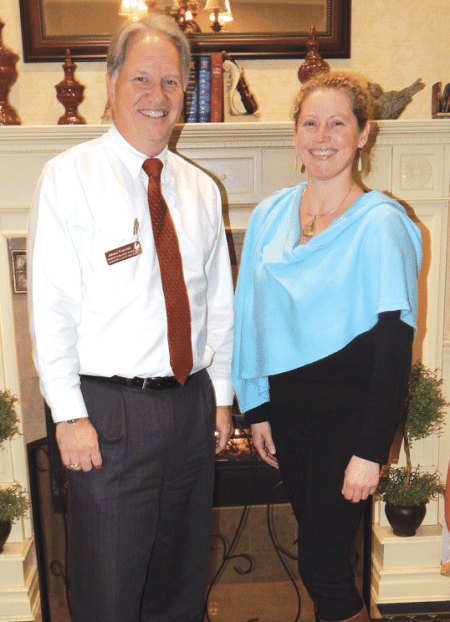
Community Spotlight Features

Community Spotlight

Chicopee Mayor Richard Kos, left, and Michael Vedovelli

Chicopee Mayor Richard Kos, left, and Michael Vedovelli say the new, three-megawatt solar farm on James Street will benefit the city and reduce the cost of electricity at Westover Air Reserve Base.

Richard Kos says officials in Chicopee are doing all they can to foster good relationships with developers, government leaders, and local businesses, and their efforts have led to a strong surge in growth.

“In 2016 the building department issued $31 million in building permits, but we anticipate that, by the end of the first half of 2017, we will more than double that amount,” the mayor said.

Indeed, the list of projects in the planning stages or underway is not only lengthy but diverse in nature, ranging from new hotels to new and improved housing, a solar farm, business expansions, infrastructure improvements, and progress at the Uniroyal and Facemate properties. There’s also a new Mercedes-Benz dealership under construction on Burnett Road.


Chicopee has a can-do attitude, is business-friendly, and has officials who come up with optimal solutions to problems. All of the department heads have given us input to make the building process go smoothly.”


Peter Wirth is co-owner of that $12 million, 37,000-square-foot, state-of-the-art facility, expected to open in late summer or early fall. He and his partner took their time searching for a location in the metro Springfield area before choosing a site next to the entrance of Interstate 291 and exit 6 on the Mass Pike, and said city officials have done everything possible to help them meet their timetables.

“Chicopee has a can-do attitude, is business-friendly, and has officials who come up with optimal solutions to problems,” Wirth said. “All of the department heads have given us input to make the building process go smoothly.”

Other developments off exit 6 include construction of a $20 million Tru by Hilton Hotel by the owners of a Days Inn who demolished the outdated hotel on 450 Memorial Dr. to make way for the new structure.

“The project will include a Starbucks, a Wendy’s restaurant, an Irving gas station, and a sit-down restaurant that will be named later,” Kos said as he talked about reasons that make Chicopee a desirable place to live and operate a business.

“We’re the third-largest city west of 495 and are known as the ‘crossroads of New England’ because Interstate 91 and two exits of the Mass Pike intersect here,” the mayor noted, adding that the city’s financial stability and the traffic that runs through it add to its appeal.

But he attributes the rapid acceleration in growth to concerted efforts that began in 2014 after he was elected mayor for the second time.

“In a time when people are losing faith in government, Chicopee has seen unprecedented cooperation between its leaders, locally and on the state level,” Kos said. “We are working together to get things done and are excited about the industries that have chosen to invest here.”

For this issue, BusinessWest outlines some of the major projects that took place in Chicopee last year as well as those scheduled to begin in 2017.

Cooperative Efforts

A three-megawatt solar farm under construction on a 26-acre site off of Outer Drive and Goodwin Street is an example of how combined efforts have led to growth.

Last summer, the city was finally able to raze 100 units of military housing units on the site, which had sat unused for two decades and become problematic. Although Chicopee acquired the property from the Navy in 2011 after five years of negotiations, restrictions and their condition had prevented the city from renovating the structures or reusing the land for other purposes

“The housing was an eyesore, in a state of disrepair that had become a hazard to the neighborhood due to vandalism, vagrants, and other problems,” Kos said.

In 2015, he proposed putting a solar farm on the site, and after the City Council and neighbors endorsed the idea, Chicopee was awarded a $1 million MassDevelopment grant to remediate the property that was matched with funds from city coffers.

The money came from the state’s $5.9 million bond bill grant program to support the Clean Energy Assessment & Strategic Plan for Massachusetts Military Installations, and the housing was finally torn down.

In December, a lease agreement was signed with Chicopee Solar LLC, a subsidiary of ConEdison Development, to build a solar farm on 21 of the 26 acres.

“We gave the company permission to begin working at the site while the final details were being worked out,” Kos said, explaining that ConEdison had to have all mechanical components installed and ready for operation by Jan. 8 to meet a deadline set by the Mass. Department of Energy that would allow it to receive solar renewable-energy credits.

“They worked under a very tight timeline and brought in electricians from all over New England, but there was complete cooperation between the company, the city, and the state, and the installation was finished on time,” said Michael Vedovelli, the city’s director of Community and Economic Development.


Increasing a city’s market rate residential population is one of the real secrets of urban success.”


Kos added that the city’s investment will be recouped in 10 years through tax revenue and income from the lease agreement and the government will also benefit because Westover Air Reserve Base will receive a 5% discount each year on electricity that will amount to $100,000 in annual savings.

He noted that the remaining five acres on the property are available for industrial use and located adjacent to Air Park North and the former Avery Dennison building that is being used by Yankee Candle.

The project has been praised by residents of the Crossing at Ridgewood Village, a condominium association that sits across from the solar farm.

“It’s a wonderful reuse of the property that is great for the region,” said Dottie Sikes, a resident and member of the board of trustees, who recalled living in the former military housing with her husband in 1970 when Westover was an active military base. “The Crossing has always been a great place to live, but it will be much nicer now thanks to the new solar farm.”

The city has also reached an agreement with Mass. Alternative Care Inc. to open a medical-marijuana cultivation facility and dispensary near the Springfield line.

The company plans to convert the former Chicopee Engineering Associates building into a storefront, and the City Council approved a zoning change for a 3,270-square-foot piece of land on East Main Street so the business can begin its operation.

It will be the first of its kind in Hampden County, and Kos said the owners will be ready to plant by April. “The facility will provide patients with necessary treatment options and bring jobs and numerous tax benefits to the city.”

Ongoing work has also taken place at the Uniroyal site, and last year two of the remaining buildings on the 27-acre property were razed.

“We’ll try to repurpose four of the remaining 10 structures,” Vedovelli said, adding that the city has been aggressive in pursuing funds to remediate the brownfields and received three $200,000 grants from the Environmental Protection Agency last year.

“It is a tribute to our grant writer and our team,” he said, noting that only 53 projects in the country received the grants.

Previously, the City Council had appropriated $185,000 to make roof repairs, cover a broken skylight, and board up broken windows in the administration building on the Facemate property at Oak and Grove streets. A full abatement of that 62,000-square-foot structure will be completed this spring, and a request for proposals will be issued later in the year.

Interest in the Facemate property continues to grow, and David Spada from Lawrence has plans to build a $22.9 million, 92-room assisted-living facility on Lot 4 of a 3.85-acre parcel that has frontage on West Main Street across from the Chicopee Falls Post Office, and will be situated off a new road which leads to the RiverMills Senior Center.

Residential Growth

Two years ago, Mount Holyoke Development purchased the Lyman Mills in Chicopee Center, and plans are now underway to convert the former textile-manufacturing plant into 110 market-rate apartments. The buildings were unoccupied for four years, and the new units will be loft-style work/live spaces designed to appeal to young entrepreneurs.

Kos said the project was made possible in part by a $2.6 million MassWorks grant the city received last year that will be used to upgrade water, sewer, and storm-water lines in the area. Tighe and Bond is designing the project, and the work will begin this summer.

“Increasing a city’s market-rate residential population is one of the real secrets of urban success,” the mayor said, noting that such development becomes a catalyst for further growth as residents put feet on the street and increase business at local establishments and restaurants.

Change is also occurring at the former Kendall House in Chicopee Center as a result of collaborative efforts.  Valley Opportunity Council acquired the building from HAPHousing Inc. last year, and has plans for a $7 million renovation that will convert the rooming house, which housed Quicky’s restaurant on its first floor, into 39 affordable studio apartments.

“We’re working to improve the affordable-housing stock within the city, and by collaborating with the state, VOC received a $3.1 million grant to help restore the Kendall House,” the mayor said, adding that the nonprofit will cover the remainder of the renovation costs.

He told BusinessWest the city is also working to increase home ownership through two incentive programs. The first is the First Time Home Buyers Assistance Program, which helped 22 eligible families last year by giving each up to $5,000 toward the purchase of a new home.

The second initiative is aimed at people willing to purchase three-family homes and live in them, which ensures the likelihood that they will be kept in good condition. New homeowners in the program are given $1,000 each year for up to 16 years as long as they reside in the properties.

“The majority of these homes are in Chicopee Falls, Chicopee Center, and Willimansett, and the program continues to grow and pay dividends,” the mayor said.

Improvements are also being made to the city’s parks; a $225,000 spray park with other amenities was completed at Wisniowski Memorial Park last year, and $225,000 will be invested to make enhancements to Sarah Jane Park this year.

In addition, legislators are working to grant approval to use the former Chicopee Falls Library building as a home for a third Head Start program.

Work on a new parking lot downtown has also been completed. It features 15 designated public spaces as well as parking for patrons of Munich Haus restaurant. The city has also applied to become designated as a Green Community, which would make it eligible for grants for improvements to city buildings.

Continuing Progress

Last summer, Pilgrim Interiors Inc. expanded, and several weeks ago U.S. Tsubaki Automotive LLC held its formal groundbreaking ceremony for a $11.5 million, 100,000-square-foot expansion.

“It will preserve 348 jobs and result in 35 new ones,” Vedovelli said, adding that the company decided to remain in Chicopee after considering a move to either Tennessee or Mexico.

New businesses continue to be attracted to the city, and last year PV Sullivan Supply Co. Inc. and Holden Humphrey Co. were welcomed.

Growth is expected to continue as seeds that were planted take root, and the outlook for this year is exceptionally bright.

“Chicopee is still the biggest small town in Massachusetts,” said Kos. “We’re like the old Cheers bar where everyone knows your name, and are making great progress because we work together in a way that benefits our community as well as its residents.”


Chicopee at a glance

Year Incorporated: 1848
Population: 55,603
Area: 23.9 square miles
County: Hampden
Residential Tax Rate: $17.31
Commercial Tax Rate: $32.49
Median Household Income: $47,276
median family Income: $65,443
Type of government: Mayor; City Council
Largest Employers: Westover Air Reserve Base; City of Chicopee; J. Polep Distribution Services; Turbo Care Inc.
* Latest information available

Education Sections

RoyalChristina Royal recently took the helm at Holyoke Community College. She brings with her a phrase, or saying, that she contrived and uses often as she talks about higher education and her approach to it: “it takes a village to raise a student.”

Before accepting the position of provost and vice president of Academic Affairs at Inver Hills Community College just outside the Twin Cities in Minnesota, Christina Royal first turned down an offer to become president of a school in Texas.

The stated reasons for that somewhat unusual career decision — many who have spent years working in higher education and believe they’re ready to apply for president positions yearn for that opportunity to lead their own school — speak volumes about Royal and her priorities. And also about the next school that would choose her to occupy the corner office: Holyoke Community College.

“I didn’t feel like it was going to be the best fit to get me the college experiences that I needed to prepare me ultimately to step into a college presidency and succeed,” she said in reference to job in the Lone Star State. “I’m a lifelong learner through and through, and when I look at my career to date, I tend to seek out positions where I see opportunities for growth and opportunities where I can make an impact.

“While it’s been helpful to be upwardly mobile in my career trajectory,” she went on, “it’s more important for me to feel that I can make a difference in that role and that I can learn something.”

Which says something about the provost’s job in Minnesota — and she did quite a bit of learning there, as we’ll see later — and also about the job she started on Jan. 9.


I really believe that having partnerships with business and industry and the community is essential for an institution of higher education to thrive.”


Starting with her visit to the campus on Homestead Avenue, she said she felt a “connection” — to the school, its mission, its current efforts to meet it, and the community as a whole. And the subsequent interviews and conversations with a host of constituencies, including students, faculty, and staff, only made the connection stronger.

At HCC, she saw an opportunity to forge an even stronger connection between the school and the community it serves, and thus make both stronger and more vibrant.

“I have a phrase that I’ve used often during my career — that ‘it takes a village to raise a student,’” she noted. “And I really believe that having partnerships with business and industry and the community is essential for an institution of higher education to thrive.

“Likewise, for a community with a community college to thrive, it needs to have a strong community college,” she went on. “I look at it as a bi-directional relationship and partnership.”

Royal arrives at HCC at an intriguing time for that school, community colleges in general, the ones in this state, and the four that serve this region. Indeed, those four institutions were chosen by BusinessWest as one of its Difference Makers for 2017, for their efforts to not only provide convenient, affordable access to higher education, but for becoming huge role players in regional economic-development efforts.

And, as that story goes on to note, the community colleges in this region have increasingly been working in collaboration among themselves and myriad other partners to address a host of workforce issues, including the skills gap plaguing virtually every sector of the economy.

Royal touched on some of these efforts when she talked with BusinessWest just a few days after her arrival — “nothing in this office is mine,” she said of what was in the credenza and on the walls — and noted that they fit right in with those basic criteria she was looking for in a move up the career ladder (and a college presidency) — opportunities to learn and grow professionally, and opportunities to make a difference.

As for community colleges as a whole, they are facing a host of common challenges, including enrollment — high-school graduation classes are getting smaller, and the economy is doing generally well, two factors that certainly don’t help drive individuals to community-college gates — and also financial pressures, and ongoing efforts to improve graduation rates, or ‘success rates,’ as many like to call them, because not all students are seeking a degree.


The $43 million renovation of HCC’s campus center

The $43 million renovation of HCC’s campus center is just one of many opportunities and challenges facing the school’s new president.

HCC is confronting these issues just as all schools are, said Royal, while it is also focused on some of its own specific challenges, including a soon-to-commence renovation of its campus center and a host of area workforce-development issues.

For this issue and its focus on education, BusinessWest talked at length with Royal about why she ultimately took this opportunity to become a college president, why she focused her career on the community-college community, as she called it, and what kind of learning opportunities she’s expecting at HCC.

Facing Stern Tests

Before getting into all that, though, Royal spent some time addressing the question often put to those putting ‘president’ on their business card for the first time — how and when did she know she was ready for that level of responsibility and challenge?

She said she recalls no specific morning when she woke up with that realization, but, rather, that it came with time, the accumulation of experience, the stockpiling of needed confidence … and confirmation from others in the industry that she was, indeed, ready to ascend to the top rung.

“I had a very well-rounded background, both in business and in higher education, that gave me a sense of the issues within higher education and the changing landscape of community colleges,” she told BusinessWest. “Given the number of college presidents that have been in these roles for many years and had started to retire, I was thinking this was a good time to be looking at pursuing one of those jobs.”

As for that accumulation of experience, it has come across the broad spectrum of higher education, starting in the private sector with CompUSA Inc. There, she provided instruction to more than 2,000 students for the Social Security Administration — and a host of other corporate clients — on various software-application programs.

From there, she went to the Beacon Institute for Learning in Florida, where, among other things, she was responsible for curriculum development, implementation, and assessment of technical training and certification programs for more than 20 colleges and universities, including Duke, Notre Dame, and Rutgers.

She then returned to her alma mater, serving from 2001 to 2006 as director of Technology-Assisted Learning in Marist College’s School of Graduate and Continuing Education in Poughkeepsie, N.Y.

In early 2006, she would take a job that would eventually inspire a career-path decision. It was executive director of Distance Learning at Cuyahoga Community College (CCC) in Cleveland, a massive school with four campuses, two corporate colleges, a $270 million budget, and roughly 52,000 credit and non-credit students. She would later become assistant vice president of eLearning & Innovation in 2010, a post she would hold until mid-2013.

It was during her tenure at CCC that Royal would first earn her doctorate in education (in 2007, at Capella University’s School of Education) a pre-requisite for most high-level jobs in higher education, especially president, and later achieve that aforementioned confidence and skill set also needed to ascend to those levels.

“My college president at the time said, ‘this is not for the faint of heart, but if you’re interested in this, then I’m going to send you to an executive-leader program focused on the job and the role of the president,’” she recalled. “She went on, ‘if you’re still interested when you come, let’s talk.’”

Christina Royal

Christina Royal says it take a village to raise a student, and this means more and stronger relationships between the college and the community.


She went, was interested when she came back, and the two did talk, she went on, adding that she considered herself ready for a presidency when there were “few surprises in the job,” and she had acquired a set of experiences that made her ready. She would cross that threshold at her next career stop — Inver Hills.

And it was also while in Cleveland, she said, that she began to focus on that aforementioned community-college community as her career ambition.

That mindset was only solidified at Inver Hills (which she chose over that Texas school), where she led a number of academic and workforce-development initiatives, including the South of the River Education Center, a workforce partnership with a host of other schools and economic-development-related agencies.


I had a very well-rounded background, both in business and in higher education, that gave me a sense of the issues within higher education and the changing landscape of community colleges.”


She told BusinessWest she has been looking at a number of president positions over the past several months, but made HCC the her main focus for a host a reasons, including geography (her family is still in the Albany area), but especially those aforementioned opportunities to grow professionally and make a difference — at the school and within the community it serves.

Grade Expectations

Since arriving on the campus during its winter intercession — students were not due back until late in January — Royal said she has taken advantage of that quiet time to meet with several of the constituencies she’ll be working with and beside.

These included staff and, later, faculty, as well as Holyoke Mayor Alex Morse, several state legislators, the school’s foundation, the Greater Holyoke Chamber of Commerce, and the other area community college presidents (through a photo shoot for the Difference Makers program).

She and Springfield Technical Community College President John Cook have already talked more than a few times, continuing a dialogue — and pattern of collaboration — forged by their respective predecessors, Bill Messner at HCC and Ira Rubenzahl at STCC, who retired within a few weeks of each other last summer. (You can read more about those collaborative efforts in the story on page A4).

Royal has also become acquainted with many of HCC’s current initiatives, and there are many of them, including:

• A $43.5 million renovation of the school’s campus center. The two-year project will change the look, feel, and orientation of the campus, and give it what administrators are calling “a new front door.”;

• The Mass. Casino Careers Training Institute, a joint effort among all the state’s community colleges to train people for careers at gambling facilities, including the $950 million MGM Springfield now taking shape in that city’s South End;

• The Cubit Building. That’s the name given to an old mill in downtown Holyoke that takes that shape. HCC will be moving its culinary-arts program into the first two floors of that structure, thus making it the anchor tenant in a building that will also feature market-rate housing and is touted as one of the keys to revitalization of the city’s Innovation District;

• TWO (Training & Workforce Options), a collaborative effort with STCC to provide training programs to help business sectors and individual companies close recognized skills gaps; and

• The school’s designation as an Hispanic Serving Institution, a federal designation from the U.S. Department of Education. Schools earn it when they have an enrollment of undergraduate full-time-equivalent students that is at least 25% Hispanic, a threshold HCC has reached. If it maintains that number for a year, it will be eligible to apply for certain grants that can be used to assist that specific constituency, Royal said.

As might be expected, Royal said one of her first priorities for the school will be to undertake development of a new strategic plan, which would be the first in decades, in her estimation.

She doesn’t expect that a new plan will yield many surprises in terms of recognized priorities, growth opportunities, and a specific strategic direction (although one never knows), but instead will provide needed affirmation of a host of agenda items.

These include the broad issues of access, enrollment, and how to grow it given the current, and lingering, challenges, and developing programs to improve students’ chances for success — whether they’re seeking a certificate, a two-year degree, or a pathway to a four-year degree.

And with that, we turn to what Royal wrote to the search committee that would choose HCC’s next president as she expressed her interest in the position.

“I have been intentional in my career about serving the community-college mission,” she said. “Growing up as a first-generation, low-income, biracial college student, I understand the community-college student and the challenges they face. Student success is most effectively achieved when an institution understands the unique support needs of students in two-year colleges.”

To further emphasize ‘unique,’ she would go on to discuss — with the search committee in that letter, and then, several months later, with BusinessWest — an initiative called the Mobile Food Pantry at Inver Hills.

As that name suggests, this program, created in partnership with a Minnesota-area nonprofit called Open Door, which has a mission to end local hunger, allows Inver Hills’ students in need of food support to receive healthy food on a bus that travels directly to the college.

And there were, and are, plenty of students in need, said Royal, adding that 60% of Inver Hills’ students were classified as low-income.

Whether HCC needs a mobile food pantry or something like it remains to be seen, said Royal, adding that it is merely one example of the ways community colleges can and should work to address the many obstacles standing in the way of students’ success.

“The reason programs like Food Pantry are important is that you cannot educate a hungry student,” said Royal in a firm, direct voice. “We do have students who are struggling, their food insecure, their housing insecure, there are transportation problems … these issues are real, and they impact their quality of focus as they try to concentrate on their studies and improve the quality of their life and the lives of their children.

“We have to look at how we’re able to address, or partner with someone who can address, some of these social-service issues that come with some of the students we serve,” she went on. “So I’ll be looking at community partnerships to address some of these issues.”

Food for Thought

As Royal noted, it takes a village to raise a student.

She is now in a leadership position within that village, and is intent on using that power and responsibility to make success less of a goal and more of a reality.

And, while doing so, she’ll be focused on creating more and different learning experiences — not only for the students, but for her as well.

That’s why she came to HCC, after all.

George O’Brien can be reached at [email protected]

Features

Making a Solid Return


massmutualduqettefacessigncroppedDennis Duquette left MassMutual nearly 30 years ago for what would become a variety of roles at Fidelity Investments in Boston, most all of them in the realms of community relations and corporate responsibility. He says he’s passionate about such work — passionate enough to quickly put aside any thought of retirement last year and agree to lead the team handling those assignments at MassMutual.

When Dennis Duquette returned to his hometown of Springfield last May after a nearly 30-year stint with Fidelity Investments in Boston, he was, at age 57, retired. Sort of.

He was retired from Fidelity, at least, and determined to “recharge a bit,” as he put it. The plan was to take the summer off, rest, travel around the region, and reconnect with some people here, and he did all of the above, while also trying to determine just how well retirement was sitting with him.

As it turned out, it wasn’t sitting well at all.

“Toward the end of the summer, I started thinking, ‘I have to start doing something; I have to start thinking about going back to work,” he told BusinessWest. “I figured out that I was too young to retire … I wasn’t there yet.”

With that question answered, there was now another one facing him. It didn’t concern where he would return to the world of work (he was back in Springfield, and he was going to stay here), but in what capacity; his first thoughts tended toward project work and consulting.

Instead, something much different came into his field of vision.

To make a fairly long story short, there were a few conversations with some colleagues in the financial-services industry that eventually led Duquette to interview for and then accept the position of director of Corporate Responsibility at MassMutual and president of the recently established MassMutual Foundation, succeeding Nick Fyntrilakis, who held that post for several years.

And in every respect, this was a logical move and proverbial perfect match — for both Duquette and the company. That’s because he’s certainly not a stranger to Springfield, the company, or the many duties involved with corporate responsibility.

Indeed, he started his career in financial services at MassMutual’s State Street headquarters in 1981 as a compensation analyst, eventually moving on to community relations specialist and associate director of Group L&H (life and health) Marketing during a stay that lasted more than eight years. And at Fidelity, he would hold a number of titles related to marketing, community relations, and related work, including his last one, vice president of Corporate Sponsorships, a role we’ll hear more about later.

In an interview soon after arriving back on State Street just before Christmas — his order of business cards had been placed, but they had yet to arrive — Duquette told BusinessWest that the phrase (and title) ‘corporate responsibility’ is somewhat new, but the concept certainly isn’t.

MassMutual

Dennis Duquette says the paradigm regarding corporate social responsibility has changed, and MassMutual is on the cutting edge of current trends.

He said major corporations like MassMutual, which employs roughly 7,000 people in Springfield — and even much smaller companies, for that matter — have always had a responsibility to serve the ‘community’ they call home, however that term is defined. In MassMutual’s case, such work within the community dates back to its earliest years in the 1850s.

However, he went on, what has changed, in some respects, is the manner in which these responsibilities are met.

“The model 30 or 40 years ago was … you write a check, and you get your name in support of something; that paradigm has changed, and I think for the better,” he explained, adding quickly that MassMutual does still write some checks. But in most all cases, money is accompanied by programming and direct involvement with the cause or program in question, usually in collaboration with other groups and agencies.

And the initiatives undertaken are part of a broad strategy to improve quality of life within the community, build financial security for families, and create opportunities for people of all ages, but especially young people, he said.

There are myriad examples of this, he said, before citing a few to get his points across, including MassMutual’s involvement with Valley Venture Mentors and the project to create an innovation center in downtown Springfield; the MassMutual Foundation’s awarding of $15 million to UMass Amherst over 10 years to further strengthen its world-class data-science and cybersecurity research and education programs; and the foundation’s launch just last October of free digital financial-education curriculum — part of its FutureSmart program — for middle-school students nationwide.

There are many other examples, he went on, all of which reflect a broad strategy with stated goals and clear objectives for meeting them.

For this issue, BusinessWest talked at length with Duquette about his decision to unretire, but especially about his new role — in which he serves as the unofficial face of MassMutual within the community — and the many ways MassMutual’s corporate responsibility is manifesting itself, in Western Mass. and beyond.

At Home with the Idea

While Duquette left Springfield and MassMutual in 1989 for Fidelity and the Boston area, he didn’t exactly leave his hometown completely behind him.

He still had family and friends in this area, and stayed in touch as best he could. “I read MassLive a lot,” he said with a laugh, adding that various media outlets (including BusinessWest) and contact with acquaintances kept him abreast of everything from the 2011 tornado and its aftermath — he’s a Cathedral graduate and donated money to the rebuilding of that school, which was destroyed by the twister — to the difficult financial times that visited the city over the past few decades, to some of the many recent forms of progress, including the arrival of MGM.

Taking stock of the city and what’s happening within it — something he’s been doing all along, but especially since returning home eight months ago — he said there are many signs that the city is truly on the right track.

“I drive around Springfield, and I walk around Springfield, and I see potential,” he explained. “I know the city has fallen on tough times in the past and has worked to dig itself out. There was a natural disaster that blew through the town, literally, but I think the mayor has done an outstanding job of leading the city back, obviously with the help of a lot of people.

“When you consider this city’s history, its location, the resources that it has — material and intellectual — there is a lot of potential here,” he went on. “It’s really just a matter of having the right leadership and vision, and I believe the mayor, the City Council, and city officials are super diligent about that. And I think we have a governor and lieutenant governor now who are very focused on helping the gateway cities, and Springfield is one of them. Overall, I’m very hopeful.”

Dennis Duquette says involvement in entrepreneurship initiatives, such as the innovation center on Bridge Street now under construction, fit into MassMutual’s broad CSR strategy.

Dennis Duquette says involvement in entrepreneurship initiatives, such as the innovation center on Bridge Street now under construction, fit into MassMutual’s broad CSR strategy.

He acknowledged that Springfield, and Western Mass. as a whole, haven’t seen anything approaching the explosive growth that Boston and the areas surrounding it did over the past few decades, but told BusinessWest that efforts to compare and contrast the two regions are neither warranted nor particularly fruitful.

“I don’t think Springfield has to be like Boston to be a successful city,” he explained. “There are some great things that Springfield can do that are unique to Springfield that don’t necessarily have to replicate Boston.”

With that, he acknowledged that he will now have a much better view of what’s happening across Greater Springfield and, through the many aspects of his new role, will be taking a direct role in helping to see that the region’s potential is realized.

And, as noted, he brings a good deal of experience to that role.

Indeed, at Fidelity he led a number of initiatives involving corporate sponsorships, education, employee volunteerism, and employee giving.

As one example, he cited development of a digital financial-literacy game in cooperation with New York-based Dopamine Inc. for middle- and high-school students, an initiative launched in support of Fidelity’s broader financial-literacy programs, in partnership with FidelityCares, the firm’s community-relations apparatus.

Another example is The Alzheimer’s Project. That was the name attached to a HBO series on the crippling disease, for which Fidelity Investments took a key sponsorship role.

In many respects, Duquette explained, Fidelity’s broad corporate-responsibility strategy, if you will, mirrors MassMutual’s in that many initiatives focus on young people, education, financial literacy, and overall quality of life.

And these initiatives involve partnerships, not simply check writing, he went on, adding that this same philosophy reigns at MassMutual, which has a 165-year history of giving back to the community and status as Springfield’s largest corporate citizen.

“MassMutual is an important community partner in Greater Springfield, not only by virtue of its size, but also by virtue of its legacy,” he explained. “I don’t see that changing, but what will change, potentially, is the way we do our partnerships; we have a great opportunity to continue our partnerships and build new ones, and I’m very excited about that.”

Paying Dividends

As he noted earlier, Duquette, upon deciding to ‘unretire,’ approached a number of people to solicit possible leads on landing spots, again, with the thought that consulting or project work were the most likely contenders for what would come next.

One of those people was Jennifer Halloran, MassMutual’s head of Brand and Advertising — only Duquette needed to be told this was what it said on her business card. He had worked with her at Fidelity for years, but was unaware that she had come to MassMutual. It was Halloran who alerted him to an opening at the company at the top of its Corporate Responsibility team.

Duquette was somewhat surprised by this news — he had recently been a spectator for the groundbreaking, or “wall-smashing,” as he called it, for the innovation center on Bridge Street and heard Fyntrilakis speak on behalf of MassMutual, a partner in the project. But he was also quite intrigued, because such work had come to define his career in recent years.

“I got really excited about this role,” he explained. “And I got excited for a few reasons. For starters, this is something I’m passionate about. I think the role of corporations in this country and around the world is changing — the impact corporations can have on the communities in which they’re based, and society in general, is immense.

“Secondly, and I think more importantly, my view had always been that MassMutual was really exemplary in this space,” he went on. “I say that as someone who left MassMutual in 1989, never thinking or intending that I would be back here, but over the years, I was taking note of things that MassMutual was doing when it came to corporate responsibility.”

Elaborating, he would summon the words ‘bold’ and ‘innovative’ to describe some of those initiatives, adding that, as he watched them unfold while working for a competitor, he would nod his head in approval.

“For me, as someone who cares about this work, to come into an environment that really supports it and champions it — and that goes right to the top of the house — this was a no-brainer for me to pursue this opportunity,” he said, adding that, just a few weeks in, he’s “pumped.”

He’s spent those few weeks doing more of that connecting he described earlier — he’s met with the leadership team at the Community Foundation of Western Mass., for example — but also on the road. Indeed, he spent his second week on the job in Phoenix, where the corporation also has a huge presence, becoming acquainted with various initiatives taking place there and on a national level.

There will be much more of all that in the months and years to come, he said, adding that creation of the MassMutual Foundation in 2015 is an important development when it comes to the shape and scope of corporate-responsibility initiatives at the company.

“It gives us guardrails and parameters through which we can do our corporate giving,” he said of the foundation, “and it also gives us a platform from which we can launch ideas and partnerships — that I think are deeper and smarter — with some of our critical nonprofit partners.”

Elaborating, he said the foundation provides a vehicle with which the corporation can work with a host of partners — locally, in other communities where it has a presence, and in markets important to the business — to “amplify the things we care about.”

With that, he returned to the FutureSmart program as one solid example. To make it happen, MassMutual partners with education-technology leader EverFi, which is building a network of relationships with school districts around the country to introduce financial-literacy curriculum.

“We work with them as a partner to get us into some of the markets we’re interested in, and build those local programs,” he said, adding that the broad goal is to reach 2 million students by 2020.

There are many other examples, he went on, adding that, to slice through his multi-faceted job description, the primary goal is to create more of these partnerships and continue to develop new and fruitful ways to invest in the community — literally and figuratively.

The work with VVM and other economic-development-related groups to encourage entrepreneurship and fund startup companies certainly falls into that category, he said. The various initiatives are in some ways unique for a financial-services company, he noted, but overall, such efforts dovetail with the major goals of the company’s broad corporate-responsibility strategy.

“If you look at that strategy, it’s all about securing and enabling economic security for families,” he explained. “We help people secure their futures through financial means, so as a community partner, we’re about getting in and supporting initiatives, ideas, and programs that will help build and sustain economic viability for communities that we care about.”

Elaborating, he said that, by providing various types of support to startups and the groups that mentor them — everything from capital for startups to technical support in an investment that totals $5 million — MassMutual is investing not only in those ventures, but in Greater Springfield itself.

“I’ve had prior experience with an incubator in Boston with MassChallenge,” he said, referring to the entity that describes itself as ‘the most startup-friendly incubator on the planet.’ “And I was excited to see that there was a vibrant incubator/entrepreneur community that was bubbling up here in Springfield.

“When you think of this particular region, where we’re located, the access to higher education in the Pioneer Valley and the surrounding areas, it’s a logical place,” he went on. “And it’s also a great place for people to come, young people in particular, and kick the tires on some new ideas and try their wares.”

Investments in the Community

Talk of the partnership with VVM brings Duquette back to his comments about how corporate social responsibility, or CSR, as it’s called, now goes well beyond simply writing checks.

“My approach to CSR is this — if we’re going to be working together and providing financial support to a nonprofit, that’s great, but I also want to understand what that group’s objectives are as a nonprofit,” he explained. “And then say, ‘here are my objectives as a representative of MassMutual. Let’s talk about how we can work together to build something that goes beyond the money. Let’s build something that’s really meaningful.’”

Working toward such ends is something Duquette is passionate about, and something that certainly propelled him out of retirement.

You might say he’s at home with his latest, and perhaps last, career stop — in every sense of that phrase.

George O’Brien can be reached at  [email protected]

Cover Story Sections Top Entrepreneur

Paul Kozub Tackles the Hard Stuff to Take V-One National

Proof Positive

paulkozubcoverpicWhen he launched the V-One brand more than 11 years ago, Paul Kozub had a good product and a great story — the one about a commercial lender who quit banking to make vodka in his basement. As he prepares to take the brand national, he knows the great story isn’t nearly enough. The good product is the foundation of his efforts, but getting to the next level will be a daunting task. So he’s leaving no stone unturned, and these efforts have earned him BusinessWest’s Top Entrepreneur award for 2016.

He calls it ‘V-One Vodka Corporate Headquarters.’ Except when he opts to simply to say ‘the Church.’

Those are Paul Kozub’s chosen methods for referencing the former St. John’s Church on bustling Route 9 in Hadley, the 114-year-old structure he acquired in 2014 after some prolonged negotiations with the Diocese of Springfield and then spent months rehabbing, mostly by himself.

On the outside, it still looks like … a church, except for the huge slab of Goshen stone on the front lawn with the V-One logo placed on it, signage approved after months of hard talks with the town fathers.

On the inside, though, it looks a little like a bar and a lot like a banquet hall. Which it isn’t. Kozub doesn’t actually have a liquor license, but he can — and does — host a number of ‘tastings’ each year to promote his growing line of vodka flavors, as well as weekly sales meetings and a host of special events, including one on Christmas Eve for his family and his wife’s as well.

One fixture of V-One HQ is a large collection of vodkas, maybe 100 of them, kept on racks just off what used to be the altar long ago. You won’t find every brand here — there are more than 1,000 of them — but certainly all the recognizable names and then another few dozen recognizable only to those certainly in the know. Which he is, as will become quite clear.

Indeed, Kozub says he’s amassed this collection — and keeps adding to it — so he will know about the competition. Everything about the competition, that is — from the new flavors they’re putting out to the design of their bottles to the ingredients printed on the label.

Paul Kozub stands beside his new signage

Paul Kozub stands beside his new signage, placed on a huge slab of Goshen stone, outside V-One Corporate Headquarters, a.k.a. ‘the Church.’

Take grapefruit-flavored vodka, which all the major brands now have, for example. Kozub did.

“What I did was buy every grapefruit vodka I could find,” he said, while reaching for a few. “When I come up with an idea, like this one, I try every grapefruit offering I can get my hands on, with the goal of making mine unique.”

It is only through such research and legwork, said Kozub, that he will be able to take V-One from status as a ‘local’ flavor and make it a regional and then national and perhaps international brand.

Actually, V-One is already international, as Kozub explained while digging for his phone and scrolling to a photo of him next to a poster for his vodka at Frederick Chopin Airport in Warsaw (his vodkas are made in Poland and available in duty-free shops at several airports in that country), right next to similar posters for Rolex watches and high-end perfumes.

But, while obviously proud of that product placement, Kozub knows he is facing a long, winding, extremely difficult road just to take his vodkas beyond most of Massachusetts, Connecticut, and Rhode Island, the places where they are now available.

However, with the help of some new investors to whom he is selling a small equity stake in the company, Kozub is poised for territorial expansion. The first target is New Hampshire, where Kozub is currently gaining the necessary approvals to secure shelf space in the state-operated stores that feature low prices that often entice people to cross borders.

After that, other New England states are being eyed, as well as the potentially lucrative but tough-to-crack Boston and New York City markets.

To get to the next level, though, Kozub knows he needs something beyond the proverbial ‘good story’ that helped him get off the ground and then well-established within the 413 area code. Most people in this region know it by now: it’s about how an intrepid commercial lender rising in the ranks at TD Bank put that career on permanent hold after deciding to take a small inheritance from his grandfather, as well as some inspiration from his entrepreneurial father, and create a new vodka label in his home.

“As I go into Miami, San Francisco, and other major cities, the story about the guy who started making vodka in his basement is great, but we’ll need much more,” he explained. “So I want to lead with the product itself, and how we tell our story.”

Efforts to move beyond his Hollywood-script saga and create a product that will appeal nationally essentially sum up what Kozub has been doing for the past 12 to 18 months or so. This is a multi-faceted assignment involving everything from lining up investors to initiating marketing pushes in some major cities, to months of hard work designing a new bottle for his vodkas.

Paul Kozub stands next to a sign for his vodka at Frederick Chopin Airport in Warsaw

Paul Kozub stands next to a sign for his vodka at Frederick Chopin Airport in Warsaw. While V-One is technically international, the next real challenge is to make it a national brand.

The sum of these efforts has earned Kozub BusinessWest’s Top Entrepreneur award for 2016. Established two decades ago, the award recognizes a centuries-old tradition of entrepreneurship in this region and honors those who are continuing that legacy, something Kozub summed up simply by saying, “I feel like I haven’t worked a day in 11 years.”

Entrepreneurial Spirit

Beyond those racks loaded with vodka bottles, Kozub has a number of other items, or props, lurking behind what resembles a bar counter (complete with bar stools) installed at the front of the old church’s nave.

One of them is a 50-pound bag of corn, bought at a nearby Tractor Supply Co. location, very effectively labeled (at least for this exercise) with the words ‘feed for cattle, sheep, and horses.’

Paul Kozub says he has a patent on his so-called ‘bottle jacket,’

Paul Kozub says he has a patent on his so-called ‘bottle jacket,’ one of many examples of how he’s leaving no stone unturned as he takes the brand national.

“This is what you feed cows — a lot of popular vodkas today are made from corn,” said Kozub, as he began a well-rehearsed presentation he gives to various audiences while not-so-delicately lowering the bag onto the counter so its weight can resonate. “It’s the cheapest ingredient you can find; it costs about six cents a pound, and it takes about three pounds to make a bottle of corn vodka.

“This is spelt,” he went on, holding up a small box of the hulled wheat that is his not-so-secret ingredient. “If you buy this at the store, it’s about eight dollars a pound; so you’re talking six to eight cents versus eight dollars.”

That bag of corn is one of many selling points used by Kozub as he goes about introducing his product and differentiating it from all those competitors. Others include the fake-fur-lined ‘bottle jackets’ and soon-to-arrive summer ‘bottle life vests’ (made in Poland) that he says are unique and patented.

“They’re something cool — no one can else can make a bottle winter coat like this,” he noted while holding one aloft. “Almost everyone has a box with two glasses in it. This is my equivalent, but I like to stand out.

“Over the past few years, I’ve been prepping for a national launch,” he went on while putting most of what is now on display at the church in perspective. “I’m trying to get the whole brand tightened and leave no stone unturned, because it’s going to take a lot to get from where we are to where I want to be.”

Those sentiments, and the aggressive, confident manner in which he backs them up, speak volumes about the passion and commitment Kozub has for all aspects of this endeavor, qualities that Shaun Dwyer recognized long ago.

Now the first vice president of Commercial Banking for Holyoke-based PeoplesBank, which is now financing aspects of the V-One venture, Dwyer says he’s known Kozub for 15 years now, or back to when they were both young lenders at TD Bank trying to earn their stripes. He’s followed Kozub’s adventures throughout his career, and summons most of the same adjectives and adverbs used by others to describe how the entrepreneur goes about his work.

“Paul is a driven, highly motivated guy who’s very focused on what he does,” Dwyer explained. “He’s passionate about V-One, which contributes significantly to its success. And he’s involved in every aspect of the business, from creating and testing new products and flavors to the marketing, to the distribution, to customer relations.

Shaun Dwyer

Shaun Dwyer, a commercial lender with PeoplesBank, says Paul Kozub’s passion for his vodka brand has been a key ingredient in its success.

“And he knows how to earn money, which is the most important thing,” Dwyer went on, adding that his client definitely used his years in banking to his advantage. “He’s done well. He hasn’t gone in over his head during the time he’s been in business, he’s taken smart steps, he knows his markets, and he knows he’s got a good product.”

While those comments neatly and concisely sum up Kozub’s first 11 or so years in business, marked by strong success — growth has averaged 20% per year, by Dwyer’s estimates — one really needs to go back to 2005 for a more detailed look at how things got started and, hopefully, a deeper appreciation for the chapters to the story now being written.

It was in October of that year that Kozub first graced the cover of BusinessWest. Actually, it was one of those smaller pictures at the bottom of the page that alert readers to the stories inside.

That piece revealed that Kozub entered banking with no real intention of making it a career. Instead, he was focused on following the lead of his father, Edward, who took Janlynn Corp. from a mom-and-pop operation to a business that employed more than 100 people, but tragically died while Paul was still in high school. He was, as he put it, working in financial services to learn the mechanics of small-business management from the “other side.”

While his father inspired him, it was his grandfather, Stanley, who is actually credited with giving him the proverbial push he needed. Family legend has it that he was a moonshiner during Prohibition, and young Paul, upon seeing a truck laden with potatoes pass his Hadley home, began conceptualizing a plan to make vodka with that vegetable as its base.

Using $6,000 his grandfather left him, he started in his basement, and, after a number of fits and starts, eventually brought V-One to the marketplace.

Over the ensuing years, Kozub and V-One would regularly grace the pages of BusinessWest, with everything from an actual cover story to a host of news briefs detailing everything from new flavors (there are now four) to awards (there have been many of those); from his purchase of St. John’s Church to his 10th anniversary in business, celebrated, as only they can in this business, 18 or so months ago.

Slicing through all those articles and updates, Kozub said the message they send is that there isn’t nearly as much glamour in this business as one might think, and far more challenges and high hurdles than one can imagine.

“It’s a difficult, incredibly competitive business,” he said, adding that each step in the process of growing V-One and bringing its brand to prominence has been carefully choreographed, with the goal of achieving marked — but controlled — growth.

And so it is with the next, very ambitious steps now on the drawing board and in the process of becoming reality.

Taking His Shot

Kozub told BusinessWest that, by his conservative estimates, it takes at least $500,000 to enter a new market — a state or major city, for example — and do the job right, which is the only way he knows.

“I’ve been thinking about how we’re going to grow and how we’re going to get bigger, and of course everything comes down to money,” he explained with a heavy sigh. “You need money to enter each state because you need salespeople, you need marketing, you need brand awareness … there’s a lot that goes into this.”

This simple math and sobering dose of reality made it clear that, for him to grow, he needed capital, probably in the form of investors willing to gamble on his brand in exchange for a piece of it.

New vans like this one, detailed with the V-One logo

New vans like this one, detailed with the V-One logo, are one of many ways Paul Kozub is building his brand.

Since he started V-One, Kozub has been largely resistant to the idea of taking on investors, not wanting to relinquish even a small percentage of his venture. But having gone about as far as he thought he could in the markets he’s in, and with a strong desire to continue growing, he understood he was at a crossroads.

So he started talking to some money people — in the careful, studious manner that has marked all of his activities to date.

“About 18 months or so ago, I was approached by a very influential person in the business who had started a similar company and eventually sold it for millions, and he wanted to invest in V-One,” he explained. “After months of negotiations, I found out that he really wanted to take over my company and not simply invest, so we cut off talks.”

Roughly a month later, he was approached by another group, based in Texas, he went on, adding that his research, and the negotiations, eventually led to a deal that will generate a few million dollars in capital that will enable him to expand the V-One footprint, if you will, in a few directions.

One is north, to New Hampshire and the other New England states, and then west and south, to New York and New Jersey.

It’s a bold step, and Kozub acknowledged there are risks. But the alternative, merely standing pat, does not reflect the established growth formula. And he will continue to move in a measured, controlled manner.

“When I quit my job at TD Bank, I went for it, and I knew that if I could sell 500 cases in a year I’d be able to make a nice living,” he said, adding that he long ago recalibrated his goals and aspirations. “So with this next stage, I’m going for it again, but we’re going to be very calculated moving forward, and we’re definitely going to test each market before we enter it.”

Elaborating, he said the financing from his new investors will essentially come in three rounds, which will facilitate and essentially drive this controlled pace of growth he described. And the first goal, as mentioned earlier, is basically the rest of New England, meaning New Hampshire, Maine, and Vermont.

That includes Boston, he went on, where the company has really just put a toe in the water, with the understanding that penetrating that market will be extremely difficult, due to some well-established heavyweights in the industry.

“I just hired a PR firm in Boston to help me get established there,” he explained. “It’s a great market, but it’s also very tight-knit; getting into some of Boston’s famous restaurants is … next to impossible.

“The competition in these big cities is just unbelievable, because everyone wants to be there,” he went on. “For example, Russian Standard Vodka went to Boston seven or eight years ago, and I know they spent half a million dollars to get their brand going there, and it really didn’t do much.”

BusinessWest Associate Publisher Kate Campiti presents Paul Kozub with the plaque marking his selection as Top Entrepreneur for 2016.

BusinessWest Associate Publisher Kate Campiti presents Paul Kozub with the plaque marking his selection as Top Entrepreneur for 2016.

This outcome helps explain that, while capital is obviously critical to the process of penetrating new markets, the product, or products, will ultimately determine how successful those efforts are.

Thus, he returned to that notion of leaving no stone unturned as he prepares to take V-One national.

Fifth Dimension

With that, Kozub went behind the bar again, this time to collect a thick file folder detailing his work to create a new bottle for his vodkas; his current model is a futura style, essentially something off the shelf, as they say in this business, and fairly common, with several brands using it.

He wasn’t about to reveal anything too specific about what he had in mind for this redesign, but did get into great detail about how this is a very serious — and expensive — exercise, worthy of as much attention as what goes inside the bottle.

“It’s always been my dream to have my own bottle because I have my own vodka that’s the only vodka in the world made from spelt, and we feel it’s the cleanest vodka in the world,” he explained. “We want our bottle to reflect that. As I roll out nationally and get on the shelves in Miami and San Francisco, I really want the bottle to stand out.”

Elaborating, he said that, through his contacts in Poland, he was introduced to what he called the “best bottle designers in the world,” based in Cognac, France. These designers gave him 13 options, all different in some way, and he has whittled that field down to two, and essentially one that he says he’s leaning toward.

Why is the bottle so important? In the vodka world, image is an important consideration, he said, and the ornate, decorative bottles one sees on the shelf — often doubling as works of art — play a big role in image-projection efforts. But practicality is also an issue.

“You think about everything, including how it’s going to fit in the bartender’s hand and how it’s going to pour,” he explained. “Some of these bottles that brands come out with … they’ll never be used in bars because bartenders don’t like to hold them and they’re very awkward to pour. We do very well in bars and restaurants, and the new bottle will fit very well in bartenders’ hands.”

Kozub’s intense focus on creating a new bottle is an example of how he’s still fully involved with every aspect of this operation, but also how his role is changing in some ways.

He no longer makes deliveries himself, and he lets his sales staff handle most of the roughly 100 tastings the company will schedule a year — although he still presides over several of them. Instead, he’s content to wear what he called his ‘CFO hat’ and the ‘strategic planning hat.’

He has the latter on all the time, as one might imagine, and there are many elements to it, from the bottle to the bottle jackets; from the marketing strategies for entering new regions to lining up investors; from ongoing renovations of ‘the Church’ (there is still a lot of work to be done) to determining when and if to add more flavors to the portfolio.

And there will likely be at least one flavor to join grapefruit, triple berry, lime, hazelnut, and vanilla, he told BusinessWest, adding that he doesn’t know what it will be yet, and there are several possible contenders for the light blue bottle he’s already picked out to give him a full rainbow.

The need to keep adding flavors, the need to keep undertaking strategic planning, is very necessary, he said, because this is a fast-moving, constantly changing industry, where trends change quickly and often.

Indeed, while vodkas — and, specifically, flavored vodkas — were all the rage just a few years ago, bourbons and other ‘brown whiskeys’ are now hot, and vodka is essentially flat, Kozub explained.

Meanwhile, tastes among all demographic groups, and especially the younger generations, are shifting away from mainstream offerings and more toward designer products, such as the myriad craft beers now populating the market.

Which means he is likely in the right places at the right time with the right products.

“As time goes on, I think there will be more people seeking out niche vodkas, or ‘craft vodkas,’ as I like to call them,” he explained. “If you have a bar, and you have Bud, Miller, and Coors on tap, your bar probably won’t be in business for long. You need to have those craft beers, and it’s the same with whisky, rum, gin, and vodka — that’s the trend.”

As he goes about tackling life in this constantly changing landscape and the myriad challenges still ahead of him, Kozub displays the same entrepreneurial spirit and not-so-quiet confidence that have defined his efforts from the beginning.

And while the stage is set to get exponentially bigger, he’s saying essentially the same thing he was when he was delivering cases to area liquor stores and restaurants himself.

“We have one of the best vodkas in the world — I just have to let people try it,” he said. “If I can do that …”

Glass Act

He didn’t actually finish that thought, but he didn’t really have to.

From the start, he’s always thought, and always known, that if he could make a good introduction, then people would buy his product.

In other words, he’s always had more than a good story about making vodka in his basement — a lot more. And as he prepares to take his portfolio of flavors national, he plans to add even more.

That’s what he means by “leaving no stone unturned” — even the one in front of V-One Corporate Headquarters.

George O’Brien can be reached at [email protected]

Previous Top Entrepreneurs

• 2015: The D’Amour Family, founders of Big Y
• 2014: Delcie Bean, president of Paragus Strategic IT
• 2013: Tim Van Epps, president and CEO of Sandri LLC
• 2012: Rick Crews and Jim Brennan, franchisees of Doctors Express
• 2011: Heriberto Flores, director of the New England Farm Workers’ Council and Partners for Community
• 2010: Bob Bolduc, founder and CEO of Pride
• 2009: Holyoke Gas & Electric
• 2008: Arlene Kelly and Kim Sanborn, founders of Human Resource Solutions and Convergent Solutions Inc.
• 2007: John Maybury, president of Maybury Material Handling
• 2006: Rocco, Jim, and Jayson Falcone, principals of Rocky’s Hardware Stores and Falcone Retail Properties
• 2005: James (Jeb) Balise, president of Balise Motor Sales
• 2004: Craig Melin, then-president and CEO of Cooley Dickinson Hospital
• 2003: Tony Dolphin, president of Springboard Technologies
• 2002: Timm Tobin, then-president of Tobin Systems Inc.
• 2001: Dan Kelley, then-president of Equal Access Partners
• 2000: Jim Ross, Doug Brown, and Richard DiGeronimo, then-principals of Concourse Communications
• 1999: Andrew Scibelli, then-president of Springfield Technical Community College
• 1998: Eric Suher, president of E.S. Sports
• 1997: Peter Rosskothen and Larry Perreault, then-co-owners of the Log Cabin Banquet and Meeting House
• 1996: David Epstein, president and co-founder of JavaNet and the JavaNet Café

Community Spotlight Features

Community Spotlight

Sarah LaCour

Sarah LaCour says the Business Improvement District and Amherst Area Chamber of Commerce have moved into a storefront to form the Amherst Visitor Information Center downtown.

When Jerry Guidera decided to join Barry Roberts, Dave Williams, and Kyle Wilson to create a new co-working space in Amherst, their objective was clear.

“We wanted to entice young entrepreneurs to stay in Amherst,” he said.

Roberts owned the historic First National Bank building in the heart of downtown on 11 Amity St. which the trio identified as an ideal spot, and after an extensive, four-month, $500,000 renovation that resulted in a state-of-the-art workspace with a kitchen, the doors opened late last fall.

It addition to areas with shared desks and tables, there are 10 individual offices, and seven were rented long before work on the structure was finished.

“What makes this unique is that it is a 1928 building with a gigabyte of wi-fi, which is 100 times faster than standard wi-fi service,” Guidera said.

People who want to use the co-working space become members on a month-to-month basis. They can opt for a flex space for $225 a month that allows them to sit anywhere, a dedicated desk for $425 a month, or an office space that starts at $600.

The trio of investors made it a point to involve local businesses in their venture: coffee from Amherst Coffee is brought to the site daily in large containers, the artwork on the walls comes from local artists, and the copy machines are leased from Amherst Copy. They also partnered with WorkBar, a co-working space in Boston with 15 locations, that members have access to when they are in different parts of the state.

The second-floor mezzanine area will also house a new venture when the Kayon Accelerator at AmherstWorks opens later this month.

It is run by Kayon Partners, a Boston- and New York City-based group that invests in seed- and early-growth-stage companies and provides them with services designed to help them progress rapidly into viable, venture-based businesses.

Benefits include accounting and corporate services, pitch practice, capital introductions, mentors who range from technologists to product specialists, sales executives, expert investors, customer-acquisition specialists, and more.

The accelerator will run two programs each year with entrepreneurs from UMass Amherst. Members of Kayon Partners include Steve Garrow, David Vogel, and Tim Mitrovich; Garrow is an Amherst College graduate who was a former entrepreneur in residence at the university.

“UMass has grown into an advanced graduate institution, and we hope the Kayon Accelerator will provide a landing spot for local entrepreneurs’ energy and enthusiasm,” Guidera said, noting that the next step will be to keep them in town when they finish the program.

Town Manager Paul Bockelman added that Amherst has become especially popular for tech companies because UMass generates many ideas that could be incubated.

“We are a magnet for the development of new businesses,” he said, adding that MassMutual opened a data lab in the fall of 2015 to attract the talent that is concentrated there.

For this first installment in the 2017 Community Spotlight series, BusinessWest looks at other new projects as well as measures Amherst is taking to fulfill the need for economic development while retaining the historical characteristics of the town that is home to more than 33,000 students when Hampshire College, UMass Amherst, and Amherst College are in session.

Growing Attractions

Last month, the Amherst Area Chamber of Commerce and Amherst Business Improvement District (BID) moved into a shared space on 35 South Pleasant St. that they turned into a Visitor Information Center.

“It’s really exciting, and our goals include welcoming parents of college students; we reach out to them through UMass, but they often stay on Route 9 or come through Belchertown, and although they are within a quarter-mile of downtown, they don’t know we are here or what we have to offer,” said Sarah LaCour, executive director of the BID. “The new information center gives us a face on the street, and we hope to have it open evenings and weekends.”

Bockelman is equally enthusiastic about the new center. “We haven’t had a central location for visitors to learn about our cultural attractions and restaurants for more than a decade,” said the Hampshire College graduate, adding that, last year, Amherst was designated a cultural district by the state due to attractions that include the Emily Dickinson Museum, Jones Library, the Town Common, the Eric Carle Museum of Picture Book Art, and the Yiddish Book Museum at Hampshire College. Other attractions include the Mead Art Museum at Amherst College, galleries at UMass, and the Amherst Cinema Arts Center, which is one of the few theaters in the region to offer first-run independent films.

“Over the past few years, our downtown has changed from being a retail area for college students into a place focused on culture and restaurants,” noted Economic Development Director Geoff Kravitz, who grew up in Amherst, explaining that Amazon has a new center on the UMass campus and most students shop online.

Geoff Kravitz and Paul Bockelman

Geoff Kravitz and Paul Bockelman say the new AmherstWorks co-working space, which will also house Kayon Accelerator, will help attract and retain young professionals and entrepreneurs.

The town is also home to two buildings that have met the standards of the Living Building Challenge: the Hitchcock Center for the Environment, which offers a variety of programs and professional-development opportunities, and the R. W. Kern Center at Hampshire College, which serves as a living laboratory where students and the public study its systems and performance that are tied to measures for sustainability.

In addition, the town offers recreation in the form of 80 miles of hiking trails that include the K.C. Trail, the Robert Frost Trail, and the Norwottuck Rail Trail. Before he was named town manager last August, Bockelman said, he and his wife came to Amherst for a wedding, and arrived early with other guests to take advantage of the hiking.

“I can walk out my back door and get on a trail that goes throughout Western Mass. or walk 20 minutes and be at the cinema or dine at our many restaurants,” he told BusinessWest. “There aren’t many places in the world that have both types of offerings literally at your door.”

Kravitz noted that he has seen an increase in people who telecommute who have moved to the town due to these recreational and cultural offerings.

“Amherst has put a lot of effort into maintaining its hiking trails, and the number of people who live here or come just to use them is significant,” he said. “We still have the feel of a rural community due to the farmland and amount of open space that has been preserved, which many communities have lost to housing developments. But our town officials are very purposeful: they want to develop certain areas but create a balance and preserve the small-town feeling that exists here.”

Balanced Growth

Several new development projects throughout the town have been proposed or are underway.

Archipelago Investments LLC of Amherst is building a new, five-story structure at One East Pleasant St. that will have 7,500 square feet of commercial space on the first floor, and 135 apartments on the upper levels that will range from studios to one- and two-bedroom units.

The building that stood on the site and housed the former Amherst Carriage Shops has been demolished to make way for the new structure. But the mural that detailed the town’s history on the back of the Carriage Shops will be recreated, and Archipelago has contracted with artist David Fichter, who painted the original mural, to document and replicate it on the new structure.

“The new building is in our downtown and will allow for a lot more density,” Kravitz said, explaining that the project is in line with the town’s 2010 master plan that showed a need for additional housing and commercial space in the business district.

“We want new development to occur downtown, in the North Amherst Village Center, in South Amherst, and East Amherst so we can preserve our existing neighborhoods and open space,” he continued.

In addition to One East Pleasant St., the first office building to be permitted in 30 years will be built across the street at 236 Pleasant St.

“It will create 20,000 additional square feet of commercial space,” Kravitz said, explaining that two buildings were demolished and the land they were on was combined to make room for the project, which was delayed until recently as the Historical Commission had put it on hold for a year.

The new structure was designed by Kuhn Riddle Architects and is being built by developers Barry Roberts and J. Curtis Shumway on land where North Pleasant, East Pleasant, and Hallock streets merge, across from the southern tip of Kendrick Park.

A second mixed-use development called North Square in the Mill District has been proposed for the Mill District of North Amherst by W.D. Cowls Inc. and the Boston-based company Beacon Communities.

It will contain 22,000 square feet of commercial space that will be built to surround what will seem like a typical New England square and have 130 residential units on its upper floors, with 30 affordable units for people at 50% or below the median income in the area.

“Our housing studies have shown that there is a lack of affordable housing here, so it would certainly make a difference,” Kravitz said, adding that the plan is to build on a site that housed a former sawmill but hasn’t been used for a decade, and that structure will be demolished to make way for the new development.

He told BusinessWest that the town purposefully located all of its permitting boards on the second floor of Town Hall to make it easier for developers. He also explained that his position is fairly new; he was hired about a year ago as a full-time employee.

Amherst’s restaurant culture is also growing, and at least seven new eateries have opened over the past year, offering a wide variety of cuisine. They include Fratelli’s Restaurant, which opened last month; Balance Amherst, which offers food that can be consumed on site as well as delivery of up to a week’s worth of meals; Himalaya Friends Corner, which serves cuisine from Nepal, India, and Bhutan; Taste of Persia; Malek Shawarma Mediterranean Café; along with two new restaurants, Lili’s and Ichiban, that recently signed leases but hadn’t opened when BusinessWest went to press.

Bockelman said there are numerous other well-known places to eat and drink, such as Cushman’s Market in North Amherst, which is tucked alongside railroad tracks; the Moan and Dove in South Amherst, an iconic bar that was voted one of the best beer bars in the country; Mission Cantina, also in South Amherst. which serves Mexican food; and the Hangar Pub & Grill on University Drive, which was named one of the Best College Bars by BuzzFeed last October.

This summer, six new bike-share stations will be built and paid for by a federal grant from the Department of Transportation that was given to Amherst, Northampton, Springfield, Holyoke, and South Hadley. The stations will be located beside bus stops, and the first hour of use will be free.

Measured Progress

Officials are happy with the progress that is taking place. “Demand for development can create tension within a community when people want to preserve its historic nature, so we’ll be doing a balancing act as we move into the future. It’s a tension point to figure out where the line is, but the town works really hard to do that; our volunteer boards grapple with many difficult decisions,” Bockelman said.

So far, they have met with success: Amherst has continued to grow in a way that attracts developers and new businesses while maintaining its identity as a college town with a plethora of recreational and cultural opportunities.


Amherst at a glance

Year Incorporated: 1759
Population: 39,482 (2015)
Area: 27.8 square miles
County: Hampshire
Residential Tax Rate: $21.22
Commercial Tax Rate: $21.22
Median Household Income: $48,059
Median Family Income: $96,005
Type of Government: Select Board, Town Meeting
Largest Employers: UMass Amherst; Amherst College; Delivery Express; Hampshire College
* Latest information available

Meetings & Conventions Sections

Betting on Opportunity

MGM Springfield

MGM Springfield, seen above in a rendering and below in its current state of early construction on Main Street, promises to attract new visitors to the region, which may benefit other hospitality venues.

casinoconstructionmainst-0117

As the most significant development in Springfield’s recent history, the MGM casino set to open in 2018 is sure to be a tantalizing attraction for meeting and convention planners. That poses a new competitive threat for the region’s many established hospitality facilities, but some of the larger players don’t see it that way. Instead, they believe the additional traffic MGM brings to Springfield will raise all boats, bringing opportunity to venues that are prepared to leverage it by doubling down on what makes them unique.

John Doleva has heard the projections of MGM Springfield drawing between 600,000 and 800,000 people to the city annually.

“I’ve often joked that if 5% of those guests get lost coming out of the parking garage, that’s 40,000 people that could end up in our parking lot instead,” said Doleva, president and CEO of the Basketball Hall of Fame, which sits just a few blocks from where MGM Springfield will open in 2018.

He was joking, of course, but was serious about the rush of expected casino-goers. “I can’t imagine an instance where it won’t be seen as a positive when that many people flock to our region,” he told BusinessWest.

“Maybe the profile of the casino customer doesn’t match up with the basketball fan or someone visiting the Hall of Fame, but there would certainly be some crossover,” he went on. “MGM will want people to stay an extra night, and maybe the Hall of Fame, as an asset in the community, would be a good reason to stay a second night. You could bring the whole family to an MGM event, and the second day come to the Hall of Fame.”

That’s how some of the big players in the region’s meeting and hospitality business choose to view the $900 million MGM project taking shape in downtown Springfield — one which, technically speaking, will compete with them for events and ohetr forms of business, but may bring opportunities as well.

One way to look at the casino is that it will be employing some 3,000 people, and many might be new to the area, and looking to take advantage of Valley attractions, said Peter Rosskothen, owner of the Log Cabin, Delaney House, and D. Hotel & Suites in Holyoke, among other properties.

“I’m hoping some of those employees leave Springfield and visit other venues around us,” he said. “There’s something to be said for the casino giving everyone a proverbial lift, and that’s what we’re hoping for — that everyone gains something.”

Mary Kay Wydra

Mary Kay Wydra says MGM will be a strong competitor for meeting and convention business, but overall a net asset to the region’s entire hospitality and tourism industry.

The MassMutual Center — the closest hospitality-sector player, geographically, to MGM Springfield — is in a different position than other entities, having recently announced a partnership with the casino. MGM Springfield and Comcast Spectacor jointly bid last spring on a five-year contract to operate the MassMutual Center, with MGM serving as the venue management company and Spectra providing food and beverage services.

The partnership creates cross-marketing opportunities for events, the coordination of job and customer-service training, more efficient purchasing of goods and services, and a broader, more coordinated presence at trade shows and conventions, the partners noted in a statement. Additionally, MGM Springfield will manage the long-term event calendar, with an eye toward leveraging its entertainment-programming experience to attract even more visitors to the MassMutual Center.

“This market has unique offerings for convention-goers and local residents alike, and the MassMutual Center should continue to be an integral part of what attracts visitors to downtown,” Michael Mathis, president and chief operating officer for MGM Springfield, said when the bid was announced.

How, exactly, that will play out — for both the MassMutual Center and other facilities that will compete directly with MGM — is still to be seen, said Nate Harris, director of Marketing at the MassMutual Center.

“But in terms of how people are feeling,” he noted, “it’s definitely a benefit to have an attraction like this. It’s another element of what Springfield can offer, in addition to the Hall of Fame, the museums, and other entities. People feel like this will bring more people to the city and bring significant economic impact to Springfield. They see it as a benefit.”

One that area meeting and banquet facility owners are keeping a keen eye on, hoping a rising tide of attention on MGM Springfield will allow them to shine as well.


List of area Meeting & Convention Facilities


Selling Uniqueness

Mary Kay Wydra, president of the Greater Springfield Convention & Visitors Bureau (CVB), is pleased to hear venue operators looking at the benefits MGM will bring to the city in terms of awareness and new business.

“From the get-go, ever since the subject of gaming was raised, we felt it was something that could benefit our industry,” she told BusinessWest. “It’s always scary when new competition comes into the marketplace, but what our members — and members of the regional tourism industry — see is a powerful brand, and what it will do in terms of bringing people here. And our hope is that they come for MGM but stay for other things, experience other attractions.”

Wydra said any convention business MGM attracts will be a net positive for the region’s hospitality industry as a whole.

“From a convention standpoint, we’re super excited about what the development will do to downtown in terms of adding to the inventory we have — 250 brand-new hotel rooms; retail, which is lacking downtown; entertainment options like bowling and movies, all right on Main Street and walkable,” she said. “That’s very exciting for us, and it enhances the package we sell as a city. These are things other areas are eager for.”

Basketball Hall of Fame President

Basketball Hall of Fame President and CEO John Doleva says MGM, which lies right across the highway, has been a “terrific neighbor” so far, and promises to boost business for many Springfield-area venues.

Doleva said the Hall of Fame is well-suited — as are the CVB and MGM itself — to attract conventions and large groups to the city, and it can be an asset to large groups that come in for special events, even for those that come specifically for the casino.

“The Hall of Fame is a unique venue, something special. It’s not just four walls, not the same old place, but a place to be inspired, to come out and have a nice dinner in a unique venue and be able to partake in the many activities in the museum,” he explained. “I don’t see that we’ll be in heavy competition with MGM for the kinds of things we do now. As for the new business coming to the community, we’ll compete for that with great food and great service.”

Rosskothen told BusinessWest that it’s difficult to predict MGM’s impact on hospitality businesses outside Springfield, noting that his company provides catering services for the Barney Estate in Forest Park but its signature facilities are located in Holyoke.

“It’s hard to know what will happen,” he went on. “I do know we’re stronger now than we’ve ever been, so the challenge for us is, how do we continue to distinguish ourselves as a unique, locally owned product? The word ‘unique’ is pretty important to us; we’re always trying to find ways to keep our product relevant.”

That said, he went on, competition drives the Log Cabin, with its sweeping, scenic views, and the Delaney House, with its attached hotel, to be better, casino or no casino.

“There’s no arguing that. To me, it’s all about the qualities we offer — the amazing locations, the incredible views, how we use those assets and continue to be as unique as we can to attract people.”

Another asset Rosskothen, and other well-established venues, can lean on is their deep roots in Western Mass., which counts for something, he said.

“I think one of the strengths of the Valley is that people are pretty passionate about local businesses, and the fact that we’re locally owned and locally operated gives us a competitive advantage against that casino,” he noted. “There’s something to be said for that in this day and age, and it’s a strength of ours.”

Mike McKenna, director of Dining & Event Services Hampshire College, had the same take regarding business at the college’s Red Barn banquet facility (see story, page 34).

“I don’t believe the casino will be a competitor for us,” he said. “We provide a uniquely different experience for our clients, and I do not see that changing after the casino opens.”

Game On

Wydra reiterated that, while attractions like Six Flags, the Hall of Fame, and Springfield Museums stand to benefit more obviously from convention bookings at MGM Springfield, other area meeting facilities should still see the development as a net positive.

“We’re very bullish on MGM and excited for them to be added to the mix here,” she said. “Those who will do well are those who are embracing it, finding ways to work with them and get the word out.”

So, while he probably can’t count on 40,000 motorists arriving at the Hall of Fame by accident, Doleva is on board with the feeling that venues that have something different to offer will continue to stand out even after MGM opens its doors in Springfield’s South End.

“Any place that has something very unique — that breaks out of the mainstream four walls, that promises a special experience — is going to do very well,” he said. “We certainly look forward to working with MGM; they’ve been terrific neighbors so far, very communicative and very supportive of the Hall of Fame. I can only see business increasing with more people coming to the city and discovering what the region has to offer.”

Joseph Bednar can be reached at [email protected]

Meetings & Conventions Sections

Rustic Retreat


The Red Barn’s outdoor deck

The Red Barn’s outdoor deck, overlooking the scenic grounds, is a draw for events of all kinds.

The first thing guests of the Red Barn at Hampshire College notice is that, well, they’re in a barn.

It’s what the college has done with that barn that sets the facility apart, said Mike McKenna, director of Dining & Event Services at Hampshire College.

The Red Barn has existed in some form for almost 200 years, but for most of that time, it was a simple post-and-beam structure designed to house livestock and farm equipment, with hay storage in the loft. The barn was originally built in 1820 in conjunction with Stiles House, which is now the college’s Alumni House.

The transformation from that space to what exists today began as a student project in the spring of 1971, the first year Hampshire College was open, when a group of students in the Humanities and Arts course, along with their professor, Norton Juster, undertook a design for the barn’s renovation.

“They surveyed the site and existing structure, conducted a survey of the Hampshire community to determine its preferences for use of the building, and made plans for its renovation,” McKenna said. “The students decided that the college needed a community center, and proposed to use this building to create one.”

The students found that the basic structure was sound, he explained, and the space within it appealing. “The plans attempted to maintain the character of the space, while opening it up with many large windows. In addition, plans were made for plumbing, heating, insulation, and electricity, as well as ensuring compliance with building codes.”

Several trustees, impressed with the project concept, funded its construction, McKenna noted. A professional construction supervisor was hired to work with student labor, mostly during the summers, and outside subcontractors were brought on for the utility work. The project was finally completed in 1974, establishing a multi-purpose space that has been in use by the Hampshire community ever since.

Since the renovation, the Red Barn has hosted a variety of college-sponsored meetings, events, and banquets throughout each academic year. Students frequently hold dances and concerts there, and a number of big-name acts have performed in the space. But the Red Barn is open to any group, not just Hampshire students and alumni.

What draws party and meeting planners, McKenna said, is the facility’s unique blend of old and new, rustic and high-tech. While the space has become widely known as a destination for weddings and receptions, the most recent growth has been in the realm of corporate meetings, trainings, conferences, and special events throughout the year.

“This end of our business has increased considerably since the installation of high-end audio/video equipment in 2014,” McKenna noted, adding that the Red Barn now offers full-service audio-visual support with equipment and services including wi-fi, a video projector with a drop-down screen, a built-in sound system, and videoconferencing capabilities.

For this issue’s focus on meetings and conventions, BusinessWest takes a look inside the Red Barn and explores why this building with a long, rural past is looking toward a promising future.

Business and Pleasure

It’s not all business at the Red Barn, which hosts events ranging from showers and bar and bat mitzvahs to memorials, anniversaries, and birthday parties.  The facility also hosts annual events for local nonprofits, including the Amherst Ballet, Big Brothers/Big Sisters, and the United Way.

Still, weddings (typically 65 to 70 annually) remain the Red Barn’s bread and butter, and one look around the expansive grounds — particularly a massive oak tree under which many couples have been hitched — shows why.

“We’ve seen significant growth in our wedding business in the past three years, increasing bookings by 170%,” McKenna said, before reeling off a raft of accolades: Best of Amherst Small Business 2016, Best of Weddings three years running from the Knot, Couple’s Choice 2016 and Editor’s Pick 2015 from Wedding Wire, and Best Farm-to-Table Catering 2015 from Unique Venues.

Those plaudits are no accident, McKenna said, but the result of long-term planning to create a spacious, versatile facility that draws on the past while taking advantage of technologically modern amenities.

The renovation of the early-19th-century barn, completed in 1974

The renovation of the early-19th-century barn, completed in 1974, maintained its original post-and-beam structure and floors.

The physical space features the original wide-panel flooring inside the original post-and-beam structure, with the large windows, a highlight of the 1970s remodel, offering scenic views of the Mount Holyoke Range. The back deck provides similar vistas and is ideal for barbecues, picnics, and group outings. Meanwhile, McKenna added, proximity to major highways, hotels, and bus lines offer ease of accessibility.

McKenna said the food service is another draw to the Red Barn, adopting a farm-to-table philosophy centered around local ingredients whenever possible. “We proudly support the Hampshire College Farm Center and local farmers to provide guests with the freshest products available from the Pioneer Valley.”

Notable entrees include pan-seared beef tenderloin with zinfandel balsamic or red wine demi-glaze, chicken roulade stuffed with spinach and fontina cheese, local striped bass with a fennel and apple slaw, and butternut squash ravioli. Favorite appetizers range from risotto arrancini to mini crabcakes with remoulade; from an herbed cheese, prosciutto, and asparagus roll to a Mediterranean display, featuring tabbouleh, hummus, stuffed grape leaves, assorted olives, roasted red peppers, marinated mushrooms, pita chips, and rosemary focaccia triangles.

And don’t forget the Red Barn’s signature drink, McKenna noted, known as the Barn Brew: a spiced apple cocktail with fresh pressed cider, apple liquor, and vodka, garnished with a cinnamon stick. Meanwhile, party planners can choose from several open- and cash-bar beverage options.

“Our staff works with our clients to customize menus that meet the specific needs of their guests,” he added. “Our culinary team is well-versed with preparing vegan, vegetarian, and gluten-free menu items.  Menus can be as elegant or as informal as a client wishes, with plated service or buffet options for guests.”

Contemporary Touches

Whatever the event, McKenna said, the staff assists clients with the coordination of all details and on-site event management. Aiming to be a one-stop shop for event coordination, services include room setups, AV, catering, equipment rentals, linens, floral arrangements, signage, and parking. The full-service AV equipment includes complimentary wi-fi.

He noted that many of the Red Barn’s offerings reflect elements that today’s party and meeting planners are looking for — particularly versatility and flexibility in room setups and décor; a variety of table and chair options to suit the style of the event; fresh, innovative, and sustainable catering options; menu customization and dietary accommodations; easy-to-use ‘plug-and-play’ AV equipment; and attractive surroundings to provide both indoor and outdoor amenities to guests — and sets these modern trends inside a decidedly 19th-century aesthetic framework.

The result, he added, has been significant growth in not only wedding business, but in corporate bookings over the past couple of years — growth that has been enhanced by increasing corporate-meeting business across the industry over the past several years as the economy has improved.

“I believe companies are increasing the number of meetings and events they are hosting off-site, but are mindful of the overall cost of such events,” McKenna told BusinessWest. “Our staff works with the client to ensure meetings and events come within budget at the greatest value to the client.”

And it all starts with booking an event in a barn.

Joseph Bednar can be reached at [email protected]
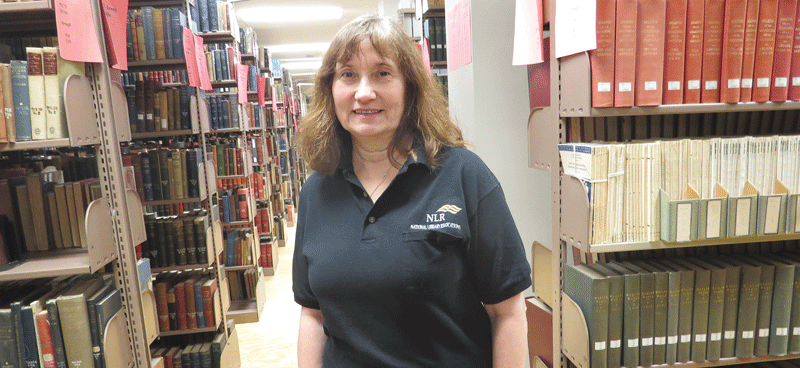
Sections Technology

Data Delivery

Pioneer Training President Don Lesser

Pioneer Training President Don Lesser

Don Lesser wasn’t planning on a career in computers, but the field found him through a series of opportunities that arose during the 1980s. Those became the basis for Pioneer Training, which, for more than a quarter-century, has helped companies in myriad fields navigate the ever-changing world of technology and make their operations more efficient.

The computer field was an accidental career for many people back in the 1980s, Don Lesser says, because it was so new. He counts himself as one of those who stumbled into it, and he’s grateful he did.

In 1977, Lesser earned a master of fine arts degree in fiction writing. While in the MFA course, he learned word processing, which was a boon to novel writers, who would previously edit their work and then spend two weeks retyping it. An interest in computing soon followed.

In the 1980s, he started doing corporate training and technical writing as part of the Pioneer Valley PC User Group, which he chaired for several years. As part of the group, he started teaching classes on how to use DOS word processors and other equipment. That led him to Valley Data, then a large tech company in the region, which asked him to teach computer classes.

That led to even broader opportunities, which he recognized, creating the company known today as Pioneer Training.

“Other companies weren’t happy about sending people to Valley Data for training, so we broke off and became a separate company,” Lesser said. “Everyone needed training back in those days; it was new to everyone. People didn’t even know not to press ‘enter’ at the end of every line.”

“Throughout the ’80s,” he went on, “I was using word processing, but I also got interested in programming. I asked the fateful question, ‘how does this all work?’ The answer was ‘zeroes and ones.’ But I needed to know more than that.”

In 1990, Lesser forged a partnership with two others and started offering computer classes in the Hampshire Mall in Hadley. In 1995, with a need to expand, the business moved to a suite of offices on Bobala Road in Holyoke. During these years, the company grew to seven employees and 20 consultants, and the outfit was conducting 12 to 16 classes a week.

“Once you do training for somebody, they tend to trust you,” he said, and companies began approaching Pioneer for other services, including database programming and automation. In fact, those areas of the business began to grow until, around 2003, they were outpacing the training aspect of the company. “By 2006, training had really fallen off, and programming had taken off. So we followed the market.”

The company no longer needed the large classroom space in Holyoke, so in 2008, Lesser and a smaller, core group of team members moved to their current, smaller space in Northampton, where they still conduct classes in Microsoft Access, Excel, Google Apps, PowerPoint, Windows 10, Word, and other software — but focus mainly on other services to clients.


List of Computer Network/IT Services in Western Mass.


These days, training is 30% of the business, and the rest is programming, he explained. “To be honest, most public classes don’t run frequently. But we do private classes; for example, a law firm will call us and say, ‘we need some training,’ and either we’ll go down there and set up computers in their conference room, or they’ll send people here.”

Today, Lesser, as company president works with three others — Mannie White, director of training; Graham Ridley, consultant and director of programming; and Deb Napier, consultant and programmer — to meet the ever-changing computer needs of a loyal client base. Although training is still in the name, the company does much more than that.

Breaking It Down

Take programming, for instance. “A lot of programming consists of automating tasks for departments … turning a two-day process into a 20-minute process, most of which is watching the computer work,” Lesser told BusinessWest.

“We’re smaller now, so we don’t need a lot of companies to keep going,” he said. “New clients come in, we figure out what they need, provide it, and add them to the fold. Most of our new opportunities are smaller companies in this area. And a lot of small companies are quite behind what the MassMutuals are doing. We’re bringing them up to speed; that’s where our bread and butter is.”

Some need more help than others, he added — even if they don’t think so. “A couple of companies are still in Word Perfect, and they prefer not to leave Word Perfect, and we have to accommodate them.”

Many small and medium-size companies, he explained, start out by tracking company data on Excel spreadsheets. As they grow and their operations become more complex, working with a web of spreadsheets can become unwieldy and time-consuming. So Pioneer Training helps clients move to Microsoft Access, which is a more robust data-management tool that also saves employees time.

Other services Pioneer provides might include designing a database from scratch that meets a company’s current needs; automating complicated tasks so they can be performed by non-technical users; creating custom forms for inputting data; creating standardized, yet flexible, custom reports for the most effective data display; updating an existing database to meet a company’s changing needs; creating processes for regular data imports and exports; and consolidating data for better data mining.

Clients include companies from a wide range of industries. Pioneer’s database projects, for example, include developing a process-router database for a national metals testing and finishing company, which tracks and organizes processing steps required for complex metal-plating work; and work for a local transport firm to consolidate several processes that manage its day-to-day operations into one Access database.

Meanwhile, examples of Pioneer’s office-automation clients include a regional bank in Western Mass., for which it automated the creation and printing of a certified letter form for bank letters; developed a set of macros to automate printing of letters from the bank to customers; and created a set of 42 separate charts to track loan categories. Meanwhile, for an international bioscience and lab reporting firm, Pioneer developed an automated process to extract data from lab reports, create charts based on the extracted data, and insert charts and data into a Word template for use in court proceedings. It also simplified the company’s billing by analyzing data and producing a number of reports summarizing data in various categories.

The team at Pioneer Training

The team at Pioneer Training, from left: Don Lesser, Deb Napier, Mannie White, and Graham Ridley.

As for its training arm, Pioneer maintains many repeat clients in a number of fields, from colleges to law firms to nonprofits. As one example, Western New England University wanted to offer staff the opportunity to upgrade their Word, Excel, and Outlook skills beyond the basics, so Lesser and his team designed a training program to meet the university’s goals, running a well-attended series of classes in all three applications.

On a national scale, Pioneer also developed online training courses for Pearson Education and reviewed the manuals for Microsoft Office 2000 and 2003, which involved testing every step in the book and flagging errors. “I feel like I’m one of four people in America who has written a formula for every function built into Excel,” Lesser said.

Lesser feels there’s more opportunity out there — “people still need training,” he said, “but fewer companies want to pay for it” — but the volume of work coming in keeps the four team members plenty busy, and he’s happy with the size of the business and the level of trust he has in White, Ridley, and Napier.

“We’ll tell you what works best for your company,” he said. “If people don’t feel like you’re holding them hostage, they’ll call when they need you, and they’ll be happy.”

Looking Back

Lately, Lesser has been producing training materials for Sanderson MacLeod, a brush manufacturer in Palmer.

“I started out doing corporate training, and now it’s coming full circle,” he told BusinessWest. “It’s technical, teaching someone how to use the machines to create the brushes. It’s not computers, not Microsoft Office-based, but they still need the training. I like to think of what I do as a spectrum, with pure training on one end and pure consulting on the other end, and I’m really happy to be anywhere along that line.”

Of the 50 people in that MFA program he took back in 1977, he said, maybe 20 are still writing fiction. Most of the others, like Lesser, wound up in far different fields, although he has continued to write, including a stint as a food columnist for the Daily Hampshire Gazette.

“That was the beauty of the computer industry in the ’80s. You didn’t set out to be a computer person,” he said. “I think a lot of artists — musicians, writers — fell into it. There was a lot of overlap. I’ve noticed that programming is a lot like writing. The output is different, but it comes from the same place inside me. I’ll see a problem and envision the solution fully developed. The work is getting the pieces down to make sure they work.”

When they do, that’s his personal reward.

“I think of it as moral work, in that we’re doing good for people, and we’re making their lives easier and better. I don’t want to put down any other occupation, but it’s not a matter of figuring out how to get money from someone who doesn’t want to give it to you; it’s a matter of figuring out how to solve somebody’s problem. It’s satisfying.”

Joseph Bednar can be reached at [email protected]
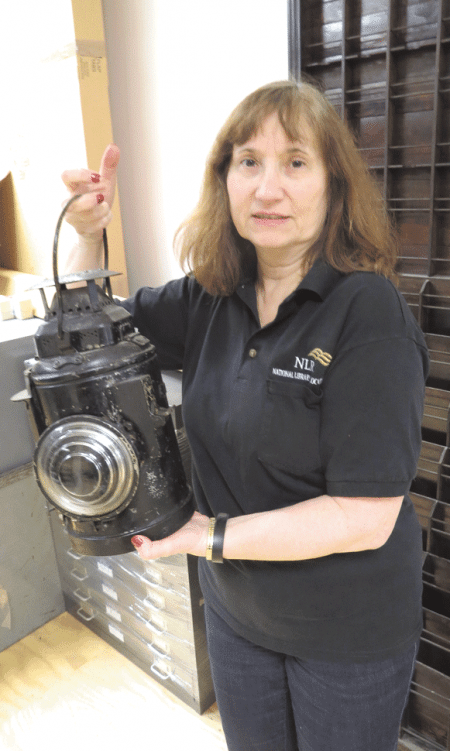
Sections Women in Businesss

Invaluable Connections

womenbusinessdpartMembers of the Women Business Owners Alliance of Pioneer Valley say the organization has proven beneficial on many levels, offering inspiration and knowledge from other women’s experiences in a supportive and non-competitive atmosphere. There’s a comfort level in the WBOA many say they haven’t found elsewhere, and it’s helping them gain the confidence and connections to succeed at business and in life.

The organization’s tagline is “It’s Your Business; Don’t Grow it Alone,” and that axiom and related support made a significant difference to Amy Woolf of Amy Woolf Color Consulting in Northampton when she relocated to Western Mass. from Florida in 2009.

“I was a stay-at-home mom, and being in a business-oriented environment has helped me perceive myself as a professional,” she said, noting that many companies start at women’s kitchen tables, and connecting with a warm and welcoming group of professionals can help them establish a business persona.

Woolf was talking about the Women Business Owners Alliance of Pioneer Valley (WBOA), and stressed that there was nothing like it in the Sunshine State.

She went on to say the group has provided her with invaluable benefits that include support, inspiration, connections, and knowledge gleaned from other women’s experiences.

“When you work as a solo entrepreneur, you are often very isolated. But belonging to this group is like having several dozen mentors,” she explained. “You develop relationships over time: everyone has a different area of expertise, so you have people you can call when you need to figure out how to handle different situations.”

Dee Emery-Ferraro, the WBOA’s current president, agreed, and called the organization a real sisterhood.

Indeed, the group is different than many other business and professional organizations that focus almost entirely on networking and generating new business, she said.

To begin with, this group completely avoids the word ‘networking,’ and concentrates instead on providing a warm, supportive atmosphere that fosters what they refer to as ‘connections’ that allow and encourage women to share information about their business as well as their personal lives. As a result, most members get to know each other in a way that has little to do with their professional goals, although that certainly isn’t ignored.

“In addition to being business professionals, we are homemakers, wives, mothers, sisters, and aunts,” said Emery-Ferrero. “What we do professionally is only one facet of our lives.”

Beverly Astley agrees, and says the camaraderie in the group inspires women to help their peers succeed. She attended chamber of commerce meetings before she was introduced to WBOA, but found they didn’t offer what she was seeking.

However, WBOA filled that gap and has provided her with the type of support she had hoped to find in a group.

“Women think very differently than men; when you have conversations with members of WBOA, they want to get to know you as a person, not just find out about your business,” she said, adding that the group is very nurturing; women share photos of their family and talk about their children, grandchildren, home-improvement projects, and other issues affecting their lives.

Which is not to say they don’t discuss business. Indeed, those conversations definitely take place, and a combination of programs, sage advice, and even technical assistance has allowed many women to grow their companies and become successful.

Members interviewed by BusinessWest noted that competitiveness does not exist within the group, even between women who offer similar services or products.

Amy Woolf

Amy Woolf says membership in WBOA has provided her with a number of benefits, including support, inspiration, and connections.

“It’s a great first stop for anyone contemplating a business, but it’s not just for women starting out,” said Woolf. “Over the years, WBOA begins to feel like a family, and today my closest friends are women I met in the group.”

When she leaves a meeting, she noted, she always goes home with a kernel of wisdom or an actionable item — a great idea that is easy to implement. A conference can be overwhelming, but meetings allow women to make changes and “put wisdom to work” in a manageable, sustainable way, she told BusinessWest.

“The group has been very, very meaningful to me and very helpful. I don’t know that my business would be what it is today without WBOA,” she said.

Debra Sorcinelli concurred. “A lot of our members are sole entrepreneurs and want to do business on their own terms. But it brings you up a notch to be around other professionals,” said the serial entrepreneur, reiterating the fact that many women have families and other important priorities, and it doesn’t matter to members whether someone is working part-time or full-time.

For this issue and its focus on women in business, we look at the programs WBOA offers and how they have helped women grow as professionals and entrepreneurs.

Meetings of the Minds

WBOA has 110 members ranging from women employed by companies of all sizes, to solo entrepreneurs, small-business owners who employ others, and females who work only part-time. As long as a woman is working in any capacity, she is eligible to join the group.

Membership dues are $95 annually, although the first meeting is free. Meanwhile, those we spoke with said the group is open to adding males to their roster, although so far none have expressed interest in the nonprofit, founded in 1982 by Renate Oliver.

Its initial purpose was to provide women with business referrals, but today it has evolved into what its members call a true sisterhood. Connections are made formally and informally, and many members use services and products offered by their peers.

The group’s main fund-raiser is its annual Women’s Night of Comedy, which features three professional female comedians. The event typically raises $5,000 to $10,000, and the majority of the profits are donated to charities that change from year to year. The next comedy event will be staged March 23 at the Log Cabin in Holyoke, and chosen charities include the SMART Girls program at the Westfield Boys and Girls Club and Safe Passage, a nonprofit dedicated to helping survivors of domestic violence and relationship abuse.

WBOA also holds monthly breakfast events on the third Thursday of the month at the Summit View Restaurant in Holyoke featuring guest speakers, as well as After-5 gatherings scheduled bimonthly on the first Tuesday of the month at the Delaney House.

Guests are invited to most events, and great care is taken to ensure they feel welcome and comfortable. A greeter is stationed at the door, and potential members are given the option of being assigned an ambassador who sits with them, answers questions, and follows up with a call to make sure they felt comfortable and welcomed.

During events, WBOA members participate in power connections, a program that gives them a 15-second opportunity to speak about their business. Shout-outs are also held, during which members praise a service or product from a peer that has helped them.

In addition, every June the organization has a Woman of the Year Celebration in which a member chosen by a committee is recognized for her contributions to WBOA as well as her community.

Over the past 18 months, the WBOA has started two new initiatives. The first is a mentor-mentee collaboration with Springfield Technical College Community created with help from STCC Associate Business Professor Diane Sabato and WBOA chairperson Lori Fortuna.

Business students from STCC are matched with members twice a year and take part in a six-week program that includes guest speakers, seminars, and information on topics ranging from self-esteem to job interviews. At the final meeting, mentees are given outfits donated by WBOA member Linda Ligsukis, who owns Designer Consigner in Southwick. Seventeen graduates were recently honored at a monthly breakfast meeting and received a certificate of achievement, gift bag, and flowers donated by member Jackie Griswold.

The second new program focuses on education and was coordinated by Debra Sorcinelli and Anita Eliason, co-chairs of the education committee. They launched the program with classes on how to use Facebook and social media to promote a business, and additional programs are being planned for the coming year.

Valuable Gains

Sorcinelli went into business in 1982 under the moniker It’s A Girl’s Thing. The Agawam entrepreneur began selling handcrafted silver jewelry, then switched to fashion jewelry, before she joined WBOA four years ago.

The timing was perfect; her jewelry business was successful, but she wanted to make a change and needed inspiration, which she found in the group.

“I have gone to other groups that are all about networking, where everyone wants to sell you something; but WBOA isn’t like that,” she said.

Sorcinelli became a member of the board of directors soon after she joined, and last year she closed her jewelry business and launched a new venture called Social Sorc. Today, she specializes in teaching individuals and small-business owners how to use Facebook and social media, and although WBOA has not added to her customer base, it has put her in touch with women who have business skills she wanted to learn.

“I have heard wonderful stories that were really inspiring, and the group allowed me to meet women who were more than willing to share their business secrets and contacts,” she noted. “We have all grown together.”

Sorcinelli also initiated change, and with help from co-chairs Kim Chagnon and Eileen Jerome, the After-5 events were born.

She told Business West that members have opportunities to speak about their businesses at these gatherings, which is ideal, as many have not done this in public, and the group is always supportive.

Sorcinelli has continued to be active in WBOA, and in 2015 she was feted with its Spirit Award at the annual Business Woman of the Year Celebration, in part for her work in helping women build connections with each other.

She says the old axiom that states “the people you surround yourself with determine your success” has been proven true with this group. Other women have supported her, and she has shared her own knowledge, which has included collaborating with members who wanted to use social media to promote their events.

Woolf told BusinessWest she was intimidated by social media before she joined WBOA, especially since it was a new marketing platform when she first heard about it. But after a member shared her own experiences with LinkedIn, Woolf gained the confidence to go home and set up a profile on the site.

“I have received a lot of free advice,” she said.

But she has also given back during annual roundtable events in which members give 10-minute presentations in their field of expertise.

Astley has also found WBOA highly beneficial. The sole proprietor does voiceovers via her business, Beverly Ann’s Voice, spends many hours alone in her studio, and finds the meetings inspirational both personally and professionally.

“You feel comfortable talking about personal things while you discuss your business in this group,” Astley said. “WBOA hasn’t enhanced my business directly, but it has given me a lot more confidence.”

Worthwhile Endeavor

Astley says every female entrepreneur should attend at least one WBOA meeting. “It’s a really good place to land,” she said.

Woolf agrees and says membership has provided her with priceless benefits.

“It’s an extraordinary organization, and my business has gone gangbusters. I am experiencing steady growth and wrapping up the best year I ever had, and WBOA has been a big part of that,” she said.

That’s a testimonial — one you hear often — that speaks highly of this group that caters to female professionals and provides them with a level of comfort they have not been able to find anywhere else.

Sections Women in Businesss

Opening Doors

Elizabeth Barajas-Román visits the White House

Elizabeth Barajas-Román visits the White House during her recent foray to D.C. for a forum on cultivating economic opportunities for women of color.

Expanding opportunities for women is not just a regional issue.

As an example, Women’s Fund of Western Massachusetts CEO Elizabeth Barajas-Román and Program Officer Ellen Moorhouse recently joined stakeholders from the academic, private, government, and philanthropic sectors at the White House for a forum hosted by senior administration officials.

The forum, “Advancing Equity for Women and Girls of Color: Continuing Progress and Building Toward Change,” focused on developing strategies that break down barriers to success and create more opportunity for all Americans, including women and girls of color.

“This forum focused on women of color and how to be successful economically, education-wise, and in their daily lives,” Barajas-Román said. “The Women’s Fund has been working closely with the White House Council on Women and Girls in regard to our work here in the region with young women of color.”

She explained that the Women’s Fund has focused on economic security and prosperity for women of color, and the White House Council has been a strong resource for gathering data and unveiling some of the trends at play on a region-by-region level.

“We’ve been able to take a deeper look at our region, and one of the trends that stands out is how many young people are leaving the region right after high school; they’re going away to college and not returning — so much that the Census indicates Springfield and Holyoke have a statistical shortage of young people,” she told BusinessWest. “We know this means these people are not buying homes, not investing in the community. So much happens when we lose these people right when they’re starting to make a life for themselves.”

As part of the forum, Barajas-Román took part in a roundtable discussion with several national figures, including Tina Tchen, assistant to President Obama, chief of staff to First Lady Michelle Obama, and executive director of the White House Council on Women and Girls; Valerie Jarrett, senior advisor to President Obama, who oversees the White House offices of Public Engagement and Intergovernmental Affairs and chairs the White House Council on Women and Girls; and Melissa Harris-Perry, editor-at-large for Elle magazine.

As one of about 20 women’s foundation leaders from across the U.S. who participated, she was able to talk about how organizations like the Women’s Fund are trying to make Springfield a model for raising the economic status of young women.

“It was a tremendous opportunity to be invited among organizations from New York City, California, these large areas — and interesting to hear their feedback,” Barajas-Román said. “Springfield really does look like the rest of the country, and they’re watching to see if we’re successful and it’s a model that can be taken to other areas that look like us. There were national funders in the room, national organizations that work with young people. It was a great opportunity to talk about all the ways Springfield is innovating, and we were hoping to not only bring back some additional ideas and partners, but to attract more attention to what’s happening here.”

The forum built on Obama’s efforts on behalf of women and girls, like the Lilly Ledbetter Fair Pay Act, expanding fair pay and paid-leave protections, and convening the first-ever White House summit focused on building workplaces that support working families and business.

The White House Council on Women and Girls has identified five data-driven issue areas where interventions can promote opportunities for success at school, at work, and in the community. Continuing research in these areas and exploration of new efforts can help advance equality for women and girls of color.

Under Obama’s leadership, the Council on Women and Girls has worked to ensure government policies appropriately consider these kinds of challenges and persistent opportunity gaps faced by many disadvantaged, marginalized, or underrepresented girls. The council also aims to inspire the private sector to do the same, to ensure that everyone who aspires to get ahead has a chance to succeed.

“By representing Western Massachusetts at the White House, we can ensure that our collective voice is heard on important policy matters,” Moorhouse said. “Only by having a seat at the table can we work to safeguard the progress we’ve made, while simultaneously laying the groundwork for future policy and social change.”

—Joseph Bednar

Banking and Financial Services Sections

A Matter of Addition

Kristi Reale and Jim Krupienski

Kristi Reale and Jim Krupienski are the newest partners at Meyers Brothers Kalicka.

As part of a strategic plan to generate new opportunities and more profound growth for the company, and also to ensure a steady flow of new leadership, the Holyoke-based accounting firm Meyers Brothers Kalicka has named two new partners — senior managers Jim Krupienski and Kristi Reale. They’ve been acting essentially as partners without that title for more than year now, and say the firm has provided them all the tools they need to succeed.

Jim Barrett says it was maybe the worst-kept secret he’d seen in quite some time.

He was referring to the granting of partner status to two senior managers at the Holyoke-based accounting firm Meyers Brothers Kalicka — Jim Krupienski and Kristi Reale. The two, who have been with the firm for 12 and 15 years respectively, and had risen through the ranks to senior manager, were told more than a year ago, in something approaching confidentiality, that they were on the track to becoming partners and would likely achieve such status so by the end of this year.

Their promotion wasn’t exactly classified information, but it certainly wasn’t broadcast loudly, said Barrett, the firm’s managing partner since 2009, adding that he made it all official in an announcement to the staff on Dec. 19.

To say that it was somewhat anti-climactic was an understatement, as evidenced by this anecdote from Reale, several days before the news was scheduled to break internally.

“Someone walked up to me and said ‘has your promotion been made official yet?’ she recalled. “It wasn’t exactly a secret, but I didn’t think everyone knew. I guess they did.”

But while the promotions may not have been as discreet as intended, they are certainly significant, said Barrett, and represent an important and in many ways unique step in the company’s efforts to grow and put in place an effective succession plan that will ensure solid leadership for decades to come.

“This was a well-thought-out component of our strategic plan,” he explained. “We have a partner who is retiring, so we have a practice need; Jim and Kristi have demonstrated all prerequisite skills to get there, and we’ve been talking to them for almost two years about how they’re on the track.

“It’s been a process that’s taken a number of years to unfold,” he went on. “We want to onboard them so they know what to expect and the know what’s expected of them; we want this to be a success for everyone.”

While Reale and Krupienski took essentially the same path to a partnership, and their resumes have many common denominators, including extensive work in the community, BusinessWest 40 Under Forty plaques (Reale in 2009 and Krupinski a year later), and a number of bylined submissions to this magazine, they arrived at MBK with different career aspirations, as we’ll see in a few moments.

But they arrived at this career moment together, and for now, they’re excited about moving into different, slightly bigger offices and having their names and bios found by clicking the ‘partners’ button on the MBK homepage. But they’re far more focused on meeting the responsibilities that some with that title and helping the firm grow at a time when doing so is certainly challenging for any financial services firm in a region that has seen little, if any, overall expansion.

For this issue and its focus on Banking & Financial Services, BusinessWest talked with the two new partners, as well as the managing partner, about the promotions and the firm’s strategic plans moving forward.

Watching Their Figures

When she first came to Meyers Brothers, P.C. in February of 2001, Reale was thinking more about staying maybe 16 weeks than the nearly 16 years it took her to reach partner.

Indeed, a veteran with seven years of public accounting work under her belt, she was hired to help during tax season on a per-diem basis, and walked in the door already thinking about what she might do next. But a funny thing happened on the way to carrying out those plans.

“I never left,” she said, stating the obvious before moving on to the more important topic — why.

“I was thinking about going into private industry, but after a couple of months at Meyers Brothers, I just loved it and decided to stay,” she explained, adding that she was hired after just five weeks of per-diem work. “It was very professional, everyone was treated well … it was just a great place to work. I looked forward to going there every day.”

Kristi Reale

When she arrived at Meyers Brothers, Kristi Reale was focused on staying 16 weeks, not 16 years, but the environment she found changed those plans quickly.


Meanwhile, Krupienski got off the elevator on the eighth floor of the PeoplesBank Building just off I-91 (the merged companies came together there in 2005) with a much different mindset.

After serving as a senior accountant at a Big-4 firm (PricewaterhouseCoopers) and then shifting gears and working as a senior auditor at the Hartford, he had made up his mind to return to public accounting. The question was where, he said, adding that through a friend he heard about an opening at MBK.

“I interviewed, liked what I heard, liked the firm, the culture, the people I met with … and felt I should throw my hat into the ring,” said Krupienski, adding that while it would be a leap to start thinking about making partner back in 2003, he allowed himself to harbor such thoughts, and before long, that became a hard goal.

“It was kind of a thought in the back of my mind — I had made the jump back into public accounting, and you generally don’t do that if you don’t have some aspirations for being partner someday,” he told BusinessWest, adding quickly that reaching this rung at a firm of that size is never a given and it would likely take much more than a decade.

“I came from a big-firm mentality,” he explained. “It’s very structured there in terms of the progression, and while this firm isn’t PricewaterhouseCoopers … things are similar in many ways.”

Those sentiments help explain how accounting firms are in many ways different from small and medium-sized law firms, said Barrett, adding that with the latter, an associate is in many cases on a partner track soon after arrival, and if they’re good at what they do, can probably expect to make partner within a certain number of years, although the number and circumstances vary widely with the firm.

In accounting, it’s different, he said, adding that law is more of a transactional business, where individual lawyers have what amounts to their own book of business and client list, while in accounting, one to 10 people could be working with the same client.

Jim Krupienski

Jim Krupienski says MBK has provided him and fellow new partner Kristi Reale with all the tools they need to succeed.

When asked why both Reale and Krupienski were named partners at this time, Barrett said it this amounted to a sound business decision. Both are qualified, experienced managers, and both have the capacity to help the firm grow market share.

Elaborating, he said there are certain required skill sets for reaching the partner rung, and both certainly possess them.

“Can you serve clients?” he began. “Are you able to grow the practice — attract new clients and develop relationships with existing clients? Can you train and develop staff? These are the prerequisites, and they have them.”

By the Numbers

Beyond those required skills, Reale and Krupienski also complement each other in many ways, said Barrett, adding that while they’re both involved in auditing and accounting, or A&A as they say in this business, they have different focus areas and specialize in different sectors of the economy.

Krupienski, for example, specializes — and has written about — medical practice operation, tax planning, and retirement plan strategy, while Reale specializes in closely held businesses, business valuations, management advisory services, and business and tax planning, and has extensive experience in retail, manufacturing, construction, distribution, real estate, insurance, and other service organizations.

“We have people with somewhat similar skill sets,” said Barrett. “But they’re different enough so they can go out and not compete with each other, and complement each other in some cases.”

Meanwhile, bringing them both on as partners now is a proactive step within the company’s broad efforts within the realm of succession planning, he went on, adding that many firms, especially smaller operations, are not putting enough emphasis on creating a solid pipeline of leadership of the years to come.

Elaborating, he said that when the two firms merged, there were 13 partners, a large number that the shareholders knew would eventually be whittled down, out of necessity, through retirement. That point has been reached, he went on, and the firm needs to replace that leadership.

“Our number one strategy starting when I became managing partner was to have a succession plan,” he told BusinessWest. “And everything we’ve done subsequent to that has been to develop that plan, including an investment in technology, investment in people through training, investment in human resources; this is just the culmination of that.

“We chopped this down to a five-year program,” he went on. “And the culmination of that is to have our replacements in place. This is the first example of all those efforts coming to fruition.”

When asked if, when, and under what circumstances additional partners would be named, Barrett gave a very quick answer: “Growth of the firm.”

And there are several ways to achieve growth, he went on, listing acquisition, geographic expansion, attaining a larger piece of the existing pie, or moving aggressively and effectively if the pie should happen to become larger.

And the two partners could, and likely will, play a large role in those growth efforts.

“We’re hoping that with their respective areas of expertise — Jim in medical and pension work and Kristi with business valuation — that they’re going to bring another level of services to clients or perspective clients that will allow us to grow,” he explained.

Both partners sounded like they were up for that mix of opportunity and challenge.

“It’s taken us time to get here, we’ve gone through the needed steps,” said Krupienski. “And in terms of where we are — they’ve afforded us with every tool we need to meet those challenges — training, development, helping us get out there, supporting us with joining boards and getting involved in the community … all of that will help in terms of meeting new people, meeting new prospective clients, and meeting other associates and professionals that will develop our base moving forward.”

Said Reale, “we’ve both had a lot of training, whether it’s in our own special niche, sales training, soft-skills training, leadership training … and it’s all going to help us develop professionally. And we’ve already been essentially working as partners, just without the title, for more than a year now.”

Focus on the Bottom Line

That last point certainly helps explain why the promotion of Reale and Krupienski to partner has been the proverbial worst-kept secret.

But while the announcement on the 19th might have been anti-climactic in some ways, it was a milestone moment nonetheless.

That’s because, as Barrett noted, it represented one significant step in ongoing efforts to achieve growth and a solid leadership for the future.

George O’Brien can be reached at [email protected]

Banking and Financial Services Sections

Family Matters


Some of the team at BRP/Grenier

Some of the team at BRP/Grenier, from left: Kelly Landron, Pat Grenier, Kim Galinski, and Lindsey Arventos.

As one of eight children, Patricia Grenier says she really doesn’t need any more family. Yet, as principal at BRP/Grenier, her growing financial-services practice, she treats clients like family members — which often means helping them make tough decisions.

One client was transitioning into assisted living and needed $200,000 immediately, and wanted to take it from her investment account. But the market was down, so Grenier was loath to do that.

“Her response was, ‘I don’t care what you do, just find me the money,’” she told BusinessWest. “So I called an associate at a bank and asked him if we could coordinate an equity line for this woman.” They did, and six months later, she sold her home, paid off the equity line, and moved into the facility.

“Those are the kinds of things we think about,” she said. “If all we focus on is investments, we would not go beyond and start asking the appropriate questions that need to be asked.”

Another client called about wanting to buy a car, and asking about loan options. “I asked, ‘why are you taking out a loan? You have enough money invested. You can use your own money.’ She was elderly; there was no need for her to have debt.”

In short, BRP/Grenier is an investment-strategy firm that goes well beyond its advertised services, which run the gamut from financial planning and education savings to retirement strategies and estate planning. Grenier considers it all life planning, which encompasses far more than crunching numbers.

Clients want to protect what they have but also grow it, and helping them do so takes a comprehensive understanding of their lives and goals — what’s important to them, what their resources are, and what their challenges will be to get there. With close to $200 million under management, it’s a responsibility she takes seriously.

“There are all kinds of issues to resolve: do they need more cash flow? Maybe there’s too much liquid, too much invested. Do they have a will? We’ll prod them to do a will or trust, those kinds of things.”

Those are questions she and her firm are asking many more clients these days, following the acquisition of a practice in Wethersfield, Conn. (more on that later). Getting to know the ins and outs of those lives is a challenge Grenier embraces, because it’s key to helping them succeed.

“I try not to focus on what the market is doing currently,” she said. “It’s a long-term strategy, so I focus on your life — what will make your life better. Temporary moves in the market won’t make a big difference in the scheme of things.”

Getting to Know You

Grenier says her skills as a listener, problem-solver, planner, and fact-checker were developed at a very young age, as the family interpreter and liaison for her large, family of Ecuadorean immigrants. So she enjoys learning the details of clients’ situations to help them formulate a big-picture perspective.

“Some things that people might find daunting, we think are really easy to handle,” she said. “For example, they might not be able to make ends meet, and they’re charging monthly expenses on a credit card. We’ll work on cash flow, figure out how to reprioritize spending. Maybe it’s time to downsize their home, or buy things for less money.”

Pat Grenier

Pat Grenier says crafting a strategy for long-term financial security begins with fully understanding the goals, circumstances, and challenges of each client.

While many clients are concentrated around the pre-retirement years, Grenier said, she helps people in all stages of life — for example, young professional couples making enough to save but worried about mortgages and school debt and saving for their kids’ college education, and knowing they’re in an income bracket that isn’t making them rich, but won’t be a magnet for financial aid. So they need a strategy.

And young people don’t start out with the advantages past generations did, notably the idea that they’ll work for one employer and retire with a healthy pension that will see them through their retirement years. These days, young professionals expect to progress through several jobs, none of them offering pensions. So it’s up to them to navigate investment options like 401(k)s and other vehicles.

“It’s a dynamic process. Life isn’t black and white, and we have to adjust,” Grenier said. “If there’s a job change or an illness or a birth or a divorce, we have to make sure we can adjust their plan so that it’s a viable plan that works for them. Everyone’s different, so the plan is going to be different for everybody.

“We want to help them achieve their goals, and sometimes we have to be the reality check,” she went on. “We have to say, ‘no, you can’t do this; you don’t have enough money.’ And sometimes, we need to say, ‘yes, you can buy that home on the Cape; you can afford it.’ So it works both ways.”

After a while, she explained, as she gets to know clients better, they come to trust her and her team, and they’ll be more comfortable divulging personal matters.

“I feel like sometimes I know them better than their own family members. And sometimes I have to protect them,” she said. For example, one client was diagnosed with Alzheimer’s and her nephew wanted power of attorney, but she didn’t feel he’d do a good job and recommended she pick someone else.

That said, Grenier can’t force anyone to make a financial decision.

“People have to be willing to cooperate. They have to want to be willing to make changes. If not, it’s not going to work. And sometimes it’s not going to work. Maybe they’re not willing to make the change. But it’s our job to explain, in our professional opinion, what they need to do to realize their goals.”

Not every decision is bottom-line based. One client was selling her business to family members and wanted to know how much she should get for it — not necessarily top dollar according to its value, but what she needed to strike a fair deal for her family, yet be able to live comfortably in retirement. “So we needed to make a projection about life expectancy and her needs, and once we figured that out, it was easy to come up with a number.”

Branching Out

Grenier was looking to expand her practice’s footprint when she learned that Joseph Connelly, owner of the Wethersfield Investment Center, was looking to retire. A few months after he and Grenier met, they agreed their cultures were a good match, and Wethersfield became a division of BRP/Grenier in September.

The Wethersfield office, which had previously operated under a different name, became the Wethersfield Investment Center in 2003 when Connelly assumed full ownership and became a Cadaret Grant-registered financial professional. The fact that Wethersfield and BRP/Grenier share the Cadaret Grant connection has made for a smooth transition, Grenier said.

“It’s in Connecticut, so it’s a different market, different laws, things like that, but a lot of the same principles apply,” she told BusinessWest. “I’m getting to know the clients, starting to delve into their lives, telling them, ‘you can count on us to help you with whatever you need help with.’ I know I have big shoes to fill. It’s a big challenge, but I love a challenge.”

All this makes for what she calls an exciting time in her business, but through the growth, she doesn’t want to lose track of the personal involvement that characterizes her relationships with clients. She began her career working for large houses where she had no time to get to know clients, and that frustrated her and drove her to become an independent advisor in 1990. And people welcome the sometimes necessary hand-holding it takes to help them navigate downturns in the market and, sometimes, in their own families.

“Maybe it’s my personality, but I tend to get way involved in people’s lives, maybe because I’m one of eight kids,” she said. “Every person who comes to me is treated as if they were my own family. And every person on my staff, that’s how they look at our clients, too.”

And it’s satisfying, Grenier said, to see financial strategies pay off in the form of peace of mind.

“In this business, we are so overregulated, and we have to love our business to be in it,” she said. “We want to retire people well, and it’s so gratifying to get a note from a client thanking me for what they currently have. I want to help people lead the good, comfortable life they’re accustomed to.”

Joseph Bednar can be reached at [email protected]

Cover Story Sections Sports & Leisure

Plane and Simple

Angela Greco stands by her Cessna 172 SP

Angela Greco stands by her Cessna 172 SP, which she acquired just before Thanksgiving and is now putting through its paces.

Attaining a pilot’s license involves a deep commitment — of time, money, and energy. But for those who persevere, the rewards are many, and include freedom, convenience, and sometimes a career. Meanwhile, there is the simple phenomenon of flight, which continues to captivate and stir the emotions. Said one woman who recently bought her own plane, “it’s almost like magic when that plane lifts off the ground.”

Angela Greco says she first started dreaming about learning to fly and one day owning her own plane when she was a freshman in high school.

Her family had a summer home in Laconia, N.H., she told BusinessWest, and she would become captivated watching the sea planes land and take off, allowing her imagination to take her to a time and place when she might be able to do those things herself.

The dream was put on hold for awhile — OK, a long while, as in more than 40 years. Her mother said ‘no’ when she first raised the prospect of taking flying lessons, and then, well, life got in the way, as it often does. But it has been realized — big time.

Indeed, Greco got her license three years ago, and just last month took possession of a 2005 Cessna 172 SP (price tag: $200,000). She is still in the process of breaking it in and becoming comfortable with its so-called glass cockpit — one that features electronic (digital) flight-instrument displays, rather than the traditional analog dials and gauges — but she’s just about ready to put it through its paces.

Specifically, she’s starting to assemble a list of attractive destinations, and is zeroing in on the state of Tennessee — she recently took in a show on the Smithsonian channel detailing many of its attractions and scenery from the air, and her interest was certainly piqued.

“I love to travel, that’s one of my passions,” she said, adding this pursuit was one of the reasons she pursued a pilot’s license. “There seemed to be a lot of interesting things in Tennessee, and it’s a state I haven’t been to yet.”

Thus, Greco has joined what appears to be a growing number of people making the sizable commitment — in terms of both time and money — it takes to learn how to fly and gain a license.

The numbers of new flyers are not exactly soaring, to use an industry term, noted Rich MacIsaac, manager of Northampton Airport and Northampton Aeronautics Inc., who has been a flight instructor for nearly 20 years. But they are climbing.

And, as has been the case historically, most of those taking to the air are in their 20s and early 30s — before the responsibilities of everyday life really start to pile up — or their 50s and 60s, after those responsibilities have at least started to ease up a bit.

Greco falls in that later category, obviously — she’s an owner and manager of several residential properties and is getting ready to sell them and officially retire — while Shannon O’Leary is among the former.

She’s a 22-year-old senior at Ithaca College in Upstate New York who told BusinessWest that, if all goes well, she might just be handed her diploma and her pilot’s license at roughly the same time.

She said she gained the urge to fly from her father, who flew years ago, put that hobby aside, and then picked it up again a few years ago, or just in time to start flying to Ithaca to hear his daughter, an accomplished French horn player and music teacher in the making, perform at a host of events.

Gaining a pilot’s license, as noted, is an expensive, somewhat time-consuming endeavor, said MacIsaac, noting that, when all is said and done, a license will usually set one back between $8,000 to $10,000, and most will spend 12 to 18 months earning their wings.

Rich MacIsaac

Rich MacIsaac says the sensation of flight continues to attract people of all ages.

Thus, only about half of those who start down this path will reach their destination, he said.

For those who persevere, however, the rewards are considerable, in terms of everything from the convenience that flying provides — one can get from Northampton Airport to Martha’s Vineyard in maybe an hour, a fraction of the time it take to get there via car and the ferry — to the sensation of flying, which can lead those who have experienced it to summon a host of descriptive words and phrases.

Like these.

“It’s almost like magic when that plane lifts off the ground,” said Greco. “That’s the only way I can describe it — magic. It’s exciting, and at the same time very peaceful.”

Added O’Leary, “taking off is probably my favorite part. It’s that moment when you really feel like you can do something so liberating as flying a plane; that feeling that you’re flying is just incredible.”

For this issue and its focus on sports and leisure, BusinessWest talked with a number of people who can talk about that experience, what it takes to join those ranks, and why it’s all well worth it.

Working in the Cloud

It was bitterly cold the day Greco talked with BusinessWest, and the wind, while not as strong as the forecasters predicted, was significant, and gusting up to 15 to 20 miles per hour.

Not ideal flying conditions, certainly, and many of the people who were scheduled to head out of Northampton Airport that day or take lessons there decided to scrap those plans.

But not everyone, and eventually Greco decided that the weather was not bad enough to keep her on the ground. When asked what she had in mind for the afternoon, she paused for a moment as if to indicate she was still considering options, before saying she might head up to Keane, N.H. to have lunch and maybe do some shopping. After all, in her Cessna, she could probably do all that in just a few hours — and take a nice, relaxing ride while doing so.

“It is just this convenience and … let’s call it freedom that has always appealed to people with an interest in aviation,” said MacIsaac, adding quickly that, for most, there is much more involved than a desire to chop a commute time in half.

Indeed, the phenomenon of flight still resonates with many individuals, he noted, even at a time in history when being at the controls at cloud level certainly isn’t as, well, mind-blowing as it was a century ago, or even a few decades ago.

“Flying used to be a kind of technical thing, and it was something people could gravitate toward — these were technically advanced pieces of equipment,” he explained. “Now, if you’re interested in technology, there’s lots of other things you can be doing.”

Still, flying continues to capture the imagination, said MacIsaac, who speaks from personal experience. He moved into a house not far from a small airport outside Omaha, Neb. in his early 30s and, after years of watching planes fly over his yard, eventually decided he’d rather do than observe.

Shannon O’Leary, seen here after her first solo flight last summer

If all goes well, Shannon O’Leary, seen here after her first solo flight last summer, will get her college diploma and pilot’s license at about the same time.


“I got to the point where financially I could do it and I had the time to do it,” he explained. “So I got my private pilot’s license and flew recreationally. Over time, I added ratings and became a flight instructor, and it slowly morphed into a career.”

In many ways, his story is typical of those who take the plunge and get their license, he said, adding that recreational flying is just part of the equation. Indeed, some are attracted by career opportunities, he went on, noting that, while many airline pilots don’t earn as much as one might think, that’s just one route one can take, and, overall, one can certainly earn a decent (and fun) living with a pilot’s license.

He’s proof of that.

After instructing for several years, he took aviation as a career to a much higher plane, becoming manager of Northampton Airport in 2004, the year it was acquired by local business owner Bob Bacon, who invested heavily in infrastructure and facilities, including several new hangars. He owns his own plane, a four-seat Sirrus SR22.

Today, MacIsaac oversees a multi-faceted business that operates under the name SevenBravoTwo Inc. It includes everything from the flight school to scenic flights; aircraft maintenance to leasing hangar and tie-down space (there are roughly 90 planes based there).

The flight-school operation generally has about 50 people working toward their pilot’s license at an given time, and that translates into roughly 4,000 flights a year, said MacIsaac, noting that 70% of these individuals are doing so for what would be considered personal or recreational flying, with the other 30% harboring aspirations to become a professional pilot of some sort.

One must be 17 to attain a license, he went on, adding that an individual can start the process earlier. He sees a few who choose to balance flying lessons with high-school classes, but most are older and fall in those two categories mentioned earlier — young professionals who still have the time and the means to pursue a license, and older individuals who have paid off the house and put the children through college.

One must have 40 hours of flight time and be able to successfully complete a wide array of maneuvers to get a private pilot’s license, MacIsaac noted, and most will take their time gaining that requisite experience, usually more than a year. And many won’t reach their intended destination, for one of many reasons.

“For many, it’s a financial issue; it becomes more expensive than they thought it was going to be,” he noted. “Or, over a period of time, something happens in their life that puts them in a situation where they can’t afford it anymore and they have to stop.”

As for those who persevere and gain their licenses, only a small percentage, maybe 5%, will actually buy their own plane, he told BusinessWest, adding that many others will join partnerships and clubs that jointly own planes.

And many will simply choose to rent one of the many aircraft the airport has available for such purposes, he went on, adding that they generally lease for about $120 per hour of flight time (that includes fuel).

Considering that one can fly to the Vineyard and back in two hours and skip a considerable amount of time and hassle that are part and parcel to driving to the island, renting a plane has become an attractive option for day trips to that destination and many others.

Winging It

Dave Strassburg’s story is in many ways similar to MacIsaac’s.  A pharmacist by trade, he attained his license more than 20 years ago, and continued to add ratings, moving from private to ‘instrument,’ to commercial.

Becoming an instructor was an objective he put on his bucket list some time ago, and he’s been doing it for 15 years now. While doing that at Northampton Airport on a very part-time basis, he also flies recreationally, and for business — he owns a medical-device-manufacturing company, Strassburg Medical Inc., based just outside Buffalo, N.Y., and takes his twin-engine Cessna there at least once a month.

Business takes him all over the country, and whenever possible, he’ll fly himself, he said, adding that doing so frees him from having to comply with the airlines’ schedules and a host of other inconveniences.

“Besides, if I was sitting in the back of a commercial airliner, I’d just be wishing I was up front anyway,” he said with a laugh.

Strassburg says flying is a passion, and he’s dedicated himself to encouraging others to take up that pursuit and persevere in their quest for a license. He’s convinced a good number, including his wife, who got her license about six months ago, and two Blackhawk helicopter instructor pilots based at Barnes Municipal Airport in Westfield.

“I’m a big proponent of aviation, and I love getting other people involved in it — I like giving people that little push they need,” he told BusinessWest. “There are so many people who think about it, but they never pursue it. I instruct people for the passion of flying and getting people involved in it and showing them that they can do it.”

That push he described comes in various forms, including Groupons used as incentives to get people who are on the fence to try to get over it.

And it was one of that Groupons that caught Greco’s eye.

“I said to myself, ‘that’s it, it’s sign, time to go do it,” she said, adding that she never actually lost that fascination for flying she acquired while summering in Laconia. She just had to wait till the time was right.

She said the lessons were not easy or inexpensive, but she stuck with it and gained her license in the spring of 2014. Soon thereafter, she rented planes and became a half-share partner in a another Cessna 172, taking trips to a host of destinations, including, Block Island, Niagara Falls, Cape Cod, Maine, and North Carolina.

“My plan now is to take my plane and just fly to destinations all over the United States,” she said, adding that she’ll likely start with Tennessee and move on from there.

O’Leary has some similar ambitions, and some others as well. She plans to teach music for a living, but intends to make flying an important part of her life.

“In an ideal world, I see myself getting a recreational license and being able to have a side gig where I might be able to take people on scenic flights,” she told BusinessWest. “That would be a second source of income for me during the summers, because I’m going to be an educator.

“It would be awesome to be able to fly and also service others,” she went on, adding that she intends to make this a life-long pursuit. “You start doing this because you love it, and when you don’t stop loving it, you get to open up all kinds of possibilities.”

And with that, she spoke for everyone who has had the privilege to enjoy life in what’s known in aviation as the ‘left seat.’

Final Approach

Summing up the pursuit of a pilot’s license and recreational flying in general, MacIsaac said it’s like golf or many other activities one might pursue during their lifetime.

“Some people are naturally going to be better at it than others, some people are going to enjoy it more and it’s going to become a big part of their life forever,” he explained. “And for some, it’s going to be something they tried, and maybe they enjoyed it, but for reason or another, they moved on to something else.”

Perhaps, but not too many of those activities can evoke the same kind of emotions — and the same kind of language used by those who have experienced flight.

As Greco said, “it’s like magic when that plane lifts off the ground.”

George O’Brien can be reached at [email protected]
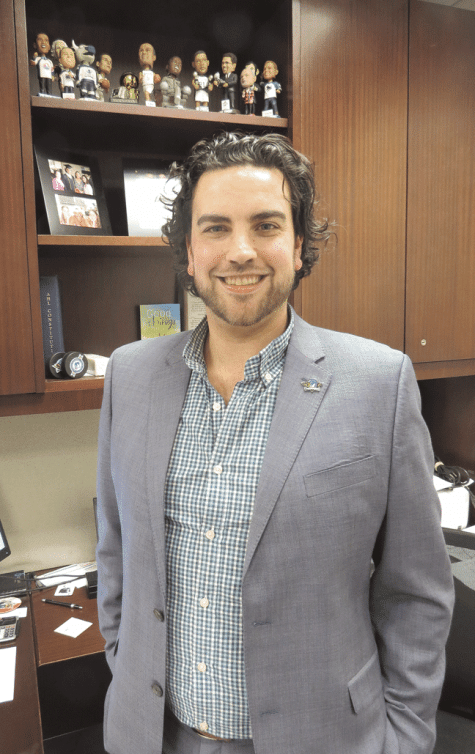
Sections Sports & Leisure

Level Best

Greg Stutsman and George Myers

Greg Stutsman and George Myers say the Quarters is intended to appeal to a wide range of people, from kids to college students to adults who crave a nostalgia fix.

George Myers and Greg Stutsman didn’t spend the early ’80s in arcades; they were toddlers when the arcade craze peaked in 1982 and 1983 before collapsing alongside the boom in home consoles.

So they don’t remember first-hand the thrill of mastering Ms. Pac-Man and Q*bert and Donkey Kong and dozens of other titles from that golden age. But they experience it vicariously every day at the Quarters in Hadley, watching 40-somethings light up with nostalgia at the old games while their own tweens, raised on the hyper-realistic games of the 21st century, discover the simple charms of these retro titles for the first time.

“A lot of people say our games are obsolete, and one reason is home-gaming consoles,” said Stutsman, who opened the Quarters with Myers in January 2014. “But the thing that’s missing is being in the physical space, enjoying the games alongside other people. Here, they can play one game, move to another — it’s a more energetic space.”

The pair had known each other for 12 years through event production, mainly music shows, and began talking about going into business together. The original idea was a music venue with food and drink and maybe a few arcade games, and they visited several potential locations before their current neighbor, who runs a tattoo business next to the Quarters, told them about the available space, which used to house a café and a furniture gallery.

It didn’t work as a music venue, but Myers and Stutsman saw plenty of potential for both nightlife and weekend traffic, and the Quarters concept began to take shape.

“We’ve seen an emergence of destinations like this, arcade bars,” Stutsman said. “A lot of places focus on nightlife, a young, creative crowd, but we saw an opportunity for a more inclusive place, where we could include a broader community than the college-student nightlife crowd.”

Myers recalled with a smile how friends they’d go out with would complain when he and Stutsman criticized how a venue was laid out and how they’d do it differently. When they had their space, and saw how it bordered the region’s main bike trail and was close to both Hadley’s downtown area and area colleges, they recognized that the games should be the main draw, with their appeal to multiple generations.

And so they are — almost two dozen at any given time, ranging from 1978’s Space Invaders to a few from the early ’90s, but mainly hailing from that early-’80s golden age.

“We liked the idea of creating a space that was special in nature and provided opportunities for people to bond over their shared love of these retro games,” Myers said. “We wanted to make sure it was exciting and interesting for a lot of different people.”

Some patrons might be drawn by theme trivia nights, he went on, while kids tend to pour in on weekend mornings and early afternoons. “We want all these different people in this space. At its core, it never stresses one thing, and we make sure no one feels alienated or unwelcome.”

Word on the Street

After deciding on their concept, the owners relied on an Indiegogo campaign to raise money to buy the initial machines, which got the word on the street that a retro arcade was coming. That turned out to be a positive development, even when the opening took longer than expected.

“All businesses take longer than people think to open, and we started advertising pretty early,” Stutsman said. “But that was to our benefit. People knew about us; the word was out. We were often telling people, ‘next month it’s going to happen.’ And when we did open, we were busy from day one.”

Myers said he and Stutsman deliberately crafted their business as a space where everyone could come and feel comfortable. It’s a popular booking spot for kids’ birthday parties, and weekly Super Cereal Saturdays, which feature unlimited tokens, a cereal and milk bar, and ’80s and ’90s cartoons, are well-attended.

“It’s a place for 11-year-olds and people who remember being 11, and may be in their 30s or 40s with their own kids,” Myers said. “People on the bike trail might stop by for lunch. At night, it’s a little more bar-oriented crowd. In the span of 24 hours, so many different types of people can come here and enjoy it on their own terms. We went through great pains to make that happen.”

As for the food, it’s not an afterthought, said Stutsman, who ran sandwich shops in Northampton in a previous career. “We’re happy to see the recognition it’s getting. People are really happy with the food. For us, it’s an important piece of the puzzle, and a lot of thought was put into that.”

Q*bert

Myers and Stutsman get a kick out of seeing parents introduce their kids to the games they grew up with, like Q*bert, Ms. Pac-Man, and Burgertime.

The menu features food that can be carried around while patrons play games, but with a twist. For example, a series of small, locally made hot dogs, or ‘pups,’ come in varieties ranging from the classic New York pup to a kimchi pup and a banh mi pup. At the other end of the taste spectrum, the place was packed for a recent vegan night, which featured a wide-ranging menu of all-vegan fare.

But the games themselves are the main draw, and they’re not as difficult to find as one might think, Stutsman said. Craigslist was an obvious starting point, and in the four years since they began collecting the machines, they’ve come to know a network of sellers across the country — some in the Western Mass. region — so the task of replacing games and adding to their collection has become easier.

When they sat down with BusinessWest, the Quarters had 22 games on the floor and another 35 in storage. Games are rotated in and out on a regular basis, both for repairs and simply to maintain variety for players.

And, yes, the games do need repairs. Over the years, they’ve learned enough to fix some issues themselves, while others require outside repair experts; some are hobbyists, others electrical engineers with an interest in vintage games.

“Games do break, and we try to stay on top of that,” Stutsman said. “This is not a museum.”

Some video-game collectors, he elaborated, display their machines as showpieces, not meant to be played, but the games in the Quarters are meant to be used, and used a lot, and their moving parts often require maintenance. “These aren’t like the collector’s pieces you’ll find in someone’s basement.”

Blast from the Past

Myers and Stutsman knew their concept was a winner after the success of their Indiegogo campaign and the initial crowds, which haven’t dampened. They recognize they’re giving something valuable to their customers: a chance to relive fond memories and create new ones.

“One of the neatest things for me is to see the joy on people’s faces when they walk in here,” Stutsman said. “It’s a pretty special place — not just because it’s a room full of arcade games, but because of the atmosphere. On the flip side of that, all the work that goes into it is hard to overstate.”

Myers agreed.

“It’s much easier to talk about the fun aspects as the years move along, but opening it was a challenge, a lot of sweat equity,” he told BusinessWest. But he’s gratified to see the sheer range of people who come in every day — kids and their parents, teenagers, college students, young professionals — all with a shared love of playing retro games and soaking in the distinctly ’80s vibe. Here, after all, is a place where the arcade industry never disappeared, where people still patiently line up for their turn on Galaga or Arkanoid or Burgertime.

“I love seeing a dad in his 40s introducing his daughter to the game he was so great at — and the daughter turns out to be better than he is,” Myers said.

“That’s a great experience,” Stutsman added, “sharing that joy, seeing someone experiencing a game for the first time.”

And then dropping in another quarter. And another. And another.

Joseph Bednar can be reached at [email protected]

Construction Sections

Building Expectations

constructiondpartThe construction sector has always been a good barometer when it comes to the economy and what may happen with it in the foreseeable future. And this historical trend is one of many reasons why cautious optimism abounds in the region. Indeed, many firms report that they have a number of projects on the books for the year ahead and beyond, and that these projects involve a number of economic sectors.


Gagliarducci Construction in Springfield has been in business since 1916, and the fourth-generation, family-owned company has had to switch its focus many times over the years to keep pace with change. It specializes in excavation, earth moving, site work, and mobile crushing of stone, concrete, and asphalt, and the majority of its current projects are centered in educational and healthcare settings.

And it is extremely busy, reflective of a trend involving many players within the broad construction sector — one that is generating a good deal of optimism within the industry, and probably outside as well, because the sector has historically been a good barometer regarding the economy and what will happen with it.

“We have jobs on the books that extend well into 2018,” said Jerome Gagliarducci as he and his son Jay talked about their business history and projections for the future. “Most of the jobs are in the private sector and involve hospitals and schools. Between 2000 and 2006, we did a lot of work for the Massachusetts Department of Transportation, but education and healthcare are a big part of the Western Mass. economy, and this is where the money is being spent now. There are a lot of colleges in the Pioneer Valley, and we’re glad to be involved in their ongoing projects.”

Still, having jobs booked this far in advance of a new year is not something they take for granted. “There have been times when all of our projects were completed by the end of the fall or winter and we had nothing scheduled for the upcoming year,” said Jay Gagliarducci. “We have been lucky: it’s unusual to have so many new jobs lined up this early that will continue into the future.”

Eric Forish, president of Forish Construction Inc. in Westfield, said his firm has also fared well.

“We’re celebrating our 70th year in business, and the last few years have been good ones; I credit that to our staff and expect that work in the commercial construction industry will continue to move in a positive direction,” he told BusinessWest, noting that the company typically has six or seven major projects taking place simultaneously.

Holyoke-based Daniel O’Connell’s Sons Inc. also reports that 2016 has been a good year. The company also has offices in Franklin, New Haven, Conn., and Kingston, N.Y., and President Jeff Bardell is often on the road. He told BusinessWest that entirely different dynamics exist in Eastern and Western Mass.

“Things are booming in the Boston area inside of Route 128. It’s obvious to drivers because there are so many cranes up,” Bardell said. Construction is also taking place in Western Mass., but not at the same level, and work in the public sector has declined.

“Work has been pretty steady here for the past few years, but the amount of roadwork, wastewater-treatment work, and public infrastructure spending has decreased over the past 12 months,” Bardell went on, noting that work in that sector was much more prevalent four or five years ago.

However, institutional jobs have filled the gap. “Colleges are still spending money, and we have done some nice projects,” he said.

Bardell believes some people are waiting for the work on Interstate 91 and the MGM casino in Springfield to be complete before launching new projects.

“A lot of people are looking at Springfield and hoping redevelopment will occur when the casino is finished,” he said, adding that one of O’Connell’s largest jobs in Springfield is the $60 million Union Station intermodal transportation center.

Eric Forish

Eric Forish says the $4 million, LEED-certified Westfield Transit Pavilion at Elm and Arnold streets is one of many projects his firm is working on at present.

It includes a 120,000-square-foot historical renovation to the old station in the downtown Railroad Historic District. The project has been complex and includes construction of a new, 24-bay bus terminal; a 480-car parking facility; and upgrades to the landscaping and hardscapes around the area.

Before the work began, Union Station consisted of two vacant buildings: a three-story terminal and a two-story baggage building that were both constructed in 1926.

“We’ve been working vigorously to wrap up the project and are very close to being done,” Bardell said, adding that he expects that to happen in the first quarter of 2017.

For this edition and its focus on construction, BusinessWest looks at a host of projects keeping commercial builders busy, as well as what they have lined up for the future.

Going Up

Bardell said O’Connell recently completed new residence halls at Amherst College. Four new dorms were erected as part of a greenway campus project, which will include demolishing the old dorms and building a 250,000-square-foot science center and expansive greenway along the full length of the landscape that can be used for recreation and relaxation.

Jerome and Jay Gagliarducci

Jerome and Jay Gagliarducci say they have work booked into 2018 and expect to be very busy in the coming year.

Another project at UMass Amherst will be completed in January, but right now work is still underway on its historic South College building. It includes a renovation of 30,000 square feet in the structure, built in 1886, and a four-story, 67,500-square-foot addition that will provide new common areas, faculty offices, classrooms, and an auditorium.

“The new building will be LEED-certified,” Bardell said. “It will be used next semester, and furniture is being moved into it now.”

The company has other ongoing projects in the educational sector. It just finished a $110 million job at Vassar College centered around an 80,000-square-foot Bridge Building that spans two sections of campus terrain and connects to the school’s Olmsted Hall via a two-level skywalk.

In addition, a $2 million renovation and addition to Philips Exeter Academy Center’s theater in Exeter, N.H. is underway. The job started two months ago and will expand the space to 63,000 square feet.

Four months ago, O’Connell began working on the $9 million Dartmouth College Hood Museum expansion and renovation project, which involves a restoration and addition to the existing gallery space. When it is finished by the end of next year, there will be five new galleries and advanced technology classrooms.

The company also has a few smaller jobs, including a renovation project at the Culinary Institute of America in Poughkeepsie, N.Y.

Another project in that state is at the Trinity-Pawling School, where O’Connell began working on a 27,000-square-foot addition to the Smith Field House about a month ago that will be complete sometime next year. “It will be used for basketball, lacrosse, and other sports,” Bardell said.

In addition to jobs in the educational sector, O’Connell has projects in other realms. Six months ago, it began a $29 million dollar upgrade to an existing wastewater-treatment plant that serves Mansfield, Foxborough, and Norton in the eastern part of the state.

Work on the MFN Regional Treatment Plant entails installing new aeration facilities, chemical facilities, and electrical upgrades as well as concrete work, and is expected to take another two years.

O’Connell is also doing a $17 million project in Providence, R.I. on the Providence River Pedestrian Bridge that connects two sides of the city and includes sections of a riverfront park.

“We’re optimistic as we look ahead at the coming year,” said Bardell. “We have some backlog, which we like, and are always looking for new work.”

Varied Portfolios

The majority of Gagliarducci’s projects take two to three years to complete.

“We’re usually the first on a site and the last to leave it. But it is a challenge to predict a year ahead of time exactly when we will be needed,” Jay said, explaining that schedules change from one month to the next, and although the end date is usually firm, weather and production by other trades affect the timetable.

Right now, all of the company’s work is institutional, and there has been plenty of it.

It just finished an addition at Baystate Franklin Medical Center in Greenfield and started one at Baystate Wing Hospital in Palmer that will open in 2018.

“We dig the foundations and put in sewer, water, and drainage systems, which is work that people don’t see,” Jerome explained, adding that such work takes place at the start of a project, while work at the end of a project involves paving, curbing, sidewalks, and more.

Galiarducci has also broken ground at the site of the new Pope Francis High School in Springfield, which is slated to open in the fall of 2018. This school is being built on 40 acres of open space, which is unusual in this area; most of the company’s projects involve working in or around existing structures.


List of General Contractors in Western Mass.


The company was just hired to undertake work in a massive renovation of what’s known as Building 19 at Springfield Technical Community College, and that job will carry over into 2018.

Gagliarducci worked with O’Connell on the Amherst College greenway residence project, and will complete phase 1 of another large project at the Isenberg School of Management at UMass Amherst this month, which involves relocating water, sewer, and drainage lines in the footprint and moving them to allow for new construction.

Although the work may not sound complex, renovations and additions in tight spots can be quite challenging. “UMass presented real challenges because we had to work around the student traffic,” Jay told BusinessWest.

Deerfield Academy has also hired the firm to do site work for a new hockey arena. The project began in March and will be completed in 2018.

“It involves a lot of digging inside the foundation to support the renovation,” Jerome said, explaining that the firm will put in new sewer lines, curbing, and a parking lot.

Later this winter, it will begin a drainage project at Springfield Armory Museum.

This is a federal project, as the museum is owned by the government, and will include new sewer lines and curbing, sidewalks, and pavement. The work should be finished by the end of next year. “We’re also starting phase 2 of an over-55 community in Hadley,” he noted.

The first phase consisted of building seven or eight units, most of which have been spoken for, and the second phase will commence next spring when Gagliarducci will do site work to allow additional housing units to be built.

The company is also involved with the new South End Community Center in Springfield. Jay noted that Fontaine Brothers is building the new center on Marble Street and his firm is doing the sitework, which began in September.

Westfield’s Gaslight District Improvement Project is also on Gagliarducci’s roster. “It was our job to put in the water, sewer and drainage lines, as well as the sidewalks, curbs, and two parking lots, in addition to reconstructing several streets,” Jerome said, explaining that the project began two and a half years ago and involves major reconstruction in the area.

Future Endeavors

Forish Construction has a mix of ongoing projects that include the new $4 million Westfield Transit Pavilion at Elm and Arnold streets. The glass and steel building will have five bus berths, a shelter for passengers, a coffee shop, and administrative offices, and will be surrounded by brick walkways. Parking will be available in an adjacent facility, and there will be repair stations and racks for bicycles.

“It is the first major piece of the city’s long-term downtown redevelopment plan that will be completed,” Forish said, noting that the pavilion will be LEED-certified.

Several buildings were knocked down to make way for the new pavilion, which will make it more convenient for Westfield State students to travel to and from the university via a shuttle that runs between them.

The company has also several projects underway or that have been recently completed at UMass Amherst, including a roughly $4 million renovation to the W.E.B. Du Bois Library. “It is our third major project in this library, which they are redoing floor by floor,” Forish said.

Auto dealerships rank high on the company’s list of projects, and include work for Sarat Ford, Curry Nissan, and Sarat-Lincoln.

“We’re just wrapping up a renovation and addition to Lia Chrysler on King Street in Northampton,” Forish said, noting it is adjacent to Lia’s Honda store.

No one can predict the future, but work has been steady for Forish and other commercial contractors.

“We have a number of projects already under contract for 2017,” Forish said, noting that they include auto dealerships as well as private industrial buildings and the company is always active in the public sector and plans to bid on some local projects.

He told BusinessWest his optimism stems in part from the fact that Donald Trump is the new president-elect.

“It appears he is business-friendly and wants to see growth in U.S. and an increase in jobs here as opposed to abroad. We are already seeing a rise in the stock market, and people are optimistic about the direction the country is headed in, so we are hopeful that good things will come to fruition,” Forish said.

In the meantime, commercial contractors will continue to work hard to complete current projects, bid on new jobs, and rely on the stellar reputations that have kept them busy for generations as they plan for the New Year and beyond.

Health Care Sections

On the Home Front

Holyoke Soldiers’ Home resident Ted Dickson

Holyoke Soldiers’ Home resident Ted Dickson

Opened in 1952 to provide long-term care to those who served in the war to end all wars, the Soldiers’ Home in Holyoke has continued to be a solid option to those who have served in all the wars since, and in peacetime as well. The 24/7 care is complemented by a unique environment that brings veterans together, recognizes them for their service, and gets them out into the community. Said its new superintendent, “every day is Veterans Day here.”


Bennett Walsh was searching for some words he thought he could sum up the purpose, or mission, of the Soldiers’ Home in Holyoke and, more importantly, what it means to the veterans who reside there and their families.

He eventually summoned the phrase ‘safety net,’ and would use it several times in the course of a discussion about this state-funded long-term-care facility’s past, present, and likely future. And in many ways, that works.

“People come here because, for one of a variety of reasons, the family cannot provide the 24/7 care that their loved one needs,” said Walsh, a retired Marine lieutenant colonel who was named superintendent of the facility just before Memorial Day last May. “We’re a facility that can provide that. In many cases, a husband loses his wife, and she was the primary caregiver. Now that she’s gone, there’s no one in the family that can care for him 24/7. Every veteran here has a different story, but it all starts with a need that we can meet.”

But to those who call this facility home, it is much more than a safety net. For some perspective, BusinessWest talked with Ted Dickson, a submariner who served on the USS Snook, a nuclear-powered Skipjack-class vessel, during the Vietnam War. He suffered a brain aneurism two years ago, underwent surgery at Leahy Clinic, recuperated at several hospitals, and then spent some time in a local nursing home.

It was that last stop that he used as a launching point for his comments about the Soldiers’ Home, which he moved to roughly a year ago.

“I didn’t like that experience at all,” he said of his time in the nursing home before quickly changing the subject to his present surroundings. “It’s much different here … you have the freedom to do what you want, and there are so many activities. But you’re also surrounded by other people who served, and it’s great to be around these people.”

Elaborating, he said that, while the more than 250 veterans living at the facility share a number of common threads and can — and do — share many war stories (in this case, in a literal sense), that’s just part of the equation.

Other parts include the atmosphere, the camaraderie, the compassionate staff, the myriad activities the veterans can participate in —Dickson himself partakes in everything from photography to watercolor painting — and the many events, on site and off, that those at the Soldiers’ Home become part of.

Indeed, they don’t celebrate Veterans Day at the facility, said Walsh; instead, they commemorate what has become known as ‘Veterans Month.’

“Actually, every day is Veterans Day here,” said Walsh, adding that this mindset, or operating philosophy, if you will, is one of the reasons why the facility is a popular choice for those who have served, and their families.

“Every day in November, there was something going on — not only here at the home, but also out in the community that our veterans were asked to attend,” he said while trying to explain some of the many elements that set this facility apart. “It was heartwarming to see the amount of outpouring from all the different groups in the community; the message was clearly sent that our veterans are not forgotten.”

But while the Soldiers’ Home, opened in 1952, has a proud history, a mission that clearly resonates, and a seemingly solid future, there are challenges, said Walsh, whose successor left the facility due to what he considered weak support from the state, compared to what it provides to a much larger sister facility in Chelsea.


List of Home Care Options in the Region


Walsh believes the Holyoke facility is adequately funded — “could I use more money? Ask anyone that question, and they would say ‘yes’” — and that the challenge is to make the most of the resources it has and create greater efficiencies, especially since the facility is now nearly 65 years old and certainly showing its age.

“We have to do better and be smarter,” he explained, adding that this mindset has many components, including greater use of clean energy. “We need to ensure that we’re using every dollar properly because, while this facility has great bones and great structure, when it reaches this age, there are challenges.”

For this issue and its focus on healthcare, BusinessWest visited the Soldiers’ Home and talked with its new superintendent to gain some perspective on its unique mission and how it carries out that all-important assignment.

Branch Office

Walsh is in the process of having his office painted, and one of the first steps in that process is to take down much of the collection of plaques, pictures, awards, and other items he’s collected over the years.

Collectively, they tell quite a story, one of a 25-year career in the Marines that saw duty with each of that branch’s fabled divisions and in nearly all of the notable hot spots since the early ’90s.

Indeed, he was an infantry platoon commander in Mogadishu, Somalia and completed three tours of duty in Iraq and one in Afghanistan. He was stationed on Okinawa when a tsunami slammed into Northern Japan in 2011, and was among those troops assigned to aiding in the recovery from that disaster.

“I was stationed there for 30 days and could feel the aftershocks,” he recalled, adding that, when his time with the Marines ended early last year, he was faced with the often-challenging assignment of determining what comes next. As he looked back, he said that administering a long-term-care facility for veterans wasn’t exactly on his immediate radar screen.

Bennett Walsh

Bennett Walsh says the Soldiers’ Home has effectively served as a safety net for veterans for nearly 65 years now.

In fact, one of his first interviews was with MGM concerning a possible security-consulting assignment with the casino due to open in September 2018, and another concerned a similar assignment with United Technologies.

But upon hearing about the opening at the Soldiers Home, and with some prodding from family and friends, he decided to explore that option.

“I was actively interviewing for life after the Marine Corps — the next act, as I like to say — and I was approached about this position, which appealed to me because I would get to work with veterans,” said Walsh, who is now serving on the home front, in every sense of that phrase.

Since arriving, he’s spent the requisite considerable amount of time and energy needed to acquaint himself with everything from the staff of 300 to the veterans themselves (he knows most all of them on a first-name basis), to the facility’s rich history.

Relating some of the latter, he said the facility — a converted mental-health hospital built on a former apple orchard on a hill on Cherry Street with a commanding view of the Paper City — was built with the intention of serving the nation’s many World War I veterans, who, by the early 1950s, were likely in their 60s or 70s.

Over the years, the composition of the group residing in the home has naturally changed, and it continues to do so, said Walsh, noting that, while the bulk of current veterans served in World War II or the Korean War, there are a large number of Vietnam War vets, now in their early 60s at the youngest, as well. And there are many who served in peacetime in various locations around the world.

“Overall, it’s a very intriguing mix of people, and what they all have in common is that they served their country,” said Walsh, adding that the average age of the residents, as it is in most long-term facilities, is just over 80.

Most are from Western Mass., which is the unofficial service area of the Holyoke facility, he went on, adding that this means all four counties. But some are also from the central and eastern parts of the state as well.

The home, which serves more than 2,000 veterans a year through a host of inpatient and outpatient services, including dental and lab work and a pharmacy, is generally fully occupied, and there is a waiting list.

All branches of the service are well-represented, said Walsh, referring to the Army, Navy, Air Force, Marines, Coast Guard, and Merchant Marine. And veterans currently in residence have taken part in a host of landmark battles and campaigns, including Pearl Harbor, the Battle of the Bulge, the Normany invasion, and the Manhattan Project that brought about the atom bomb.

“There is a lot of history represented here,” said Walsh.

Most veterans will spend two to three years at the facility, on average, he said, adding that veterans are charged $30 per day ($900 per month) to stay there, with most of the costs offset by veterans benefits.

Battle Plan

As noted earlier, the care provided at the Soldiers’ Home is 24/7 in nature, which makes the facility similar to a typical long-term-care facility.

But, given the unique nature of the client base, that is where most of the comparisons end, said Walsh.

Indeed, while each of the veterans living there has a story — both in terms of their service to their country and how they arrived in Holyoke — that is in some way different, there are those abundant common denominators, especially a desire to be among fellow service men and women and enjoy a host of programs and activities simply not available at a traditional nursing home.

‘Veterans Month’ is just part of that equation, Walsh said, adding that there are events all year, and a number of special programs (including successful efforts to make the home a voting place last November) designed to make sure that veterans and their service are not forgotten.

That includes those who fought in what some have come to call the ‘forgotten war,’ the one waged in Korea just as the Soldiers’ Home in Holyoke was opening its doors.

“This year they marked the 50th anniversary of the Vietnam War, and there were special pins made up for all our Vietnam veterans,” he explained. “But we made the decision that we didn’t want to forget the Korean War veterans, so we made up special pins for them as well and had a ceremony earlier this month.”

It was this unique environment and focus on veterans that certainly appealed to Dickson, 73, whose story, at least the the chapter relating to the Soldiers’ Home, began a few years ago, when, as he colorfully put it, “my wife thought I was acting a little wacky.”

Her instincts proved correct, because an MRI revealed an aneurism, which led to surgery at the Leahy Clinic that “took a chunk out of my head and pulled out the aneurism.”

As Dickson said, his stay in a traditional nursing home was not enjoyable, and an examination of options revealed that the Soldiers’ Home was one of them, and he took full advantage of that opportunity.

“It’s been a super experience — it’s nice to be in the middle of a group like that,” he said, adding that, while he’s receiving care, he likes to give back — to both those providing the care and the community at large, through everything from his photography to events for veterans in area cities and towns.

The goal moving forward, said Walsh, is to simply write more stories like Dickson’s, an assignment that comes with many challenges.

And that’s why another of Walsh’s first priorities is to create a long-term strategic plan for the facility, one that will ensure that it can live up to its unofficial operating slogan, “providing quality care with honor and dignity.”

“You have to look forward because, if you don’t, you’re not looking ahead,” he explained. “A big part of our five-year strategy is to make better use of our existing resources.”

Soldiering On

On the day he talked with BusinessWest, there was a Santa Claus suit hanging on a rack in the corner of Walsh’s office.

He acknowledged that, in his present role, he wears many different hats — and in this case, a red wool one, as he distributed gifts to veterans and their family members at the annual holiday party.

The Santa suit — not to mention the jacket and tie he wears most days — is quite a departure from the Marine camos he’s been wearing for more than half his life. But he sees it simply as service, or, to be more precise, as a continuation of service, to both the country and others who have answered the call.

Providing that service in the form of a unique environment featuring specialized 24/7 care is what the Soldiers’ Home is all about. And that’s what makes it a safety net, but also much more.

Just ask Ted Dickson — or anyone else who calls this place ‘home.’

George O’Brien can be reached at [email protected].

Cover Story Features

The Year in Review


The region’s business community had no shortage of big developments

The region’s business community had no shortage of big developments for BusinessWest to write about throughout 2016.

As 2016 comes to a close, BusinessWest looks back at what has been a year of significant progress on major regional projects, of a growing economy that nonetheless posed challenges for employers and business owners, and of company mergers, leadership transitions at large employers, and even some untimely deaths. Here are some of the stories that had the Western Mass. business community talking.

January

At the start of the new year, the Employers Assoc. of the NorthEast (EANE) unveiled the regional findings from the 2016 National Business Trends Survey conducted by the Employer Associations of America. Results indicated that the majority of executives surveyed were optimistic for 2016, were confident about raising pay, emphasizing recruiting, increasing training budgets. However, regulatory compliance was a bigger concern in the Northeast than in other regions: 42% of the Northeast respondents saw regulatory compliance as a serious long-term challenge, whereas nationally, the average checks in at 34%. With state and national changes looming in the realms of sick leave, pay equality, overtime pay, and others, those results weren’t surprising.

The past year brought a striking number of notable deaths on the national stage, but locally, few matched the impact of Mike Balise and Paul Doherty. Balise, who actually passed away just before the calendar turned to 2016, was more than the co-owner of Balise Motor Sales; he was a dedicated philanthropist who showed the world how to squeeze every moment out of a life he knew would be cut short by stomach cancer. His fierce battle, and his life’s work, inspired his selection as one of BusinessWest’s Difference Makers for 2016. Meanwhile, Doherty, who grew his law firm, Doherty Wallace Pillsbury & Murphy, into one of the largest in the region and cultivated a culture of philanthropy there, was known not only as the man who rarely turned down an opportunity to contribute time and energy to a good cause, but who inspired others around him to do the same. In one month, the region lost two lights who both understood how to live well by doing good.

February

After many months of planning and communicating with Springfield residents and business people, the joint venture of White-Schiavone began demolishing the I-91 viaduct’s reinforced concrete bridge deck, marking the start of a $148 million deck-replacement project that will continue throughout 2017. The lane closures slowed traffic through the artery to a crawl, while a temporary exit helped southbound commuters navigate their way downtown.

Across the state, gambling revenue at Plainridge Park Casino increased by $1.3 million in January, snapping five straight months of revenue declines after a strong start in the spring of 2015. That began a streak of several months of increases at Plainridge. That was good news for casino watchers in Western Mass., who wondered if Plainridge’s first-year performance, which fell well short of projections, would be repeated at MGM Springfield when it opens in the fall of 2018.

The $950 million MGM Springfield project

The $950 million MGM Springfield project took a dramatic step forward in 2016, dramatically altering the South End skyline.

Meanwhile, the MGM Springfield plan was dealing with growing pains of its own. In February, the Springfield City Council approved a revised site plan that includes the elimination of a 25-story hotel tower, replacing it with a six-story, 250-room hotel on Main Street. In another change, MGM’s host-community agreement with Springfield allows MGM to move about 54 proposed market-rate apartments from the casino grounds to a location near the casino.

March

Taking the fight against the state’s opioid-abuse crisis to the next level, Gov. Charlie Baker signed landmark legislation into law to address the epidemic. “An Act Relative to Substance Use, Treatment, Education, and Prevention,” passed with unanimous votes in both legislative chambers, calls for prevention education for students and doctors and a seven-day limit on first-time opioid prescriptions, among other provisions. The state’s estimated rate of 17.4 opioid-overdose deaths per 100,000 residents in 2014 is the highest ever for unintentional opioid overdoses and represents a 228% increase from the rate of 5.3 deaths per 100,000 residents in 2000.

Real gross domestic product in Massachusetts grew at an annual rate of 2.3% in the first quarter of 2016, according to MassBenchmarks, the journal of the Massachusetts economy published by the UMass Donahue Institute in collaboration with the Federal Reserve Bank of Boston. In contrast, according to the U.S. Department of Commerce, national real gross domestic product grew at an annual rate of 0.5% during the same period. The pace of economic growth in Massachusetts picked up in the first three months of 2016 after slowing in the second half of 2015.

Also in March, BusinessWest honored its Difference Makers Class of 2016. In addition to Balise, the magazine honored Bay Path University President Carol Leary; Hampden County Sheriff Michael Ashe; Big Brothers Big Sisters of Hampden, Hampshire, and Franklin counties; and John Robison.

April

One of the region’s signature banks is no more, at least not in name, as Chicopee Savings Bank was acquired by Westfield Bank in a deal announced in April and made official later in the year. The merger creates the largest locally managed bank in Hampden County and the second-largest bank in terms of deposit market share in the county. The combined company will have total assets of $2.1 billion and 21 branch locations serving customers throughout Western Mass. and Northern Conn. In other merger news, Key Bank acquired First Niagara Bank in a deal that became official this fall.

Massachusetts marked the 10-year anniversary of universal access to healthcare, an achievement that predated the federal Accountable Care Act by several years. “Ten years ago, Massachusetts led the country by creating a landmark healthcare coverage law, and today we are pleased that 96.4% of the state’s population is insured,” Gov. Baker said. “Through our state-based marketplace, individuals and families have the ability to choose their best coverage options, and while there is still more work to be done to increase accessibility and transparency for consumers, we have taken many steps in the right direction.”

John Cook, vice president of Academic Affairs at Manchester Community College in New Hampshire, was selected by the Springfield Technical Community College board of trustees to succeed the retiring Ira Rubenzahl as STCC president.

May

Twelve area startups won a total of $252,000 at the annual Valley Venture Mentors (VVM) Accelerator Awards, led by Celia Grace, whose founder, Marcelia Muehlke, calls her company a fair-trade, ethical wedding-dress seller that gives back and empowers women around the world. Muehlke won $50,000 at the ceremony at the MassMutual Center. The other two top winners were  Homebody Holistics ($45,000), a maker of all-natural, hand-crafted, herbal cleaning solutions using no harsh chemicals or additives; and Scout Curated Wears ($32,000), a designer, curator, and producer of thoughtful women’s accessories.

Robinson Donovan, P.C. marked a year-long celebration of 150 years in business with a series of donations to local nonprofits, from Providence Ministries Service Network and Friends of the Homeless Inc. to the Food Bank of Western Massachusetts and Bay Path University, just to name a few. The firm’s founder, George Robinson, was a true public servant, said attorney Carla Newton. “That is why we are choosing to celebrate our 150th anniversary, and honor our founder, by supporting local nonprofits. Nonprofits are vital to the fabric of our communities, and we hope to raise awareness for their causes and support important initiatives that benefit us all, which continues the legacy of our founder and our firm.”

June

The University of Massachusetts announced that the system was responsible for $6.2 billion in economic activity in Massachusetts last year — a record high — and helped to support more than 43,000 jobs statewide. “UMass educates more students than any college or university in the Commonwealth and is one of the state’s three largest research universities, but it also has a profound impact on the Massachusetts economy based on the scope and reach of its operations,” President Marty Meehan said. “UMass is a vital economic engine for the Commonwealth, and its impact is felt in every community and by virtually every family across Massachusetts.”

72,000-square-foot addition to the Isenberg School of Management at UMass Amherst

A $62 million, 72,000-square-foot addition to the Isenberg School of Management at UMass Amherst was one of several major undertakings at area colleges and universities launched in 2016.


When the Springfield Falcons took flight to Arizona following the 2015-16 season, the city didn’t have to wait long for a new bird to swoop down and replace the Falcons on the ice at the MassMutual Center. The Springfield Thunderbirds, owned by a large group of area business leaders, were unveiled as the new AHL franchise taking the ice for the 2016-17 season.

After more than two years of strategic planning, in a deal valued at approximately $1.6 million, Paragus IT announced in June that its employee stock-ownership plan (ESOP), which distributes ownership of 40% of the company to its 40-plus employees, is officially a go. ESOPs are traditionally formed after the company has fully matured and when a major shareholder is looking to exit. For Paragus, however, it’s about fueling future growth by giving everyone a direct stake and a personal investment in the future of the company, said President and CEO Delcie Bean. “It made sense to give everybody some skin in the game. Now they aren’t just growing a company, they’re growing their company. Which means Paragus is here to stay, and we’re only getting bigger.”

BusinessWest also honored its 40 Under Forty Class of 2016 at a sold-out Log Cabin Banquet & Meeting House, marking 10 years of shining a light on rising young stars in the region.

July

In a move that echoed similar laws around the U.S., Gov. Charlie Baker signed into law an anti-discrimination bill, passed by the state House and Senate, that gives transgender people the right to use public restrooms and locker rooms consistent with their gender identities, regardless of their sex at birth. “No one should be discriminated against in Massachusetts because of their gender identity,” Baker said. “This compromise legislation extends additional protections to the Commonwealth’s transgender community, and includes language to address the public-safety concerns expressed by some by requiring the attorney general to issue regulations to protect against people abusing the law.”

In local news, Nancy Creed, vice president of Marketing and Communications for the Springfield Regional Chamber, was tapped to succeed Jeffrey Ciuffreda as president of that institution, becoming the first woman chief executive in the chamber’s more than 125-year history. She had played an integral role in the recent chamber restructuring and was responsible for its rebranding effort.

The Thunderbirds weren’t the only new sports team making news in Springfield this year, as the city welcomed the Sting, the first American Basketball Assoc. (ABA) team to call Springfield, the birthplace of basketball, its home when it commenced play in November. The Sting joined the ABA’s Northeast Division for the 2016-17 season, alongside teams in Boston, Providence, New York, Long Island, and New Jersey.

August

August brought more employment news when Gov. Baker signed a bipartisan pay-equity bill aimed at ensuring equal pay for comparable work for all Massachusetts workers and equal opportunities to earn competitive salaries in the workplace. The law, which will go into effect on July 1, 2018, will prevent pay discrimination for comparable work based on gender. The bill allows employees to freely discuss their salaries with co-workers and prohibits employers from requiring applicants to provide their salary history before receiving a formal job offer. “Pay equity is not only a women’s issue, it’s a family issue, and with this new law on the books, we are closer to closing the pay gap in our state,” Attorney General Maura Healey said.

The Valley Blue Sox scored a playoff berth in 2016, and fans responded to the team’s success, with attendance at McKenzie Stadium in Holyoke averaging 2,121 fans per game, enough to rank them 11th nationally out of 169 summer collegiate teams. This placed them second in New England overall to only the Worcester Bravehearts of the Futures League and first overall in the New England Collegiate Baseball League. Furthermore, the Blue Sox ranked 154th overall on Ballpark Digest’s ‘mega list’ of minor-league teams and summer collegiate teams, with the team beating out 20 A-ball teams and three AA teams. The total attendance per game jumped almost 600 fans from 2015.

Not all the news was good in August. Baystate Health announced the elimination of 300 positions from among the system’s 12,500 employees, citing a budget gap of $75 million for the fiscal year beginning Oct. 1, 2016. “Many factors are causing this projected shortfall, most significantly the continuing shortfalls in the reimbursements we receive for providing Medicaid services,” said President and CEO Dr. Mark Keroack.

September

In September, BusinessWest detailed Springfield Technical Community College’s $50 million effort to convert its historic Building 19 into a campus center. The 700-foot Armory warehouse, which predates the Civil War, will become home to a wide array of offices and facilities now scattered across the campud, including the library, admissions, registration, financial aid, the bookstore, the welcome center, student government, the parking office, health services, student activities, a café, the IT help desk, meeting and convention space, and more.

building-19

$50 million initiative at STCC

Another landscape-altering project launched in 2016 was a $50 million initiative at STCC to convert Building 19 (seen above in the 1930s) into a new campus center.


Meanwhile, state and UMass Amherst officials broke ground on the $62 million Business Innovation Hub at the Isenberg School of Management. The ambitious project will add 70,000 square feet of classrooms, labs, and student spaces, including an expanded career center, advising spaces, and learning commons, as well as faculty offices to the school’s existing facilities. The project is scheduled for completion in September 2018, with occupancy in January 2019.

Speaking of the state’s university system, UMass continued a decade-long surge in enrollment, surpassing 74,000 students for the first time, with 74,678 students enrolled across the five campuses. Over the past decade, student enrollment at UMass has risen almost 27%, from 58,939 in the fall of 2006 to the current 74,678, making UMass one of the fastest-growing universities, public or private, in the nation. In the recently released U.S. News & World Report “Best Colleges” rankings, the four UMass undergraduate campuses for the first time are all represented in the magazine’s top category.

October

The Associated Industries of Massachusetts (AIM) Business Confidence Index rose 0.3 points to 56.2 in October, 0.6 points higher than in October 2015. The increase was driven by a 2.6-point jump in the manufacturing index. In fact, the AIM Index, based on a survey of Massachusetts employers, has been rising consistently throughout 2016. AIM President and CEO Richard Lord noted that the economic recovery appears to be benefiting the entire Commonwealth, not just the metropolitan Boston area. “It’s great to see unemployment falling in areas outside the Boston-Cambridge technology belt, which has been enjoying explosive economic growth since the onset of the recovery,” he said. “One of the key tenets of AIM’s Blueprint for the Next Century economic plan for Massachusetts is that lawmakers must make public policy that allows economic opportunity to flourish in all areas of the Commonwealth, from Boston to the Berkshires.”

The $88.5 million rehabilitation of Union Station in Springfield into an intermodal transit hub continued to chug toward its expected completion in January 2017. The project has included the complete renovation of the terminal building and its central concourse, the renovation and reactivation of the Amtrak passenger tunnel linking the terminal building to train platforms and the adjacent downtown area, demolition of the former baggage-handling building and construction of a regional and intercity bus terminal and parking garage, and opening up of 64,000 square feet of leasable commercial space on the upper floors of the terminal building.

November

BusinessWest kicked off November with the sixth annual Western Mass. Business Expo at the MassMutual Center in downtown Springfield. Now a fall tradition for the region’s business community, the show featured more than 100 exhibitors, more than 2,000 attendees, dozens of educational seminars, special presentations, breakfast and lunch programs, and much more, including demonstrations of virtual-reality technology that proved to be extremely popular. “There are a great many challenges to doing business today, from harnessing the latest technology to recruiting, developing, and retaining young talent, to creating an environment where several generations can work, and thrive, together,” said BusinessWest Associate Publisher Kate Campiti. Once again, she added, the Expo helped businesses identify and cope with these challenges.

Meanwhile, the state’s total unemployment rate dropped to 2.9% in November, marking the fifth consecutive month the rate went down, the Executive Office of Labor and Workforce Development reported. The last time the state’s unemployment rate was that low was January 2001. “We are very pleased to see the unemployment rate consistently go down month after month,” said Labor and Workforce Development Secretary Ronald Walker II. “Not only is the unemployment rate declining, but we have continued job growth in key sectors that drive the Massachusetts economy.”

December

Christina Royal, provost and vice president of Academic Affairs at Inver Hills Community College in Inver Grove Heights, Minn., was approved as the next president of Holyoke Community College (HCC), succeeding William Messner, who retired in August after serving for 12 years. Meanwhile, HCC announced the details of an upcoming two-year, $43.5 million renovation project that will transform the look, feel, and organization of the campus. The HCC Campus Center is scheduled to close Feb. 3, 2017, and construction will begin soon after. The key features of the project include squaring off the building’s sloping façade and giving the entire building a new exterior shell that will make it both weathertight and energy-efficient. About 9,000 square feet of space will be added to the current 58,727.

The MBTA announced it will place a second order for new Red Line cars with CRRC, the company already contracted to build new train cars at a facility it is building in Springfield. MBTA officials say it’s cheaper to pay $300,000 for each new car than to rehab aging trains. CRRC, the Chinese-owned world leader in rail-car manufacturing, won a contract in 2014 to build 152 Orange Line cars and 132 Red Line cars to replace aging trains. Under the new proposal, CRRC will start building an additional 120 Red Line cars in 2022 after completing the initial order of Red Line and Orange Line cars. The proposal includes an option to purchase 14 more cars after that.

Health Care Sections

Life-saving Knowledge

Barbara Pummell says students who take STCC’s EMT Basics course need to be prepared to put in a lot of work outside the classroom.

Barbara Pummell says students who take STCC’s EMT Basics course need to be prepared to put in a lot of work outside the classroom.

If a medical crisis occurs when Joan Osana is nearby, he feels confident that he can take control of the situation until help arrives.

The 25-year-old father of two just completed an Emergency Medical Technician (EMT) Basics course at Springfield Technical Community College, and although it involved a tremendous amount of study, he is happy he signed up for it.

“I gained a lot of knowledge in a short period of time that will help me throughout my entire life. I would advise others to take the course,” Osana said, adding that he hopes to become a firefighter, and gaining the basic certification in EMT is a stepping stone towards that goal.

Holyoke resident Daniel Rivera also takes pride in the knowledge and skills he mastered during the EMT course that ended a few weeks ago. “I want to save lives and assist people in any way that I can so I can make a difference in my community,” said the 30-year-old father.

His ultimate goals are to become a paramedic, which would fulfill a dream, then study fire science and become a firefighter.

Rivera told BusinessWest he worked in the masonry field until he saved up enough money to buy a home and take the course. “It was my goal for many years, but in the past I couldn’t take time off from work for it. Now, I can focus on what I am learning.”

The 170-hour class takes place in four-hour sessions, either three days or three nights a week, and is popular, but very difficult as it covers a great deal of medical information taught in the classroom as well as in hands-on, simulated settings.

In the past, it was a non-credit offering from the Department of Continuing Education’s Workforce Development Program and could not be applied toward a college degree. But that is about to change: STCC recently announced EMT Basics will be offered next fall as a seven-credit course that can be applied toward an associate degree in fire protection and safety technology or another field of study, although students may still choose the non-credit option.

Christopher Scott said STCC made the decision so more students can afford the course, which costs $1,400 without financial aid and will now number among classes that could qualify for a federal loan or Pell grant. The interim dean of the School of Health and Patient Simulation added that STCC also wanted to help its community partners, who have said there is a real need for EMTs in the Pioneer Valley.

The course credits will also be transferable next fall to other degree programs, including Greenfield Community College’s paramedic certificate course or associate degree in fire science technology, or the bachelor’s-degree program in emergency medical service at Springfield College.

Although EMT Basics is an entry-level course, Scott said, it’s a building block; the next level is Advanced EMT, followed by EMT Paramedic, which is a two-year course.

Barbara Pummell of Human Services Training Consultants Inc. in West Springfield has taught the course for 30 years and told HCN that students who complete it become eligible to take a practical written exam and become registered, then can apply to the state for licensure, which allows them to work for a municipal or private ambulance service. Licensure also raises their status under Civil Service and gives job candidates a better chance at being hired if they want to become a firefighter.

Challenging Curriculum

Pummell’s students come from many walks of life and have included a flight nurse for an ambulance service, physical therapists, physician’s assistants, nurses, and people in non-medical occupations. Although the majority live locally, others have come from as far away as Saudi Arabia or the Dominican Republic.

However, some students aren’t fully prepared for the amount of study the course demands due to the amount of material it covers.

Medical problems addressed include allergic reactions, respiratory issues, wound care, fractures, cardiac problems, how to immobilize a patient after a serious motor-vehicle accident, pediatric care, care for the elderly, and care for people with special needs, which can include autism, someone on a ventilator, a paralyzed individual, or a person with a feeding tube or tracheostomy tube.

“Students also learn about the legal aspects of the profession and how their actions affect them as well as the patients they deal with,” Pummell said.

Lessons are taught about how to deal with someone with a communicable disease such as meningitis, the flu, or pneumonia, and what they need to wear as protection — at minimum, gloves and a mask. “Students are taught to ask questions before they touch a patient,” the instructor noted.

However, the first thing they learn is cardiopulmonary resuscitation, or CPR, and each student must pass a practical exam and short written test and become certified by American Heart Assoc. before they can continue their coursework.

The next topic taught deals with the use of oxygen and other delivery devices, as well as how to splint arms and legs.

“As students became proficient in these skills, we advance to overall scenarios,” Pummell explained, adding that they learn to prioritize needs.

For example, if a woman falls down a flight of stairs and is having difficulty breathing, that must be addressed before injuries are taken into consideration.

Participants also learn how to respond to childbirth, which is taught not only in the classroom, but with a childbirth mannequin that can simulate different situations such as a breech birth or when an umbilical cord comes out before the baby, which can be very dangerous.

The course also takes life-threatening situations into account, such as when an ambulance is called to a scene where bullets are flying. Pummell said the ambulance must be parked a short distance away from the high-risk area until police arrive and deem it safe for the EMT team to enter.

“It’s heartrending when you can’t help someone who is ill or injured, but it’s critical to stay away until it’s safe,” she said, adding that she knows an EMT in Springfield who has experienced bullets flying by his head. “EMTs go in as a team of two, and if anything happens to their partner, their focus switches to that person.”

Scene safety also comes into play during a motor-vehicle accident. Firefighters have to be called if someone needs to be extricated from their vehicle, and a police presence is also critical for safety.

Another part of the curriculum deals with hazardous materials; EMTs can’t take care of a person until they are decontaminated, which is usually done by firefighters.

Pediatrics also comprises a large area of study, as caring for an adult or older adolescent is markedly different than helping an infant or toddler.

“Children’s bodies aren’t well-formed until they are 18. Their bones aren’t hard, and their muscles are not fully developed, so they are more susceptible to injury,” Pummell told BusinessWest, noting that small differences can be critical. For example, a child’s tongue takes up more room in their mouth than an adult’s tongue, which means they are more likely to choke if they lose consciousness as it can slide to the back of the throat and block the airway.

The course is rigorous, and students must be prepared to work hard inside and outside of the classroom, as in addition to time spent at STCC they must accumulate 128 hours of online work that includes exercises and quizzes designed to reinforce what they learn in textbooks and during the hands-on portion of the class.

Students also learn what medications they are allowed to administer. “If they are working for an ambulance service, they can assist a patient with an inhaler, use an EpiPen if the person shows signs or symptoms of a life-threatening allergic reaction, or administer Narcan,” Pummell said, explaining that the latter is a nasal spray used when a opiate overdose is known or suspected.

Other procedures are taught in more advanced courses, but the basic class teaches them how to discern whether they need to call a paramedic who can intercept the ambulance or meet them at the scene.

Eye to the Future

Scott said the course is ideal for people interested in the medical field as it gives them real insights into what will be involved.

“EMT Basics provides students with an entry-level opportunity that allows them to explore the healthcare field experience as well as patient care, and gives them the ability to advance either in a degree program or on the career ladder,” he said.

Rivera said the knowledge he gained has tremendous value. “It provides you with a lot of information that sticks with you. I really enjoyed the hands-on learning and feel confident that I can administer CPR and do a patient assessment.”

Which will fulfill his desire — and the wishes of other students seeking careers that will make a difference in their own lives, as well as the lives of others.

Community Spotlight Features

Community Spotlight

Chris Marsden and Stephen Shatz

Chris Marsden and Stephen Shatz say the new solar farm on the town’s capped landfill will generate revenue as well as green energy.


The idea of change in Stockbridge might seem antithetical to its nature, because the town’s economy is centered on tourism driven by its quintessential New England charm.

Indeed, thousands of people flock to Stockbridge each year to frequent its quaint downtown shops or visit iconic attractions that include Tanglewood, the Norman Rockwell Museum, and the Kripalu Center for Yoga and Health.

But change has taken place in the town in recent years. Some of it has been unplanned, while other measures have been carefully crafted to retain its ambience, while keeping up with the times.

“Between 1996 and 2010, our population decreased by almost 25%, and the median age went from 39 to 55, which we now think is over age 60,” said Select Board member Stephen Shatz. “Unfortunately, it’s a fact of life in Berkshire County, and even though we don’t have all of the tools we need to respond, we are trying.”

To that end, the town has taken a proactive stance to find ways to keep pace with technology and continue to provide police, ambulance, and fire services to its 1,800 year-round residents as well as its second homeowners and the 7,000 visitors who add to the population every week during the summer.

The cost for those services is high, but Stockbridge has taken a piece of seemingly useless property — its capped landfill — and put it to use in ways that will generate new income as well as green energy.

The first project is a cell-phone tower that Verizon is erecting on the southern end of the landfill. It should be completed next spring and will make a significant difference because 50% of the town has no cell service and downtown tourists are often surprised when told they have to walk uphill to use their phones.

Shatz said some businesses, including the Red Lion Inn, have put in boosters to help with the problem, but the lack of service also presents a public-safety issue as police officers and first responders need to communicate via cell phones when a problem or emergency occurs.

Shatz has been working on the issue for three years, and says town officials were pleased to have Verizon win the bid to build the cell tower.

He added that Verizon spent almost $400,000 to rebuild a 1,500-foot road to provide access to the southern end of the landfill where the new tower is under construction. Underground circuits were also installed; excavation began recently, and plans are in place to complete construction this winter and have the tower operational by April, although inclement winter weather could affect the schedule.

“Verizon has been a wonderful partner in this venture,” Shatz said, adding that Stockbridge will receive $24,000 in rent annually for the next 20 years for the land, plus half of any co-location income received from other cellphone carriers who use the tower.

The access road, which was completed in early October, made a second project possible on the capped landfill, which is also under construction.

Ameresco is building a 900,000-kilowatt solar facility and when it’s complete, the town will receive rent from the company for 20 years as well as net-metering credits.

Shatz noted that crews have been working weekends to ensure the solar facility is mechanically connected to the National Grid’s power grid by Jan. 8, which is the deadline for federal and state tax incentives.

Stockbridge Facilities Manager Chris Marsden has visited the site daily since work began in August and says the project has been complicated by regulations associated with a capped landfill.

“But the Department of Environmental Protection has been very helpful in making the positive reuse of this land possible,” he said. “They have offered us advice and information about how to proceed so we don’t damage the cap and maintain standards that have to be upheld.”

He described the reuse of the landfill as an unusual venture.

“The property couldn’t have been used for recreation or development, and was costing the town money to maintain. But we have turned it into a valuable piece of land that will generate revenue from the leases and net-metering credits, which is icing on the cake,” Marsden told BusinessWest.

Shatz added that every square foot of the landfill has been put to use.

“It’s also important to have Stockbridge become part of the effort to produce renewable energy; we’re a green community and will be the first town in the Berkshires to finish a solar project,” he said, noting that the town’s Green Committee, led by Laura Dubester, received a $140,000 state grant last year to insulate public buildings and continuously work to find funding for green projects.

New Pathways

Stockbridge has six bridges in need of major repairs, and a plan is being formulated to address the problem. Several are on Route 183, a well-traveled corridor that connects Great Barrington and Lenox, continues into Stockbridge, and runs past the main gate to Tanglewood before continuing on toward the Norman Rockwell Museum and the Kripalu Center for Yoga and Health.

“Mass DOT has downgraded one of the bridges every year for the past five years and has restricted access to heavy vehicles on it,” Shatz said, explaining that the town needs six bridges because the Housatonic River runs through it, as do a number of streams.

“We’ve underfunded infrastructure in the past and are paying the price for not having banked money for it. It’s an important issue because, when a bridge fails here, it’s more than an inconvenience, it’s a loss of revenue for our cultural institutions,” he continued. “They provide employment and the tourist dollars that float the Stockbridge boat. Tanglewood alone has a $50 million economic impact on the region, which is very significant.”

A special town meeting will be held next month to authorize spending $2.6 million to repair the bridges, which would be funded through a bond.

“It will cost $1 million in engineering expenses to reconstruct three of the bridges, but we hope to do that next year,” Shatz said, adding that the town will apply for a state grant to make needed repairs to the largest bridge after the engineering report is complete, and further work will be planned for the future.

Raising revenue and cutting costs are two items that rank high on the town’s priority list, and a joint meeting recently took place with the towns of Lee and Lenox to discuss the viability of sharing a town administrator.

In late July, Jorja Ann Marsden retired from her position of town administrator after 31 years of public service. Her position was filled temporarily several months ago when Danielle Fillio was promoted from administrative assistant to interim town administrator, but the future of that position is a matter of speculation.

“There has been a fair amount of disagreement over the idea of sharing a town manager; it’s a contentious issue because some people fear the loss of Stockbridge’s identity,” Shatz said, explaining that a public meeting will be held Jan. 9 to discuss the issue. Discussion could determine whether it is on the agenda at the annual town meeting in May.

He noted that the combined population of the three towns is 12,000, and sharing a town administrator would allow them to hire a full-time finance director and a planner/grant administrator, which none of the communities can afford on their own.

Several years ago, forward-thinking town officials decided the town needed to come up with a plan for the future. To that end, a Visionary Project Committee was formed and two planning consultants were hired to help develop a set of recommendations that could be implemented over the next 20 years and possibly lead to the creation of a new master plan.

The committee issued a report in May titled “Planning a Way Forward” and presented it to the all-volunteer Planning Board.

“It’s important as Stockbridge’s last master plan was completed in 1996, and the time has come to evaluate changes that have taken place or need to be made,” Shatz said.

The report includes input from several public meetings where a wide variety of topics were discussed. Common themes included the need to improve traffic flow and parking downtown as well as to increase transportation options.

The importance of luring new businesses as well as attracting and retaining young people and families were other key elements mentioned in the report.

Planning Board Secretary Jennifer Carmichael said a public meeting was held after the report was made public. In addition, several business owners and residents scheduled meetings with the board to discuss matters that concern them.

“We’re also still getting input from town officials,” Carmichael said, noting that, when the process is complete, the Planning Board will decide how to proceed with the recommendations in the report.

But positive change continues in town. A $4 million renovation to Stockbridge Library, Museum and Archives was completed last spring, and people from nearby towns have been taking advantage of new programs and activities, along with state-of-the-art improvements that include a new multi-purpose room in the main part of the building that holds 35 people.

“The library is absolutely exquisite, and its offerings include a cooking club, book club, speaker series, and expansion of the children’s programs,” Shatz said, explaining that the library houses historic artifacts, dates back to the darkest days of the Civil War, and was started by a group of public-spirited men who believed it was central to the life of the town.

Into the Future

Although Stockbridge is a great place to live and visit, its leader say, the town lacks employment opportunities needed to attract and retain young people.

“We don’t have jobs, so we have find a way to manage our resources better,” Shatz said.

Officials are doing their best to make that happen, and hope revenue from Verizon’s cell-phone tower and the Ameresco solar farm, combined with infrastructure improvements, will help to resolve their challenges without disturbing the character that has made Stockbridge a destination people return to time and time again.


Stockbridge at a glance

Year Incorporated: 1739
Population: 1,800
Area: 23.7 square miles
County: Berkshire
Residential Tax Rate: $9.59
Commercial Tax Rate: $9.59
Median Household Income: $60,732
MEDIAN FAMILY Income: $65,469
Type of government: Town Administrator; Board of Selectmen; Open Town Meeting
Largest Employers: Tanglewood; Norman Rockwell Museum; Red Lion Inn
* Latest information available

Columns Sections

Seven Keys to a Successful Nonprofit

By Christopher D. Marini, MSA, MOS

Christopher Marini

Christopher Marini

With an increased regulatory environment and constant pressures to maximize revenues, operating a fiscally successful nonprofit organization can be more challenging now than ever before. There are many actions, both big and small, that can be taken to ensure an organization is operating as effectively as possible.

I’ve selected seven keys to discuss that can help your organization in the years to come.

An Investment in People

In an industry that’s so intently focused on varied sources and levels of funding, it’s good to remember that an important asset of any organization is its staff. Here are some points to consider:

• Having a solid management team is particularly important because their attitudes permeate through all levels of the organization. To aid them, look for trainings or webinars that can help management develop their leadership abilities. With motivated, inspiring, and knowledgeable leaders at the helm, staff are more likely to be inspired to work with passion.

• Any time is a good time to perform an analysis on your hiring process. Is your new-hire training standardized, and does it help introduce staff to the culture of the organization in addition to position-specific training?

• Keep an eye out for that shining star of an employee that shows aptitude for future growth and leadership. If you can provide him or her with an opportunity to develop their skills, you will develop a pipeline for strong leadership. This form of succession planning can help the future continuity of the organization.

• Keeping employees and staff engaged and motivated is always a challenge. Are your organization’s raises and promotions based on measurable merit, whereby those employees who best meet the desired criteria of success are rewarded for their efforts? Doing so will keep your best and brightest engaged and set an example for other employees.  A consistent method of evaluating the success and performance of your employees is a great foundation.

Having an Involved Board

Having a diverse and knowledgeable board of directors is a tremendous advantage. Be sure to tap into their unique skill sets and contact networks to maximize their value. Be open-minded about ideas they have, and assist them in organizing periodic meetings to discuss big-picture items such as programs, investments, budgets, legal issues, and other high-level or important items that may require attention.

Public Image

Public image and recognition are crucial to obtaining donations, funding, and support from your local community. Consider evaluating your current marketing efforts critically to determine whether your approach is earning you the recognition needed to support your program. You likely have a wide range of tactics available to you — press releases, networking, speaking opportunities, social media, and a website.

However, simply having these things in place does not breed efficacy in and of itself, and, unfortunately, marketing is often the last thing on the minds of busy and inundated nonprofit leaders.

First, it’s important to clearly define your intended audience. All too often, organizations take a very broad approach without first considering the profile of their audience. It’s imperative to know who your audience is before engaging in public relations.

Next, consider whether your outreach initiatives are using resources effectively. Here’s an example: your organization is engaging in speaking events to garner support and find new volunteers for summer-camp programs your organization runs for area youths. However, your current speaking engagements at local Rotary clubs and chambers of commerce aren’t yielding the number of volunteers you’d hoped for. In this case, you might consider alternative audiences like church community-service groups, student organizations on college campuses, or other community-based groups whose mission better matches the profile of your ideal volunteer. The idea here is to think critically on every mode by which you communicate to determine if alternate approaches might be more efficient or effective.

Utilizing Volunteers

An excellent method of keeping costs down, while still getting work done, is utilizing volunteers. In order to attract and retain volunteers, it is important that the community is aware of the existence of your organization and cares about its mission, as noted above. If either of these criteria is not met, obtaining volunteers will prove to be a challenge.

Once volunteers are on board, it is imperative to use their time well.  When they arrive, ensure clear expectations are set, while at the same time making the process fun and convenient. If a volunteer has a good first experience, they are more likely to come back and even bring a friend.

Always show appreciation for their time and energy. Some organizations will even buy small gifts or hold an annual reception for volunteers.

Diversify Funding Sources

Most people have heard the adage “don’t put all your eggs in one basket.” When nonprofits rely too heavily on one type of grant or donor, they create a concentration that could potentially be detrimental if they lost this key revenue source. Most nonprofits already have a good handle on garnering cash donations from individuals and businesses, but here are some other sources that may not have been considered yet:

• One way of giving that is becoming more popular is making a charitable donation from a retirement account. Amounts attributable as qualified charitable distributions will not be included as taxable income to the individual.

• Non-cash gifts or trade can also be helpful for certain organizations.

• Charitable gift annuities are a good way to gain immediate revenue while offering tax advantages to the donor.

• Encourage people to name your nonprofit as a beneficiary in their wills or through tax-beneficial methods such as charitable remainder trusts. A good public image and mission will make this easier.

• Special events are a great way to generate additional revenue in a fun setting.  It is also an excellent way to have direct face time with donors.  Examples of popular special events include golf tournaments and annual galas.

Know the Rules

Nonprofits are highly regulated, and the rules are constantly changing. There are many annual filing requirements, and audits are a requirement for organizations with certain amounts or types of government funding. Regular communication with your accountants and attorneys is always a good place to start.

Additionally, consider sending certain staff to external trainings or seminars to help them stay on top of what they need to know to successfully perform their job.  Further nonprofit information can be obtained at www.mbkcpa.com/category/non-profit.

Mergers

While it is a word that some organizations dread, mergers can sometimes be a useful tool. Oftentimes, a region may have too much direct competition for resources, or a key executive director will retire or accept a position elsewhere. In instances where continuity seems troublesome, mergers can be an effective way for organizations of similar missions to come together for a common good.

Mergers can help centralize and combine resources, leading to a better financial position and the ability to spread the organization’s mission to a larger population.

In Conclusion

Running a fiscally successful nonprofit organization ultimately comes down to the quality of the people involved and the programs it operates. With knowledgeable employees, involved board members, and motivated volunteers, your nonprofit will be able to keep a positive public image and be in a good position to maintain the proper funding and regulatory compliance necessary to ensure future continuity and fiscal success. u

Chris Marini is a senior associate with the Holyoke-based public accounting firm Meyers Brothers Kalicka, P.C.; (413) 322-3549; [email protected]

Features

Here Comes the Sun

solar array

Solar power is enjoying a heyday in Massachusetts right now, as home and business owners, buoyed by state incentives, seek greener energy options, and — most visibly — as cities and towns scramble to strike deals with energy companies on large-scale photovoltaic arrays, usually on otherwise undevelopable parcels, such as landfills. The projects don’t create many jobs, but they do bring tax benefits for communities, profits for the developers, and satisfaction for anyone who values a move away from fossil fuels.

Before work began to convert 219 Russellville Road in Westfield into a solar farm, the property was home to more than 60,000 cubic yards of concrete and road material, piled high.

“This property was a construction yard for many years, taking on construction materials from roads that were ripped up,” said Joe Mitchell, the city’s advancement officer and director of economic development. “The yard would pulverize the materials and use them on different jobs. As time went on, this property blighted, with piles of construction debris.”

Additionally, topsoil was removed from the site over the years, creating wetlands. In other words, the property, owned by J.W. Cowls Construction, had become undevelopable.

Enter Con Edison, which built a 10-acre solar array on the site, which opened in the fall. Before doing so, it paid to remove those piles of debris, mitigated the affected wetlands by creating other wetlands nearby, and worked with the Conservation Commission and the state Department of Environmental Protection to clean up petroleum that was discovered on site.

“Once they cleaned up the environmental issues, they were able to put this undevelopable property back on the tax rolls, creating green energy for everyone to use,” Mitchell said.

From left, Joe Mitchell with Westfield Mayor Brian Sullivan and Community Outreach Coordinator Amber Dahaney

From left, Joe Mitchell with Westfield Mayor Brian Sullivan and Community Outreach Coordinator Amber Dahaney at the ribbon cutting for Westfield’s latest solar project.

At the end of 20 years, Con Edison will remove the panels, and the property owner will be able to do what he wishes with the site — whether that’s another solar project or a completely different use, but certainly something more amenable to the neighbors than a dumping ground for giant piles of asphalt.

The city of Holyoke also recently dedicated a solar project, this one a 22-acre array — set to go live later this month — at Mt. Tom along the Connecticut River beside a decommissioned coal-generation facility.

The owner,  ENGIE North America — formerly known as GDF SUEZ Energy North America — shut down the coal plant two years ago after years of sporadic operation; burning coal to produce energy had become too expensive. The 5.76 megawatts of energy generated at the solar farm — enough power to supply 1,000 homes — will be sold to Holyoke Gas & Electric (HGE) at or below market rates.

Meanwhile, under a PILOT (payment in lieu of taxes) agreement, the city will receive $28,000 for the solar panels, as well as normal tax revenue on the property. The reason is that solar panels have a high initial valuation but depreciate quickly, so locking in an annual payment of $5,000 per megawatt ensures a steady flow of revenue.

“We had to find a way to offset the cost of decommissioning the coal plant, and then find a way to make a solar project economically viable,” said HGE Manager Jim Lavelle, explaining that the utility forged a power purchase agreement (PPA) with ENGIE to ensure that residential customers benefit through lower energy rates.

Jim Lavelle

Jim Lavelle says the Mt. Tom solar project offsets the revenue losses from the decommissioned coal plant while creating more carbon-free energy in a city already known for its hydroelectric power.

But another benefit is, quite simply, lowering the city’s carbon footprint. With its dam on the Connecticut River and system of canals downtown already providing two-thirds of its energy, about 90% of the city’s power is now carbon-free. That was one of the reasons the Massachusetts Green High Performance Computing Center chose Holyoke, and green energy continues to be a draw for other forward-looking businesses, Lavelle said.

“It has a bit of an economic-development advantage to it,” he told BusinessWest, adding that solar projects are natural fits for properties that aren’t otherwise easily developable, due to wetlands, soil contamination, or some other reason. “It’s revenue the city would not otherwise get. The city’s not getting rich off this, but it’s found money, and certainly helps the revenue side of the ledger that’s always struggling.”

For this issue, BusinessWest explores the benefits that communities glean from solar projects — which helps explain why they continue popping up all over the region.

Positive Outcomes

Like Holyoke, Westfield struck a PILOT agreement with Con Edison on the panels themselves — $10,000 for the first 10 years and $26,000 for the next 10 — while taxing the real estate normally.

“The city still taxes the dirt the same, but with the solar panels on the project, instead of taxing it as personal property, there’s an agreement to fix the price,” Mitchell said. “That’s beneficial to the solar company; they know what they’re on the hook for, and the same goes for the city.”

All parties gave something to make the deal work, he added. “Westfield took a little reduction in the first 10 years of the PILOT, the property owner’s rent was a little less, and Con Edison invested, coordinating with DEP to do all the engineering and pulverizing the materials and spreading it throughout the site. It was an investment on all three players’ part to make this work. Everyone contributed something in order to have a very positive outcome.”

The new array comes on the heels of the Twiss Street solar project built two years ago by Citizen Energy Corp. on a capped landfill that previously generated zero revenue for the city. Now, Westfield taxes Citizen for the property, has a PILOT agreement for the panels, and no longer has to pay to maintain the landfill.

Other communities across Western Mass. have recognized the benefits of solar as well, including, but certainly not limited to the following:

• Greenfield forged an agreement with SunEdison in 2012 on a solar array atop a capped landfill near Route 2;

• The same year, Easthampton opened an array atop yet another landfill on Oliver Street, installed by Borrego Solar Systems Inc.;

• Northampton selected Ameresco Inc. last year to develop a solar array on its former Glendale Road landfill;

• Deerfield struck a deal this year with Lake Street Development Partners on a solar project on River Road;

• Chicopee negotiated with Southern Sky Renewable Energy to create an array this year atop its capped Burnett Road landfill; and

• Wilbraham opened an array near its former landfill earlier this year, developed by Altus Power America.

Springfield spearheaded the current rush of solar arrays with its project atop a former landfill on Cottage Street, developed several years ago by Eversource.

“Not only is it a great source of green power, which communities are attracted to, but for us, it was great from a real-estate-tax point of view,” said Kevin Kennedy, the city’s chief economic officer, noting the financial benefit of placing an unusable parcel on the tax rolls.

Array of Options

Large-scale municipal projects aren’t the only way the state is encouraging people to go green. The Solarize Mass program, maintained by the state Department of Energy Resources (DOER), encourages towns to install solar on a residence-by-residence basis, using one installer chosen by the community.

“The theory is that the cost of installation goes down the more people sign up — essentially the Agway model,” said Rick Sullivan, president of the Western Mass. Economic Development Council and former state secretary of Energy and Environmental Affairs. “The more people buy in, the cheaper it is. If you can get more people to join, your costs go down. So you try to get my neighbors to join as well. It’s been pretty successful around here.”

During Sullivan’s tenure as secretary, his department rewrote the state incentives regarding solar projects to discourage them on agricultural lands and open space, and increase the incentives for smaller businesses, residences, and anything on municipal buildings, landfills, and contaminated sites. “We tried to drive the installations to go into a certain place and not others. It doesn’t preclude agricultural installations, but the incentives aren’t as great.”

The department also began to encourage a program called community solar, by which someone without the ability to install solar power in their own home may purchase a share in another installation. Whatever the case, he said, homeowners who have tapped into solar power see financial benefits once they’re past the initial expense.

“If you own your own power, if you are able to net meter into the grid, you actually, at some points of the year, may be selling power into the grid,” he told BusinessWest. “Therefore, at minimum, you’re reducing your power costs, and you might even be ahead of the game a little bit.”

Meanwhile, larger-scale projects continue apace, from arrays built by large companies like MassMutual and Big Y to the developments on municipal landfills and other difficult sites.

The contracts between developers and municipalies are all different, Sullivan said, but communities must answer some basic questions: do they have the ability to buy power at a reduced rate? Does the community take on some kind of PILOT agreement? Does the community end up owning the facility after some period of time, typically 20 years?

“These are the three buckets: reduced costs, taxes, and what happens to the facility in terms if long-term ownership,” he said. “That’s all a negotiation.”

What these projects don’t do is create many long-term jobs outside of sales and, perhaps, maintenance. But the environmental benefits are very clear, Sullivan said, and so are the tax benefits.

Before this year, we had six megawatts of solar over three major projects,” HGE’s Lavelle said. “This year alone, we’ve added 10 additional megawatts, the Mt. Tom site being the largest of the projects. At the end of the year, we’ll have 16 megawatts installed.”

The Paper City is far from alone in that endeavor, as the race to build solar arrays across Western Mass., well, heats up.

Joseph Bednar can be reached at [email protected]

Community Spotlight Features

Community Spotlight: Southwick

Karl Stinehart and Russell Fox

Karl Stinehart and Russell Fox say the new Rite Aid pharmacy on College Highway is one of many businesses that have made major investments in Southwick.

Sixteen years ago, Freda Brown inherited 120 acres of forestland in Southwick that her parents had purchased generations before.

“It’s a beautiful area that borders my backyard, and I wanted to preserve the open space and find something to do with it that was sustainable and that my children could inherit,” she told BusinessWest. “The last thing I wanted was to see it turned into a development.”

She came up with a viable option several years ago when she met Christopher Barden and Drew Gardner at an event in Southwick and they suggested turning it into a disc golf course, which, as the name suggests, is a facility in some ways similar to a golf track, where players throw flying discs at a series of laid-out targets.

They had developed other courses in the past, and today the three have become partners, with New England Disc Golf Center under construction and set to open on Brown’s land next spring with 18 holes that include tees for beginners and experts.

“It’s something affordable that the whole family can enjoy together,” Brown said, adding that plans are in place to add a nine-hole children’s course. “Southwick is a small, friendly town and a great place to live, and a disc golf course will enhance the recreational opportunities here.”

Russell Fox, chair of the town’s Board of Selectmen, says the disc-golf facility is just one of many ways in which the community has put recreation to use as an economic-development engine. Other examples include everything from four actual golf courses to the hugely popular Congamond Lakes, a boating haven for decades.

Overall, Southwick is resilient, and its property values have remained stable or increased during time periods when other towns saw a decline or were stagnant due to the economy, said Fox, who attributes this to the town’s desirable location; single tax rate; balance between commercial, residential, and open space; an excellent school system; and that wide range of recreational offerings that continues to grow.

“Disc golf has taken off, is fairly inexpensive, and offers a new way for young people to participate in a sport,” he said, adding that, in addition to the golf courses, the town is proud of its 6.5-mile rail trail, which gets more traffic every year as Westfield extends its adjoining rail trail.

Fox told BusinessWest that people travel along the trail from the center of Westfield to sites in Connecticut, and Southwick has some great restaurants accessible from parts of the trail.

“We’re working to improve the sidewalks that connect to it because they provide an entryway into our downtown as well as into smaller commercial areas,” he noted.

Still another major recreational attraction is motocross racing at the Wick, a world-class track built behind the American Legion. Last summer, the national Lucas Oil Pro. Motocross Championship returned there after a two-year absence and signed a new, three year contract.

“Having the nationals here again is a huge economic benefit not only for Southwick, but for the region,” Fox said, explaining that, although it’s a one-day event, it takes months to set up, which benefits local gas stations, eateries, hotels, and motels.

“The race attracts a wide range of fans and different categories of racers from all over the U.S., Europe, Australia, and Japan,” added Karl Stinehart, Southwick’s chief administrative officer.

Major improvements were made to the track and facility before the national race, and the promoter not only worked with the American Motocross Assoc. to meet its requirements, but created a strong social-media following and gained new affiliates. The event was held in July and broadcast live on NBC, and other races have been and will continue to be held there throughout the year.

In addition, Whalley Park has opened on 66 acres of land donated to the town by John Whalley III and Kathy Whalley, in honor of their son John Whalley IV. The new park increased the number of playing fields in Southwick, which is important as they didn’t have enough to accommodate demand.

“We’ve been approached by different organizations that want to rent our athletic fields, and we plan to begin letting outside groups use the facilities, which will help pay for the operating costs, expose people to our community, and add to our entertainment value,” Fox said.

The project is entering phase 2, and a $225,000 contract has been awarded to JL Construction Corp. in Agawam that will be paid for with Community Preservation Act (CPA) money and add lighting to two more fields.

“The townspeople voted to continue the CPA program, which allows us to continue investing in recreational and open-space pursuits,” Stinehart said.

For this edition, BusinessWest looks at the growth taking place in Southwick and other factors that continue to attract and stimulate economic development.

Major Investments

Rite Aid recently staged a grand opening for its new, $2.2 million, 11,000-square-foot building with a drive-thru on College Highway.

“They moved from the center of town and worked with the Mobil station next door to connect their driveways,” Fox said. “Good planning helped the traffic flow and makes it more convenient for customers of both businesses.”

The space that was occupied by Rite Aid filled quickly: it was leased to Dollar Tree, which opened a few weeks ago after a major renovation.

“Businesses have a strong desire to move here; we’re a growing community and get a lot of traffic from Northern Connecticut and the hilltowns via Route 57, as well as from Westfield,” Fox said, adding that the town’s industrial park has done very well.

One building that sat vacant for about a year will soon be occupied by Hudson Holding LLC, which manufactures filters and enclosures for the commercial aerospace market. Stinehart said the company outgrew its space in Connecticut and chose to relocate in Southwick, joining a number of businesses that have moved to the town from out of state as well as the local area.

“Nitor Corporation also expanded and received a special permit to sell guns and ammunition at its location on 5 Whalley Way,” Stinehart noted.

Infrastructure improvements are also underway. The Congamond Road sewer project is being extended to the Gillette Business District, which contains Dunkin’ Donuts, Ocean State Job Lot, and a new Pride station, and the improvements will allow them to grow help attract new ventures.

Residential growth is also occurring in town. High-end homes continue to be built around the Ranch Golf Course, and infrastructure work is underway for a 26-home development called Noble Steed.

“Our excellent school system is one of the reasons people want to live in Southwick,” Fox said, noting that a $69 million project was completed last fall that includes additions and upgrades to Woodland Elementary School, Powder Mill Middle School, and Southwick Regional School, which are all on one campus on Feeding Hills Road.

“The town has positioned itself to keep pace with the modern-day educational needs of youth in Southwick, Granville, and Tolland, which are part of the school district,” Stinehart added.

Town officials are also looking into net-metering credit arrangements with solar facilities to save money. They have an agreement with Nexamp solar farm in Hadley, which went online in October and is expected to result in a 15% savings, but hope to increase that amount.

“We’ve hired a consultant to find additional opportunities for net-metering credits,” Fox said, explaining that the work is being paid for by a $20,000 grant awarded jointly to the town and regional school district by the Mass. Department of Energy Resources.

Ongoing efforts to preserve open space are also gaining ground, as the town hopes to acquire a 144-acre parcel for sale on North Pond at Congamond Lakes.

The Mass. Department of Fisheries and Wildlife awarded Southwick money to help purchase it, and the Franklin Land Trust has embarked on a fund-raising effort to make up the difference in price.

Fox said the parcel is abutted by two different areas owned by the Commonwealth of Massachusetts and the state of Connecticut.

“If we’re able to purchase this parcel, the amount of preserved land here will total 800 acres that will be available for hunting, fishing, and hiking, as well as natural habitats which both states are trying to establish,” he told BusinessWest.

Stinehart added that the area is stocked for bird hunting, and the Congamond Lakes are stocked with fish and rated among the top freshwater fishing sites in the state.

Desirable Location

Stinehart said the town’s location bodes well for further growth, and there is space for new businesses along the front of several parking lots in the Gillette area that would offer great visibility.

In addition, sand and gravel operations in the Hudson Road area, which is zoned industrial, will be forced to close within a few years as they will have removed the maximum amounts allowed, so that land will become available for reuse in the future.

“We feel encouraged by what is happening here. There are many things in our community that help us remain a desirable place to live, work, raise a family, own a business, and enjoy recreational activities,” he said.

With a location 20 minutes from Bradley International Airport, in close proximity to the Mass Pike, and a short drive to Springfield and Hartford, the town is likely to continue its forward progress as officials and department heads who have worked for the town for decades continue to help strike a balance between family farms, open space, small businesses, and its thriving industrial park.


Southwick at a glance

Year Incorporated: 1775
Population: 9,563
Area: 31.7 square miles
County: Hampden
Residential Tax Rate: $17.10
Commercial Tax Rate: $17.10
Median Household Income: $73,555
Family Household Income: $83,314
Type of Government: Open Meeting; Board of Selectmen
Largest Employers: Big Y World Class Markets; Whalley Computer Associates; Southwick Regional School District
*Latest information available

Cover Story Economic Outlook Sections

Balance Statement

Forecast Is Strong for 2017, but Questions Loom on the Horizon

outlookdpartAfter six years of largely uninterrupted economic growth in both Massachusetts and the U.S. as a whole, questions have arisen as to how long the expansion can last, especially coming on the heels of an unusual election season and amid sluggish economic trends internationally. The consensus seems to be that the present course should hold in 2017, but also that recessions are a regular occurrence in the American economy, and it wouldn’t take much to spark a slowdown. For now, though, cautious optimism reigns.

Rarely, economists note, does the U.S. economy grow for a full decade without hitting a recession. So the continuing strength of the economy — reflected most notably in falling unemployment — is a mixed bag of news. In short, while the growth is welcome, some caution is warranted.

“At the state and national level, the recovery has been going on for six years, and while there are no hard-and-fast rules about this, we could expect some moderation after six years of growth,” said Karl Petrick, assistant professor of Economics at Western New England University. “Every year of growth makes it more likely that the downward part of the business cycle is closer.”

Karl Petrick

Karl Petrick

Because of both economic and political reasons, I think the state economy is entering into a period of more uncertainty. Luckily, we are doing so after a period of robust economic growth, so, as a state, we have a good foundation to weather this uncertainty.”


A year ago, Bob Nakosteen, professor of Economics at the Isenberg School of Management at UMass Amherst, called the economic outlook “fuzzy,” but said last week that 2016 solidified into a positive year on many fronts.

“Growth statewide has been somewhat modest, but continuous; we haven’t seen the unemployment rate this low since 16 years ago, the turn of the century,” said Nakosteen, who is also co-editor of MassBenchmarks, the quarterly publication devoted to analysis of the Bay State’s economy. “I don’t think the economy is going gangbusters, but it’s been steady, moderate growth over a long period of time, with higher employment numbers and the total number of workers higher.”

Slowly and steadily, if not spectacularly, he went on, the economic outlook since the low point of the Great Recession has morphed into a remarkable period of expansion. In Massachusetts, the main drivers include the usual suspects, such as information and communications technology, healthcare, and education. “These are industry sectors that are in high demand both nationally and globally, and we have the good luck, at least in the recent past, to have a heavy dose of those sectors. Any time there’s a big demand in the national economy for the services and industries we specialize in, it’s going to help us, and that’s what’s happening.”

PeoplesBank’s Tom Senecal (left) and Mike Oleksak

PeoplesBank’s Tom Senecal (left) and Mike Oleksak say indicators like rising employment and fewer foreclosures point to a strengthening economy.

Massachusetts, Petrick noted, has outpaced the national rate of growth since 2008.  For example, the state’s economy expanded at an annual rate of 3.7% in the third quarter of this year, while the national annualized rate of growth was 2.9% during that same period.

A similar trend holds in the category of unemployment rate. In October 2016, the last month for which state data is available, the Bay State’s unemployment rate was 2.7%, compared to the U.S. unemployment rate of 4.9%.

But is unemployment falling because more people are finding jobs, he asked, or because people are leaving the labor force and aren’t being counted? Comparing October 2016 to Oct 2015, the labor force grew while the unemployment rate fell (from 4.5% in Oct 2015 to 2.7% in Oct. 2016). While that’s a sign of success, one result is a tightening job market.

“The unemployment rate is falling for the right reasons, but it does also signal that it will be harder to keep up the pace of economic growth that we have been experiencing as the labor market gets tighter,” he told BusinessWest. “Effectively, it will be harder for those who are unemployed to find work.”

Meanwhile, the 2.7% number doesn’t tell the whole story. The official (U3) unemployment rate, the one that gets reported, counts anyone who is either working or willing to work, defined as someone who has looked for a job in the past four weeks, he explained. A broader measure of unemployment is the U6 rate, which includes workers who have given up looking for work but would return to the labor force if jobs were available, as well as people who are employed part-time because they can’t find a full-time job. The average U6 number in Massachusetts is 8.8%.

“The difference between that and the state U-3 rate does indicate that there is potentially more room to grow in Massachuetts,” Petrick said. “That’s a lot of potential workers that are on the sidelines who could return to the labor market if things continue to improve.”

Whether the economy will, indeed, continue to improve is the big question.

East and West

Petrick and Nakosteen both noted that breaking the state down by region results in a much more mixed picture for Western Mass.

Specifically, while Hampden County’s U3 rate fell from 6.0% to 3.6% from October 2015 to October 2016 — and similarly decreased from 8.3% to 5.1% in Springfield and 7.4% to 4.3% in Holyoke — those figures trail other metro areas in Massachusetts, including Boston (2.6% in October 2016) and Worcester (3.3%). In fact, Springfield’s 5.1% rate ranks among the highest city unemployment rates in the state.

“The recovery started sooner in Eastern Mass., and it took a while for the effects to be really felt in the western part of the state,” Petrick said. “Over the past year, we have seen a degree of catching up … after lagging in Western Mass. for a few years, the rate of job growth is now pretty consistent across the state.”

One interesting result over the past year, he noted, has been a rebound in the construction industry in Massachusetts, which saw employment grow by almost 38%. But much of that growth — particularly new construction — has been concentrated in the Greater Boston area.  Still, he went on, as construction was hard-hit by the recession, a rebound in this sector is a positive sign.

Bob Nakosteen

Bob Nakosteen

I don’t think the economy is going gangbusters, but it’s been steady, moderate growth over a long period of time, with higher employment numbers and the total number of workers higher.”


“It’s always been the case that the growth in Boston spreads very unevenly, and it dissipates as it gets farther from Boston,” Nakosteen added. “In Western Massachusetts, our employment numbers have increased, but not dramatically.”

One oft-discussed reason has been the decline of the manufacturing base over the past few decades, with no one industry stepping up to replace it. “We have a smattering of everything, and a number of manufacturing companies, but nothing very big.”

Area economic-development leaders hope the emergence of CRRC USA Rail Corp., a subsidiary of the China-based world leader in rail-car manufacturing — which promises to create more than 150 manufacturing jobs in Springfield when its plant on Page Boulevard opens in 2018 — is a harbinger of more good news for the region’s manufacturing sector. At the same time, downtown projects like Union Station and MGM Springfield, coupled with a surge in entrepreneurial activity in the region, bode well for the future.

So do the continued health of the ‘eds and meds’ sectors in the region. Nakosteen noted that people think of Massachusetts’ world-class hospitals when they think of the state’s healthcare prowess, but in addition to that anchor, companies that perform pharmaceutical research and build medical devices are thriving — although, again, mainly in the eastern part of the state.

Still, he went on, “there has been some convergence of the economic prospects of the eastern and western parts of the state, and that’s a good thing.”

Nancy Creed, president of the Springfield Regional Chamber, said her organization’s members are mainly bullish on the year ahead.

“There’s a lot of optimism. I hear it on the streets and in chamber meetings,” she said. “We’re seeing new business come into the city — small businesses, especially, that want to be part of what’s happening here. And the chamber is growing — chamber members are increasing job growth, increasing spending. I think, overall, people are feeling good about the city of Springfield.”

Nancy Creed says businesses expect to grow in 2017

Nancy Creed says businesses expect to grow in 2017, despite caution over what national events and trends represent.

However, “I would say it’s also tempered with what could potentially happen with the new federal administration,” she added. “Who knows what’s going to happen with healthcare and the ACA? So there’s also some caution overall.”

Indeed, Petrick noted, markets don’t like uncertainty, and they tend to be volatile during an election year in the U.S. — particularly one as unpredictable and unusual as the one that gave rise to President-elect Donald Trump and his aggressive rhetoric regarding trade.

“Certainly two of our biggest trade partners at the national level, China and Mexico, have both responded by letting us know that a trade war is a very bad idea for the U.S. as well as for them,” he said. “They have also both let the incoming administration know that there’s not a whole lot of good will there after a series of inflammatory statements regarding both countries during the campaign.

Those relationships need mending, he said, and it’s in the interest of both the U.S. and Massachusetts economies for that to happen. At the national level, he noted, much uncertainty lingers — more than what is typical after an election — and both companies and consumers want to see what the incoming administration will do, particularly after so many statements, many of them contradictory, regarding potential policy.

“So, because of both economic and political reasons, I think the state economy is entering into a period of more uncertainty,” Petrick said. “Luckily, we are doing so after a period of robust economic growth, so, as a state, we have a good foundation to weather this uncertainty.”

In the financial world, indicators reflect general economic health, said Thomas Senecal, president and CEO of PeoplesBank.


List of Business and Economic Development Resources


“Interest rates, obviously, drive most of what we do,” he said, adding that the Fed is expected to raise rates another 25 basis points this week, and he anticipates further jumps in the spring and perhaps the fourth quarter of 2017. “We see it as a moderate increase in rates that won’t have a huge, detrimental effect.”

In fact, he added, the Fed moves should instead translate into positive consumer confidence, which usually brings positive economic impact.

Meanwhile, Senecal added, “unemployment is significantly down in Western Mass., and we see in the banking industry that foreclosures are down, delinquencies are down — these are all positive signs for the economy.”

Broader Trends

Other fundamentals at the national level remain positive, Petrick said. The International Monetary Fund (IMF) estimates that the U.S. economy will grow by 2.2% over the next year. That’s a strong rate of growth, although one part of the IMF forecast — higher energy prices — is better for some states (like Texas and North Dakota) than for Massachusetts. The IMF also estimate that the U.S. dollar will weaken over the coming year, which is good news for exports from Massachusetts, as a strong dollar over the past two years has seen state exports to many top trade partners suffer.

While the national economy is still growing, Nakosteen noted, it’s growing at a slightly slower rate than in previous years, and that’s bound to affect Massachusetts. “We can only be healthy to the extent of a strong national economy.”

Meanwhile, globally, China continues its transformation from an export-led economy to one more consumer-driven, and that could be a painful process. “It’s not clear that transition will be successful or happen any time soon,” he said, “and it’s not clear the politics in that country will be able to sustain it.”

As for Europe, “what they consider good news, we’d call stagnant. We’d be lamenting it here, but they’re happy there. There’s not much in the tea leaves to say that will change any time soon,” Nakosteen said, adding that slowdowns in commodities exports — a problem from Asia to Africa to Canada — are proving to impact economies negatively as well.

“The world isn’t on the brink of anything, but it’s certainly challenged in a number of ways, and certainly just slogging along,” he said. “We’re not disconnected from any of that. Even though we have a really dynamic economy, these trends are bound to suppress growth at some point. We’ve managed to keep modest growth continually for a long time, but there are troubling outside signs.”

Petrick agreed. “A generally sluggish world economy doesn’t help the U.S. or the Massachusetts state economy. The weakened Chinese economy, a sluggish European Union, and the continued fallout from the Brexit vote in the UK all bear watching.”

Michael Oleksak, executive vice president, senior lender, and chief credit officer at PeoplesBank, noted, as many analysts have, that Western Mass. is to some degree more shielded from national trends than, say Boston — never reaching the same heights or plumbing the same depths.

“The last few years, we’ve seen positive trends for both our customers and prospective customers,” he said, adding that he sees some staying power in regional trends like rising household incomes, strong commercial occupancy levels, and an uptick in home purchases in the mortgage realm after several years of refinances dominating that sector. Meanwhile, he sees the casino and other large projects causing a trickle-down effect of renewed investment interest in the region.

“I think the casino and CRRC will have an impact on the Western Mass. market; there will be some economic spilloff from that,” Senecal added. “Any time you see cranes in the sky, it makes you feel good about what’s going on in the immediate area.”

Meanwhile, some sectors are dealing with trends that are more cultural than economic, notably retail, which continue to grapple with Internet sales cutting deeply into their bottom line. Nakosteen said he has talked to store owners who say they hear that things are getting better, but they’re not seeing it themselves. “Retailers across the state and nation are struggling to deal with the Internet world.”

Bottom Line

In summary, Petrick expects Massachusetts’ economic growth to remain positive in 2017 but at a slower rate, closer to the U.S. national rate of growth.

“It’s really hard to continually outpace the national rate of growth after so many years of doing so,” he said. “I suspect, for at least part of the year, we will grow faster than the national average, but the gap will get narrower.”

One advantage the Bay State has is a high percentage of educational attainment, as 41.5% of residents in age 25 or older have a bachelor’s degree or higher; the national rate is 30.6%. “That is one of the reasons that Massachusetts is an attractive place for companies to locate.”

On the other hand, they still grapple with skills gaps, trying to match their needs with the available talent. But one of the more positive stories over the past decade in Western Mass. has been the region’s efforts to attack that problem.

“The skills gap is always going to be a concern, as businesses evolve and have different needs,” Creed said, adding, however, that the city has been fortunate to see robust partnerships emerge between its colleges, technical schools, and workforce-development agencies to prime the pump of talent and keep it in the region. “That’s the nature of the beast — businesses evolve, the skills they need evolve, and we’ve got to keep pace with that.”

Those partnerships don’t happen everywhere and shouldn’t be taken for granted, she added — but they are being noticed by both local companies and those looking for a place to plant new roots.

“I hear it from people at my events — they want to be downtown, they want to be part of the excitement. They want to be part of what’s happening here.”

It’s an optimism being felt across Western Mass. — admittedly, more strongly in some communities than others — as the calendar turns to 2017, and all the economic questions a new year brings.

Joseph Bednar can be reached at [email protected]

Employment Sections

Reach Out, Speak Up

depressiondpart

According to a survey cited by the National Alliance on Mental Illness in Massachusetts, while the vast majority of people say they would confide in a family member about a mental-health issue like depression, fewer than three in 10 say they would tell a co-worker. That stigma means millions of Americans suffer in silence on the job, while their productivity plummets. The NAMI Mass program known as CEOs Against Stigma is trying to turn that trend around by fostering open communication around mental-health issues and helping employees get the help they need without fear or shame.

Not all behavioral-health issues are alike — in impact, prevalence, or public perception.

Take substance abuse, which is having its day in the sun in Massachusetts as public and private organizations across the state wage a high-profile fight against what has become, in recent years, an opioid crisis.

Robert Pura says that spotlight has helped people understand that addiction is a disease like any other, one that needs to be treated as candidly and openly as cancer or cardiovascular disease.

But across the spectrum of behavioral health, other issues, such as depression, aren’t always treated the same way.

“The numbers of students who carry with them mental-health issues has increased, so it’s our responsibility to appreciate and understand those struggles, just like when someone struggles with a disease like diabetes or a heart issue or a pulmonary issue,” said Pura, president of Greenfield Community College and one of the most recent signers of the CEOs Against Stigma pledge.

Robert Pura

Robert Pura

There are treatments and protocols for mental illness with very hopeful indicators of positive outcomes, but too many struggle in the dark and are less than comfortable talking about it.”


The pledge is a key component of an effort by the National Alliance on Mental Illness of Massachusetts (NAMI Mass) to push back the feelings of shame, stigma, and isolation that keep people from seeking help for mental-health issues. More than 250 leaders of for-profit companies, nonprofit agencies, and municipalities have signed on to date.

“There are treatments and protocols for mental illness with very hopeful indicators of positive outcomes,” Pura told BusinessWest, “but too many struggle in the dark and are less than comfortable talking about it. We send a get-well card to someone with heart issues, but we stay away when someone is struggling with mental-health issues.”

And that’s a serious concern, given the prevalence of such issues in the workplace. Mental-health conditions affect one in five adults and, unlike physical illnesses, carry a stigma that prevents people from discussing them at work, said NAMI Western Mass. President Bernice Drumheller. “That stigma can lead to high turnover, low productivity, and increased employer costs. In fact, mental-health conditions represent the leading cause of workplace disability.”

Joanne Marqusee, right

Joanne Marqusee, right, signs the CEOs Against Stigma pledge last year alongside Bernice Drumheller and Laurie Martinelli from NAMI.

CEOs Against Stigma seeks to change misconceptions, one company at a time, about mental illness by encouraging people to open up and speak freely about the conditions that affect them and their immediate families — and, importantly, seek treatment without fear of being ostracized or losing their jobs.

Joanne Marqusee, president and CEO of Cooley Dickinson Health Care, signed the pledge about a year ago and has since ramped up communication in the organization to encourage people who are struggling with depression and related issues to seek treatment.

“People might think it’s easier for us, that our staff is sensitized to it, because we’re always giving that message to patients,” she told BusinessWest. “But healthcare workers tend to focus on what the patient needs, not what they need themselves. As a caregiver, they may feel they somehow don’t deserve care.”

However, she continued, “we want to be clear with our employees that they’re human beings and have the same challenges and issues as patients — and they can’t give compassion and support to patients unless they feel compassion and support from us.”

Cooley Dickinson’s initiatives to date include trainings and discussions with managers, directors, vice presidents, and other department leaders, who then reach out to all employees about the resources — such as a robust employee-assistance program — available if they find themselves struggling with depression or any other issue.

“Most people are not going to come to the CEO and say, ‘I’m having challenges with mental-health issues,’” Marqusee said, adding that they need to feel comfortable taking these concerns to their supervisor. Reducing the fear through communication is one way to overcome the stigma of talking about such issues.

“They need to know their supervisor will support them and in no way make them feel uncomfortable,” she said, “but will help them get the resources they need, whether it’s flexibility in their schedule to see a therapist once a week or something else.”

Suffering in Silence

According to NAMI Mass, 20% of American adults currently suffer from a depressive illness, yet 71% of adults with depression never contact a mental-health professional about it. Meanwhile, employees experiencing depression lose 35% of productivity each week.

Most of that lost productivity has nothing to do with missing work, however. The more common culprit is ‘presenteeism,’ an illness-related reduction in work productivity — in other words, showing up for work but getting far less done than a healthy employee would. Among all productivity losses, 81% is due to presenteeism.

Yet, individuals with mental-health disorders also experience more absentee days per year than individuals with no conditions — at a ratio of 31 to 1, NAMI Mass reports. Meanwhile, such disorders contribute to workplace accidents. For example, drivers with severe depressive symptoms are 4.5 times more likely than others to experience an accident or a near-miss in the 28 days preceding. Driving with severe depression has been likened to driving with a blood-alcohol content of 0.8 — which, in Massachusetts, is legally impaired.

So employers have plenty of reasons to be interested in the mental health of their employees. But CEOs Against Stigma wants to address the personal toll of depression and other conditions, not just the financial costs.

“In general, there’s more conversation around mental-health issues than there used to be,” said Nina Slovik, a social worker and clinic director for the Center for Human Development. “In some senses, the stigma is diminishing, although we still encounter some amount of misinformation and shame and ignorance about how to recognize signs of significant health problems.”

Nina Slovik

Nina Slovik

It’s not the job of a workplace to address someone’s mental-health issues, but it certainly can’t hurt to say, ‘this workplace wants to support you.’ Just the little spark of someone else acknowledging you and wondering if you’re OK is a good thing.”


In the workplace, she noted, people aren’t typically looking for those signs, but the signs do exist. “Typically, when someone becomes clinically depressed, you see changes — reduction in their motivation, which may be manifested in attendance issues or concentration issues. And when people are depressed, they tend to withdraw socially; their interactions may be less friendly. Communication is a casualty of depression.”

Conversely, people might mention some of their stressors at work, such as financial or marriage problems at home, and that can be a sign of depression as well.

“As with any mental-health issue,” Slovik told BusinessWest, it never hurts to directly ask someone what’s going on — not ‘what’s wrong with you?’ but ‘what’s going on with you?’ — expressing concern from a non-judgmental, dispassionate place, and always avoiding blaming, shaming, or accusing. Ask, ‘what can I do? Let me direct you to some resources.’ The bottom line is beginning a dialogue and letting them know you’re concerned.”

The Center for Human Development’s own CEO, Jim Goodwin, is another signer of the anti-stigma pledge. “Recognizing that something isn’t quite right with our emotional wellness doesn’t indicate a weakness; it indicates a strength,” he said when he joined the movement. “It says you know who you are, you realize something isn’t as it should be, and you are strong enough to ask for help. Or it says you care enough about someone to get help for them.”

One key element of the program is NAMI’s In Our Own Voice presentations into the workplace, which feature two people sharing their personal stories of recovery.

“It’s very powerful,” Marqusee said. “These are very brave, very articulate young people, and you think, ‘that could be my daughter — how would I want her workplace to support her?”

GCC already has a similar program where students speak openly about mental-health issues, learning disabilities, and other topics, Pura said, so awareness of the need to tackle stigma is already part of the campus culture — but the college can always do more, he added. “It’s not as if we’ve licked it; we want to continue working at it.”

Timely Education

Recognizing that college campuses are just as prone to mental-health issues as workplaces and family settings, the American Medical Assoc. (AMA) recently adopted a new policy to improve mental-health services at colleges and universities. The policy supports strategies to improve accessibility to care and reduce the stigma surrounding mental-health issues. The AMA also urged colleges and universities to emphasize to students and parents the importance, availability, and efficacy of mental-health resources, and to develop mechanisms of care that support timely and affordable access.

“Depression, anxiety, suicidal thoughts, and — sadly — suicide are common among young people at colleges and universities. The lack of resources and stigma associated with seeking help can prevent students from getting the mental health care they need,” said AMA board member Dr. William Kobler. “By improving access to care, colleges and universities will make it easier for young people to focus on their own well-being and give them a greater chance for success on campus.”

It’s a goal Pura certainly shares.

“That’s one of the things that prompted us to sign on — to open a window, open some doors, and light the way for individuals and families who are struggling with mental health.”

While the CEOs who have signed NAMI’s pledge hail from a variety of industries, healthcare is the most widely represented field, encompassing hospitals, health systems, insurers, and public-health agencies, to name a few.

One issue specific to healthcare and a few other professions is known as ‘compassion fatigue,’ Slovik explained. “People in the mental-health or medical environment are seeing terrible things, one story worse than the next, and we’re not inoculated against that. People can experience compassion fatigue and get burned out, triggering a sense of despair. There’s a special onus on mental-health and healthcare professionals to recognize that’s an issue.”

Of course, she went on, “it certainly can be true in other high-stress businesses where people are under constant pressure — they have to perform, have to be ‘on’ all the time, have to be in a good mood, and internally they’re in conflict because they don’t feel good, and that can cause stress in their lives.”

Marqusee hopes Cooley Dickinson’s system-wide focus on reducing mental-health stigma draws the attention of employees who might be feeling that burnout.

“There’s lots more work to do,” she said, noting that, although there has been a marked increase in use of the employee-assistance program, it’s difficult to quantify the effects of the anti-stigma effort. “We have some talented staff in there, and people are feeling comfortable enough to call.

“I feel hopeful the message is getting out,” she continued. “In healthcare, people assume we know this world because we provide patient care, but I don’t think healthcare organizations are immune to how stigma affects a workforce — even if they’ve been successful in helping patients overcome stigma.”

That stigma can affect workplaces of all kinds, which is why NAMI Mass presses on with its outreach to CEOs, and why Slovik continues to encourage people not to ignore the signs that a co-worker might be struggling in isolation.

“It’s not the job of a workplace to address someone’s mental-health issues, but it certainly can’t hurt to say, ‘this workplace wants to support you,’” she told BusinessWest. “Just the little spark of someone else acknowledging you and wondering if you’re OK is a good thing.”

Joseph Bednar can be reached at [email protected]

Employment Sections

Make Sure You’re Covered

 By Timothy M. Netkovick, Esq.


Timothy Netkovick

Timothy Netkovick

Many employers with employment-practices liability insurance (EPLI) and directors and officers liability insurance (D&O) policies know too well that they often face a frustrating struggle when reporting the fact that a lawsuit has been filed to their insurance company.

As an employer, being faced with employment litigation is challenging enough, but then being told that you have to work with an attorney you have never met, who may not be locally located, is extremely frustrating. Employers are frequently told they have to use the attorney their insurance company tells them to use. This, however, is contrary to Massachusetts law when an insurance company reserves its rights. In fact, under Massachusetts law, the insured can choose its own counsel in that scenario.

The insurance company will frequently reserve its rights upon initial receipt of a claim. It will then send a reservation-of-rights letter, advising its insured (you) that it will provide a defense of the claim while simultaneously reserving its right to deny coverage of the claim. This means that, while the insurance company will provide a defense right now, it is reserving its right to deny coverage of the claim after it learns additional information, which could leave you exposed to liability with little or no insurance coverage at a later date.

Many employers know that one issue that periodically arises with insurance companies is their insistence on having the insurance company’s attorneys defend a claim, even when the insurance company is reserving its rights. The insurance company you are dealing with could be located in another state, where the laws governing insurance companies may be different, and the insurance company could try to bully you into selecting an attorney that the insurance company selects. That attorney could be at a big firm in a big city, and you may prefer to be represented by a local attorney who knows your business.

If your attorney has been representing you in the matter prior to litigation being filed, it may also not be in your best interest for the insurance company’s attorney to become involved from the standpoint of cost and familiarity with the claim. In a reservation-of-rights scenario, you have the right to choose your own counsel. Massachusetts courts have ruled that an insurance company cannot insist on using its own attorneys to defend a case when it is reserving its right to deny coverage, as it has the potential to adversely affect the insured’s rights.

When an insurance company says it is going to fund a defense, it means it will pay the legal fees and costs associated with defending the claim. Depending upon the language of your individual insurance policy, your company will likely be responsible for paying legal fees until your deductible is reached. The insurance company would pay all legal fees once the deductible is exceeded.

Let’s assume your insurance company is providing you a defense under a reservation of rights, and then decides to deny coverage based upon facts it learns as the case develops. What happens to your company? In this scenario, timing is key. Massachusetts courts have ruled that an insurance company can be barred from denying coverage in a scenario where the insurance company learns of facts upon which it could deny coverage, then takes no action to inform its insured it will deny coverage until months, or years, later.

Many employers are also familiar with their insurance company trying to force the settlement of a claim during litigation. The insurance company recommends settlement of the claim based upon its bottom line by performing a financial analysis of the potential settlement amount against the cost of paying the legal fees and costs associated with the continued defense of the claim and the risk to its insured.

However, if the insured believes the claim is meritless, a settlement may not be in the insured’s best interest. If a settlement is paid, then the insured’s premiums will increase, whereas, if the claim was taken to trial and the insured prevailed, its premiums would not increase.

Often, employers think they are at the mercy of the insurance company when it comes to decisions made in litigation. As an employer, it is important to know your rights under EPLI and D&O insurance policies. Decisions made in litigation have an impact on your business, your employee relations, your reputation, and your bottom line.

Timothy M. Netkovick, Esq. specializes exclusively in management-side labor and employment law at Royal, P.C., a woman-owned, boutique, management-side labor and employment law firm, which is certified as a women’s business enterprise with the Massachusetts Supplier Diversity Office and the National Assoc. of Minority and Women Owned Law Firms; (413) 586-2288; [email protected]

Manufacturing Sections

Manufacturing Progress

Andrew Walmsley

Andrew Walmsley says VVM’s Manufacturing Accelerator has given him insights about how he can grow Volo Aero MRO in East Longmeadow.

Valley Venture Mentors has made a name for itself providing invaluable mentoring and technical assistance to mostly young, startup ventures. But this fall, it has taken its ‘tough-love’ approach to helping business owners become more competitive and efficient to some businesses that are anything but young. Indeed, several of the participants in VVM’s Manufacturing Accelerator are decades old. But they are learning new ways to communicate with and better serve customers — and gain new ones.

Scott Decker recently had a five-hour meeting with a long-time customer, during which they discussed business in a way they never had done before.

“Communication is key, and it helped us bridge some gaps,” said the CEO of Decker Machine Works Inc. in Ashfield. “The customer had some expectations that hadn’t been verbalized, and the meeting helped us align our thinking and fill in blanks in our relationship.”

The dialogue was initiated as a result of Decker’s participation in Valley Venture Mentors’ Manufacturing Accelerator program, which is a pilot that launched in October. It’s a new type of venture for VVM, which historically has focused on matching entrepreneurs with mentors who help them avoid pitfalls and grow their fledging businesses.

The pilot is being run by Paul Silva, president of VVM, and Scott Longley, who owns Eidolon Consulting and has served as a VVM mentor for manufacturers.

“It’s an experiment because we’re not working with startups; some of these companies have been in business for three generations and have dozens of employees,” Silva said, noting that the average age of participants is 50.

One assignment each of the so-called ‘students’ received was to ask open-ended questions of existing and potential customers and continue these queries until they get to their bottom line in terms of need, expectations, and values, which is exactly what occurred in the recent meeting Decker had with a client.

The program has also helped students hone in on what they do best, because most ‘job shops,’ which is the term these small manufacturers go by, are generalists and don’t specialize in a specific type of product or offering.

Andrew Walmsley purchased Volo Aero MRO in East Longmeadow a year ago, and although his background includes business development, he says the course has been quite beneficial.

Paul Silva, left, and Scott Longley

Paul Silva, left, and Scott Longley say VVM’s Manufacturing Accelerator is a pilot project to help local job shops define what they do best so they can focus on a specialty.

“It forced me to do outreach to a broad range of companies to understand what’s important to them,” he said, noting that he made more than 40 calls to supply-chain professionals, and if he hadn’t been accountable to the program, he would never have spent so much time defining exactly what they want, need, and value.

“The program makes you revisit beliefs. What was true 20 years ago isn’t necessarily true today, and one of the most important lessons I’ve learned is how important it is to focus and understand your core market,” he said, adding that there is a high cost to doing business in this region and participants have discovered they face the same challenges.

He likens running a business to tactical firefighting, and says it’s easy to get caught up in day-to day-problems. “But the program directs you back to the market and shows you where you can add value so you can be profitable,” Walmsley explained.

Longley told BusinessWest that it’s critical to ensure that manufacturing re-establishes the strong foothold it had generations ago when the Springfield Armory, Indian Motocycle, and other major companies were flourishing.

“Local job shops grew up around the Armory to support their needs as well as the needs of other large companies,” he noted, adding that hundreds of these small, local shops still exist, manufacturing components used in medical, aerospace, and other industries, and have tremendous capabilities due to expertise honed by decades of experience.

“Our goal is to help them find new customers and ways of doing business,” Longley said.

Silva noted that many small job shops were forced to close during the recession, and the focus for shops that remain open has often been simply to survive. “The world is getting more competitive, and they need to figure out how they can be the best in the world at something so they can thrive and add zeros to their bottom line.”

For this issue and its focus on manufacturing, BusinessWest talked with Silva and Longley to find out what the accelerator program involves and how its students — job-shop owners and executives — are integrating lessons honed from the syllabus into their operations.

Matters of Perception

VVM has a storied history of success in helping entrepreneurs, and its accolades have included participation in a White House initiative last fall as well as other prestigious honors.

Silva said the agency’s success prompted Vita Clark, executive vice president at MassDevelopment, to approach him last summer with the idea of starting a pilot to help local manufacturers develop an innovative mindset and synergistic approach to doing business. Silva thought it was a viable idea, and MassDevelopment gave VVM a $200,000 grant to fund the program.

Eight companies were selected to become students, and they have devoted a tremendous amount of time to the program, which consists of 10 six-hour sessions along with a great deal of homework they are held accountable for.

Sam Decker

Sam Decker of Decker Machine Works Inc. in Ashfield says the VVM Manufacturing Accelerator has helped him gain new information about the needs of his customers.

Because it’s an experimental program, Silva noted, changes have been made along the way, and although initial sessions were scheduled on a weekly basis, they switched to every other week because the working professionals couldn’t afford to be away from their job shop for an entire day every week.

He told BusinessWest the program has been painful for students in some ways because it has exposed company weaknesses. But participants have discovered they share similar challenges that include problems such as not being able to afford a sales representative or being too small to get a good deal on health insurance.

Decker Machine has been in business for more than 30 years, and Decker admitted he was skeptical about the accelerator before he attended an audition night. But today, he feels honored that his company was selected to be part of the inaugural class.

“VVM is giving us the tools we need not only to survive, but to thrive,” he said. “It is really difficult today to be profitable and relevant in an ever-changing marketplace. We have lots of competition, especially overseas, and there are onerous regulations. But this program is offering us a different perspective by helping us to see different ways of looking at things. We have been doing business in the same way for so long that we are kind of myopic.”

Silva and Longley noted that many of the students were relying on 20th-century marketing tactics to generate business, included attendance at trade shows, cold calls, and word-of-mouth referrals. Most had not used social media before the accelerator began, and some didn’t have websites or only maintained very basic ones.


List of Largest Manufacturers in Western Mass.


But that is changing, and new skills are being learned. The program requires students to make presentations to the class, which has not been easy because many were not used to speaking in front of an audience. They have taken on the challenge, however, and been able to tell their peers what they learned from calls and meetings with clients as well as from other assignments.

The purpose has been to grow and develop their comfort level on stage, and the participants have learned to include slides and other visuals to enhance what they have to say.

A few weeks ago, Decker said, program administrators staged a Shark Tank-like experience during which people were brought in to critique participants’ sales pitches. He joked that he was happy to be one of the first presenters to go before the “sharks got organized,” because the feedback was not always easy to hear.

“But they have learned, if they want to get a customer 10 times larger than any they currently have, they need to develop a good sales pitch,” Silva said.

Longley noted that constructive criticism is completely honest and direct. “We tell them what’s wrong in a non-hurtful way.”

But the larger goal is to work toward identifying what sets them apart from other local job shops.

“VVM wants us to specialize; it’s a way to survive and thrive in a market full of mediocre offerings,” Decker said.

Still, it has been difficult for them to define what makes them different from their local competitors, which is critical knowledge as it can help them focus on developing a specialized niche.

“There are different ways of specializing. For example, being able to turn something around in 24 hours is a very different skill than offering the cheapest price,” Silva noted.

However, detailed phone calls and meetings have led students to the realization that buyers have different priorities; some want things produced quickly, while others don’t need a part right away but are very appreciative when a manufacturer can store it for them or delay a shipment, because it helps them manage their own inventory storage cost.

“About 80% of what we teach them is talk, listen, and ask open-ended questions about what is important to their customers,” Silva noted. “In addition to probing questions, they’ve had to ask for referrals, and they have been able to branch out and build foundations as they move out of their comfort zones.”

The students have also been inspired by speakers from companies with histories of enviable growth, including the chief strategist at Yankee Candle and the CEO of FloDesign Sonics.

As a result of their shared experiences, new alliances have been forged between these competitors who often didn’t know each other well before the class; for example, Deckers’ son recently helped Walmsley with search-engine optimization.

“The group members have come to know each other and want to help each other,” Decker said. “We all have similar issues, and if we can bond together, we’ll be stronger as a group as well as individually.”

Fruitful Lessons

The pilot program will end Jan. 30, and putting lessons to work will not be easy.

“It’s almost human nature to fall back into old habits, but we believe our students can be successful, and we truly want that to happen,” Silva said.

The course, he added, has been aimed at helping them discover how they can add jobs and increase revenue by working differently, and it will take time to digest and implement the lessons. “It’s been painful for every single one of the participants to be in the class.”

But the ultimate goal is for them to use the skills and expertise gained from decades of manufacturing in a new way that keeps pace with today’s ever-changing marketplace.

Manufacturing Sections

Turn of the Screw

Sam Everett and Almeiro Serena say managers walk through the OMG plant

Sam Everett and Almeiro Serena say managers walk through the OMG plant several times a day to talk to employees and ensure there are no problems.

Hubert McGovern says people might wonder why a company would choose to manufacture screws in Agawam when they could be made far more inexpensively overseas.

“Twenty years ago, someone asked our board of directors why we hadn’t moved to China,” McGovern, president of OMG Roofing Products, told BusinessWest. “Many manufacturers have moved jobs overseas, and it’s no different in the screw business. But that’s not our story.”

Indeed, this story is a unique and a distinctive saga of success. OMG Inc. has created a line of specialty systems and products that have set it apart from its competitors, established a global presence, and recorded sales that totaled $275 million in the past year. Its products include screws for commercial roofing, hidden-fastening systems for residential decking and trim, hot-melt adhesive systems, log home fasteners, and insulation adhesives and related products used in the commercial and residential construction business.

“We’ve had a more than 10% annual compound growth rate since 1995,” McGovern said, adding that the company is a subsidiary of Handy & Harman Ltd., which is publicly traded on the NASDAQ Capital Market under the symbol HNH. “We make more than one billion screws per year, process approximately 150 pounds of steel every day, and consume 36 million pounds of carbon steel wire every year.”

The company’s growth and culture has been painstakingly crafted. Although safety is its top priority, the company is well-aware that its employees have played an enormous role in its success, and a great deal of time and energy are focused on ensuring they have opportunities to grow personally, financially, and professionally.

“People are the most important part of our company; we want our employees to be successful,” said McGovern. “We believe if they succeed and get ahead financially, they will feel good about working here, which will help the company do well and move forward. We know that our employees are behind all of our efforts.”

He added that, since stress can hinder performance at work, OMG has put programs in place to alleviate it that address wellness, physical health, and financial matters.

These include free exercise classes conducted in a large conference room or at a local gym during lunchtime and at the end of the day, periodic fitness and wellness challenges with awards, and a plethora of program offerings that range from swimming to yoga to TRX classes to accommodate people of different fitness levels.

Each year, the company also stages an ongoing series of events ranging from holiday lunches to raffles for highly sought-after sports-related tickets. including Patriots games and even the World Series.

“We go above and beyond to give people experiences they wouldn’t normally get,” McGovern said, before borrowing the well-known phrase “people don’t care how much you know until they know how much you care.”

Employees at OMG Roofing Products

Employees at OMG Roofing Products show off medals they won at a recent company fitness challenge.

OMG also offers Dave Ramsey’s Smart Dollar financial-wellness program free to its employees. It consists of 17 videos focused on personal finance that can be viewed online. Each one is about a half-hour in length, and topics range from budgeting to investing.

“Several people have been able to reduce their debt because of this program,” McGovern noted.

Professional development is ongoing, takes place on site and off, and is another important element of the company’s success. “We encourage people to push themselves, learn new skills, and take their own personal development to the next level by building on their strengths,” said Director of Communications Sam Everett, adding that the company also offers tuition reimbursement.

An employee of the month is also recognized; people can nominate themselves or their peers, and the winner (sometimes there are several a month) receives a jacket and monetary award.

Open dialogue and communication at all levels of the organization are an important part of the company’s culture; there are daily gemba walks through the factory to keep managers abreast of what is taking place at the manufacturing level.

“We’re always looking for ways to help people achieve their personal goals,” said Sarah Corrigan, director of Human Resources.

For this edition and its focus on manufacturing, BusinessWest looks at other measures that have helped OMG become a leader in the roofing and fastener industry, as well as what it has done to sustain that success.

Through the Roof

OMG was started in 1981 by Art and Esther Jacobsen, who named their business Olympic Fasteners Inc. They bought and sold screws for the commercial roofing industry, and in 1984, after experiencing great success, they moved the firm to Agawam and began manufacturing their own line of fasteners.

In 2000, the company name was changed to OMG Inc., and since that time, it has continued to grow by expanding the product line as well as its geographic footprint.

Today, the company employs more than 500 people, operates four manufacturing plants — in Agawam; Addison, Ill.; Arden, N.C.; and Rockford, Minn. — and has warehousing and distribution centers in Massachusetts, North Carolina, Illinois, Nevada, Canada, China, and Europe. It also has a team of nearly 60 field-sales representative across the country and in China and Western Europe.

However, the majority of employees work at the company’s headquarters in five buildings that contain 445,000 square feet, including 20,000 square feet of office and warehouse space in different areas of Agawam Industrial Park.

Since its beginnings, the business has been split into two divisions. The first is roofing products; that division specializes in insulation and membrane-fastening systems, roof-insulation adhesives, retrofit roof drains, pipe supports, as well as engineered edge-metal systems, and innovative productivity tools for low-slope commercial roofing applications.

Its second division is called FastenMaster, which makes a wide range of fastening systems and tools for residential applications.

Much of the firm’s ability to continue to compete in a global market is due to its product-development teams, which have created unique offerings.

They include RhinoBond, an advanced insulation and membrane attachment system based on induction technology that uses the same fastener and plate to secure both the insulation and waterproofing cover to a roof without penetrating the roofing material.

“We took induction technology and turned it into a tool to install commercial roofs,” Everett said, explaining that screws and washer plates are used to hold down insulation on roofs. The roofing material is placed on top of the insulation, then an induction tool is used to heat up the plates, bonding them to the membrane cover layer and holding the roof in place.

“Historically, insulation had to be screwed in place through the roof membrane or the waterproofing layer. But this product eliminates the need to poke holes in the roof, and because the attachment points are spread evenly across it, each fastener has to do less work to keep it in place when the wind blows,” Everett said, noting that the system is gaining popularity, and demand for it is growing.

Another product created by the FastenMaster division is its Cortex Hidden Deck Fastening System, which is used for PVC trim and on decks made of composite materials, such as Trex, to hide fastener heads so they are virtually invisible.

“We developed a screw called Trap-Ease with an integrated bit system that sets the screw depth and allows each screw to be covered with a plug stamped out of the exact material as the decking or trim,” McGovern said. “The product is gaining a very high market share and can also be used to secure trim on a house and the corners of moulding.”

He told BusinessWest that OMG practices lean manufacturing, which is a method of continuous improvement to eliminate waste and improve processes.
“It relies on participation by the entire organization,” he explained. To that end, small groups of employees are pulled from different departments on an ongoing basis to address problems and figure out how a process can be improved, which sets OMG apart from its competitors.

“The philosophy behind lean manufacturing has to be driven over several years to see results; it’s a journey that never ends,” McGovern added, noting that company officials also meet with employees in groups of 40 or 50 several times a year to communicate goals and performance initiatives.

The company is actively recruiting for 30 positions and plans to add an additional 20 jobs over the next several months; new positions will open in part due to a $15 million expansion underway in Agawam that will allow OMG to heat-treat its products in house instead of outsourcing the work.

A building that was used for warehousing is being converted into an area where the heat-treating can take place. Everett said the warehouse has been moved into space the company rented in the industrial park.

On Top of Things

OMG owes its success to its culture and efforts to set the company apart from competitors. And it has done well; it is the largest roofing-fastener supplier for commercial roofs in the country, and more than 65% of all commercial, industrial, and institutional buildings in the U.S. have one or more of its products on their roof.

“We’re a U.S. manufacturer, which is a pretty rare entity, so we have had to do something substantially different than just making screws and selling them,” McGovern noted. “We’ve focused on innovation, operational excellence, marketing, and creating a strong sales culture.”

And, of course, developing the people behind the scenes who are, after all, the driving force that has helped OMG secure its business in a rapidly changing world, and stay on top of things, as they say in the roofing business.

Business of Aging Sections

A Transformation in Care

The living room at the Sosin Center for Rehabilitation

The living room at the Sosin Center for Rehabilitation, like other areas of the facility, are meant to
evoke a home-like feel for residents preparing to return to their own homes.

When JGS Lifecare launched the strategic plan five years ago that would become Project Transformation, the goal was to, well, transform the organization’s entire range of senior services to reflect 21st-century ideas about delivering care in a resident-centric way. The Sosin Center for Rehabilitation, the highlight of the project’s first phase, is a good example, employing the burgeoning Green House philosophy, a model aimed at making residents feel at home while achieving the independence they need to return to their own homes.

The hallways in the Sosin Center for Rehabilitation are wide, allowing for freedom of movement for multiple individuals going about the business of regaining their independence.

The bedrooms, as BusinessWest observed on a recent tour, are simple but elegant, with mounted flat-screen TVs and adorned with paintings created by local artists. The bathrooms are large, well-appointed, and completely accessible to people with ambulatory challenges, and the spacious common living room is bathed in natural light.

Martin Baicker

Martin Baicker says the Green House model has been proven to improve rehab outcomes and reduce rehospitalization rates.

“When we show people the Sosin Center, it speaks for itself,” said Susan Halpern, vice president of Philanthropy for JGS Lifecare, which opened the Sosin Center to short-term residents this month. “It’s the kind of environment where you’d want your loved ones to be cared for.”

The facility is named after George Sosin, a JGS volunteer, family member, former resident, and supporter who left $3 million dollars to JGS Lifecare in support of the center, the largest contribution received in JGS’s 104-year history. It contains two households, each designed to accommodate 12 short-stay residents. All 24 rooms are private, with full baths, and each home has a shared living room, dining room, den, kitchen, and porch, which provides seasonal access to the outdoors.

JGS unveiled the Sosin Center and the neighboring Michael’s Café — which connects the short-term rehab facility with the Leavitt Family Jewish Home, the organization’s nursing home — as part of phase 1 of Project Transformation, a multi-pronged endeavor to, well, transform JGS’ many senior-care elements into facilities that truly reflect 21-st century healthcare.

Notably, JGS Lifecare partnered with the Green House Project to implement a small-house model of care at the Sosin Center that is slowly becoming recognized throughout the industry for its success in reducing medication use and rehospitalizations, while affording greater socialization and interaction with caregivers.

Martin Baicker, president and CEO of JGS Lifecare, noted that more than 64% of all short-stay residents at JGS are successfully discharged to the community, which is more than 10% above the national average, but he expects the percentage to rise further at the Sosin Center.

The Green House model extends well beyond aesthetics, Baicker said, encompassing a three-pronged philosophy — real home, meaningful life, and empowered staff.

The first element is an effort to make short-term residents feel at home, not on some institutionalized schedule. “You wake when you want, go to sleep when you want — and it also looks like your home, architecturally,” he said.

Meaningful life means giving people choices in their day, and the small number of units allows residents to build strong relationships with the staff, he went on. “They feel a real sense of engagement.”

As for empowered staff, this might be the most important element of all, Baicker noted. Typically, he noted, an organizational chart extends from the top down, but here, it’s a series of concentric circles with the resident at the center, and the certified nursing assistants representing the second circle. “They provide personal care, cooking, laundry, light housekeeping, activities — and this is given by the same person spending an awful lot of time with the resident, getting to know them.”

Susan Kline and Stephen Krevalin

Susan Kline and Stephen Krevalin are co-chairing the $11 million capital campaign for Project Transformation.

The CNAs are supported by nurses; physical, speech, and occupational therapists; and perhaps a doctor, but still essentially make the day-to-day decisions about how the house is run, he explained. “That is totally, radically different than running a traditional nursing home.”

Person-centered Care

Of course, the Sosin Center isn’t a nursing home, which is why Halpern is happy that short-term rehab residents at JGS are no longer sharing space at Leavitt. “It’s not beneficial for someone to come in for rehabilitation and cohabitate with people in long-term care. They’re here short-term, getting ready to go home.”

Baicker agreed. “People in short-term rehab don’t want to feel like they’re in a nursing home.”

The Green House philosophy represents a stark change in the way the healthcare industry traditionally frames short-term rehab, Halpern added. “It’s person-centered care. You empower the residents to make decisions about how to model their daily lives and routines — when they get up, what food they eat. They have more say in their actual caregiving.”

Baicker said the outcomes of the Green House model have been impressive at other facilities that utilize it. Patients tend to need less medication, eat more food — because the scents of meals being prepared where they live activates their appetite — and engage in life in a more dynamic way, since they’re constantly engaged with the staff. “All those things combine to improve outcomes.”

Much of the rehabilitation incorporates activities residents will conduct once they’re back at home, from reaching shelves and preparing food to washing and bathing, said Susan Kline, who is co-chairing the $11 million capital campaign for Project Transformation with Stephen Krevalin. Both are longtime volunteers with the JGS Lifecare organization and former chairs of its board of directors.

Most Sosin residents will come from hospitals, but some from other settings, and while a small number may wind up in nursing homes, that’s rare; the idea is to prepare individuals to return to their homes and independence.

“The outcomes have proven to be much more successful in this setting than what occurs in other areas,” Kline added.

When Baicker came on board in 2012, JGS was already busy strategizing for the series of changes that would eventually become Project Transformation, including planned improvements to short-term rehabilitation and assisted living, as well as a revamp of the adult day health program to better serve a growing population of seniors in the early stages of dementia.

JGS Lifecare building committee members Frank Colaccino and Jeff Grodsky

JGS Lifecare building committee members Frank Colaccino and Jeff Grodsky unveil the Sosin Center for Rehabilitation at the facility’s recent ribbon-cutting ceremony.

But he was one of the first in the organization to promote the Green House model, and when the board responded positively, team members started paying visits to other facilities that had incorporated it, from Mary’s Meadow in Holyoke to the Leonard Florence Center for Living in Chelsea.

“The board did their due diligence and decided this is the way we’re going to move,” he said. “And, ultimately, we want to expand this model to the long-term portion of the nursing home.” Indeed phase 2 of Project Transformation will turn to modernizing two 40-bed wings of the Leavitt Family Jewish Home in the Green House model.

Construction of the 24,000-square-foot Sosin Center and the adjoining kosher café began in June 2015, and both were dedicated at a ceremony last month shortly before their official opening.

The café is dedicated to the memory of the late Michael Frankel, who was an outspoken advocate for Project Transformation, Halpern said. “Naming the café in his honor is a permanent tribute not only to Frankel’s extraordinary commitment to the care of our elders at the highest standards, but also his vision for JGS Lifecare for generations to come.”

Krevalin hopes the café serves as a “beacon for the community,” noting that it connects the nursing home and the Sosin Center and is not only an ideal meal spot for residents, families, and staff, but for the public as well. “We’re hoping the community supports it.”

Ahead of the Curve

Project Transformation is far from the first time JGS leadership has moved away from traditional, stale facility design, Halpern said. As far back as the 1990s, the organization was renovating the nursing home and designing the Ruth’s House assisted-living facility to be more homelike and less institutional. “It’s all about making people feel comfortable in the environment where they’re living. The nursing home was built at a time when nursing homes were like hospitals, with nurses’ stations.”

Twenty years ago, a shift to a more home-like setting was still an innovative idea in healthcare, Baicker said. “You can’t underestimate the forward thinking of the leaders of this organization, making the common areas and dining areas less institutional. This [Project Transformation] is the continued evolution of that.”

“And believe me,” Kline added, “we’re already thinking about what’s next.”

Ruth’s House underwent some improvements as part of phase 1 as well, and phase 2, in addition to modernizing the nursing home according to the Green House model, will relocate and expand Wernick Adult Day Health Care to include a specialized Alzheimer’s program.

All this takes money — both phases were initially budgeted at $20 million but could eventually approach $23 million, Krevalin said — and more than 150 supporters have already contributed some $8.5 million to the capital campaign, which had an initial goal of $9 million but will be extended to $11 million.

“The initial response is heartening. It shows that many donors already understand the impact that our new facilities will have on the quality of life of our elders and others we serve,” Krevalin said. “Once people see Project Transformation, they will understand its impact, and they will want to be part of it.”

Joseph Bednar can be reached at [email protected]
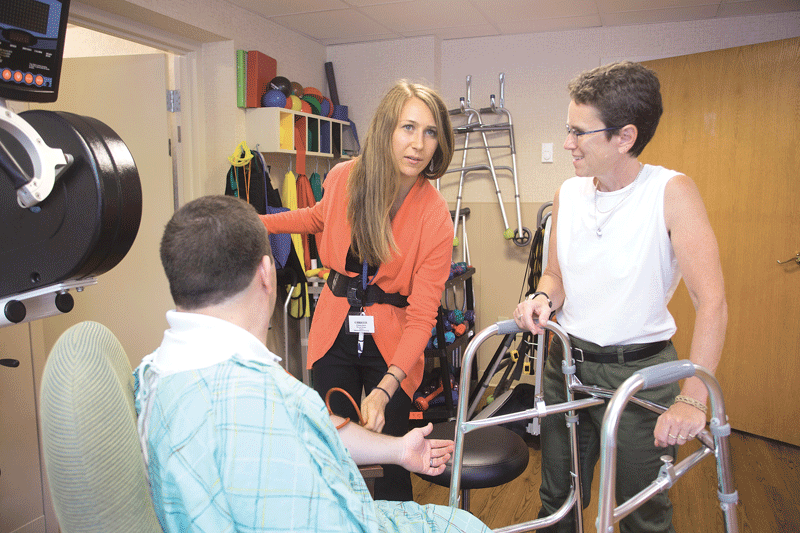
Business of Aging Sections

Finders, Keepers

pileofjunkhoardingartWhen Bec Belofsky married Lee Shuer, she had no idea he had hoarding disorder.


When they met, he was living in an apartment with roommates, and she didn’t know most of the items in it, which included a ‘museum room’ filled with a seemingly endless number of things, belonged to him.

But within a short period of time, every surface in the married couple’s apartment was covered. In fact, although they could barely get through the apartment — and she had bruises from bumping into things — he continued to bring home ‘treasures’ on a daily basis. “I had a feeling of dread every time I heard the sound of his key in the lock,” she recalled.

Shuer told BusinessWest he also had a storage unit that was full and a collectibles booth in South Deerfield, but never sold much.  “I couldn’t let go of anything, so I had everything priced for more than it was worth,” he said.

Anyone has who watched TV shows depicting people who hoard might think there was little hope for Shuer or the marriage, but today much of the couple’s Easthampton home is immaculate, he has been in recovery for 11 years, and they have made it their mission to help other people with what they refer to as “excessive finding and keeping,” because the word ‘hoarder’ leads to feelings of shame and guilt.

They have appeared on many national and international TV and radio shows, including CBS Sunday Morning and Voice of America, and travel the world educating therapists, government officials, relatives of people who hoard, as well as hoarders themselves about what it takes to successfully overcome the disorder.

They want the public to know that television shows that portray interventions with people who hoard are extreme and not representative of the majority of people with the problem. In addition, tactics that include forcing the person to make quick decisions about untold numbers of items, accompanied by threats from family members, can be devastating and lead to a return of the behavior after their space is free of clutter.

“There are kinder, gentler, more effective approaches to the problem,” Shuer said. “Telling someone to stop collecting things is like putting a warning on cigarettes. You have to have the motivation to stop, but once it becomes internalized, people find the strength of purpose they need.”

home-office-before-fix

Lee Shuer

Top: before Lee Shuer overcame hoarding disorder, his home office was unusable. At left: today, his home office is well-organized and contains only items that are truly important to him.

He has worked with individuals, groups, and institutions ranging from Stanford University and Smith College to the Institute for Challenging Disorganization through the couple’s business, Mutual Support Consulting, and has created a program called WRAP for Reducing Clutter, which is a wellness and recovery plan.

Shuer also works with researcher Randy Frost, who co-authored the book Buried in Treasures: Help for Compulsive Acquiring, Saving, and Hoarding, to create The Facilitator’s Manual for the Buried in Treasures Workshop, as well as another workbook designed to help people with the problem.

Frost says the reason it is so difficult for people with hoarding disorder to relinquish possessions is that everything they save has real significance to them. In some cases, such as a journalist who collects newspapers, the collection is a concrete embodiment of their professional identification.

“So getting rid of them makes the person feel as if they are losing that piece of themselves,” said Frost, professor of Psychology at Smith College. “We don’t really know what the underlying cause is, although it is clearly an attachment issue, and there is some indication it is related to early life experiences.”

Jane Laskey, a psychotherapist from Holyoke Medical Center’s Behavioral Health Outpatient Center, has had clients with hoarding disorder, and each one of their situations has been unique. “In many cases, hoarding is a symptom; it’s something people do to protect themselves from feelings that are very scary or painful, including sadness, anger, or hopelessness that often originated in childhood,” she explained.

For this issue’s focus on health, BusinessWest explores the type of thinking connected with hoarding and offers advice from these experts to help people with an overabundance of possessions regain control of their lives.

Making Progress

Shuer’s love for tangible items began when he was about 4 years old and began asking neighbors if they had anything old they didn’t need. His parents allowed him to keep many of the things he was given, including old tools he really liked.

“I was socially awkward as I was growing up, and these things gave me comfort and something to talk about with other people,” he said, adding that, although he had a wonderful family, he often felt lonely because he was a social outcast at school. “I was looking for myself in the stuff I collected.”

For example, he’d always wanted to learn to play a musical instrument, and by the time he was married, he had collected far too many of them.

Today, Shuer tells people who hoard that “letting go doesn’t mean giving up a dream. You can come back to it, but you need to keep your eyes on the real prize.”

His own recovery began 11 years ago when Belofsky-Shuer heard of a study on hoarding that was being conducted by Dr. David Tolin, co-author of Buried in Treasures.

“We have developed treatments for the disorder that work fairly well, but they don’t work for everyone,” Frost said, noting that research continues to help people with hoarding disorder.

At the time, Shuer was working as a mental-health counselor for ServiceNet in Northampton and had served on the Western Mass. Hoarding Task Force for about a year. No one at work knew he had the problem, but in time he admitted to it publicly.

“I had to help others overcome the stigma,” he said, adding that he also received a grant to lead a peer-support group based on Frost’s book. After using principles outlined in the tome himself, Shuer began leading the group and meeting with Frost weekly, and they developed the facilitator guide to help others.

“By that time, I had learned enough to help myself and share what works,” he said. “What takes place in the Buried in Treasures groups is not therapy; it’s an action-oriented plan that helps people take concrete steps to alleviate clutter.”

Still, his wife struggled for years with her own issues caused by his problem. Although Belofsky Shuer has a degree in psychology from Smith and had some academic knowledge gleaned from one of Frost’s classes, she felt isolated and alone.

“The stuff Lee collected was so important to him that it put a real strain on our marriage,” she said. “I felt helpless in our home and insignificant; the things that made up my identity were buried under all of his things.”

Lee Shuer and Bec Belofsky-Shuer

Lee Shuer and Bec Belofsky-Shuer want others to know that TV shows about people with hoarding disorder do not present realistic ways to overcome the problem.

She added that most people don’t know there is help available that works. “Research only began in the ’90s, and TV shows that show forced cleanouts don’t work. But finding the motivation to change and learning why people become so attached to things and challenging their beliefs can make a real difference.”

However, the couple stressed that it’s not an all-or-nothing proposition; getting support from others online, through counseling, or in a support group with peers, which offers the best chance at success, can slowly lead to change.

Shuer said the disorder reflects an abnormal attachment to items that can stem from positive qualities that spiral out of control. For example, a person may feel they are archiving family treasures, don’t want to get rid of printed information they believe may prove valuable in the future, or be overly concerned about recycling things in a proper manner.

“There are emotional and cognitive aspects to decision making when it comes to letting go of things,” Belofsky Shuer explained, adding that the workbook outlines steps for decision making and is available free through their website, www.mutual-support.com.

“We encourage people to start small and focus on clearing one square foot at a time,” Shuer said.

Anyone whose problem hasn’t reached an extreme level can also begin by focusing on sorting through one type of item at a time: they could gather all the books in their home, put them in one place, then begin going through them.

“They need to remember they can get many of them at the library if they want to read them again,” Shuer told BusinessWest.

It’s critically important, Belofsky Shuer added, for family members to take care of themselves during the process. “I completely lost my identity and had a lot of anger and resentment when our home was filled with his possessions,” she said, noting that counseling allowed her to be supportive and restored her sense of self while her husband slowly worked toward their shared goals.

Course of Treatment

Studies have shown that people who hoard have suffered more trauma than the normal population, but only half have undergone a very difficult trauma.

“Trauma is not the underlying issue, but there is a lot of co-morbidity, and the biggest one is depression. More than half of hoarders suffer from it,” Frost said. “It isn’t clear that depression causes the problem, but it can make it worse.”

Laskey added that accumulating things can give people a feeling of control or enhanced self-esteem. She treated one woman with a very poor self-image that stemmed from her childhood who kept buying new clothing, even though she had never worn most of what she already owned.

“Buying gave her hope and a momentary feeling that included excitement and anticipation,” Laskey said, adding that the woman envisioned feeling attractive and confident wearing the new clothing, and lacked the confidence to think of other behaviors that could improve her self-esteem.

She suggests using stalling techniques before bringing anything new home, which can be something as simple as taking a walk.

“The problem is that the brain gets stuck like a record in a groove, and the need to have something becomes an automatic way of thinking,” Laskey said, explaining that, in some cases, the person can learn to be an “impartial spectator” by detaching from their feelings and trying to judge an item the way a friend might view it.

Indeed, asking a close friend for support can be beneficial, but it’s critical for that person to respect boundaries.

“If the person with the problem says they only want to spend 10 minutes going through things, don’t push them to do another five minutes,” Laskey said. “Let them set the ground rules and praise any progress they make. Hoarding is like an addiction which becomes a habit, and habits are really hard to break.”

Frost says three elements are critical to attaining lasting success. The first is controlling acquisition, and addressing the reasons why the person feels compelled to collect things.

“People see something they want, seek things out at yard sales, or find something while they are driving on trash day. Acquiring it is an impulsive behavior. When they find something they like, they get a high that is almost like an addiction; many people have told us it gives them joy in life when they find a new object to bring home,” he explained. “Their attention becomes so narrowly focused that they don’t think about whether they have the money to buy it, room to keep it in, or whether they already have a dozen of the same items at home.”

Treatment involves bringing conscious control into the decision-making process, but won’t work unless something else is substituted that gives the person an equal sense of pleasure.

Frost’s book Buried in Treasures contains a tear-out page with questions people can ask themselves to help them decide whether they should acquire a new item, and includes room for questions appropriate for individual situations that can be generated during therapy sessions or with a peer-support group.

The second key element in successful treatment is treating the overpowering urge and belief the person has that they must have something they see and desire.

“The urge is overpowering, but they have to learn to tolerate it, which is done by creating a hierarchy of situations in which they practice walking away from an item without buying it,” Frost said.

After acquisition and impulsive behavior are under control, the person then needs to pare down their existing trove of belongings.

“We work on changing the nature of the person’s attachments to things so it’s easier to get rid of them,” Frost noted, explaining that people often fear they will become depressed and unable to stop thinking about an item they get rid of, will never be able to find the same type of thing again, will lose an important connection to someone in their life, or will be responsible for harm coming to the object.

“So, we turn them into scientists whose goal is to discover whether their beliefs are true,” Frost said, noting that some clients get rid of one item, then keep track of what their life is like afterward.

“Some feel they will be anxious forever and won’t be able to stand it,” he told BusinessWest, explaining that putting long-held beliefs to the test is difficult for anyone to do.

Shuer said it was an epiphany to realize he could get rid of something and not miss it. “I thought, ‘If I can let go of one thing, maybe I can let go of others.’ The idea brought me a sense of joy and relief that I thought I could only get from acquiring things,” he said, cautioning that, when people begin weeding through their belongings, they should start with items that don’t have strong emotional meaning.

The third key element in successful treatment is learning organizational skills. People who hoard are taught how to create filing systems as well as ways to organize items that are important, as many lack knowledge in this area.

New Outlook

Today, whenever Shuer is tempted to bring home anything new, he asks himself whether he has a place for it, whether he can afford it, and what his wife will think.

“These questions are reality checks that have become automatic for me. I am less impulsive and have moved towards a long-term vision for acquiring things that fits in with my physical space,” he said.

His success has resulted in a new life mission and a better marriage.

“We are happy now,” Shuer said. “When you are living with too much stuff, you can never relax; you feel you should always be working to reduce it. But now that we are liberated from clutter mentally and physically, we have the time and freedom to have fun and help others.”

Indeed, the hope of finding peace of mind, improving relationships, and having time to enjoy life are real treasures that can motivate ‘finders and keepers’ to seek — and work toward — lasting change.

Community Spotlight Features

Community Spotlight


Mayor Luke Bronin and Jamie Bratt

Mayor Luke Bronin and Jamie Bratt stand in front of the 95-year-old Hartford Times building on Prospect Street that will become the center of University of Connecticut’s new downtown campus.

Jamie Bratt says that when many people think of Hartford, they envision the city as it was decades ago; a bustling metropolis where a lot of people worked and lived.

A sharp decline began in the ’80s, but over the past decade there has been a gradual upswing, and a flood of investments that began several years ago are aimed at restoring it to its former vibrancy.

“It’s a very exciting time for the city,” the director of Economic Development told BusinessWest. “One of the things that makes Hartford attractive is its size. It has an extremely robust arts and cultural scene, great restaurants, and access to the movers and shakers in state government, but it’s a small city that’s easy to get to.”

Mayor Luke Bronin, who took office in January, agrees and says economic development is focused on three main areas downtown: increasing the number of residential living units; adding new transportation options; and growing the number of medical and educational facilities.

The city is making major inroads on all three fronts, but the first is critical to growth, and there has been a concerted partnership between the City of Hartford and the state to increase the number of downtown residences.

“We’ve added 650 units over the past five years and the projects hold a lot of promise,” Bronin said, noting that many of the new apartments are in converted office buildings, the majority have been completed over the past 18 months, and the Capital Regional Development Authority (CRDA) established by Gov. Dannell Malloy to stimulate economic development and new investment in and around Hartford has served as an economic engine by providing gap financing and coordinating a significant number of public-private partnerships.

And although surveys indicated that downtown housing would be difficult to rent out, that prediction has been proven to be inaccurate. “Studies showed we would be lucky if five units a month were leased,” Bratt said. “But developers have been beating performance expectations and have been leasing 10 to 20 units a month.”

She added that the majority of renters come from outside of the city and are Millennials; the average age of people leasing new units is 40, although empty nesters also comprise a fair share of that population.

“Millennials don’t want to have a lot of property or a large house. They like to live in cities and a large number don’t have cars or a driver’s license,” Bratt contined.

Increasing the number of people who live downtown will balance the weekday versus weekend equation, because in recent years there has been a decided difference, as the population on weekends is reduced by 100,000 people.

“We’ve focused on establishing a balanced equilibrium and so far we have been very successful,” Bratt told BusinessWest. “The jobs are here and if residential living follows, retail growth will increase in response to it.”

The CRDA has also been working to expedite what Bronin referred to as a “long and stagnant development effort” on Front Street, which is finally coming into its own as a restaurant and entertainment district.

“It was a wasteland before, but now there’s a collection of retail shops and restaurants across from the Hartford Convention Center. They all involve new construction and have become a strong draw for residents,” Bronin said, explaining that the Front Street neighborhood includes the Marriott Hotel and the Connecticut Science Center, which attract large numbers of visitors as well as business travelers.

There is also a new 121-unit apartment building that was built as part of the second phase of the Front Street District development project that features 15,000 square feet of street-level retail space with five stories of studio and one and two-bedroom apartments priced at market rates.

For this edition, BusinessWest takes an inside look at major changes taking place in downtown Hartford that are expected to promote vibrancy and make the city an attractive place to live, work and play.

Laying the Groundwork

The University of Connecticut (UConn) left the city in 1970 and moved to West Hartford, but it is returning to its former home and creating a large campus downtown.

“It will really add energy and feet on the street,” Bronin said, adding that the university is part of the push to attract more educational facilities to the city because they have been shown to increase growth, diversity, and job options.

Indeed, UConn and city and state leaders have said the 220,000- square-foot downtown campus will transform the area into a thriving neighborhood with 2,300 students and 250 faculty members, especially since food service will be limited, which will make downtown eateries inviting.

The center of the UConn Greater Hartford Campus will be situated in the old Hartford Times building, which is undergoing a $115 million renovation. Its façade is being maintained, but the interior is being entirely renovated, and a three-story atrium and classroom building will be added to the back of the building. The new campus is expected to open sometime in 2017.

Other institutions of higher learning add to the mix. Bronin noted that Trinity College is a long-standing Hartford institution, the University of St. Joseph has its School of Pharmacy in a state-of-the art building downtown, and Capital Community College redeveloped the former G. Fox building 10 years ago.

“It was a huge risk for them, but they were early pioneers in downtown development,” he noted.

News is also taking place on the medical front: Hartford Hospital held a ribbon cutting earlier this month for its new $150 million Bone and Joint Institute downtown. Surgery is expected to begin next month and will help the hospital compete with leaders in bone and joint surgery in New York and Boston.

The new facility will create jobs and draw visitors and other medical professionals to Harford as is expected that the hospital will collaborate with other medical facilities. “Hartford Hospital is a growing major employer and has become a center for many medical subspecialties,” Bronin told BusinessWest. “We’ve worked closely with them on their new building and another one that is under construction on the southern edge of their downtown campus that will house a training center for robotic surgery, which is a program that brings in healthcare professionals from all over the country.”

The third critical pillar of economic development is transportation, and the planned increase in commuter rail service will make a difference, especially to people who choose to live or work downtown. Twenty trains a day are expected to start running in 2018 that will travel between Springfield and New Haven, Conn.

“They will be a major driver of economic growth and the combination of new housing, medical, and educational facilities will really support revitalization of a vibrant city center,” Bronin said, adding that the rail service will extend to New York, and the hope is that Massachusetts will complete the link between Worcester and Springfield.

Additional access to the city may come via the I-84 viaduct that runs over the city. Bronin said the roadway is reaching the end of its useful life and the Connecticut Department of Transportation is planning work that would lower sections and reconnect it to parts of the city.

Hartford also just adopted a Complete Streets policy, and earlier this month was feted as a Bicycle Friendly Community by The League: Bicycle Friendly America.

In addition, 10 streetscape projects are in various stages of development and two are finishing up downtown, that include widening the promenade that borders Bushnell Park.

Varied Ventures

Economic development is also taking place north of the downtown area. Chester Bowles Park public housing complex, which was built after World War II in the city’s Blue Hills neighborhood, is being demolished to make way for a new mixed-use development called Willow Creek. Hundreds of old buildings have been taken down and 62 mixed-income rentals and 29 town houses are being built as the first phase of the project, which will cost about $40 million.

The park is part of a larger, 130-acre complex that includes Westbrook Village, which contains 360 units of public housing on 65 acres that were also built after WWII. The plan is to demolish outdated structures and replace them with a mixed-use development that will include housing, retail, and commercial space.

Bronin said the project is especially significant because Westbrook Village fronts Albany Avenue, which is a main city corridor.

The CRDA has $20 million set aside for neighborhood development in the North End Promise Zone,” he told BusinessWest, explaining that the federal designation gives the area priority in terms of funding because it has been deemed “high need.”

Entrepreneurship in Harford is also poised to grow, thanks to two projects.

Avon residents Bryan Patton and his wife Devra Sisitsky have raised $1.3 million to build the state’s largest Maker Space at the Colt Armory Complex. They hope to attract 400 members and plan to outfit the space with CNC machines, lathes, a sand-blasting booth, a water-jet cutting machine, a metal-fabrication area, design software and monitors, 3D printers and other equipment that could be used by hobbyists and professionals for a monthly fee.

Another space for start-ups known as Innovate Hartford recently opened at 20 Church St. with the goal of bringing in 100 high-tech companies a year to a 27,500-square-foot space in Stilts Building.

Bronin said the former Colt Armory was one of the first factories in the nation and a tremendous amount of repurposing has been done there.

“The city has partnered with the state and private investors to revitalize the residential neighborhood and attract new commercial tenants,” he noted, adding that the National Park Service adopted a large portion of the complex and turned two buildings into a museum that will become part of a national park.

The Capewell Horse Shoe Nail Company building, which is a 10-minute walk from downtown, fell into disrepair about 30 years ago but has also been redeveloped.

“The Corporation for Independent Living purchased it, turned it into apartments and began leasing them a few weeks ago,”Bratt noted, explaining that the building is one of about 15 properties that have been under construction, with the majority being renovated for residential use.

“They include diverse options; some are affordable housing and others are market-rate,” she said. “Hartford is a wonderful choice for anyone interested in an urban lifestyle.”

Ongoing Progress

Officials say attracting Millennials to the city, bolstering transportation options, creating new maker space, and adding new medical and educational facilities will make a real difference in downtown Hartford’s vitality.

“Revitalization all comes down to feet on the street, and that is increasing,” Bratt said. “Progress is a patchwork quilt of individual projects slowly knit together over time and each one of these projects is a patch that will help make the city more beautiful, walkable, and connected.”


Hartford at a glance

Year Incorporated: 1784
Population: 125,432 (2014)
Area: 17.95 square miles
County: Hartford
Residential Tax Rate: $74.29 (at 30% of fair market value)
Commercial Tax Rate: $74.29 (at 70% of fair market value)
Median Household Income: $72,275 (2015)
Family Household Income: $91,759 (2015)
Type of Government: Mayor, City Council
Largest Employers: State of Connecticut, Hartford; United Technologies Corp.; Yale New Haven Health System
* Latest information available