Home Posts tagged Restaurants (Page 9)
Commercial Real Estate Sections

BID Strives to Improve, Promote Downtown Attractions


By KATHLEEN MITCHELL


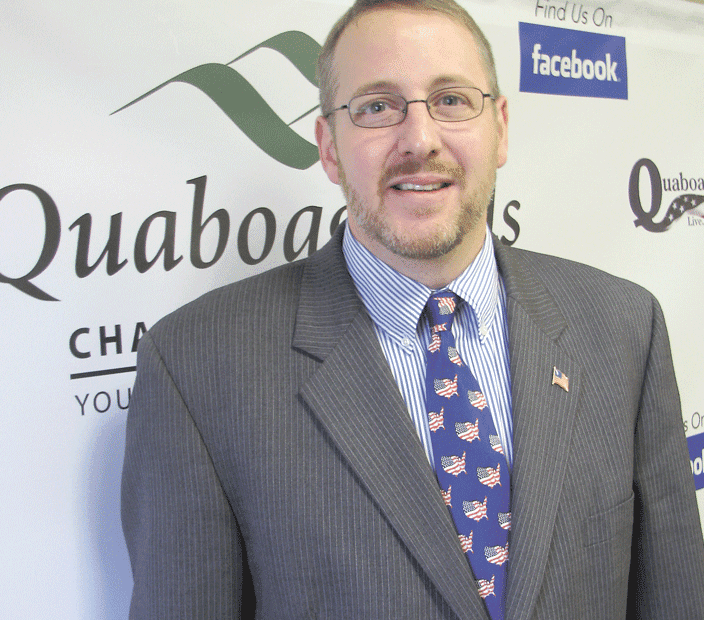
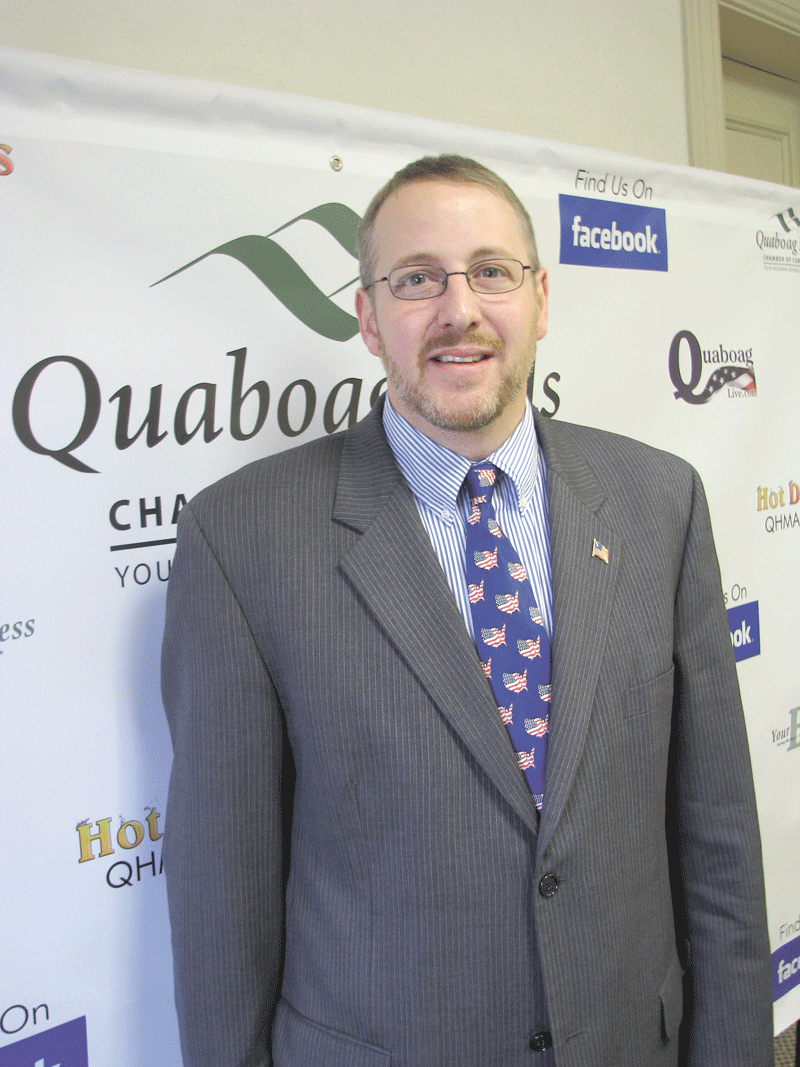
Don Courtemanche lives in downtown Springfield. He walks to work and takes advantage of the cultural events, eateries, and other offerings readily available to him in the area.

“I think of downtown as a neighborhood. It’s a place where I want to live, stay, and raise my family,” said the executive director of the Springfield Business Improvement District, or BID, adding that he can walk to 40 restaurants from his home on Maple Street, which is not technically within the boundaries of the BID, but certainly impacted by the organization’s efforts.

BID board member Evan Plotkin says the ultimate goal of the organization is to make the downtown vibrant and culturally important to the region so it will attract new residents and businesses. “We want to see a return of the middle class and others who have left or abandoned the city,” said the president of NAI Plotkin on Taylor Street in Springfield, in the heart of the BID. “If you create a vibe that improves the perception of what downtown is, you will start to attract new retail businesses, restaurants, and a segment of the population that could move into apartments there.”

The boundaries of the 26-block BID stretch from the Connecticut River to Chestnut Street, and from Bliss Street to the railroad tracks. Union Station, which is undergoing renovation, is the northern bookend of the district. And although some people shy away from downtown because they think it’s unsafe, Cortemanche says that’s a false perception.

“People who are not familiar with the area tend to be skeptical in terms of its public safety,” he told BusinessWest.  “But if you look at the statistics, the BID is the safest neighborhood in the entire city in terms of crime.”

The problem, he went on, is that, “since downtown is the face of the city, whenever anything bad happens, people associate it with Main Street.” For example, when the tornado hit, people watched it cross the southern part of the downtown area on their TV screens because that is where the weather cameras are situated. “As a result, business in the BID plummeted, not because the buildings there were destroyed, but because people assumed the streets were impassable since the media reported the news from the downtown area. The general consumer doesn’t know where the BID begins and ends.”

Plotkin agrees. “A lot happens downtown that is blown out of proportion,” he said.

Still, in spite of economic woes that have hurt urban centers across the country, the BID has held its own in recent years. Its focus now is to continue to collaborate with groups that stage cultural events, bring more people downtown, and, most importantly, take measures to make people feel safe when they visit the district.

This is going to become easier thanks to a recent change in the state’s BID statute, which was passed in July by the Legislature as part of a jobs bill. It no longer allows commercial properties to opt out of membership or paying a fee to an established BID, which they were able to do in the past, even though they benefited from services.

Those services range from keeping the area clean to upgrading streetscapes; from undertaking capital improvements to assigning representatives to act as ambassadors during conventions to help direct tourists and serve as extra security on the street, along with helping to beautify the area and promoting attractions and events.


Ongoing Maintenance

Courtemanche said Springfield’s BID, like others across the state, suffered when property owners opted out of the organization. “It became incumbent on us to do more and more with less and less,” he explained.

But, thanks to the new law, there will be more revenue with which to work. “The statute allowed property owners to reaffirm their faith in the BID,” Courtemanche said, adding that it has a 98% approval rating from its members. “We have had meetings with our members who had opted out to see what they want, and their number-one priority is clean and safe streets.”

To that end, the BID has purchased new cleaning equipment, which includes an additional street sweeper, and has also established two new lighting initiatives. One is the installation of LED lights in existing fixtures owned by Western Mass Electric Co., which will double the amount of illumination and reduce energy use by 25%.

The second is a pilot program that began in January on Worthington Street that allows property owners to install new light fixtures on their buildings, with the BID picking up 75% of the cost. “It contributes to the perception of public safety and will have a huge effect because it will light up the beautiful architecture we have downtown after dark,” Courtemanche said.

Keith Weppler, who co-owns Theodore’s Booze Blues & BBQ on Worthington Street with Keith Makarowski, said they chose to have the energy-efficient lights installed. “They really light up the whole building,” said Weppler, who is another BID board member.

He cited other benefits the organization provides. “I see how dirty the streets are early in the morning after a weekend and what a difference it makes after the BID’s cleaning crew comes by. I really appreciate it, and although belonging to the BID doesn’t directly affect my business, it helps the city. Their communication with the police department as well as their work with other businesses is part of the synergy that creates a positive downtown.”

He has also taken advantage of the BID’s affiliation with city officials. “They know who to call if you have a problem,” he said, citing an instance when he had an issue with outdated parking signage outside his establishment and the BID helped get the matter resolved.

The BID has 30 security cameras linked with the Police Department and Department of Public Works, which can spot someone illegally dumping trash or relay the news that a traffic light is out and creating a backup at an intersection, Courtemanche said. It also stages events, including the Stearns Square Concert Series, which brings 5,000 to 8,000 people downtown every week in the summer.

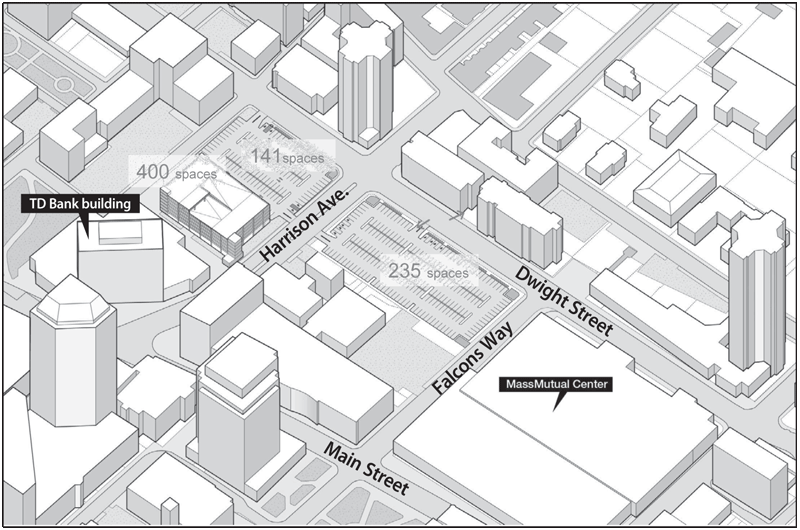
“It started with 10 concerts and has grown to 12, and the spinoff is huge for the parking facilities, businesses, and restaurants in the district,” Courtemanche added. In addition, the organization supports a multitude of events, ranging from those held at the Springfield Museums on the Quadrangle to the World’s Largest Pancake Breakfast, the annual Spirit of Springfield’s Big Balloon Parade, productions at CityStage, and basketball games at the MassMutual Center.


New Promotions

Recently, the BID launched a number of new promotions designed to bring people downtown.

These include giving away tickets to Falcons and Armor games via a weekly drawing for people who register on the BID Facebook page.

“While that might not seem like a huge move, these people park, go out to eat, may visit a bar after the game, have a great time, and become comfortable downtown,” said Courtemanche.

The BID also employs social media to keep people abreast of ongoing news, such as whether restaurants were open after a gas explosion in November that destroyed a downtown bar and sent glass and bricks flying down Worthington Street.

It also recently finished a promotion that began in December in which people who took photos of themselves in front of restaurants such as Nadim’s and Subway on Main Street, where sidewalk construction is underway, were entered into a drawing for restaurant gift certificates.

“It was hugely popular,” Courtemanche said. “And right now, we are gearing up for spring, which is arguably our busiest or second-busiest season.”

In addition to power-washing the sidewalks, BID employees also fill about 300 planters and 300 hanging baskets scattered throughout the zone with flowers. “We also want to generate a buzz about real -state property here,” he said.

The agency’s plan is to hold open houses in approximately a dozen empty storefronts over the next few months. The first will be in a 3,000-square-foot space beneath the Chestnut Park apartment complex that has sat empty for years. “We will have food and entertainment, and hopefully it will result in a new tenant,” Courtemanche told BusinessWest.

Although real-estate brokers are welcome, the hope is that people who live and/or work downtown will attend the events and convey information about these sites to people they know who may want to open or expand a business. “The downtown consumers have a built-in bias as to what type of retailer they would like to see,” he said.

However, BID officials admit that a lot needs to be done before the area becomes a thriving neighborhood. But they are steadily working toward that goal.

“We still have a lot of vacant space, but we are on the road to the day when we become an urban theme park, which is what successful cities do to attract entrepreneurs,” Plotkin said.

Courtemanche agrees, and says small things add up. “A rising tide floats all ships, and casino or not, the fact that the BID continues to make huge leaps during one of the worst economic climates in decades is telling,” he said. “Businesses are continuing to open, and the area continues to grow.”


Future Outlook

Courtemanche said the BID is doing well. “There is certainly room for improvement, but we are holding our own and seeing growth in terms of more employees and more foot traffic. The biggest elephant in the room is where the casino will go, but once it lands, there is a lot of pent-up development that will take place,” he said. “The BID really is a special place.”

Plotkin agrees. “Every downtown has problems from time to time,” he said, “but if we can populate our area with an eclectic mix of diverse people and promote the restaurants and businesses, we will be able to bring about a renaissance here.”

Conventions & Meetings Sections
Hoop Tournament Brings Net Results for the Conference and the City

Matt Hollander

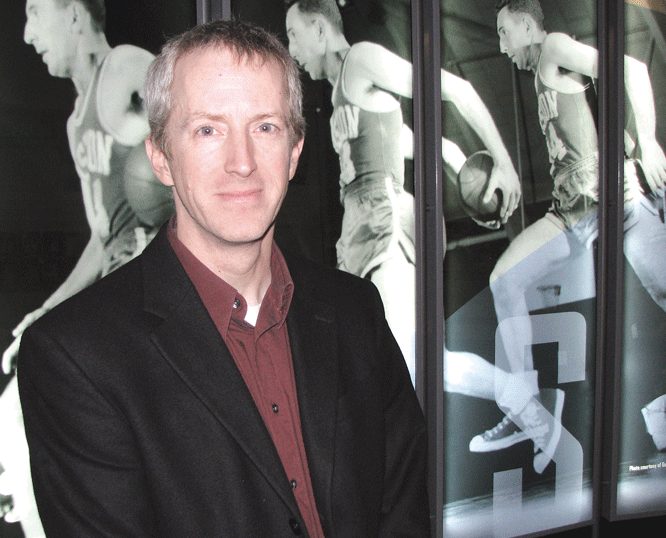
Matt Hollander says the MAAC tournament not only provides a boost for downtown business, it gives the city a chance to display its ability to handle large events.

The UMass Amherst McCormack Center for Sport Research & Education has been gathering some much-anticipated data this month.

The center has been commissioned to quantify the overall economic benefit to Springfield and the region from the Metro Atlantic Athletic Conference (MAAC) Division I college basketball tournament, which recently wrapped up its second visit to Springfield, one during which the conference’s acronym became a discernable part of the local lexicon.

Nick Polimeni is naturally interested in what the study will show, but he told BusinessWest that he doesn’t have to wait for the numbers to declare that the tournament has been a success for Springfield and businesses in its downtown.

“I noticed a lot of different faces, a lot of team colors and team jerseys,” said Polimeni, manager of McCaffrey’s Public House on Main Street, just over a three-point shot’s distance from the MassMutual Center, where the tournament played out. “It was absolutely great for the downtown.”

Nadim Kashouh, owner of Nadim’s Mediterranean Restaurant and Grill, roughly a block from the arena, concurred. He wasn’t able to say if the 2013 tournament topped the first gathering in Springfield, but he could state with confidence that it provided a needed boost for businesses in the area.

“No doubt about it … it’s great for the city, and we need to see more of this type of event,” he told BusinessWest.

If Paul Lambert and Matt Hollander have their way, the city will see at least more of the MAAC tournament, and perhaps additional sporting events as well.

Lambert is vice president of Guest Experience and Programming for the Basketball Hall of Fame, and Hollander is general manager of the MassMutual Center. Both were part of the group that in 2009 convinced the MAAC to bring its tournament here from 2012 to 2014, and they will be among those trying to gain another three-year contract from the conference.

Hollander said the tournament has not only provided a boost for downtown businesses, including his own, but, perhaps more importantly, it has enabled the city to show that it can put on events of this magnitude, and that its mix of amenities and attractions provides a package that can be effectively sold.

“There are so many assets that we can brag about,” said Hollander. “I think, as locals, we sometimes forget, when you put it all together, how truly rich a fabric we have here.”

Lambert, meanwhile, said the first two tournaments staged in Springfield have shown how mutually beneficial the event has become for the Hall, the city, and the conference. The hoop shrine gains visibility and some additional visitorship from the three-day event, he noted, while the MAAC gains invaluable exposure from both the games and an elaborate exhibit on the conference that will be a feature in the Hall for at least the next four years. “The MAAC is the only conference to have a relationship like that with the Hall of Fame.”

Richard Ensor, now in his 25th year as commissioner of the MAAC, was part of the site-selection team that eventually chose Springfield. He said the city’s local organizing committee (LOC) has succeeded not only in effectively selling Springfield as a host for such events, but also in delivering a solid product.

“The LOC has been well-coordinated from the start of the bidding three years ago, their implementation, and the rollout of this year’s event,” he said just before tip-off for the men’s final. “They know how to put events on; they have a history of it.”

For this issue and its focus on meetings and conventions, BusinessWest takes an in-depth look at the how the MAAC tournament came to Springfield, and why, in addition to the men’s and women’s champions — Iona and Marist, respectively — there are many other winners to be counted.


Full-court Press

Lambert remembers the MAAC tournament site-selection committee’s first major visit to Springfield in 2009 — part of an 18-month-long bidding process — and how it didn’t get off to a fast start.

“We had the feeling when they first got here that they were on their way to ‘somewhere else,’” he recalled.  “They were tired; it had been a long day on the road for them. But once we got to talking about Springfield, the MassMutual Center, the Hall of Fame … by the time they left, it felt like they had gone from modest interest to some very strong interest.”

Backing up a few more years, Lambert said that, through much of its history, the MAAC’s tournament has been played on the home courts of conference members — Canisius College, Fairfield University, Iona College, Loyola University Maryland, Manhattan College, Marist College, Niagara University, Rider University, Saint Peter’s College, and Siena College. But in late 2008, coaches and administrators had expressed to the MAAC Council of Presidents and league office that these home-court sites had become too much of a playing and recruiting advantage for the host school. The council then decided to take the tournament to a neutral site (Webster Bank Arena in Bridgeport, Conn. was the first), and in late 2009, Springfield’s MassMutual Center won the bid for 2012 through 2014.

Looking back, both Lambert and Hollander said the city’s mix of strong points, from the Hall of Fame to its abundance of hotel rooms near the MassMutual Center, to its previous history of hosting college basketball games and tournaments, enabled it to prevail.

“That part, I think, is the easiest part of the sale, because we do have such a good infrastructure for these types of events,” said Hollander, noting that Springfield had a lengthy run hosting the Division II national championship tournament, and had demonstrated the ability to create a championship environment of restaurant dine-arounds, welcome signage, marketing efforts, educational programming, and ancillary events leading up to the games.

Ensor said the city’s history with basketball tournaments helped sell the site-selection committee, but so did the MassMutual Center’s track record for staging a variety of sporting events, and the Hall’s ability to stage gatherings such as its annual induction ceremony.

Ken Taylor, associate commissioner of the MAAC, noted that getting downtown business owners to support the event is what has made Springfield so successful attracting more than 6,000 fans of the 10 schools and 20 teams in each of the first two years.

“Our member schools stress two things that they enjoy about Springfield: first, the hospitality provided by the hotels, and the arena is first-class; second, the MassMutual Center is a neutral site — meaning no team has a home-court advantage,” Taylor went on. “Those two factors create a first-rate atmosphere for our student athletes, coaches, and fans.”

And the presence of those constituencies, especially the fans, creates opportunities for a host of businesses.

Polimeni cited a party he hosted for a group of Loyola alumni on the Saturday of tournament week as just one example. “It was huge … there were probably 60 of them, and they had a great time.”


The Big Dance

Assessing the first two years of the MAAC tournament’s presence in Springfield, conference administrators and LOC members alike say that, while the event remains a work in progress and all involved would like to see greater attendance at the games, the conference, the city, the Hall, and area businesses are all benefiting in some ways.

The MAAC exhibit at the Hall of the Fame is a good example, said Ensor, adding that, from the conference’s perspective, it provides an uncommon opportunity for visibility.

“This association with the Basketball Hall of Fame offers the MAAC the opportunity to be directly associated with the history of the sport,” he told BusinessWest. “And it provides the MAAC and its institutions with unique branding within the college-basketball community.”

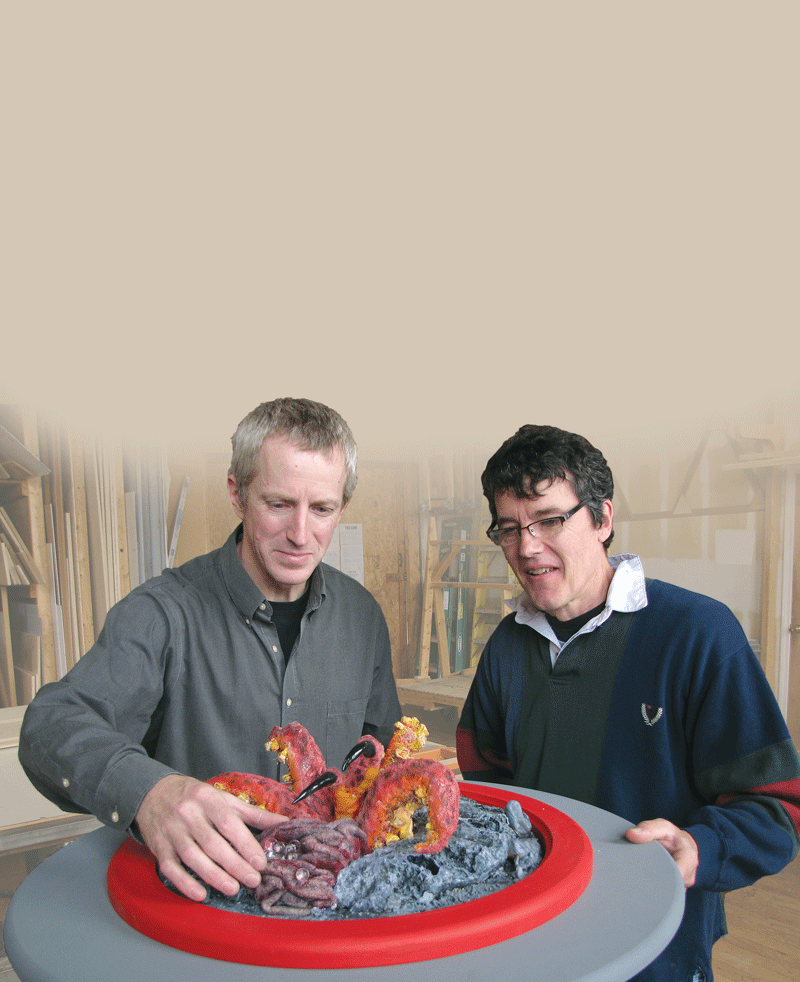
But the MAAC is not alone in reaping rewards from the exhibit. Indeed, the conference invested more than $100,000 in the display, which was created by the Indian Orchard-based firm 42 design fab, which has handled a number of projects for the shrine. Meanwhile, businesses within the Hall complex, including Max’s Tavern, which hosted two events during tournament week, have also seen a boost.

“People can see how the investment on the part of the LOC brings returns,” said Ensor. “Not only that the fans and teams are spending, but we as a conference are spending.”

For the city, the Greater Springfield Convention & Visitors Bureau, and MassMutual Center, there are many benefits as well, said Hollander and Lambert, noting the obvious boost given to hotels, restaurants, and clubs. But there is the added vibrancy from events such as this year’s FanFest, sponsored by MGM Springfield. It featured a series of basketball-related events for children and adults of all ages, including relay races and dribbling and shooting contests. In addition, for Xfinity’s Bounce to the Arena, a mile-long parade of kids and adults (and some MAAC team cheerleaders) assembled at the Hall of Fame Center Court to shoot baskets, then proceed to dribble their way up Columbus Avenue, across to Main Street, and into the MassMutual Center.

“They were led by police cars, and folks were honking, cheering them on, and once they got to the center, they got to play at all the interactive FanFest games,” said Hollander.

But perhaps the greatest benefit to the city and those working to book meetings and conventions is the opportunity the MAAC conference provides to show what that team can do, said Hollander, and how this area can become host to other sporting events.

“It’s a great opportunity to showcase Springfield and the entire region,” he explained, “and also provide ample evidence that we stage events like this successfully.”


Final Buzzer

While ecstatic players from Iona and Marist were cutting down the nets following their wins in early March, and thus creating their own fond memories of Springfield, Lambert, Hollander, and others were already preparing themselves for the next bidding process for the MAAC tournament.

A request for proposals will be issued in April, and the selection will likely be made by the end of the year, said Ensor.

Whether Springfield prevails in that contest remains to be seen, but at present it seems to have a winning formula, one that is yielding net results, literally and figuratively, for all the parties involved.


Elizabeth Taras can be reached at [email protected]

Features
Pittsfield Remakes Itself as Center for Arts, Sciences
Daniel Bianchi

Daniel Bianchi says young people are moving to Pittsfield from metropolitan areas and opening businesses that utilize cutting-edge technology.

Mayor Daniel Bianchi has a vision for the future.

It’s decidedly ambitious, but coupled with a strategic plan designed to make Pittsfield the center for life sciences in Western Mass.

“Gov. Deval Patrick is adamant about making Massachusetts the life-science capital of the world, and I want Pittsfield and Berkshire County to be the western end of that,” Bianchi told BusinessWest.

The cornerstone of his plan is the proposed Berkshire Life Sciences Center, which has a $6.5 million earmark from the state and will be situated in the new William Stanley Business Park, on 50 acres of ground once occupied by General Electric’s large transformer-manufacturing complex.

“We like to think that ideas can be brainstormed in Boston but can be built here in the Berkshires, and we plan to leverage the $6.5 million with private investments. We know we won’t attract research companies, but once they are ready to commercialize a product, they can come to the beautiful Berkshires and rent space at $50 a square foot,” Bianchi said, adding that agriculture plays a significant role in the area and is related to the life sciences and green energy.

Another part of the park will be utilized for traditional manufacturing, but Bianchi noted that Pittsfield is a great place for any business to position itself, due to its geographic location and comparatively low cost of living. “Synergy is a key word here, and we are examining that as part of our business plan, because clustering is so important, especially in the life sciences.”

The plastics industry is already flourishing in Pittsfield, as are small companies that make innovative medical devices. And some of the most sophisticated work being done for the armed forces is taking place at General Dynamics Advanced Information Systems.

In addition, the city’s Economic Revitalization Corp. was selected as one of four communities in the state to receive a $150,000 grant to help small businesses increase their Internet use.

Bianchi has also started a fund for small companies that are successful, but need help to expand their operations. “We are hoping to grow from within, and the money we set aside for these businesses is pegged for job creation,” he said. “But our strength isn’t only in our community, but the entire region. Pittsfield is the largest city in Berkshire County, but we are fostering collaborative economic development.”

Meanwhile, the city has undergone a real renaissance, especially in the cultural arena. Year-round events staged by the Office of Cultural Development have spawned a number of new restaurants and retail shops, as well as new apartment complexes created within the shells of historic buildings that are rented as quickly as they are built.

In fact, young people are flocking to the city from New York and other metropolitan areas and opening businesses that utilize cutting-edge technology. As Bianchi sees it, they are moving to Pittsfield for a reason.

“There is a lot to be said about the great lifestyle here. People who live here can leave work at 5 p.m. and be on a ski lift at 5:30,” he said. “We have state forests, beautiful lakes, and very competitively priced land and real estate, along with a solid educational system that includes both a four-year and two-year college. And one of my goals is to build a technical vocational high school, which will be a great boon to economic development.”

Bonnie Galant, acting director of the department of Community Development, is working collaboratively with Bianchi and others to fuel the city’s progress. “There is so much going on here that it is hard to keep track of, and it’s incredible to see how much Pittsfield has changed,” she said. “People who haven’t been here for years wouldn’t even recognize the city. There is an amazing difference in the skyline, and we are trying to encourage the life sciences because it is an up-and-coming industry for the future, especially here in the Berkshires where the cost of living and doing business is significantly less than in Boston.”


Cultural Leader

Bonnie Galant

Bonnie Galant says people are amazed at the amount of money being invested in Pittsfield.

Pittsfield’s new Upstreet Cultural District was the first area west of Boston to be designated as a cultural district by the state, and director of Cultural Development Megan Whilden has been named a Gateway Cities Innovation Institute senior fellow.

“We are one of only five communities in Massachusetts with this designation; the rest are in the eastern part of the state, and we are seen as a leader in cultural revitalization, especially among Gateway Cities,” she told BusinessWest.

The Upstreet District encompasses most of the downtown area, and the name is a throwback to yesteryear. “Upstreet was what the old-timers called downtown. We have tried to integrate the old with the new so everyone feels included when it comes to the arts,” Whilden added.

Their efforts have been successful, and thousands of people visit Pittsfield each year to take part in cultural offerings, which range from First Friday Art Walks to Third Thursday events, an annual Jazz Festival, the Latino-American Family Fiesta de Pittsfield, and a popular Ethnic Fair.

In addition, the Office of Cultural Development manages the Lichtenstein Center for the Arts, a year-round community-arts center owned by the city, which features monthly exhibitions, performances and classes, as well as working artist studios.

Its most recent event was the 10×10 Upstreet Arts Festival, held Feb. 14-24, which was an enormous success. “It’s a contemporary arts festival held downtown that we started last year,” Whilden said, noting that there were more than 75 offerings this year, ranging from comedies and theater performances to dance, music, film, art shows, and other offerings.

“We had more than 20 programming partners, which is an example of how we work collaboratively to create new events and initiatives that will benefit residents and attract visitors,” Whilden said. “The festival was a hallmark of what we do and will continue to do.”

Another celebration held last summer was named “Call Me Melville” to pay tribute to author Herman Melville, who wrote Moby-Dick when he lived in the city. “We had new plays written for the celebration and brought in a rock band from Brooklyn that wrote a song for each of the 135 chapters in the book,” Whilden said. “We also had an online book club which posted a chapter from the book each day.”

The event included youth initiatives, and high-school students formed a giant white whale on their football field in a flash mob. “We like to be creative, collaborative, and inclusive so everyone is part of the cultural life in Pittsfield,” Whilden explained.

Other cultural attractions include the Berkshire Museum, which has undergone a $9 million addition; Berkshire Community College; Berkshire Athenaeum; Wahconah Park; Canoe Meadows Wildlife Sanctuary; and Bousquet Ski Area and Summer Resort.

There is also the historic Colonial Theater and the Tony Award-winning Barrington Stage Company. The two joined forces over the past two years and formed the Berkshire Theater Group, which stages a full roster of performances.

Galant says the Common, a park within walking distance of downtown, is being restored, and new housing continues to be built. “The Amsterdam Apartments are a block west of downtown, and last year a $15 million historic renovation was completed on the former Rice Silk Mill, which turned it into 45 apartments. It’s a really interesting building, and they kept the beams, bricks, and large windows as well as a lot of other architectural features.”

In addition, the Onota Building has been purchased and will be renovated into 25 apartments with commercial space on the ground floor, while the Howard Building, which sits a block from downtown near City Hall, has also been purchased with plans to create 39 high-end apartments, along with a roof terrace, workout room, and other amenities.

“People are astounded at the change and the amount of money that has been invested in the city,” Galant said. “Berkshire Regional Transit runs an $11 million intermodal station that opened in 2004, and $100 million has been invested downtown in the past 10 years. The McKay Street parking garage is undergoing a $7.6 million renovation, $14 million has been put into streetscapes so far in an improvement project that is expected to exceed $20 million, the Colonial Theater underwent at $19.3 million renovation, the Barrington Stage project cost $6 million, and the multiplex Beacon Cinema Center cost $23 million.”

In addition, a $40 million expansion of the municipal airport was completed last fall, which will make it accessible for larger jets.

Plus, the healthcare sector continues to expand, led by Berkshire Health Systems. Berkshire Medical Center boasts a new surgical wing and emergency room, which cost approximately $43 million, and a new, state-of-the-art, $32 million cancer-treatment center is in the works. “They will break ground for it this summer,” Bianchi said, adding that these projects, combined with the city’s proximity to UMass Amherst and the fact that the Massachusetts College of Liberal Arts is building its own life-science center, makes it an ideal place to establish the Berkshire Life Science Center.

“We will have a strong case to make in Boston because we can build on our existing strengths,” he said.


Winning Combination

Overll, Pittsfield’s future holds great promise on many levels, from the arts to the life sciences to its attractiveness as a home to young professionals.

“Our collaborations with successful businesses and government, combined with civic support, will accelerate innovation and success,” Bianchi said. “We are engaging young people on our boards, have an old-fashioned marketing and recruitment effort planned, and are very confident we will be successful.”

Features
Employers Brace for a Possible Casino-fueled Talent Flight
Keith Makarowsky

Keith Makarowsky says that staffing is already tight, and he is concerned that it will only get tougher with a casino in the area.

When New York Times bestselling author Erma Bombeck wrote her book The Grass Is Always Greener over the Septic Tank in 1976, Vogue called it “the exposé to end all exposés — the truth about the suburbs.”

It offered humorous stories, based on real research, enlightening readers as to why so many long for what the Joneses have.

Today, the ‘grass is always greener’ attitude is one that’s being used by many employers with regard to the eventual arrival of a casino in Western Mass. and the likely response from many currently in the workforce. It’s a mindset they’ll be looking to prevent, or least keep under reasonable control.

That’s because the inevitability of a casino somewhere in the 413 area code — be it in Springfield, West Springfield, or Palmer — and the 2,000 to 3,000 jobs that will come with it, have many, both employed and unemployed, thinking and dreaming about a situation better than the one they’re in.

Keith Makarowsky, partner and owner of JT’s Sports Bar, Theodore’s, and Smith’s Billiards in downtown Springfield, which together employ close to 90 people, is one of the many concerned employers.

“I’m already having a hard time staffing,” he said. “And it’s only going to get worse — much worse.”

If U.S. Department of Labor statistics are any indicator, Makarowsky, whose businesses are located just a few blocks from the dueling Springfield casino proposals, may see talent flight from all three venues. In 2010, the commercial casino and gaming-equipment-manufacturing industry employed nearly 370,000 — more direct employees than the U.S. automobile industry. The thriving gaming-entertainment industry expects that number to rise to more than 470,000 over the next 10 years.

And those jobs come across a number of fields and professions. Most think about blackjack dealers, pit bosses, waitstaff in restaurants, and other hospitality-related positions, but there are also myriad money-handling and backroom operations that should have employers in the broad financial-services realm concerned.

“There will be many levels of educated professionals that will be needed, as well as a big customer-service element behind the scenes, and these people will come from the banks, the professional-service firms, and local hotels,” said Kristina Drzal Houghton, partner and director of Taxation Services at Meyers Brothers Kalicka, P.C.

Peter Rosskothen, owner and president of Log Cabin Banquet and Meeting House, the Delaney House, and catering through Log Rolling and at Wyckoff Country Club, takes a generally positive approach to the situation while focusing on what he believes is the primary challenge for the region — supplying a trained, talented workforce for the casino without necessarily impacting existing employers.

“Of course I have fears, but I’m focusing on the positive side,” said Rosskothen, who manages a staff of 200. He believes there’s enough unemployment in this market to supply current and future workforce needs. “But we need to get them to a level that they’re hireable, and my biggest concern now is, how do we plan … how do I keep my good employees while the casino gets its good employees?”

This is, in many ways, the unofficial assignment for a recently established consortium called the Community College Casino Careers Training Institute. The unique initiative, developed by leaders at Holyoke Community College (HCC) and Springfield Technical Community College (STCC), is a collaboration among the Commonwealth’s community colleges, one that gives casino developers a single point of contact in the three different regions across the state where casinos will be constructed to help develop their workforce.

Peter Rosskothen

Peter Rosskothen knows that educational programs that target skills for casino jobs will benefit many who are unemployed in the region.

While HCC and STCC currently offer programs in many of the professional skill sets casinos will require, neither offer dealer- and entertainment-related courses, which prompted the consortium to consult and contract with Atlantic Cape Community College in Atlantic City (more on this later).

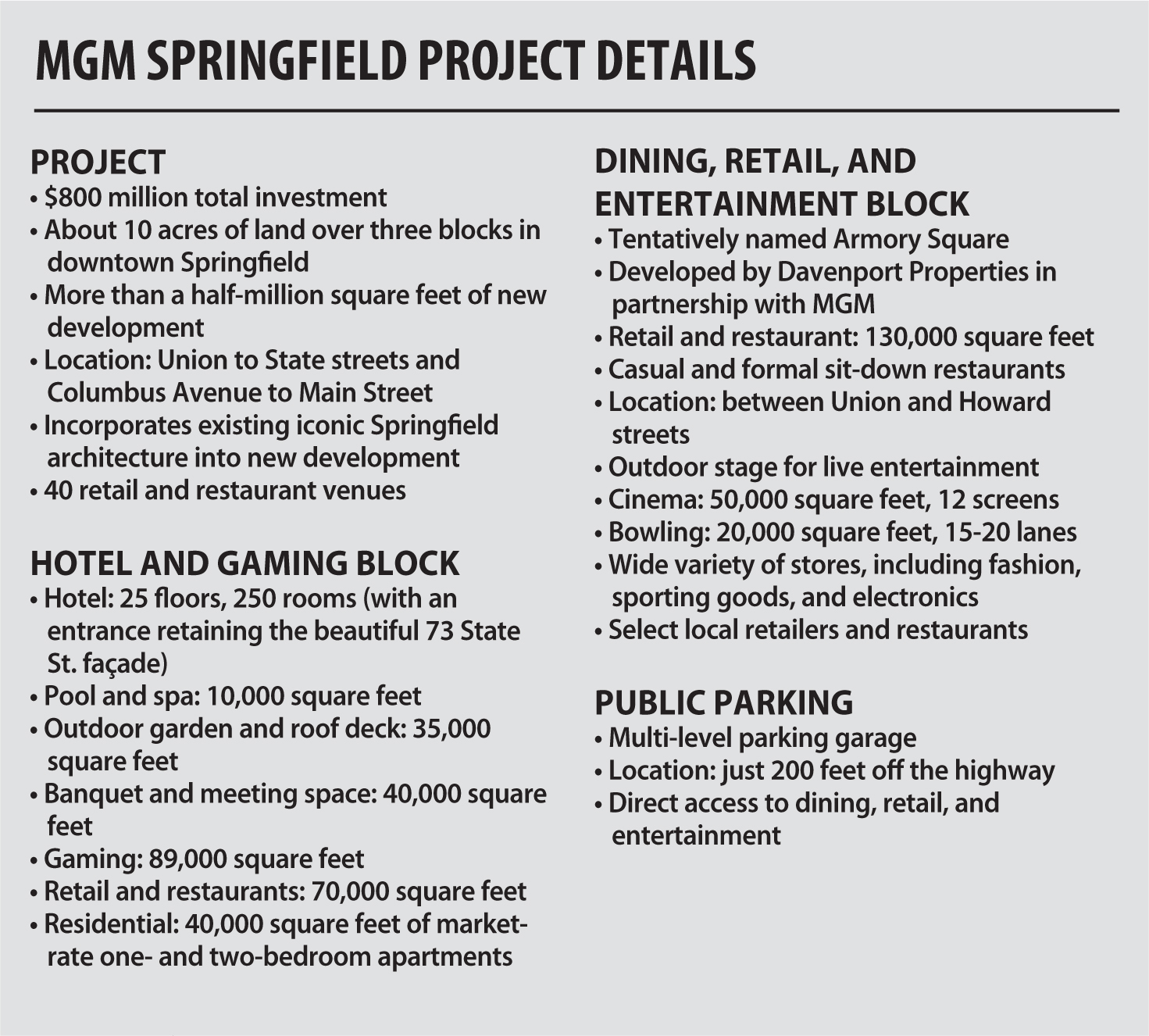
For this issue and its focus on the casino era, BusinessWest takes an in-depth look at how an $800 million gaming facility, such as those being proposed for Western Mass., could and likely will impact the region’s employment situation, and also what employers can do to improve their odds of minimizing the impact on their businesses.


Sure Bet

The question of ‘if’ a casino is coming to Western Mass. has long since given way to other queries about ‘when’ and ‘where.’ And this inevitability has business owners thinking about many things, from opportunities to partner with the casino operator of choice (see related story, page 17) to what will happen with their current staff when the 800-pound gorilla sets up shop.

John Thomas, general manager of Max’s Tavern at the Basketball Hall of Fame, believes a casino — wherever it lands — will be a positive development for Springfield simply in terms of bringing more people into the area. “It’s more competition for us because we’re going to have a casino with restaurants, and it’s going to make me step up my game a little bit more.”

From a staffing standpoint, though, Thomas, who not only oversees Max’s Tavern, but catering for events in the MassMutual Room, at center court, and in the Hall concourse, believes retention will be an even greater challenge in his sector.

“A casino is definitely one of those things that could steal away a couple of my servers and chefs,” he said, “and I don’t want to have to hire new employees because it takes six months to train them, and turnover is not the best thing for guest services.”

If surveys by the American Gaming Assoc. (AGA) are to be believed, turnover may prove inevitable for local employers.

A 2007 AGA Survey of Attitudes of Casino Industry Employees by Peter D. Hart Research Associates Inc. found that more than 85% of the nation’s gaming employees find their job satisfying. Another 2007 AGA study with PricewaterhouseCoopers LLP, the Gaming Industry Diversity Snapshot, found that participating casinos hired a greater percentage of black, Hispanic, and Asian workers than the U.S. workforce — overall, employing more minorities than the national workforce by 20.6%.

“I think small businesses might be the loser on that,” said Thomas, referring to local businesses that rely on a non-professional, minority workforce. “The grass looks greener at the casino.”

To retain his employees, Thomas told BusinessWest that his strategy is to treat them like guests. The Max Restaurant Group, he said, pays its employees well, covers half their health insurance, and holds frequent reviews. These steps have facilitated retention to the point where some of Thomas’s employees have been with Max’s for 10 years, and the majority for at least five years.

Rosskothen said he feels that he offers a fair wage and a pleasant, comfortable work environment to keep his staff satisfied with their jobs. “It’s the best shot I have at keeping them here,” he said, adding that all employers will have to sharpen their focus on retention strategies if they are to minimize the impact from a casino.

Houghton agreed.

“A casino is more than two years away,” she continued. “There is plenty of time for companies to access what their policies are and where their biggest areas of exposure are with their employees … because two years from now it’ll be too late, and the employees then are going to say, ‘too little, too late.’”

She said Meyers Brothers strives to be the proverbial ‘employer of choice’ with competitive pay, attractive perks, and flex hours, even during tax season. Despite all that, the company remains at risk of losing auditors and accountants to a casino, and its challenge moving forward is to minimize that risk while also perhaps trying to educate employees that the grass isn’t necessarily greener at a very large employer like a casino operator.

“I often hear that the honeymoon period does not last long,” she said. “And it’s probably a lot better to work for the local management companies than the bigger companies.”


Schools of Thought

While employers brace for the potential fallout from the onset of the casino era, area community colleges and workforce-related agencies are taking up the challenge of making sure this region has a large, talented workforce in place for not only the casino, but existing employers as well.

Holyoke Community College Presi-dent William Messner told BusinessWest that the consortium is an opportunity for the community colleges to demonstrate the ability to respond effectively, efficiently, and collaboratively to a significant statewide workforce need. To do so, they’ll need to cooperate with one another and with other workforce-related entities, such as the regional employment boards, FutureWorks, CareerPoint, and other agencies, all of which can play a role in meeting the opportunity and challenge of casino job placement.

Messner, who also leads the statewide Presidents Council of Massachusetts Community Colleges, and Ira Rubenzahl, president of STCC, convened the state’s community colleges, created three regions that will each host casinos (each with a lead college), and joined forces with the aforementioned workforce entities. The concept was met with enthusiasm from all those involved, said Messner, including the casino developers, who face the daunting task of filling 2,000 to 3,000 positions.

Rosskothen’s take on the consortium idea: “a brilliant concept.”

“We want people to look at this opportunity and say, ‘OK, I can work as a dealer, a receptionist, a housekeeping person, make good money, and make it a career,’” he said. “We need more of this in Western Mass.”

And it would appear the consortium is something gaming developers would like to see more of, too.

“My sense was that there is a varied pattern of experience from state to state, but as best as I could assess, no one had put together quite the same sort of organized effort that we are intending,” said Messner. “More often, it was a fairly disorganized effort with a variety of institutions and organizations sort of knocking on the door of the casino developer, leaving the developer trying to sort out who they were going to work with.”

Messner added that the final step included discussions with the Gaming Commission, which cautioned that the colleges could not be the exclusive parties working with developers, while expressing overall support for the concept.

Messner further explained that HCC programs in information technology, business, security, and hospitality could all be useful at a local casino, but gaming-related jobs that involve the gaming function and handling of money will require a great deal of scrutiny and a license from the state, so specific help was needed.

The consortium contracted with an institution that certainly knows the business of gambling: Atlantic Cape Community College in Atlantic City. In cooperation for more than 30 years with the gaming industry, its consulting services and tested curriculum have been used throughout the world, said Messner.

He added that some classes that provide employees with needed skills might be only a few weeks or a few months in length and at staggered hours, a schedule that should prove attractive to existing employers, many of whom will want to take advantage of additional training for employees as a retention tool when the casinos come knocking.

“I cannot send them to a one- or two-year kind of curriculum,” said Rosskothen, “but if they need to improve a specific skill, they’ll make money for my business and for themselves … it’s a win-win, and I keep them.”


Double or Nothing

Many area employers would be reluctant to use that phrase ‘win-win’ when it comes to a Western Mass. casino, especially when it comes to workforce issues and the prospects for a talent flight.

But with at least a few years to go before a casino opens its doors, there is the potential for a scenario in which, as Rosskothen suggests, casinos can have good help and area employers can retain theirs.

That is the job at hand — both literally and figuratively.


Elizabeth Taras can be reached at [email protected]

Chamber Corners Departments

ACCGS

www.myonlinechamber.com

(413) 787-1555


• March 5: ERC5 March 2013 “High Five” Five-year Anniversary Event, 5-7 p.m., Spoleto Restaurant, 84 Center Square, East Longmeadow. For more information and to purchase tickets, contact [email protected]

• March 6: ACCGS Business@Breakfast, 7:15-9 a.m., the Cedars, 375 Island Pond Road, Springfield. Guest speaker: Suzanne Bump, Massachusetts state auditor. The event will feature a salute to the YMCA of Greater Springfield on its 145th anniversary. For more information and to purchase tickets, contact [email protected].


AMHERST AREA CHAMBER OF COMMERCE

www.amherstarea.com

(413) 253-0700


• Feb.  27: Chamber After 5, 5-7 p.m., Hampshire Athletic Club, 90 Gatehouse Road, Amherst. Admission is $10 for members, $15 for non-members. For more information, visit www.amherstarea.com.


CHICOPEE CHAMBER OF COMMERCE

www.chicopeechamber.org

(413) 594-2101

• Feb. 27: February Business After Hours, 5-7 p.m., at NUVO Bank & Trust Co. Admission is $5 for members, $15 for non-members.

• March 1: Shining Stars Banquet, Castle of Knights, Memorial Drive, Chicopee. The event will recognize the Business of the Year — Birch Manor Rehabilitation & Skilled Nursing; Citizen of the Year — Lorraine Houle of Lorraine’s Soup Kitchen & Pantry; and Chamber Volunteer of the Year — Earl LaFlamme III of Marcus Printing. Diamond Sponsor is Chicopee Savings Bank; Gold Sponsors are Dave’s Truck Repair Inc., Hampden Bank, NUVO Bank & Trust Co., Pioneer Packaging Inc., Teddy Bear Pools Inc., the Gaudreau Group Inc., and Valley Opportunity Council. Silver Sponsor is MicroTek Inc. Tickets are $60 per person.

• March 20: Salute Breakfast, 7:15-9 a.m., MassMutual Learning & Conference Center, 350 Memorial Dr., Chicopee. Cost is $20 for members, $25 for non-members.

• March 20: 19th Annual Table Top Expo & Business Networking Event, 4:30-7 p.m., the Log Cabin, 500 Easthampton Road, Holyoke. Presented by the Greater Chicopee, Holyoke, Northampton, and Easthampton chambers of commerce. The event will feature more than 180 exhibitors and hundreds of visitors. Cost to attend: $5 pre-registered, $10 at the door. Sign up online at www.chicopeechamber.org.

FRANKLIN COUNTY CHAMBER OF COMMERCE

www.franklincc.org

(413) 773-5463


• March 22: Breakfast Series, 7:30-9 a.m., hosted by the Hallmark Institute of Photography, Industrial Boulevard, Turners Falls. Presentation by Robert McBride, founding director of the Rockingham (Vt.) Arts and Museum Project. He will share RAMP’s five-pronged approach to integrating the arts into a community-revitalization effort and long-term sustainability strategies. Sponsored by Franklin County Community Development Corp. and HitPoint Studios. Cost is $12 for FCCC members, $15 for non-members.

• March 22-23: Creative Economy Summit IV, a two-day seminar for artists, art lovers, business supporters, and everyone related to the creative economy. Registration fees and program details available at www.creativeeconomysummit.com.


GREATER EASTHAMPTON CHAMBER OF COMMERCE

www.easthamptonchamber.org

(413) 527-9414


• March 8: St. Patrick’s Day Luncheon, noon-2 p.m., Southampton Country Club, 329 College Highway, Southampton. Guest speaker: U.S. Rep. Richard Neal. Honored guest: Rachel Connell, Distinguished Young Woman of Greater Easthampton. Sponsored by the Easthampton Learning Foundation and Finck & Perras Insurance Agency. Tickets are $21.95 for members, $23.95 for non-members.

• March 14: Networking by Night Business Card Exchange and Chamber Open House, 5-7 p.m., Greater Easthampton Chamber of Commerce, 33 Union St., Easthampton. Sponsored by Innovative Business Systems and TechCavalry. Door Prizes, hors d’ouevres, host beer and wine. Tickets are $5 for members, $15 for future members.

• March 20: 19th Annual Table Top Exposition and Business Networking Event, 4:30-7 p.m., the Log Cabin Banquet & Meeting House, 500 Easthampton Road, Holyoke. Presented by the Greater Easthampton, Chicopee, Greater Holyoke, and Greater Northampton chambers of commerce. Exhibitor table fee: $100 (must be a member). Contact the participating chambers for information. Attendee-only tickets: $5 in advance, $10 at the door.

GREATER HOLYOKE CHAMBER OF COMMERCE

www.holycham.com

(413) 534-3376


• March 1-29: St. Pat’s Luck of the Irish Raffle. First prize, sponsored by Fln-Mar Rubber and Plastics: Red Sox Weekend Getaway for July 20 game vs. Yankees. Includes two game tickets, overnight stay at Boston Sheraton Back Bay Hotel, Peter Pan bus transportation, and $100 spending money. Second prize, sponsored by PeoplesBank and Pioneer Valley Railroad: Apple 32GB iPad Mini and case. Third Prize, sponsored by Mountain View Lanscapes, Barry J. Farrell Funeral Home, and Aubrey, Dixon &Turgeon LLC: $500 spending spree at Holyoke Mall. Drawing to be held March 20 at the Table Top Expo at the Log Cabin. Tickets are $5 each or book of three for $10. Tickets are available for purchase online, at the chamber, and at each chamber event through March 20.

• March 7: Leadership Holyoke Program, sponsored by PeoplesBank. Presented by the Greater Holyoke Chamber of Commerce in partnership with Holyoke Community College. Speakers, discussions, classroom time, and field trips are included in this 11-week session. Call the chamber at (413) 534-3376 for details or sign up online at holyokechamber.com.

• March 13: St. Pat’s Salute Breakfast, 7:30-9 a.m., the Log Cabin Banquet & Meeting House, 500 Easthampton Road, Holyoke. Sponsored by PeoplesBank and Holyoke Mall. Tickets are $25. Call the office for reservations at (413) 534-3376 or sign up online at holyokechamber.com.

• March 20: Table Top Expo, 4:30-7 p.m., the Log Cabin Banquet & Meeting House, 500 Easthampton Road, Holyoke. Presented by the Greater Holyoke, Chicopee, Easthampton, and Northampton chambers of commerce. The public is invited. Admission: $5 in advance, $10 at the door; vendors: $100 per table. Corporate sponsor: the Log Cabin-Delaney House; Platinum sponsors: Taylor Rental of Holyoke, the Republican, Westover Job Corps Center, BusinessWest, Florence Savings Bank, and the Daily Hampshire Gazette; Gold Sponsors: Holyoke Community College, United Bank, Guenther Associates, Hadley Printing, the Valley Advocate, Northampton Rental, Charter Business, First Niagara Bank, and Harrington Insurance; Silver Sponsors: Dowd Insurance, Elms College, Freedom Credit Union, Hampden Bank, Health New England, Loomis Communities, Mountainview Landscape, PeoplesBank, New England Public Radio WFCR-WNNZ, TD Bank, Reminder Publications, United Personnel, Peter Pan Bus Lines, Peoples United Bank, and Valet Park of America. Call (413) 534-3376 or the participating chambers to reserve a table or to order admission tickets. Snow date: March 27.

PROFESSIONAL WOMEN’S CHAMBER

www.professionalwomenschamber.com

(413) 755-1310


• March 20: March 2013 Meeting, 11:30 a.m.-1 p.m., the Basketball Hall of Fame, MassMutual Room. Catered by Max’s Tavern. Speaker: Hope Margala Klein, executive vice president of Brand, Innovation & Merchandising, Yankee Candle. Her program is titled “My Journey Through the Glass Ceiling.” Tickets: $25 for members, $35 for non-members. For more information or to purchase tickets, contact [email protected].


WEST OF THE RIVER CHAMBER OF COMMERCE

www.ourwrc.com

(413) 426-3880


• Feb.  28: Legislative Breakfast presented by the West of the River Chamber of Commerce, 7-9 a.m., Springfield Country Club. The breakfast will have a panel of various legislatures: state Sen. Michael Knapik, state Sen. James Welch, state Rep. Nicholas Boldyga, state Rep. Michael Finn, Agawam Mayor Richard Cohen, and West Springfield Mayor Greg Neffinger. Tickets are $25 for members, $30 for non-members. For more information on ticket sales, contact the chamber office at (413) 426-3880 or [email protected].

• March 6: Wicked Wednesday, 5-7 p.m., Raymour & Flanigan, 895 Riverdale St., West Springfield. Wicked Wednesdays are monthly social events hosted by various businesses and restaurants. These events bring members and non-members together to network socially in a laid-back atmosphere. For more information contact the chamber office at (413) 426-3880 or [email protected]. Free for chamber members, $10 for non-members. Event is open to the public, but non-members must pay at the door.


GREATER WESTFIELD CHAMBER OF COMMERCE

www.westfieldbiz.org

(413) 568-1618


• March 4: Mayor’s Coffee Hour, 8-9 a.m., East Mountain Country Club, 1458 East Mountain Road, Westfield. Free and open to the public. To register, contact Pam Bussell at the chamber office at (413) 568-1618 or e-mail [email protected].

• March 13: March WestNet, 5-7 p.m., First Niagara Bank, 664 College Highway, Southwick. Come join us for a couple of hours to socialize and network with local businesses. Complimentary hors d’oeuvres and cash bar. Walk-ins welcome. Cost: members, $10 in advance or cash at the door; non-members, $15 cash. To register, contact Pam Bussell at the chamber office at (413) 568-1618 or e-mail [email protected] by March 11.

• March 15: St. Patrick’s Day Breakfast, 7:15 a.m., Westfield State University, Scanlon Hall, 577 Western Ave., Westfield. Registration is at 7:15, the breakfast begins at 7:30, and the program begins at 8. Judy Dumont, MBI director, will speak on Massachusetts 123, a project to bring high-speed broadband to every corner of the Commonwealth. Cost is $25 for members, $30 for non-members. To register, contact Pam Bussell at the chamber office at (413) 568-1618 or e-mail [email protected]. RSVP for this event by March 11.


Young Professional Society of Greater Springfield

www.springfieldyps.com


• March  21: Third Thursday, 5-7 p.m. at Nadim’s Mediterranean Restaurant & Grill, 1390 Main St., Springfield. Go to www.cafelebanon.com for more information about the restaurant.

Features
Amherst’s College Collaborations Fuel Innovation

Amherst mapTony Maroulis says Amherst offers the cultural sophistication of a big city with the charm of a small town.

“It’s a pretty unique place where you can walk past a rock star and a Nobel laureate in one day — and that really does happen here,” said the executive director of the Amherst Chamber of Commerce.

The town is home to UMass Amherst, Amherst College, Hampshire College, and eight museums, which attract hundreds of thousands of visitors each year, in addition to its 38,000 residents. There are also three parks and a plethora of community and cultural events.

“Higher education is our smokestack industry, and there is innovation, research, and an economic spinoff from it as we are bringing world-class researchers and students together,” said Town Manager John Musante. “Plus, UMass is in the midst of a building boom and growth strategy.”

This results in jobs — UMass Amherst is the second-largest employer in Western Mass. — and benefits to the town. “There are three individuals on our water-supply protection committee who are leading researchers,” said Musante. “The ability to engage a talent pool and their willingness to help the town is a real strength that makes Amherst a great place to live and work. People get involved here, and the economic and cultural vitality is largely driven by an active engagement of citizens and people who work at the colleges.”

Maroulis concurs, and says the town has something for people of every age. “Amherst offers cultural opportunities, a wonderful intellectual community, and a good school system. It’s a great place to raise a family and a pretty place to look at,” he said. “You can see the Pelham hills in the distance, and there is lots of open space downtown.”

But the bucolic setting belies the 21st-century progress that makes Amherst a leader in technology and green energy. Many changes have occurred over the past few years, and town officials make it easy for solopreneurs, partnerships, and developers to succeed.

John Musante

John Musante says Amherst’s strong network of colleges and universities has driven the town’s economic and cultural vitality.

Last month, the town completed work on the largest and fastest open municipal wi-fi network in Massachusetts. “Amherst is well-positioned in the ongoing technological revolution as the state and college fiber network also runs through town, which makes downtown an even more attractive place to live, work, and grow a business,” Musante said. “We have the cultural amenities of a college town with the infrastructure of research and a skilled workforce. And the cost of living is very competitive.”

The wi-fi network also gives Amherst a competitive advantage and has spurred growth of the café culture downtown. “You can find people writing code for a website or writing a freelance article for a New York magazine in our coffee shops,” Maroulis said.


New Life

The town has continued to grow over the past few years in spite of a still-sluggish economy. A number of new restaurants have opened, with several geared toward students and others designed to attract adults and families.

“But they have really created a restaurant buzz,” Maroulis said. “Amherst is becoming a foodie paradise.”

In addition, renovations to the historic Lord Jeffery Inn were completed in November 2011. “It reopened after being closed for several years. It has filled a void, and there has been a lot of energy and excitement at that end of the common. The inn brings in hundreds of people each week who stay there and attend local functions,” Maroulis told BusinessWest.

The renovation included the addition of nine new rooms, a new ballroom that holds 200 people, and a new restaurant. “They are ramping up their wedding business as well as small conventions from the college and university community,” he added, noting that collaboration is evident on all fronts, including in the town’s new Business Improvement District (BID). It was launched early last year and is funded in part by Amherst College and UMass, whose property borders the edges of the downtown perimeter.

Its president is Larry Archey, who is director of facilities and grounds at Hampshire College. In addition, several representatives from UMass Amherst and Amherst College are on the board of directors at the Chamber of Commerce.

“Our BID is unique because there is both money and in-kind contributions,” Musante said, adding that he is a board member. “We all have a vested interest in the success of our downtown and want to strengthen it so it enhances the quality of life and increases partnerships and relationships with the two campuses.”

Beautification, marketing, and special events are on the agenda, and the first event the BID staged was an Amherst Block Party. It attracted about 6,000 people who mingled as they enjoyed food, live music, shopping, and street performers. “It was festive, a lot of fun, and a terrific win for the colleges, university, and businesses,” Maroulis said.

Other popular events include the annual Taste of Amherst, which draws more than 20,000 people during its four-day run in June, and a Winterfest, staged Feb. 9, which brought people out during the cold weather to enjoy cardboard-box sledding, fireworks, live music, and a chili cookoff between local restaurants. The chamber purchased a small snow-making machine several years ago, so lack of the white stuff is never a problem.

Tony Maroulis

Tony Maroulis says Amherst offers both the cultural sophistication of a big city and the charm of a small town.

5Developers are also investing in the downtown area, and last spring, construction was completed on a new, luxury, $3.5 million apartment building known as Boltwood Place. “It’s full. People want to live downtown and be able to walk to work,” Musante said, adding that a growing number of seniors are retiring in Amherst due to its cultural offerings.

There has also been a significant investment in road reconstruction on Route 116 in the Atkins Corner, which runs from the village center to South Amherst. “We think it will foster additional private investments in the area,” he said. Road improvements are also being undertaken in the Notch.


Economic Development

UMass trustees have approved nearly $900 million in new projects for Amherst, which include a new campus master plan, a $144 million science building slated to open April 13, a new classroom building now under construction, and new dormitories which will hold 1,500 students from Commonwealth College. It is expected to open Sept. 13.

“They want to grow by 3,000 students over the next 10 years,” Musante said, adding that the university opened another new, state-of-the art science building about three years ago.

He explained that Commonwealth College is for honors students from across the state, so the new dorms will help to attract a top-tier-caliber student body. “It makes the university even more attractive, which is important because our economy is linked with their success,” Musante continued. “They are a center economically and culturally, and as research grows, the demand for off-campus space is a direct spinoff. We are working with the university to explore possibilities for private investment for research and development and wet-lab space.”

Amherst College, which owns the Lord Jeffery Inn, launched its $425 million “Lives of Consequence” Capital Campaign in October 2009, and installed a new president in 2011. In addition, the college is adding its own new, $200 million science building, which is in the design phase.

Hampshire College, situated a few miles away, is a leader in environmental education. Amherst is also a leader in its own right and was designated a green community by the state this year. In addition to the town’s new sustainability coordinator, it has embarked upon a five-year plan to reduce energy consumption by 20%, and is using a $300,000 state grant to install energy-efficient LED streetlights. “There will be a big payback in the tens of thousands of dollars each year,” Musante said.

Town officials are also in the midst of a permitting process to install a solar farm at its old landfill, via a collaboration with Blue Wave Capital, which would supply the majority of the municipal buildings and schools with renewable energy. And a third project, which is in the feasibility stage and will involve private investments, is the installation of an anaerobic digester which would convert organic material (including food; fats, oils, and grease; wastewater biosolids; and manure) into a methane-rich biogas that can be used for heat and electricity.

“UMass has an active interest in it from an operational and research standpoint,” Musante said, adding that it is a major Department of Environmental Protection initiative, and there are plans to install three facilities in the state.

Hampshire College is also erecting a new building with a master plan of relocating Amherst’s nonprofit Hitchcock Center for the Environment to their campus. “It’s a new partnership which will strengthen them both,” he added.


Continuing Prosperity

Amherst has been largely insulated from the economic downturn that began in 2008 because it is a college town. “Although we did have a modest decline, our housing prices have remained more stable than the rest of the nation, which is another real strength. And our population is growing,” Musante added.

So are the number of partnerships and projects in the planning stage. Which means the economic spinoff will continue to make Amherst a place where innovation, research, and cutting-edge technology are a mainstay, with the added attraction of culture that attracts people of all ages and all stages of life.

Chamber Corners Departments

ACCGS

www.myonlinechamber.com

(413) 787-1555


• Feb. 6: Business@Breakfast, 7:30-9 a.m., at the Springfield Marriott. The monthly Business@Breakfast series pays tribute to individuals, businesses, and organizations for major contributions to civic and economic growth and for actions that reflect honor on the region. The Business@Breakfast gives your company exposure to business owners, upper management, and salespeople. For reservations, contact Cecile Larose at (413) 755-1313.

• Feb. 13: Murder Mystery! After Hours, 5-7 p.m. at City Place Inn and Suites, 711 Dwight St., Springfield. For reservations, contact Cecile Larose at (413) 755-1313.


AMHERST AREA

CHAMBER OF COMMERCE

www.amherstarea.com

(413) 253-0700


• Feb. 13: Amherst Area Chamber Breakfast, 7:15-9:05 a.m., at the Hampshire College Red Barn. Features a Hampshire County Regional Tourist Council update. Cost is $17 for members, $20 for non-members. RSVP to [email protected] or register online at www.amherstarea.com.

• Feb. 27: Chamber After 5, 5-7 p.m. at the Hampshire Athletic Club, 90 Gatehouse Road, Amherst. Admission is $10 for members, $15 for non-members. For more information, visit www.amherstarea.com.


CHICOPEE CHAMBER OF COMMERCE

www.chicopeechamber.org

(413) 594-2101


• Feb. 20: February Annual Meeting/Salute Breakfast, 7:15-9 a.m., at the Castle of Knights. Tickets are $20 for members, $26 for non-members.

• Feb. 27: February Business After Hours, 5-7 p.m., at NUVO Bank & Trust Co. Admission is $5 for members, $15 for non-members.


GREATER HOLYOKE

CHAMBER OF COMMERCE

www.holycham.com

(413) 534-3376


• Jan. 28: Basics of Marketing Seminar, 8:30-10 a.m., chamber office. Learn some free and low-cost ideas on marketing your business. Cost is $10 for members and $20 for non-members. A continental breakfast is included in the price. Call the chamber at (413) 534-3376 to register or visit holyokechamber.com to sign up.


GREATER NORTHAMPTON CHAMBER OF COMMERCE

www.explorenorthampton.com

(413) 584-1900


• Feb. 6: Arrive @5, 5-7 p.m., at Easthampton Savings Bank, 241 Northampton St., Easthampton. Arrive when you can, stay as long as you can; a casual mix and mingle with colleagues and friends. Admission is $10 for members, $15 for non-members.


WEST OF THE RIVER

CHAMBER OF COMMERCE

www.ourwrc.com

(413) 426-3880


• Feb. 6: Wicked Wednesday, 5-7 p.m., at Chez Josef, 176 Shoemaker Lane, Agawam. Free for chamber members, $10 for non-members. Wicked Wednesdays are monthly social events, hosted by various businesses and restaurants, that bring members and non-members together to network in a laid-back atmosphere. For more information, contact the chamber office at (413) 426-3880, or e-mail [email protected].

• Feb.  28: Legislative Breakfast, 7-9 a.m., at Springfield Country Club, 1375 Elm St., West Springfield. Panel of elected officials will include state Reps. Nicholas Boldyga and Michael Finn, Agawam Mayor Richard Cohen, West Springfield Mayor Greg Neffinger, and state Sen. Michael Knapik. Tickets are $25 for members, $30 for non-members. For more information, contact the chamber office at (413) 426-3880, or e-mail [email protected].


GREATER WESTFIELD

CHAMBER OF COMMERCE

www.westfieldbiz.org

(413) 568-1618


• Feb. 4: Mayor’s Coffee Hour, 8-9 a.m., at Miss Sweets, 4 Russell Road, Westfield. The mayor will share information about what’s happening in the city. For more information or to register, contact Pam Bussell at the chamber office at (413) 568-1618.

• Feb. 13: February WestNet, 5-7 p.m., at Shaker Farms Country Club, 866 Shaker Road, Westfield. Meet chamber members and bring your business cards. Sponsored by Ashton Services. Admission is $10 for chamber members, $15 for non-members. Payment can be made in advance or at the door with cash or check. Walk-ins are welcomed. Call the chamber at (413) 568-1618 or e-mail Pam Bussell at [email protected]. Your first WestNet is always free.


YOUNG PROFESSIONAL SOCIETY OF GREATER SPRINGFIELD

www.springfieldyps.com


• Feb. 21: February Third Thursday Networking Event, 5-7 p.m., at Samuel’s Tavern, 1000 West Columbus Ave, Springfield. The event is free for members, $10 for non-members. For more information, visit www.springfieldyps.com/events.

40 Under 40
Nominations Are Now Open for the 40 Under Forty Class of 2013


Since BusinessWest launched its 40 Under Forty program in 2007, we have recognized 240 young professionals who have made their mark across Western Mass. — not only for their career success, but their commitment to their communities. Several winners who later made the transition to judge — last year, that meant poring over a thick stack of almost 120 nominations — say that dual perspective gives them an even greater appreciation for the depth and breadth of talent that continues to make 40 Under Forty a coveted badge of distinction in this region.

Five years ago, Hector Toledo was chosen for an exclusive fraternity in Western Mass. — the BusinessWest 40 Under Forty.

Three years later, he relived the experience from the other side, when he was asked to be one of the judges selecting the class of 2011.

“It was pretty difficult,” said Toledo, vice president and retail sales director at Hampden Bank. “So many of them had multiple nominations, and it was tough, not having been through the process before, to get a sense of what was exceptional and what was ordinary.”

Fortunately, he said, the ‘exceptional’ side was well-represented. He was especially struck by the quality of very young talent in the region — those honorees who are nowhere close to pushing 40. Indeed, while many winners over the past six years had been in the professional world for a decade or more, some were just starting out when BusinessWest came calling.

For instance, in 2008, Toledo’s fellow honorees included both 20-year-old Brendan Ciecko, president of Ten Minute Media; and 21-year-old Delcie Bean, president of Valley Computer Works, now known as Paragus Strategic IT. Perhaps more strikingly, in 2011, the year Toledo served as a judge, the class included 16-year-old Stephen Freyman, whose volume of community service sets a high bar for other high-school students to match.

“That was fascinating to see,” Toledo said of the region’s youth movement. “This area is just so full of high-quality young individuals, it gives you a lot of hope for Western Mass.”

Each year’s nominations — typically well over 100 — are carefully examined by an independent panel of judges. Over the years, several of those have come from the ranks of former winners, like Toledo.

Jaimye Hebert, an honoree in 2011 and a judge last year, said she looked for nominees with a strong work-life balance.

“That was the biggest thing — someone with success in their career, maybe raising a family, but also contributing to their community on top of that,” said Hebert, vice president at Monson Savings Bank.

She noted that she was impressed by people equally committed to where they live and work — “for example, somebody who lives in Belchertown and works in Springfield, and they’re not just involved in Springfield because they work there, but also involved in the town where they live.

“I’m also big on helping children, community sports, things like that,” said Hebert, who counts coaching soccer among the many ways she stays invested in others. “I think it was really apparent, looking at the nominations, which people are really putting themselves out there, which is fantastic.”


We Are Young

The 40 Under Forty program was launched in 2007 as a way to spotlight the accomplishments of younger professionals throughout Western Mass. — not only their on-the-job achievements, but their often-extensive volunteer work with organizations that benefit their communities.

There were many motivations for creating the program, said BusinessWest Editor George O’Brien, listing everything from a desire to identify rising stars to encouraging individuals to get involved in the community and, in short, do the things needed to become a 40 Under Forty winner. And while the bar was set high, expectations have been exceeded, he said, noting that there was a record number of nominations last year, and the annual June gala to salute winners has been sold out well in advance for the past several years.

“In six short years, 40 Under Forty has become a brand, as well as a goal for many young people in the business community, nonprofit sector, and public-service realm,” said O’Brien. “It’s become a benchmark, if you will, a symbol of excellence that, above all, identifies someone as a leader.”

Over the years, the program has highlighted individuals from a wide range of businesses and industries, including nonprofits. In addition, a healthy number of honorees each year are true entrepreneurs, individuals who have taken risks, developed their own business plans, and built companies that in turn create jobs.

Fairly ranking each nominee was a challenge, Hebert said, but one she welcomed.

“I did a three-part process,” she explained. “The first night, I read everything — every single page. The second night, I scored them all. Then, on the third night, I rescored them to make sure the scores were consistent. I know how important it is to a lot of people. It’s an overwhelming honor and a distinguishing mark people want on their résumé. So I took it very seriously.”

Toledo took his time as well. “I had to go through a few times to make sure everyone got a fair shake,” he recalled, noting that he’d be impressed by an entry, then would have to go back and adjust his scale when he saw the “extraordinary” work of nominees further down the pile.

Toledo said community service was a very important factor in judging nominees. “I was really impressed with some of the individuals who were doing things before work, after work, on the weekends … spending time doing things they were passionate about, that often have little or nothing to do with their jobs.”

Toledo’s own involvement in the community — he serves on multiple boards and committees — was noted when he was honored in 2008, and he’s gratified to see that so many young professionals share the same enthusiasm.

“I do a good amount of nonprofit activities, some work-related and some that’s important to me on a personal level,” he told BusinessWest. “That means a lot to me, so it’s good to see so many people giving up their private time, their family time, to help out in the community.”

Michael Vann, a 2007 honoree who judged nominations for the class of 2011, said he built a spreadsheet to rank nominees according to the criteria that mattered most to him, including leadership and entrepreneurship.

By taking a completely objective approach, Vann,  president and CEO of the Vann Group, was surprised when some nominees he was familiar with — and that he assumed would rank high — were surpassed in his ratings by others he was just learning about. “I didn’t play favorites,” he noted.


Set the World on Fire

Although he enjoyed his experience as an honoree six years ago, “I actually enjoyed being a judge even more,” Vann said, comparing it to being asked to be a baseball Hall of Fame voter.

Indeed, others who have transitioned from winner to judge say they took on the challenge partly because they’re proud of their association with the region’s most prestigious award for young professionals.

Hebert is especially gratified that not many financial-services professionals were chosen for her 40 Under Forty class in 2011, a year when, instead, many individuals from the nonprofit sector were chosen. Indeed, the makeup of each class is very different, but there’s usually at least some representation from fields including education, law, finance, media, medicine, creative arts, nonprofits, government, retail, restaurants, and green business, among others.

“We definitely have an abundance of talent, and we have a great network of people coming up in this area, who have chosen to stay here and really contribute to this region as a whole,” she added. “That’s huge; not every region in the country has that, so we’re fortunate here.”

As with the past six installments of 40 Under Forty, this year’s winners — chosen, again, by a judging panel of area business leaders and previous honorees — will be profiled in the April 22 issue of BusinessWest (always a must-read edition) and toasted at the annual gala reception on June 20.

The nomination form can be found HERE. It will appear in upcoming issues as well. The deadline for entries is Feb. 15.


Joseph Bednar can be reached at [email protected]

Chamber Corners Departments

ACCGS

www.myonlinechamber.com

(413) 787-1555


• Feb. 6: Business@Breakfast, 7:30-9 a.m., at the Springfield Marriott. The monthly Business@Breakfast series pays tribute to individuals, businesses, and organizations for major contributions to civic and economic growth and for actions that reflect honor on the region. The Business@Breakfast gives your company exposure to business owners, upper management, and salespeople. For reservations, contact Cecile Larose at (413) 755-1313.

• Feb. 13: Murder Mystery! After Hours, 5-7 p.m. at City Place Inn and Suites, 711 Dwight St., Springfield. For reservations, contact Cecile Larose at (413) 755-1313.


AMHERST AREA

CHAMBER OF COMMERCE

www.amherstarea.com

(413) 253-0700


• Jan. 23: Chamber After Five, 5-7 p.m. Location to be announced. Admission is $5 for members, $10 for non-members. Visit

www.amherstarea.com for more information.

• Feb. 13: Amherst Area Chamber Breakfast, 7:15-9:05 a.m., at the Hampshire College Red Barn. Features a Hampshire County Regional Tourist Council update. Cost is $17 for members, $20 for non-members. RSVP to [email protected] or register online at www.amherstarea.com.

• Feb. 27: Chamber After 5, 5-7 p.m. at the Hampshire Athletic Club, 90 Gatehouse Road, Amherst. Admission is $10 for members, $15 for non-members. For more information, visit www.amherstarea.com.


CHICOPEE CHAMBER OF COMMERCE

www.chicopeechamber.org

(413) 594-2101


• Feb. 20: February Annual Meeting/Salute Breakfast, 7:15-9 a.m., at the Castle of Knights. Tickets are $20 for members, $26 for non-members.

• Feb. 27: February Business After Hours, 5-7 p.m., at NUVO Bank & Trust Co. Admission is $5 for members, $15 for non-members.


FRANKLIN COUNTY

CHAMBER OF COMMERCE

www.franklincc.org

(413) 773-5463


For more information on our upcoming events, visit the chamber online at www.franklincc.org.


GREATER EASTHAMPTON CHAMBER OF COMMERCE

www.easthamptonchamber.org

(413) 527-9414


• Jan. 24: Chamber Annual Meeting and Annual Awards Dinner, 5 p.m., Southampton Country Club. We’ll review a successful 2012 and celebrate member milestones. The event will feature presentation of awards for Business, Business Person, and Community Service Members of the Year. Event Sponsor is Easthampton Savings Bank. Cost is $30 per person, inclusive. For more information, e-mail [email protected].


GREATER HOLYOKE

CHAMBER OF COMMERCE

www.holycham.com

(413) 534-3376


• Jan. 16: Chamber Business Networking, 5-7 p.m., at Homewood Suites, 375 Whitney Ave., Holyoke. Sponsored by CareerPoint. Admission is $10 for members and $15 cash for non-members. If you are a member of the hospitality industry or a small retailer, please attend as the chamber’s guest at no charge. Call the chamber at (413) 534-3376 to register, or visit holyokechamber.com to sign up.

• Jan. 17: The Greater Holyoke Chamber of Commerce and the Holyoke Police Department are teaming up to co-host the chamber’s Open House and a ribbon cutting at the grand opening of the department’s ‘Hub’ office. The events will take place at 176 and 177 High St., 4-7 p.m. Both events are open and free to the public.

• Jan. 28: Basics of Marketing Seminar, 8:30-10 a.m., chamber office. Learn some free and low-cost ideas on marketing your business. Cost is $10 for members and $20 for non-members. A continental breakfast is included in the price. Call the chamber at (413) 534-3376 to register or visit holyokechamber.com to sign up.


GREATER NORTHAMPTON CHAMBER OF COMMERCE

www.explorenorthampton.com

(413) 584-1900


• Feb. 6: Arrive @5, 5-7 p.m., at Easthampton Savings Bank, 241 Northampton St., Easthampton. Arrive when you can, stay as long as you can; a casual mix and mingle with colleagues and friends. Admission is $10 for members, $15 for non-members.


NORTHAMPTON AREA YOUNG PROFESSIONAL SOCIETY

www.thenayp.com

(413) 584-1900


For more information on our upcoming events, visit the society online at www.thenayp.com.


PROFESSIONAL WOMEN’S CHAMBER

www.professionalwomenschamber.com

(413) 755-1310


• Jan. 16: Business Expo, 11:30 a.m.-1:30 p.m., at Max’s Tavern at the Basketball Hall of Fame. Sign up to showcase your company’s products and services or to attend the event. Display price includes a draped table and lunch for one. General-admission tickets include specialty sandwiches, fruit, chips, and dessert. Tabletop cost (includes one lunch ticket): $70 for PWC members, $100 for non-members. Admission cost (lunch included): $25 for PWC members, $35 for non-members.


QUABOAG HILLS

CHAMBER OF COMMERCE

www.qvcc.biz

(413) 283-2418


For more information on our upcoming events, visit the chamber online at www.qvcc.biz.


SOUTH HADLEY/GRANBY CHAMBER OF COMMERCE

www.shchamber.com

(413) 532-6451


For more information on our upcoming events, visit the chamber online at www.shchamber.com.


THREE RIVERS

CHAMBER OF COMMERCE

www.threeriverschamber.org

413-283-6425


For more information on our upcoming events, visit the chamber online at www.threeriverschamber.org.


WEST OF THE RIVER

CHAMBER OF COMMERCE

www.ourwrc.com

(413) 426-3880


• Feb. 6: Wicked Wednesday, 5-7 p.m., at Chez Josef, 176 Shoemaker Lane, Agawam. Free for chamber members, $10 for non-members. Wicked Wednesdays are monthly social events, hosted by various businesses and restaurants, that bring members and non-members together to network in a laid-back atmosphere. For more information, contact the chamber office at (413) 426-3880, or e-mail [email protected].

• Feb.  28: Legislative Breakfast, 7-9 a.m., at Springfield Country Club, 1375 Elm St., West Springfield. Panel of elected officials will include state Reps. Nicholas Boldyga and Michael Finn, Agawam Mayor Richard Cohen, West Springfield Mayor Greg Neffinger, and state Sen. Michael Knapik. Tickets are $25 for members, $30 for non-members. For more information, contact the chamber office at (413) 426-3880, or e-mail [email protected].


GREATER WESTFIELD

CHAMBER OF COMMERCE

www.westfieldbiz.org

(413) 568-1618


• Feb. 4: Mayor’s Coffee Hour, 8-9 a.m., at Miss Sweets, 4 Russell Road, Westfield. The mayor will share information about what’s happening in the city. For more information or to register, contact Pam Bussell at the chamber office at (413) 568-1618.

• Feb. 13: February WestNet, 5-7 p.m., at Shaker Farms Country Club, 866 Shaker Road, Westfield. Meet chamber members and bring your business cards. Sponsored by Ashton Services. Admission is $10 for chamber members, $15 for non-members. Payment can be made in advance or at the door with cash or check. Walk-ins are welcomed. Call the chamber at (413) 568-1618 or e-mail Pam Bussell at [email protected]. Your first WestNet is always free.


YOUNG PROFESSIONAL SOCIETY OF GREATER SPRINGFIELD

www.springfieldyps.com


• Jan. 17: January Third Thursday Networking Event, 5-7 p.m. at he Colony Club, 1500 Main St., Springfield. The event is free for members, $10 for non-members. For more information, visit www.springfieldyps.com/events.

• Feb. 21: February Third Thursday Networking Event, 5-7 p.m., at Samuel’s Tavern, 1000 West Columbus Ave, Springfield. The event is free for members, $10 for non-members. For more information, visit www.springfieldyps.com/events.

Features
Penn National Likes Its Odds of Winning the Casino Contest

Penn National’s proposed Hollywood Casino Springfield

A view from the north of Penn National’s proposed Hollywood Casino Springfield.

Editor’s Note: This is the latest in a series of articles detailing the players and issues involved in the competition to place a resort casino in Western Mass. This segment focuses on Penn National Gaming Corp. and its plans for a casino in Springfield’s North End.


Tim Wilmott says that, if a company was going to build a casino in Springfield, it probably couldn’t pick a more challenging site for such a project than the one Penn National has chosen in Springfield’s North End.

After all, the $800 million proposal, to be called Hollywood Casino Springfield, involves relocating two of the city’s largest businesses — the Republican, its 330 employees, and its massive press operation, as well as Peter Pan Bus Lines and its more than 250 local employees — and then remediating those properties and making them ready for construction. Those moves come complete with myriad headaches and a very large price tag.

But this high degree of difficulty and the benefits to be derived from such an aggressive course are big parts of what makes this site so attractive to the Wyomissing, Pa.-based company, said Wilmott, its president.

Indeed, it is his belief that, by taking on a location that has, in addition to these stern logistical challenges, vast potential for further economic development, or what Penn National officials call a “ripple effect,” the casino operator has gained an edge in what all are expecting to be a spirited and expensive competition to win the license to operate in Western Mass.

“We took a look a lot of Western Mass. communities as we were deciding where to focus our efforts in this state,” he explained. “Clearly, we thought the Western Mass. region gave us the greatest chance of victory, and as we looked at the various locations in that zone, we felt that, to win the overall bid, we had to have the greatest community impact — and this site provides that.”

The relocation of the Republican and the creation of Republican Village Square

The relocation of the Republican and the creation of Republican Village Square in the heart of downtown are part of what Penn National officials call the “ripple effect.”

Detailing this potential impact during a wide-ranging interview with BusinessWest, Wilmott and others with the company said the printing operation at the Republican will obviously have to be relocated, probably to one of the business parks in the northeast corner of Springfield — Memorial II, near Smith & Wesson, or the Chicopee River Industrial Park that straddles the border with Chicopee. Also, the other units of the business — editorial, advertising, distribution, and more — would be relocated as well, probably to one of the downtown office buildings, providing a boost to the central business district.

Meanwhile, Peter Pan’s various business operations would also be relocated, Wilmott continued, with transportation-related units going across Main Street to a revitalized Union Station, and others (administrative personnel, for example) moving to Union Station or the center of the downtown.

“Given the energy that our development would have in that part of downtown Springfield, with the relocation of the Republican, the relocation of Peter Pan Bus Lines, and the revitalization of Union Station and the Paramount Theater,” said Wilmott, “we thought that all of these things give us a lot of credibility, both at the city level and at the state level. We think it gives us the best chance to win the bid.”

This potential ripple effect prompted Wilmott to draw comparisons between the Springfield initiative and a casino Penn National opened just over two months ago in Columbus, Ohio.

There, at the behest of city officials, the company essentially put aside a proposal to locate a casino in the arena district of the city, and instead blueprinted plans to place one on the site of a former Delphi Auto Parts manufacturing facility in a neighborhood plagued by poverty and crime.

“It was listed as one of the poorest communities, not only in Ohio but in all of the Midwest — their dubious distinction was to be listed as the ‘loneliest town in America’ at one point by one of the travel magazines,” said Eric Schippers, Penn National’s vice president of Public Affairs.

He told BusinessWest that the ripple effect in that community is still in its infancy stage, but there is evidence that the casino is becoming a catalyst for growth (much more on that later).

For this issue, BusinessWest continues its series of stories on the battle for the Western Mass. casino license with an in-depth look at Penn National’s plans for the North Side of Springfield, and how company officials believe it will more than stand up to the competition.


Roll of the Dice

Penn National staged an elaborate unveiling of its plans for the North End on Dec. 20 at the refurbished Paramount Theater.

The red carpet, with a decidedly Las Vegas-like look and feel, drew more than 200 people, and allowed Wilmott and other officials with the company to present long-awaited details on the Hollywood casino. Specific aspects of the plan had been kept under wraps, by and large, while the company hammered out an agreement to acquire an option on the Republican’s properties from the paper’s parent company, Advance Publications Inc., he said, according to an agreement was reached just days before the unveiling.

Penn National, an operator of casinos and racetracks that currently has 26 facilities in 18 states, is proposing a 300,000-square-foot casino-resort complex, including a 250-room hotel, 100,000 square feet of gaming space, 2,000 square feet of retail, and extensive renovations to the nearby Paramount. Company officials project roughly 2,500 construction jobs and 1,500 permanent jobs.

Plans call for what Jay Snowden, Penn National’s senior vice president, dubbed a “regionally focused” mix of restaurants and clubs, including a sports bar that would become former Boston College and New England Patriots star Doug Flutie’s first foray into the hospitality business.

Other planned restaurants include Davio’s, a chain of steakhouses owned by Springfield native Steve Difillippo; Ole Mexican, a Boston-based chain; b.good, a high-end burger chain; and a deli to be operated by the Scherff family, owners of the downtown Springfield landmark the Student Prince.

The broad plan has been formalized over the past several months, said Schippers, but in reality, it has been perhaps 20 years in the making.

Indeed, the proposal unveiled at the Paramount is similar in a great many ways to a concept first proposed by the late Peter L. Picknelly, then-president of Peter Pan Bus Lines, noted Schippers, adding that it made a good deal of sense in the early ’90s, and still does today.

That’s because it involves minimum disruption of residential neighborhoods; makes effective use of nearby highways, especially Routes 91 and 291, to create easy access; and creates economic-development opportunities in a low-income neighborhood — the North End.

“I don’t think he [the elder Picknelly] was envisioning some of the significant additional ripple effect that we’re going to bring about,” said Shippers. “But certainly his vision for revitalizing the North End and making it a gateway to the downtown is consistent with what we’re proposing.”

Wilmott agreed, and told BusinessWest that Picknelly’s two-decade-old vision eventually became the focus of the company’s efforts once it decided to enter the Massachusetts casino contest.

Elaborating, and echoing officials with other casino operators focusing on this market, Wilmott said Western Mass. (and, more specifically, Springfield) offers perhaps the clearest path to a casino license in the Bay State — most believe Suffolk Downs is a virtual lock for the Boston-area license, and the Southeastern Mass. license fight is complicated by possible participation by the Wampanoag tribe — and also the best geography.

And by that, he meant access to lucrative markets to the west, south, and east of the city, a location that makes entry into the Massachusetts market well worth the expense, and the risks, involved with such a gambit.

“As we look at every market, we look at the location and the proximity of customers to that specific location,” Wilmott explained. “As we look at the demographics of the Springfield MSA [metropolitan statistical area] with its location to Hartford, with its location to the west and Albany, and also to the east, we like what we see. When we look at all of these studies, proximity always wins the battle in terms of where customers want to visit a casino.

He said he sees little chance that three casinos in Massachusetts will saturate the regional market, because there remains limited competition from the two Connecticut casinos, which, while they are down somewhat from pre-recession days in terms of overall revenue, are still two of the largest casino operations in the country.

“There is always the risk that, over time, the state of Massachusetts, after its gets this initial lot of licenses, will fall in love with the revenue and say, ‘let’s open this to further expansion,’” he continued. “We run that risk in every jurisdiction we operate in, and it’s up to the lawmakers in that state to determine how far they want to go with this. It’s always a risk we run when we make investments in new jurisdictions.”

Penn National now finds itself in a two-way fight to get on a referendum ballot in Springfield — although there is a good chance that both its plan and another submitted by MGM Resorts International for the South End wind up before voters — and, for the moment, anyway, a three-way contest for the Western Mass. license, with Mohegan Sun’s proposal for Palmer still very much in the mix.


Headline News

As he gauged the fight ahead — without commenting on rival MGM’s plans (something both camps have been asked to refrain from by Springfield officials) — Wilmott said he liked his company’s chances moving forward.

The ripple effect is a big part of the reason why, he noted, but there are others as well, starting with access and traffic flow.

Snowden told BusinessWest that, beyond the additional development opportunities, the North End site offered perhaps the best scenario when it came to getting traffic in and out of a Springfield-based casino.

“The more time we spent in Springfield understanding the traffic-congestion problems that exist, we felt that the location in the North End offered the best solution,” he said. “That’s because, regardless of whether you’re coming from the north via 91 or 90, or from the south along 91, or from the east of 291, we have three separate ramping-system solutions. We really felt that this provided us the best point of access from any direction, and would help to mitigate the traffic concerns in Springfield.”

But what separates Penn National’s plans from others, Wilmott believes, is its ability to create new jobs and help spark economic-development activity in those areas of the city to which dislocated businesses and employees are moved.

In the case of the Republican and its non-printing operations, he noted that, while dozens of employees will be moved only a few blocks, the impact will be significant on retailers in the central business district and perhaps on the commercial real-estate market as a whole.

Meanwhile, he continued, relocation of the printing facilities and employees will help fill some industrial-park space in the northeast corner of the city.

George Arwady, publisher of the Republican, summed things up simply by saying, “we’re in the way here,” meaning the newspaper’s 180,000-square-foot facility, including the massive press, happens to be where the casino wants to go.

Getting out of the way will be a two-part process that will require some logistical maneuvering, he told BusinessWest, adding that a second, currently unused printing press owned by Advance Publications and currently warehoused in Michigan would be brought to Springfield to enable the company to continue printing its own newspaper, as well as several others it now prints in a growing business venture, while the current press is dismantled and moved.

“It’s a very unusual situation … we’re not a partner in this project, we’re not an investor, we’re not in the casino business — we’re just selling our property,” he explained, adding that, as the process advances, there could be triggers that would actually result in the start of construction of a new printing facility before a casino license is granted.

As for the non-printing operations and personnel, Arwady said the company is seeking to lease class A office space “in the heart of downtown.” He wasn’t more specific, and didn’t say how much space would be needed, but the Dec. 20 unveiling included some details of a facility to be known as “Republican Village Square.”

“The newspaper is actively seeking vacant Class A office space and public gathering space, and we already have had design firms looking at options,” said Arwady. “The Republican plans to use the power of its affiliated website, MassLive.com, to create an interactive, 21st-century village square to bring large numbers of people together for a wide range of fun and community-building activities; at lunchtime, after work, on the evenings and weekends, this aspect of the project will bring new energy and life to the very center of the city.

“Although the details are still under development, we plan to use our combined media strength in English and Spanish to make this new site the place to be in the entire region,” he continued. “Not just for browsing the web and enjoying a cup of coffee, but also for public meetings, blood drives, the creation of video on MassLive and YouTube, singing groups, art shows, and a thousand other purposes. … The goal would be to create a beehive of activity in the heart of downtown 24-7, instead of only during the workday. This would be good for our business, and also very, very good for the heart of our city.”

Meanwhile, Peter A. Picknelly, CEO of Peter Pan Bus Lines and a 50% partner with Penn National in the Hollwood Casino Springfield project, told BusinessWest that his company was always supportive of the city’s efforts to revitalize Union Station, and was asked on several occasions to be a tenant in that facility. The big problem with that equation, he went on, was redevelopment of the existing bus terminal and related facilities — or, to be more precise, lack of viable opportunities to do so.

“We’re in a building across the street [from Union Station], it works for us, we pay ourselves rent, we have vendors that pay us money,” he explained. “We’ve told the city that, while we support Union Station, we simply can’t leave this property abandoned and go next door and pay rent. That’s illogical, and no business person would do that.”

The proposed Hollywood casino effectively solves that problem, he went on, adding that the Penn National plan creates ripples by bolstering the Union Station initiative and requiring Peter Plan to relocate other departments in other parts of the city.

Elaborating, he said there are three business operations that would be moved: the bus-company operation would be moved into Union Station, while administration and support personnel would move to either Union Station or 31 Elm St., currently being developed by the Picknelly-owned company Opal Management, depending on space availability and lease structure in the station, among other conditions. The third facet of the business, maintenance, would be relocated to a new facility, he went on, adding that the company is currently looking at property on Tapley Street and other sites for new construction.

“This proposal is what I view as true urban renewal,” said Picknelly. “And that’s why we picked Penn National as a partner; they embraced this concept. We didn’t just want to build a casino in Springfield; we want to use a casino to help revitalize the city.”


Placing their Bets

This notion of urban renewal is the point that Penn National officials will be stressing as the process moves forward, said Wilmott, adding that the next stage involves finalizing proposals for review by both the city and the state.

Final bids are due by Jan. 3, he continued, adding that Springfield officials are looking for specific details on everything from revenue projections to traffic plans to human resources. The city will then decide if it wants to enter into negotiations with one or both operators on what’s known as local-impact fee. Ballot questions on one or both plans would come much later in the year.

Assessing the landscape, Penn National says the Springfield competition will be highly competitive, and one they believe could ultimately be decided — if other considerations, ranging from finances to impact on public safety to traffic, are relatively equal — by that community impact, or ripple effect, that Wilmott described.

And with that, he, Snowden, and Schippers returned to Columbus, Ohio and the company’s project there.

The casino opened just a few weeks ago, they stressed, but work that began well before the ceremonial ribbon was cut has created a growing sense of momentum in that neighborhood.

“We’ve worked with a coalition of business owners in West Columbus to talk about how we can be a catalyst for other positive development in that area,” said Schippers, “so there’s a new spring in the step of the business community there.

“Like in Springfield, we believe there is going to be a very positive ripple effect there after we’re underway and in a fully stable environment,” he continued, adding that among the developments are a new restaurant in the area near the casino, movement to redevelop an all-but-abandoned car lot, and action among elected officials to make investments in the infrastructure there.

“There have been road improvements, transportation studies have been conducted, and now it appears that the state will be investing more in getting better access and better roads to that area,” said Schippers. “Other businesses have announced plans to add shifts or make new investments, and people are exploring the addition of another hotel, which would create even more of a catalytic effect.”

The same types of things will likely take place in Springfield, said Snowden, starting with the activity to result from the need to relocate the two impacted businesses along Main Street.

“There won’t be just one construction project taking place in Springfield,” he noted. “You’re going to have the elements of the Republican relocation and the same with Peter Pan. It’s not just the breaking of ground in a single phase for the casino, hotel, parking, and restaurants, but also the ripple effect taking place at the same time.”

Wilmott agreed.

“That’s why we liked this site in the first place,” he said. “All things being equal — if we’re matching MGM in terms of impact fees to the community, for example — we think the site is more valuable to the long-term economic development of Springfield than other sites. And that’s why we believe that site should win out.”


Trump Card?

Time will tell if those at Penn National are right in their assessment of this contest and their proposal. For now, they are guardedly optimistic about their chances in this high-stakes competition, primarily because they like the hand they’re playing.

There are many aspects to their plan, but they’re betting that the ripple effect to be created by their $800 million facility will be the deciding factor — and ultimately enough to claim the prize in the middle of the table.


George O’Brien can be reached at [email protected]

City2City Sections
City2City

Allentown’s new, $230 hockey-arena development

Allentown’s new, $230 hockey-arena development also includes a 220-room hotel, office space, restaurants, and other retail uses.

Mayor Ed Pawlowski lost the battle to host the Lehigh Valley area casino, but he believes he may have won an even bigger prize for Allentown in something called a neighborhood improvement zone, or NIZ.

The concept, which became reality only after a prolonged battle in the state Legislature and then several court fights, stipulates that all state and city tax revenue, except real-estate taxes, collected by businesses within the NIZ will be used to repay 30-year bonds issued by the Allentown Economic Development Corp. to fund various development projects in the zone.

That list is topped by a new, $230 million arena that will host the Lehigh County Phantoms (the displaced affiliate of the Philadelphia Flyers), but also includes a new 220-room hotel, perhaps 2 million square feet of new office space spanning two initiatives, new restaurants, and other forms of retail development.

The NIZ has spawned considerable debate about what the lost tax revenue — perhaps $15 million annually, by some estimates — will mean for the Commonwealth of Pennyslvania, and also whether the NIZ activity represents new development or simply moving business from one side of Allentown to the other.

But what can’t be debated is how the zone has changed the landscape in this city in Eastern Pennsylvania, visited by the City2City Springfield delegation late last month.

Indeed, there is now a 30-foot-deep hole at Seventh and Hamilton streets, covering roughly three city blocks of what had been vacant or underutilized properties taken by eminent domain for the creation of what will be known as City Center.

This was the site of an elaborate groundbreaking ceremony for the arena project on Nov. 29, at which city officials and Phantom executives used special hockey-stick-handled shovels to move some dirt around.

“We are breaking ground on the future of Allentown,” said Pawlowski at the event, using that phrase to describe both the ceremony and the NIZ itself, which is a novel concept and unique to Allentown.

In a later interview with BusinessWest, he said the zone, and the broad City Center project, came about as Allentown was searching for ways to spark new development in a community struggling to recover from both the recession and a region-wide loss of manufacturing jobs to other parts of this country and other nations.

Allentown was one of a handful of communities in Lehigh County that were targeted by casino operators after enabling legislation was passed roughly a decade ago, and eventually became a finalist in the contest won by neighboring Bethlehem.

The 130-acre NIZ and what is taking shape within its boundaries is not officially described as ‘plan B,’ said the mayor, but that’s what it amounts to, and he believes it has the potential to be as much of a game changer as a gaming facility would be.

“It’s a huge economic-development tool,” he told BusinessWest, suggesting that officials in Springfield look closely at trying to do something similar. “It’s something that would be incredibly viable and help attract business from other states if it’s done right.”

Pawlowski said city officials looking for alternative financing models needed to build an arena and bring the Phantoms to Allentown, researched tactics used in other cities, and eventually focused on a strategy used in Arizona involving state-tax revenues — in ways similar to how tax-increment-financing, or TIF, packages involving local property taxes are utilized — to finance public and private initiatives.

The NIZ is in many ways better than a TIF project or zone, said the mayor, because local property taxes are not lost to the community or its school department. “It’s a cost-neutral proposal for the state, but a net-plus for the municipality and for economic development.”

And in the case of the Allentown’s NIZ, it encouraged development across many sectors, expanding the project well beyond the arena.

“We realized that just putting in an arena wasn’t going to be the end-all answer for development,” he explained. “It could be a key anchor to bring people and resources back into the urban core, but we needed other elements to also occur around it.”

The eventual legislation passed in Pennsylvania works on a simple theory — that state and local taxes essentially deferred to cover bonds floated for redevelopment projects will be recovered, and perhaps far surpassed, by taxes generated by new development taking place within the neighborhood-improvement district.

It’s a noble experiment that was met with some initial skepticism and opposition, said Pawlowski, as well as some concerns from institutional investors involved in the project about whether the Legislature could someday repeal the measure.

That led to follow-up legislation with a clause stipulating that the law couldn’t be repealed, and then eventually another modification involving earned income tax, an issue that spawned several lawsuits that delayed work within the zone.

“It actually passed the Legislature three times and was signed by two governors,” said Pawlowski. “It was no easy task — it was a monumental task — but we were able to pull it off, and it’s generated lots of revenue: all state taxes, all incremental taxes, for the next 30 years, for both public and private development.”

The arena, first office complex, and hotel are slated to be completed by 2014, said the mayor, adding that other components will be in place within a few years after that. And much of it represents what he considers new development.

That includes a new division, involving sports medicine and orthopedics, for Lehigh Valley Hospital; a consolidation initiative involving Penn National Bank; a new headquarters facility for Lehigh Fuels; and new office facilities expected to bring many law firms and accounting firms.

Adding all this up, Pawlowski believes the NIZ will likely have more long-term benefits for Allentown than a casino.

“I think it’s better than plan A,” he said. “They can have the casino; the casino has helped, but it is not a catalyst for other economic development.”


— George O’Brien

Chamber Corners Departments

ACCGS

www.myonlinechamber.com

(413) 787-1555

• Dec. 5: December Business@Breakfast, 7:30-9 a.m., at the Basketball Hall of Fame, Springfield. The monthly Business@Breakfast series pays tribute to individuals, businesses, and organizations for major contributions to civic and economic growth and for actions that reflect honor on the region. To make reservations, visit www.myonlinechamber.com, e-mail Cecile Larose at [email protected], or fax a reservation to 755-1322.


Amherst Area Chamber of Commerce

www.amherstarea.com

413-253-0700

• Dec. 19: After Five/Holiday Party, hosted by PeoplesBank, 56 Amity St., Amherst. Cost: $5 for members, $10 for non-members.


Chicopee Chamber of Commerce

www.chicopeechamber.org

(413) 594-2101

• Dec. 6: Holiday Open House, 4:30-6:30 p.m., at the Chicopee Chamber of Commerce, 264 Exchange St., Chicopee. Free admission for all chamber members. RSVP to [email protected].

• Dec. 19: Salute Breakfast, 7:15-9 a.m., Castle of Knights, 1599 Memorial Dr., Chicopee. Cost: $20 for members, $26 for non-members. Sign up online at www.chicopeechamber.org.


Franklin County Chamber of Commerce

www.franklincc.org

(413) 773-5463

• Dec. 21: Annual Holiday Breakfast,  7:30-9 a.m., Deerfield Academy. The Citizen of the Year Award will be presented. Sponsored by the Recorder. Gifts for all, music by Gary Maynard and Friends. Cost: $24 for members, $25 for non-members.


Greater Easthampton Chamber of Commerce

www.easthamptonchamber.org

(413) 527-9414

• Dec. 13: Holiday Dinner Dance, 6-11 p.m., hosted by the Log Cabin Banquet & Meeting House, Holyoke. An evening of friends and holiday spirit including the big raffle with a $5,000 drawing, butler-style hors d’ouevres, multi-station entrees, Viennese dessert table, cash martini and full-service bar. Music provided by Michael J. Productions. Cost: $50 per person inclusive; group reservations available.


Greater Holyoke Chamber of Commerce

www.holycham.com

(413) 534-3376

• Dec. 12: Holiday Business Breakfast, 7:30-9 a.m., hosted by the Delaney House, Holyoke. Sponsored by Holyoke Gas & Electric and Health New England. Enjoy a hearty breakfast buffet while listening to the Holyoke High School Madrigal Choir fill the air with holiday spirit. Door prizes. Hat and glove drive; bring warm hats and gloves for homeless and needy men, women, and children. Tables reserved for groups of eight people. Call the Chamber at (413) 534-3376 to register or sign up online at holyokechamber.com.

• Dec. 19: Holiday Chamber After Hours, sponsored and hosted by the Delaney House. In addition to door prizes and a 50/50 raffle, the business networking event will also include a lottery ticket tree raffle. Tickets are $10 for members, $15 for non-members.


Northampton Area Young Professional Society

www.thenayp.com

(413) 584-1900

• Dec. 13: December Social, 5 p.m., hosted by Thornes Marketplace, 2nd Floor, 150 Main St., Northampton. Featured nonprofit: Highland Valley Elder Services Inc.


Greater Northampton Chamber of Commerce

www.explorenorthampton.com

(413) 584-1900

• Dec. 5: Northampton Chamber Monthly Arrive@5, 5-7 p.m., hosted by Don Muller Gallery, 40 Main St., Northampton. Sponsored by Florence Savings Bank. Arrive when you can, stay as long as you can. A casual mix and mingle with colleagues and friends.

• Dec. 18: December Meet & Eat, 7:30-9 a.m., hosted by the Delaney House, Holyoke. Sponsored by Easthampton Savings Bank. Learn from your colleagues at breakfast with the chamber. Cost: $15 for members. For more information, contact Jenna at the Chamber, (413) 584-1900, or e-mail [email protected].


West of the River Chamber of Commerce

www.ourwrc.com

(413) 426-3880

• Dec. 5: Wicked Wednesday, 5-7 p.m., hosted by Squires Bistro at Coopers Commons, 159 Main St., Agawam. Cost: free for members, $10 for non-members. Wicked Wednesdays are monthly social events, hosted by various businesses and restaurants, which bring members and non-members together to network in a laid-back atmosphere. For more information, contact the chamber office at (413) 426-3880 or e-mail [email protected].


Greater Westfield Chamber of Commerce

www.westfieldbiz.org

(413) 568-1618

• Dec. 14: Greater Westfield Chamber of Commerce Holiday Breakfast, 7:15-9 a.m., hosted by Tuckers Restaurant, 625 College Highway, Southwick. Sponsors: Westfield Bank, Gold Sponsor; First Niagara Bank, Silver Sponsor; Met Life, Bronze Sponsor. Guest speaker: Alan Popp, CEO of Colony Care. Performance by Westfield High School Show Choir. Cost: $25 for members, $30 cash for non-members. Donations of non-perishable food items or money are being accepted for the Westfield Food Pantry. For more information, call Pam at the chamber office at (413) 568-1618, or e-mail [email protected].


Young Professional Society of Greater Springfield

www.springfieldyps.com

• Dec. 20: Third Thursday, 5-8 p.m., at the Barney Estate at Forest Park. Event includes a complementary drive through Bright Nights, and is sponsored by the spirit of Springfield and Elegant Affairs. For more details, visit www.springfieldyps.com.

Features
42 design fab Puts on a Display of Entrepreneurship

Todd Harris, left, and Jack Kacian

Todd Harris, left, and Jack Kacian look over one of 42 design fab’s many creations, this one an ‘alien life form’ for the company’s booth at a trade show.

It’s called the “walk-in tree,” and that name pretty much explains what this exhibit would be.

“This is a tree that people could literally walk inside,” said Todd Harris, co-owner of 42 design fab in Indian Orchard, who came up with the concept while working as a consultant for a company called the Holbek Group on a master-plan project for the Harry C. Barnes Memorial Nature Center in Bristol, Conn. “People could learn about a tree from the inside out — how the tree works, the insect life, and much more.”

The Barnes Center hasn’t created the walk-in tree yet — it is still exploring funding options for this and many other items in the plan — but it has contracted with 42 design fab, the company Harris started with model builder Jack Kacian (formerly with the Holbek Group), on several other projects, from outdoor signage shaped like a broken tree to the gift shop.

And these items have become part of a growing portfolio that includes everything from displays for the Basketball Hall of Fame (such as the ‘vertical leap’ exhibit and a tribute to Bob Cousy) to trade show booths for Fortune 500 companies. Expanding and diversifying that portfolio are the top priorities for Harris and Kacian as they look to take this unique design-and-fabrication company — hence the name — they started together in 2010 to the next level.

And to do so, they’ll attempt to maximize their own talents and those of the six other team members now working in a large space on the fourth floor of the Indian Orchard Mills.

Harris, who was a CAD program instructor at Holyoke Community College years ago, has extensive background in strategic planning and project management, working as an independent consultant for nearly two decades on everything from SAP implementation to a large Y2K initiative, to the building of a few chemical plants in Saudi Arabia. Kacian, meanwhile, is an artist and designer who has been involved in several signature projects in the area, including the so-called Money Tree in Greenfield — an ATM built into a 25-foot-high artificial tree that was designed and fabricated by the Holbek Group for Greenfield Savings Bank — and the model of a GeeBee airplane, built in Springfield in the late ’40s, that now sits in the Springfield History Museum after residing for years in the Visitors Center near the Hall of Fame.

Todd Harris

Todd Harris stands beside one of the many exhibits 42 design fab has created for the Basketball Hall of Fame.

Together, the two partners look to shape a winning business strategy grounded in finding solutions for clients and creating new and different ways to convert their imagination and skills into reliable revenue streams.

“We want to be the most creative, most versatile design-fab shop around,” Harris said, “whether it’s custom furniture or trade-show items, restaurant interiors, or corporate offices.”

For this issue, BusinessWest goes behind the scenes — both literally and figuratively — at a company that certainly has designs on continued growth and an international reputation for imaginative solutions.


In the Right Mold

As he talked about some of the work 42 design fab has done for natural-history museums and facilities like the Barnes Center, Harris went over to a bookcase filled with some of the sculpted flora and fauna that have become part of various dioramas and exhibits.

There’s a giant slug that’s much larger than what actually appears in nature, a centipede (again, much larger than real life), the top half of a chipmunk (this one was coming up out of the ground), and a large eel built for the Shelter Island Nature Conservancy on Long Island, which went to great lengths to make sure the item was anatomically correct.

“They actually brought up a dead eel and said, ‘we want it to look just like this,’” said Harris, adding that the company was able to comply with that request, which is one of the keys to earning the repeat business and referrals that are the lifeblood of the business.

How Harris and Kacian joined together to design and fabricate eels, insects, trees, and Hall of Fame exhibits in this business venture is an intriguing story that blends elements of entrepreneurship, timing, and market opportunities.

Harris told BusinessWest that he enjoyed his consulting work, but certainly not the long hours and time away from home that his assignments demanded. “It was tough being a road warrior … you lose a bit of yourself with every job,” he explained, adding that, on the positive side, his consulting work introduced him to what he called “the museum world,” largely through work with Tor Holbek, an exhibit designer and former student of his at HCC who eventually started the Holbek Group and hired Kacian as his art director.

“Over the years, as a consultant, designer, and engineer, when I was between other gigs, I would stop and stay in touch with Tor,” said Harris. “I’d help him out with design projects here and there. It was interesting work — you never think about where things come from in a museum, but someone has to design and build them.

“Museum work fascinated me, and I got to know Jack over the years … and one thing just led to another,” he continued, fast-forwarding through some intervening years during which he worked on some project-management initiatives at museums and art galleries, and became increasingly drawn to that little-understood business.

When asked if his consulting work was lucrative, Harris joked, “more lucrative than starting a design and fabrication company in the middle of a recession.”

What propelled him forward, despite those challenges, was that aforementioned fascination he had with the museum realm, as well as confidence that he and Kacian, with whom he had worked on several projects, and who had by then won acclaim nationally for his model-building exploits, could mold an effective business model.

The Money Tree project in Greenfield helped shape Kacian’s reputation — it earned headlines in many different kinds of publications — as did the GeeBee initiative, undertaken by the city of Springfield. Kacian remembers working on a shoestring budget and stretching his imagination to make the model as authentic as possible while also controlling cost.

“That was a great job for me because it involved something I was really interested in,” he explained, adding that he did extensive research on the plane, which included a few trips to the attic of the widow of the man who built the original plans and blueprints. “The challenge was to build it as realistic as possible, and I used every trick in the book I could think of to fabricate it.

“I used a lot of foam, including with the wings,” he explained. “We sanded them and covered them with craft paper soaked with white glue, which gave it stiffness and a nice, smooth finish. The fuselage itself was built like a big model airplane.”

Kacian remembers installing the 400-pound model in the Visitors Center, taking instruction from a city official driving back and forth on I-91 via cell phone. “She kept saying, ‘pull it up a little in front,’ or ‘take it down a little in the back,’ trying to get the angle just right so people could see it from the road.”

Eventually, Harris, who desired a second career, and Kacian, who was looking for a setting in which he could better flex his design muscles, came together in a venture they called 42 design fab, with 42 being “the answer to the ultimate question of life, the universe, and everything” in Douglas Adams’ The Hitchhiker’s Guide to the Galaxy.

Since the start, their hope has been to make their company the ultimate answer for a wide array of museums and companies who need something visual — and educational — to inform people and promote themselves.

The Shape of Things to Come

More than two years later, a team is in place, and a game plan is coming together.

It calls for the company to exploit its uniqueness as a firm that handles both design and fabrication (most do one or the other), and create the portfolio diversity that is necessary to maintain steady cash flow and survive fluctuations in the economy.

A look at one wall in the office area of the company’s facilities at the mill reveals that it is making solid progress with those goals.

On it are images from various projects, both completed and in progress.

That latter list includes some recent initiatives undertaken for the Basketball Hall of Fame, including new exhibits to tests visitors’ rebounding skills and gauge their wingspan — the distance between the fingertips when one’s arms are spread apart.

Over the past few years, the company has undertaken a number of projects for the Hall of Fame, including the Cousy exhibit, the display dedicated to Dennis Rodman after his enshrinement in 2011 — one that showcases one of the many dresses he’s worn over the years — and a large display called the “MAAC Experience,” which tells the story of the Metro Atlantic Athletic Conference.

There’s also work for former Boston Celtic Ray Allen’s Rays of Hope Foundation — specifically, his ‘Wall of Hope,’ a display of his sneakers meant to inspire young people to realize their full potential — as well as contributions to a Department of Homeland Security campaign.

A few photographs capture projects undertaken for various natural-history museums, such as a diorama chronicling the life of an acorn. Meanwhile, there are drawings for a new trade-show booth for the Harold Grinspoon Foundation.

Overall, projects have been undertaken for a host of museums and institutions, ranging from the Puget Sound Naval Museum — one of the company’s first clients — to to the Quadrangle in Springfield.

The Basketball Hall of Fame and the Environmental Learning Centers of Connecticut (ELCCT) are both good examples of the type of client the company wants to attract and add to its portfolio, said Harris, noting that, in each case, there is an ongoing relationship and opportunities to handle a wide range of work.

The ELCTT operates two facilities — the Barnes Nature Center and the Indian Rock Nature Preserve, both located in Bristol. For the former, 42 design fab has created designs for many potential new exhibits — with names like “Interactive Wetland Diorama,” “Everything About Beaks and Feet,” “Nest and Egg Educational Module,” and the aforementioned walk-in tree — and has already completed several interior and exterior projects, including the signage and new gift shop.

And for the Indian Rock facility, it has a created, among other items, a waterfall that essentially camouflages an elevator shaft. Built in three sections, the waterfall reaches the top of the 18-foot ceiling in the center’s Great Hall and comes complete with fish, turtles, and seats for visitors.


Imagination — on a Large Scale

The projects undertaken for both the hall of fame and the ELCTT are also good examples of how 42 design fab works with the client to help it achieve specific and long-term goals, said Harris, returning to the Barnes Center once again, and the desire among administrators there to create learning opportunities on a number of levels.

“They balance funding availability with educational objectives,” he said, adding that the company works in partnership with the center to maximize its resources and create a number of different learning experiences.

As an example, he cited a planned magnetic wall within the center that would have several teaching curricula on it.

“An educator would stand there and work with a class of students on subjects like water cycles,” he explained. “They might put clouds up here to show how rain comes down and flows here. They can show what happens next, or what results if the rain doesn’t happen. There are many things you can do with a wall like this.”

Looking forward, the two partners say their primary objectives are to build their portfolio through strong word-of-mouth referrals while also diversifying, in terms of both the type of project and the size.

And they see some potential opportunities on the horizon for accomplishing both.

One is the casino industry, which will, in all likelihood, be coming to the Bay State and, more specifically, Western Mass., within the next few years. Harris said casino builders are known for incorporating elaborate designs into everything from their main entrances to their themed restaurants, which could add up to opportunities for the company.

“If there’s any casino action, we’d like to get a piece of that,” he said, “whether it’s the tree or rock work, or, if not, the retail and dining areas. Maybe they’ll want a western-themed saloon or restaurant; that’s something we could get into.”

Another potential source of new business is a different kind of gaming industry — the video-game sector, which is also known for creating imaginative workspaces.

“We’d like to see some of those kinds of projects through,” he said, “where you have a successful, fast-paced, super-creative startup that wants a custom space.

“If someone comes in and says, ‘I want my office to look like a submarine interior,’ we can do that,” he continued, citing an actual case he heard about in California, adding, “we’re just dying to find the clients out here who will do it.”

One of the company’s broad goals is to optimize its design-fabrication workflow through digital fabrication, said Harris, thus quickening the pace of taking something from the drawing board to the museum floor or trade show floor, bringing benefits for both the company and its clients.

“The faster we can go from a digital model in the computer to the CNC routers and efficiently fabricate the core of the components, the better it will be for us,” he explained. “We need to get better at that game because that lets us free up the high-value artistic labor to do the final touches.

Another broad goal is to create steady revenue streams — perhaps year-round or at least steady production of various lines of furniture — to smooth out some of the ebbs and flows that are part and parcel to the kind of project work the company handles.

“We’re looking down the road at ways to manufacture inventory,” he explained. “There has to a be a mix, because when you’re a project-oriented company, it’s either feast or famine. As one of our colleagues in the industry says, ‘you’re exactly one of two sizes in this business — you’re either too big or two little; one project coming in is not enough to keep the lights on, and three will kill you.”


Numbers Game

When asked to describe their transition to business owners, both Harris and Kacian used the phrase ‘learning experience’ to describe their first few years.

There’s irony there, because that’s exactly what the company also creates, whether it be for Hall of Fame visitors looking to measure how high they can jump, or grade school students paying a visit to something approximating the forest floor at the Barnes Center.

It all comes back to that number that’s now on the company’s letterhead, said Harris, referring again to a host of literary and cultural references.

“While we don’t know what your challenge is,” he told BusinessWest, “we know the answer is 42.”


George O’Brien can be reached at [email protected]

Holiday Gift Guide Sections

Wilson “Hope” Golf Box Set: $299.99
Dave DiRico’s Golf Shop and Racquet Center
A pink golf set made for the starter or intermediate woman golfer; a portion of proceeds go towards breast-cancer research.
21 Myron St., West Springfield, MA 01089
(413) 734-4444; www.davediricogolf.com


iSound Fire: $29.99
Ideal for iPod, iPhone, iPad, and any audio device with a 3.5mm output; powerful built-in speaker allows music to be heard with depth and clarity; built in Li-ion battery (5-hour life at 70% volume).
2078 Memorial Dr., South Hadley, MA 01075
(413) 535-0200; www.familywireless.com
(See website for other locations)


explorenorthampton.com Gift Card:
Any Denomination
Greater Northampton Chamber of Commerce
Honored at more than 60 Northampton shops, restaurants, salons; purchase at the Northampton Visitors Center or online; reload funds at any time and check balance online.
Northampton Visitors Center
99 Pleasant St., Northampton, MA 01060
(413) 584-1900; www.explorenorthampton.com


Old World Italian Gift Basket: $100
Frigo’s Foods
From the northern village of Dolo, Italy, the Frigo family has been serving Western Mass. since the 1950s; the Old World Italian basket holds a mix of seasonal gourmet products; other baskets in different prices available
90 William St., Springfield, MA 01105; (413) 732-5428
159 Shaker Road, East Longmeadow, MA 01028
(413) 525-9400; www.frigofoods.com


Kia or Volvo Remote Car Starter Kits:
$350 – $595
Fathers & Sons Dealer Group
Kia and Volvo factories now offer factory-brand car starters that are compatible with each car’s wiring system; can be ordered with new car purchase or as a gift accessory.
Kia: $350-$595 installed (depending on year of car)
468 Memorial Ave., West Springfield, MA 01089
(877) 484-3442
Volvo: $519 installed
989 Memorial Ave., West Springfield, MA 01089
(877) 332-8579; www.fathers-sons.com


The GET Skiing Program: $89
Jiminy Peak Mountain Resort
Guaranteed Easy Turns (GET) program offers a learn-to-ski class and free lift ticket for gift giver.
37 Corey Road, Hancock, MA  01237
(413) 738-5500; www.jiminypeak.com


Family Sports Basket: Various Prices
Create your own sports basket for a family by purchasing tickets or gift cards/promotions from these local museums and sports teams (based on a family of four):
 

Naismith Memorial Basketball Hall of Fame: $76 Family Four Pack
Children 4 and under free
1000 Hall of Fame Ave., Springfield, MA 01103
(413) 781-6500; www.hoophall.com


Springfield Falcons Hockey: $40
Falcons’ Dunkin’ Donut Holiday Hat Trick Package; $80 value includes two hats, two Falcons tickets for any game, two $5 Dunkin’ Donuts gift cards.
45 Falcons Way, Springfield, MA 01103
(413) 739-3344; www.falconsahl.com


Springfield Armor: $49
All-You-Can-Eat Four-Game Plan includes tickets to four basketball games (Jan. 5 and 26, Feb. 9, March 23) two of which include all-you-can-eat hot dogs, popcorn, and soda (Jan. 26 and March 23); one Springfield Armor hat; one Springfield Armor t-shirt; starts at $49; team plays at MassMutual Center.
One Monarch Place, Suite 220, Springfield, MA 01144
(413) 746-3263; www.armorhoops.com


Family Fun History Basket: Various Prices
Create your own history and educational basket for a family by purchasing tickets or gift cards/promotions from these local museums and organizations (all based on a family of four):


Zoo in Forest Park and Education Center: $23 Family Four Pack
Adults: $6.75; senior citizens: $4.75; children ages 5-12: $4.75; children up to age 4: $2.50
302 Sumner Ave., Springfield, MA 01138
(413) 733-2251; www.forestparkzoo.org


Historic Deerfield: $34 Family Four Pack
Adults: $12; children 6-17: $5; children under 6: free
84B Old Main St., Deerfield, MA 01342
(413) 774-5581; www.historic-deerfield.org


Springfield Museums: $46 Family Four Pack
Adults: $15; seniors: $10: college students: $10: children 3-17: $8; children 2 and under: free
21 Edwards St., Springfield, MA 01103
(800) 625-7738; www.springfieldmuseums.org

Custom Holiday Floral Centerpiece: $20 and up
A New Leaf Flower Shop
A social enterprise of the nonprofit Center for Human Development (CHD); people with mental health and developmental challenges grow beautiful plants and create fabulous flower arrangements; full-service florist, handcrafted jewelry and specialty items.
50 Warehouse St., Springfield, MA 01118
(413) 733-2179; www.chd.org/anewleaf


1st Timer Learn to Ski Package: $75
Ski Butternut
With lift ticket, rentals, and lesson included, it’s a $135 value for only $75. Then keep coming back for more lessons, also with lift tickets and rental included, for only $100 per session.
380 State Road, Great Barrington, MA 01230
(413) 528-2000; www.skibutternut.com


Troy Rear Folding BattleSight: $119.00
Troy Industries
Durability and dead-on accuracy have made Troy Industries Folding BattleSights the hands-down choice of special ops and tactical users worldwide.
151 Capital Dr., West Springfield, MA 01089
(413) 788-4288; www.troyind.com


Cellulite-reducing Clay Mask Treatment: $65
SkinCatering at Bella Vita Salon
Deluxe body mask targets the cellulite on hips and the backs of thighs and includes a relaxing therapeutic back massage; results last 7-10 days.
491 Granby Road, South Hadley, MA 01075
(413) 539-0793; www.skincatering.com


Brightside Angel Kringle Candle: $18
Brightside for Families and Children
New Brightside Angel Kringle Candle features a vanilla lavender fragrance offered online and at O’Connell’s Convenience Plus locations; proceeds directly benefit more than 400 local children and their families with in-home counseling and family support.
271 Carew St., Springfield MA 01102
(413) 748-9920; www.brightsideangels.com


A Nonprofit Donation in Someone’s Name: Any Denomination
Community Foundation of Western Massachusetts
Give a gift in honor of a family member, friend, or colleague to the Community Foundation of Western Massachusetts’ Annual Fund. Gifts to the Annual Fund help the Foundation support the region through scholarships for students and grants for nonprofits.
1500 Main St., Suite 2300, Springfield, MA 01115
(413) 732-2858; www.communityfoundation.org


Petra Azar Necklace: $235
Hannoush Jewelers
A brand-new collection; great for any age (even for those with shoulder or hand mobility issues); pendant is actually the magnetic clasp; comes in silver and gold; necklaces, bracelets, and rings.
1655 Boston Post Road, Springfield, MA 01129
(413) 439-2830; www.hannoush.com
(Check website for other locations)


Zip Line Canopy Tour: $94
Zoar Outdoor
The three-hour zip line canopy tour leads adventurers on an aerial trek though the woods by means of 11 zip lines, 2 sky bridges, and 3 rappels suspended in the trees (April 1 to Nov. 24, 2013); cost is per person.
7 Main St., Charlemont, MA 01339
(800) 532-7483; www.zoaroutdoor.com


Atkins Savory Suppers: $55
Atkins Farms Country Market
The Pioneer Valley’s first meal prep and assembly center; Savory Suppers allows one to prepare economical entrees quickly and easily with farm-fresh ingredients that can be taken home, frozen, and prepared when convenient; session includes 3 entrees to assemble or gift card can be purchased in any denomination.
1150 West St., South Amherst, MA 01002
(413) 253-9528; www.atkinssavorysuppers.com


Wine and Chocolate Tasting
Hosted by Michael Quinlan: $40
Table & Vine
Table & Vine will help one explore chocolate and wine together, with eight pairings. Cost is per person; reservations required.
1119 Riverdale St., West Springfield, MA 01089
(413) 736-4694; www.tableandvine.com


Collectible Children’s Patriotic Drum: $34.95
Noble & Cooley Drum
Tin-body drum, strung with white cord and leather ears, has patriotic theme of Uncle Sam surrounded by eagles, stars, and stripes (carrying strap and sticks included); dates back to 1906. Visit the museum, www.ncchp.org
42 Water St., Granville MA 01034
(413) 357-6321; www.noblecooley.com


Mudpie Sentiments Serving Collections: $26.95 – $56.95
Cooper’s Gifts and Curtains
Beautiful thoughts and sentiments on ceramic, brushed silver, and glass tableware.
161 Main St., Agawam, MA 01001
(413) 786-7760; www.coopersgifts.com


Manny’s Olive Oil: $15.99
Fresh from the tree to the bottle; cold-press olive oil straight from the Island of Crete, Greece; order online or purchase in local food outlets.
(413) 233-2532; www.mannysoliveoil.com

Briefcase Departments

Three Pitches Accepted by Valley Venture Mentors

SPRINGFIELD — Three out of five ventures to pitch to Valley Venture Mentors have been accepted into the six-month program, which recently added separate tracks to handle the rising number of new and mature startups seeking services from the organization. PeopleHedge, based in Boston and Chicago, was represented by co-founder Damon Magnuski. The company simplifies the process of managing currency risk by allowing customers to select an exchange date, currency pair, and protection amount. InsideOut Solar was represented by co-founder Gregory Margolis. The company was formed by three Mechanical Engineering students at UMass Amherst. They have designed, built, and are testing a solar space-heating panel that slides easily into a standard home window, similar to an air-conditioning unit.Tinville (the Industry Network Village), based in Woburn and pitched by founder Disraeli Abreu, intends to become the premier fashion marketplace for startup and established independent designers. Tinville aims to create an interactive e-commerce site where each designer can host his or her own boutique. All users of Tinville.com will create a custom account on the site; however, fans of the label will have the opportunity to follow, shop at, and receive notifications from their favorite independent designers’ stores. The startups have been accepted into VVM with the expectation that they will successfully complete the accelerator track in six months and graduate to the mentor track, which was recently added to accommodate the rising number of mature ventures who still desire support and mentoring assistance.


Three Casino Companies to Vie for City’s Support

SPRINGFIELD — Three casino developers — Ameristar, MGM Resorts, and Penn National — met an Oct. 11 deadline to submit a formal proposal and a $50,000 fee to the city of Springfield. They will now compete for the city’s support in pursuit of casino-development rights in Western Mass. Each company has proposed a gaming resort development approaching $1 billion. Hard Rock International, which had expressed interest in Springfield and explored real estate downtown, did not submit a proposal. The 2011 state casino law allots one resort casino license to Western Mass. In addition to the Springfield projects, Mohegan Sun has proposed a resort in Palmer. On Oct. 11, PennNational released some details and an architect’s rendering for an $807 million gaming complex to be built in the city’s North End. The proposal calls for 3,000 to 3,500 slot machines, poker rooms, up to 100 live table games, and a hotel with 300 to 500 rooms. There would also be restaurants, a spa, a parking garage, and up to 45,000 square feet of meeting and convention space. The proposed 13.4-acre site includes the headquarters for the Republican newspaper and the current home of Peter Pan Bus Lines.


SBA Loan Volume Remains High

WASHINGTON — With loan volume steadily increasing for the past six quarters, the U.S. Small Business Administration’s loan programs posted the second-largest dollar volume ever in FY 2012, supporting $30.35 billion in loans to small businesses. That amount was surpassed only by FY 2011, which was heavily boosted by the loan incentives under the Small Business Jobs Act of 2010. In Massachusetts, under SBA’s two flagship lending programs, the 7(a) General Business Loan program and the 504 Certified Development Co. program, loan approvals supported 1,846 businesses with more than $670 million, said Bob Nelson, Massachusetts SBA district director. This ranks Massachusetts fifth out of 68 MBA offices nationwide for total loans approved under 7(a) and 504 combined for the fiscal year ending Sept. 30. The totals for 2012 nationwide include 44,377 loans, $15.5 billion approved under the 7(a) program and $15.09 billion under the 504 program.

Health Care Sections
Many Children Suffer from This Dietary Intolerance to Gluten

Dr. Christopher Hayes

Dr. Christopher Hayes

Nancy Anderson

Nancy Anderson


For some people, following a gluten-free diet may be a fad, but for others — including those with celiac disease — it’s a very real necessity.

Celiac disease, a dietary intolerance to gluten, a protein found in wheat, rye, barley, and some everyday products such as medicines and vitamins, is one of the most common genetic disorders in the U.S., affecting 1 in 100 people.

Celiac disease is a digestive disorder that damages the small intestine and interferes with absorption of nutrients from food. When people with celiac disease eat foods containing gluten, their immune system responds by damaging or destroying villi — the tiny, fingerlike protrusions lining the small intestine. Villi allow nutrients from food to be absorbed through the walls of the small intestine into the bloodstream. Without healthy villi, a person becomes malnourished. Ingesting gluten can also cause diarrhea, bloating, weight loss, and a multitude of other symptoms from fatigue to constipation.

Some children may have mild symptoms or none at all. What makes celiac disease challenging to diagnose is the fact that some symptoms are similar to other diseases, such as irritable bowel syndrome or inflammatory bowel disease.

The only definitive test for celiac disease is a small-intestine biopsy involving the insertion of a long, thin tube called an endoscope through the patient’s mouth and stomach into the small intestine to remove tiny pieces of tissue for examination.

Lifelong and incurable, celiac disease is treated at this time by strict adherence to a gluten-free diet. After diagnosis, young patients are often referred to a registered dietitian who specializes in celiac disease and gluten-free diets, who will assess their  growth and nutrient needs and help them maintain their quality of life while eating a gluten-free diet.

For the celiac patient, as well as for those with gluten sensitivity, eating gluten often makes them feel, quite simply, lousy. In addition to the medical benefits of eating a gluten-free diet, they will feel better.

Until they began a gluten-restricted diet in earnest, some patients never realized how terrible they felt before the offending gluten was removed. For children, this makes adherence to the diet easier to swallow. In the past decade, there has been a huge increase in gluten-free products available, and manufacturers are increasingly improving product taste and texture so that kids are very accepting of the switch.

Given the information available on the Internet, some patients believe that they can be self-taught to follow a strict gluten-free diet. But it’s not that easy.

For the celiac patient, even 20 parts of gluten per million (the upper allowance for gluten in a serving) can be toxic to villi and absorption. The Internet often gives either inconsistent or inadequate information about ingredients or sources of cross-contamination in our foods, kitchens, restaurants, and other places. Families also need menu planning, recipe conversions, and general strategies to deal with food exposures.

Because many gluten-free grain products are not fortified with minerals and vitamins such as a regular loaf of wheat bread would be, those with celiac disease should take a daily multivitamin to ensure adequate sources of B vitamins and trace minerals. Many children already have nutrient deficiencies from years of malabsorption before being diagnosed.

It is common to see inadequate vitamin D levels, inadequate calcium intake from secondary lactose intolerance, and failure to thrive or stunting in celiac patients. It is important that a qualified, licensed, and registered dietitian assess your child’s total diet for all micronutrients and fiber, since many gluten-free grains are deficient in that as well.

In addition, 10% of celiac patients also have juvenile insulin-dependent diabetes, another autoimmune disease. Many gluten-free products can cause blood-sugar issues for people with diabetes because they may be more carbohydrate-dense compared to regular grain products.

The more fruits and vegetables — as well as legumes, including beans and nuts — that a child can eat, the better … even more than the five recommended daily servings. This will ensure adequate vitamins, minerals, and fiber, as well as promote healing of the intestinal cells. Also of note, many gluten-free ancient grains, which contain more nutrients than processed ones, are now re-emerging in the United States and are becoming widely available.

Many restaurants across the country are now boasting gluten-free menus. But be warned that many well-meaning staff working in the kitchens of these restaurants, as well as those at schools and colleges, are not properly trained to understand that even a crumb of gluten can sicken patrons, and therefore cross-contamination occurs frequently.

A restaurant might claim they have gluten-free hamburger buns, for example, but cooks are likely to put it down in the same spot where a regular bun just was, put gluten-free fries into a fryolator shared with breaded foods, or use a shared colander for gluten-free pasta. Cross-contamination can also occur in pizza shops and bakeries; deli slicers, toasters, and cooking utensils can be additional sources of problems.

Those with celiac disease must advocate for their needs in order to change the environment. After all, this is big business, and stores and restaurants want your business.

In the meantime, bringing your own food to school or to a dinner party is the safest way to be absolutely sure you are not eating gluten. Even if someone is trying their best to provide you with gluten-free foods, many people don’t realize how easily cross-contamination occurs.

And celiac disease is not just for kids.

The disease was originally thought of as an illness that first affects people in childhood. However, as celiac disease has become more recognized, we now know that people can develop the disease later on in adulthood. Also, because celiac disease is hereditary, any close relative of someone with celiac disease should be screened with a simple blood test.

Today, many older teens and adults are self-diagnosing themselves and following a gluten-free diet. While some people may have celiac disease and go undiagnosed, many have what is known as gluten sensitivity. They have a gastrointestinal sensitivity that improves on a gluten-free diet, but more importantly, they do not have celiac disease or the health consequences that accompany it.

It is important to be tested and to know for certain if you have celiac disease, which, without proper treatment from a doctor, can lead to long-term consequences involving nutritional deficiencies, poor bone density, and even cancer.

Despite the challenges facing both children and adults with celiac disease, they can still maintain an active social life, feel healthy, and enjoy some foods they weren’t able to before as the gluten-free market continues to expand.

For more information on celiac disease, visit celiaccenter.org or celiac.org. For more information on Pediatric Gastroenterology and Nutrition at Baystate Medical Center, call (413) 794-2270.


Dr. Christopher Hayes is director of the division of Pediatric Gastroenterology and Nutrition at Baystate Children’s Hospital. Nancy Anderson is a clinical dietitian in Food and Nutrition Services at Baystate Children’s Hospital.

Features
West of the River Chamber Taps into Youth

Michael Beaudry and Debra Boronski

Michael Beaudry and Debra Boronski are completing the first year of a new management arrangement that saves the WRC a significant amount of administrative expenses.

Remo Pizzichemi has passed the torch.

Specifically, Pizzichemi, vice president of the Welcome Group Inc., which manages the West Springfield Hampton Inn and the Springfield/Enfield Holiday Inn, has passed the chairmanship of the West of the River Chamber of Commerce (WRC), to 32-year-old Michael Beaudry, owner of Azon Liquors and TEG Business Consulting, a small marketing and branding company that focuses on social networking, both in Agawam.

Pizzichemi is proud of his past year helming the WRC, the business organization that serves West Springfield and Agawam — the towns directly west of the Connecticut River — characterizing his tenure as the start as a new way of operating (more on that later). But he’s cognizant of the need to keep a membership-based business organization interesting, active, and, most importantly, growing. With technology radically altering the various ways of communicating and doing business, the board felt strongly that a shot of youthful energy was necessary.

“We went in [to a new era of the chamber] with eyes wide open, knowing that we needed to address younger business officers on the board, and we did that primarily by asking Mike to be the chairman this year,” said Pizzichemi. “The fact that he owns two small businesses, it’s really helped us expand our horizons to not be the typical stale chamber, but to be a vibrant new chamber that focuses on young, new people and young, new businesses.”

Beaudry represents the demographic that the chamber needs to pay attention to, added Debra Boronski, the new executive director of the WRC, who also runs the Massachusetts Chamber of Commerce (again, more on that later). “And that is why, at our recent annual meeting, we had a speaker who talked about how each generation works with, and needs to work with, each other in the workplace.”

One of Beaudry’s first goals will be an overhaul of the chamber’s website, which he says will be user-friendly — offering the ability to purchase event or program tickets online, and providing a broad interactive forum for members, as opposed to a static, administratively managed blog — in addition to more Facebook and Twitter outreach.

While other chambers — not just in the Western Mass. region, but across the nation — are wringing their hands, wondering what they are going to do about their aging membership, and how they should appeal to that younger population that’s necessary for their survival, the WRC is actively creating events and programming that appear to be attracting that target audience, while retaining current businesses.

With catchy new names for networking programs — ‘Wicked Wednesdays’ instead of the typical ‘After 5’ event, for instance — and more attention to business advocacy, the WRC is healthy and growing, and not a moment too soon.

For this edition of Getting Down to Business, BusinessWest sat down with the past and present chairmen of the West of the River Chamber, as well as the relatively new executive director, who have all ridden out a recent storm of uncertainty that could have spelled the end of the WRC.


At a Crossroads

“This chamber finished last year with more members than it started with,” Boronski proudly stated.

In any chamber’s book, that would be a success, but it’s especially gratifying for this group, considering its recent turmoil. About two years ago, faced with a monthly management-fee increase request by the Affiliated Chambers of Commerce of Greater Springfield (ACCGS), which oversaw the administrative and event duties of the WRC, the board felt there was a need for an economical solution that wouldn’t continue to eat away at the bottom line.

“We were at a crossroads, where they asked us to contribute more money, and we just couldn’t see it; our board of directors formed a subcommittee to determine if there were any alternatives, because we literally had no idea if there was any alternative,” explained Pizzichemi.

The answer was to offer a unique deal to Boronski, who had been vice president of the ACCGS for 11 years and in 2008 founded, and remains president of, the Massachusetts Chamber of Commerce, a statewide chamber which provides discount business benefits, but more importantly provides businesses a presence on every legislative level across the Commonwealth.  The deal enabled Boronski to handle day-to-day WRC affairs as executive director, at a significantly reduced cost.

“Local chambers of commerce are looking at more effective ways to use their resources to better serve their members,” she said. “That’s how progressive this chamber is; they partnered with me and are using their member resources to provide services and products as opposed to paying rent, insurance premiums, and high salaries.”

Now, for the same $300 member fee plus $4 per employee (the creation of a ‘micro-business’ dues level for sole proprietorships is being discussed), which Pizzichemi said hasn’t been raised in four years, members not only receive the benefits of the WRC — including discounted or free consultation services, networking events, and business representation with both towns’ municipalities — but also reap all of the Massachusetts Chamber benefits.

Initially, the migration away from the ACCGS and the new managerial change were confusing to some members who left the chamber, thinking they had been members of the ACCGS, not the WRC.

“Some left because they thought that the ACCGS was a chamber, but it’s really a management organization, and they were members of the WRC all along, so the numbers dipped from 217 to 177 at one point. But we’re back up there,” Boronski explained, noting that the WRC surpassed its former peak last year, with 234 members.


Share the Wealth

As the WRC sorted out its new position as a standalone chamber with no bricks-and-mortar central office, it relied on old-fashioned teamwork and launched a mission to appeal to a younger audience while offering business advocacy and a set schedule of more events.

Boronski pointed to ‘Business with Bacon,’ which offers “breakfast with sizzling-hot topics,” which caused all to laugh — but the underlying feeling is that, be it funny, cute, or catchy … it’s working.

“We are getting members to come out for those and network, and our Wicked Wednesdays are attracting 50 to 70 people and that’s a strong showing,” said Beaudry.

But two years ago, there weren’t many events at all, Boronski said. “We’ve really made it a mission to have set schedules for purely networking events. In fact, the tag line for Wicked Wednesdays is ‘no cost, no agenda, no program, no kidding.’ That’s what small businesses need, to network and meet with people with no agenda other than that.”

“And,” Pizzichemi added, “the ability to offer real substance in the form of education and business support.”

He and Beaudry counted on their fingers the amount of money given out by the WRC in the form of grants. Six grants for $500 apiece were awarded a few years ago to member businesses for advertising assistance, and recently, four $1,000 business grants were awarded to help businesses with educational costs.

“For example, one of our auto-dealership repair services was awarded a grant to further the education of one of his technicians,” Pizzichemi said.

Another recent win for both the WRC and Agawam was the chamber’s advocacy for modifications to the business personal tax valuation that were ultimately passed, resulting in lowered taxes for hundreds of businesses. Other big hits include the recent approval of two solar-power developments (by Rivermoor Energy/Citizen’s Energy) for H.P. Hood and the town of Agawam, support for Costco’s liquor-store license and expansion, and the encouragement of a new economic-development administrator in West Springfield, which resulted in the recent hiring of Michele Cabral.

The three also point to the creation of the Agawam Small Business Assistance Center (ASBAC), which was initially funded by the town of Agawam but is now funded by the WRC. From the basics of Excel and QuickBooks to the ins and outs of social-media marketing, the ASBAC provides monthly educational seminars that help startup business members.

Next up for the WRC is the high-profile 6th Annual Food Fest West on Nov. 1 at Crestview Country Club. Pizzichemi anticipates almost 20 restaurants and more than 300 attendees.

“In a climate where almost every restaurant is overshadowed by franchises — certainly Riverdale Street in West Springfield is home to many — this elegant event celebrates our dining quality, but we do let the franchises in,” Pizzichemi said.

Along with the annual summer golf tournament and the hosting of candidate forums for local political races, ‘Coffee with the Mayor’ programs — open forum where members may converse with new West Springfield Mayor Gregory Neffinger and Agawam Mayor Richard Cohen — began this spring and have been well-received by members, said Beaudry.

As he takes charge, Beaudry’s goal is to achieve a constant flow of new, young businesses and retention of longtime members. Tapping his social-media knowledge, Boronski’s experience, and what he knows his generation needs to succeed in business, he and the companies that make up the WRC may just make this body’s transitional years a model for other chambers.


Elizabeth Taras can be reached at [email protected]

Opinion
Moving Beyond the Pretty Pictures

MGM Resorts International staged a lavish press event at the MassMutual Center last week to announce its plans to build a casino and entertainment complex in Springfield’s South End. There was an overflow crowd, music, high-tech imagery, performers from Cirque du Soleil, and a full complement of media.

Springfield hadn’t seen anything quite like it before, but it will see something like it again, and probably very soon. Indeed, with the MGM event, the casino era in Western Mass. entered a new and intriguing phase. Let’s call it the ‘pretty pictures stage.’

Actually, they’re architect’s renderings, and there were a few on display in the packets being handed out at the MassMutual Center. They showed a South End teeming with people, lights, and vibrancy, a stark contrast to what exists now. Older buildings and properties damaged by last year’s tornado had been replaced by storefronts, restaurants, and attractive buildings for market-rate housing.

And along with the pictures came promises, in this case to connect the casino complex with downtown entertainment venues, such as the MassMutual Center, via a pedestrian walkway, thus eliminating one of the major complaints about casinos — that they keep people inside their walls and don’t spread the wealth. There were also pledges to incorporate existing downtown buildings, such as the former MassMutual headquarters at the corner of State and Main streets, and existing businesses, such as the Red Rose pizzeria, into the MGM complex.

There will be more of these press events, renderings, and promises in the weeks and months to come. There are casino plans unfolding for the North End of Springfield, involving the Republican building and other parcels, as well as the old Westinghouse complex in East Springfield, and perhaps another for a site in the middle of the central business district.

The trouble with these images, however, is that they tend to blind people, create expectations, and, in many ways, distract them from any other form of economic development and urban revitalization.

Indeed, with the start of the pretty pictures stage, it is quite evident that Springfield, and this region as a whole, needs some form of resolution to the question of where the casino is going to go — and the sooner the better. That’s because nothing is going to get done until that $64,000 question is answered.

Look at what has happened in Palmer. Mohegan Sun started putting out pretty pictures of what a casino on the hill just off the turnpike exit would look like, and the town has been in what amounts to a trance since. Granted, there is nothing approaching a Plan B for job creation and overall economic development in that community, but nothing else will even be considered until the casino matter is resolved.

In Springfield, we’re starting to see signs of the same thing. The phrase ‘tornado reconstruction’ seems old and passé. The matter of rebuilding the battered South End is on the back burner, and it will stay there until the winner of the Springfield casino sweepstakes is announced.

The same is true for other areas of the city, including the North End and the center of downtown. Almost everything now seems to hinge on where the casino will go — if Springfield lands one at all — and what the plan entails.

So it is incumbent upon those who will be making the decisions locally and then on a statewide basis to be diligent, thoughtful — this could be, after all, the biggest development in Springfield since the building of the Armory more than 200 years ago — but also expeditious.

There are currently about as many casino plans for Springfield as there are for the rest of the state combined, and the longer we have to look at the pretty pictures, consider the possibilities, and speculate, the longer it will be before we can move this city forward.

Commercial Real Estate Sections
MGM Unveils Plans for Casino in Springfield’s South End

proposed MGM Springfield

An architect’s rendering of the proposed MGM Springfield.

MGM Resorts International took the competition for a Springfield-based casino to the next stage recently, with the unveiling of an $800 million complex to be built in the city’s South End, between State and Union streets, Main Street, and East Columbus Avenue. Plans call for a 25-story, 250-room hotel, gaming space, and a retail and entertainment district being referred to as Armory Square. MGM Chairman and CEO James Murren summed up the company’s plans by saying, “we don’t want to build a box; we want to build an urban environment.”

As he stood at a podium talking about MGM Resorts International’s plans for a casino in Springfield’s South End, Bill Hornbuckle repeatedly referenced an image displayed on large projection screens in the front of the room.

This was a black-and-white photograph of a section of downtown Springfield from nearly a century ago. And as he discussed that scene, through the magic of technology, the streetscape was transformed into a vivid color image of roughly that same location (see page 41) as it would look after MGM was done creating an $800 million casino, hotel, and entertainment complex there.

And with that, the competition to bring a casino to Western Mass., and, more specifically, to the City of Homes, took a major leap forward.

Indeed, for the first time, a casino developer has put a specific plan on the table. It is known for now as MGM Springfield, and Hornbuckle, the company’s chief marketing officer, is the company official charged with making it happen.

He explained the initiative at an elaborate press conference at the MassMutual Center that drew more than 200 business leaders, elected officials, and scores of media from across the state. He shared the podium with MGM President Jim Murren, who welcomed those assembled by saying simply, “we want to be here; we want to be in Springfield.”

Springfield’s South End

An architect’s rendering of what Springfield’s South End will look like if the planned $800 million MGM Springfield becomes reality. The view is from the south at the corner of Union and Main streets.

The two administrators would go on to explain that, for MGM, which operates a portfolio of more than a dozen major casinos across the country, Springfield is the logical next point of expansion, and the South End location, near I-91 between State and Union streets, Main Street, and East Columbus Avenue, is the most attractive location for such a facility.

As he talked about the proposal, Hornbuckle said the contest to be named the designated Springfield casino project (there are at least two other plans coming together) — as well as the fight that would follow to gain the Western Mass. casino license — will be spirited competitions, and the corporation is ready for what will be a pitched battle.

It has already launched a Web site (www.mgmspringfield.com) that introduces the project and invites input from area residents, and has launched a series of television and print ads announcing the initiative and its role in tornado-recovery efforts. And billboards will soon be appearing with the message: “World Class Entertainment, Gaming, and Dining. HERE.”

“We go hard and fast when we go, and we’re going,” Hornbuckle said. “This is a competition … and we’re in it for the journey.”


Going All In

As he referenced the old image of Springfield’s downtown and its technology-enhanced morphing into a casino site, Hornbuckle said the juxtaposition of images was chosen by MGM and its marketing team to show how the planned casino complex would effectively transform the old into the new.

Actually, it would blend the old — such properties as the old MassMutual headquarters at the corner of State and Main and the former South End Community Center, for example — and new, including a 25-story, 250-room hotel; shops and restaurants; entertainment facilities, including a movie theater and a high-end bowling alley; and new market-rate housing.

It was also chosen to convey that a new era in the city’s history would be unfolding, one that would, in this case, transform an area — the South End — that had fallen on hard times in recent years and then found itself squarely in the path of the tornado that changed Springfield’s landscape in many ways last June.

Overall, the more than 500,000-square-foot, mixed-use development would include the hotel (with amenities such as a spa, pool, and roof deck), 89,000 square feet of gaming space, and about 70,000 square feet of retail and restaurant space that would accommodate 15 shops and restaurants and a multi-level parking garage.

An architect’s rendering of the planned Armory Square in the proposed MGM Springfield.

An architect’s rendering of the planned Armory Square in the proposed MGM Springfield.

Plans also call for an approximately 130,000-square-foot dining, retail, and entertainment district, tentatively named Armory Square. It would include about 25 dining and retail venues, including a 12-screen cinema, bowling alley, and outdoor stage, on land now occupied by the South End Community Center and the former Zanetti School on Howard Street.

Those are two properties for which the city will soon be issuing RFPs (requests for proposals), said Hornbuckle, adding that MGM will need to prevail in those contests if its vision is to become reality. In the meantime, MGM has gained control of several privately owned parcels in the development zone, and has many others under contract.

Plans also include 400,000 square feet of market-rate, one- and two-bedroom apartments, intended for young professionals working in the new entertainment district, said Murren, adding that MGM intends to partner with local cultural institutions, with the broad goal of jump-starting a new era of economic development in Springfield that will radiate out from the project onto Main Street and into other parts of the downtown and the city.

“I want to build a landmark here, and I want to integrate the assets you have already have — you have great bones here in the city,” he told those assembled at the press gathering. “The job we have is to knit all that together. We don’t want to build a box; we want to build an urban environment.

“We want people to walk up and down the streets, we want people to enjoy themselves, we want people to shop, go to movies, and go bowling,” he continued. “We want families to enjoy being here, and we want people to move back into the city, and I think we can be a big catalyst for all that.”

The blueprint for accomplishing all that will come together by borrowing concepts from existing MGM projects as well as from established retail and entertainment centers, said Hornbuckle, who then clicked to a PowerPoint slide that showed roughly how the complex will come together.

The stretch of the site along Main Street will be devoted to retail, offices, and residential buildings, he explained, adding that the hotel would be constructed along State Street, using the historic building at 73 State St. as the main entrance. Parking would be created along the western side of the property, near Columbus Avenue, and the aforementioned Armory Square would be created between Howard and Union streets.

The casino itself? It would be the middle of all this, said Hornbuckle, adding that it would be essentially invisible to those walking or driving by the site.

“It’s a casino you won’t see,” he explained, adding that MGM Springfield is being designed with the casino as just one part of the experience.

“What’s critical about the design is that you can interact, whether it be the hotel, the gaming, the entertainment, or up on Main Street, without having to go into the casino,” he noted. “We’re not forcing you to into that environment; if you want to bring a family to enjoy this, you can. That’s a critical element, especially for an urban casino.”

Both Murren and Hornbuckle stressed that no indoor entertainment area is planned for MGM Springfield. Instead, the company plans to partner with existing facilities such as the MassMutual Center, Symphony Hall, CityStage, and local museums, including those at the Quadrangle, to help drive traffic to those facilities. To that end, a pedestrian bridge has been proposed to link the MGM complex with the MassMutual Center.

Placing Their Bets

Several times during his address to those assembled at the press gathering, Murren said that event marked the start of a conversation, or dialogue, on the company’s plans to take its brand into downtown Springfield.

That dialogue will continue over the next several months as MGM’s plans are finalized and rival plans join the competition for the Western Mass. license.

But company officials already believe they have a winning hand, and they’re betting heavily that the community — not to mention the state’s Gaming Commission — will feel the same way.


George O’Brien can be reached at [email protected]

Cover Story
High-end Burgers Coming to Greater Springfield

It’s called ‘the Frankenstein.’
This is the creation of a Providence-based restaurant called Luxe Burger, and, as the menu declares, it is truly a “monster sandwich.”
How about four so-called “gold-label” burgers (5 ounces each), two jumbo Nathan’s all-beef hot dogs, four slices of bacon, and American cheese, topped with Hereford black bean chili, cole slaw, and relish, two buttered rolls, and a double order of French fries? Finish it all (and your cardiologist would certainly prefer that you didn’t), and you get a free T-shirt.
The Frankenstein will be among many new menu items, including a host of burger concoctions, that area residents will soon have to sort through, as a new and different type of business competition (no, not casinos) unfolds in Greater Springfield.
Indeed, in a region where, until very recently, there were none of the high-end burger restaurants that have begun to populate other areas of the country, there will soon be at least three, depending on how you define that phrase ‘high end.’ Max Burger, part of the Max Restaurant Group, recently opened in the Longmeadow Shops, while Plan B Burger Bars will open an outlet in the Basketball Hall of Fame complex (the former Pazzo site) in early September, and Luxe Burger hopes to open its second location in the former tourism center, just a block away from the Hall of Fame, in time for the holidays. Recently, Five Guys Burgers and Fries, one of the fastest-growing chains in the country and one that some would put in the high-end category, recently opened locations in Westfield, West Springfield, and Enfield, and an independent operation, Bruburger, has opened in Feeding Hills.

Tim Taillefer

Tim Taillefer says Max Burger is off to a fast start in Longmeadow.

With these developments, there have already been several additions to the local culinary lexicon, with many more to come. Max Burger has a Kobe Classic, for example, as well as a shrimp burger and a portabella burger, among many others, while Luxe Burger also touts something called Death By Burger, the Fatty Melt Burger, served between two grilled-cheese sandwiches (Max Burger has one of those, too), and Tory’s Breakfast Burger. Plan B Burgers can get creative, too, with a Double Double (referring to both the burger and the cheddar cheese), an Atlantic salmon burger, the Squeeler (a half-pork, half-beef burger), and even a ‘pretzel burger.’
Just how much of an appetite — in both a literal and figurative sense — the region has for all this is soon to become known, but all those involved are optimistic about their chances for success, even as the field becomes more crowded.
“It’s going to be interesting, and I’m glad we’re in first,” said Timothy Taillefer, manager of the Max Burger location, noting that, at the moment, he’s focused not on the competition, but on getting his establishment, which opened July 23, off to a solid start. And he says it’s already exceeding expectations that were set very high.
Al Gamble

Al Gamble, seen outside the site of the Plan B Burger to open at the Basketball Hall of Fame in September, says his eatery will complement the many restaurants already at the Hall.

Al Gamble, CEO and co-founder of the Locals 8 Restaurant Group, which counts four existing Plan B Burger Bars (all in Connecticut) among the six restaurants in its family, told BusinessWest that the picture unfolding in Springfield mirrors what eventually happened in Hartford.
“We were the pioneers in Hartford,” he said, noting that the group’s first location opened in 2006. “And then others followed — Max Burger, Gold Burger, Burger Baby, and others — and in Springfield, you’re seeing the same thing. What we’ve found is that the competition creates an exciting synergy — people will want to go and try different things; they’ll try us, try them, and then come back to us.”
John Elkhay, president of Providence-based Chow Fun Food Group, which includes the first Luxe Burger, opened in 2010, agreed. He said that, contrary to popular opinion, competition is generally a good thing in the restaurant industry, because it creates a critical mass that can make a city, or even a specific neighborhood, a dining destination. He’s seen it in Providence’s Federal Hill area.
“There are more Italian restaurants side by side there than there probably are in the North End of Boston,” he explained. “People might think, ‘there’s 15 to 18 restaurants in a quarter-mile block; how can anyone survive? They survive because everyone goes there for Italian food; you wouldn’t dare eat anywhere else.
“As a restaurateur, you want to be on Federal Hill,” he continued. “And I think the same will be true for that part of Springfield. More competition drives more people, and everyone gets a bigger piece of the pie.”
For this issue, BusinessWest gives its readers a taste of what could become a compelling battle of the high-end burgers in Greater Springfield, with a side order of speculation on how all this might turn out.

Meat and Greet
Taillefer told BusinessWest that the 200-seat Longmeadow location is the ninth in the Max Restaurant Group family of eateries, and the second Max Burger.
The first was opened in West Hartford in 2010, he noted, adding that, since its debut, results have far exceeded expectations — so much so that company officials began scouting sites for a second location more than a year ago.
They eventually found one they considered ideal in a former Blockbuster video store in the Longmeadow Shops, a large retail complex located less than a mile from East Longmeadow and Enfield, two other growing, affluent communities.
“Based on the success in West Hartford, we felt Longmeadow would be a great fit,” he explained. “The communities are very similar in many respects, although West Hartford has many more restaurants; Longmeadow doesn’t have many, and nothing like this.”
Taillefer, like the others we spoke with, said that what defines high-end or upscale burgers is essentially the quality of the beef — hormone-free, with no antibiotics or steroids, and always fresh, not frozen. Beyond that, it’s how the beef is prepared and the environment in which it’s served that defines this growing class of restaurant that Max Burger has joined.
Overall, he expects that the restaurant’s diverse menu — in addition to burgers, there are also appetizers, salads, soups, and entrees — as well as the large selection of craft beers and full bar will make Max Burger a true destination.

John Elkhay

John Elkhay, seen with some friends and several of the Luxe Burger concoctions, believes competition only helps those in the restaurant business by making the city a destination.

And he believes that term will definitely apply to Sunday afternoons (and maybe Sunday, Monday, and Thursday nights, as well) in the fall. “People have already been telling me this will be a great place to watch a football game,” he said as he started switching on the nine flat-screen televisions, with a 10th likely to be located on the patio.
Taillefer, who spent six years as assistant manager at Max’s Tavern (also within the Hall of Fame complex) before being named general manager of the second Max Burger, spent several months “in training” at the West Hartford location, an experience he believes will prove invaluable.
His previous experience includes stints at the Delaney House in Holyoke, Legal Sea Foods in Boston, and, when he was in high school, the Captain Rivi’s food stand at what was then known at Riverside Park in Agawam (now Six Flags).
“The burgers would come at you on a conveyer belt,” he said of his assignment at the amusement park’s fast-food eatery. “Let’s just say I’ve come — and burgers have come — a long way since then.”

Steer — Clear
Gamble would agree, and he’s had a front-row seat for some of the latest evolutionary twists and turns. He formed Plan B Burgers (the ‘B’ stands for beef, burgers, beer, and bourbon) with partner Shawn Skehan in 2006. The chain is a division, of sorts, of the Locals 8 Restaurant Group — which also owns the Half Door European Beer Bar and Tisane Tea & Coffee Bar, both in Hartford’s West End — so named because, in some parts of Europe, the neighborhood restaurant is known simply as the ‘local.’
“That’s a play on who we are culturally — it defines what we’re about,” he explained. “We want to create a lot of restaurants where locals feel like it’s their restaurant; to do that is a long, complicated process that revolves around connecting to the community you open restaurants in.”
From its roots in West Hartford, the chain expanded into Simsbury, Glastonbury, and Milford, said Gamble, adding that, beyond the next wave (Springfield and Stamford, Conn.), the group — named one of the fastest-growing U.S. companies by Inc. magazine in 2009 and 2010 — plans to take the concept national.
Locals 8 was contacted by the Basketball Hall of Fame to gauge interest in assuming the space vacated by Pazzo, which shut its doors more than a year ago, Gamble continued, adding that the company believes the location offers great opportunity in the form of the local demographic base, the tens of thousands of cars that traverse that stretch of I-91 on a daily basis, and the growing restaurant infrastructure in and near the Hall.
He described that complex as a high-profile site, with a good tenant mix that includes restaurants such as Max’s, Samuel’s, and Mama Iguana’s.
“That was something we scrutinized internally,” he explained. “We asked ourselves, ‘if we came to that site, would we split the demographic of consumers or would we add to it?’ We talked to the restaurateurs who were there and talked to people in the South End, and felt that we would add to the mix and bring more people seeking diverse products to that area. I think we’re a complement to the mix that’s there.”
As he talked with BusinessWest amid construction workers readying the former site for its new use, Gamble said he was eyeing a Sept. 1 opening date — roughly a week ahead of the Basketball Hall of Fame induction ceremonies.
Elkhay said the Chow Fun Food Group has grown steadily over the years, and now includes an eclectic mix of eateries.
There’s Rick’s Roadhouse, which markets itself as “an escape from fine dining”; Ten Prime Steak and Sushi; XO Café, which “celebrates the fusion of fine cuisine, wine, and funky art”; Harry’s Bar & Burger, a small (600 square feet) establishment that serves sliders, hot dogs, shakes, and craft beers; and Luxe Burger, which was created with the logic that spawned many of the high-end (or higher-end) burger restaurants.
“Every restaurant has a hamburger, except really high-end dining, and even they’re in the hamburger business,” said Elkhay. “So I’m thinking that I must be crazy to do an exclusive hamburger place. But when you go into a niche, you get so many loyal customers.
“And when you’re focused on a hamburger, and a hamburger only, you’re able to be better, be more consistent, and do it for value because that’s all you’re doing; you’re not doing all the other things that are distracting, like entrees, fish cutting, and other things. It’s just hamburgers.”
He said the restaurant did extensive research and testing before launching, eventually settling on Hereford beef (“it tastes just like it did when the cowboys ate it 150 years ago — it’s like an American heartland steak”), a unique method of cooking it (the skillet), and a build-your-own format that he believes has created several thousand possible combinations of everything from toppings to buns to side orders.
The Springfield venture represents the first time the group has replicated one of its concepts, said Elkhay, adding that the group sees vast potential in Springfield and, more specifically, the growing restaurant corridor along the riverfront.
“Springfield wants to be a restaurant destination place like Providence,” he noted, “and we’re very proud to be part of the new turning point in Springfield. The more, the merrier — that’s our philosophy.”

The Ground Game
Elkhay said the Frankenstein has become part of the culinary culture in Providence. One of the local television news anchors tried (unsuccessfully) to polish one off recently, he said, adding that there is about a 30% success rate when it comes to finishing the $17.99 burger.
“We have a lot of hockey players who have tried it,” he said, noting that Providence College is not far from the eatery. “Usually, though, it’s not the size of the person that will determine whether they can finish it; sometimes, the skinny guys can finish it more easily than the bigger guys.”
Whether the sandwich becomes a hit in Springfield remains to be seen. But one thing Elkhay is certain about is the climate for high-end burgers in Greater Springfield. He believes the market is ready for some spirited burger competition, and will benefit from having so many options when it comes to what can be placed between two buns — or grilled-cheese sandwiches, as the case may be.
And that’s no bull. Well, actually, it is — lots of bull, and it’s coming to Greater Springfield.

George O’Brien can be reached at [email protected]
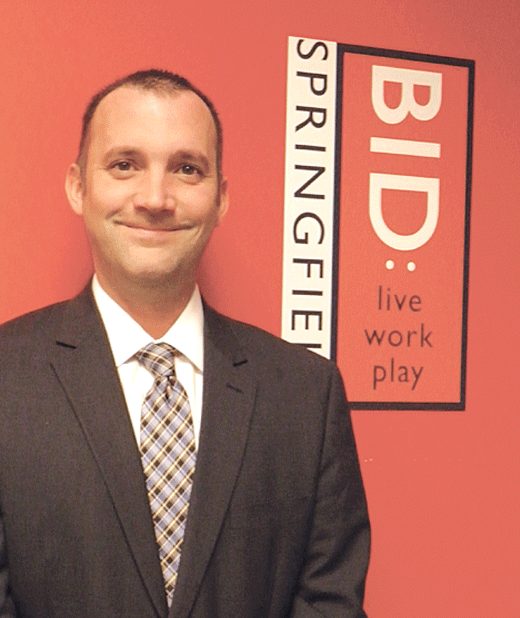
Opinion
New Restaurants Will Spice Things Up

Call it the coming burger battle.
That’s one way to describe the upcoming — and in some ways ongoing — change in the restaurant landscape in Greater Springfield.
Indeed, while every restaurant already has a good burger — or two, or three — on the menu, the Springfield area will soon be host to three restaurants specializing in so-called high-end burgers, and there are several other establishments already in the market that might fit that description, depending on how you define it.
It’s safe to say that no one will be asking that question from the early ’80s, ‘where’s the beef?’ It will all around us, and taking interesting names, like the Frankenstein, the Double-Double, Death by Burger, Fatty Melt, and a host of others.
But what does it all mean in the larger scheme of things when it comes to the economic health and well-being of this region? Maybe not much on the surface, but then again, it’s another piece of the puzzle, at a time when the region needs to be filling in those pieces.
As we’ve said on many occasions, the Greater Springfield economy is still in the process of reinventing itself from its days as a manufacturing hub. There are many facets to this reinvention, as the cities that have been through the process with a great deal of success — like Providence, Lowell, New Haven, and others — can attest.
Part of it concerns building vibrancy, creating a buzz, if you will, and making the area in question a destination — a place that people will want to visit, but also work, live, and start a business. High-end burger restaurants can’t do that alone, but they can be part of the broad solution.
As the story on page 6 explains, Max Burger, a category in the Max’s chain that has thrived in Connecticut, has opened in the Longmeadow Shops. Meanwhile, Plan B Burger, which has several locations in Connecticut, is opening in the Basketball Hall of Fame in a few weeks, and Luxe Burger, an operation with one existing restaurant in Providence, is opening in the former visitors center a block from the Hall.
With those latter two, people are already asking ‘where are they going to park all the cars?’ Good. Parking problems are actually a good thing; they connote vibrancy and the fact that people want to come to your city. Northampton has long had a parking problem that other cities and towns in this region would love to have.
The interest shown by these restaurant groups in Greater Springfield — and, more specifically, the city’s riverfront — is encouraging. It shows that this region has the demographics, and the ‘character,’ for lack of a better term, needed to inspire people to take a chance and make a large investment here.
And if these ventures succeed — and we have every reason to expect that they will — then they will likely prompt others to make similar investments. And if that happens, then this region, and Springfield in particular, will have more of that critical mass that will attract more young people, more empty nesters, more businesses, and more jobs. And this will prompt the construction of more market-rate housing that will help create an even more attractive demographic for businesses looking for a place to land or expand.
OK, three high-end hamburger restaurants are not going to do all that. But they can help. They can be part of the process of moving Springfield forward and closer to being the more vibrant city, the destination, that everyone wants it to become.
The burger battles are set to begin. Watch your cholesterol — please — and also watch and see if these new additions can help breathe more life into this area and, well, add some spice to the local economy.
We certainly hope they can.

Features
New CEO John Maguire Is Shaping a Turnaround Strategy
John Maguire

John Maguire acknowledges that ‘going back to basics’ is hardly a new refrain at Friendly’s, but he believes the chain now has the requisite pieces, and attitude, to get it done.


When it comes to turning around troubled companies, John Maguire has been there and done that.
Well, sort of.
In many ways, he compares his current undertaking — which he said others have described succinctly with the two-word phrase “fixing Friendly’s” — to one of his first assignments with the Boston-based fast-casual bakery and café chain known as Au Bon Pain (later to be renamed Panera Bread Co.), close to 15 years ago.
“In 1993, I had the opportunity to run a commissary in Chelsea,” he recalled. “It was a 17,000-square-foot facility located under the Tobin Bridge, and this was a wonderful opportunity for me because I was going to get to run what was a broken business.”
Elaborating, he said this division of the company produced baked goods, sandwiches, salads, and fresh juice for all the Au Bon Pain restaurants in the Greater Boston area; products were shipped twice each day. By the time Maguire arrived, the business was failing, he said, noting that there were many ways to quantify and qualify the decline.
“Customer satisfaction, with regard to the quality of the product and service coming out of the building, was terrible,” he noted. “The employee satisfaction and how they felt about their jobs was terrible. And, oh, by the way, it was losing several million dollars a year.
“My approach to all this was that I wasn’t thrilled as much as I was scared to death,” he went on, adding that he soon found out that few if any of the 100 employees in the facility (except those that delivered products) had ever been to an Au Bon Pain and seen the fruits of their labor. So he took them.
“They had no connection to what we were trying to do and to what success would look like for us,” Maguire told BusinessWest. “One Saturday, I came in at 5 a.m. I had a Ford Explorer, and I picked a few people off the production floor and said ‘come with me.’ We drove to downtown Boston before the traffic hit and went into some of the restaurants. I was able to say to the people, ‘see how good your baked products look on the shelves? See why we want you to spin the lettuce for 30 seconds to remove all the moisture from the container?’ By doing that, we got people connected.
“That shaped my entire philosophy on leadership in business,” he continued. “You have to come up with a plan, and then you get people involved in what that plan is going to be. You focus them in the right direction, and then it’s your people who will make the determination if a business is successful.”
Maguire said he took this same philosophy to a number of career steps at Panera, from president of retail operations to executive vice president, and he intends to continue in that vein at Friendly’s, where he is now CEO — only without the Explorer, at least in a literal sense.
Indeed, he still intends to get people connected and make them part of the brand-resurgency process. And in a lengthy interview with BusinessWest, he explained how he will do that, while also delineating the scope of the challenge and the broad strokes of the strategic initiative to return the chain to prominence.
“In a nutshell, I would say that Friendly’s has lost its focus on what really makes it special,” Maguire explained. “It’s lost its perspective on who its customer is and what is the best way to deliver for that customer, and, most importantly, what gives us credibility with our customers.”
Successfully reversing those trends will not happen quickly or easily, he continued, adding, however, that it can be done, because he’s seen it happen at other chains, such as Boston Market, Steak & Shake, and even McDonald’s, and because he believes the right ingredients are, or soon will be, in place for it to happen here.
“The leadership teams that came in here tried really hard — it wasn’t that they didn’t have good ideas or do things,” he explained, noting the high rate of turnover in the corner office. “There’s some fundamental things that need to take place that didn’t happen. There’s no quick fix to any of this business. It took a long time for Friendly’s to lose its way; it’s going to take some time for us to find our way back.”

Any Given Sundae
Before discussing what he wants to do at Friendly’s — the chain that filed for Chapter 11 bankruptcy last fall, closing dozens of restaurants as it did so, before emerging from bankruptcy this past spring — Maguire, who took over on May 29, first explained why he tackled this assignment.
After nearly two decades at Panera Bread, he said he understood that he would only leave for another opportunity if it represented a chance to lead an organization (he was second in command at Panera) and was also something, or some company, that he was passionate about.
And Friendly’s certainly fit that description.
Maguire grew up in South Weymouth, only a few blocks from one of the chain’s locations, and said he spent considerable time there, creating memories at virtually every stage of his life.
“Some of my most memorable experiences have taken place in a Friendly’s restaurant,” he said, “from when I was a kid, when I would go to Friendly’s on weekends with my grandfather, to when I was a teenager — that was the spot where you hung out with your friends — to more recently with my daughter; Friendly’s was a place where we’d spend ‘Katie-dad time.’”
But there was far more to this than nostalgia.
“This was a brand that I not only grew up with, but also have rooted for,” Maguire told BusinessWest, adding that, in recent years, it was a chain that he watched decline, and from a very intriguing perspective.
“As someone who’s been in the industry, I was keenly aware of some of the challenges they’ve had over the past 10 or 15 years,” he noted. “There were times when I would speculate and say, ‘if I had the opportunity to run Friendly’s, what would I do? How would I approach it?’”
And now that he has that opportunity, he sums up the strategy moving forward quickly and succinctly with the phrase ‘getting back to basics,’ while acknowledging that the three or four men who occupied his office before he arrived said essentially, if not exactly, the same thing.
But there is a difference between saying something and doing it, he continued, adding that previous CEOs have understood Friendly’s main problem as well as he now does — getting away from what brought it success decades ago and instead trying to be all thing to all people. The problem has come in the execution of strategies to change that equation.
And with that, he referenced the several different Friendly’s menus on the conference-room table, while noting that there are still many items on it that are far removed from the company’s core and its success quotient.
“Things like steak tips,” he explained, adding that ‘under-555-calorie’ meals would also fall into this category — things the chain does, but doesn’t do especially well, and constitute items that do not bring many people to a restaurant known for decades as a source of what Maguire called “an indulgent experience.”
But they’re still on the menu, he went on, adding that it’s often hard for restaurant executives to pull them off.
“Everyone gets this — everyone understands there are too many items on the menu, but when push comes to shove, to actually do it, it’s difficult,” he said. “People are going to be nervous — we’re going to hear from a vocal minority of our customers who say, ‘I want this.’ It’s going to take some discipline and sticktoitiveness; we’re going to need the fortitude not to react and to give it a chance to succeed.”

Shaking Things Up
Summing up what has happened to the franchise he grew up with, Maguire said it’s a scenario he’s seen many times in the industry.
“What happened to Friendly’s, and what got Friendly’s off track, is basically the same story that happens to most concepts in the restaurant business,” he explained. “Most concepts in this industry diminish over time; three out of four restaurants are making less money today than they did five years ago.
“What happened to this chain is typical,” he continued. “You’re chugging along, and then, whether it’s the economy or overgrowth or lack of focus on the business, sales start to fall. And when that happens, people panic. They say, ‘uh-oh, sales are falling, we have to do something.’
“So they try things,” he went on. “They try new menu items, they try a different direction, and then sales either come up or they don’t, and usually, they don’t. So then they try some other things because now they’re a little more panicked because sales are really down. And then they try other things, and they don’t work.”
What follows are inevitable leadership changes, Maguire told BusinessWest, adding that this cycle continues to repeat itself as new people assume the CEO’s chair.
“And with all those leadership changes, over time, Friendly’s has become less and less of what Friendly’s was,” he noted. “The focus on operations has diminished, the menu proliferation has continued to the point where we don’t know if we’re family dining or casual dining … and we’ve lost focus on what was iconic to us, and we’re trying to please all people. And when you do that, you wind up not pleasing anyone.”
Thus, beyond sales and market share, what Friendly’s has ultimately lost over the past several years is something ultimately more important — credibility, said Maguire, adding that it’s his unofficial job responsibility to get it back.
To do this, he continued, the chain must remove what he called “complexity” from the equation, meaning everything from that aforementioned menu proliferation to ambiguity about just what Friendly’s is.
“What we do now is take great people who work in our restaurants and make their jobs very difficult based on the complexity of our menu and the complexity of our service system,” he explained, adding that the process of simplifying things is already underway.
To help with all this, the company has hired the research firm RTS (Results Through Strategy) to get a sense from customers about what the chain should be doing moving forward.
“We’re going to be heavily research-based,” he said, adding that this is a departure from the past and a big reason why the menu has proliferated. “Opinion has driven much of what we’ve put on the menu; the franchise community thinks we should have this product, the company thinks we should have that product. And the way I’ve described it to the team is that my opinion doesn’t get to determine what’s on the menu, and your opinion doesn’t get to determine. Our customers are going to be the ones to tell us what should and shouldn’t be on the menu, and they do that through what they believe we have credibility in and what they purchase from us.”
Such research will likely inform the company on how to maintain its current strong following among young families and seniors — two constituencies that have always supported the chain — and also provide insight into how to reach a client group that it has lost to a large degree — teenagers.
The company has developed prototypes for some new developments, such as an old-fashioned ice-cream parlor concept called the Scoop Shop (there’s one located inside a Burger King in New Jersey), as well as something called Friendly’s Express, said Maguire, but before it can think seriously about growing, it must focus on the fundamentals in its existing 400 locations.
And by this, he means speed and quality of service, cleanliness, mood, or atmosphere, and a menu that is tailored to the identified Friendly’s customer.
“We need to focus on how to create the best customer experience day in and day out,” he said, “because, until we do that, we won’t have the credibility, the cash, or the ability to grow.”

Topping It Off
As he talked about the large challenge ahead of him, Maguire said that as important as what he wants to do is how he intends to do it.
And for this, he returned to that Au Bon Pain facility in Chelsea, and that process of connecting people with the company’s products, goals, and aspirations.
Completing that story, he gave tours in his Explorer nearly every Saturday for more than two years; there was even a waiting list of sorts created to determine who would get to go next. But there was more to the turnaround process than getting employees into the field.
Indeed, Maguire said the plant had to be cleaned up and renovated, some workforce decisions had to be made — specifically, weeding out people who were not doing their jobs properly — and training had to be implemented for all those who remained.
“But in six to nine months, our customer perception had improved, our employee satisfaction had improved, the facility had improved, and after about a year, we started making a little money,” he noted. “And it started with getting people involved and getting them focused.”
He’ll be doing this on a much larger scale at Friendly’s, and while he won’t be using a Ford Explorer to get people connected and on the same page, he will be using other methods, all designed to improve the level and quality of communication within the company, which means several constituencies, including employees, franchisees, and vendors.
“One of the things we spend a lot of time on is town meetings,” he explained. “Next week, I’m meeting with all our franchise owners and speaking with them about where we’re heading with the business, what matters, and hearing from them on what we can do to better serve them as franchise partners.
“We’re opening up with every constituency in the business — generating that two-way conversation,” Maguire went on. “We’re even doing it with our vendors; we’re bringing all our vendor partners through so they can understand what we’re trying to accomplish, so they can help us in that mission.”
Overall, Maguire is optimistic about the prospects for a turnaround, despite the inherent high degree of difficulty, because other chains have successfully gone back to what made them successful.
“I’ve seen concepts be in worse position than Friendly’s is and reinvent themselves and come back,” he said, mentioning Steak & Shake, Boston Market, Captain D’s (a seafood restaurant), and McDonald’s, which he considers perhaps the best example.
“If you look back 10 years ago, McDonald’s was really in some trouble; their sales were falling, customer satisfaction was down, and they were losing market share to people like Panera Bread and Starbucks. What McDonald’s did was understand that their biggest point of difference is their 10,000 locations with drive-thru.
“They went after Starbucks and said, ‘we can’t compete with you on a $5 cup of coffee, but with 10,000 drive-thrus, we can improve our coffee to Newman’s Own, do it at a better price point, and you’ll pass six of our locations on your way to work. And they took a big chunk out of Starbucks by doing that.”
The place for all those at Friendly’s to start is with brand strategy, Maguire explained.
“One of the questions I asked myself before I came here, as I was going through the interview process, was ‘why should Friendly’s exist?’” he recalled. “And I think it should exist because of the differentiating things we have. We’re different than other concepts; there’s no brand in the U.S. that has the focus on ice cream, breakfast, burgers, melts, fries, and other pieces. But ice cream is the key differentiator.
“The best way to describe what our strategy is and what we’ve already begun to work on is bringing us back to our roots with relevance,” he explained. “We’re going to create a brand strategy: who is Friendly’s? What do we aspire to be? Who is our customer? What are the products that give us credibility in serving them? And what’s the best way to reach them?”

Chain of Events
Moving ahead, the company will attempt to reposition the brand, focusing more on the ‘story’ than on specific products, he concluded, adding that there will be many components to this turnaround effort.
“Businesses are not mathematical equations — they’re living, breathing organisms with many different parts and pieces and things that make them work,” he said. “For us, it will come down to … do we make a few fundamental bets, and do those bets work?”
Maguire noted that, since arriving nearly three months ago, he’s spent considerable time acquainting himself with the many nuances of Friendly’s history, and has met both Curtis and Prestley Blake, the brothers who started it all in 1935, as well as other top administrators from the company’s past.
But for the most part, this was a story he already knew and understood. The place where he logged significant Katie-dad time and listened to stories from his grandfather was now referenced with the past tense.
To fully fix Friendly’s, he has to make that place the center of the company’s future. It won’t happen overnight, he stressed repeatedly, but the process is already well underway.

George O’Brien can be reached at [email protected]
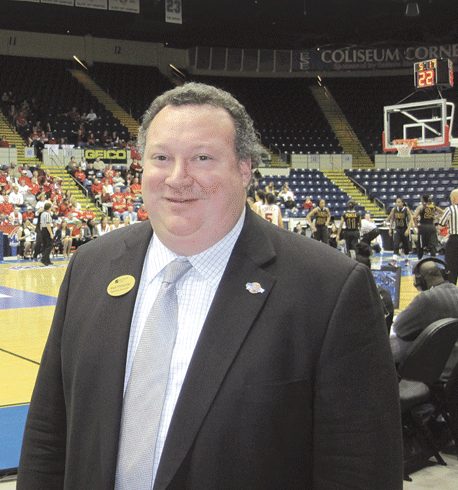
Sections Travel and Tourism
MASS MoCA Fills In the Wide Canvas of Contemporary Art

Joe Thompson

Joe Thompson says MASS MoCA’s constantly changing installations and inclusion of performing arts make it more vibrant than a static art museum.

Joe Thompson was talking about how, over its 13-year history, the Massachusetts Museum of Contemporary Art (MASS MoCA) had solidified its reputation as a unique showcase of what is called ‘new art’ — in all of the many forms that takes — and as a facility that is never afraid to take a chance on exhibits, programs, and events that are, in a word, different.
And with that, as if on cue, the sounds of people banging on metal drums, accompanied by a woman singing opera, could be heard from the floor below.
This was the New York City-based, multi-faceted classical-music organization Bang on a Can, which, according to its Web site, is “creating an international community dedicated to innovative music, wherever it is found.” With that mission in mind, the group, led by composers and founders Julia Wolfe, David Lang, and Michael Gordon, sought out MASS MoCA as the home for a summer educational and residency program for fellows and students in all forms of music.
The 18-day festival, which concluded on July 28, is sometimes called ‘Banglewood,’ in reference to the nearby, and much more traditional, Tanglewood Music Festival in Lenox. It is is dedicated, said the group, “entirely to adventurous contemporary music; we will write it, we will perform it, we will think about it, and we will talk about it.”
And for all that, the museum in North Adams, created out of several old mills that were part of the Sprague Electric complex, has become a venue Wolfe called both supportive and inspiring.
“MASS MoCA is a gold mine of support and atmosphere,” Wolfe told BusinessWest, “and this program, with all the surrounding art, allows for students to create and perform as colleagues, side by side with seasoned performers. It gets music into art spaces.”
Creation of this powerful learning environment is one of many ways to qualify and quantify the success MASS MoCA has recorded since opening in the summer of 1999, said Thompson, the museum’s director, adding that others include solid attendance figures (130,000 last year, a new record), a growing endowment (currently $14.5 million), and a large number of return visitors, a statistic that lies at the heart of the facility’s current operating philosophy.
Indeed, instead of a static museum dedicated to contemporary art, MASS MoCA is an ever-changing institution that showcases paintings in canvases, but also film, video, sculpture, and, yes, music.
“The farther away you get from North Adams, the more people think of MASS MoCA as a museum; the closer you get to North Adams, the more people think of MASS MoCA as the place where they see theater or dance events,” said Thompson, adding that this range of descriptions speaks to just how the museum has become different things to different people.
Julia Wolfe and David Lang

Julia Wolfe and David Lang say MASS MoCA helps enable Bang on a Can to “get music into art space.”

For this issue and its focus on the region’s tourism industry, BusinessWest looks at how MASS MoCA continues to grow and evolve while finding new ways to meet its two main goals: to provide a state-of-the-art (and arts) platform for contemporary works of all kinds, and create jobs in a corner of the state that needs some.

Exhibiting Determination
It’s called Solid Sound.
That’s the name that was given to a three-day music festival launched by MASS MoCA administrators in 2010, featuring Wilco, the American alternative-rock band based in Chicago.
Thompson said he and others were confident that Wilco and its opening acts would draw a good turnout, but they actually got a lot more than they bargained for — and more than the town was prepared for. More than 5,000 fans descended on North Adams, filling every available parking space and prompting restaurants to run out of food. Thompson and city officials who helped stage the event feared that litter would be scattered throughout downtown the morning after the event wound down.
“But all throughout downtown, all we saw were full garbage cans and neatly stacked cups and lined-up bottles — by recyclable type — next to each can,” said Thompson with a laugh. “It’s due to the type of engaged and environmentally conscious following that Wilco has.”
And this is, by and large, the same type of audience that is attracted to contemporary, or new, art, he continued, adding that the museum draws more than 120,000 visitors per year — a tribute, he believes, to an operating philosophy that he and others involved with this project agreed upon as they raised and then spent more than $31 million to convert portions of the Sprague complex into one of the largest (area-wise) contemporary-art museums in the world.
Going back to the early and mid-1990s, Thompson said he slowly grew away from his original, and firmly rooted, belief in the concept of a museum with large, fixed installations devoted to pared-down ‘minimal art’ of the ’70s and ’80s. While he admits they look great in the generous, rough-hewn spaces afforded by mill buildings, and don’t require fancy climate control, he came to think that static art offered far too limited a vision — perhaps a dangerously constrained one.
“Many people who shared my love of new art worried out loud whether visitors would make repeat visits to a permanent, fixed installation,” he explained. “That question — ‘would people come twice?’ — that was a tough question, and led me to think that a program of changing, shorter-term exhibitions might be a more engaging way to begin.
“As artists had become increasingly fluid in the way they work, with art-making practices that cross from sculpture to set design to video and film,” he continued, “it became clear that an institution that was to be truly responsive to the needs and trajectories of new art had to incorporate the performing arts as well.”
In a nutshell, the past 13 years of operation have essentially proven Thompson and others right in their thinking. The museum has changed exhibits regularly and hosted a broad mix of media — as evidenced by Solid Sound, Banglewood, and other projects and events — and visitors have come back repeatedly.

Creative Economy
The list of current and upcoming exhibits speaks volumes about the diversity created at MASS MoCA and the ability to present a different museum every time visitors venture to North Adams.
There’s “Oh, Canada” (through next April), the largest survey of contemporary Canadian art produced outside of Canada. It features the work of more than 60 artists who hail from every province and nearly every territory. There also “Invisible Cities,” showing through next February. Titled after Italo Calvino’s book — which imagines Marco Polo’s vivid descriptions of numerous cities of a fading era to Kublai Kahn — it features the work of 10 diverse artists who reimagine urban landscapes both familiar and fantastical.
Meanwhile, “Stanford Biggers: The Cartographer’s Conundrum” is a major multi-disciplinary installation by New York-based artist Stanford Biggers, and was inspired by the work of his cousin, the late artist, scholar, and Afro-futurist John Biggers.
And then there’s “Sol LeWitt; A Wall Drawing Retrospective, which is an ongoing, semi-permanent display that is the one notable exception to Thompson’s basic operating strategy of changing exhibits. It includes 105 large wall drawings — many would use the term murals — created by artist Sol LeWitt, who is considered by many in the art world to be the most influential conceptual artist of our time.
It is due to the sheer size of LeWitt’s large-scale art, some of it measuring more than 30 feet long by eight feet or more in height, that MASS MoCA was considered an ideal home for these works. Thompson told BusinessWest that a call early in 2003 from Yale University Art Gallery Director Jock Reynolds set in motion the process for bringing LeWitt’s art to North Adams, but first he had to be sold on a permanent display.
As Thompson explains it, Reynolds and LeWitt needed the space to construct LeWitt’s legacy (the artist never lived to see the unveiling in 2007) and focused on MASS MoCA because no other museum in the Northeast could dedicate tens of thousands of square feet of space to such large works. Thompson said the collaboration between Yale, the Williams College Museum of Art, and MASS MoCA resulted in a stunning “museum within a museum,” as he called it, on three floors, totaling 30,000 square feet.
“As much as we love our changing program, and you’re only as good as your last show, this was a rule-breaker for us,” Thompson said. “Suddenly, we had this beautiful milestone installation of Sol LeWitt’s, and it’s super-high-quality, it’s colorful, full of detail, and it just leaves you smiling — it just makes you feel good.”
It was a turning point for Thompson. “It made me think that the ideal museum is one that has both a core, permanent collection, but also lots of room for change; you want masterpieces that people return to over and over again, but you also want a vibrant roster of changing exhibitions that trigger the return visit. Sol LeWitt helped us see that.”

Broad Strokes
While MASS MoCA hasn’t yet matched its goal for creating 600 jobs, it has succeeded in contributing to the economic development of North Adams and the Berkshires in general, said Thompson, adding that it has become a day-tripping destination while also filling some hotel rooms as well.
Meanwhile, it has become that proverbial ‘different sort of venue’ that has attracted the likes of Bang on a Can, Wilco, and visitors who want to experience the full range of new art.
Perhaps David Lang summed it up best when he said that, because the museum, perceptions of North Adams have changed.
“Before, it was always a place you could visit,” he said. “Now, it’s a place you have to visit.”

Elizabeth Taras can be reached at [email protected]

Features
Quaboag Chamber Spotlights an Intriguing Region

Lenny Weake

With the passing of gaming legislation, Lenny Weake says, the Quaboag chamber is now committed to fully harnessing whatever a Palmer casino would bring to the region.

When the state Legislature passed a comprehensive gaming bill last fall, it did more than usher in the casino era in the Commonwealth.
It also changed Lenny Weake’s job description. Well, sort of.
“Let’s just say they broadened it in a way,” said Weake, president of the Quaboag Hills Chamber of Commerce, which is headquartered less than a mile from where Mohegan Sun wants to build a resort casino on a hillside just off the Mass Pike exit in Palmer.
Elaborating, Weake said that, in the years leading up to that historic vote, the Quaboag chamber was in many respects a spectator on the gaming issue, taking a Switzerland-like stance of neutrality on a matter that sharply divided its membership. But with the passing of gaming legislation, the chamber understood that it could no longer stand on the sidelines, he told BusinessWest, adding that the issue now isn’t whether casinos are right for the state, it’s about jobs and economic development, the foundations of the chamber’s mission.
And, more to the point, it’s about effectively “harnessing” (a word Weake would use often) the vast potential for commerce and economic vitality that comes with a casino in one’s backyard.
“Everything has shifted … this isn’t about gaming anymore; it’s about what Palmer could be in the next five years,” he explained. “We’re not going to sit by and let this thing develop without making sure that we’re part of the process.
“Our role is changing; if Mohegan Sun is going to bring 4 million people into the region each year, we need to figure out how to work with those people and get those visitors off the mountain, in a sense, and get them into our communities,” he continued. We can’t let this economic development go by and not be a part of it, and not figure out a way to harness those 4 million visitors and have them explore the region.”
In recent months, this mindset has manifested itself in many ways, said Weake, but mostly through meetings with Mohegan Sun officials, town administrators, members of the Gaming Commission itself, and other players, including Northeast Realty, a development group that is advancing a number of additional development plans in and around Palmer, most of them contingent upon a casino being built in that community.
The broad assignment in each case, he said, is to make sure the Quaboag region’s business community has a voice in the proceedings, and that its interests are clearly understood. And in many ways, this simply represents a logical extension of the chamber’s ongoing work to promote and advance business in the region, Weake noted, adding that his work often comes down to putting the Quaboag area on the map — in a figurative sense.
Indeed, one of Weake’s priorities since he arrived at the chamber more than a decade ago has been to create and expand initiatives that will help people discover this region that lies roughly halfway between Springfield and Worcester and boasts attractions ranging from the Quabbin Reservoir to the giant antiques show in Brimfield — and, while doing so, support its businesses.
His latest effort in this regard is what he calls a “treasure hunt.” Still very much a work in progress, the initiative, based loosely on the hobby known as letterboxing (in which small, weatherproof boxes are hidden in publicly accessible areas, with clues distributed about how to find them), is designed to encourage people to get out and explore a region still in many ways saddled with the label ‘best-kept secret.’
“We want to expose people living right in our region to all there is to see and do here,” said Weake. “And while they’re out exploring, we want them to experience the restaurants we have here and other types of businesses and attractions.”

Exploring All Options
As he talked about the Quaboag chamber, Weake said it is similar to most such organizations in the Bay State, but has some unique challenges.
First, there is its sheer size; it stretches from Palmer east to Spencer, just outside Worcester, covering three counties (Hampden, Hampshire, and Worcester) and two area codes, a region covered by 10 different newspapers. Meanwhile, the communities represented by the chamber — Belchertown, Brimfield, Brookfield, East Brookfield, Hardwick, Holland, Monson, New Braintree, North Brookfield, Palmer, Spencer, Wales, Ware, Warren, and West Brookfield — are small (total population is about 36,000), and the business community is dominated by small (in most cases, very small) businesses.
Many of the communities, including Palmer and Ware, are former manufacturing centers trying to reinvent themselves and attract new sources of jobs, with many focusing on tourism.
As a result, much of the chamber’s work involves promoting and branding the region, and thus driving visitorship, said Weake, citing the Brimfield antiques shows, which the chamber promotes extensively through its Web site, as one primary example. The chamber also prints an annual recreation guide, which includes information on accommodations, attractions, events, farms, orchards, restaurants, shops, and more.
The ‘treasure-hunt’ concept is the latest manifestation of these efforts, he said, adding that much of the Quaboag region, despite the chamber’s best efforts, remains an unknown quantity to many Baystate residents. By compelling area residents and visitors to look for the various clues, the chamber is expecting them to learn about the area, individual communities, and, yes, specific businesses.
“We want to create something that will make people search through the region, learn about history, learn about the towns, but also have fun doing it,” he said, adding that the chamber is working to create what he called a prototype involving the town of Monson. “We want to come up with a treasure hunt, where, in the process of finding clues, people can learn all about this area.
“It’s in its beginning stages — we have to develop the concept, and then we have to sell it,” he continued, adding that the program will be akin to but not exactly like letterboxes. “We want people to see what we have; we want them to learn about people like [Hall of Fame baseball owner and manager] Connie Mack, who grew up in Brookfield.”
But there is much more to the chamber’s work than tourism, said Weake, adding that services to members have included everything from assistance in the wake of last summer’s tornadoes (Monson and Brimfield were especially hard-hit) to an annual resources directory, to a concept called Hot Deals, which enables businesses to post promotions on the chamber’s Web site.
The passing of gaming legislation last fall simply adds another comprehensive layer of advocacy to the chamber’s workload, he said, adding that the coming months will be both exciting and challenging.
Summing up the chamber’s involvement in the broad gaming issue, Weake repeatedly came back to that notion of harnessing everything that casinos bring to the table, from those projected 4 million visitors to actual commerce (hopefully to be conducted with local vendors), to hundreds of employees, many of whom might need a map to find Palmer.
“When Mohegan goes out to bid on products and services, we want to make sure that our businesses can competitively bid,” he explained, citing just one example of how the chamber will attempt to assist Quaboag-area companies and make sure their voices are heard. “We want to be able to educate businesses on how to work with Mohegan.”
Another example, he went on, is the point systems used by casino resorts to reward repeat customers. “We want to work with Mohegan and try to make sure businesses in this region can redeem those points,” he explained, “so people can go to the Salem Cross Inn [in Brookfield], for example, with points they’ve earned in Palmer.”
Weake said that individual casino developers looking to win the approval of the five-member Gaming Commission must make their applications as attractive as possible, and a big part of this involves commitments to partner with the community as a whole and the business community as well.
He said part of the changed, expanded role for the Quaboag chamber is to shape those partnerships in mutually benefiting ways.

Doubling Down
Weake stressed repeatedly that the chamber’s current work with regard to the matter of gaming should not be described as efforts to support a casino in Palmer. Rather, it is about job creation, economic development, and giving the business community stretched across those 15 Quaboag towns a strong voice in the matters of the day.
In that respect, the Legislature’s vote last fall did not technically change his job description — it merely added many new dimensions to what he was already doing every day.
And there’s a good bet — literally and figuratively — that these efforts will only become more elaborate, and intriguing, in the months and years to come.

George O’Brien can be reached at [email protected]
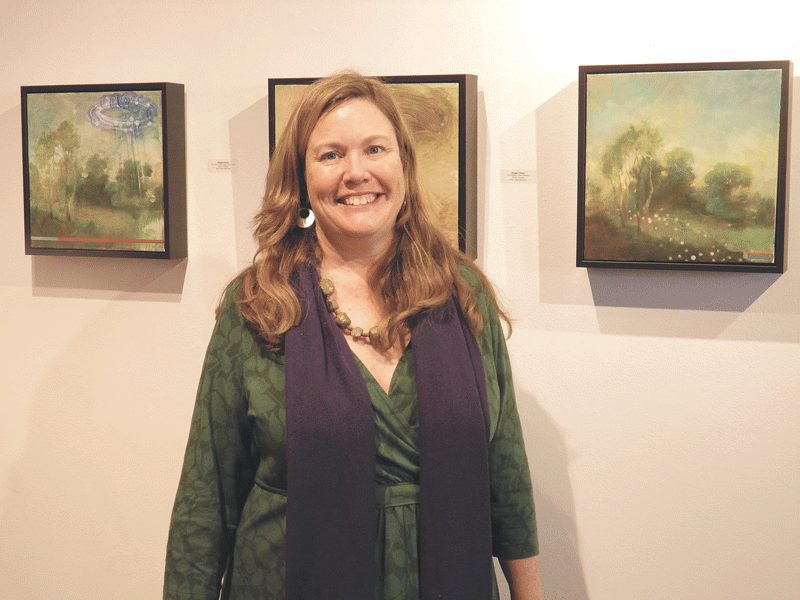
Environment and Engineering Sections
MassDEP Program Will Recycle Organics for Clean Energy

The Massachusetts Clean Energy Results Program (CERP) is an innovative, first-of-its-kind new program that was launched in November 2011 by the Department of Environmental Protection (MassDEP) and the Department of Energy Resources (DOER). The program is designed to maximize the combined resources of both agencies to better advance the siting and successful implementation of renewable-energy and energy-efficiency projects.
A key goal of CERP is to promote an increased capacity in the Commonwealth for anaerobic digestion (AD) — a process that breaks down food and other organic material to produce a renewable biogas (largely comprised of methane). This biogas is then combusted to generate electricity and heat. Just over a half-year from launch of this new program, the agencies are making great strides toward this goal.
Diverting commercial organic wastes (such as vegetable waste from farms, food processers, grocery stores, institutions, and restaurants) from the waste stream and converting them to a useful fuel has many significant benefits. Removal of these materials from the waste stream saves them taking up limited capacity in the state’s landfills.
In addition, because Massachusetts has some of the highest solid-waste disposal rates in the country (ranging from $60 to $90 a ton, nearly double the national average), recycling organic material for reuse can considerably offset disposal costs for the businesses that generate these materials. Furthermore, producing renewable biogas from anaerobic digestion is a sustainable, renewable energy solution. Active capture and use of methane from the breakdown of organic material reduces emissions of greenhouse gases and diminishes our dependency on fossil fuel.
MassDEP is working with DOER, the Mass. Department of Agriculture, the Mass. Clean Energy Council, and the U.S. Environmental Protection Agency to ensure that, by 2020, the Commonwealth is generating 50 megawatts of electricity from this renewable source — up from the fewer than 10 megawatts being generated now. These partners also have a goal of diverting 350,000 tons per year of organic material from landfills and incinerators to anaerobic digestion and other organics-processing facilities; organic material represents more than 25% of the total amount of waste currently being thrown away in Massachusetts.
MassDEP and its partner agencies have identified specific steps to increase diversion of organic material for productive reuse via anaerobic digestion and other processing facilities. Those actions include streamlining and clarifying regulatory requirements, increasing diversion of food waste at large businesses and institutions to ensure a supply of material for anaerobic digestion, and encouraging appropriate siting of more anaerobic digestion projects across the Commonwealth.

What’s Next?
MassDEP is in the final stages of amending its solid-waste regulations to facilitate significant expansion of the state’s capacity to process and recycle source-separated organics and other recyclable materials. Concurrent amendments to regulations governing municipal wastewater-treatment plants will allow those facilities to accept appropriate source-separated organics for AD processing, which will in turn boost their energy production and reduce their operating expenses. The agency has been working with stakeholders to address the thoughtful comments received on draft regulations earlier this year, and MassDEP’s final AD regulations are expected to be published by this fall.
In addition, agencies have made great progress conducting a preliminary evaluation of sites on public lands that may be well-suited for new anaerobic-digestion facilities. We have narrowed the sites to a manageable list of eight, and are meeting with the state Division of Capital Asset Management, agency heads, and host communities to talk about the feasibility for siting these demonstration projects.
Massachusetts has already made significant progress in diverting organics from the waste stream and has been a leader in working with commercial generators of organics on building an infrastructure for collection. Over the past decade, MassDEP has worked extensively with major supermarket chains in Massachusetts, and as a result more than 300 of the 600 supermarkets are diverting organics (produce and breads) from disposal for compost at nearby farms. MassDEP has also worked with a number of other business sectors that generate significant quantities of food waste to help them establish diversion programs. Sectors with active diversion programs include hotels, colleges and universities, convention centers, hospitals, and large restaurants.
Given the importance of diverting organic materials away from landfills and into beneficial renewable energy, the Commonwealth will soon be proposing adding commercial organics to the other materials currently banned from landfills and incinerators.
The Patrick-Murray Administration seeks to put all of these pieces together so that, before too long, all commercially generated organic waste is diverted from disposal and processed through AD to harvest the renewable fuel source.
In many European countries, large-scale anaerobic digestion of organic waste has proven successful in the creation of jobs, improving energy independence, stimulating economic growth, and being an important component of the renewable-energy strategy. Through the combined efforts of DOER, MassDEP, and other key stakeholders, Massachusetts is leading efforts to make this a reality in the Commonwealth.

Kenneth Kimmell is commissioner of the Mass. Department of Environmental Protection.

Golf Preview Sections
15 Years in the Making, Cold Spring C.C. Opens for Business

Fan Du

Fan Du says its was views from the top of the hill, like this one, that helped inspire her father to make the long-stalled Cold Spring Country Club a reality.

After a number of false starts and mis-steps, the long-awaited Cold Spring Country Club in Belchertown opened its fairways this spring. There has been the expected curiosity factor among regional players, getting the operation off to a solid start, but management understands that the key to success isn’t getting the attention of the golfing community — it’s holding it.

Fan Du says there was a great deal of buzz, or anticipation, that accompanied the recent opening of Cold Spring Country Club in Belchertown — and with good reason.
After all, this track, located just over the Ludlow line in a former apple orchard, has been more than 15 years in the making. Over that time, there have been several ownership groups involved, a well-chronicled foreclosure, and enough fits and starts to prompt the residents of that area to wonder if the vision would ever become reality.
“People have been waiting a long time for this course to open — there has been a lot of curiosity,” said Du, whose father, Sheng Du, a successful businessman in China and avid golfer, is the man responsible for resurrecting the project. He was able to look past the problems, she said, and focus on both the incredible views from the hilltop where the clubhouse was eventually constructed — and also the vast potential of the property to become home to a golf course and much more.
The challenge moving forward, said Bill Tragakis, head golf professional and club manager, is to maintain and build upon that buzz, and channel it into what will become a multi-faceted business venture, launched during a difficult time for the golf business in general and the economy as a whole.
But the requisite pieces are in place or on the drawing board, said Tragakis, adding that the highly anticipated golf course is merely the first one to fall into place. Others include the club’s 19th hole, a restaurant now open to the public that was launched with expectations that it could become a popular destination for residents of Belchertown and surrounding communities, as well as a large banquet facility to be located further up the hill and a housing component that has no timetable as of yet but will likely be commenced when that sector improves.

Bill Tragakis

Bill Tragakis says Cold Spring is off to a solid start with both memberships and public play, and it will need continued support for those constituencies to be successful.

The success of each of these specific ventures, as well as the larger development, will depend on management’s ability to capture and keep the public’s attention, said Tragakis, adding that the golf course itself is off to a solid start with membership (more on that later), as well as public play, despite a rainy spring, and the restaurant is drawing positive reviews from those who have discovered it.
In both cases, the goal is to bring people back repeatedly, he explained, noting that every course in the region is confronting the same basic challenge, and must respond accordingly.
“The keys are impeccable conditions for the golf course and superb customer service, and that’s where our focus has been,” he said. “This club has a resort appearance, and that’s by design.”
For this issue and its focus on the region’s golf industry, BusinessWest takes an in-depth look at the Cold Spring development, and why its managers look to the future with optimism and confidence born from a combination of persistence and imagination.

Designs on Success
Du, who has assumed a leadership role at the club with her husband, Willie Guo, told BusinessWest that one of the many assignments that had to be carried out over the past several months was selecting a logo for the venture, a branding mechanism now affixed to everything from ball markers to shirts; from golf-bag towels to a wide variety of head gear.
“There’s a lot that goes into this, and it took a while to create this look,” she said with a laugh, while displaying the eventual winner — the words Cold Spring juxtaposed against a leaf. The image contains several colors, including red, orange, gold, and a few shades of green, and it was chosen, said Du, to spotlight what is perhaps the club’s best selling point — the scenery, especially at fall foliage season.
It was the views at that time of year that captivated her father, said Du, adding quickly that the scenes from the top of the hill, which he discovered while looking for business opportunities in Massachusetts, were certainly not enough to prompt the requisite sizable investment in the project. Indeed, the initiative had to make good fiscal sense, she went on, something that outwardly appeared unlikely given the challenged state of the local golf industry and the prevailing opinion that this region was already saturated, if not oversaturated, with places to play.
But market analysis, not to mention instinct, indicated that there was room in the market for a higher-end, semi-private course that offered something distinctive, said Tragakis, formerly the pro at Hampden Country Club, adding that he believes that Cold Spring delivers those qualities.
The elder Du acquired the property in 2009, said his daughter, adding that preliminary construction on the course resumed soon thereafter, with grass put down early in 2010. Construction of the ornate clubhouse and a maintenance building commenced in 2011, and the course was open for business on May 1 for members and June 1 for the general public.
What the golfers have found is a test that is both stern and somewhat unique, said Tragakis, who points to the scorecard for some evidence. It has yardages for five tees, including championship markers that stretch the track to 6,521 yards. “And that’s the longest 6,521 yards you’ll ever play, because the actual yardage is somewhat hidden,” he said, noting that there are some uphill stretches, particularly the rugged par 4 18th, to go with some downhill holes, and a rare route to a par of 71.
Indeed, there are six par 3s (three on each side), and five par 5s, he said, noting that a typical par 71 would have four of the former and three of the latter.
The course architects, Armstrong Associates, located in New Mexico, essentially took what the land offered, and designed an intriguing test for players of all abilities, said Tragakis, adding that this is one of the many ingredients necessary to attract a large and diverse audience.
Overall, he describes Cold Spring as a mix of Crumpin Fox (in Bernardston) and the Ranch (Southwick), meaning the former’s tight, tree-lined fairways — which dominate the front side — and the latter’s open, sweeping fairways, prevalent on the back nine.
Thus far, the course has been successful in attracting both members and public play, said Tragakis, and it must continue to do both if it is to be profitable. “My goal is to make this golf course a fun, enjoyable experience for everyone,” he explained, “but especially for the members. We need them to come back, and we need to keep growing those numbers; that’s our rainy day money.”
The membership count now exceeds 200, and continues to climb each week, something unusual at this time of year, months after most area players have settled on a club to join for the year, he said, adding that many former members of nearby Hampden Country Club (now under new ownership) have joined Cold Spring. An attractive senior membership rate ($750) has attracted more than 70 people from that demographic group.
Meanwhile, there has been a steady stream of public play, with visitors from across Western Mass. and even Northern Conn., which Tragakis attributes to that aforementioned buzz factor, as well as some aggressive, targeted marketing.
The club has focused mostly on radio, including the expensive option of taking slots during Red Sox games and related programming, he noted, adding that the pitch line used at the end of each spot — “it’s the reason you play golf” — sums up how the club intends to differentiate itself.
The specific marketing message has varied through the first several months, he went on, adding that in the late winter and early spring, before the season started, the club was focused on memberships. Later, the emphasis was on the fact that the club had opened for play, and most recently, the accent has been on stressing that, despite its appearance (including the elaborate stone entranceway now under construction), Cold Spring is in fact open to the public, as is its restaurant.

Aggressive Course
And that’s important, because attracting golfers is just part of the success quotient, said Du, adding that there will eventually be several components to this venture.
For starters, there’s the club’s restaurant, called simply the 19th Hole Bar and Grille, which, like a growing number of facilities at public and semi-private courses (including The Ranch and Crumpin Fox), is open to the public and will be in operation year-round.
Ron Riopel, food and beverage manager for Cold Spring, said the restaurant is relatively small (just over 70 seats inside), but can accommodate more than 120 on a large patio that boasts sweeping views of the course and the hills beyond, and will likely stay open until at least mid-fall.
Beyond the scenery, the outdoor area will feature live music on many evenings (a ‘Caribbean Night’ was staged recently), and a menu Riopel described as “simplified but elegant.”
Elaborating, he noted that the fare extends well beyond traditional post-round food (most of it fried), and includes such options as pan-seared Pacific Ponga, a Vietnamese white fish.
The 19th Hole opened to members and the public on June 1, and like all new eateries, went through a breaking-in period, during which kinks were worked out and staff members came fully up to speed, said Riopel, adding that, as with the golf course, there has been a curiosity factor surrounding the restaurant that has prompted many area residents to take the drive up the hill.
And, also like the course, repeat business will be a function of delivering a quality experience, he continued, noting that he believes the facility should fare well in a region that doesn’t have a deep roster of competing restaurants.
Tragakis said some of the recent marketing has made reference to the dining element, underscoring its importance to the overall operation. “We have focused on food and beverage in these spots,” he explained. “We’re not going to forget about golf — we’re still a golf course — but public dining is a big part of what we’re doing, and I think the restaurant will do very well.”
Other components of the Cold Spring business plan are on the drawing board, to one degree or another, said Du, who told BusinessWest that plans are being developed for a banquet hall that will sit above the clubhouse.
The facility will be large in scale, and meet what she considers a recognized need in the Quaboag Valley region, she went on, adding that there is no immediate timeline for construction.
The same can be said for a housing component that most experts say is a key to the success of any large golf operation. There is considerable land on which to build houses or condos, she noted, adding that market analysis is currently ongoing, and it is likely that work will begin over the next five years.

Successful Roll Out
If all the pieces fall into place as expected, Cold Spring will become a formidable player in the large and seemingly ever-changing local golf market, said Tragakis.
He acknowledged that the industry is faced with many challenges — from the still-sluggish economy and its broad impact on discretionary spending, to stagnancy and even retreat in the number of people taking up the game, to the vagaries of the weather.
But venues that succeed in creating enjoyable and memorable experiences can overcome those issues, he continued, adding that Cold Spring has enormous potential to do just that.
“The view from up here is good,” he said, using that term in both a literal and figurative sense, “and we think it’s only going to get better.”

George O’Brien can be reached at [email protected]

Departments People on the Move

Wolf & Company, P.C. recently announced the promotion of Mark O’Connell, CPA, to the position of President and CEO of the firm, effective July 1. O’Connell has been a member of the 100-year-old company since 1997, and spearheaded the development of its Springfield office, which he most recently served as dirctor. O’Connell will continue to work out of the Springfield office. He is a member of Wolf & Company’s financial-institutions group, and formerly held a seat on the firm’s executive committee, which establishes the firm’s policies and strategic direction.
•••••

Thomas R. Creed

Thomas R. Creed

TD Bank has named Thomas R. Creed Senior Vice President and Market Commercial Credit Manager in the new Credit Management Division in Springfield. Creed will direct approval, underwriting, and portfolio-management, staff, and procedures supporting TD Bank’s commercial-banking business in Western Mass. Creed has 27 years in banking and related fields and serves as chairman of the Holyoke Redevelopment Authority and on the board of the Economic Development Council of Western Mass.
•••••
United Bank announced the following:
• Amy Bilodeau has been promoted to the position of Personal Banking Officer at the West Springfield branch. She joined United Bank in 2008 with nearly 25 years of banking experience gained at the former Westbank, now New Alliance Bank, in West Springfield; and
Ronald A. Gannett

Ronald A. Gannett

• Ronald A. Gannett has joined the bank’s Beverly loan production office as a Senior Vice President in Commercial Baking, focusing on commercial real-estate opportunities in the Greater Boston area. He will assist in building the bank’s brand and commercial real-estate business in that area, while complementing the current activity in the Greater Worcester and Springfield areas.
•••••
American International College announced the following:
Linda Dagradi

Linda Dagradi

• Linda Dagradi, a 1971 AIC graduate, has been promoted to Vice President for Enrollment Management. Dagradi has most recently incorporated Admissions, Marketing, and Financial Aid into the umbrella of Enrollment Management to aid AIC in growing its student population both at the undergraduate and graduate levels; and
Nicolle Cestero

Nicolle Cestero

• Nicolle Cestero has been promoted to Vice President for Human Resources. In that position, she will supervise and direct the human-resources activities of the college.
•••••
Business Network International (BNI) Western Mass. recently appointed Jason Turcotte as Managing Director for the region. Turcotte will be responsible for overseeing and providing continued structure, training, and support to the chapters and members of BNI Western Mass. He will ensure that every chapter is following the BNI system and is on pace to achieve goals, as well as supporting the leadership teams within the region.
•••••
Elizabeth B. Rairigh

Elizabeth B. Rairigh

Elizabeth B. Rairigh, AICP, recently joined the Pioneer Valley Planning Commission as a Historic Preservation Planner. She holds a master’s degree in Historic Preservation and a master’s in City Planning from the University of Pennsylvania.
•••••
Thomas A. Miranda, an attorney with Springfield-based firm Cooley, Shrair, P.C., recently presented the seminar “Using Mediation to Settle Property Disputes” at the 2012 spring session of the CPE Forum at Holyoke Community College Kittredge Center. The forum provides educational programs to business professionals, including CPAs and CMAs. Miranda also recently presented a session on “Business Entity Organization and Structure to Limit Liability” at a Hampshire County Bar Assoc.-sponsored small-business-entity seminar.
•••••
Richard J. Kos

Richard J. Kos

The Board of Directors of Hampden Bancorp Inc., which is the holding company for Hampden Bank has named Richard J. Kos, Esq. to Chairman of the Board of the company and the bank, effective immediately. Kos has been an attorney at the firm of Egan, Flanagan & Cohen, P.C. since 2004 and is a partner of the firm. Prior to that, he had been in private practice since 1978, and was mayor of Chicopee from 1997 to 2004. Kos has a bachelor of science degree in Economics from Amherst College, and a law degree from Suffolk University Law School. He currently serves as a trustee of Our Lady of the Elms College, chairman of the Chicopee Chamber of Commerce, a member of the Board of Incorporators of the Mason Wright Foundation of Springfield, and a member of the Board of Directors of the Regional Employment Board of Hampden County. He has held prior directorships with the Pioneer Valley Red Cross, the Polish National Credit Union, Providence Place, the Economic Development Council of Western Mass., and the Westover Metropolitan Development Corporation. He had been
an incorporator of Chicopee Savings Bank.
•••••
The YMCA of Greater Springfield announced that four area leaders from the business and non-profit communities recently joined its Corporate Board of Directors. They are:
John Doleva

John Doleva

• John Doleva, President of the Naismith Memorial Basketball Hall of Fame;
Lorenzo Gaines

Lorenzo Gaines

• Lorenzo Gaines; Program Director for ACCESS Springfield;
Paul DiGrigoli

Paul DiGrigoli

• Paul DiGrigoli, Owner/CEO of DiGrigoli Salon and DiGrigoli School of Cosmetology; and
Jeffrey Poindexter

Jeffrey Poindexter

• Jeffrey Poindexter, an attorney with Bulkely, Richardson and Gelinas, LLP.
•••••
Friendly Ice Cream in Wilbraham recently announced the following appointments and promotions:
• Walter Kwiecien has been promoted to Director of Information Technology;
• Lionel Bisson is now Director of Training and Quality Assurance and will direct all training and development function and the quality assurance inspection process;
• Ana Alves, with the company since 1977, has been named Manager of Restaurant Technology and will be responsible for managing and developing point-of-sale systems;
• Valerie Doggett has been named Audit Service and Quality Service Assurance Manager, where she will be responsible for conducting quality service audits in both company as well as franchise-owned restaurants;
• Joseph Stiefel, a member of the IT Department since 2006, has been named Project Manager, and will be responsible for leading program development projects as well as supporting current systems from a programming and database perspective;
• Melany Howe has been appointed Senior Manager for financial planning and analysis, providing financial support and analysis for restaurant operations and all marketing and promotion activities;
• Matt Vitorino has been named Senior Financial Analyst, and will provide financial support and analysis for retail, co-pack and franchise operations;
• Christine Klingaman has been named the Franchise Business Consultant supporting several of Friendly’s franchise organizations as a liaison between the franchises and Friendly’s Support Center;
• Lynne Geiger, a 25-year employee, was named Point-of-Sale Systems Administrator, where she will be responsible for developing and maintaining Friendly’s POS systems as well as maintaining various software platforms;
• Richard Del Valle has been appointed Vice President of Restaurant Operations Support, where he is responsible for all restaurant operations support and quality assurance and training.

Features
Plan Addresses Downtown Springfield’s Parking, Pedestrian Issues

This architect’s rendering shows the proposal for building a new, smaller parking garage on the site of the TB Bank parking lot.

This architect’s rendering shows the proposal for building a new, smaller parking garage on the site of the TB Bank parking lot.

Tim Love called it “a large gap between perception and reality.”
That’s how he chose to describe what he and others say is Springfield’s actual downtown parking problem — not the lack of inventory that many believe exists.
“There is plenty of parking in downtown Springfield, and when I say plenty, I mean plenty,” Love told BusinessWest, while quickly acknowledging that many people are simply not aware of this volume, leading to that perception he mentioned — that there is no place, or no good place, to park.
The city’s real issue lies with properly managing all that parking, he said — and this means everything from more-effective marketing of that supply to better signage to bring people to it, to perhaps more-creative pricing on the various products to incentivize people to use some of that underutilized inventory.
This need for better management is spelled out in something called the Downtown Springfield Parking and Pedestrian Plan (a carefully chosen name), which was prepared by Utile Inc. Architecture + Planning, with which Love is a principal, and Nelson Nygaard, a Boston-based transportation-planning firm, and funded by Mass Development.
The plan was commissioned in response to ongoing questions from city officials about what to do with the crumbling, 41-year-old, 1,232-space Civic Center Parking Garage. And while the document addressed that matter, it went much further in its scope.
Indeed, while the plan’s headline-making proposal is a suggestion to raze the Civic Center garage, build a new facility slightly more than one-third that size on a portion of the parking lot of the TD Bank building (owned by the Springfield Redevelopment Authority), and create a 250-space surface lot on the site of the old garage, there are many other suggestions, all aimed at making the downtown easier to navigate for motorists and pedestrians alike.
These include making Dwight Street, currently one way going south, a two-way road; closing down Falcons Way (the street that runs between the Civic Center garage and MassMutual Center) for many events, thereby creating what Love and others called a “Yawkey Way Effect,” in reference to the street outside Fenway Park in Boston where crowds gather before and after games; and improving the Market Street pedestrian way.
As for the specific plans for the garage and its proposed replacement, it would actually reduce the inventory of parking downtown by roughly 600 spaces, said Jason Schrieber, a principal with Nelson Neygaard.
But given the supply that exists downtown and the large percentage (more than half) of that supply that’s not being used, the city can easily absorb that loss, he said. Meanwhile, moving large amounts of parking even another block from the convention center could spur additional development in that area, he noted.
Using Boston and Northampton as examples, Schreiber said there are benefits to putting a few blocks of retail and hospitality venues between parking facilities and the front doors of event venues.
“If you look at the Academy of Music [in Northampton], there’s no parking there,” he explained. “You have to park in the city’s garage and walk past a number of shops and restaurants to get to the Academy of Music. That’s just one small, local example of what you see in many older downtowns.”
Kevin Kennedy, Springfield’s chief development officer, said, with the plan in hand, city leaders will closely consider all its points, from its basic premise — that perception is the real issue — to its major recommendation, and decide when and how to proceed.
While he agrees with some suggestions, he said there are questions about whether taking 600 spaces out of the inventory may hinder additional development, whether a 250-space surface lot on the footprint of the old garage is the best option for that site, and other matters.
And if they’re answered effectively, the city must then pursue financing for a plan that currently carries a price tag approaching $17 million.
For this issue, BusinessWest takes an in-depth look at the parking plan, thus shedding some light on what has become an important, and also complex, issue for many urban centers.

Reading Between the Lines
Matt Hollander described May 19 as “a great day for Springfield.”
There were three college commencement ceremonies going on that afternoon — AIC and Westfield State University at the MassMutual Center, which he serves as general manager, and Western New England University School of Law in Symphony Hall — as well as other, much smaller events in the convention center, he said. The various ceremonies and gatherings brought thousands of people downtown — as well as some serious gridlock.
It was the kind of day that would prompt questions about the wisdom of removing 600 parking spaces from the area around the convention center, he noted, while adding quickly that these are not the kinds of days on which to base one’s parking inventory.
“We don’t have many days like that Saturday,” he explained. “To build for your worse-case scenario doesn’t make any sense.”
Schreiber agreed.
“No one plans their system to the 100-year flood — it’s just not worth it,” he said, adding that Springfield and communities like it should create inventory sufficient to meet typical needs during peak weekday use — 10 a.m. to 2 p.m.
Going by that standard, Springfield is using not quite half (46%) the spaces in garages, on the street, and in surface lots within a 5-minute walk from the convention center, according to the report, and 51% of those within a 2.5-minute walk.
The ideal utilization rate, the identified target for most communities, is 85%, said Schrieber. But few communities actually come close to that number, he noted, adding that Springfield is in many ways typical of Northeast urban centers, although its utilization rates are even lower than those found in most other cities.
“I’ve found literally one place that actually has a parking-supply problem,” he told BusinessWest. “Every other community has plenty of supply, far more than anyone would have ever thought. We’re talking about hundreds or thousands of empty spaces at the peak hour of the day, and it all has to do with the need for better management programs.
“And those programs are starting to happen in various places around the country,” he continued. “There’s a couple of places in New England where they’re moving in the right direction. Nashua, N.H. is one of the better examples; they’ve implemented some fairly progressive management fixes in recent years.”
Elaborating, he said Nashua has implemented creative pricing policies, whereby busy streets are priced somewhat higher than those a little further away from the center of downtown, while parking in locations that would be considered remote is free or close to it.
“They used to price everything the same,” he explained. “When they changed, parking suddenly opened up; employees were willing to park in the cheaper spaces, and the prime customers who wanted the front door were willing to pay more for it.”
Such dynamic pricing programs can be a tool for improving overall parking management, said Corey Zehngebot, an urban designer and planner at Utile, noting that they help communities increase their utilization rates while reducing the kind of congestion Springfield saw on May 19.

On the Spot
But parking management starts with having the proper amount of inventory, said Love, returning to the study and its main recommendation — building a new garage much smaller than the existing facility and taking several hundred spaces out of the inventory.
“When you have too much parking, there are other negative effects,” he explained. “There are too many vacant lots; if you have too many surface parking lots and garages in your downtown, it’s not an attractive place.
“To always be well ahead of demand for the busy times … that kind of parking landscape is going to dominate a downtown, and you don’t want that,” he continued. “Providence figured this out 15 years ago; to make a downtown an asset, it has to be a place that people want to visit, and not just because of specific targeted destinations.”
Still another aspect of effective parking management is putting the inventory in the right places, said Zehngebot, noting that having 1,200 spaces literally across the street from the convention center, while convenient for visitors, isn’t exactly conducive to generating commerce and additional vitality in the city’s downtown.
A garage on the TD Bank lot would help create development opportunities along the block between Harrison Avenue and Falcons Way — and even on the site of the old garage itself, she said, while also facilitating efforts to create that aforementioned Yawkey Way look and feel on Falcon Way and bringing new life to a somewhat tired Market Street.
“There are several somewhat hidden corridors, like Market Street, which are pedestrian only,” she noted. “By increasing foot traffic through some of these places, we can help unlock some of their potential.”
Love agreed, and summoned the phrase “double duty” to describe what the authors of the parking garage have in mind for the proposed new garage. Elaborating, he said that it will not only meet parking-supply needs, but also funnel pedestrian areas, especially the Market Street corridor, while also perhaps serving as a catalyst for new retail and hospitality-related venues in that area.
“If we put the smaller garage on the TD Bank lot, with its lobby more or less oriented toward Market Street, we’ll be taking people who before would just get out of their cars and go directly to the MassMutal Center and not really experience the city, and require them to walk down Market Street to get to the convention center, and actually have a better experience,” he explained. “That’s already a well-scaled, well-designed space [Market Street], and we get that for free. At at the same time, the new garage could incentivize retail activity because it will have a measurable audience, a measurable demographic.”
Kennedy said city officials will closely consider the parking plan’s many recommendations, and as they do so, they will attempt to answer several questions. One of the biggest, he noted, is why the parking-utilization rate in Springfield is so low.
To be determined is whether the problem lies with awareness — do people actually know these spaces exist? — or resistance to using some of the city’s supply because of locations that might be considered poorly lit or unsafe, or still-sluggish economic conditions and a resulting high commercial real-estate vacancy rate. Or is it a combination of all these and other factors?
Also to be determined is whether a new 400-space garage (where 200 spaces must be reserved for TD Bank employees) and a 250-space surface lot on the site of the old garage will be sufficient to attract new development and handle the needs of the new businesses and residential units the city hopes to add in the years to come.
“We have a lot to look at and consider, and we need to continue the discussion with the downtown business community,” said Kennedy. “And we need to know exactly what we want before we move on financing.”

Casting Their Lot
Summing up the situation for Springfield, Love told BusinessWest that something has to be done about the Civic Center Parking Garage — either shoring it up at a high cost, something he wouldn’t recommend, or replacing it.
The key is for officials to get ahead of the situation and basically control the outcome, he continued, adding that the city still has an opportunity to do that. And while addressing the fate of that aging structure, the goal should not be to merely replace parking spaces, but to take major strides in the direction of more-effective management of the city’s parking inventory.
“Parking can and should be an integral part of economic development downtown,” said Kennedy, hinting strongly that the city has many questions to answer and steps to take before its parking supply can effectively play such a role.

George O’Brien can be reached at [email protected]
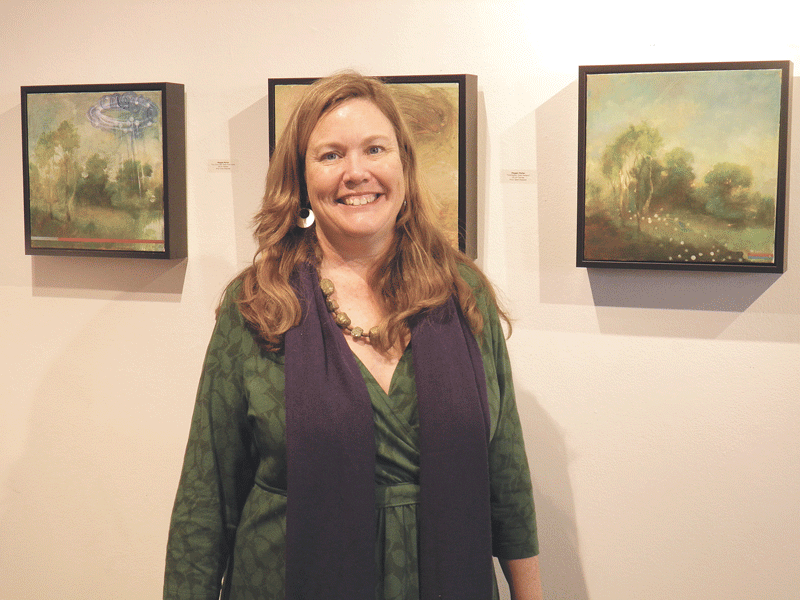
Commercial Real Estate Sections
Chicopee Crossing Will Complement Booming Growth on Route 33

Marriott Courtyard that will anchor Chicopee Crossing

An artist’s rendering of the Marriott Courtyard that will anchor Chicopee Crossing.

At the front of a large, open plot of land on Memorial Drive in Chicopee, just south of Mass Pike exit 5, is a lone Chipotle Mexican Grill — and nothing else.
But judging by the volume of cars pulling in each day, Frank Colaccino has to be optimistic about the prospects for the rest of that open space, which he has dubbed Chicopee Crossing.
“I was surprised that Chipotle has such a following, but they do a very, very good job,” said Colaccino, president of the Colvest Group in Windsor, Conn., which is developing the site. And other restaurants and retailers should see value in joining Chipotle there, he added.
“It’s so accessible — you have access right off the Mass Pike and from Route 33, a major street with a high traffic count — and you have a lot of traffic generators around there, from a Wal-Mart to a Home Depot to Stop & Shop, Big Y, and a BJ’s Wholesale Club. That’s a lot of retail attractions, and we’re right in the middle of all those traffic generators.”
The process of developing Chicopee Crossing began in 2009, but had to clear a major hurdle first. Namely, the city had to find a way to allow northbound drivers on Memorial Drive — separated from the southbound lane by a guardrail — access to the property.
“The access was only on one side of Route 33,” Colaccino said — and with plenty of other retail and restaurant options at the next few busy intersections, none of them allowing U-turns, it was unrealistic to think northbound drivers would make the effort to reverse course for Chicopee Crossing. “To make this an attractive site for retailers, we had to put a traffic light in, and in order to do that, we had to go through the state, through Mass Highway — because it’s a state road — and get their permission.”
That process, he noted, took about 14 months, and involved input from several different agencies. “But that happened, and we’ve put in the traffic signal. It’s installed and operating.” The intersection allows not only left turns into the development, but also access from across the street, where a host of other retail ventures have sprung up over the past decade, and where an Aldi’s supermarket will be built later this year.
While the intersection issue was working its way to resolution, infrastructure for Chicopee Crossing — from water and sewer drains to electric installations and road paving — were being completed, and Colaccino expects construction work to begin in earnest early this summer, following commitments by tenants.
The one building already erected, the 7,000-square-foot structure which currently houses Chipotle, will soon have two other tenants to fill its remaining space: Great Clips, a national hair-salon chain, and a national telephone store. Three other buildings of similar size are also planned; they’re expected to be a second fast-food restaurant, a family restaurant, and a bank. Behind those will be a three-story office building and a 40,000-square-foot retail complex.
Further back will be a Marriott Courtyard hotel. That portion of the project is owned and being developed by Dennis Patel of BK-Investments.
“We’re starting to see some more activity out there,” Colaccino said regarding interest from potential tenants at Chicopee Crossing, “so we’re optimistic that something will happen soon.”

Setting Their Sites
Chicopee Mayor Michael Bissonnette said last year that the key event in bringing Chicopee Crossing to reality was a financial commitment by the state — specifically, $1.25 million through the Massachusetts Opportunity Relocations and Expansion Jobs Capital Program — to pay for the construction of the new intersection, allowing access from both sides of the Route 33 and connecting the new development with the former Casey Chevrolet (and future Aldi’s) property.
“It’s a great project, and it’s going to have the best access off the Pike of any piece of land in Western Mass.,” said Kate Brown, Chicopee’s Planning Department director. “I guess we’re hopeful, now that the economy seems to be picking up, that we’ll see more activity in that location.”
In particular, she noted, the hospitality industry was sluggish during the Great Recession, casting caution over any new hotel project, so it’s encouraging to see the Marriott Courtyard, and all the other proposed elements of the development, coming together.
As for other retailers and restaurant chains that might be feeling out the property, “I can certainly see that site as a draw because the hotel won’t have a restaurant facility,” Brown added. “So it’s kind of a captive audience.”
Any new additions would join a flood of retail and restaurant ventures that have sprung up along Memorial Drive just north and south of the Pike entrance over the past few decades.
The former Fairfield Mall property across the street was the most significant recent development; after those buildings were torn down in 2002, they were gradually replaced by a Home Depot and a Wal-Mart Supercenter. Those, in turn, anchor a plaza that now includes a Marshall’s, Staples, 99 Restaurant, Applebees, and about a dozen smaller retailers and quick-service eateries; a Friendly’s at the south edge of the site is the only survivor from the mall years.
Yet, Brown said the corridor began to pick up even before that, around 1996, with a series of smaller store openings. Since the mid-’90s, “if we had a vacant spot, we’d have a building on it quickly. It’s been pretty amazing. I wish we had more land there, actually. We were kind of skeptical that the stores located in the [Wal-Mart] shopping center would be viable, but it’s been a very stable group of businesses.”
Colvest, which has built a solid portfolio of projects in Western Mass., from several CVS locations to a new office complex on East Columbus Avenue in Springfield, has never taken on this kind of mixed-use project before, Colaccino told BusinessWest, but he’s excited about the potential for this particular site, for the very reason others mentioned — the fact that exit 5 has become a significant retail destination.
“I think this is a prime mixed-use project, with everything that’s here,” he said, adding that he has enjoyed working with Chicopee officials on bringing the development to the verge of the construction phase.
“All the people I’ve worked with in the city of Chicopee have been terrific,” he noted. “Mayor Bissonnette has been great to work with, and they have been very cooperative.
“They have a system in Chicopee,” Colaccino continued. “When a developer comes in, they get all the various departments together to talk about all the issues that might come up and all the different needs they have and what the developer has to do. They really make the process streamlined, and you don’t have to guess at everything. They just tell you, ‘these are the requirements,’ and we work together to make those things happen in a way that’s beneficial to everybody.”

Bottom Line
Nothing will happen — except for the hotel, of course — without commitments from tenants, and Colaccino expects those to be firmed up in short order so that construction can proceed this summer.
“We won’t build on spec,” he said, not even the office building. “But we envision some demand for office space there, and when that comes in, we’ll be ready. I think we’re envisioning some 22,000 to 25,000 square feet of office space, and that could be any number of uses — a doctor’s office, a dentist’s office, it could be a professional office, a mixed office with medical … any number of things.”
In any case, construction workers will be digging for drainage and other underground work very soon, and the hotel foundation will follow. After that, “we wait for the tenants,” Colaccino said, conceding that he’s anxious to see that phase move swiftly. “It doesn’t do us any good to have land just sitting there.”

Joseph Bednar can be reached at [email protected]

Restaurants Sections
Tucker’s Serves American Cuisine the Old-fashioned Way

The Andersons and Evan Mattson, center

The Andersons and Evan Mattson, center, say that Tucker’s is not just a family-run restaurant, but a legacy of the chef’s professional career.


There are a few jobs that define Michael Anderson’s professional career as a head chef, but one that perhaps has the most significance was as a dishwasher.
Indeed, while scrubbing in the sinks at Storrowton Tavern & Carriage House in West Springfield, Anderson said he gained what he called the “building blocks” for a long legacy on the other side of the kitchen.
“I felt such a sense of camaraderie between the cooks and the waitstaff,” he told BusinessWest. “There was longevity in that kitchen — people worked there for over 30 years; it wasn’t seen as a stepping stone, where people say, ‘I’m only a waiter until I go on to a different field.’ These people were invested in it, and this was their life.”
But it wasn’t just the culinary bonhomie that attracted Anderson back then. It was the famous owner, William Kavanaugh — or ‘Tucker’ to his close friends and family — who became a mentor to the budding chef. Such was the impression made upon the young man that he said, “I knew way before I ever had a restaurant that his nickname would be its name one day.”
That day would not be in the immediate future, although Anderson said that, from the time he first put together a résumé as a chef, he knew that owning and operating was his goal. After learning the ropes on the line at Storrowton, ultimately becoming executive chef there, he catered for a few years until the call came that Yankee Candle wanted to open its own restaurant at the flagship store in South Deerfield, and the company wanted him to run the kitchen.
Opening Chandler’s Tavern in 1995, he said, was a good dry run for an aspiring restaurateur. “That was a real eye-opener,” he remembered, chuckling. “None of us quite knew what to expect. And when we first opened, we got blasted; we were doing 700 lunches a day.”
The 45-minute commute wasn’t very appetizing to Anderson, however, especially with a growing family. “It was right around the time our first daughter was born,” his wife and co-owner, Karen, said. “He came home one day and said, ‘I quit my job.’”
The man who always wanted to own his own spot wasn’t hanging up his pots to dry, though: right down the road from their home in Westfield, Anderson had spotted a derelict building for sale on College Highway in Southwick. “It took me only a couple of days to know that this was the place for my restaurant,” he said.
Today, Tucker’s sits across the street from that spot, in a building created for the husband-and-wife restaurateurs. Sitting down with BusinessWest, the Andersons were joined by Karen’s uncle, Evan Mattson, who is retired from his job owning an insurance agency. These days, he does the restaurant’s accounting, is the host, and rolls up his sleeves to tend bar on occasion.
The walls are cluttered with framed paintings by the couple’s children, Paige and Payton, making this truly a family affair.
But, of course, people come for the food, and there’s good reason for that. Anderson’s skills on the stove were honed over a lifetime of cooking, but they also hold the legacy of those mentors he had from his earliest days in a professional kitchen. ‘Tucker’ himself helped out in the earlier restaurant across the street, as proud as he could be, Mattson remembered.
And while the man who helped shape Anderson’s career isn’t around any longer to see his namesake thriving, he’s not far away: his portrait holds pride of place just inside the front door.

Dish Network
“I feel like I’m getting old when I say that I do things ‘old school,’ but you have to spend a lot of time to understand how the business works,” Anderson said.
“At Storrowton, I was with these guys every night on the line — you can’t learn these skills overnight,” he continued. “It takes years. And I still do things the same way now as they did then. They stuck to what they knew, and they were successful.”
While a student at Holyoke Community College studying culinary arts, Anderson said that one of his teachers was also his boss cooking at Storrowton. These lessons gave him the understanding of cooking solid fare from scratch. “Seasonally or otherwise, everything is made from your own recipes,” he said of his style. “Just like the way things used to be done.”
This level of integrity attracted the attention of the powers at Yankee Candle when they tapped him to run the kitchen at their new restaurant, and today, Anderson credits that experience as a firsthand look on how to market one’s culinary creations.
“They never stopped marketing at all,” he remembered. “Every week, there was some sort of event — not just dinner with Santa, there were Teddy Bear Teas, specials of every kind. It was fully gung-ho.”

William Kavanaugh

William Kavanaugh remains an inspiration for Michael Anderson, keeping watch from a wall at Tucker’s today.

But his only reservation was that he wanted his own kitchen, and when he saw the spot in Southwick, he said it “just clicked.”
“We didn’t have a big game plan, but we got the financing together,” he continued. “Karen was still working at MassMutual, which was a good comfort, because making a lot of money wasn’t my primary concern; I wanted to cook good food and do what I love.”
Today, Karen — who met Michael when she was busing tables at Storrowton — serves as the events manager, front-of-house scheduler, and occasional bartender; on this day, she also pulled a shift waiting tables at lunch. She said it was easy for a few years in the first Tucker’s location to pull down both jobs, but she agreed with her husband that it wasn’t the final destination for their restaurant.
After six years in the original location, the pair invested in some developable property across the street. “We always knew that we wanted to have banquet facilities,” she said, “something that was only possible at the other spot when we weren’t open for regular dining.”

Spicing It Up
Mattson joked that his wife sees him less often now than when he was running his insurance agency. But helping to run this family restaurant gives him an equal measure of pride.
“I look at all the comments that come in,” he said, “and I can honestly tell you that, on a scale of one to five, very, very seldom are they less than 4.8, which to me means that people recognize that this is quality food, they appreciate our service, and they like the value that they’re getting.”
Added to that dining experience is what the husband and wife hoped to create from the beginning of their dream — a space for events in Southwick. Two banquet rooms seat up to 150 people, and Karen mentioned that they see all manner of parties, from weddings and rehearsal dinners to showers and retirements.
Taking a cue from her husband’s years at Chandler’s, she said that Tucker’s has garnished its lunch and dinner menus with a regular series of special events. A wine dinner — five courses paired with different vintages — is staged four times per year (the next is expected in September), a comedy night held at similar intervals, and an increasingly popular beer dinner, with different brews paired with food. The recently opened Westfield River Brewing Co. is going to be on tap at Tucker’s — one of only a handful of eateries to feature the brand — and Karen said the next beer dinner should have these local suds served up with the specials.
But in a tough economy, all agreed that customers are seeking value, even though the menu at Tucker’s, running the scale from burgers to filet mignon, offers dinners at all price points. Responding to that, she said that the restaurant has offered special deals through Groupon, and in the last year has been offering customers the chance to redeem Big Y’s gold and silver coins as a coupon good for half off one of two dinners or lunches, respectively.
“Think about it,” she said. “Gas stations redeem them for 20 cents off a gallon of gas, but what is that, around two dollars?”
The emphasis, however, is and always will be on the food — Michael’s passion, and the main ingredient for Tucker’s success. There will be one additional foray into commerce outside the dining room, however — to bottle and market the spices he uses in his famous butternut squash recipe.

Natural Selection
The lessons learned in the kitchen at Storrowton are evident on the pages of Tucker’s menu, as he still likes to cook traditional, American-style dishes from scratch: Yankee pot roast, chicken pot pie, crab cakes, baked cod, sirloin au poivre, chicken cordon bleu, and many more. It’s honest fare served in a no-nonsense way, he said. “If I’m cooking fish, as one example, it has to be natural, some light seasoning —  just a good, fresh product. Not too much stuff on it. Keep it simple.”
And that philosophy carries over to all aspects of the business, from a family who understands that there can be a lot of heat in the kitchen if you don’t do things the right way.
“I love to cook, but to be able to sleep at night, I want to make sure that people get what they order,” Michael said. “When regulars call me to order food, they don’t ask the price, because they know I’m not going to jab them. There’s a sense out there, maybe, that restaurants put the screws to you, but that’s not a lot of restaurateurs. There are a lot of those people who are honest businesspeople making good food.”
And across the room, the portrait of ‘Tucker’ smiled over the conversation — a lasting legacy carried on by the protégé who adopted his ideas and made them his own. In Kavanaugh’s lifetime, he was proud to see what his former dishwasher had become.

Restaurants Sections
Mama Iguana’s Was Designed to Create Memorable Experiences

Bill Collins gives Claudio Guerra

Bill Collins gives Claudio Guerra a ride to his car on the restaurant’s free pedicab.

Talk about fun.
In fact, that’s exactly what Claudio Guerra did as he described how and why he created Mama Iguana’s in Springfield just north of the Basketball Hall of Fame. The Mexican restaurant, which opened last June, is a much larger version of the Northampton eatery with the same name and has been so successful, there was standing room only on the patio all last summer.
Hand-painted pieces of original Mexican artwork in vivid colors surround a large, gleaming rectangular bar in the semi-enclosed outdoor spot that seats 100 and has an adjacent dining area where the mood is lively, thanks in part to lights in a rainbow of bright hues.
The fun-filled atmosphere that Guerra created continues inside the three-story restaurant, which was designed to embody the spirit that is at the heart and soul of the six other eateries he owns. “We really try. It doesn’t happen by accident — it’s a labor of love,” Guerra said as he talked to BusinessWest about a lifetime spent in the restaurant business, which began when he was about 10 years old and worked as a coat checker in his father’s Long Island eatery.
Over the course of several hours, Guerra unveiled the secrets of his past and present success. The journey hasn’t always been easy, and when the recession hit in 2008, he had to reinvent the way he did business. But laughter and openness are givens for him, as he enjoys life, truly loves fun, and is always on the hunt for a new spot to open another restaurant.
In addition to owning and operating Mama Iguana’s in Springfield and Northampton, Guerra owns Spoleto’s in Northampton and East Longmeadow and the Paradise City Tavern, Pizzeria Paradiso, and Spoleto’s Express, all in Northampton.
Although they encompass different moods, Mama Iguana’s was designed “to be super-casual for super fun. It has the right price and environment for today’s economic reality and is a place where people can feel comfortable and relax,” Guerra said.
It boasts the largest selection of tequila brands in the Northeast, and more than 200 bottles of high-quality, 100% blue agave sit behind the bar. Many come from small microbreweries Guerra discovered in Mexico, and people can join a Tequila Club, which allows them to keep track of the varieties they have tried; attend sessions of the resaurant’s Tequila University, which features owners or speakers from the breweries; and/or make reservations for tequila dinners, with a menu of foods matched with appropriate tequilas.
Guerra did a major renovation of the the interior and exterior of the former home of Onyx Fusion Bar and Restaurant (the old Basketball Hall of Fame). He felt it lacked warmth, so he spent countless hours and a significant amount of money changing the lighting to make the space more intimate; it now includes enormous, wrought-iron candelabras. He also brought artists in from Mexico and California to create original works that include panels, papier-mâché sculptures, and paintings to insure it had an authentic atmosphere.
Oversized imitation skeleton heads also abound. They reflect the Mexican Day of the Dead celebration held to honor deceased relatives, and include two skeleton figures seated on a full-size motorcyles across from the stairwell between the first and second floors.
Guerra also did away with the TV screens behind the bar (although major sporting events are still broadcast on a large pull-down screen) and replaced it with “fun artwork.” Many pieces were purchased on shopping expeditions in Mexico, including the head of an angel, which weighs about 150 pounds and is almost six feet in height.
Guerra points out a large wall mural painted by an artist he brought in from San Francisco. It’s a replica of a carving from Mayan ruins, and has four gods seated in a canoe with a day and night paddler, meant to represent the cycle of life.
“When people walk in, they know this is not a chain,” he said, adding that the three floors of the building often accommodate entirely different types of parties.
“We can have a bachelorette party on one floor, a doctor’s convention on another, and a sporting event on the main floor,” said Bill Collins, director of Operations. “We turned this into a place that is beautiful and festive and took advantage of its great infrastructure.”

Dedicated Commitment
However, it takes far more than lively décor to make an eatery a success, and Guerra has a recipe with many ingredients.
The most critical — along with exceptional food and atmosphere — is the way the customer is treated. “I haven’t met a person who hasn’t had the experience of walking into a restaurant and being seated at a less-than-desirable table when other tables were available,” Guerra said.
It’s something he won’t stand for, and says he does not believe in seating people so the wait staff have the opportunity to serve approximately the same number of clients. Instead, he rotates their shifts between the most popular tables, and says it is up to them to ask co-workers for help if it’s needed. “My philosophy is all about accomodating the customer, and they should always be seated at the best possible table,” he said. “We understand the art of pleasing people.”
Since he believes the philosophy and resulting behavior in any business must come from the top, he plays an active role in demonstating the principle. Recently a little girl seated with her family of six asked him if she could order a glass of Orangina. He told her they didn’t have it, but asked her to “hold on” for a few minutes. “I ran to the nearest store and bought a bottle. I enjoy doing fun things for people.”
Although he acknowledges it’s not possible to accommodate every request, “on any given night at Spoleto’s we are cooking dishes we haven’t had on the menu for 20 years because a customer asked for them,” he said.
Everyone who works for Guerra is schooled in the belief that it is their job to make the customer feel welcome. He says the difference between a memorable experience and one that leaves a person unsatisfied occurs the moment they are greeted at the door.
“When a person walks in and looks at the waitperson, the experience is won or lost in a millisecond according to whether the person looks miserable or cheerful,” he said. “I have spent my life studying the way a person approaches a table. It’s part of the social structure of a good restaurant, and although anyone can learn to serve food, not everyone has the ability to make people feel welcome.”
Guerra says he has wait staff who have worked for him for 10 years and never had a complaint. “It’s not because they didn’t make mistakes, which is especially true for a high-pressure hosting position,” he said. “You can tell the customer there is a 45-minute wait in a way that will make them laugh. But it’s an art. The science is at the back of the house.”
That’s where the food is prepared, and every night the Mexican moles, salsa, and other sauces at Mama Iguana’s are tasted by the chef, cook, manager, and Collins when he is on site before they are served. Guerra says the word ‘mole’ means to chop, and every village in Mexico has their own version of the sauce.
“Our moles are the heart of our kitchen and have incredibly complex flavors with at least 25 ingredients, which can includes seeds, nuts, and dried peppers,” he said. They are used in a variety of ways, and a dish called Holy Mole with pulled chicken, pork, and sautéed vegetables is topped with three mole sauces. The menu is Tex-Mex, and prices average between $10 and $14 for an entrée.

Business Lesson
Guerra was born in Germany and immigrated to the U.S at age 3 with his family. His father found work as a waiter in New York City before opening a French eatery on Long Island. A short time later, his mother opened a German restaurant, and then his parents opened an Italian restaurant together.
Guerra was always in the restaurants, and graduated from checking coats to busing tables to dishwashing and eventually cooking. After graduating from high school, he served as an apprentice to a cook in an elite French restaurant in Europe. When he returned, his father opened the Mill on the River restaurant in South Windsor, Conn., and one day when they were driving around, “we stumbled onto Northampton. Before I even got out of the car, I looked around and knew, ‘this was it,’” Guerra said.
He opened Spoleto’s there 25 years ago and said it was a success from the start. “My formula has always been simple. Treat your customers and employees the way you would want to be treated.”
Guerra continued to open new eateries, including the upscale French restauarant, Del Raye, which he turned into a pub in 2008, and they all did well until the recession hit. He had opened another Spoleto’s in East Longmeadow as well as the Northampton Mama Iguana’s in 2007, and the downturn in the economy affected business across the board. “It was extremely tough. We were struggling to survive,” he said.
During that time, a consulting company contacted him and offered to conduct a free, in-depth analysis of his restaurants. Although Guerra didn’t hire the firm to make changes, the exercise did point out a number of areas that needed improvement. “So we rolled up our sleeves and concentrated on the nuts and bolts of our predicament,” he said.
And although the Springfield Mama Iguana’s did well, the restaurant group as a whole continued to struggle to turn the numbers around until the beginning of this year, “when the lights went on and we opened our eyes.”
Guerra said he finally realized he had too much invested in liquor and food. He reduced the inventory at his restaurants by 35% and began holding weekly meetings with all of his managers. In addition, every chef and manager was given a budget and had to do a weekly cost analysis.
“I never had to think about these things before. It was very painful, but now that the systems are in place, there have been some wonderful surprises; the managers are working harder, and the employees are energized. We have given them the tools and knowledge of how to do their jobs better,” he explained, comparing the way they operated in the past to a football team with great players but without a game plan. Now, everyone is informed about the plan, and all is going well.
Guerra said he’s happy he opened Mama Iguana’s in Springfield. “It’s a great market with high visibility. People want to be able to go out to a fun environment and not spend a lot, and Mexican cuisine allows you to do that.”

Recipe for Success
Many families and businesses hold parties and meetings at Mama Iguana’s. The third floor has pull-down screens that can be used for business presentations and is a quiet spot for those who seek that atmosphere, while the other floors are more lively.
And when guests leave, they don’t have to worry about how far away they parked because a cyclist sits outside, waiting to give them a ride to their vehicle in the restaurant’s pedicab.
It’s all part of the fun, and Guerra continues to do all he can to ensure that people will have positive experiences when they visit. To him, business is about making sure the customer has — what else? — fun, along with positive memories and, in this case, a great Mexican adventure in his Mama Iguana style.

Features
Air Show Strives to Gain the Attention — and Support — of the Region

Scenes from the Great New England Air Show in 2008.

Scene from the Great New England Air Show in 2008.

The Great New England Air Show and Open House, scheduled for Aug. 4 and 5 at Westover Air Reserve Base in Chicopee, has a special theme: they’re calling it “a Salute to the Greatest Generation.”
And in a nod to the men and women who served during World War II and are known by that descriptive phrase coined by Tom Brokaw (it became the title of his book on the subject), the show will feature a number of vintage aircraft from that era — including the vaunted bomber called the B-17 and the fighter known as the P-51 Mustang — as well as several ground displays and re-enactments of events from that global conflict.
Meanwhile, calls have gone out to veterans’ agencies across the region in the hope that they can contact those who served during the war (now in their 90s, on average) and ask those who are able and willing to come to the show and earn a salute from those in attendance.
At the same time, though, a different kind of call is being made, this one to businesses and individuals whose help is needed to make this show — which is expected to draw more than 300,000 people from across New England — all that planners hope it can be and should be. Bud Shuback, president of the Galaxy Community Council, a volunteer civilian organization that supports activities at Westover, including the air show, calls this his “100 Heroes” campaign.
Elaborating, Shuback said he’s working diligently to identify 100 companies or individuals who can donate $1,000 toward the estimated $250,000 the Galaxy Community Council will need to cover its share of the cost of putting on the air show. That’s a bigger burden than in previous years, and there are reasons for that.
Bud Shuback, left, and Joe Marois

Bud Shuback, left, and Joe Marois say that cutbacks within the military and lingering effects from the recession have created challenges for those raising funds for this year’s air show.

Primarily, it comes down to cutbacks within the Department of Defense, including the number of appearances for flying teams like the Blue Angels and the Thunderbirds, shows that come free of charge for organizers of events like the Great New England Air Show.
Replacing those popular acts with private (non-military) jet-demonstration teams — like the Red Steel Jet Team scheduled for this year’s show that will fly Russian MIG 23s — is necessary, but also quite expensive, said Joe Marois, a long-time member of the Galaxy Community Council.
Marois and Shuback stressed repeatedly that there will be an air show in August — that’s a certainty. What isn’t known yet is the size and overall quality of the show, which will determined by the amount of funding support attainted. But it’s important for the show to reach traditional levels of excellence, they said, to draw a large audience and thus have a significant economic impact on the region.
Meanwhile, the show provides an excellent opportunity for Westover to open its doors to the public, and also assists in the ongoing efforts to recruit young men and women, said Col. Steven Vautrain, commander of the 439th Airlift Wing based at Westover.
“I always stress the ‘and open house’ part of the show’s name — it’s not just about the airplanes,” he said. “It’s an opportunity for us to open up the base, let people come in and see what we do, and show them a good time. It also helps bring money into the local economy, because you have 300,000 people coming, with many of them staying in local hotels and eating in local restaurants.
“It’s also good for us when it comes to recruiting — that’s one of the main reasons for doing the air show,” he continued, noting that he believes he got hooked on flying while attending a show at South Weymouth Naval Air Station when he was young. “That happens with a lot of kids; they come out, see the jets, the helicopters, the Marines, the Air Force — and they make a connection and say, ‘that’s something I’d like to do.’”

Base of Support
Shuback told BusinessWest that this region has a rich history of producing large and memorable air shows over the past several decades.
Indeed, with a few exceptions — forced by everything from scheduled inspections to the ramping up of military activity following the 9/11 terrorist attacks — Westover and Barnes Municipal Airport (home to the 104th Tactical Fighter Wing of the Air National Guard) have staged shows on alternating years since the ’80s.
And while the show will indeed go on this year, additional support is needed to maintain the high quality that visitors have enjoyed over the years — and also to ensure that the show will have the same economic impact it has had in the past, said Shuback.
And those numbers are impressive. The 2008 air show at Westover (the last one in Chicopee) contributed $13.8 million in direct economic impact to the region, according to a report authored by students at the Isenberg School of Management at UMass Amherst.
A large portion of that impact comes in the form of hotel stays and business with other types of hospitality-related ventures conducted by individuals and families traveling long distances to reach the show, the report concluded.
The Galaxy Council has always had to conduct extensive fund-raising efforts to produce the air show, said Shuback, adding that it has secured sponsorships from both local companies and national and international corporations (including several car makers) while also staging a huge kickoff fund-raising breakfast, this year slated for Aug. 3.
But this year, the challenge is greater, he told BusinessWest, because of those aforementioned defense cutbacks and resulting bigger tab for the Galaxy Community Council (which must pay for the fuel for the acts, provide lodging, and other expenses), but also due to the lingering effects of the recession.
“The last time Westover hosted a show was 2008,” Shuback noted, “and while the recession was certainly coming, most companies were not really feeling the impact by that summer.”
More than one-quarter into 2012, many companies small and large are still feeling the effects, he went on, adding that some traditional supporters of the air show are scaling back their contributions, while others are pulling back altogether. “People are being more cautious in this environment.”
These various challenges have forced the Galaxy Community Council to exercise its imagination and resiliency, said Shuback, and one of the answers it has devised is the 100 Heroes campaign.
It is expected to involve area chambers of commerce, the Greater Springfield Convention & Visitors Bureau, Spirit of Springfield, and other groups and elected leaders in an effort to identify parties that can step forward and support the show.
“We’re reaching out to the local people who are impacted by the economics of this show,” said Shuback. “And if you’re in this region, you’re impacted in some way; the money will rattle around, and everyone will benefit.”

Soaring Expectations
The full list of show attractions is still being finalized, but the lineup is already deep and diverse. It includes everything from a host of World War II-vintage aircraft to a demonstration of a Marine Corps CV-22 Osprey; from a jet-powered school bus to a U.S. Navy F-18 Hornet demonstration.
The full scope of the show will ultimately be determined by the support from the business community, including what Shuback, Marois, and others hope will be at least 100 heroes.
“The show has really become a tradition in this region and, beyond that, a boon for the local economy,” said Marois. “It’s a tradition we want to continue because there are a number of important benefits for the region.”

George O’Brien can be reached at [email protected]
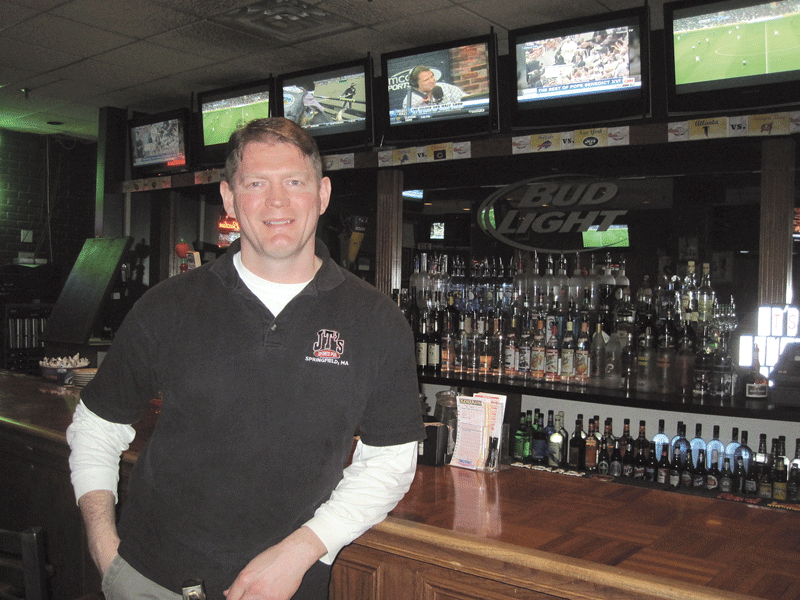
Departments Incorporations

The following business incorporations were recorded in Hampden, Hampshire, and Franklin counties and are the latest available. They are listed by community.

AGAWAM

Associates in Women’s Health Care P.C., 200 Silver St., Agawam, MA 01001. Sharon MacMillan MD, 129 Silver Creek Dr., Suffield, CT 06078. Women’s Health Care Services.

AMHERST

Econ4 Inc., 418 North Pleasant St., Amherst, MA 01002. James K. Boyce, 14 Elf Hill Road, Amherst, MA 01002.

BELCHERTOWN

Education Yes Inc., 43 Allen St., Belchertown, MA 01007. Jeffry B. Hatch, 1704 Millcreek Way, Salt Lake City, UT 84106. Non-profit organization dedicated to developing and teaching positive integrative approaches to transform the learning process of all students.

EAST LONGMEADOW

EBBE Inc., 43 Thompson St., East Longmeadow, MA 01028. Michael Finn, 30 Oakhill Circle, Chicopee, MA 01020

GANBY

34 Carver Street Inc., 7 Carver St., Granby, MA 01033. Patrick Bensen, same. Holding Real Estate.

GREENFIELD

Canines Helping Autism and PTSD Survivor Corp., 559 Country Club Road, Greenfield, MA 01301. William Gordon, same. Provide persons with a diagnosis of PTSD or an autism spectrum disorder access to a network of services related to the use of a service dog at minimal cost.

Family Legacy Partners Inc., 465 Coltrain Road, Greenfield, MA 01301. Cynthia L. Nims, same. Financial services including mortgage.

HADLEY

D&B Kelley Farm Inc., 100 Stockbridge St., Hadley, MA 01035. Daniel Kelley, 117 Stockbridge St., Hadley, MA 01035. To engage in the operation of farming.

HATFIELD

Grill ’N Chill Inc., 127 Elm St., Hatfield, MA 01038. Anthony R. Paciorek, 25 Dwight St., Hatfield, MA 01038. Food service / restaurant.

HNE Inc., 4 Prospect Court, Hatfield, MA 01038. Kenneth Holhut, 15 Circle Dr., Hatfield, MA 01038. Food service, bar, and restaurant.

LONGMEADOW

Bond Financial Group Inc., 171 Dwight St., Suite 201, Longmeadow, MA 01106. Dylan E. Bond, same. Providing a full range of financial planning products and services.

LUDLOW

HLZC Holdings Inc., 1020 East St., Ludlow, MA 01056. Jose Salvador, same. Property management.

NORTH ADAMS

Hoosac Valley Community Development Corporation, 150 Ashland St., North Adams, MA 01247. Marie Harpin, 15 Rock St., North Adams, MA 01247. The corporation will engage in activities intended to contribute to the preservation of existing or the creation of new affordable housing.

NORTHAMPTON

Foundation for Orthopedic Reconstruction Inc., 70 Old South St., Northampton, MA 01040. Patricia Defelice, 60 Cleveland St., Holyoke MA 01040. The corporation’s purpose is to identify persons that are in need of, and would not otherwise have access to, medical implants and orthopedic reconstruction.

PALMER

George Stewart Inc., 1006 Pine St., Palmer, MA 01069. George R. Stewart Jr., same. Service and consulting.

SOUTH HADLEY

ALZ Enterprises Inc., 183 East St., South Hadley, MA 01075. James M. Earle, same. To build a fund to finance, research, and development for the cure for Alzheimer’s disease and also finance childhood development programs.

SPRINGFIELD

Baitus Salaam Inc., 605 Dickinson St., Springfield, MA 01108. Kimat Khatak, 15 Pheasant Run, South Hadley, MA, 01075. Arrange, hold and establish prayers in accordance to the teachings of Quran and Sunnah specific only to Hanafi Fiqh (Jurisprudence).

BDL Restaurants Inc., 15 Angelica Dr., Springfield, MA 01129. Shanna M. Rhoades, same. Restaurant holdings.

Fenco Global Industries Corp., 44 Cabinet St., Springfield, MA 01129. Fenella Alicia Sitati, same. Technology sales and services.

Fierceblaze Inc., 1655 Main St., Springfield, MA 01108. Juan R. Perez, 89 Kensington Ave., Springfield, MA 01108. Web Design and software development.

Graphic Excellence Inc., 1441 Main St., Springfield, MA 01103. Michael S. Connors, 57 Robin Road, Longmeadow, MA 01106. Printing, copy, graphics, and mailing services.

Iglesia Pentecostal De Dios Sanando Al Herido Inc., 57 Grosvernor St., Springfield, MA 01107. Carlos Luis Cosme, same. Worship place for the needed.

STOCKBRIDGE

Berkshire Management Solutions Inc., 5 Sergeant St., Stockbridge, MA 01262. Christopher May, same. Consulting and job recruiting.

WESTFIELD

A Positive Energy Boost Inc., 6 Parker Ave., Westfield, MA 01085. Steven William Pomeroy, same. Retail sales of goods, selling online and direct.

Agenda Departments

‘Music for the Eyes’
Through April 7: The artwork of Preston Trombly, host of Sirius/XM Satellite Radio’s nationally broadcast Symphony Hall channel, titled “Music for the Eyes,” will be exhibited through April 7 at the Arno Maris Gallery in Ely Hall on the Westfield State University campus. Regular gallery hours are Tuesday through Friday from 2 to 5 p.m., Thursday from 2 to 7 p.m., and Saturday from 1 to 5 p.m. For more information, call (413) 572-4400 or visit www.westfield.ma.edu/galleries.

Author Lecture
March 28: Internationally acclaimed author Tom Perrotta will read from his upcoming novel, The Leftovers, at 10:10 a.m. and 11:15 a.m. in Scibelli Hall Theater, as part of the Ovations series at Springfield Technical Community College. The talks are free and open to the public. Two of Perrotta’s books, Election and Little Children, have been made into movies, and five novels have been national bestsellers. For more information, call (413) 755-4233.

ADA, FMLA Workshop
March 29: Royal LLP, in conjunction with the Human Service Forum, will present a workshop at the Delaney House in Holyoke on the compliance issues involving the ADA and FMLA. The interactive workshop addresses some of the most common questions that upper management faces each day. Attendees will learn skills and strategies that can help reduce the risk of employment litigation. For more information on the 8:30 a.m. to noon event, contact Ann-Marie Marcil at (413) 586-2288 or visit www.humanserviceforum.org.

Not Just Business as Usual
April 5: Former NBA player and businessman Ulysses “Junior” Bridgeman will be the guest speaker at the Springfield Technical Community College Foundation’s third annual Not Just Business as Usual event at the Naismith Memorial Basketball Hall of Fame in Springfield. A cocktail and networking reception is planned from 5:30 to 7 p.m., followed by the dinner program from 7 to 9 p.m. Bridgeman spent most of his 12-year NBA career with the Milwaukee Bucks, but also played for the Los Angeles Lakers. He is the current franchise owner of more than 160 Wendy’s and 120 Chili’s restaurants. The event encourages local businesses to come together for an evening to network, learn from one another, and support student success. Funds from the event will provide students access to opportunities through scholarships, technology, and career direction to be successful future employees and citizens. “It’s a time to celebrate innovations, change, and our region’s success,” said STCC Foundation Interim Director Robert LePage. A variety of sponsorship opportunities are available, and individual tickets are $175 each. For more information, contact LePage at (413) 755-4477 or [email protected].

Constitution Café
April 10: Author and philosopher Christopher Phillips’ latest book, Constitution Café, draws on the nation’s rebellious past to incite meaningful change today. He proposes that Americans revise the Constitution every so often, not just to reflect the changing times, but to revive and perpetuate the original revolutionary spirit. He will present a free lecture at 8 p.m. in the dining hall at Blake Student Commons, on the Bay Path College campus, 588 Longmeadow St., Longmeadow. The lecture is part of the annual Kaleidoscope series. For more information, call (413) 565-1000 or visit www.baypath.edu.

Marketing Basics Seminar
April 11: The Mass. Small Business Development Center Network will host a lecture titled “Marketing Basics” from 3 to 5 p.m. at the Greater Northampton Chamber of Commerce, 99 Pleasant St., Northampton. Dianne Doherty of the MSBDC Network will present the workshop that will focus on the basic disciplines of marketing, beginning with research (primary, secondary, qualitative, and quantitative). For more information, call (413) 737-6712 or visit www.msbdc.org/wmass. The cost is $40.

RetireSmart Seminar
April 11: MassMutual’s Retirement Services Division continues its web-based RetireSmart interactive participant education series with “Understanding Target-Date and Target-Risk Investments” at noon. The 30-minute presentation will cover taking charge of your retirement-investing strategy in today’s market environment; the ABCs of target-date and target-risk strategies, and how these investments may fit into your overall plan. Space for the live online seminar is prioritized to retirement-plan sponsors and participants on MassMutual’s platform. MassMutual retirement-plan clients can register by logging into their retirement-plan account at www.retiresmart.com or by visiting www.retiresmartseminars.com.

Slam Poet Lecture
April 13: Taylor Mali, a former high-school teacher who has emerged from the slam-poetry movement as one of its leaders, will discuss his performances at 10:10 a.m. and 11:15 a.m. in Scibelli Hall Theater, as part of the Ovations series at Springfield Technical Community College. The talks are free and open to the public. For more information, call (413) 755-4233.

Christo to Keynote Riverscaping Conference
April 19-22: An international conference on the art, history, and science of the river will feature the celebrated artist Christo, whose latest project will be to install 5.9 miles of fabric over a stretch of the Arkansas River in Colorado. The Five College Riverscaping Conference also includes lectures, gallery openings, student poster sessions, and a two-day symposium opened by Jonathan Lash, Hampshire College’s new president and the former president of the World Resources Institute. The conference marks the conclusion of the 18-month Five College Riverscaping project, funded in large part by a grant from the American delegation to the European Union and in partnership with river experts from Hamburg, Germany. Aimed at developing sustainable approaches to reconnecting people with the river, the Riverscaping effort has brought together students, policy makers, artists, academics, entrepreneurs and environmentalists in a series of ‘laboratories.’ Centered around education, research, and design, the laboratories focus on Massachusetts’ stretch of the Connecticut River and the Elbe River in Hamburg. Christo’s address, at Smith College’s John M. Green Hall, will open the conference on April 19. He will discuss the two current projects that he and Jeanne-Claude (who died in 2009) have initiated: “Over the River” on the Arkansas River and “The Mastaba,” in the United Arab Emirates. The river installation, planned for the summer of 2015, will involve suspending nearly six miles of luminous fabric panels over a 42-mile stretch of the upper Arkansas River in Colorado. The project, while controversial, has received federal and state approval. Lash will open Saturday’s symposium sessions with his comments on “Why the River Matters.” Other highlights of the symposium on Friday and Saturday include papers by a wide range of designers, scientists, and scholars from around the world, including Jinnai Hidenobou of Hosei University in Tokyo, Johan Varekamp of Wesleyan University, and T.S. McMillin of Oberlin College, author of The Meaning of Rivers. A student session takes place on Friday evening, and a performance of music and readings will follow on Saturday. The entire conference, including Christo’s address, is free and open to the public, but online registration is required. Visit www.riverscaping.org for a complete schedule and to register for the Christo address and all the other events.

Comedy Night to
Benefit Charities
April 21: Smith & Wesson Corp. will host a benefit comedy show to support two local children’s charities, the Shriners Hospitals for Children and the Ronald McDonald House, beginning at 6 p.m. at the Cedars Banquet Hall, 419 Island Pond Road, Springfield. Tickets are $30 per person, and include the show, hot and cold hors d’oeuvres prior to the show, a cash bar, raffles, fund-raising, games, and music. Teddie Barrett of Teddie B. Comedy will emcee the event, featuring professional comedians Bill Campbell, Dan Crohn, and Stacy Yannetty Pema. For tickets or more information, contact Phyllis Settembro, Smith & Wesson, (413) 747-3597; Karen Motyka, Shriners Hospital, (413) 787-2032; or Jennifer Putnam, Ronald McDonald House, (413) 794-5683.

‘Adapt, Diversify,
Reinvent & Grow’
May 16: Local business owners will talk about what they have done to keep ahead of the many demands on their time, and at the same time adjust for the economic environment, during a workshop titled “Adapt, Diversify, Reinvent & Grow” at the Scibelli Enterprise Center, 1 Federal St., Springfield. Presenters include Paul DiGrigoli of Digrigoli Salon & School of Cosmetology; Tara Tetreault of Jackson & Connor; Kate Vishnyakov of Kate Gray Inc.; and Rick Ricard of Larien Products. The 9 to 11 a.m. session is sponsored by the Mass. Small Business Development Center Network. The cost is $40. For more information, call (413) 737-6712 or visit www.msbdc.org/wmass.

NYC Bus Trip
June 30: The Chicopee Chamber of Commerce will host a bus trip to New York City, leaving the chamber parking lot at 7 a.m. and returning around 9:30 p.m. Participants are on their own for the day in New York City. Tickets are $45 per person. For more information, contact Lynn at (413) 594-2101.

40 Under Forty
June 21: BusinessWest will present its sixth class of regional rising stars at its annual 40 Under Forty gala at the Log Cabin Banquet & Meeting House in Holyoke. The June 21 gala will feature music, lavish food stations, and introductions of the winners. Tickets are $60 per person, with tables of 10 available. Early registration is advised, as seating is limited. For more information, call (413) 781-8600, ext. 100, or visit www.businesswest.com.

Western Mass.
Business Expo
Oct. 11: BusinessWest will again present the Western Mass. Business Expo. The event, which made its debut last fall at the MassMutual Center in downtown Springfield, will feature more than 180 exhibitors, seminars, special presentations, breakfast and lunch programs, and the year’s most extensive networking opportunity. Comcast Business Class will again be the presenting sponsor of the event. Details, including breakfast and lunch agendas, seminar topics, and featured speakers, will be printed in the pages of BusinessWest over the coming months. For more information or to purchase a booth, call (413) 781-8600, or e-mail [email protected], or visit www.wmbexpo.com.

Employment Sections
Thing5, United Personnel Ramp Up Search for 500 Employees

Patricia Canavan

Patricia Canavan says Thing5 has generated excitement not only in the number of new jobs, but their broad scope.

The announcement that Thing5 would relocate to downtown Springfield and hire 500 new employees this year was met with suitable excitement by city officials hungry for more economic development downtown, as well as by career seekers even hungrier for well-paying jobs.
But the initial excitement has given way to a sobering, yet intriguing, question: how does a company hire that many qualified people that quickly?
“This is an exciting opportunity for our community, in the number of jobs being brought to downtown, but also the scope of the jobs,” Patricia Canavan said. “To a degree, there’s something for almost everyone.”
Canavan is president of United Personnel Services, whose offices are right across Main Street from One Financial Plaza, soon to be renamed the Thing5 Building when the company moves into about 20,000 square feet of prime real estate there — with plans to occupy more space down the line. And United — contracted by Thing5 to locate and, in many cases, train those hundreds of new employees — has wasted no time in getting started.
“We’ve geared up on our end,” Canavan said. “We’re working Saturdays and evenings, bringing on some new staff, and working with our experienced recruiters because of the volume of paperwork.
“This is an exciting opportunity, particularly in this current economic environment,” she added, noting that her firm has tackled large-scale hires before, for clients such as Smith & Wesson. “We love to be a human-resource partner to companies in growth mode. Helping to further a business is something our staff loves, and it’s exciting.”

Bigger Things
Thing5, which provides call-center services for the hospitality industry, has been in a growth mode that forced Managing Director David Thor to look outside his current headquarters at the Basketball Hall of Fame. He didn’t have to look far to find ideal class A space in the heart of Springfield’s downtown.
But filling up the building’s sixth floor is no overnight effort.
“The majority of the positions are fairly entry-level, contact-center service types of positions, taking e-mails and calls,” Canavan said. “There’s a need for bilingual candidates as well as English-only candidates.”
However, “there are also some high-level management positions available,” she added. “Because they’re growing so fast, they need to have a variety of management-level people to manage the growth and promote quality standards.”
Thor noted that, as an ‘inbound’ call center, these employees are not tasked with cold calls and selling people on a product. “These are more like modern-day travel agent positions — booking rooms, advising about reservations at certain hotels.”
Beyond those entry-level positions, however, is a support structure that includes training, quality assurance, information technology, and other roles. “For every 25 or so agents, there’s a leader agent, and then a supervisory position above that, and the management infrastructure that manages the whole team,” he explained.
The response to Thing5’s big news in January certainly reverberated around a region still struggling to recover from the Great Recession.
“After the press conference announcing Thing5’s presence downtown, we saw an unprecedented flood of applications, which is great,” Canavan said — and not just for those who will make the cut. News like this, she explained, tends to draw out job seekers who might have become frustrated and slowed their search, and who might be ideal fits for other clients of United Personnel.
“We work to identify those people who can meet needs in our community, and we help them access other great opportunities,” she told BusinessWest.
For Thing5, “people need to meet minimum requirements, certain work experience, and as a result of our interviews and the screening process we’re putting people through, some people are not meeting those requirements,” she explained. “The good news is, Thing5 is not the only company out there We are very, very busy. We are seeing a turnaround in the economy, and a multitude of jobs available.”
As a result, Canavan said, “the thing that’s kind of nice for folks applying at Thing5 is that, if it doesn’t work out, there are other opportunities being placed through us. We do have a pretty robust training program for people we think could benefit from training. If you have great data-entry skills but don’t know Excel, we can train you in Excel. That is a general philosophy of the company — there are opportunities available, and we help people see them.”

First Steps
For applicants who land jobs at Thing5, Canavan explained that United will have a significant role in training — “our piece of the orientation is pretty robust” — before Thing5 takes over for task-specific training.
‘Robust’ is also an apt word for what will happen downtown if more employment stories like this one emerge in the neighborhood; this one move alone reduces the amount of vacant space in One Financial Plaza by 25%, and will increase the number of people working in the high-rise by 60%, with more growth possible in the near future.
“We’re being careful” in keeping the initial growth to around 500, Thor said. “We think this business has great potential and can grow well beyond that. But we don’t know that for sure.”
Evan Plotkin, president of NAI Plotkin, which co-owns the building, recently told BusinessWest he hopes such developments create a critical mass of people downtown that could, in turn, spur additional retail, restaurants, entertainment, and even residential addresses.
But all that starts with finding those 500 workers.
“When we look at Thing5’s record, their growth has been fairly exponential, so it’s fantastic for our community,” Canavan said. “We are so thrilled to be a part of that. There are challenges of staffing this project — it’s a lot of people, and we have to interview and screen many multiples of 500, then train them. We’ve been working hard to get the word out, recruit, get a variety of ways to reach the widest audience possible.
Thor said the company has had reasonable success so far with the entry-level positions. “We’re more than satisfied with what they’ve been able to find. With some of the more skilled positions, like technology and some of the management positions, we’ve had a harder time.”
However, he noted that Thing5 has always professed a “no-barriers” philosophy of promoting from within and allowing employees to further their experience. “If you talk to the people in the company, most of them had some other position before that.”
And opportunities are what Canavan, and United Personnel, are all about.
“Something I’m always struck by is how many opportunities there are for people, even in this tough job market,” she said. “Right now, we’re seeing people we’ve placed getting into companies and creating their own opportunities. We can be a great resource for people, whether they’re going to Thing5 or somewhere else.”

Joseph Bednar can be reached at [email protected]

Features
Rebuild Springfield Unveils Strategy for Revitalizing the City of Homes
This rendering shows how the banks of Mill River

This rendering shows how the banks of Mill River could be improved with walking trails, new plantings, and other amenities.

Outside St. Anthony’s Social Center on Island Pond Road, overlooking the parking lot, sits a ridge lined with trees, most of them bent and broken beyond salvaging.
Inside, hundreds of Springfield residents recently pressed into a standing-room-only gathering, where municipal officials and individuals tasked with revitalizing the city in the wake of last spring’s tornado unveiled the outline of their plan.
Unlike that row of battered trees, they testified to a city well worth saving.
“This is a solid, strong road map, a framework of good guidance. This is going to be a three- to five-year plan of action,” Mayor Domenic Sarno told residents. “I need you committed, to stay engaged. We must show the same tenacity and resiliency we showed in tackling the cleanup of the tornado.”
The Rebuild Springfield Plan, the result of months of meetings, discussions, and strategy sessions between local and national consultants and the city’s residents and business owners, aims for more than simply rebuilding the structures devastated by the June 1 twister. It’s a chance, said Nick Fyntrilakis, to activate a master plan for the improvement of the entire city, but it’s only the beginning.
“This plan is not a panacea. We don’t have all the answers,” said Fyntrilakis, who was appointed last year to co-chair Rebuild Springfield with Jerry Hayes. “But by putting the right people in the right room with the right leadership, we’ll get even more recommendations and make better progress.”
The Rebuild Springfield Plan is the latest and most tangible result of a process that began shortly after the tornado, but came to encompass much more than rebuilding what was destroyed in that weather disaster. Sarno helped to mobilize a public/private partnership between the Springfield Redevelopment Authority and DevelopSpringfield, respectively, and a 15-member Rebuild Springfield Advisory Committee was appointed to help guide that process.
Over the past six months, 19 separate meetings, with an aggregate attendance of more than 2,000 citizens, have been held in various locations, primarily in neighborhoods impacted by the tornado.
The Rebuild Springfield Plan was crafted using input from those meetings, and also incorporates many previous plans, reports, and studies from a variety of organizations and stakeholders in Springfield. But Sarno stressed that the plan goes much further than returning the city to its pre-tornado condition. Instead, it aims to establish realistic short-term and long-term visions for the city’s future.
As the community came together and tornado recovery progressed, “people were talking about the entire city: ‘how can we build on this positiveness?’” he said, adding that it quickly became clear that this was an opportunity to stimulate the city’s rebirth, not just respond to a storm.
Bobbie Hill, a principal with Concordia LLC, a New Orleans-based consulting firm hired to work on the plan, agreed.
“The tornado-impacted areas were the impetus for the plan, and there’s a special focus on what we call the three districts” hardest-hit by the storm, Hill told those gathered at St. Anthony’s. “But we also have a plan that looks citywide because this is not just about the impacted areas, but about the whole city.”
The Rebuild Springfield Plan, in its final form, will be a “very, very large document,” Hill said, but the 12-page executive summary mailed to every address in Springfield gets to the heart of what the priorities are for each of those districts — the Metro Center and the South End; Maple High/Six Corners, Old Hill, Upper Hill, and the northern part of Forest Park; and East Forest Park and Sixteen Acres — as well as how the physical, cultural, social, organizational, economic, and educational assets of Springfield may be part of a holistic, citywide revitalization plan.
“This is a plan not just about physical projects,” she explained, “but about projects and people and places; we are using this framework to build recommendations across the city and across the different neighborhoods.”

Downtown Dilemma
According to the executive summary, “as the pre-eminent urban center of the Pioneer Valley with unique historic character, Springfield has the opportunity to create and sustain a desirable, walkable, urban environment for living, working, playing, and learning.” To that end, the plan builds on previous plans for the downtown and South End — what the plan calls District 1 — that were in place before the tornado. Some major points of emphasis include:
• Public safety. The city needs to strengthen partnerships among community stakeholders, police, and enforcement staff. Key initiatives should include replication of the C-3 policing model successfully implemented in the Brightwood section of the city and replicated in the South Holyoke Safe Neighborhood Initiative.
Hill noted that the safety of a community and people’s perception thereof are often two different things, but for Springfield’s center to thrive, both must be addressed. “If you want a thriving downtown, people have to feel safe and want to go down there.”
• Housing. The plan calls for a variety of housing options appropriate to different locations in the Metro Center and South End that enhance downtown and neighborhood character, add market-rate housing, and raise the median household income.
• Commercial and retail strategy. The city should create centers of vitality and activity along Main Street by recruiting retail and restaurants to ground-floor spaces, office users to upper-story space, and neighborhood-serving retail, as well as assisting in the rebuilding of important sites. Key initiatives include rebuilding the Main and Union intersection to be a South End gateway and activity center, reinforcing the cluster of eateries in the South End to form a ‘restaurant row,’ and exploring options for a grocery store or pharmacy.
• Community institutions. The plan aims to enhance the anchor role of community institutions, especially by hekping to relocate those damaged by the tornado. Key initiatives include assisting the South End Community Center in relocating to the Gemini site and Square One in developing new space on Main Street.
• Urban character and historic preservation. The plan encourages the adaptive reuse of historic buildings and sites and establishes urban design guidelines and a regulatory framework to enhance walkability. Among the recommendations is connecting the district to the riverfront with public art, and special treatments for Union Street as a ‘festival street.’
Public spaces. The city should activate and program public spaces to create destinations, mobilize community partners for stewardship, and connect important public spaces. Key initiatives include programs and activities led by community arts and culture groups to attract people to Court Square and other locations; organizing temporary uses, programs, and events for empty storefronts; and focusing on maintenance and programming for existing parks and open spaces, including the newly redesigned Emerson Wight Park.

A Time to Heal
The neighborhoods of Maple High/Six Corners, Upper Hill, Old Hill, and some of Forest Park comprise District 2, making it a richly diverse section of Springfield, the plan notes.
“The dialogue in District 2 has been intense and complex, yet hopeful,” it goes on. “Many challenges faced District 2 neighborhoods even before the tornado struck: abandoned properties, substandard housing, low home-ownership rates, higher-than-average crime and poverty rates, and low high-school graduation rates.
“In District 2, perhaps more than anywhere else in the city, there is an opportunity for the rebuilding process to have a transformative effect,” it adds. “The scar of the tornado’s path in this part of town revealed the challenges and allowed them to air. What came from these dialogue sessions was a strong commitment to rebuild stronger than before, an engaged community newly energized to improve their community.”
The plan identifies six guiding principles that support and elaborate on this vision:
• Build on the strong commitment and pride in the neighborhoods to support communities and organizations that are connected, engaged, and working together;
• Improve quality of life and provide new opportunities for residents by enhancing the health, safety, and vitality of the community;
• Preserve and promote the history and character of the neighborhoods as an amenity that enriches quality of life and attracts new residents and businesses;
• Achieve a sustainable and equitable balance of owners and renters, incomes, housing types, land uses, employment opportunities, and services that meets the needs of residents while positioning the community to thrive and flourish in the future;
• Value the diversity of people, cultures, and activities and recognize this diversity as a source of resilience, creativity, learning, empowerment, and collaboration that strengthens the neighborhoods; and
• Demonstrate public and personal commitment, improve perceptions, and attract new energy and investment through neighborhoods that are attractive and well-maintained.
Among the specific goals to meet those objectives are a coordinated housing strategy with new infill housing, job training and small-business support, enhanced neighborhood businesses, reuse of vacant lots, access to safe public transit, improved schools, healthier lifestyles, and coordination of community services, among others.

Better Than Before
District 3, which includes the East Forest Park and Sixteen Acres neighborhoods, is relatively stable with a strong sense of neighborhood pride, the report notes.
“While home rebuilding has long since begun in this district, it will take generations for newly planted trees to replace what was lost,” it continues. “There is a strong interest in rebuilding better than before in this community.
Some broad goals for the district include:
• Restore and enhance the neighborhoods’ natural resources, including trees, water bodies, open spaces, and wildlife, and recognize these resources as amenities that enhance value, improve health, and provide recreational opportunities;
• Promote the family-friendly character of the community through safe, attractive neighborhoods, strong community organizations, quality schools, social gathering spaces, and activities for all ages;
• Focus on schools, parks, and public facilities as community anchors that are integrated into the neighborhood and coordinated to provide efficient, effective services;
• Improve mobility within and between neighborhoods through efforts to reduce congestion, calm traffic, provide enhanced bicycle and pedestrian infrastructure, explore trail opportunities, and enhance streetscapes to support local businesses; and
• Strengthen neighborhoods by rebuilding, repairing, and maintaining well-designed homes that are efficient, durable, and comfortable.
Residents, the report states, are ready to turn the devastation of the tornado into an opportunity to enhance their neighborhoods by way of better homes, parks, greenways, trails, and other community assets. The plan calls for a branch library at Dryden Memorial School, greater access to youth and senior activities, and aggressive maintenance and repair assistance, among other things.

Street-level View
Sarno said the entire city should think along the lines of creating a better Springfield than before, and also took a moment to be grateful for how much worse the twister could have been.
“This tornado hit at 4:37 p.m. Think about it: if this tornado hit at 2:37 p.m., all our children would have been in school. Imagine if it had hit at 4:37 a.m.; we would all have been asleep,” the mayor said. “And as Gov. Patrick indicated when he came out here, there’s a silver lining to these storm clouds that we’ve already seen: the resiliency of Springfield’s people.”
Hill agreed. “There are great success stories in this city, and one for sure is how far you’ve come in eight months after the disaster. These great stories will attract people to this area.”
But first, the plan must be implemented, Fyntrilakis said, and that will begin by forming committees of volunteers to focus on specific domains and districts, each co-chaired by a public employee and someone from the private sector.
“The task for the leaders,” he said, “is to convene all the stakeholders, all those who want to participate and all those already participating, and to convene a working group as set forth by recommendations in the plan.”
“I need you to stay engaged; that is the key,” Sarno told residents. “It’s not over … but the framework is there. The guidance is there. The road map is there.”

Joseph Bednar can be reached at [email protected]
Opinion
A Victory on Many Levels

The recent announcement that Thing5 LLC will be creating a new call center in One Financial Plaza, thus bringing 500 new jobs to Springfield, is a positive story for the city and the region — on a number of levels.
Let’s start with the jobs. That’s priority No. 1 in the Greater Springfield area, and it has been for many years now. Some might look at this and say, ‘it’s only call-center jobs,’ or words to that effect, but these opportunities come on many levels, from entry positions to management slots, and, in many cases, they can be handled by those who do not possess a college education. The region needs those high-quality jobs (call them white-collar, if you like), but it also needs employment opportunities like these, especially in such large volume.
Beyond the employment factor, there are many other aspects to this story, all of them positive. First, this company started here, in the Technology Park at Springfield Technical Community College — which was created to spur this kind of tech-related enterprise — and thus provides solid evidence that we can incubate ventures and grow them into major employers.
Also, this company stayed here. Indeed, when it reached that proverbial next level, there were, quite obviously, opportunities to take Thing5 almost anywhere — because there isn’t a city or town in the Commonwealth or well beyond it that wouldn’t fight, and fight hard, for 500 jobs. But management chose to stay in the City of Homes, largely because of the lower cost of living, available workforce, access, quality of life, and affordable commercial real estate.
This shows that our various assets are tangible — and sellable.
But perhaps the biggest benefit will come in the form of greater momentum downtown. First, this move gives a substantial boost to the office tower known as One Financial Plaza, which has had several dark floors for many years, but has been staging something of a comeback recently.
Beyond that, though, the 500 new employees working downtown will provide a larger critical mass of people needed to spur additional investments, be they in support businesses, hospitality-related ventures such as restaurants and clubs, or badly needed retail.
And there is another component — the possibility that some of these employees may soon be working and living downtown, thanks to a program that will offer reduced lease rates to Thing5 employees at the nearby Morgan Square apartments, managed by the same company (Samuel D. Plotkin) that also manages One Financial Plaza. This additional residential piece could further stimulate investment in the central business district and be a key contributor to the kind of vibrancy that other Northeast cities have enjoyed.
As we said, there are many angles to this positive story for Springfield and its downtown. The headlines were all about the jobs coming to the city — and that’s an important aspect of this — but there are many other elements that bode well for the City of Homes.