Home Posts tagged Technology (Page 12)
Departments Real Estate

The following real estate transactions (latest available) were compiled by Banker & Tradesman and are published as they were received. Only transactions exceeding $115,000 are listed. Buyer and seller fields contain only the first name listed on the deed.

FRANKLIN COUNTY

GREENFIELD

40 Allen St.
Greenfield, MA 01301
Amount: $155,000
Buyer: Deborah H. Squires
Seller: David J. Chula
Date: 12/08/15

629 Bernardston Road
Greenfield, MA 01301
Amount: $400,000
Buyer: David J. Donoghue
Seller: Christopher M. Goodwin
Date: 12/04/15

367 Country Club Road
Greenfield, MA 01301
Amount: $155,283
Buyer: US Bank
Seller: Lois M. Sanders
Date: 12/07/15

113 Hastings St.
Greenfield, MA 01301
Amount: $195,000
Buyer: Edith K. Drury
Seller: Virginia Pechin Keen IRT
Date: 12/09/15

284 High St.
Greenfield, MA 01301
Amount: $305,000
Buyer: Green Man Enterprises LLC
Seller: Richard E. Sigda
Date: 12/03/15

55 White Birch Ave.
Greenfield, MA 01301
Amount: $155,742
Buyer: US Bank
Seller: Lance E. Mitchell
Date: 12/09/15

LEVERETT

11 Church Hill Road
Leverett, MA 01054
Amount: $270,000
Buyer: Hannah L. Muszynski
Seller: Edith H. Riddle
Date: 12/04/15

118 North Leverett Road
Leverett, MA 01054
Amount: $180,000
Buyer: Adam V. Wellen
Seller: Ann J. Delano
Date: 12/03/15

MONTAGUE

46 High St.
Montague, MA 01376
Amount: $195,000
Buyer: Jacqueline M. Krzykowski
Seller: Catherine R. Balboni LT
Date: 12/04/15

57 Mormon Hollow Road
Montague, MA 01349
Amount: $125,000
Buyer: Meagan L. Veith
Seller: Phillip J&N J. Szenher RET
Date: 12/07/15

ORANGE

25 Bartlett Lane
Orange, MA 01364
Amount: $245,000
Buyer: Aleesha C. Watson
Seller: Bassett RT
Date: 12/07/15

160 Chase St.
Orange, MA 01364
Amount: $149,000
Buyer: Felicia N. Atherton
Seller: Jerry L. Aldrich
Date: 12/04/15

665 East River St.
Orange, MA 01364
Amount: $119,000
Buyer: Wells Fargo Bank
Seller: Eliane B. Monteiro
Date: 12/03/15

17 Main St.
Orange, MA 01364
Amount: $169,000
Buyer: Michael G. Morse
Seller: Blast Tech Inc.
Date: 12/08/15

SHELBURNE

1155 Mohawk Trail
Shelburne, MA 01370
Amount: $340,000
Buyer: Pamela J. Miner
Date: 12/04/15

SUNDERLAND

44 Mount Toby Woods
Sunderland, MA 01375
Amount: $570,000
Buyer: John W. Campbell
Seller: Barry J. Gallerani
Date: 12/02/15

150 Old Amherst Road
Sunderland, MA 01375
Amount: $255,000
Buyer: Valley Building Co. Inc.
Seller: Frederick Weinberg
Date: 12/08/15

HAMPDEN COUNTY

AGAWAM

20 Allison Lane
Agawam, MA 01030
Amount: $250,000
Buyer: Maria Spano
Seller: Drzal, Alice, (Estate)
Date: 12/07/15

64 Belvidere Ave.
Agawam, MA 01030
Amount: $185,500
Buyer: Courtney M. Barbieri
Seller: Steven W. Hershowitz
Date: 12/08/15

40 Cherry St.
Agawam, MA 01030
Amount: $205,000
Buyer: Daniel Brady
Seller: FNMA
Date: 12/02/15

67 Highland St.
Agawam, MA 01030
Amount: $174,300
Buyer: Melhem F. Salloum
Seller: Hanibal Technology LLC
Date: 12/09/15

119 Maple St.
Agawam, MA 01001
Amount: $152,000
Buyer: FNMA
Seller: Kimberly S. Miner
Date: 12/07/15

627 North Westfield St.
Agawam, MA 01030
Amount: $262,000
Buyer: Charles Devins
Seller: Hillside Development Corp.
Date: 12/09/15

77 Parkview Dr.
Agawam, MA 01030
Amount: $239,900
Buyer: Matthew J. Maynard
Seller: Theodore J. Gingras
Date: 12/04/15

31 Ridgeview Dr.
Agawam, MA 01030
Amount: $124,339
Buyer: FNMA
Seller: Michael J. Demars
Date: 12/08/15

18 Wildflower Lane
Agawam, MA 01001
Amount: $389,900
Buyer: Dinesh B. Patel
Seller: Brian P. Mullins
Date: 12/02/15

BLANDFORD

22-R Birch Hill Road
Blandford, MA 01008
Amount: $200,000
Buyer: James E. Stockseth
Seller: Allen, Thomas W., (Estate)
Date: 12/04/15

CHICOPEE

103 Acrebrook Dr.
Chicopee, MA 01020
Amount: $183,000
Buyer: Paige L. Vandermyn
Seller: Frank Bogdanovich
Date: 12/02/15

104 Bardon St.
Chicopee, MA 01020
Amount: $178,500
Buyer: Michael L. McKnight
Seller: Samantha T. Basnet
Date: 12/02/15

13 Brouillard Dr.
Chicopee, MA 01013
Amount: $180,000
Buyer: Jennifer Sibilly
Seller: Barry J. Brouillard
Date: 12/04/15

20 Concord St.
Chicopee, MA 01020
Amount: $250,000
Buyer: Mary G. Corrado
Seller: James Newcity
Date: 12/08/15

503 East St.
Chicopee, MA 01020
Amount: $142,500
Buyer: Gerard A. Leclair
Seller: Kevin P. Fontaine
Date: 12/04/15

66 Lagadia St.
Chicopee, MA 01020
Amount: $216,500
Buyer: Brenda Kroeber
Seller: Frank Stefanik
Date: 12/01/15

22 Luther St.
Chicopee, MA 01013
Amount: $165,000
Buyer: Ricardo C. Borges
Seller: Margaret B. Koziol
Date: 12/04/15

104 Madison St.
Chicopee, MA 01020
Amount: $196,000
Buyer: Erik O. Cubi
Seller: Victor M. Felix
Date: 12/04/15

619 McKinstry Ave.
Chicopee, MA 01020
Amount: $150,000
Buyer: Luis M. Torres
Seller: Wieslaw Szczubelek
Date: 12/04/15

161 Meadow St.
Chicopee, MA 01013
Amount: $160,000
Buyer: Pioneer Housing LLC
Seller: Keith G. Rudzik
Date: 12/04/15

476 Montcalm St.
Chicopee, MA 01020
Amount: $147,000
Buyer: Michael J. Oparowski
Seller: Justin G. Constantilos
Date: 12/09/15

77 Nash St.
Chicopee, MA 01020
Amount: $128,634
Buyer: US Bank
Seller: Donald J. Dugas
Date: 12/07/15

123 Prospect St.
Chicopee, MA 01013
Amount: $167,000
Buyer: Jared S. Johnson
Seller: Peter P. Pavalyuk
Date: 12/01/15

53 Sanford St.
Chicopee, MA 01013
Amount: $154,900
Buyer: Patrick Perez
Seller: Carrie L. Smith
Date: 12/01/15

35 Shirley St.
Chicopee, MA 01020
Amount: $158,500
Buyer: Adam Bartusewich
Seller: Gail M. Boone
Date: 12/09/15

47 Victoria Park
Chicopee, MA 01020
Amount: $149,000
Buyer: Rosa Guzman
Seller: Jeannine I. Lareau
Date: 12/09/15

EAST LONGMEADOW

6 Garland Ave.
East Longmeadow, MA 01028
Amount: $165,000
Buyer: William O. Kerr
Seller: Thomas A. Ryan
Date: 12/07/15

296 North Main St.
East Longmeadow, MA 01028
Amount: $825,000
Buyer: Quercus Properties LLC
Seller: Pecousic Assoc. Ptnshp.
Date: 12/07/15

83 Nottingham Dr.
East Longmeadow, MA 01028
Amount: $690,000
Buyer: William P. Garvey
Seller: William P. Laplante
Date: 12/07/15

23 Porter Road
East Longmeadow, MA 01028
Amount: $219,000
Buyer: Donald J. Wiswall
Seller: Julie J. Drzymalski
Date: 12/07/15

GRANVILLE

23 Cross Road
Granville, MA 01034
Amount: $160,000
Buyer: Daniel E. Franklin
Seller: Evans, Lorraine M., (Estate)
Date: 12/03/15

HAMPDEN

21 Allen Crest St.
Hampden, MA 01036
Amount: $203,000
Buyer: Raymond C. Bartolucci
Seller: Jeffrey D. Hecht
Date: 12/07/15

51 Ridgeway Road
Hampden, MA 01036
Amount: $225,000
Buyer: Erica M. Davenport
Seller: David J. Farioli

HOLLAND

24 Forest Park Dr.
Holland, MA 01521
Amount: $189,000
Buyer: Charles Cloutier
Seller: Thomas A. Laplante
Date: 12/04/15

HOLYOKE

99 Meadowbrook Road
Holyoke, MA 01040
Amount: $160,000
Buyer: Christopher Dangelo
Seller: Louis R. Redfern
Date: 12/07/15

43-45 Portland St.
Holyoke, MA 01040
Amount: $132,360
Buyer: Nationstar Mortgage LLC
Seller: Lisa J. Robert
Date: 12/01/15

LONGMEADOW

39 Birchwood Ave.
Longmeadow, MA 01106
Amount: $300,000
Buyer: Deeba A. Zaher
Seller: Marjorie Farnan
Date: 12/03/15

72 Crescent Road
Longmeadow, MA 01106
Amount: $350,000
Buyer: Raymond Christensen
Seller: Jamie B. Quinn
Date: 12/08/15

37 Lynnwood Dr.
Longmeadow, MA 01106
Amount: $340,000
Buyer: Mutharasu Sivakumar
Seller: Jonathan M. Retchin
Date: 12/01/15

749 Maple Road
Longmeadow, MA 01106
Amount: $875,000
Buyer: VK Heritage LLC
Seller: IE Realty LLC
Date: 12/08/15

N/A
71 Roseland Terrace
Longmeadow, MA 01106
Amount: $213,000
Buyer: Frank A. Langone
Seller: Irene E. Beron
Date: 12/04/15

48 Silver Birch Road
Longmeadow, MA 01106
Amount: $430,000
Buyer: Alexander Cohen
Seller: Ellis Goldberg
Date: 12/08/15

58 Yarmouth St.
Longmeadow, MA 01106
Amount: $190,980
Buyer: USA HUD
Seller: Tripp, Thomas M., (Estate)
Date: 12/02/15

LUDLOW

34 Carmelinas Circle
Ludlow, MA 01056
Amount: $299,200
Buyer: Crown Castle Towers 9 LLC
Seller: Silva Real Estate Service
Date: 12/01/15

188 Fuller St.
Ludlow, MA 01056
Amount: $369,000
Buyer: Fuller Future LLC
Seller: Joaenn M. Grybosh
Date: 12/02/15

108 Loopley St.
Ludlow, MA 01056
Amount: $257,500
Buyer: Selenia E. Cruz
Seller: Susan Y. Weinstein
Date: 12/04/15

295 Winsor St.
Ludlow, MA 01056
Amount: $195,000
Buyer: Robert E. Costa
Seller: Bogdan A. Mastalerz
Date: 12/02/15

MONSON

214 Bumstead Road
Monson, MA 01057
Amount: $160,000
Buyer: Jason P. Allen
Seller: Ralph J. Coolong
Date: 12/04/15

PALMER

2006 Calkins Road
Palmer, MA 01069
Amount: $145,000
Buyer: Joyce G. Campbell
Seller: Marcia A. Cichon
Date: 12/01/15

3037 High St.
Palmer, MA 01069
Amount: $136,900
Buyer: Joseph C. Harris
Seller: Toni J. Gunn
Date: 12/09/15

3003 Oak St.
Palmer, MA 01069
Amount: $195,000
Buyer: Richard A. Brown
Seller: Edmund J. Stokowski
Date: 12/07/15

1094 Pleasant St.
Palmer, MA 01069
Amount: $155,000
Buyer: Joseph J. Skowyra
Seller: Kenneth L. Fitzgibbon
Date: 12/08/15

RUSSELL

961 Blandford Road
Russell, MA 01071
Amount: $226,000
Buyer: Marcus Houston
Seller: Clarence S. Rowley
Date: 12/04/15

41 Westwood Dr.
Russell, MA 01071
Amount: $241,000
Buyer: Jay M. Smith
Seller: Charles R. Margarites
Date: 12/09/15

SOUTHWICK

196 Berkshire Ave.
Southwick, MA 01077
Amount: $417,000
Buyer: Richard M. Kellett
Seller: Ralph H. Ramsdell
Date: 12/01/15

26 Crystal Dr.
Southwick, MA 01077
Amount: $300,000
Buyer: Brian G. Kendall
Seller: Eugene F. Petit
Date: 12/04/15

307 Granville Road
Southwick, MA 01077
Amount: $223,000
Buyer: Michael J. Goneau
Seller: Matthew J. Maynard
Date: 12/04/15

7 Reservoir Road
Southwick, MA 01077
Amount: $323,100
Buyer: Citimortgage Inc.
Seller: Slawamir Kuzmicki
Date: 12/03/15

SPRINGFIELD

40 Audubon St.
Springfield, MA 01108
Amount: $194,764
Buyer: Nationstar Mortgage LLC
Seller: Jason S. Donaldson
Date: 12/08/15

624 Boston Road
Springfield, MA 01119
Amount: $316,500
Buyer: American Dream Estate LLC
Seller: Stoughton L. Smead
Date: 12/01/15

155 Carnavon Circle
Springfield, MA 01109
Amount: $155,000
Buyer: Iris G. Rodriguez
Seller: Bennye N. Crawford
Date: 12/04/15

15 Dianna Dr.
Springfield, MA 01101
Amount: $239,900
Buyer: Stephen Yankson
Seller: Sodi Inc.
Date: 12/03/15

115 Donbray Road
Springfield, MA 01119
Amount: $124,900
Buyer: Tiana M. Davis
Seller: David M. Murphy
Date: 12/01/15

93-95 Edgeland St.
Springfield, MA 01108
Amount: $175,000
Buyer: William Holmes-Murphy
Seller: Visionary Realty LLC
Date: 12/02/15

400 Forest Hills Road
Springfield, MA 01128
Amount: $185,000
Buyer: Julian S. Tenczar
Seller: Letendre, Jeannine M., (Estate)
Date: 12/07/15

63 Glenham St.
Springfield, MA 01104
Amount: $133,900
Buyer: Cherie C. Burton
Seller: Linda B. Szklarz
Date: 12/04/15

236 Harkness Ave.
Springfield, MA 01118
Amount: $127,000
Buyer: Kyle E. Velez
Seller: Francis J. Boudreau
Date: 12/04/15

33 Kittrell St.
Springfield, MA 01119
Amount: $150,000
Buyer: Justin K. Barroso
Seller: Steven M. Vigneault
Date: 12/04/15

26 Lorenzo St.
Springfield, MA 01109
Amount: $137,500
Buyer: Luz E. Santos
Seller: Mona A. Vancicni
Date: 12/04/15

22 Maplewood Terrace
Springfield, MA 01108
Amount: $245,000
Buyer: Jose Aviles-Torres
Seller: Yehuda Dery
Date: 12/02/15

22 Mayflower Road
Springfield, MA 01118
Amount: $118,500
Buyer: Marcus J. Catlett
Seller: Andre E. Vaine
Date: 12/08/15

101 Miller St.
Springfield, MA 01104
Amount: $147,900
Buyer: Frank C. Salas
Seller: Attaford LLC
Date: 12/07/15

42 Perkins St.
Springfield, MA 01118
Amount: $166,777
Buyer: JJJ 17 LLC
Seller: Joseph Eadie
Date: 12/08/15

745 Plumtree Road
Springfield, MA 01118
Amount: $174,000
Buyer: Meghan K. Healy
Seller: Ronald J. Sullivan
Date: 12/08/15

37-39 Prentice St.
Springfield, MA 01104
Amount: $126,000
Buyer: Richard H. Cataldo
Seller: Lapa, Katherine J., (Estate)
Date: 12/08/15

66 Roosevelt Ave.
Springfield, MA 01118
Amount: $198,000
Buyer: Samuel Delvalle
Seller: Joseph M. Marullo
Date: 12/04/15

5 Sedgewick St.
Springfield, MA 01108
Amount: $120,000
Buyer: Jordan C. Leonard
Seller: Amanda M. Gonzalez
Date: 12/04/15

22-24 Somerset St.
Springfield, MA 01108
Amount: $140,000
Buyer: Peter S. Ellis
Seller: Edward P. Cerrone
Date: 12/04/15

152 Wachusett St.
Springfield, MA 01118
Amount: $145,050
Buyer: Household Finance Corp. 2
Seller: Richard J. Sacco
Date: 12/01/15

51-53 Winthrop St.
Springfield, MA 01105
Amount: $138,971
Buyer: FNMA
Seller: George Kahi
Date: 12/08/15

143 Woodlawn St.
Springfield, MA 01108
Amount: $135,000
Buyer: Alan Rosario
Seller: James W. Fiore
Date: 12/04/15

106 Wrenwood St.
Springfield, MA 01119
Amount: $162,000
Buyer: Jeffrey J. Kristek
Seller: Brian G. Kendall
Date: 12/04/15

WEST SPRINGFIELD

61 Bosworth St.
West Springfield, MA 01089
Amount: $120,000
Buyer: Ramis Afrailov
Seller: CGS Realty LLC
Date: 12/01/15

15 Boulevard Place
West Springfield, MA 01089
Amount: $158,000
Buyer: Benjamin J. Scott
Seller: Matthew B. Pioggia
Date: 12/04/15

70 Carriage Lane
West Springfield, MA 01089
Amount: $340,000
Buyer: Dan Le
Seller: Chidiac, Badui, (Estate)
Date: 12/04/15

57 Herrman St.
West Springfield, MA 01089
Amount: $165,000
Buyer: Tatyana V. Krasun
Seller: Steven P. Nicora
Date: 12/03/15

41 High St.
West Springfield, MA 01089
Amount: $193,891
Buyer: US Bank
Seller: Paul Jaeger
Date: 12/08/15

375 Lancaster Ave.
West Springfield, MA 01089
Amount: $203,000
Buyer: Earl Burney
Seller: David H. Judge
Date: 12/04/15

112 Main St.
West Springfield, MA 01089
Amount: $174,740
Buyer: Aminata D. Diedhiou
Seller: Zenon Pardave
Date: 12/08/15

1183 Morgan Road
West Springfield, MA 01089
Amount: $205,000
Buyer: Peter B. Chlastawa
Seller: Anthony A. Hannoush
Date: 12/04/15

110 Old Barn Road
West Springfield, MA 01089
Amount: $235,000
Buyer: Henry M. Mushi
Seller: Margaret R. Valentine
Date: 12/09/15

635 Piper Road
West Springfield, MA 01089
Amount: $246,623
Buyer: US Bank
Seller: Joseph L. Kitt
Date: 12/07/15

309 Woodmont St.
West Springfield, MA 01089
Amount: $215,000
Buyer: Zenon Pardave
Seller: David W. Tourville
Date: 12/08/15

WESTFIELD

8 Columbia St.
Westfield, MA 01085
Amount: $148,000
Buyer: Scott Snyder-Perusse
Seller: FNMA
Date: 12/04/15

32 South Maple St.
Westfield, MA 01085
Buyer: Mark E. Ethier
Seller: Gary A. Conroy
Date: 12/09/15

WILBRAHAM

24 Carla Lane
Wilbraham, MA 01095
Amount: $409,900
Buyer: David Mahan
Seller: Custom Homes Development Group LLC
Date: 12/01/15

610 Glendale Road
Wilbraham, MA 01095
Amount: $339,000
Buyer: George C. Pidgeon
Seller: David A. Gilfor
Date: 12/03/15

6 Lance Lane
Wilbraham, MA 01095
Amount: $247,000
Buyer: Jose A. Vargas
Seller: Mark S. Szydlowski
Date: 12/03/15

468 Springfield St.
Wilbraham, MA 01095
Amount: $263,000
Buyer: Brad J. Kane
Seller: Jeffrey Fontaine
Date: 12/09/15

8 Squire Dr.
Wilbraham, MA 01095
Amount: $489,000
Buyer: Jeffrey M. Fontaine
Seller: Suzanne F. Murphy
Date: 12/09/15

HAMPSHIRE COUNTY

AMHERST

76 Chestnut St.
Amherst, MA 01002
Amount: $310,000
Buyer: Chestnut St Realty Partners
Seller: Cynthia J. Mussinan
Date: 12/04/15

384 Middle St.
Amherst, MA 01002
Amount: $507,500
Buyer: Dano J. Weisbord
Seller: Joel Ouellette
Date: 12/04/15

910 South East St.
Amherst, MA 01002
Amount: $902,500
Buyer: Abida Adnan
Seller: Shaul Perry
Date: 12/04/15

682 Station Road
Amherst, MA 01002
Amount: $475,000
Buyer: Ekaterina D. Vavova
Seller: Abida Adnan
Date: 12/04/15

BELCHERTOWN

37 Fletcher Ave.
Belchertown, MA 01007
Amount: $355,000
Buyer: Joseph C. Black
Seller: Steven D. Rose
Date: 12/04/15

85 Howard St.
Belchertown, MA 01007
Amount: $191,500
Buyer: Scott E. Baronas
Seller: Marianne Burno
Date: 12/04/15

234 Michael Sears Road
Belchertown, MA 01007
Amount: $215,000
Buyer: Ryan P. Johnson
Seller: Crane, Mary Rose, (Estate)
Date: 12/09/15

312 South St.
Belchertown, MA 01007
Amount: $389,000
Buyer: Gerald R. Maloney
Date: 12/02/15

EASTHAMPTON

15 Emily Lane
Easthampton, MA 01027
Amount: $309,000
Buyer: Kevin Slate
Seller: Elizabeth A. Armstrong
Date: 12/09/15

9 Fort Hill Road
Easthampton, MA 01027
Amount: $349,900
Buyer: James J. O’Malley
Seller: Ryna Russell
Date: 12/04/15

11 Strong St.
Easthampton, MA 01027
Amount: $214,400
Buyer: Bank New York Mellon
Seller: Timothy J. Young
Date: 12/04/15

GOSHEN

124 Spruce Corner Road
Goshen, MA 01032
Amount: $140,000
Buyer: Lauren M. Culver
Seller: Richardson, F. D., (Estate)
Date: 12/01/15

GRANBY

32 East St.
Granby, MA 01033
Amount: $350,000
Buyer: Daniel R. Moroney
Seller: Nathan A. Swistak
Date: 12/04/15

HADLEY

199 North Maple St.
Hadley, MA 01062
Amount: $150,000
Buyer: 199 North Maple NT
Seller: Zion Korean Church
Date: 12/04/15

HATFIELD

2 Prospect St.
Hatfield, MA 01038
Amount: $220,000
Buyer: Matthew J. Hunter
Seller: Gratl, Barbara A., (Estate)
Date: 12/04/15

72 School St.
Hatfield, MA 01038
Amount: $338,625
Buyer: Hatfield School St. Properties
Seller: Hatfield Properties & Storage LLC
Date: 12/09/15

MIDDLEFIELD

11 Clark Wright Road
Middlefield, MA 01243
Amount: $188,000
Buyer: Scott T. McCoy
Seller: John J. Kozynoski
Date: 12/09/15

55 Town Hill Road
Middlefield, MA 01243
Amount: $210,000
Buyer: David C. Nurse
Seller: Jack I. Joseph
Date: 12/07/15

NORTHAMPTON

88 Bancroft Road
Northampton, MA 01060
Amount: $910,000
Buyer: Held RT
Seller: Patricia J. Walsh
Date: 12/01/15

117 Barrett St.
Northampton, MA 01060
Amount: $309,000
Buyer: Brent D. Visser
Seller: Edward J. Harvey
Date: 12/03/15

157 Bridge St.
Northampton, MA 01060
Amount: $380,000
Buyer: Louise C. Humiston
Seller: Manuel T. Morocho
Date: 12/01/15

19 Columbus Ave.
Northampton, MA 01060
Amount: $595,000
Buyer: Samuel W. Craig
Seller: Peter A. Pacosa
Date: 12/08/15

41 Hillside Road
Northampton, MA 01060
Amount: $455,000
Buyer: Alan J. Irish
Seller: Shirley D. Tallent RET
Date: 12/07/15

201 Main St.
Northampton, MA 01060
Amount: $1,350,000
Buyer: Sierros Family Ent. LLC
Seller: Elizabeth Hanson
Date: 12/03/15

60 Maple St.
Northampton, MA 01062
Amount: $327,400
Buyer: KSM Properties LLC
Seller: Droescher Myers LLP
Date: 12/01/15

40 Ridgewood Terrace
Northampton, MA 01060
Amount: $255,000
Buyer: Amanda C. Dixon
Seller: Steliana Naumescu
Date: 12/03/15

205 South St.
Northampton, MA 01060
Amount: $429,500
Buyer: Anton M. Broekman
Seller: Lathrop Home Inc.
Date: 12/01/15

8 Westwood Terrace
Northampton, MA 01062
Amount: $172,000
Buyer: Tracy J. Lisewski
Seller: Francis T. Grover
Date: 12/07/15

PELHAM

66 Daniel Shays Hwy.
Pelham, MA 01002
Amount: $133,673
Buyer: Deutsche Bank
Seller: Stanley C. Wojtkielewicz
Date: 12/02/15

PLAINFIELD

120 Pleasant St.
Plainfield, MA 01070
Amount: $301,888
Buyer: Brenda L. Light
Seller: Robert Baker
Date: 12/04/15

SOUTH HADLEY

434 Granby Road
South Hadley, MA 01075
Amount: $140,000
Buyer: Jesse S. Dubois
Seller: Collingwood, Evelyn M., (Estate)
Date: 12/04/15

25 Kimberly Dr.
South Hadley, MA 01075
Amount: $312,000
Buyer: Michael R. Sobon
Seller: Patrick W. Laskey
Date: 12/04/15

WARE

93 Doane Road
Ware, MA 01082
Amount: $205,000
Buyer: David S. Desroches
Seller: Edward L. Lavella
Date: 12/03/15

20 Sherwin St.
Ware, MA 01082
Amount: $185,000
Buyer: Scott E. Stuckenbruck
Seller: Lorraine M. Naglieri
Date: 12/01/15

WORTHINGTON

116 Huntington Road
Worthington, MA 01098
Buyer: Deborah Dreschnack
Seller: FNMA
Date: 12/08/15

Daily News

AGAWAM — With close to 900 members concentrated in Massachusetts, Rhode Island, and Connecticut, the Employers Assoc. of the NorthEast (EANE) unveiled the regional findings from the 2016 National Business Trends Survey conducted by the Employer Associations of America.

Results from this comprehensive survey of 1,242 organizations, covering 2,814 employer locations and 45 U.S. states, indicate that the majority of executives surveyed remain optimistic for 2016, are confident they will award pay increases, will provide a heightened emphasis on recruiting, and plan to increase training budgets that focus on developing their existing employees.

“Here in the Northeast, we certainly understand that regulatory compliance is a concern, and we are heartened to see more companies looking to increase staff,” said Meredith Wise, president of the Employers Assoc. of the NorthEast. “We are also encouraged by the commitment of businesses in the Northeast to technology, processes, and people.”

The top three distinctions for the Northeast from the findings appear to be:

• Regulatory compliance is a bigger concern. In comparison to the national average, Northeast companies view the cost of regulatory compliance as a greater challenge, both in the short and long term. The data shows 32% of the Northeast regional responses expressing concern in the short term versus 27% of the national responses. On a long-term basis, 42% of the Northeast regional responses see regulatory compliance as a serious challenge, whereas nationally the average checks in at 34%.

• There appears to be a greater consensus on the part of Northeastern business to invest in technology equipment, lean and other process improvements, and training. All measures were responded to more favorably and at a higher rate than in comparison to the national norms. Overall, 70% of executives surveyed in the Northeast said they would be making new investments in people, facilities, and/or equipment in 2016 versus only 62% nationally.

• More companies are looking to add staff. While the majority of surveyed executives indicated that they would be increasing staff in 2016, a greater percentage of Northeastern executives — 59% — plan on adding staff when compared to the national norm of 52%.

Daily News

BOSTON — Gov. Charlie Baker, Boston Mayor Martin Walsh, House Speaker Robert DeLeo and executives from the Massachusetts Competitive Partnership (MACP) joined leaders from across state government, healthcare, and the technology sector at Boston Children’s Hospital this week to announce a comprehensive public-private partnership designed to accelerate the competitiveness of the Commonwealth’s digital healthcare industry.

“Our administration is committed to making Massachusetts a national leader in digital health by partnering with private industry, convening key stakeholders, and addressing market gaps,” Baker said. “This emerging industry cluster has the potential to become a powerful driver of job creation across the Commonwealth, while also unlocking new advances in improving patient care and lowering health care costs.”

Digital health, or eHealth, is a rapidly growing sector at the intersection of healthcare and information technology and, according to a report by Goldman Sachs, represents an approximately $32 billion market opportunity over the next decade. The sector spans a variety of technologies including electronic health records, consumer wearable devices, care systems, payment management, big-data analytics, and telemedicine, among others, and has close connections to the state’s technology and life-sciences sectors. Massachusetts is well-positioned for success in digital health as host to world-class healthcare and academic institutions, a strong startup culture, significant venture-capital investment, a healthy life-sciences sector, and roughly 250 existing digital-health companies.

The initiative will bring public, private, academic, and healthcare leaders together to build a stronger and more connected statewide digital-health ecosystem. To support digital health startups, the city of Boston, Massachusetts eHealth Institute at MassTech, and MACP announced the establishment of a digital-health-innovation hub. The initiative will provide space, programming, and a strong industry network for digital health startups and will serve as a Boston hub for the industry. Programming through the hub will be managed and operated by MassChallenge.

MACP also announced several private industry-led initiatives that will help accelerate growth in the digital health sector, including innovative approaches to provide private funds for digital healthcare companies that are starting up in, located in, or planning to re-locate to Massachusetts.

MACP also facilitated the development of standardized software, technology, and sponsored research agreements and user guides to make it easier for entrepreneurs, venture capitalists, and the private sector to do business with academic institutions, including the UMass system, Harvard University, Massachusetts Institute of Technology, Northeastern University, and Partners HealthCare.

MACP will also host a second year of its Mentorship Speaker Series, with a focus on digital health, connecting high-level, experienced industry leaders across the state with entrepreneurs of emerging companies to discuss how to start and grow a successful tech business in Massachusetts.

“The innovation economy comprised of the life-sciences and digital-technology sectors is the future growth engine of our Commonwealth,” said Dr. Jeffrey Leiden, who led the Digital Health Initiative on behalf of MACP. “It has been a privilege for me to lead this outstanding group of public- and private-sector partners toward our shared goal of accelerating the growth of the digital-healthcare industry in Massachusetts. With the strengths of our universities, academic medical centers, and life-sciences companies, Massachusetts is uniquely positioned to succeed in digital healthcare, and I’m thrilled to be part of the team that will make it happen.”

Daily News

SPRINGFIELD — According to Skoler, Abbott & Presser, P.C., one of the best ways employers can improve business operations is by updating or creating an employee handbook. Just as a company grows and changes, so do federal and state laws, and employee handbooks should be updated annually to reflect these changes.

Each company is unique, and one of the biggest mistakes employers make is to print a generic employee handbook from the Internet. Businesses should consider developing a handbook that includes policies specifically tailored to the company’s industry. A company handbook also needs to carefully outline policies that will help decrease the risk of both litigation and liability. Properly drafted, an employee handbook can be a valuable document in the workplace, for both employers and employees.

Companies that already have an employee handbook must be sure that the handbook is completely up to date. Employers creating a handbook for the first time should carefully consider the structure and policies to incorporate into the handbook. Here are six reasons why your handbook needs an update in 2016:

• Changes to Massachusetts law. Paid sick time and domestic-violence leave are two of the major changes to Massachusetts law that have resulted in revisions to company handbooks. If your handbook does not include these policies, it’s out of date.

• E-mail, social-media, and technology policies. In this day and age, it is important for an employer to outline social media and technology expectations. Employers should properly delineate how to use electronic communications, and employees should be notified if the company plans on monitoring computers and phones. Although it is important for employers to outline best practices for social media, companies should not be overly restrictive, as this could potentially violate employee rights in the workplace.

• Family Medical Leave Act (FMLA). Companies with 50 or more employees must grant an eligible employee up to a total of 12 workweeks of unpaid leave during any 12-month period for the birth and care of a newborn child of the employee, for placement with the employee of a child for adoption or foster care, to care for an immediate family member with a serious health condition, or to take medical leave when the employee is unable to work because of a serious health condition. If a company is covered by the FMLA, it is important to properly outline employee eligibility requirements, procedures, and guidelines for when the employee returns to the workplace to make the transition well-organized for both the employer and employee. FMLA regulations changed in 2010. If your handbook has not been revised since then, your FMLA policy is out of date.

• At-will statements. All employment in Massachusetts is ‘at will,’ which means that either the employee or the employer can choose to end the employment relationship at any time, with or without cause or notice. But if the employee handbook doesn’t clearly indicate this important status at the beginning of the handbook, it can create problems down the road. Outlining at-will employment expectations in your handbook will help clear up any confusion about the nature of employment and potentially prevent costly litigation.

• Overtime, vacation, and sick time. It is also important for employers to clearly outline attendance policies in the workplace. The employee handbook should address which employees are eligible for overtime pay and also the internal process for approval of overtime. It is also important to stipulate that excessive absences are grounds for termination to avoid any ambiguity with the employee.

• Anti-harassment and discrimination policies. Not only is it vital that employers make it clear that no unlawful harassment will be tolerated in the workplace environment, but they should also clearly outline avenues for employees to report complaints of harassment or misconduct. Employees who have witnessed or experienced harassment should know there will be no retaliation for reporting complaints in good faith. Employers should specifically address this in employee handbooks to prevent being held vicariously liable.

“If your employee’s handbooks are collecting dust, updating them for 2016 is a perfect way to review policies new and old,” said attorney Marylou Fabbo, an active partner in the firm. “Not only does an updated employee handbook serve as an outline for managing employment conflicts, it can also serve as legal evidence that company policies are up to date.”

For more information and news about employment law, visit skoler-abbott.com.

Daily News

HOLYOKE — Software Logic, one of the East Coast’s leading Microsoft platform provider companies, has been acquired by Massachusetts-based VertitechIT as it continues expansion of its healthcare IT consultancy.

Already a nationally recognized leader in the design and implementation of hyper-converged architecture and VDI, the new company adds additional hybrid cloud and monitoring management systems expertise to its strategic and tactical offerings.

“No one understands the integration and importance of hybrid cloud solutions like Azure and monitoring management products like System Center better than the talented staff at Software Logic,” VertitechIT CEO Michael Feld said. “Our healthcare clients are demanding expertise that will allow them to operate more efficiently and economically, and the integration of our two companies will allow us to provide a single-stop solution to meet those needs.”

Software Logic co-founder Scott Stumpf has been named chief technology officer of VertitechIT, while co-founder and President Mike Machulsky has been appointed vice president of sales.

“Our two companies have worked closely together as members of the StabilITy Alliance for several years,” Machulsky said. “Joining forces will allow us to grow our presence with leading healthcare systems and Fortune 1000 enterprise clients across the country.”

While the two companies will immediately combine staff, technical, and administrative resources, the Software Logic and VertitechIT brands will continue to operate for the foreseeable future. Corporate headquarters will remain in Western Mass. with additional offices in Pennsylvania and Ohio.

Community Spotlight Features

Community Spotlight: Ware

Stuart Beckley

Stuart Beckley says Ware is on the cusp of a rebirth.

“Ware is somewhere worth investing in.”

That’s the new tagline for this Hampshire County community of nearly 10,000 people. That statement is already true, said town officials who spoke with BusinessWest, but a host of initiatives are underway to make it even more so, and to make the slogan resonate with those who hear or read it.

Indeed, major efforts are underway in Ware to stimulate growth and economic development, projects focused on everything from increasing access to higher education to expanding public transportation.

“There’s a lot going on, and it’s an interesting story, but no one entity is responsible; it’s a core effort aimed at revitalization,” said William Braman, president of the Ware Business & Civic Assoc., or WB&CA.

Tracy Opalinski agreed, and said several initiatives were initiated or advanced last year, when the Edward and Barbara Urban Charitable Foundation decided it wanted to do something to make a significant impact in the town.

Opalinski, a trustee of the foundation, told BusinessWest it gave the town $45,000 to hire community marketers to provide a visioning statement, community branding, wayfinding, and economic-development services, and since that time, the foundation has donated another $50,000 for execution of the wayfinding system, which includes logos and new signage.

Progress began after the initial donation was made, and Arnett Muldrow & Associates Ltd. was chosen via a request-for-proposals process.

“They’ve done this for more than 180 mill towns in the country,” Opalinksi noted, adding that the firm mailed a survey to business owners and got a 65% response, held 15 focus groups, and conducted 50 interviews with a cross-section of people from the community that included representatives from businesses and industries, youth, retired residents, outdoorsmen, and artists, to discover what they wanted and needed in terms of services.

Arnett discovered an untapped potential for new and expanded restaurants to make $24 million and small to medium-sized businesses to make $139 million in sales each year.

“They found a need for a small, independent furniture store, a family and women’s clothing store, and an outdoor store,” Opalinski said, adding that Ware is a hub for the surrounding 15 towns in the Quaboag region.

The project was completed in April, and one of the most significant suggestions involved establishing a community-college satellite program, since education and workforce development are critical to economic stability and growth. Coincidentally, the WB&CA had begun working on the same goal four months earlier.

“Their initiative included the Ware Literacy Group, the Ware Business & Civic Association, Country Bank, the Behavioral Health Network, Quabbin Wire, Baystate Mary Lane Hospital, the town, the Franklin and Hampshire Regional Employment Board, Pathfinder Vocational Technical High School, and, most importantly, the Quaboag Valley Community Development Corporation in Ware, which helps businesses start, stabilize, and grow,” Opalinski said.

She added that the WB&CA has a number of teams, including one that does advocacy work for businesses, and another group focused on helping property owners on Main Street fill empty space. That subcommittee contacted Greenfield Community College, Quinsigamond Community College in Worcester, and Holyoke Community College, and asked if they were interested in establishing a satellite site in Ware.

The reaction was positive, and since Ware falls under HCC’s geographic territory, it has taken a lead role in the project, although the other two schools and Springfield Technical Community College are involved and contribute to what will be known as the Community College Educational Incubator.

“This is the first time in history that four Massachusetts community colleges have worked together on a project like this,” Opalinski said, noting that many businesses have contributed to the effort, and the facility will open in February in a space donated by a business in a prime location on Main Street.

“Businesses in this area are starved for qualified employees, so we’re trying to create our own feeder program and build a base so people can live and work locally instead of having to move far away or commute to find employment,” she noted.

For this, the latest installment of its Community Spotlight series, BusinessWest looks at the many initiatives taking place in Ware and how, collectively, they make that new marketing slogan ring true.

Solid Growth

As officials in Ware noted, progress is being made on a number of fronts.

Town Manager Stuart Beckley noted that an international manufacturing firm known as G&G Medical Products recently purchased an underutilized mill that was owned by American Disposables and is investing about $1 million in the building.

He said the structure was run down, and the town just approved a 10-year tax break for the company to rehabilitate it and move in. That equates to about $6,500 each year, in addition to assistance the company will receive from the state.

“The purchase took about a year,” Beckley noted. “We worked closely with the company, and they told us they plan to add 70 employees over the next five to 10 years, which is huge for Ware.”

He added that workforce development is a primary focus for officials.

“This is a working-class town with lower incomes than most of Hampshire County, so jobs are important,” Beckley said, adding that some businesses are in the process of downsizing. For example, Kanzaki Specialty Papers recently put in a new treatment plant that allows for more efficient operations.

“Over time it will set them up for new products, but it has cost us 25 jobs in the last year,” he noted.

In addition, Baystate Mary Lane Hospital may move its inpatient services to Baystate Wing Hospital in Palmer, which would eliminate 35 more jobs.

However, hospital officials have approached the town and are working with them and local service agencies to identify other potential uses for that space.

“We hope that, since Baystate owns other hospitals, it will bring its services here or enhance the emergency room in Ware; it’s very important to the town as well as to the other 15 communities in the Quaboag region,” Beckley continued, explaining that Ware is one of the major commercial and service hubs for these small, outlying towns.

While efforts are being made to retain and create jobs, other initiatives, and especially the program involving area community colleges, are designed to help ensure that a qualified workplace is in place.

Initial offerings will include free basic education classes and workshop-training certificate programs in culinary and hospitality, which will run for eight to 12 weeks. Organizers hope to add a certified nursing assistant program in the spring, along with a bank of computers next fall that people can use to register for college or to take classes, since not everyone in the region has access to a computer.

“The goal is to offer coaching, enrollment, and certificate programs to students in the Quaboag region because towns such as Hardwick and West Brookfield have the same transportation issues as Ware. It’s located at the outermost corner of Hampshire County, so there is no viable transportation between Springfield or other cities aside from a car,” Braman said.

Opalinski added that many working people already travel a half-hour or more to get to work and are unlikely to drive an additional hour back and forth to college classes in the evening, even though it could improve their lives. Meanwhile, although people can take online courses, only 30% of students complete programs on their own. However, studies show that adding an instructor and fellow students, which will happen in Ware, pushes the graduation rate to 90%.

Meanwhile, other forms of economic development are taking place. As one example, efforts are being made to market Ware as a place with great recreational opportunities, since the access points to the southern portion of Quabbin Reservoir are in town.

“We plan to stage a fishing tournament in 2017 in partnership with the Quabbin Reservoir; it’s a hidden jewel and has been named the 37th-best spot in the country for bass fishing,” Beckley noted, explaining that the tournament is one of a number of activities on the drawing board that will focus on the outdoors and scenic beauty of the town.

“Ware is a great place to live; housing is very affordable, and our public schools are about to get a very positive accreditation. The report will show how much has been done in the past five years in terms of creating quality education,” he continued, explaining that, in the past, Ware lost many students to regional school systems due to a lack of programs, but that is expected to change due to the addition of new technology, advanced-placement courses, and strengthening of basic coursework.

In addition, new streetscape and infrastructure improvements are planned for 2019. “We’ll repave roads and install new lighting and sidewalks on Main Street,” Beckley said.

Future Outlook

The town manager describes Ware as a “community that cares,” which is highlighted by the amount of effort residents and businesses are putting into current revitalization efforts. “There is a lot of local pride and belief that the community can and will grow,” he said.

Along with measures taken to create a new master plan for the town, which is expected to be complete next year, marketing the Quabbin Reservoir as an ideal place for recreation that includes fishing, hiking, hunting, and boating will continue.

“Ware regularly celebrates the Quabbin’s history, and two years ago we held a 75th Anniversary Ball commemorating its creation,” Beckley said.

Improving public transportation is also a recognized priority. “There’s also an effort underway to collaborate with a group called Growing Transit & Growing Communities that is made up of businesses and municipal leaders from the 15 towns in the Quaboag region,” Opalinski said, adding that the Quaboag Valley Community Development Corp., Ware Business & Civic Assoc., Behavioral Health Network, Citizens for Palmer Rail Stop, and two regional planning commissions have banded together to improve and add to public transportation offerings and meet on a regular basis with the state Department of Transportation Rail & Transit Division to explore existing models and develop unique solutions for transportation.

“Ware is a special place that’s about to undergo a rebirth and blossom,” Beckley said as he summarized all that is taking place and might transpire in the years to come.

Opalinski concurred. “People and groups were doing good things on their own, but now we are supporting each other and working together,” she said. “As a result, Ware is poised for tremendous growth and development.”

Ware at a glance

Year Incorporated: 1775
Population: 9,872 (2010)
Area: 40.0 square miles
County: Hampshire
Residential Tax Rate: $19.65
Commercial Tax Rate: $19.65
Median Household Income: $36,875
Family Household Income: $45,505
Type of Government: Open town meeting
Largest Employers: Baystate Mary Lane Hospital; Kanzaki Specialty Papers; Walmart; Quabbin Wire & Cable Co Inc.
* Latest information available

Opinion

In the last episode of ‘what we’d like to see in 2016,’ you might recall that we desired to see — and actually expect to see — progress on a number of fronts — everything from efforts to promote entrepreneurship to workforce-development initiatives in light of retiring Baby Boomers; from strategies to bolster the once (and still) proud manufacturing sector to what we called a ‘normalizing of relations with MGM’ after an unnecessarily stormy 2015.

For part 2, we have something else for the wish list — something probably more elusive but in many ways just as important. Let’s call it an attitude shift, or adjustment.

You know what we’re talking about, and it goes by different names in these parts. Some would label it an inferiority complex, while others, those who are slightly more cynical, might describe it as a ‘can’t-do attitude.’

It’s the sentiment that there’s something wrong, or lacking, in this region, and that we can’t ever rise above it and be like Boston or Cambridge, or even Lowell or Worcester. Such sentiments are reinforced every December when BusinessWest presents its annual Economic Outlook. Economists from area colleges and universities and AIM talk about how great the state’s economy is doing, and then present the obligatory caveat — ‘except in Western Mass.’

So there are some good reasons why this attitude prevails, especially when one considers the city of Springfield, the unofficial capital of this region.

Indeed, when people talk about it glowingly (which isn’t that often), it is almost always with the past tense that they get the job done. That’s what’s needed when we talk about everything from vibrancy downtown to the state of the manufacturing sector, to the health and vitality of specific neighborhoods. The good old days were decades ago, and by most accounts, especially from those who fuel the inferiority complex, we’re not likely to see them again, at least anytime soon.

Meanwhile, the skyline of the city — maybe the most telling sign of progress when it comes to a metropolitan area — simply hasn’t changed (unless one counts the MassMutual Center) since Ronald Reagan was in the White House and Mike Dukakis was in the State House. That’s a long time to go without a major new building initiative. In the 30 years prior to that, the downtown changed dramatically.

And this brings us back to our hope for an attitude adjustment. It’s not going to instantly change our fortunes, but it certainly can’t hurt.

We have to accept the fact that this region is not going to Boston, any more than Albany or Troy can be New York City, or Augusta can be Atlanta, or Bethlehem can be Pittsburgh. And in the meantime, there is a lot to be proud of here — a high quality of life, affordability, culture, history, tradition, and some extremely livable communities.

What we don’t have … OK, that’s a long list. We don’t have a large biotech sector or major technology employers or a robust financial-services sector. Perhaps more importantly, we don’t the vibrant nightlife and myriad entertainment options often needed to attract and retain the professionals needed to fuel all of the above.

But people are working on it. Dramatic change won’t come overnight, but it’s very easy to envision a Springfield, and therefore a region, that is more vibrant — and still has all those other qualities listed above.

How easy? Much more easily than any time in the past 30 years.

Will it happen? Maybe. We’ll even offer a ‘probably.’ And an attitude adjustment might just help get it done.

Opinion

By KERRY ANN HAYON

As we head into 2016, it is important to think about some of the things that will impact physician practices in the year ahead.

• Patients are increasingly seeking healthcare-delivery services that are both accessible and quickly responsive to their needs. In 2016, convenience will continue to be a key factor in where patients choose to receive care, and emerging technologies will enhance accessibility to care by bringing care-delivery options to patients’ fingertips.

Store-based, limited-service clinics have made an impact on routine care delivery over the past few years and will continue to cater to patients who are in need of prompt treatment for low-acuity illnesses and injuries; quick access to sports, camp, or other physicals; administration of vaccines; or any other walk-in type of low-acuity illness. Meanwhile, urgent-care centers continue to be a focus for patients who are in need of immediate care but don’t warrant an emergency-department visit. In 2016, the continued pressure of high-deductible health plans will be one driver in patient decisions to obtain care in these environments.

• Integration of telemedicine into health-plan payment policies will expand access to physicians for patients both in terms of convenience and enhanced monitoring of chronically ill patients. 2016 is expected to be the year when physicians and their practices strategize on how to incorporate telemedicine into their operational and care-delivery processes for their patient population.

• Emerging technologies — such as the ability for physicians to connect with patients via a mobile-phone application — will change the physician-patient relationship. Additionally, FDA-approved mobile-phone applications, diagnostic wearable devices, and condition-specific monitoring devices will start to augment the largely consumer-driven self-monitoring health market. It is expected that technology development in this area will grow vigorously in 2016.

• Over the past few years, data has played a significant role in healthcare. This trend will continue, with practices increasingly focusing on understanding the practice’s patient population. New approaches will likely elevate the ability of the practice to monitor the health of chronically ill patients, determine the currently healthy patients that may be at risk down the line, and identify potential gaps in care. In 2016, data flow between systems will increase, which will help create linkage points between health systems, physician offices, outpatient centers such as store-based limited service clinics, urgent-care centers, and the patient.

Patients will likely play an increased role in creating actionable data, providing physicians with instant feedback as to their current condition and data points relevant to their care. As systems improve and data capture outside of the traditional office visit becomes more reliable, patient-population health management will be an area of focus, opportunity, and ongoing change in the years ahead.

• Patient-centered care, of which a core component is patient experience, has been a focus for many practices over the past few years. The inclusion of patient experience in accountable-care models, the meaningful-use program, and patient-centered medical home models certainly escalated focus in this area. Increased efforts around transparency of patient-experience scores, which many organizations started to explore in 2015, will start to influence where patients decide to receive care next year.

In 2016, an increased focus on collaboration and communication between patients and physicians will result in more emphasis on ‘relationship-centered’ care to account for the back-and-forth communication and shared decision making that has been found to promote patient engagement and support enhanced patient outcomes.

What does this all mean for physician practices? Similar to 2015, 2016 will be a year where we continue to focus on transitions and enhancements to systems, processes, and continued innovation in terms of delivery and payment models. Practices will work to engage their patients in new ways and, as a result, will have an opportunity to innovate and try new things while maintaining the excellent care that they already provide. v

Kerry Ann Hayon is director of the Mass. Medical Society’s (MMS) Physician Practice Resource Center. This article first appeared in Vital Signs, an MMS publication.

Education Sections

Rock Solid

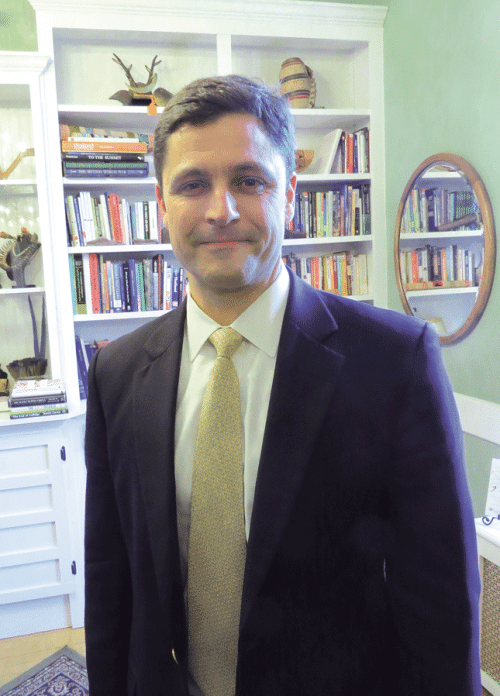
Head of School Brian Easler

Head of School Brian Easler

Growing up, Brian Easler said he was anything but the proverbial ‘prep-school guy.’ He attended public high school and then went into the Army, serving in Desert Storm. But he always had what he called a fascination with the private-school life, or the world presented in Dead Poets Society. Today, as head of school at Wilbraham Monson Academy, a role he assumed after 16 years in various posts at the school, he’s leading roughly 500 students, faculty, and staff now living that life. More importantly, he’s working diligently to keep the school on a long run of growth, increased diversity, and vibrancy.

There’s an intriguing tradition at Wilbraham Monson Academy.

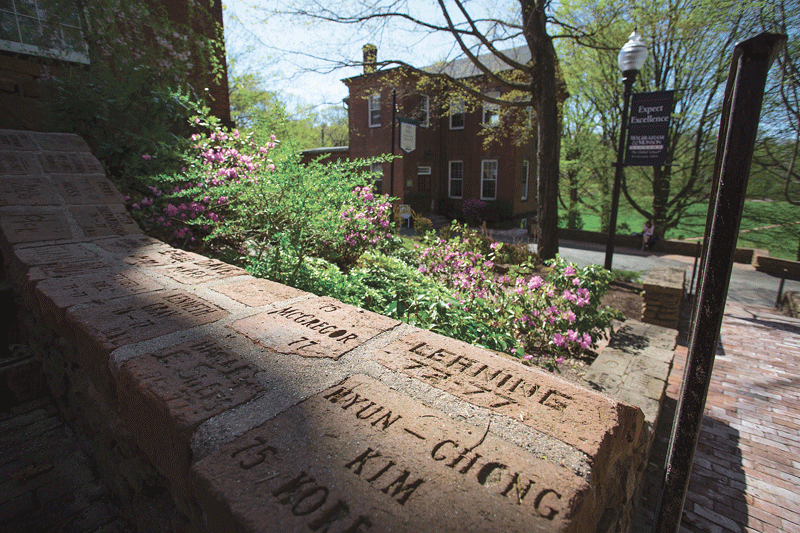
It’s called the ‘senior stone,’ and it dates back to when this 211-year-old institution was known as Wilbraham Academy, and with the class of 1947.

It was with those individuals, all young men (the institution went co-ed years later), that the school began the practice of giving each graduating senior a stone, which would then be placed in the Rubicon, a stream that runs through a portion of the campus, where it remained until it was soft enough for the student to chisel his name and class year on it. The stone would then be placed atop one of the many stone walls on campus.

In recent times, maybe the past 20 years or so, students have taken to trading that soaking and chiseling work for bringing their stone to a professional engraver for some more elaborate messages, noted Brian Easler, head of school at WMA, adding quickly that the old method is still practiced by some and, by most accounts, is staging what amounts to a comeback.

“Over the past four years, there’s been a real movement back to people chiseling their own stones,” he said, “to the point where the dean’s office has set up a half-dozen canvas tool bags with a hammer, a chisel, and safety goggles, and students can sign out a kit.”

Both engraving practices are certainly in evidence along the low wall placed across the front of Rich Hall, the main administration building named for one of the school’s early trustees, Isaac Rich. There, one will find simple names or even initials obviously hand-chisled, as well as detailed, professional engravings, many mixing words with ornate images.

In many ways, that front wall, and the Senior Stone tradition itself, speaks to how this respected preparatory school balances tradition with changing times, technology with time-honored practices, and evolution with history.

In most respects, it is a delicate balancing act, one that Easler has led since becoming head of school in 2014, and been a part of since arriving on campus 17 years ago to lead alumni affairs and the school’s annual fund.

He would quickly move on to the role of dean of students, and later add the title associate head of school. When Rodney LaBrecque announced he was stepping down from the corner office, a search for a successor commenced. It wasn’t a long search — or as long as most — because the movement to place Easler in that position took on a life of its own.

Indeed, a Facebook page created by a member of the class of 2000 called ‘Brian Easler for WMA headmaster’ had more than 1,200 members within three days. “That roughly accounts for almost every student who graduated during my time as dean of students,” he noted. “And also some of the kids I kicked out.”


Download a PDF chart of the region’s private schools HERE


Roughly 18 months into the job, Easler admits that he’s still growing into it, something he certainly didn’t expect (more on that later). And as he sliced through his many responsibilities and worked to sum them all up, he said the assignment comes down to simply maintaining what has been a lengthy and healthy run of growth, continued diversity in all its forms, increasingly global reach, and overall vibrancy at WMA.

But there’s nothing simple about that broad task.

Indeed, this is in many ways a challenging time for prep schools and colleges alike, as they grapple with declining populations of young people, immense competition for top students, global economic turmoil, and the need to maintain high standards of quality when it comes to admissions in the wake of these issues.

Couple these factors with ever-rising tuition costs, and the mission for WMA and all schools like it is to make sure value is among the assets it has to offer.

“We know that birth rates are declining, and that means school populations are declining, which means that competition is getting tougher for schools,” he said in describing the current operating climate. “And we’re also in an environment where tuition is going up. In order for us to balance what we cost with the value of what we provide, we need to have the most effective and most intentional financial plan — and focus on our mission — that we can.”

For this issue and its focus on education, BusinessWest talked at length with Easler about the many kinds of balancing acts going on at this institution, and his vision for this school with a future that appears, well, rock solid, and in a number of ways.

School of Thought

Easler has taken a rather intriguing path to the large office at Rich Hall assigned to the head of school, one that he probably couldn’t have imagined when he was in high school himself. And that’s because that setting was at the opposite end of the spectrum from where he is now.

“I went to public school in Maine, and was not a private-school guy,” he explained, adding quickly that, for a variety of reasons, he became fascinated, for lack of a better term, with the private, boarding-school realm.

The senior stone

The senior stone has been a tradition at Wilbraham Monson Academy since 1947.

“My first experience with private schools came when I was lifeguarding at the University of Maine,” he explained. “There was a gentleman who came in to swim every day who graduated from Eaglebrook (in Deerfield). He would tell me stories about his middle-school days there, and that created this fascination for me with boarding schools.”

It would later be fueled by Dead Poets Society, the movie starring Robin Williams about the fictitious Welton Academy, and other factors, including a chance encounter with the WMA campus while Easler and his wife were travelling from their new home in Springfield to Palmer.

But despite this evolving fascination, Easler seemed in no way destined for the career that would eventually take shape.

Indeed, upon graduation from high school, he joined the Army and was assigned to the 101st Airborne Division’s Long-range Reconnaissance and Surveillance Detachment. As a Ranger team leader of a six-man squad, he would be awarded the Bronze Star for actions while engaged in combat operations behind enemy lines during Desert Storm.

After his stint with the Army concluded, he attended the University of Maine at Farmington, where, in a nod to Dead Poets Society perhaps, he majored in literature and minored in philosophy.

Easler noted that he first applied to Wilbraham Monson to be an English teacher — at the suggestion of one of the school’s retiring English teachers, who became the subject of one of his assignments at Springfield College, where he earned a master’s degree in Education.

He didn’t get the job, he explained, at least in part because he seriously lacked the skills necessary to coach field hockey, which was part of the job description.

But he certainly made some kind of impression. That became obvious a while later, as he was mulling where to go next, when the phone rang.

“It was the head of school, Richard Malley,” said Easler. “He said, ‘have you ever considered serving education in a role other than teaching?’ — and I had no idea what he was talking about.”

What Malley had in mind was the job as director of alumni affairs and running the annual fund, a job Easler wasn’t sure he could handle, but accepted anyway.

“He took a chance on me because I had no experience, and I took a chance because I didn’t know how to be alumni director,” he explained, adding that, 17 years later, he’s still at WMA because, as he put it, “I never had any desire to leave.”

As mentioned earlier, he would soon be promoted to dean of students, and in 2005, he became assistant head of school. He told BusinessWest that he thought those positions and their myriad responsibilities — everything from creation of a new evaluation system for teachers to leading students on educational trips to the Amazon jungle, to working with the town to install a new street-crossing light system — would adequately prepare him for his new role.

It turns out he was right. Well, sort of.

“I felt like I knew the job, that I had it all figured out,” he told BusinessWest. “As it turned out, I had no idea.”

School of Thought

What Easler said he’s learned over the past year and a half is that this job entails wearing many hats and assuming many roles.

“In one day, I can be dealing with parking-lot-assignment issues, auditors and lawyers, happy parents, billionaire alumni, and international dignitaries,” he said, adding that those in that latter category are often also alums. “At various times, you have to play the role of counselor and mayor, judge, priest — not in a particularly religious sense, but in terms of providing counsel to people when they’re at a time of need — and more.”

He’s taken on all those roles and others as he’s undertaken the twin challenges of maintaining the recent momentum at WMA and coping with the myriad challenges facing all private schools at this time. And they are, of course, interrelated.

“Our student body has grown in size and quality to the point where we’re full,” he said, describing his tenure at the school specifically. “And our school culture has changed significantly over the past 14 years.”

Elaborating, he said there are now students from 31 different counties and 11 states, escalation of a pattern — one that has earned WMA the nickname ‘the global school’ — that began in 1854, when the school became the first institution of its kind to admit a Chinese student.

International students now comprise one-third of the current student population of 420, which is a percentage the school embraces. But the term ‘diversity’ applies not only to countries of origin, Easler stressed, but other realms as well, including socio-economic status.

And maintaining this diversity is critical because it provides a rich learning experience that goes well beyond the classroom, one that students appreciate long after their stone is placed into a wall, he explained.

“It’s very important to the students to have a diverse campus because, when they come back from college, they tell us that even their college communities are not as diverse and inclusive as ours,” he explained. “My guess would be that this perception of theirs is not a statistical perception — the breakdown of the student populations are not dissimilar to ours. But the perception of it is different, because we’re much smaller.

WMA

Brian Easler says WMA provides students with diversity and an opportunity for “social engineering” that that they miss when they move on to college.

“On a college campus, they have more of everyone, so it’s much easier to isolate yourself with whoever’s like you or whoever’s from where you’re from,” he went on. “We’re such a small community that that becomes virtually impossible. What students experience here is like social engineering or forced inclusivity, so that students, by nature of our program, and in a totally healthy way, find it necessary to engage with others who are not like them. And what they learn from it as a result is that they enjoy this, and they miss it when they go to college.”

Moving forward, the mission is obviously to continue this social engineering while also providing students with a high-quality education, and overall experience, that will prepare them not only for college but everything that life can throw at them afterward, said Easler.

And, in these times of declining populations of young people, heightened competition for top students, and rising tuition rates, schools like WMA are challenged to maintain their high standards, become ever more efficient, and focus their resources on programs and initiatives that will advance the institution and improve the overall student experience.

And this brings Easler back to that word ‘value.’

“It’s all about aligning ourselves, our mission, and our expenses so that our budget reflects our mission,” he told BusinessWest. “You can tell what an institution’s real mission is by looking at it’s budget; people spend their money on what’s important to them — and so do institutions.”

And at WMA, what’s important is the learning experience, he went on, adding that, over the past two years, as part of what could be described as strategic planning, the school has identified what’s important and adjusted the budget accordingly.

“We’ve become more lean and efficient as an institution, and more responsive to our parents and alumni,” he explained, adding that the school has boiled what’s important down to three basic criteria: the student experience, the mission, “and what keeps us attractive to our current or potential customers.”

No Stone Unturned

Looking ahead, and far down the road, Easler said WMA has plenty of sidewalks and roads near which to build walls to display the stones of graduating seniors for decades to come.

Beyond that, it has the other necessary ingredients as well — history, tradition, diversity, a willingness to adapt to changing times, and the ability to balance all of the above.

That, and a head of school who may not have been a prep-school guy growing up, but has forged a successful career leading and mentoring those who are.

That’s one reason, from nearly all accounts, why this venerable institution will weather the many challenges facing it and remain rock solid.

George O’Brien can be reached at [email protected]

Education Sections

HCC enhances the learning experiences for students in a number of programs

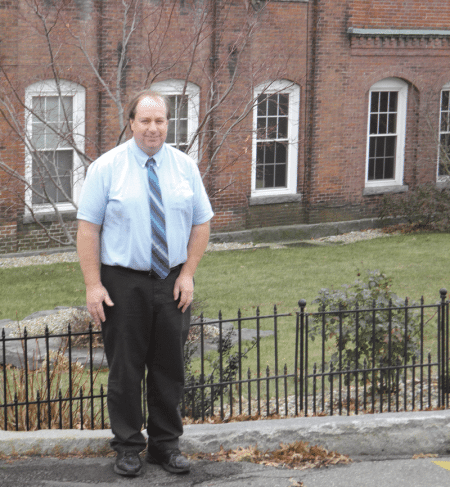
Michelle Sherlin

Michelle Sherlin with ‘Noelle,’ the obstetrics simulator at Holyoke Community College’s new Center for Health Education.

They named her Noelle.

She is the “obstetrics simulator” used by students at Holyoke Community College, and by Michelle Sherlin’s count, she’s given birth 16 times this semester, give or take a few deliveries.

Noelle has long been part of the curriculum, if you will, for students in various health and science tracks at HCC, but since she and the Health Sciences Department moved into the former Grynn & Barrett Studios building on Jarvis Avenue, she’s been playing a bigger part.

Indeed, in the new facility, Noelle has her own spacious hospital bed (a significant upgrade over her previous digs), which is visible from a larger, better-equipped screening room, from which students’ performance can be watched and assessed.

The simulator is now more mobile, said Sherlin, a registered nurse and simulation specialist within HCC’s Health & Natural Sciences Division. By that, she meant that it’s easier for Noelle to get to students and for students to get to Noelle, which means she can take part in more learning experiences — from those aforementioned deliveries to a late-term X-ray administered recently by students in the Radiologic Technology program.

In many respects, Noelle’s story captures the essence of the Health Science Division’s move into the 22,000-square-foot facility, acquired by the college in late 2012 and repurposed through a $7.6 million initiative that culminated in a ribbon cutting last fall.

There is more room, yes — considerably more room, and that’s a big part of the story. And there’s also new equipment, more than $600,000 worth it, which is usually defined with the term state-of-the-art.

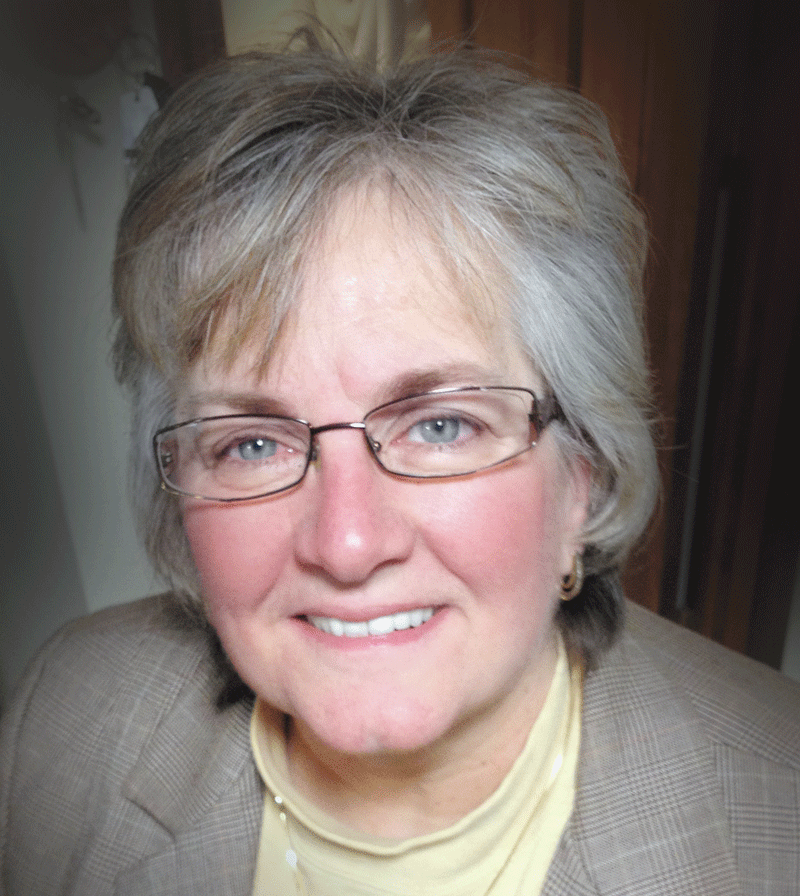
Kathy Hankel

Kathy Hankel says the new Center for Health Education has greatly enhanced the educational experience for HCC students.

But the real story, said Kathy Hankel, dean of the Health Sciences Department, is how all of the above has enhanced the learning experiences for students in a number of programs, and how it has made HCC better able to compete for students seeking entry into the region’s large and diverse healthcare sector.

“We’ve been able to greatly enhance the educational experience for our students,” she explained. “We simply have the ability to do so much more than we could before.”

When the Grynn & Barrett building went on the market in 2012, Hankel said, college administrators saw a tremendous opportunity to substantially upgrade the Health Sciences facility then housed in the Marieb Building, one of the original structures on the HCC campus.

To describe those quarters, Hankel first summoned an adjective, then an adverb for some additional effect.

“It was cramped — horribly cramped,” she explained. “We did a lot of things over there (at Marieb) with our labs and simulators, but it was so difficult for all the students to get the true benefit of the simulation and lab experience we offered because we were so cramped.”

The new Health Sciences Center now houses the school’s two-year RN program, its LPN program, the Medical Assistant program, and the “Fundamentals in Health” class that has served as a feeder program for the various health disciplines.

The building houses staff offices and conference facilities, as well as a wide array of simulation rooms — all equipped to mirror what would be found in a hospital — as well as classrooms, labs, screening rooms, and more.

To say that the new quarters would retire that term ‘cramped’ is an understatement. Indeed, four months after officially moving in, Holly Martin-Peele, program chair of the Radiologic Technology Department, says she’s still having a hard time getting used to all the space.

Indeed, as she gave BusinessWest a tour of her facilities, she referenced a classroom; a radiology simulation room, or mock X-ray room, as she termed it, which recreates what would be found in a hospital; the so-called QC area, or ‘image-critique’ facility, which also doubles as a lab and study area; and a storage room.

“Before, in the old building, we had basically a big classroom that had a couple of antique X-ray machines in back that we couldn’t find parts for anymore,” she explained. “We can do so much here.”

Sherlin concurred, and successfully quantified the improvements in addition to qualifying them.

She said there are now eight simulators in use at the facility, double the number at Marieb, and more students are using them, and in myriad ways.

“We’ve done more than 360 simulations since the beginning of September,” she explained. “Previously, that was about what we did in a year and half; we did as many simulations in one semester as we used to do in three.”

More important than those numbers are what they mean in terms of the learning experiences of those performing the simulations.

“The quality of the educational experience has grown dramatically,” she told BusinessWest, “because students are really able to get comfortable with the technology, deepen their skills, and do a lot of critical decision making, because of simulation, that they didn’t have the ability to do before, because there was just no space.”


— George O’Brien

Daily News

The Commonwealth’s defense-contract work supported more than 88,000 workers and contributed more than $20 billion to the Massachusetts economy, while Massachusetts military installations directly or indirectly supported more than 57,000 jobs with a total economic contribution of more than $13 billion in fiscal year 2013, according to two new University of Massachusetts Donahue Institute reports. Massachusetts companies exemplifying the crucial and beneficial connections between the defense sector and small businesses include Holyoke’s Meridian Industrial Group, which does machining for portable MRI equipment; Southampton’s J&E Precision Tool, which produces components for Black Hawk helicopters, periscopes, and F-22s and F-35s; and CPI Radant Technologies Division in Stow, which develops components for military aircraft.

“The Commonwealth’s six bases and defense-related firms continue to have a major impact on the Massachusetts economy, both in terms of jobs and dollars,” said Gov. Baker. “Academia, business, and technology – three of the Commonwealth’s top sectors — play a role in our installations and defense contracts, helping this industry serve as an economic driver. We look forward to their continued growth and contribution to Massachusetts.”

The Massachusetts Military Asset and Security Strategy Task Force and MassDevelopment commissioned the reports. The first studied the impact of the Commonwealth’s six military installations – Barnes Air National Guard Base, the Fort Devens Reserve Forces Training Area, Hanscom Air Force Base, Joint Base Cape Cod, the U.S. Army Natick Soldier Systems Center, and Westover Air Reserve Base — and the Massachusetts Army National Guard and the U.S. Army Reserve. To view the full report, click here.

“Massachusetts is on the cutting edge in helping our military modernize,” Sen. Elizabeth Warren said. “The work that goes on at military installations and by defense contractors across the Commonwealth is critical to our national security and to our state’s economy, and I am glad to partner with our local industry to make certain that Washington recognizes and supports the excellent work done here.”

The second report studied the defense industry’s contribution to the New England economy, finding that in fiscal year 2013, New England defense contracting generated nearly $49 billion and more than 218,000 jobs.

Sections Technology

An IT Diet for 2016

By TERRY GROGAN

Terry Grogan

Terry Grogan

How come New Year’s resolutions always seem to center around dieting and getting in shape?

You spend your holiday dinner enjoying all of the spoils of the season and then try to talk yourself into a ‘lifestyle change’ once the ball drops.

It’s a lot like that around the old IT department, too. We’re all being asked to do more with less, economize personnel resources, and limit capital expenses. To put it another way, senior management is telling us to lose some weight without investing in an entirely new wardrobe.

But how did we get so fat?

Remember that tome on business success called Good to Great by Jim Collins? It’s a book that I try to make my bible, though I don’t always live up to it as well as I should. (Yes, it’s my annual New Year’s resolution!) The book suggests that a central theme of all truly great businesses and individuals is the ability to create annual goals and objectives. But in order to do that, I think you also have to take a look back at what you might want to change.

When I walk into companies for the first time, usually as part of an IT gap assessment, and ask, “when was the last time you looked at the things you should stop doing?” I’m often faced with blank stares and puzzled looks.

Any IT organization that’s been around for a while has accumulated, shall we say, a little tire around the midsection. The telltale signs are the processes and procedures “we’ve been doing for years,” especially if the IT staff has also been with the company for a while.

These processes and procedures were put in place (no one quite remembers when) because someone wanted a new type of report, a filter to keep out that ‘virus of the day,’ or a custom workflow to make it easier to put a new server online. However, once that new process, procedure, or deliverable was in place, most IT departments rarely looked back, moving on to the next task or crisis at hand.

The old adage, “if it ain’t broke, don’t fix it,” became a rule to live by, and as the years went by, the old processes and procedures were carried forward. As a result, companies generate the same reports, build servers the same way, and approve or disapprove access or technology for the same reasons, even if doing so requires a large amount of work, major upgrades, or more money to support.

No one goes back and examines these things until a high-threshold pain point or sentinel event occurs (e.g. the process is no longer supported by a major upgrade of a product, a merger causes re-evaluation of a technology, etc.). When this happens, we’re often surprised to find that what we may have been doing for the last few years is either no longer necessary, is very inefficient, or isn’t useful to anyone.

We shouldn’t need a sentinel event to move us to action, but since ’tis the season, let’s resolve to review old processes and procedures the same way we review (or should review) policies: vowing to do it every year. You probably won’t hit all of them, but pick a few every 12 months and examine them.

Ask your staff for their opinions. It’s amazing the answers you get when you ask everyone to “tell me the three things in your job you’d stop doing or do differently, if you were able to make the rules.”

Experience suggests that the first few times you undertake this exercise, you’ll actually find things that you and your staff are doing that are of no value at all. Stopping them frees up resources and/or makes forward progress easier (look at Microsoft’s abandonment of Active X in the new Edge browser).

But even after you hit the low-hanging fruit, continuing to create a ‘stop-doing’ list annually will help you look at those new tasks, processes, and projects that maybe aren’t as important as others. It will help create a focus on the things you really should be doing and create a literal lifestyle change when it comes to adopting processes in the future.

In short, you start thinking about new things with a critical eye, asking, “should we even begin this?”

So, as you begin making your list and checking it twice, consider simply taking stock of what you already have in place. Shedding those extra data-storage pounds or slimming down your infrastructure may be as easy as just asking a few questions.

Happy new year.

Terry Grogan is a 17-year veteran of the business and healthcare IT industries and is chief information officer of Holyoke-based VertitechIT, one of the fastest-growing business and healthcare IT networking and consulting firms in the country; [email protected]

Daily News

WESTFIELD — The board of directors of the Greater Westfield Chamber of Commerce elected new officers and directors at its recent annual meeting. They include Dan Burack, president; Dawn Thomas, first vice president and treasurer; Kevin O’Connor, second vice president; and Cindy Lacoste, secretary.

Burack is the owner of Tekoa Country Club as well as a real-estate developer. Thomas is a vice president and chief financial officer at Instrument Technology Inc. O’Connor is vice president of retail banking and marketing at Westfield Bank. Lacoste is a senior paralegal at Mestek Inc.

The new directors ratified include Andrea Allard, CEO of the Westfield YMCA; Calvin Annino Jr., managing partner of Annino, Draper & Moore, P.C.; Lt. Col. Brenda Hendricksen, 104th Wing executive officer at Barnes Air National Guard Base; Jay Kline, business and finance manager at Westfield Gas & Electric; and Ann Woodson, property owner of George’s Jewelers.

The remaining board of directors includes Ron Bryant, president of Baystate Noble Hospital; Todd Brown, vice president at Tighe & Bond; Vincent Carbone, vice president of operations at Savage Arms; Anne Faunce, branch manager at First Niagara Bank; Kenneth Magarian, director of advancement and college relations at Westfield State University; Kim Rexford, owner of Betts Plumbing & Heating; Ali Salehi, senior vice president of engineering and plant operations at Columbia Manufacturing Inc.; and Alfonso Santaniello, president and CEO of the Creative Strategy Agency Inc.

“Our board has never been stronger,” said chamber Executive Director Kate Phelon. “We make every effort to add diversity to our board that includes not only specific industry sectors, but all business sizes ranging from small to large. Our board is committed to implementing our strategic goals and to growing the chamber with their plethora of talent, experience, and skill sets.”

For more information about the chamber, visit www.westfieldbiz.org.

Departments People on the Move

The Massachusetts Board of Higher Education formally approved Ramon Torrecilha, a lifelong educator, as the 20th president of Westfield State University (WSU). A lifelong educator, he is currently a professor of sociology at California State University Dominguez Hills. “I am delighted by the appointment of Dr. Ramon Torrecilha as the new president of Westfield State and look forward to working with him,” said Carlos Santiago, state commissioner of Higher Education. “I want to thank the Westfield board of trustees and the search committee for delivering an exceptional pool of quality candidates, and congratulate them on an outstanding selection.” Torrecilha will be the first Latino to serve as president in the university’s 176-year history. He is scheduled to begin his term on Jan. 25. Westfield State’s presidential search process officially launched in January 2015, with a search committee comprising 13 members of the campus community. The pool of candidates was narrowed to a semi-finalist group of 13 in August, and on Sept. 29, the presidential search advisory committee announced three finalists: Torrecilha; Damian Fernandez, CEO and head of school at Ethical Culture Fieldston School; and Linda Vaden-Goad, provost and vice president for Academic Affairs at Framingham State University. On Oct. 28, the WSU trustees voted to recommend Torrecilha as the final candidate, and the state Board of Higher Education approved the choice this week. Previous to his current role at California State University Dominguez Hills, he served as provost and vice president for Academic Affairs, where he designed and implemented a cohort-based, first-year initiative to increase student retention and graduation rates. As provost, he invested in student research and supported more than 200 undergraduate research projects. He provided leadership and support to secure more than $16 million in grants and contracts and $600,000 to support faculty research and creative activity. Torrecilha also served as executive vice president of Mills College in Oakland, Calif., during which time he served as acting president on two separate occasions. His many accomplishments at Mills include the design, implementation, and successful achievement of a capital campaign that raised more than $130 million dollars on behalf of women’s education. He also led a successful campus reaccreditation process resulting in an eight-year renewal from the Western Assoc. of Schools and Colleges and increased the alumnae participation rate by 10%. Torrecilha earned his bachelor’s and master’s degrees in sociology from Portland State University and his Ph.D. in sociology from the University of Wisconsin Madison.

•••••

Eight lawyers from Bulkley Richardson have been named to the 2015 Massachusetts Super Lawyers list of top lawyers in the state, and two lawyers from the firm have been named to the 2015 Massachusetts Rising Stars list of top up-and-coming lawyers. No more than 5% of lawyers in Massachusetts are selected for the Super Lawyers list, and no more than 2.5% are selected for the Rising Stars list. The following Bulkley Richardson lawyers were named to the 2014 Massachusetts Super Lawyers list:
• Francis Dibble Jr., whose practice areas include business litigation, health law, and antitrust litigation;
• J. Patrick Kennedy, whose practice areas include business litigation, banking and intellectual property litigation;
• Kevin Maynard, whose practice areas include business litigation, general litigation, and nonprofit;
• David Parke, whose practice areas include business/corporate and mergers and acquisitions;
• John Pucci, whose practice areas include criminal defense (white collar);
• Donn Randall, whose practice areas include banking and business litigation;
• Ellen Randle, whose practice focuses on family law; and
• Ronald Weiss, whose practice areas include mergers and acquisitions, closely held business, and estate planning and probate.
The following Bulkley Richardson lawyers were named to the 2015 Massachusetts Rising Stars list:
• Michael Roundy, whose practice areas include business/commercial litigation, tax appeals, and medical malpractice (defense); and
• Kelly Koch, whose practice areas include family law and estate planning and probate.
Super Lawyers, a Thomson Reuters business, is a rating service of outstanding lawyers from more than 70 practice areas who have attained a high degree of peer recognition and professional achievement. The annual selections are made using a patented, multi-phase process that includes a statewide survey of lawyers, an independent research evaluation of candidates, and peer reviews by practice area.

•••••

Kenneth Albano

Kenneth Albano

Bacon Wilson, P.C. announced that attorney Kenneth Albano was recently honored with the Esteemed Service Award from Behavioral Health Network Inc. (BHN). Albano was presented with the award during BHN’s annual meeting, in recognition of his 20-plus years as a member of BHN’s board of directors and his related board service. “I am grateful to BHN for this recognition,” Albano said. “The services BHN provides are essential to the wellness of so many in our community who may be struggling with addiction or other life crises. I am honored by this award, and it has been my honor to serve this excellent organization for so many years.” Behavioral Health Network is a growing non-profit, community behavioral-health service organization, and has served the needs of children, adults, families, and communities in Western Mass. since 1938, offering tools and treatments for those with mental illness, substance-use disorders, or intellectual disabilities. Albano is a senior partner with Bacon Wilson and a member of the firm’s corporate, commercial, and municipal practice groups. In addition to his work with BHN, he has worked with the American Cancer Society, Make-A-Wish, and the ALS Assoc., and he serves as board chair of the March of Dimes Western MA Division and on the board of the New England Chapter of the March of Dimes. In June, Albano was honored with the Mass. Bar Assoc. Community Service Award in recognition of his exceptional volunteer work.

•••••

Country Bank President and CEO Paul Scully announced that Eric Devine has been promoted to first vice president, Information Technology. Devine has been with Country Bank since 2006 in the IT Department, working most recently as the Information Technology Services officer. “Eric is a dedicated and driven member of our team. I am pleased to have the opportunity to recognize him for his outstanding leadership over the last few years,” Scully said. Devine studied at Sacred Heart University with a concentration in information technology and graduated from New England School for Financial Studies in 2012. He is very active in the community, serving on the program advisory committee for Porter and Chester Institute, working on the annual SIDS Road Race committee, and supporting the Griffin’s Friends Children’s Cancer Fund as a runner and charity fund-raiser. In addition, he served as the 2015 Springfield grand parade marshal for the annual St. Patricks Day Parade in Holyoke. He was elected to BusinessWest’s 40 under Forty in 2015.

•••••

Aaron Smith, P.C., a certified public accounting firm serving individuals and businesses in the Pioneer Valley, announced the addition of two new staff accountants, Trent Domingos and Emily Sit. Both are responsible for audits, reviews, and compilations. “We are pleased to add two staff accountants to our team, as this allows us to maintain a high level of excellence and personal attention that our clients have come to expect,” said David Padegimas, CPA, managing director of Aaron Smith, P.C. Domingos is a graduate of Fairfield University with a bachelor’s degree in accounting. He previously served as a tax intern at Therrien & Associates, P.C., in Wilton, Conn. At Fairfield University, Domingos was a four-year member of the varsity rowing team. “I am excited to join the team. I look forward to growing as an accountant in this position and contributing to the distinguished reputation that Aaron Smith, P.C. has established,” Domingos said. Sit is a graduate of the UMass Isenberg School of Management with a bachelor’s degree in business administration and accounting. She is expected to obtain her master’s degree in accounting in May. Prior to joining the team at Aaron Smith, P.C., she was employed by IBM Corporation as a financial analyst. She is fluent in English and Chinese, and enjoys gardening in her spare time. “Aaron Smith, P.C. has an excellent track record of great customer service,” Sit said. “I am thrilled to continue my passion for accounting in a well-respected firm.” CPAs at Aaron Smith, P.C. continually invest time and resources into furthering professional education, using state-of-the-art computer technology and developing extensive new business relationships.

•••••

Ruth’s House, the assisted-living residence at JGS Lifecare, announced the appointment of Samantha Panniello as dining services coordinator. As an experienced executive and catering chef, she brings a new dimension to the facility’s signature kosher dining and banquet menus. Panniello brings more than 10 years of experience to Ruth’s House. Formally trained at the Connecticut Culinary Institute, where she was recognized for excellence and graduated at the top of her class, she worked as a chef for both Springfield College and UMass Amherst before becoming kitchen manager of the Federal in Agawam and Vinted in West Hartford, Conn. where she was named head chef. While at Vinted, the restaurant received a rave review by the New York Times, praising its “rich tastes on small plates.” Panniello also landed an executive chef position at Lego in Enfield, Conn., and most recently served as head chef of Marketplace/Back Street Bistro in Springfield. “We’re proud to welcome Samantha to coordinate our dining services. She brings tremendous talent, enthusiasm, and experience to our culinary team,” said Joelle Tedeschi, executive director of Ruth’s House. “Our residents are in for a treat.”

Construction Sections

Driving Force

The new Balise Hyundai in Springfield.

The new Balise Hyundai in Springfield.

Contractors who have made inroads in auto-dealership construction are finding these to be good times indeed, as area dealers, from solo stores to large chains, engage in what can only be described as a building boom. The reasons are myriad, from an improving economy to demands from car makers that showrooms have a consistent look, to changes in the way cars are purchased and serviced today, and how 21st-century dealership design reflects those shifts.

If there’s one driving force behind all the auto-dealership construction and expansion over the past few years, Bill Peffer noted, it is, quite simply, a growing economy.

“The reason you’re seeing dealerships around the country refurbish is because the economy is really good, and a good economy drives good sales of new cars, trucks, and SUVs,” said Peffer, president and chief operating officer of the multi-state Balise Auto Group, which boasts several dealerships, focusing on different brands, in the Greater Springfield region. “More dealerships mean more points to sell the products — although dealers are finding the competition is pretty strong as well.”

Balise has been renovating and expanding in the area, most recently with a new Hyundai dealership on Columbus Avenue in Springfield, but with several new facilities over the past decade. Meanwhile, the Lia Auto Group has built and renovated new stores across the Pioneer Valley, as have TommyCar Auto Group in Hampshire and Franklin counties, Sarat Ford Lincoln in Agawam, Marcotte Ford in Holyoke, and Fathers & Sons in West Springfield, just to name a few.

“Part of it is the growth of the industry,” added Eric Forish, president of Forish Construction in Westfield, one of the region’s leading builders of auto dealerships, a tradition that started with his father in the 1940s. “Most dealers in our area have multiple locations, multiple brands, multiple facilities. That’s the nature of how they operate in their industry. And the volume of activity at each location often requires growth in the size of the facility.”

Indeed, according to MiBiz, a Michigan-based business website, the facility, training, and technology expenses required to run a modern dealership favor larger dealer groups that can share back-office resources and spread out narrow margins over higher sales volumes.

Balise — which contracts with South Hadley-based Associated Builders on its Western Mass. construction and renovation — is certainly one of those large players. But more dealerships also means more challenges to stay on top of current trends.


Click HERE to download a chart of the region’s general contractors


“They want to have more inventory, so parking areas get larger,” Forish said. “They want to be green-friendly, so they update their lighting fixtures in the parking lots; LED fixtures return tremendous savings from conserving energy. Then there’s the energy efficiency of the buildings themselves. There are a multitude of ways dealers try to stay current. Their products are new, and they want their facilities to be new facilities.

“Even on the service side,” he went on, “the technicians’ tools are way beyond anything they used to have. In the repair area, it’s all computerized. Their equipment is state of the art. Even the lifts themselves are very much different than the lifts of years ago. The whole operation is much more modern. Many types of businesses have to keep up with technology, and it’s no different in auto dealerships.”

But while area dealers focus on drawing in new business, manufacturers have their own ideas about what constitutes an ideal showroom and service center — and those changes are also helping to drive the current building boom.

Consistent Look

The trend among car makers is to standardize, to some degree, the look and feel of showrooms that sell their brands, and they are in some cases providing incentives — and in others, simply issuing mandates — to renovate and modernize their showrooms.

“Most brands in the U.S. are well-established brands, with few new players over the past 25 or 30 years,” Peffer said. “As those brands mature, they develop touch points unique to the brand to differentiate from the next brand.”

These mandates can encompass everything from the exterior façade to the colors of the interior walls to the furniture where customers wait for service.

“What’s driving the process now is that manufacturers are requiring their dealers to upgrade to a new image,” Forish said. “These design programs are similar to chain restaurants, where you have to have a consistent national image. Car dealerships need to do the same in terms of exterior exposure and interior finishes.”

Forish should know, having tackled dozens of projects for auto dealers — most recently multiple projects for Curry in Chicopee, Sarat in Agawam, and the New York-based Lia Auto Group. “We’ve done probably a dozen facilities for them,” he said of Lia. “We must be doing something right because they keep bringing us back.”

Other dealers have tapped Forish’s niche experience as well, from Marcotte Ford, which chose the company to build its new truck center in Holyoke, the only one of its kind in the region, to facilities for Steve Lewis Subaru in Hadley and Cernak Buick in Easthampton. “The names go on and on. We certainly have deep roots with the auto dealerships.”

Marcotte Ford

Marcotte Ford’s new commercial truck center in Holyoke.

As a partner with many different manufacturers, Peffer said, Balise is well aware of the demands they’re placing on dealers. For instance, the chain’s new Hyundai dealership on Columbus Avenue in Springfield boasts a six-bay express service element for customers who want to get in and out quickly, a separate cash-wash facility, and a ready-credit used-car space, all in separate buildings on the same grounds.

“That illustrates the Hyundai global brand identity,” he told BusinessWest. “This is the direction you’ll see Hyundai dealerships around the country move to.”

Meanwhile, Fathers & Sons is currently building a dedicated showroom in West Springfield for Audi because that maker, like others, wants dealers to move away from the old ‘auto mall’ facility that sells many different nameplates under one roof, to reduce the chance of a customer driving away with another maker’s product. Audi has also provided direction on the new facility’s design, what it calls a ‘terminal’ concept with an aesthetic dominated by glass and metal.

Although car makers are increasingly asking for specific design elements, Peffer said, dealer groups can bring consistency as well. “Balise Toyota, Honda, and Ford all have a well-lit, spacious, drive-up service lane where you’re met by the assistant service manager.”

These areas are typically marked with signage explaining the pricing for a range of basic services, another attempt to be transparent with customers who have likely already done their homework on the Internet.

“The nature of doing business as an auto dealer has changed, as well as the type of service they offer and the nature of customer-service relationships,” Forish added. “If you’ve taken your vehicle in for service at a newer dealership recently, you realize that, at most of these places, you drive into a building and are greeted by the service writer that reviews the scope of repairs or maintenance you’re going to receive. Then you go relax in these wonderful customer lounges, which have high-definition TV, wireless access for your devices, and play areas for the kids.

“It’s all about the experience for the customer,” he went on. “And the dealerships — especially if they have some age to them — need to get to these current standards to be part of a brand.”

Shifting Tides

As manufacturers ramp up mandates for standardization in their showrooms, MiBiz notes, some dealer groups have resisted the change. A 2013 study by auto-industry consultant Glen Mercer found that, while expansion of showrooms and service departments can pay off on the bottom line, other modernization efforts bring little return on investment.

Still, customers appreciate changes aimed at improving their experience, Peffer said.

“More and more people start shopping for prices online, and by the time they get to the dealership to make the purchase, they’re there to buy, as opposed to just kicking the tires,” he told BusinessWest. “They get all their information online, and by the time they hit the showroom floor, they’re looking for a good experience.

“That’s what differentiates a dealer from another dealer,” he went on. “And the facility makes the experience. How convenient is it? How inviting is it? Is there ample parking? Is there a delivery area for new cars? The footprint for dealerships has really changed to amplify the experience. They’re not just big boxes with a bunch of inventory.”

In short, he said, the modern dealership reflects what customers want, and the list is a simple one. “They want greater transparency with the advent of the Internet. And you have to provide convenience and a logical flow to how their car is serviced.”

On those points and others, too many dealerships built decades ago simply fall short. That, in turn, should continue to provide plenty of opportunity for contractors looking for a hot niche to drive new business.

Joseph Bednar can be reached at  [email protected]

Daily News

CHICOPEE — Phillips Insurance Agency Inc. announced that account executive Sam Fortsch has earned the prestigious accredited adviser in insurance (AAI) designation. This degree was earned after he successfully completed the Liberty Mutual Commercial Lines Producers School, an intensive, six-month training program that included multiple classes and nine exams.

Fortsch joined Phillips Insurance in July 2014 after four years of active-duty service in the U.S. Army. He left the Army as a captain after two tours of duty in Afghanistan with the 101st Airborne. He holds a bachelor’s degree from UMass.

Fortsch has developed a strong expertise in the energy, automotive, technology, and craft-brewing industries in a short time, said Joseph Phillips, president of Phillips Insurance. “The same level of commitment that he brought to serving his country, he has brought to serving his clients.”

Fortsch is servicing existing clients and cultivating new business opportunities throughout New England.

Phillips Insurance Agency, established in 1953, is a full-service risk-management firm with a staff of 23 professionals. The agency handles the personal and commercial insurance needs for thousands of individuals and businesses throughout New England.

Daily News

WARE — Country Bank President and CEO Paul Scully announced that Eric Devine has been promoted to first vice president, Information Technology. Devine has been with Country Bank since 2006 in the IT Department, working most recently as the Information Technology Services officer.

“Eric is a dedicated and driven member of our team. I am pleased to have the opportunity to recognize him for his outstanding leadership over the last few years,” Scully said.

Devine studied at Sacred Heart University with a concentration in information technology and graduated from New England School for Financial Studies in 2012. He is very active in the community, serving on the program advisory committee for Porter and Chester Institute, working on the annual SIDS Road Race committee, and supporting the Griffin’s Friends Children’s Cancer Fund as a runner and charity fund-raiser. In addition, he served as the 2015 Springfield grand parade marshal for the annual St. Patricks Day Parade in Holyoke. He was elected to BusinessWest’s 40 under Forty in 2015.

Cover Story

Guys and Dolls

Editor’s Note: This is the latest in a series of stories exploring a surge in entrepreneurial energy across the region and the startup companies that are defining this renaissance.

Laurel Wilder with her son, and ‘Will.’

Laurel Wilder with her son, and ‘Will.’

Laurel Wilder says her entrepreneurial adventure started with the note that came home from preschool with her son nearly two years ago.

“It said, literally, that boys aren’t supposed to cry,” said the Northampton-based psychotherapist, who told BusinessWest she was floored by the missive.

“We’re in Northampton, and we talk all about emotions in our household — it’s a completely OK thing to express them,” she went on, adding quickly that, while she was certainly angered by the message, she was forced to conclude that such sentiments are, unfortunately, pervasive. “It’s out there, no matter what environment you bring your child up in … the message is that boys ought to be strong and self-reliant and not vulnerable.”

Her anger and resignation eventually turned to resolve — entrepreneurial resolve — in the form of Wonder Crew, 15-inch-high, soft-bodied dolls that have been created to help give boys the opportunity to build emotional intelligence and creativity.

In that respect, they meet what Wilder described as a long-unmet need, one that society, and toymakers, either didn’t recognize or weren’t in any hurry to address.

Indeed, for decades, if not longer, society has focused on girls and play as a means to build social skills, responsibility, and creativity, and dolls have certainly been at the forefront of that, Wilder maintains. Boys? Well, not so much with any of the above.

“The feeling’s been that the boys are all right,” she said, using that phrase to refer to the status quo when it comes to toys for them — action figures, cars, trucks, sporting goods, and the like — and the attitude that, when it comes to boys, toys don’t have to help build social and emotional skills, connection, empathy, and nurturing.

Wonder Crew starts with a different attitude about play, she said, describing her product as a cross between, or combination of, American Girl doll, action figure, and favorite stuffed animal.

“Action and adventure meet friendship and teamwork — that’s Wonder Crew,” she explained.

In other words, this is something unique, said Wilder, who believes there is nothing quite like Wonder Crew on the market, and because of that, her concept has enjoyed success on a number of levels this year — everything from sales from virtually every corner of the country to winning $27,500 for her enterprise at Valley Venture Mentors’ first Accelerator Awards last spring; from a ton of press fueled by a surge in interest in boys and dolls to talk of a television cartoon show involving Wonder Crew characters.

“In the toy industry, that’s a pretty incredible opportunity — it gets Wonder Crew’s message out, but it’s also really dynamic marketing,” said Wilder of the TV production, acknowledging that, usually, toys are born from shows, not the other way around, and that this potential development is more evidence of how intriguing the Wonder Crew concept is.

The dolls hit the market earlier this year following a Kickstarter campaign that netted $40,000, enough to create a prototype and commence production.

And as the holiday shopping season enters its final weeks, Wilder is well-positioned to capitalize on the media attention given to her product, and that larger issue of boys, play, and dolls. She’s in several local stores already, and early sales have been positive.

For this issue, BusinessWest continues its intriguing series on the wave of entrepreneurial energy in the region and surge in startups with a look at a unique toy born from a desire to take play to a higher, more important level, and remove the stigma attached to boys and dolls.

Action Plan

Wilder noted that, while the name on the product’s box is ‘Superhero Adventure Crewmate,’ her creation is not at all like action-hero figures — everything from GI Joe to the Caped Crusader — that parents could have purchased for boys over the past many decades.

‘Will’ — that’s his name, and its stems from the character ‘William’ from the book Free to Be … You and Me (who wanted to play with dolls and was ridiculed for it) — is not about guns and muscles. Instead, he’s about … well, whatever the child who opens the box decides he’s about, which is one of his primary reasons for being — to spark imaginative play.

But there are many other motivations as well, chief among them those words and phrases Wilder uttered early and quite often in her interview with BusinessWest: empathy, connectivity, and responsibility, things that just haven’t been emphasized with boys.

“People are wanting more for their kids, and there’s been a lot of focus, and rightfully so, on bringing science, technology, engineering, and math to girls,” she went on. “But no one has really taken a look at boys, and the assumption is they don’t have to. The attitude is, ‘men have the upper hand in the world; why would we look there? That’s not where the problem is.’

“But if you look at happiness studies and depression, men need a lot of help in this area,” she went on. “And we’re not really doing anything for our boys, who then turn into men, if we don’t teach them to connect, nurture, and be empathetic.”

Wonder Crew

Creator Laurel Wilder says Wonder Crew is a combination American Girl doll, action figure, and favorite stuffed animal.

Retelling the story of how ‘Will’ came to populate store shelves in an effort to stem this tide, and will occupy many more in the months and years to come, Wilder said she’s always considered herself entrepreneurial — to maintain a successful psychotherapy practice, one must be, she noted — and has long been interested in creating something beyond that practice.

“I guess I’ve always been interested in building something; I just wasn’t sure what, although I thought it would be something outside the box,” she explained. “Sometimes, if you have this drive to create something different that doesn’t align with everything else out there, you can get pushed into an entrepreneurial endeavor.” And in this case, the push was that infamous note that came from school with her son.

As mentioned earlier, it elicted a range of emotions, including anger and frustration. But it also triggered a desire to do something that would help young boys effectively channel emotions while being masculine at the same time.

And her thoughts soon turned to play as the source of an answer.

“Play actually impacts child development in a fairly significant way — that’s exactly how kids learn,” she told BusinessWest. “I started to look at the toys marketed to boys and found that there were no toys out there that encouraged empathy, kindness, connection, really any kind of emotionality.”

There were plenty of toys that fit that description in what Wilder called the ‘pink aisle,’ the one set aside for dolls and other girls’ toys, but nothing for boys — a situation she soon set about changing, but not before doing some extensive research on what, exactly, was needed, and how that need could best be met.

Indeed, she said she would eventually talk, or consult, with more than 150 people — a constituency that includes parents, educators, children, psychologists, and toy-industry executives — before commencing the work that created a Wonder Crew prototype, if you will.

“I got it in my head that I wanted to somehow merge the adventure of an action figure with the emotional connection of the favorite stuffed animal, and I came up with Wonder Crew,” she explained, adding that she contracted with a few artists to formalize a concept for the marketplace.

From there, she built a prototype and “shot them out” to various schools and families to see how parents and especially children responded.

“Kids loved them — boys, girls, everyone,” she recalled of the initial reaction. “Teachers were like, ‘what is that? This is really awesome.’ It was a very positive response.”

Not Child’s Play

And it generated enough confidence for Wilder to proceed with her Kickstarter campaign last March, a drive that generated more than 500 pre-orders. “This proved that there was a market out there for this, and it essentially launched the product.”

The ‘Superhero Adventure Crewmate’ ($49.95 online) comes complete with superhero cape, mask, and a matching piece of adventure gear for the child to wear. There is also what Wilder calls the ‘builder’ accessory, or adventure package — a hard hat and shirt with a bulldozer and tool belt on it.

In both cases, the child playing with ‘Will’ can really stretch his imagination, which is the general idea, or at least one of the ideas.

Another is to help foster relationship building, something that has always been done with girls, but not with young boys, said Wilder.

“Harvard did a study that followed men for 80 years, a happiness study,” she noted. “I don’t remember the intervals they checked in on, but there were several, and they kept asking, ‘what’s making life most full or happy?’ and at each one, it was relationships. But we don’t foster relationships for our boys like we do for our girls.”

The first shipment of 2,000 Crewmates arrived from the factory in South China in September, said Wilder, and sales, many of them conducted online, have been steady since — more than 700 Crewmates and roughly 300 of the adventure packs.

She has managed to secure shelf space with a number of retailers in time for the holiday shopping season, including A2Z in Northampton, the Gifted Child in Lenox, and the Toy Orchard in Wilbraham, which is an important development and not an easy feat given the scarcity of that shelf space and the rigorous competition for it.

“We made it in about 10 stores pre-holiday, which is tough because most of those stores shop a year or more in advance,” she explained. “It’s start, and a pretty good start; the retail stores have been reporting that they have sold a few and that they feel good about that.”

Looking ahead, Wilder obviously wants to build on that solid start, with more Crewmates and more outlets for the products, and there appear to be many opportunities to do so.

She will have an exhibit at the huge Toy Fair 2016, and has appointments booked with some major retailers, such as Target, Toys R Us, Barnes & Noble, and others.

She is using the $27,500 she won through the VVM Accelerator program — she also won the Pitch Contest at the recent Western Mass. Business Expo, earning a chance at $70,000 infor the first run of the Crewmates, new prototype development, and marketing, the majority of which is being done online, and comes at a time, as Wilder said, when this subject is very much in the news and on the minds of parents, who are thus plugged in.

“Dolls for boys are all over the media right now,” she said, noting that one story that went viral involved a mother who crafted an American Girl doll into something for her son because she couldn’t find a suitable equivalent in the boys aisle.

Meanwhile, she went on, Mattel, the maker of Barbie, recently released the first commercial featuring a boy playing with that iconic toy.

“It’s an interesting time, and I think it’s the right time to be launching this product,” she said, hitting on two of the basics of entrepreneurship — timing, and having the right product for those times.

Boy Toys

Wilder is realistic enough to know that son won’t be the last young boy to be sent home with a note talking about how boys shouldn’t cry. As she said, those sentiments are pervasive.

Wonder Crew

Laurel Wilder says Wonder Crew was created to take the stigma out of boys playing with dolls.

But there is more than hint of a movement that maybe someday they will be far less so, and she wants to be part of that movement.

In Wonder Crew, she believes she has some of the answer, and early results show that, perhaps, she’s right.

Indeed, where there’s a ‘Will,’ there’s a way.


George O’Brien can be reached at [email protected]

Community Spotlight Features

Community Spotlight: Stockbridge

Leslie and Stephen Shatz

Leslie and Stephen Shatz stand outside the historic Stockbridge Library, which is undergoing a major renovation.

Stockbridge became known for its quintessential New England charm after it was depicted by artist Norman Rockwell in a masterpiece titled “Main Street.”

The town is also known for its cultural offerings, which include Tanglewood, and Stockbridge has become a destination for people who appreciate its unique character. But, despite the fact that hotel-room occupancy was up 5.3% this summer, cell-phone service is extremely limited and available in just a few locations.

In fact, Selectman Stephen Shatz said it’s not unusual for him to be asked by tourists who are shopping downtown where they can go to use their phones. “They come here with the expectation that they will have cell-phone service, and you can see them on the streets hunting for a place where they can find it,” he told BusinessWest.

That problem will soon be solved, as Verizon is in the process of installing a cell-phone tower on the town’s capped landfill.

“We’ve completed the local part of the permitting process,” Shatz said, explaining that, two years ago, the Board of Selectmen proposed a zoning bylaw to permit the tower to be erected, which received a favorable vote at a town meeting last year. He added that town officials were quite pleased to have the well-known, licensed FCC carrier win the bid because the law requires the company to provide up to four co-locations for other cell-phone companies. “We also negotiated the right to put up municipal public-safety antennas on the tower, although there are no plans to do that at the moment,” he noted.

Preliminary work is expected to begin in March, which will involve installing electricity and a landline at the site. Construction of the actual tower will start next summer, and “by this time next year we should have cell service in town,” Shatz said.

It’s one of a number of measures officials are taking to keep pace with changes in society and allow the town that always appears frozen in time to be anything but.

“Many people have an image of Stockbridge that is immutable. They think of it like the Norman Rockwell portrait, but change does occur, even when you do nothing,” Shatz said.

He explained that, in addition to advances in technology, which require infrastructure to support them, the town’s population has grown smaller and considerably older, which presents a number of intriguing challenges.

“The town has changed. Between 1996 and 2010, our population decreased by almost 20%, and the median age went from 31 to 55,” he told BusinessWest. “Unfortunately, it’s a fact of life in Berkshire County, and even though we don’t have all of the tools we need to respond, we are trying.”

Three years ago, Shatz also came up with the idea to take a new look at other measures that will help the town move into the future and meet the needs of residents and tourists, who are vital to its economy. To that end, a committee has been formed for a Visionary Project that could lead to a master-planning process.

“The last master plan was completed in 1996, and although it was supposed to be looked at every five years, that never happened,” Shatz explained.

One of the first steps will be to initiate a discussion with residents about services they need and want and how the town can provide them. “About 60% of our residences belong to second-home owners. It’s pretty significant because we get income from the taxes they pay, but these people aren’t actively involved in the community. They participate in our cultural and community activities, but they can’t vote, and we are trying to find ways to involve them in our ad hoc committees,” Shatz said.

Since their input is critical to the Visionary Project, the 10-person committee, chaired by Shatz, includes two second-home owners as well as people born in Stockbridge and those who moved there recently.

“We need a different model and want to increase public awareness about our challenges,” he said, adding that the town appropriated $25,000 to fund the initial phase of the project.

Capital Ideas

Leslie Shatz (Stephen’s wife) is a trustee of the Stockbridge Library Assoc., head of its development committee, and a member of its capital campaign steering committee, which was formed four years ago to raise funds to renovate and revitalize the town’s private, nonprofit library and museum. “It contains more than 500 artifacts along with artwork and detailed records of the town’s history,” she said, adding that the renovations were prompted by the need to install an elevator to make the library’s three floors handicapped-accessible because the historic building had been untouched since its last renovation in 1937.

Library Director Katherine O’Neil said that, right after she was hired in June 2011, the library received a $6,000 grant for a code review of the building. The following month, Center Line Architects from Vermont was selected to do the work, which included preliminary design schematics. In addition, a consultant was hired to determine whether it was realistic to raise the funds needed for a major renovation. The result was positive, and a capital campaign kicked off in 2013, right after Thanksgiving.

“By the end of January 2014, we had raised $1 million in pledges and contributions,” Leslie Shatz said, adding that they included some “magnificent leadership gifts.”

The John and Jane Fitzpatrick Fund, headed by Nancy and Ann Fitzpatrick-Brown, contributed $500,000, and an equal amount was donated by sisters Mary Stokes Waller and Carol Fremont-Smith in memory of their mother and grandmother.

Revenue raised to date includes a grant of $600,000, $500,000 in historic tax credits, and $200,000 from the town. As a result, the renovation is well underway and the committee is close to wrapping up its $4 million fund-raising goal.

“The library is essential to the community life of Stockbridge. It opened in 1862 during the darkest days of the Civil War and was launched by a group of public-spirited men who believed a library was central to the life of the town,” Leslie Shatz said.

“They put up the money needed to build the structure on donated land and challenged the townspeople to raise enough to buy books. It was a community endeavor,” she continued, adding that the first librarian was the sister of a Supreme Court Justice, and the library was only one of five built in the U.S. during the war.

The new building will retain the majority of its historical elements, but square footage has been added for the elevator. Space has also been repurposed in the attic, the roofline has been raised, and skylights are being installed.

In addition to updating the electrical, plumbing, and heating and air-conditioning systems, a new multi-purpose room will accommodate up to 35 people in the main area of the building.

“It will give us the option of holding more library programs as well as allowing groups in the community to use the space,” Leslie Shatz said.

O’Neil said a strategic plan for new programming was created for 2012-17 after input was received from focus groups and community surveys, which resulted in an expansion of existing programs and a plethora of new ones, including a financial-literary program for teens and their parents that will be conducted by second-home owner Jon Budish.

“The renovation has been a wonderful project to be part of, and we are looking forward to letting patrons see the renovated space and using it to better serve their needs and interests,” O’Neil said.

The work is slated to be completed in January, and the building will open after the books are shelved and the museum artifacts are put into place.

“We have been exceptionally gratified by the support we have received for the project,” Leslie Shatz said. “We are all very excited about opening the doors and welcoming the community into the building.”

While the library project draws to a close, there are other initiatives taking shape in this picturesque community.

One of the primary challenges the town faces is providing ambulance, police, and fire protection, since the population increases by 7,000 on summer weekends.

To lower operating costs and take advantage of underutilized sites, the Board of Selectmen has taken a proactive stance, and in addition to the cell phone tower, it plans to establish a solar farm on the landfill. The board is in the process of selecting a provider, but the project cannot begin until it receives permission from the state.

“If we’re successful, it will cover the cost of almost 100% of the electricity used to power the town’s buildings,” Shatz said. “The landfill has the potential to be a real income generator because we will receive rent from Verizon which could amount to $30,000 annually. It’s real money to a small town.”

Moving Forward

Stephen Shatz said Stockbridge is a great place to live, but lacks the type of jobs needed to retain and attract young people. So he hopes the Visionary Project, coupled with a new cell-phone tower, solar farm, major renovations to the library, and efforts to get second-home owners more involved will help Stockbridge solve the challenges it faces.

“The Visionary Project is related to finances and services,” he said. “One of the only things we can do is provide a regulatory framework conducive to smart growth.”

Indeed, that is in line with the change occurring on many levels in a town so picturesque that it attracts tourists from all over the world.

Stockbridge at a glance

Year Incorporated: 1739
Population: 2,065
Area: 23.7 square miles
County: Berkshire
Residential Tax Rate: $8.67
Commercial Tax Rate: $8.67
Median Household Income: $65,323 (2013)
Family Household Income: $79,144 (2013)
Type of government: Town Administrator/Board of Selectmen/Open Town Meeting
Largest Employers: Austen Riggs Center; Berkshire Theater Festival; Red Lion Inn
* Latest information available

Opinion

Editorial

Some might be tempted to call Massachusetts Attorney General Maura Healey’s proposed rules, or limits, for daily sports businesses half a loaf.

The full loaf, of course, would be what New York, Nevada, and other states have done, and that’s declare that operations like DraftKings, FanDuel, and others like them are gambling houses — which they are — and thus need to be banned or licensed.

Healey’s not going that far, and is instead proposing regulations, such as a ban on players under 21, measures to prevent sophisticated contestants (the so-called ‘sharks’) from dominating games, and changes in these companies’ advertising practices.

We’re not sure why she won’t go further — perhaps because DraftKings is based in Boston and is one of the state’s most intriguing technology startups, or because Gov. Charlie Baker is a fan of these sites, or because Patriots owner Robert Kraft is a huge investor in DraftKings, and is also partnering with Healey in a joint initiative to raise awareness about domestic violence and sexual assault.

Whatever the reason, we have half a loaf — but half, as they say, is better than none, and something certainly needs to be done to regulate this industry. That’s not just because everyone is totally numb to those endless radio and TV commercials, with more than two months of the NFL season still to be played.

Indeed, most people are getting quite tired of hearing how people have invested only $20 or $30 in the one-day competitions and won millions with only a few mouse clicks. But obviously misleading ads are only a small part of the fantasy-sports story now.

The bigger story is the movement by states who are viewing these sites as gambling operations, and responding accordingly by either moving to ban them (because gambling is illegal in said states) or licensing them, because gambling operations require licensing. That latter step is tantamount to shutting down the sites in those states, because the owners would rather not do business in them than admit that their operations are gambling and get a license.

The controversy stems in large part from two points of argument — only, there really isn’t an argument in either case. First, does fantasy sports constitute gambling? And, second, should individual states be trying to regulate or license such activity?

The answer is a ridiculously obvious ‘yes’ in both cases.

The argument proffered by DraftKings and FanDuel is that fantasy sports isn’t gambling because it’s a game of skill. While there is some skill involved, obviously, there are always huge amounts of luck at play as well (after all, Drew Brees might get hurt in the first quarter and not play the rest of the game). And even if you buy into that argument, the fact that this is mostly skill does not mean it’s not gambling. Where do those millions in payouts come from, the DraftKings scholarship fund? Of course not — they come from the money put down by others who think they’ve got the best fantasy lineup for that week. It seems ‘put down’ is not the same as ‘gamble’ or ‘risk.’

As for states wanting to regulate or license this? Some equate such actions to a giant shakedown, a ‘you-can-run-your-business-but-we-want a cut’ mentality. Others say states like Nevada and others are simply trying to stem the flow of money away from their lotteries and casinos and into the pockets of the fantasy-sports operations.

Both assessments are right on the money, figuratively as well as literally, but those states can’t, or shouldn’t, be blamed for adopting such stances.

Yes, fantasy sports is free enterprise. But every free enterprise — whether it’s in financial services, healthcare, or construction — has to play by some rules when it comes to regulations and licensing, and this industry should not be an exception.

Healey is proposing regulations, and we would certainly welcome them. The TV ads are misleading, to say the least; we don’t need college students devoting limited time and money to putting together fantasy lineups; the sharks should be kept in deep water, perhaps competing only with each other; and other steps, such as a $1,000-per-month deposit limit and a ban on college sports contests, also make sense.

Moving to regulate or license fantasy sports sites is not an anti-business step, nor is it necessarily anti-gambling — although Healey has campaigned as someone opposed to gambling.

Instead, it would be a simple, common-sense step, one she should go ahead and take.

Yes, fantasy sports are fun. But that doesn’t mean that this industry shouldn’t be regulated.

Company Notebook Departments

Baystate Health Announces Changes to Eastern Region Services

WARE, PALMER — A year after adding Wing Memorial Hospital in Palmer to its family of community hospitals, Baystate Health announced it is seeking regulatory approval to integrate what is now known as Baystate Wing Hospital and Baystate Mary Lane Hospital in Ware into a single-license regional hospital network. This change in status will involve a consolidation of all inpatient services to Baystate Wing and begin a transition of the Baystate Mary Lane campus into a regional outpatient services center. The transition process will formally begin in December with applications by Baystate Health to Massachusetts regulatory authorities to consolidate both facilities onto a single license. Pending those approvals, the change is expected to take place in the spring of 2016. “Providing the right care in the right place at the right time is the notion that’s driving our efforts to evolve and succeed for our patients in the era of healthcare reform,” said Dr. Mark Keroack, president and CEO of B aystate Health. “Transitioning inpatient services to a single campus allows us to provide the safest and highest-quality hospital care at a single site.” With 74 beds, Baystate Wing Hospital has the ability, with its existing capacity, to care for patients who are now hospitalized at Baystate Mary Lane, said Dr. Charles Cavagnaro III, president of Baystate Health’s Eastern Region, which includes the Palmer and Ware facilities. “On average, there are fewer than 10 patients being cared for on the inpatient unit at Baystate Mary Lane each day,” he added. “Consolidating the region’s inpatients in one location would be a more efficient use of our limited resources at a time when all healthcare organizations need to receive and deliver the greatest possible value for every healthcare dollar spent.” Particularly following an expansion of Wing’s inpatient units in 2009, adding 40 medical-surgical beds, six ICU beds, and 28 psychiatric beds, the Palmer campus is more than capable of handling additional traffic, Cavagnaro noted. “That’s one of the reasons behind this consolidation. It’s certainly more efficient to keep inpatient care in one location. It also allows us to think about how to transform healthcare to meet the future needs of the region. “Healthcare is moving increasingly away from inpatient care to outpatient care,” he elaborated. “I think everyone is trying to make do with fewer inpatient beds and pushing that care into the outpatient arena. It’s something we want to do — move away from volume-based care to value-based care, how well we’re keeping the population healthy.” That’s why the Baystate Mary Lane campus — where, even now, 80% of visits are outpatient — will remain an important part of the Baystate system, which, like all providers in the age of accountable care, is focusing more on keeping people well and out of the hospital than just treating them when they’re ill, Cavagnaro said. Therefore, Baystate Mary Lane will continue to provide outpatient services for the Ware community, and the region’s primary-care network will not be affected by the inpatient consolidation. “That piece of the business is not changing,” he told HCN. “My feeling is, whatever we’re doing now for patients in this region, we’ll continue to do for the foreseeable future, and we’ll make changes on the basis of what the community needs and what we can sustainably deliver.” The move of inpatient services will lead to a reduction of jobs at Baystate Mary Lane. While Baystate Health is still determining the eventual job impact, the consolidation is expected to affect 25 to 30 full-time positions, including management and front-line employees. The system has a workforce-transition policy that supports employees displaced by these changes in numerous ways, including offering placement into open positions within the organization for which they are qualified, Cavagnaro explained. “We are committed to a transparent process with our team members and our community throughout this period of change,” he said, “and we hope many of the affected employees will find positions within our Eastern Region or the Baystate Health system. We are grateful to all the region’s team members for their dedication and service.” In the meantime, Baystate Health will continue to monitor community needs as it determines the roles its facilities in Palmer and Ware will play. “We have a direction and a pathway forward. We kind of know the ultimate destiny, but in healthcare, it’s always going to be fluid,” Cavagnaro said. “Every year, we have a strategic plan, a community-needs assessment. It’s unfair to say, ‘this is what the future is going to be, and it’s written in stone.’ We do know we need to add more value to healthcare, and we need to keep patients healthy wherever they are, here or in their homes. And we need to do this in a way that adds sustainability and quality.”

United Personnel Ranks 17th Among Women-led Businesses in State

SPRINGFIELD — United Personnel was awarded 17th place out of 100 Top Women-led Business in Massachusetts, as identified by the Commonwealth Institute and Boston Globe Magazine in an awards breakfast held at the Seaport Hotel in Boston, marking the eighth straight year United Personnel was recognized on the list. The rankings represent a wide range of industries, including manufacturing, business services, healthcare, education, human services, and retail. Cumulatively, these 100 women-led companies produce $70 billion in revenue annually and employ 70,000 people in Massachusetts. These nominated companies were selected for revenue, women in leadership board and management roles, diversity among staff, and innovation for 2014. United Personnel’s ingenuity focused on improving recruitment, retention, and performance of contract employees as well as developing additional services to support the human-resources needs of clients. Additionally, United Personnel developed new search strategies to identify strong candidates for full-time hire in this tight labor market. “We are both thrilled and honored to be recognized among such a well-respected group of companies, and hope to continue our growth and innovation in order to deliver great service to our clients and candidates,” said Tricia Canavan, United Personnel president.

Bay Path Awarded Grant for STEM Education

LONGMEADOW — Thanks to a recently awarded grant from the National Science Foundation (NSF), Bay Path University will undertake a three-year project aimed at increasing the academic success, engagement, and retention of undergraduate women enrolled in bachelor’s-degree programs in biology, forensic science, and cybersecurity, particularly those students from underrepresented groups. The grant, totaling $300,300, will be awarded over a three-year span. The funding provides resources and programmatic support for student tutors and mentors, materials and stipends for student research, student travel, and guest speakers. In addition, funding was allocated for upper-level course redesign and faculty professional development around mathematics. “Providing access and support to women entering careers in the STEM (science, technology, engineering, and math) fields is one of Bay Path’s highest priorities,” President Carol Leary said. “This grant will help us nurture essential skills critical for future scientists, chemists, and biologists, ultimately increasing the representation of women in these valuable professions.” The project will strengthen STEM curricula at Bay Path, expand peer academic support, and broaden student participation in high-impact practices. These practices include early student research, mentoring by faculty and STEM professionals, academic enrichment, and career exploration through internships and other experiential learning opportunities. Project activities will be coordinated through a new academic center at Bay Path University, called the Center of Excellence for Women in STEM. Through the support provided by NSF, Bay Path faculty will implement and extend recommendations for effective teaching in the biological sciences defined by the Vision and Change in Undergraduate Biology Education Initiative, an initiative of the American Assoc. for the Advancement of Science. This initiative is being further advanced through the work of faculty fellows nationwide as part of the Partnership in Undergraduate Life Science Education (PULSE).

WNEU Ranks Among ‘Best Value’ Colleges

SPRINGFIELD — Western New England University is ranked in the top 3% of colleges and universities among the top 1,275 public and private institutions reviewed in the U.S. by the Economist. The rankings analyzed which institutions offered the best value for the education received. This new ranking formula utilizes data from the national College Scorecard released by the U.S. Department of Education in September 2015, and factors in how much college students are projected to earn after graduating versus what they actually earn. The Economist’s results showed a predicted salary for undergraduates from Western New England University of $47,947, while the reported salary 10 years after enrolling was $55,100. Western New England University over-performed by $7,153 in predicted annual salary. The data is consistent with findings recently published by the Brookings Metropolitan Policy Program, a larger and broader study, where Western New England University is ranked in the top 17% of nearly 8,000 college and universities in the U.S. “For students who want to know which colleges are likely to boost their future salaries by the greatest amount, given their qualifications and preferences regarding career and location, we hope these rankings prove helpful,” the Economist noted. “The college rankings are based on a simple, if debatable, premise: the economic value of a university is equal to the gap between how much money its graduates and former students earn, and how much they might have made had they studied elsewhere.”

SBA Massachusetts Announces 2015 Lender Awards

BOSTON — The Massachusetts District Office of the U.S. Small Business Administration (SBA) announced its fiscal year 2015 lender awards. Massachusetts District Director Robert Nelson called 2015 “an amazing SBA year in Massachusetts. It is awesome to recognize the many significant accomplishments of our lenders and small-business resource partners helping to make life-changing impacts here in Massachusetts. Congratulations to the entire Massachusetts small-business team for their continued focus on the small-business economy.” Among the banks with a Western Mass. presence that won awards:
• Easthampton Savings Bank, Q4 Lender of the Quarter;
• Santander Bank, Massachusetts Lender of the Year to Restaurants;
• NUVO Bank and Trust Co., Western Mass. 3rd Party Lender (dollars and volume);
• New England Certified Development Corp., Western Mass. 504 Lender (dollars and volume); and
• Berkshire Bank, Western Mass. 7(a) Lender of the Year (dollars and volume).
In fiscal year 2015, the Massachusetts District Office supported a total of 2,667 loans totaling $657 million through its 7(a) Loan Guaranty Program, Certified Development Company/504 Loan Program, and Microloan Program.

Departments People on the Move

Country Bank  announced the following:
• Susan Teixeira has been promoted to Senior Vice President. Teixeira has been with Country Bank since 2007. She has 23 years of experience in the financial-services industry and manages the bank’s Operations and Compliance departments. Prior to joining Country Bank, Teixeira worked for the Federal Deposit Insurance Corp., Woronoco Savings Bank, and Florence Savings Bank. She earned a bachelor’s degree in marketing from Western New England College and is a graduate of Stonier Graduate School of Banking. She is a board member for the Randall Boys & Girls Club/Ludlow Community Center and serves on the advisory board for the Springfield Salvation Army.
• Shelley Regin was promoted to Senior Vice President, Marketing & Retail Banking. In this position, she draws on her 20-year tenure with the bank to lead marketing and retail-banking efforts. Regin holds a bachelor’s degree from Western New England University and earned a certification from the New England School for Financial Studies, a Mass. Bankers Assoc. program at Babson College. She serves on the Carson Center Advisory Board and the River East School to Career Board.
• Phil Goncalves has been promoted to Senior Vice President, Commercial Lending. Goncalves has been with Country Bank since 1992 in the Commercial Lending department. He has 31 years’ experience in the financial-services industry and manages the bank’s Commercial Lending team. Goncalves earned his MBA at Western New England University with a concentration in the field of finance and economics. He also attended the Massachusetts School for Financial Studies and the National School of Banking. He is active in the community and serves on the board of Junior Achievement, the Randall Boys & Girls Club, and the STCC Foundation. In addition, he is an adjunct professor at local colleges.
• Denise Walker has been promoted to Senior Vice President, Retail Lending. Walker has been with Country Bank since 2008 as first vice president, director of Retail Lending. She has 35 years of experience in the financial-services industry and is responsible for Country Bank’s Retail Lending division, including origination, processing, underwriting, secondary market, and loan servicing. “Her commitment to exceptional service along with her strong leadership skills has made her a valuable asset to her team and to the bank,” Scully said. “We are delighted to recognize her for her efforts.” Prior to joining Country Bank, Walker worked at Springfield Institution for Savings, Woronoco Savings Bank, and Monson Savings Bank, holding different positions in banking throughout her career. She attended the Massachusetts School for Financial Studies and the National School of Banking. Walker was a treasurer for the Belchertown Football Assoc. for many years and started the Belchertown Salvation Army Community Unit in 2010. In 2013, Country Bank’s Retail Lending team was voted #1 Residential Lender by Banker & Tradesman. Country Bank is a full-service mutual community bank serving Central and Western Mass. with 15 offices in Ware, Palmer, West Brookfield, Brimfield, Belchertown, Wilbraham, Ludlow, Leicester, Paxton, Charlton, and Worcester. For more information, call (800) 322-8233 or visit countrybank.com.

•••••


Jim Madigan

Jim Madigan

Longtime WGBY producer and host Jim Madigan has been named a 2015 inductee for the prestigious Silver Circle Award of the National Academy of Television Arts and Sciences (NATAS) Boston/New England Chapter. He received his award in a ceremony in Boston. The Gold and Silver Circle Awards are a special recognition to honor television professionals who have “made significant contributions to their community and to the vitality of the television industry,” according to NATAS. Madigan is one of six Silver Circle award recipients, which honor those with more than 25 years of distinguished service to broadcasting. Madigan joined WGBY in December 1990 as senior producer for public affairs and is now director of public affairs. In addition to hosting WGBY’s Connecting Point public-affairs series, he is producer and host of “The State We’re In,” a weekly Connecting Point segment broadcast each Friday focusing on local, state, and national politics. Madigan is also a veteran moderator of seven gubernatorial debates over the past 20 years. Prior to joining WGBY, Madigan was a reporter and backup anchor for WGGB/ABC 40 in Springfield, where he specialized in political reporting and Massachusetts State House coverage. This included the 1988 Republican National Convention in New Orleans and the presidential campaign of then-Massachusetts Gov. Michael Dukakis. Before that, he was news director for WLDM Radio in Westfield/Springfield. Prior to his broadcasting career, he served on the staff of the minority leader of the New York State Senate in Albany. In 1992, Madigan was honored with both a New England Regional Emmy and National Public Service Emmy as a co-producer of the documentary Out of Work, a co-production by WGBH-Boston, WHYY-Philadelphia, and WGBY-Springfield.

•••••

Four new board members have been elected to the Bay Path University board of trustees. Delcie Bean IV, Kathleen Devlin, John Heaps Jr., and Hamline Wilson will each serve a three-year term.
• Bean is the founder and CEO of Paragus Strategic, IT, one of the fastest-growing privately held companies in America. He also established Tech Foundry, a nonprofit technology institute that seeks to solve the shortage of computer-science professionals in the region. Most recently, he has been working with Valley Venture Mentors and DevelopSpringfield to launch the Springfield Innovation Center, which will include his Innovation Café concept, providing a place where people can share ideas, energy, and great coffee.
• Devlin is a recently retired executive director from Johnson & Johnson. She spent several years in the healthcare industry, where she was responsible for sales, training, hiring, and strategic alliances. In her role as executive director, she managed the interface with the Fortune 40 employers and the major insurers for the 250 operating companies under the Johnson & Johnson umbrella in the Northeast. Prior to her advancement to executive director, she was responsible for negotiating large contracts for Johnson & Johnson, and earlier consulted to nine bioscience, pharmaceutical, and device companies, as well as negotiating large contracts for Roche and Syntex Laboratories.
• Heaps is president and CEO of Florence Savings Bank (FSB). He joined the bank in 1995 following a distinguished 24-year banking career in Western Mass. that began in 1971 at Valley Bank in Springfield. Since joining FSB as its president in 1995, the bank has grown its assets from $272 million to a $1.1 billion. Heaps is currently a board member of the Hampshire County Regional Chamber, the Western Mass. Economic Development Council, the Depositors Insurance Fund, and Savings Bank Life Insurance. He was recently named chairman of the Western Mass. Sports Commission.
• Wilson is a retired insurance executive with a career that spanned more than 30 years with the Massachusetts Mutual Life Insurance Co. In his last position, he was the senior vice president and managing director of investments for the Springfield-based Fortune 500 firm. Among his many professional memberships, he was an avid supporter of the Rotary and Jaycees, and he served as a trustee for Johnson Memorial Hospital. He is currently on the pension board for the town of Somers, Conn.

•••••


Drew DiGiorgio

Drew DiGiorgio

Drew DiGiorgio was appointed President and CEO of Consolidated Health Plans Inc. (CHP) by the Berkshire Hathaway board of directors, including CHP founder Kevin Saremi. DiGiorgio has served as CHP’s president since 2013, and was previously director of sales and marketing. He began his career at CHP in 1995, shortly after receiving a bachelor’s degree in business from Framingham State University. In his new role as CEO, DiGiorgio will provide oversight of the company, reporting to the board of directors. He will continue expanding CHP’s business services to best meet the needs of clients and customers, with a focus on quality service. CHP is a claim administrator providing affordable health insurance and special risk solutions for thousands of policyholders worldwide. It offers student health and accident plans, employee health and dental plans, FSA and HRA administration, and participant accident insurance and backroom claim administration for carriers. Since 2012, CHP has increased its workforce locally by 26%, and continues to forecast stable growth.

Daily News

EAST LONGMEADOW — Aaron Smith, P.C., a certified public accounting firm serving individuals and businesses in the Pioneer Valley, announced the addition of two new staff accountants, Trent Domingos and Emily Sit. Both are responsible for audits, reviews, and compilations.

“We are pleased to add two staff accountants to our team, as this allows us to maintain a high level of excellence and personal attention that our clients have come to expect,” said David Padegimas, CPA, managing director of Aaron Smith, P.C.

Domingos is a graduate of Fairfield University with a bachelor’s degree in accounting. He previously served as a tax intern at Therrien & Associates, P.C., in Wilton, Conn. At Fairfield University, Domingos was a four-year member of the varsity rowing team.

“I am excited to join the team. I look forward to growing as an accountant in this position and contributing to the distinguished reputation that Aaron Smith, P.C. has established,” Domingos said.

Sit is a graduate of the UMass Isenberg School of Management with a bachelor’s degree in business administration and accounting. She is expected to obtain her master’s degree in accounting in May. Prior to joining the team at Aaron Smith, P.C., she was employed by IBM Corporation as a financial analyst. She is fluent in English and Chinese, and enjoys gardening in her spare time.

“Aaron Smith, P.C. has an excellent track record of great customer service,” Sit said. “I am thrilled to continue my passion for accounting in a well-respected firm.”

CPAs at Aaron Smith, P.C. continually invest time and resources into furthering professional education, using state-of-the-art computer technology and developing extensive new business relationships. For more information, visit www.aaron-smith-cpa.com.

Daily News

SPRINGFIELD — Goodwill Industries of the Pioneer Valley will hold an Amnesty Day on Saturday, Dec. 12 from 10 a.m. to 3 p.m. at each of its eight retail stores in Hampden and Hampshire counties, as well as at the corporate office located at 570 Cottage St. in Springfield. Visit www.ourgoodwill.org for individual store information. Any brand of computer or computer components will be accepted at no charge to the donor through a partnership with Dell.

This free program promotes responsible recycling while diverting e-waste from landfills. Dell Reconnect, as the partnership is called, makes getting rid of old technology easy as well as free. Make sure to remove your personal data from hard drives or other storage media before donating to Goodwill. Bring monitors, scanners, mice, printers, keyboards, speakers, cords, and cables. Television sets will not be accepted, however.

“Dell has come up with an innovative way to reduce e-waste and recycle old computers,” said Steve Mundahl, Goodwill Industries president and CEO. “Previously, we had to charge consumers for each piece of electronics they wished to donate, as we were unable to find a suitable vendor. Partnering with Dell means this is now free to the consumer. And all donations help us forward our mission of helping people with disabilities and other barriers to employment get jobs.”

In addition to its retail stores, Goodwill Industries of the Pioneer Valley offers employment and training programs, adult foster care, and community-based day services.

Daily News

SPRINGFIELD — Berkshire Bank Foundation is investing in Baystate Academy Charter Public School’s (BACPS) new program, Project Lead the Way, a nationally award-winning high-school biomedical science curriculum.

“Berkshire Bank Foundation is committed to education in Hampden County and the region. This $20,000 grant to Baystate Academy helps deliver on the school’s promise of world-class biomedical science education for Springfield high-school students,” said Lori Gazzillo, director of Berkshire Bank Foundation.

The three-year-old, college-preparatory, public charter school in Springfield for grades 6-12 is focused on science, math, and health careers. By integrating the nation’s leading provider of STEM education, Project Lead the Way (PLTW), into its academic program, BACPS will create a path to high achievement in science, technology, math, and particularly the biomedical sciences for high-school students.

To prepare students for the global economy, the PLTW biomedical science curriculum inspires innovating thinking and collaborative learning using digital tools, and empowers students to creatively solve real-world problems. The four-year program builds understanding of the principles of biomedical science, human-body systems, medical interventions, and biomedical innovation. Baystate Academy high-school students will study physiology, biology, chemistry, and research processes, and be exposed to immunology, genetics, and other medical careers through hands-on projects and intensive learning expeditions.

Research has shown that PLTW students score higher on state math tests, are more prepared for college, attend at higher rates, and earn wages 13.6% higher than non-PLTW students. In addition, many colleges actively recruit PLTW students and offer preferred admissions, scholarships, and course credit. The intensive program includes teacher training, classroom learning, and rigorous evaluation standards.

Sections Technology

Always Connected

Apple Watch OS2

Apple Watch OS2

An on-the-go society demands on-the-go technology, and the array of smartphones, wristband health sensors, and tablets only continues to expand as the major players compete for their share of a growing pie. In its annual look at some of the hottest tech items available, BusinessWest focuses this year on those mobile devices, which are connecting more Americans than ever, 24/7, to all the data they could possibly want.

In an increasingly connected world, mobile technology continues to advance in ways both predictable and surprising, with the final market potential still unclear.

Take the newest iteration, the ‘wearable tech.’ A recent Forbes study reported that 71% of 16- to 24-year-olds either use or want wearable tech, which includes the Apple Watch, the Fitbit, and the Microsoft Band. Those products are where BusinessWest begins its annual look at the most popular and best-reviewed technology available, with a focus this year on mobile devices.

Apple is banking on continuing demand by improving its Apple Watch OS2 ($339), which Digital Trends calls “a piece of wearable tech that feels friendly and has a little bit of quirky character about it. It’s not without its issues, but they’re not too bad. The effort to learn the interface feels worth it to us.”

CNET calls the product, which packs the apps of a smartphone into a small package that fits on the wrist, “a beautifully constructed, compact smartwatch. It’s feature-packed, with solid fitness software, hundreds of apps, and the ability to send and receive calls via an iPhone.” However, it continues, the battery doesn’t last much more than a day, and the interface can be confusing.

Still, Digital Trends notes, “the world of wearable tech has been crying out for a product that engages people — something that operates as a companion device to our phone, but also goes a step further. For Apple, that step was using it to connect people in unusual, fun ways.”


Go HERE for a chart of area telecom/voice/data providers


As Apple Insider explains, initial response to the Apple Watch has promoted competition in the marketplace from upstarts like Pebble, which is offering a new model starting at $250 — almost $100 cheaper than the Apple Watch — in addition to models above and below that price point.

Many consumers love wrist-worn devices for their health-tracking capabilities, a category currently dominated by Fitbit. “I think back to when fitness wearables first emerged — devices like the Fitbit — and wonder, what made them so great? Why did people get so excited?” CNET’s Scott Stein asks. “Was it really the fitness, or was it the idea of turning fitness-based into something fun?”

He noted that the devices counted steps like their pedometer predecessors, but made a game of it — hit a goal, get a reward; share progress with friends and compete. “Gamification, a catchphrase a few years ago, is exactly what these [devices] provided: they’re carrots on a stick to motivate exercise.”

Fitbit Charge HR

Fitbit Charge HR

That said, he likes what he sees in the Fitbit Charge HR ($139), which adds heart-rate tracking to the mix and syncs all data to the user’s smartphone. “The more expensive $250 Fitbit Surge does practically the same things, but adds a larger watch display and can track runs via standalone GPS.”

But, while $150 for the Fitbit Charge HR is a good price for a full-featured device, Stein adds, “in practice, something about the Charge HR feels a step short of exciting. It’s how Fitbit handles heart rate. It’s how it feels to wear. And, it’s how useful — or not — I found the addition of heart rate to be in my daily routine. It’s one of the best wrist-worn heart-rate trackers out there, but it’s not the complete slam-dunk fitness band I expected it to be. It is, however, the best Fitbit band currently available.”

Microsoft Band 2

Microsoft Band 2

Microsoft is a player in this field as well, and Yahoo’s David Pogue calls the just-released Microsoft Band 2 ($250) “a smartwatch with more sensors and fitness-monitoring capabilities than anything else you can buy,” from original features like a GPS antenna to track runs or bike rides, a heart-rate monitor, UV light detectors, and a skin-temperature sensor, to new additions including a barometer for measuring elevation (a bonus for hikers and climbers) — 11 sensors in all, in fact.

It’s not for everyone, however; Pogue declares the Band the winner for serious exercisers, but says the Fitbit Charge HR is better for the all others — those who aren’t hardcore about exercise but could benefit from gentle reminders and motivators.

Smartphones Everywhere

Of course, smartphones remain the go-to mobile device for most Americans, with 64% of all adults and a whopping 85% of the 18-29 age group among their users, according to the Pew Research Center.

PC Advisor notes that fierce competition in the smartphone market means there’s a quality device for everyone at just about every price point — and consumers are typically happiest with the operating systems they are comfortable with.

“Although there are others around, it’s best to stick with the big names, including iOS, Android, Windows Phone, and potentially BlackBerry. If you’re already using one, then it might be best to stay in that camp — especially if you’ve invested time and money in its apps. However, it’s not difficult to switch, so you should consider them all.”

Design will come down to personal taste, the site adds, and most of the top smartphones now have a very thin and light chassis. “The best smartphones typically use premium materials like glass, aluminum, or even steel, and on this front you’re best off trying a phone out in the flesh to see whether it feels good for the size of your hand.”

Despite the greater competition, most of the tech press still places Apple’s iPhone and Samsung Galaxy atop their lists of best phones.

Samsung Galaxy S6

Samsung Galaxy S6

For example, TechRadar calls the Samsung Galaxy S6 ($499) “a brilliant phone that shows Samsung still has what it takes.” An improvement from the Galaxy S5, the latest edition boasts improved camera performance and audio quality, and the sharpest video display on the market.

In addition, “the design is finally something we’re pleased to hold in our hand, rather than the plastic cheapness of last year,” TechRadar notes, and “it’s actually extended its lead at the top thanks to some amazing price drops — so you can now get the best phone on the market for an incredibly low price these days. A no-brainer.”

PC Advisor piles on the praise as well, calling the Galaxy S6 the best Android phone of 2015. “It’s fast, it’s well built, it has a gorgeous screen, and the software isn’t overly intrusive. The fingerprint scanner is vastly improved, the heart-rate scanner a potential draw for some users, and the wireless- and fast charging welcome inclusions.”

But Apple’s iPhone 6S Plus ($499) tops many rankings as well. CNET praises the latest version’s improved speed, better camera, always-on Siri, pressure-sensitive display, longer battery life, and bigger, higher-resolution screen — all improvements over the 2014 model. In fact, the screen size has grown so much that some people might consider it too bulky. “The iPhone 6S Plus has a few key advantages that give it an edge for serious iPhone users, but its big body may not fit for a lot of people.”

iPhone 6S Plus

iPhone 6S Plus

Meanwhile, Phone Arena says it’s not surprising that the iPhone 6 is the world’s bestselling smartphone, citing the 3D Touch display and Live Photos as desireable improvements, as well as an improved system chip and better battery life.

“Put in simple words, the new iPhone has a much faster processor and memory. It also comes with a new, 12-megapixel camera that now is able to capture a more detailed images than before and records video in the trendy 4K resolution, plus it supports new slo-mo options. Add to this the rich iOS ecosystem that continues to secure the best apps and games first, and one starts to understand the huge appeal of the iPhone 6s.”

Still, Apple and Samsung have some competition in the market. PC Advisor offers praise for Sony’s Xperia Z5 ($349), which comes with an aesthetically improved rear cover and adds a fingerprint scanner, but keeps much of its previous design.

“Once again, the camera is great, but it’s tough competition out there, and arriving late in 2015 means rivals are now available for a decent chunk less,” the site explains. “Once the price drops, which it will, this will be a great option for those of you looking for a waterproof flagship with a Micro-SD card slot.”

A Bigger Canvas

Smartphones are far from the only tech battlefield, however. The tablet market continues to be hotly contested as well. According to TechRadar, Apple still tops the game with its iPad Air 2 ($599) — a remarkable improvement over even the “remarkable achievement” that was the original iPad Air.

iPad Air 2

iPad Air 2

“It’s even thinner and lighter than last time around, and to a noticeable extent. The screen is better, with more vibrant colors, it’s more powerful thanks to its A8X processor, and the battery life holds up just as well. It even benefits from Touch ID and Apple Pay, and while these features aren’t as exciting here as they are on phones, they’re still nice to have. In short, the iPad Air 2 really is the complete package, and while you can always find things to niggle about, there are no significant flaws.”

As always, however, Apple has competition. PC Magazine touts the Samsung Galaxy Tab S2 ($399), calling it an improvement over its predecessor in every way, including a thin and light design, upgraded performance, and better-quality camera.

“Do tablets matter anymore?” the site asks? “Samsung would like you to think so. Despite releasing some very large phones recently, the company still believes there’s a home for tablets in a market crowded with enormous phablets. And Samsung’s latest offering, the Galaxy Tab S2, definitely makes the case that, yes, tablets are still very much relevant.”

It’s the same story told in many different ways — Apple continues to set the pace, but its main competitors keep closing the gap. That’s healthy for consumers, no matter which device they prefer to take on the go.

Joseph Bednar can be reached at  [email protected]

Community Spotlight Features

Community Spotlight

Carmina Fernandes and Douglas Stefancik

Carmina Fernandes and Douglas Stefancik say the redevelopment of Ludlow Mills will preserve the town’s history while providing opportunities for economic growth.

Town Planner Douglas Stefancik calls it “the crown jewel of the mills.”

He was referring to the recently completed HealthSouth Rehabilitation Hospital of Western Massachusetts, the first new structure to be built on the Ludlow Mills property, owned and being redeveloped by Westmass Area Development Corp.

The $28.5 million, 74,000-square-foot hospital has 53 private rooms and a state-of-the-art physical therapy center, said Stefancik, adding that the project received the prestigious national Sustainability Impact Award at the Redevelopment and Renewal Awards Ceremony in Chicago.

“It is serving as a model for other HealthSouth facilities, and our intent was for it to become a catalyst to other growth and development on the Ludlow Mills site,” he went on. “Fortunately, we’re seeing that come to fruition.”

Indeed, officials are happy to have HealthSouth in the mill district and are looking forward to another exciting project.

“The HealthSouth building is historically accurate, and the second jewel will soon be built,” said Stefancik, referring to the town’s decision on Oct. 8 to grant Winn Development and Westmass the approvals needed to transform what’s known as Mill #10 into a senior-housing development.

The four-story structure will be converted into 75 one- and two-bedroom apartments; 66 will be affordable, and the rest will be rented at market rate.

“It’s fantastic because it will preserve the whole building and help continue revitalization of the downtown area,” said Stefancik. “There will be new landscaping surrounding the parking lot, traffic islands with seating areas, and a patio, which will help it to become a nice residential community.”

Westmass President and CEO Kenn Delude said the plans were approved in 17 days, which is highly unusual, because it typically takes months for a project of this magnitude. “We’re proud because the town found these plans consistent with their master plan,” he told BusinessWest. “It shows how strong the partnership is between WestMass, Winn Development, and the town.”

Westmass will sell Winn three acres of the mill property, with closing anticipated to take place at the end of December. The work should start in February, and the units should be complete and occupied by June 2017, Delude said, adding that the town has a backlog of 150 seniors seeking affordable housing, and this will help fill the gap.

“Winn will spend $19 million in 14 months, and we anticipate 300 new construction jobs; we’re pretty proud of this,” he continued.

In addition, the first phase of a 1.5 mile Riverwalk is complete and just opened to the public. It runs behind the mill property along the Chicopee River, features beautiful overlooks, and was a private project; HealthSouth contributed $600,000, and WestMass did the engineering, permitting, and other necessary work.

“We’re excited about the redevelopment of the mills and the partnership with the town, as well as the shared vision for the preservation of some of the buildings,” Delude said. “We’re on our way, and although the project is not near completion, $74 million has been invested in Ludlow Mills over the last four years. It’s a great start, and we hope to work with other developers to preserve things like the historic clock tower.”

But while Ludlow Mills continues to be the story in this community of 21,000, it is far from the only news.

There is a solid mix of residential and commercial development taking place, said Stefancik, adding that the town has a number of attractive selling points, including its reputation as a safe community, a relatively low tax rate, and many amenities, such as free limited trash pickup, a free van service for seniors, and its own ambulance service, which people can subscribe to for $40 annually and use as often as they need.

Together, these attributes make this an attractive community in which to live, work, and do business, its leaders say. For this latest installment of its Community Spotlight series, BusinessWest looks at how Ludlow intends to build on a current wave of momentum.

A Developing Story

Carmina Fernandes, chair of the Board of Selectmen, said the mills were the heartbeat of the town in their heyday, and the redevelopment is encouraging reinvestment within the community.

“The Iron Duke Brewing microbrewery moved into a mill building two years ago and is already expanding; they want to put in an outdoor patio near the Riverwalk,” she said, adding that the former Montelegre Restaurant on State Street, located across the street from HealthSouth, is under new ownership and has been renamed the Com e Cala-Te Restaurant. It’s owned by Pedro and Joe Fernandes (Carmina’s brothers), and since it reopened two months ago, it has been booked solid on weekend nights.

Those are are just a few of the many signs of progress in the community. Indeed, Stefancik said, additional residential development is taking place, and the town is continuing to grow in every respect.

Last year, HAPHousing completed a $7.4 million conversion of the Stevens Memorial Building into 28 affordable rental apartments for seniors. The three-story 23,760-square-foot building at 12 Chestnut St. was built in 1906 by the Ludlow Manufacturing Co. as a recreation facility for its employees. The town acquired it in 1949, and it was home to the Ludlow Boys & Girls Club until 2005.

“It’s a great project because it’s across from the senior center and near restaurants, the library, shops, the post office, and a number of mom-and-pop stores,” Stefancik said.

He added that, in addition to affordable housing, there has also been an uptick in the number of proposed subdivisions. Roughly 40 single-family lots were approved earlier this year as the second phase of a Parker Lane Extension project, with an estimated infrastructure cost of $1.5 million; a 19-lot subdivision extension on Cislak Drive with an infrastructure cost of $780,000 was just approved; and a definitive plan is expected late this month for 14 lots across the street from Cislak Drive on Maria’s Way.

“These homes will bring in additional tax dollars to the community,” Stefancik said. “It’s a positive sign when this much building is going on.”

However, commercial growth is also taking place.

The Cumberland Farms store on West Street is undergoing a $500,000 renovation, and the Planning Board approved a site plan and special permit for the East Street store, which will result in a new building that will help to further revitalize the street, Fernandes said.

Stefancik explained that the company purchased a former bar with two parking lots on East Street next to the existing store, which will be knocked down to make way for a new building.

It’s a project that was planned with community feedback, and is in line with the Board of Selectmen’s request that businesses seek input from neighbors when making changes. In this instance, the feedback led to an agreement to install a fence to block views of the store, additional landscaping, noise deflectors on the air-conditioning units, and glare-free lighting.

In addition, the Colvest Group has begun work on the former Mobil station property at 450-456 Center St. across from CVS. The firm received approval for two commercial buildings in April; one will have a drive-thru, and both can house up to three suites.

Growth is also taking place on Holyoke Street, where Black Diamond Development LLC just completed work on a new medical building.

Commercial investments are definitely on the rise, but Fernandes says town officials strive to balance residential and commercial growth. Still, the town is doing everything it can to make it easy to open a new business. Its permitting process went online in the last year, which helps the growing number of home-based firms.

“In the past, people had to go before the Planning Board, but we have eliminated that step,” Fernandes told BusinessWest. There is also a new computer screen outside the entrance to the Building Department which allows people to access information if they are closed, and Ludlow Community Television installed new technology on their website that allows viewers to look at presentations put before the Board of Selectmen.

Continued Progress

Everything being done falls in line with Ludlow’s master plan, which was approved last year.

“Ludlow is a great place to own a business, live, and play. It’s a vibrant town, and we were recently selected to be on Terry Bradshaw’s Communities of Distinction TV show because of our economic development and quality of life,” Fernandes said.

The hope is that Ludlow Mills will become the heart of the community once again as redevelopment efforts transform the property. “It’s in an ideal location and will become vibrant because it’s within walking distance of restaurants, storefronts, hairdressers, and many other businesses on the intersecting streets,” Fernandes said. “But the most wonderful thing is the symbiotic relationships that are being created with the town. There are a lot of things in the pipeline that are very exciting.”

Delude agreed. “We are proud of this project,” he said, “and it’s important to the community.”


Ludlow at a glance

Year Incorporated: 1774
Population: 21,103
Area: 28.2 square miles
County: Hampden
Residential Tax Rate: $17.29
Commercial Tax Rate: $17.29
Median Household Income: $57,803
Family Household Income: $71,601
Type of government: Town Administrator; Board of Selectmen; Open Town Meeting
Largest Employers: Hampden County House of Correction; Ludlow Public Schools; R & C Floral Inc.; Town of Ludlow; HealthSouth Rehabilitation Hospital
* Latest information available

Education Sections

A Second Chance

Angela Gonzalez and Eboni Lopez

Angela Gonzalez and Eboni Lopez say Phoenix Academy Charter School in Springfield has helped them become successful.

Kayliana De La Cruz was quite candid as she talked about what her freshman year of school was like at Commerce High School.

“I had put a hard shell around myself and stopped caring,” said the 18-year-old from Springfield. “I kept everything inside; my face was like stone.”

Her attitude was reflected in her academic track record: she missed 100 out of 180 days and received horrible grades. “They kept me putting me in credit recovery, which meant sitting in front of a computer, and I just didn’t care,” she recalled.

Everything changed when a representative from Phoenix Academy Public Charter High School in Springfield gave a presentation at Commerce and her guidance counselor suggested she fill out an application.

She took the advice, albeit reluctantly. And although she initially found the stringent rules at Phoenix “really annoying,” today De La Cruz is — in her opinion and that of those around her — a much different person.

The transformation — very much still in progress — results from a combination of small classes, endless support, and the feeling of family generated within the school, which has has broken through her barriers and motivated her to succeed.

“Phoenix is a place where people rise from the ashes and get the chance to start again,” she told BusinessWest, as she wiped tears from her eyes and spoke about the help and personal attention that have led to her laudatory achievements.

“I’m a little softie now. I am doing really well. I’m running for student president, and I help a lot of other students,” she explained. “Everything is just coming naturally now.

“I passed the MCAS exam, and I really want to go to college,” she went on. “And if I see other students leaving the building, I tell them they better have a good excuse. Phoenix has made a real difference in my life. If I hadn’t come here, I don’t know where I would be right now.”

The teen’s high praise is mirrored in stories from other students who told BusinessWest they felt like failures and were ready to drop out before they found a safety net in the new downtown charter school, located within the Technology Park at Springfield Technical Community College.

“Our mission is to challenge students with rigorous academics and relentless support so they can recast themselves as resilient, self-sufficient adults in order to succeed in high school and beyond,” said Head of School Mickey Buhl.

He said the key to the school’s success is not just small classes, but the multi-faceted support and encouragement students receive from teachers so dedicated that many are there until 7 p.m. each night helping young people master their assignments.

“Their economic futures would be bleak without a high-school diploma, and our school creates an opportunity for them to move into a middle-class life; it’s our reason for being,” he said, adding that students cannot graduate from Phoenix until they have a letter of acceptance to a college, and groups have been taken to visit Boston University, Salem State University, UConn, Yale, and other institutions of secondary learning.

For this issue and its focus on education, BusinessWest goes inside the recently constructed walls of this unique facility to discover the reasons for its success and why it is worthy of the name on the door.

Network of Hope

The charter school, which opened its doors in September 2014 in temporary quarters, is part of the Phoenix network. Its first school was founded a decade ago in Chelsea; the second was an alternative public high school in Lawrence, which Phoenix was asked to run when the town went into receivership; and the third is its Springfield location, which serves students in Springfield, Chicopee, and Holyoke.

Students wear uniforms and are given a free Pioneer Valley Transit Authority bus pass to get to school, where the day runs from 9 a.m. to 5 p.m., with the exception of Fridays, when the hours are 9 a.m. to 1 p.m.

“We serve students ages 14 to 22 who need a second chance because they have not been successful in a traditional school,” said Buhl. “I was working today with a student who dropped out six years ago.”

He noted that many of these ‘scholars,’ which is the name given to all students, either left school or planned to due to continued failure and frustration.

Operations Director Angela Gonzalez is a graduate of Phoenix’s flagship school in Chelsea. She did well as a public high-school freshman, but lost interest in her sophomore year. Her mother was extremely strict, and once she discovered she could leave school or skip it entirely and they wouldn’t call her home, she began taking advantage of the newfound freedom.

That changed when a truant officer saw the teen on the streets. When she was taken back to school, she was told she would have to repeat the year because she had been absent 75 times, which meant she wouldn’t graduate with her class.

Gonzalez was referred to, and signed up for, Phoenix Academy, and although she had no plans to attend classes, a school official came to her house if she didn’t show up to change that equation.

“My mother would send him into my bedroom, and he told me I had 20 minutes to get up and get ready. And it worked,” she said, adding that the support she received and the knowledge that people cared so much about her was inspiring.

Mickey Buhl and Corey Yang

Mickey Buhl and Corey Yang say the support and personal attention scholars receive at Phoenix inspire them to achieve more than they thought possible.

“I could sit with the principal at lunch and share how I felt,” Gonzalez said, adding that the school’s leader was instrumental in keeping her on track when she got pregnant during January of her senior year.

“I thought I had ruined my life, but there was never any judgment — it was all about moving forward,” she recalled, adding that she is happy to be working at Phoenix, where she can give other students the same encouragement she enjoyed.

The school has a no-excuses policy, and Buhl said the staff has very high academic expectations. “We need the students to establish a new image and think of themselves as scholars,” he told BusinessWest, adding that society has labeled his students failures, and they feel that way when they arrive.

“But they do become scholars here; they are smart and have abilities and talents,” he noted. “Just because they have hard things knock them off track doesn’t mean they can’t achieve the same academic outcome as other students.”

By the Book

To meet that goal, classes are kept small by design, and many students stay after school for extra help. In addition, there is a voluntary Saturday session established by a teacher who conducts the sessions without pay.

“Our teachers really buy into the mission that we’re here to help students, and they are committed to helping them recast themselves as successful academically and personally,” Buhl said. “Our goal is to break through obstacles and change the scholar’s direction, and our teachers’ patience and extra effort are really remarkable. They invest heavily in their relationships with the kids.”

For example, many conduct home visits, even though it’s not required, and some go to appointments with students that range from court to counseling, while others take students shopping.

“We don’t succeed with every kid, but we do hold them to strict academic, behavioral, and attendance standards because we know they will have to overcome obstacles if they want to go to college and get a job to support themselves and their families,” Buhl explained. “They have to be resilient enough to overcome their pasts.”

He added that some students dropped out last year, but returned in the fall. “We tell them we will never lower our standards, but if they fail they can come back and try again.”

Community support also plays heavily into the equation.

“I have been a principal for 15 years in elementary, middle, and high school, and have never had support like this,” Buhl said. “There are at least 50 community agencies that we have partnered with to serve our scholars.”

They include organizations like the Young Parenting Program, the Department of Youth Services — some students are on probation or involved with the court system — and Springfield Public Schools. The latter works with Phoenix very effectively, and guidance counselors and principals frequently refer parents and their teens to the charter school.

Healthy Families is another nonprofit that connects with teachers and staff to coordinate services such as counseling, home support, and transportation. And the school has received a tremendous amount of help from STCC and the Technology Park.

“They’re a big reason why we are here; they wanted a school in this building, and the Technology Park has been integrally involved in our development,” Buhl said, explaining that, when Phoenix opened last year, classes were housed in a variety of rooms in the park while a building was renovated for it.

The school was completed in time for a September opening and includes its own day-care center, which is important because many students drop out because they get pregnant and have no one to watch their baby or children.

“We call it the Little Scholar Center,” Buhl said, adding that everyone in the school — staff, students, and the little scholars (if their parents choose) eat lunch together at the same time, which allows them to form close relationships.

Americorps volunteers also spend time at the school, tutoring students for the MCAS exams. And although staff members understand that the young people they are working with have a wide range of experiences, which can include being expelled or suspended from other schools, standards are rigid, and no exceptions are made.

Change of Heart

On a recent day, Anaeishly De Jesus sat in the principal’s office and proudly pulled an exam out of her book bag.

“I just got this back; it’s my history midterm, and I got an 89,” she said, wiping joyous tears from her eyes, as she spoke about her newfound academic success. “I’m getting A’s now. I was never like this before, but this school has changed me. I feel at home; the people are my family.”

It’s a far cry from where De Jesus was when she started at Phoenix; she cried bitter tears when she was told she was being sent to the charter school.

“I had been making bad choices, skipping classes, and disrupting teachers,” the 17-year-old said. “But I didn’t care because I was going to drop out.”

Anaeishly De Jesus and Kayliana De La Cruz

Anaeishly De Jesus and Kayliana De La Cruz say they are doing well in school thanks to the second chance Phoenix offered.

That changed as soon as she sat down in her first class at Phoenix. She felt comfortable and said the support since that time has been amazing. “If I do something bad, they don’t throw it in my face,” De Jesus noted, explaining, however, that students get demerits for things like chewing gum, having their phone out, or cursing.

“I didn’t ask for help at first, but my algebra teacher kept telling me she knew I could do the work,” she said. “I told her over and over that I couldn’t, but she insisted I could, and she sat down and showed me how.”

To her astonishment, she was able to follow the teacher’s instructions and completed the assignment.

“After that, I started finishing all my work, and also did my homework. It gives me energy to know that people actually care and want me to be successful in life,” she went on. “They give you a lot of chances here, and if you make a mistake, they still stand by your side. Kids can come here until they are 22, and you don’t get a GED; you get a real diploma.”

The belief that students can and will change if they are repeatedly encouraged and given another chance to do well is exemplified by Eboni Lopez, who transferred to Phoenix from Commerce High School.

“I used to skip classes, skip school, and was hanging out with the wrong crowd,” she said, adding she was going through some difficult life situations, which included being bullied.

She attended classes at Phoenix last year but remained unmotivated. However, this year, the 17-year-old has set ambitious goals for herself.

“I didn’t want to be here when I was 20, and knew I needed to change, so I put my foot down. I’m getting good grades, and my attendance is good now, too,” she said, adding that she is looking forward to graduating next year, enjoys playing soccer at school, and is interested in a career as an athletic trainer.

“I feel like I fit in this building,” Lopez said. “The people here push us to do everything we need to do. You have to meet the standards, and I don’t want to waste time. I am trying to get back on top.”

Corey Yang also attended Commerce before starting at Phoenix in September. At Commerce, he said, he was frustrated because he wasn’t making any progress and his teachers weren’t offering him extra help, even though he needed and wanted it.

The teen felt alone and unsupported, so he left school early each day or skipped it entirely, and was failing as a result. “I like learning new things, but I wasn’t getting anything out of school,” he told BusinessWest.

But that has changed since he entered Phoenix.

“I’ve met new people and am working hard,” he said, noting that he has attended the Saturday sessions because the teacher is a former wrestling coach and sets aside time for teens to wrestle under his supervision if they choose to do so, which Yang enjoys.

“I wanted to change and start trying; I wanted to see what would happen if I pushed myself,” he said.

And he has done exactly that, thanks to unprecedented support. “People want to help me with my work here and will also help get me into college,” the 16-year-old said, adding that his goal is to study computer engineering after graduation.

Expanding Opportunities

Last year, Phoenix accepted 125 students. This year, it has 175, and next year, it plans to accept 250 young people who need and want a second chance.

It’s a place where encouragement never ends. Twice a week there is a community meeting with the entire school body, and students and staff give each other shout-outs, recognize each other’s work with beads, and even publicly choose to apologize for inappropriate behaviors.

“Phoenix symbolizes rising after you have been burned, so students who have been kicked out of other schools always get a second chance here,” De La Cruz said. “To me, it’s a really amazing symbol.”

Sections Technology

How Come the Message So Often Gets Lost in Translation?

By STEVE SHAW


Steve Shaw

Steve Shaw

Most companies and organizations do an admirable job when it comes to communicating with employees. That rumored merger, those pending layoffs, a change in leadership, or implementation  of a new health plan are the classic reasons for reaching out and touching someone in the cubicle down the hall.

So, how come the message from the IT department often gets lost in translation?

Technology can be a scary thing, and oftentimes, it’s treated that way. The IT department is happy to be left alone to its bits and bytes, while the communications department says, “just let us know when we’re going to be down for maintenance or need to teach people how to use that new software.”

That way of thinking is no longer valid in today’s technology-driven economy.

According to the global professional services company Towers Watson, companies with highly effective internal communications had 47% higher total returns to shareholders versus companies with the least effective internal communications programs over the last five years.

A Gallup poll says 70% of U.S. employees are not engaged and that disengaged employees cost our economy $450 to $550 billion a year in lost productivity. The Work Foundation, a U.K.-based, nonprofit think tank, says organizations that increase practices related to engagement by just 10% increase profits by an average of $2,400 per employee per year. Do I have your attention now?

One of our healthcare clients, a mid-sized hospital system with 12,000 employees, is implementing a new hyper-converged infrastructure, totally revamping its approach to networking, data storage, and computing. This two-year effort comes at a time when hospitals, mandated by the federal government to adopt expensive electronic health record (EHR) systems, are asked to do more with fewer resources.

The new infrastructure will do that, cutting datacenter construction costs by millions and allowing the IT department to become faster and more efficient. They’ll even be able to monetize their new technology investments by offering services to the outside world. But that’s what’s in it for IT. What about the doctors, nurses, and administrators who just want to be able to access their work data from any device, anytime, from anywhere?

We recommend beginning the communications process by putting yourself in your customer’s head. They want the software they depend on to do their jobs to be available whenever they need it. They have little sympathy for outages, maintenance windows, and the availability of a technician to fix an issue when it arises. In most cases, they have little concern for operating systems, storage hardware and software, or data-center design.


Go HERE for a chart of area telecom/voice/data providers


In that case, IT communications to an organization should come down to answering three basic questions.

• What are you doing and why? Use metaphors and real-life examples to put the answer into an easily relatable context. Try something like this: “why are we implementing a new network infrastructure? Think about how much data we all produce, share, and store each year. If you printed it all out, the paper alone would fill an 80,000-seat football stadium. Now, think about the secure network needed to handle that information, the machines needed to store it safely, and the system needed to protect it all in the event of a natural disaster. That’s why we’re doing what we’re doing.”

• How does the technology directly benefit the ability of people to do their jobs? Eliminate the jargon. The people who know the difference between ESX and Hyper-V will seek you out if they want to get technical. Your message? “Our new network will practically eliminate outages, support service times will improve dramatically, maintenance windows will go away, and if a piece of hardware fails, our backup kicks in immediately with virtually no interruption.” People generally don’t need to know how it works. They just want to know how it affects them. Resist the temptation to explain further.

• What do I need to do now? Be specific, but be reassuring. People customize their desktops and develop their own unique way of working. They also feel that, just when they finally get the handle on how to access the ‘E’ drive and navigate to where their data is stored, someone in IT decides to perform an upgrade that has them throwing a shoe at their computer screen. Sympathize. Produce easy-to-read checklists, develop logical implementation schedules, and communicate on a regular basis when things change. A single e-mail won’t do the trick.

The bottom line when it comes to communicating IT initiatives is this: you’re asking people to change (sometimes in a big way). There’s natural resistance to it, and it takes time. Don’t just tell them what, when, and why. How it will make their life easier is most important. Don’t be afraid to ask for input. You know what you want people to do. You just want to get them to think it was their idea.

You can’t communicate too much if the message is relevant and substantial. You can communicate too much if it’s overly technical and isn’t easy to internalize. Finally, choose your vehicle wisely. A one-time e-mail or fancy newsletter may find its way to the “I’ll read it later” file. Be creative. A mixture of written communication, live events, and interactive forums are critical for long-term buy-in.

Remember, IT is highly technical, but it’s not rocket science. Don’t confuse communicating the end result with a need to tell people how you got there.

Steve Shaw has spent more than three decades in the marketing and communications industries as a television reporter, production agency founder, and multi-media network executive. He is the vice president of Marketing and Communications for Holyoke-based VertitechIT, a business and healthcare IT networking and consulting firm; [email protected]

Daily News

LONGMEADOW — Thanks to a recently awarded grant from the National Science Foundation (NSF), Bay Path University will undertake a three-year project aimed at increasing the academic success, engagement, and retention of undergraduate women enrolled in bachelor’s-degree programs in biology, forensic science, and cybersecurity, particularly those students from underrepresented groups. The grant, totaling $300,300, will be awarded over a three-year span.

The funding provides resources and programmatic support for student tutors and mentors, materials and stipends for student research, student travel, and guest speakers. In addition, funding was allocated for upper-level course redesign and faculty professional development around mathematics.

“Providing access and support to women entering careers in the STEM (science, technology, engineering, and math) fields is one of Bay Path’s highest priorities,” President Carol Leary said. “This grant will help us nurture essential skills critical for future scientists, chemists, and biologists, ultimately increasing the representation of women in these valuable professions.”

The project will strengthen STEM curricula at Bay Path, expand peer academic support, and broaden student participation in high-impact practices. These practices include early student research, mentoring by faculty and STEM professionals, academic enrichment, and career exploration through internships and other experiential learning opportunities. Project activities will be coordinated through a new academic center at Bay Path University, called the Center of Excellence for Women in STEM.

Through the support provided by NSF, Bay Path faculty will implement and extend recommendations for effective teaching in the biological sciences defined by the Vision and Change in Undergraduate Biology Education Initiative, an initiative of the American Assoc. for the Advancement of Science. This initiative is being further advanced through the work of faculty fellows nationwide as part of the Partnership in Undergraduate Life Science Education (PULSE).

Daily News

MONSON — Monson Savings Bank recently announced the introduction of Apple Pay for use with the bank’s personal and business debit cards.

Apple Pay is a new mobile payment system that allows people to pay for purchases using certain Apple devices in more than 1 million (so far) participating stores and within participating applications.

This payment system is more secure than traditional debit- or credit-card payments because, when people add their credit or debit cards to their Apple Wallet, the card numbers are not stored on the device, nor on Apple’s servers. Instead, a unique device account number is assigned, encrypted, and securely stored in the secure element on the device. Each transaction is authorized with a one-time ‘token,’ or unique security code, instead of using the security code from the back of the credit or debit card. Additionally, cashiers do not see names, card numbers, or card-security codes. The process is also known as ‘tokenization.’

“We’re extremely pleased to offer our individual and business customers this new, secure and private way to pay with their Monson Savings Bank debit cards,” said Steve Lowell, president and CEO of Monson Savings Bank. “There have been far too many security breaches involving stolen credit and debit numbers, and everyone is rightly concerned about payment security these days. This technology does a lot to allay those concerns. And it’s also extremely convenient and easy to use.”

Apple Pay is compatible with the following devices: iPhone 6, iPhone 6 Plus, iPhone 6s, and iPhone 6s Plus; Apple Watch paired with iPhone 6, 6 Plus, 6s, 6s Plus, 5, 5c, or 5s; and iPad Pro, iPad Air 2, iPad mini 3, and iPad mini 4.

People can learn more about Apple Pay and how to use it at monsonsavings.com.

Daily News

LONGMEADOW — Four new board members have been elected to the Bay Path University board of trustees. Delcie Bean IV, Kathleen Devlin, John Heaps Jr., and Hamline Wilson will each serve a three-year term.

Bean is the founder and CEO of Paragus Strategic, IT, one of the fastest-growing privately held companies in America. He also established Tech Foundry, a nonprofit technology institute that seeks to solve the shortage of computer-science professionals in the region. Most recently, he has been working with Valley Venture Mentors and DevelopSpringfield to launch the Springfield Innovation Center, which will include his Innovation Café concept, providing a place where people can share ideas, energy, and great coffee.

Devlin is a recently retired executive director from Johnson & Johnson. She spent several years in the healthcare industry, where she was responsible for sales, training, hiring, and strategic alliances. In her role as executive director, she managed the interface with the Fortune 40 employers and the major insurers for the 250 operating companies under the Johnson & Johnson umbrella in the Northeast. Prior to her advancement to executive director, she was responsible for negotiating large contracts for Johnson & Johnson, and earlier consulted to nine bioscience, pharmaceutical, and device companies, as well as negotiating large contracts for Roche and Syntex Laboratories.

Heaps is president and CEO of Florence Savings Bank (FSB). He joined the bank in 1995 following a distinguished 24-year banking career in Western Mass. that began in 1971 at Valley Bank in Springfield. Since joining FSB as its president in 1995, the bank has grown its assets from $272 million to a $1.1 billion. Heaps is currently a board member of the Hampshire County Regional Chamber, the Western Mass. Economic Development Council, the Depositors Insurance Fund, and Savings Bank Life Insurance. He was recently named chairman of the Western Mass. Sports Commission.

Wilson is a retired insurance executive with a career that spanned more than 30 years with the Massachusetts Mutual Life Insurance Co. In his last position, he was the senior vice president and managing director of investments for the Springfield-based Fortune 500 firm. Among his many professional memberships, he was an avid supporter of the Rotary and Jaycees, and he served as a trustee for Johnson Memorial Hospital. He is currently on the pension board for the town of Somers, Conn.

Daily News

LONGMEADOW — The Center of Excellence for Women in STEM at Bay Path University will welcome Dr. Joan Bennett as the first speaker in its Women in STEM Speaker Series. Bennett’s lecture, “Hurricane Katrina, Fungi, and Feminism: One Woman’s Story,” takes place Thursday, Nov. 19, at 4:30 p.m. in Mills Theatre at Carr Hall on the university’s Longmeadow campus, and is free and open to the public.

It took a weather catastrophe to provide Bennett the opportunity to link her scientific fascination with fungi with her passion to promote STEM (science, technology, engineering, math) for women. Her house, submerged by the waters of Katrina, was the perfect laboratory. Meanwhile, her new position at Rutgers University allowed her to become a key influencer and role model for emerging young women scientists. Shuttling between New Orleans and New Jersey, Bennett entered a chapter in her career that provides the basis for her lecture.

Bennett will talk about her life journey, share her research, and tackle the questions that are still being asked in the scientific community and beyond, such as: why do men still dominate in leadership positions in the science and technology disciplines? Why can’t we keep young women interested in STEM even from an early age? What does the current research tell us about the intersection of sex and science? And much more.

Bennett is a distinguished professor of Plant Biology and Pathology at Rutgers. A past president of both the American Society for Microbiology and the Society for Industrial Microbiology and Biotechnology, she was elected to the National Academy of Sciences in 2005.

She received her Ph.D. at the University of Chicago, and, after more than 30 years on the faculty of Tulane University in New Orleans, she came to Rutgers University in 2006 in the aftermath of Hurricane Katrina. At Rutgers, she was charged with founding an Office for the Promotion of Women in Science, Engineering, and Mathematics. At Rutgers, Bennett runs a laboratory that does research on the volatile organic compounds emitted by fungi.

Daily News

On Wednesday, Nov. 4, Comcast Business will present the fifth annual Western Mass. Business Expo at the MassMutual Center in downtown Springfield, produced by BusinessWest and the Healthcare News.

The day-long event is crammed with programming designed to promote awareness of the depth and breadth of the region’s economy and help business owners and managers better navigate the myriad challenges they face.

The day will get off to an entertaining start with the Springfield Regional Chamber’s October breakfast and keynote speaker Dan Kenary, CEO and co-founder of Harpoon Brewery, who will engage in a “casual conversation” with BusinessWest Editor George O’Brien. Later, at the luncheon hosted by the Professional Women’s Chamber, Alison Lands, senior manager in Deloitte’s Strategy & Operations practice, will present a program based on a report she co-authored and edited titled “Advanced to Advantageous: The Case for New England’s Manufacturing Revolution.” She will discuss the challenges facing this resilient, innovative sector, particularly a persistent skills gap and a lack of brand awareness, and how they present real opportunities for workforce development in New England.

Throughout the day, there will be informative seminars across four tracks: Sales & Marketing, Workforce Development, Hottest Trends, and Entrepreneurship. Also slated are robotics and machine-tooling demonstrations, a Technology Corridor, a Business Support Center, the ever-popular Pitch Contest staged by Valley Venture Mentors, the day-capping Expo Social (always a great networking opportunity), and much more.

Sponsors include Comcast Business, presenting sponsor; Health New England, Johnson & Hill Staffing Services, MGM Springfield, and Wild Apple Design, director-level sponsors; the Isenberg School of Business at UMass Amherst, education sponsor; 94.7 WMAS, media sponsor; Peerless Precision, Smith & Wesson, the NTMS, and the Larry A. Maier Memorial Educational Fund, robotics and manufacturing sponsors; and Meyers Brothers Kalicka, entrepreneur sponsor. For more information, call (413) 781-8600, ext. 100, or visit www.businesswest.com.

Banking and Financial Services Sections

A 40-year Plan


ESB President and CEO Matt Sosik

ESB President and CEO Matt Sosik

When asked to describe the current strategic plan for Easthampton Savings Bank (ESB), Matt Sosik, the institution’s president and CEO, said it’s fairly simple, really.

“I want this bank to be here 30 or 40 years from now, and we’re a little myopic about that,” he told BusinessWest. “We’re focused on making sure that this a community asset decades from now.”

“We’ll be gone — maybe we’ll be pushing up daisies, who knows?” he went on, referring to himself and Tom Brown, ESB’s executive vice president Retail Banking who’s already logged 30 years with the institution, and was sitting beside him. “We want this bank to be here; it has a necessary place in the long-term future of the communities we serve.”

Such talk might have seemed melodramatic decades ago, or even a few years ago, he acknowledged, but the times have changed, and mere survival is no longer the foregone conclusion it once was, as evidenced by the number of institutions that are now referred to only in the past tense, said Sosik, who arrived at the bank roughly 15 months ago after a lengthy stint as CEO at Oxford, Mass.-based Hometown Bank.

Indeed, the cost of business is soaring, and margins, dramatically impacted by plummeting interest rates, are razor thin. In this environment, size certainly matters — not in terms of bragging rights, but simply the ability to function properly, and profitably, in a changed landscape.

“We’re never going to measure ourselves by our asset size — we’re going to measure ourselves by how successful we are,” said Sosik as he described a general operating philosophy that was in place long before he arrived at ESB. “But in banking, community banking especially, size continues to a be an incredibly important metric; efficiencies are borne by spreading them over a broader base of assets. Period.”

That’s why most banks have embarked on territorial expansion efforts in recent years, which have taken them to corners of the Bay State far removed from their home bases, and into other states, especially Connecticut, as well. Such efforts have also led to an explosion in new branches, and significant over-banking in communities such as East Longmeadow, Amherst, Northampton, and others.

But in addition to seeking size, banks have also become driven in their quest to become more efficient and create economies of scale. This has been achieved largely through mergers and acquisitions, an ongoing trend that has changed the banking and business landscapes in many ways.

ESB has been part of these trends, said Sosik, as witnessed by its acquisition earlier this year of Citizens National Bank in Putnam, Conn., a move that, as mentioned earlier, gives the institution a broader geographic footprint while also growing its asset base.

But the bank is also being creative in its growth-and-survival strategy, as evidenced by the announcement in late September that ESB and Hometown will form a strategic partnership through the merger of the institution’s holding companies, a transaction that will yield a $1.7 billion entity, and thus the size needed to remain competitive in today’s changing financial services landscape.

However, this somewhat unique union — creation of the so-called multi-bank holding company is becoming more common but is still rare for this market — enables both institutions to operate independently, maintain their names, identities, and operating systems, and thus avoid some of the headaches that accompany typical mergers.

Another benefit of the holding-company-merger model is that it can expanded, said Sosik, adding that other institutions can become part of this larger entity. And he’ll entertain such entreaties, as long as they constitute good fits.

For this issue and its focus on banking and financial services, BusinessWest takes an in-depth look at ESB’s strategy for adding several decades to its 145-year track record of service to the community.

Generating Interest

As he talked with BusinessWest about the merger of holding companies, how it came about, and the many advantages to such a growth vehicle, Sosik said that banks such as ESB may still have a proverbial five-year plan — although most documents have a shorter duration because of the fast pace of change in this industry.

But the overall outlook must be for a much different timeframe, he said, adding that community banks must take a long view — as in 30 or 40 years — and create strategies that will ensure the current name is still over the door after that much time has past.

The strategic plan at ESB is not necessarily focused on acquisitions, said Sosik, adding that rather, it is framed by what he called “well-defined metrics that we wanted to obtain” that are monitored on a regular basis (more on them later).

“But at the end of that business plan, we talked about an acquisition strategy that we thought we could put into practice,” he went on. “And it gets back to that notion that size is a path to efficiency, and for us, if we can drive our overhead ratio, which is simply our non-interest expenses as a ratio of average assets, to 2%, we feel we can be successful over a very long term.

“For us, this is about scale, it’s about efficiency,” he continued, “and it’s about producing a business plan that can stand the test of time.”

Tom Brown

Tom Brown says traditional organic growth will not be enough to enable ESB to create the size it needs to compete in a changing financial services landscape.

As he talked about how this strategic plan has unfolded to date, Sosik said that ESB, like most banks facing similar challenges, is constantly looking for opportunities to achieve that aforementioned scale and efficiency, but in ways that certainly make sense for the institution.

One such opportunity was the recently finalized merger with Putnam, Conn.-based Citizens National, another mutual bank, an acquisition that, when completed, provided the institution with $1.3 billion in assets (Citizens was a $333 million bank when the deal was announced) and a brand network of 15 full-service offices.

“That might not have made a lot of sense to some of our competitors, but it made a great deal of sense to us,” he said, referring specifically to the geographic distance between the two banks’ headquarters. “It stood on its own financially … it made good financial sense, it was creative to our bottom line, and it was a great return on investment.”

The acquisition represented a distinct departure from the way the bank operated through its first 144 years of existence, said Brown, adding quickly that it was a change brought about by necessity.

“We got to this point through normal branching over time — kinder, gentler economic times to be sure,” he told BusinessWest, referring to the past 30 or 40 years in particular. “We had a lot of organic growth, but we can’t continue to grow in that way; I see this strategy as an opportunity for us to ensure that we can carry out our mission of mutuality well into the future.

“We have 200 families that rely on us for their livelihood,” he went on, referring to the bank’s current workforce. “We take that responsibility very seriously.”

Sosik agreed, adding that traditional organic growth is not going to get the job done in the current banking environment, one that seems destined to become increasingly challenging with time.

“To get the scale we think is necessary, you can no longer rely on a de-novo branching strategy,” he explained. “There’s a bank on every corner, there’s a branch on every corner … there’s no way to achieve real growth in that environment. And that’s why you look at acquisitions as a way to geographically diversify and continue to grow that base of assets that provides that needed efficiency.”

By All Accounts

It was this search for effective, practical, and, yes, imaginative, acquisition strategies, that led ESB to pursue talks with Hometown, an institution that Sosik was obviously quite familiar with.

Those talks picked up in intensity several months ago, he said, adding that when finalized — the merger has been approved by both banks’ boards but is awaiting regulatory approval — this deal will yield a bank that will approach $2 billion in assets and $14 million in annual earnings at the outset.

“It will be a powerful, financial, community-driven machine,” he said, adding that it will cover nearly all of the territory between and including the Pioneer Valley and northern Worcester County.

Under the terms of the deal, Hometown Community Bancorp will merge into ESB Bancorp, and Sosik will serve as the merged company’s CEO, while Michael Hewitt, president and CEO of Hometown Bank, will serve as its president. Both Sosik and Hewitt will continue as CEOs of their respective banks. The merged parent holding company is also planning to change its name to Hometown Financial Group to better reflect its strategic positioning as a multi-bank holding company.

Efficiencies will be created through the simple elimination of redundancies, said Brown, adding that the new entity will need only one department for human resources, compliance, auditing, purchasing, technology, marketing, and others, where now there are two.

That doesn’t necessarily mean there will be immediate and dramatic reductions in force, he went on, adding that there will be a sharing of resources undertaken slowly and methodically, with staff consolidation attained mostly through attrition.

But while these efficiencies are being created, there are decidedly fewer of the serious headaches and inconveniences to customers that have resulted from most of the recent mergers, in which one bank is essentially absorbed into the other, Brown went on.

“If you’re focused on community, employees, and customers — if that’s the focus of your mission — then you shouldn’t be able to screw up a merger,” he told BusinessWest, adding that ESB and Hometown are committed to those fundamentals.

As he explained how it all works, Sosik grabbed his copy of the press release announcing the deal and drew a simple schematic on the back. The top half showed two mutual holding companies (MHCs) with a single line to the banks they control. The bottom half had one MHC, representing a multi-bank holding company, with two lines connected to boxes marked ‘ESB’and ‘HB.’

“There’s room for more lines here,” said Sosik, indicating that further expansion of the new holding company is possible, if the fit, or fits, are good ones.

“We’re basically recreating the mission of the MHC to become a multi-bank holding company,” he noted. “And we believe that we can be attractive to other like-minded mutuals who are thinking the same things we’re thinking about size, efficiency, and long-term viability, and are worried about those things. We think we can bring them into a multi-bank holding company that is philosophically attractive to them.

“We’re not in any rush to do that, though,” he went on, while deciding not to speculate on what institutions may fall into that category, other than to say the desired partners would obviously be small- to mid-sized mutual banks.

“We’re taking about institutions that, like us, want to be serving their respective communities 30 or 40 years from now,” he went on, “but don’t have a way of ensuring that on their own. If together, we can put some certainty to that, then we may have something that will work.”

The Feeling’s Mutual

As he talked about his institution and its strategic plan, Sosik speculated that at some other community banks, the thought process may be about how to navigate the next five years or that they simply can’t plan past 10 years because they don’t know what the future will bring.

At ESB, the thinking is different, more proactive, he went on, adding that the focus is on three or four decades from now, when someone else is occupying his office and downtown Easthampton looks much different.

And it’s about shaping the future much more than it is about dreading what it might bring.

George O’Brien can be reached at [email protected]

Daily News

HOLYOKE — Holyoke Medical Center (HMC) broke ground this week on construction for a new, state-of-the-art Emergency Department that, when completed, will expand the current space from 8,500 square feet to approximately 22,000 square feet, as wel as a new, 16,000-square-foot medical office building.

The project is expected to be completed in spring 2017. The Emergency Department will feature a new Crisis Center for Psychiatric Services, 40 treatment areas, multi-patient trauma rooms, advanced life-saving equipment, and a patient-navigation service. This will allow HMC to treat patients in a more efficient and dignified way.

The medical office building will house a host of new services, including a comprehensive weight-loss center, sleep-apnea clinic, and other multi-specialty physician practices. These expanded services will address the current and emerging community health needs of Hampden County, including the sharp rise in obesity and diabetes rates, while also creating new jobs in Holyoke.

“Today’s groundbreaking represents our strong commitment to providing tens of thousands of patients in the Pioneer Valley with access to convenient and compassionate life-saving care,” said Spiros Hatiras, president and CEO of Holyoke Medical Center and Valley Health Systems Inc. “HMC’s new Emergency Department and medical office building will offer the latest in medical technology, a broader range of emergency services, and highly skilled clinicians dedicated to serving our community.”

Funding for the project is provided partially by the Commonwealth’s Health Policy Commission (HPC), through Phase 2 of the Community Hospital Acceleration, Revitalization, and Transformation Investment Program, also known as CHART, which aims to promote care coordination, integration, and delivery transformation to enhance Massachusetts community hospitals’ delivery of efficient and effective care. The $3.9 million grant supports the integration of new behavioral-health services in the Emergency Department.

“Our partnership with community hospitals is a critical part of HPC’s efforts to achieve the Commonwealth’s cost-containment and quality-improvement goals,” said David Seltz, executive director of HPC. “CHART hospitals were issued a challenge: propose initiatives that will put you on a path of transformation, while meeting the critical health care needs of your community. Today, I’m pleased to report that HMC exceeded that challenge. We look forward to continuing to partner with the Holyoke community to build a more coordinated and affordable healthcare system.”

HMC’s award was the highest award for a single hospital in CHART Phase 2.

HMC will leverage an innovative, multi-disciplinary high-risk-care team, known as the Behavioral Health Emergency Care Service, to support all patients with behavioral-health conditions in the Emergency Department. At the same time, this coordinated initiative will introduce robust care navigation in partnership with community-based organizations to ensure that patients receive targeted interventions, including those necessary to address the high incidence of complex, challenging social issues, and are referred to the right services for successful follow-through on individualized care plans.

A portion of this investment will also support HMC’s efforts to redesign its Emergency Department, and will create a separate healing and therapeutic behavioral-health space in the emergency room designed to reduce patient anxiety, streamline patient flow, and improve overall quality of care in a safe and secure environment.

Additional financing partners for the total project budget of $22.8 million include Valley Health Systems, MassDevelopment, People’s United Bank, JPMorgan Chase, and A.I. Wainwright.

Last year, more than 42,500 patients visited Holyoke Medical Center’s Emergency Department, and the department will continue to serve the Greater Holyoke community throughout the construction phase of the project.

Events Features WMBExpo

This year’s show to feature programs and exhibits focused on manufacturing

“Oscar’ the robot

“Oscar’ the robot will be putting talents on display at the Western Mass. Business Expo on Nov. 4.

The large team of organizers for the Western Mass. Business Expo is busy with hundreds of details, large and small, as the Nov. 4 show approaches, including creation of nametags for those in the many categories of ‘participant.’

One of those tags will require just a single word: ‘Oscar.’ That’s the name given to the robot created by a team of Agawam High School students for a FIRST (For Inspiration and Recognition of Science and Technology) Robotics Competition staged earlier this year.

FIRST, an international, K-12, not-for-profit organization founded to inspire young people’s interest and participation in science and technology, said there were more than 3,000 entries, including Oscar, for a competition, or game, called Recycle Rush. As the name suggests, these robots were programmed to stack storage totes and recycling bins; Oscar ranked 65th in New England, just missing qualifying for the NE FIRST District Championships by five points.

Oscar, created by a team called ROSIE (Recognizing Outstanding Science-inspired Education) Robotics, will be putting his various talents on display at the Expo — show attendees may actually get an opportunity to take the controls — thus playing a significant role in a multi-faceted effort to spotlight one of the most important sectors of the region’s economy, precision manufacturing, and the many challenges facing it.

Indeed, while the Expo will showcase virtually every sector of the local economy — from banking to retail; healthcare to technology; education to tourism — this, the fifth edition of the show, will feature a number of programs and exhibits focused on manufacturing and efforts to return this once-proud industry to prominence in the region.

Individual elements of this focus on manufacturing and the workforce issues it now faces include a luncheon program hosted by the Professional Women’s Chamber of Western Mass. The keynote speaker will be Alison Lands, senior manager in Deloitte’s Strategy & Operations practice. She served as a co-author and editor of the New England Council and Deloitte’s recently published report, Advanced to Advantageous: The Case for New England’s Manufacturing Revolution, which will form the basis of her talk.

It will also include participation by several area high schools, which will be spotlighting not only robotics, but also their machining programs, which play a vital role in maintaining a steady flow of workers to area manufacturers.

In addition to Agawam High School, Putnam Vocational Technical Academy and Westfield Vocational Technical High School will be taking part in the show. They will be showing off display computers, 3-D printers, and other equipment, and providing simulations of precision-manufacturing processes.

The focus on this sector is critical, said Kristin Maier Carlson, president of Westfield-based Peerless Precision Inc., who noted that many young people — and their parents, unfortunately — have a perception of manufacturing that is outdated and inaccurate.

“The view that people have is from way back when — that this is not a job to be in,” she told BusinessWest. “Actually, you need a lot of skill to be machinist, and this is a very viable alternative for those who are not looking to go to college.”

She said that, while running operations at Peerless, she’s also on a mission to help people get an accurate look at her industry and perhaps become motivated to join it. Actually, her work is a continuation of her father’s mission to achieve that same end.

Larry Maier acquired Peerless in 1997, and years later took a leadership role with the National Tooling & Machining Assoc. (NTMA) and its efforts to educate several constituencies about precision manufacturing with the goal of securing an adequate future workforce for shops here and across the country.

When her father was diagnosed with colon cancer, Maier Carlson, who said she grew up working at the shop sweeping floors and later cutting material on a band saw, returned to this region from San Diego to help determine its future course. By the time Larry succumbed to the disease, she had made up her mind not to sell the operation, but lead it to new heights.

While doing so, she is continuing her father’s work in education and building a workforce, and currently playing a leadership role at the NTMA. As part of that, she and other family members created the Larry A. Maier Memorial Educational Fund to help carry out the task of enlightening young people — especially those at the middle-school and even elementary-school levels — about the opportunities in manufacturing.

Money from that fund will be used to offset the costs associated with bringing the various high schools to the Expo and enabling them to show how their programs are both creating job opportunities and helping area manufacturers tackle the challenging workforce issues confronting them.

“Far more of our workers are closer to retirement than not,” said Maier Carlson. “We’re going to need to replace those workers, and this is an ongoing challenge. Area manufacturers need to partner with our area schools to not only educate people about opportunities in this field, but also provide the training necessary to help people become qualified to take these jobs. The Expo will showcase how these partnerships are working.”

As for Oscar, he will be one of at least two ‘competition robots’ that the ROSIE team will bring to the Expo, said Dana Henry, chief mentor for the team, adding that he expects these machines to turn some heads, impress attendees, and bring attention to careers that fall in the broad category called STEM — science, technology, education, and mathematics.

“We’ll have a half-dozen students there talking about the science, engineering, and manufacturing that goes into this,” said Henry. “We have to do all our own programming, wiring, machining, and CAD work for this — the whole ball of wax to build this 120-pound machine in six weeks. It should be very eye-opening.”

As will many other aspects of an Expo that has added a number of compelling elements to this year’s itinerary. Visit www.wmbexpo.com for more information and to register.


George O’Brien

Health Care Sections

The Big Disconnect

The big disconnect

Implementation of electric health records (EHR) has been a process defined by clearly stated goals and — thus far — frustrating results. The objective was and still is to improve communication and share important medical information. In practice, the technology simply hasn’t worked as designed, an opinion summed up in these comments from the head of the American Medical Assoc.: “Physicians are trying to use EHRs to improve patient care, investing a lot of time and money into making them work, but they are being thwarted.”

The goals of electronic health records are easily understood. The path to get there … well, that’s a bit thornier.

“The big push for us is still meaningful use and the sharing of data. That’s what everyone wants … to share information across the continuum,” said Carl Cameron, chief operating officer at Holyoke Medical Center, before offering an example of what an effective EHR system would accomplish.

“If your primary-care doctor sends you a referral to a specialist, they can share information back and forth. If you end up in the emergency room, the doctor can see the information about your last visit or past visits to the primary-care office. Historically, care has been episodic. Basically, if you have a sore throat or something else is wrong with you, you call the doctor’s office, they see you and document it, and nobody else may ever see that note.”

However, when the Centers for Medicare & Medicaid Services (CMS) created mandates in 2009 for hospitals and other providers to move toward EHR use (the term is used interchangeably with EMR, or electronic medical record), they didn’t anticipate the sheer number of different systems that would arise and the confusion they would engender. Today, well over 80% of all physician practices in Massachusetts have established EHRs — for practices with more than 10 doctors, the figure is close to 100% — but not without frustration, cost, and a large dose of uncertainty.

It’s not just a Massachusetts problem. Dr. Steven Stack, president of the American Medical Assoc., recently wrote an article in which he detailed cases like that of a Georgia physician in pulmonary critical care and sleep medicine who was an early adopter of EHR technology in 2006, more than three years before the legislation that mandated it and established the first deadlines.

She said her three-physician practice has spent $84,000 on EHR and related IT costs, yet she doesn’t plan to continue its use, preferring instead to take a financial penalty, because she’s so dissatisfied with the limitations of the system.

Carl Cameron

Carl Cameron says a key goal of electronic health records is sharing patient information across the continuum of providers — no easy feat.

“Physicians are trying to use EHRs to improve patient care, investing a lot of time and money into making them work, but they are being thwarted,” Stack wrote. “The goal of the meaningful-use program was to encourage physician adoption of EHRs. This has been accomplished. Today, more than 80% of physicians have implemented some form of EHR system. But we’re not getting what we expected from this technology.

“As physicians,” he went on, “we had hoped that these tools would help facilitate patient engagement, reduce administrative burdens, and promote the exchange of data. Those three things have definitely not happened. Instead, we’re dealing with systems that won’t talk to one another, cost too much to maintain, and require us to spend an inordinate amount of time entering data instead of helping patients.”

Delcie Bean, CEO of Paragus Strategic IT in Hadley, has heard similar frustrations. His firm got into the EHR consulting business several years ago — a ripe field, since doctors by 2011 and 2012 were hiring EHR vendors at a rapid pace. The pace has slowed down considerably, Bean said, largely because the practices that planned to adopt EHRs have done so, but also because of uncertainty about the technology’s end game.

“There seem to be some practices that, for one of a couple reasons, are hesitant to do it. First and foremost, there continues to be a huge consolidation of private practices by hospitals, and doctors are saying, ‘why spend all that time and money when, in a couple of years, we’ll be acquired by a hospital?’ It’s hard to answer that question,” he said, adding that many doctors don’t feel incentivized to adopt the technology until it becomes marketable or it becomes more clear whether they’ll be acquired or stay private.

“The second thing is, there has been a ton of consolidation at the EMR level, and a lot of providers are waiting to see which EMRs end up being the one their specialty or their region rallies around,” Bean continued, adding that the number of competing EMR systems has begun to shrink, from around 500 at its peak to about 400 today. “With so many players, doctors are waiting to see who’s going to end up on top before they invest. With such a huge investment of time and money, they’re afraid of getting it wrong. I don’t blame them.”

In the Beginning

EMRs represent a new and often-intimidating landscape for doctors. As recently as 2003, fewer than 5% of the Commonwealth’s hospitals, and even fewer practices, used any sort of electronic record system, according to the Mass. Medical Society (MMS).

Lee Martinez

Lee Martinez says hospital IT challenges range from consolidating community-based physicians under EHR systems to teaching patients how to use online data portals.

But in 2009, as part of the American Reinvestment and Recovery Act (ARRA), the federal government included a section called Health Information Technology for Economic and Clinical Health, or HITECH, with the goal of improving patient care through federal investment in IT infrastructure and — crucially — adoption of electronic health records capable of interoperability, privacy, and security.

Included in ARRA — otherwise known as the federal stimulus bill — were provisions for incentives of at least $44,000 per physician for meaningful use of an EHR. Reimbursement would be issued through Medicare and Medicaid after proof of regular EHR use in more than 20 areas, including computerized order entry, e-prescribing, recording demographics, medication lists, allergies, vital signs, smoking status, and several clinical measures.

At the heart of this process is the term ‘meaningful use,’ which is essentially using EHR technology to improve healthcare quality, safety, and efficiency; engage patients and families more directly in their care; improve care coordination between providers; improve population and public health; and maintain privacy and security of patient information.

Stage 1 of meaningful use, the explosion of activity in 2011 and 2012 that Bean referred to, concentrated on data capture and sharing. The goal of stage 2, which CMS expected to be complete by this year, focused on advancing clinical processes, such as more rigorous health-information exchanges, stricter requirements for e-prescribing and lab results, electronic transmission of patient-care data across multiple settings, and more patient-controlled data.

The problem is that many providers need more time to achieve the goals of stage 2 meaningful use, and won’t realistically approach the requirements for stage 3 by the 2017 deadline; these include improving quality, safety, efficiency, and health outcomes; patient access to self-management tools; and documented improvements in population health through EHRs, just to name a few.

“I think it’s a huge challenge, and it’s draining the resources that many providers need to put into this, whether it’s dollars or staff or upgrading applications or hardware — all those things enter into the picture,” MMS President Dr. Dennis Dimitri told BusinessWest. “And even though the EHRs have to be certified to allow physicians to use them and qualify for the incentive payment, it doesn’t mean the EHR allows you to easily do all the tasks of stage 2 and eventually stage 3.

“Anecdotally, I know more than one physician who’s said, ‘it’s too hard to work, too time-consuming, and it’s interfering with my ability to take care of my patients; I’m not going to qualify for stage-2 meaningful use,’” he went on. “And with the potential for financial penalties from CMS, physicians are just putting their hands up and saying, ‘I can’t do it.’”

That’s why medical societies across the country are pushing for changes in the timelines for meaningful use stage 2 and 3, he added. “Physicians bought in; they thought it was the right thing to do. And now they’re finding out these systems are not living up to the promise.”

Theoretically, EHRs should improve practice efficiency. By replacing paper records with electronic data, the thought went, practices could reduce record handling and access data more quickly for clinical, workflow, and billing purposes. EHRs are also intended to improve quality of care, reduce prescribing and treatment errors, and prepare practices for the collaborative world of accountable care.

But, in reality, the MMS reports, doctors are complaining that inputting data electronically actually takes up more time than written records, system outages are persistent, technical support from vendors can be unreliable, and — perhaps most significantly — interoperability and transportability of data from one EHR brand to another is not yet common, and changing brands can be costly, time-consuming, and stressful.

“Electronic medical records have added to the amount of time physicians spend entering data, which increases their workload. Most physicians will tell you their day is longer by using EMRs, not shorter,” Dimitri told HCN. “They also worry that an electronic medical record gets between them and the patient, when the physician is spending a lot of time looking at the medical record, filling in information, checking boxes. There has been some concern that may have a negative impact on the patient-physician relationship.”

Cameron agreed. “Providers have to change the way they interact with patients, and that’s not always easy because now they’re talking with the patient with a laptop between them, looking at the record. Certainly, that’s a challenge.”

Come Together

As for interoperability of EHR systems, the industry is seeing improvement, if only due to consolidation. In fact, according to the MMS, 80% of Massachusetts practices are using one of seven large EHR vendors.

“People wanted to get away from this ad hoc system of 20 EMRs in the community,” said Lee Martinez, chief information officer at Cooley Dickinson Hospital. So CDH, for its part, is moving to Epic, one of those seven vendors, and is slowly bringing its affiliated physician practices on board.

However, Bean said, interoperability remains a big question mark for many practice administrators grappling with EHR adoption. “Doctors know this will help their practice ultimately, but there are so many questions about interoperability, referrals, how patients access their records — a lot of uncertainty and unknowns. And whenever there’s uncertainty, people stay on the fence about it.”

Meanwhile, Holyoke Medical System has about 80 doctors in its health-information exchange, which uses the eClinicalWorks system.

“We’re working very hard to put all these initiatives in place and make sure we provide good-quality patient care,” Cameron said. “We’re in the process now of implementing a product called Qpid, which is essentially like a Google for healthcare. Basically, it sits on top of your medical record and becomes a search engine to help us do surveillance on a behavioral-health patient or cardiac patient, for example; when the patient presents in the emergency room, it will give the clinician a dashboard of past information so they don’t have to search the entire medical record.

“We believe that snapshot provides a higher level of care for the patient,” he went on, “helping clinicians make real-time decisions in the emergency room. Eventually, we’re going to tie that into the health-information exchange … we see this as a very powerful tool.”

The next piece, Cameron said, is applying EHR systems to population health, in terms of managing, say, the region’s diebetic population or COPD population, with the goal of reducing rehospitalization.

“That’s the big focus — keeping them out of the emergency room and, if they do show up, making sure they don’t come back within 30 days, because Medicare and others are starting to penalize hospitals for patients [returning to] the emergency room,” he explained. “We’ll have patient-care navigators with access to patients’ information, so if they have chronic diseases such as diabetes, follow up with them, make sure they’re keeping their appointment to see their specialist, make sure they’re taking their medications. This will help reduce the overall healthcare costs of those patients.”

Another component to population health is teaching patients how to use electronic portals, secure websites where they can access their personal health information.

“We have a patient portal and a physician portal here at Cooley Dickinson,” Martinez said. “I think that’s one big promise for the near term — getting patients more involved in this. In our community, a lot of patients are using the portal to manage their own care. We think that’s extremely important.”

Understanding the broad promise of EHRs but also recognizing the current challenges, both the AMA and the MMS are advocating for a pause in stage 3 mandates until all practices can reach stage 2. For its part, the Centers for Medicare and Medicaid Services (CMS) recently issued some final and proposed regulations for stages 2 and 3 of meaningful use (see story, page 33).

Dimitri recently testified before the state Legislature’s Joint Committee on Health Care Financing in support of a bill that would provide additional time for healthcare providers to comply with the interoperable EHR mandate contained in the 2012 healthcare cost-containment bill, Chapter 224.

“While the medical society continues to study and encourage adoption of interoperable medical records where appropriate,” he told lawmakers, “legislative mandates carrying financial penalties are not the appropriate policy level to promote this practice.”

Brave New World

Speaking with BusinessWest, Dimitri said the state’s physicians are not shrinking away from the future, but rather embracing it.

“I think physicians have been excited about the potential of electronic medical records for some time. A few early adopters have been doing some kind of electronic medical record for well over a decade. A larger number of physicians didn’t have full electronic medical records, but had been electronically prescribing for some period of time — again, going back well over a decade.

“Since then,” he went on, “the speed with which electronic medical records have been adopted in physician practices has picked up so much that in excess of 80% of physician practices now have an electronic medical record. So, from my perspective, physicians have been very interested in this technology and have high hopes about what it can do for them. The bad news is, electronic medical records have not been the panacea that many of us hoped they would, improving the ability to collect and share data and extract information about patients and population health.”

Time will tell whether EHRs flourish and reach their intended goals, but HMC’s Cameron feels the promise is worth the effort.

“There are a lot of challenges right now,” he said, “but I still believe technology should be a part of revolutionizing healthcare.”

Insurance Sections

Take Charge of the Situation

By DAVID GRIFFIN

David Griffin

David Griffin

The nationwide shift to EMV is well underway.

EMV — which stands for Europay, MasterCard and Visa — is a global standard for cards equipped with computer chips and the technology used to authenticate chip-card transactions. In the wake of numerous large-scale data breaches and increasing rates of counterfeit card fraud, U.S. card issuers are migrating to this new technology to protect consumers and reduce the costs of fraud.

“These new and improved cards are being deployed to improve payment security, making it more difficult for fraudsters to successfully counterfeit cards,” says Julie Conroy, research director for retail banking at Aite Group, a financial industry research company. “It’s an important step forward.”

Most of all, it means greater protection against fraud.

Approximately 120 million Americans have already received an EMV credit card and that number is projected to reach nearly 600 million by the end of 2015, according to Smart Card Alliance estimates.

Here are six frequently asked questions to help you understand the changes:

1. Why are EMV cards more secure than traditional cards?

It’s that small, metallic square you’ll see on new cards. That’s a computer chip, and it’s what sets apart the new generation of cards.

2. How do I use an EMV card to make a purchase?

Just like magnetic-stripe cards, EMV cards are processed for payment in two steps: card reading and transaction verification.

3. Will I still have to sign or enter a PIN for my card transaction?

Yes and no. You will have to do one of those verification methods, but it depends on the verification method tied to your EMV card, not if your card is debit or credit.

Chip-and-PIN cards operate just like the checking-account debit card you have been using for years.

4. If fraud occurs after EMV cards are issued, who will be liable for the costs?

Today, if an in-store transaction is conducted using a counterfeit, stolen, or otherwise compromised card, consumer losses from that transaction fall back on the payment processor or issuing bank, depending on the card’s terms and conditions.

After an October 1, 2015, deadline created by major U.S. credit card issuers MasterCard, Visa, Discover, and American Express, the liability for card-present fraud will shift to whichever party is the least EMV-compliant in a fraudulent transaction.

Consider the example of a financial institution that issues a chip card used at a merchant that has not changed its system to accept chip technology. This allows a counterfeit card to be successfully used.

“The cost of the fraud will fall back on the merchant,” says Martin Ferenczi, president of Oberthur Technologies, the leading global EMV product and service provider.

EMV Cards and Retailer Liability

Most insurance carriers have a coverage called either “data breach” or “cyber liability.” Presently the coverage has been undersold. With the conversion to EMV cards, it is very important for retail merchants using credit cards to become familiar with this coverage and its options. Coverage varies by carrier coverage forms. The important thing to know is that local businesses have a larger exposure.

In addition, EMV debit cards will roll out at a slower pace; only 25% of debit cards will utilize EMV by the end of 2015. This number will increase to 96% by the end of 2017. Automated fuel dispensers will have until 2017 to shift to EMV cards.

5. If I want to use my chip-card at a retailer that doesn’t support EMV technology yet, will it work?

Yes. The first round of EMV cards — many of which are already in consumers’ hands — will be equipped with both chip and magnetic-stripe functions so consumer spending is not disrupted and merchants can adjust.

If you find yourself at a point-of-sale terminal and are not sure whether to dip or swipe your card, have no fear. The terminal will walk you through the process.

“For example, if you enter a card into the chip reader slot but the reader isn’t activated yet, it will come up with an error and you’ll be prompted to swipe the card in order to use it,” says Randy Vanderhoof, executive director of the Smart Card Alliance.

And vice-versa.

6. Will I be able to use my EMV card when I travel outside the country?

Yes and no.

The U.S. is the last major market still using the magnetic-stripe card system. Many European countries moved to EMV technology years ago to combat high fraud rates. That shift has left many U.S. consumers who have magnetic-strip cards looking for other forms of payment when they travel.

Finally, as criminals become more and more sophisticated, it is important to make sure, as a business, your crime coverage does as well. Do you have cyber liability coverage, electronic fund transfer fraud coverage, and employee dishonesty coverage?

Crime coverage in the future will be as important to buy as general liability coverage.

David Griffin is a principal and the executive vice president and treasurer of The Dowd Insurance Agencies. He is a licensed insurance advisor (LIA) as well as a certified insurance counselor (CIC); [email protected]; (413) 437-1005.

Daily News

AGAWAM — The newly renovated Agawam Cinemas has announced that
its grand opening ribbon cutting ceremony will be held on Nov. 6, the
same day the cinema will open with two first-run movies, The Peanuts
Movie and Spectre.

“We have something very special arranged for our ribbon cutting
ceremony,” said cinema owner Kimberly Wheeler, noting that
through several months of detective work, she was able to locate relatives
of Vic Baker to perform the honorary ribbon cutting. Baker was the man
credited with building and owning the Agawam location’s original Jerry
Lewis Cinema, and without him the cinema would not exist.

“When I first contacted his daughter, who now lives in California, she was
elated to hear we were rejuvenating her father’s legacy and is looking
forward to cutting our ribbon at the ceremony,” said Wheeler.

Patrons interested in looking up movie times can now find that information
on the Internet via the cinema’s new website: AgawamCinemas.Org. The
website was created by students in the UMass Amherst Business
Technology Program. “Working with those four students was such a
unique experience. I’m so thankful to have had their creativity and brilliant
young enthusiasm poured into our project,” said Wheeler.

The ribbon-cutting ceremony that will take place before Nov. 6’s first
show times at 1:00pm in front of the cinema located at 866 Suffield St. in
Agawam.

Wheeler also mentioned that the cinema has recently secured the rights to
showcase the upcoming box office hit Star Wars: The Force Awakens and
expects to begin online ticket pre sales within the next week.